
Used sports car articles will usually advise about the best way to spend
Call the below sub-$10,000 fast-five worrying in reliability or resale terms, or oddball in character and image – but either way, just take a deep breath first while approaching these models that span across a five- 10- and 15-year vintage…
2003 Alfa Romeo 147 GTA
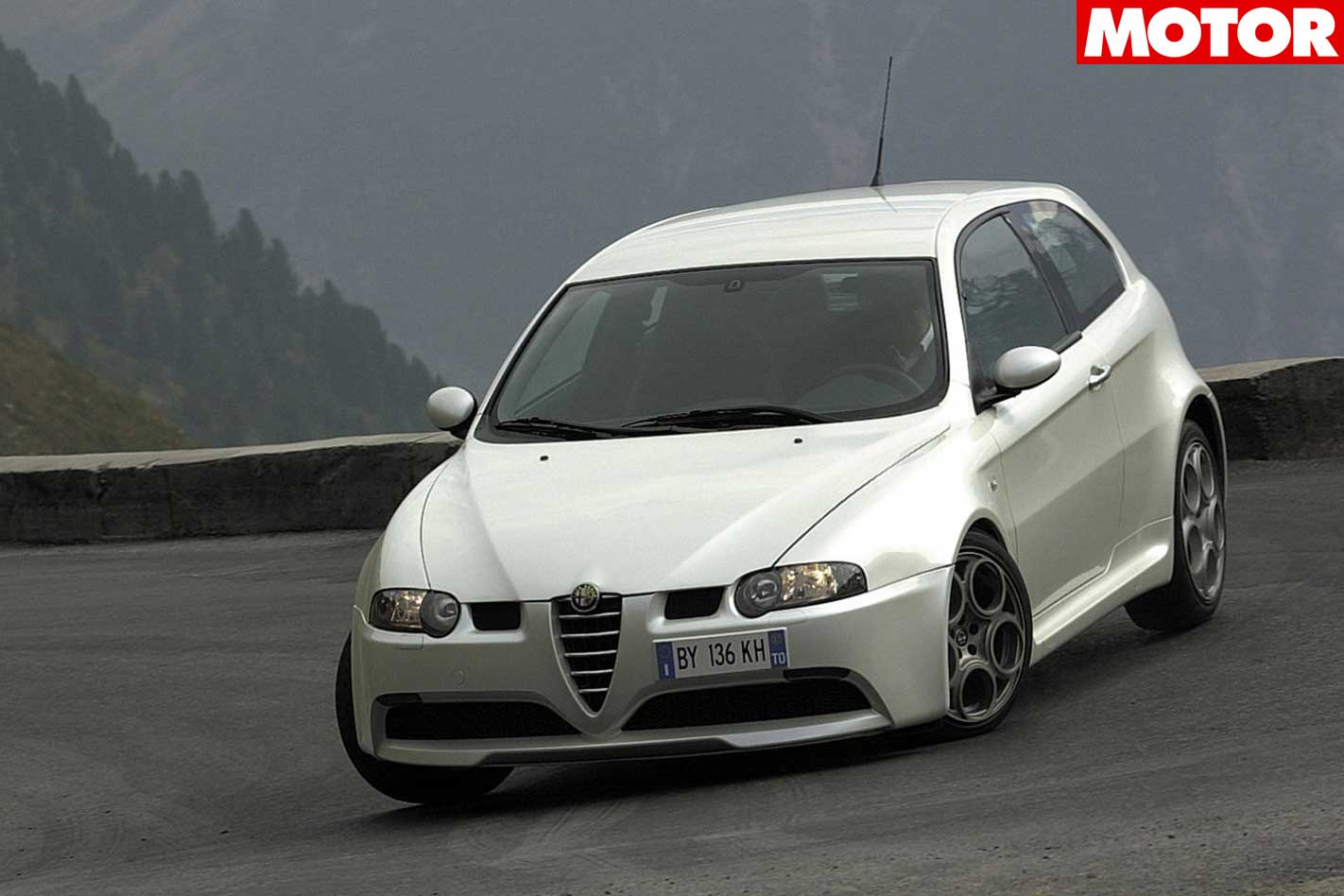
Wayward torque steer from the glorious 184kW/300Nm, front-wheel drive hot hatchback was only partially aided by a ‘Q2’ mechanical limited-slip differential found in later models. It’ll still wriggle its way from standstill to 100km/h in 6.3 seconds and dart into corners with electric-quick steering. But this is a 15-year-old Alfa – be brave, but buyer beware…
2003 BMW 330Ci Coupe/Convertible
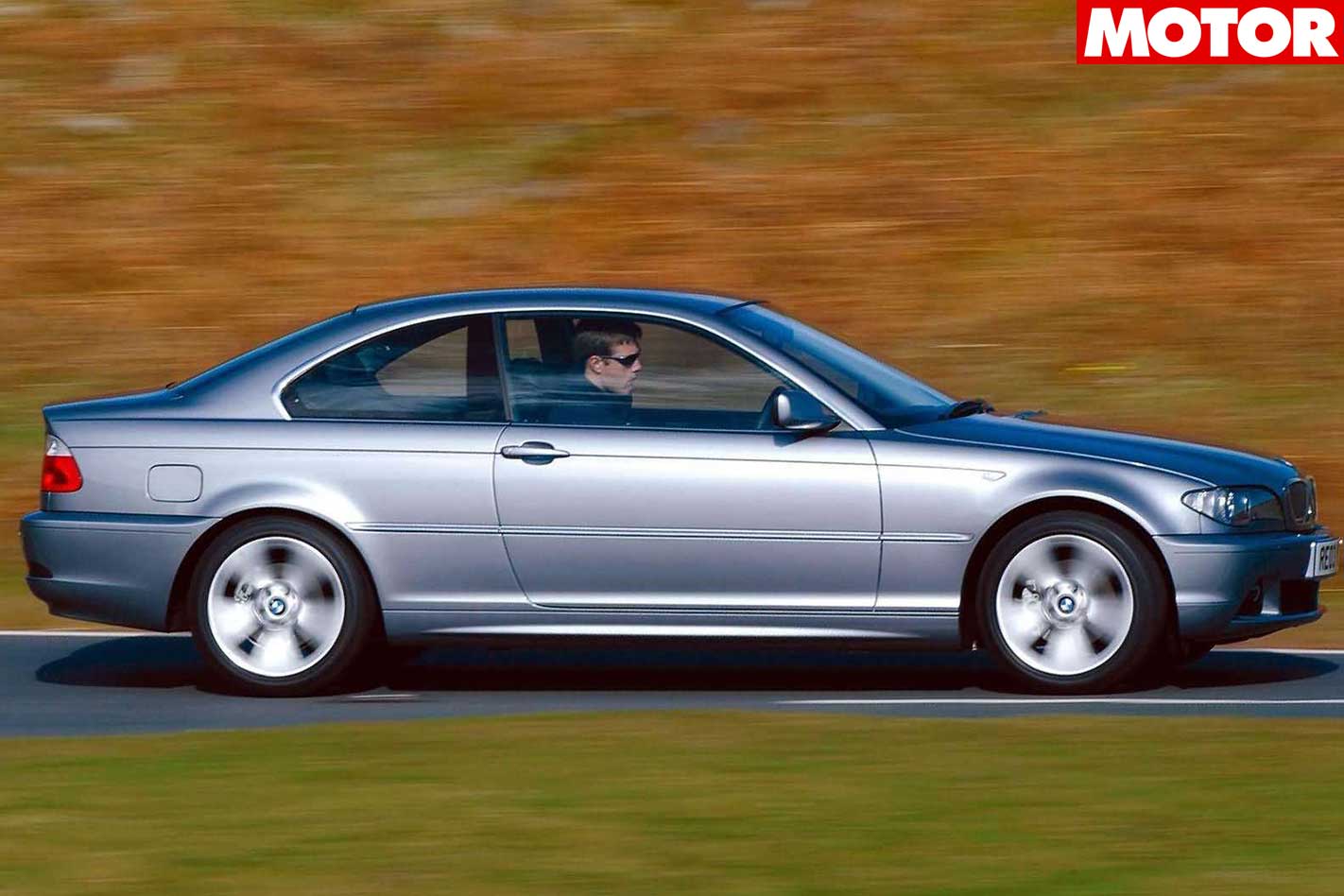
These days it’s worth stretching to a 330Ci with – back when the badges actually meant something in relation to engine size – a 170kW/300Nm 3.0-litre atmo unit, which in pretty coupe guise claimed a 6.7-second 0-100km/h. But a coupe will also be an early-2000s, 200,000km-plus example at this price.
A convertible? Call it 2003 with 150,000km.
2008 HSV Astra VXR
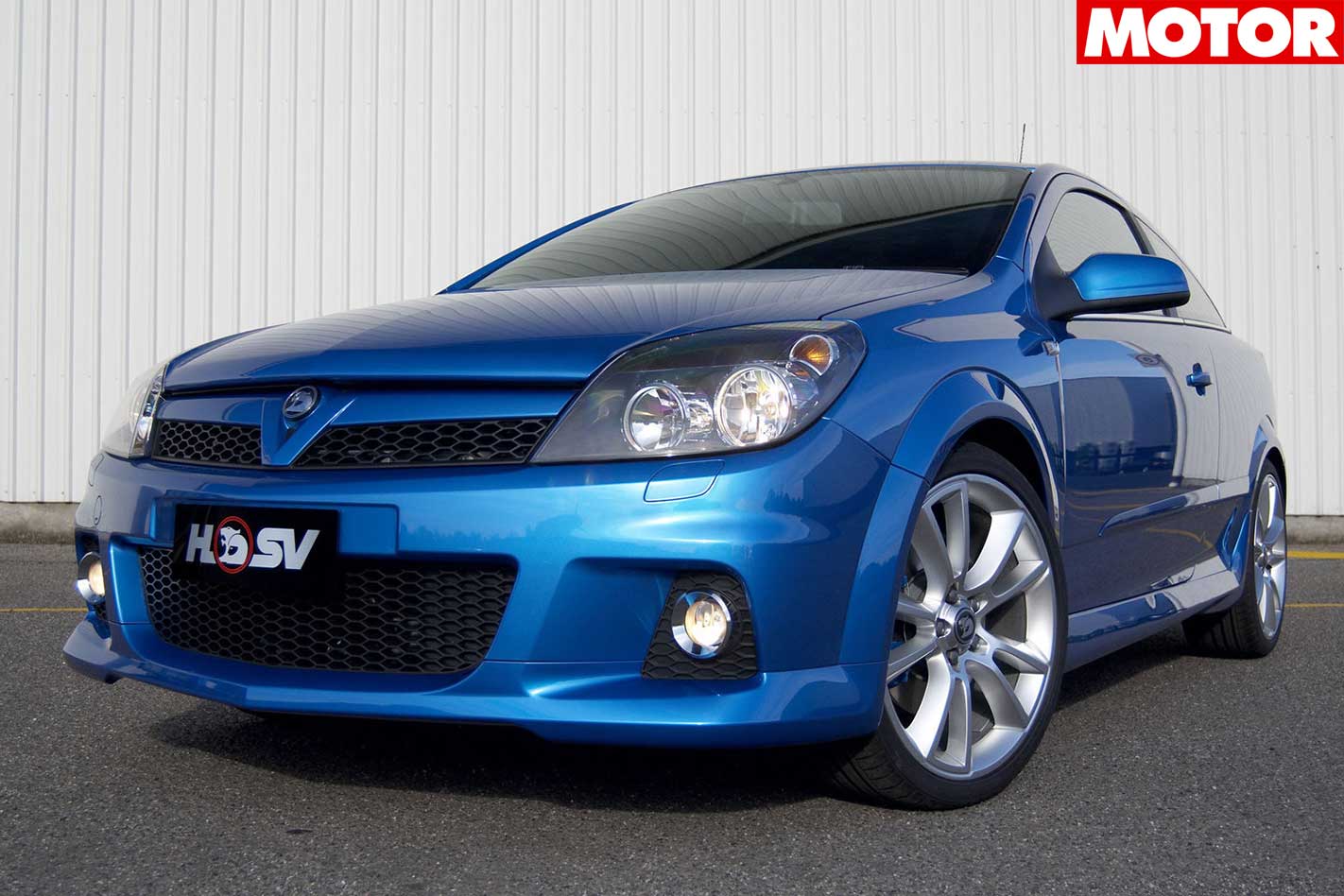
It was about as messy as this thing’s torque steer from a Mazda3 MPS-challenging 177kW/320Nm 2.0-litre turbo four-cylinder and six-speed manual. Complete with firm suspension and Brembos, though, the Astra VXR was fine rough-diamond fun that was outclassed by the Megane RS especially.
Nowadays, though, a decade-old example with 90,000km can be bought for sub-$10K – less than Renault’s desirable LSD-equipped F1 Team R26.
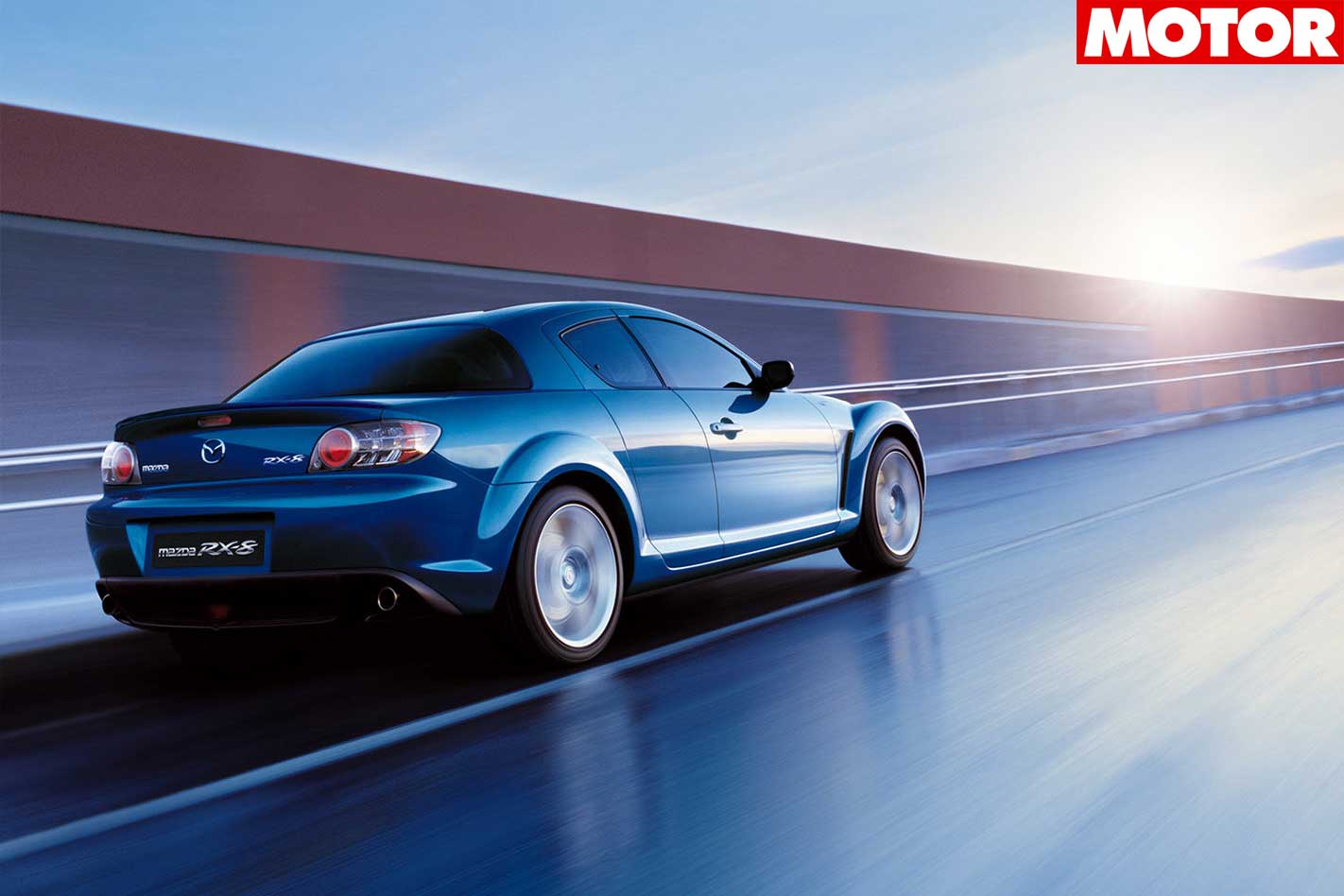
The 1.3-litre rotary engine is known to stuffer oil starvation and go bust at variable intervals, some lasting just 50,000km before going pop while others can go twice the distance without fail. So best enjoy the driving position, tight seats, lovely steering, creamy high-revving sweetness, and great chassis balance – think multi-door MX-5 only with a 6.2sec 0-100km/h claim – before your wallet is thrown into a washing machine spinning at 8000rpm.
It says it all that a 2003 MX-5 is the same coin…
2013 Honda CR-Z Sport
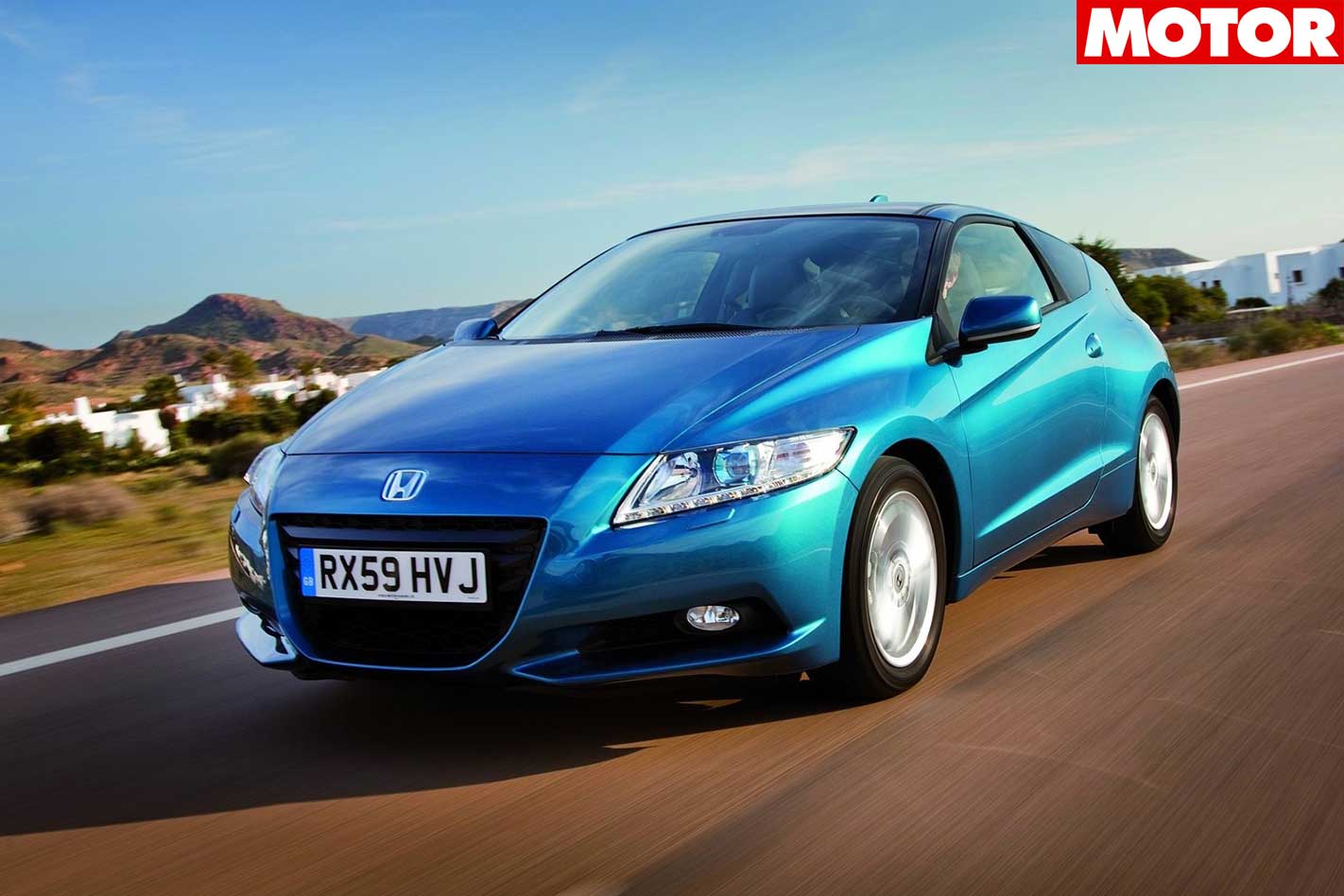
But be proud, because the misunderstood CR-Z looks to the future with efficiency while looking back to when hot hatches were light and nimble. And slower, with this 84kW/174Nm 1.5-litre four-cylinder claiming a 9.7sec 0-100km/h.
With an electric motor, though, torque comes instantly, while the six-speed manual is as perfect as the way the little Honda points into corners and wags its tail out of them; like a modern Peugeot 205 GTI or Renault Clio II RS172.
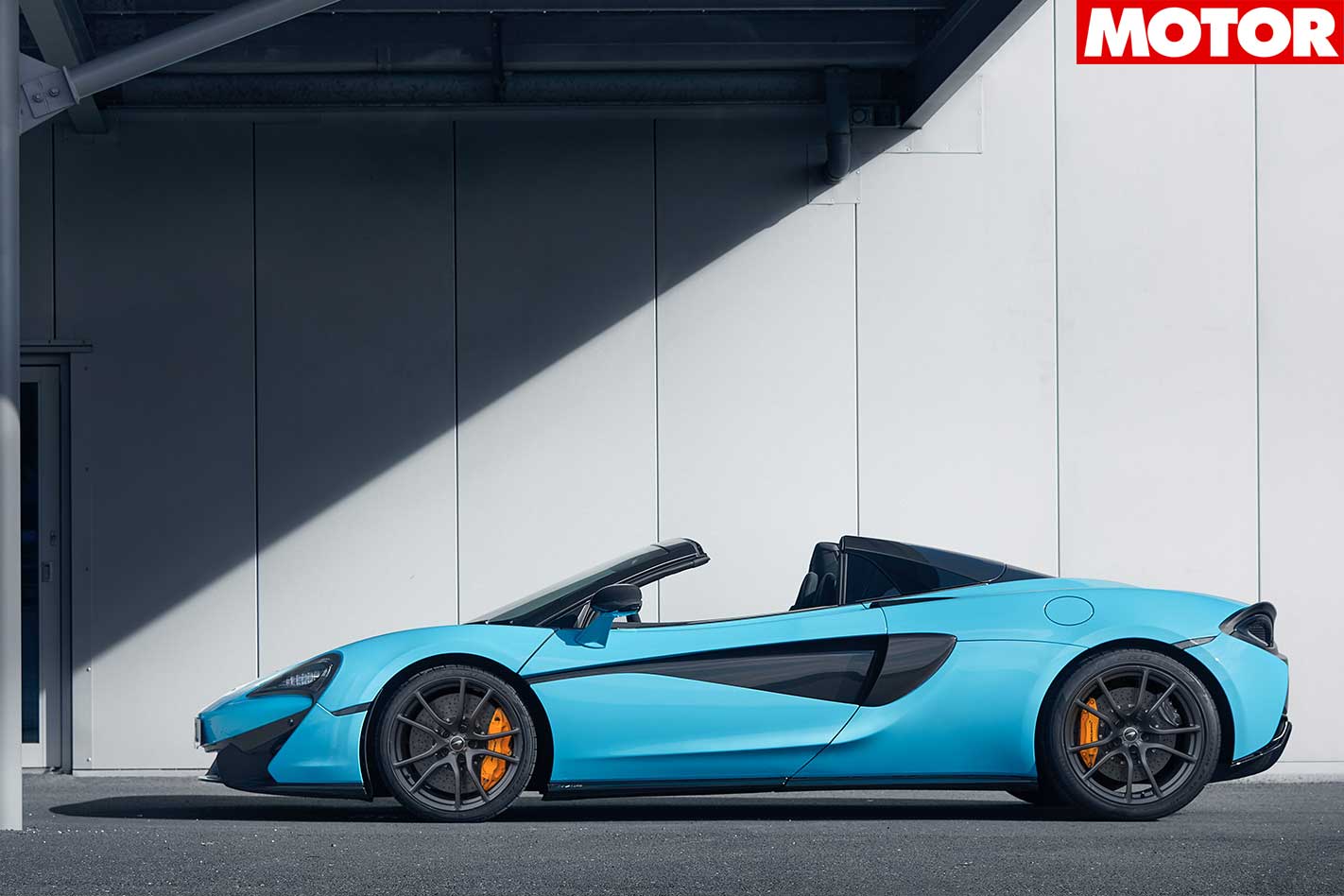
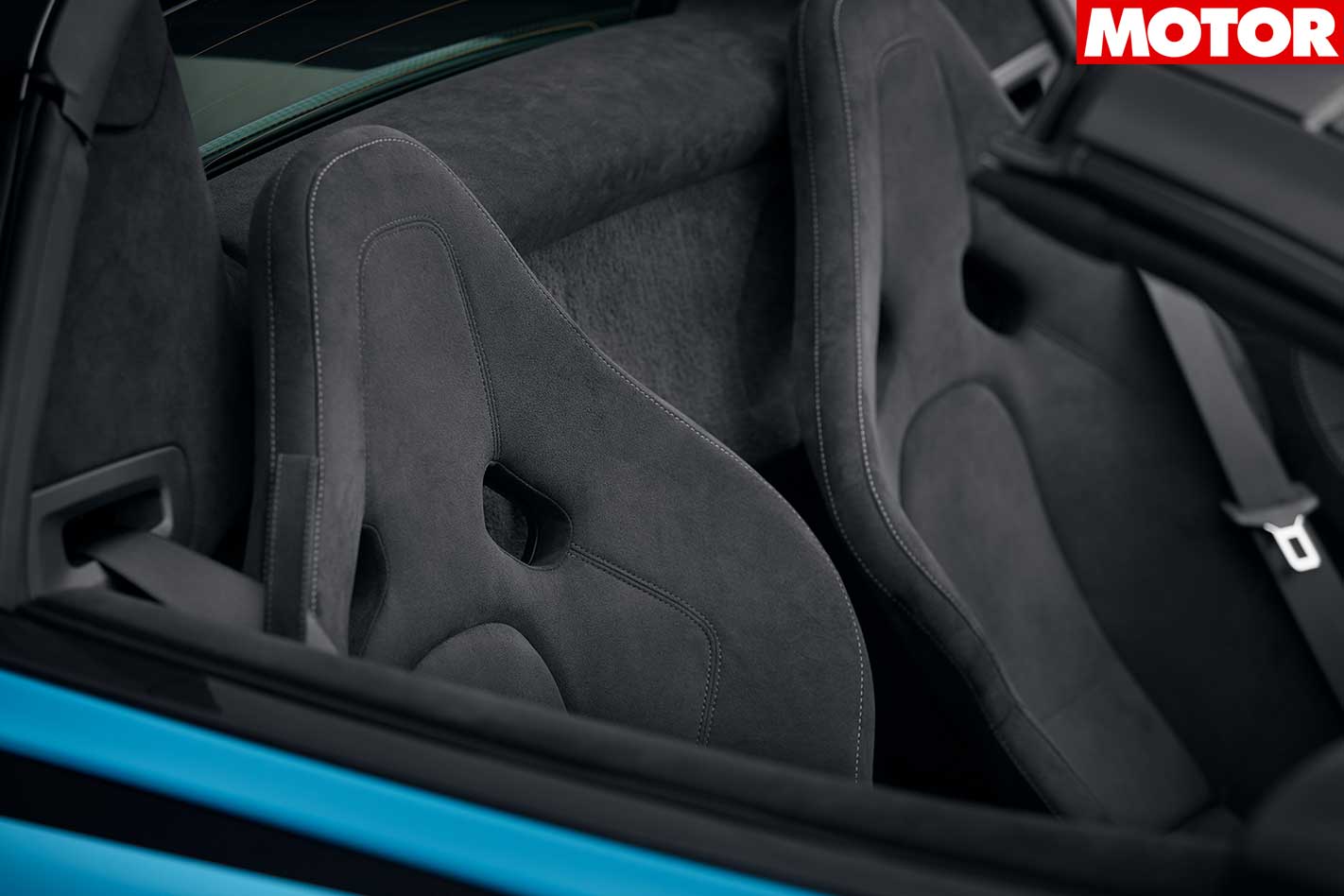
McLaren has announced it will make a track pack available for the 570S Spider, just as is an option for the McLaren 570S Coupe.
It’s not cheap, costing us $54,220 here in Australia, though that includes taxes (it’s £17,160 in the UK) and shaving a seemingly insignificant 33kg from the car, but the version of the pack available for the ‘tin’-top has already accounted for 10 per cent of Coupe sales.
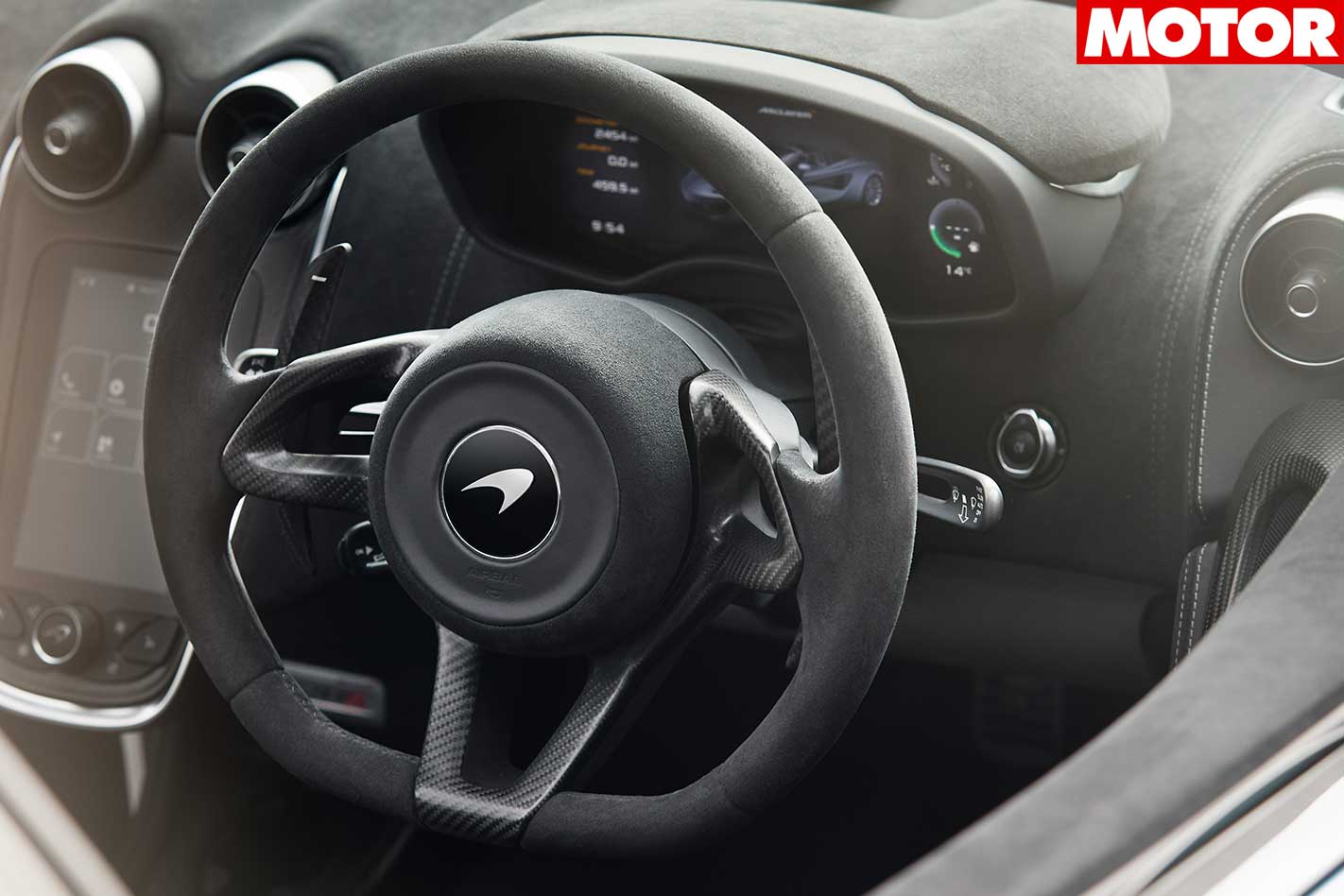
Outside, lighter 10-spoke alloys save 15kg, while other carbon fibre options are available per each customer’s wishes.
The exhaust is also swapped out for a lightweight sports exhaust which also happens to be louder than standard, to be a better idea of what the McLaren’s 3.8-litre twin-turbo V8 sounds like.
“The 570S Spider has already gained a reputation as an extremely accomplished luxury sports car that is hugely enjoyable to drive on a circuit,” says Nash.
“This new Track Pack brings together in one package design features, specification and popular practical options desirable for track use, further increasing choice for Spider buyers and at the same time offering them even better value.”
Marek Reichman is perhaps not the man you’d expect to be designing Aston Martins. He looked quite professional when he met us, from the ankles-up.
Dress pants, and a fashionable dress shirt look the part, but the running shoes he wore suggest he’s not your stereotypical executive.
Maybe it shows that there needs to be an element of functionality in design? Or maybe he just needed to walk a lot on this particular day.
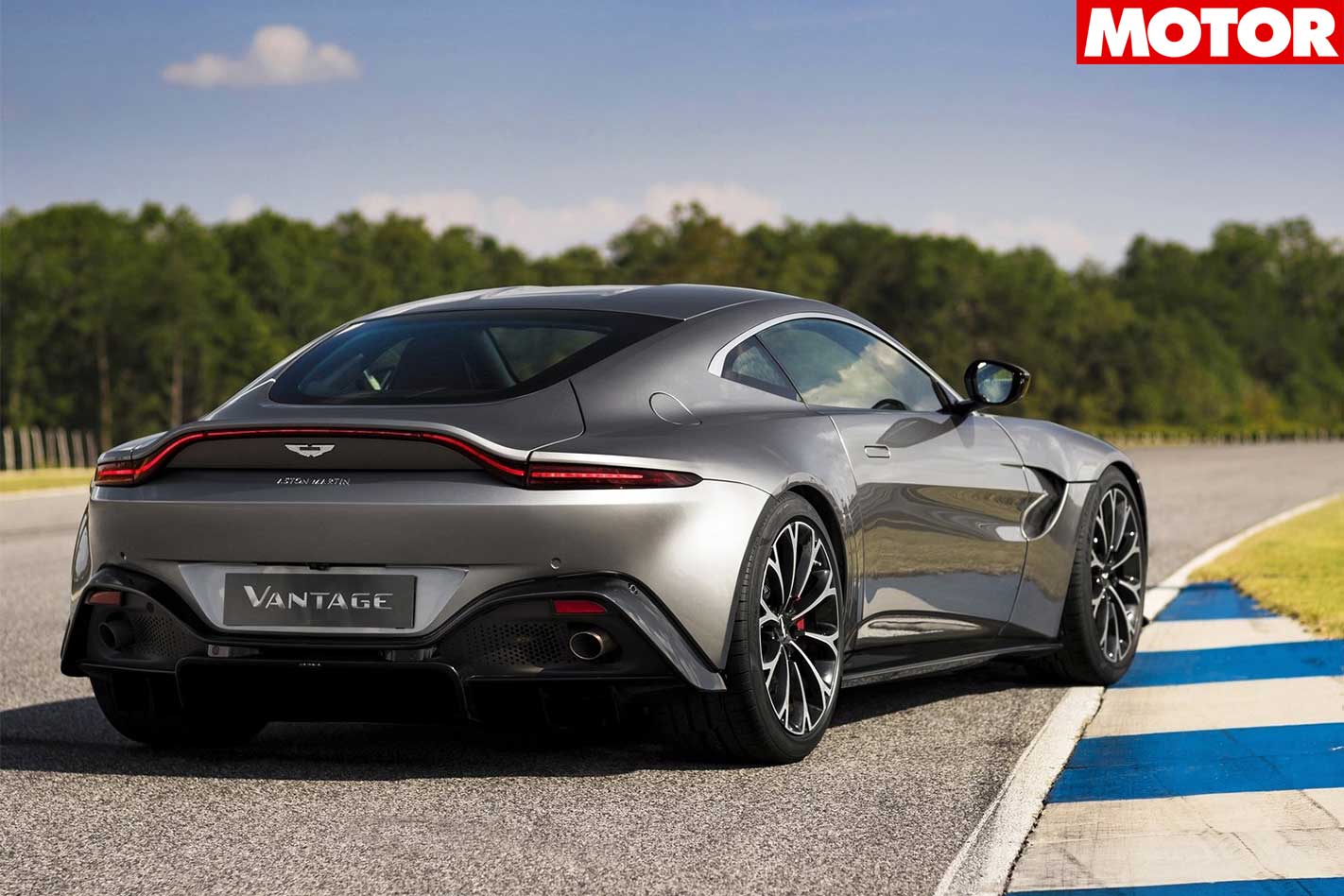
Sitting about ten metres from the new Aston Martin Vantage, Reichman tells us about the dynamic Palmer sets at Aston Martin, in particular with Reichman himself.
“Andy, he’s a brilliant supporter,” he starts.
“That’s an important relationship between chief creative officer and CEO because at the end of the day I’m representing the company visually, and he has the reins of the business success of the company.
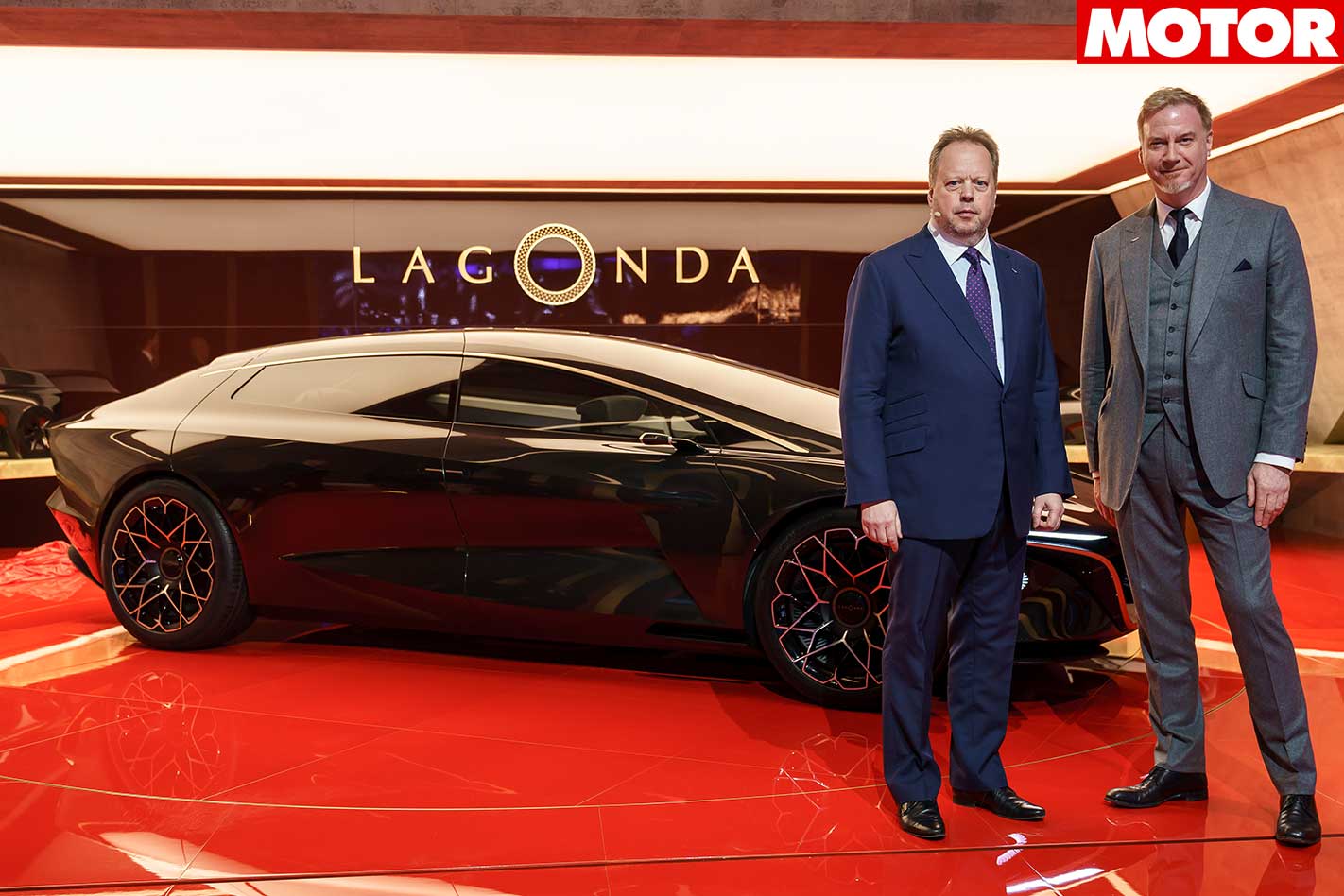
And that success has been on the rise, with Aston Martin in its best financial position for a long time. In 2017 Aston turned a first-quarter profit for the first time in over a decade, and in January 2018 reported its sales in 2017 were better than they’ve been since 2008.
For Marek Reichman, this means a little more freedom to look to the future and plan his designs.
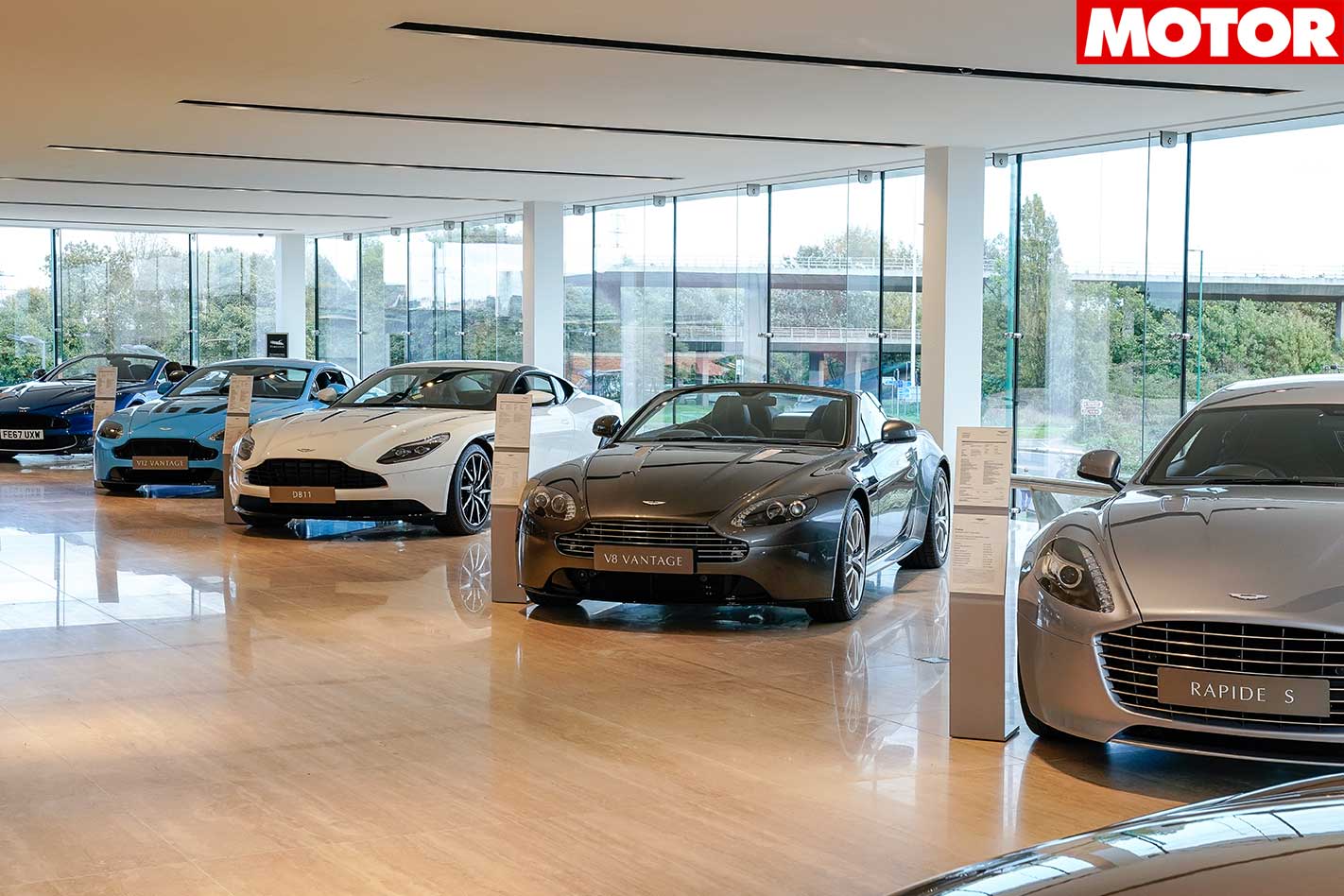
“There’s a strategy now, a strategic design principle I use because I can see where we need to be versus the plan.
“So I’m not designing one and then another. I’m actually designing them consecutively but understanding what’s ‘here’ now, and knowing what’s coming out ‘there’.
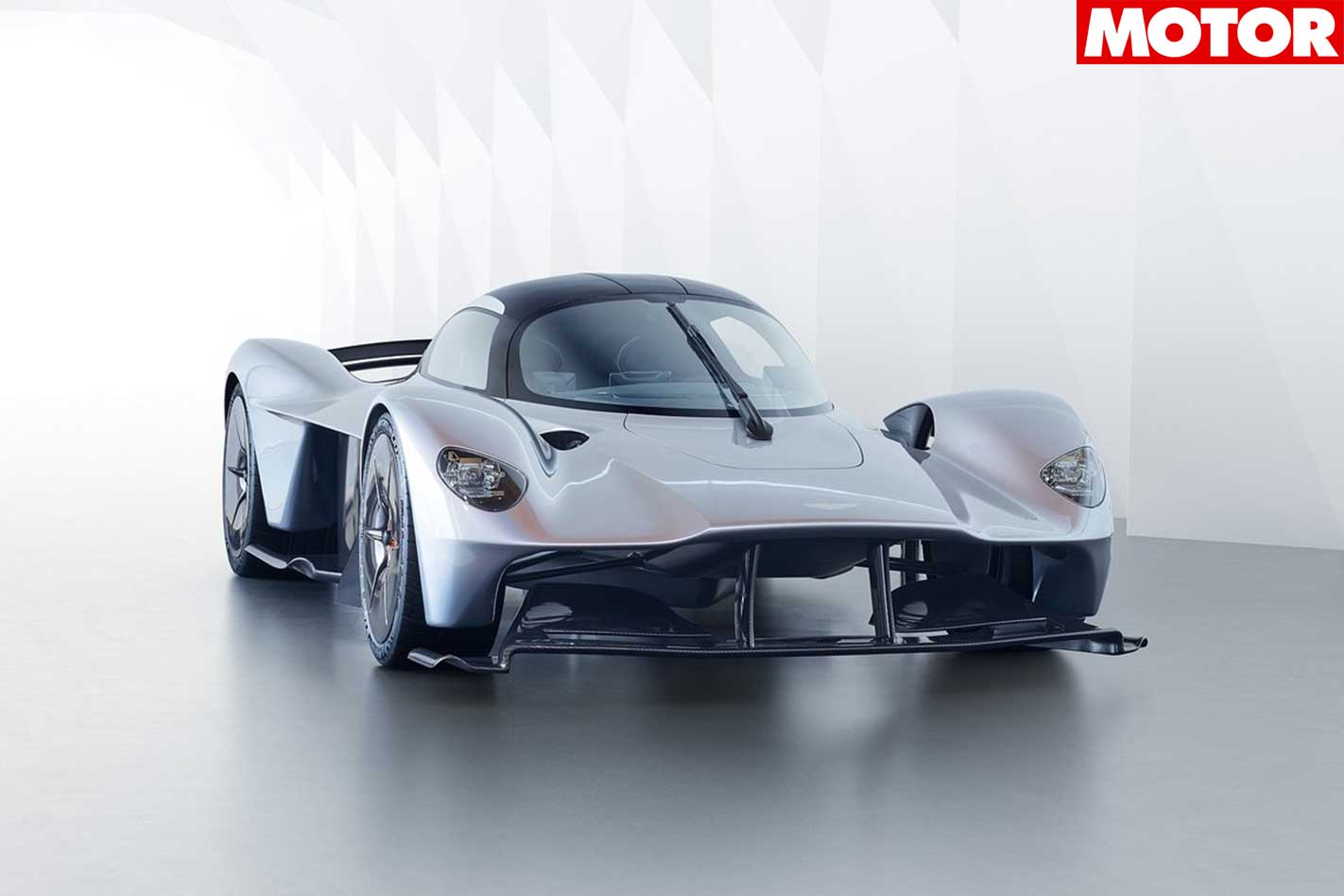
“Something that does stand for the past but is never retrospective. That’s the bit that I still find incredibly rewarding and challenging.”
Reichman says Aston Martin will release several cars in the next few years, as per the ‘Second Century Plan’ laid out by Palmer. A replacement for the Vanquish is coming next, followed by the DBX, and then the mid-engine Aston Martin supercar which we recently reported on.
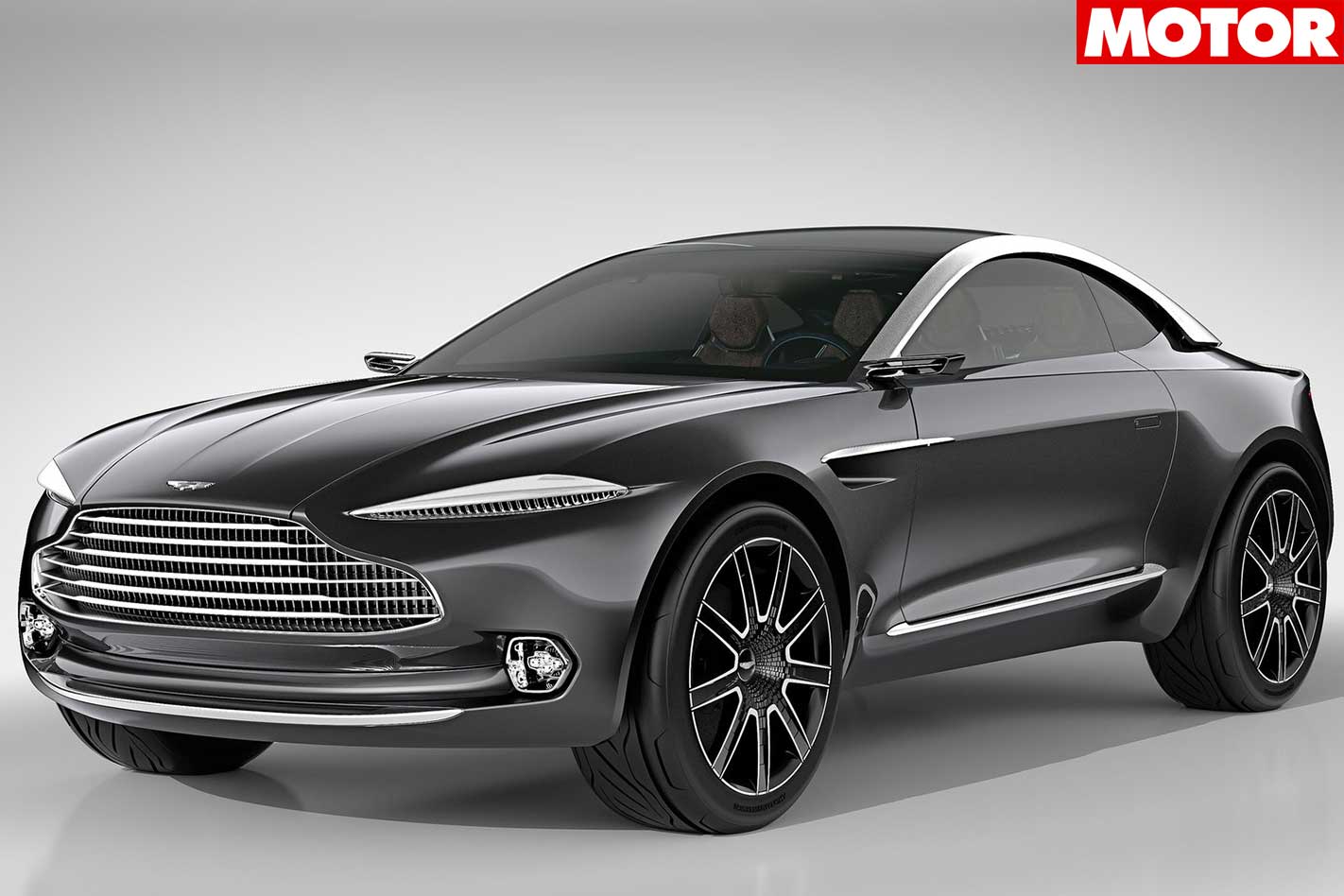
“It is a product that really fits to our values. It’s very sporting, it’s very dynamic, it’s very much about the grand touring side of Aston Martin – how do you explore somewhere new?
“How do you take an Aston Martin to a place that you typically can’t get it today because it typically doesn’t have any AWD or off-road capabilities? It’s about driving there in a very sporting way.”
So that rules out the DBX being badged under the revived Lagonda marque, then?
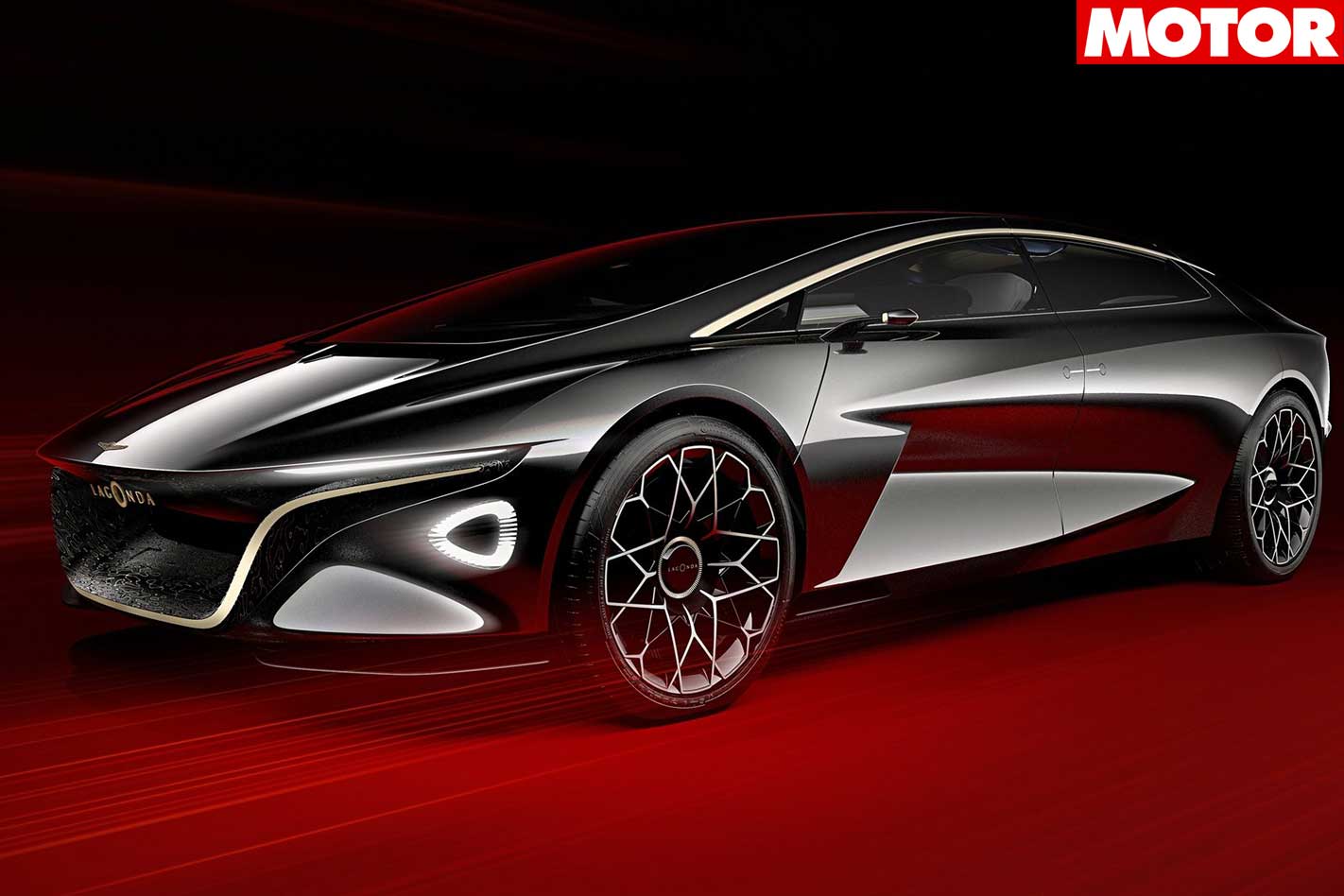
“It didn’t make any sense that it would be called a Lagonda because [Lagonda] is all about luxury, and it’s all-electric.”
Much like Reichman, it sounds like the DBX will be wearing running shoes rather than leather oxfords.
TESLA has today announced an eight-year/160,000km warranty for Model S and Model X vehicles sold in Australia, doubling the four-year/80,000km warranty offered previously.
The American car company says the new offer supports “Tesla’s belief that its electric vehicle is fundamentally more reliable than petrol engine vehicles,” and that it is designed to provide owners “peace of mind” by combining the guarantee with eight years of roadside assistance, which includes flat tyre support.
Tesla’s new warranty is longer than any other standard warranty in Australia, though it has a 160,000km caveat for some components. Tesla batteries and drive units are covered for eight years with no restriction on distance travelled.
Kia and MG offer competitive seven-year/unlimited kilometre coverage of their models. Several other car companies, including Honda, Hyundai, Renault and Skoda, offer five-year, unlimited kilometre warranties.
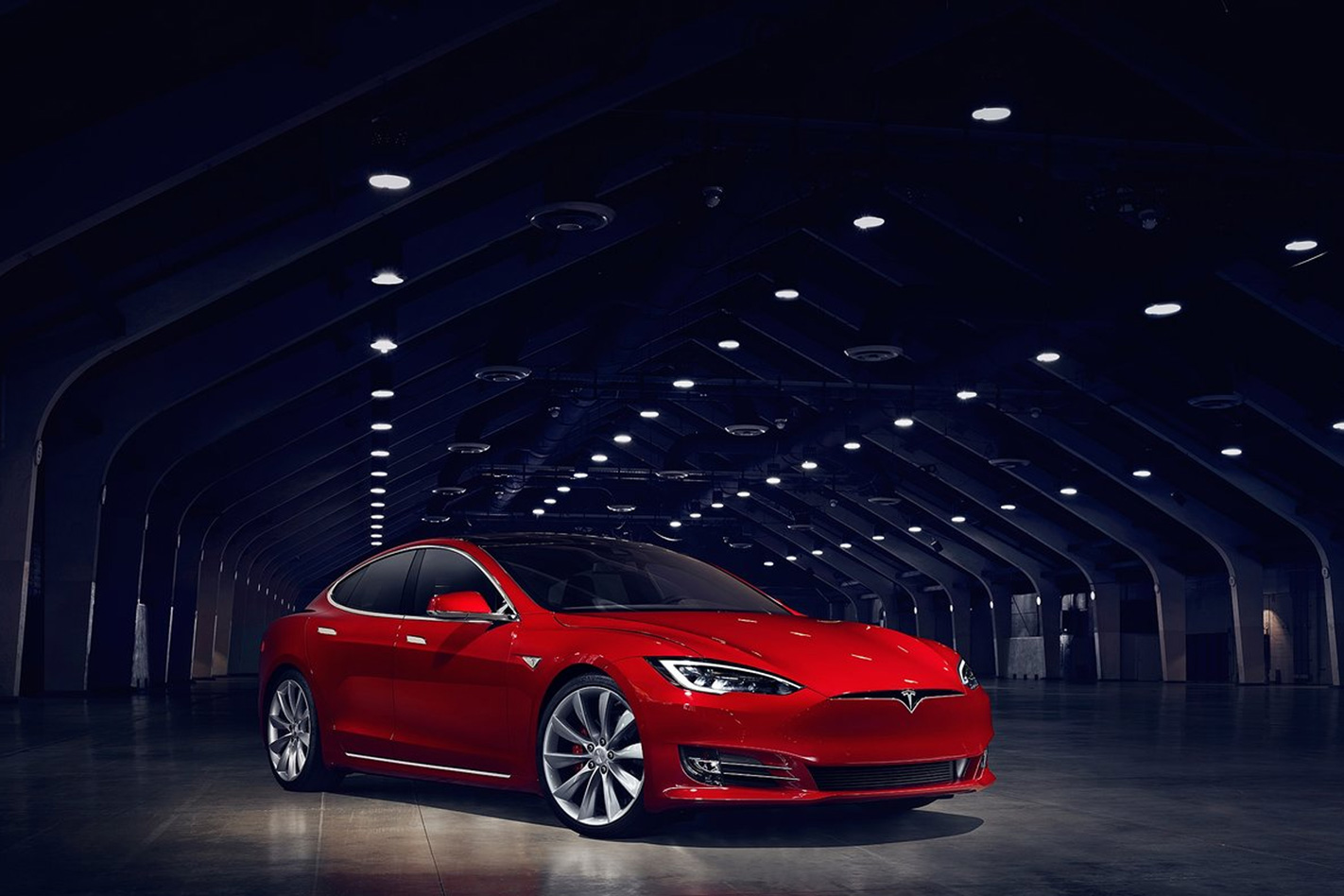
Tesla’s new warranty in Australia comes at a pertinent time, with Model 3 production on the receiving end of intense scrutiny following a number of quality control complaints as the brand endures what has been described as “production hell” for the volume model. There has been no news about what level of warranty coverage will be applied to the Model 3 when it arrives in Australia.
In the United States Tesla launched a voluntary recall last week for 123,000 vehicles built before April 2016 – its largest ever. In an email to customers Tesla said it had “observed excessive corrosion in the power steering bolts.”
The California-based company’s previous recalls include 90,000 Model S sedans in 2015 affected by faulty seat belts, and 53,000 Model S and Model X vehicles recalled last year for a parking brake fault.
Model 3 sedans have been trickling out to customers in America, with some taking to public forums after taking delivery to air complaints about poor build quality.
THE recent unveiling of the fifth-generation Subaru Forester at the New York motor show raised a question perhaps as important as those it answered: specifically, why no turbocharged flat-four?
It’s hard to overlook the enthusiasts’ point of view. How many fourth-gen Forester XT owners will be willing to trade their 2.0-litre 177kW/350Nm turbo SUVs and settle for a new model that’s at least 50kg heavier and produces 136kW and 239Nm? Not forgetting the new Forester’s FA25 direct-injection 2.5-litre flat four makes its peak torque figure at a relatively peaky 4400rpm, way higher than where the old turbo engine generates peak twist.
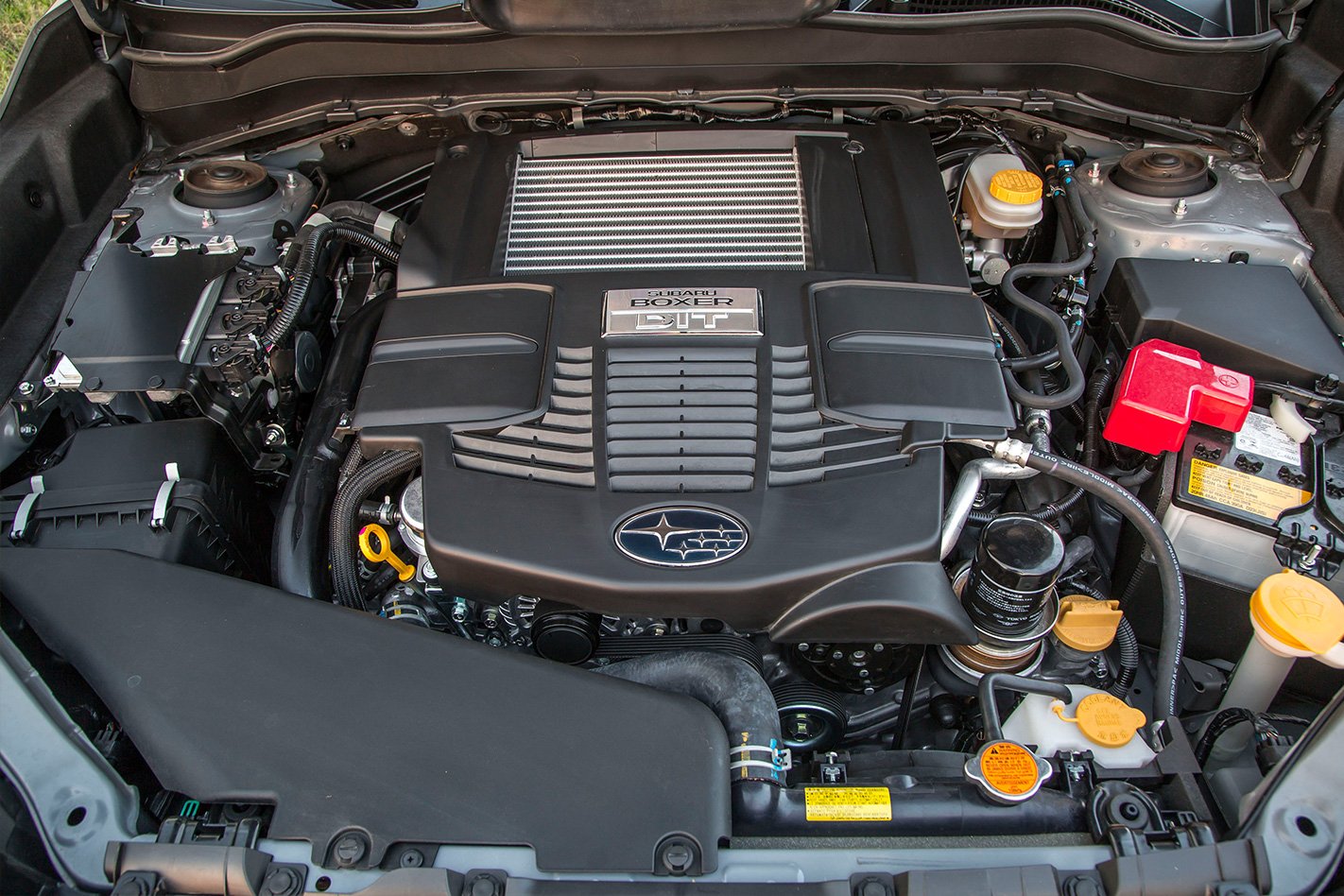
Subaru pretty much pioneered the performance-SUV genre with the Forester GT back in the late ‘90s (essentially a WRX powertrain in a high-riding, trail-capable package) and has not deviated significantly from the strategy until now.
Putting aside the disappointment of enthusiast customers for a second, we need to question how Subaru is going to meet tougher consumption and emission regulations in the form of Euro-7 compliance due in 2021 with an atmo engine in a circa-1600kg SUV.
We don’t yet have an official consumption figure for the fifth-gen car that’s due in Australia in September, but even if it improves slightly on the current number of 8.1L/100km, that’s unlikely to cut it in the face of tougher CO2 legislation, even with the addition of a plug-in hybrid joining the line-up sometime in 2019.
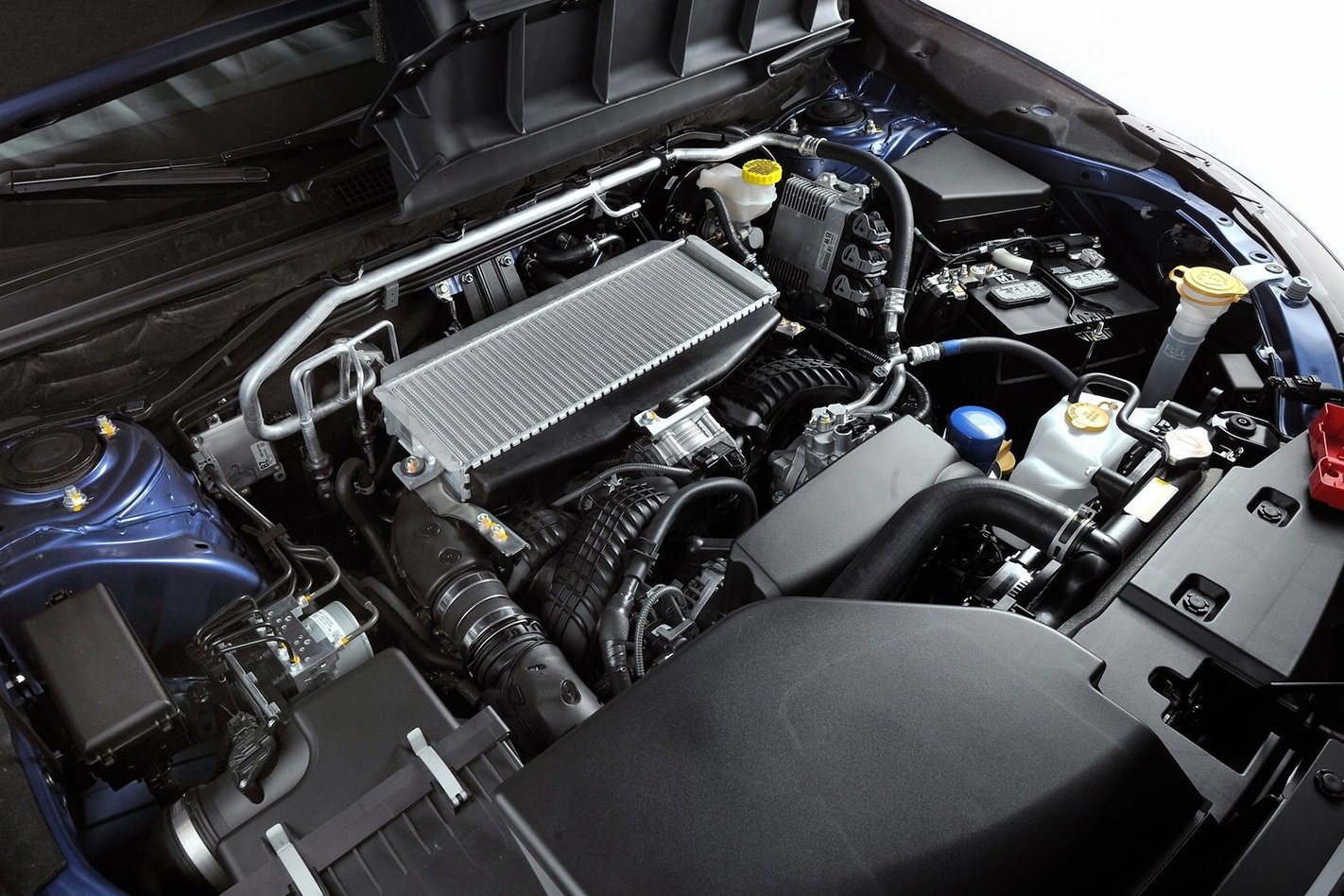
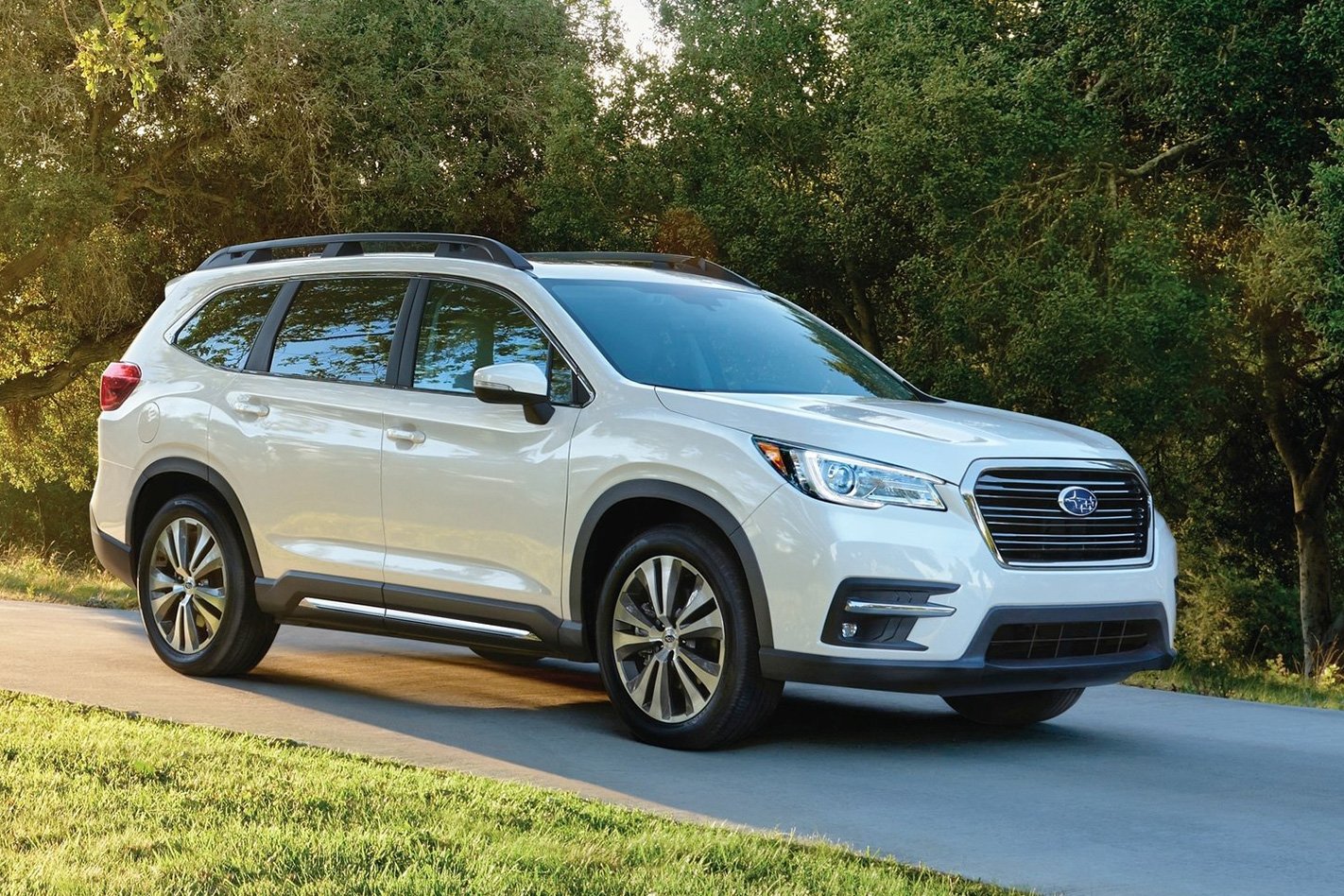
Wheels sat with Mr Tomoyuki Nunome, project manager of the fifth-gen Forester (along with the Mr Toru Ozeki who led design) at the New York motor show and asked why the new 2.4-litre turbo-petrol flat four (as fitted to the US-market seven-seater Ascent SUV ) was not part of the line-up for the new model.
The response, through an interpreter, was that the atmo 2.5-litre was deemed entirely appropriate for both the performance parameters and the target market. The turbo engine, we were told, was not necessary. When pushed about tighter emissions standards, and the need to reinvigorate a model during the course of its life, Mr Nunome simply declined to comment on future product plans.
MORE: Subaru Forester Range Review MORE: Subaru Forester Specs, Range & Price
THE Maserati Ghibli gets a new range-topping variant, the GranSport, which adds a subtly different, sports-focused edge to the mid-size luxury sedan.
WHAT IS IT?
GranSport spec brings a more athletic edge to the recently refreshed Ghibli range, alongside a new luxury-focused GranLusso variant. The GranSport treatment is available across both Ghibli, Ghibli D and Ghibli S grades, and adds around $20,000 to the base price tag (identical to the GranLusso’s price premium), as well as a slight performance bump for the more potent S-badged version.
WHY WE’RE DRIVING IT
Maserati started fitting a GranSport badge to its products more than a decade ago, with an emphasis on the ‘Sport’. The cars included a number of engine, suspension, aerodynamic and interior enhancements aimed at buyers wanting a little more out of their Italian thoroughbred. This is our chance to experience what GranSport means to Maserati’s leanest, sportiest four-door.
RIVALS
Audi S6, BMW 640i Gran Coupe, Lexus GS F, Mercedes-AMG E43, Porsche Panamera, Tesla Model S P100D
THE WHEELS VERDICT
Even though the Maserati Ghibli S has improved via the running changes is shares with other MY18 variants, it remains something of an acquired taste compared with the Germans, particularly in the subtly enhanced GranSport specification for close to 200 grand. That said, its relative exclusivity does contribute to its head-turning ability, and on the right road, in the right suspension mode, the Ghibli S GranSport is a pleasurable sporting sedan … that still hasn’t achieved its full potential.
PLUS: Improved appearance; responsive twin-turbo V6; high-quality trim; individuality MINUS: Muted engine soundtrack; busy suspension; cramped rear seat; steep price
THE WHEELS REVIEW
MASERATI once had a proud racing heritage – you’d know that if you recently wandered into its Melbourne showroom to see the wonderful 1950s-era 250F open-wheeler built from spare parts. But these days Maserati is arguably better known in sporting circles for its sponsorship of fast and sometimes record-breaking boats, including the 70-footer that campaigns the annual Sydney to Hobart race.
It’s nice, then, to get the odd reminder that the 103-year-old Italian brand was honed on motorsport. The latest extension of this is the GranSport trim level now extended to the Ghibli sedan as part of a mild 2018 Alfieri-concept-inspired makeover first revealed at last year’s Frankfurt motor show.
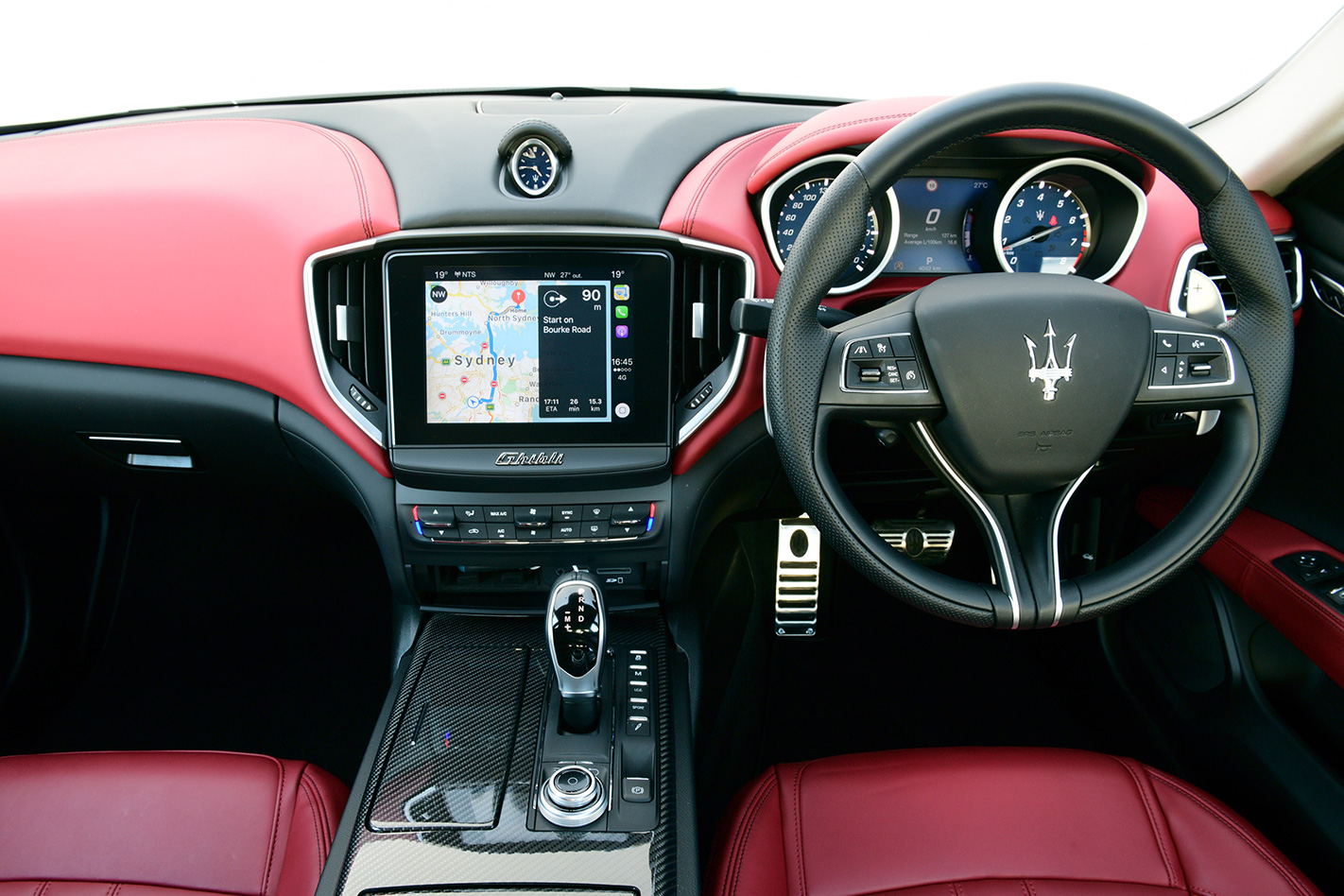
Inside, there’s a sports steering wheel, 12-way electric leather sports seats (with contrasting red and black leather on our test car, dashboard covering included) bearing the Maserati trident in the headrests, an 8.4-inch touchscreen, stunningly crafted cold-touch aluminium paddle shifters attached to the steering column, and aluminium pedal covers. The effect is subtle and elegant – not to mention intelligent, in the case of the console-mounted smartphone drawer – though some parts are clearly rifled from the Fiat-Chrysler parts bin, including the audio controls hidden on the back of the steering wheel’s horizontal spokes. One thing that clearly hasn’t changed, though, is the rear seat; knee and toe room are still tight.
The Ghibli S GranSport is a sports model, so even on its default setting the standard ‘Skyhook’ adaptive air suspension is tautly damped, providing a firm ride. Push the centre console’s suspension button and things become even firmer in Sport, rating as almost uncomfortable on our chopped and lumpy rural back road drive loop. It’s a setting best kept for smoother city streets or the racetrack, then.
The Ghibli’s newly fitted electrically assisted steering system is a game of two halves. In its default mode and at city speeds it is feather light, allowing you to twirl it almost one-fingered from lock to lock. Hit the sport button and, along with an exhaust system now bypassing the silencers (instead of waiting until 3000rpm) to give the V6 a meatier flavour under acceleration, the steering weights up considerably. However, weight does not equal feel, and the Ghibli’s ability to communicate what the front wheels are doing is somewhat muted. Tip it hard into a corner and it’s more a matter of trust until you find the point where it will start to understeer gradually and predictably.
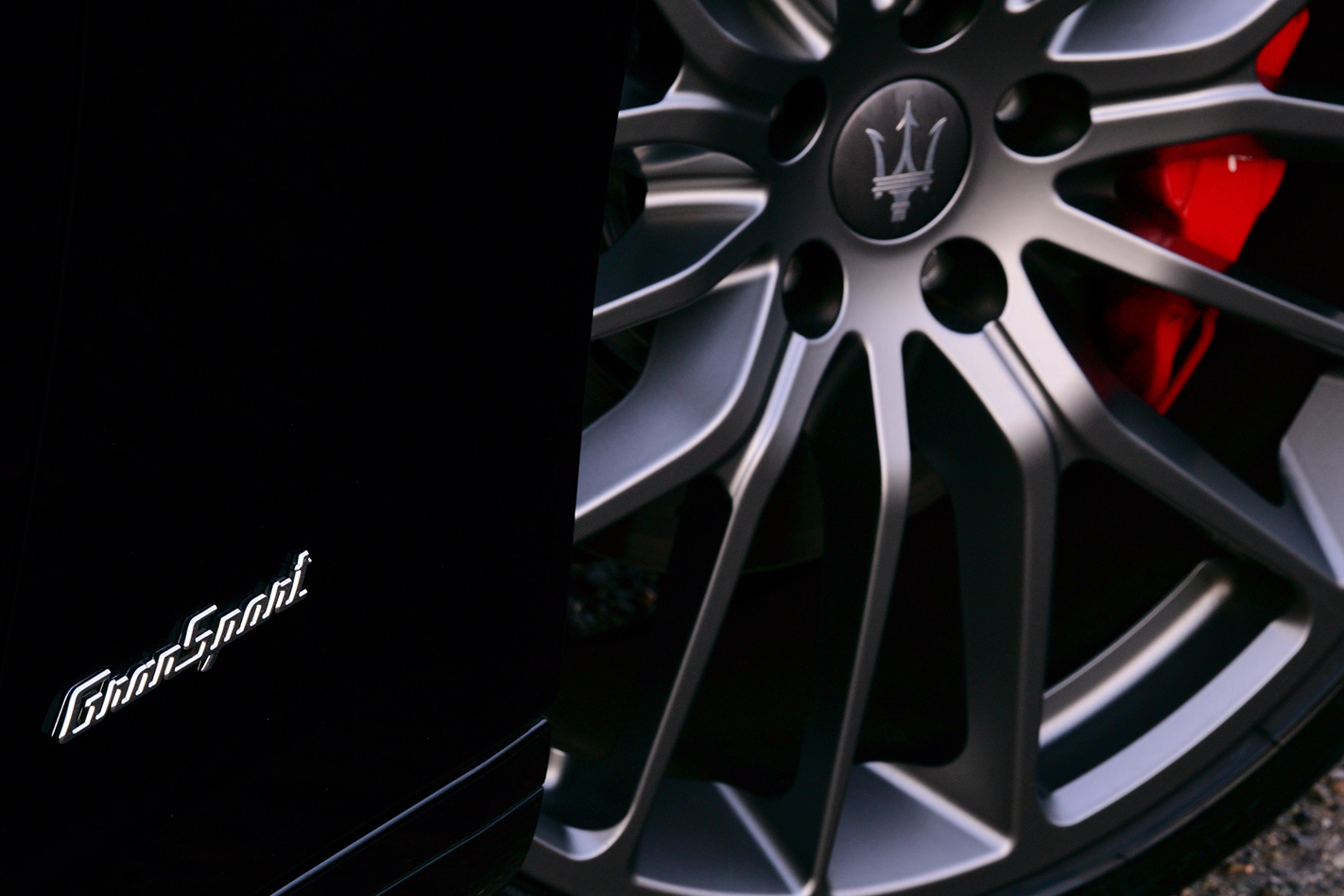
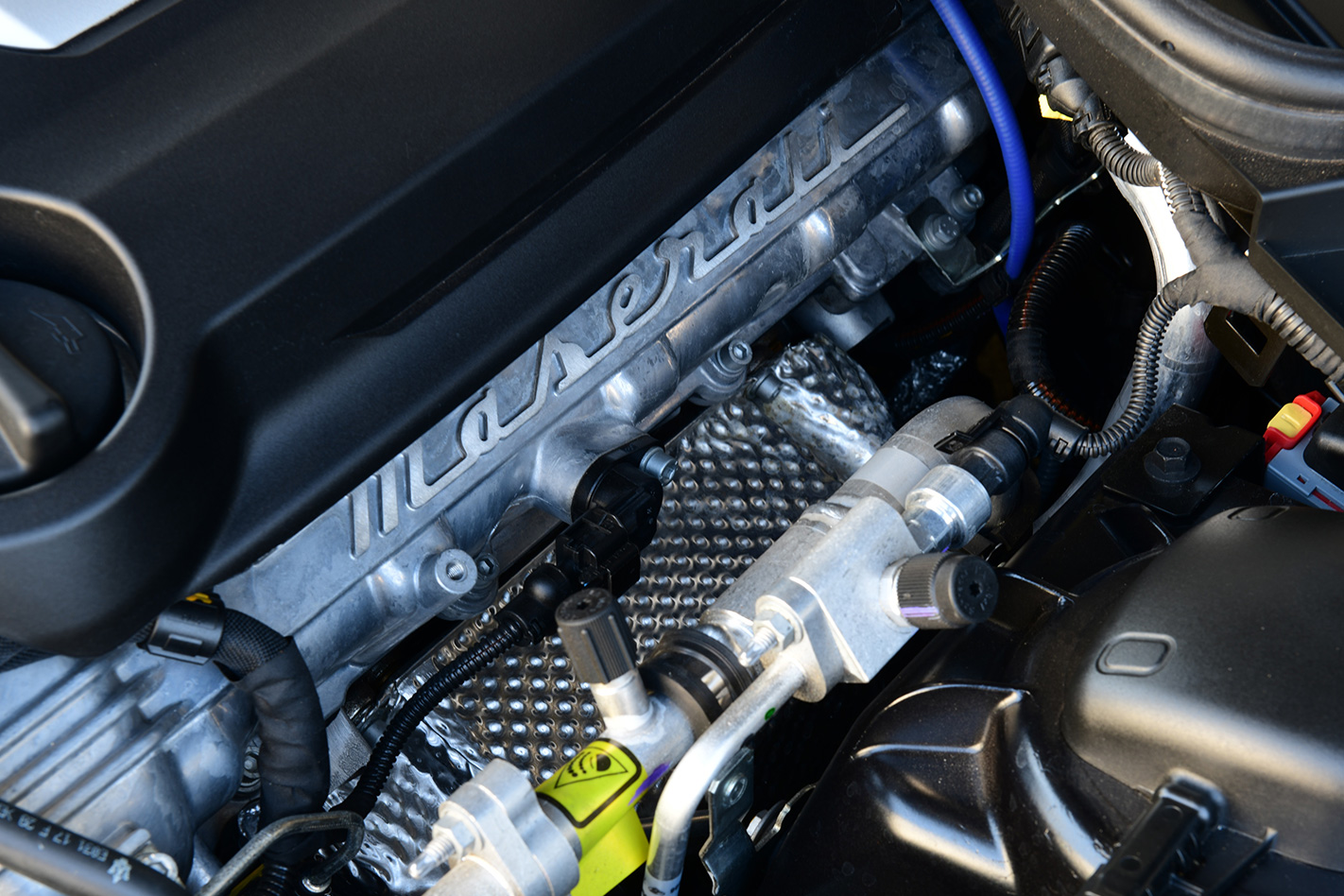
But the acoustics of that muscular V6 are too muted in the Ghibli S, even with the exhaust opened up in Sport. Our chase car, an almost identically engined Levante S GranSport, growled and snarled with enthusiasm when pushed hard,though its volume may have had something to do with its missing luggage bay cover (it was used to ferry luggage) allowing the exhaust’s acoustics to resonate better. Almost all that theatre – audible from the outside – is lost inside the Ghibli’s cosy cabin.
When giving its all, the Ghibli S GranSport’s acceleration is brisk rather than manic, even from step-off where there’s almost no sign of turbo lag. The ZF eight-speeder’s changes are crisp and smooth, though pace doesn’t build as rapidly as Maserati’s on-paper specs would suggest.
It’s somewhat disappointing that sister brand Alfa Romeo’s much cheaper Giulia QV feels like a more accomplished and talented car than the more expensive, range-topping Ghibli. You could easily expand that assessment to include the Maserati’s German rivals.
The latest MY18 update to the mid-size Maserati is definitely welcome. It means the Ghibli S is better than it was before, but as a tribute to the brand’s long motorsport heritage, the addition of the GranSport badge to the Ghibli range is more of a nod than a hat tip.
2018 MASERATI GHIBLI S GRANSPORT SPECS
Model: Maserati Ghibli S GranSport Engine: 2979cc V6 (60˚), dohc, 24v, twin-turbo Max power: 321kW @ 5500rpm Max torque: 580Nm @ 2250-4000rpm Transmission: 8-speed automatic Weight: 1810kg 0-100km/h: 4.9sec (claimed) Fuel economy: 9.6L/100km Price: $195,990 On sale: Now
THE biggest member of the Infiniti family staves off a mid-life crisis with a little cosmetic surgery – but unfortunately the under-the-skin changes aren’t as profound as those on the outside.
WHAT IS IT?
A mid-life facelift for Infiniti’s hulking QX80 luxury SUV.
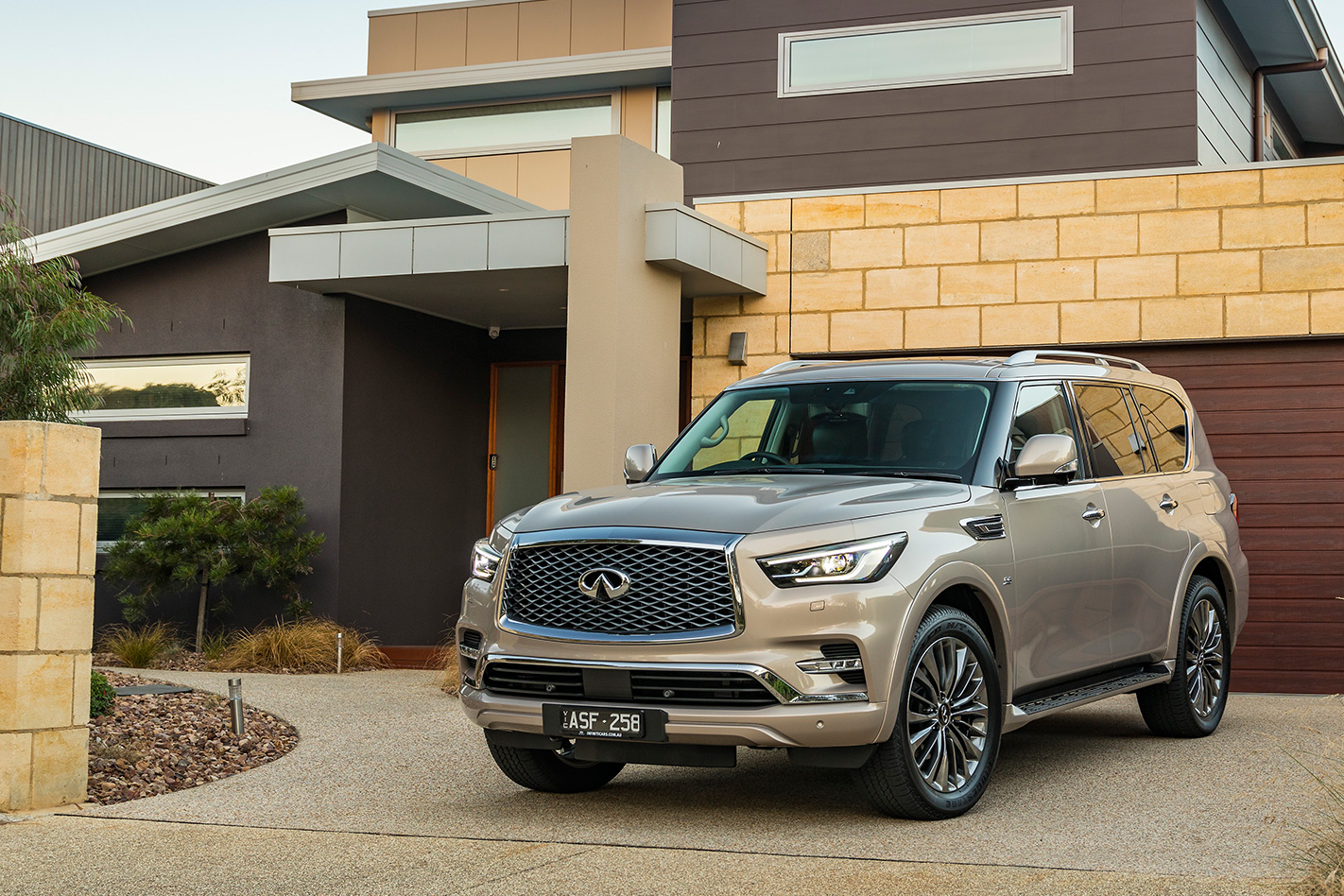
There isn’t just a new face and bum on the Infiniti QX80, but a range of more subtle under-the-skin changes. Is it now good enough to steal market share from Lexus – or even challenge the Europeans?
MAIN RIVALS
Lexus LX 570, Audi Q7, Mercedes-Benz GLS
THE WHEELS VERDICT
Infiniti’s QX80 facelift is the most extensive one it’s ever applied, and does a remarkable job of turning the ugly duckling that was its Nissan Patrol-based luxury SUV into something at least approximating a swan. That’s the good news.
PLUS: Powerful and sonorous V8 engine, value for money, interior space, quiet cabin, off-road nous MINUS: Fussy suspension over small stuff, fuel consumption, dated interior, flat seats
THE WHEELS REVIEW
WE’RE a shallow bunch, but the unfortunate reality is that appearance matters in the world of selling cars. Ergo, it’s not too hard to see why the Infiniti QX80 has had a tough time in the Australian market since its arrival in 2015.
While some 83 QX80s found buyers last year – the model’s best year of sales thus far – its chief rival, the Lexus LX 570, almost quadrupled that number. That’s got to hurt, especially as the $110K QX80 was, objectively speaking, a better value buy than the $142K LX 570
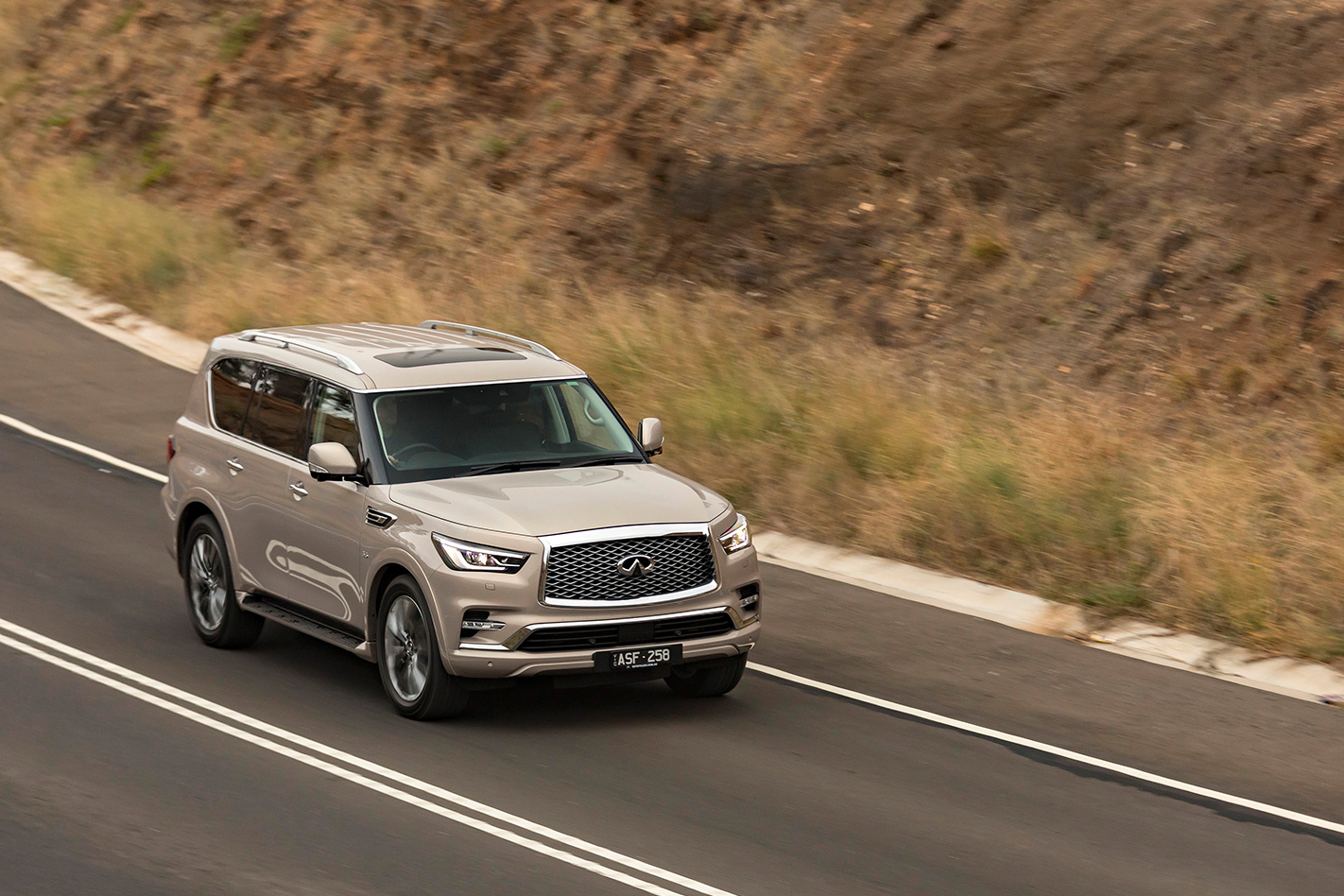
But salvation is at hand in the form of the updated QX80, which has not so much received a facelift, but is the recipient of a complete face transplant. The front end is unrecognisable, but in the best possible way. The low-set headlamps and Beluga forehead that marred the outgoing model has been banished in favour of bolder all-LED headlamps that sit virtually a foot higher, along with a reshaped grille that looks prouder and more confident.
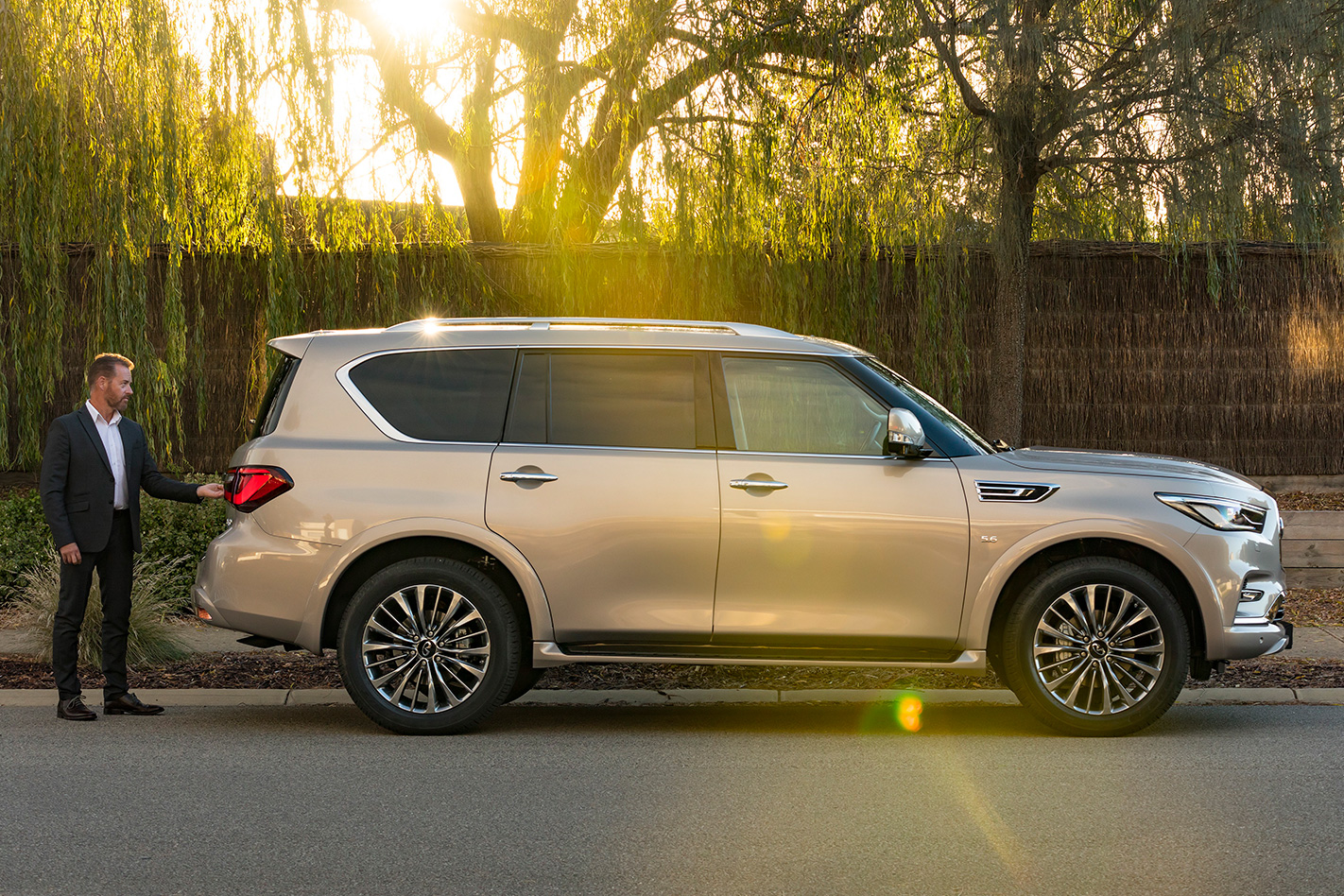
Side steps are longer too, the 22-inch wheels sport a new design and the QX80’s sizable rump gets revised bumper plastics as well. The tailgate skin is also fresh, as are the tail lamps, with the latter now linked together by a chrome bar that directs even more attention to the QX80’s monstrous width.
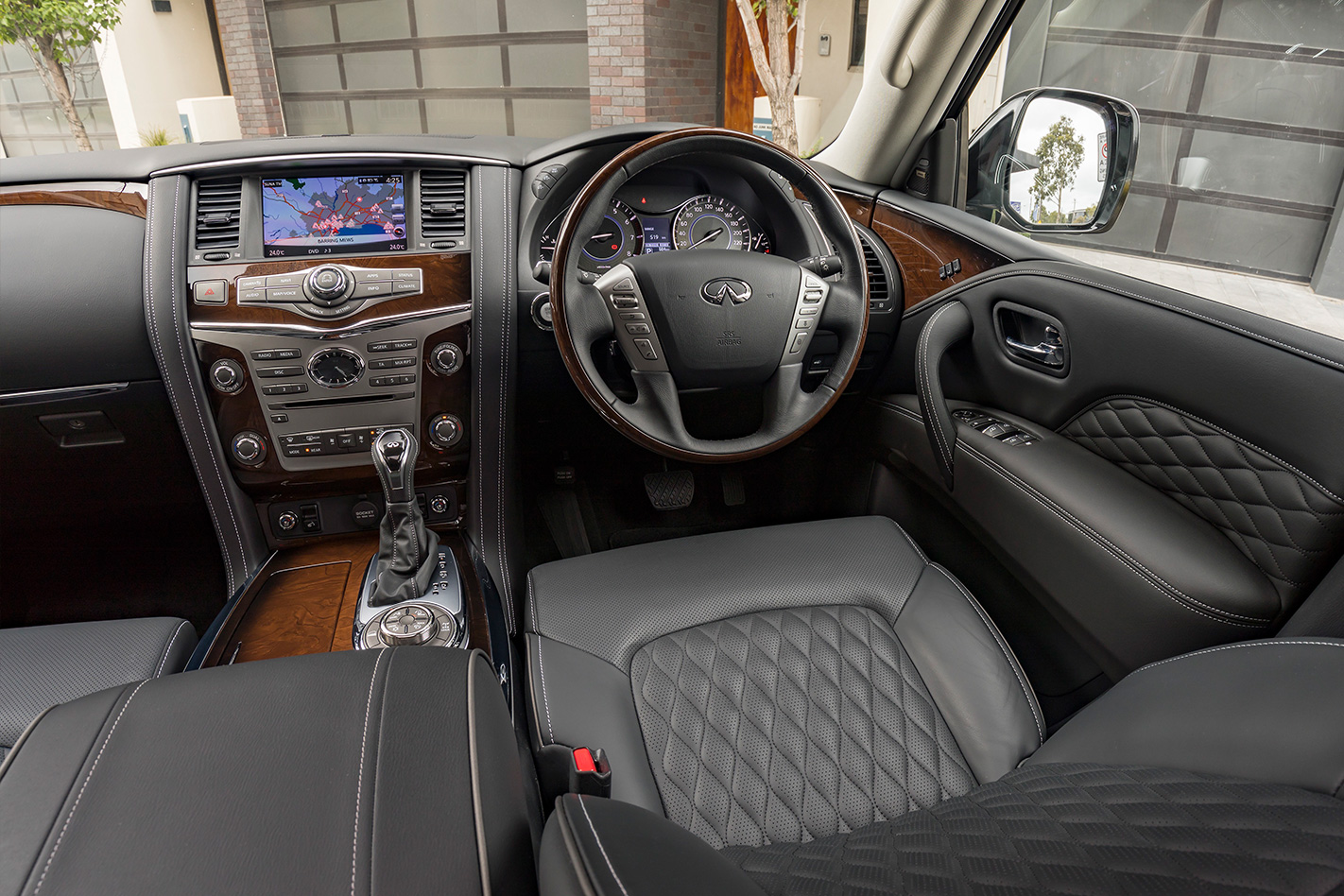
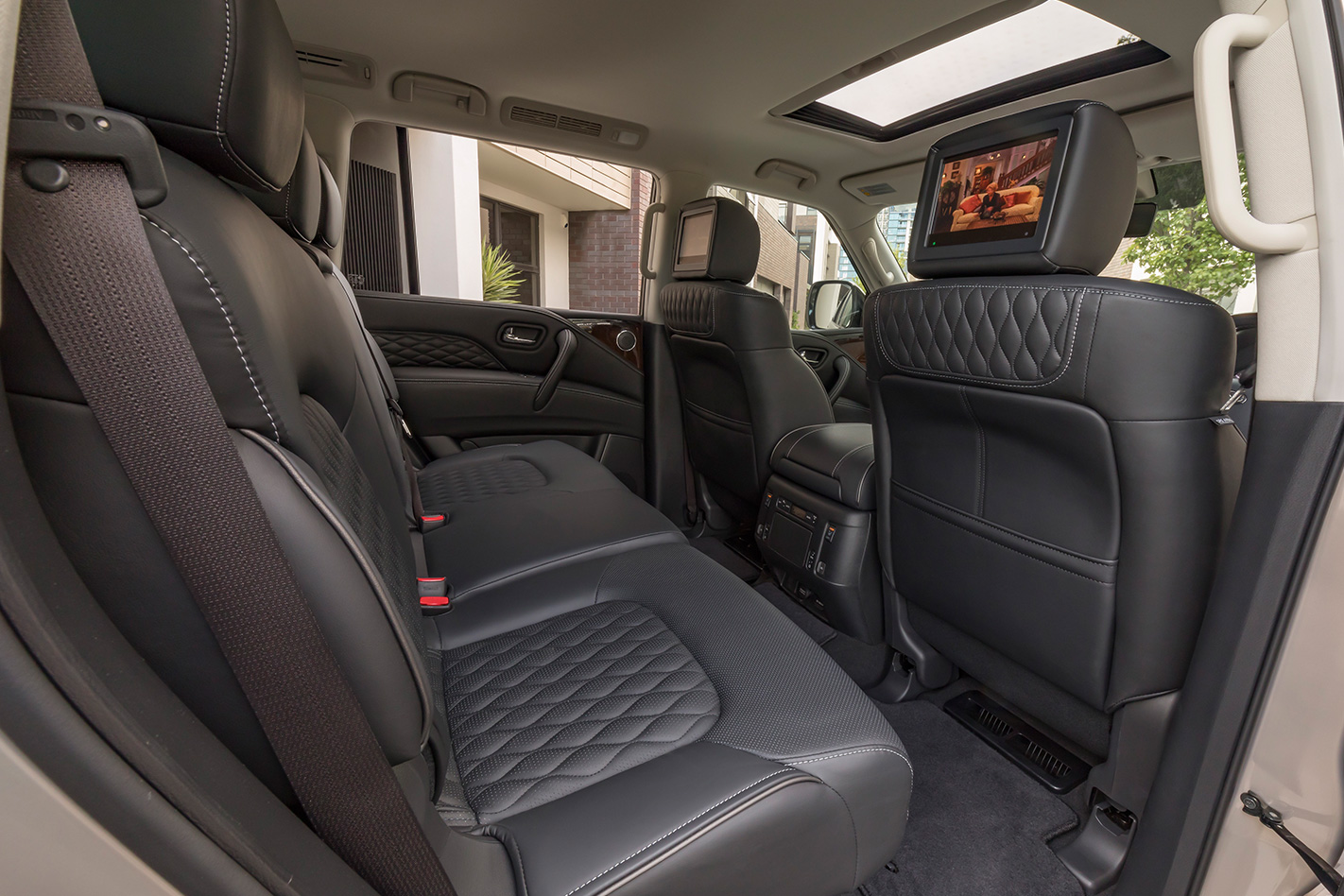
But elsewhere, the changes are more modest. Infiniti has done only minor work to the QX80’s interior, citing the higher cost of tweaking in-car hardware as the main reason why the dash and doorcard furniture appears nearly identical to the outgoing model. Instead, quilted leather upholstery, more contrast stitching and upsized rear entertainment screens are the most noticeable alterations. A shame, as dated cabin styling and an antiquated infotainment package were two things that held the pre-update QX80 back.
Floor the accelerator, and the engine’s V8 note delivers plenty of aural appeal, too. Don’t do it too often though – natural aspiration, big displacement and a mammoth kerb weight translate into a hefty thirst – Infiniti claims a combined average of 14.5L/100km.
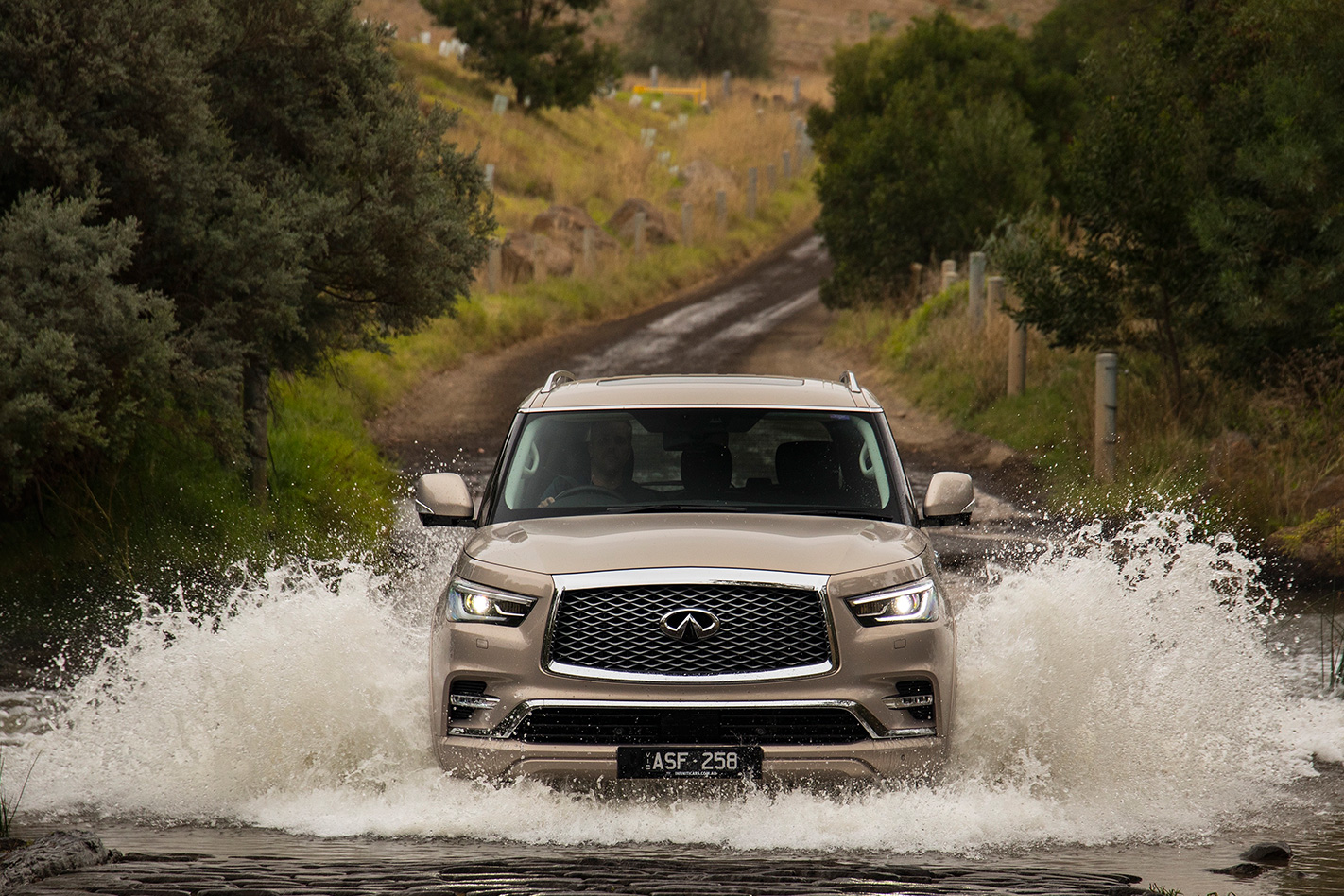
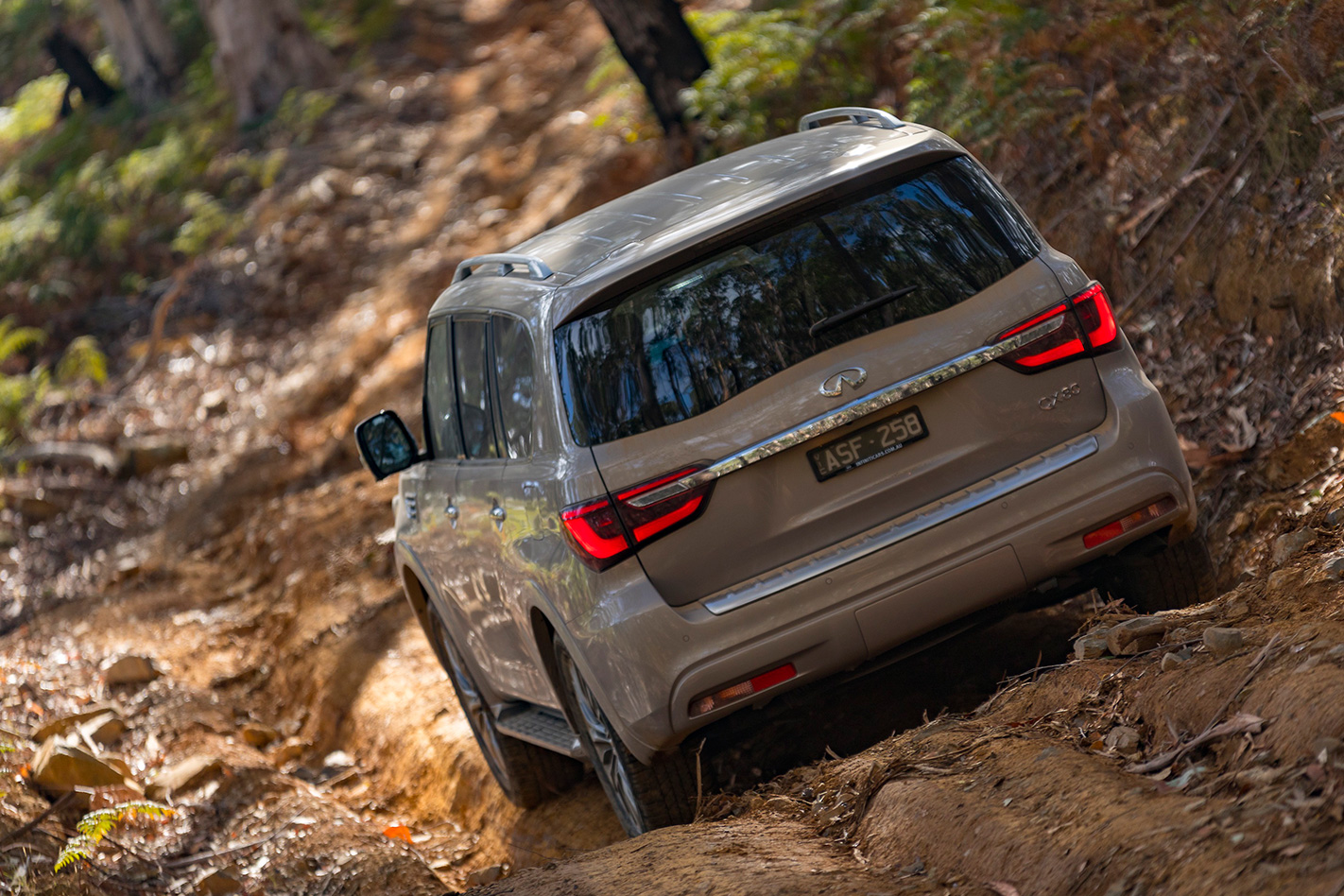
We burned more than 16.0L/100km during the updated QX80’s local media launch, but that wasn’t unexpected given the route incorporated a detour through parkland to showcase the QX80’s off-road chops. Infiniti doesn’t want us to forget that although the exterior might have a fancier sheath, underneath it all lays the capable 4×4 hardware of the Nissan Patrol. With a proper dual-range transfer case, multiple drive modes (for rock-hopping, sand driving, dirt and road), plus a locking rear differential, the QX80 promises to take its passengers further than the average luxo-barge three-row SUV.
Out on the blacktop, Infiniti says the updated QX80 should be quieter and more comfortable than before. The former is certainly true. Extra sound-absorbing material has been applied around the cabin – mainly to the firewall – and there’s a surprising lack of wind noise for a car with such a massive frontal area.
Ride comfort is also generally good, though there’s some sensitivity to high-frequency corrugations that interrupts the serenity. A bigger threat to long-distance comfort are the flat seats, which lack the appropriate contouring to deliver good support both for the back or under the thighs.
Passengers in the middle row will at least be distracted from their unsupportive seat cushions by the rear entertainment screens, which now measure eight inches across rather than the old model’s seven and feature a higher resolution, a new HDMI auxiliary input, and can operate independently of each other while sending sound to wireless headsets. Not bad, but in an age where smartphone mirroring, all-electronic dash displays, high-definition graphics and slick touchscreens are fast becoming the norm, the QX80’s infotainment package still seems a step or two behind the leaders.
It’s still a fine choice for highway touring, and with a 3500kg braked tow capacity and that meaty V8 it’ll deal with caravan duty easily – provided you’re comfortable with the fuel bill. Range is another issue, with the QX80’s 100-litre fuel tank only giving 690km of range if you manage to hit Infiniti’s claimed fuel figures. The absence of a diesel definitely counts against it for long-distance use – especially now the Lexus LX has an oil-burning option in the LX 450d.
SPECS
Model: Infiniti QX80 S Premium Engine: 5552cc 8cyl, dohc, 32v Max power: 298kW @ 5800rpm Max torque: 560Nm @ 4000rpm Transmission: 7-speed automatic Kerb weight: 2783kg Fuel economy: 14.5 L/100km Price: $110,900 On sale: Now
The phrase “A stitch in time, saves nine” can apply to maintaining your car, which will reward regular checks and preventative maintenance by looking good, driving well and even saving fuel and mechanic’s bills in the long term.
WhichCar’s Car Advice section has plenty of stories to help you ensure your car keeps looking and running at its best, such as:
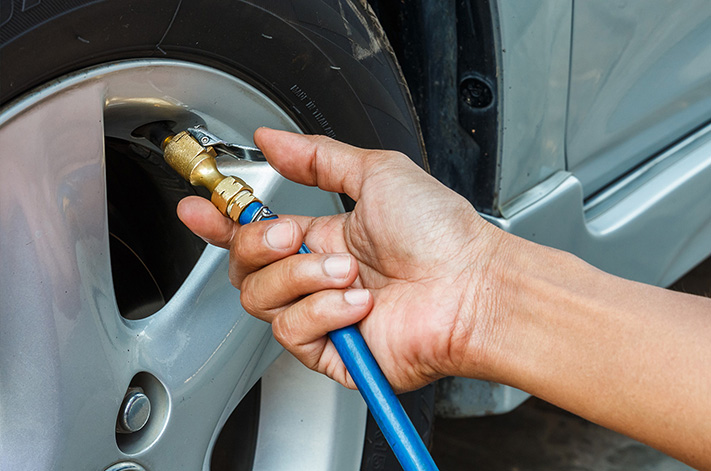
How to check your tyre pressures correctly
It should be no secret just how important correct tyre pressures are. Not only will a vehicle rolling on well-maintained tyres turn, stop and accelerate more safely and comfortably, it will also return the optimum fuel economy, so it should be top of the list of weekly jobs you can take care of yourself.
Some motorists may find the range of inflators found on service station forecourts confusing, but checking and correcting your own tyre pressures is a simple job.
That said there are some things many people get wrong. Read the full story here.
How to extend the life of your tyres
Tyres are one of the biggest expenses over the life of your car and regardless of what you drive there are few parts more important than the small patch of rubber in contact with the road.
Maintenance of your tyres will not only keep you safer but will save you money by helping to cut fuel and use prolonging the time before you have to shell out for new ones. Here are a few tips for extending the life of tyres.
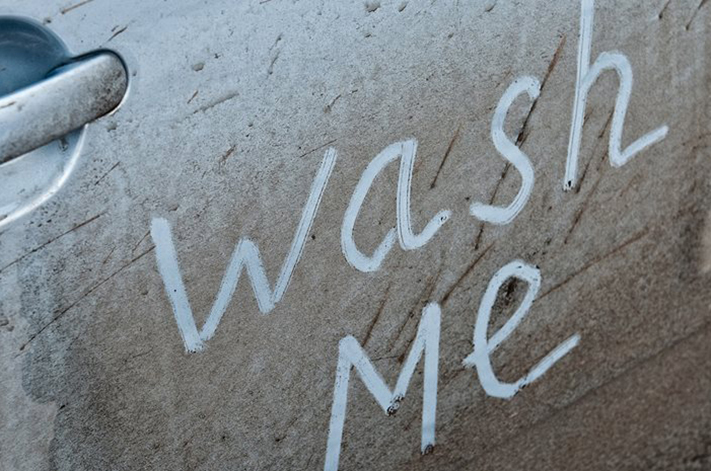
How often should you wash your car?
It seems obvious that you should wash your car whenever it gets dirty. However, it’s a good idea to wash regularly to prevent dirt, grime and other contaminants settling on the paintwork in the first place.
The frequency between washes depends on where the car is parked and the kind of dirt and contaminants it’s exposed to. Read the full story to see how that applies to you.
Waxing your car
Waxing and polishing is important for maintaining a car’s paint, and can also help restore a faded paint job back to its original glossy glory.
While it’s a relatively simple job that most people can do at home there are a few important things to know before you start smearing your car in wax, so we sought expert advice from James Kennedy, co-owner of Mothers Polish.
Car maintenance tasks you can do yourself
One reason why we tend to neglect cars is the hassle and expense of getting it to a mechanic to fix minor things. New cars aren’t exactly DIY-friendly when it comes to maintenance, however there are a few tasks you can do should the need arise before the next service.
Here are some jobs which you can do yourself to save money and put you more in tune with your car’s workings.
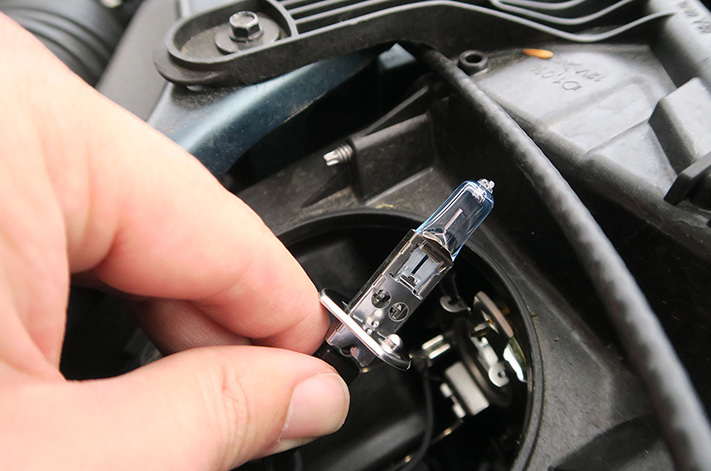
How to tell when your globes are blown, and how to fix them
It’s a pain when the light in your bathroom gets unexpectedly snuffed out, but it can be downright dangerous if the various lamps on your car quit shining bright.
It’s generally easy to tell when a headlamp globe blows out, given the road in front of your car will become noticeably dimmer at night, but what’s the best way on keeping an eye on the rest of your globes when you’re in the driver’s seat? What’s more, how do you go about fixing it? WhichCar shows you how.
How to stop your headlights turning foggy and yellow
Modern vehicles are plagued by unsightly, clouded and yellowing headlight lenses on an enormous scale. Not only are they ugly, they’re also unsafe. Here’s how to minimise the issue with your own car and how to fix the problem if it has already happened.
THE US environmental watchdog has overnight announced it will overturn tough Obama-era emissions targets for passenger cars, paving the way for the Trump administration to scale back the tight targets imposed on car makers.
The Corporate Average Fuel Economy targets, due to be phased in from 2022 to 2025, would have set a 4.7L/100km average fuel use across a manufacturer’s showroom. The move was widely expected to force car makers to introduce more plug-in hybrid and fully electric models –.
“The Obama Administration’s determination was wrong,” EPA administrator Scott Pruitt said in a statement released overnight. “Obama’s EPA cut the midterm evaluation (MTE) process [a review of how well the car makers were transitioning to the new standards] short with politically charged expediency, made assumptions about the standards that didn’t comport with reality, and set the standards too high.”
According to the EPA, in late 2016 the Obama Administration “short-circuited the MTE process and rushed out their final determination on January 12, 2017, just days before leaving office”.
“Since then, the auto industry and other stakeholders sought a reinstatement of the original MTE timeline, so that the agency could review the latest information,” it said. The EPA said it would now work with the US-based National Highway Traffic Safety Administration to set what it called “more appropriate greenhouse gas emissions standards and Corporate Average Fuel Economy standards”.
The review of the emission standards could also spell trouble for California, which has a waiver under CAFE standards to enforce much tougher emission standards than other US states, skewing the carpool towards those vehicles at the cutting edge of fuel-saving technologies. Pruitt said that waiver was under review.
US environmental group, the Natural Resources Defence Council, said the move to review the emissions standards for passenger cars – which account for about a quarter of the nation’s greenhouse gases – was a win for big oil.
Colorado senator Michael Bennett also said the decision would ”disincentivise American manufacturers to create the most efficient cars of the future”.
Australia is an increasingly important export market for the US, with it standing as the fifth-largest source of imported vehicles here behind Japan, Thailand, Korea and Germany. A large number of luxury German-brand SUVs are sourced from US-based factories set up in the market where they gain the most sales.
Over the first to months of this year, vehicle imports have grown 9.5 percent in the wake of the loss of Australia’s car manufacturing industry.
The facelifted Clio RS 200, in this case with the Cup chassis, is more fun than a cheap hatch has any right to be.
Everything is essentially the same as the old version, though new chequered-flag headlights, or RS Vision, are new and now aim where you steer. Purists beware, though, it’s still dual-clutch-only.
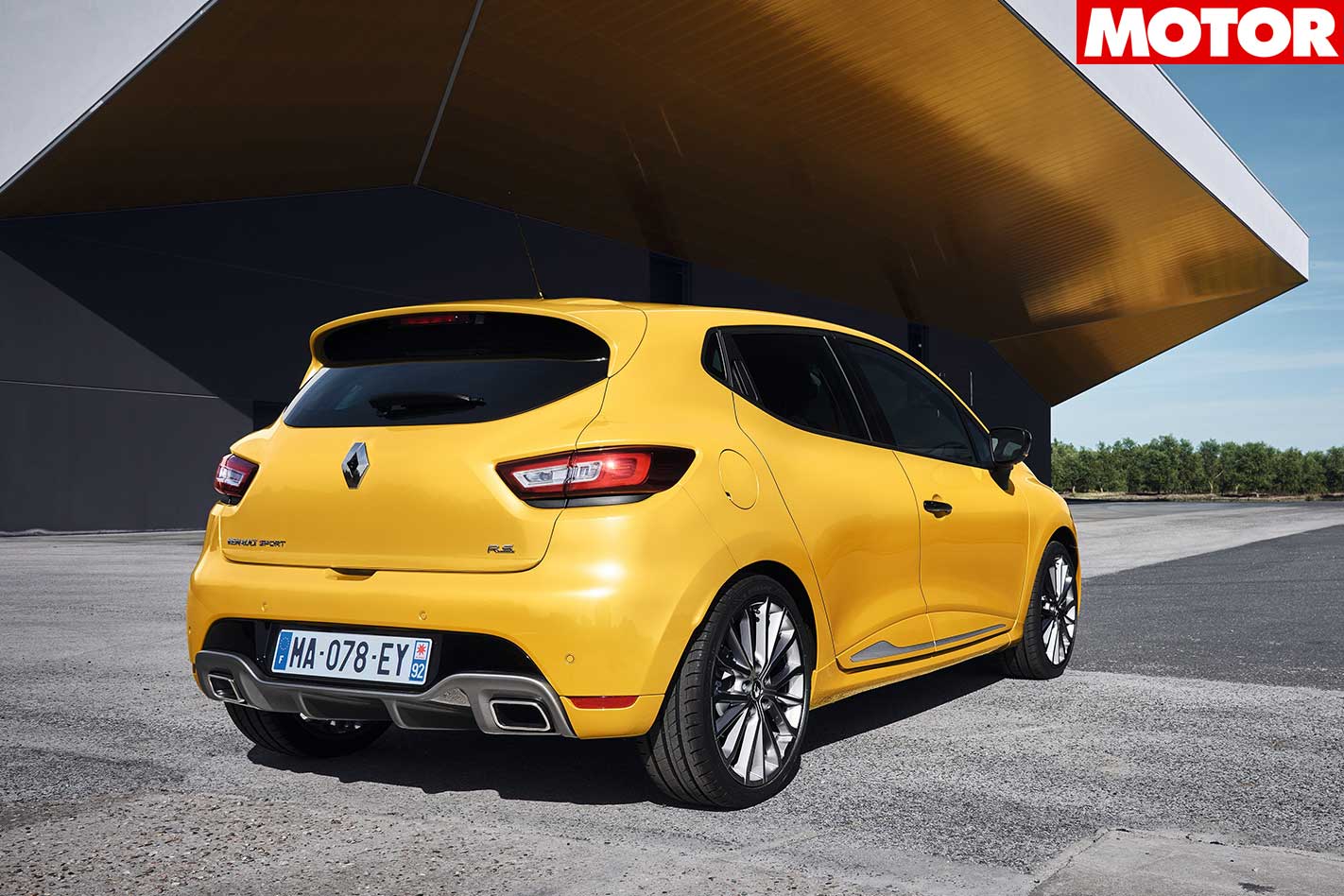
Shifts can become quite sharp (and make a little ‘brap’) when Race Mode is active, but there is a downside. Race automatically switches the Clio’s traction and stability control off, and there’s no way around it.

If you want a true daily proposition, there’s always the Polo GTI, but you won’t have nearly as much fun when Sunday rolls around.
2018 RENAULT CLIO RS 200 CUP SPECS:
Engine: 1.6-litre, inline-4 turbo Power: 147kW @ 6050rpm Torque: 260Nm @ 2000rpm Weight: 1204kg Price: $32,490
