
MERCEDES-BENZ was understandably proud of its new MBUX infotainment system at the A-Class reveal in Amsterdam last weekend, and has already prepared the system to be implemented across its entire model range.
The MBUX infotainment system treads new ground in terms of voice recognition and driver interaction, with artificial intelligence being used to help the car understand simple and more natural questions and statements such as ‘How far to home?’ and ‘I’m cold’.
Georges Messing, Director of User Interaction at Daimler, told Australian media the MBUX system can be implemented in every Mercedes-Benz at any time – no generational leap required.
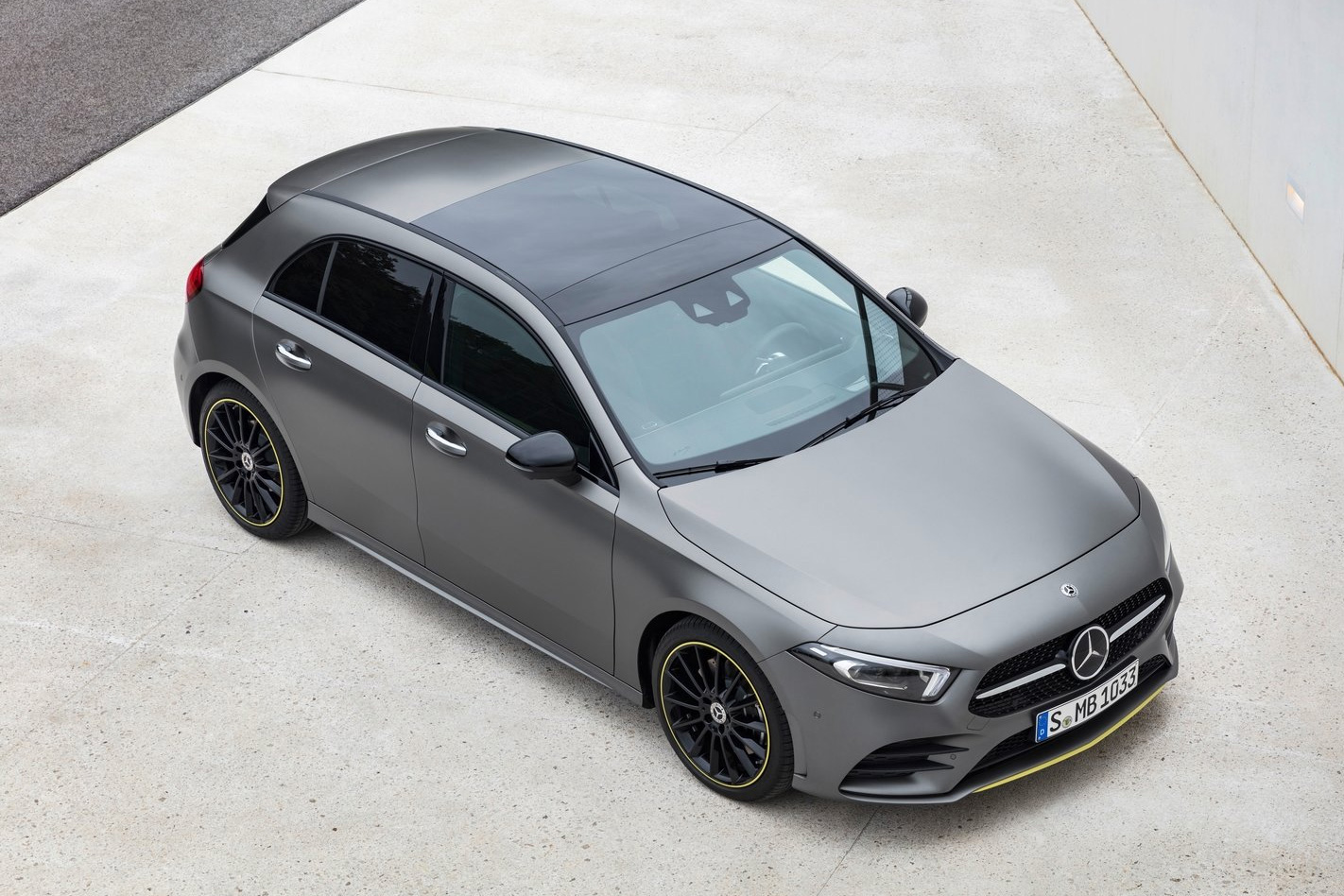
“The algorithm can be put into a C-Class for example. The base is already there, and we can just build on top of it.”
Messing also hinted that an updated system could be introduced remotely.
“We have now the capability to update the systems over the air. We can still work on the back-end for some additional features, and then just bring them in to the vehicle,” he added.
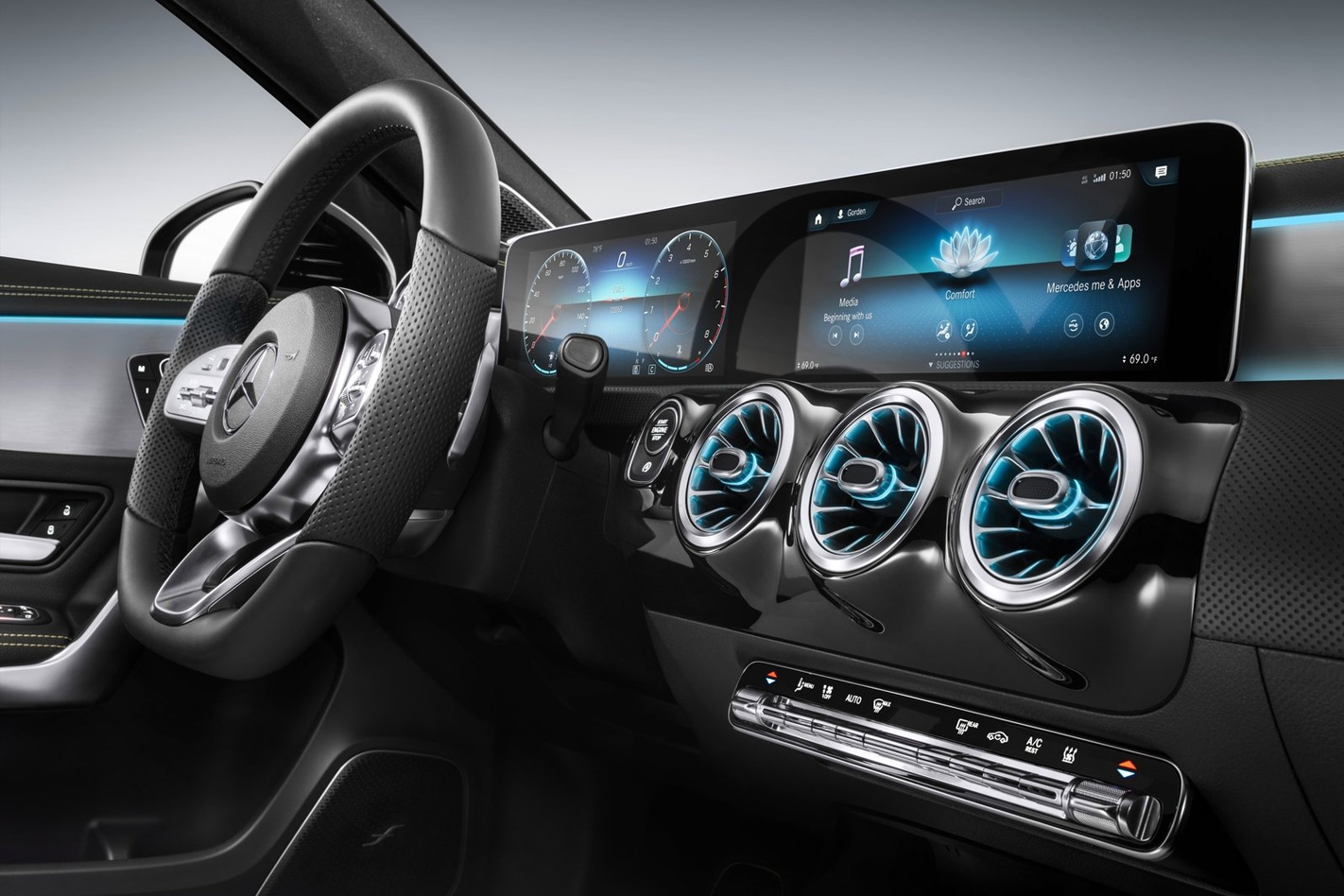
Mercedes-Benz believes voice recognition will become a core part of its products from 2020, with Messing stating a consumer push for connected vehicles is a core driver for the innovation.
“Firstly, we are currently seeing a proliferation of voice activation through the technology community,” he said.
“The second thing is when you have the chance to experience the car and system, you will find that you won’t stop talking to the vehicle, it is so amazing how far you can go with the instructions.
“For us MBUX will be part of an entire connected ecosystem, allowing owners to combine Mercedes Me and MBUX, or linking it with a home assistant system.”
Of course, what would a vehicle tech debut be without discussion of autonomy? Messing added MBUX will be core to user interaction when fully autonomous systems become available.
“Now if you were driving autonomously, as soon as the car takes control you can do something else – dictate messages and emails, or instruct the car to play a movie,” he said.
BY NOW you’ve probably read a story on the headline-generating Ford Ranger Raptor.
You’ll know it has a 157kW/500Nm 2.0-litre bi-turbo diesel, that it’s running on a modified chassis with Fox Racing shocks and that it has an all-new rear suspension set up.
Well here are a few details to help flesh out the bigger picture, and highlight just how much has changed to make it one of the toughest off-road trucks you can buy.
Engine
Although Ford’s engineers told us that there is scope for additional tuning of the engine for more power, for the time being 157kW’s your lot.
Still, that’s better than you get from the regular Ranger’s 3.2-litre turbodiesel five-pot, so grumbling seems churlish. It’s a relatively high-tech diesel unit, with integrated intake manifold for more efficient air feed and a belt-in-oil primary drive.
The latter reduces friction and noise, enhances durability, fuel efficiency and, as a welcome byproduct, reduces emissions. This proven Ford tech is also maintenance-free for the life of the engine.
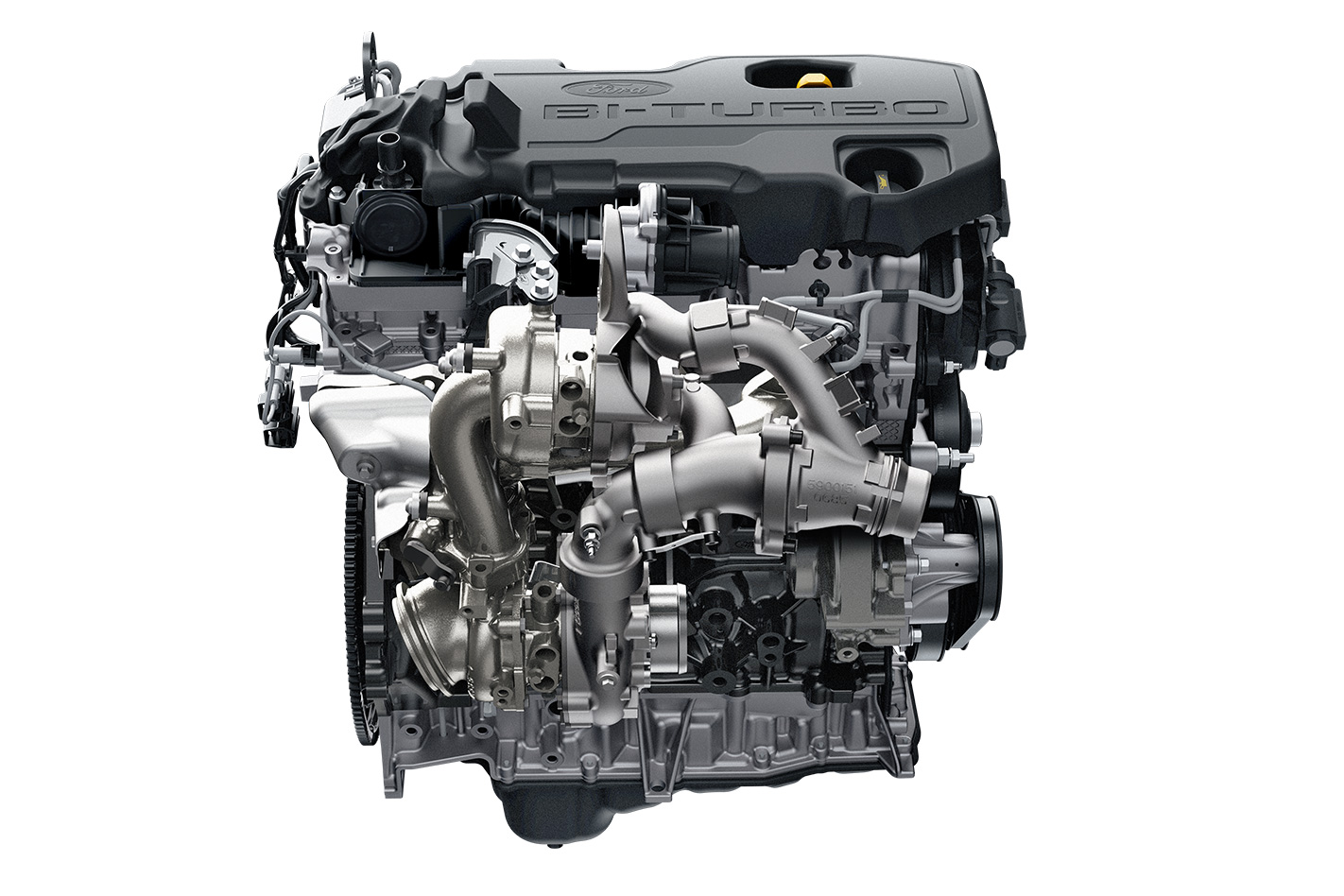
The two turbochargers optimise torque and power throughout rev range, allowing a secondary slug of boost at higher engine speeds where single turbo setups tend to get a bit breathy.
The turbo housing has been upgraded to a higher grade alloy to ensure durability up to 860C degrees exhaust temperature, while aluminium pistons with bowl edge re-melt improve durability. The small turbo gets variable nozzle actuation while the bigger one has fixed vanes. There’s also a water-cooled compressor cover.
Transmission
The 10-speed auto ’box features an array of interesting tech including a roller one-way clutch in the front of the casing. This helps deliver a smooth responsive drive experience when delivering high torque at low speeds.
There’s also an off-axis variable displacement vane pump, which contributes to fuel economy by lowering torque loss. By matching the pump output accurately to flow demand, high-speed NVH is improved.
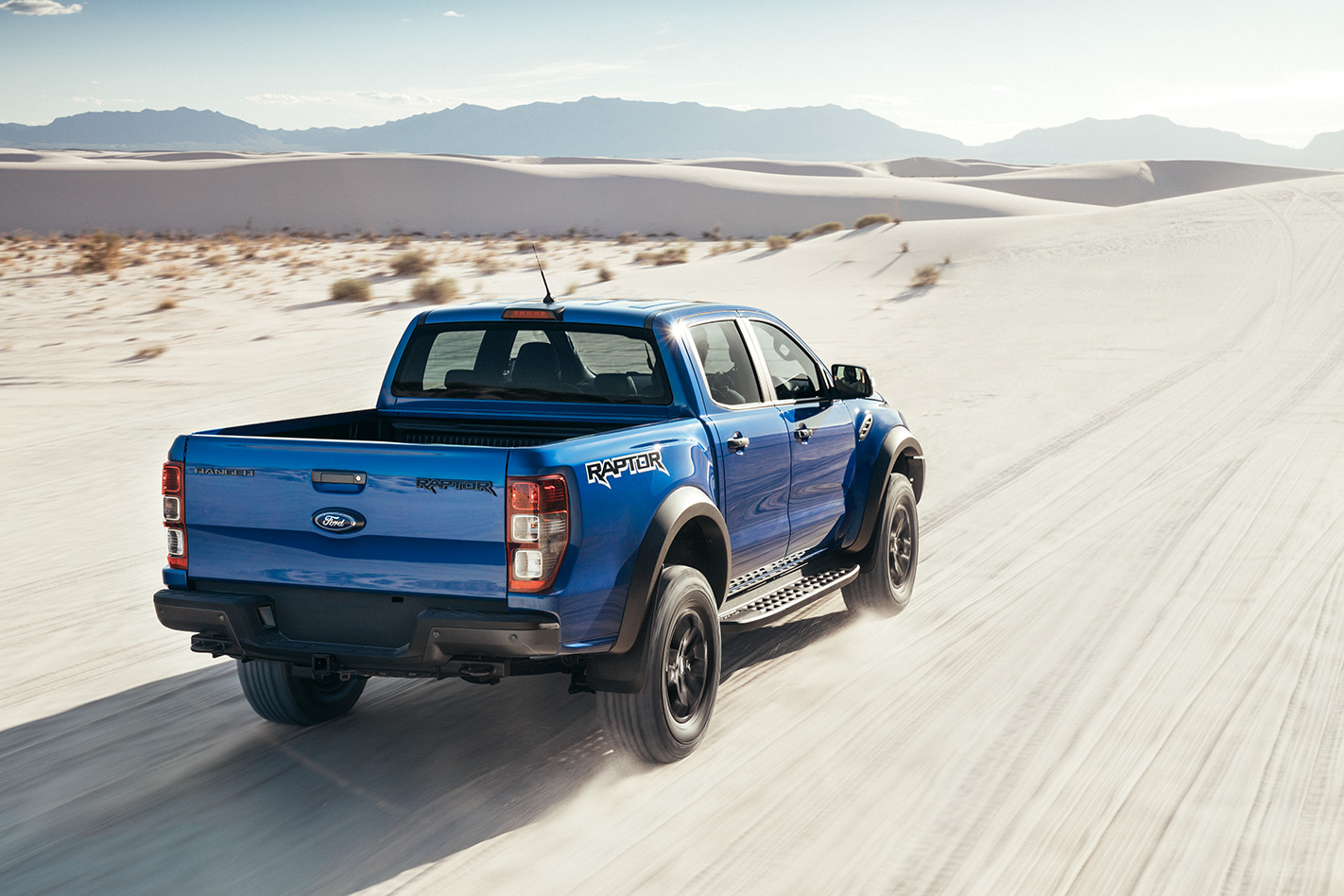
With over 6 million test kilometres put on the transmission, including Baja 1000 testing, it ought to be able to handle the Birdsville Track.
Suspension
As the only production ute in the world with a Watts Link/coilover combo, the Ranger Raptor is a long way removed from the norm.
The Fox Racing shock absorbers are at the heart of this vehicle’s capability, with Ford Performance Chief Engineer Jamal Hameedi describing them as “the best off road shocks you can buy in the world. Full stop.”
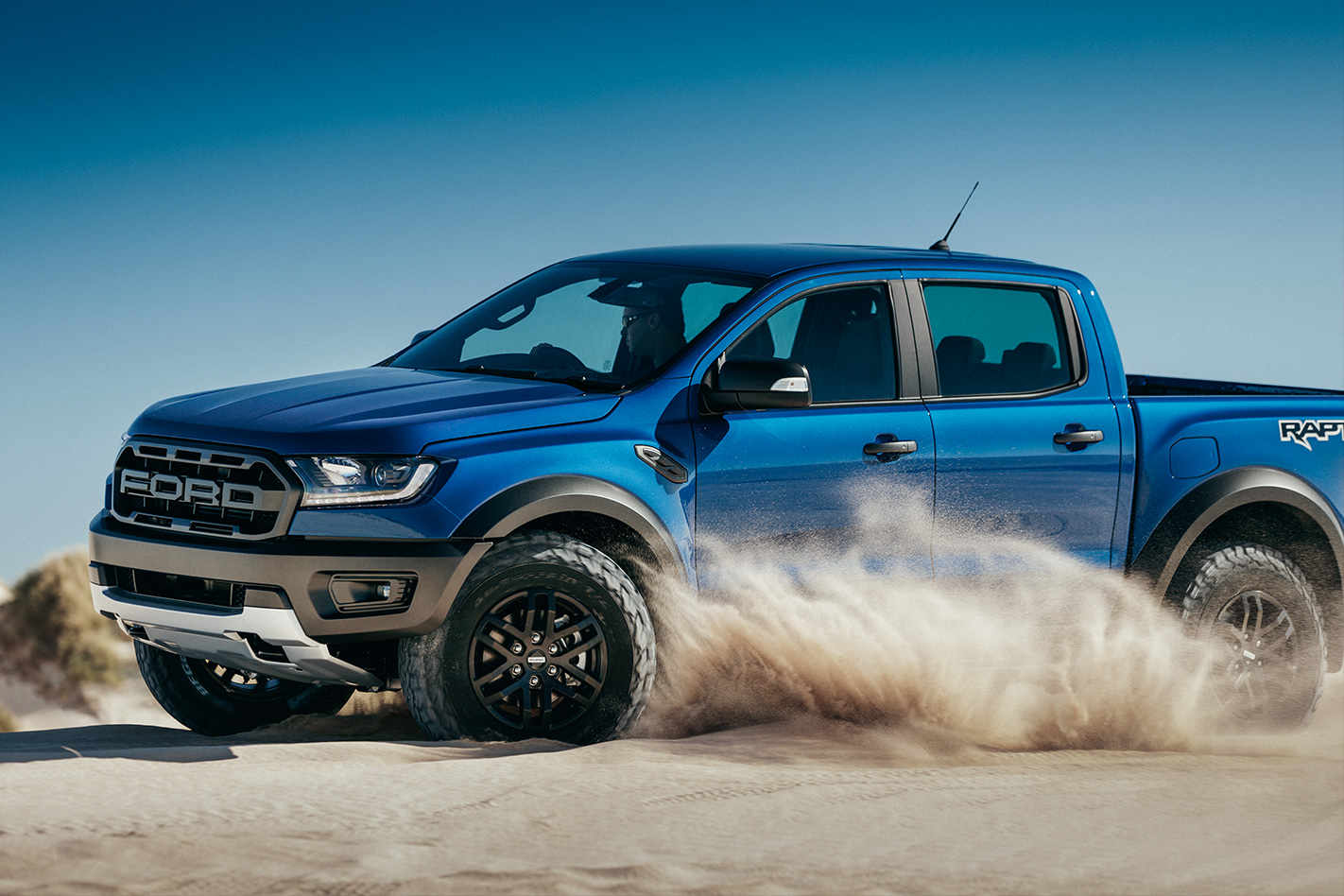
Hameedi also claimed that no consideration had been made to increase fuel tank size.
“The F-150 Raptor doesn’t have a bigger fuel tank,” he told Wheels. “Given the efficiency of the engine, we didn’t see a need to increase it in this vehicle.” We’d argue the counter. Range was stated as the rationale for the diesel engine choice, so giving it more would only serve to improve what is clearly seen as a key competitive advantage.
IF YOU’RE going to be late to a party then bring it or don’t bother attending.
Clearly, this is the approach Hyundai adopted with the all-new Kona which goes all-out to impress the baby-SUV set.
Positioned beneath the big-selling Tucson, the Californian-styled, German-engineered newcomer makes a grand entrance with striking looks backed by an array of colour and accessory couture. This South Korean-built crossover is literally high fashion right now.
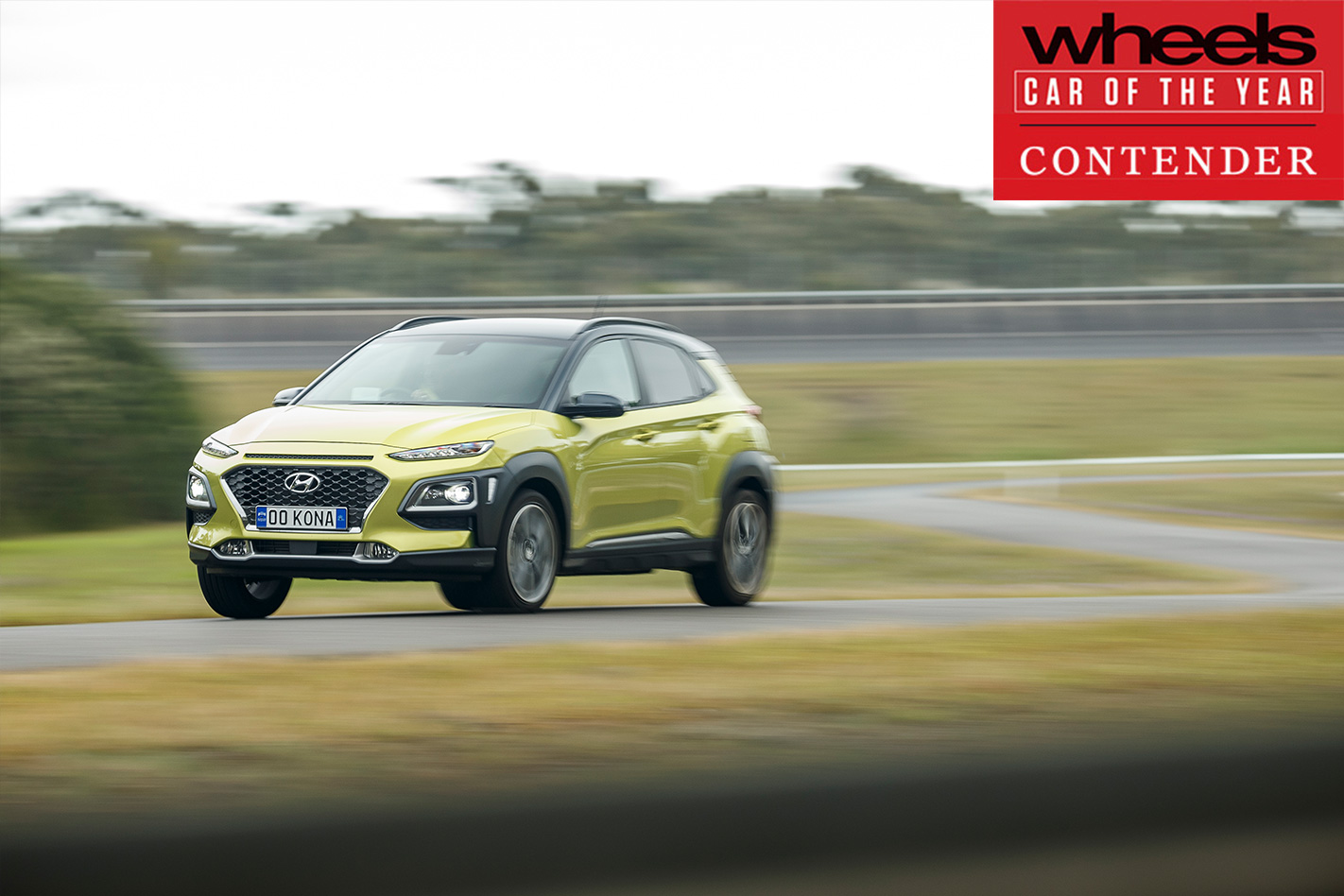
And then there are the benefits the brand is renowned for, such as low starting prices, high equipment levels (even the base Kona scores an auto transmission, rear camera, 7.0-inch touchscreen with Apple CarPlay/Android Auto multimedia, alloy wheels and roof rails), pleasing build quality and a strong aftersales focus. And while AEB isn’t standard on the cheapest variant, another $1500 solves that, bringing with it goodies like blind-spot warning, rear cross-traffic alert, lane-keep assist, auto high beam, driver attention warning and powered folding mirrors.
Add a pair of powerful engine choices including a strident 1.6-litre turbo/seven-speed dual-clutch combo for $3500 extra (worth every penny as it also turfs out the torsion-beam rear end for a more sophisticated multi-link IRS set-up, plus all-wheel drive and bigger brakes), and it is conceivable that the crowd-pleasing Kona might become the toast of the burgeoning small-SUV soiree.
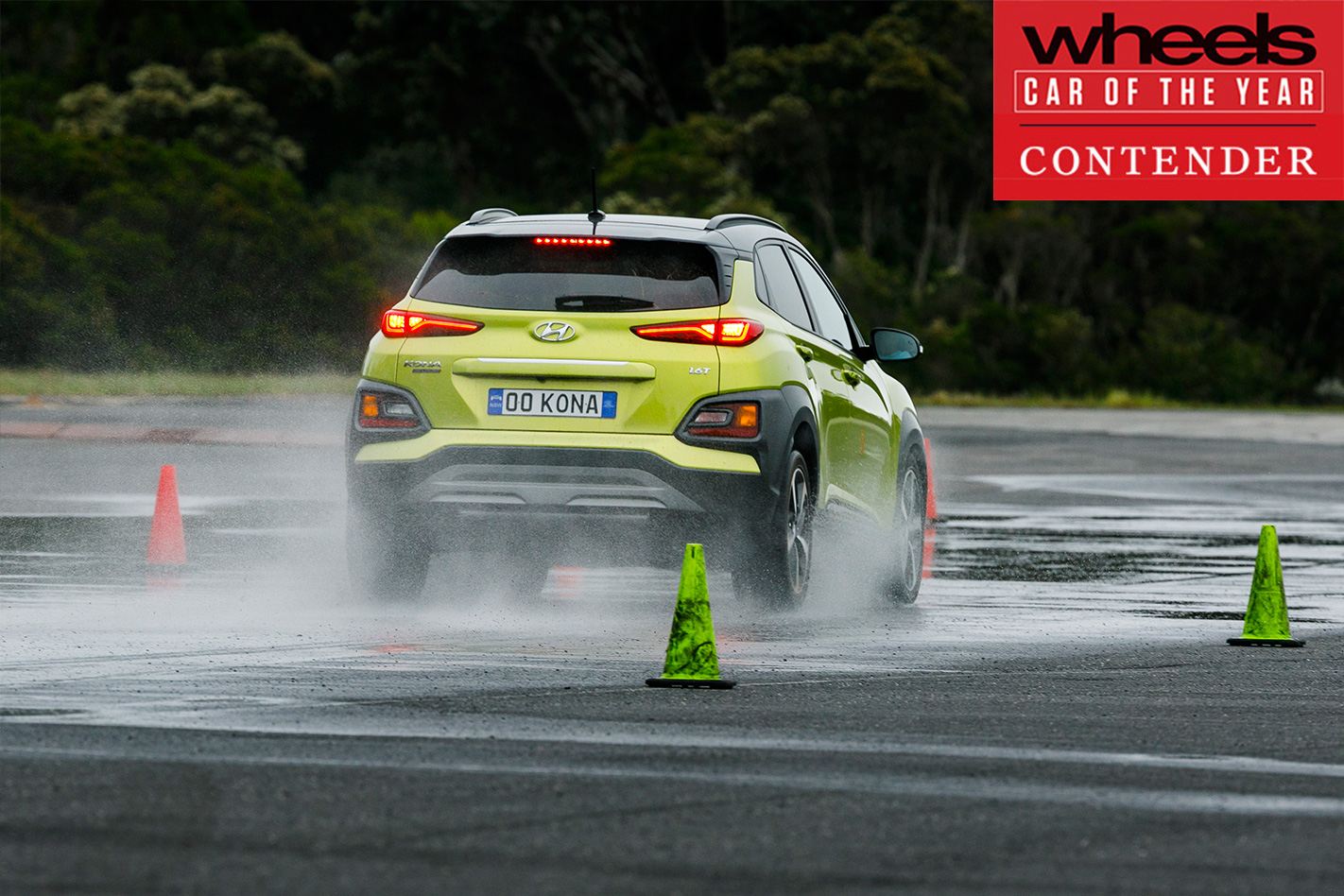
Hyundai expects most will buy the front-drive-only 2.0-litre, and while it’s a solid and dependable performer, it isn’t especially spirited and becomes coarse at higher revs. That turbo AWD alternative is a peach by comparison.
Perhaps, more importantly, although Hyundai says the Kona underwent substantial Australian-specific suspension and steering tuning to imbue a “sporty, get-up-and-go feeling”, the result is an at-times noisy and harsh ride that never feels settled. If comfort is a priority, stretch to the 1.6 turbo with IRS, but not the 18-inch-wheeled Highlander flagship as it can become too choppy.
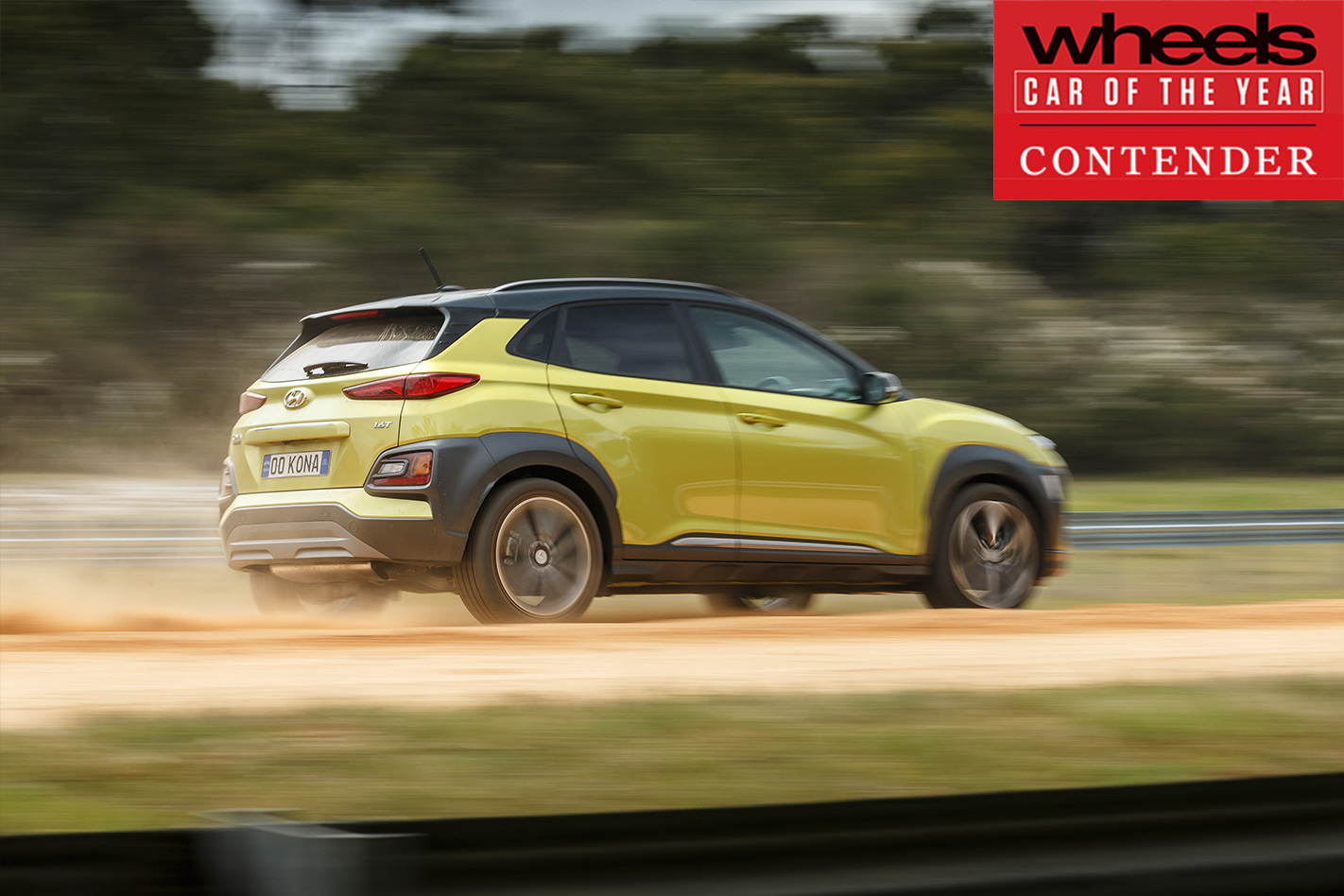
Ultimately, these foibles, plus poor wet- and gravel-road braking, a propensity to occasionally bottom out where rival SUVs didn’t, some steering rack rattle and the cabin’s dreary, plasticky ambience highlight the fact that the Kona doesn’t really progress anything in its segment aside from the 1.6 turbo’s performance.
Also present at this year’s COTY was the more-rounded Hyundai i30. In terms of refinement, comfort and value, the hatch easily outclasses its closely related SUV stablemate. We know whose party we’d rather attend.
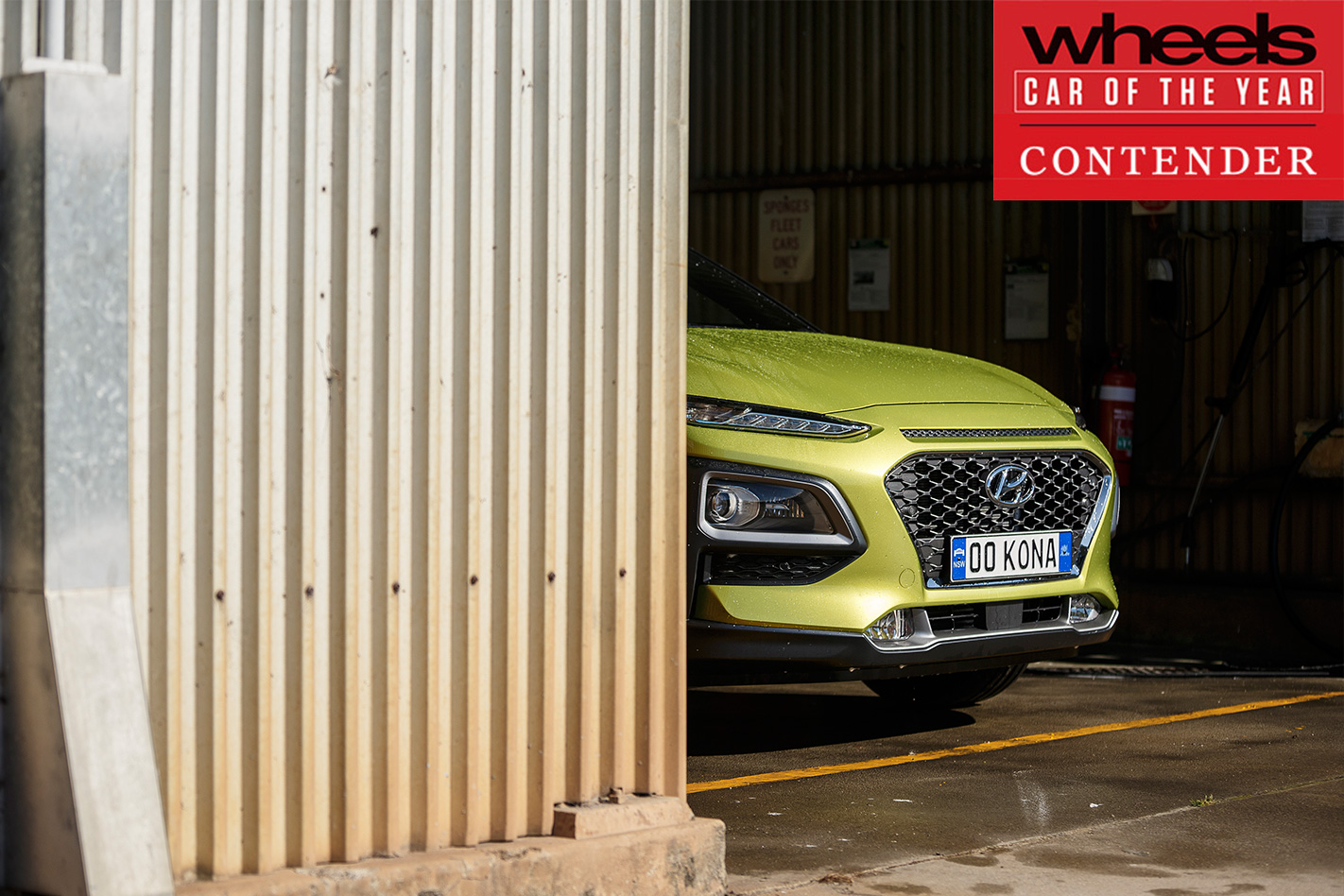
Like most Hyundais, Oz-specific chassis tuning was undertaken to make the Kona feel sportier, over “thousands of kilometres of testing on a variety of surfaces, from country lanes to freeways to corrugated dirt roads”.
The upshot saw three sets of front and two sets of rear springs tested, as well as 13 different front and 23/29 (FWD/AWD) rear damper combinations, and two anti-roll bars. Plus, both Euro 5 compliant engines run on 91 RON. There’s no diesel or manual in the works.
MORE: Hyundai Kona Range Review MORE: Hyundai Kona Specs, Range & Price
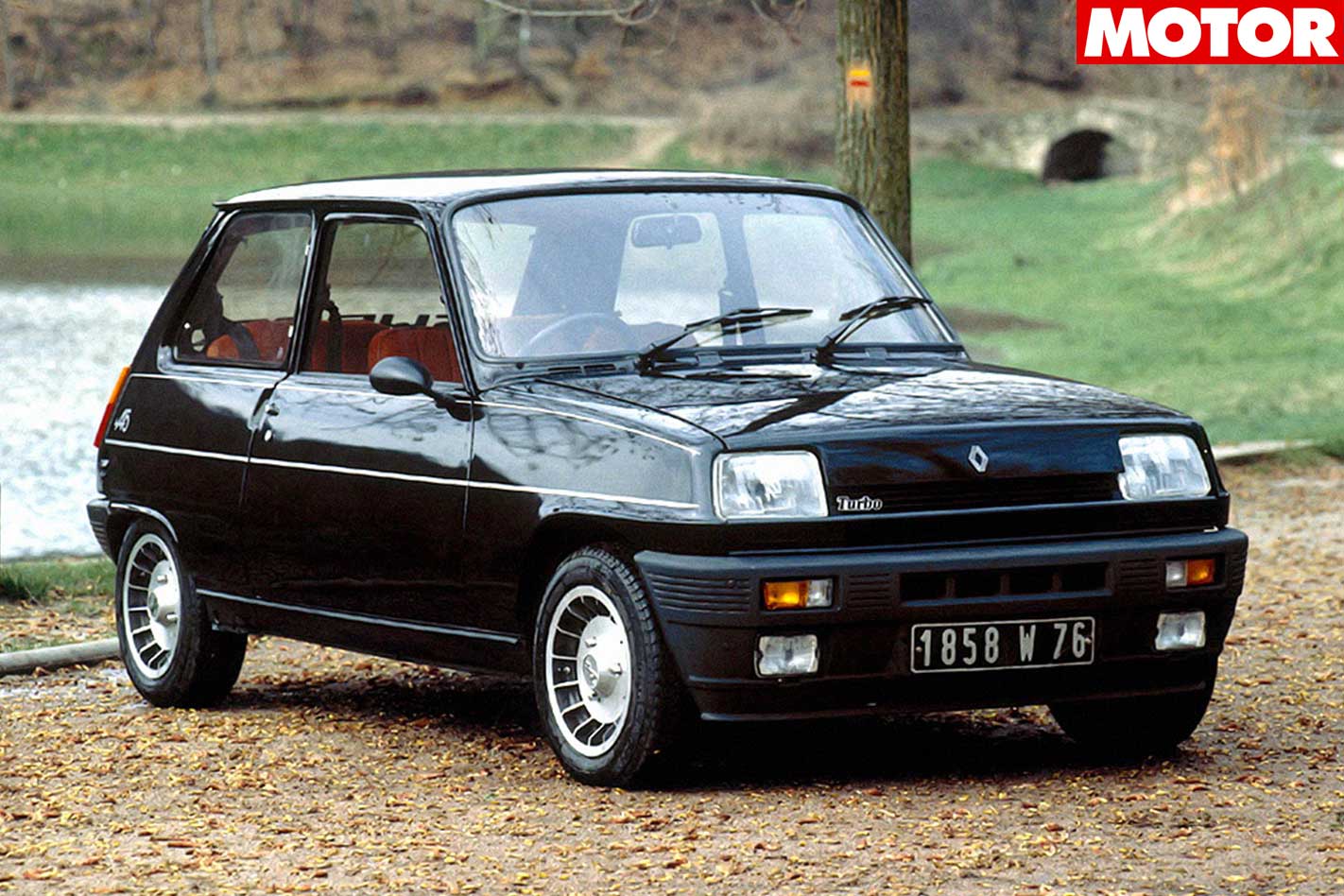
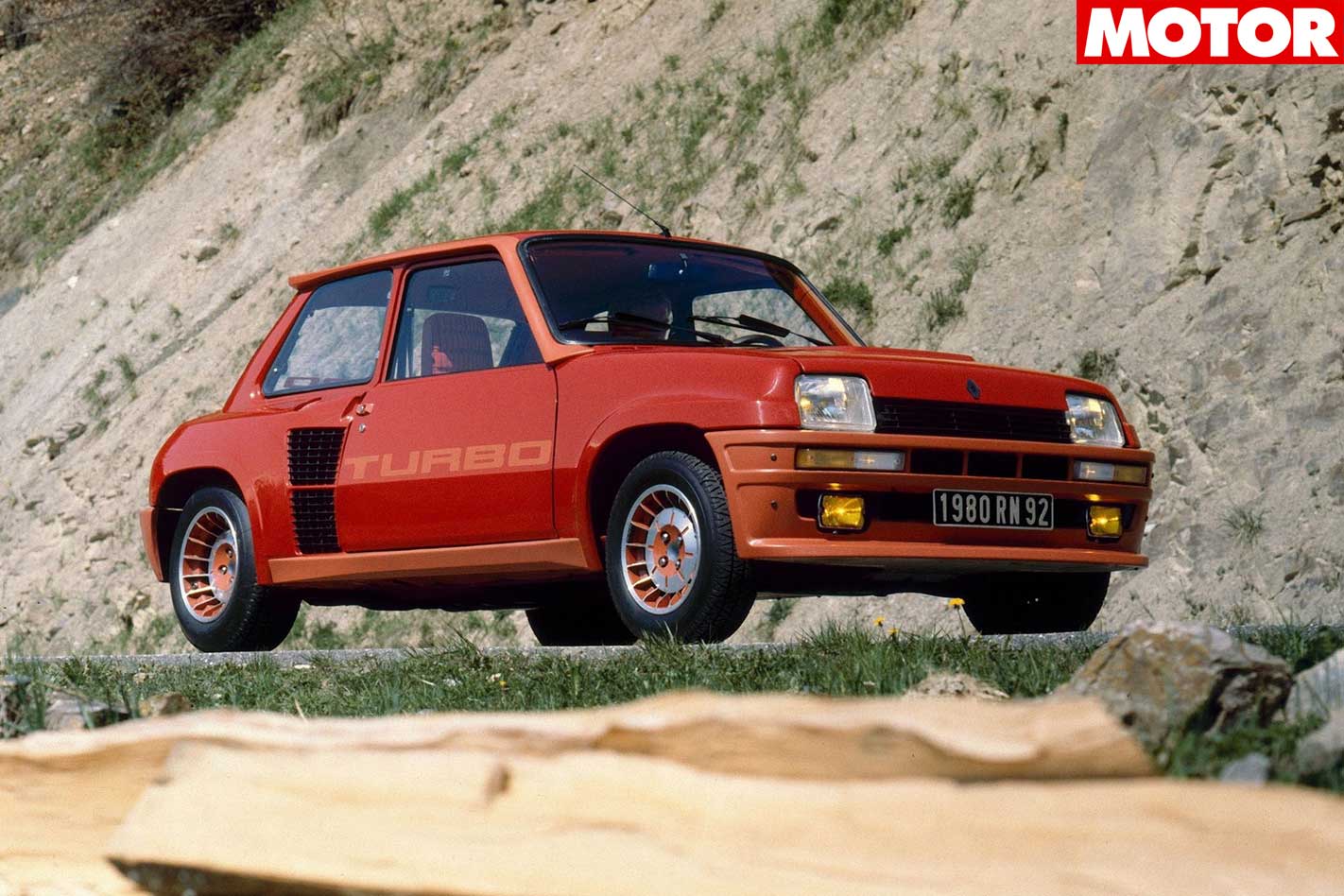
No, this is not the Renault 5 Turbo. Those two letters ‘GT’ are what make this version of the R5 a far more down-to-earth suspect than the ludicrous mid-engine monster.
Since this is a history lesson, we thought it best to delve into a model that’s more regularly overlooked, despite being the reason Renault has such a good grasp on fast front-drivers today.
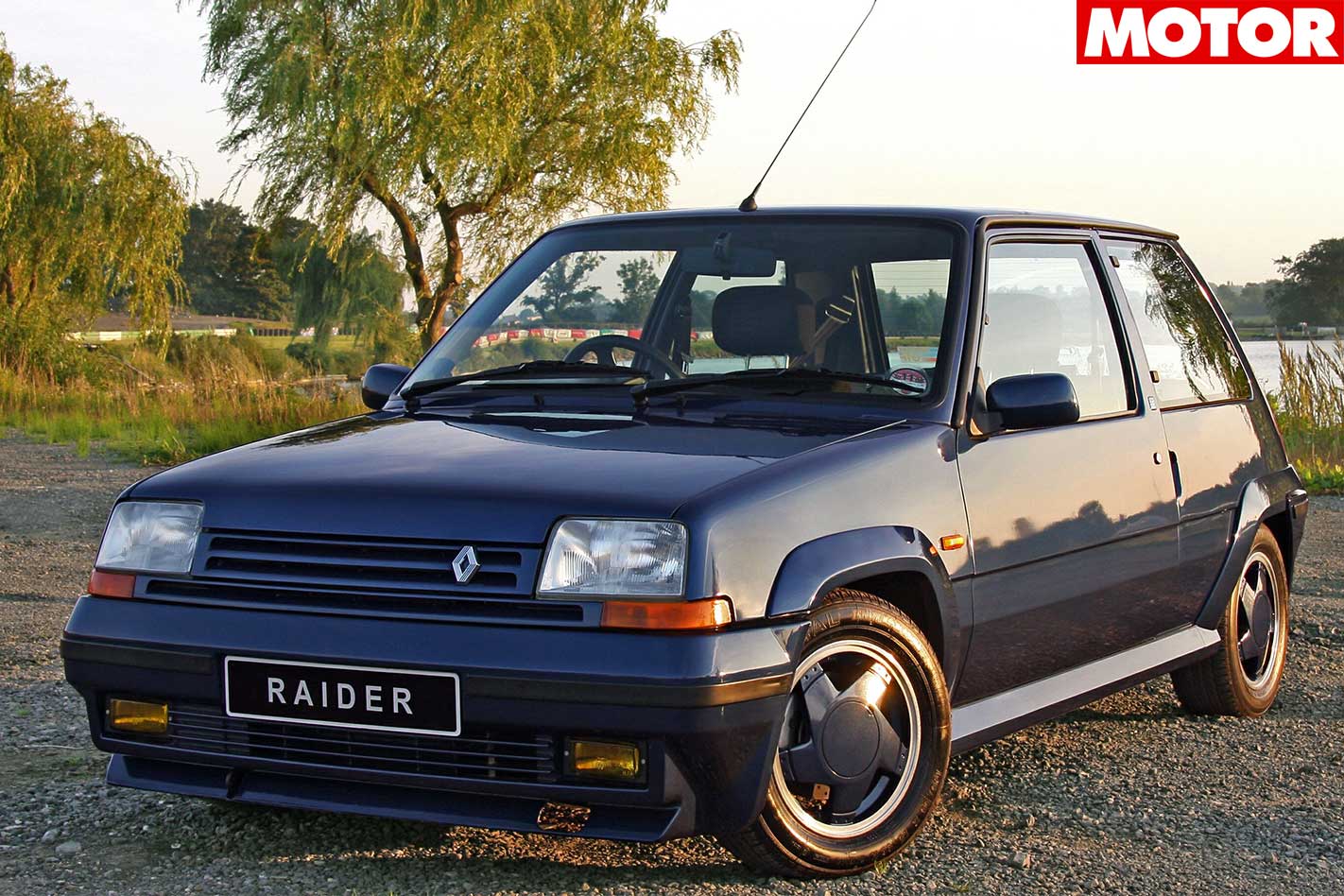
If we want to find the king of the hill for R5 GTs, we look to the Renault 5 GT Turbo Raider, the ultimate version of the four-pot hot hatch. It boasted a formidable 89kW thanks to its 1.4-litre four-banger, which had a Garrett T2 helping it along rather effectively. But that power was only formidable thanks to the R5 GT’s lack of something else – weight.
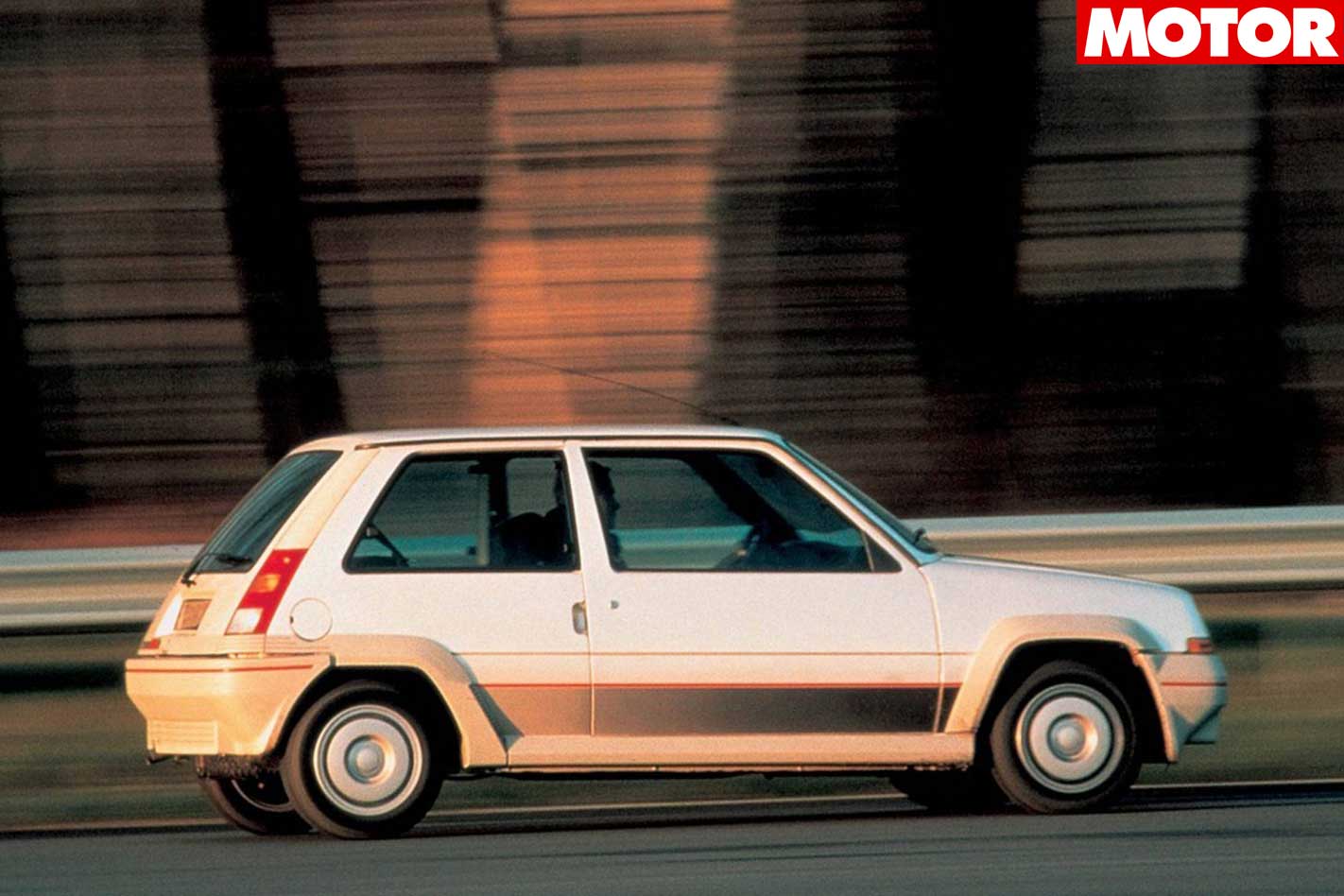
However, hot hatches aren’t meant to just slay straight lines, and the R5 GT Turbo could conquer corners thanks to a trick suspension setup.
It was designed just for the GT, and included four transverse torsion bars at the rear. The suspension – and by extension, handling – was praised in its day by motoring publications in the UK.
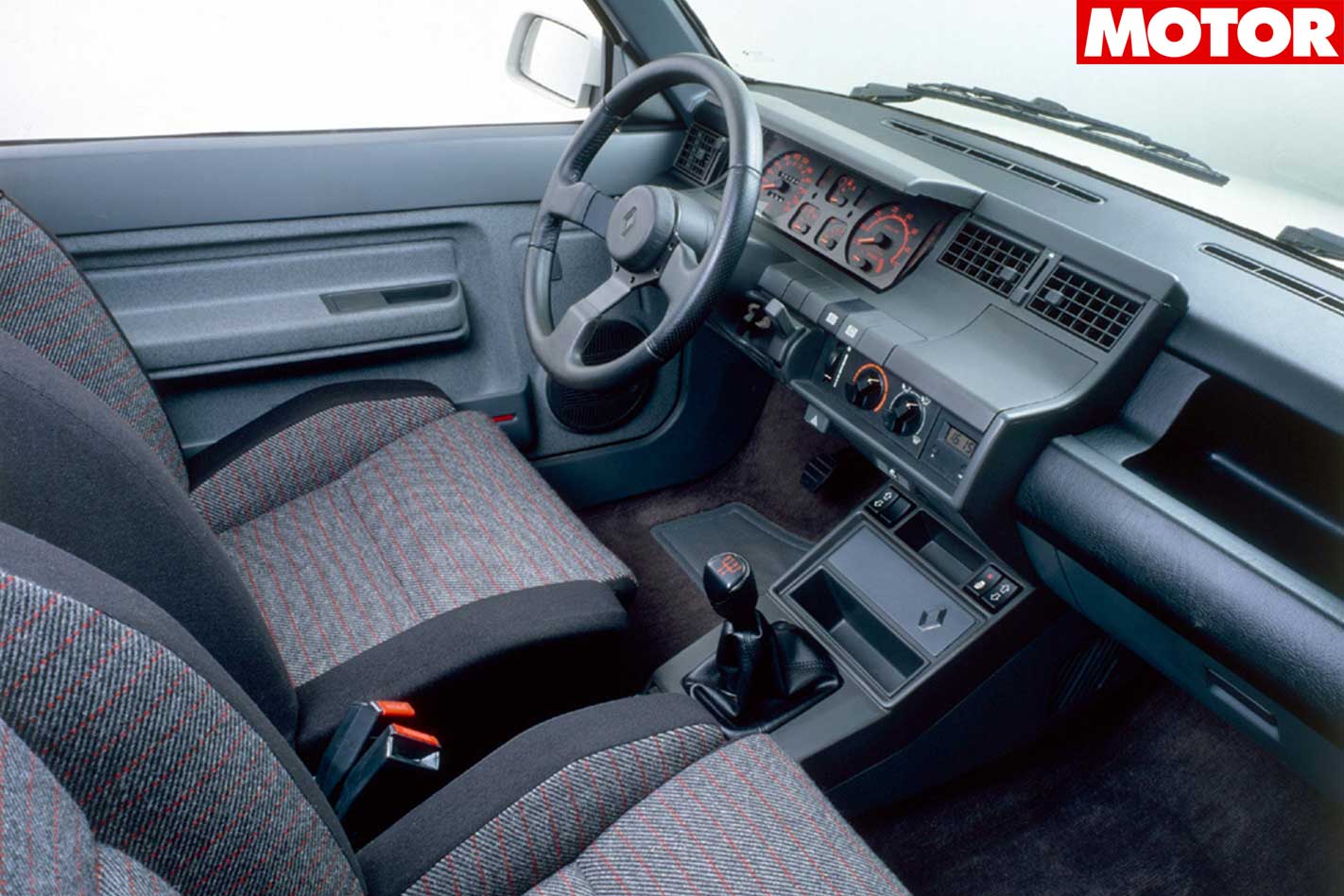
After 1990, however, the Renault 5 met its end. It was time for the French marque to move on to build a car that would continue the tradition of lightweight French hot hatches and endure to this day.
We’re talking, of course, about the Renault Clio.
1985-1991 RENAULT 5 GT TURBO SPECS Engine: 1397cc inline-4, OHV, 8v, turbo Power: 89kW @ 5750rpm Torque: 164Nm @ 3000rpm Weight: 830kg 0-100km/h: 8.0sec (claimed) Price (New): £7360 (1986 GT)
3 FAST FACTOIDS
1. This came first
2. Range topper
3. Not this one
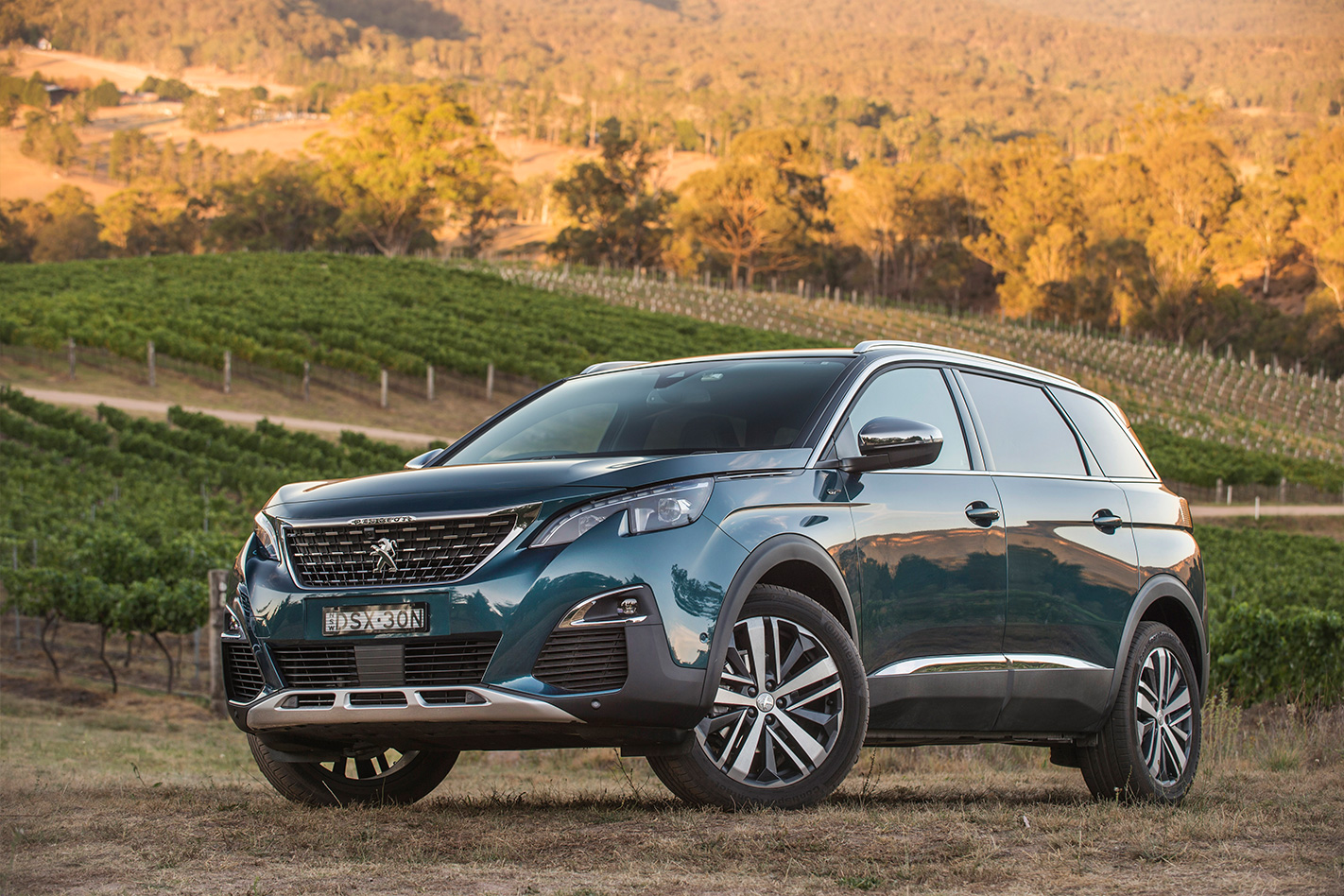
France’s product-led automotive revival continues with the roomy, fine-driving, good-looking Peugeot 5008 seven-seater
WHAT IS IT?
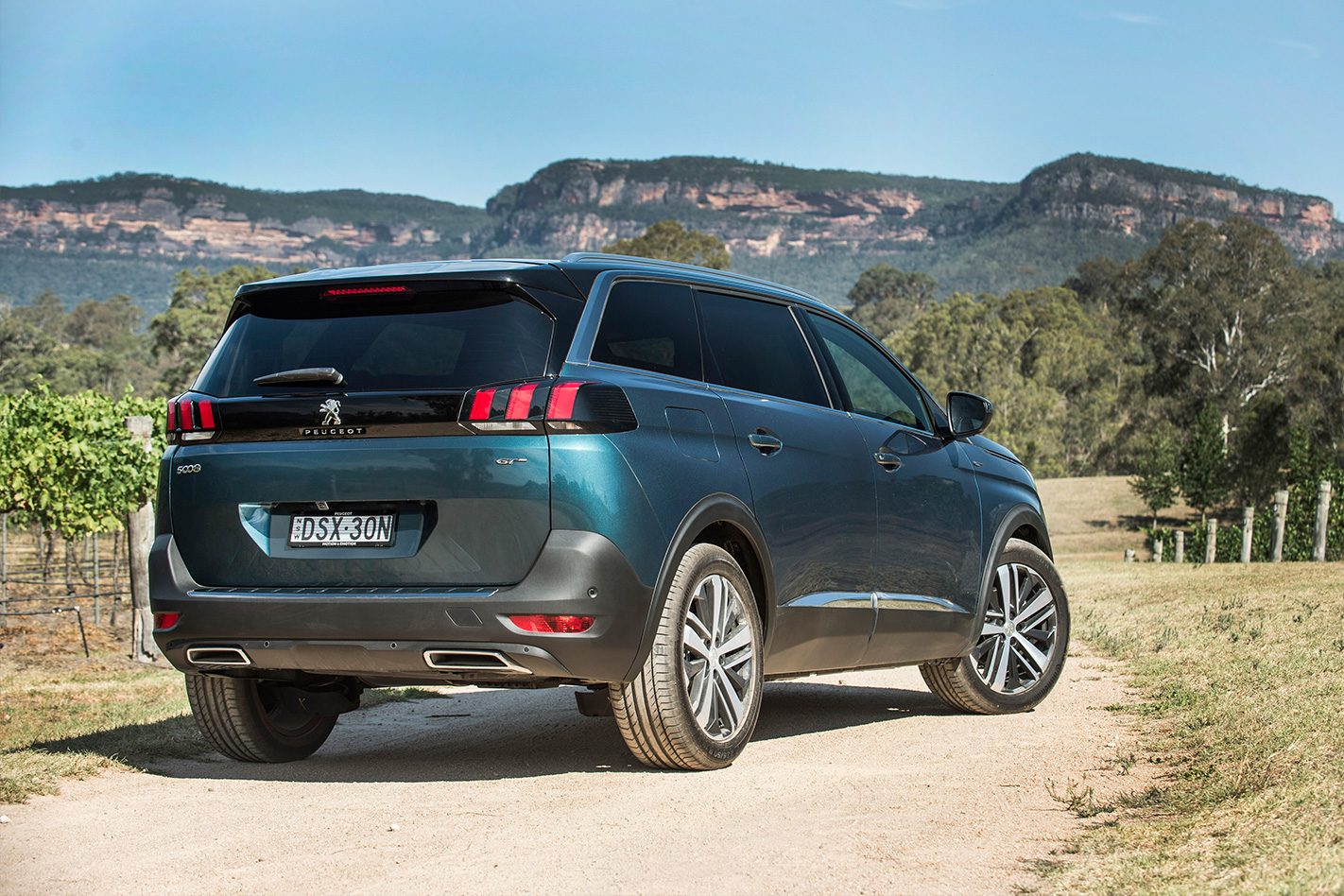
The closely related Peugeot 3008’s more sober sister, sharing almost everything from the B-pillar forward – including drivetrains – but riding on a 165mm-longer wheelbase and featuring a pair of fold-away, easily removable seats housed in the rear floor. The 5008’s less rakish rear end also translates into serious load-lugging ability.
WHY WE’RE TESTING IT
The Peugeot 5008 is an interesting mix, sharing the cutting-edge cabin design of the 3008 with greater visibility and people-carrying credentials it inherits from sharing its 2840mm wheelbase with fellow EMP2 platform partner, the Citroen Grand C4 Picasso.
Mazda CX-9 Sport, Skoda Kodiaq, Kia Sorento, Hyundai Santa Fe, Nissan Pathfinder, and, of course, Citroen Grand C4 Picasso.
THE WHEELS VERDICT
After the dismal failure that was the previous 5008 MPV, this all-new SUV-esque version represents new-wave thinking for a French family bus. Neither too heavy or too bulky, the seven-seat Peugeot 5008 is arguably more well-rounded than its lauded 3008 sibling. Not only is it great to sit in and fun to drive, it’s incredibly useful as a family wagon and comes loaded with kit, without carrying a premium-brand price-tag. A big win for the French.
THE WHEELS REVIEW
AGAINST all expectations, the legendary brood-hauling ability of Peugeot’s famous station wagons of the past – the 203, 403, 404, 504 and 505 Familiales – has somehow resurfaced in this new-generation people carrier, the Peugeot 5008. Not too big on the outside, yet almost Tardis-like on the inside, it’s the seven-seat SUV you have when you don’t want a bulky, distasteful 4WD.
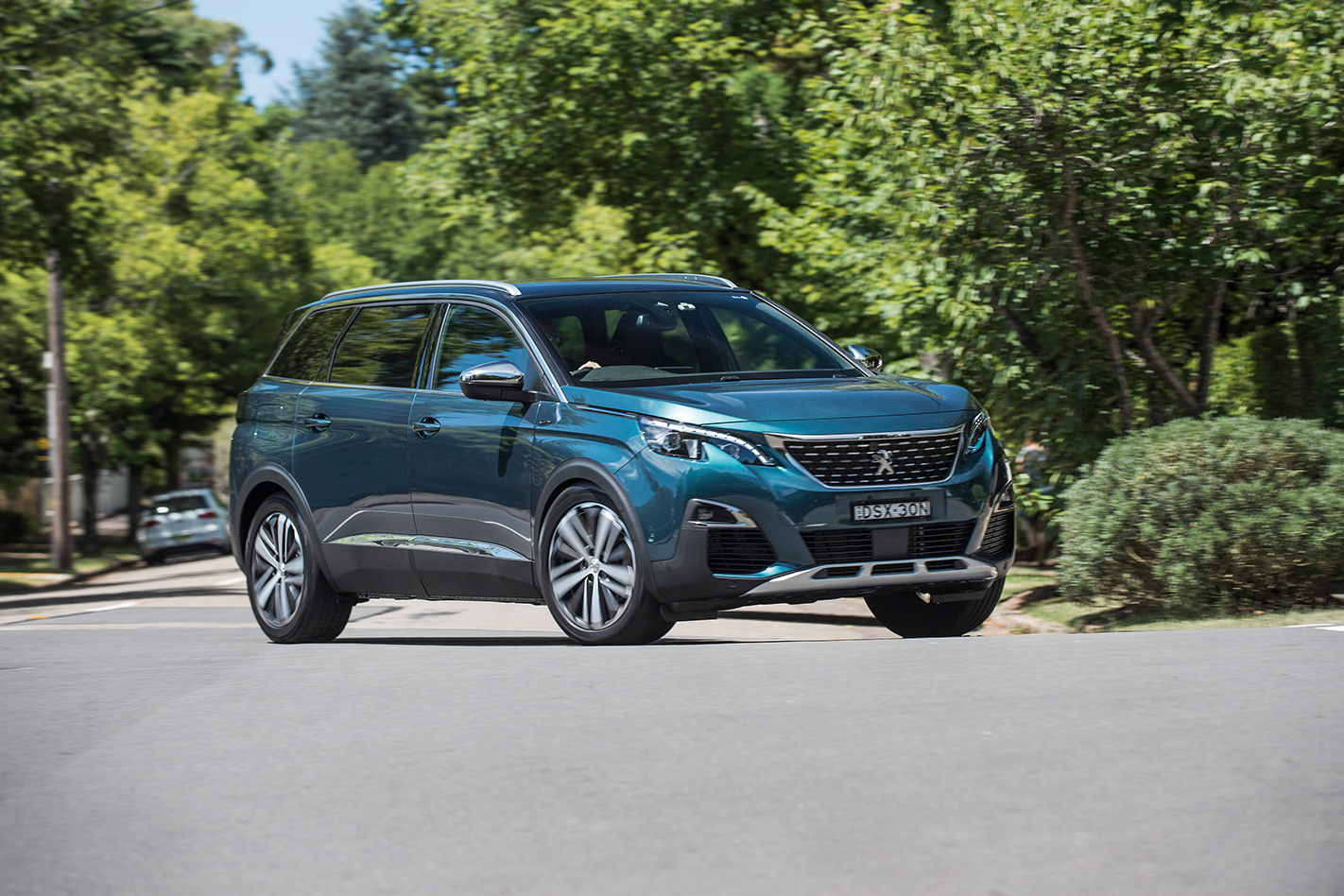
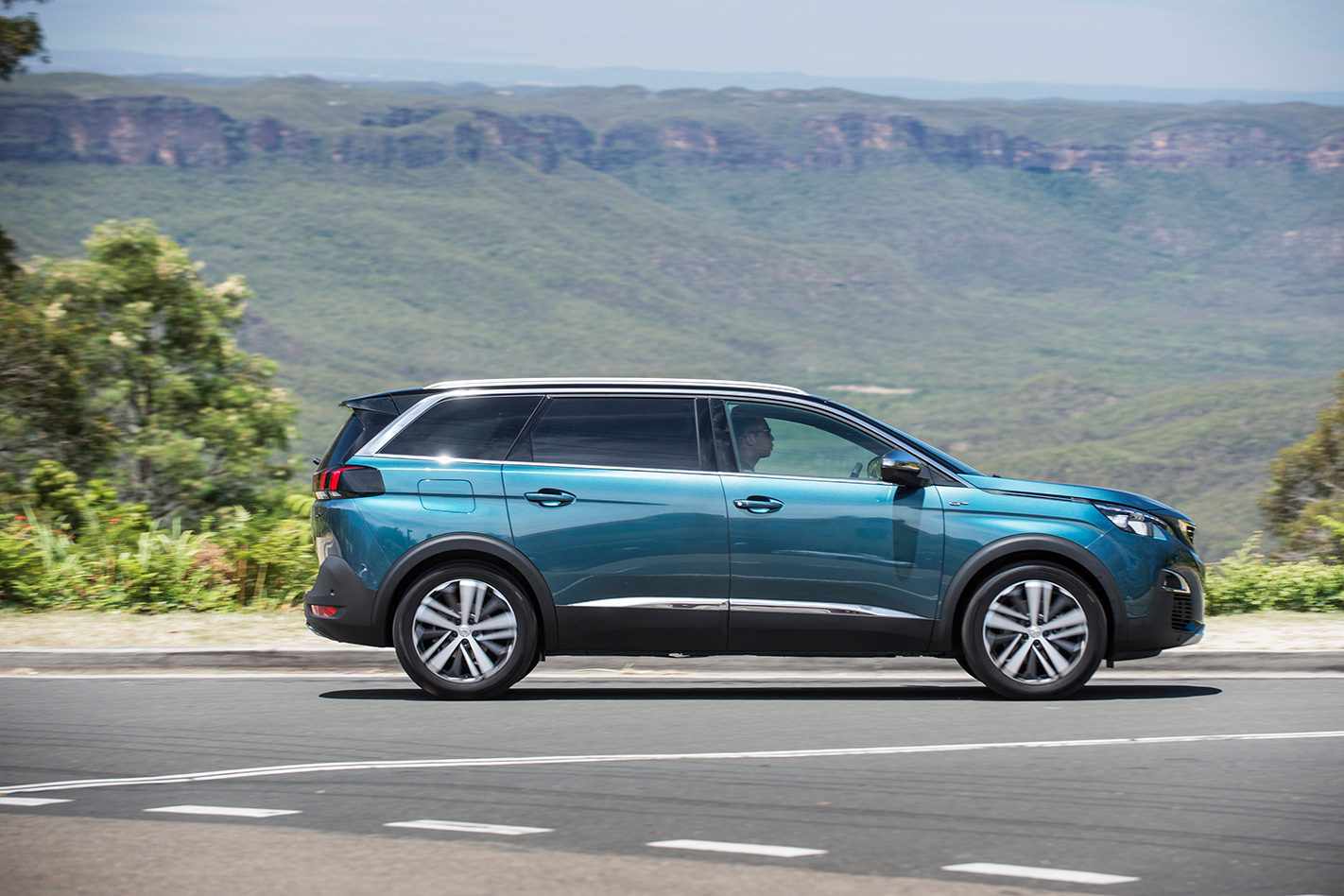
In fact, there’s something delightfully anti-establishment about the new Peugeot 5008. It features the odd stylistic nod to the SUV set it’s trying to attract – cue the ‘bash-plate’ garnish on the lower edge of its front bumper, and its fairly statuesque 1646mm height (if you include the roof rails) – yet the 5008 is a sleeker, more tautly drawn seven-seat than every rival bar its Citroen Grand C4 Picasso relative. Only parked alongside the avant-garde Citroen does the slightly wider Peugeot start to look more sober.
Ingeniously, front-bumper and grille designs aside, the 5008 shares its entire structure from the B-pillar forward with the smaller 3008 – driver-focused, concept-car-like dashboard included. The sole visual signifier of Peugeot’s cost efficiencies is the length of the 5008’s rear doors relative to the shorter front pair, though on a practical wagon like this, that’s hardly an issue.
Despite a lack of cushion length, the centre row feels plusher than a Grand Picasso’s (riding on the same 2840mm wheelbase), as well as easier to operate, while the rear pair are entirely tolerable for adults, and ample for pre-teens. Yet it’s the 5008’s capacious cargo area that gets your inner Aussie hankering for a camping expedition. Even with the centre seats maxed rearward, there’s 780 litres of space below the luggage cover.
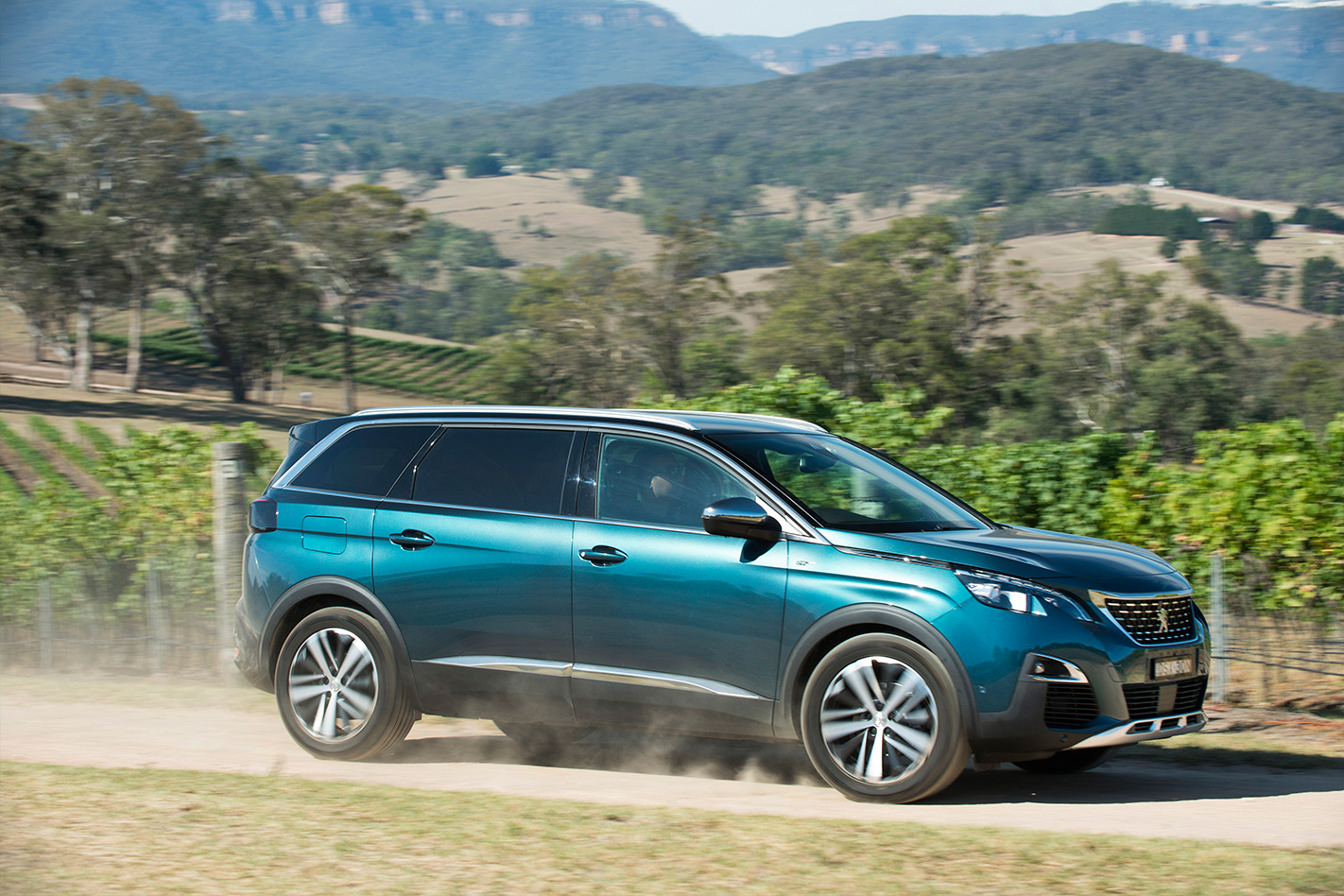
What it does relish is a resounding flogging on twisty roads. Even the 1575kg 2.0-litre turbo-diesel variant – 100 kegs heavier than the 1.6-litre turbo-petrol 5008 – feels chuckable in a way you’d almost never describe a seven-seat SUV, enhanced by the flagship GT’s superb Continental 235/50R19 tyres. You don’t lose a whole lot in ride quality on the GT’s 19s either, though no 5008 feels plush. Even the base Allure on 225/55R19 Michelins rides firmly, with persistent tyre noise on coarse surfaces pervading its otherwise-admirable sense of calm.
Arguably the sweetest piece of the 5008 experience, though, is its cabin ambience, combined with Peugeot’s competitive pricing. The $42,990 Allure’s houndstooth seat trim with leatherette detailing is posh-luggage worthy, while the ‘Aikinite’ microfibre/leatherette and optional full Nappa leather with double-stitch detailing in petrol GT-Line ($46,990) and diesel GT ($52,990) is seriously top stuff, garnished by sensual ‘mouse fur’ inserts spanning the dashboard and front door tops. Love Peugeot’s vastly improved 8.0-inch centre touchscreen too, now working in combination with a bunch of cool piano-key finger controls, and even the trigger-grip transmission lever, whose futuristic style isn’t at the expense of operational ease.
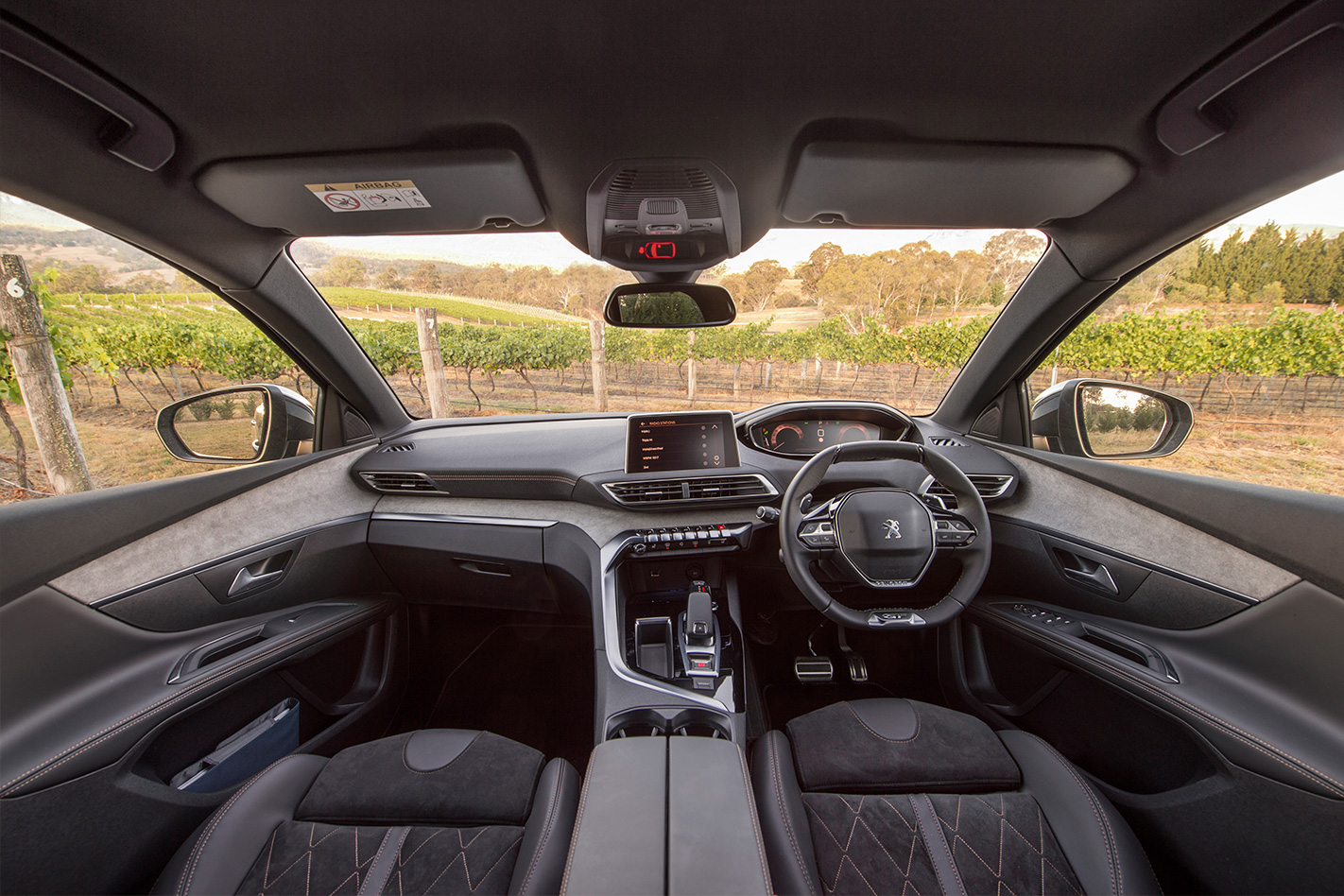
In fact, it’s actually quite difficult to nominate any genuine flaws in the 5008. Even with everything but the Eiffel Tower optioned into it, the handsome $58,740 GT seems like pretty decent value, especially compared to what premium-brand Euros charge for something similar. And there’s a long-legged, characterful flavour to the 5008 that feels unashamedly French, and proudly Peugeot. Finally, the Frogs have rediscovered the ability to build a great breeder bus.
SPECS
Model: Peugeot 5008 GT Engine: 1997cc 4cyl, dohc, 16v, TD Max power: 133kW @ 3750rpm Max torque: 400Nm @ 2000rpm Transmission: 6-speed automatic Weight: 1575kg 0-100km/h: 10.2sec (claimed) Economy: 4.8L/100km Price: $52,990 On sale: Now
No, the Ford Ranger Raptor will not be powered by a turbocharged V6.
Instead, Ford has decided to take the diesel path, employing a 2.0-litre bi-turbo diesel to put 157kW and 500Nm through the Raptor’s powertrain, passing through a 10-speed automatic on the way.
As a side-note, pricing and availability for the Ranger Raptor have yet to be announced.
Though its 500Nm means it won’t be slow by most standards, the Raptor has been designed with off-roading speed rather than power in mind.
“The standout experience of the Ranger Raptor, hands down, is how far you can push it off-road versus any other available production road vehicle in our markets, and still ride like a millionaire on-road.
“Everything about the Ranger Raptor builds on the already outstanding sophisticated feel and functional capability of the Ranger, and then goes further. From a driving dynamic fun standpoint, it is really an exceptionally special vehicle.”
Strengthened shock towers at the front allow impacts to be absorbed more efficiently, while the chassis’ shape and design allows larger suspension components to fit without compromising the structural integrity of the Raptor.
Ford says it has specifically had all-terrain BF Goodrich 285/70 R17 tyres developed with high-grip tread and strong sidewalls for the Ranger Raptor.
Driving modes allow the Raptor to tackle different off-road situations, though it does also have a Sport Mode for “spirited on-road driving.”
“In this mode, vehicle systems like Traction Control are pared back in terms of intervention to allow spirited off-road driving without fighting the vehicle’s on-board systems.
“Gear selection is optimized for maximum performance, and the mapping will hold gears longer and downshift more aggressively.”
Raptor Ranger Rally, anyone?
LET’S DEAL with the elephant in the room first. Ford’s Ranger Raptor isn’t getting the 3.5-litre petrol V6 that had been much-rumoured.
Instead, the sole engine plumbed under the bonnet will be a bi-turbo diesel 2.0-litre running to all four wheels via a 10-speed automatic transmission. Ford hasn’t released performance figures for the Ranger Raptor, but with 157kW and 500Nm, it’s going to be pretty punchy if not a heavyweight hitter.
The reason the diesel was chosen? Range, apparently. The engineers figured that it was pointless building a Dakar-style truck that induced range-anxiety the moment you lost sight of the nearest servo. And the Raptor is a vehicle that you’ll need to point at some seriously big country to get the best from.
Ford’s engineers have told us that the Thai-built Raptor has been engineered to travel at 170km/h off-road, which takes some mental recalibration. Imagine sitting at the limit on the Stuart Highway out of Alice Springs and seeing something come by in the dirt going 60km/h quicker. It’d raise a smile from me, at any rate.
The frame design comprises various grades of high-strength low-alloy (HSLA) steel, with stiffened side-rails that can accommodate an extra g of vertical loading. The rear dampers are manufactured by Fox Racing Shox and feature 46.6mm pistons front and rear as well as internal bypass technology. Securing them are a set of forged aluminium upper arms and cast aluminium lower arms.
Such is the stroke and travel of the dampers that Ford claims to be able to offer a ‘limousine-type’ ride on-road. That’s a pretty big claim for a dual-cab ute, when the current best in the class is only just about acceptable on tarmac. “The standout experience of the Ranger Raptor, hands down, is how far you can push it off-road versus any other available production road vehicle in our markets, and still ride like a millionaire on-road,” said Damien Ross, Chief Program Engineer, Ranger Raptor, Ford Motor Company.
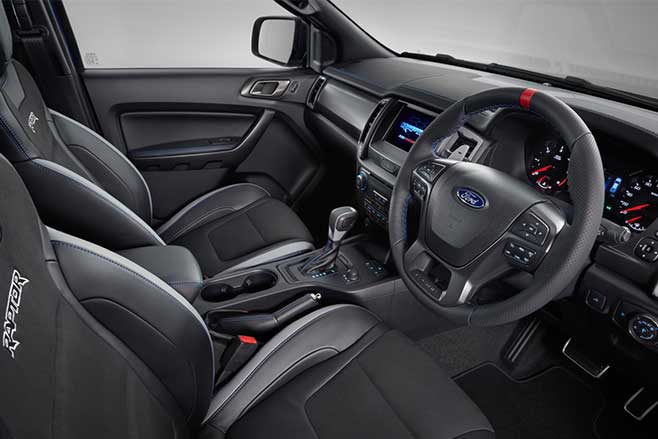
The 1996cc sequentially turbocharged Bi-Turbo diesel engine has been mated to the 10-speed automatic transmission seen in the F-150 Raptor. Boosting its off-road ability are six drive modes, selectable via the Terrain Management System (TMS) switch on the steering wheel. The on-road modes are a pretty self-explanatory Normal and Sport. Head off the beaten track and you have Grass/Gravel/Snow mode, a Mud/Sand mode, a Rock setting and the high-speed, maximum attack Baja mode. Here you get reduced traction control intervention and the most aggressive gear shift map.
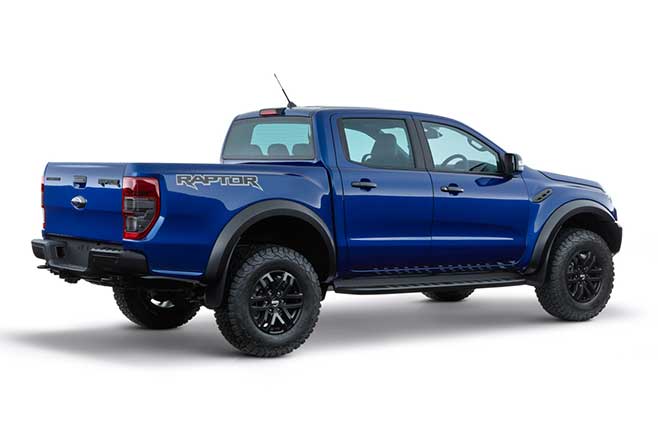
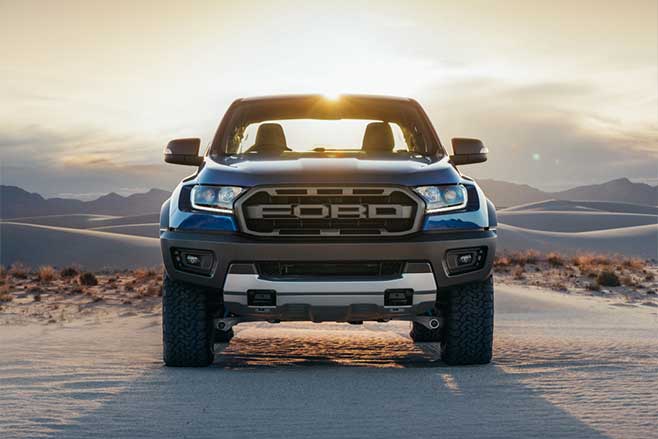
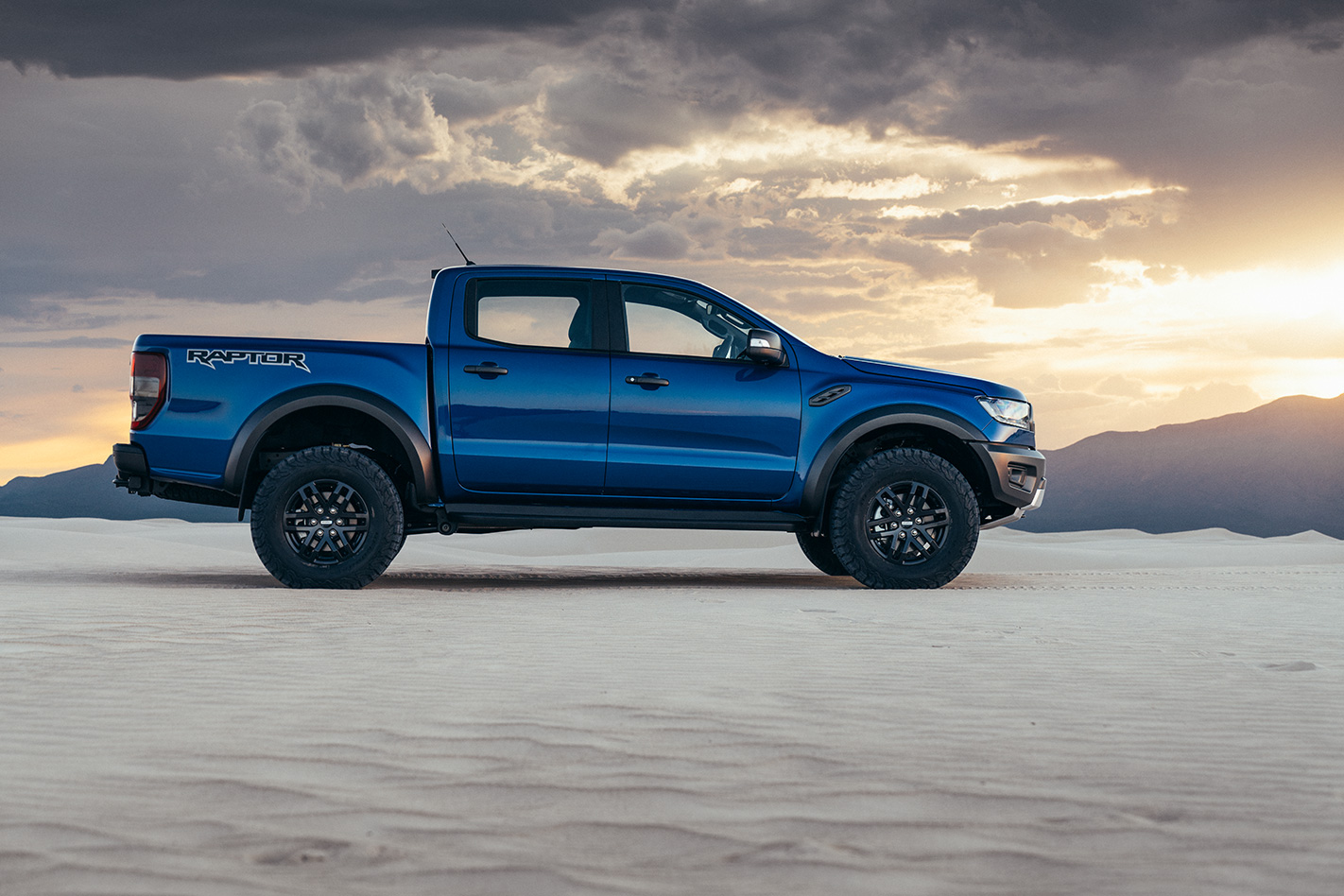
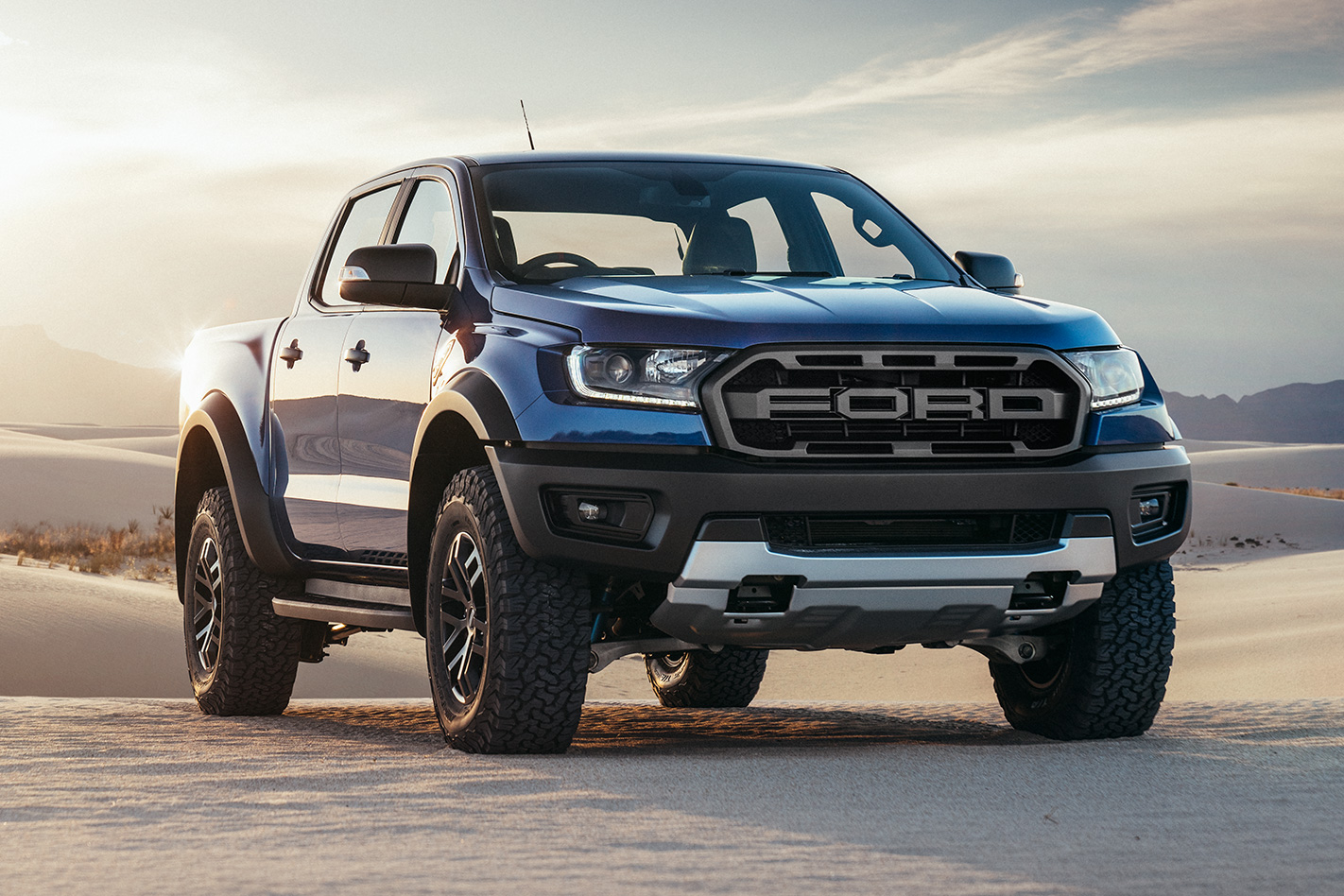
The Raptor wouldn’t stand a chance in showrooms if it didn’t look the part and you’ll have to be the judge of whether it’s successfully incorporated the Raptor DNA from its big sibling, the F-150. There’s iconic Ford block lettering on the grille and swollen composite front guards housing 285/70 R17 BF Goodrich rubber.
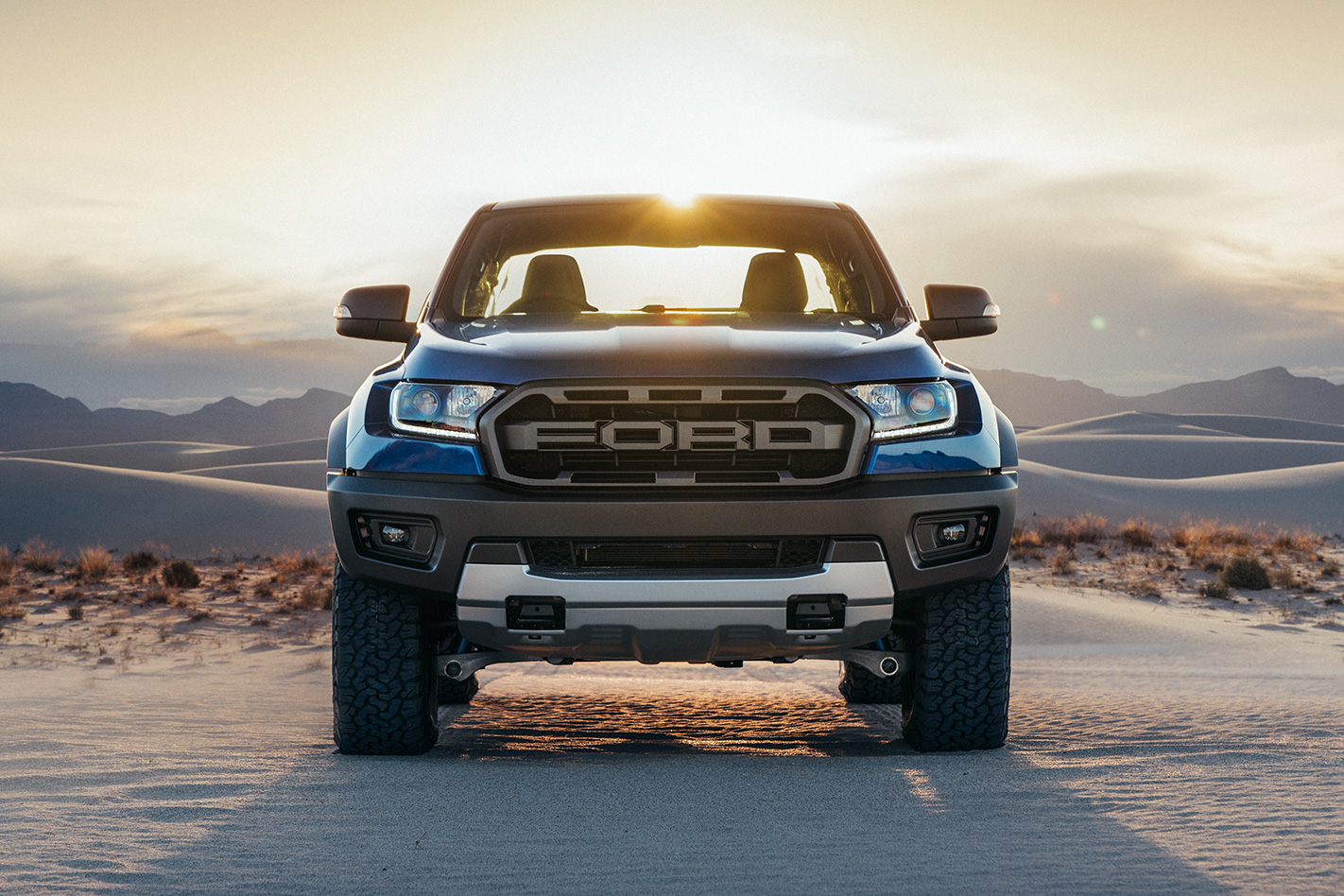
The exterior colour palette offerings include Lightning Blue, Race Red, Shadow Black, Frozen White, as well as a unique signature hue for the Raptor, the primer-like Conquer Grey with contrasting Dyno Grey accents.
“Everything about the Ranger Raptor builds on the already outstanding sophisticated feel and functional capability of the Ranger, and then goes further. From a driving dynamic fun standpoint, it is really an exceptionally special vehicle,” says Ross.
We’ll have to curb our enthusiasm until we get behind the wheel of the new Raptor, but the early signs look good. As long as 157kW doesn’t mean an insurmountable affront to the target market’s bragging rights, it ought to do very well. Now we’re just thinking where we ought to take it for our first drive feature. Ideas?
THE Ford Ranger Raptor has been revealed in Thailand, with beefy wide-body panels and a more powerful, four-cylinder diesel engine.
Engineered in Australia, the Ford Ranger Raptor was designed to be able to conquer the toughest terrain at seriously high speeds, without breaking a sweat – or itself.
Here are all the key facts and figures you need to know about the new King of the Ranger range:
- 2.0-litres: the size of the new twin-turbo diesel four-cylinder engine which sits under the bonnet
- 157kW: peak power arrives at 3750rpm
- 500Nm: available torque sent to all four wheels between 1750 and 2000rpm without recourse to overboost
- 170km/h: the target speed engineers wanted to achieve off-road with the Ranger Raptor
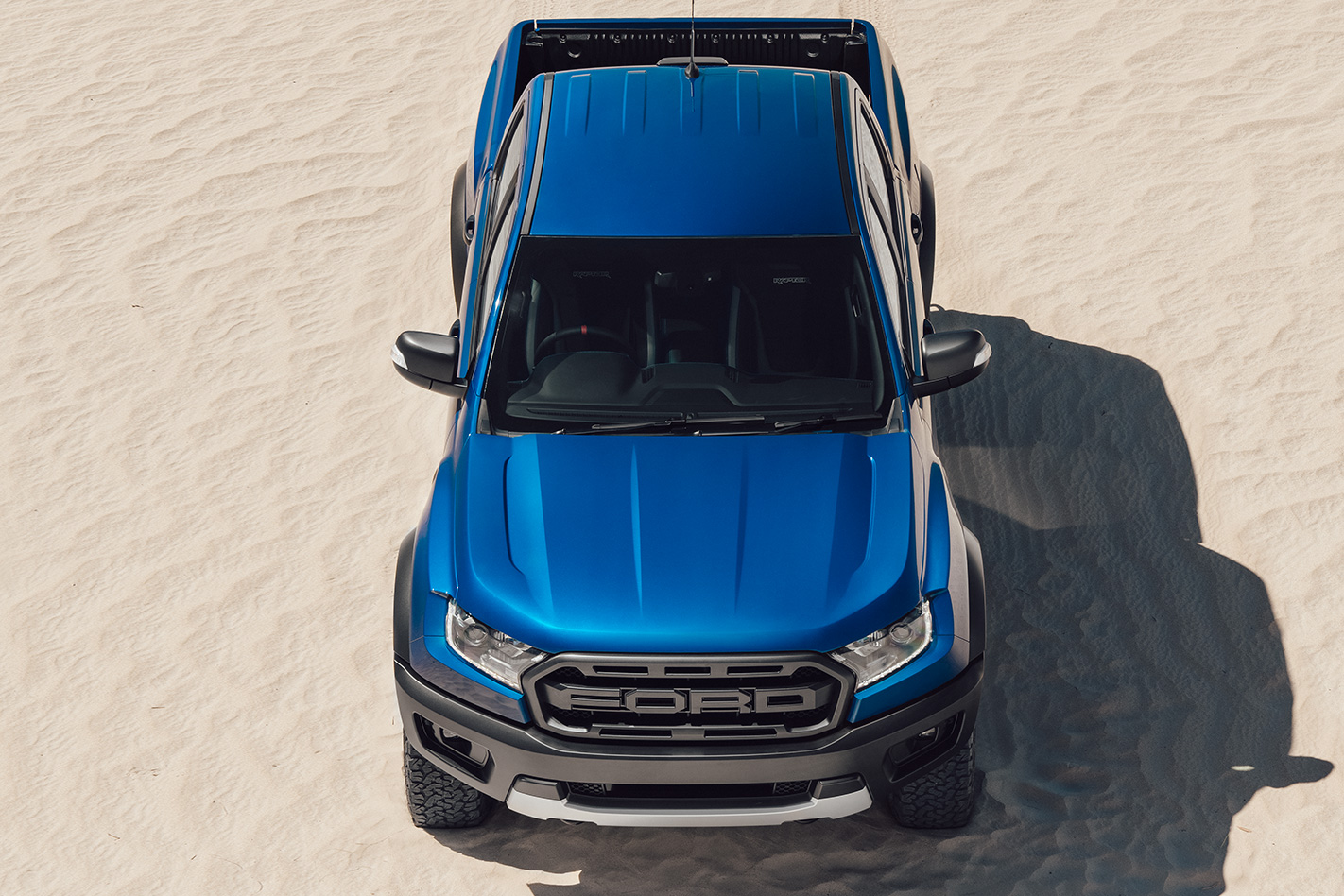
- 1873mm: height of the Ranger Raptor
- 2180mm: width of the Ranger Raptor
- 5398mm: length of the Ranger Raptor
- 283mm: ride height of the Ranger Raptor
- 150mm: wider track over the standard ranger thanks to beefier bodywork and a new Watts link rear suspension setup
- 56mm: added ride height over the Ranger Wildtrak
- 236mm: front suspension travel – an increase of 32 percent over the Ranger Wildtrak
- 290mm: rear suspension travel (22 percent increase)
- 46.6mm: size of the heavy duty Fox shock pistons, which come with remote reservoirs
- 32.5 degrees: approach angle, brought about by suspension and bumper changes
- 24 degrees: the maximum departure angle possible
- 2.3mm: thickness of its steel bash plate for when tackling aggressive terrain
- 881Nm: maximum amount of torque the new 10-speed transmission fitted to the Ranger Raptor is rated for
- 2.5 tonnes: rated towing capacity of the integrated tow bar
- 3.8 tonnes: rating for the pair of tow hooks
- 1560x1743mm: size of the rear tray
- 332x32mm: size of the front brake rotors
- 332x24mm: size of the rear brake rotors
- 285/70R17: dimensions of the BF Goodrich All Terrain TA Comp tyres fitted to each corner
- 6: number of different drive modes, including Baja, Grass, Gravel, Snow, Mud/Sand, and Rock
- 40mm: extra width of the square-punched aluminium side steps to fill out the gap between its flared arches
TWENTY luxury vehicles smuggled into the Philippines and seized by police were unapologetically destroyed by bulldozer on live TV, overseen by the country’s merciless president, Rodrigo Duterte.
The amassed total value of all the crushed vehicles is estimated at $1.5 million.
Included in the group on automotive death row was a McLaren 720S, which retails for $489,900 in Australia, along with an Alpina BMW, Ferrari 430, Lamborghini Gallardo and McLaren 650S. However, these were not visible during the broadcast.
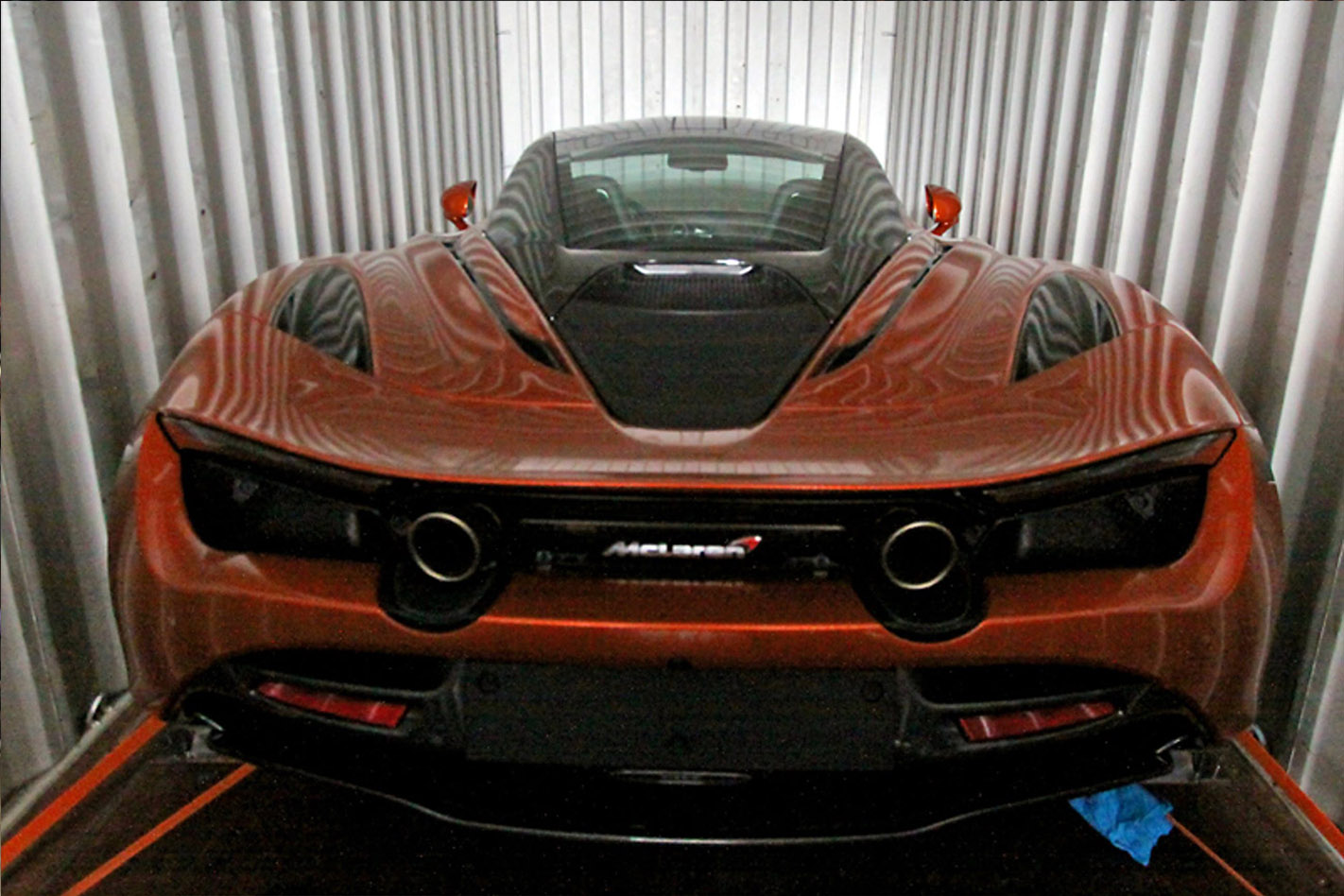
The vehicular destruction is part of Duterte’s heavy-handed crackdown on corrupt lifestyles in the Philippines. Under the country’s previous administration, smuggled cars were seized and then sold at auction.
This led to a situation where smugglers would import vehicles illegally, under false names – knowing that they would be seized – and then simply buying the cars back cheaply at auction allowing them to avoid expensive taxes and tariffs.
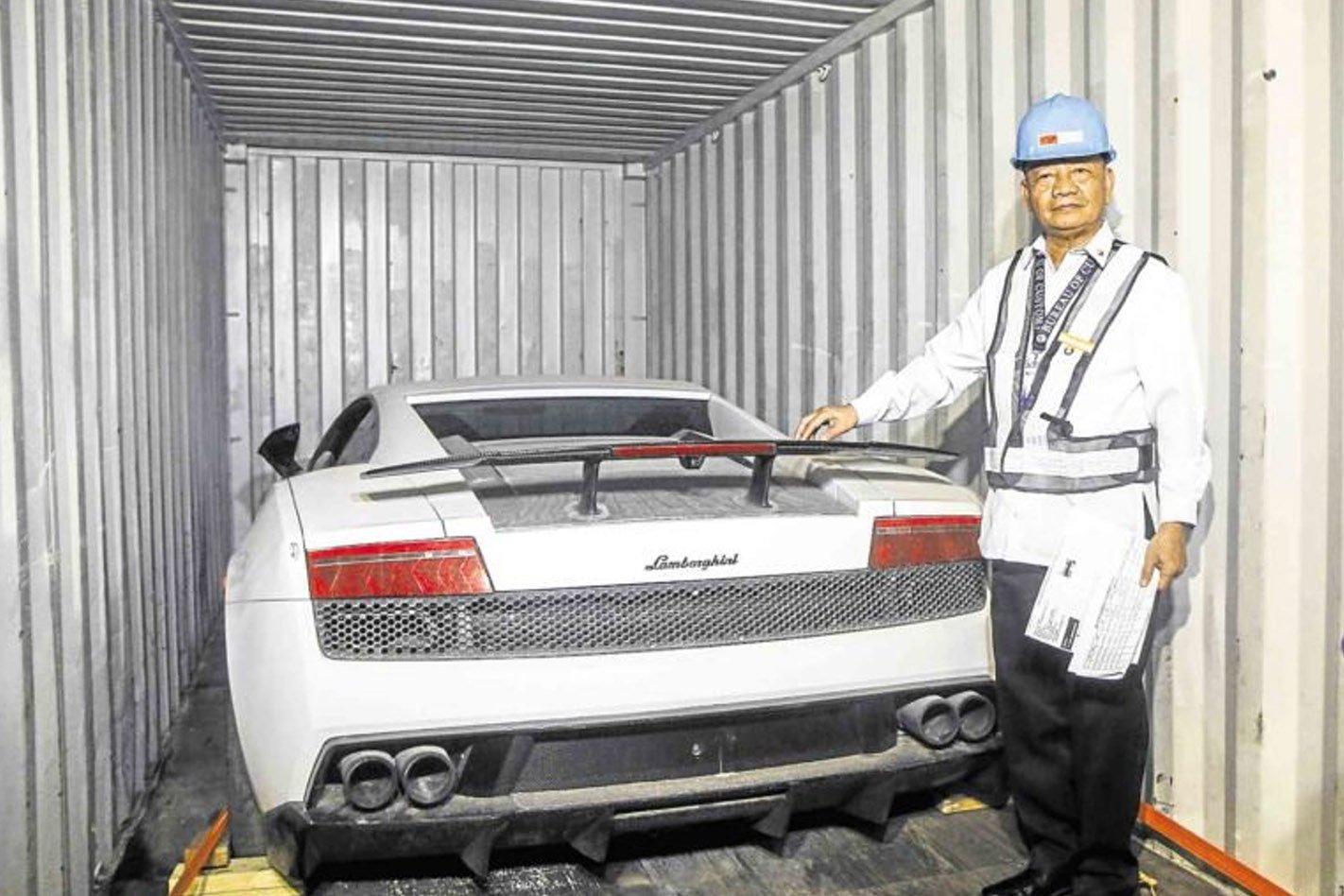
“That’s why you have many cars then after the auction, you are given papers legally and at a cheaper price.
“Watch what will happen with your money and all these imported luxury cars. I’ll run them over with a tractor.”
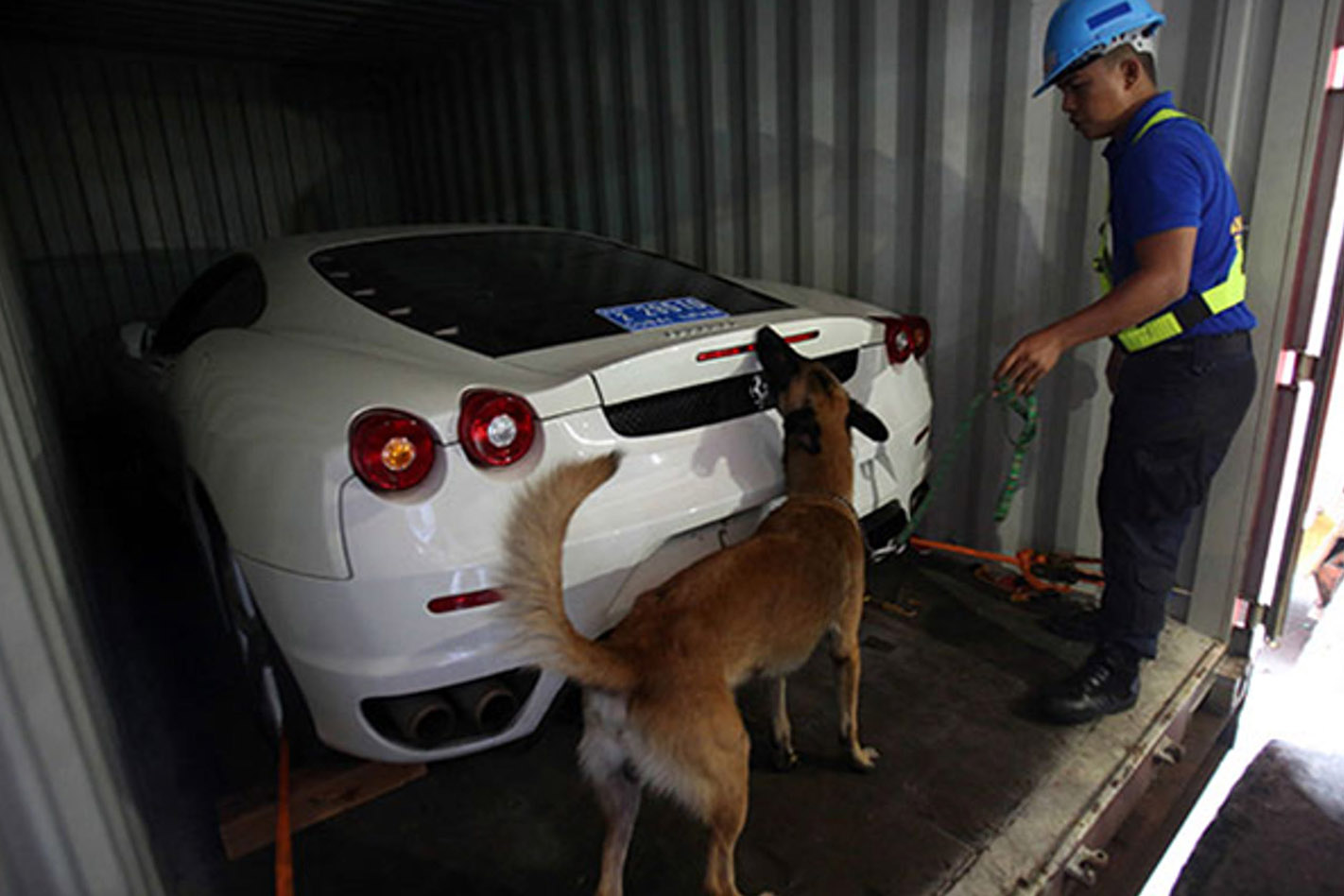
Nine of the destroyed vehicles were seized at the Port of Manilla, two at the Manila International Container Port, nine at the Port of Subic, seven at the Port of Davao, and three at the Port of Cebu.
Just three of the cars were listed as new vehicles (a pair of Toyotas and a Mercedes-Benz), with the rest being labelled as second-hand.

The 71-year-old is reported to be a fan of large motorcycles, and to have a personal dislike for luxury vehicles.
While the president remains popular in the country, many of his political opponents have been silenced or detained.
When Duterte was the president of Davao City he signed an executive order lowering the speed limits across the board “in the interest of public safety and order”.
Jaguar has announced it is bringing back the D-Type, but not as a new model.
Production of the iconic British race car will resume for a limited run of 25 units, which Jaguar Land Rover’s Classic Works department will build at its Warwickshire factory.
In fact, Jaguar has already built one.
The plan to build 25 new D-Types means Jaguar will fulfil the original plan from 1955, in which Jaguar wished to build 100. Only 75 were completed.
Of the 25 new cars, buyers can request they be built in either a 1955 Shortnose or 1956 Longnose specification.
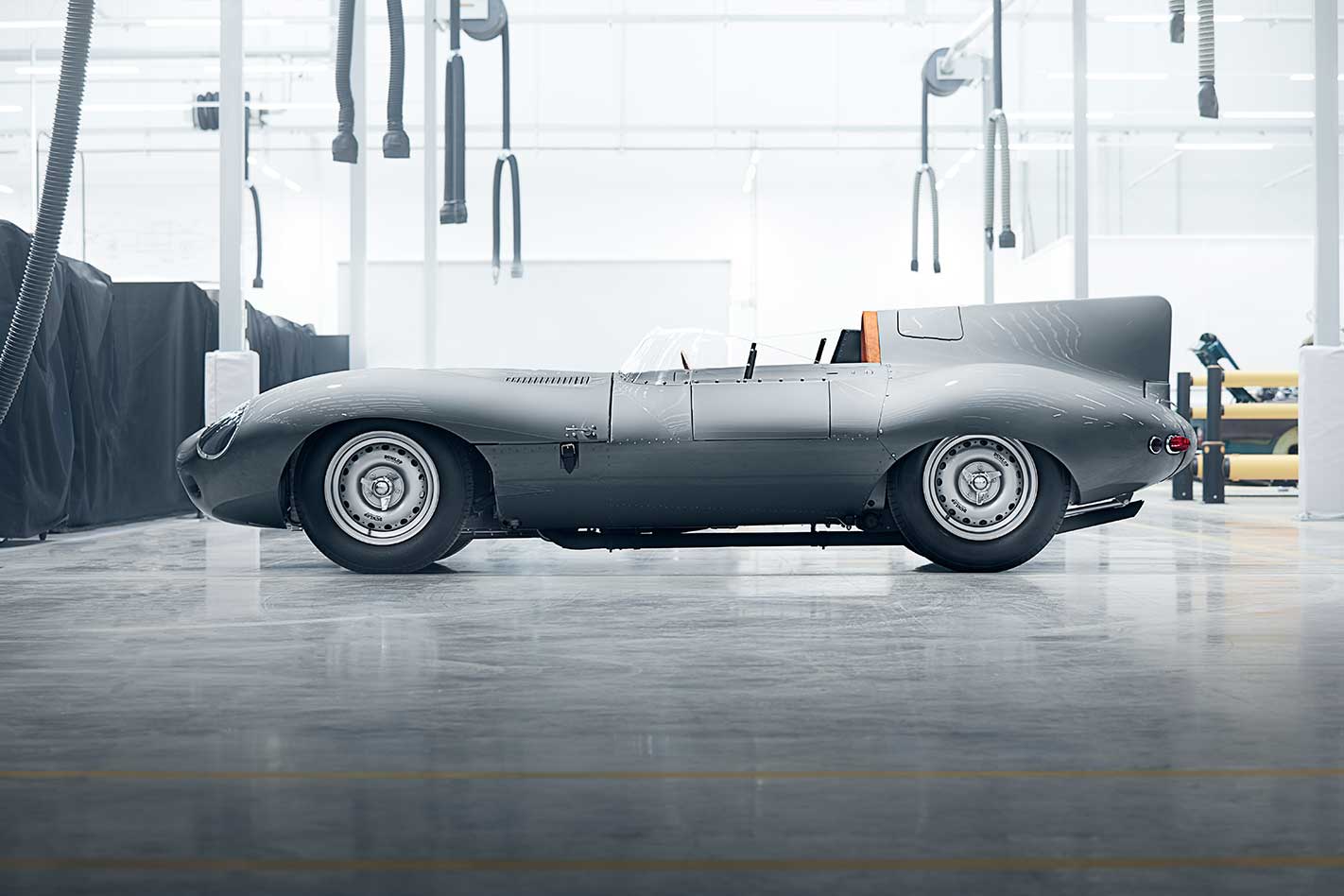

“The Jaguar D-Type is one of the most iconic and beautiful competition cars of all time, with an outstanding record in the world’s toughest motor races. And it’s just as spectacular today,” Hannig says.
“The opportunity to continue the D-Type’s success story, by completing its planned production run in Coventry, is one of those once-in-a-lifetime projects that our world-class experts at Jaguar Land Rover Classic are proud to fulfil.”
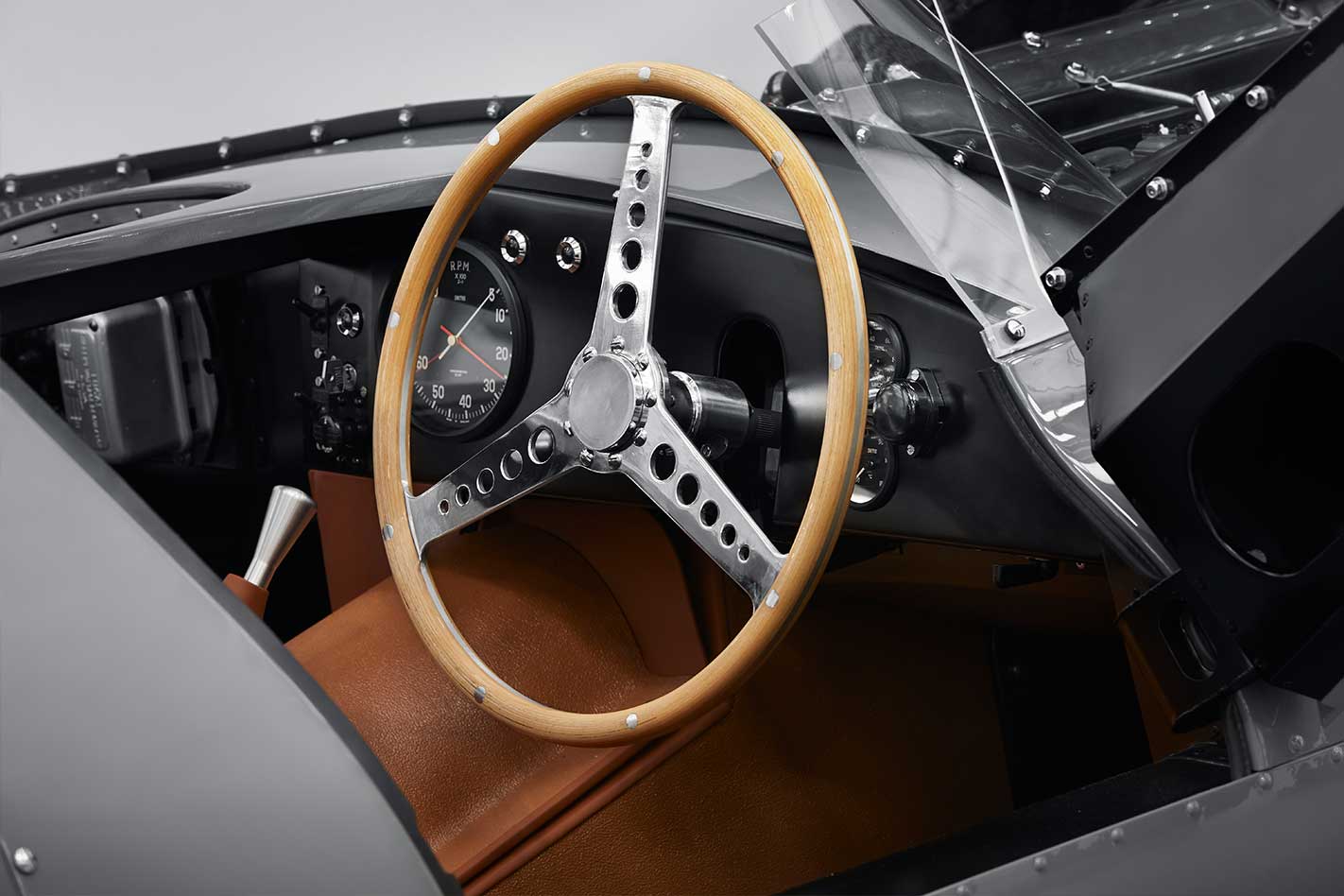
Engineering manager at Jaguar Classic Kev Riches says the projects helped prepare the team for the D-Type build.
“Recreating the nine D-type-derived XKSSs was hugely satisfying, and an even bigger technical challenge than the six missing Lightweight E-types, but lessons learned from the XKSS project have given us a head start on the final 25 D-types.
“Each one will be absolutely correct, down to the very last detail, just as Jaguar’s Competitions Department intended.”
