
Spoiler alert! Equal parts fast and fancy, these cars blend visceral driving thrills with plenty of luxury.
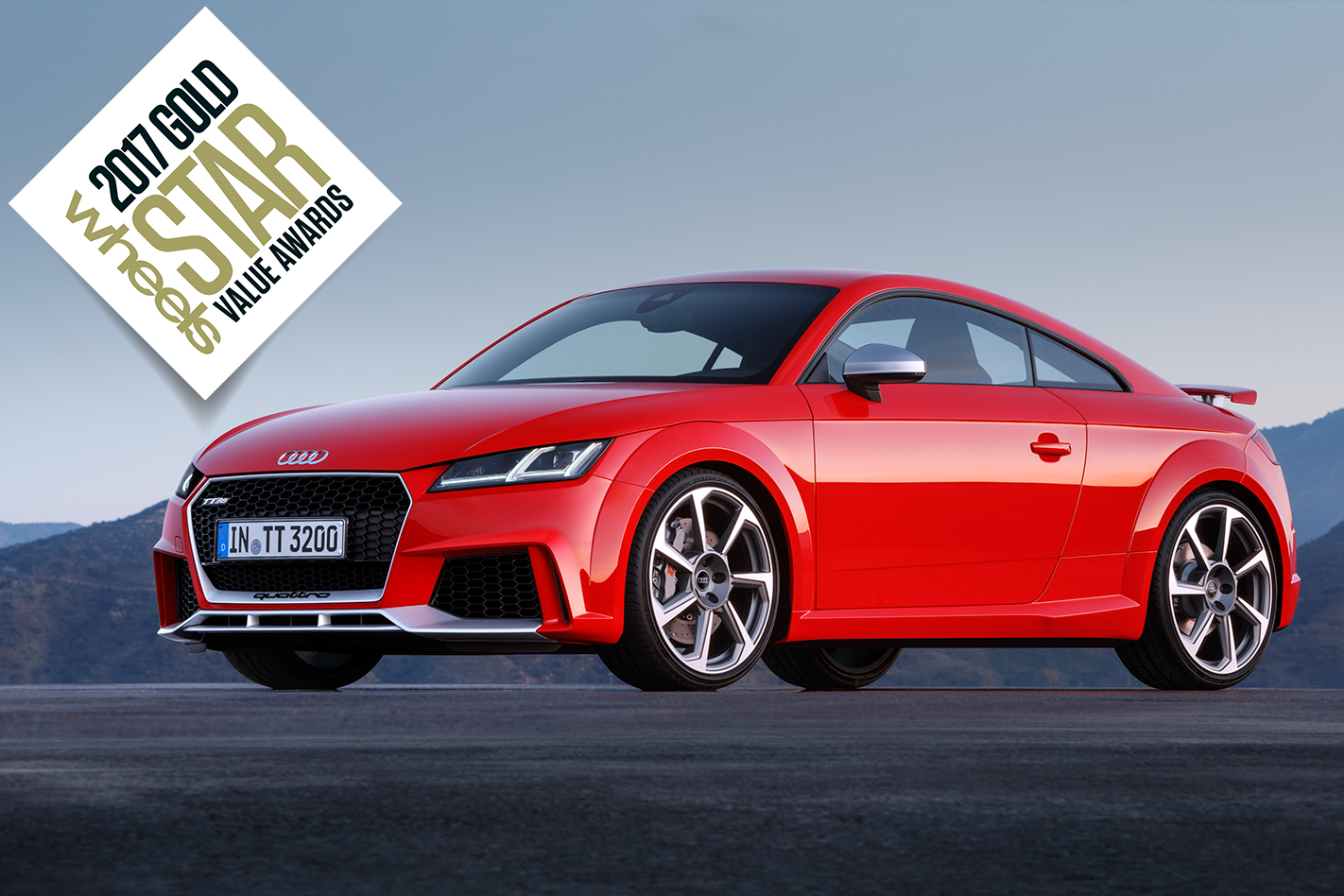
1st: Audi RS3
German compacts and a coupe worked up to a seriously high-performance state made up the entire $75K-plus podium for 2017. In this pricey realm, bulk grunt happened to pip dynamic purity, with the Lotus Elise and Alfa Romeo 4C sitting just outside the top three. The Audi RS3, a bit like the TT RS in third, puts big outputs in an all-paw package to place point-to-point pace ahead of ultimate driver involvement.
But there’s no arguing with its impressive mix of low-fours to 100km/h and fuel economy inside the 10s (in all three medallists). Yet the RS3 delivers it for less dough than the TT, and with significantly stronger resale than its arch-rival, the A45.
2nd: Mercedes-AMG A45
The A45’s 53 percent resale isn’t bad in the grand scheme but it can’t match either Audi. The Benz fights back with a $75K sticker, some $10K less than the RS3 and $60K less than the TT.
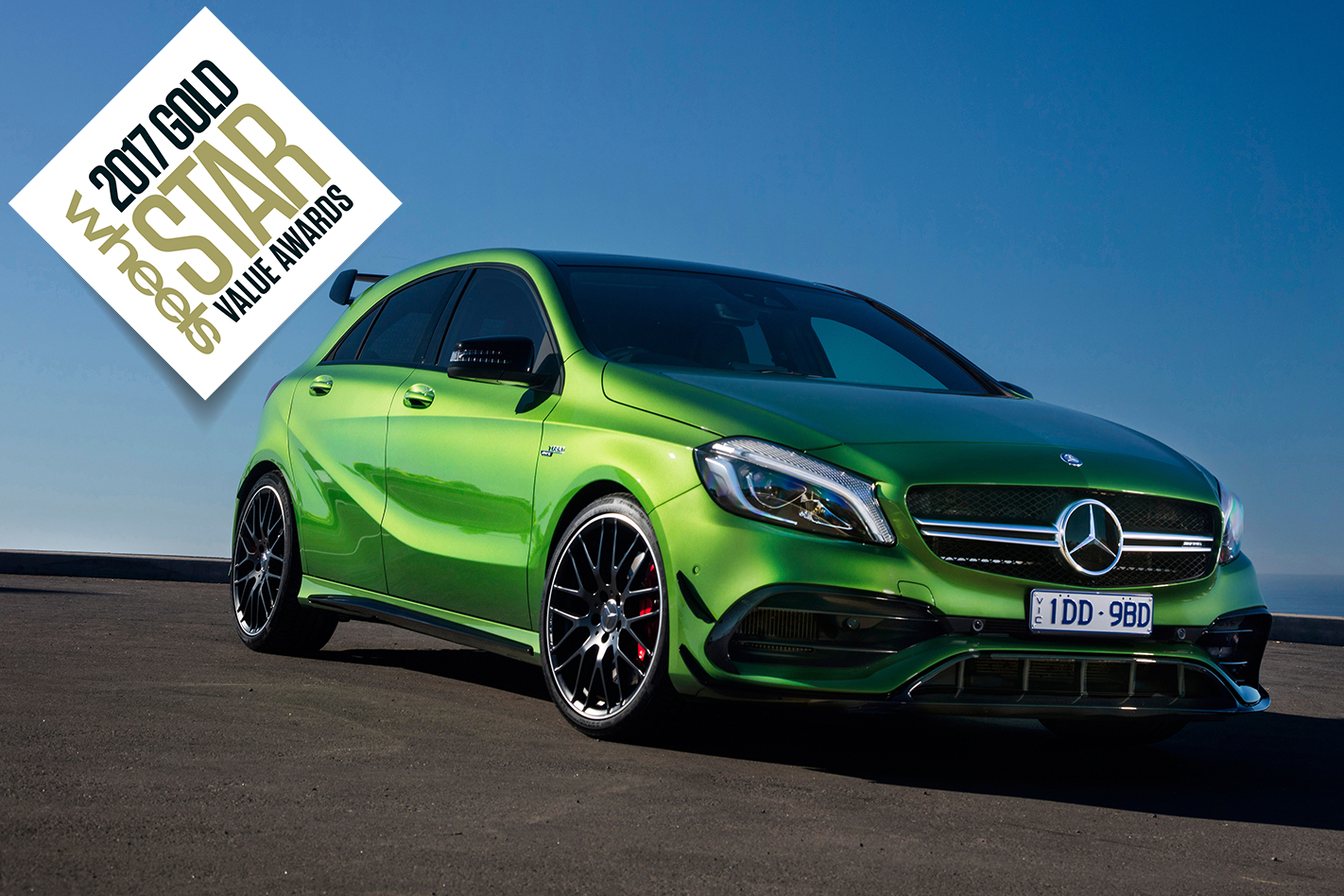
Pricey for a TT, but a bargain considering the supercar-lite package on offer in the RS version. The surprisingly stout 73 percent three-year resale forecast helps keep the A45 in its crosshairs.
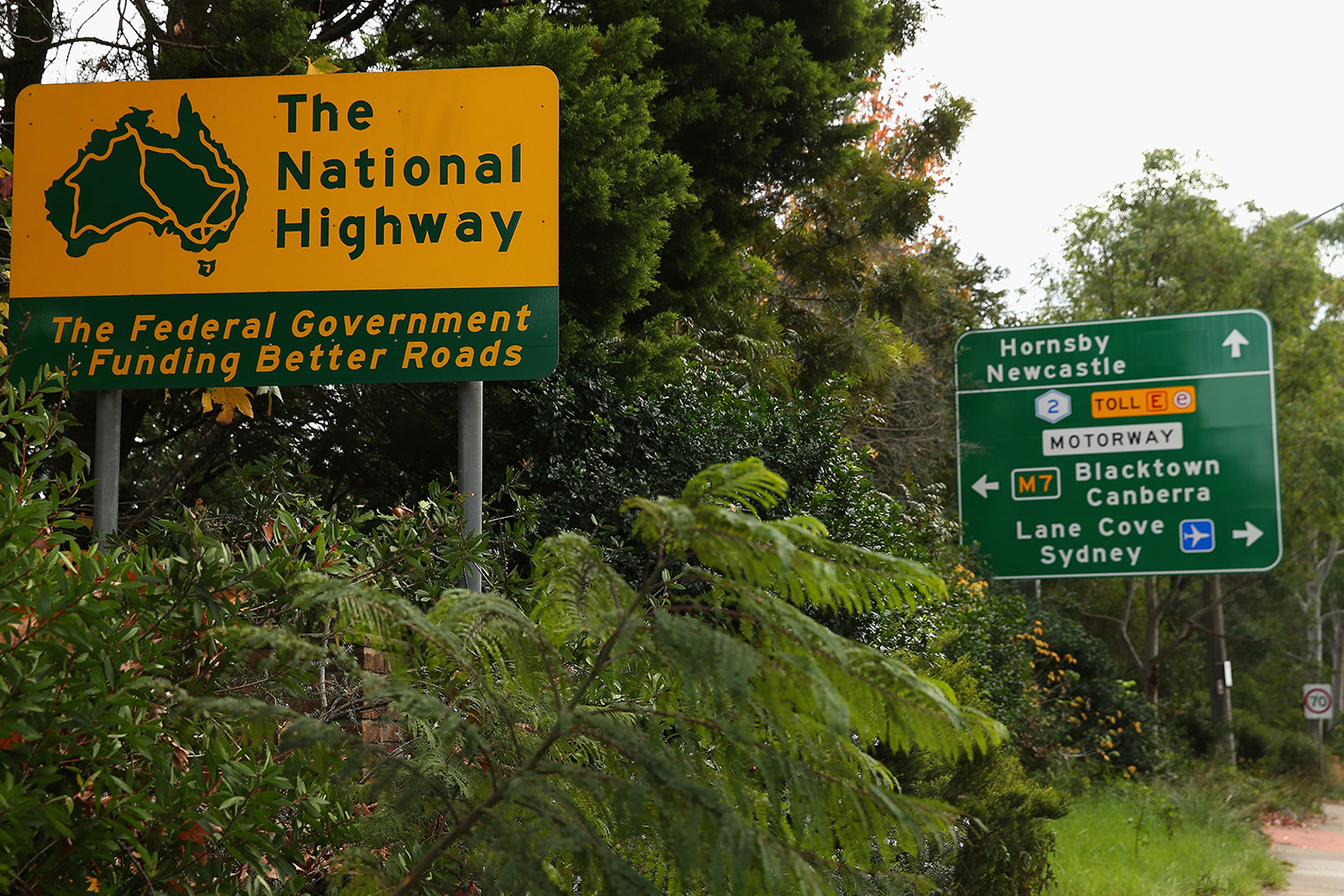
The New South Wales announced it plans to introduce a ‘rego rebate’ to ease the costs of using toll roads.
Motorists paying more than $25 per week on tolls throughout the year will be refunded the cost of their vehicle’s private registration, depending on that vehicle’s weight.
Cars which weigh less than 975kg are set to draw a $272 refund, while vehicles weighing 2505kg to 2794kg will receive a $715 rego refund.
However, most motorists will receive either $305 (vehicles weighing 976kg to 1154kg), $358 (1155kg-1504kg), or $513 (1505kg-2504kg) back from their toll spending.
Motorcycles are also eligible to receive a $127 refund.
Additionally, the NSW government says “private motor vehicles weighing more than 2795kg, such as trucks, are not included in the scheme.”
Premier Gladys Berejiklian says the plan comes as the government is in a strong financial position to offer this rebate to regular toll road users.
Opinion: Reduce traffic with a four-day week?
““The Government’s strong budget position allows us to give back to toll users,” Berejiklian says.
“The NSW Government has made it a priority to drive down the cost of owning a vehicle with big savings being delivered through reforms to CTP Green Slips and the introduction of a FuelCheck app.”
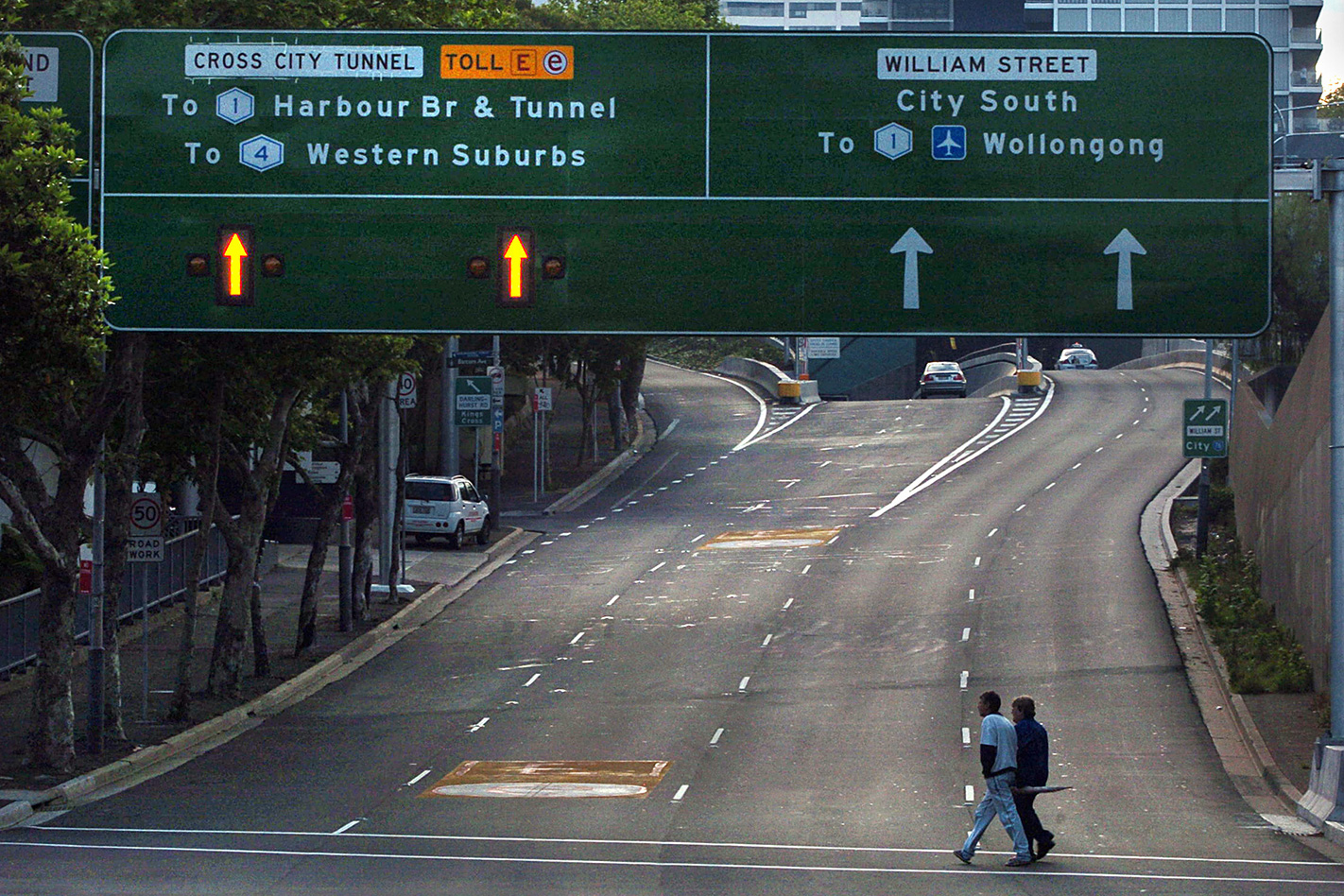
The NSW government adds: “the scheme will be backdated, so eligible motorists will enjoy free vehicle registration if they spend more than $25 a week from July 1, 2017.”
The scheme also applies to any new toll roads in the future. But NSW Labor leader Luke Foley took to Twitter to criticise the plan, saying it doesn’t excuse high toll costs.
“The Liberals slug you with a $2000 a year toll & now say they’ll give you $300 back. The toll road operators are the only winners & motorists are still the losers,” Foley writes.
At $25 per week on average, a motorist must pay $1300 in tolls per year to be eligible for the ‘rego rebate’ scheme.
Performance cars aren’t often known for being good value for money, but there’s a surprising array of athletic n’ affordable autos on the market.
1st: Mazda MX-5
The broad ‘performance’ categories typically see a variety of machines battling in the value arena and Gold Star Value 2017 was no different, with Mazda’s MX-5 holding back a gaggle of turbo hot hatches and a Japanese coupe with a penchant for drifting (Toyota 86). The one thing they had in common was a circa-$30K price tag. However it was MX-5’s 65 percent three-year resale that effectively gave it the win from the outset, helping it hold onto between $2K and $4K more than key rivals over the first few years. The 1.5’s 6.1L/100km combined cycle was about average and the MX-5’s taste for premium fuel typical. The Mazda, like most, calls for a 12-monthly service, and the $826 insurance premium is between $67 and $159 more than key rivals – no deal breaker. Hiroshima’s evergreen sports roadster is a star.
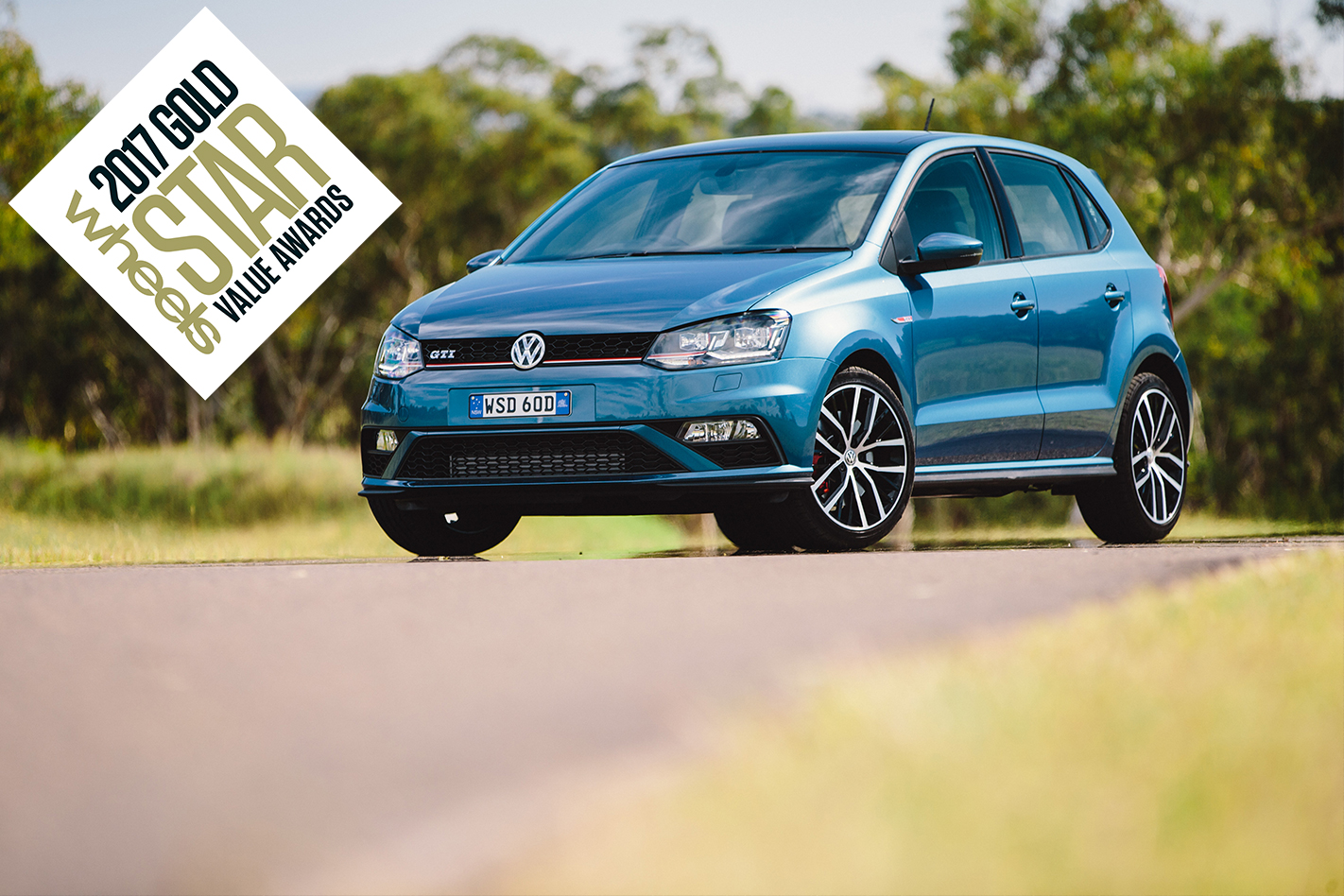
2nd: Volkswagen Polo GTI
The Polo GTI is a polished and capable junior hot hatch and the all-rounder among the top trio. Less costly to buy and more practical than the two-seat Mazda, the Volkswagen is also cheap to insure at $759.
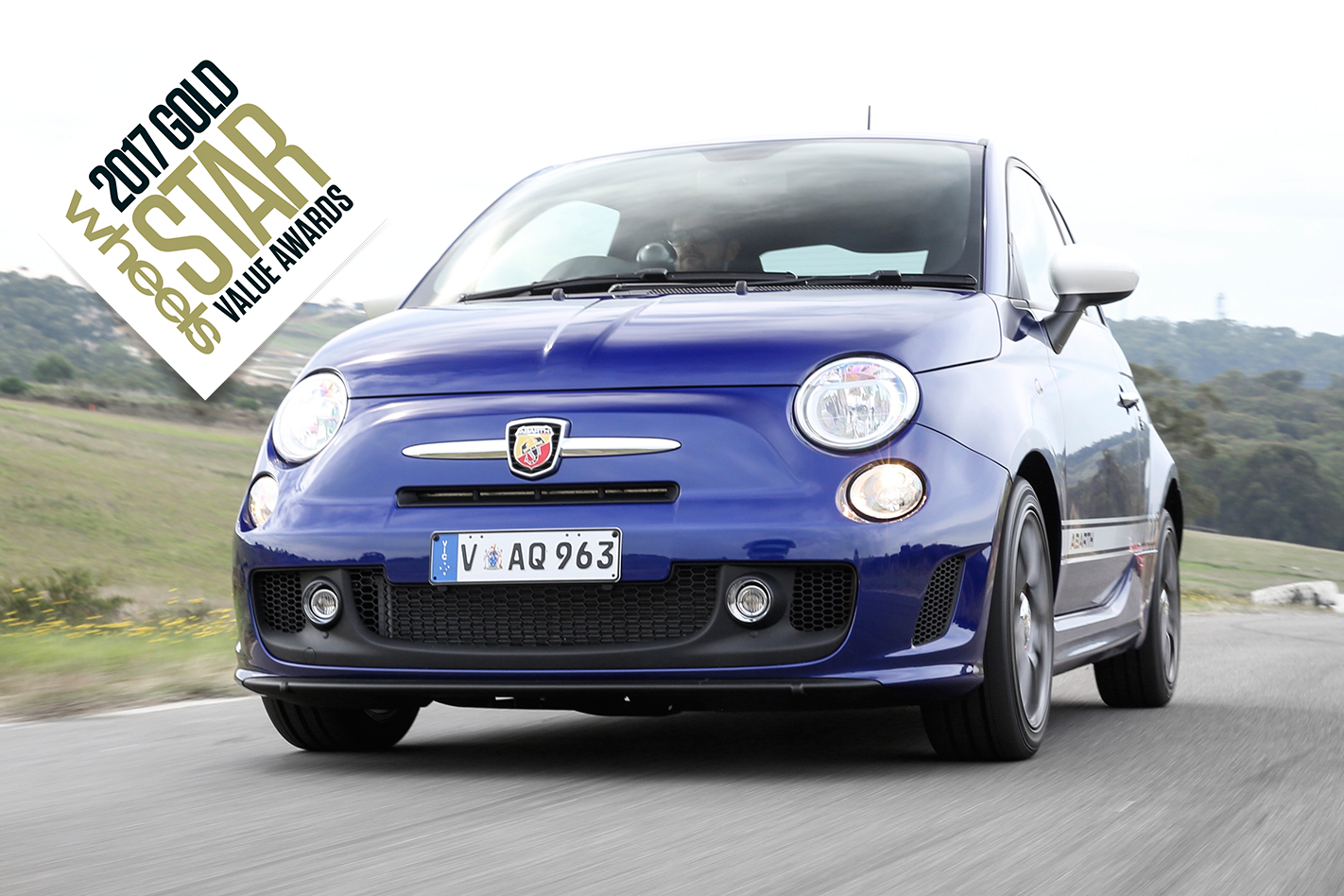
The Abarth version of Fiat’s retro-inspired baby is a rorty little bulldog of a hot hatch that’s also good at saving bucks, on the back of good economy and low-cost insurance.
%MCEPASTEBIN%
Honda’s engineers are busy working on an ultra-fast vehicle charging system that could give its first fully-electric production cars an unprecedented 15-minute charging time.
According to a report in Japan’s Nikkei newspaper, Honda is developing a system that can transfer enough energy for 240km of driving in 15 minutes – an ultra-rapid charge time that goes some way toward addressing a critical barrier to mainstream electric vehicle adoption: the time it takes to ‘refuel’.
To put that into perspective, a BMW i3 with a 94Ah battery pack takes around 75 minutes to charge on a DC fast charger and only packs enough range for 200km of motoring.
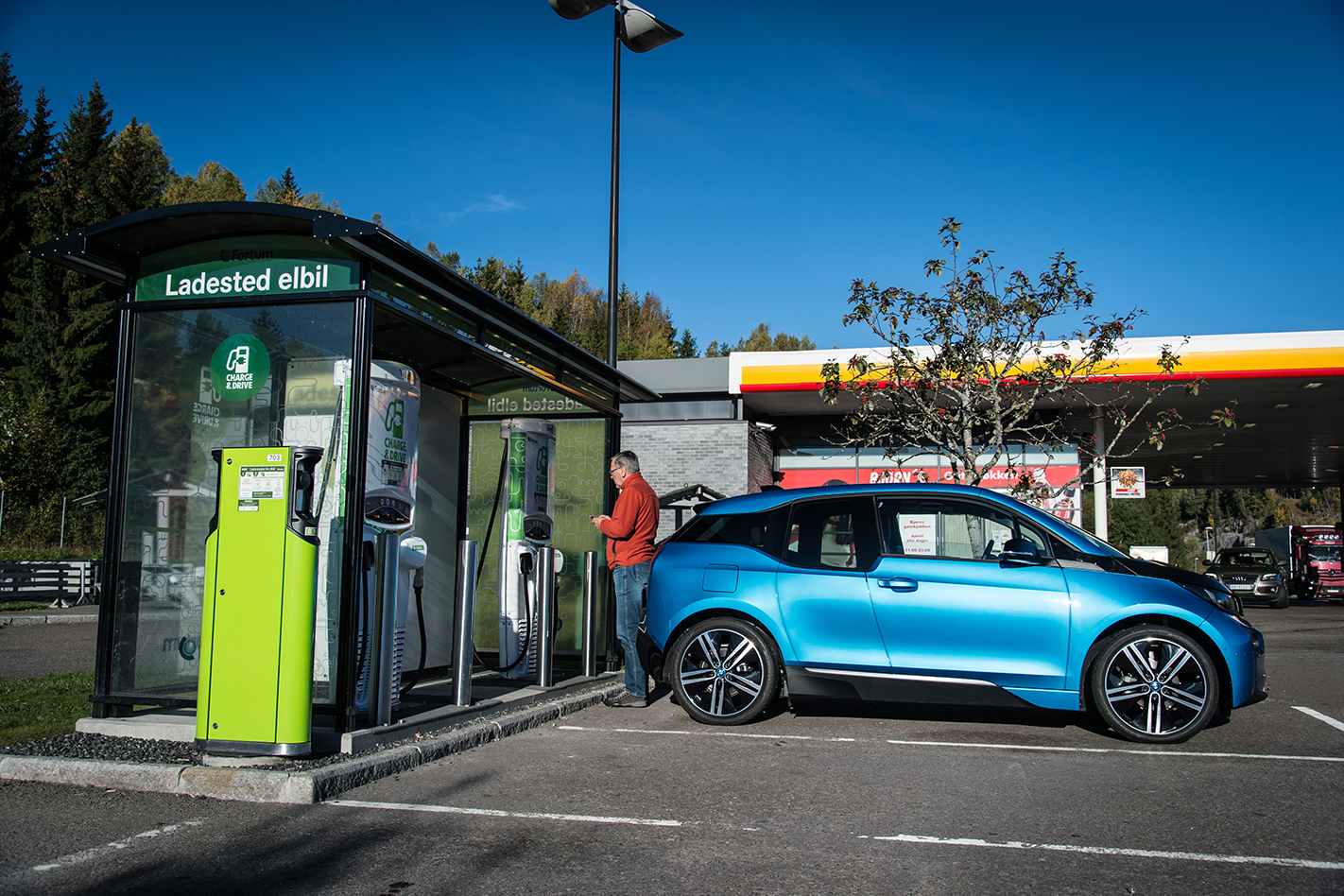
Precise details of Honda’s system, such as whether it will utilise capacitors rather than conventional batteries, are understandably under a tight lid, but Nikkei says Honda’s charging tech will aim to leverage higher-output 350kW fast-charging stations that are due to roll out in Europe rather than existing 150kW infrastructure.
The Japanese outlet also says Honda is aiming for clean-sheet design for its fast-charge-capable battery pack, but has yet to partner up with a component supplier. Power control electronics – another area that can deliver crucial efficiency gains (and thus greater range per kWh of battery storage) will get just as much attention, as will lightweight construction methods.
Honda’s quick-charging battery tech is expected to hit the market in 2022, but the company will roll out the first of its all-electric passenger cars well before then. The first off the rank will be the production version of the show-stealing Urban EV concept that debuted at this year’s Frankfurt Motor Show.
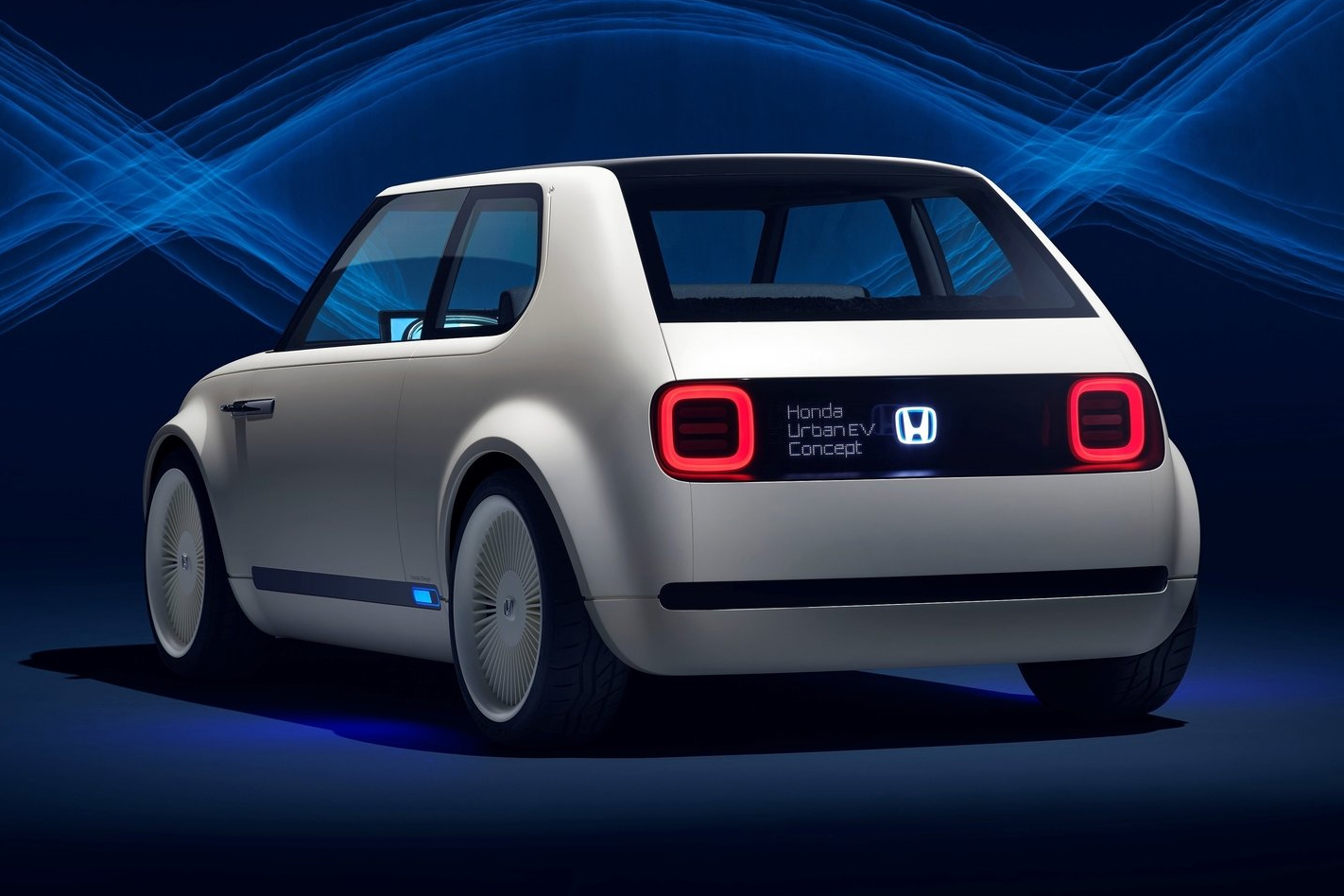
Styled after the first-generation Honda Civic and boasting compact city-friendly proportions and space for four people, the Urban EV will be the first application of Honda’s all-new, EV-specific vehicle architecture.
Range will be a modest 250-odd kilometres per charge, which will be more than sufficient to place it as a BMW i3 or Renault Zoe rival, however a local launch for Honda’s electron-munching compact has yet to be confirmed.
THE last truckload of Holden Commodores built at Elizabeth in the lead-up to the car maker’s October 20 shutdown have left the factory.
Holden confirmed the last of the cars built in the lead-up to the shutdown were loaded onto “multiple” car transporters on Friday, with the final Commodores making their way to dealerships – more than a month after the last car rolled off the line. “We expect these to sell by mid-January so we’d encourage anyone interested to get along to your local dealership,” a spokeswoman said.
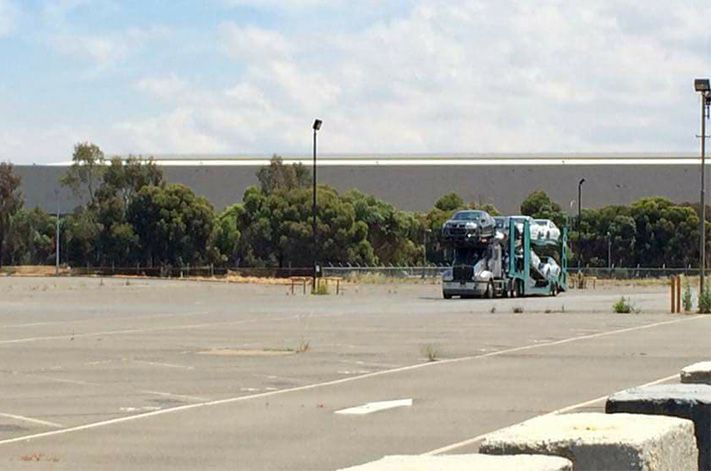
Images that have found their way onto on social media show a truck loaded with seven Commodore sedans sitting on the almost empty apron at the former Elizabeth production site north of Adelaide.
Holden has a large reserve of the cars: The current Aussie-built Commodore has to carry the weight of Holden’s sales until February, when the new, fully imported Commodore steps in to carry on the badge. Commodore sales for the first 10 months of this year have added 19,612 units to the brand’s tally, accounting for one in almost every three of the former car maker’s sales.
The locally built Commodore’s replacement will be a localised version of the German-built Opel Insignia. However, it is expected to have a short life, with Opel’s sale to French car maker Groupe PSA meaning the Commodore’s donor car will need to move to a new platform shared with Citroen and Peugeot – and out of GM’s product portfolio.
Meanwhile, Holden has sold part of its Elizabeth site to an as-yet unnamed interstate buyer who plans on converting the former car making factory into a business park.
Holden will retain part of the former factory site to use as a spare parts warehouse. It will also house a heritage centre and catering facility on the site it has occupied since 1958 – and where the first Commodore was built in 1978.
This ultra extreme and massively hardcore Chevrolet Camaro ZL1 1LE is one of the most satisfying ways to turn petrol into speed and fury.
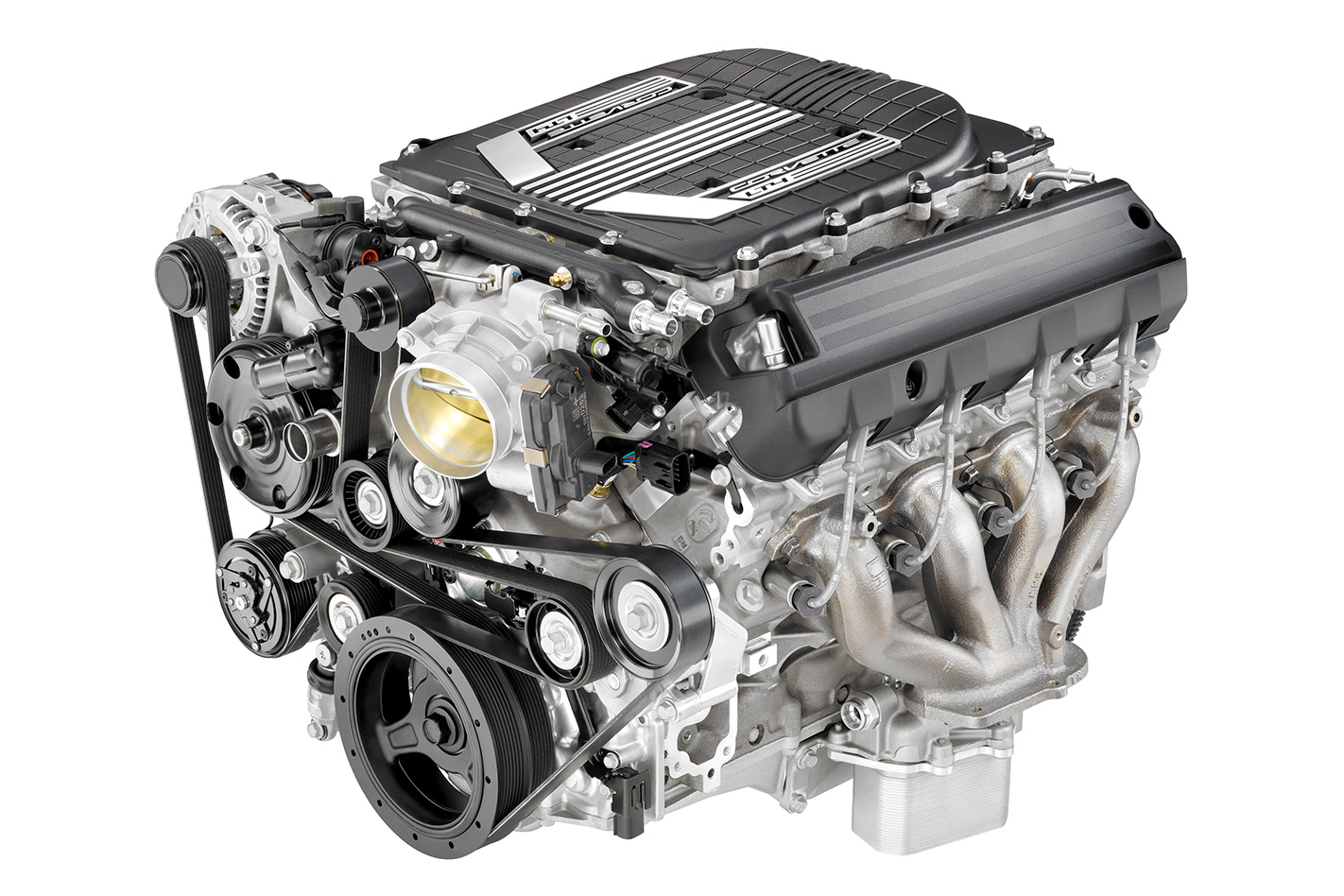
Chevy’s LT4 supercharged small block is the core, but it’s the rest of the package that makes this GM’s most approachable, focused, and least compromised track car in recent memory.
While the ZL1 uses the top engine available in the Camaro, with gargantuan outputs of 485kW and 868Nm, the 1LE adds a track-optimised package that’s anything but window dressing. It’s the sort of car that defines street presence and has the performance to back it up.
Even at 1725kg, Chevy’s lapped the Nurburgring Nordschleife in a remarkable 7min16sec. For context, that’s a couple of seconds shy of Chevy’s own Corvette Z06 and, perhaps more tellingly, two full ticks quicker than the time set by a d’Ring specialist in a Porsche 991.2 GT3.
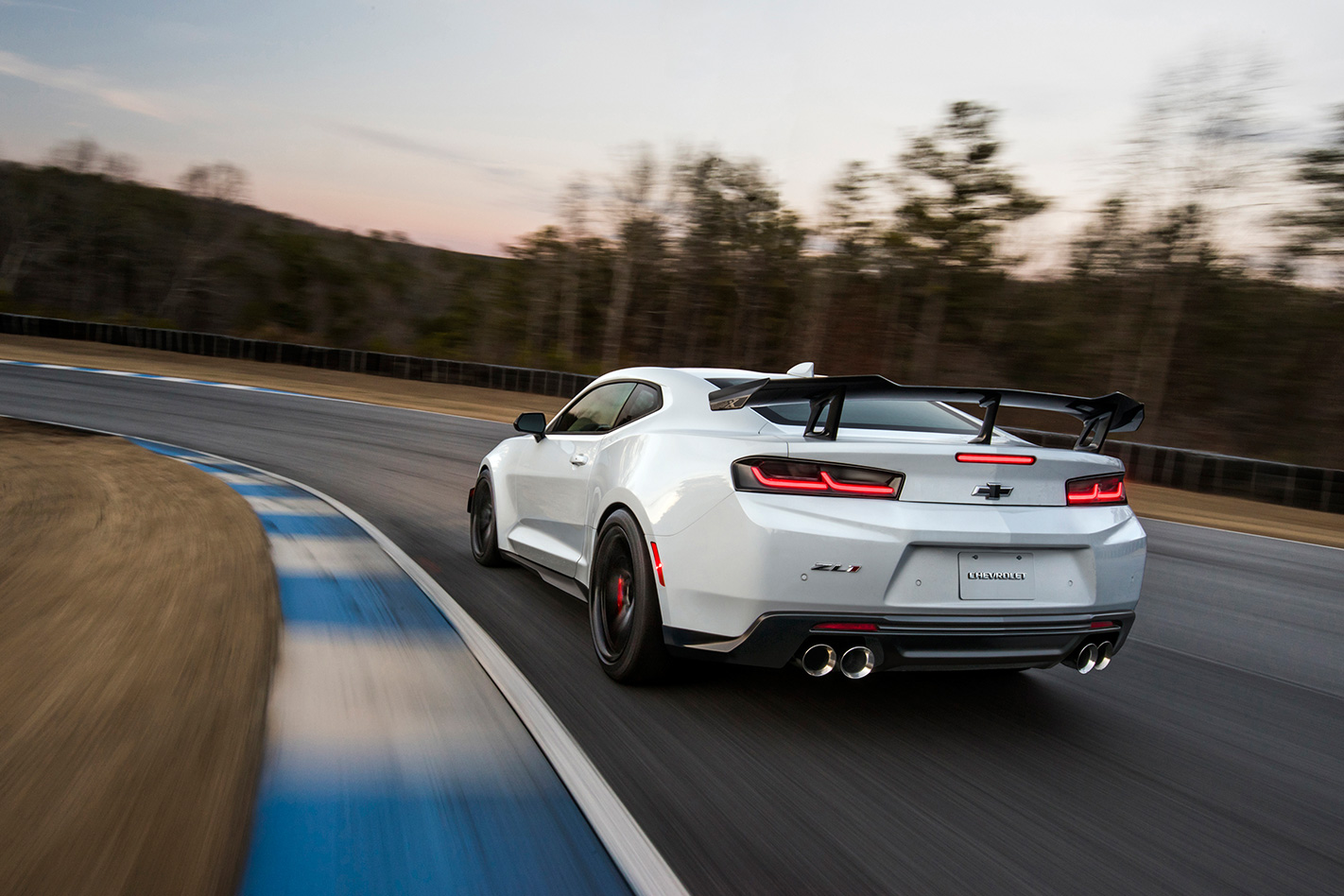
While it helps if you’re a professional pilot, this Camaro has that same easy approachability as an MX-5, but at a much, much higher level. As a road car, the 1LE should be reserved for the hardest of hardcore.
First look at Chevrolet Corvette ZR1
With racetrack-spec spring rates, minimal suspension travel, and matched damping rates, the Camaro bucks and bounces just as you’d expect from a caged and numbered racing car. It’s only on the smoothest road surfaces when the 1LE feels perfectly at home, and when you find that impeccably finished stretch of asphalt, it’s bliss.
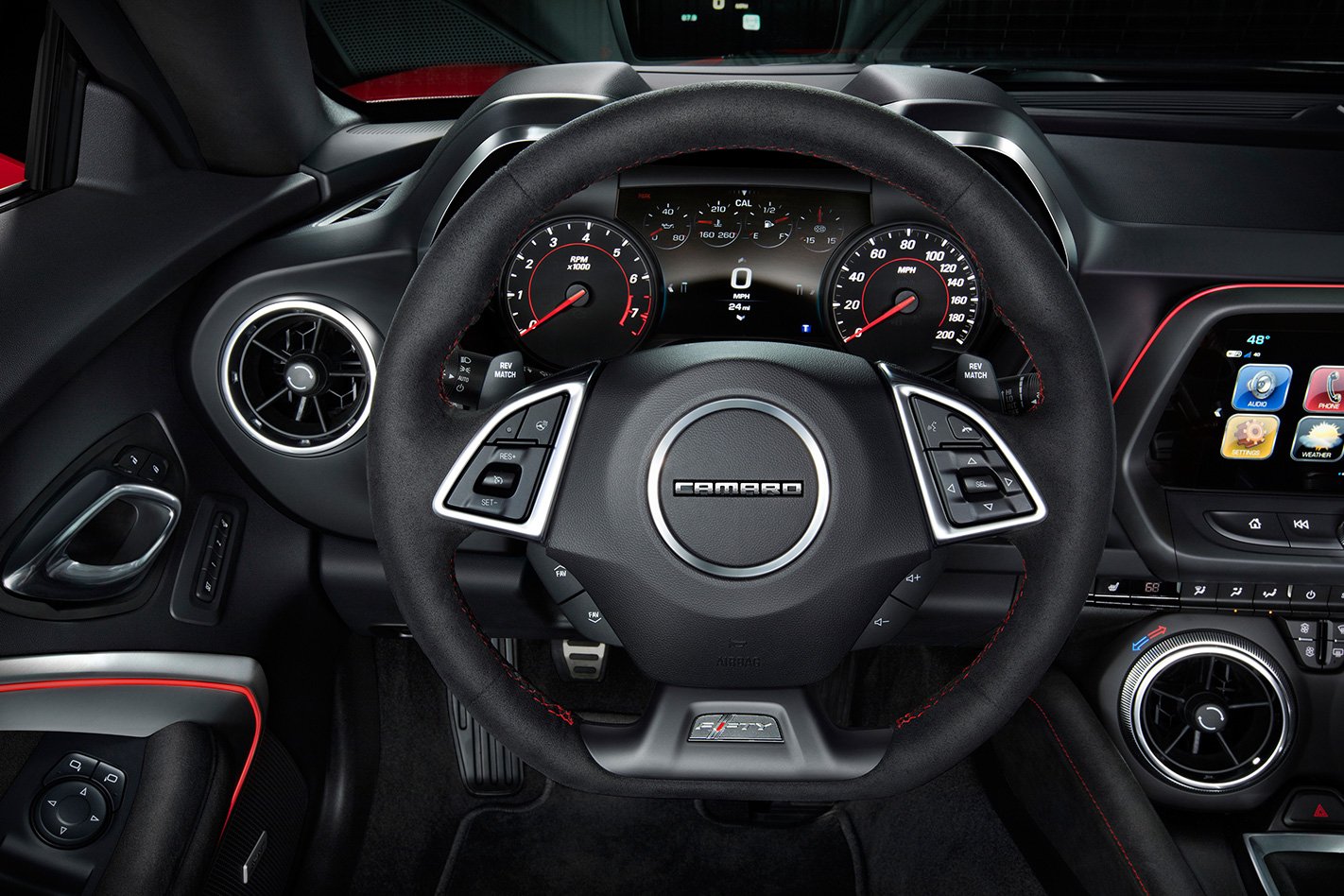
It starts with a wonderfully fitted cockpit, the Recaro buckets set low to the floor, a small diameter steering wheel on a highly adjustable column, perfectly placed pedals, and a wonderfully direct shifter within easy reach. Chevy’s done an excellent job with first-level controls so that the driver can extract this Camaro’s obscene amount of performance.
The 1LE’s 19-inch wheel and tyre package is lighter and wider than the 20-inch set-up of the standard ZL1. The ultra-sticky, barely street legal, dry-weather-only Goodyear Eagle F1 Supercar 3Rs are 305/30 R19 on 11-inch wide wheels up front and 325/30 R19 on 12-inch wheels at the back.
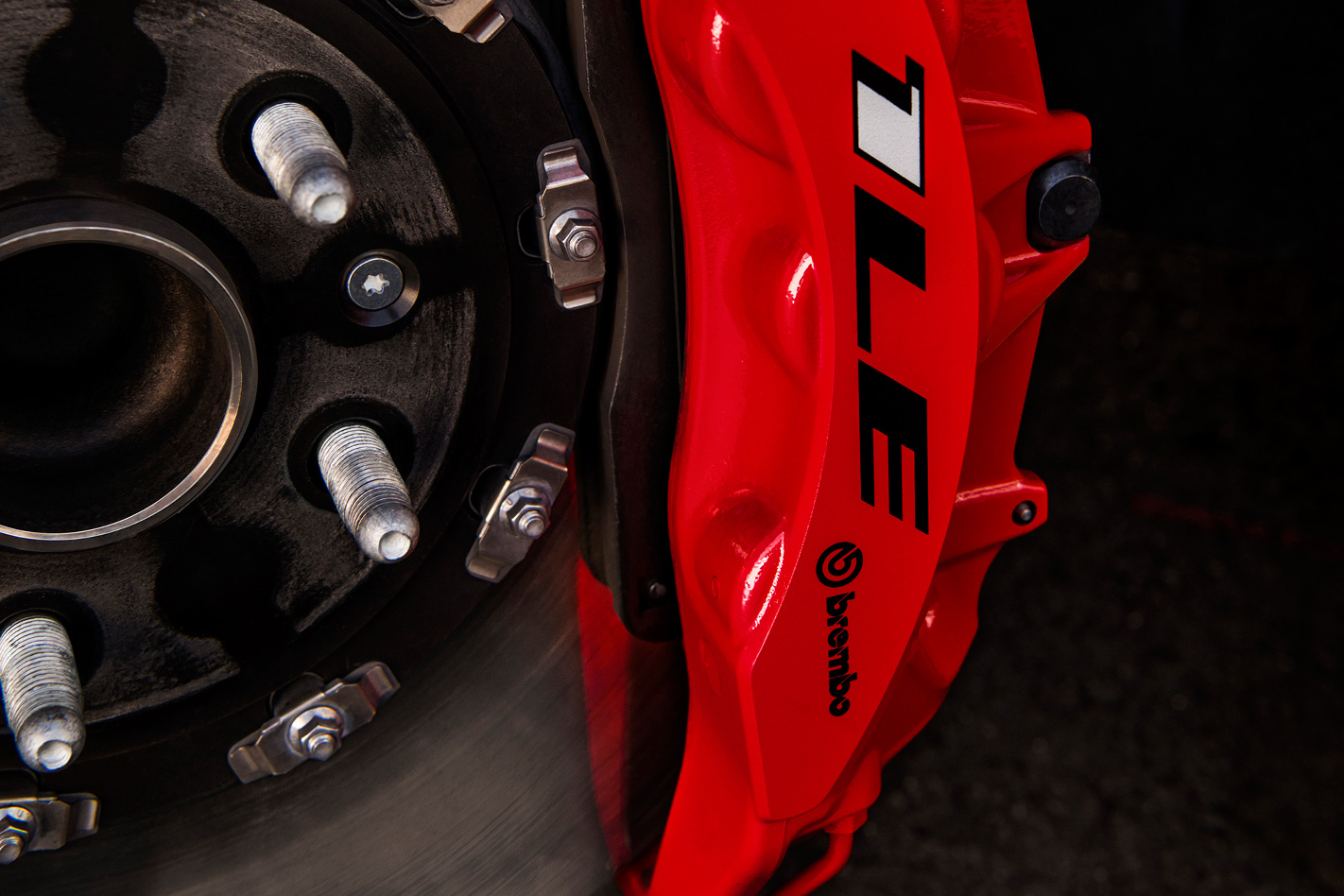
Not only is the grip immense, but the 3R also has predictable breakaway characteristics, making throttle-controlled yaw angles easy. Up front, six-pot calipers clamp two-piece, 390mm rotors, while the rear axle uses one-piece 365mm rotors and four-pot calipers.
Brembo is the brake caliper supplier of choice for good reason – brake feel, control, power, and fade resistance score five stars across the board. Springs, dampers, and anti-roll bars are all bespoke for the ZL1 1LE package. In front, the dampers are adjustable for ride height and include camber plates, while the rear anti-roll bar is adjustable for stiffness.
Among a list of famous motorsport clientele, Red Bull Racing notably won its F1 world championships on spool valve dampers from Multimatic. At speed, the 1LE’s aero package glues the Camaro to the road.
The enormous front splitter and dive planes take care of front downforce, and the decklid-mounted, highly sculpted carbon-fibre wing adds downforce at the rear axle – and robs the driver of some visibility out the rear window. The aero package also resulted in punishing fuel consumption – over 1600km, the 1LE averaged 17L/100km.
The vast output of Chevy’s LT4 is channelled through a perfectly geared six-speed manual ’box from Tremec and GM’s excellent electronically-controlled, limited-slip differential. Shifting that six-speed is one of the highlights of the 1LE, with its wonderful, precise feel from the shifter and a clutch pedal that provides clear engagement feedback.
It works nearly as well in this application, but has a little too much lock at city speeds, and with the sticky rubber, you’ll notice a little crabbing when parking. Zero to 100 km/h launches are accomplished in the mid-threes and its top speed is unquestionably limited by its extensive aero kit.
Lateral grip is said by Chevy to be 1.1g, which makes the deep Recaro buckets necessary. The real trick to the ZL1 1LE is how each system is optimised to give the driver complete confidence at any speed.
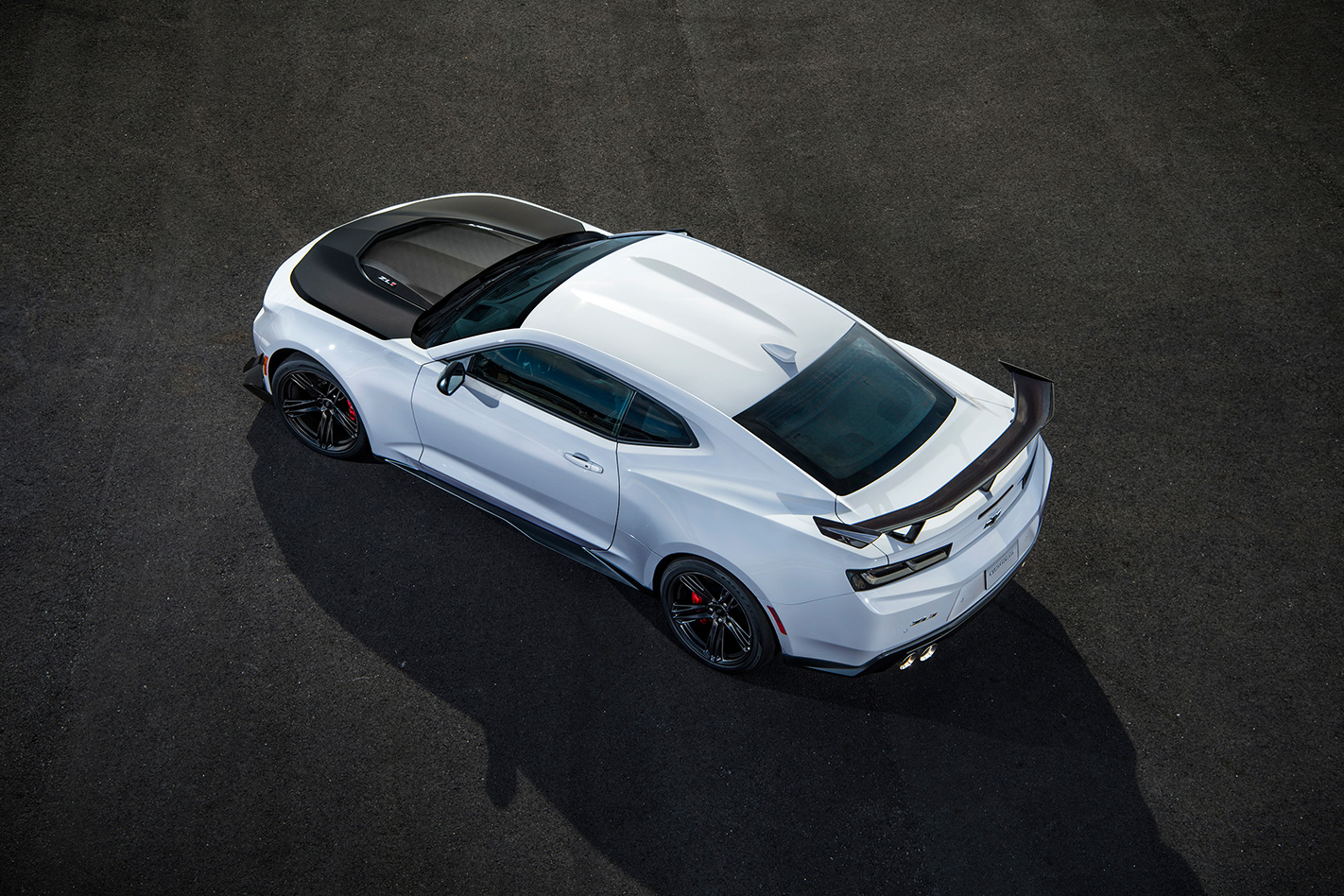
By no means is it the perfect road car, but it may be the most perfect track-ready road car. You could, in theory, weld a cage into it and go racing. You’d be crazy, because it’s such a wonderfully engineered road car, however, perhaps it’s best kept as that special car you reserve specifically for track-day domination.
4.5 stars out 5 Likes: Accessible performance; shift action; presence Dislikes: On-road ride quality; unusable rear seats; fuel consumption
2018 Chevrolet Camaro ZL1 1LE Specs: Engine: 6162cc V8, OHV, 16v, supercharged Power: 485kW @ 6400rpm Torque: 868Nm @ 3600rpm Weight: 1725kg 0-100km/h: 3.6sec (claimed) Price: US$69,995
MIKE SIMCOE is at the wheel, cruising Woodward Avenue in the last Chevrolet SS on the Tuesday evening before Saturday’s Woodward Dream Cruise proper.
We’re talking cars (what else?): Detroit muscle, Detroit fantasy, Detroit influence, decades of Holden styling and his favourites.
I’m absorbing car-styling wisdom from a master, a precise, honest tutorial that’s gold for anyone, like me, who loves Detroit cars from the 1950s and 1960s.
The SS, the badge-engineered, Chevrolet version of the VF Commodore SS-V Redline, is an appropriate stand-in for the 1959 FC Holden Special I’d hoped to use for this story. After now-executive vice president of global product development at GM, Mark Reuss returned to Detroit in 2009 following his stint as Holden CEO, he brought back an FC sedan. The FC now lives at the GM Heritage Center.
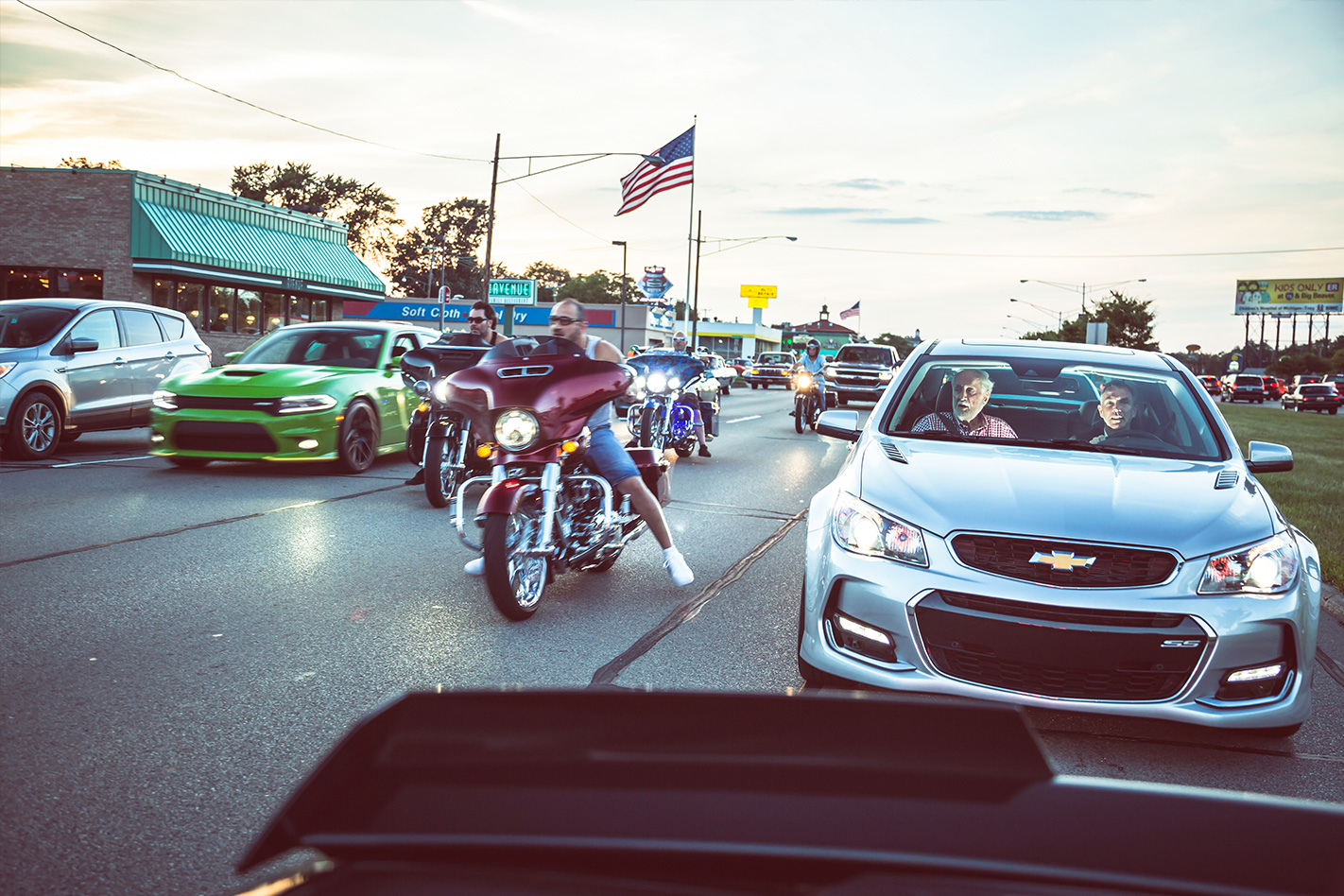
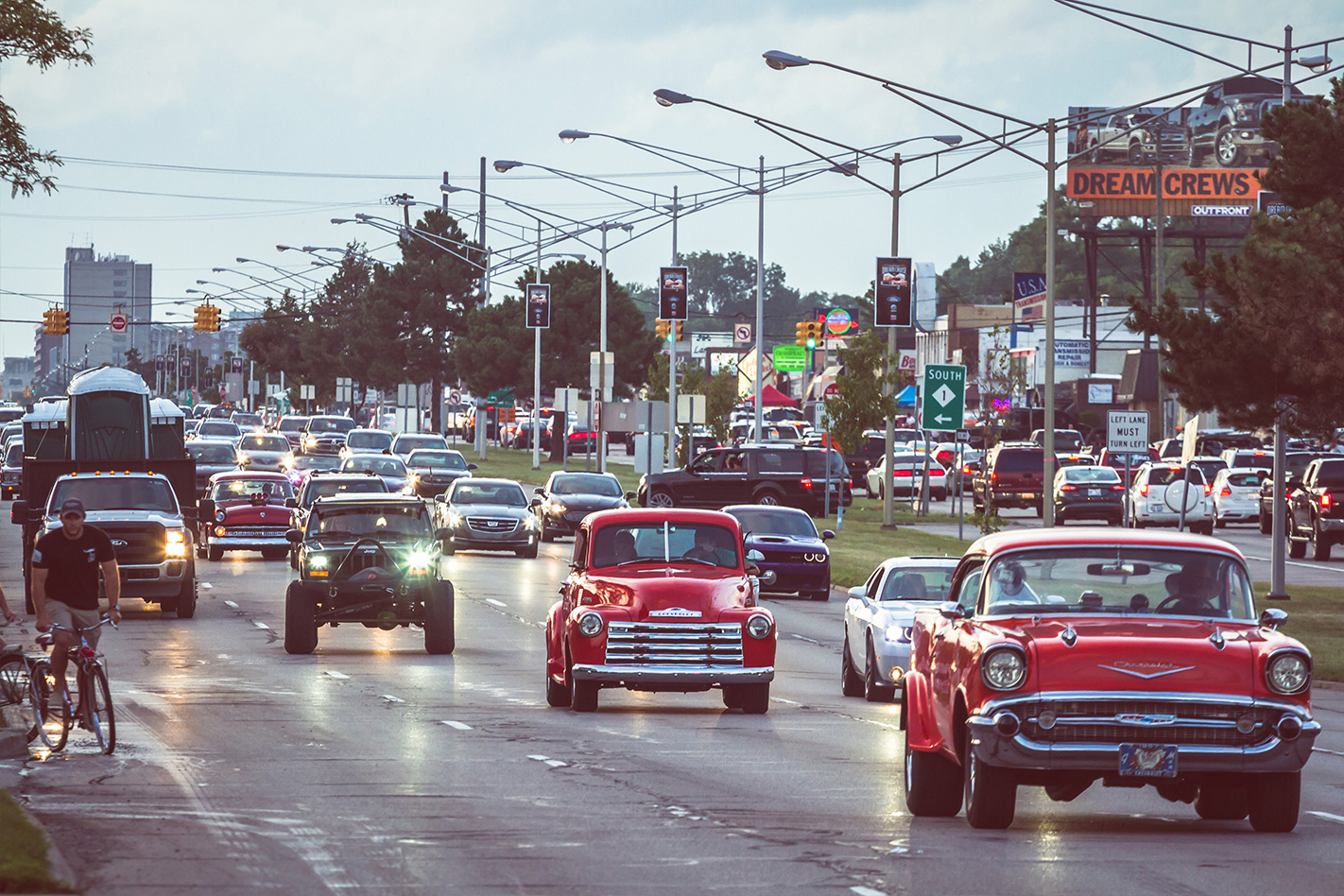
Cruising isn’t the right word to describe the action on the Saturday. For much of the route, there are so many cars on Woodward that they can do no more than crawl. Which is one reason we choose to cruise on Tuesday evening.
This year, by various unofficial estimates, there were somewhere between 60,000 and 100,000 true ‘cruisers’, classics like those that inhabited Woodward Avenue a half-century ago. The effect is a weird kind of time warp. Ageing baby boomers, driving cars they could only dream about as teenagers, all but shut down the nine towns along the 26km Woodward route north from Eight Mile Road through Ferndale and Royal Oak and on to Pontiac.
Remember what Marlon Brando and Lee Marvin did in The Wild One? This time it’s with the cooperation of police, officials and sponsorships from major companies.
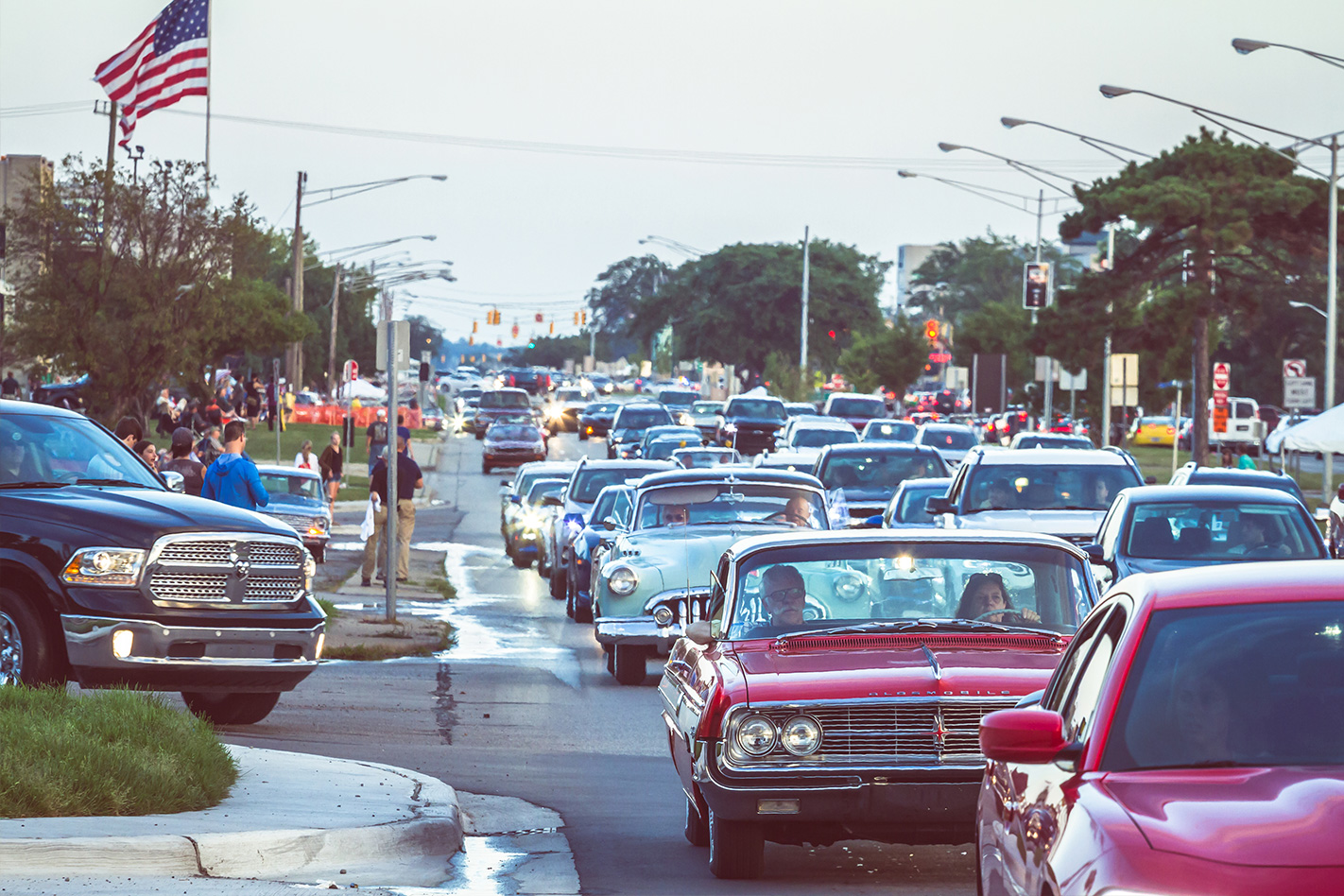
The right two lanes, along the kerb, are reserved for the cruisers, most dating from the mid-’50s to the oil embargoes of the 1970s. Local traffic continues, more or less, in the outer lanes. Cars from across America start arriving a week early, their drivers enticed by the lure of an event that promises to bring back the days when nothing more than a crummy radio, a scrounged car and a slow jaunt down a suburban road delivered teenage nirvana.
Held the third Saturday in August, the Woodward cruise, the biggest participant car event of any kind in the world, attracts over a million people and enough cars to pack a 10-lane avenue in suburban Detroit.
Back in 1995, Nelson House, a Detroit plumber, thought it might be more fun to watch the cars in his club do what they originally did best … cruise.
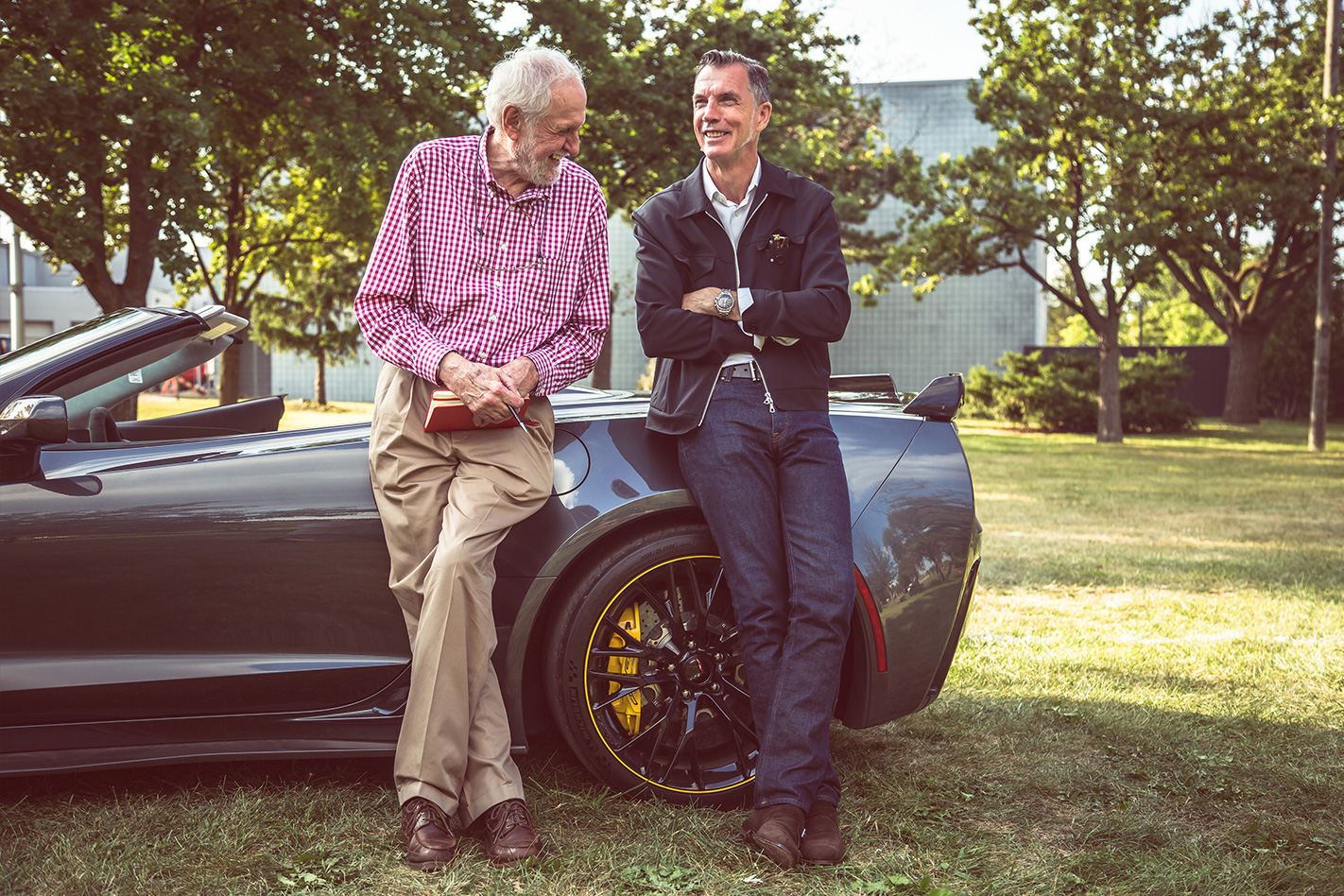
Simcoe has arrived early in his summer wheels, a 485kW Z06 Corvette convertible (in winter he drives a mid-sized truck), just as the cruisers are coming out for the evening. He wears casual car designer gear: white shirt, smart jeans, Simcoe reserves a tie only for Mary Barra, GM’s CEO.
Mike has helped organise a display of GM employees’ classic cars in Memorial Park on Woodward where we meet, one of a variety of events and private parties arranged across Detroit for the days leading up to the Cruise. Two weeks earlier, 960 cars owned by GM employees turned up on a Saturday beside the lake of GM’s Warren Technical Centre. Most were GM brands, but there was also a 1932 Rolls-Royce.
On the Saturday before the cruise, thousands of Dodge and muscle car fans flock to Pontiac for Roadkill Nights, an authorised quarter-mile drag strip on Woodward.
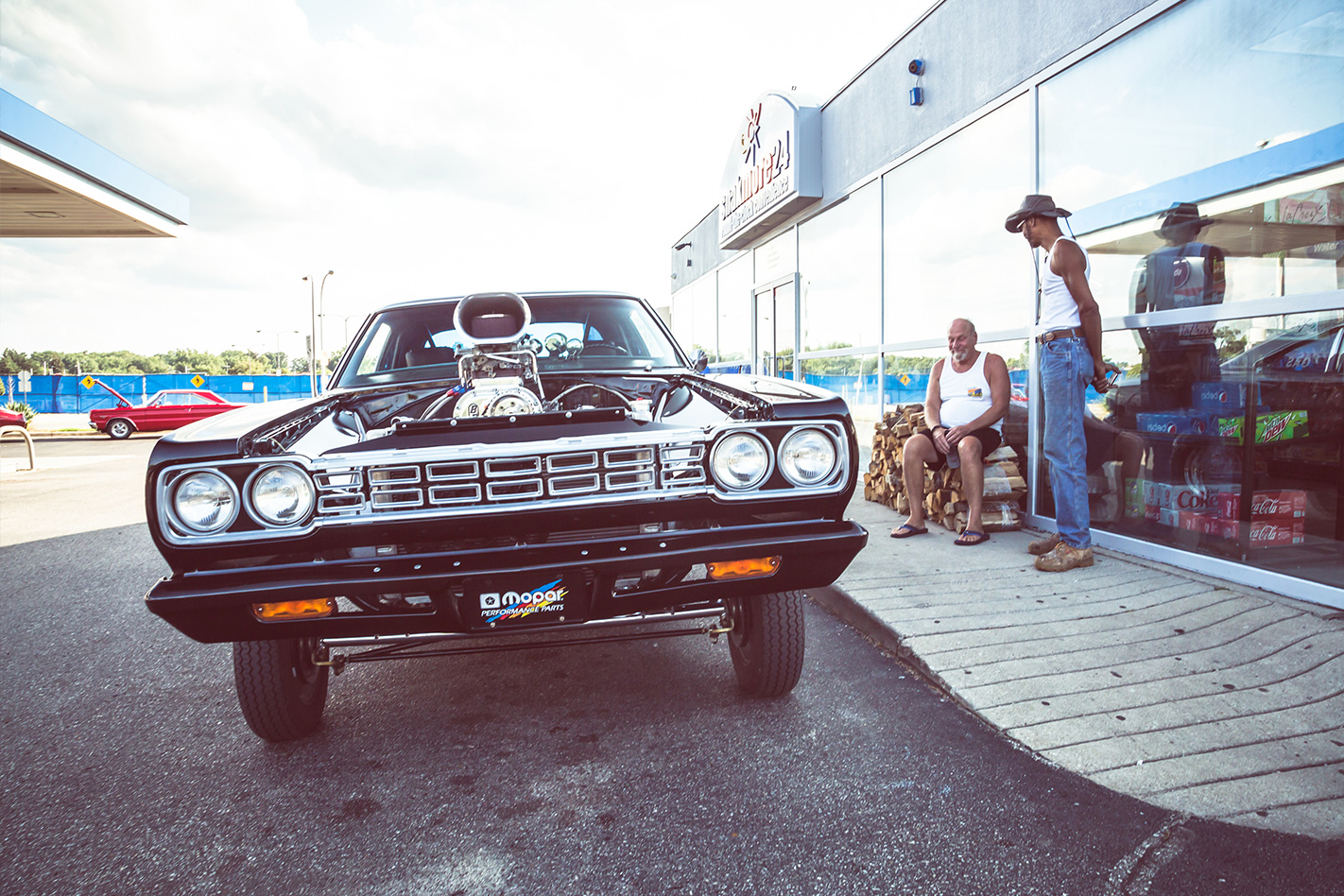
There were plenty of converted muscle cars, including an original Dodge Challenger making 1864kW and clearing the quarter mile (402-metre) trap in five seconds.
Snapper Wielecki is bursting to get a shot of the SS surrounded by ’50/60s Detroit iron. Simcoe’s open Corvette becomes the camera car and we edge out into traffic that is already dense with cruisers.
Providing a running commentary on every fascinating car we see, Simcoe points to a 1962 Caddy Eldorado.

“There’s a great simplicity of line. These Cadillacs were still the Standard of the World (for decades, Caddy’s advertising slogan), their strong aggressive lines so beautifully handled. Nobody did it better. GM owned [body] surfacing.”
Given Simcoe’s appreciation of proportions and elegance, it is no surprise he prefers design boss Bill Mitchell’s 1960s cars to the finned and increasingly chromed extravagance of his predecessor Harley Earl’s 1950s models.
“I relate more to Mitchell’s era [1958-’77] than Earl’s [1927-’58],” says Simcoe.

Mike is discreetly referring to GM’s panicked and wild-styling response to Chrysler’s beautiful ‘Suddenly it’s 1960’ 1957 models.
“Mitchell changed everything. He was a master; all that animal cunning.”
Mike’s only comment as a first-generation Lamborghini Gallardo slithers past: “It doesn’t fit a Woodward spectator event.”
Says Simcoe, always the realist, “Big performance sedans don’t work here; people expect a more aggressive design, though awareness is part of [their lack of huge sales success.] Enthusiasts know about them, but they’re not for everybody.”
Where the parked cruisers look more interesting we stop and wander among the cars. The first-generation Camaro is, “a nice car” and he shoots down my criticism of the current model’s lack of visibility.
“A Camaro should be extreme. Today’s car has the proportions of the original [2006] show car, the high belt-line, the emotional feedback. When you’re driving through the pillbox, you’re looking through the exterior.”
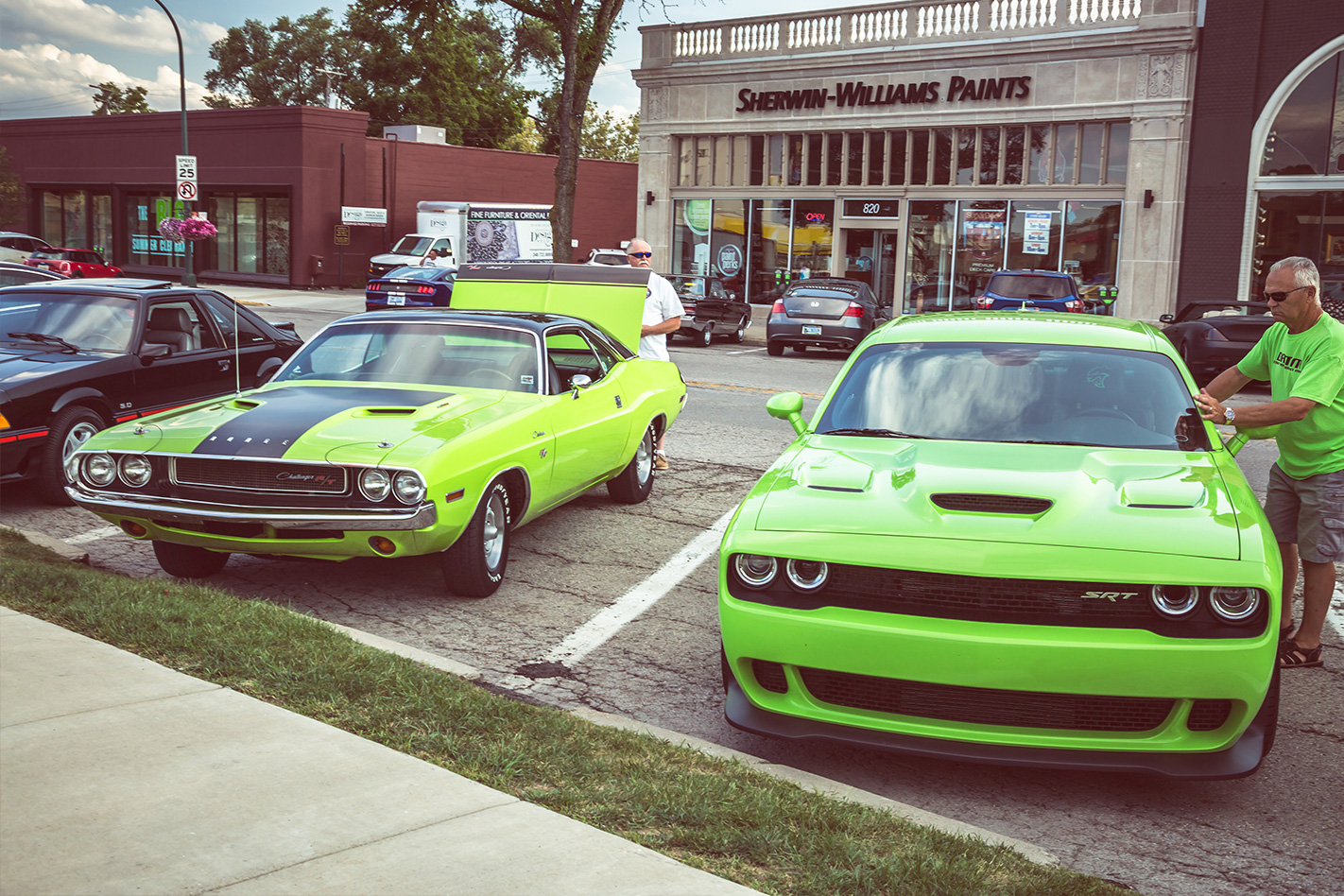
The owner of the older model tells us, “These cars are all about fun, nostalgia and money.”
An early 1960s Chevrolet Impala has Simcoe examining the dazzling interior, “People are more conservative today,” he says.
“Most mass-market customers don’t want bright colours. Back in the ’60s, the run-of-the-mill models were more daring.”
“The cars of the 1950s are all about the emotion they engender. From the mid-1950s, the Tri-Fives [Chevrolet’s 1955, ’56 and ’57 models] evoke memories every time.”
“You can create the most beautiful car in the world, but if nobody reacts to it, you’re talking to yourself.”
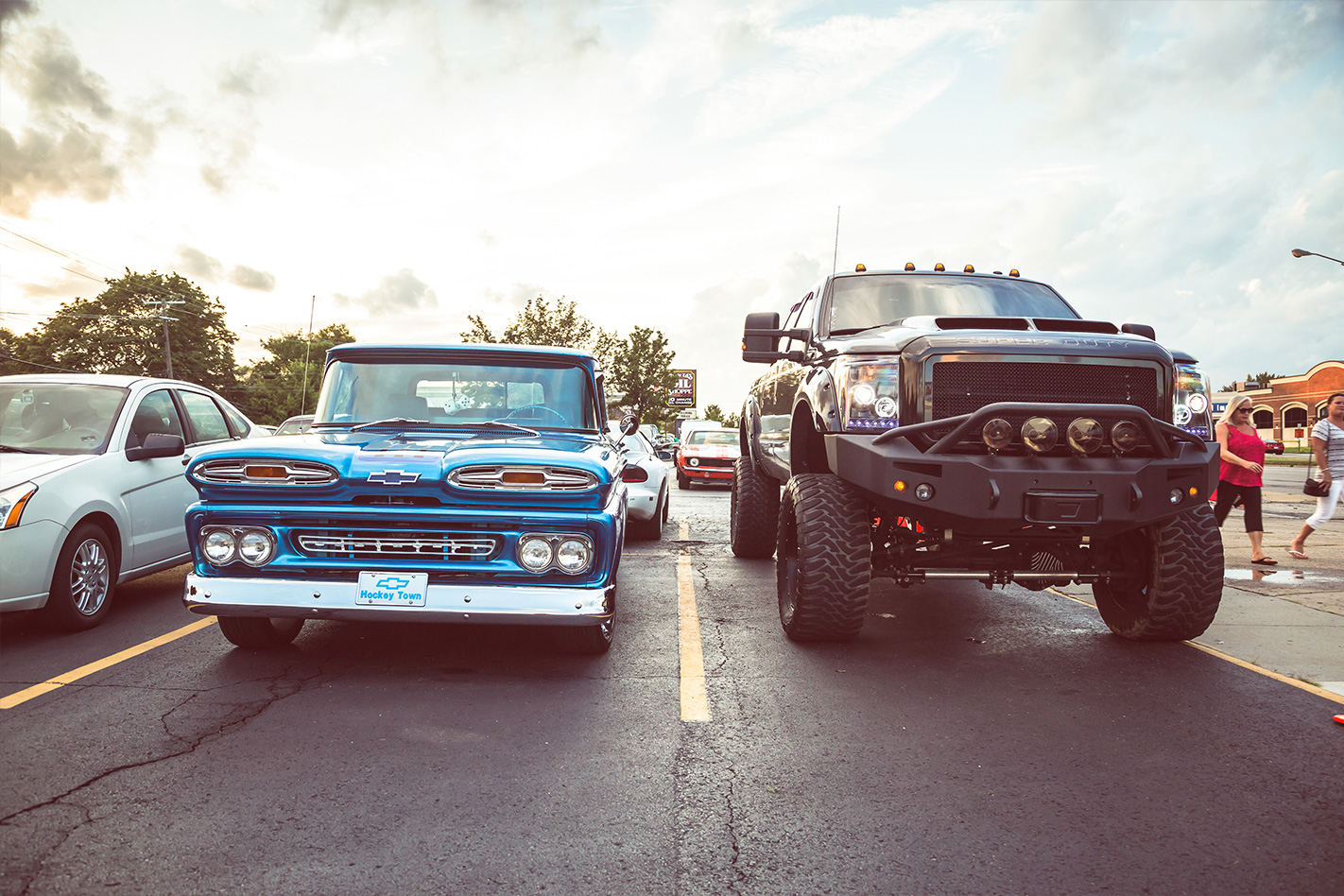
Says Simcoe: “The HQ was done after the American [cars], when the designers had more experience and [the result] is lighter, a softer [treatment]. The [Aussie Chrysler] Charger is the same.”
Simcoe glows when describing the HQ, “It’s beautiful, especially from the lovely super-thin A-pillar back with a light upper [body]. The HQ had proportion, surface and style … the HJ to HZ only got worse [in styling terms] from then on.”
At times it seems almost everybody in Detroit owns at least one car from the golden era of styling, a car they work on over the winter and pull out for the summer. A ‘Bugeye’ Sprite is dwarfed by the four-seat T-bird and Mustang fastback that momentarily flank the baby Austin-Healey.
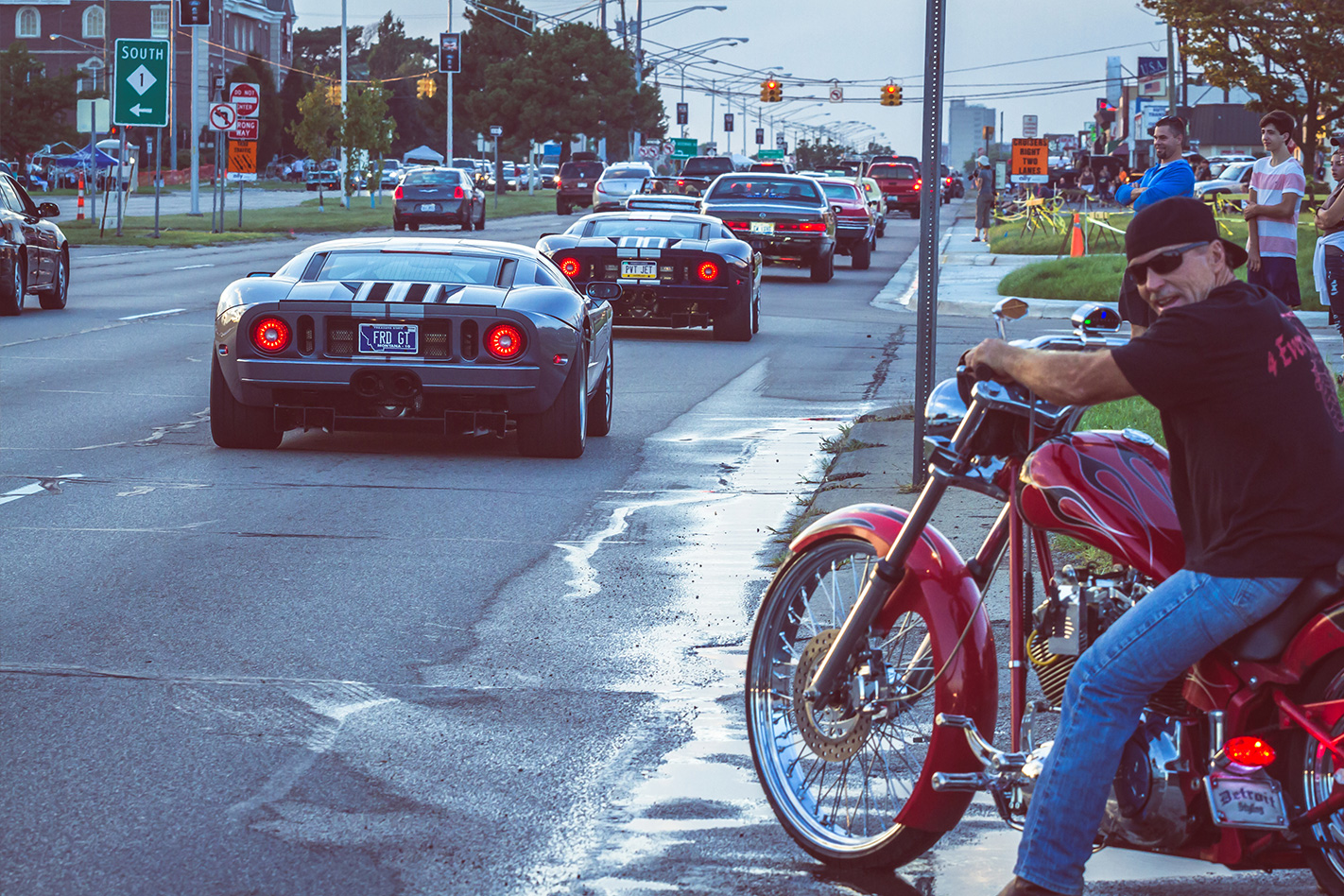
“People are looking for the outrageous,” says Simcoe, reflecting on how the Woodward scene shifts as we start to leave in the darkness.
“The world has changed; at around 10:30pm the older generation goes home and by 11:00pm the rice-rockets arrive, as if the rest of the world drove four-cylinder turbos. This group is embracing new technology, so there are still kids embracing cars, [it’s] just that culturally cars are becoming different.”
Simcoe’s small collection of cars – an Aston Martin DB4, a Lancia B20 GT and, he hopes soon, a 1963 split-window Chevrolet Corvette coupe – have deliberately been chosen as symbols of what he sees as a great era in car design.
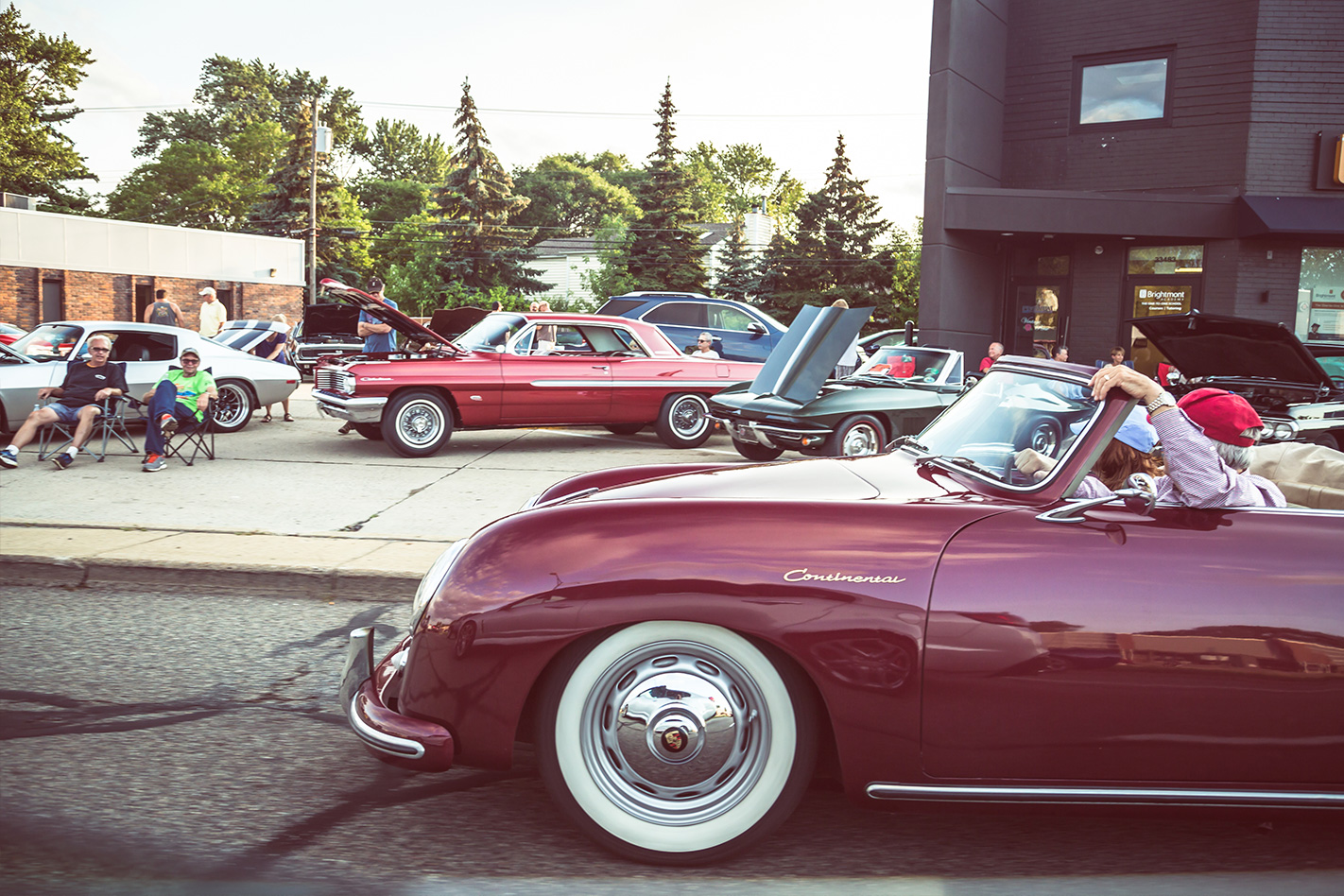
“All three [cars] arrived in just 10 years.”
“I’m still getting over the shock of the cost [of shipping the Lancia to Detroit]; it will be a bit of a surprise to people. I want to put the three side-by-side.”
Woodward Avenue would cope.
Woodward’s street racing roots
During the 1960s, Detroit’s Woodward Avenue was the street- racing capital of the world. On any given night, owners of upwards of 2000 cars milled around a five-mile strip, some sitting at Ted’s Drive-in Diner, the car park resembling the pits at a stock-car race, others hung out at service stations, bars or coffee shops, or just cruised.
Among the hot 427 Corvettes, GTOs, Chevelle SS 396s, Mustangs and 426 Hemi Mopar Plymouths and Dodges, factory teams operated at a speedway level of ‘market research’ apparently racing for kicks – and not cash like the privateers – but really to see what was hot and what was happening. Engineers out to establish bragging rights as the night’s hottest car, ran against rivals up to 200km/h speeds before backing off and pulling into a side street or deserted parking lot to hide from the cops. The fast kids often got under-the-table support from the engineers.
During the day, Woodward was the link between old Downtown Detroit and the rich suburbs of Birmingham and Bloomfield Hills, an often prosaic, sometimes historic, eight to 10-lane, 37-metre wide avenue. Come dusk and it transformed into street racing’s Indianapolis.
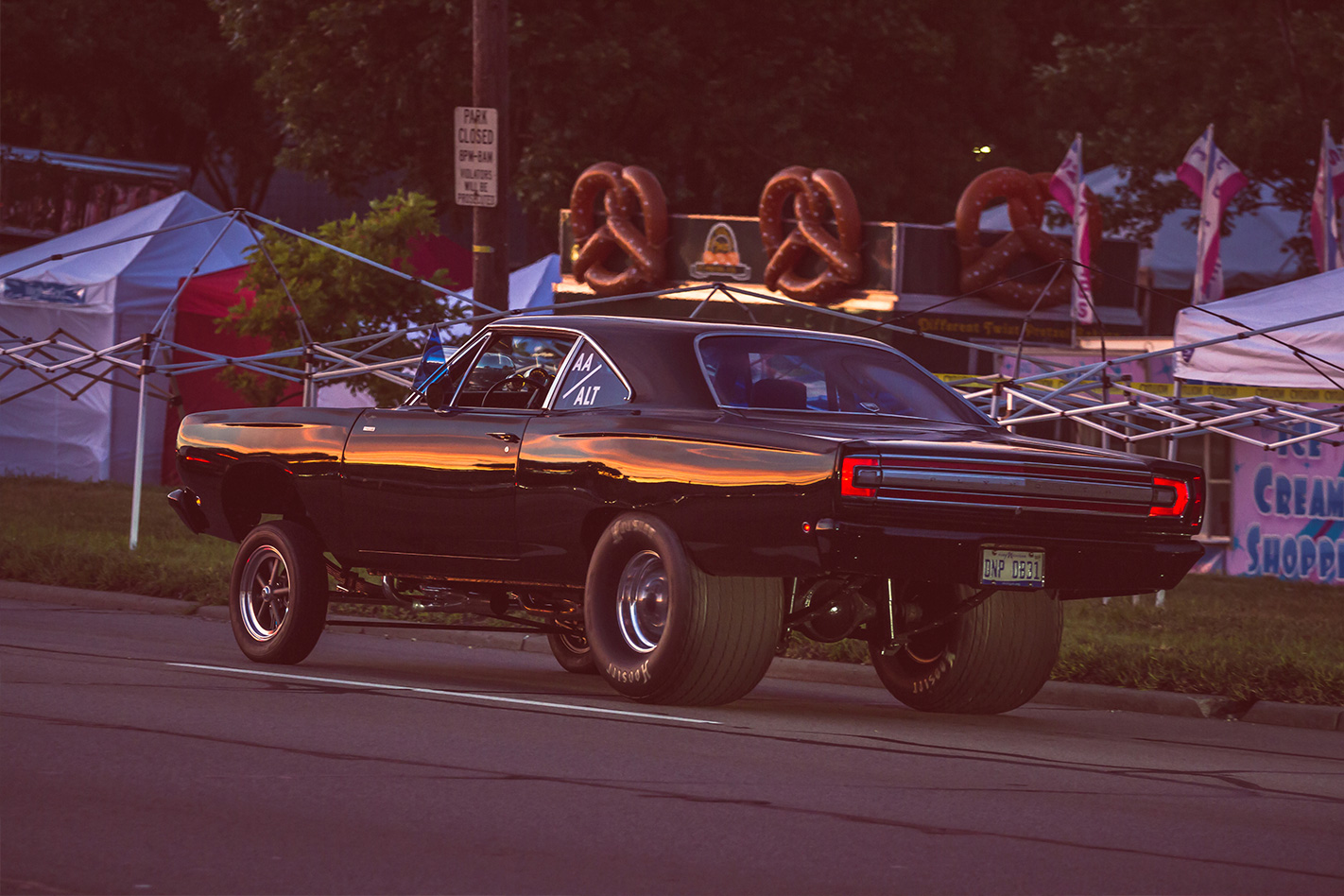
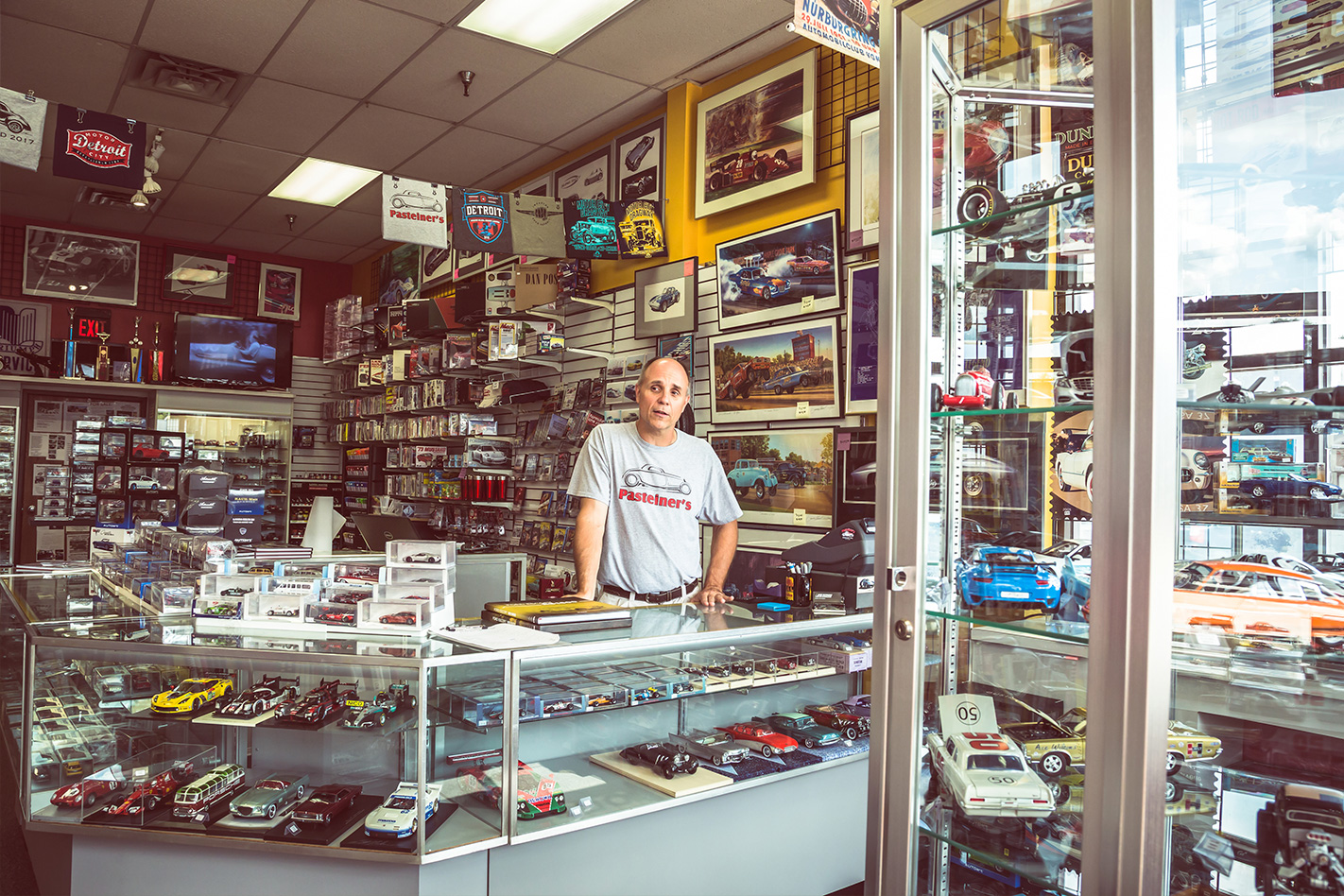
Every Saturday morning, even in the coldest depths of winter, gearheads congregate at Pasteiner’s Cars & Coffee on Woodward Avenue. For well over a decade, the hobby shop has hosted a weekly gathering where senior current and former car designers mingle with tattooed greasers over a mutual love of muscle cars, classic Europeans, custom hot rods, and everything in between.
Owner Steve Pasteiner Jr. has the biggest selection of car magazines in Detroit, including (occasionally) Wheels. On the Saturday before the Woodward Dream Cruise I turned up in my mate (and ex-Fiat design boss) Peter Davis’s 1961 Cadillac Eldorado Biarritz convertible. Among the designers at hand: Dick Ruzzin with his sublime De Tomaso Mangusta, Larry Erickson (who styled Cadzilla), Kip Wasenko (various Cadillacs), Chris Svensson (Ford Ka) and Robert Walker (ex-Holden, now Ford). Mike Simcoe is a regular, Moray Callum (boss of design at Ford) an occasional visitor, along with Ralph Gillies (FCA design chief).
Chuck Jordan, the fourth vice-president of design at GM, and addicted to 1:43 scale model Ferraris, once told Steve, “Ah, Pasteiner, you’re worse than a dope dealer pedaling these models.”
There are those who will tell you the Mitsubishi EVO VIII has gone soft and cashed in its bad-guy reputation for the quiet life.
This article was first published in MOTOR magazine’s March 2005 issue.
Okay, drive an EVO VIII back-to-back with an EVO VI and it’s easy to see that the newer car has grown up more than just a fraction. But traded the baseball bat for a crochet hook? Not even nearly.
See, while it has a more soothing ride than the EVO VI and it doesn’t have quite the same rushy power delivery of before, it’s still nothing short of a sensation and second on the ladder in PCOTY proves it. And while you don’t loose ALL your fillings crossing a tram-track in the VIII, there’s still a very real chance you’ll be visiting the dentist at some stage.
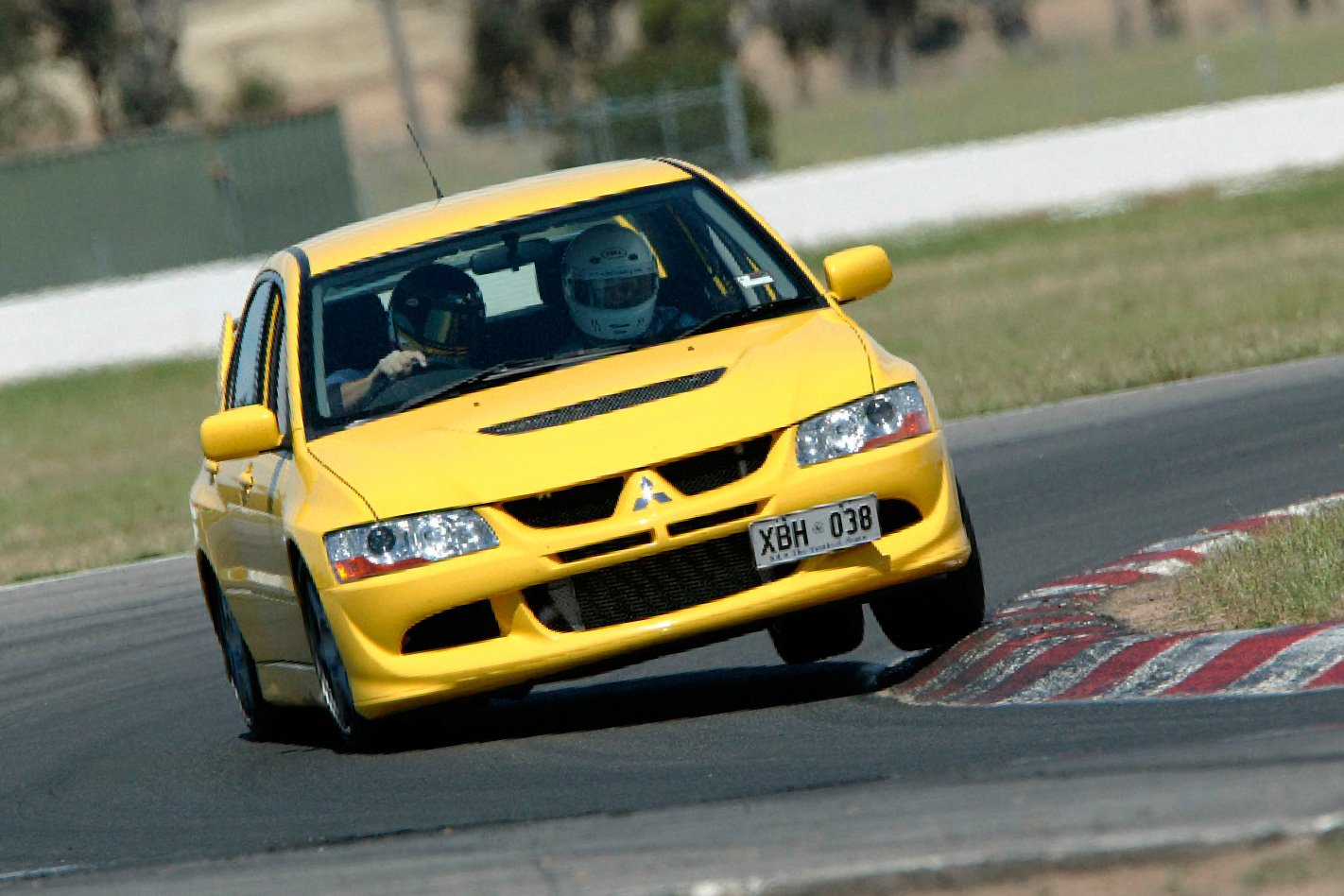
See, what it lacks in capacity, it more than makes up for in attitude. Unlike the STi, the EVO is making plenty of power and torque from about 3000rpm upwards and by the time it’s tagged 4000, things are happening very rapidly.
It’s not as smooth or refined sounding as the Sube’s (in fact, it’s a rough-arsed little mutha with a wicked induction yodel) however it never, but never, leaves you waiting for a good punch in the kidneys. Basically, you ain’t gonna die wondering with an EVO VIII.
The way it gathers itself up and fires off into the distance defies the written word to describe it, but if you can imagine being fired out of a very large cannon, you’re maybe getting close. Similarly, the grip level is something you really need to experience to believe.
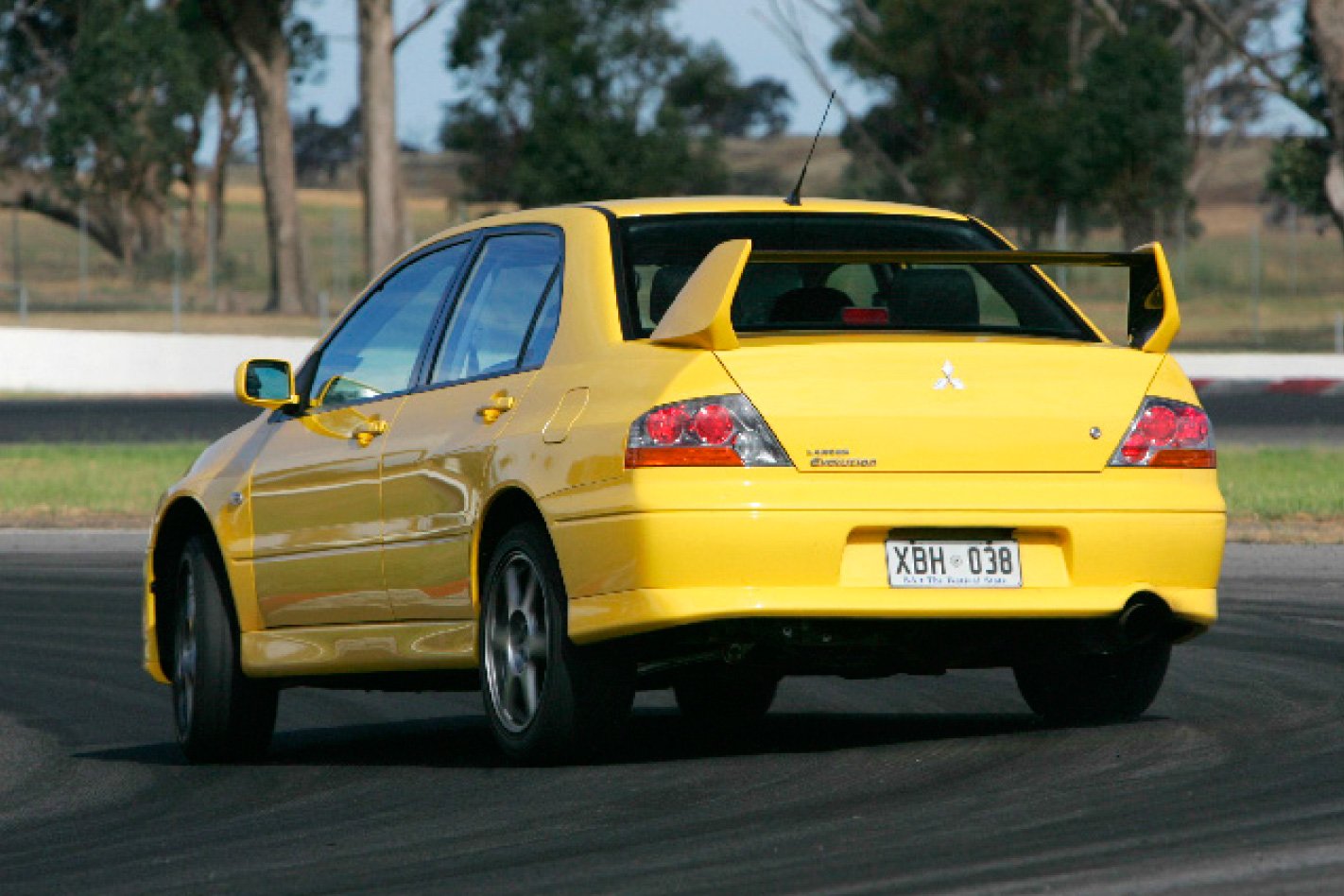
Technology is, in this instance, your best friend. The main detractor is it’s so obviously based on the ’umble Lancer. It doesn’t look sexy (tough with the scoops and wings and such, true, but not sexy) and the interior is well downmarket.
Standard kit levels are nothing to write home about, either, but as you rocket through a hairpin on your fave piece of hotmix, the engine rushing you towards the next corner and the chassis feeding back all the important info, the lack of climate-control air-con will cease to be important.
SICK OR TREAT?
It had the EVO’s historical core strengths – power down, an arse-leaning on-throttle cornering stance and mid-range gristle – but Old Yella didn’t show us the lineage’s best stuff. It was a very tired example, who’s preparation had been cursory at best.
Its clutch issue is well documented, but the gearbox baulked, the body wobble-boarded and its tyres were remnants. We could go on, but would a fit EVO have added the PCOTY trophy to its BFYB gong? We’ll never categorically be certain, but in all probability, no.
The technical trickery stuffed into it can only hurl it so far beyond its mass market origins, yet it won’t give up, keeps punching and will drive itself into the ground in search of speed. It was beaten, yes, but not by preparation. One car is coming on song just as the EVO’s tremendous abilities have finally been exhausted. And that car is in the Champion’s League.
PCOTY 2005: 2nd Place
Mitsubishi Lancer Evo VIII specs: Drive: all-wheel Engine: front-mounted 2.0-litre DOHC 16-valve turbocharged inline four Power: 195kW @ 6000rpm Torque: 355Nm @ 3500rpm Weight: 1470kg Transmission: five-speed manual Length/width/height: 4490/1770/1450mm Fuel Economy: 21.2 litres/100km (55L tank) Price: $61,990
Performance: 0-100km/h: 5.41sec 0-400m: 13.84 @ 161.2km/h 0-1000m: 25.50 @ 202.7km/h Winton lap time: 1:40.88 Winton top speed: 166km/h
Timing, as they say, is every damn thing.
The best joke in the world, told by a dimwit, will still fall flat. But even the worst dad joke, when delivered by a teller with a sharp sense of timing (so, probably not your dad, then) will slay ’em in the aisles. Or at the bar, usually.
And clearly, as big, rear-drive, big-engined Aussie sedans have now finally disappeared up the Federal Government’s mud-button (thanks for nothing, Tone) Kia’s timing in unleashing the big, rear-drive, big-engined Stinger sedan is the punchline to end them all.
The suspicion is that the Kia has the potential to pick up where the Falcon and Commodore left off so abruptly and permanently; that it could be the solution to those of us who don’t want an SUV or a dual-cab ute. Fair hypotheses, both of them.
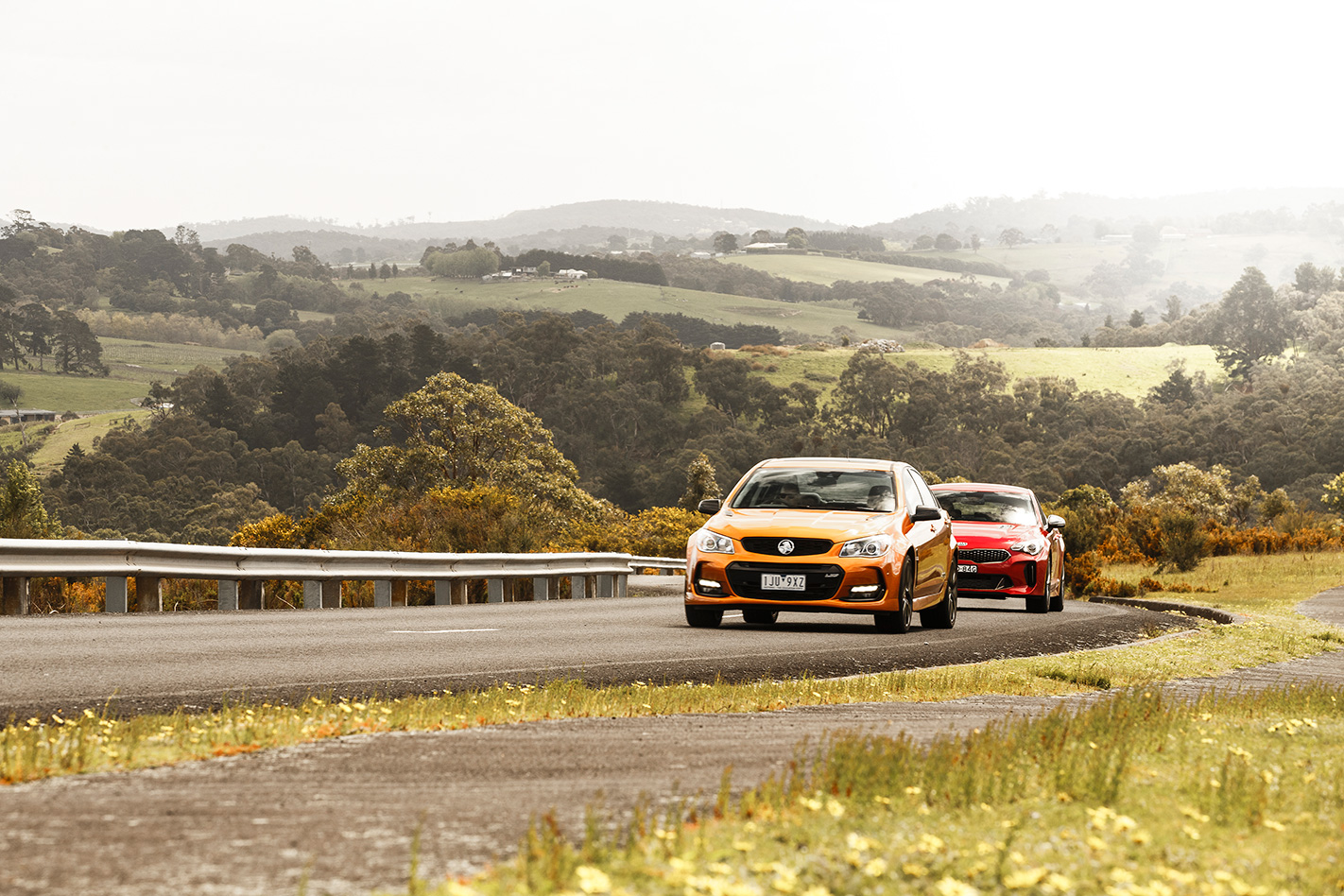
Or is it just a dad joke, well told – a lucky shot thanks to that sublime timing? It’s one hell of a benchmark to attempt to live up to, but for the purpose of this experiment, we managed to find a Commodore SS-V Redline ($57,190 to you, sir) lurking down the back of Holden’s test fleet.
And in the interests of science, the idea is to back-to-back the Redline with the entry-level V6 Stinger, the $48,990 V6 330S, shake well and see what happens. The first thing you figure out is just how damn big the Kia really is.
While the Aussie Commodore still shades it by every dimension, it’s not by much, and with five doors instead of the Holden’s four, the Stinger should work pretty well for families. But there are a couple of niggles imposed by that swoopy silhouette.
The rising waistline means the side-rear glass is very shallow (not good for the really young ones) and the structure involved in making the rear window open and close means the window itself is small and slanted. So it’s tough to see behind you. Some are not going to like parallel parking the Stinger.
The Holden’s rear seat is also a better thing to perch on, although leg room and shoulder room is closer to the Kia’s than you might think. But you also sit higher in the SS-V, there’s more under-thigh support and way more glass area. On the downside, the Holden is noisier in the back and lets a few more bumps in.
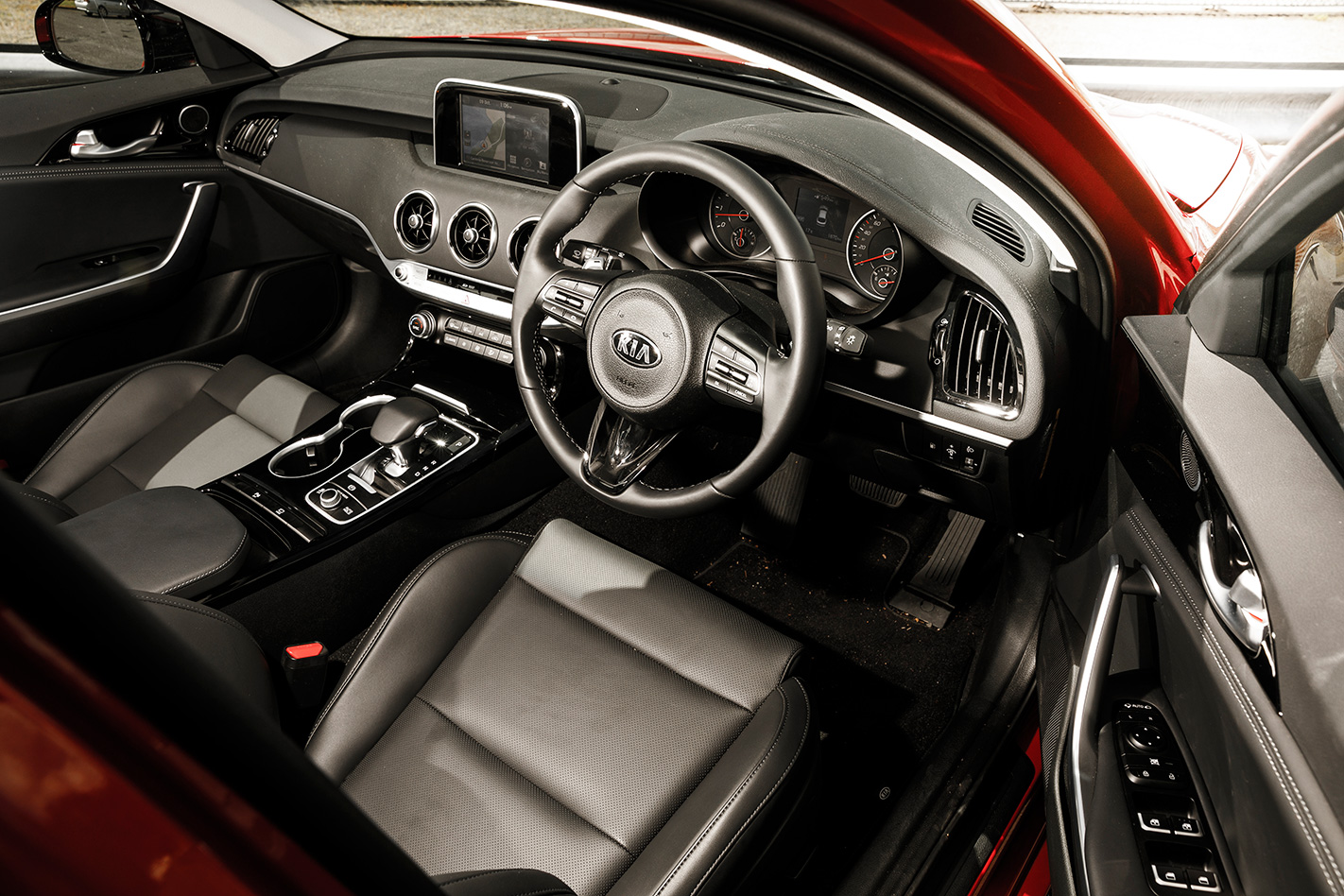
Up front, the story is similar. While the VFII Holden is a nice place to sit, the Kia isn’t bad to look at either with Benz-esque turbine air-vents and speaker grilles and an intuitive touchscreen that cleans up the cabin generally.
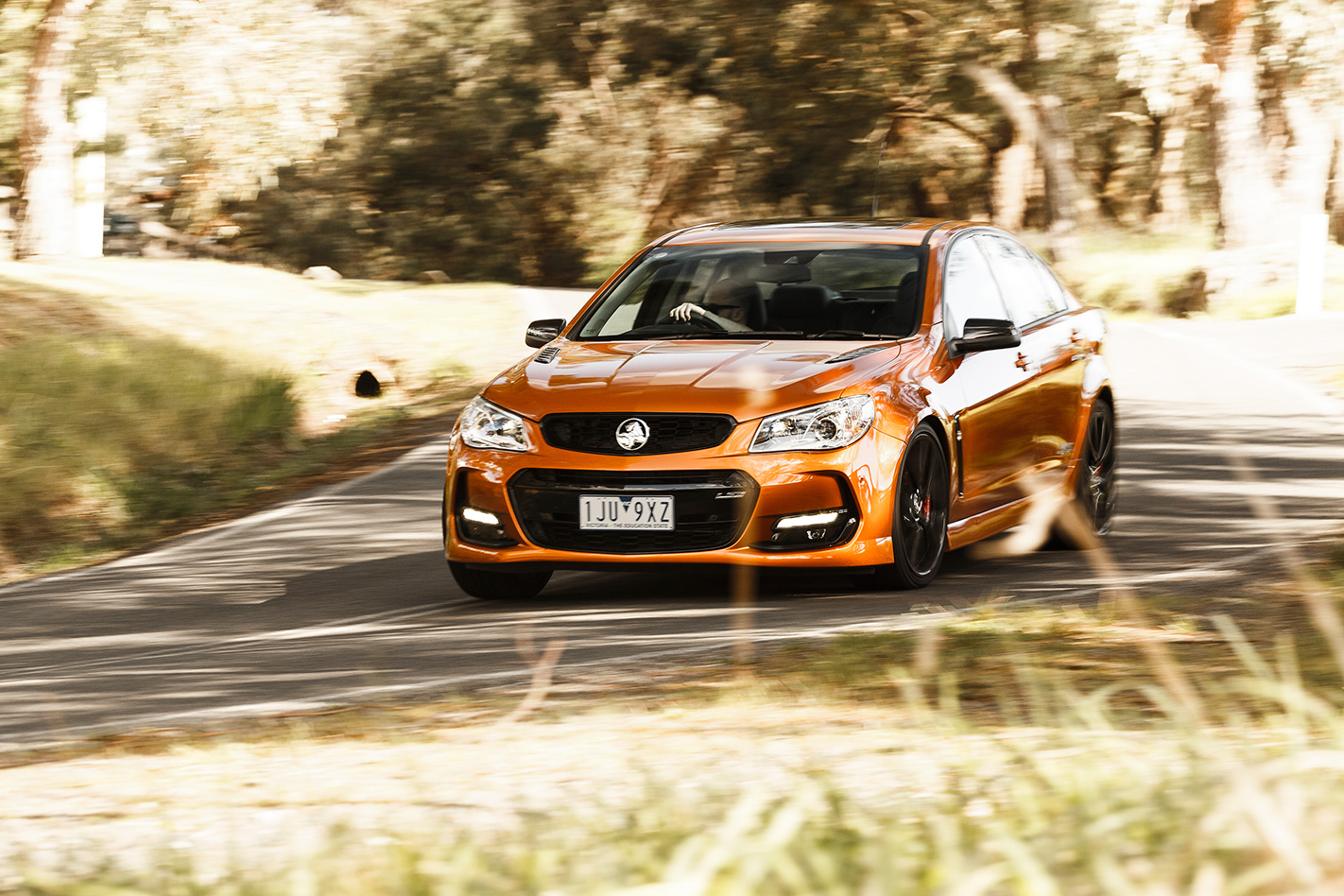
Which is all fine, but the reason we buy big, rear-drive cars is for their speed and handling – and the way that makes them feel – right? Exactly, so the dragstrip was our next stop. With two pots, almost two litres and 40 years of making it work under its belt, you might be tempted to think this’ll be a Commodore massacre.
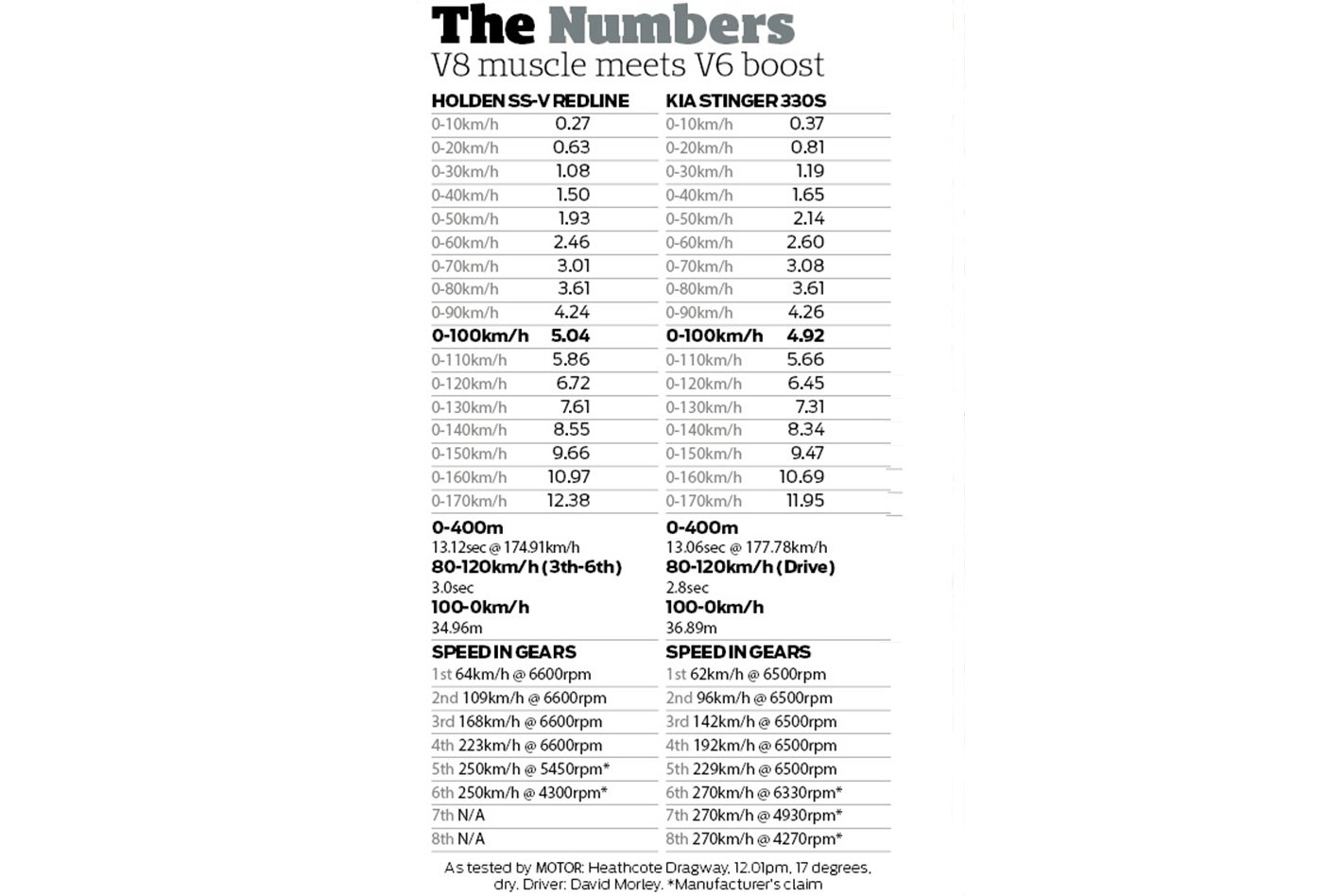
Save your tears, because the Stinger rips off quarter miles that an HSV of a decade ago wouldn’t have been able to stay with. Those 3.3 litres, boosted by a pair of hair dryers crank out 272kW and 510Nm of torque. And even though that’s shy of the SS-V’s 304kW and 570Nm, thanks to the softer launch of the Kia, its fat, fat mid-range and eight forward ratios, it can stay with the Holden. Literally.
As in, door-to-door. Line them up together and the 330S gets to 100km/h in 4.92sec (5.04sec for the SS-V) and they’ll both go on to cover 400m in roughly 13.1sec. Even the terminal speeds were similar, with the Kia stretching out to an almost three km/h advantage.
You also need to disable the ESP and traction and treat it to a small (about 1700rpm) stall-up to squeeze out that sort of number. You might imagine the Kia’s launch control helps, too. You’d be wrong. In fact, it’s a tad faster if you stall it up a tiny bit and then step on it hard than if you use the launch function.
2017 Kia Stinger GT vs 2016 Ford Falcon XR6T Sprint: New vs used
From what I can see, the Kia’s launch is, like the drive-mode-select thing, a waste of ones and zeroes. On the road, the differences in how each makes its grunt is even more pronounced. The Kia lacks the low-down shunt of the Commodore, nor does it have the top-end howl.
But it does have a mighty, boost-typical surge of rushy goodness in the mid-range. But as well as being short (relatively speaking) of a little snot at each extreme end of the tacho, it also lacks pretty much anything in the way of theatre.
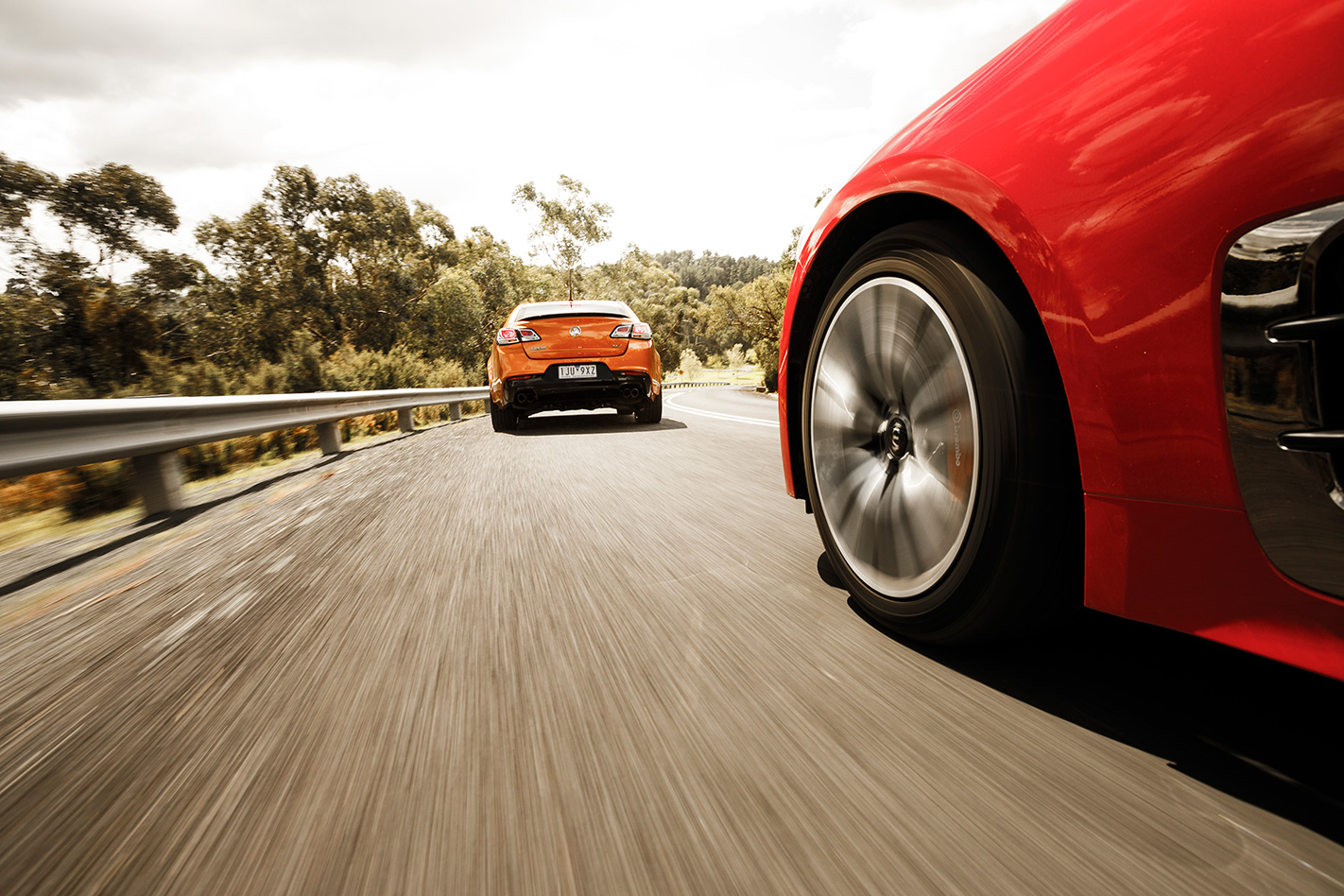
The Kia also has a bit of a problem when you throw this pair into the first corner. That said, it’s not any inherent shortcoming in the Stinger’s abilities, rather than the VF Series II Commodore has one of – if not the – best, most tactile front ends in a big sedan made anywhere by anyone. But in isolation, the Kia is darn good.
It corners flat, rides better than the SS-V and generally shrugs off any attempt by a corner to tie it up in knots. No, it doesn’t have the surefooted feel of the SS-V, but like I said, nothing else really does. And the South Korean is putting a lot less rubber down at each corner, so the ultimate grip isn’t quite as stratospheric either.
That’s probably also the reason the Kia takes almost two metres farther to pull up from 100. The VF gets the nod for its superb damping, but the Stinger is not too far behind it on most surfaces. The one less-than-perfect chassis element of the Kia is its steering.
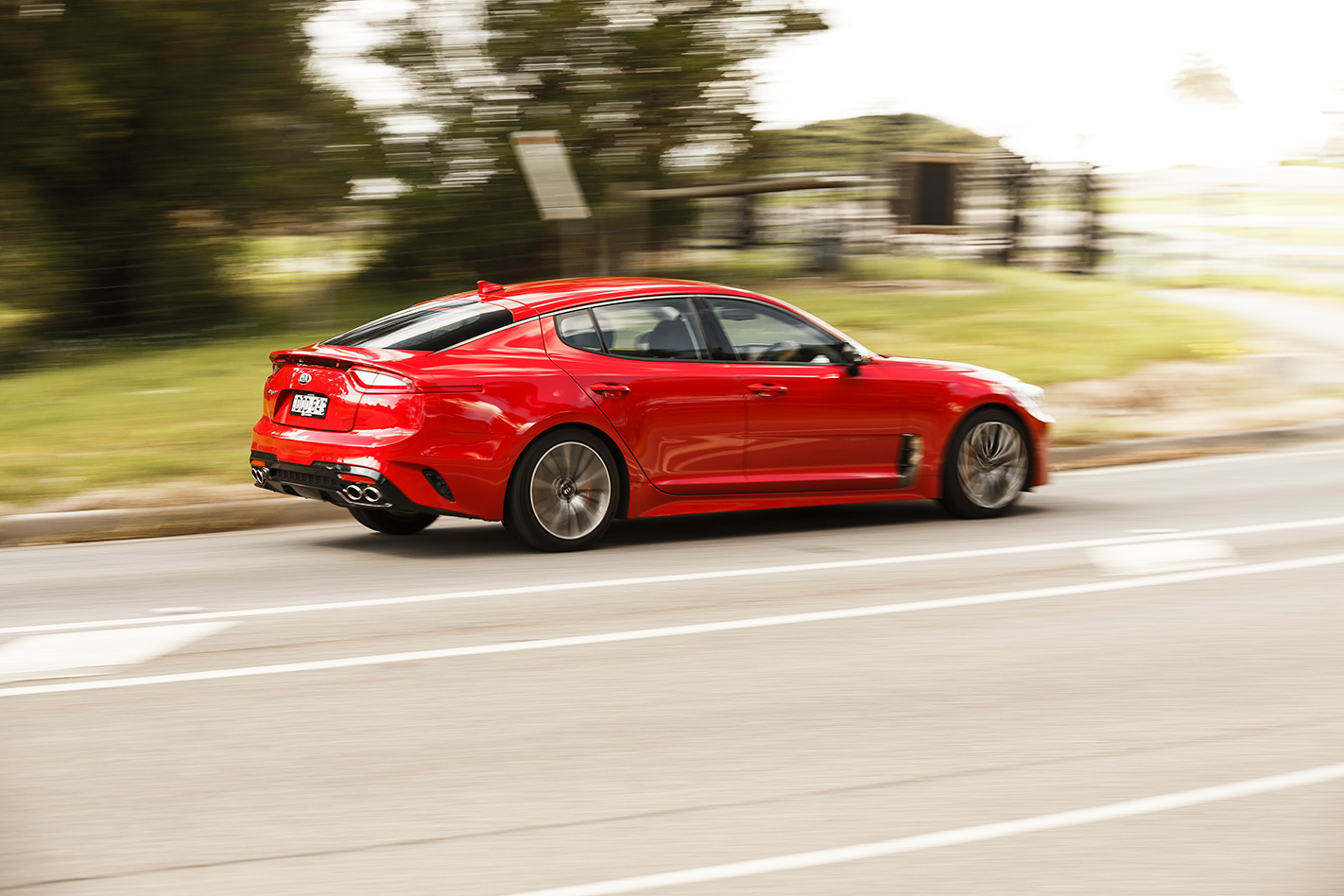
Beyond that, the Kia feels like it’s been set up with a lack of castor; it doesn’t feel like it wants to self-centre which is almost certainly about the assist motor’s calibration rather than the actual geometry. Nevertheless, as you apex, the corner opens and you ease your pressure on the wheel, suddenly nothing happens.
At which point, you’re playing catch-up by hurriedly winding off lock and chasing the thing back to the centre of the lane again. Okay, yes I’ve driven worse – a lot worse – but in what is such an otherwise capable platform, it’s a bit of a spoiler. The only time the SS-V Redline starts to feel a little leaden through the helm, meanwhile, is when you’re hard on the brakes.
And criticising a car for trying to keep itself stable when you throw out the anchors isn’t really something I’m about to start doing. The other aspect of the Stinger that deserves a bit of attention for the next model is the transmission. Yes, eight is the new six when it comes to ratio counts, but does the SS-V suffer for not having the extra cogs?
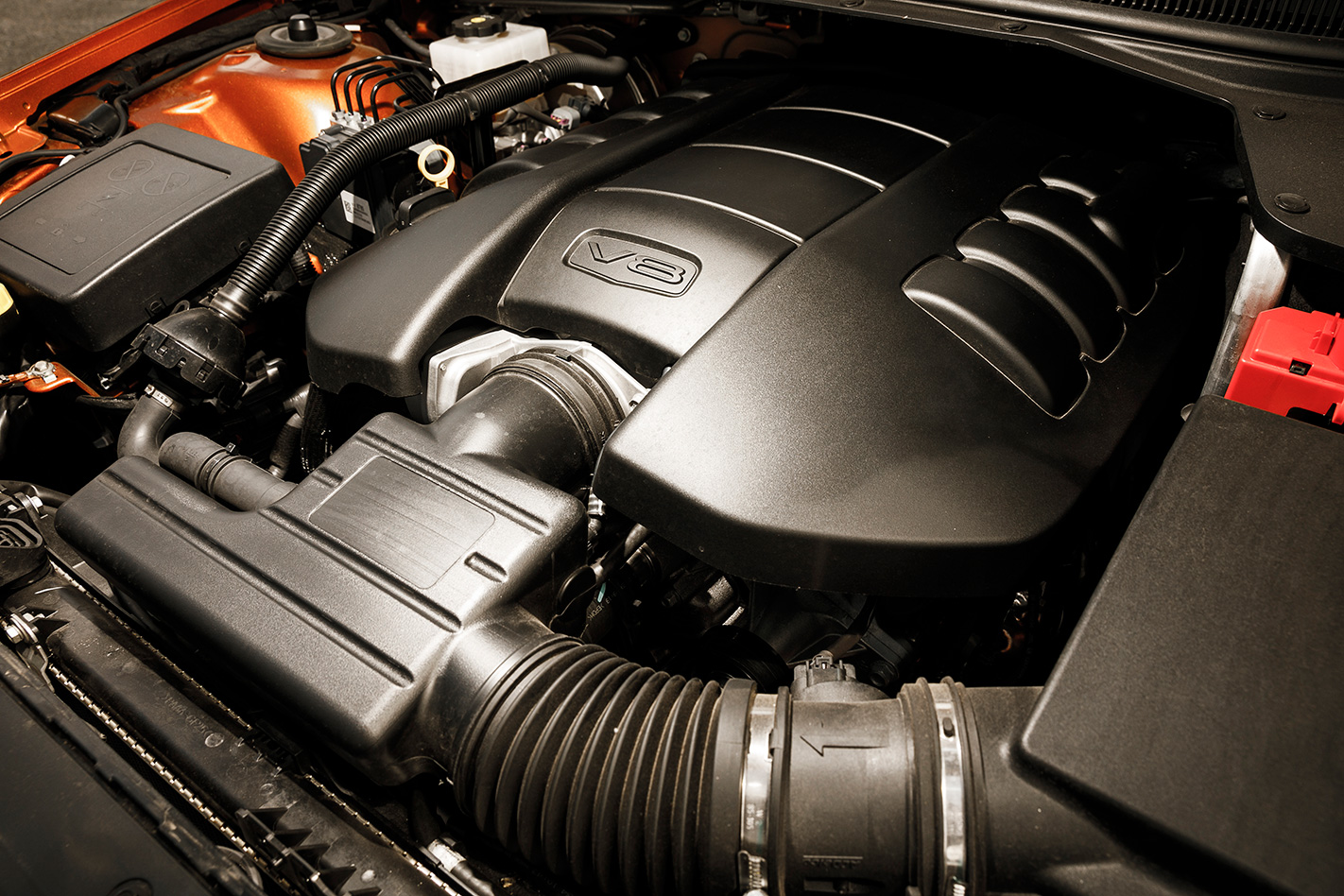
Not to mention relaxed. Winding, uphill corners will soon have the Kia kicking down what feels like one ratio too many and giving things a manic feel when it could easily hold the taller gear and make the most of that huge mid-range twist. It’s calibration, yes, but it’s also a bit inexplicable.
Shifts in the Stinger are deliberately kept soft, but we’ll live with that. The Kia also lacks a Sport mode for the transmission as well as a proper manual mode. Where the Holden will accept manual commands from the paddles and hold even the tallest gears regardless of your throttle position or road speed, the Kia thinks it knows better and will kick-down regardless of whether you’ve been using the paddles or not.
The SS-V will also stay in manual mode once you’ve flapped a paddle, while the Stinger counts to 10 and then switches you back to Drive mode without asking. The Kia also uses the in-vogue separate button for Park which is a trend I can only hope disappears soon.
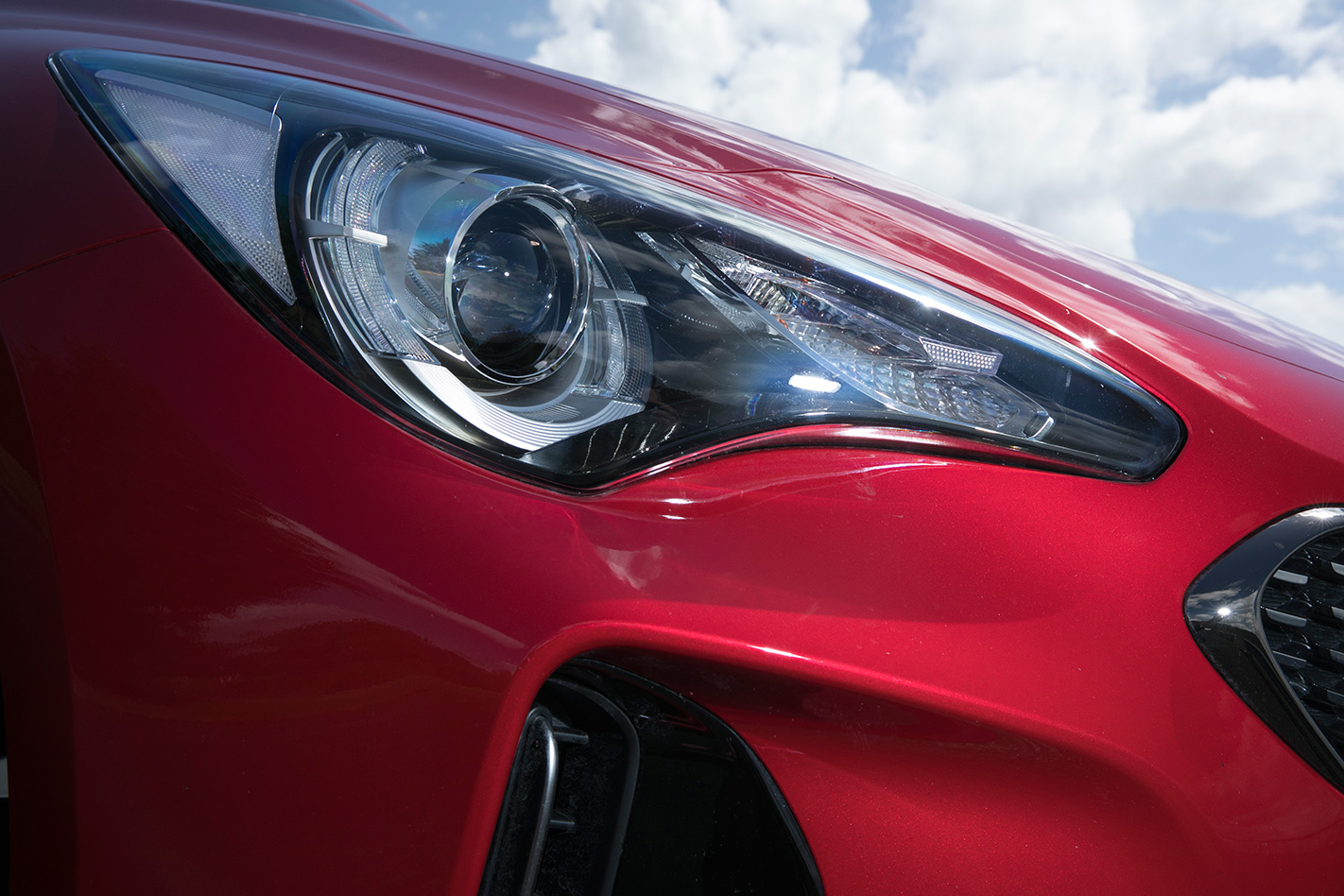
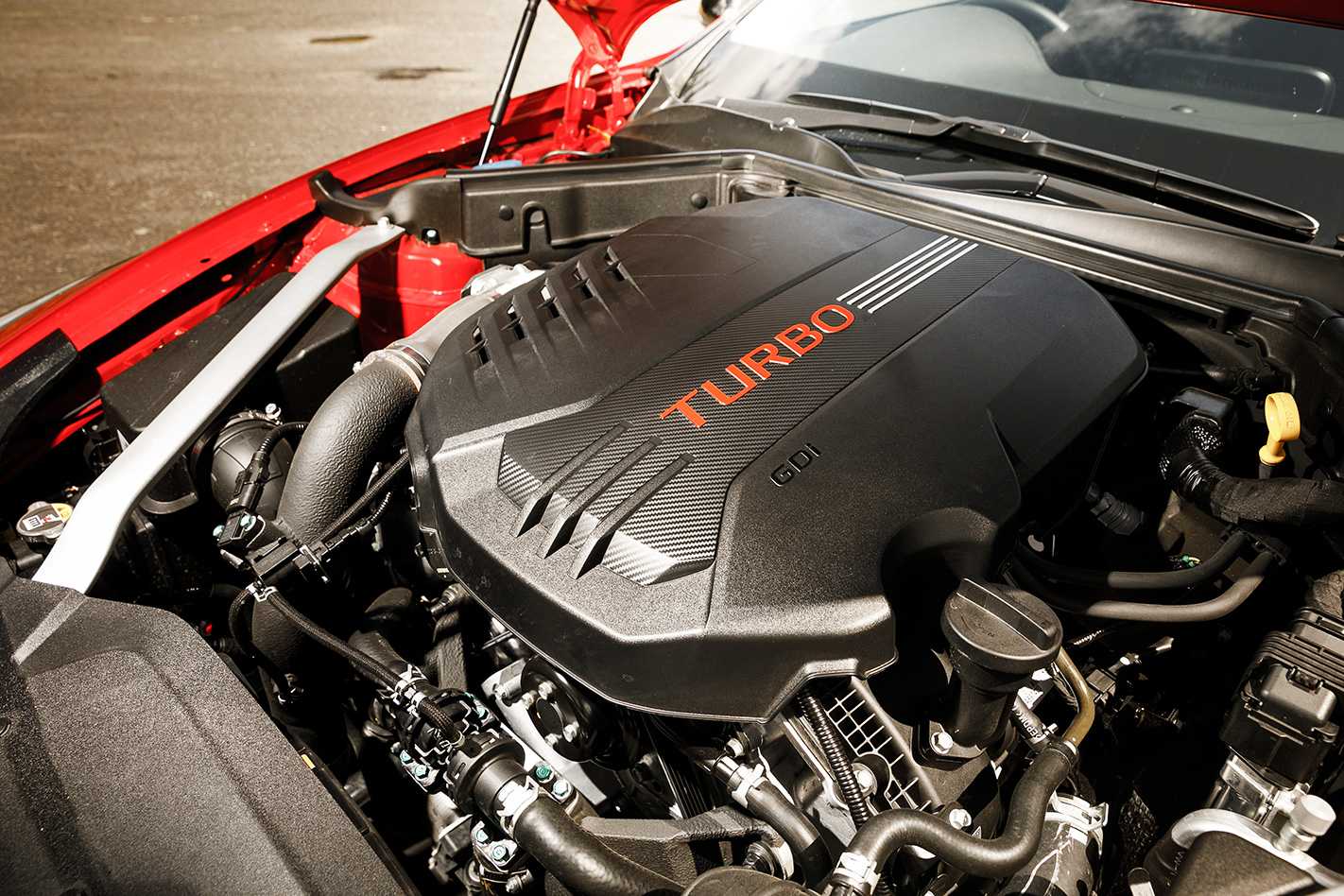
Hell, even under the bonnet, you can see that it’s a vee layout and the turbos are actually visible. Wonderful. The interior is up to snuff and the car’s best angle is probably that lovely profile. That said, it looks tough in the mirrors, too, with the headlights pushed way out to each corner and the vertical vents below those reminding me of a Ferrari 599.
It rides remarkably well and it’s empty-church quiet. It goes around corners, it’s good value for money and you get that brilliant seven-year/unlimited kays warranty. Which means you and I can buy them second-hand, coming out of user-chooser leases, and still have three or four years factory cover.
So, yeah, I’d say that the Kia is, without a doubt, worth a look and stands as probably the best reason yet for people like us to see some light at the end of the tunnel. Okay, so a Stinger is, philosophically, more of a replacement for a Calais or Ford Falcon G6E Turbo than an SS-V Redline or an XR6 Turbo, but that doesn’t ruin the illusion.
And here’s the bottom line: as a recidivist Falcon and Commodore owner over the years, I’d take a Kia Stinger as my next set of wheels and know that I’m not trading off anything that would otherwise be a deal breaker. No joke.
| u00a0 | 2017 Kia Stinger 330S specs | 2017 Holden SS-V Redline Commodore specs |
| Engine | 3342cc V6, DOHC, 24v, twin-turbo | 6162cc V8, OHV, 32v |
| Power | 272kW @ 6000rpm | 304kW @ 6000rpm |
| Torque | 510Nm @ 1300-4500rpm | 570Nm @ 2000rpm |
| Transmission | 8-speed automatic | 6-speed automatic |
| Weight | 1780kg | 1803kg |
| Price | $48,990 | $57,190 |
| Pros | Mid-range grunt; impressive dragstrip figures; handling; space; design | Seamingly endless grunt from LS3; sorted dynamics; V8 soundtrack |
| Cons | Steering needs work; doesnu2019t sound overly enticing; no manual mode | The last of the line u2013 the stay of execution is over for an Aussie icon |
| Star rating | 4 stars out of 5 | 4.5 stars out of 5 |
REMEMBER how we told you on April 1 that Bentley was creating a special version of its Bentayga luxo SUV for falconry enthusiasts and, even though the timing was suspicious, it turned out to be true?
Well, this is going to really test your trust in us, because Bentley has done it again, this time offering the Field Sports by Mulliner – the third special edition of its large off-roader that adds a custom-built luggage area for carting cigars, posh booze and guns.
Created in partnership with J Purdey and Sons – the producer of some of the world’s most expensive sporting firearms – the Field Sports by Mulliner is a bespoke version of the Bentayga aimed at game shooting enthusiasts.
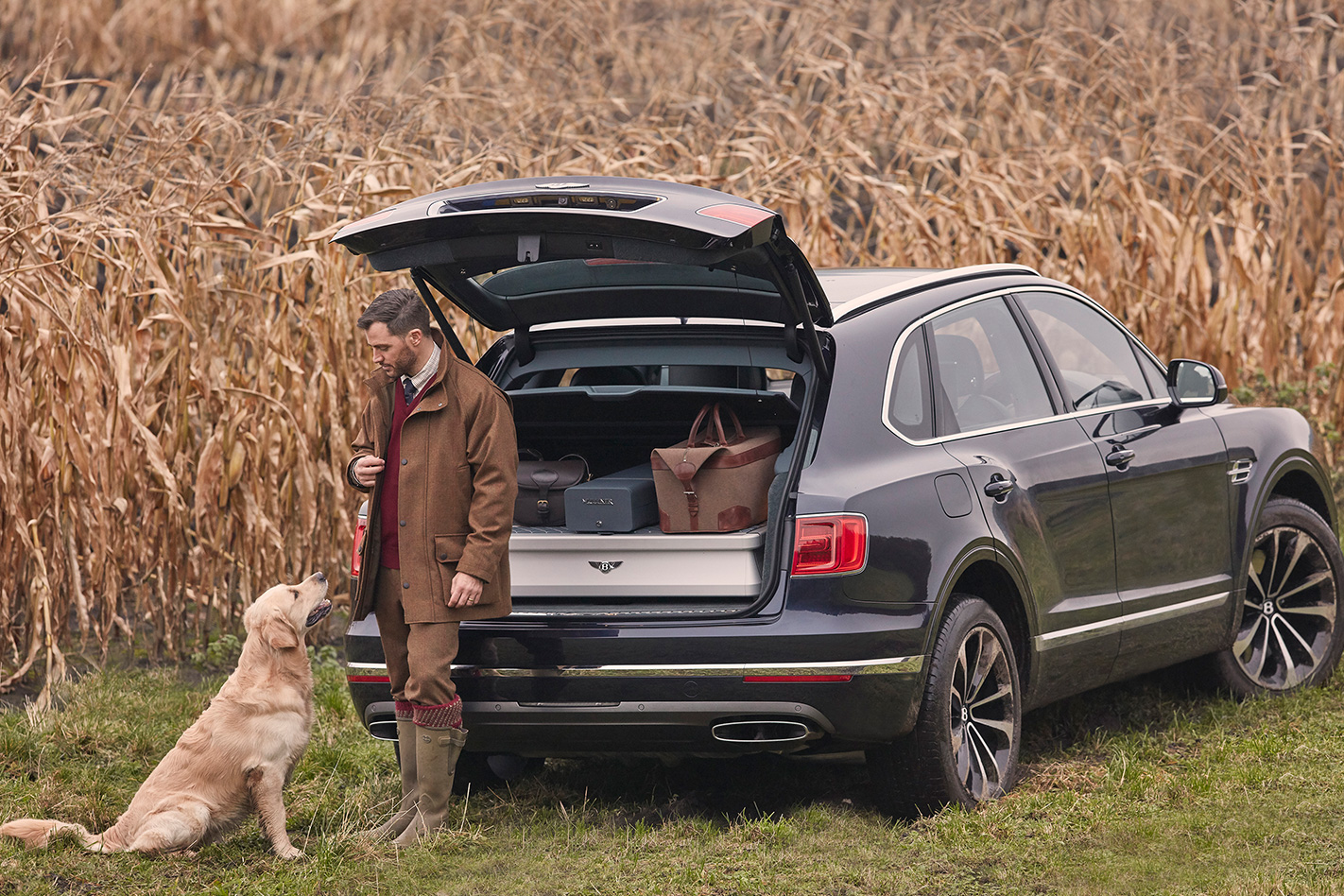
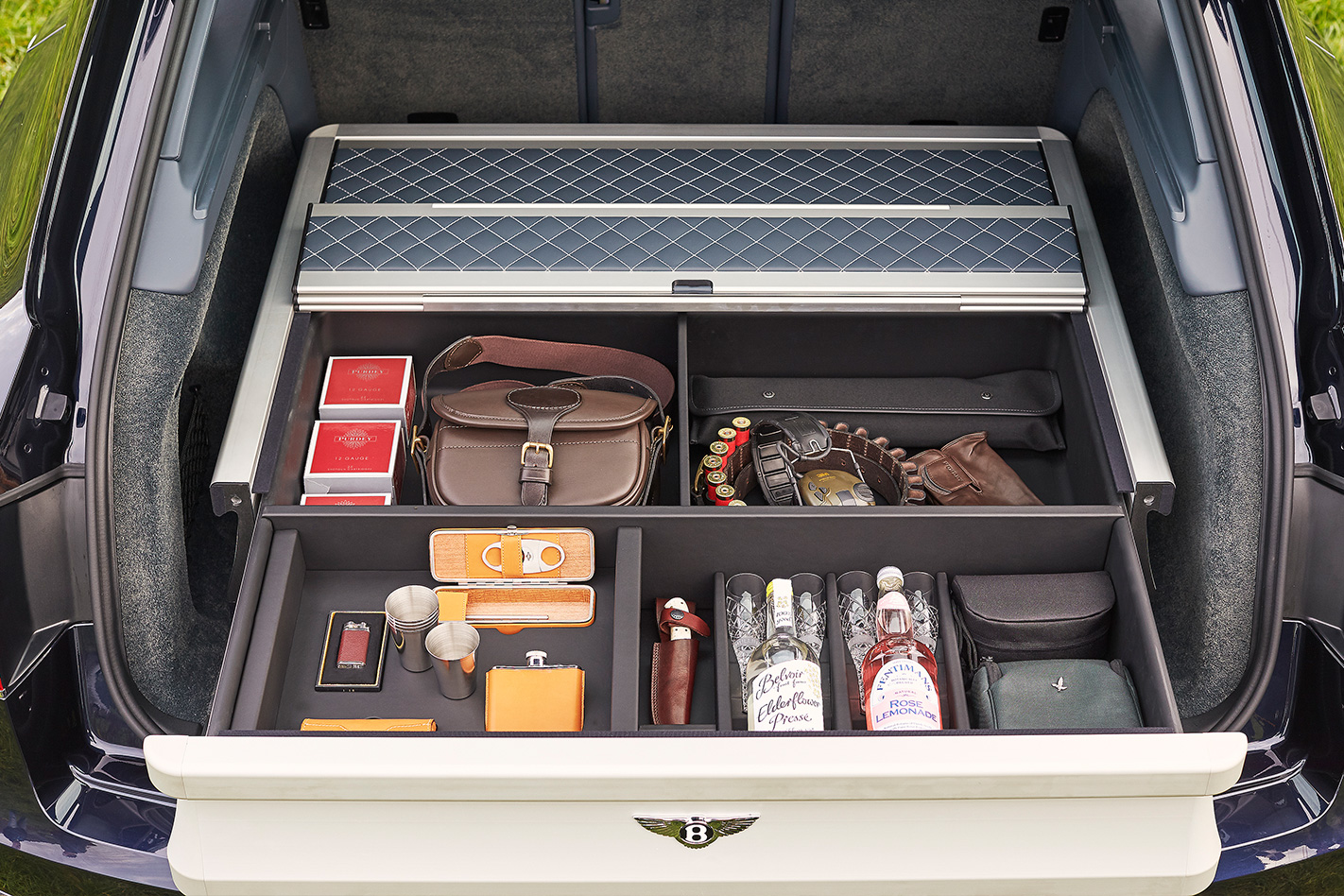
Owners have special spots for protective equipment such as ear defenders and foul weather gear, while other tailored segments are for ammo and bottles of their favourite spirits. Cars, booze and guns: what could possibly go wrong?
Mulliner has even included a humidor for storing fine cigars and tobacco in the perfect environment, allowing hunters to spark up the perfect pipe after a hard day blasting pheasants.
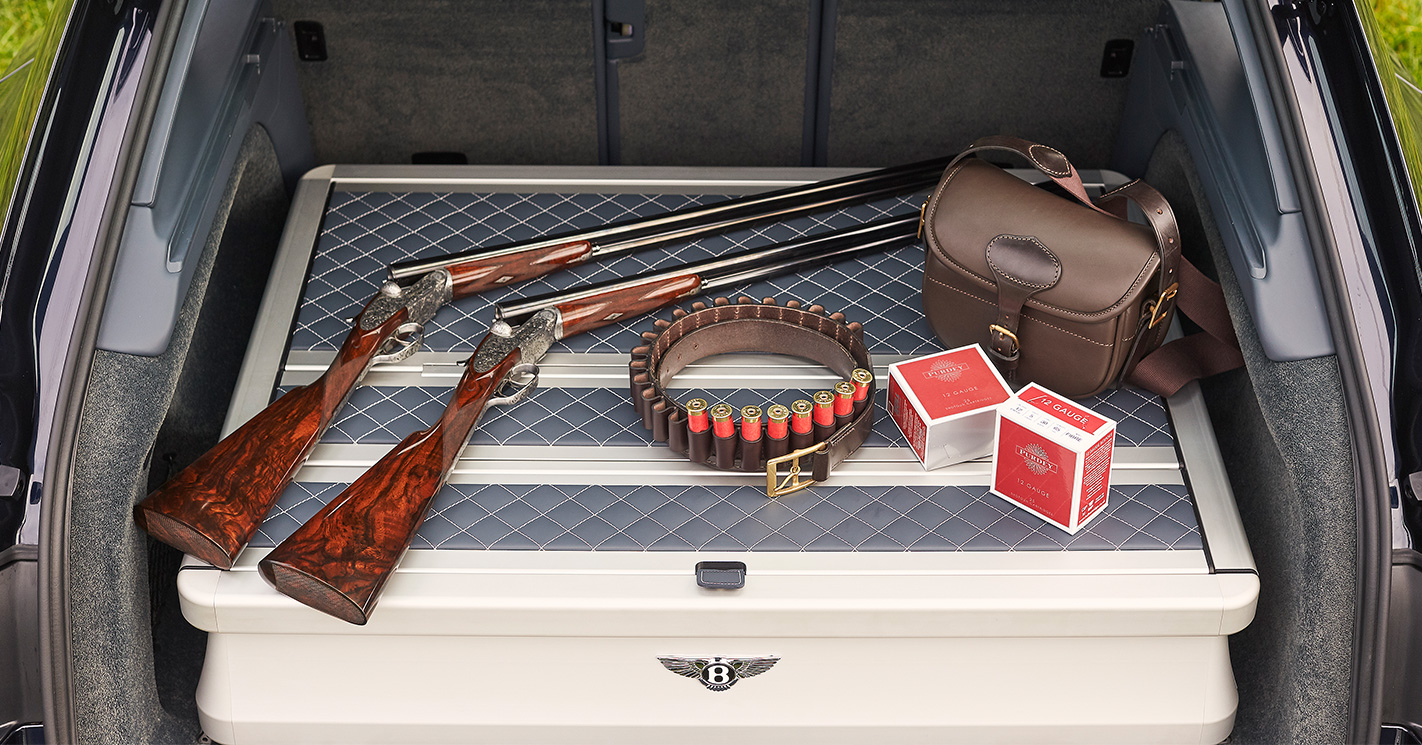
The unique car has been developed in partnership with Purdey, but that doesn’t mean you get one of its meticulously crafted guns included in the price. That’s not surprising given a single example of a Purdey boom-stick kicks off from about $190,000.
With a starting price of $335,000, the Bentayga diesel is one of the most expensive SUVs available in Australia, but it’s a sobering thought that a single pair of Purdey shotguns will cost about $45,000 more.
With all three special versions of Bentley’s big SUV tailored for participants of pastimes that involve some sort of animal sacrifice, we can’t help speculating what might be next in line from the iconic brand.
The idea of packing a luxury off-roader packing trapshooting weaponry is not new. Gunmaker Holland & Holland teamed up with Range Rover in 2014 to build a shooter’s special based on the Range Rover Autobiography Black. It added $US180,000 to the price of the range-topping Vogue.
