
You really never can tell how this Performance Car of the Year hootenanny is going to pan out.
This article was first published in MOTOR magazine’s March 2005 issue.
And the process of finding the top six this year proves that much. Okay, so most of the top six suggested themselves from the off, but, inevitably, a couple of cars snuck in that really caught us off guard. Most notable of those is the C55 Benz.
By the time the raw numbers were added up, the little car with the big, big heart actually finished fifth. With judges’ votes counted, however, it had clawed its way up to fourth outright, a hell of an effort. So exactly how did a mini-luxo like the C55 manage to stomp all over so many big reputations?
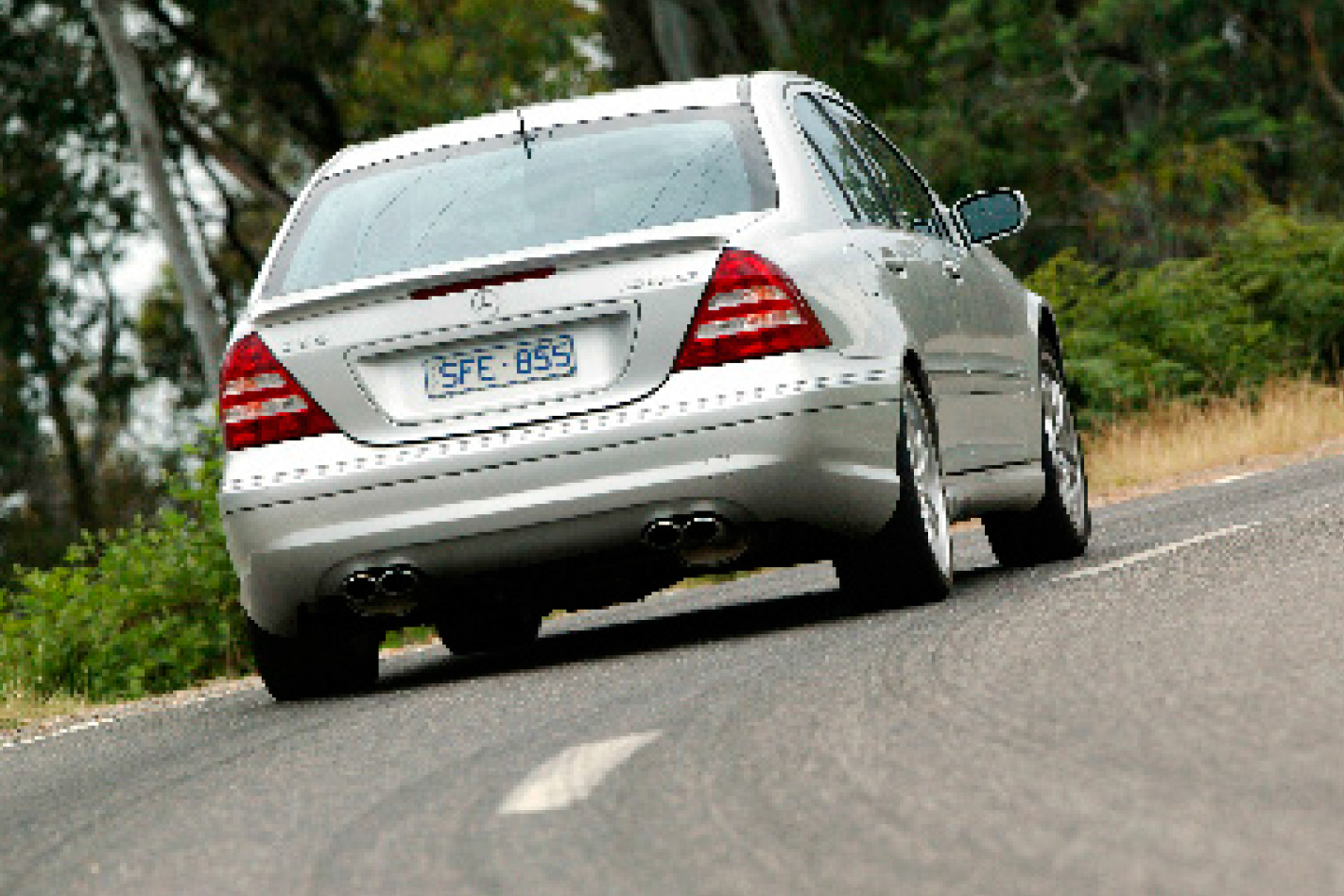
Throw in the suspension tune that is aimed at fat blokes with big wallets rather than tappet-heads like us, and you can see why the wee Merc wasn’t really at home in the hairpins. But on the road… different story.
Suddenly the spring and damper settings make sense and the way the AMG dispatches broken bitumen and lumpy corners makes for mad, mad fun of the rapid progress variety. And the car never, ever lets you forget that there’s a monster wedge of AMG-massaged V8 up front, always willing and always able to hurl you at the future Hand-o-God style.
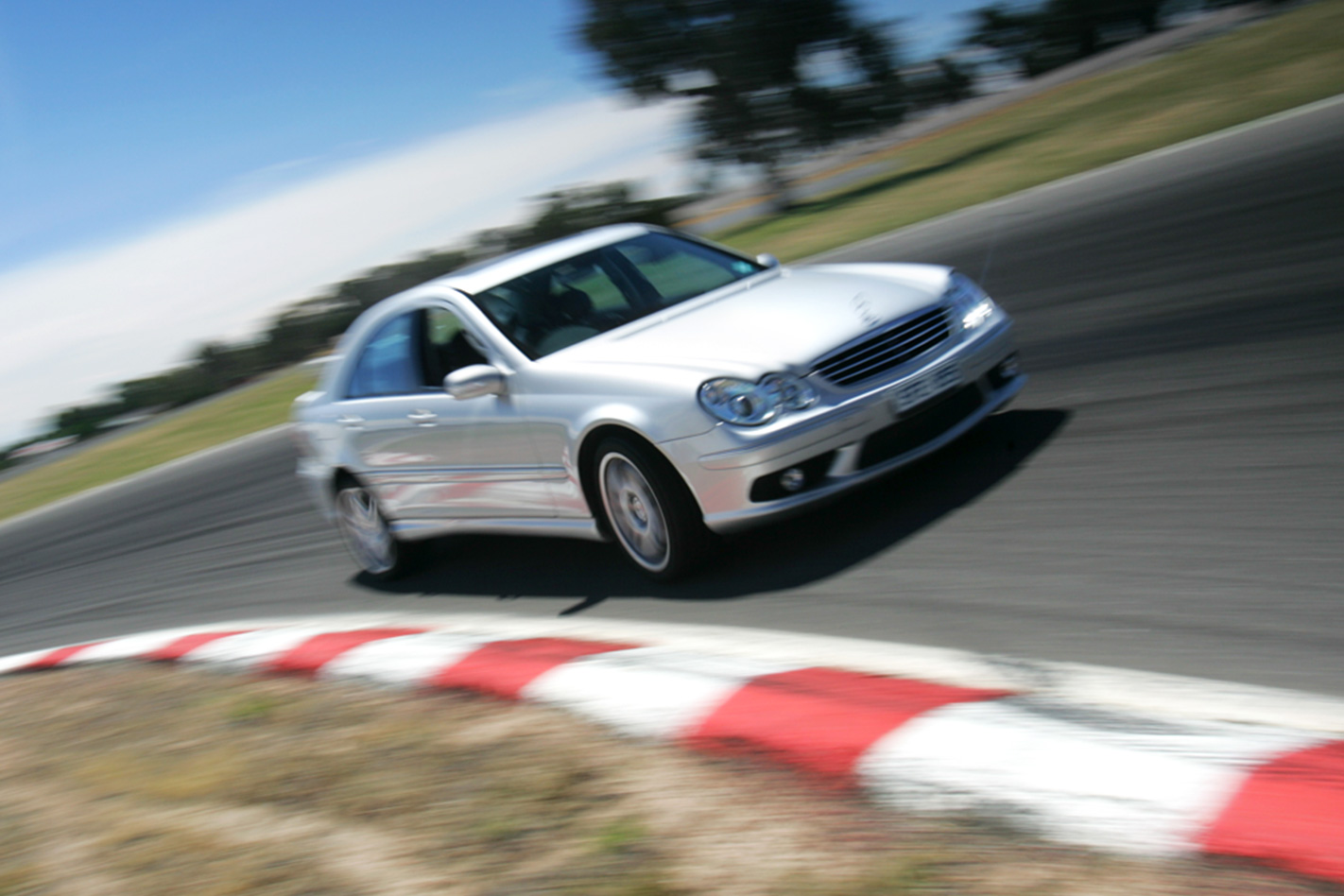
Just as we forgive the EVO and the STi for riding like drays on the basis that they can take apart a place like Winton, so do we cut the AMG some slack by dint of its wonderful on-road demeanour. Meantime, the C55 is also a proper four-seater with four doors, no less, and could make a decent fist of towing a boat or dragging four big arses up the freeway.
And, in a way, that’s something that’s always characterised AMG versions of Benzes. They might not be out and out road racers, but if you could only own one car, they’d be somewhere near the top of the list. Oh, and don’t be too put off by the price: It’s pricey for a C-Class, but damn cheap for a 5.4-litre AMG.
Sledge Hammers
In Benz speak, not all 55s are created equal. On the face of it, the C55’s power is at least adequate. That is, until you look at its 55 brethren and their hitting power. The E55 has 80 more kilowatts, the SL another 18 again. They both have 700Nm.
Both cars run the same engine (the SL uses a freer exhaust), except supercharged, and it propelled them into the 12s for the quarter, deep into the fours for the 100km/h sprint and into the low 23s for the kilometre. The C55 is also slower in a straight line next to its spiritual predecessor, the C32.
The older car ran about 0.5 seconds faster in every increment. For all that, the C55 chassis tips the balance back in the favour of the atmo version of the 5.4 on lap times. It’s two seconds a lap faster than the C32 and a marginal 0.01 slower than the big-hitting E55. But the sexy, crunching SL55 is just too quick, by about 2.5 seconds.
Mercedes Benz C55 AMG Specs: Drive: rear-wheel Engine: front-mounted 5.4-litre SOHC 24-valve V8 Power: 270kW @ 5750rpm Torque: 510Nm @ 4000rpm Weight: 1635kg Transmission: five-speed auto Length/width/height: 4611/1744/1412mm Fuel Economy: 19.1 litres/100km (70L tank) Price: $159,900
Performance 0-100km/h: 6.18sec 0-400m: 14.25 @ 168.4km/h 0-1000m: 25.29 @ 220.1km/h Winton lap time: 1:43.67 Winton top speed: 175km/h
Hallelujah, it’s raining hot hatches. In the coming months a flotilla of fast five-doors will reach Australia, including the Focus RS Limited Edition, new Megane RS and Hyundai’s i30 N.
However, beating them all to market is the Honda Civic Type R. It’s an iconic model, though local exposure has been limited to the underwhelming FN2, a car that was as much the work of Honda’s accountants as its engineers.
Honda’s sporting reputation in Australia was largely built on the back of the DC2 Integra Type R, one of the finest front-drivers, and it’s this reputation that the likes of the NSX and new Civic Type R has to rebuild. The mechanical make-up is promising.
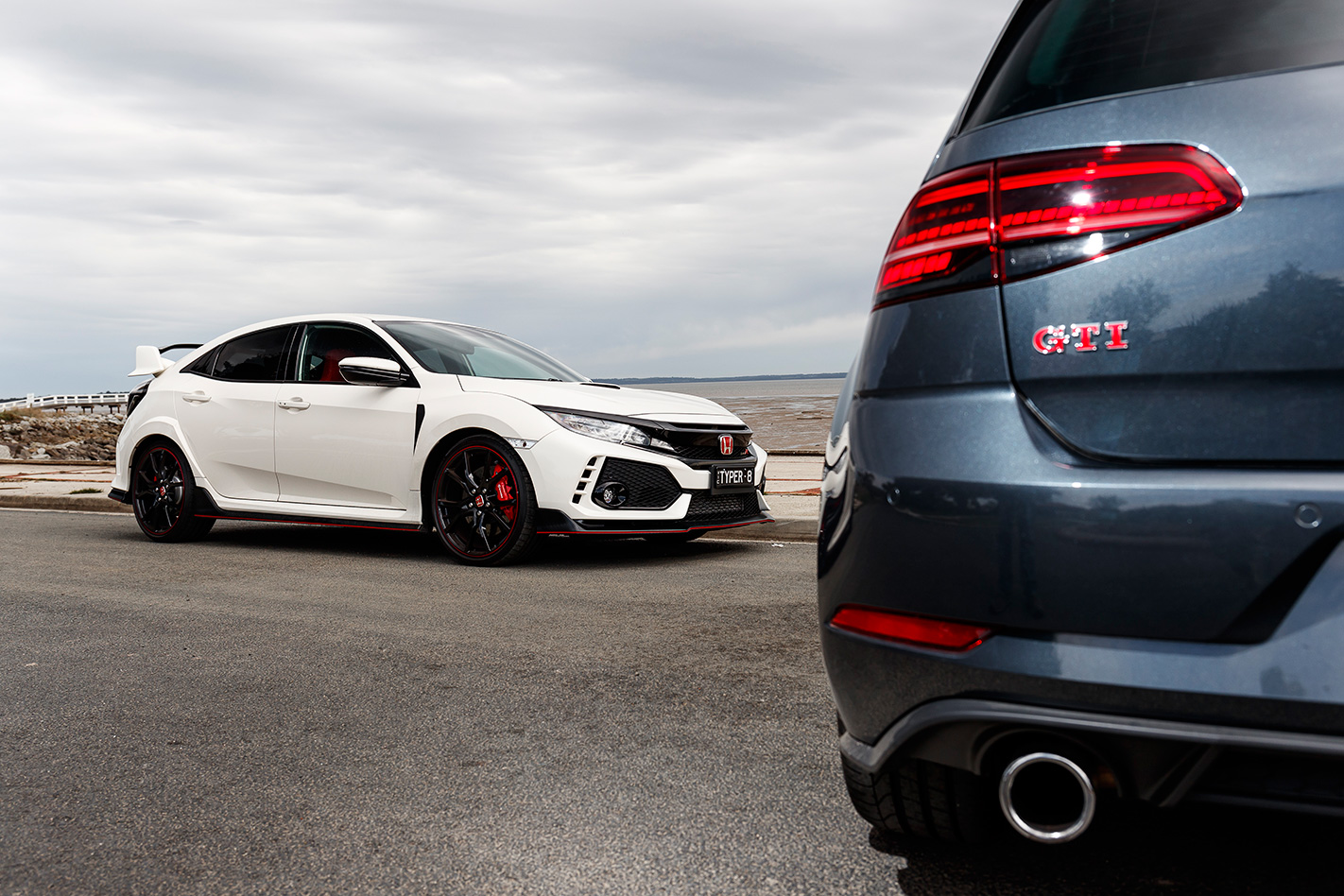
A six-speed manual is the only transmission option while a helical limited-slip diff apportions power between the front wheels. Keeping those wheels planted is a dual-axis front suspension, which like Ford’s RevoKnuckle and Renault’s PerfoHub designs, separates the steering knuckle from the strut to reduce torque steer, while an independent multi-link setup returns at the rear for the first time since the second-gen (2001-’06) EP3.
Wheels are 20 x 8.5-inch front and rear wearing the latest 245/30 Continental SportContact6s that hide Brembo brakes and three-mode adaptive dampers. Honda proved the Type R’s effectiveness by setting a 7min43.80sec lap of the Nurburgring Nordschleife, a record for a front-wheel drive car, eclipsing the previous mark set by the VW Mk VII Golf GTI Clubsport S.

The Performance Edition 1 (PE1) picks up the baton passed by the Mk VII Performance Pack – a Golf with a sharper sporting edge for the keen driver – albeit with a few key tweaks, the first of which is the deletion of two doors.
VW Australia has bowed to the wishes of enthusiasts and re-introduced the three-door Golf, but they’ll need to be quick, as just 150 Performance Edition 1s will land on Aussie shores for $47,990 in a choice of White, Silver or our test car’s Dark Iron Blue.
Mechanically, the PE1 scores an 11kW/20Nm boost over the standard GTI (and previous GTI Performance) to 180kW/370Nm, which has necessitated the move to the stronger seven-speed dual-clutch gearbox.
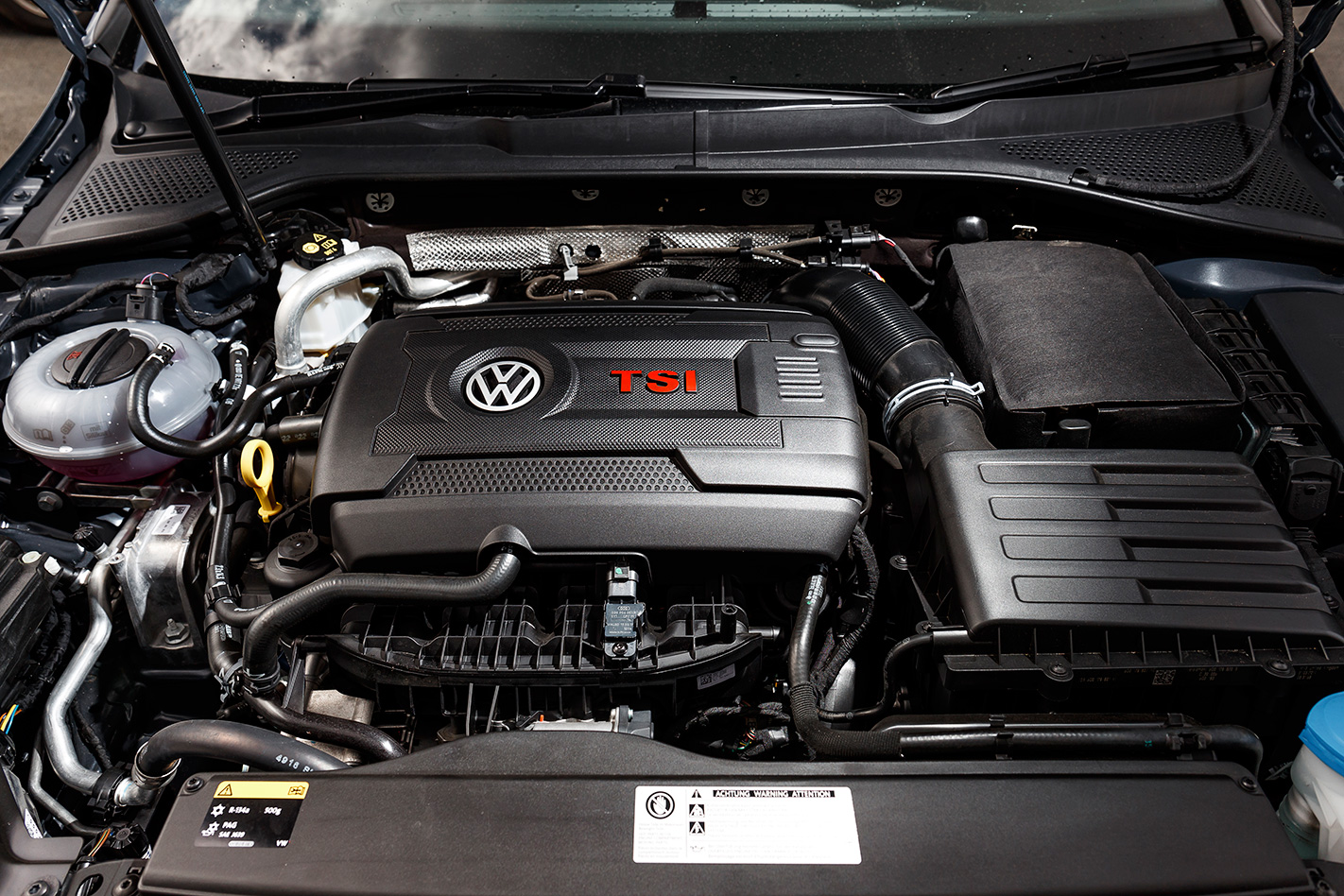
Its note is obviously artificial, sounding not dissimilar to a diesel at low rpm, but once rolling there’s little to complain about in the way it shifts down the road. The trademark DSG hesitation can make smooth takeoffs a challenge, though the more you treat it like a manual with an electronically controlled clutch (which is what it is) rather than a traditional auto the happier your experience will be.
Cheaper Volkswagen Golf R Grid Edition announced
A bigger problem is the conservatism of the traction control/ESP, which can’t be completely deactivated and even in ‘Sports’ mode cuts power drastically once it detects wheelspin. This has traditionally been the bugbear in extracting quick acceleration times from front-drive, DSG-equipped Golfs.
Launch control uses too many rpm, the resultant wheelspin causing a tantrum from both ESP and driver as tenths tick frustratingly away. Thankfully, VW now allows some driver input into the process, as evidenced by the Golf’s 6.06sec 0-100km/h effort, besting its claim by 0.14sec and our best time in the previous GTI Performance by more than 0.7sec.
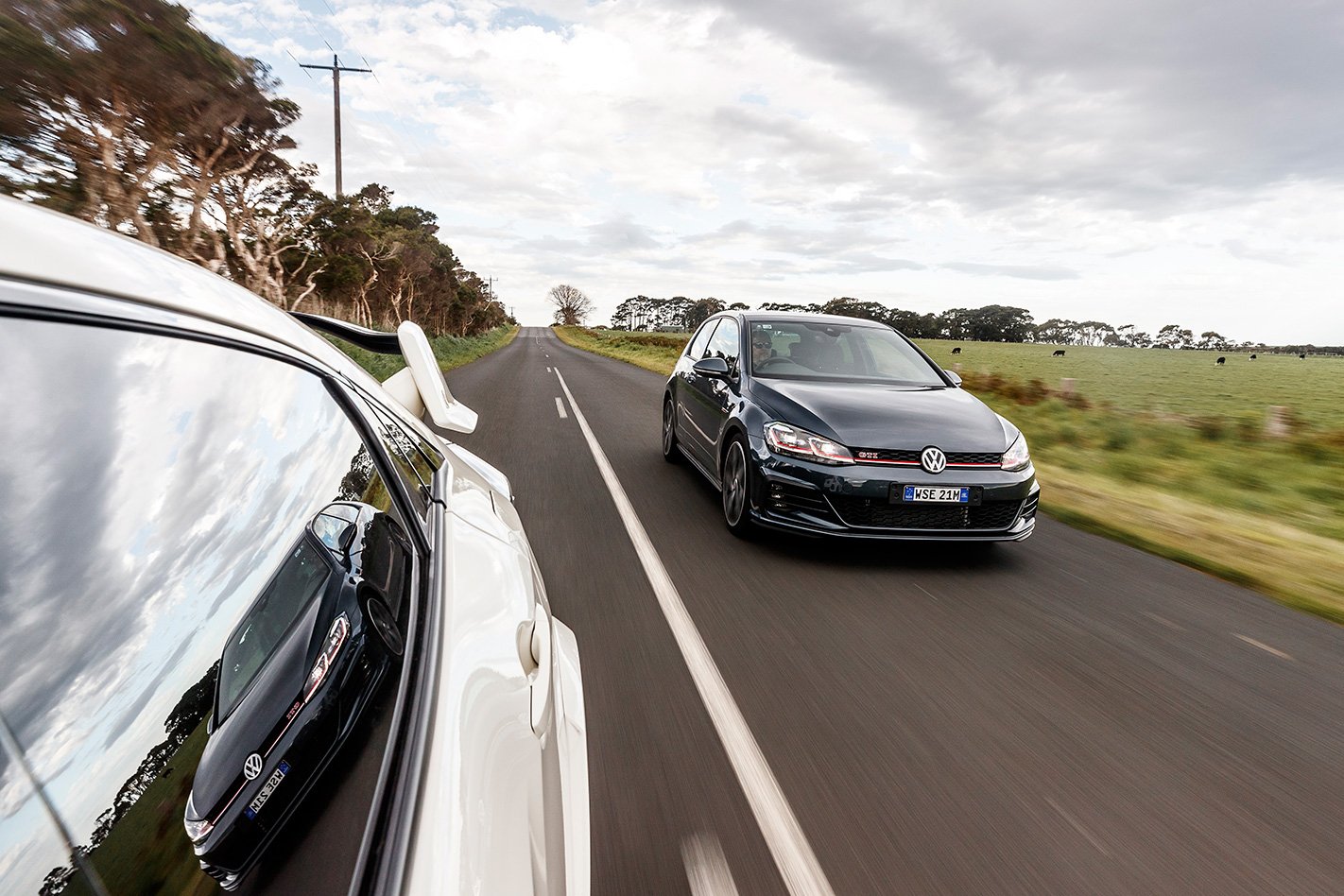
Around 2000rpm is the sweet spot, allowing just a hint of wheelspin before the shortly stacked ratios (second stretches to just 86km/h and third is done by 125km/h) pull the Golf across the quarter mile in 14.21sec at 166.13km/h. Despite the need to shift your own gears, the Civic is much quicker – with a far superior power-to-weight ratio (165kW/tonne vs the VW’s 133kW/tonne) it was always going to be.
Its 5.82sec 0-100km/h and 13.84sec at 170.15km/h quarter mile numbers put it lineball with the Renault Megane RS275 Trophy-R as the fastest front-driver we’ve ever tested, but extracting the last tenth or two is hard work. Traction is much better than you’d expect, but managing wheelspin in first gear costs time and the 0-100km/h number is hurt by second gear hitting the limiter at 99km/h.
Still, the slick shift minimises time loss and the combination of that short gearing and turbo torque makes the Type R a roll-on rocket. Overtaking from 80-120km/h takes just 2.8sec in third and 7.7sec in sixth – by way of comparison, a manual HSV GTS needs 2.8sec and 7.6sec respectively.
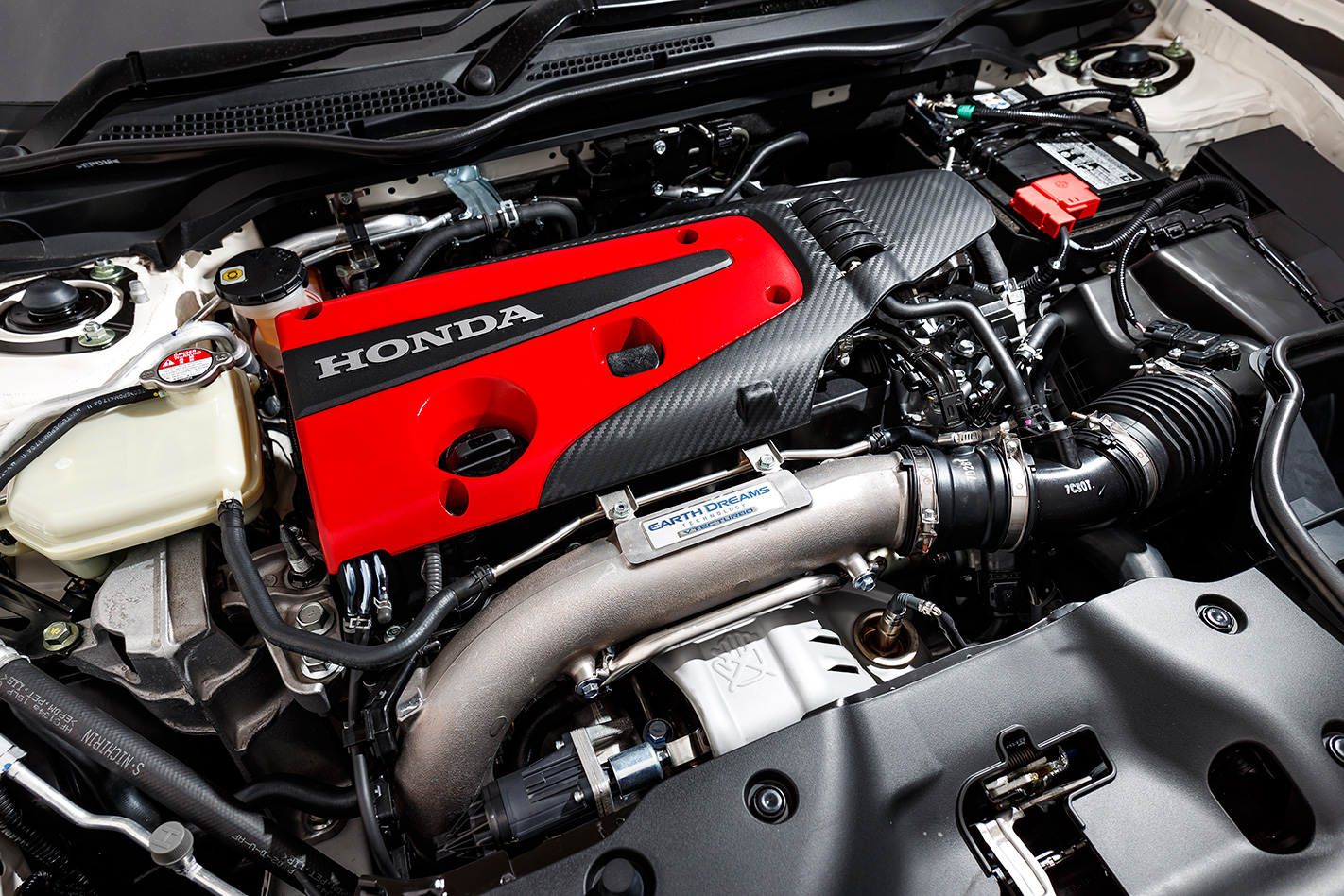
Its biggest issue is heat soak; its quickest acceleration times came on the seventh or eighth run, however, on its first run it was 0.4sec quicker to 170km/h despite the slower benchmark times. And this on a 17°C day. The good news from a driving point of view is that this is one of very few cracks in the Type R’s armour.
Honda has built a proper weapon. What impresses most initially will depend on the environment in which you first experience the Type R. At a relaxed pace it’s likely to be the ride quality.
With the drive mode selector set to Comfort the Civic has an almost Porsche-like ability to deliver compliance on 20-inch rims and low-profile tyres; on poor roads it can turn a little jittery, but by and large the Honda absorbs your typical bumpy Aussie back road in a manner a Focus RS or previous-gen Megane RS can only dream about.

On dry surfaces the front-end is nailed to the road, capable of supporting incredible entry speeds, yet the diff more often than not ensures a tidy exit by pulling the front in the intended direction rather than letting it slip wide under power.
It’s not particularly playful; the chassis setup errs towards stability and though it’s possible to shift the rear slightly mid-corner, the strength of the front-end renders any attempts to do so largely redundant.
The steering is quick and accurate and the brakes are powerful with the ABS perfectly matched to the available tyre grip – its 34.2m stop from 100-0km/h bested the Golf by more than four metres. Those who like to feel a car move around may find its handling a little one-dimensional, but its composure when being driven as hard as possible means it’s far from uninvolving.

The Type R is a tough act to follow and to be brutally honest in terms of outright ability the Golf doesn’t even get close. In isolation it’s a highly capable hot hatch but any attempts to carry similar corner speed to the Civic results in severe pitch and roll and the tortured howling of Pirellis.
Wearing 225/35 tyres all ’round, the VW has a smaller footprint than the Honda but its primary shortcoming is its soft suspension. Even in Sport mode it leans heavily under lateral load and mid-corner bumps the Civic shrugs off nonchalantly have the Golf thumping into its bump stops, its dampers utterly out of ideas.
Inputs have to be made with care to avoid upsetting the car – for instance, clumsily jamming the brakes on will trigger the ABS and have the rear skipping sideways – yet when really driving the VW hard it needs to be cajoled or bullied into doing what you want, at which point the non-switchable ESP is only too happy to intervene.
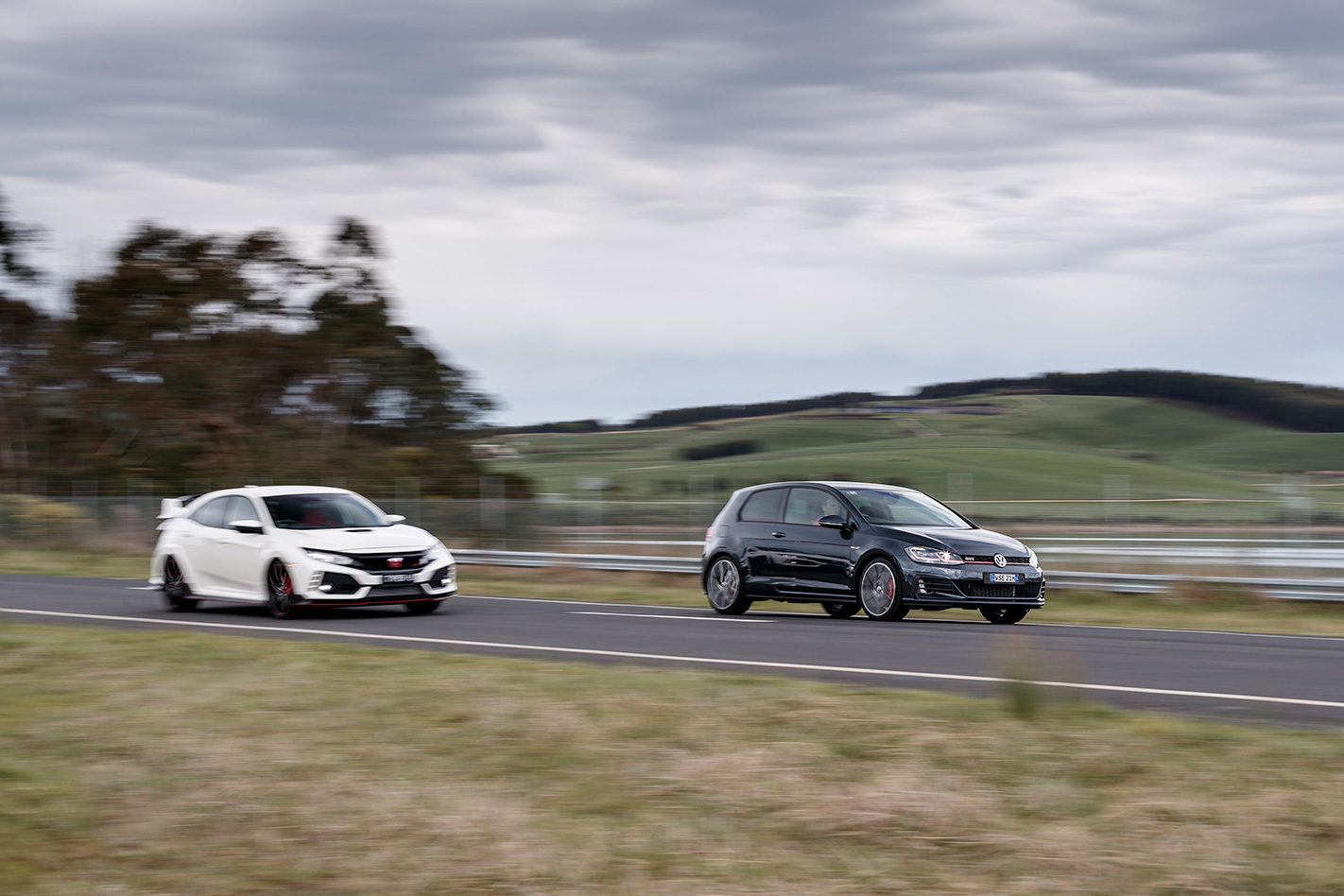
Up to eight-tenths the GTI is great, but beyond that and even this Performance Edition 1 is clearly operating out of its comfort zone. As is so often the case, though, the Golf has other tricks up its expertly engineered sleeves.
Its ride shames many a premium sedan and its interior is leagues ahead of the Civic’s in quality and feel, with soft-touch plastics and leather surfaces, a giant 9.2-inch touchscreen, flashy digital instruments and far superior rear accommodation (there are air vents, for a start), though the three-door layout means passengers will need to be a little more dexterous than usual.
Everything the driver interacts with in the Civic is top notch. The driving position is great, the deep Recaro seats superb, steering wheel spot-on in diameter and the alloy gear knob a perfect fit for your palm, though likely to give a few nasty shocks in very hot or cold weather.

But if the interior isn’t for everyone, it’s nothing compared to the exterior – the latest Civic Type R is not a car for shrinking violets. Its styling is a riot of angles, lines and vents, like something from a Japanese comic book come to life, but love it or hate it it has undeniable presence.
In contrast the Golf might as well be invisible. The Mk7.5 facelift has been a subtle one, mainly consisting of LED lights at both ends and revised bumpers and grilles, and while there are some neat design touches such as the rear diffuser and spoiler, it’s a car for those who like to blend in rather than stand out.

If you’re after a daily driver that doubles for the occasional twisty road outing there’s plenty to recommend as the GTI is an excellent all-rounder, but in judging these two as performance cars, the Type R is a clear winner.
It offers speed and involvement that would give a Focus RS pause for thought on road and track yet is much more liveable. Hallelujah, it’s raining hot hatches, and Honda has built a cracker.
| u00a0 | Honda Civic Type R Specs | Volkswagen Golf GTI Performance 1 specs |
| Engine | 1998cc inline-4cyl, DOHC, 16v, turbocharger | 1984cc inline-4cyl, DOHC, 16v, turbocharger |
| Power | 228kW @ 6500rpm | 180kW @ 5000-6200rpm |
| Torque | 400Nm @ 2500-4500rpm | 370Nm @ 1600-4300rpm |
| Transmission | 6-speed manual | 7-speed dual-clutch |
| Weight | 1380kg | 1352kg |
| Price as tested | $50,990 | $47,990 |
| Pros | Strong engine; huge grip; gearshift | Ride; interior quality; exclusivity |
| Cons | Cheap interior; polarising looks | Too soft for ultimate thrills; unkillable ESP |
| Star rating | 4.5 out of 5 | 4 out of 5 |
First revealed over two years ago, the Porsche Misison E is slated to be the brand’s first all-electric performance machine.
But in those two years, it has evolved and more details have come to light, so here’s the story so far.
First unveiled at the Frankfurt Motor Show in 2015, the Mission E was shocking, or stunning, and questions of whether we were ‘ready for it’ arose.
But today, as Tesla delights its faithful with promises of an all-electric drop-top hypercar, the world seems ready to at least entertain the idea of an electric Porsche.
Originally known by the code name J1, the Mission E is set to go into production from September 2019.

Currently, a 160kW/300Nm motor drives the massive 21×8.5-inch front wheels, while either a 240kW/340Nm or 320kW/550Nm motor will drive the even bigger 22×10-inch rears, depending on spec.
Porsche claims a 0-100km/h sprint of 3.4 seconds, with a top speed limited to 250km/h.
Singer’s 373kW air-cooled Porsche 964 911 is complete
In addition, a two-speed gearbox allows full-throttle upshifts.
Porsche hasn’t confirmed power output for the 2200kg Mission E, but MOTOR is told that Porsche is currently considering three models.
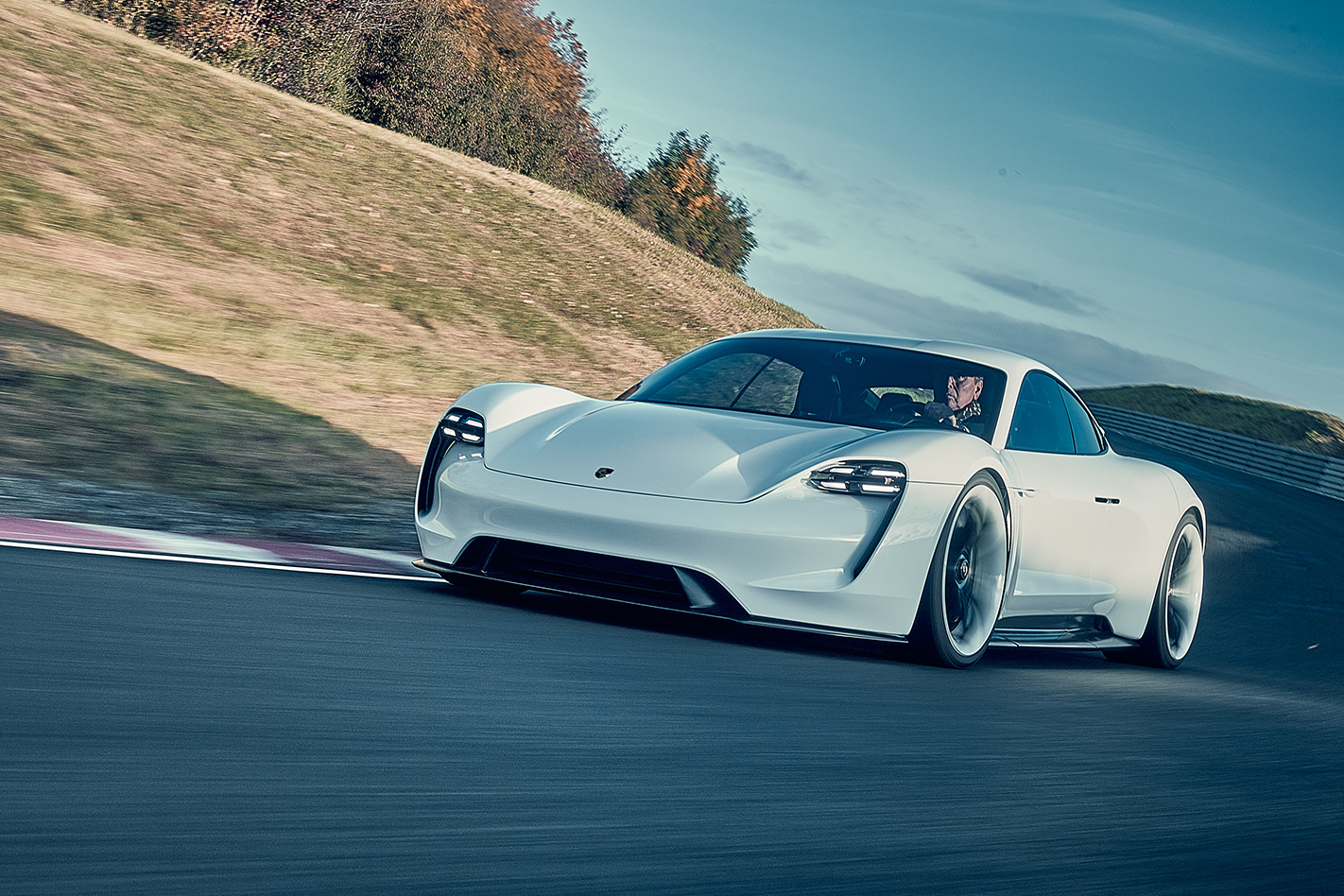
In addition, a rear-driven model may surface in the future.
Crucial for an full-electric vehicle is the range – Porsche claims a real-world range of 440km/h and the ability to charge in just 10 minutes with an 800Vcharger.
Though MOTOR has already has a preview drive of a test car, Porsche is already road testing a couple of pre-production cars which have been built from a Panamera base.
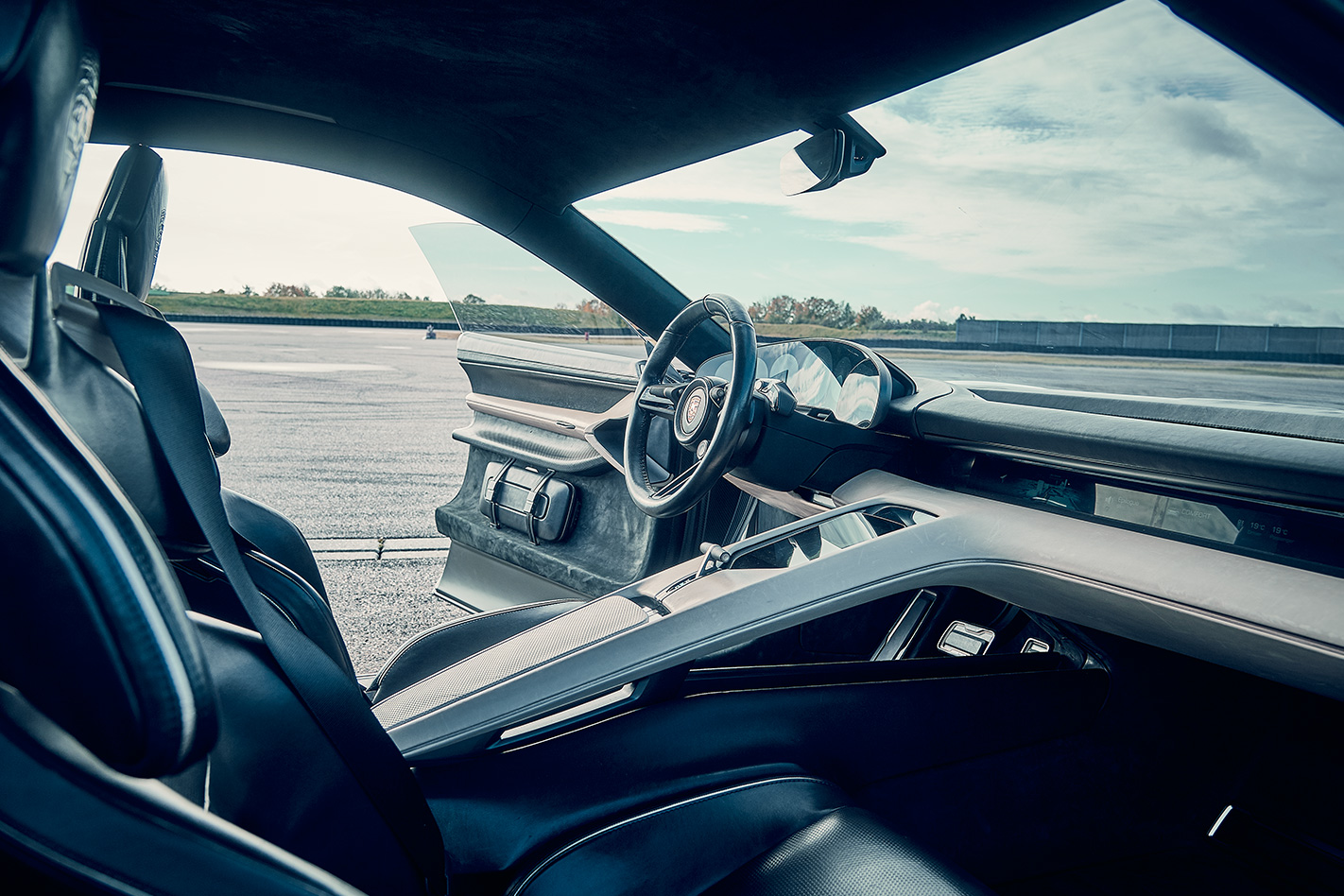
The version we drove (pictured) has suicide door which will be replaced by conventional b-pillared doors, but the design’s silhouette will remain the same, as well as the interior.
Find MOTOR’s drive feature of the Porsche Mission E, as well as the new GT2 RS, in The Annual edition, on sale November 30.
I’m about to go for a ride in a Yaris.
I’ve driven a Yaris before. It belongs to my housemate, and it’s got a pillow on the drivers’ seat so she can see over the dash.
But the car I’m looking at is about as far from that as you can get while still calling it a Yaris.
For a start, it’s got 224kW and 420Nm on tap, and that gets directed to all four wheels. Those wheels are wrapped in some serious tyres, and those tyres rarely see use on tarmac.
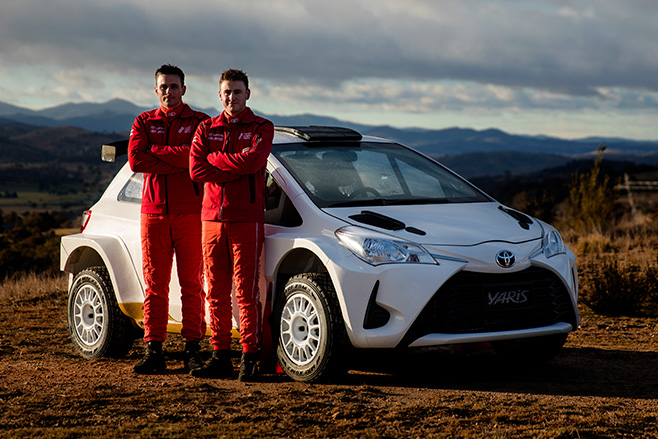
It’s Harry Bates’ Toyota Yaris AP4 rally car, and I’m about to jump in for a hot lap on a rainy day on the outskirts of Coffs Harbour, NSW.
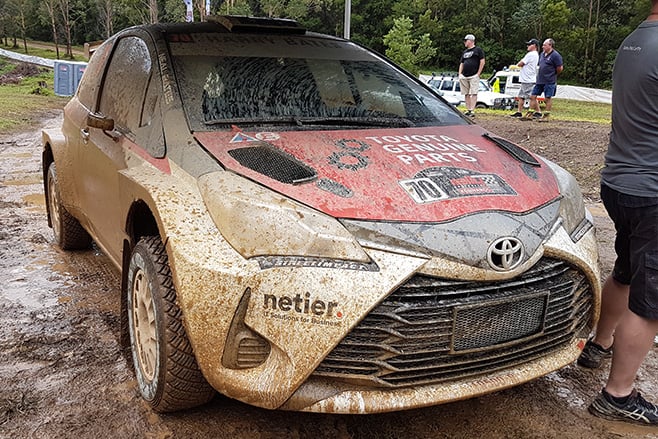
Harry welcomes me into the car and shakes my hand, double checking that I work for MOTOR before asking me (via helmet headset) how everything’s been. He’s a lot calmer than I am at this point.
His co-driver, John McCarthy, makes sure I’m secure in the seat he’s usually occupying before we exchange a thumbs up.
Even at idle, the car sounds monstrous. It’s only a 1.6-litre turbo four under the hood, but it’s eager to propel the car at Harry’s right-foot command.
As we leave the makeshift paddock, a yard which was full of spectators 20-or-so hours prior, Harry warns me that it’s particularly slippery on the course today.
I’m not sure quite what I’m expecting to feel, but as we turn onto a straight and Harry opens up the throttle, I work it out pretty quickly.
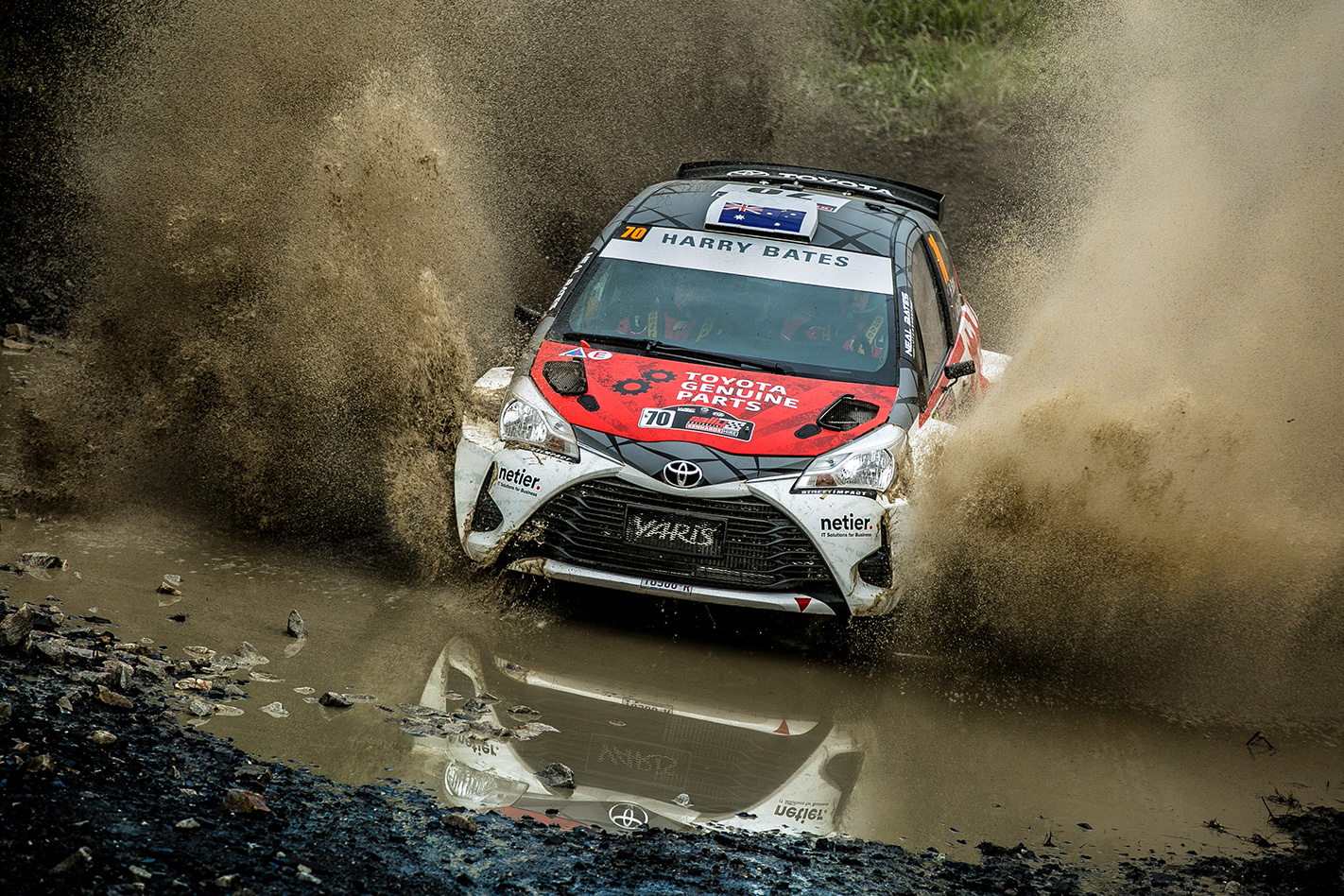
Uphill, gravity and a very loose surface are working against Bates, but his keen judgement and quick responses are keeping the car as straight as it can be in this situation.
The first corner is approaching, and I’m looking straight ahead at it as the car turns in just before the bend. We slide around in a muddy drift, and Harry straightens it back up.
Though I’m happy to call Harry a gun driver (and I’m sure he knows it), having a new car has made this year a challenge. Electronics issues plagued the AP4 at Rally SA upon its debut, and subsequent engine trouble has meant Harry’s ARC hopes were not fulfilled this year.
Once the car is sorted and its niggling issues are smoothed out, the Yaris is going to be a proper weapon.
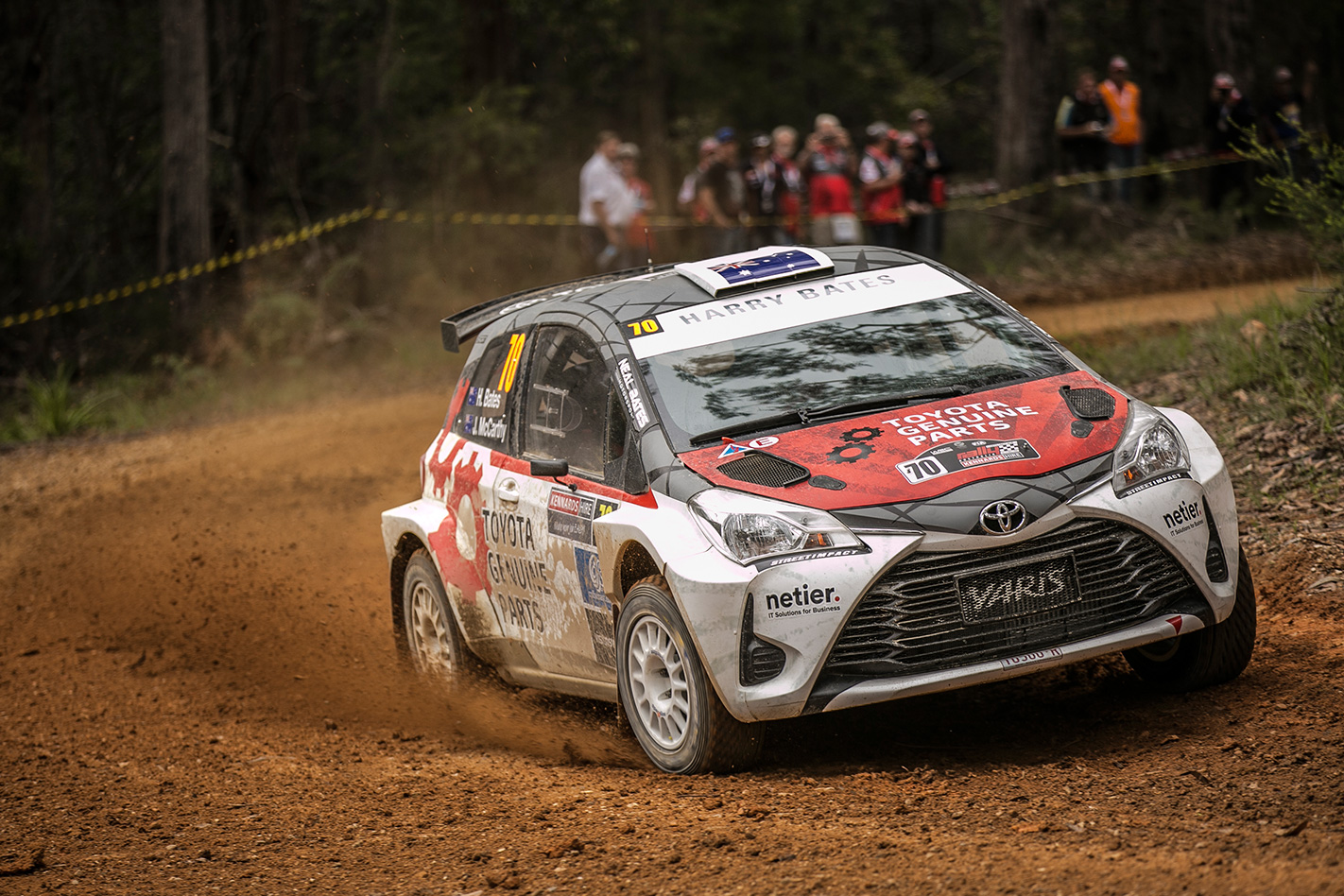
The transition between all four wheels hooking up with the mud and then becoming slide-happy hoops of rubber is so smooth.
The other very obvious difference between this car and almost any other car I’ve been in is the suspension. It’s fitted with remote-reservoir dampers, which are designed for off-roading for extended periods.
They’re still stiff enough to stay tied down, but with enough travel that landing after a jump won’t shatter your spine.
In the short time I spent as Harry’s passenger, we got air twice, and both times we landed without me requiring a trip to the physio.
One thing I noticed was that, since it’s common for the wheels to occasionally lose traction, you hear the rev-limiter more regularly than you might expect. No complaints from this passenger.
Putting into words the feeling of such rapid movement along roads usually reserved for slow-moving 4X4s is difficult, it’s such a different kind of speed to anything you’ll experience on-road.
But it’s what Harry Bates lives for, having grown up watching his dad Neil Bates’s (himself an Australian rallying stalwart) old rallying tapes rather than the Simpsons.
“Sorry it wasn’t very quick out there,” he says to me when we pull up back at the tent, “I prefer it when the ground’s a bit dryer.”
I didn’t think it was slow at all.
Mazda Australia has announced it’s got 110 manual-only, top of the line MX-5 RF Limited Editions waiting to head out the showroom door.
Among the additions the Limited Edition scores are a couple of chassis and suspension tweaks, as well as a few stand-apart visual changes.
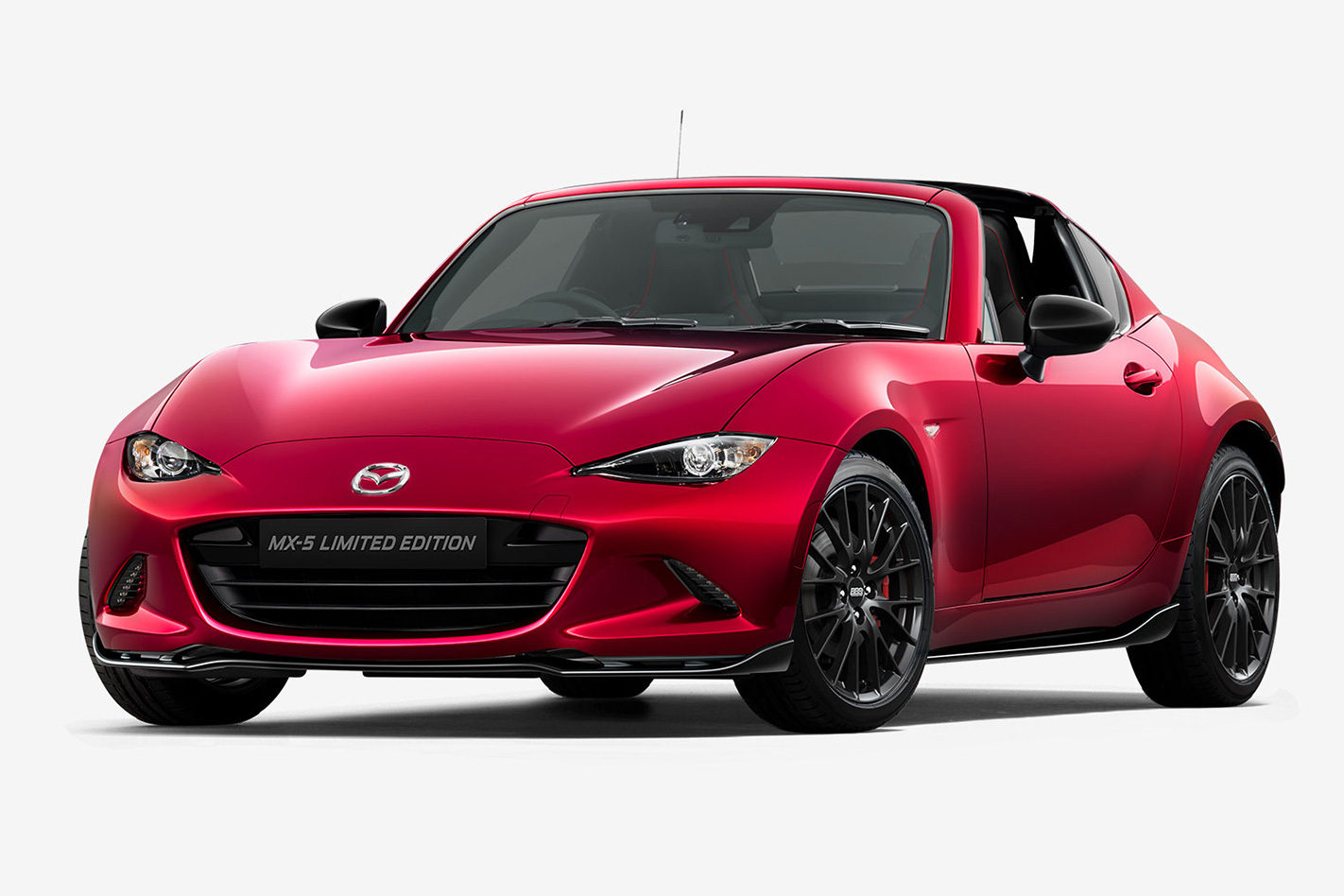
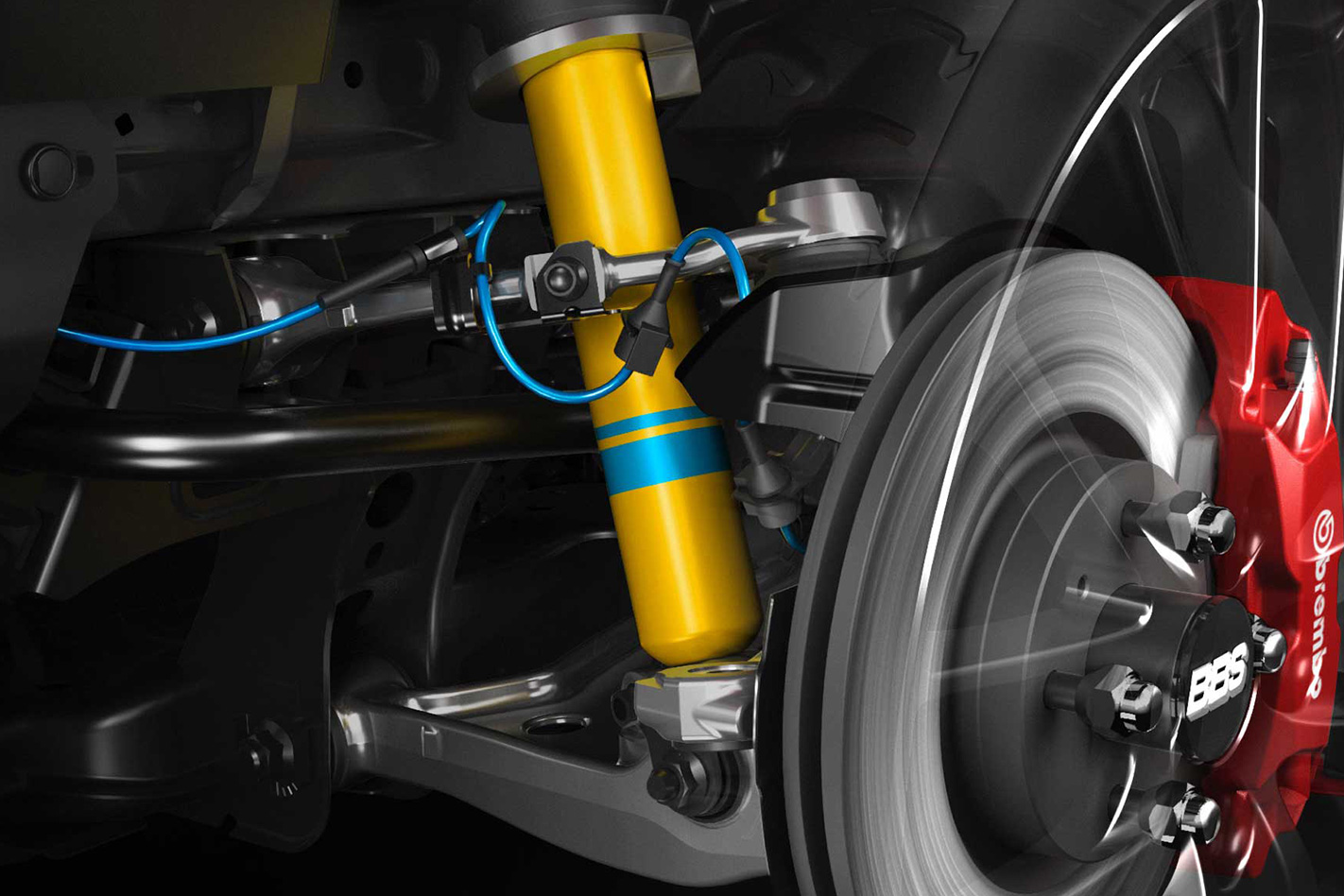
Inside those wheel arches, Limited Edition buyers will be pleased to see upgraded Brembo brakes hidden in behind a new set of BBS alloys.
Behind those, a new upgraded set of Bilstein dampers provide a more grounded ride than stock shocks.
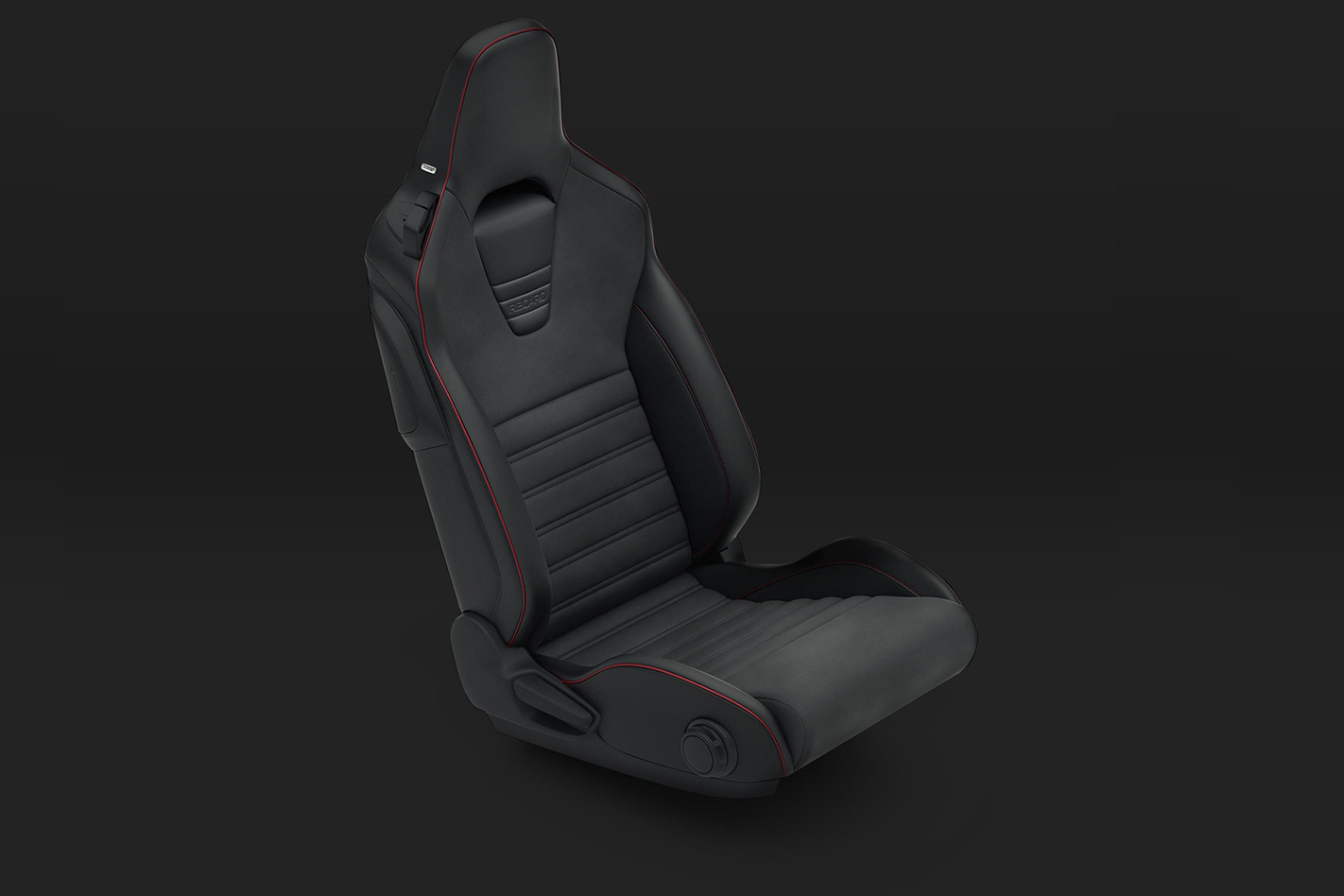
While Mazda says the upgrades will “improve braking, steering and acceleration,” the last of those three will be tough to notice while you’re seated in your Recaro seat (also a Limited Edition addition).
Mazda is asking $55,790 (a hefty $10K more than a regular RF GT) for one of the 110 examples, and is taking expressions of interest now.
WHAT IS IT
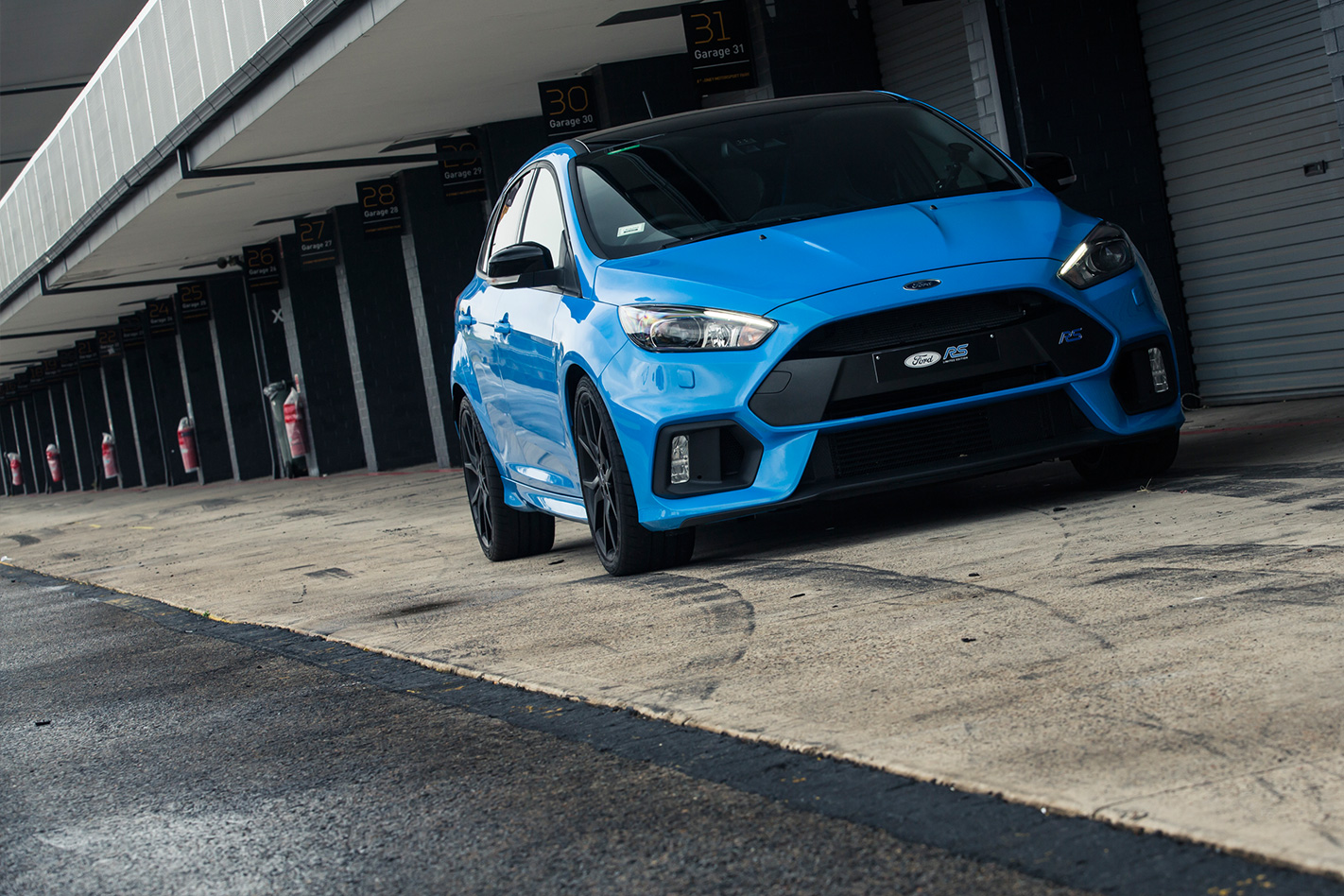
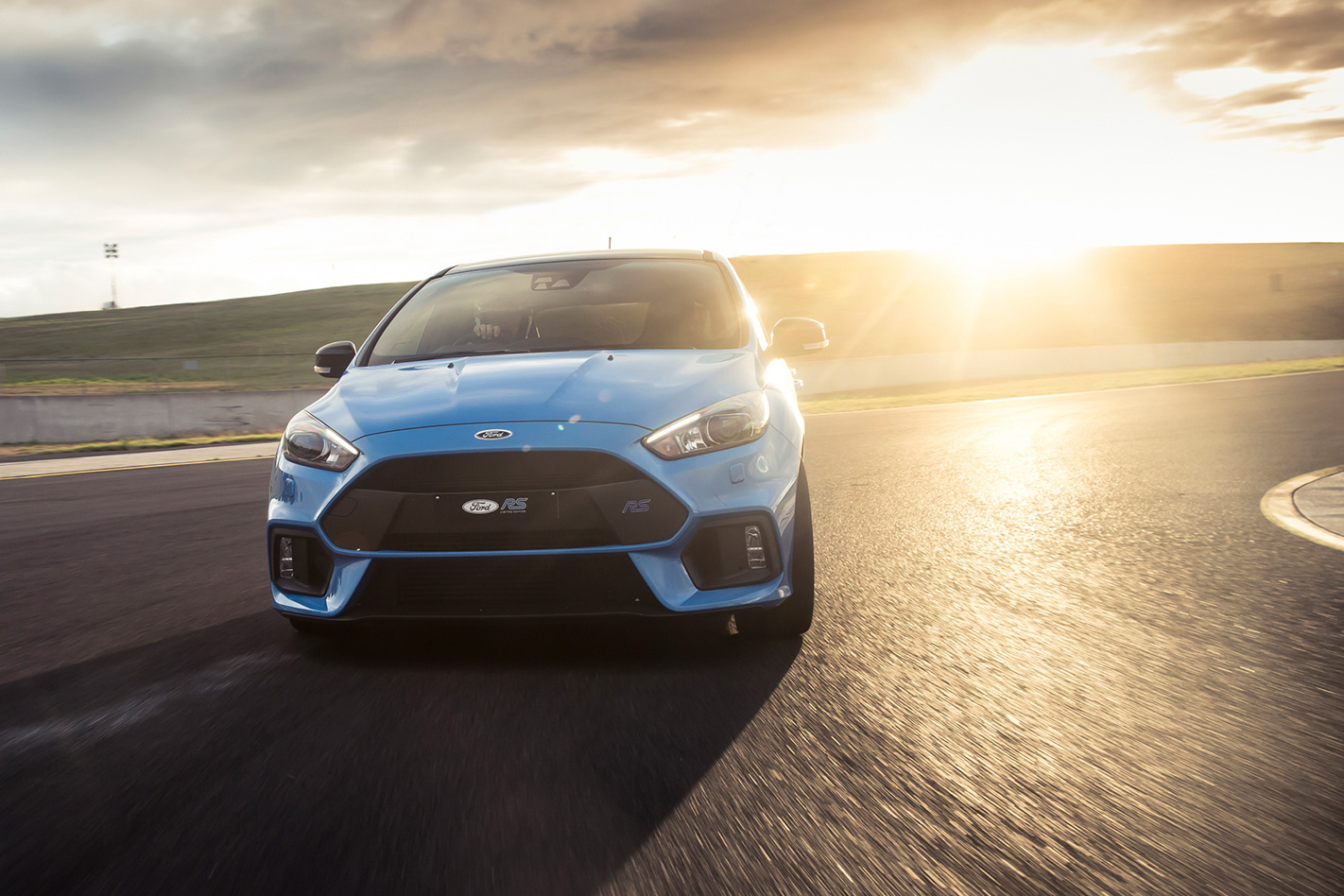
The most performance-focused, erm, Focus to date, the Ford Focus RS Limited Edition adds a clever mechanical limited-slip differential to help keep the turbo hot hatch’s front axle in check when putting its prodigious power output to the ground.
On top of that, it also makes standard the ultra-sticky Michelin Pilot Sport Cup 2 tyres that were optional on the regular Focus RS, as well as a handful of cosmetic updates. Want one? We hope you like Nitrous Blue – it’s the only colour the Limited Edition comes in.
WHY WE’RE TESTING IT
Ford says the new front differential, supplied by powertrain company Quaife, dramatically improves the Focus RS’ ability to maintain traction under hard acceleration, while also improving its stability under braking.
Honda Civic Type R; Subaru WRX STI; Volkswagen Golf R
THE WHEELS VERDICT
For a $6000 premium over the cost of a regular Focus RS, the harder-core Limited Edition is a true performance bargain for track-day types. The benefits are slim to nil out on the street, but if you like to spend your weekends orbiting your circuit of choice, chasing the stopwatch in the never-ending quest to better your best laptime, the nifty differential and performance-oriented wheel and tyre package of the Focus RS Limited Edition will give you a solid edge.
Minus: High seating position; interior is nothing special;
THE WHEELS REVIEW
HOW do you make one of the best hot hatches even better? Ford’s Focus RS has won over the hearts of Wheels staffers and has won its fair share of comparison tests too, but even we will admit that there’s still a little room for improvement.
Enter the Focus RS Limited Edition. No, it doesn’t address our complaints about cabin quality or uncomfortably-high front seats, but the Limited Edition is no sticker-pack special.
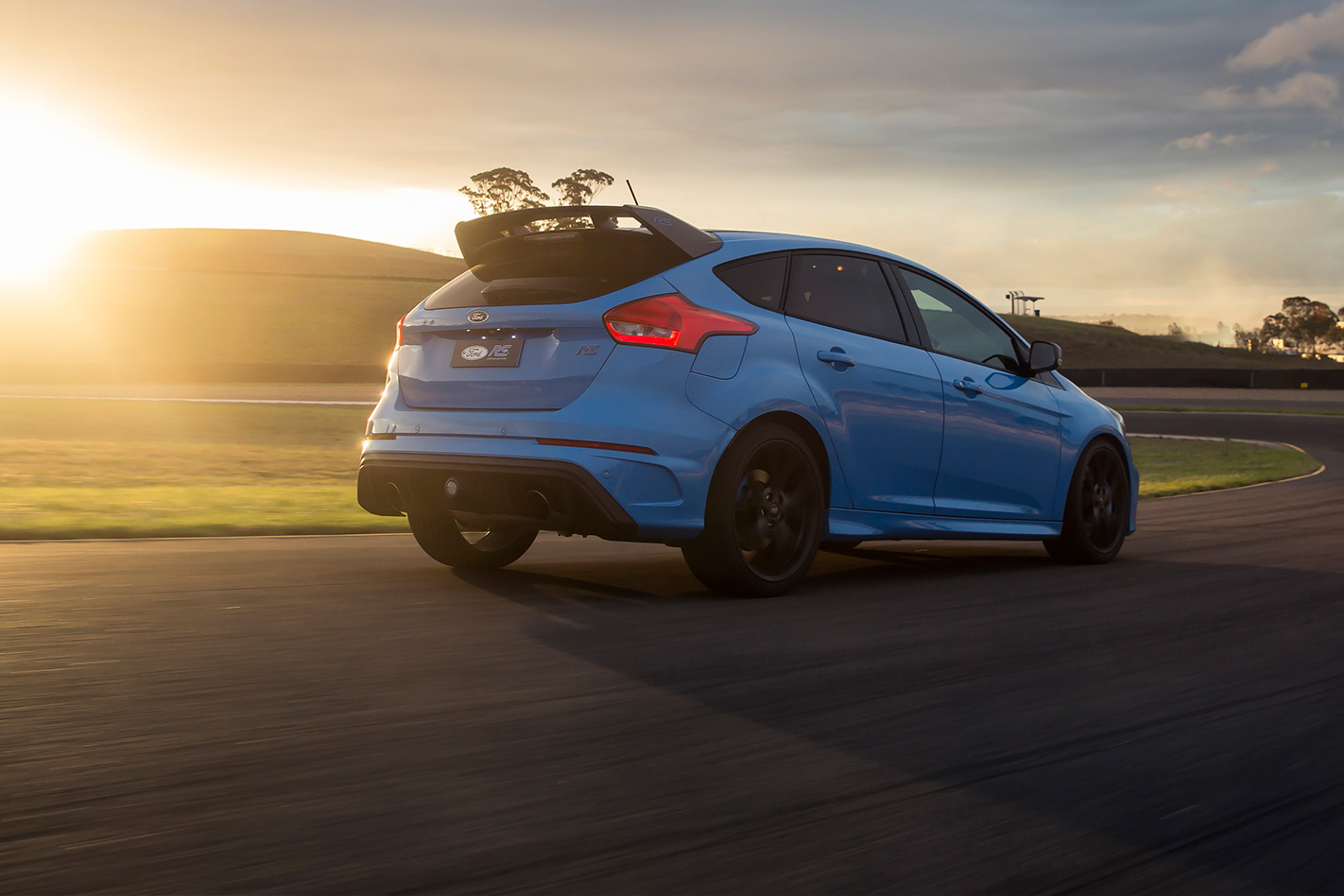
To demonstrate the diff’s talents, Ford put us into both the standard Focus RS and the Limited Edition at Eastern Creek. Patchy weather and the fact the regular RS cars wore road-biased Michelin Pilot Super Sports instead of the Limited’s Pilot Sport Cup 2s (which are optional on the boggo RS) made it hard to play spot-the-difference, but the extra traction under power in the LSD-equipped Limited was obvious.
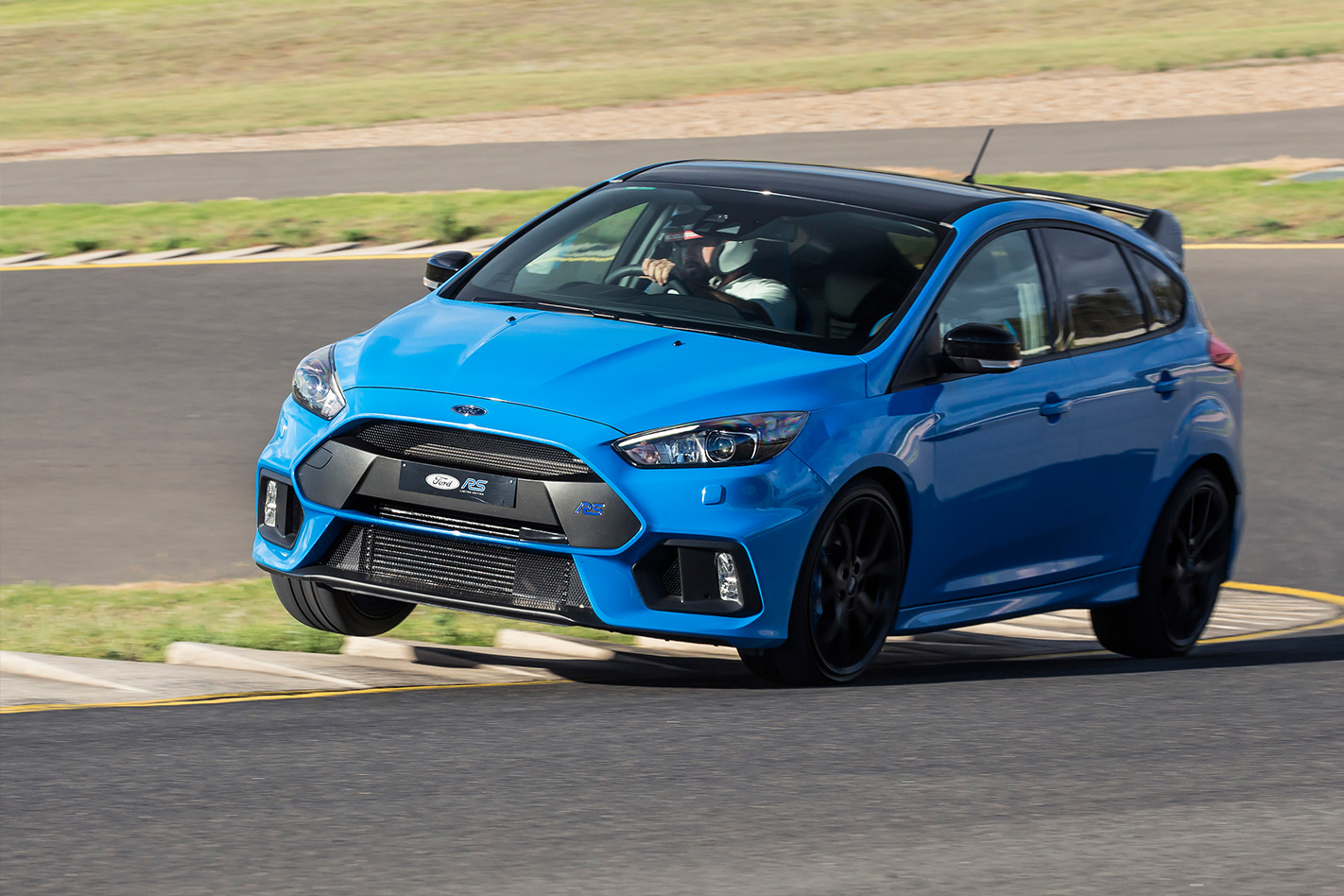
The Focus RS’ surprisingly good balance (well, for a transverse-engined hatchback) appears to be more exploitable with the Quaife diff. It’s adjustable under power, and with the clever AWD underpinnings able to send up to 70 percent of torque to the rear wheels (and apportion up to 100 percent of that to either the left or right wheels for agility-enhancing torque vectoring), the RS has the flexibility to be driven how you want.
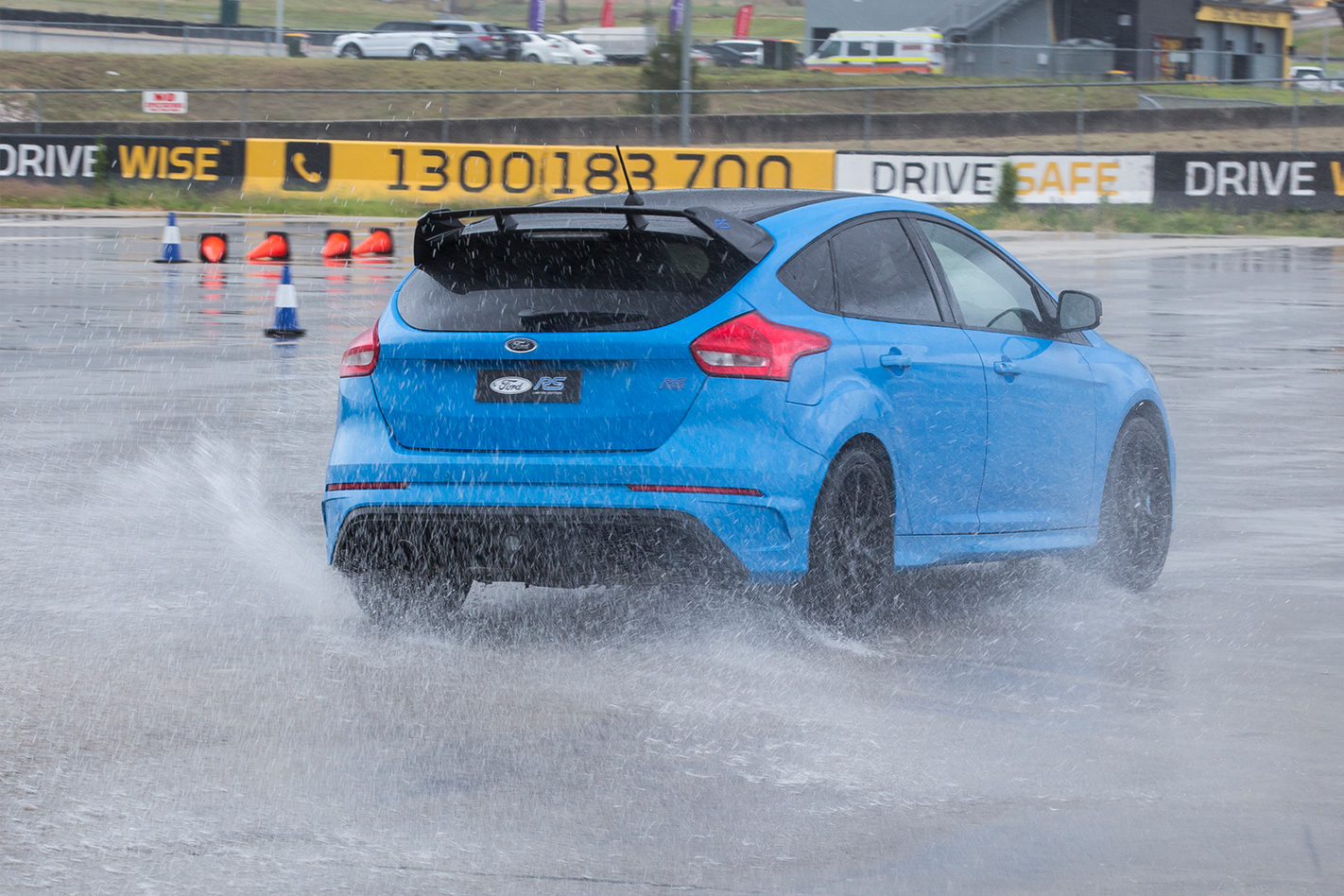
Downsides? The extra grip impacts its driftability, with a skidpan exercise revealing the regular RS to be more willing to rotate during aggressive cone-chasing when Drift Mode is selected. With Drift Mode preferencing the rear axle, the benefits of the Quaife diff don’t apply in this style of driving and the grip of the Sport Cups becomes a liability, not an advantage. Eager hoons take note.
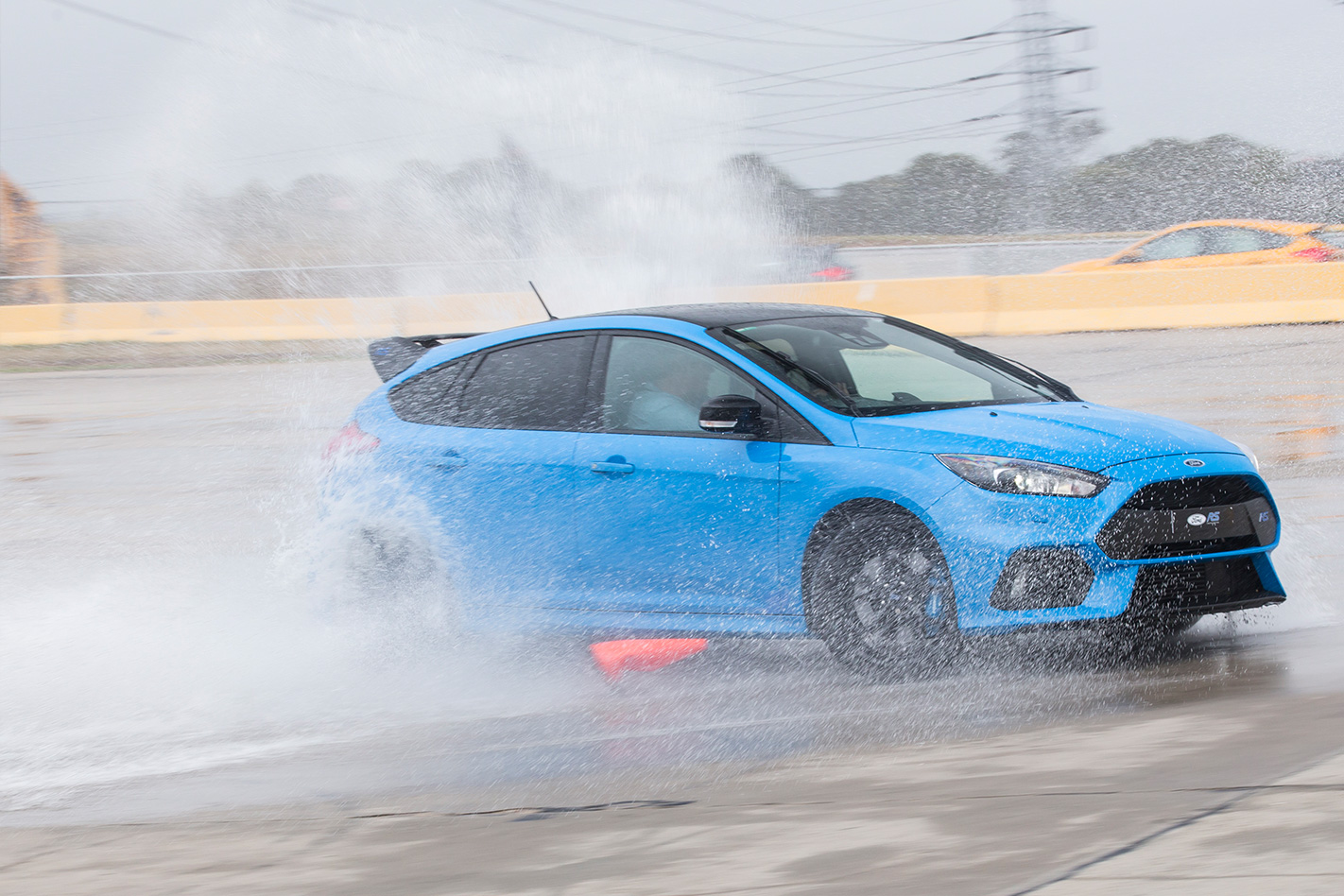
Is the extra impost justified? Absolutely – as long as you’re the kind of person who prefers to spend their weekends hanging out at racetracks, driving hard and trimming down your laptimes. Those kinds of hardcore enthusiasts will appreciate the grip advantage offered by the Limited’s LSD – everyone else will probably struggle to notice that it’s there.
UBER, the ride-share service that recently hit up Chinese-owned Swedish brand Volvo for 24,000 self-driving cars, is now working on ways to prevent you from throwing up in them.
It’s why the dotcom disruptor has gone out and patented several ideas that it reckons will help to avoid the self-driving car’s biggest potential undoing – motion sickness.
A self-driving car means a vehicle’s users can get on with other things, such as toying with their smartphone, watching a video or, if they’re really old-school, reading a book. However, humans tend to get car sick when what we see, say an unmoving car interior, doesn’t match what our inner ear, which is where our sense of balance used to sit upright in a moving car comes from, is experiencing. Remove the visual cues, and you’d better check to see if ole robocar comes equipped with a family pack of barf bags.
But Uber plans to use things such as pulses of light, puffs of air and motors hidden inside a seat that tilt the body to prevent the onset of kinetosis – the fancy name for car sickness – by triggering synthetic sensory responses from those riding in the vehicle. In short, it wants to trick the body into not feeling sick.
Uber is not the first company to realise that passengers with their heads buried in a book or faces locked to a mobile phone screen will tend to get car sick very easily, with Ford already tipping research time and dollars into the project. It first started seriously researching ways to fend off the back-seat yackfest in 2015.
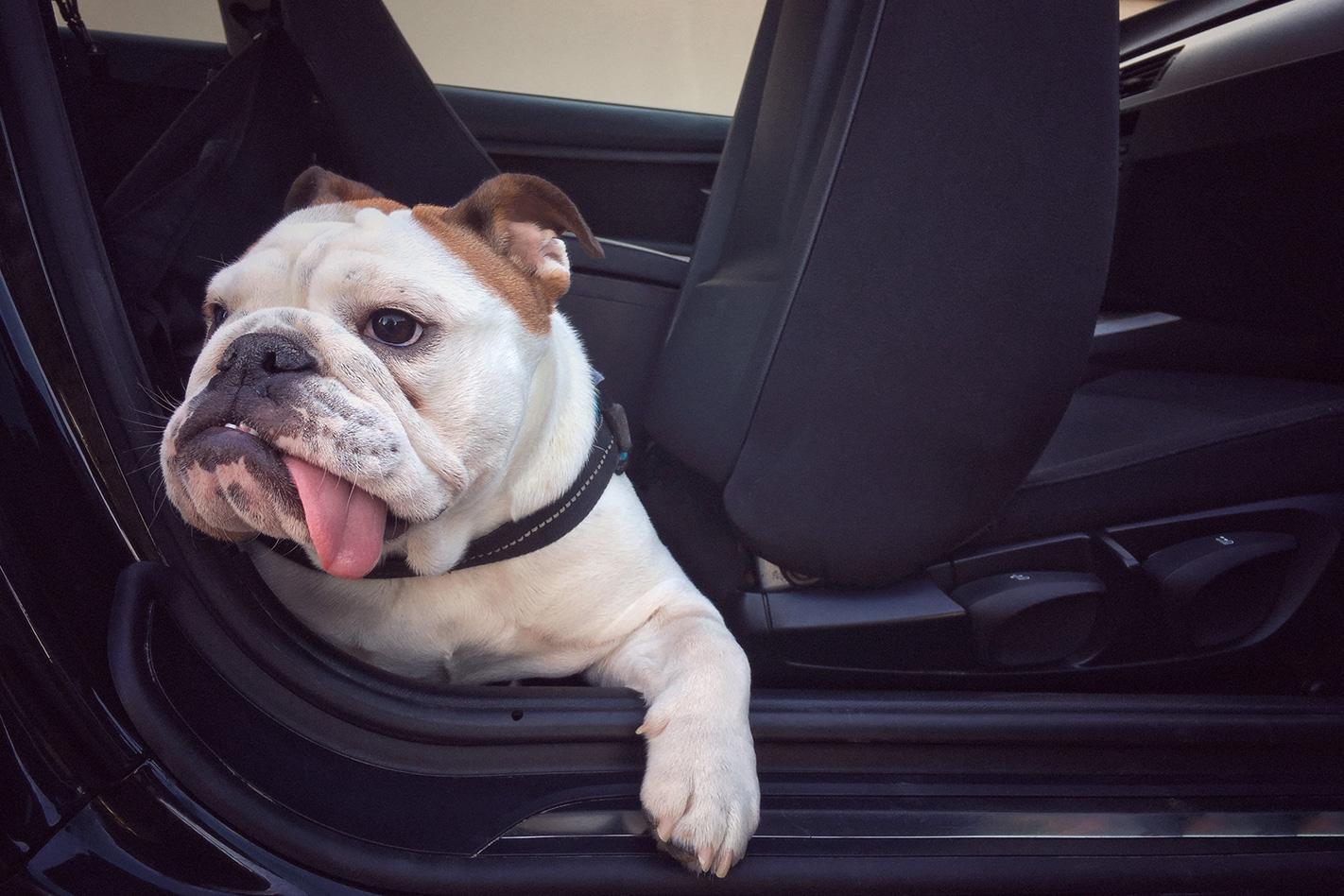
The blue oval is looking at what sensory cues it can use to limit the onset of car-sickness, such as lifting screens higher to allow their users to gain at least a peripheral view of the roadside flashing past, which in most cases is enough to quash kinetosis before it starts.
The University of Michigan had a similar idea, patenting an in-car system that will flash lights at people to mimic what’s happening outside the car as you pass through light and shade.
Google is even in on the act, patenting a system that provides a virtual fixed point of reference – similar to how someone on a boat tries to prevent sea sickness by looking at a fixed point on land or the horizon. Its application looks more geared towards a virtual reality headset than a car, but let’s not forget it also owns Waymo, which is developing autonomous pods.
Ford has even patented a test rig that would allow it to hook a person up to a computer and identify key cues, such as a cold sweat, to identify stretches of road where motion sickness could be a problem, and then program its cars to react accordingly by blowing air or moving seats – sound familiar?
However, the easiest way to avoid motion sickness in an EV appears to also be the best solution: jump in a normal car and drive yourself. Research shows that people behind the wheel rarely lose their lunch on a twisty stretch of road.
Britain will punish diesel-engined cars to pay for the electrification of its vehicle fleet, the government has announced.
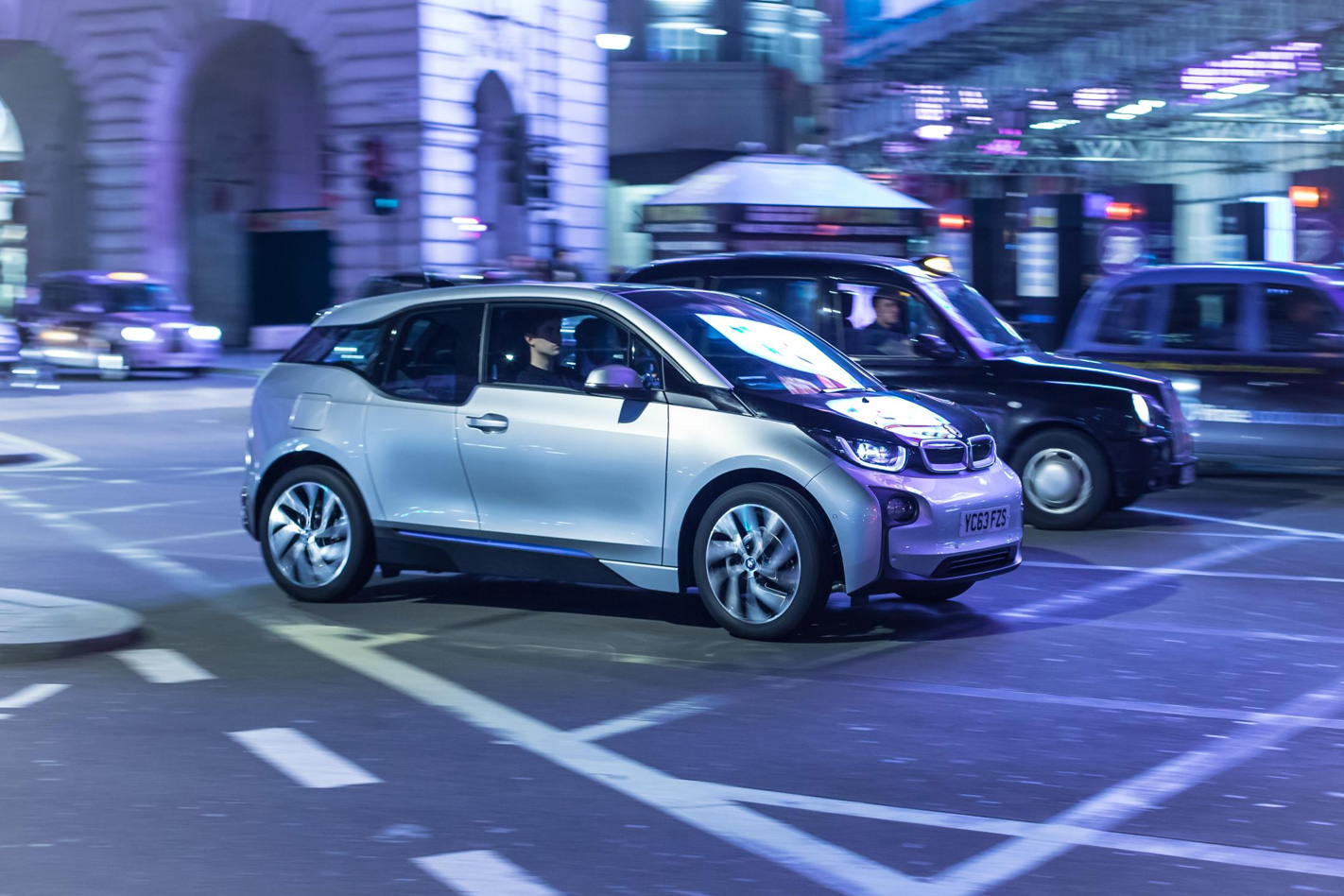
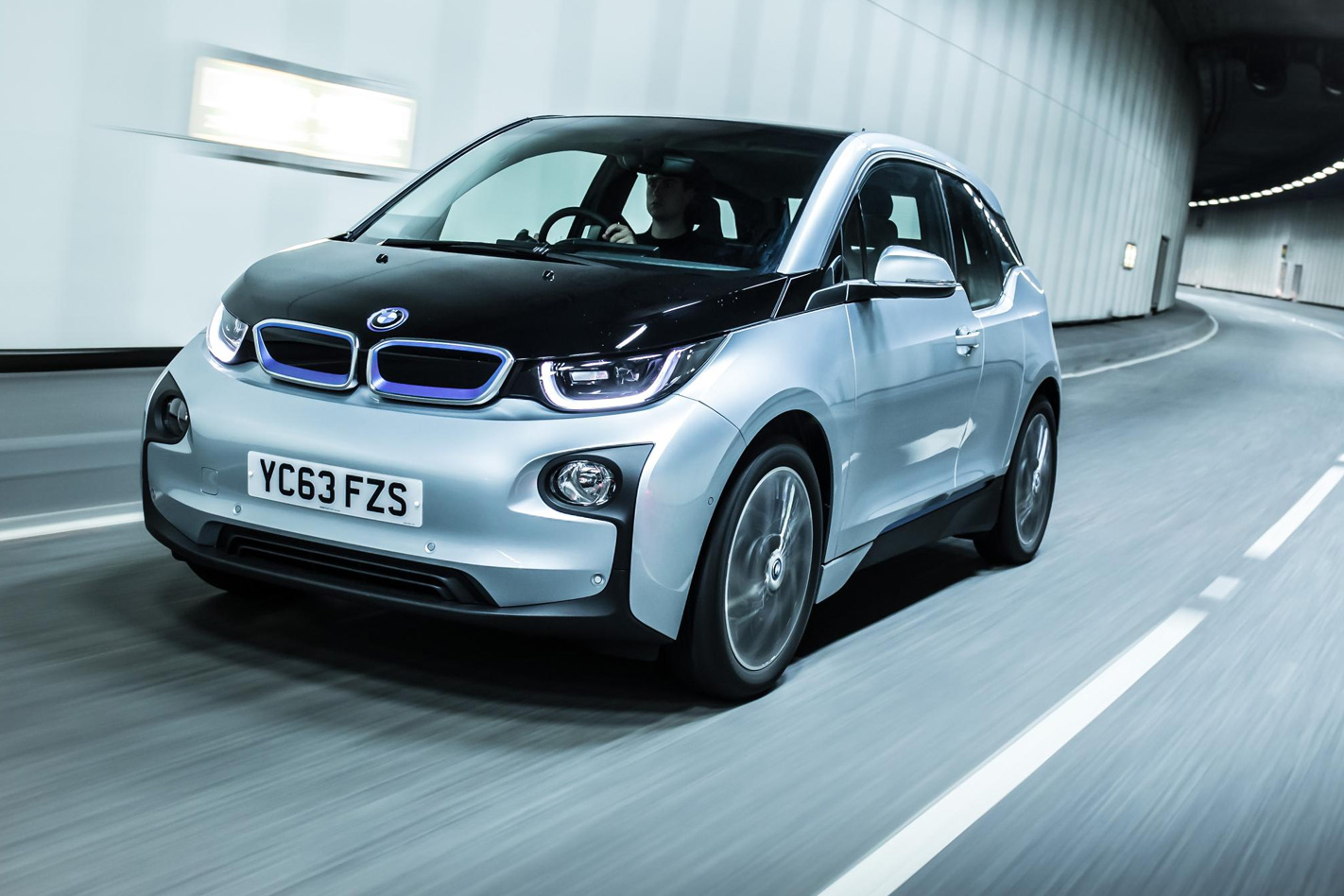
The British Government’s autumn budget, revealed this week, has set aside £500 million – the equivalent of $A875 million – to give electric car buyers an almost $A8000 helping hand to buy an electric car, and will match recharging companies pound for pound for the infrastructure they put in place to support battery-powered cars.
As well, all new houses in Britain will be built with the right cables to support electric car recharging.
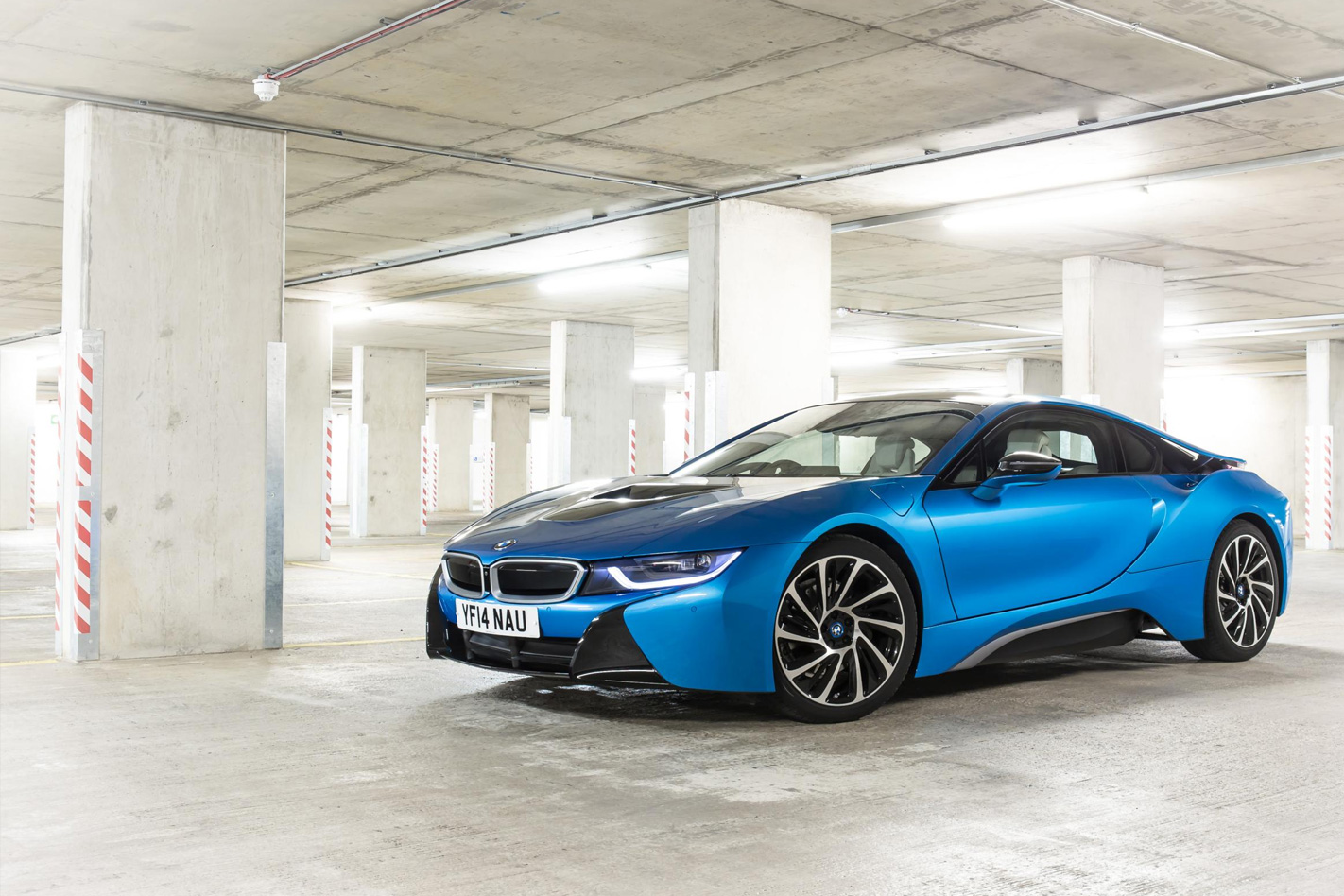
“The government will also provide £100 million to guarantee continuation of the Plug-In Car Grant to 2020 to help consumers with the cost of purchasing a new battery electric vehicle.”
As well, the government said it would not charge fringe benefits tax on electricity used to recharge EVs at the workplace – a deterrent for employers worried about how they would account for workers who recharge their vehicles at the office.
The British support for electrification is in stark contrast to Australia, where incentives appear to be something of a dirty word.
Spokeswoman Lenore Fletcher said government support for electric vehicles from the top level had been “going nowhere”.
“Things are still very, very much in the planning stages [in Australia],” Fletcher told Wheels. “There is some movement [with incentives] at the state level, certainly, but on the whole there’s not a resolution in sight.”
Car brands are seeking similar cash-back incentives offered to electric vehicle buyers overseas, as well as other benefits including discounted or free parking, and special lanes on freeways dedicated to the more fuel-efficient vehicles.
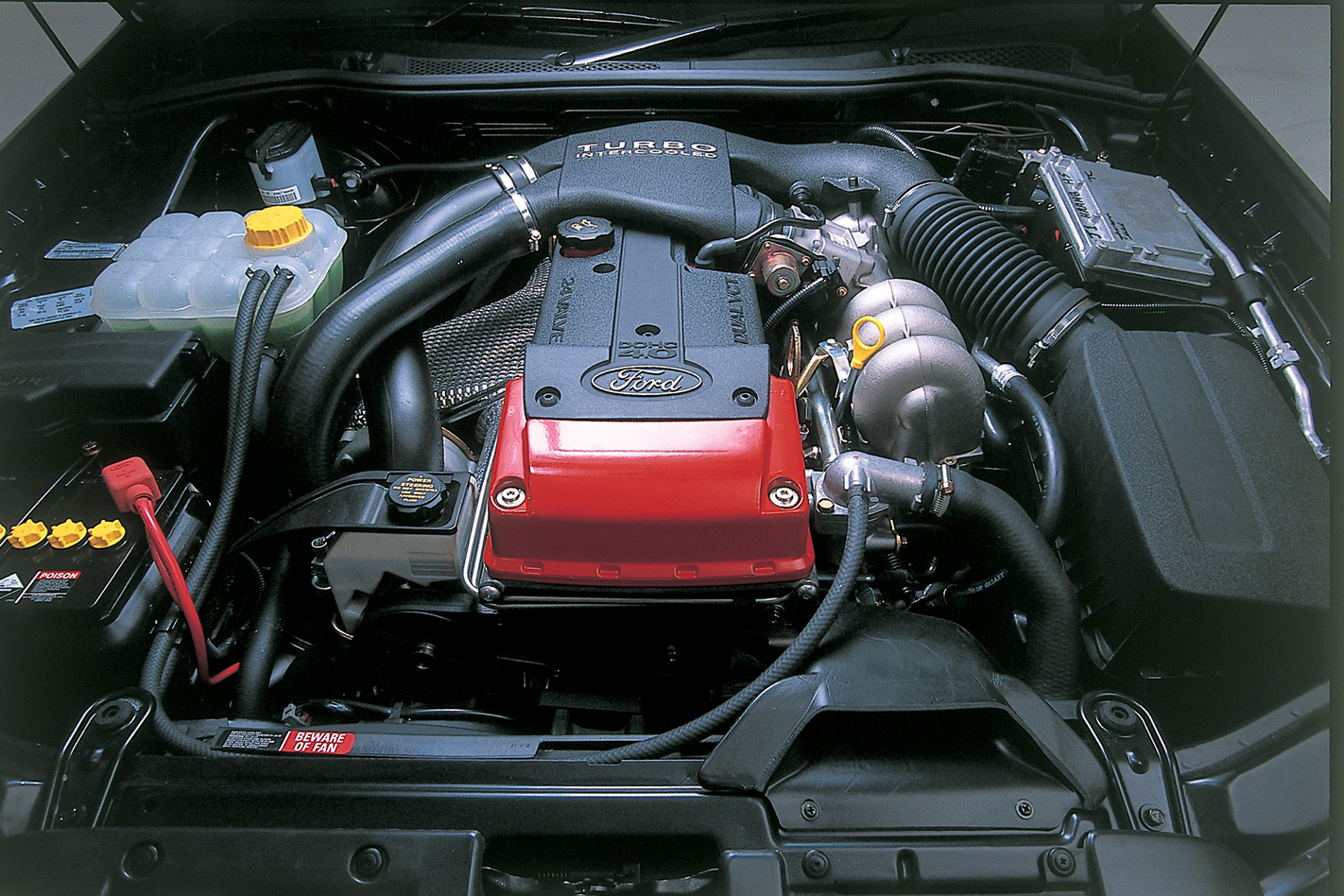
How do you scare a V8 owner at the drags? Tell ’em you’ve got a Barra turbo under the hood.
But what if, in some alternate reality, the XR6T was actually an XR6S? Yep, the legendary Barra six was almost supercharged, according to former Tickford and FPV program manager Gordon Barfield.
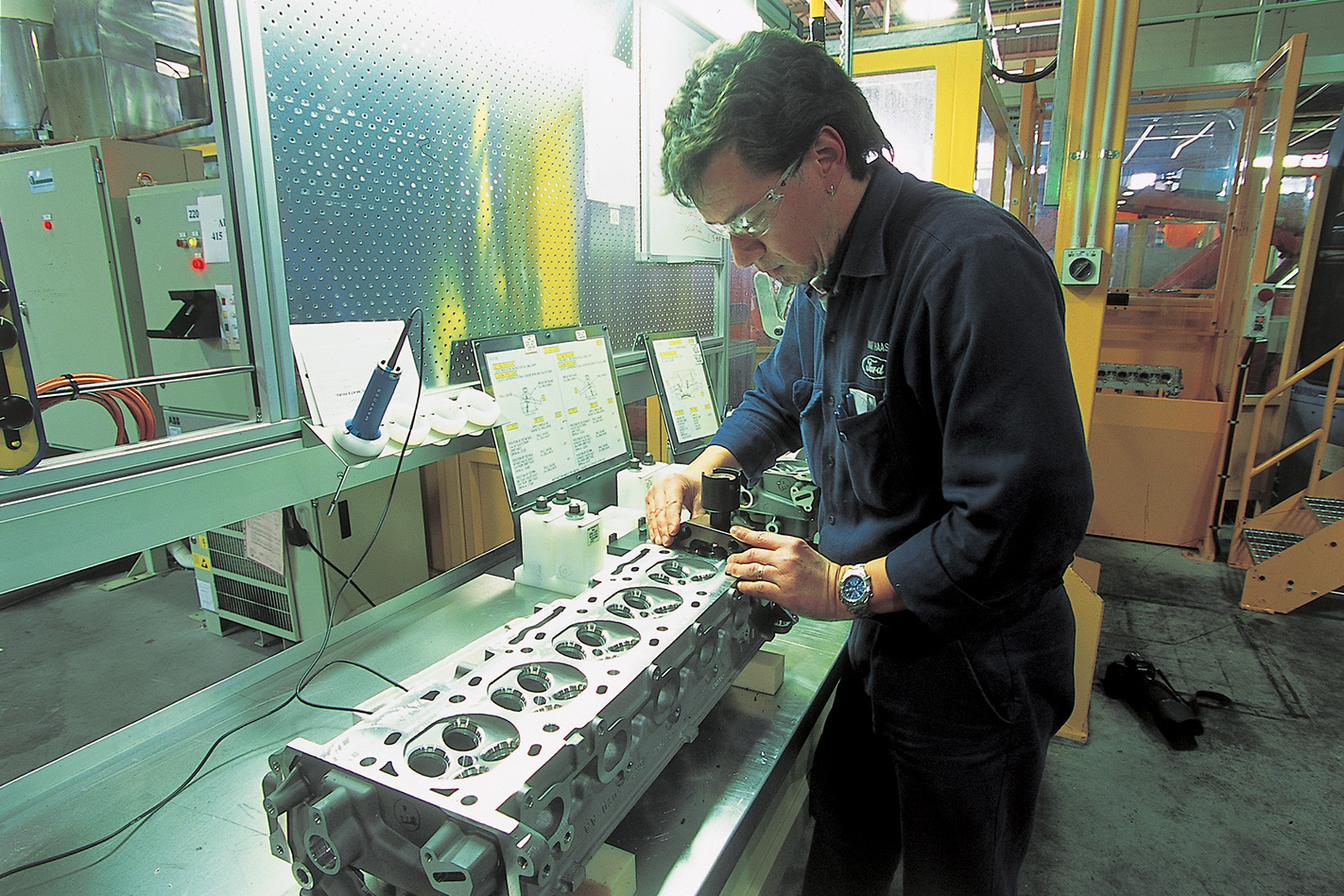
“We could modify the engine and we might have got five kilowatts, but that wasn’t going to do it.” Essentially, Barfield wanted to create a fast Ford that would appeal to those who didn’t care for – or need – a V8.
Soon, the late former racer and Ford legend Howard Marsden joined the now-FPV team, and suggested moving along with a supercharged version of the 4.0-litre inline six. Barfield, however, knew it was too late to start developing a supercharged version.
Instead, Barfield looked to the Swedes, who were at this point using low-pressure turbos to help move things along. Low boost levels on a large engine meant little lag and no real negative effect on reliability.
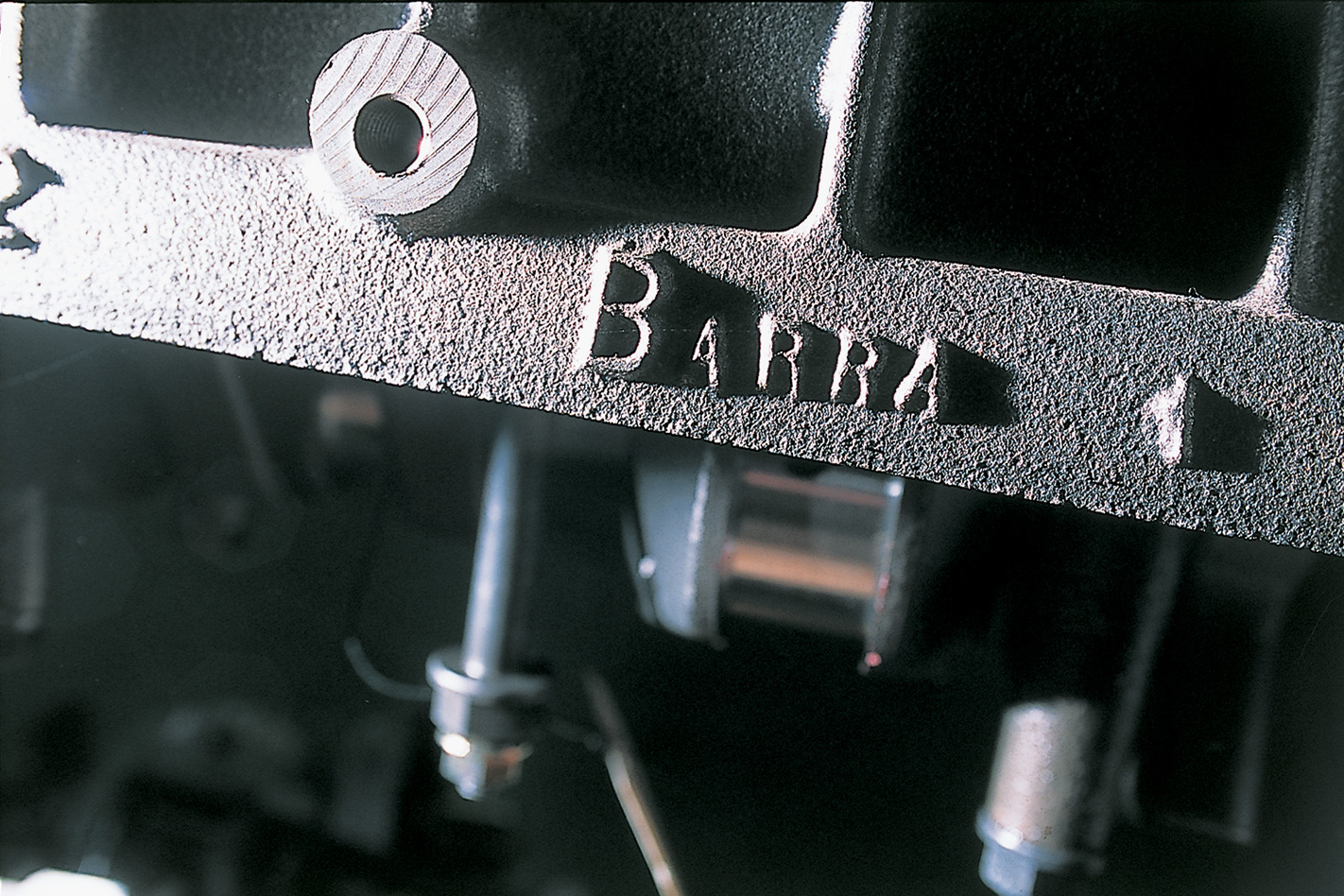
For more on the Barra’s development check out the 15 Years of XR6 Turbo feature in the Yearbook issue of MOTOR, on-sale November 30.
MG has launched an all-new model that will be one of the cheapest SUVs available in Australia.
The MG ZS is the now-Chinese-owned iconic brand’s second small-SUV following after the GS.
It is priced from $20,990 and comes with a seven-year warranty and roadside assistance, which will also be extended to the MG GS model that was already covered for six years.
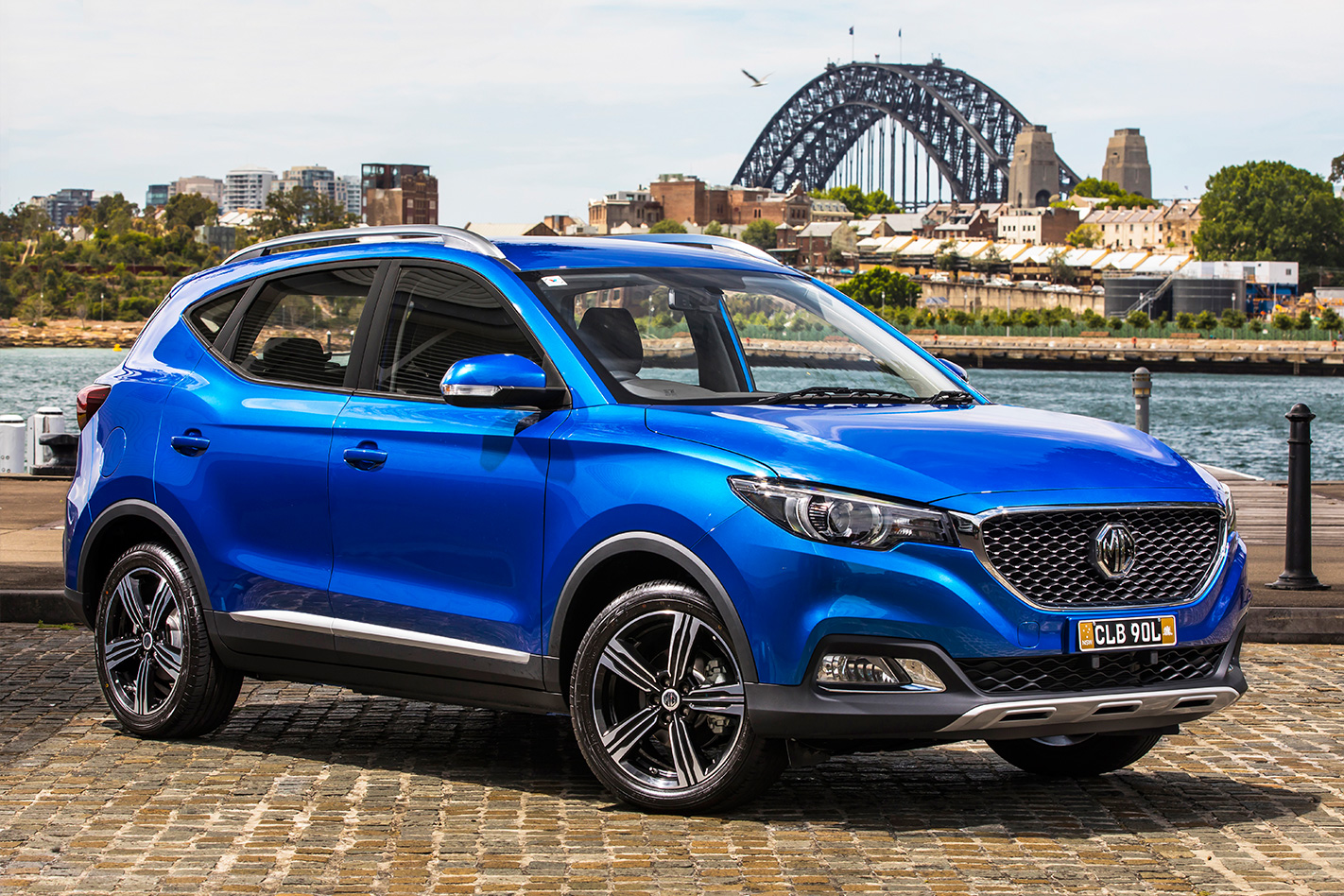
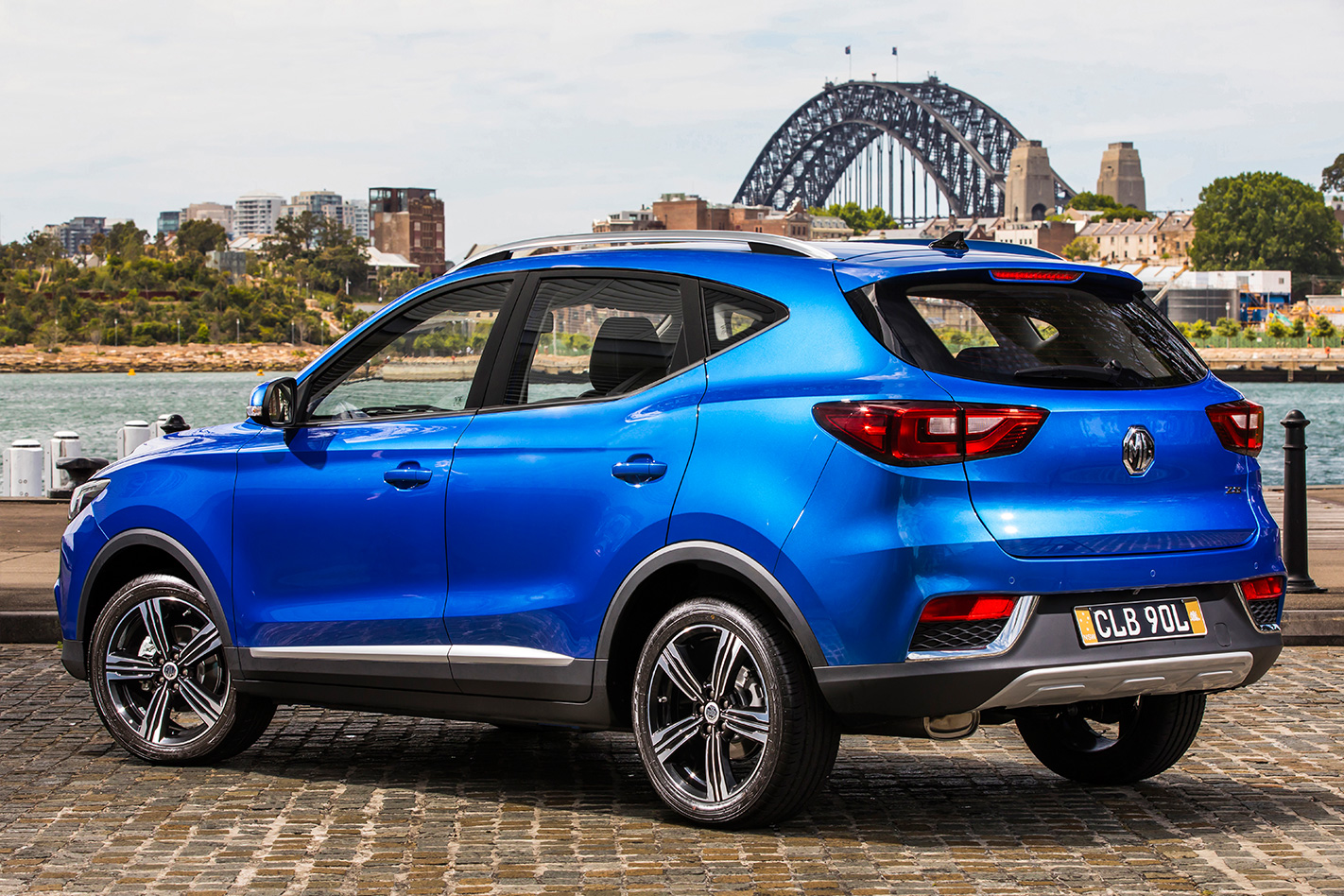
With a more traditional box-like SUV look than the GS crossover, the ZS looks a little like a mash-up of a Mazda CX-3 and a Nissan Qashqai.
It comes in two model grades, Soul and Essence, which both feature chrome exterior highlights, metal side skirts and stone guard, and satin black inlays.
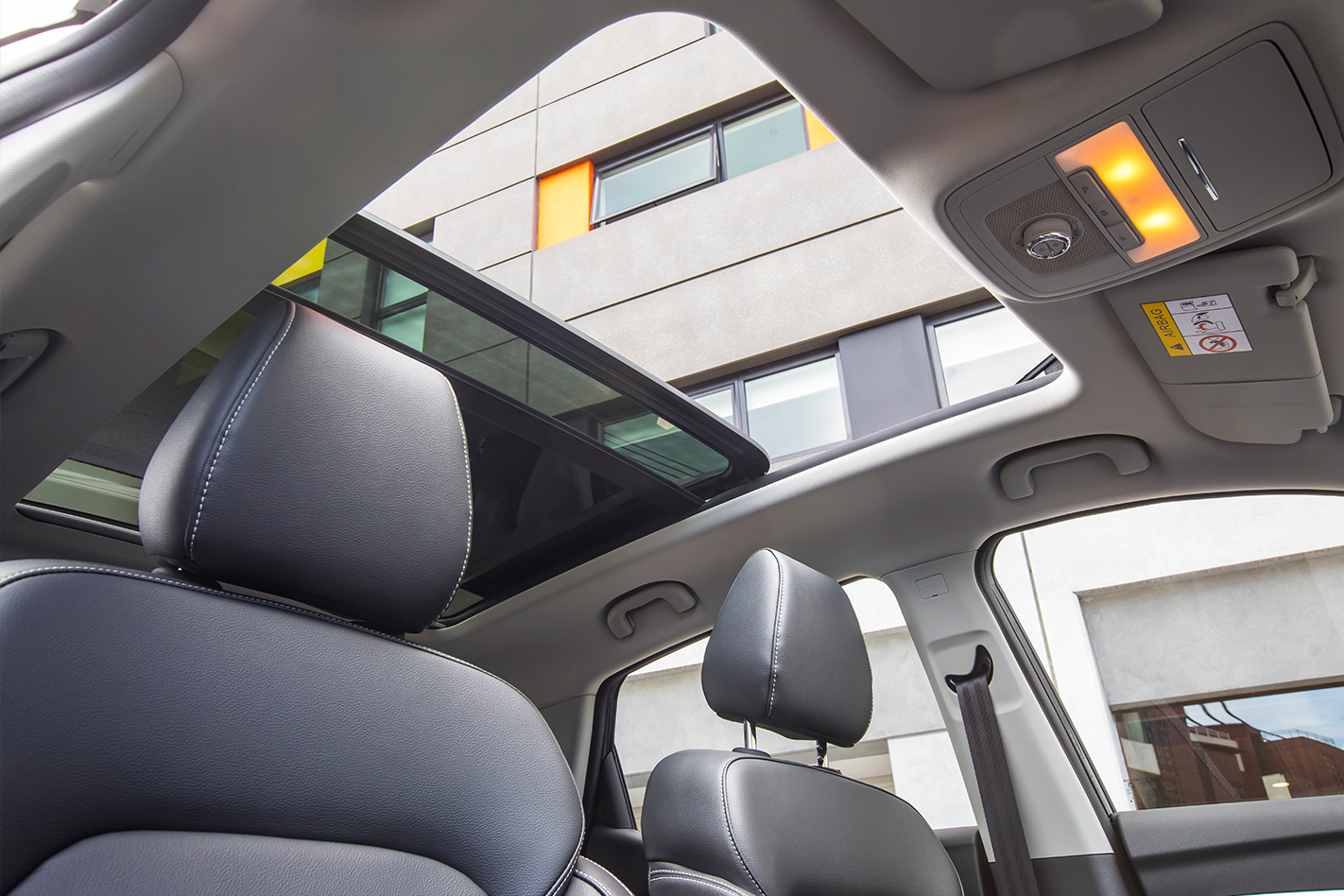
Where they externally differ is the expansive ‘Stargazer’ panoramic sunroof that takes up 90 percent of the roof space of the range-topping Essence model (as standard).
Inside, MG claims the 1368mm-wide cabin offers the most generous shoulder, head and legroom in its segment, making it feel like a larger vehicle.
Boot space is 359 litres, extending to 1166 litres with the 60/40 rear seats folded down. Both variants feature an 8.0-inch touchscreen with Apple CarPlay smartphone pairing (sorry, Android users), Blutooth connectivity for music and hand-free phone calls.
A reversing camera, with guidelines and rear parking sensors, is also standard across the range, but there’s no sign of active safety features including automatic emergency braking.
The MG ZS has two engines, including a 1.5-litre four-cylinder petrol in the Soul producing 84kW/150Nm, and a 1.0-litre four-pot turbo petrol in the Essence, with similar output of 83kW/160Nm.
Performance can be controlled via Urban, Normal and Dynamic driving modes, which also alter the steering set up to suit the different driving conditions.
The entry-level MG ZS Soul comes with a four-speed automatic transmission, 17-inch alloy wheels, and a Yamaha sound system.
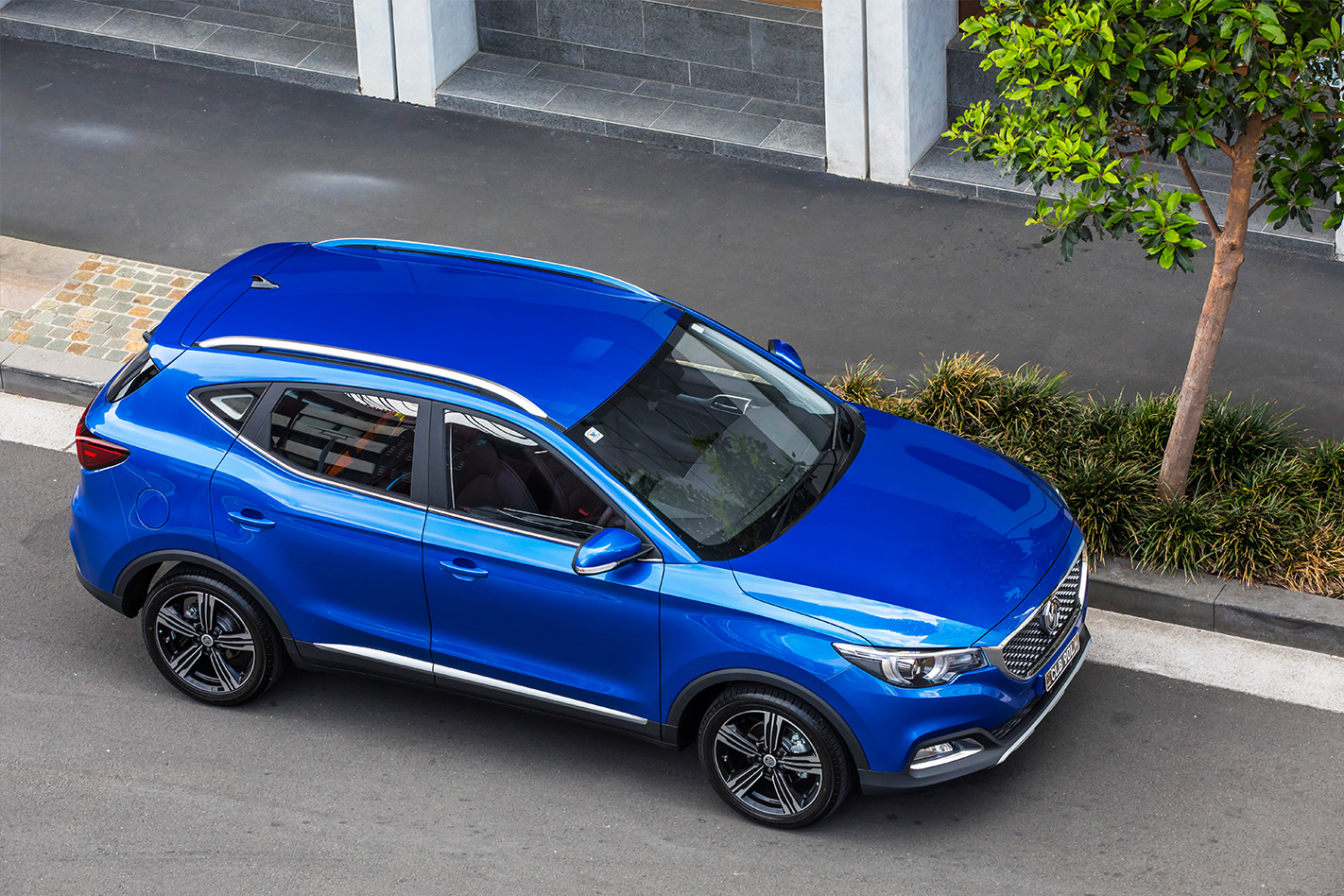
For an extra $3000 over the base price, the Essence brings comes a six-speed automatic transmission, keyless engine start and the panoramic sunroof. The introduction of the MG ZS coincides with the expansion of the brand’s fledgling Australian dealer network to 10, with new dealerships opening in Mooraka and Redcliffe in Queensland, Wagga Wagga (NSW) and Werribee (Victoria).
MG’s other two showroom models, the MG3 hatchback and the MG6 liftback sedan, both stick with a six-year, unlimited kilometre warranty.
2018 MG ZS pricing
- ZS Soul – $20,990
- ZS Essence – $23,990
