
Kia has revealed its updated Sorento large SUV which is expected to arrive in Australia by the end of October.
The facelifted 2018 Kia Sorento features exterior and interior design changes, updated infotainment system, additional safety technology, and a new eight-speed automatic transmission.
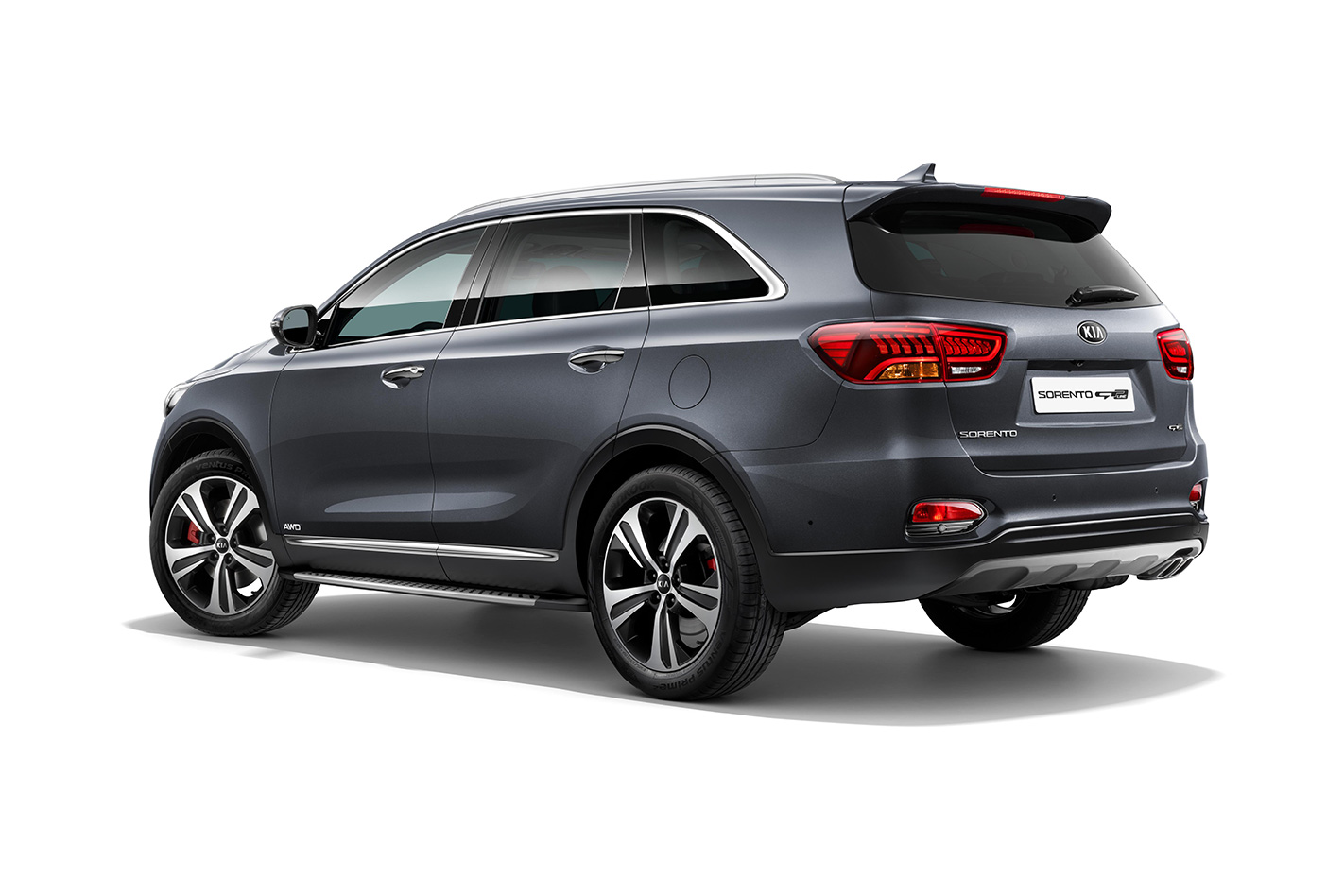
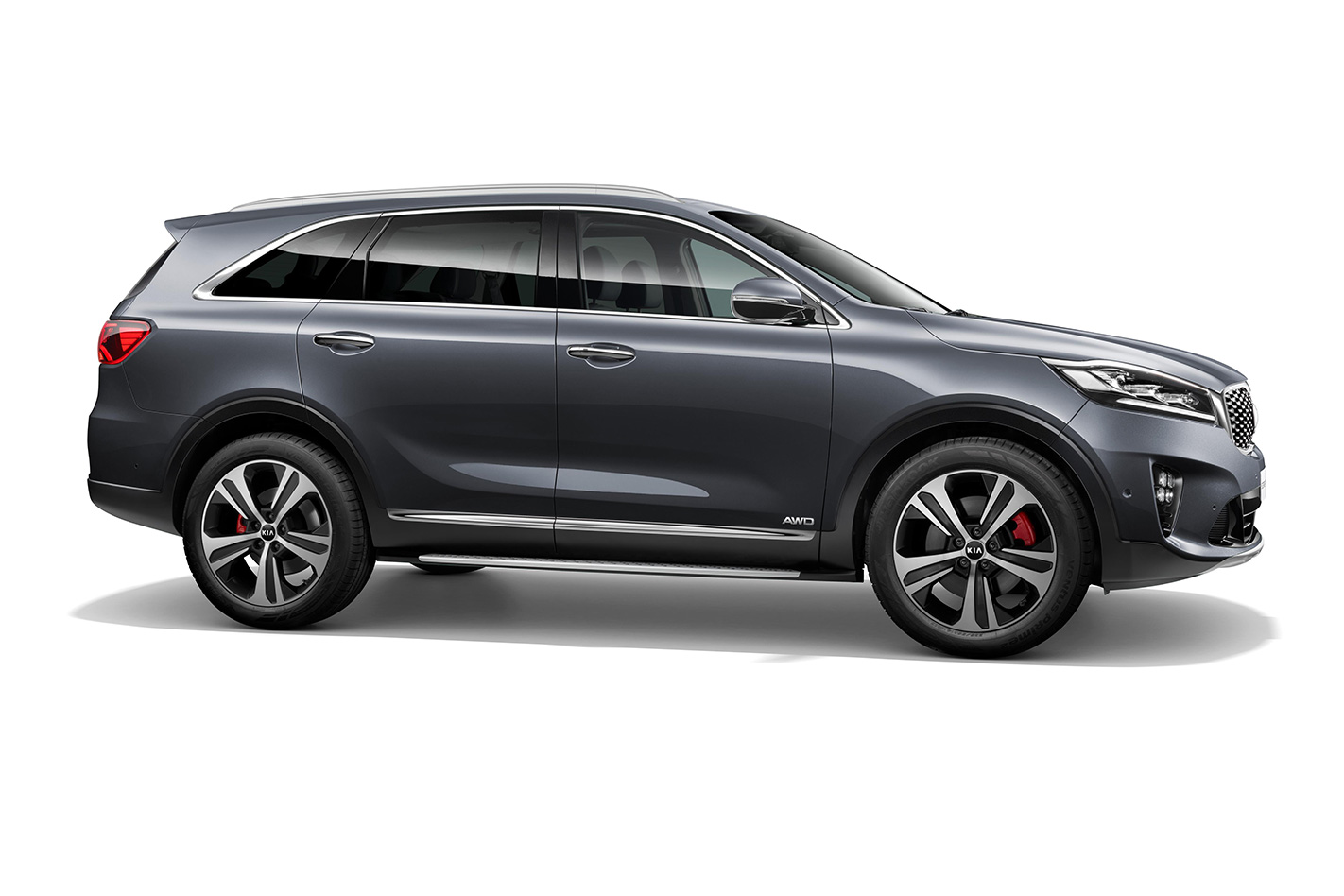
Distinguishing features from the current model include new LED head- and taillights, revised front and rear bumper treatments, and new dark-metallic finished ‘tiger-nose’ grille’. Two new paint colours, Rich Espresso and Gravity Blue will be available as will new alloy wheel designs.
Inside gains a newly-designed steering wheel, instrument cluster and LCD climate control panel, and more soft-touch surfaces, in single tone black or optional two-tone brown and light grey, for a more premium look and feel.
Driver and front passenger seats are equipped with four-way and two-way adjustable lumbar support respectively.
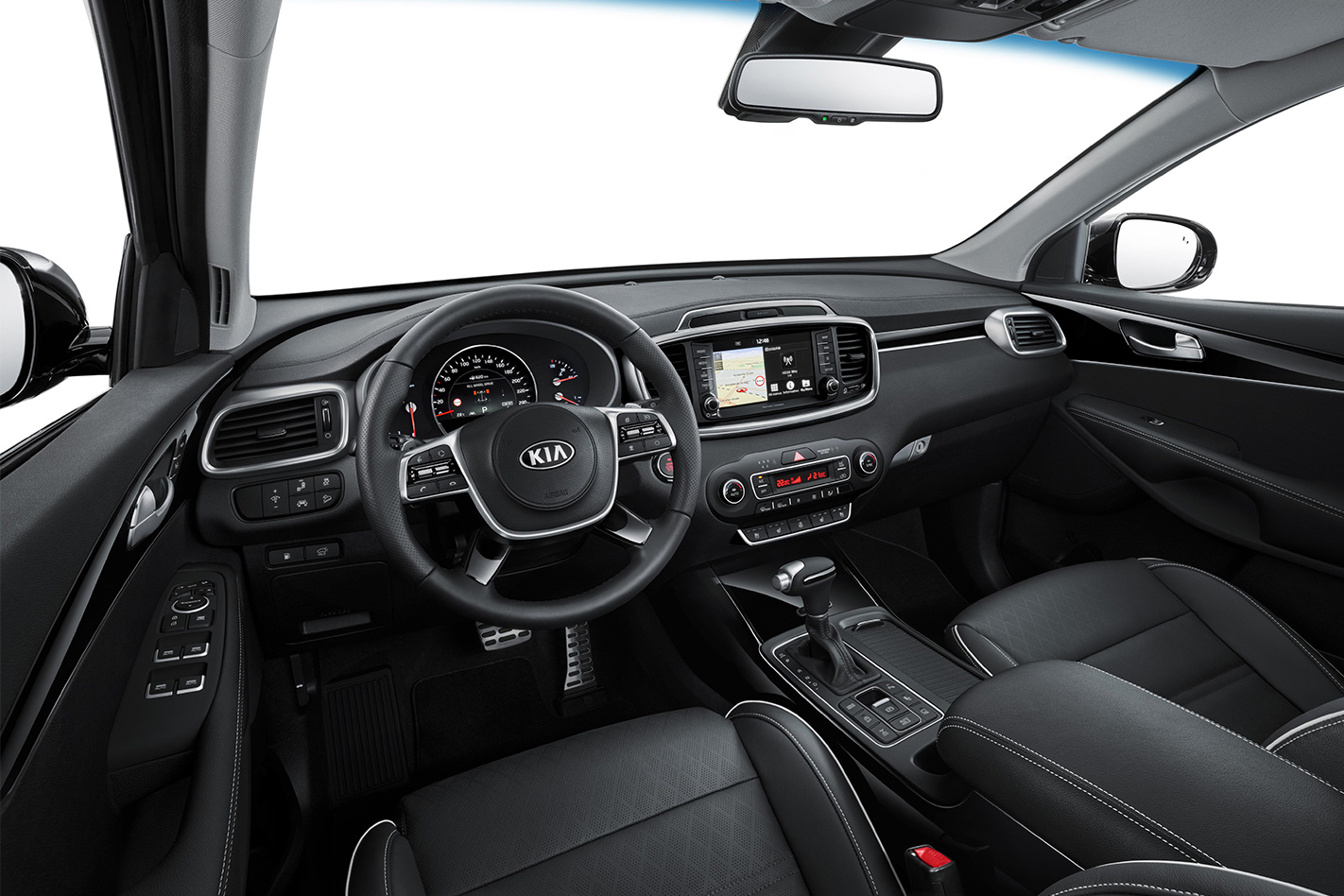
Infotainment is displayed on a new 8.0-inch touchscreen with in-built Tom Tom-powered navigation and Apple CarPlay/Android Auto connectivity, whereas the centre console packs a charger pad that will allow certain phones to be charged wirelessly.
Safety tech includes Kia’s latest DRiVE WISE advanced driver assistance system, which still lacks Automatic Emergency Braking, but brings Driver Attention Warning (DAW) that will alert the driver if it detects that they are distracted or drowsy, Lane Keeping Assist, High Beam Assist, and full LED headlamps with Dynamic Bending Light.
Performance enhancements come mostly via the new eight-speed auto that replaces the six-speed box, and there are rumoured tweaks to the 3.3-litre V6 petrol and 2.2-litre four-cylinder turbo diesel carried over from the current model.
WhichCar understands both engines will be coupled to the new gearbox, unlike in Europe where it will be a diesel-only affair.
The new transmission offers four driving modes, Eco, Comfort, Sport, and Smart, allowing the driver to alter powertrain and steering response to certain conditions. The new Smart Mode understands and anticipates the driver’s steering preferences, automatically switching between Eco, Comfort, and Sport modes accordingly.
The 2018 Sorento is expected to launch in Australia in October with a similar model line-up to now including the sporty range-topping GT Line variant. Local pricing and specifications will be revealed closer to that date.
IS A performance war about to break out among the trade utes? Volkswagen has flagged a future hi-po version of the V6 diesel-engined Amarok that pitches its workhorse head-to-head with the luxury-laden Mercedes-Benz X-Class.
The Volkswagen Amarok Aventura Exclusive concept, painted in stand-out Tumeric Yellow Metallic paint, hints at a 190kW version of the Amarok’s 3.0-litre V6 that, as well as having a 25kW power bump, adds an as-yet undisclosed lump of pulling power to the standard engine’s 550Nm. It will be shown at this month’s Frankfurt Motor Show.
The concept also hints at what Volkswagen aims to do with the Amarok, extending its appeal to cashed-up tradies in need of a showy set of wheels to mud-plug on the worksite on weekdays, and take the trailbikes out for a run on weekends. That includes a lockable aluminium – not plastic – load space cover, and an assisted parking function that will steer the 5.25-metre long ute into a shopping centre parking space.
There’s also a mechanical diff lock replacing the electronic one that will use the brakes to grab individual wheels to stop them spinning, sending drive to the wheels with the best traction.
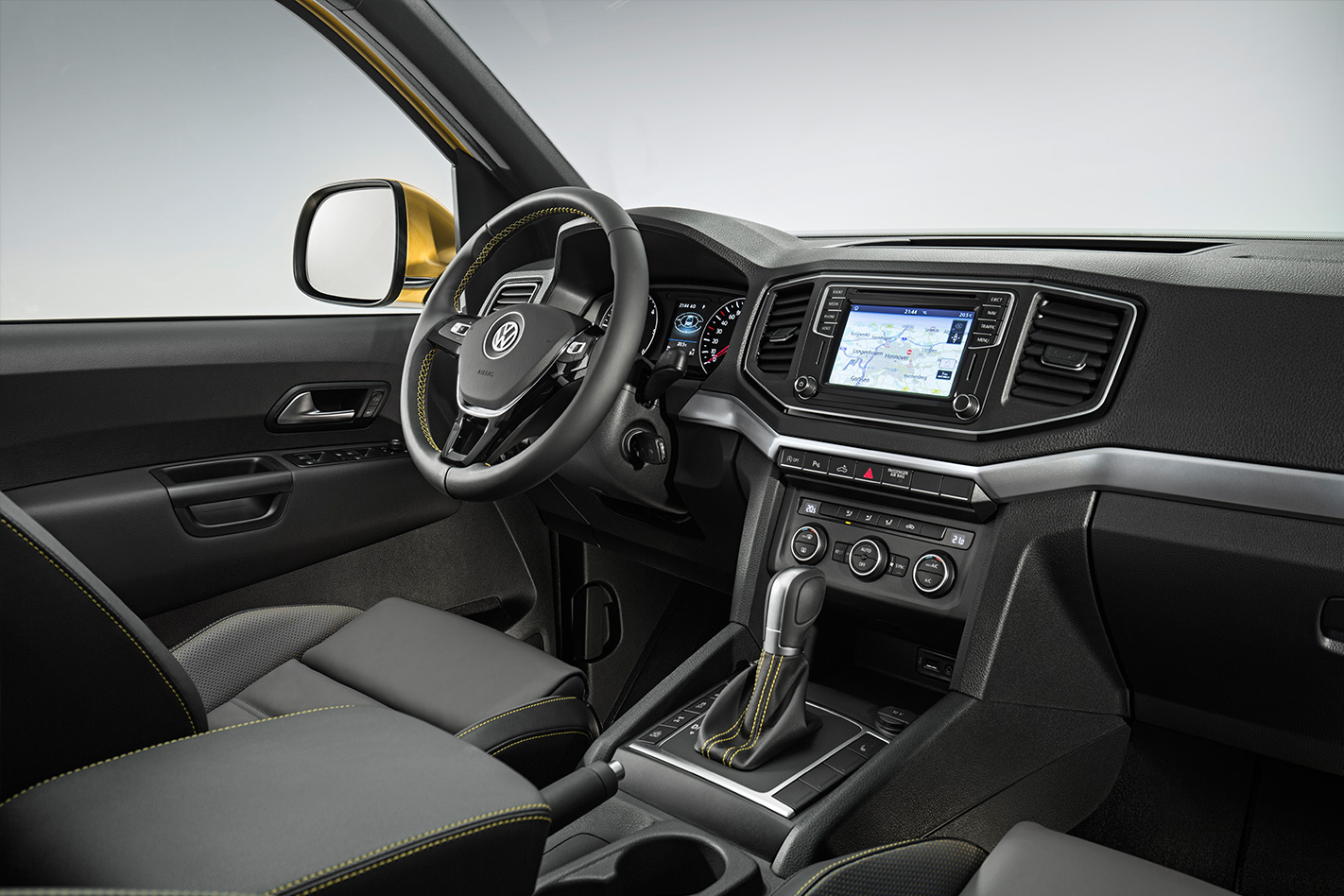
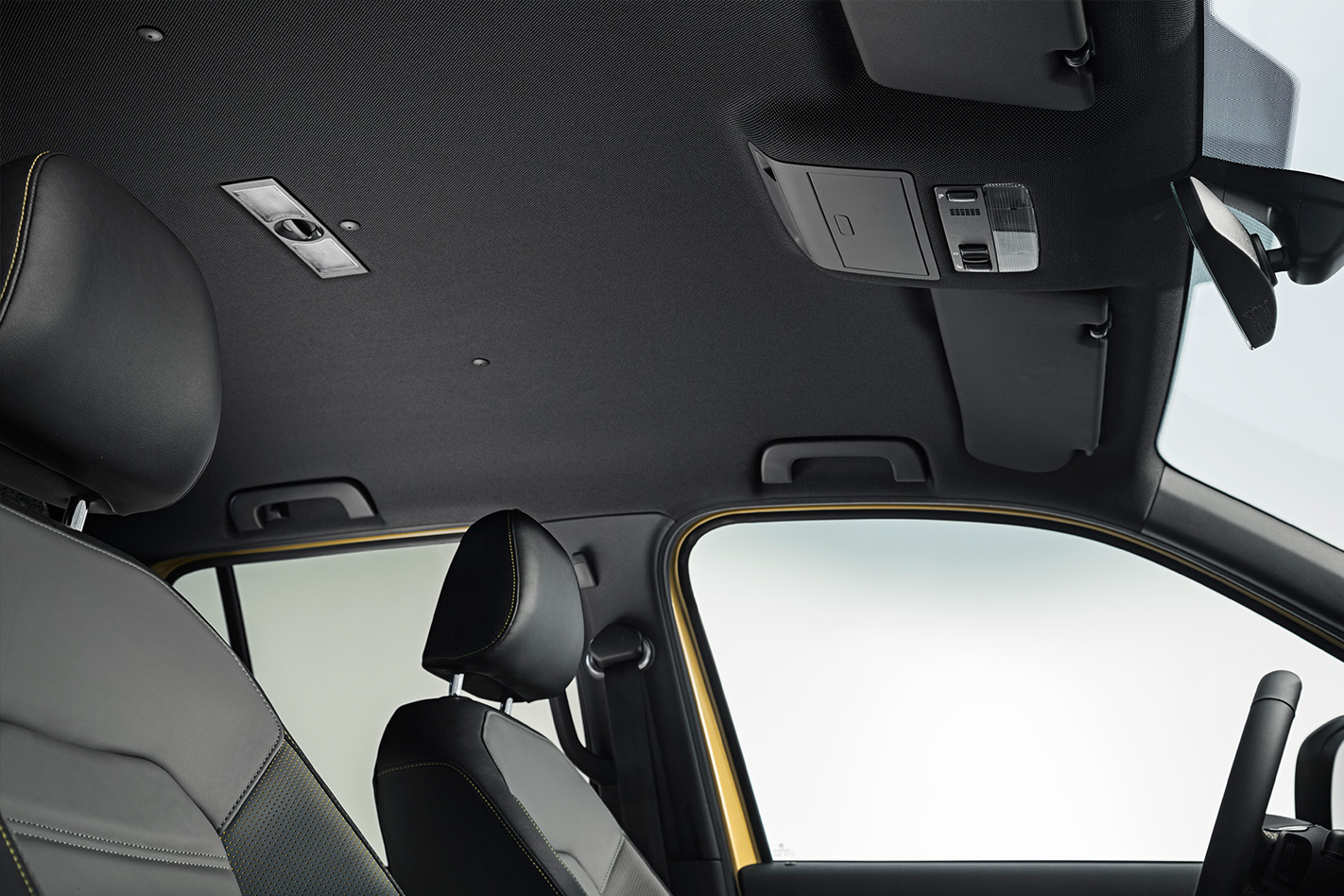
Inside, the concept features 14-way adjustable seats and a unique black headliner to tie in with the Aventura Exclusive’s titanium black interior with contrasting chrome-look trim.
The eight-speed auto equipped, permanent all-wheel-drive Amarok’s V6 will be the only six-cylinder engine trade ute on the Australian market until the arrival of the Nissan Navara-based Mercedes-Benz X-Class, expected midway through next year.
| Mercedes-Benz X-Class to VW Amarok: the rise of the luxury ute
The Benz-badged trade ute – the luxury car maker’s first global foray into the luxury-laden workhorse segment that accounts for about one in every five sales here – is expected to launch with a Renault-sourced four-cylinder engine featuring either single- or twin-turbo induction and paired with a seven-speed auto and part-time all-wheel-drive system.
However, rounding out the top of the range will be a version powered using a 190kW/550Nm Benz-sourced V6 featuring permanent all-wheel drive, a seven-speed auto, and more off-road friendly low-range gearing.
Volkswagen’s V6-engined Amarok is one of Australia’s most expensive trade ute, with buyers handing over $67,990 for the V6 Ultimate version; only the $68,990 dual-cab version of the 150kW/4230Nm 4.5-litre V8-engined Toyota Landcruiser 70 Series costs more.
Volkswagen and Mercedes-Benz are not likely to be the only brands to blend show with go with their trade ute line-ups. Ford is believed to be close to launching the Ford Ranger Raptor in Australia, potentially featuring a EcoBoost V6 petrol engine.
The Kmart Holden Commodore VY V8 Supercar driven by Greg Murphy in 2003 is currently up for sale.
But to understand how special the car is, context is important.
In 2003, John Bowe watched on as Greg Murphy tore up The Mountain hot on the heels of his shootout lap time during the fight for pole.
Back then, JB’s 2:07.956 lap time was damn fast, and enough to put him at the front of the pack for the start of the 1000.
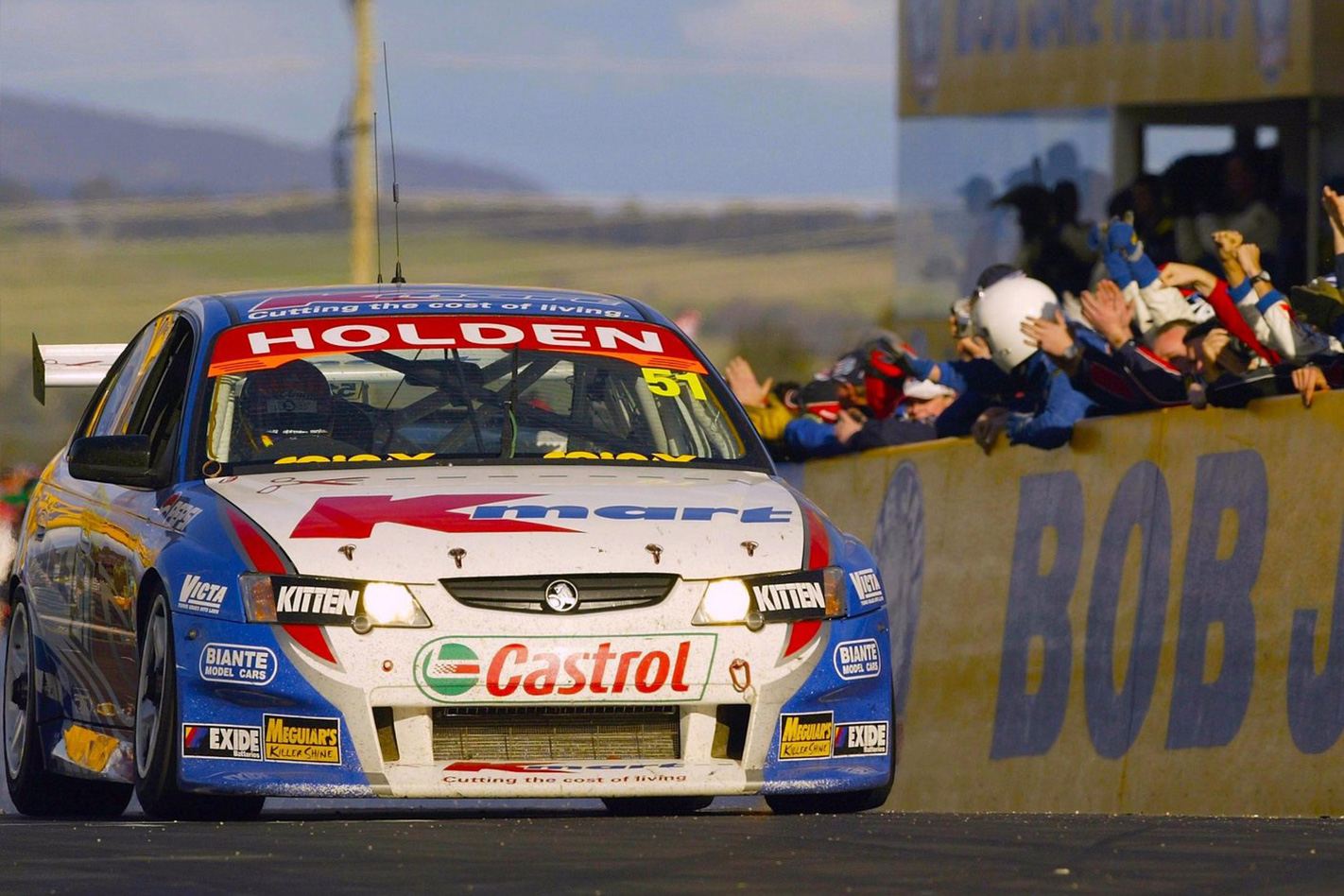
But when Murphy tipped the VY V8 Supercar into the final turn with 2:00.000 on the lap timer, everyone knew it was going to take him less than seven seconds to reach the line.
In just 2:06.859, Greg Murphy cemented his place at the front of the grid for the 2003 Bathurst 1000, and in Aussie motorsport history with what is known as The Lap of the Gods.
At the time, that was the quickest anybody had gone around Panorama. And that record stood for a long, long time.
And now, that car is for sale.
The listing, in the classifieds of website V8 Sleuth, says the car has been restored to its former glory, and wears its Kmart livery with every detail immaculate.
The catch? The price is currently unannounced, though MOTOR asked Ric, who is selling the car in behalf of its owner, how much the owner would like to see it go for.
Estimates are currently hovering in the million-dollar region.
What has been confirmed, by Holden Motorsport officially, is that the car is genuine. In a Facebook post yesterday, Holden alerted followers to the fact that the car is for sale.
It’s rare that a chance to own such an iconic part of motorsport history arises, so we’re sure it won’t be long until the car is snatched up.
MINI has revealed a hardcore, motorsport-inspired concept car ahead of its public debut at the Frankfurt Motor Show next week, for all those fans that feel the British brand’s line up has gone a bit soft.
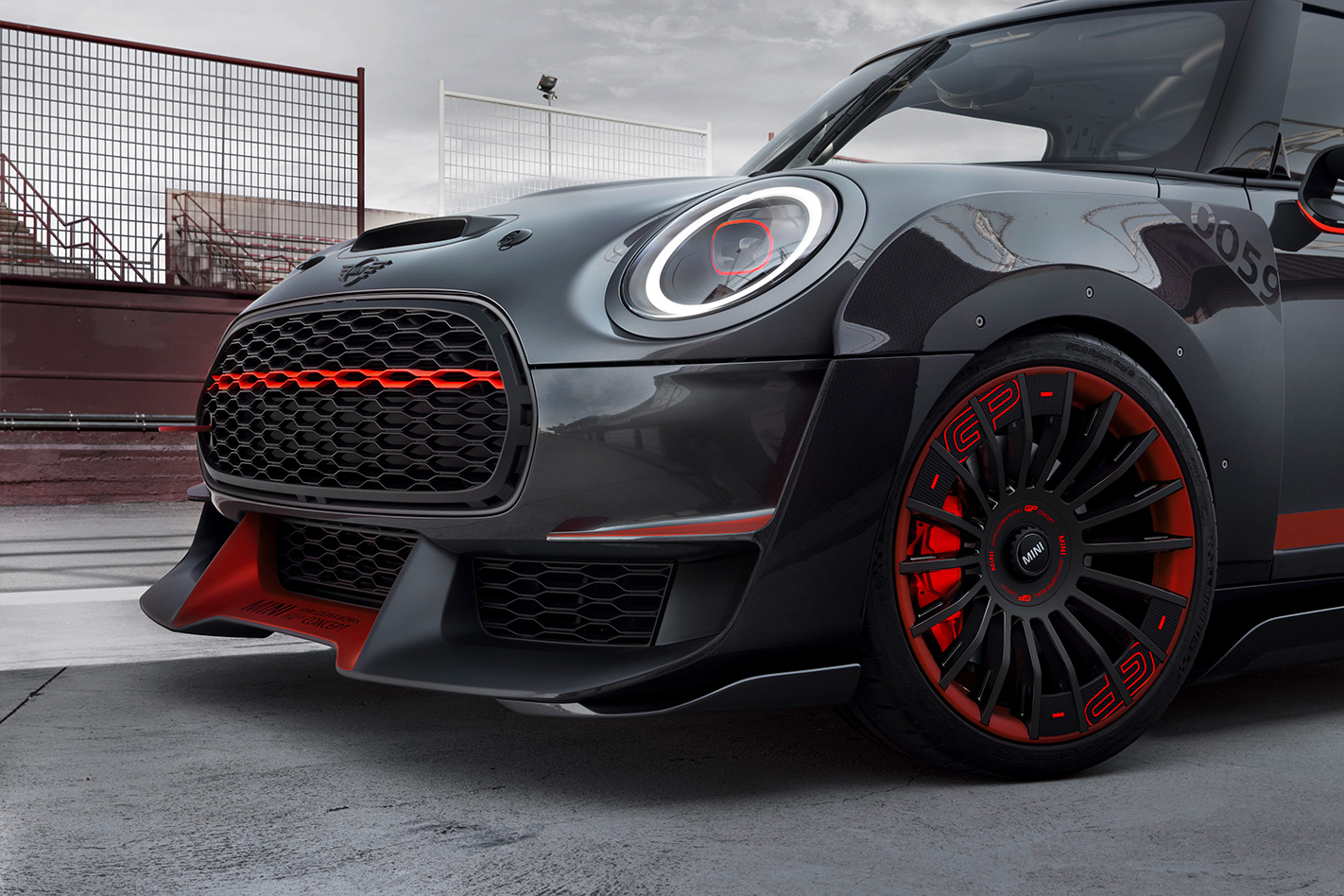
With a stripped-out interior, racing roll-cage and seat, along with aggressive aerodynamic additions, the Mini GP concept is one tough looking hatch and the polar opposite to Mini’s electric concept which will also roll out at the show.
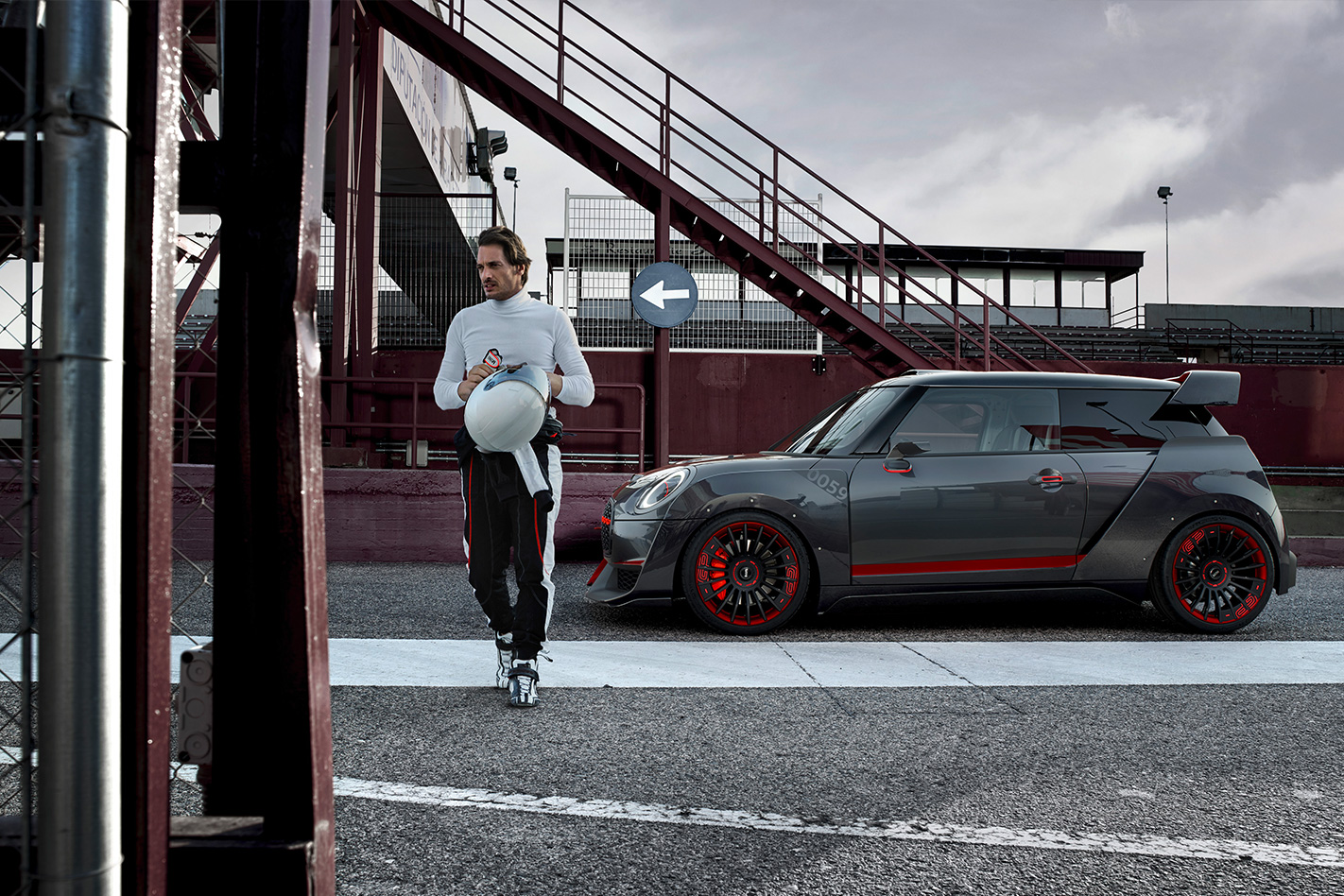
The concept is wider and lower than a standard Mini, with large front and rear spoilers, and carbonfibre liberally applied for weight minimisation.
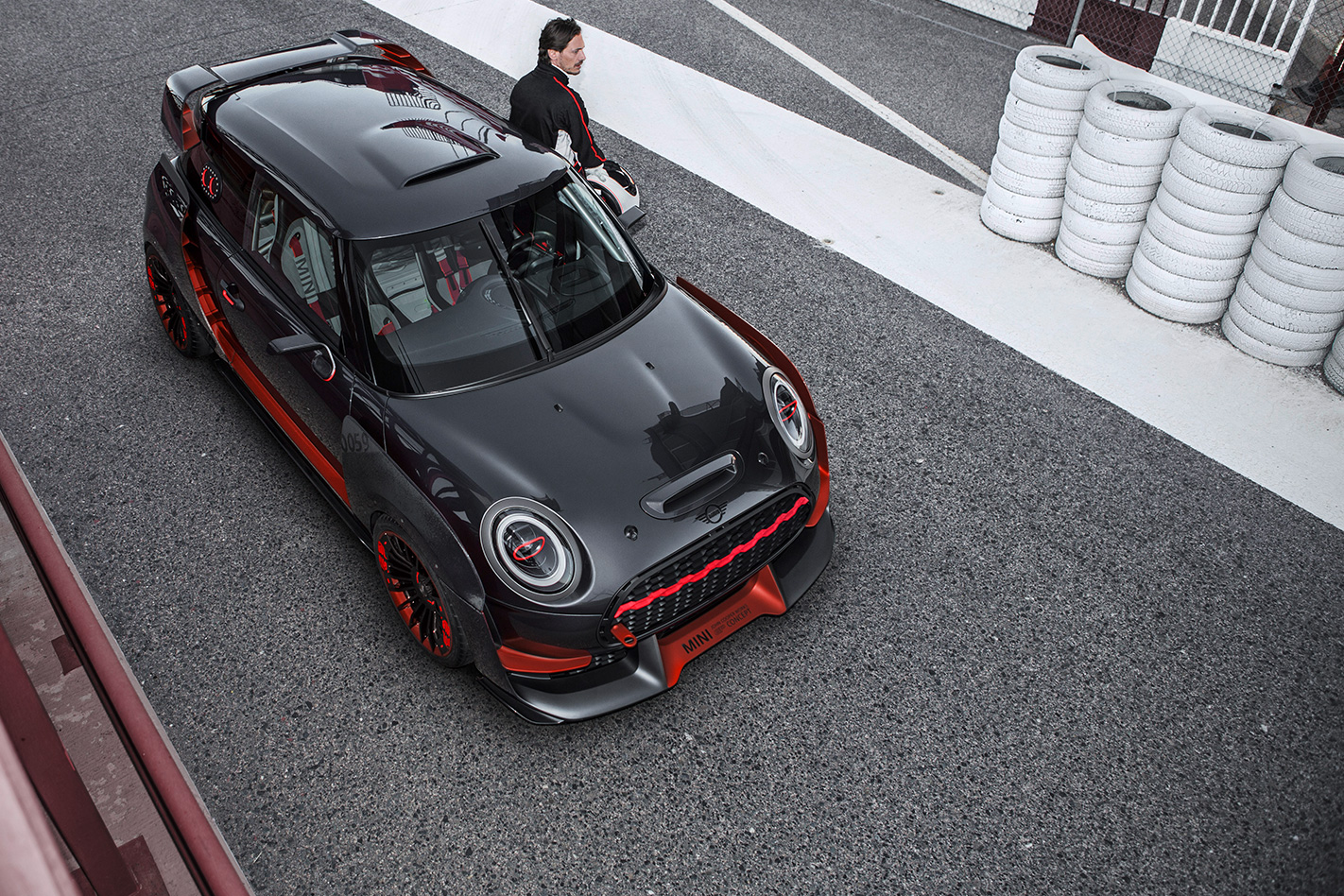
The concept is the first iteration of the GP badge on a Mini since the 2012 John Cooper Works GP and 2006 Cooper S with John Cooper Works GP Kit, which were both limited to production of 2,000 vehicles.
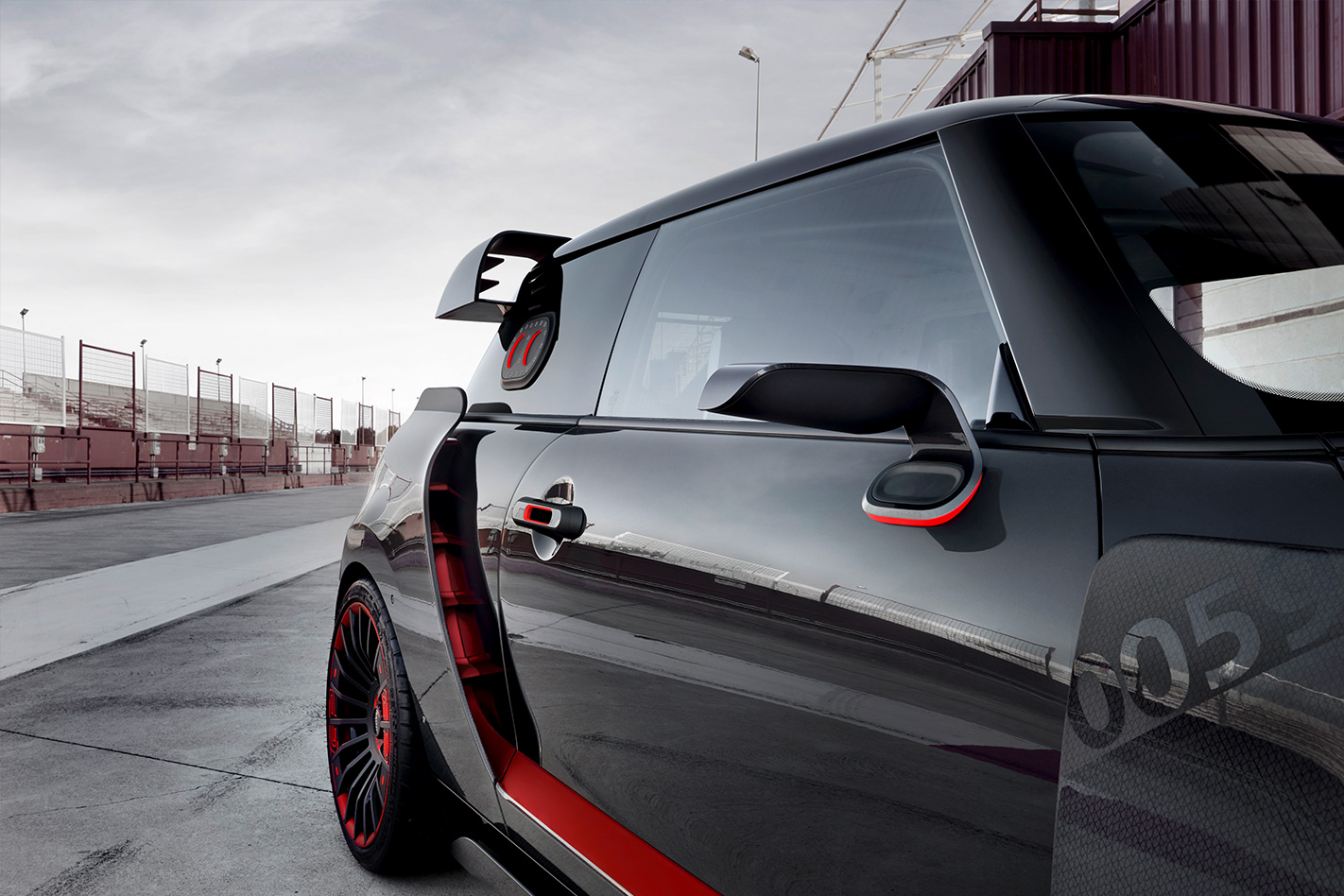
“The Mini John Cooper Works GP Concept is all about the unfettered feeling of driving and levels of performance found in motor sport competition,” says Peter Schwarzenbauer, Member of the Board of Management of BMW AG, responsible for MINI, Rolls-Royce and BMW Motorrad.
“This is driving fun in its purest form.”
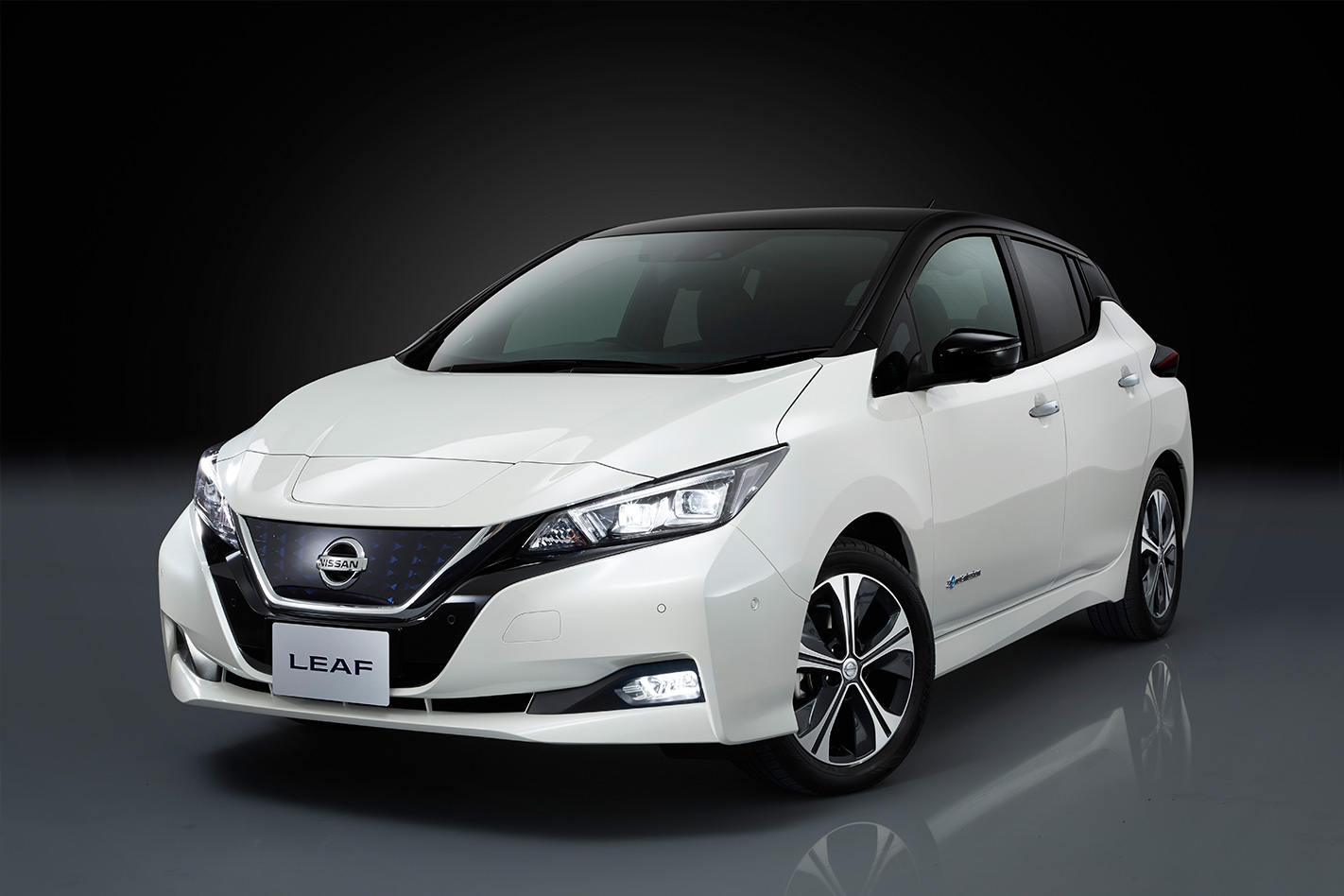
THE 2017 Nissan Leaf battery-electric vehicle has been unveiled in Tokyo with a 400km range in standard form – giving it slightly longer legs than a Tesla Model 3.
What’s more, a longer-range variant of the second-generation Leaf will arrive some time in 2018 – though specific details of that model have yet to be announced.
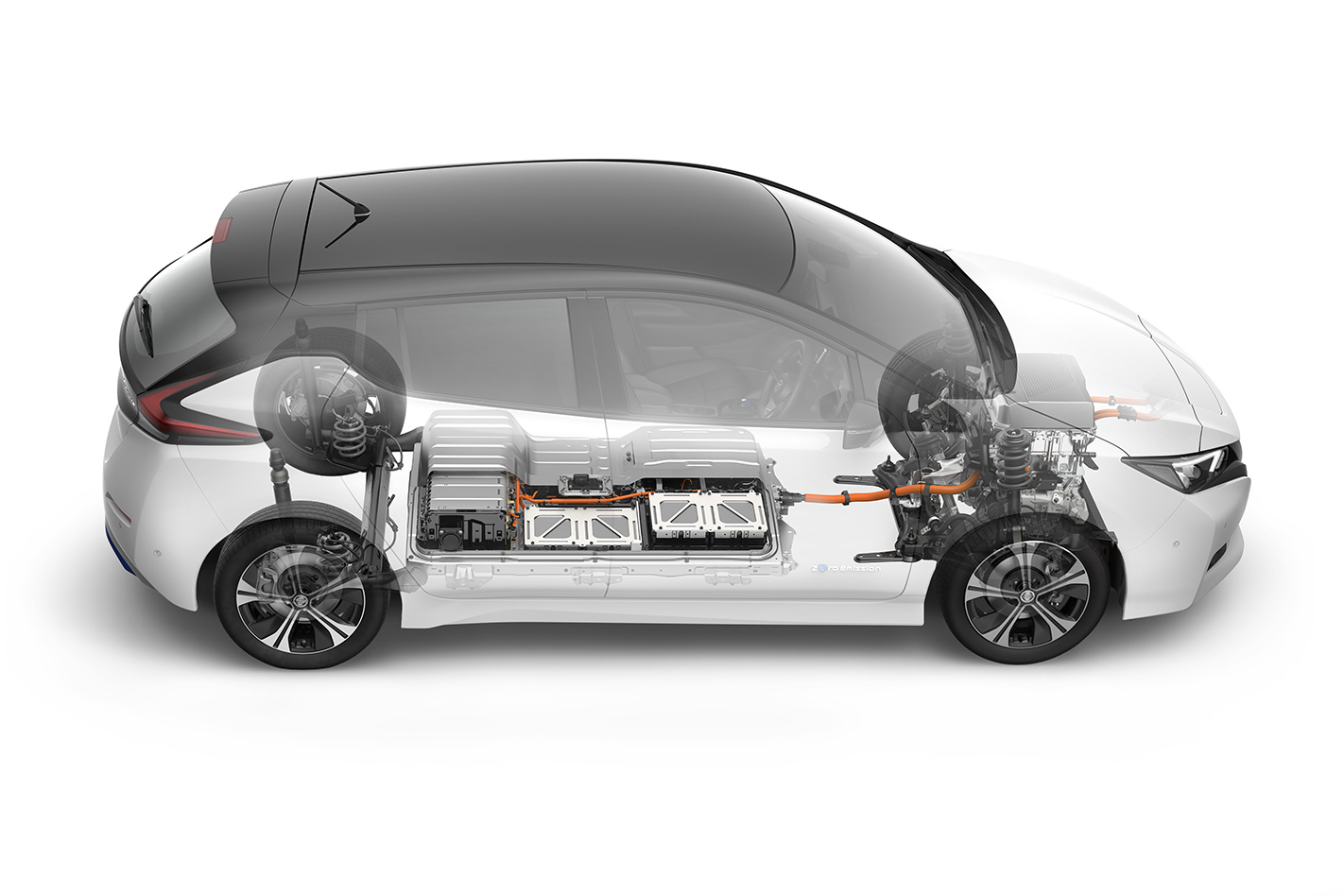
The Leaf’s 40kWh battery pack is the same physical size as the outgoing car‘s box of volts, with advances in the construction of its laminated lithium-ion cells being the key to unlocking that 400km range. All up, Nissan claims the energy density of the Leaf’s battery has improved a significant 67 percent.
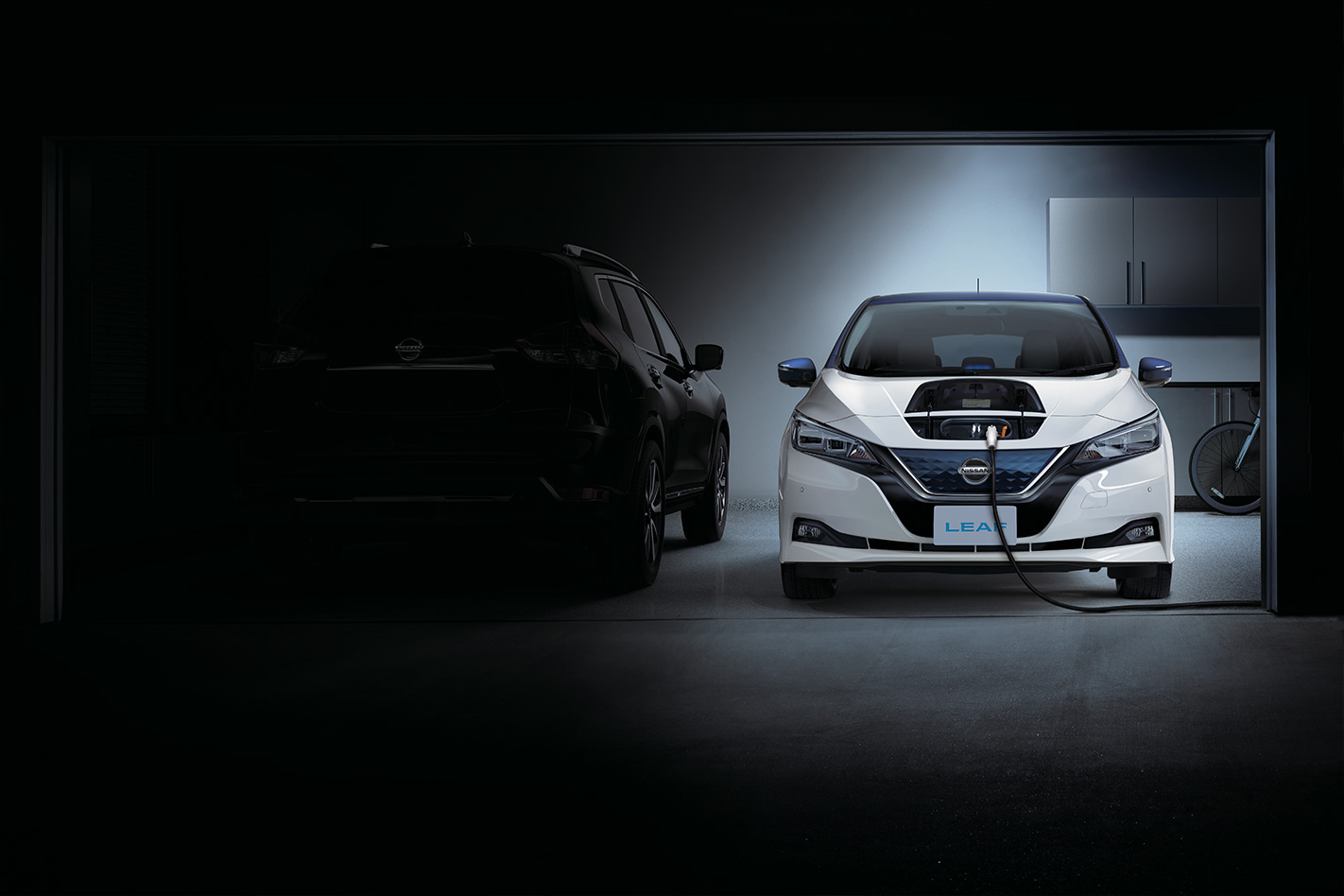
As for how long it takes to fully charge, Nissan claims a 16-hour charge time on a 3kW charger, eight hours on a 6kW charger, and if plugged into a fast charger, only 40 minutes to reach 80 percent capacity. What’s more, Nissan says it’ll be possible to use the new Leaf’s capacious battery to power homes, with residual battery charge able to flow back into a home’s power circuit for domestic use. The battery would then be charged up later at night, using cheaper off-peak energy.
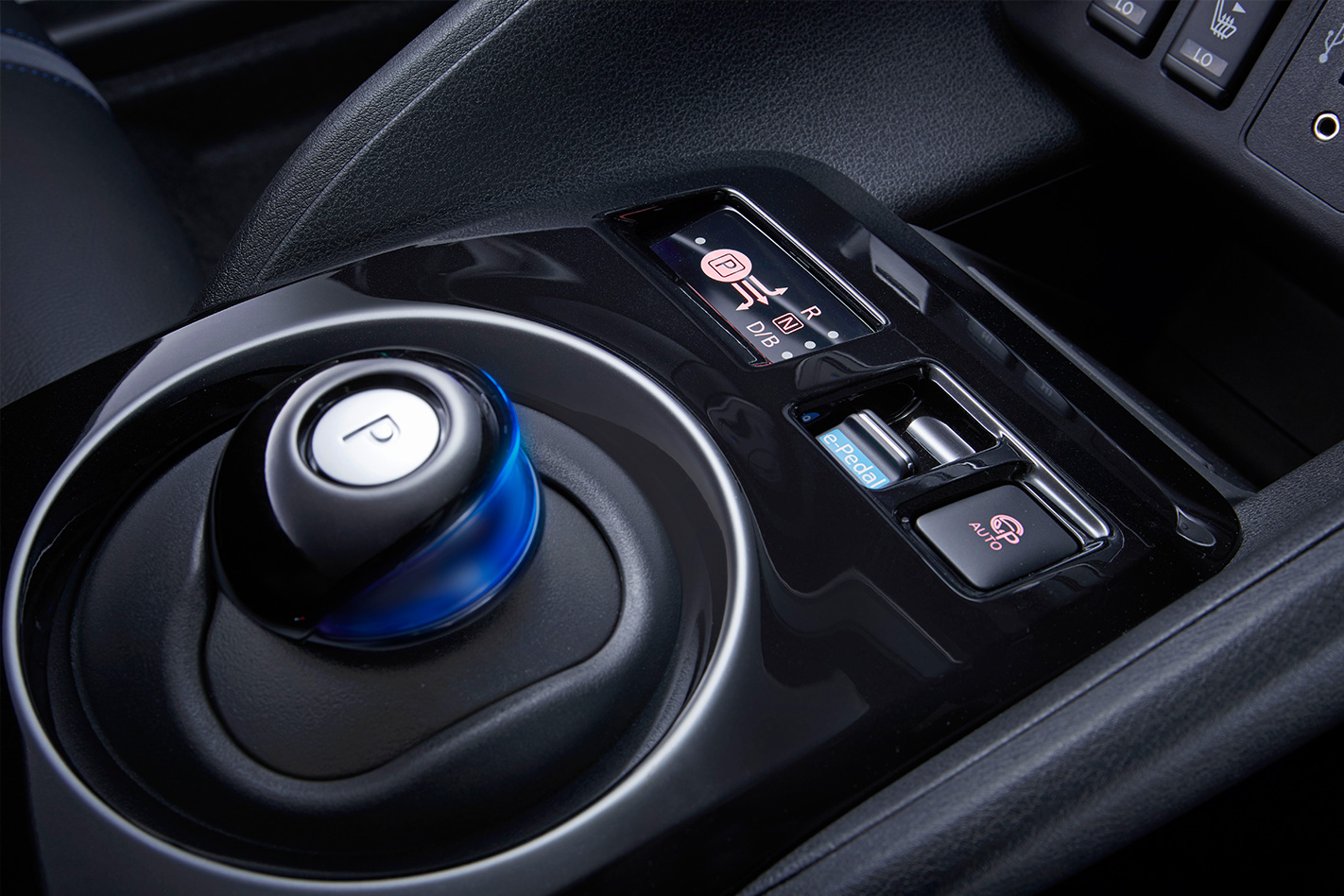
Nissan says accessing that power will be easier, too, thanks to what it terms the e-Pedal. Similar to the high-regen function of the BMW i3‘s accelerator pedal, the Leaf’s e-Pedal allows the driver to brake the car just by modulating pressure on the accelerator. By increasing the force of the car’s regenerative braking as the pedal is lifted, the need to shift your right foot to the brake pedal is minimised.
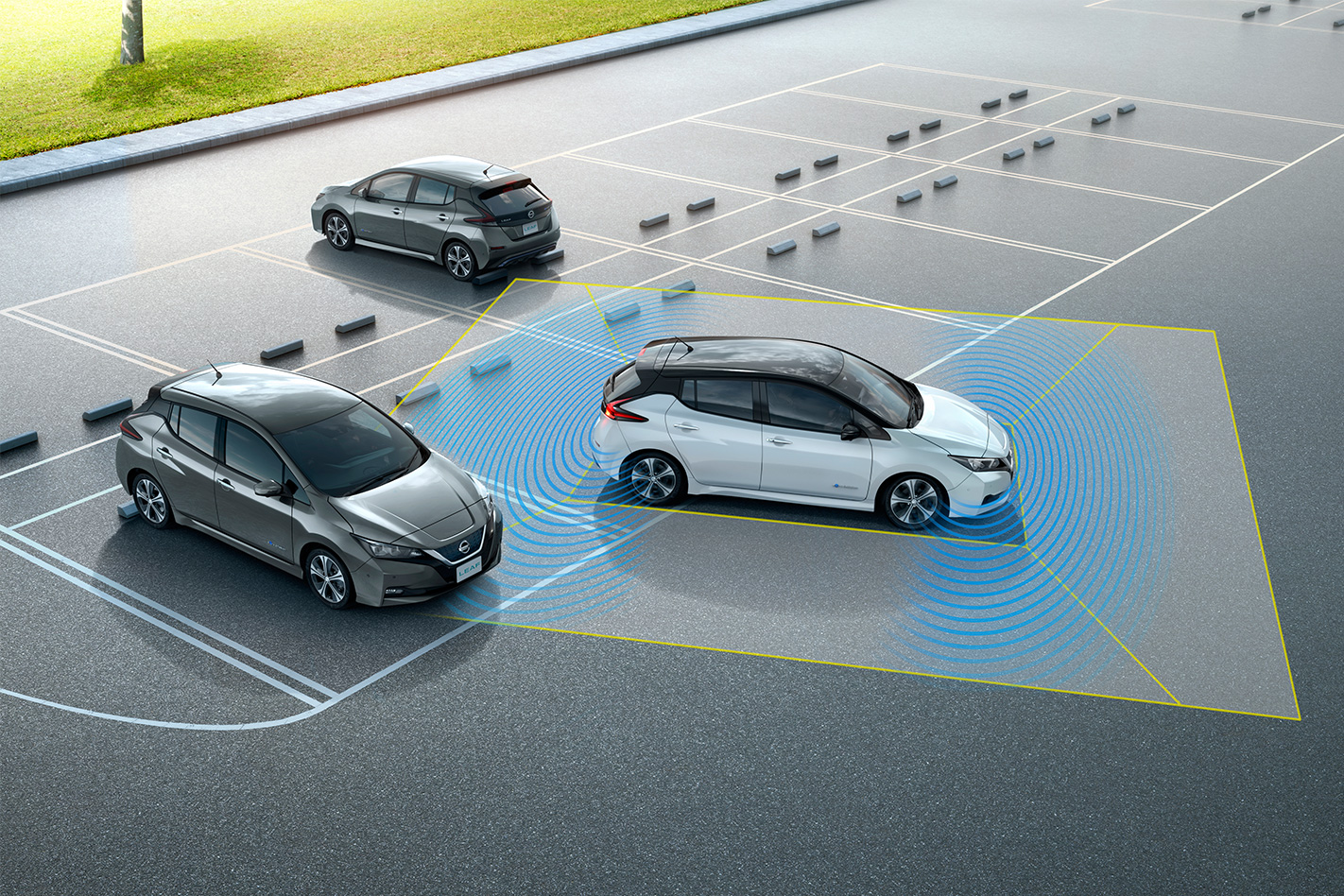
ProPilot is the centrepiece of that suite. As the next evolution of active cruise control, ProPilot maintains a pre-set gap to traffic in front and keeps the car centred within its lane. Active between 30km/h and 100km/h, it’ll work right up until traffic comes to a full stop, and will resume once the driver presses the ProPilot button again or taps the accelerator pedal.
The Leaf’s styling has become more conservative, with the conspicuous and blobby form of the first gen giving way to crisp creases, triple-tone paint finishes and a floating roof graphic. It may not be as sleek as the IDS concept shown at the 2015 Tokyo Motor Show as a preview of the new Leaf, but the more conservative design should prove less polarising.
Seven years on from the first-generation Leaf’s debut, and five years after that model went on sale in Australia, the new Leaf will roll out over core markets including Japan, the US and Europe before arriving in local showrooms sometime around the fourth quarter of 2018. Pricing, a key factor in whether the Leaf finds more traction among buyers in its second generation than in its first, has yet to be announced.
FANS of Hyundai’s standalone luxury brand have caught an early glimpse of the Genesis G70 sedan before the car’s global reveal at a special event in Seoul next week.
Instagram user car_photographer_yjs has scooped the slick new machine unloading for what is believed to be a photo shoot. Just a single grainy image was shared on social media, leaving far more detail to be revealed at the official unveiling. However, the early sneak peek clearly shows that the G70, which shares some of its mechanical underpinnings with the Kia Stinger, has the chic styling to bump gloves with a host of key rivals in the segment.
With a sophisticated coupe-like roofline, large fine-spoked alloy wheels, twin oval exhaust pipes housed in an aerodynamic splitter, red brake callipers, and vents aft of the front wheel arch akin to the BMW 4 Series Gran Coupe, the G70 is making its competitive intent patently clear.
The model should also put other players in the segment on notice, including the Infiniti Q50, Mercedes C-Class, Audi A4 and Jaguar XE.
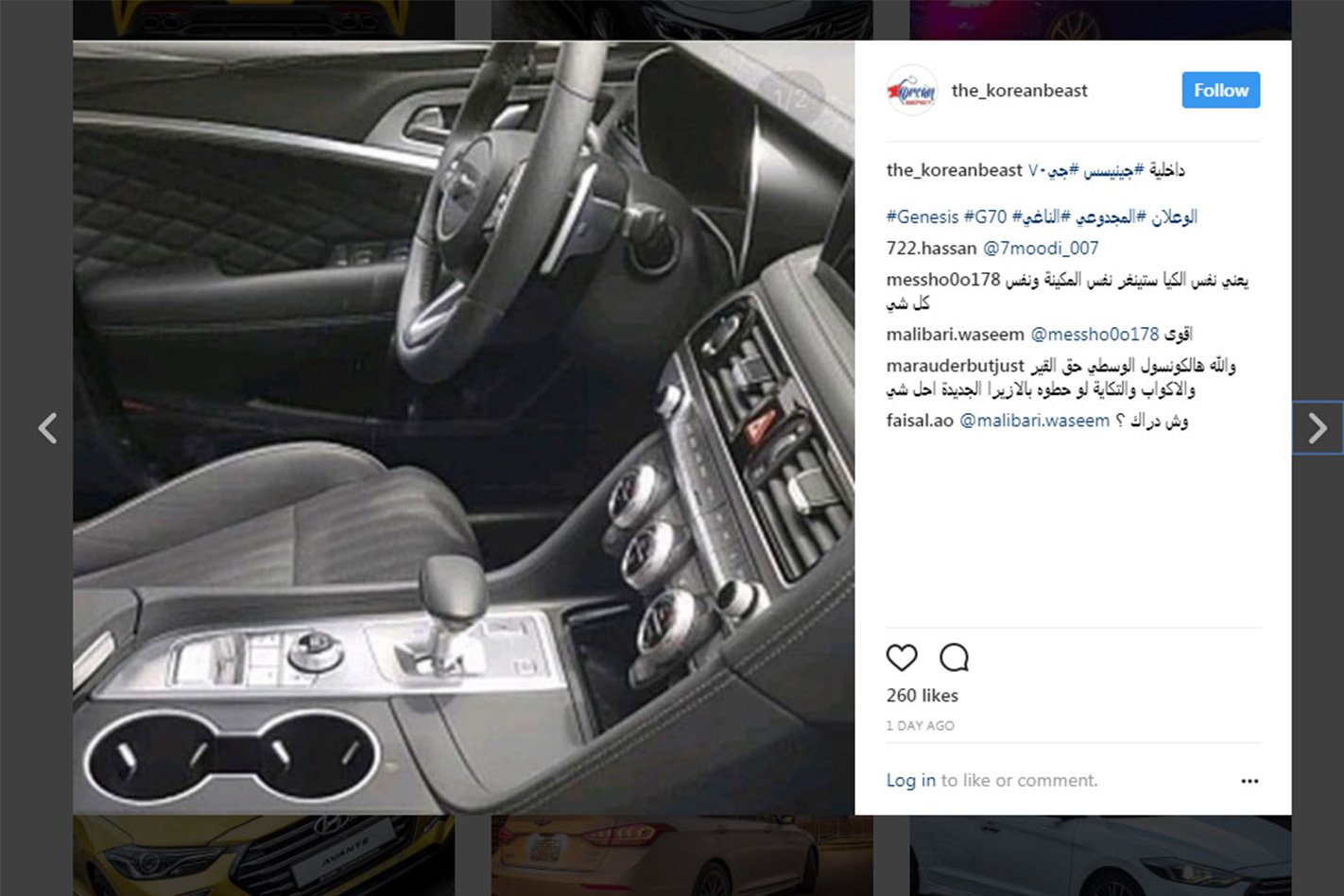
Sharing much of the Kia Stinger’s mechanicals, including its potent 272kW 3.3-litre turbo V6 engine and rear-drive architecture, the G70 should have the performance credentials – and looks – to put up a strong fight in the executive sports sedan market.
It’s more than just a re-skin of the Kia, though. The G70 sits on a shorter wheelbase, is a conventional hatch rather than a sedan and boasts a greater emphasis on luxury, meaning its flavour should be clearly distinct from that of its compatriot.
Detailed dimensions and performance figures will have to wait, but some reports suggest the G70 could be lighter than the Stinger cousin which could result in a faster zero to 100km/h acceleration than the Kia’s 5.1sec dash.
It should also have the dynamic ability to match the under-bonnet poke; after all, some of the development work has been on Australian roads, judging by the number of images of heavily camouflaged G70s that Wheels readers send in each month.
The performance-focussed addition to Hyundai’s luxury brand will come to Australia, but exact dates are still a way off – a rough estimate of early 2018 is the best indication. More details and a full reveal of all the G70’s angles will be offered on September 15.
A MELBOURNE council has approved a year-long trial of a 30km/h speed limit to deter motorists from using back roads as a short cut.
Yarra City Council – the same one that recently controversially abolished Australia Day celebrations and as a consequence was stripped of its rights to hold citizenship ceremonies – voted last night to endorse the trial subject to the state’s roads authority, VicRoads, jumping on board with funding. The trial will be run in conjunction with Monash University, which will study how well the lower speed limit works.
Yarra City spokeswoman Brooke Colbert told Wheels the trial had been three years in the making, and was sparked by demands from inner-city residents calling for some form of traffic management after drivers started using side streets as a rat run to avoid traffic snarls.
“We’ll run a trial for 12 months, and we’ll make a decision after that whether it stays,” Colbert said. “It will just be a localised trial, so it won’t include any arterial roads.”

Maribyrnong City Council in Melbourne’s west has also proposed introducing a 30km/h speed limit around Footscray’s CBD – a much broader area than the Yarra City plan – as well as school zones that already have a 40km/h limit.
The Federal Government’s Australian Road Deaths Database shows 100 people have died in 40km/h speed zones throughout Australia since 2011. Only 37 of those have involved a pedestrian, and 12 have involved either a truck or a bus.
Colbert said not all the city’s residents supported the trial, although councillors passed plans to commit $25,000 to the cost of the trial unanimously.
She said the trial would not be part of a wider push to introduce more 30km/h speed zones to other streets, particularly arterial roads.
What stands out?
The Honda Accord feels solid and well built, has ample interior space for a medium sedan, and is very quiet to ride in. All Accords are very well equipped, and come with an active safety suite that includes autonomous emergency braking.
What might bug me?
Reaching for a conventional hand brake lever – or an electric park brake switch – and discovering there isn’t one. The foot-operated park brake will take some getting used to and may never be as intuitive to operate as these more conventional brakes.That you can’t carry skis for a trip to the snow while your small child rides in the back. Nor can you carry any other long item – a lengthy Ikea flat-pack, for example – with any rear-seat passenger. You can fold down the Accord’s rear seat-back, so that cargo can protrude from the boot into the cabin, but it is all or nothing: the entire rear cushion has to go down (rather than just one side of a split-folding seat).
What body styles are there?
Four-door sedan only.The Honda Accord drives its front wheels. It is classed as a medium car, lower priced.
What features do all Accords have?
Dual zone climate control (which lets you set different temperatures for each side of the cabin). A multi-angle reversing camera, and parking sensors front and rear.Adaptive cruise control, which can match your speed to slower cars ahead automatically – resuming your pre-set speed when the way is clear.A multimedia system with a seven-inch colour touchscreen, an AM/FM radio, a CD player, Bluetooth connectivity for phone calls and audio streaming, HDMI and USB inputs, six speakers and a bass-boosting sub-woofer. Satellite navigation.Support for Apple CarPlay and Android Auto, which allows you to display some apps from compatible smartphones on the touchscreen and control them from there (or with your phone’s voice recognition).A smart key and a start button, which lets you unlock and start the car while the key resides safely in your bag or pocket.Part-leather seat trim, power-adjustment and heating for both front seats, and a memory for the driver’s seat (which makes it easy to restore your adjustments after a companion has driven the car).Very bright, long-lasting LED headlights that turn on automatically when it’s getting dark, and switch themselves to low beam for oncoming vehicles. LEDs in the daytime running lights and taillights. Windscreen wipers that operate automatically when it rains.A power operated sunroof, roll-up sunshades for the rear side windows, and a power-operated sunshade for the rear window.Eighteen-inch wheels made from aluminium alloy, which look good without the plastic covers found on some lower priced cars. A full-size spare tyre on a matching alloy spare wheel. A tyre pressure monitor, which warns you if a tyre has lost air (this can give you extra time to get a slow puncture seen to).Autonomous emergency braking, along with lane-keeping assistance, and road-departure mitigation, and Honda’s Lane Watch blind-spot monitor.Six airbags. Anti-lock brakes, and electronic stability control – which can help you control a skidding car. (For the placement of airbags and more on Accord safety systems, please open the Safety section below.)Every Honda Accord carries a five-year warranty, with no limit on distance.
Which engine uses least fuel, and why wouldn’t I choose it?
The 2.4-litre petrol four-cylinder supplied with the Accord VTi-L uses the least fuel, consuming 8.2 litres/100km on the official test (city and country combined). It has enough power for city driving and comfortable highway cruising, but you have to work it hard if you want to overtake swiftly.The main reason you might not choose this engine is that you want more thrust. The other available engine is the 3.5-litre petrol V6 that comes with the more expensive Accord, the Accord V6L. It uses about 15 per cent more fuel but has half again as much power, which makes overtaking and climbing hills easy.Every Honda Accord has a conventional automatic gearbox. The gearbox in four-cylinder Accords has five ratios while that in the V6L has six – which is part of the reason why the V6 Accord adds so much performance for such a small fuel penalty.(Power outputs and all other Honda Accord specifications are available from the Cars Covered menu, under the main image on this page.)
What key features do I get if I spend more?
Spending as little as possible on an Accord will get you an Accord VTi-L, which has the less powerful, four-cylinder, engine, and the long list of features common to both Accords.Spending much more for the Accord V6L gets you the much more responsive V6 engine and six-speed gearbox, as described above, and sporty exterior touches such as a rear lip spoiler and twin chrome exhaust outlets. The front passenger seat is adjustable eight ways rather than four, but features otherwise match those of the Accord VTi-L.
Does any upgrade have a down side?
The only upgrade is to the much stronger V6 engine, and its downsides are higher fuel consumption and – more significantly – a much higher initial cost.
How comfortable is the Accord?
The Honda Accord’s cabin is invitingly finished and it is also invitingly equipped. In any Accord the ergonomics are excellent. The wheel adjusts for height and reach and the driver’s seat power-adjusts eight ways, and so it is easy to find a comfortable position up front.On smooth roads, the Accord is impressively quiet inside, isolating occupants terrifically well from tyre, wind and suspension noise and vibration. What seems to be expertly engineered sound-deadening is augmented by an active noise-control system that works on a similar principle to noise-cancelling headphones, softening undesirable sounds with reverse-phased audio signals.The only intrusion is the note of the 2.4-litre four-cylinder in the VTi-L when you’re working it to climb a big hill or overtake. It’s not an altogether unpleasant noise, but it’s out of place in an otherwise refined car. The V6 is quieter and smoother, and because it’s more powerful it doesn’t have to work so hard.Roughly surfaced roads challenge the Accord’s suspension tune. At low speeds it feels too sensitive to sharp-edged bumps and bigger lumps, responding with a vertical jiggle that you might find annoying. Unfortunately, this low-speed firmness does not pay off at high speeds with superior body control. The Accord feels wallowy over undulations at highway speeds, sometimes settling into just the sort of floating vertical motion that can make passengers feel car-sick.
What about safety in a Honda Accord?
The Accord is very well endowed with safety kit, with high points including anti-lock brakes, stability control, six airbags, a multi-angle reversing camera, tyre pressure monitoring, auto-dipping headlights, autonomous emergency braking, and lane-keeping assistance. It is a broad-based package that helps you avoid other vehicles (and bystanders) and maintain control of the car, while looking after you if you are in a crash.The airbags are in the usual places: two directly in front of the driver and passenger; one on the outer side of each front occupant to protect the upper body; and a curtain airbag on each side protecting the heads of those in both seat rows.The Accord’s auto-braking system is camera-based, and effective under about 100km/h. It warns you of obstacles in front of the car, typically a slower vehicle or a pedestrian, applies partial braking as a wake-up if you do not react, and initiates an emergency stop if required.The Accord has two lane-keeping systems, again camera-based. One, titled simply Lane Keep Assist, is designed to take some stress out of long highway stretches by self-steering the car. The second, titled Road Departure Mitigation, is intended to protect you from drifting off the road altogether – from fatigue, for example. Again, it will attempt to steer you gently out of trouble.The Accord also has a blind-spot monitor that Honda calls LaneWatch. This presents, on the car’s central multimedia monitor, a view that you would expect to get from a camera pointing back along the left side of the car from out in front. It helps you see whether it is safe to move left, and works automatically when you operate the left indicator (or you can turn it on by pressing a button on the end of the stalk).The Australasian New Car Assessment Program (ANCAP) has awarded the Honda Accord five stars for safety, its maximum, most recently in October 2014. The Accord achieved perfect scores in the pole and side impact crash test elements, on its way to an overall score of 35.79 out of 37.
I like driving – will I enjoy this car?
If you enjoy having a nicely presented and built interior, with plenty of convenience and safety equipment, in a car that cruises very quietly, you might like the Honda Accord. However, you might also wish for ride comfort that matched the cabin serenity: in the Accord, that is lacking.If your driving pleasure comes from crisp steering and handling, and potent, sonorous engine performance, you won’t enjoy the Accord so much. Certainly, not as much as you would enjoy a Mazda6, a Ford Mondeo, a Skoda Octavia, a Hyundai Sonata, a Kia Optima, or a Volkswagen Passat.The Accord’s electromechanical power steering is resolutely uncommunicative. The soft, wallowy suspension behaviour at medium and high speeds detracts significantly from driver involvement and satisfaction, just as it removes ride comfort.The 2.4-litre four-cylinder engine is smooth, but when accelerating hard it is intrusively noisy – which is grating in the otherwise eerily hushed cabin. However, it’s a willing worker, and a sport mode and manual gearshift paddles help you inject some enthusiasm and extract all the available power, despite the outdated five-speed automatic.The 3.5-litre V6 is a smooth, refined and powerful engine that makes the Accord considerably nicer to drive, and it brings a more decisive automatic gearbox with six ratios. However the steering and handling shortcomings remain in the Accord V6L.
How is life in the rear seats?
The Accord’s back seat offers generous leg room, good under-thigh support, and lots of head and shoulder room, which makes it comfortable for two and spacious enough for three.A slightly raised seat cushion gives those in the back a good view forward and out of the side windows. The backrest is perhaps a bit too reclined for optimum comfort.Back-seaters get their own air-conditioning vents in the rear of the centre console.Just as in the front, it is very quiet in the back of the Accord.
How is it for carrying stuff?
The Honda Accord’s 457-litre boot is on the small side compared with other medium sedans. The Skoda Octavia (568 litres), Subaru Liberty (493 litres) and Mazda 6 (474 litres), for example, have bigger boots. But while it cedes space to many of the alternatives, the boot is still big enough for a stroller and some overnight luggage.The single fold-down rear seatback (rather than the usual 60-40 split fold) brings the ability to carry larger or longer items, but only when the back seat is not needed.
Where does Honda make the Accord?
The Honda Accord is built in Thailand.
What might I miss that similar cars have?
Perhaps the terrific blend of effortless power and excellent fuel economy you get with a smaller turbocharged petrol engine, such as those available in the Volkswagen Passat and Skoda Octavia.If you expect to do a lot of highway driving, perhaps lower fuel use and a longer range from a turbocharged diesel, also available in the Passat, the Mazda6 and the Ford Mondeo, for example.Possibly the loading ease of a liftback (rather than a conventional sedan boot), like you get with the Octavia or a Mondeo sedan.An even longer warranty: Kia provides a seven-year warranty with its Optima.Maybe the poor-weather grip and stability of all-wheel-drive, which you can have in a Subaru Liberty or Levorg.Among other cars worth considering are the Toyota Camry and Hyundai Sonata.
I like this car, but I can’t choose which version. Can you help?
There is not much cause for confusion here, as the main thing distinguishing the Accords is the engine and gearbox. Arguably the Accord’s chassis is not engaging enough to justify the extra spend for V6 power, which leaves the VTi-L as the sensible pick.
Are there plans to update the Accord soon?
This ninth-generation Honda Accord went on sale in June 2013. A petrol-electric hybrid version joined it in 2015 but has since been discontinued.The Honda Accord was updated in May 2016 with a new exterior look and extra features for the infotainment system. Additions to the safety suite included autonomous emergency braking in the more expensive VTi-L and V6L versions.About January 2017 Honda ceased importing what had been the least costly Accord, the VTi, which did not have auto-braking, although cars remained available till mid-year.On 1 July 2017, the new-car warranty on the Accord (and other Hondas) was extended to five years.A new-generation Accord has been launched overseas, offering a choice from two turbocharged petrol engines. Honda Australia says it expects to sell that car here, likely from 2019.
Another month of new car sales has seen utes and SUVs continue their upward trend, while traditional passenger cars struggle.
The Toyota Hilux was the best-selling car for the month of August, while year-to-date the Japanese giant continues to be the most popular manufacturer in Australia.
To help you wade through all the facts and figures we have compiled a list of the best-selling cars in Australia during August.
Top 10 outright
- Toyota Hilux: 4287
- Ford Ranger: 3588
- Toyota Corolla: 2948
- Hyundai Tucson: 2206
- Mazda3: 2163
- Hyundai i30: 2143
- Toyota Camry: 2107
- Holden Commodore: 2048
- Mazda CX-5: 2048
- Toyota Landcruiser: 2036

Top 10 manufacturers YTD
- Toyota: 145,468
- Mazda: 79,535
- Hyundai: 65,120
- Holden: 55,564
- Ford: 53,620
- Mitsubishi: 52,342
- Nissan: 38,369
- Volkswagen: 37,662
- Kia: 37,508
- Subaru: 34,806
Top 5 SUVs
- Hyundai Tucson: 2206
- Mazda CX-5: 2048
- Mitsubishi ASX: 1676
- Toyota RAV4: 1605
- Mitsubishi Outlander: 1558
Top 5 passenger cars
- Toyota Corolla: 2948
- Mazda3: 2163
- Hyundai i30: 2143
- Toyota Camry: 2107
- Holden Commodore: 2048

Micro passenger cars
- Kia Picanto: 342
- Mitsubhis Mirage: 115
- Holden Spark: 78
Light passenger cars under $25k
- Hyundai Accent: 1810
- Suzuki Swift: 912
- Mazda2: 908
Light passenger cars over $25k
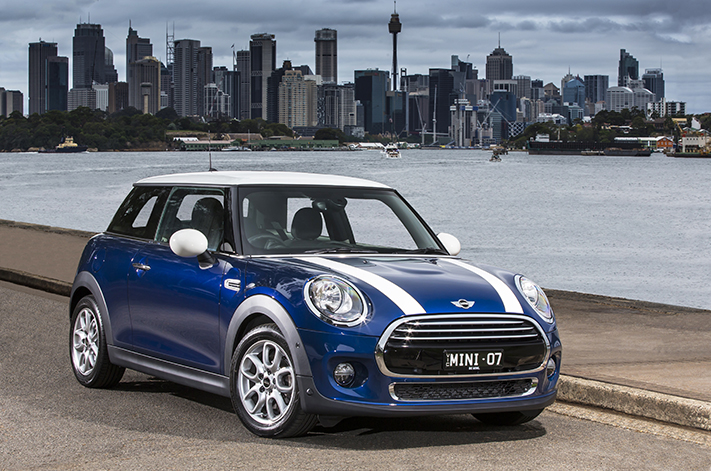
- Mini Hatch: 200
- Audi A1: 51
- Peugeot 208: 47
Small passenger cars under $40k
- Toyota Corolla: 2948
- Mazda3: 2163
- Hyundai i30: 2143
Small passenger cars over $40k
- Mercedes-Benz A-Class: 377
- Audi A3: 276
- BMW 1 Series: 147
Medium passenger cars under $60k
- Toyota Camry (four cylinder): 2107
- Ford Mondeo: 376
- Mazda6: 328

Medium passenger cars over $60k
- Mercedes-Benz C-Class: 663
- Mercedes-Benz CLA-Class: 244
- BMW 3 Series: 232
Large passenger cars under $70k
- Holden Commodore: 2071
- Toyota Aurion: 295
- Skoda Superb: 72
Large passenger cars over $70k
- Mercedes-Benz E-Class: 130
- BMW 5 Series: 59
- Jaguar XF: 40

Upper large passenger cars under $100k
- Holden Caprice: 63
- Chrysler 300: 27
Upper large passenger cars over $100k
- BMW 7 Series: 15
- Porsche Panamera: 14
- Mercedes-Benz S-Class: 7
Small SUVs under $40k
- Mitsubishi ASX: 1676
- Nissan Qashqai: 1454
- Mazda CX-3: 1245

Small SUVs over $40k
- Mercedes-Benz GLA-Class: 347
- BMW X1: 324
- Audi Q2: 131
Medium SUVs under $60k
- Hyundai Tucson: 2206
- Mazda CX-5: 2048
- Toyota RAV4: 1605
Medium SUVs over $60k
- Land Rover Discovery Sport: 350
- Audi Q5: 344
- Mercedes-Benz GLC-Class: 338
Large SUVs under $70k
- Toyota Prado: 1127
- Toyota Kluger: 1040
- Subaru Outback: 832
Large SUVs over $70k
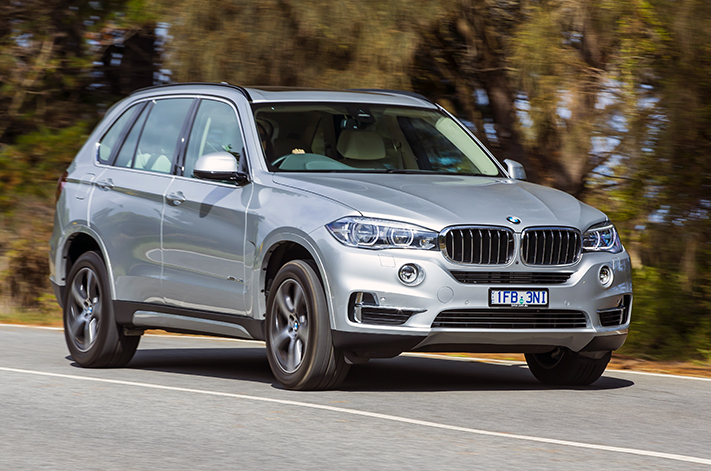
- BMW X5: 408
- Land Rover Discovery: 264
- Land Rover Range Rover Sport: 205
Upper Large SUVs under $100k
- Toyota Landcruiser Wagon: 1243
- Nissan Patrol Wagon: 76
Upper Large SUVs over $100k
- Mercedes-Benz GLS-Class: 69
- Lexus LX: 27
- Land Rover Range Rover: 26
People movers under $60k
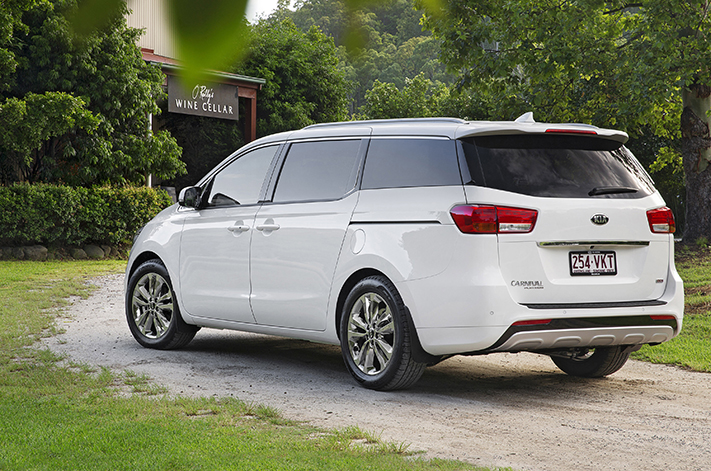
- Kia Carnival: 544
- Honda Odyssey: 171
- LDV G10 Wagon: 80
People movers over $60k
- Mercedes-Benz V-Class: 58
- Mercedes-Benz Valente: 25
- Mercedes-Benz Marco Polo: 3
Sports cars under $80k
- Ford Mustang: 748
- BMW 2 Series: 126
- Toyota 86: 109

Sports cars over $80k
- Mercedes-Benz C-Class coupe/convertible: 240
- BMW 4 Series coupe/convertible: 122
- Mercedes-Benz E-Class coupe/convertible: 61
Sports cars over $200k
- Porsche 911: 45
- Aston Martin coupe/convertible: 14
- BMW 6 Series: 13
- Ferrari coupe/convertible: 13
Utes/trays (4×2 and 4×4)
- Toyota Hilux: 4287
- Ford Ranger: 3588
- Mitsubishi Triton: 1970
Sales by Segment
- Micro passenger cars: 602
- Light passenger cars: 7,336
- Small passenger cars: 16,311
- Medium passenger cars: 5,361
- Large passenger cars: 2,777
- Upper large passenger cars: 141
- People movers: 1,115
- Sports cars: 2,090
- Small SUVs: 10,080
- Medium SUVs: 16,173
- Large SUVs: 10,402
- Upper Large SUVs: 1,463
- Pick-up utes (4×2 and 4×4): 17,310
The next Audi RS5 Coupe, with twin-turbo V6 rather than V8, is expected to make landfall in December priced from $156,000.
The RS5 will be lighter and torquier than its predecessor, and it’s predictably faster, though its new price places it firmly up against a Mercedes-AMG C63 S Coupe, which still sports a V8 for a couple more grand.
That’s not to say the RS5 isn’t an impressive vehicle.
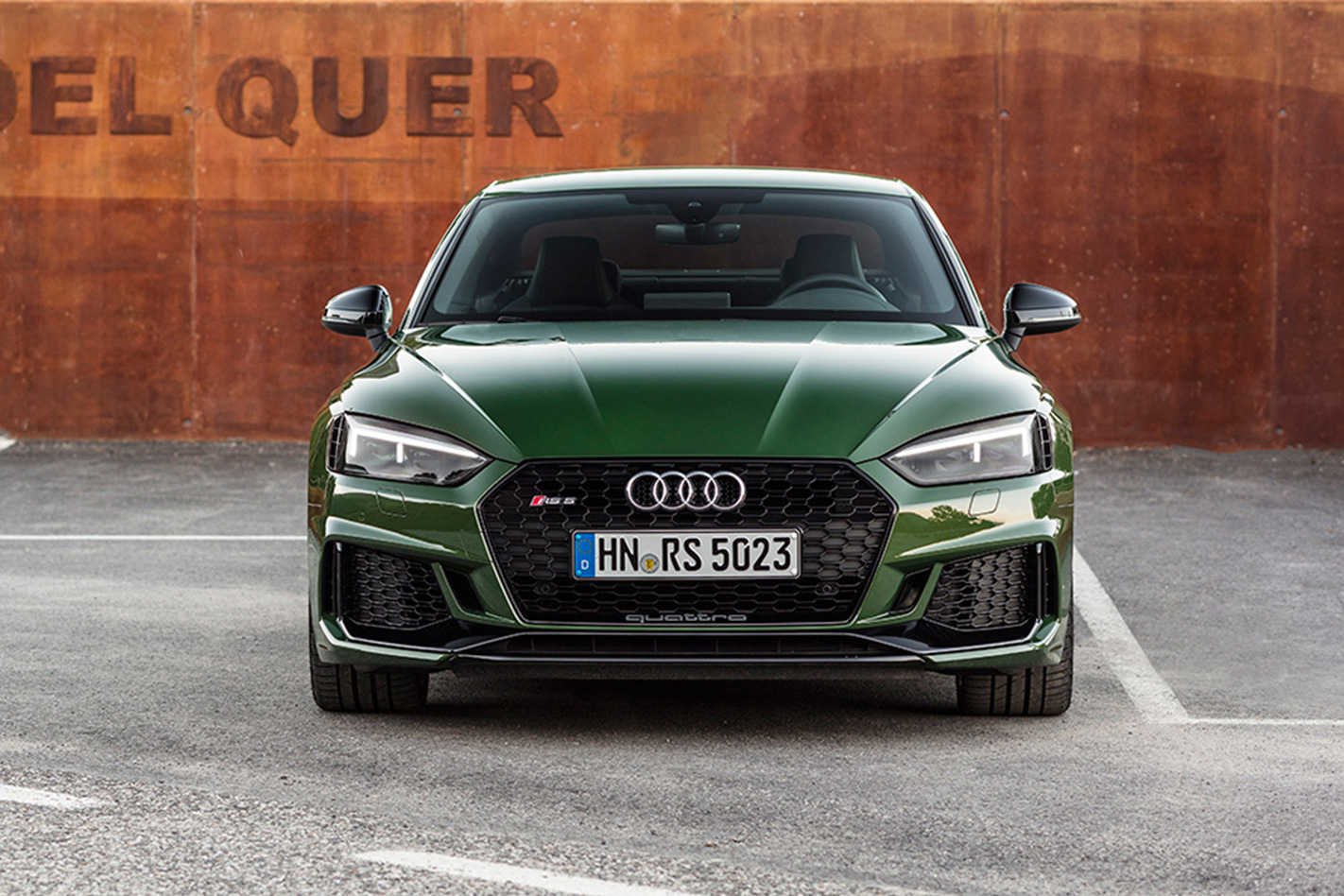
The 2.9-litre unit under the hood pumps out 331kW thanks to twin turbochargers nestled in its ‘V’, that power then charging to all four wheels (60 front:40 rear) via the eight-speed tiptronic DCT.
A five-link suspension set up now features front and rear in the RS5, with RS sport suspension letting the car sit “much lower than the production model.”
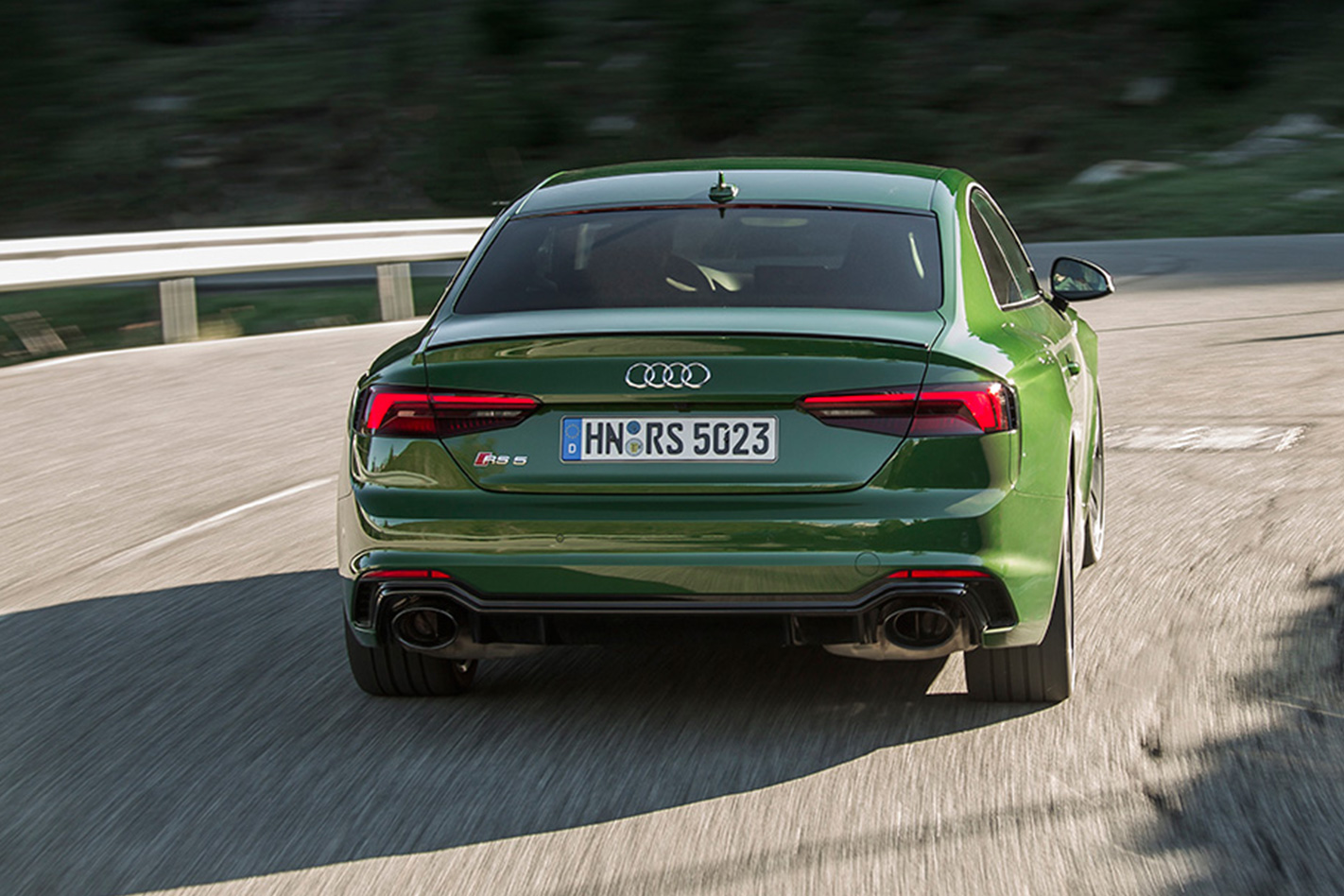
“Next to the headlights are additional lateral air intakes and outlets.
“quattro blisters on the guards emphasise pronounced bulges over the wheel arches, which have been widened by 15 millimetres.”
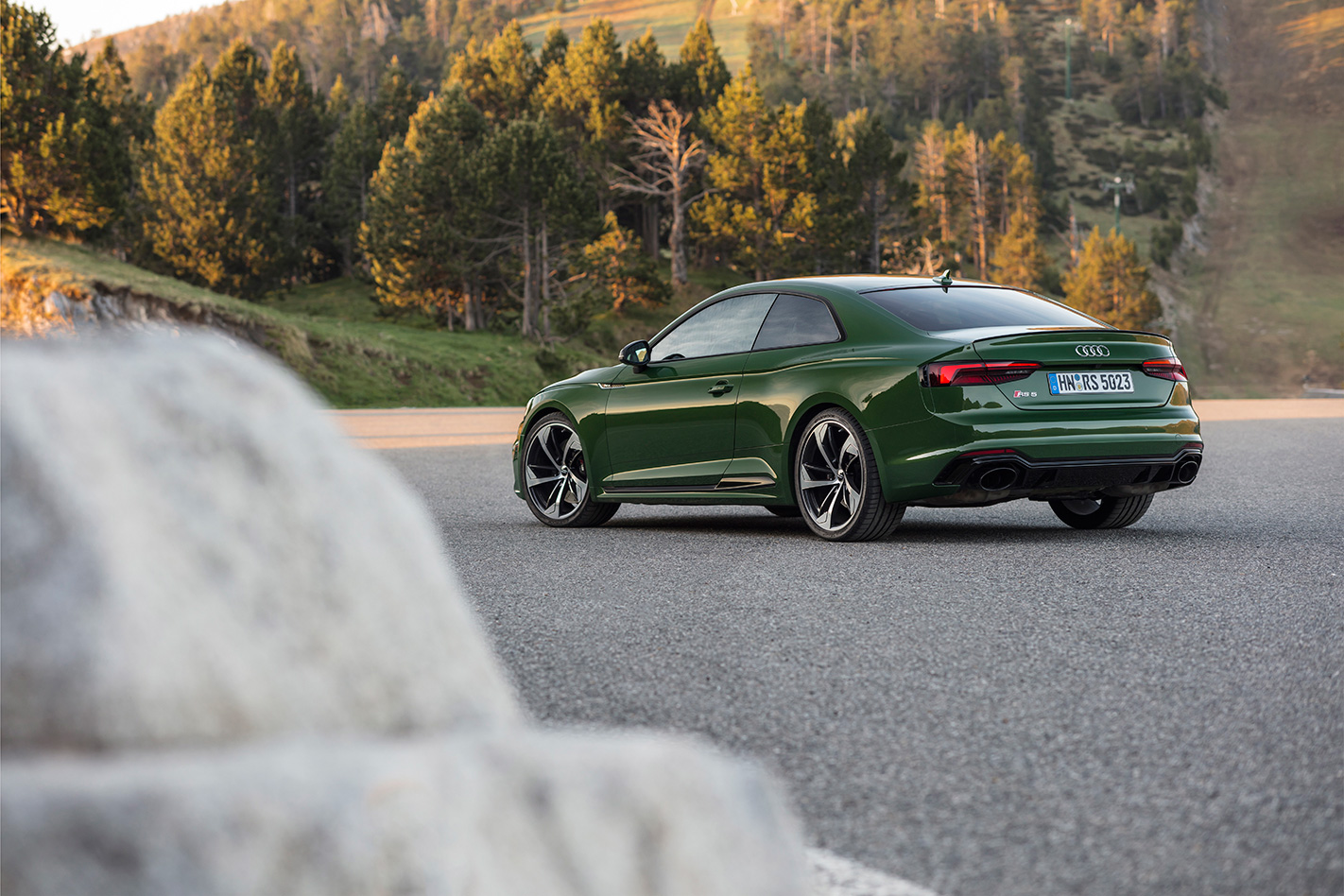
Sonoma green metallic will be an exclusive colour option for the RS5 Coupe, though we’d hazard a guess that reds and greys will be the more popular colours.
