
Utes and pick-ups continue to dominate sales in Australia.
The Toyota Hilux was again the best-selling vehicle in Australia in August, beating the Ford Ranger… just.
The pair has a dominant lead in monthly sales numbers, with 4287 Hilux utes and 3588 Rangers rolling off showroom floors including a growing number of dual cab pick-ups for private use.
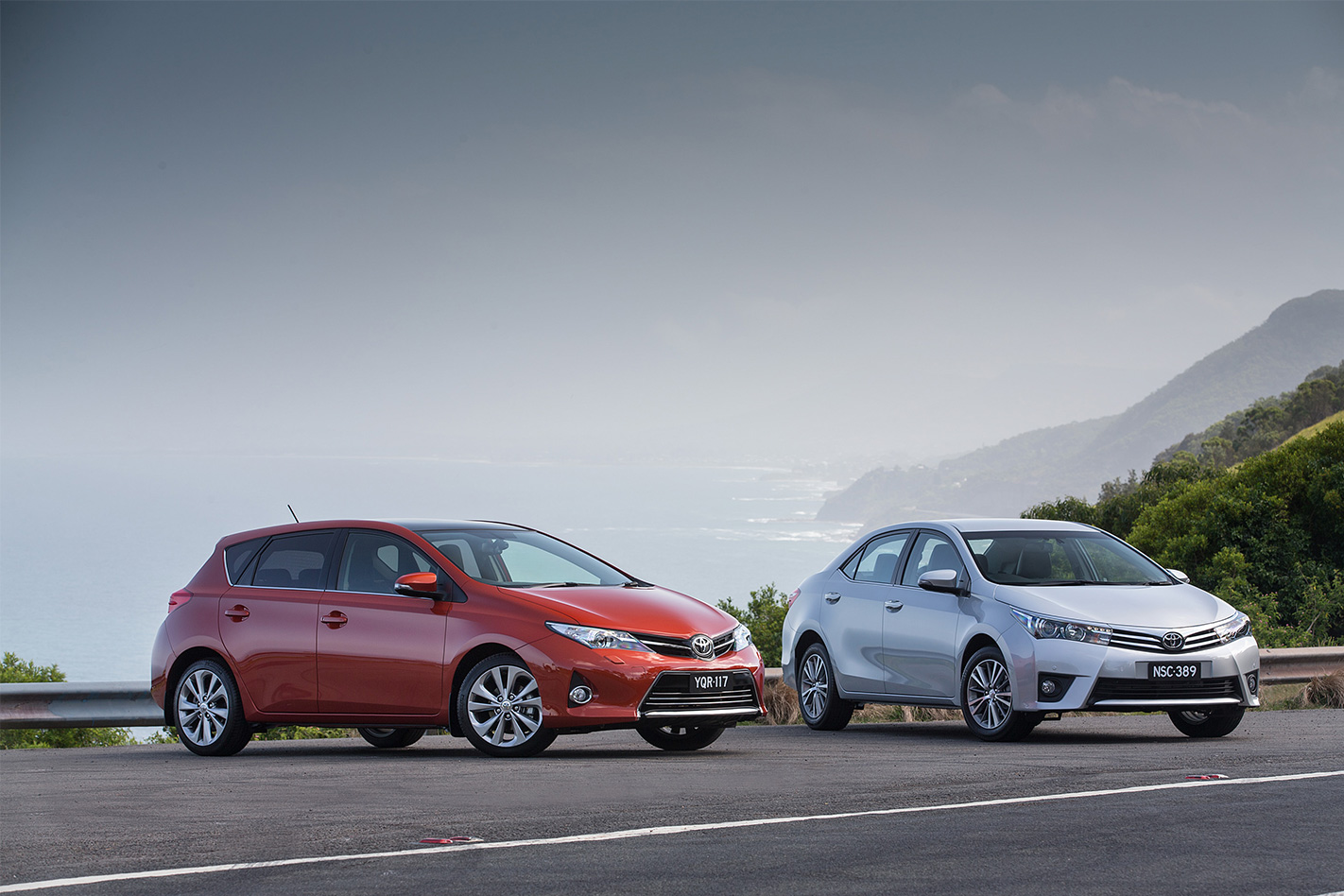
The best-placed traditional passenger car was the Toyota Corolla, with 2948 sales in August. Meanwhile, the Hyundai Tucson leaped to fourth for outright sales, with 2206 units being shifted during the month.
Behind the Corolla and Tucson, the Mazda3 and Hyundai i30 sit fifth and sixth, signalling the continued strength of hatchback sales.
Meanwhile, larger sedans like the Toyota Camry and Holden Commodore continue to dwindle in terms of sales, sitting in seventh and eighth respectively.
While passenger cars made up the majority of the top 10 sellers, it’s SUVs which continue to make up a larger market share, with 39.4 percent over 37.0 percent.
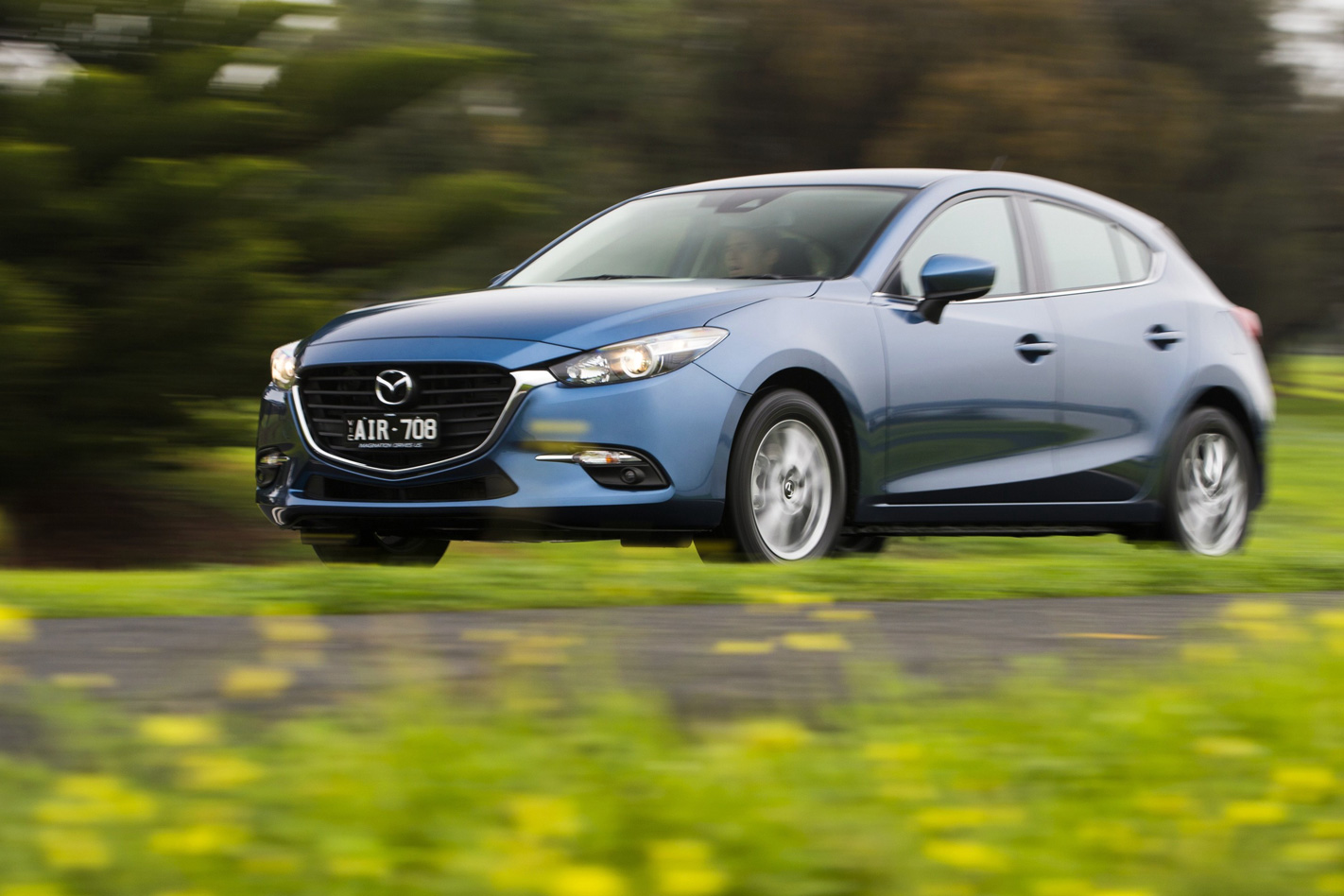
Off the back of strong Hilux sales, Toyota continues to be the most popular manufacturer in the country. The Japanese giant has sold 145,468 vehicles so far this year, almost double its nearest competitor, Mazda (79,535).
Hyundai is the third most popular brand with 65,120 sales so far this year, and Holden just holds off Ford by fewer than 2000 sales.
The Mazda CX-5 sits ninth in outright sales, with 2048 units sold in August, while the Toyota Landcruiser finds a place in the top 10 with 2036 sales.
The 2018 Skoda Fabia hatch and wagon range will feature a smaller but gutsier, and slightly more fuel efficient, 1.0-litre three-cylinder turbocharged petrol engine.
The three-pot engine replaces the 1.2-litre four-cylinder turbo and will come in two tunes; the 70TSI, which produces 70kW/160Nm, and 81TSI with an 81kW/200Nm output, replacing the four-cylinder engine with its 66kW/160Nm and 81kW/175Nm outputs in the old 66TSI and 81TSI respectively.
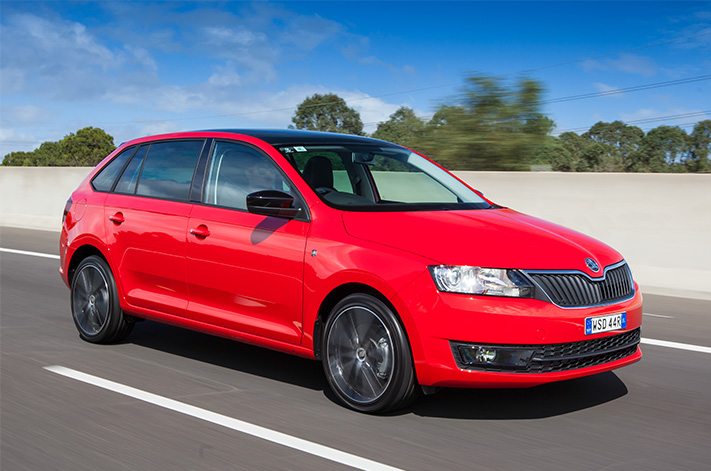
As before, the smaller output version engine (70TSI) only comes with a five-speed manual transmission while the 81TSI is coupled with a seven-speed dual-clutch auto.
The 70TSI has a combined fuel economy rating of 4.5L/100km, 0.3L/100km better than the old 66TSI, whereas the 81TSI improves by 0.1L/100km to 4.7L/100km despite having an extra 25Nm of torque.
The engine change is the only difference to the new range and will result in a $400 jump in entry-level pricing for hatch and wagon variants, with a $500 increase for the range-topping Monte Carlo models.
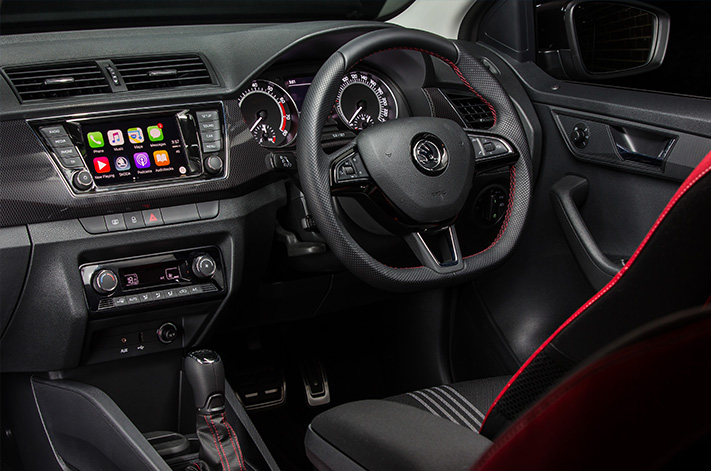
As before, the 2018 Skoda Fabia is equipped with city-speed autonomous braking of up to 30km/h, front assist up to 160km/h, and a touchscreen infotainment with reversing camera and Apple CarPlay/Android Auto smartphone pairing.
The MY18 Skoda Fabia range will start arriving in showrooms next week.
| Skoda Australia increases warranty to five years
2018 Skoda Fabia pricing
- 70TSI manual hatch – $16,890
- 70TSI manual wagon – $18,040
- 81TSI auto sedan – $19,890
- 81TSI auto wagon – $21,040
- 81TSI Monte Carlo auto sedan – $23,990
- 81TSI Monte Carlo auto wagon – $25,140
MOTOR understands that FCA Australia has indicated an intended pricing range to dealers for the Jeep Grand Cherokee Trackhawk, and for the limited-run Launch Editions of the fastest Jeep produced.
According to sources, the intended price for the standard Trackhawk is near the $140,000 mark, though FCA can’t yet confirm an exact figure.
In addition, dealers are contacting interested customers with estimated pricing details for the Trackhawk Launch Edition, of which it’s believed 62 will be made available.
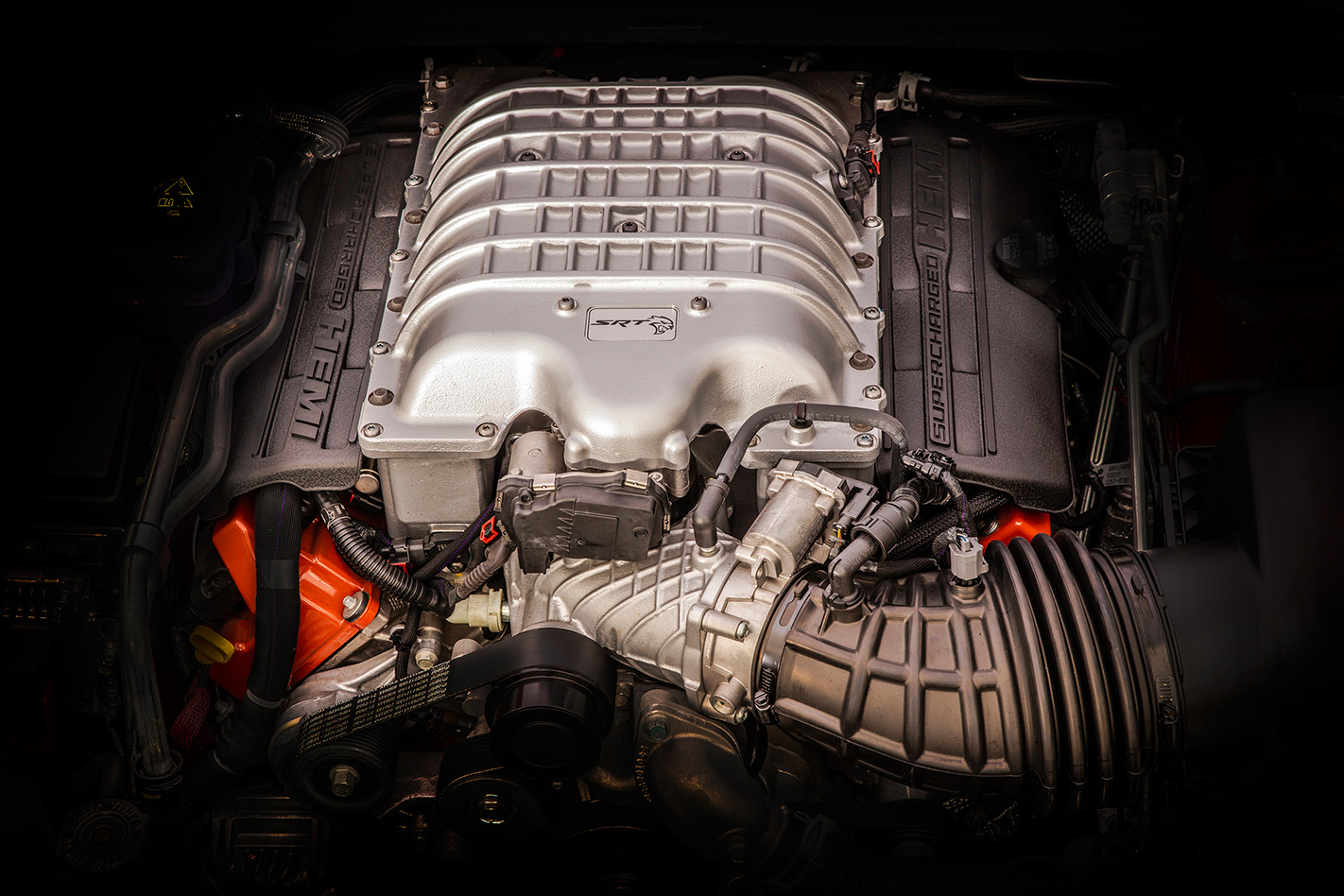
MOTOR sought this information after Melbourne SRT Club member Rob McCulloch announced that his dealer had contacted him with pricing of $154,000 plus on-road costs for a Trackhawk Launch Edition, which he says he’s secured.
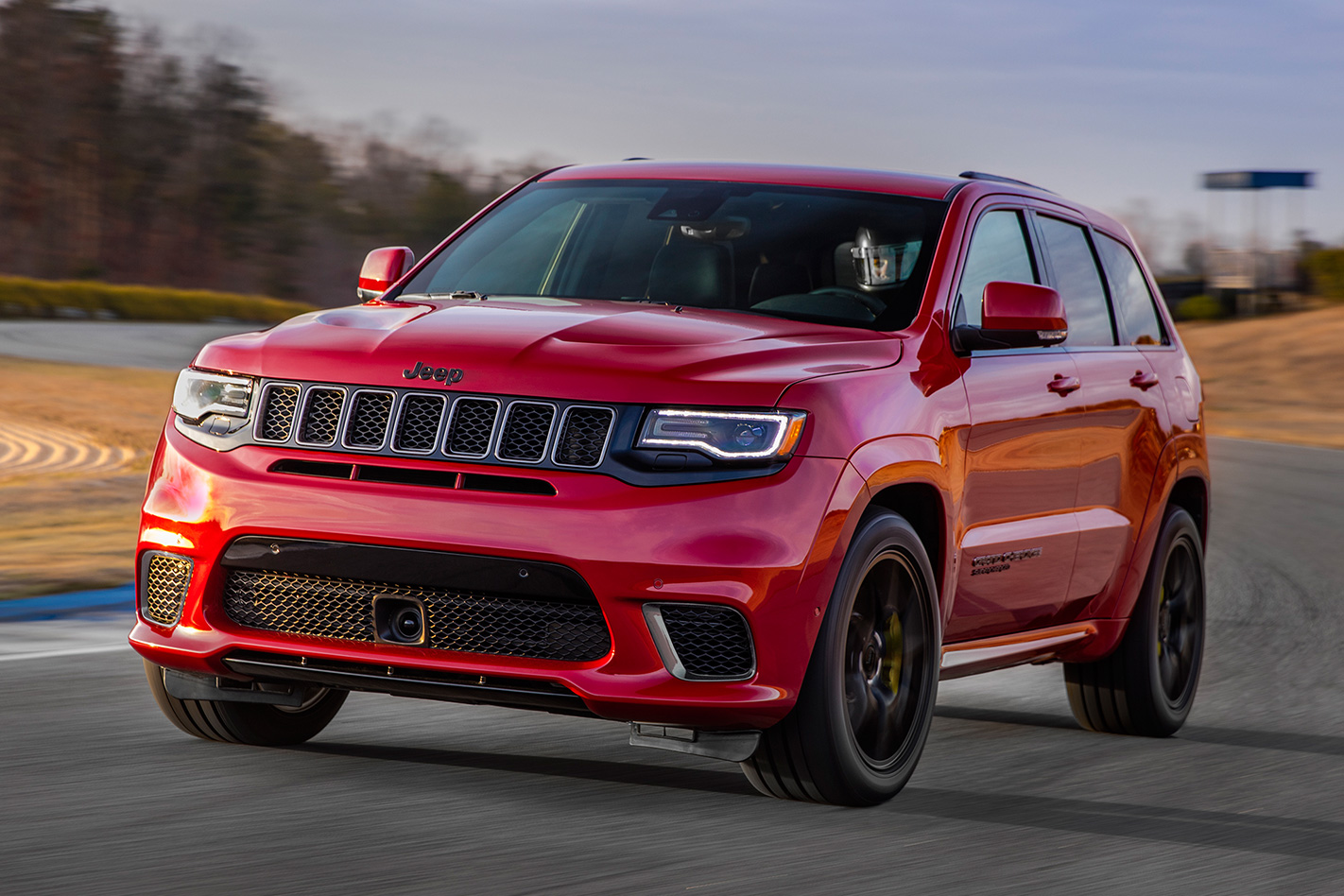
The version that will be arriving here in Australia will be closer to the Euro-spec rather than the US-spec Trackhawk.
In the United States for a Trackhawk press event, FCA Australia head of PR & communications Lucy McLellan said: “Pricing and the entire list of equipment for Australia will be announced closer to the Trackhawk’s arrival in December.”
Keep an eye on MOTOR for our review of the fastest ever Jeep as it’s currently being driven in the US.
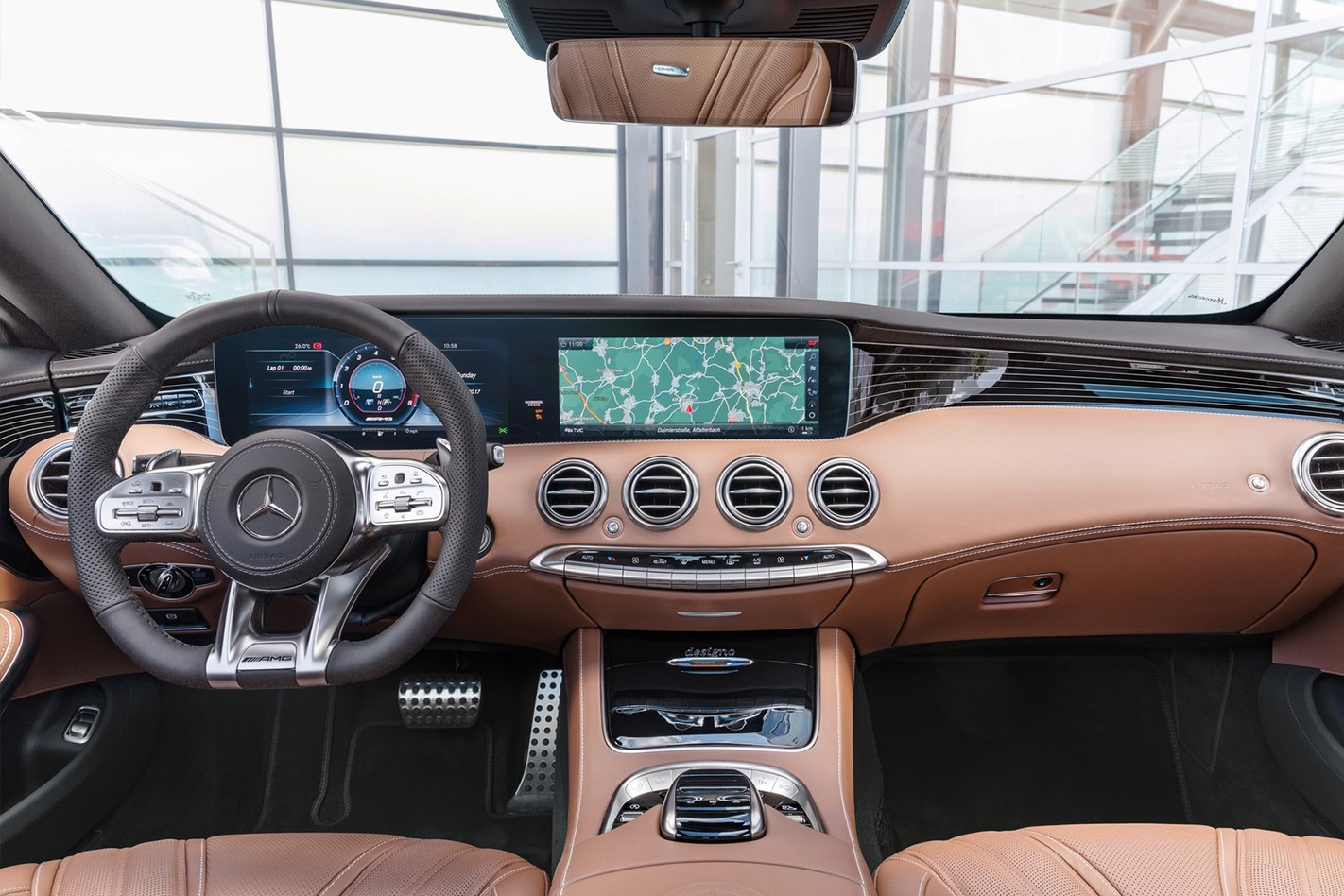
MERCEDES-AMG’s Frankfurt stage looks set to be chock full of hot hardware this year with an updated S63 and S65 Coupe and Cabriolet now confirmed to debut alongside the growing line-up of Affalterbach-fettled machines on show.
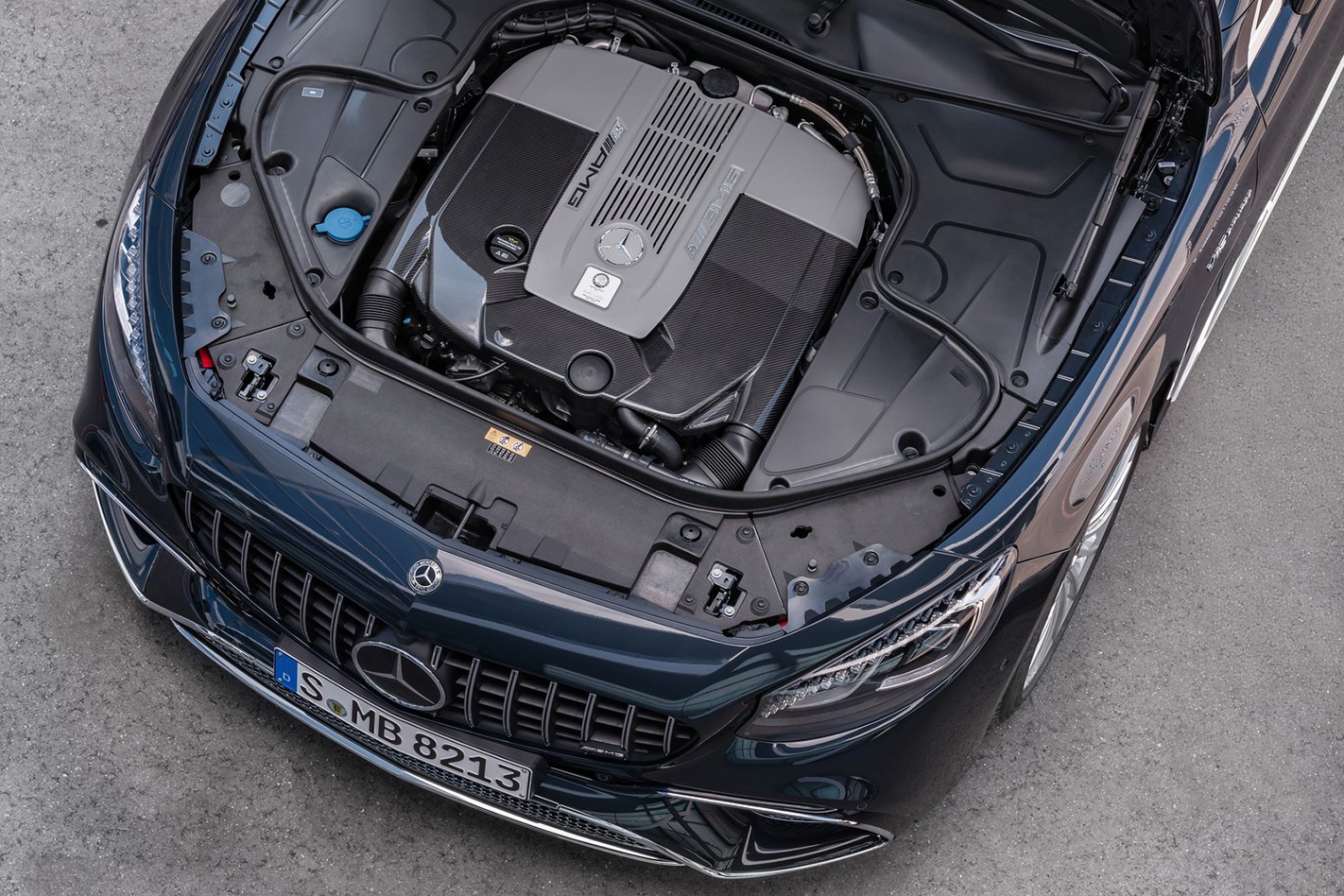
Both V8 and V12 versions of the Coupe and Convertible will be competing for attention, but the smaller-engined S63 has the most to shout about with a version of AMG’s hand-built twin-turbo V8 that takes combined power and torque output to a level not yet seen from the unit.
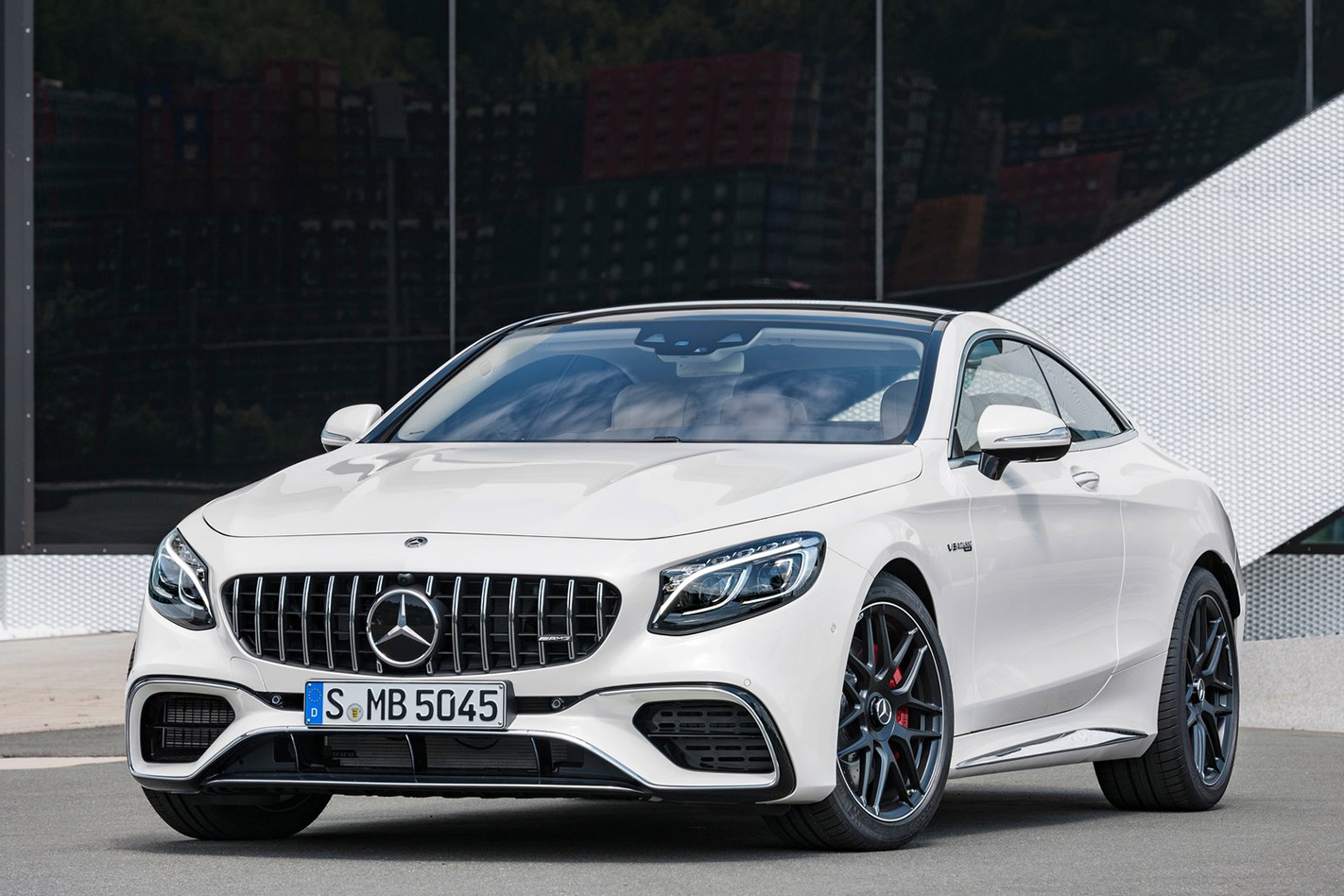
With 450kW and 900Nm under their bonnets, the S63 Coupe (above) and Convertible (below) match the previous 4.0-litre V8 power hero, the E63S, but with another 50Nm squeezed out.
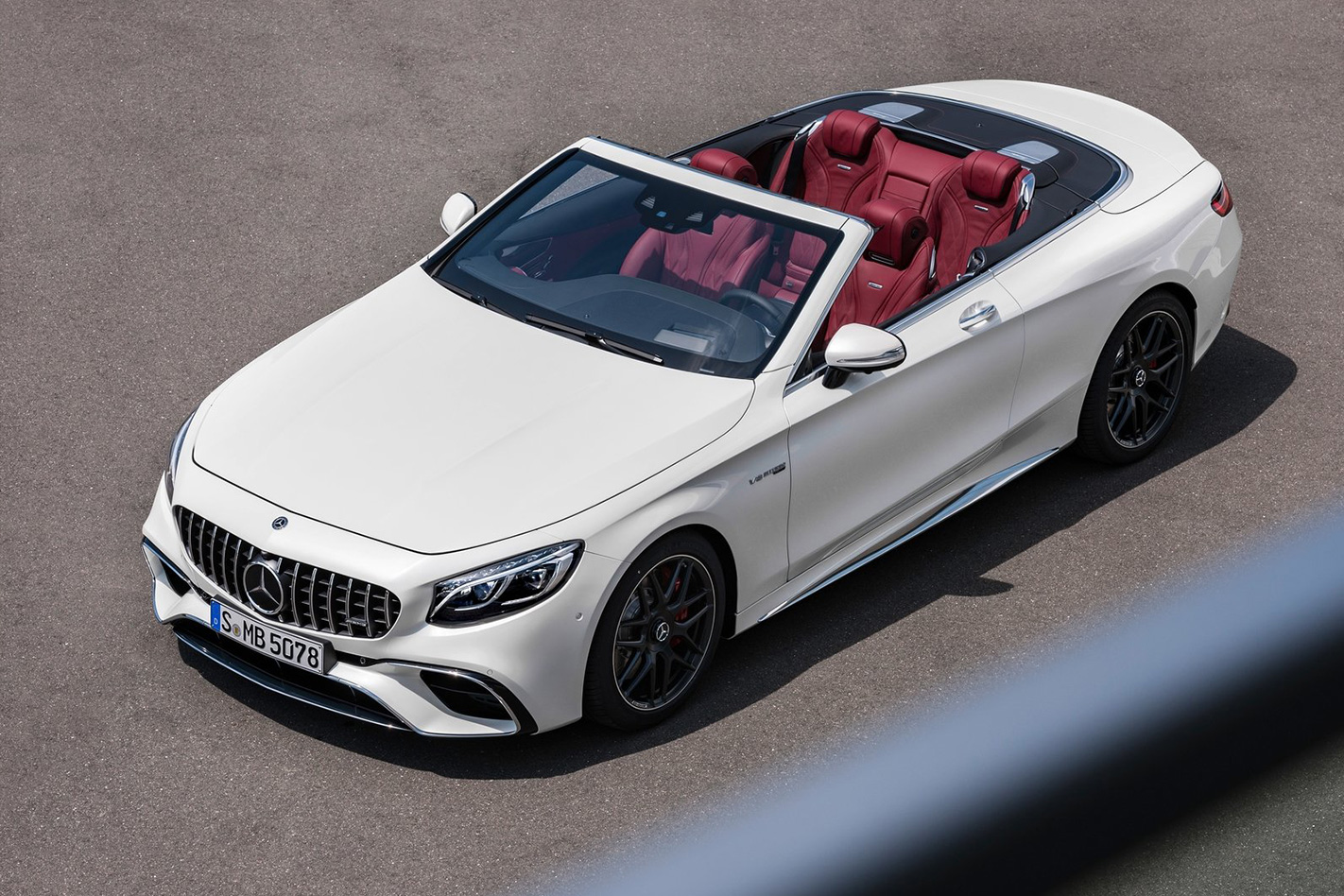
Despite having an extra four cylinders and 2.0 litres of displacement at their disposal, the updated AMG S65 Coupe and Cabriolet produce just 13kW and 100Nm more than the new V8, highlighting the achievement of AMG’s latest engine compared with the ageing 6.0-litre twin turbo V12, which carries over unchanged with the update.
There’s more preferential treatment for the S63 when it comes to the transmission, which has been upgraded to the company’s nine-speed Speedshift MCT auto, while the S65 continues on with its seven-speed version.
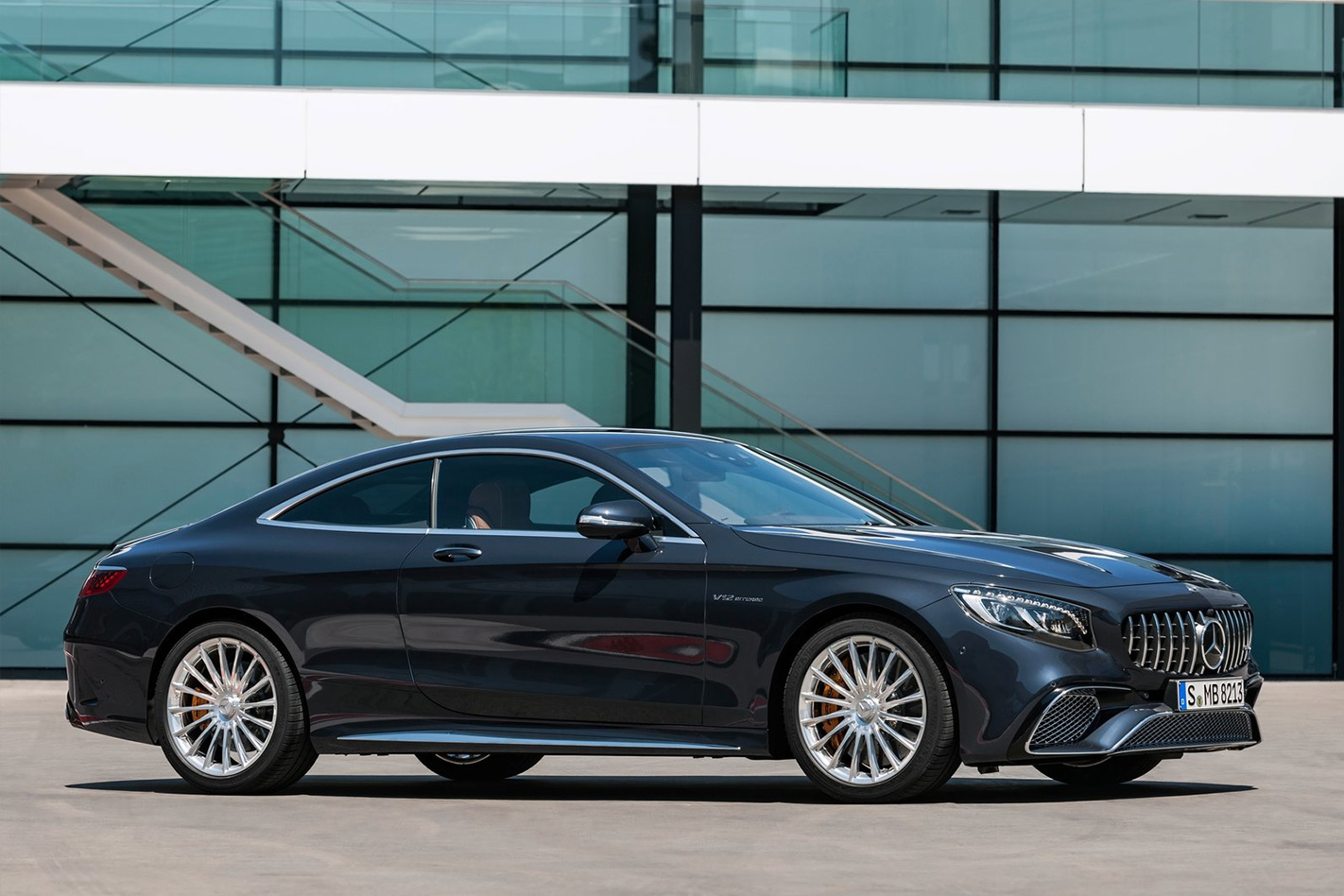
A new-design alloy wheel complements the styling refresh with a 19-inch version for the S63 and larger 20-inch items for the V12 version.
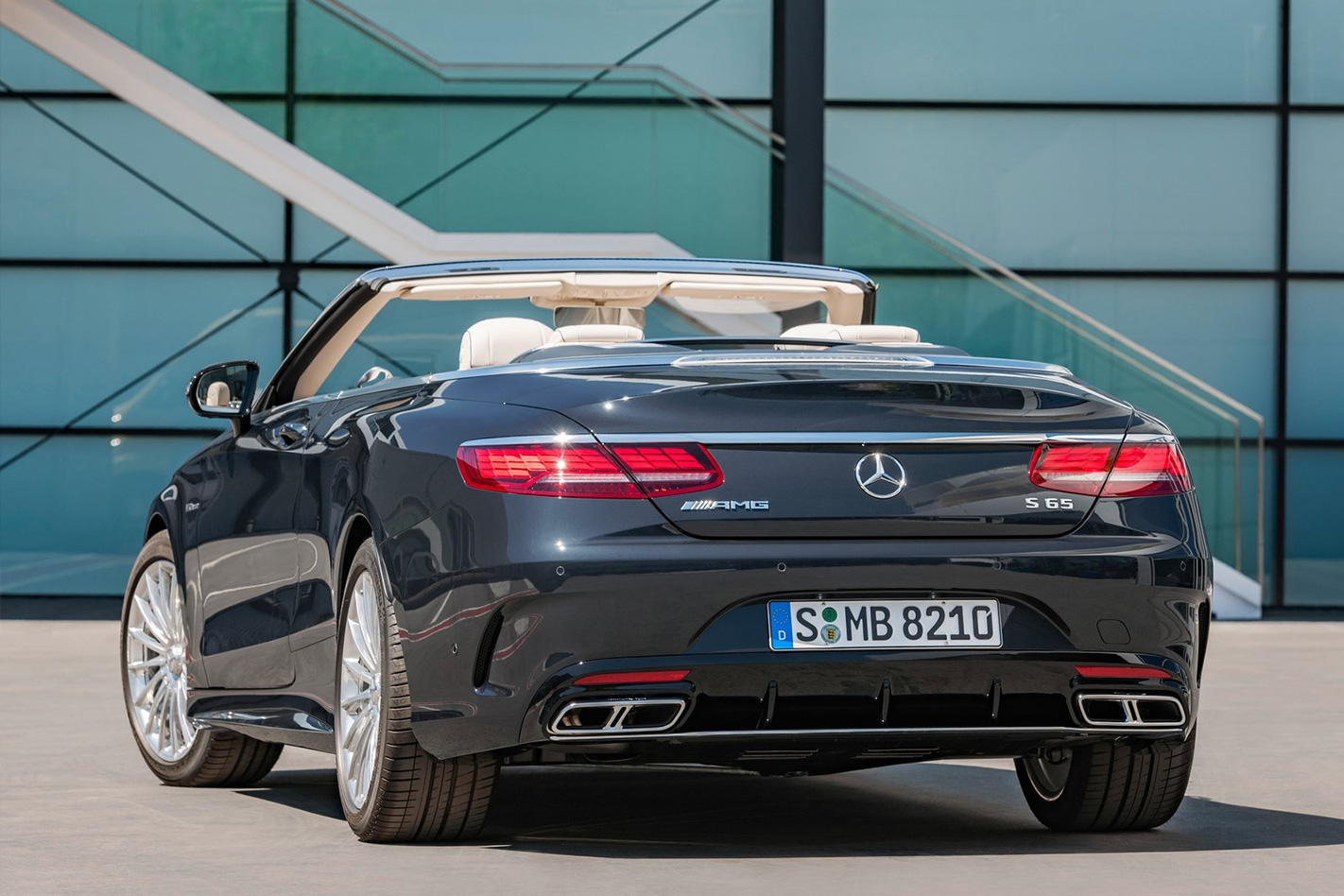
The update comes just two years after the S-Class Cabriolet was revealed at the Frankfurt show, while the Coupe version has been doing the rounds since it debuted in March 2014 in New York.
Germans can’t tolerate tardiness. Turn up to an 8.30 press conference at 8.34 (as I regularly, almost reliably do) and you can feel their disdainful, scolding stares burning through you.
This article first published in MOTOR March 2008
It’s ingrained in the bastards – they work to a precise schedule and they love timely organisation. None of this explains the belated dismantling of the Berlin wall, or male German backpacker’s undying affection for fluorescent-yellow boardies, but it provides great insight into their performance cars – bloody fast and precision-perfect.
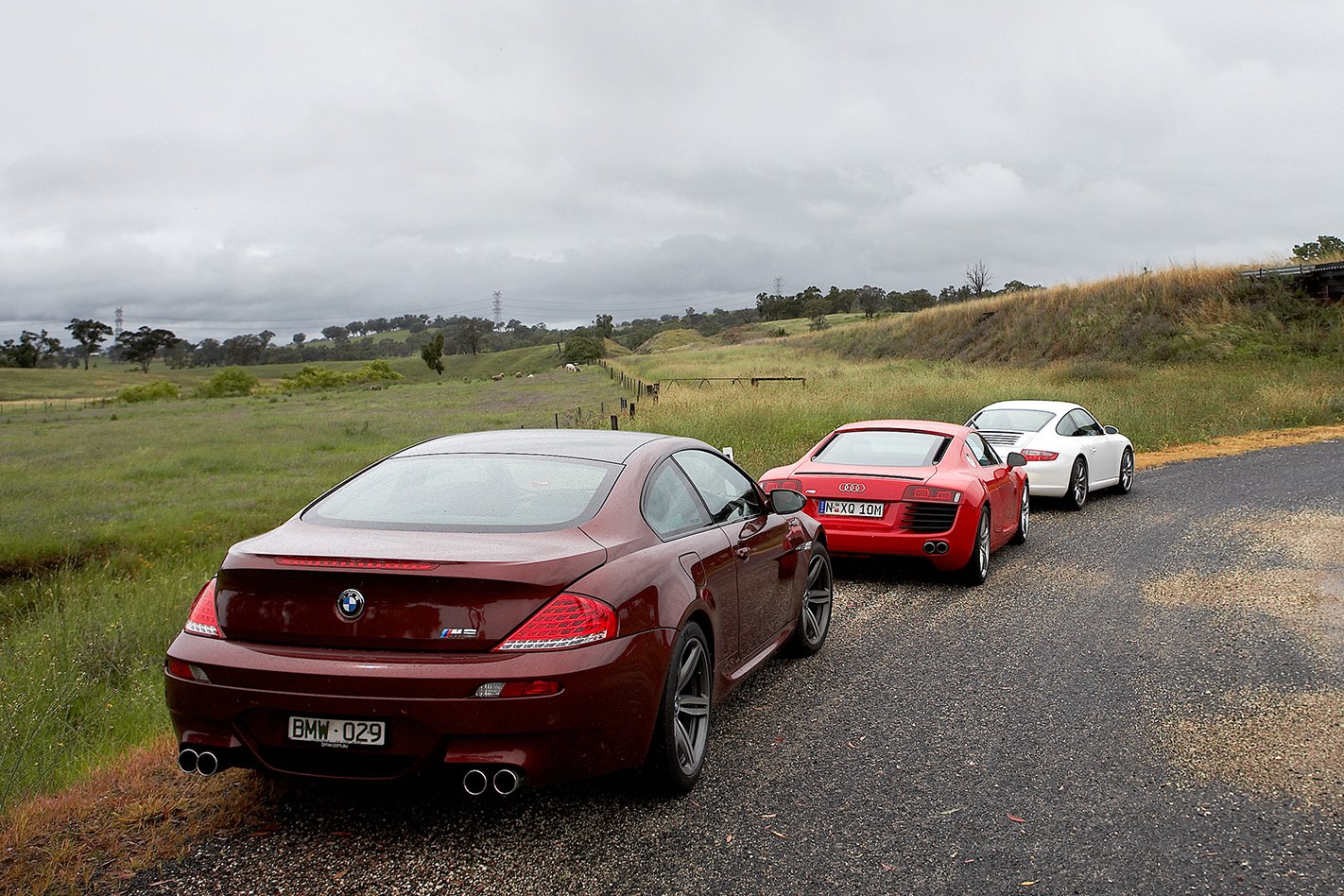
BMW’s fastest-ever express costs an eye-watering $281,590 if you tick Individual premium hi-fi, and Audi’s moderately optioned supermodel isn’t far behind at $276,650.
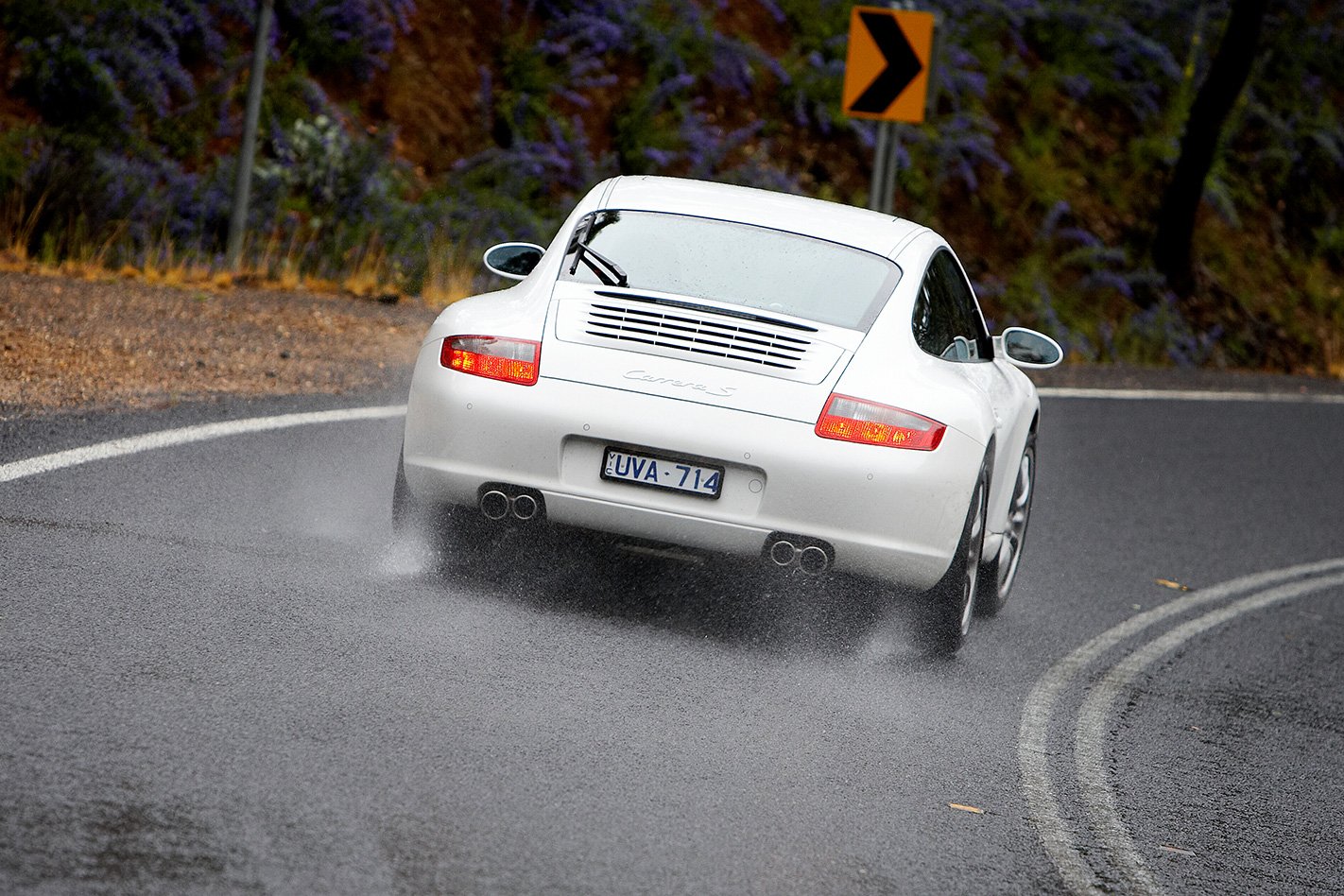
Comparatively, you could buy a 911 Carrera S for $227,600 and spend the change on a quality tit job or a heated garage, but start reaching into Porsche’s abundant options cabinet (UVA-714 is $243,020 worth, though save yourself $2080 by sticking with the standard 19s) and you’ll be approaching M6 and R8 money faster than a washed dog to horse dung. Meaning the decision between M6, R8 and 911 S is a very real one.
And what variety. A four-seat, rear-drive, front-engined V10, a two-seat, four-wheel-drive, mid-engined V8 and a two-plus-two, rear-engined, rear-drive flat six. The 4.4m-long Porsche is 215kg lighter than the nearly 4.9m BMW, and 140kg less than the R8, but it’s the malicious M6 than dominates in a straight line.
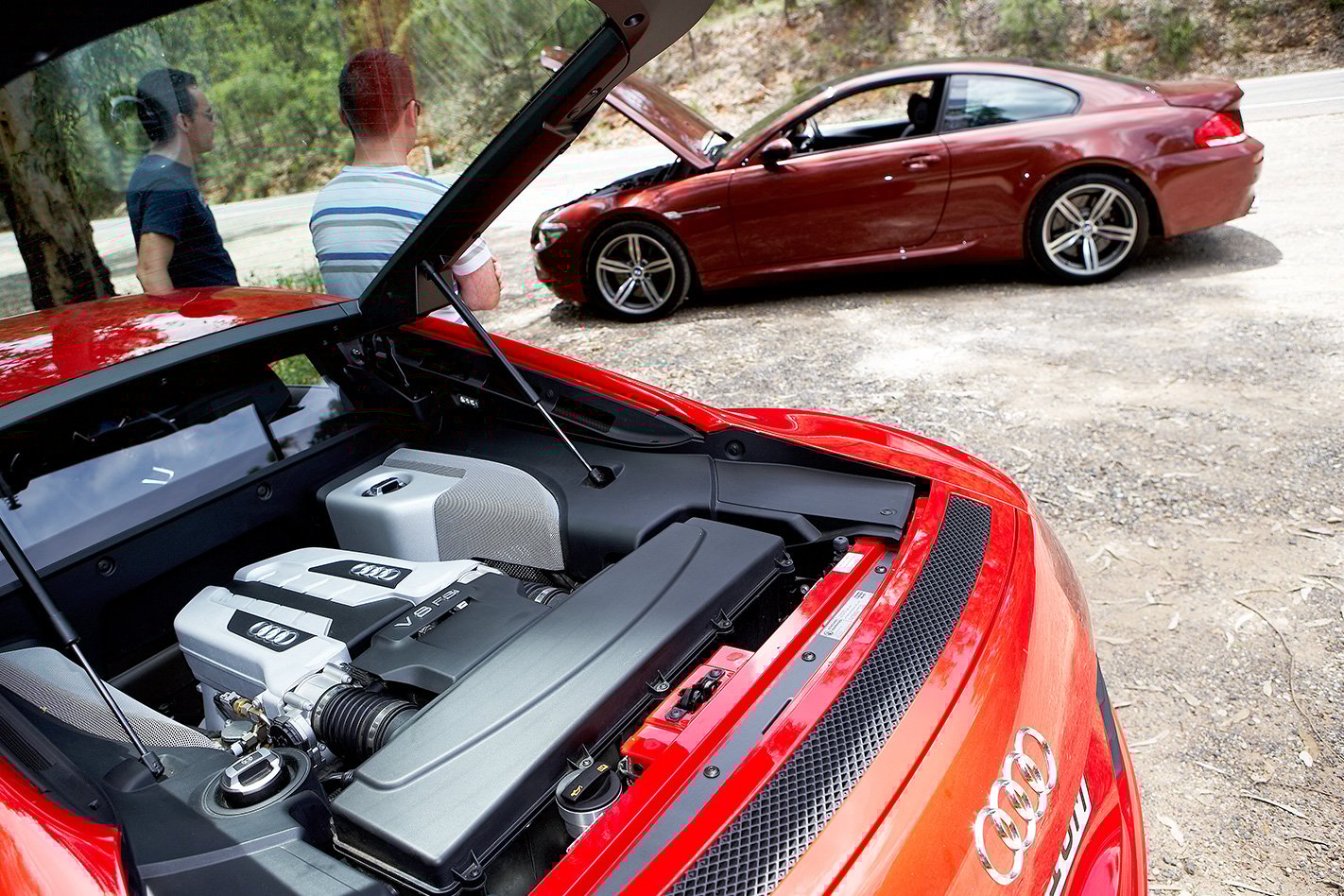
Despite the SMG’s tranny’s launch control, the M6 simply doesn’t have the traction of the rear-weight-biased R8 and 911 to put all those numbers into action off the line. Up to 100km/h, it’s neck-and-neck with the R8 and slightly ahead of the 911, but beyond that it’s no contest.
The M6’s richly warbling V10 increases its pace at an exponential rate right to the 8250rpm rev limiter, though it’s dangerously addictive to do so in filth-riddled Australia. And you don’t really need to, either – the V10’s off-beat, metallic growl pulling from low revs, and its minimum of 416Nm smeared across a 5500rpm band means it’s very tractable and still blindingly quick if you short-shift.
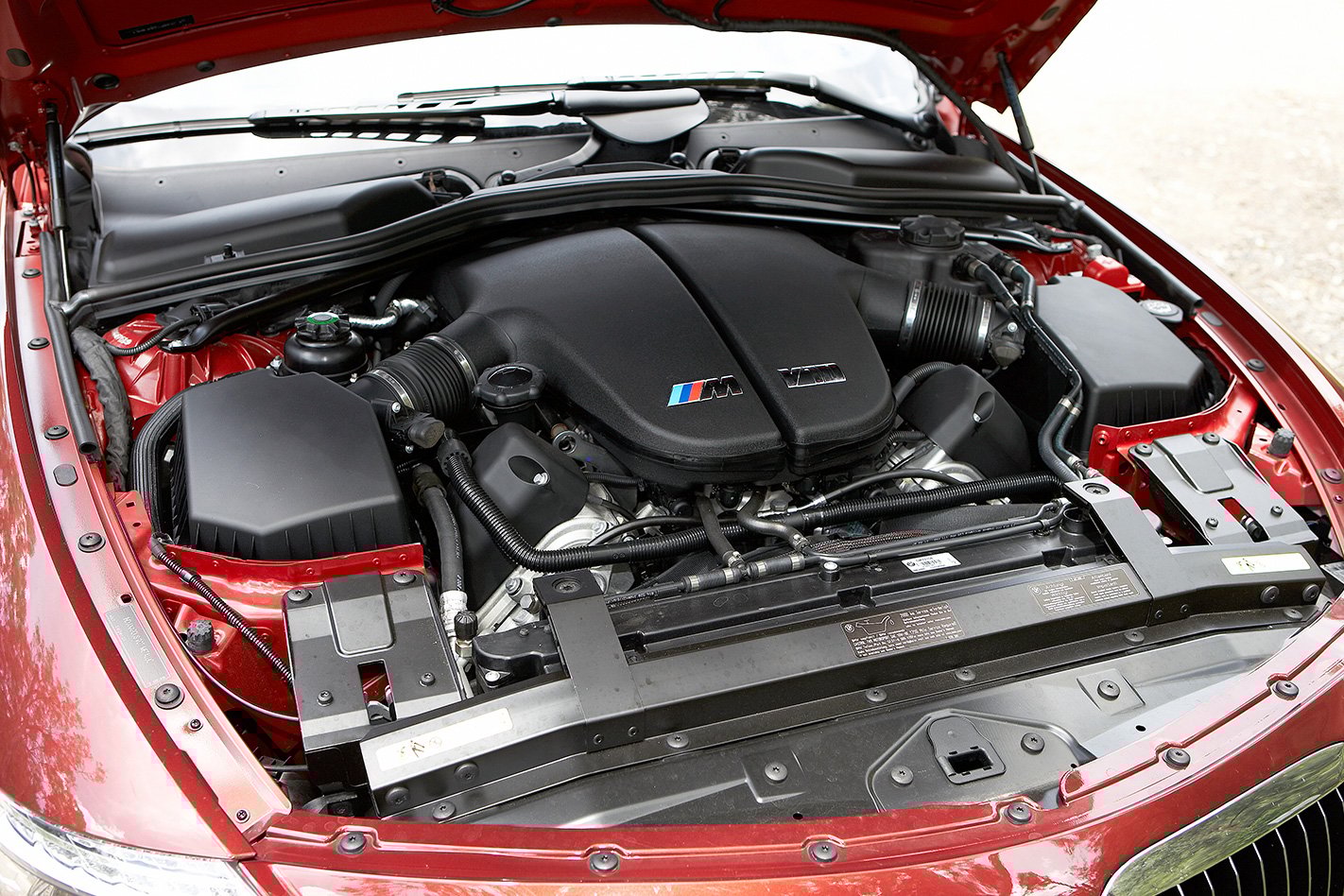
You’re never going to make big power without plenty of high-octane, but the BMW’s 19.2L/100km average over our 800km test route looked pretty greedy compared to the R8’s 16.6L/100km and the 911’s excellent 14.7.
With the RS4’s slightly amplified 309kW V8 sitting behind your head, Audi’s R8 was always going to sound glorious. And it does – particularly accelerating next to concrete walls or exiting tunnels with the windows down, where it roars a cultured, but aggressive V8 rock opera.
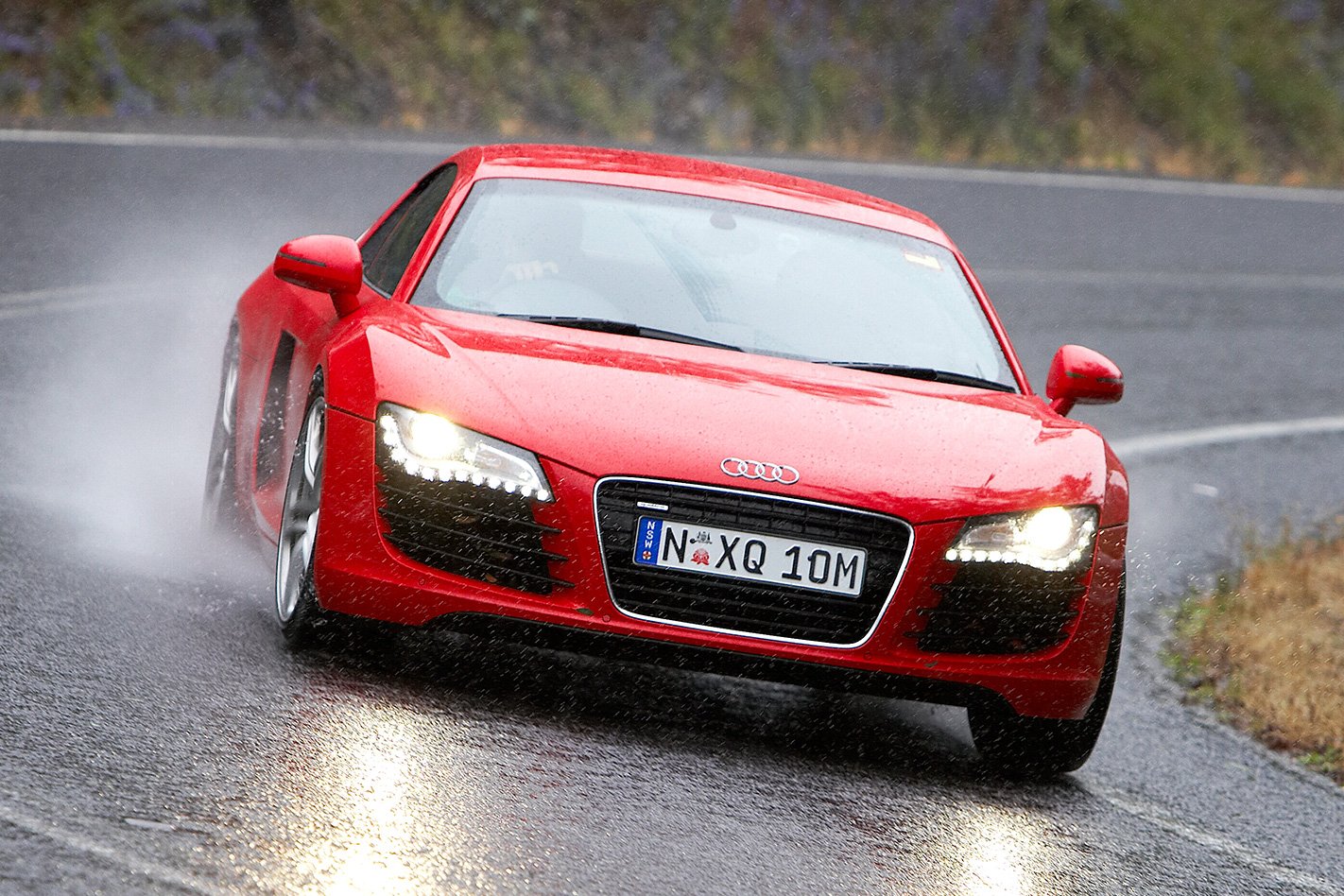
Where the R8 performs best is at lower speeds, when its AWD grip and the transmission’s short gearing result in slingshot pace as the 4.2 V8 zings without hesitation to the 8250rpm cut-out.
She’s also pretty easy to drive in traffic, despite a sensitive throttle pedal and an annoying hill-holder that lets go fairly abruptly, but you need to clutch-in quickly in achieve smooth shifts, and the open-gated six-speed manual feels slicker and more wieldy when you’re having a go.
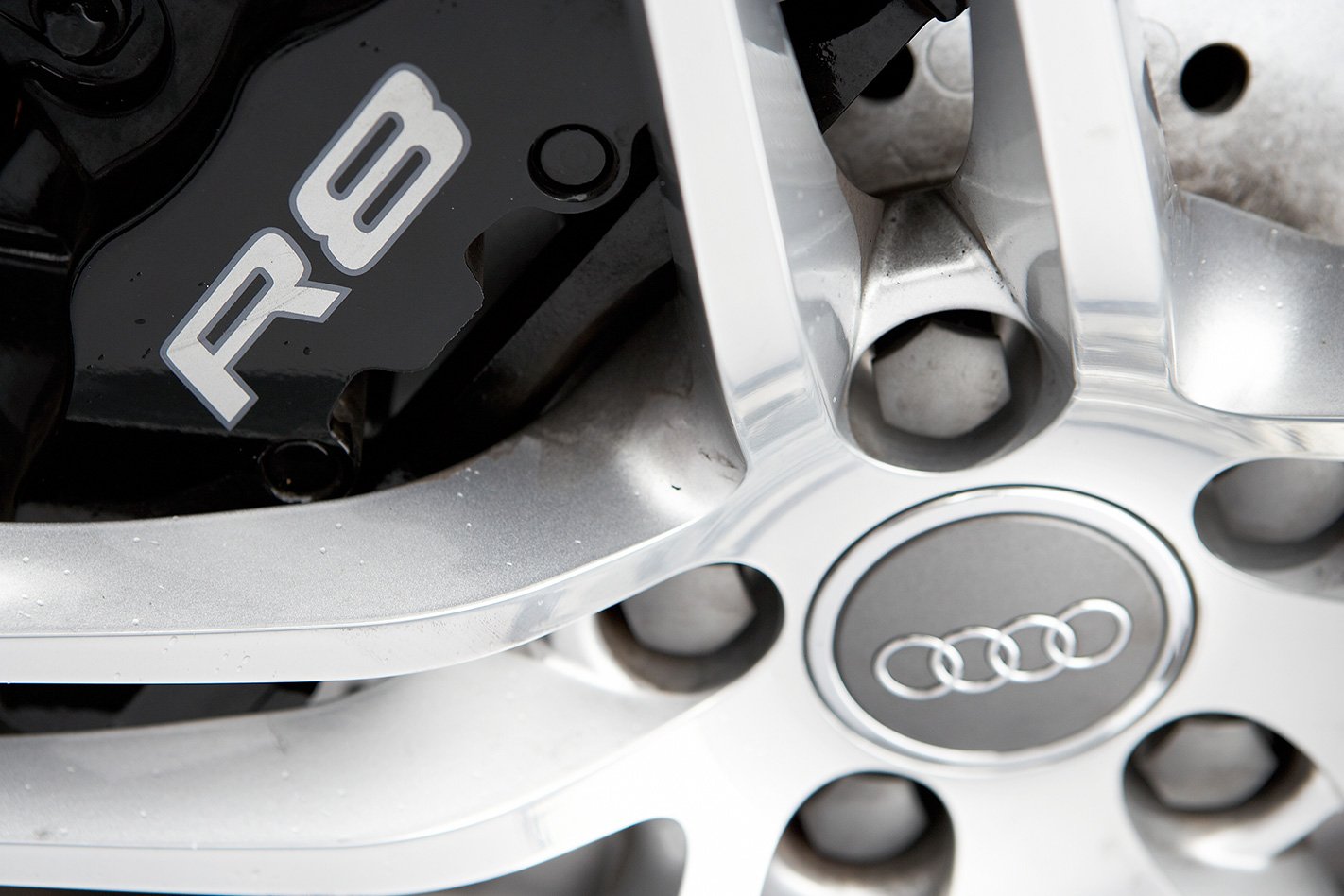
Like both its rivals, the Carrera S also ups the ante the harder you pedal, although with a rev cut-out at 7300rpm, the 911’s 3.8-litre flat six is a little less highly strung than the M6 and R8 engines. But don’t read that as meaning, well, less.
Porsche builds the best sixes in the world, and our Carrera S with its $4690 optional sports exhaust was utterly, insatiably brilliant.
The edgy-as-a-Wiltshire wail from its back end when exercising the flat six, combined with some delicious exhaust crackle on overrun and the unbeatable synergy of the 911’s well-oiled gearshift, superb clutch feel and beautifully judged throttle response (especially with the centre console’s ‘Sport’ button activated, that sharpens the right pedal and engine response, and slightly hardens the induction note) delivers an instant serotonin spike that takes some time to dissipate.
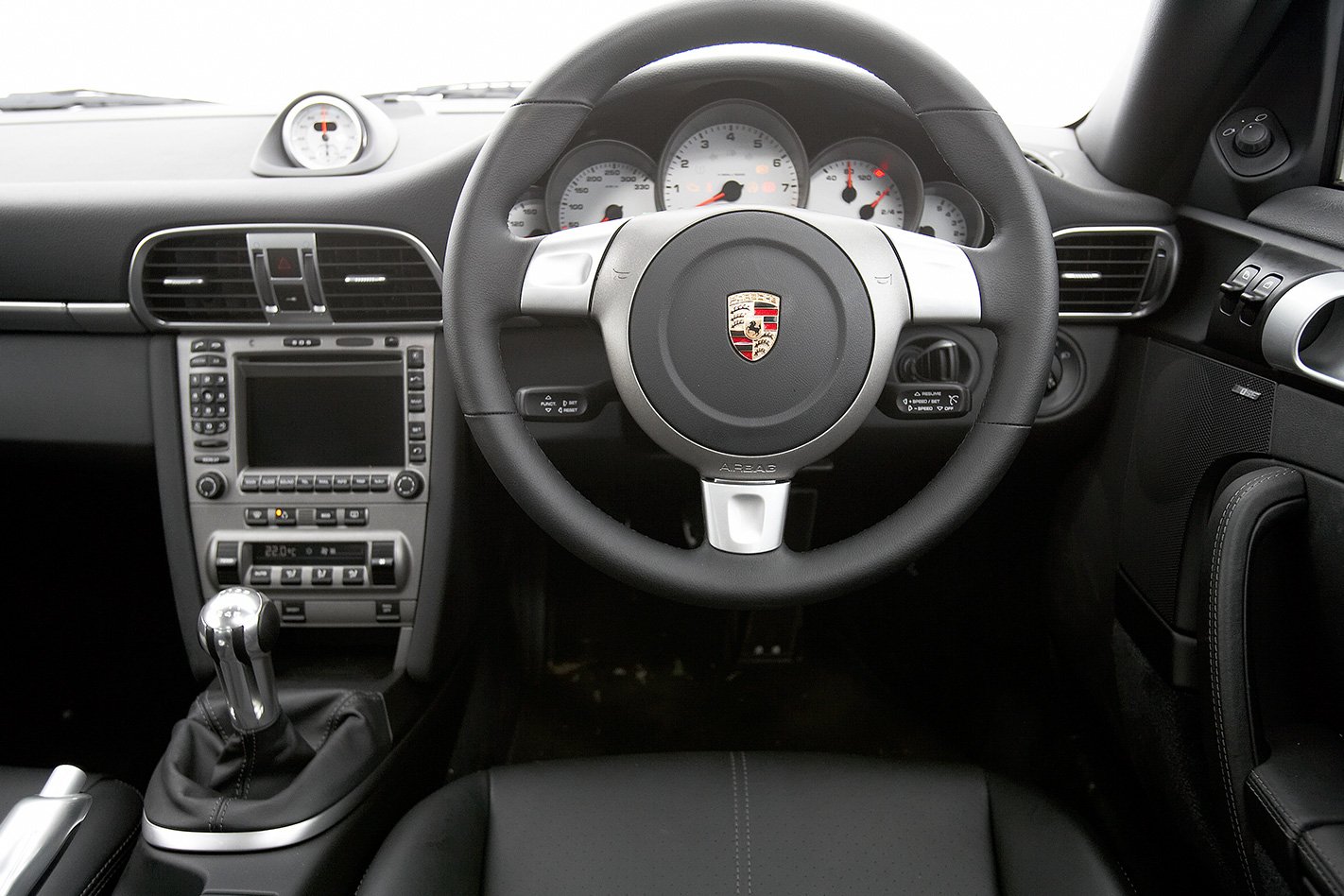
Sniff out a decent set of curves and all this starts to genuinely make a difference. Mix the Carrera S’s aforementioned virtues with a near-perfect driving position, great vision and excellent sports seats and you’re blessed with one of the greatest driver’s cars of our time.
Play to the rear-engined 911’s preferences – turning into tight corners under brakes to get the front tyres to bite, then squeezing the throttle quickly because it has the traction to drive out (with just a whiff of oversteer) – and its unusual layout becomes one of its greatest assets.
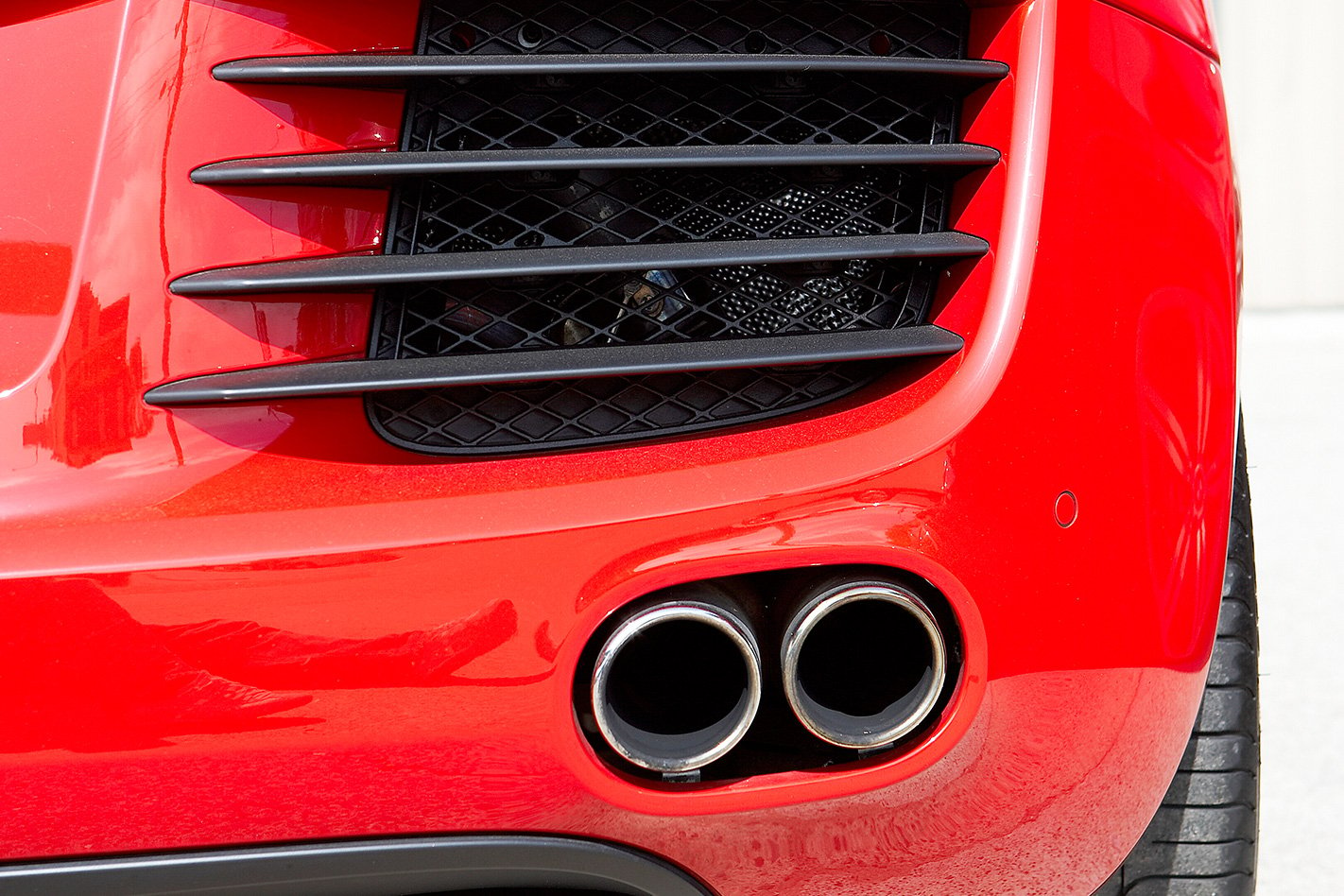
All of that makes the 911 sound virtually unbeatable, but the R8 and M6 are also great in their own right. The Audi’s Lamborghini layout of mid-rear engine and rear-biased AWD makes it similarly adjustable as the 911 at times, and delivers significantly more oversteer exiting tight corners if you’re brutal with its right pedal.
But the R8 is effortlessly rapid and beautifully balanced, and can be thrown around on a familiar road with surprising abandon considering where its engine sits. The R8’s two-setting magnetic dampers deliver a far more acceptable balance between a supple ride and very tight body control than they do in the flawed TT, and as a result, the R8 delivers a level of ride comfort that is most unexpected for a supercar like this.
The M6 has an even more ponderous turning circle – try a massive 12.4m – but disguises it via fast, meaty steering with just 2.4 turns lock-to-lock. And that’s not all it manages to hide – the GT-on-’roids Beemer never quite feels its size, even given its company.
The M6 maintains BMW’s deserved reputation for chassis balance and it feels beautifully planted, especially in fast corners with some gas dialled in, but its front end isn’t as positive as its lighter rival’s, and in tighter corners with DSC off, when its tail is really loaded up, you always need to be mindful of oversteer.
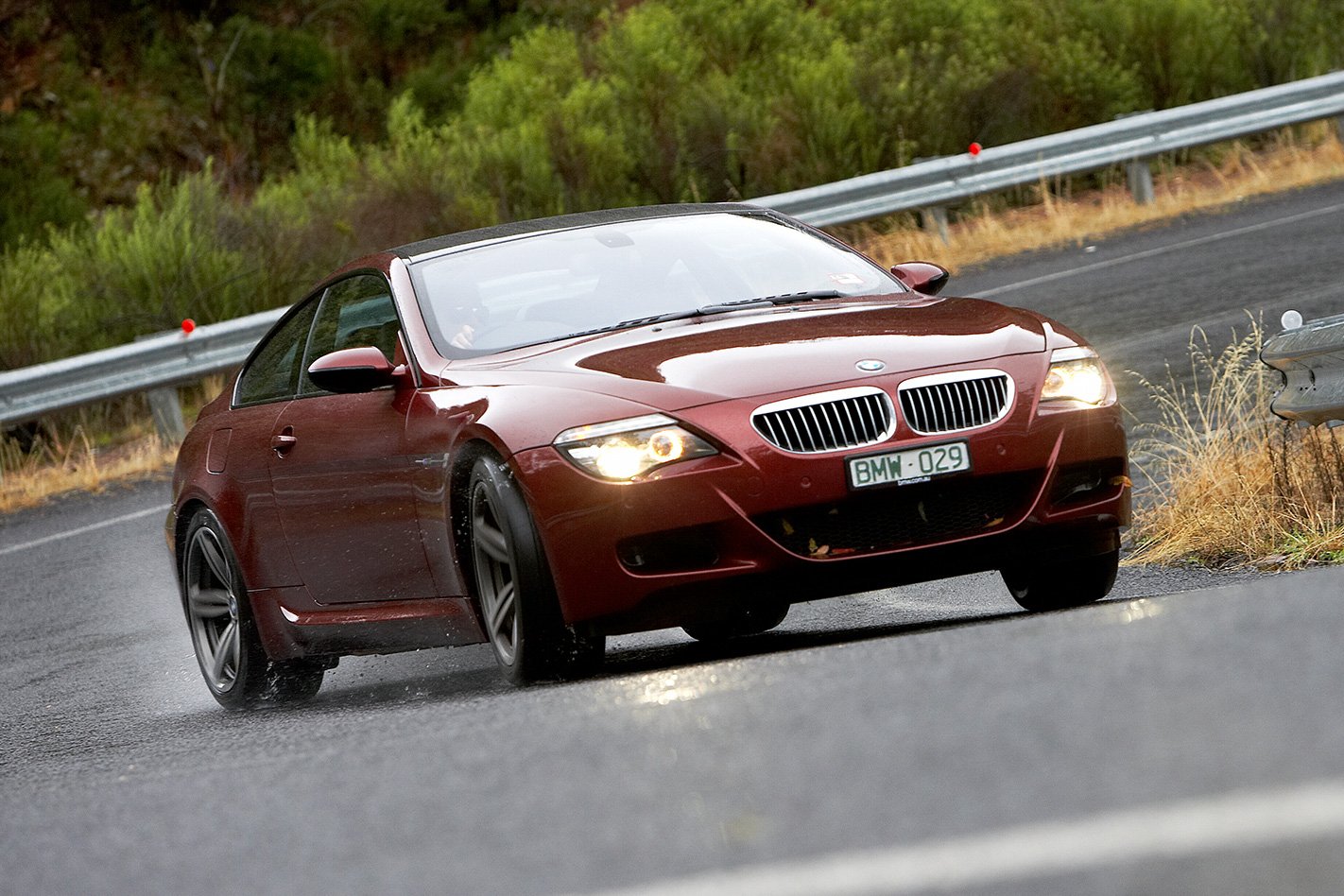
There also a ‘Sport 2’ option that does reduce understeer and does work on racetracks, but it isn’t for real-world Australia. What works brilliantly, though, are the M6’s fade-free brakes – huge ventilated discs (348mm front, 345mm back) that expertly tread the fine line between sensitivity and feel.
The Carrera S’s 330mm-all-round discs also have great feel and stopping force, but the R8’s standard brakes suffer from being too sensitive, which is compounded by the pedal being mounted too high.
Trying to decide which cabin works best is like choosing Belgium’s tastiest beer, but they all have their strong points. The 911’s large cubbies underneath the door armrests are brilliant, and the pair of adjustable aluminium cupholders that sprout from behind the metal strip in front of the passenger are likewise much-admired.
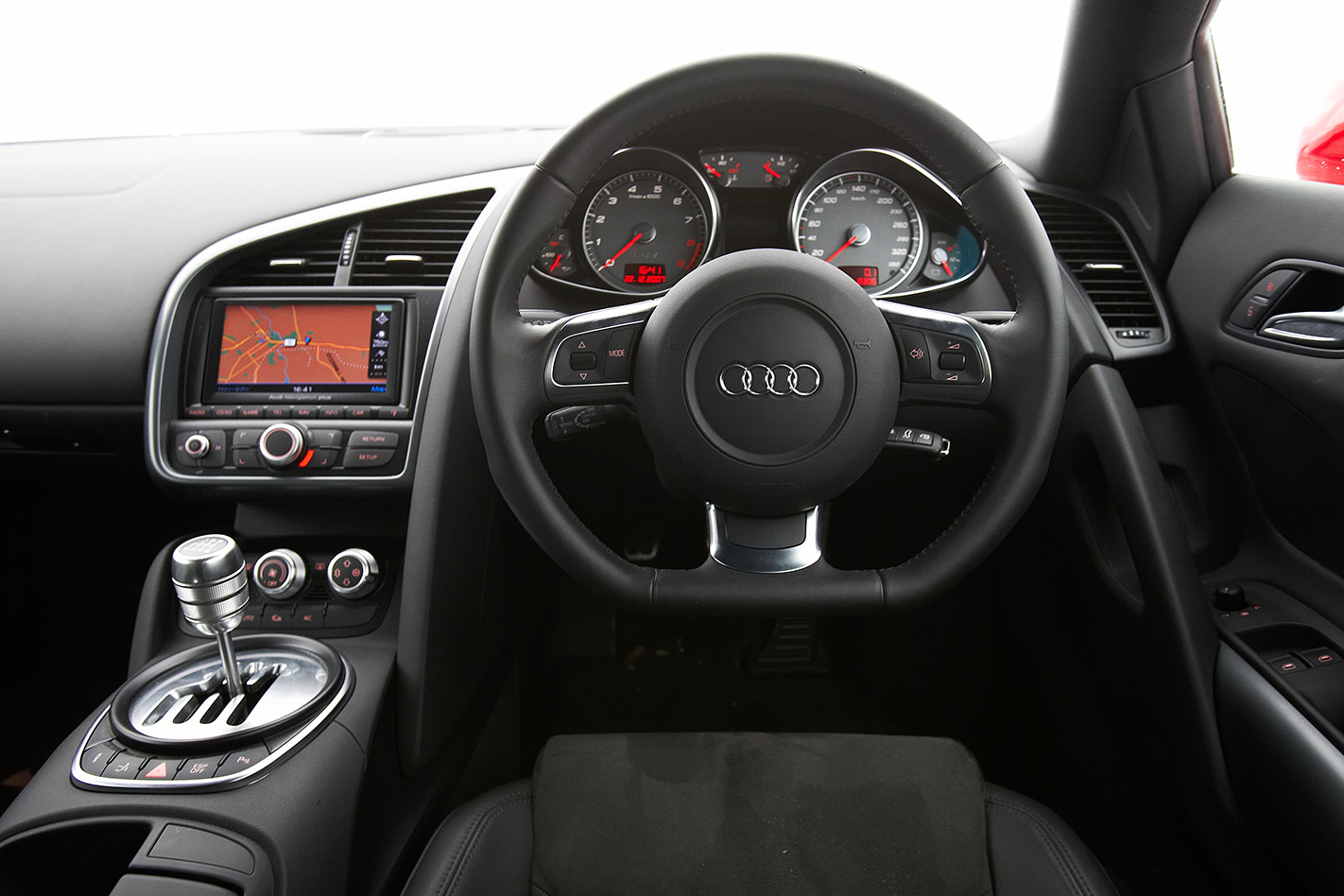
The M6 has beautifully cosseting, supremely adjustable front chairs (even the bolsters can be electrically folded in) and much greater scope than the other two for carrying bodies around, but its bulky dash design is hardly elegant and there’s a frustrating lack of storage for even basic things. No cupholders, either, unless you reach backwards and use the single one on the transmission tunnel for the rear seat.
But that’s all six of one, half-a-dozen of the other. The final decision here comes down to personality – yours. If you’re craving celebrity-like attention and don’t mind, or even enjoy, being constantly gawked at, then the Audi R8 is definitely your kind of transport.
In 10 years of press-car experience, nothing I’ve ever driven has turned as many heads as the R8. Guaranteed the android-like LED daytime headlights have something to do with it, but you can’t turn them off so that’s all part of the deal. That the R8 is a brilliant all-rounder is a bonus, though that’s selling this superb car’s wealth of abilities way too short. Finally, Audi has built something that does everything its smokin’ styling promises, and then some.
But it’s also the fastest of the three, and once up and running, it’ll leave the R8 and 911 floundering in its wake, while carrying a week’s worth of luggage and several passengers in luxuriant, opulent comfort.
Then there’s the Carrera S. Many think it’s too familiar and almost boring next to the radical R8. Fair call, but it’s still the enthusiast’s choice and remains unmatched for precision, feedback, and involvement.
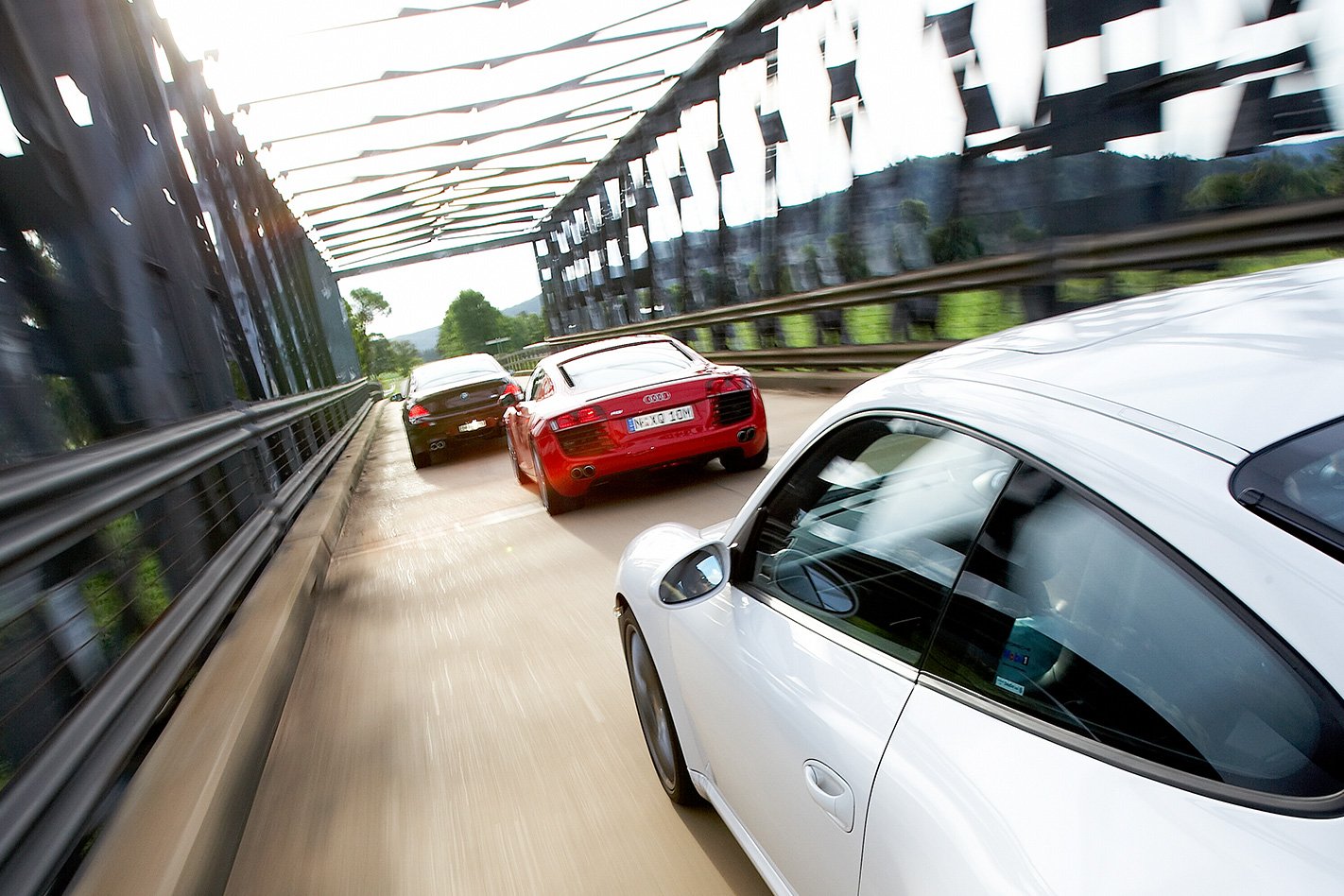
Default as a Porsche 911 purchase may be, it’s still the benchmark, still the king. Every drive is an indelible pleasure, and when you’re done with it, countless others will be lining up to pay a premium for a turn. You won’t get noticed like you will in the other two, but standing out from the crowd isn’t the definition of greatness. Just don’t ask a German backpacker.
SHOWER DUTY
If there’s one thing you can’t predict in this game, it’s weather. On the Friday before Christmas, it was hot and mid-30s. On the Saturday, which was scheduled for cornering shots and, in the arvo, performance testing, it rained so heavily we could barely see.
At least the downpour proved that even in such conditions, the M6, R8 and 911 handle brilliantly and were barely troubled by the rivers running below. Even with DSC off, the oversteer-prone M6 was effortless to drive quickly, but it was only one hearty stab of the throttle away from being 90-degrees to the direction of travel.
From past PCOTY experience, we know all three cars are capable of fast performance times. The manufacturer’s claims – 0-100km/h in 4.6sec for the BMW and Audi, 4.8sec for the Porsche – are all capable of being beaten by a tenth or so on the right day, in the right environment. But above 100km/h, the M6 simply pulls away, leaving the R8 and 911 to fight for scraps.
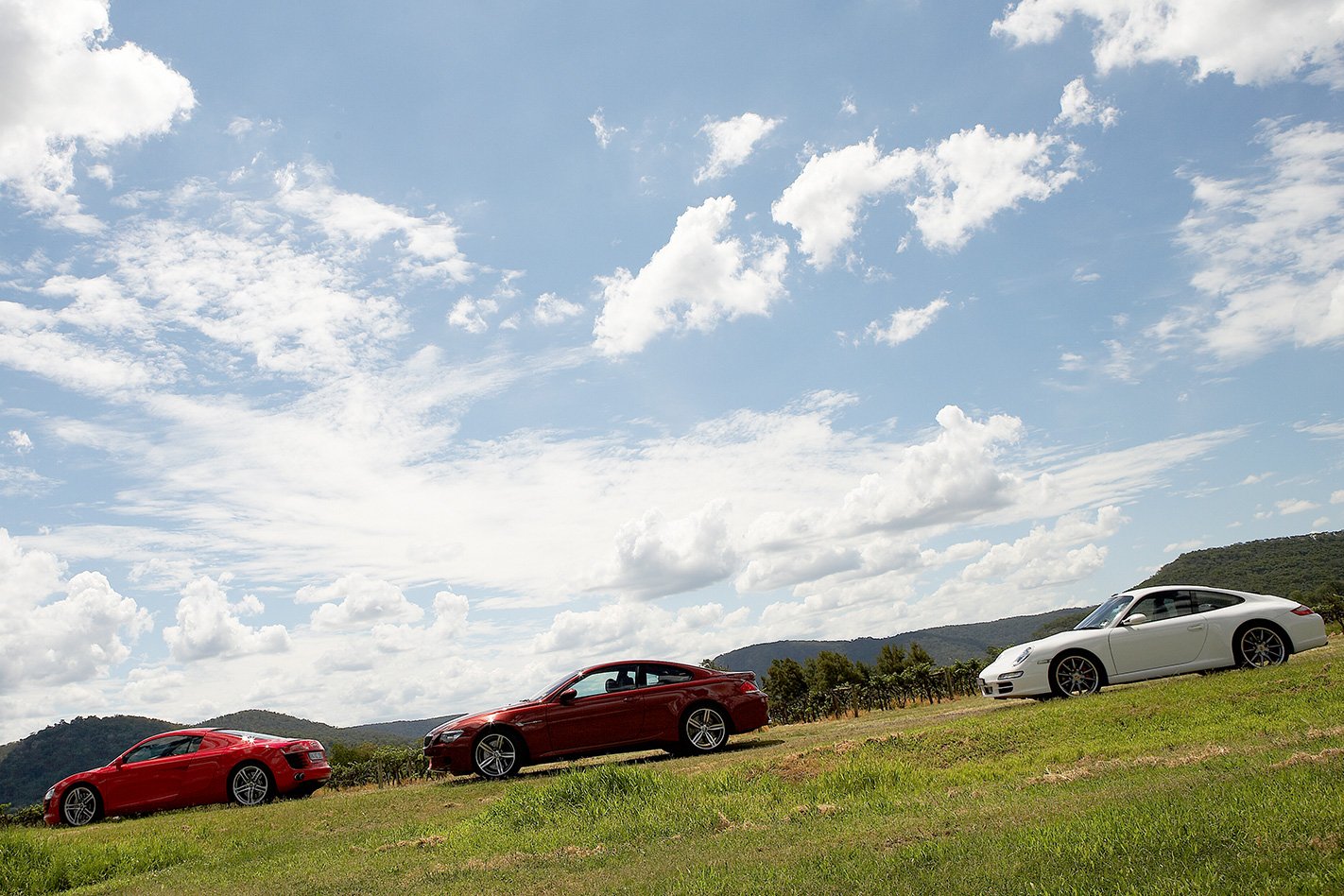
In PCOTY 2005, with a different driver and yet another location, the Porsche clocked 23.4sec to 1000m (at 234km/h), placing it near as dammit to the Audi.
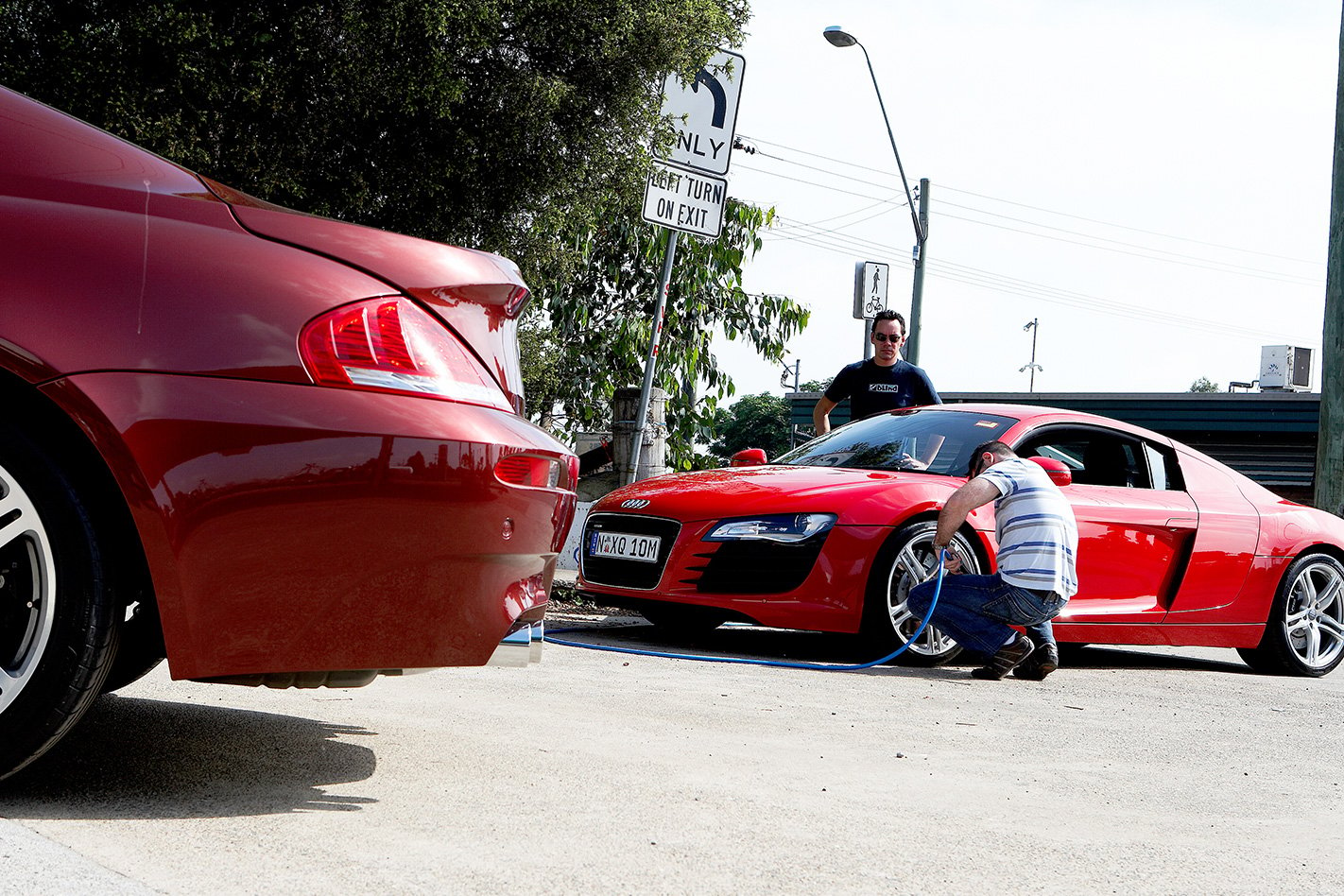
As you may know, the R8 has much latent potential. Coming is a 5.2-litre V10 version, and Audi has just shown a V12 TDI R8 at Detroit.
| u00a0 | Audi R8 Specs | BMW M6 Specsu00a0 | Porsche 911 Carrera S specsu00a0 |
| Engineu00a0 | 4163cc V8, DOHC, 32v | 4999cc V10, DOHC, 40vu00a0 | 3824cc flat 6, DOHC, 24vu00a0 |
| Power | 309kw @ 7800rpm | 373kw @ 7750rpmu00a0 | 261kw @ 6600rpm |
| Torque | 430Nm @ 4500-6000rpm | 520Nm @ 6100rpmu00a0 | 400nm @ 4600rpm |
| Kerb weight | 1560kgu00a0 | 1635kgu00a0 | 1420kg |
| Power-to-weight | 198kw/tonneu00a0 | 228kw/tonneu00a0 | 184kw/tonneu00a0 |
| Transmission | 6-speed manual | 7-speed sequential | 6-speed manual |
| Suspension | Double A-Arms, Coil Springs, Adaptive Dampers, Anti-Roll Bar (F&R)u00a0 | struts, A-arms, adaptive dampers, anti-roll bar (f); multi-links, coil springs, adaptive dampers, anti-roll bar (r)u00a0u00a0 | struts, a-arms, adaptive dampers, anti-roll bar (f); multi-links, coil springs, adaptive dampers, anti-roll baru00a0u00a0 |
| Length/width/height | 4431/1904/1252mmu00a0 | 4871/1855/1372mm | 4427/1808/1300mm |
| Wheelbase | 2650mmu00a0 | 2781mm | 2350mmu00a0 |
| Tracks (f/r) | 1632/1593mmu00a0 | 1567/1584mmu00a0 | 1486/1511mmu00a0 |
| Steering | power rack and pinion | power rack and pinionu00a0 | power rack and pinionu00a0 |
| Turning circleu00a0 | 11.8mu00a0 | 12.5m | 10.9mu00a0 |
| Brakes | 381mm ventilated/drilled discs, eight-piston calipers (f); 356mm ventilated/drilled discs, four-piston calipers (r), ABS, ESPu00a0 | 348mm ventilated discs, four-piston calipers (f); 345mm ventilated discs, four-piston calipers (r); ABS, EBD, DSCu00a0 | 330mm ventilated/drilled discs, four-piston calipers (f); 330mm ventilated/drilled discs, four-piston calipers (r); abs, psm |
| Tyres | Pirelli P Zero | Michelin Pilot Sportu00a0 | pirelli p zero rossou00a0 |
| Size | 235/35ZR19 (f), 295/30ZR19 (r) | 255/40ZR19 (f), 285/35ZR19 (r)u00a0 | 235/35zr19 (f), 305/30zr19 (r)u00a0 |
| Price | $276,650 (as tested)u00a0 | $281,590 (as tested) | $243,020 (as tested)u00a0 |
| PERFORMANCE | u00a0 | u00a0 | u00a0 |
| 0-100KM/H | 4.6SEC (CLAIMED)u00a0 | 4.6SEC (CLAIMED)u00a0 | 4.8SEC (CLAIMED)u00a0 |
| TOP SPEED | 301KM/H (CLAIMED) | 250KM/H (LIMITED)u00a0 | 293KM/H (CLAIMED)u00a0 |
| 0-1KM | 23.3SEC @ 230KM/Hu00a0 | 22.7SEC @ 247KM/H | 23.4SEC @ 234KM/H |
| LIKE | Audiu2019s best-ever car makes a great noise and looks brilliant | Neck-snapping acceleration, superb grand-touring abilityu00a0 | The ultimate everyday supercar, with unmatched characteru00a0 |
| DISLIKE | Coarse-road tyre roar drowns out its engine, slowish steeringu00a0 | SMG tranny not to all tastes, could use more steering feelu00a0 | Token rear seats, ugly steering wheel, fussy optional wheelsu00a0 |
| STAR RATING | 4 out of 5 starsu00a0 | 4 out of 5 starsu00a0 | u00a04.5 out of 5 stars |
Jaguar has revealed what it calls an “intelligent and connected steering wheel of the future” overnight at a tech festival in the United Kingdom.
What you see before you is dubbed ‘Sayer’, and is probably the first steering wheel to be given a name.
But looking past the cutesy nomenclature, Sayer presents a fascinating insight into the development being conducted in preparation for an autonomous future.
While autonomous driving tech could be the norm by 2040, Jaguar believes the steering wheel will play an important role in transportation, working like to a personal assistant.
Sayer is just a steering wheel at the moment, but will feature on a full concept vehicle dubbed Jaguar Future-Type, which will be an experimental look at transport in 2040 and beyond.
Jaguar believes three decades from now, that the steering wheel may be the only part of the car you own at all and can be transferable between vehicles with all your required vehicle preferences and journey information.
“This steering wheel concept lives in your home and becomes your trusted companion,” says Jaguar.
“Sayer is the first voice-activated artificial intelligence (AI) steering wheel that will be able to carry out hundreds of tasks.
“Imagine a future of autonomous, connected and electric cars where you don’t own a single car, but instead call upon the vehicle of your choice where and when you need it.
“That’s a future vision Jaguar Land Rover is exploring with Sayer, the connected steering wheel that could be the only part of the car you own.”
The Sayer name comes from a significant designer of Jag’s past, Malcom Sayer, who worked for the company between 1951 and 1970.
If you’re looking at buying a new Subaru, it might be worth hastening your purchase to before the end of the month to receive an extra two year’s warranty and free roadside assistance.
Subaru is offering a five year/unlimited kilometre warranty and roadside assist over the standard three years on selected models including BRZ, Forester, Levorg, Liberty, Outback, WRX and WRX STI.
According to the small print, the vehicles have to be sold and delivered by September 30, though Subaru Australia spokesman told WhichCar “any foreseen delays outside the control of the customer/dealer/Subaru Australia can be accommodated”.
The all-new 2017 Impreza and XV models have been excluded from the sales incentive due to already strong sales.
Subaru says there are no plans to permanently expand its usual three-year/unlimited kilometre warranty on its cars beyond this offer.
The last Ferrari LaFerrari Aperta roadster, which bears build number 210, will be auctioned to the highest bidder to raise money for charity.
With this being the final example of a LaFerrari Aperta built, the car will be valuable enough on that alone.
However, Ferrari has announced it has created a new design for the paintwork on the final Aperta, and its interior will be slightly more special too.
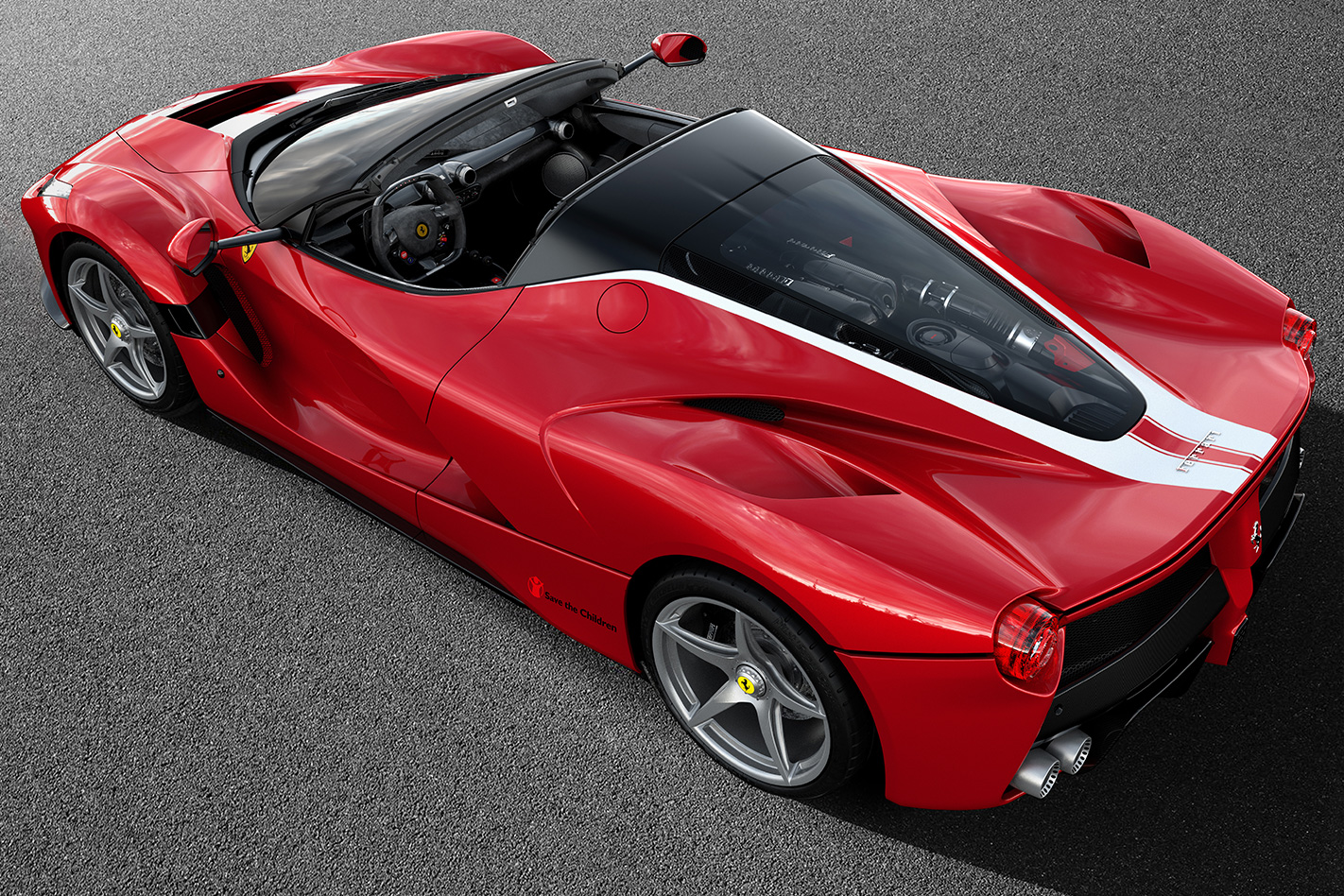
This paint style is one-of-a-kind for a LaFerrari. Inside, the Aperta will score black Alcantara and shiny black carbon fiber with red leather inserts on the seats, as well as red stitching through the upholstery.
The charity benefitting from this sale, Save the Children, is an international program focusing on education. It’s likely to receive a large donation, especially as the event will be held at Ferrari’s Fiorano track. Anyone showing up will have a full wallet ready to go.
Auction house RM Sotheby’s notes that the car will not only be valuable due to its unique build and its place as the final Aperta, but also because of the benefit it has served and the story behind that.
“A wholly unique opportunity to acquire a true one-off Ferrari, this LaFerrari Aperta shall stand out from the rest due to the uniqueness of its livery and pride of place in the model’s production run.
“Not only would this be a noteworthy addition to any lucky tifosi’s [Italian for fan’s] stable, but an acquisition in support of a very worthy cause.”
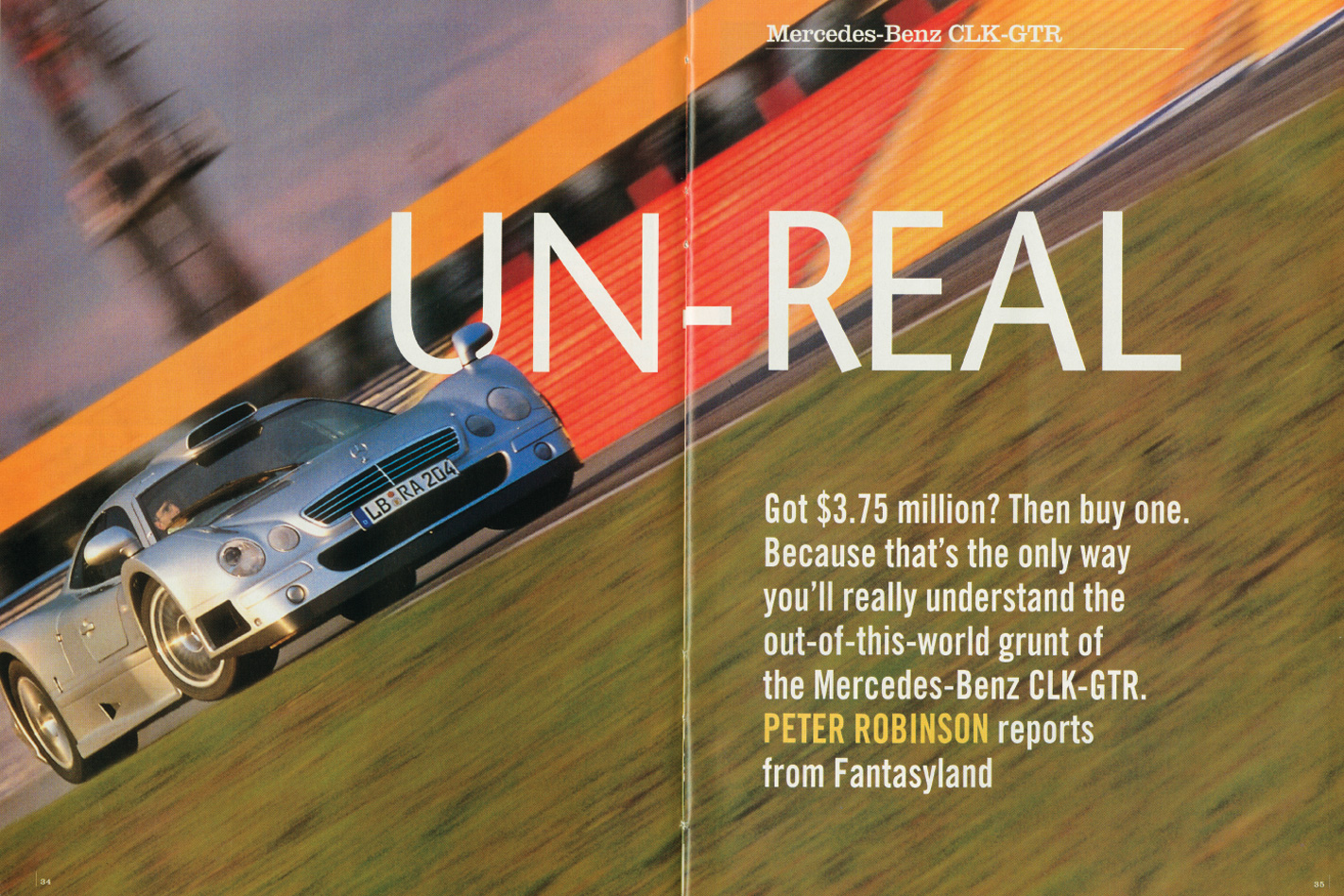
Got $3.75 million? Then buy one. Because that’s the only way you’ll really understand the out-of-this-world grunt of the Mercedes-Benz CLK-GTR.
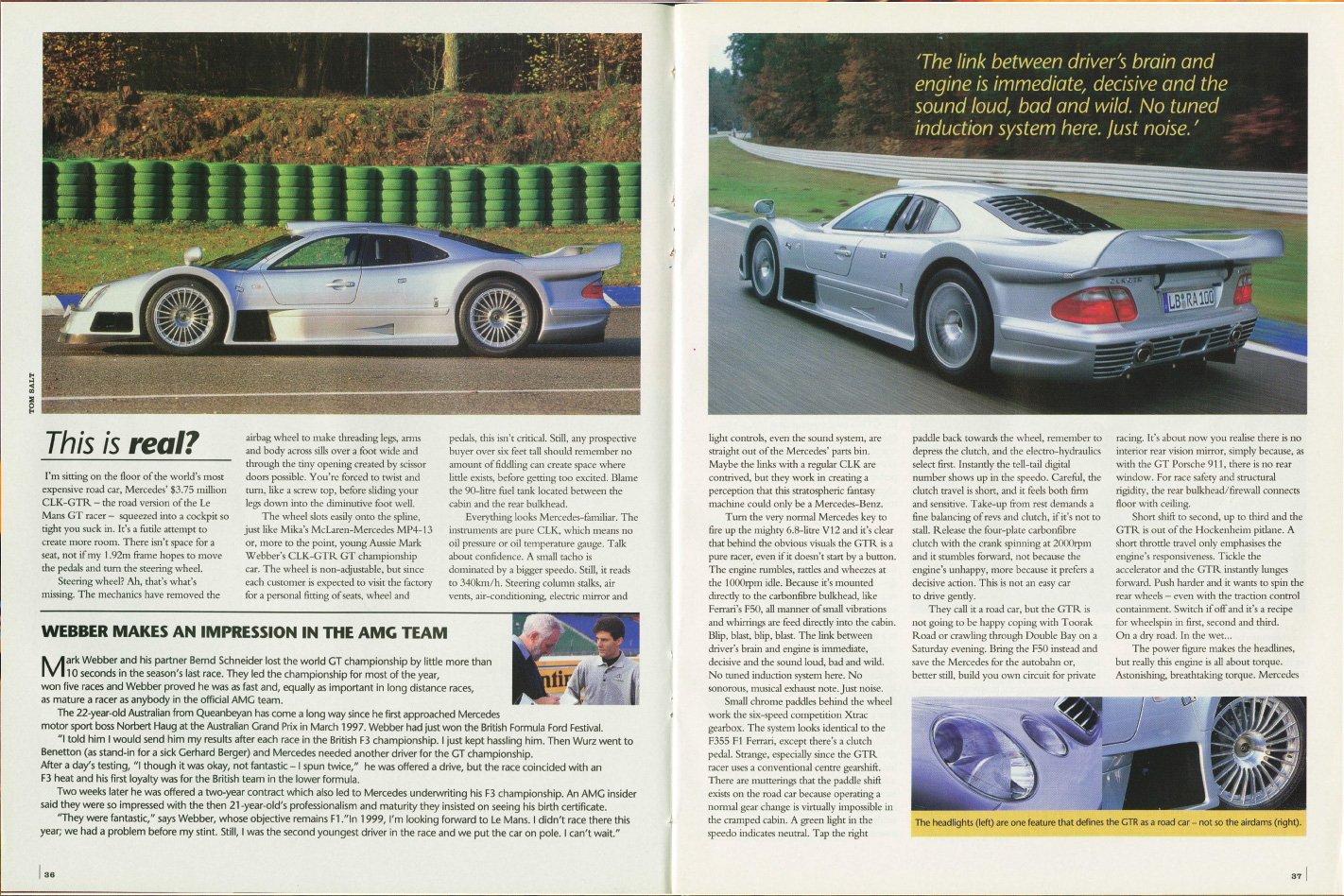
This is real?
There isn’t space for a seat, not if my 1.92m frame hopes to move the pedals and turn the steering wheel. Steering wheel? Ah, that’s what’s missing. The mechanics have removed the airbag-equipped wheel to make threading legs, arms, and body across sills over a foot wide, and through the tiny opening created by scissor doors, possible.
You’re forced to twist and turn, like a screw top, before sliding your legs down into the diminutive foot well.
The wheel slots easily onto the spline, just like Mika’s McLaren-Mercedes MP4-13 or, more to the point, young Aussie Mark Webber‘s CLK-GTR GT championship car.
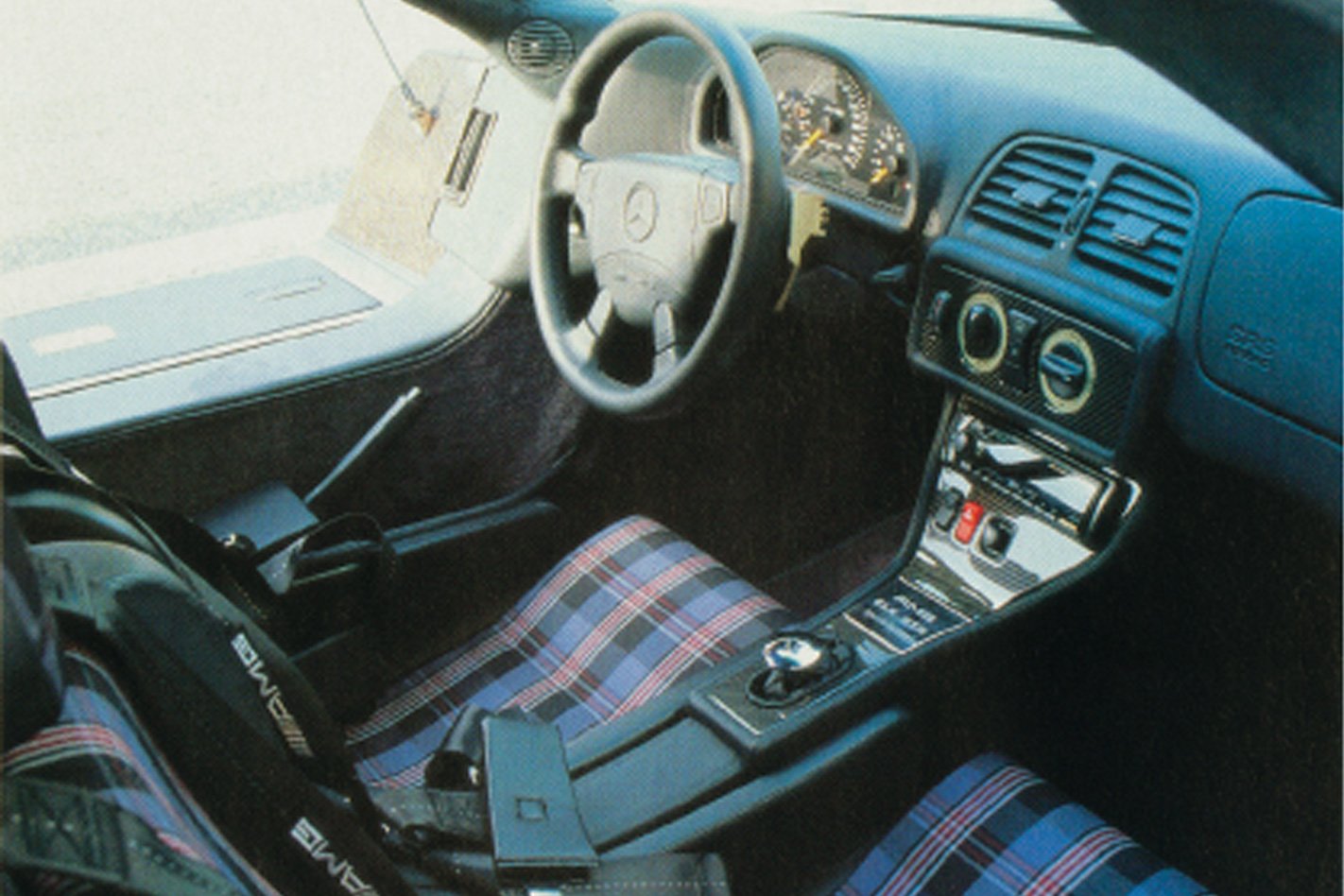
Everything looks Mercedes-familiar. The instruments are pure CLK, which means no oil pressure or oil temperature gauge. Talk about confidence. A small tacho is dominated by a bigger speedo. Still, it reads to 340km/h. Steering column stalks, air vents, air-conditioning, electric mirror, and light controls, even the sound system, are straight out of the Mercedes’ parts bin.
Maybe the links with a regular CLK are contrived, but they work in creating a perception that this stratospheric fantasy machine could only be a Mercedes-Benz.
Turn the very normal Mercedes key to fire up the mighty 6.8-litre V12 and it’s clear that behind the obvious visuals, the GTR is a pure racer, even if it doesn’t start by a button.
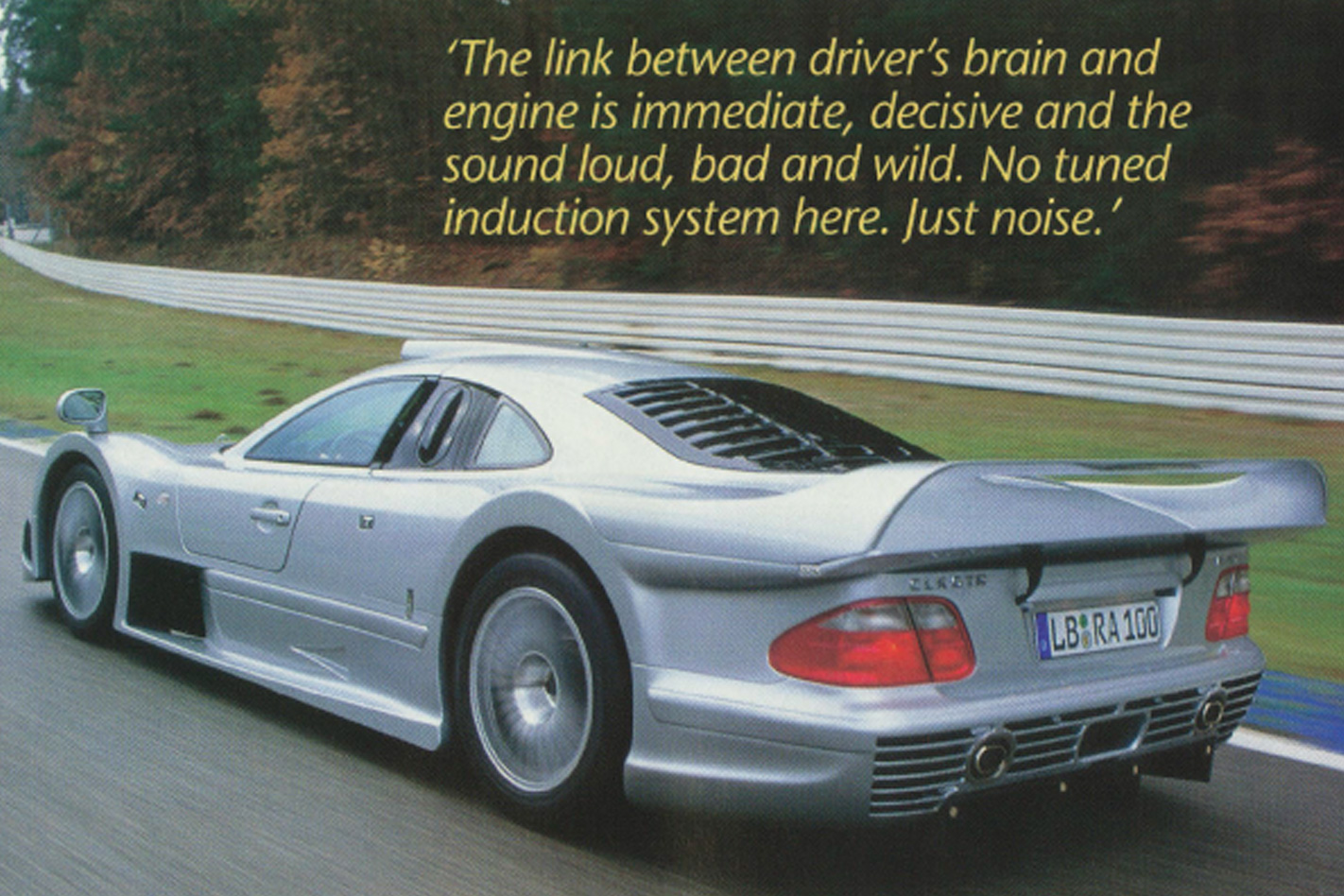
The link between driver’s brain and engine is immediate, decisive, and the sound is loud, bad, and wild. No tuned induction system here. No sonorous, musical exhaust note. Just noise.
Small chrome paddles behind the wheel work the six-speed competition Xtrac gearbox. The system looks identical to the F355 F1 Ferrari, except there’s a clutch pedal.
Strange, especially since the GTR racer uses a conventional centre gearshift. There are mutterings that the paddle shift exists on the road car because operating a normal gear shifter is virtually impossible in the cramped cabin. A green light in the speedo indicates neutral. Tap the right paddle back towards the wheel, remember to depress the clutch, and the electro-hydraulics select first.
This is not an easy car to drive gently. They call it a road car, but the GTR is not going to be happy coping with Toorak Road, or crawling through Double Bay on a Saturday evening. Bring the F50 instead and save the Mercedes for the autobahn or, better still, build your own circuit for private racing.
It’s about now you realise that there is no interior rear-view mirror, simply because, as with the GT Porsche 911, there is no rear window. For race safety and structural rigidity, the rear bulkhead/firewall connects floor with ceiling.
Short shift to second, up to third and the GTR is out of the Hockenheim pitlane. A short throttle travel only emphasises the engine’s responsiveness. Tickle the accelerator and the GTR instantly lunges forward. Push harder and it wants to spin the rear wheels – even with traction control containment.
The power figure makes the headlines, but really this engine is all about torque. Astonishing, breathtaking torque.
Mercedes stroked the production 6.0-litre V12 out to 6.8-litres. Now, it’s far closer to the 1997 FIA GTR racing engine than S600-silent. Despite softer cams, a reworked engine management system, and a full homologation four-catalyser exhaust, AMG swears the road GTR matches the power of the racer and has more torque.
The specs sheet says 450kW at 6800rpm and 775Nm at 5250rpm. Read peaky. For a more realistic guide to its potential you need to see the torque curve. At 2000rpm, the giant V12 pumps out over 620Nm of torque. The sheer range of torque is astonishing. It just keeps coming in an absurdly, wonderfully, vicious sweep. No need to change down, no point worrying about keeping the V12 high up in the rev range. There is so much urge, so much of the time that the gearbox is almost superfluous, unless you want to match competitive lap times.
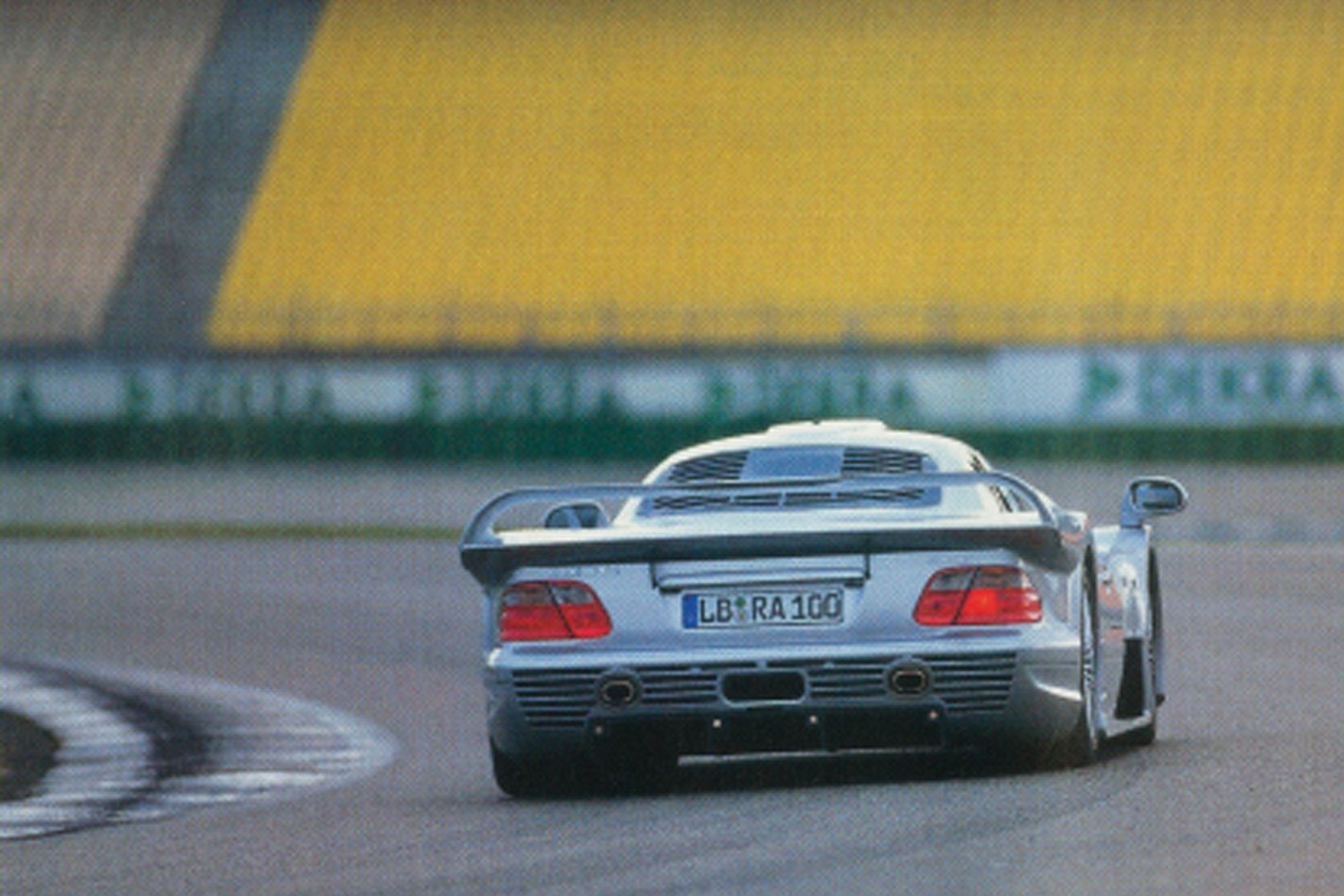
Big and heavy it may be, but the GTR gets so close to matching the performance of the lighter (by 332kg), more compact (a remarkable 332mm shorter) McLaren F1, it hardly matters in the real world. The Macca has the advantage to 100 km/h – 3.3sec against an official claim of 3.8sec – but at the end of a standing kilometre, the standard performance measure in Europe, the GTR’s 19.8sec is a mere 0.2sec in arrears. Top speed 320km/h, Webber says he’s seen a genuine 330km/h on the autobahn. Still, not as fast as the McLaren’s 385km/h.
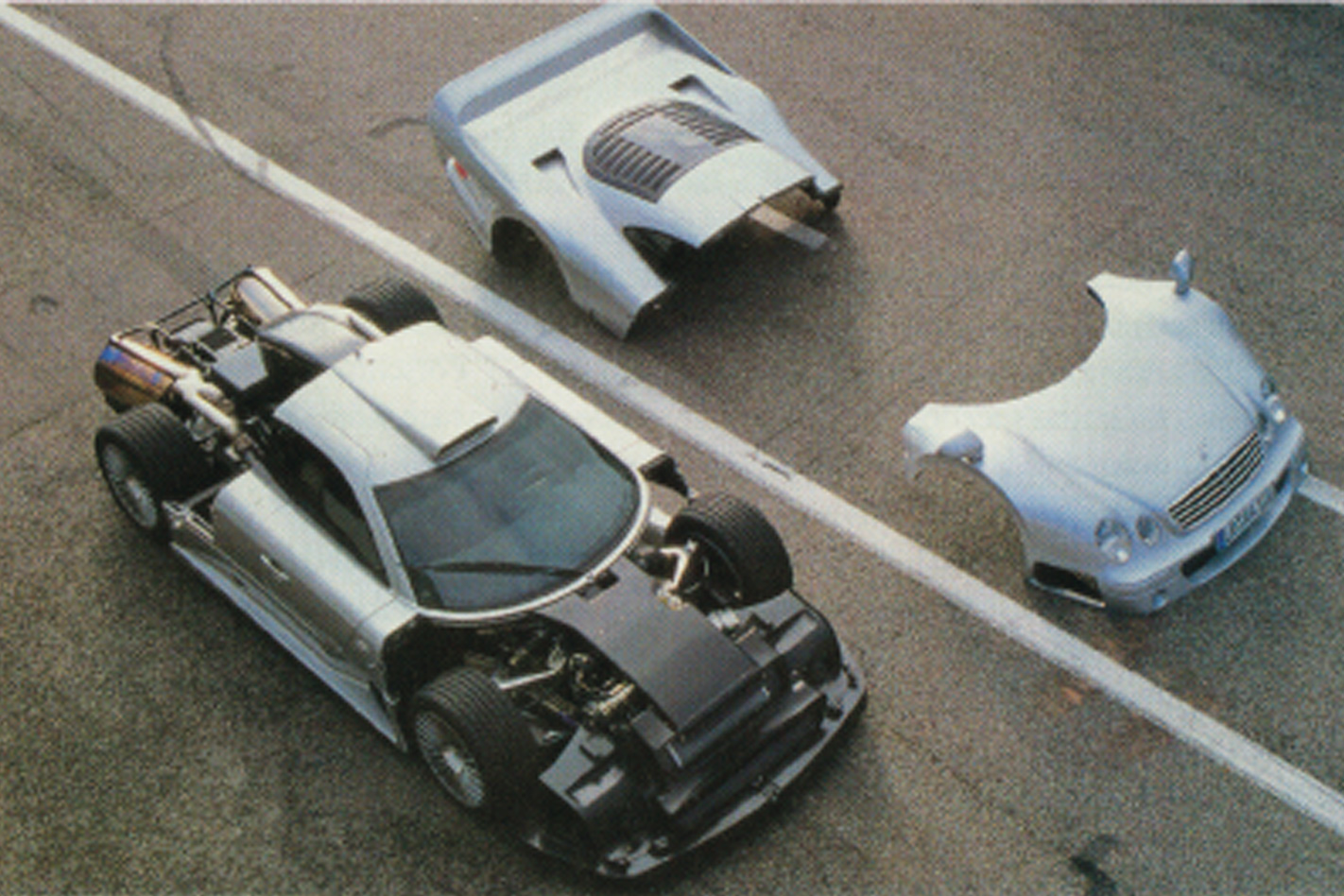
There is a basic difference in philosophy with the McLaren. The CLK-GTR was designed as a racing car, and then converted to a road car. The exact opposite of the F1, the GTR’s most obvious rival.
Yet, it’s the Mercedes that gets driving aids like traction control, power steering, and powered brakes – all considered unnecessary on the F1 – perhaps because the GTR needs the assistance to tame an engine and chassis so strongly biased to the track. Mercedes settled on a carbonfibre monocoque, supplied by Lola Composites, and race-styled double wishbone suspension front and rear with horizontal spring/damper units for the GTR. The rear suspension is bolted to the load-bearing engine.
The GTR turns into corners instinctively. It’s too big and heavy to throw around, yet it behaves like a much smaller, more naturally agile sports car. Its basic handling is set up for understeer, but switch off the ASR traction control and power oversteer is instantly on tap. It takes time to remember the gear change paddles move with the wheel. For some customers, AMG uses stickers on the steering wheel – green for up and red for down – to mark their location.
The heroes among the hacks are desperate to set new personal lap records, which is why the brake pedal goes to the floor at the first corner. I’m more interested in trying to recreate road conditions.
Porsche threw us the keys to the GT1 and told us to bring it back when we’d finished; we played with the McLaren for three days on the Yorkshire moors, but AMG insists we stick to the short and twisty stadium circuit at Hockenheim, which makes any discussion on ride quality of limited relevance for the road.
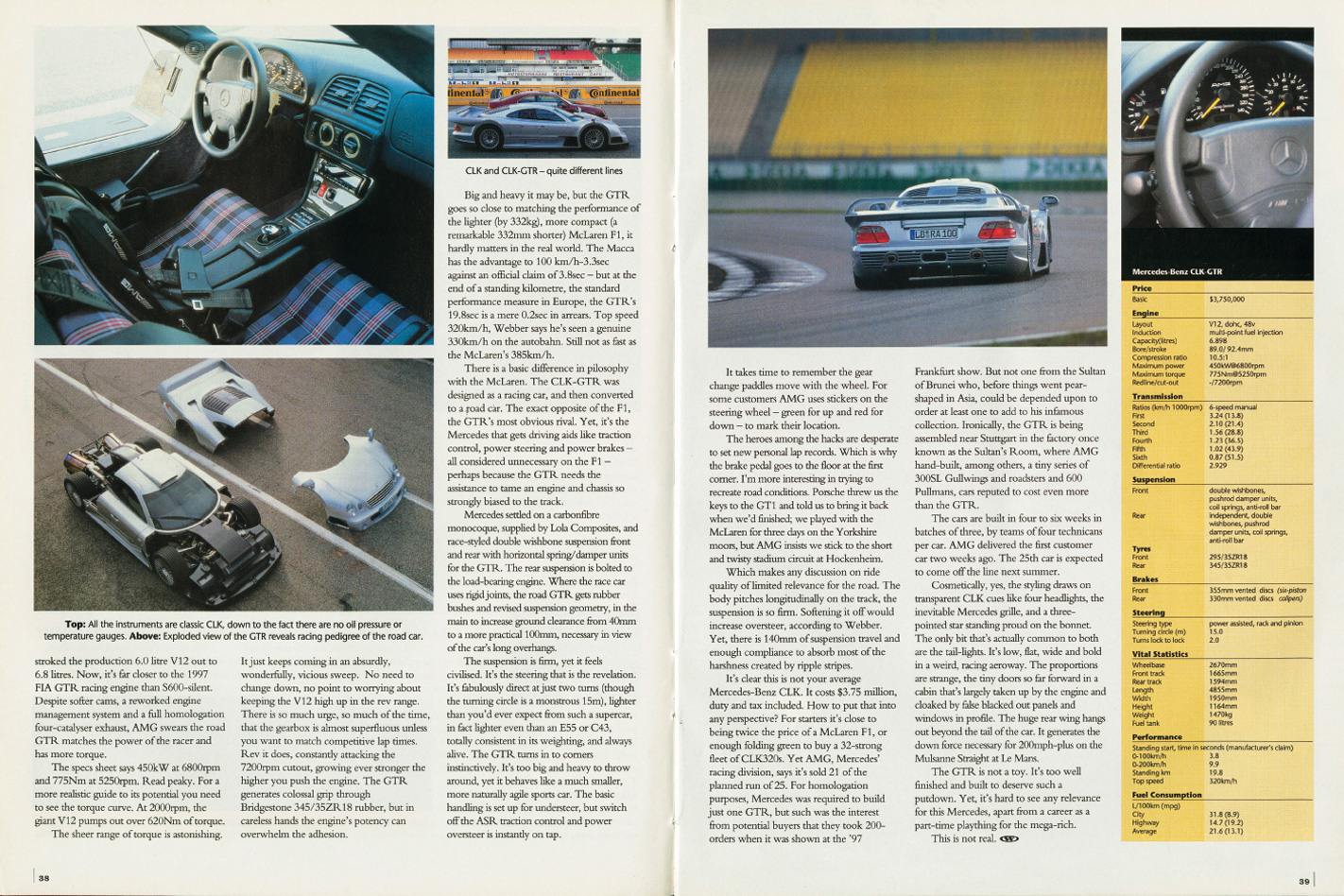
It’s clear this is not your average Mercedes-Benz CLK. It costs $3.75 million, duty and tax included. How to put that into any perspective? For starters, it’s close to being twice the price of a McLaren F1, or enough folding green to buy a 32-strong fleet of CLK320s. Yet AMG, Mercedes’ racing division, says it’s sold 21 of its planned run of 25. For homologation purposes, Mercedes was required to build just one GTR, but such was the interest from potential buyers that they took 200-orders when it was shown at the ’97 Frankfurt show. But not one order from the Sultan of Brunei, who, before things went pear-shaped in Asia, could be depended upon to order at least one to add to his infamous collection.
Ironically, the GTR is being assembled near Stuttgart, in the factory once known as the Sultan’s Room, where AMG hand-built, among others, a tiny series of 300SL Gullwings and roadsters, and 600 Pullmans. Cars reputed to cost even more than the GTR.
The cars are built in four to six weeks in batches of three, by teams of four technicians per car. AMG delivered the first customer car two weeks ago. The 25th car is expected to come off the line next summer.
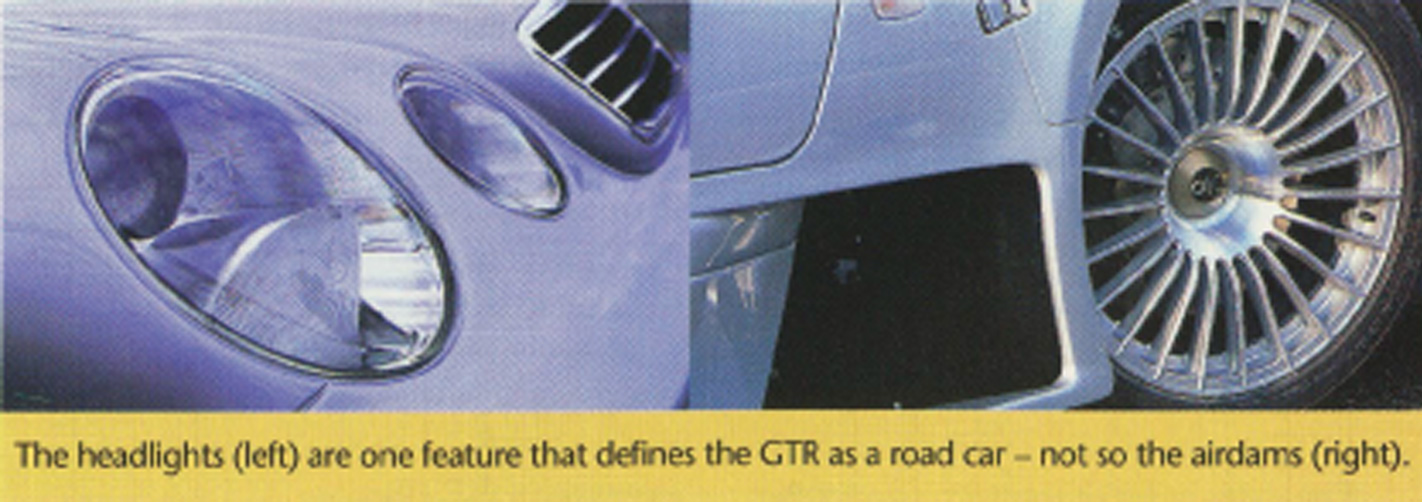
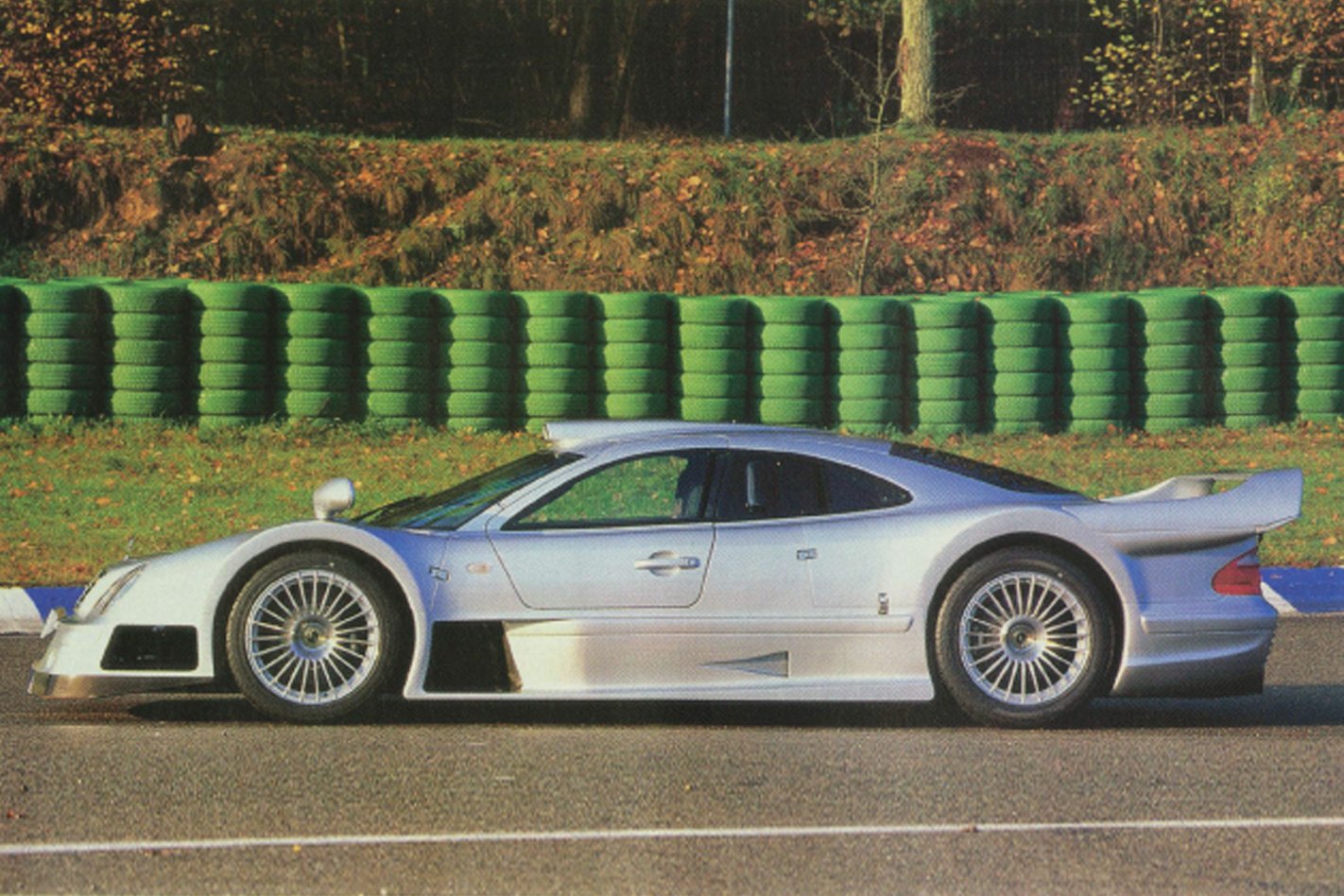
The proportions are strange, the tiny doors so far forward in a cabin that it’s largely taken up by the engine and cloaked by false blacked out panels and windows in profile. The huge rear wing hangs out beyond the tail of the car. It generates the down force necessary for 200mph-plus on the Mulsanne Straight at Le Mans.
The GTR is not a toy. It’s too well finished and built to deserve such a putdown. Yet, it’s hard to see any relevance for this Mercedes, apart from a career as a part-time plaything for the mega-rich.
This is not real.
Webber makes an impression in the AMG team
Mark Webber and his partner Bernd Schneider lost the world GT championship by little more than 10 seconds in the 1998 season’s last race. They led the championship for most of the year, won five races, and Webber proved he was as fast and, equally as important in long distance races, as mature of a racer as anybody in the official AMG team.
The 22-year-old Australian from Queanbeyan has come a long way since he first approached Mercedes motor sport boss, Norbert Haug, at the Australian Grand Prix in March 1997. Webber had just won the British Formula Ford Festival.
“I told him I would send him my results after each race in the British F3 championship. I just kept hassling him. Then Wurz went to Benetton (as stand-in for a sick Gerhard Berger) and Mercedes needed another driver for the GT championship.
After a day’s testing, “I thought it was okay, not fantastic – I spun twice,” he was offered a drive, but the race coincided with an F3 heat and his first loyalty was for the British team in the lower formula.
Two weeks later, he was offered a two-year contract which also led to Mercedes underwriting his F3 championship. An AMG insider said they were so impressed with the then 21-year-old’s professionalism and maturity they insisted on seeing his birth certificate.
“They were fantastic,” says Webber, whose objective remains F1.
“In 1999, I’m looking forward to Le Mans. I didn’t race there this year; we had a problem before my stint. Still, I was the second youngest driver in the race and we put the car on pole. I can’t wait.”
Amid all the dizzying next-gen technology on display at Mazda’s Tech Forum in Frankfurt, there was a welcome reassurance that the Hiroshima-based company wants to do the right thing by its enthusiast base.
Hidetoshi Kudo, Executive Officer in charge of R&D Administration and Product Strategy, was adamant in his conviction that manual gearboxes are not being ditched by Mazda.
“No,” he said when asked if Mazda was switching to all-automatic transmissions. “We will continue to build the manual gearbox. In fact, I am certain we will be the last [Japanese] OEM still making cars with manual gearboxes.”
That leads to the fascinating prospect of a stare-down between Mazda and Toyota’s lightweight sports cars, but Mazda is clearly determined to be last man standing here. That’s great news for those who appreciate the control, tactility, and simplicity of a manual transmission, and sets a marker for future MX-5 development.
Of all the major Japanese manufacturers, Mazda has long been the one with the most human face, a company that has often pursued technical innovations that others have shied away from on cost grounds. It’s also one that appreciates that not all of its customers want high-tech. Delivering the best of both worlds looks to be a challenge that Mazda is willing to take on.
