
Australia’s new-car market has posted a third successive record month as Toyota’s HiLux ute posted another ‘Catch me if you can’ chart-topping result.
The market’s slow start to the year looks like a distant memory as July’s total of 92,754 vehicle sales pushed 2017 slightly further ahead of where 2016’s record year sat this time last year – up 0.4%.
SUVs again outsold passenger cars – 36,979 v 35,792 – as July 2017 registered 446 more sales than the previous best July (2015).
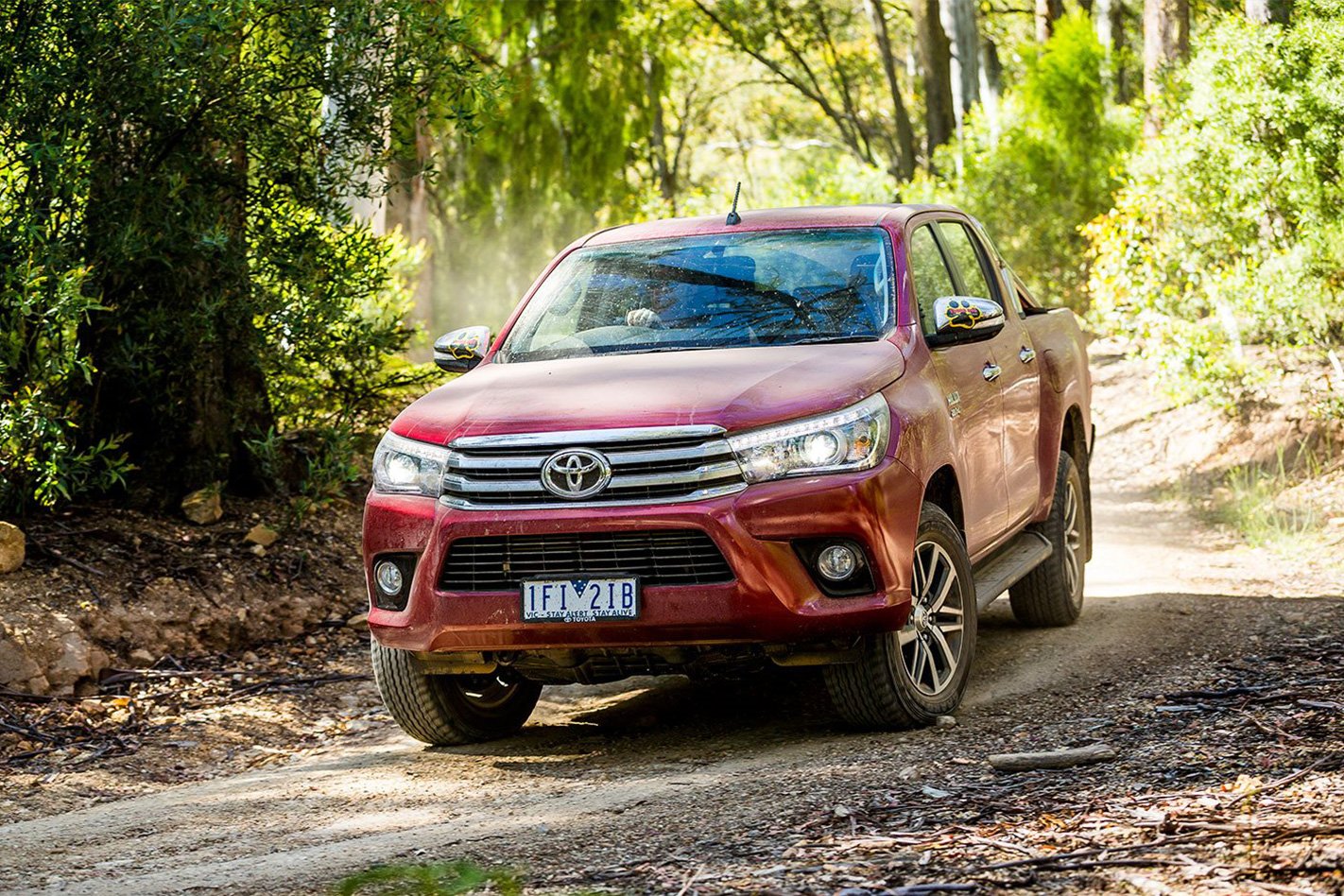
HiLux’s 3742 sales last month finished comfortably ahead of its stablemate small car, the Toyota Corolla, which recorded a figure of 3208. More importantly, though, it was also clear of the Ford Ranger – third with 3076 units – which is currently its closest challenger in the overall race to finish as 2017’s most popular vehicle.
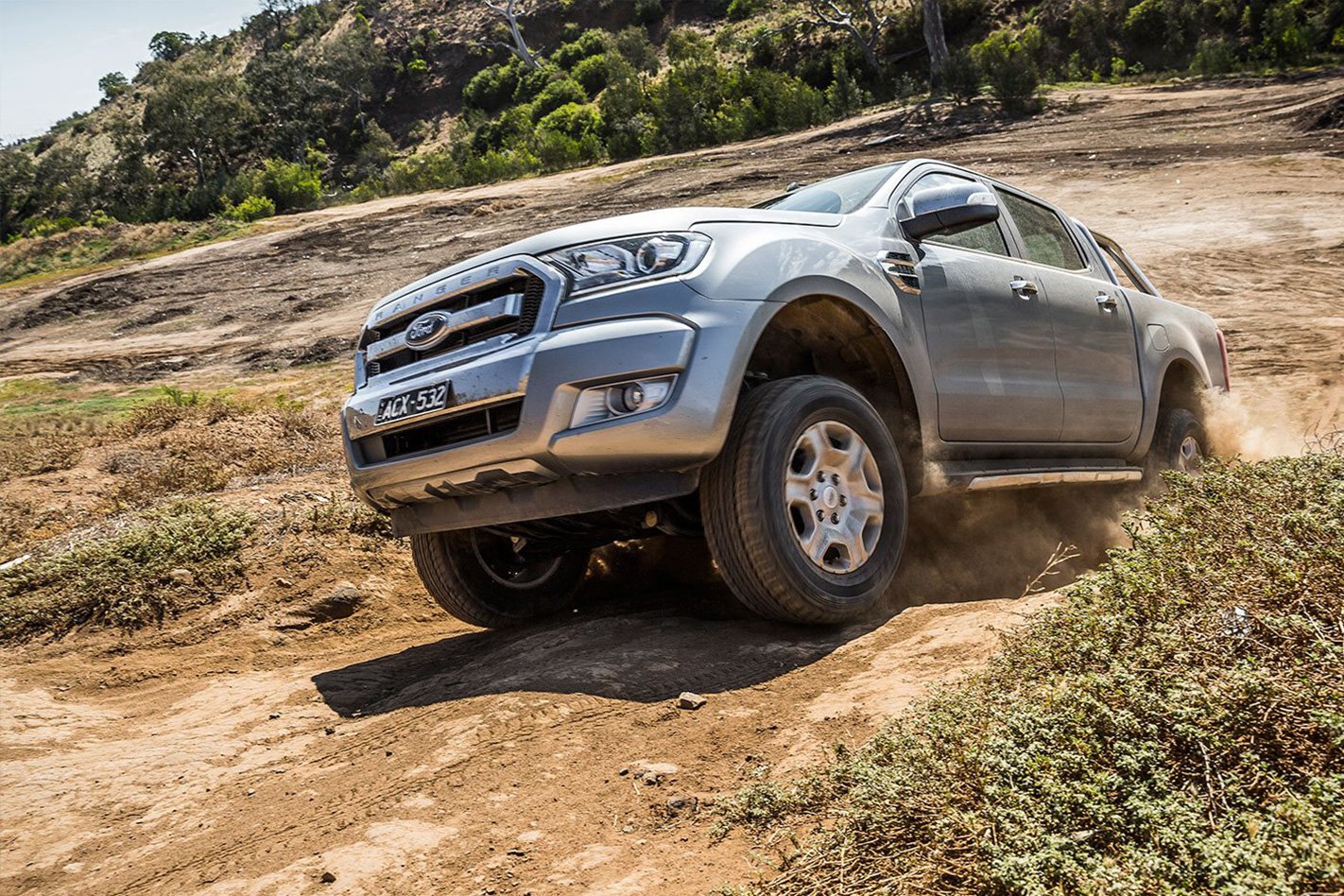
The gap between the two utes has now grown to nearly 2500 units, a figure that looks tough to overcome despite the Ranger remaining ahead of the HiLux in the 4×4 sub-segment.
Former sales champ the Mazda 3 had a strong July – up 64% year-on-year – to place fourth, and ahead of the Japanese brand’s mid-sized SUV, the Mazda CX-5, which finished sixth: 2466 v 2305.
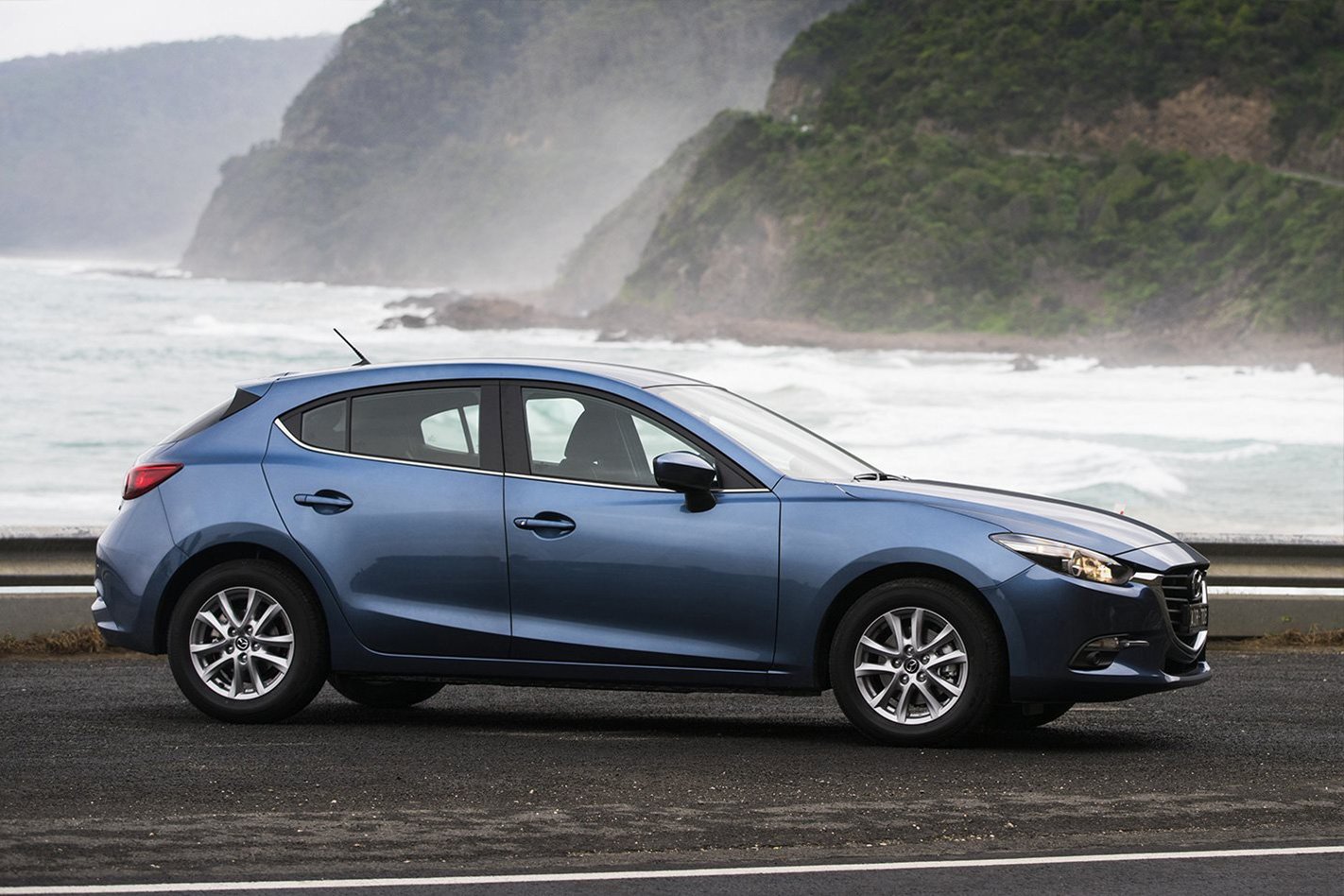
In the middle of the Mazda sandwich sits the ever-popular Toyota Camry, in fifth position with 2385 sales.
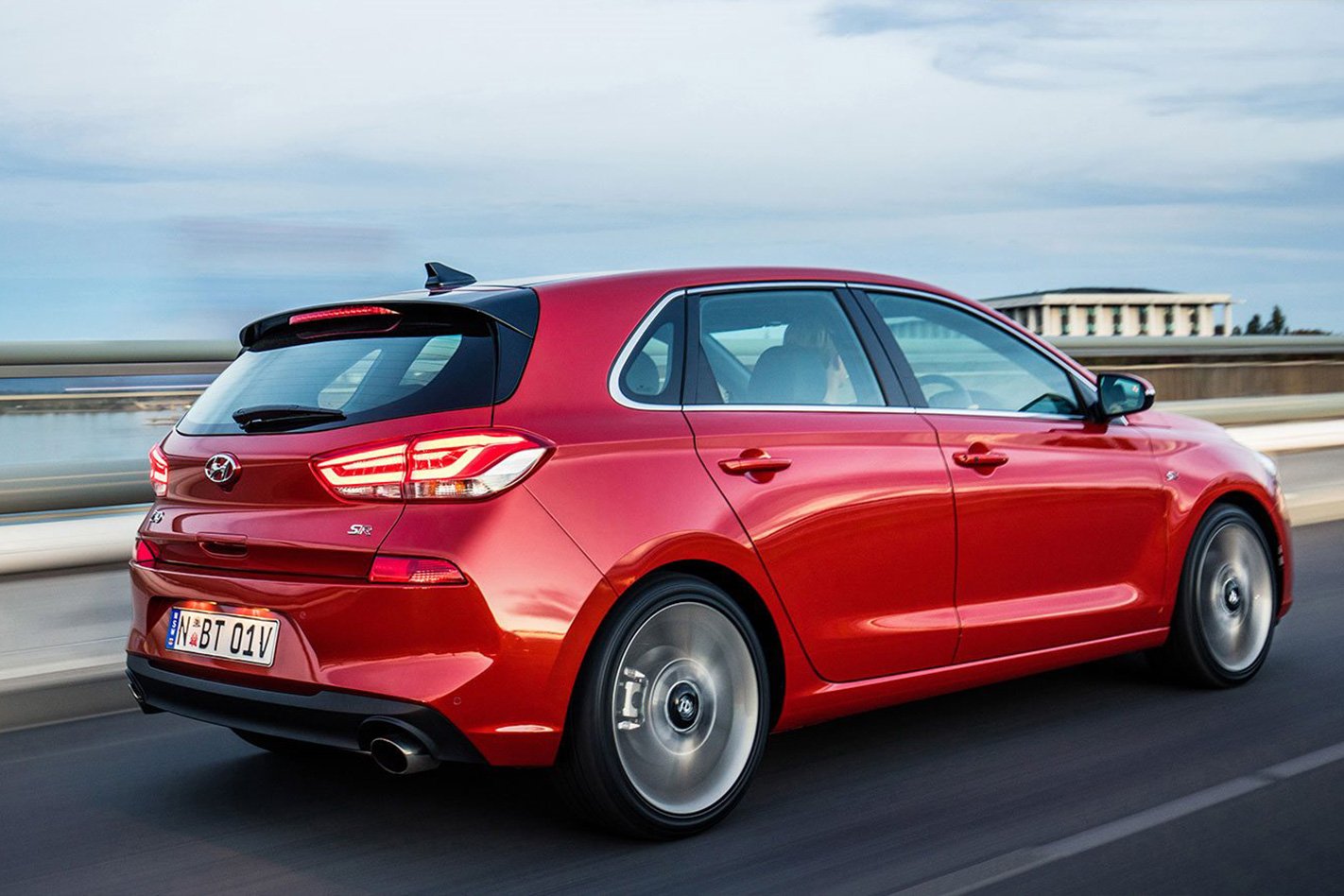
Hyundai’s i30 was the only other model to secure more than 2000 sales, with the final three places in the top 10 covered by just 28 units. The Toyota RAV4 (1736) and Hyundai Tucson (1719) SUVs were followed by another ute, the Mitsubishi Triton (1708).
July 2017 – Top 10
- Toyota HiLux 3742
- Toyota Corolla 3208
- Ford Ranger 3076
- Mazda 3 2466
- Toyota Camry 2385
- Mazda CX-5 2298
- Hyundai i30 2123
- Toyota RAV4 1736
- Hyundai Tucson 1719
- Mitsubishi Triton 1708
2017 Top 5 Most Popular Vehicles – to end of July
- Toyota HiLux 27,120
- Ford Ranger 24,714
- Toyota Corolla 22,662
- Mazda 3 20,518
- Hyundai i30 16,660
WHEN it comes to envisioning the future of cars and driving, popular works of fiction often set a scene where emission-less vehicles hover around utopian cities without instructions from their occupants and in perfect unison with all other vehicles.
Many car makers insist that completely autonomous vehicles will one day be a reality and sustainable energy power sources will be the death of combustion power, but there are some exciting technologies that you are more likely to see in the not so distant future.
Augmented reality
With head-up displays proliferating many of today’s vehicles, the next evolution in the technology is likely to be augmented reality. While a HUD project images in the driver’s field of view using the windscreen (or a small transparent panel) as the screen, augmented imaging will interact with the objects that the driver sees out the windscreen in real-time.
Instead of route instructions being relayed via a separate screen that’s away from the driver’s view, augmented reality will impose direction arrows and other route info onto the driver’s view of the actual road surface. When tied into vehicle-to-vehicle communication systems, the display could even warn the driver of danger by highlighting parts of the road ahead in red, for example.
At night, hazards that are hard to see can be enhanced and imposed over the actual object for perfect low-light vision.
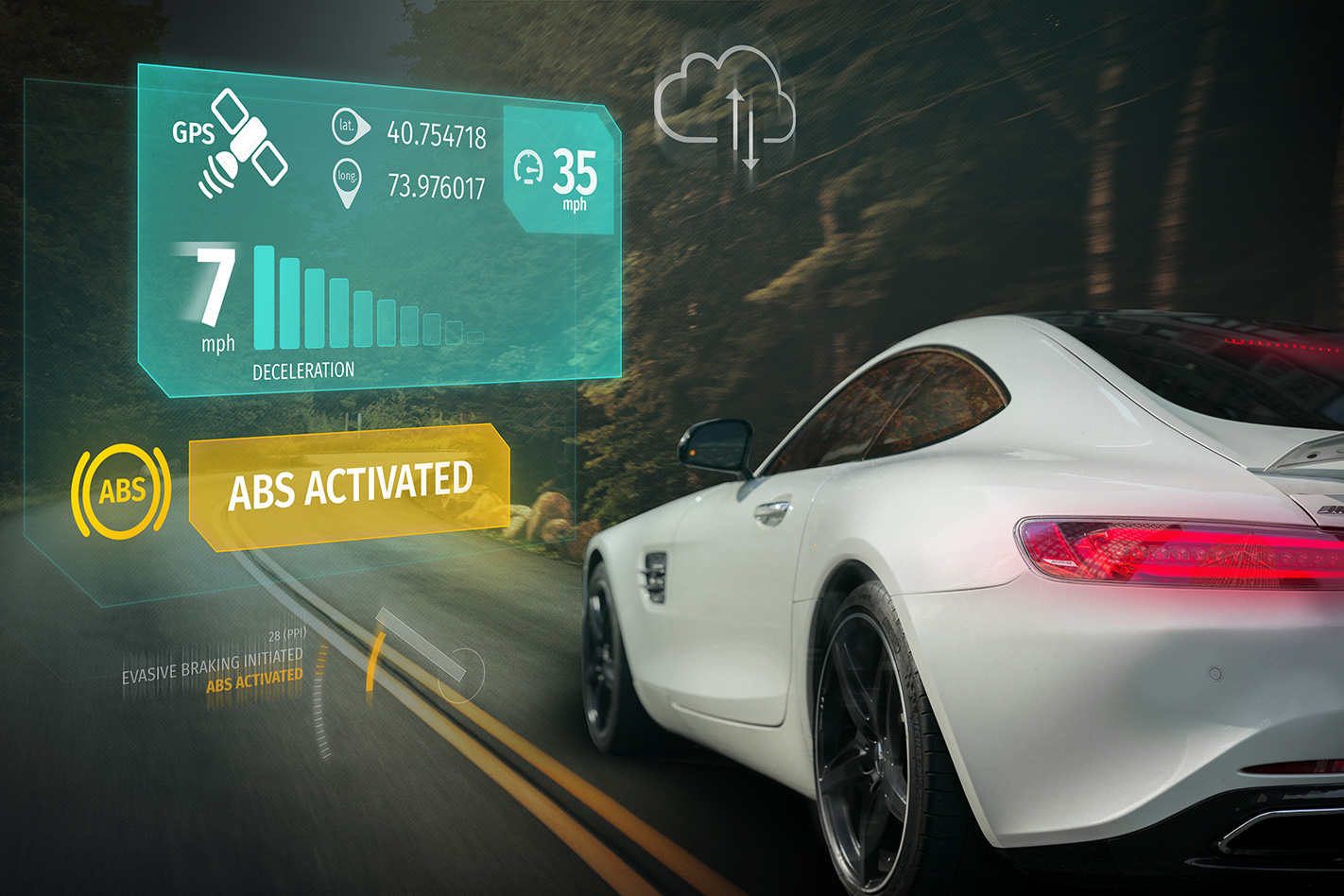
While companies including BMW and Volkswagen are already offering basic gesture control in their cars, the technology is set to become more effective and diverse.
At the moment, the systems require relatively large hand and arm movements for recognition, but as the sensors and software that run them become more sophisticated, operating a wider range of features using more subtle gestures will be possible.
An advanced version could even combine augmented reality with a large virtual screen projected onto interior surfaces.
V2X communication
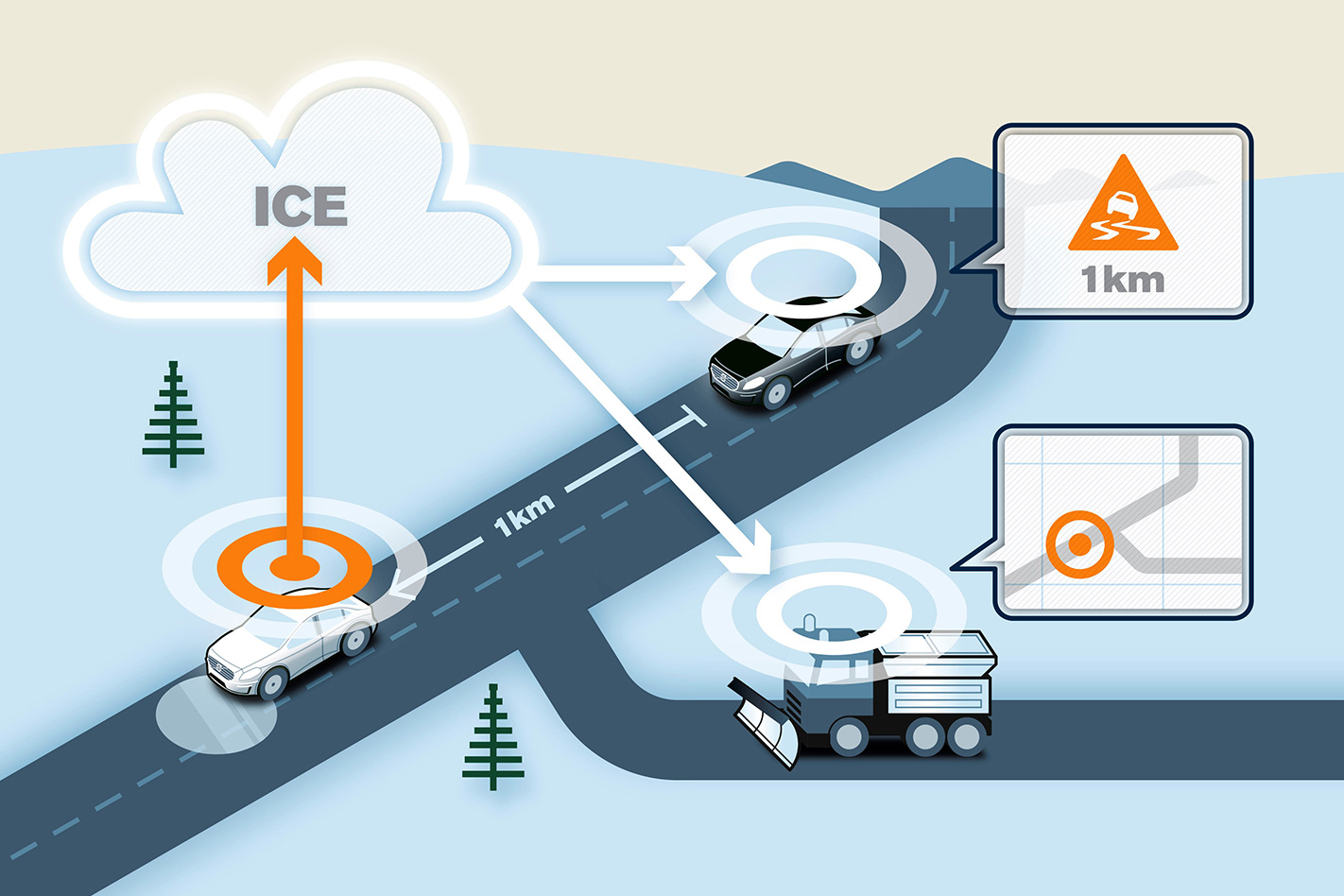
Many of the world’s mainstream car makers are developing short-range radio systems that will allow vehicles to communicate with one another and share important information regarding their surroundings, but beyond vehicle-to-vehicle (V2V), the communication network will roll out to traffic signals, signs, and even buildings.
So-called V2X (vehicle-to-everything) communication will broaden the network in which vehicles can communicate with, as information regarding weather, traffic, and hazards can be relayed across the various hubs.
Early development of the systems will offer the driver information via a screen or audible messages, but ultimately, autonomous cars will use the vital information to constantly review and update a programmed drive route without the occupant’s knowledge.
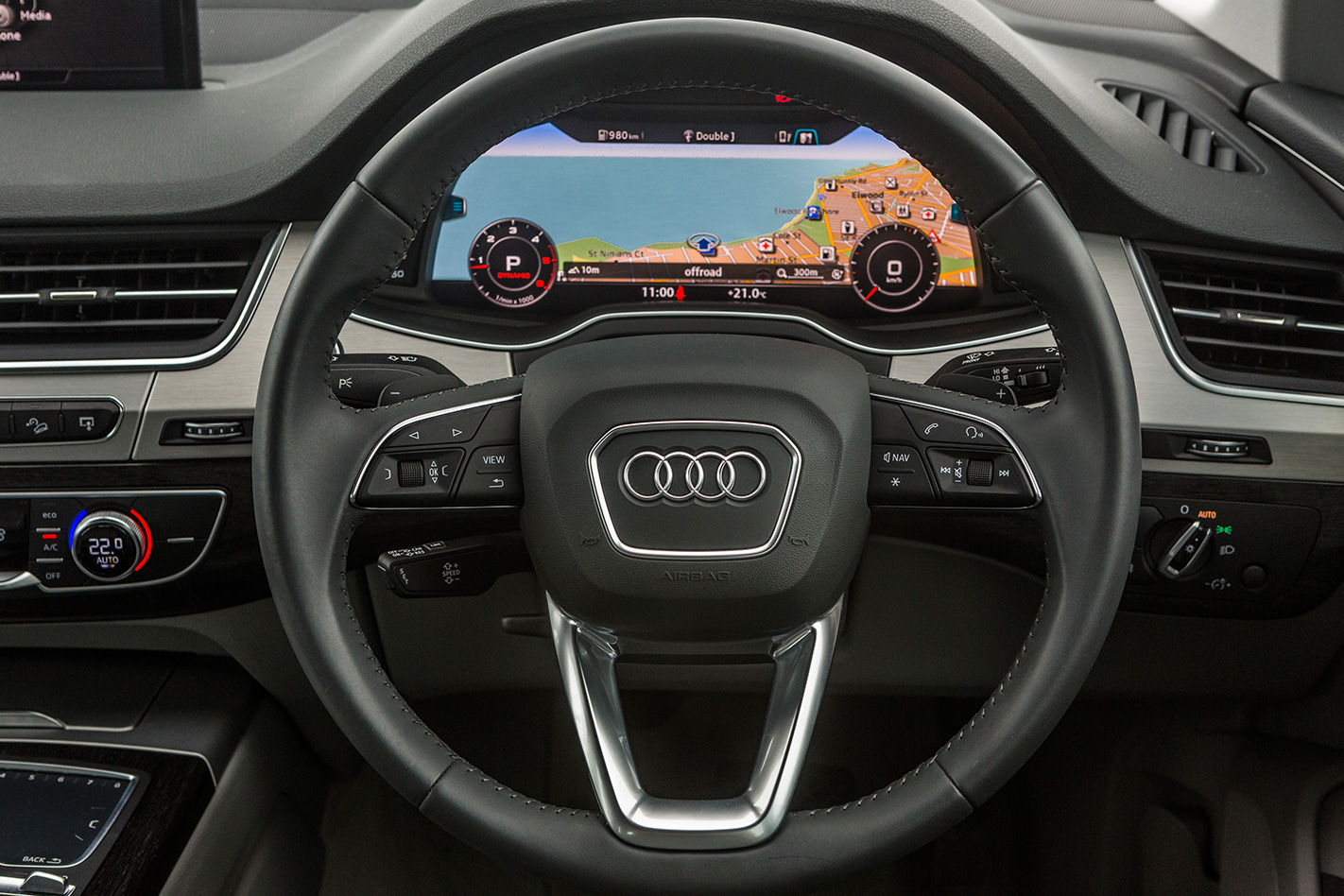
It’s hard to imagine a time when vehicles will require fewer screens as the demand for larger in-car displays increase with current trends, but the rise in popularity of personal devices could mean that passengers prefer their own familiar screen in favour of a built-in on-board monitor.
With current road safety rules, the driver is likely to still require their own vehicle screen which could take the form of Audi’s Virtual Cockpit, which favours the driver’s view, but advances in connectivity and in-vehicle internet will allow occupants to access all the traditional information and entertainment features via a personal tablet, phone or wearable device.
Of course, autonomous capability is a reality that most car makers are investing in heavily with the ultimate goal of building level-five self-driving vehicles that no longer need steering wheels and pedals. But there are various milestones in the interim.
The first level-three capability is starting to filter into production vehicles, which will require no driver input during certain freeway conditions, but as V2V and V2X communication advances, cars will start to platoon on freeways.
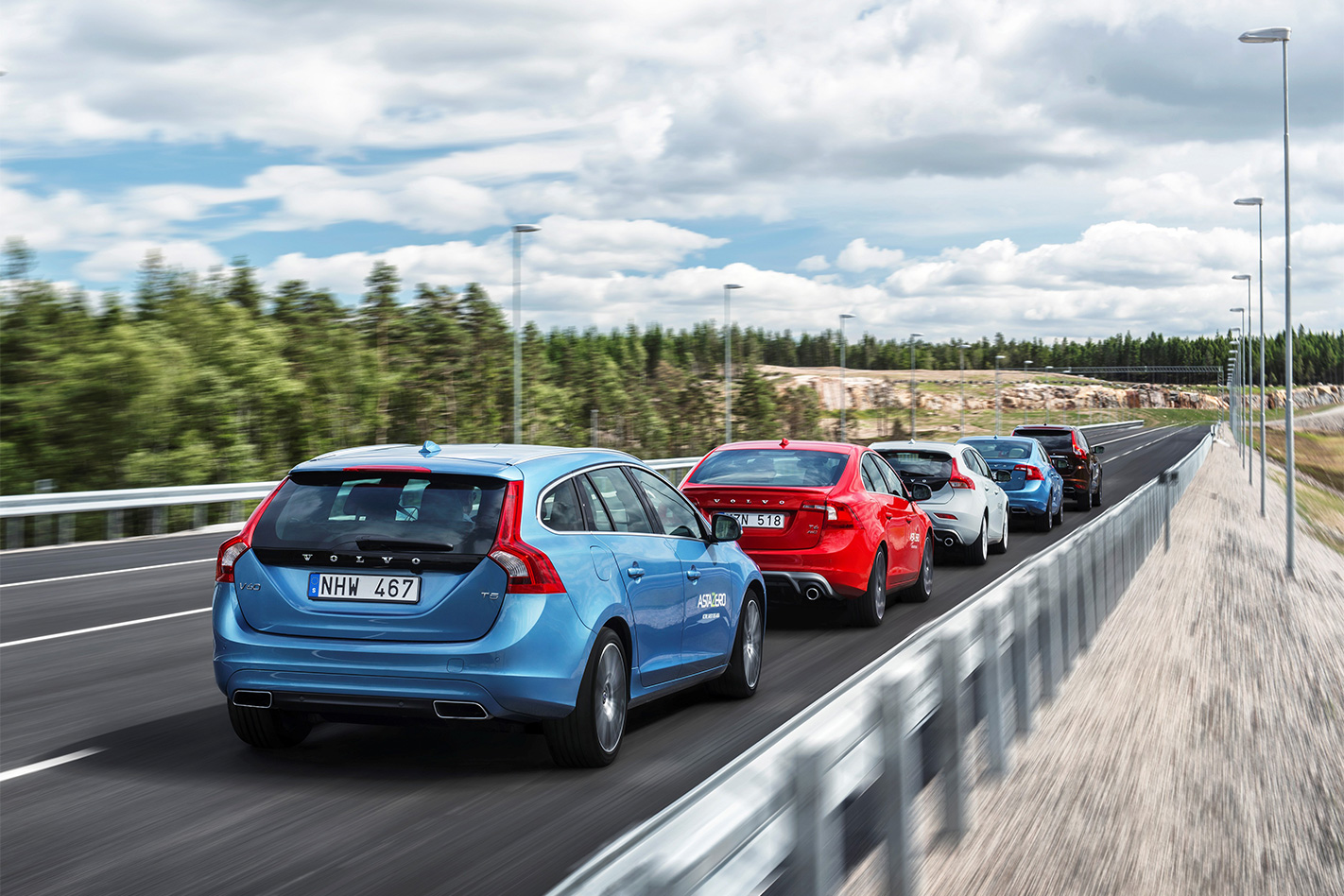
With cars bunched more tightly than when under human control, roads will be able to accommodate more vehicles, reducing traffic congestion. Platooning also has significant efficiency benefits, with only the lead vehicle being subjected to the full aerodynamic drag of freeway speeds, and cars behind it forming a conga line to ride safely in its slipstream.
Adiabatic engines
In time, electrified drivetrains will outnumber combustion power, but many manufacturers are still pumping serious amounts of cash into increasing the efficiency of petrol and diesel engines.
Advanced turbocharging, fuel injection, and variable valve and crankshaft rotation is continuing to allow cars to go further on less fuel, but waste heat is still the enemy of combustion power. Mazda however, says it will produce the world’s first engine that functions without any heat transfer.
If the Japanese car maker cracks the secret to adiabatic engines, almost all the energy contained within a drop of fuel will be converted into power. By current standards, the most frugal car engines are near 40 percent efficient, but if waste heat can be eliminated, Mazda’s engines could be more than 90 percent efficient.
Ground-breaking batteries
The latest electric vehicles such as Tesla’s Model S and Model X are allowing up to 500km of emissions-free motoring without having to recharge, but weight and slow recharging rates are limiting the appeal of electrified cars. In addition to fast charging infrastructure, battery materials are a critical limiting factor, but many car brands and independent technology companies are researching alternatives to the current favourite lithium-ion cell.
Graphene – a complex structure of carbon – is being used by tech company Graphenano to produce experimental batteries that offer the same range as lithium, but charge faster, can be discharged at a higher rate for increased motor performance and weigh less.
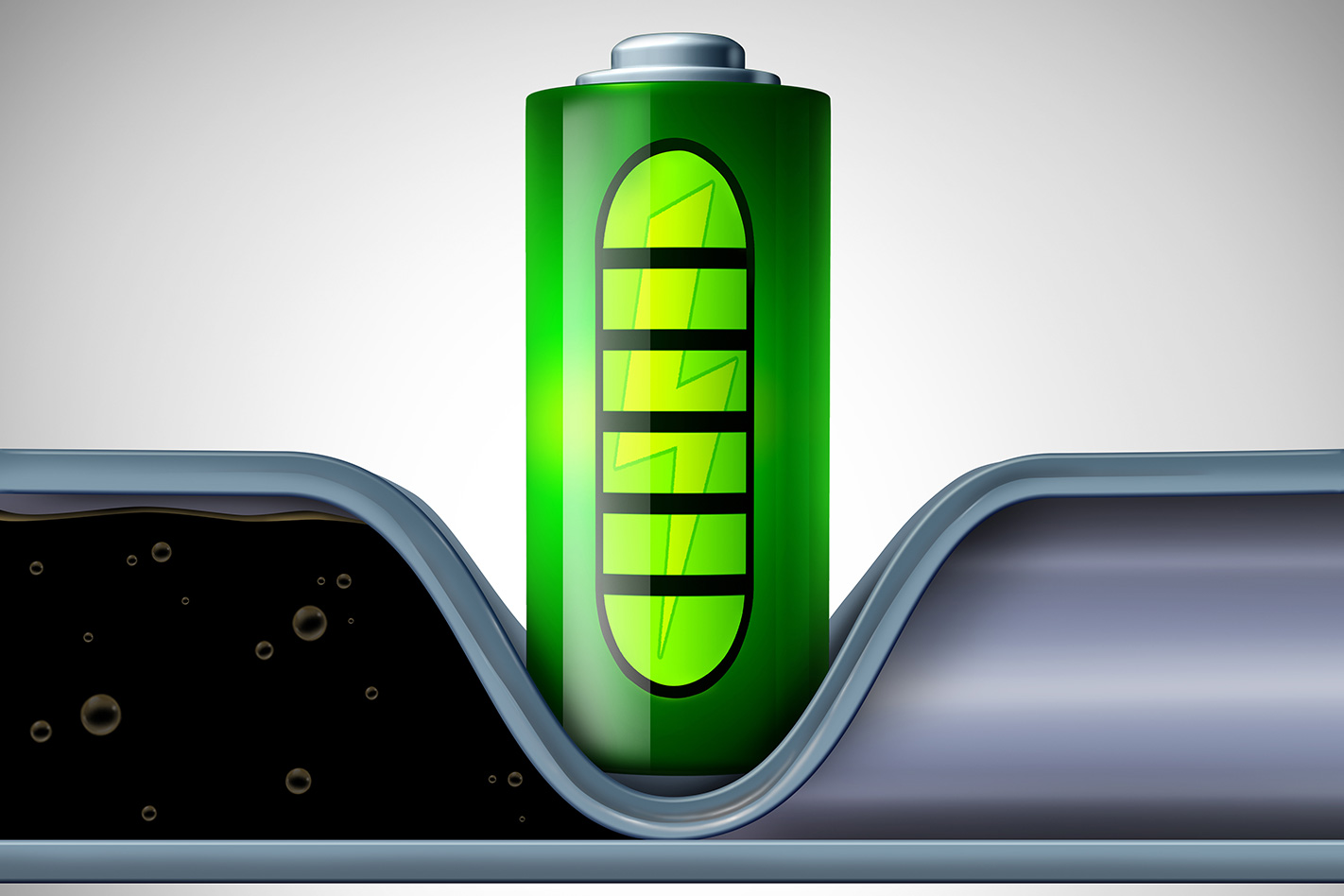
Sodium-ion batteries also offer a solution to the finite reserves of lithium present on earth. Batteries that use nano gold filaments, solid state magnesium tech, organic materials, and even, err, urine are amongst the many areas of battery research that you can expect to hear more about in the not too distant future.
BridgeToGantry is well known for its onboard lap videos of the Nürburgring Nordschleife, ususally with some informative commentary as an accompaniment.
We’ve seen him chase McLarens in a Caterham, and guide viewers around the ‘Ring in various conditions, and with various cars.
However, in some of those ‘various’ conditions, a lap of the Nordschleiefe can be perilous.
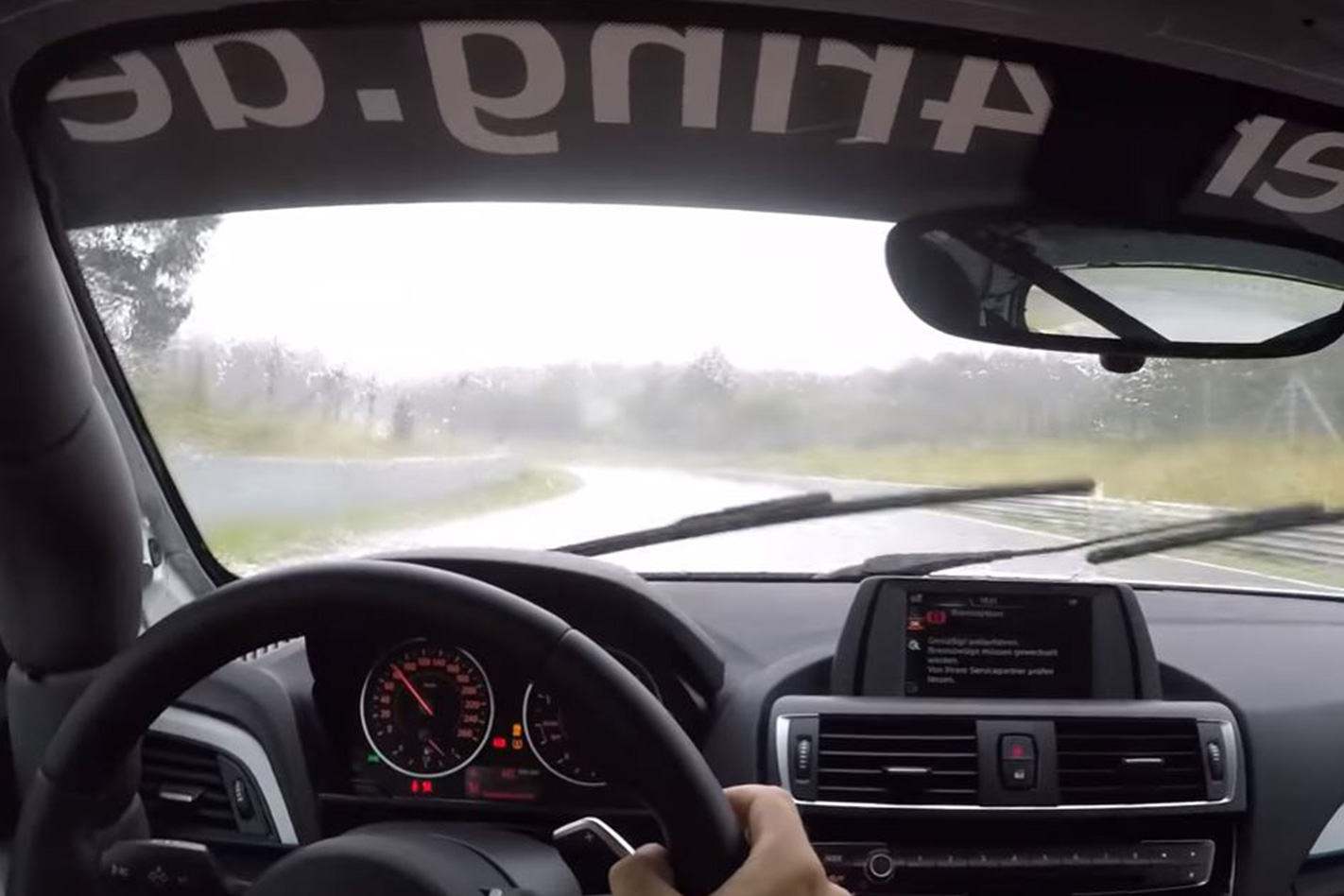
Once the more intense conditions kick in (and a bit of hand-over-hand steering), so do the crashes.
After some sideways action from the Bimmer through the first few wet bends, the orange lights come on and everything slows down… a bit.
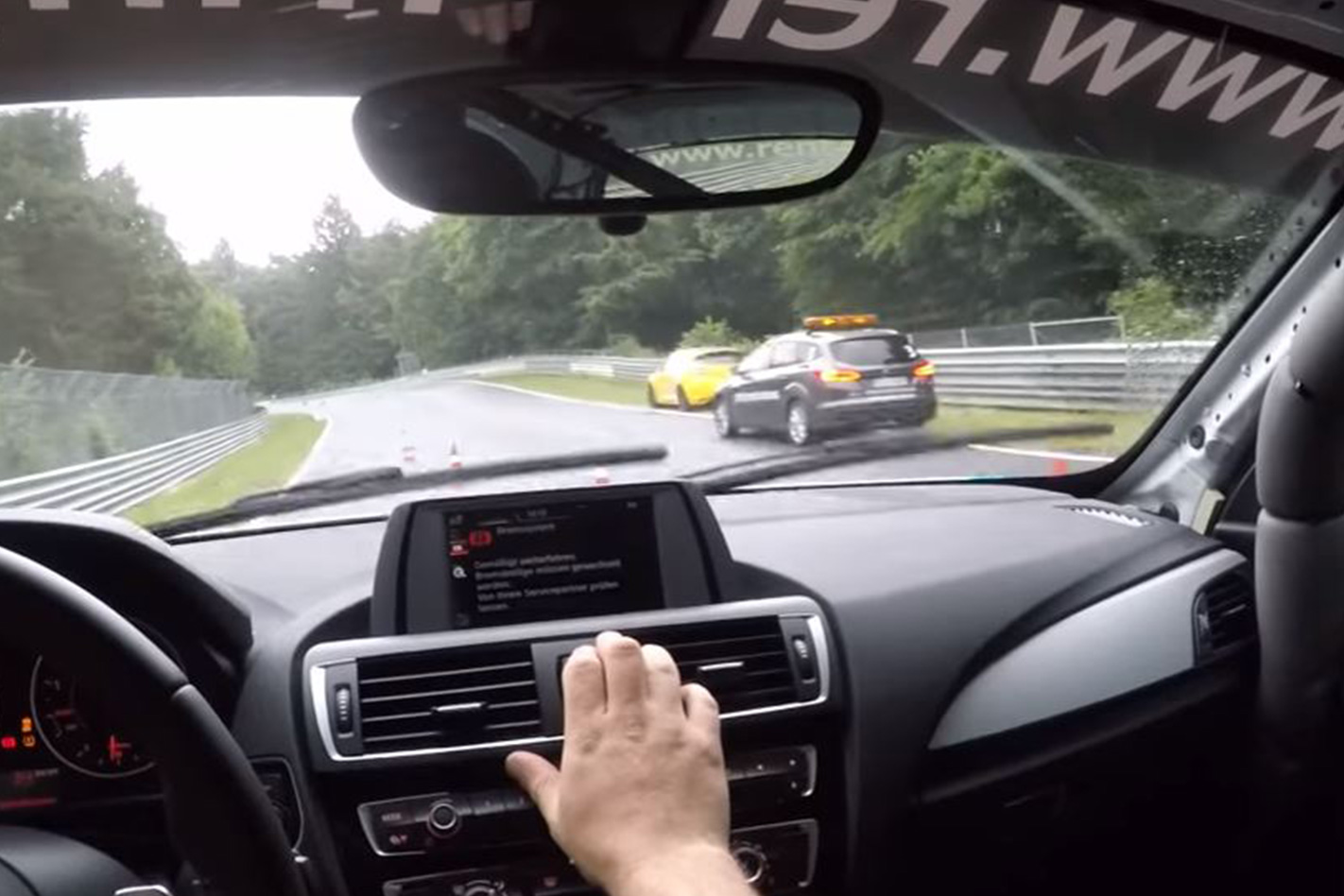
Thankfully, Lomas has provided his viewers with evidence that he can, in fact, control a car in the wet on the infamous track, using a Seat Leon Cupra and an E36 BMW in separate videos for front and rear-drive cars.
Though the RWD lap guide is newer (and something that would appeal to more rear-drive-loving MOTOR readers), the FWD guide has better sound quality, and corner-by-corner tips as the video plays out.
It might not be surprising to discover that a lap of the Nürburgring in a Seat Leon Cupra isn’t exactly exhilarating, but it’s a good way to get an idea of how the track behaves in different conditions.
Besides, who doesn’t want to drive the Nürburgring? Every bit of research helps!
Let’s talk tuner anthropology.
Cast your mind back a few decades, and it was a shaved cylinder head, extra carby and a set of headers (if you could get such a thing – if not, you made your own) that had blokes standing around in backyards in stubbies, smoking Winnie Blues and drinking cans of VB.
Next, it was engine swaps that were the gun hot-up: red motors into grey-motored Holdens, crossflow sixes in elderly Falcons and, if you were the really adventurous type, you aimed higher still and stuck a US V8 into whatever.
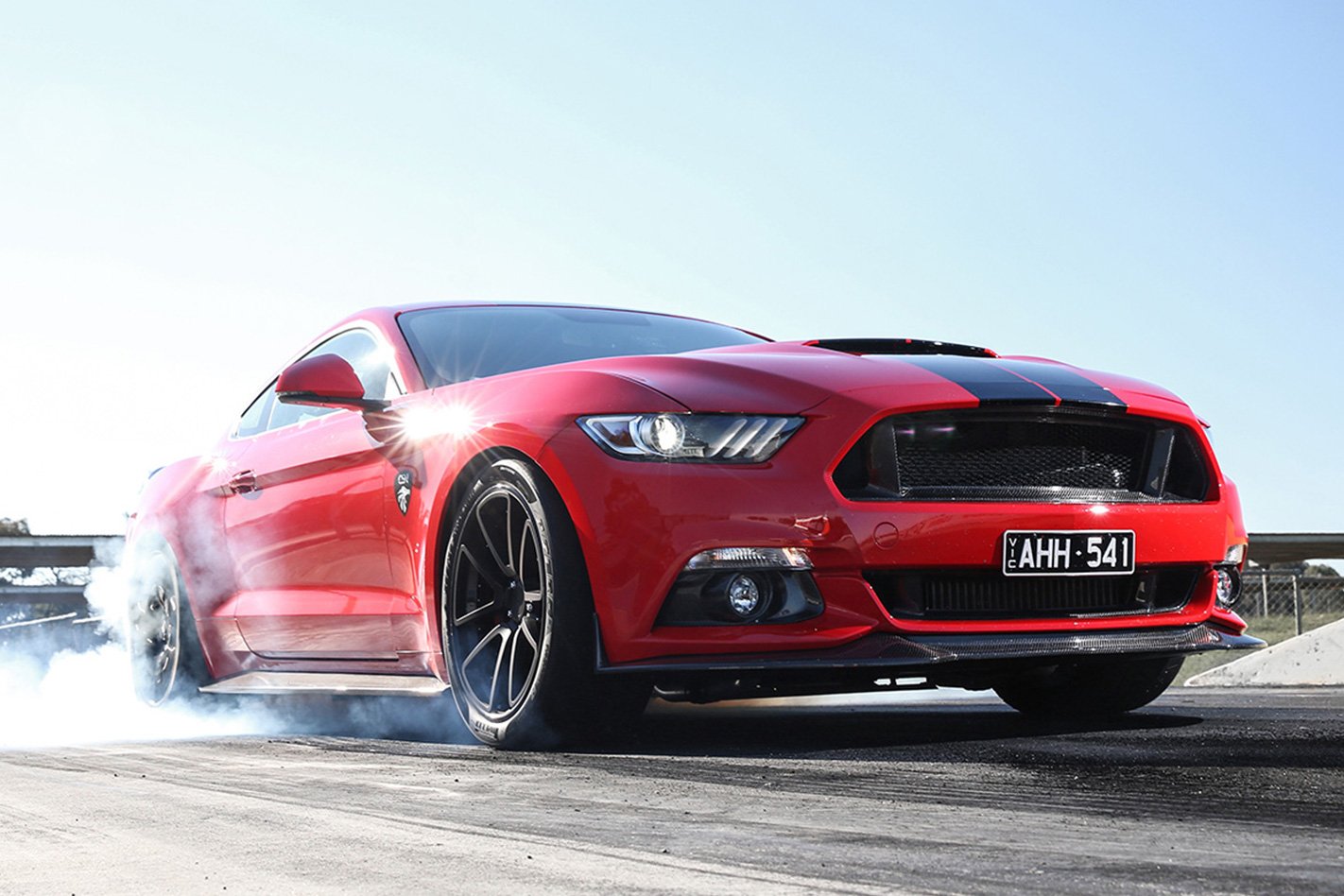
In 2017 in Australia, of course, the tuner car of choice is the Ford Mustang and the tune-up du jour is the positive-displacement supercharger. The trend-within-a-trend is to make the end result feel just like a stocker, but with bigger agates. And we’re seeing them pop up all over the place.
None of which explains Peter Dichiera’s latest weapons. Oh sure, they’re Mustangs, but while the rest of the tuning world is aiming for that factory-spec look and feel, Dichiera’s ignored that and gone his own, very effective, way. Not for the first time, of course, but it remains that a CSV Mustang will not be confused with a stocker.

Figuring that the Mustang offered more than one opportunity to reach an audience, Dichiera has actually developed a pair of ’Stang-based packages, taking very different paths to arrive at very different end results. That said, they have one thing in common – they’re absolutely bonkers.
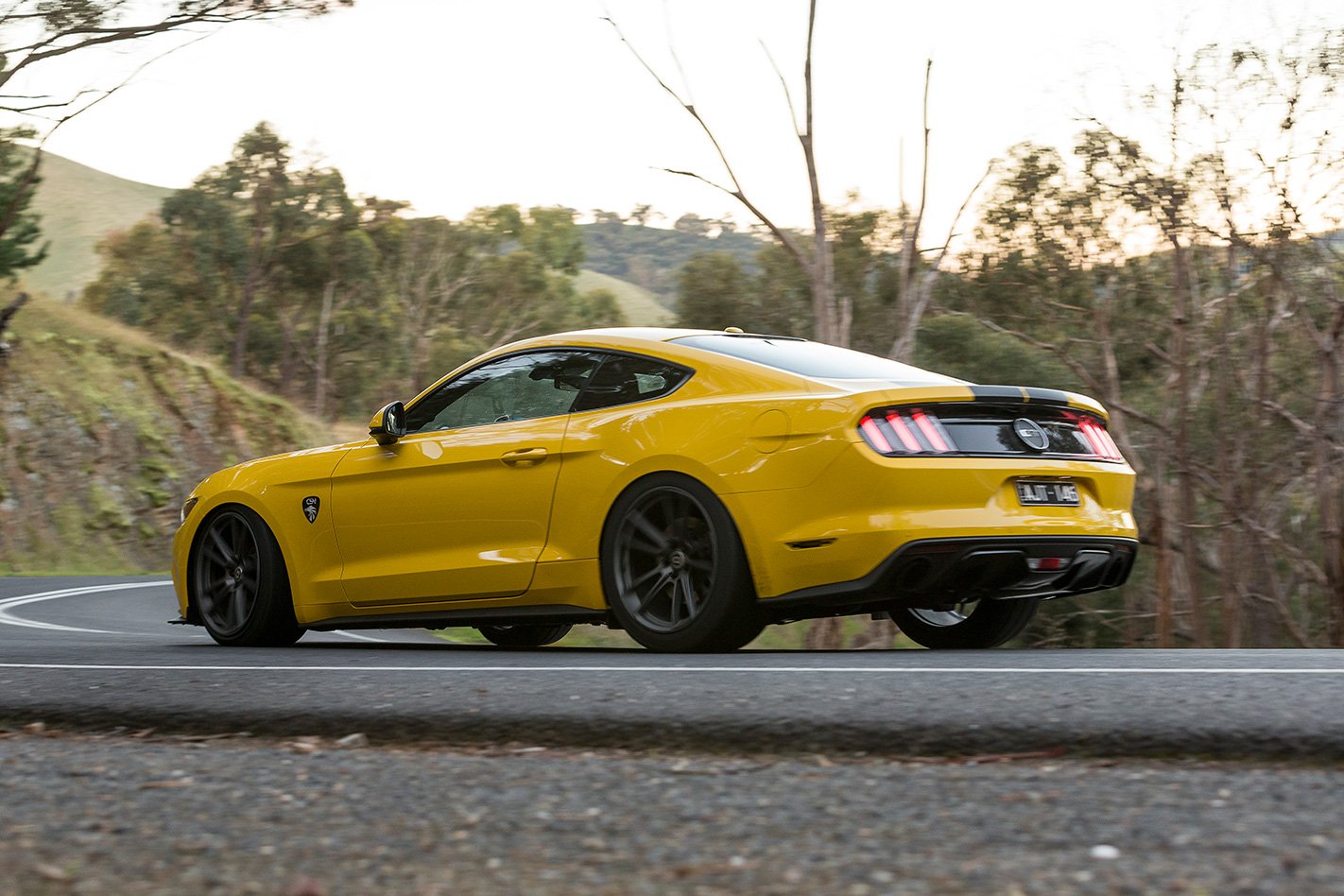
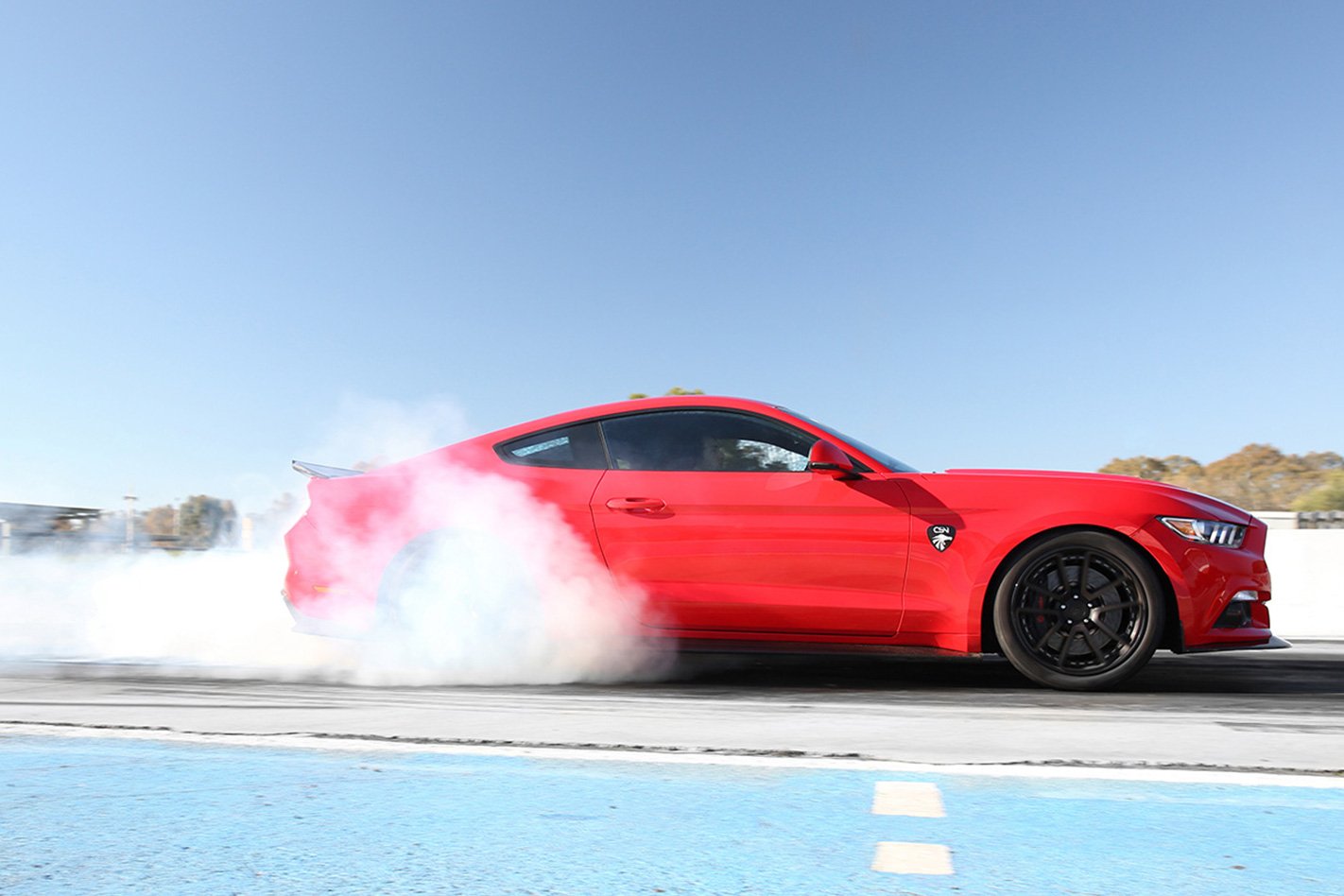
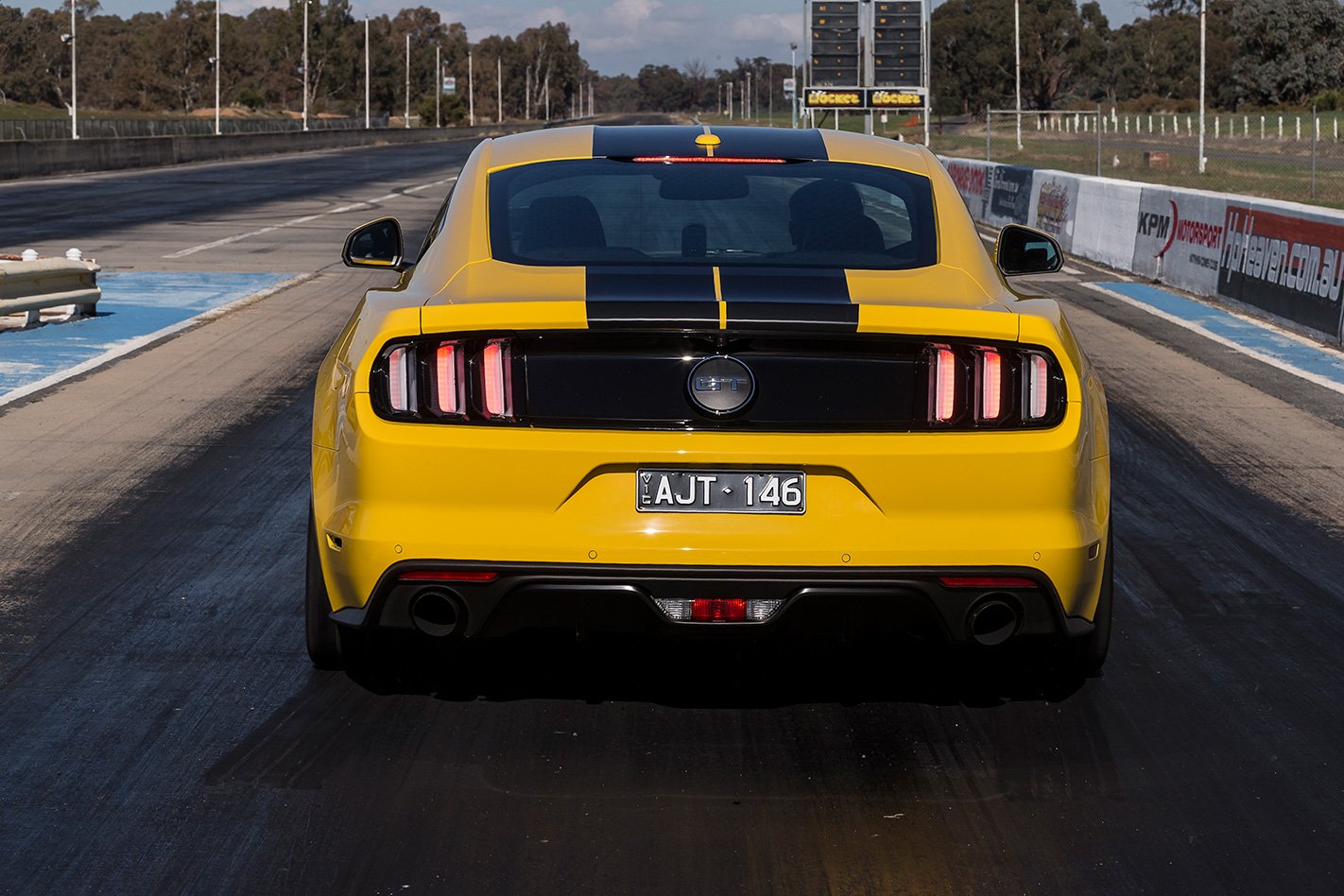
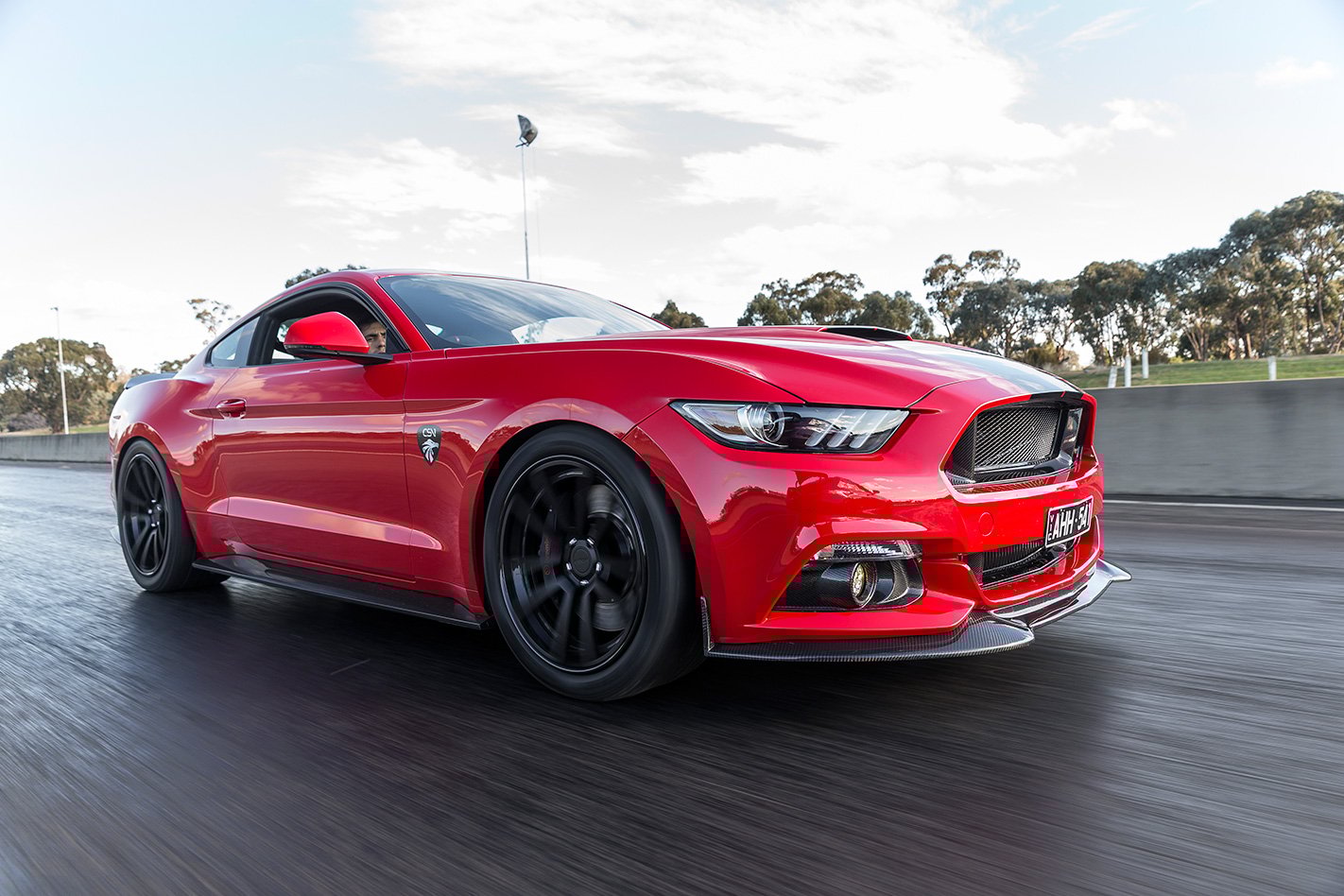
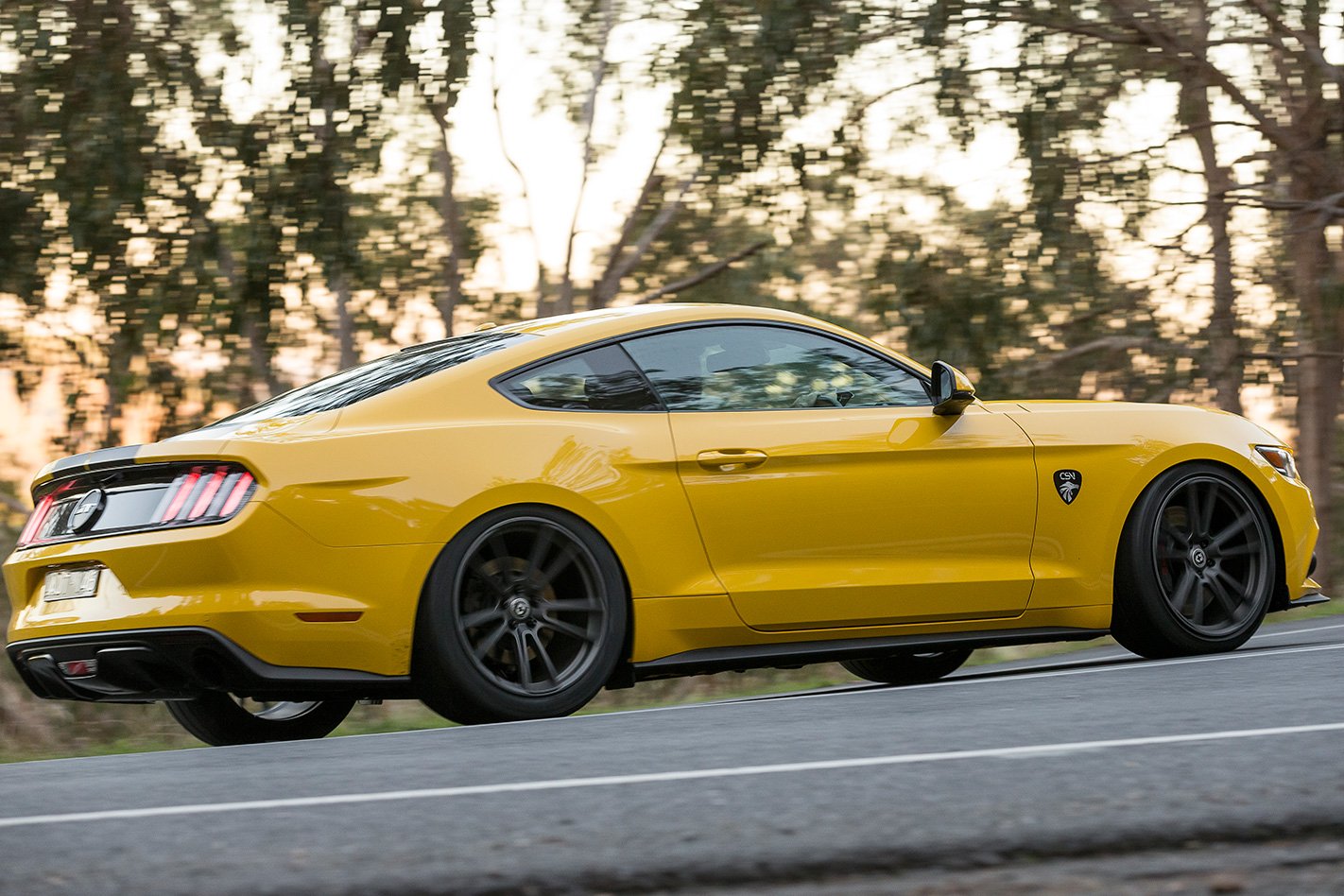
The yellow car you’ll see is more or less CSV’s take on a Mustang for the bloke who (to paraphrase Dominic Toretto) lives life a quarter mile at a time. Which is fine, but that also means that for the majority of us who want our Mustangs to party hard and still be a teensy bit sophisticated, the red car is the one for the masses.
The upside is that the turbos run cooler hanging out in the breeze and the problem of getting oil uphill back to the sump is taken care of by a dedicated oil pump.
There’s a front-mount intercooler, a custom tune for the ECU and Ford Motorsport side-squirt injectors. Those ’jectors are about as big as you can go, though, without tailpipe emissions going berserk. Boost indexing is a project for the future, and at the moment, the car defaults to six pounds of boost every time the ignition is keyed on.
Typically, and this backs up the notion that factory motors really have come a long way, the CSV crew haven’t so much as lifted a cylinder head; this is fundamentally a bolt-on transformation. Not that the rest of the Mustang package has been so fiddle-friendly. Nope, the clutch was quickly deemed to be a potential trouble-maker, so experiments began with twin-platers.
The one fitted for our test was a 280mm twin-plate job with a solid centre that aims to be a bit more traffic-tolerant than a classic-style button clutch. And while it does feel pretty sharp, there was still enough give in it to make bumbling along an okay experience. But when push came to shove on the 400m trip, the clutch turned on us, clamping its pedal flat to the floor. Turns out it’s not compatible with the stock helper-spring on the pedal.
The diff centre itself is a TrueTrac Torsen. KW coil-overs with external canisters replace the stock Mustang springy bits and there’s an in-house three-inch exhaust all the way to the rear bumper. Grooved Brembo rotors measuring 360mm grace the front end while the rear gets the same spec in a 340mm fitment.

The window-dressing bits include a range of carbon-fibre add-ons that Dichiera has cherry-picked from various body kits from the USA (including the bonnet scoop) while the interior sports one of the best pair of front chairs we’ve slumped into in a long time. They look good and they really hang on to you. Now, you might ask why CSV has gone to the trouble of this cosmetic stuff when individual buyers have their own views on which way to go here.
Thing is, CSV is in the process of certifying the Mustang packages as a secondary manufacturer and, once that’s in place, the package is the package. The upside is, of course, that you’ll need only to point out to El Plod the secondary compliance plate on the firewall, for all his concerns to fade away like a Krispy Kreme in an acid bath. He may even begin to smile.
The terminal speed – a whopping 204.63km/h – suggest 10s are on the cards on a sticky wicket, but on an unprepared strip the best it can manage is 0-100km/h in four-dead and an 11.85sec quarter. Make no mistake, though, this thing hauls serious arse; even with the taller diff ratio it’s well into fifth gear through the traps.
On the road the red Mustang displays some mighty potential as a point-to-point machine. The KWs don’t do a whole lot for ride compliance, but they do sharpen things up. Well, to an extent, because the overall, typical-Mustang theme of being seated at the back end of things with a reasonably accurate, but untalkative, helm way up front continues.
Nope, sending Gran to bingo in this thing would probably be the last you’d see of her without a toe-tag. Not saying it’s dangerous or undriveable, but get too cocky and it’ll hurt you.
There’s not a stupid amount of lag, although it can be felt in the higher gears, but once the snails are puffing and the boost pipes are bulging, very few cars are going to stay with this thing. Even light throttle inputs have the bugger surging away at the end of its leash, daring you to sink the clog further to see what happens.
So, of course, we did. Several times. And what happens is that the Mustang gets up on its toes and blasts off. I’m not sure where it would all end but, given the longer gears (and the grunt to pull them) somewhere well north of 300. And anywhere between walking speed and that magic number there’s a huge lunge lurking just a millimetre or so off where the throttle pedal is sitting right now.

Like we’ve been saying all along, this won’t be everybody’s cup of chai latte, just as previous CSVs have usually traded a small degree of polish for a large bucket of spit. But if you want a car that reminds you that you’ve spent something like $130,000 (for that is CSV’s projected number) and is more inclined to kick heads than kiss babies, then this red monster could be that car.
Mustang swaps whistle for whine
It might be more 400m-focused, but the yellow CSV, with its friendlier projected price tag of closer to $95,000-$100,000 and simpler mechanical layout, might wind up having just as much appeal.
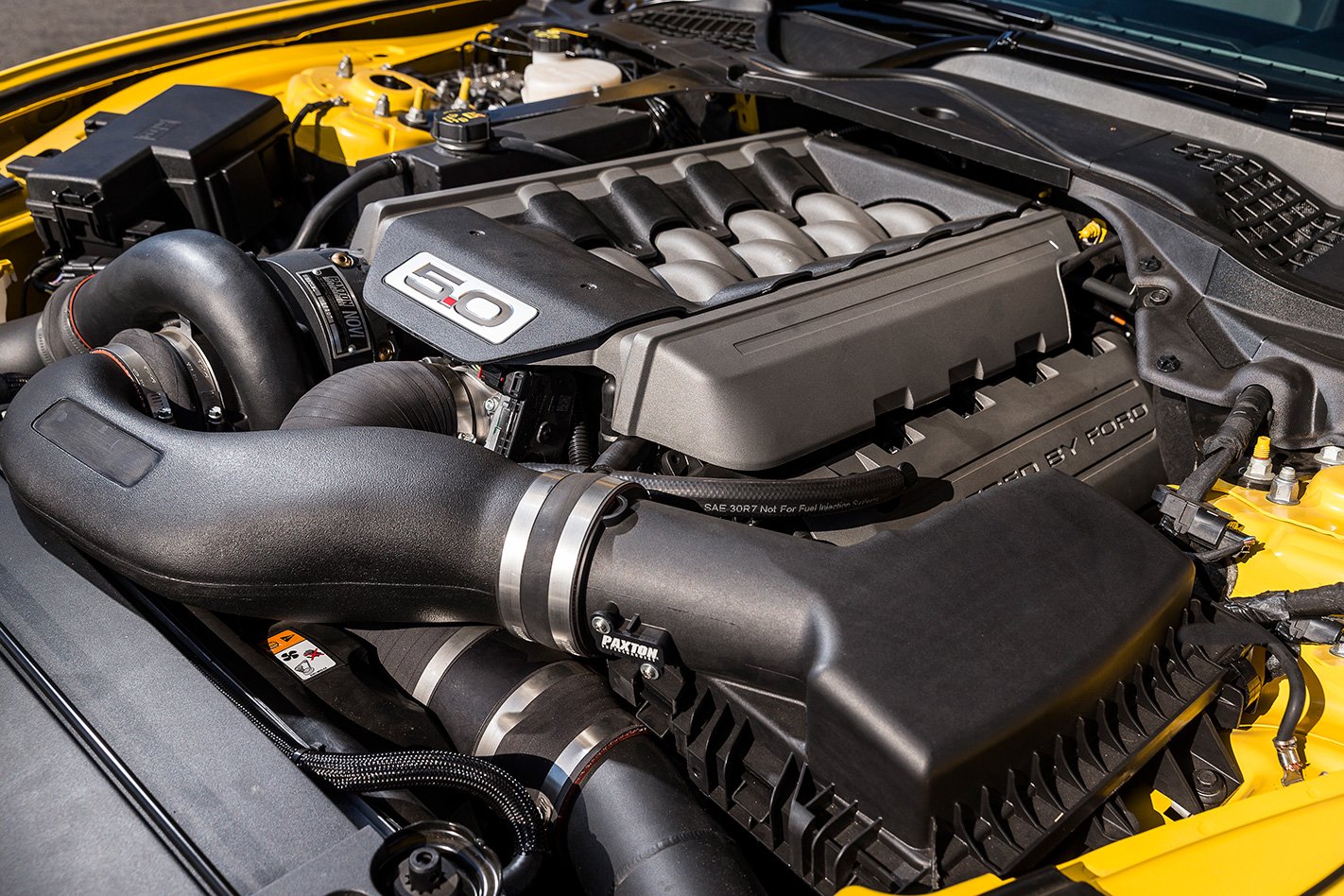
The performance enhancing magic here is a centrifugal blower (a Paxton) which is mounted high up in the engine bay and looks all but factory. It’s one of the neater installations you’ll see. It runs the stock pulleys, but with a longer serpentine belt to produce max boost of 9psi and a similar max of 460rwkW, but with less peak torque and ferocity on board.
In turn, that allows more ignition timing and that means more grunt. Again, there’s a front-mounted intercooler and bigger injectors, but unlike the red car, this time CSV has shortened the rear-axle ratio from the stock 3.55:1 to 3.73:1 and added a 3200rpm stall converter (that still retains full lock-up capability for cruising).

And, like the red car, there’s a compressed-air orchestra under the lid with wheezes, sneezes and fizzes as air is squeezed into cylinders and the excess jettisoned. – DM
4 stars out of 5
Likes: Immense grunt; neat installation Dislikes: Firm ride; lots of dough
2017 CSV Mustang GT Specs: BODY: 2-door, 4-seat coupe ENGINE: 4951cc V8, DOHC, 32v, twin-turbo POWER: 472kW @ 6800rpm (at the rear wheels) TORQUE: 900Nm @ 6500rpm (at the rear wheels) 0-100km/h: 4 secs (claimed) TRANSMISSION: 6-speed manual WEIGHT: 1739kg PRICE$: 130,000 (est)
What stands out?
The Polo looks crisp, clean and elegant, inside and out, and its three turbocharged engines supply great everyday performance without using much petrol. The Polo squeezes easily into small parking spots but feels like a bigger car on the road – in a good way, with reassuring roadholding. This review covers Polos on sale from 2015 until August-2017.
What might bug me?
Your struggles to take off from rest smoothly: the DSG automatic transmission can be grabby in city driving. (This sort of auto works much like a manual gearbox with robotic control. It changes very smoothly once you are moving, and saves fuel. But it won’t duplicate the fluid, elastic take-up from rest that you feel in conventional and CVT autos.)If you have chosen a Polo GTI, driving at 80km/h on your space-saver spare wheel, until you can fix your full-sized flat tyre. (Other Polos carry a full-sized steel spare.)
What body styles are there?
Five-door hatch only. The Polo was previously available as a three-door but that option was dropped in 2014.All Polos drive the front wheels, and are classed as light cars, lower priced.
What features do all versions have?
Cruise control, Bluetooth phone connectivity and audio streaming, and a reversing camera. Cloth seat trim.A 6.5-inch colour touchscreen for controlling audio, phone and trip computer functions (among other uses). An MP3 compatible sound system with an AM/FM radio, a CD player, an SD card slot, and Aux and USB inputs.Support for Apple CarPlay and Android Auto, which work with Apple and Android phones. If you plug your phone in through the USB socket, many of its apps – including mapping and music – are mirrored on the touchscreen display and can be controlled from there.Daytime running lights, which make the car more visible to other road users.Hill-start assist, which controls the brakes to make it easier for you to take off on uphill slopes.Electronic stability control, which can help control a skid. All new cars must have this feature.Six airbags: two in front of each front occupant; side airbags to protect the bodies of those up front; and side curtain airbags down each side to protect heads front and rear in a side crash.The Polo is covered by a three-year, unlimited kilometre warranty.
Which engine uses least fuel, and why wouldn’t I choose it?
The 1.2-litre four-cylinder turbo engines in the Polo 66TSI and 81TSI are the most fuel-efficient, both consuming about 4.8 litres/100km in the official test (urban and country combined).Like all Polos, these require premium unleaded fuel, which costs more than regular unleaded.The version in the 81TSI is the more powerful of these two, with about 20 per cent more thrust available in most situations. You can expect the 81TSI to drink slightly more fuel than the 66 in real-world driving if you use that extra performance. But both models are commendably frugal.A Polo 66TSI Trendline averaged 6.8 litres/100km in real-world comparison testing for the March 2015 edition of Wheels magazine, using slightly less fuel than the accompanying Mazda2 and Honda Jazz, and less than any of the other six light cars reviewed.The Polo GTI gets a 1.8-litre four-cylinder turbo with significantly more power again. While it uses about 20 per cent more fuel than the other Polos, it’s still very economical.Every Polo engine offers a stop-start function, which saves fuel in the city. The engine shuts down when you stop (at a traffic light, for example), and starts when you release the brake pedal to drive away.The 66TSI comes standard with a five-speed manual gearbox, whereas the 81TSI and GTI get a six-speed manual. All can be optioned with a seven-speed twin-clutch automatic, which has two computer controlled clutches but operates much like a traditional automatic.The Polo 66TSI and 81TSI are named for their maximum power outputs in kilowatts: the former can produce 66kW, and the latter 81kW. The engines are similar mechanically but are tuned differently.(Power outputs and all other Volkswagen Polo specifications are available from the Cars Covered menu, under the main image on this page.)
What key features do I get if I spend more?
The least costly Polo, the 66TSI Trendline, rolls on 15-inch steel wheels and is powered by the 66kW engine.Spend more for an 81TSI Comfortline and you get wheels made from an aluminium alloy, which look nicer, and the more powerful engine. You also get a trip computer (for monitoring fuel use), a folding arm rest between the front seats, and buttons on the steering wheel for operating the audio system and your phone. The steering wheel is wrapped in leather, and splashes of chrome break up the sombre hues of the cabin.You get an opportunity to add two option packs to your 81TSI.The Driver Comfort Package brings you satellite navigation, a fatigue detection system (which warns if the driver shows signs of falling asleep), and windscreen wipers that operate automatically when it rains. The cruise control slows you automatically for a slower vehicle ahead. And a partial emergency braking system can automatically apply the brakes at speeds under 30km/h to avoid an obstacle – usually another vehicle that has stopped suddenly.The Sport Package includes bigger, 17-inch wheels, and stiffer, lower suspension. These changes give the car a racier look, and sharpen the handling slightly.Spend more again for the Polo GTI and you get modifications aimed at improving performance, most notably the much stronger, 1.8-litre engine. There are 17-inch alloy wheels with wider tyres, which add grip. An electronic differential lock aims to improve acceleration by limiting wheelspin. Metal pedals add a hint of race car pizzazz to the cabin, as do the gear shift paddles on the steering wheel. Visual changes include a unique pattern on the cloth seats, unique bumpers, side skirts, and black roof lining (other models have a pale finish).The GTI also gets front foglights with a cornering function (they shine into corners automatically when turning), automatic windscreen wipers, and automatic air-conditioning (which maintains a pre-set temperature). And a pressure monitor lets you know early if a tyre is going flat.The Polo GTI can be optioned with a Driver Assistance Package, which includes parking sensors front and rear, and a fatigue detection system. There’s also a Luxury Package, which brings you a sunroof, more supple seats with Alcantara (suede-like) trim, and more efficient, LED headlamps.
Does any upgrade have a down side?
The lower profile tyres and firmer suspension on the Polo GTI make its ride noticeably bumpier.The GTI is the only Polo model not to get a full-sized spare tyre. It has a skinnier space-saver spare, with a recommended maximum speed when fitted of 80km/h.The GTI is also not available with the radar cruise control system that is optional on the 81TSI, which brings auto emergency braking.White, red and blue are the only standard colours on a Polo, with the other five costing extra.
How comfortable is it?
All Polos share the same basic interior layout, but the 66TSI gets less of the brighter metal finishes that spice up the 81TSI and GTI. As a result it looks dark and drab. But it’s beautifully put together.You can adjust the steering wheel for reach and height, and you can adjust the driver’s seat for height also. Both front seats blend comfort with side-support very effectively, holding you in place nicely through corners.The main controls are well positioned high on the dash (near your line of sight). The main instruments are legible and clear.The 66TSI and 81TSI ride in a supple but very well controlled manner, so if you hit a big bump they recover quickly. Where many cars of this size sound noisy and feel tinny, the Polo is surprisingly quiet. You’ll get some tyre noise, but not much.Steering is nicely weighted, with a consistent feel throughout its arc. In general, the car feels very stable, but compact and agile.The GTI is noticeably bumpier to ride in, but not to the point of being uncomfortable. The trade-off is sharper steering and more secure cornering.While the 66TSI doesn’t have much power, it is very responsive and relaxing in everyday driving. The 88TSI steps it up a notch, with more oomph in all situations.The GTI has plenty of punch and a rorty sound.The GTI’s manual gearbox feels light and easy to operate, while the seven-speed auto is very smooth and quick in its shifts once moving. However, the way the auto on all Polos engages from rest can be clunky, especially if you are on and off the throttle regularly in slow speed driving. It’s not consistent and can be jerky.
What about safety?
The Polo gets a safety rating of Excellent, thanks to the comprehensive airbag coverage, daytime running lights, and standard reversing camera. The rain-sensing wipers on the GTI and optional auto headlamps on some models add peace of mind.The safety credentials of the 81TSI would increase if you optioned the automatic emergency braking system, which helps avoid low-speed crashes. The system is available only on the 81TSI, as part of the Driver Comfort Package.The Australasian New Car Assessment Program (ANCAP) rated the Polo at its maximum five stars for safety, in August 2014.
I like driving – will I enjoy this car?
Of all city cars, the Polo is among the best to drive. The suspension’s excellent control comes into its own on challenging, twisty roads. Teamed with good cornering grip, it makes for a car that is great fun, and that, in many good ways, feels like a bigger and more expensive vehicle.The Polo’s brakes, too, feel strong and responsive by comparison with many other light cars. That is partly because all four wheels have disc brakes, whereas many alternatives use cheaper and inferior drum brakes at the rear.The Polo GTI is a genuine hot hatch, with excellent acceleration. But while it’s feisty when you want that, it’s very easy to drive more sedately, with effortless pull most of the time.The GTI’s 17-inch tyres have excellent grip, while the XDL differential lock apportions power to the front wheel with the most grip (by gently braking the less weighted, inside front wheel in a corner). This also helps pull the car into the turn during fast cornering.Suspension on the GTI can be adjusted from inside the car for either more comfort or more responsive handling, at the push of a button. The Sport Select system which allows that also adjusts the weight of the steering, the sensitivity of the throttle and the sound of the exhaust.
How is life in the rear seats?
Leg room in the rear of a Polo is tight, especially if those up front have their seats slid well back. Head room is better, with decent space for adults.The rear windows are quite low, which allows small people a good view out the side.There are no air vents for rear passengers.
How is it for carrying stuff?
It’s a city hatchback, so space generally is at a premium. But some thought has gone into where you put luggage.The Polo gets a clever split boot floor, for example. You can store valuables or soft items in a separate compartment under the main floor, or you can lower the main floor to create a bigger space. Either way it’s still a small boot, but it will easily accommodate a few soft bags.There’s also a 60/40 folding rear seatback. If you flip the seat bases up before folding, you get an extended cargo space with a flat floor.The 81TSI gets rear seatback pockets, to look after odds and ends. The GTI betters that, with drawers under the front seats.
Where is it made?
The Polo is manufactured in South Africa.
What might I miss that similar cars have?
Not much: the Polo has most light cars covered. However, its optional low-speed auto braking is available only on one model. This is standard on any Mazda2, for example.The Honda Jazz, with its clever rear seats, is better for carting around lots of gear.Other light cars you might consider include the Ford Fiesta, Skoda Fabia, Kia Rio, Peugeot 208, Hyundai Accent, and Renault Clio.
I like this car, but I can’t choose which version. Can you help?
The Polo GTI represents great buying. It has plenty of equipment and is fantastic to drive, with surprisingly good performance.
When did Volkswagen update this Polo?
The current Polo arrived in 2010 and received an update late in 2014. A minor update in mid-2015 brought the bigger (6.5-inch) touchscreen interface on all models, improved smartphone connectivity, and a standard reversing camera. In August 2017 Volkswagen renamed the two less costly Polos, the 66TSI Trendline and 81TSI Comfortline, calling them the Polo Urban and Urban+ respectively. It also adjusted equipment on both Polos, fitting alloy wheels to the Urban, and auto wipers and headlights to the Urban+ (among other changes). ). The GTI was not changed.
IF IT looks like a duck, sounds like a duck and walks like a duck, chances are it’s a duck. A mid-engined V8 duck.
With a Tremec sequential transmission and a space being cleared in your local Holden dealer.
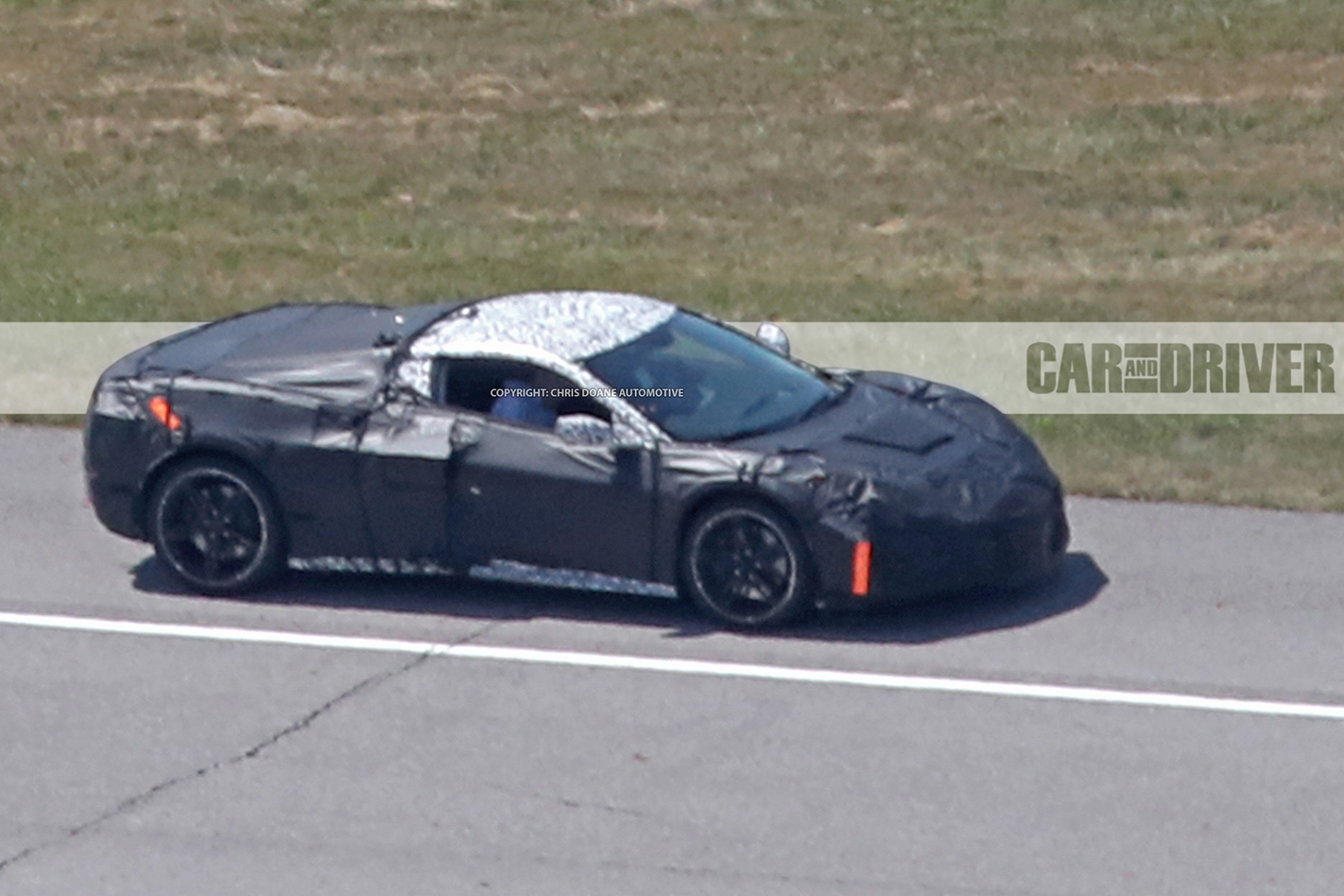
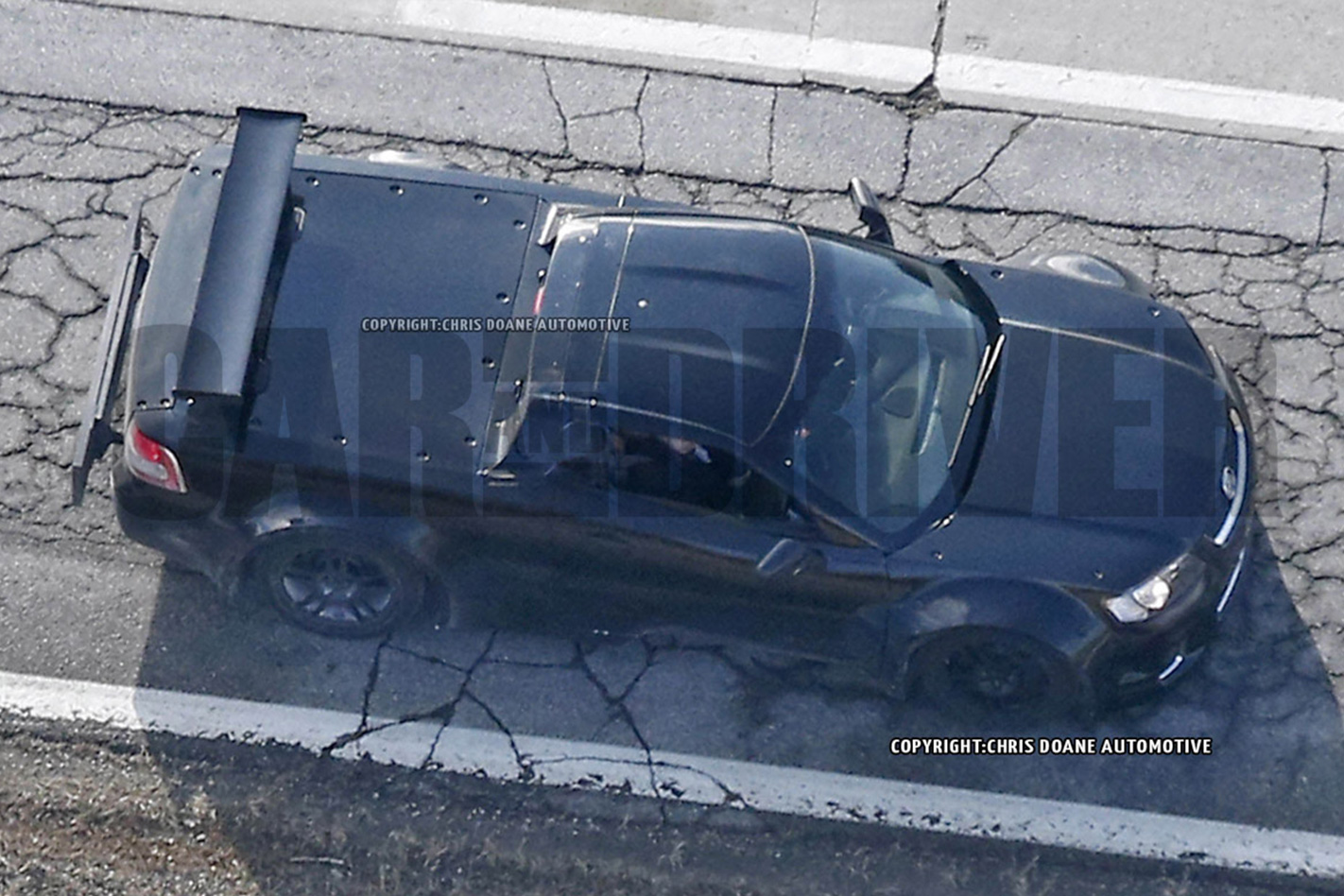
We’ve all seen the fuzzy spy shots of the VE Commodore ute being used as a mid-engined test mule (below). Public plant tours of the Bowling Green factory have been suspended for 18 months. Now additional pictures have surfaced of a Corvette with a scrupulously disguised rear end (above).
“Don’t forget we still have the sports car, the much talked about sports car – or cars – coming to the market which will really fill that performance halo for us,” said Poppitt, signalling the arrival of what is widely held to be both Camaro and Corvette, the former undergoing local RHD conversions through HSV’s parent company, the Walkinshaw Group.

In 1986, GM unveiled the Corvette Indy, complete with a mid-mounted twin-turbo V8 and all-wheel-drive. There then followed the 2002 Cadillac Cien, a mid-engined showcase. In 2004, assistant chief engineer Tadge Juechter managed to convince senior management that the Corvette had reached the limit of grip with the traditional front engine, rear-wheel-drive layout.
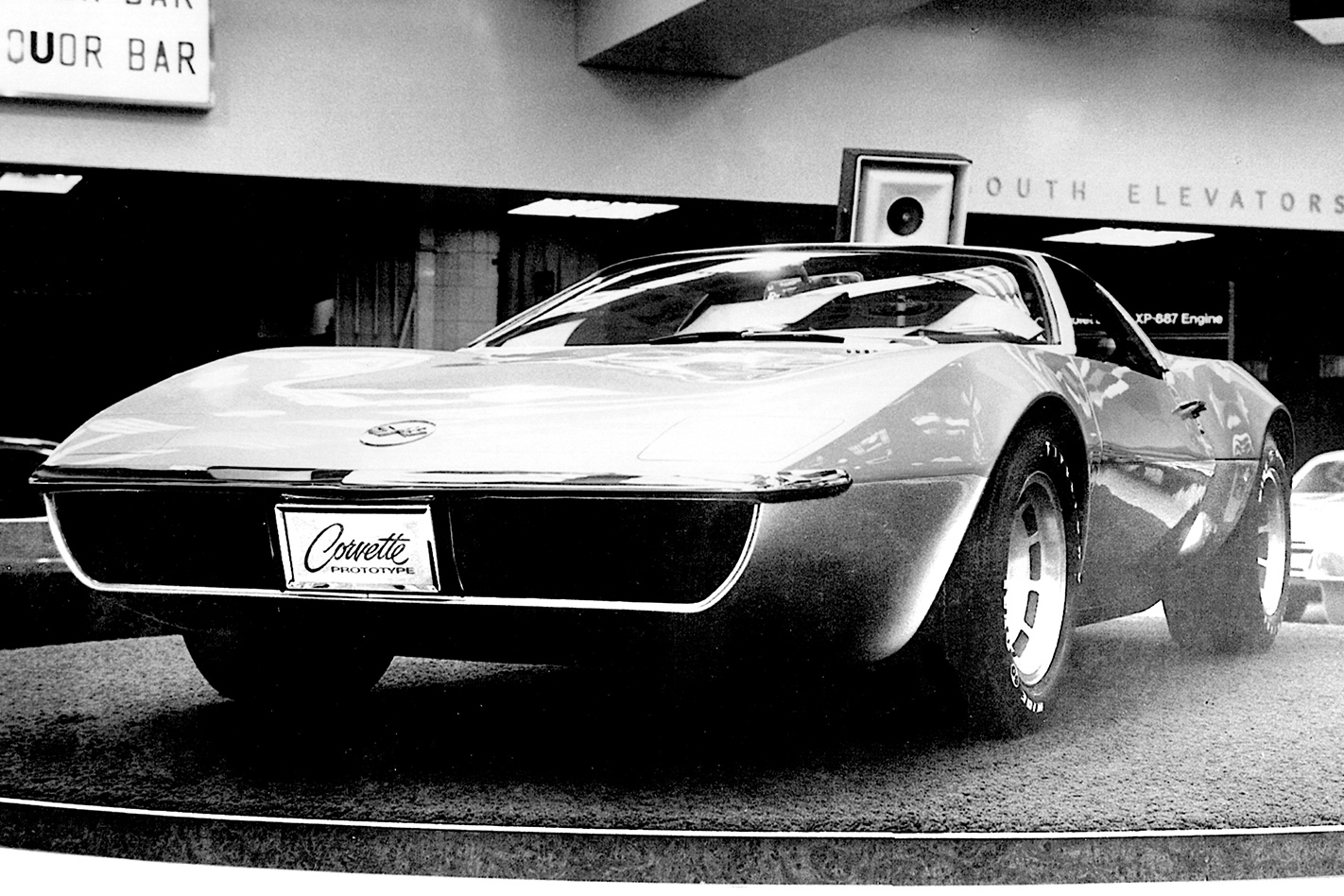
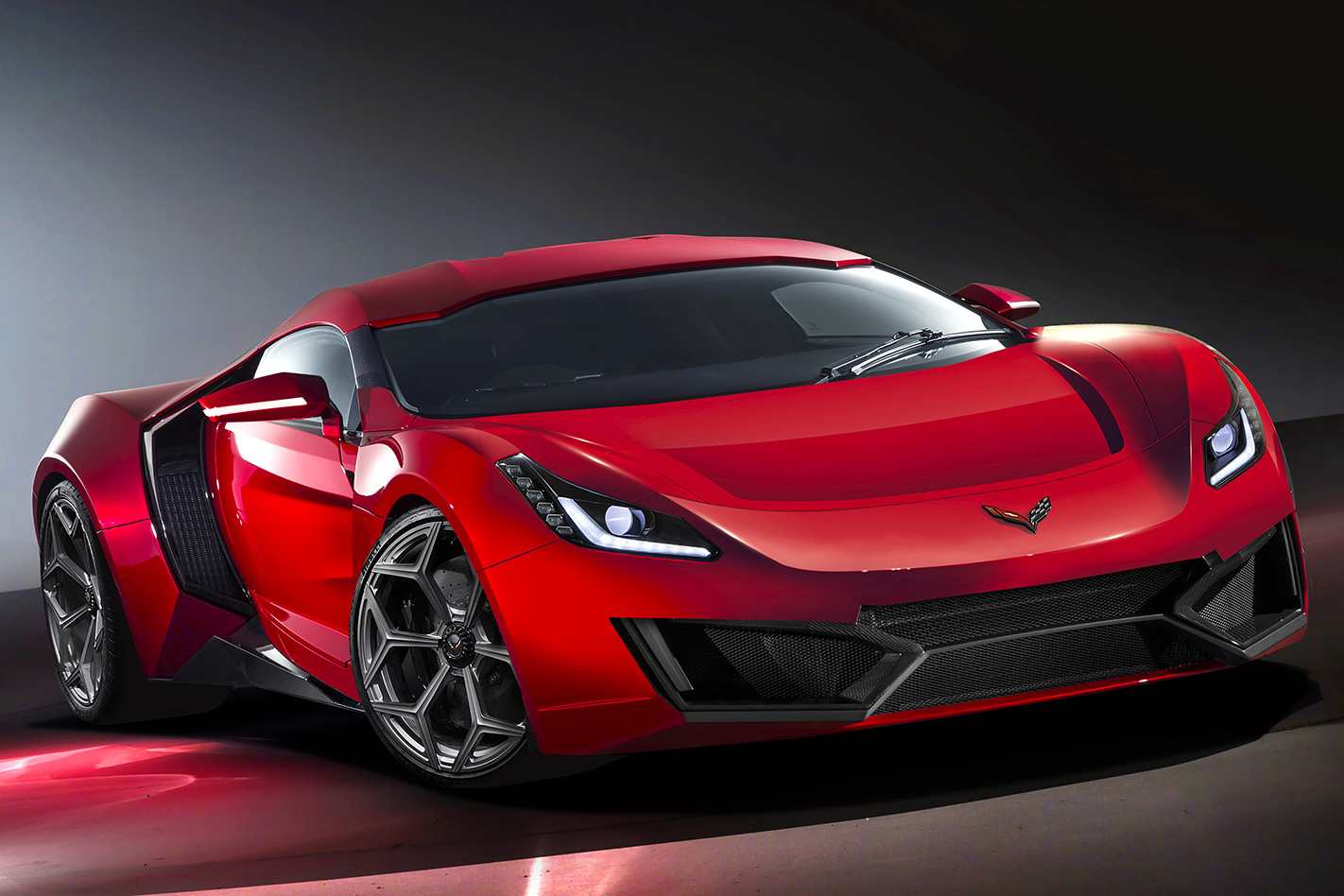
The latest generation Corvette can’t play it safe. The market has moved beneath it and launching a flagship sports car with an opening price of USD$55,000 (as the current C7 is priced) is just leaving too much money on the table. Mark Reuss, head of Global Product development, has been quoted as saying that the C8 will be “revolutionary.” He’s not kidding.

What’s certain is that the C8 will be the most technologically advanced Vette yet, and is likely to trade sheer muscle for lighter weight, greater agility and higher efficiency. An aluminium chassis with carbon panels and a platform that’s engineered to accept future electrification is a given. How the local market will react to what could be a A$200,000+ Corvette is anything but.
The official reveal date for the car has yet to be confirmed, but we wouldn’t bet against it being the big drawcard for the 2018 Detroit show in January, with cars finding US customers later that year and Aussie buyers getting their hands on the mid-engined monster in 2019.
TELL ME ABOUT THIS CAR
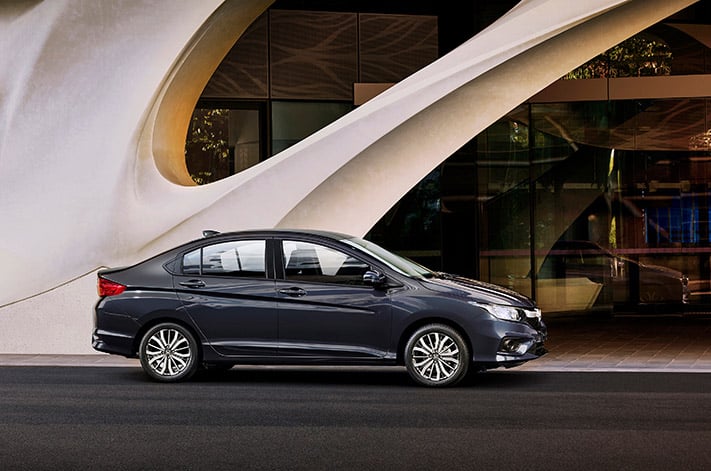
The Honda City is a light sedan that is based on the Honda Jazz hatchback but with a longer wheelbase and added boot, which gives it exceptional interior and boot space.
It’s available in two main variants, the entry-level VTi, and VTi-L which has extra features including leather appointed interior, satellite navigation, power mirrors, foglights, climate control, keyless entry/start, security alarm, and alloy wheels.
The City is powered by an 88kW/145Nm 1.5-litre four-cylinder engine coupled with a CVT auto gearbox. Unlike the VTi there’s no manual option for the VTi-L.
The Honda City VTi-L is priced from $21.590.
STRENGTHS
- The Honda City’s 4455mm length and 2600mm wheelbase is longer than most comparable sedans and hatches, including its Jazz sibling. It feels more planted on the road than most city cars and, unlike the Jazz, you don’t feel like you’re about to be blown away in strong winds.
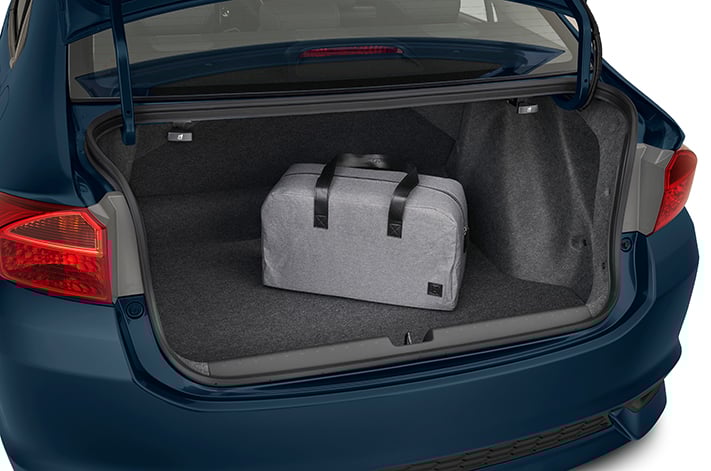
- The extra length makes it one of the most practical sedans in its class. Boot space is a cavernous 536-litres, which is better than some SUVs, while rear legroom rivals some medium-sized cars.
- The CVT does a good job in getting the 1.5-litre engine up to speed and includes a Sport mode if you really need to dial in some extra revs.
- It’s not a car built for thrills but the addition of paddle shifters offers some hands-on driver enjoyment.
- The interior is well laid out and the dashboard presentation is neat with most displays and buttons intuitively located.
- Rear seat passengers get two 12v outlets to recharge devices.
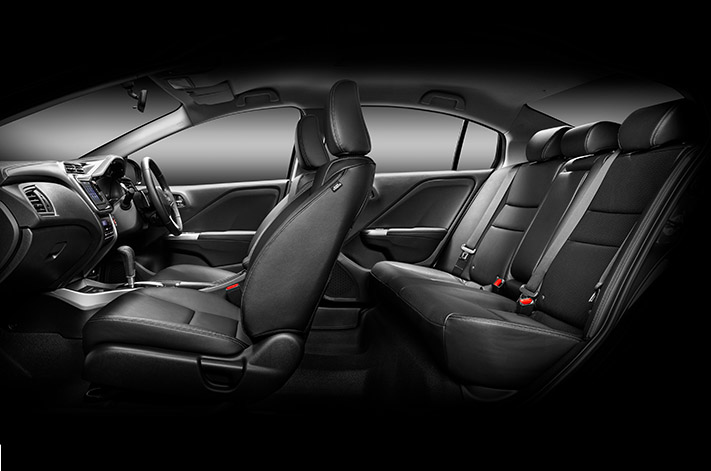
- The chassis handles tight bends surprisingly well, yielding little in terms of lateral movement.
- Road and engine noise is well supressed even out on the highway.
WEAKNESSES
- The infotainment system is underwhelming with no Apple Car Play or Android Auto, whereas its messy radio interface and out-dated satellite navigation graphics make it look like its directing you back to the 1990s.
- Headroom in the back seats is limited by the sweeping roofline.
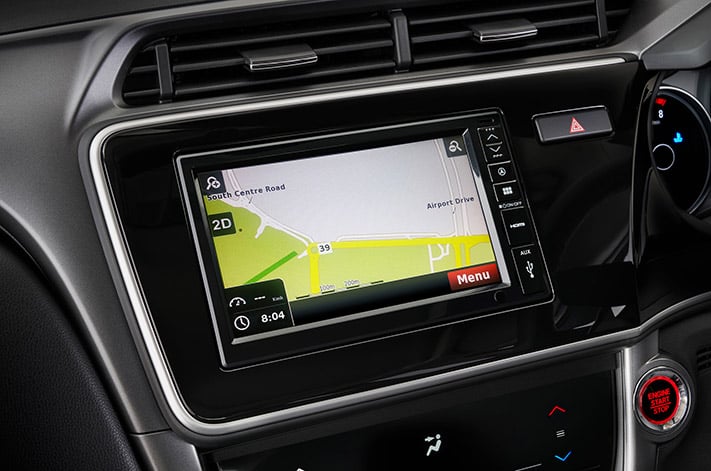
- Hard plastic surfaces on the dashboard and door trims undermine the decision to spend more on leather appointed trim.
- There’s no active safety features such as automatic emergency braking, which is becoming more common in the light car segment.
ANY RIVALS I SHOULD CONSIDER?
The Mazda 2 GT is the only light sedan on the market with similar features and price tag north of $20,000.
New Zealanders tend to be mistaken for Australian when overseas, even if they’re famous.
But that didn’t stop Jim Richards from heading to the UK to race the JPS BMW 635 CSi he’s known for steering.
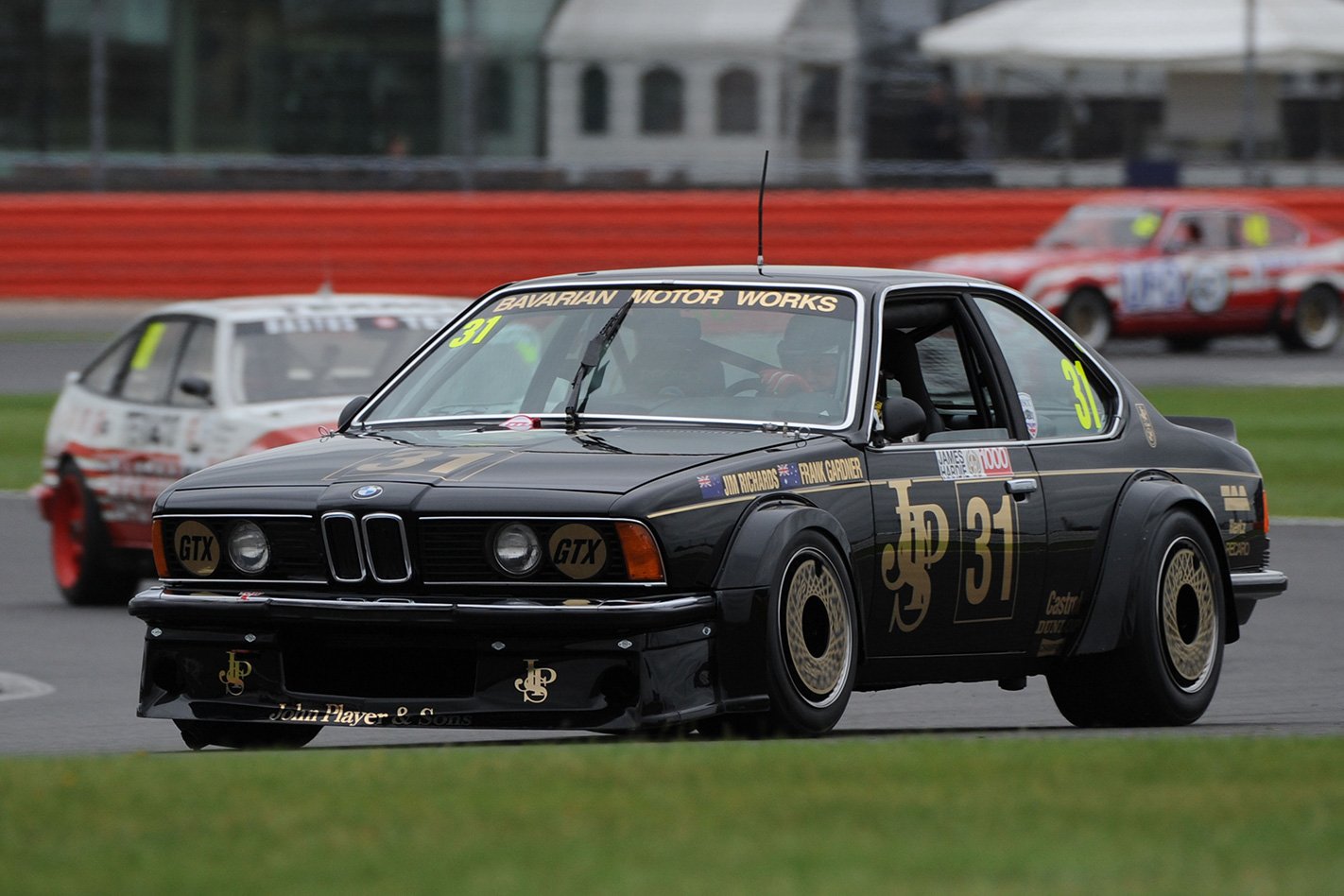
Gentleman Jim’s Group C car (actually owned by Peter Sturgeon) proved popular at the event, with the iconic JPS Bimmer being awarded the Stuart Graham ‘Scarf and Goggles’, an award presented to the most admired car competing at the Classic.
Richards says he was thrilled to have to opportunity to jump back in the driver’s seat and show the car off in the UK.
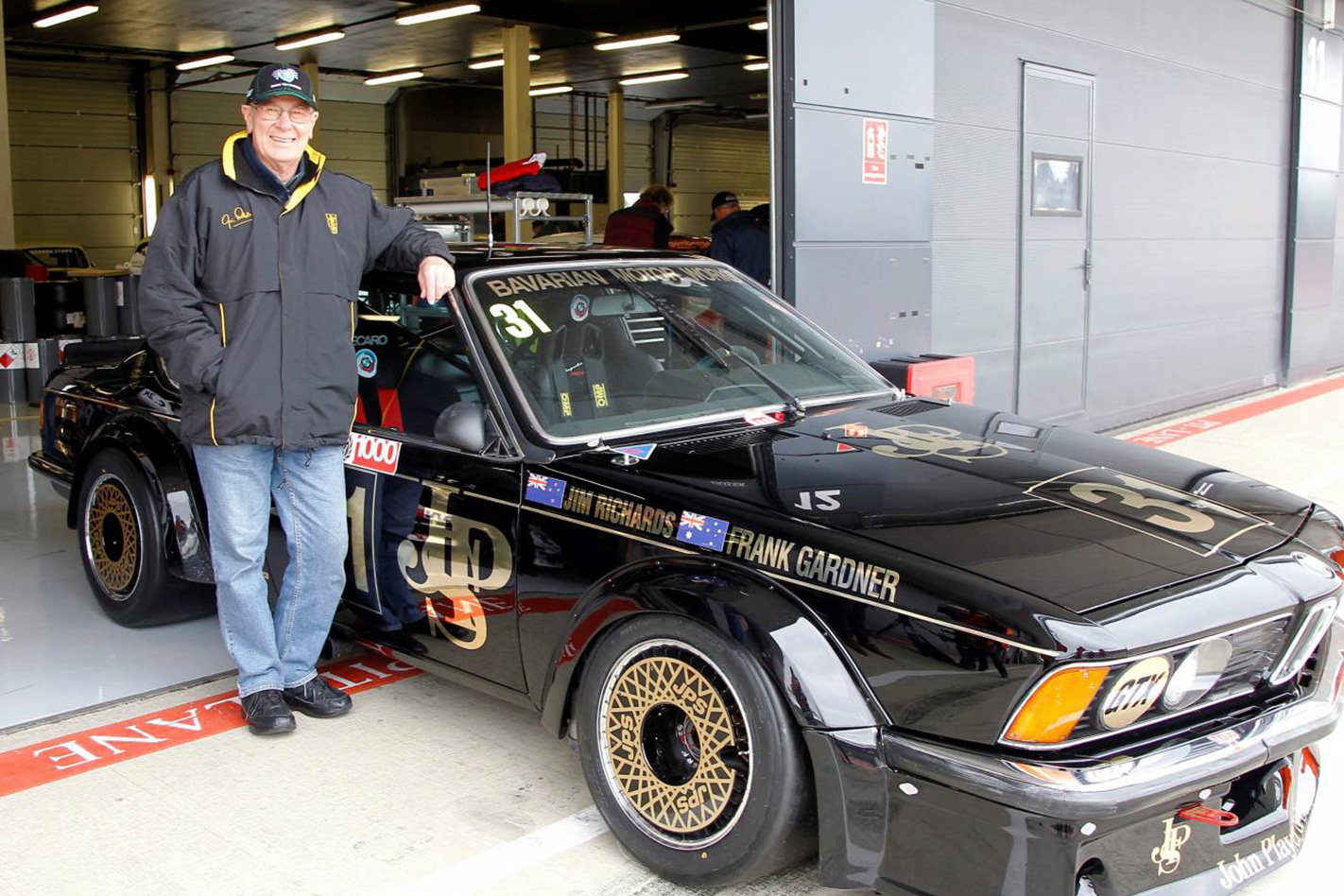
“A lot of fans have never seen these cars in action before, especially in England. It was exciting to make this weekend a ‘first’ for a lot of people.
V8s galore at Shannons Melbourne Winter Classic
“I was absolutely amazed at how much the British race fans knew about Australian motorsport. Everything that’s happened in Australia, they knew about. They knew everything about what I’ve done in my career, I was really blown away.
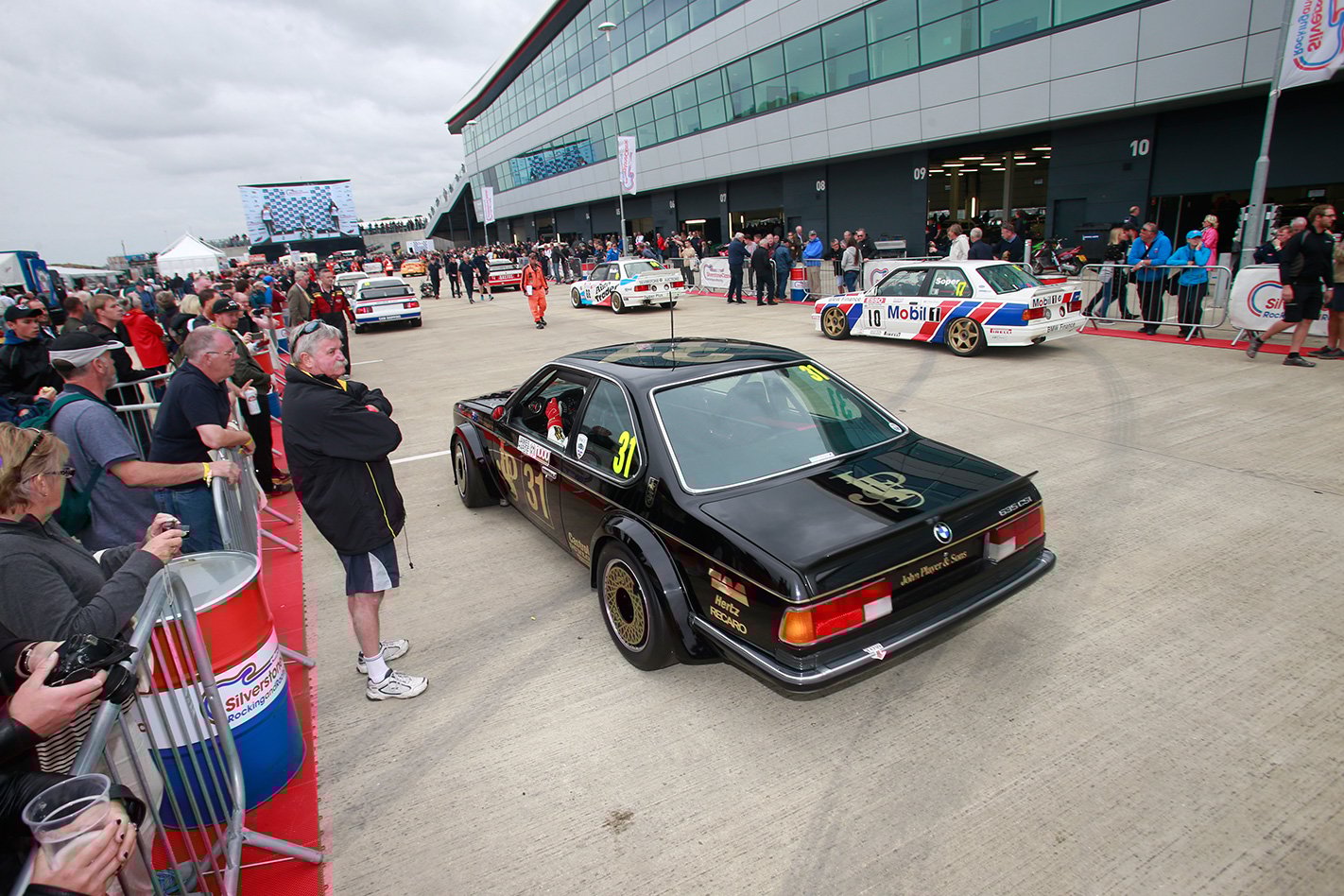
The car Richards is so well known for driving has undergone a few changes in its lifetime, with its original Group C-spec being changed to be Group A compatible by former JPS Team BMW head mechanic Pip Barker.
Once it was bought by Sturgeon in the early 2000s, it was restored to Group C specifications and has been raced by Richards across Australia and NZ over the last couple of years.
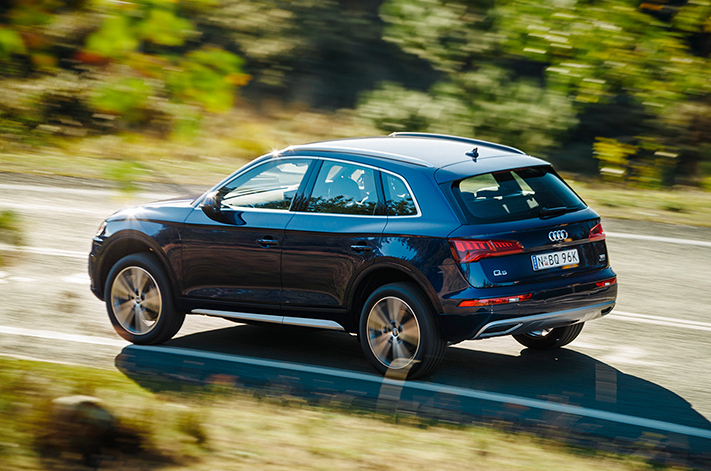
Launched in July this year, the second-generation Audi Q5 is a sharp-looking luxury, five-seat SUV that steers and rides brilliantly on its efficient all-wheel drive chassis. It comes with a choice of fuel-efficient petrol and diesel engines both with seven-speed dual clutch automatic transmissions, and is brimming with standard features including automatic emergency braking and first-rate smartphone connectivity.

Variants
So far there are just three variants of the Audi Q5 available here including the entry-level 2.0 TDI Quattro Design which, as the name suggests, is powered by a 2.0-litre, four-cylinder turbocharged diesel engine that produces 140kW and 400Nm and has a combined fuel efficiency rating of just 5.5L/100km. Priced at $65,900 it is replete with standard features including:
- Auto emergency city braking (which operates at up to 85km/h)
- Blind-spot monitoring
- Rear cross-traffic assist
- 7.0-inch touchscreen
- Digital radio
- Apple CarPlay and Android Auto
- Satellite navigation with voice control
- Part leather interior trim
- Power-adjusted front seats
- Three-zone climate control
- Auto windscreen wipers
- Auto headlights
- LED daytime running lights
- LED tail lights
- Ambient cabin lighting
- Tyre pressure monitor

Spend another $4800 on the 2.0 TDI Quattro Sport and you get:
- Audi’s ‘Virtual Cockpit’ digital instrument display
- Adaptive cruise control
- Auto Emergency Braking for highway speeds
- Turn assist
- Sportier front seats with more side bolstering
- Touch sensitive navigation screen
- LED headlights
- Automatic high beam
- 20-inch alloy wheels with lower profile tyres
- Subwoofer
- 2.0 TDI Quattro Design – $65,900
- 2.0 TDI Quattro Sport – $70,700
- 2.0 TFSI Quattro Sport – $73,500

Our pick
The extra features make both the TDI and TFSI Sport models worth the extra coin over the Design variant. The diesel is strong but the petrol engine really hits the sweet spot in terms of performance. Adding the optional adaptive dampers [$3069] makes for a brilliant ride and allows you to lift the ride height over bumpy surfaces or to make loading easier.
If you’re feeling a little flash, the $4308 Technik package (see below) with the adaptive headlights, head-up display and epic Bang & Olufsen stereo system would be icing on the cake.
Optional packages*
- Comfort Package – $2200 TDI Design, $1900 TDI/TFSI Sport Adds automatic powered and heated external mirrors, heated windscreen washer jets, driver’s seat and steering wheel adjustment memory functions and sliding and reclining rear seat.
- Parking Assist Package – $950 TDI/TFSI Sport only Adds 360 degree cameras and automatic parking assist for parallel and perpendicular parking.
- Technik package – $4308 TDI/TFSI Sport only Adds Matrix LED headlights with dynamic functions, headlight washers, 19-speaker Bang & Olufsen 3D Sound System, head up display.
- S line style package – $3300 TDI/TFSI Sport only Adds S line sports exterior styled bumpers, side sills, roof edge spoiler, logos and 20-inch Audi Sport alloy wheels in magnesium-look five-arm-turbine design.
- Premium paint – $1420
*Prices may be subject to Luxury Car Tax
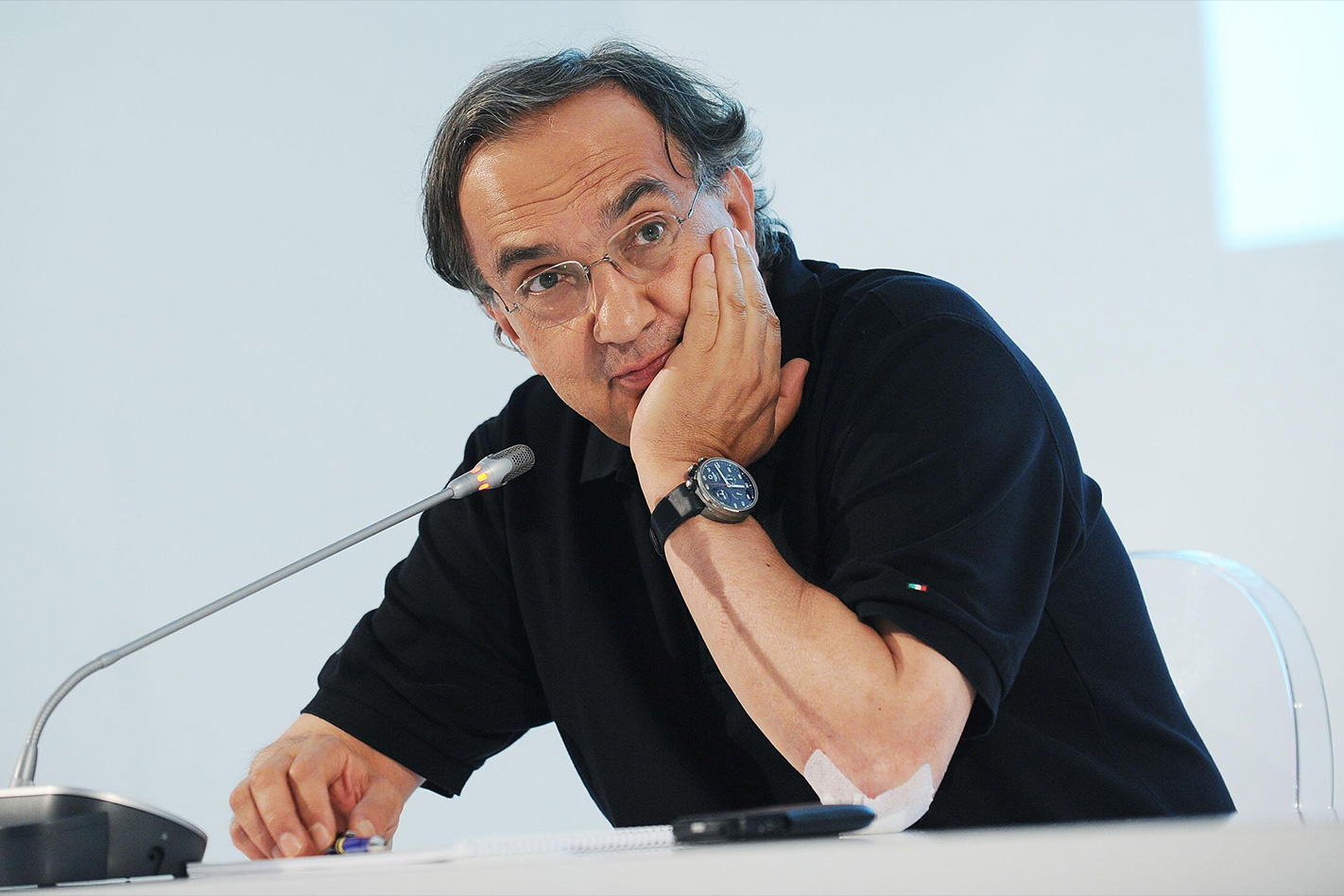
“YOU’D have to shoot me first.” Ferrari CEO Sergio Marchionne didn’t leave a lot of wiggle room on the prospects of the company ever building an SUV. That was in February 2016.
Now it appears that Sergio might have to start getting his Zegna suits Kevlar-lined. More than one source has confirmed that a Ferrari SUV is on the cards. Just bear in mind that if you ever call it an SUV in the hallowed halls of Maranello, you might be the one who cops the bullet.
Bloomberg has recently confirmed initial rumours of a high-riding utility vehicle in Ferrari’s plans, part of a scheme to increase annual production beyond 10,000 cars and, in turn, double profits by 2022. The 10,000 car limit is key here because once production exceeds that number, more stringent fuel economy and emissions rules are levied on the manufacturer.
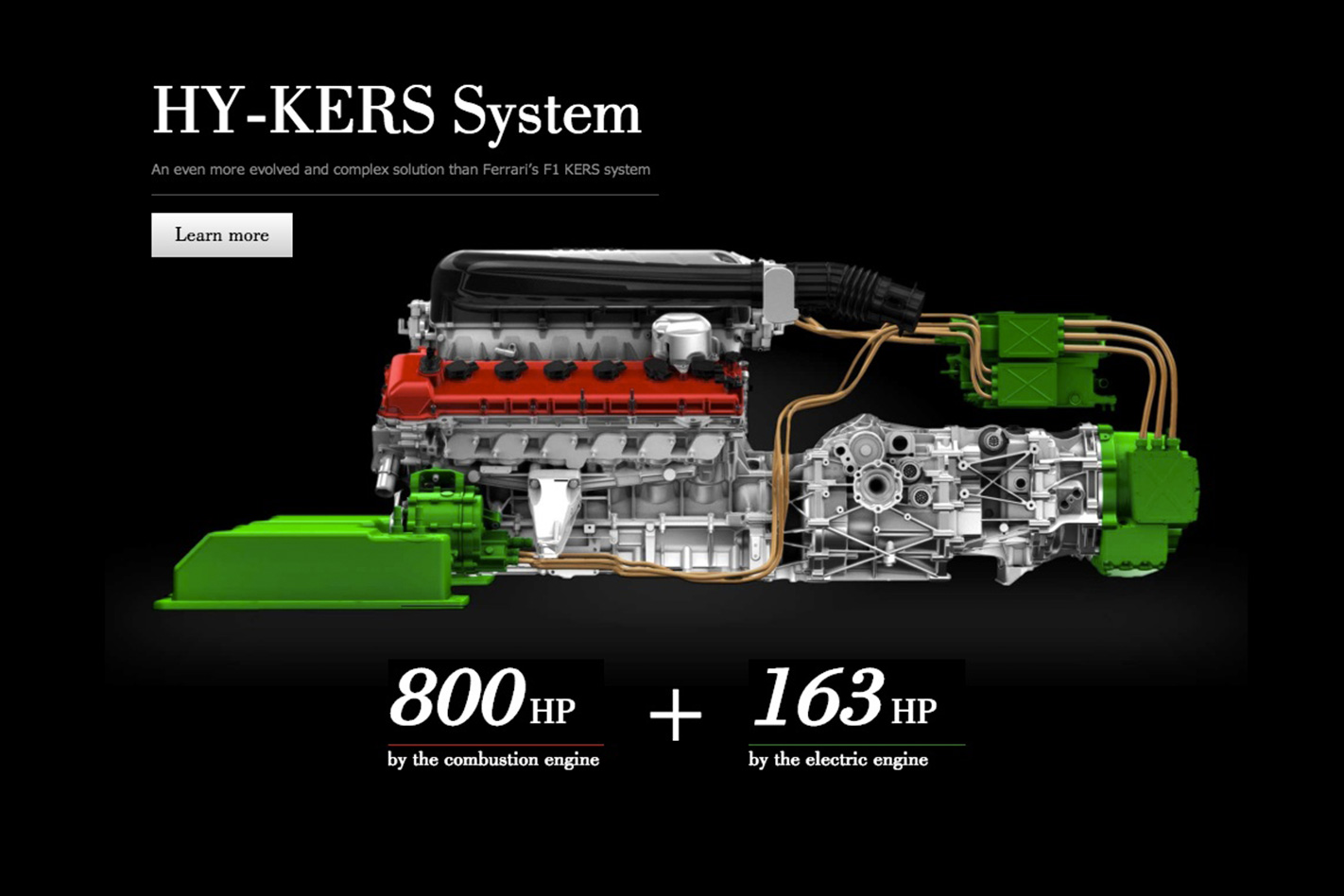
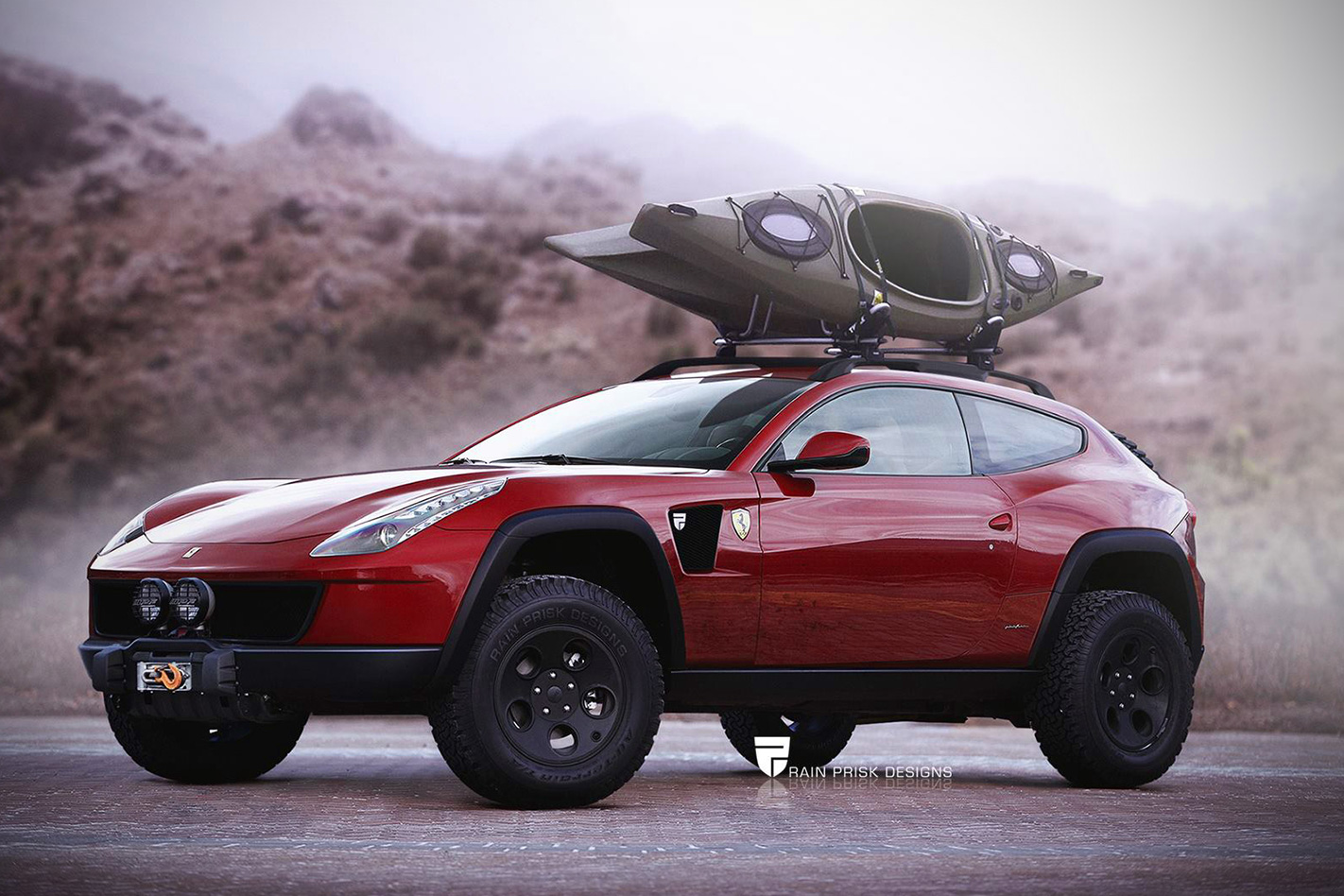
Our sister title in the UK, Car, has reported that the ‘SUV’ project has the internal designation F16X and that the vehicle will be a sporty, albeit jacked-up coupe with hybrid power built on the same lines as the GTC4Lusso. The rear doors will be disguised to give a sleeker profile, with no conventional B-pillars. It’s also alleged that an eight cylinder engine will be fitted rather than a V12.
Growth markets – especially China – are a target for the Ferrari utility vehicle, which may well be a lifted four-seater crossover along the lines of Aston Martin’s DBX concept rather than a more traditional lumbering wagon. With Porsche, Bentley and Maserati already in the game and both Lamborghini’s eagerly-awaited Urus and Rolls Royce’s behemoth Cullinan also waiting in the wings, it makes solid financial sense for Ferrari to launch an SUV.
Marchionne’s recently unveiled five-year plan takes him through to his proposed retirement in 2021 and, if sources are to be believed, will be part of a push to increase electrification across the range and to introduce a second shift to the Maranello plant which is Ferrari’s only manufacturing facility.

Ferrari’s sales stood at 8014 in 2016 and the current target is to boost sales to 9000 cars in 2019. For many years, there was a voluntary 7000 car limit on Ferrari production to protect the exclusivity of the brand. Analysts at Mediobanca SpA, UBS Group AG and Bernstein predict deliveries could jump to as high as 15,000 under Marchionne’s new plan.
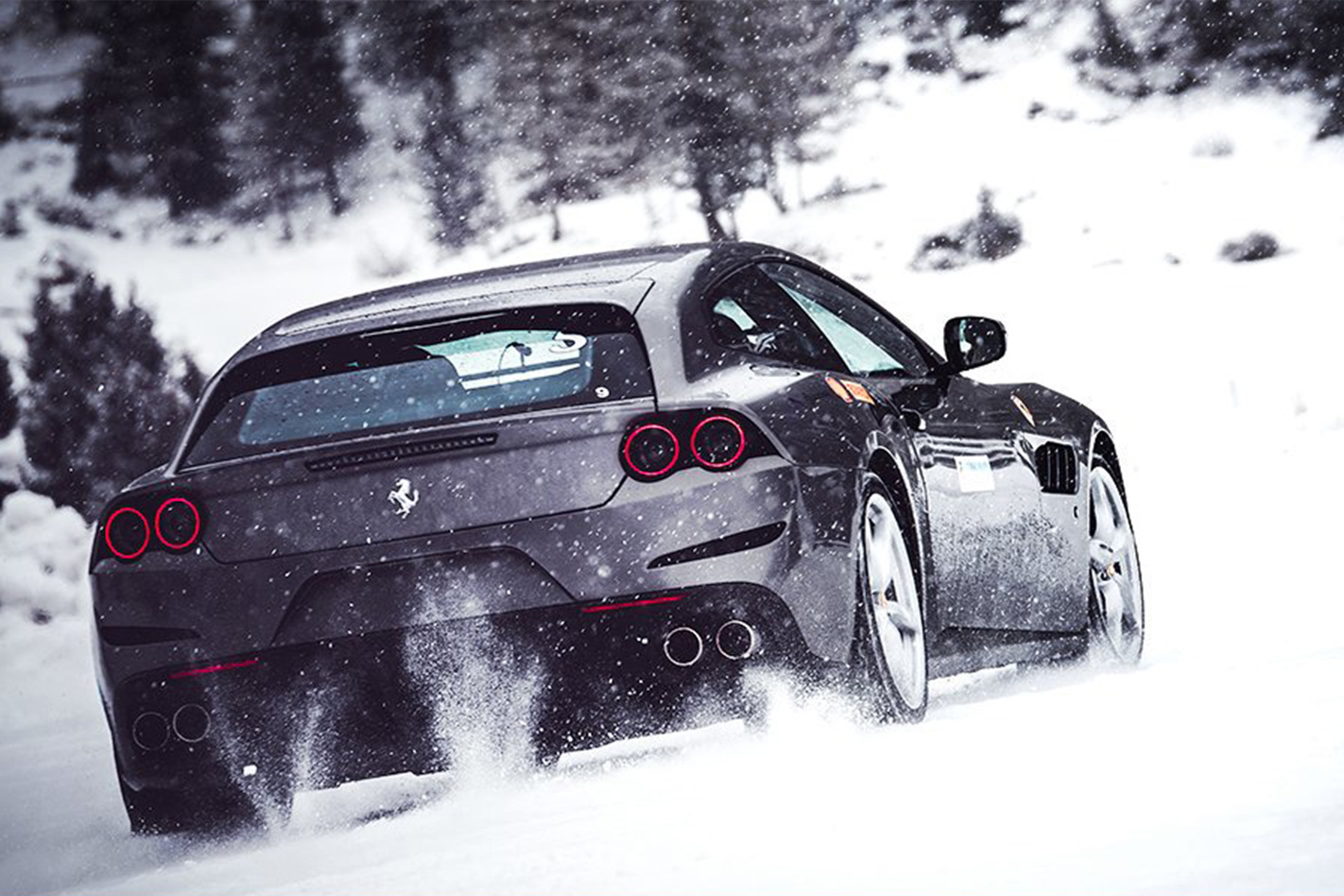
Unlike Lamborghini, Ferrari has no SUV in its back catalogue to lend a historical authenticity to its move into this new market sector. Building a vehicle with more space than the current all-wheel drive GTC4Lusso would risk diluting Ferrari’s brand, but it seems as if Marchionne’s parting legacy could be to drench the company in new money. Consider that trigger pulled.
