
Do you remember when the very first electric cars came out?
Abysmal range and mental images of cars puttering to a stop- in need of a wall plug instead of a jerry can keep on going.
Well those days are long gone. Read on to see the five cars with the longest electric-only range on sale in Australia right now.
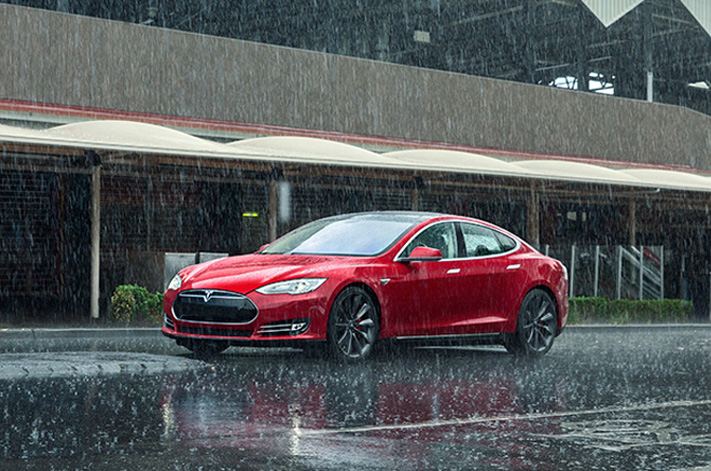
1. Tesla Model S P100D – 400km
Supercar accelerative ability meets limo-like accomodation in the American EV maker’s quickest model variant. A huge 100kWh battery gives the P100D a touring range of more than 400km.
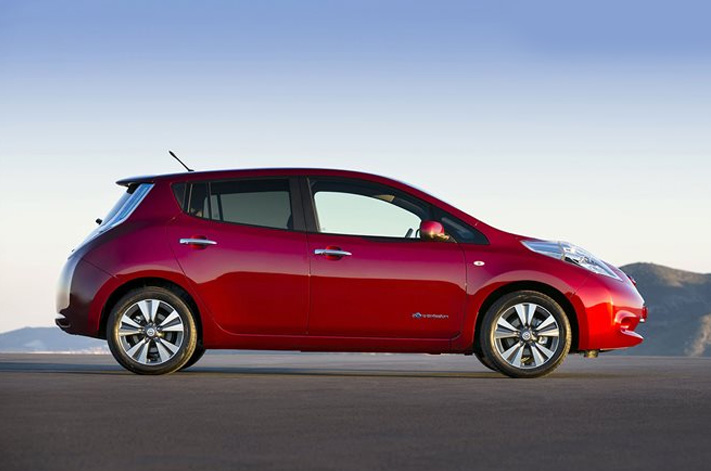
2. Nissan Leaf – 250km
At the other end of the spectrum, Nissan’s little EV offers small hatch practicality and likeable looks with a charging regime as convenient as your iPhone and a range of about 250km.
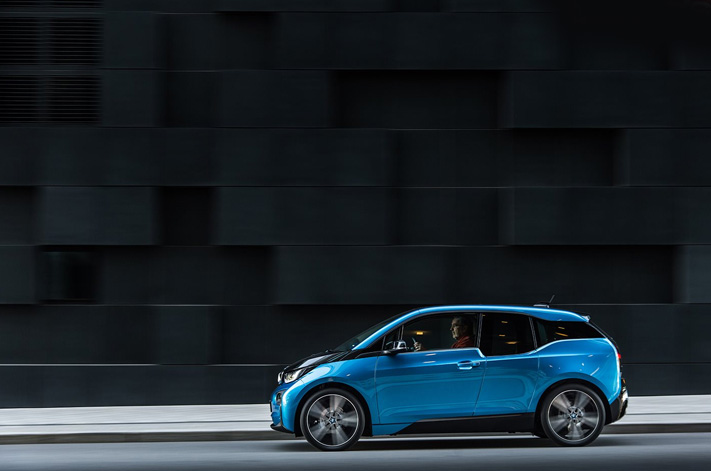
3. BMW i3 – 240km
Opt for the pure electric version and the 94Ah battery holds enough energy for 240km of driving, leaving the REx version and its range-extending twin-cylinder petrol engine for those prone to falling off the wagon.
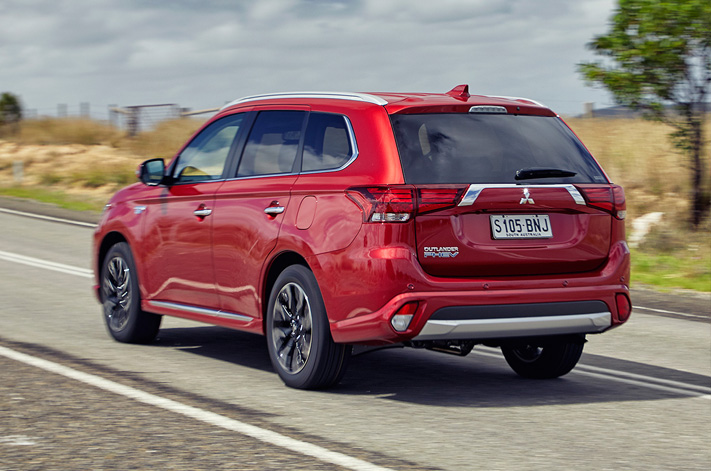
4. Mitsubishi Outlander PHEV – 54km
Need to run a medium SUV but don’t want to sell your soul to Shell? The Mitsubishi Outlander PHEV can go for up to 54km before its petrol engine kicks in, and it officially only uses 1.7L/100km.
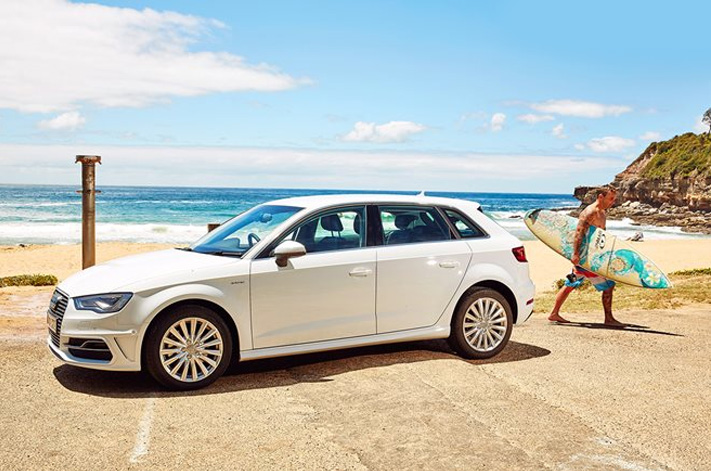
5. Audi A3 E-Tron – 50km
Audi’s sleeper plug-in gives little external clue it has an electric motor within, but if your commute is 50km or less, you can enjoy trips to and from work on electricity alone.
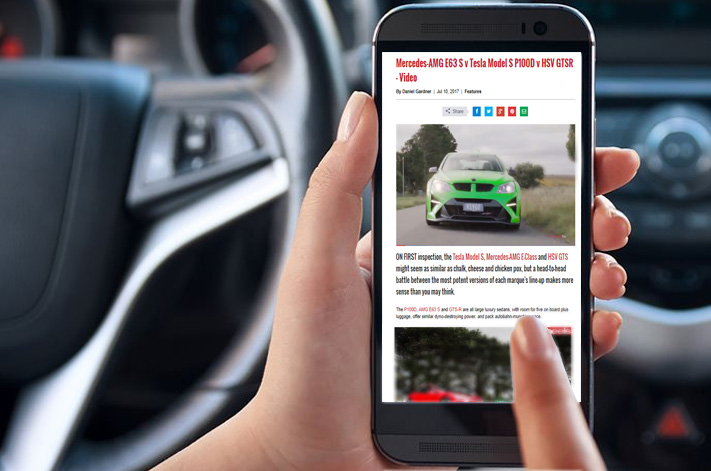
AUTHORITIES have admitted they are losing the battle to curb mobile phone use in cars, as the proliferation of smartphone technology sees more and more drivers dangerously distracted at the wheel.
A staggering 60 percent of Australian drivers admit to using their phones while driving, according to government figures, with new research likening the dangers of phone use to that of driving under the influence.
“I don’t think anyone thinks that texting and driving is okay,” Victoria’s top cop Doug Fryer told Wheels. “The problem is they just can’t help themselves.”
Smartphone use is at an all-time high in Australia (we rank #4 globally for smartphone ownership), with 84 percent of our population having access to one in 2016, according to research by Deloitte. In fact, our compulsion to use our phones is so high that 30 percent of respondents to the same survey admitted to waking up in the middle of the night to check their phones.
So what is being done to address this compulsion on our roads? And is the current policy of enforcement working?
Where illegal phone use used to see drivers place their devices at eye level, stricter enforcement has prompted drivers to lower their phones further out of sight.
“A lot of drivers are hiding their phones,” says Dr Cassandra Gaul, a research associate at the Centre for Accident & Road Safety at Queensland University. “When laws came in banning texting in the US, they found that crashes were actually starting to increase, and they couldn’t figure out why. What was suggested was drivers had continued to text, but were simply lowering the phones below the eyeline.”
Fryer agrees: “A couple of years ago the phone was up to the ear,” he says. “Now what we are seeing is worse and more dangerous because they are now connecting through social media, through various applications, while the phone is in their lap. At a set of traffic lights, that’s dangerous. At 100km/h on a public road, it is fatal.”
According to Fryer, Victoria Police issued 44,000 fines for phone use while driving in 2013-14. This number actually decreased to 37,000 in ’14-15, which the Assistant Commissioner attributes to enforcement tactics lagging behind offending behaviour.
To combat the issue, one tactic being used by Victoria Police is an investment in smaller, more manoeuvrable motorcycles to book more people in urban situations. The hope is changing behaviours in urban areas will foster change on rural roads which are much more difficult to police.
“I accept that drivers aren’t dying in the city from using their mobile phones, but what [texting and driving in cities] does do is it is a cause and conduct of behaviour,” Fryer explains.
“If they do it in the city, they do it on country roads at 100km/h, and that is what we need to stop.”
“We are on the right path, but we can’t enforce our way out [of the problem]. We need to change driver behaviour, or we need to inhibit drivers from doing it.”
Western Australia is taking a different approach, with new camera technology currently being evaluated to catch drivers in the act (see sidebar). WA’s road safety commissioner, Kim Papalia, claims his state’s preference is to educate rather than regulate, but also says:
“Camera operations give us far greater efficiency and also increase the likelihood of people being apprehended,” he told Wheels.
“It’s that kind of idea and likelihood [of being fined] that will change behaviours.
“It’s a technology created risk, and I think it will be a technology resolved solution. Sadly, in the interim, people’s lives are at risk.”
Yet such invasive camera technology raises privacy concerns, according to Matthew Eddy, a criminal law associate at Armstrong Legal that specialises in traffic cases.
“The first thing I would jump to as a defence solicitor is to say it really is an invasion of privacy,” he said. “If a driver is holding a black rectangular object [such as a sunglass case] it may be mistaken for a phone, and in that sense it would be unfair or prejudicial on an accused person.”
Yet as authorities scramble to find a solution, a key fact to remember is this: at 100km/h, taking your eyes off the road for two seconds sees you cover a little over 50 metres. Blind.
Unfortunately, the message is yet to get through to drivers.
The Wheels position
Five key action points we’d like to see introduced:
◆ Improved and increased awareness campaigns, targeted at changing public opinion to eliminate hand-held phone use entirely, not just focused on texting
◆ Smarter, more targeted enforcement via more police motorcycles in urban areas
◆ Increased crackdown through police blitzes akin to those targeting drink driving and speeding
◆ Harsher enforcement – increased fines and points losses
◆ Repeat offenders to face loss of licence, or data and signal blockers fitted to their vehicle in a similar vein to alcohol interlocks for repeat drink drivers
A heads-up; you’re busted
Western Australia is now investigating new roadside camera technology to combat distracted driving, which it estimates causes 32 percent of fatal and serious crashes.
“There are three different models,” road safety Commissioner, Kim Papalia, explains.
“We have roadside cameras which are not dissimilar to mobile safety camera operations that [are used] around Australia, then we have fixed sites that can operate as gantry or high roadside camera operations. Or, what would be a completely new initiative for us: mobile camera operations moving with the flow of traffic.”

“In my mind, within the next 18 months, there will be a technological solution that will block the ability to access data while driving. I think it is really close,” Doug Fryer adds.
“I can’t go into a lot of detail, but Victoria Police, Linfox, and Telstra are all working together at the moment to figure out what can be done. We have been doing that for the past year. It would be at an enterprise level. Not just a thing you plug in and opt in or out, but at an enterprise level.”
You’re looking at the fastest production Lamborghini ever built – if you accept the Nurburgring as a standardised measure for such things, of course.
In October last year, in the hands of factory test driver Marco Mapelli, the Huracan Performante set a 6:52sec lap, faster than a Porsche 918 Spyder and Lamborghini’s own Aventador SV.
Not hanging about, then. With front-end styling inspired by a snake’s fangs, lashings of lacquered carbon fibre, bronze wheels, high-mounted exhausts and that rear wing, the Performante is actually – by Lamborghini standards – a relatively restrained effort. Generous use of composite materials, as well as looking cool, contribute to an overall weight saving of 40kg.
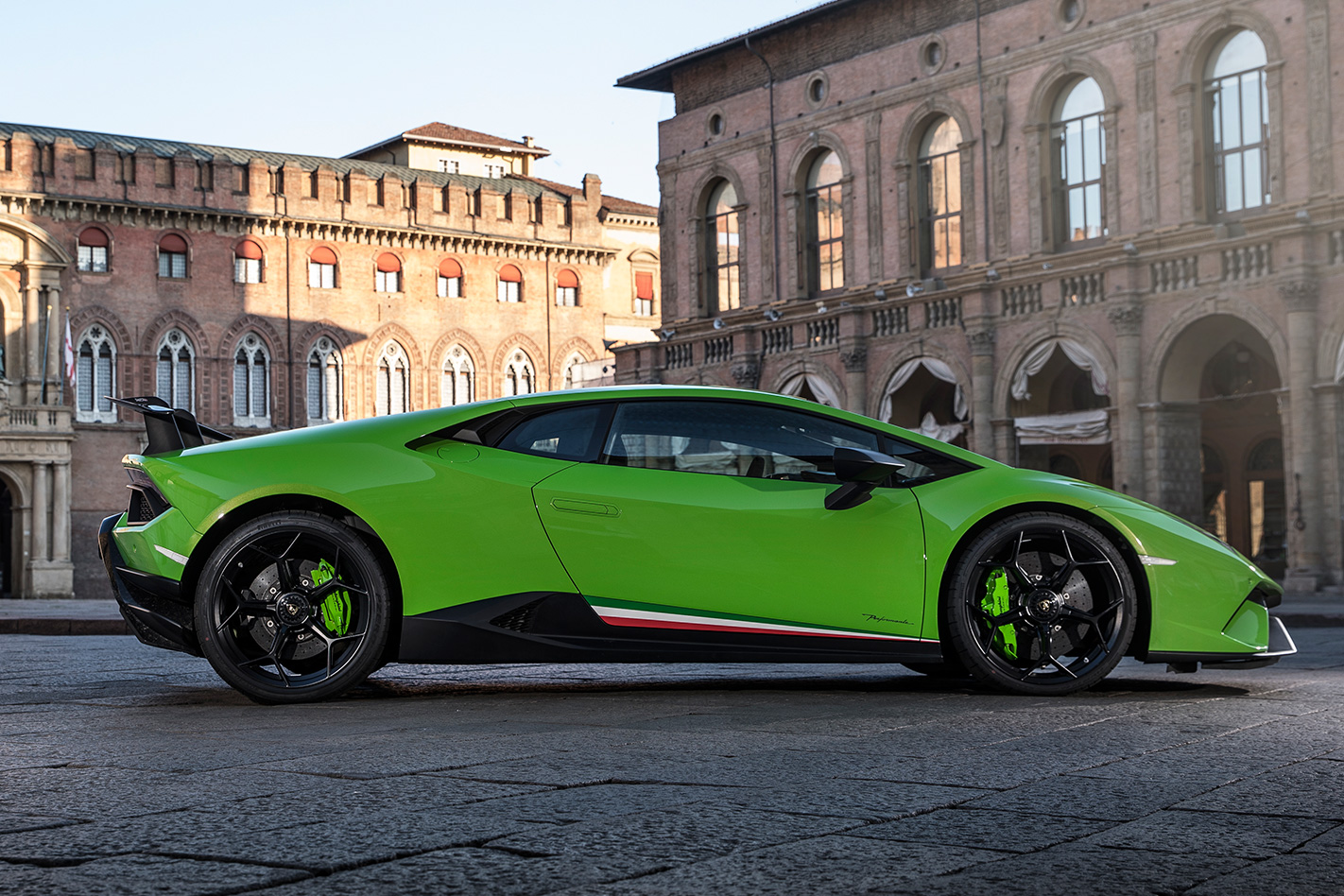
It’s quicker, too. The 0-100km/h time is now 2.9sec and a second has been taken off the 0-200km/h sprint, with 8.9sec. That’s serious speed. Fundamentally, though, it’s the same as the regular LP610-4, in that it drives all four wheels through a seven-speed dual-clutch gearbox and can do all sorts of clever stuff with its front-to-rear torque distribution, actively adjustable magnetorheological dampers and controversial variable steering ratio.
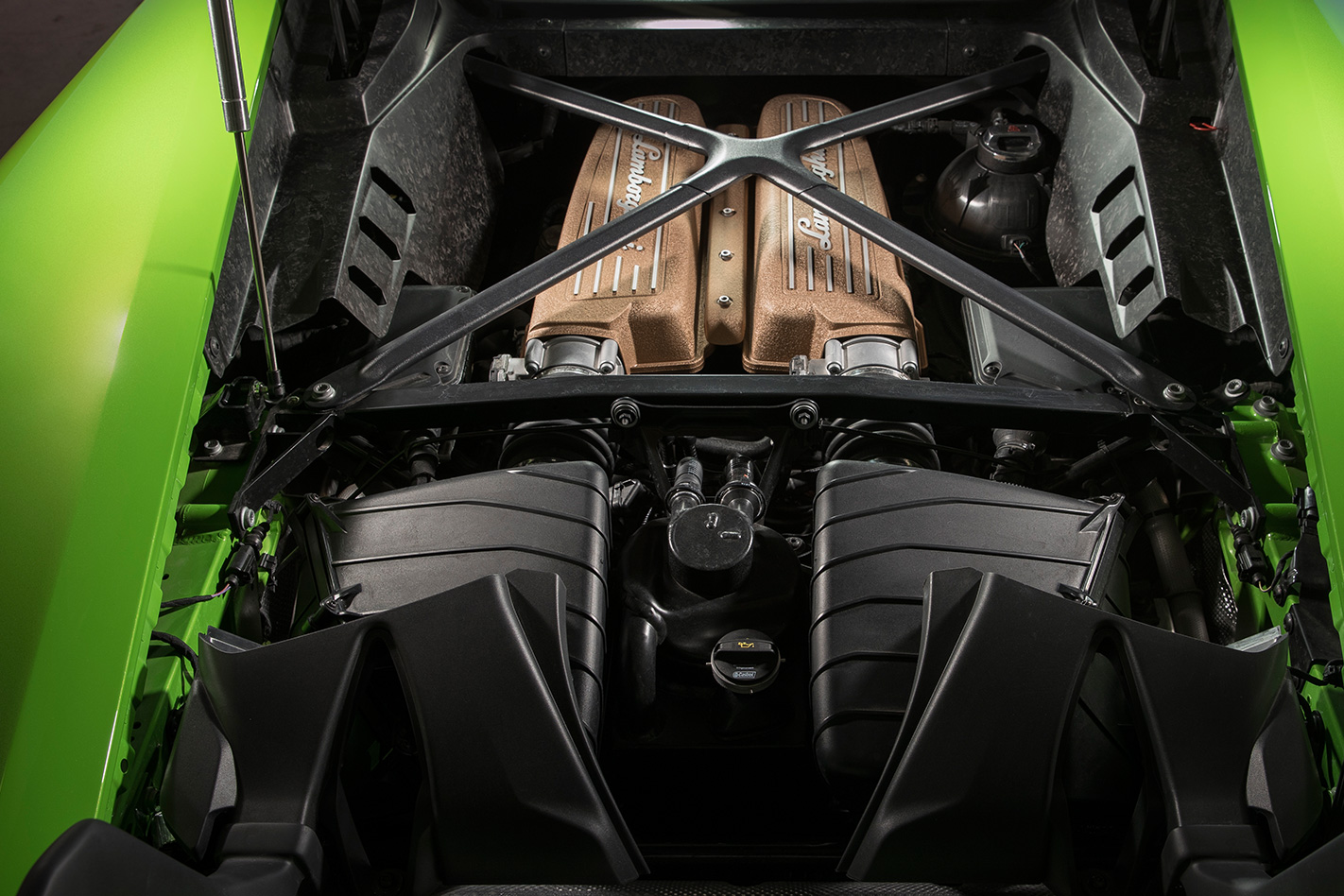
The whole car feels tensed and ready for action, the variable steering ratio locks into a narrower and faster range, the damping sharpens and the aero vectoring element of the ALA system activates. Then there’s the engine. And what an engine. A naturally aspirated V10 closing on 8000rpm.
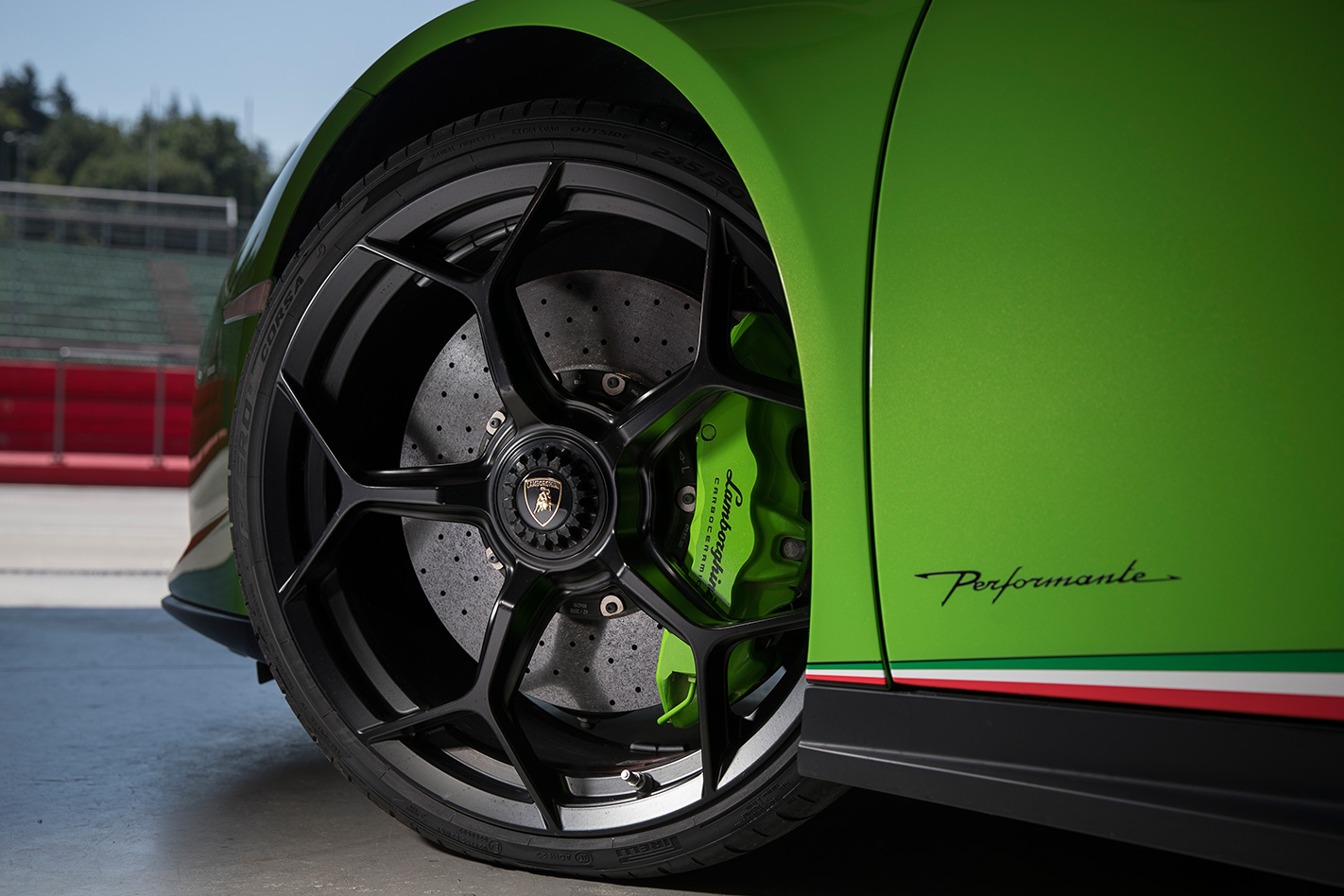
With aero vectoring effectively dragging the car into the corner by putting more downforce on the inside rear wheel, you need less lock than you think to hit the apex and the car turns in assertively and aggressively with the slightest twitch of your wrists (though there’s not a great deal of feel through the Alcantara-clad wheel).
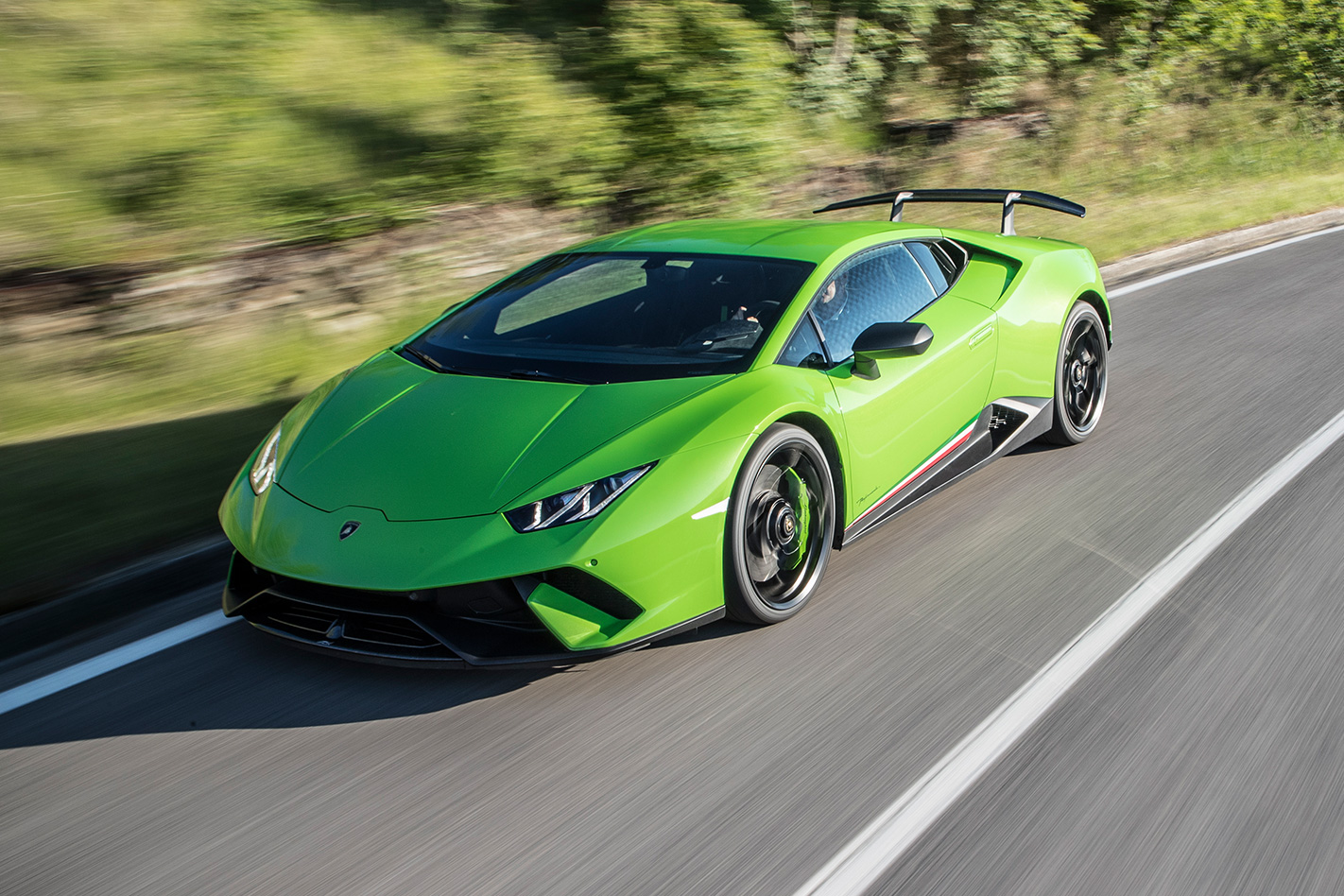
On the street, for all its blistering track pace, the Performante is a surprisingly fun road car, too, the increased feedback actually giving you more than the regular Huracan. Drive it in Strada on the road and it’s like a regular Huracan with a big wing on the back – with the knowledge that in Corsa it’s a different animal.
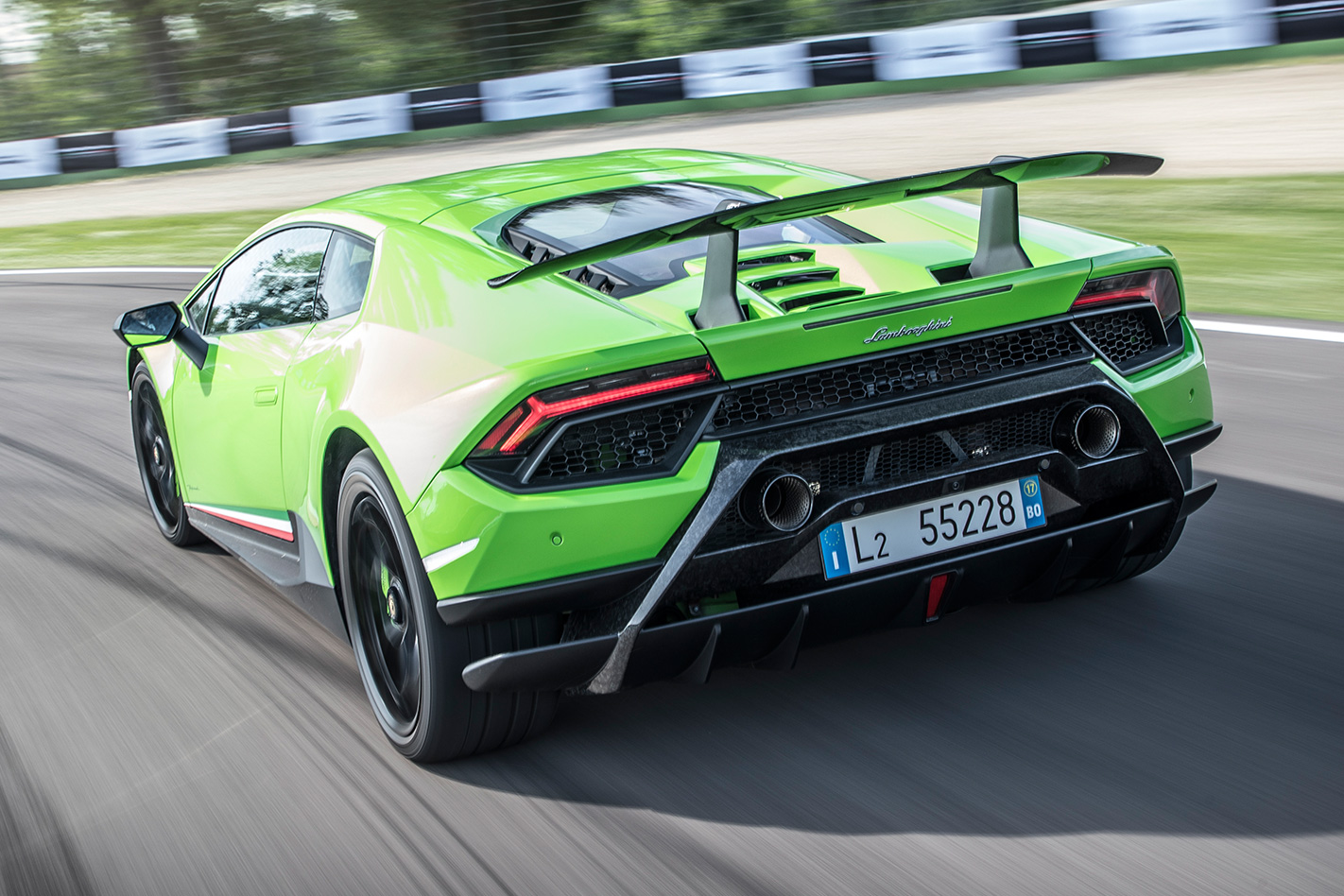
Where supercars once set out to challenge, their primary goal is now to flatter. Unlike any Huracan before, the Performante now caters to the latter as much as it does the former.
If ever you were in any doubt as to whether advertising works, czech… sorry, check out how many Skodas you see with roof racks attached, usually with a bicycle sticking out of them.
Skoda has been the official car of the Tour de France since 2004 and sometimes it seems as though a love of lycra is a prerequisite for a Skoda purchase. Thankfully, that’s not the case, as it would be a shame if the Octavia was restricted to MAMILs (Middle-Aged Men In Lycra, for those curious).
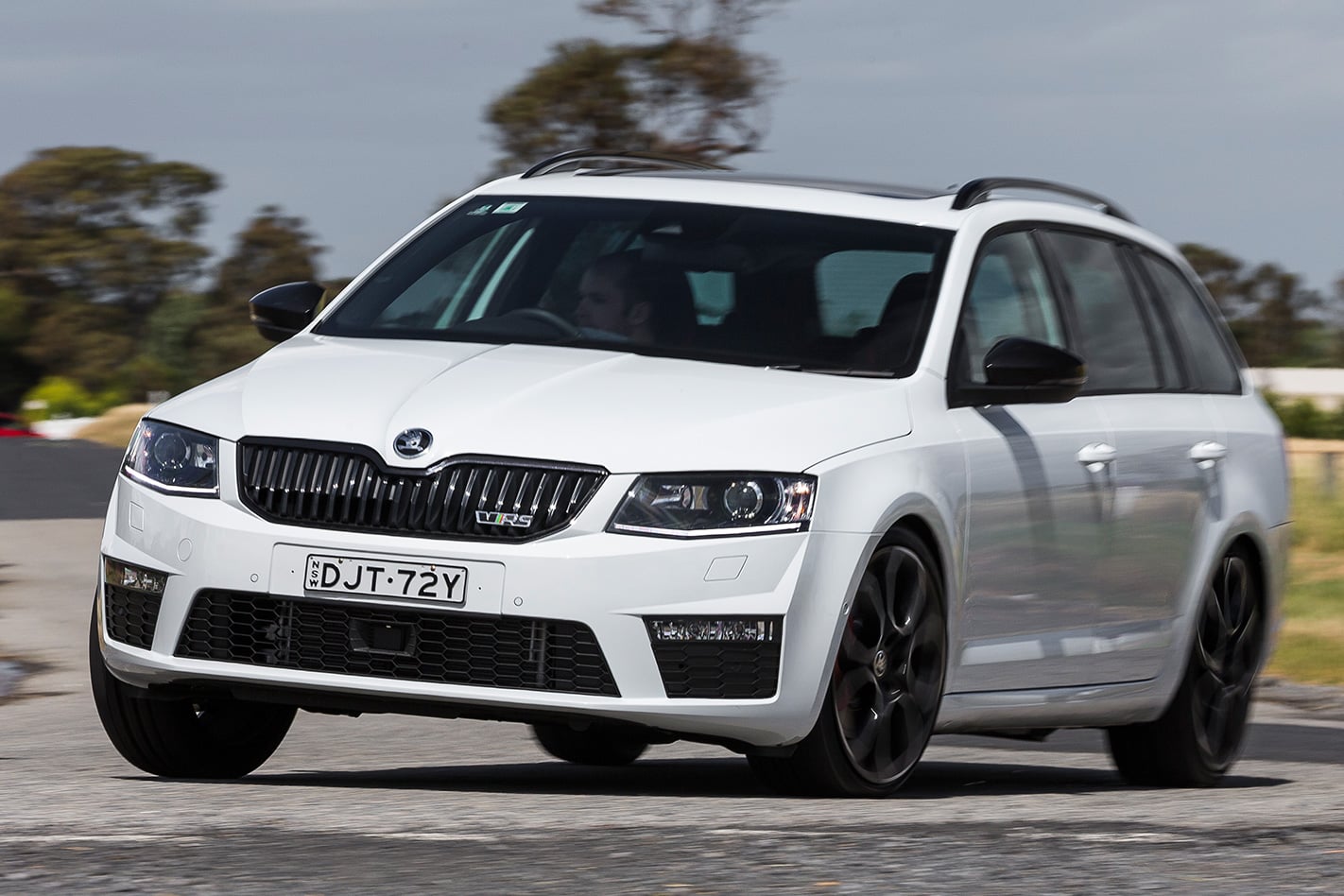
It actually got to the point that I was disappointed when test cars needed driving as it meant I couldn’t drive the Octavia. But what makes it so good? Firstly, there’s its practicality.
During its stay with MOTOR, DJT-72Y hauled towels and boards to the beach, furniture for house relocations, go-kart tyres, bicycles and more. At 588L seats up and 1718L seats down, the boot is both extremely roomy and hard-wearing; about the only way to improve it would be to find a way to make the rear seats fold completely flat or perhaps away completely.
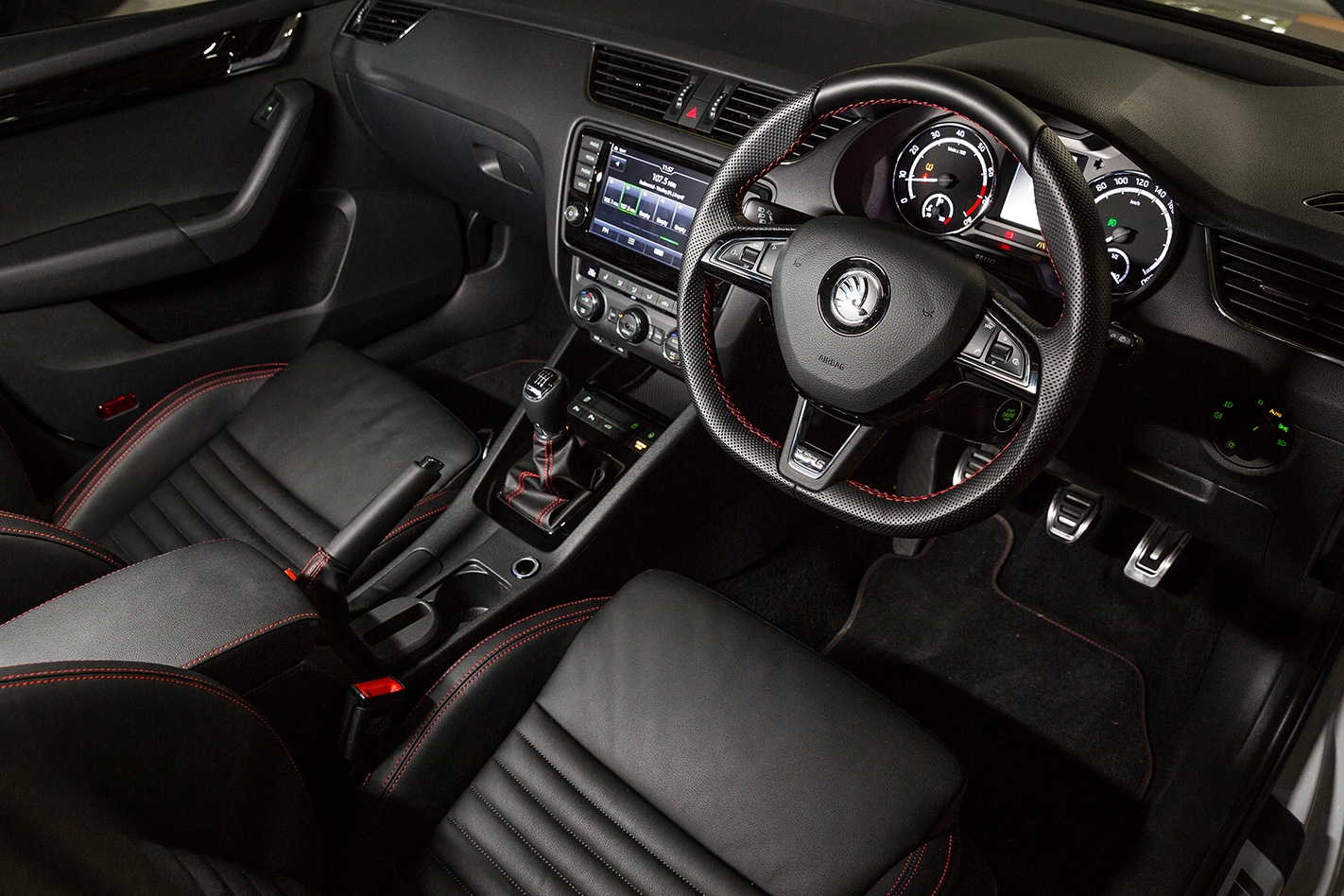
Massive points for the manual handbrake, too. One of the Octavia’s strengths is its ride quality. It can get jiggly over poor surfaces, an inevitable consequence of 19s with 35-profile tyres, however the ease with which it absorbs bumps and lumps is rare among performance models in this day and age.
Subaru Levorg GT-S vs Skoda Octavia RS230
This softer setup did result in a slight lack of body control when really driving hard, but the times I wished for the adaptive dampers’ Sport mode were few and far between. One thing I often wished for was the ability to deactivate traction control.
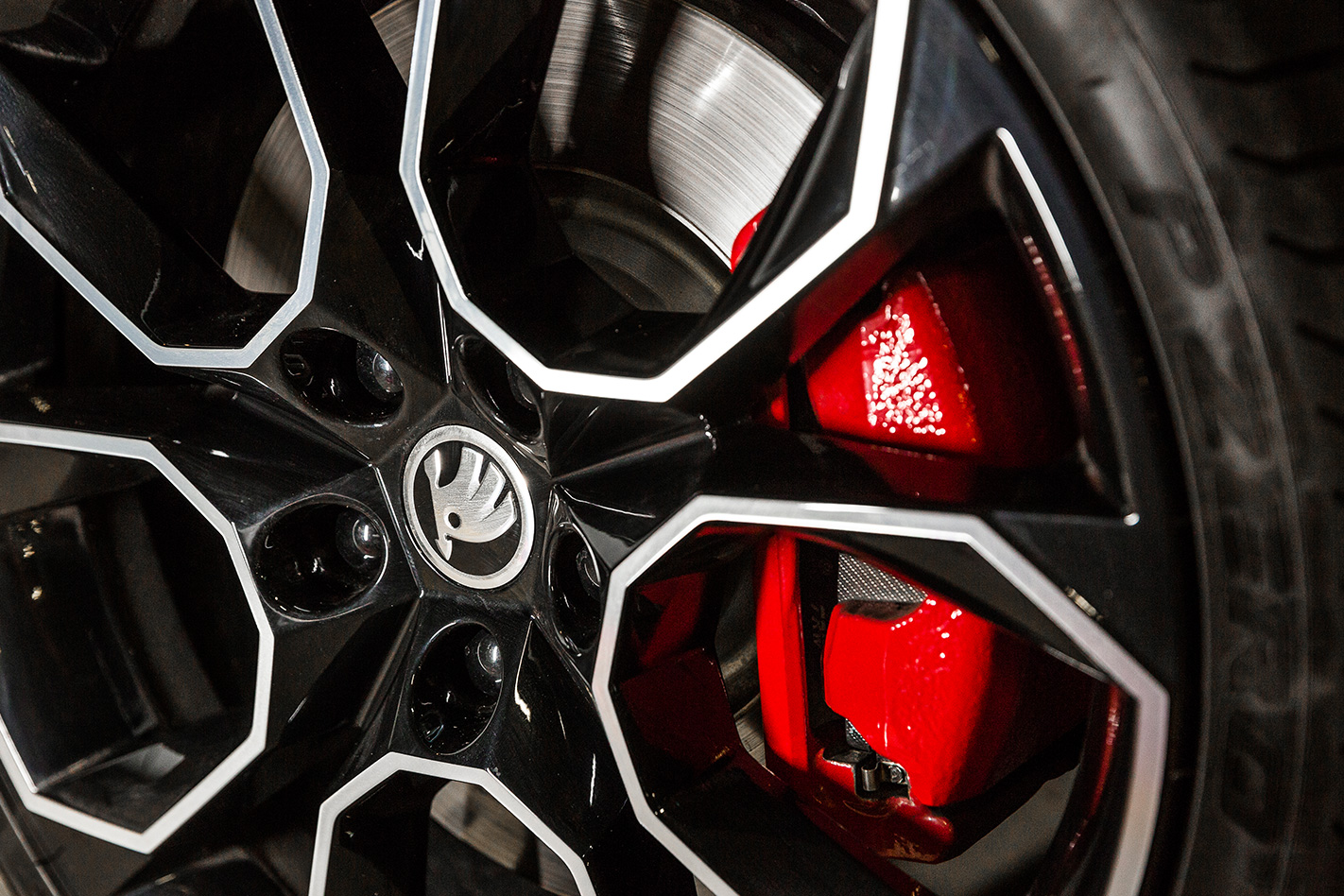
The RS230 is a manual-only proposition, limiting its appeal in auto-loving Australia, but it’s difficult to see how a dual-clutch would make the car more amenable. The clutch and gearshift are light and the engine has easily enough low-down urge to walk off the line.
The 2.0-litre turbo four-pot backs this up with heaps of mid-range grunt and only begins to feel breathless towards redline. Fast, practical, good value – the RS230 ticks almost every box, which might make the fact just 70 were imported into Australia seem like bad news.
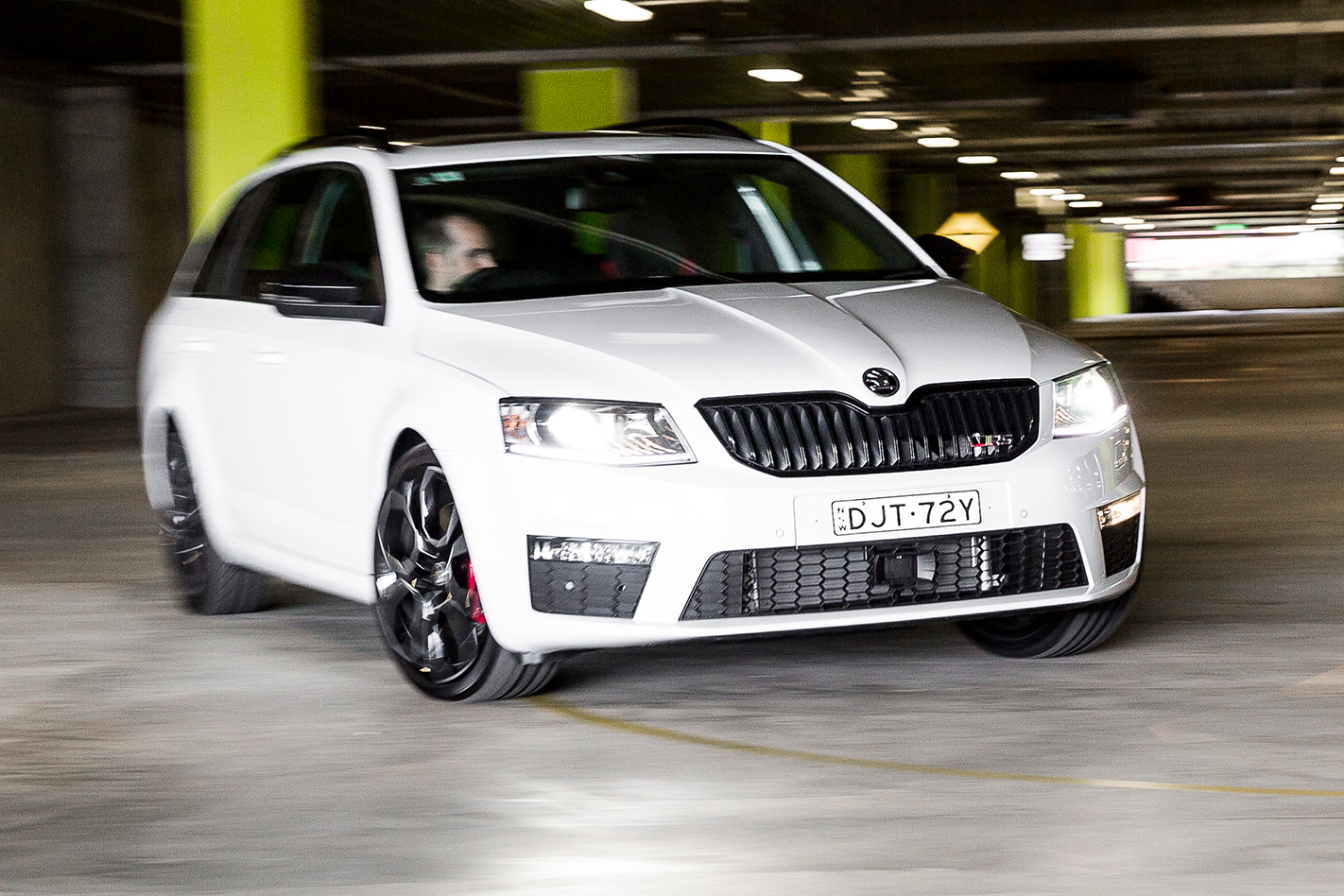
We’re not too keen on the new split headlight look, but if we had to choose between that and wearing lycra…
Liked: Manual; ride quality; space Disliked: Non-killable ESP; cheap plastics
Melbourne drivers are kidding themselves if they think traffic is worse in Sydney, according to research by public policy think tank the Grattan Institute.
The analysis dispels several myths about traffic congestion in Australia’s two biggest cities – including the notion that Sydney-siders are doing it tougher.
The research, for a forthcoming report authored by the Institute’s Transport Program Director Marion Terrill, found that Melbourne roads are just as congested as Sydney’s despite the latter having 340,000 more people and relatively few harbour crossings.
According to Terrill, during the morning peak, trips from the Melbourne’s suburbs into the CBD can take on average 70 percent longer than they would in the early hours of the morning, while comparative trips in Sydney take 50-60 percent longer.
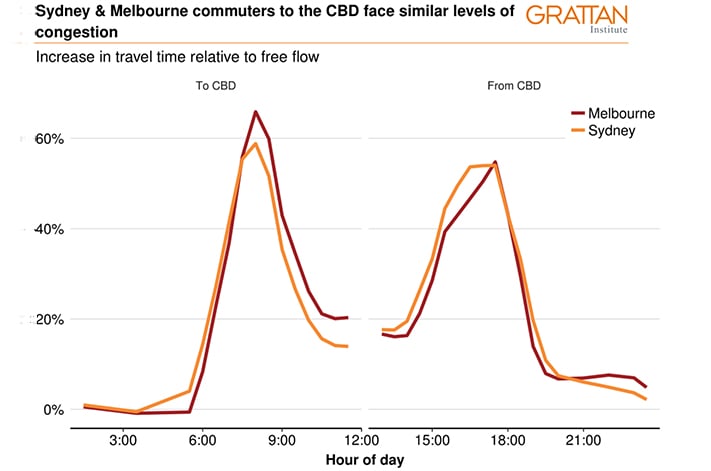
In Melbourne, the 11km trip from bayside Brighton takes an extra 13 minutes, while the 30km trip from Caroline Springs in the outer northwest takes an extra 20 minutes than at say, 4am. The 9km from Coburg in the inner north takes an extra 14 minutes, while the 17km from Doncaster down the Eastern Freeway takes an extra 20 minutes.
In Sydney, the 40km trip from Liverpool in Sydney’s south west takes an extra 32 minutes, while a trip of similar length from Blacktown in the northwest typically takes an extra 20. Driving the 17km from Manly takes an extra 21 minutes while you’ll need to factor in an extra 12 minutes to drive that 7kms from the airport.
While it doesn’t always seem like it, the trip home is generally a little shorter with afternoon peak travel times being on average just 55 percent longer than the wee hours in both cities. However the evening ‘peak hour’ in each now runs from 3.30pm to 6pm meaning that even if your working day finishes early your trip can still be 40 percent longer than when there’s no traffic.
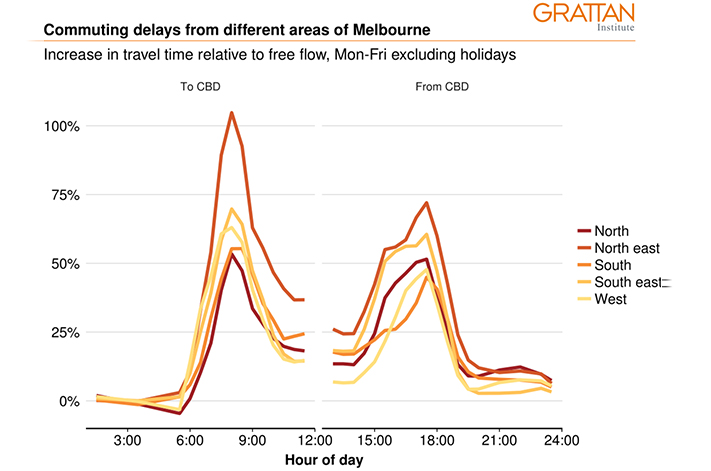
Terrill writes the patterns were found by analysing Google Maps estimates of travel times for more than 300 routes across Sydney and Melbourne.
“The data includes 25 travel-time estimates every day for several months. This includes commutes to the CBD and other employment centres, important freight routes, shorter trips within the inner, middle and outer rings, and cross-city trips.”
Worst places to drive to commute from
While much attention is paid to the struggle drivers have coming across the West Gate Bridge from Melbourne’s western suburbs, the worst commute in the southern city is actually endured by those using the Eastern Freeway from the northeast, with travel times being more than 100 per cent longer than in the early hours.
Trips from other directions vary between 50 and 70 percent longer, including around 65 percent from the west and 70 percent from the south east along routes including the Monash Freeway.
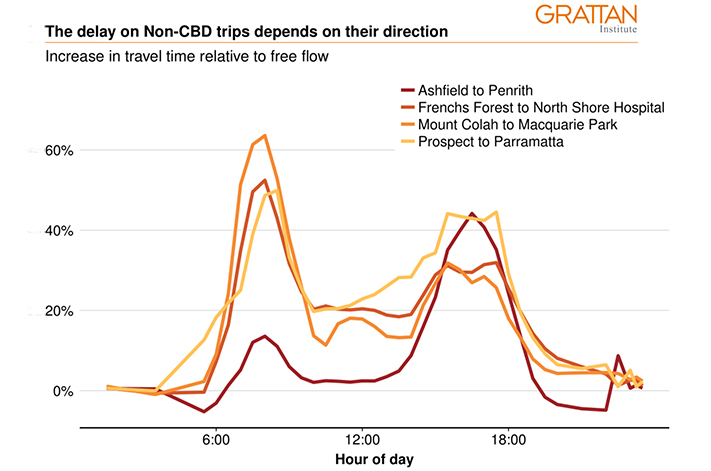
The trip home to the northeast is also the worst, about 75 percent longer than non-peak periods with trips to other directions hovering either side of 50 percent.
Sydney doesn’t have a stand out basket case, with most trips within that average 50-60 percent longer than the early hours. Where Sydney does seem to suffer more is cross town trips that don’t include the CBD, particularly to the north and southwest of the city.
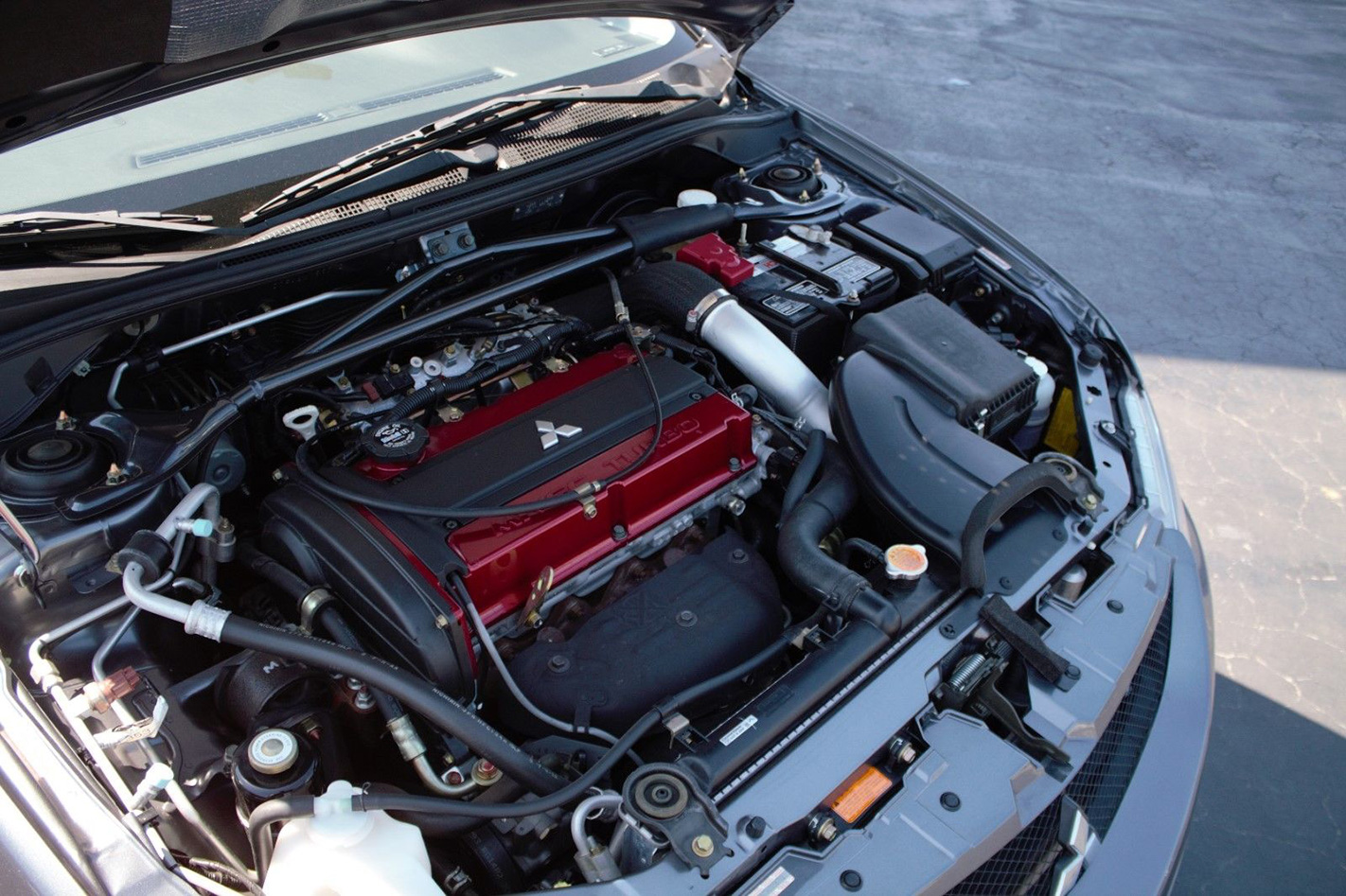
A ‘brand new’ 2006 Mitsubishi Evo IX MR has been squirrelled away for almost a decade by a dealer in the States.
South Coast Mitsubishi, in California, has reportedly got a reputation for keeping Evo IXs to sell them at a later date.
The price for such a coveted collectable? USD$137,954 or $173,000 Australian.
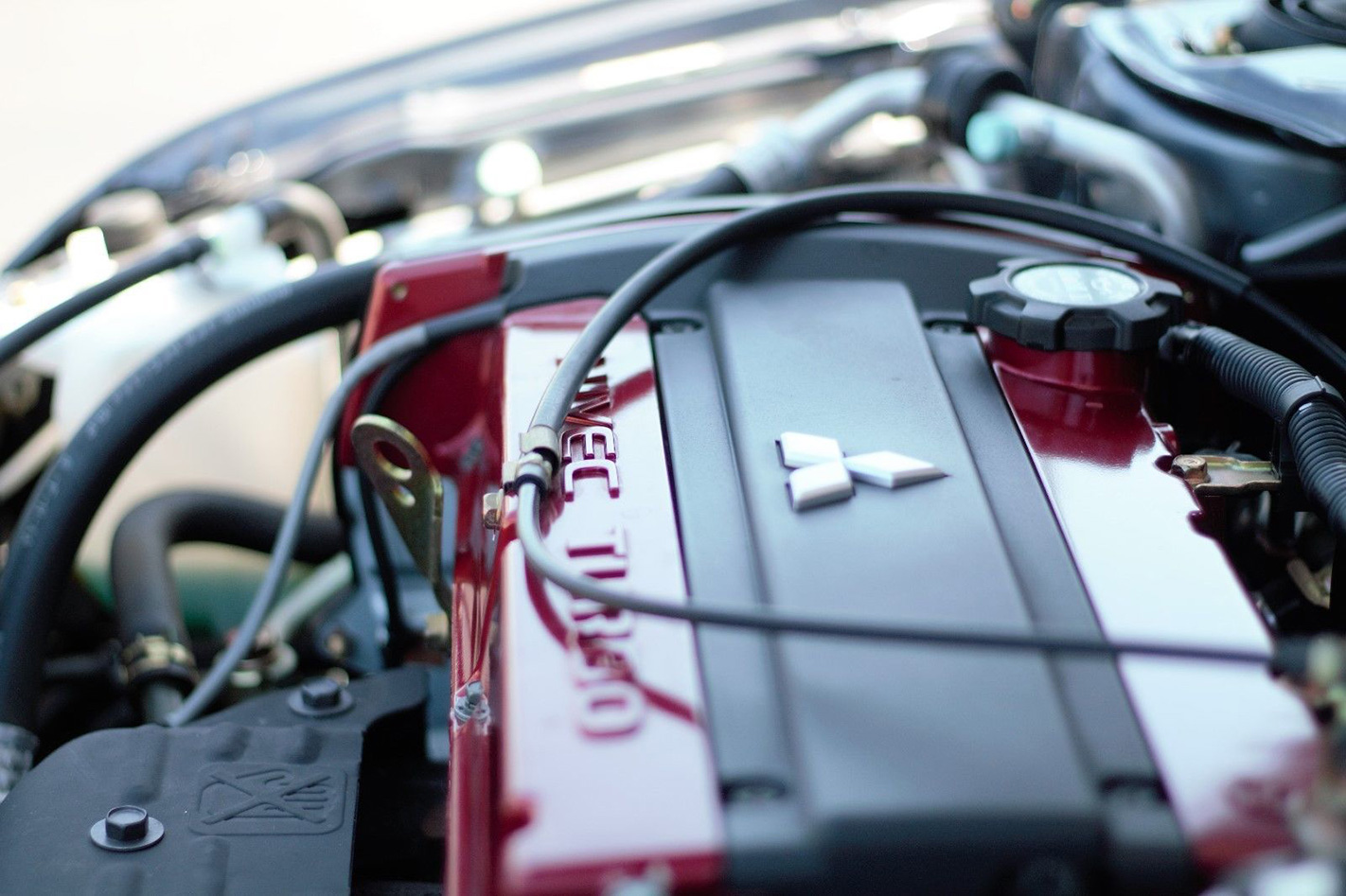
That amounts to AUD$46,486, a little over a quarter of the price it just sold for.
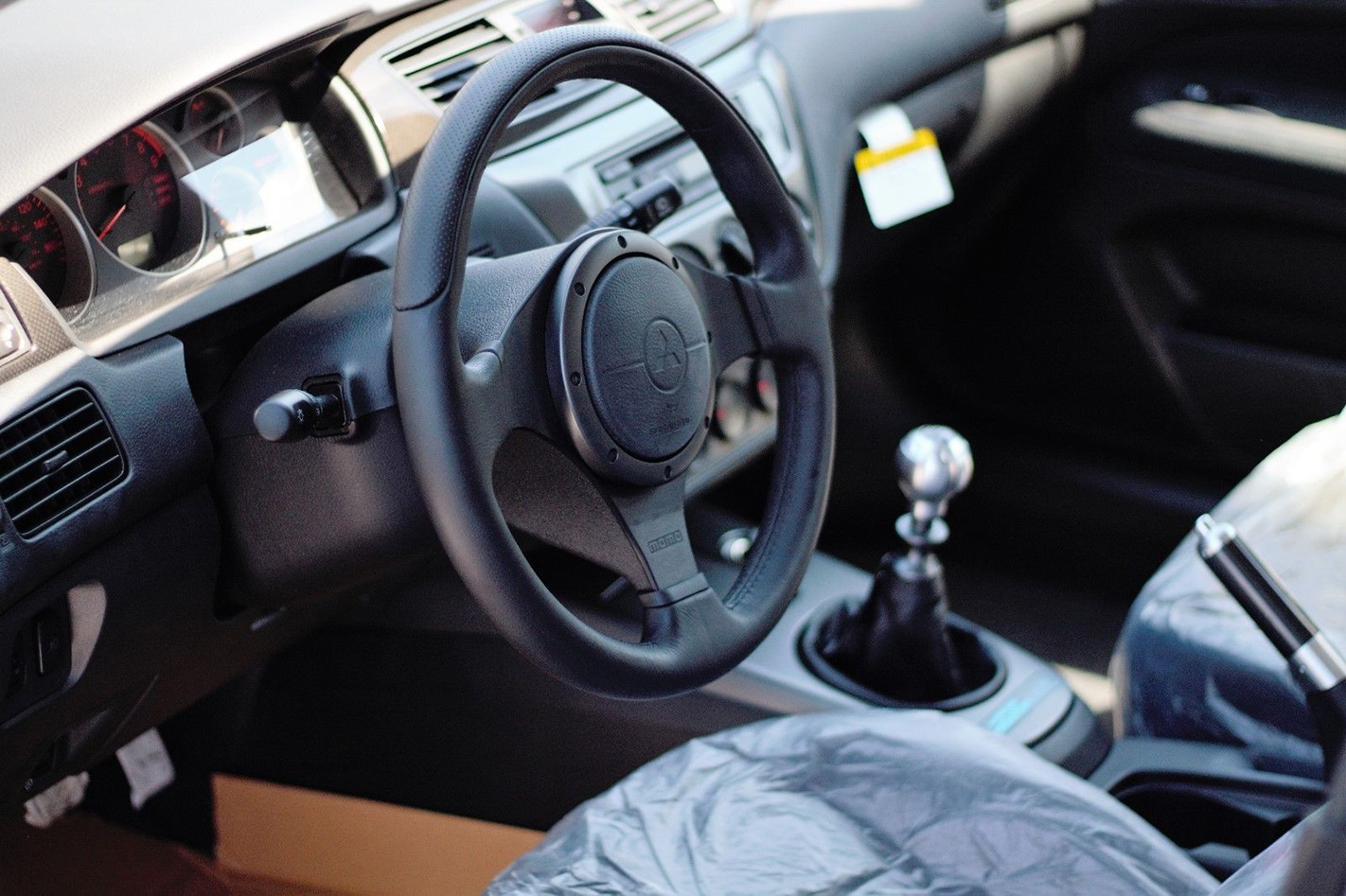
As well as the extra gear, the MR also granted the IX an aluminium or carbon fibre brake grip, an aluminium shift knob, and a boost gauge kit.
It retained the standard 214kW/392Nm 2.0-litre turbocharged 4G63T four cylinder engine.
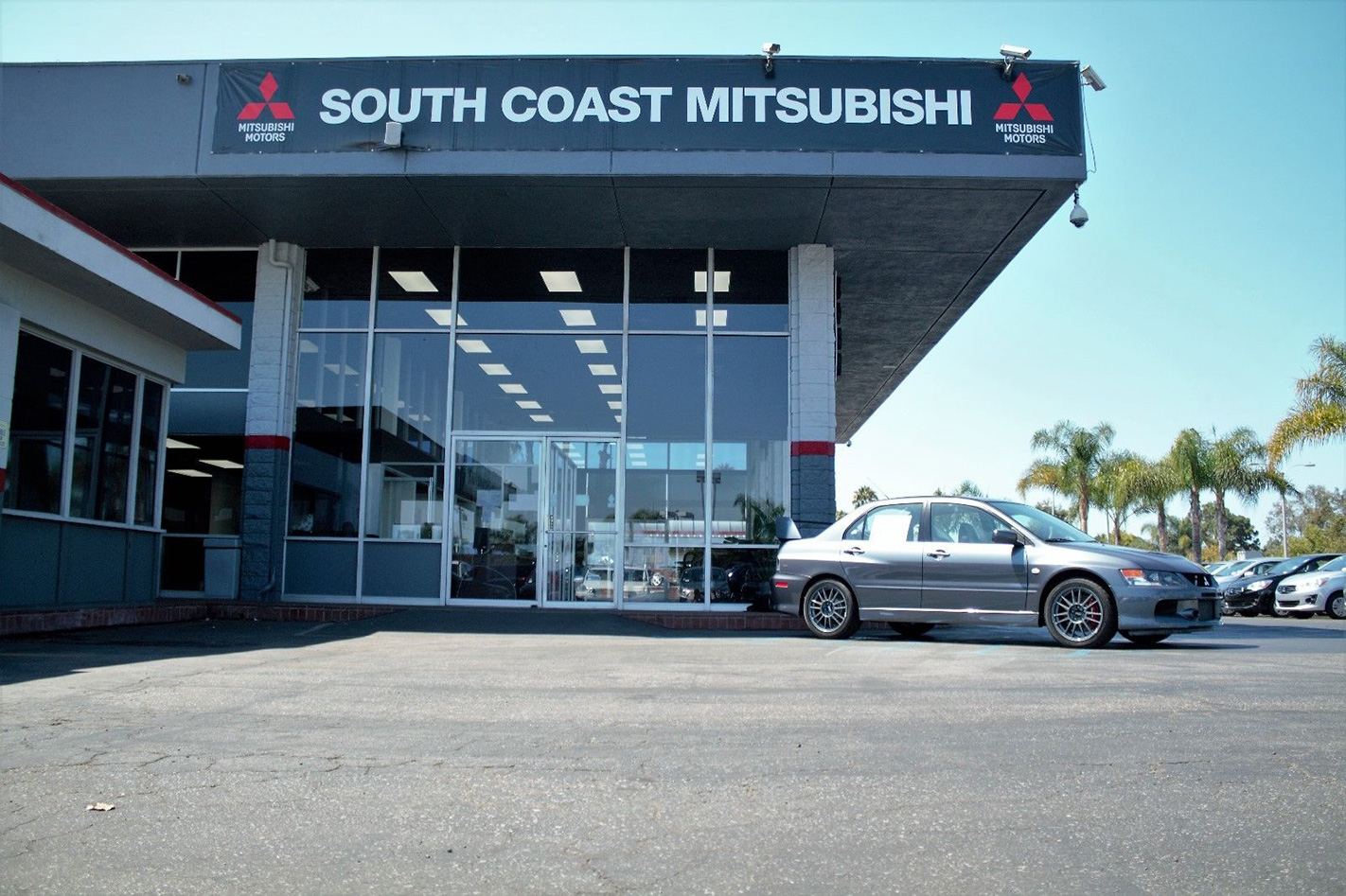
If you don’t have six-digits to drop on a brand new decade-old Evo, however, there’s an example which is described as “immaculate” up for grabs on Trade Unique Cars right now, which has a few (91,000) more kilometres on the odo, but will only set you back $38,000.
Aussie classics will soon be ready for thrashing on the ‘next best’ racing simulator.
Microsoft has announced a little ol’ Ford and Holden will be included in Forza Motorsport 7 when it breaks this October.
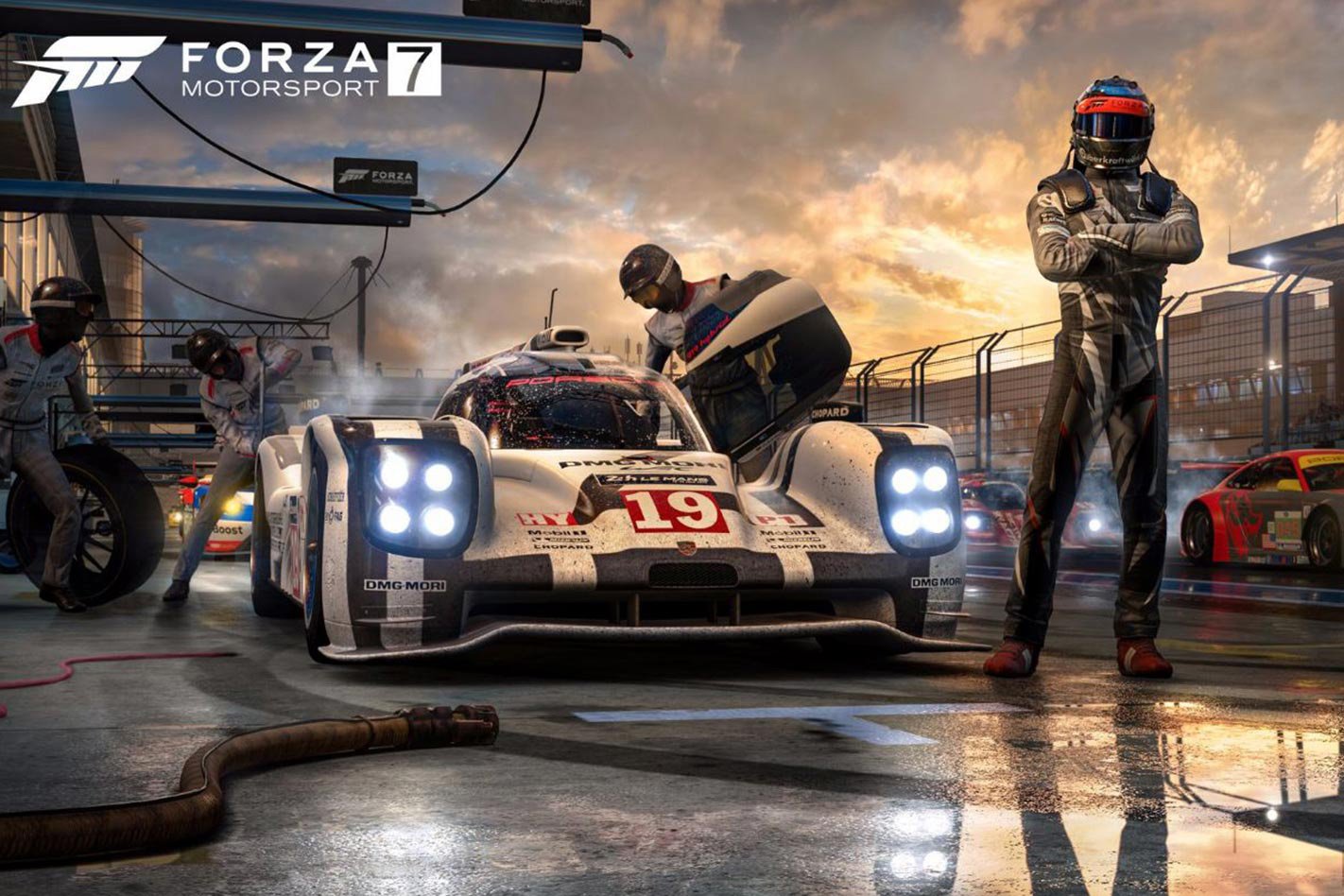
Headlining that announcement, for Aussies, are Ford’s 1967 XR Falcon GT and Holden’s 1951 50-2106 FX Ute.
Both will be immortalised in pixels for the new driving game, which has been overhauled for a hyper-realistic user experience.
Bill Giese, at Turn 10 Studios, boasts players will be able to feel cars even rattle and shake.
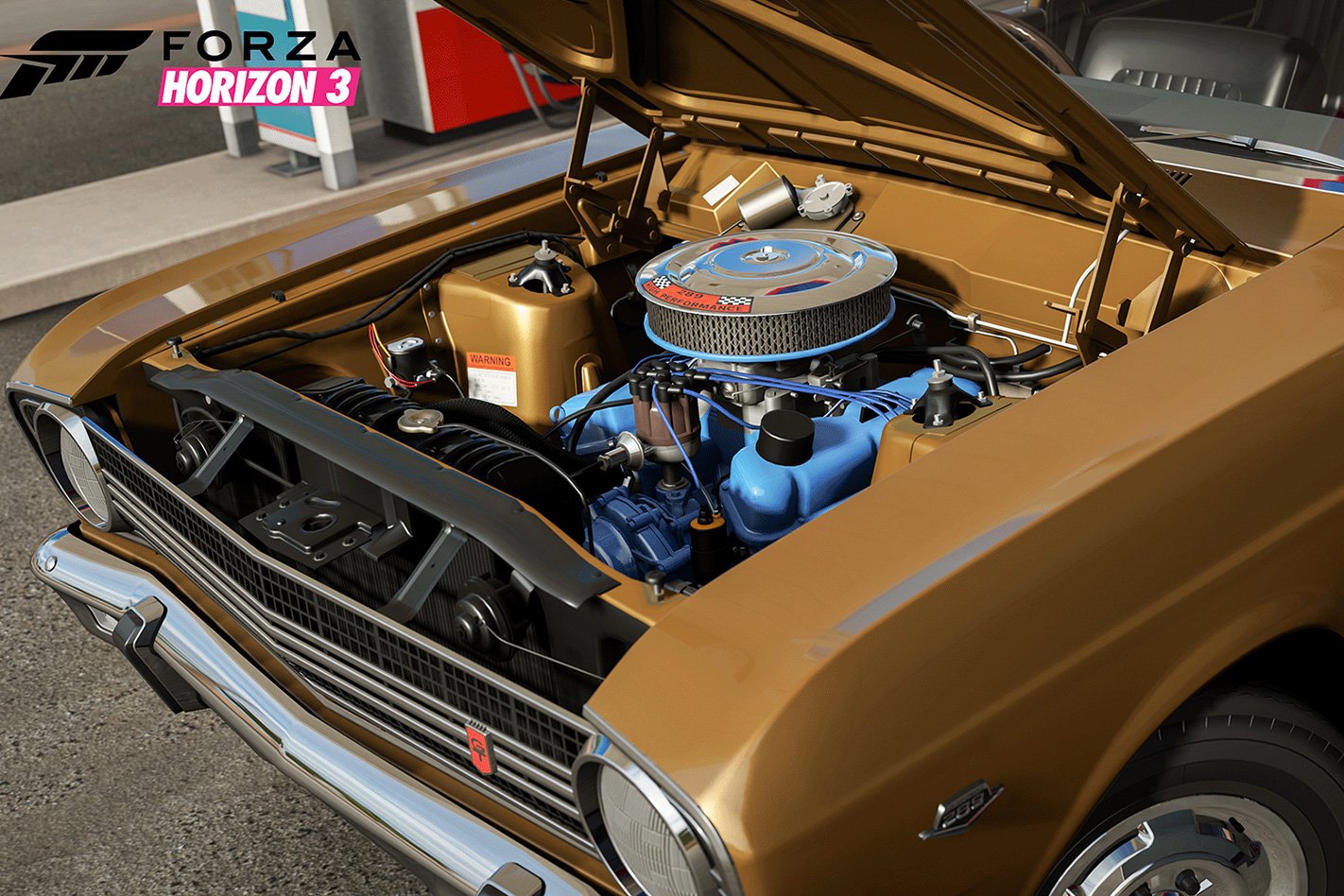
Ford’s Falcon XR GT birthed Australia’s four-door muscle car heritage, slipping a 4.7-litre V8 into a coke-bottle shaped XR Falcon.
Figures like 168kW/414Nm are good even today, and the car’s front-disc brakes might even make it half-decent to punt on the 30-plus racing tracks available in the game.
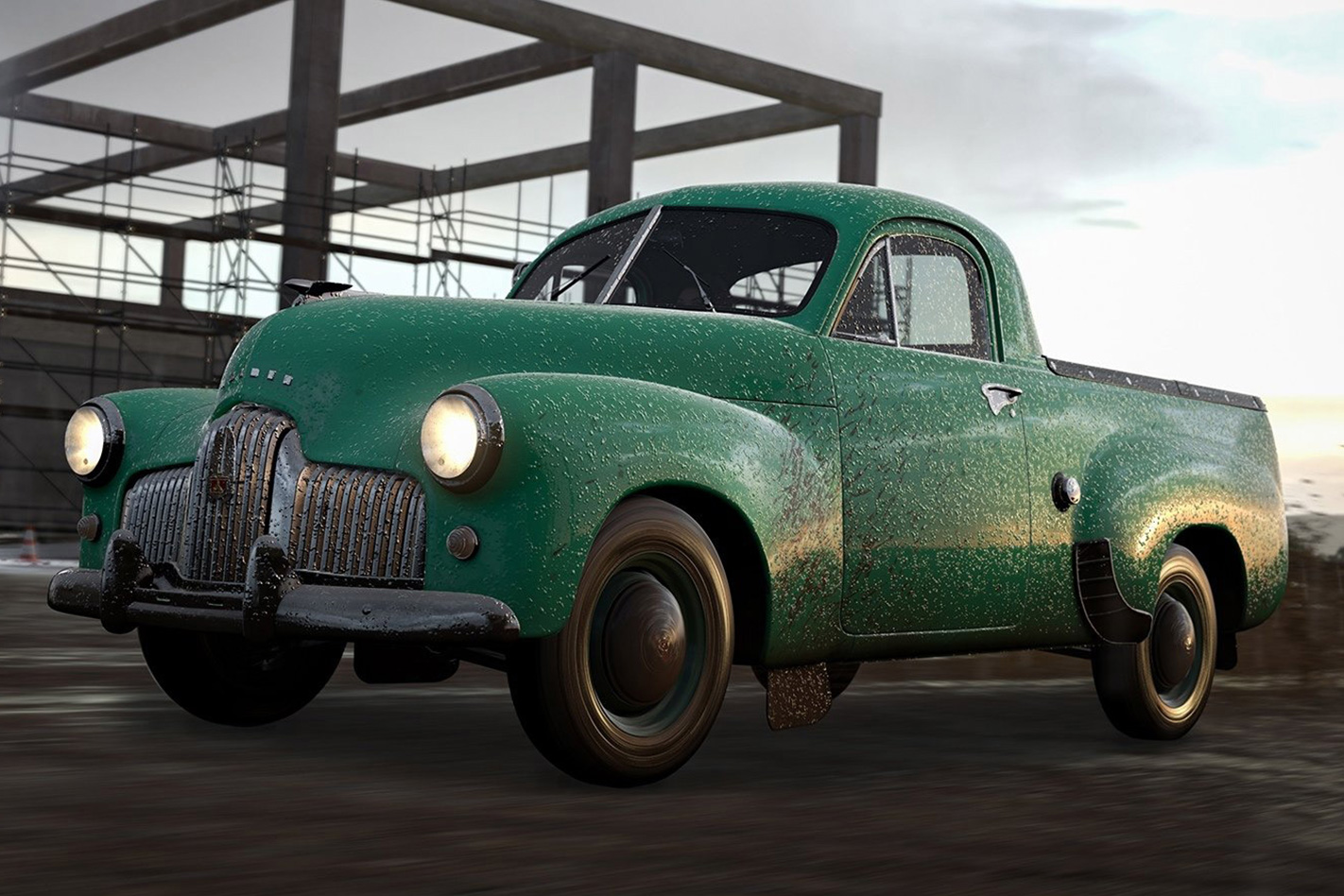
Both cars first broke cover in the Aussie-centric Horizon 3 game, along with a HSV GTS, FPV GT F, FPV Pursuit, and GTS Maloo.
However, Horizon’s free-roaming nature didn’t put these vehicles under the dynamic microscope like the Motorsport games. And the latter Aussies seem more suited to the new game’s rigours.
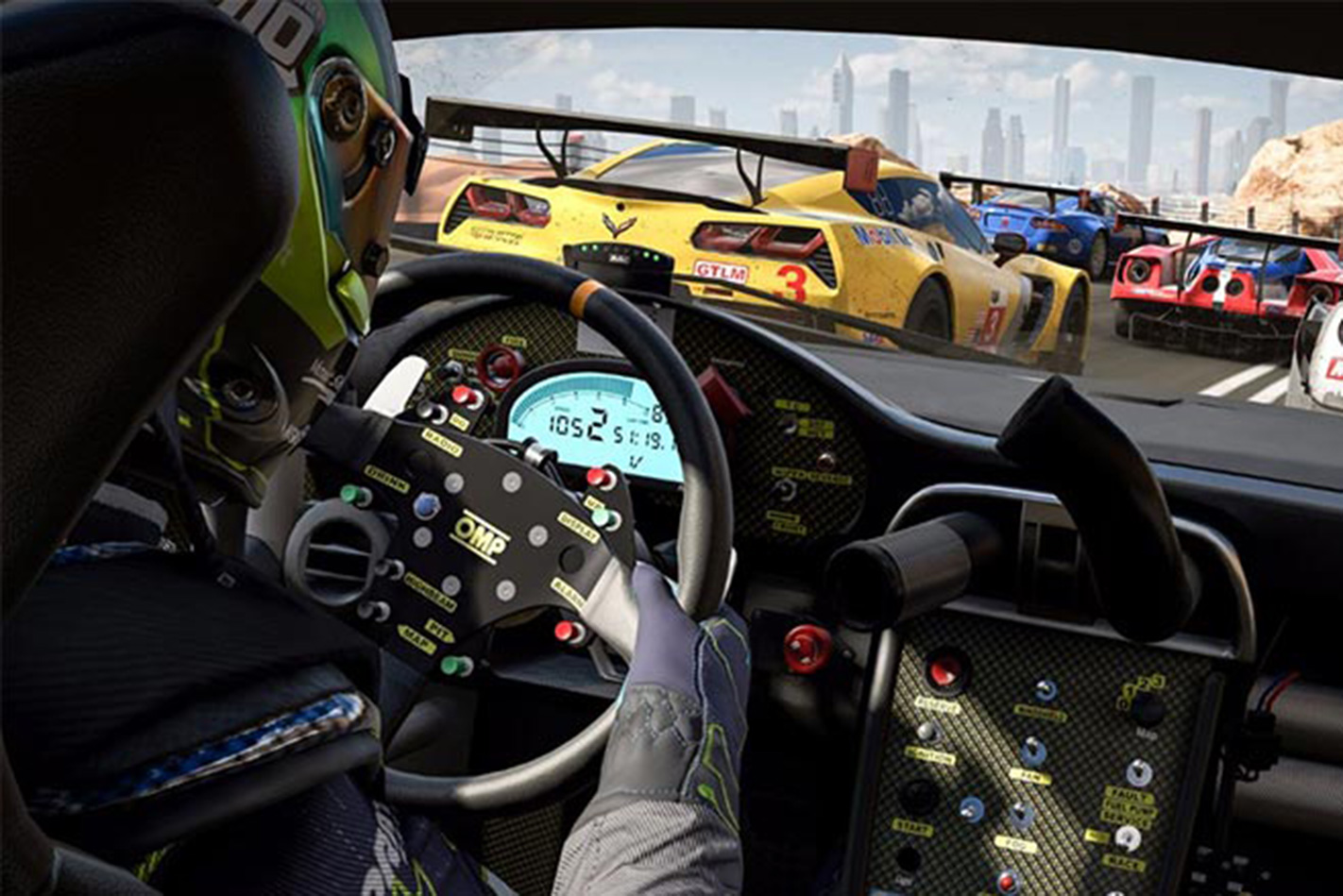
The Microsoft developed game succeeded its predecessor Motorsport 6 within two years of its release, click here to sniff out more details on the game.
Volkswagen has introduced a new entry-level variant of its Amarok V6 ute priced from $54,490.
The Volkswagen Amarok V6 is $4500 cheaper than the mid-spec V6 Highline and well below the range-topping Ultimate’s $67,990 price tag.
It also brings the Amarok V6 starting price below its big-selling automatic dual-cab ute rivals, including the Toyota Hilux SR5 [$55,900] and Ford Ranger XLT [$57,690].
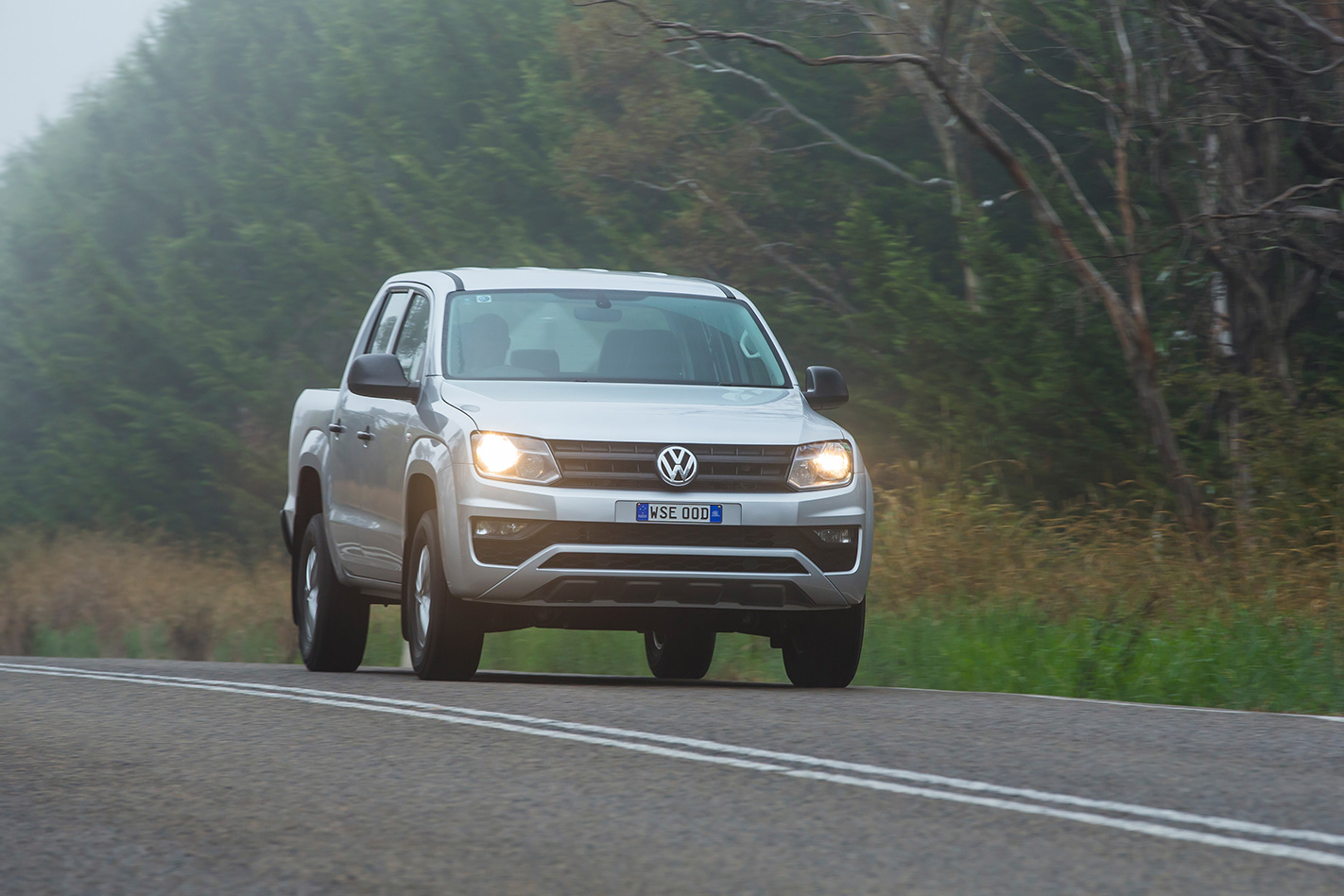
The Sportline is powered by the same 165kW/550Nm V6 engine as the Highline and Ultimate, which is coupled to an eight-speed automatic transmission that permanently sends power to all-four wheels.
A six-speed manual version will arrive next year which should bring entry-level pricing down by another $1500.
To lower costs the Amarok V6 Sportline misses out on some gear found in the Highline including satellite navigation, bi-xenon headlights, daytime running lights and stainless steel side steps. However it still has extra features over the four-cylinder Amarok Core and Core Plus models including 18-inch ‘Manaus’ alloy wheels, dual-zone climate control, four-wheel disc brakes and tinted rear windows.
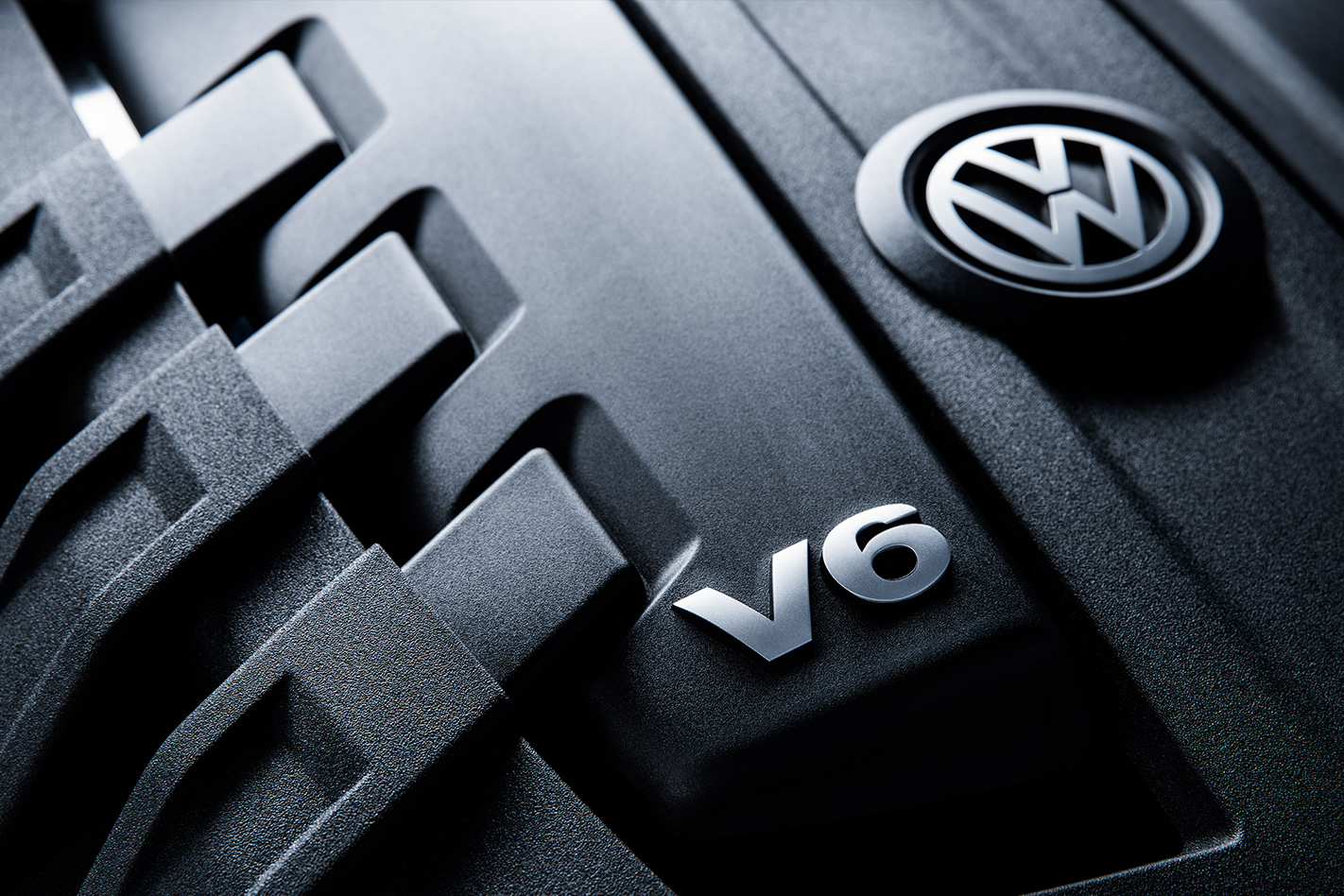
Like all other Amarok variants it doesn’t have automatic emergency braking or rear-seat airbags.
Extending the Amarok V6 range to three variants brings it in line with the new Mercedes-Benz X-Class, which shares a platform with the Nissan Navara.
This isn’t something Volkswagen is making a fuss of, however its commercial vehicle director Carlos Santos was keen to point out that “Amarok V6’s technology derives wholly from within the Volkswagen Group. We have not had to look to Japan for a donor vehicle”.
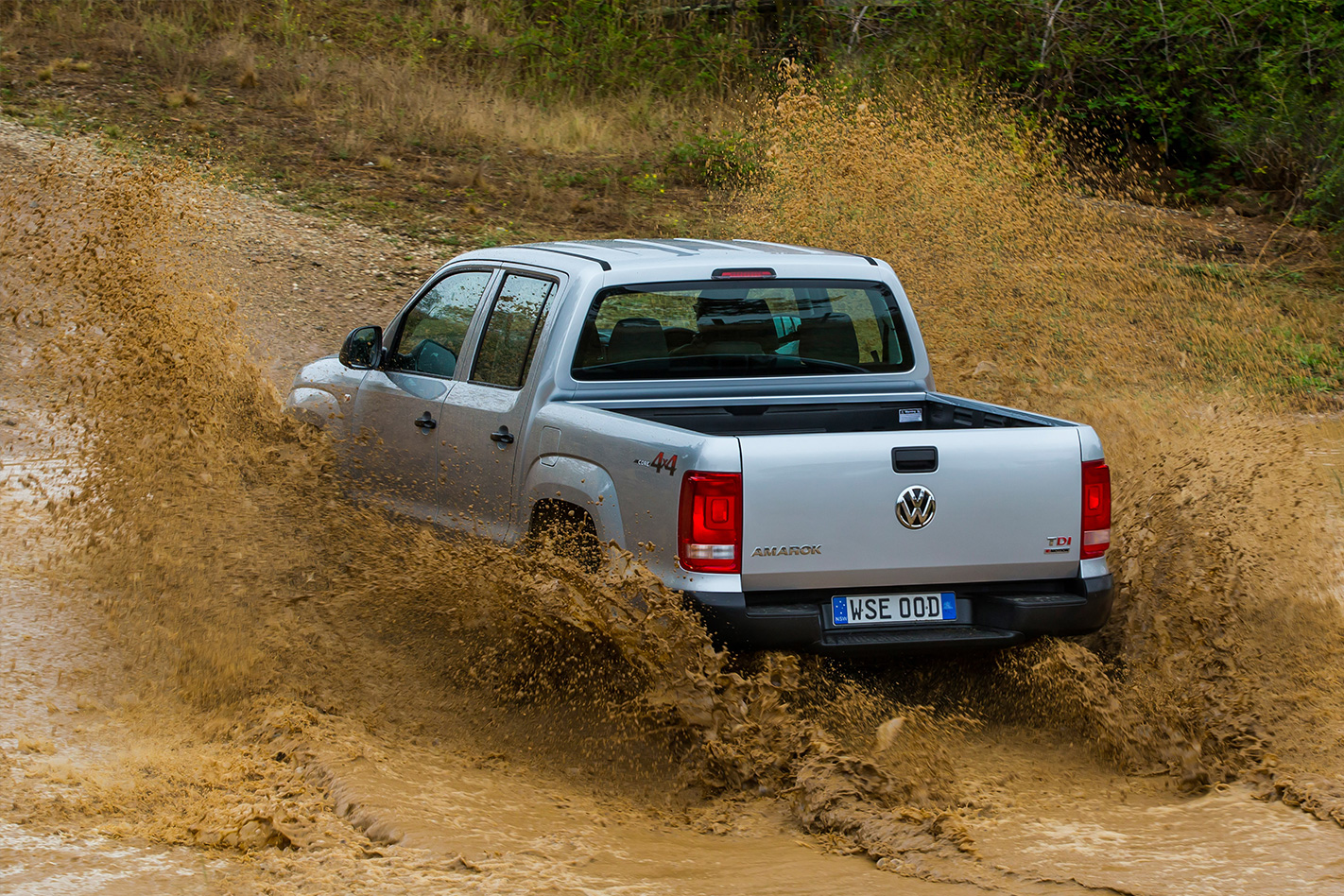
The Sportline comes as Volkswagen phases out the AdBlue system additive for all four- and six-cylinder Amarok variants due to ‘global public demand’. The company insists they will remain compliant with current Euro 5 emissions standards.
The Volkswagen Amarok V6 Sportline will go on sale in Australia from August 1.
Note: Volkswagen Australia is yet to release specific images of the Amarok V6 Sportline.
After a lot of speculation from media, Porsche has confirmed it will leave the LMP1 class in the World Endurance Championship to pursue a Formula E campaign.
This comes just after Audi announced its plans to exit from DTM at the end of next year with the intention to join Formula E.
From 2019, Porsche will have a works team competing in Formula E, while its LMP1 efforts will cease at the end of the 2017 season.
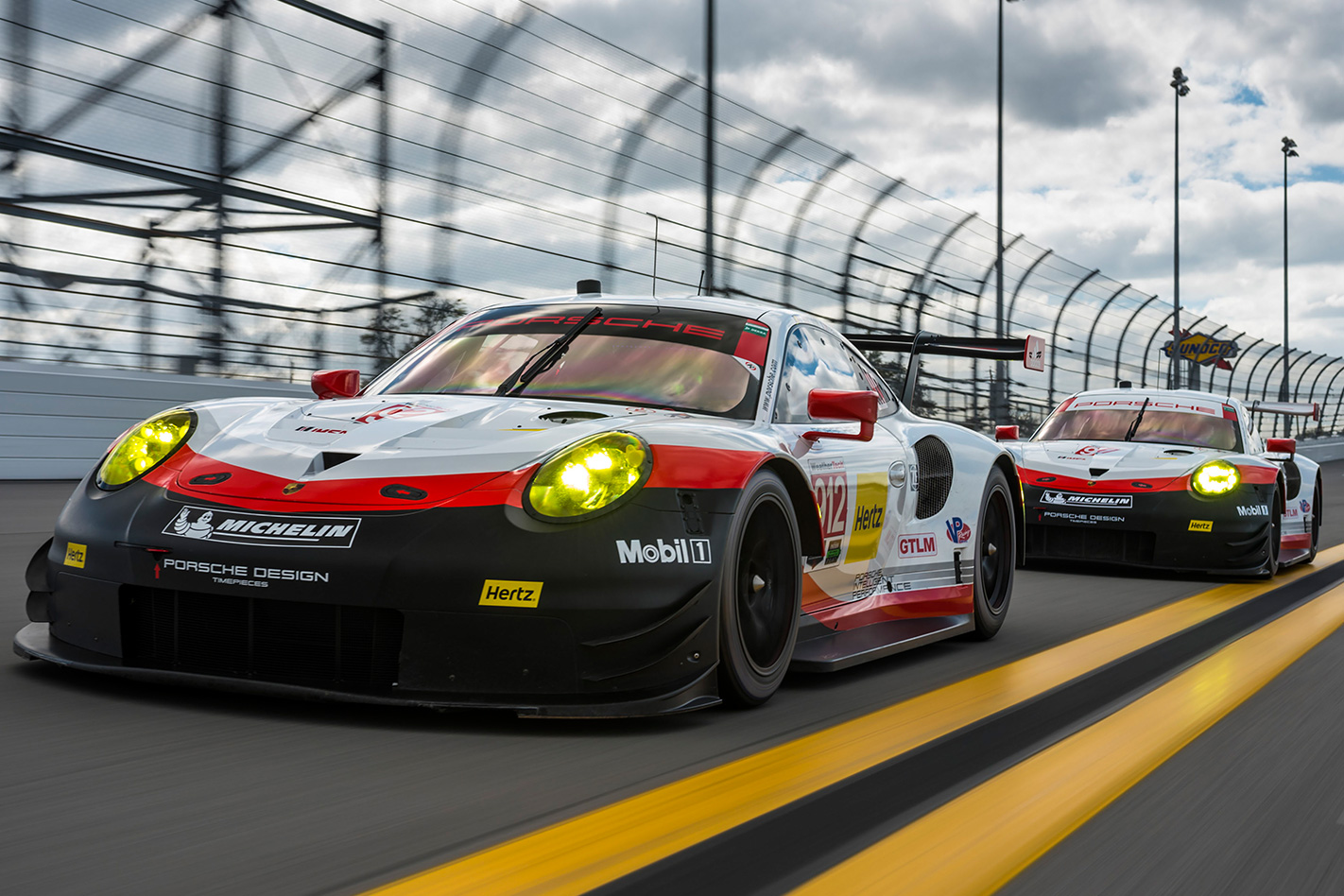
Research and development executive board member Michael Steiner says Formula E is attractive to manufacturers because it encourages them to develop motoring tech for the future.
“Entering Formula E and achieving success in this category are the logical outcomes of our Mission E. The growing freedom for in-house technology developments makes Formula E attractive to us,” Steiner says.
“For us, Formula E is the ultimate competitive environment for driving forward the development of high-performance vehicles in areas such as environmental friendliness, efficiency and sustainability.”
With three victories in a row at the 24 Hours of Le Mans under its belt, Porsche’s decision to leave LMP1 is a staggering loss for the sport.
This also leaves Toyota as the only works team in LMP1, which means it will have the best chance yet at victory.
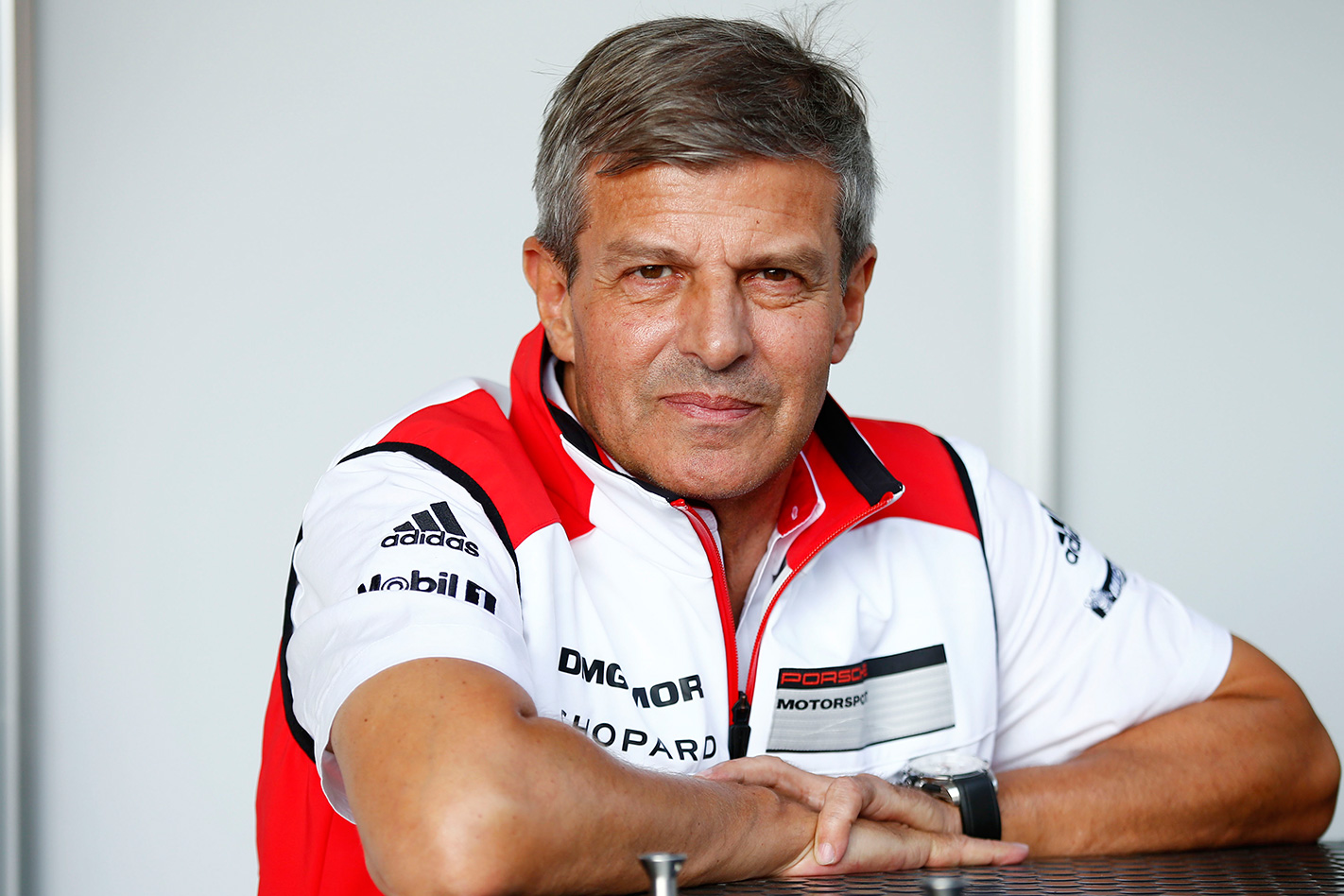
“Building up the Le Mans team from scratch was a huge challenge. Over the years, we have developed an incredibly successful and professional team. This will be our basis going forward.
“I am certain that we will maintain our high level in Formula E. Confidence is high, and we are excited to get started.”
HONDA Australia has its sights set on bringing the 10th generation Accord to market, however the Japanese manufacturer’s local arm is planning on recasting the new mid-sizer as a luxurious, technology-laden flagship to help it side-step declining demand for mainstream midsize sedans.
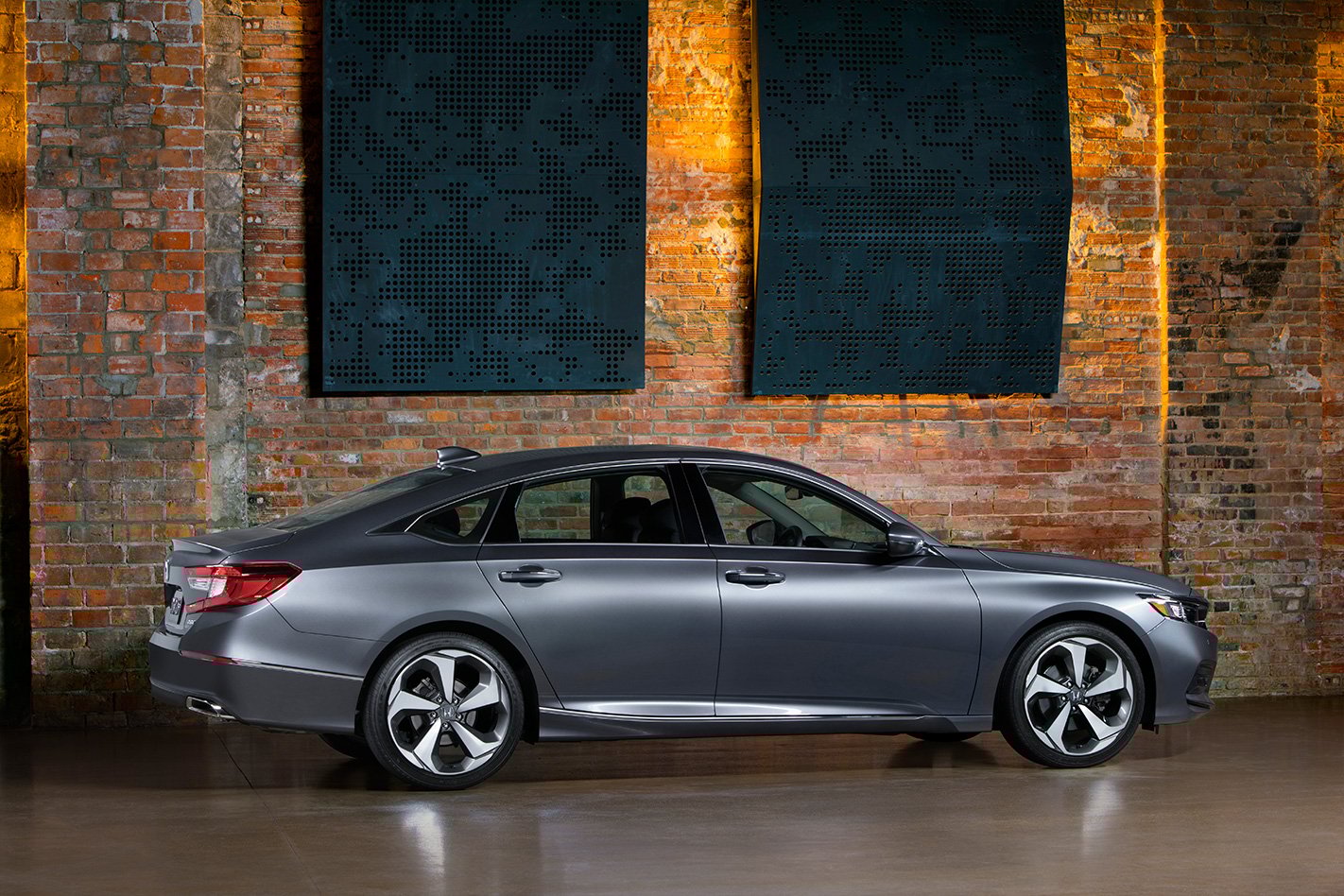
The new Accord, which debuted mid-July in US-market form, is fresh from the ground up and promises, in Honda’s own words, to be “more stylish, sporty and premium” than the model it replaces. Perhaps a tacit admission that the current Accord lacks appeal in those three areas?
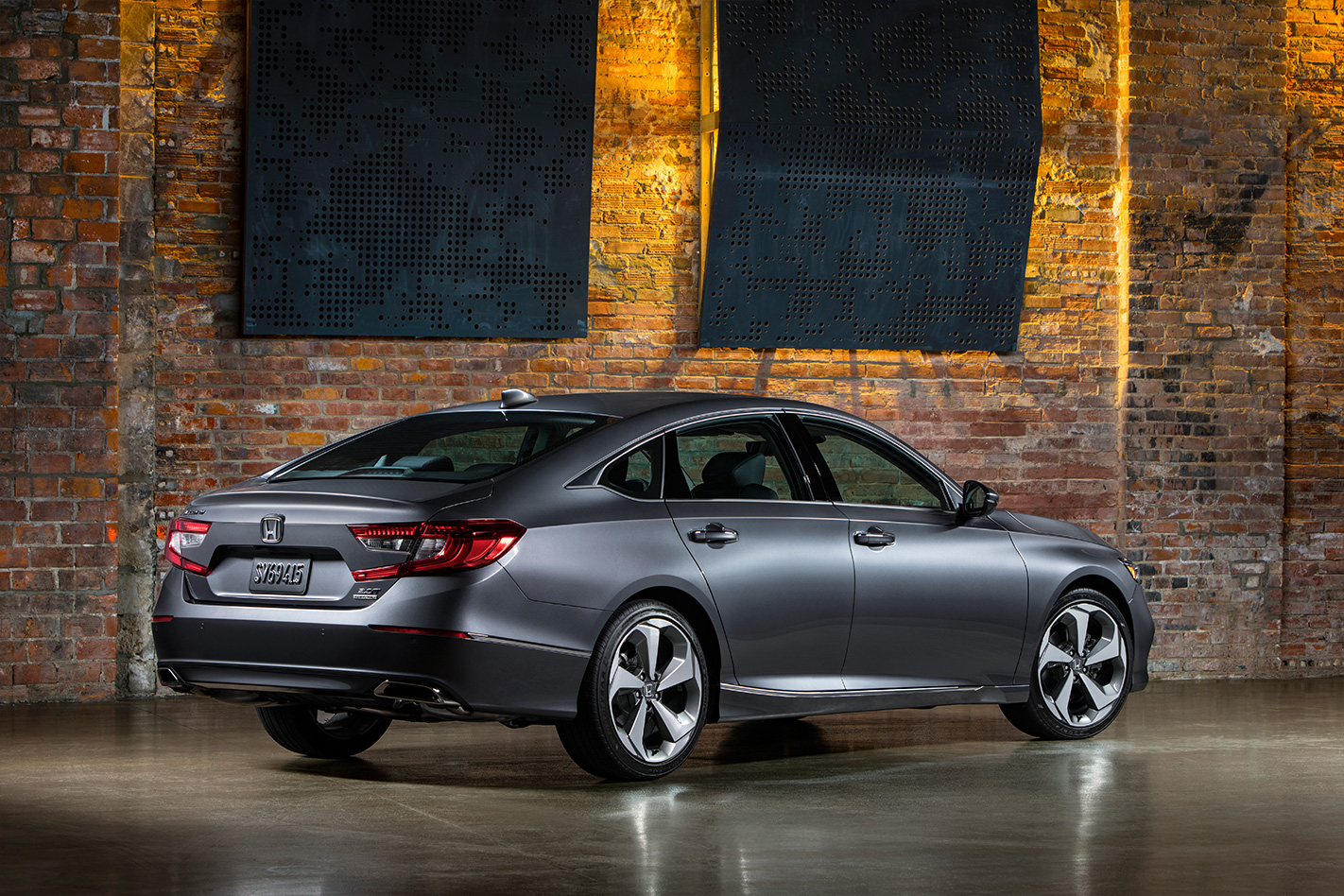
Hence Honda Australia’s plan to reinvent the Accord when the tenth-generation car arrives: the mainstream medium market appears to be on its knees.
“We still haven’t confirmed we’re getting the new model,” Honda Australia director Stephen Collins said to Wheels.
“Our absolute desire is to have the new model but we need all the numbers to stack up. The segment is still very challenging,” Collins admitted.
“We’ll need to work through that and once we do we’ll make the announcement regarding the new model. I would expect in the couple of months we’ll be able to confirm the next Accord.”
And if the Accord does get the green light for Australia, don’t expect the range to look much like the existing car’s three-variant family, which opens with the $32,990 Accord VTi.
“I don’t want to speculate on the price,” he said, “but it definitely won’t be a $30,000 car.”
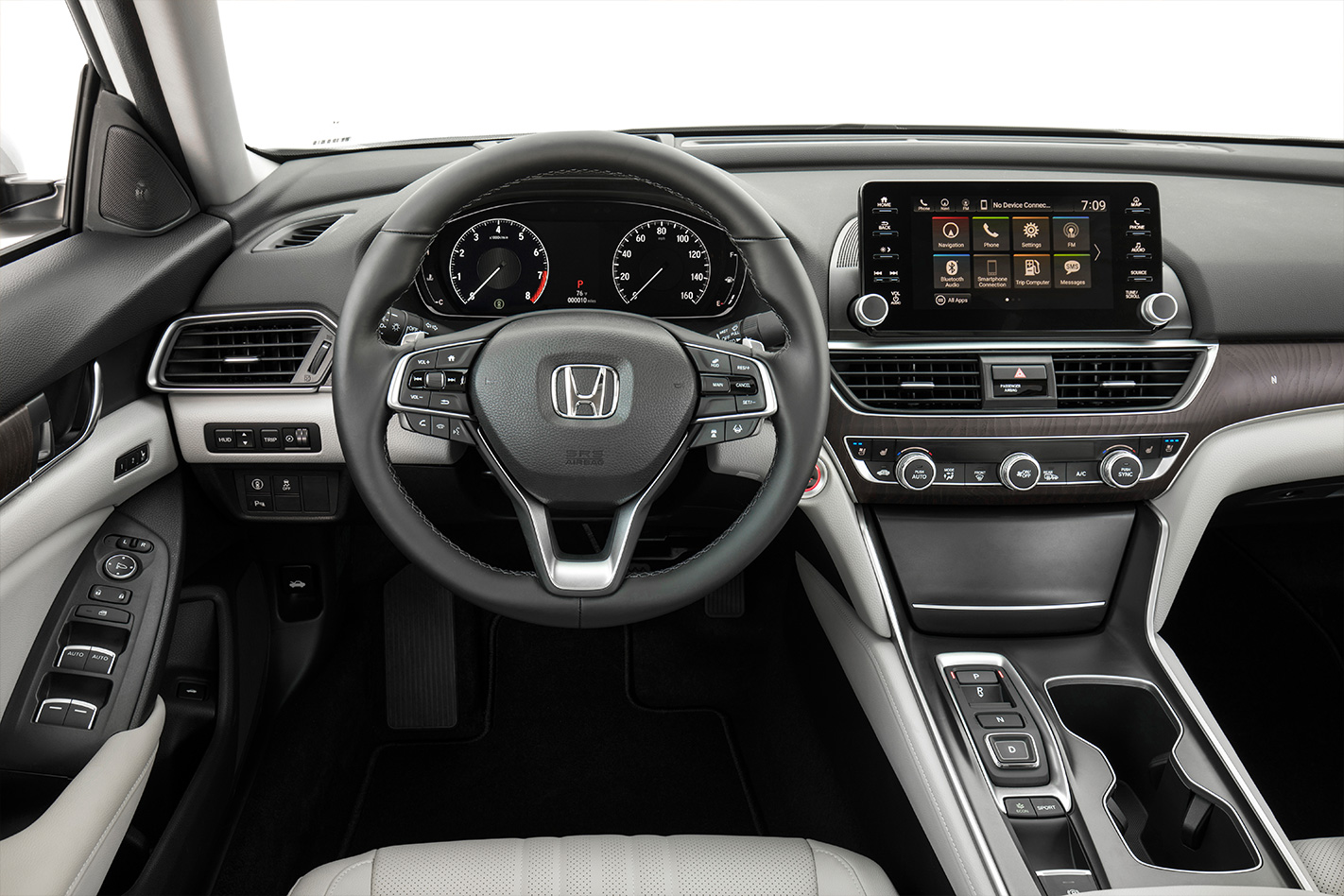
With a starting price in the $40k region, the tenth-gen Accord would follow a similar path to the Kia Stinger, which will be positioned as a mainstream-premium sedan designed to bridge the gap between regular mid-sizers and those from luxury marques like BMW and Audi. Volkswagen’s Arteon will go a step further, with only a single high-featured grade to be available in Australia and a price somewhere between $60k and $70k.
For the Accord, an upmarket move will be matched by a reduction in sales expectations. With the price of entry set to surge into semi-premium territory, Collins says sales of 50 cars or more per month would be considered acceptable – a number that’s still around 50 percent higher than what the nameplate is presently selling.
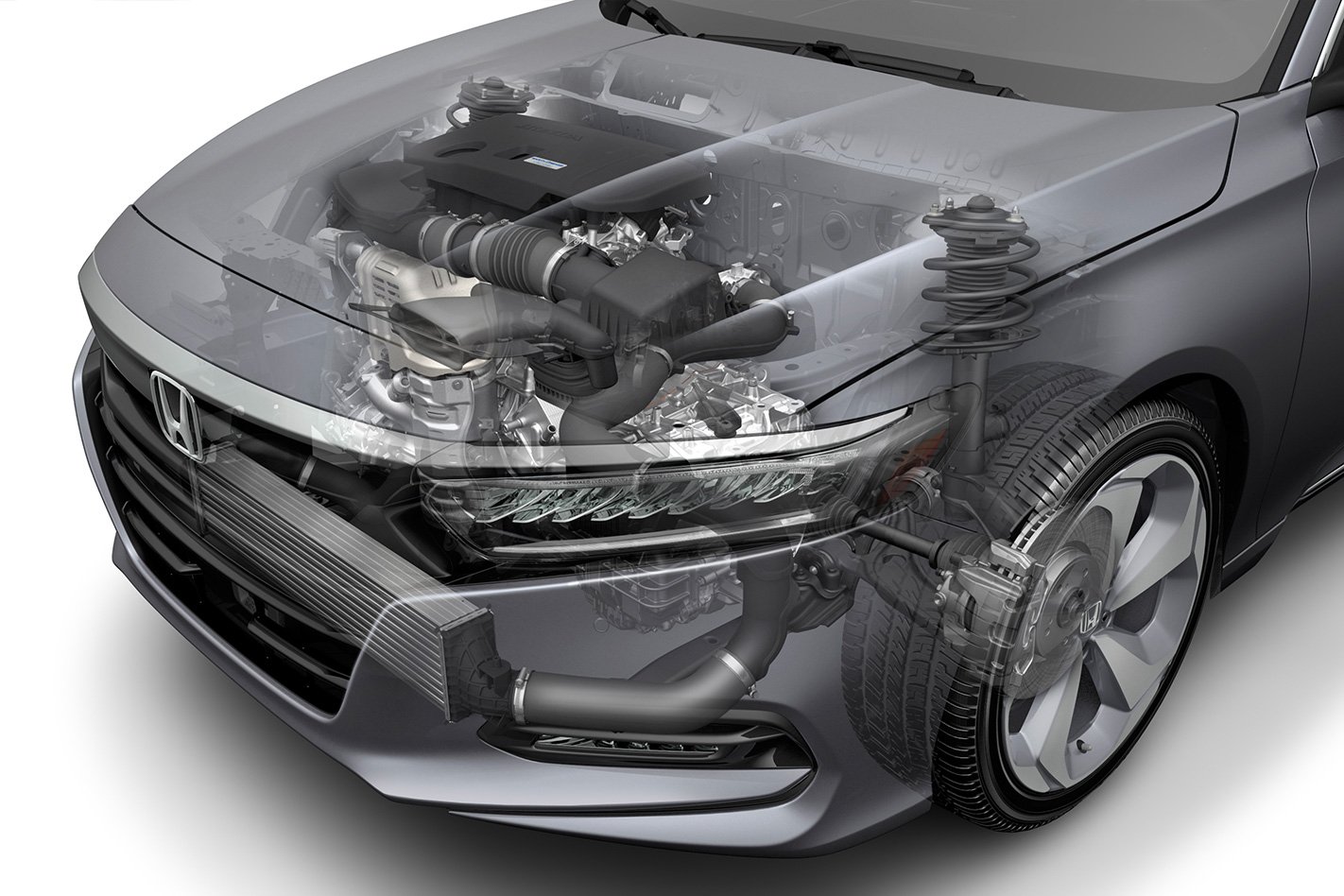
A petrol-electric hybrid will also be sold in the ‘States, with a naturally-aspirated 2.0-litre up front and two electric drive motors.
The new Accord measures slightly shorter than the current car with an overall length of 4879mm, but wheelbase grows from 2775mm to 2829mm to maximise passenger space – with most of the gains going toward increasing back seat legroom. Weighing less than its predecessor and boasting shorter overhangs, a 10mm lower centre of gravity and adaptive dampers, the 2018 Accord is claimed to have more athletic handling and improved ride quality.
As decision time approaches, expect to hear more about Honda’s plans for an Accord revival in September.
