
Performance and hybrid are no longer mutually exclusive terms, so it should be no surprise that the new electrically-assisted V6 Lexus LC 500 Hybrid should receive equal billing with its 5.0-litre V8-powered sibling.
Both cost the same $190,000, though the $15,000 enhancement pack adds a limited-slip diff to the Hybrid (standard in the V8) in addition to the carbon roof and scuff plates, all-wheel steering, sports seats with leather/Alcantara upholstery and active rear spoiler of the V8.

Its exterior design is every bit as eye-catching as its bent-eight brother – whether that’s a good or bad thing will depend on your point of view – and the only clue that you’re driving the more environmentally-conscious version on the inside is the ‘EV mode’ button on the centre console.
Of course, where the two LC models diverge is under the bonnet. In place of the LC 500’s 5.0-litre V8 the Hybrid uses a 220kW/348Nm 3.5-litre V6 assisted by a 132kW/300Nm electric motor for a total system output of 264kW.
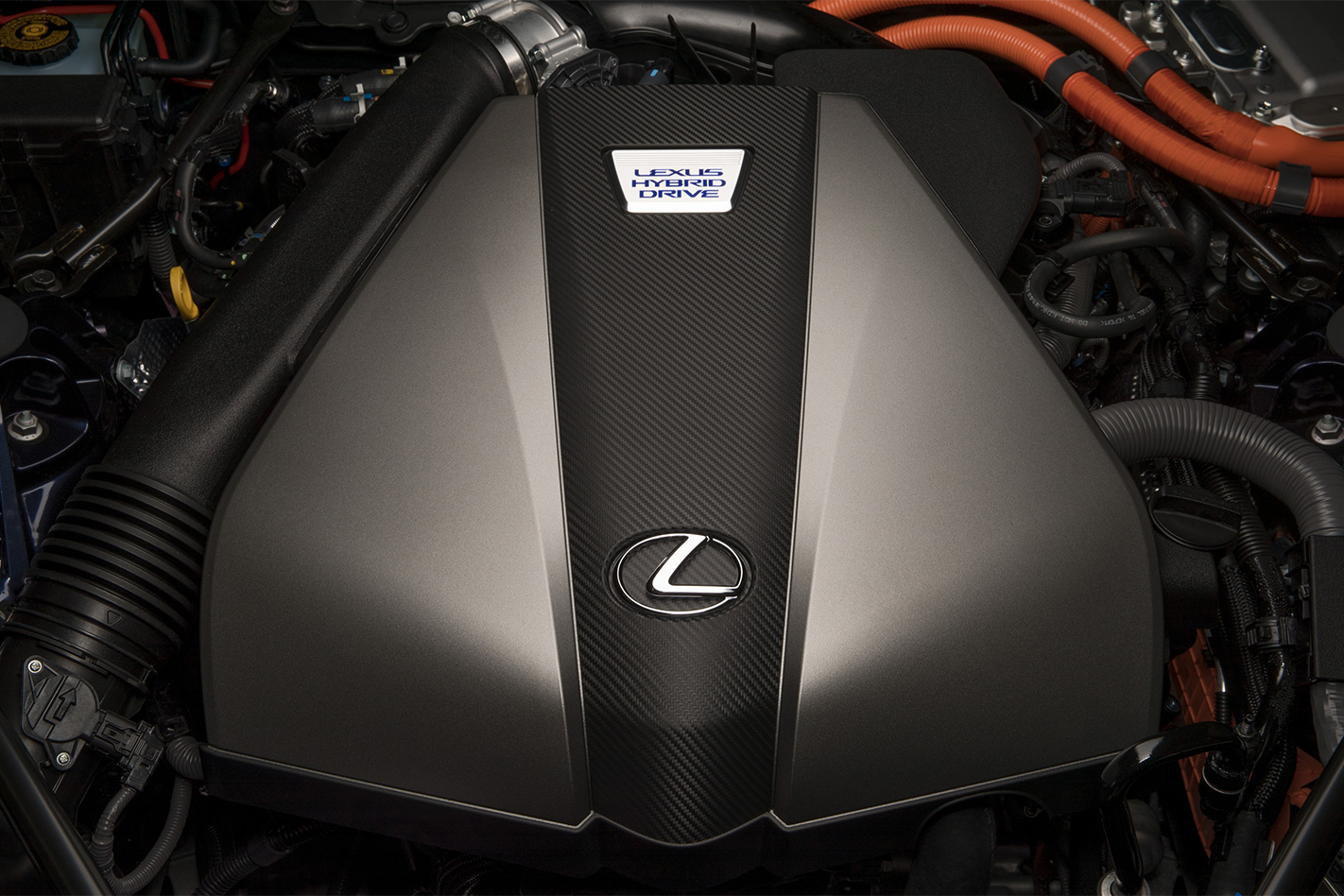
Key to this is the first application of Lexus’s complex Multi Stage Hybrid System, which uses a four-speed automatic gearbox but via a power split device essentially offers 10 ratios. Lexus claims this is a true “high performance powertrain” but unfortunately it works a lot better as an engineering presentation than it does on the road.
To be blunt, the LC 500 Hybrid just doesn’t offer the performance you’d expect of a near-$200K sports coupe. It zips through the lower ‘gears’ at a rapid rate – you’re in 5th by 120km/h – but never feels particularly quick.
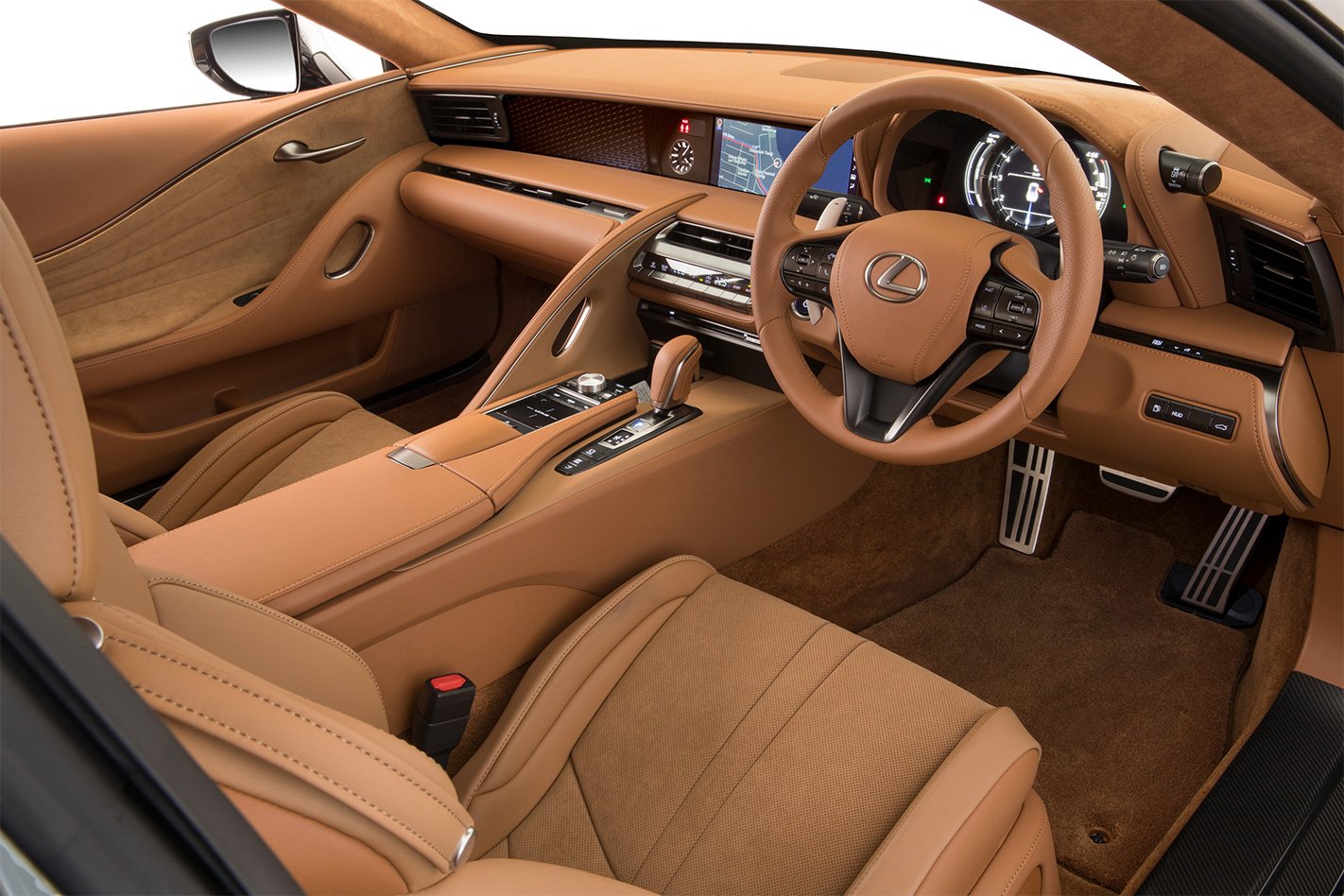
Lexus expects 80 per cent of LC customers to choose the V8 and we’re not surprised, as it’s difficult to think of any reason to recommend the Hybrid given it’s a lot slower and no more comfortable. Lexus may have given its clever Hybrid equal billing, but it’s a lesser car.
3/5
Pros: Same looks, interior, handling as V8
Cons: Much less performance
Specs
Engine: 3456cc V6, DOHC, 24v, electric motor Power: 264kW (combined) Torque: 348Nm @ 4900rpm (engine) Weight: 2020kg 0-100km/h: 5.0sec (claimed) Price: $190,000
WHAT IS IT?
The most off-road capable Grand Cherokee ever produced. It uses the basic body and the V6 diesel of the recently updated Grand but gets adjustable height air suspension, unique off-road-biased tyres and extra features to make it more capable in rough terrain.
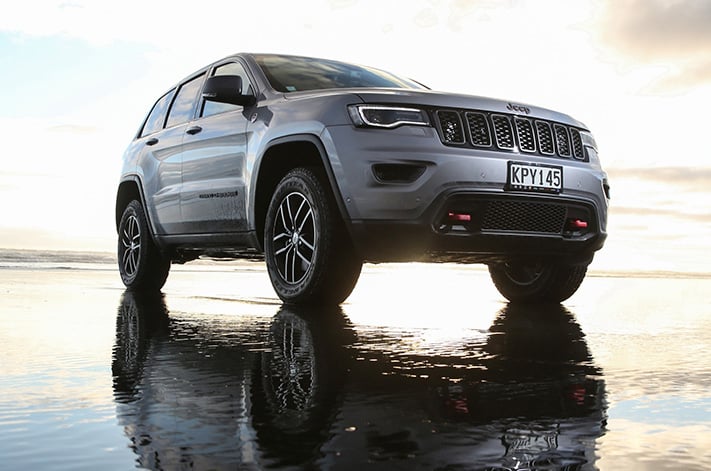
The Grand Cherokee is trying to revive some of its former sales glory with an updated MY17 range, and the newly-arrived Trailhawk is key to those aspirations.
MAIN RIVALS
There’s a broad spread, from the Toyota Prado and Ford Everest to the Mitsubishi Pajero and Holden Trailblazer. You could also look at the Isuzu MU-X, Nissan Patrol, Volkswagen Touareg and even the soon-to-arrive Land Rover Discovery. Basically any large-ish SUV designed to go off-road.
THE WHEELS VERDICT
The revised Grand Cherokee is more of the same done incrementally better. As for the Trailhawk, it’s a worthy addition for those planning to head beyond the blacktop, with few compromises on regular roads.
MINUS: Diesel’s turbo lag; foot-operated park brake digs into left shin; lacklustre electric steering
THE WHEELS REVIEW
There’s nothing like playing to your strengths to reap results. For proof, take a look at AC/DC, McDonald’s, or even Ikea.
For Jeep, that strength is SUVs of the type with true off-road ability. And the Grand Cherokee is at the heart of the brand, a heart that has been torn recently courtesy of a dramatic local sales tumble.
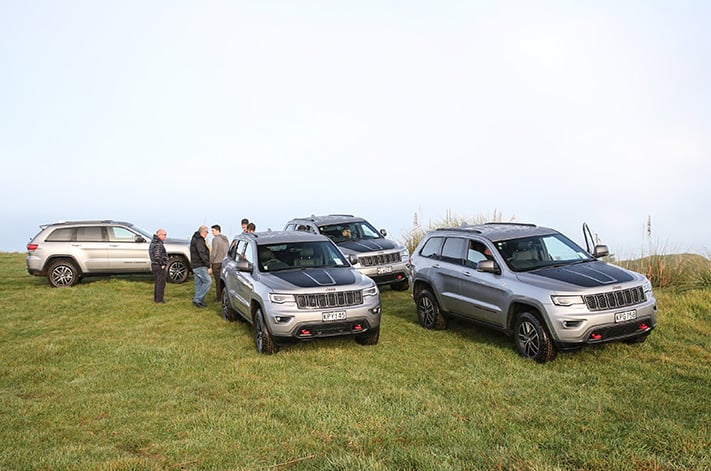
The DNA – most of the look, even – is unchanged, right down to the chunky stance and old-gen Mercedes platform beneath, although a fresh face featuring the signature seven-slot grille adds sleekness to the bluff front end.
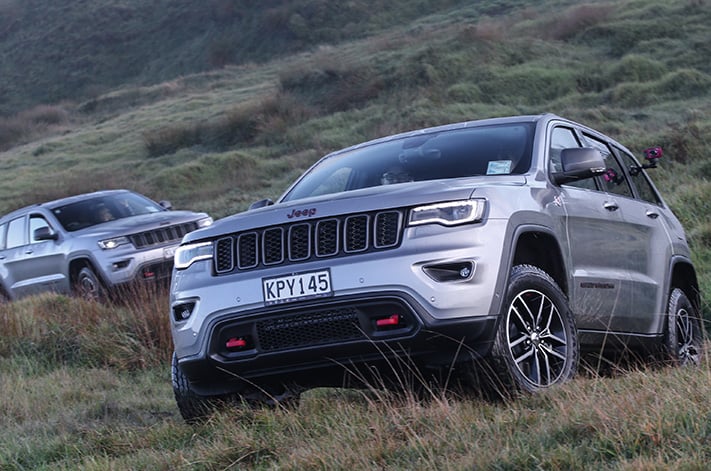
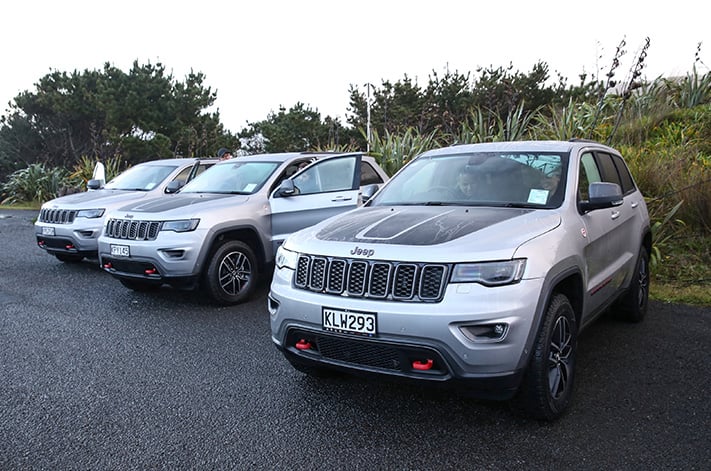
The Trailhawk design cues amount to bush bling; black trim replacing shiny chrome, red stitching inside, red tow hooks and matte stickers on the bonnet.
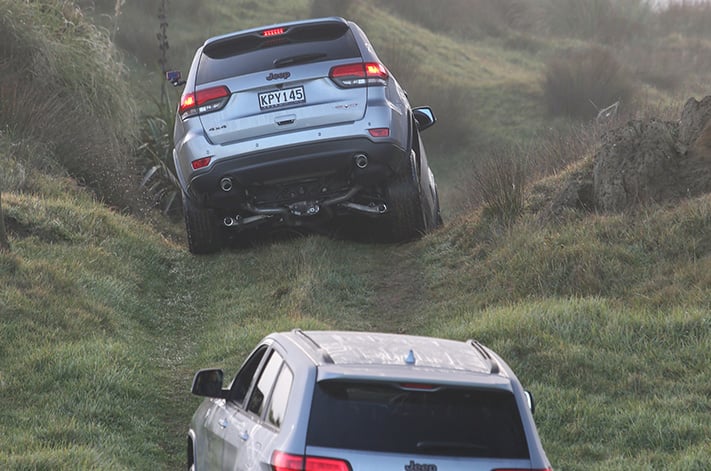
Despite the additional puncture resistance, the 265/60R18 Goodyears grip respectably, albeit with slightly lower limits than other Grand Cherokees.
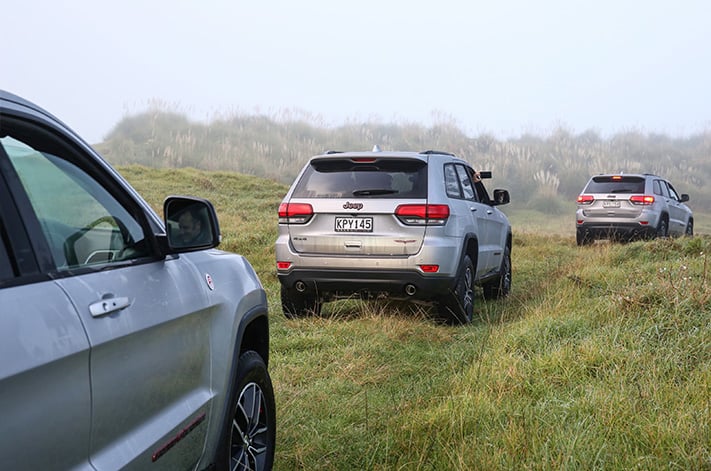
It’s all about subtle tweaks inside; a more conventional gear selector replaces the stubby electric return-to-centre handle, while the 8.4-inch Uconnect screen now has more apps, including ‘off-road pages’, each providing details on drivetrain and suspension behaviour, depending on the scenario. Seating remains strictly for five.
So the Trailhawk is aimed at a specific niche and isn’t for those who rarely leave the suburbs. But the latest Grand Cherokee does suggest that sticking to your roots should pay off.
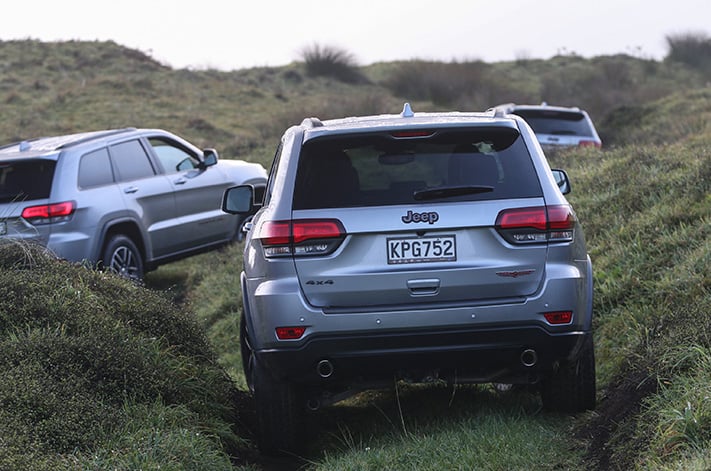
Model: Engine: 2987cc dohc, 24v V6 turbo diesel Max power: 184kW @ 4000rpm Max torque: 570Nm @ 2000rpm Transmission: 8-speed auto Kerb weight: 2340kg 0-100km/h: 8.2sec Price: $74,000 On sale: Now
There are plenty of parallels between Lexus and a musical one-hit wonder.
Despite years of toil and a large body of work including highs (original LS; IS-F) and lows (ES; CT), the creation of one masterpiece has proved a blessing and a curse.
The LFA supercar showed the dizzying heights the company is capable of, yet continues to cast a shadow over Lexus’s performance offerings as enthusiasts wait for a model that offers a taste of the LFA magic without the $1million price tag.
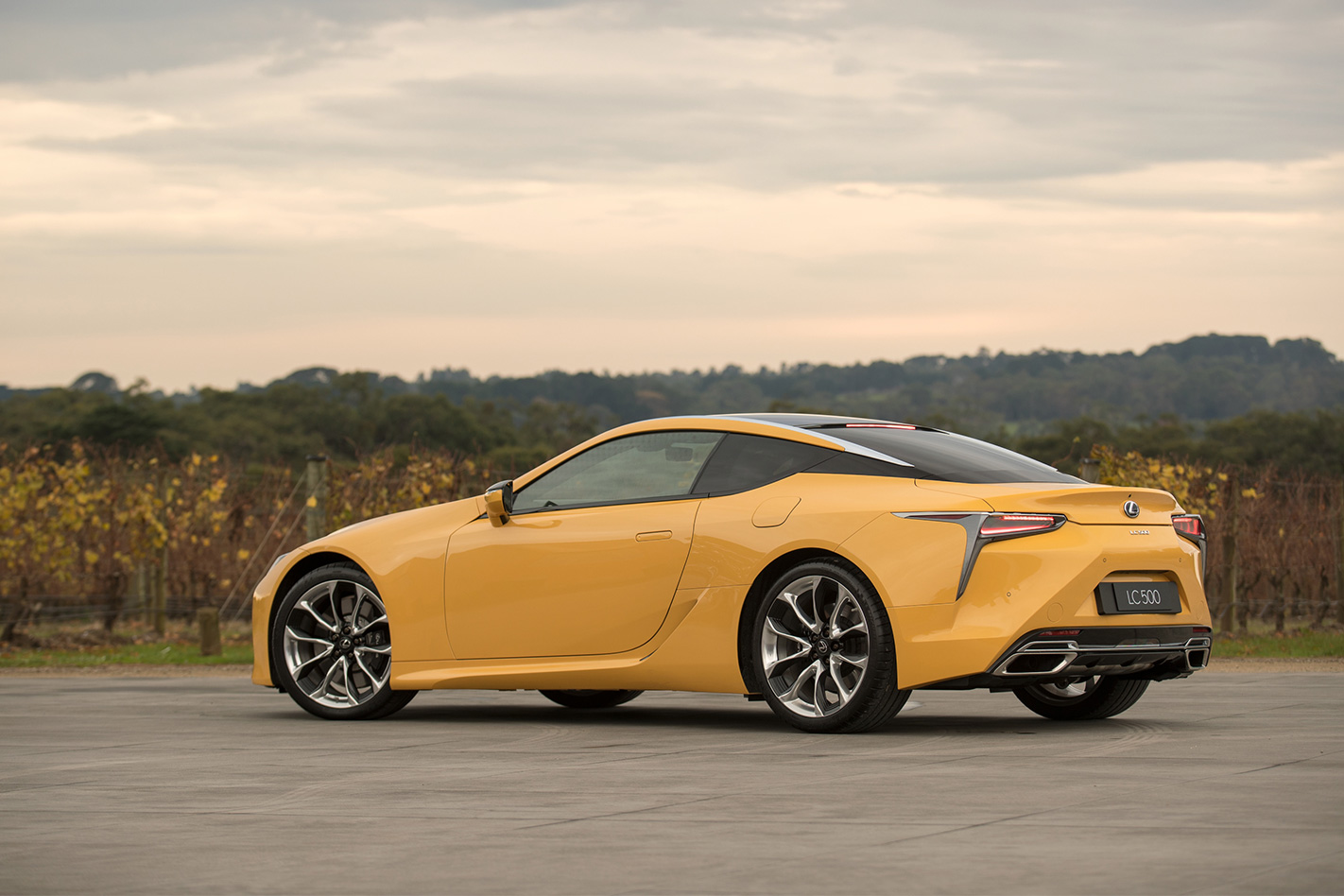
Based on the LF-LC concept car, first revealed at the 2012 Detroit Auto Show, the LC 500 is Lexus’s new flagship. At $190,000 it might not be the most expensive model in the range, but in terms of design, technology and dynamics it’s intended to push the boundaries, providing a halo effect and altering the perception of Lexus.
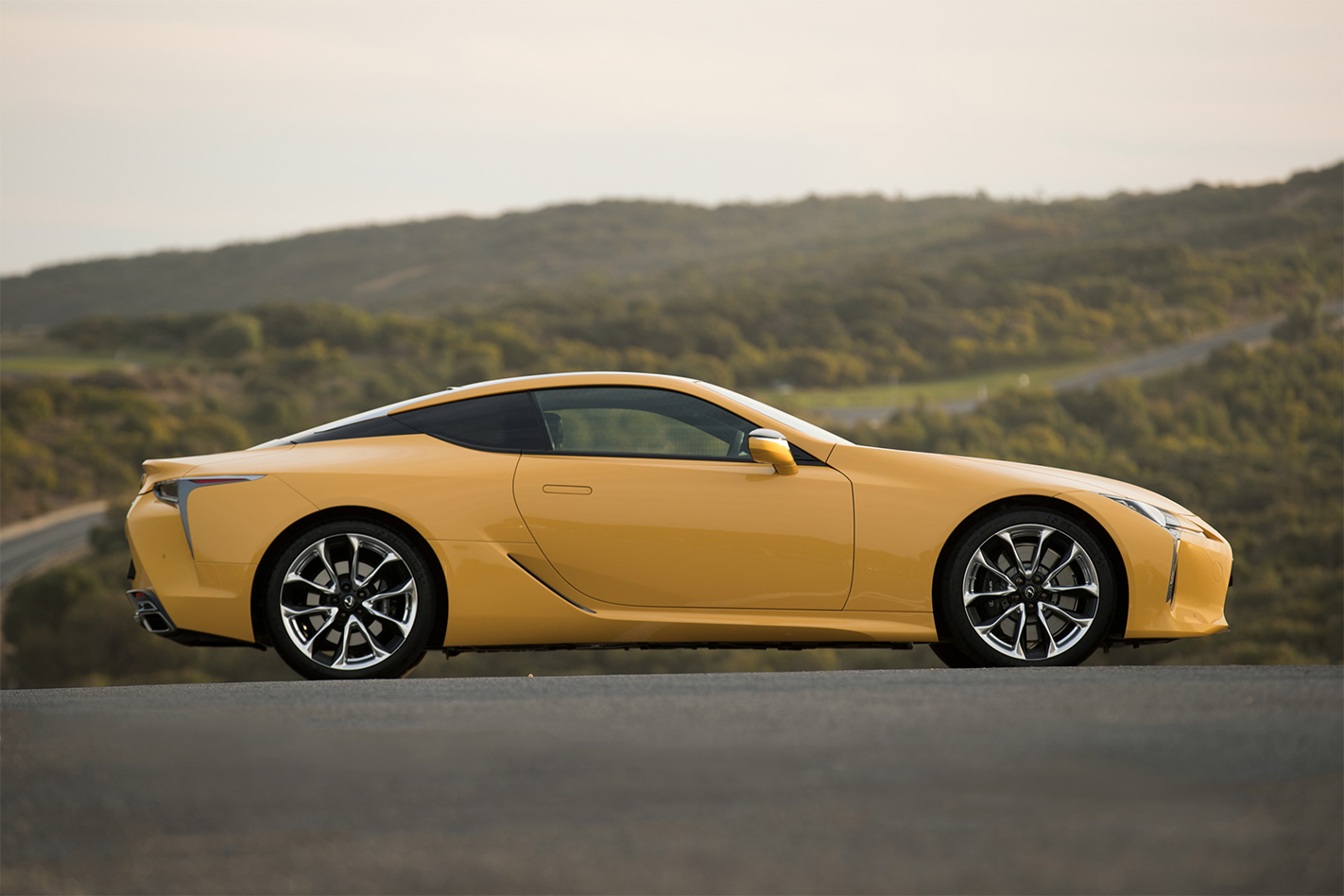
It certainly looks the part. The bold design is likely to split opinion equally between love and hate, but it does look better in the metal and has real presence – you certainly won’t mistake it for anything else.
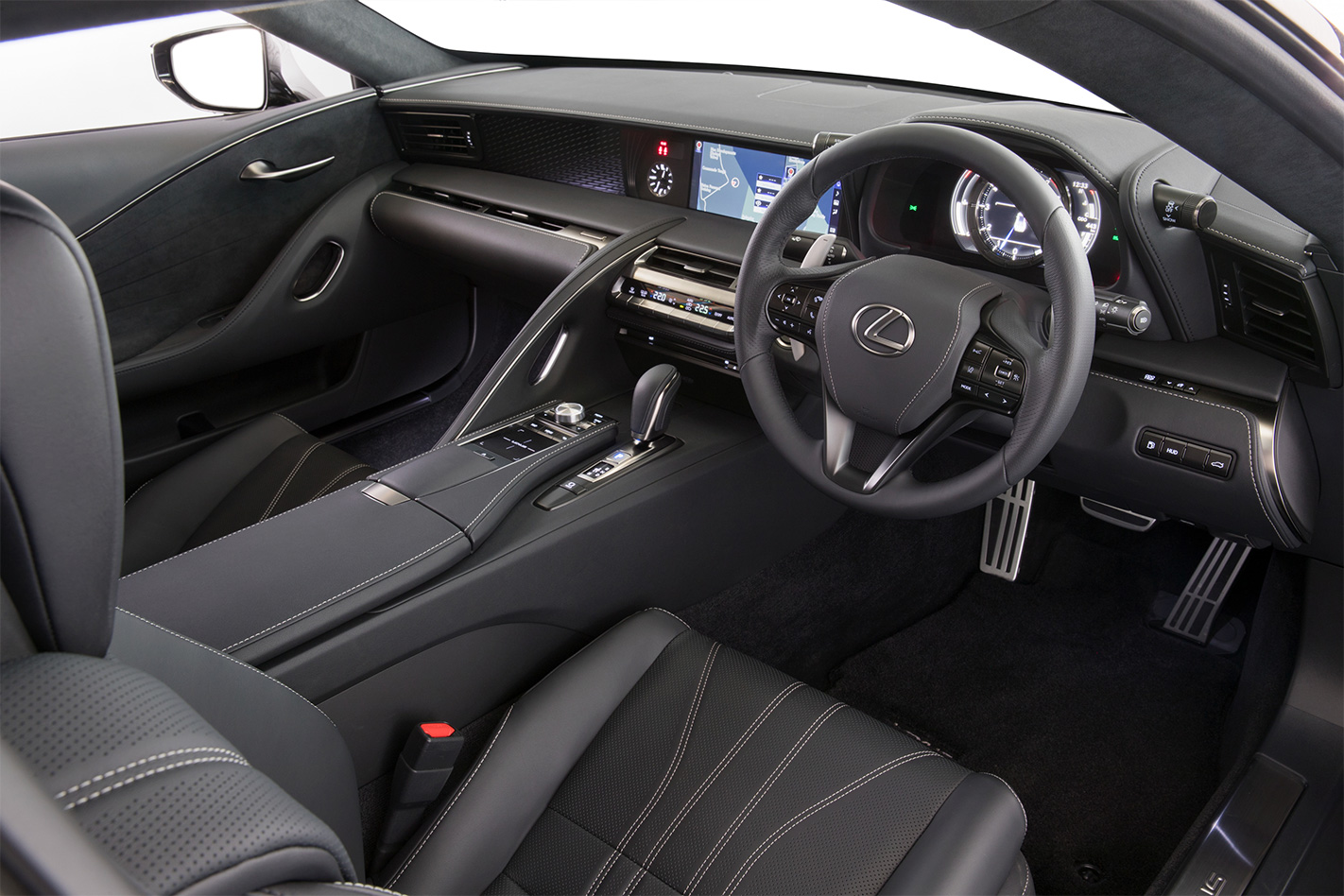
The LC is the first car built on Lexus’s new GA-L (Global Architecture-Luxury) platform, which will underpin all future front-engine, rear-drive products. Lexus claims the LC is the most torsionally rigid car it’s ever built; yes, even stiffer than the carbon LFA.
There’s extensive use of high-strength steel, aluminium panels with carbon-fibre inners and an optional carbon-fibre roof, however at 1935-1970kg (depending on specification) the LC 500 is still extremely heavy.
Lexus vigorously defends the car’s weight, saying the outright figure isn’t as important as where the mass is located (weight distribution is 51:49 front-to-rear), but the fact remains this rear-drive, atmo 2+2 coupe is heavier than the all-wheel drive, twin-turbo Porsche Panamera Turbo sedan.
Nonetheless, Lexus is right. At no point during the drive, not even on the sweeping curves of Phillip Island, does the LC 500 feel like a two-tonne car. It’s surprisingly easy to place, helped by steering that has shed the on-centre dead spot of the RC F and GS F.
Grip levels are strong, as are the brakes, and there’s adjustability in the chassis. Lift the throttle with the car heavily loaded through PI’s tricky turn two and the nose tucks in sharply – despite its heft, this is an enjoyable car to drive on track.
The biggest complaint regards the ESP system, which is either on or off with no Sports mode to be found. It doesn’t kill the fun completely but once awoken it savagely restricts power until it deems the situation safe once more.
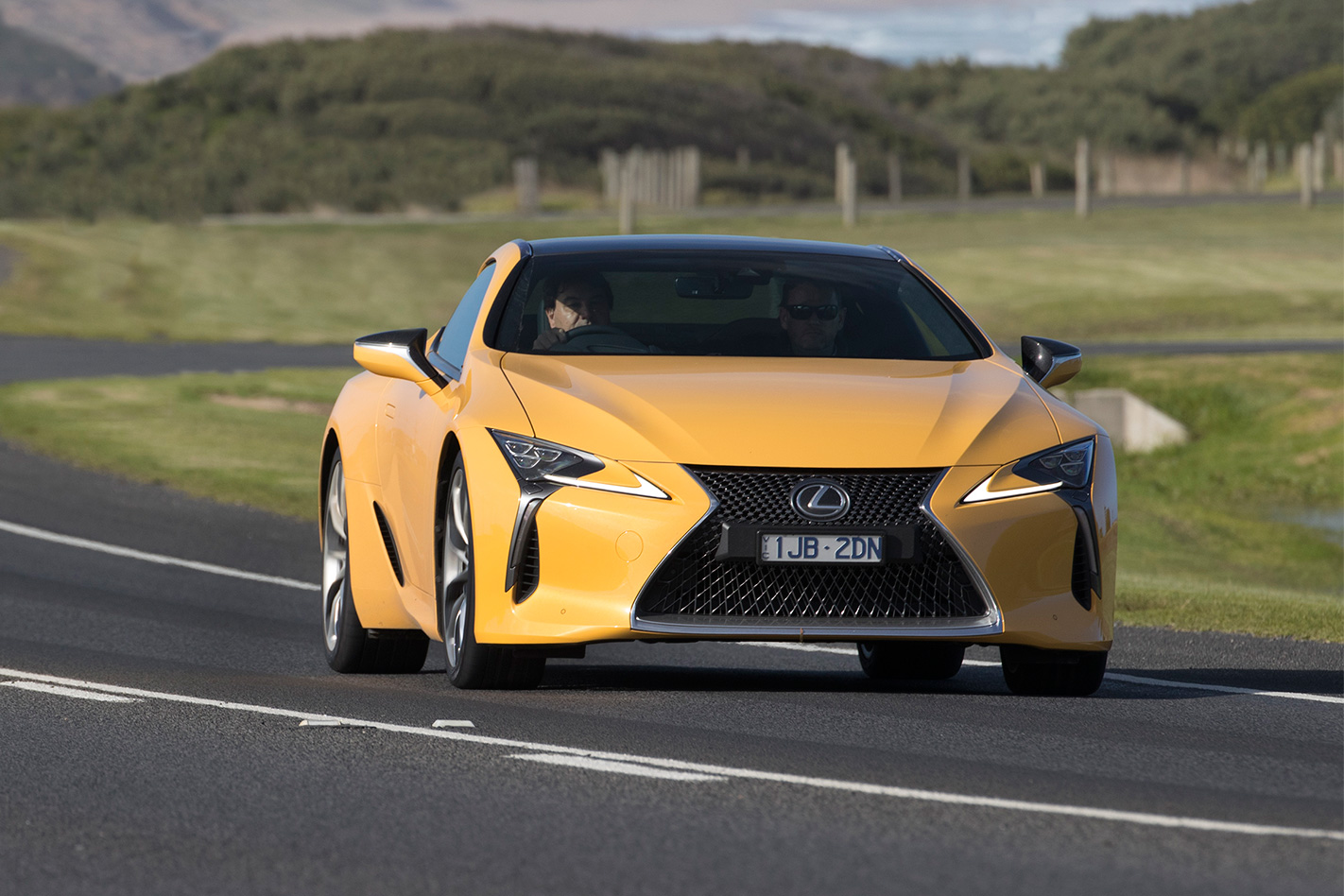
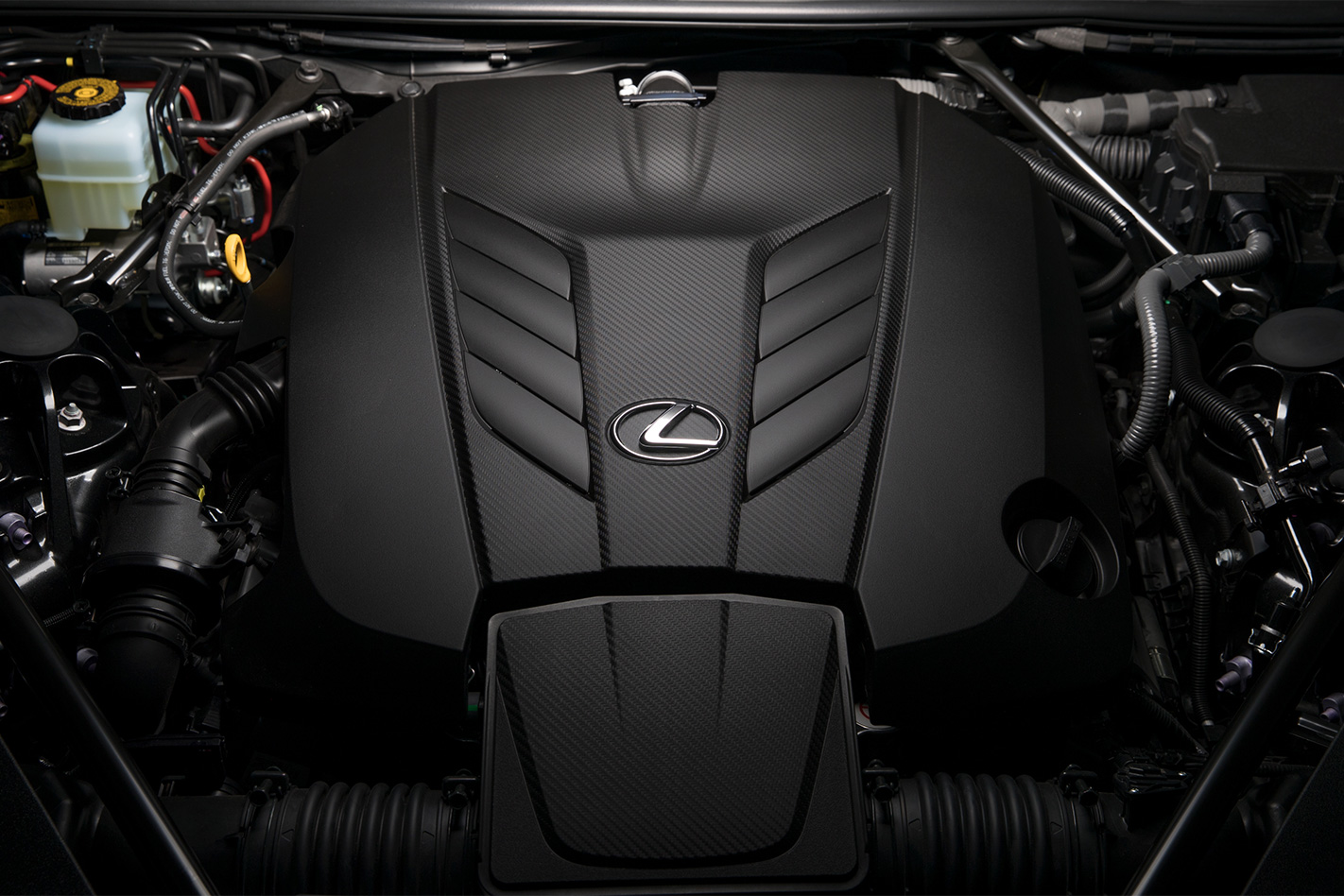
But if the chassis setup is more sports car than GT, then the fact the engine is too makes it less of an issue. The 5.0-litre V8 is lifted from the RC F, albeit tweaked for a little more torque, and it’s a great engine.
It’s not massively powerful, but few will find complaint with the LC 500’s speed and none will fault the noise. The new 10-speed auto keeps the engine on song and delivers both cracks from the exhaust on upshifts and theatrical V8 barks on downshifts – it sounds epic.
The LC 500 is not a smash hit like the LFA, but it definitely deserves a spot on the charts.
4/5
Good: Drivetrain; interior; price
Bad: Ride; weight; ESP
Specs
Engine: 4969cc V8, DOHC, 32v Power: 351kW @ 7100rpm Torque: 540Nm @ 4800rpm Weight: 1970kg 0-100km/h: 4.7sec (claimed) Price: $190,000
DODGE Viper fans with money to burn have banded together to send a brace of the swansong ACR Extreme cars to Germany’s Nurburgring in an attempt to take back the production car lap record and plant the Star-Spangled Banner on hallowed European soil.
Since the sub-Extreme Viper ACR claimed the lap record in 2011, a number of other contenders have since brought the title back to Europe. However, patriotic Americans have joined forces for one last attempt on the record before the Viper is put out to pasture in August.

The vehicles are being provided by Texan Dodge Viper and SRT dealer ViperExchange, which presumably wants the pair of super coupes back in one piece.
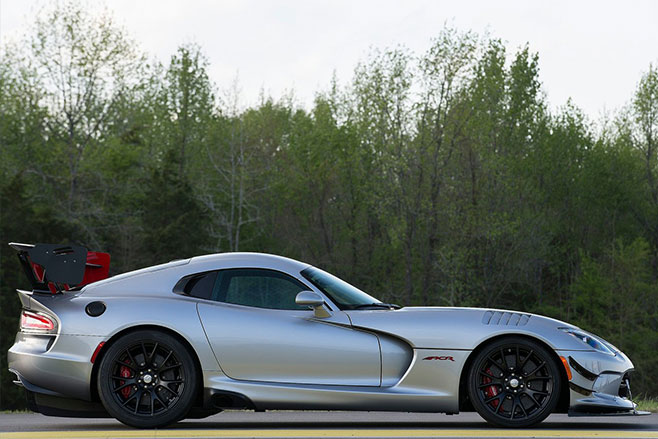
It is worth noting that the ACR Extreme has already had a crack at the record once before but failed to sneak under the seven-minute mark.
The band of Viper lovers, buoyed by the car’s recent successes smashing records at a number of US race tracks, believe the V10-powered monster has what it takes to embarrass the world’s toughest metal on home turf.
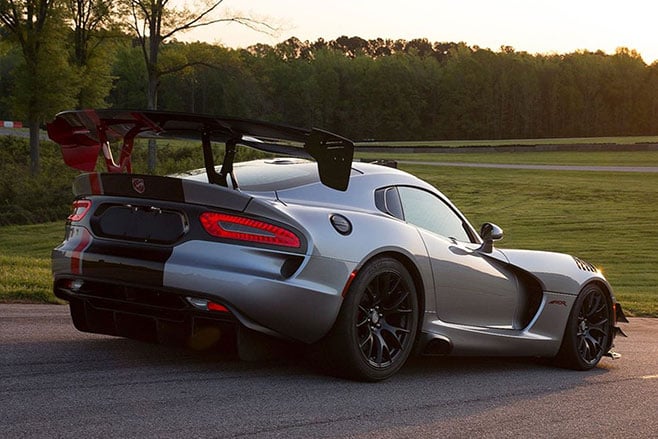
At its disposal, the most track-focused road-legal Viper to date has a 481kW naturally-aspirated V10 at the front and driven wheels at the back.
Even if the crowd-funded team is successful, some might question the legitimacy of a record set by a car dressed up in the Extreme Aero Package, which is a retrofit option and contributes about 800kg of downforce.
The team will hit the track in July.
TELL ME ABOUT THIS CAR
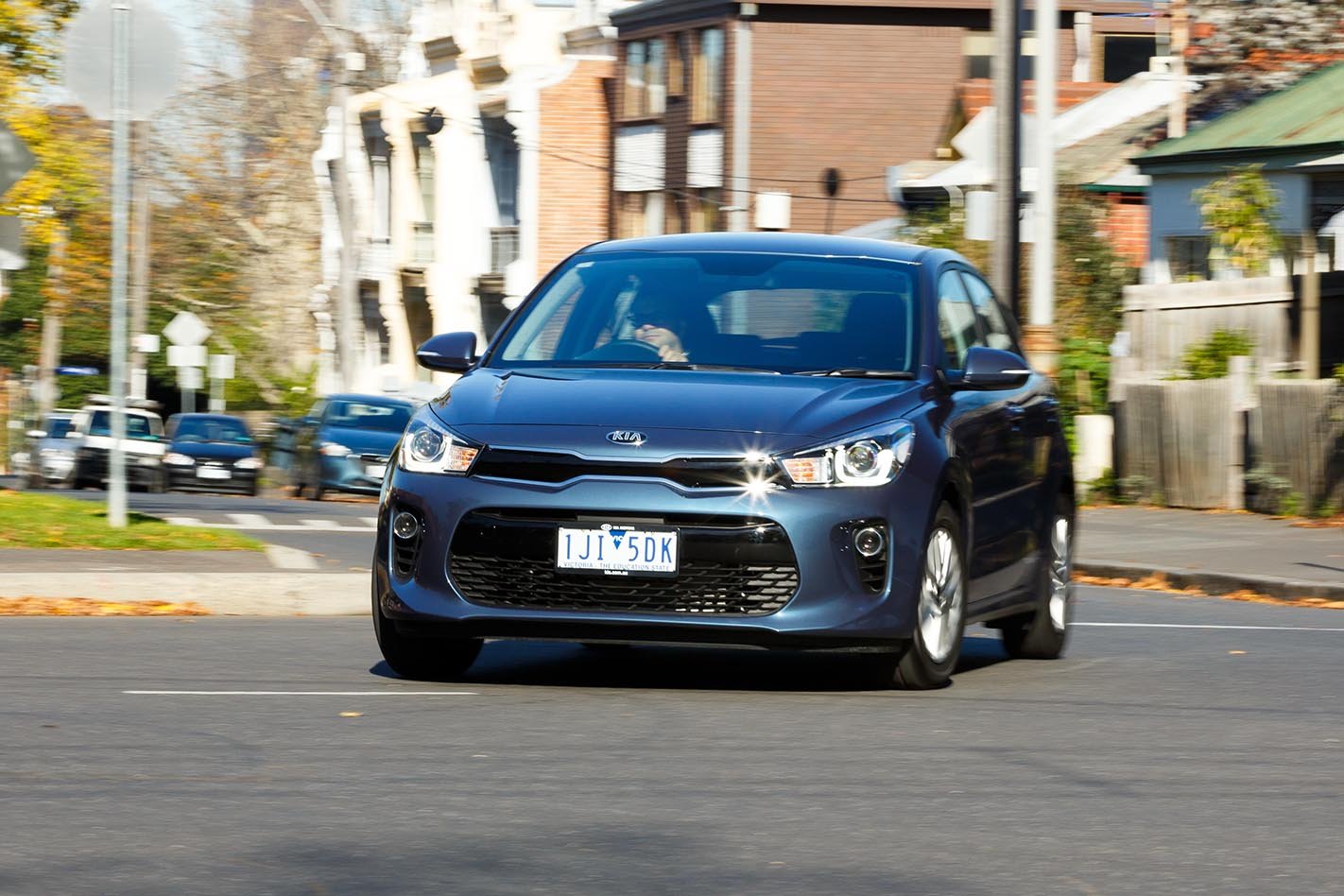
Kia employed its European and Californian design studios to give its all-new Rio hatch a fresher, more mature look. But alongside new aesthetics the new Rio is slightly bigger than the model it replaces thanks to a 10 millimetre longer wheelbase, while a slightly lower roofline endows it with a squatter, more assertive stance. This means more room inside, while cabin improvements and new technology impart an upmarket feel and bring a sense of maturity to Kia’s light segment entrant.
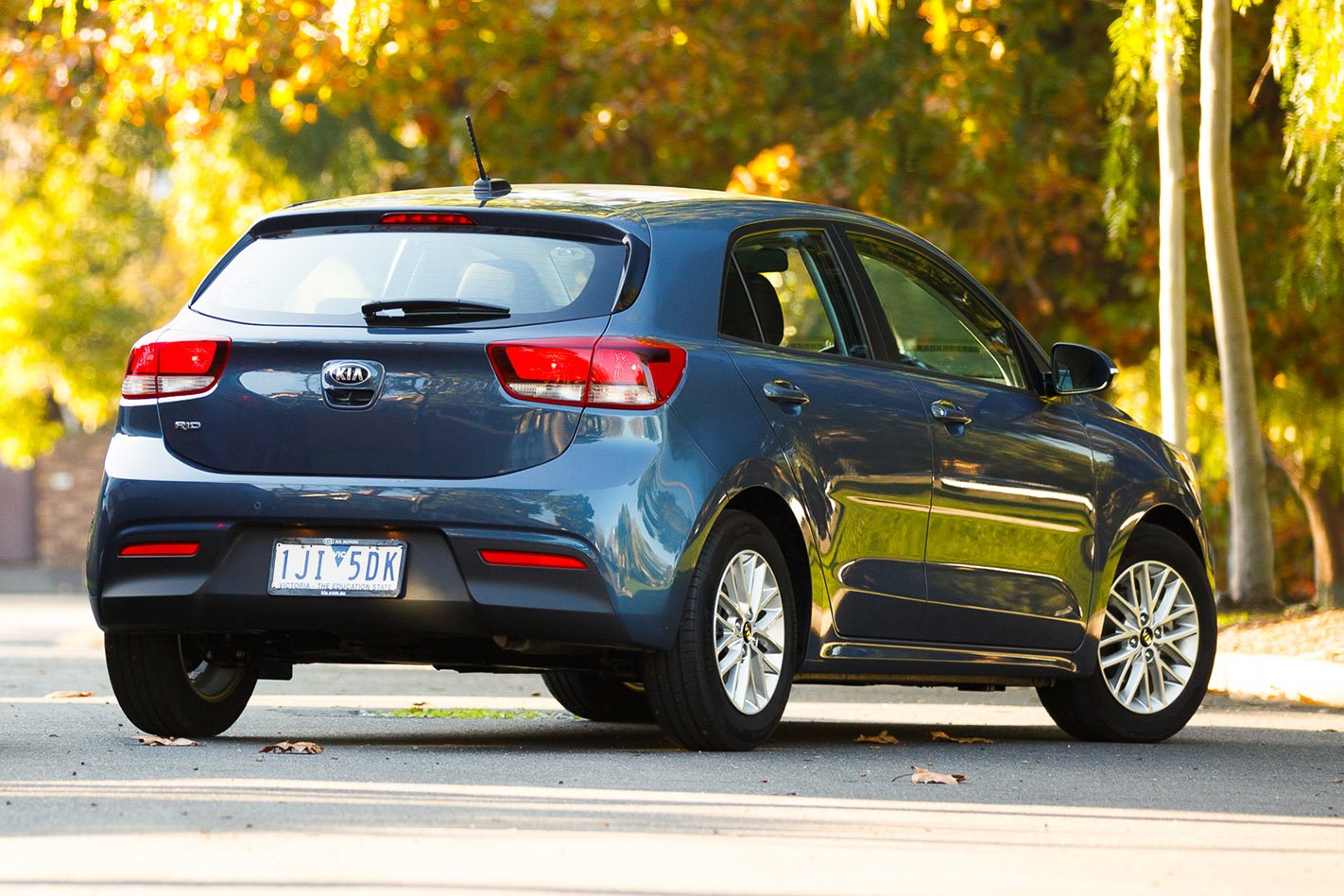
Retailing at $21,490, the auto-only Kia Rio Si tested here sits in the middle of the three-tier range and shares equipment with the entry-level Rio S auto [$19,090] including a 7.5-inch touchscreen, reversing camera, rear parking sensors, automatic headlights and power windows, with the addition of cruise control, satellite navigation, digital radio, LED daytime lights and alloy wheels.
STRENGTHS
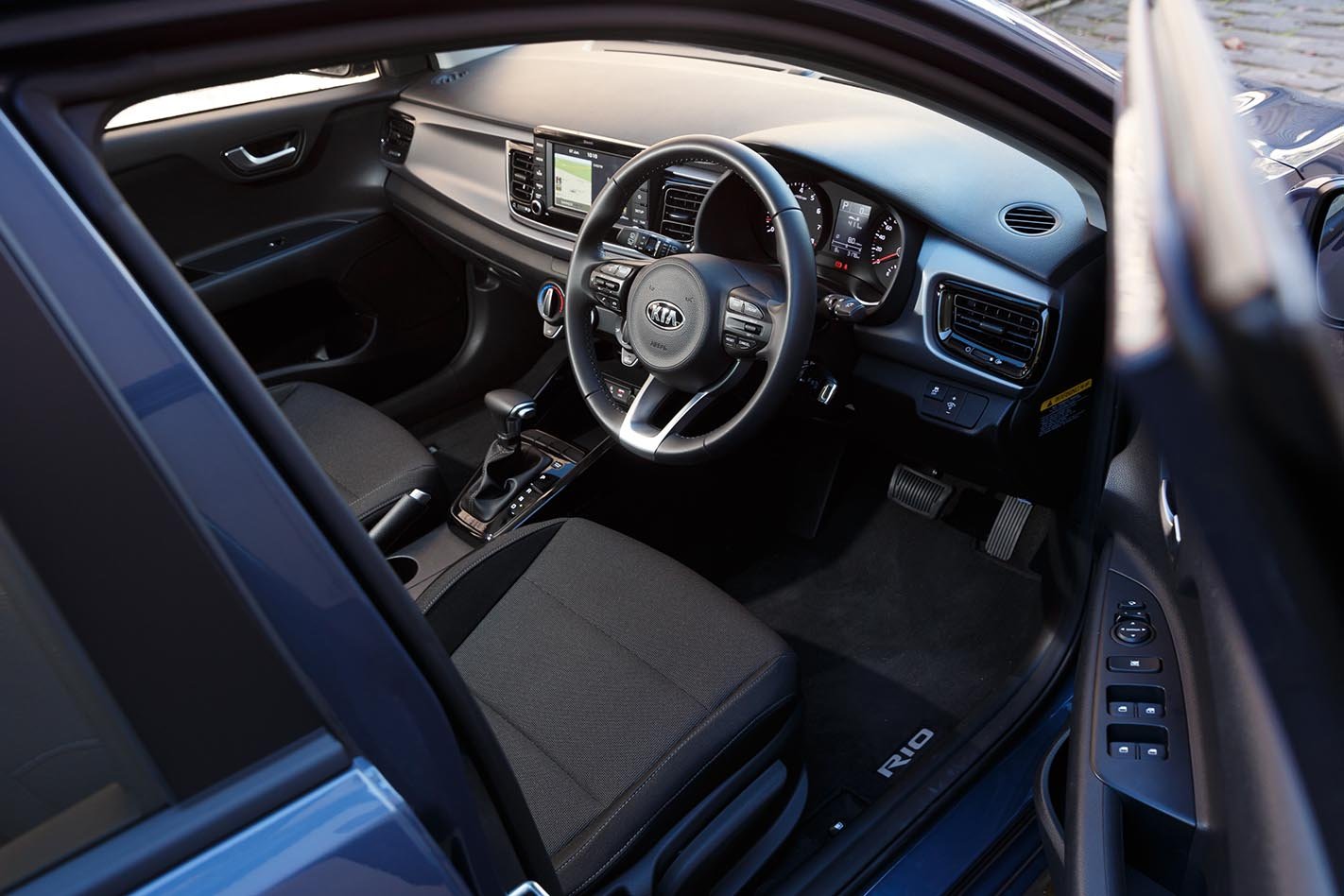
- The interior is understated but elegant, with a floating infotainment screen and none of the visual clutter of the previous model. Piano black surfaces add to the premium look.
- The infotainment system is intuitive. It has Apple CarPlay and Android Auto and the digital radio interface makes it easy to find a channel and store favourites.
- The sat-nav provides warnings about fixed speed/red light cameras which are disturbingly frequent – especially around Melbourne.
- It’s the only car in its class to feature a USB socket for the rear seats.
- There’s plenty of cabin storage for a car this size, including a centre console bin with padded lid that acts as an armrest, cup holders in the centre and all four doors, sunglass holder above the mirror, and a generous space in front of the gear knob to leave a phone and keys.
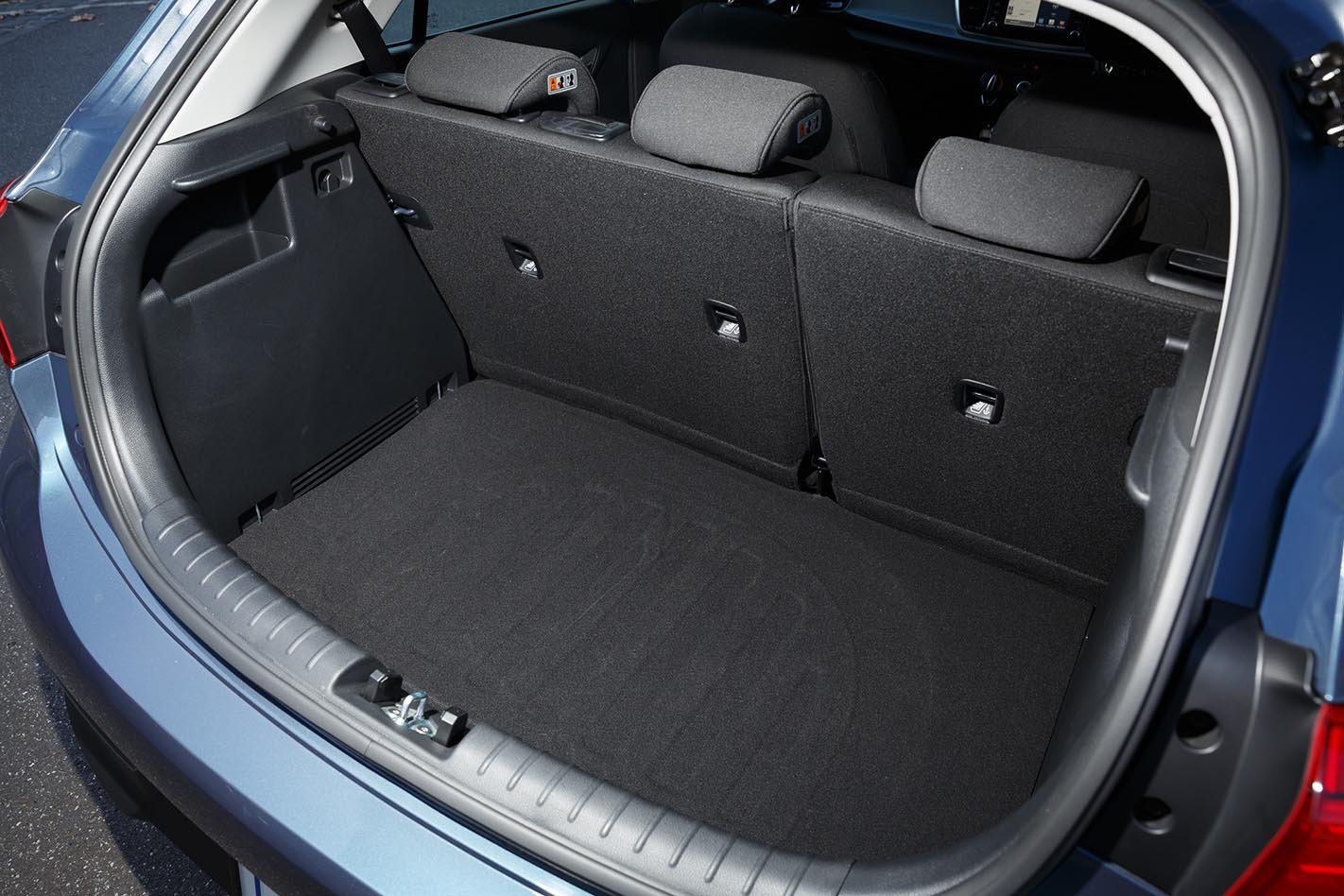
- Boot space is up 37 litres to 325 litres, opening up to a considerable 980 litres with the 60-40 split rear seats folded down. The wide hatch opening helps make loading cargo easier.
- The rear seats are comfortable with good lower back and under thigh support, and decent legroom for a car of this size. There’s plenty of room for two adults or three kids.
- The Rio’s low window line means good side vision for rear seat passengers.
- Suspension has been tuned by Kia’s Australian engineers to suit local conditions and it complies well even on choppy dirt roads. The ride is firm without being hard, though it can be a little spongy on bigger bumps.
- Steering is well weighted and responsive.
- It comes with Kia’s industry leading seven-year warranty.
WEAKNESSES
- It’s one of the few cars to be released in 2017 without advanced driver assistance features including automatic emergency braking. Not uncommon in this segment, but perhaps a missed opportunity by Kia Australia.
- Kia carried over the weaker of two powertrains from the previous range with a 1.4-litre four-cylinder petrol engine coupled with a four-speed automatic transmission. It’s OK around town but putting the foot down results in plenty of noise but not much motivation.
- The 1.4-litre engine works better with the six-speed manual gearbox, but that transmission isn’t available with the Rio Si – only the base Rio S.
- While the interior has been improved, the door trims are still clad with cheap looking hard plastic.
The new Kia Rio stands up well amongst all its light car competitors including the Ford Fiesta, Holden Barina, Honda Jazz, Hyundai Accent, Mazda 2, Mitsubishi Mirage, Renault Clio, Toyota Yaris and Volkswagen Polo. Its bigger dimensions put it up for consideration against the Hyundai i30, Peugeot 308, Toyota Corolla and Volkswagen Golf.
The E30 M3 is where the badge started, and it got better as time went on.
The E30 got better, that is. We aren’t going to try and tell you which generation M3 is the best, but we are going to tell you which E30 M3 we think is the best.
It’s the Sport Evolution, the fastest, lightest E30 M3, and here’s why.
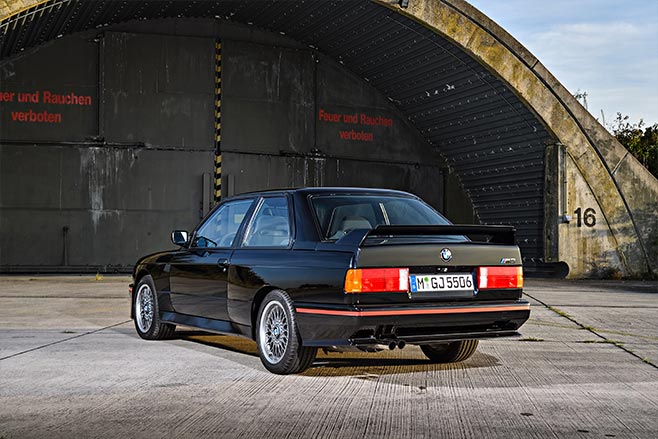
It also copped a more aggressive cam and oil-spray nozzles under the pistons to keep things cool.

It also had unique front and rear spoilers with adjustable extensions to grant more downforce, which was added to the car for homologation reasons.
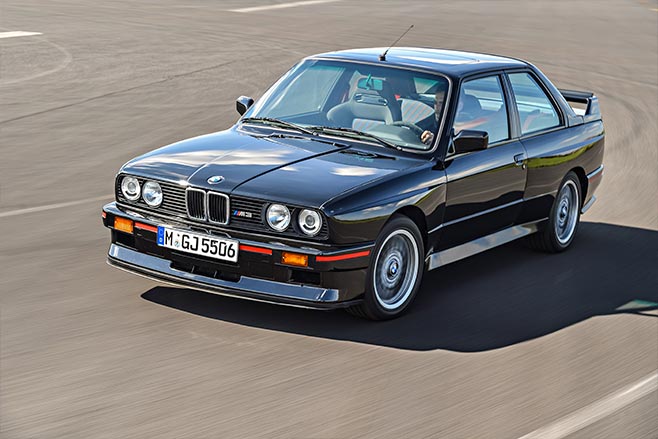
Air conditioning? A sunroof? Trip Computer? All comfort items such as these were only options, and it’s unlikely many of them would have been selected.
The idea was to keep the weight down, just as in the other Evolution models. Most of them were almost 100kg lighter than the regular M3, 1200kg as opposed to 1296kg.

But if you do somehow find yourself the custodian of one, give us a drive too?
Until the 911 GT2 RS arrives, the 911 Turbo S is the pinnacle of Porsche performance – but what if that isn’t enough? What if you want your all-paw twin-turbo Porker to not only have more poke, but exude a little more individuality relative to every other Turbo S?
Enter the Porsche 911 Turbo S Exclusive Series, a limited-edition version of Porsche’s heavy-hitting Turbo that screws more power from its flat-six mill and adds bespoke embellishments inside and out. Only 500 will be sold worldwide, and it will cost a colossal $590,700 in Australia.
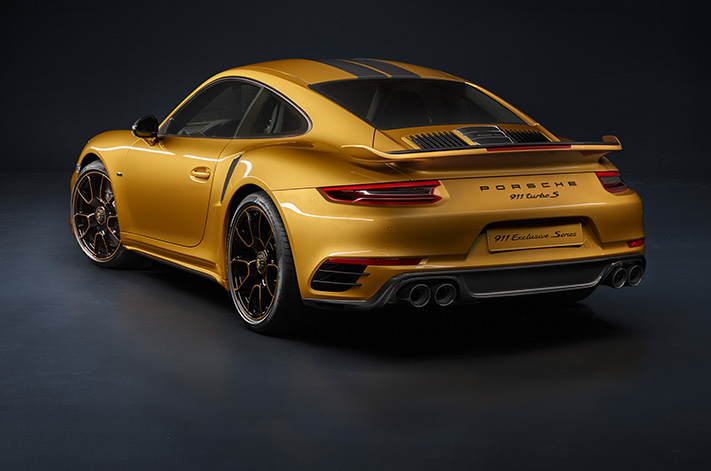
It will, however, get you to 200km/h three-tenths of a second faster, sprinting from zero to 200km/h in 9.6 seconds rather than the Turbo S Sport Chrono’s 9.9 seconds. Normally an optional extra, the Sport Chrono is included as standard in the Exclusive Series.
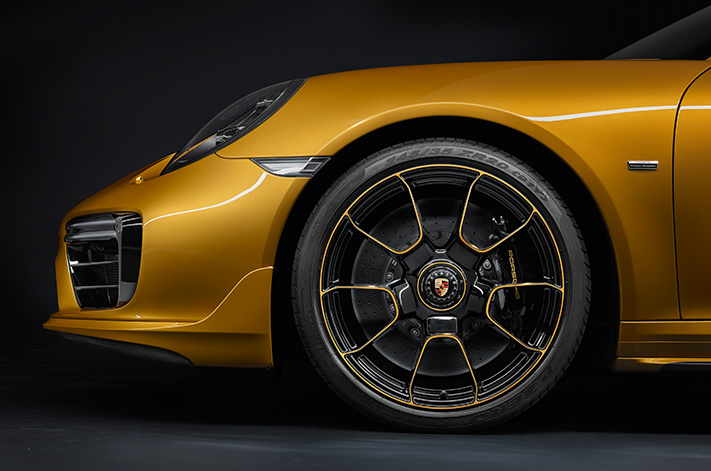
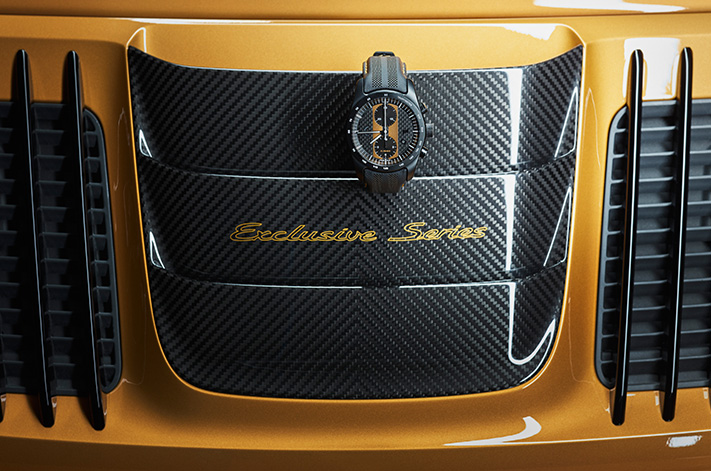
Clear-coated carbonfibre features elsewhere, adorning the engine decklid scoop, sideskirts, rear gurney flap, sill plates and the rear bumper’s lower section. The wheels are a retro-inspired design measuring 20-inches, painted black and gold, and secured with a single centrelock nut. The calipers for the Exclusive’s standard-issue carbon-ceramic brakes also get a unique paint treatment, with gold lettering on black to match the wheels they lurk behind.
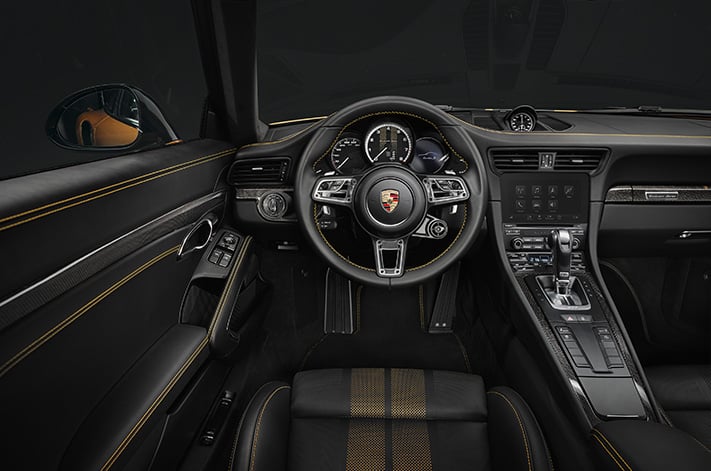
Yellow contrast stitching is everywhere, along with splashes of carbonfibre on the centre console, dash and doors. The carbon trim is also interwoven with copper thread to continue the gold-on-black theme.
IT’S A fact. Sometimes the white-hot crucible of competition can distil down to the red mist of punching your rival forcibly in the helmet.
If there’s one thing we’ve learned, it’s that at any level of motorsport, tempers get frayed and otherwise reasonable blokes end up making giant nongs of themselves. So strap in and join us as we take a look at those moments when drivers completely lost the plot.
Throttle Control with Michael Schumacher It’s rare that a driver looks as if he’s actually about to kill his opponent, but Michael Schumacher’s face as he attempted to force his way into McLaren’s pit garage spoke of a guy you probably wouldn’t trifle with. His contention was that, in typically atrocious Spa conditions, rival Coulthard had lifted off mid-corner as he was being lapped, turning Schumacher’s Ferrari into an expensive trike. Rather gallantly, Coulthard didn’t attempt to unlap himself, instead following the gimped F300 back to pit lane and then was faced by a steaming German who attempting to throttle the Scot while yelling “Are you trying to f******* kill me?”
“The stewards looked at the data and I hadn’t braked, so it was just all brushed under the carpet’” said Coulthard in 2003. “The reality is that I lifted to let him pass me, but I lifted in heavy spray on the racing line. You should never do that. I would never do that now. In 1998, I didn’t have the experience and the knowledge, and I had never had someone run into the back of me. The minute I knew he was there, and I was told by the team that he was and was trying to allow him to pass me, I should have made a smarter decision.”
My name is Juan Pablo Montoya. You broke my head. Prepare to die. Where to start with Juan Pablo Montoya? We could choose any number of splenetic outbursts, tantrums in press conferences or overly aggressive driving manoeuvres, but the purest essence of JPM is when he walks into a TV camera. “You f****** idiot, you broke my f***** head,” is the Colombian’s rejoinder before going into a bunch of weirdly tuneful Spanish pronunciations, nursing his broken f****** head. Of course, some would maintain that Montoya had something wrong with his head a long time prior to this incident.
Furious Dropkick Mike Simko NASCAR is a gold mine of angry rednecks with a gutload of fried-chicken-fuelled testosterone and nowhere is this better exemplified than when Michael Simko attempted to put his foot and a windscreen through Don St Denis’ fizzog back in 2003 at the Sharpie 500. As good as this moment is – and it’s one for the true connoisseur of unprofessionalism – seeing Martin come barrelling from his car like a ballistic bargain-bucket, demolishing two stewards, scoring a mere glancing blow on his target and almost getting ploughed into the infield by a golf cart is the icing on the cake. Both men were hugely apologetic afterwards. “Adrenaline goes crazy. We go kind of cuckoo,” admitted St Denis.
‘Mr Rallycross’ Martin Schanche Norwegian Schanche was a phenomenally talented rallycross driver, winning the European title six times and taking the chequered flag in 74 of his 232 starts between 1977 and 2001. Unfortunately, he also developed a sense of entitlement which manifested in thinking that there was one set of rules for him and another for everybody else. Check this video of him single-handedly attempting to stop a race because the first corner didn’t quite go as intended and then ramming his opponents to smithereens. (view from 1m 58s)
After his racing career, Schanche became a politician. Watch here as he deals with an unwelcome reporter in typical fashion. Scan to 1m56s for the action.
Grassroots Grappling There’s nothing at stake here other than pride, but we all know what pride comes before. Spectator drag racing at the Oxford Plains Speedway looks to be a brilliant spectator sport. Seeing a beater Dodge Neon humiliate a Dodge Ram around a track is one thing. The Ram driver then attempting to grapple the Neon driver to the ground and then not really know what to do next is a winning moment. It’s possibly only topped by seeing Chief Wiggum standing underneath a Dunkin’ Donuts banner. This might just be the most American thing ever.
Custer’s Last Stand Poor Cole Custer. Aside from sounding like something you’d top a trifle with, he was ruthlessly barged off the track, across the grass and into the wall by the dastardly John Hunter Nemechek in this NASCAR Camping World Truck Series round in Canada. On the last corner, too, Nemechek taking the chequered flag as he was grinding Custer’s truck to a smooth finish on the concrete.
Wholly unimpressed by Nemechek’s assertion that rubbing is indeed racing, Custer waits for his rival to collect the chequered flag, whereupon he puts a tackle on him that Luke Hodge would probably frame on his wall. Unfortunately, he was battling a bigger opponent and couldn’t really follow up. The two teenagers eventually realised that rolling around on a grass verge was pretty undignified, but this still has to go down as one of the greatest interceptions of a fast-moving target.
Don’t Punch The Help With equal parts adrenaline and frustration running through their systems, drivers who have just retired from a race are usually best given a wide berth. Here we see James Hunt, who has just retired after suffering the ignominy of colliding with team-mate Jochen Mass. “I was right up his chuff,” Hunt explained. “I was forced to go left, then he suddenly moved across to the left, hit the brakes and waved me through on the right. But I was committed and couldn’t avoid him. I hit him right up the arse.”
Hunt could be notoriously fractious and here he deals in pretty cursory fashion with a concerned marshal who insists on manhandling him at any opportunity, decking the safety hero with a classic right hook. Watching the poor guy’s red hat fall off, Hunt is immediately remorseful, but it didn’t save him from a $2000 fine. The marshal, who went by the name of Ernie Strong, also sued Hunt over the incident. Ernie says of the incident, “If I said anything to him, I can’t remember. Hunt gave me a, ‘Sorry, old man,’ and headed back to the pits.”
Suzuki’s third-generation Swift is here, with new engines, a new platform and plenty of new technology taking the humble Japanese hatchback from the back of the pack right to the pointy end.

STRENGTHS
- Thanks to an all-new platform, there’s more interior space than before. The new Swift measures 10mm shorter than its predecessor, but a longer wheelbase and greater overall width means there’s now more space for back seat passengers and more air between the front occupants. The boot also grows to a useful 242 litres, 32 litres bigger than the old Swift’s miniscule load area.
- The new Swift is incredibly light – just 915kg empty in its heaviest configuration – yet thanks to the use of more high strength steel in its construction it’s actually stronger and more rigid than before. That not only aids crash performance and handling, it also helps improve refinement as well.
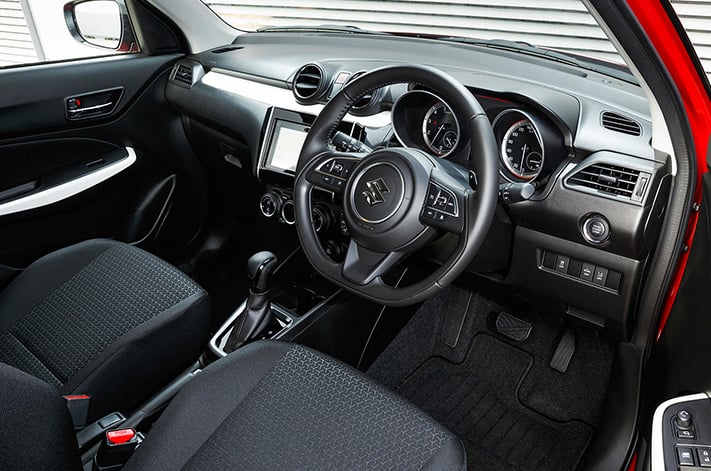
- And speaking of refinement, the Swift’s smart new cabin furnishings give it a more sophisticated aura than before.
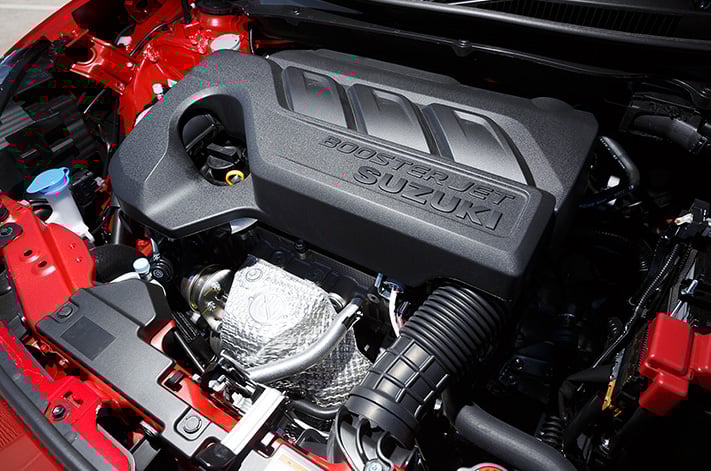
- The 66kW/120Nm 1.2 litre naturally-aspirated inline four that will motivate most Swifts sold in this country may have 4kW less power, 10Nm less torque and 200cc less displacement than the engine it replaces, but it’s a perky, rev-happy engine that works well when paired with the available five-speed manual or CVT automatic. The new Swift’s 100kg lighter kerb weight helps offset the new engine’s lower outputs.
- But if that’s not enough, then the Swift’s lively turbo 1.0 litre should supply the grunt you’re looking for. With 82kW and 160Nm on offer, this engine is the first turbo powerplant for Australian-market Swifts and one that boasts plenty of mid-range oomph. It comes standard with a six-speed automatic, and while we lament the unavailability of a manual, the automatic does a good job.
- The Swift handles like a larger car, with the darty, sensitive front axle of the outgoing model banished in favour of a more progressive and stable-feeling suspension. There’s some rack-rattle on rough-surfaced corners, but that’s about the only dynamic blot on the Swift’s report card.

- The GLX Turbo has plenty of equipment as standard, including high-end features like LED headlamps with auto highbeam, active cruise control, climate control plus keyless entry/ignition. That’s in addition to the autonomous emergency braking, satellite navigation, lane departure warning, reversing camera and 16-inch alloy wheels that are standard on lower grades.
- Sharp drive-away pricing sees the GL Navigator and GLX Turbo wear drive-away prices that are identical to their retail pricing. Confusingly, the base GL manual has a $1000 gap between its $15,990 retail and $16,990 drive-away price – it’s almost like Suzuki wants to discourage prospective buyers from buying the GL manual, given the step up to the $17,990 drive-away GL Navigator auto is a mere $1000.
- Fuel economy is good, with the manual Swift GL consuming 4.6L/100km on average and the CVT adding 0.2L/100km to that number. The Swift GLX Turbo, as the heaviest car in the range and the sole turbocharged one, records a factory claim of 5.1L/100km.
WEAKNESSES
- Base model misses out on key equipment like smartphone mirroring, a touchscreen infotainment display and a reversing camera. That’s a shame, because it’s the only model to come with the enjoyable five-speed manual – there’s no way to have your Swift with three pedals and an integrated sat-nav screen at the same time.
- You’ll need to pay more for Autonomous Emergency Braking (AEB) as well. While that technology is fast becoming standard on many small cars, you’ll need to pony up to the Swift GLX Navigator with Safety Pack or the Swift GLX Turbo.
- No variant has parking sensors as standard – even the $23k Swift GLX. The base GL manual is doubly-penalised by not having a reversing camera either.
- Only the GLX Turbo has a steering column that adjusts for reach as well as tilt. Why? We don’t know. The GL grades only get a tilt-adjustable column.
- Over the shoulder vision is hampered by the Swift’s fat C-pillar. You can partly blame its stylish-but-functionally-nonsensical vertical rear door handle for that one.
- The 1.0 litre turbo three-cylinder, arguably the sweetest engine in the family, is not available with a manual transmission. The six-speed auto it’s paired with by default does an appreciably good job, but a manual would allow drivers to enjoy that lovely triple-cylinder engine to its fullest.
- Similarly, we’re annoyed the Swift’s delightful 1.0 litre turbo is confined to the top-shelf GLX grade only, meaning fewer buyers will get to call that engine their own.
ANYTHING ELSE I SHOULD CONSIDER
Absolutely. There’s plenty of healthy competition in the light hatch segment, with cars like the Mazda2, Honda Jazz, Volkswagen Polo and Toyota Yaris all boasting significant merits. The Swift, may not be able to compare with most on metrics like power or torque, but its substantially lighter construction means it drives just as well while also delivering good fuel economy.
Honda Europe has lifted the lid on the 2018 Civic Type R’s specifications ahead of its local launch later this year.
Detailing improved aerodynamics, a lighter chassis, and key suspension changes, the new R’s specs reveal how it smashed the previous-generation Type R’s Nurburgring lap record by 6.8sec.
It’s an interesting read, because while power’s up 7kW torque from the turbo 2.0-litre four remains 400Nm. And even though its body has been stiffened and weighs 16kg less, the car’s only 2kg lighter overall at 1380kg.
Meanwhile, its 0-100km/h sprint takes, again, 5.7sec to 100km/h. So where did the brand find all the time on the ’Ring? The improvements begin at ground level.

These footprints are spread across a longer wheelbase, which now stretches 2.69m long, 145mm more than before. An ‘all-new’ rear multi-link setup widens rear track by a hefty 65mm. While new aluminium arms swap into the front dual-axis strut system and close track by 6mm.
But wait, there’s more. By relocating the fuel tank, the centre of gravity’s now brought inward and helped drop it 1cm.
Honda’s kept Brembo on the books by re-using a four-piston calipers up front, but increased rear solid disc sizes by 9mm.

On the straights a 7 per cent shorter final drive ratio is used, yet its top speed has crept up from 269km/h to 272km/h.
Don’t expect local variant mechanical specification to greatly differ from what’s been outlined.
Other markets will benefit from a choice of two variants, a base and Civic Type R GT. But Aussies are most likely in for single car with a mix of equipment from both specs.
Local pricing will be revealed when MOTOR drives the car in Germany this month.
Engine 2.0-litre inline four, DOHC, 16v, turbo Power 235kW @ 6500rpm Torque 400Nm @ 2500rpm Kerb weight (EU) 1380kg Max speed 272km/h Length/width/height 4557mm/1877mm/1434mm Brakes four-piston calipers, 350mm ventilated (f); 305mm solid discs (r) 0-100km/h 5.7sec (claimed) Fuel consumption 7.7 litres per 100km (claimed combined cycle) Price TBC
