
After an 18-year hiatus, the BMW 8 Series is due to make a return to production next year.
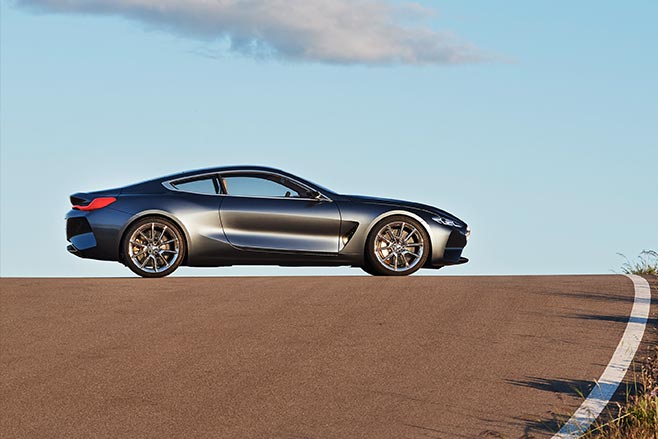
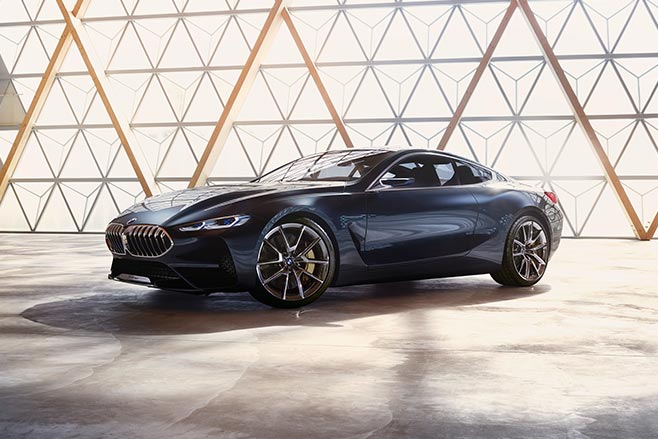
In anticipation of the official reveal of the 8 Series at Concorso d’Eleganza Villa d’Este, BMW released its concept images for the new premium coupe.
Originally designed in the late-’80s to be BMW’s luxo flagship, the 8 Series range only resulted in 30,600 examples built over the decade it was produced.
Though we don’t yet know for sure what will power the new 8, it seems safe to speculate that the drivetrain will closely mirror that of the current 7 Series range rather than some of its V12 predecessors.
BMW management board chairman Harald Krüger says adding to BMW’s luxury range is one strategy the company has adopted.
“The forthcoming BMW 8 Series Coupe will demonstrate that razor-sharp dynamics and modern luxury can go hand-in-hand. This will be the next model in the expansion of our luxury-car offering and will raise the benchmark for coupes in the segment.”
Senior vice president of BMW Group Design Adrian van Hooydonk says while the car is a nod to previous BMW design, the 8 Series concept brings it into the modern era.
“The BMW Concept 8 Series is our take on a full-blooded high-end driving machine,” Hooydonk says.
“The design of the BMW Concept 8 Series provides a fresh interpretation of iconic BMW styling cues.
“For me, it’s a slice of pure automotive fascination.”
WHAT IS IT?
It’s the harder, faster, track-honed version of the Lamborghini Huracan. You know the recipe by now: there’s more power, less weight, a faster gearbox and firmer suspension, but the real headline here is something called “Aerodinamica Lamborghini Attica” which is an exciting, Italian name for active aero.
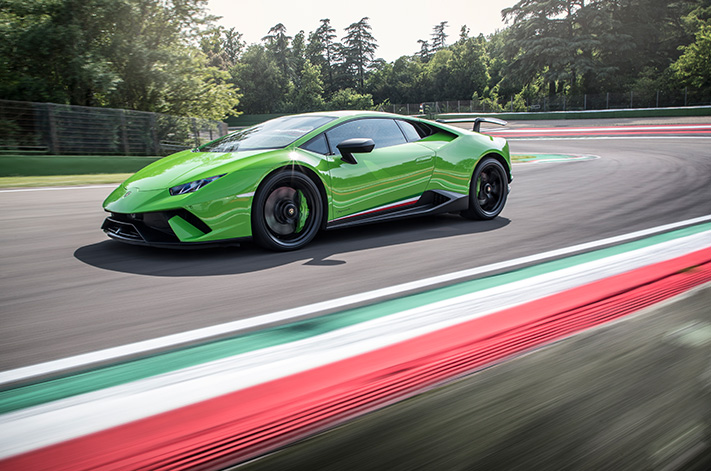
Because deploy all that fancy, cutting-edge tech and this is the fastest, most potent V10 production car Lamborghini has ever made. Remember the controversy a few months back when Lambo shattered the Porsche 918’s Nurburgring lap record with a time of 6:52.01? This is that car. So the question is: does the new Ring King live up to the hype?
MAIN RIVALS
AMG GT R; Ferrari 488; Nismo GT-R; Audi R8 V10 Plus; McLaren 675LT and 720S
THE WHEELS VERDICT
Louder, meaner and at times, violently visceral, the Performante finally unlocks the Huracan’s potential. Whether that’s enough to best the latest and greatest from Ferrari and McLaren (above) remains to be seen but in isolation, this is a properly exciting and surprisingly well-rounded supercar.
PLUS: Savage speed; active aero tech; glorious V10; ever better soundtrack; approachable limits
MINUS: Hard sports seats; interior ergonomics; um….
THE WHEELS REVIEW
IT’S ODD, but as I stand in the pit lane at Imola and gaze at the empty track, its curved main straight snaking away into the trees, I feel a little disappointed. And a fraction underwhelmed. For a circuit with such a fearsome reputation, I was hoping it’d look gloomier. More menacing. You know, with wisps of fog clinging to barriers shrouded in Senna flags and decaying flowers. That kind of thing.
Instead, warm sunlight falls from a clear sky. Birds sing in the woods. And there are children playing in a park outside the Armco. It’s almost…tranquil.
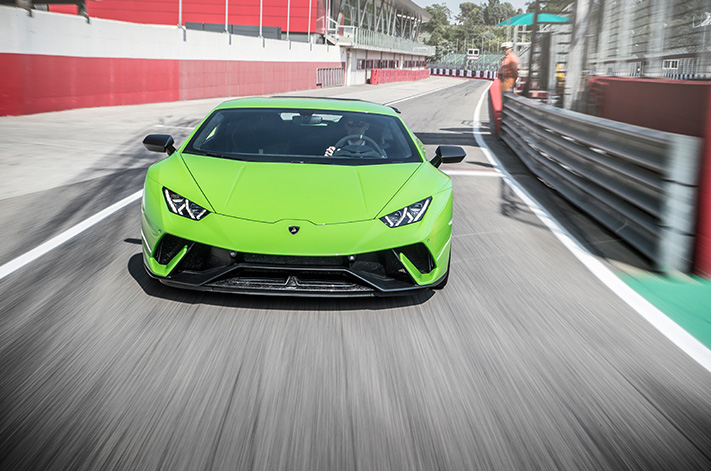
This is the latest in a long line of track-honed special editions from Lamborghini, and this time Sant’Agata’s engineers have reached deep into a bag of new tricks.
There’s more power, of course, and 40kg less weight courtesy of a raft of measures including use of a material called forged carbonfibre (see Wheels, June, p99) , but the most hyped piece of tech is something Lamborghini lovingly refers to as “Ahhh Laaa”. That’s short for Aerodinamica Lamborghini Attiva (ALA, get it?), which is an exciting, Italian way of saying active aero.
Lurking inside that front splitter is an electric motor that operates two flaps. With ALA off, the flaps remain shut to maximise downforce at the front axle. With ALA on, the flaps slide open to reduce drag.
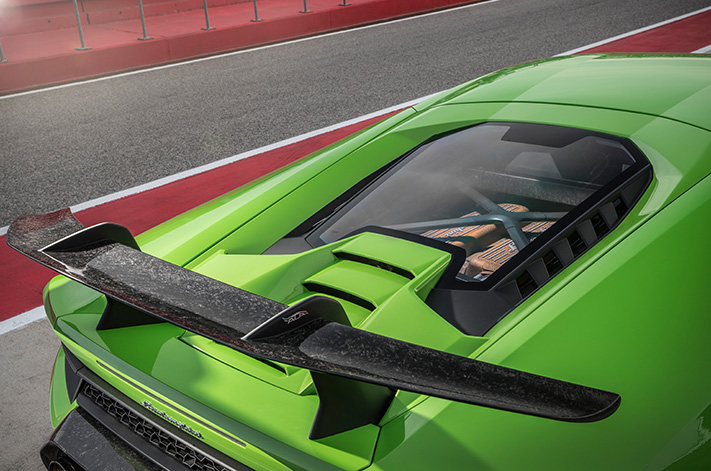
That forged carbonfibre rear wing and its thick upright supports are actually hollow. This allows air to be channelled into the wing through two intakes at the base of the uprights, which are controlled by electric motors. With the intakes open, air is expelled through vents in the wing’s underside to reduce drag (like a Formula 1 Drag Reduction System) and to help the Performante reach its 325km/h top speed. With the intakes closed, the wing maximises downforce at the rear, which has risen by 750 percent compared to the regular Huracan. The ingenious thing, though, is that the two air intakes can operate independently to produce something Lambo calls “aero vectoring”. With Corsa mode engaged, ALA can close one box during a corner to increase downforce to the inside wheel which helps the car to turn. Brilliant, eh?
Yet despite all this aero wizardry – which Lambo says was key to its blistering Ring time – the thing that dominates the Performante experience is still that huge, naturally aspirated V10.
Now sporting titanium valves and a snazzy bronze engine cover (which pays homage to previous special-edition Lambos), the V10’s outputs have risen to 470kW/600Nm thanks a revised intake system and a lighter, free-flowing exhaust that exits higher in the rear bar. And the result is an engine that’s pretty much perfect.
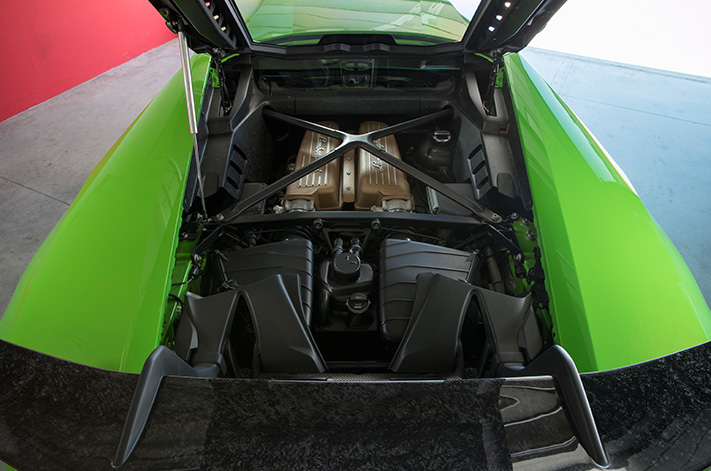
And then there’s the noise. Honing in on the 8500rpm redline isn’t just a musical experience but a physical one too, as the screaming V10 now operates at a frequency that reverberates through your chest. The sound itself is angrier with a serrated, hard-edged howl that’s perilously close to the Huracan Super Trofeo racing car.
Adding to the increase in drivetrain violence is the recalibrated seven-speed dual-clutch ’box, which hammers home upshifts with ferocious speed. And this is a small thing but the weighting of the shift paddles themselves is bang on. Light and crisp.
Combine all this and it’s alarming how quickly Imola’s mix of high-speed corners and blind crests regain their fear factor. Lamborghini’s chief test driver Mario Fasanetto isn’t faffing about either. He’s setting the pace in a ‘regular’ Huracan LP610-4 and it’s clear he’s pushing the car to its limit: the nose occasionally washing wide, his tail waggling under hard braking. Things are less dramatic inside the Performante.
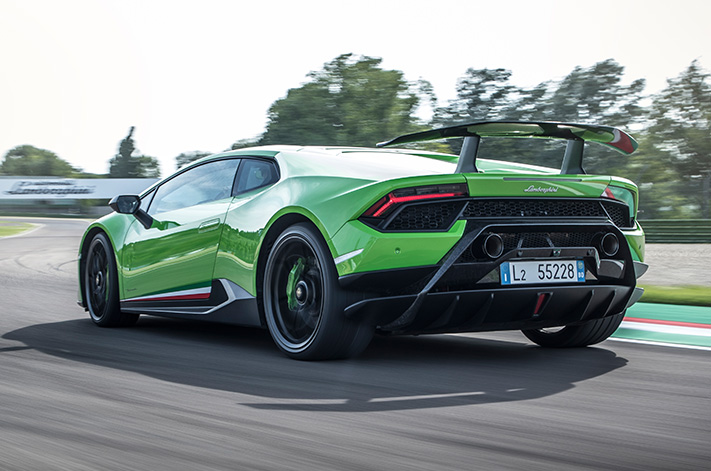
Dynamic steering is standard (a regular EPS system is available) and in Corsa the ratio is breathtakingly fast, though the Performante’s positive front axle means it never feels nervous.
Get too greedy on corner entry and you do encounter benign understeer, but tuck the nose in early through Imola’s slower corners and you’re free to choose the way you exit.
Drop a cog, dial in plenty of revs and flatten the throttle and you can revel in delicious degrees of oversteer before the all-wheel drive scrabbles to pull itself straight. Stay in a higher gear and the trade-off is ruthless speed and pinpoint accuracy.
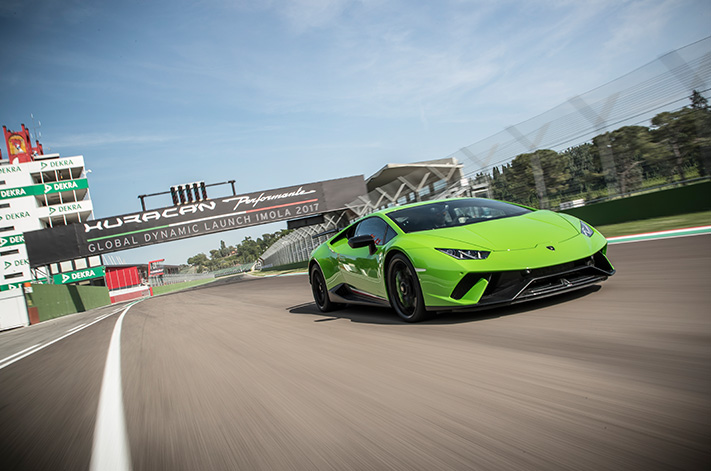
Can you sense the active aero working? Hm, not really. The only indication that there’s aero witchcraft afoot is that the Performante is visibly more planted and composed than Fasanette in the lead Huracan.
Traditionally the trade-off to this kind of on-track performance is a bone-crunching ride on the public road. And yet, on the chipped and craggy tarmac around Imola, the Performante does a commendable job of soaking up bumps and deep imperfections. Every car at the launch was fitted with optional magnetic dampers and in comfort-orientated Strada mode there’s little loss in ride comfort compared to a regular Huracan. Things do deteriorate in Sport and Corsa, but even then, the suspension never crashes through.
And unlike the interiors of many track-honed specials, which are about as comfortable as a Nigerian prison cell, the Performante’s cabin doesn’t compromise on comfort. Lashings of forged carbon line the dash, doors and centre console, but creature comforts like air-con and sat-nav remain.
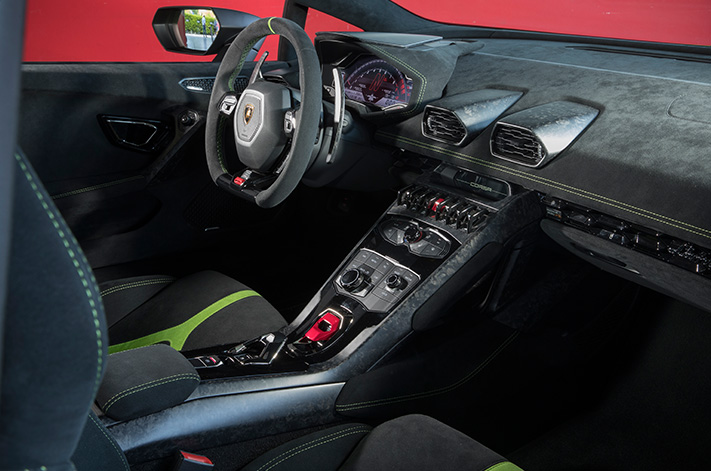
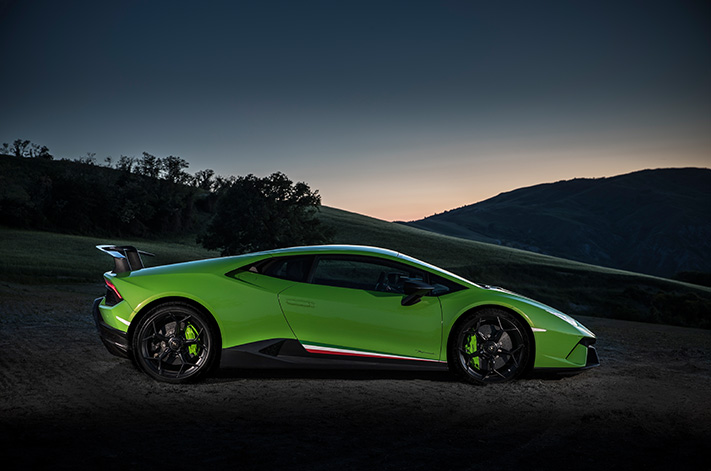
The Performante, then, is much more than just track toy. Yes its active aero tech pushes the supercar envelope, and there’s enough genuine dynamic talent to trouble its competitor set from Porsche, Ferrari and McLaren. But this remains a car that you could happily use every day. And that, more than anything else, speaks to the achievements of the engineers from Sant’Agata.
In fact, the Performante is so well-rounded that I can’t help feeling there’s room to create an even harder, rawer and more uncompromising version to sit above it. One with more noise, less weight and power sent solely to the rear axle. Now imagine that.
You might find this difficult to believe, but not everybody is particularly good at their jobs.
No really. The bloke who originally plumbed my house, for instance, should be lined up against a wall and beaten with a length of the same dodgy galvanised water pipe he managed to scatter haphazardly under the dump at 13 Struggle Street. Ditto for the genius that `fixed’ my roof gutters a while back. Fixed so they all fell off within two years of him disappearing with my cash.
And this’ll kill you, but not all motoring journos have the faintest idea of what they’re talking about. I’m not going to tip the bucket on individuals, but it’s fair to say that within the corps of motoring scribblers (globally, not just here, I should add) there is a percentage of no-hopers, dills, drop-kicks and con-artists. Many of them have not the first clue of assessing a car new or old, and many of them aren’t even real journos.
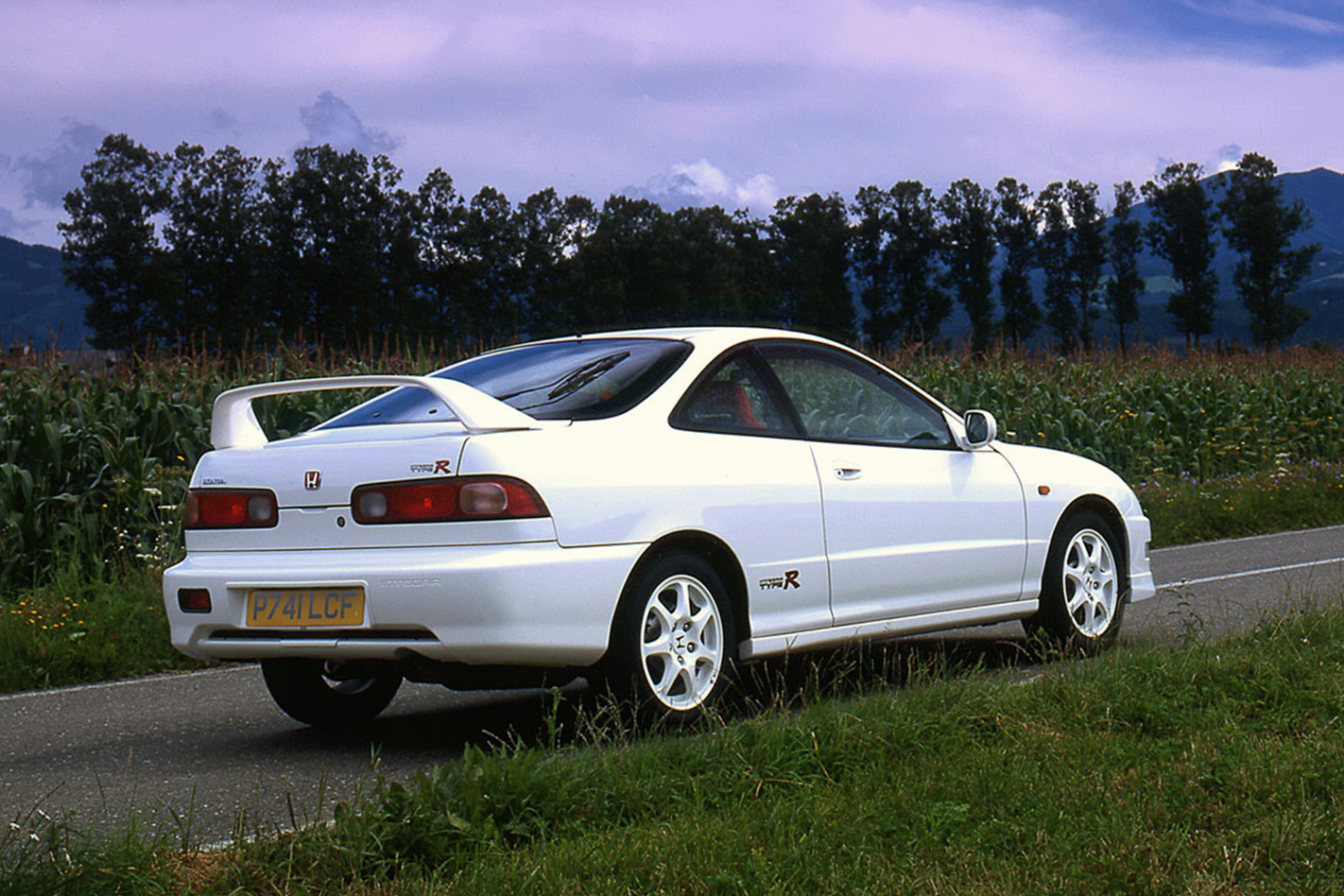
For this reason, I’ve always been suspicious of motoring journos who don’t own their own cars. There are two main reasons for this. The first is that many of them choose to rely on press-test vehicles purely because they can’t afford to run their own wheels. My response to this is that they must be fairly hopeless scribblers to be in a position where they can’t afford the basic transport requirements that the rest of the first world seems to be able to cover.
Secondly – and more importantly – if they really do possess the passion they all profess to be consumed by, wouldn’t they want even a humble slice of it for themselves? Do you reckon there’s a single gardening journo out there who doesn’t at least own a potted plant? Or a tech journo who doesn’t have a house full of gadgets?
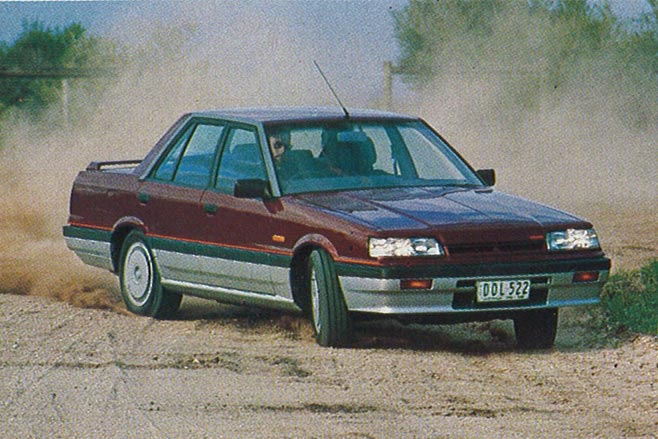
Scotty spent last year flogging a rally-prepped Hyundai Excel through the forests of Victoria. As anybody will tell you, rallying is a great way of rolling a Hyundai into a ball, but Scotty managed to keep himself nice and had a ball doing it. His road car is an ageing, stolen-and-recovered, R31 Skyline. It’s 50 shades of red and has a vintage whine in the diff, but Scotty loves it.
And then there’s the boss-cocky, the almost impossibly youthful Dylan. I’m always chuffed when a young fella `gets’ the concept of a car worth preserving and, after a series of things like Daihatsu Charades (the classic gets-me-to-uni car) Dylan recently bought a grey-import Toyota Sprinter.
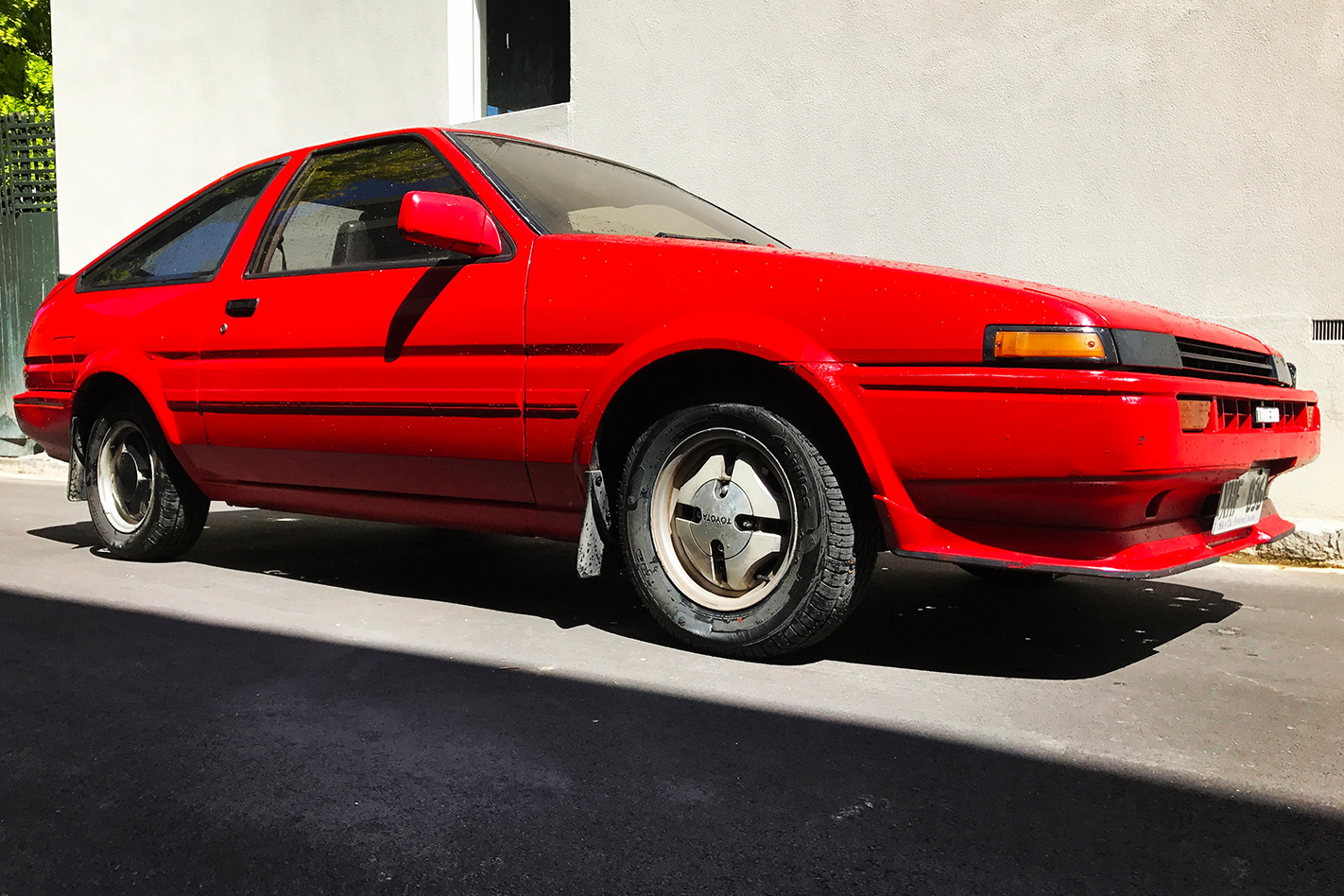
All these staff-owned cars combined would probably still get you change from $20K, but they’re absolutely crucial to the way this magazine works and reads, because they’re a function of the passion and commitment among the blokes who put the mag together in the first place. And the lads who own them regularly get their own mitts dirty spannering them up. Just bear that in mind next time you’re reading a road test.
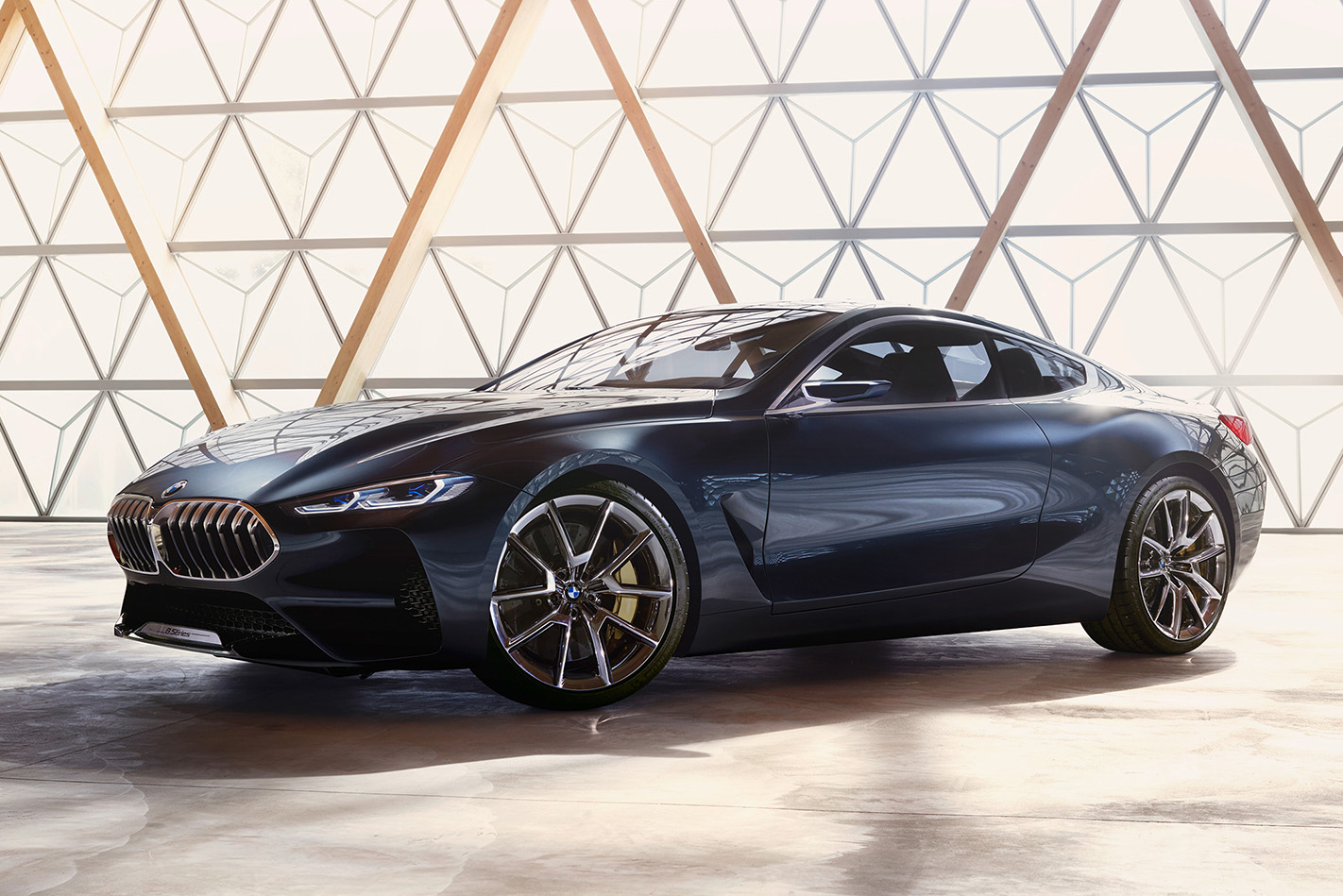
BMW has wheeled out its Concept 8 Series at the Concorso d’Eleganza Villa d’Este, revealing a sleek design study of a luxury two-door flagship coupe that the company freely admits is destined for the production line in 2018.
Reviving the 8 Series nameplate – a moniker last applied to a production BMW back in 1999 – the Concept 8 Series also previews the latest interpretation of BMW’s ever-evolving design language.
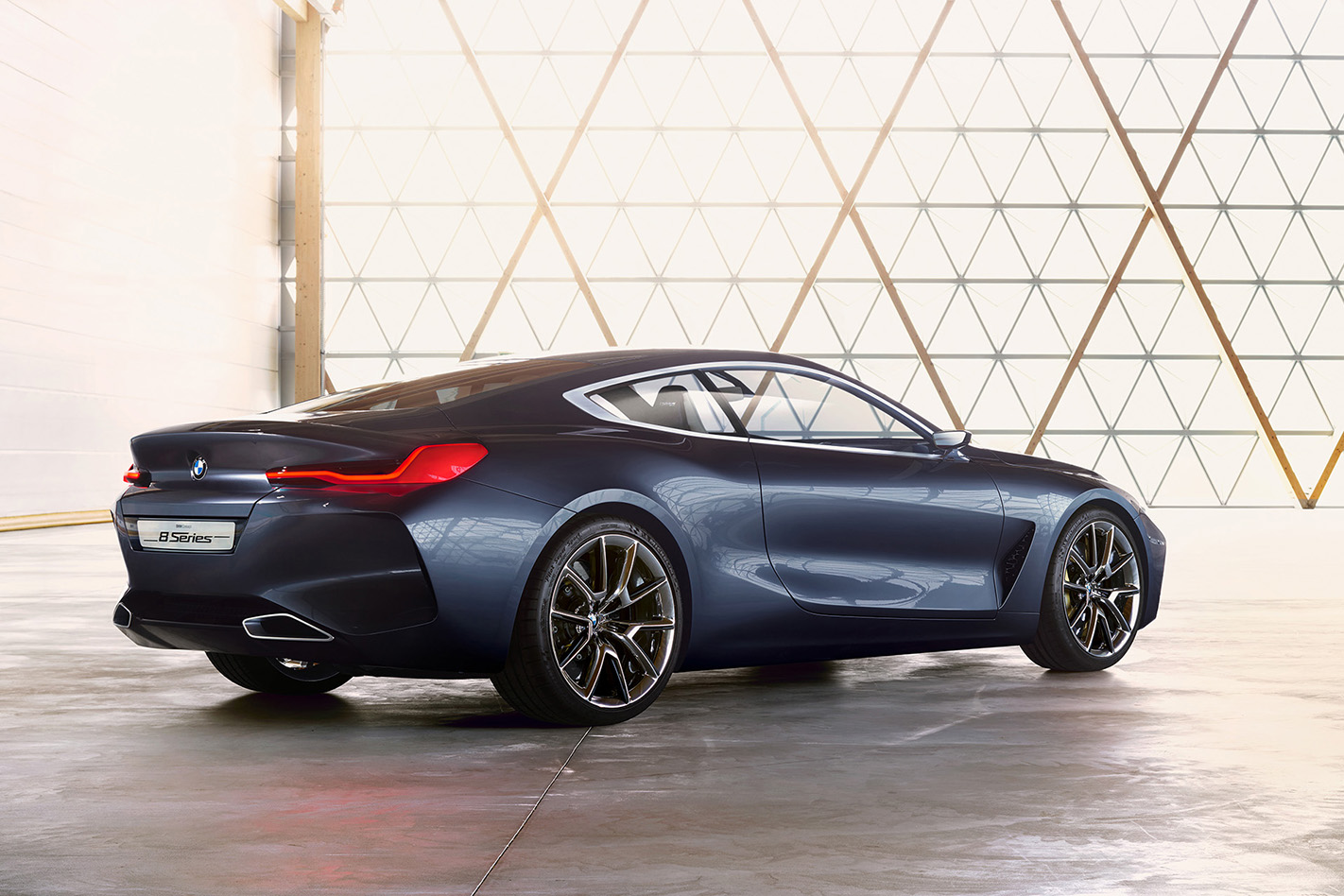
“It is a luxurious sports car which embodies both unadulterated dynamics and modern luxury like arguably no other. The design of the BMW Concept 8 Series provides a fresh interpretation of iconic BMW styling cues.”
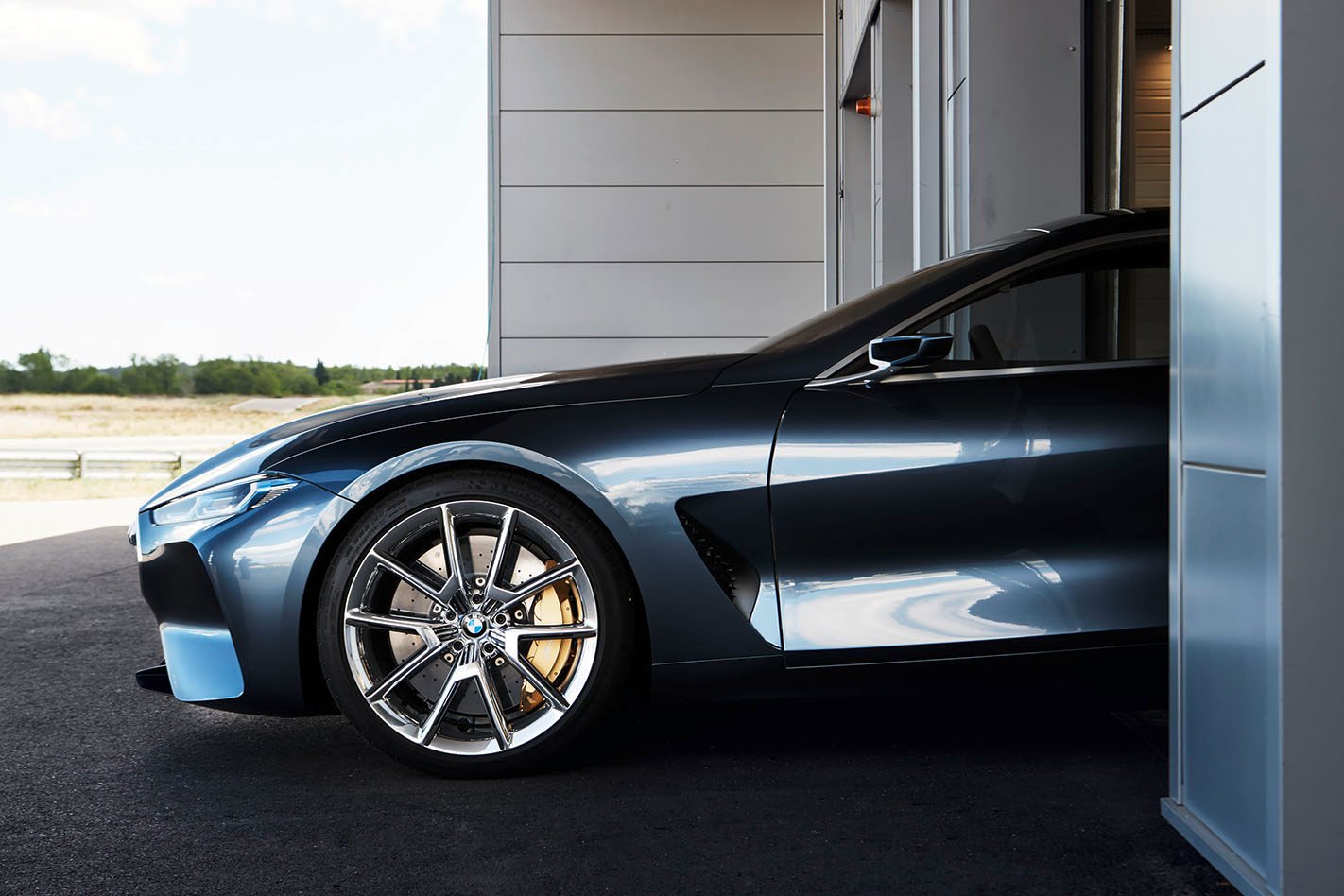
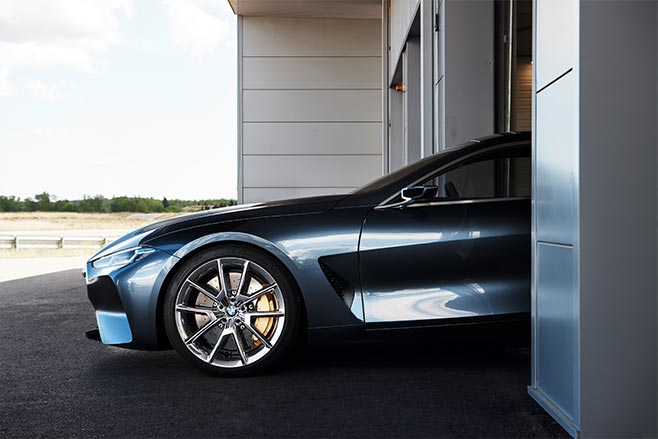
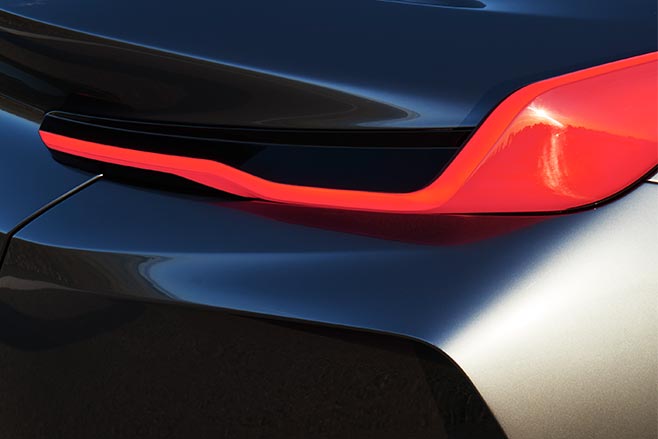
Laser headlamps, 21-inch alloys and set of bold LED light tubes for the tail lamps are other design highlights. BMW has yet to release official imagery of the Concept 8 Series’ interior, but it describes the car’s cabin as one that envelops the driver, with key controls all put within an easy arm’s reach.
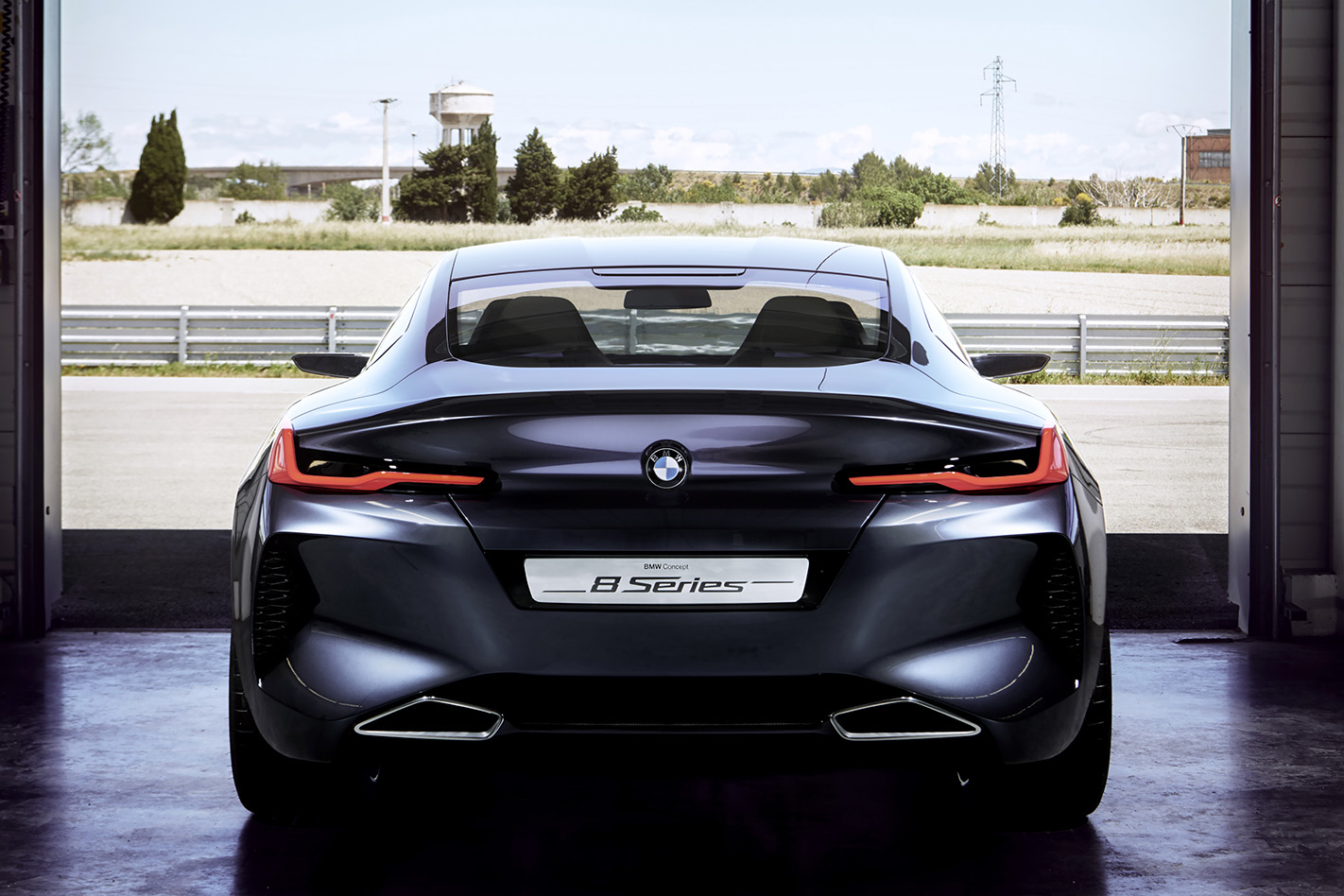
Technological details aren’t mentioned in BMW’s official release – the emphasis for now is on what the car looks like, not what makes it hum. That said, the company asserts that the Concept 8 Series flaunts a traditional rear-drive layout and that the production car will boast “razor-sharp dynamics”.
For a hint of what’s to come, take note that BMW has already been caught applying for trademarks on the 825, 830, 835, 850, 845, 860, M8 and M850 names. When it comes to market, the successor to the original 8 Series should be a much broader offering this time around – including the potential for a potent new M8 supercar flagship.
WHAT IS IT?
The second-generation, five-pot turbo flagship of Audi’s iconic TT, now offered in both Coupe and Roadster variants.
The previous-generation TT RS looked great on paper, but one-dimensional, point-and-squirt handling meant it wasn’t a car to steal your heart. We want to know if the new version translates better on Aussie roads (and track.)
MAIN RIVALS
Porsche Cayman S, Jaguar F-Type V6, BMW M2, Mercedes-Benz SLC43 AMG
THE WHEELS VERDICT
The TT RS sets out to seduce with stunning exterior design, a sublime interior, and class-leading performance. It mostly succeeds, although purists may crave a little more interaction and adjustability.
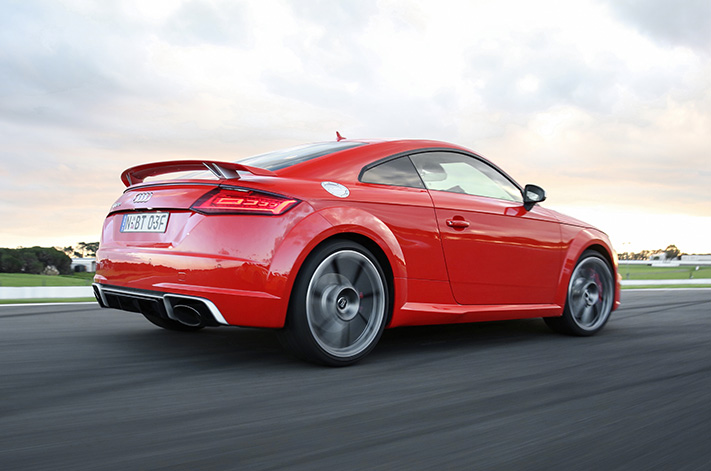
PLUS: Ultra-rapid; wonderfully vocal engine; brilliant brakes; great body control, high equipment levels, benchmark interior design and quality
MINUS: Ultra-firm ride with dampers in dynamic mode; not as throttle adjustable as rear-drive rivals
THE WHEELS REVIEW
Nostalgia, according to the old adage, just ain’t what it used to be. But that’s no reason for us not to extend a nostalgic rearward glance at Audi’s history with the in-line five-cylinder engine, given that it now arrives in freshly rejuvenated form here in the second-generation TT RS.
Fact is, it’s the turbo five-pot that really defines the RS variant of Audi’s now-iconic coupe, and the moment you hear its raspy, hacking crackle on start-up, you realise it provides the pivotal point of difference between this flagship variant and the ($37K cheaper) turbo-four TT S.
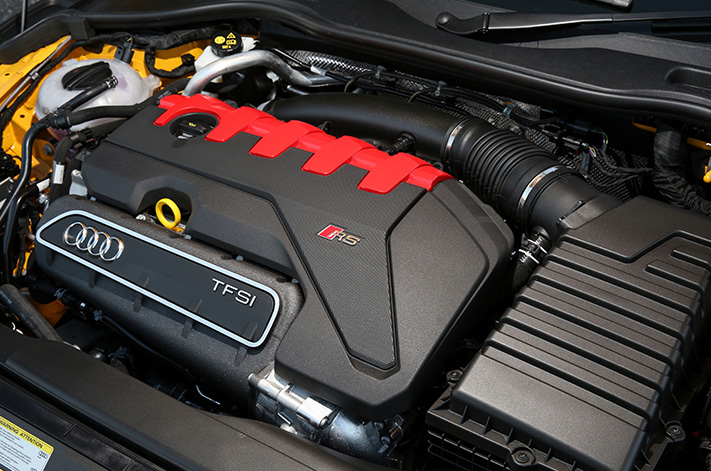
But let’s not forget the Audi 90 quattro IMSA GTO of the late ’80s, bristling with pumped arches and slamming around 530kW to all four corners. Or the RS2 of ’94, with its Porsche co-development collaboration.
It helps to buy into the five-pot history at least a little, because the TT RS really is defined by this new-gen engine. It retains the architecture and capacity of the previous-gen, but is lighter, spins more freely, and improves both outputs and efficiency. The weight cut comes with the use of aluminium for the block (replacing cast iron) and additions such as the magnesium sump, which collectively shave 26kg.
Its peak power looks pretty damn generous at a Cayman S-clobbering 294kW, but perhaps more impressive is the plateau it manages to sustain, from 5850rpm, and hanging on all the way to 7000rpm. Real-world upshot is that this is a turbo engine that digs in early – peak torque of 480Nm is there from 1700rpm – but still has an ultra-eager top-end, rather than a slightly anti-climactic six-grand breathlessness.
The initial bark on start-up has an almost junior Lamborghini flamboyance to it, which is probably appropriate, given the engine is precisely half of the 4960cc V10 that powered the original Gallardo, right down to identical bore and stroke.
Throttle tip-in and low-speed refinement of the revised, lighter seven-speed dual-clutch gearbox is exceptionally well mannered; not quite as seamless as a torque- converter auto, but not far short. Launch control is there if you feel inclined, and is integral to the claimed 3.7sec 0-100km/h time.
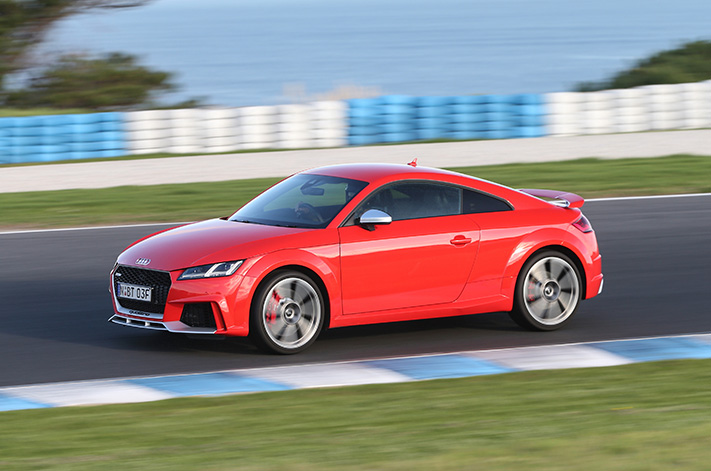
Speaking of which … we sampled both Coupe and Roadster on the sublime Phillip Island GP circuit, and came away impressed with both variants’ pace, power-down capability, planted fast-sweeper composure and stopping power.
However, if you want the ultimate in fingertip finesse and engaged rear-end; if you live for power oversteer and hip-pivoting samba, then the TT RS may not be the perfect fit. The steering is quick at 2.0 turns lock to lock, and has reassuring weight even in the lighter of its two modes. But while it’s way better than the synthesised feel of the first-gen TT RS, it’s still not an especially detailed or nuanced communicator.
So while there’s abundant front-end purchase, you’ll sense the slip angle more through the seat of the pants than the wheel. Barrel in hot and lift, and there is the first inclination of the back end wanting to help tighten the line, but the ESC, even in dynamic mode, quickly moves to quell it, and keeps the throttle cut for a moment longer than seems necessary.
So the TT RS becomes a tool that requires a very precise touch, rather than encouraging too much creative exploration of line and angle. At least you can get on the throttle nice and early, and the Haldex-type all-wheel-drive system does an excellent job of taking the chassis from a front-driver when lightly driven to a super-tractive all-paw bolter when you’re up it.
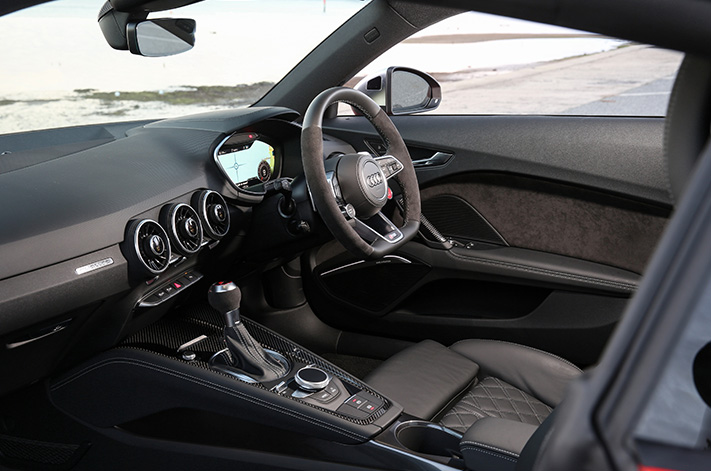
Fortunately the Drive Select allows discrete control over all the key parameters, and creating an Individual configuration that teams regular steering and suspension settings with sports powertrain and quattro, along with an open exhaust flap, quickly became our road set-up of choice. The standard 380mm steel front discs, clamped by massive eight-piston calipers, copped track abuse with little complaint, so are all you’ll ever need on the road.
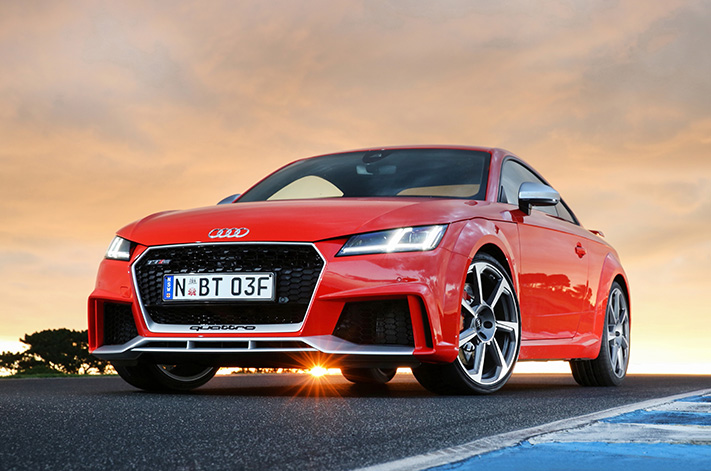
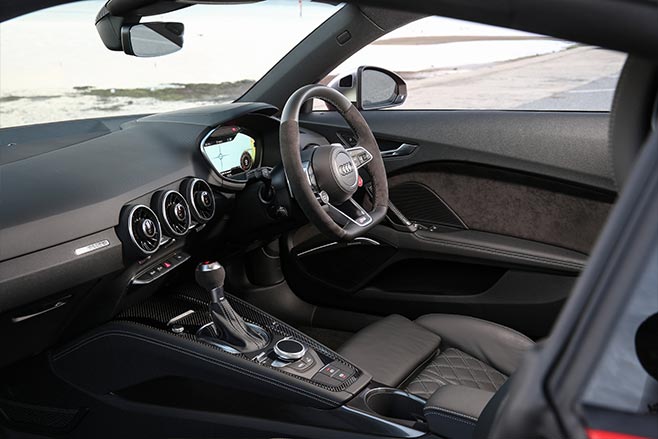
Same-size carbon-ceramic front rotors are on the options list for $8900 if your hip pocket runs as deep as your late braking. All of which may do little to dissuade enthusiasts from lusting after a Porsche Cayman S, but the flipside is not quite so clear cut. The Audi makes a stronger case now on both cylinder count, engine outputs, and arguably design elements. The TT RS is a stunning looking car, and its interior, with RS-specific seats and wheel, oozes a style and seduction factor the Porsche can’t match.
So … faster, better, cheaper, and now with a soft-top Roadster option. No need for a nostalgic yearning for the ‘good old days’ then.
SPECS Model: Audi TT RS Coupe 2.5 TFSI quattro S tronic Engine: 2480cc 5-cyl, dohc, 20v turbo Max power: 294kW @ 5850-7000rpm Max torque: 480Nm @ 1700-5850rpm Transmission: 7-speed dual-clutch Weight: 1585kg 0-100km/h: 3.7sec (claimed) Economy: 8.4L/100km Price: $137,900 On sale: June
SPARE a thought for the plucky Audi TT. The swoopy little coupe soldiers bravely on, despite globally softening sports car sales, serving up a combination of two-door, two-plus (not really)-two yuks and sedately turbocharged four-cylinder goodness for almost twenty years.
There have been a few exceptions to the rule over the years, culminating in the final fling for the second generation TT, 2012’s RS Plus. Thanks to a 2.5-litre 20-valve turbo five-potter boasting some serious heritage, it offered 265kW and 465Nm, and punched out the dash to 100km/h in 4.1 seconds.
Handy. In fact, it’s the engine that essentially defines the TT RS; stick a turbocharged four-cylinder thing under the bonnet, and its mojo would be gone.
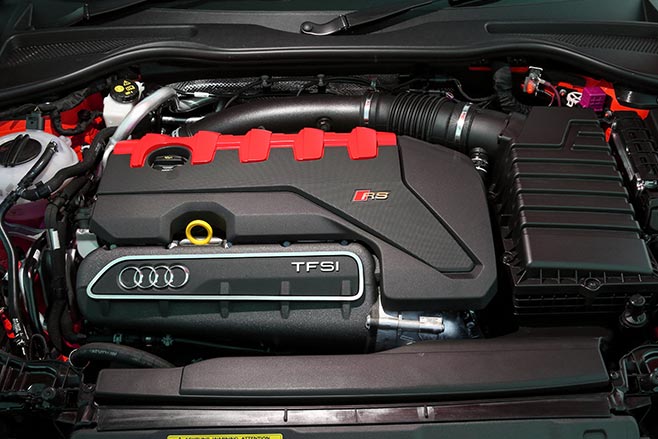
The new engine –also seen under the bonnet of the RS3 – now weighs an astonishing 26kg less. Twenty. Six. It now makes more power (294kW) and more torque (480Nm) than the previous engine, too, with a flat torque curve and, unusually for a turbo engine, a high power peak.
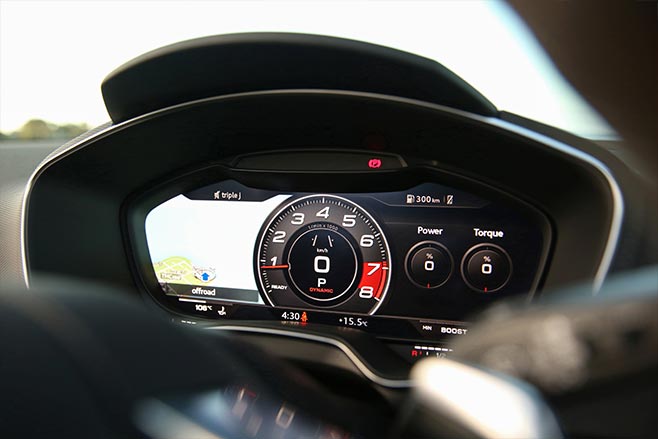
Thumb the red button on the wheel, and the five-potter responds with an agreeably strident bark from its dual pipes.
Its rich, warm baritone belies its turbo origins, and is made louder by the stock switchable bi-modal exhaust. No artificial augmentation is present – or needed.
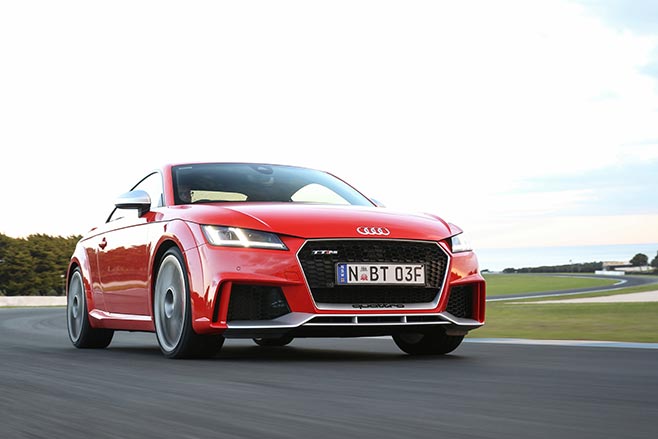
On a wettish road loop, the TT RS reveals itself as a calm, competent and confident back road companion with a little bit of attitude.
Not a lot, mind – the aural theatre of the staccato exhaust and the muscular delivery of the five-pot motor aren’t quite matched by the benign, restrained attitude of the TT’s MQB-based underpinnings. It’s got loads of ability, sure, but it faithfully awaits inputs and direction, rather than leading from the helm.
The relatively unsophisticated Haldex all-wheel-drivetrain does its best to feed torque to where it’s needed, but its outputs are granular and obvious, somewhat negating the TT’s low centre of gravity, wide tracks and minimal overhangs.
Push the 20-inch Pirelli P Zeros too hard and the front end cedes first, electronic intervention stepping in surprisingly late in the game.
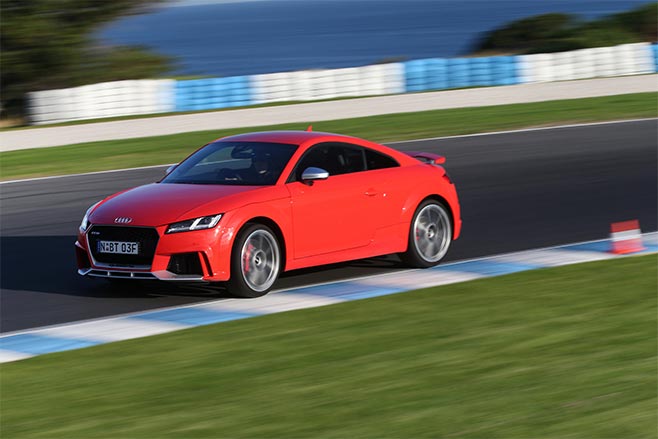
Its chassis works with you when you’re stroking it along, too, flowing from one turn to the next, with the adaptive dampers crashing only through the sharpest of bumps.
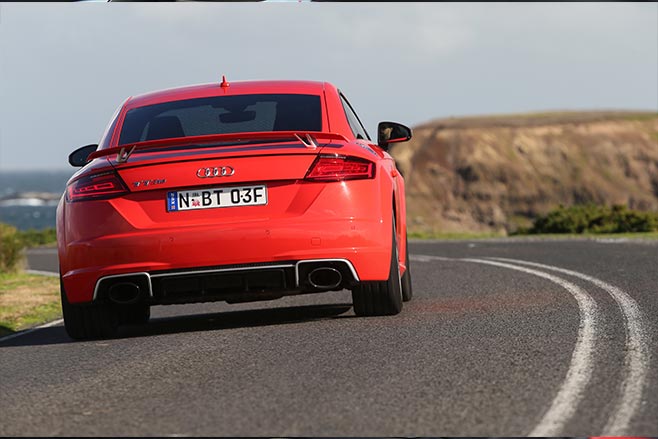
All that, and it’s cheaper (and lighter) than the last version of the TT RS. In fact, it’s a downright bargain for a sub four-second all-paw car with 270kW of aural attitude and genuine badge cachet.
LIKES
Serious firepower for not a lot of cash
DISLIKES
Could be more engaging chassis-wise
Specs:
Engine 2480cc 5cyl, DOHC, 20v, turbo
Power 294kw @ 5850–7000rpm
Torque 500Nm @ 1700–5850
Weight 1440kg
0-100km/h 3.7sec (claimed)
Price $137,500 (7spd auto)
IF you’re shopping for a feisty all-paw turbocharged performance car, maybe hold out until the start of the financial year before pulling the trigger on a Subaru WRX or WRX STI.
Both models are in line to receive their respective facelifts in July, and in the STI’s case at least, the changes are more than just cosmetic.
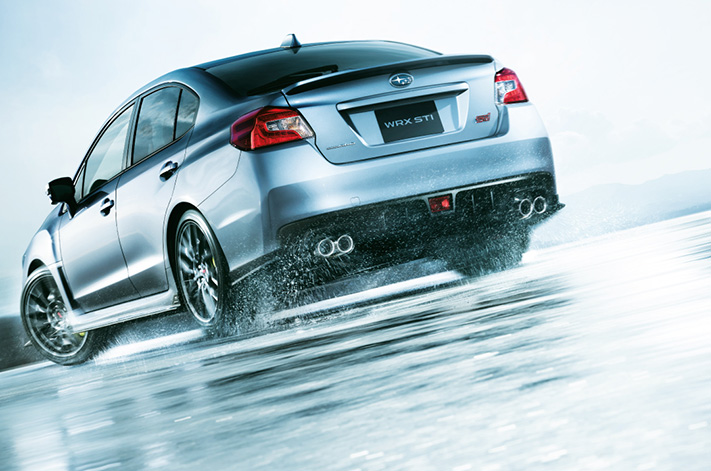
Engine changes are expected to be minimal for this mid-life update, with peak output figures carrying over unchanged. The WRX STI’s drivetrain, however, will adopt a new electronically-controlled DCCD centre differential, which promises better driveability and flexibility than current hardware, along with improved cornering performance.
Australia’s answer to Ken Block
A six-speed manual will remain the sole transmission option, while the WRX will continue to be offered with either a six-speed manual or a CVT automatic.
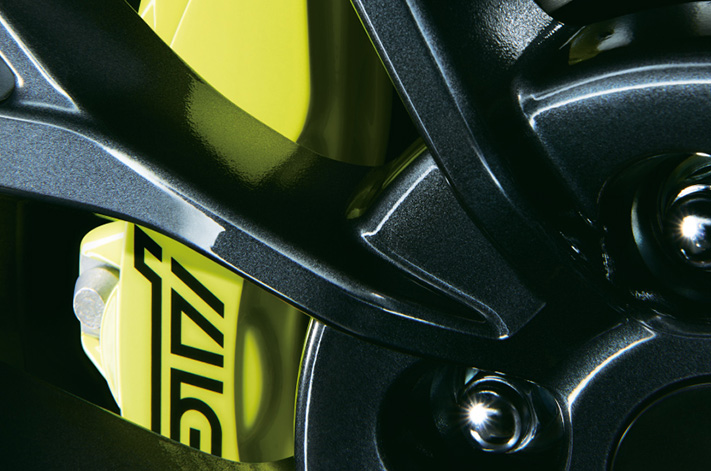
On the high-grade Japan-spec STI the wheel size swells to 19 inches, though tread width remains at 245mm. According to homologation documents seen by Wheels, big wheels are in store for high-spec Aus market WRX STI Premiums.
Japanese-market STIs will sport red seatbelts, updated cabin plastics with a more “premium feel” and a 9-inch colour touchscreen infotainment display, though that last one may not make it to Australia as a replacement for the current model’s 7-inch unit.
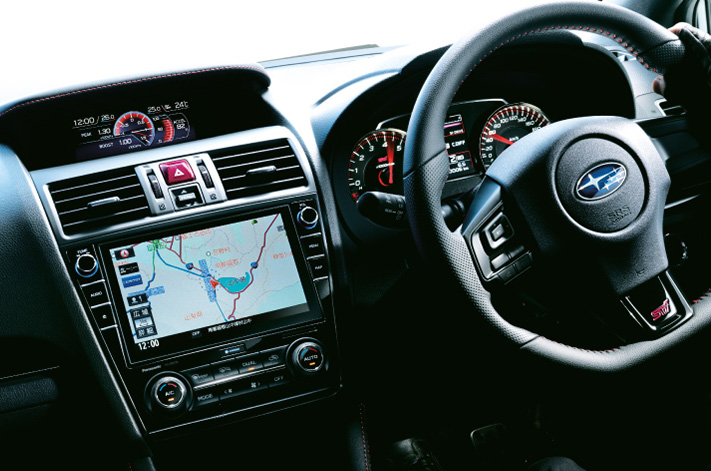
Unfortunately, pricing for either the WRX or WRX STI is still a closely-guarded secret. Subaru Australia refuses to comment, but with an on-sale date that’s just over a month from now we won’t have long to wait.
The upcoming Hyundai Kona baby SUV has been teased again – this time in a series of official – and somewhat strange – Korean videos.
Hyundai’s new rival for the likes of the Mazda CX-3, Honda CR-V and Toyota C-HR is represented with fruit-, egg- and Hawaiian-inspired themes in a handful of short video teasers.
The Hawaiian theme at least makes sense in that the Kona is named after one of the US island state’s districts – following the geographic focus of Hyundai’s other SUV names, the Tucson and Santa Fe.
A relatively normal video among the set at least provides the first partly-detailed look at the Kona’s sporty profile – confirming the “aggressive styling” promised and revealing a rear roof spoiler and contrasting black roof.
Other design details for the five-door Kona include narrow twin headlights, Hyundai’s signature ‘cascading’ grille, LED daytime running lights, and creased bonnet lines.
Hyundai has already confirmed the Kona will be available in both front-wheel- and all-wheel-drive configurations, though local specification has yet to be locked in.
The SUV is also understood to be closely related to the latest, just-released i30 – and would thus be expected to feature the small car’s four-cylinder petrol and diesel engine range under its bonnet. They include a 120kW 2.0-litre petrol, a 100kW 1.6-litre turbo diesel, and a 150kW turbocharged direct-injected 1.6-litre.
Gearboxes are accordingly likely to be familiar, with a mixture of six-speed manual, conventional six-speed auto and fancier seven-speed dual-clutch auto.
Hyundai’s most compact SUV is tipped to be a bit larger than the CX-3, offering hope that it will offer greater practicality for families than the otherwise impressive (and segment leading) Mazda.
The Hyundai Kona is due to be unveiled during the European summer and is set for an Australian launch later in the year as one of 30 new models and derivatives planned to land in showrooms by 2021.
Hyundai’s sister brand Kia will produce a twin to the Kona, though the model will arrive no soone than 2019.
IMAGES claimed to be of the BMW 8-Series concept have emerged before tomorrow’s official reveal at the Concorso d’Eleganza Villa d’Este in Italy.
Revealed on motoring website Carscoops, the pictured car features the same bulging rear wheel arches alluded to in a recently released teaser image, along with a low-slung roofline and long bonnet.
What the teaser image didn’t show was the scooped out fender vents and huge kidney grille flanked by slim headlights and gaping air intakes.

A precursor to the new-generation 8-Series production model which will be launched next year, the Bavarian carmaker says the 8 Series concept car “embodies uncompromising dynamics and contemporary luxury – the essence of a modern BMW coupe.”
When announcing the all-new 8-Series earlier this month, BMW chairman Harald Krüger revealed the company’s high hopes for the luxo coupe, describing it as a “genuine dream car” that “will underpin our claim to leadership in the luxury segment”.
We only have to wait till tomorrow for more details, which is nothing compared to the 20-year wait since BMW last produced a car with an 8 Series badge. But if you feel like speculating on what’s in store for the production version of BMW’s two-door flagship, the German carmaker has already trademarked a series of names including 825, 830, 835, 850, 845, 860, M8 and M850 – the last two being of most interest.
Holden’s final US-bound Chevrolet SS has been built, marking the end of the Australian export program.
The final Chevy SS was ‘Phantom Black’, and its LS3 was hooked up to a six-speed manual ‘box.
A Holden spokesperson says that one of the last built had some extra personalisation after a request from its buyer.
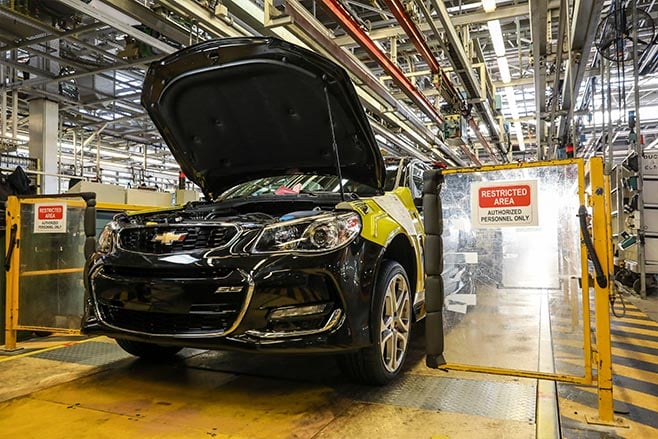
The manufacturing team at Elizabeth obliged, and signed under the bonnet and on the deck lid carpets.
“This is a great example of the pride the manufacturing team has in the product they build, as well as the respect that our US customers have for the great quality car we make for them.”

US outlet Road and Track recently wrote: “The SS will be sorely missed by the few that recognised its charms. It’s so good, we deemed it worthy of comparison to the all-time benchmark sports sedan, the E39-chassis BMW M5.”
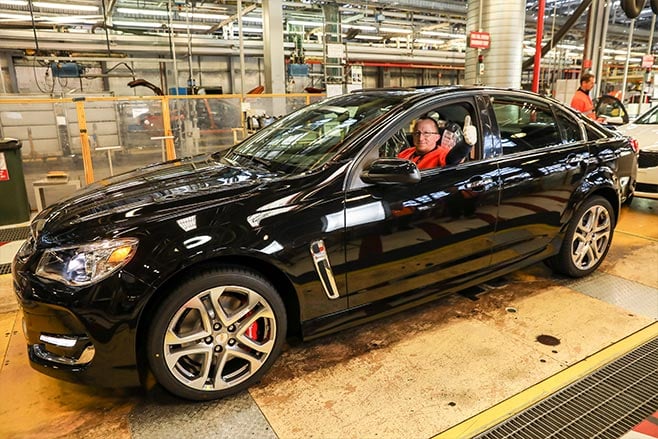
So low, in fact, that dealerships dropped the price to US$39,932 (A$52,770). Dealers in Australia are banned from applying similar discounts to local Commodore SS models, though huge demand means they are unlikely to need to.

A total of 7305 police Caprices were built here, with 652 of those in the last 12 months.
For the cars that are to stay on home soil, the final build date is October 20, 2017.
