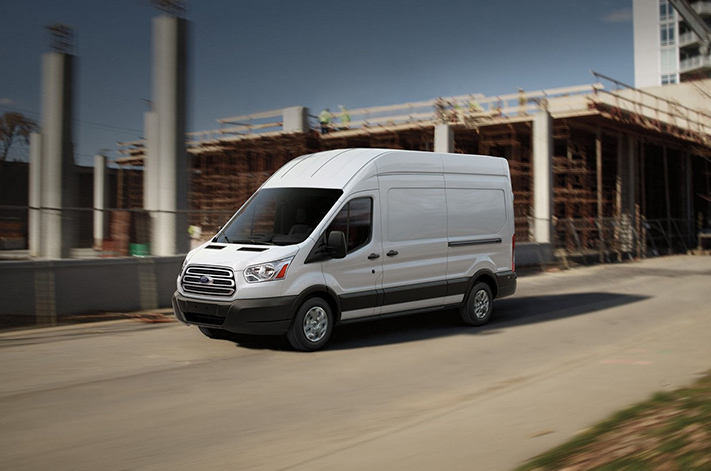
Ford’s most famous commercial nameplate gains the crucial auto in combination with a 2.0-litre ‘EcoBlue’ turbo diesel engine for both the higher-roofed Transit and the more compact Transit Custom.
The auto is standard on the new, front-wheel-drive version of the Transit 350L, which costs $51,380 compared with the $47,680 rear-drive Transit 350L RWD that carries over a 2.2-litre turbo diesel with six-speed manual.
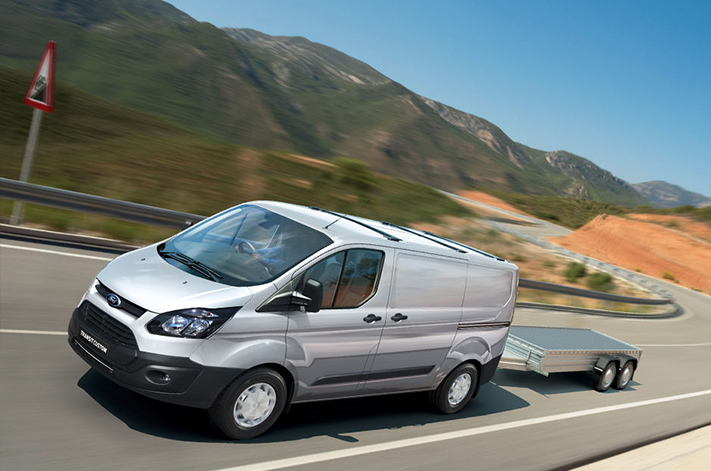
Swapping the Transit Custom’s standard six-speed manual for the six-speed auto costs $2750. The Custom starts from $39,690 and continues to be offered in 290S form or the longer-wheelbase 340L, which carries a $2000 premium.
In the Transit, the EcoBlue engine produces 125kW and 405Nm – power and torque increases of 10 and five per cent. The maximum torque is available from just 1500rpm, until 2000rpm.
The Transit Custom’s version serves up improved outputs of 96kW (up 4kW) and 385Nm (up 35Nm), with fuel efficiency for the manual variants improving by 11 per cent for both the 290S and 340L. Official fuel consumption for the auto is rated slightly higher, at 7.2 litres per 100km.
The new diesel requires AdBlue fluid, which helps to convert smog-causing emissions into less harmful nitrogen and water. Owners are alerted to a low level, when the fluid can be topped up via a separate filler hole behind the fuel cap.
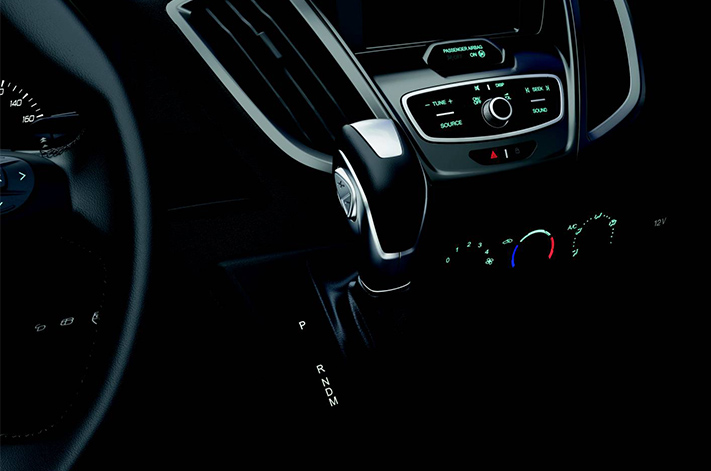
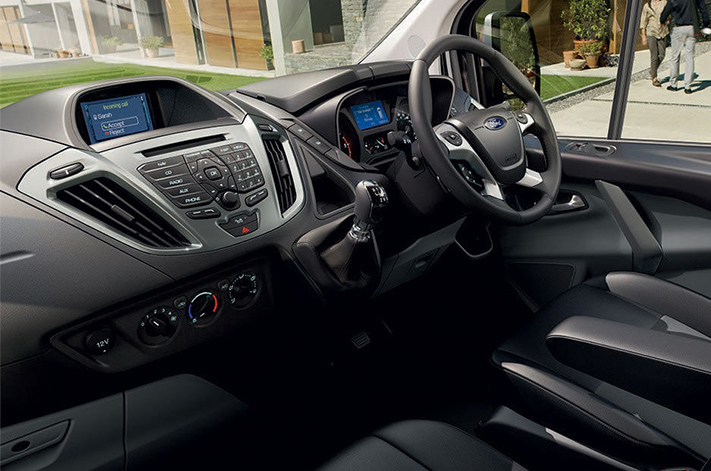
EcoBlue versions of the Transit feature a 4.0-inch TFT multi-function colour display, where other variants continue with a 3.4-inch LCD version, and adopt Side Wind Stabilisation.
The system uses sensors to detect crosswinds or the effect of a fast-moving passing lorry, subtly braking either the left- or right-side wheels to help keep the Transit in its lane.
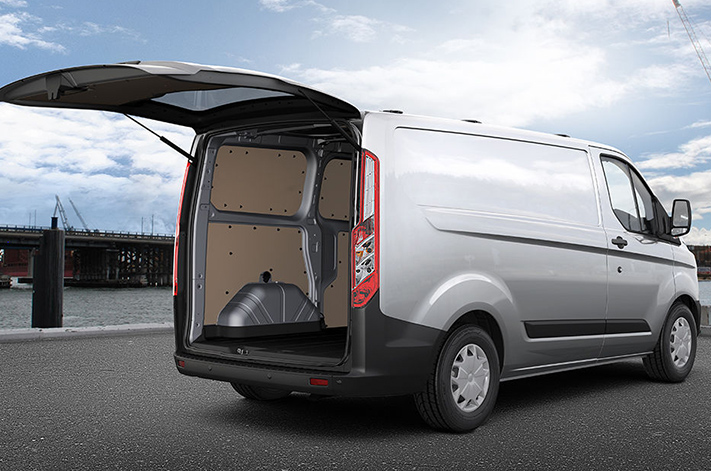
A $2100 City Nav Pack available for EcoBlue Transits comprises Sync 3 infotainment system (with 5.0- or 6.0-inch screen depending on model), navigation, front and rear sensors, and rear-view camera (with larger display than previously offered).
Other options include $550 Dual Side Load doors that ensure kerbside van access at all times, and a $1500 Rear Liftgate Door for the Custom. The optional tailgate can stay open at a 90-degree position to provide both shelter (from sun or rain) and easier access to the rear.
Transit and Transit Custom EcoBlue buyers also benefit from increased warranty and servicing. Warranty mileage is doubled from 100,000km to 200,000km, with the same three-year limit. The recommended standard service interval is also doubled, from 15,000km to 30,000km – within 12 months.
Rear-wheel-drive versions of the Transit van continue in 350L, 350E Jumbo and 470E Jumbo forms, while single and cab chassis and 12-seat bus also remain in the range.
Stuttgart’s most extreme 911 has been spied testing again, with its radical aero looking closer to production-ready than the last time it was spotted in the wild.
Officially, all we know about the 991.2-generation Porsche 911 GT2 is that it’s coming. Porsche boss Oliver Blume confirmed as much at the Geneva motorshow.
Everything else is under wraps until a proper reveal, expected later this year, but multiple sightings at the Nurburgring have given away enough to have Porsche fans worldwide going ape.
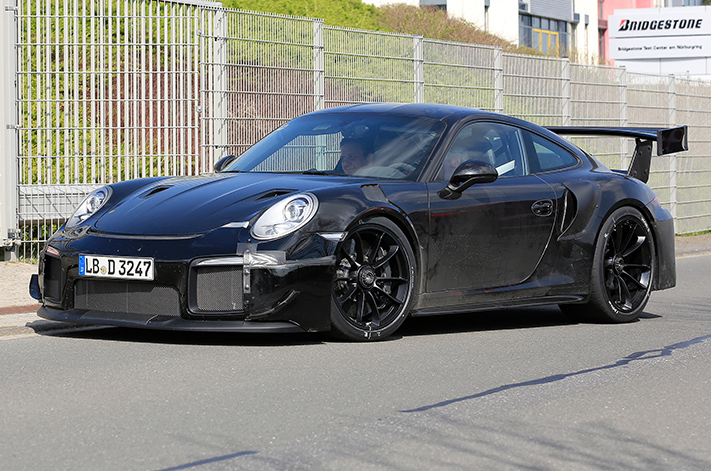
The front bumper has also lost the vanes seen previously inside its three huge openings and appears much closer to what the real thing is expected to look like, though its mesh inserts are still partially covered on either side by taped-on carbonfibre canards, added to increase front-end aerodynamics.
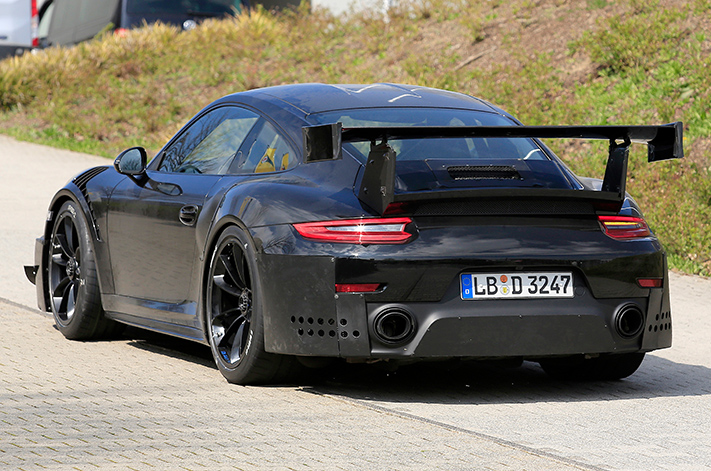
Other noteworthy elements include a bigger splitter protruding from the chin of the front bumper and NACA ducts in the ‘frunk’, venting air to key componentry to support its expected output of 500kW.
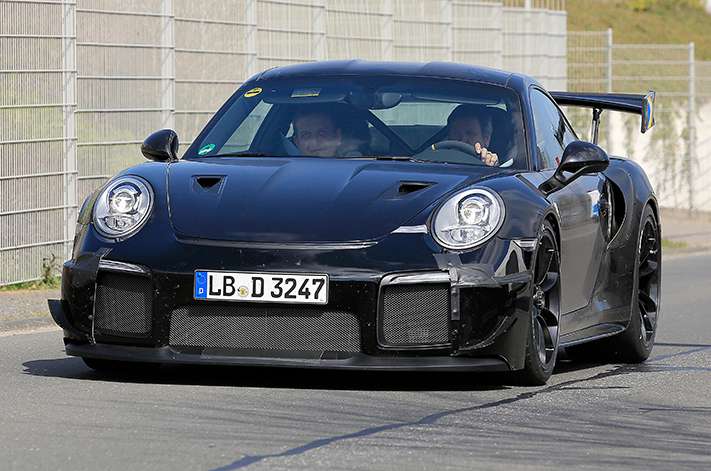
A more heavily boosted version of the 911 Turbo’s 3.8-litre twin-turbo flat-six engine will sit in the rear, driving the back axle exclusively. Only a PDK dual clutch transmission will be available, though it will feature more closely stacked gear ratios and even faster shifting than before. Rear-wheel steering is expected, and likely necessary for managing the car’s monstrous torque.
Porsche last released a GT2 with the 997-generation of the 911 back in 2007. A GT2 RS was added in 2010 and it remains the most powerful ever production 911 with outputs of 456kW and 700Nm – but all that will likely change when the ‘widowmaker’ returns in early 2018.
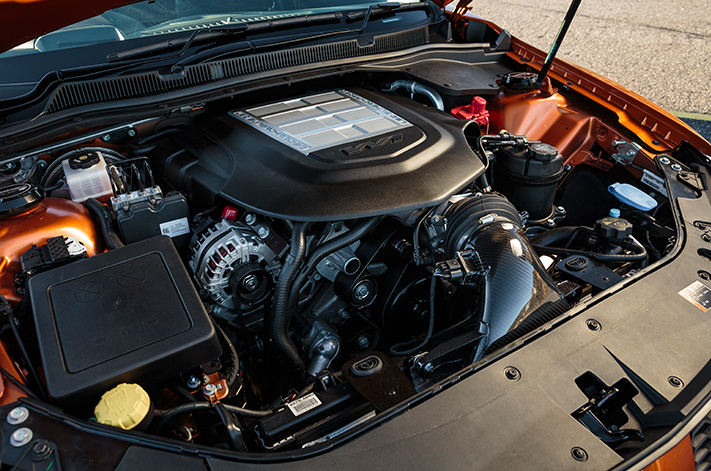
So this is it, then. The HSV GTS-R W1, a 474kW, 815Nm, tyre-frying knees-up as the curtain comes down. It’s impossible not to feel a tug in the gut, though.
We all know large, locally built rear-drive three-box sedans are about as relevant as a Nokia 3210 these days, and as popular as gout, but it seems tragic that the mainstream swing towards SUVs and small cars has claimed the scalp of the great Aussie sports sedan.
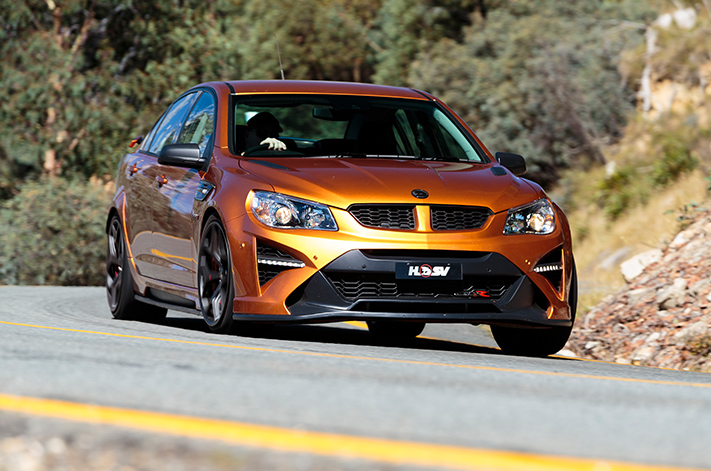
Editor Inwood’s arrival in the W1 snaps me from this moment of quiet contemplation. Very considerately, he treats the neighbourhood to a bit of second-gear wide-open throttle, and as shrieking birds take to the skies, it’s enough to make you want to cheer and sear a Southern Cross branding iron into your chest.
2017 HSV GTSR and GTSR W1 review
Our first task is to deal with HSV’s request to add only 1000km to the car’s odo. Inwood’s idea is to simply trailer the W1 to the prime driving roads but dragging it around on a trailer feels a bit like Danny Green being pushed into the ring for a title fight in a wheelchair, so, y’know, his legs don’t get tired too soon.
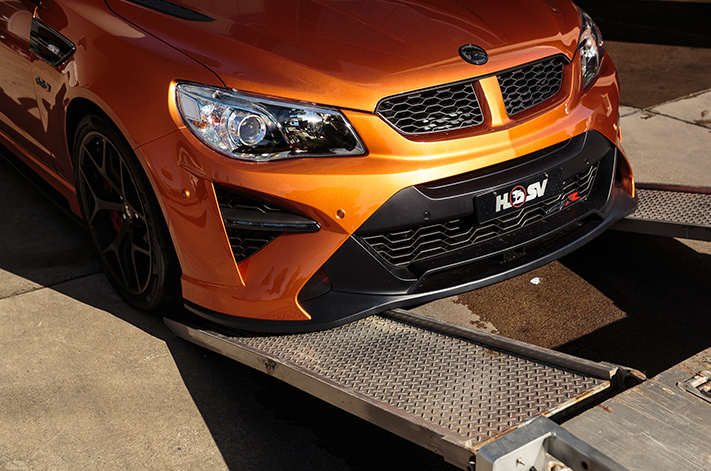
We can’t give you all the goods on the W1 just yet, but if you want a good idea of what to expect from Ash and Alex’s epic drive that will feature in the June edition of Wheels, check out our video for a preview.
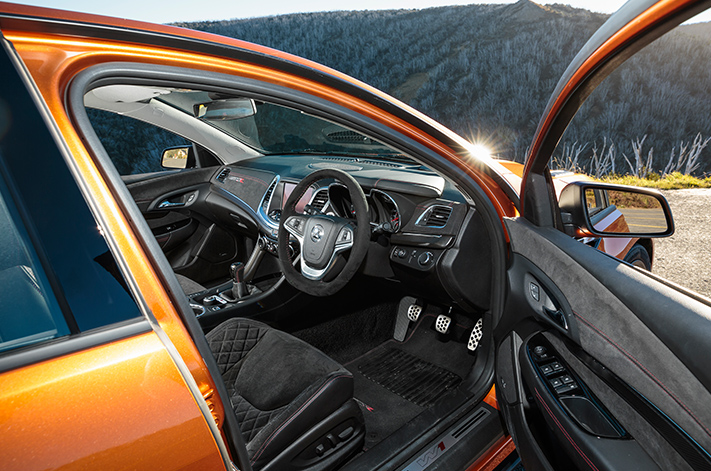
THE end of purist manual M-Cars is looming large on BMW’s horizon, with all of its high-performance models set to dump both self-serve manual gearboxes and relatively new dual-clutch technology in favour of torque-converter automatic transmissions as early as 2027.
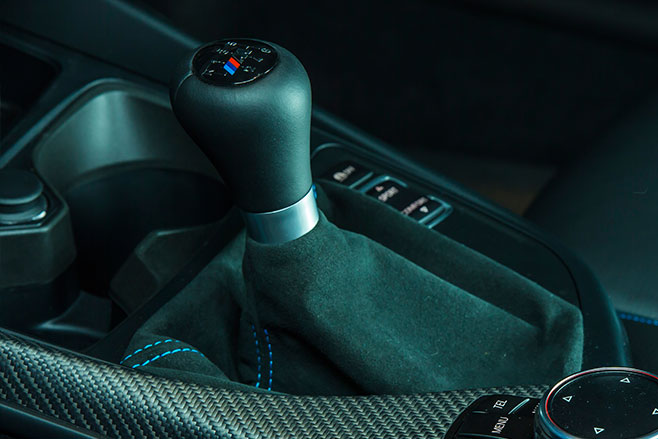
Driving enthusiasts and M-car fans alike will lament the inevitable passing of the humble H-pattern cog box, but skyrocketing power and torque outputs, ever-improving autos and changes in customer preference is the writing on the wall, says the German car maker.
Speaking to Wheels in South Korea, BMW M GmbH sales and marketing vice president Peter Quintus said the average engine output of the M-car range had relegated the no-cost manual gearbox option to just some of the six-cylinder models across the M2, M3 and M4 range, and manuals would not see another decade under M-car transmission tunnels.
“Basically I think it’s six or seven years before there will be no manual transmission, unfortunately, because we still have fans who want manual shift in their cars,” he said.
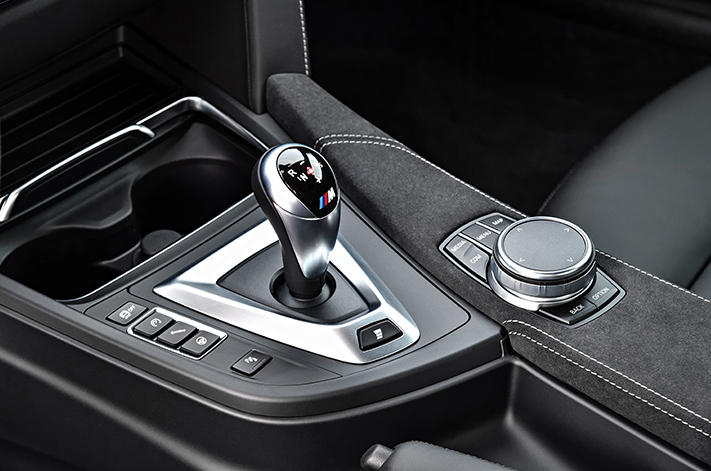
“Manual, for sure, that will go quite soon so I’m not sure if we will get, for the next M3 and M4 generation, a manual.”
While sliding demand is sealing the fate of manuals, Quintus said it is possible that the dual-clutch automatic transmission could follow it soon after as well, with recent improvements in traditional torque converter automatics closing the gap between them and the more technologically-sophisticated dual-clutches.
BMW’s ubiquitous 8-speed torque converter auto, supplied by German company ZF, is a prime example, with crisp performance in manual mode coupled with dual-clutch-beating driveability and refinement in auto mode.
“That’s still under discussion and DCT I’m not sure if maybe in ten year’s time maybe even DCT [will go].
“I think the future is automatic gearbox.”
“In the past, the shifting speed of a DCT was much faster and the other big advantage is weight – it’s much lighter. We can do the same shifting times now with an automatic and also weight reduction is also something where we made good progress.”
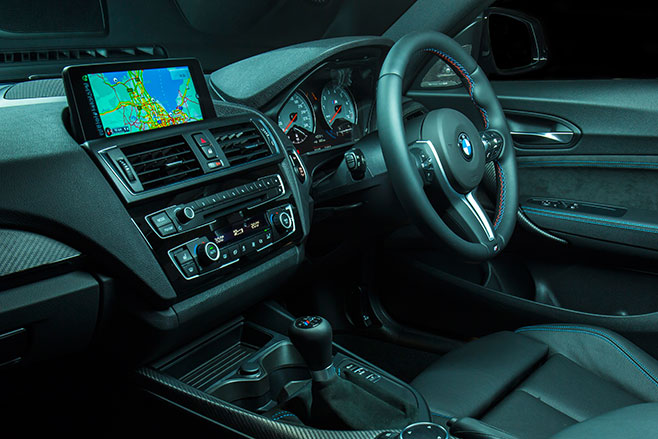
“It was funny when we launched the X6M and X5M because there was a lot of press that said ‘great DCT on this car’ but it’s an automatic gearbox. It’s programmed like a DCT but it’s an automatic.”
For the X5M and X6M, BMW’s engineers programmed the transmission to resist creep when the brake is released in a similar manner to dual-clutch units, while shift speeds in sportier settings were tailored on the aggressive side for a performance advantage.
With increasing performance putting ever more pressure on M-car transmissions, the only solution for manuals would be to develop a new beefier version for the future powertrains, but Quintus said the forecasted declining demand does not justify the significant development cost.
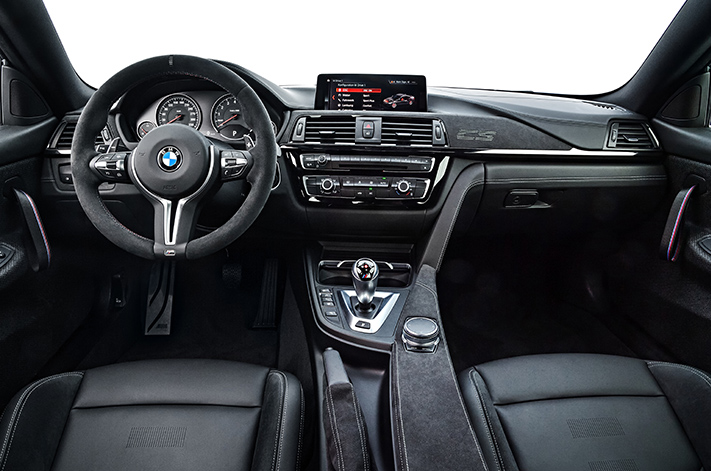
“Certainly, you could take American gearboxes. For muscle cars there are American gearboxes but they are terrible. Extremely heavy.
“We looked at that as an alternative to use one of the American supplier’s gearboxes, but the shifting quality is not something we would accept in our own cars”.
WITH the ‘80s quickly disappearing in the mirror, it is time to decide which of the True Blue Bruisers is the greatest Australian Muscle Car of the 1990s.
Kicking off with the end of the Cold War – and a brutal recession – the 1990s also brought with it a bevy of hot metal from Holden Special Vehicles, with the Clayton outfit turning the wick up on Holden’s V8 sedans and giving the GTS nameplate making its debut.
The decade also saw the introduction of Tickford, which made headlines with its TS50 – a tuned version of Ford’s AU Falcon.
The fierce rivalry between The Holden Faithful and Those Who Bleed Blue continued to flare, with icons like the EL GT and VS GTS-R going head-to-head on track and street. Muscle cars may not have been as prominent on the local landscape as they once were, but they were still very much a part of the Australian motoring scene.
So which do you think is the best of the 90s breed? Vote below:
Welcome to the first installment of the MOTOR Magazine Performance Car Podcast.
Each episode MOTOR staff and selected guests will be discussing a topic relating to the performance car world, whether that be reviewing a car, doing an interview, talking industry or simply just sharing our love and enthusiasm of fast cars!
In this podcast we take a ride in the HSV Gen-F2 GTS.
You’ll be able to catch each episode here on motormag.com.au first, but also on MOTOR YouTube and in audio form on the Podbean and iTunes, simply search for ‘Performance Car Podcast’.
If there are any cars you’d like to see, topics you’d like us to cover or guests you’d like us to have, please let us know via the comments section on any of the relevant media formats. After all, it’s your show just as much as ours.
We hope you enjoy the show and we’ll have more podcasts in the coming weeks!
Volkswagen has released another zero-emissions concept car, but with a difference. The I.D. CROZZ is the carmakers first purely-electric crossover.
Offering a 500km range, all-wheel drive and autopilot, the I.D. CROZZ would offer up a cut-price alternative to fancier EV SUVs like the Tesla Model X – though it wouldn’t be able to match that car’s turn of speed.
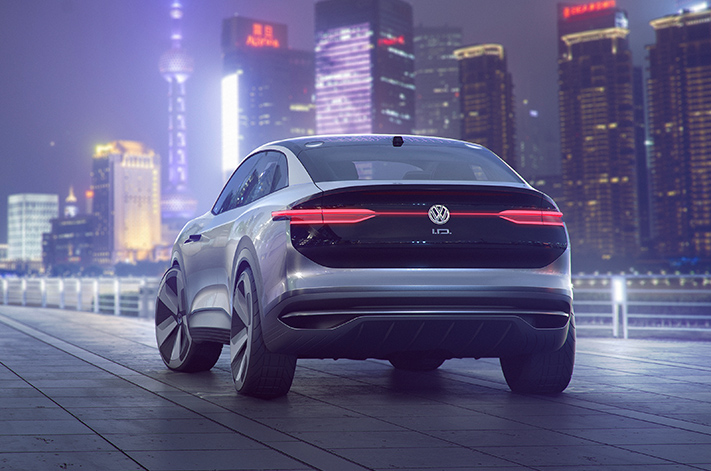
The autonomous, environmentally-friendly crossover concept delivers 225kW of power, can reach top speeds of 180km/h and takes just 30 minutes to charge to 80 percent battery power when using a fast-charging system.
| 2017 Shanghai Motor Show: Skoda Vision E Concept breaks cover
There are some neat design features too. Volkswagen has employed the VW badge on the steering wheel as the car’s fully autonomous button. Hold it down for three seconds and it engages a self-driving mode that enables hands-off motoring. It also uses augmented reality to project driver information and gesture controls to activate various features.
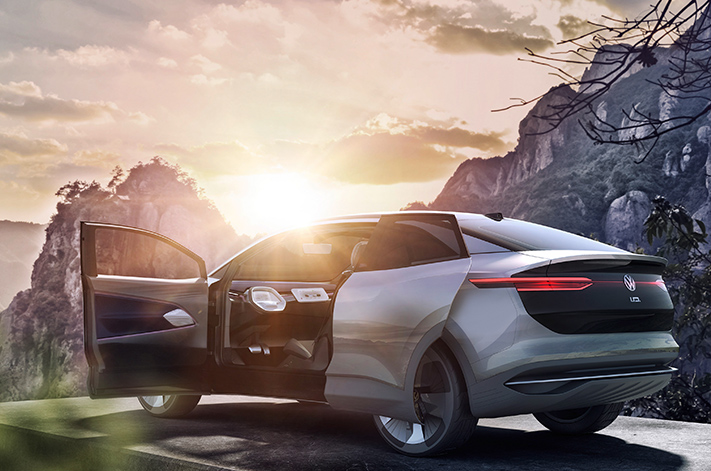
To keep up with its enviro-friendly personality, it includes a CleanAir system to improve the car’s interior air quality and communicates with other road users via C-shaped LED daytime running lights.
Inside, Volkswagen says the car is as spacious as the brand’s conventionally-powered Tiguan thanks to its “new, innovative, next-generation architecture”. This architecture, known internally as MLB, features a compact suspension and drivetrain installation with the battery integrated into the floor. The open-plan interior enables the seat configuration to be moved to suit the owner’s needs and can even be configured to fit a bike.
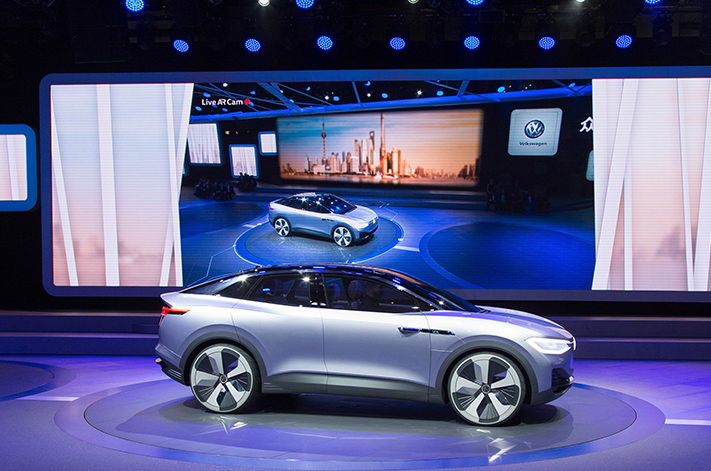
The I.D. CROZZ is the third member of Volkswagen’s I.D. family and joins the already revealed I.D. and I.D. BUZZ. Volkswagen intends to put the CROZZ into production in the next three years.
“By 2025, we want to boost annual sales of electric vehicles to one million units,” said Volkswagen chairman Herbet Diess.
“The I.D. CROZZ will play a key role in that. Production will begin in 2020.”
Warm hatchbacks are getting hotter – and cheaper – by the day. The new Hyundai i30 SR will arrive next month with 150kW/265Nm and wearing a $25,950 plus on-roads sticker.
The 1.6-litre turbocharged four-cylinder i30 SR may follow its daggy, US-based Elantra SR sibling in the power and torque department, but it also undercuts that sedan by $3000 while packaging its excellent independent rear suspension (IRS) setup beneath classy styling.
But the 1315kg i30 SR weighs 45kg less than the 7.7-second 0-100km/h Elantra SR, so expect a sub-7.5sec time. Australian-tuned suspension will hopefully have the hatchback handling at least as well as the sedan, too – which is something we’d never thought would be said.
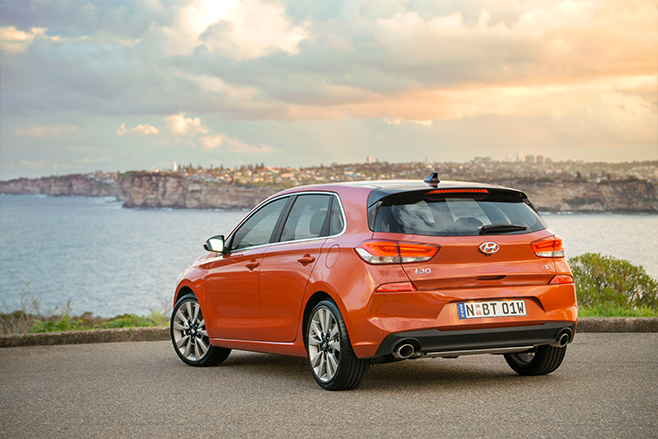
Why the $3000 surcharge for an auto? It adds autonomous emergency braking (AEB), active cruise control and lane-keep assist, all of which is unavailable on the DIY-shifter.
Otherwise, kit with both includes 18-inch alloy wheels, LED tail-lights, dual exhausts, sports seats, alloy pedals, 8.0-inch touchscreen with sat-nav and Apple CarPlay/Android Auto, wireless phone charging, dual-zone climate control and keyless auto-entry.
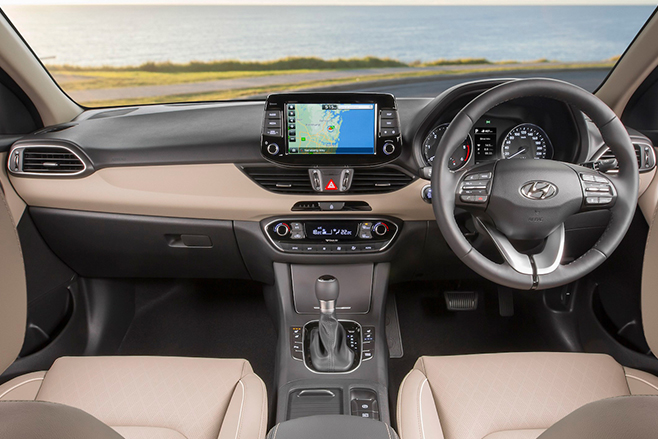
There are high hopes for this affordable Hyundai warm hatch after sampling the surprisingly polished (if not aggressively sporty) Elantra SR last year. With outputs from a Golf GTI of a decade ago offering circa-7.0-second 0-100km/h performance for mid-level Corolla money, the i30 SR could be a surprise packet when it launches in Australia in May.
There are rumblings from Swedish car maker Volvo of a fourth family of models, with a senior executive alluding to a new range of compact-sized vehicles looming on the horizon.
The car maker’s current model line-up stretches across just three size categories – the small 40-series models that compete with the Audi A3 and BMW 1 Series, the 3 Series/C-Class-rivalling 60-series and the large (think 5 Series, E-Class) 90-series vehicles.
SUV variants are designated by an XC prefix, as in the XC60 and XC90, while wagon/hatch variants are signified by a V, like the V60 and V40. Sedans are signified by an S in front of the numbers and crossover versions of hatches and wagons get a ‘Cross Country’ suffix.
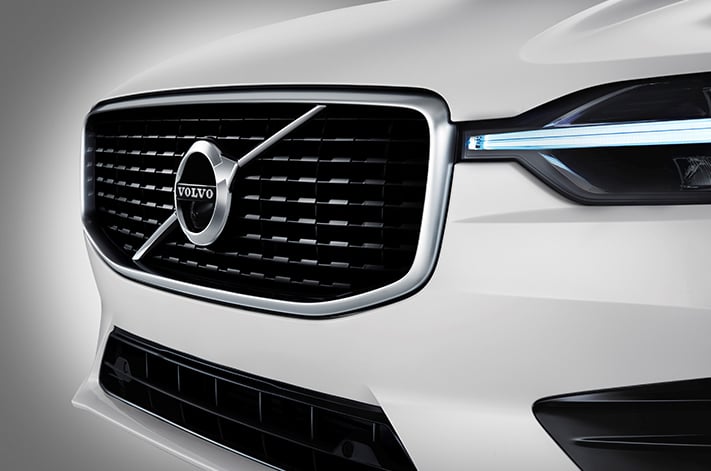
But an addition appears to be in the works, with Volvo North America boss Lex Kerssemakers letting slip to US car mag Car and Driver that a compact 20-series model family is in the company’s future.
“The 90 is the biggest, and the 40 is the smallest. And when there is a 20, it will be a smaller one,” he said.
Note the use of “when”, not “if”. That kind of language suggests the notion of a 20-series range isn’t just theoretical; it’s practically a done deal.
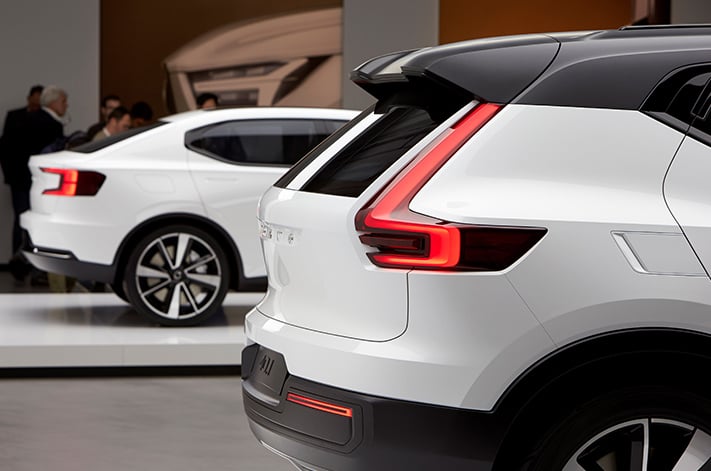
It could be argued that scope to expand the Volvo range was already built-in when Volvo committed to its present model designation nomenclature years ago, with plenty of numbers between the existing 40-, 60- and 90-series groups to exploit.
And there’s precedent: in the past we’ve seen vehicles such as the C30, S50 and V70 in Volvo showrooms. Those designations only disappeared when Volvo consolidated its model line-up into three distinct groups following its divorce from Ford.
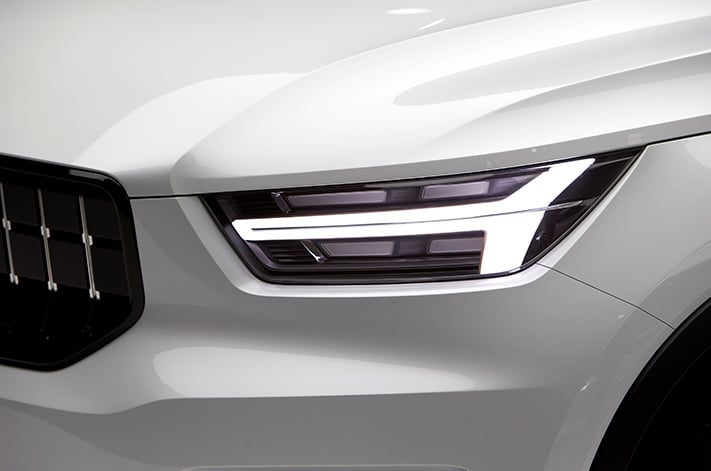
But the relatively small company has been fairly conservative with its new model rollouts, and Kerssemakers’ mention of an impending 20-series range – which would presumably be positioned against premium compacts including the Audi A1 and, in XC form, the Audi Q1, Mercedes GLA and BMW X1 – is unexpected.
There’s no clarity on when we can expect a Volvo V20 or XC20 to arrive, but don’t expect it in showrooms just yet. Volvo’s next-generation 40-series is set to debut next year, and an all-new range of 60-series models will also kick off in 2018 with the second-gen XC60. The 20-series will have to follow in the footsteps of those.
QUESTION – CATARINA (24/10/2016):
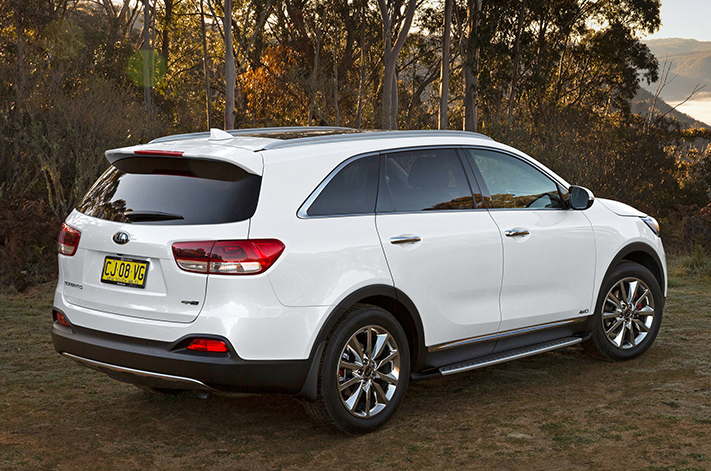
We are a retiring couple that will occasionally leave our town for a three hour drive to Canberra. We plan to renovate in the next year and require a car that will easily pull a trailer for delivery and dumping of rubbish. After that we have two large Bullmastiffs we take everywhere. The car we need needs to have longevity as we tend to keep our cars for ten years (Ford Falcons on LPG) and this is our second to last car. After this we will downsize. Because of a disability, I am uncomfortable in Subaru Outback and Mazda CX-9. Our choice appears to be Toyota Kluger and Kia Sorrento but we are lost as to which will provide longevity and repairs that won’t break the bank of a fixed income.
BUDGET:
$50,000
ANSWER – SAMANTHA STEVENS:
It’s a tricky question you have here. On one hand, Toyota is renowned for having excellent reliability, easy and affordable servicing, great longevity of the materials used in the cabin, and they are very, very hard to break. They also retain their value well, even after many years, due to this reputation.