
It is now the cheapest to buy and run a car since the 1970s, with the relatively strong economy, low interest rates and stiff competition among car manufacturers pushing car sales to near record highs.
According to the CommSec Car Affordability Index it would take someone on the average wage to work for 21.7 weeks to purchase a new Holden Commodore Evoke, the best affordability estimate in data stretching back to the 1970s.
A decade ago a new base model Holden Commodore would have taken 31.5 weeks to save for.
The report states that car affordability is even stronger on a “quality adjusted” basis when you consider that vehicles built in 2016 are far superior and contain more equipment and technology than those sold in the early 1970s.
The report says the near record high sales are suggestive of underlying strength in business and consumer sentiment and available finances.
These factors, along with cheap loans, are also leading to big sales of SUVs and luxury cars.
And it’s not just the cost of the car that’s more affordable, with cheaper finance, capped servicing and longer warranties reducing running costs of cars, says NSW Motor Traders Association CEO Stavros Yallouridis.
“As a rule it’s a marketing tool in terms of bringing people on, so the whole life cost of the vehicle should be much cheaper today than what it was 10 years ago,” Yallouridis told ABC Radio.
Of course fewer people are spending their hard earned on family cars such as the Commodore, with passenger car sales down to 20-year lows due to the rising SUV sales.
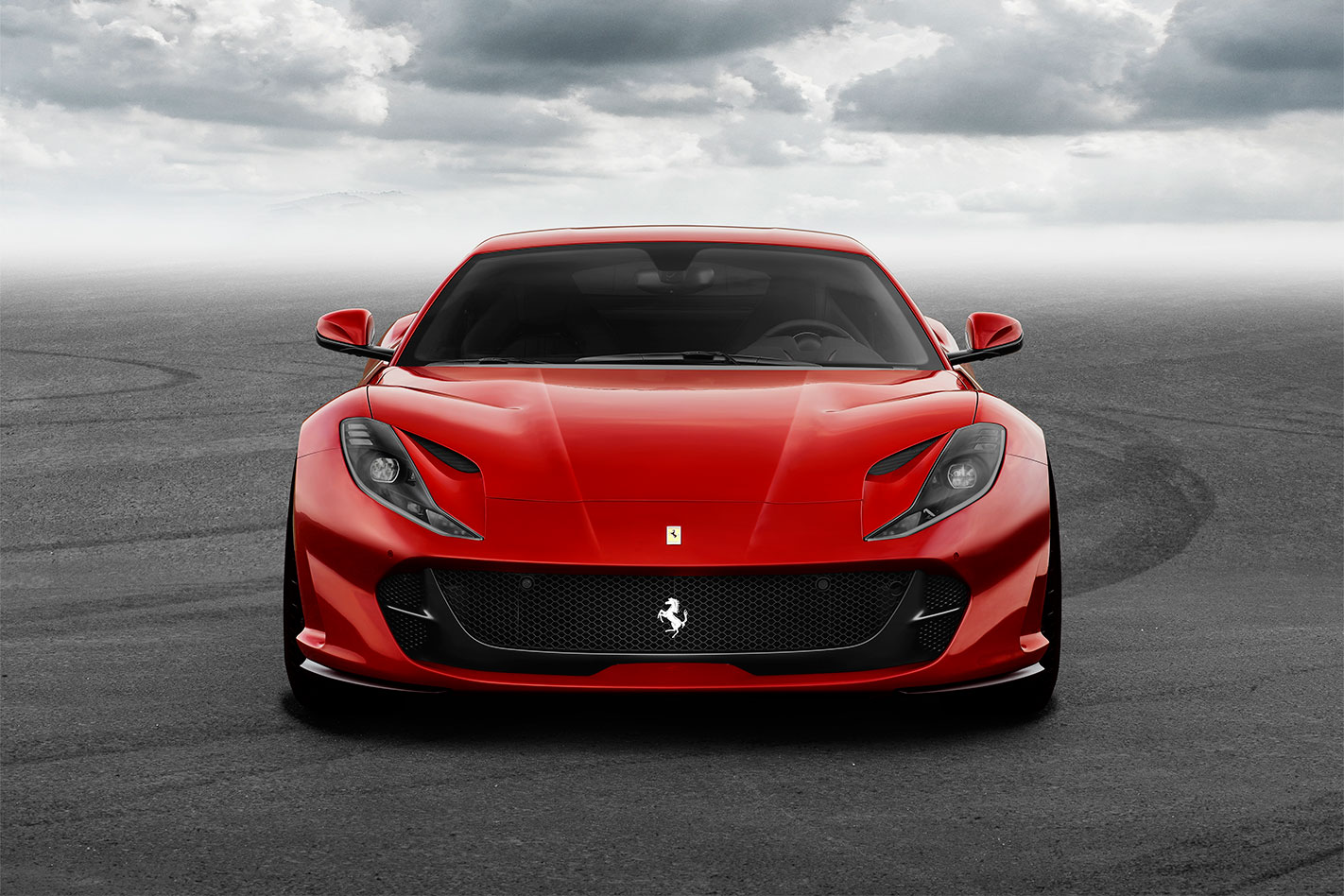
IN THESE days of hybrid drivetrains and turbochargers, it’s good to know that Ferrari can still stick two fingers up at convention. Never has this been any clearer than for the release of its latest model, the 588kW/718Nm front-engined 6.5-litre V12 berlinetta known as the 812 Superfast.
How fast? Well, the literature accompanying the 812 Superfast’s reveal indicates only that top speed is greater than 340km/h, while the 0-100km/h sprint is signed off in 2.9secs … fast, but with Tesla whipping its ludicrously equipped Tesla Model S P100D down the line 0.2secs faster, is it really that super?
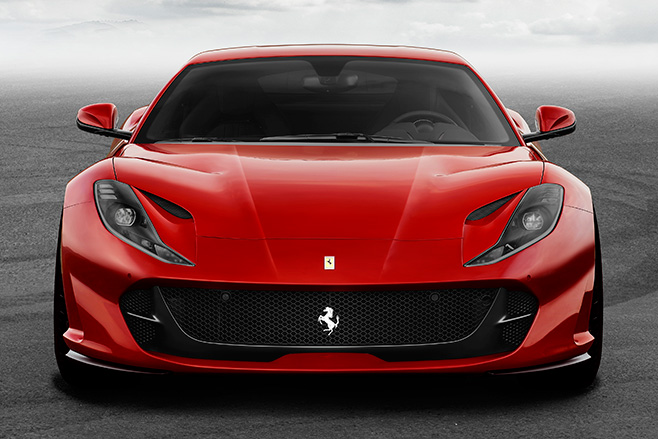
“The 812 Superfast thus ushers in a new era in Ferrari 12-cylinder history, in doing so building on the invaluable legacies of the F12berlinetta and Ferrari F12tdf.
“It is aimed at clients demanding the most powerful and exclusive Ferrari in the range: an uncompromising sports car that will deliver exhilarating driving both on road and track yet also be comfortable enough to allow its owners to enjoy it as an all-round experience.”
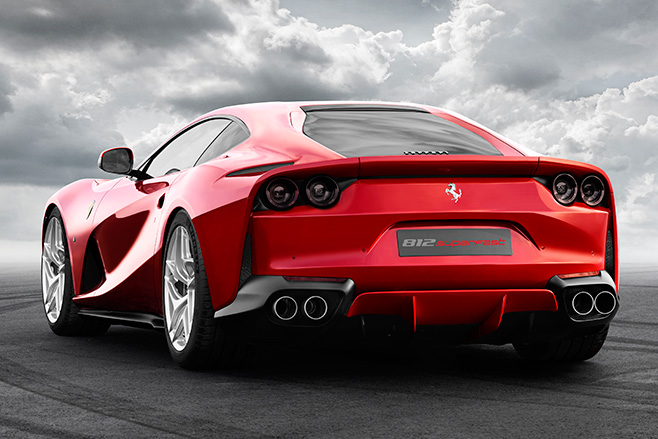
Those performance figures don’t come from turbos; instead Ferrari links them to a 350 bar direct injection system that is about 150 bar above more mainstream common rail systems.
Drive is sent to the rear wheels via a dual-clutch transmission fitted with “specific gear ratios which, combined with shorter up and down-shifting times between gears, sharpen throttle response still further”.
The “Virtual Short Wheelbase” system developed for the F12tdf – an all-wheel steering system – has had further refinements for the 812 Superfast to further improve nimbleness, Ferrari says. Active aerodynamics including active flaps on the front and rear underbody aimed at increasing downforce, help with high-speed dynamics.
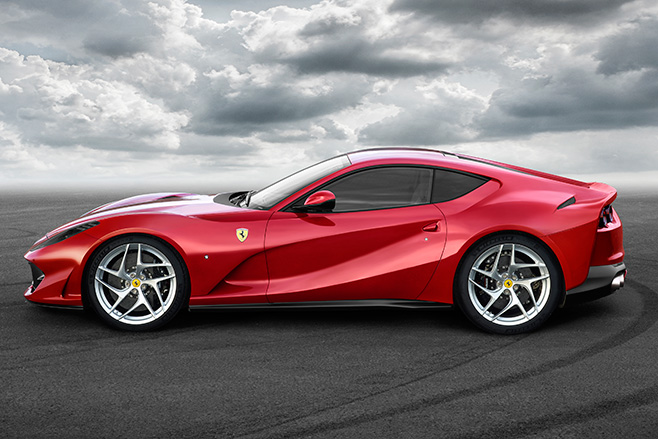
Pricing? Well, the car is yet to appear at Geneva, and it will be the flagship model in Ferrari’s range when it does arrive here, hopefully later this year. Expect to hand over more than $700,000, though.
It’s hard not to stare at the Lexus LC, the latest in a series of challenging designs intended to make lovers and haters stop and ask: “What’s going on with Lexus?”
The answer is a not-so-quiet revolution, and it hits something of a crescendo with the launch of this sports car-cum-GT (V8 or hybrid).
The root of this wholesale shift from a quiet, eminently rational brand – to one that is wilfully edgy – stems from the ambitions of Akio Toyoda (company chairman), who has direct Toyota family lineage and has made it his personal mission to make his companies more interesting.
Hence for Lexus, the appointment of a former chief designer as the boss of the brand, an all-new platform architecture and the decision to turn the LF-LC concept of 2012 into a reality is very big news.
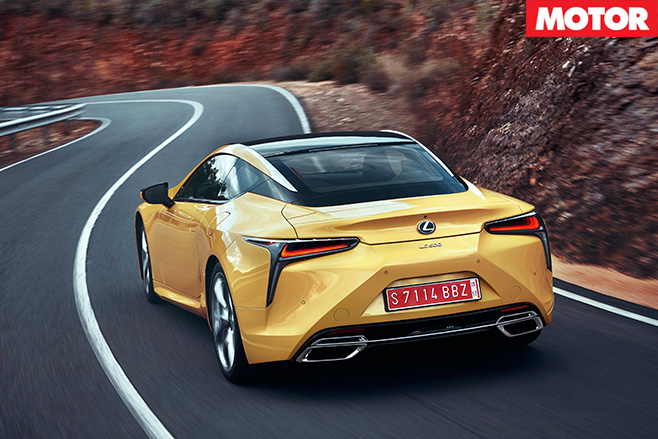
The LC arrives now, bosses say, as Lexus has come of age, and it will have a sportier side to it, too. The Lexus LC 500 is a sports car/GT with a broad remit, aimed somewhere between the Porsche 911 and Jaguar F-Type, setting its bullseye at top-end versions of the BMW 6 Series and Mercedes-Benz SL. The ‘to do’ list determined that it should be brilliant fun, but driveable every day and, thanks to those arresting looks and the choice of a V8 or hybrid V6 powertrain, should act as a showcase for this different side of Lexus.
Step inside and that sportier side is immediately apparent, because you drop farther than you might expect into the sports seats, themselves a specific design for this dynamically-enhanced Sport Plus model. Your hip then sits closer to the height of your feet on the perfectly-spaced pedals. As a result, movements are telegraphed earlier and more precisely.
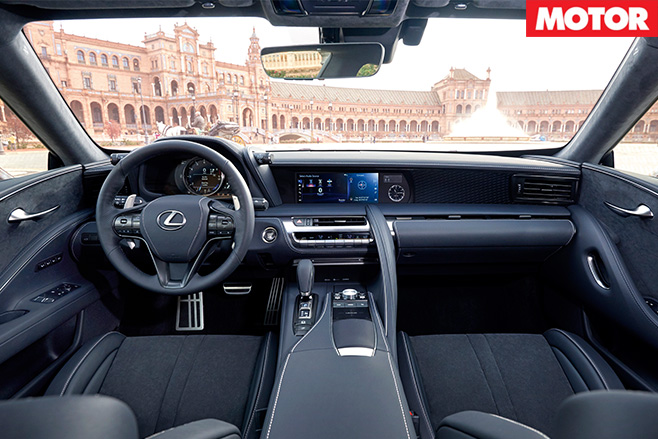
So the low seating position also benefits the centre of gravity. Combined with the wide stance, pushed-back engine mounting as well as the generous use of carbon-fibre composites and aluminium, there has been a relentless attention to detail in keeping weight low down and carefully distributed 52:48 front-to-rear.
The Sport Plus also benefits from a carbonfibre roof and a Dynamic Pack that includes a variable-ratio steering rack, four-wheel steering that aids turn-in and a limited-slip diff that works with the driver aids.
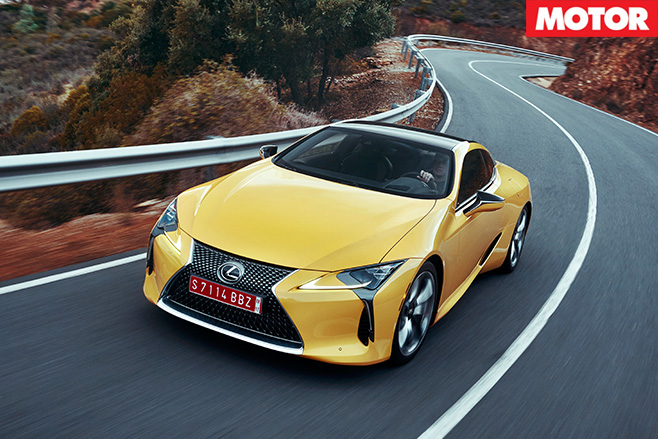
There’s abundant grip and the suspension and diff can handle odd cambers, big, mid-corner bumps and seemingly optimistic throttle applications. What is a firm ride at low speeds becomes supple at pace. The LC brakes quickly and confidently, too, even when you stand on the pedal. It’s just wonderfully easy to find a rhythm.
That the chassis is able to eclipse the powertrain should tell you a lot, because (shock) the 5.0-litre V8 is no shrinking violet. Producing 351kW at 7100rpm and 530Nm of torque at 4800rpm, it’s predictably punchy, but it doesn’t dominate. In anything below Sport S mode (the penultimate of six available settings) it propels you along quickly, but with a soundtrack that’s louder than the engine response is fast. Dial it up, though, and everything becomes crisper and progress more instant.
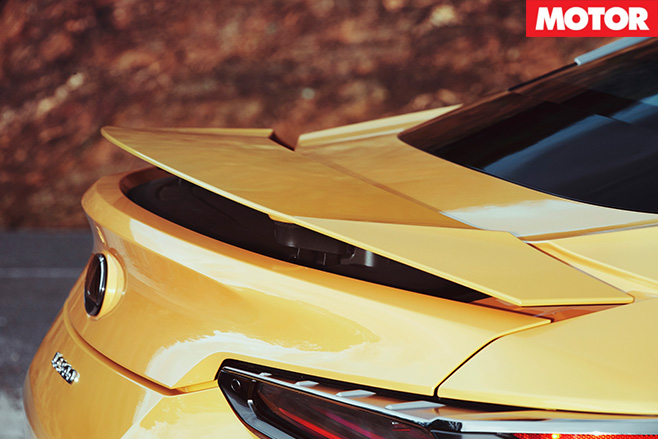
Crucially, it’s the first six gears – and chiefly, third to sixth – that do most of the work, the additional ratios only playing for the benefit of refinement and economy. The gearing is evenly spaced, so it promotes a rhythmic flow to progress that merges beautifully with the engine and chassis capabilities to inspire confidence.
You could buy (prices for Australia are yet to be confirmed) the LC on the basis of everything written above and not have a single regret, but there’s more to the car than that. Like the exterior, the cabin is an acquired taste, from its flamboyant inner door surrounds to its button-laden steering wheel and fussy touchpad control for the infotainment system.
The materials and finishing are top-notch, as is the gadget count and quality of flourishes, such as the TFT screens, analogue clock and sound systems. That huge amounts of effort have gone into its finish is not in doubt. That it will be to everyone’s taste perhaps is.
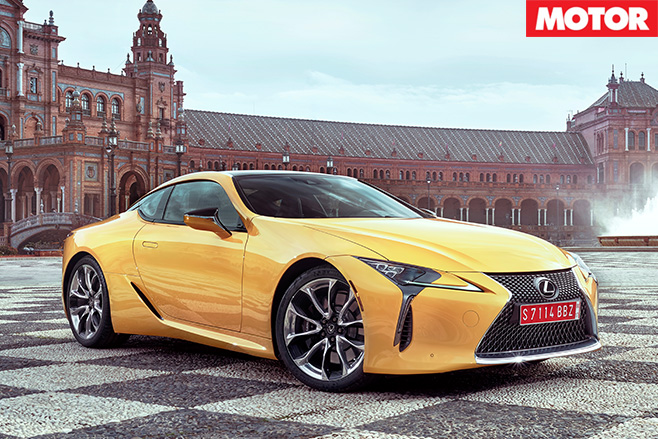
4.0 OUT OF 5 STARS
Like: Lovely steering; impressive chassis; high quality
Dislike: Divisive looks; not very quick; pricey
Specs Engine: 4969cc V8, DOHC, 32v Power: 351kW @ 7100rpm Torque: 530Nm @ 4800rpm Weight: 1935kg 0-100km/h: 4.7sec (claimed) Price: $200,000 (est)
Ferrari has unveiled its replacement for the F12 Berlinetta, dubbed the 812 Superfast, ahead of its public reveal at the Geneva motor show, and let’s not beat around the bush, it’s a monster.
Under the bonnet lies a 6.5-litre naturally-aspirated V12 that produces 588kW at 8500rpm and 718Nm at 7000rpm, improvements of 43kW/28Nm over the already mindblowingly quick F12. The result is 0-100km/h in 2.9sec and a top speed of over 340km/h – well over, we’d imagine.
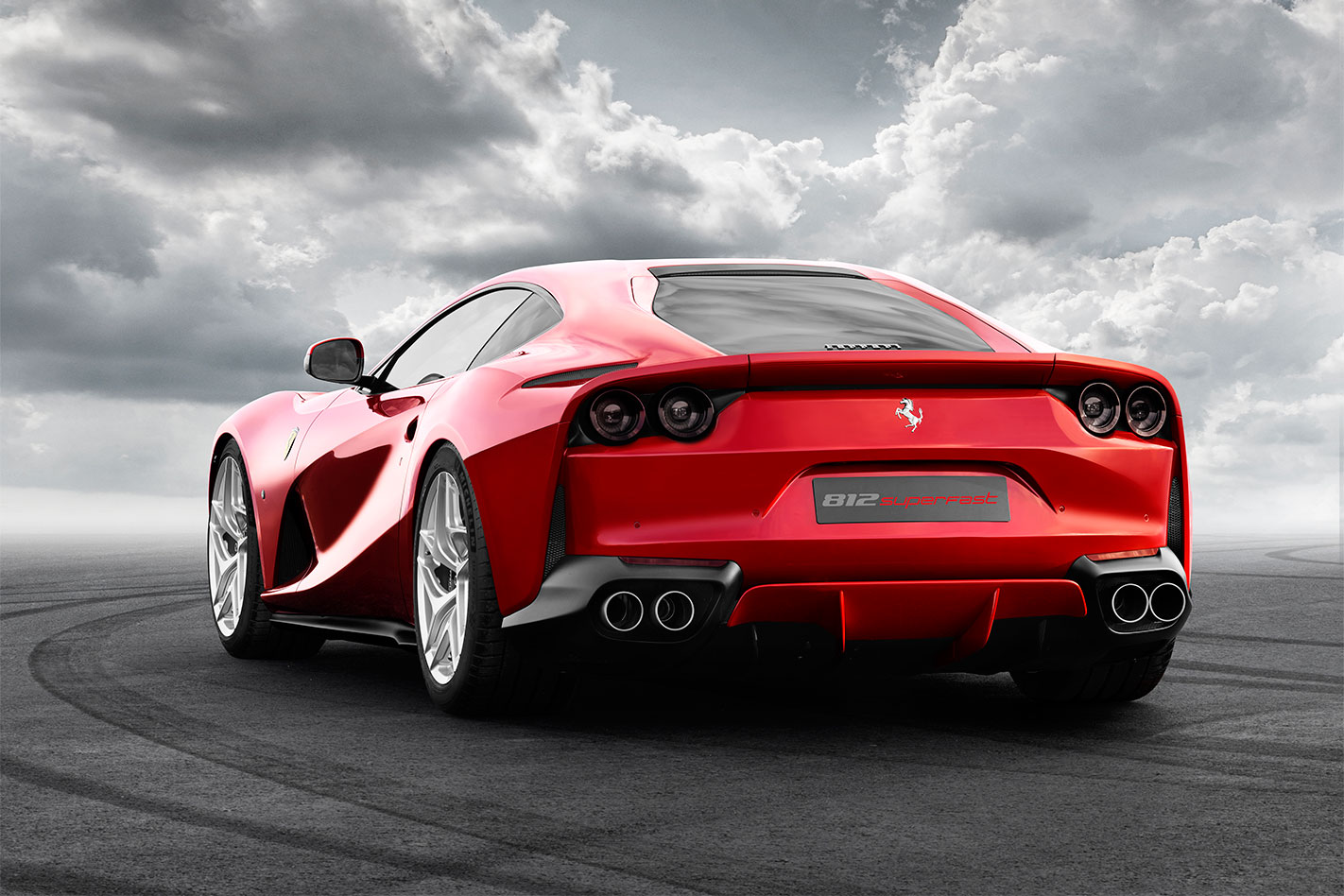
Revised styling includes full LED headlights, new quad taillights and a high tail inspired by the 365 GTB4. Active aerodynamics include flaps in the front bumper and an “aerodyamic bypass” at the rear to increase downforce.
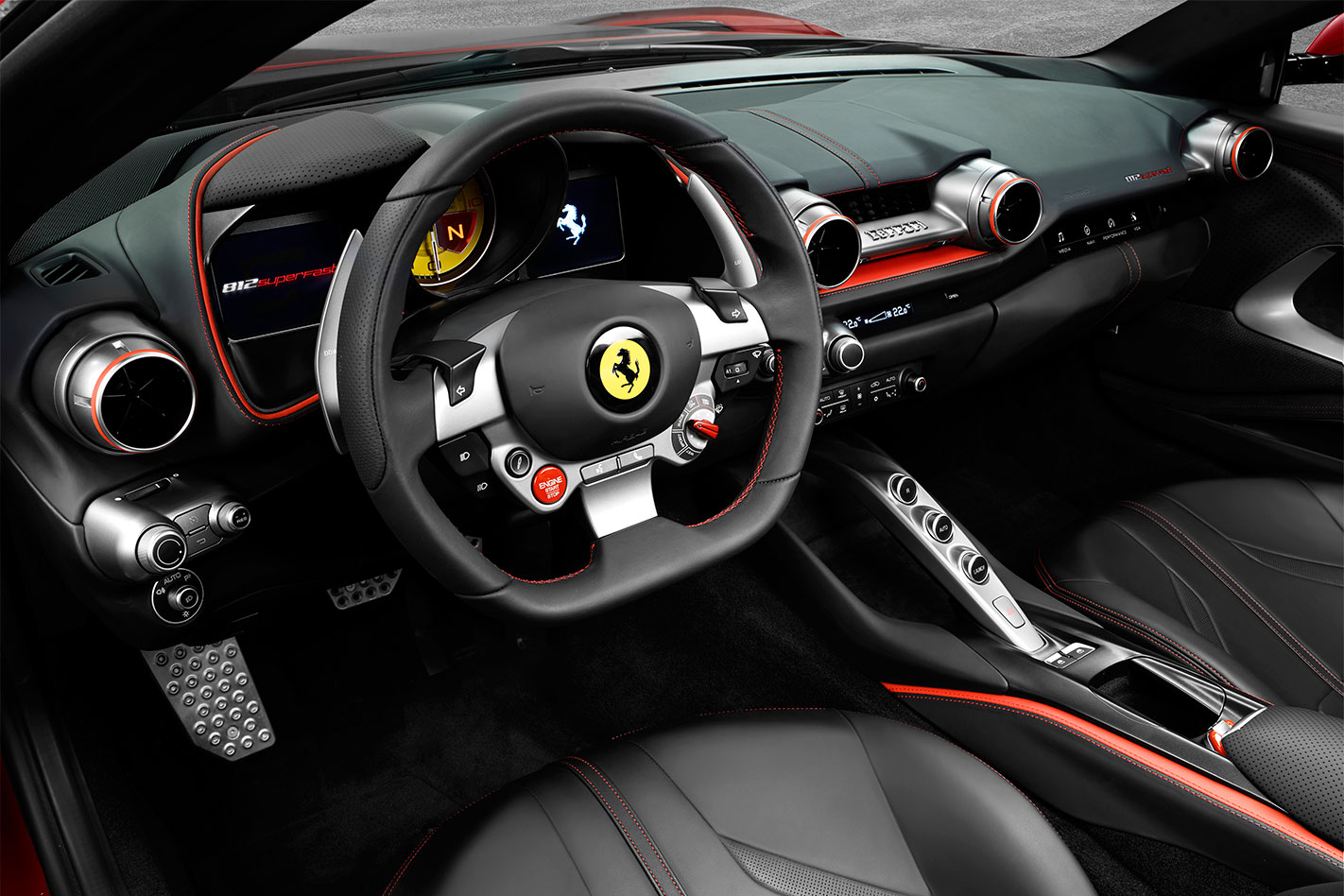
To help put this crazy amount of power on the road there’s version 5.0 of Ferrari’s trick Side Slip Control system, which can now work with the steering, ESP, dampers, engine and differential to hold a certain amount of oversteer without losing control completely.
WHEN Tesla mastermind/CEO Elon Musk revealed his “Masterplan Part Deux” for the exclusively electric brand in July last year, in amongst the broad goals of introducing solar roof tiles and battery-powered semi-trucks was a promise to debut an all-electric ute.
There’s nothing more diametrically opposite to the luxury-segment Tesla Model S and Model X that currently make up Tesla’s entire product offering than a commercial-grade utility, but that’s the point – Tesla wants to diversify beyond making electron-burners for the filthy rich, and a ute is the perfect way of expanding its product footprint.
It’s also a great way to make money. What was the top-selling car in Australia last year? The Toyota HiLux. Travel across the Pacific to the ‘States, and you’ll find the Ford F-150 brings home the most bacon. Humble workhorses are what the working-class everyman wants.
And apparently more than a few Australian tradespeople specifically want their utes to run on battery power, according to Tesla’s local operation. Speaking to Wheels, Tesla Australia’s head of public relations, Heath Walker, said Musk’s plans for a ute had so far generated significant local interest.
“All you need to do is look at the number-one selling car of the last twelve months – that’s the model type. It’s certainly a segment that we need to move into.”
“The nice thing is, looking at our social media commentary, we actually get that request quite a bit,” he said.
“There’s a lot of local tradies saying ‘can you build a ute, because I can actually charge up on site while I’m doing work’, and the convenience factor for them, in addition to Australian’s taste for performance vehicles, means this car would have the crossover appeal to cater to that.”
Tesla remains tight-lipped on actual details of its eventual utility, with its present priority being bringing the Tesla Model 3 medium sedan to market. The revenue generated by that car will be critical to Tesla’s success as a car maker – and to the viability of any future Tesla vehicles, ute included.
For one, electric motors generate massive torque from zero RPM. You know what torque is used for? Towing heavy things. Tradies like to tow heavy things, ergo, mega low-down torque seems like a handy thing for them to have.
Furthermore, the flexibility afforded by a combustion-free configuration means Tesla could tailor its ute’s form around its purpose. With no bulky turbo-diesel engine up front, the cab could be positioned further forward to enable a long truck-like load bed. Remember the VW Kombi ute? Tesla’s own load-lugger could look similar.
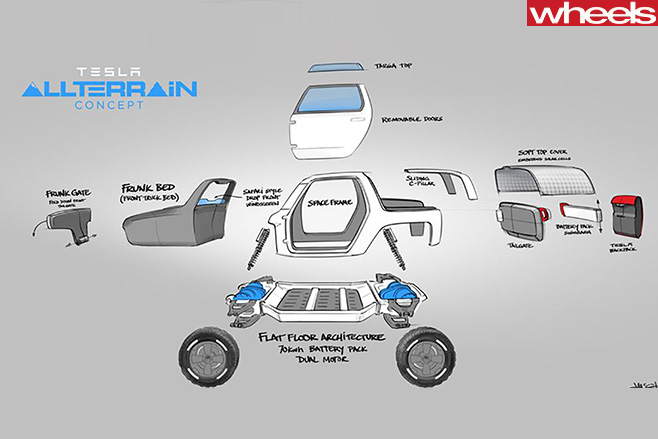
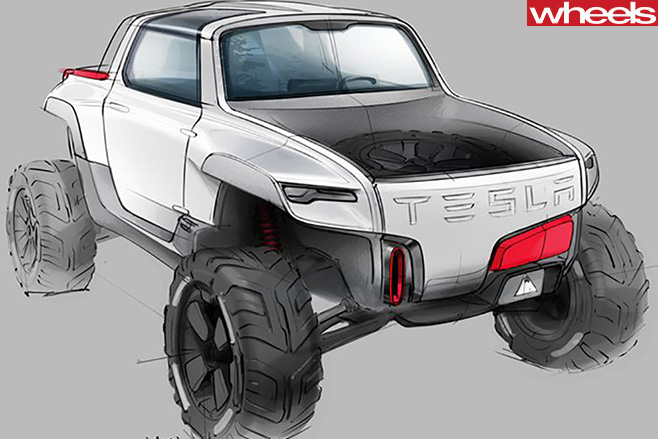
The ‘Tesla Allterrain’ concept art (pictured), penned by former Tesla intern Jason McGinnity, shows another design direction, with an open “frunk bed” effectively doubling the load area available. All of the electric gubbins are shoved under the floor, as it is in the existing Model S and Model X, with chunky off-road style suspension affords it a go-anywhere capability.
Design is all speculative for now, but looking at the sales figures of what does and doesn’t sell in this country, it’s clear that if EVs ever become truly mainstream it’ll probably be when Tesla’s ute arrives on our shores.
TOYOTA has put out a call for workers keen to come and help it build cars – only problem is, you’ll definitely be out of a job come October 3.
An ad on specialist recruitment website Randstad has announced “multiple job openings” have popped up at the Toyota’s Altona-based engine casting plant and Camry and Aurion assembly line, with workers needed to plug a growing number of gaps.
“Our client has multiple positions for individuals to work in the various roles of a well-established car production plant on day shift 7am – 3.30pm and afternoon shift 5.30pm to 2am Monday to Friday,” the job ad reads.
“This is an exciting opportunity to work in one of Australia’s leading manufacturing organisations and experience the thrill of being involved with the making of a quality and well-regarded product.”
Workers will be required to start in April, but finish up “in early October”.
“You will be offered training and support, rostered days off, leave loading, on-site parking and canteen facilities,” the ad says.
Randstad industrial branch manager George Bujukovski told Wheels the roles would be especially suited to former Ford and Holden workers.
“It’ll be multiple roles, 20-plus,” Bujukovski said. “It is expected [that Toyota would need to employ more workers] because people will be finishing up as it gets closer to the October closure date, so obviously they will need to be replaced with other people so we can continue production.”
“It’s unknown how many people will be leaving between now and closure, so it could possibly be more than that.”
Toyota Australia spokeswoman Beck Angel said the contract workers would also provide an important role back-filling for Toyota’s permanent workers who were busy finding new jobs.
“If they have an interview or some skills training, it’s not like an office job where they can leave the office for the afternoon,” she said. “This will help them do that.”
The temporary workers, who would need to plug the gaps across Toyota’s engine casting plant, paint shop and assembly line, would be getting similar pay and conditions to other workers, he said.
The advertised role also hints that Toyota will be running two production shifts a day right up until the last car comes off the line.
Toyota announced earlier this month that October 3 would be its last day of Australian manufacturing, resulting in the loss of about 2400 jobs.
The Japanese car maker, which has built cars in Australia since 1963, was the last to fall after Ford, and then Holden, announced late in in 2013 they would both pull out of Australian manufacturing.
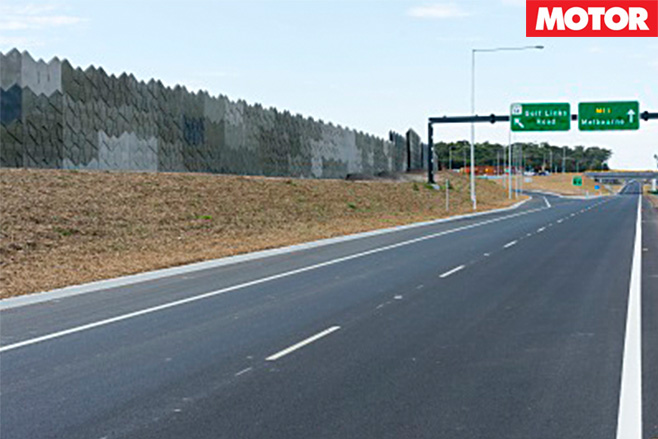
A Victorian motorist has used dashcam footage to prove the inaccuracy of a speed camera located on Melbourne’s Peninsula Link freeway.
As reported in the Bayside News, Allan Tadich received a fine stating he was travelling at 112km/h on December 22, however has used his dashcam footage along with Google Earth to calculate that his actual speed was 101.5km/h, accurate to within 0.5km/h.
He states that these findings correlate with his belief that he had his cruise control set to 100km/h at the time. “Fortunately, I had the dashcam on and was able to review the footage later,” said Tadich. Tadich called for an internal review of the fine and his fine has been suspended pending “further investigation.”
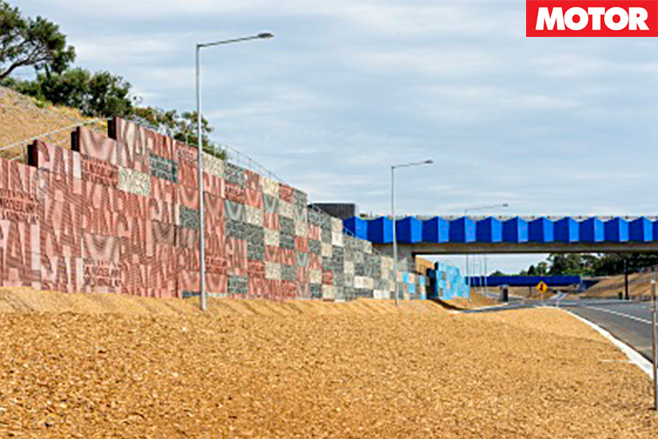
Peninsula Link speed cameras were in the news in late-2016 after many drivers received fines for 108km/h, prompting motorist Jacqueline Smith to start a Facebook group called Peninsula Link 108, which at the time of writing had 1109 members.
“We have analysed a substantial amount of data, but there is still more to go through,” said Voyage. “We are most certainly looking for where a problem could be. This involves carefully scrutinising every aspect of the road safety camera system along the Peninsula Link freeway.”
THE 2017 Kia Picanto due to be unveiled in Geneva next month could come with one model packed with enough of the buzzwords to make driving enthusiasts salivate – and could even one day carry a GT badge.
Kia overnight pulled the covers off its third generation of the light city-friendly hatchback revealing a car that fits in the same dimensions as the old one, but with modern looks.
But delve deeper through the press kit, and there are a few signs the Picanto has the potential to be more than just another boring shopping trolley.
The first is the choice of engines. We’ll probably get a new 62kW/122Nm 1.2-litre four-cylinder engine in the base model, but among the mix could be something that’s caught our eye: a 74kW/172Nm turbocharged three-cylinder powerplant mated exclusively to a five-speed manual gearbox.
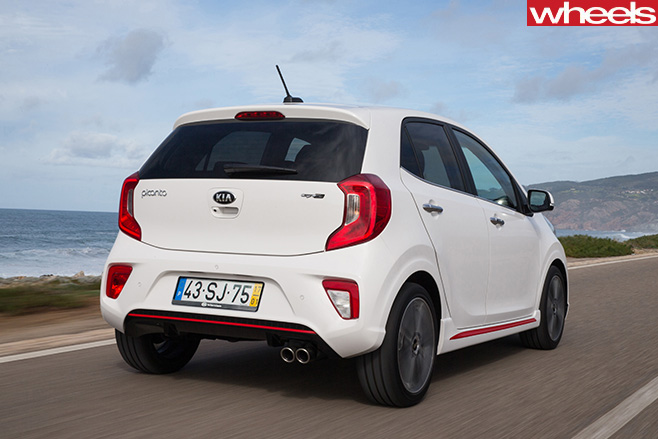
Then there’s the body. As part of the generational leap, the 2017 Picanto includes more ultra high-strength steel, meaning less metal, and therefore weight, is needed. Combined with more structural adhesive designed to reduce scuttle shake, the Picanto has improved torsional rigidity by a claimed 32 percent.
Underneath, the Picanto will keep its MacPherson strut front end and torsion beam rear. However, the wheelbase has stretched 15mm as the front wheels move further forward, and the roll bars are 2.0 percent stiffer at the front and sit lower while the rear one is 5 percent stiffer and built higher into the reshaped axle featuring redesigned trailing arms.
Not only that, but Kia says the new Picanto’s steering is quicker, and electronic torque vectoring – using the brakes to help rotate the Picanto in a corner – is potentially part of the package.
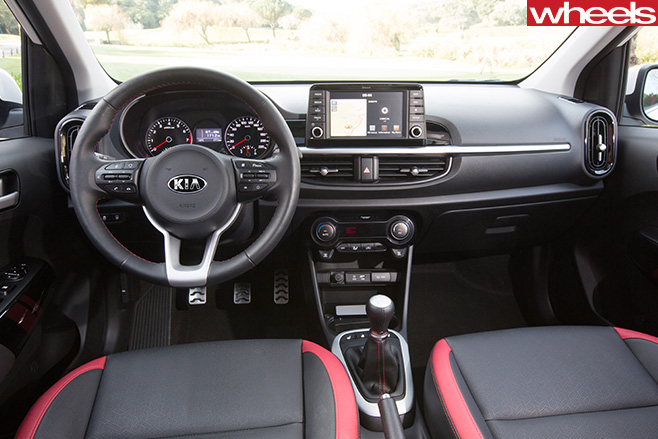
Kia says the turbocharged three-cylinder engine will launch on the global market late this year.
The carmaker has indicated it is keen to add a performance sub-brand to its showroom, similar to how sister brand Hyundai is close to rolling out its first N-badged model, the 202kW Hyundai i30 N.
Like Hyundai, Kia says rolling out products under a planned GT badge, due in about 2019, would have to include significant performance upgrades.
Tell me about this car
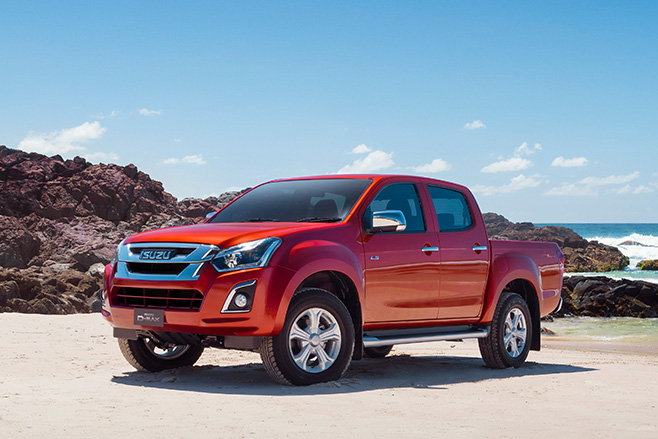
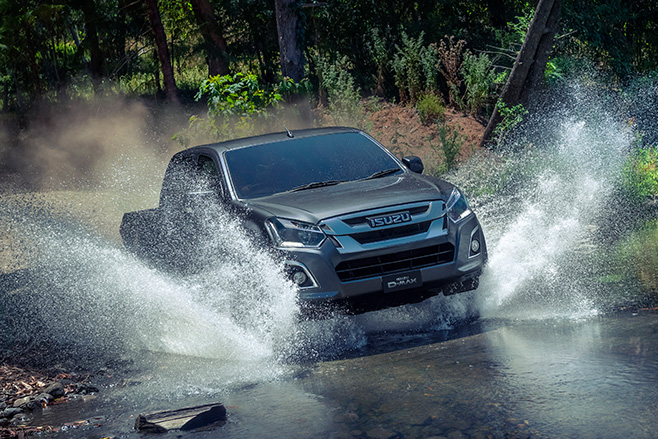
The 2017 Isuzu D-Max is a 4WD ute that has recently undergone a mid-generation facelift, bringing a fresh look, revised diesel engine, six-speed auto and manual gearboxes and new technology in some variants.
The D-Max is a one-tonne utility vehicle that is as capable on outback roads as it is as a family car. In its recently updated version, it carries a more refined 3.0-litre turbo-diesel engine (exclusive to Australia) and the same automatic gearbox used in the Toyota Prado.
Strengths
Euro5-compliant 3.0 turbo-diesel engine with additional soundproofing and more power, thanks to a wider torque band providing 380Nm.
Six-speed automatic and manual gearbox that offers perfectly matched ratios in the auto and tweaks to the manual for closer ratios. Overall, improving the drivability of the ute.
On- and off-road performance. The D-Max is made as an off-road capable utility vehicle and at that, it does a pretty good job with hill descent control standard in all models (even 4×2) and on-the-fly 2WD to 4WD. On-road, it controls body roll and takes to the road with refinement (when laden).
It’s versatile. It’s spacious enough to fit the family, tough enough to go off-road and durable enough to work as the utility vehicle it is.
Weaknesses
As is the case with most utes, when the tray is empty, it can feel a little harsh and bumpy on-road.
Unfortunately it misses out on a limited-slip differential and diff-lock option, so it relies solely on electronic traction control.
Although the reverse camera is extended to the LS-M variant, it’s still not standard across the range.
The seats are short in the base which means they’re not quite as comfortable as they could be. And there’s no reach adjustment for the steering wheel.
Any rivals I should consider?
Toyota HiLux, Ford Ranger, Nissan Navara and the Mitsubishi Triton.
Ford Australia has released a special edition Ranger based on its XLT double cab that switches the tradie attire for some swish weekend wear.
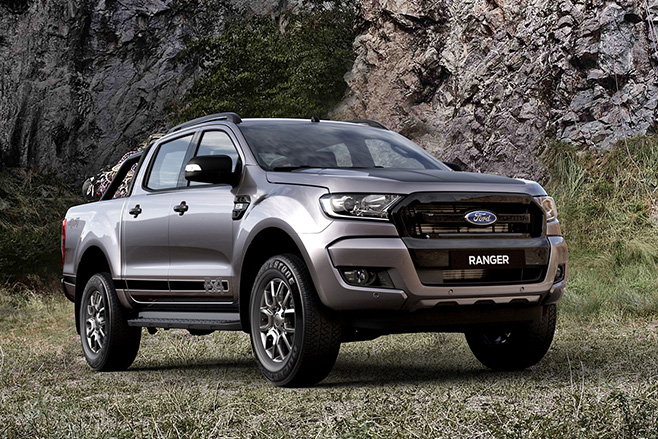
The Ford Ranger FX4 sits between the Ranger XLT and range-topping Wildtrak in the big-selling ute’s line-up and comes with a range of aesthetic enhancements including:
- 18-inch stark grey alloy wheels
- Black roof rails
- Black bonnet and tailgate decal wraps
- Side decals with ‘FX4’ branding
- Black sports bar, rear bumper, side steps and door handles
- Black accents including the grille, fog lamp surrounds and wing mirrors
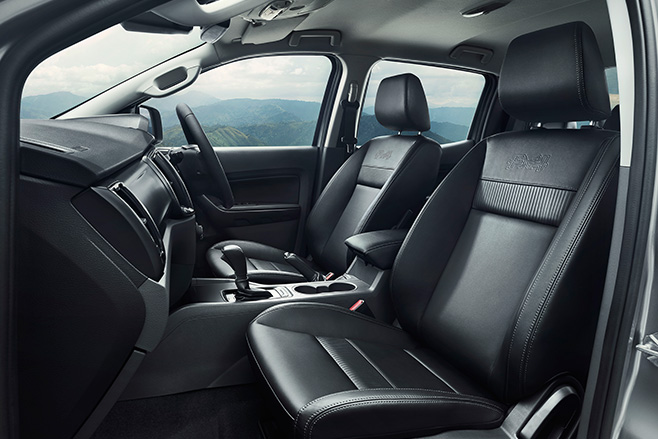
- Leather accented ‘FX4’ branded seats
- Front and rear carpet mats
- Black interior highlights
Ford has also added its latest SYNC 3 infotainment platform with 8-inch display with ‘pinch and swipe’ capacitive touch technology and access to Apple CarPlay or Android Auto.
The FX4 is available in four exclusive exterior colours – frozen white, ingot silver, magnetic and shadow black.
Ford Australia president and CEO Graeme Whickman said the company “developed the Ranger FX4 for our customers that are a bit bolder than most and make use of the towing and payload capabilities of the Ranger XLT”.
Performance remains the same as the XLT, with the 147kW/470Nm 5-cylinder 3.2-litre turbo diesel engine, a choice of six-speed manual transmission and automatic transmissions and 3500kg towing capacity.
The FX4 costs $3500 more than the XLT and puts it within a few hundred dollars’ striking distance of the Wildtrak.
It is currently arriving in showrooms around Australia.
Ford Ranger FX4 pricing
FX4 4×4 Double Pick-up, 3.2-litre, 6-speed manual – $58,915
FX4 4×4 Double Pick-up, 3.2-litre, 6-speed automatic – $61,115
