
Alfa Romeo has announced pricing for its Giulia sports sedan range, which runs to five variants spanning four equipment grades, all with an eight-speed automatic transmission and rear-wheel drive.
The 147kW/330Nm 2.0-litre turbo four-cylinder Giulia opens the range at $59,895.
A pair of Giulia Super variants flesh out the middle of the line-up, offering 2.0-litre turbo petrol ($64,195) and 450Nm 2.0-litre turbo diesel ($65,895) versions – the latter trimming consumption from the petrol’s 6.0L/100km to 4.2L/100km.
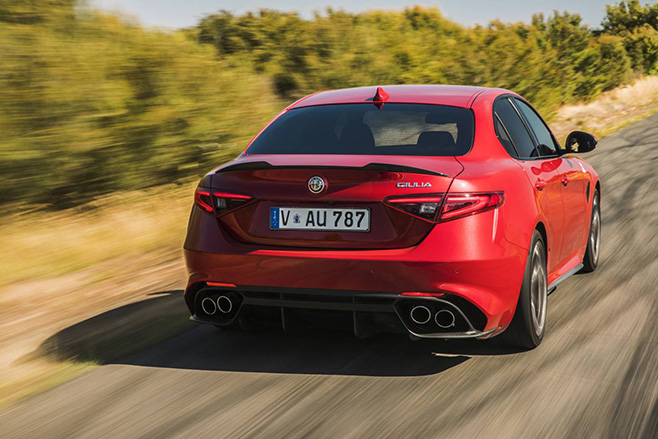
The Alfa Romeo Giulia Veloce sits atop the mainstream model line with a high-output 206kW version of the 2.0-litre petrol turbo and a $71,895 price tag.
The M3-hunting twin-turbo V6 Giulia Quadrifoglio crowns the range at $143,900 – more than the regular BMW M3 and line-ball with the M3 Competition while undercutting the Mercedes-AMG C63 S.
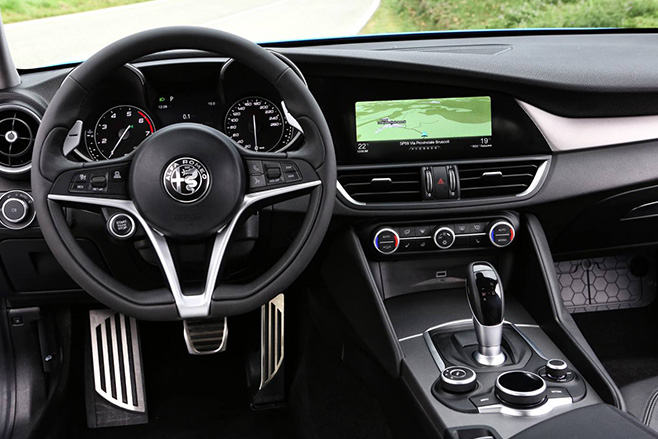
Every Giulia gets standard leather trim inside, cruise control, and rear parking sensors, a reversing camera, bi-xenon headlights, keyless start, stop/start, satellite navigation, dual-zone climate control and rain-sensing wipers.
Standard safety runs to forward collision warning, autonomous emergency braking, pedestrian recognition and lane-departure warning systems.
A pre-paid maintenance plan is offered for either three or five years. The upfront payment can be included in vehicle financing and brings a discount of 15 percent over five years.
The Giulia is now available across Alfa Romeo’s Australian dealer network, which was recently refined from 48 to 16 locations in an effort to provide a high-level customer experience in line with the brand’s premium aspirations.
2017 Alfa Romeo Giulia pricing
| Giulia 2.0 turbo petrol | $59,895 |
| Giulia Super 2.0 turbo petrol | $64,195 |
| Giulia Super 2.2 turbo diesel | $65,895 |
| Giulia Veloce 2.0 turbo petrol | $71,895 |
| Giulia Quadrifoglio V6 turbo petrol | $143,900 |
Dashcam
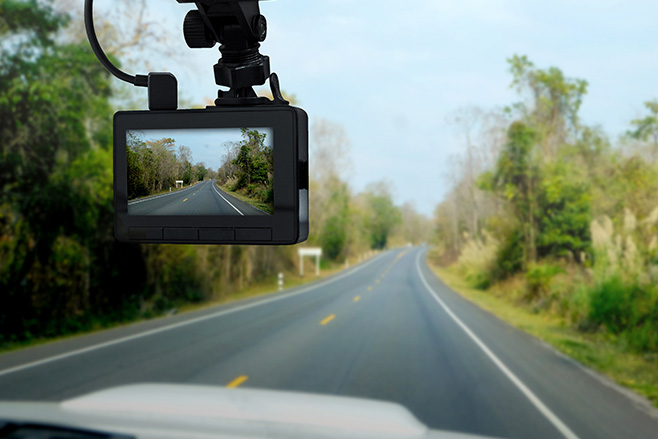
This is one of the more expensive accessories you can buy for your car, but in-car dashcams have a serious function and could potentially save you thousands should you be unfortunate enough to be involved in an accident. The range of cameras is immense, with price tags that are proportional to feature count, resolution and memory capacity. Many can even automatically start recording if the car is nudged while parked, and rear-facing cameras are becoming commonplace. Do your research on which one is best within your budget.
Sunshades
The Aussie sun is pure punishment for car interiors, and with windscreens typically being the largest piece of glass in a car (and prohibited from being tinted by law), a full-span sunshade is a good idea if your car spends a lot of time parked in the open. There’s nothing worse than having your fingerprints seared off by a scalding-hot steering wheel rim.
Phone holder
It’s generally a bad idea to be holding onto your phone while driving a car. The law takes a dim view of it, and common sense dictates that having two hands on the wheel is definitely better than one. If your car isn’t equipped with Bluetooth phone integration, a dedicated phone holder is the only way to handle in-car telephony, but which one do you choose? A windscreen-mounted suction cup that may obscure your view of the road ahead, or a dash-mounted one that may block airflow from your air conditioning vents. Go with whatever suits your car better.
12-volt USB adaptor
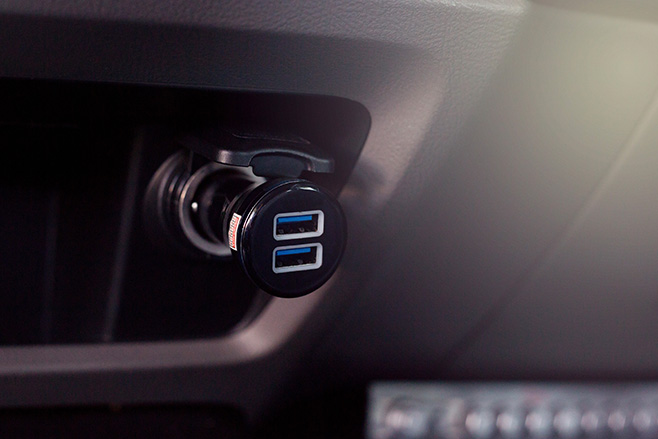
In an age where we are increasingly at the mercy of our mobile devices, keeping our phones and tablets charged up is vital. Most new cars on the market already come with at least one integrated USB charging port, but older vehicles will need an aftermarket solution. Thankfully, you can convert the 12-volt cigarette lighter socket in your car to a USB power outlet with just a ten dollar note and a visit to your local auto parts store.
A bin
Grotty cars are the worst. Few people would admit to being comfortable with the idea of driving around in something resembling a mobile garbage can, but we’re all guilty of throwing the occasional choccy wrapper into the passenger footwell when chowing down on a mid-drive snack. The solution is to carry a proper bin so you have a place to stash your trash (with a lid to keep your shameful detritus out of view), and there are plenty of car-specific bins available from eBay, Amazon and the like. Most will tuck away neatly into a door pocket.
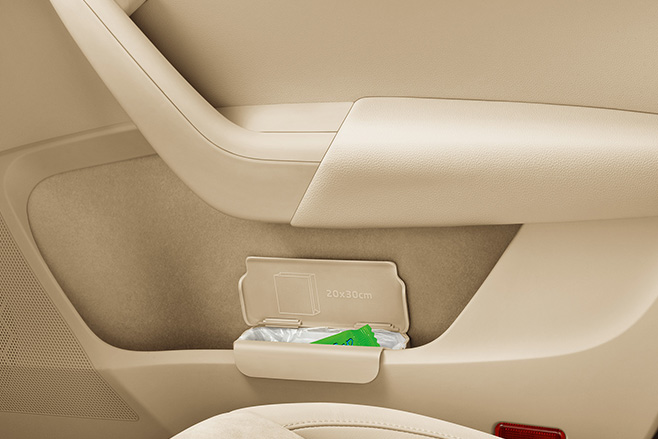
Boot storage
This one may not be so obvious, but a luggage caddy is one of the more underrated car accessories you can get. Most take the form of a collapsible multi-compartment box – made either of fabric or rigid plastic – with grippy material on the underside to stop it from sliding on your boot carpet. If you’ve only got a few small items to carry, one of these things could be the difference between having scrambled eggs all over your interior, or intact groceries in your fridge.
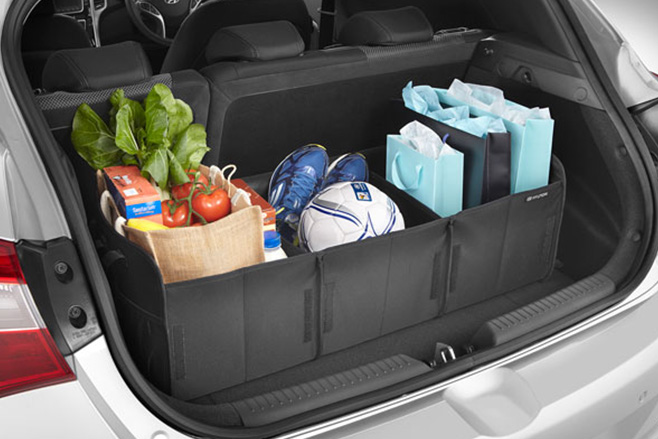
Umbrella
Pretty self-explanatory. Sometimes you forget to check the forecast for your destination and are greeted with torrential rain, while those of you who live in Melbourne … well, you know how it is. In any case, having an umbrella permanently tucked away somewhere in your car will help keep your hair dry.
Audi’s RS3 Sportback will receive a power boost later this year which will make it the world’s fastest hot hatch.As expected, the RS3 hatch will receive Audi’s new-generation 2.5-litre turbocharged five-cylinder engine, lifting outputs from 270kW/465Nm to 294kW/480Nm and cutting two-tenths off the claimed 0-100km/h time, which now stands at a faintly ludicrous 4.1sec.
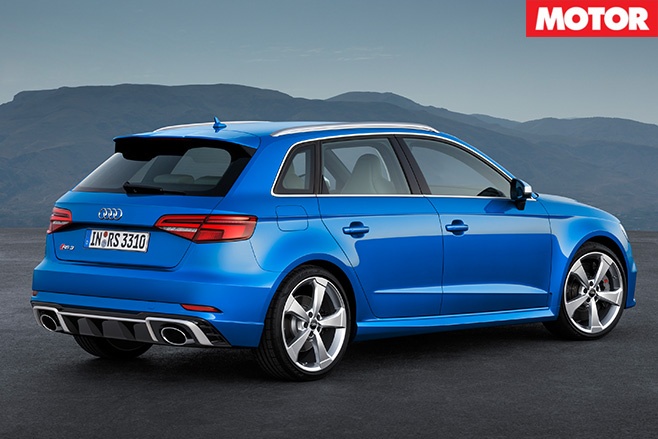
Not only does the new engine help in a straight line, it should help in the corners, too. While very similar in capacity to the previous 2.5-litre turbo five-pot, switching from cast-iron to aluminium for the block has helped shave 26kg off the weight of the engine.
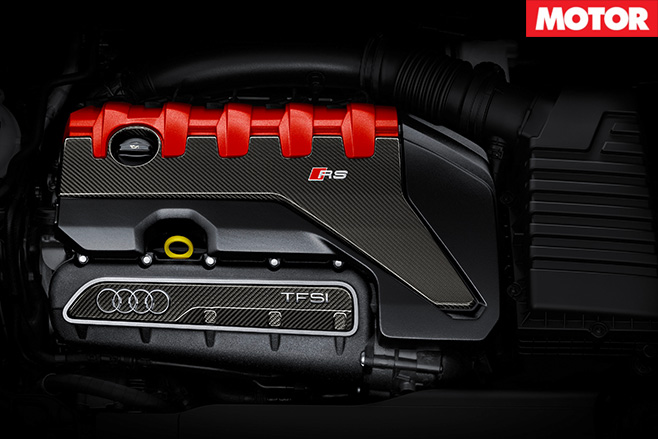
Aside from the engine, the changes are relatively minor. There’s a subtle facelift front and rear, with new headlights, a redesigned grille and more aggressive front bar, while Audi’s latest toys make an appearance inside.
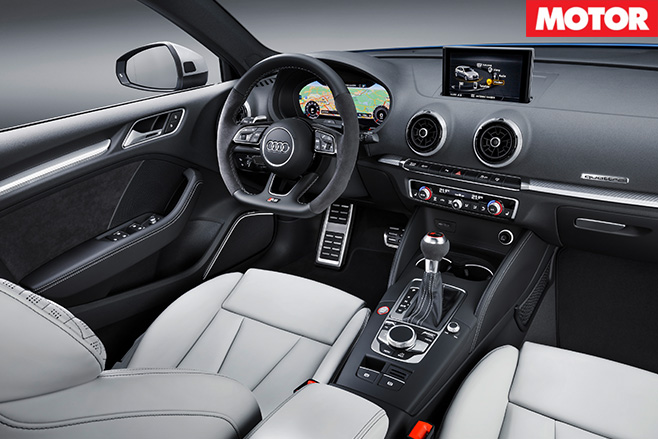
The new Audi RS3 Sportback launches in Europe in August 2017 ahead of an expected local arrival in Q4 of this year.
The Toyota Yaris has undergone a significant upgrade, scoring a fresh look, refined interior and equipment upgrades including a fresh 1.5-litre engine.
The company claims the upgrade goes much deeper than a simple mid-life “facelift,” with the $125 million program introducing 900 new parts to improve the city car’s design, performance and safety.
Its new look, with significant changes to the front and rear styling, has been created at Toyota’s ED2design studio in the South of France.
Design-wise it has a “more active and dynamic look” with redesigned front and rear ends and a greater emphasis on horizontal lines to express a wider stance.
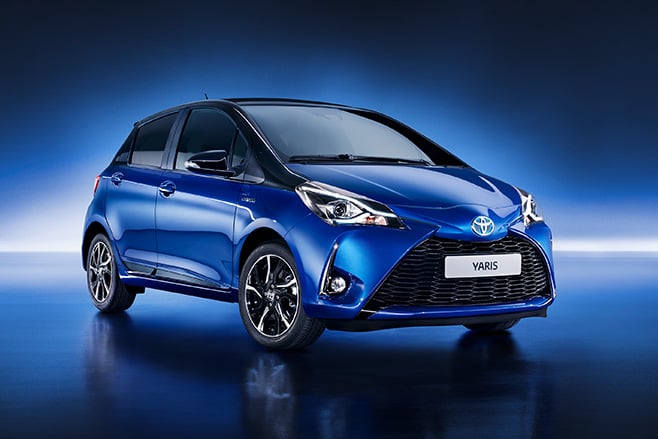
The new front bumper creates a “catamaran” shape with broad sections flowing down from new headlight units, flanking the wide, trapezoidal grille.
The grille itself looks more aggressive and is further enhanced by new fog light recesses on each side.
New headlamp units also contribute to the new look with LED daytime running lights in upper spec models.
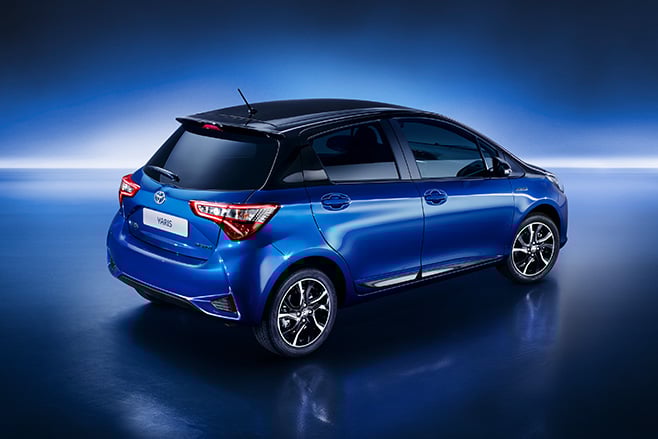
The rear gets a new tailgate design and new light clusters that extend from the rear wings onto the door itself. The “catamaran” styling is also evident here with a new bumper design.
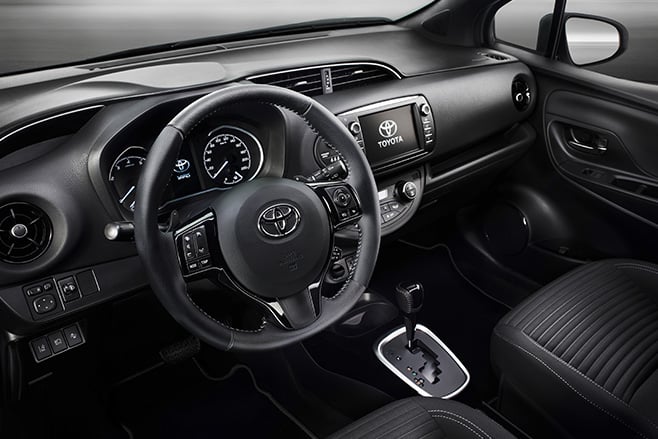
The interior gains new upholsteries, colours and trim details and upgraded instrumentation and controls. The gauges are arranged in a new “binocular” arrangement of twin analogue dials flanking a new 4.2-inch colour TFT multi-information display in all but entry-level models.
Other detail changes include new propeller-style air vents, cool blue instrument illumination and centre console switches.
New safety equipment includes a Pre-Collision System with Autonomous Emergency Braking, Automatic High Beam and Lane Departure Alert.
In Australia these will be part of a “Toyota Safety Sense” package which will be a standard inclusion on the ZR grade and as an available option for the Ascent and SX grades.
The package will complement the reverse camera which is already standard across the range.
Ride and handling is improved thanks to a new engine mount design that reduces vehicle shake caused by engine movement when driving over uneven surfaces. Changes have also been made to the shock absorbers’ damping force and valve design to enhance comfort while maintaining handling performance.
The electric power steering has been tuned for less friction feel and smoother response to driver inputs.
A newer 1.5-litre engine will now be available across the range, however Australian models will continue to come with the 1.3-litre petrol engine in the entry level Ascent and the existing 1.5-litre petrol unit in all other variants.
Full Australian specifications and pricing will be revealed shortly before the 2017 Yaris goes on sale next month.
WE ALL know by now the story of how Ken Block was planning to film the latest version of his Gymkhana series Down Under until the local coppers put a stop to the fun.
Well, now we have our own home grown alternative thanks to the ripper blokes at SJ Automotive and Brad Day Productions.
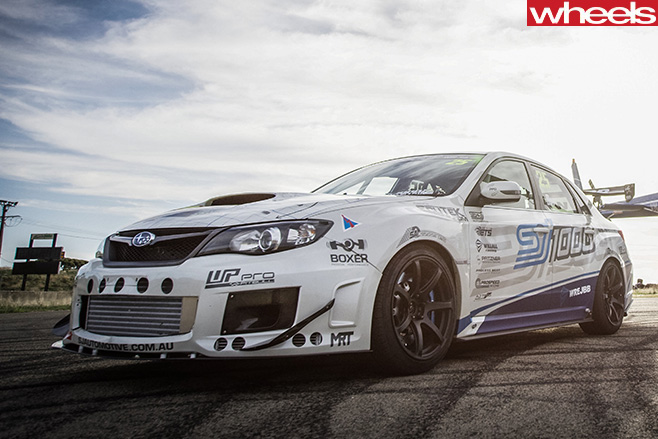
The SJ Automotive team had an all-wheel-drive Subaru (dubbed the SJ 1000 for its ability to run up to 1000hp/745kW), and decided to put together a bit of a promo.
With Dan Day at the wheel, the short clip gives us plenty of tyre-frying action, and one hell of a burnout!
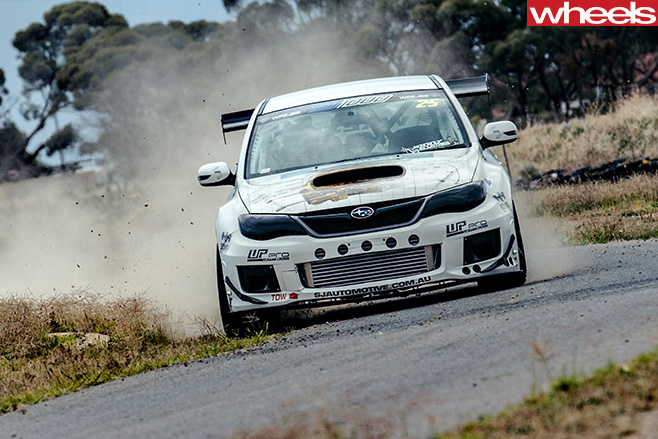
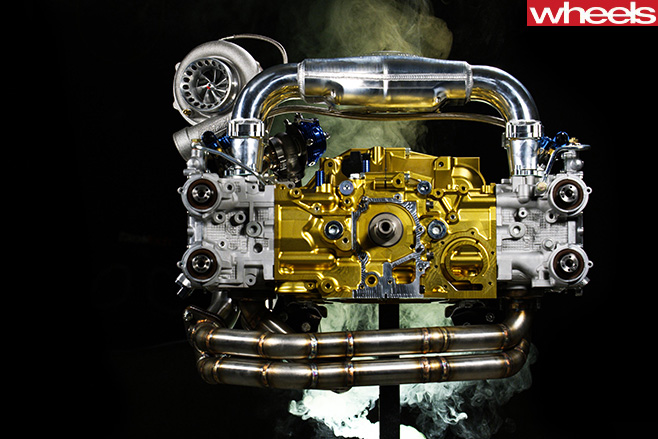
The billet engine in the car is currently making 850hp/633kW at 30psi, however builder and owner Sean Day (father of Dan) says with the boost cranked up to 40psi, 1000hp/745kW is possible. Power is delivered to all four wheels via a six-speed sequential PPG gearbox
“It is something we put together last year,” he told Wheels.
“We decided to build a car and put a race car together for local and national events.”
Yes, the all-wheel stationary burnout is clearly inspired by Ken Block’s own version from Gymkhana 7, but, by God, if watching an AWD monster pull gears while shredding tyres doesn’t get you going then your automotive heart must be dead and cold inside.
We got a real kick out of the video at Wheels HQ, and it left us wanting more. Sean says it wasn’t all fun and games making the production, which was filmed by another son, Brad.
“When we tied it up to the truck it was a lot more work than it seemed.
“Since it was both my sons, one driving and the other shooting, I was very proud of what we pulled off in the three days.”
To the Day family, more of the same, please!
Toyota’s FJ Cruiser always had a Tonka truck feel about it and now the Toyota Hilux is about to get the same treatment with an audacious drivable concept model based on the popular toy trucks.
The brainchild of Toyota Australia’s in-house designers, the Tonka-inspired Toyota HiLux monster truck will sit on all-new raised underpinnings including custom suspension and massive wheels and tyres to help turn the off-roader into a prodigious rock climber.
Produced to celebrate 80 years since the foundation of Toyota Motor Corporation and the 70th anniversary of Tonka, the concept is built around the Toyota HiLux SR5 4×4 double cab and will be powered by the top-spec 2.8-litre turbo-diesel engine – though that’s where the similarities will end.
Exterior modifications will include aggressive new bumpers, grille, tailgate, wheel-arches and door mouldings in bold black-and-yellow Tonka livery.
Toyota Australia’s product design chief Nicolas Hogios said the HiLux and Tonka brands were a natural fit.
“We expect the extreme style and capability of our re-imagined HiLux will capture the imagination of kids and adults alike,” Hogios said.
“HiLux is such a great canvas, and we really pushed the envelope by marrying our number-one seller with the Tonka brand.
“The end result is so exciting because the HiLux Tonka really delivers the dream of every Australian kid who ever wanted such a truck.”
Toyota expects to reveal the concept within months.
Toyota Australia’s designers are part of a product planning and development division that is responsible vehicles suitable for Australian conditions and will remain after local production ends.
This story began when re-reading Michael Taylor’s original launch review of the mighty Lamborghini Murcielago LP670-4 SV.
In the story, Taylor states that the SV was available with a six-speed manual gearbox as standard, with the e-gear automated manual an optional extra.
We like to think of ourselves as pretty knowledgeable about cars here at MOTOR, however the idea of a manual SV was a new one. Before changing this error, however, we thought we’d do a big of digging.

The other three are believed to be in Europe. The Rosso car seen in this video is number 90 and lives in Zurich, the owner of which can be found on Instagram under the tag LNUTTERL (worth a follow for droolworthy car pictures). Details on the other cars are scarce, though Monaco and Switzerland are possible locales.

The Murcielago was arguably the last of the old-school Lamborghinis – 493kW Bizzarini-derived V12, no electronic stability control – and has always been high on our ‘dream car’ list, however the existence of these manual versions has cemented its place.
McLAREN’S relationship with the iconic 24 Hours of Le Mans was relatively brief, but remains one of the most famous stories in motorsport.
The tale of how a GT-spec McLaren F1 GTR took outright victory in 1995 in its debut year is retold and revered to this day, with the race-spec versions of the F1 road car becoming cult classics, fetching inordinate sums of money at auction.
Now new McLaren chief Zak Brown wants the brand to head back to the La Sarthe circuit, and has confirmed there are ongoing internal discussions regarding a new racing project.
“We have won Le Mans and the race is in our history, and part of my job is to decide where the McLaren brand should race,” he told UK publication Autosport.
“Going back to Le Mans is something we have identified and are discussing. Personally, I would love to see us go to Le Mans, and I’m not the only one with those views.”
Brown clarified he wouldn’t be the man to make the final call – that task would ultimately fall to McLaren Automotive and chief operations officer Mike Flewwit.
It is likely if McLaren did return to Le Mans, it would be in GTE (a variation on GT3 which McLaren competes in with the McLaren 650S GT3 racer), against the likes of Ford, Ferrari, and Aston Martin.
On the chances of an LMP1 effort in an attempt to recreate the brand’s outright victory in 1995, “Never say never,” was Brown’s reply.
If the company did decided to go ahead with a GTE assault, Brown said it “would take several years to put together”.
The McLaren 650S GT3 program is handled by the independent and self-funded McLaren GT.
Brown was unclear on whether a GTE program would be handled within McLaren Automotive or by the GT division.
McLaren GT boss Andrew Kirkaldy said his company, with ongoing contracts for the 650S GT3 and 570S GT4, would require the support of McLaren Automotive to be competitive in GTE against the factory might of Ford and Ferrari.
“There have been discussions, but I can’t say too much,” he told Autosport. “The hope is that we would be involved.”
A MP4/12C GTE project was ready to start development in 2013, but was shelved when the WEC and 24 Hour of Le Mans promoters launched an unsuccessful bid to merge GT3 and GTE regulations.
Munich’s considered a master of the six cylinder engine.
The fact its second-gen M3’s humble 3.0-litre inline six closely matched its greatest ever, the McLaren’s 6.1-litre V12, on specific torque, power, and peak power revs, enforces legend.
The accolade was further cemented by the third-generation M3 and its 3.2-litre straight six. Not only could the DOHC 24-valver wind up to dizzying revs with 252W, it made 114Nm from every litre of displacement. Today’s a HSV Clubsport R8 LSA makes 108Nm per litre.
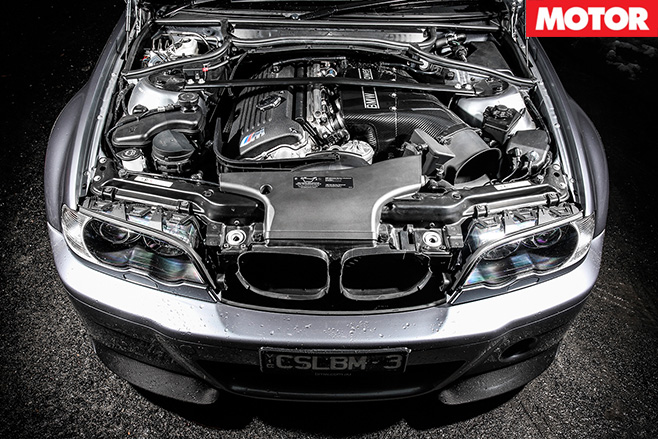
Slapped on the back of the 1400 lucky E46 M3s, engineers tweaked its cam profiles and gave it a bin-sized carbon fibre intake manifold. Powers jumped by 13kW to 265kW, and torque figures a measly 5Nm to 370Nm, but it wasn’t revered for numbers. It was the sound.
We once best described the resulting shriek to be like a “Formula One car with a sore throat.” And after hearing the car again at The Bathurst 12 Hour, where BMW Oz brought along its sole heritage example, we agree. It’s utterly, wildly, intoxicating.
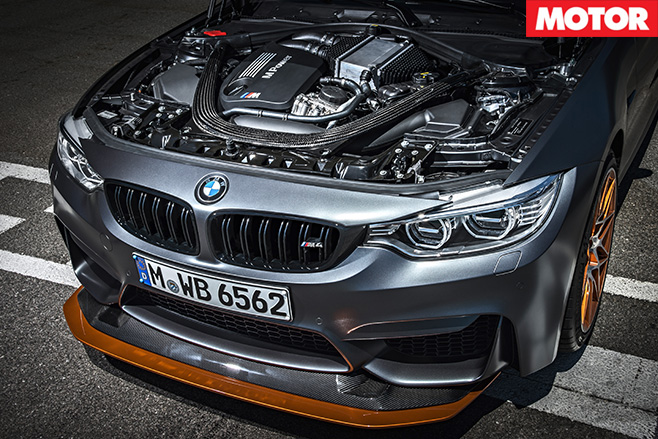
A lot has changed about the company’s M halo coupe. It has a new number designation and turbochargers, but its ethos stays the same. At least for the M4 GTS we also had along with us.
Something of a successor to the M3 CSL, the GTS repeats the same formula with less weight (no rear seats), sports focus (roll-cage), and a two-door body style. And it boasts outputs the old M3 could only dream of (a water-injection assisted 368kW/600Nm).
But can the CSL’s younger brother muster a better bark? We lined up the two in the carpark to see whether the GTS’s Akrapovic assisted growl has moved the game forward. Tell us which you think sounds best.
A BIG mid-life update to the Isuzu D-Max will align the trade ute more closely with key trade ute competitors including the Toyota Hilux and Ford Ranger.
Revealed today, the biggest change arrives under the bonnet, where the 3.0-litre turbo four-cylinder that powers the Isuzu D-Max now meets stricter emissions targets introduced to Australia in November.
The engine keeps its 130kW output – although more power is delivered lower down in the rev range – but torque jumps to 430Nm, a 50Nm increase over the engine it replaces and more in line with its rivals’ higher torque ratings. The engine, which now develops its torque 100rpm lower in the rev range, was developed specifically for the Australian market.
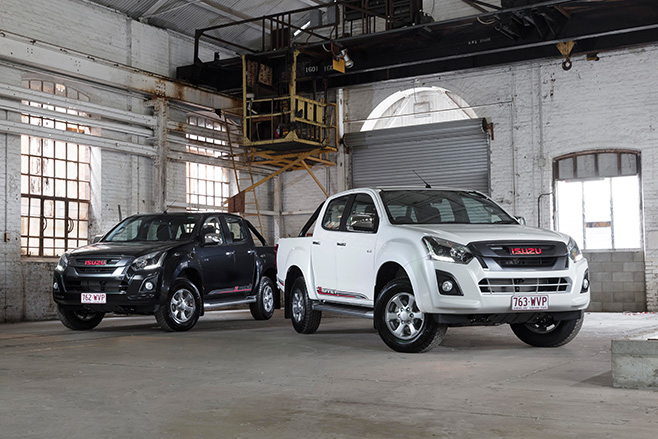
Visual changes to the 2017 Isuzu D-Max include redesigns to the bonnet, front bumper and grille. Projector headlamps with LED daytime running lights are fitted to LS-badged models, while upper-spec EX and SX models gain a redesigned halogen headlamp.
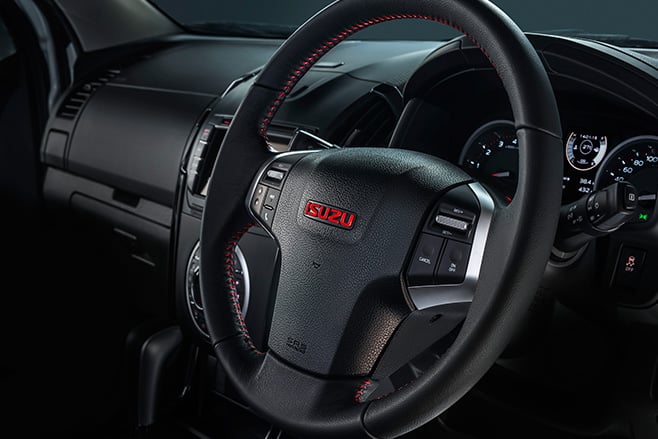
Jump inside, and you’ll notice a seven-inch display in lower grades that jumps to an eight-inch unit in more expensive models with satellite navigation, an integrated reversing camera in the LS-M (the head unit in the SX is compatible with an optional reversing camera), eight speakers in crew versions of the SX and LS-M, and three USB ports in the LS.
The D-Max’s five-speed manual gearbox is gone, now replaced with a six-speed version. The D-Max also gains an all-new six-speed automatic transmission and a redesigned differential.
As part of the changes to meet the more strict Euro V emissions targets, the D-Max gains a particulate filter that will automatically burn off the soot it collects about every 500km.
More sound deadening around the firewall and front guards reduces noise, vibration and harshness making its way inside the D-Max’s cabin.
Hill descent control has rolled out to the entire range.
Isuzu has re-introduced the X-Runner badge as part of the launch of the updated model. Built on a six-speed automatic D-Max 4×4 Crew Cab featuring either Cosmic Black or Pearl White paint, it will be priced at $46,990 drive-away.
2017 Isuzu D-Max pricing*
| SX 4×2 single cab chassis manual | $28,500 |
| SX 4×2 single cab chassis Hi-Ride autou00a0 | $31,700 |
| SX 4×2 crew cab chassis Hi-Ride auto | $37,300 |
| SX 4×2 space ute Hi-Ride autou00a0 | $35,500 |
| SX 4×2 crew cab ute manual | $34,500 |
| SX 4×2 crew cab ute Hi-Ride autou00a0 | $38,000 |
| LS-U 4×2 crew cab ute Hi-Ride auto | $43,600 |
| EX 4×4 single crew cab Hi-Ride manual | $34,800 |
| SX 4×4 single crew cab Hi-Ride manualu00a0 | $38,000 |
| u00a0SX 4×4 single crew cab Hi-Ride auto | $40,100 |
| u00a0SX 4×4 space crew cab Hi-Ride manualu00a0 | $40,700 |
| u00a0SX 4×4 space cab chassis Hi-Ride auto | $42,800 |
| u00a0SX 4×4 crew cab chassis Hi-Ride manual | $43,200 |
| u00a0SX 4×4 crew cab chassis Hi-Ride auto | $45,300u00a0 |
| u00a0SX 4×4 crew cab ute Hi-Ride manual | $43,900 |
| u00a0SX 4×4 crew cab ute Hi-Ride autou00a0 | $46,000 |
| u00a0LS-M 4×4 crew cab ute Hi-Ride manual | $46,400 |
| u00a0LS-M 4×4 crew cab ute Hi-Ride auto | $48,500 |
| u00a0LS-U 4×4 space cab ute Hi-Ride manual | $46,200 |
| u00a0LS-U 4×4 space cab ute Hi-Ride auto | $48,300u00a0 |
| u00a0LS-U 4×4 crew cab ute Hi-Ride manualu00a0 | $48,300 |
| LS-U 4×4 crew cab ute Hi-Ride autou00a0 | $50,400 |
| LS-T 4×4 crew cab ute Hi-Ride auto | $54,200 |
*Before on-road costs
