
BMW is taking its Connected infotainment system to the next level of interactivity with a feature-rich smartphone app – though you have to have an Apple iOS device such as iPhone or Apple Watch to access it.
The new BMW Connected app works like a personal organiser that links your car and phone through a secure system it terms the ‘Open Mobility Cloud’.
Available for installation in all vehicles equipped with iDrive 4 onwards (all models currently on sale feature the iDrive 5 system), BMW Connected adapts to daily routines, letting you know for example when it’s a good time to leave for work based on traffic conditions.
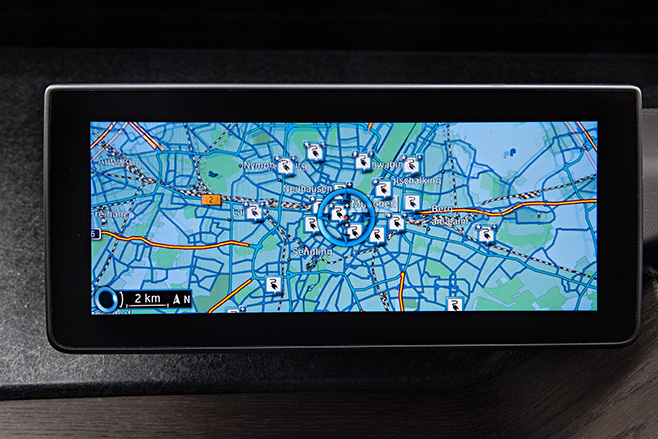
Using data drawn from the device’s SIM card, it can sync with your calendar and transfer appointment information from approved third-party suppliers such as Google Maps, Apple Maps and Yelp.
Once a destination has been set on your phone, the app offers a simple ‘Start Trip’ function that transfers the information to the vehicle’s navigation system, adding further convenience.
It also helps out before and after you get out of your car with functions including First Mile Navigation’ which leads you to your car if parked somewhere such as a large carpark.
The BMW Connect app can also help find petrol stations and carparks; remotely locks and unlocks the car’s doors from your device and can even flash the headlights if you’re having trouble locating your car in the dark.

It also accesses entertainment apps such as Spotify, Pandora and TuneIn Radio.
Cars equipped with the iDrive 5 can also view vehicle data including fuel status and remaining range, tyre pressures, engine oil levels, brake fluid levels and brake wear.
The system only links to the vehicle’s infotainment system and therefore has no connection or control over the vehicle’s engine and safety systems.
Any data used must first pass through highly secure servers based in BMW’s Munich headquarters. As a result, no data is shared directly to the smart device from the vehicle, or vice versa – important, in an age where ‘hacking into cars’ is very much a reality.
BMW Connect is now available in cars sold in Australia and can be retrofitted to any vehicle with iDrive 4 or later simply by syncing the system with the app, which can be downloaded from the Apple App Store for free.
Yep, we’re serious, Toyota is planning a new Yaris Sport hot hatch, set to be revealed in production guise at the 2017 Geneva Motor Show on March 9.
After years in the performance wilderness, Toyota is intent on recovering its fast car mojo, leveraging its return to the World Rally Championship by turning the wick up on its Yaris and taking the fight to the likes of the Ford Fiesta ST and VW Polo GTI.
Dubbed the Yaris Sport, unfortunately details on the new challenger are extremely scarce, with Toyota only confirming the car will have “more than 155kW”. Depending on the torque figure, this will make the Yaris Sport the most powerful car in the junior hot hatch segment.
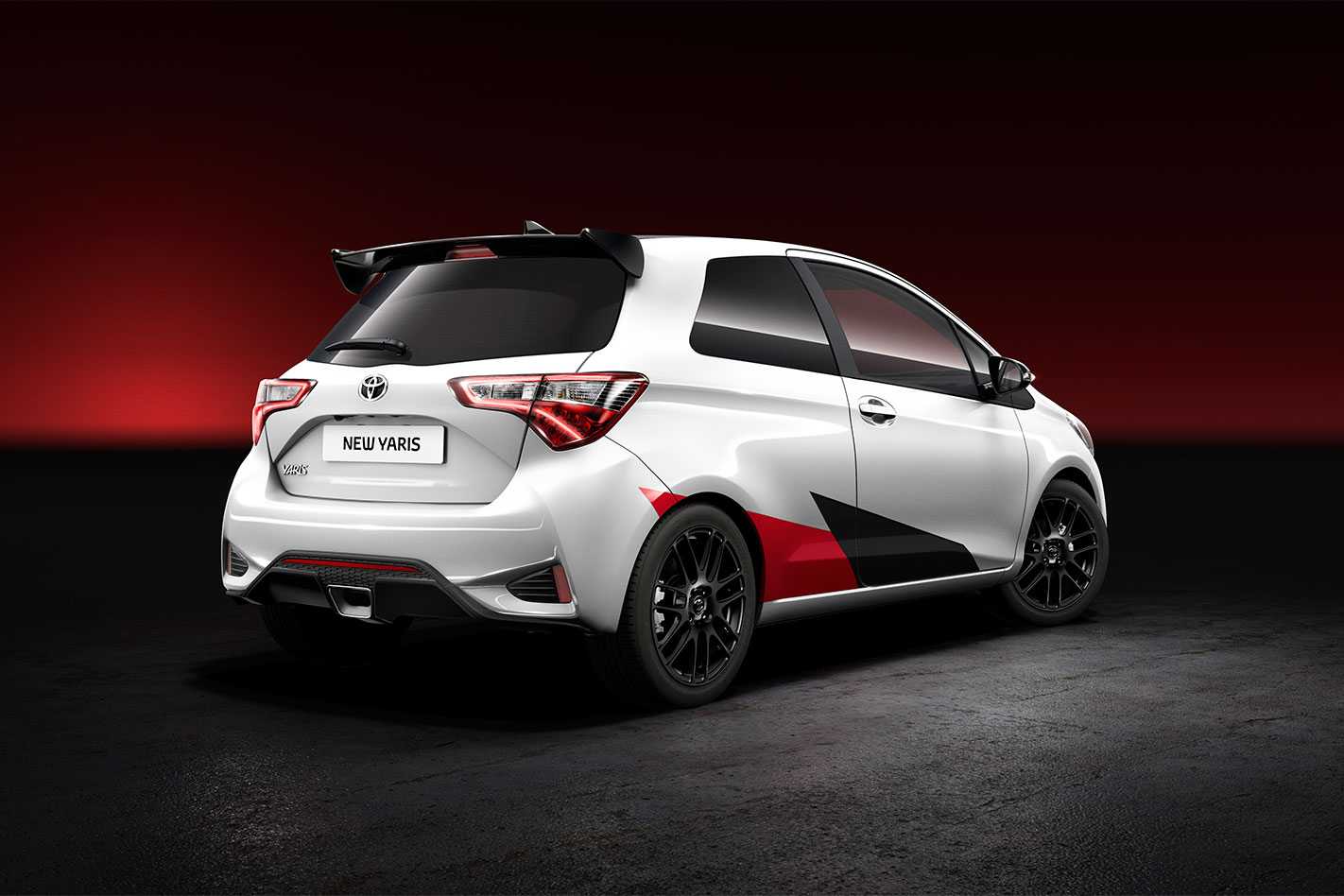
Toyota has been dormant in the hot hatch segment since the high-revving Corolla Sportivo of the early 2000s, but has proved that it still knows how to make a brilliant driver’s car with the brilliant 86.
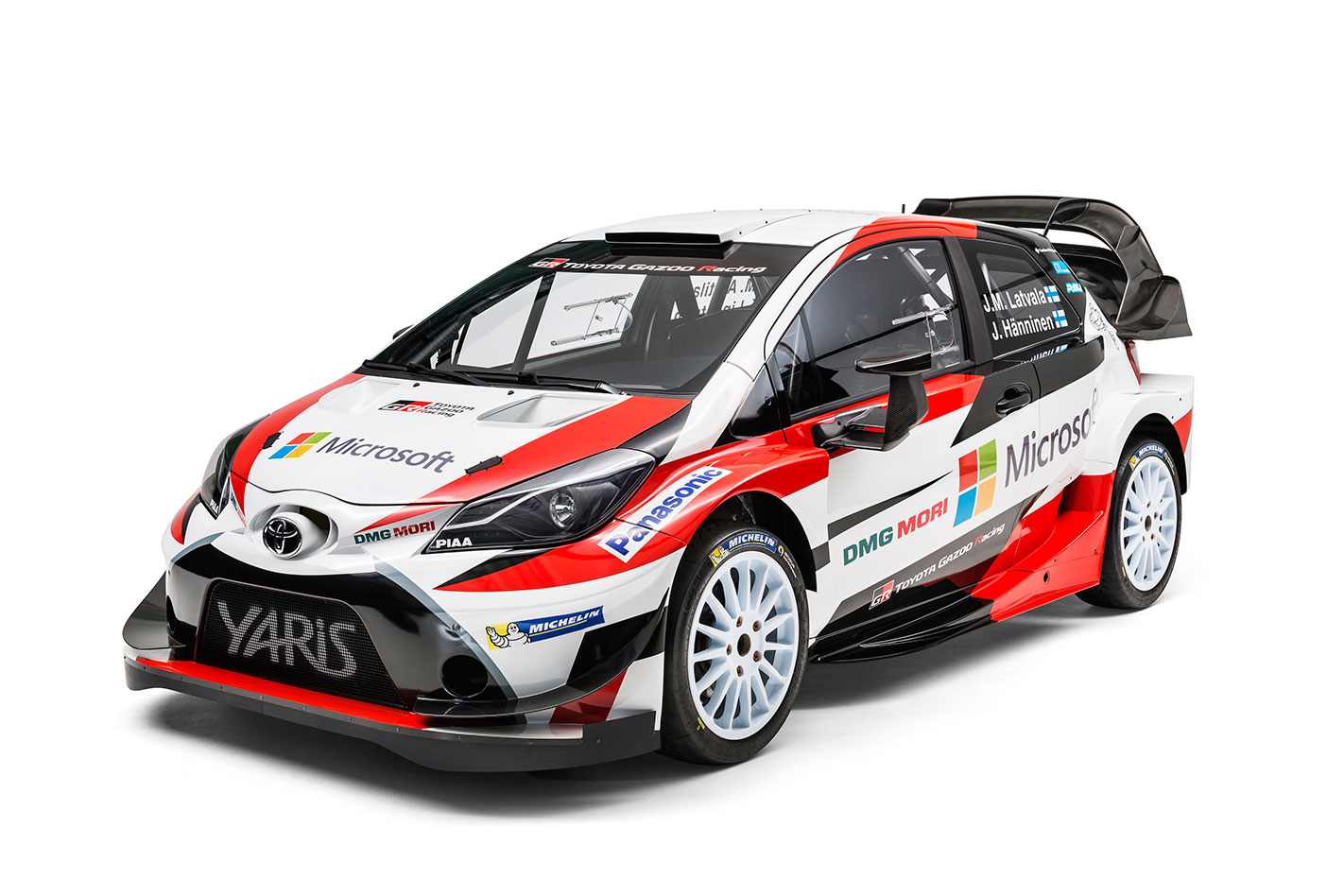
The Yaris Sport will be displayed at Geneva alongside its inspiration, Toyota’s wild winged Yaris WRC, which makes its competitive debut at the 2017 Monte Carlo Rally on January 20.
Audi SQ5
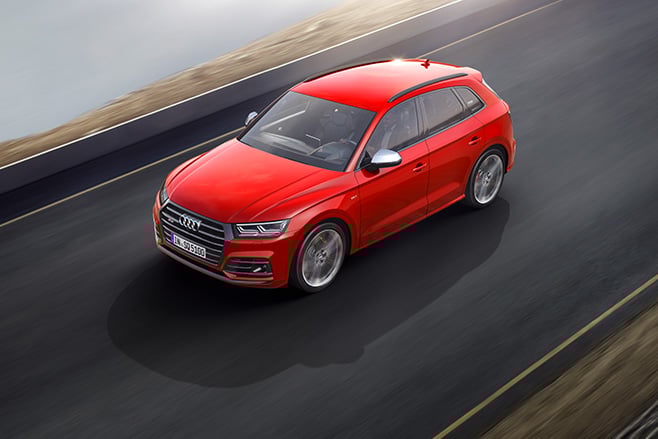
The German luxury carmaker revealed the next generation of its performance-honed SQ5 at the Detroit Motor Show, and instead of the 250kW/700Nm diesel of the Plus version, the all-new S-badged Audi Q5 SUV will feature a turbocharged 3.0-litre V6 making 260kW/500Nm.
And in another big break with convention, the petrol V6 will dump the engine’s traditional supercharger in favour of lighter twin-scroll turbocharged induction that produces maximum torque from 1370-4500rpm. In contrast, the diesel engine it will replace produced its peak torque in a narrow band between 1500-2550rpm.
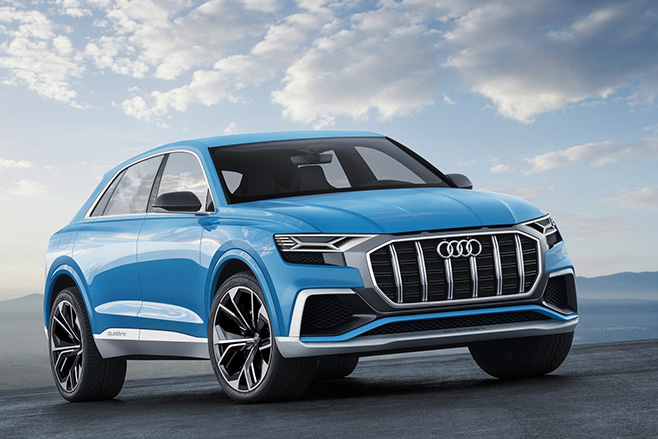
Audi Q8
The Audi Q8 concept has been unveiled at the Detroit Motor Show, hinting at a smart-looking, hybrid engined fastback SUV that will one day challenge the Mercedes-Benz GLE Coupe and BMW X6.
The Audi Q7-based concept is likely to spin into a production model expected in 2018. The 5020mm long Toyota Prado-sized Bombay blue luxury cruiser includes a striking exterior with bold octagonal grille and sloping roofline; a “luxury lounge” cabin for four people, virtual cockpit technology and a plug-in hybrid system producing 330kW/700Nm.
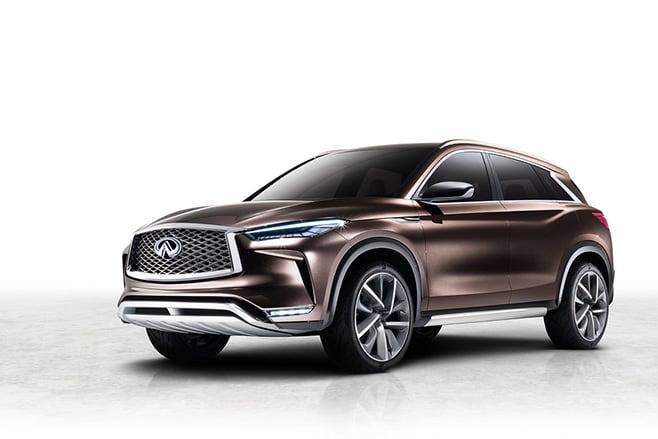
Infiniti QX50
Infiniti’s next-gen QX50 crossover is seen as the car that could change the fortunes of Nissan’s still obscure premium brand. The concept car revealed at Detroit hints at what to expect.
The Infiniti QX50 Concept is a reimagined version of the 2016 QX Sport Inspiration, adapted to showcase a future production model.
The concept’s emphasis is on the ‘driver-centric, passenger-minded’ cabin, designed in harmony with the exterior shape The design exercise also previews the brand’s autonomous driver assistance technology and variable compression (VC-Turbo) engine.
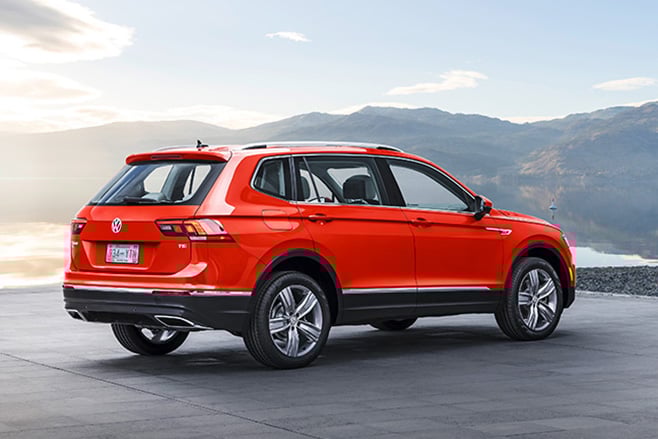
Volkswagen Tiguan Allspace
A seven-seat version of the Volkswagen Tiguan is on the way with a roomier interior and a button-free console. A longer seven-seat version of the Volkswagen Tiguan appears bound for Australia in 2017 as the German premium brand aims to take on the Nissan X-Trail, Mitsubishi Outlander and Holden Captiva.
Unveiled at the Detroit Motor Show, the “5+2”-seater Tiguan Allspace is 215mm longer than the five-seat version on which it is based, and sits on a wheelbase that is stretched an extra 110mm. Its 4704mm length makes it about a hand span shorter than a Holden Commodore Sportwagon.
If you have even a passing interest in motorsport, the name Nurburgring should be no stranger to you. Also known as the Nordschliefe, or more evocatively the Green Hell, the circuit crops up quite often in press releases from car companies.
But for many people buying cars, they would have little to no idea what it is, or what that actually means for the car they are about to spend their hard earned cash on.
Here are the base facts: the Nurburgring Nordschliefe is a racetrack in the forests of Germany, that first opened in 1927 and stretches for 20.81-kilometres, with 154 individual turns.
The course is unlike most race tracks in that it is narrow, bumpy, and has extreme elevation changes. This is because the track was developed to imitate the conditions of the famous Targa Florio rally which was held on public roads in Italy. So although it’s very much a racetrack, the Nurburgring does hold a lot of similarities with public roads.
Which brings us to the second point of why the hell car companies love to tout the development of cars at the circuit.
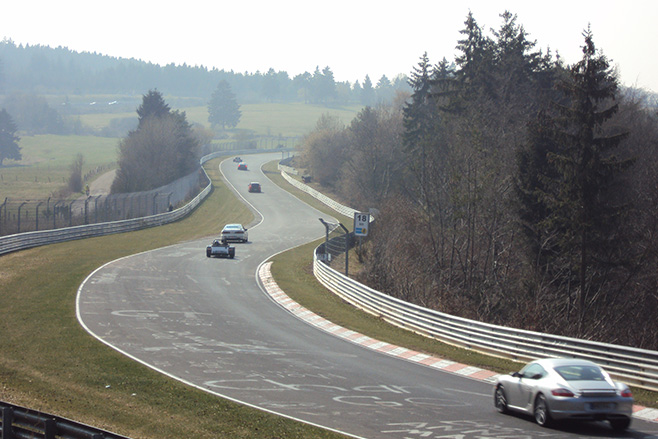
No other track in the world offers the same fearsome, and importantly lengthy, combination of bumps and turns as the Nordschliefe. In addition to its desirable layout, the Nurburgring is often booked out for what are known as Industriefahrten, which are days dedicated to allowing manufacturers to use the circuit for development purposes. This turns the circuit into a proving ground of sorts, with manufacturers clocking countless laps of new and unreleased cars to nail down ride and handling characteristics.
Development at the Nurburgring is usually used to develop a car’s sporting credentials, with the track’s lap records becoming a bragging point among car makers. Cars which are developed on the ‘ring have earned a reputation – whether justified or not – of having harsh and stiff ride quality. However, this is not always the case. On a track as lumpy as the Nurburgring Nordschliefe, a compliant suspension isn’t necessarily bad for performance.
German carmakers are most notable for their development work at the circuit given it’s their home turf, but now manufacturers from all around the globe bring their development cars to the track. South Korean brand Hyundai has even gone as far as building a test centre at the track for its new N division, and many other carmakers also maintain a permanent presence at the circuit.
It’s not just performance that is being put to the test at the Nurburgring either. The track is enormous, lap times are in the ten-minute region for the average road car and there are brutal ascents to contend with. Durability is being challenged too, and if the car you buy has been put through the wringer at the ‘ring, you can be confident that it should cope with whatever you can throw at it on your own favourite patch of tarmac.
AUSTRALIA has lined up for a production version of the Lexus UX Concept first shown at last October’s Paris Motor Show.
Lexus is yet to approve the UX, which would sit below the Toyota RAV4-based Lexus NX small SUV in the carmaker’s showroom, for production.
However, Lexus Australia chief executive Peter McGregor made it clear that he wanted Toyota’s luxury brand to have a vehicle in every growing segment of the market, including premium compact SUVs where the UX would compete.
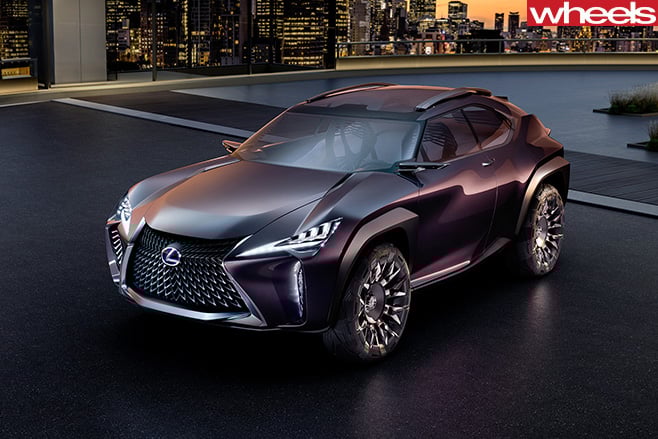
“If Lexus International decided to take a vehicle such as the UX Concept or something similar into production into a sub-Lexus NX market, we would certainly be putting our hand up and asking for that to be introduced into Australia,” McGregor said.
“We make our case known for every vehicle we need to be introduced into Australia.
“If we see a luxury market segment that exists and is growing that we don’t have a presence in, of course we are making that case to Lexus International that there is an opportunity that there are customers in this market segment that we are not satisfying.
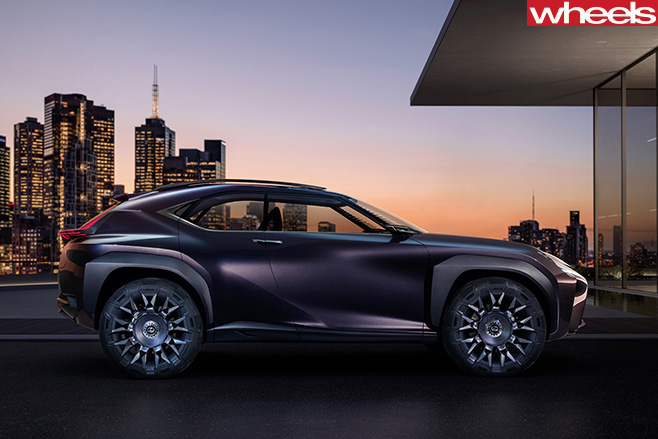
“And, of course, we would be asking for it in the fullness of time whenever that may be.”
If the UX does get built – and it appears likely – it will take on the Audi Q2, BMW X1, and Mini Countryman in the premium SUV segment when it arrives late next year or in 2019.
The UX will be based on the Toyota New Generation Architecture that will underpin every future transverse-engined Toyota and Lexus model and made its debut via the all-new Prius launched earlier last year.
However, the production version of the UX Concept is likely to be based on Toyota’s new C-HR small SUV, due on sale in Australia in February –the Toyota-badged car and the Lexus concept have similar dimensions, including a 2640mm wheelbase, and hidden rear door handles in the C-pillar.
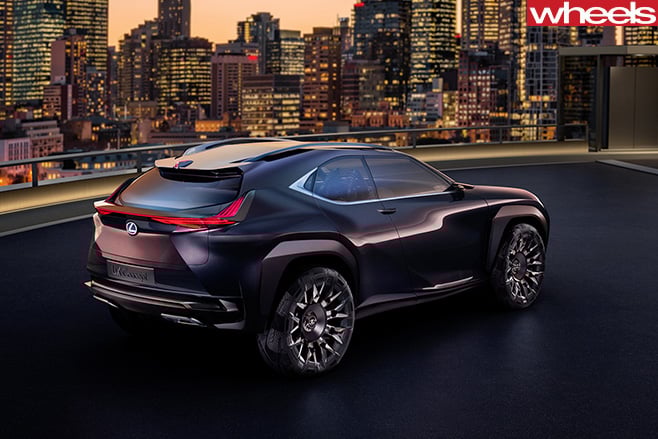
Lexus revealed that the UX’s design stems from Toyota’s ED2 design centre in France. The outlandish exterior styling (dubbed “inside out design”) becomes even more outrageous inside, though the final product is expected to tone down considerably.
Little else is known about Lexus’ sub-NX SUV, such as what badge it will carry, whether the C-HR’s new 1.2-litre turbo, 2.0-litre atmo, or 1.8-litre petrol-electric hybrid powertrains will be utilised, and whether the company will ditch the slow-selling and poorly received CT200h hatchback for the more modern crossover.
Lexus is expected to announce its plans for the UX Concept in the coming months.
This facelifted Volkswagen Golf R will become faster than a Holden Commodore SS and all for around the same money, thanks primarily to an upgraded 400Nm engine.
The Mark 7.5 Golf R steps up and raises outputs of its 2.0-litre turbo four-cylinder engine by 7kW to 228kW and by 20Nm to 400Nm – the latter produced from 2000rpm until 5400rpm.
It isn’t quite enough to hassle the 440Nm manual-only Focus RS, however, and Australia’s hot climate will likely again impact this hot hatchback and peg its outputs to 213kW/380Nm as has been the case with its Audi S3 facelifted sibling, which gets 228kW/400Nm overseas. Still, that would still be a rise over the 206kW current Golf R.
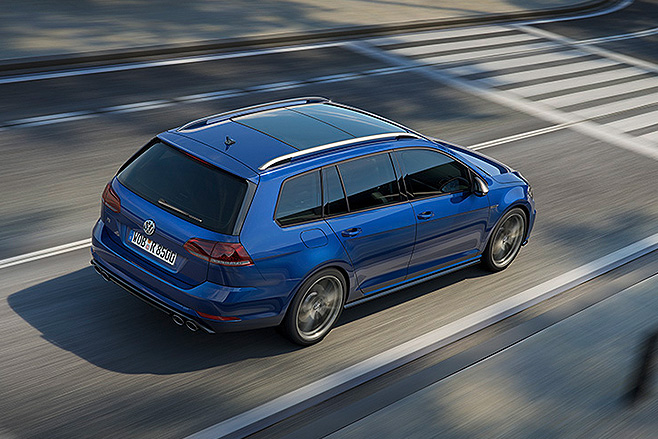
Six-speed manual and DSG options will continue to be available with a starting price of around $53,000 plus on-road costs.
The facelifted Golf R follows its tweaked Golf GTI siblings with new headlight bezels and front bumper inserts, new-design alloy wheels and reconfigured smoked LED tail-lights.

We may also see a return of the three-door Golf R last seen with the Mark 6 generation. Volkswagen Australia has said the Mark 7 performance versions have been so successful that when the Mark 7.5 range arrives in the third quarter of 2017 it will attempt to import all available bodystyle and transmission configurations.
For fans of the limited edition Golf R Wolfsburg wagon, this is tipped to mean the roomy load lugger will also return as a regular model in the range.
If you’ve thought of Kia as a manufacturer of dull but dependable grocery-getters, we don’t blame you. Besides a couple of exceptions (like the Kia Proceed GT and Kia Cerato Koup Turbo), Kia’s offerings up until now have been fairly sober affairs.
So what’s the big deal about the Kia Stinger then?
Officially revealed this week at the North American International Auto Show in Detroit, the Kia Stinger is a landmark car for Kia for a few reasons. For one, the driven wheels are at the back – a key point of difference compared to the rest of Kia’s offerings, which are either front-wheel drive or all-wheel drive.
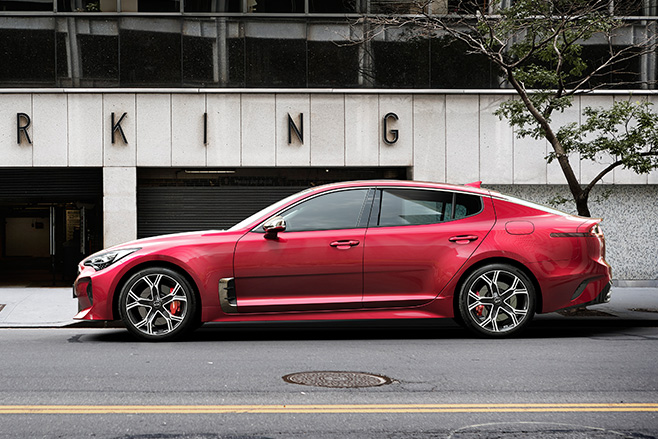
Kia has made rear-drivers before, namely the K9/K900 large sedan sold in South Korea, Russia and the USA, but that E-Class sized car never made it to our shores.
Why is RWD so important? Because while it sacrifices a little interior room, a RWD platform brings with it a sportier driving experience thanks to better-balanced handling. It also makes the Stinger comparable in configuration to the Ford Falcon and Holden Commodore. An all-wheel drive version of the Stinger will be offered overseas, but that one’s not destined for Australia.
Kia spent big on developing the Stinger’s chassis and suspension at Germany’s gruelling Nurburgring test track, with ex-BMW M boss Albert Biermann overseeing the task. With the former head of BMW’s performance division calling the shots there’s a certain expectation of driving pleasure, and a according to our sister title Wheels’ first experience of the Kia Stinger, it delivers on those expectations.
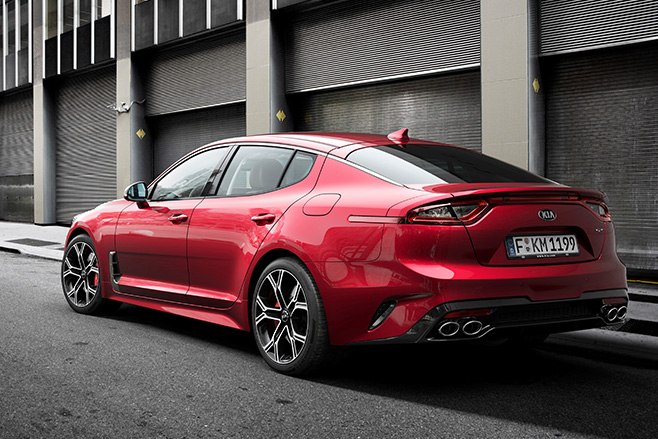
Kia’s focus on vehicle dynamics means the company is officially no longer concerned with making mere transportation, it’s now prioritising driver enjoyment.
A Kia that makes you excited to slip behind the wheel? That’s the Korean company’s objective with the Stinger. Who would have thought that Kia would be there to snatch up RWD-loving drivers after the departure of the Ford Falcon and Holden Commodore?
And it’s not just the way it handles that will impress those enthusiast. Up front is a twin-turbocharged 3.3-litre petrol V6 engine developing 272kW of power and 510Nm of torque – genuine performance car figures, and from an engine that’s completely new to Kia. For your reference, that’s more power and torque than a BMW 340i makes.
A turbo four-cylinder will be available too, but it’s not clear at this point if that powertrain is locked in for an Australian arrival. However, the top-performing turbo V6 is a sure-fire bet for Oz.
Kia’s brief for the Stinger was also to create something beautiful to look at, and with the shapely four-door sedan (which is in actual fact a hatchback with a sedan profile) sporting the most adventurous and athletic take on Kia’s present design language, it’s bound to turn heads like no other Kia before it.
And though styling is often a subjective thing, with an overall length measuring more than 4.8 metres and classic short front overhang, long wheelbase and an extended rear overhang, the Stinger boasts proportions that are not only pleasing to the eye, but distinct from anything else in a Kia showroom.
The design can at times appear like a mashup of Audi, Alfa Romeo, Dodge, Maserati and Porsche styling cues, but those are brands worth mimicking. Derivative design is not always a bad thing.
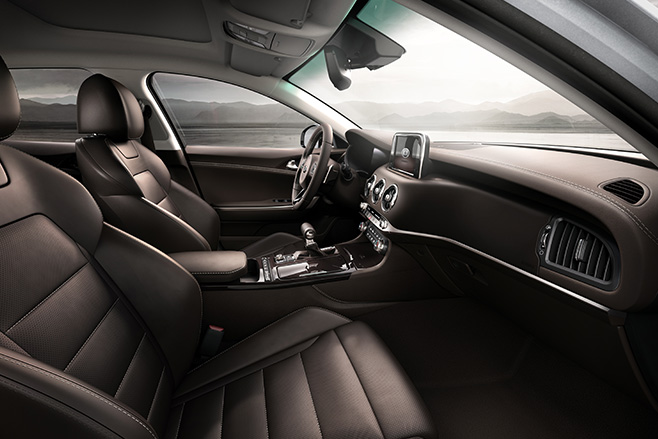
Inside the Stinger, there’s inspiration from the Mercedes-Benz S-Class (central air vents), BMW/Mazda (tombstone-style infotainment screen) and Audi (switchgear), and the liftback four-door configuration is similar to that employed by the Audi A7. Nothing we haven’t seen before, however it’s easily the most visually engaging and premium-looking interior of any Kia in recent times.
And that summarises why the Kia Stinger is such a pivotal product for Korea’s second-biggest automotive exporter. The Stinger doesn’t necessarily innovate, but it takes Kia to new heights by walking right up to the division between mainstream and premium and stepping cheekily across it. It’s set to challenge and change people’s perceptions of Korean cars, and its arrival here in late 2017 will be a watershed moment for Kia.
Buyers will be waiting for self-driving vehicles to arrive for a lot longer than some carmakers are letting on, Toyota says.
Toyota Research Institute chief executive Gill Pratt, speaking at this week’s Detroit motor show, said a truely autonomous vehicle – known within the industry as ‘Level 5’ – was “so far off” it was hard to say when they could be safely sold.
“I don’t know, and I’m being totally honest,” Pratt said. “First of all, let me discount the idea of Level 5; I don’t think anybody is going to have Level 5 for quite some time.
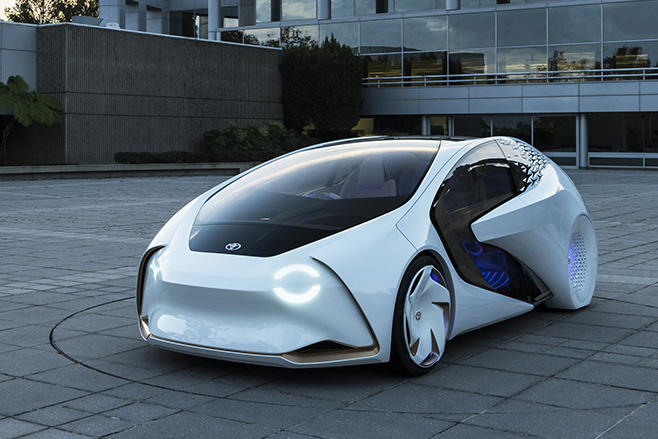
“We speak to everybody in the field on a regular basis, and at least among the folks I know, I don’t know anybody coming out with Level 5…. There is a tremendous amount of communication,” he said.
“Level 5 is so far off that nobody can really say when.”
According to Pratt, Level 5 autonomy meant a car that could replace a “fully qualified” driver at any time and under any conditions, and drive itself.
However, even Level 4 autonomy – where the car could take control in very limited conditions – would be difficult to reach, and was probably many years away, he said.
Pratt said no carmaker was currently more advanced than Level Two mode, which includes driver-assist technologies such as lane-diversion warning and assist systems, adaptive cruise control with automatic braking, and autonomous emergency braking.

“Right now, Level 2 requires you are ready to assume control when the car says ‘I can no longer do this anymore and now it is your turn’, and we have to assume you only have a matter of seconds to take back control. With Level 2, you can’t really trust the autonomy not to miss something… you have to keep watching all the time.
“With Level 4, it means you put conditions on the context in which it can drive: For instance, only when the weather is good enough, only when the traffic is light enough, only when the time of day is good and the lighting conditions are good enough, or on particular special roads that are mapped out well, or only when you know that there is no construction going on and so the map is correct and nothing has been changed.
“And you can go on… you can say when there are no human drivers around… it is so incredibly broad.
You have to include things like dedicated lanes (which is so easy) to the worst city traffic in the worst part of the world in the worst possible weather. And if you can manage that, then you’ll be ready for Level 5.”

Pratt said the desire for carmakers to protect self-drive secrets by remaining deliberately vague when questioned by the media had helped breed misinformation and false reporting on the level the industry was at.
“What would be wonderful to see if the press could press those people on ‘what do you mean and under what conditions’,” he said.
“Often companies are reluctant to tell you, because it would reveal their business model.”
Mr Pratt said sharing appropriate and anonymous data among manufacturers would be a “good idea” to help autonomous vehicle development progress in a safer, more consistent and reliable manner.
Toyota Research Institute chief technical officer James Kuffner said achieving reliable, replicable results was another hurdle to achieving full autonomy.
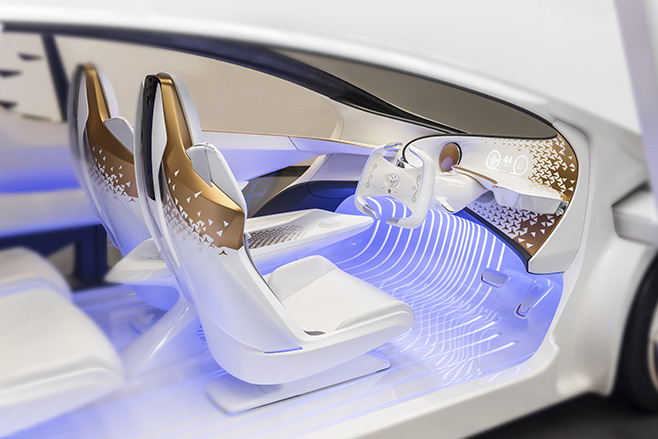
“Not only part of the spectrum of Level 4 you are talking about, but also what level of reliability you feel you need before you will release the car,” he said.
“It’s one thing to say you’ve done one demonstration… I like to use the sports analogy. If I shoot a field goal in basketball and I did it once, it doesn’t mean I am a pro player. You have to have a level of reliability that is safe.”
Pratt said the number of self-driving vehicles a carmaker could build while meeting government regulations and consumer expectations for performance and longevity would also need to be sorted.
“It’s hard to build volume,” he said. “It’s easy to build one car, or 10 cars.
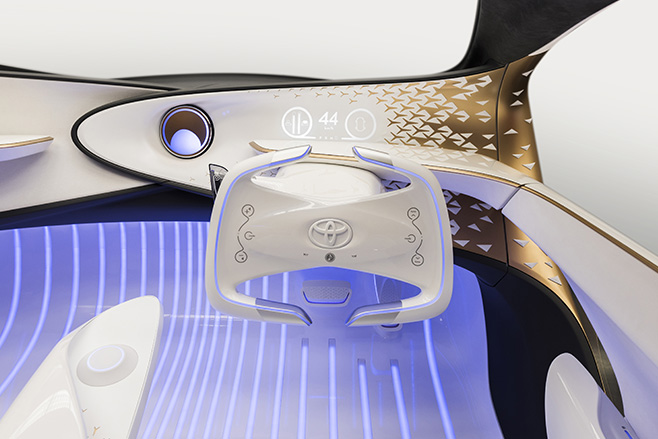
“Toyota build approximately 10 million cars a year, and to do it where there is very strong competition, where we only have 12 to 15 percent of the market, and the profit margin is quite small, and your car has to meet all the laws and regulations from the government, and you have to deal with product liability.
“…They also need to last 15 or 20 years and around 300,000km… it is very different to a cell phone in which you throw it away after two years.”
Despite the slow pace of development, Pratt said there was still steady progress being made, and that the dream of a completely safe and reliable Level 5 autonomous vehicle would be realised.
“We have a pretty good idea where all the manufacturers are,” he said. “We’re all doing well, and (while) we’re all facing the same kind of issues (we’re working through them).”
ROAD TO AUTONOMY: The SAE driver-assist ranking system
Level 0 The human driver does everything.
Level 1 An automated system on the vehicle can sometimes assist the human driver conduct some parts of the driving task.
Level 2 An automated system on the vehicle can actually conduct some parts of the driving task, while the human continues to monitor the driving environment and performs the rest of the driving task.
Level 3 An automated system can conduct some parts of the driving task and monitor the driving environment in some instances, but the human driver must always be ready to take back control when the automated system cannot cope.
Level 4 An automated system can drive and monitor the environment, and the human does not need to always be in control, but the automated system can operate only in certain environments and under certain conditions. A human driver is needed only sometimes.
Level 5 The automated system can perform all driving tasks, under all conditions that a human driver could perform them. No driver is needed.
Mazda has its one-make MX-5 racing series, but Abarth has chosen a dirtier motorsport route for its version of the lightweight roadster, the 124 Spider.
Unveiled alongside the road-going version at the 2016 Geneva Motor Show, the Abarth 124 Spider Rally has been built to the FIA’s R-GT regulations, which are aimed at getting more exotic, more exciting cars involved in rallying.
Sadly, it hasn’t quite taken off as hoped, with Aston Martin and Lotus dabbling, while the most committed effort came from private outfit Tuthill Motorsport, who ran a Porsche 911 GT3 during the 2015 WRC season.
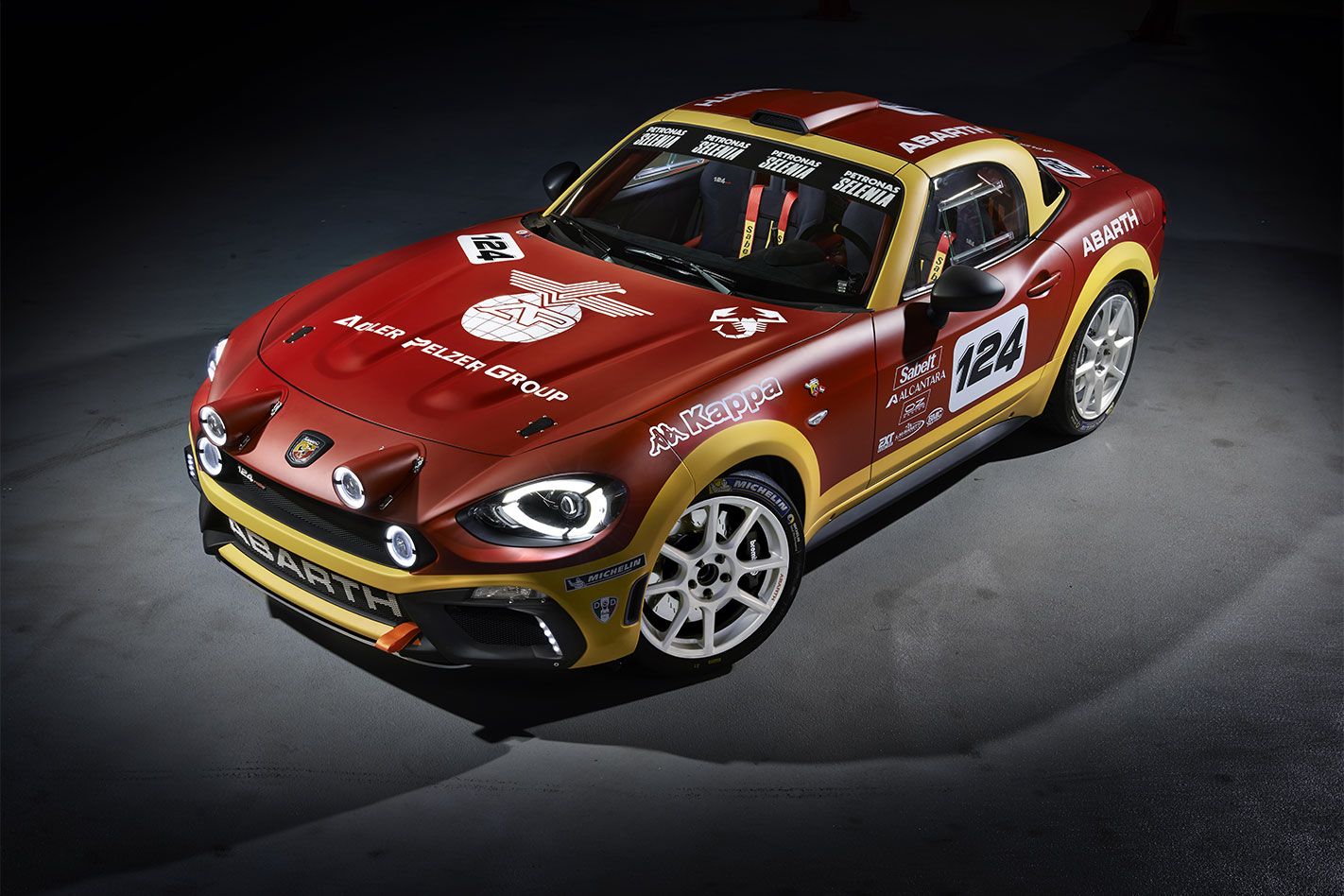
Other modifications include the requisite safety gear and a hardtop that replace’s the standard car’s folding fabric roof. Add bigger brakes and a stripped-out interior and you have the makings of a very angry and quite specatacular rally car.
Arguably the car’s most striking aspect is its sound, the heavily turbocharged engine emitting a deep growl with a vicious serrated edge when the anti-lag system kicks in whenever the throttle is lifted.

It’s guaranteed that the Abarth 124 Spider Rallys will be far from the fastest cars on the Monte, however they should be some of the most spectacular, particularly if it snows. Hopefully Abarth sees fit to produce a proper road-going version in the future.
The Abarth 124 has a rich rallying heritage, competing in the WRC with moderate success in the mid-1970s before being replaced by the 131.
Lamborghini’s lighter, faster version of its Huracan supercar is set to be inspired its motorsport-grade GT3 cousin.
Our spies have come in from the cold of wintry Europe to provide us with revealing images of the model that could be called the Performante rather than Superleggera. The Italian marque is reported to have filed the Performante name with the European patent office.
Firstly, our latest images indicate there will be both Coupe and Spyder versions of the V10-powered Performante/Superleggera.
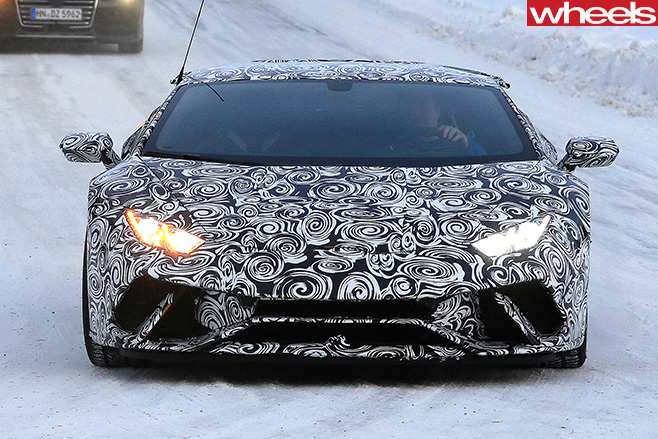
There’s a fair-sized rear wing, while the exhaust eschews the quad-pipe layout of the regular Huracan for the higher-placed twin-tip set-up of the GT3.
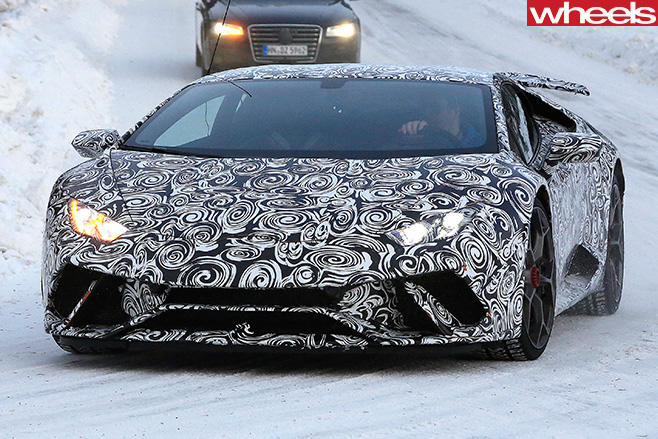
Also anticipated is a substantive weight loss, as with the Gallardo Superleggera predecessor that shed 100kg compared with its vanilla sibling.
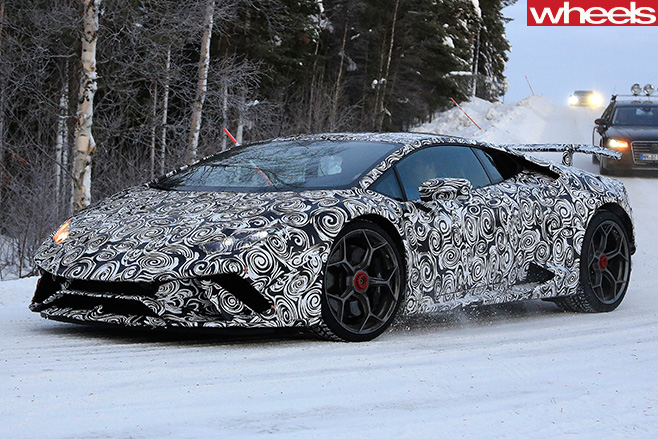
The lighter body will be a bigger key to performance than likely tweaks to both the Huracan’s 5.2-litre V10 and exhaust system.
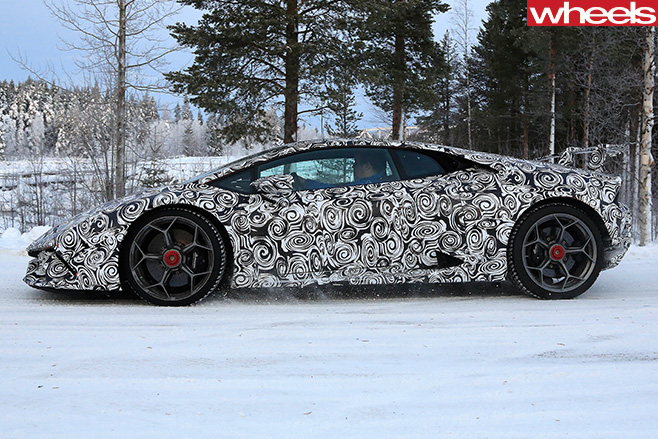
The regular Huracan is already significantly quicker than the old Gallardo Superleggera – 3.2 v 3.8 seconds – and the Superleggera/Performante will be slightly quicker again.
