
Usually when a long-termer hits its final month we step back, reflect on the time spent together, and ask ourselves whether it’d be worth the dough.
But the question asked by Big Grey here can’t be answered by my subjectivity alone. No, the car touches a much larger, sensitive issue.
By saving the 300 SRT especially for Australia (and the Middle East), after it unplugged the model from North America’s domestic market in 2014, Fiat Chrysler Automobiles was making a very clear statement.
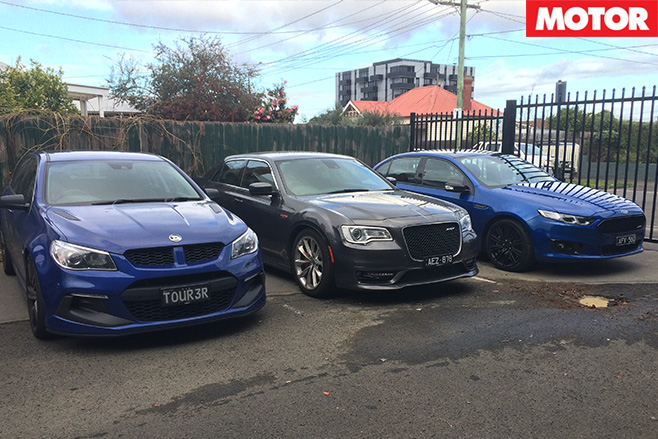
It makes sense. The 300 might be assembled in Canada, but its on-paper recipe is one Commodores and Falcons have followed for yonks. Large, comfortable interior, thumping V8 up-front sending power to the rear. So, really, for this last entry the question was not whether I’d buy a Chrysler 300 SRT, but rather, would Ford and Holden loyalists? We polled our Facebookers for an answer.
Prompted by a picture of Big Grey sandwiched by an HSV Clubsport R8 LSA and Ford Falcon XR8 Sprint, we asked our 26,507 followers if they’d consider a 300 SRT once our home-grown heroes exit once and for all.
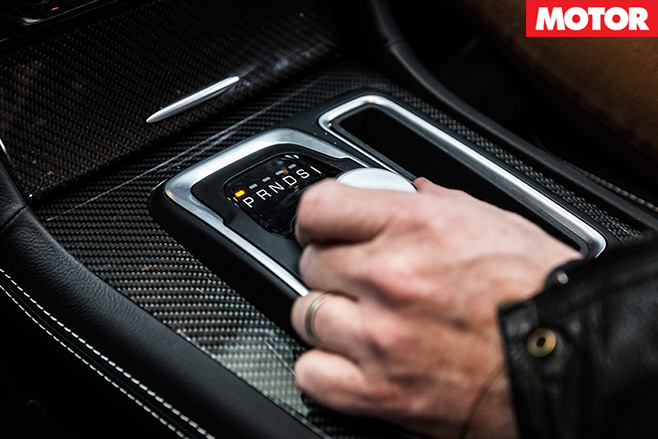
Some were quick to put forward their new allegiance. One writing: “Eight-speed makes all the difference. Quicker than the 400kW [R8 LSA].” He’s not wrong, either. The SRT proved it has the dragstrip nous earlier this January, just pipping the R8 LSA with 12.6sec versus 12.67sec.
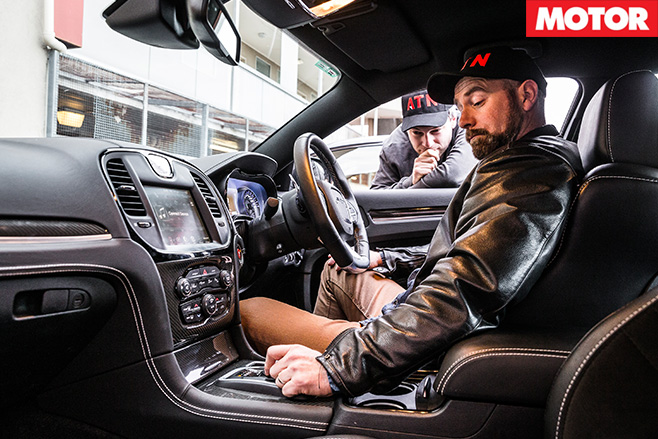
Some pegged their decision on its look, giving it the thumbs up (“Mopar looks better anyway”) or thumbs down (“Ugly and cheap looking. That’s a no from me”).
Defined by that massive front grille, chiselled side profile, and array of chrome touches, Big Grey has a subtle, brooding presence that turns heads surprisingly often.
You could sense commenters didn’t trust the SRT’s handling abilities and had their tongues firmly in cheek making it known, one bloke writing: “Yeah, if I wanted to do land yachting.” And while, yes, the 300’s no ballerina, at two-tonnes it’s surprisingly balanced and friendly on a twisty road, even if it can’t match a Commodore for tactility or talent.
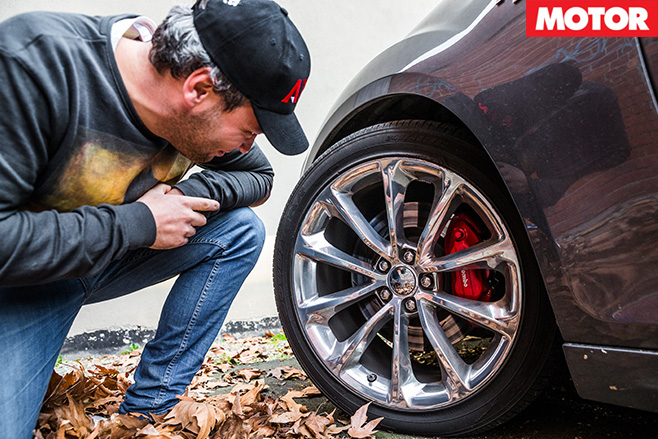
“If it was $20K cheaper in SRT form (not Core), I would have had a look. But instead I’m picking up my XR8 next week,” Glen Sansom wrote. Unfortunately, after jumping from $69K to $75K, the Aussie dollar hasn’t been on the 300 SRT’s side.
However, Greg Barry put it down to something else – a long-serving loyalty. “I bought a new XR8 last December… I didn’t need a new car, but with Aussie muscle being discontinued I jumped in. The XR8 will be with me for years.”
MONTH FIVE
LIKED: Firing the HEMI V8 into life never gets old DISLIKED: Giving the keys back to Chrysler FAVOURITE MOMENT: Convincing MOTOR staffers to act as ‘models’
DETAILS Fuel This Month: 18.5L/100km Average: 16.3L/100km Distance This Month: 698km Total: 13,867km
It mightn’t be familiar to many, but the term amuse-bouche comes to mind with the Renault Sport Megane GT – a pre-entree surprise, a morsel set to tantalise the tastebuds in preparation for the feast ahead. Or maybe I should just cut back on the My Kitchen Rules.
If fans had their way the new Megane RS main would be here, and yet Renault Sport has served a sample of its new five-door hatchback as a flavour of things to come.
Like four-wheel steering, or 4CONTROL as it’s dubbed, and a new seven-speed dual-clutch automatic we hope rights the wrongs of the six-speed Clio RS. All in a dish served from $38,490, well below the DSG-equipped $43,490 Golf GTI that Renault hopes to poach buyers from.
The Megane GT’s 1.6-litre turbo four boasts similar power to the VW’s bigger 2.0-litre, with 151kW at 6000rpm (versus 162kW), though its peak torque figure of 280Nm at 2400rpm is a long way short of the gutsier Golf’s 350Nm max.
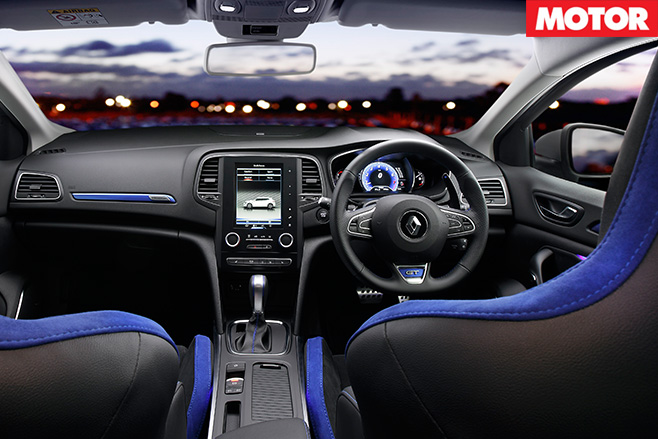
That’s merely an illusion, however, because the Megane weighs a tubby 1392kg. As a result, it struggles to feel fast off the line even with launch control engaged. Renault’s 0-100km/h claim of 7.1 seconds is not only optimistic, it’s well behind MOTOR’s best of 6.37sec in the lighter Golf.
Nonetheless, the engine sounds characterful through the mid-range and feels boosty and brisk. The auto is impressively intuitive, slickly rushing through its seven playing cards when in Sport-auto or using the paddles, which is a welcome change after the horrible Clio RS unit.
Tight, sharp and nimble steering is another highlight aided by the 4CONTROL system that points the rear wheels in the opposite direction to the fronts (below 80km/h in Sport).
The Megane GT flaunted its Sport-tuned suspension over an extremely bumpy northern NSW route, feeling poised and disciplined. Its refinement and power-down – despite the lack of a limited-slip diff – shames its 162kW manual-only Megane GT220 predecessor.
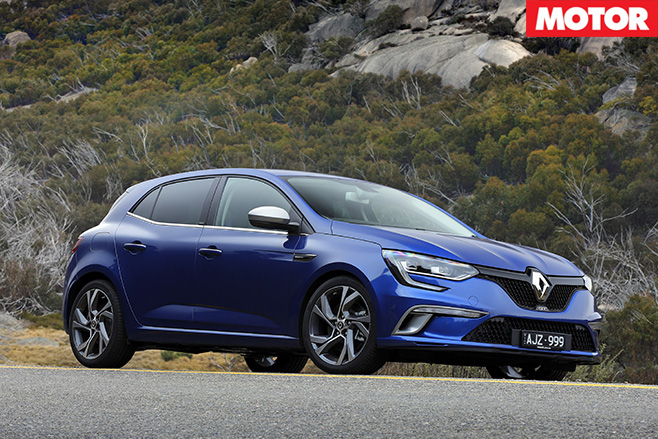
It is an expensive starter, but this Renault is also a tasty preview before the GT flips to RS – amusing, but butch, rather than bouche.
3.5 OUT OF 5 STARS
LIKE: Great steering and ride; good handling; stylish DISLIKE: Feels heavy off the line; expensive; no manual
SPECS Engine: 1618cc inline-4cyl, DOHC, 16v, turbo Power: 151kW @ 6000rpm Torque: 280Nm @ 2400rpm Weight: 1392kg 0-100km/h: 7.1sec (claimed) Price: $38,490
First published in the October 2016 issue of Wheels magazine, Australia’s best car mag since 1953.
The Toyota Kluger offends no one by sticking to the middle of the road.
Can’t wait to see the final score? Jump to the verdict now.
NEED proof that Australians are becoming more like Americans? Presenting exhibit A: Toyota Kluger. Square jawed, spacious, and muscular, the seven-seater SUV feels totally tailored for local tastes. No surprise, then, that it is this test’s biggest seller by some margin.
The latest Kluger, however, is more Uncle Sam than Uncle Arthur, with this third-generation Toyota Camry/US Avalon-based version sourced from Indiana since its early-2014 launch.
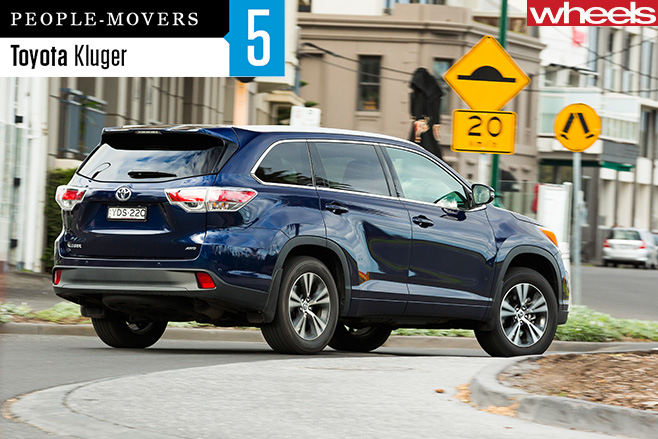
Firstly, it’s the most powerful, with addictively instantaneous step-off acceleration for a two-tonne behemoth, backed up by strong mid-range urge. Toyota’s buttery-smooth 3.5-litre shows its relative efficiency by out-sipping most of the other V6s bar the speedy yet parsimonious Kia Sorento for economy, and it sounds the most spirited doing so.
Then there’s the Kluger’s dynamics, which reside between dull and delightful. Yes, the steering feels muted, but it’s an agile and faithful handler. Grip isn’t great (ours wore Michelin Latitude 245/60R18s), which might explain the test’s longest braking distance from 100km/h (41.2m), but the chassis seems planted (until the rubber lets go.) The ride, while fidgety except over the slickest surfaces, somehow possesses an underlying controlled suppleness that some might even consider restful. Or maybe that’s just the thickly padded seating.
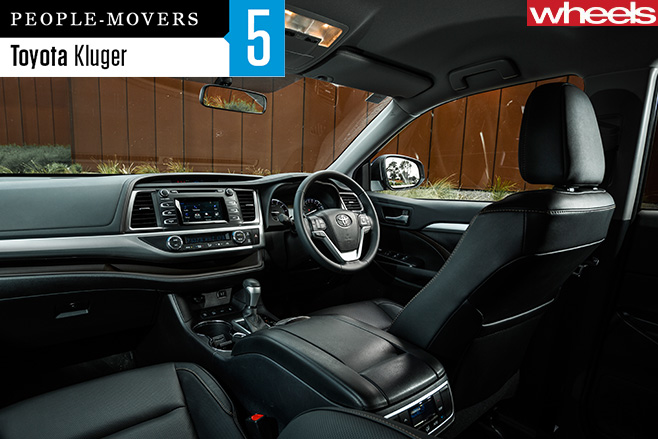
Entry/egress is easy to the all-reclinable second and third rows, with the middle split favouring right-hand drive, so only the nearside passenger needs to get out to let people through to the back. Note these are not as lofty as the nosebleed pews in, say, the Nissan Pathfinder.
Along with adult-accommodating space, there’s also rear variable air-con control with vents for all outboard occupants, overhead lights, cupholders, storage, and sufficient glazing to gaze through.
With all seven seats occupied, available luggage space is a meagre 195 litres, but that extends to 529 litres with the third-row folded. Cabin downsides include broad front seats that feel a tad lacking in support, and some of the albeit-hardy plastics scream ‘America’ rather than Japan. Otherwise, this is a pretty well-sorted beast.
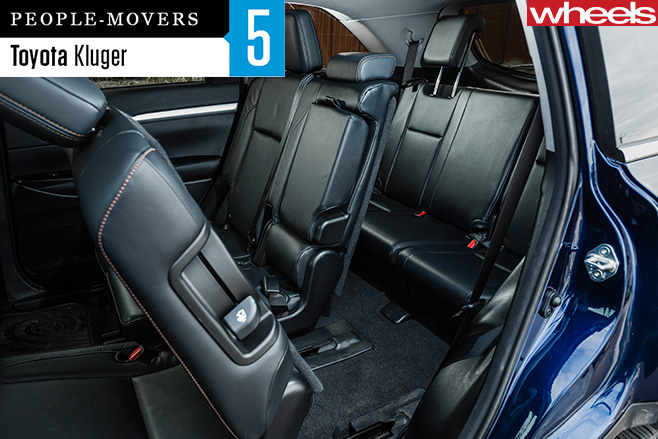
The Kluger strives to please with much competence and few compromises, for better or worse traversing the middle road with typical Toyota thoroughness. Whether you’re in Richmond, Virginia or Richmond, Victoria, big, honest value sells. Perfect, then, for the United States of Australia.
Taking the Highlander
All previous-gen Klugers were sourced from Japan, but today’s XU50 series is all-American, except for the two years of electric steering fettling and retuning of the strut front/double-wishbone rear suspension it received in Australia prior to launch, for improved handling, ride and gravel-road stability.
Now the MY17 facelift has been unveiled in the US, introducing an eight-speed auto for improved economy, a revamped V6 with direct injection, redesigned headlights, grille, bumpers, and tail-lights, and revised trim. Look for it here early next year.
|
Other seven seater options
Holden Captiva LT AWD
The Holden Captiva LT AWD fails to make a captivating argument for why you’d bother over other, more composed competitors.
Nissan Pathfinder ST AWD
Opportunity knocked, but Nissan didn’t fully open the door. We find the Nissan Pathfinder, while smooth and likeable, falls short of the competition.
Honda Odyssey VTi
An odyssey is an ‘epic journey’. Unfortunately for the Japanese carmaker, the story of the Honda Odyssey has been one of a downward slide.
Hyundai Santa Fe 30
The Hyundai Santa Fe better at pleasing its driver, rather than shifting a tribe of seven, as we uncover headroom and visibility issues in the third row.
Volkswagen Multivan
The Volkswagen Multivan is certainly the leader of the space race, if not quite the final frontier. Commercial vehicle origins let it down against more sophisticated competition.
TELL ME ABOUT THIS CAR
The V6 is an addition to the updated Volkswagen Amarok ute, which gets a new front bumper, new grille and new headlights. In some models the V6 replaces the 2.0-litre four-cylinder turbo diesel with a 3.0-litre V6 turbo diesel. For now there are two V6 Amaroks available, the Highline ($59,990) and Ultimate ($67,990). But in 2017 there will be more models, including an off-road focused Core and a manual transmission.
STRENGTHS
- The Amarok is bigger than most of its rivals and that’s most obvious in the tub, which has loads of space between the rear wheel arches. It means you can fit a pallet between those rear wheels.
- It’s fast. The V6 engine is the most powerful diesel in the Amarok’s dual-cab class, with 165kW and 550Nm. It’s particularly strong when accelerating up hills or overtaking. The engine also works very well with the eight-speed automatic transmission, which shifts smoothly and is very good at making the most from the engine.

- It’s nice to drive. Dual-cab utes are typically designed to carry up to a tonne in their trays and typically have very rugged (read: stiff) rear suspension. That makes them bumpy and, at times, uncomfortable. While there’s some bouncing over successive bumps, the Amarok is surprisingly well controlled and generally comfortable. It’s also fairly quiet at speed.
- The Amarok V6 is comfortable with fantastic front seats with great support and padding to make for easy long distance touring. There’s also great adjustability to the driving position (including angle and reach adjustment to the steering wheel) that ensures a very car-like driving position.
- Despite premium pricing and generally strong equipment levels, the Amarok is missing some gear. There’s no sensor key for keyless entry, for example, and it doesn’t get air vents to the back seats. The V6 also doesn’t get the latest active safety features, such as auto emergency braking and blind spot warning (to be fair, nothing in the dual-cab ute class has AEB at the moment, but some do get things such as radar cruise control).

- Towing and carrying things. While the Amarok can tow up to 3000kg and carry up to 911kg in its tray, that’s below the levels of most rivals, which tow up to 3500kg and get closer to 1000kg of load capacity.
- Rear seat safety. The Amarok is the only dual-cab ute without curtain airbags in the rear. They can save your life in a side impact crash. Volkswagen has never offered them on the Amarok, part of a cost cutting exercise when the car was being developed.
The popular cars in this segment are the Toyota Hilux, Ford Ranger, Holden Colorado, Mitsubishi Triton, Mazda BT-50 and Nissan Navara.
On the face of it, the 2016 World Rally Championship followed a similar pattern to that of the previous three years – Sebastien Ogier first, daylight second.
While it’s true the Frenchman wrapped up his fourth straight title in dominant fashion, joining Tommi Makinen, Juha Kankkunen and Sebastien Loeb in an exclusive club, the 2016 WRC season was full of twists and turns, with six different winners for the first time since 2003.
Below we rate every full-time driver, along with the three leading WRC2 contenders as there’s a good chance one, if not all, will appear at the top level in 2017.
Citroen
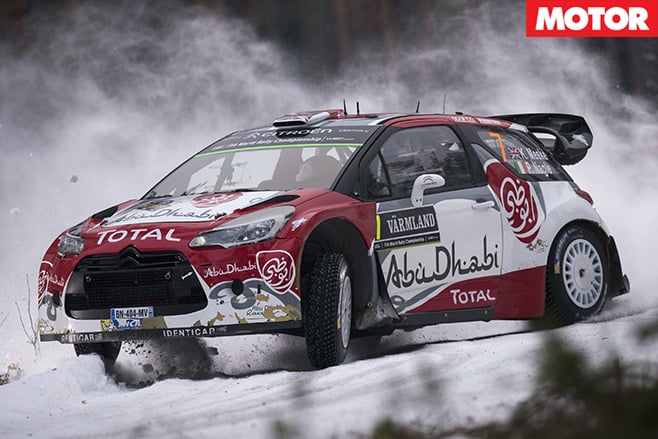
Nonetheless, it was a successful year for the French maker, scoring two wins for the first time since 2013. Kris Meeke will be in title contention next year, but the big question is: will Sebastien Ogier be his team-mate?
Kris Meeke – A-
For what was meant to be a year off, 2016 has been good to Kris Meeke. With a long-term contract in his pocket, the immediate pressure was off and the result was unbelievable speed. He ran at the front in both Monte Carlo and Sweden before errant rocks quashed any chance of a good result.
A favourable road position helped the Irishman score his first win of the season in Portugal but his victory in Finland will go down in WRC history as one of the all-time greats. Meeke drove at 10-tenths for three days straight with zero mistakes, securing victory in the fastest WRC rally ever.
Accidents in Corsica and Spain lose him half a mark, but he showed front-running pace in both rallies, which all points to an extremely promising 2017 for a driver who until now has had to fight his whole career.
Craig Breen – A-
Another extremely talented Irishman, Breen was given the opportunity of a lifetime and grasped it with both hands. All that was required was to drive sensibly and gain experience and he did exactly that, scoring points finishes in every rally bar Wales where he rolled, for which he loses half a mark.
But he also proved his speed, posting a third-fastest stage time in the Swedish snow on his Citroen debut and scoring a sensational podium in Finland. His reward is a two-year contract, allowing him to build speed and experience.
Like Meeke, Breen has battled his way to the sport’s top level, including overcoming the death of his friend and co-driver Gareth Roberts in an accident at the 2012 Targa Florio. Such hardship has given Breen a real appreciation of his opportunity and his stage end comments have been a highlight of the year.
Stephane Lefebvre – B-
A tough year for the young Belgian. Known as a tarmac specialist, Lefebvre shone with fifth place at the season opener in Monte Carlo but his season was cut short with a terrifying accident in Germany which placed him and co-driver Gabin Moreau in hospital with serious injuries.
Undeterred, Lefebvre returned for Wales and Citroen has enough faith in his speed and talent to offer him a two-year contract alongside Breen and Meeke. Has the potential for top five finishes on tarmac next year, but still needs to gain plenty of experience.
Hyundai
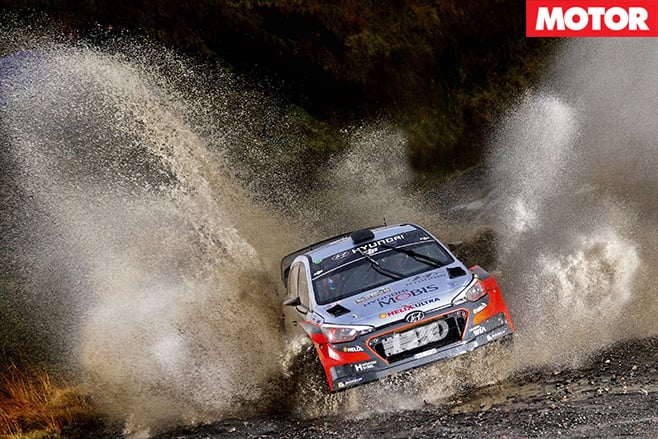
This success vindicated its strange decision to develop a brand new car for 2016 only. Its 2017 challenger has been under development for many months and with Volkswagen pulling out, the Koreans have to be the favourite for the manufacturers’ title.
Thierry Neuville – B+
Welcome back, Thierry. Having spent most of 2015 disillusioned with Hyundai’s decision to delay its new i20, Neuville started 2016 strongly with a podium at Monte Carlo but the wheel began to wobble again with two heavy crashes in Mexico.
Thankfully, with a win in Sardinia the Neuville that stormed to second in the drivers’ championship in 2013 re-emerged. A pair of fourths in Poland and Finland continued his resurgence before the Belgian finished the season with five successive podiums, resulting in second place in the championship.
While he still lacks the consistency of Ogier, with his confidence and motivation high once more, Neuville’s speed on all surfaces gives him a realistic shot at the 2017 title.
Hayden Paddon – A-
If 2015 was Hayden Paddon’s breakthrough year, 2016 proved it was no flash in the pan with consistent speed on every event, continuing his upward trajectory.
The highlight was undoubtedly his win in Argentina, not just for the result but for the manner in which it was achieved. With Ogier breathing down his neck, Paddon put it all on the line in the Power Stage with one of the finest single-stage drives the WRC has ever witnessed.
Unfortunately, two accidents immediately followed, one of which burned his car to a crisp, a harsh punishment for what was a relatively small mistake. Paddon’s relative lack of experience on tarmac made the second half of the season more difficult, and will probably preclude a run at the title in 2017, but this Kiwi is a fast learner.
Dani Sordo – B-
Mister Consistent delivered once again in 2016. Ironically, within an event Sordo’s performances can vary wildly, his stage times blisteringly quick on one day – as on day one of Rally Spain this year – and nowhere the next.
Over the course of an event, however, this tends to average out, which is why Sordo’s results from the first six events this year read as: 6th, 6th, 4th, 4th, 4th and 4th. He very rarely crashes and thus is likely to bring home a solid haul of points every rally, which is one reason why he has a fresh two-year contract from Hyundai.
The other reason is his searing pace on tarmac. Were it not for a certain Sebastien Loeb, Sordo would probably have 10-15 tarmac wins to his name by now rather than one, but he remains one of the top two or three rally drivers in the world when the surface is smooth.
Will continue to deliver consistent results in 2017 and could even sneak a win or two in Germany or Spain.
M-Sport
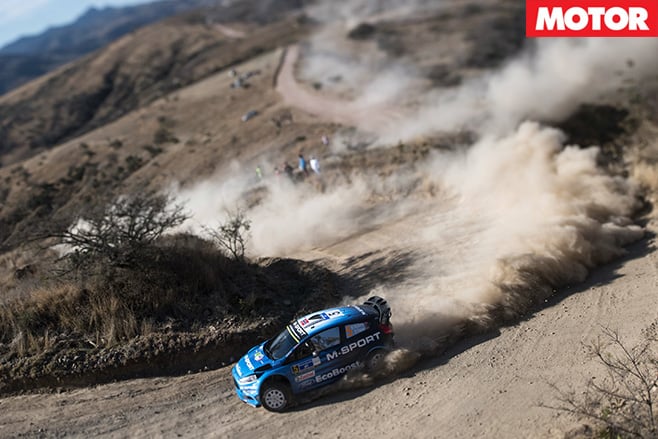
A brace of podiums would be as good as it would get for the works cars, Ostberg scoring consistent points but more often than not running around in the bottom half of the top 10. Camilli showed flashes of pace but spent as much time off the road as on it, while often being little faster than the demoted Elfyn Evans in an R5 car.
It’s a strong team at M-Sport, with plenty of knowledge and experience, but will it have the budget to build and develop a car at the same rate as Citroen and Hyundai? Then again, if it secures Ogier it could end up winning the 2017 championship!
Mads Ostberg – B-
Without a clear picture of how competitive the Fiesta is, it’s tough to accurately rate Ostberg’s 2016 performance. He finished in the points at every rally bar Italy, where a silly mistake cost him a strong finish that probably would have elevated him to sixth in the championship.
He battled a few reliability issues, but all too often Ostberg has stated he felt he did a good stage, only to be 0.5sec/km off the pace. Is that the Fiesta’s lack of competitiveness or Ostberg’s? Without a solid benchmark in a similar car, it’s impossible to know.
The Norwegian continues to work hard on his driving, entering a number of events in his personal R5 car this year and changing his tarmac technique, but he’s yet to show that last one or two per cent of outright pace that will elevate him from regular points finisher to podium contender.
Ott Tanak – B+
A standout year for the Estonian. Tanak has always displayed blinding speed, but all too often it’s been followed by an enormous accident. This year the speed has been there but consistency has joined it.
While his DMACK tyres gave him an advantage in soft, slippery conditions, his ability to battle for the lead for three days straight in Poland and Wales with next to no mistakes was extremely impressive. He deserved the win in Poland, and images of a distraught Tanak at the rally finish after a late puncture cost him victory was one of the year’s most moving moments.
Like most Scandinavians, still needs to work on his tarmac driving but if the 2017 M-Sport Fiesta – which Tanak is expected to be driving – is competitive he’s a podium chance on every loose surface rally.
Eric Camilli – C-
Malcolm Wilson believes Camilli is a future world champion, but history shows us early promotion to the WRC usually results in plenty of wrecked cars and the Frenchman’s debut year was no exception.
He was unlucky in Monte Carlo, but heavy accidents in Sweden, Germany, Finland and Australia meant the M-Sport mechanics always had plenty to do. The speed is there, sometimes matching the much more experienced Ostberg, and his drives in Portugal and Sardinia were impressive, but it was a case of too much too soon who for a driver who only had 10 WRC rallies under his belt prior to 2016.
Next year will be a challenge as the steep learning curve continues in a more powerful car amongst a more competitive field. It’s difficult not to feel that he and Elfyn Evans’ roles should’ve been reversed this year – another season in an R5 car would’ve done Camilli no harm at all.
Lorenzo Bertelli – D
A good national level driver competing on the world stage. Bertelli has the money to make his WRC dreams come true so good on him, but at no stage has he shown even a glimpse that he has what it takes to compete with the sport’s elite.
That’s a harsh assessment for someone who by most standards is a very good driver, but when Bertelli is trading times with the leading WRC2 cars, it’s clear his continued involvement in the WRC is dependent on the size of his bank account.
Volkswagen
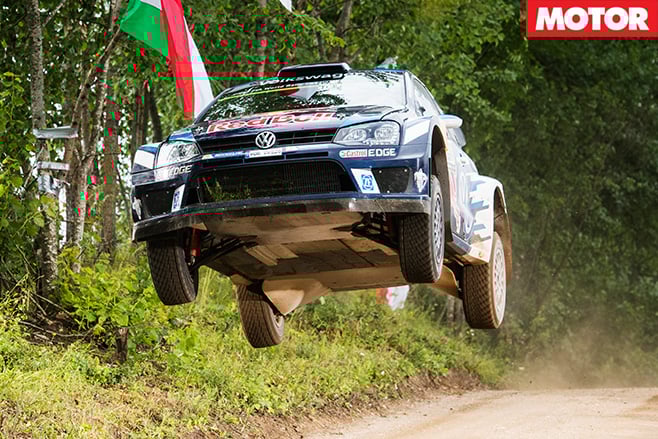
It ends a remarkable four-year period in which VW won 43 of 52 rallies, or even more impressively, 640 of 958 stages. It’s also arguable whether the WRC would have survived at all had VW not decided to enter in 2013 and largely fund the promotion of the sport at the same time.
The decision to pull-out came as a huge shock to the team and it’s a massive shame that the 2017 Polo WRC will never see competition. While it may be a politically expedient decision, to throw away 18 months of hard work and tens of millions of dollars of development seems incredibly wasteful.
Sebastien Ogier – A
Once again Ogier proved he operates on a different level to every other WRC driver, dominating the championship from the first round to take a fourth successive drivers’ title and further strengthen the argument that he’s the greatest rally driver of all time.
The WRC’s increased competitiveness meant that he won less – in fact, he only won one gravel rally all year – but it also worked in his favour. As different rivals kept winning, Ogier kept racking up the points, extending his championship lead at every rally. And when the running order worked in his favour he won six from six.
It wasn’t a perfect season: a low-speed spin put paid to the chance of a good result in Finland and another spin cost him the win in Australia. On the other hand, he utterly dominated in Monte Carlo, France and Germany and his drive in Australia – finishing the first two days less than three seconds from the lead after two days sweeping the road – almost defied belief.
While Ogier still has a long way to go to match his compatriot Loeb in the record books, consider this: when Loeb was Ogier’s age he had one world title and 10 WRC wins, Ogier has four titles and 38 wins.
Andreas Mikkelsen – B+
For 12 rounds of the 2016 season Andreas Mikkelsen looked his usual self: flashes of brilliance, the occasional accident and regular podium finishes. Then came Rally Australia, where he lifted his driving to a level previously not seen from the Norwegian.
It was an A+ performance at the perfect time, proving without a doubt that Mikkelsen can fight for victories in 2017 and beyond – if he can find a seat, of course, but on the strength of his season-ending performance that should be a formality.
Nonetheless, over the course of the season a B+ is deserved. If Ogier is the benchmark in a VW Polo, then finishing third in the championship more than 100 points down can only be seen as a moderately successful year.
Jari-Matti Latvala – C-
Another year of “what could’ve been” for JML. Poor reliability meant Jari-Matti’s rallies in Sweden and Germany were over before they began, but more often than not the vastly experienced Finn was the architect of his own demise.
Silly mistakes have plagued JML throughout his career and returned in 2016, rolling out of the lead in Argentina, clipping a fence in Spain and, worst of all, hitting a bridge just 20sec into Rally Australia, breaking the rear suspension and leaving him minutes from the lead.
Next year marks a real opportunity for Jari-Matti, a chance to break away from the stifling oppression of having the world’s best rally driver as a team-mate. If Latvala goes to Toyota as expected, he’ll be able to spend a year regaining confidence and developing a car to give him the all-important ‘feeling’.
Once upon a time JML was the fastest driver in the WRC; he needs to forget about championships, or even rally wins, and just drive as fast he can over every stage and the rest will take care of itself.
WRC2
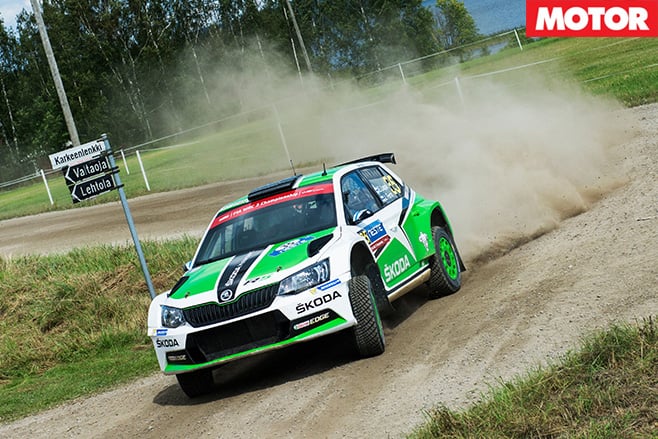
Esapekka Lappi – A
Touted as the next big thing for a few years now, Lappi’s rallying apprenticeship is now complete as the 2016 WRC2 champion. It was a relatively slow start for the 25-year-old Finn, but four straight victories to finish the year secured him the title.
Fast on all surfaces, Lappi is rumoured to have signed a one-year deal with Toyota for 2017 and there’s no reason he won’t appear in the top five on multiple occasions.
Teemu Suninen – A
It looks as though Suninen will miss out on the WRC merry go-round for 2017, but then at just 22 years of age he definitely has time on his side. He beat Lappi in a straight fight in Poland and scored further wins in Mexico and Italy to finish second in the WRC2 standings.
Perhaps his best course of action would be to take the seat vacated by Lappi in the factory Skoda WRC2 outfit for a run at the championship and hope a factory seat in the top class becomes available for 2018.
Elfyn Evans – A
Demoted from the M-Sport WRC squad in favour of Camilli, Evans turned his disappointment into motivation and put in the season of his life. His speed has been simply unbelievable at times this year, occasionally outpacing M-Sport’s WRC drivers, particularly on tarmac.
In addition to three wins in the WRC2 category, Evans utterly dominated the re-born British Rally Championship, victorious in five of the seven rounds. It would be a massive shame if the talented Welshman isn’t in a World Rally Car at the Monte Carlo start line on January 20.
Age affects us all in different ways. Some of us gain weight or lose hair, others develop wrinkles or dicky knees.
Approaching its fifth birthday, the R231 Mercedes-Benz SL is getting on in car years and a few cracks are appearing. Thankfully, its looks are improving. The latest SL has always looked a little awkward to our eyes, but a bit of cosmetic surgery, particularly at the front, has resulted in much sleeker, more cohesive styling.
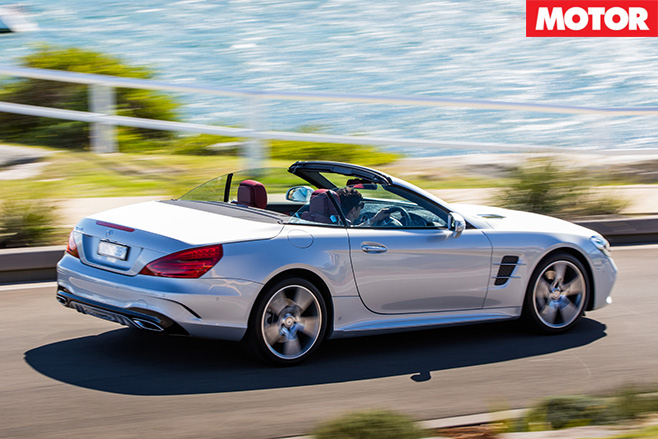
It lacks the rollercoaster acceleration of the bigger boosted V8s, but is more than fast enough for any road situation, the new nine-speed automatic making the most of the available grunt with a gear for every occasion and then some. Nine ratios may sound like overkill, if you weren’t told you’d never know as it does an excellent job of shuffling through its stacked deck and selecting the appropriate gear.
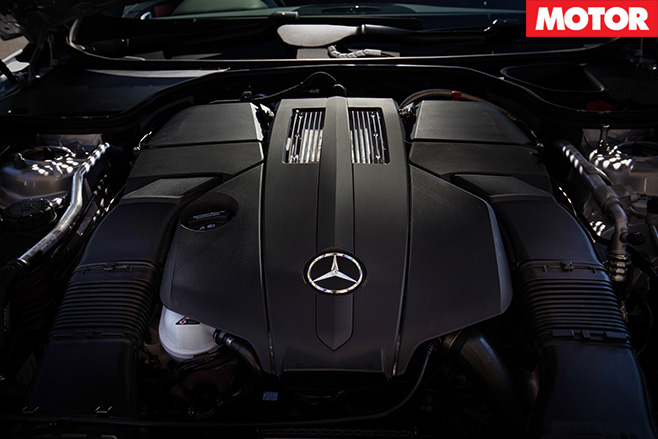
It’s quiet and comfortable enough on a freeway or similar, but it lets too many small road imperfections through on dodgy road surfaces, of which there are plenty in Australia, along with the odd creak or groan from the hardtop roof. When you’re charging $218,715 for a luxury roadster, it falls short of expectations. Points to Mercedes for cutting more than $10K from the SL400’s price though.
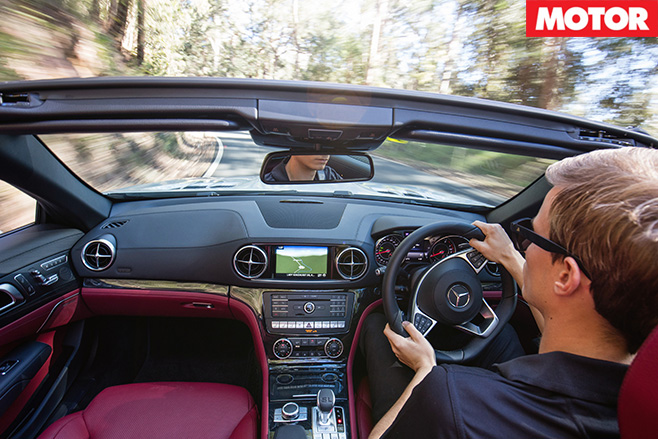
This is a worry as the last two SL generations stretched for 11 years, meaning the R231 is barely halfway through its lifecycle. With Mercedes’ product onslaught offering a range of open-top alternatives, from SLC to S-Class Convertible, we can’t help but feel there are better options available.
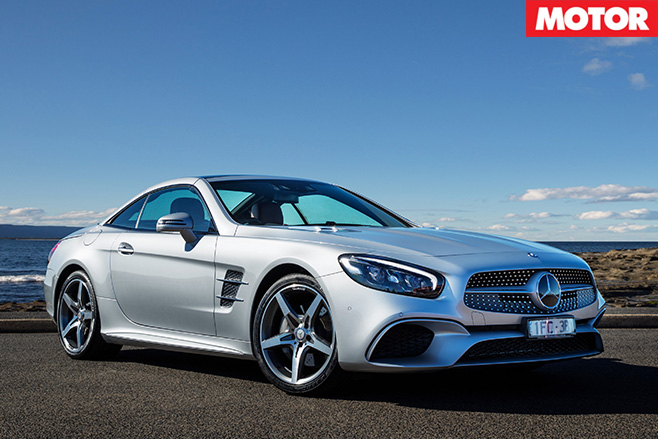
SPECS Engine: 2996cc V6, DOHC, 24v, twin-turbo Power: 270kW @ 5500-6000rpm Torque: 500Nm @ 2000-4200rpm Weight: 1735kg 0-100km/h: 4.9sec (claimed) Price: $218,715
1. The Volkswagen Amarok is the most powerful ute in its class, which includes mid-sized four-wheel drive, diesel-powered workhorse utes. It makes 165kW and 550Nm from its 3.0-litre V6, which is more than its closest competitor, the Holden Colorado (147kW/500Nm from a 2.8-litre four-cylinder).2. The Amarok is currently the only V6-powered diesel ute in its class, but it does not have the biggest engine. The Ford Ranger and Mazda BT-50 get a 3.2-litre five-cylinder turbo diesel, which makes 147kW and 470Nm.3. The V6 engine has an overboost function, which can temporarily boost the turbocharger for longer to boost power from 165kW to 180kW for up to 10 seconds at a time. It’s designed to provide extra oomph for overtaking. The reason it doesn’t produce 180kW all the time is because the engine runs slightly hotter when producing that power, so if that higher output was maintained it would risk engine damage.
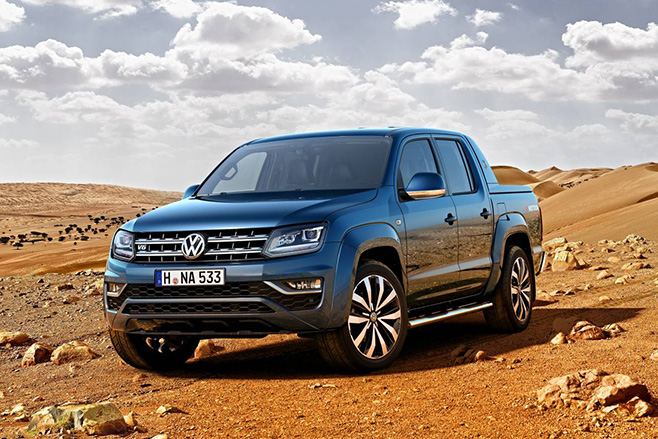
4. The 3.0-litre V6 engine in the Amarok is also used in various Volkswagens, Audis and Porsches. In other models it produces more power; the Audi SQ5, for example, makes 230kW and 650Nm.5. The Volkswagen Amarok is the only ute in its class without curtain airbags in the rear.6. Volkswagen has packed plenty of equipment in the Amarok V6, but it still misses out on smart key entry (allowing keyless entry when you grab the doorhandle), rear air vents and the latest active safety features now common on Volkswagen passenger vehicles (things such as blind spot warning and autonomous emergency braking, the latter capable of automatically applying the brakes to avoid a crash).
7. V6 versions of the Amarok get more powerful brakes than those fitted to four-cylinder models. As well as the largest front discs in its class, it’s also the only ute in its class to get disc brakes on the rear (rather than inferior drums).8. The Volkswagen Amarok Ultimate V6 debuts small LED lights underneath each of the chrome side steps (there are two on each side). They are illuminated when the doors are unlocked or opened with the aim of making it easier for people to see where they’re stepping.
9. While the nose looks fresh, there are not new windows or panels in the updated Amarok. The new grille, headlights and front bumper will be incorporated on the four-cylinder Amaroks when they are updated in 2017.10. The Amarok V6 is produced in Germany, whereas four-cylinder models continue to come from Argentina. In future Volkswagen says it may also produce the Amarok V6 in Argentina.11. For now the V6 engine is only available with an automatic transmission, but late in 2017 a six-speed manual will also be offered.12. The eight-speed automatic transmission is used in other cars from the Volkswagen Group. However, the Amarok V6 gets a slightly lower first gear ratio (for low-speed off-roading) and a slightly taller eighth gear (for more relaxed and efficient freeway cruising).13. Despite sharing the basic engine with other cars, the Amarok gets some unique changes, predominantly made to ensure it can cope with driving off-road on steep angles and in rocky/muddy/sandy conditions. There is a revised vibration damper, new oil sump and revised pistons.
First published in the October 2016 issue of Wheels magazine, Australia’s best car mag since 1953.
The Volkswagen Multivan is the leader of the space race, if not quite the final frontier.
Can’t wait to see the final score? Jump to the verdict now.
Volkswagen invented the MPV. Fact. It happened way back in the 1950s when the nice people at Wolfsburg bolted some extra seats into a Volkswagen Kombi van and created the Microbus. Even the name was clever. And when you look at this latest variation on the theme, it’s quite plain to see that VW’s ’50s mind-set remains. If it ain’t broke, etc…
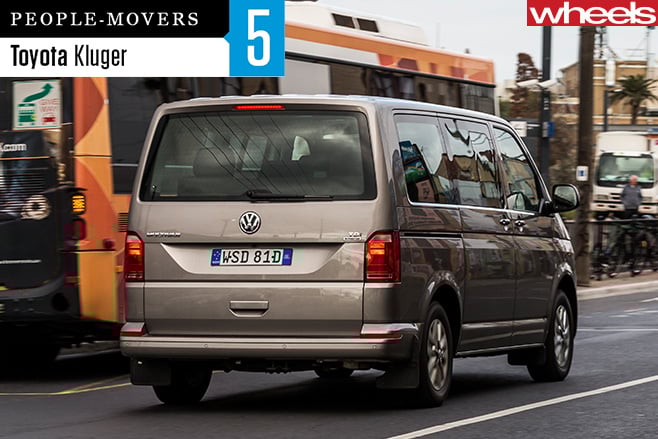
Trouble is, the rest of the players have embraced newer design elements, leaving VW’s people-mover at risk of becoming an anachronism, purely on the basis of it being so closely related to a commercial vehicle.
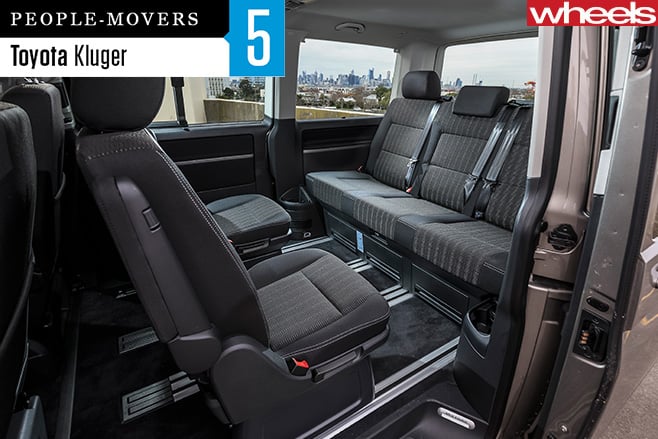
The second-row chairs feature armrests and can swivel through 180-degrees to turn the rear of the Multivan into a boardroom. Both rear rows can be removed, too, forming the van that VW would rather you not think about in this context.
The windows are huge and the VW has the most adult-friendly third-row seating, fore-aft adjustment, air vents, cup-holders and a sliding door on each side is a nice touch. If your kids are big or you plan to use the third row all the time, then the Multivan really comes into its own.
Given that you can spend better than $80,000 by shopping at the high end of the VW Multivan range, the $49,990 being asked for this model seems reasonable. Especially when it also includes forward collision warning, city emergency braking and a rear-view camera.
But up against the sophistication of 2016’s finest, the Volkswagen T6 Multivan is incapable of escaping its 2004 origins and its commercial-vehicle upbrining.
Working for its class
Despite the clever touches in the Multivan’s layout and specification, there’s no getting away from the distinct feeling that this is a van converted to civilian duties. So what are the giveaways? Well, let’s start with the look of the thing. It’s boxy, but it’s good, we guess. Then there’s the sliding side doors (which we actually approve of) and the second-row windows that don’t roll down conventionally, but slide also.
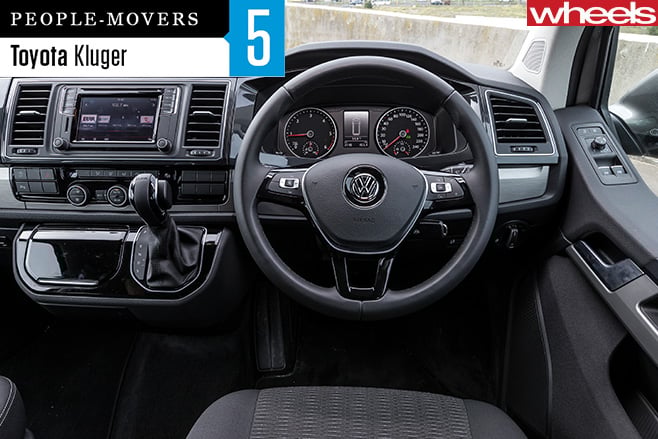
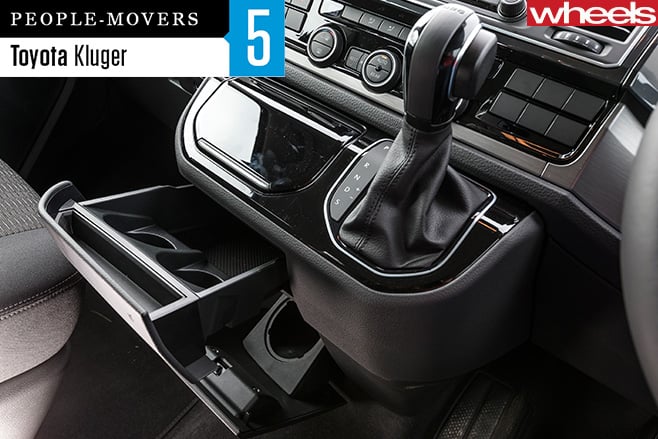
Look beyond that, however, and the clever touches like the bottle storage under the dashboard and enough power outlets in the third row for everybody and you can see that plenty of thought has gone into the Multivan, regardless of its origins.
SPECS |

Other seven seater options
Holden Captiva LT AWD
The Holden Captiva LT AWD fails to make a captivating argument for why you’d bother over other, more composed competitors.
Nissan Pathfinder ST AWD
Opportunity knocked, but Nissan didn’t fully open the door. We find the Nissan Pathfinder, while smooth and likeable, falls short of the competition.
Honda Odyssey VTi
An odyssey is an ‘epic journey’. Unfortunately for the Japanese carmaker, the story of the Honda Odyssey has been one of a downward slide.
Toyota Kluger GX AWD
The Toyota Kluger offends no one by sticking to the middle of the road. There’s no escaping that the Toyota offers plenty for the money.
Hyundai Santa Fe 30
The Hyundai Santa Fe better at pleasing its driver, rather than shifting a tribe of seven, as we uncover headroom and visibility issues in the third row.
Pretend for a moment that you have the key to a fully-fledged, dirt-eating, petrol-guzzling WRC car in your grubby little hand.
What would you do? Apart from whooping like an idiot and high-fiving everyone within a five-metre radius, of course.
Well, with all of the super special stages from the 2016 Rally Australia firmly closed, taking it to the Macca’s drive-through seemed like a good idea. Mostly because I was hungry, but also because of the ‘fish out of water’ element.
You know, taking one of the world’s most extraordinary cars, and seeing if it can do something completely ordinary.
The first problem is the noise. This car belongs to Kiwi rally ace Hayden Paddon, who used it to take fourth place in Rally Australia a day earlier, and its 1.6-litre turbo four is noisy. Like, properly raucous.
It’s so loud I have to turn it off so I can hear the intercom and deliver my order.
“A large quarter pounder meal, thanks.”
The next issue is the clutch. And how tight the Macca’s driveway is. Hyundai insisted the car’s chief mechanic (a lovely Spaniard named David) sits next to me at all times to ensure I don’t do anything too untoward, but he doesn’t seem too worried about scraping the wheels on the kerb.
“It’s a rally car!” he laughs. “Just drive over it!”
Happily we don’t have to, and everything goes swimmingly until it’s time to receive our order. WRC cars are left-hand drive, so it’s up to David to try and squeeze the bag, and the large Coke, through the tiny slit in the polycarbonate window.
Watch the video to see how successful he is. And rest assured Macca’s is only the beginning. Stay tuned to see where else we take Hyundai’s i20 WRC car.
Infiniti year of consolidation has culminated with the release of its BMW 4 Series Coupe-rivalling Q60.
WHAT IS IT? Essentially the Q60 is the two-door coupe version of the Infiniti Q50 – think Audi A5 to the A4 sedan – so it’s nothing we’ve not seen before thematically from Infiniti. We’re talking premium medium, then, with lots of gear and a fresh design direction to stamp some authority on the sports/luxury coupe map.
WHY WE’RE TESTING IT The old Infiniti V36-series G37 Coupe (renamed Q60 in 2013) was one of the more understated and undervalued medium sports/luxury two-door contenders, lurking in the long shadows cast by the more glamorous Audi A5, BMW 4 Series, and Mercedes C-Class coupes. That’s all changing now, thanks to the completely redesigned and re-engineered V37 Q60, bringing some much-needed visual pizzazz. Whether it’s enough to really put Infiniti on buyers’ shortlists remains to be seen.
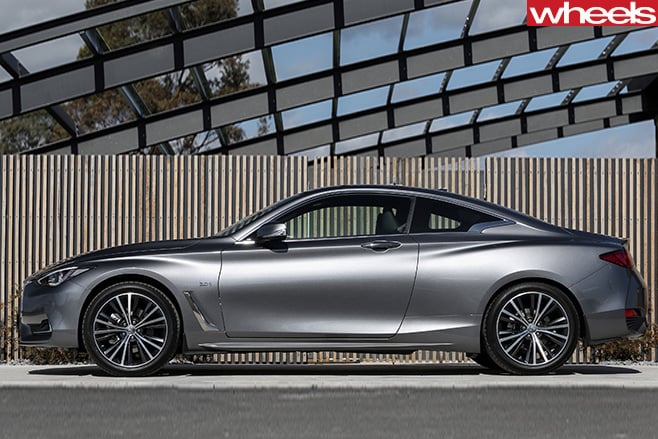
THE WHEELS VERDICT IF you know your Japanese car history, then it’s impossible not to admire and respect the impact of the Prince Motor Company’s Skyline – an enduring sports sedan/coupe range that has – in its ultimate state – morphed into the giant-slaying GT-R. The less extreme but more mainstream Q50 (sedan) and Q60 (coupe) models, then, are true bluebloods. In the case of the latest Q60 in lower-spec 2.0t guise, Infiniti’s quest to make it look more contemporary inside and out is laudable, but it may have come at the cost of dynamics, since its predecessors’ sound performance, steering and ride qualities just aren’t in the same league as before – never mind fierce foes like the Audi A5, BMW 4 Series, and Mercedes C-Class coupes. Great for posing and feeling rich, not so good if driving is your thing.
PLUS: Quality, design, mid-range performance, seats, equipment, safety, warranty MINUS: Jarring ride, turbo lag, sluggish auto, dead steering, dated dash, tight rear headroom
Since (re) launching in Australia in 2012 with the G37, that’s what Japan’s BMW has been all about, bridging an important line (that included earlier Nissan GT-Rs) dating back to the 1962 Prince Skyline Sports Coupe.
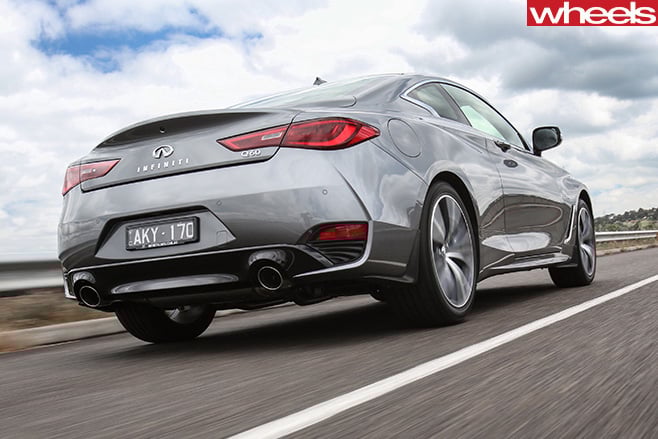
Hence our big expectations. And in many ways, the V37-series Q60 – released initially in 155kW/350Nm 2.0-litre turbo guise from $62,900, with a rip-snorting 298kW/475Nm 3.0-litre twin-turbo V6 from $88,900 following in March – delivers. For starters, the design – which is both lower and wider than the preceding 2007-vintage V36 G37/Q60 – is dramatically distinctive, like every good coupe should be.
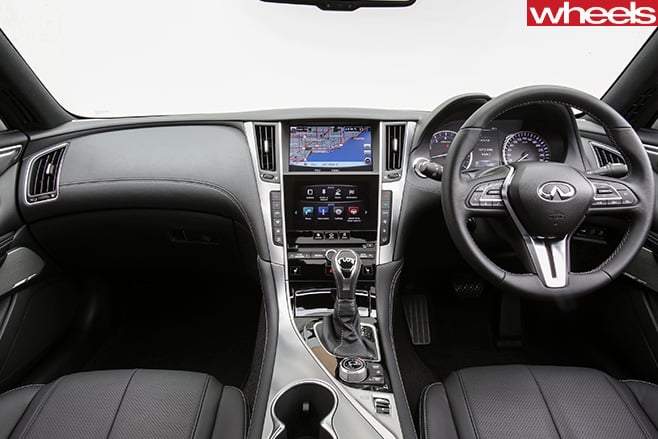
Additionally, Infiniti has put thought into the interior, which manages to effortlessly convey class. Generous room up front, pleasing quality, an excellent driving position, cosseting seats, ample geek-pleasing multimedia, stacks of kit, a decently-sized boot (now up a handy 100 litres) and a sense of isolation underline the brand’s half-century experience building personal grand tourers.
Frustratingly, the Infiniti’s status remains complicated on the move too. The sweet 2.0t might spin out a healthy 155kW, but a hefty 1700kg mass, combined with interminable off-the-line lag, seems to blunt whatever sparkle it might possess. And that’s in Sport mode.
Only past 3000rpm does the four-pot turbo find its stride. That said, on the move, the seven-speed torque-converter auto stops behaving like an indecisive dual-clutcher, at last delivering decent mid-range urge. We miss the old atmo VQ37VHR V6 sledgehammer.
More power can’t help the oddly slow and remote steering, though, which, along with the lumpy ride on 255/45R19 rubber, is probably the most profound disappointment. While the weighting is right, the helm feels artificial except on the straight ahead, and reluctant to change direction. Again, even in Sport. There is none of the handling litheness or finesse of the Infiniti’s German rivals. Are the Americans responsible for the dreary dynamic tuning? A rethink is in order, and pronto.
There’s plenty that’s right in the Q60 2.0t, but the driver-focused attributes that made its Nissan, Datsun, and Prince ancestors sports coupe icons appear to have been forsaken at the alter of style.
Despite the lineage, this is no Skyline.
SPECS Model: Infiniti Q60 2.0t GT with Enhancement Pack Engine: 1991cc 4-cyl, dohc, 16v turbo Max power: 155kW @ 5500rpm Max torque: 350Nm @ 1250-3500rpm Transmission: 7-speed auto Weight: 1698kg 0-100km/h: 7.3sec Fuel economy: 7.7L/100km Price: $65,900 On sale: Now
