
One of the more ambitious project car builds of recent times has been US drifter Ryan Tuerck’s Toyota ‘GT4586’.
First teased in July, the goal was to install the F136 4.5-litre V8 from the Ferrari 458 into the lightweight rear-drive Toyota chassis to create a tyre-frying fusion of Italian and Japanese engineering.
While the Toybaru chassis is now a common one in the drifting scene, with a variety of engine transplants ranging from the 2JZ 3.0-litre turbocharged inline-six from the Toyota Supra to NASCAR V8s, but the installation of the Ferrari V8 posed some unique challenges.
The engine has essentially been turned 180 degrees, with the intake system being rerouted through the firewall drawing fresh air from behind the front wheels. This means that the exhausts are at the front, which makes the flames all the more visible (see video above).
Running Motec engine management, Tuerck is aiming for around 400kW at the rear wheels, fed through a five-speed sequential gearbox. This isn’t a huge amount by drifting standards, but installed in the lightweight 86 chassis should have little trouble turning the tyres.
According to Tuerck, there are no plans for the vehicle to enter any competitions, it’s being built purely for demonstrations and marketing purposes. We’ll bring you more footage of the car once it hits the track.
GT4 could be the badge of the decade and the Ford Mustang is the latest to join a stable of production-turned-racecars set to compete in global championships of the same name.
Being heavily based on the Shelby GT350R-C that already swaps the Mustang’s 5.0-litre V8 for a high-revving flat-plane 5.2-litre unit producing 392kW and 582Nm, a main change for the Mustang GT4 is the addition of a six-speed Holinger sequential transmission.
Chassis modifications extend to new dampers, lower rear control arms and stabiliser bars, along with forged 18-inch wheels with Continental racing slicks, a new rear wing, front splitter, extra bonnet vents and rear diffuser to aid aerodynamic and cooling performance.
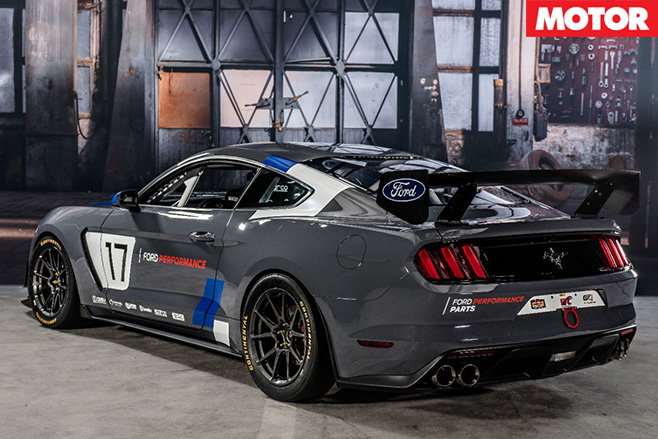
It follows a lineage of Stateside-only racecar versions past including, Ford cites, the 1960s SCCA Shelby GT350R and 1970s Trans-Am Boss 302. But the brand says the Mustang GT4 has now been engineered to be a ‘turn key’ entry in any global GT4 championship including the major European series, all to increase the Pony car’s global reach.
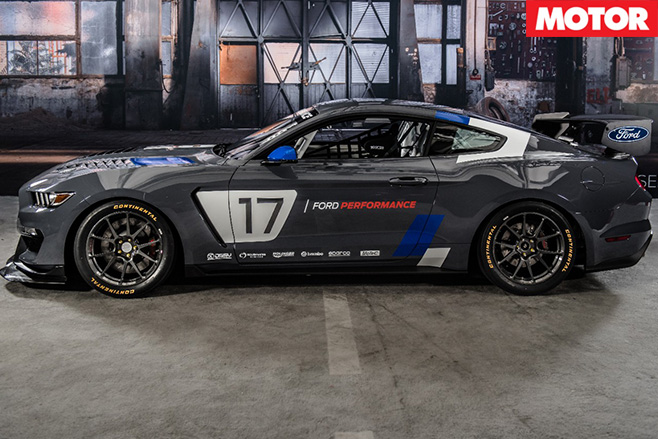
Hopefully the Mustang becomes ‘global’ enough to give Australia a taste, in some form, of that delicious-sounding Shelby V8.
HANG ON a second, how does the Holden SS-V Redline finish second outright ahead of the A45, when it was thumped in the confines of the $50K-$100K class?
Simple, really. When you mix in all 19 cars, the cheaper stuff starts to interact with the more pricey gadgets and vice-versa, such that as the data is spread out, some cars benefit and others take a hit – the SS-V gaining more than the Merc this instance.
So a silver medal it is. And, given 80 per cent of Bang For Your Bucks is data based, this is objective confirmation of a pretty solid hunch that 304kW for $55K was fantastic value – further confirmed last month with the base SS Ute cleaning up the $0-$50K class.
Besides, even for grunt it makes better use of what it’s got – all of which is properly captured and distilled by our algorithm.
Subjectively the SS-V Redline is an outstanding car. It’s easily the best performance Commodore Holden has ever made. Sure, it can never quite get away from the fact it weighs 1793kg and is XXL-sized, but the way it feels and what it can do for its size is nothing short of impressive. The SS also excels as a manual, its combination of shorter final drive for VFII and extra grunt making it fast enough for many. Plus it sounds spot-on and looks tough to our eyes.
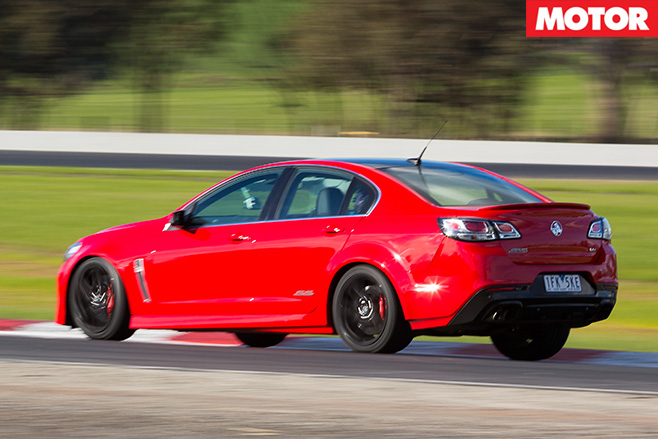
Back in January 2000, you needed to cough up $95K for a 300kW Commodore (the C4B HSV GTS), about $140K in today’s money. But now you can have one for $55K and a vastly superior car at that – just don’t hang about.
Want more? Check out the rest of 2016 Bang For Your Bucks.
More details of Mazda’s top secret ideas-sharing scheme with Toyota emerge.
MAZDA has opened the door to more model-sharing with Toyota, revealing it now has a list of the things it would like to jointly work on.
Speaking to journalists at the announcement of a big slump in expected earnings, Mazda global vice-president Akira Marumoto said the carmaker had identified “10 main themes” that it hoped would spin out from a tie-in with fellow Japanese rival Toyota via a deal struck between the carmakers in 2015.
However, Marumoto shied away from elaborating on what those areas of development were, only confirming that talks to jointly develop electric vehicles and connected cars – both announced last year – were progressing.
“We will announce it [other areas of cooperation] at an appropriate time once we have reached an agreement,” he told Bloomberg.
Under the terms of the deal first announced in mid-2015, Toyota was expected to help Mazda with plug-in hybrids and fuel cell vehicles, while Mazda would offer its SkyActiv fuel-saving technologies rolled out across its petrol and diesel engines.
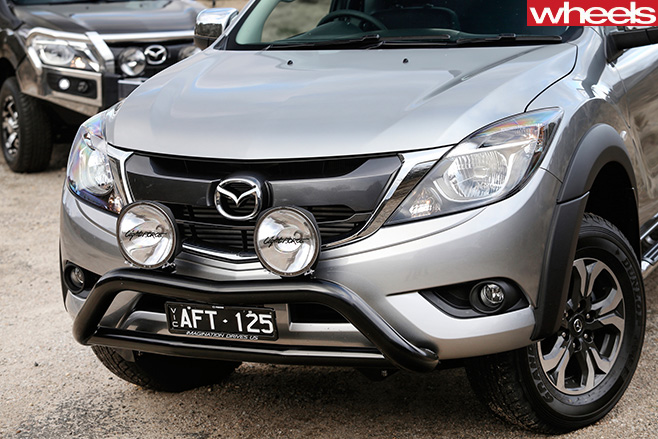
Instead, it will share development of the next-gen Mazda BT-50 with Isuzu, which recently announced it would part ways over the development of the Holden Colorado/Isuzu D-Max trade ute pairs due to the “unique requirements for each company”.
The split is believed to have evolved from GM’s wish to take the Colorado more up-market, while Isuzu appears more keen to cater to lower-cost, emerging Asian markets.
The partnership would result in the first Mazda BT-50 not platform-shared with Ford.
Australia is preparing for number of new trade utes to arrive here, competing for space in one of the fastest-growing segments of the market that currently accounts for about one in every five new-car sales.
A current favourite for platform sharing is the Nissan Navara, a trade ute launched on the Australian market in 2015. It will become the platform for utes including the Renault Alaskan, and the recently revealed – in concept form at least – Mercedes-Benz X-Class.
Mazda this week stripped 25 billion yen ($A300 million) from its full-year earnings forecast; not because it is selling fewer cars, but due to the steadily growing strength of the yen on global currency markets that has severely eaten into export earnings.
What stands out?
Design is the Megane’s calling card, and there’s no mistaking its fashion-forward LED head and tail lamp treatment for anything else. Slick and European to its core, the Megane is easily one of the most eye-catching small hatchbacks on the market.Beyond that, Renault has made high equipment levels the Megane’s point of difference. From the base model Megane Life and up, all models receive luxuries like a reversing camera, keyless entry/ignition and dual-zone climate control as standard – among other features.
What might bug me?
Rear seat space is the biggest drawback of the Megane, with tight legroom compared to many of its rivals. If you regularly carry more than one adult passenger, that may be a limitation.
What body styles are there?
Right now the Megane is only available as a five-door hatchback, however the range will expand in the first half of 2017 with the addition of a four-door sedan and a wagon body style.The Renault Megane falls into the ‘small car’ category.
What features do all versions have?
From the base model and up, the Megane comes with Bluetooth phone and audio streaming and an eight-speaker AM/FM/CD/USB audio system with a seven-inch colour touchscreen display.Keyless entry and ignition provides added convenience, with drivers only needing to touch the door handles to unlock the car, and a dash-mounted button to start the engine. Simply walking away from the car will lock it, and the driver only needs to carry a compact credit card-sized ‘key’ in their pocket.Dual-zone climate control allows each front seat occupant to set their desired temperature independently of the other.Dusk-sensing headlamps and rain-sensing wipers, provide added convenience, with headlamps automatically switching on when the sun goes down and the wipers activating when rain hits the windscreen.Front and rear daytime running lamps are always on, and help other traffic see the Megane – especially at dawn, dusk, or through thick haze.All windows are powered and have auto up/down switches, an unusual feature in this segment.A reversing camera and rear parking sensors are also factory-fit on all Megane variants.
Which engine uses least fuel, and why wouldn’t I choose it?
What key features do I get if I spend more?
The mid-spec Zen grade adds satellite navigation, an electronic instrument panel, 16-inch alloy wheels, front parking sensors and an electric parking brake.Step up into the upper-grade GT-Line and Alcantara-upholstered sports seats replace the standard cloth items and a sporty bodykit spices up the exterior, while power folding wing mirrors, blind spot monitoring, glass sunroof, a self-parking feature and 17-inch alloys round out the rest of the upgrades.At the top of the tree is the Megane GT, which is specced almost identically to the GT-Line but comes standard with 18-inch alloys, a dual-exit exhaust, alloy pedals and blue/black Alcantara upholstery. Under the bonnet, the GT receives a more powerful 1.6-litre turbo engine instead of the standard 1.2-litre powertrain.An 8.7-inch portrait-format touchscreen display for the infotainment system is available as a cost option on the GT-Line and GT grades.
Does any upgrade have a down side?
How comfortable is it?
The Megane rates well for front cabin comfort, with both front seats featuring height adjustment and adjustable lumbar support. The seats themselves are also nicely bolstered, albeit firmly-cushioned.There are idiosyncrasies, however. The cruise control/speed limiter toggle switch is mounted low on the centre console while the rest of the cruise buttons are on the steering wheel, and the driver’s audio controls are tucked behind the steering wheel on their own stalk, well out of direct view.In the back you’ll find a pair of face-level air vents to help keep backseaters cool. Unfortunately, rear seat accommodation isn’t among the roomiest in the segment, with tight knee and foot room and no centre armrest in entry-level models.
What about safety?
Standard safety equipment includes ABS, EBD, brake assist, traction control and stability control.Passengers are protected by three-point seatbelts on all seats, as well as dual front and front-side airbags, and full-length curtain airbags.The GT-Line grade also receives blind spot monitoring, however autonomous emergency braking is not presently offered. That particular technology – which is able to automatically slow down the car if an impact with an object like another car or pedestrian is imminent – is expected to be added to the Megane range sometime in 2017.
I like driving – will I enjoy this car?
The range-topping Megane GT is great fun to drive, thanks to its more powerful 1.6-litre turbo engine, quick-shifting dual-clutch automatic and sports-tuned suspension.Much of its sharp handling comes courtesy of a four-wheel steering system that turns the rear wheels the opposite direction to the fronts to tighten the turning circle at low speed, and turns them the same direction at higher speeds to improve stability.With its launch control function active, the Megane GT can also sprint to 100km/h in a fairly swift 7.1 secondsNon-GT Meganes handle well, though they lack some of the dynamic sharpness of the GT. With less power and torque, they’re also a lot slower off the mark – though the upshot is improved fuel consumption.
How is life in the rear seats?
How is it for carrying stuff?
With a 434 litre seats-up capacity, the Renault’s boot is comparatively generous for the segment.A high loading lip may make it harder to load bigger items, however the 60/40 split fold rear backrest allows long items to be carried within the cabin – and dropping them unlocks a 1247 litre load area.
Where is it made?
What might I miss that similar cars have?
Autonomous Emergency Braking is a feature that is beginning to become commonplace in the small car segment, so its absence from the Megane range is notable.
I like this car, but I can’t choose which version. Can you help?
Are there plans to update this model soon?
First published in the September 2011 issue of Wheels magazine, Australia’s best car mag since 1953.
Six of the best new and classic stripped-back driver’s cars cop a thrashing the old-fashioned way, without the help of a self-shifting tranny, torque-shuffling AWD or adaptive dampers. Less really can be more…
TEN YEARS ago this would have been a normal Wheels sports car comparo. Today, it’s the result of a deliberate effort to ensure our car line-up didn’t include seemingly mandatory inclusions like a dual-clutch gearbox, adaptive dampers, or a torque-vectoring all-wheel-drive system.
 Raw Deals – September 2011
View this article in its original format in the archive.
Don’t get us wrong; those technological advancements can be for the better. We’ve enjoyed the efficient, rapid-fire-shifting benefits of the dual-clutch transmission since the MkIV Volkswagen Golf R32 and first-generation Audi TT. Adaptive dampers, adopted by many makers in crude form in the ’80s, made their debut in more advanced magneto rheological form to blend ride with roadholding in the 2003 Cadillac Seville and, later, Corvette C6, Ferrari 599 GTB, Audi TT and HSV GTS. The advent of computer-controlled diffs brought the catchcries ‘active yaw control’ and ‘torque vectoring’ and made slingshot AWD Japanese turbos fire from corners harder-still.
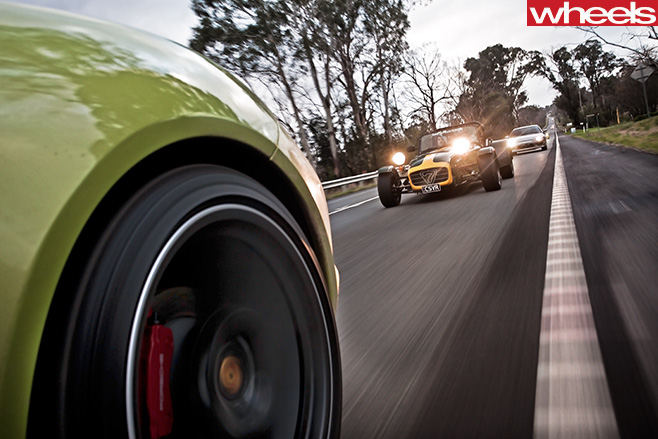
It’d be refreshing, we mused, not to have to dial up ‘sports’ or ‘dynamic’ before the car could deliver its best. Or have to put up with jerky low-speed dual-clutch tranny behaviour on our way out of town in search of ripper roads. Car makers, you can keep all of that stuff. We’ll take a deep, bolstered driver’s seat, thick-rimmed steering wheel, three pedals and a well-oiled gearlever, underpinned by a well-sorted chassis and lusty engine any day, thanks.
The question was, where would we find cars free of such technological affectation? We could start by going back 10 years or more, obviously.
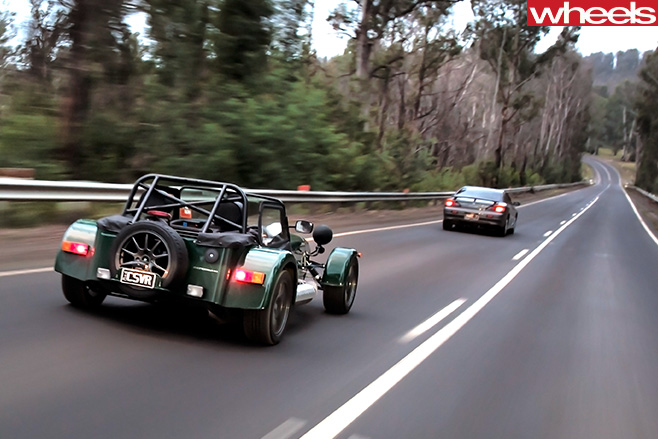
We’re on a winter mission from Victoria’s Yarra Ranges to Sydney, so potentially icy Alpine roads are off limits. We’ll instead trace a path east through the Latrobe Valley and Gippsland regions before pointing north just shy of the east coast, aiming for home via Cooma and Canberra.
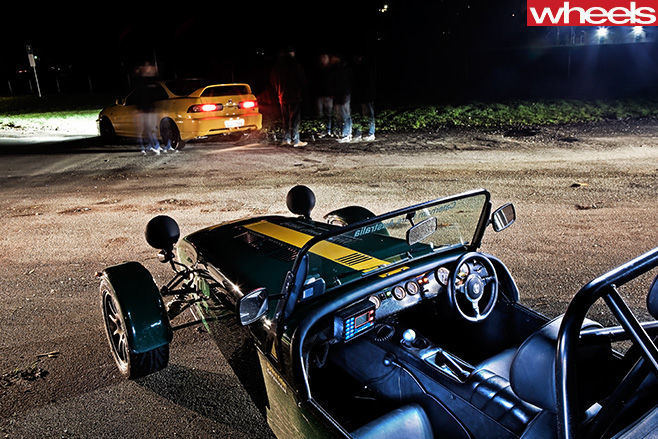
After climbing into the Caterham’s cockpit, I’m surprised that the compact Brit roadster is less than form-fitting for this compact Aussie. The driver’s seat won’t slide forward far enough, leaving my feet barely touching the pedals, backrest seemingly too laid back. Chris tells me that the positioning of the seat – designed, oddly, to accommodate a 97th percentile American male – is easily adjusted to suit individual owners.
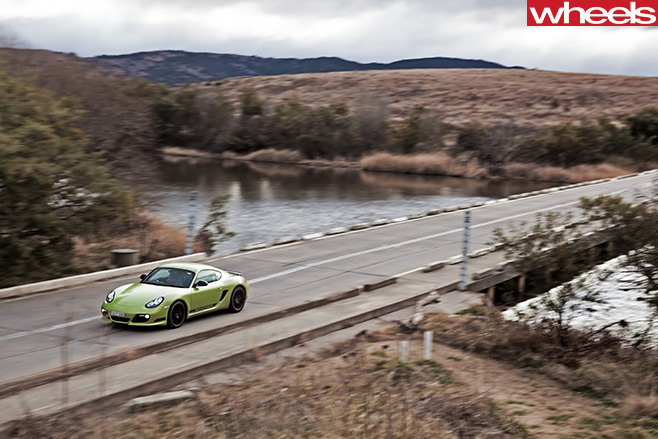
The densely forested Maroondah Highway east of Healesville provides the first taste of driver’s roads. It’s tight and damp and a light fog hangs in the air. Baaap, baaap, baaap; the Caterham revs through the closely-stacked first, second, third and beyond. There’s the effortless, enthusiastic low-rev shove in the back only featherweight atmo cars can produce. The Cosworth donk revs quickly with a crisp, deep and raspy note that spells ‘well-tuned’. The acceleration is manic, the sensation of speed multiplied by the wind whipping and buffeting my face. A hundred kays an hour feels like much more. Much more brings tears to the eyes. Only later does Chris tell me that the cabin is far more ‘snug’ with the side screens installed…
The quick, unassisted steering is a surprise; neither heavy at low speeds nor excessively darty at high speeds. It soon becomes instinctive, and requires so little lock that I almost think the Caterham around bends. The view through the screen, down the long bonnet at the faired front wheels, the sensation of sitting over the rear axle and the mere degrees of steering required seal this as a truly unique driving experience, and the daddy of raw driver’s cars.
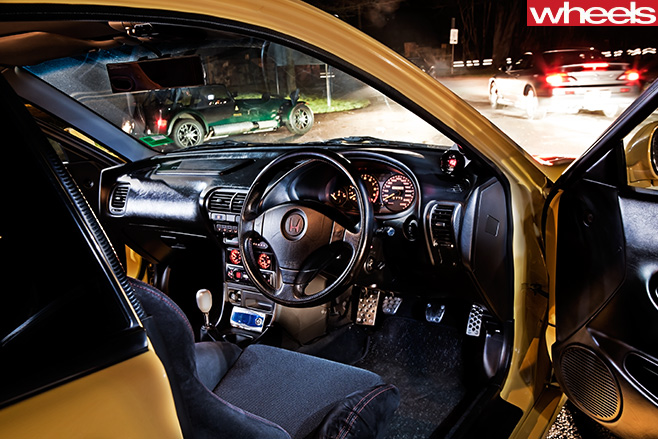
The Honda Integra Type R, perhaps the next most raw, sat idling by the roadside with an irregular lumpiness that told of its aftermarket ‘stage two’ camshafts, colder thermostat and tweaked ECU. The revered original ‘DC2R’, sadly, fails to live on in spirit in today’s Civic Type R. The newer car is 250kg heavier and its torsion-beam rear suspension in place of double A-arms is a backwards step. Purists like owner Daniel Chan know the original is the best, so that’s what we had to have in the form of his tastefully modified, Australian-delivered 1999 model, recently treated to a JDM nose job.
Known for its minimal sound deadening and race-car-like hard ride, the first Type R is often cited as one of the best-handling front-drivers ever. The engine ain’t bad either; a Honda-trademark VTEC 1.8-litre four-pot screamer that produces 141kW at a heady 7900rpm before hitting an 8800rpm cut-out. Peaky, with 176Nm at 6300rpm, but the close-ratio five-speed and 1087kg go some way to compensating.
The suspension upgrades responsible for extra NVH see the coupe corner hard and flat, guided by slick, light steering. The Type R darts into corners and finds balance some rear-drivers would envy. There’s no squirm, no waiting while the body settles on the springs. Mid-corner (and -straight) bumps upset the chassis, but the power and progression of the upgraded brakes restore confidence. Having never driven a Type R before, now I can see why journos and owners love them. Provided you’re prepared to work for the speed, the Integra rewards.
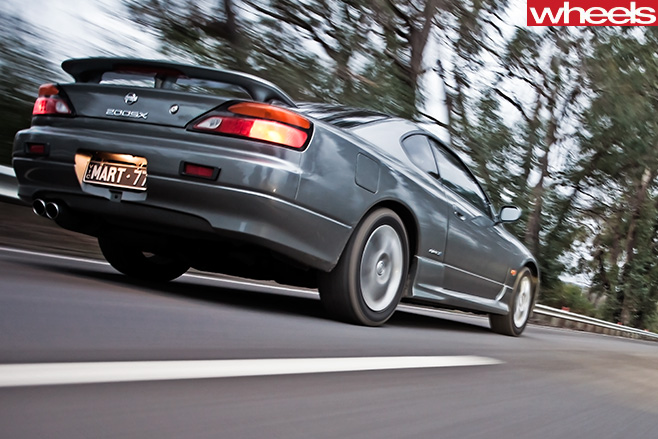
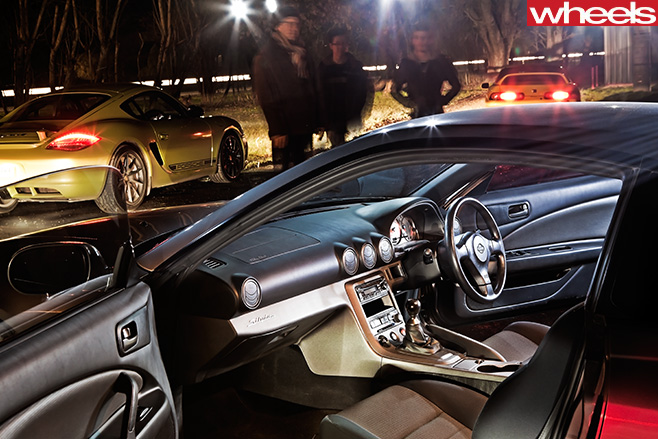
It’s even worse for fans of the 200SX than those of the Type R. Since 2002 there hasn’t been one at all, or a suitable replacement from another Japanese maker. The SR20 turbo engine – well-loved by aftermarket tuners – no longer met emissions standards, so was killed off along with the sports car it powered. A senior Nissan engineer explained the lack of a replacement a couple of years ago, telling me there’s no market for this kind of car anymore. Given that the core market for affordable sports coupes is young people, I’m blaming gen-Y.
The steering is well-weighted, heavier than the average Japanese system, smooth and feel-rich. But it’s the cut-price-M3 balance and composure that impresses most. Turn-in is crisp, with little initial understeer, quickly moving to mid-corner neutrality, with rear-end adjustability via throttle and Torsen LSD, especially on these damp roads.
The other impressive aspect of driving the 200SX is that it manages to be comfortable, quiet and good-riding, offering plenty of entertainment without being edgy or difficult to drive fast.
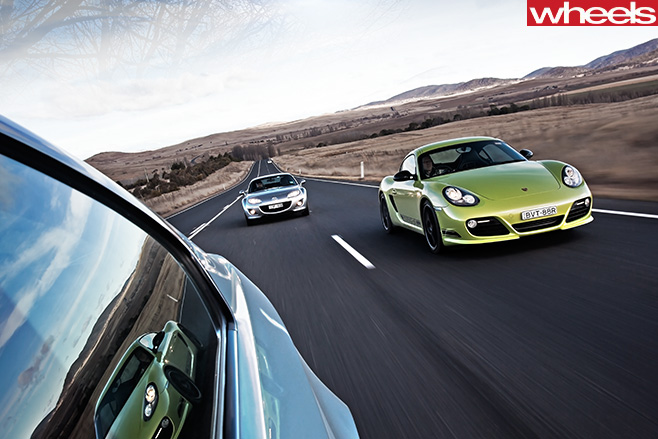
Our first modern contender, like the Caterham, was fashioned after a Lotus, but it was more of a spiritual thing that didn’t include the Elan’s leaks (oil onto the floor, water onto the head…). That’s no doubt part of the reason Mazda’s MX-5 went on to become the affordable roadster of the past 20 years. It’s also become the de facto lightweight, Japanese sports coupe in folding-hardtop form. The front-engined rear-driver does a lot with what it’s got – a humble 118kW Mazda 3-derived 2.0-litre twin-cam four, powering through a six-speed manual – courtesy of a commendably light 1167kg kerb weight. They don’t handle better this side of $100K thanks to the Mazda’s finely-honed strut front, multi-link rear suspension. And not paying for impressive-sounding driver aids you don’t need means an attractive $47K pricetag (or $42K for the ragtop).
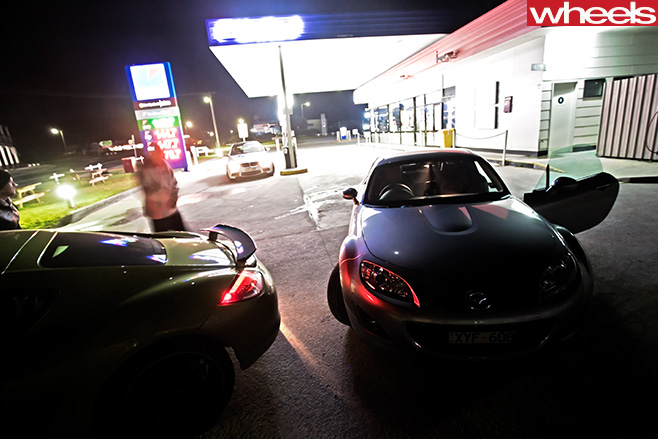
The MX-5 proves popular, as ever. James Cleary reckons that the Mazda two-seater, now in its third generation “is redolent of the original in the way it feels; even the way it sounds”. McKay reckons “they’ve made a few things better [such as] cockpit space”.
The MX-5 does a great job of being the affordable Japanese sports coupe, giving little away to the thrice-the-price Germans in terms of involvement and fun, if understandably lacking a fair bit in the grunt department.
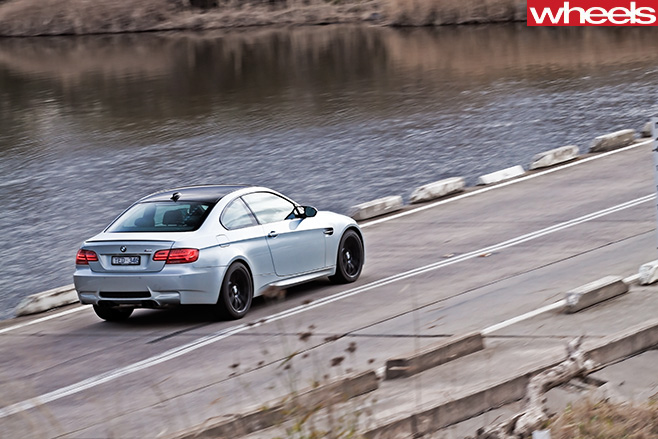
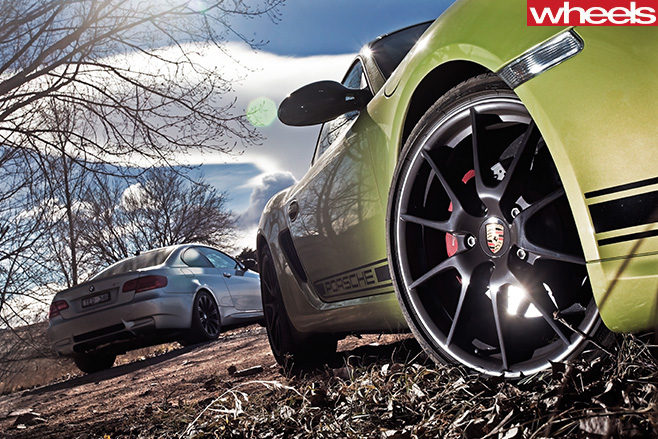
An M3 Pure Edition would have been tautological when the road-car-for-(Group A)-racing E30 original emerged from Munich 25 years ago. Three generations later, the E92 M3, despite sticking to the original formula – front engine, rear drive, lots of atmo revs and dynamic ability – is no longer entirely free of marketing affectation. Enter the Pure Edition. Okay, so the gloss black 19s and other bits (we’ll let you look at the pictures) are evidence styling/marketing still had their input. But the lack of M Drive and its multitude of driver-adjustable steering, adaptive damping, throttle and ESC settings surely results in an M3 the way those talented M engineers would have liked it in the first place. It gets better. A cloth/leather trim combo replaces full leather, and the front seat heaters are binned, along with the adaptive headlights, keyless start, CD changer and alarm. Ours, of course, is a six-speed manual. However, few things are completely pure in the world of BMW, so we’ll try to ignore the stop-start, brake energy regeneration and power button that sharpens throttle response. The variable M differential lock should actually be quite handy, but don’t tell anyone I said so.
Tossing out the M Drive system means you drive with a clear head, no longer wondering whether you’ve nailed the right setting. M division’s engineers designed the car, so we’re pretty comfortable with them deciding on the best all-round weighting for the steering and bump/rebound calibration of the dampers.
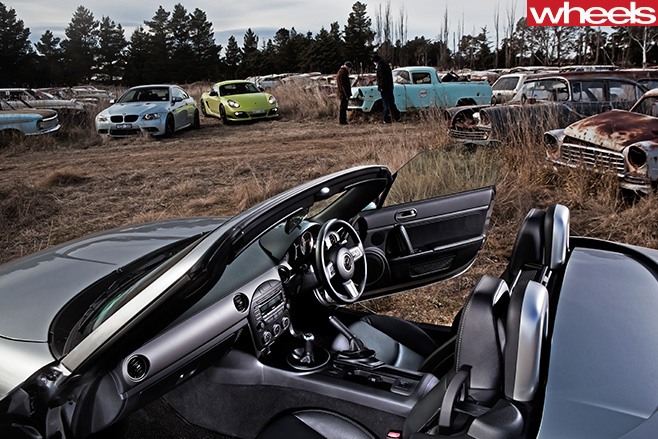
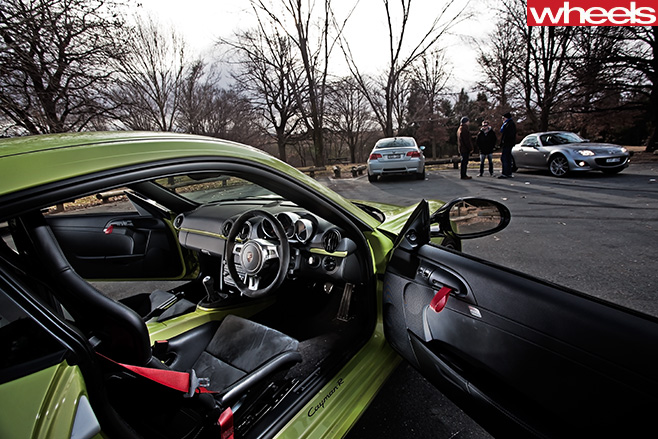
In the Porsche showroom, on the other hand, it seems you pay extra for Stuttgart to take things out. You spend $17,500 more for Cayman R than S to lose 55kg, though you do gain 200rpm and 8kW at the top-end. You also get carbon-shell fixed-back seats and a tied-down suspension tune (no buttons) among performance upgrades that transform the mid-engined coupe into a proper weapon. The $165K Cayman R offered in Oz also includes standard equipment that’s optional in Europe; cruise, climate control and sat-nav are features we’re not prepared to do without to trim a few more kilos. Porsche claims it’s two-tenths quicker to 100km/h than the S, at 5.0sec neat (manual, naturally). And to prove stripped-back lightweights are the way to a planet-friendly future, ADR combined-cycle consumption drops from 9.8 to 9.7L/100km.
A deep, guttural note pours from the tailpipes under load in sixth as the torquey 3436cc six flattens hills with ease. No need for third, or even fourth or fifth on these flowing bends, except to hear the crisp intake note and howling exhaust tune again and again, and delight in slotting the gearlever up and down the ratios. Having the engine behind you lets these noises flood the senses in hi-def, as well as contributing to an unflappable, but also infinitely adjustable chassis that makes you crave kay after kay of bendy roads. Sadly, all too soon the lights of Cooma in the distance signpost that this leg of the journey is over.
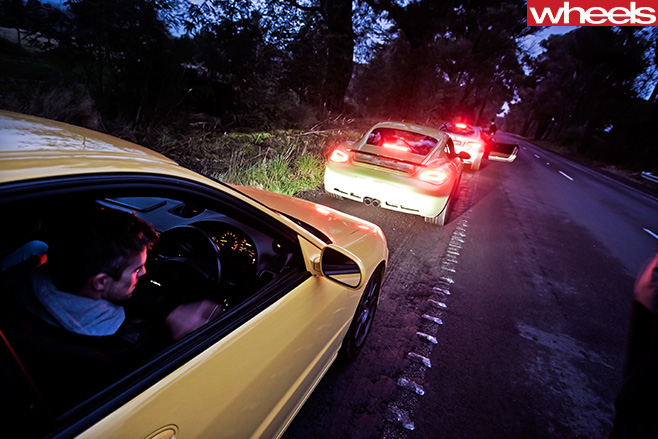
It proves a fine place to reflect over steak ’n’ veg and local tap beer. No bull, y’see. However, the general sentiment is a surprise. Pete and James reckon the MX-5’s better than ever because it’s got more comfort and cabin space than in earlier generations, without losing its innate appeal. We all agree that the invigoratingly raw Caterham has its place as a weekender. For summer. And we liked the 200SX as much for its liveability as its well-balanced handling. The Nissan or the Type R will certainly suit if your bank balance (like ours) is as minimalist as your taste in performance cars. Okay, so maybe we’re not as hardcore as we thought we were. But, then, that wasn’t the point. The point was to enjoy an honest, hard drive. Not surprisingly, the best way to do that is in a Cayman R with a manual ’box and a button-free suspension. Or an M3, if there are three of you. The best news, though, is that there’s a raw deal for every budget.
Toyota Australia sold all 1100 units of the RZ released in June, and is now offering another 700 with the addition of satellite navigation.
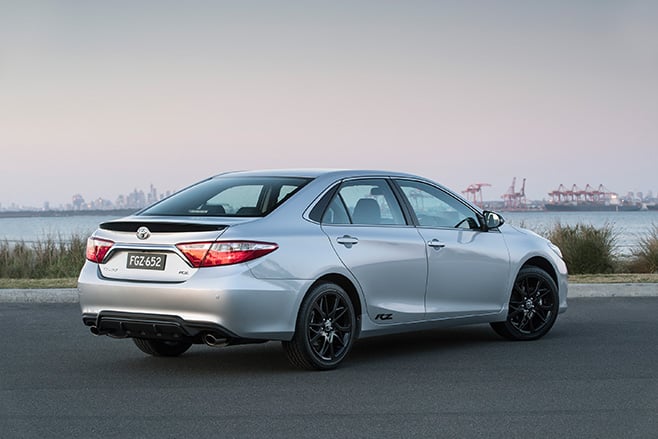
The mapping system comes as part of a 7-inch touchscreen system with digital audio and voice activation, and it accounts for the $700 increase for the RZ, now $29,190.
Other features carry over from the mid-year RZ. They include sports suspension and more direct steering from the Camry Atara SX, 18-inch gloss black alloy wheels with low-profile tyres, styling tweaks such as a mesh grille and bootlid spoiler, dual-zone climate control, premium steering wheel, and keyless entry and engine start.
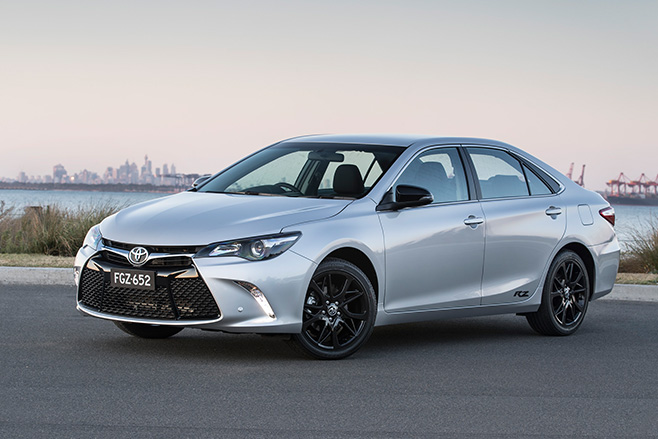
A twin exhaust system lifts power and torque to match the 135kW and 235Nm produced by the Camry Atara models – 2kW and 4Nm above the outputs of the base model Altise on which the RZ is based.
Toyota says the RZ’s extras are worth $5000 while the price tag is only $2700 above the Altise.
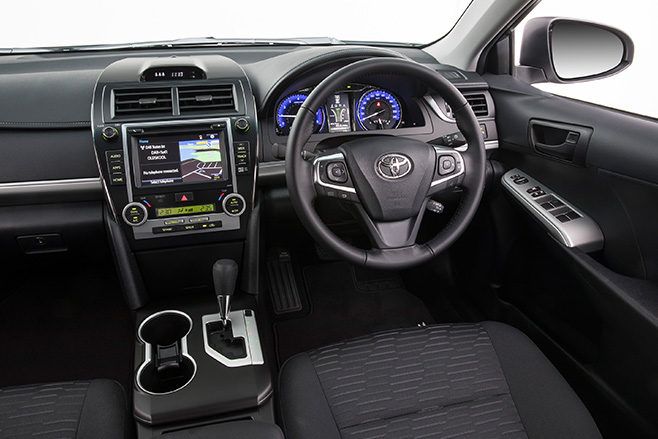
The company announced earlier this week that the navigation and touchscreen system had been made a $700 option on the Altise and standard on the Atara S.
Read the full review of the Toyota Camry range here.
Car buyers have been moving away from people-movers to seven-seaters in recent years, yet they are one of only two passenger car segments (along with sports cars) to actually register growth so far in 2016.
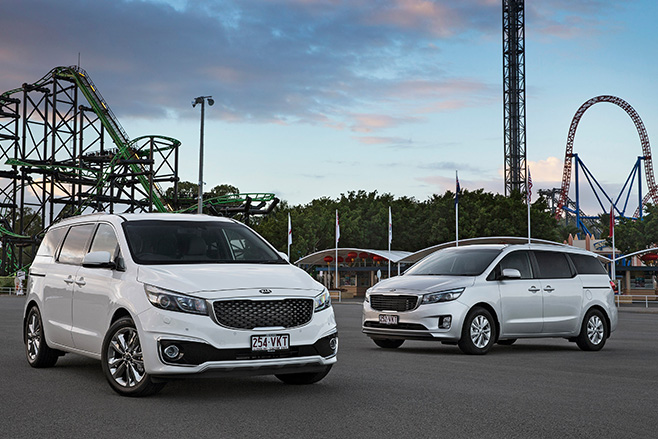
There are three stand-outs in the sales charts: the latest-generation Kia Carnival, the Honda Odyssey that’s been running as a nameplate for more than 20 years, and the Hyundai iMax which is a variant of the iLoad van designed for carrying passengers rather than cargo.
Here, WhichCar provides a guide to any changes planned or expected for these models to help you pick the perfect time to buy one.
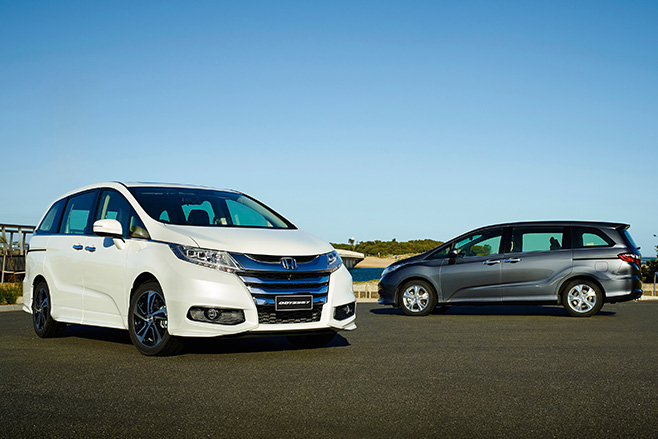
The fifth-generation Odyssey materialised in early 2014. Using previous models are a guide, an all-new replacement won’t be introduced until 2019. There’s likely to be at least one notable update before then, though for now the Honda continues to be available either in eight-seater VTi or seven-seater, higher-spec VTi-L forms. Prices, respectively, are from $38,990 and $47,620.
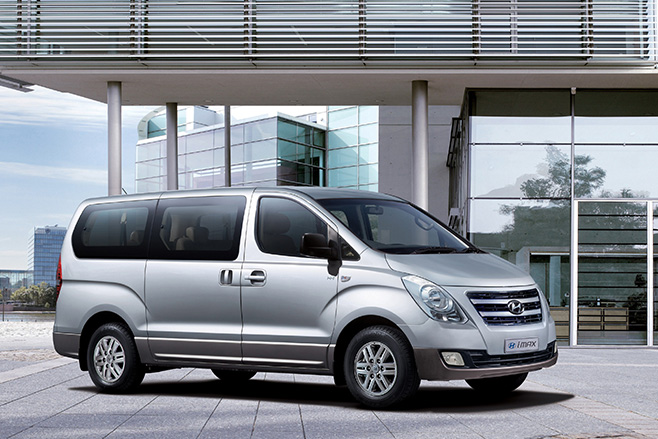
The iMax was given a Series II update in February 2016 so no changes are anticipated for the foreseeable future. The update brought a 7-inch touchscreen, voice activation, rear-view camera, front side airbags, cruise control for diesel autos, and styling tweaks. Buyers have a choice between a 127kW/224Nm 2.4-litre petrol with four-speed auto, or a 2.5-litre turbo diesel producing 100kW/343Nm and mated to a five-speed auto.
A new, third-generation version of Kia’s popular people-mover was released in February 2015, serving up a longer wheelbase on a new chassis for greater interior space for up to eight people including driver. A more upmarket cabin also complemented the stylish exterior. Priced from $41,490 with three trim grades, engines consist of either a 2.2-litre four-cylinder turbo diesel or more powerful 3.3-litre petrol V6. In late 2016, an autonomous emergency braking system will be added to the model.
SUBARU WRX STI Predicted resale value: 73%
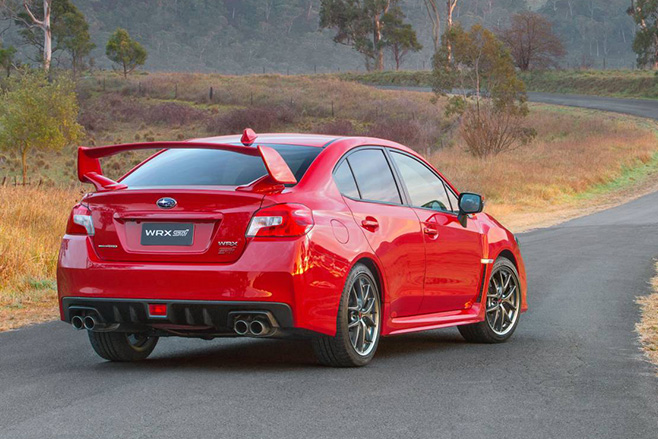
Subarus have long been solid when it comes to resale values and the WRX STi is top of the pops, holding almost three-quarters of its value after three years and 60,000km.
- Learn how limited edition models can improve resale value
- Find out how buying a bright car can affect resale
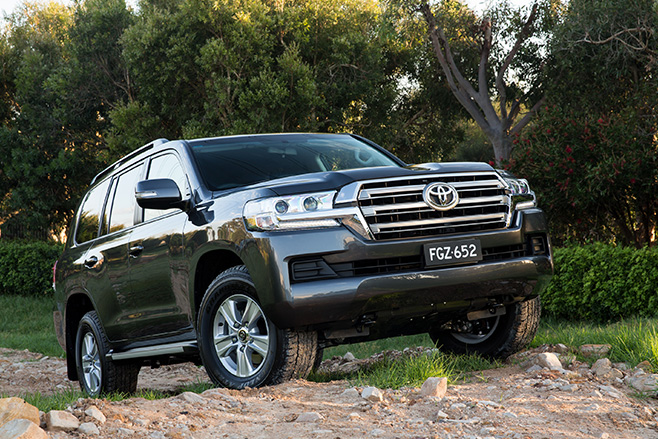
Of all the ’Cruisers, it’s the 200-Series GXL diesel that’s forecast to hold most of its value when it comes time to sell, with the chunky old-school 70-Series matching it.
PORSCHE 911 Predicted resale value: 67%
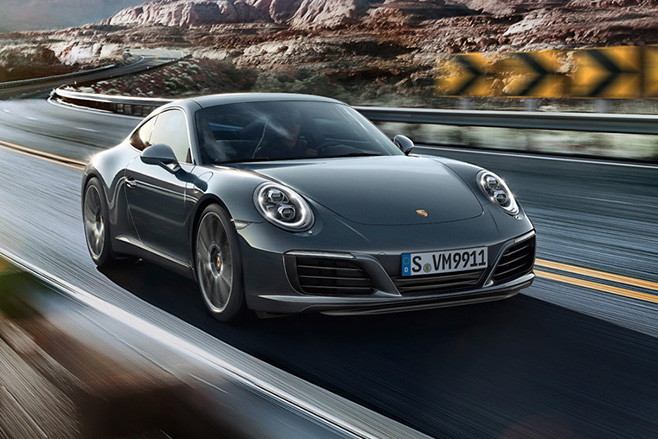
GT3s are the kings of resale for the Stuttgart brand, but the 991 is no longer on sale, so it’s the regular Carrera models that promise to look after you most when it comes time to trade up.
MERCEDES-AMG GTnPredicted resale value: 67%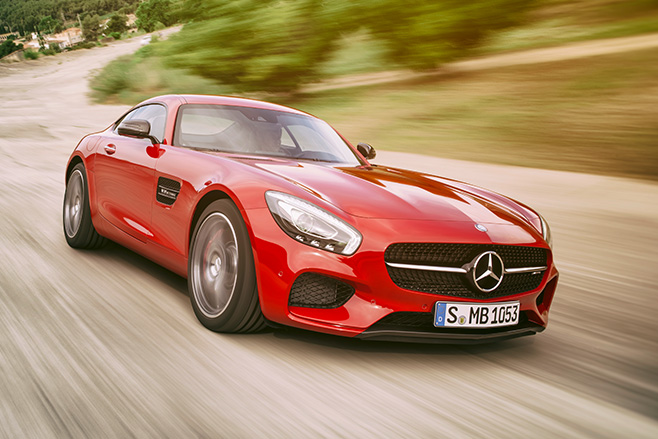
The lure of a sexy two-door body and a 375kW V8 lingers long after it has left the showroom floor, with the AMG GT set to retain much of its circa-$300K value.
FORD MUSTANG Predicted resale value: 67%
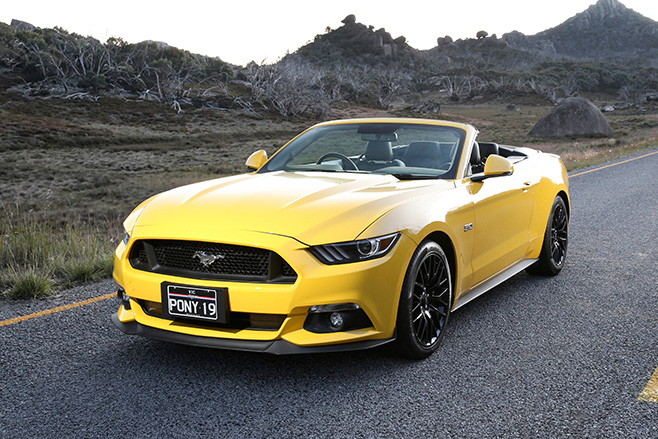
Stratospheric demand means the V8-powered Mustang is predicted to hold on to 67 percent of its worth years down the track. No surprise the four-pot isn’t as giving, with 63/64 percent resales.
*Calculated based on Glass’s predicted resale rating, retained after 3 years.
Can’t get enough? Now discover if it is okay to buy a discontinued car.
The award-winning Kia Sorento SUV has a new range topper with the arrival of the GT-Line.
Sitting above the luxury Platinum model, the GT-Line will head the 2017 Sorento line-up with extras focusing on luxury rather than additional performance.
The GT-Line Sorrento comes equipped with all the premium trim found in the Platinum plus 19-inch chrome wheels, stainless steel sidesteps, red brake calipers, red leather trim, paddle shifters, LED ice cube fog lamps, chrome accented interior and GT-Line badging.
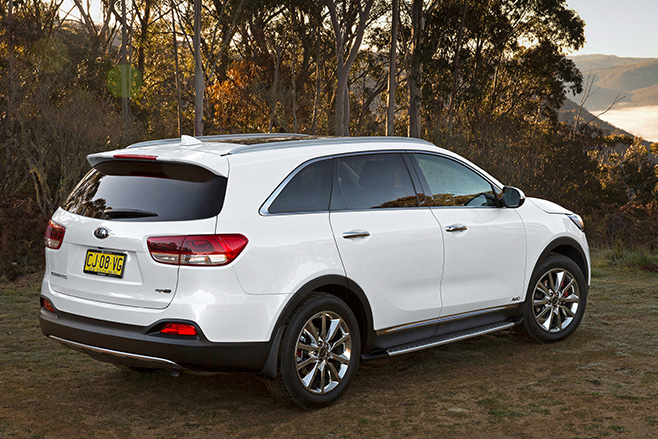
It also brings autonomous emergency braking (AEB) to the Sorento range, which is also being added to the Platinum.
Both will be powered by a 2.2-litre turbo diesel mated to a six-speed automatic transmission, already available in the Platinum.
The GT-Line will retail for $58,490 plus on-road costs, while the addition of AEB ups the Platinum’s price by $600 to $56,590.
There is no price change to the Si and SLi petrol and diesel variants despite them gaining minor interior modifications and LED daytime running lights, which will now be standard across the range.
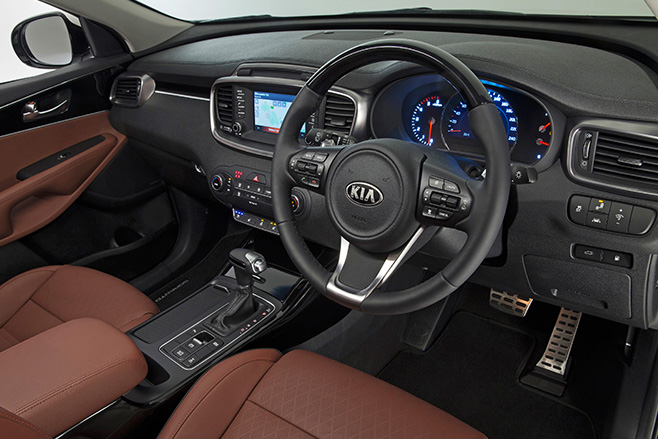
The GT-Line will be in showrooms from next week along with the rest of the updated 2017 model range. The 2016 build plates of these initial arrivals would make them ripe for end-of-year deals.
The seven-seat Sorento comes with Kia’s seven-year warranty, seven-year capped-price servicing and seven-year roadside assist.
2017 Kia Sorento retail pricing
Sorento Si FWD petrol $40,990 Sorento Si AWD diesel $44,490 Sorento SLi 2WD petrol $45,990 Sorento SLi AWD diesel $49,490 Sorento Platinum AWD diesel $56,590 Sorento GT-Line AWD diesel $58,490
