But, wait… Red Bull Racing has lodged an appeal against the Jamie Whincup time penalty.
IT WAS another spellbinding, knife-edged end to the annual Bathurst 1000 with Will Davison staving off Red Bull Racing’s Shane van Gisbergen whilst finding the last few drops in the fuel tank of the Tekno Autosports Commodore in the closest finish in the history of The Great Race – 0.14sec.
Minutes later Davison and co-driver and team owner Jonathon Webb ecstatically shared the podium with runners-up Van Gisbergen/Alex Premat and third-placed Nick Percat/Cam McConville of Lucas Dumbrell Racing.
Second place was the best Bathurst finish for Van Gisbergen and Premat and the result moves the Kiwi comfortably 139 points ahead of Whincup in the championship.
It was Davison’s second Bathurst 1000 win and the first for Webb, who had seen a likely victory cruelly taken from him two years earlier.
Webb and Tekno are also the first driver and team to win the Bathurst 12 Hour and the 1000 in the same year.
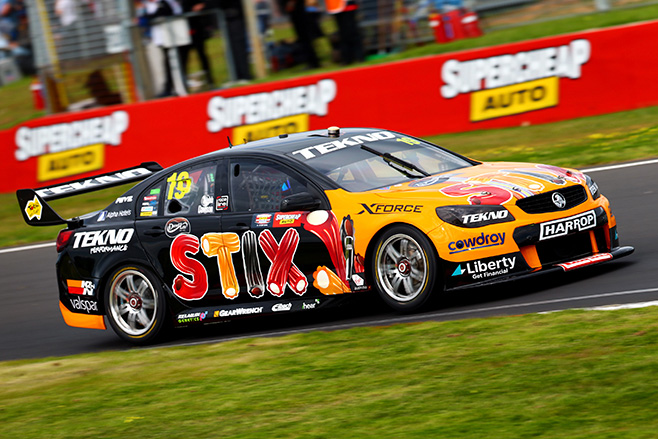
Davison, who drove flawlessly to keep out one of the most aggressive (and fastest) drivers in the competition, was delighted to win for the little Tekno Autosports squad.
“I am almost speechless,’’ Davison said, after the dramatic nail-biting win from 17th on the grid.
“That was so stressful. I knew if I lifted to save any more fuel that Shane was going to get me. It coughed coming into the last corner and I ran out of fuel while crossing the line.’’
But if you want weirdness, consider this; Davison/Webb did not lead any laps of the race. Not even the last one.
First across the line – a few seconds up the road – was the Red Bull Commodore of Jamie Whincup (sharing with Paul Dumbrell). They’d controlled the race for the majority but had been using plenty of fuel to do so. After a brace of safety cars shook up the order and fuel strategies, Whincup pitted on lap 135 for fuel, tyres and fresh brake pads, setting up a big charge to the chequer for #88.
With 24 laps remaining, Whincup was fourth behind DJR-Penske’s Fabian Coulthard (who needed to stop for fuel and ultimately finished sixth behind the sister Shell Falcon), Scott McLaughlin (Volvo), and Garth Tander (HRT Commodore) with Davison next.
Man-on-a-mission Whinchip moved past Tander to third, and a few laps later came the incident that people will talk about for years.
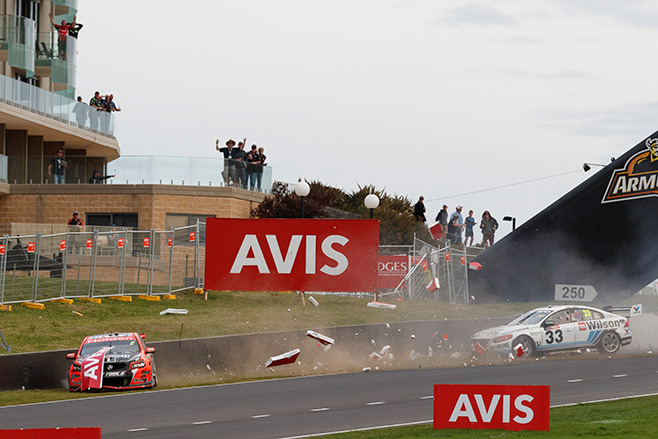
Into the Chase on lap 150, Whincup fired down the inside of McLaughin who edged left, forcing the Holden across the apex. Side by side, they touched firmly, the Volvo hip-and-shouldered on to the outfield.
Powering on to the foot of Con Rod, Whincup appear to slow in what was seen as an attempt to redress. Aaah, yes, that quaint rule where drivers become their own judge and jury.
In a split second Tander opportunistically jinked right just as McLaughlin accelerated back on to the bitumen. All three crashed together, with Tander and McLaughlin spinning and clouting the wall.
Whincup survived and appeared to be heading for another Bathurst 1000 win…until he was deemed at fault in the incident, and slammed with a 15 seconds post-race time penalty.
In the few laps remaining, Whincup was no chance to gap Davison and the rest by 15 seconds.

It was third year in a row Whincup’s chances of victory have been sunk in the closing stages of Australia’s biggest Supercars race. The six-time champion eventually finished 11th in a field decimated by late-race crashes and mechanical issues. Nineteen of the 27 starters were classified as finishers.
Everyone has an opinion on the three-way contretemps, including Triple Eight Race Engineering boss Roland Dane, who immediately lodged an appeal against car #88’s time penalty, putting the Tekno victory in some doubt.
McLaughlin, who finished 15th, is also under investigation for an unsafe re-entry to the circuit.
Dane, whose organisation also built the Tekno Commodore, indicates his appeal is based on what he senses are inconsistencies in the way the rules have been applied.
He says the race stewards have indicated the time penalty related only to the first touch with McLaughlin and not the second incident with McLaughlin and Tander.

Dane questions whether Whincup was at fault in the initial touch with McLaughlin because of the Volvo drivers clear move to block in the braking area before the slow left hander.
The team owner also says in such situations the driver has the choice to redress, and if he can’t, they are subjected to a 10-second penalty. Not 15.
Supercars Australia has confirmed the appeal will be heard by the Supercars court of appeal which is appointed independently and run by CAMS. A date has yet to be set to hear the appeal.
Meanwhile, the results of Sunday’s race are final, but subject to the appeal.
Let’s hope this doesn’t drag out like in 1987, when two months after the race, Peter Brock was finally awarded the win when the bent-like-boomerangs Eggenberger Sierras were deemed illegal.
This year’s 1000 had been a bit of a snooze until beyond half distance when it exploded into life with a savage outbreak of crashes, safety cars, dramatic moves and…controversy.
Andrew Jones in the BOC Commodore thumped the wall heavily at the metal grate on lap 92, to trigger the first safety car of the race. We counted six before the end.
Until then it had been a Whincup/ Dumbrell tour de force. They will have wished the last hour was as straight forward as the first four.

Van Gisbergen went to the Mountain for race 21 of 29 a bare seven points ahead of Jamie Whincup in the title fight, with Craig Lowndes lurking in third. Bathurst, carrying 300 points, was always key to championship aspirations.
Most of the teams elected to have their full-timers start the race, to minimise risk. Some played cute. Gamesmanship was rampant. Dumbrell was going to start the pole car but after a late call minutes before the start, Whincup leapt into his race suit and climbed aboard Holden Commodore #88.
Strategy would vary a little but based around fuel consumption of around 4.6 litres of E85 every 6.2km lap. So a minimum of seven pit stops and stints of around 22-24 laps.
Whincup and Dumbrell went as close to perfection as you find in the hectic lead-up to the 1000. Whincup was the pacesetter from the opening practice, through qualifying, and in the Top 10 Shootout. Dumbrell was quickest in the co-driver sessions and won Saturday’s second-string Dunlop Series race.

The Shootout late Saturday afternoon was memorable not only for the fastest pole in history – Whincup’s 2m 05.4263s – but for the wild nature of so many of the laps by the 10 fastest drivers. Never before have so many traded conservatism for the chance of glory. None of the 10 runs were blemish-free, and a few were simply erratic. But Whincup found the right mix of pace, daring and common sense, edging Scott McLaughlin by just 0.0652s.
The huge name missing from the top 10 was that of Craig Lowndes, winner with his co-driver Steve Richards 12 months earlier. Through practice and qualifying Lowndes struggled to find the sweet spot, languishing back in 21st but perhaps partly reassured by the knowledge that the Bathurst 1000 has been won from way back. It was false hope, a gearbox issue ruining his race.
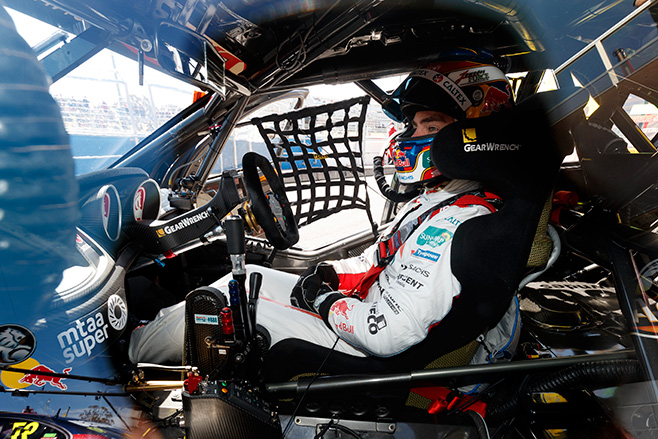
Other former Bathurst winners were also back a bit too, reflecting the competitiveness of the qualifying battle. Rick Kelly/Russell Ingall started 20th; Nick Percat 22nd…
Twenty-seven cars started including the wild card entry of all-female crew Simona de Silvestro and Renee Gracie, this year aboard a Nissan Altima. They started 26th and finished 14th.
Five of the 54 drivers were Bathurst 1000 race rookies.
BATHURST SUPPORTS
Matt Campbell was a busy and successful young man at Mount Panorama, taking his Porsche Carrera Cup car to three impressive wins over the weekend, extending his lead in the points
Campbell, who was also making his Bathurst 1000 debut, co-driving with Todd Kelly for Nissan.
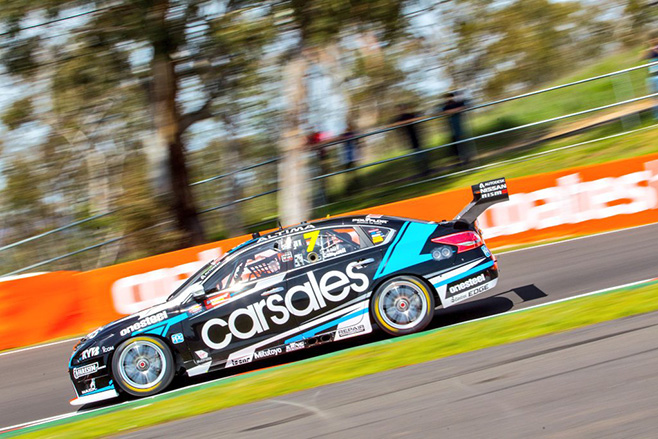
Will Brown continued his bold form in the Toyota 86 one-make series, clean sweeping the three Bathurst races, but only after Aaron Seton was pinged five seconds for an incorrect restart in the first sprint.
In Sunday’s six-lapper, and despite his youth and pressure from invited driver Steve Johnson, Brown held his line and nerve over the final few corners to take a narrow win and extend his series’ lead with one round remaining, in Sydney.
Why torture ourselves entertaining a future that is very clearly never going to happen? Well, in our minds, though the question is now long settled, we reckon the Falcon could have continued. And this is how.
It starts seven years ago when Ford was in the market for a new rear-drive platform for the sixth-generation Mustang. Like Holden developing the Zeta rig for both VE Commodore and Camaro, it was Ford Oz that got the call up to make the new “One Ford” rear-driver.
It’s a brand new platform underpinning sixth-gen Mustang (styling of that one still left to the Yanks), new Falcon and next-gen Taurus – which is just a rebadged Falcon with the same left-drive gear as the ’Stang, amortising development costs over three separate products.
And we won’t shy away: Mustang is made in Michigan and Falcon in a muscled-up Broadmeadows – in both left- and right-hand drive.
Like the Chevy SS, the Falcon-cum-Taurus becomes Ford’s new NASCAR racer, the US falling back in love with rear-drive, V8 four-door sedans. Well, that’s the theory.
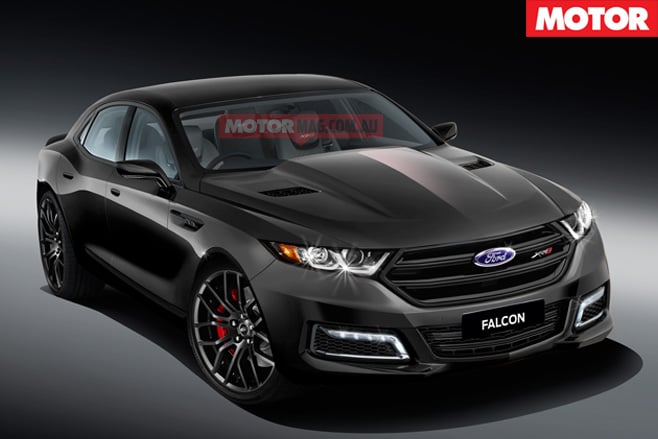
THE LOOK Falcon cops a big dose of Ford’s global styling DNA but invites a little XB to its rear haunches – a look that’s also needed to satisfy American tastes with the left-hand drive Falcon on Taurus duty in the States. The XR8 (which we’ve created here) keeps signature quad-light look and bonnet bulge.
HIGH-TECH GRUNT The base XR6 now gets the new Euro VI-compliant Barra 4.0-litre inline-six EcoBoost, while the Turbo a heavily upgraded, boosted version of the same engine, good for 295kW and 580Nm with craploads of headroom. The XR8, however, cops the Mustang GT’s ‘Coyote’ 306kW/530Nm 5.0-litre nat-atmo V8 made in Canada. The blown ‘Miami’ gets an overhaul as the FPV brand is resurrected (just with the ‘V’ dropped off the end) for a new Falcon GT. The Aussie-made 5.0-litre is also shipped Stateside for a fleet of berserk new Mustangs. All get a new ZF eight-speed auto and multi-stage ESP; XR8 comes with an F-Type-style exhaust button and a note that gets it on A Current Affair.
CORNER SLAYER The very tired FG X chassis is replaced with a brand new, significantly stiffer and lighter body-in-white thanks to clever use of materials like high-strength steel and aluminium. Suspension is all new, independent front and rear much like the new gear under the sixth-gen Mustang. Steering is same as the Mustang’s – electric with multiple modes, turning the Falcon into one of the best-handling sedans this side of $100,000.
CABIN FEVER A brand new interior awaits with TFT instruments, head-up display and full SYNC3 connectivity – all the Mustang’s gadgets but much nicer materials. New steering wheel with shift paddles and aggro new bucket seats top it off.
As the high-vis vests at Broadmeadows are taken off for the last time and the last shipments of Falcons and Territories make their way to dealerships across the land, another chapter of the Australian car manufacturing story comes to a close.
But what were the most significant Falcons of years past? What were some of the best examples of Ford Australia’s iconic nameplate to grace our roads during the Falcon’s 56-year history in this country?
Depending on who you ask, the list is either extremely long or – if they’re a Holden fanatic – brutally short. Though many more deserve their due, we’ve decided to list the five best of the Falcon breed.
1: 1964 XP Falcon
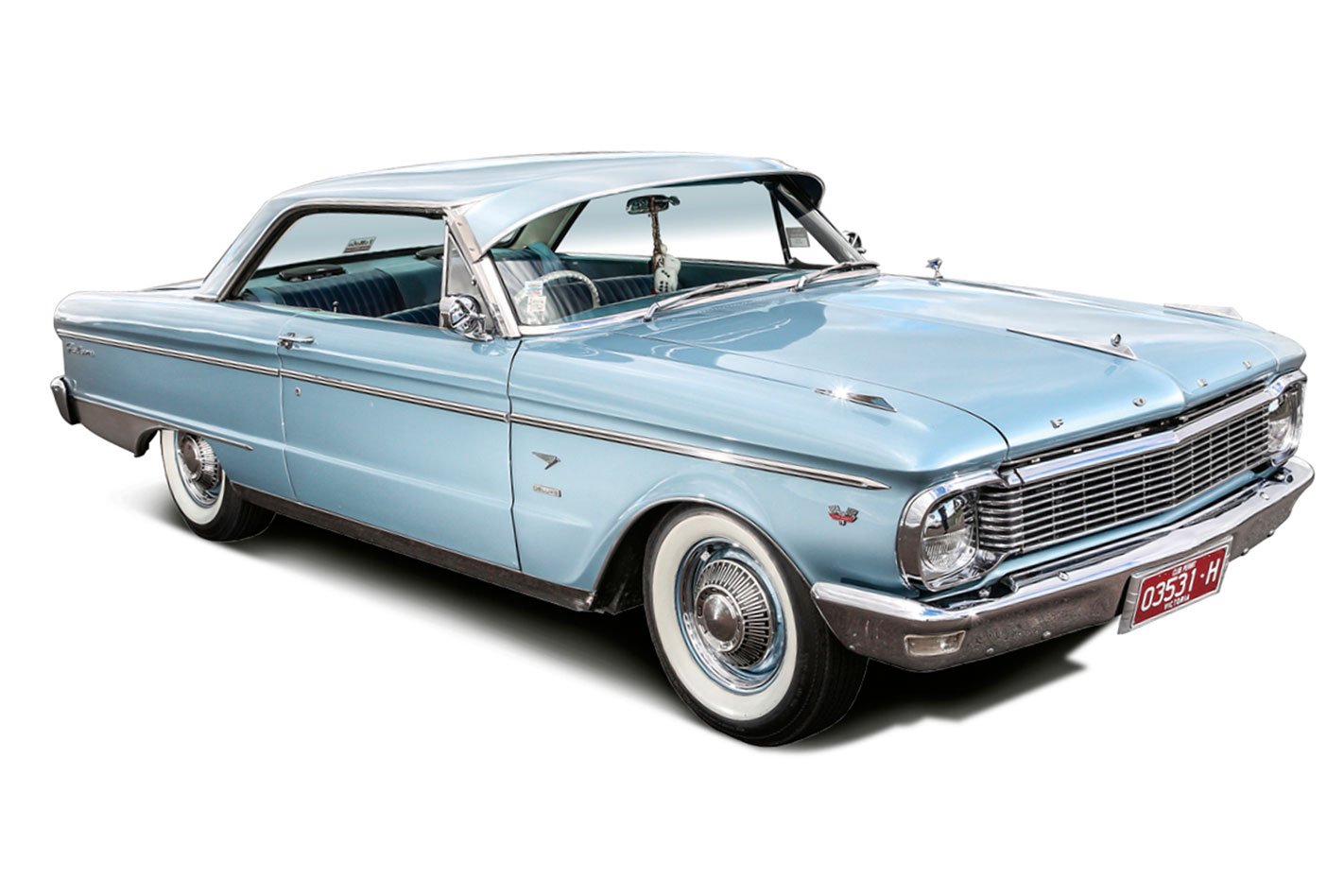
By the time the XP Falcon arrived on the scene, Ford’s factories at Broadmeadows and Eagle Farm had been churning out falcons for four years. However, it was the XP that earned the Falcon a reputation for durability that helped it win favours in a time when smooth motorways didn’t exist.
Five cars were taken right from the production line and subjected to a 24-hour-day, 70,000km torture test at Ford’s then-new You Yangs proving ground. Design improvements rectified the front-end failures that dogged the XK Falcon, but it was Ford’s local testing that validated the Falcon’s bulletproofness.
2: 1970 XY Falcon GT-HO Phase III
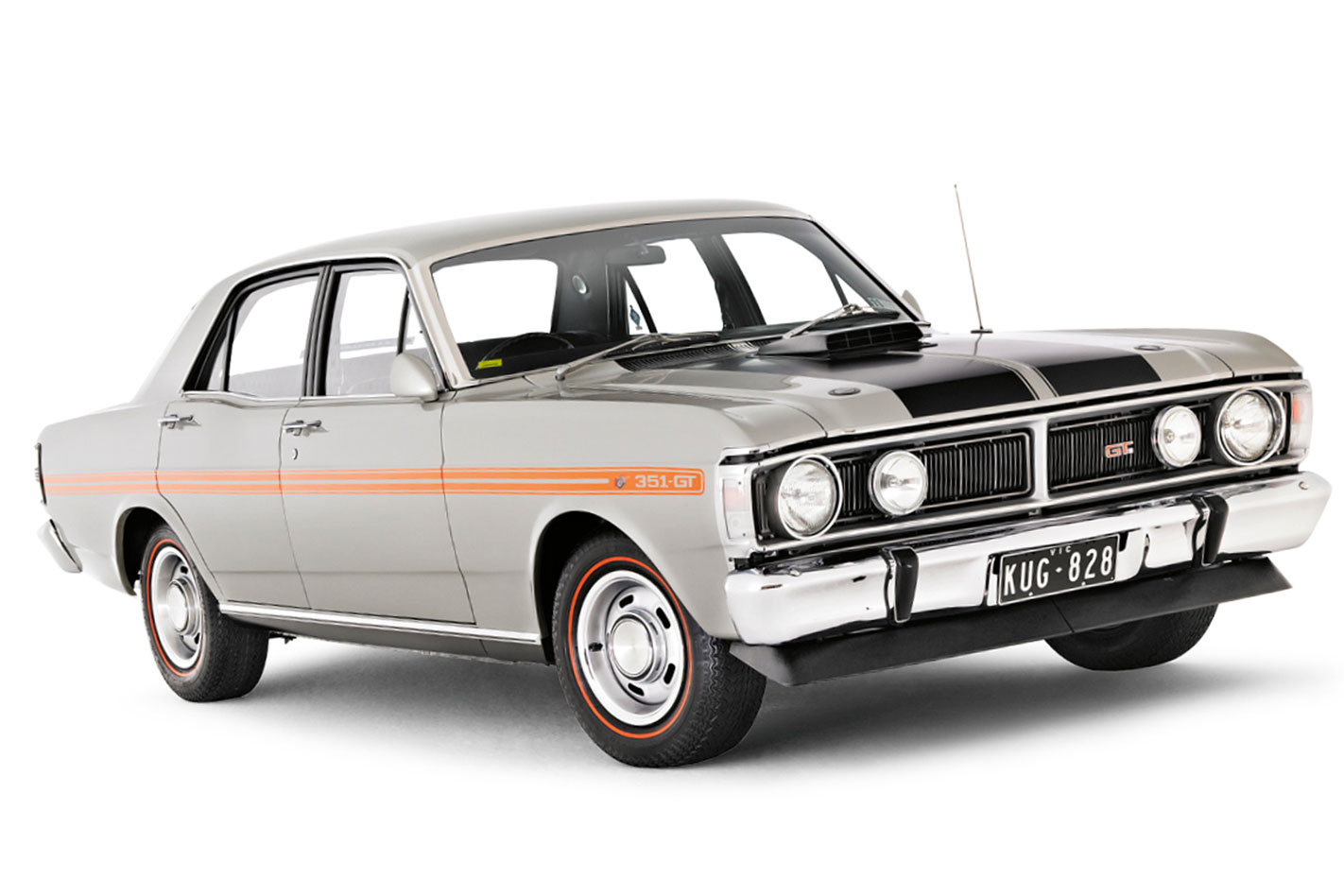
Yep. You were probably expecting it, and here it is: the legendary GT-HO. Built to homologate the XY Falcon for racing, the GT-HO (the HO stands for “Handling Option” was claimed to be the fastest four-door sedan in the world. With a 5.8 litre V8 making a heady 224kW (though some claim Ford sandbagged that number), it was certainly quick for its time.
And that legend helped propel values to stratospheric heights, with pristine examples changing hands for six-figure sums. Prices have since calmed down, but the GT-HO will forever be one of Ford Australia’s most desirable products.
3: 1982 XE Falcon
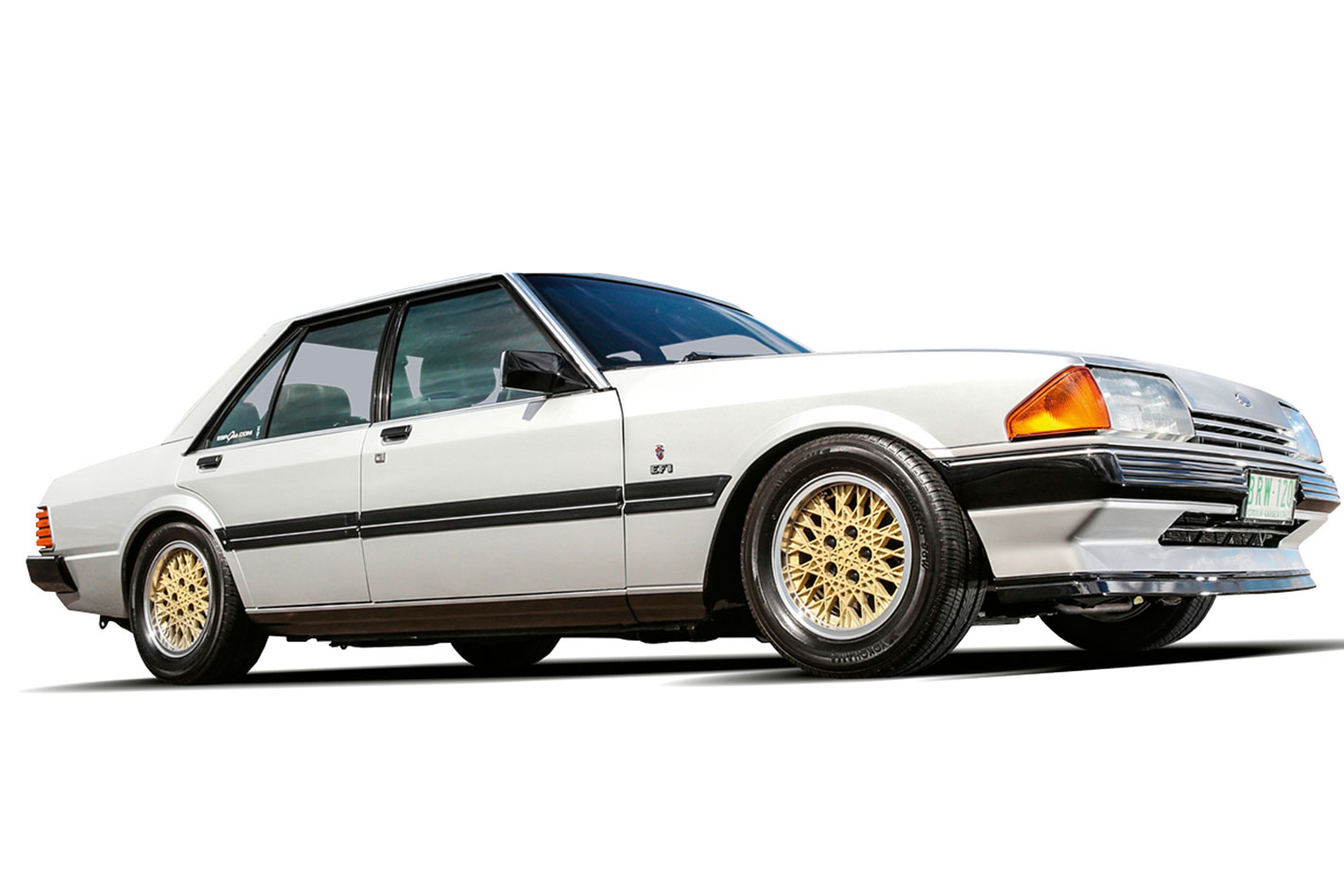
The XE might be one of the boxiest cars to ever grace our roads, but it was a significant model in Ford Australia’s timeline for other reasons.
The XE sedan was the first model to ditch the antiquated leaf-sprung rear suspension of previous Falcons in favour of a better-handling and more refined coil spring arrangement. Ride comfort benefited greatly, though increasing fuel prices saw Ford dump the V8 engine from the range in this generation while simultaneously introducing electronic fuel injection on its inline six motors.
4: 2002 BA Falcon
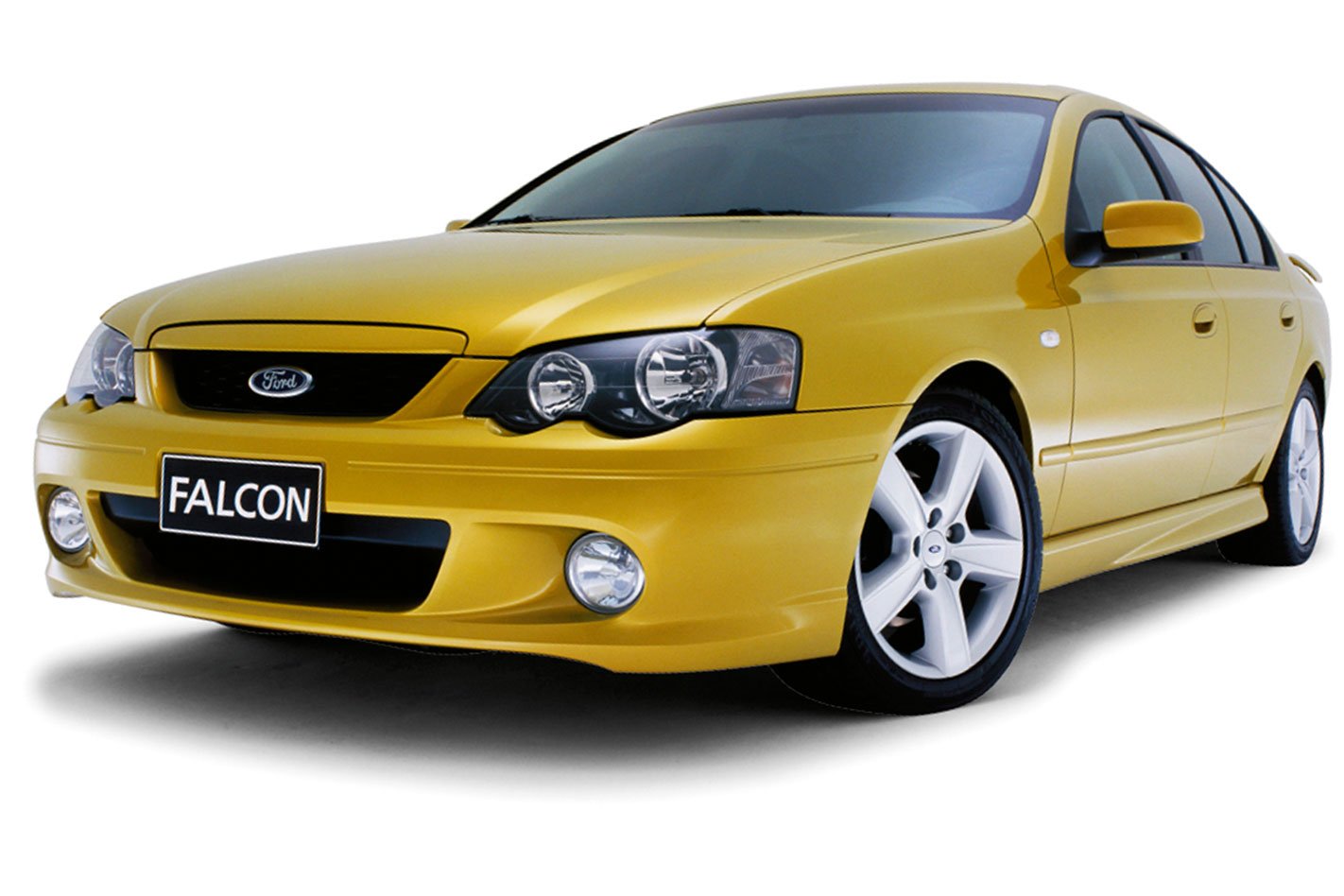
The BA saw a bevy of mechanical changes for the Falcon family, with the introduction of dual overhead cams for the inline six, a new independent rear suspension and the fire-breathing XR6 Turbo.
Not only that, but it banished the widely-panned AU Falcon’s styling in favour of a more modern and handsome design – despite sharing its entire midsection with the much-maligned AU.
5: 2014 FGX Falcon Sprint
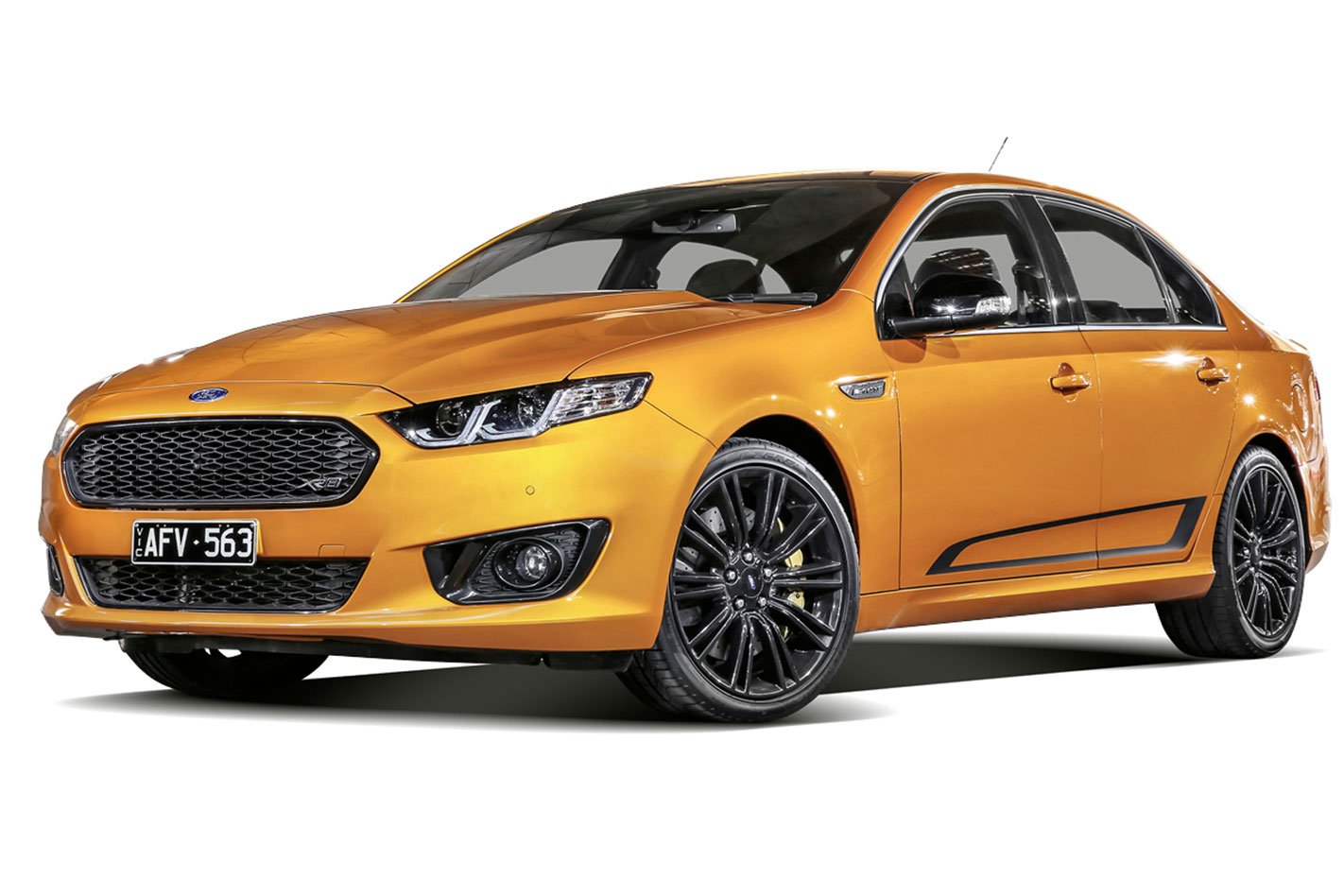
Ford Australia gave the Falcon a scorching send-off with the FGX models. Not only did Ford spend big on new exterior plastics, light clusters, bonnet and bootlid, but it tuned up the XR8 and XR6 Turbo’s mechanicals to create the heavy-hitting Sprint models.
The XR6 Sprint had 325kW and 576Nm from a turbocharged 4.0 litre inline six while the XR8 Sprint made 345kW/575Nm from a supercharged 5.0 litre V8. Both had extensive suspension upgrades and monstrous brake packages too, making the FGX Sprints the fastest Falcons of all time.
For Ford Australia president Graeme Whickman, overseeing the manufacturing shutdown has been difficult, but his challenges are really just beginning.
Graeme Whickman didn’t want to sell cars when he was a working class kid growing up in England and New Zealand. Oh sure, he liked them, especially Ford hot hatches. But his dream was to be a professional footballer.
It was only after leaving school at 16 and persevering for a decade that he realised he wasn’t going to make it. Marriage was the clincher that sent him back to school for a marketing degree.
“I had figured out you have to be in an industry you enjoy, so there was aviation, sports, entertainment, or automotive,” he recalls.
He didn’t get the chance to try out the other three because an offer to join Ford UnZud came before he had graduated: “Eighteen years on, I’m still in the industry,” he muses.
In fact, Whickman is up to his neck in it. As the president of Ford Australia – think about what a meteoric rise that is from a zone manager in Auckland – he gets to be the canary in the coal mine, shutting down the Blue Oval’s local manufacturing operations 12 months ahead of Holden and Toyota, retrenching hundreds of workers and killing off Falcon and Territory.

It’s a battle Whickman makes clear he is up for.
“To me it is a classic case of change management; when you have got people who are holding on to the past and people who are reaching out for the future,” he says.
“Our job is to navigate that. Our efforts are genuinely providing some belief to people, and we are seeing some results. We call them green shoots.”
Whickman speaks forcefully and positively yet without tub-thumping zeal. He is the sixth boss of Ford Australia since the late, great Geoff Polites moved on in 2004 and will be the first since 1925 not to have locally built cars to sell.
Whickman wasn’t running Ford Australia when the decision to close the plants was made in 2013; that was his opaque predecessor Bob Graziano’s thankless task. But the ‘transformation plan’ that is now in place has his fingerprints all over it. Better customer experience, better dealer relations, a swing away from fleet to retail sales, chopping loss-leader models out of line-ups, the rejection of volume for volume’s sake.
These are all Whickman mantras. Another favourite is the word “rebuild”. He talks about rebuilding customer relationships and trust. Clearly that means something was broken.
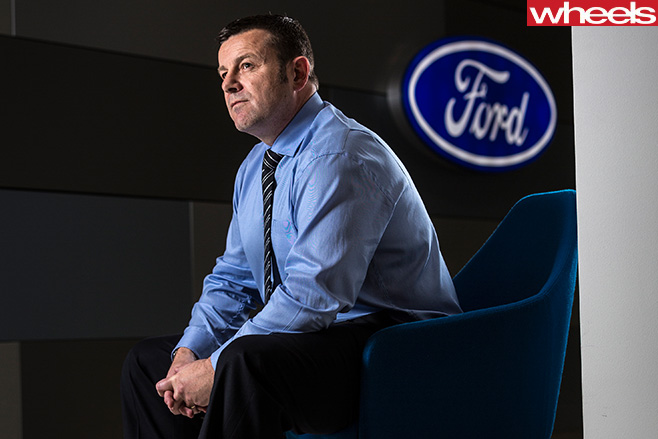
“To me it was about going back to fundamentals,” he adds. “Make sure the vehicles are fit for purpose; make sure you market the vehicles properly; make sure you have a compelling service proposition to customers; make sure you have a compelling consumer experience whether you come in at the font-end or the back-end of the dealership; make sure everyone is galvanised so they can see what success might look like in the future and how we get there.”
Whickman quotes various confidential surveys to prove progress is being made: more private buyers, more service customer retention, a much higher satisfaction rate among the all-important dealer body.
The one clear symbol of progress we see publicly are VFACTS registration numbers and they tell a good story. After finishing 2015 with its lowest sales result since 1967, Ford has U-turned in 2016, running 16.6 percent ahead year-on-year based on VFACTS registration numbers to the end of July. It’s the second biggest surge forward amongst the top 10 players, topped only by Kia with an incredible 28.1 percent rise.
“This year my prediction is that for the first time in 12 years we will actually have year-on-year growth,” Whickman says.
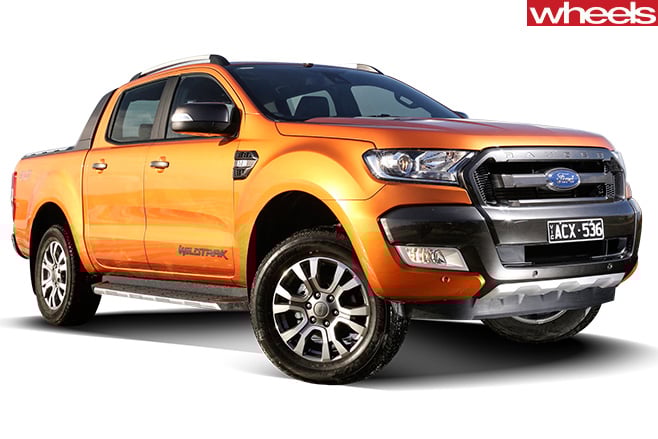
Such figures lend credence to the argument that Ford has simply transferred its Falcon audience to Ford Ranger and continues to flop as a marketer of passenger cars – a charge a series of Ford’s leaders have ’fessed up to.
You can now add Whickman to that list: “It doesn’t seem that we have done a good enough job in educating and enlightening everybody on just how good our products are,” he admits.
“My view is that I have a pretty comprehensive line-up. Call it 11 to 12 nameplates that span all the key segments and, blow for blow, will fight any competitor in terms of product capability. My job is, how do I unlock that? And that’s part of what I’m trying to do right now.”
From soccer field to corner office, one thing has not changed for Whickman: he remains under pressure to score goals.
Turning up the Whickman
Born in the UK in 1968, Graeme Whickman spent his early years living there and later, in New Zealand. He was the archetypal working class kid, leaving school at 16 and holding down jobs as a labourer, barrow boy, roofer, sheetmetal worker and Hertz delivery driver … among many other things.
Whickman had dreams of a pro soccer career; instead, he was paid “small amounts of money” to play for several clubs in New Zealand.
“I was a centre forward who was slow enough to migrate to centre back,” he recalls.
Since joining Ford in 1997, Whickman’s rise has been meteoric, working in six countries and holding down 11 roles in 19 years.
The pint-sized-4WD concept is far from new, though there’s no doubt the breed has exploded in recent years as more manufacturers join the race to sell the most affordable versions of SUVs.
More than 110,000 small SUVs were sold in 2015, a 27 per cent increase compared with 2014. And the segment is continuing to grow.
Four models stand out in the market for sales that consistently reach four figures every month. They include the current best-seller, the Mazda CX-3, the Mitsubishi ASX, Honda HR-V and Nissan Qashqai.
Here, WhichCar provides a guide to any changes planned or expected for these models during the next 18 months – to help you pick the perfect timing for buying one.
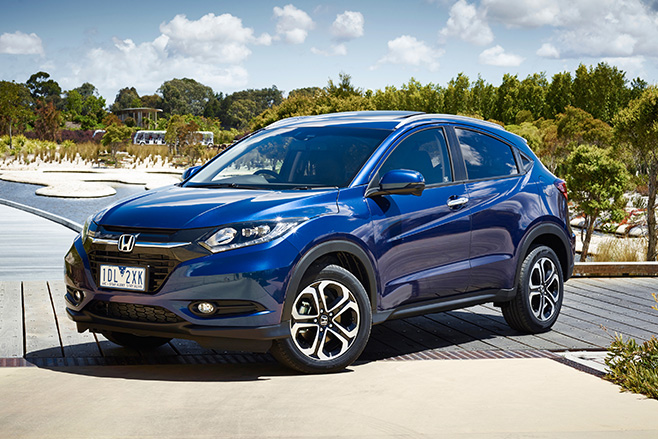
The HR-V badge returned to Australian roads in 2015 and no significant updates are anticipated for 2017. Honda Australia had been considering adding a 1.6-litre turbo diesel engine, though the lack of an automatic gearbox option contributed to a decision to stick with just the 1.8-litre petrol engine currently offered.
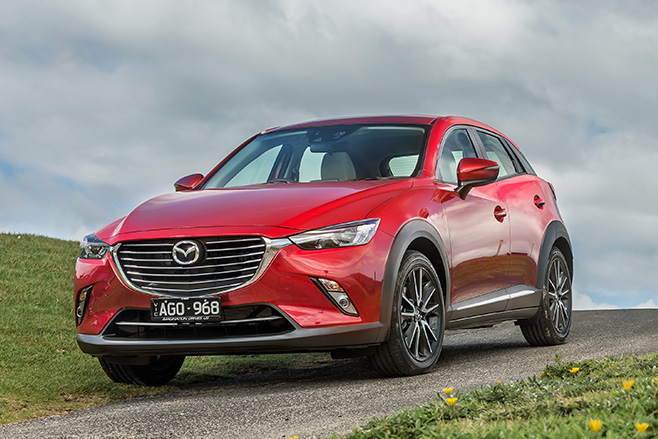
Another class newbie, launched just a month after the HR-V in March 2015. An update is expected in early 2017 for Mazda’s smaller sibling to the CX-5 and CX-9, which will include adding the brand’s new G-vectoring Control. The system varies engine torque to improve handling balance through corners.
The ASX was spun off Mitsubishi’s Outlander platform in 2010 and continues to be a sales trooper for the Japanese brand years later. It will need to carry that form on for a while longer, as a replacement isn’t due until at least 2018.
The next ASX will be based on the eX concept show at the 2015 Tokyo motor show, with the twin-motor, 140kW four-wheel-drive show car also pointing to a pure electric variant that will be available alongside a model powered by a conventional petrol engine.
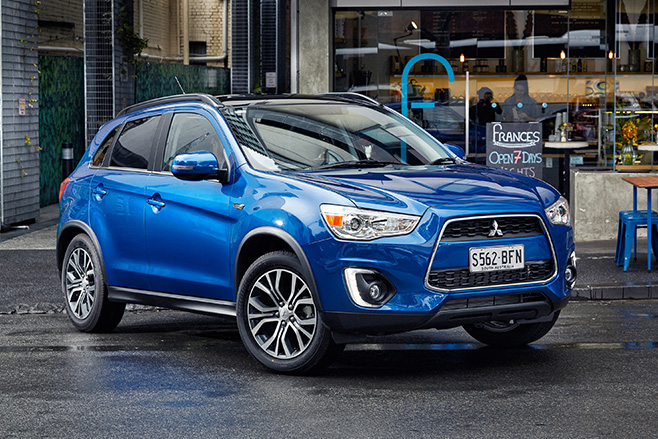
The 2018/2019 ASX will also shrink from its current 4.3-metre length to allow a new small SUV to slot in between the ASX and the mid-sized Outlander.
The new SUV was previewed by the XR-PHEV concept, and will be more luxury focused than the ASX. It will beat the new ASX to the Australian market, though while it will be revealed in 2017 it may not arrive until 2018.
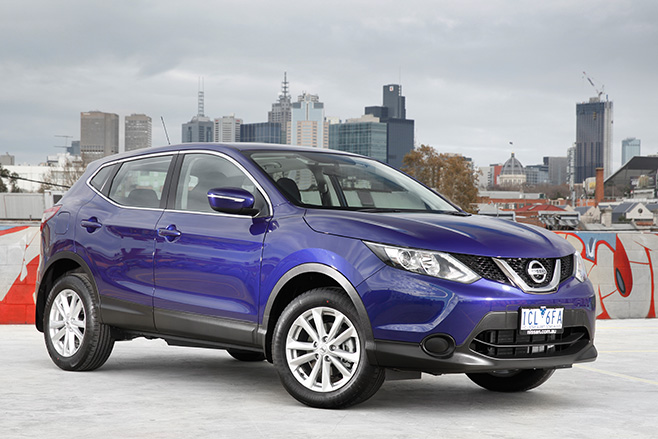
The Qashqai’s twin-under-the-skin, the X-Trail, is set for its first notable update in the first half of 2017, though Nissan Australia says there is no news yet on any planned changes for the model that replaced the Dualis in 2014.
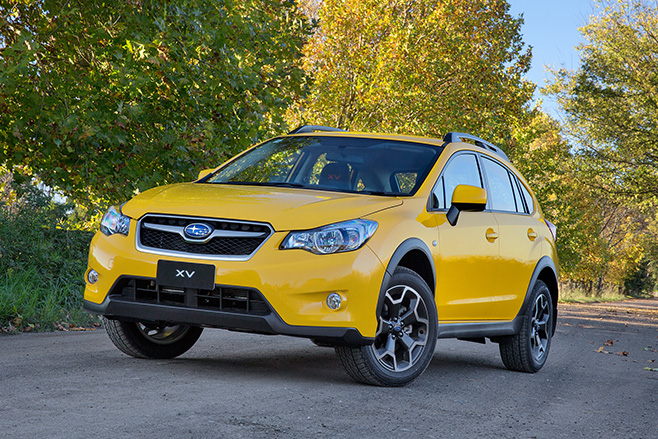
Subaru’s compact SUV has performed well in showrooms since the XV moved from being a simple, higher-riding variant of the Impreza to being a stand-alone model in early 2012. The Japanese brand provided a preview of the next-generation XV at March’s Geneva motor show with the XV concept.
The production version – featuring the same crossover cues of skid plates and black plastic body cladding – is expected about mid-2017. It’s again based on the Impreza platform, with the small car itself arriving in next-generation form in December.
The concept’s dimensions suggest the new XV will have the same 1570mm roof height but a 70mm-longer body (4520mm).
Days after announcing its return to market with an array of power-up products for the Ford Ranger, Tickford has wheeled out a tuned Mustang at Bathurst.
While Tickford’s Ranger upgrades are already on sale, the company’s offerings for the popular Ford Mustang won’t be available until late this year. However, while those parts have yet to hit the market Tickford has brought a tricked-up pony car to the Mecca of Aussie motorsport to get enthusiasts salivating in anticipation.
Tickford will supply upgraded ECUs and exhausts for the Ford Mustang, expected to take peak power for the Tickford-enhanced V8 to a claimed 351kW – a sly reference to the cubic capacity of Ford’s legendary 351 Cleveland V8, the engine that powered the XY GT-HO Phase III.
The 2.3-litre EcoBoost four-cylinder Mustang won’t be ignored either, with an ECU upgrade and other basic bolt-ons helping to generate more than the standard car’s 233kW and 432Nm – though precise numbers are not yet available from Tickford.
While Tickford’s full Mustang upgrade menu has yet to be finalised, the company’s Bathurst showpiece sports an aggressive front splitter, sticker package, side skirts, a rear wing and unique alloy wheels measuring 20 inches at the front and 21 inches at the rear.
Tickford’s Mustang demo car will be on display over the Bathurst race weekend, opposite pit lane in the merchandise area.
Necessity was the mother of Ford’s invention, and a nice little earner.
THE Ford Falcon XA-XC hardtop looms deservedly large in the histories of Ford and Australia. It’s interesting to reflect now, while we’re wringing hands over Australia’s supposed inability to viably produce mainstream fleet-fodder sedans, that the Falcon hardtop is evidence of an era when Australia’s ‘big three’ were all building those, and niche performance coupes as well.
It helped that Ford’s XA-XC Falcon series, with unprecedented local engineering and design (due to Dearborn’s axing of the US Falcon in 1968), was also the most successful Australian Falcon yet. They could therefore prop up the hardtops that, other than as a performance flagship, were a marginal business case.
Despite new ADR27a emissions requirements, the ’76 XC series continued its sales march. But the shock news was there would be no heir to the Ford Falcon GT; the 351 V8 engine would (optionally) crown the more soft-handed Falcon GS hardtop and Fairmont GXL sedan.

In December 1977, Ford had built a batch of 13 ‘Bathurst Evolution’ hardtops, homologation cars for race customers to use in 1978. These provided the seed for a solution.
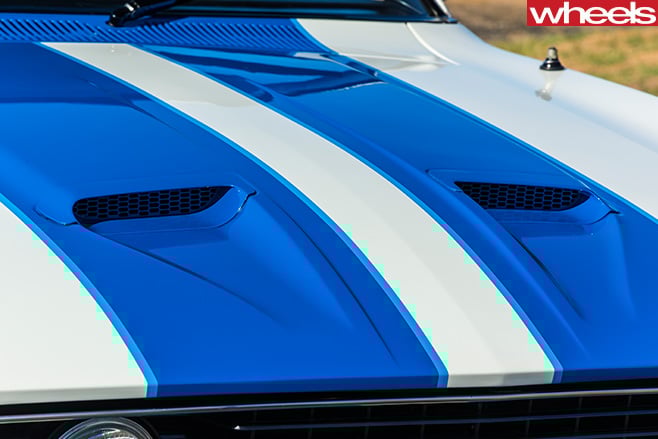
Built over several days in July 1978, the 400 GS500-based Cobras kicked off with 30 351-engined ‘Option 97’ cars – basically using the full homologation kit. Nicknamed Bathurst Cobras, they featured a rear-facing bonnet scoop, front suspension tower braces, reworked rear wheel housings, transmission oil cooling, a larger radiator and twin thermo fans.
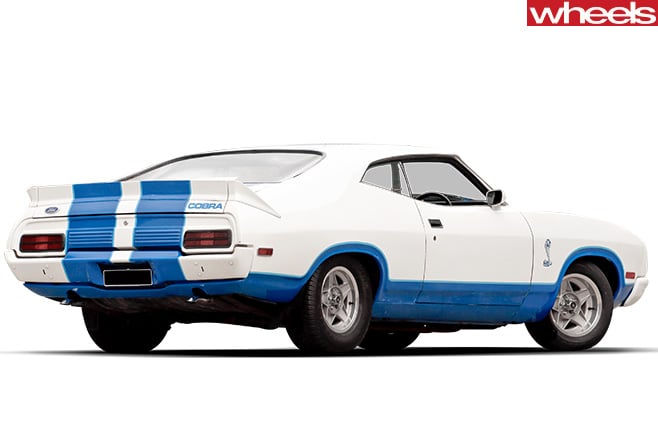
Moffat’s racing Cobras (repainted 1977 cars) were outclassed in 1978, but Ford had a winner. The 400 Cobras went out the door at $9000-$9500 (or $10,333 for the Bathurst versions) – a premium of about $1500 to $2300 over the GS V8s.
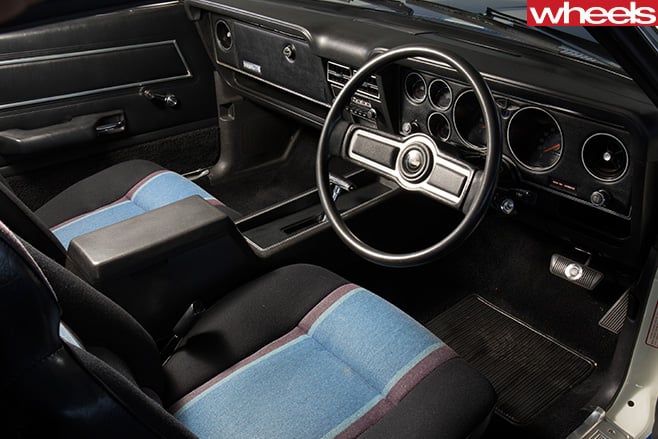
The hardtop was a big beast at 4866mm long, but its 1490kg kerb seems featherweight today. Familiar Falcon front-end featured upper balljoints, wishbones and coils, with semi-elliptic springs on the live-axle rear. LSD, four-wheel discs and 15-inch alloys were standard. Cobras all copped XC’s April ’78 front springs/rear anti-roll bar upgrade for radial tyres.
Only look ahead
Typical hardtop criticism was of the dreadful rear vision, but Cobra customers weren’t of the type to be overtaken often. The driver sat in a reclining bucket seat, with “soft-feel” steering wheel, power windows, tacho and oil pressure gauges. Bathurst versions got Scheel reclining buckets. Gloveboxes carried numbered metal plaques.
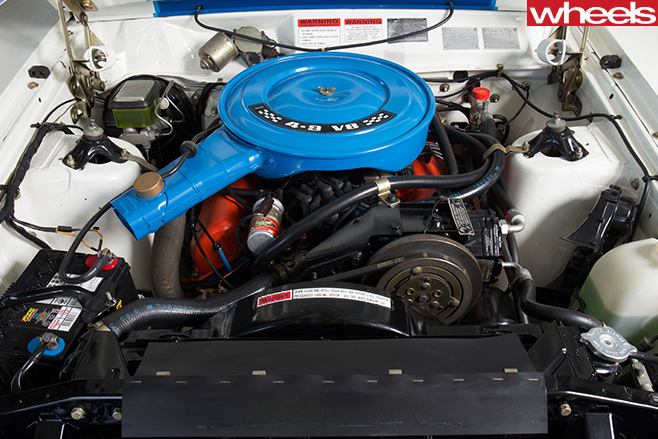
Cobra build comprised 200 5.8-litre Cleveland and 200 4.9-litre Mustang V8 donks, all with dual exhausts. Outputs were stock, post-ADR27a, with the two-barrel-carbed 351 claiming 162kW at 4500rpm (down from 194kW) and 429Nm. The smaller, 2bbl-carb 302 made 151kW at 4600rpm (previously 179kW) and 364Nm. Both were available with four-speed floor manual gearbox or three-speed auto.
Fast & factual
1. Standard discount
Where two-door XAs and XBs had carried a price premium over the four-door sedans, the sales-cratering XC hardtops were cheaper.

A confusing break from the 351/302 engine build sequence was that Cobra #001 (sold to manufacturing boss Ted Gardner’s secretary) had a 302 V8, and #351 had a 351.
3. Oval engineering
The XC½ Falcon, introduced in April 1978, was the first Australian-made Ford to wear the famous Blue Oval badge in its grille.
4. Telltale letters
Moffat’s two 1978 Cobra racers were the actual ’77 Bathurst 1-2 cars; they still carried the XB bonnet lettering.
5. White over blue
Painting a snake ain’t easy; the Cobras were produced in blue, then masked and the Sno White painted over in several layers.
Bringing back the GT badge as an ongoing model with the BA Falcon was the right thing to do.
It required permission, but it was one we won. It was wrong to bring out the badge every few years, make a few and then put it back in the cupboard, I believed. It was a proud emblem and should be paraded as such in Ford’s line-up or honourably retired. And so we brought it back.
That was just one of the highpoints of near 15 years leading the team that gave the Ford Falcon fangs again. There were more hits, and some misses, from an unforgettable period as managing director of Tickford Vehicle Engineering – later Ford Performance Vehicles. But first I have some official business to settle – what actually went down with TVE and FPV, because you shouldn’t believe all that you read.
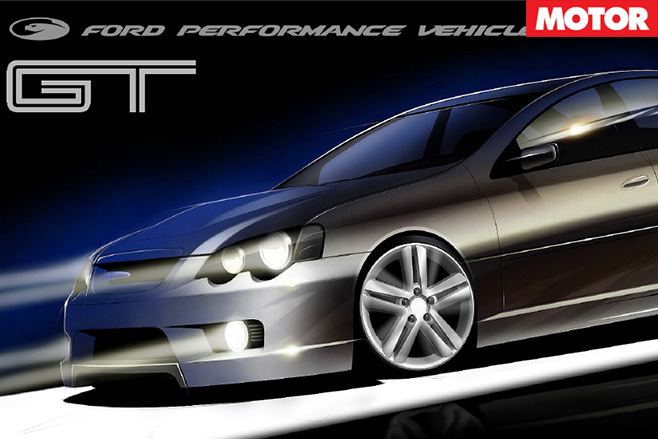
Ford would take care of styling, sales and marketing, and retain final overall sign-off on whatever we built. A crucial point was TVE would finance the development and manufacture of the product – and take on responsibility for designs it had developed and fitted, including any product liability and warranty considerations.
My first job between May and August 1991 was to negotiate the wording of the initial agreement with Ford’s in-house lawyer, the late Noel Woodford. A cunning old boy who, at the last minute, introduced a clause of his own – I had to barrack for Hawthorn!
We signed the shareholder’s agreement in August ’91 and I was appointed Managing Director. We were up and running shortly afterwards and, having overseen the creation of more than 42 high-performance Ford models, from the original XR6 to the FPV GT and the F6 Typhoon, I retired in January 2006.
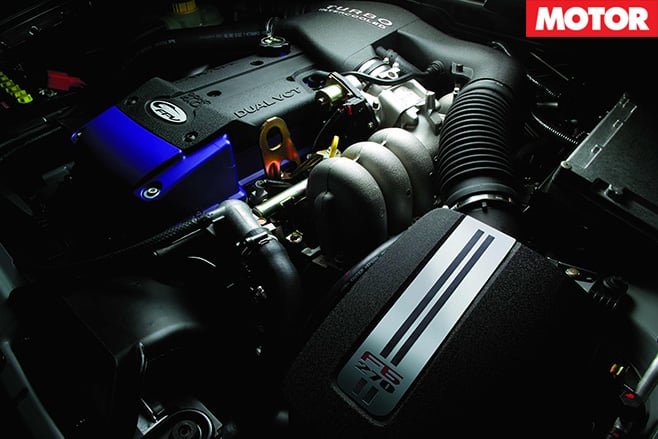
Setting up Ford Performance Racing and the construction of the centre at Campbellfield was also a highlight. And it would be remiss of me not to mention the privilege of leading a team that, for creating performance cars, was world class. (There are too many names to mention – you know who you are.)
There was working with world-class leaders the likes of Jac Nasser and Geoff Polites. But also meeting and being befriended by the passionate owners of our cars – the supporters’ clubs being formed in our name, some members of which travelled to our open day in March each year from every state in Australia.
They were as big a fans of the product as we were, and we were proud – still are. My favourite cars include the original XR6 and its subsequent derivatives, especially the turbo versions. The 5.6-litre “stroker eight” in the T3 T-Series was our first donk with real grunt and represented, in terms of building engines, our entrée.
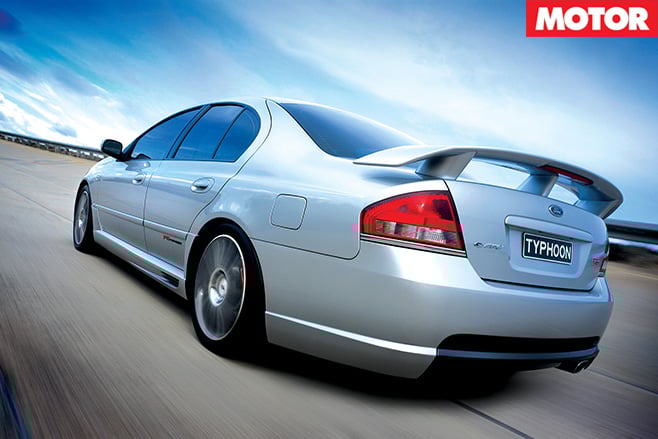
There was the FPR engine shambles, too. Who did what to whom is not for publication but the damage it did to the race team could have been terminal. We lost Craig Lowndes but the team dug in and recovered to go on to great things.
Mostly, though, it was a blast, and I regret not a minute helping to create performance Falcons that will live on in the care of passionate owners long after lights out on the production line. I arrived in Australia in 1991 thinking we’d be here two years, set-up shop, hire the right people and then head back to the UK. That was only objective not met.
It’s 1979. Ford has released the full-size XD Falcon against Holden’s compact VB Commodore.
Edsel Ford II talks about reviving the Falcon GT and even a spiritual successor to the mighty GT-HO. Neither happens. But a return to racing with a factory backed team of XDs nearly did.
The then youthful Edsel II – on family assignment at Ford Australia – wanted to revive Broadmeadows’ muscle car culture of the late 1960s and early ’70s. The XC Cobra runout of the Falcon hardtop was his idea. Edsel was also behind a plan to give the XD – which could still be bought with the 5.8-litre Cleveland V8 in ESP guise – some Bathurst cred by taking the company back into touring car racing.
Secretly, ex-international driver and team manager Frank Gardner was lined up to develop a racer and form what would be a factory Ford team ready to go in 1980. The scheme went a long way down the road, with Gardner targeting Jim Richards – fresh from partnering Peter Brock to their runaway ’79 Bathurst 1000 victory – and Colin Bond. Except they didn’t know about it. The project was all so secretive and preliminary that few did.
Gardner rated Richo highly, having competed against him at Bathurst and in sports sedans. (They eventually got together when Richards replaced Allan Grice at JPS BMW in 1982.)
The finer points of what was a still-born project now escape me. But I recall clearly that a Gardner-orchestrated return by Ford with factory backed XDs – perhaps camouflaged as a Ford Dealer Team – was a serious proposal.
Despite Edsel Ford’s patronage, the idea was vetoed by then managing director Sir Brian Inglis, who had pulled the plug on Broadmeadows’ previous factory involvement. He never believed motor sport sold cars, and he was proven right as Falcon outsold Commodore through the 1980s and well into the ’90s.
Cold, hard numbers. You don’t often admire an accountant. But when you have to award something as big as this, you want the authority only digits can deliver.
This battle between Ford’s last pair has been brewing a long time. Traditionally, the hottest Falcon’s packed a splayed eight. But when Ford Oz cooked up a turbocharged XR6 in 2002, suddenly the XR8’s halo didn’t shine quite so bright. And the measly 6psi flowing through its snail hinted that, if FoMoCo so wished, the range-topping Falcon could be a blown six-pack.
This split the Falcon faithful, with the XR6 Turbo vs XR8 rivalry raging ever since, nowhere fiercer than online, with few chances to settle the debate on an even playing field, until now.
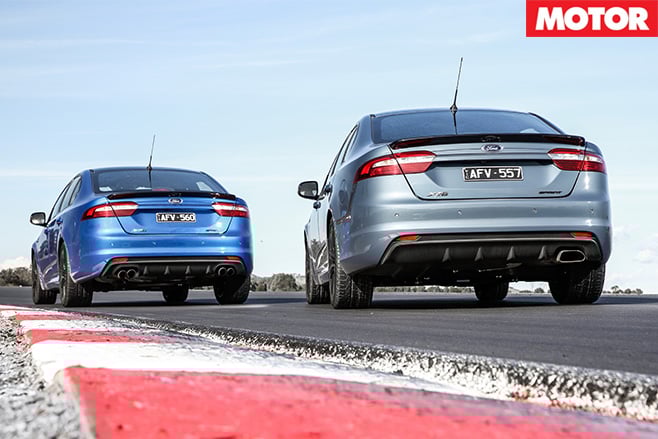
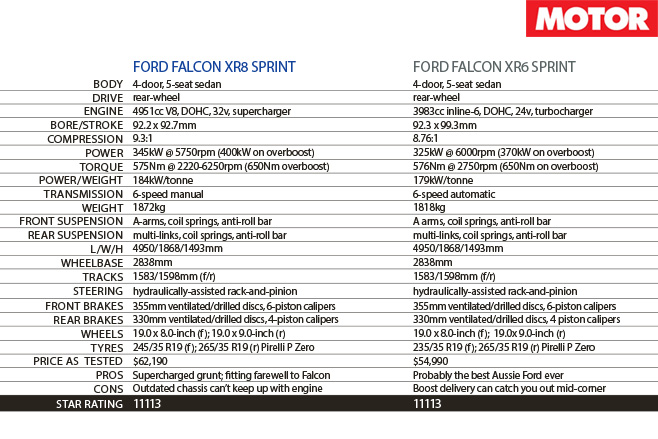
Need proof the gloves were off? While the XR8 Sprint’s blown 5.0-litre V8 musters 345kW/575Nm, the XR6 Turbo Sprint’s 4.0-litre six drums up 325kW and 576Nm – that one extra newton metre crowning it as Australia’s torquiest-ever engine.
But we’re not calling this fight from the spec sheet. We’ve set both against each other on the circuit and drag strip, and used the cold hard numbers from each stoush, in their entirety, to decide the fastest last Falcon on these pages.
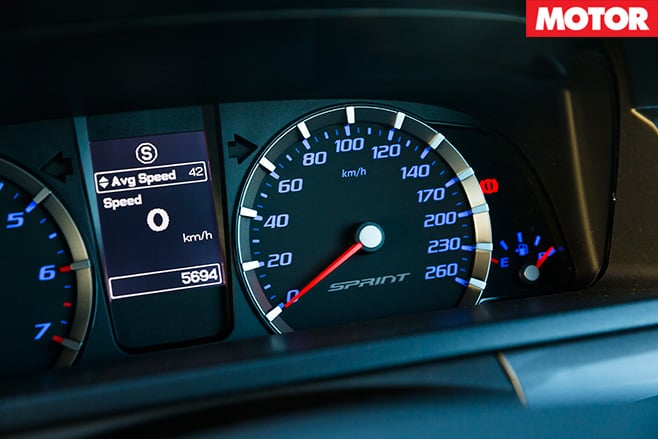
You can imagine our disappointment with our first XR8 Sprint’s times. We couldn’t blame conditions, as the sun was high above Heathcote Raceway in rural Victoria, the air cool and our automatic example on correct tyre pressures and toting a quarter tank.
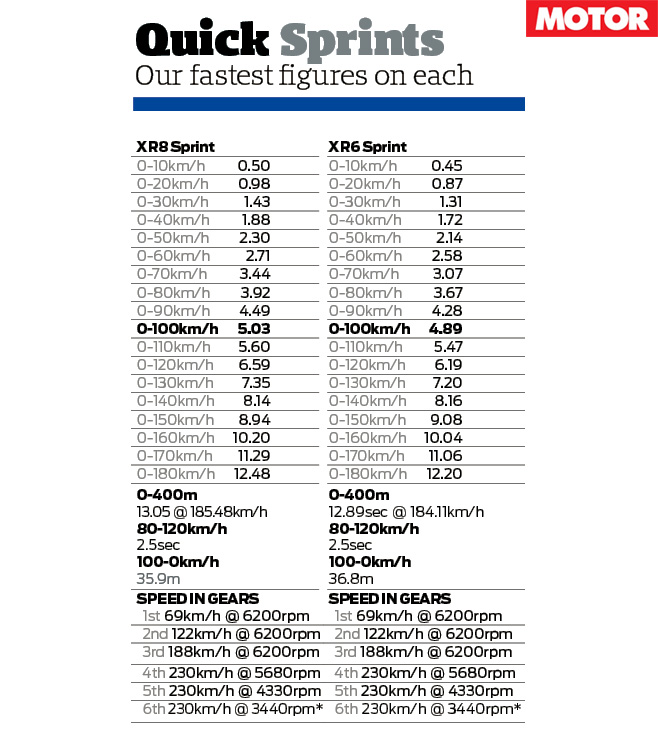
But no matter what we tried, the XR8’s precious Pirellis couldn’t push it to 100km/h any faster than 5.07sec. A 182.35km/h trap speed was fitting of its overboost-induced 400kW/650Nm, but its 13.14sec quarter couldn’t dream of becoming a 12 with such rampant wheelspin during launch.
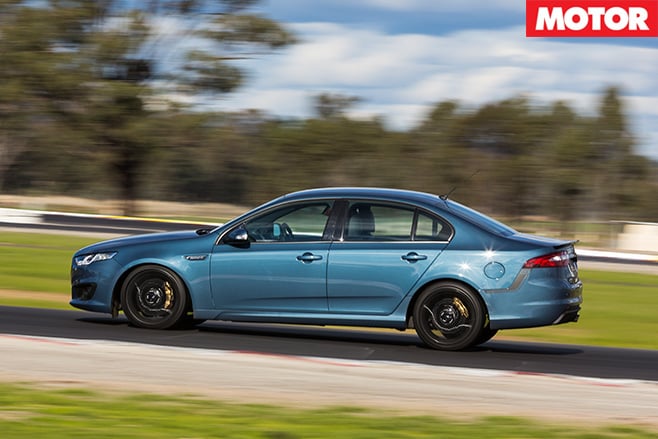
The XR6’s trick lay at the start line. Turbo lag (the XR6’s peak twist arrives 450rpm later at 2750rpm) gave its rear bags a chance to hook up while the XR8 simply hosed its hoops with too much torque, making it “a bitch to launch” – to quote Morley – even with launch control. Moving the duel to Winton Raceway at Bang For Your Bucks only confirmed the six’s knack.
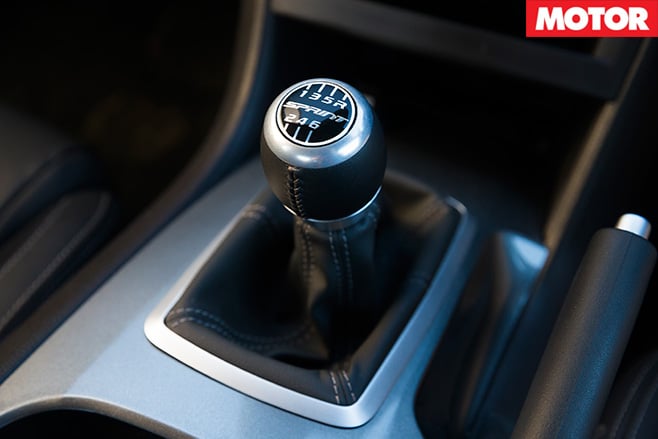
Although this new XR8 Sprint wore fresher tyres than the last examples, its DIY-shifter made launching exceptionally difficult. After seven attempts, twice that of the XR6 Sprint, it passed in a best 0-100km/h time of 5.03sec and 13.05sec quarter. Our fastest run yet, but not enough to catch the six.
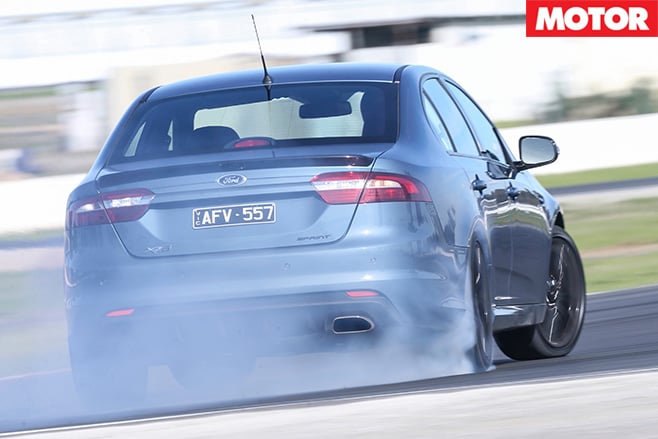
The XR8’s extra power only chipped in at the trap’s radar. Its 185.48km/h at Winton just pipped the XR6’s 184.11km/h and suggested it’d reel in the Turbo if given enough tarmac.
You’d think, then, the XR8 would trump the Turbo on a roll from 80km/h. Now we’ve done three 80-120km/h runs with the eight-pot, and two with the six, and you couldn’t floss the gap between the average of each data set, because there isn’t one. Both cars will, on average, evaporate the overtaking increment in 2.66 seconds.
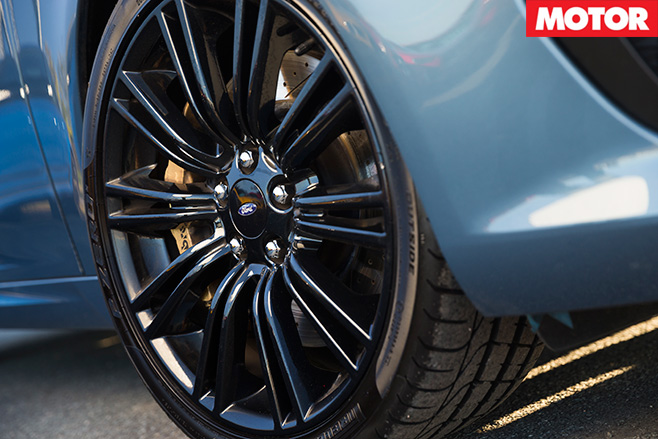
So far as we’re concerned the XR6 should nose ahead on a strip everytime – unless you’re on an airfield. But while we’re happy to crown one the strip king, a question-mark still hovers over those unattainable 0-100km/h times.
We’re not saying the Sprints aren’t capable of proving their engineers right. Internet forums report they’ve achieved such times with the same cars we used. However, because we can’t verify the runs or the conditions in which they were tested, we can’t help but see them as too optimistic. Or maybe our stars just never aligned.
To be honest, with 24kg less to point at corners, and a further 30kg less resting on all tyres, we expected the XR6 to rip around Winton faster. Its 1:40.7sec lap was already nine tenths clear of last year’s XR8 (albeit on a new surface) and 2.6sec faster than an F6 Typhoon. But surprisingly it was the XR8 that emerged the clear star, its 1:38.4sec lap tearing 2.3sec out of the XR6 Turbo’s time.
Both cars wear the same rubber, brakes, and suspension hardware albeit with unique tunes. So what was the XR8’s ace? While its drivetrain couldn’t exploit a drag strip, it proved a juggernaut on the race track.
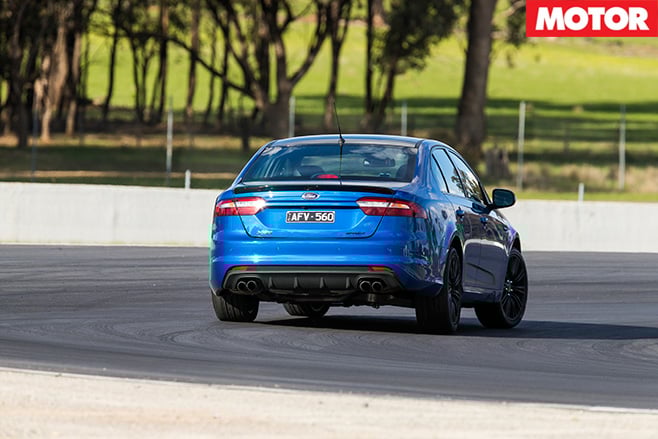
The stark difference in urge came down to the XR8’s stonking supercharged eight. While the XR6 would start to gasp near its 6200rpm redline, the XR8 simply pulled harder as the revs climbed higher.
The XR8 was stronger on the picks, too, neutralising 100km/h in 36.73m as opposed to the XR6’s 37.16m. Along with a longer stop, what the data didn’t reveal about the XR6’s anchors was the dull feedback, despite it using the same six- and four-piston Brembo arrangement as the XR8.
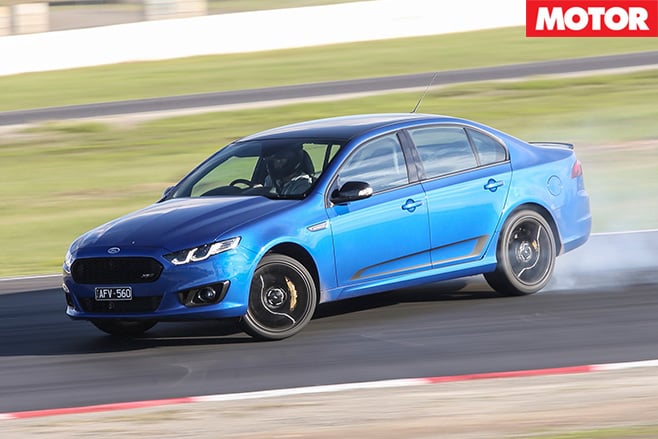
In the tight stuff the XR6 Turbo Sprint was better, taking Turn Nine’s apex 4km/h faster than the XR8. For reference that’s only 0.1km/h slower than an MX-5, its lighter nose proving a more agile ticket.
Stepping back to look at all the data draws interesting conclusions. You certainly wouldn’t predict the less-powerful Sprint claiming the strip and the heavier one the circuit. But picking a winner?
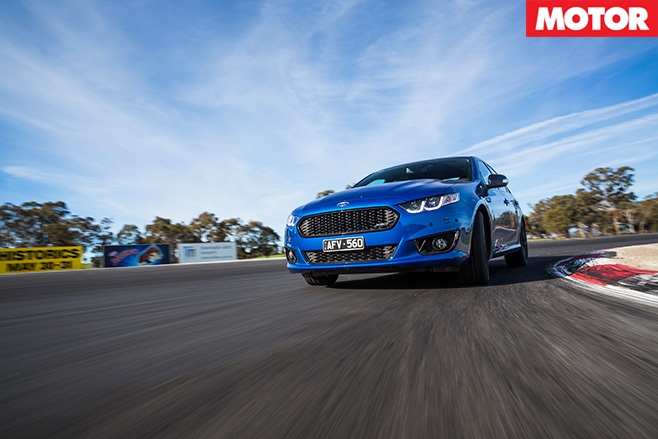
To cut it fairly though, nothing beats objectivity. And to settle this we’ve defined each car’s performance just as Bang For Your Buck’s trusty formula does. We’ve arrived at a winner based on the Sprint with the most points. You can refer to the above breakout for a more detailed rundown but, as it reveals, the fastest ever production Falcon is… the XR8 Sprint. Surprised? Disagree? You know our email address.
Many would consider the 351ci V8-powered GT-HO as Ford’s greatest Falcon (you’ll have to wait 23 pages to find out whether we do), so having a six-cylinder bobbing up as the fastest ever just before the credits roll would’ve been a bit awkward. And, the V8’s gruff burble and blower whine just sound right.
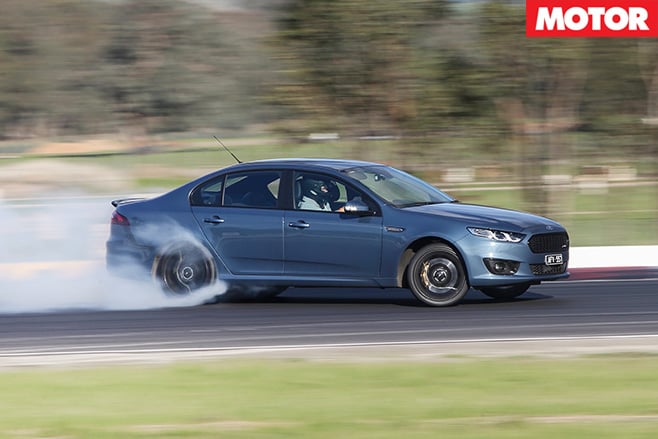
However, as an accountant knows, you can’t argue with numbers. All hail the eight.