
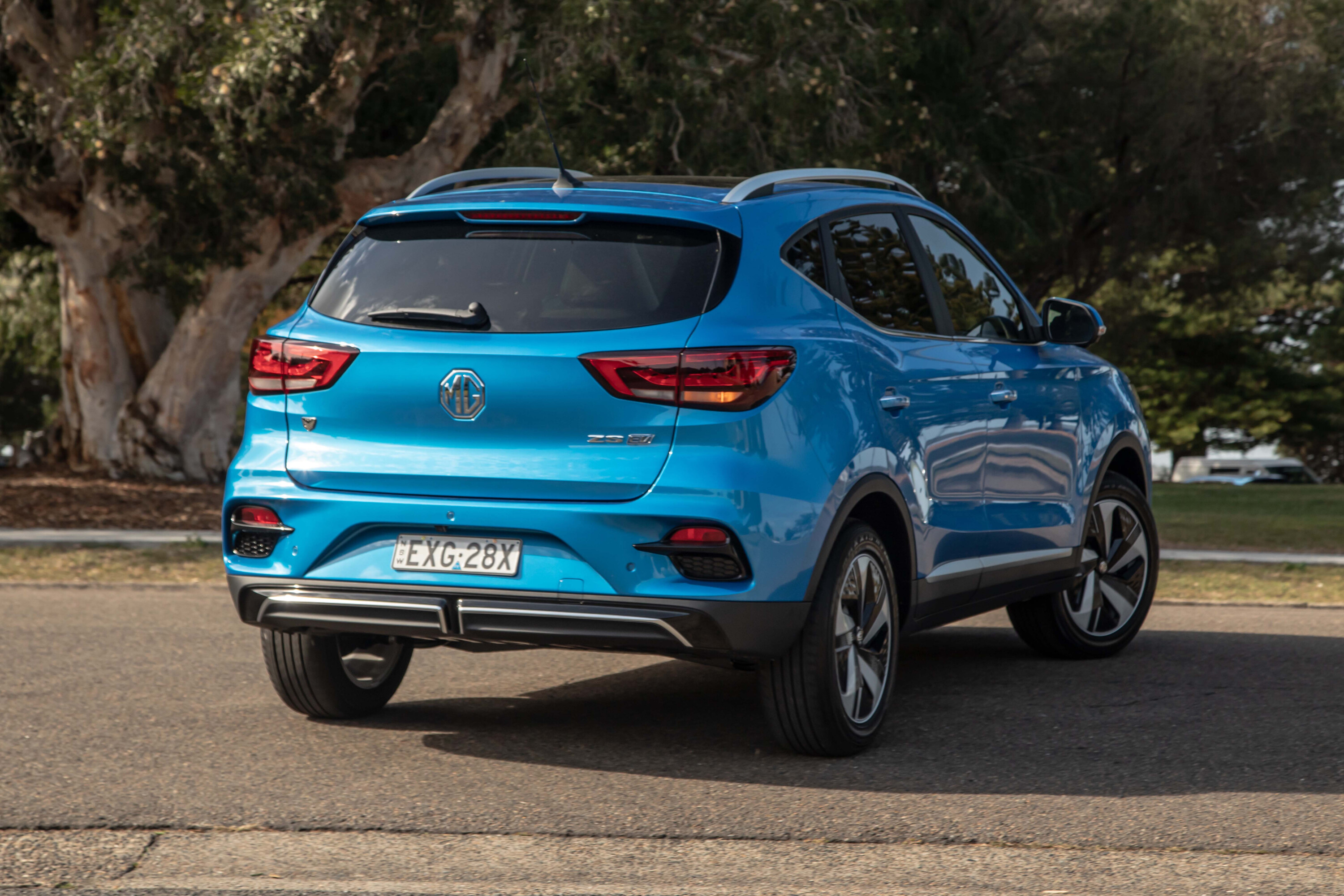
A lot of folks laughed when the MG ZS EV was released in the depths of the pandemic.
I’m not entirely sure why. I mean, it’s based on a very workmanlike SUV base which still needs a few sharp edges knocked off of it, but it’s a perfectly reasonable around-town machine for people who just want transport. Back then, you got one on your driveway for $43,990. Including on-road costs!
My first drive of the MG ZS EV was in November 2020, on its local debut, and then I drove it again about a year later. As with the petrol version, Things Needed Doing and so we’re here to have a look at not only the freshened-up ZS EV, we’re also giving the bigger-batteried Long Range edition a whirl.
1
JUMP AHEAD
- How much is it, and what do you get?
- How do rivals compare on value?
- Interior comfort, space and storage
- Battery and charging
- What is it like to drive?
- How is it on electricity?
- How safe is it?
- Warranty and running costs
- VERDICT
- Specifications
How much is it, and what do you get?
The MG ZS EV range starts at a still eye-opening $43,990 (although that is now before on-road costs) for the entry-level Excite.
On your way to the Long Range you also have the Essence for $47,990 and then you get to the top at $55,990 (also before on-road costs), a hefty jump for the bigger battery. It’s worth noting that the entry-level cars scored a bump in battery capacity a while back, moving to 50.3kWh while this Long Range version has a whopping (for a car this size) 72.6kWh battery pack.
1
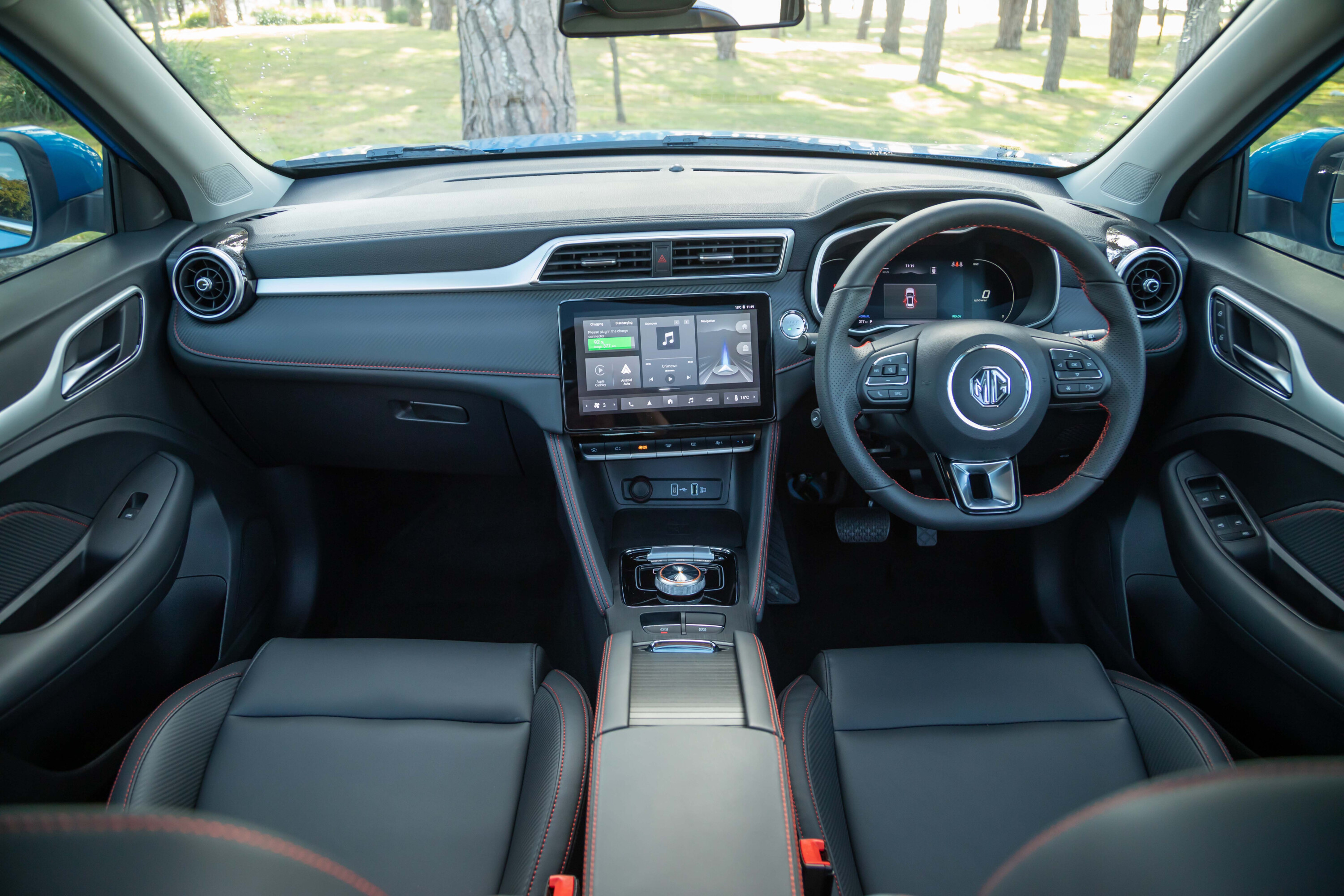
The Long Range is based on the mid-spec Excite and so has:
| 2023 MG ZS EV Long Range standard features | |
|---|---|
| 10.1-inch media screen | Digital instrument panel |
| 17-inch alloys | Imitation leather interior |
| 6-speaker stereo | Heated front seats |
| Adaptive cruise control | Panoramic sunroof |
| Adaptive cruise control | Power-adjustable front seats |
| Around-view cameras | Rear parking sensors |
| Auto LED headlights | Reversing camera |
| Auto wipers | Satellite navigation |
| Central locking | Tyre repair kit |
| Climate control | Wired Apple CarPlay and Android Auto |
| DAB+ digital radio | Wireless phone charging pad |
This isn’t what you’d call a luxurious spec, not by a long shot, but nor is it especially sparse. The equipment list looks okay on the Essence but up in the mid-$50K bracket it’s starting to look a bit thin.
Until, that is, you see that the battery is nearly 50 per cent bigger than you get with the rest of the ZS EV line-up, which is obviously where the extra eight or so thousand dollars have gone. So we’re going to talk about whether you’re getting that kind of value out of the extra spend.
1
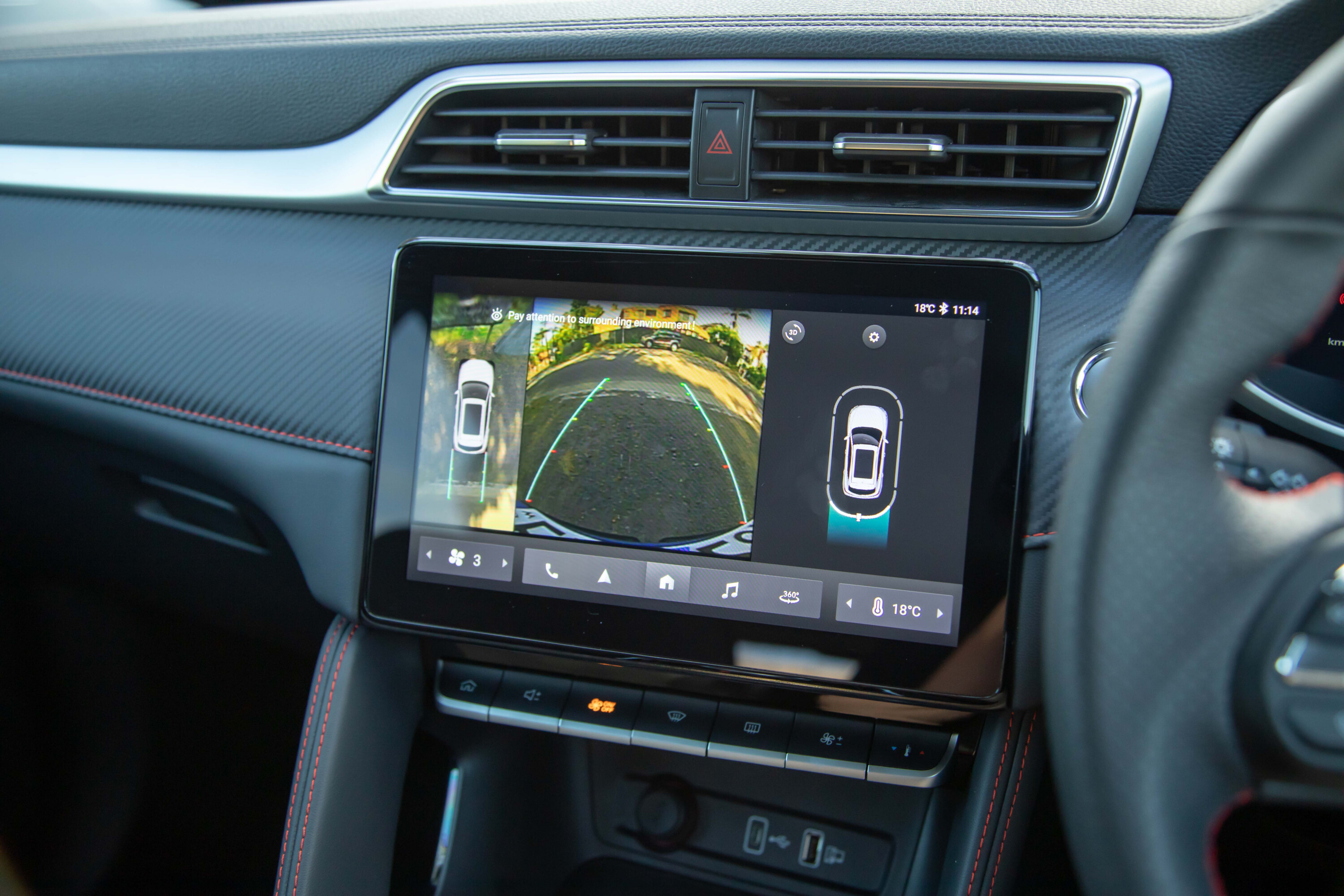
Given the climate controls are in the touchscreen, it needs to be snappier.
The new media system looks and feels a lot better than the pre-facelift car and it has a nice big screen that responds reasonably well to touch, but it’s not amazing either. Given the climate controls are in there, it needs to be snappier.
A problem I’ve always noticed on MGs is the distaste for non-Apple USB cables for iPhones. The connectivity drops and it’s annoying. It’s not as bad as it used to be, however, because before it would reboot the media screen.
On-road prices for the MG ZS EV vary from state to state. The Victorian Labor government has killed that state’s EV incentive, for example.
1
How do rivals compare on value?
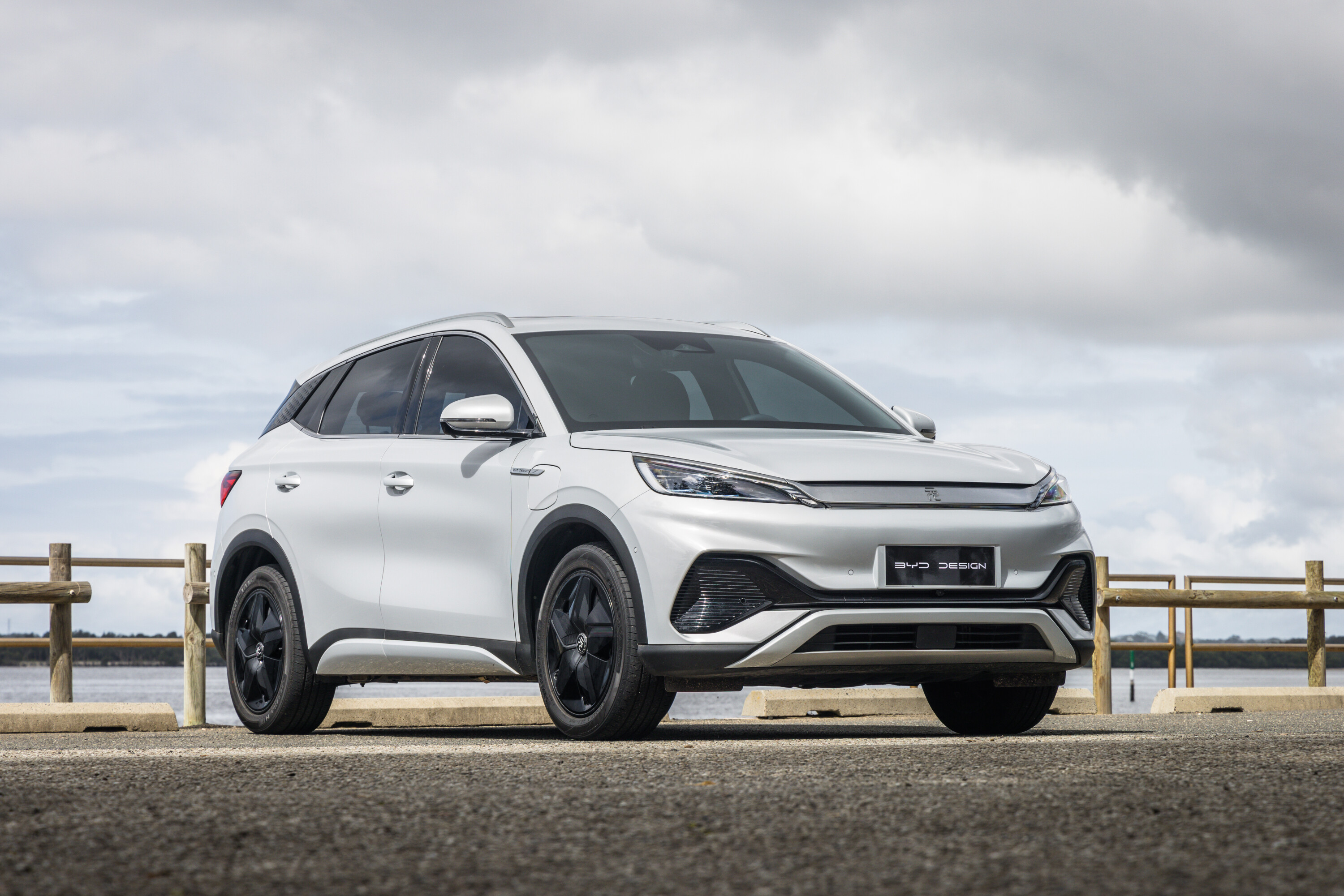
At this price point, the Big Bad Wolf is the BYD Atto 3.
These two brands are going to be locked in battle for a while to come, having both dropped their first shots in the mid-$40K range (and now sub $40K with the new MG4 and BYD Dolphin).
In fact, MG was so annoyed with BYD’s arrival and subsequent claim that the Atto 3 was the cheapest EV in Australia that it cut the ZS EV’s price to reclaim the crown.
The Atto 3 is currently $48,011 for the standard range car and $51,011 for one with a bigger battery (both before on-road costs). That looks pretty good against the MG’s bigger battery version, except the Atto 3 stands at 60kWh rather than the MG’s 72.6kWh. BYD says it’ll do 480km on a charge, but that ain’t happening any more than the MG will do 440km on a full battery.
1
BYD’s warranty is shorter at six years/150,000km and is laden with ridiculous exclusions.
The BYD ownership experience is also a bit of a rollercoaster according to a number of owners, with delivery, servicing, warranty and parts issues as well as a slightly chaotic approach to customer communication.
It is likely the new MG4 is going to eat away at the ZS, with a starting price of $38,900 (50kWh battery) and $43,990 (64kWh). A good number of people buy the MG ZS EV precisely because it’s the cheapest EV on the market so one imagines the much better-presented MG4 will turn a lot of heads.
Interior comfort, space and storage
While not a from-the-ground-up EV, the MG’s modest footprint delivers a decent amount of space.
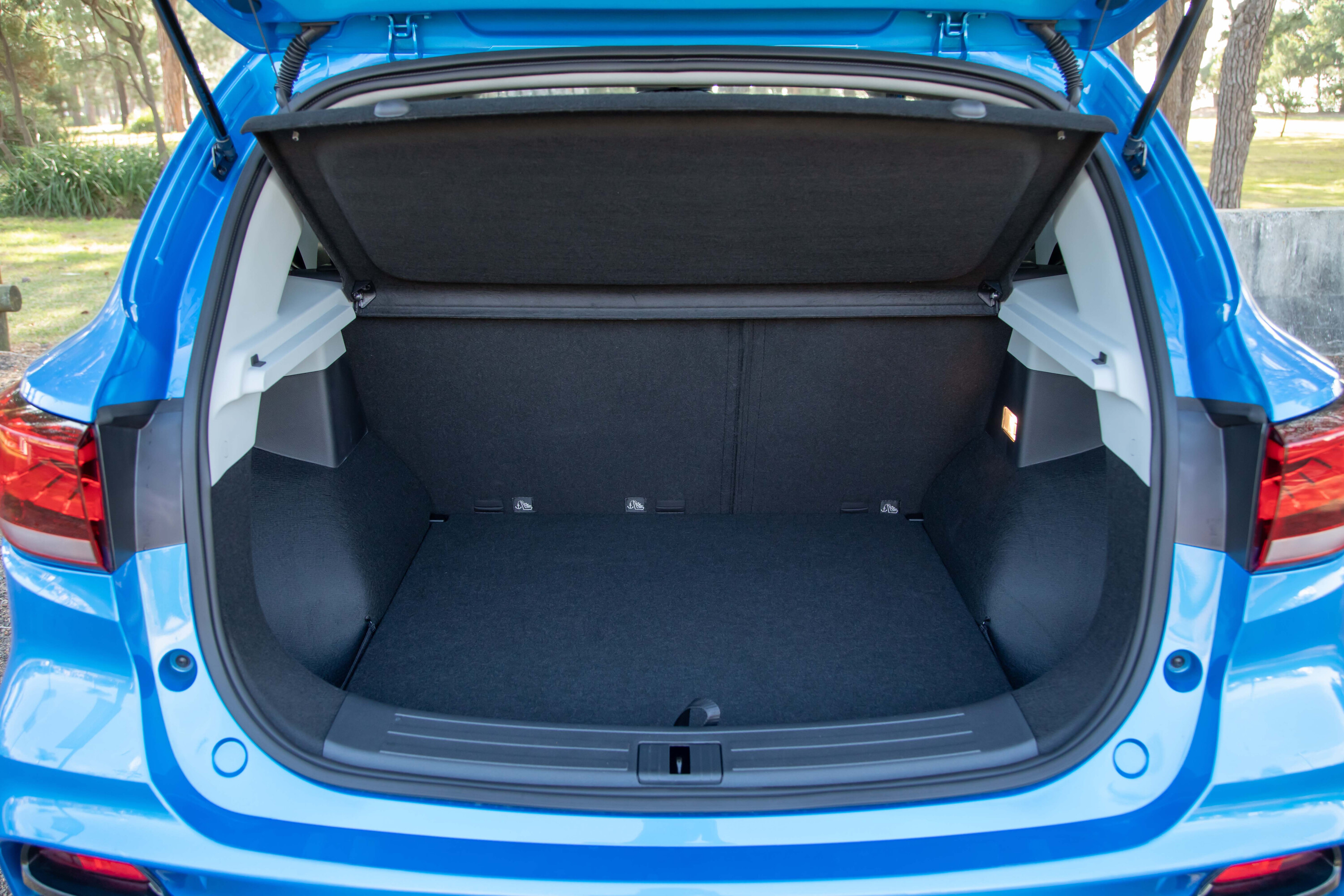
According to MG, boot capacity starts at 359 litres with the rear seats in place, increasing to 1189 litres with the seats folded.
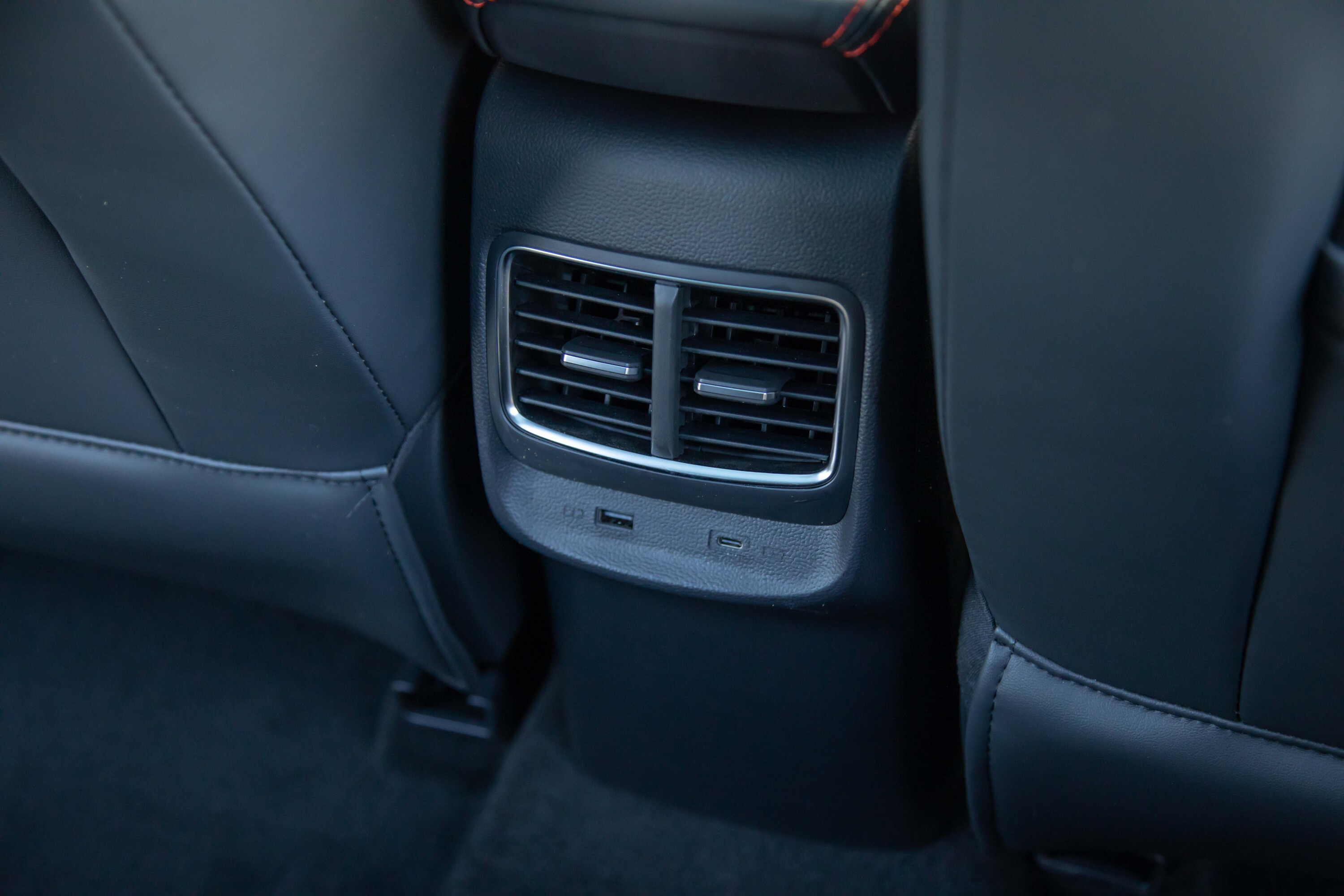
The back seats have plenty of headroom for a six-footer (180cm) and with the driver’s seat set for someone that tall, decent leg and knee room. There are air vents but no cup holders. A flat floor means three across will be less burdensome for piggy in the middle and the doors will hold a modestly-sized bottle.
1
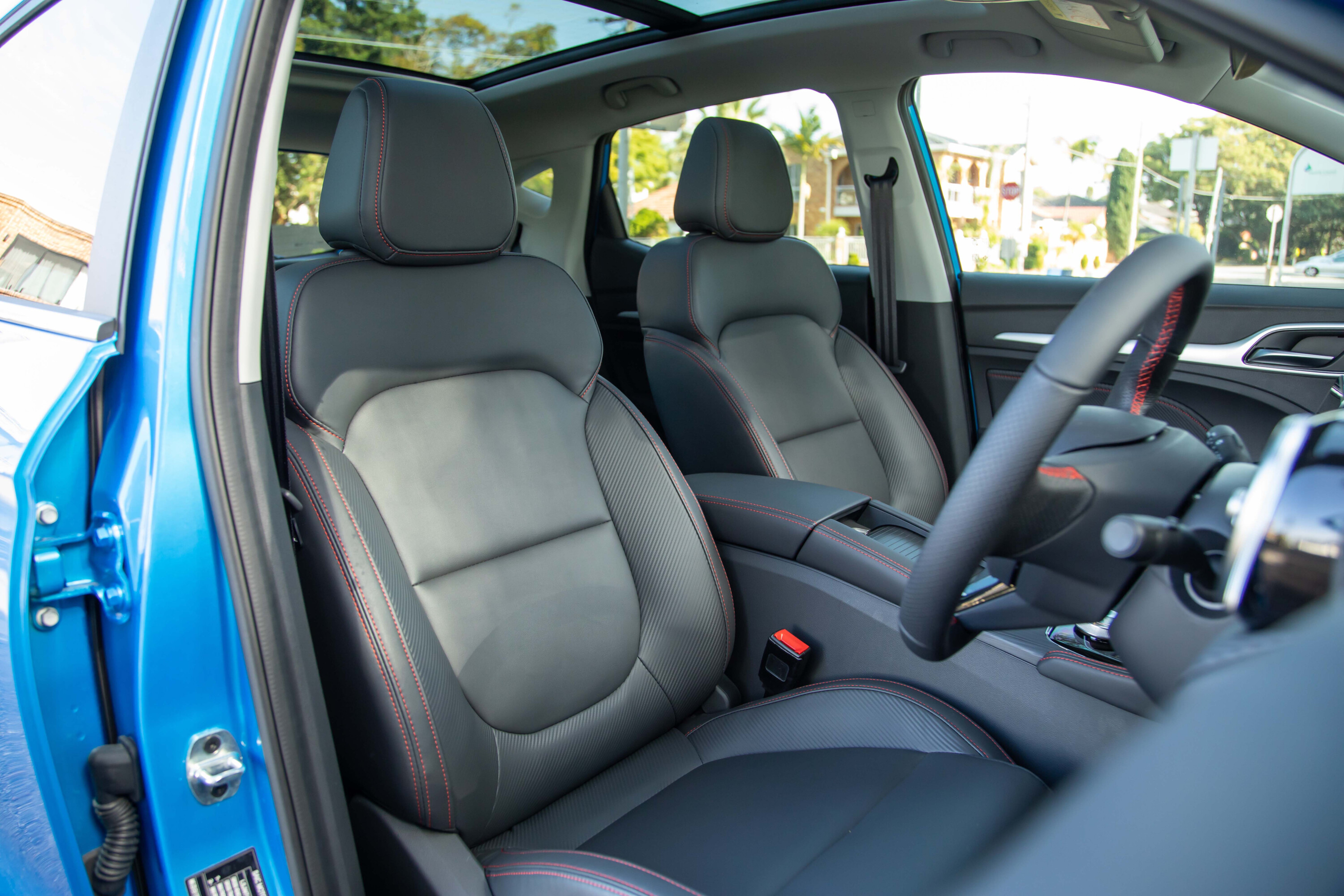
Up front, the seats aren’t especially pleasant to sit on, which is a pity partly because they look better than they feel.
The steering wheel only moves up and down and I never got comfortable with that, despite the reasonable range of adjustment. You do get cup holders and bottle holders as well as a wireless charging pad (that didn’t work for me).
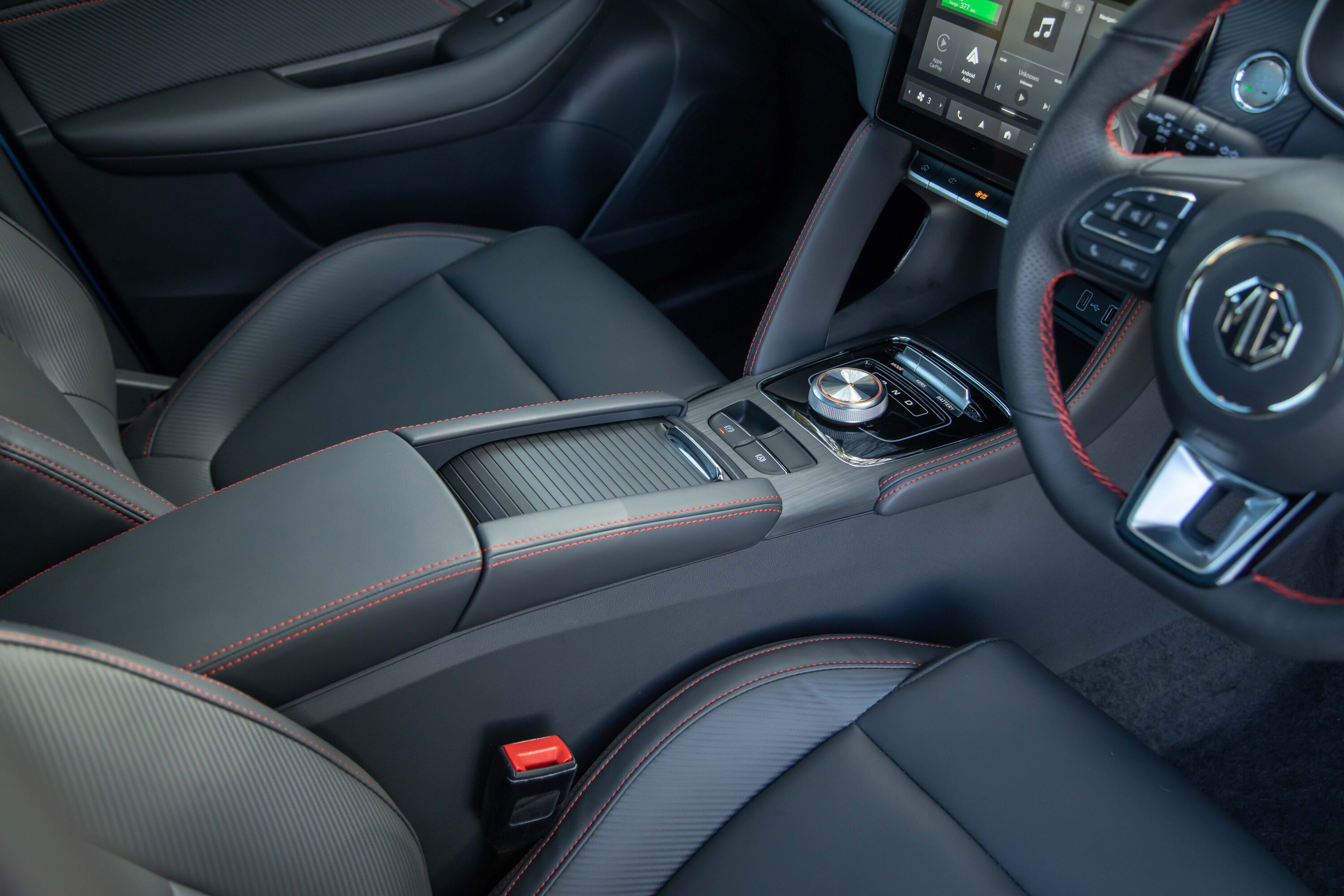
Synthetic leather upholstery on the seats isn’t very nice either and I’d prefer the cloth from the base car, especially on hot days. The plastics have steadily improved over the years, as has the legibility and coherence of warning messages in the digital dashboard.
2
Battery and charging
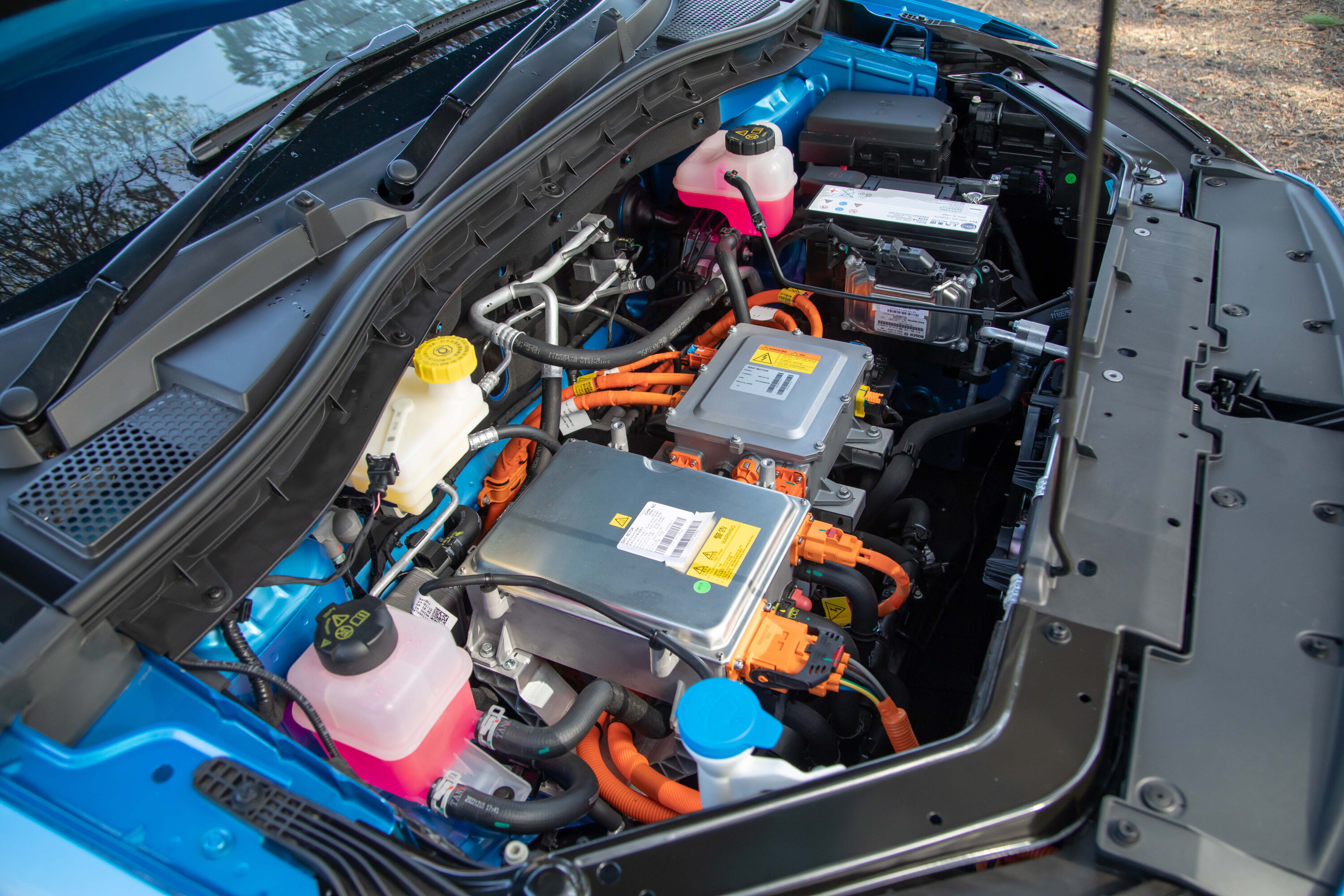
The headline figure for the Long Range is a huge 72.6kWh battery pack, an almost fifty per cent increase on the standard car’s.
| 2023 MG ZS EV Long Range battery details | |
|---|---|
| Size | 72.6kWh |
| Usable capacity | 68.3kWh |
| Chemistry | Lithium-ion |
| Voltage | 400 volts |
| Charging (AC) | up to 11kW |
| Charging (DC) | up to 50kW |
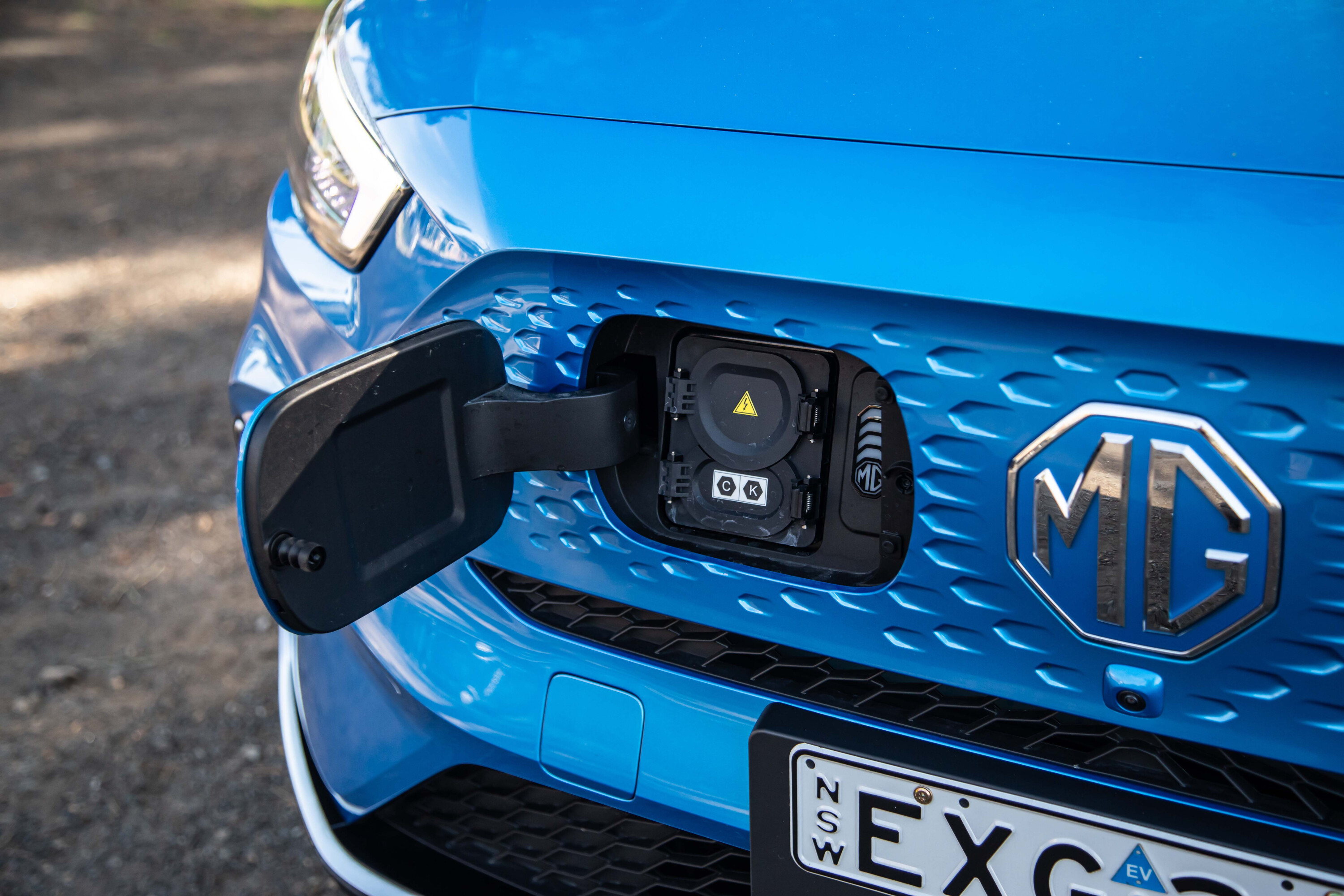
| Charge port | Front grille, CCS2 |
| V2L | Yes, optional |
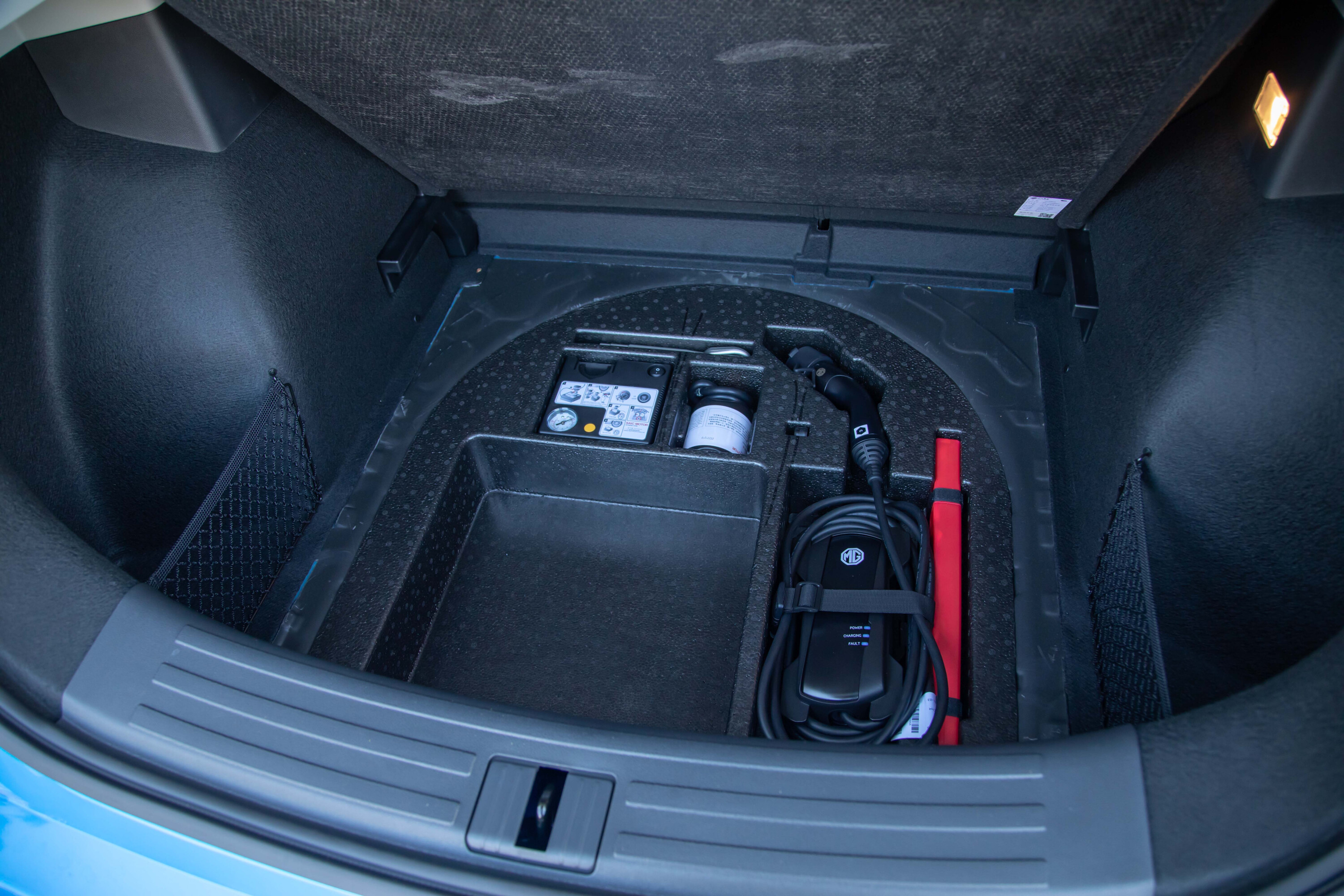
If you have a wallbox, you can charge from zip to full in about 11 hours or, if you have three-phase power at home, it will be eight hours with the higher capacity wallbox option.
1
MG offers a ChargeHub wallbox in either 7kW or 11kW guises.
On a public 50kW charger you’ll get from zero to 80 per cent in 63 minutes, but as ever that’s (metaphorically speaking) downhill and with a strong tailwind.
An interesting optional extra is a 2.2kW vehicle-to-load (V2L) adapter. This allows you to plug in a device such as a television or computer or even a coffee machine while you’re out and parked. Hyundai and Kia are fond of this tech but the Europeans seem reluctant to offer it, so that’s a win for the MG.
1
What is it like to drive?
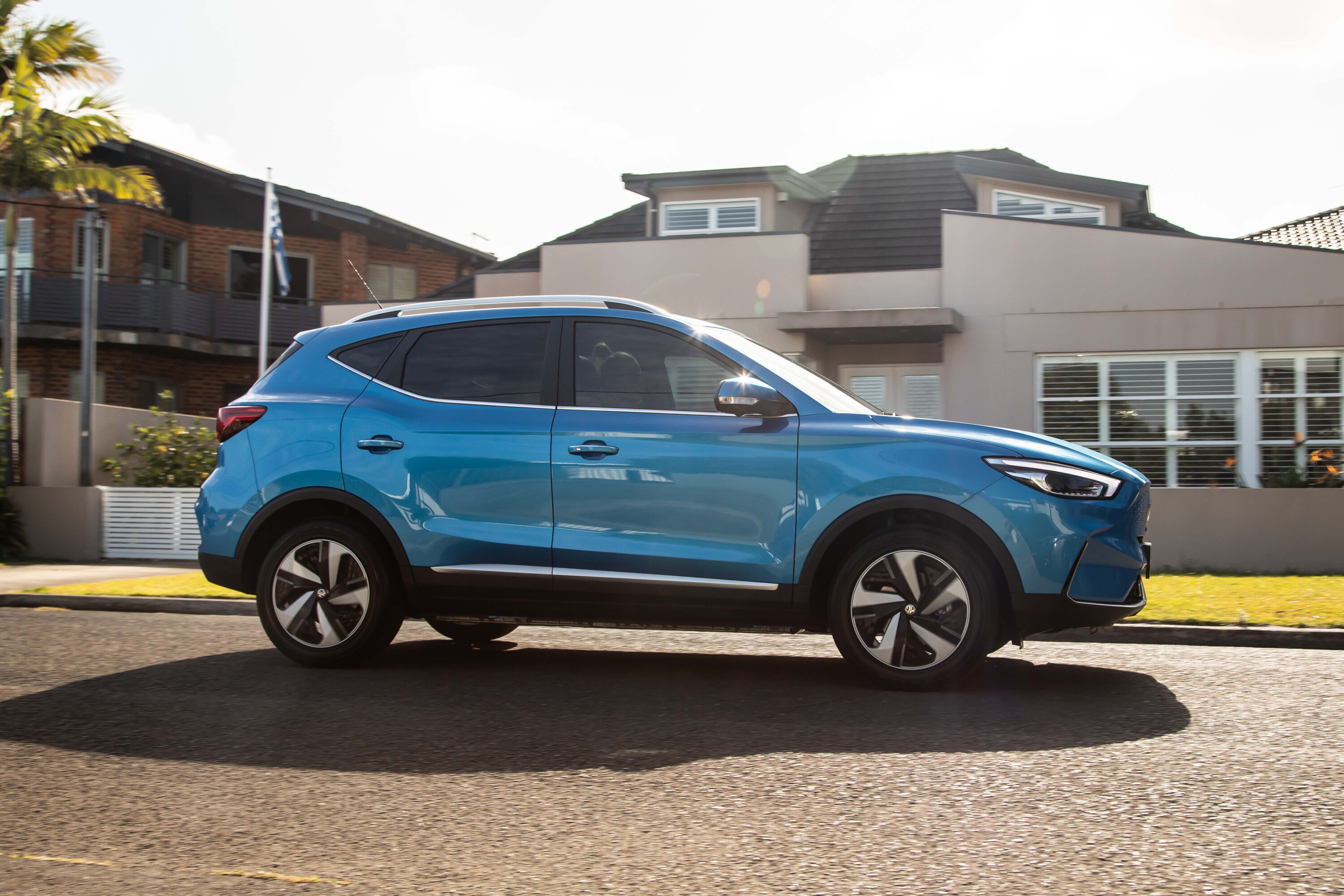
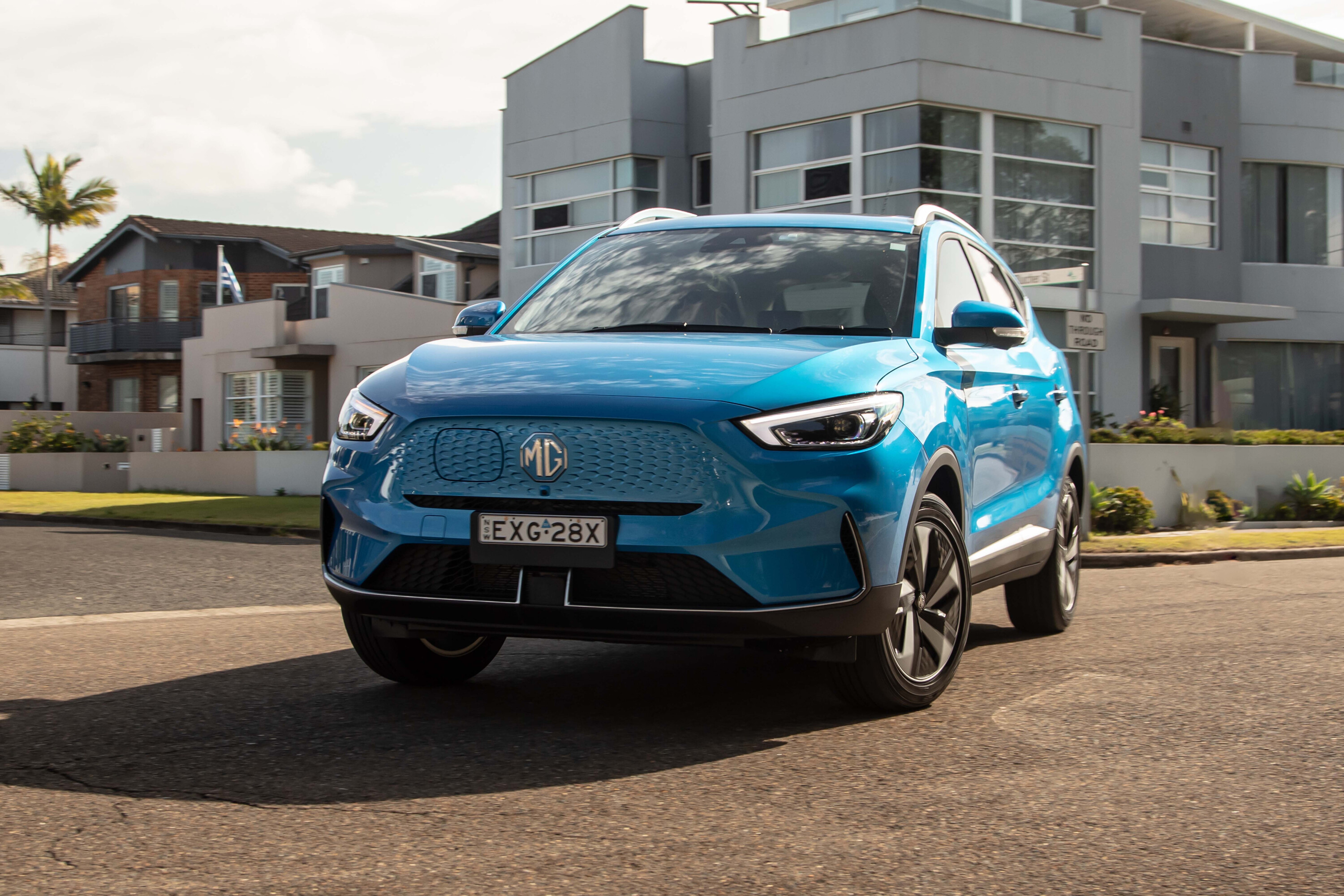
Considering the petrol-powered ZS is a perfectly inoffensive car that is not very nice to drive, the ZS EV is a revelation – a ZS I could like, almost enjoy.
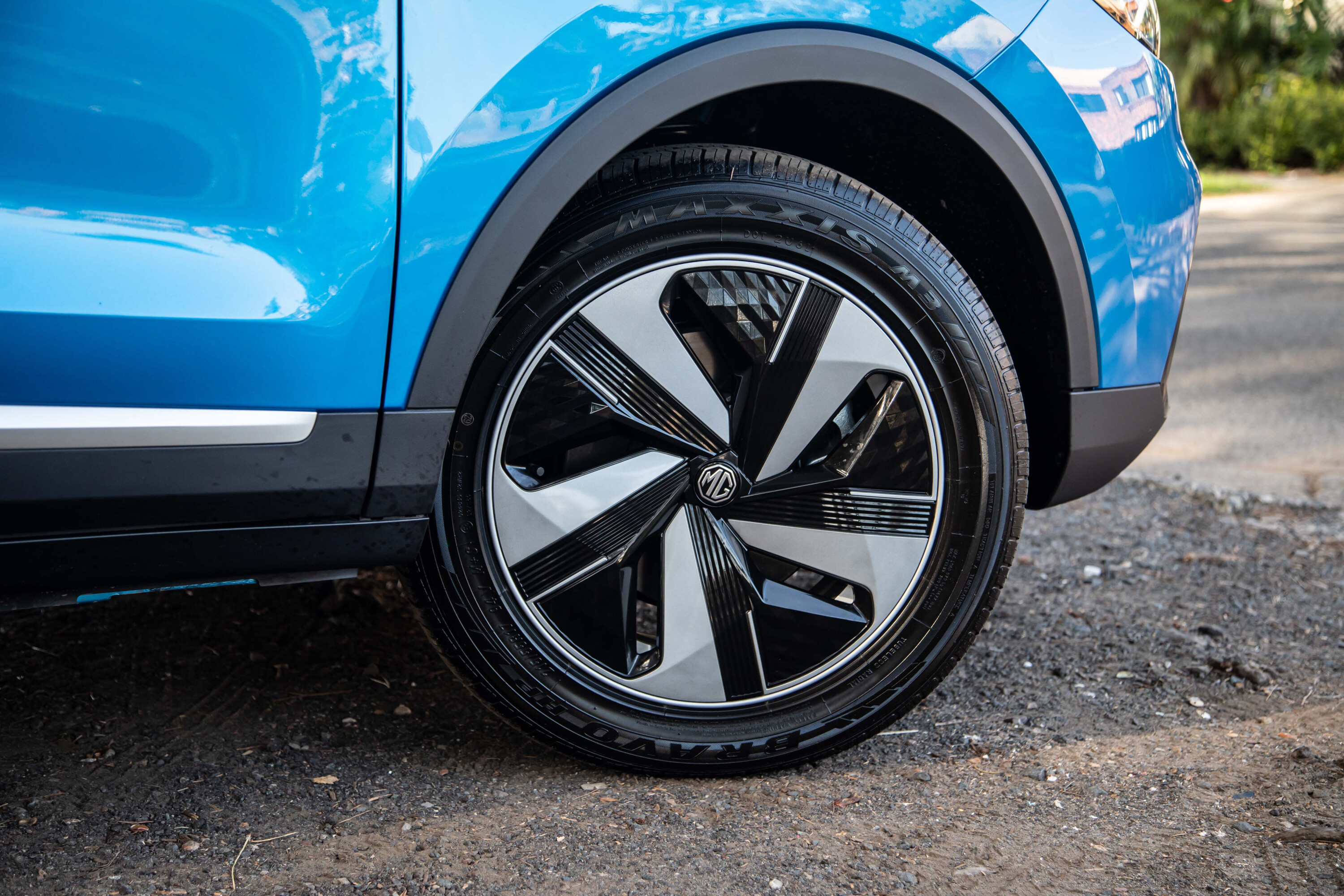
It still feels old, though, with a ride straight out of a Three Stooges sketch. It bounces over bumps with more enthusiasm than is strictly decent and rolls in a fairly pronounced fashion around corners if you’re enjoying the right pedal.
That’s probably the worst of it, though. The vast majority of owners will notice the bouncing but probably not the body roll because it isn’t the kind of car that appeals to keen drivers. Which is, as I always say, perfectly fine.
1
When driven more sedately, it’s pretty good. Strong initial acceleration will release you from the clutches of many a traffic light racer in a petrol car and it will also participate in reasonably ambitious gap-grabbing in traffic.
Although 130kW and 280Nm to move 1620kg isn’t a lot (MG says the Long Range weighs only 10kg more than the regular ZS EV), it seems like more when you’re in town. The drive system is quite nicely calibrated, which can suck you into thinking it’s a bit sporty. Which, as we’ve established, it isn’t.
The steering feels like an old video game before force feedback, with absolutely no feel finding its way back up the rack to your palms. It’s light and numb but twirls happily for parking duties.
1
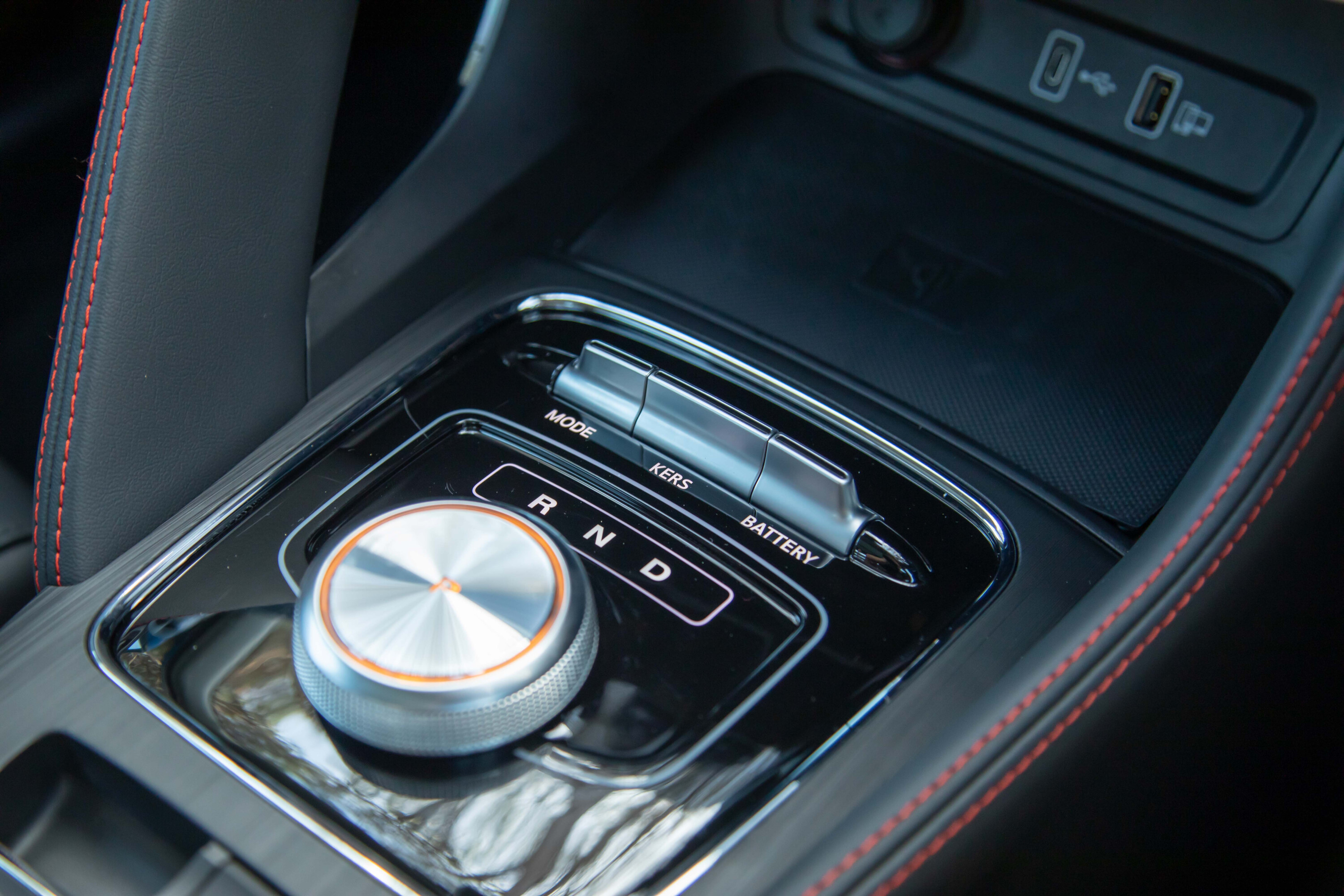
The KERS switch (nobody calls it that except 2008 Formula 1 fans) allows you to switch between three levels of regenerative braking.
Wind noise is mostly well-suppressed until you hit about 90km/h and road noise is surprisingly low, too. At higher speeds, the ride smooths out, which is gratifying. A porpoising SUV leads to puking passengers and that would be no fun at all for anyone.
The KERS switch (nobody calls it that except 2008 Formula 1 fans) allows you to switch between three levels of regenerative braking. The lowest is barely noticeable, the second is not bad and the third is where I left it. It doesn’t quite reach one-pedal driving, which is a shame, but it’s more effective than its main rival, the BYD Atto 3’s set-up.
1
- What is a Powertrain or Drivetrain?
- Power vs torque
- Car suspension explained
- Automatic transmissions (‘gearboxes’) explained
- Chassis control systems explained
- Car vs Ute vs SUV: How the vehicle you buy should guide the way you drive
MG Australia has never been too punchy on range estimates, accepting that the ZS EV is more of a city car than a cruiser.
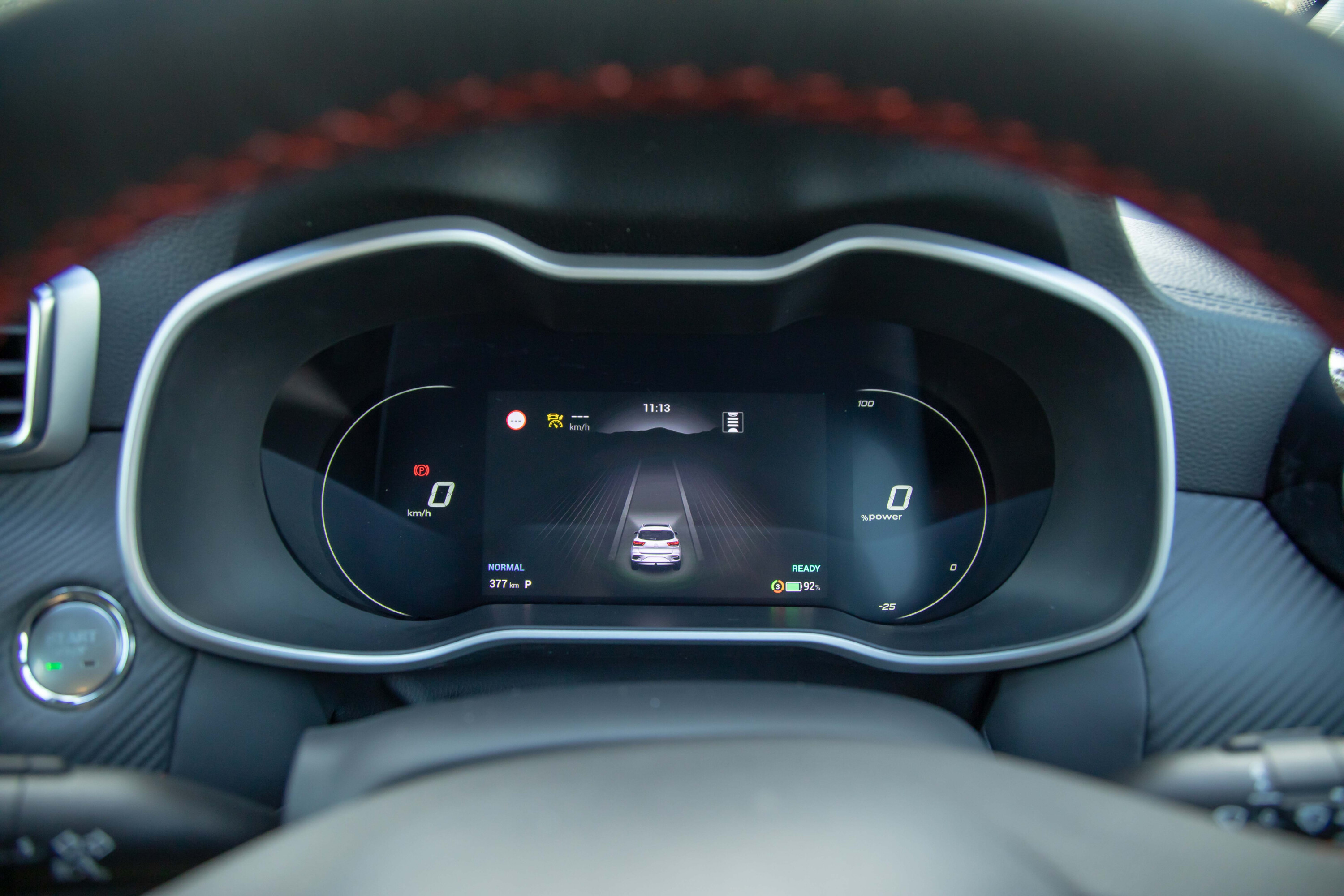
This bigger battery adds a hefty 120km of range to the 50kWh car’s 320km (both figures WLTP). As I and others have discovered, neither of those numbers is achievable, at least not with any ease.
1
| ZS EV | ZS EV Long range | |
|---|---|---|
| Range (claimed, WLTP) | 320km | 440km |
| Consumption | 17.1kWh/100km | 17.8kWh/100km |
| On test | NA | 20.6kWh/100km |
| Real-world range | NA | 363km |
Now, 360km is a fairly solid miss on the WLTP figure but when compared to the consensus experience, a ZS EV with the smaller battery delivers a comfortable 240km.
Just over 360km is not bad for a car not being hyper-miled or nannied through a week’s driving so it’s exactly what you can expect from it unless you drive it lunatic.
1
How safe is it?
When the MG ZS first arrived in Australia it wore a five-star ANCAP rating from a 2019 test.
| 2023 MG ZS EV Long Range safety features | |
|---|---|
| 6 airbags | ABS and stability controls |
| Forward auto emergency braking | Reverse cross-traffic alert |
| Blind-spot monitoring | Lane-keep assist |
| Speed limit assist | Adaptive cruise control |
| Forward collision warning | Tyre pressure monitoring |
The ANCAP website regards that as an old model – which is curious given the petrol car’s four-star rating still applies from 2017. Chalk that one up to one of those ANCAP anomalies.
Having said that, while the Essence and Long Range feature blind-spot monitoring and reverse cross-traffic alert, the Excite does not, so bear that in mind if you’re looking around the range. That could be the reason that this new model doesn’t have an ANCAP rating because whatever the base model gets would apply across the range.
1
Warranty and running costs
MGs come with a seven-year/unlimited-kilometre warranty.
Unusually for an EV, the battery warranty matches the vehicle warranty, at least for private buyers. Commercial buyers get a seven-year/160,000km warranty on the pack.
Servicing comes around every two years/20,000km, which seems a bit weird but kind of works if it’s a low-kilometre city car. A fixed-price program applies for up to 14 years or 280,000km.
1
Prices alternate between $412 and $922 per service, which works out at a not super-cheap $333 per year if you average it out over four years, but not outrageous either.
Except EVs are supposed to be cheaper to service. You’d at least expect it to be cheaper than a BMW electric car’s servicing. If you run out to the 14 years, it’s $9338 for servicing. Just in case you were wondering.
2
VERDICT
The ZS EV facelift is a much-needed upgrade to what was a fairly pedestrian car with electric motivation. Not everyone wants or needs more than that, but this is a better EV than the one it replaces and for that alone it deserves praise.
The Long Range is a lot of extra money for an extra 120km-odd of driving range, so think carefully before hitting the buy button. The mid-spec Excite seems like the smartest buy, but take one look at the MG website and you’ll soon discover that the ZS EV is about to be old hat.
Yes, the MG4 is coming and from what others have told us it’s a thoroughly modern car. Also, it will not cost as much as the ZS EV. If you need an electric MG now, the Excite is the go unless you’re desperate for that extra range.
MORE
Everything MG
MORE
Electric SUVs
More EV stories to help you choose the best car for your needs
- ? EV news, reviews, advice & guides
- ❓ Short & sweet: Your EV questions answered
- ⚡ New EVs: Everything coming to Australia
- ? Australia’s EVs with the longest driving range
- ⚖️ Best-value EVs by driving range
- ? How much do EVs cost in Australia?
- ? How much more expensive are EVs?
- ⚖️ Number crunching: Is it time to switch to an EV?
- ♻ Should you buy a used EV?
- ?️ Are EVs more expensive to insure?
- ? Costs compared: Charging an EV vs fueling a car
- ? EV charging guide
- ?? EV servicing explained
- ? EV battery types explained
- ? When do EV batteries need replacing?
- ? Hydrogen v EVs: What’s best for Oz?
- ? How sustainable are EVs, really?
MORE advice stories to help you with buying and owning a car
| 2023 MG ZS EV Long Range specifications | |
|---|---|
| Body | 5-door, 5-seat small SUV |
| Drive | front-wheel |
| Engine | Synchronous electric motor |
| Transmission | Single-speed reduction gear |
| Power | 130kW |
| Torque | 280Nm |
| Range | 440km (WLTP) |
| AC charging | 11kW |
| DC Charging | 50kW |
| 0-100km/h | 8.2 seconds |
| Energy consumption | 16.5kWh/100km (claimed) |
| Weight | 1620kg |
| Suspension | McPherson struts front/torsion beams rear |
| L/W/H | 4323mm/1649mm/1809mm |
| Wheelbase | 2589mm |
| Tyres | 215/55 R17 |
| Wheels | 17-inch alloy |
| Price | $55,990 + on-road costs |
“What we’re saying is: ‘What is an acceptable level of safety?’ And that’s for the public to decide, it’s not for ANCAP or some government bureaucrat to decide”, said an impassioned Shaun Westcott, Mitsubishi Australia CEO.
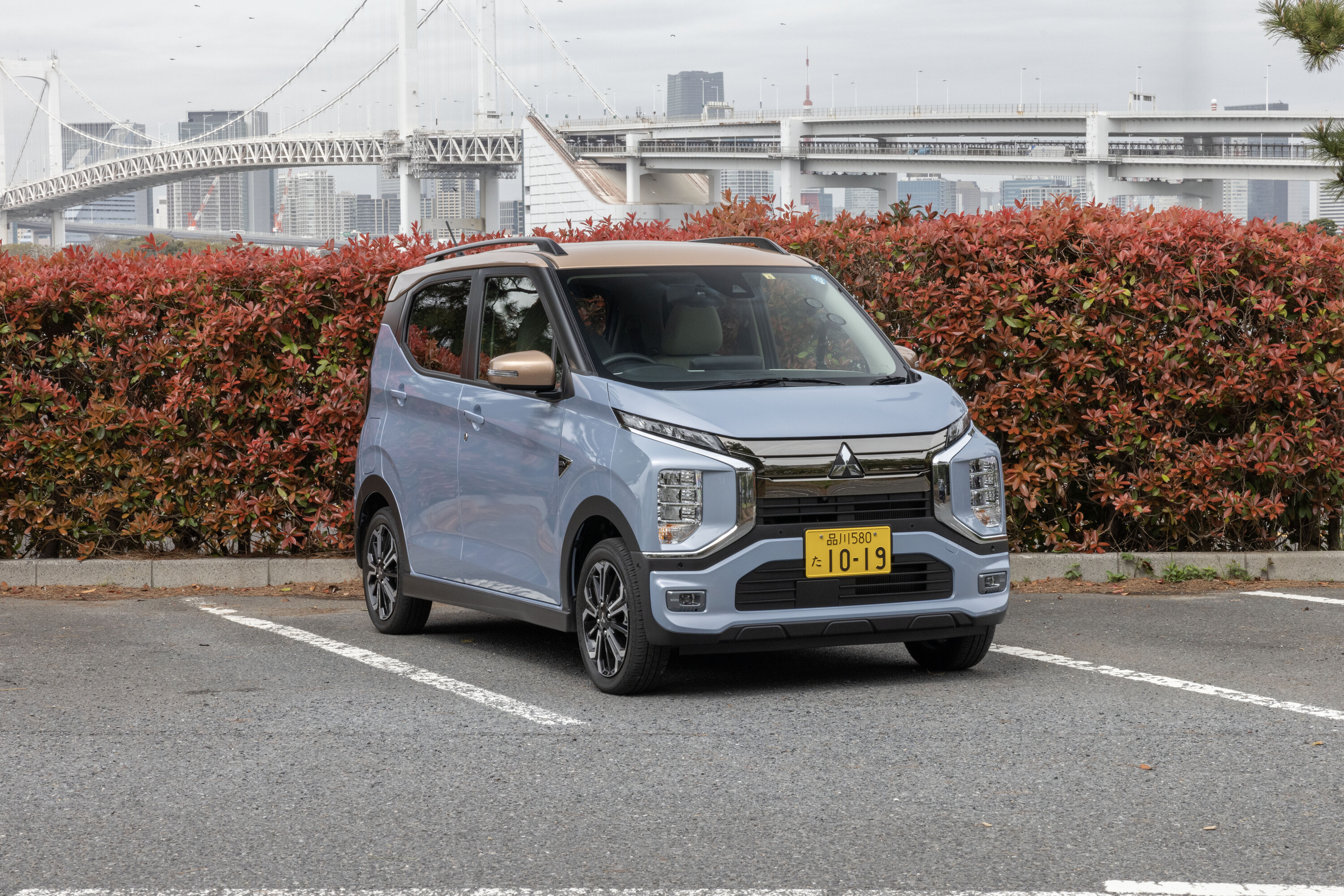
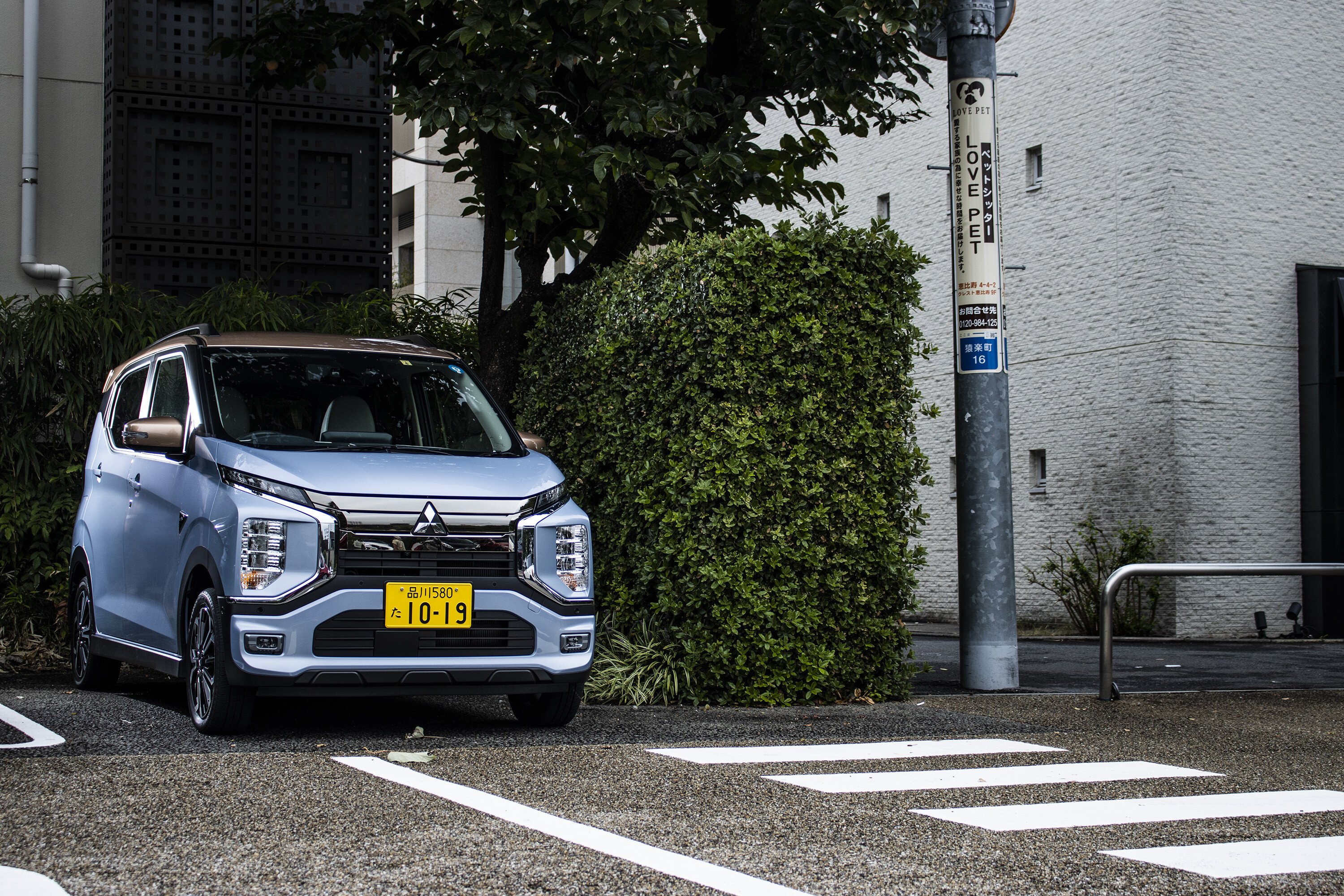
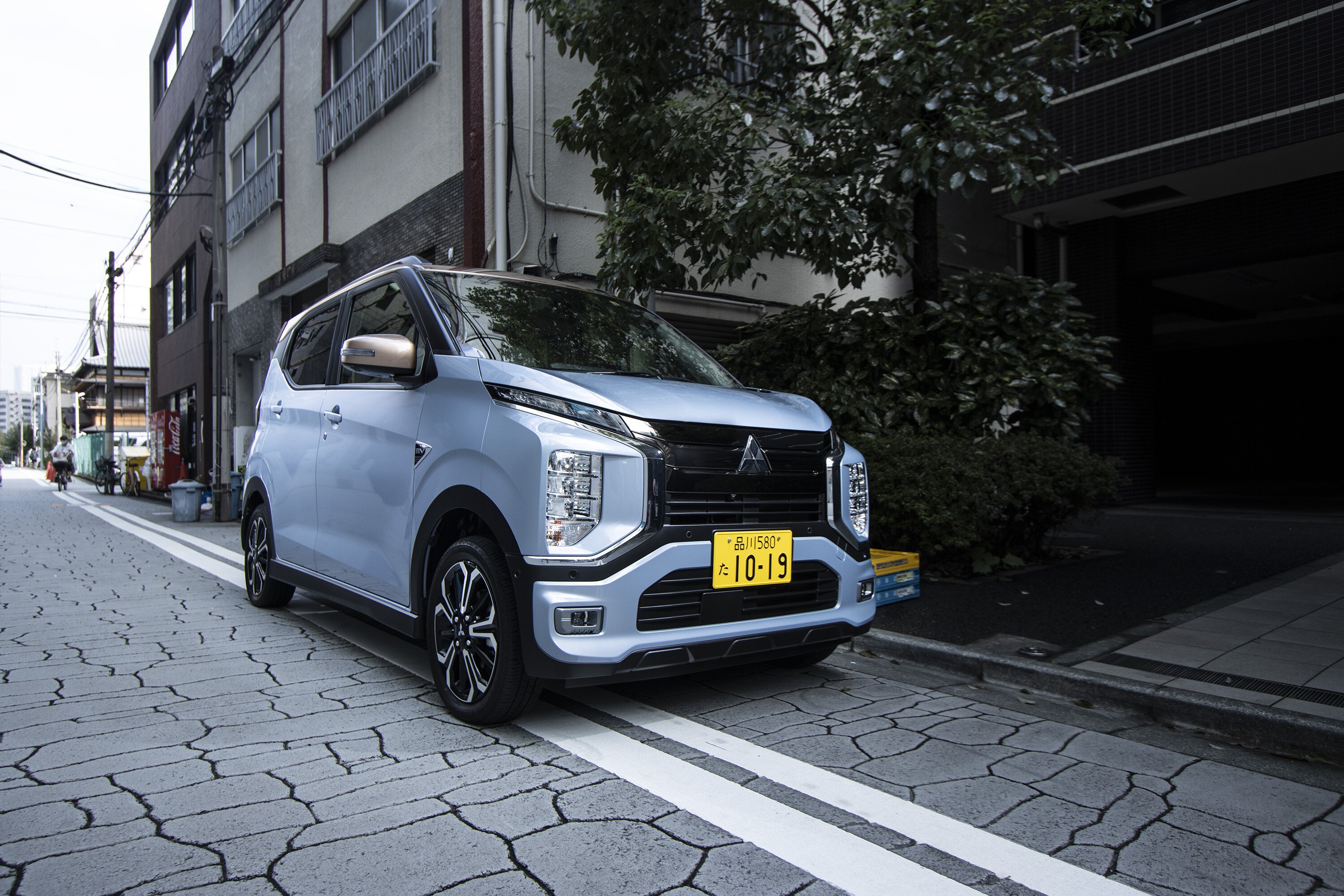
That question came from a robust discussion about the affordability of new cars, and the necessity for cities to downsize vehicles and cut emissions. Mitsubishi’s contribution to which would be the eK X electric Kei car: a vehicle that would only be rated by ANCAP if Mitsubishi paid for the testing process, or the independent body chose to buy one.
It seems there’s always an ANCAP blunder of some sort in the news cycle; the latest being the five-seat Jeep Grand Cherokee’s odd four-star rating, but don’t forget the 2015 Ford Mustang two-star rating or the conjecture around BYD’s lack of exposed child tether points last year.
I’ve come from a country where three-star is okay, [while] Australia, ANCAP, is still talking five-star or nothing – and I’m thinking, really?
Closer to Mitsubishi’s heart was the Express van, which saw ANCAP slap the Japanese carmaker with a zero-star safety rating in 2021 – despite the identical Renault Trafic getting three stars in less stringent 2015 Euro NCAP testing.
A vehicle with no ANCAP rating, or a low score, always falls under scrutiny in Australia – a market with an active motoring media and a buying public that rightly hold manufacturers accountable for poor safety performance.
The flip side is the shrinking availability of ‘affordable’ new cars: the number of manufacturers selling new models for under $25,000 has fallen from over 25 a decade ago, to just five today.
Inflation is a major contributor to this statistic, but with manufacturers not willing to risk getting slammed with blanket low safety ratings, more affordable global models are regularly removed or ruled out from local line-ups. The new Hyundai Kona (with a starting price that climbed $5100 in one generation) is just the latest example of ‘losing the bottom end’.
1
“It is reassuring to see manufacturers take responsibility and prioritise safety – as a standard offering, not an option – and provide their customers with the safest vehicles they can”, ANCAP CEO, Carla Hoorweg said in response, before adding:
“Safety-related costs are undoubtedly a factor in vehicle pricing, but only one relatively small component.”
“We want to hear the voice of the consumer. If the consumer says a [three-star ANCAP Kei car] is what they need, and that’s what they want, we’ll give it to them”, Westcott said.
Mitsubishi is studying how to capture this end of the market; a disruptive affordable electric vehicle like the eK X EV could be the ticket. Westcott pointed out the niche success of Fiat’s 500, a car that has remained on sale since its 2008 introduction and steadily sells between 500-1000 annually. It’s also a car with an expired safety rating from a far-less strict time.
And the Fiat 500 isn’t the only car in that segment with less than five stars. The Kia Picanto carries a 2017 four-star rating that’s considered a strong result in Europe and other markets for a vehicle of its size.
The eK X EV has solid credentials from JNCAP – Japan’s independent safety testing body – with a 2022 five-star rating and strong occupant protection. Seven airbags, AEB, lane-departure warning, traffic-sign recognition and driver attention monitoring are standard.
To qualify for a five-star rating in ANCAP’s 2023 protocols, vehicles need effective AEB detection for two-wheeled vehicles, along with blind-spot monitoring systems, reverse AEB, stricter driver fatigue monitoring, and post-submergence power window functionality. The eK X EV would require significant re-tuning and engineering to pass these tests with the full complement of stars.
1
“I’ve come from a country where three-star is ok”, Shaun says in his crisp South African accent.
“Europe and Euro NCAP say three stars is ok, New Zealand does too. Australia – ANCAP – is still talking five-star or nothing, and I’m thinking, ‘really? Are we sure about that?’
“When my daughters went to Uni in South Africa, they had a choice of buying a four- or five-year-old secondhand car with 40,000kms and an outdated five-star [rating], or a new [car] for the same price.
“I sat down with my daughters – one was studying a PhD in mathematics and the other was doing a master’s degree in psychology – and said: ‘You want a five-year-old five-star car? Or would you want a new one that’s three-star?’ They chose the three-star new car”, said Westcott.
In response, ANCAP pointed out the datestamps and protocol details on its website as a way for customers to compare and contrast old and new ratings.
“As vehicles improve, and safety features and technologies mature, so does the ANCAP safety rating criteria – choosing a vehicle with the latest datestamp means a consumer benefits from the most recent improvements. This continual evolution ensures Australian consumers are provided the safest vehicles possible”, said Carla Hoorweg.

1
Naturally, Westcott is adamant that Mitsubishi is not compromising on safety, but rather attempting to promote discourse on what different ratings mean – and whether it always has to be five.
“We want to hear the voice of the consumer. If the consumer says a [three-star ANCAP Kei car] is what they need, and that’s what they want, we’ll give it to them”, Westcott continued.
Westcott also pointed out what, in his view, are inconsistencies in ANCAP’s rating system. One specific case of the Kia Stonic small SUV being given the Rio small car’s 2017 safety rating in 2021.
1
“Why did they take the Stonic [as five stars without testing it]? You took the same platform [as Rio] but that’s all. Everything else changed; ride height, body, everything else changed but ANCAP gave it the same rating?” he said.
Westcott admitted he isn’t sure if the Australian public is ready for a three-star car. Legally, the eK X EV (and Delica) don’t need an ANCAP safety rating to be sold in Australia – they just need to pass Australian design rules, which aren’t as strict as ANCAP criteria.
Taking that path could bite Mitsubishi, however. The optics of a manufacturer ‘sneaking’ a car past ANCAP ratings only for the body to purchase a car and test it independently with a negative result are not ideal.
To cover the compliance costs, the eK X will need to sell in reasonable volume, although Mitsubishi Australia was unwilling to put forward a ‘golden number’.
1
Westcott added that, for the eK X to be an engaging proposition, the price would need to stay below $40,000, where it would battle with the BYD Dolphin and entry-level MG4. This has been a relatively easy feat for the Chinese brands with their huge scale, but legacy brands have had a harder time coming anywhere near $40,000 for an EV.
As a compact vehicle with a 180km WLTC (more optimistic than WLTP) driving range, the eK X EV would struggle to compete spec-for-spec with Chinese rivals at near-$40k. But if the package is interesting and unique enough, it could well find a number of passionate purchasers.
Conversely, if it’s priced above what buyers deem affordable, a less-than-five-star rating could be disastrous. Compromising on range and space may be one thing, but safety? When price-equivalent Chinese rivals seem to be getting through the tests with five stars, it’s a trickier equation.
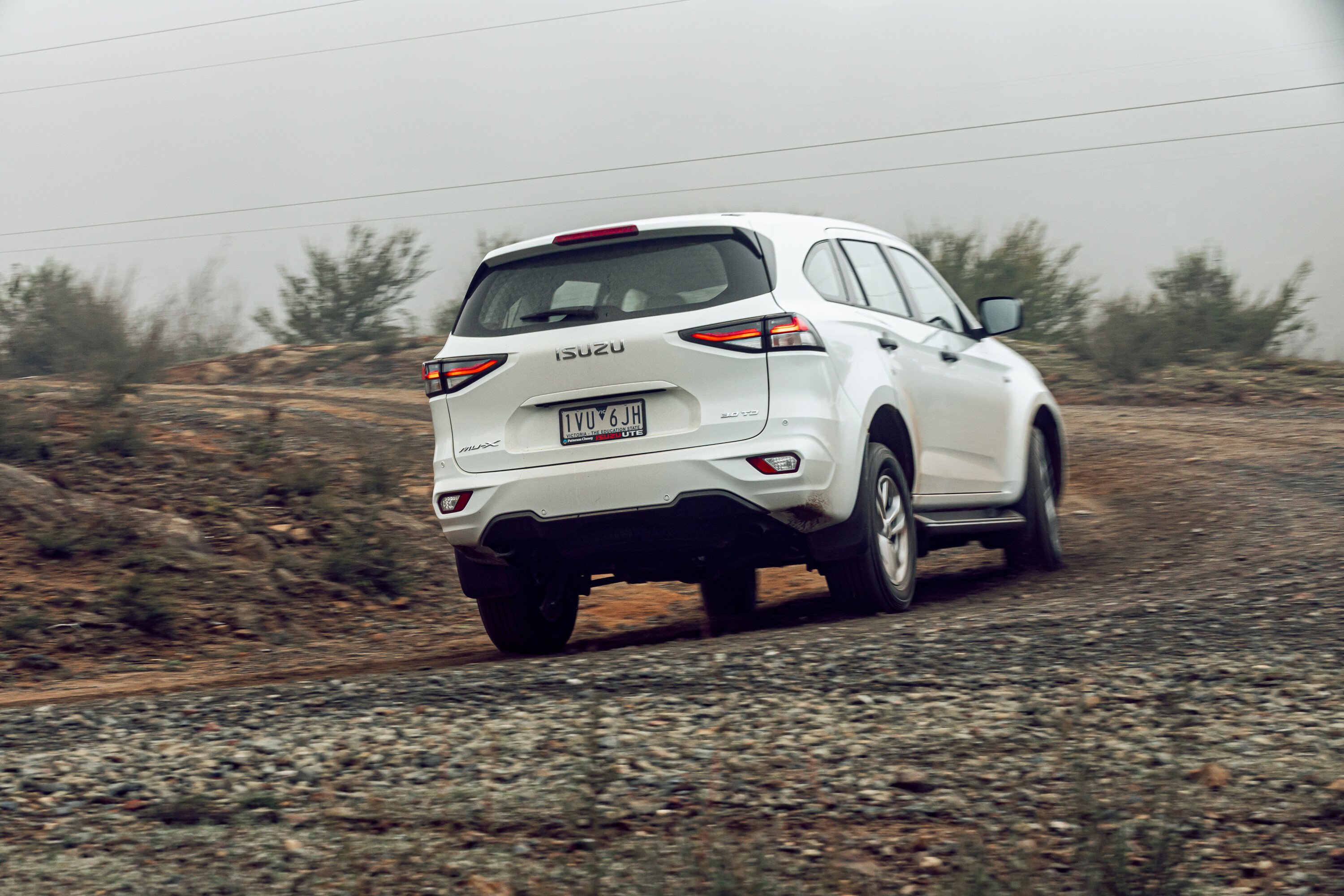
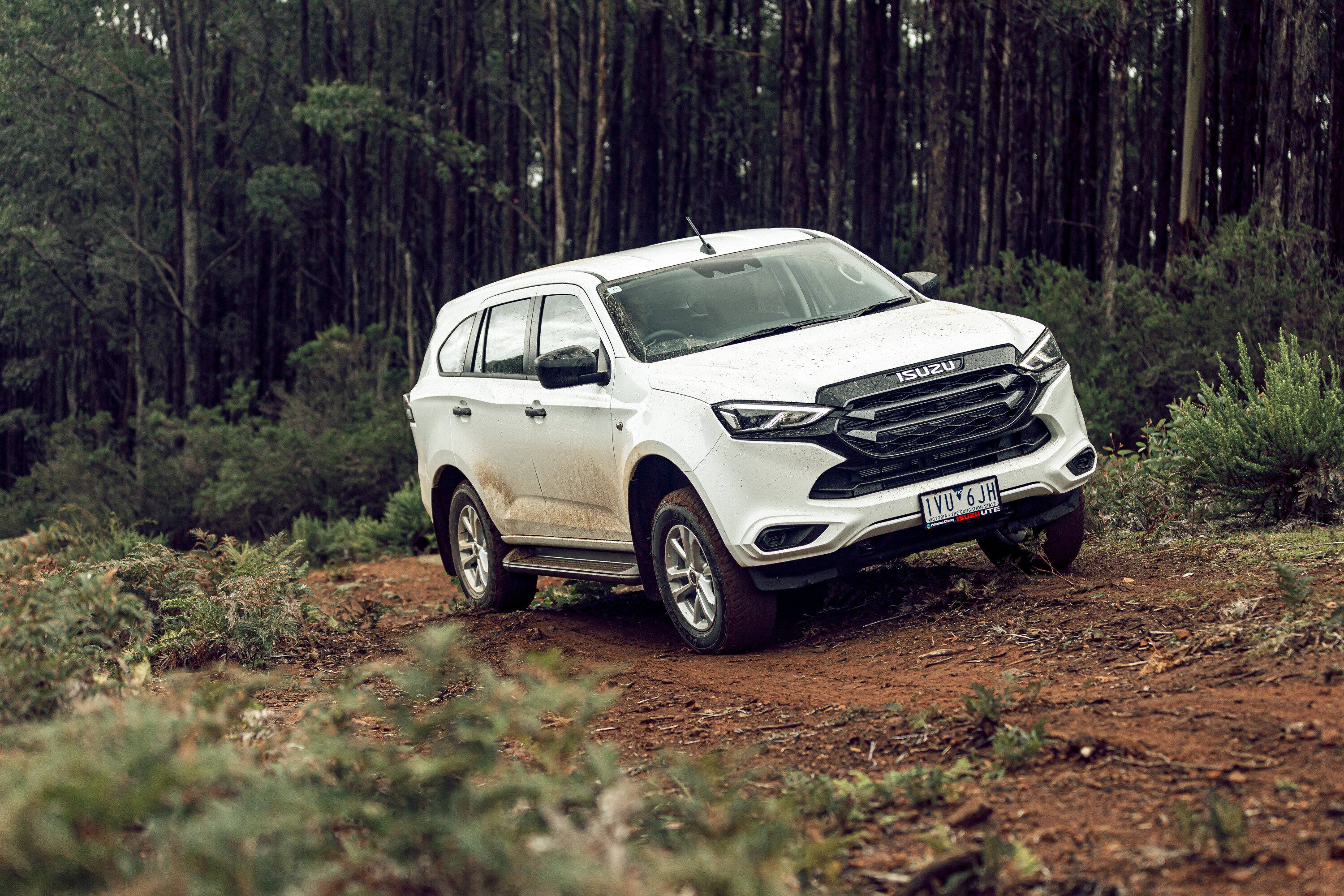
The 2023 Isuzu MU-X LS-M is the entry-level variant in the MU-X range, packed with safety features and standard equipment.
Available only in a seven-seat configuration, buyers have the option of 4×2 or part-time 4×4 variants.
So the only choice to make is, will you be spending your time in the MU-X on- or off-road?
1
Pricing and Features
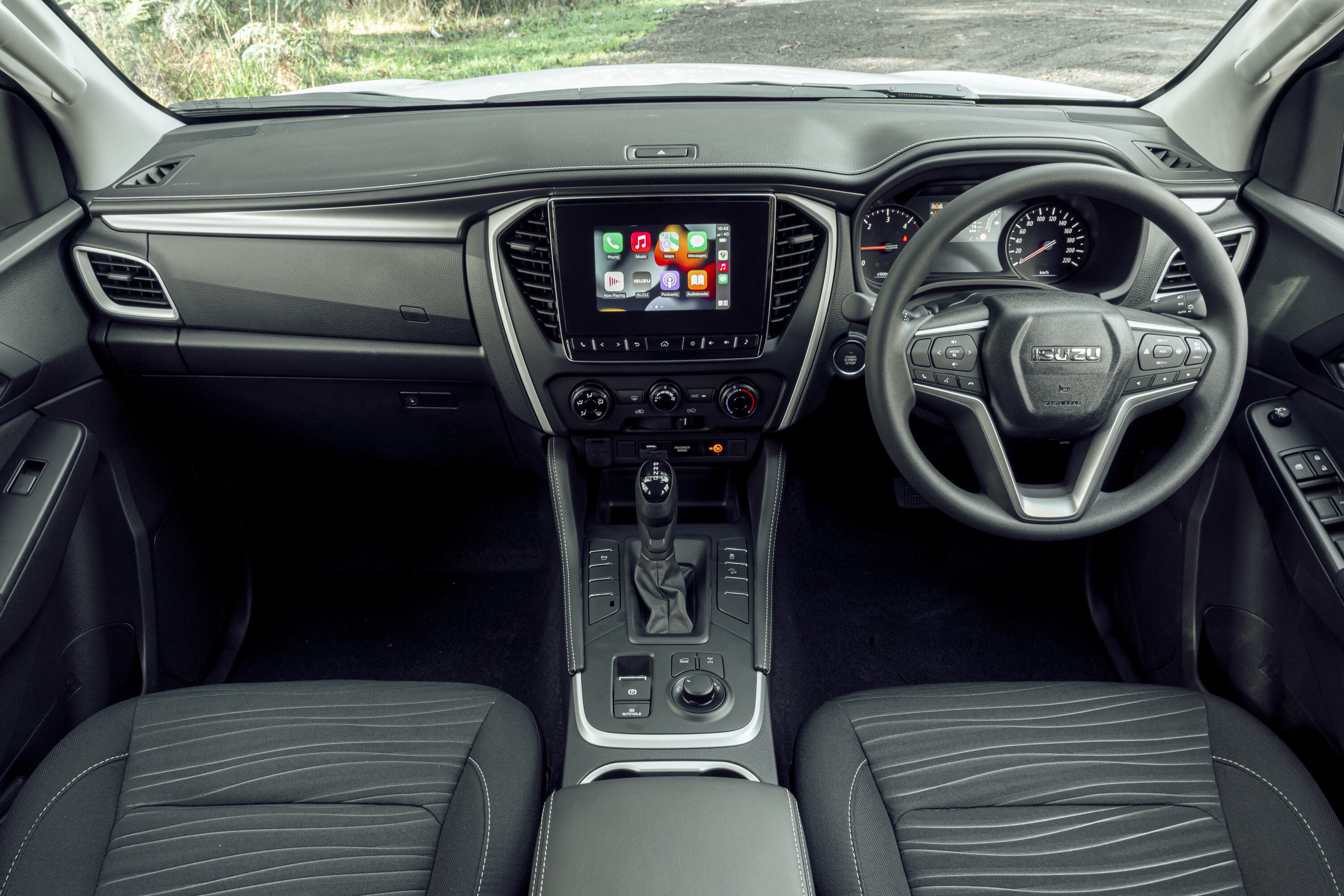
Standard specs on the entry-level LS-M include 17-inch alloy wheels, wireless Apple CarPlay/wired Android Auto (with the option to add a wireless charger at some dealerships), a 7.0-inch infotainment display, reversing camera, rear parking sensors, an electric park brake and cloth seats.
6
Isuzu’s MU-X range starts at $48,900 before on-road costs for the 4×2 variant and for an extra $6000 you can step across into the 4×4 option.
It’s fuelled by a 3.0-litre turbo-diesel engine, producing 140kW and 450Nm.
Safety
The entire MU-X range has earned a five-star ANCAP rating.
This includes a comprehensive suite of safety features under IDAS (Isuzu Driver Assistance System) which includes eight airbags, forward collision warning, lane-keep assist, lane departure warning, rear cross-traffic alert and roll-over mitigation (ROM) which reduces the risk of a vehicle overturning.
1
Key Rivals
Alongside the Isuzu MU-X LS-M are key rivals with entry-level options including:
Should I Put It on My Shortlist?
If you’re after a large SUV to tow with or tackle new terrain in, then the MU-X may be the ideal companion for your adventures.
It’s full of comfortable features that make it a great option for both your weekday and weekend activities.
MORE
Everything Isuzu
MORE
Large SUVs
The Ford Mustang will soon be the last pony car standing. At least, one with an internal combustion motor under the bonnet.
Chevrolet is about to axe the Camaro (again) and Dodge’s Challenger/Charger duo are set to be replaced by an electric interpretation of the affordable American sports car.
Will the biggest seller of the breed see another generation after this seventh iteration in nearly 60 years? Ford, for now, says it sees no end date for its iconic Mustang coupe and convertible.
Ford, however, hasn’t seemingly gone overboard with the development budget for the new S650 Mustang. It’s based on the same platform as the previous S550 model, it carries over parts including the roof, windscreen pillars and rear glass, and the turbo four-cylinder and V8 engines are upgraded rather than replaced.
JUMP AHEAD
- What is the Dark Horse and where are the EcoBoost and GT models?
- Interior comfort, space and storage
- What is the new Mustang like to drive?
- It’s fun on a racetrack, then?
- How safe is the 2024 Ford Mustang?
- How much will it cost?
- FIRST VERDICT
- Specifications
What is the Dark Horse and where are the EcoBoost and GT models?
Firstly, the four-cylinder turbo EcoBoost entry-level Mustang continues, as does the V8 GT. Ford staged separate launches for those models, and Ford Australia chose to skip those for the Dark Horse drive.
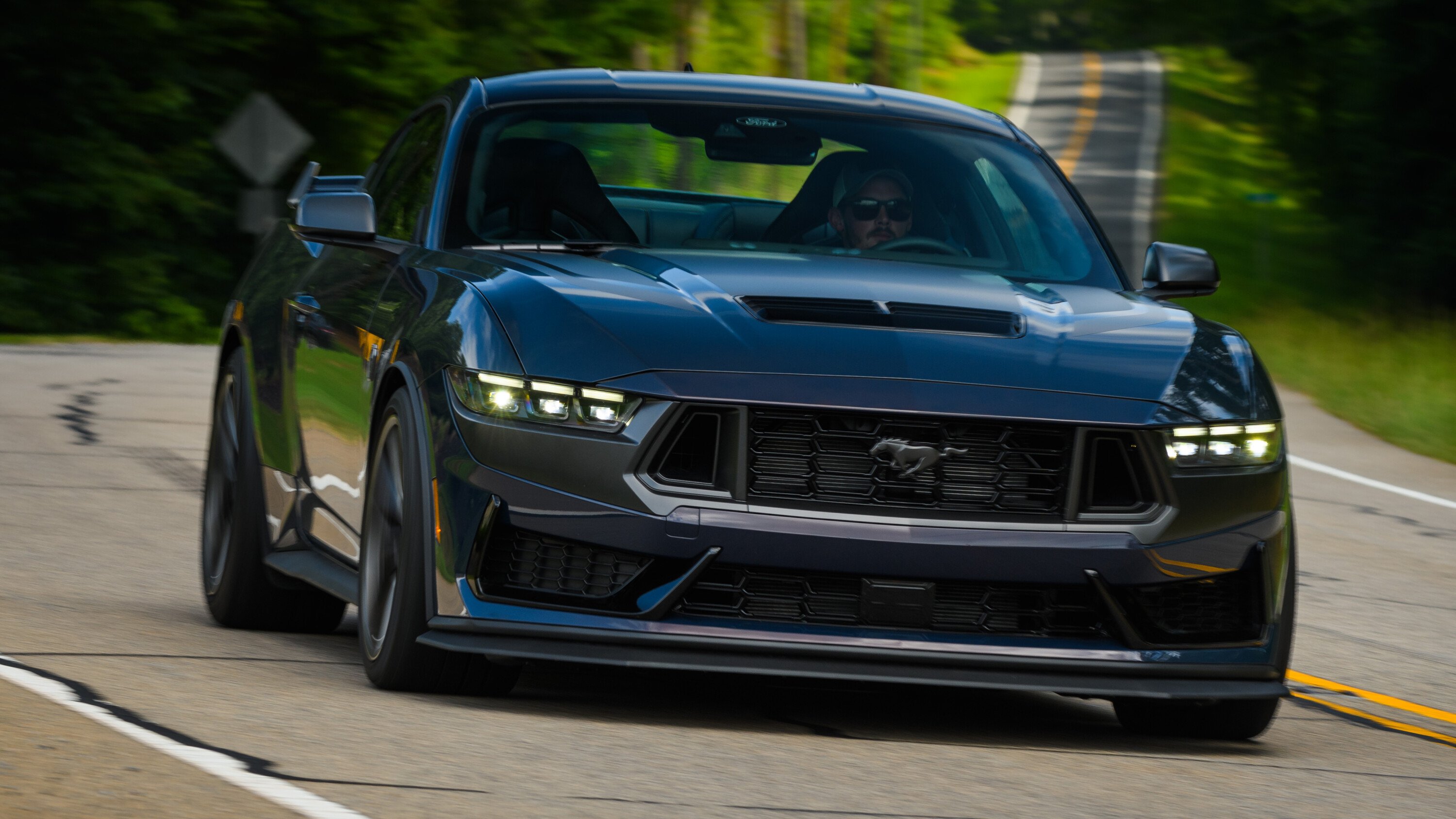
We’re glad; this is the most intriguing variant of the new ‘Stang, available as a Fastback coupe only whereas the EcoBoost and GT can be had in convertible form as well.
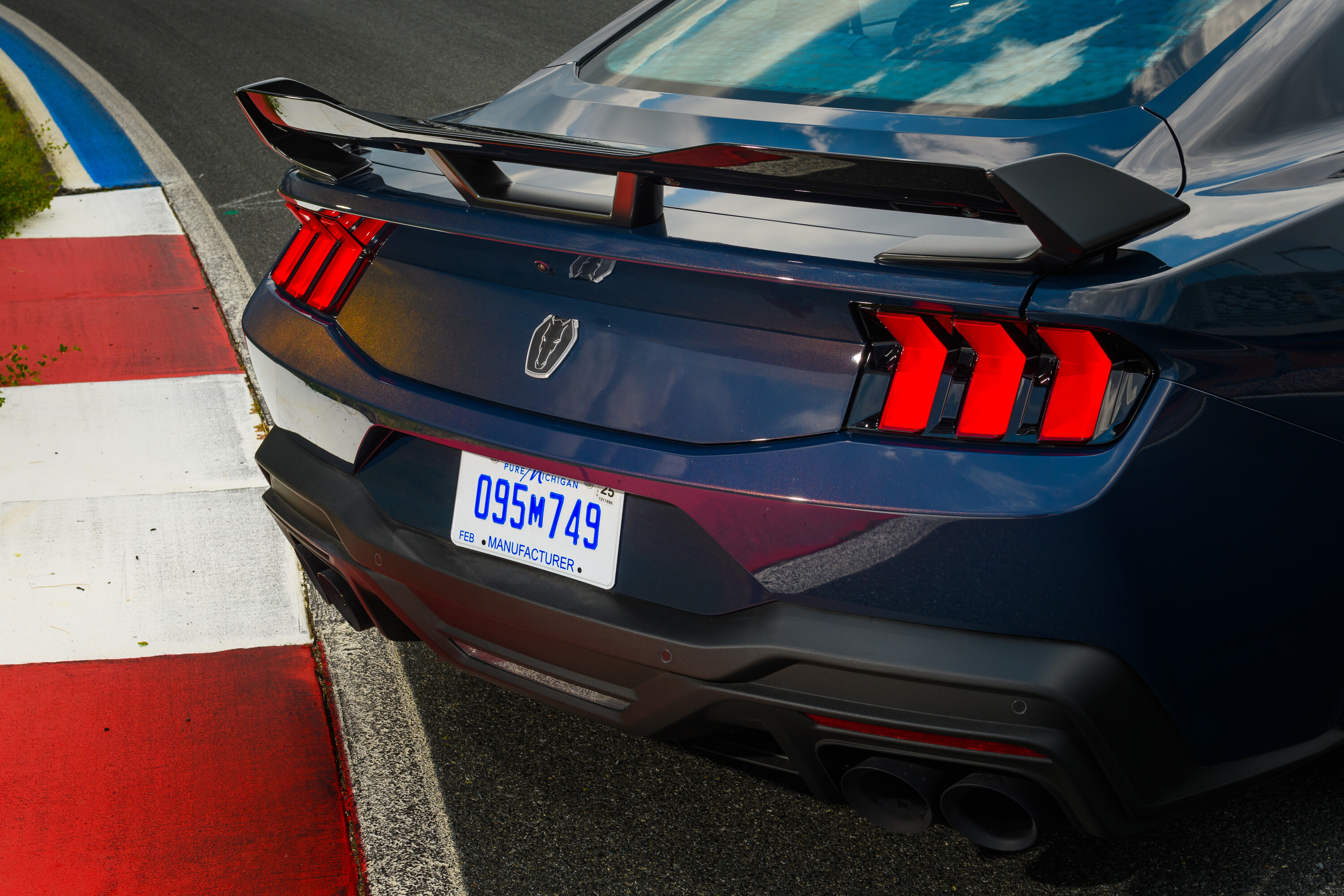
Dark Horse is the first all-new appendage nameplate for the Mustang in 22 years; the last time it happened was when Ford opted for a nostalgic riff on the famous Bullitt movie.
1
Ford is hoping it will become a future collectible in the way the 1971 Mach-1 is revered to this day, though it won’t confirm exactly how limited the ‘limited availability’ will be.
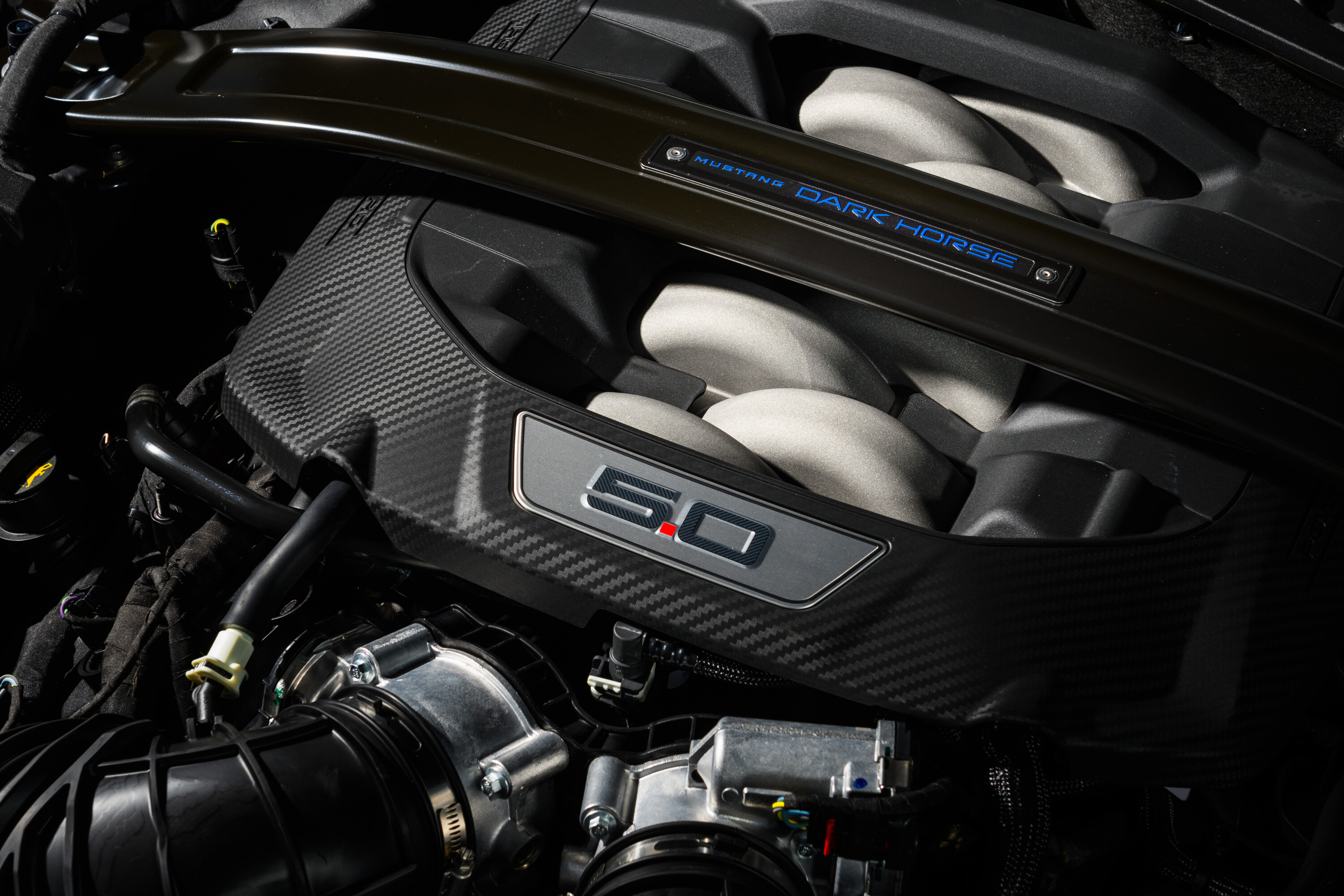
The latest, fourth-generation Coyote V8 gains dual airboxes and twin throttle bodies, revised cam timing, and redesigned, freer-breathing exhaust manifolds.
Power outputs have yet to be confirmed for Australia, but in the US the V8 produces 358kW (480hp) in the GT – or 362kW (468hp) with an optional active-valve exhaust system.
The Dark Horse doesn’t produce much more power – a neat 500 horsepower, or 373kW (up 28kW on the most recent, 345kW Mach-1).
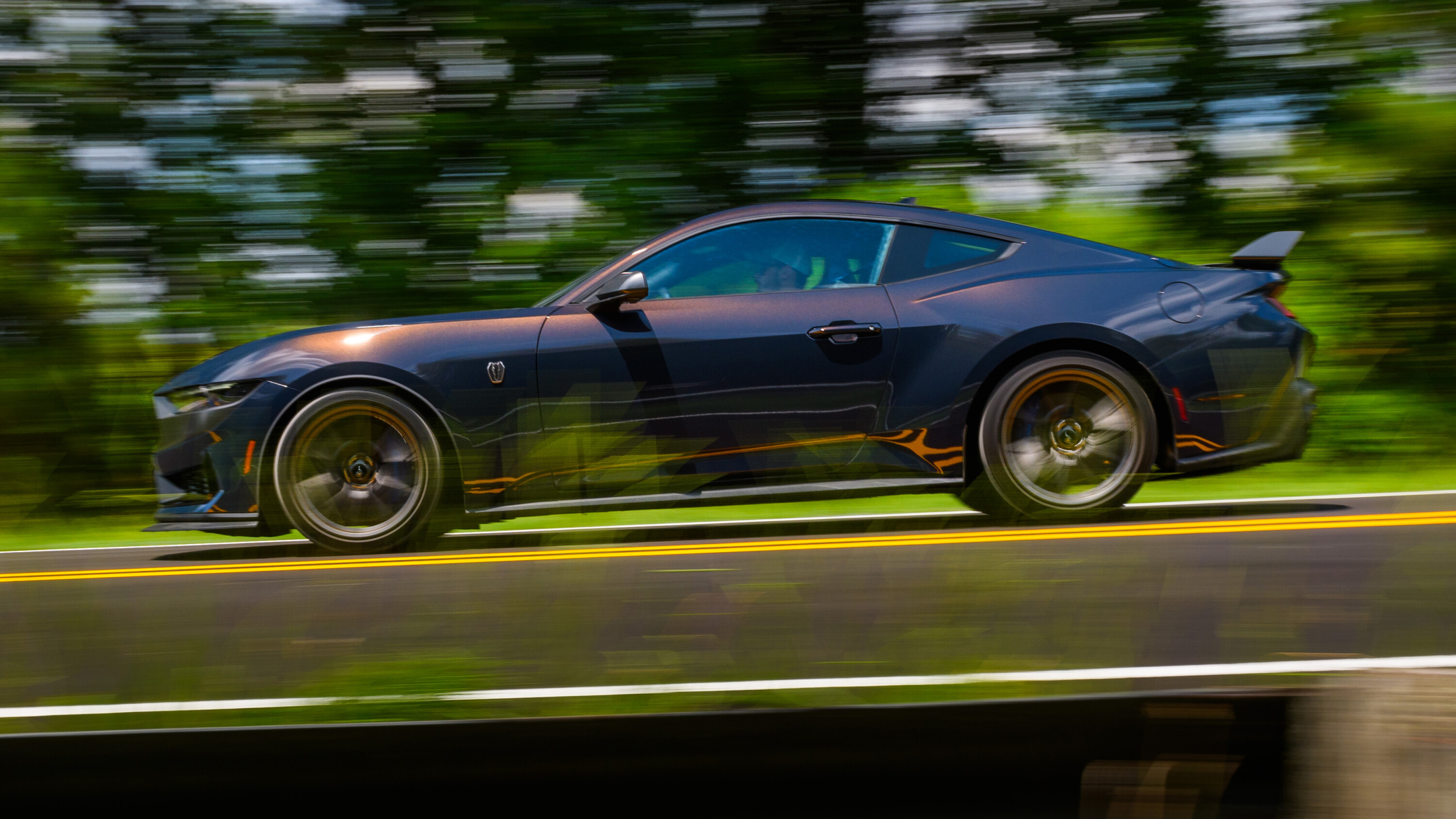
1
However, the Dark’s V8 is further beefed up for more aggressive driving with forged connecting rods and reinforced camshafts.
When you see the rest of its specs, it becomes clear Ford wanted to create more than just a V8-powered straight-line hero. This is a Mustang created to go fast around corners. Or a track.
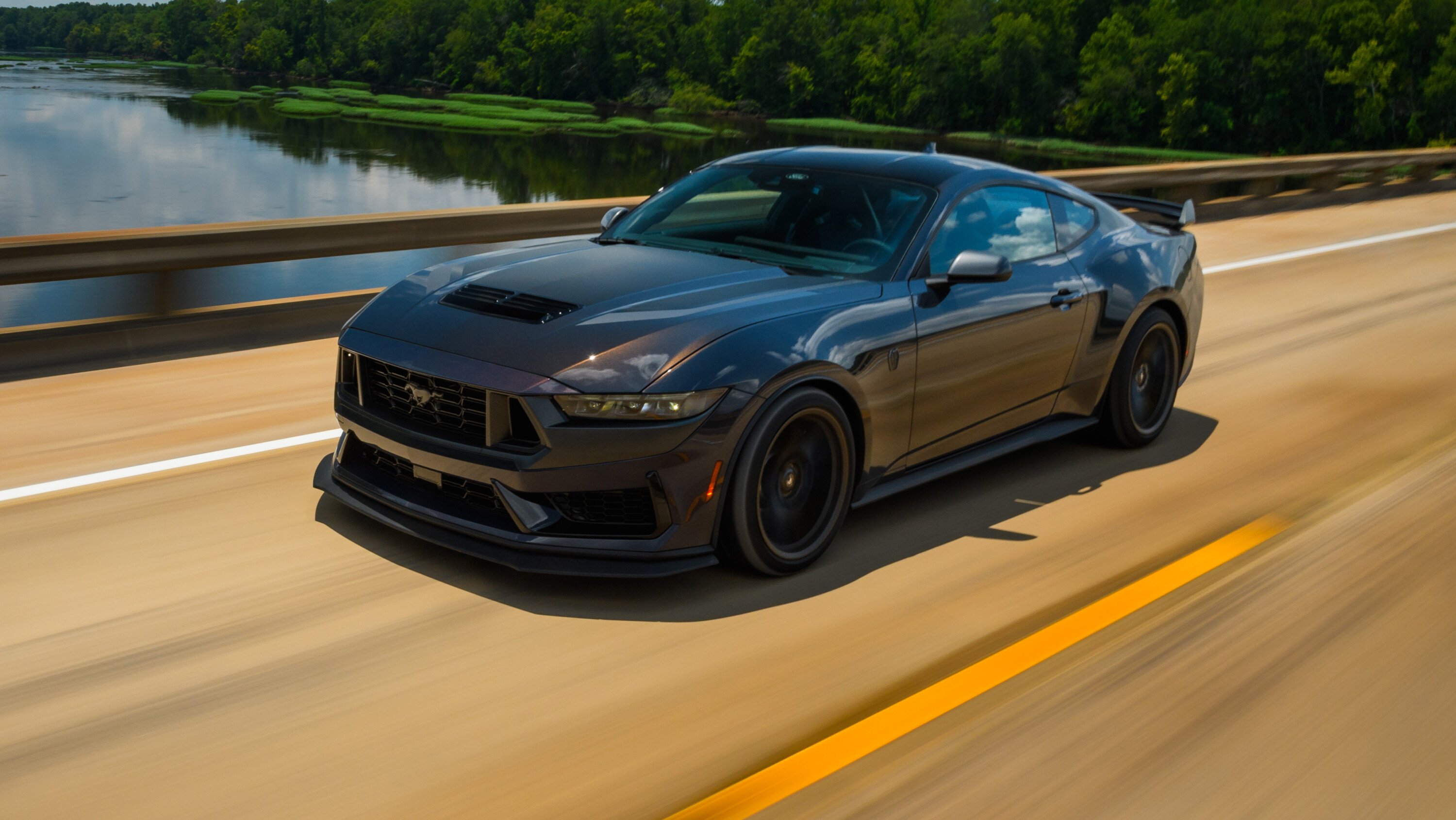
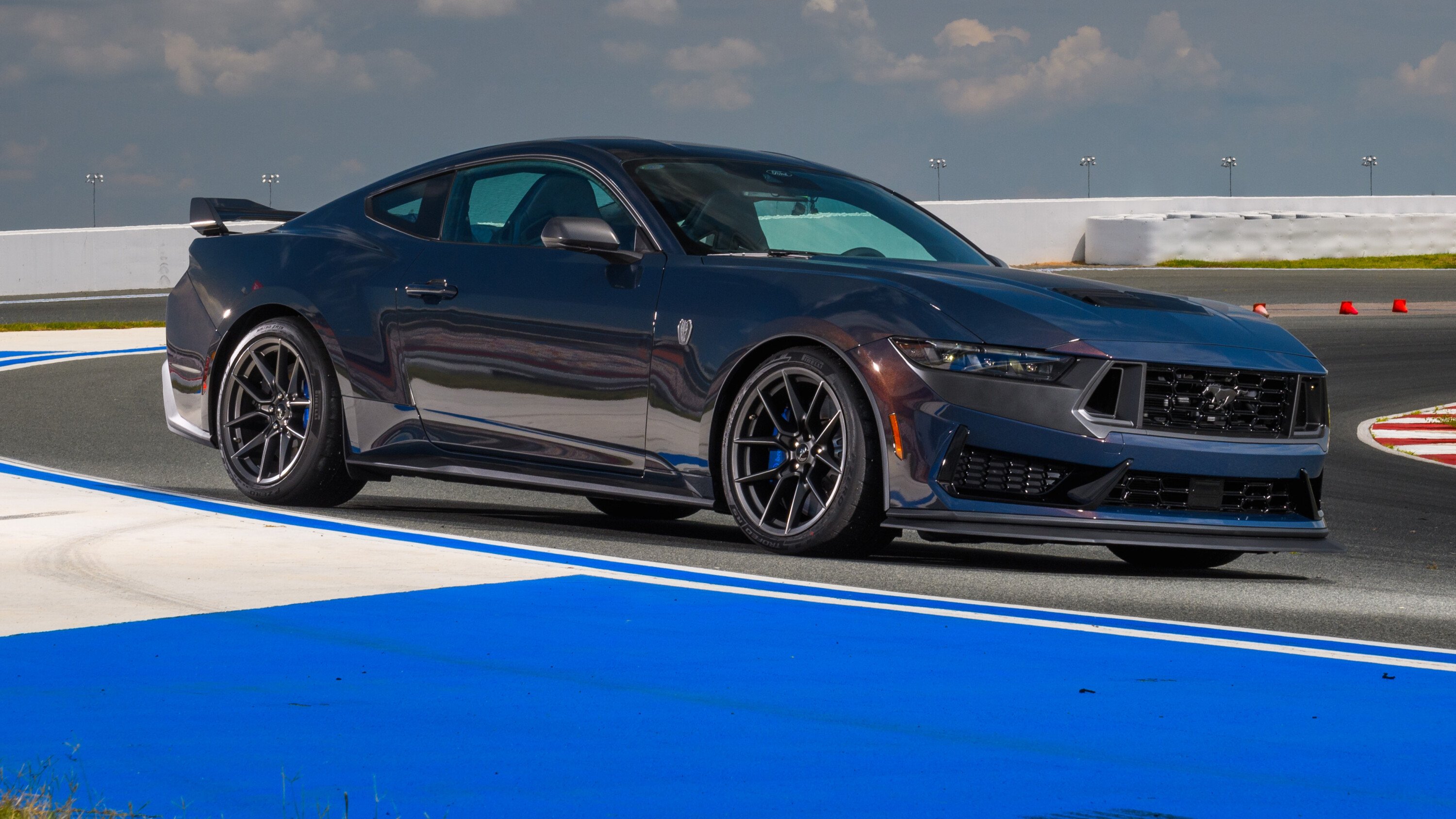
For starters, the GT’s optional Performance Pack items are all standard on the Dark Horse: 19-inch wheels with 255/40R19 front and 275/40R19 rear tyres; Brembo brakes including 390mm rotors and 6-piston calipers up front; Torsen limited-slip differential; strut-tower brace and K brace; and MagneRide adjustable dampers.
That multi-mode active-valve exhaust is also standard on the Dark Horse, while the flagship Stang has thicker anti-roll bars and it feeds its dual air filters with grille-flanking intake ‘nostrils’.
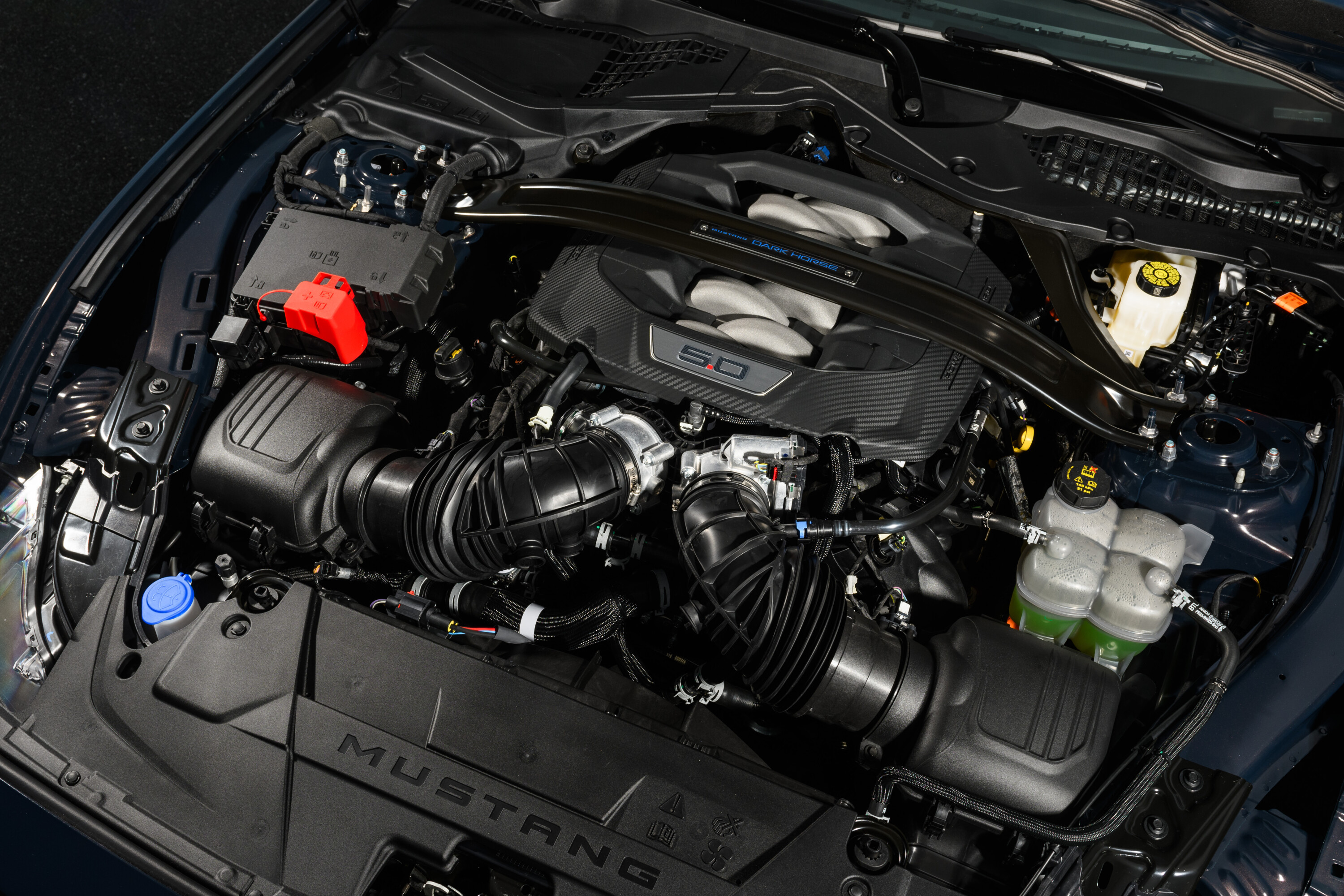
1
In the US, options include carbon fibre wheels that are nearly 40 per cent lighter than the standard alloys.
Again produced by Australian company Carbon Revolution in collaboration with Ford – as with the carbon rims on the previous Mustang Shelby GT500R and GT supercar – the irony is also likely to be repeated with no availability Down Under.
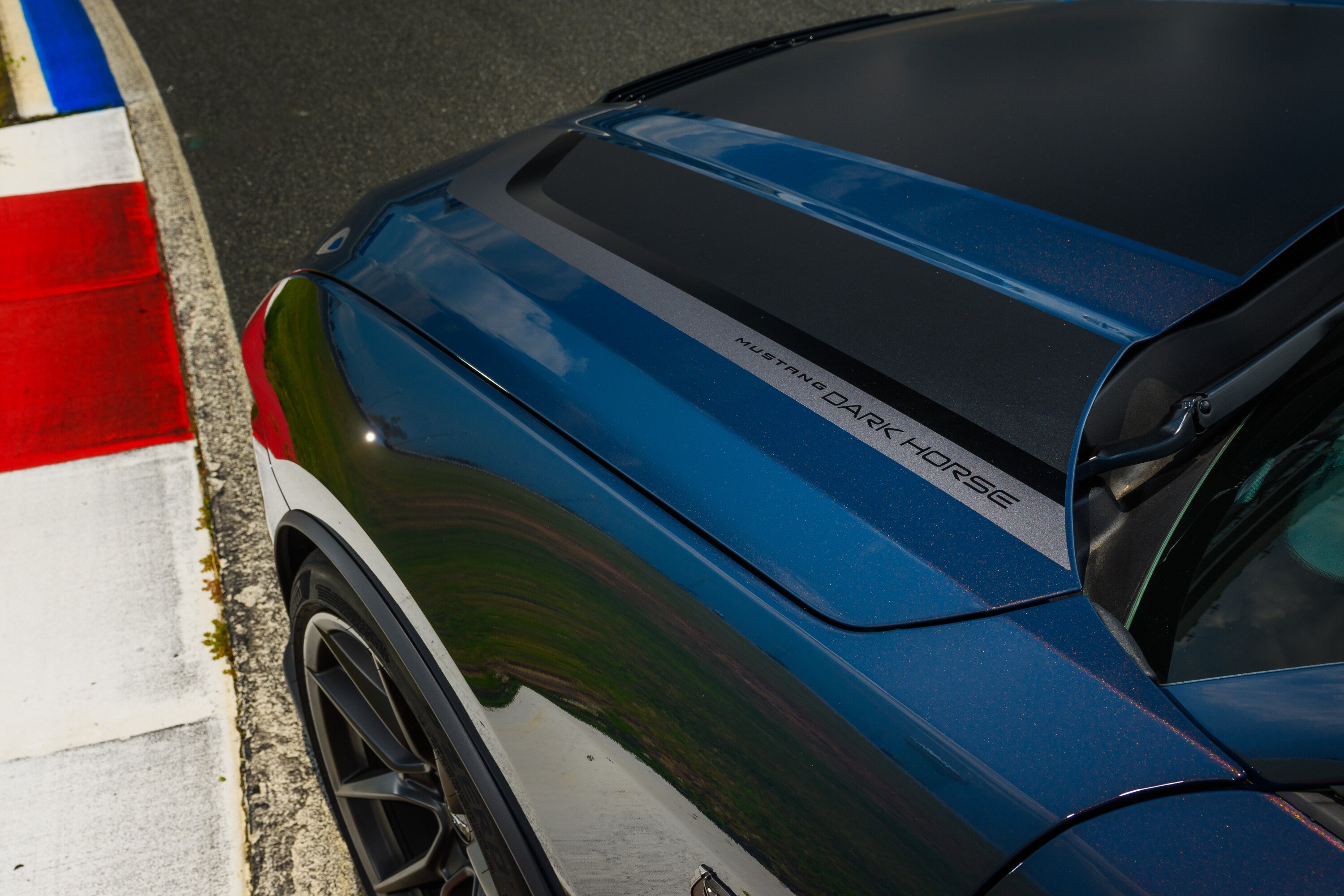
Blue Ember, a metallic paint that shifts colour in different light or from different angles, is an exclusive option for the Dark Horse. Painted bonnet stripes are also offered.
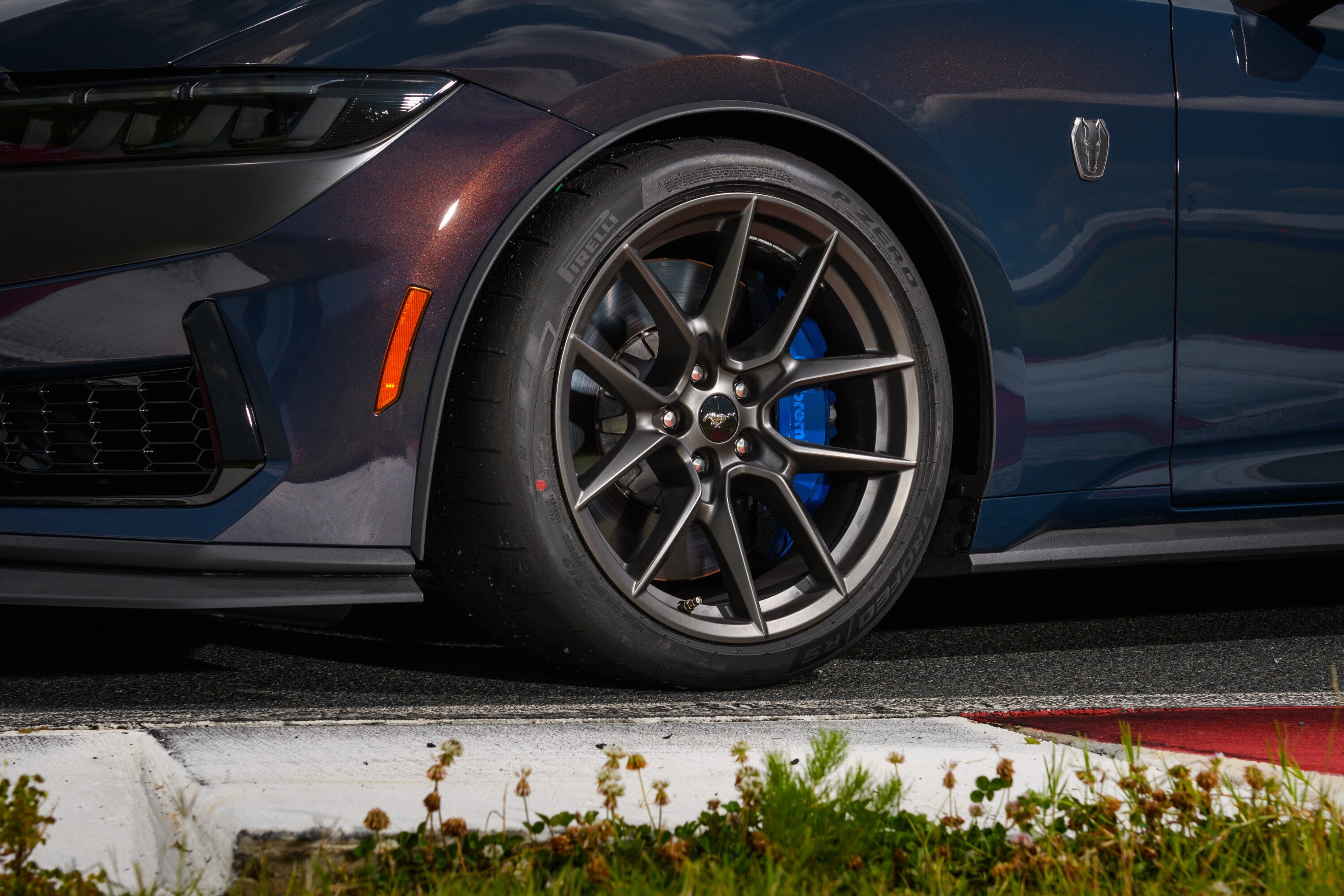
1
Interior comfort, space and storage
Ford describes its latest muscle car as the “most digital Mustang ever” – based on its connected dual screens that serve up all essential information and most functions.
The 13.2-inch infotainment display features Ford’s Sync 4 multimedia software and a B&O audio system, though more notable are swipeable/changeable drive mode settings that are created with the same Unreal Engine 3D tool used to make video games such as Forza and Gran Turismo.
A 12.4-inch instrument display also offers multiple configurations, offering drivers a choice of Calm, Classic, Sport or Track cluster layouts. Or nostalgia tragics can opt for a digital replica of the late-1970s-to-early-1990s ‘Fox Body’ Mustang generation.
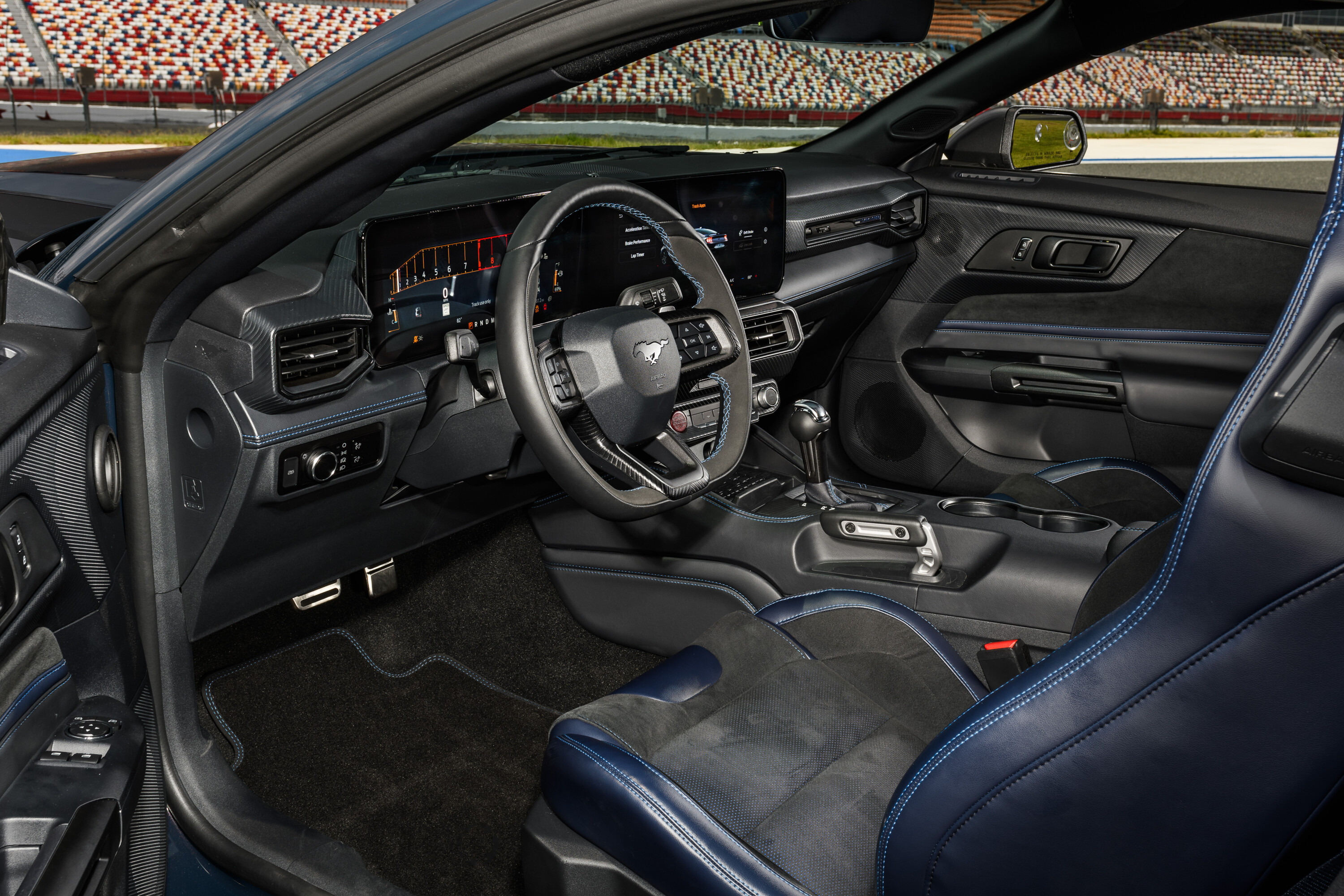
1
It means goodbye to the previous model’s physical toggle switches and climate control buttons, which weren’t great quality but were less distracting than using a touchscreen.
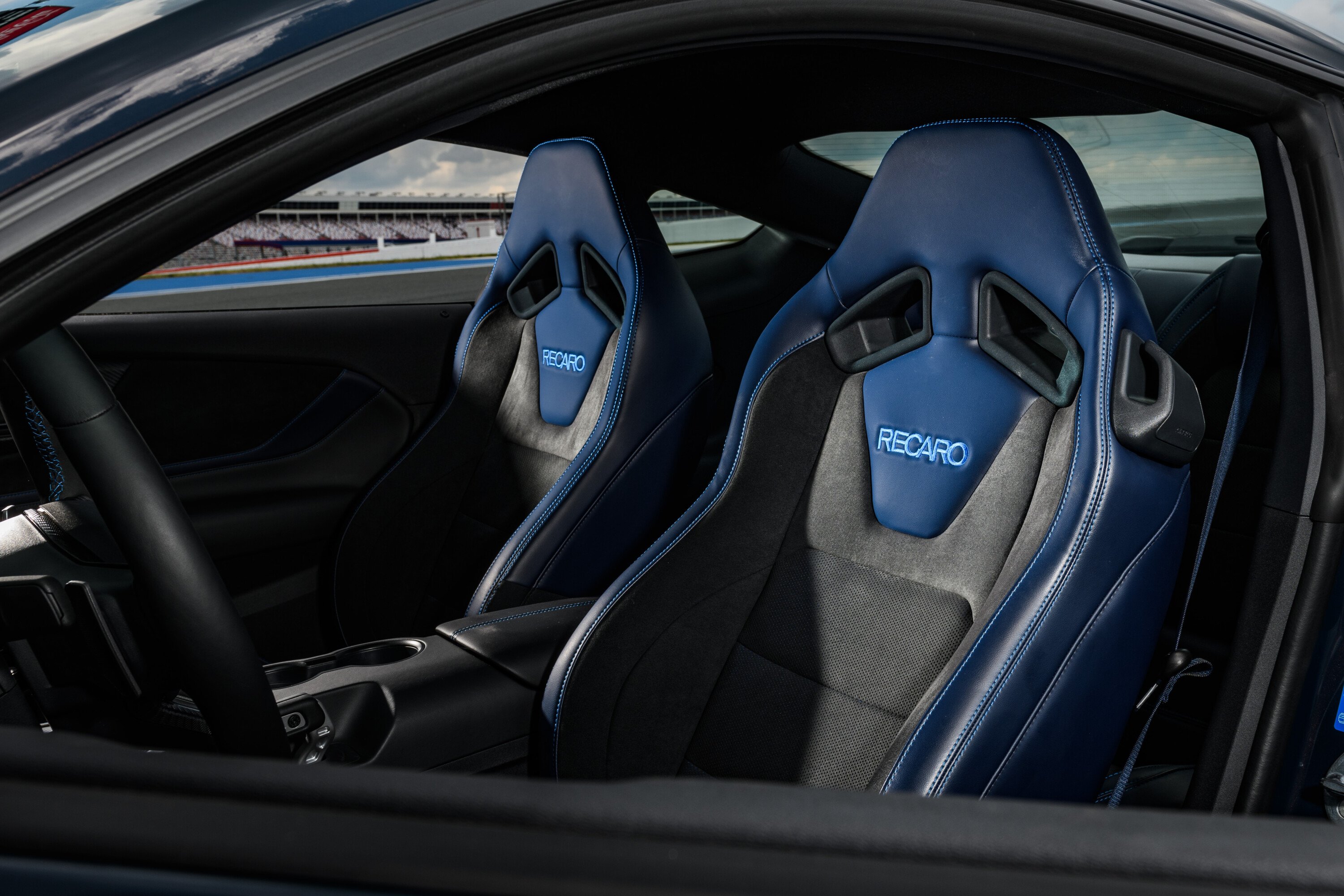
Dark Horse Mustangs come with a singular interior colour called Indigo Blue, whereas the GT adds orange and red cost-option colours to the standard black or grey cabins.
That’s matched with Indigo Blue stitching and an anodised blue titanium gear shifter ball for manual versions or anodised metallic paddles for the automatic.
2
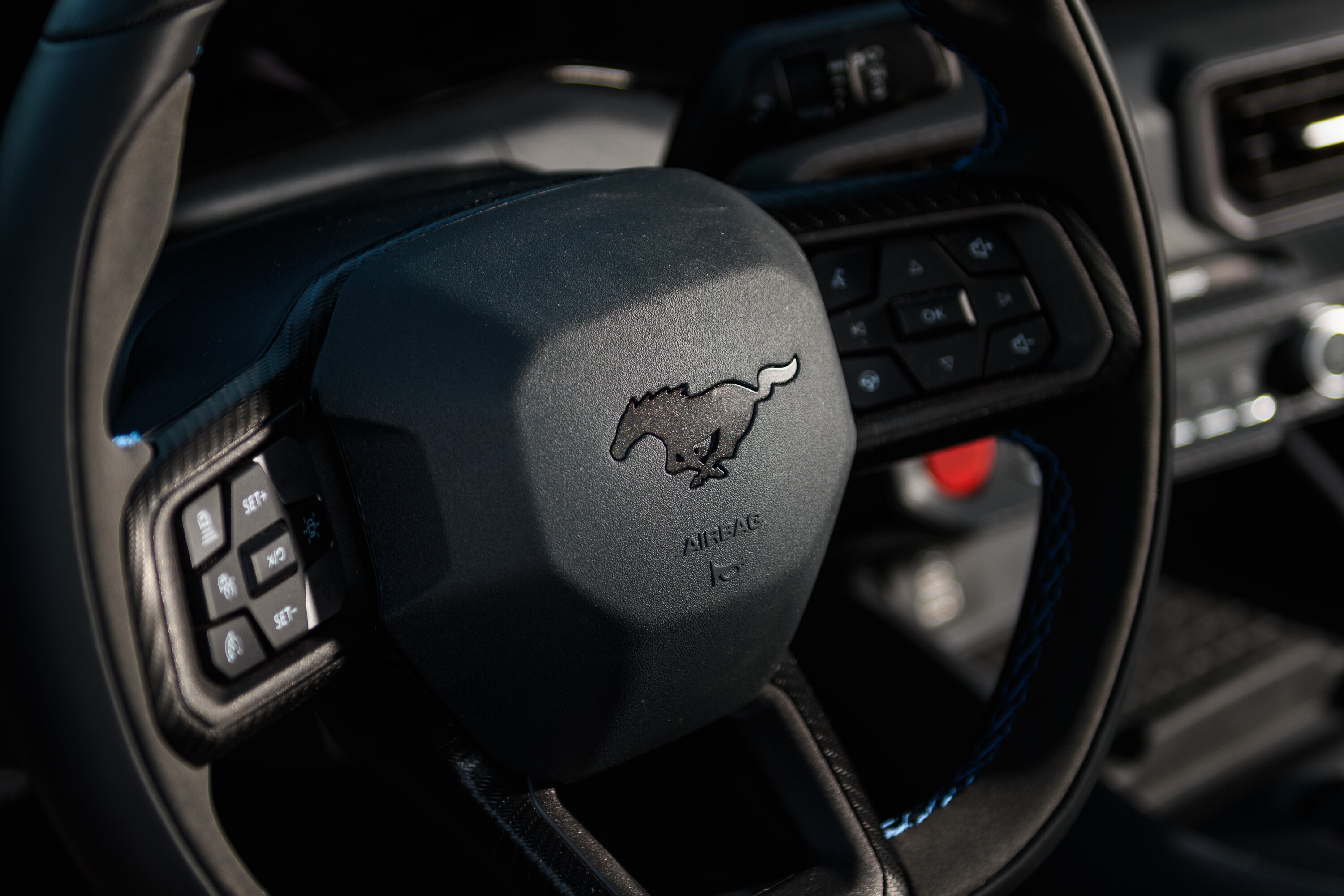
A flat-bottom leather steering wheel includes a suede insert and a heating function.
Recaro seats with Indigo Blue bolsters and a Dinamica suede centre are optional.
Plus-two seating continues in the rear – and remains a place exclusively for kids or bags rather than adults.
The Mustang’s interior looks more modern with its digital screens, though materials and switchgear quality around the cabin don’t feel like a major step forward; on closer inspection, there’s still a perception of budget limitations.
Storage is improved, not least with the introduction of somewhere proper to put your smartphone – and the tray includes wireless charging.
1
What is the new Mustang like to drive?
We’ll start with the V8, as it’s such a pivotal part of the Mustang experience.
Bark-starting into a rumbling idle, the V8 is a sonically delightful thing – purring on light throttle yet fiercely rasping under heavier load.
A Quiet mode is available among four choices for the active exhaust, for when you don’t want to upset your neighbours when going for an early morning drive or you want less drone on the freeway.
The Dark Horse’s V8 is mated to a Tremec six-speed manual that has a better reputation for durability than the Getrag unit in the GT (still subject of a class action in the US). A 10-speed auto is again offered as an alternative.
1
Like before, the gearing is tall, even with the tighter ratios that the Tremec brings over the GT’s Getrag manual. Sixth is an overdrive ratio, of use only on freeways.
Third gear is often the weapon of choice for back roads, an elastic ratio that plays to the best of the engine’s torque in the middle rev range for strong, surging response.
Maximum torque of 567Nm doesn’t arrive until 4900rpm.
1
Although there’s little need to use the gearbox excessively, it is satisfying to use in conjunction with the tractable 5.0-litre V8.
The Tremec has a shorter throw than the Getrag, there’s a perfect heft to the action, and a rev-match function – which can be switched off – imitates heel’n’toeing by auto-blipping the throttle on downshifts. The clutch pedal’s weighting feels equally spot-on.
Of the four different digital cluster layouts available with the new Mustang, our preference was the Track display that features a large, horizontal tachometer, along with prominent gear selection.
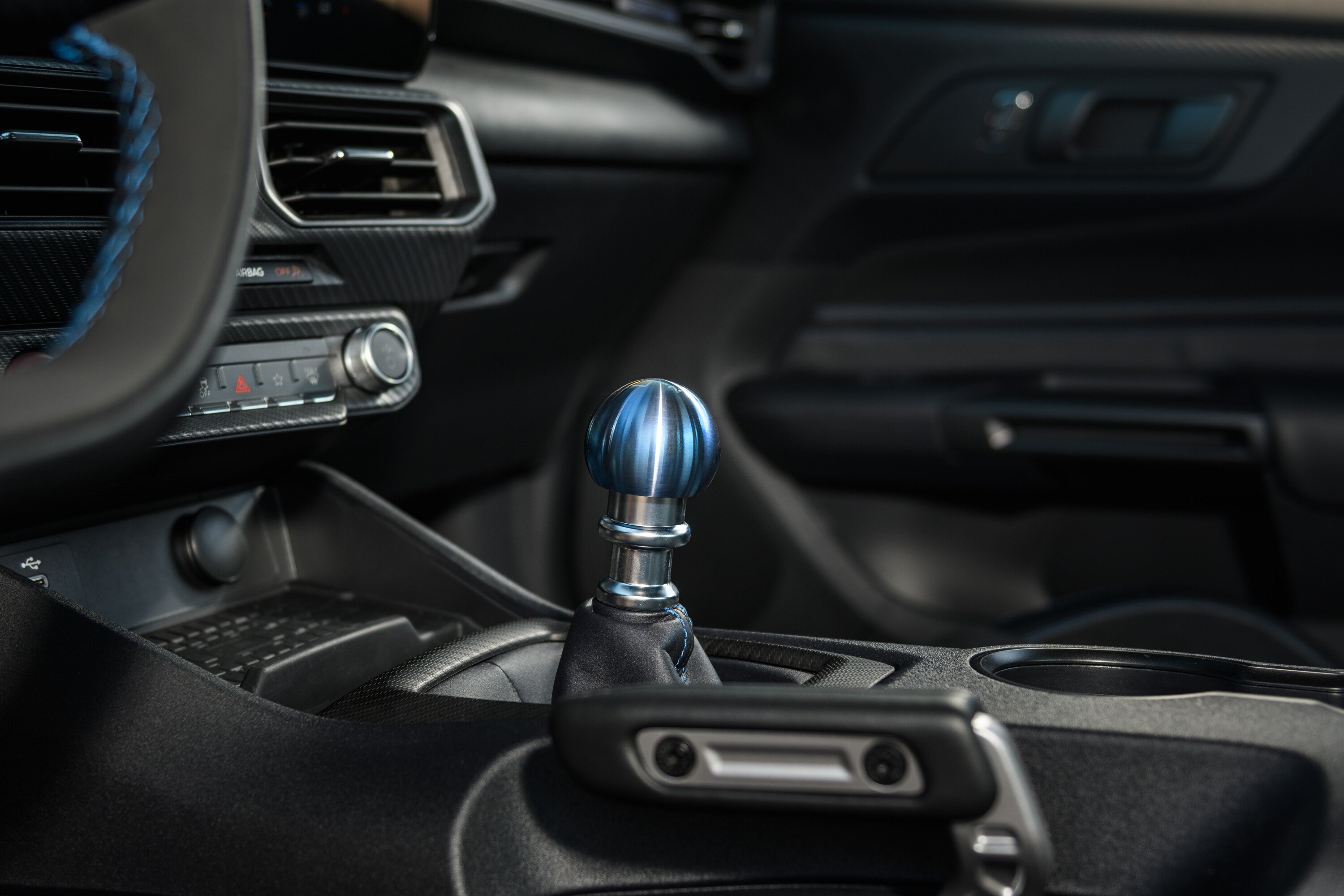
1
Ford’s engineers also worked on making improvements to the Mustang’s steering, and successfully it turns out. The steering is more linear, it’s more direct, and less vague than before.
And in Dark Horse spec, at least, the Mustang feels like a better-balanced sports car. Not only does it turn in more responsively, but leaning on the car mid-corner also doesn’t leave you second-guessing the rear end’s intended behaviour. It feels much more planted.
MagneRide dampers can be stiffened or softened via drive modes selected using a steering wheel button.
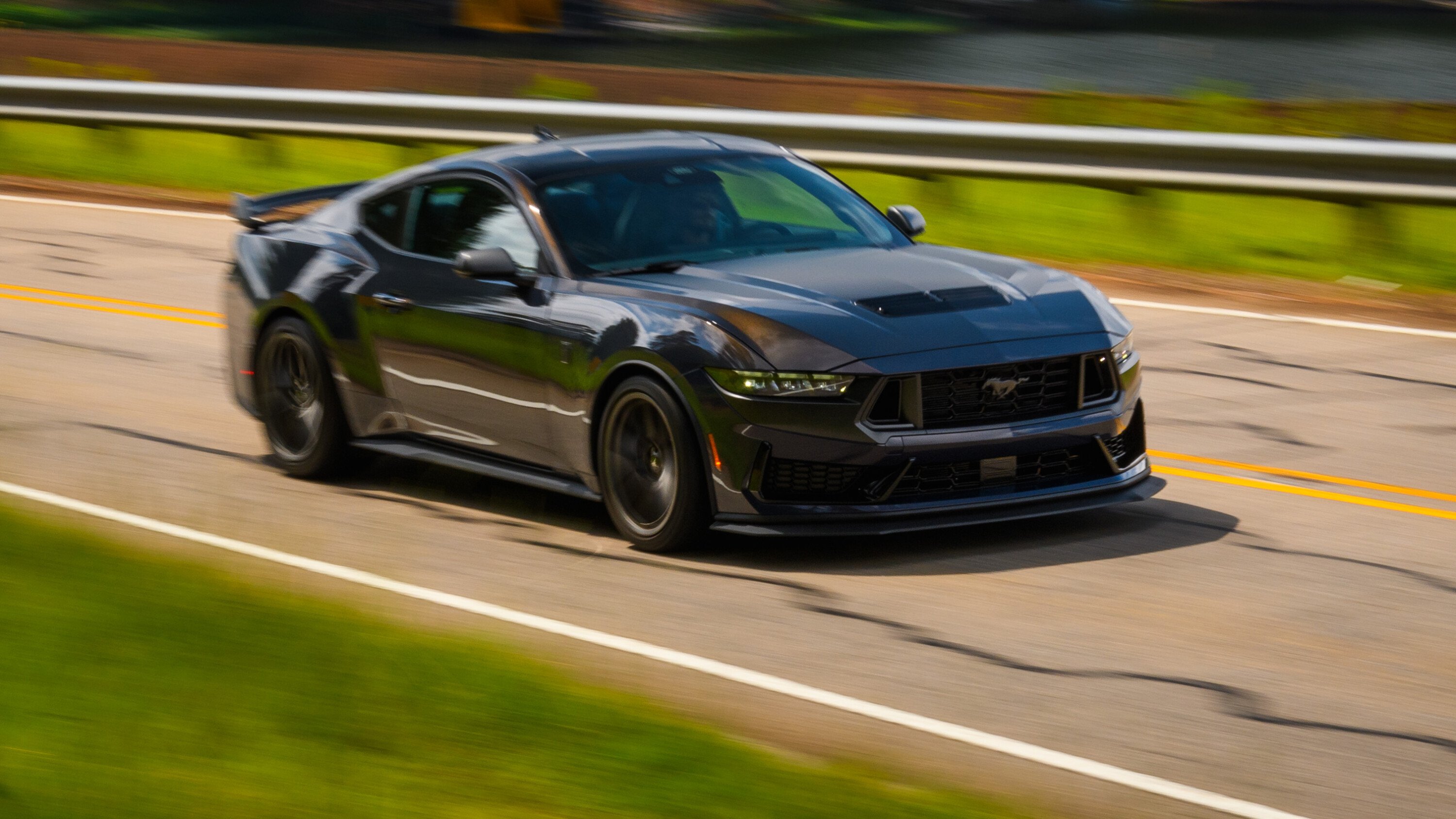
1
The Normal, Sport and Track modes also influence steering, drivetrain and stability control characteristics.
In either Normal or Sport, the Mustang’s damping works well on the road, soaking up bumps and bringing extra compliance compared with the last Mustang we drove, the California GT.
Even after several hours in the saddle, the Ford never felt tiresome. Only towards the end of one three-hour stint, and hitting some stop-start traffic, did thoughts drift to the optional 10-speed auto.
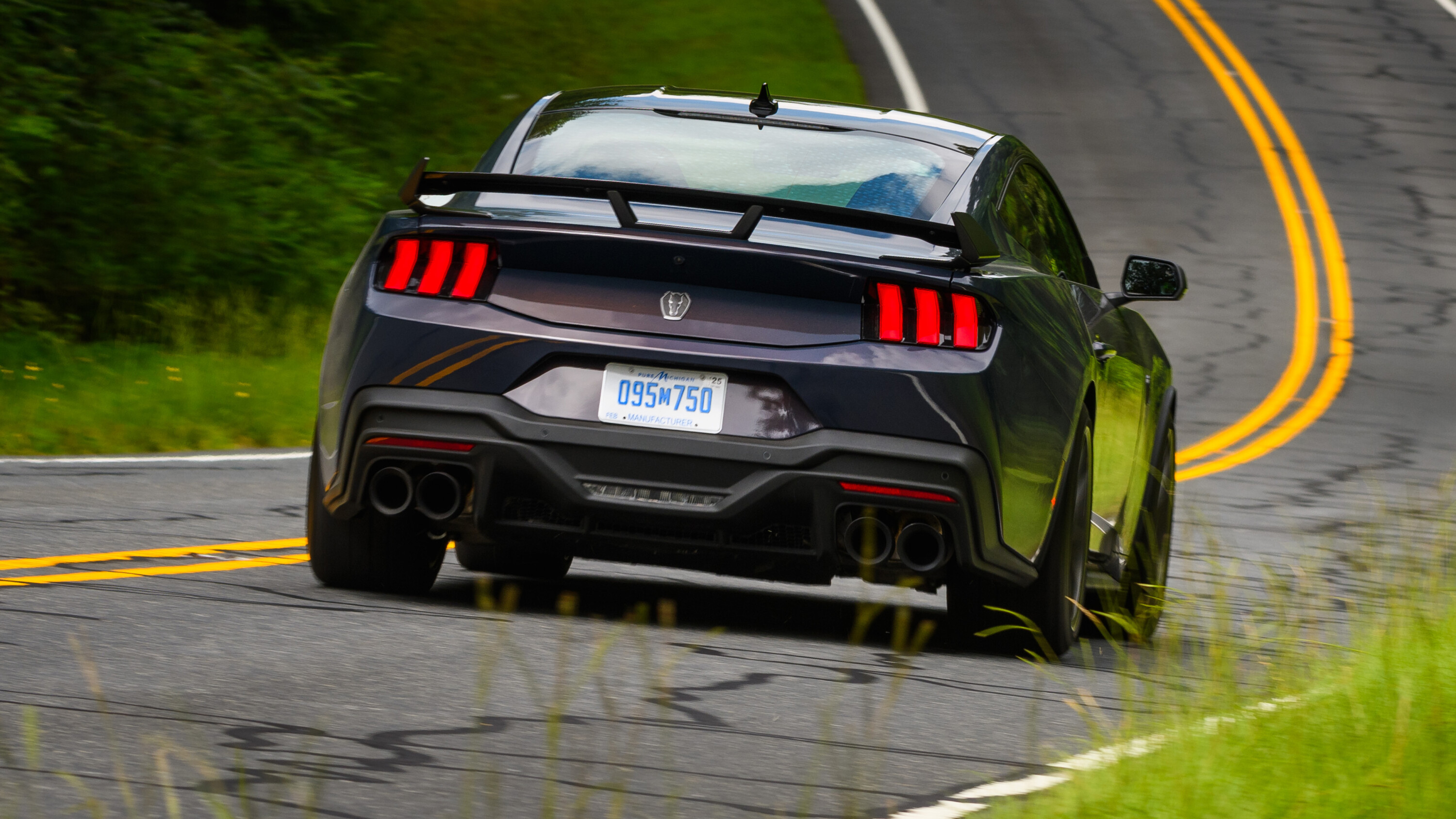
1
The optional Recaro seats fitted to our test car were surprisingly comfortable considering their lateral support isn’t insignificant.
An optional Handling Package brings wider, lower-profile semi-slick tyres and beefed-up suspension, but the on-road result is a firmer ride with almost constant tramlining.
Ford isn’t bringing this option to Australia, which might be disappointing for those keen to take their Mustang Dark Horse to a circuit.
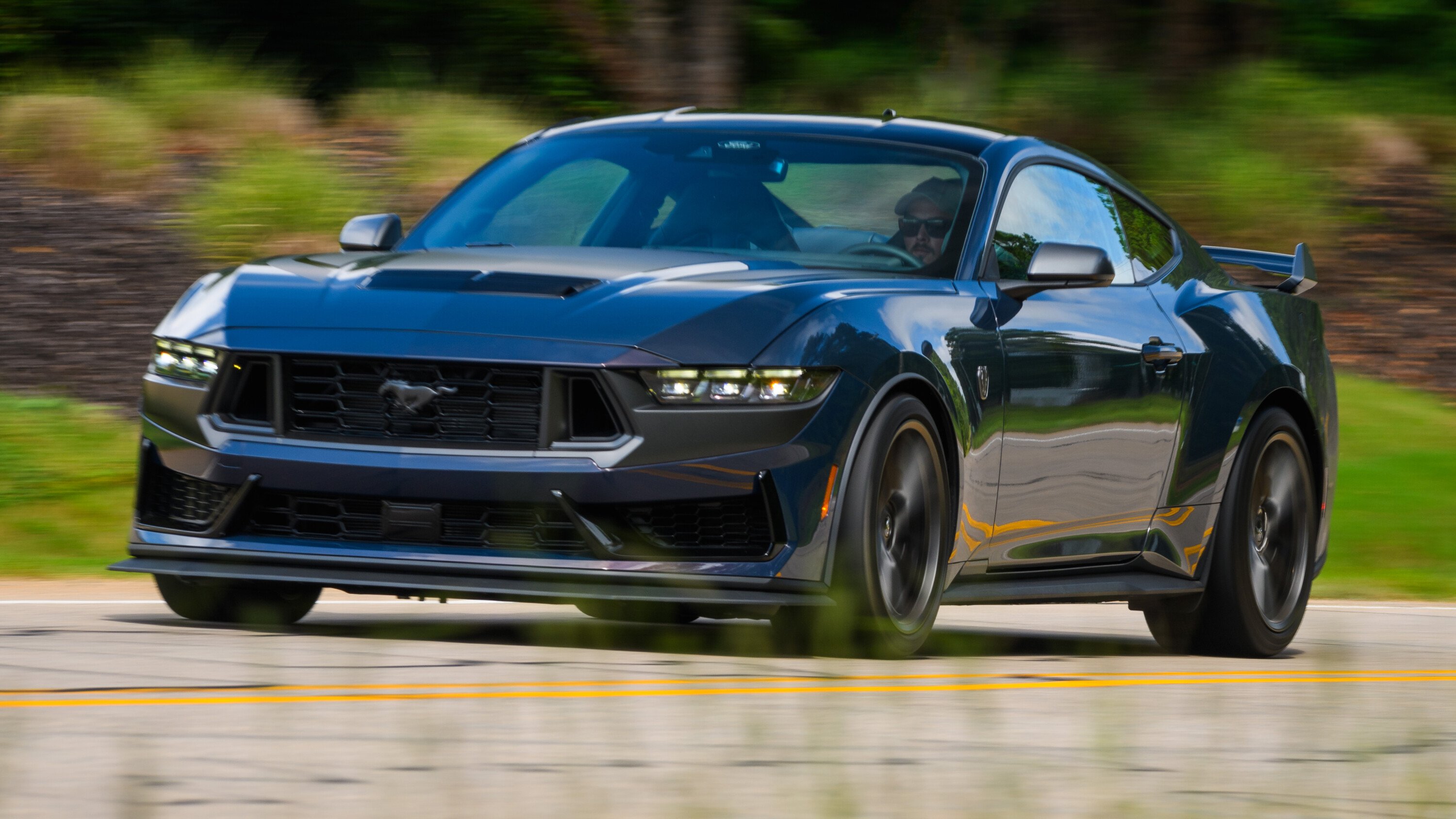
1
It’s fun on a race track, then?
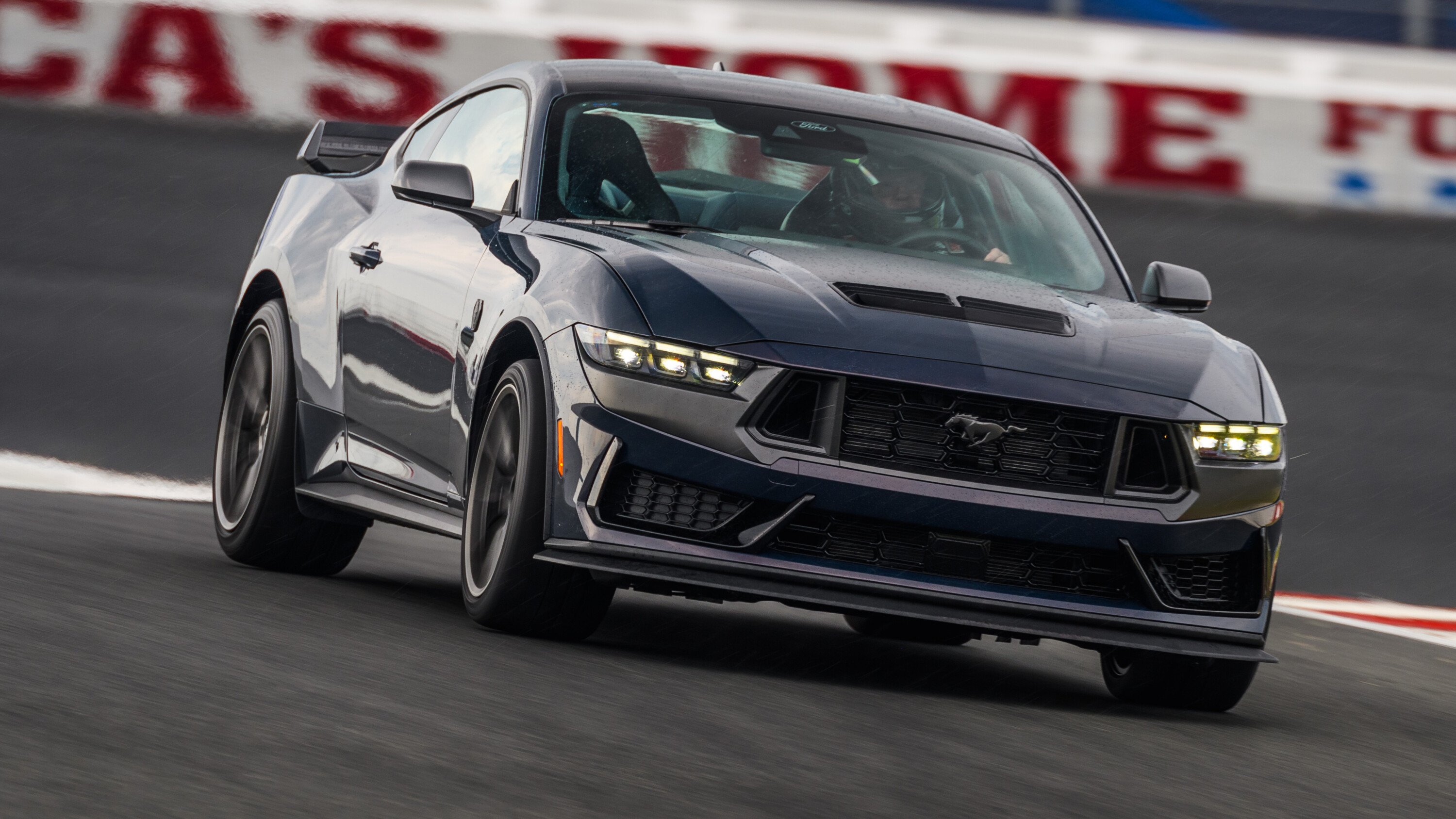
Ford describes the Dark Horse as its most track-capable 5.0L V8 Mustang yet, and it was hard to disagree when we took the top-spec muscle car for some thrilling laps around the Charlotte Motor Speedway Roval in North Carolina.
The Dark Horse’s Brembo brakes – now electronically rather than vacuum boosted – proved to be superb with their strong, progressive stopping power from high speed, while the incredible banked oval section of the lap was the perfect opportunity to sample the new no-lift shift function.
With at least 90 per cent throttle and more than 5000rpm on the tacho, the function allows the driver to shift up while keeping the accelerator pedal pinned.
It saves a fraction of time in the gear change process, though it’s most effective for making smooth shifts that won’t upset the car’s composure mid-corner.
1
Disappointingly, we didn’t get to try one of the Mustang’s other new party tricks – an electronic drift brake lever (though this feature is looking doubtful for Australia)
While a regular Dark Horse is enjoyable to drive fast on a track, an optional Handling Pack we sampled brings even stiffer springs, beefed-up MagneRide damping, one-inch-wider (10.5in) wheel rims, and a larger rear anti-roll bar. The biggest contributor to faster lapping was a set of wider, semi-slick Pirelli P Zero Trofeo RS tyres that increased grip levels significantly.
Although Ford Australia isn’t going to offer this package, we hear local Mustang specialist Herrod Motorsport is set to import it as an aftermarket kit. Whether the kit would include the Trofeo RS tyres is another question.
Disappointingly, we didn’t get to try one of the Mustang’s other new party tricks – an electronic drift brake lever that will lock the rear wheels for old-school sideways fun.
1
How safe is the 2024 Ford Mustang?
The latest Mustang has yet to be crash-tested but there was a firm “no comment” from a senior Ford executive when Wheels asked if the company was confident there would be an improvement on the previous model’s three-star score.
Ford has increased the number of driver aids, though, with the additions of blind-spot monitoring, rear cross-traffic alert, and auto high-beam assist. A 360-degree camera is optional in the US.
1
How much will it cost?
The new Ford Mustang is due to reach Australia in early 2024 – perfectly timed for what will be the 60th anniversary of the Blue Oval’s pony car.
Ford Australia isn’t announcing pricing yet, but expect things to go north in line with the current industry trend. The entry EcoBoost model is likely to start closer to $60,000 than $50,000; US pricing suggests the Dark Horse could break the $100,000 barrier – costing more than the $99K, R-Spec local supercharged special.
1
FIRST VERDICT
Ford says that, as long as regulations allow it, the company will continue building a petrol-powered Mustang.
And that’s hugely welcome news because, for this latest generation, Ford has managed to teach its old pony some new tricks and make it an even better driver’s car.
MORE
Everything Ford
| 2024 Ford Mustang Dark Horse specifications | |
|---|---|
| Body | 2-door, 2+2 coupe |
| Drive | rear-wheel |
| Powertrain | 5.0L naturally aspirated petrol V8 |
| Power | 373kW @ 7250rpm |
| Torque | 567Nm @ 4900rpm |
| 0-100km/h | not quoted |
| Transmission | 6-speed manual or 10-speed auto |
| Weight | 1791kg |
| Boot space | 382 litres |
| Front suspension | struts |
| Rear suspension | multi-link |
| L/W/H | 4818/1918/1402mm |
| Wheelbase | 2718mm |
| Price | TBC |
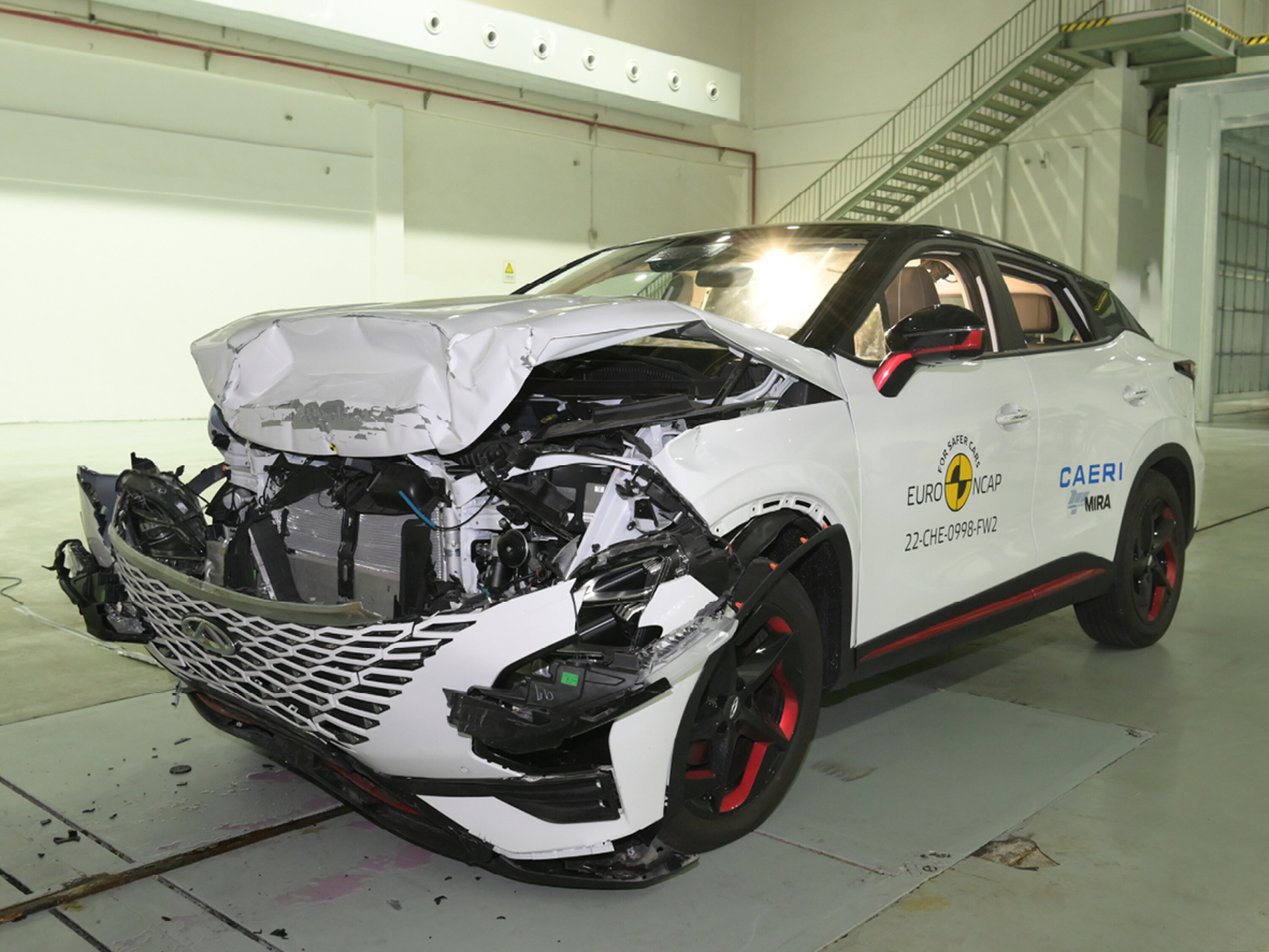
The 2023 Chery Omoda 5 small SUV has received a five-star ANCAP safety rating.
This rating is based on testing conducted by Euro NCAP last year, applied under the 2020-22 criteria.
ANCAP has yet to publish vehicle results under more-stringent criteria introduced in 2023, as the first vehicles tested to the new standards in Europe are not due to be sold in Australia.
The score applies to all variants of the Omoda 5 currently available in Australia, which feature a 1.5-litre turbo-petrol engine, a CVT automatic transmission, and front-wheel-drive.
1
It scored 87 per cent for adult occupant protection, 88 per cent for child occupation protection, and 68 per cent for vulnerable road user protection.
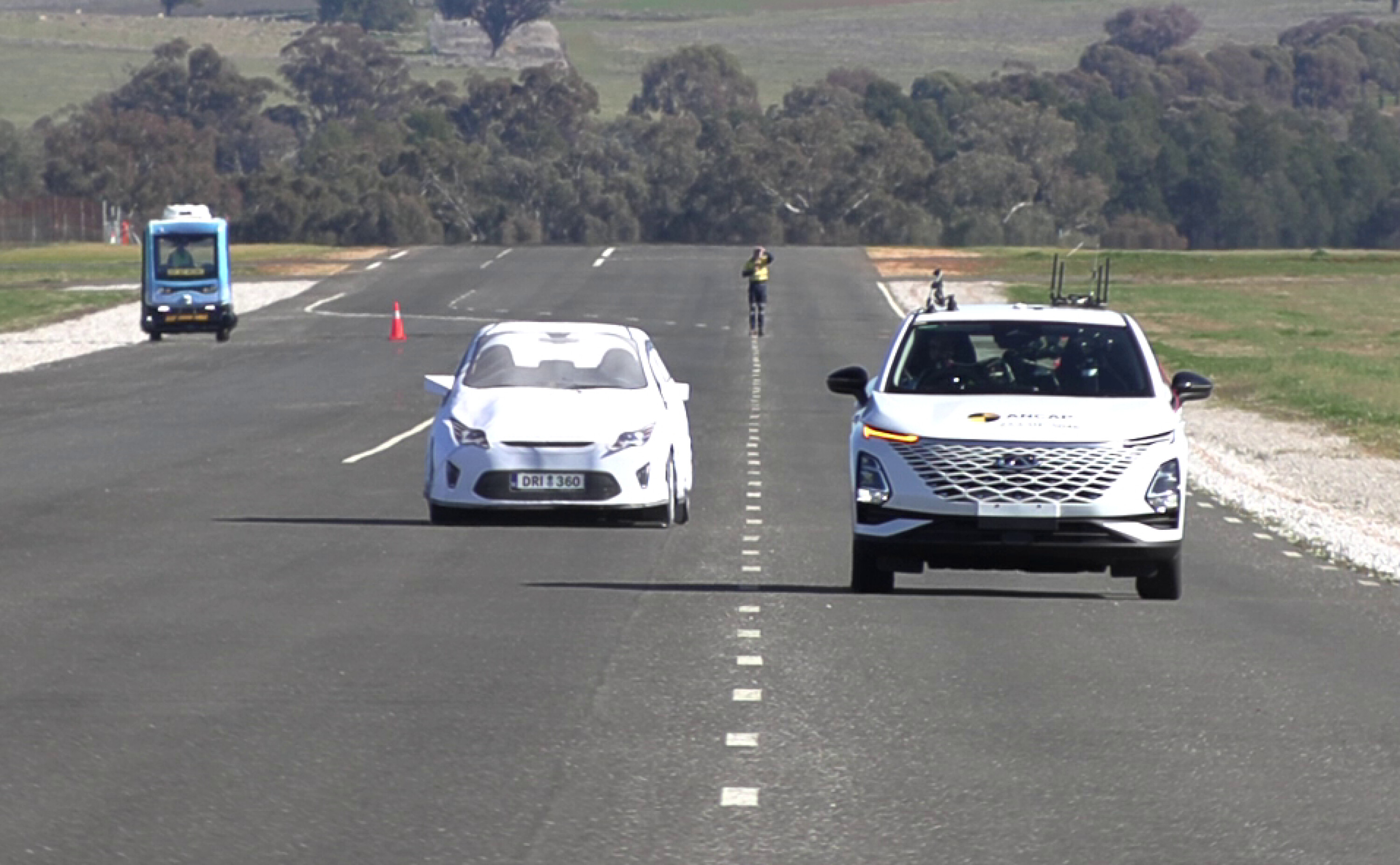
Following software revisions applied to the lane-keep assist system to address media and customer concerns for Australian-spec vehicles, ANCAP conducted an audit test and found the updated local vehicle “did not respond in a small number of emergency lane keeping test scenarios”.
The difference in the Omoda 5’s lane-keep assist performance resulted in its safety assist score being reduced to 83 per cent – down from 88 per cent in Euro NCAP testing.
1
“This five-star ANCAP safety rating for the Omoda 5 is a marked improvement on the results seen by Chery’s original market entrants a decade ago,” said ANCAP chief executive officer, Carla Hoorweg.
“Chery has made significant strides to reach the five-star standard and we encourage them to continue to refine and improve the performance of their vehicles with future new models and model updates.”
The last Chery vehicles assessed by ANCAP were tested under much less-stringent criteria in 2011, with the J1 light hatch – once Australia’s cheapest vehicle – scoring three stars and the J11 small SUV receiving two stars.
VFACTS new-car sales data reveals 1612 examples of the Chery Omoda 5 have been sold in Australia since the brand re-launched at the start of 2023, outselling the Skoda Kamiq (984) and Honda HR-V (908) to the end of June.
Australia’s top-selling small SUV, the Chinese-built MG ZS, has a four-star ANCAP safety rating from testing conducted in 2017.
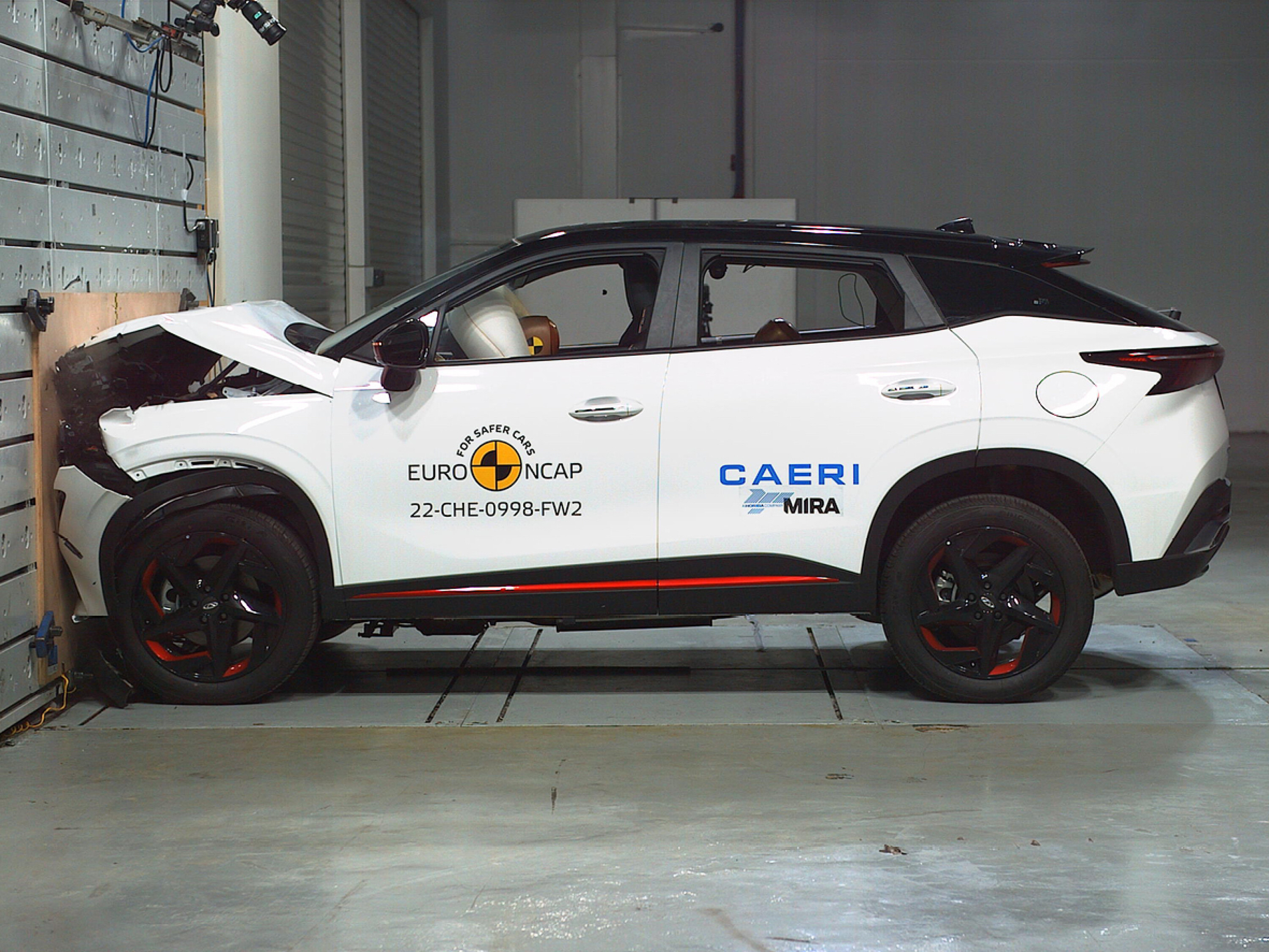
The Chery Omoda 5 has seven airbags: dual frontal, side chest, side head, and front-centre.
1
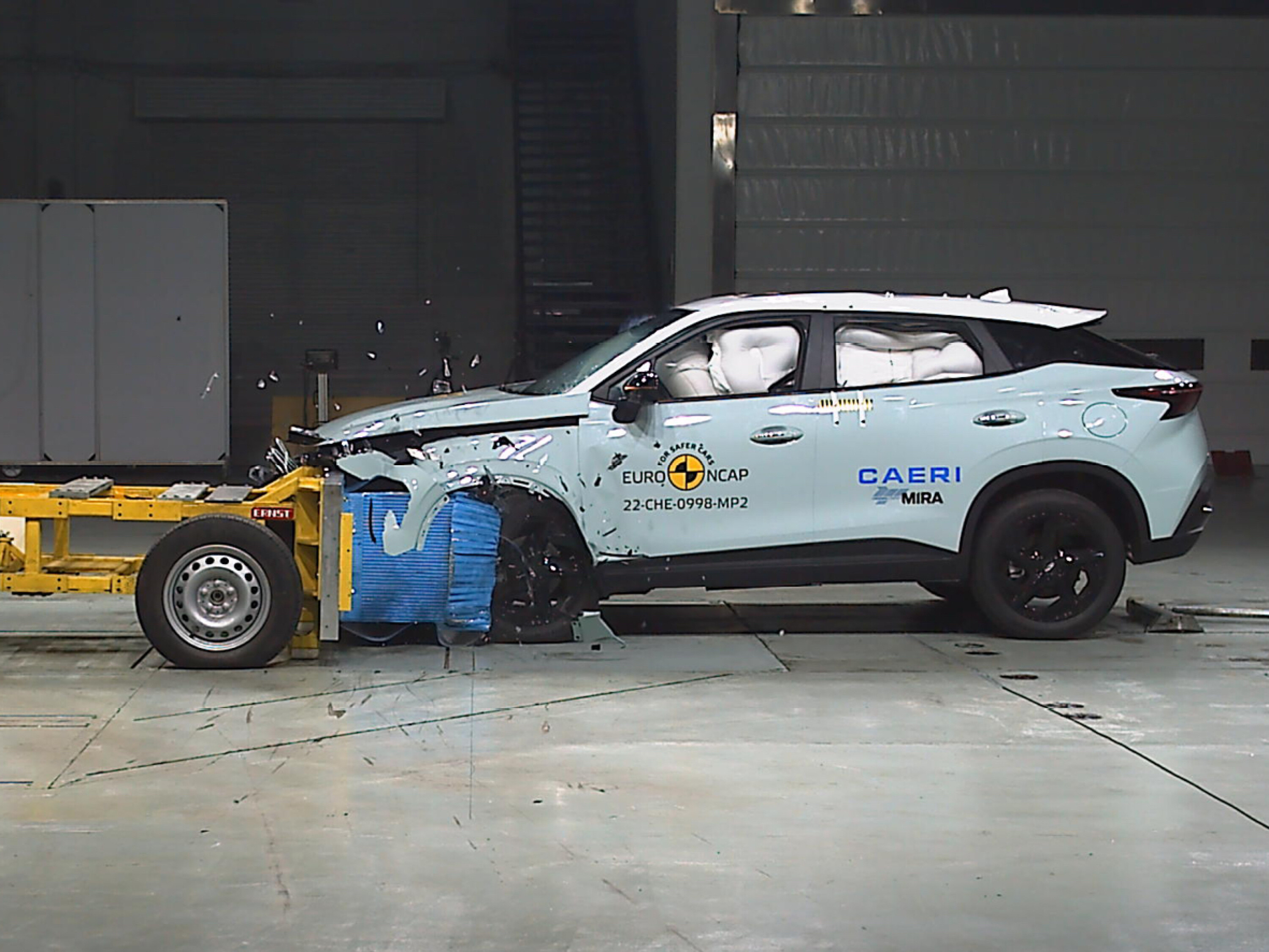
In crash testing, the Omoda 5 received ‘good’ and ‘adequate’, with “sound” results for protecting occupants in frontal-offset and side-impact crashes.
ANCAP noted concerns that hard elements in the lower dashboard could be a “potential source of knee injury risk to occupants to occupants of different sizes to that of the driver and front passenger test dummies,” with penalties applied.
In addition, the side curtain airbag was found to “not open as intended” in frontal-offset and oblique pole testing, with an ‘adequate’ rating applied for driver’s head protection.
1
ANCAP commended the Omoda 5 for having “one of the best scores recorded for vehicle-to-vehicle compatibility”, which assesses the risk to occupants of oncoming vehicles in a crash, with a small 0.43-point deduction applied.
| 2023 Chery Omoda 5 active safety features | |
|---|---|
| Autonomous emergency braking (vehicle, pedestrian, cyclist, junction, reverse) | Traffic sign recognitionu00a0 |
| Lane-keep assist | Intelligent speed limit assist |
| Lane departure warning | Multi-collision braking |
| Blind-spot alert | Driver monitoring camera |
| Rear cross-traffic alert | Adaptive cruise control.u00a0 |
The 2023 Chery Omoda 5 is priced between $29,900 and $32,900 before on-road costs.
MORE
Everything Chery
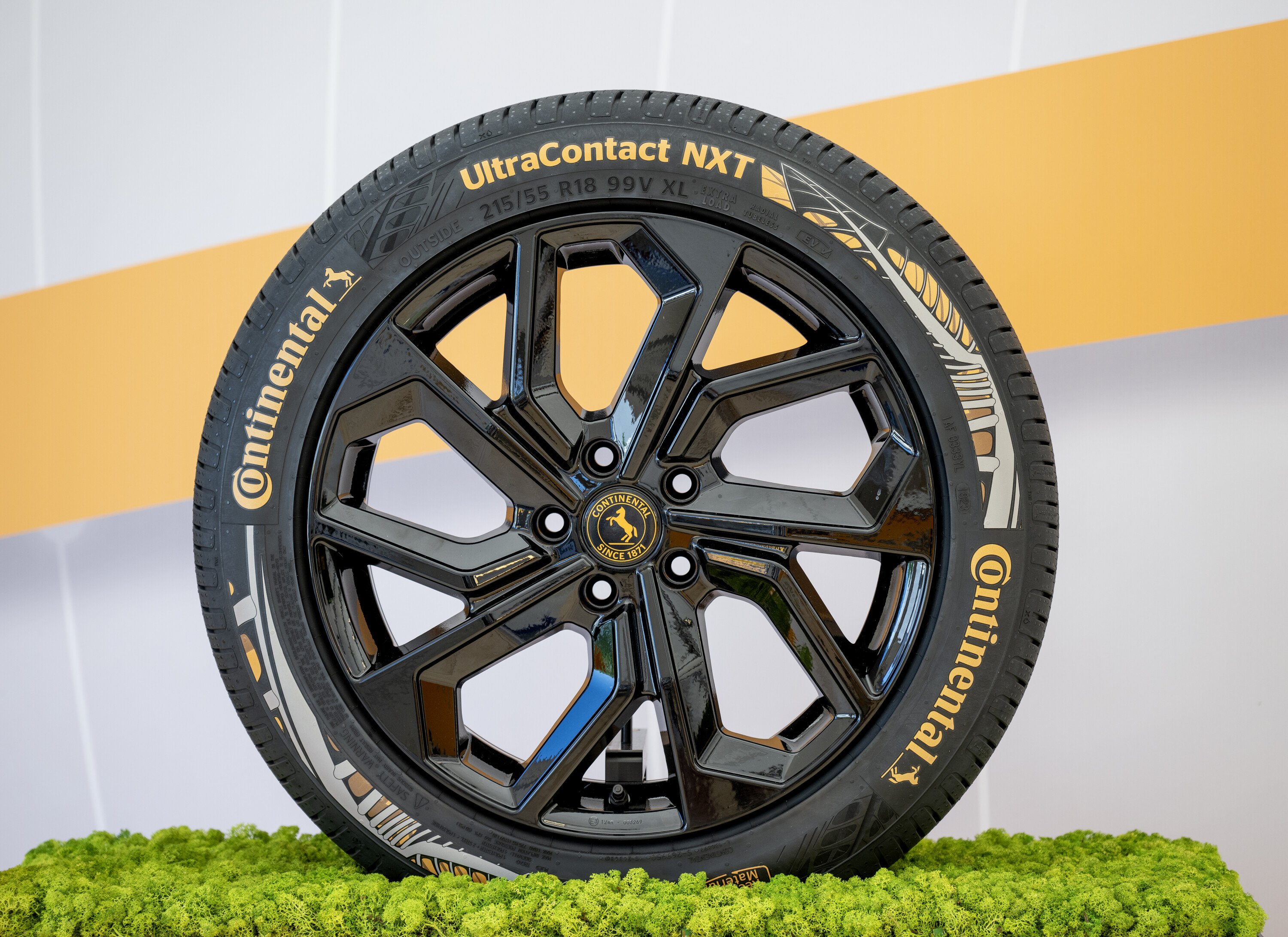
Continental has released its most environmentally-friendly tyre yet, claiming 65 per cent sustainable materials used in the UltraContact NXT’s construction. Available overseas now, Continental Australia is finalising details for local release of its EV and hybrid-focused tyre.
“The Continental UltraContact NXT represents our most sustainable tyre to date – a remarkable testament to the excellence and innovation of our engineers. At Continental, the principles of safety, performance and sustainability are naturally intertwined. The UltraContact NXT reflects our commitment to safety and sustainability in the industry”, said Mitchell Golledge, head of Continental Tyres APAC East region.
The UltraContact NXT has the highest mix of sustainable materials of any mass-market tyre, beating main rival Michelin’s attempt from October 2022 when the French manufacturer claimed 45 per cent sustainable materials in their tyres’ construction.
Designed with electric vehicles and hybrids in mind, Continental spruiks the UltraContact NXT as having low rolling resistance and excellent tread longevity thanks partially to its Yellow Chilli rubber compound.
3
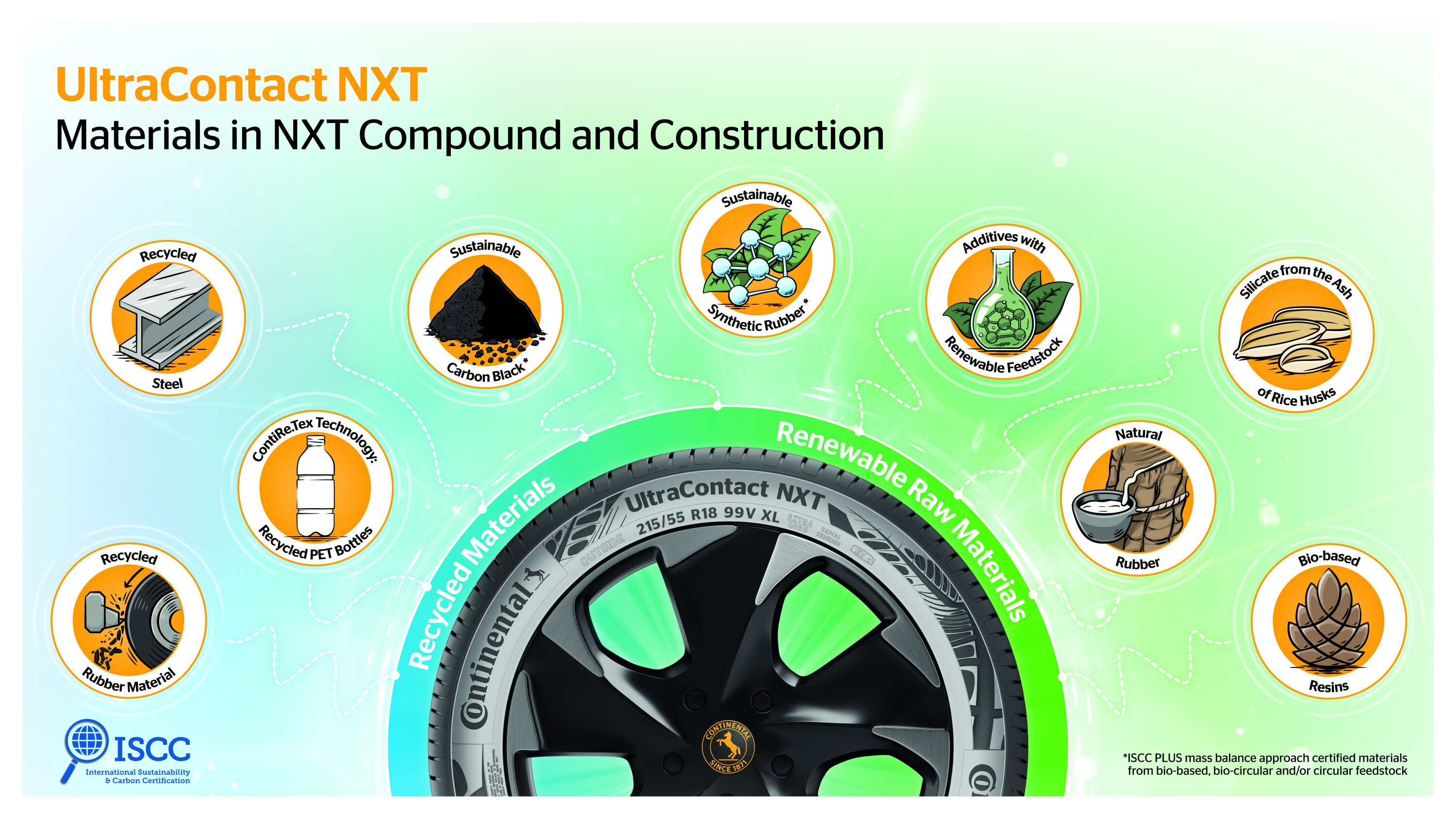
Helping it reach such a highly sustainable material mix are the 32 per cent renewable materials involved in the construction, such as bio-based silicon made from agricultural waste to improve grip, and naturally-occurring rubber.
There’s a difference between renewable and sustainable materials, Continental defines the latter as “materials that originate from closed-loop cycles, have no harmful effects on people or the environment, and are responsibly sourced as well as climate-neutral across their entire supply chains.”
Renewable materials, however, are those that (theoretically) will never run out, defined as those that are regrown at a pace equal to or higher than consumption.
1
The tyre’s carcass is constructed with large amounts of recycled steel and rubber fibres, while ‘CotiRe.Tex’ polyester fibres offer more rigidity and are made from recycled PET bottles – these being considered sustainable materials.
The UltraContact NXT marks the first step in Continental’s journey to using beyond 40 per cent renewable and recycled material in its tyres by 2030, with an eventual goal of 100 per cent by 2050.
This tyre is also a crucial step for impending Euro 7 emissions mandates that are focused on minimising particulate fall-out, drive-by noise, low rolling resistance and sustainable production.
The updated 2024 Mazda CX-5 mid-size SUV has been announced overseas, with local details expected in the coming months.
Snapshot
- 2024 Mazda CX-5 update announced
- Limited to more USB-C ports and a minor styling revision
- Local details unclear, expected in Australia in the coming months
Announced this week for the Canadian market, the updates applied to the CX-5 are minor as the second-generation family SUV approaches its seventh year of sale.
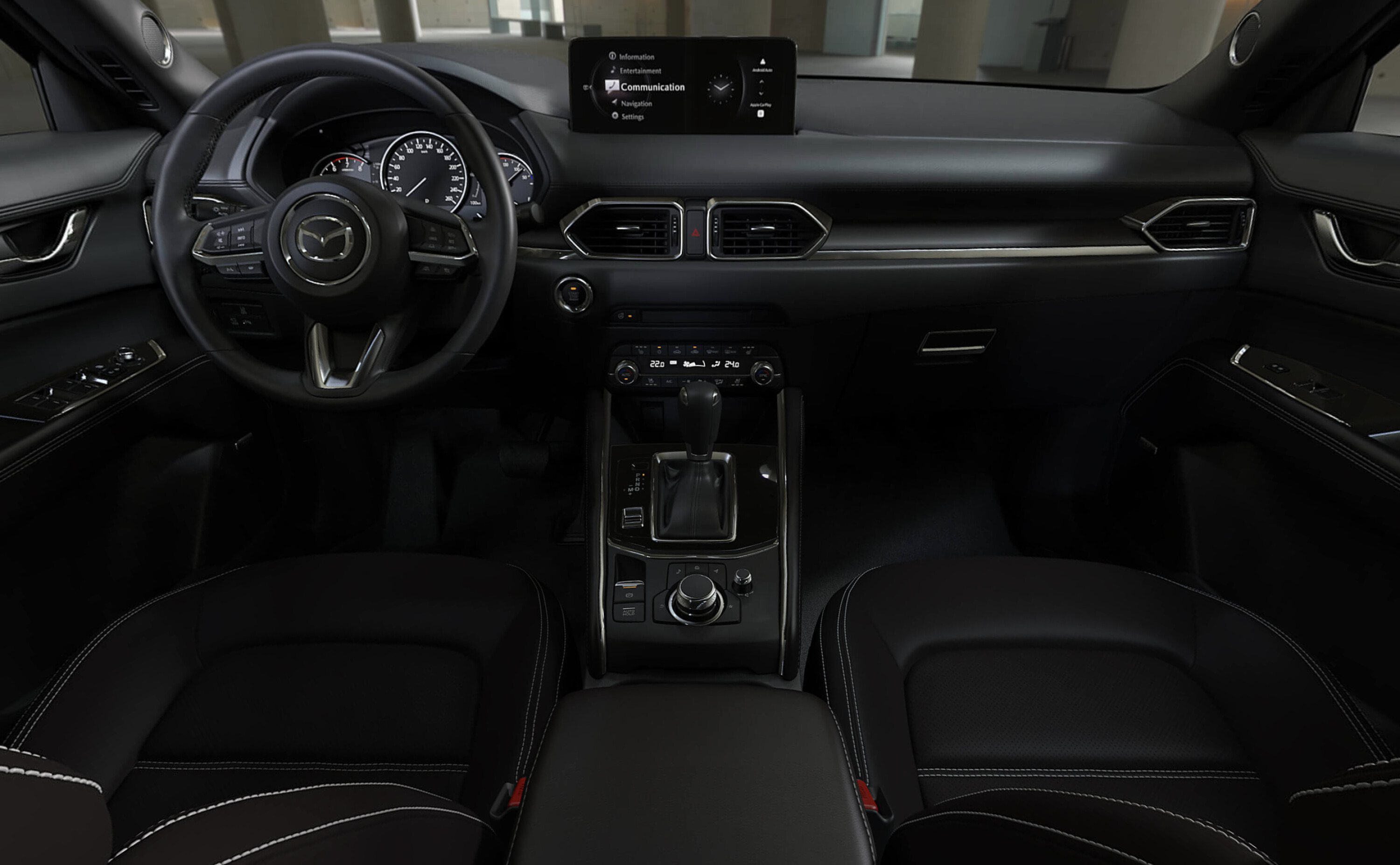
The updates are headlined by the addition of second-row USB-C charge ports, replacing USB-A outlets, an ‘off-road’ mapping function for the built-in satellite navigation, and touchscreen functionality when connected to Apple CarPlay and Android Auto.
While a Mazda Australia spokesperson was unable to comment on future model plans, precedent suggests it could arrive in local showrooms between November 2023 and March 2024, in line with the past five updates for the CX-5 since late 2018.
1
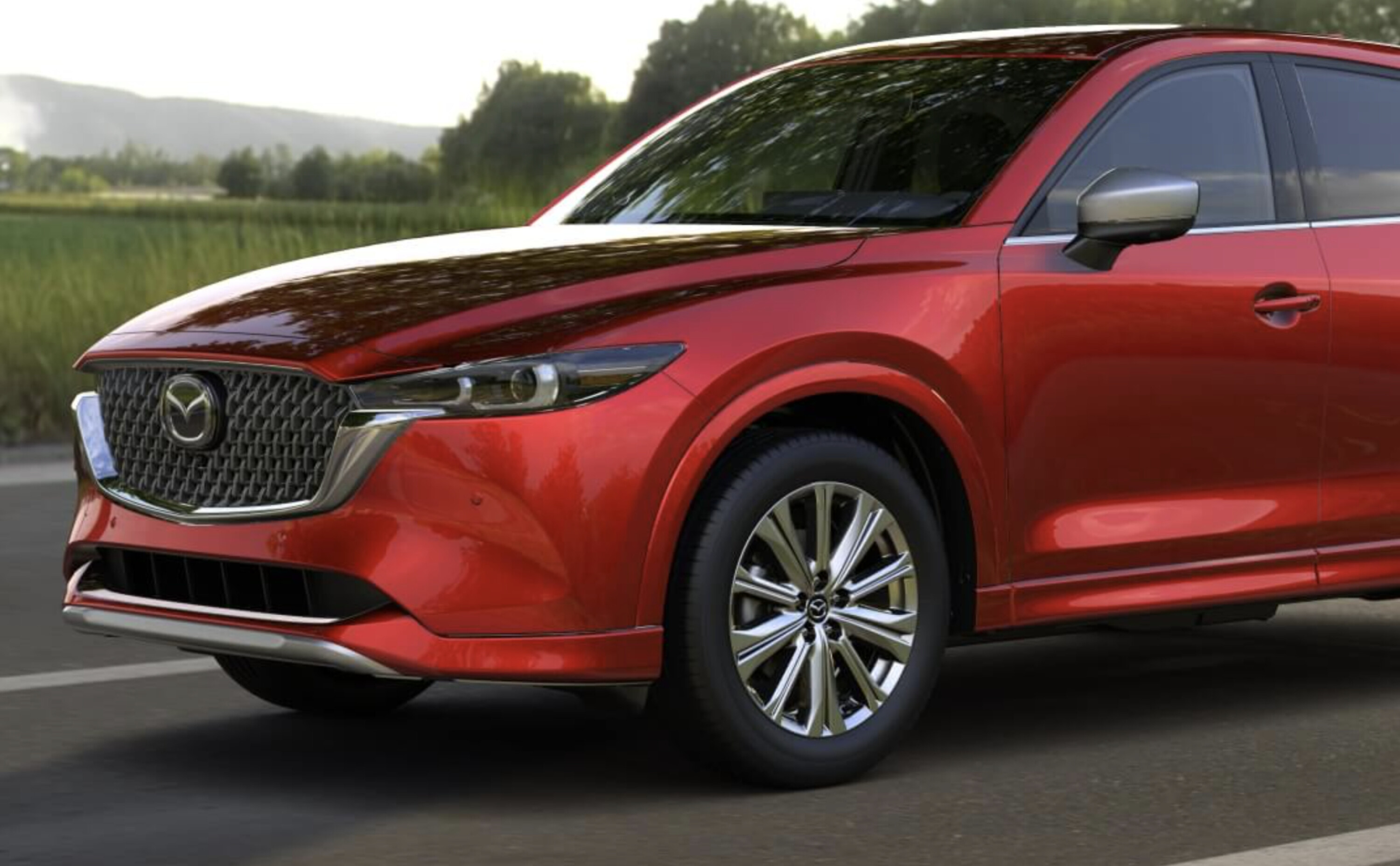
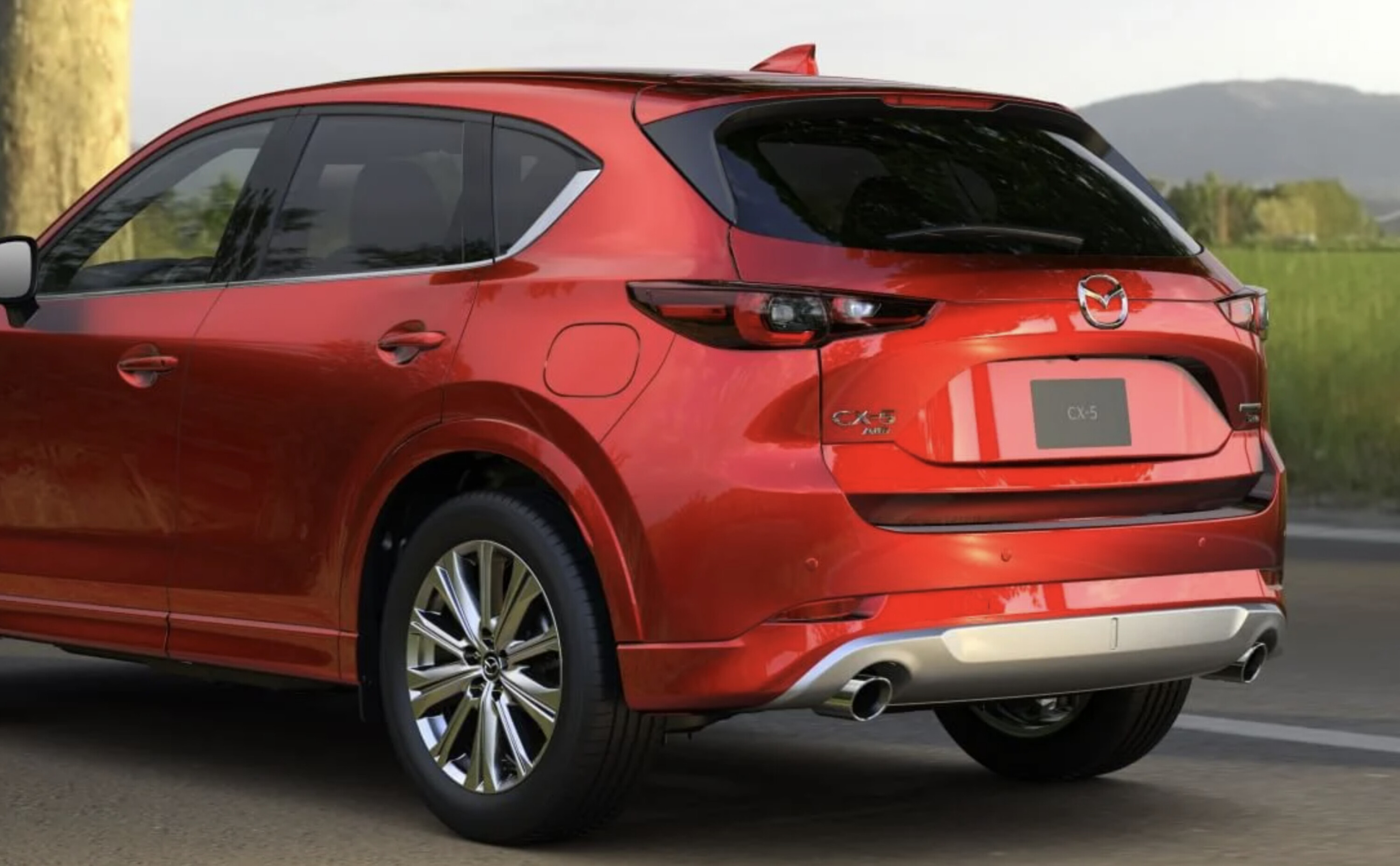
Other updates include a minor styling change for the Akera-equivalent Signature variant, matching the chrome look already seen on flagship variants of the related, three-row CX-8 in Australia.
This includes a new mesh-pattern grille finish similar to the more-premium CX-60 and chrome accents for the lower front and rear bumpers, while silver-painted side mirror caps and more-prominent white stitching for the brown Nappa leather upholstery are unique to the CX-5.
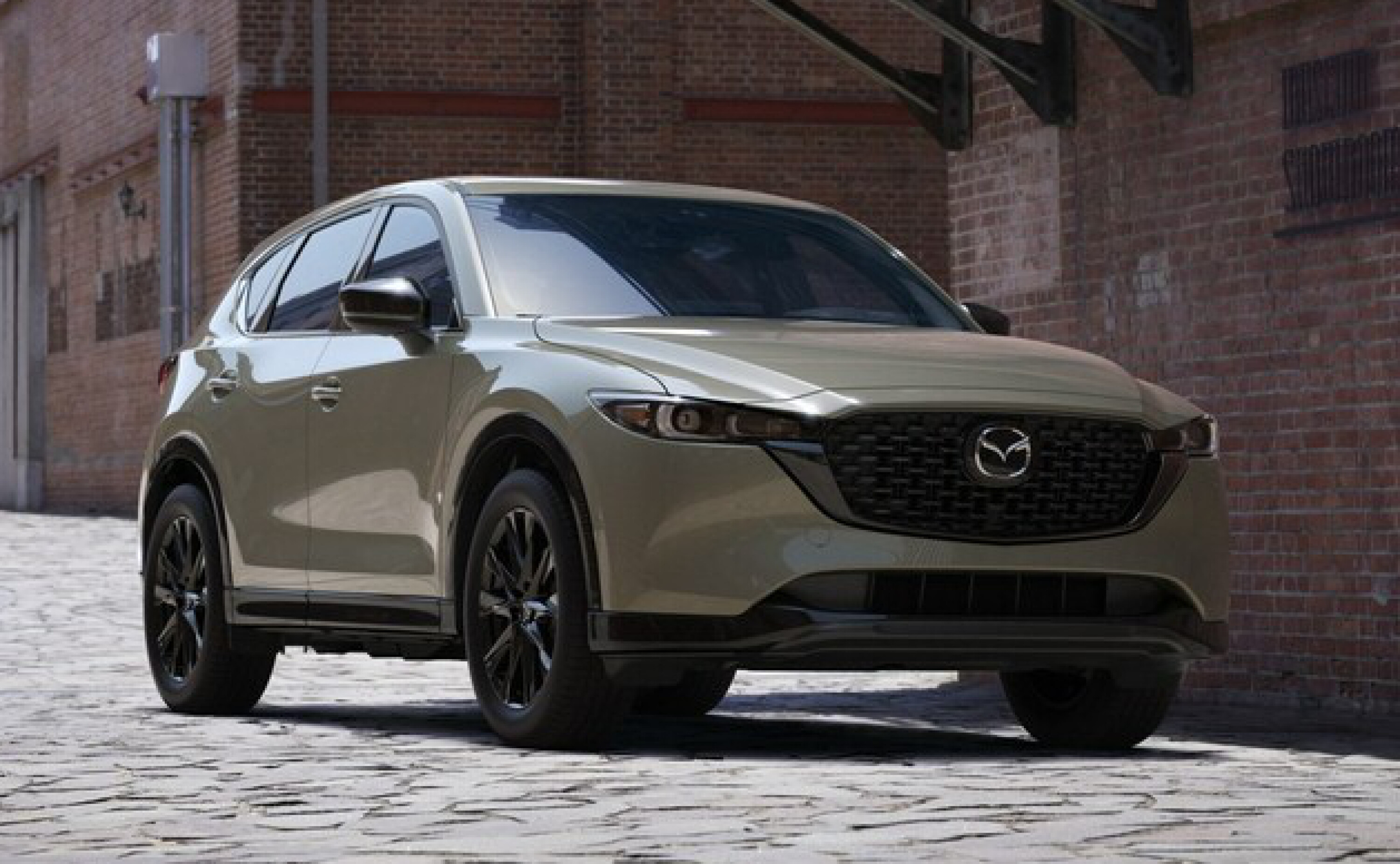
A brown-on-brown ‘suna’ or ‘carbon turbo’ variant similar to our blacked-out GT SP, but exclusively painted in ‘zircon sand’ with a new terracotta leather and black suede upholstery, is added for model-year 2024 overseas.
1
In addition, the GT SP-equivalent variant has lost its ‘classic red’ grille accent introduced for the mid-life facelift in 2022, while the naturally-aspirated 2.5-litre petrol engine has gone from 252Nm to 250Nm with a carryover 140kW – but both changes could be market-specific to North America.
For now, another market-specific update unlikely to feature in local CX-5 variants is mild-hybrid technology, which became available in Europe at the start of this year.
The mild-hybrid 2.0-litre naturally-aspirated petrol is fitted with cylinder deactivation, a belt-driven integrated starter-generator motor and a small 24-volt lithium-ion battery pack, resulting in a power boost to 121kW and 213Nm – up 6kW and 13Nm.
1
A nine-gram saving in combined CO2 emissions per kilometre and minor fuel consumption improvements are claimed.
The naturally-aspirated 2.5-litre petrol has similar fuel consumption reductions and a power boost to 143kW and 263Nm for the mild-hybrid version in Europe – up 3kW and 11Nm over current, non-hybrid Australian examples.
VFACTS new-car sales data reveals the Mazda CX-5 is the second-best-selling mid-size internal-combustion SUV in Australia to the end of June with 11,607 registrations – down 17 per cent compared to 2022.
1
This places the CX-5 behind the Toyota RAV4 (13,523) but ahead of the Mitsubishi Outlander (11,342), Hyundai Tucson (10,749), Subaru Forester (8321) and Kia Sportage (6584).
It is Mazda Australia’s top-selling vehicle, ahead of the BT-50 ute (9605), CX-3 light SUV (8030) and CX-30 small SUV (6098).
The updated 2024 Mazda CX-5 is expected to arrive in local showrooms between November 2023 and March 2024, with local details – including pricing and features – to be announced closer to the time.
Mazda has yet to announce details for the third-generation CX-5 due in the coming years, or if it will instead be superseded by an updated version of the CX-50 mid-size SUV offered overseas.
The not-for-Australia CX-50 will soon become available with a vital hybrid powertrain tipped to be shared with the Toyota RAV4, joining the familiar 2.5-litre non-turbo and turbo engines.
Mazda Australia’s marketing boss Alastair Doak told Wheels the CX-50 was “still on the wish list,” as it is currently limited to “left-hand drive production in Huntsville, [United States]” and China.
MORE
Everything Mazda
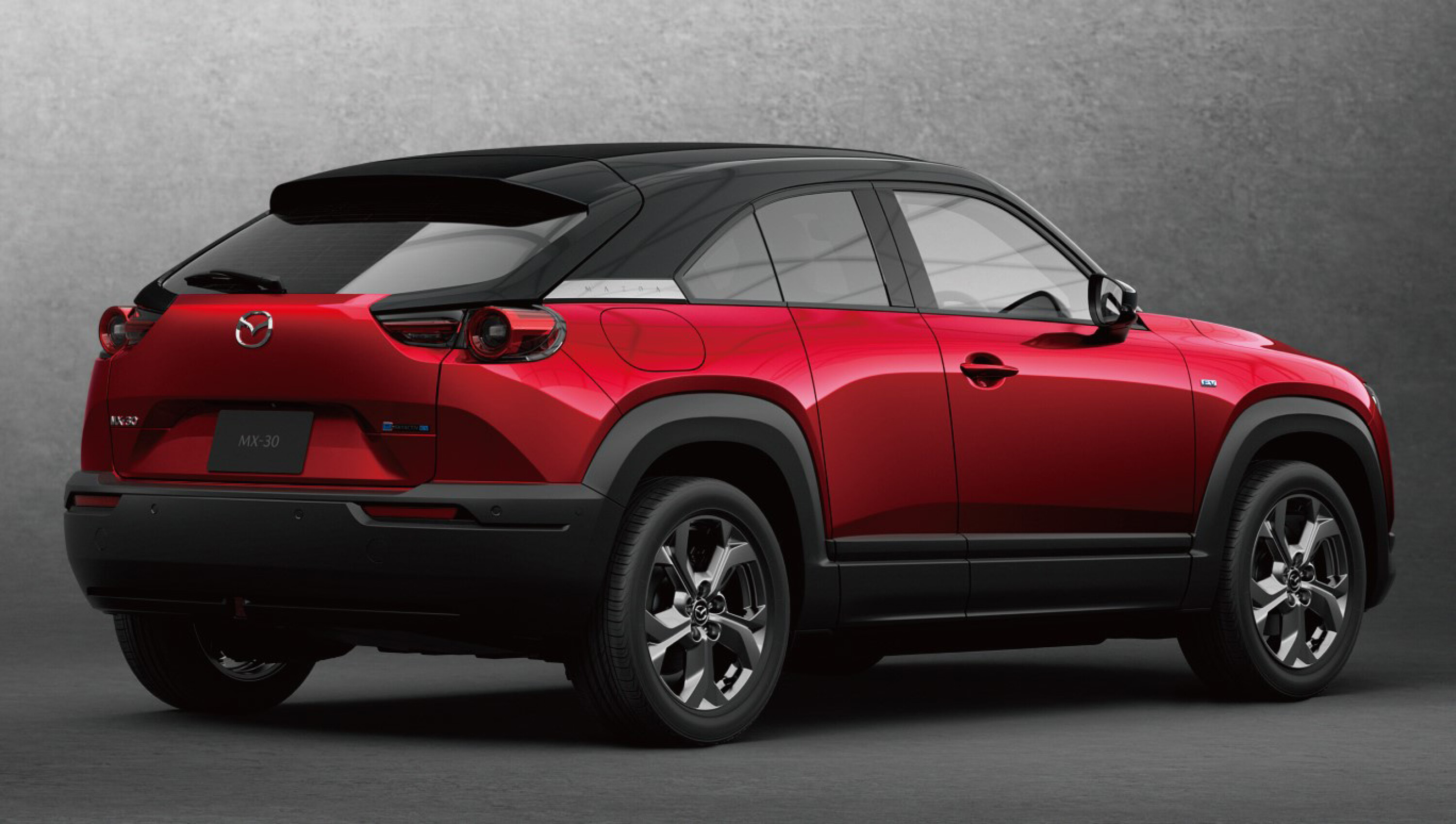
The updated 2023 Mazda MX-30 small SUV has arrived in Australia with additional technology, new colours and price rises.
Snapshot
- 2023 Mazda MX-30 pricing and features
- Electrified small SUV updated with new tech, colours, and price rises
- MX-30 Electric axed in the United States, will continue in Australia
While local examples of the MX-30 have received an update, Mazda has announced the model will be axed in the United States after less than two years and fewer than 600 sales in California, the only US state where it was available to the public.
Mazda USA said it would focus its “electrification efforts” on the CX-90 plug-in hybrid (PHEV) expected in Australia in 2024, the smaller CX-70 PHEV, and a hybrid powertrain for the not-for-Australia CX-50 mid-size SUV tipped to be shared with the popular Toyota RAV4.
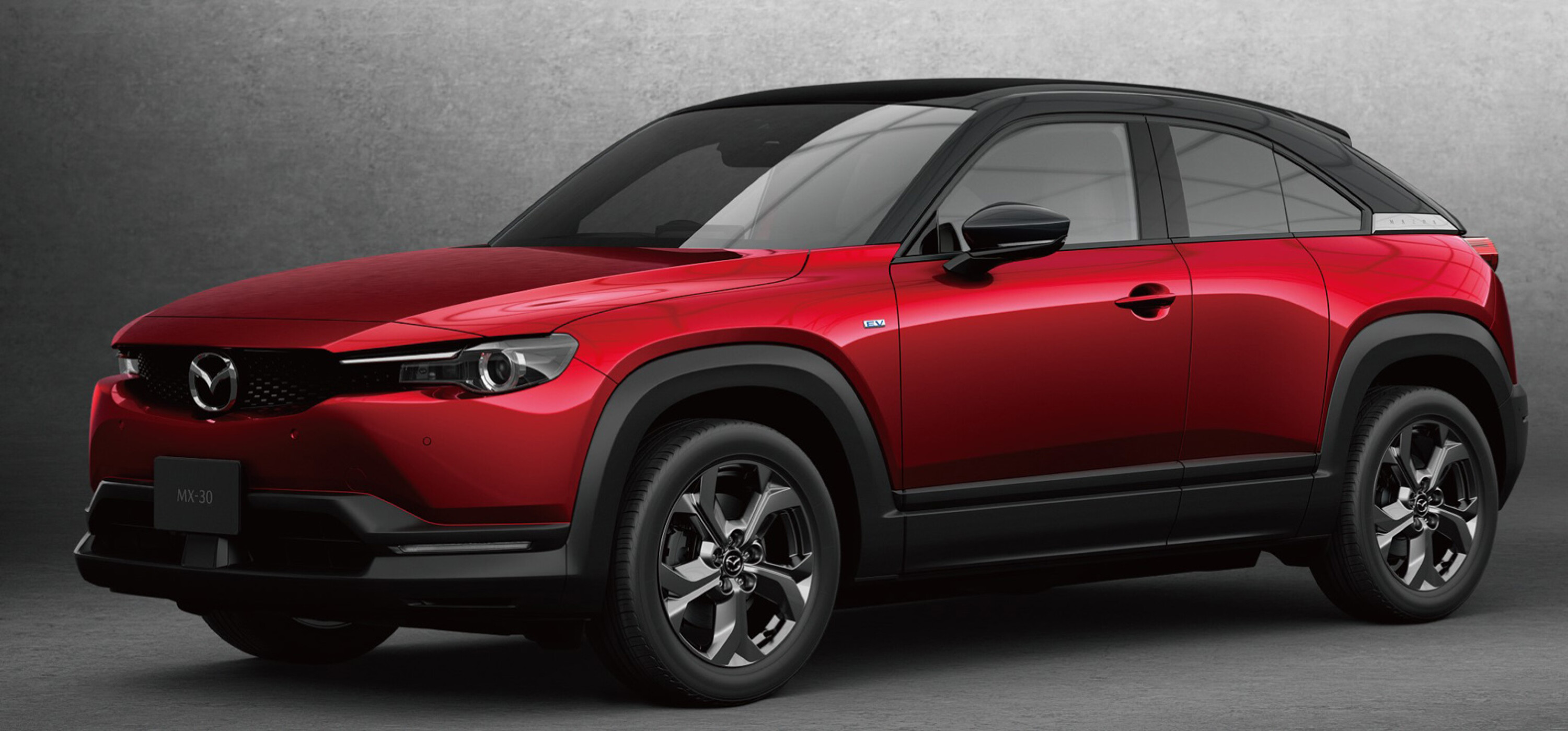
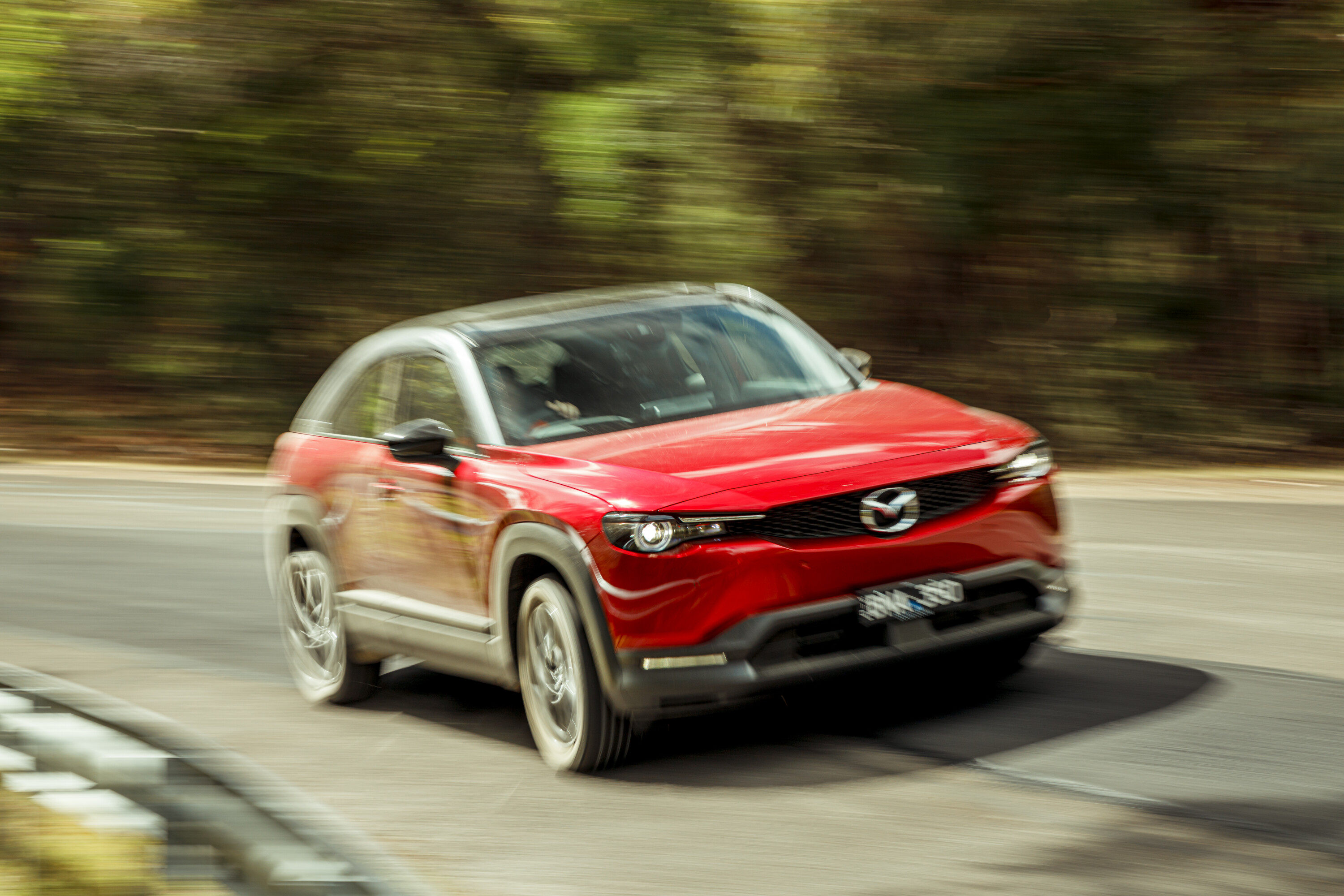
First launched in Australia in 2021, the Mazda MX-30 is available locally in all-electric or mild-hybrid form, with the majority of sales in favour of the latter variant, which is exclusively offered in Australia, New Zealand and Japan.
1
“MX-30 will continue to be offered in Australia,” said a Mazda Australia spokesperson.
“We recently launched a minor update to the model locally and it continues to be sold to our expectations.”
VFACTS new-car sales data reveals around 2000 MX-30s have been registered in Australia between the start of 2021 and mid-2023, compared to more than 33,000 examples of the related CX-30 small SUV.
A rotary-powered range-extender plug-in hybrid version has commenced production for Europe, with sales understood to be exclusive to that continent. It was initially expected to be sold in Australia and the United States, but both divisions are believed to have backtracked on these plans.
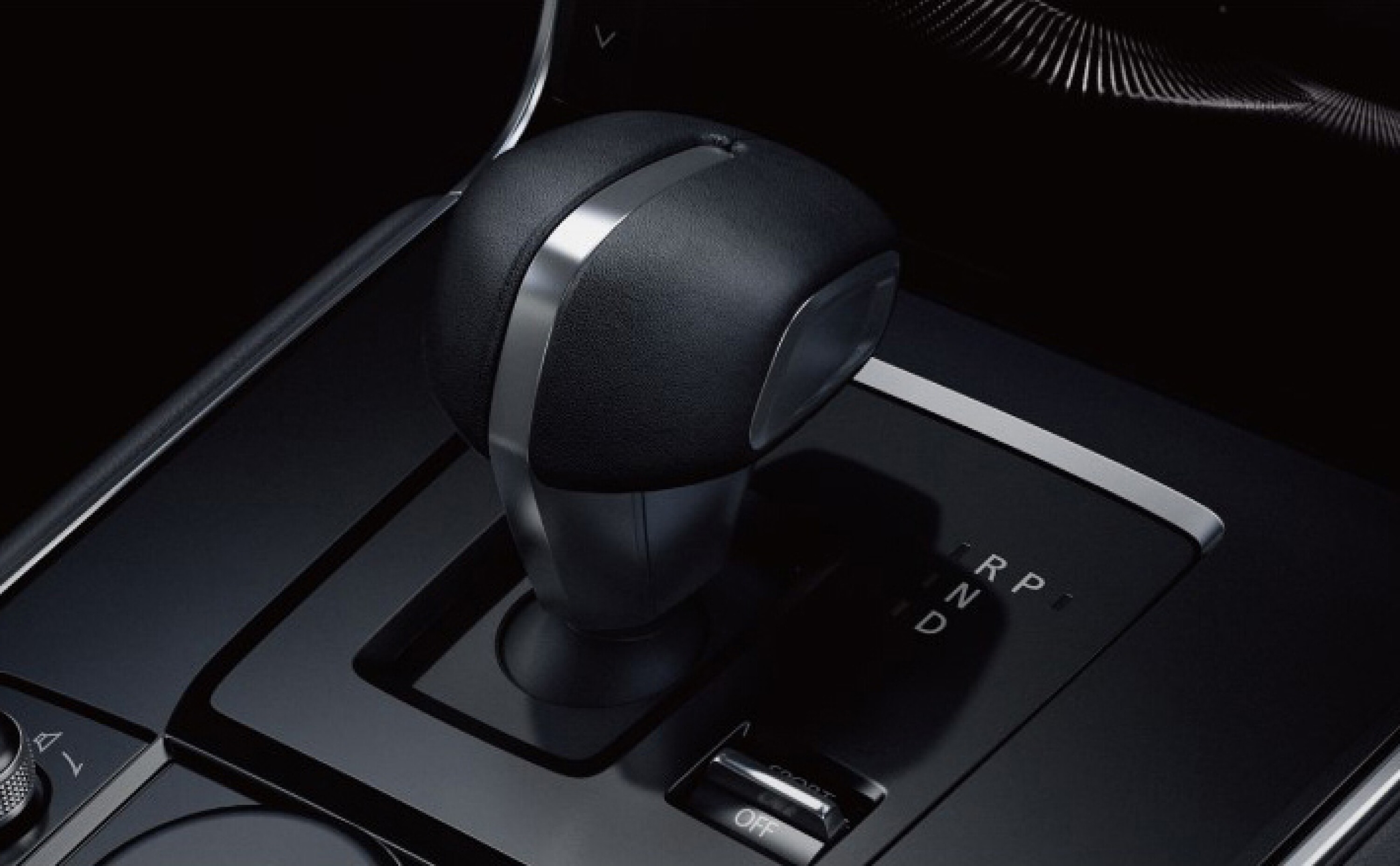
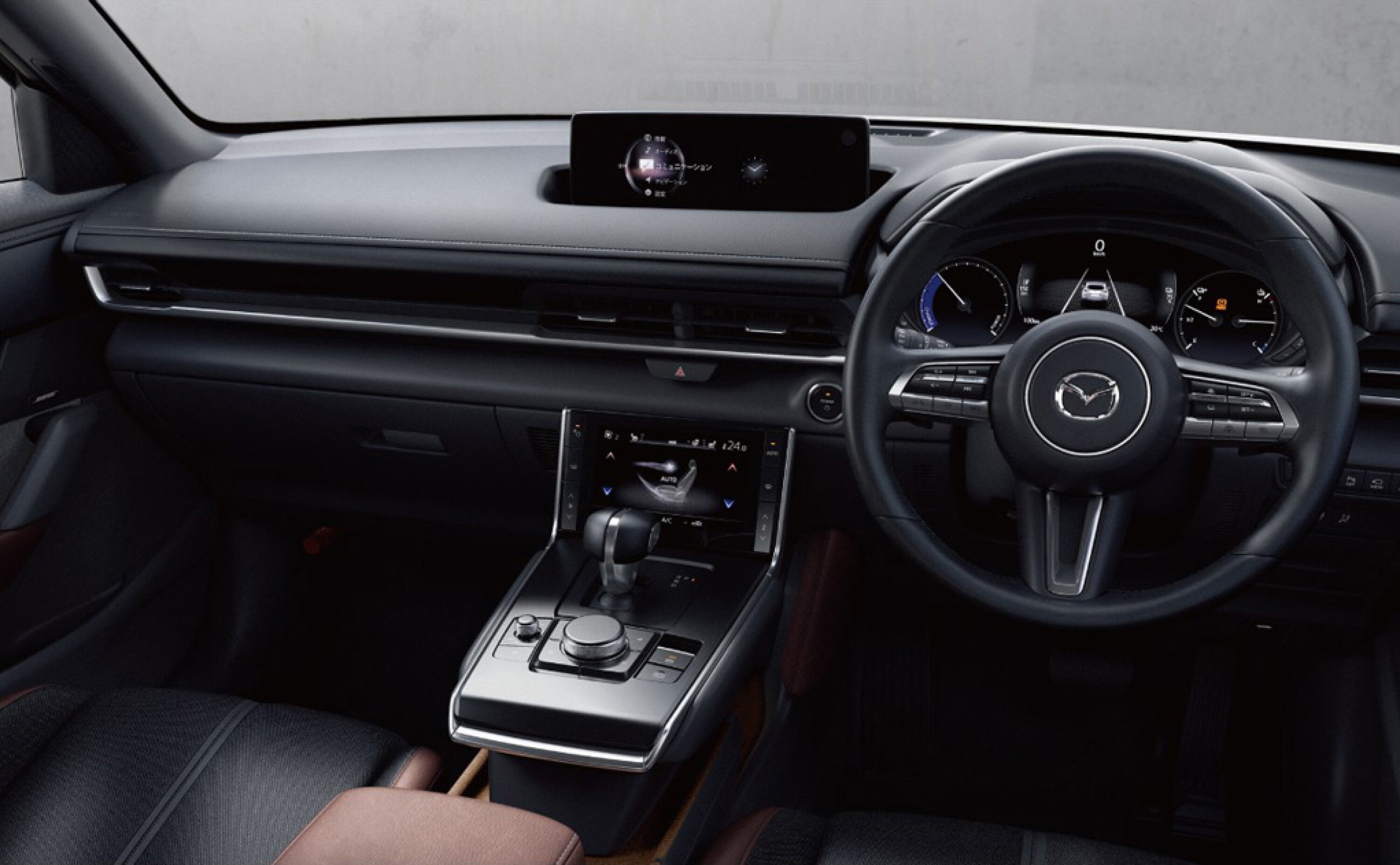
The update for local MX-30 examples sees the previously-optional Vision Technology package become standard for the G20e Evolve and Touring variants, a repositioned gear shift lever to the front, and new colour options including zircon sand and new two-tone finishes.
Pricing for the G20e Evolve and Touring has increased by $2300 each, while the Astina variants are between $800 and $920 dearer than before.
A faster 50kW DC charge rate – up from 40kW – has been added to the electric MX-30 E35 Astina for a 20 to 80 per cent top-up in a claimed 26 minutes, saving around 10 minutes.
1
In addition, the E35 Astina receives new EV side badging and a revised ‘e-Skyactiv-EV’ rear badge – but misses out on vehicle-to-home functionality added in Japan.
Under the skin, the MX-30 ‘E35’ has an unchanged 107kW/271Nm electric motor powering the front wheels, with a 35.5kWh lithium-ion battery allowing for a modest WLTP-rated 224-kilometre driving range.
Internal-combustion ‘G20e’ variants continue to feature a 114kW/200Nm 2.0-litre four-cylinder naturally-aspirated petrol engine shared with the CX-30 and Mazda 3, with its ‘mild-hybrid’ system denoted by the added 24-volt starter-motor generator and small battery pack.
It has a claimed combined fuel consumption of 6.4 litres per 100km.
1
The updated 2023 Mazda MX-30 – in mild-hybrid and all-electric form – is now available in Australia.
2023 Mazda MX-30 pricing
| Model | Pricing | Change |
|---|---|---|
| MX-30 G20e Evolve petrol | $36,610 | up $2300 |
| MX-30 G20e Touring petrol | $39,110 | up $2300 |
| MX-30 G20e Astina petrol | $42,110 | up $800 |
| MX-30 E35 Astina electric | $66,410 | up $920 |
| Prices exclude on-road costs. |
1
2023 Mazda MX-30 features
| 2023 Mazda MX-30 G20e Evolve features | |
|---|---|
| 360-degree camera system (new) | Push-button start |
| Front cross-traffic alert (new) | Autonomous emergency braking (vehicle, pedestrian, cyclist, junction) |
| Driver monitoring camera (new) | Lane-keep assist |
| Front parking sensors (new) | Lane departure warning |
| Traffic jam assist (new) | Blind-spot alert |
| 18-inch alloy wheels (silver finish) | Rear cross-traffic alert |
| 8.8-inch Mazda Connect infotainment system | Adaptive cruise control |
| Wired Apple CarPlay and Android Auto | Traffic sign recognition |
| DAB+ digital radio | Driver attention alert |
| Satellite navigation | Paddle shifters |
| Eight-speaker audio system | Rear-centre armrest |
| 7-inch semi-digital instrument cluster | Rain-sensing wipers |
| LED headlights, tail-lights, and daytime running lamps | Auto-folding side mirrors |
| Black cloth upholstery | Auto-dimming rear-view mirror |
| Leather-wrapped steering wheel and gear shifter | Rear parking sensors |
| Dual-zone climate control with 7-inch touch display | Tyre pressure monitoring |
1
2023 Mazda MX-30 G20e Touring features
| In addition to G20e Evolve | |
|---|---|
| White leather-accented u2018Maztexu2019 and grey cloth upholstery | Auto-dimming side mirrors (driveru2019s side) with two-position memory function (both sides) |
| Keyless entry | Illuminated vanity mirrors. |
| 10-way power-adjustable driveru2019s seat with two-position memory functionu00a0 | |
2023 Mazda MX-30 G20e Astina features
| In addition to G20e Touring | |
|---|---|
| 18-inch alloy wheels (u2018brightu2019 finish) | Heated front seats |
| 12-speaker Bose audio system | Heated steering wheel |
| Brown leather-accented u2018Maztexu2019 and black cloth upholstery | Driveru2019s seat lumbar adjustment |
| Glass sunroof | Frameless rear-view mirror. |
| Adaptive LED headlights | |
2023 Mazda MX-30 E35 Astina features
| In addition to G20e Astina | |
|---|---|
| 220-volt power outlet | Approaching vehicle audible system. |
| Type 2 charge cable | |
MORE
Everything Mazda
MORE
Small SUVs
SEPTEMBER: Full 2024 CR-V pricing
Following the earlier release of initial details, complete Australian pricing and details have now been revealed for the new 2024 Honda CR-V.
Full story linked below!
Story continues…
Honda Australia has confirmed pricing for the sixth-generation CR-V.
Snapshot
- Sixth-gen Honda CR-V on-sale in September
- Priced from $44,500 drive-away
- Seven variants and hybrid range-topper
- Seven seats available on two front-drive grades
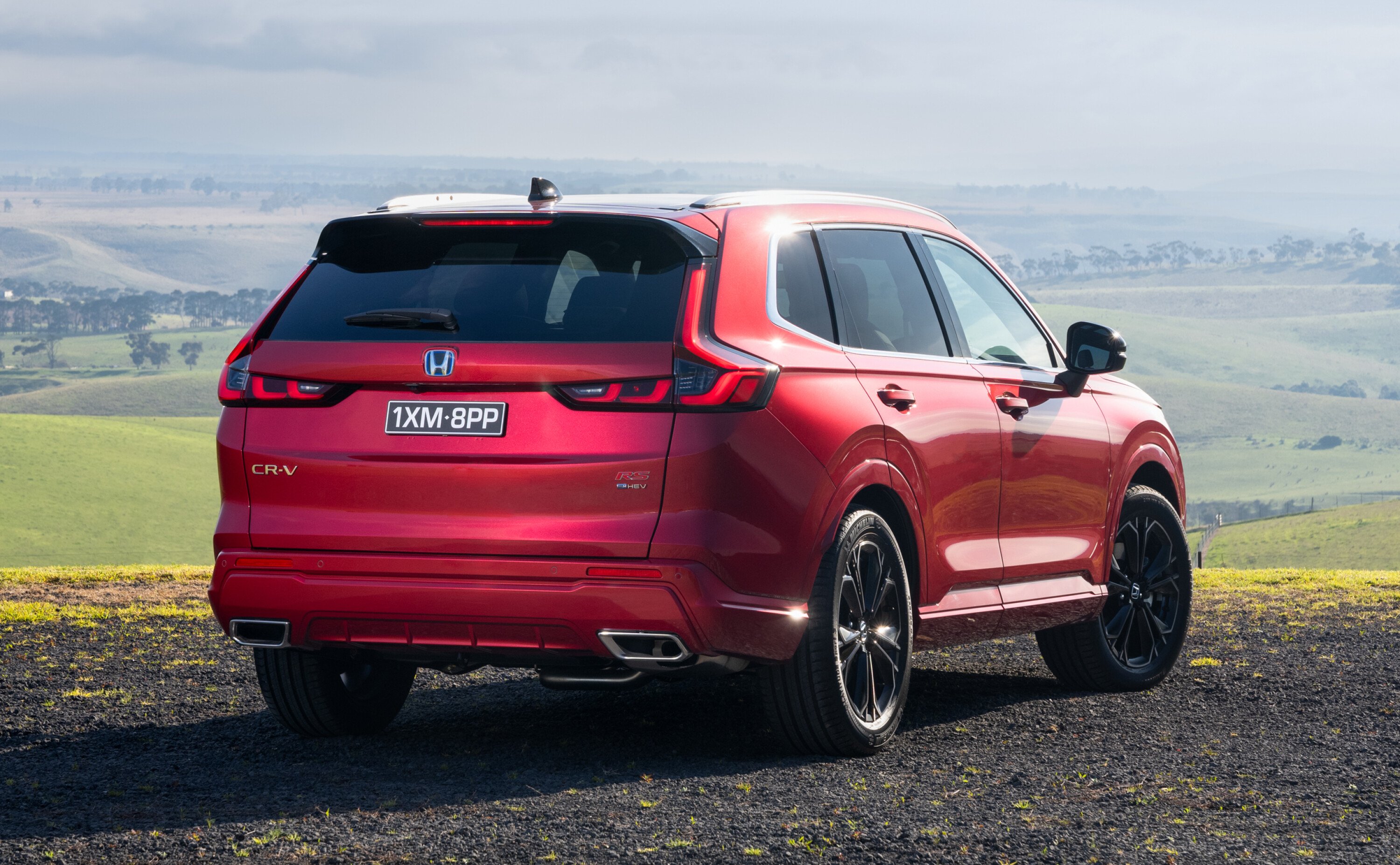
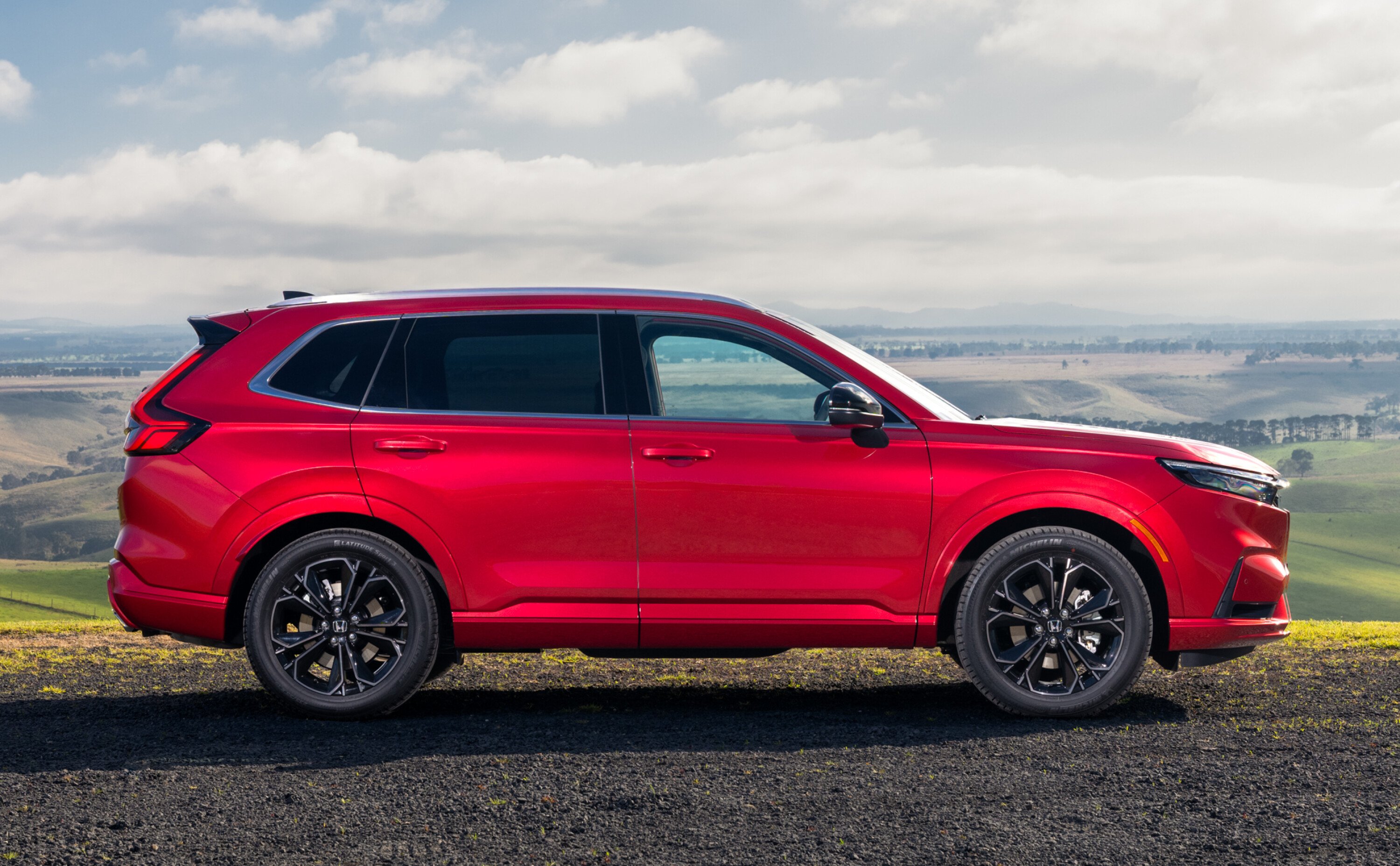
Launching before the year is out, the new Thai-built 2024 Honda CR-V will arrive in seven variants priced between $44,500 and $59,900 drive-away (an $8600 bump in price-of-entry), with orders open from September 1.
The new CR-V becomes Honda’s largest offering in Australia, sitting above the recently-introduced ZR-V medium SUV.
Honda will sell the CR-V with three powertrains: a 140kW/243Nm petrol four-cylinder can be paired with a CVT and front- or all-wheel drive, and the 152kW front-drive e:HEV hybrid in a new range-topping RS form.
At the bottom end is the front-drive VTi X and seven-seat VTi X7, then comes the mid-spec VTi L available with five or seven seats and optional AWD, with the two flagship grades – VTi LX petrol AWD and e:HEV RS FWD – with five seats only.
There are six colours offered with platinum white, lunar silver, meteoroid grey and ignite red available on all grades, while crystal black and the new canyon river blue hues are reserved for upmarket trims.
Honda has yet to confirm equipment levels for each grade but has promised to bring more affordable hybrids to the smaller ZR-V as part of its strategy, so expect a similar plan as the CR-V moves through its life cycle.
With two seven-seat variants available, the 60-millimetre longer CR-V aims to compete against ‘medium-plus’ SUVs such as the seven-seat Mitsubishi Outlander, Nissan X-Trail and Hyundai Santa Fe, rather than the smaller Toyota RAV4, Mazda CX-5 and Volkswagen Tiguan.
1
Unlike the Civic small car, Honda has sharpened the CR-V’s drive-away pricing to be competitive with typical rivals on paper. For example, the $59,900 CR-V e:HEV is similarly priced to a Nissan X-Trail Ti E-Power AWD (about $59,200 drive-away).
At the opposite end of the spectrum, the new CR-V VTi X base model has become dearer, listing at $44,500 driveaway, or $2600 more than the outgoing equivalent. Those moving from the now-defunct VTi base model will need to look towards the smaller ZR-V for a nearer-$40K price.
Like all Hondas, the new CR-V is backed by the brand’s five-year/unlimited-kilometre warranty and five low-price services ($199 per visit). Buyers also get five years of free connected services thrown in with the purchase.
2024 Honda CR-V pricing
| 2024 Honda CR-V drive-away pricing | ||
|---|---|---|
| Variant | Price | Change |
| CR-V e:HEV RS | $59,900 | New model |
| VTi LX AWD | $57,000 | Up $3400 |
| VTi L7 | $53,000 | Up $3500 |
| VTi L AWD | $51,300 | Up $5100 |
| VTi L | $48,800 | New model |
| VTi X7 | $46,800 | New model |
| VTi X | $44,500 | Up $2600 |
2
Our original story, below, continues unchanged
March 2023: The sixth-generation 2024 Honda CR-V has inched closer to its local launch.
Snapshot
- 2023 Honda CR-V: Australian details firm
- Next-generation five- or seven-seater to remain Thai-sourced
- Expected to gain hybrid option in Australia; tipped to arrive here by Christmas
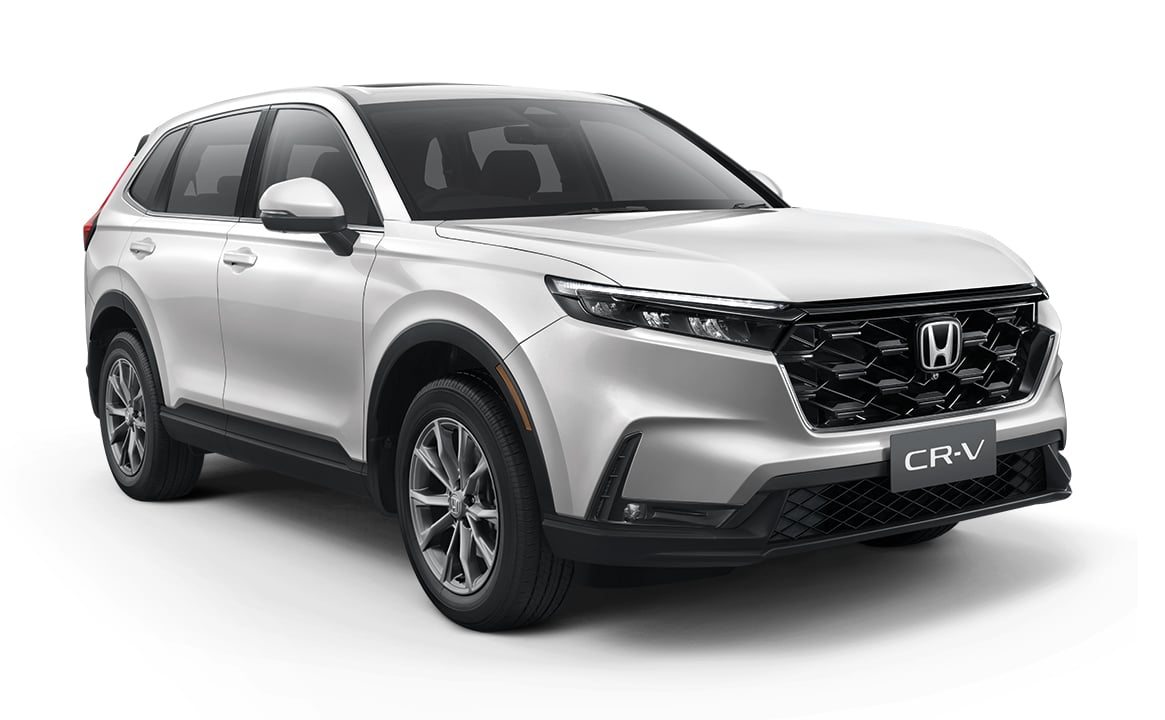
Honda’s local arm has yet to confirm Australian-market details for the upcoming CR-V, but homologation information was published in the Department of Infrastructure’s vehicle certification database this week.
“Details relating to the timing of the next-generation Honda CR-V are yet to be confirmed, but it will continue to be a key pillar in our SUV strategy for the Australian market,” Honda Australia told Wheels.
1
“We look forward to sharing more information around grades, specifications, and variants in due course.”
First unveiled in mid-2022, a Honda Australia spokesperson said it would be more than a year before the new CR-V arrived in local showrooms, pointing to a launch in the second half of this year.
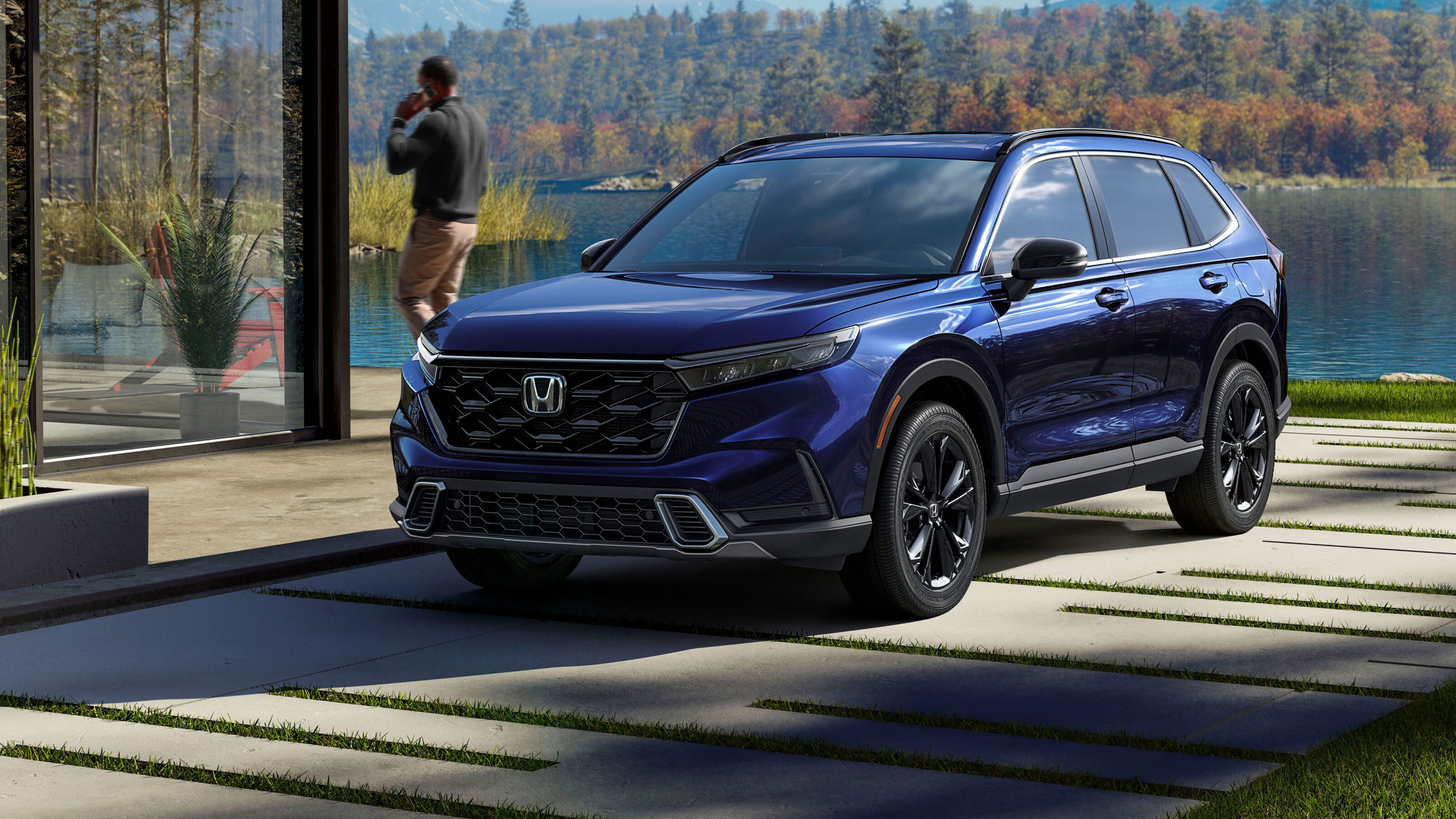
It will follow the Mazda CX-5-sized ZR-V mid-size SUV due mid-year, with the CR-V growing in size – placing it in line with the seven-seat Mitsubishi Outlander and Volkswagen Tiguan Allspace.
1
The government data confirms the new CR-V will remain sourced from Thailand, as with the current model, unlike the latest Civic and HR-V.
These vehicles shifted to Japanese production for new-generation versions launched in Australia in the past 18 months, amid Honda’s shift to an agency sales model, and a more-premium focus and hefty price rises to match.
In Thailand, the next-generation CR-V is offered in six grades – including e:HEV hybrid and sportier RS variants – with five or seven seats.
It is powered by an updated version of the 1.5-litre four-cylinder turbo-petrol engine, with unchanged outputs at 140kW and 243Nm.
1
As before, this engine is matched to a CVT automatic transmission and is available in front- or all-wheel-drive.
The naturally-aspirated 2.0-litre four-cylinder petrol – available on the current entry-level Vi in Australia, which lacks any active safety technology, including autonomous emergency braking – has been discontinued globally for the all-new CR-V.
While a hybrid version of the outgoing CR-V was offered in the United States and Europe, the powertrain has been introduced in Thailand with the new model – opening the door for a local arrival to rival electrified versions of the Toyota RAV4 and GWM Haval H6.
It is similar to the hybrid powertrain in the Civic and ZR-V, combining an Atkinson cycle 2.0-litre naturally-aspirated petrol engine with an electric motor for a more-powerful 152kW and 335Nm total system output.
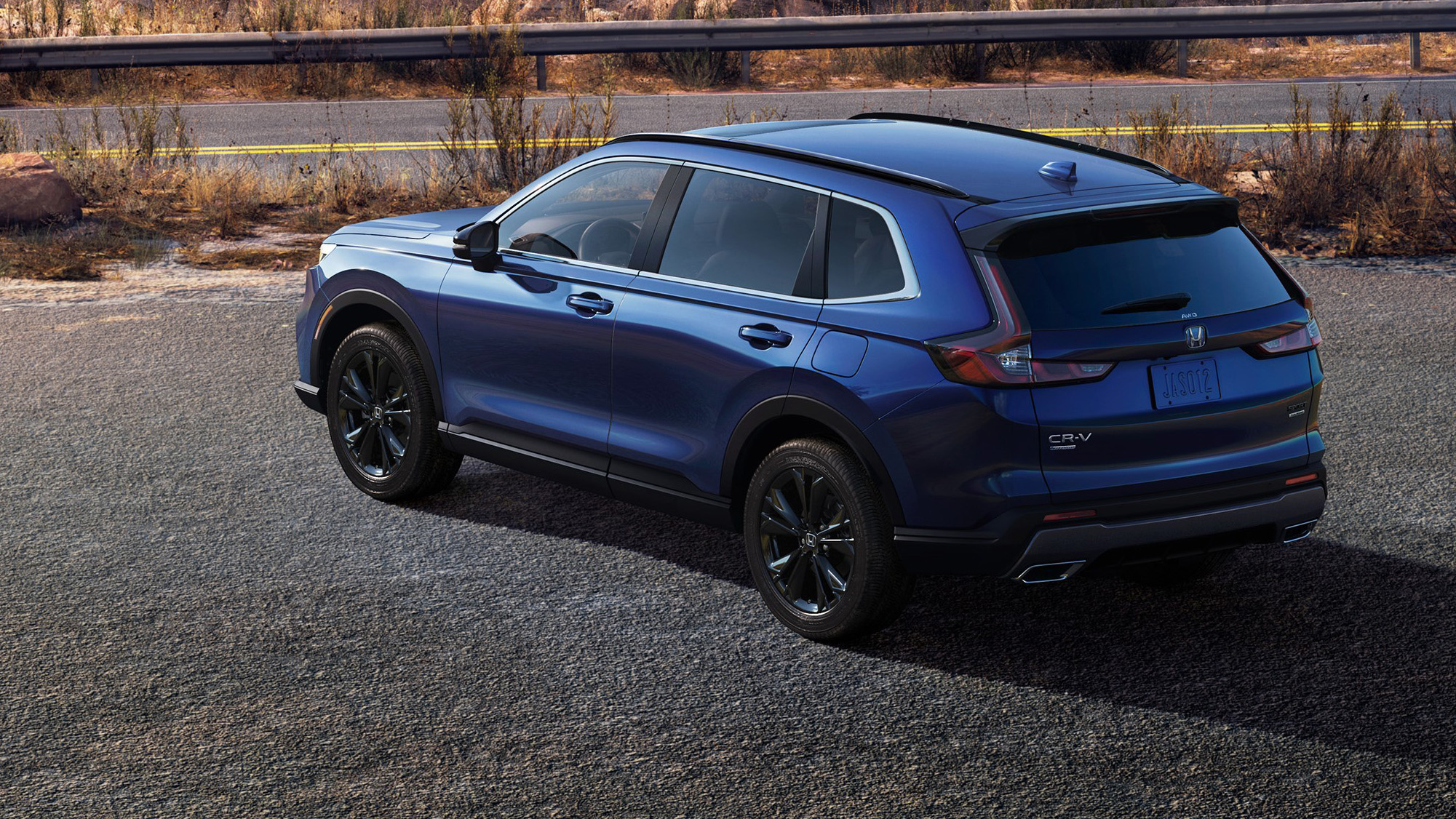
1
The hybrid has only five seats in Thailand; it is unknown if the electrified powertrain supports a three-row configuration.
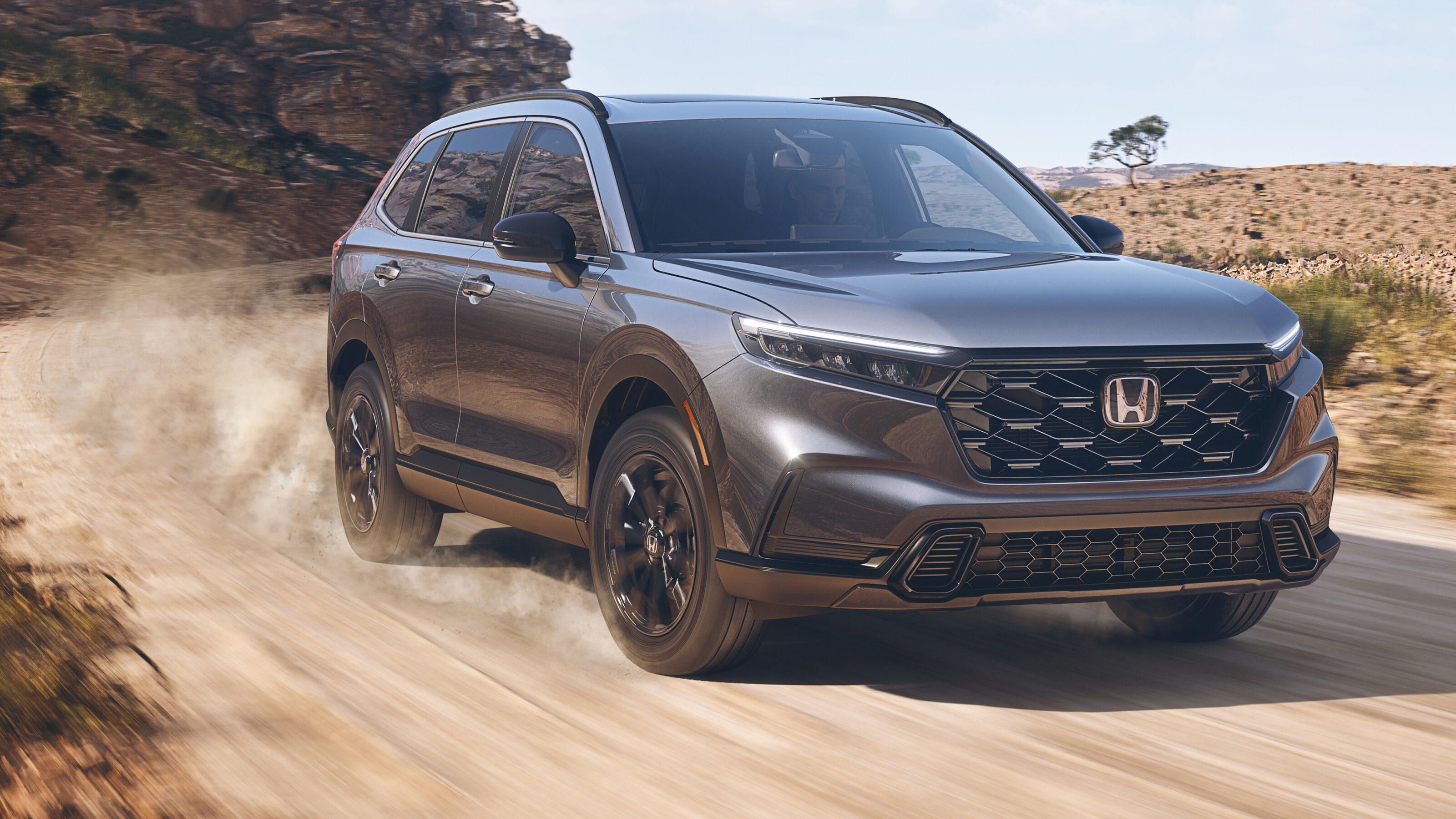
Measuring 4694 millimetres long, 1864mm wide and 1692mm tall, with a 2700mm wheelbase, the new CR-V is 69mm longer, 10mm wider and 2mm taller, with an additional 41mm of space between the front and rear axle.
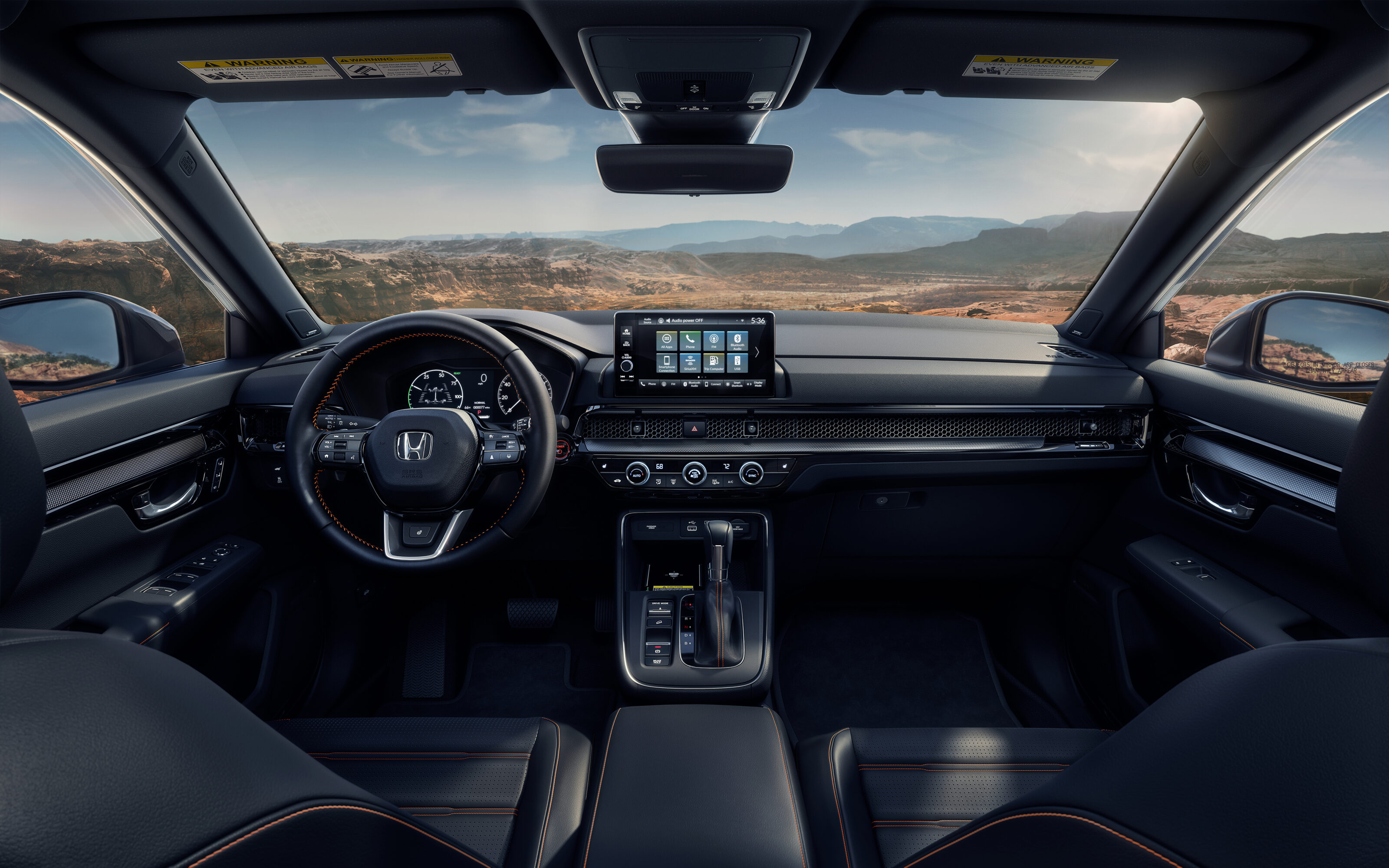
New additions include; a larger 9-inch dash-mounted infotainment system, wireless Apple CarPlay and Android Auto, a 7-inch semi-digital or 10.2-inch all-digital instrument cluster, a 12-speaker Bose audio system, a windscreen-projected head-up display, and LED interior ambient lighting.
Six colours are available in Thailand, depending on the variant: canyon river blue, ignite red, platinum white, meteoroid grey, lunar silver and crystal black.
Comparisons
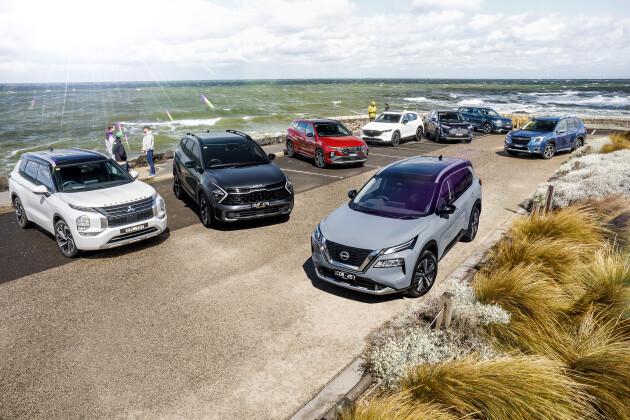
Medium SUV comparison: 2023 Mega Test
Thinking of buying a new mid-size SUV this year? We test eight of the best and most popular contenders to see where you should spend your money
When will the new CR-V come to Australia?
The 2023 Honda CR-V medium SUV is expected to arrive in Australia in the second half of this year, with local pricing and full details to be announced closer to its launch.
For context, the current CR-V is priced from $35,990 drive-away – making it the cheapest vehicle offered by Honda Australia, despite the Civic and HR-V being smaller cars.
However, the new model is tipped to open at or around $10,000 more than the outgoing version – if not more – rising to around $55,000 to $60,000 drive-away for the flagship hybrid.
VFACTS new-car sales data reveals 8123 CR-Vs were registered in Australia in 2022 – up 18.2 per cent compared to the previous year – representing more than half of all Hondas sold locally.
MORE
Everything Honda
MORE
SUV Buyers Guide
1
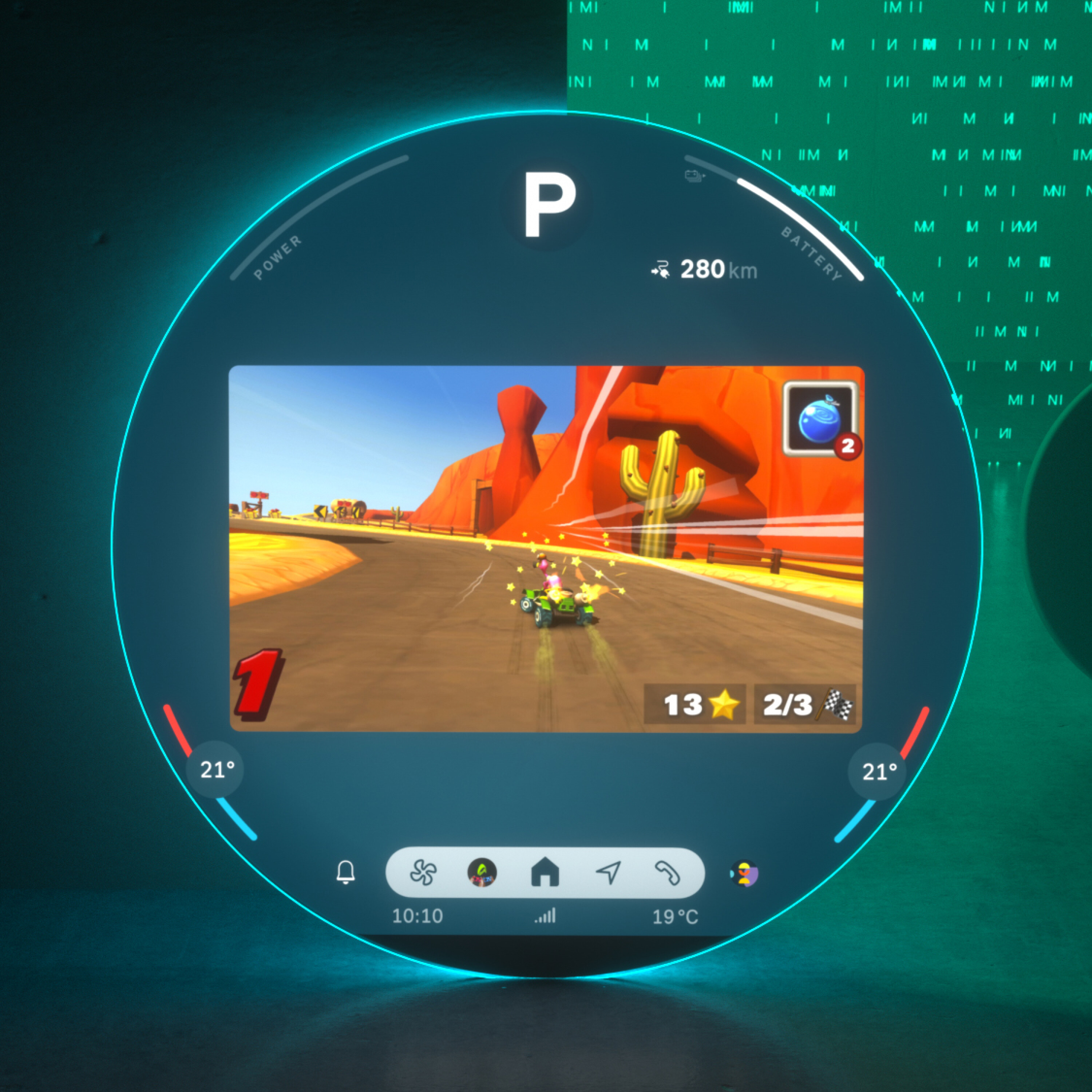
Big tablet-like displays have been all the rage for years now, while more than a few brands have graduated to slapping a couple of them together for an expansive dual-screen display reaching across the dash.
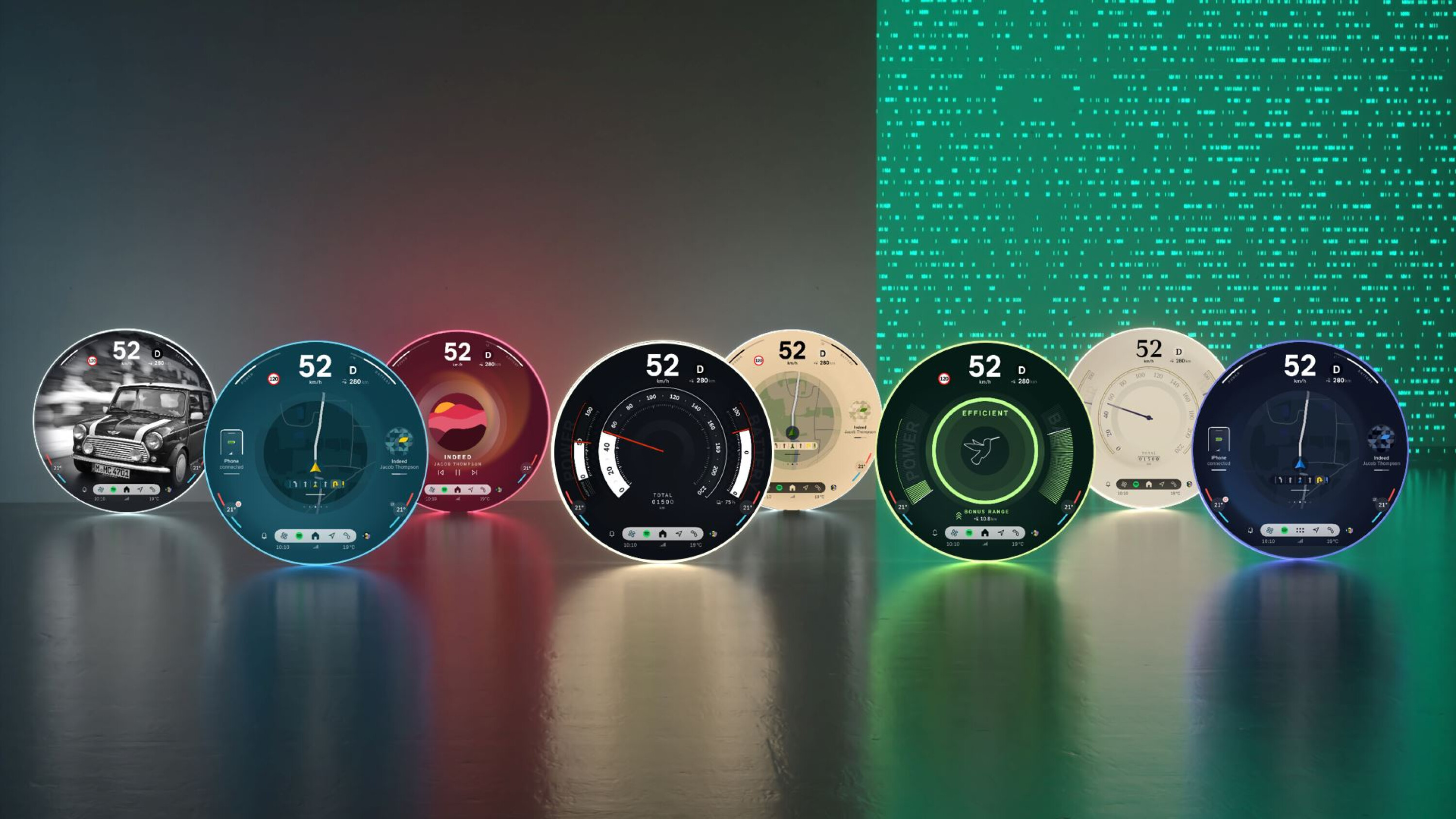
But, for its new-generation hatch due next year, German-owned British brand Mini appears to be taking inspiration from the now ubiquitous smart watch. Not the beloved and very rectangular Apple Watch, mind you, but the many classically round options available with Android’s WearOS platform.
1
That’s handy, too, because this new disc display is built on Android.
Specifically, this is BMW’s own version, rather than yet another deployment of Android Automotive – specifically the basic Android Open Source Project (AOSP) software that now underpins thousands of devices in our lives, from TVs to kitchen appliances and security systems. And phones, of course.
8
In its current form, the Mini features a rounded driver display behind the steering wheel, matched to a mostly rectangular display in the centre of a large gloss-black circle, flanked above and below by a number of physical controls. The circle is significant in that it harks back to the original Mini and its centre-mounted gauges.
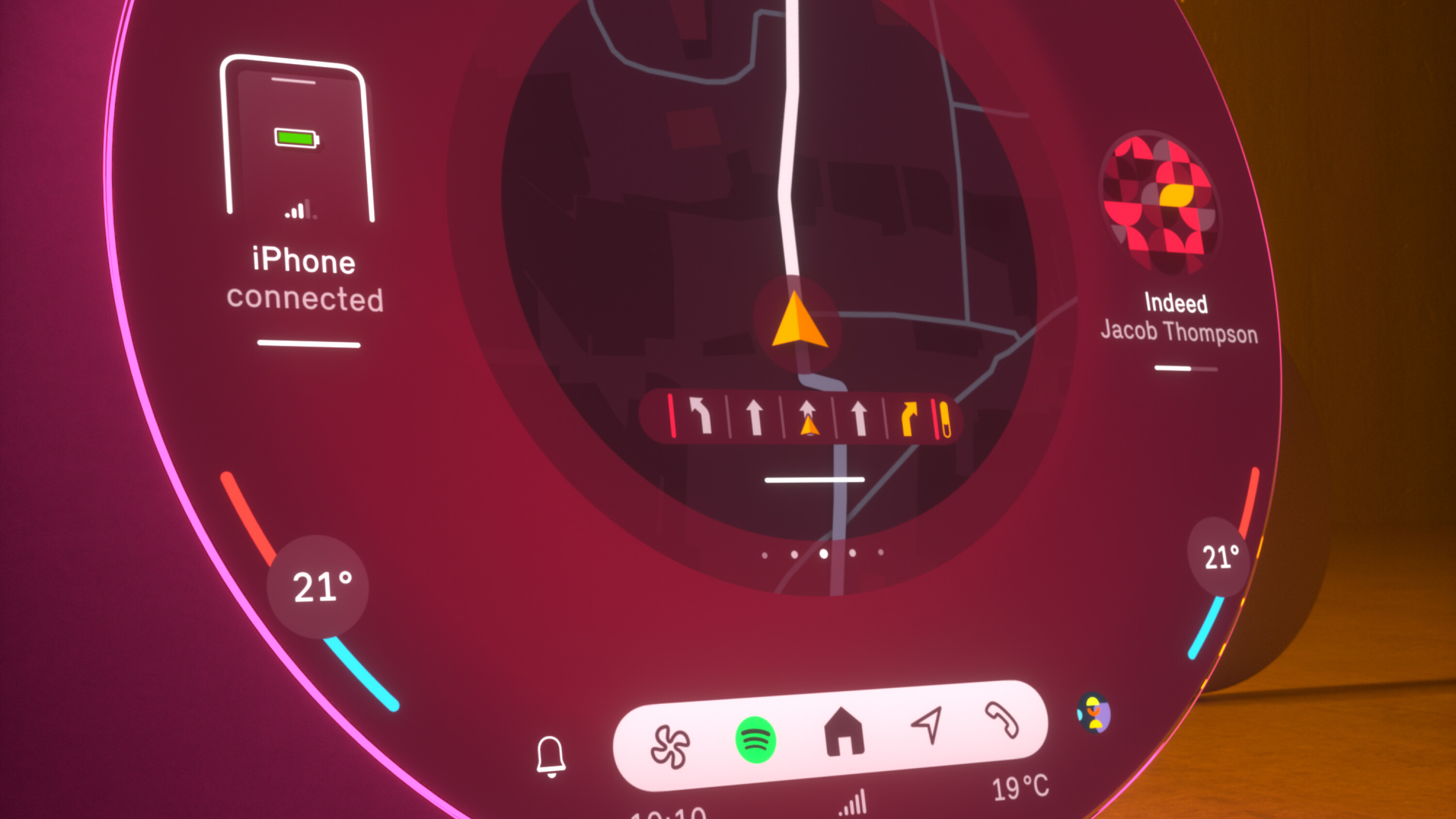
Next year’s new-generation Mini will streamline all of that with a display that fills the 240mm round centre screen – and, yes, it now sits proud of the dash like, well, a round iPad.
In Mini’s words
The text below is an extract from Mini’s media release.
An overview of the digital highlights of the new MINI family
- Premiere for the automotive industry: MINI Interaction Unit is the first round OLED display with a refreshing, MINI-typical user interface design.
- MINI Operating System 9 stands out with a MINI-specific, emotionally engaging design optimised for touch control. It is an in-house development by the BMW Group and is based for the first time on an Android Open Source Project (AOSP) software stack.
- Up to eight MINI Experience Modes provide a particularly immersive driving experience through the orchestrated use of light, user interface designs, drive settings and sound. An optional light projector on the back of the MINI Interaction Unit bathes the whole dashboard in colours and patterns to match the Experience Mode selected. The presentation of content in the optional Head-up display is also adapted accordingly.
- Unmistakable sound design for all-electric models: The acoustic repertoire comprises completely new driving sounds in the interior, a highly distinctive MINI brand sound to mark out the identity of the car from the outside, jingles for the new MINI Experience Modes and 30 new sound signals with information and warning functions.
- The MINI Intelligent Personal Assistant is activated by the spoken command “Hey MINI” and can be used with the “MINI” or “Spike” (optional) visualisations. The Personal Assistant allows customers to control important functions by voice command, enables travel-related requests or wishes and recognises whether it is the driver or front passenger currently speaking.
- The new, cloud-based MINI Navigation system provides particularly fast and precise route calculation. The latest map data is always streamed live into the vehicle. And charging-optimised route planning means drivers of fully electric MINIs can take on their longer journeys with peace of mind. The option Augmented View offers drivers a live video stream in the MINI Interaction Unit, with extra information added for optimum orientation for navigating. Customers can choose from various map designs and also activate an appealing visualisation option featuring 3D buildings.
- The MINI Connected Store provides optional access to a wide and ever-evolving range of practical and entertaining apps, e.g. AirConsole gaming, music and video streaming (available content varies by countries).
- Digital vehicle access with compatible Apple-, Google- and Samsung devices: The optionally available MINI Digital Key Plus offers the driver flexible access to the vehicle, without having to take their smartphone out of their pocket. The key can be passed on to other people digitally using the sharing function.
- High-Speed connectivity and optional 5G capability.
- Remote Software Upgrades: MINI vehicles also now receive regular free quality improvements via over-the-air software updates. Depending on the country, vehicle model, equipment and vehicle condition, you may even receive additional new functions or functional improvements free of charge.
*The availability of digital services varies by country, vehicle model and equipment. Selected functions can be rolled out via remote software upgrade after market launch.
1
What do you think of the new interface, and the overall design of the new Mini’s interior?
I’m into it, I don’t mind saying. Get into the comments below to tell me how wrong I am.
Remember, though: If you don’t like it, you know as well as I do that Mini isn’t aiming this at you. It’s the fashion-focused folk that will be drawn to this, driven more by style and novelty than any sort of deep childhood passion for motoring. Love it or hate it, these things are ultimately products like any other – but I suspect the next Cooper S and JCW models will still be a hoot to drive.
MORE
Everything Mini
