
WhichCar has contacted the Victorian Government’s office for climate and energy minister Lily D’Ambrosio and the City of Port Phillip council for a response, but did not respond in time for publication.
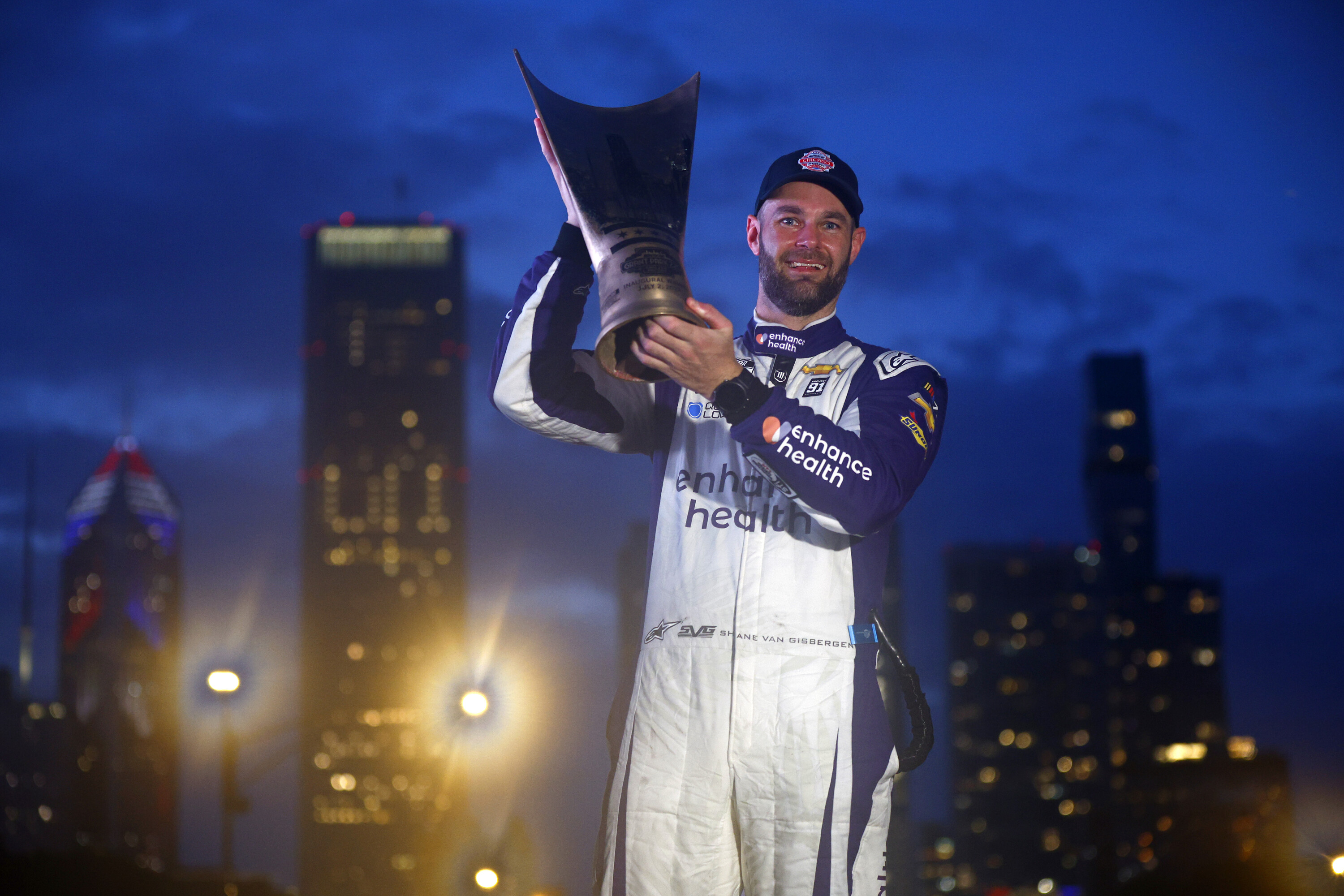
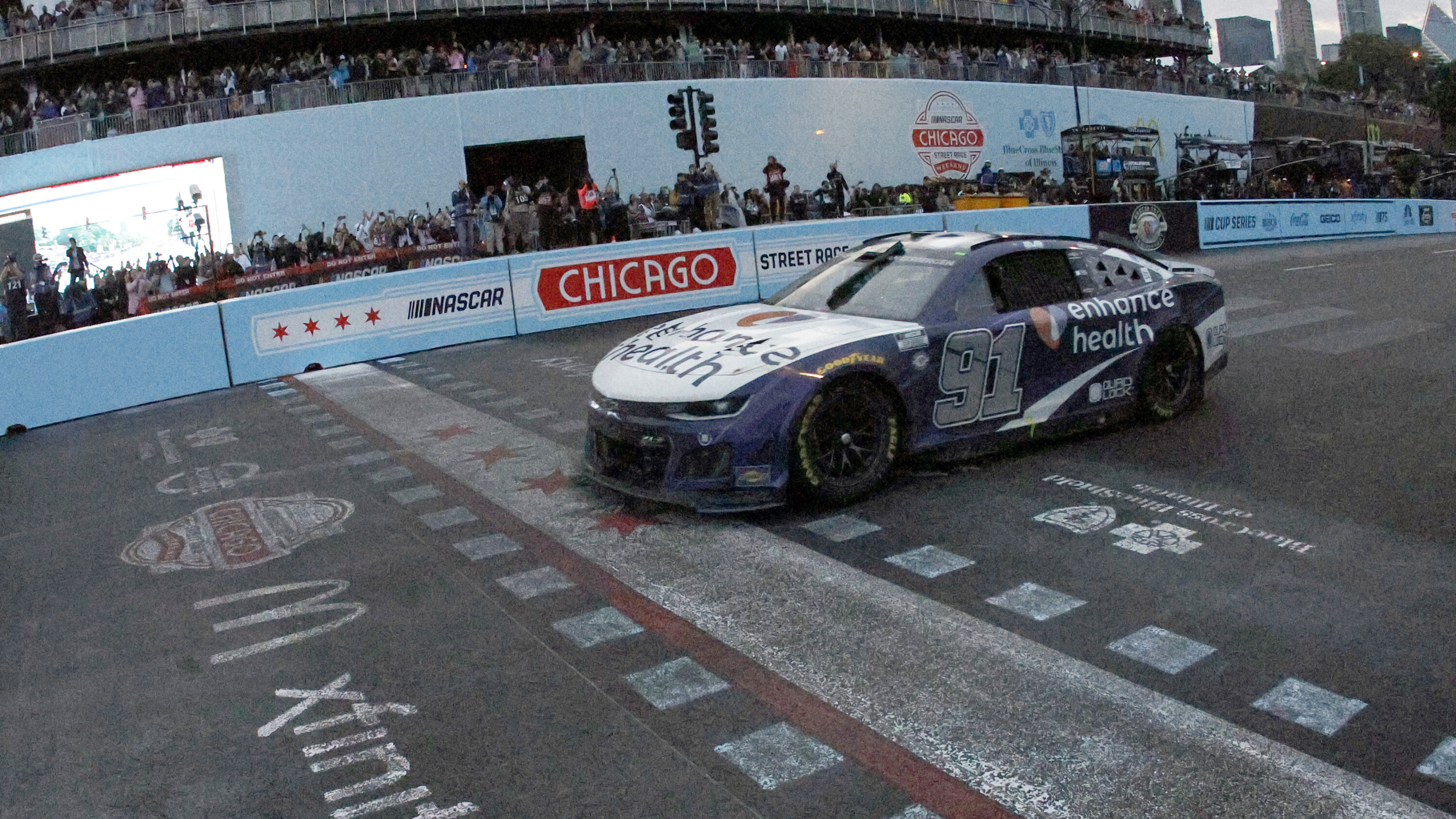
Without a shadow of a doubt, Shane van Gisbergen is the name on the lips – and contact lists – of America’s motorsport doyens, thanks to an inch-perfect performance at last month’s first-ever NASCAR street race in Chicago, Illinois.
With a couple of hours’ experience aboard a new-generation NASCAR, the 34-year-old New Zealander topped practice, qualified third and won going away on a treacherous mix of damp tarmac lined with unforgiving concrete, before setting the socials on fire across the world with one hell of a victory burnout.
What’s more, he did it with Trackhouse Racing’s Team 91, a satellite operation that will run just three of 36 NASCAR events in 2023.
Once the champagne dried, the questions started; will the Kiwi head to NASCAR in 2024?
3
“I’m doing one more year in Oz, and then I’d love to come over here”
Van Gisbergen told the world post-race, affirming comments that he would serve out this year and next in Supercars with Red Bull Ampol Racing.
Interestingly, though, his boss back in Australia, seven-time Supercars champion Jamie Whincup, then told media that he wouldn’t stand in Shane’s way should the right offer land in the Giz’s inbox, even before the New Zealander’s 500th Supercars start in Townsville the weekend following Chicago.
So… will Shane van Gisbergen bid Supercars a lukewarm farewell on his way to the US of A?
He’d be treading a path not followed since Marcos Ambrose headed to the US in 2006, who carved out a solid, successful career in the NASCAR circus.
Shane can also look to the recent success of fellow Kiwi and former Supercars arch-enemy Scott McLaughlin, who parlayed a promise from Roger Penske himself – a shot at the USA if he won the Bathurst 1000 – into a burgeoning career in IndyCar.
3
But there are questions that loom large, not least the issue of the racing itself.
Make no mistake; Shane van Gisbergen is a once-in-a-generation race car driver. The bloke lives to drive fast, and it doesn’t matter what wheels you give him to do the job.
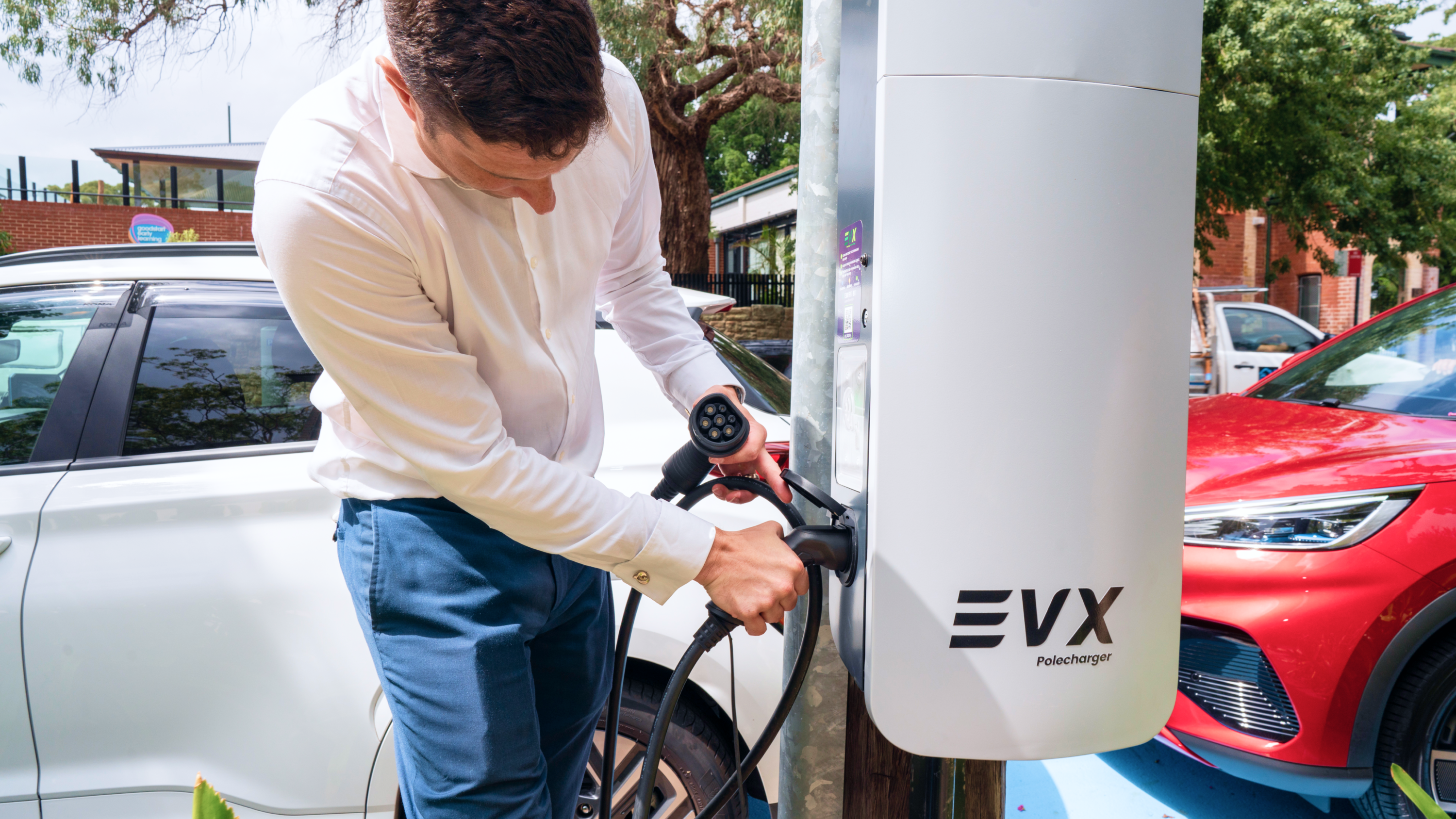
The New South Wales Government has launched its kerbside electric vehicle charging infrastructure funding program to help residents who can’t plug in at home.
Snapshot
- NSW grant encourages more kerbside EV chargers
- Helps owners who canu2019t access a plug at home
- First funding round now open, eligibility criteria applies
The $10 million project will provide grants to local governments and charging operators to purchase and install more streetside EV charging stations across metropolitan areas in the state.
The first $3 million funding round is now open with a maximum contribution of $800,000 per applicant covering up to 80 per cent of total equipment and installation (capped at $10,000 per plug), plus up to a three-year third-party software subscription.
Eligible applicants must offer at least four charging locations with a minimum of eight EV charge ports and have them online within 12 months of the funding agreement being signed in eligible local government areas.
u2705 Other key eligibility requirements
- Be accessible to the public 24/7
- Located nearby houses and apartments that have limited off-street parking access
- Charging stations fit within the streetscape, angled or perpendicular parking spaces preferred
- Must not be on roads with a speed limit higher than 50km/h
- Minimum 7kW single-phase or 22kW three-phase AC speeds, DC fast charging is optional
- Powered by 100 per cent renewable electricity (on-site, off-site generators, and/or offset certificates)
1
However, the state government grant does not cover ongoing EV charger maintenance costs, internet and electricity expenses, and stations that have already been installed.
Applications close for the first round on November 17. For further information, visit the NSW Government website [↗].
Whether local governments will be able to commit to the ongoing maintenance of EV chargers, remains to be seen. The Electric Vehicle Council recently issued a report that calls for a massive leap in charger reliability, which has been a sticking point for the EV market in Australia.
1
Why are streetside chargers important?
According to the NSW Government, almost one in three drivers in the state don’t have access to off-street parking to charge an EV.
The funding first round prioritises the local government areas (LGAs) below that have the least access to off-street parking, according to their population density.
Table below courtesy NSW Government funding guidelines round 1 [PDF ↗].
| LGA | On-street charger access needed | Apartment units | Semi-detached homes | Houses | Population |
|---|---|---|---|---|---|
| Sydney | 91% | 76,760 | 17,935 | 2081 | 211,632 |
| Waverly | 82% | 17,590 | 4969 | 4405 | 68,605 |
| North Sydney | 73% | 24,535 | 4121 | 3593 | 68,950 |
| Inner West | 67% | 31,418 | 20,072 | 21,357 | 182,818 |
| Burwood | 62% | 6944 | 2152 | 4871 | 40,217 |
| Woollahra | 52% | 12,170 | 4602 | 4894 | 54,496 |
| Canada Bay | 48% | 18,011 | 3307 | 12,769 | 89,177 |
| Georges River | 43% | 18,946 | 5995 | 27,051 | 152,274 |
| Randwick | 42% | 28,527 | 8601 | 13,790 | 134,252 |
| Lane Cove | 39% | 8750 | 801 | 5832 | 39,438 |
| Bayside | 37% | 33,875 | 7970 | 22,373 | 175,184 |
| Canterbury-Bankstown | 37% | 33,403 | 18,398 | 64,393 | 371,006 |
| Mosman | 37% | 6001 | 1389 | 4028 | 28,329 |
| Ryde | 36% | 21,854 | 6956 | 20,016 | 129,123 |
| Willoughby | 36% | 13,007 | 2145 | 12,337 | 75,613 |
| Cumberland | 35% | 23,184 | 10,796 | 37,257 | 235,439 |
| Parramatta | 34% | 43,561 | 12,253 | 35,872 | 256,729 |
| Strathfield | 32% | 9366 | 832 | 5388 | 45,593 |
| Hunters Hill | 28% | 1024 | 731 | 2891 | 13,559 |
| Fairfield | 22% | 8970 | 7598 | 43,987 | 208,475 |
| Blacktown | 19% | 8158 | 14,480 | 98,390 | 396,776 |
| Ku-ring-gai | 15% | 11,365 | 1624 | 28,718 | 124,076 |
| Newcastle | 12% | 9410 | 10,724 | 45,617 | 168,873 |
| Northern Beaches | 11% | 31,478 | 8299 | 54,040 | 263,554 |
| Liverpool | 8% | 11,301 | 7098 | 50,658 | 233,446 |
| Sutherland Shire | 8% | 20,656 | 11,559 | 50,676 | 230,211 |
More EV stories to help you choose the best car for your needs
- ? EV news, reviews, advice & guides
- ❓ Short & sweet: Your EV questions answered
- ⚡ New EVs: Everything coming to Australia
- ? Australia’s EVs with the longest driving range
- ⚖️ Best-value EVs by driving range
- ? How much do EVs cost in Australia?
- ? How much more expensive are EVs?
- ⚖️ Number crunching: Is it time to switch to an EV?
- ♻ Should you buy a used EV?
- ?️ Are EVs more expensive to insure?
- ? Costs compared: Charging an EV vs fueling a car
- ? EV charging guide
- ? Are there enough EV chargers in Oz?
- ?? EV servicing explained
- ? EV battery types explained
- ? When do EV batteries need replacing?
- ? Hydrogen v EVs: What’s best for Oz?
- ? How sustainable are EVs, really?
MORE advice stories to help you with buying and owning a car
It’s always the way… you don’t see a Supercars bloke in a NASCAR drive for ages, then two come along at once.
July 20: Shane van Gisbergen confirms NASCAR return
Shane van Gisbergen will join Kostecki at Indianapolis, announcing today that he’ll return to NASCAR with Project 91 next month.
This means two Supercars race winners will roll out on the grid on August 13, while a third – two-time champion Scott McLaughlin – will be on track the day prior in his Penske IndyCar.
“I never dreamed this could have all rolled out this way,” said van Gisbergen.
“Just getting to race in NASCAR is an opportunity I never thought I would get, but then to win and get another chance this year is beyond anything I imagined.
“I can’t thank [Trackhouse founder and owner] Justin Marks, everyone at Trackhouse Racing and NASCAR enough for this opportunity.”
July 19: Supercars ace Brodie Kostecki set to tackle NASCAR
A second Supercars star will take on the Americans at their own game, with Aussie Brodie Kostecki lining up in August to race at NASCAR’s Indianapolis Motor Speedway road course event.
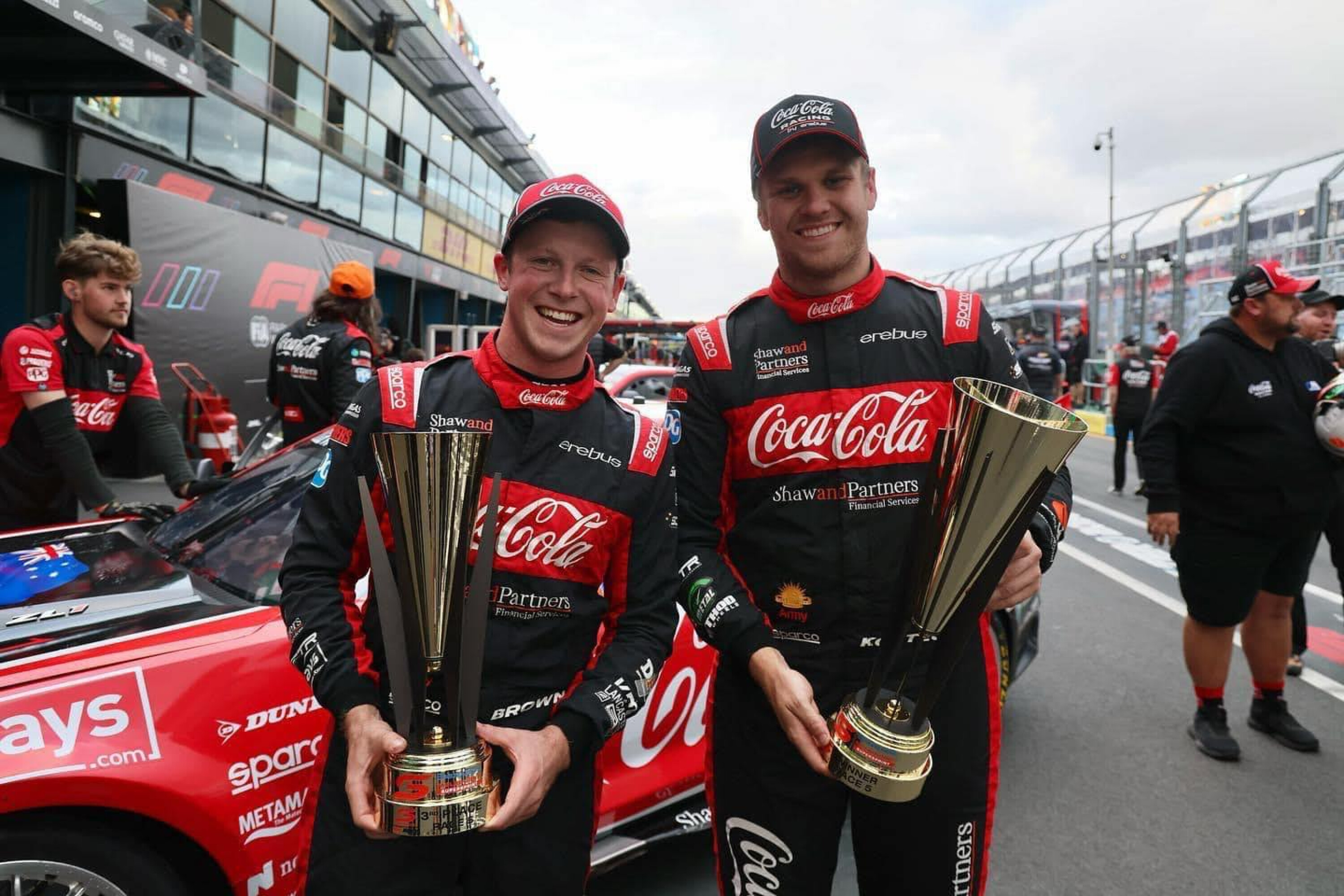
Kostecki, who drives a Chevrolet Corvette for Erebus Motorsport, currently sits second in the Supercars championship standings behind his teammate Will Brown.
Like van Gisbergen, whose win on debut at Chicago rocked the motorsport fraternity, West Australian native Kostecki will have only a short amount of time to acclimatise to his ride, a Chevrolet Corvette backed by Australian mobile communication doyen Peter Adderton and his Mobile X brand, before heading into the race on August 13.
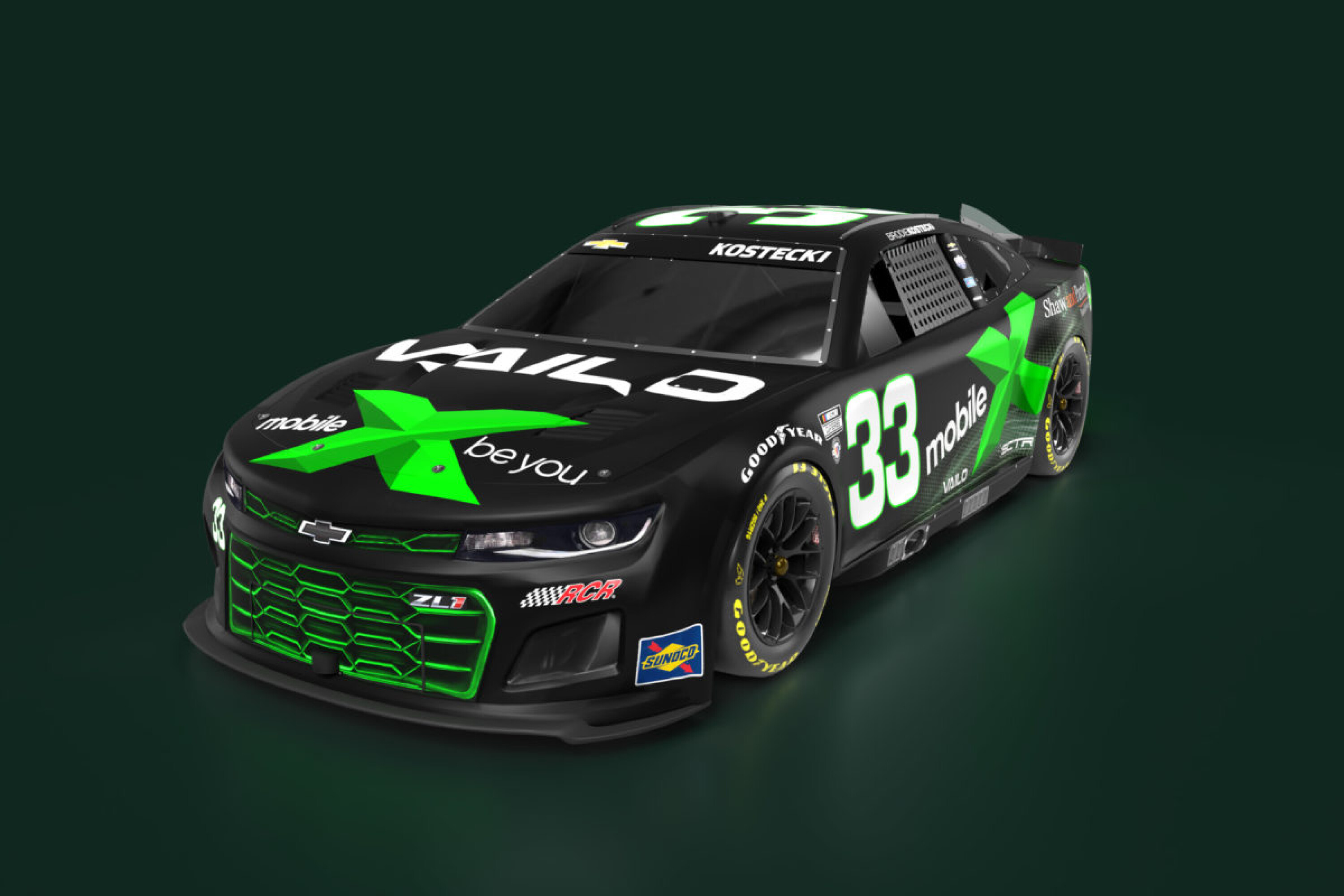
1
Unlike van Gisbergen, though, Kostecki has some idea of what to expect from the American series, having spent time living and racing in the US in various NASCAR feeder series.
“Racing is at the core of everything I do, and NASCAR has been a lifelong goal of mine after spending years growing up in the sports heartland in North Carolina,” said Kostecki.
“It’s a whole different world over there and any additional time I can spend racing is only going to help me try and win my first Supercars Championship.”
Kostecki, 25, made a brief trip to the US last month to embed with Richard Childress Racing at an event in Illinois.
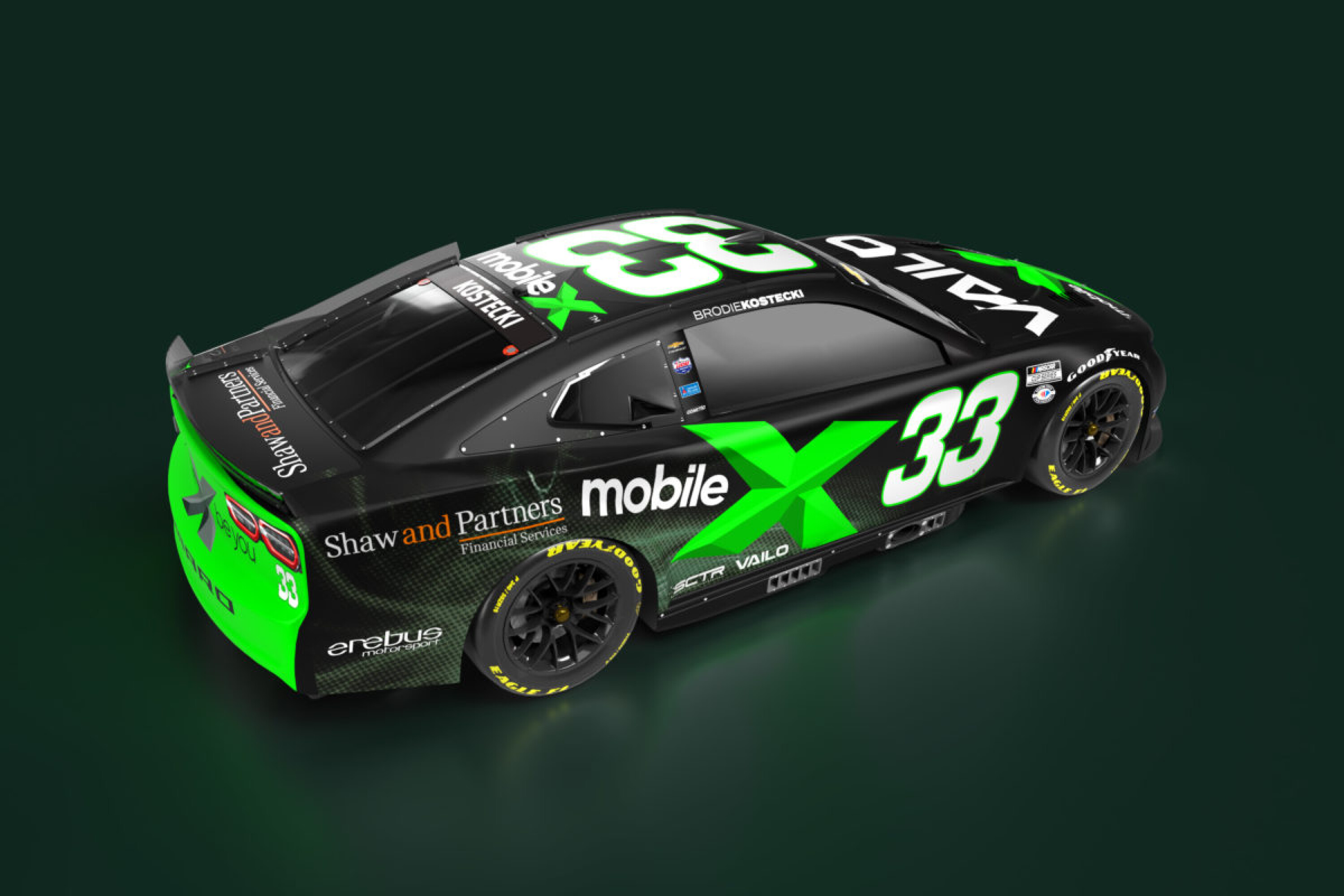
1
“We got some great exposure to the inner sanctum of the team during our recent trip, and I cannot wait to immerse myself in the team, this time as a Cup Series driver,” said Kostecki.
Kostecki’s team boss, Barry Ryan, is supportive of his young charge’s aspirations.
“We encourage him to race as much as he can,” said Ryan. “We have always encouraged Brodie’s pursuit of more racing opportunities.
1
“Providing him with the chance to explore and excel in various racing disciplines not only enhances his skills but also contributes to the overall growth and success of our team.”
The motorsport world will watch Kostecki’s debut with keen interest. The unprecedented success of van Gisbergen last month in Chicago has placed a spotlight firmly on the top tier of Supercars racers – and it could be argued that Kostecki, who will team up with NASCAR superstars Kyle Busch and Austin Dillon in one of the category’s powerhouse teams, will perform every bit as well as his Kiwi Supercars rival.
Kostecki won’t enjoy the advantage of racing on a track never used before by NASCAR, however, with the series racing on the Indy road course since 1994.
MORE
Motorsport
The Royal Automobile Club of Victoria (RACV), has released findings from its ‘My Melbourne’ road safety survey.
Snapshot
- 5000 participants pointed out issues close to them, and potential solutions
- Pedestrian and cyclist safety high priorities
- Driver behaviour and confusing intersection design also sore points
Of roughly 5,150,000 Melburnians, 5000 responded to the RACV’s survey helping identify the intersections perceived as the most dangerous in the city.
“Of the 5000 safety concerns raised by participants, intersection safety was the area of greatest concern, followed by unsafe behaviours of other drivers, such as speeding and erratic driving,” said RACV head of policy, James Williams.
“One-third of participants also identified that a lower speed limit on their nominated road would improve safety”, Williams said.
UPDATE: Jump to feedback from commenters and VicRoads’ response.
1
“The results remind us that safety is not just about safer speeds and safer roads, but driver behaviour. We are seeing a direct link between drivers taking increased risks when there are high levels of traffic congestion” reads the foreword written by RACV executive GM, Phil Turnbull.
With various complaints and issues raised, the respondents were also encouraged to provide solutions that Mr Williams deemed encouragingly simple fixes to problems.
The RACV will distribute the findings of the survey to relevant local governments and advocate for the identified roads to be improved.
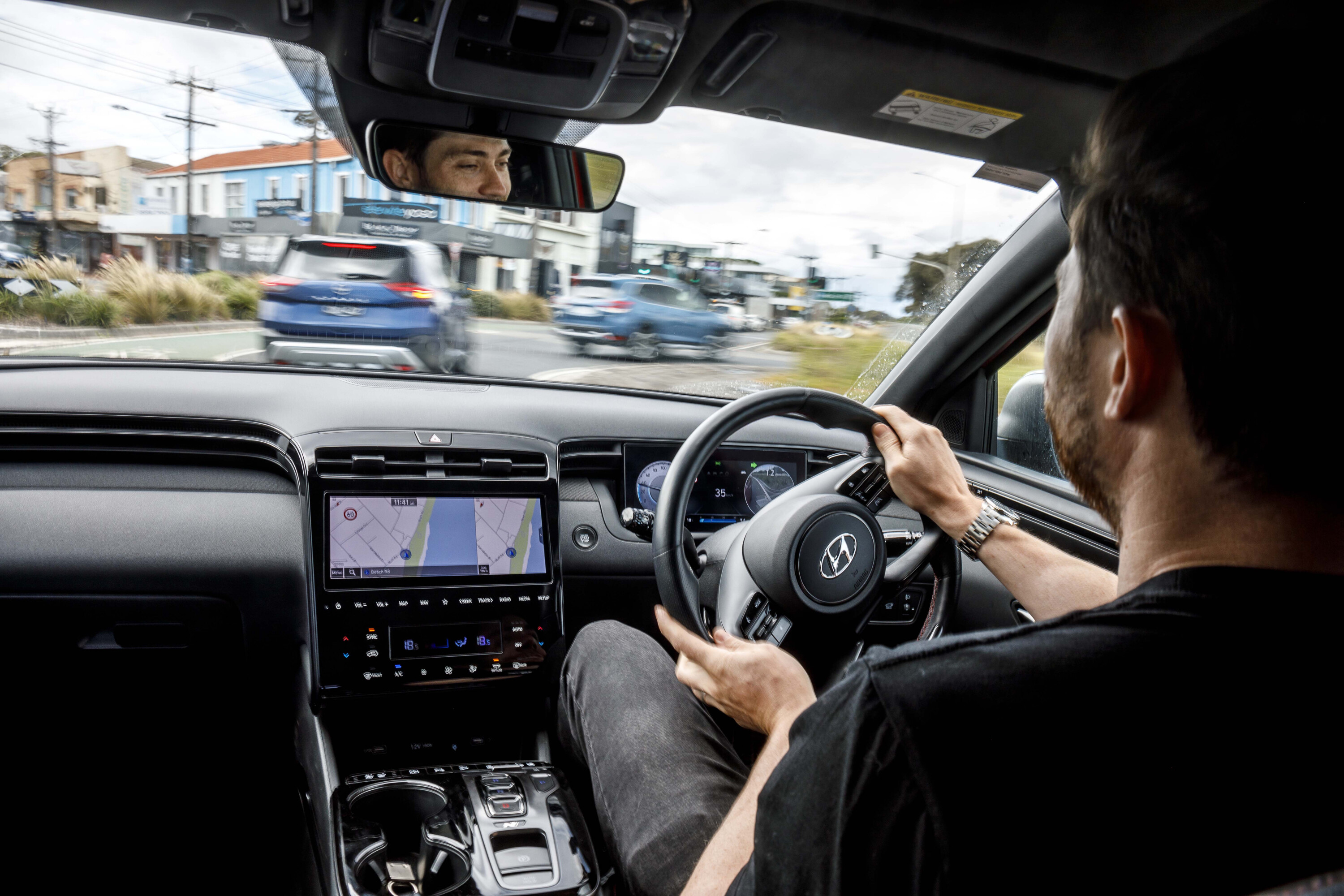
1
Melbourne’s 10 worst roads and intersections – ranked
- Mount Alexander Rd – Essendon, Moonee Ponds, Ascot Vale Several confusing roundabouts, dangerous for pedestrians attempting to cross and lack of safe bike riding infrastructure
- Dandenong Road – Windsor, Prahran, Caulfield Pedestrian crossings inadequate for school children, inappropriate clearway times causing risky merging and sudden drops in speed not well observed.
- Sydney Rd – Brunswick, Coburg Unsafe interaction between motorists, cyclists, pedestrians and trams.
- North Rd – McKinnon, Oakleigh, Clayton Speed zone inconsistency, unsafe driving and disconnected cycling path.
- Calder Fwy – Keilor Park, Keilor, Taylor lakes Unsafe driving, with heavy congestion inducing risk-taking behaviours.
- Clyde Rd/Berwick-Cranbourne Rd – Berwick, Clyde Unsafe driving, with heavy congestion inducing risk-taking behaviours. Insufficient separation of cyclists.
- Point Cook Rd – Point Cook, Seabrook Unsafe driving, with heavy congestion inducing risk-taking behaviours. Insufficient separation of cyclists.
- St Kilda Rd – Melbourne Motorists and cyclists experiencing confusion since the cycling infrastructure upgrades. Further awareness and education required to mitigate this perception issue.
- Barkly St/Hopkins St – Footscray Inadequate or missing bike infrastructure, narrow footpaths and heavy trucks mixing with bike riders.
- Western Fwy – Melton, Rockbank Two lanes insufficient to service major growth area (Melton) / absence of adequate merging lanes and overall road quality insufficient for demand.
What are the key issues?
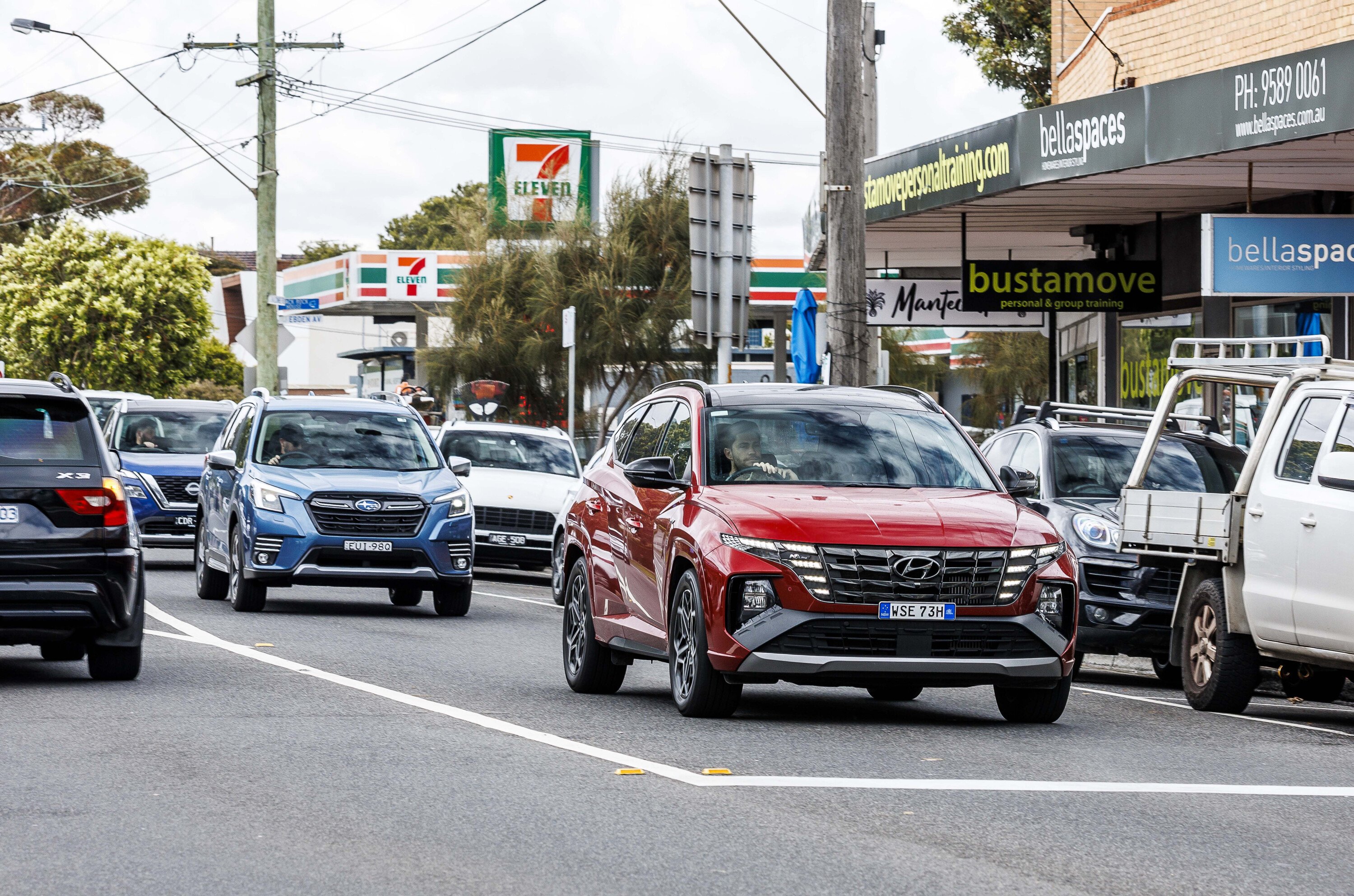
Motorists regularly identified confusing intersection design as a danger on the roads, with a third of respondents suggesting lower speed limits in certain areas would improve safety.
The RACV noted that plenty of respondents identified issues with cyclist and pedestrian infrastructure in Melbourne. Cyclists and pedestrians proposed more zebra crossings and improved traffic light positioning to enhance safety.
All respondents noted driver behaviour as an issue in Melbourne, with regular speeding and perceived dangerous driving repeatedly named in the survey.
“The survey results suggest that unsafe driving was heightened in congested traffic. These findings are a reminder that investment in road infrastructure is critical to improving safety and that motorists also need to drive safely and to the traffic conditions”, said Mr Williams.
1
What are the solutions?
With the RACV’s survey completed, it will approach governments with proposed improvements to road safety, attempting to lower Australia’s stubborn road toll.
Luckily, of the solutions suggested by respondents, many are reasonably cost-effective; zebra crossings, improving traffic lights, and traffic calming infrastructure were called out, rather than wholesale intersection re-designs.
Other solutions include resurfacing potholes, new intersection design, improving lighting and ensuring speed limits are fit for purpose.
As for solving driver behaviour, that’ll be a little more difficult. Poor driver education in Australia has a lot to blame for this, so Williams has a few simple recommendations we can integrate into our daily drives.
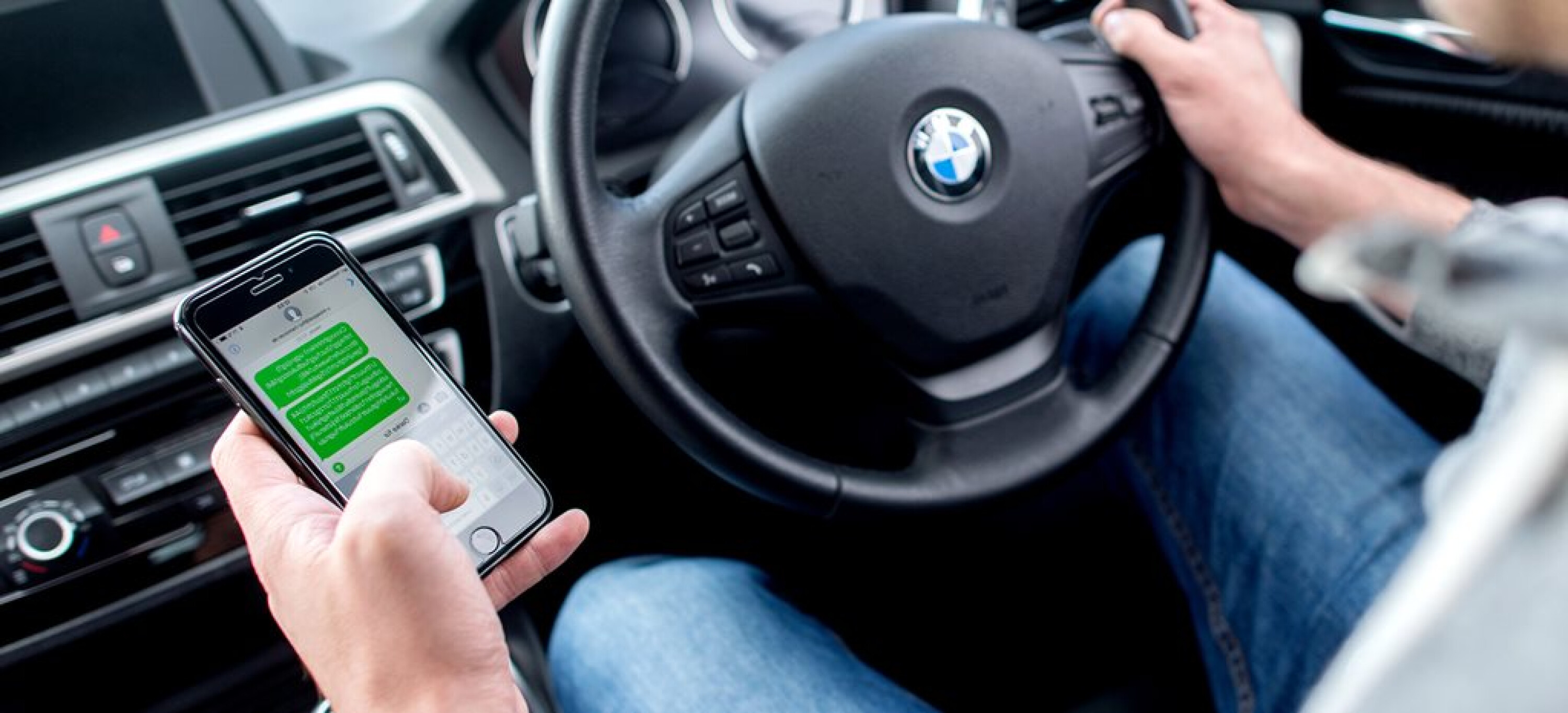
“Whether it’s driving at a safe speed, keeping a safe distance or not using a portable device while driving, we can all do our part to make our roads safer”, he said.
1
UPDATE: Feedback from more real Melburnians
Commenters were joined by our very own publishing director, Mike Stevens and Wheels magazine editor Andy Enright with a few things to say about the state of Melbourne’s roadways – and the omission of several sketchy intersections from the RACV survey’s findings.
We can add to our list; the intersection between Yarra Rd and the Maroondah Hwy in Croydon, the Lorimer St/Docklands Hwy/Montague St/Mondash Fwy melange in peak hour, as well as the Western Freeway to Ballarat.
Whichcar contacted VicRoads for its take on atrocious the state of Melbourne’s roads, to which a Department of Transport and Planning spokesperson replied:
“We continually monitor our state’s transport network for potential improvements to ensure all road users can get where they need to go safely.
“Road safety is a broad and complex issue that requires a strategic, multi-faceted and coordinated approach and we welcome community feedback as part of that mix”, they said.
“We’re continuing to build safer roads across the state and investigating safer technologies at intersections, making sure speed limits are appropriate and developing community education strategies to increase understanding of road safety but driving down road trauma takes all of us doing the right thing every time we take to the road”, added the spokesperson.
MORE
ANCAP
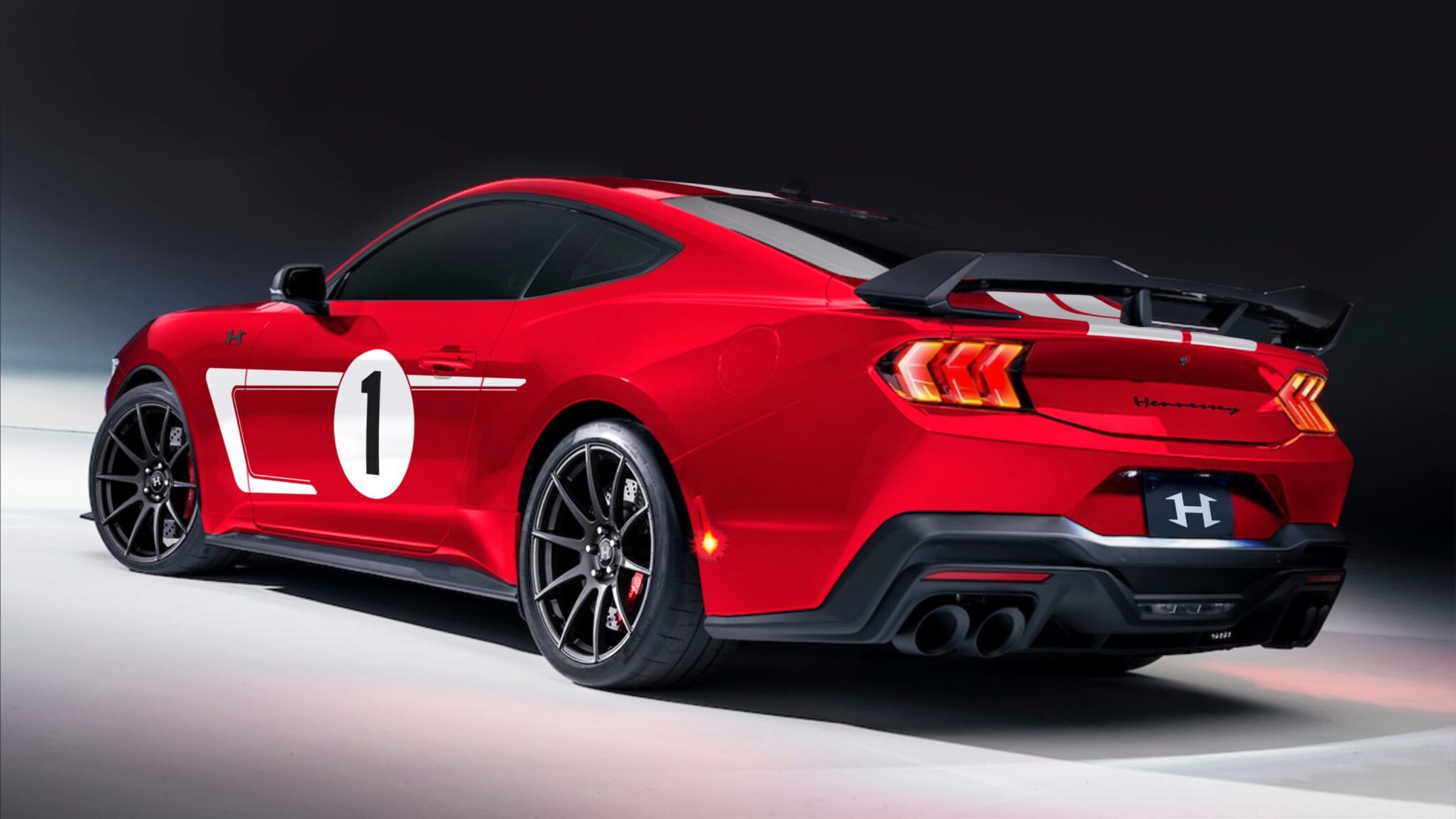
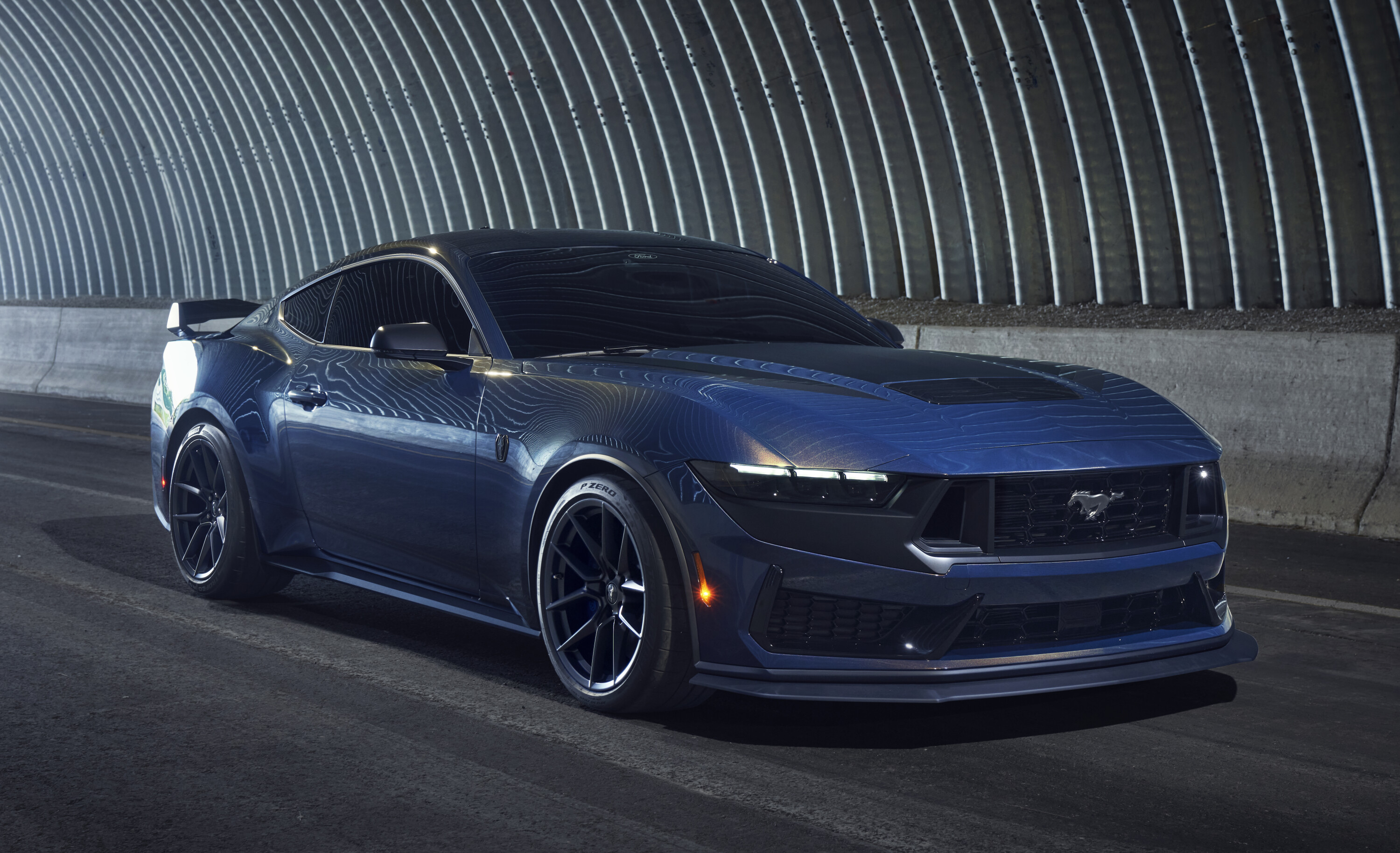
Ford’s range-topping Mustang Dark Horse just got a little meaner, thanks to legendary US tuner Hennessey’s unsubtle power-up kit for the track-focused ’Stang.
Dubbed the H850, the in-house reboot of Ford’s newest and fastest S650 Mustang is comprehensive, and results in a carbon-clad circuit warrior pumping out 634kW (850bhp in the old money and the obvious origin of the name) and 800Nm to the rear wheels. Ulp.
Out of the box, the Dark Horse – reportedly destined to hit Australia in the second half of 2023 – is already reasonably handy.
Replacing the GT500, the track-focused Dark Horse is based on a 373kW version of the fourth-generation Coyote 5.0-litre naturally aspirated V8, thanks to twin throttle bodies and connecting rods pinched from the GT500, as well as extra cooling capacity.
1
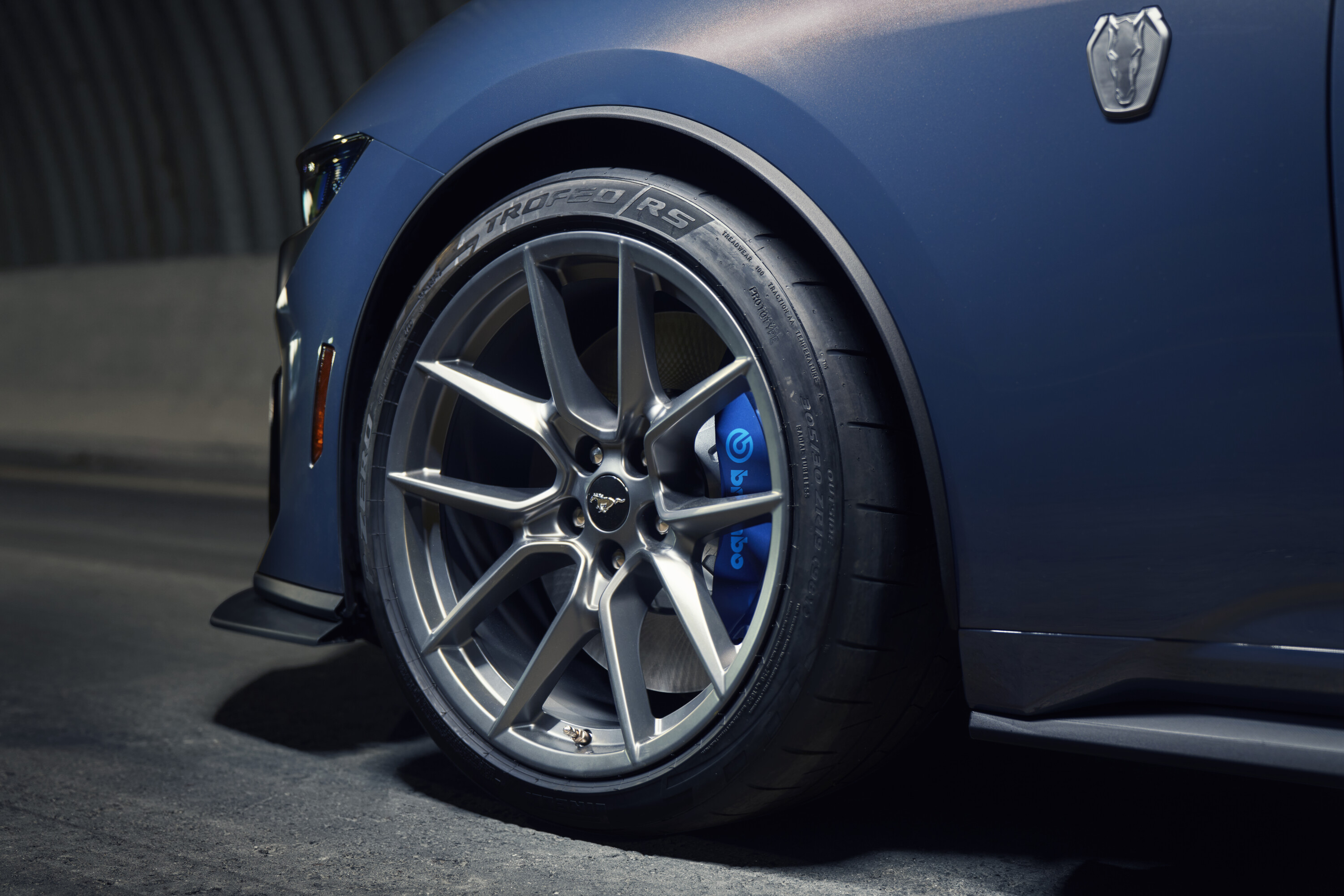
It also runs bigger Brembos front and back as standard, along with trickier dampers, thicker anti-roll bars and extra body bracing.
And, in the US at least, it can be optioned with Australian-made Carbon Revolution rims to reduce sprung mass at each corner.
Hennessey techs take the Dark Horse into an even darker place, though, with the addition of a high-capacity supercharger, high-flow air intake setup and exhaust, bigger injectors and fuel pump controlled by Hennessey’s own ECU tune adding a claimed 70 per cent lift in power.
1
What’s more, Hennessey claims it can be teamed with either Ford’s Tremec six-speed manual or the Blue Oval’s own (and longer-legged) ten-speed automatic gearbox.
The go-fast accoutrements extend to the exterior of the Mustang Dark Horse, with carbon fibre side skirts, carbon fibre front splitter and carbon fibre rear spoiler complemented by a bespoke set of alloy rims and Hennessey badging.
The work is done at Hennessey’s Texas facility, and those lucky few who commit to this level of rear-drive lunacy will be invited down to the company’s test track to take delivery.
1
Hennessey backs the upgrades with a three-year, 50,000km warranty, as well.
While dispatching your locally delivered Dark Horse to Texas for upgrading is technically possible, it’ll be far easier to reach out to Hennessey’s authorised Australian partner, KPM Motorsport in Adelaide, South Australia.
At time of publication, there’s no confirmation that the kit will be made available in Australia, but KPM is the only place in Australia and New Zealand which can make it happen with Hennessy’s backing.
MORE
Everything Ford
UPDATE: 12 months after the facelift’s launch, BMW’s X7 three-row SUV gains a new entry-level xDrive40i variant and price increase.
Snapshot
- New xDrive40i is a 280kW/540Nm six-cylinder petrol
- Petrol has identical features to current diesel
- Existing variants climb $8000
The new xDrive40i picks up BMW’s venerable ‘B58’ inline-six with a 48-volt mild-hybrid system upping torque from 520Nm to 540Nm in Boost mode. It lists from $167,900 before on-road costs and will be available in the fourth quarter of this year.
As the new entry grade, the xDrive40i gains the same basic level of equipment as the xDrive40d diesel, which has now climbed in price to $174,900 before on-roads.
1
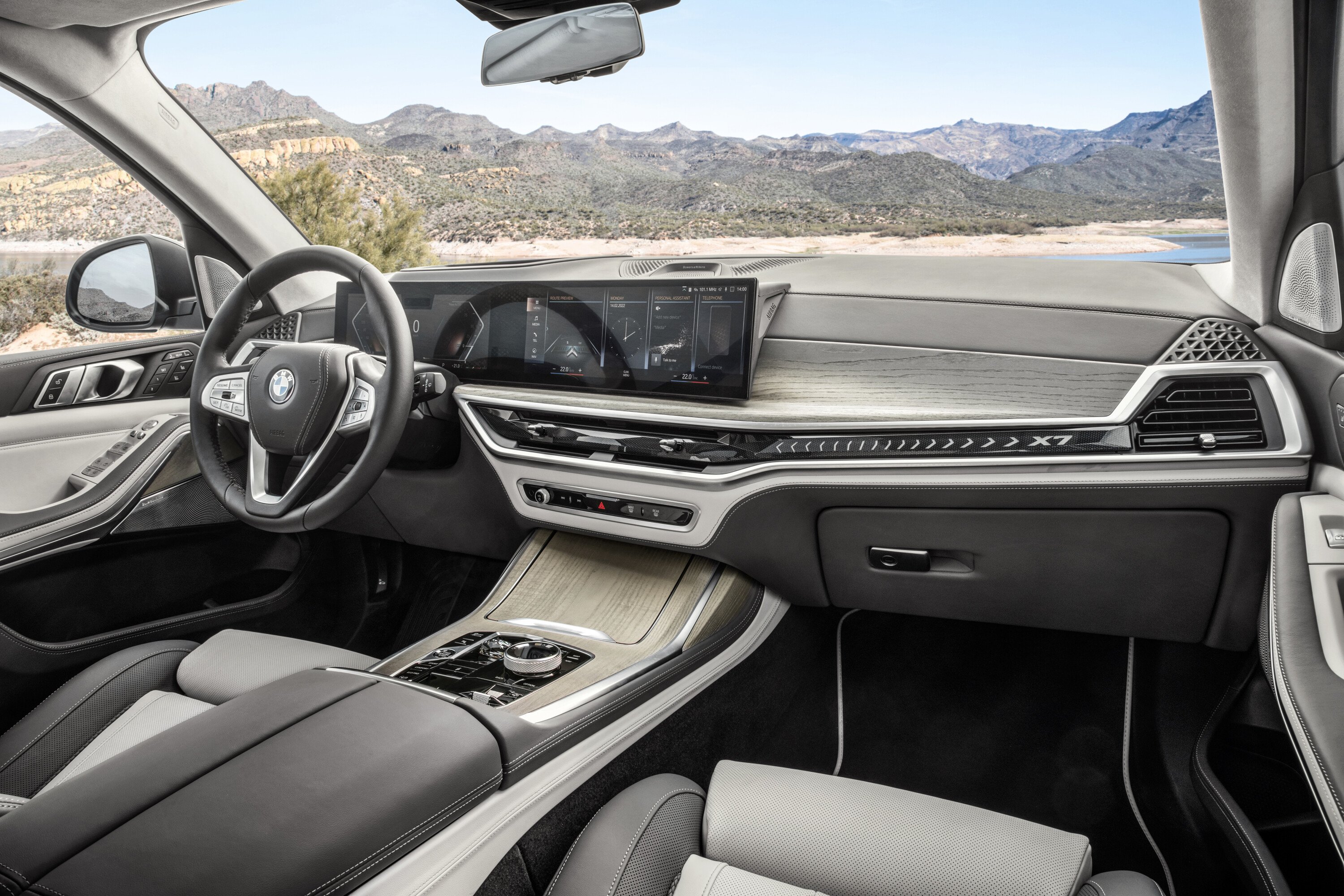
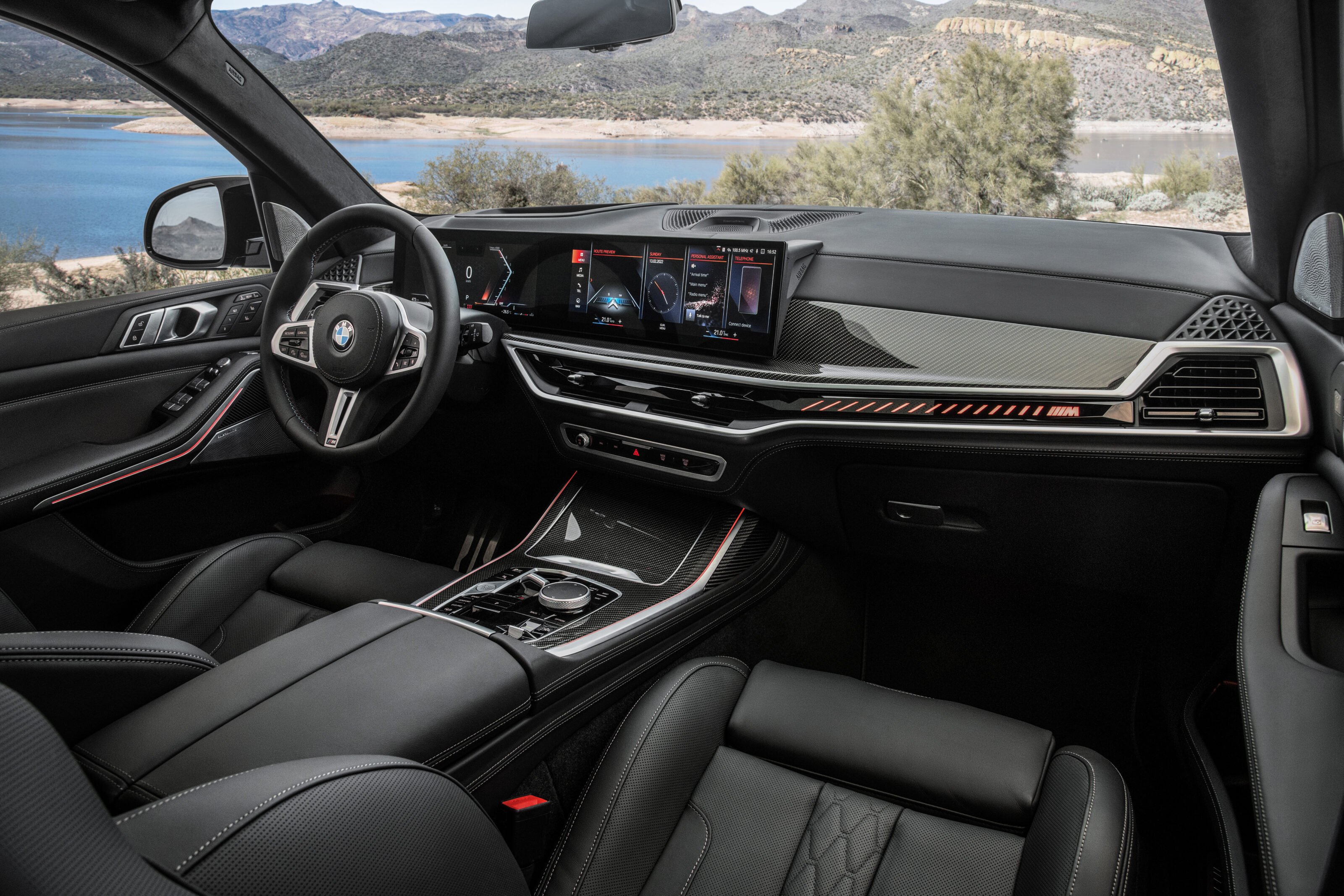
The xDrive40i scores 22-inch alloy wheels, the M Sport package, Merino leather upholstery, a 16-speaker harman/kardon sound system, glowing kidney grilles, and five-zone climate control.
Various option packs are available at an extra cost (see below), but buyers can choose M Sport or Design Pure Excellence styling packages – depending on if you want sporty or sophisticated looks – for no extra cost.
A rival for the Mercedes-Benz GLS, Audi Q7 and Range Rover, the latest pricing update follows the facelifted X7’s Australian release in the fourth quarter of 2022 – four years after BMW’s seven-seat behemoth was launched globally.
| 2024 BMW X7 pricing (before on-road costs) | ||
|---|---|---|
| Model | Price | Change |
| xDrive40i M Sport | $167,900 | NA |
| xDrive40d M Sport | $174,900 | Up $8000 |
| M60i M Sport | $205,900 | Up $8000 |
Our original story, below, continues unchanged.
September: Facelifted BMW X7 priced for Australia
Snapshot
- Facelifted BMW X7 confirmed for Australia
- Starts at $166,900 in diesel form, $197,900 for petrol power
- Fourth quarter Australian launch
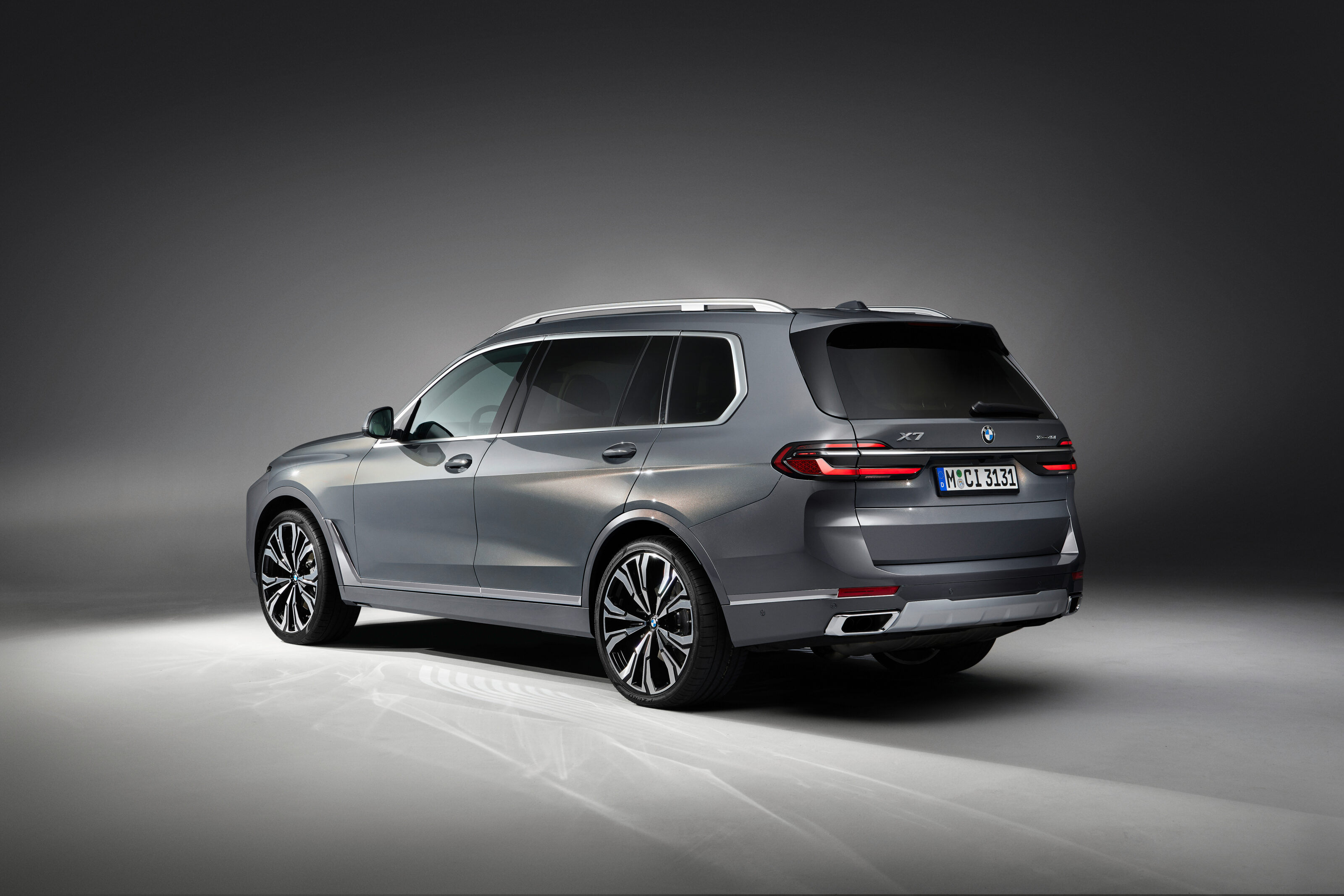
The 2023 BMW X7 will come to Australia in two grades, with pricing and features for the facelifted flagship SUV released today.
Revealed in April, BMW’s updated flagship SUV retains its two-variant structure for 2023 – but with more equipment now fitted to each X7 offering.
BMW has confirmed it is aiming to launch the X7 in Australia throughout the fourth quarter of 2022, bolstering its local line-up of recently updated or new models.
1
Pricing
Note: non-current 2023 pricing, see above for 2024 figures.
Coming in at a $26,000 increase over the outgoing xDrive30d, the new xDrive40d opens the X7’s account, while the M60i now takes the flagship mantle from the M50i.
Prices exclude on-road costs.
| 2024 BMW X7 pricing (before on-road costs) | |
|---|---|
| Model | Price |
| xDrive40d M Sport | $166,900 |
| M60i M Sport | $197,900 |
3
Features
X7 xDrive40i and xDrive40d M Sport
| M-specific exterior paint finishes | Anthracite Alcantara headliner |
| M front and rear apron design | iDrive 8 infotainment system |
| M high-gloss shadow line roof rails, window decor and lower body accents | 12.3-inch digital instrument cluster |
| Blue M Sport brake calipers | 14.9-inch infotainment touchscreen with Apple CarPlay/Android Auto |
| 22-inch light alloy wheels (u200bu200bdouble-spoke style 913 M bi-colour) | Alarm system |
| Fine wood trim, fineline black with metal effect, high-gloss | Five-zone automatic air-conditioning (including third-row) |
| M-specific pedal assembly | BMW drive recorder |
| Leather Merino upholstery | Harmon Kardon 16-speaker surround sound system |
| Electrically adjustable comfort seats | Tyre pressure monitoring system |
| M Sport leather steering wheel | Soft-close doors |
X7 xDrive40d Design Pure Excellence (over or in addition to M Sport)
| Satinated roof rails and window decor | 22-inch light alloy wheels (multi-spoke style 757 bi-colour, ferric grey) |
| Exterior highlight trims in pearl chrome | Sports leather steering wheel |
| Silver underride guard | Fine wood trim, fineline stripe brown, high-gloss |
X7 M60i (over xDrive40i and xDrive40d)
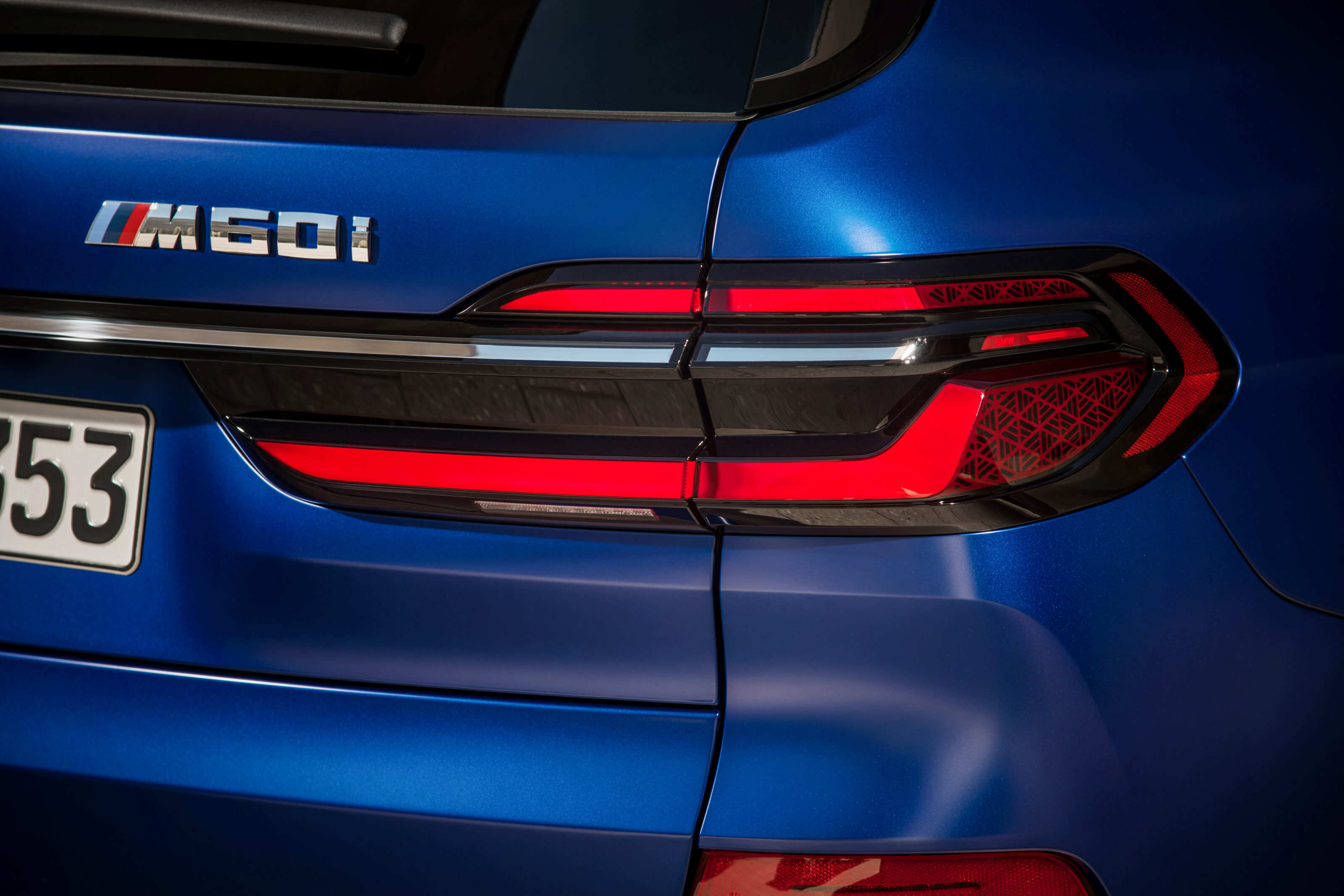
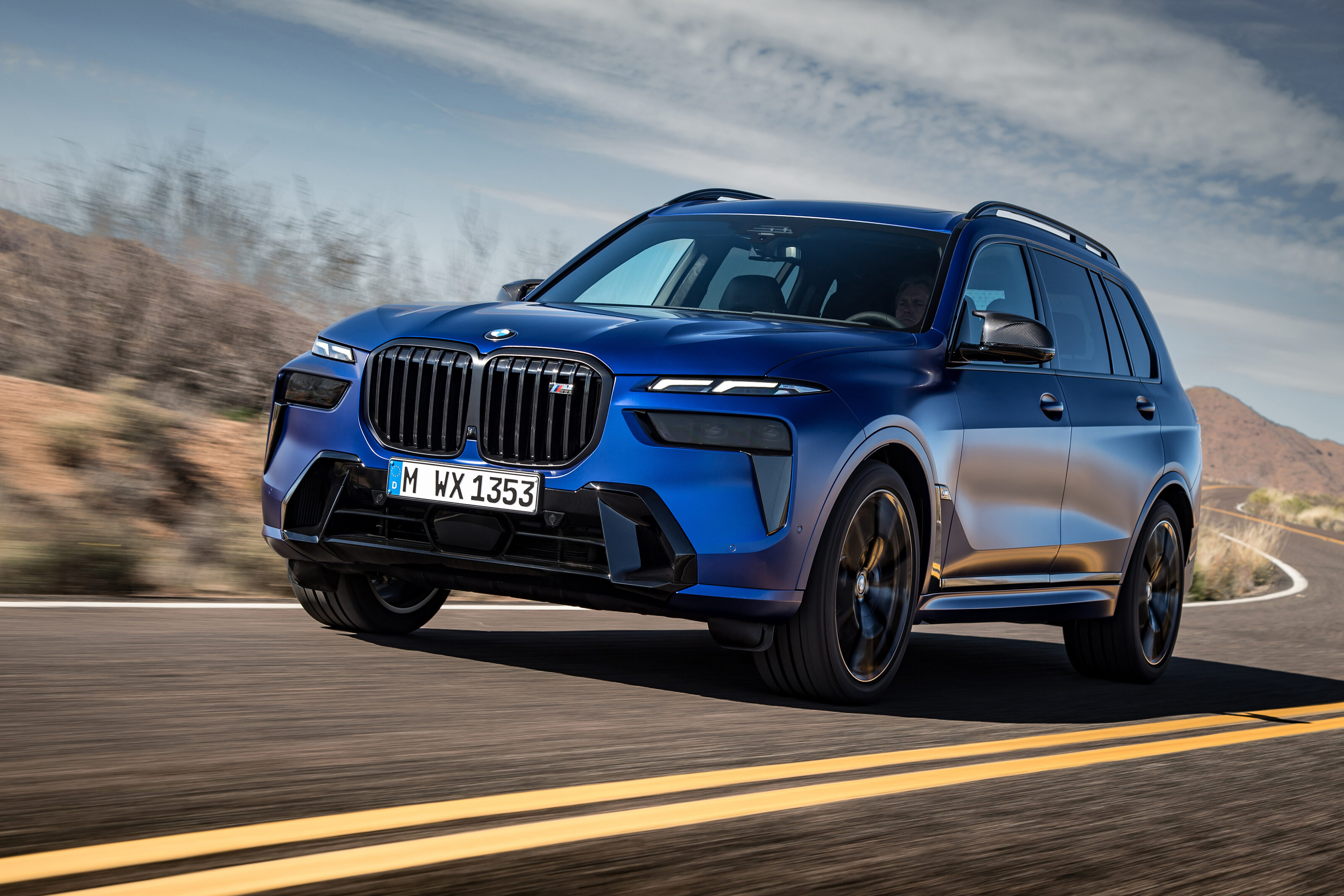
| M Sport exhaust system with four exhaust tailpipe finishers | Heated steering wheel |
| 22-inch light alloy wheels (V-Spoke style 755 M, jet black) | Heated front arm rests |
| M Sport Pro featuring black brake calipers | M Sport differential |
| M badging integrated into kidney grille, side air breathers | Executive drive pro |
| Illuminated kidney grille | Integral active steering |
| Front-row active seat ventilation and seat massage function | Leather instrument panel |
| Second-row and third-row seat heating (outboard only) | Heated and cooled front cupholders |
2
Options
Connoisseur Suite – $10,000 (xDrive40d), $9800 xDrive40i), $5000 (M60i)
| Front-row active seat ventilation and seat massage function u2013 xDrive40d only | CraftedClarity applications |
| Second-row and third-row seat heating (outboard only) u2013 xDrive40d only | Skylounge panorama glass roof |
| Heated steering wheel u2013 xDrive40d only | Privacy glass |
| Heated front arm rests u2013 xDrive40d only | Gesture control |
| Heated and cooled front cupholders u2013 xDrive40d only | Ambient air |
| Remote engine start u2013 M60i only | Illuminated kidney grille u2013 xDrive40d only |
M Sport Pro – $4000 (xDrive40d), $3200 (in addition to Connoisseur Suite)
| BMW kidney grille in high-gloss shadow line | High-gloss black M Sport brakes |
| Illuminated kidney grille | M seat belts |
| M exhaust system |
Individual options
| Trailer tow hitch (increases maximum towing capacity to 3500kg, 280kg tow ball limit) u2013 $2500 |
| Front-row M multifunction seats (integrated head restraint with M logo, electrically adjustable including memory function for front passenger seat and lumbar support) u2013 $3000 (xDrive40d), $1500 (xDrive40d with Connoisseur Suite and M60i) |
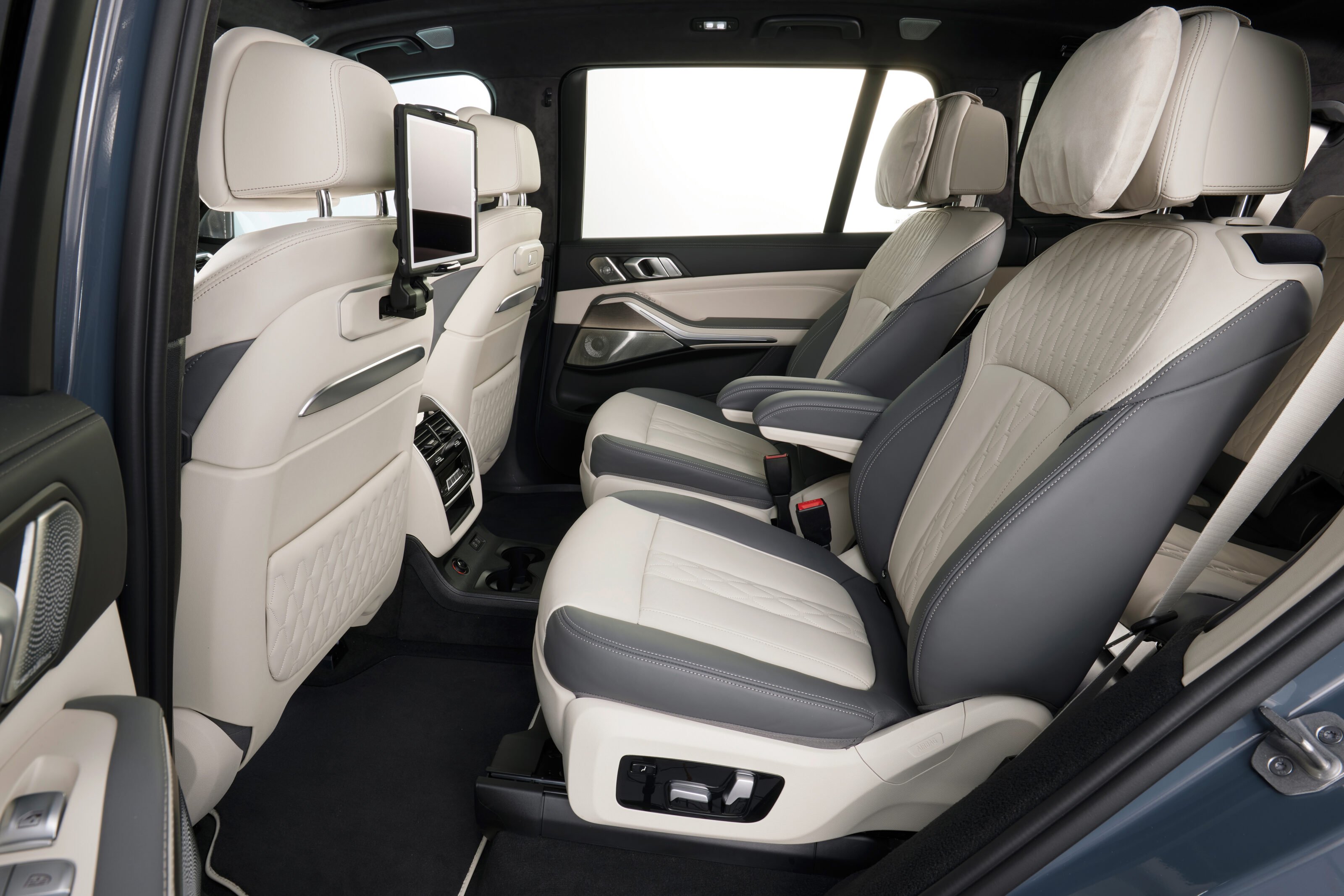
| Six-seat configuration (newly-offered 2+2+2 configuration with second seating row featuring captainu2019s chairs) u2013 $1500 |
| Bowers and Wilkins Diamond surround sound system (fully active 10-channel 1508W amplifier with 20 speakers, complemented by stainless steel finishers with u2018Fibonacciu2019 hole pattern design) u2013 $8500 |
Exterior finishes
| Non-metallic: white |
| Metallic: mineral white, black sapphire, sparkling copper grey (new; available for X7 xDrive40d Design Pure Excellence only), Manhattan skyscraper grey (new), M Marina Bay blue (new; X7 M60i only), M carbon black, M Brooklyn grey (new) |
| BMW Individual metallic: Tanzanite blue ($2400), dravit grey ($2400), ametrine ($2400), frozen pure grey ($5000) |
Interior finishes
| Ivory white/atlas grey upholstery u2013 $5000 (xDrive40d), $3500 (M60i) |
| Black upholstery u2013 $5000 (xDrive40d), $3000 (M60i) |
| Tartufo upholstery u2013 $5000 (xDrive40d), $3000 (M60i) |
| Ash u2018flowing greyu2019 open pore trim u2013 $800 |
| Piano black trim u2013 $800 |
| Carbon fibre trim u2013 $1700 |
1
Engine, drivetrain and fuel economy
BMW has now incorporated crankshaft-mounted, 48-volt mild-hybrid technology into both of its Australian-delivered X7s, with the 3.0-litre, inline-six twin-turbo diesel under the bonnet of the xDrive40d now making 259kW and 720Nm – an improvement of 64kW and 100Nm over its xDrive30d predecessor.
The outputs of the M60i might be unchanged from the outgoing M50i – remaining at 390kW and 750Nm – but its 4.4-litre, twin-turbo petrol V8 is an all-new unit, as the S68 makes its debut in the X7 as a replacement to the ageing N63 and S63.
Both engines deliver their power to all four wheels through an eight-speed, torque-converter ‘Steptronic Sport’ automatic transmission, enabling 0-100km/h sprint times of 5.9 and 4.7 seconds respectively.
As expected, the diesel-powered xDrive40d consumes less fuel than its petrol-powered counterpart, with official figures claiming ratings of 8.0L/100km and 12.2L/100km respectively for the X7 grades.
1
Warranty
BMW retains its three-year/unlimited-kilometre warranty which is applied to the new X7, however its German rivals in Audi and Mercedes-Benz have recently moved to five-year warranties.
Availability
The new BMW X7 is expected to arrive in the fourth-quarter of 2022, with the first deliveries turning up before the new year.
MORE
Everything BMW
July: New Corolla hatch imagined
Six years into its lifecycle, the current 12th-generation Corolla hatch still looks the goods – especially in tough GR hot hatch form – but it’s closing in on retirement.
Earlier this year, we published speculative renderings of how the Corolla sedan might look for the badge’s 13th incarnation.
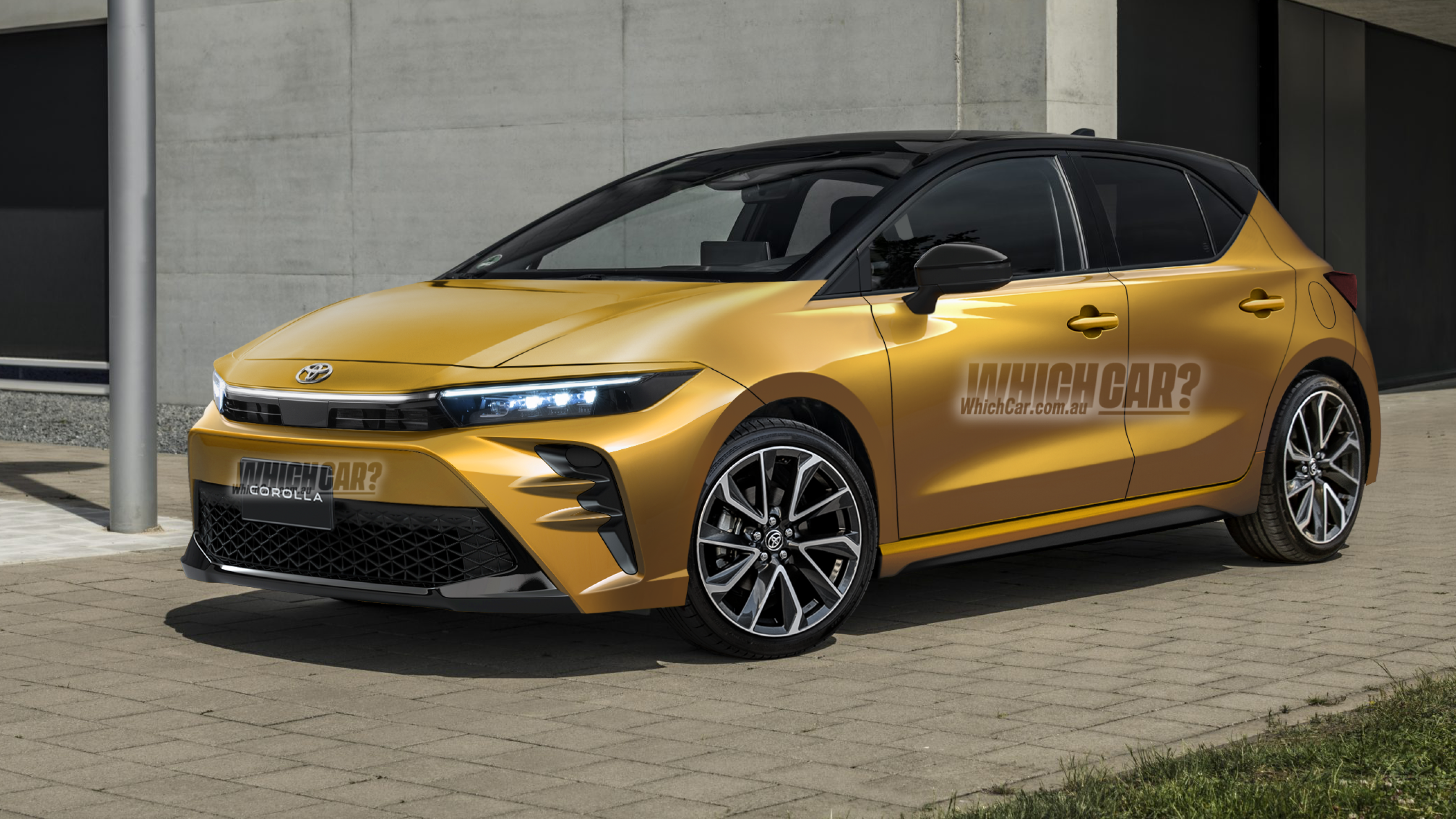
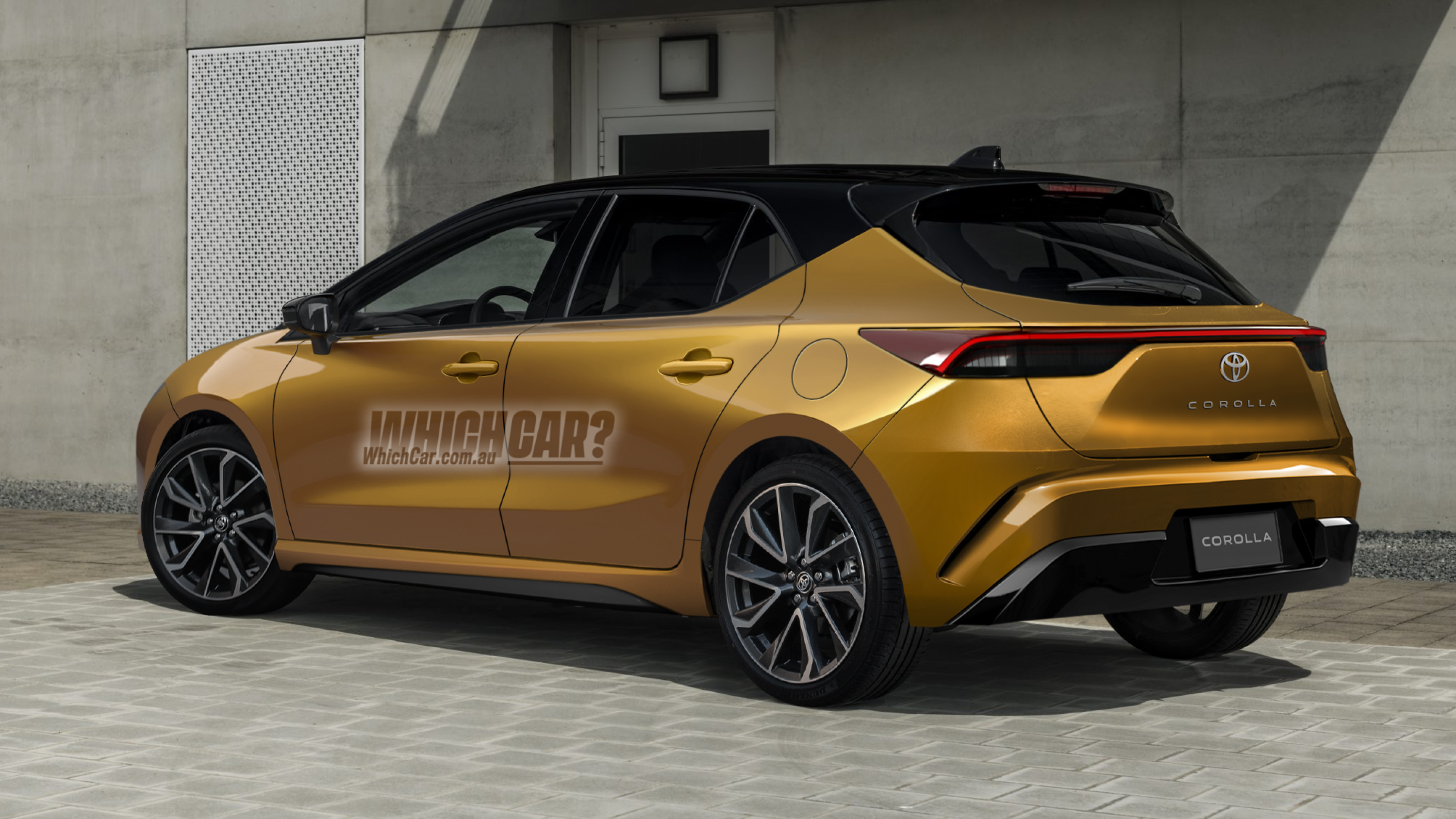
The small sedan will likely adopt Toyota’s newest styling language, which has been rapidly spreading across the brand’s overseas range (and in plenty of our renderings) – although it’s the new C-HR that will first bring the look to Australia, next year.
In hatch form, the Corolla will likely continue the pair’s current approach, with the five-door wearing a more sporting look than the usually quite placid sedan.
1
Of course, we couldn’t resist imagining how it might look.
There have been no spy photos yet of the new Corolla, so these two images are entirely the work of our mate Theottle – although he’s obviously got plenty of new Toyota models to draw inspiration from.
1
What do you think of our renders?
If you’re keen on your next car to be a hatch, would this Corolla grab your attention? Tell us in the comments below!
February: New Corolla sedan imagined
Toyota’s 12th-generation Corolla is now into its sixth year on the global stage, which means we can expect a new-look car to debut in the coming year.
Exactly what we can expect from the new car in both styling and technology remains a mystery, but we can likely expect design cues to be taken from Toyota’s latest offerings.
Here in 2022, that means the most likely inspiration will be the new Crown range, and the new Prius – neither of which are expected to come to Australia, which could make the new Corolla the first local Toyota to wear the brand’s new styling themes.

1
Here we present one speculative take on how the new Corolla might look, thanks to a pair of renderings produced by our mate Theottle.
Leaning to the Corolla sedan body as the base for his work, Theottle’s renderings hint at a stylish new design for the world’s best-selling car, inspired by the new Crown and Prius as described above.
Theottle’s taken some liberties with some key styling elements, particularly at the headlights where he’s done away with the hooked design worn by Toyota’s new models. Instead, we see a taller design with a single LED signature light running across the top edge of each light.
The rear end shows a design more in keeping with the Prius, with long and slender tail lamps running across the boot lid.

1
⚙️ What will power the new Corolla?
What we’ll find under the skin of the new Corolla remains to be seen, although an evolution of Toyota’s TNGA architecture and petrol-electric hybrid drive system is likely.
In its current form, the Corolla is offered with a 125kW/202Nm 2.0-litre four-cylinder naturally aspirated petrol engine and 103kW 1.8-litre petrol-electric hybrid system.
As a new hero model, Toyota has also introduced the GR Corolla hot hatch, with a 221kW/370Nm 1.6-litre turbo petrol four-cylinder engine packaged under its bonnet. We’ll hold out hope that this variant continues into the next-gen Corolla range…
⚡ What about an electric Corolla?
Toyota will also launch an electric sedan in its new ‘BZ’ range (Beyond Zero (Emissions)) at some point, although for now it appears to be a China-only proposition. For its part, Toyota isn’t offering any word on launch plans for that car.
However, we know the company is now working double-time on its overdue EV revolution, with new CEO Koji Sato promising to “drastically” revamp the Japanese automaker’s EV strategy. Get that story at the link below.
? When will the new Corolla come to Australia?
Until the new model is revealed, we can’t easily speculate on local launch timing. The current MY23 Corolla facelift was revealed last year, suggesting a new generation could still be a year-or-more away from debut.
With that in mind, buyers might best anticipate an early or mid 2024 unveiling, with an Australian launch to occur in late 2024 or early 2025.
We could even end up with a launch race on our hands, because a new-gen Camry is also expected to debut in the near future – and you can click here to see Theo’s Crown-inspired look at the new Camry. (Hint: it looks awesome, although we do love Theo’s GR performance version of the current Camry…)
MORE
Everything Toyota
MORE
Sedan Buyers Guide
⏯️ Related video: Watch Theottle create his new-gen Corolla sedan
? BELOW: The Corolla sedan in its current form, in Ascent Sport hybrid trim

1

1
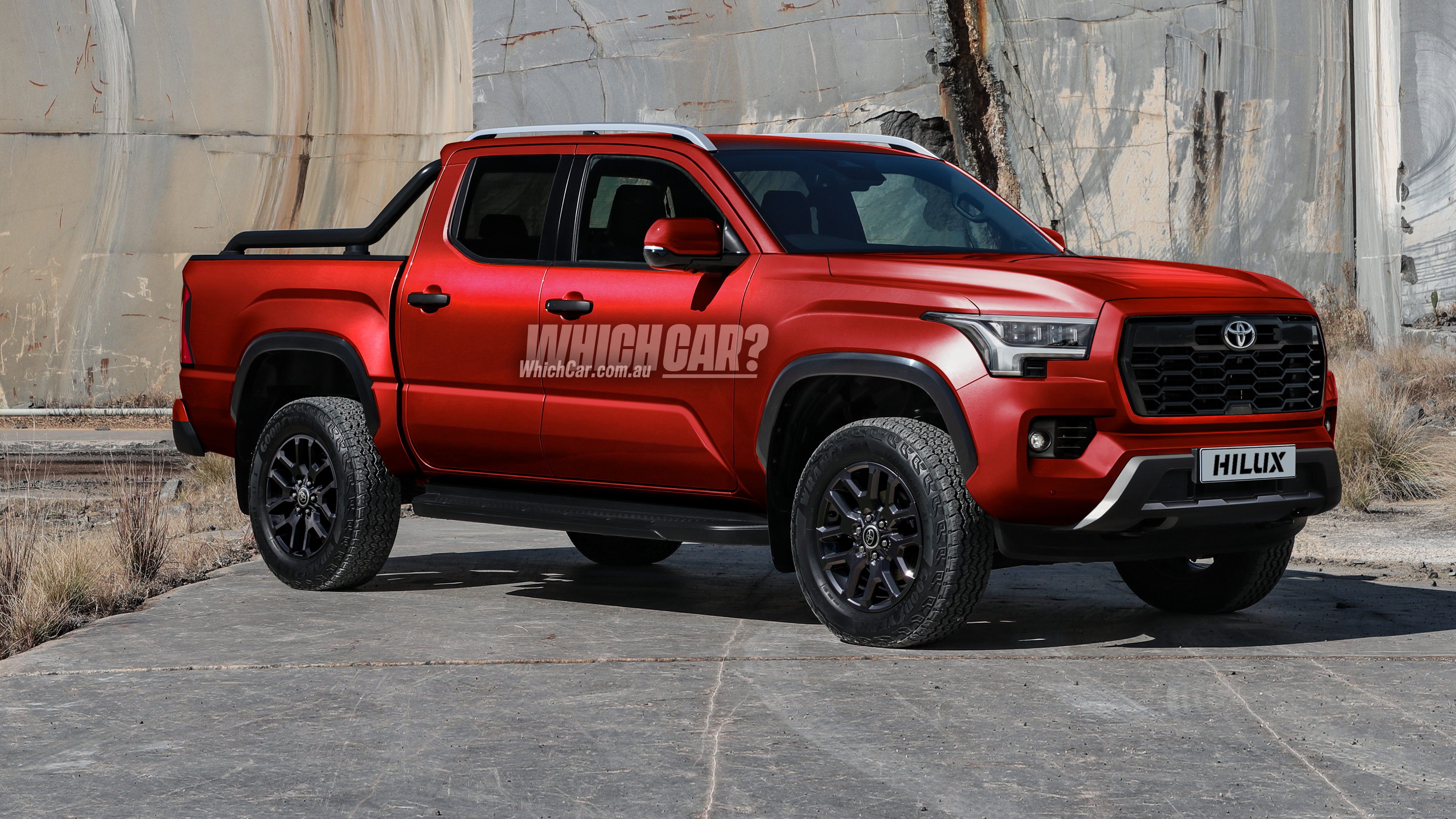
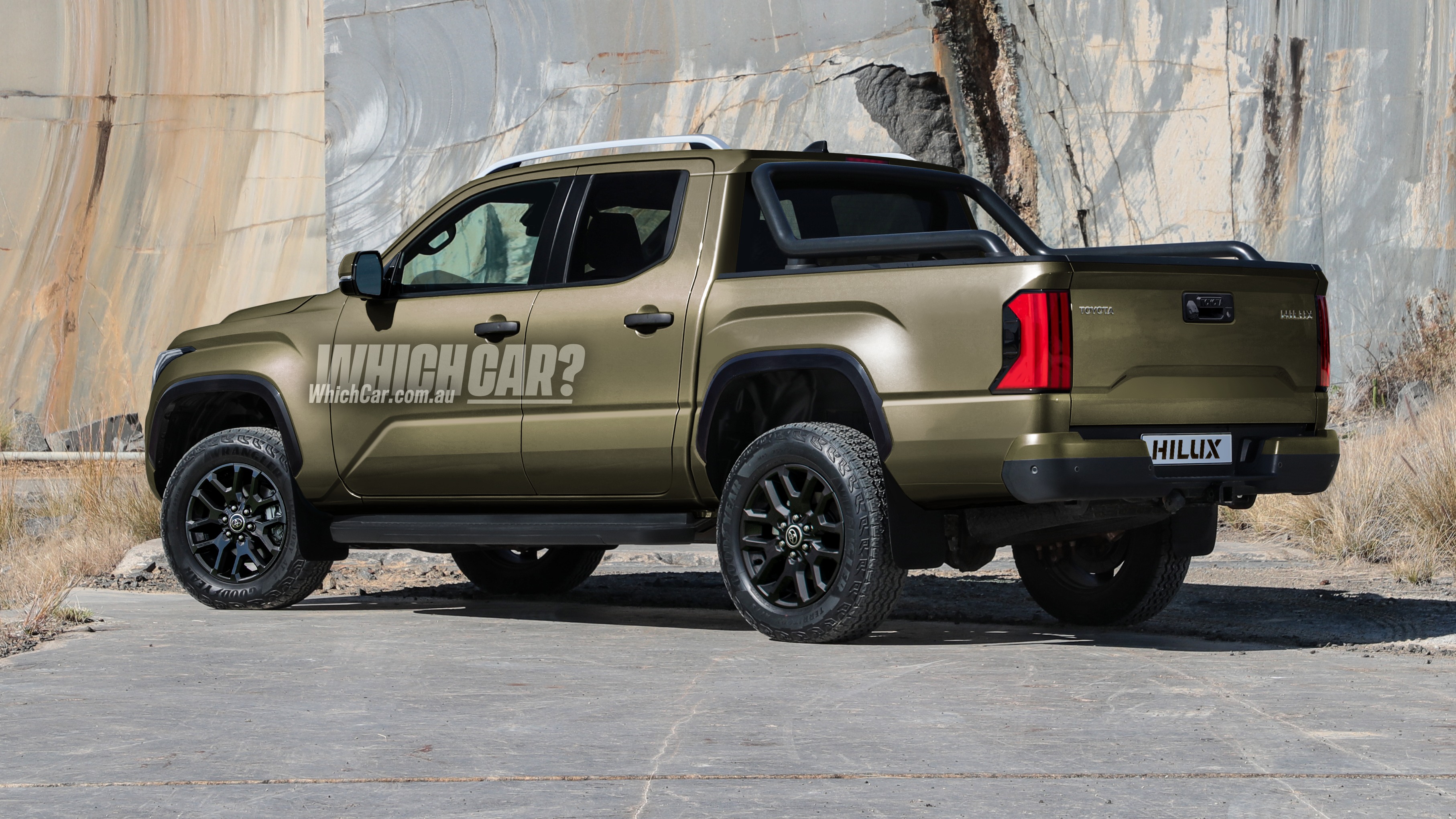
? While you’re here / just for kicks: Here’s the new Toyota HiLux with next-gen Tacoma styling cues
1
1
Skoda Australia has announced features removed due to the industry-wide semiconductor chip shortage will return later this year.
Snapshot
- Blind-spot and rear cross-traffic alerts return to Skoda vehicles in Australia
- Other features set to return as standard on select cars
- Updated vehicles due to arrive in the fourth quarter; prices to be announced
Vitally, this includes blind-spot and rear cross-traffic alerts, which will become standard on all Skoda vehicles arriving in Australia from the fourth quarter of 2023.
The technology was removed from the Scala, Octavia, Kamiq, Karoq and Kodiaq last year – along with select Volkswagen vehicles – to minimise wait times due to a shortage of the necessary components.
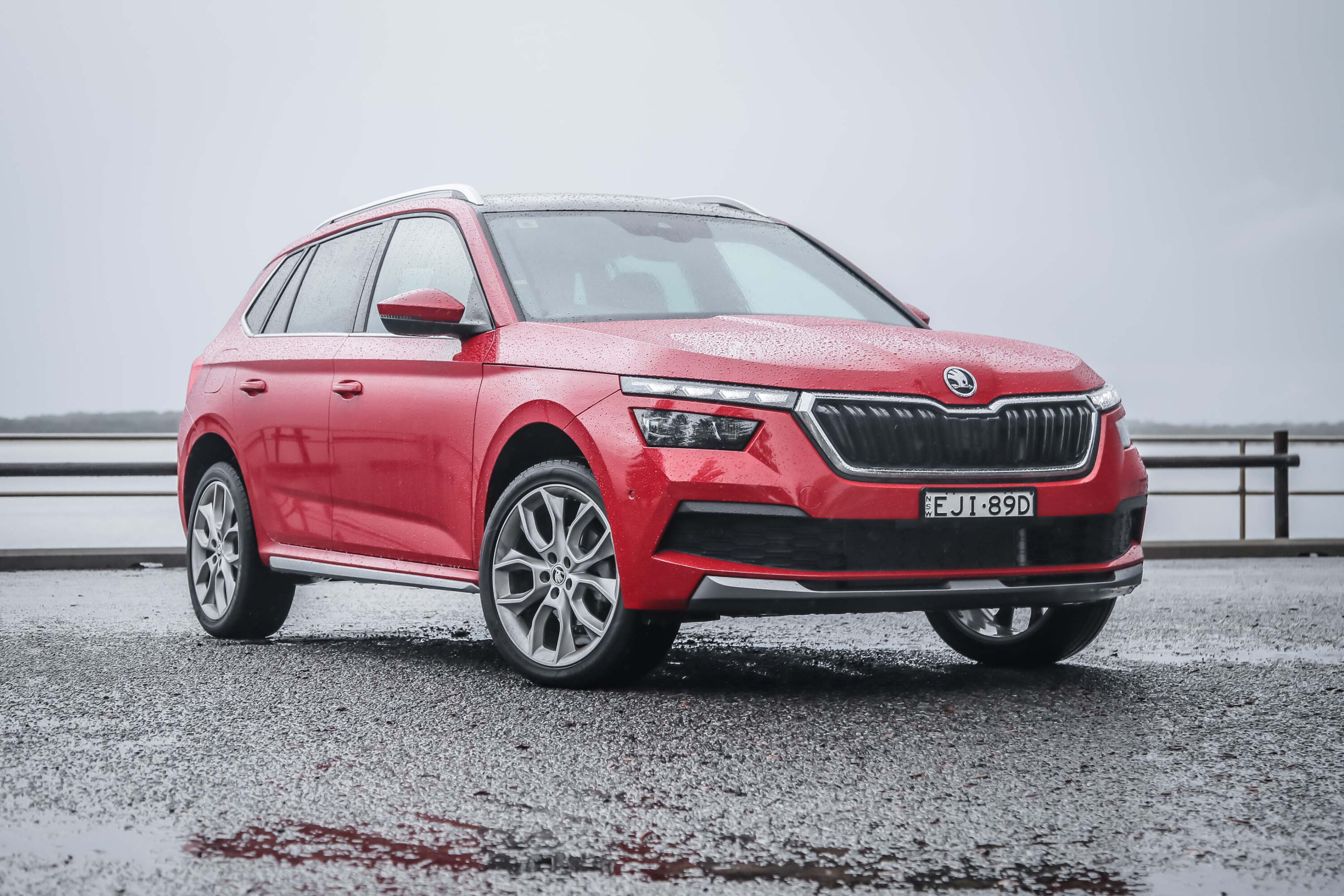
1
While the safety equipment was deleted from equipment lists, it remained available as a factory-fitted $2500 option for the Scala, Kamiq, Karoq and Kodiaq, or as part of a bundled luxury package for the Octavia.
Lane-keep assist will also return to all variants of the Karoq midsize SUV as standard, with the safety technology currently bundled in a $5900 package.
Skoda has yet to announce pricing for the updated vehicles, but price rises are likely after costs were adjusted for the affected vehicles to account for the deleted equipment.
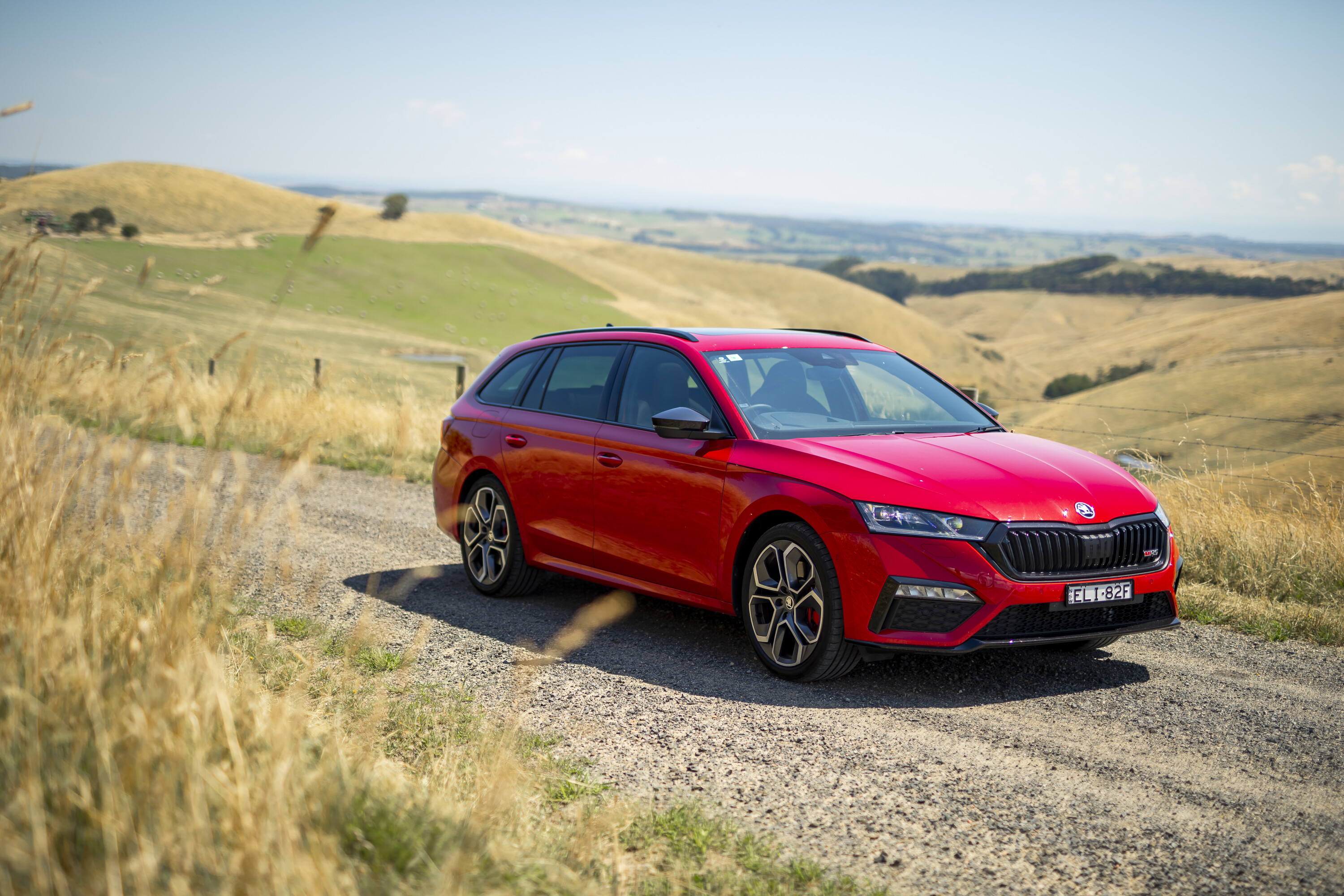
1
“Pricing for the updated Skoda range will be announced shortly,” said the brand.
An electric tailgate will become standard on the entry-level Kamiq 85TSI Style and flagship Scala 110TSI Signature after being moved to the options list in 2022.
Meanwhile, the Kodiaq large SUV will return to being equipped with standard electric rear door locks and an auto-dimming rear-view mirror.
A previously standard 12-speaker, 625-watt Canton audio system will again be fitted to the Kodiaq RS, and available as an option for the Style and Sportline variants.
Likewise, the Octavia medium car will be fitted with automatic parking, electric rear door locks, and an auto-dimming rear-view mirror and driver’s side mirror as standard from later this year.
With the optional premium package, the Octavia RS will feature a 10-speaker, 610-watt Canton audio system.
The base Octavia Style will have a new ‘tech and luxury’ package, bundling all equipment from the two separate packages – but without the head-up display and adaptive dampers currently in the tech option.
A new ‘leather sports’ package for the Karoq 110TSI Style will add black or white leather-appointed upholstery with power-adjustable front seats, driver’s seat memory function, power-folding and auto-dimming side mirrors, interior ambient lighting and LED cabin lights.
Skoda has confirmed no updates for the Fabia hatchback and Superb large car, already equipped with standard blind-spot and rear cross-traffic alerts.
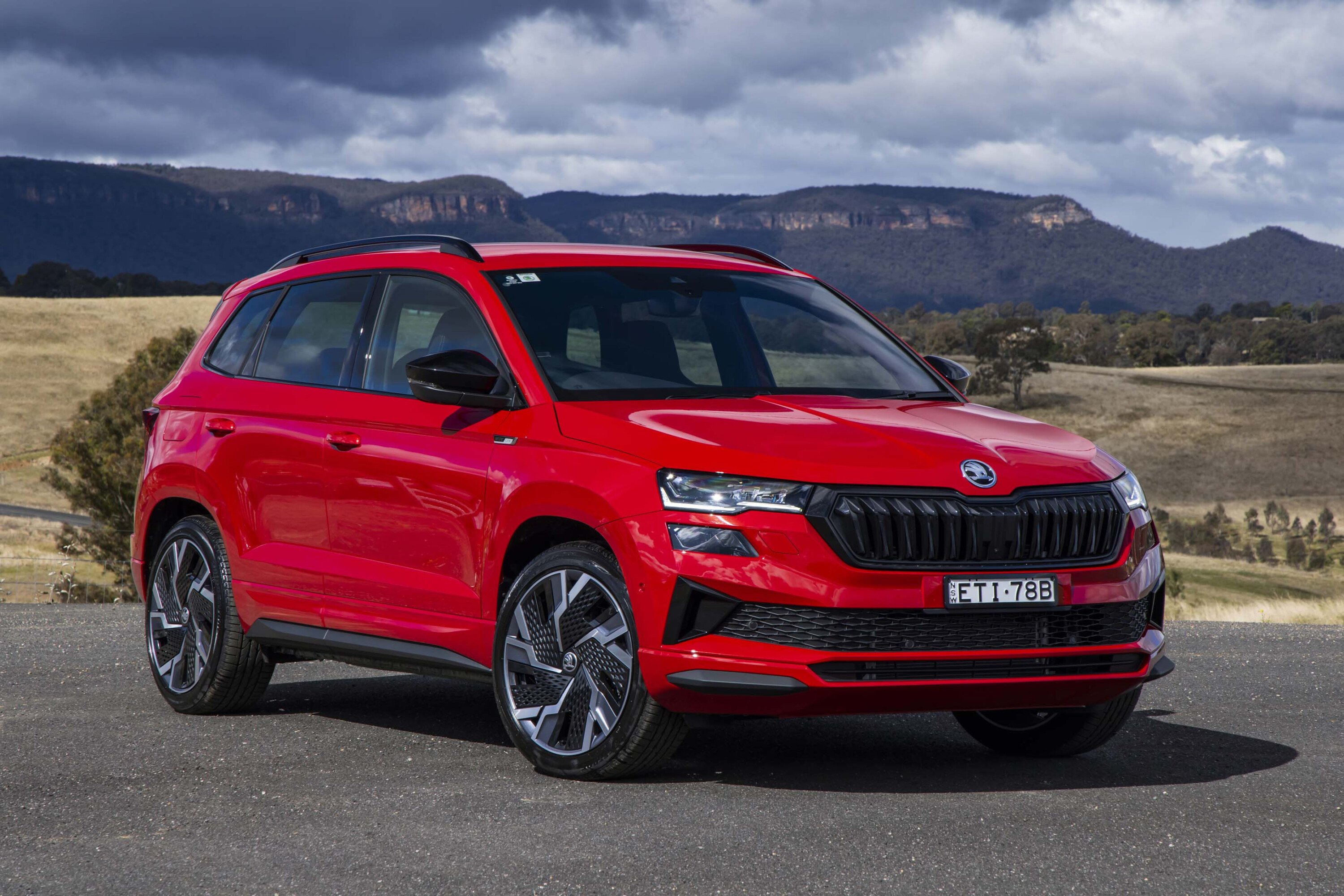
1
The updated Skoda Scala, Octavia, Kamiq, Karoq and Kodiaq vehicles will arrive in Australia in the fourth quarter of 2023 (October to December inclusive), with pre-update stock said to be available for immediate delivery in local showrooms.
It follows the announcement of 1000 vehicles arriving in May, marking Skoda Australia’s largest stock intake since mid-2021.
Mid-life updates for the Scala and Kamiq will debut in August, while a facelift for the best-selling Octavia will debut next year. All three are already confirmed for an Australian launch in 2024.
These vehicles will be followed by the next-generation Kodiaq and Superb, with the former due in early 2024 and the latter in late 2024.
Both the Kodiaq and Superb will be underpinned by the Volkswagen Group’s updated MQB Evo platform, with a close connection to the redesigned Volkswagen Tiguan and Passat, respectively.
As detailed here, the all-electric Enyaq and Enyaq Coupe – siblings to the Volkswagen ID.4 and ID.5 – will arrive next year, with local details to be announced closer to launch.
MORE
Everything Skoda
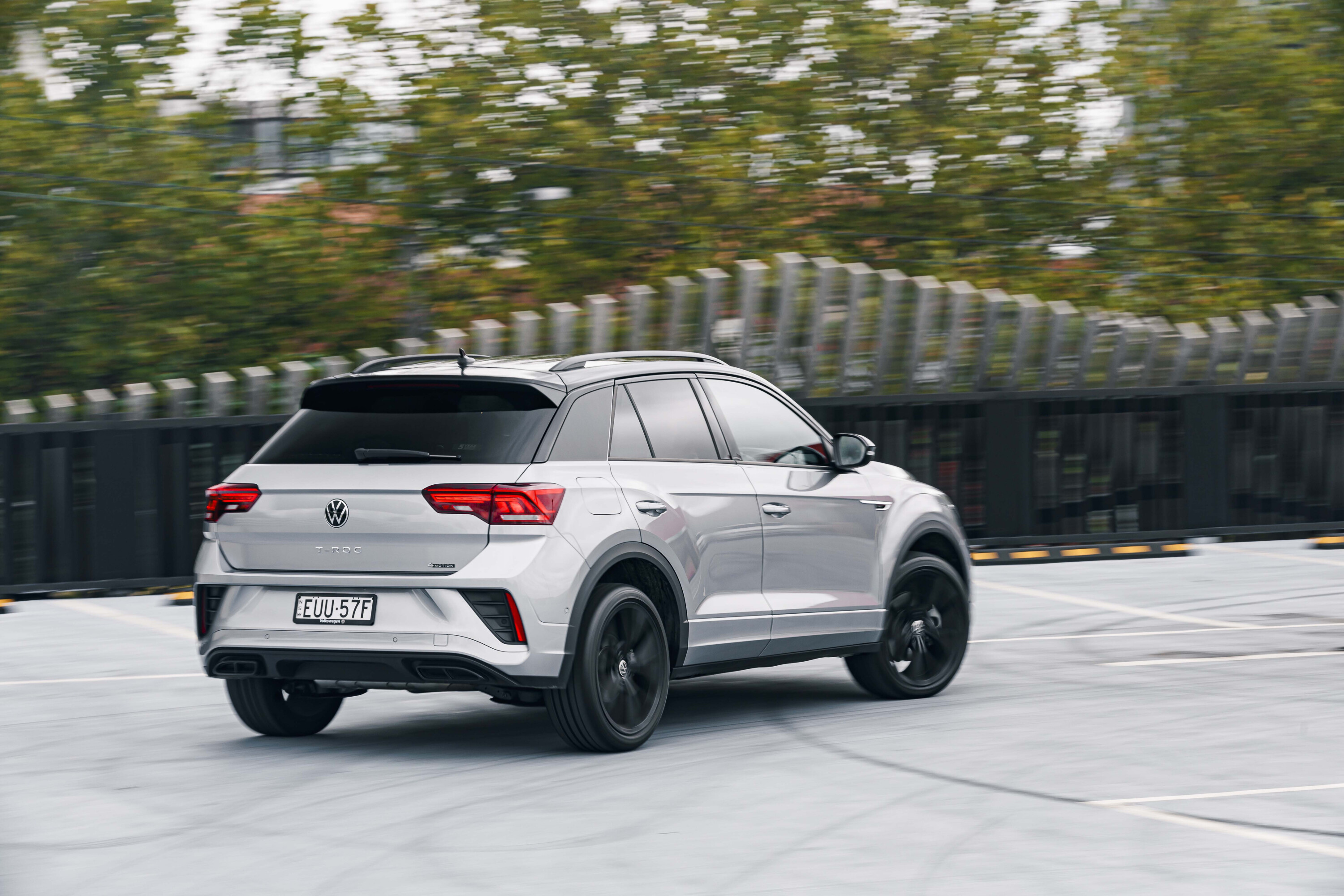
The updated 2023 Volkswagen T-Roc small SUV arrived late last year.
Volkswagen Australia forecasts the T-Roc will be its top-selling car in 2023, a position traditionally held by the Golf and, more recently, the Tiguan, as both face supply constraints and small SUVs surge in popularity.
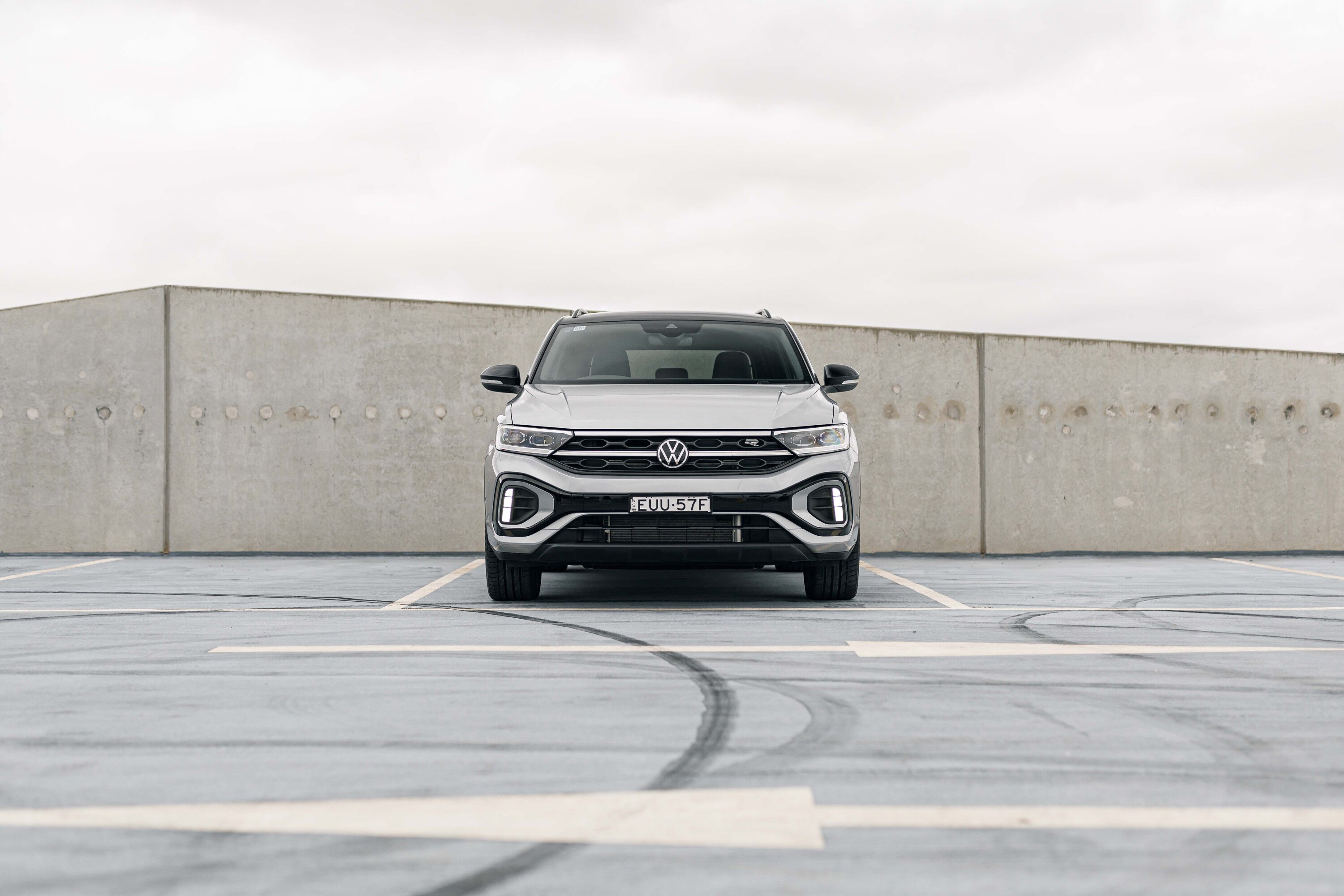
First launched here in 2020, the T-Roc slots between the light T-Cross and mid-size Tiguan, while the variant tested here – the 140TSI R-Line – is positioned between the 110TSI and R.
We were impressed with the T-Roc R-Line at its media launch last year, but it is now time to spend more time behind the wheel of Volkswagen’s middle child to see if it’s the right small SUV for you.
1
JUMP AHEAD
- How much is it, and what do you get?
- Where is this model in its lifecycle?
- How do rivals compare on value?
- Interior quality, comfort, space and storage
- Technology in the cabin
- What is it like to drive?
- How is it on fuel?
- How safe is it?
- Warranty and running costs
- VERDICT
- Specifications
How much is it, and what do you get?
| 2023 Volkswagen T-Roc 140TSI R-Line features | |
|---|---|
| 18-inch alloy wheels (Black Pack: 19-inch alloys) | LED headlights, tail-lights, and daytime running lamps |
| 8-inch infotainment system | Dual-zone climate control |
| Wireless or wired Apple CarPlay and Android Auto | Heated front seats |
| 12.3-inch digital instrument cluster | USB-C ports (2x front, 2x rear) |
| Satellite navigation | Adjustable dampers (Black Pack) |
The 2023 Volkswagen T-Roc 140TSI R-Line is priced at $47,090 before on-road costs, following a recent update.
As standard, the T-Roc features 18-inch alloy wheels, a six-speaker audio system, integrated satellite navigation, dual-zone climate control, LED lighting, cloth upholstery, front and rear parking sensors, rain-sensing wipers, and leather trim for the steering wheel and gear selector.
The aforementioned update sees the R-Line gain standard-fit equipment previously limited to the now-deleted Luxury Package, including Nappa leather upholstery, heated front seats, and an eight-way power-adjustable driver’s seat with two-position memory function.
Three option packages are available for the T-Roc R-Line, with two fitted to our test vehicle – and premium paint – pushing the price to $51,290 plus on-road costs.
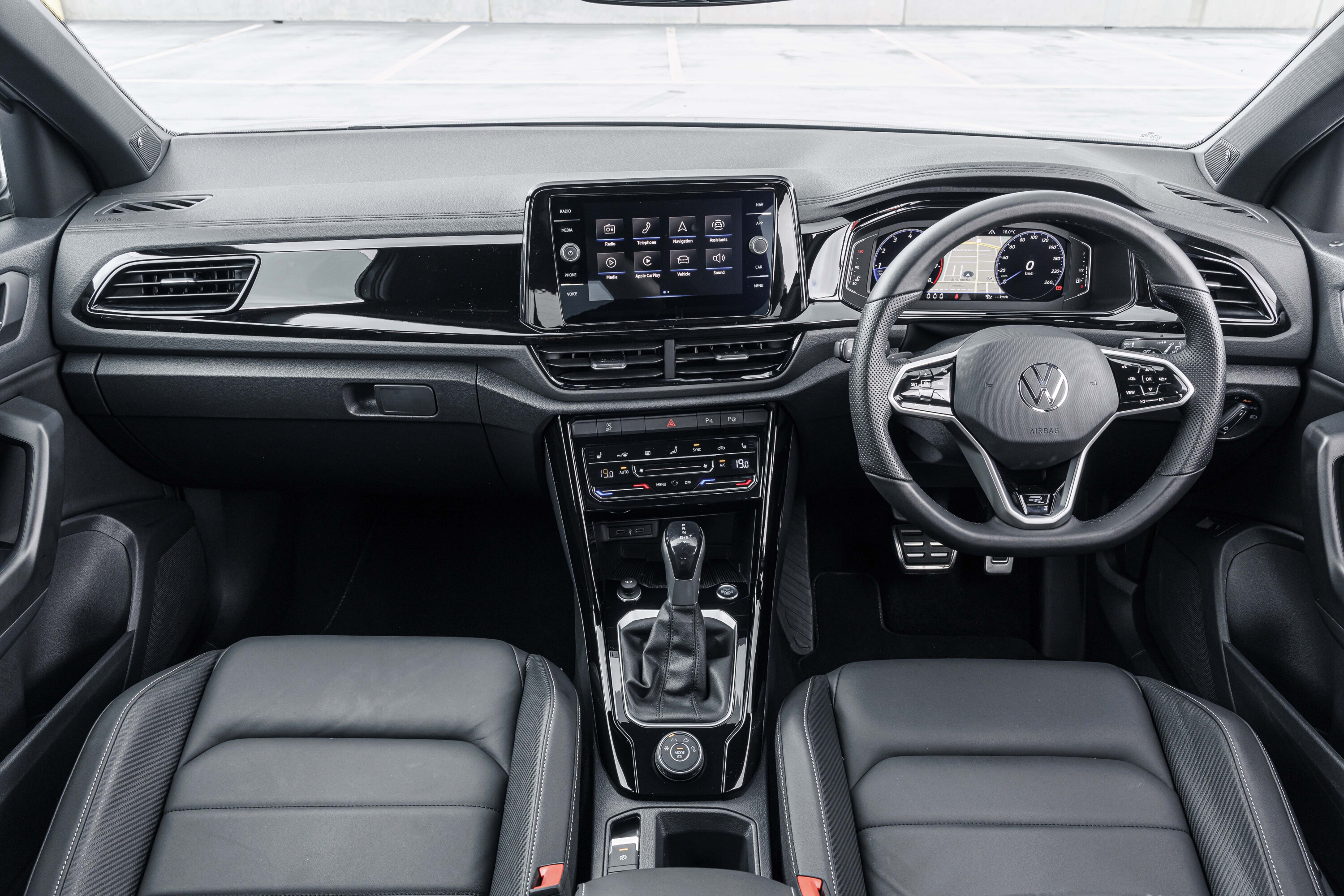
1
This comprises the Black Style package and an eight-speaker, 300-watt Beats audio system ($2900), an electric tailgate ($600), and pyrite silver metallic paint ($700).
As such, it borders close to $60,000 drive-away – not including the $2000 panoramic sunroof – which is a lot for a mainstream small SUV.
However, as you’ll discover, the overall package provides a compelling alternative to the likes of a similarly-priced, entry-level Audi Q3 and Mercedes-Benz GLA.
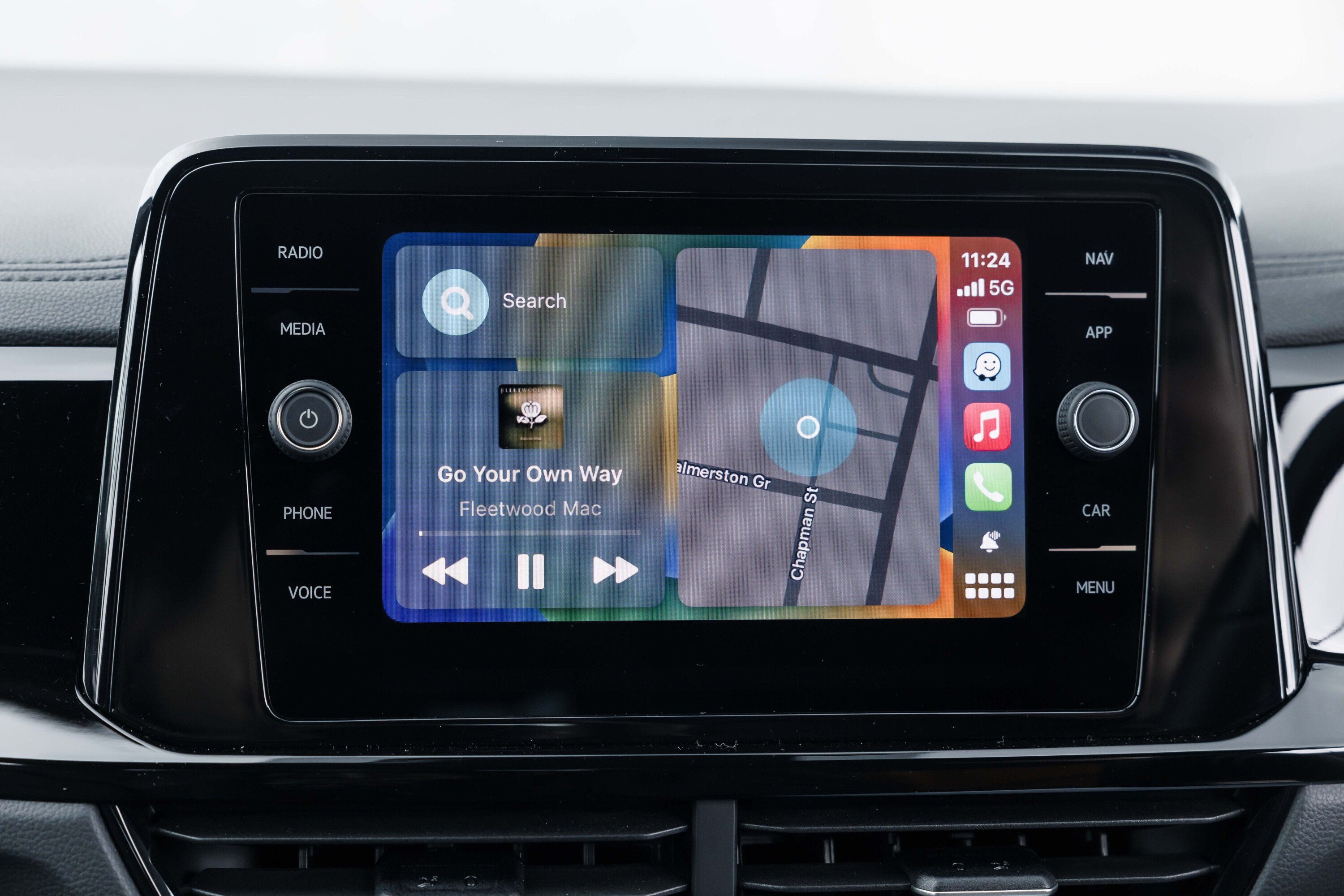
1
Early examples of the MY23 T-Roc Style and R-Line weren’t fitted with the requisite components for blind-spot monitoring and rear cross-traffic alert, nor the proactive occupant protection system to automatically shut the windows, tighten the seatbelts and apply the hazard lights if a potential accident is detected.
However, the updated T-Roc has returned to full specification, with blind-spot monitoring and rear cross-traffic alert – though proactive occupant protection remains absent.
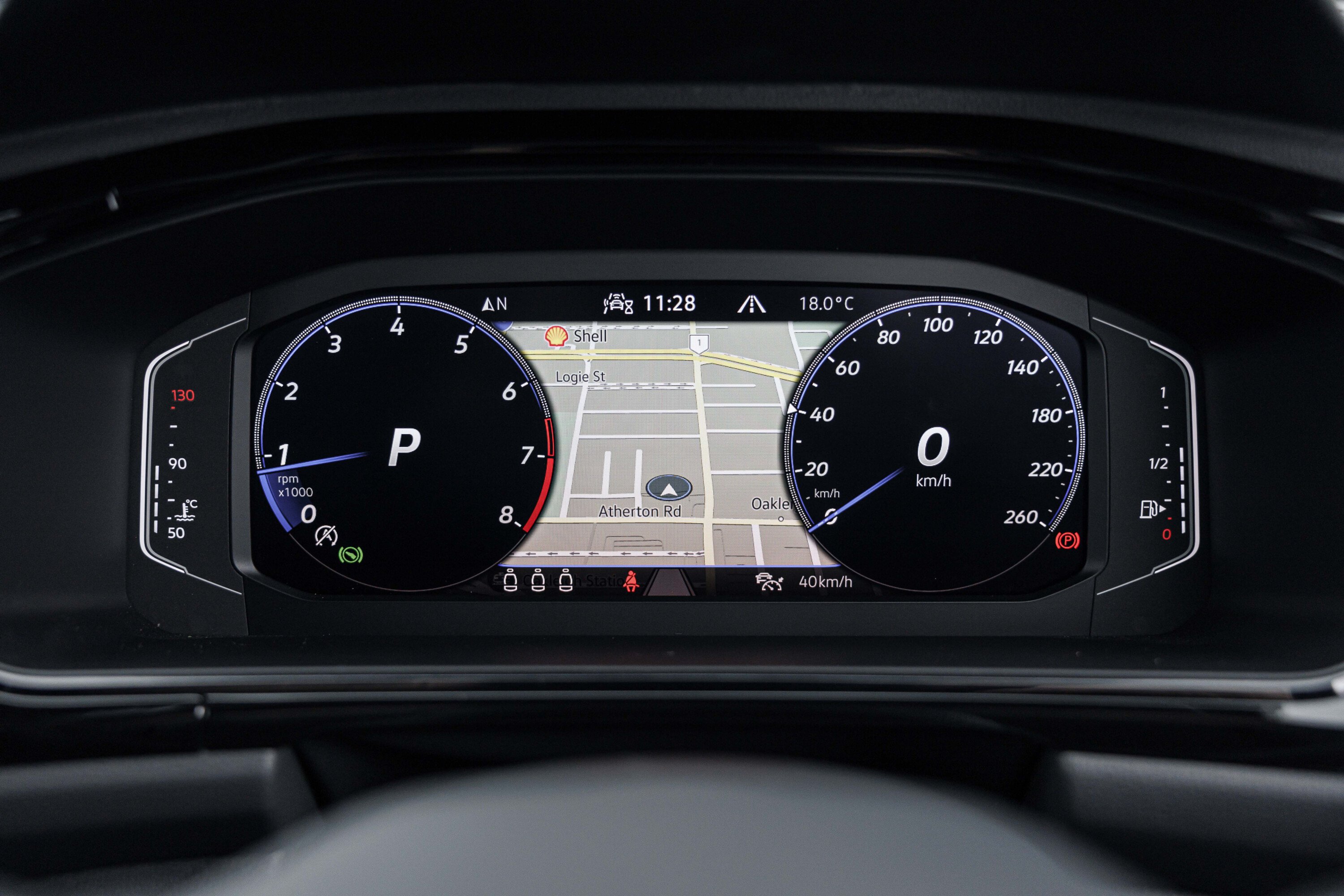
1
Where is this model in its lifecycle?
The Volkswagen T-Roc debuted in Europe in 2017, but homologation-related delays led to a mid-2020 Australian launch.
A mid-life facelift was introduced in 2022, meaning the current T-Roc still has a few years ahead before it is replaced by a second-generation model.
Due in 2026, the next-generation T-Roc is expected to be Volkswagen’s last all-new internal-combustion vehicle.
It should ride on Volkswagen’s updated MQB Evo platform – found underneath the eighth-generation Golf and the forthcoming Tiguan and Passat – with mild-hybrid and plug-in hybrid technology likely.
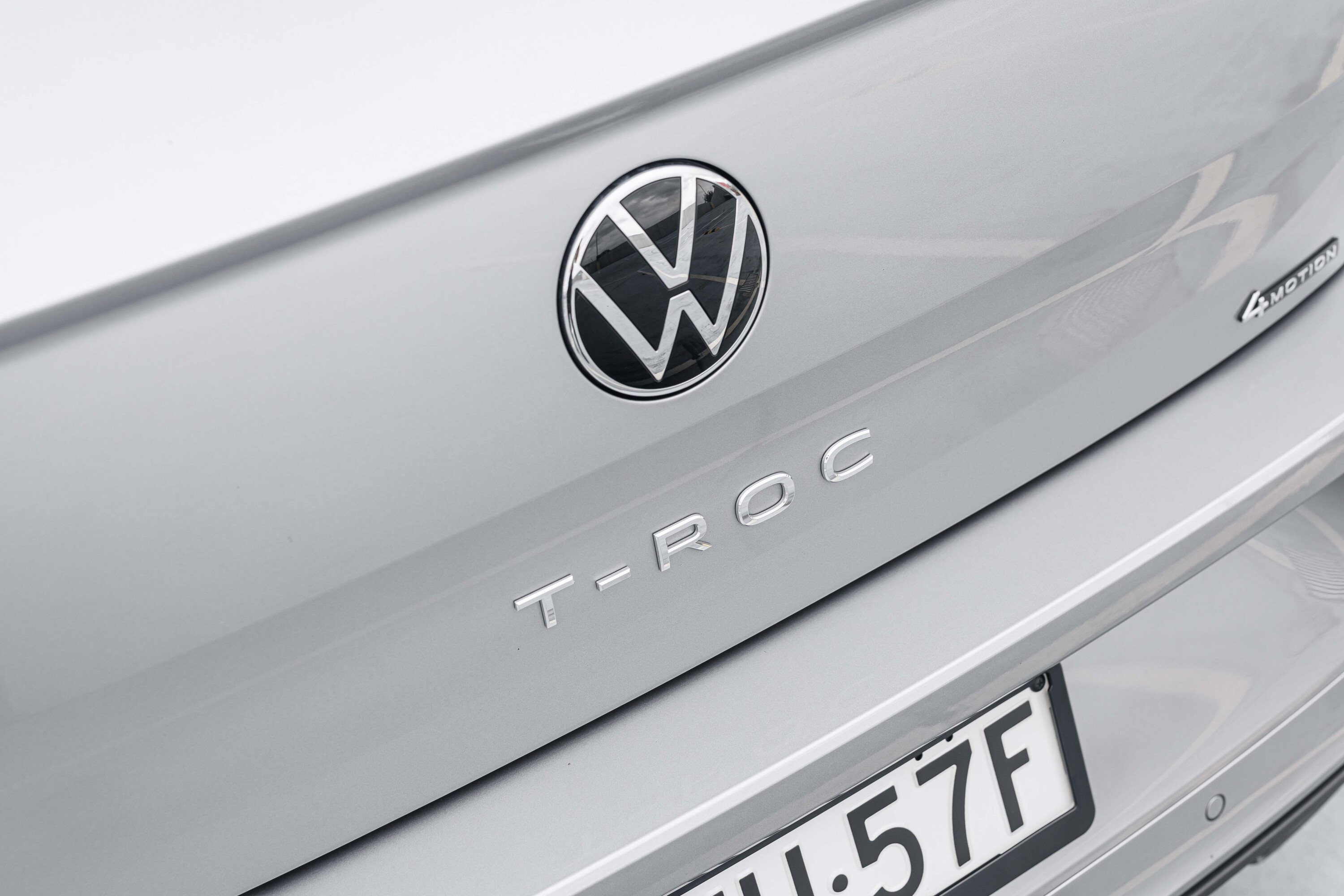
1
How do rivals compare on value?
The main competitors for the Volkswagen T-Roc in Australia are vehicles from Toyota, Mazda, and VW’s sister brand, Cupra.
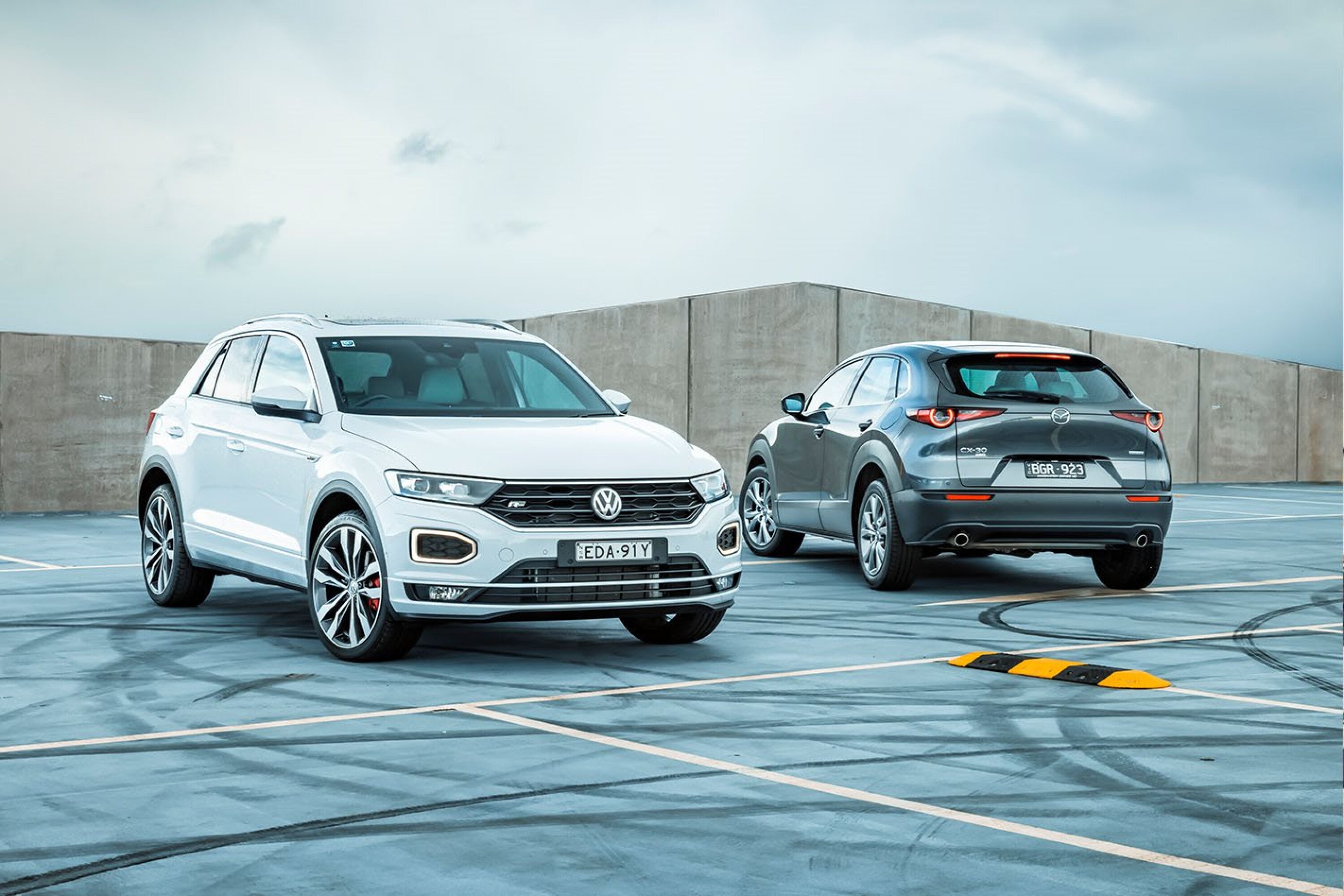
Among these are the Toyota Corolla Cross, the Cupra Formentor, and the popular Mazda CX-30.
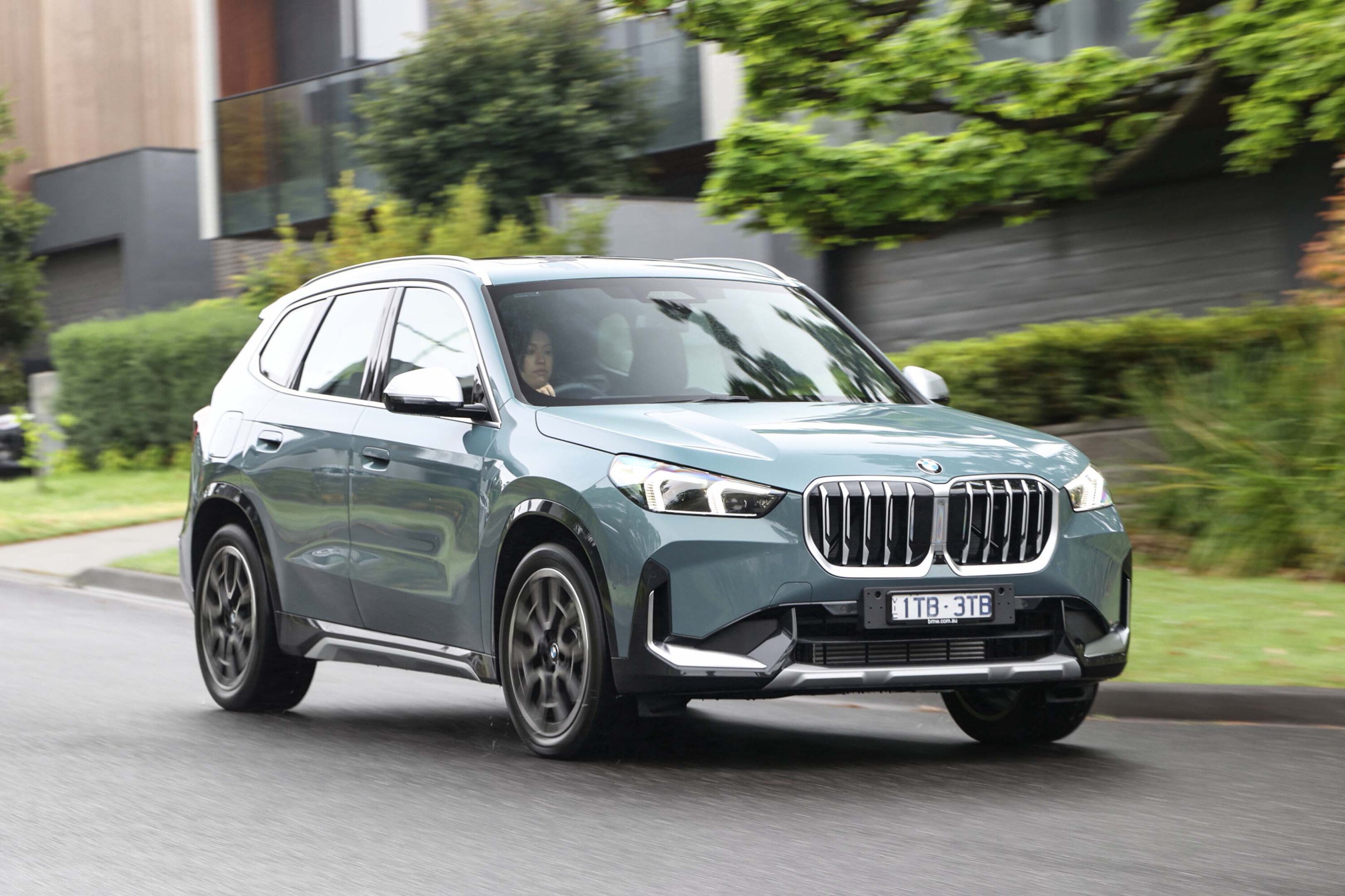
However, with the ability to specify a T-Roc R-Line beyond $60,000 drive-away – and the presence of an even dearer, hotted-up R – it also faces established premium rivals, such as the Volvo XC40, Audi Q3, Mercedes-Benz GLA and BMW X1.
1
Unlike the CX-30 and Corolla Cross, the T-Roc isn’t available with traffic sign recognition, a 360-degree camera system or a larger infotainment system.
However, apart from those omissions, it is a well-specced small SUV that mostly ticks all the right boxes.
1
Interior quality, comfort, space and storage
The updated T-Roc’s cabin is a step up from previously but it still doesn’t match the quality of a Golf or Tiguan.
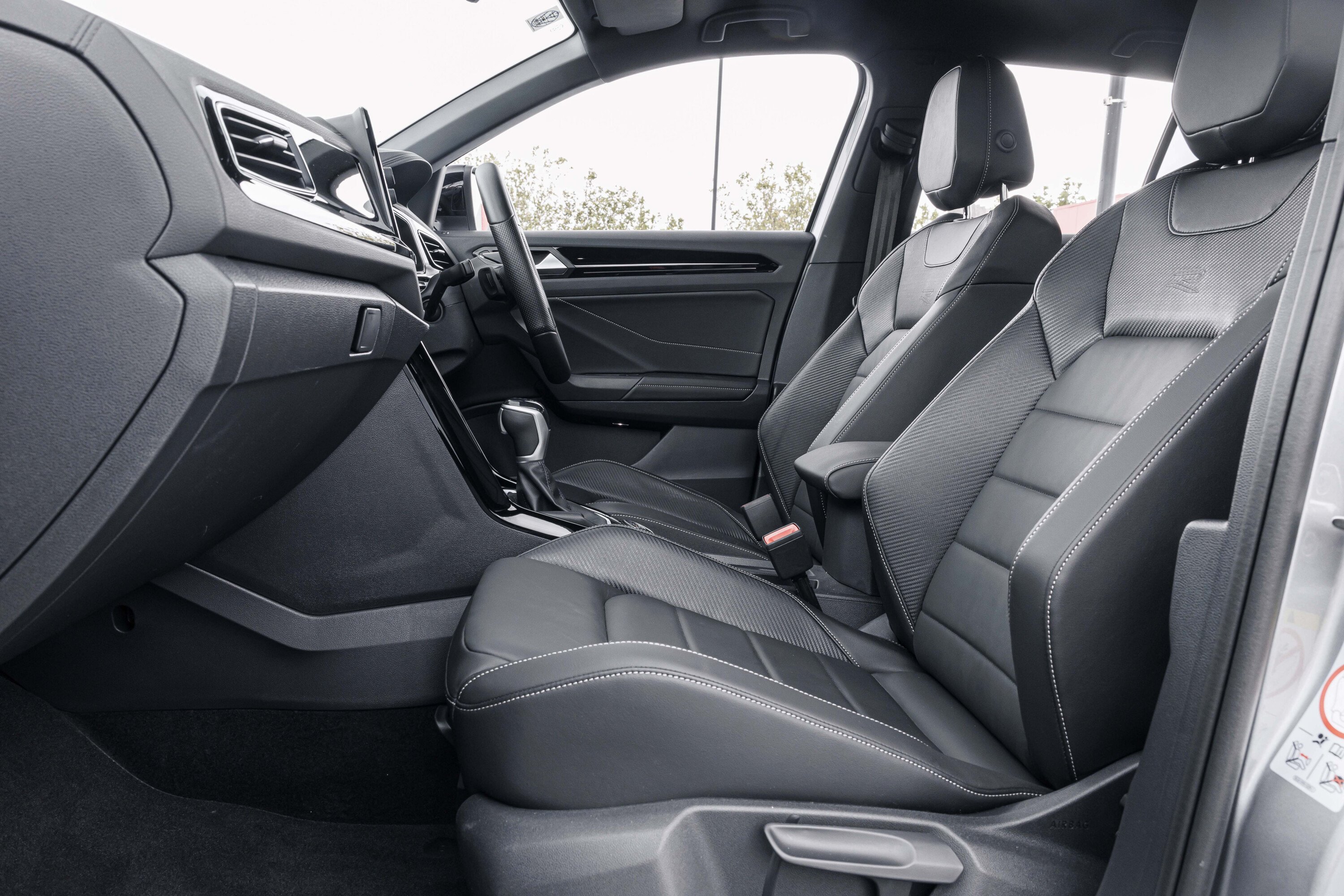
Following customer and media feedback, Volkswagen added a soft-touch dashboard and floating infotainment system, and all models have sportier-looking seats.
However, there are still enough hard plastics that feel closer to those of a Kia Seltos, rather than the Mazda CX-30 or Peugeot 2008 – let alone base versions of the luxury small SUVs the T-Roc overlaps on price.
Our test vehicle was fitted with the now-standard Nappa leather, which helps to improve comfort with tighter bolsters and front-seat heating for cold days. It also features eight-way power adjustment and two-position memory for the driver’s seat, though you won’t find ventilated seats on any T-Roc.
1
It has generous storage for a small SUV, with deep door bins, a large glovebox, and a wireless charger ahead of the gear selector that can double as a storage nook for smaller items.
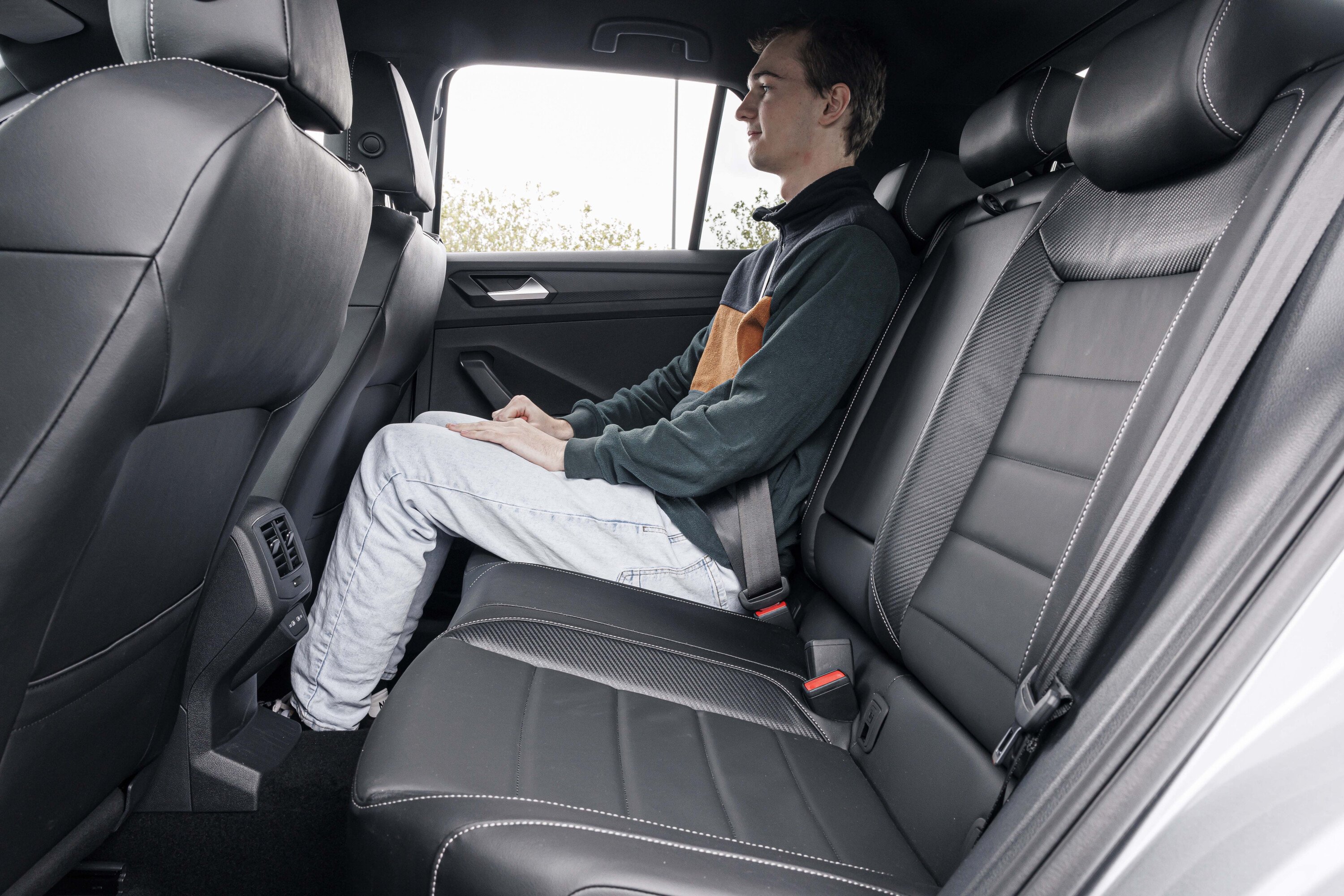
Second-row room is tight, but there’s still enough room in the outer-rear seats for average-sized adults – this writer had no issue sitting behind his own driving position at 182cm tall – and even more space for children, with outboard ISOFIX points and top-tether anchors for all three positions.
However, it would be a struggle to fit three people abreast in the T-Roc, with a narrow bench attributable to the small body and a tall transmission tunnel hindering passengers in the centre seat.
Rear passengers are looked after with air vents, two USB-C ports, a centre armrest with cup holders, seat pouches, and drink holders in the doors.
1
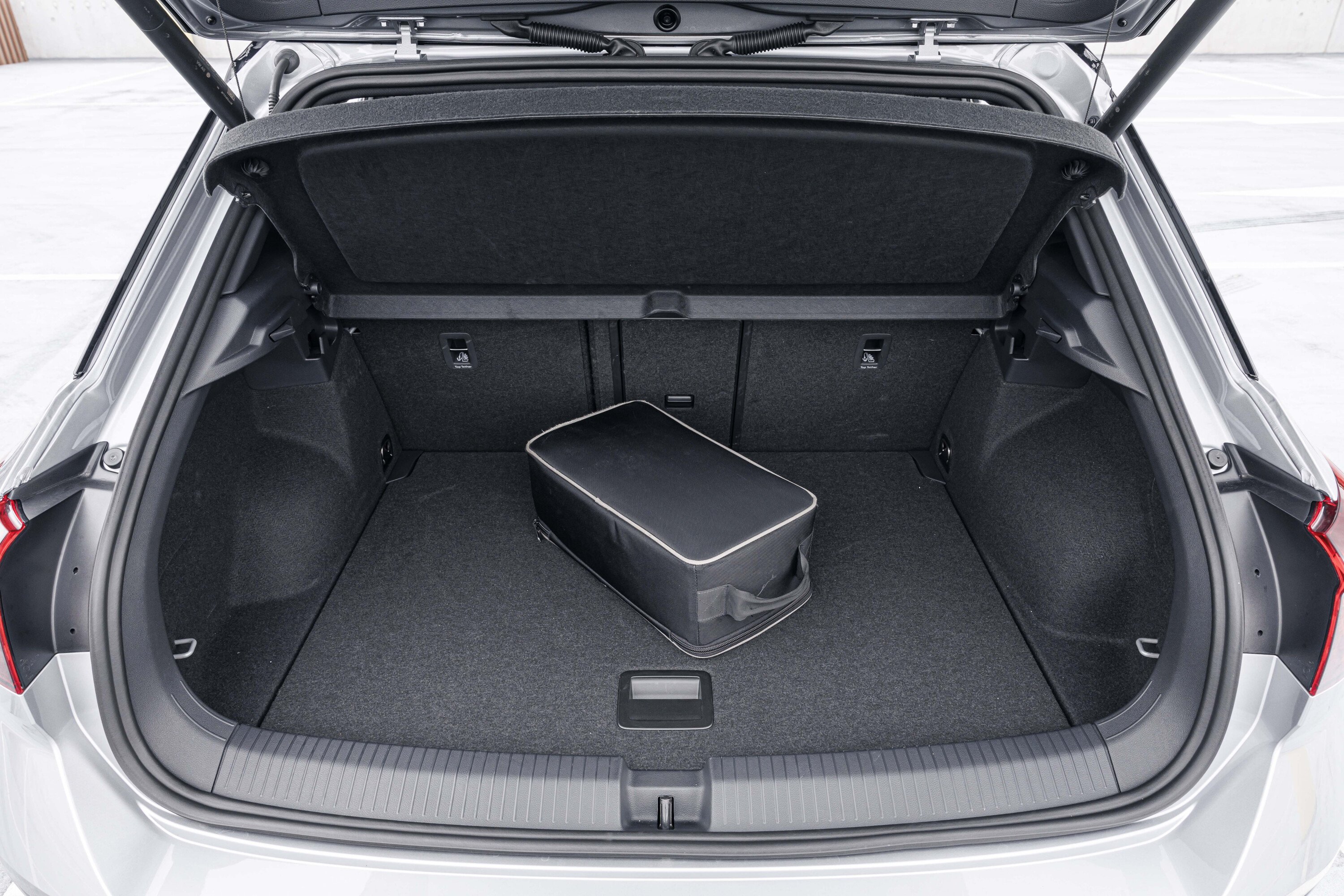
2023 Volkswagen T-Roc 140TSI R-Line boot space
The T-Roc R-Line has a smaller 392-litre boot due to its multi-link rear suspension and all-wheel drive compared with 445 litres on the front-drive CityLife and Style variants that have less expensive, compact torsion-beam rear suspension.
It has 60:40 split-fold rear seats, increasing luggage space to 1237 litres with them stowed.
Mini matchup: Boot space
| MODEL | WHEELBASE | BOOT |
|---|---|---|
| Volkswagen T-Roc AWD | 2596mm | 392L |
| Cupra Formentor | 2680mm | 420L |
| Mazda CX-30 | 2655mm | 317Lu00a0 |
| Toyota Corolla Cross Hybrid AWD | 2640mm | 380L |
2
Technology in the cabin
The infotainment display now rises out of the dash rather than being integrated, with an eight-inch screen that retains physical volume and seek dials. Hooray.
While the screen is on the smaller side, its infotainment software is simple to use and feels modern, with up-to-date graphics and processing power. The R has a larger, full-width 9.2-inch screen.
It has wireless Apple CarPlay and Android Auto and a wireless phone charger, which should be a no-brainer combination for all vehicles.
1
This writer found the wireless connection mostly reliable. Strangely, it dropped out several times when driving through electronic toll sensors on Melbourne’s Citylink. This was also noticed in a Tiguan Allspace, though a web search reveals this might not be unique to Volkswagen vehicles.
A wired connection remains available, unlike some other brands that support wireless connectivity, such as Hyundai and Kia.
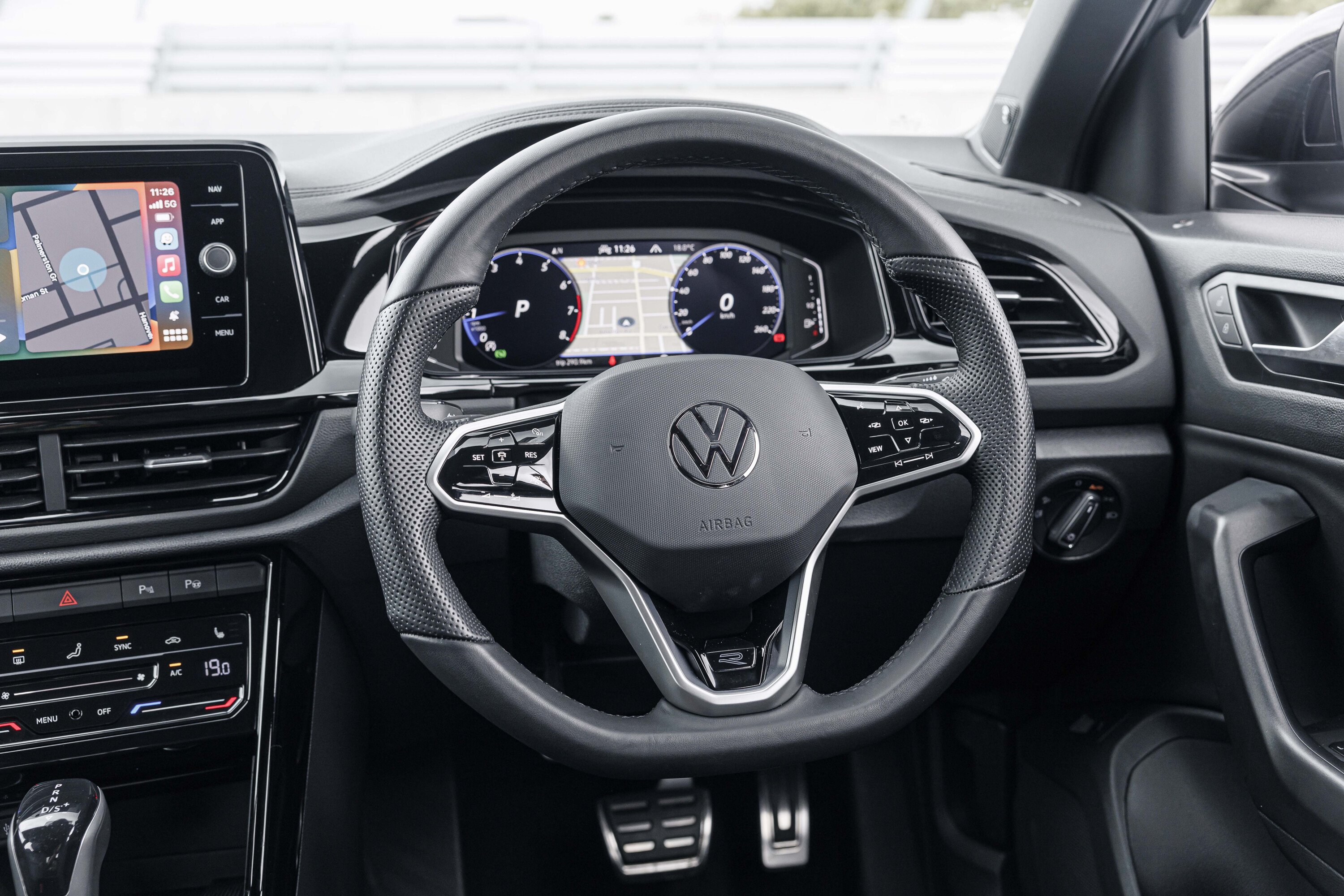
The 10.25-inch digital instrument cluster replaces a smaller eight-inch unit in the base CityLife, with crisp graphics and plenty of customisation, including a full-screen map view.
1
Less impressive are the touch-sensitive haptic steering wheel and climate controls introduced for the facelift. It’s not ideal – a fingerprint magnet and distracting while on the move – and Volkswagen has already said it will revert to physical controls, starting with the next-gen Tiguan due later this year.
The optional Black Style package adds a decent-sounding eight-speaker, 300-watt Beats audio system (including a subwoofer) – replacing the standard, unbranded six-speaker unit – but audiophiles won’t find it as nice as other branded systems.
A 360-degree camera system and head-up display are unavailable on any variant.
1
What is it like to drive?
The Volkswagen T-Roc is the clear winner if you’re looking for a fun-to-drive small SUV.
With shared characteristics from the previous-gen Golf 7, the T-Roc hails from an excellent lineage but it feels like a more-sensible, grown-up package.
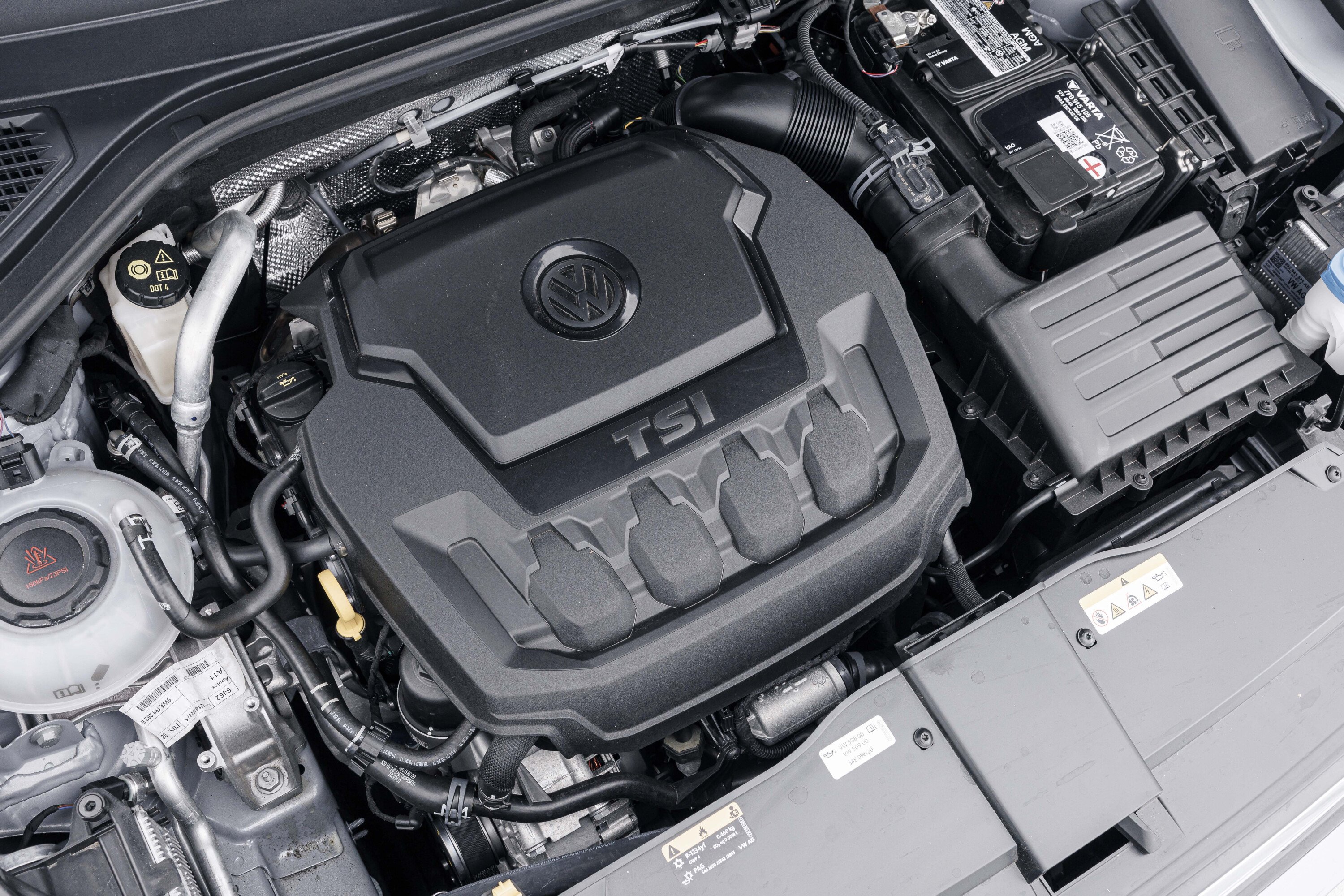
Under the bonnet, it features the Volkswagen Group’s well-known EA888 2.0-litre turbocharged four-cylinder petrol engine, with a 140kW and 320Nm tune. It is a quiet and smooth powertrain, with noisy hysterics left to the T-Roc R.
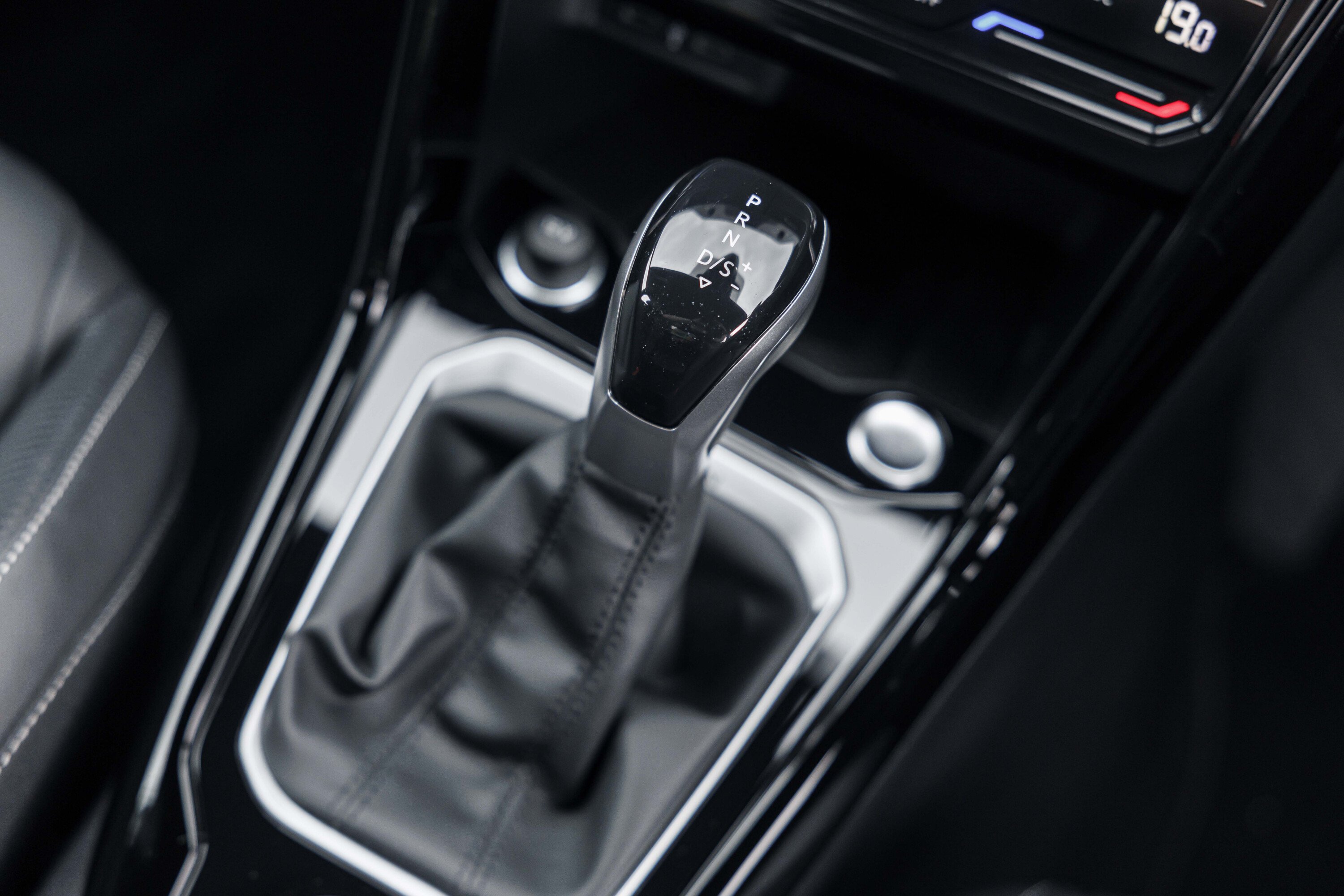
It is paired with a seven-speed wet-style dual-clutch automatic transmission, with Volkswagen’s decades of fiddling with DSGs ensuring it remains well-behaved – though there’s still some hesitation and rollback during low-speed manoeuvres on slopes or in reverse.
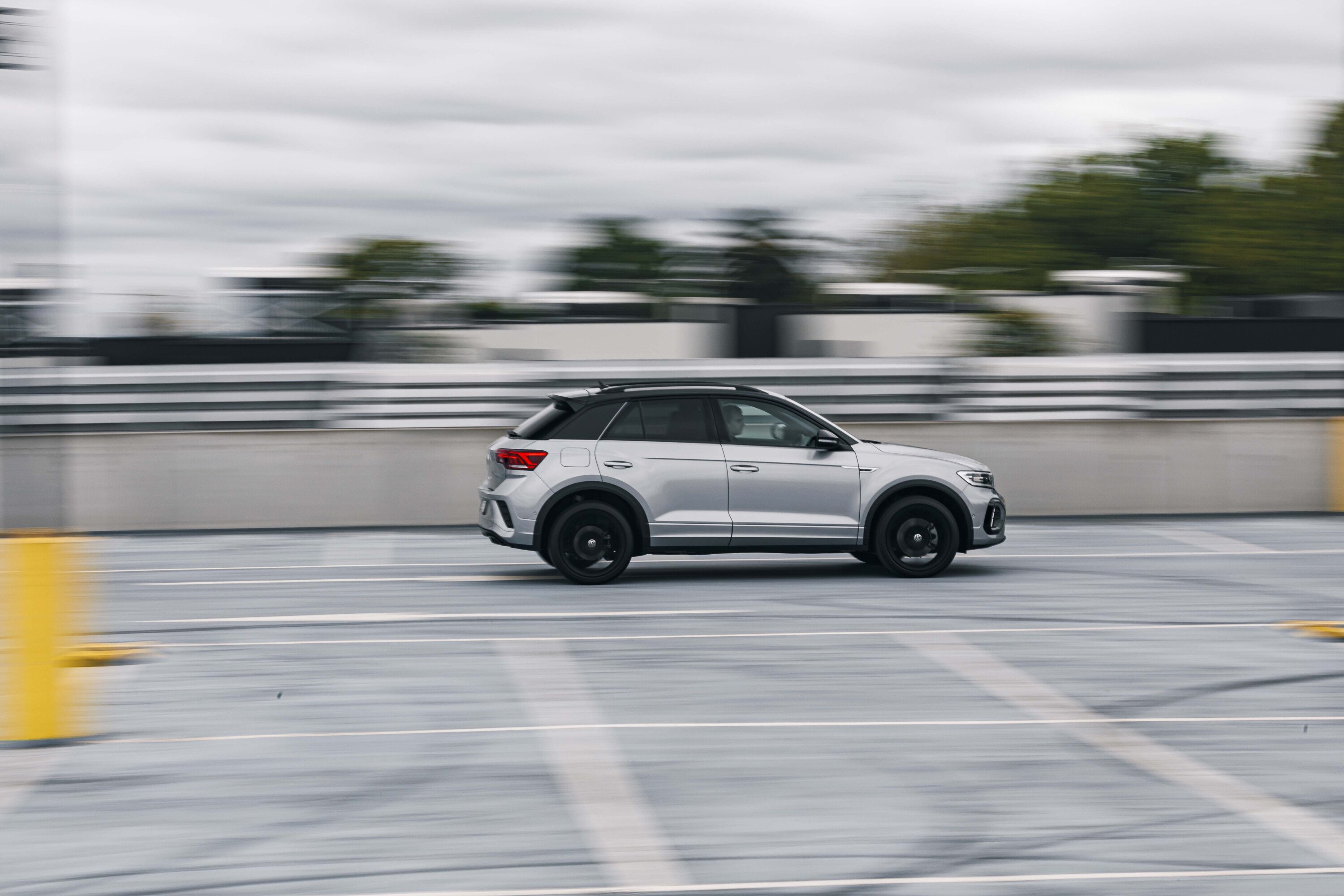
1
The T-Roc R-Line has a claimed 7.2-second 0-100km/h sprint time, meaning it’ll accelerate nicely if you’re more assertive with the throttle pedal.
While the ride is firm, it easily manages undulations with only large bumps or potholes unsettling the chassis.
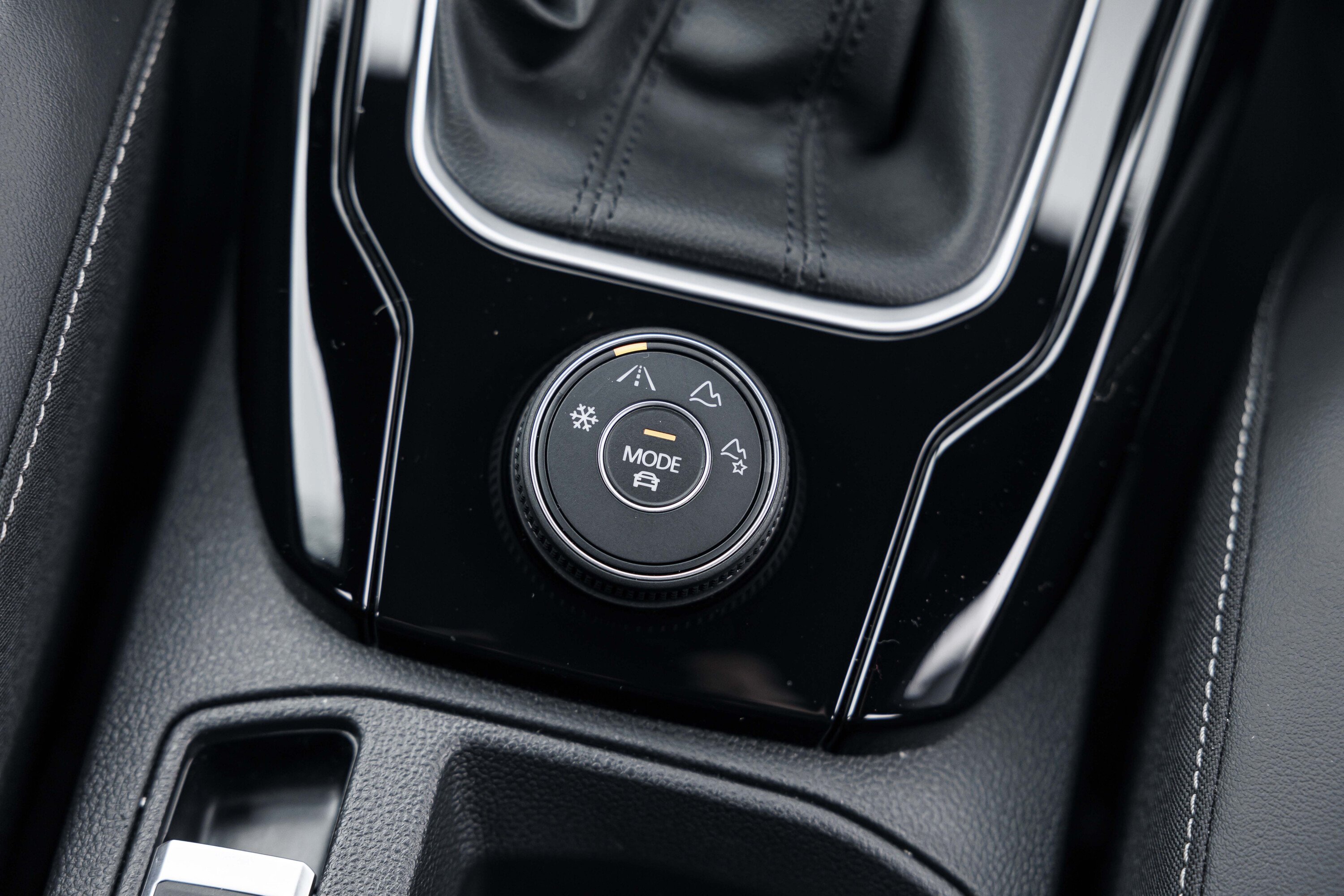
With the Black Pack including adaptive dampers, you can feel the difference when switching into the Sport drive mode, with instantly stiffer suspension and a heavier steering feel, while Comfort mode loosens off for regular driving away from the twisties.
But if you want a T-Roc with the quietest, plushest road manners, the Style is the pick over the R-Line’s firmer suspension set-up. Our test car’s optional 19-inch wheels also elevated road noise.
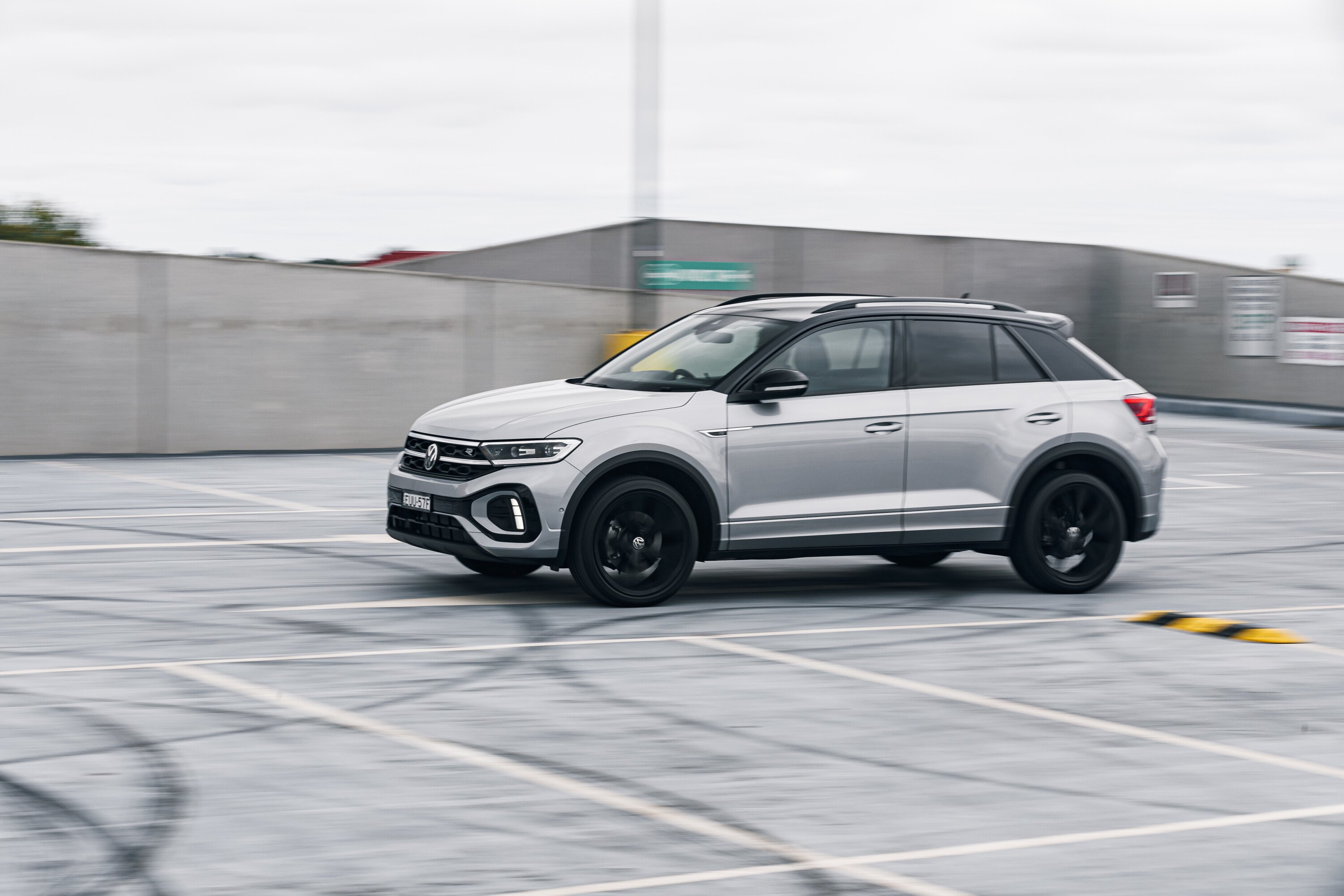
1
The Haldex all-wheel-drive system ensures the T-Roc remains stable, even in wet weather – and it restricts sending power to the rear wheels unless necessary to save fuel.
Unlike the tighter Mazda CX-30, vision in all directions is hard to fault – it feels like you’re simply driving a high-riding Golf.
The basics
| 2023 Volkswagen T-Roc 140TSI R-Line | |
|---|---|
| Engine | 2.0-litre turbo-petrol inline 4-cyl, dohc, 16v |
| Power | 140kW |
| Torque | 320Nm |
| Transmission | 7-speed dual-clutch |
| Body | 5-door, 5-seat small SUV |
| Fuel consumption (ADR 81/02) | 7.3L/100km |
If any of the terms in this section has left you scratching your head, these articles will help bring you up to speed!
- What is a Powertrain or Drivetrain?
- Power vs torque
- Car suspension explained
- Automatic transmissions (‘gearboxes’) explained
- Chassis control systems explained
- Car vs Ute vs SUV: How the vehicle you buy should guide the way you drive
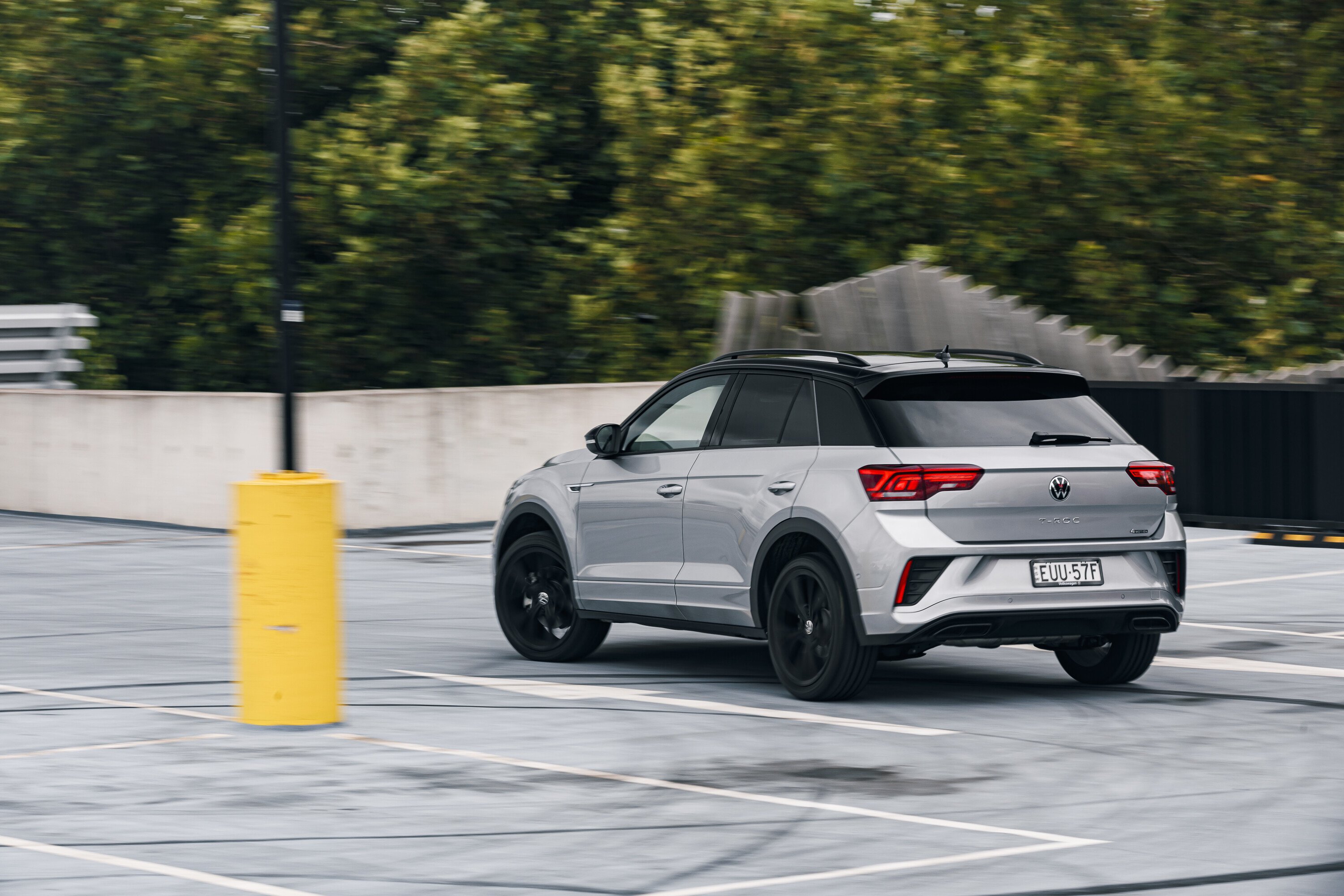
1
How is it on fuel?
The 2023 Volkswagen T-Roc 140TSI R-Line requires 95 RON premium unleaded or higher.
It has a claimed combined fuel consumption figure of 7.3 litres per 100 kilometres.
At the end of our week-long test, a fuel top-up revealed a real-world consumption figure of 8.3L/100km, which this writer believes is reasonable in an urban environment and with a more spirited weekend drive through excellent roads in Victoria’s Yarra Ranges.
1
Mini matchup: Fuel consumption
| MODEL | MIN RON | COMBINED FUEL CONSUMPTION |
|---|---|---|
| Volkswagen T-Roc 140TSI R-Line AWD | 95 RON | 7.3L/100km |
| Cupra Formentor V AWD | 95 RON | 7.0L/100km |
| Mazda CX-30 G25 Astina AWD | 91 RON | 6.8L/100km |
| Toyota Corolla Cross Atmos Hybrid AWD | 91 RON | 4.4L/100km |
How safe is it?
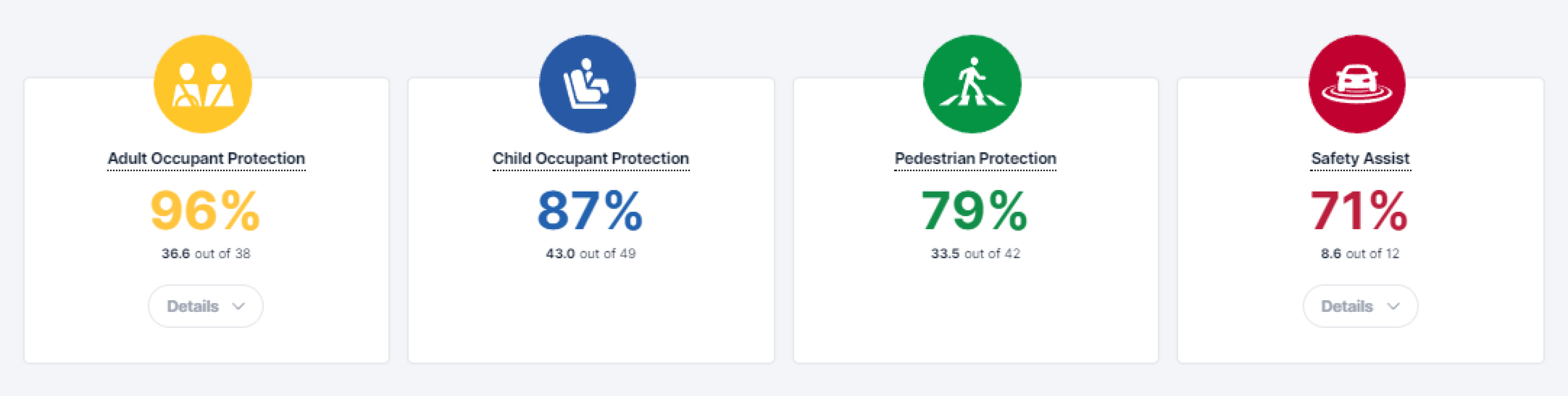
The 2023 Volkswagen T-Roc has a five-star ANCAP safety rating based on testing conducted in 2017.
Following ANCAP’s newly-introduced six-year datestamp limit, this rating will expire in December 2023.
Volkswagen has yet to flag any plans to retest the T-Roc, meaning it will soon join the current Passat and Tiguan in lacking a valid rating until new-generation models arrive.
Six airbags – dual front, side and curtain – are fitted, but it lacks a front-centre airbag to prevent head clashes between the driver and front passenger in a side-impact collision, as found in the Toyota Corolla Cross and forthcoming Hyundai Kona.
1
While this isn’t required for a five-star ANCAP safety rating under the latest criteria, several cars – including the four-star Citroën C4 small SUV – have been penalised for lacking a front-centre airbag.
| 2023 Volkswagen T-Roc R-Line: Safety equipment | |
|---|---|
| Six airbags | High-beam assist |
| Anti-lock brakes | Blind-spot alert (late availability) |
| Stability and traction controls | Rear cross-traffic alert (late availability) |
| Autonomous emergency braking (vehicle, pedestrian and low-speed reverse detection) | Driver fatigue alert |
| Lane-keep assist and departure warning | Emergency assist |
| Reverse camera | Multi-collision braking |
As mentioned, some MY23 T-Rocs (excluding the flagship R) exclude blind-spot monitoring, rear cross-traffic alert and proactive occupant protection due to the chip shortage, but this doesn’t affect the five-star ANCAP rating.
Our tester was an MY22 vehicle fitted with these sensors, and examples due to arrive from September 2023 will include blind-spot and rear cross-traffic alerts.
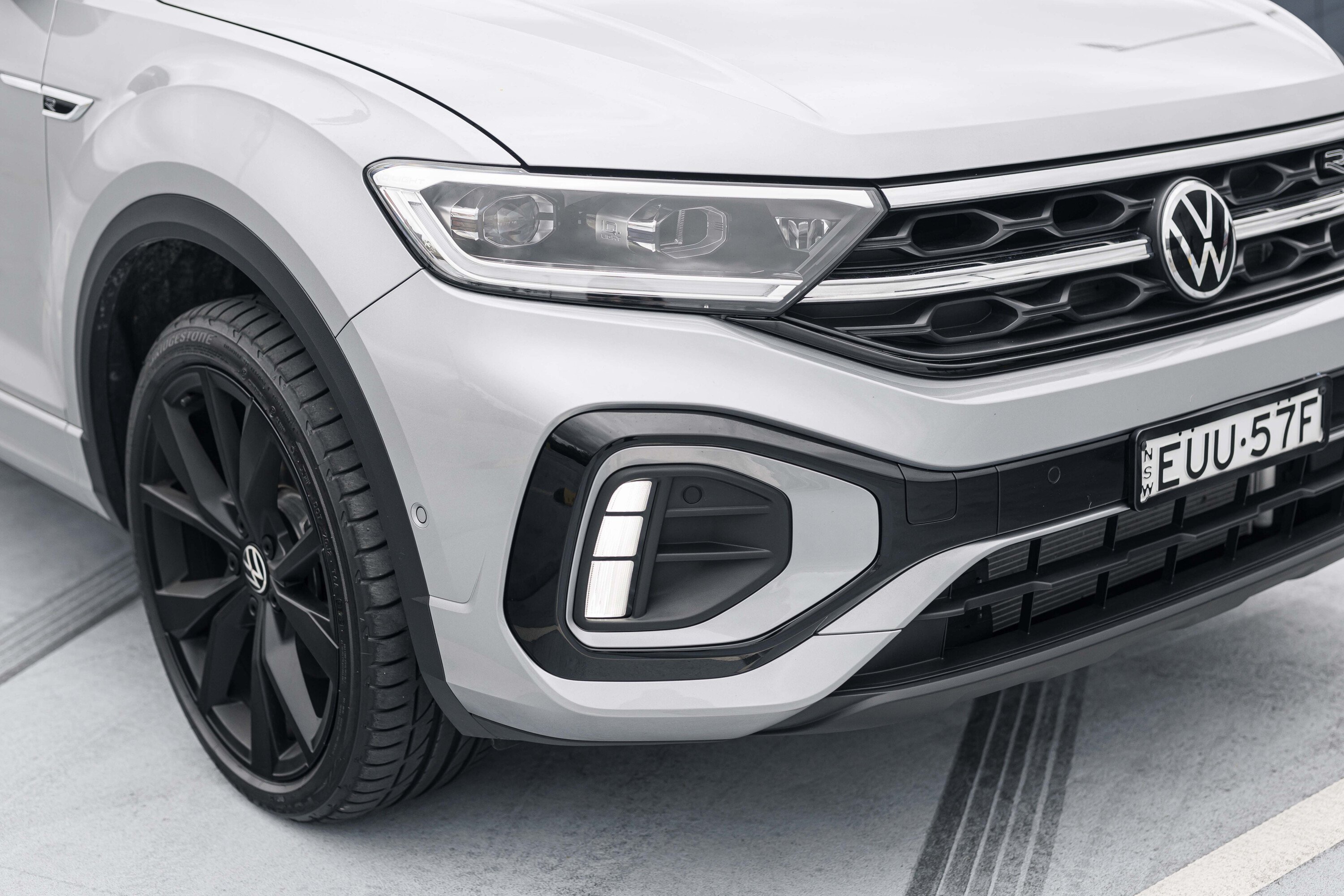
Unfortunately, traffic sign recognition is excluded from local T-Roc examples, despite its availability in other markets. This feature is standard in most of its rivals.
1
This writer found the lane-keep assist system to work well and, notably, mainly in the background without any frustrating beeping or aggressive steering wheel movement.
VW’s travel assist function – a combination of adaptive cruise control and lane-keep assist – is handy on the freeway to keep the vehicle centred, even around corners.
1
Warranty and running costs
As per the wider Volkswagen range, the T-Roc is covered by a five-year/unlimited-kilometre warranty.
Roadside assistance is provided for the first 12 months of ownership, with an annual renewal available at each service with an authorised VW dealer.
Maintenance is required every 12 months or 15,000 kilometres, whichever occurs first. A three- or five-year pre-paid service plan is available to purchase at delivery for $1700 or $2850 respectively.
1
By comparison, Volkswagen’s capped-price program will set you back $3599 over the five-year duration at an average of $720 per service.
This makes the T-Roc the most-expensive mainstream small SUV to service through a dealer over a comparable period. It’s even dearer than an Audi Q2.
All this means it’s worth adding a service pack to your upfront cost if you plan to stick with VW’s dealer network, with a saving of $238 over three years or $749 over five years.
| 2023 Volkswagen T-Roc 140TSI R-Line AWD capped-price servicing | |
|---|---|
| One year/15,000km | $484 |
| Two years/30,000km | $670 |
| Three years/45,000km | $784 |
| Four years/60,000km | $1071 |
| Five years/75,000km | $590 |
1
VERDICT
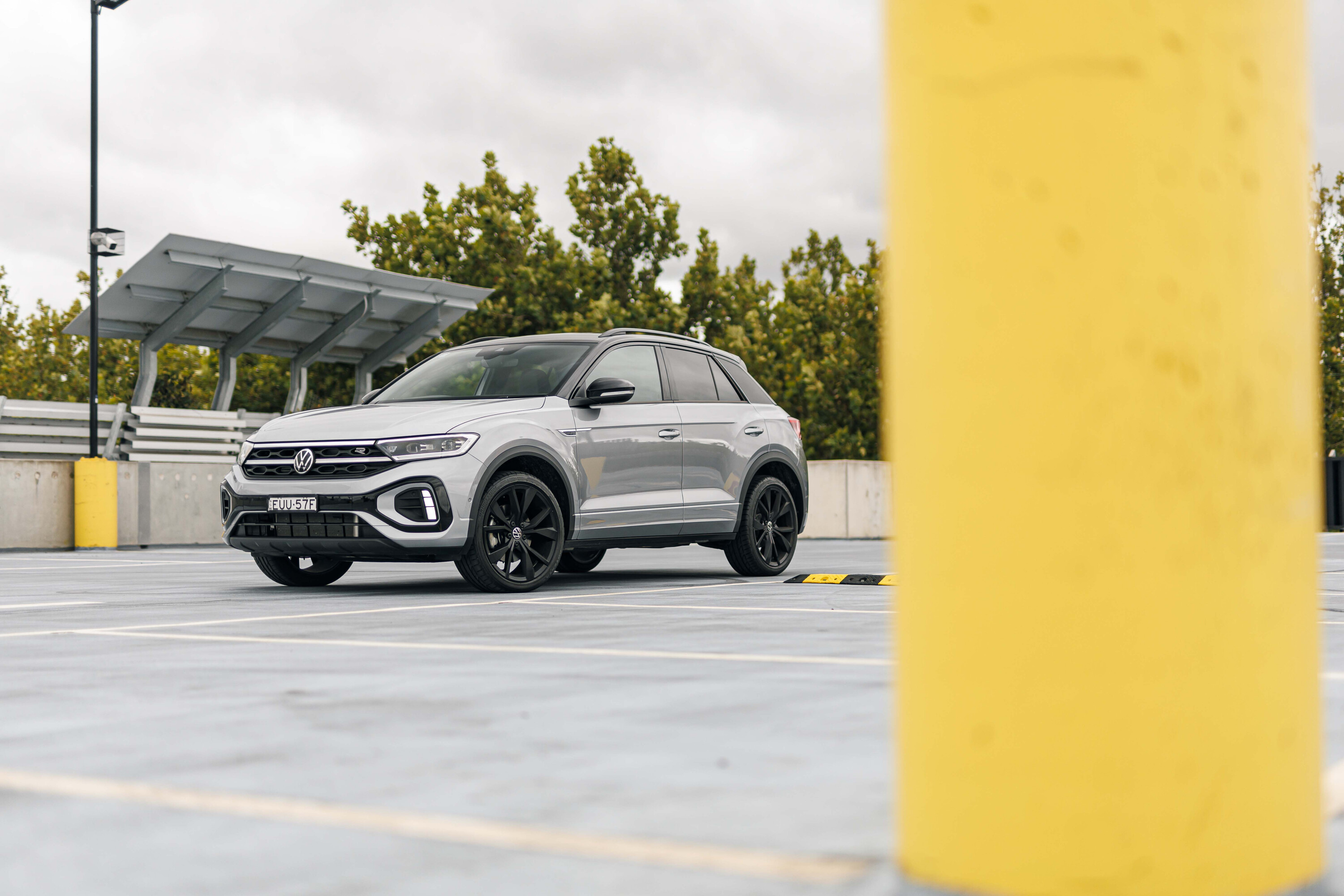
There’s no denying the Volkswagen T-Roc 140TSI R-Line is a refined, stylish and (reasonably) well-specced small SUV.
Select a few option packages, though, and suddenly you’re looking at circa-$60,000 drive-away – or more – for a small Volkswagen. That’s a bit silly.
The sweet spot could be to option the $2900 ‘Black Style package’ to add adaptive dampers, wireless phone connectivity, and the Beats audio system. The stock R-Line is still a fine package, though.
So, the big question is: should you spend the circa-$10,000 premium over its closest rivals? Or identical cash for a luxury small SUV or an upsized turbo-petrol medium SUV – such as the Mazda CX-5 G35, and the Volkswagen Group’s own Skoda Karoq and Golf GTI-derived Cupra Formentor?
If you’re prepared to spend that much dosh, then yes, the T-Roc should be shortlisted – but shop around. There is an overwhelming variety of small and medium SUVs within its price bracket.
1
You should also consider the base T-Roc 110TSI Style with a few option packages.
That vehicle still provides an excellent package: a 1.5-litre turbo-petrol, a relaxed traditional eight-speed auto, and a more-compliant ride with smaller wheels. You’ll save a heap of cash, but lose some of the R-Line’s added fun.
And, in case you forgot, the full-fat T-Roc R Grid Edition isn’t much costlier than the R-Line…
MORE
Small SUVs
| 2023 Volkswagen T-Roc 140TSI R-Line AWD w/ optional Black Pack specifications | ||
|---|---|---|
| Engine | 2.0-litre turbo-petrol four-cylinder | |
| Power | 140kW @ 4200-6000rpm | |
| Torque | 320Nm @ 1450-4200rpm | |
| Transmission | 7-speed dual-clutch automatic | |
| Body | 5-door, 5-seat small SUV | |
| L/W/H | 4236/1819/1573mm | |
| Wheelbase | 2596mm | |
| Boot space | 392L upright / 1237L folded | |
| Weight | 1477kg | |
| Fuel / tank | 95 RON / 50 litres | |
| Fuel use L/100km | 7.3L (claimed) | 8.3L (tested) |
| Suspension | Front: MacPherson struts, anti-roll bar / Rear: multi-link independent | |
| Steering | electric rack-and-pinion; 11.1m | |
| Brakes | Front: ventilated discs / Rear: solid discs | |
| Wheels | 19-inch alloy | |
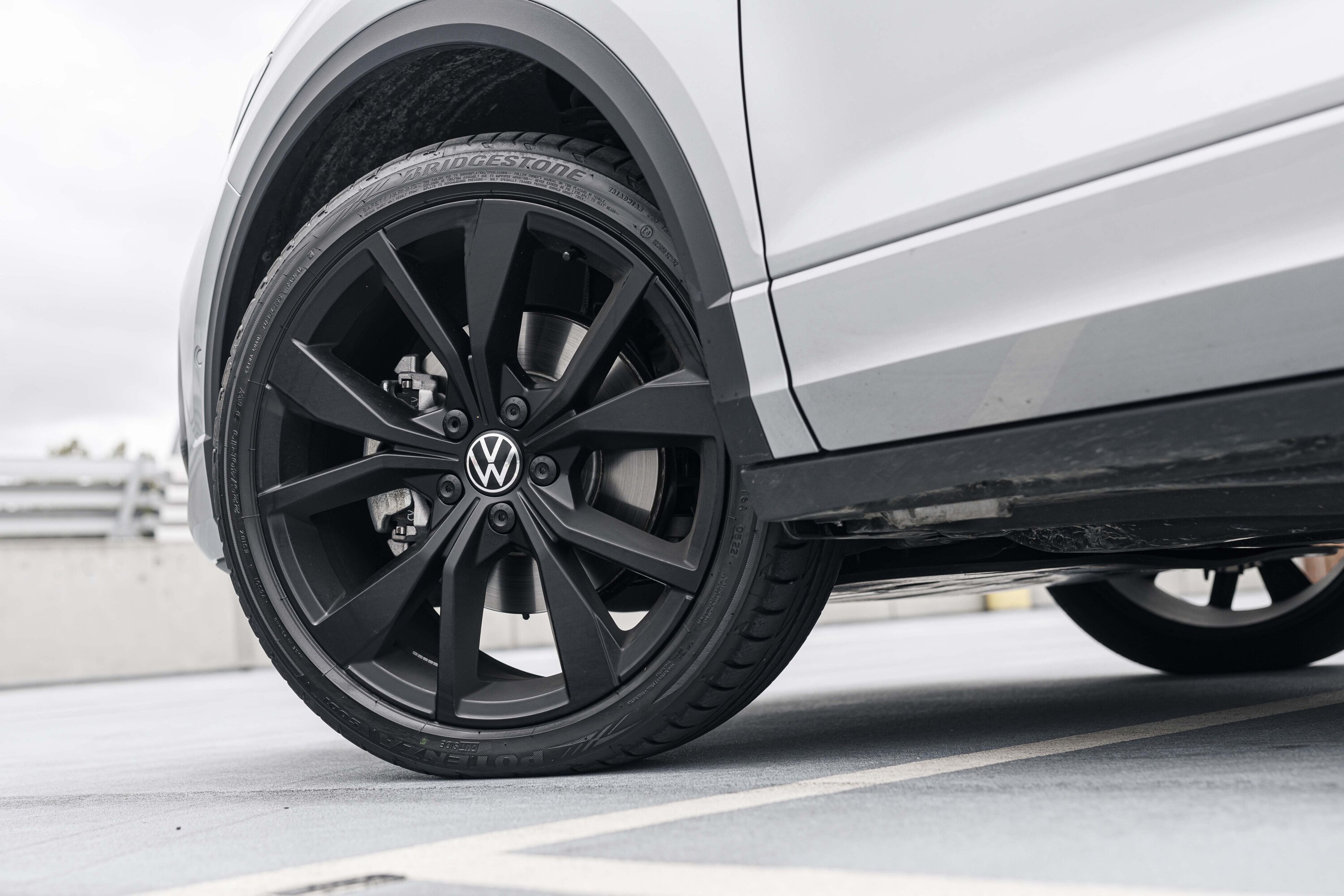
| Tyres | Bridgestone Potenza S001 | |
| Tyre size & spare | 225/R0R19, space-saver spare | |
2024 Skoda Scala and Kamiq revealed!
The Czechia car brand has unveiled its facelifts small car siblings, with subtle design tweaks, eco-friendly interior materials, and the addition of physical fan speed buttons.
The story continues below unchanged.
Ahead of the pair’s digital reveal on August 1 – and local release in the first half of next year – Skoda has teased design updates for its Scala small car and Kamiq small SUV.
Snapshot
- Facelifted Scala and Kamiq due locally early next year
- First step in Skoda’s 2024 product offensive
- Likely to carry over engines and interior design
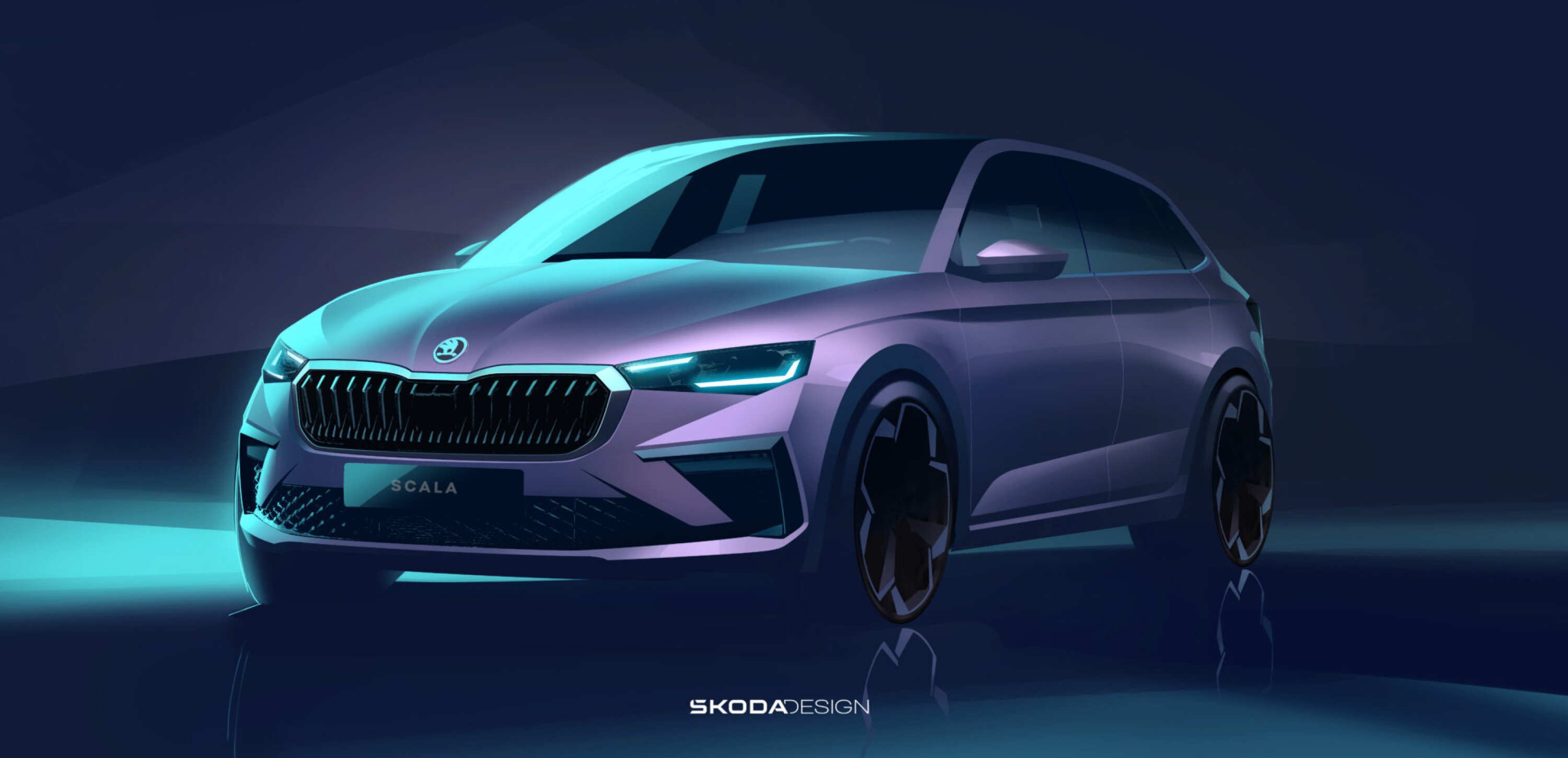
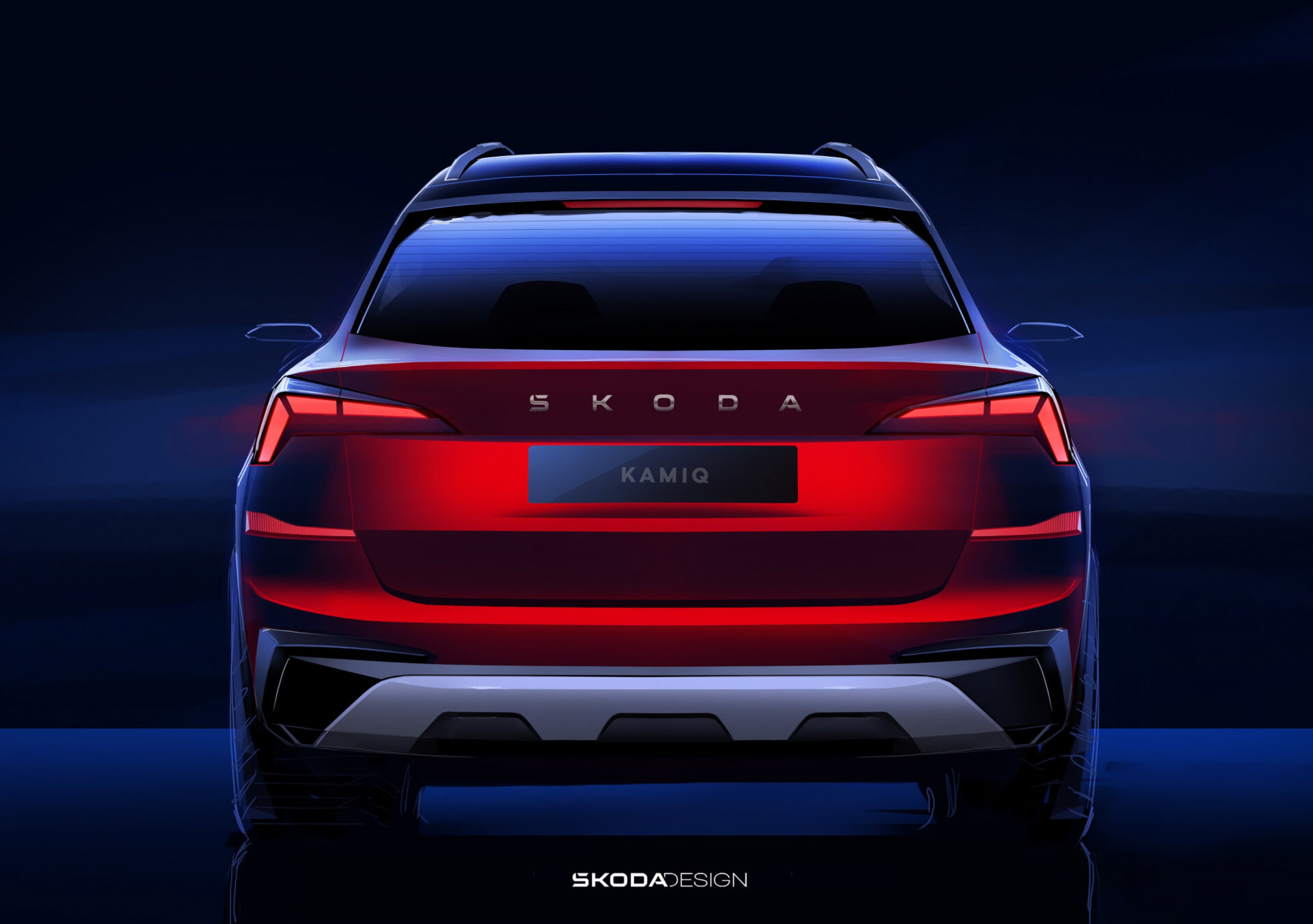
The general updated design theme applies to both models, with the Kamiq picking up narrow and aggressive LED lighting signatures at the front and rear. The Scala retains conventional headlights, though they’ve been stretched to emphasise its width and distinctive offset DRL details have been added.
Skoda’s Scala adopts new alloy wheel designs, while its bumpers have been tidied up with new ‘wings’ added to the front apron. Finishing the treatment are new rear LED rear tail lights.
1
For the Kamiq’s bodywork, Skoda has added an extra chin spoiler that’s attached to a more prominent lower valance. The designers have made the grille a little more upright to enhance the Kamiq’s SUV presence.
Inside we’re likely to see a few changes for the small vehicles, including new graphics for the touchscreens and digital driver’s displays, as well as different trim details. It’s unlikely that the MQB-A0 based Scala and Kamiq will ditch their traditional gear selectors for the stubby items found in the Octavia, or arrive with a significant cabin design overhaul.
1
We expect the current engines – either a 1.0-litre 85kW/200Nm turbo-petrol three-cylinder and 1.5-litre 110kW/250Nm petrol four-banger, depending on trim level and model – to continue into new versions of the Kamiq and Scala.
Skoda’s Australian sales have been hamstrung by the ongoing semi-conductor shortages and limited stock of Kamiq and Scala, though this year sales of the small SUV are up 30 per cent (984) on 2022.
Scala numbers are up a similar amount (31.9 per cent), suggesting there’s light at the end of the tunnel for Skoda.
The Czech brand is setting up a massive product offensive in 2024 with the all-new versions of Kodiaq large SUV and Superb large car due as well as the Enyaq, the brand’s first electric vehicle.
MORE
Everything Skoda
