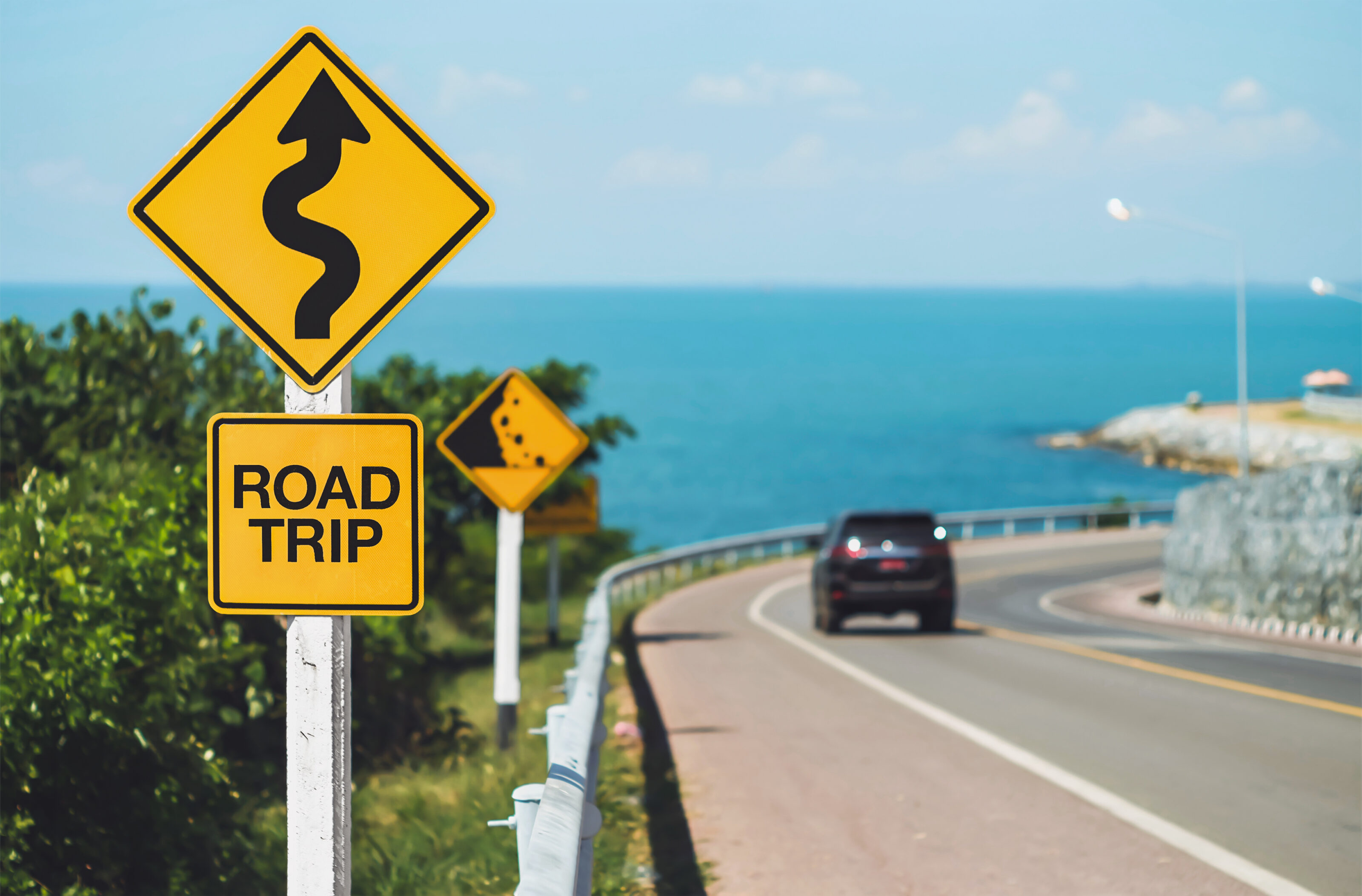
With the school holidays either here or around the corner – depending on where you are – a lot of people will be heading out of town for a decent break.
Given the state of travel over the past few years, a lot more of these trips will be done on the road, right here in Australia.
Of course, school holidays means more families taking long trips, making it one of the worst times for frustration and fatigue leading to road accidents, demerit point penalties, revoked driving licences – and for peak-time traffic gridlock.
The key to avoiding these pitfalls and staying safe on the road is all in the preparation.
To help you get through these holidays safely and happily (depending on how old your kids are…), here are some important tips for staying safe on the road.
Road trip safety: Check your vehicle
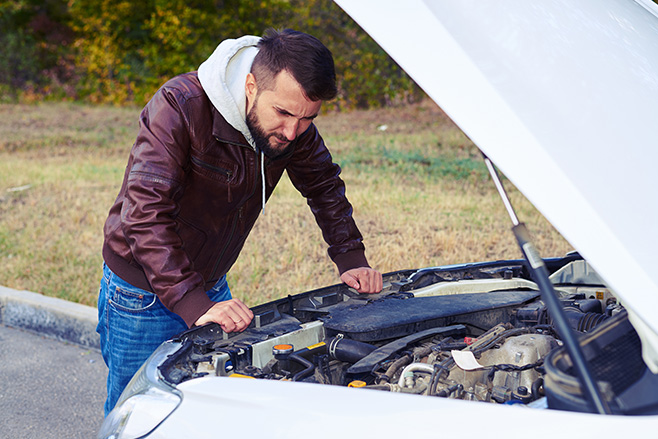
There is nothing worse than a car breakdown on holiday, particularly when many businesses close for the break or enjoy themselves a captive audience to charge top dollar for getting you back on the road again.
Be sure to have your car serviced early if it’s coming due, and at the very least, check your fluids, wipers and tyres – including your spare! (If your car has a spare…)
1
The Federal Chamber of Automotive Industries has a simple checklist of tasks to be ticked off when preparing for a road trip.
“On holidays, we’re driving our cars further than usual, but that’s not all. We’re packing them with passengers and presents before heading onto unfamiliar, often high-speed roads.
“Little things can make a difference to road safety. A car equipped with the latest safety equipment can’t replace worn tyres or see an oil leak,” says Tony Weber, chief executive of FCAI.
10 things to do before your family road trip
We’ve also included some links below to relevant stories and guides that might help you with each of these points!
Of course, not all motorists are comfortable making the final decision on their car’s roadworthiness for a long drive, so you should consider if it might be best to visit a workshop before heading away.
Plan your time and route, and consider the road less travelled
The Friday afternoon exodus can be chaotic, with the usual gridlock of home-going workers doubled up with families and friends trying to sneak off early.
It can often be better to leave later – after the peak-hour flow, or first thing in the morning – than adding to the gridlock and getting the red mist of road rage.
Part of the adventure can be taking the scenic route, or taking roads that get you away from the highways and the traffic.
Provided you aren’t in the peak-hour times, going via the old roads can be far more enjoyable, and you can indulge in some great turns, good food and stunning vantage points.
Remember, though, that your passengers might not appreciate winding roads!
Get ‘appy
Check out and download some live traffic apps, and review your route before you go.
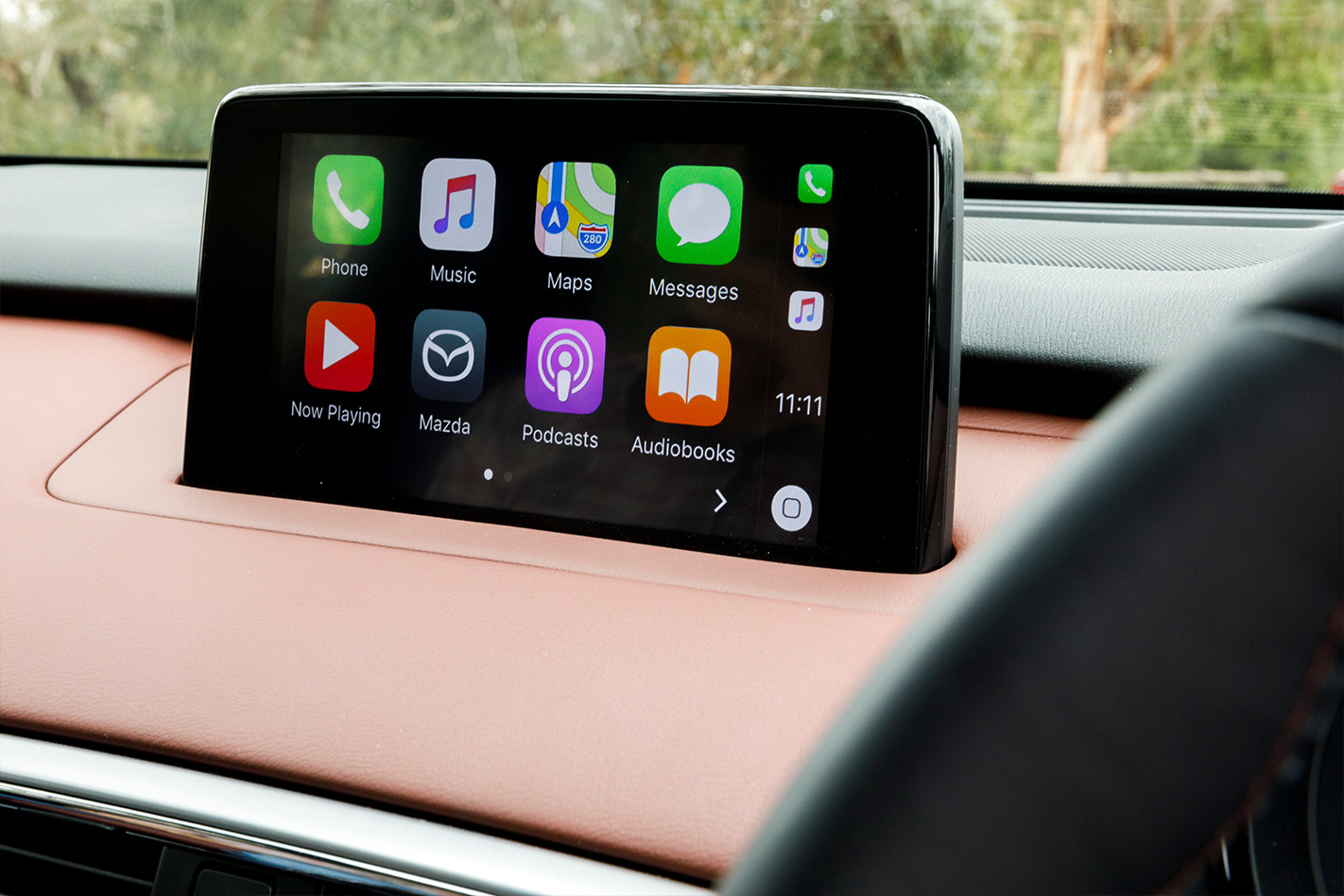
Live updating navigation like Waze and Google Maps can track your route and find alternate ways around roadblocks and traffic on demand, while downloadable apps such as Live Traffic (NSW) provide congestion information overlaid on live time maps, letting you know if your gridlocked road frees up around the next corner, or whether you should take the next exit and find another way around.
These apps and websites usually offer live camera feeds, speed camera locations and major roadworks as well.
Of course, these should be in the hands of your passenger. Even in a cradle, using apps like these can be too distracting for a driver while the vehicle is in motion.
Other apps from various organisations such as the State Emergency Services, rural fire brigades and Surf Life Saving Australia can be very useful to provide a safety heads up different areas you may be travelling to.
With petrol prices always being volatile around holiday times, crowd-sourced apps like FuelMap provides a database of where best to refuel, while also being a personal petrol log.
Also consider apps that make your journey more enjoyable such as Spotify, which is a great way to collate playlists to suit everyone, as well as podcasts, radio series and even comedy acts.
1
Driver reviver, rest areas and stopovers
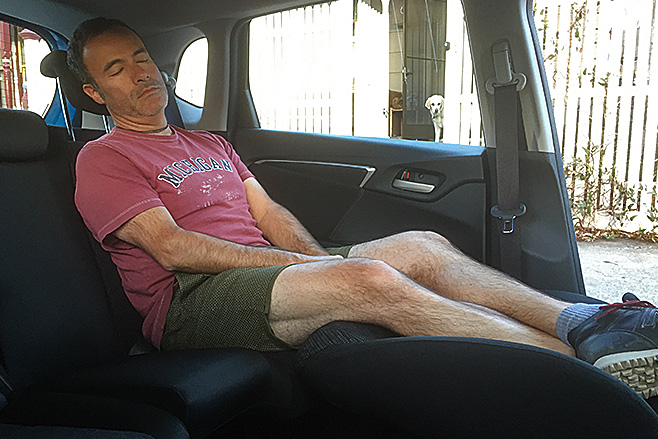
You should stop and stretch for at least 10 or 15 minutes every two hours – so when you plan your route, plan your rest stop.
Each holiday season, up to 200 Driver Reviver Sites can be found on major roadways across Australia. Run by volunteers and sponsored by tea and biscuit companies, the Driver Reviver sites aim to reduce fatigue by serving up free tea, coffee and a bikkie by the roadside. A list of sites can be found at the link above.
Rest areas have improved immensely over the past decade, and some particularly pretty stops with clean facilities can be found along major routes.
And of course, there are fabulous cafes and hidden gems in most towns, so be sure to get off the highway and get your traditional scones and jams from the country café or big burger at the truck stops – TripAdvisor.com.au is a great resource for honest reviews and foodie photos.
1
Travelling with children
There was a time when keeping kids happy, refreshed and entertained during a road trip meant giving them a pack of chips and encouraging them to play ‘I Spy’ or to sing along to the radio.
But kids have their limits, and even as car interiors improve and infotainment systems became more advanced, they can still become bored and irritable leading to inevitable rear-seat conflict.
Here’s a list of items and ideas to keep the little darlings occupied to ensure mobile bliss and safety on the next family road trip for when the usual family road trip games wear thin.
If you aren’t taking your beloved furry family with you, be sure that someone you trust is aware that they are home and can access them.
Even if you are just tripping away from home overnight and leaving food out, you must let someone (preferably with a key to your place) know about it. If you are involved in an accident or mishap, your animals can be looked after.
If you are travelling with your pet(s) be sure it’s safety restrained. It’s not uncommon to see pets unrestrained in cars, sitting on drivers’ laps or hanging their head out an open window, but these situations can end in disaster or serious injury.
Each state in Australia has its own set of rules and regulations, so be sure to look up any laws of states you’re travelling through.
As a general rule, pets should be kept away from the driver to avoid distraction, and appropriately restrained to prevent it leaving the vehicle. Check out our story on car harnesses and barriers to keep your pet safe and secure.
Pet-friendly travel checklist
Treat against ticks and fleas
Feed at least two hours before travelling — don’t leave with a full tummy!
Go for a walk before you set off
Things to pack:
tick wash
wet wipes and tissues for sickness mishaps
plenty of poo bags
fresh drinking water and a non-spill bowl
plenty of your pet’s favourite food
your pet’s bedding
an extra leash
a copy of vaccination certificates
Take regular toilet breaks
Keep your pets leashed when you stop in unfamiliar places
Make sure your pet is microchipped or has an ID collar (ideally both)
Pets should be restrained in vehicles — don’t drive with a pet on your lap!
Don’t leave your pets in the car unattended (especially in hot weather)
Invest in a good car harness or cat carrier
For cats, invest in some Feliway spray
1
Know the double demerit days
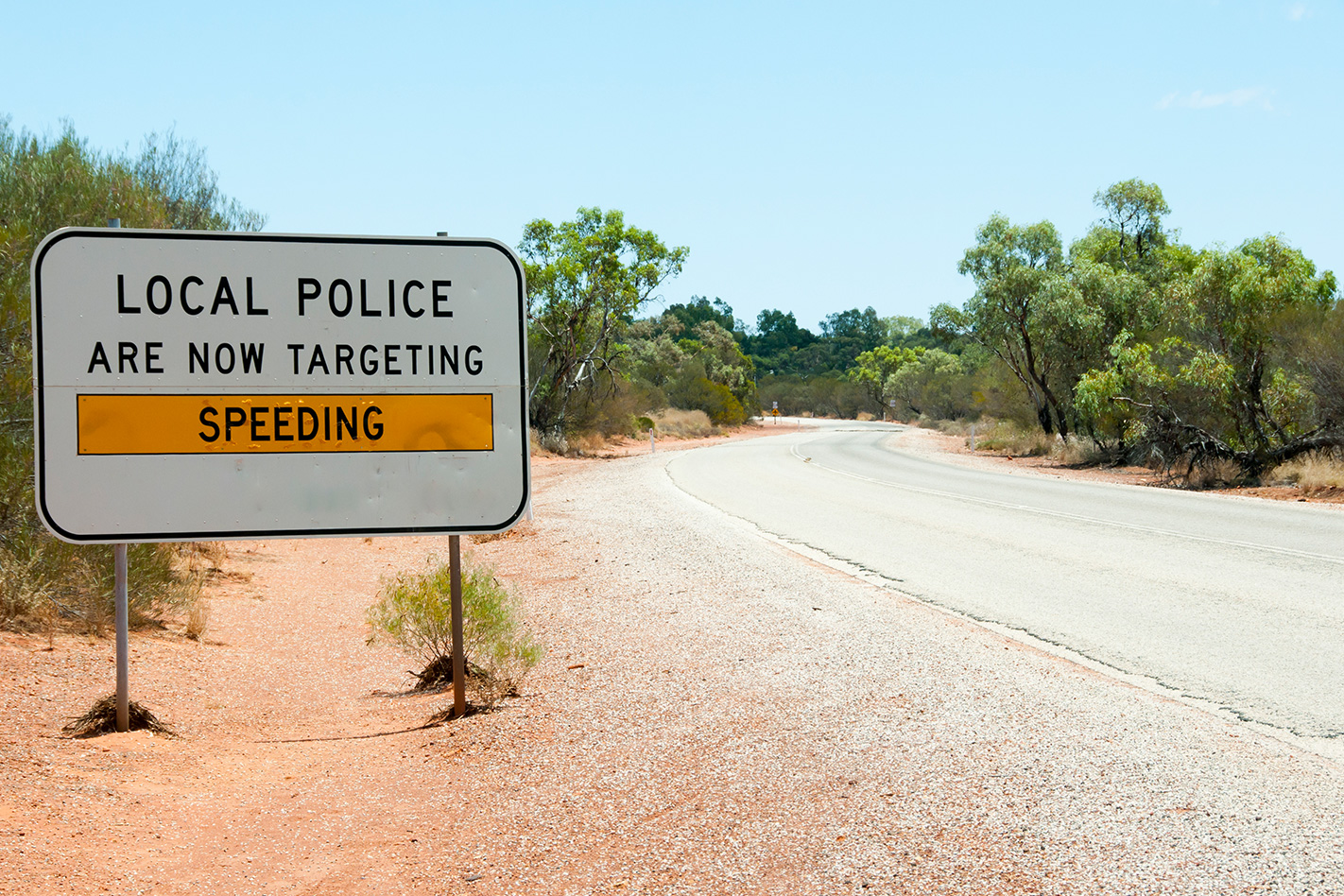
Not that we should be speeding or breaking the law on any day – but double demerit periods are even more incentive to take it easy and be extra attentive behind the wheel.
Check with your state’s road authority to find out the dates on which double demerits will be in effect.
Driving at night or towing
Driving at night, and towing, can be quite stressful and tiring for a driver – even if you don’t realise it at the time.
You need a bigger braking gap in both instances, and constant checking in mirrors or peering into the darkness can speed up fatigue. Be sure to take more breaks, and factor this into the timing and planning of your trip.
Remember, road safety is everyone’s responsibility – no matter what you think of other drivers – so make sure to do your part to keep everyone safe on the roads.
More guides to help you choose the best car & tyres for your needs
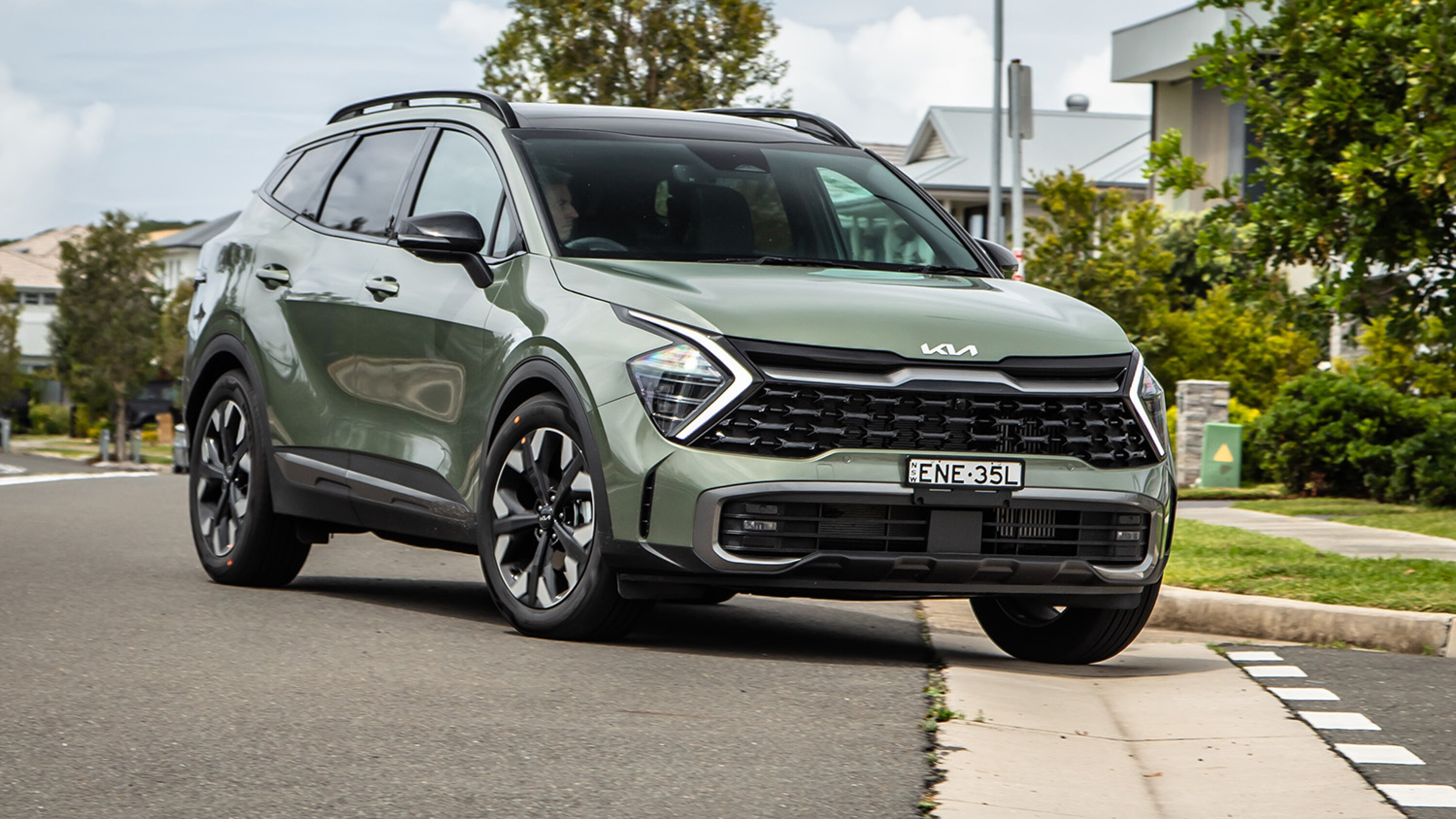
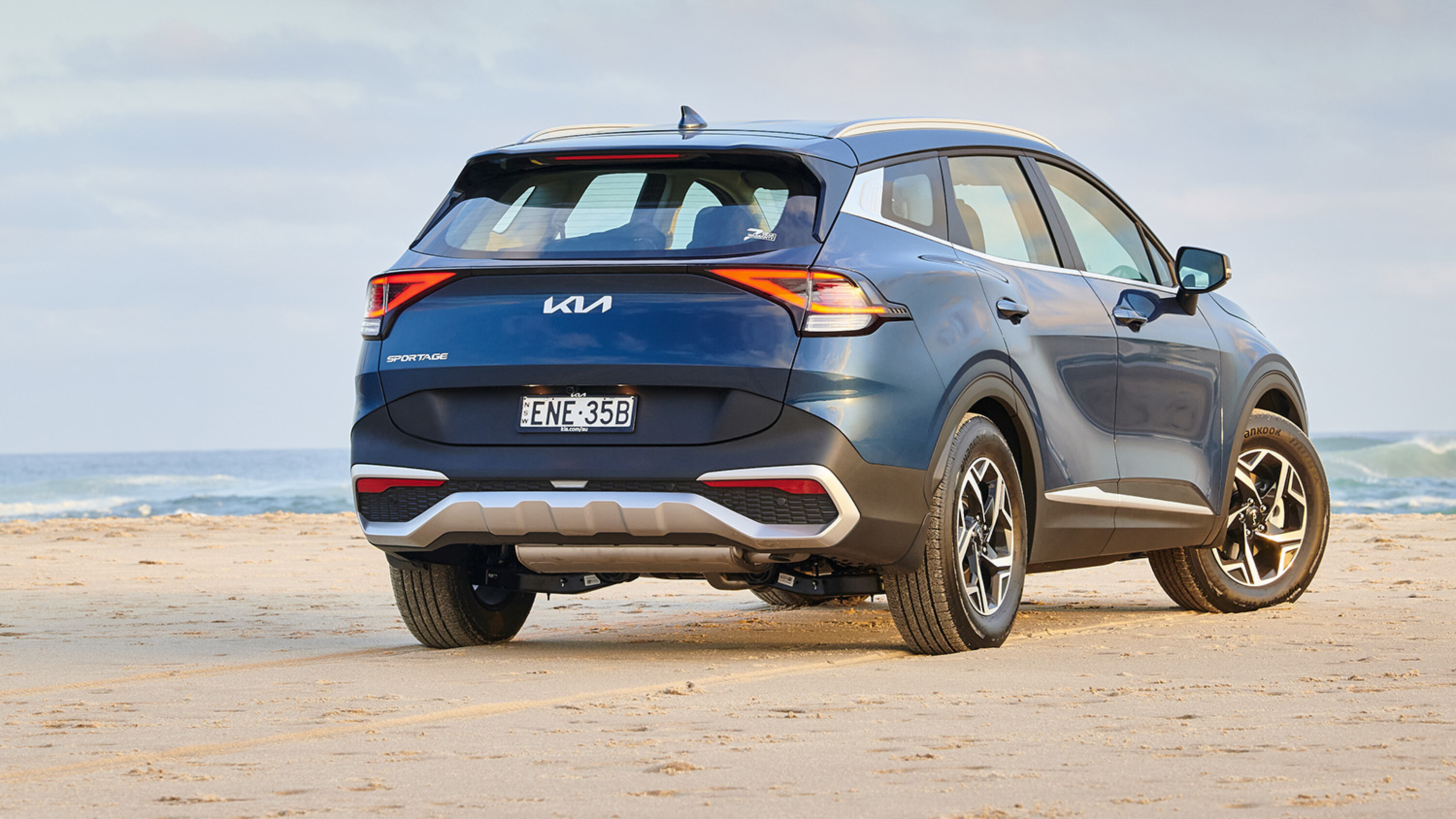
The Kia Sportage has come a long way in the 30 years since the debut of the first-generation model, which was based on the Mazda Bongo van.
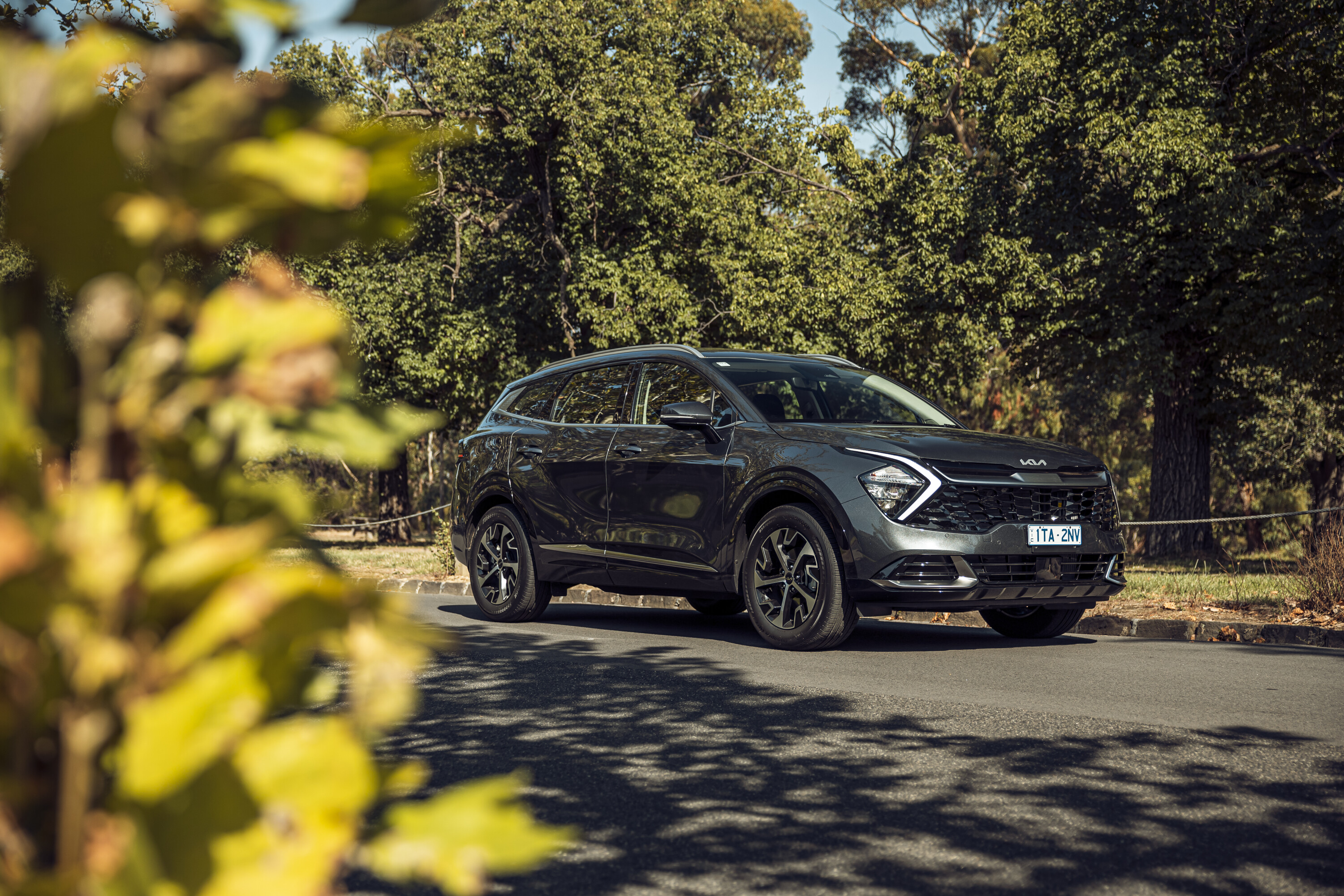
Launched in late 2021, the fifth-generation Sportage is one of the sharpest-looking medium SUVs in its class and comes with an excellent range of standard features, including top-spec variants that share technology with pricier European models.
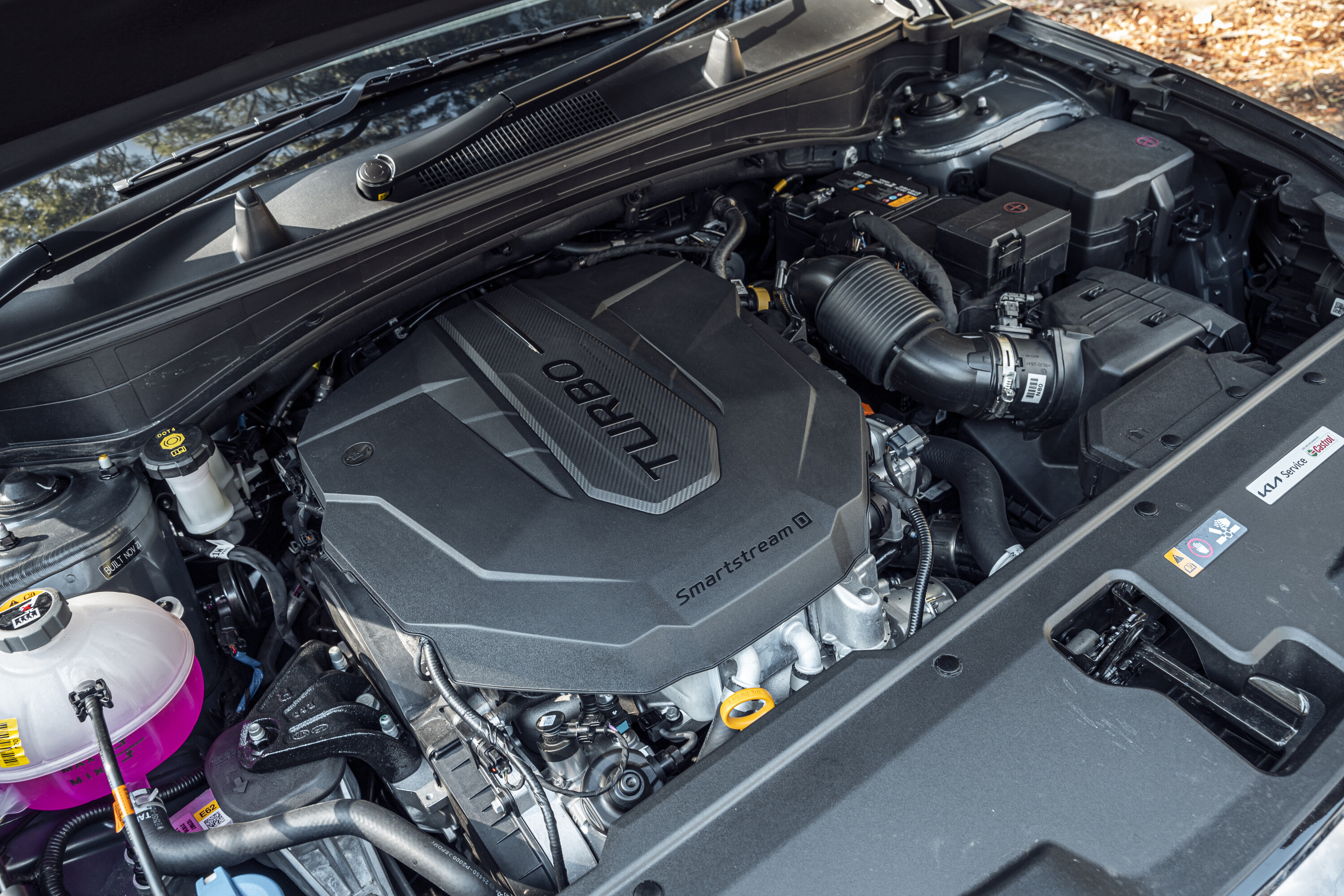
The Sportage is available in four specification grades and a choice of front-wheel drive 2.0-litre petrol, an all-wheel drive 2.0-litre turbo-diesel (available across the range), and an AWD 1.6-litre turbo-petrol, which joined the range in early 2023.
April, 2024: Sportage Hybrid on sale in sale
Kia has finally introduced a petrol-electric version of its Sportage midsized SUV to compete with the all-conquering Toyota RAV4 Hybrid.
What body styles are available for the Kia Sportage?
Five-door, five-seat SUV only.
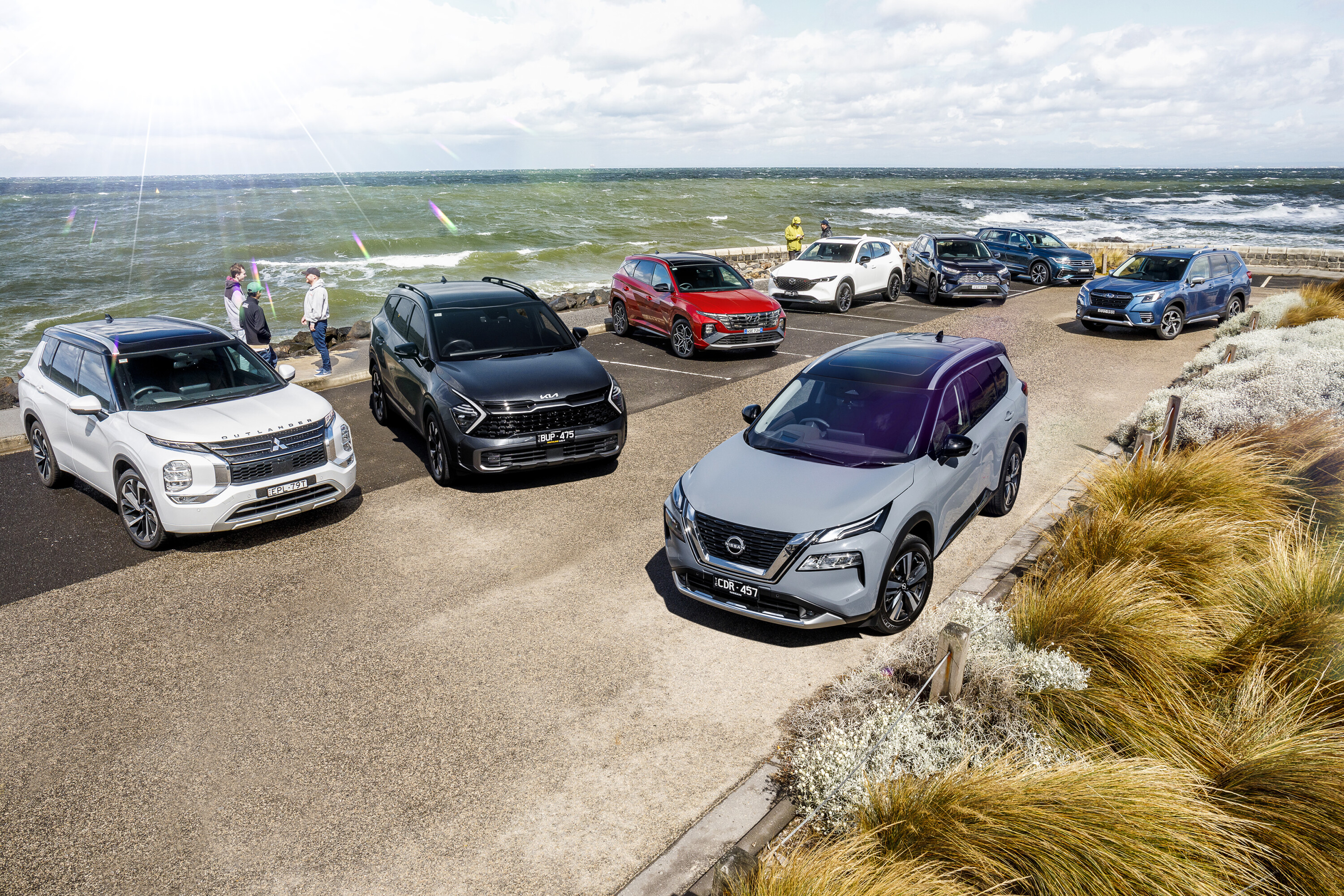
The Sportage drives either its front wheels or all four wheels, depending on the version. It competes in Australia’s sub-$60K medium SUV segment.
What features are standard in every Kia Sportage?
2023 Kia Sportage standard features
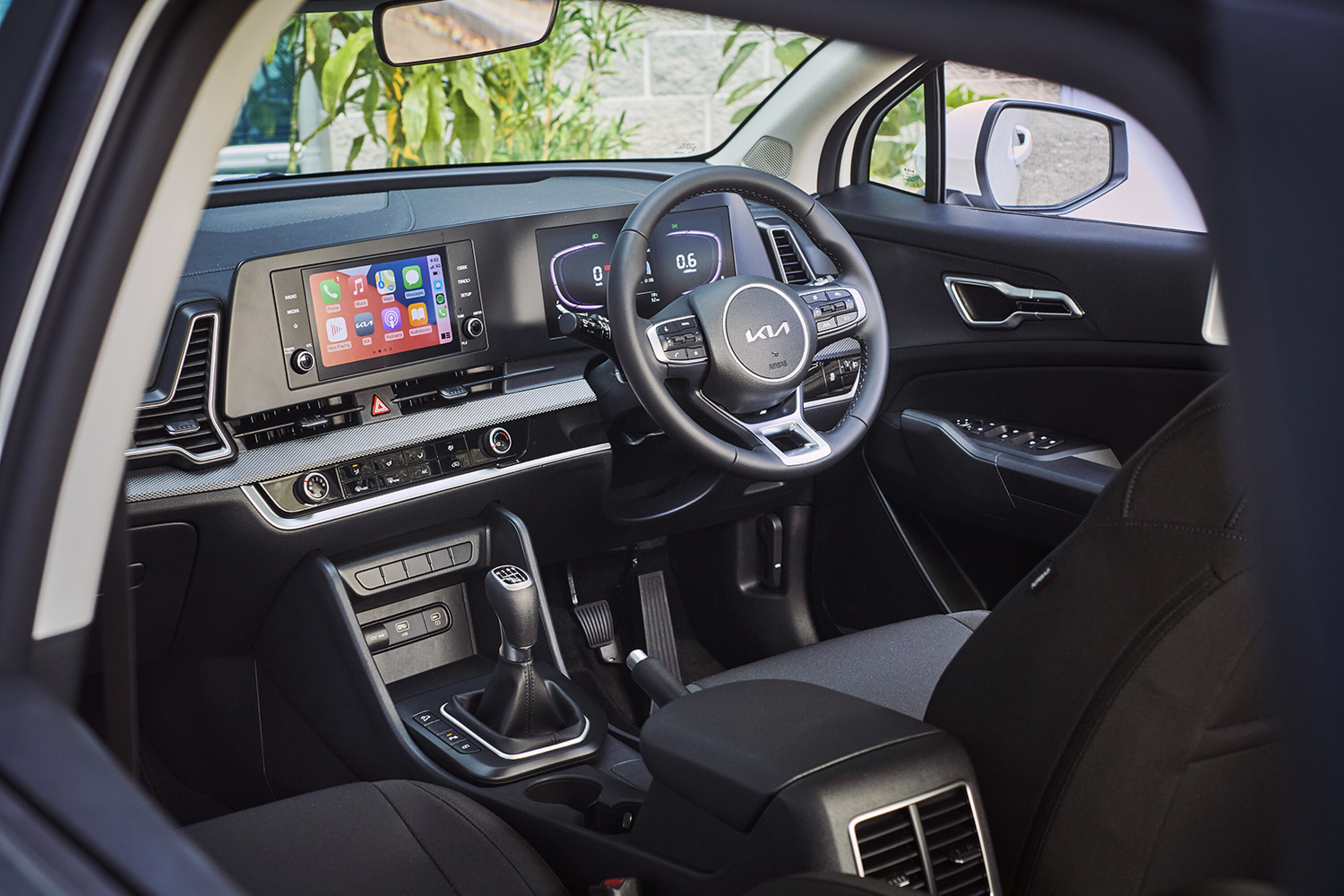
Colour touchscreen, and auxiliary and USB input sockets
Auto-dimming rear-view mirror
Bluetooth connectivity for phone calls and audio streaming
Roof rails, which make it easier to attach luggage systems
Android Auto/Apple CarPlay, which lets you display smartphone apps on the touchscreen, including music streaming and maps, and control them from there (or by voice)
Shark fin antenna
Reversing camera
Active safety features including autonomous emergency braking, forward collision warning, lane-keeping assist, driver attention alert, blind-spot collision warning, rear-cross traffic alert, and safe-exit warning
Sound system with at least six speakers
Controls on the steering wheel for operating the cruise control, the sound system and Bluetooth
Climate control air-conditioning
A trip computer that presents fuel use and distance information
Second-row air vents
Aluminium alloy wheels, which are usually lighter and better looking than steel wheels with plastic covers, and a full-size alloy spare wheel
Cruise control
Hill-assist control, which operates the brakes automatically to make take-offs on hills easier
LED daytime running lights
Downhill brake control, which can regulate speed automatically on steep downslopes when driving off-road
Headlights that switch on automatically when itu2019s getting dark
Seven airbags (dual front, side head, curtain and front-centre)
Front fog-lamps
Electronic stability control, which can help the driver control a skidding car
The Sportage is one of the few SUVs, or any model for that matter, that has a manual transmission option, which is coupled with the 2.0-litre petrol engine.
A manual Sportage S variant is the most affordable Sportage. Spending an additional $2000 brings a six-speed automatic transmission and a few other extras including:
2023 Kia Sportage S automatic features
Trailer stability assist
Active blind spot collision assist
Active rear cross traffic collision avoidance
High-beam assist
Spending around $5400 more brings the diesel engine and eight-speed automatic transmission with all-wheel drive traction.
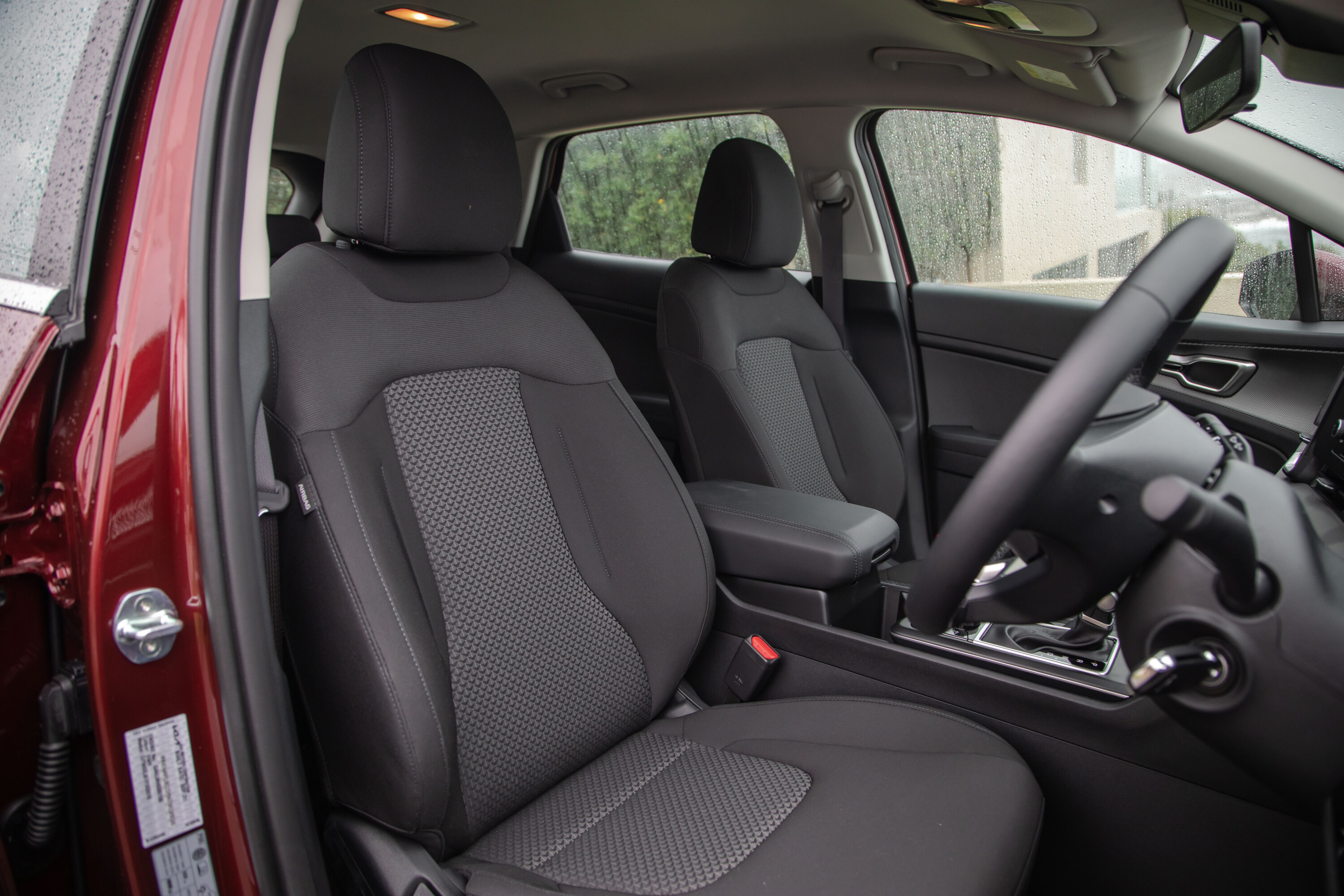
Upholstery in the Sportage S is cloth, with the driver’s seat having six-way manual adjustment including for height.
3
It rolls on 17-inch alloy wheels shod with chunky 235/65 R17 tyres.
The Sportage S is the only variant to come with the small 8.0-inch touchscreen, but, for complex reasons, is the only variant to come with handy wireless Apple CarPlay and Android Auto.
Stepping up to theSportage SX brings the same petrol and diesel powertrains as the S, with the automatic version adding the same tech extras.
2
While the SX loses the wireless smartphone mirroring, it does gain:
2023 Kia Sportage SX features
A bigger 12.3-inch panoramic touchscreen
Two-way driver lumbar support
Digital radio (DAB+)
Rain-sensing windscreen wipers
Sounds of Nature mood effects
Soft-touch front-door armrest and upper trim
In-built satellite navigation with a 10-year subscription to traffic info and map updates
Leather-appointed gear shift knob
Front and rear parking sensors
Auto windscreen defog
Personal profile, which remembers audio and Bluetooth settings
18-inch alloy wheels with 235/60 R18 tyres
Dual-zone climate-control air-conditioning
The Sportage SX+ loses the manual gearbox option but gains the choice of a punchy 1.6-litre turbocharged engine with a seven-speed dual-clutch transmission and all-wheel drive. It is the only Sportage variant to feature all three engine options.
Spending around $4500 over the equivalent SX variant brings:
2023 Kia Sportage SX+ features
Auto-dimming rear-view mirror
Hands-free powered tailgate
Smart key remote and push-button start (petrol versions only)
Rear privacy glass
Synthetic quilted leather seating with eight-way powered driveru2019s seat adjustment and two-way powered lumbar support
Steering wheel paddle shifters
Heated front seats
Eight-speaker Harman Kardon premium sound system.
LED front fog lights
19-inch alloy wheels with sporty 235/55 R19 tyres
The range-topping Sportage GT-Line comes with a range of extras that you’d expect to see in luxury SUVs, including:
2023 Kia Sportage GT-Line features
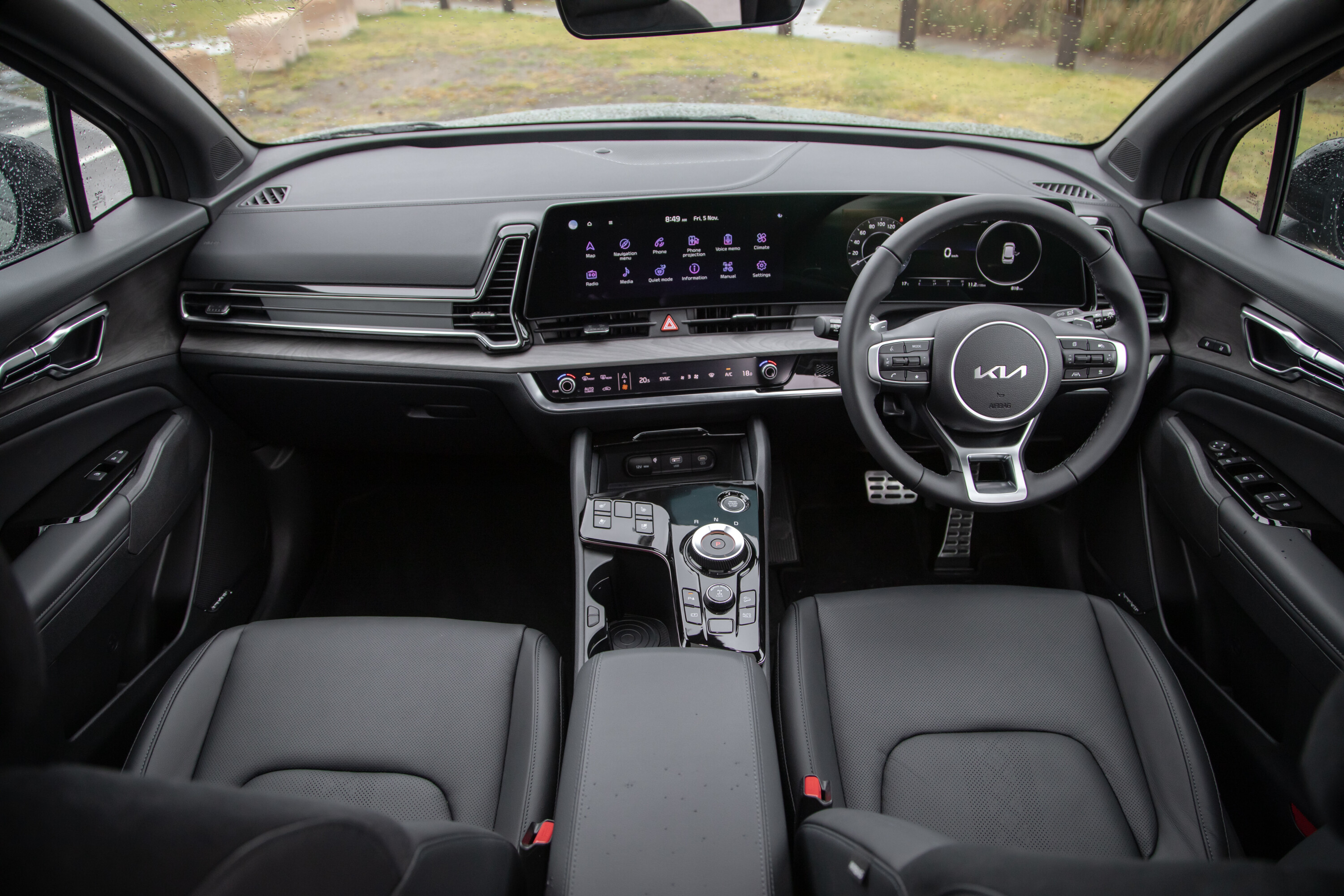
Curved digital display featuring 12.3-inch touch screen and 12.3-inch digital gauge cluster
LED tail lamps
Surround-view parking monitor with 3D mode
Dial gear selector
Blindspot video monitor that displays the side of the car on the dashboard when you indicate
Alloy sport foot pedals
Reverse autonomous emergency braking
LED ambient interior lighting
Diesel gains the smart key remote and push-button start, plus remote smart parking assist.
Wireless phone charging
Synthetic quilted leather seats with suede uppers
Ventilated front seats
Brighter projector LED headlights
Panoramic sunroof
7
Optional extras
Accessories aside, the only extra cost option you’ll be faced with at the Kia dealer will be choosing metallic paint over the standard Clear White, which will set you back around $520.
The Kia Sportage is covered by a five-star rating from ANCAP, based on testing conducted in 2022.
It achieved an 87 per cent score for adult occupant protection, 87 per cent for children, 66 per cent for vulnerable road users, and 74 per cent for safety assist.
All Sportage variants come with seven airbags (dual front, side head, curtain and front centre).
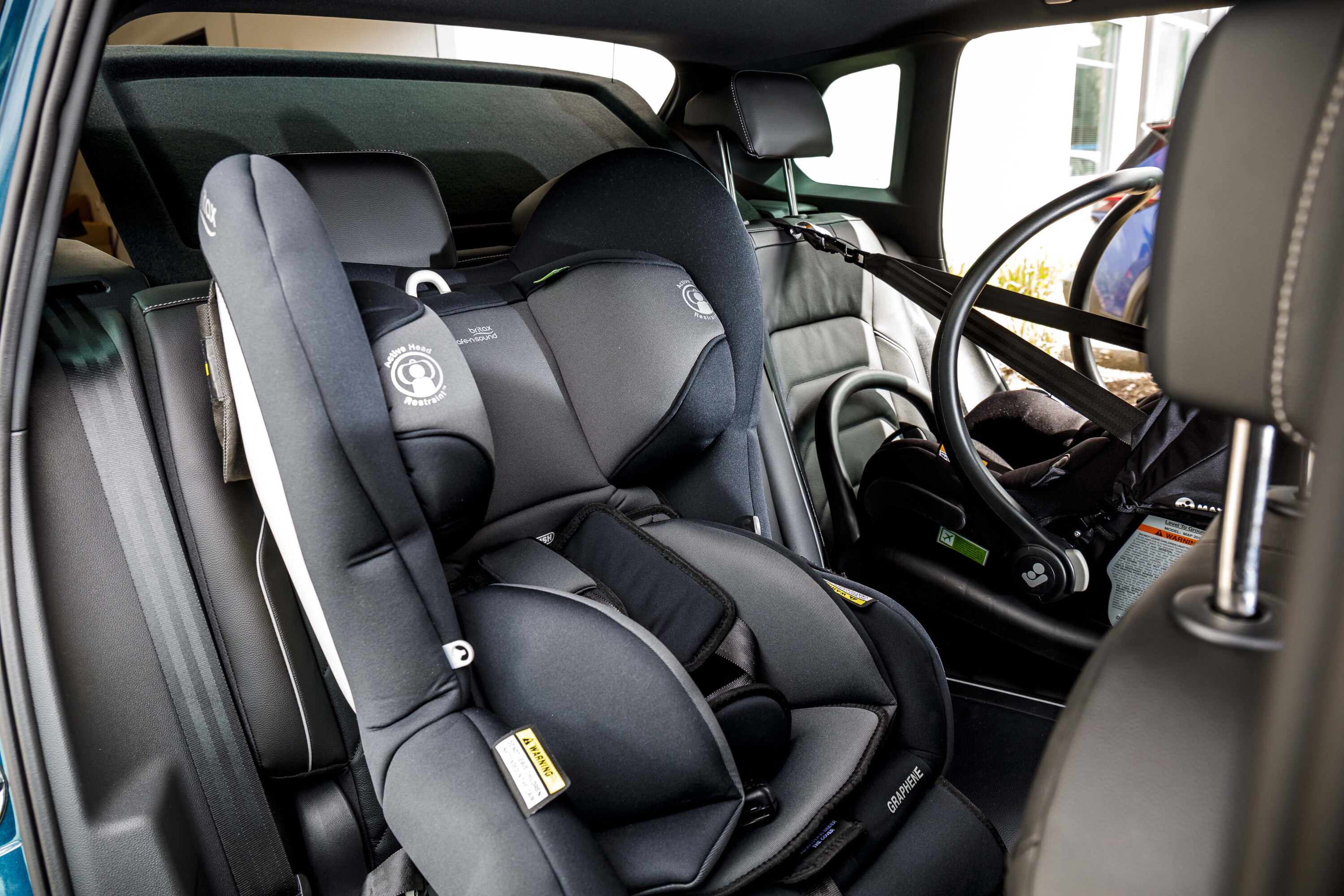
If you need to install child seats there are three top tether anchors and two lots of ISOFIX attachments.
Active safety features include:
2023 Kia Sportage safety features
Autonomous emergency braking with pedestrian, cyclist and intersection detection
How comfortable and practical is the Kia Sportage?
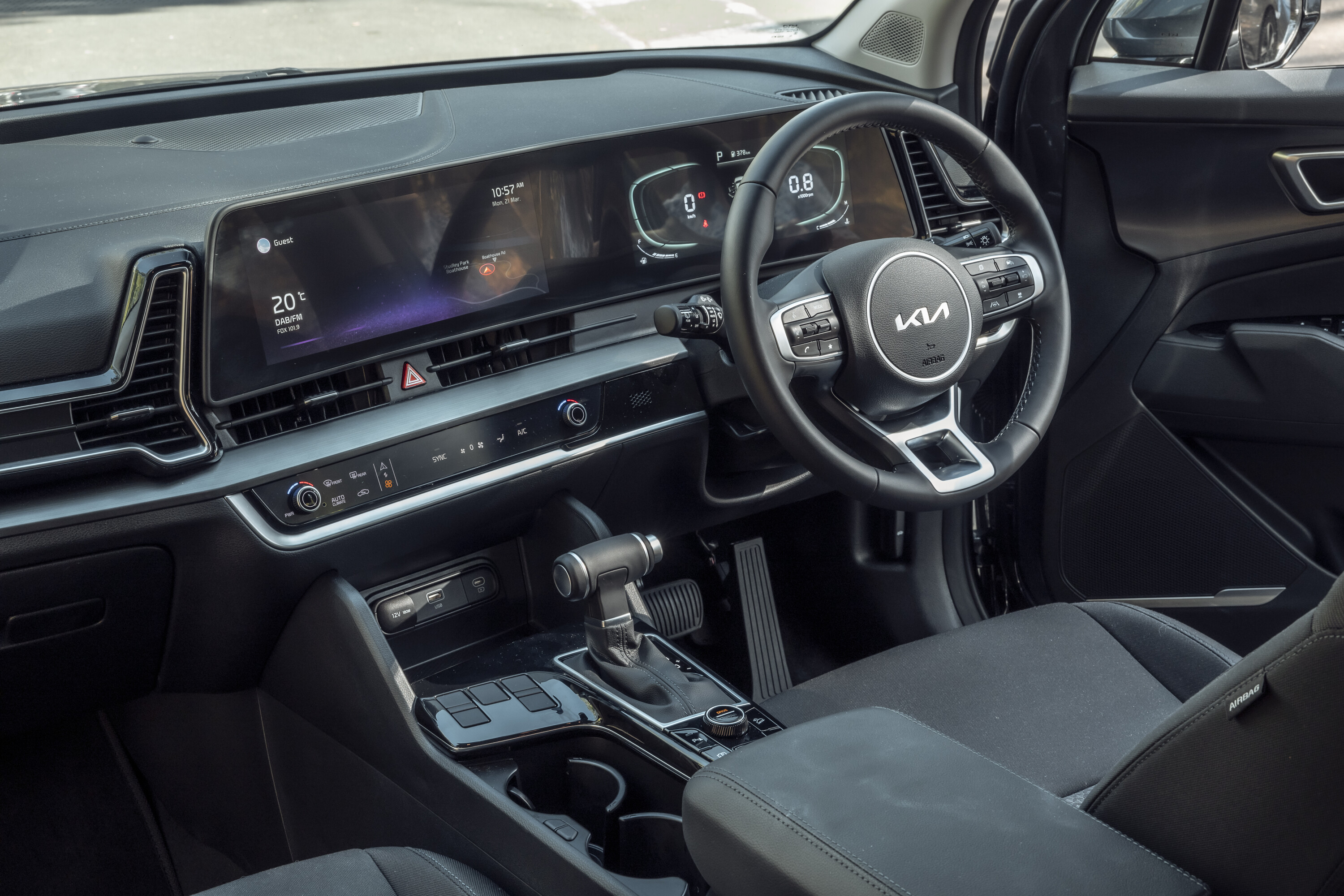
Even in the lower-spec models, we found the Sportage’s front seats to be very comfortable and supportive.
Long-distance driving is aided by good shoulder space and headroom, as well as good under-thigh support.
The cloth seats in the S and SX feel homely and while the “leather-appointed” upholstery in the SX+ and GT-Line lacks any sense of luxury, it doesn’t feel cheap, particularly in the range-topper with the suede-like seat uppers.
5
If you’re driving anything but the entry-level S spec, you’ll likely appreciate the big 12.3-inch touchscreen
Front-seat occupants get accoutrements such as USB-A and USB-C sockets, two cup holders (with little buttons that pop out a semi-circular restraint to hold a cup in place), bottle holders in the doors, space for your phone under the screen and a generous console bin.
Unfortunately, there is a lot of grainy, scratchy plastic where it matters. The door cards, the lower dash and parts of the console all have it and it’s a bit horrid.
If you’re driving anything but the entry-level S spec, you’ll likely appreciate the big 12.3-inch touchscreen, featuring the Hyundai Group’s intuitive infotainment system with a crisp display that’s easy on the eye. It should be noted, however, that models with the larger screen revert to wired-only Apple Carplay and Android Auto.
Also cool is how the physical buttons beneath alternate between the infotainment menu and climate control.
The GT-Line’s big curved display, with the 12.3-inch touchscreen and equally sized digital gauge cluster, provides some wow factor as well as neat features such as the blind-spot video feed and different coloured driving modes.
5
Rear space and comfort
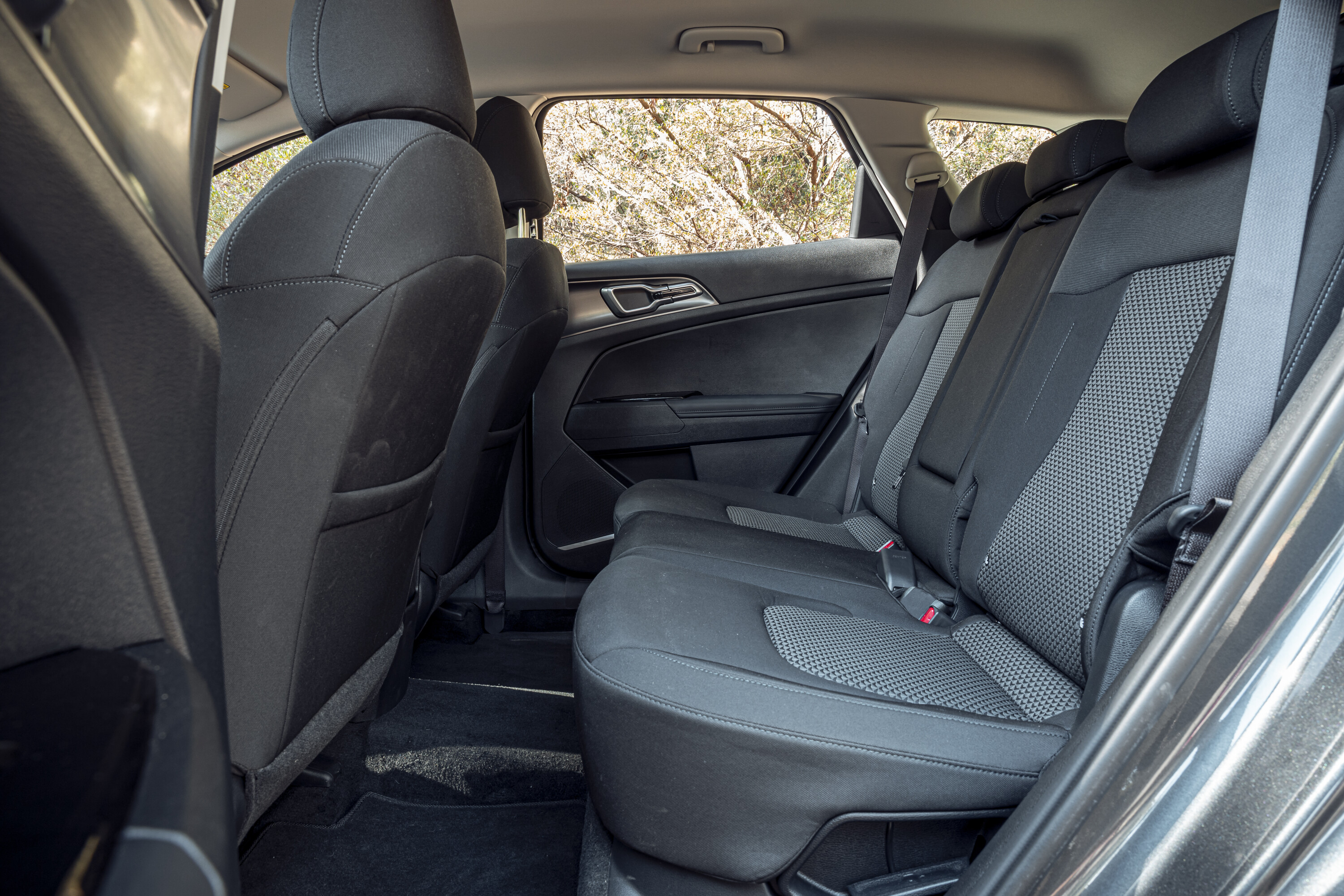
Rear seats in the Sportage are also comfortable and even in the base-spec S, you get rear air vents to help keep occupants cool.
The transmission tunnel isn’t too big, but it will still be a struggle for three adults across the back without clashing feet. Headroom is expansive, as is space for feet and knees.
If you want to avoid any grief from the back seats, make sure the kids (big or small) have USB-C charger cables as neither of the two sockets back there accommodate USB-A.
Storage includes handy coat/bag/mobile device hooks behind the front headrests, two cup holders in the centre armrest, map pockets and bottle holders in the doors, and map pockets behind the front seats.
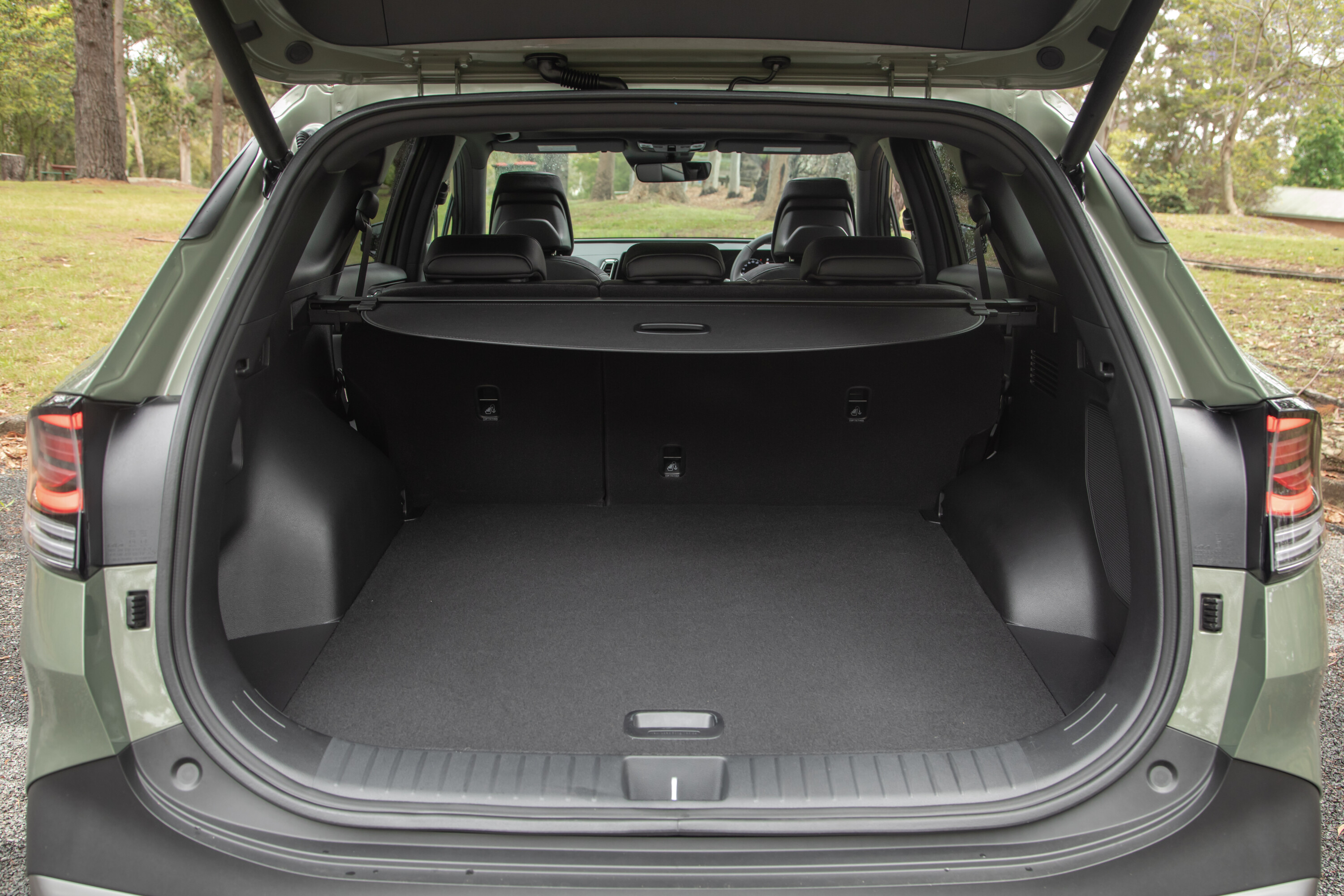
The current Sportage measures 4660mm long overall, compared to 4485mm for its predecessor – adding 77 litres more boot space to provide a very handy 543 litres even with the full-size spare wheel under the floor.
Folding the rear seats down expands the cargo area to an impressive 1829 litres.
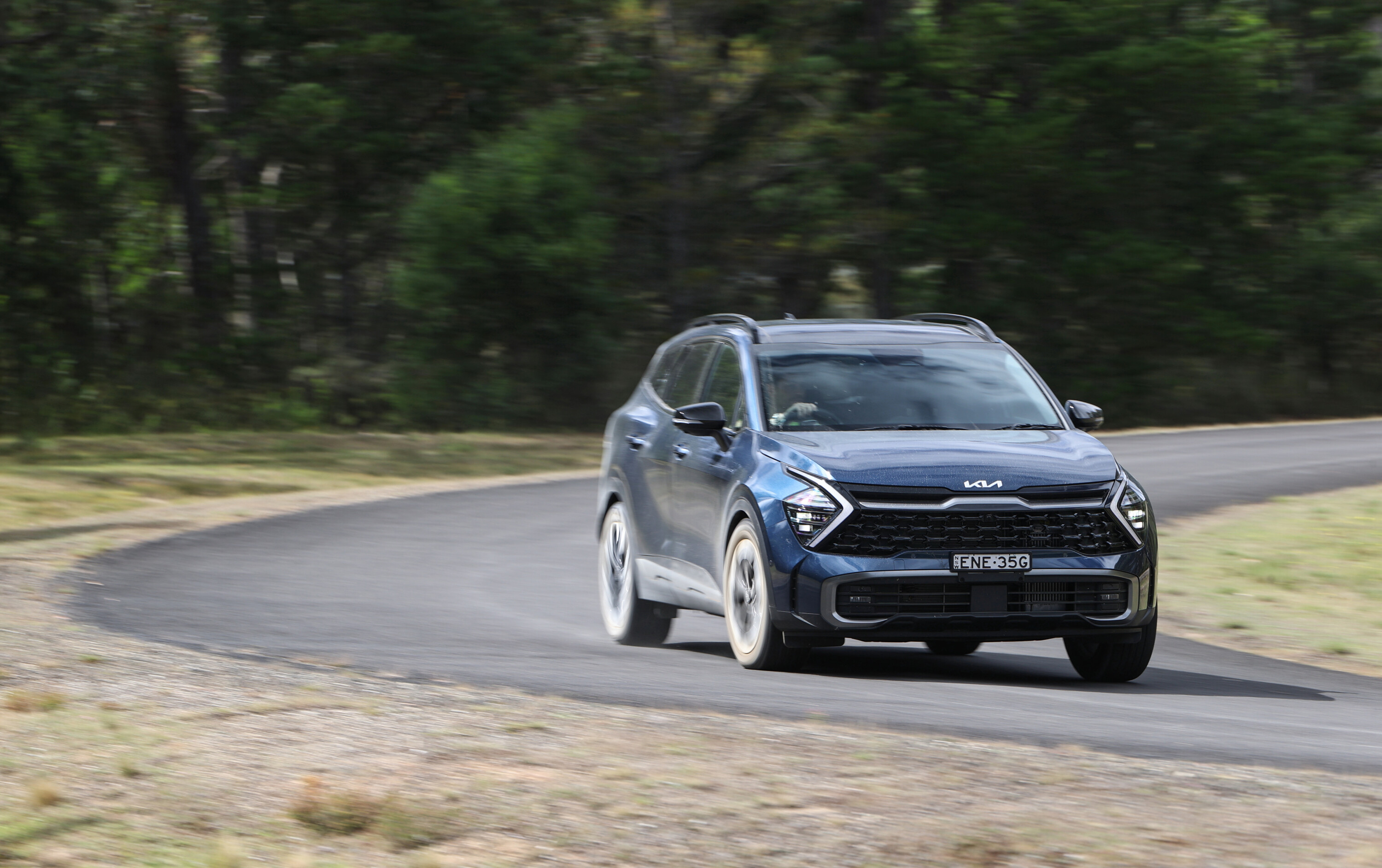
The Sportage’s steering is nicely weighted and if you fancy a bit of enthusiastic driving, the Sportage does its best to stay controlled and planted.
It rides really well and ably shrugs off the bumps and potholes, and has excellent composure and road manners on gravel, helped by Kia Australia’s local ride and handling tune.
1
Overall, this is a very relaxed car and it’s really about being a nice place to be while stuck in traffic.
How much driver enjoyment you ultimately get from the Sportage will depend on which engine you have under the bonnet.
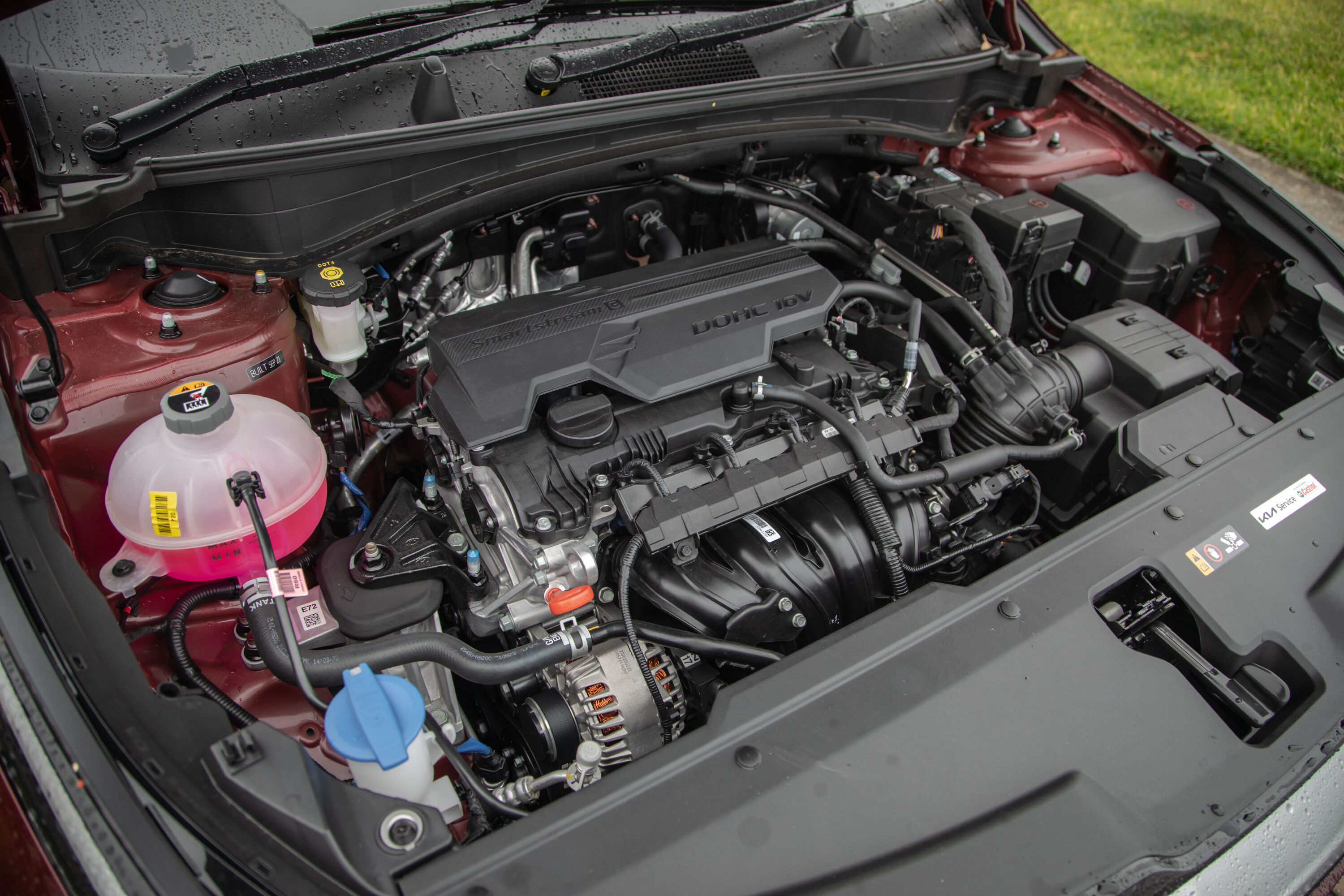
2.0-litre petrol
The naturally aspirated 115kW/192Nm 2.0-litre petrol engine and six-speed auto combo is adequate in the sense that most people aren’t looking for startling performance in their medium SUV.
If most of your driving is around town, you’ll appreciate its smooth and silent operation. But on the open road with some bodies in the seats and bags in the boot, it will struggle a little when you put the foot down, which is to be expected from a 1500kg SUV.
2
1.6-turbo petrol
The 132kW/265Nm 1.6-litre turbo-petrol seems good on paper, but while all that extra torque is useful, it’s a powertrain better suited to something like the Cerato hatch than a heavier SUV.
Shifting the Sportage’s extra weight results in an unpleasant coarse engine note when revved and upshifting, not helped by the seven-speed dual-clutch automatic being a tad slow to downshift when you put your foot down.
2.0-litre turbo diesel
The Sportage feels most eager with the 137kW/416Nm 2.0-litre turbo diesel and eight-speed automatic transmission.
In this guise, the Sportage is responsive, to the point it can sometimes surprise at how quickly it leaps off the line. And it achieves this without feeling unpleasant while delivering progressive pull.
On paper at least, 137kW/416Nm 2.0-litre turbo-diesel is the least greedy of the trio, delivering an official combined fuel economy of 7.7L/100km.
This compares to the 115kW/192Nm 2.0-litre petrol, whose combined fuel economy is 7.7L/100km and 8.1L/100km for the manual and automatic versions respectively, and the 1.6-litre turbo-petrol, which drinks regular unleaded at a rate of 7.2L/100km.
The Sportage’s towing capacity varies depending on the powertrain.
Both the 2.0-litre petrol manual and 2.0-litre turbo-diesel offer 750kg unbraked/1900kg braked towing capacity with a maximum 100kg tow ball download.
The automatic 2.0-litre petrol and 1.6-litre turbo-petrol differ by having a lesser braked towing capacity of 1650kg.
1
How long is the warranty and what are the Sportage’s servicing costs?
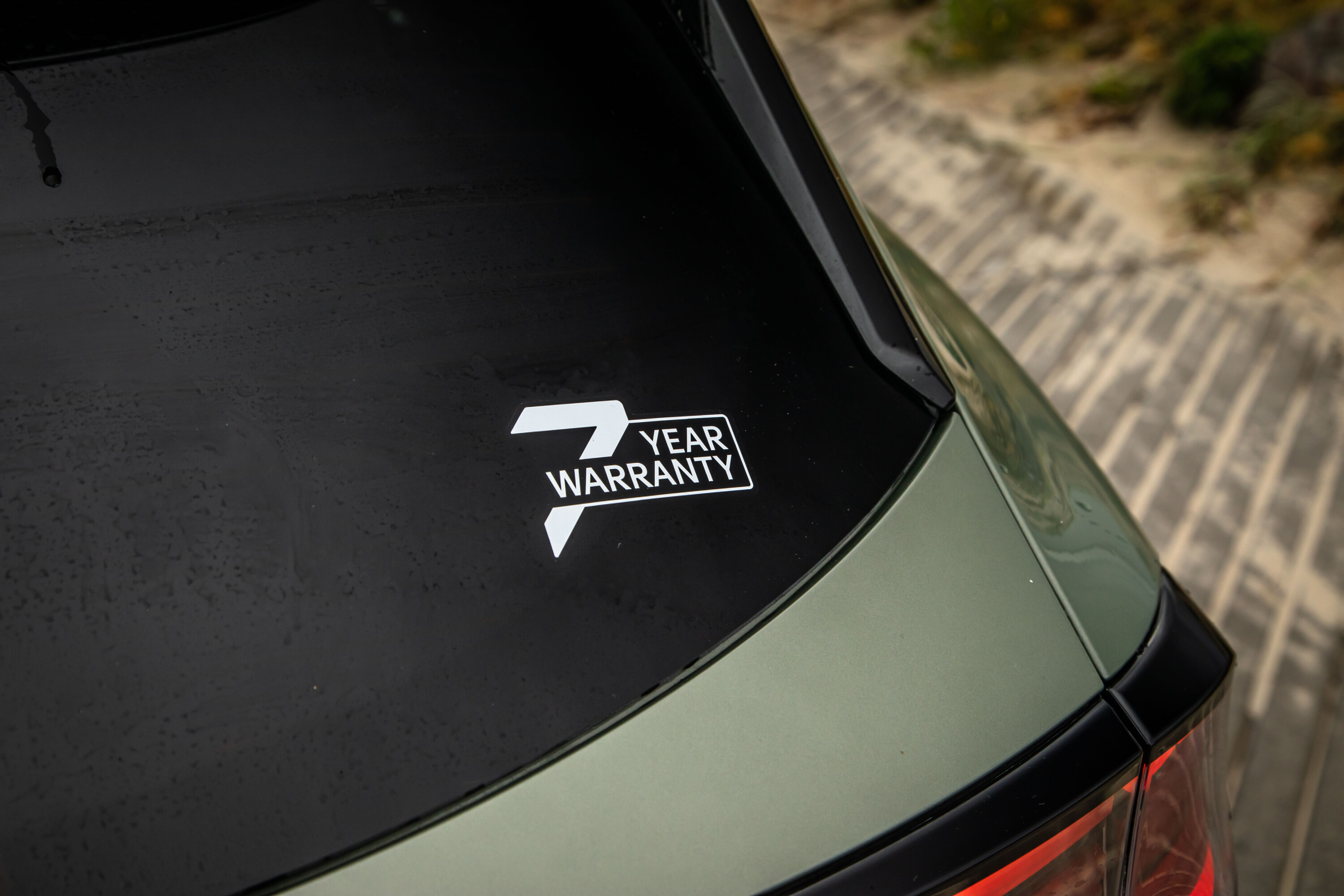
The Sportage is covered by Kia’s seven-year/unlimited-kilometre warranty, along with a complimentary one-year roadside assistance program that can be extended to eight years through annual servicing at a Kia dealership.
Capped-price servicing is available for seven years, with costs dependent on the powertrain and service interval.
Both the 2.0-litre petrol and diesel variants require servicing every 12 months or 15,000 kilometres, whichever occurs first.
The 1.6-litre turbo has a shorter 12-month/10,000km interval.
Prices vary depending on which service is being carried out, but over seven years the fixed price servicing works out to:
Which version of the Kia Sportage does Wheels recommend?
Kia Sportage pricing ranges from about $32,000 to $52,000 and there are a couple of variants that sit around the $42K sweet spot.
Overall we really like the Sportage SX with the 2.0-litre turbo-diesel engine, which has all the important kit and comes with the best-performing and most efficient powertrain.
But, if you’re after a few more creature comforts such as the faux leather and power-adjustable heated front seats, electric tailgate and premium audio, and you’ll mostly drive around town, the Sportage SX+ represents good value.
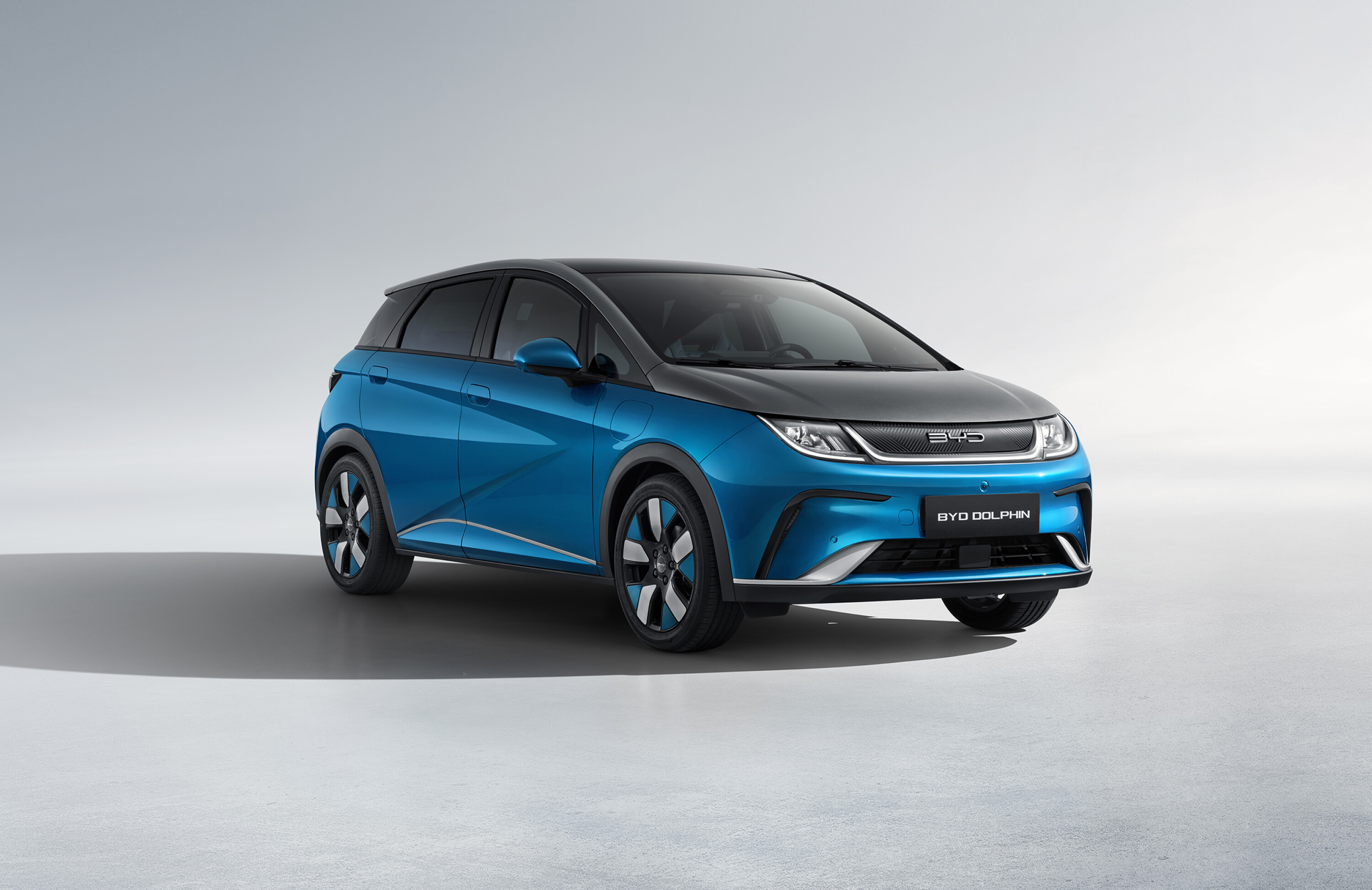
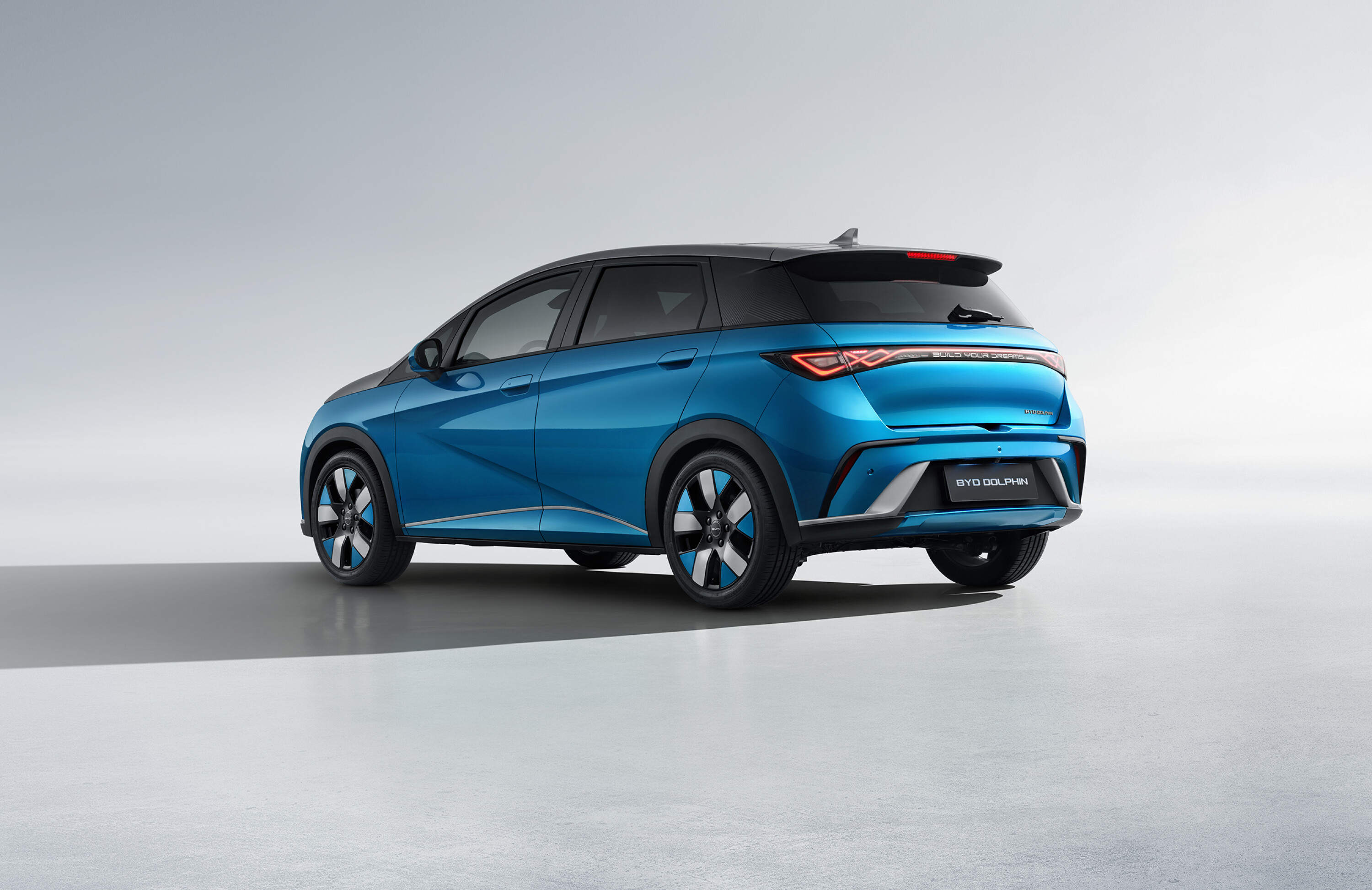
Australia’s cheapest electric vehicle – the 2023 BYD Dolphin – will be offered in two variants, plus a limited-run flagship.
Snapshot
2023 BYD Dolphin pricing and features
Priced from $38,890 before on-road costs
Limited-run Dolphin Sport flagship to arrive in 2024
Priced from $38,890 before on-road costs, the Dolphin is just $100 cheaper than the base MG 4 51kWh Excite hatchback.
While the BYD has a reduced battery capacity and driving range, it has more standard features than its Chinese arch-rival – and is equipped similarly to other internal-combustion hatchbacks.
Under the skin, the base Dolphin Dynamic has a 45kWh battery, a 340-kilometre driving range, a 70kW and 180Nm total system output, and a limited 60kW DC charge rate.
1
For context, the $39,990 plus on-roads rear-wheel-drive MG 4 Excite is fitted with a 51kWh lithium-ion battery pack and a single 125kW/250Nm electric motor, for an estimated 351-kilometre driving range. It has a 117kW maximum fast-charge rate.
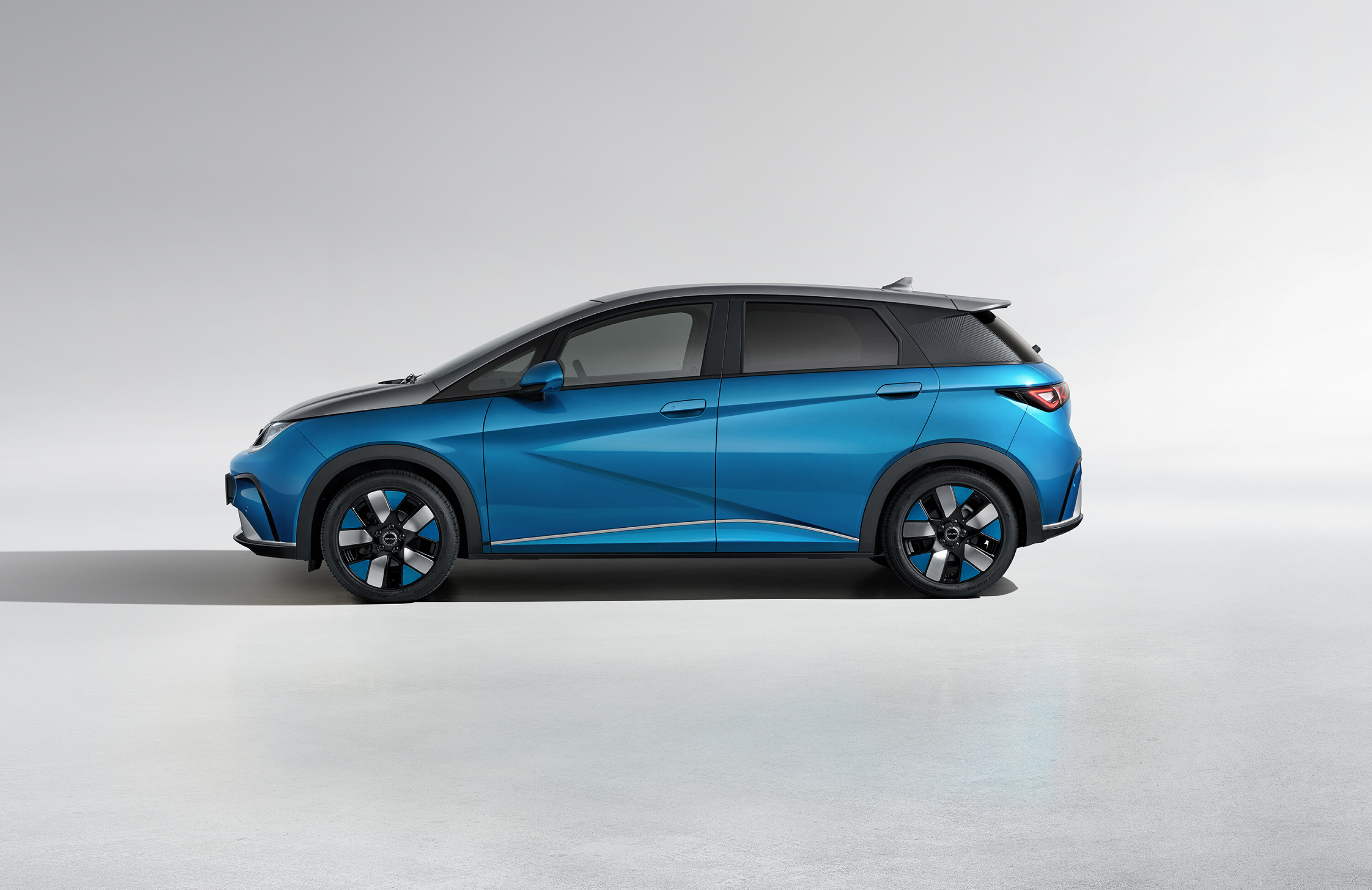
The BYD Dolphin Premium adds a larger 60.5kWh battery, a 427km driving range, a more-powerful 150kW/310Nm electric motor, a 7.0-second 0-100km/h sprint time, 17-inch alloy wheels, and a black-painted roof and bonnet.
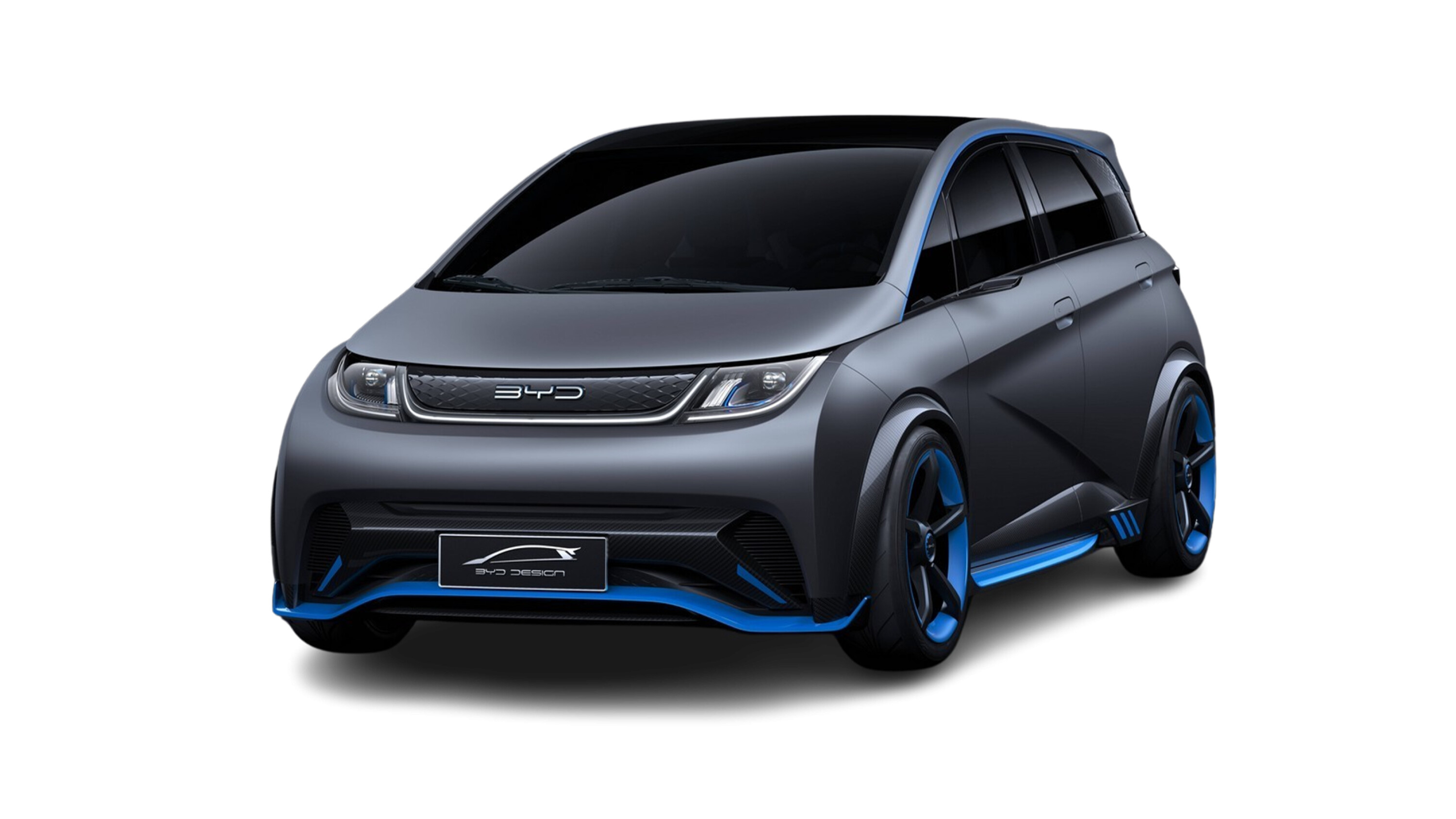
BYD Australia has confirmed a more potent, limited-run Dolphin Sport “hot hatch” flagship will arrive in 2024.
It’ll be limited to 1000 units and feature a “sub-seven-second” 0-100km/h sprint time, performance tyres, unique alloy wheels, and blue-themed sports body kit trim.
The entry-level BYD Dolphin Dynamic features a 45kWh lithium-iron-phosphate (LFP) battery pack, allowing for a 340-kilometre WLTP-rated driving range.
It has a 70kW and 180Nm total system output, with a claimed 12.3-second 0-100km/h time in overseas variants.
The Dynamic is limited to a 60kW DC charge rate. Under the skin, it has torsion-beam rear suspension.
1
Stepping up to the BYD Dolphin Premium adds a larger 60.5kWh battery with a claimed 427km driving range. A more powerful electric motor bumps output to 150kW and 310Nm, with a 7.0-second 0-100km/h sprint time.
It features multi-link independent rear suspension and supports a faster 80kW DC charge rate.
All BYD Dolphins are front-wheel-drive, with a single electric motor mounted on the front axle.
Customer deliveries for the Dynamic and Premium are expected to commence in the third quarter of 2023. The limited-edition Sport will arrive in Australia in 2024.
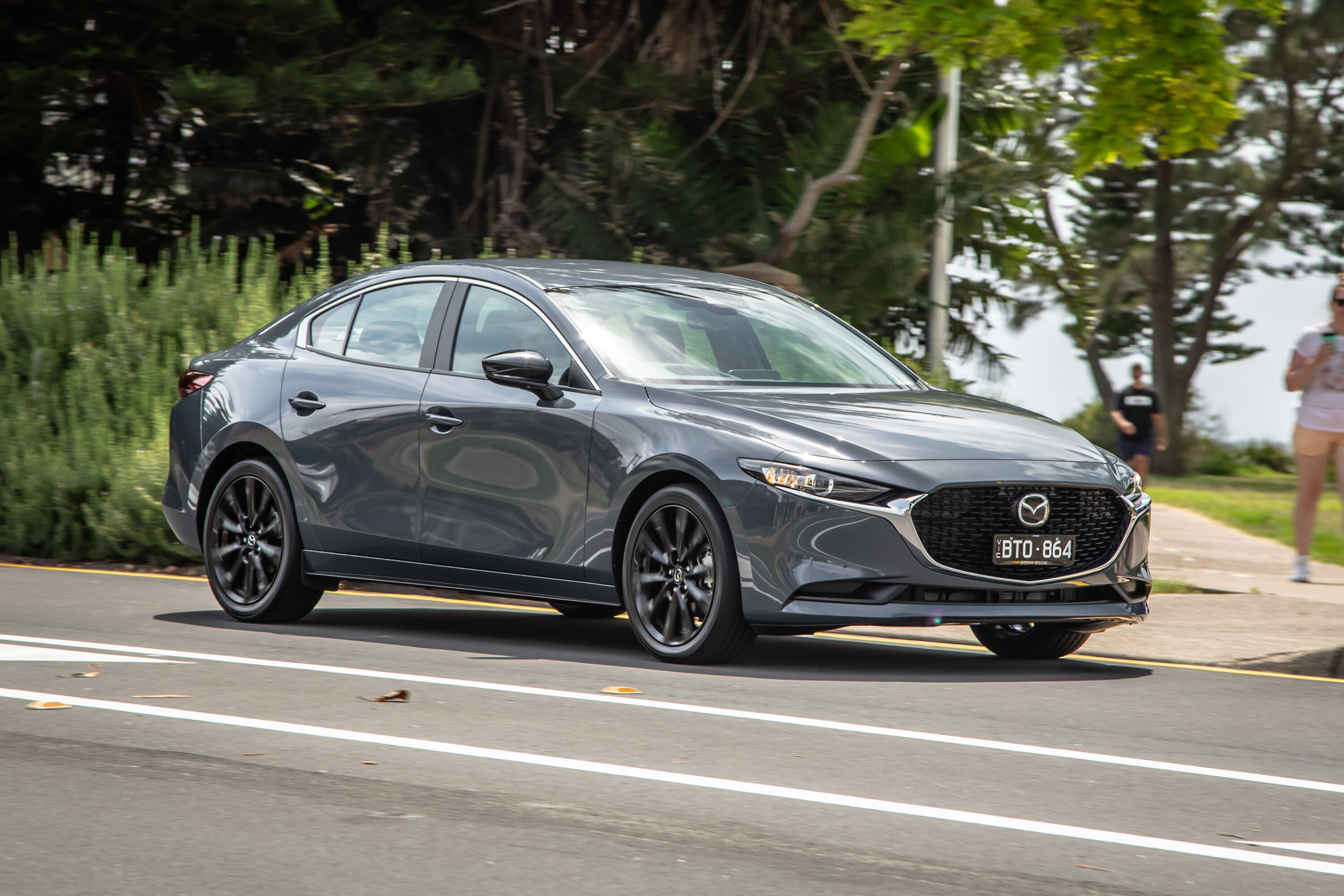
The Mazda 3 is available as a five-door hatchback and four-door sedan, neither of which incurs a price premium. Both are front-wheel drive. The Mazda 3 is classed as a small car, lower priced.
1
Hyundai i30
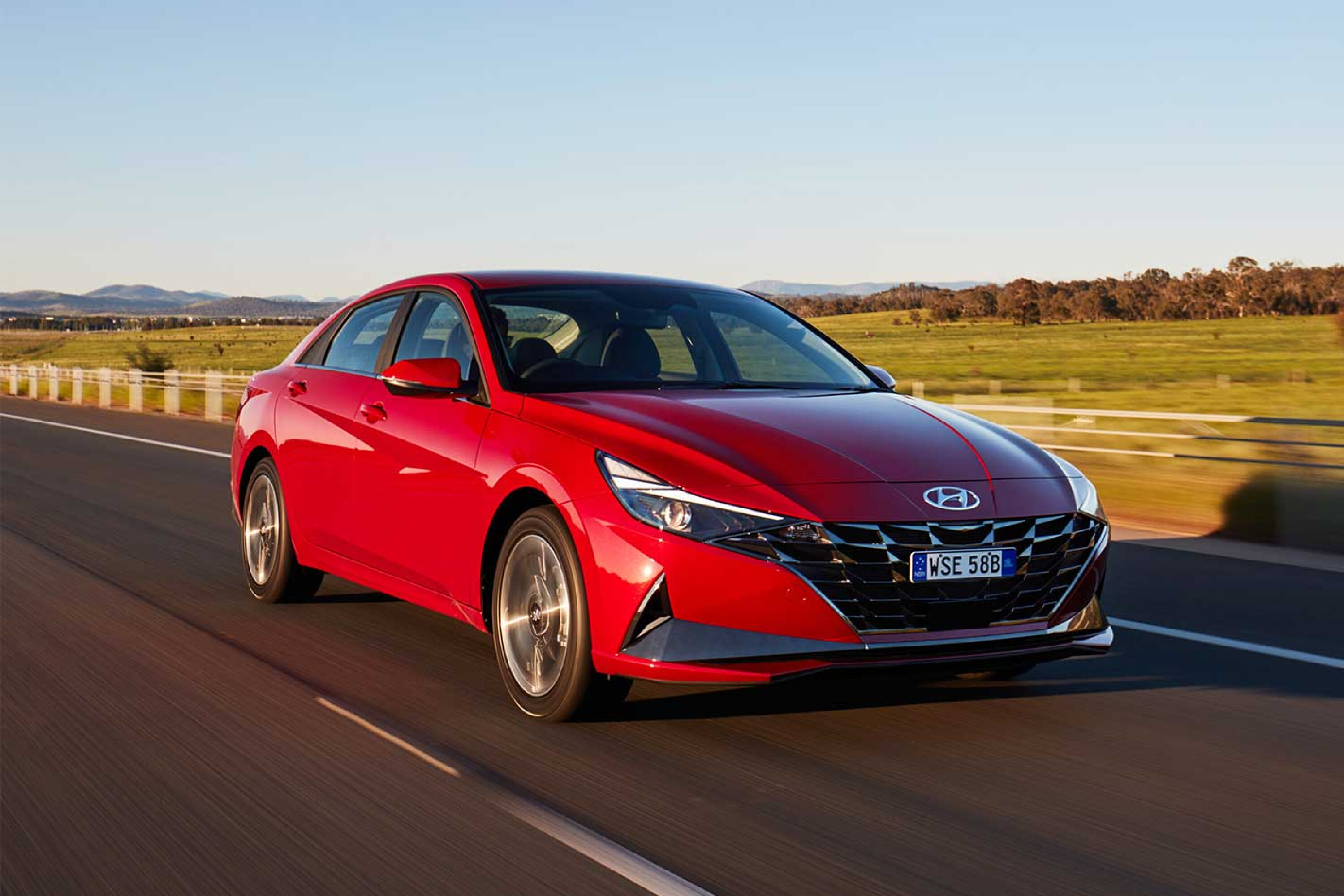
The Hyundai i30 is available as a five-door hatchback or four-door sedan. All variants are front-wheel drive and the nameplate competes in Australia’s sub-$40,000 small passenger car segment.
1
Comfort & Practicality
Mazda 3
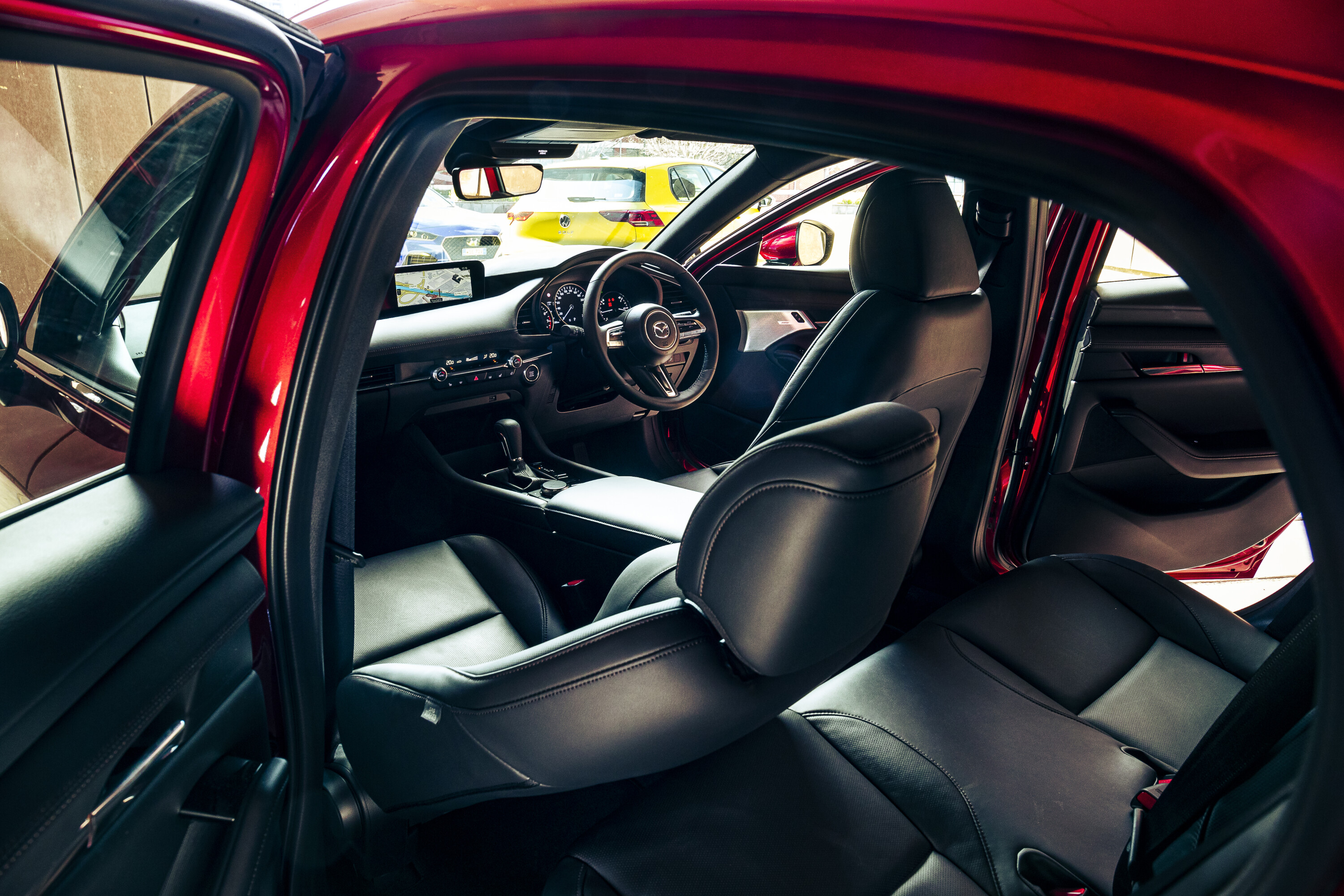
You sit quite low in the 3, a position designed to deliver a sporting feel, and to distinguish it from the higher-riding CX-30.
It’s a lovely dash in front of you too, beautifully built and it’s all integrated nicely. You know a lot of midnight oil was burned to ensure even the fonts were consistent.
The thin-rimmed steering wheel is very nice, too, and feels like it was plucked from an MX-5.
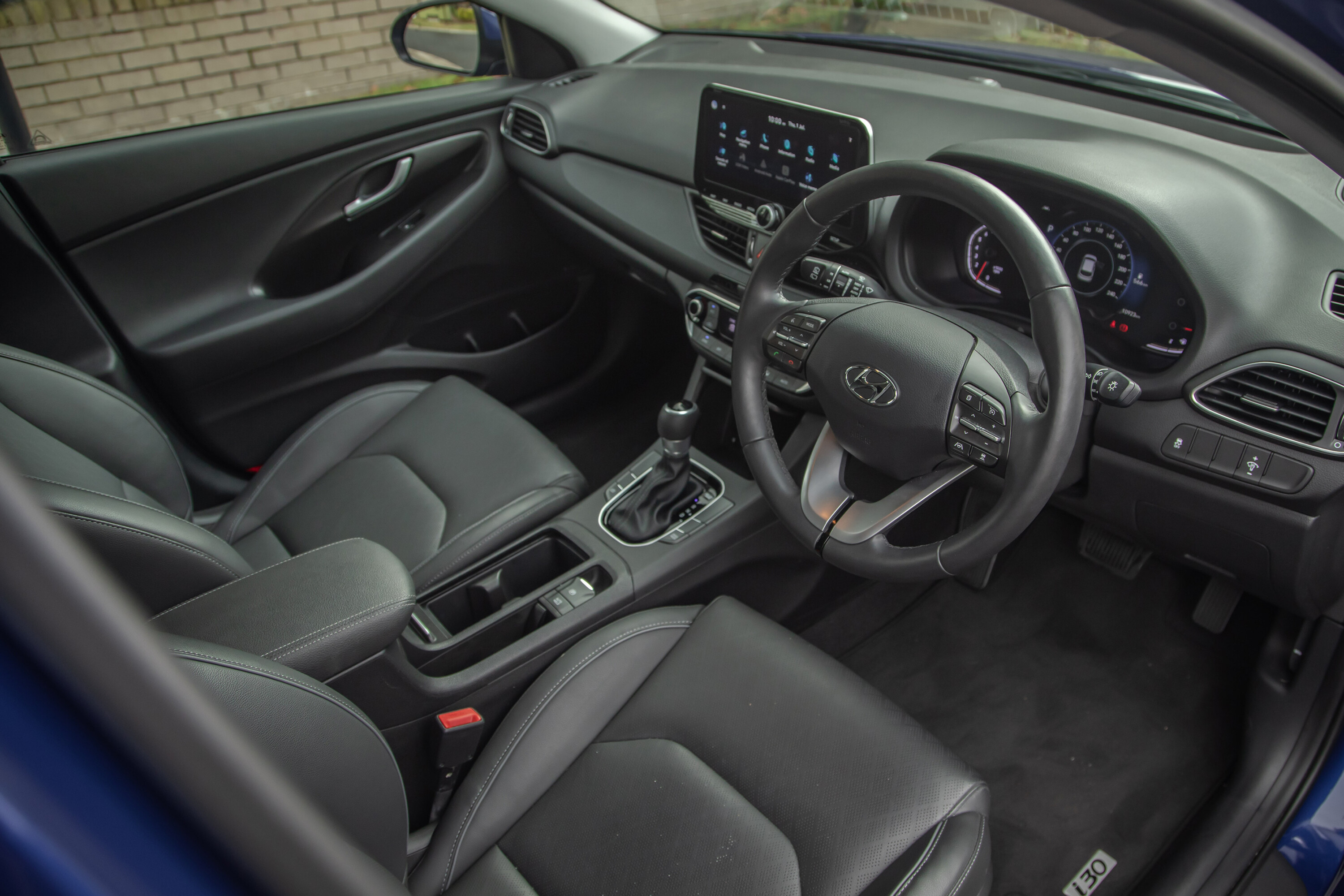
The i30 is spacious for a small car and both the hatchback and sedan are comfortable, with their cabins scoring points for finish and presentation.
Because it’s a Hyundai, the infotainment system displays well and is easy to operate. All other controls fall easily to hand and are logically grouped: audio and infotainment on the main display and ventilation lower on the dash.
1
The hatchback has slim bottle holders in the door and two cup holders in the centre console. Automatic variants in Active spec and above don’t have a manual handbrake so the console is uncluttered and everything is easy to use.
A 2021 update brought leather to the steering wheel and gear selector knob, a minor upgrade that yields a huge improvement over the shiny, slippery plastic of the previous i30.
The Mazda 3 has a delightfully responsive steering set-up that manages to balance slow-speed manoeuvring with high-speed handling, without the need for different steering modes.
Keen drivers will lap up the precision with which you can place the nose when pushing into corners.
The 2.0-litre engine copes admirably with city life and has enough power for easy highway touring. It revs freely and mates well with the six-speed auto gearbox that most buyers opt for.
This engine doesn’t provide as much shove when you first press the accelerator, as with the turbo engines in some small-car rivals – it needs to spin past 4000rpm before really waking up but when it does it’s keen and even sounds a little rorty. Of course, driving this way will send your fuel economy north of its official 6.2L/100km fuel consumption.
One of the reasons this third-generation i30 has been so impressive from launch is that it drives really nicely.
While the entry-level 2.0-litre petrol engine is hardly what you’d call characterful or exciting, it does the job quietly, whether hooked up with the well-sorted six-speed automatic transmission or six-speed manual.
The ride is comfortable and smooth and if you find yourself on a twisty road you’ll enjoy its decent balance and accurate steering.
If you’re a keen driver, a stretch to the sporty N-Line is worth the extra coin, with its sporty Michelin tyres and multi-link rear suspension setup in place of the more basic torsion beam setup found in regular i30s.
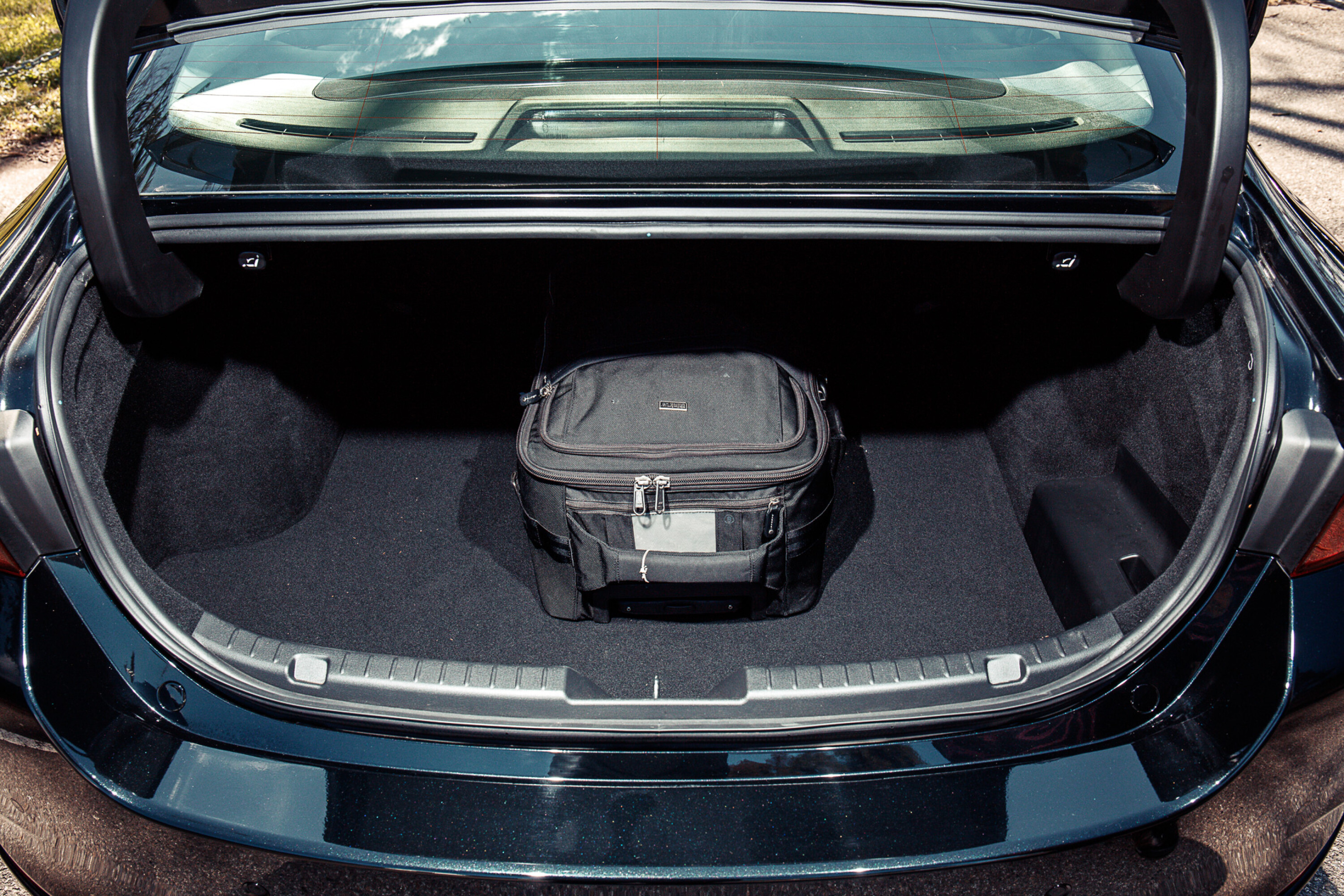
The boot in the hatchback is a tight 295 litres, which is 100 litres less than the Hyundai i30. It’s helped by 60:40 split-folding seats and a broad tailgate opening that allows you to fit a bicycle laid on its side.
The Mazda 3 sedan holds a considerably more functional 444 litres (which is 36 litres more than the previous model) albeit without the hatchback functionality. The sedan’s seatback can also split 60:40 to allow for bulkier items.
1
Hyundai i30
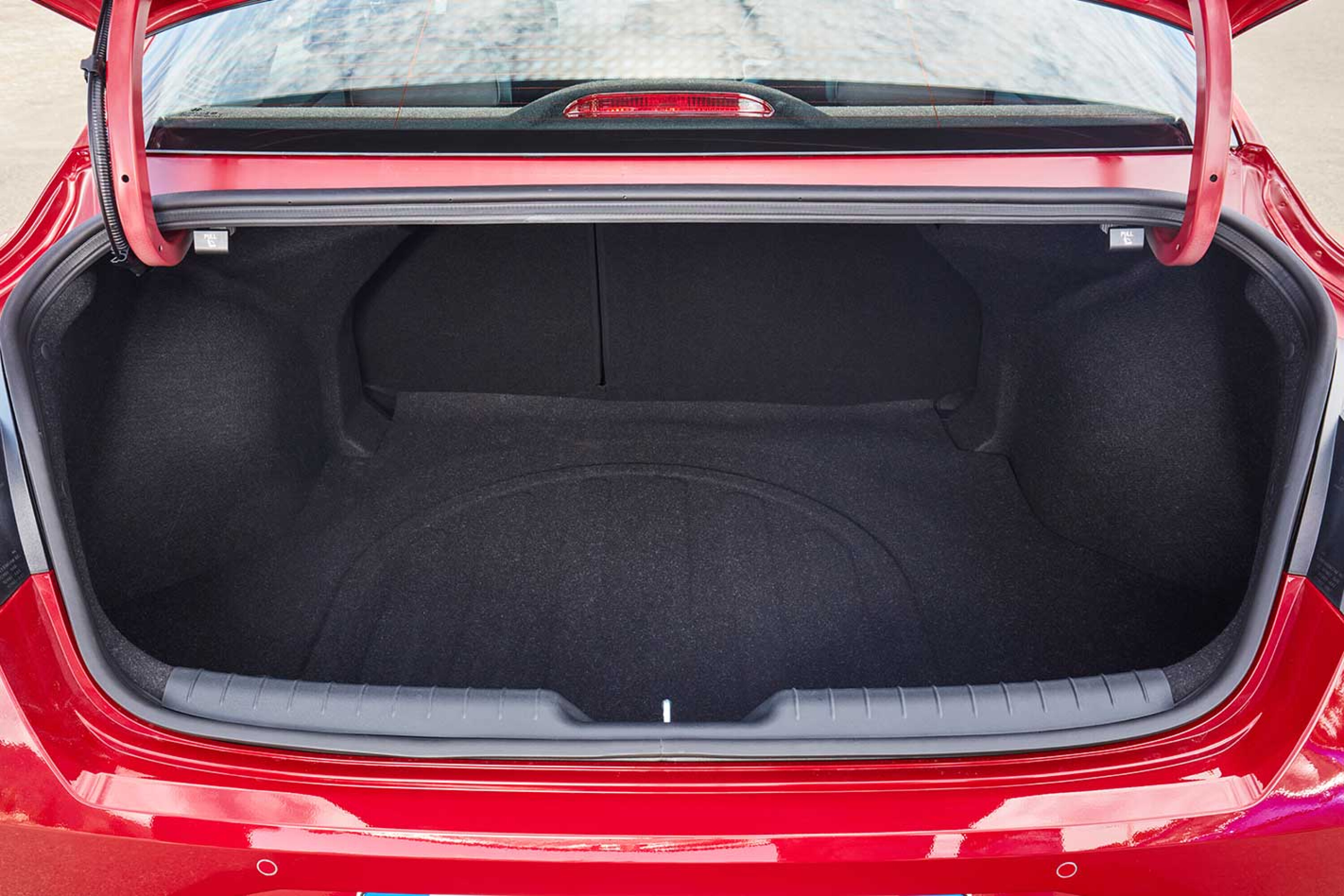
The five-door i30’s cargo area is 395 litres, which is good for a small hatchback. Its rear seats can be folded 60:40 and folding the lot down brings an impressive 1301 litres in which to carry stuff.
Even with the full-size spare wheel, you can adjust the height of the boot floor. At its lower setting, capacity is maximised but there is a large step up to the rear of folded seatbacks. Raising the floor gives you a flatter extended load space.
You’ll score more boot storage in the i30 Sedan, which offers 474 litres. There is a huge aperture that allows for bulkier items to protrude into the cabin through the 60:40 split seats.
1
Safety
Mazda 3
The entire Mazda 3 range is covered by a five-star ANCAP safety rating, based on testing conducted in 2019.
It has a 98 per cent score for adult occupant protection, 89 per cent for children, 81 per cent for vulnerable road users, and 76 per cent for safety assist.
Seven airbags (dual front, side, curtain, and driver’s knee) feature across the range.
Hyundai i30
The i30 hatchback has a five-star ANCAP safety rating that was awarded when the third-generation model arrived in 2017.
Curiously, the sedan has no ANCAP safety rating because, with no European NCAP crash test data to draw upon and changes in crash testing protocols, Hyundai decided not to submit the car for costly ANCAP testing, despite a large number of cutting-edge safety inclusions.
Hyundai Australia naturally insists it is safe and with its suite of active safety features together with the fact few Hyundai models have had issues with ANCAP testing, it’s reasonable to take the company’s word for it.
Warranty & Servicing
Mazda 3
As per the wider Mazda range, the 3 is covered by the brand’s five-year / unlimited-kilometre warranty, along with a complimentary roadside assistance program over the same period.
In addition, Mazda offers five years of capped-priced servicing. It has 12-month or 15,000-kilometre service intervals, whichever occurs first.
All Hyundai i30s, including the racy Ns, are covered by the company’s five-year / unlimited-km warranty, along with an initial 12 months of roadside assistance – extending by a year every time you service at a dealer.
Standard i30 variants including the N-Line, have service intervals of 12 months or 15,000km.
UPDATE, 9:35pm: 2023 BYD Dolphin electric hatch now available to order
Order books for the 2023 BYD Dolphin hatch have opened, with three variants available. For everything you need to know, click on the story below.
1:30pm: The title of Australia’s cheapest electric vehicle – held by the MG 4 – has shifted in less than a week.
Snapshot
2023 BYD Dolphin: Australiau2019s cheapest EV
Base variant priced at $38,890 before on-road costs
Full details announced later today
The 2023 BYD Dolphin is now the most affordable electric car in Australia after details were announced prematurely at a media conference in Brisbane this morning.
Priced at $38,890 before on-road costs, the Dolphin is just $100 cheaper than a base MG 4, with the BYD having a reduced driving range and battery capacity – but more standard equipment than its Chinese arch-rival.
While BYD’s media release omits powertrain details, the base Dolphin is tipped to feature a 45kWh lithium-iron-phosphate battery pack, allowing for a WLTP-rated 340-kilometre driving range.
1
The single electric motor has a 70kW and 180Nm total system output, with power sent to the front wheels.
For context, the rear-wheel-drive MG 4 Excite is fitted with a 51kWh lithium-ion battery pack and a single 125kW/250Nm electric motor, for an estimated WLTP-rated 351-kilometre driving range.
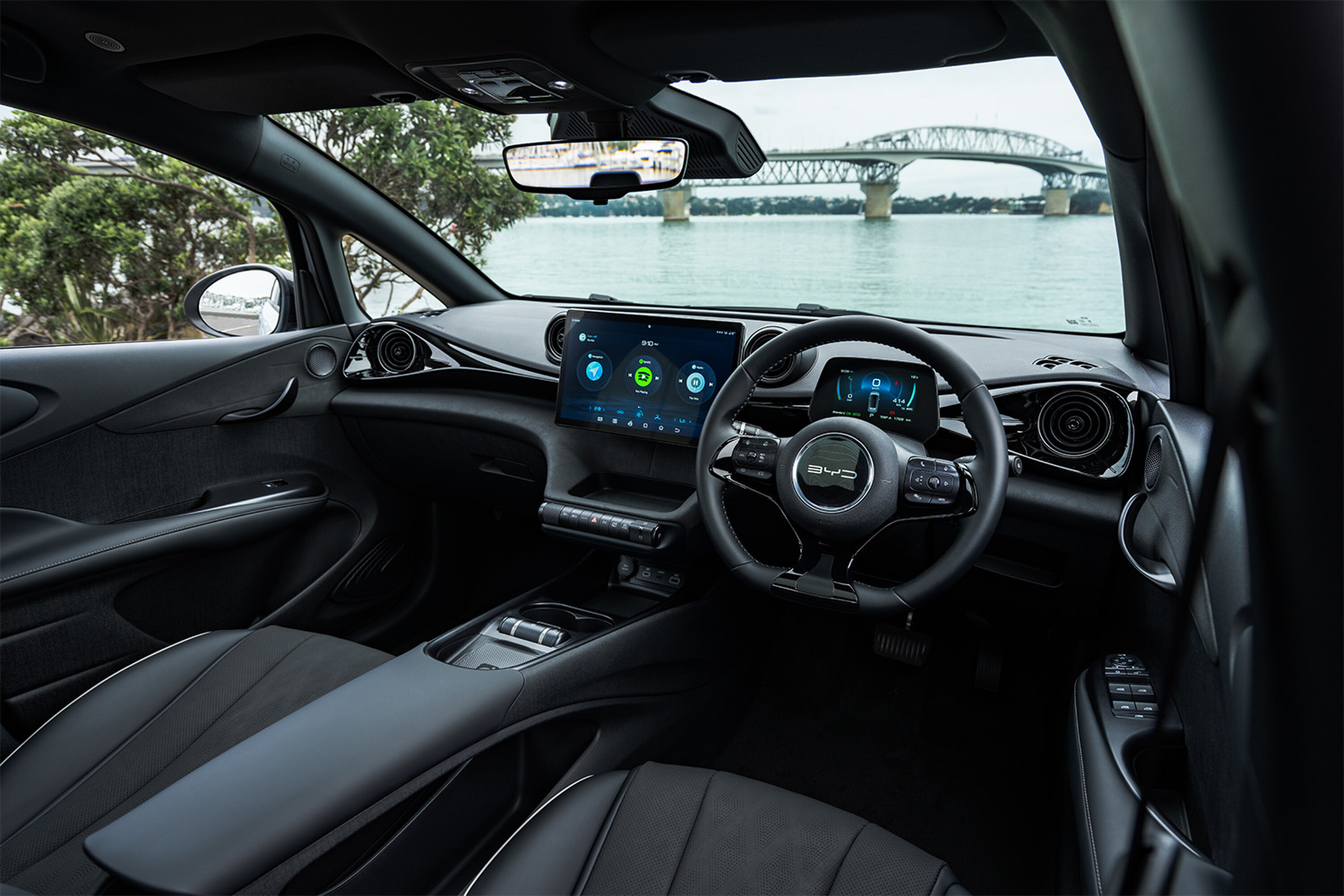
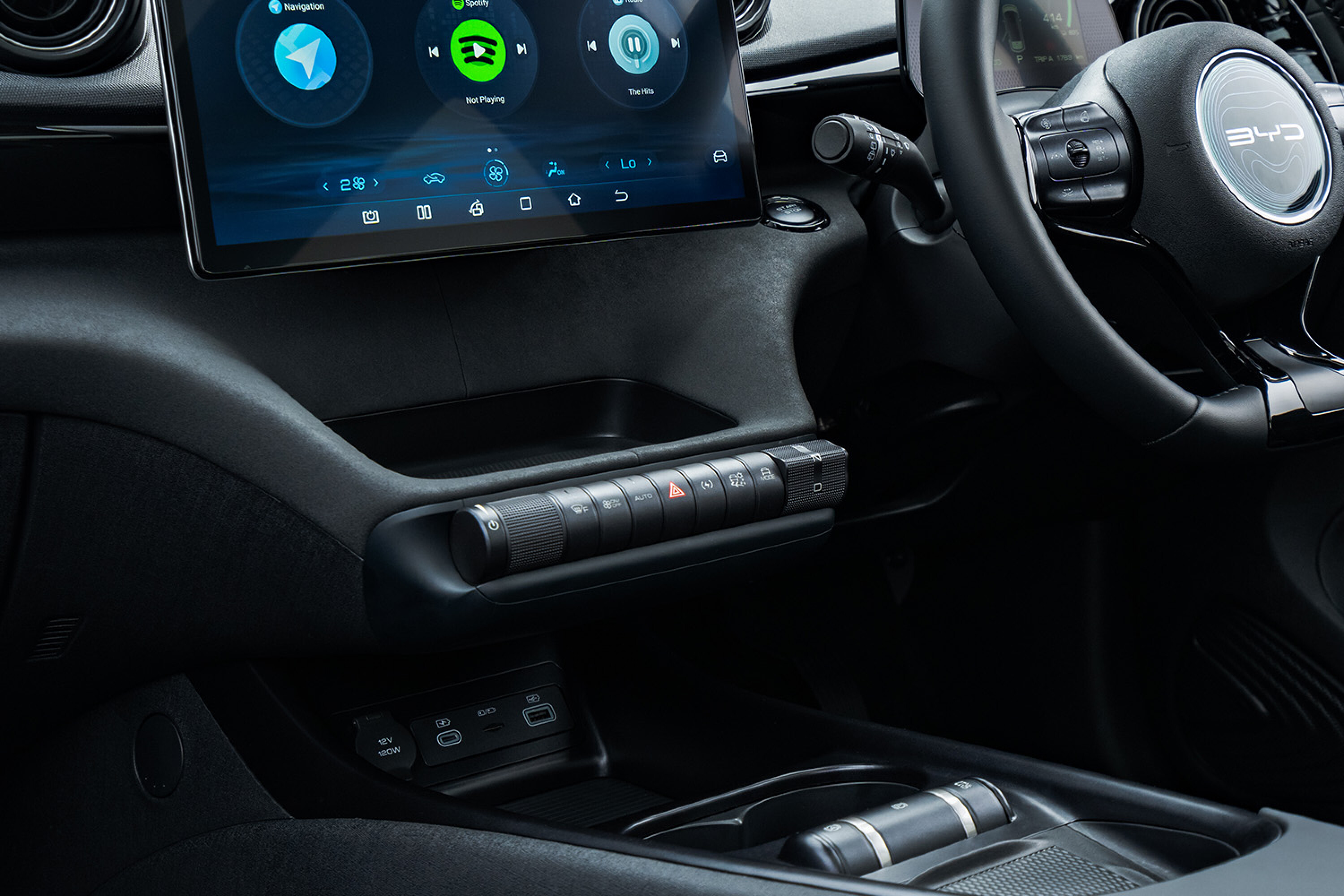
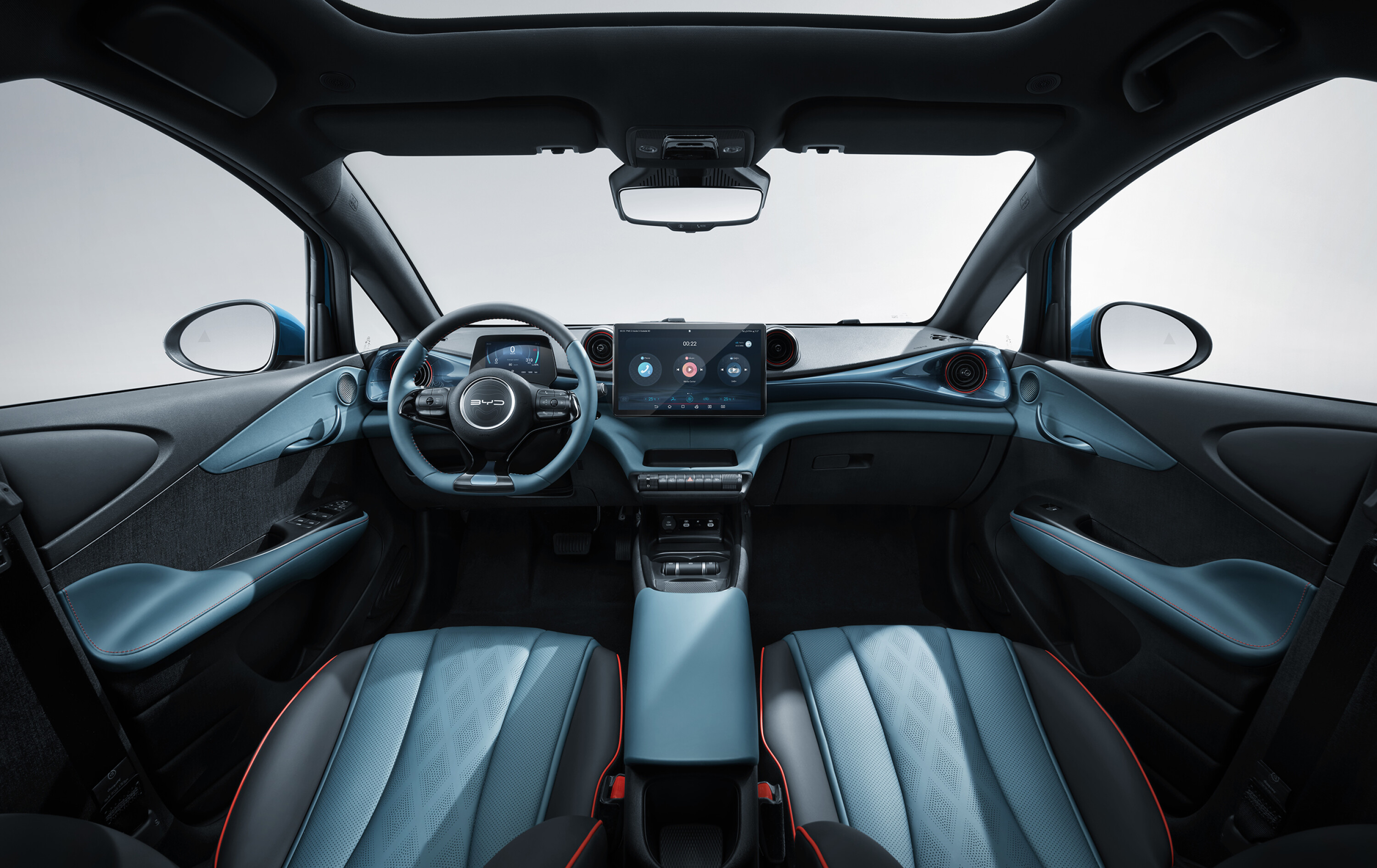
Standard equipment for the BYD Dolphin includes a 12.8-inch infotainment system, Apple CarPlay, satellite navigation, a wireless phone charger, a panoramic sunroof, heated front seats, and a heat pump.
1
Autonomous emergency braking, lane-keep assist, driver attention monitoring, adaptive cruise control and rear cross-traffic alert with braking are listed as standard-fit active safety features.
Wheels Media is attending an event for the BYD Dolphin at Sea World later today, where further information – including details for higher-spec variants – is due to be announced.
Customer orders for the 2023 BYD Dolphin are due to open at 8pm tonight.
In celebration of Wheels magazine’s 70th birthday, we’re running through the 70 greatest cars of all time – defined not by sales or talent alone, but simply as our writers past and present see it.
The Greatest Small Cars are fine and all, but what of their feistier brethren, the hot hatch?
1
Peugeot 205 GTi
WE LOVE
After five minutes, it feels as if it’s hardwired into your synapses
NOT SO MUCH
Few cars have the ability to transform you from hero to zero quite so humiliatingly
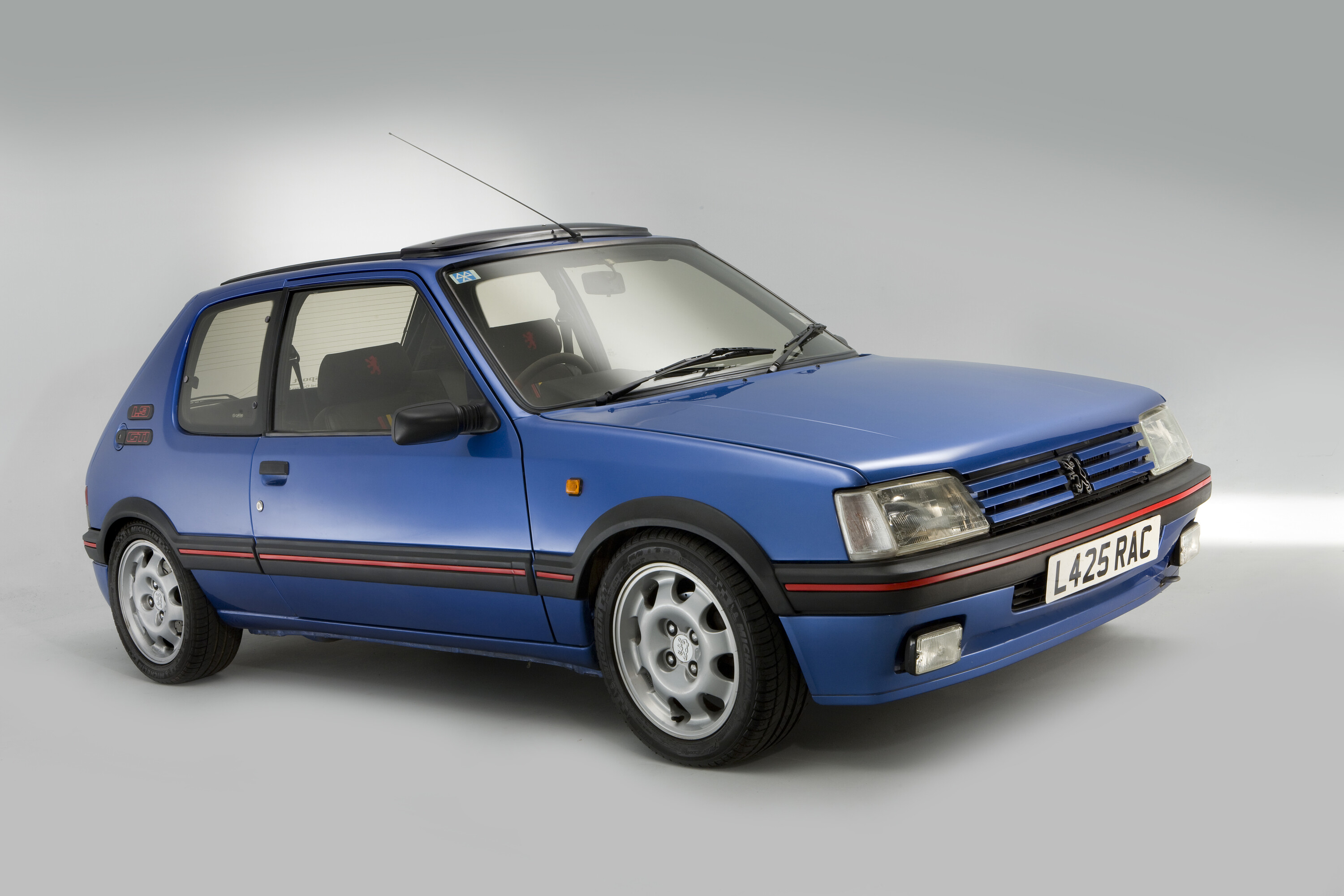
Perfection is an ephemeral thing. The cruel march of time erodes what we once thought as unimprovable; flawless gems becoming rough diamonds. With cars it was ever thus, but some have the ability to transcend time. Such a car is the Peugeot 205 GTi.
Gérard Welter’s pert three-door design shrugged off the ravages of age far better than its peers and, as modern hot hatches become heavier and more complex, the 205 GTi was always there to remind us that there was a simpler and more satisfying way.
There will always be arguments whether the zingy 1,6 or the rangier 1.9-litre engine best fits the 205’s character but, truth be told, both are fantastic. As indeed is the way the little Peugeot drives. Later 1.9 models would be our choice, with better brakes and tyres adding a welcome measure of security to the dynamics. The GTi’s propensity for lift-off oversteer made it a darling of serious drivers but had a sobering ability to expose the less gifted.
Only the 1.9-litre was imported to Australia, and buyers had the choice of air-conditioning or power steering but not both, these systems competing for right-hook under-bonnet real estate. Power was initially a feeble 75kW and torque rated at 142Nm, courtesy of domestic emissions laws that arrived with unleaded petrol in 1986.
Facelift cars arrived in 1991 with a still-catalysed but notably heartier 90kW lump, the other benefit being that the revision finally overcame the air-con/power steering conundrum.
Today, there are many faster and more capable hot hatches than the Peugeot 205 GTi. However, none have ever got the formula so right for so long. Agile, beautiful, rewarding and, despite what you might expect, mechanically robust, the 205 wasn’t the original GTi, but it was certainly the greatest.
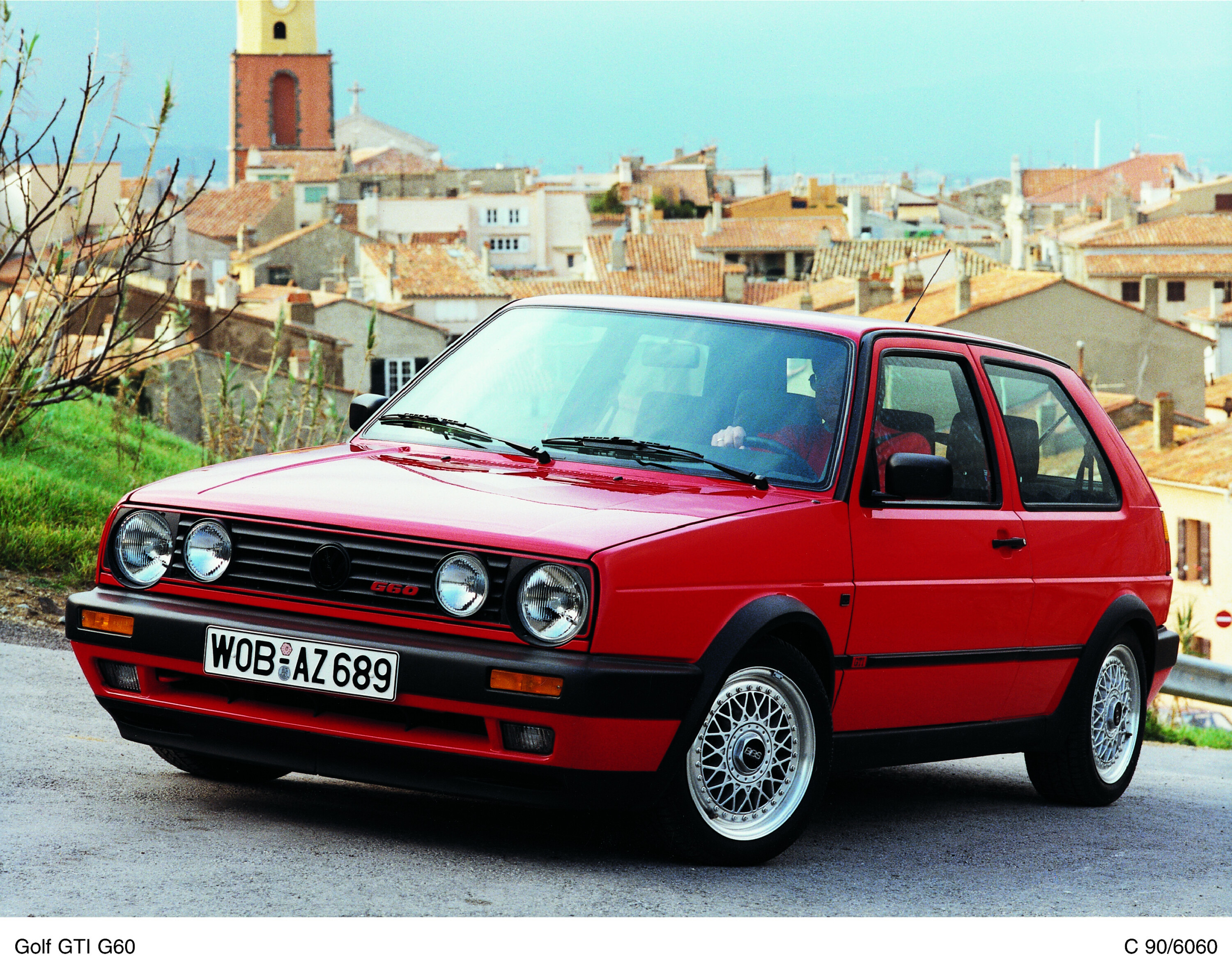
This somehow feels cruel. There have been so many excellent iterations of the Golf GTI – and just one truly great Peugeot hot hatch – that were there an award based on weeks at #1, we’d have to give it to Volkswagen.
But for every brilliant Mk7 there’s a Mk4 2.0-litre 8-valve with its 85kW and fake wood inserts. Stick with the good ‘uns and there’s a wealth of talent to choose from.
Calling it razor-sharp gives razors undeserved kudos
NOT SO MUCH
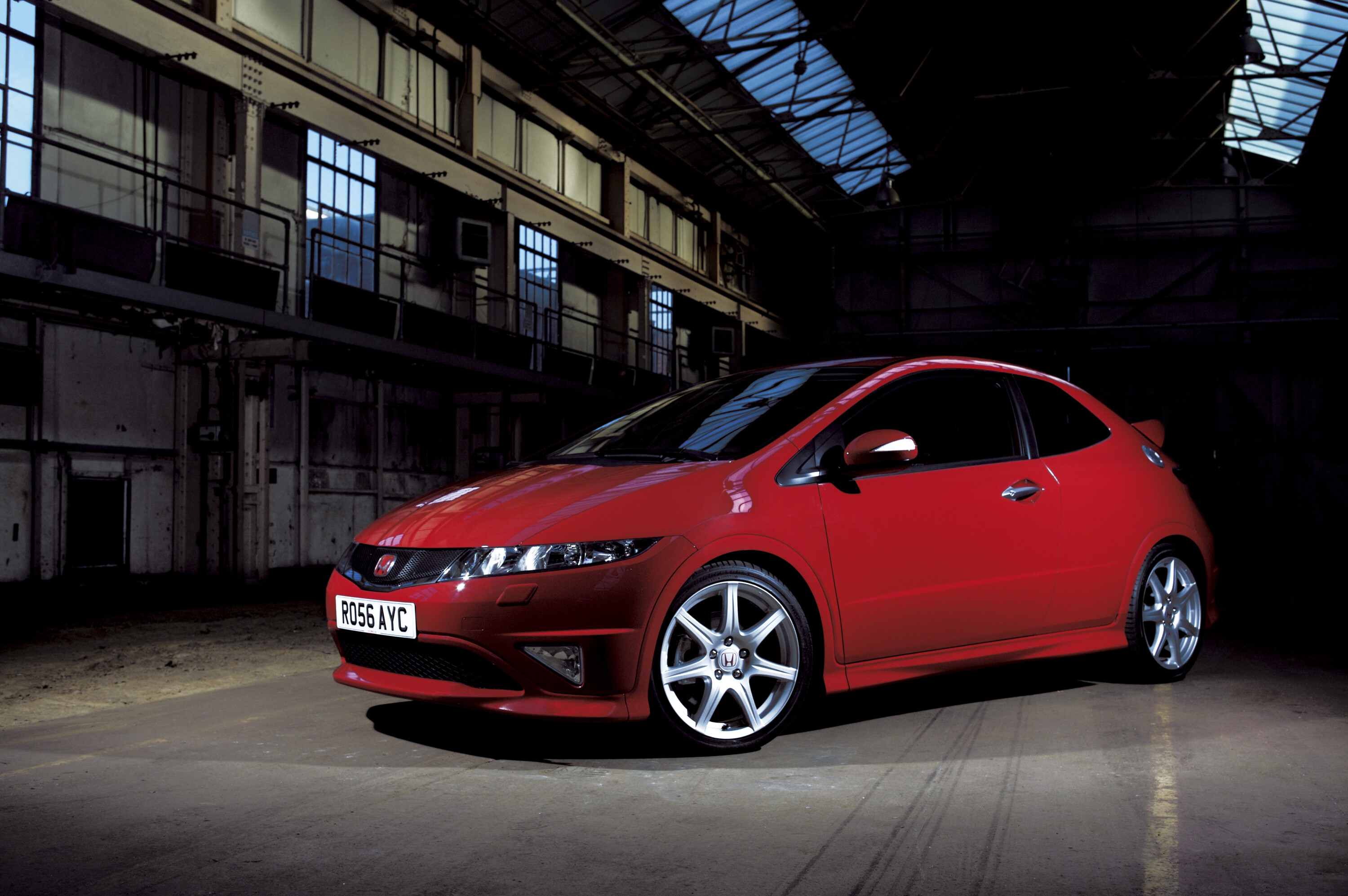
The prices of tidy EP3s
Pick the best hot hatch from most manufacturers’ histories and chances are they’d be worse than the least talented generation of Civic Type R.
A poor CTR is great fun. A great vintage is something that has the chops to scare supercars on road or track. The current version is the best of the lot, and that’s why it’s our pick of the current crop.
That rosy glow of one-upmanship never really gets old
NOT SO MUCH
Dose up on dramamine before tackling a challenging road
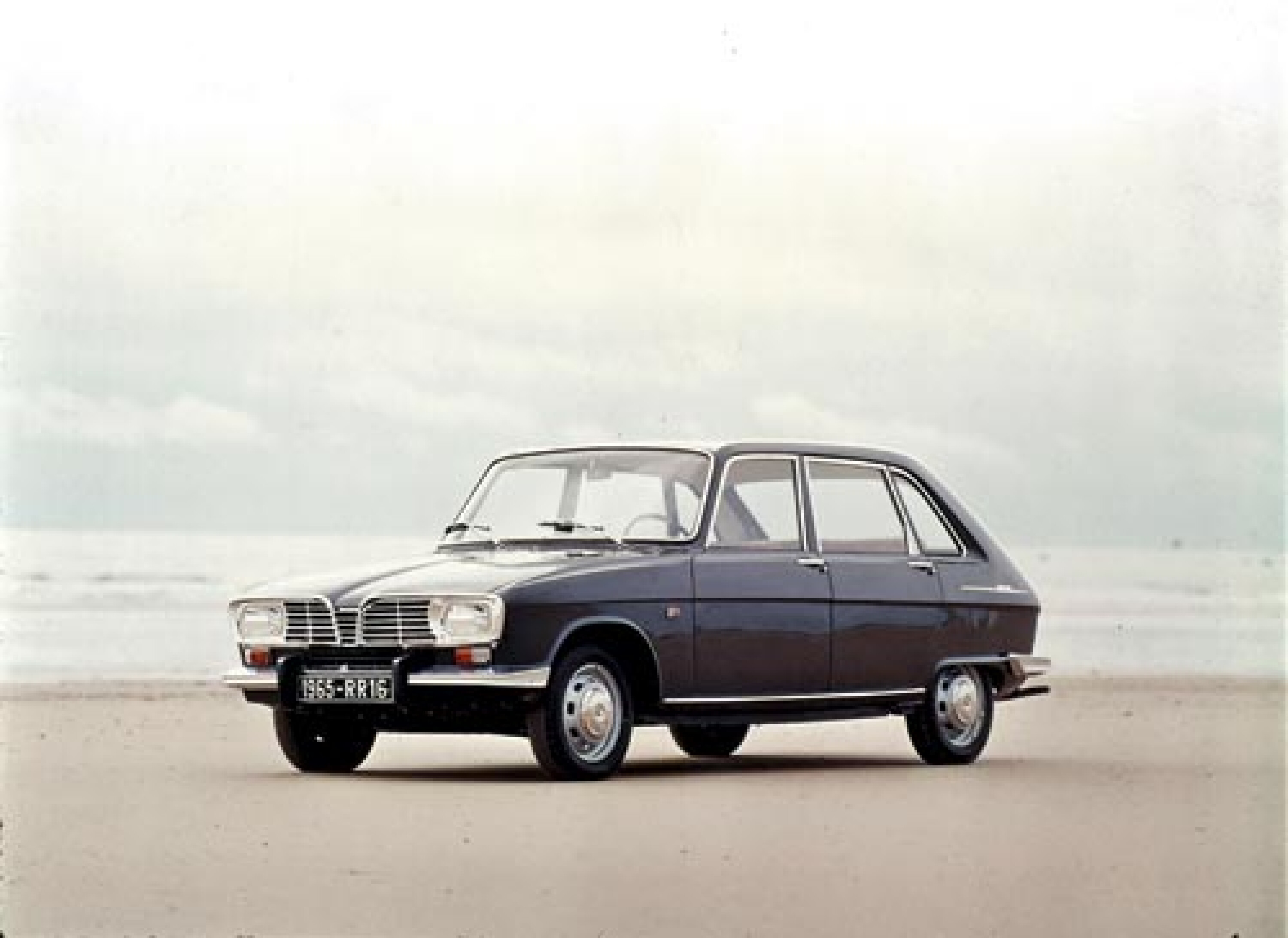
Wait, what? Yep, according to Ponch, this was the very first hot hatch.
A hotted up version of the 1.5-litre Renault 16 hatch, the 1.6-litre TS, unveiled at the Geneva Show in 1968, lifted power by a massive 55 percent, from 40 to 62kW. This predated the Autobianchi A112 Abarth by 3 years and the Mk1 Golf GTI by 7. That said, Renault probably owes the – admittedly hatchless – Mini Cooper a debt of gratitude.
Ownership often a race between losing ponies and losing kgs via rust
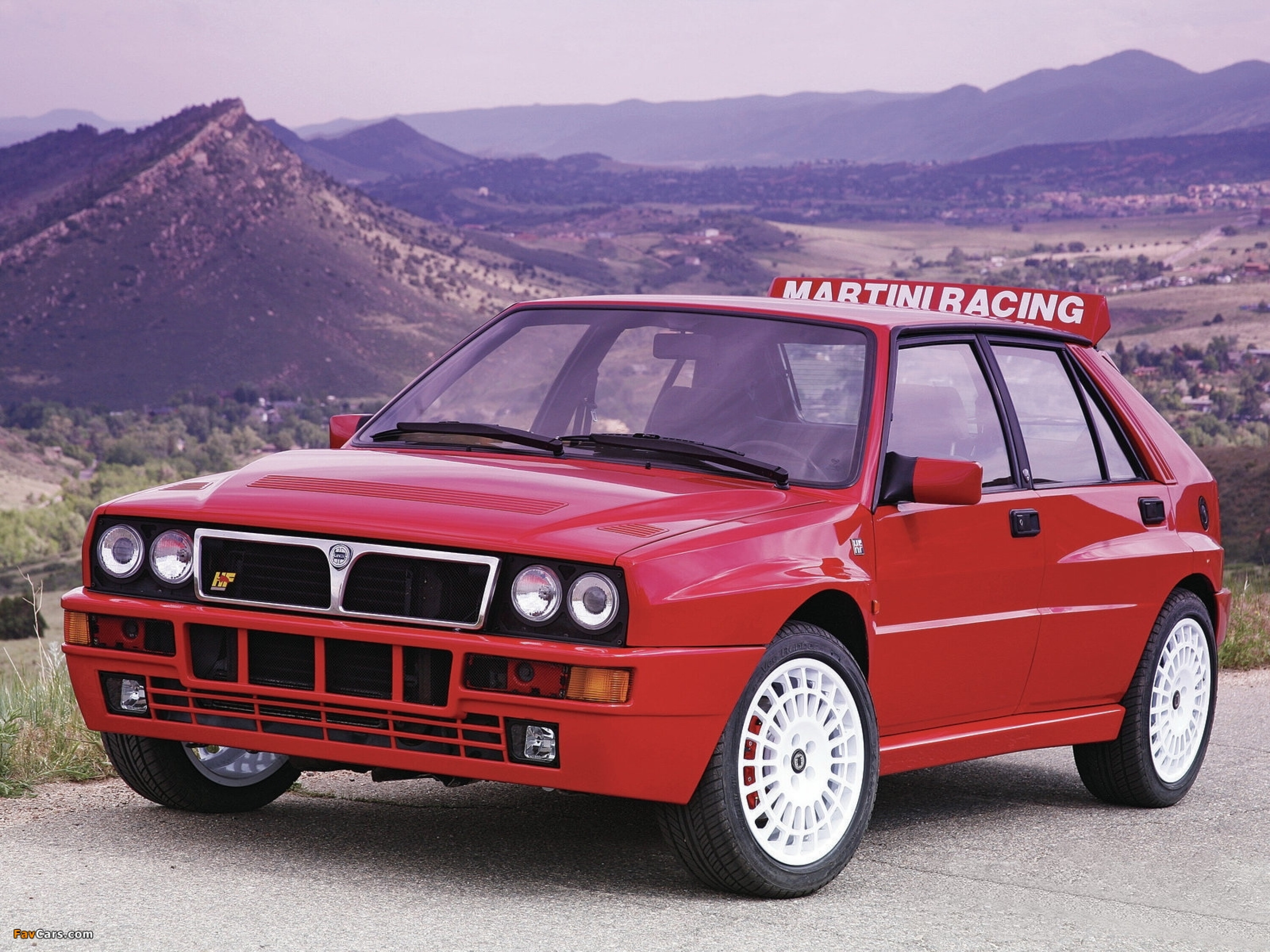
Lancia found itself with a the basis for a rally champ almost by accident and the Integrale made the most of the Delta’s dimensions.
So popular was it that Lancia shifted nearly 45,000 of ’em across the lifetime and the final versions, the Evo II offers the best chance of reliving the experience. While 158kW doesn’t sound a whole hill of beans, try one and you’ll see why it retired the Audi Quattro.
Demented grip and poise out of just about any corner you could imagine
NOT SO MUCH
You become disconcertingly accustomed to driving like a berserker
Think of the scariest road you know. That one with blind bends, mossy shadows, hidden yumps – and severe consequences if you get it wrong.
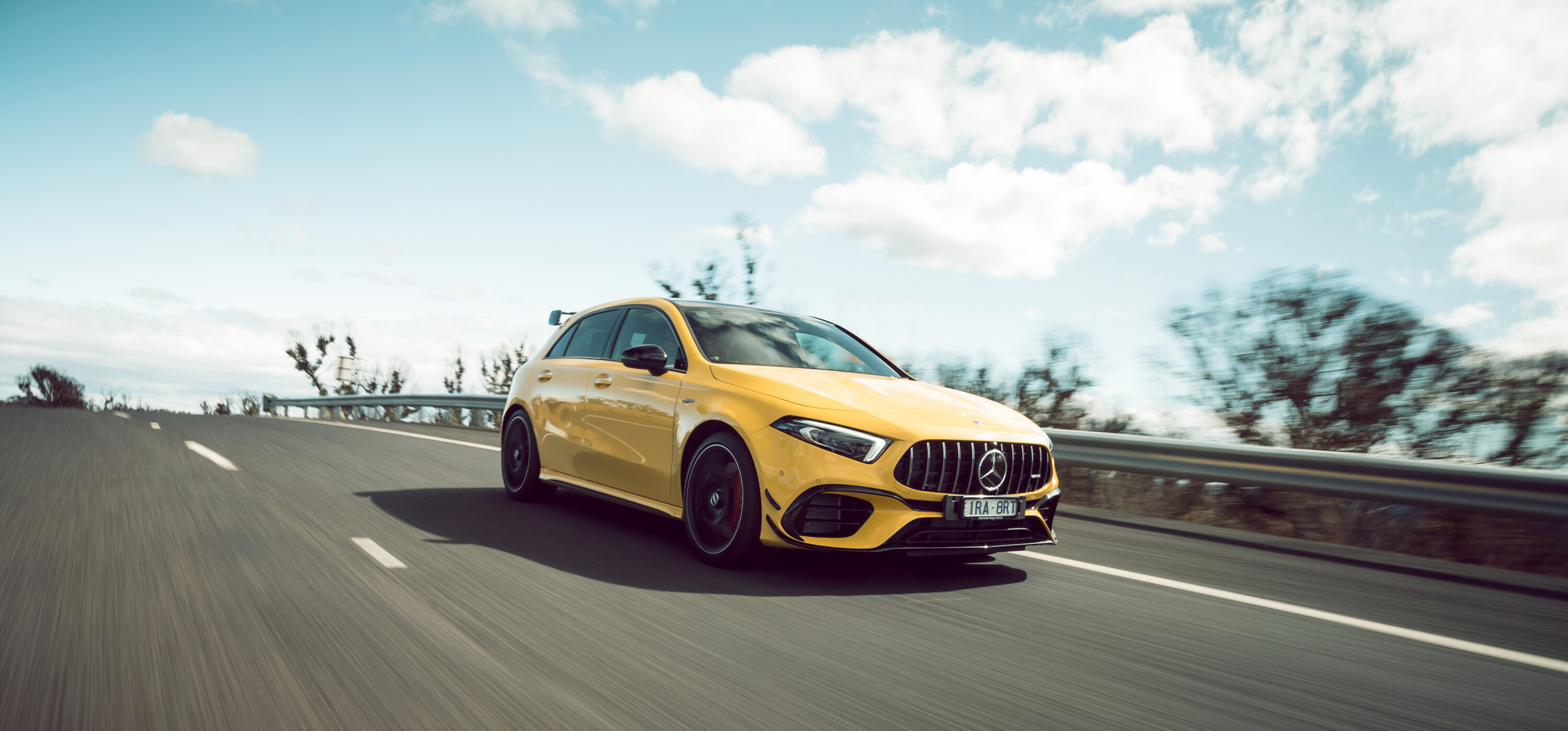
You need to get from one end of it to the other, quickly, and the weather is against you. What current car are you going to choose? Chances are, if you’ve chosen anything other than a Mercedes-AMG A45 S, you’ve misunderstood the brief.
It was the villain car in the worst Bond film of all time
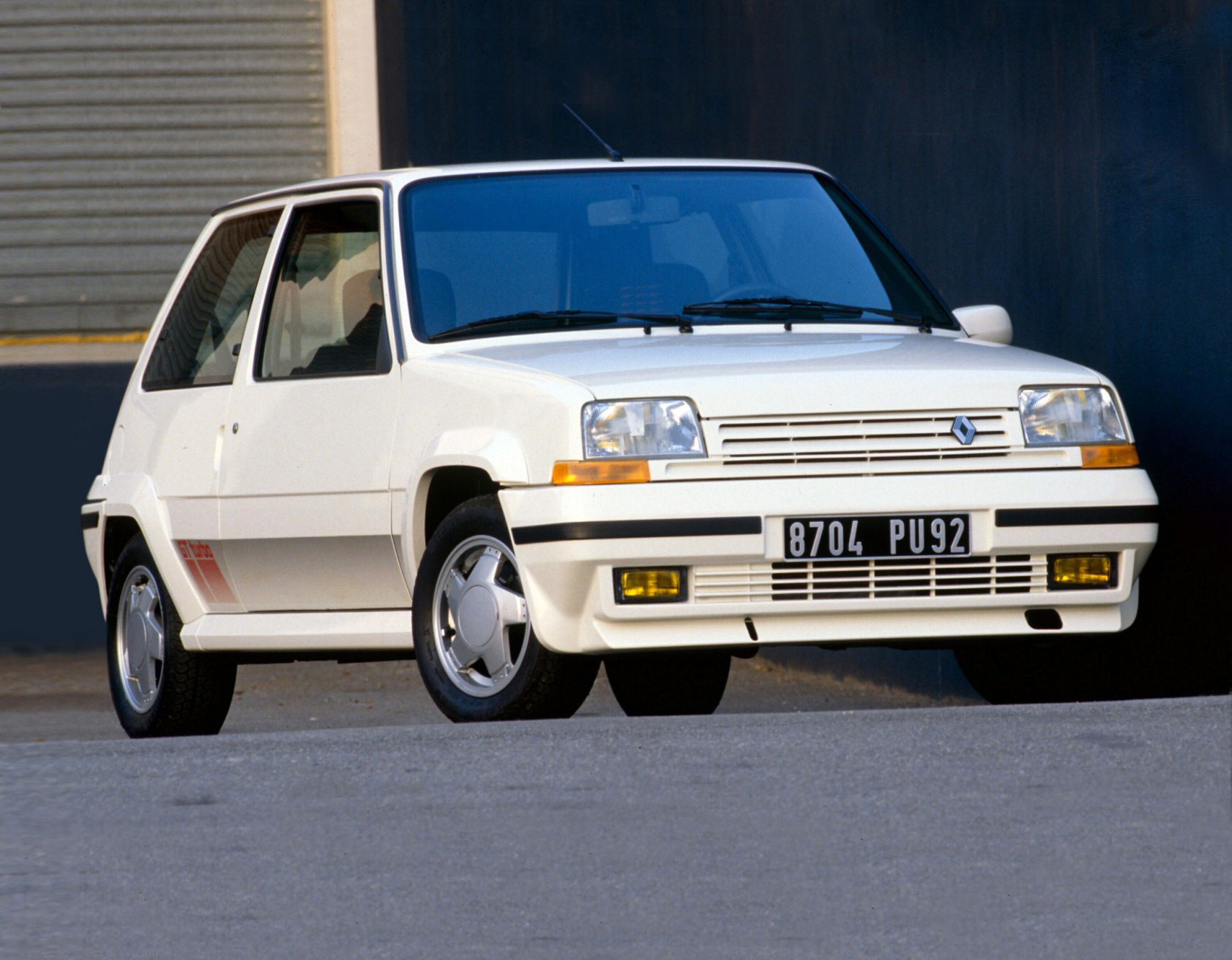
Think you’re a pretty handy driver? Jump in a Renault 5 Turbo or a Turbo II and you may come to the conclusion that there’s more to this driving lark than you previously thought.
Charismatic, challenging and exciting, Renault reprised the mid-engined/rear-drive/flapping wildly at the wheel theme with the subsequent Clio V6.
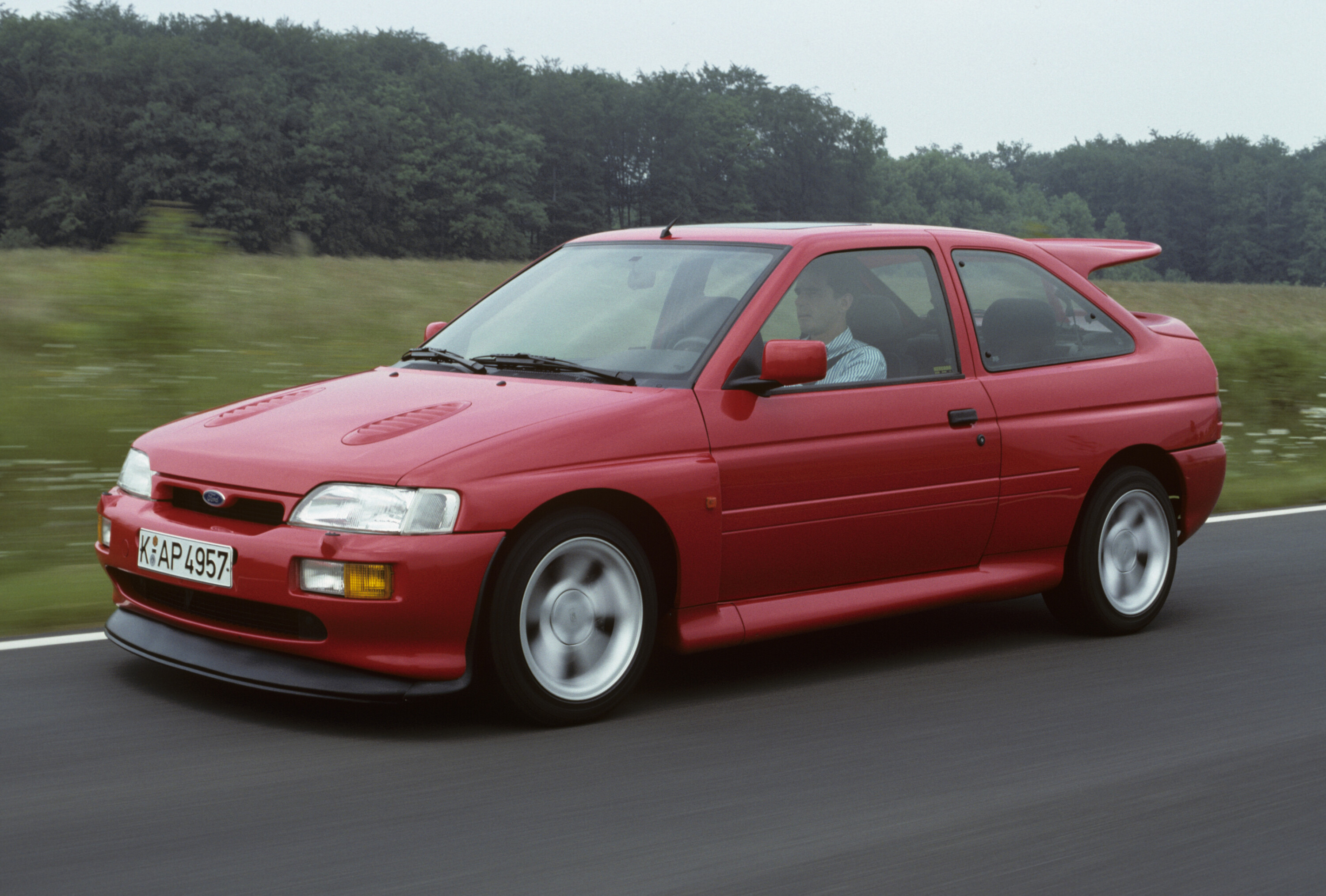
Designer Frank Stephenson’s Fokker triplane rear wing fell foul of Ford bean counters
It was badged an Escort, but once you dug beneath the dress-up, the underpinnings were Sierra Sapphire 4×4. Nevertheless, the RS Cosworth looked good, went well and provided the basis for a champ rally car.
The Cosworth YBT 2.0-litre was about as refined as a game of Goon of Fortune but we didn’t mind. A 34/66 torque split meant that the handling was, ahem, ‘adjustable’.
What it lacks in charisma it more than makes up for in ability
NOT SO MUCH
Just try to find one in vaguely original condition
Australia was chronically late to the hot-hatch party.
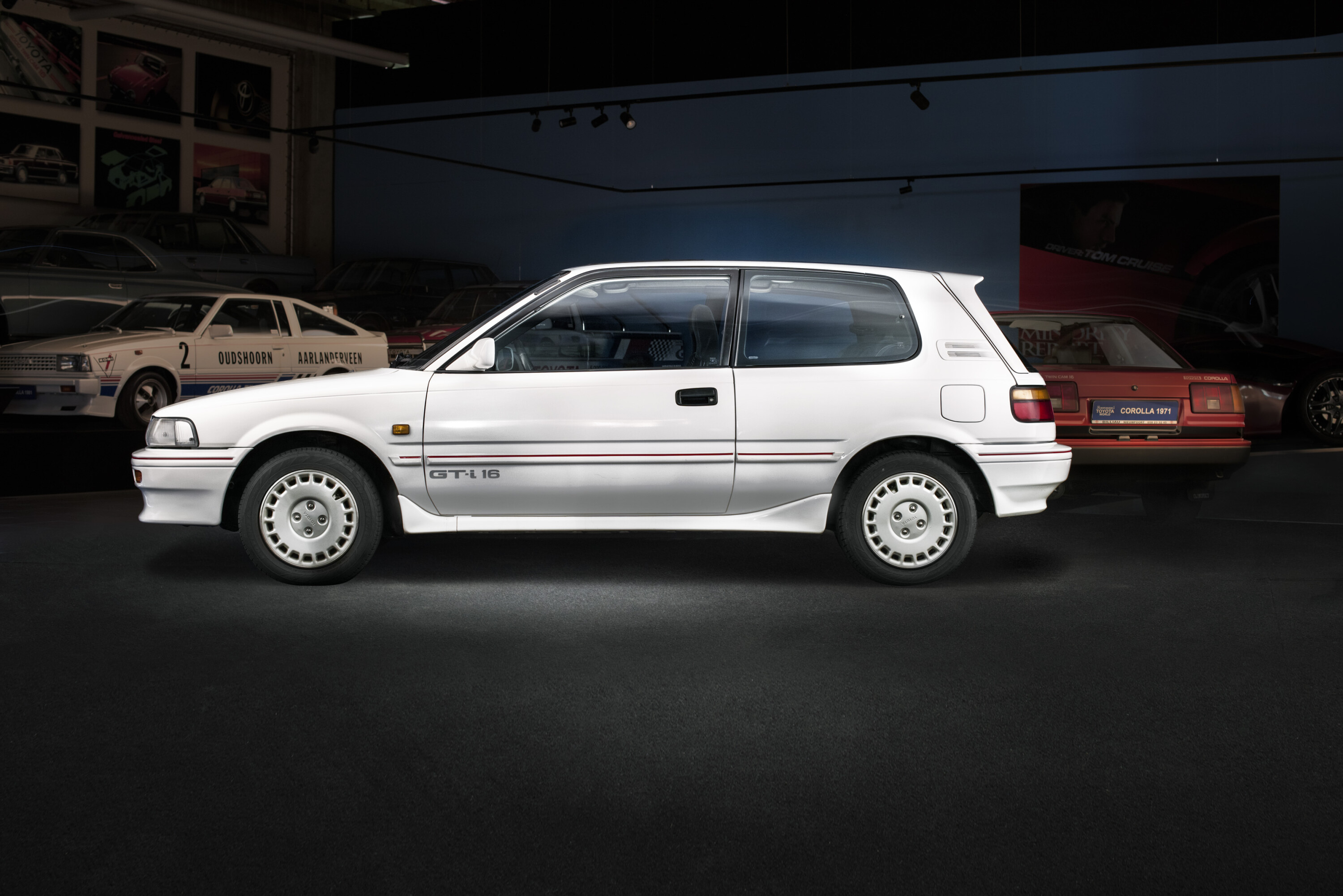
A whole host of originals never made it to these shores, but Toyota delivered with the 100kW Corolla SX of 1989 and the similarly-powered 1991 GTi.
The latter was offered only as a hatch with no Seca liftback alternative, and retailed at two-thirds the price of a 77kW Golf GTI Mk II. No wonder Aussies loved ’em.
If there’s a better way to spend <$20k on a used performance car, we've yet to find it
NOT SO MUCH
Consumables costs can be surprisingly hefty
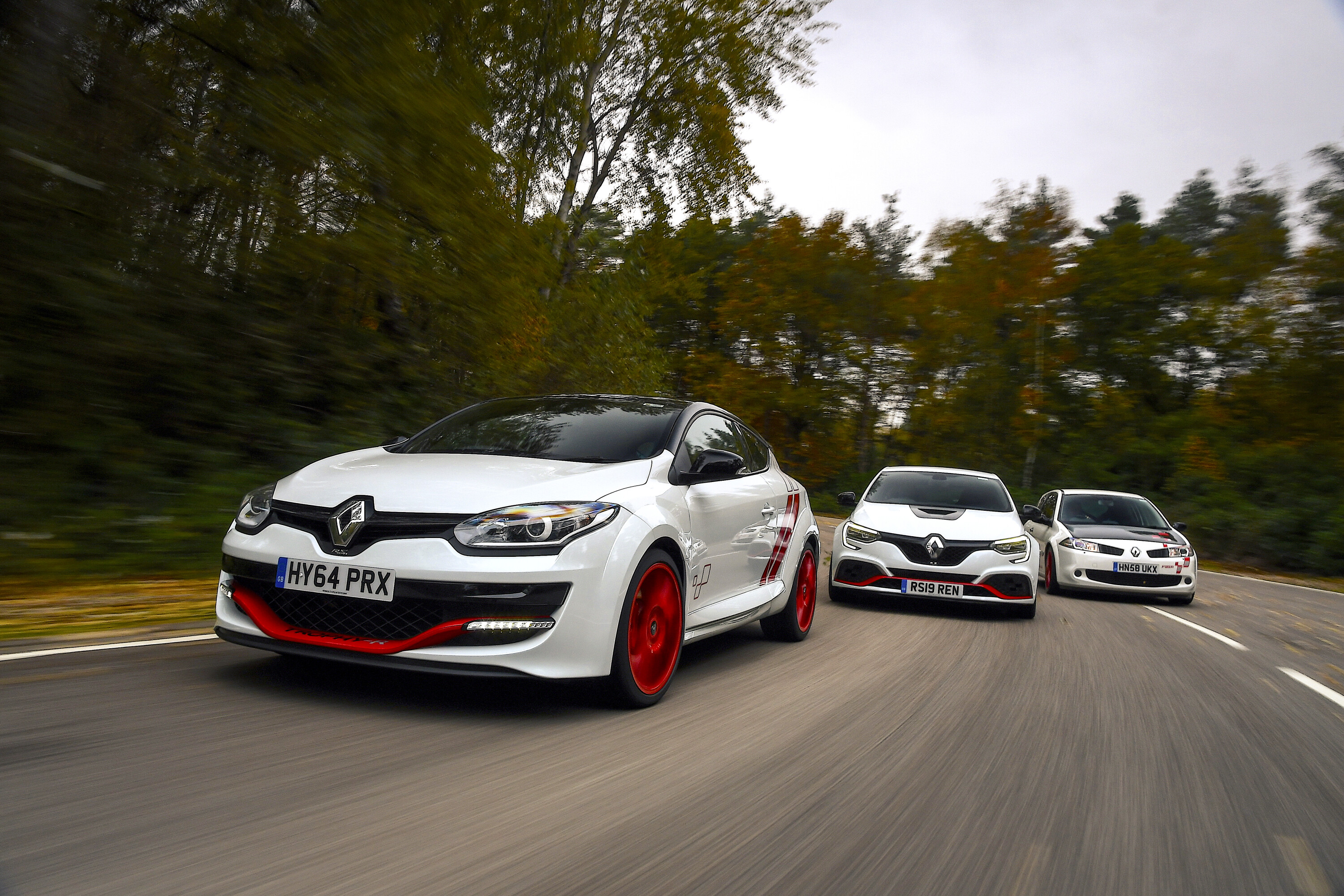
The transition from the bubble-butt second-generation Mégane to the sexy third-gen model looked as if it could pan out badly.
Had the Meg gone soft in its old age and succumbed to the marketing department? The first corner on its launch event said otherwise. Everything that was great about its predecessor had been amped up and it now came with styling that needed no excuses. Just lovely.
To follow the series, hit our Greatest Cars Ever at the link below.
With a storied history in car manufacturing, and having overseen the development and design of multiple iconic cars across both Nissan and its prestige Infiniti brand, Alfonso Albaisa has seen a lot of change.
This is easily the biggest.
The entire industry is cresting a wave of electric vehicle development. Many brands are now rolling out their first EV, some faster than others, while others like Nissan work away at their own EV renaissance.
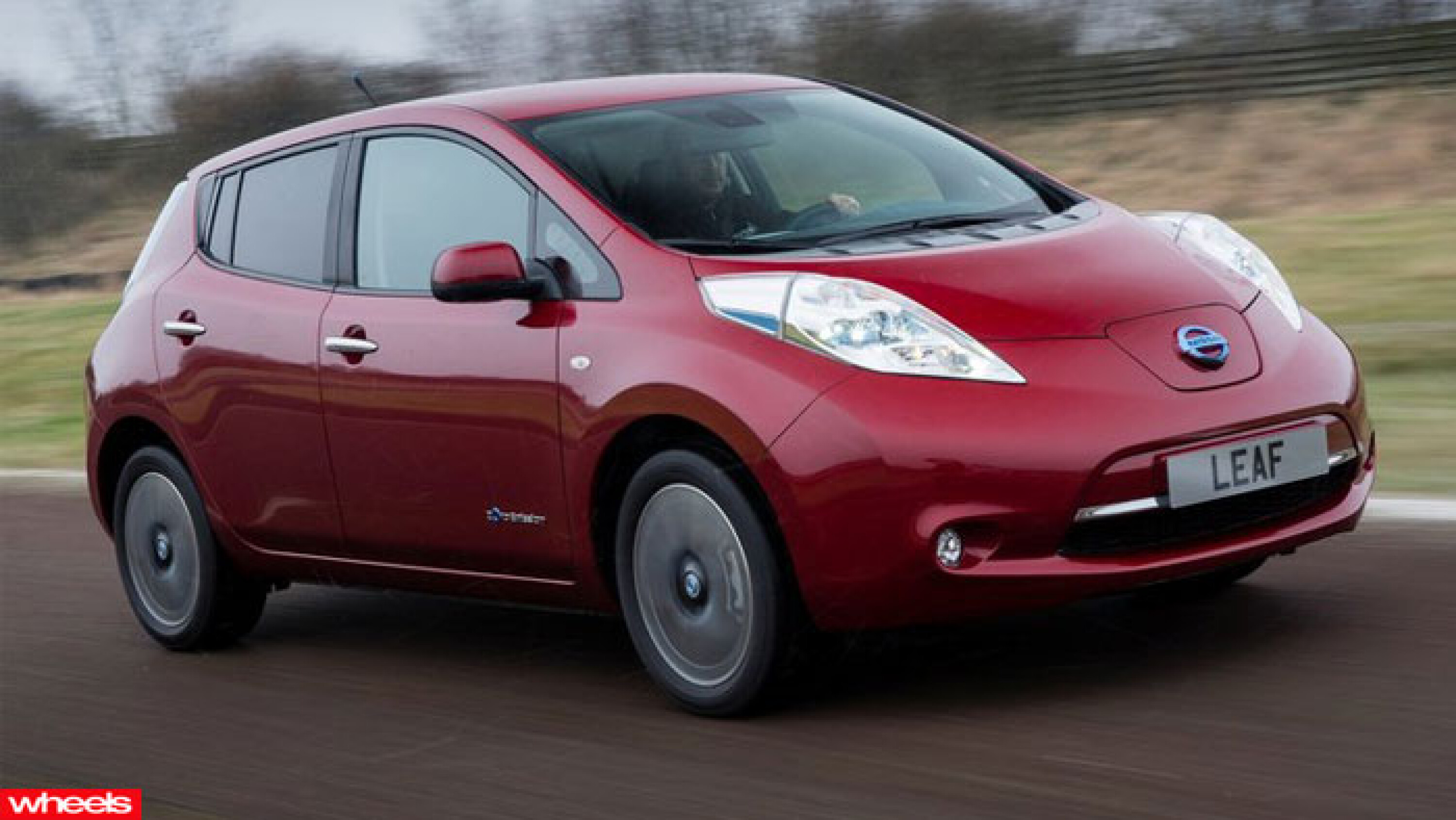
You’ll know Nissan was well ahead of the game with its first Leaf EV launching here way back in 2012. The second-generation Leaf repurposed much of the first car’s body and architecture, while adding advanced battery and vehicle-to-load technology. It’s less of an innovative pioneer than its predecessor, but Nissan has a host of new EVs coming, including the Ariya we pored over this week in Brisbane.
To understand the inside perspective at a brand that spearheaded the world’s exposure to EVs, we sat down for a chat with Albaisa – Nissan’s Senior Vice President of Global Design – and talk technology, design and Nissan’s future.
WHEELS: With the Ariya setting the foundations for Nissan’s next phase, it must be an exciting time for designers like yourself – with the ambition set for 2030 and the models to come based on the Ariya.
Albaisa: Well, the simple answer, of course, is yes. But, probably the more emotional or realistic one is that you have to remember when Ariya was done – so a few years back, four years or so – there wasn’t really this landscape that we know today with all EVs.
“2030’s ambition is based on the success and the breakthroughs that we can achieve for Ariya”
Of course, there was the Tesla and the Leaf for a long time, but we had this chance with this blank canvas. Even then you’re (as designers) not really thinking of 2030. 2030’s ambition is based on the success and the breakthroughs that we can achieve for Ariya.
1
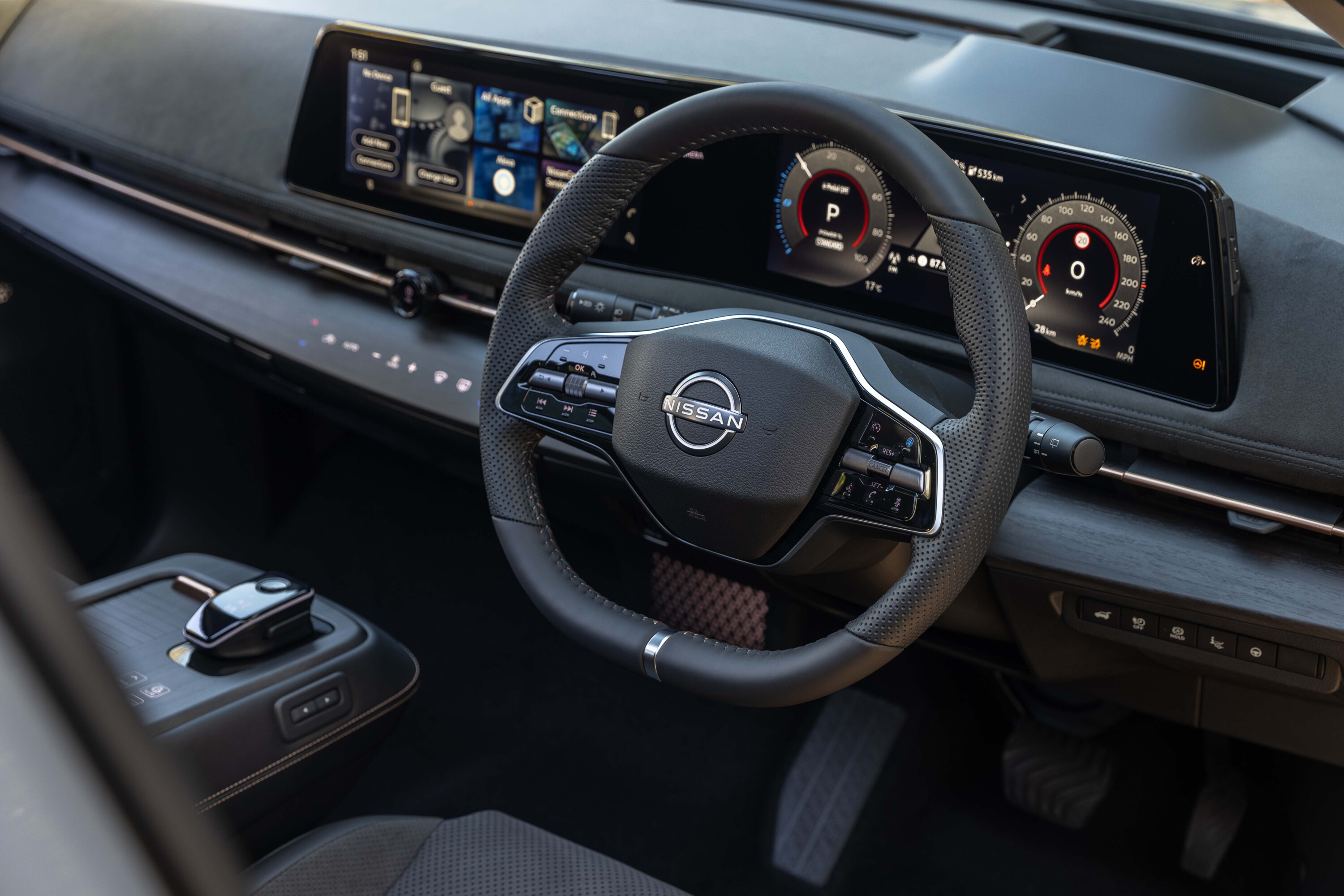
Even from an HMI (human-machine interface) point of view: the wood, the switches coming through the wood that are haptic, pretty much the elimination of most physical buttons, the decisions on the volume control – whether we keep that one and a couple of physical buttons – these were discussions you didn’t have before Ariya.
Like which buttons do you not need, and “not need” means that you need some flexibility because the systems were going to have so many apps and promises of things like photos, the over-the-air updating… so physical switches can sometimes limit your ability to modify.
These discussions were never had when designing the kind of mainstream cars that we have. The first step was the prototyping, because with most of these things you didn’t have an internal benchmark like, “Okay, it’s gonna be like that but a little bit of this.”
1
It was a completely blank canvas, and a lot of things like the twin screens and the undulation that you’ve seen, this was based on huge studies, which, I’m smiling … because they’re finished … but they were not easy.
The reality is your eye has a certain focal distance that is impacted by looking out and then looking in, looking out and looking in so you shouldn’t have the meter close to the driver, but the HMI area should be close enough to reach because, at this time, voice control is not universal. In China, yes, but other places people don’t really love that.
So that screen had to come in closer. But we wanted a monolith. So that piece of glass [used for the twin screens] – it’s glass, by the way, it’s not plastic – was a project all by itself.
1
“The project was full of these ‘first times’ for us”
And I remember when I got the first batch [of the glass] and it looked like Salvador Dali clocks. They were all on the table and we were checking for anything happening with the glass and stuff like that.
The project was full of these “first times” for us and decisions about “what do you do with the guts,” because now you don’t have a motor in the front, or you have one but it is small. So moving all the guts into the engine bay motor bed created an open space.
We did prototypes of having a centre console and no centre console, and it was all about these “firsts”. So when we finished and we liked it and we felt that it gave a different experience, then you start dreaming of 2030.
1
WHEELS: As the Ariya includes, as you said, the first of many designs, does that indicate future models you’re designing now will share what you’ve learned from the Ariya going into the next phase?
The beauty and the difficulty with designing this is that it’s simpler when there are fewer physical components. It’s a blank canvas, so you can decide major things that you can’t do on an ICE car.
“The thing is that the technology is still changing dramatically, especially battery technology and solid state”
The thing is that the technology is still changing dramatically, especially battery technology and solid state. There are questions on when that is coming, and whether those are very thin, and even the chemistry that you have today is changing, so some dimensions will change and thus it will change the platform. So how we used to define a platform in the EV world is a little bit different.
So you might find that for next-generation cars, it’s not exactly an Ariya and it’s purely driven by the massive advances that are happening in the world today. Not just battery, the motors, and questions of how many motors and where are the motors.
1
WHEELS: So will we see elements shared, not just EV or e-POWER, but in internal combustion engines as well?
Especially, because with e-POWER our intentions are to consider that EV and e-POWER are like cousins. Like a hybrid is a cousin of an ICE car where you’re still relying on the ICE engine to drive the wheels, while the e-4ORCE X-Trail is more related to the EV because the internal combustion bit is not connected at all to the wheels at all. It’s just generating power for the batteries.
And as a result, you get all the benefits: the torque, the acceleration and the silence of an EV. So when we were designing our strategy of e-4ORCE, it was much more linked to the feeling of thrill you get with EVs.
“Nissan is in full-on change”
1
That will get more so as the reality of ICE cars may be diminishing a little bit because that’s just the realities of the tendency of consumption; it’s what people want, and the e-POWERs will continue to become more efficient by being linked to the motors and the batteries and all that.
So we’re in full-on change. So my rambling is literally because daily these innovations are coming and we’re like, wow, that’s cool. And then you chase another thing.
1
WHEELS: So day-to-day, changes can take you in different directions?
Yeah, and some things are driven by regulatory things. Europe is going far ahead, more than Japan for instance, and mass-produced EVs were kind of born in Japan with the Leaf.
So our European cars will mostly be EV, and that’s so exciting because you can imagine – I’m not confirming … I’m not saying I’m doing this – but you can imagine that some of our iconic names will jump to EV. Whereas right now, the things you’re seeing is that Ariya is a new name. We haven’t really started considering which cars will jump to EV.
It’s super exciting, especially because our portfolio is full of cool things. I’m not saying that others do not, but I’m just saying that we have the benefit of 90 years of some interesting cars.
“So our European cars will mostly be EV, and that’s so exciting because you can imagine… I’m not confirming… I’m not saying I’m doing this… but you can imagine that some of our iconic names will jump to full EV”
WHEELS: One of those cars is the Patrol, which may be harder to get into the EV space and I imagine it’s more likely to go down the e-POWER route. But will it still share design elements seen in the Ariya? What may transition to the Patrol?
Some of it is culture change and definitely the technology expectation. It’s not just EV, where it’s even changing today. But the screens and the user experiences were kind of more driven by the EVs, and ICE cars were a little bit more orthodox as a user experience. But that is not going to last.
“ICE cars were a little bit more orthodox as a user experience. But that is not going to last”
It’s not related to the powertrain; in reality, it’s related to how humans live. So easily, you can see a Patrol coming down – I’m not saying that it will – but all the cars will have a such a high level of connectivity that you need to change certain things aesthetically and things are going to be much more “techie”.
For me, my personal belief and argument to management is that every car is high-tech for Nissan because that’s to our benefit.
1
“The issue for Patrol is not so much powertrain to be honest, it’s the history of the car”
Japan was historically famous for breaking new ground on consumer products that use technology to change, and I need something to be the ambassador of that. So, a Patrol would be a flagship for us.
The issue for Patrol is not so much powertrain to be honest, it’s the history of the car. This is the part that’s a bit different between us and maybe other companies – Ford maybe has some, and clearly other companies have heritage – but we have cars that are for specific uses. So Patrol really has two places: it lives in the Middle East and here [in Australia], and the fanaticism is not so much about powertrain.
Sure, there’s the V8s, but they love what that is giving them, like the ability to do anything, to go anywhere. So, our discussions about Patrol and the next Patrol is how to make an experience that is something so cool that you love it, you recognise it as a Patrol, as iconography.
1
But people are going to change it. They change it more here [in Australia] than the Middle East. In the Middle East they want a complete car, a wonderful car that they don’t modify … here, oh my goodness.
So as a designer, we know we have these, it’s super-focused, so we’re not really thinking about the US, South America, Western Europe. Russia sells a few, but it’s not enough.
It’s really Australia and the Middle East and those customers are very different, but they love the Patrol. That’s what they have in common. So it really is not so much a powertrain issue.
And here you do get this dichotomy between the technology needs and the iconography of a Patrol, because in reality, the cameras that we put in for autonomous driving and all of these other things are really good on the trail actually, for knowing what’s around you, underneath you, around the corner.
You use technologies that are seen for driver assist and all of these on-road things, but those are very good for off-road.
1
WHEELS: When you design a car like Ariya, do you have a favourite element of design or is it hard to pick a favourite?
Generally it’s hard but I can say that the journey of Ariya, because there were many firsts that were not automatically natural for us.
So aerodynamics. We’ve had fuel economy considerations before, but I never felt a huge pressure before, but with the EVs and the range … you have this need where you had to get over 300 miles; it was this psychological barrier that we never felt so much on the ICE version.
So we fell in love with that, in the sense that, ‘Okay that range stuff is really in the hands of the engineers and they’re advising us of the aerodynamics that we can apply,’ but to express that in the new style was the breakthrough why Ariya was the beginning of a new aesthetic, this timeless Japanese futurism.
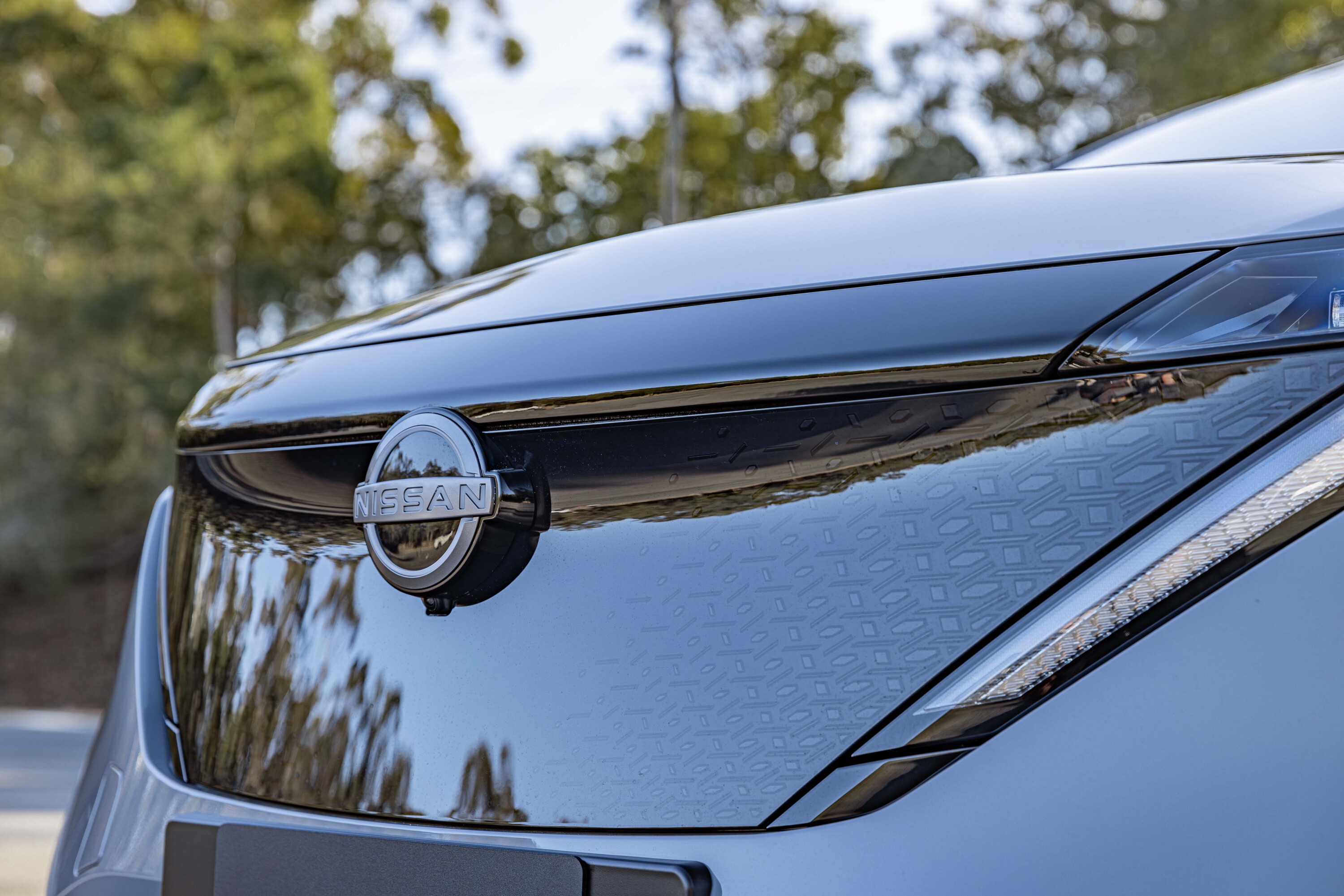
Even though the Z was done in the next bay – we have a 300-metre studio, so it’s very big and open – and so all the cars were there all at the same time and they all share things, but the Ariya exterior and the tech shield, the lack of grille, the not-completely-blank face, we fell in love with this, with the Japanese DNA, the little tiny patterns in the grille.
We never thought of all that before, so Ariya opened up many doors.
1
WHEELS: How does the concept of utilising Japanese DNA go from an idea to what we see in the final product?
We had a big presentation to the CEO about how we felt in design that we had stopped being perceived as Japanese, and instead as “kind of Japanese”, and we didn’t like that. We thought that was wrong. Because the world sees Japanese design as kind of funky, cool, a little quirky, but all positive stuff and to been seen as “kind of…” meant we weren’t really benefiting from these things.
“We felt in design that we had stopped being perceived as Japanese and instead as ‘kind of Japanese’, and we didn’t like that”
So we made this big pitch about that, without an answer, and we said we were going to come back. And the Ariya was the comeback. And we think that we should express a kind of Japanese futurism, sometimes literal, like with the tech shield, to use some classical patterns to fully form a face that is necessary for the sonars, then the atmosphere lights to literally be a Japanese type of lantern design, next to completely haptic.
1
And we presented all of that as our answer to restriking this Japanese modernism.
So, you asked, “How does it happen?” We present to the board. Naturally some people liked, some people didn’t like, and you get a nice debate around the value – not so much financial value as what the people will really appreciate.
Because there’s no reference; we’ve never made a car that tapped into historic things when we were trying to say we want the future. It seems to some a contradiction, but we felt that it wasn’t a contradiction because people today have access to tomorrow and yesterday immediately with social media and everything.
It’s not like 20 years ago, we’re not old men, where you don’t look backwards, because backwards is yesterday and you have no access to yesterday. And that’s why the Z looks like that.
1
I’ve been a part of three Zs. When I worked on the 350Z and I remember that DDM – DDM means “go with one,” – and we had a retro one and we had the one that was selected. It was unanimous, but the CEO walked in and said, “we’re doing that one, the retro,” which was the opposite.
The Z is not really retro… but it kind of is, it’s the 240Z, but it was unanimous because somehow in today’s world, we don’t have this obsession that you cannot play with history. That history is as fresh as tomorrow. It depends how you make it.
And this stuff all was happening to us at the same time, these discussions, like Z and Ariya and Patrol, and this new phase, the one you have today was designed at the same time. It considered what it means to be Japanese, what it means to be innovative or “techie”, even in an orthodox Patrol.
“I love the glass, the Salvador Dali glass. I also love the haptic because that was a breakthrough. Nobody is doing haptics like that”
There’s two things on the Ariya: because of the effort involved I love the glass, the Salvador Dali glass. I also love the haptic because that was a breakthrough. Nobody is doing haptics like that.
1
We had so much negotiation. When you open the doors next time, look at the power window switches and look at everything – it is blacked out. We negotiated heavily that even with the power window switches, you don’t see the icons. But when you hit the starter button, everything comes from nothing.
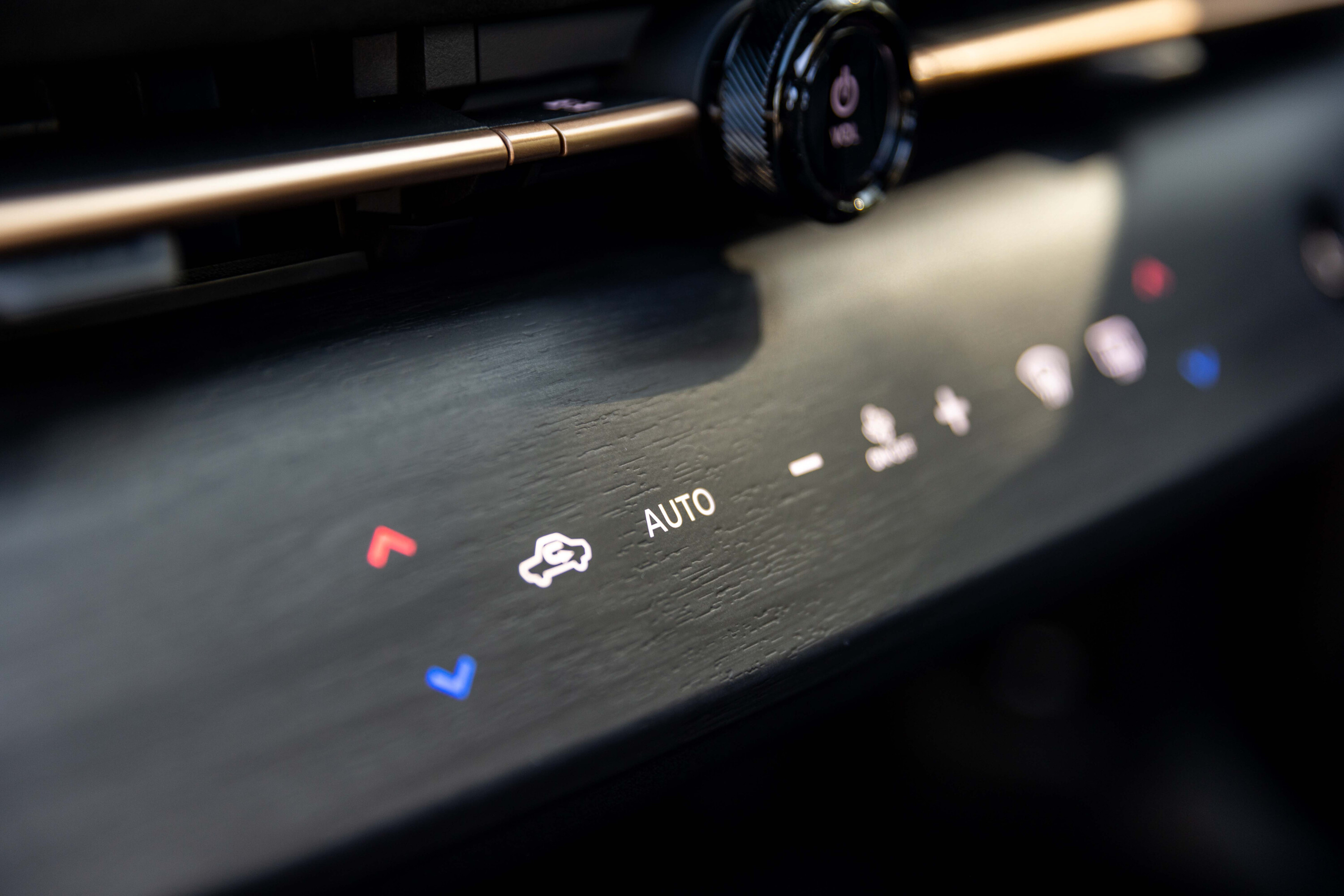
This was a metaphor to the freedoms of technology, that any surface is a technical surface. Even wood is a technical surface. The achievement might be the haptic features of Ariya, but more because it’s really that we converted a piece of wood into your HVAC control (laughs). Even that was an impressive exercise.
1
WHEELS: I imagine wanting to include Japanese DNA but then making it consumer-focused is an incredibly difficult challenge.
Remember these are not toys. In the end, cars are serious objects.
So all the things we had artistic dreams of, we cannot ever make it not safe – but be quick and intuitive. So we did everythng we could to maintain that.
The fact is that people believe, rightfully, that electrification will bring change. So the company was very open to this. So they allowed us to challenge all of these things and even play with the past while we’re full on up to here in the future with haptics and all of that.
1
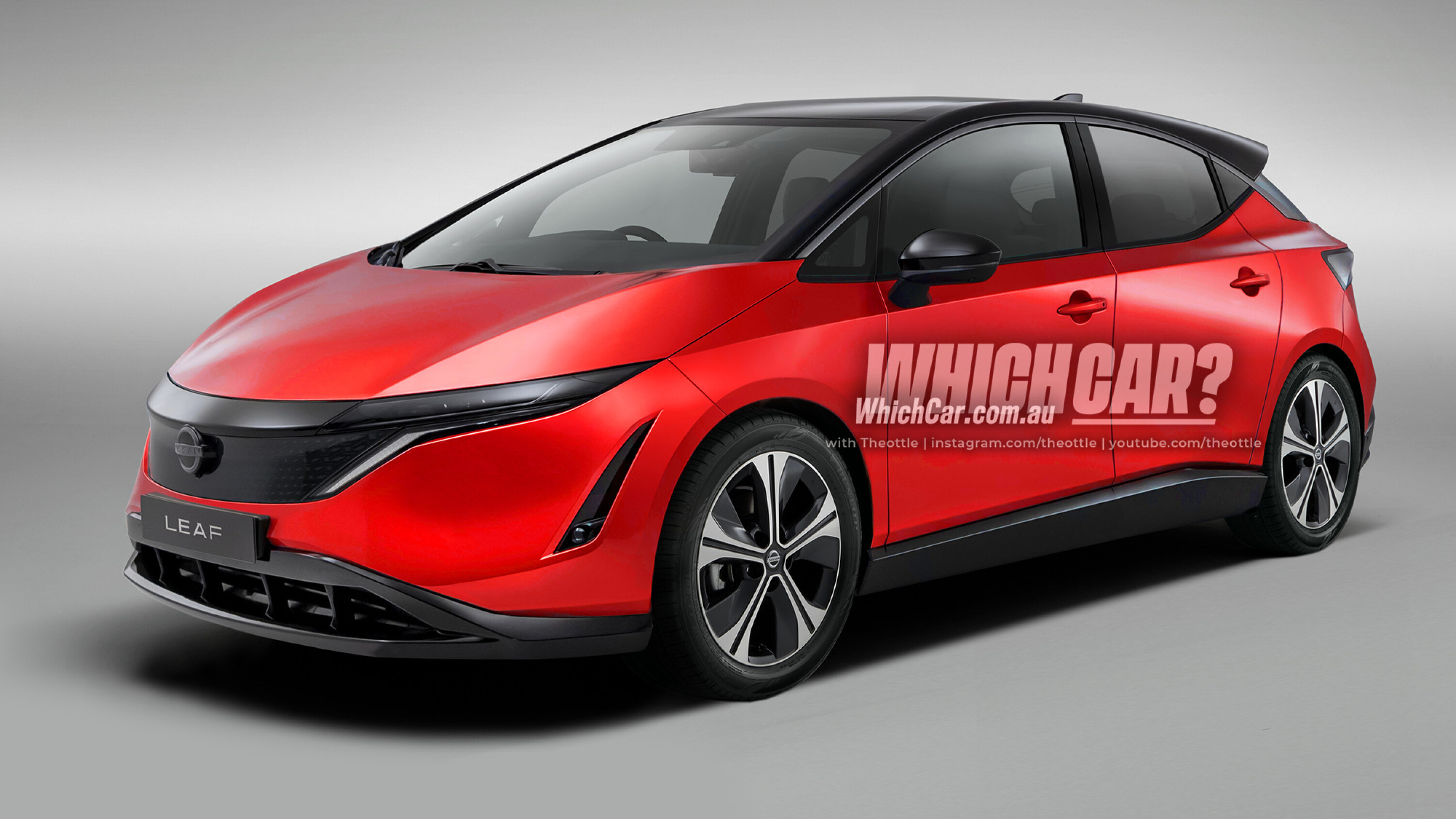
WHEELS: I don’t know how much you can talk about the next Leaf, but will we see similarities between the two? Are they going to share a lot of common ground?
Philosophically they share this timeless Japanese futurism. That’s a bit exciting. So the reaction that we believe you will have is, “oh, okay. This is what technology can make.”
It obviously moves on from Ariya, so many things like aerodynamics especially need a lot of learning.
There is a sense of the Japanese futurism that is starting from Ariya but goes beyond Ariya – and definitely you will say to me in a couple of years or so, “I see what you mean.”
1
“You will say to me in a couple of years or so, “’I see what you mean’”
Because five years in time can make big difference with development, and the things that we love about Ariya are now popping up now. There’s progression, so there is an evolution.
Ariya is also a bit of a premium EV, so the beauty of Leaf is that it’s democratised electrification. Well, it has a lot of competitors and it’s a bit of an old car, but I always have to remind people to think back to when it was launched. Okay, that’s one day. But we all have to remember that to make a car took four years.
So what was the context of four years before the first one? Basically there was only some EVs in San Francisco, very dusty two-seaters that could travel around the block and that’s about it.
But the real leap was the decision to say, “No, no this EV has to hold five people, and be comfortable with no compromise. It’s not noisy and it must be silent on the road. You basically can never disappoint the daily needs of people.”
1
We were designing the Leaf, and of course the Tesla Model S came out with a finished design – and it was like, “okay, they went with a $100,000 car. This is different.”
I remember that time. I thought, Wow, okay, ‘that’s a good list.’
But there was nothing to look at. Who were you going to look at? At that time before they asked, we were designing the Leaf, and of course the Tesla Model S came out with a finished design, and it was like, ‘okay, they went with a $100,000 car. This is different.’
So, I have a huge respect for that. So the next Leaf has to be like that. It cannot compromise. It must be the most effortless car and it has to be stunning and futuristic; much more than currently .
And it must have all the technology that you can imagine a bit beyond Ariya because of time. It’s a matter of the time, and the acceleration of EVs are impressive. We have suppliers and they are all doing nutty things that we can then use and buy and make the car experience so much more special.
1
“Cars will drive by themselves … it’s just a matter of proving to people that they don’t have issues”
But somebody has to do it. The car companies alone cannot do it. It’s such a big thing to reconsider every door handle, the antennas everywhere, LIDARs everywhere. How many cameras can you fit. If you had said 15 years ago that you were going to make a car, and it was to have 14 cameras on the exterior, that’s not, well – that’s not a bad number – but now it’s needed.
And the cars will drive by themselves – they probably are already capable of it – it’s just a matter of proving to people that they don’t have issues.
1
This is the other part as a young designer. When I want a bumper side to do something, I get resistance from elsewhere and there’s a fight with R&D. Well, this is a normal battle.
This is a different time because these are sonars and there’s a lot of optical distortion in the way the waves come out through the bumper affect how clearly the vehicle sees other things.
So it’s funny how it changed my attitude – maybe it’s my age also – but it changed my attitude completely. First of all I ask whether it’s related to money or if it’s the ability to have a perfect view of things people don’t see.
Then immediately I’ll figure out a way to make that work.
WHEELS: Finally, are there are any other brands or cars that have influenced you over the years?
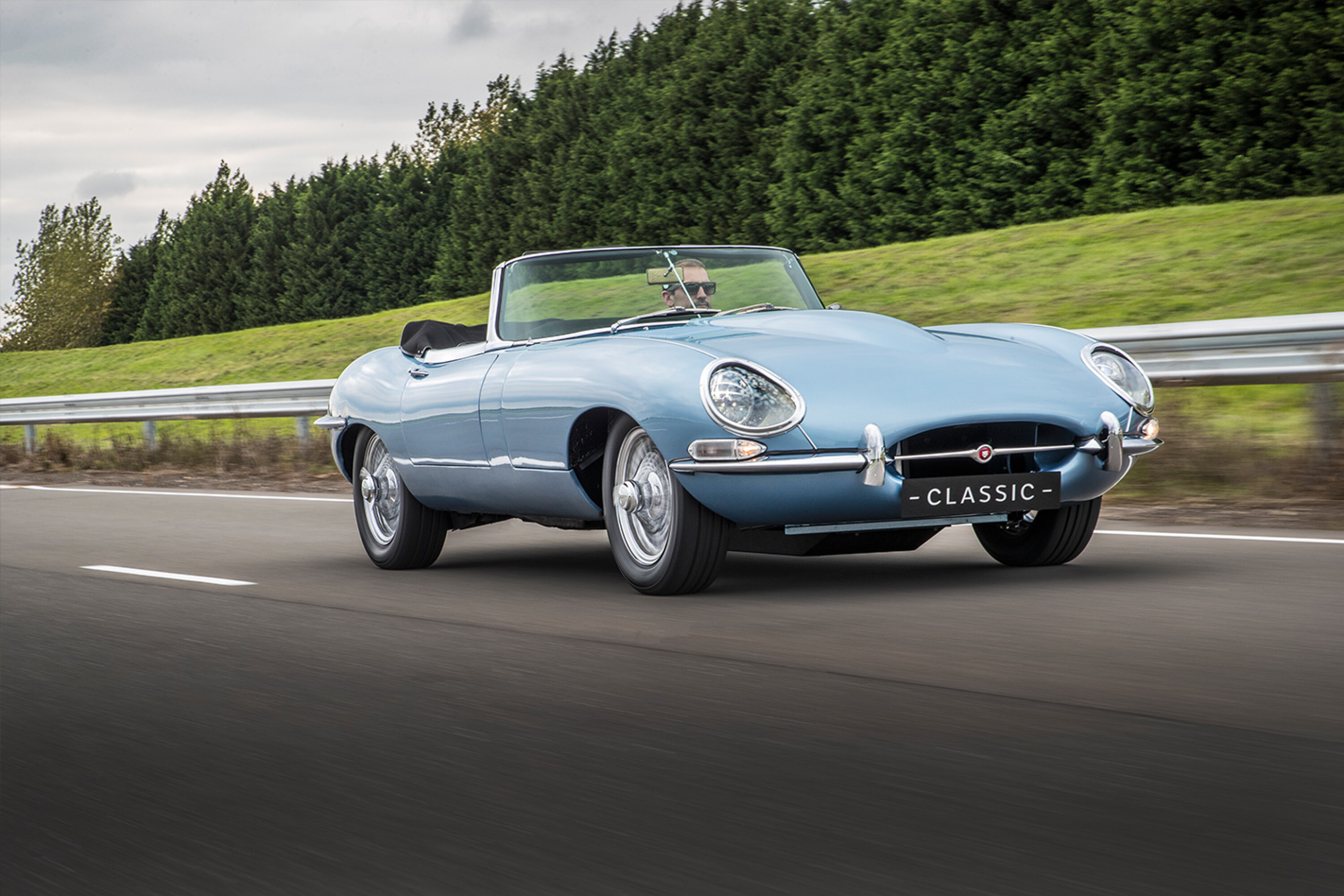
From the beginning I can say without doubt that I’m a car designer because of the Jaguar E-Type. (Stevo says: let’s not tell him about this E-Type with 370Z lights then…)
I still remember the moment making boat models with my Dad in his architecture studio out of all the wood he wanted to use for making house models. I’d make boats, little 16-foot Donzi boats and I’d put them on the model of Miami.
Then I heard a thunder from a car’s engine and thought, “oh my goodness”, and I put the wood away and from that moment I was drawing cars. That and the Alfa Romeo Duetto Spider from The Graduate. I’m old, so all my references are from 1969. The Jaguar was 1970.
1
And then other times the Koreans are very impressive, and I say the Koreans because they are ambitious like with Hyundai and Kia.
But some things inspire you from beauty, pure beauty, so 911s I still respect, and how they manage the generations. How you keep something the same but refine it so much that it looks like it’s perfectly fresh, it’s impressive.
And then other times the Koreans are very impressive, like with Hyundai and Kia. It’s less that I love specifics, it’s more that I respect the ambition, like our corporate ambition. So this is another kind of inspiration, so that kind of drives me.
1
So Nissan is number one, but it needs to be number one in our own way. But you do look and admire something, like I said, sometimes for the specific and other times more for the attitude of a company for what you find interesting.
READ NEXT: That time Alfonso Albaisa revealed plans for a new Z
Not only because it will enter a market where appetite is extremely high but also because it represents the next phase in the future of the brand as Nissan continues to embark on its Ambition 30 strategy.
That strategy will essentially see Nissan accelerate its electrified program to meet diverse and growing customer needs, with Nissan announcing its plan to introduce 23 electrified vehicles – including 15 EVs – by 2030.
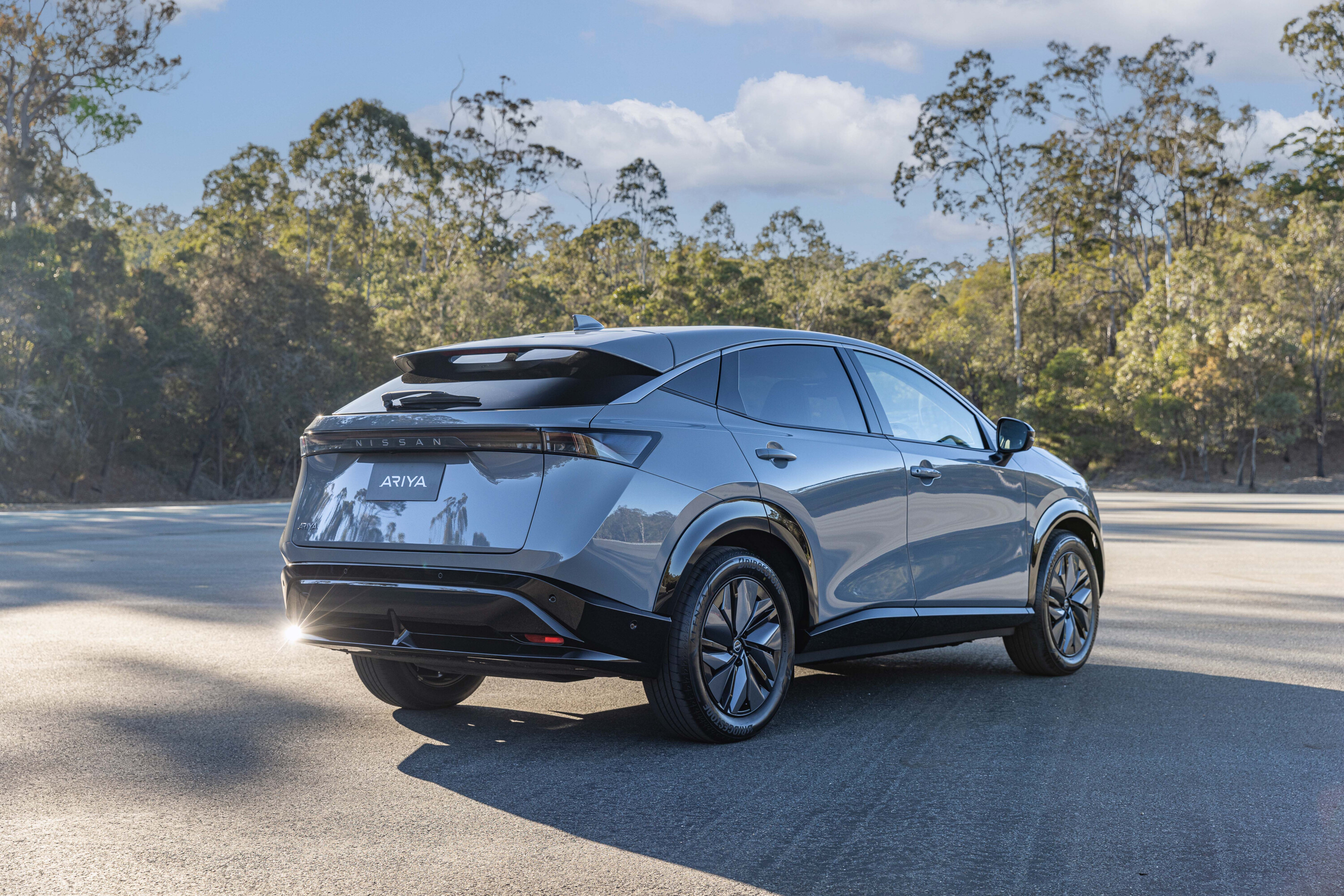
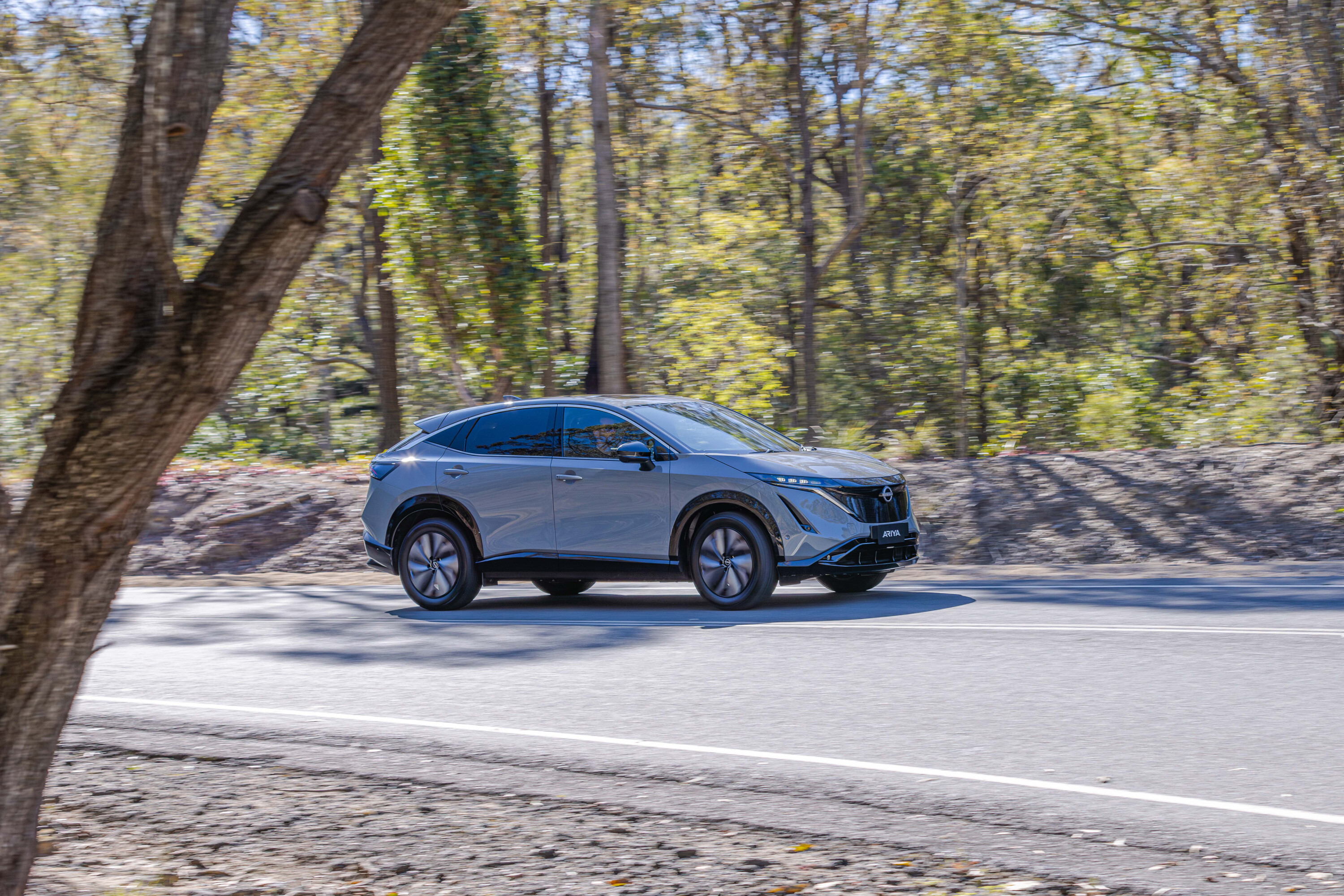
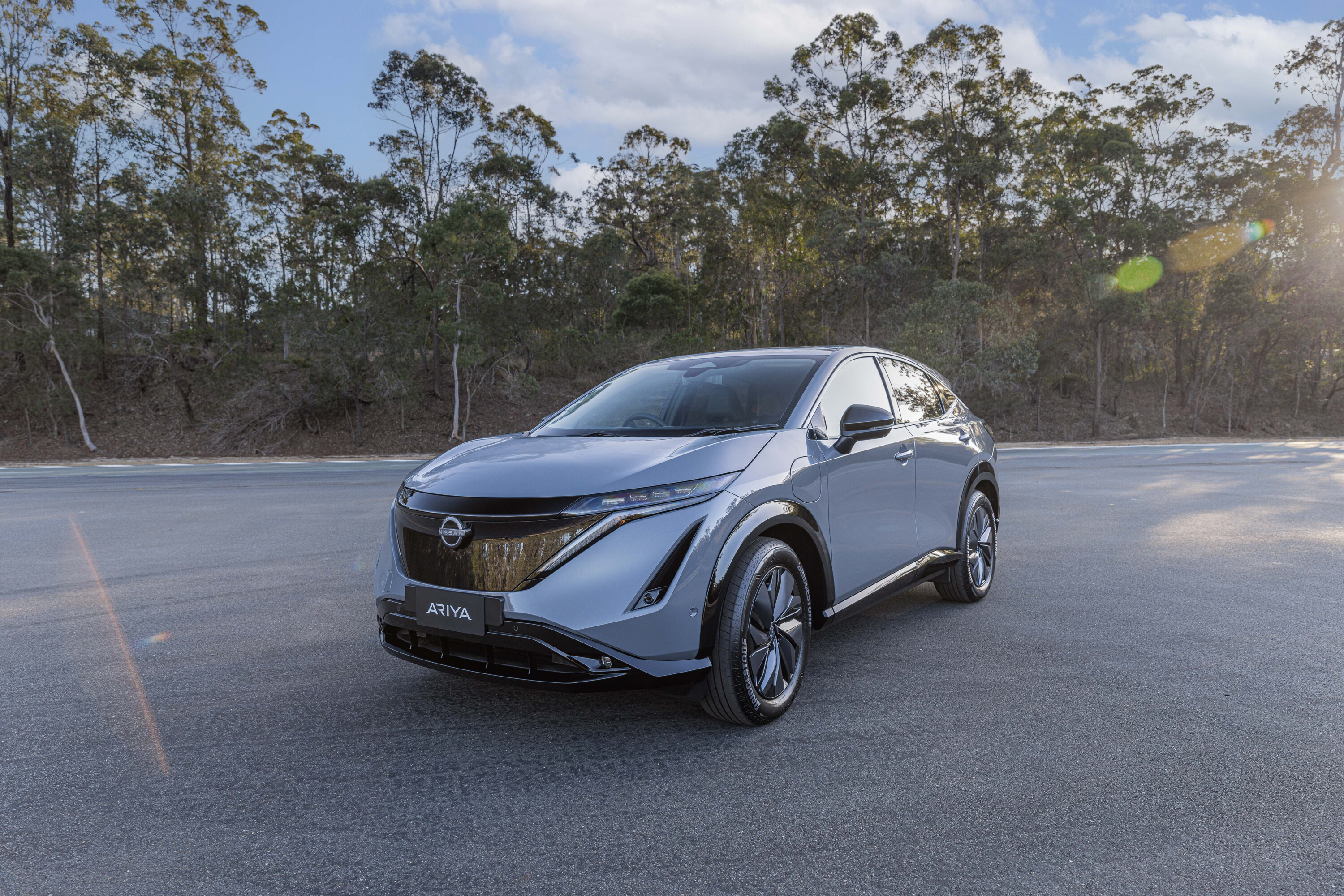
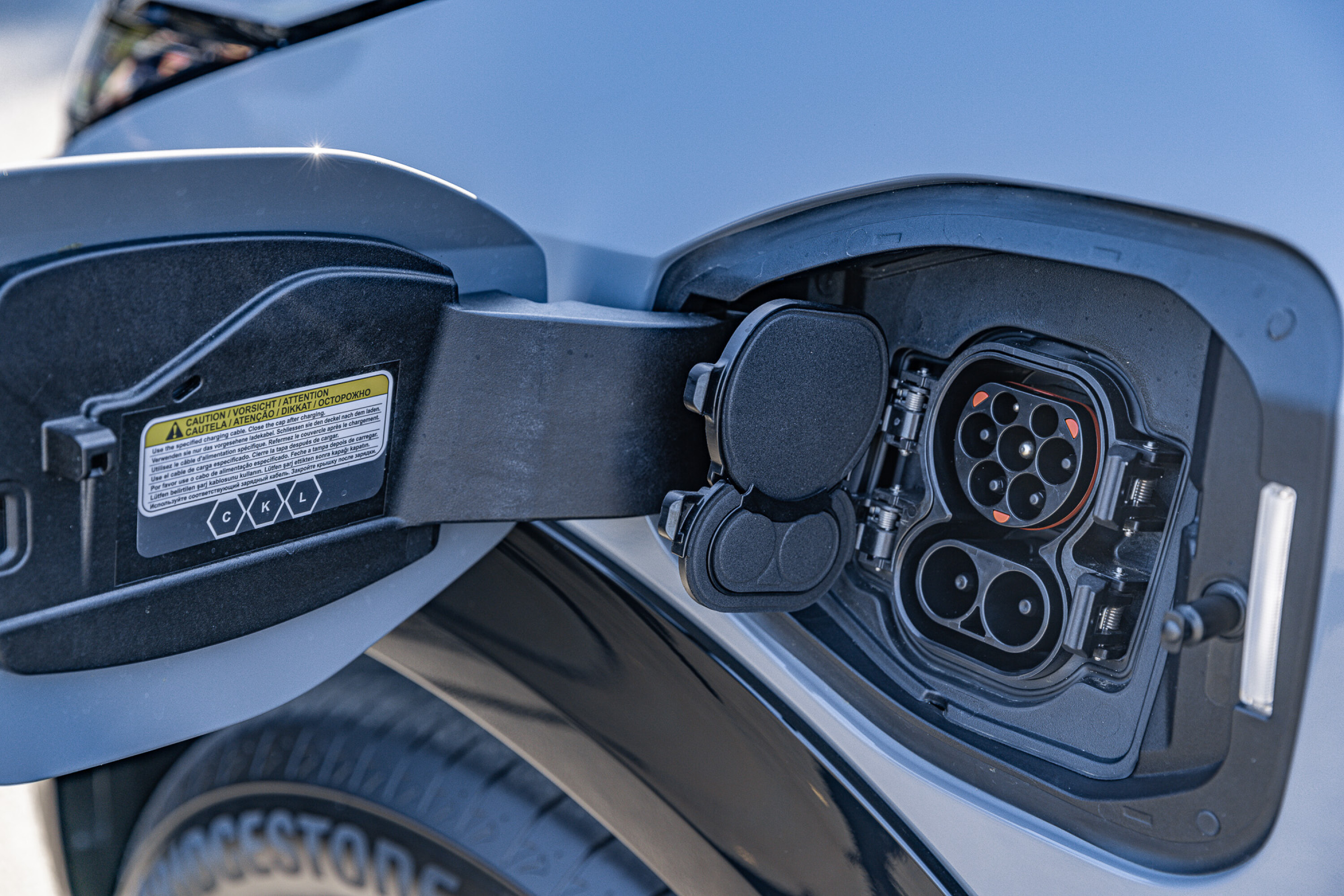
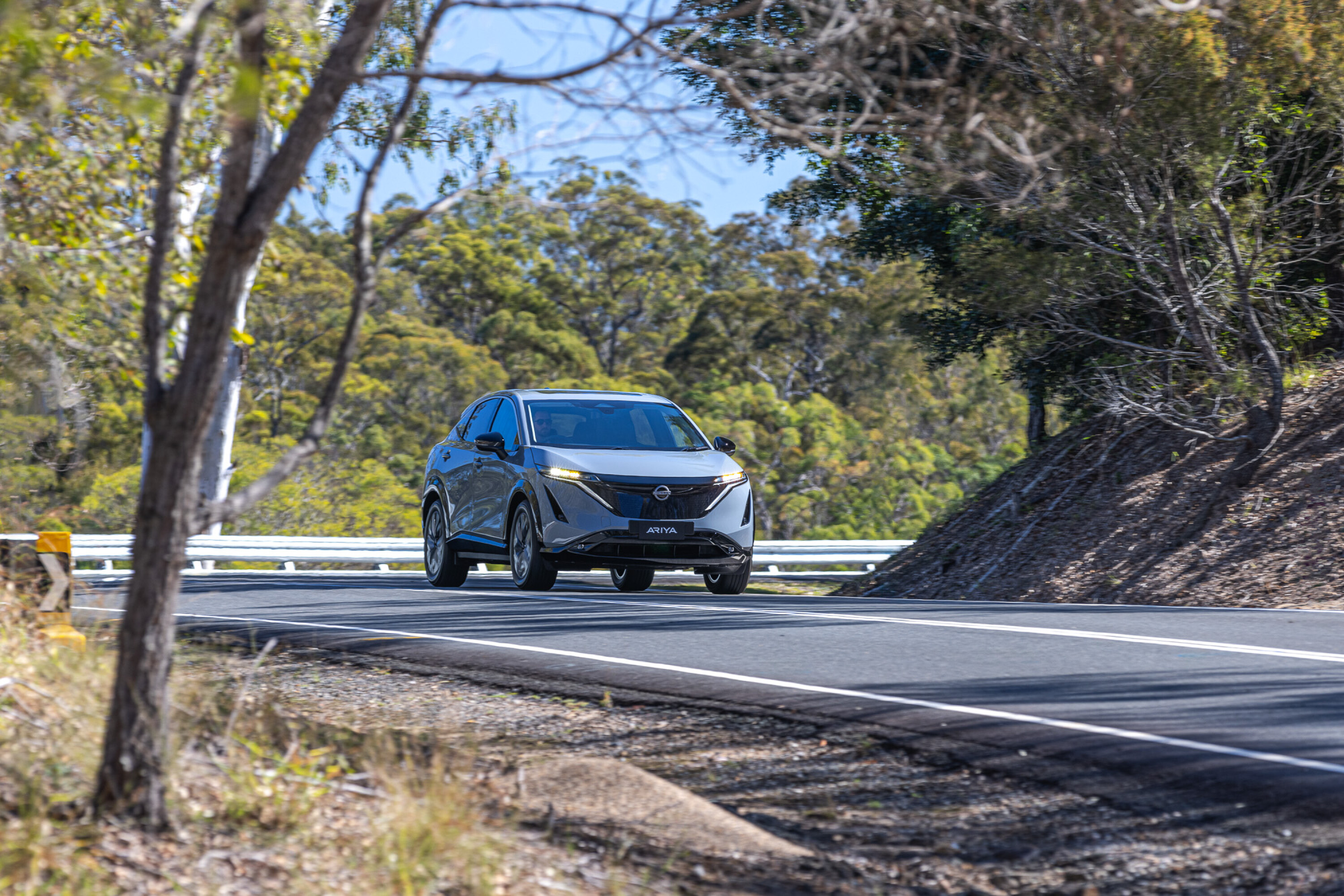
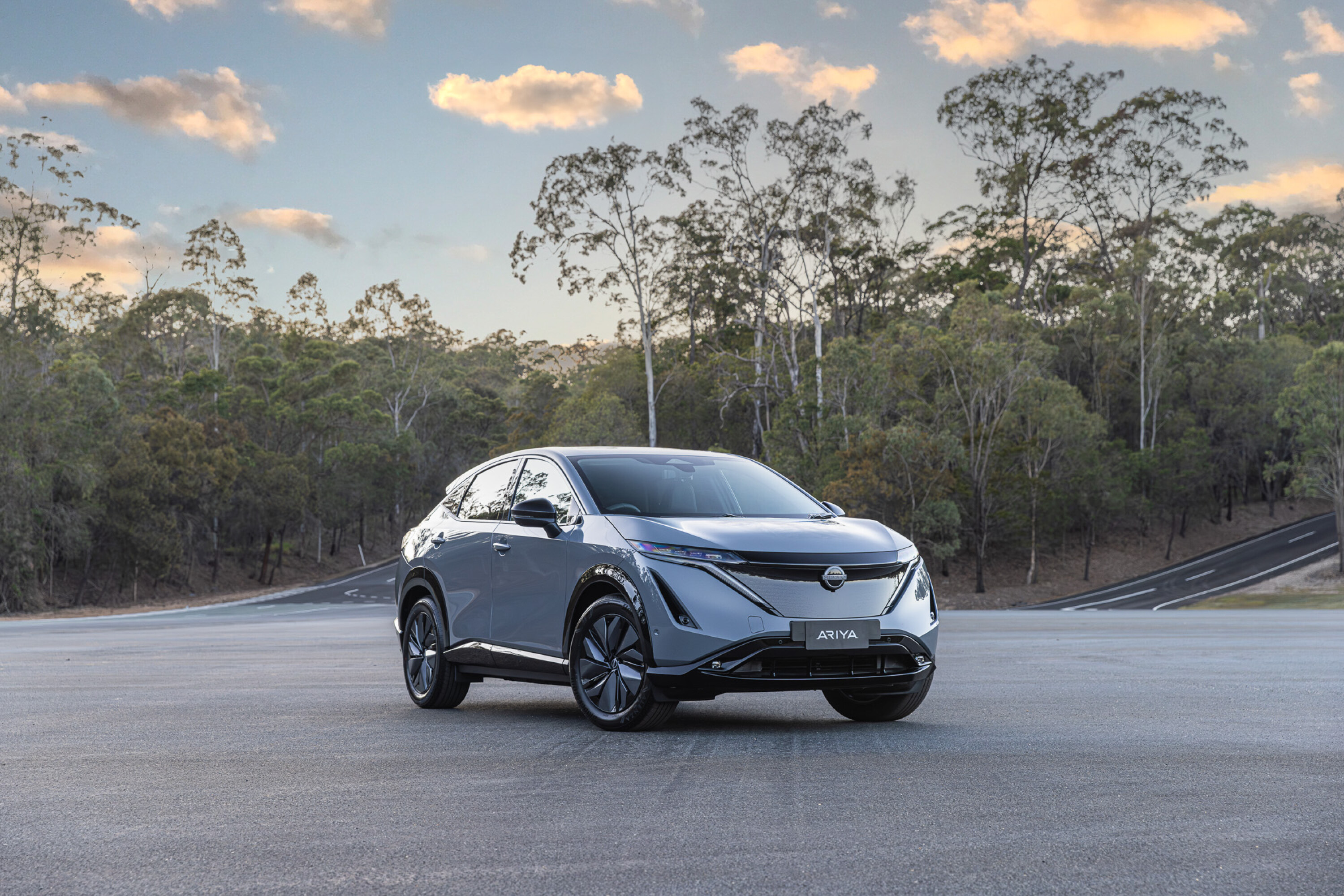
One of the first EVs launched (internationally, but not here) is the big brother of the EV-pioneering Nissan Leaf, the Ariya. Built on the CMF-EV platform, the three-model Ariya range includes the 63kW, 87kW and 87kW e4orce variants.
The line-up begins with the entry-level 63kW front-wheel drive variant, which is powered by a 63kW battery and single electric 160kW/300Nm motor – it comes with a modest battery range of 404km. The range-topper is the 87kW e-4orce variant, with two electric motors (combined 225kW and 600Nm) and a range of 498km from its 87kW battery.
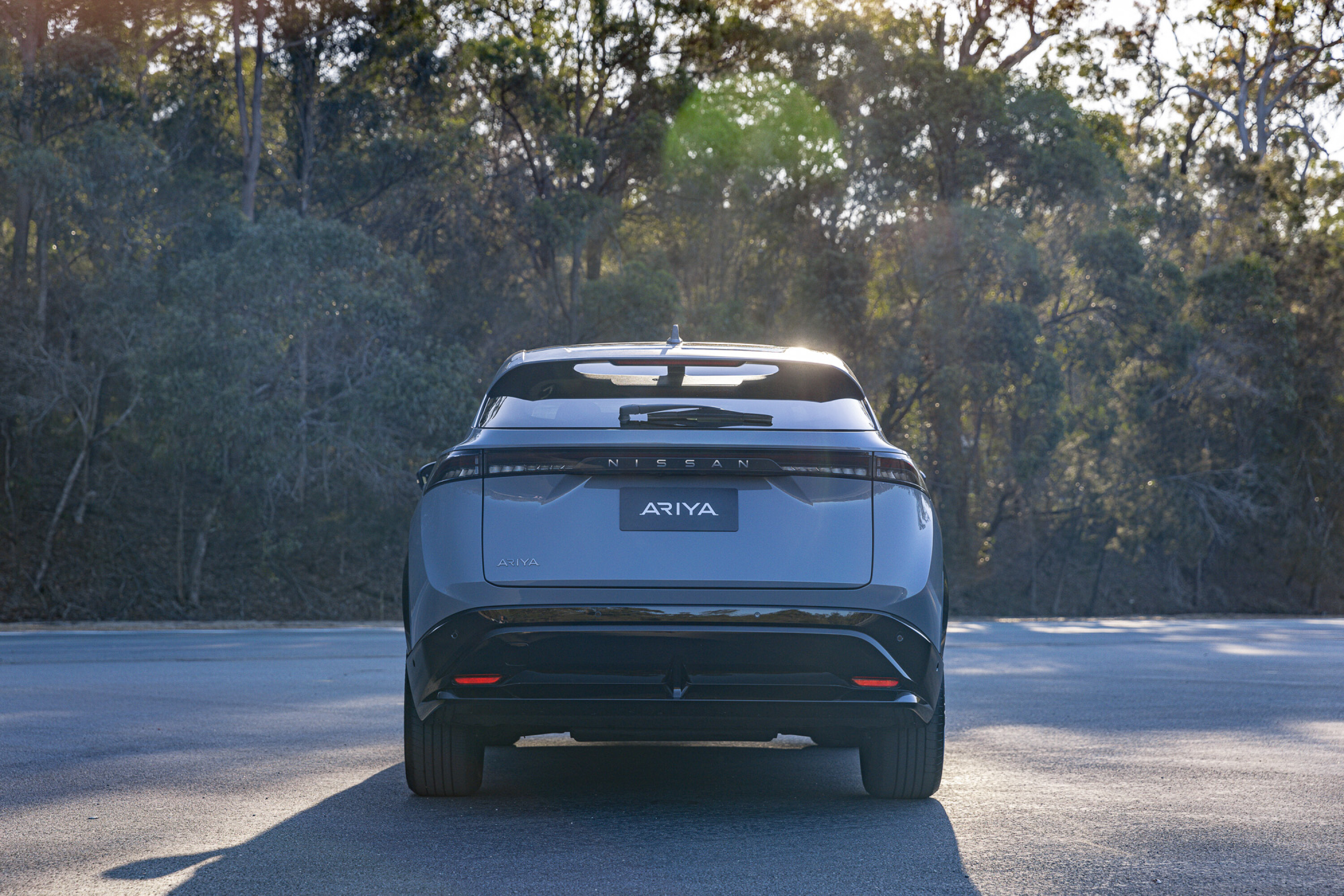
The vehicle we’re driving, however, is a pre-production (for Australia), European-spec 87kW/2WD variant sans e4orce. What that means it is that it still needs to go through the required homologation process for Australia. It’s fitted with a 178kW/300Nm motor and 87kW battery, to give it a driving range of 536km.
Power stats
Battery capacity
87kWh
Output
178kW
Torque
300Nm
Acceleration (0-100km/h)
7.6 sec
Top speed
160km/h
Estimated range
536km
Japanese DNA
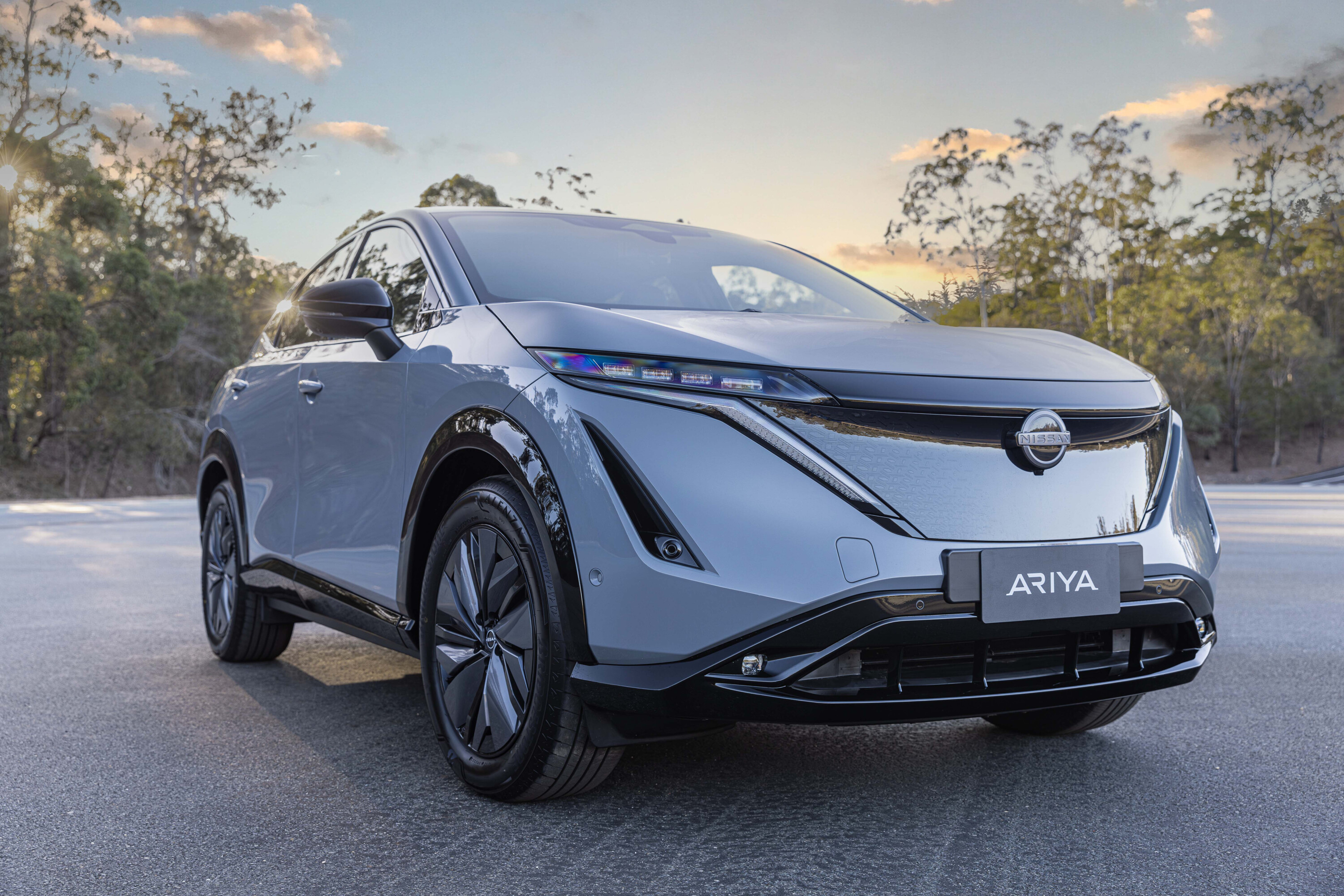
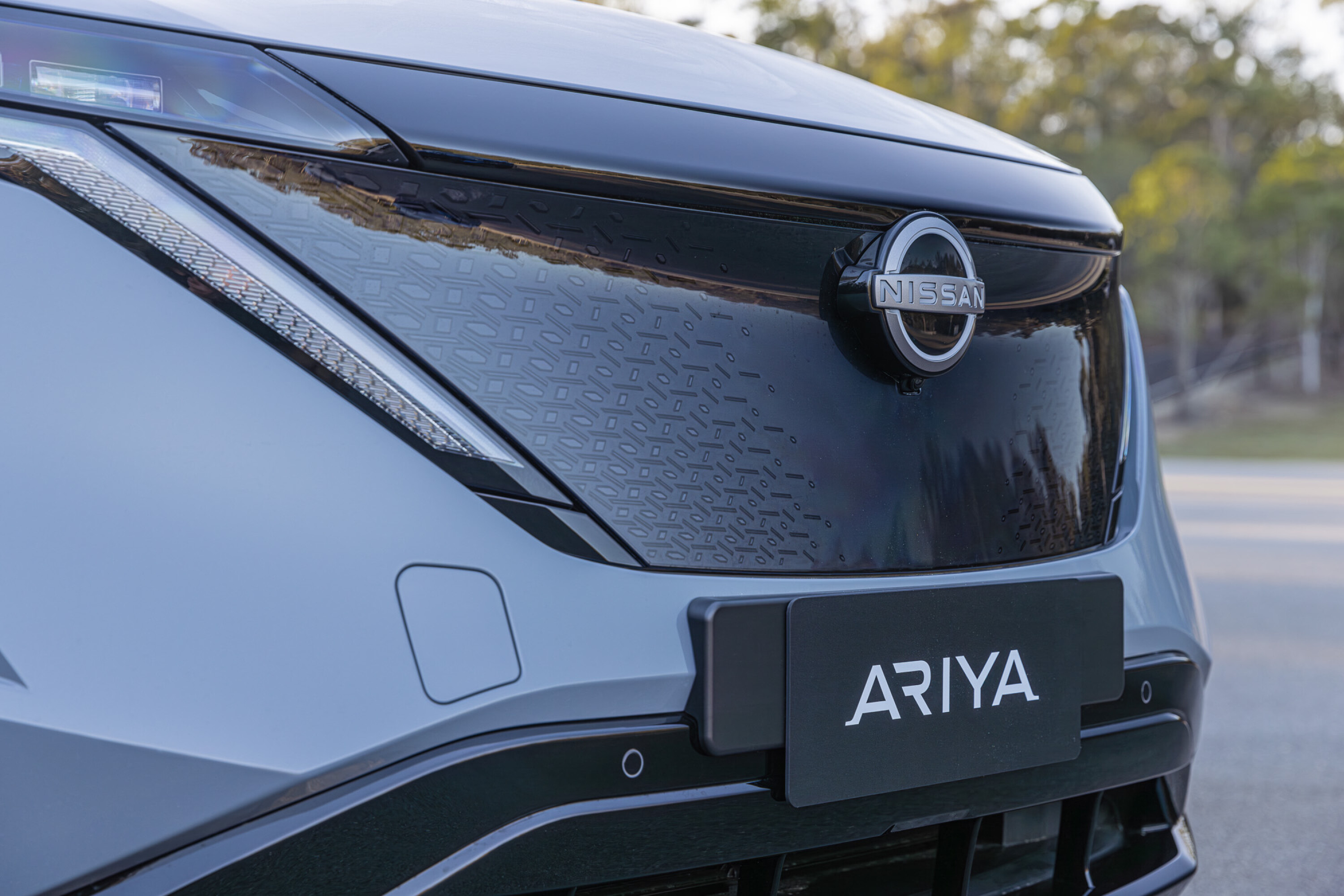
Led by Senior Vice President of Global Design, Alfonso Albaisa, Nissan has imbued its Ariya SUV with a “timeless Japanese futurism” design language, in an effort to reconnect the Nissan brand with its rich Japanese heritage.
To this end, the visually striking front “shield” features a traditional Japanese design pattern called Kumiko, a technique used in Japan to assemble wooden pieces without the use of nails that dates back to the 17th century.
1
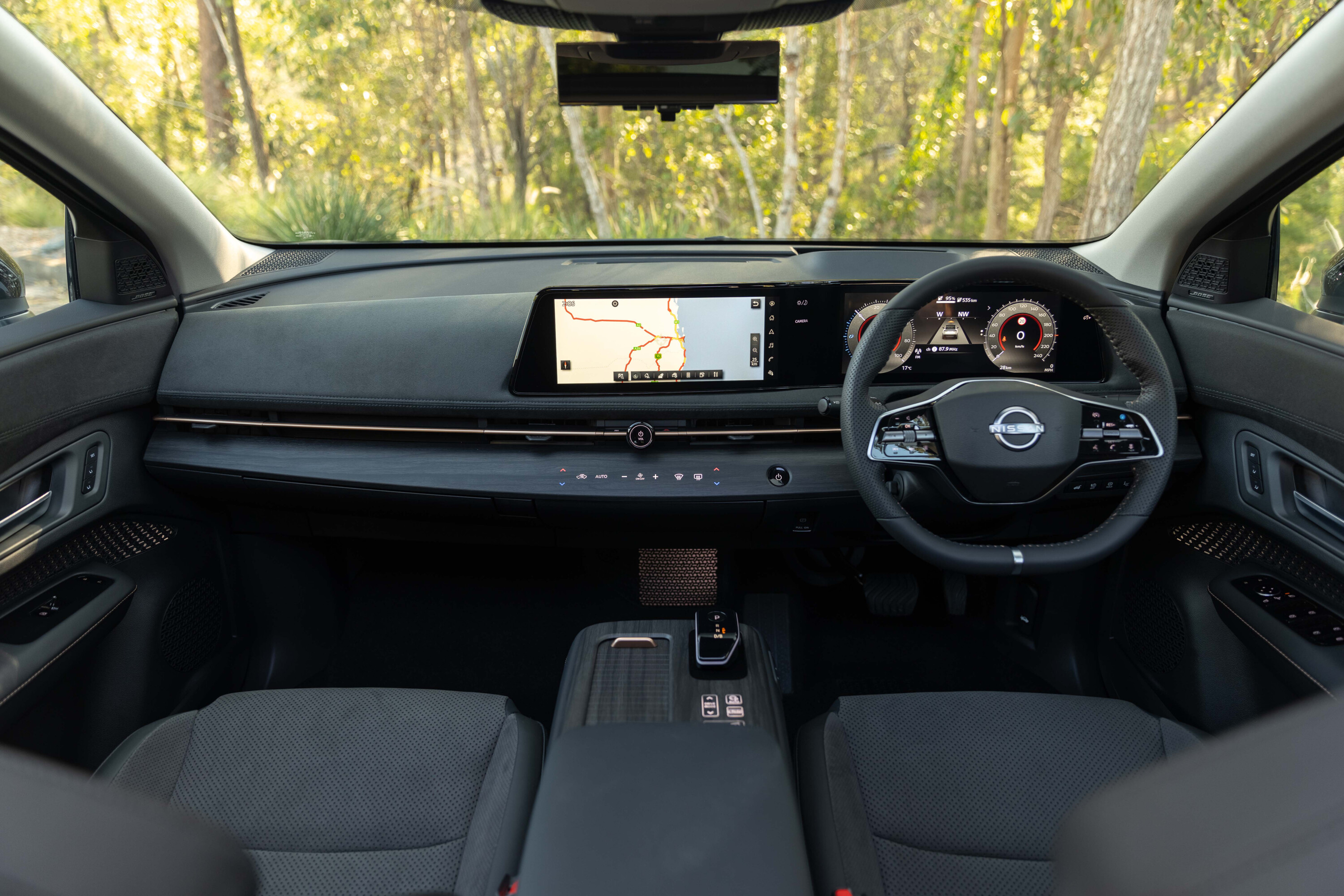
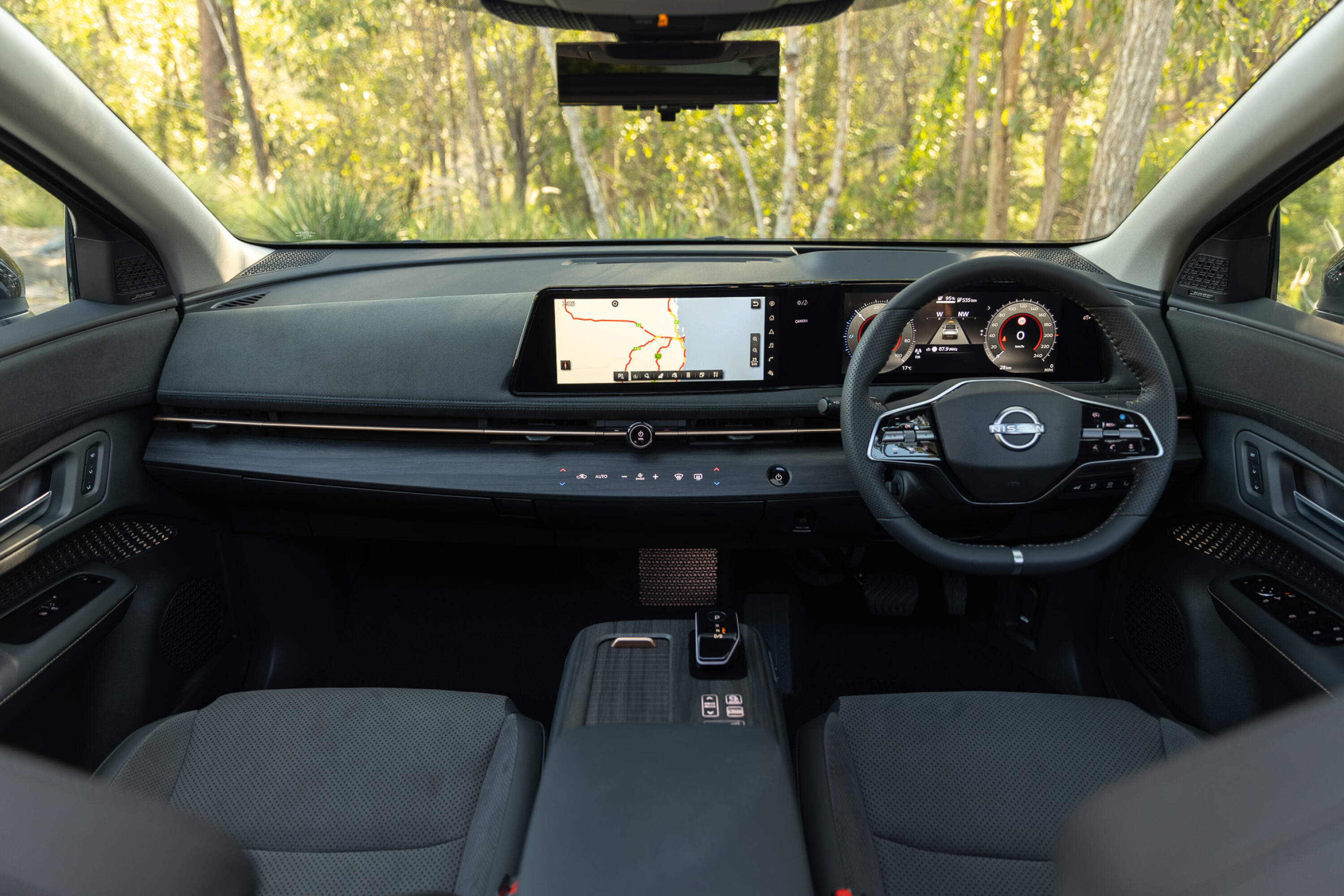
This distinctive Japanese DNA continues in the minimalistic cabin, with Kumiko patterns found throughout. Even the lighting utilises a traditional Japanese lantern called “andon”, providing a calming and inviting atmosphere, with the warm glow enhancing the illusion of space.
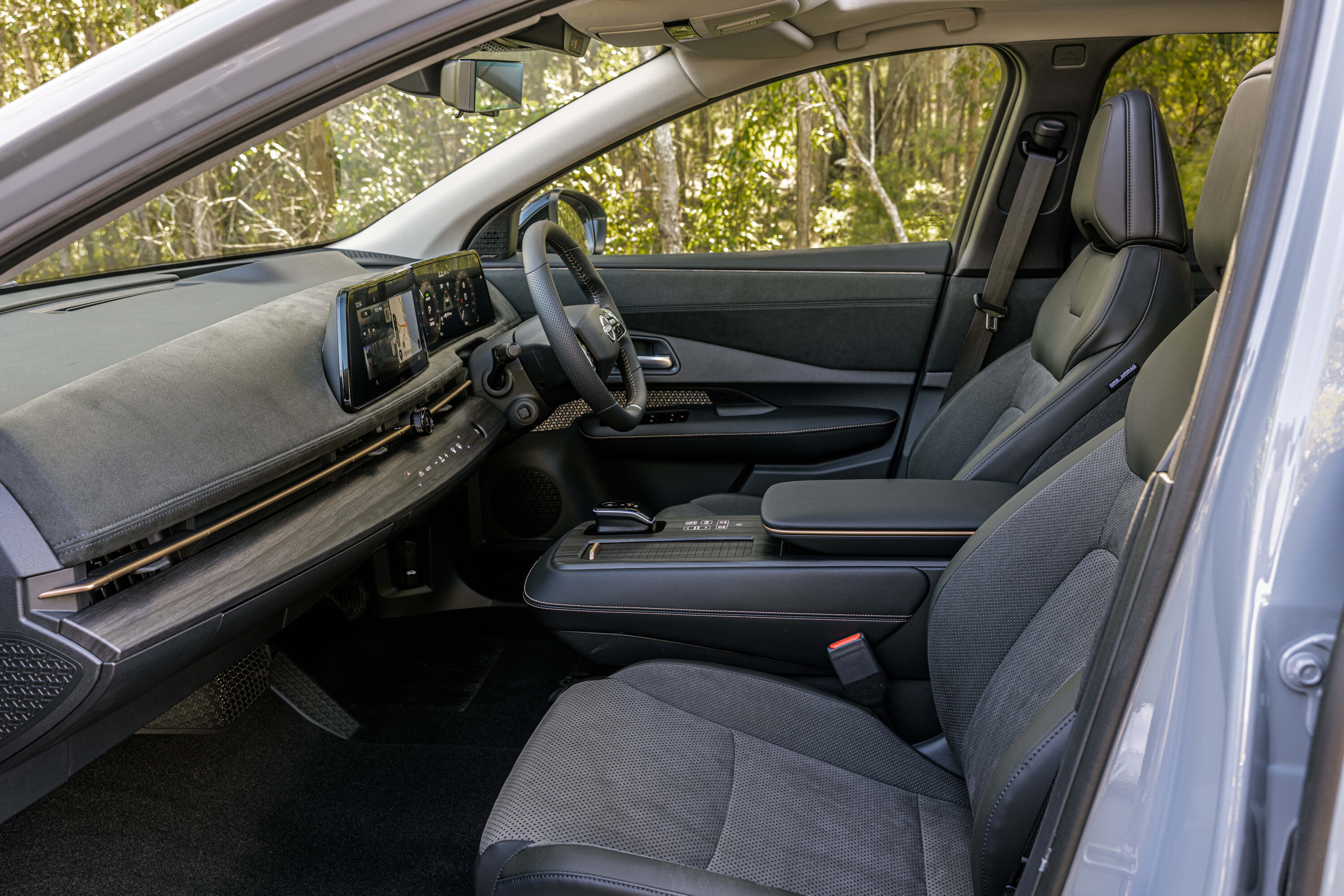
Double-glazed windows, thick carpet and an acoustic windscreen insulate the cabin well, ensuring it remains extremely quiet when driven on bitumen. The lounge-like ‘Zero Gravity’ seating is extremely supportive and comfortable, as are the rear pews.
It’s clear that space or, more precisely, liberating space, was a priority in the design phase, evident in the minimalistic use of buttons and dials, and the smart use of storage – highlighted by the centre console, which can move fore and aft at the push of an “actual” button.
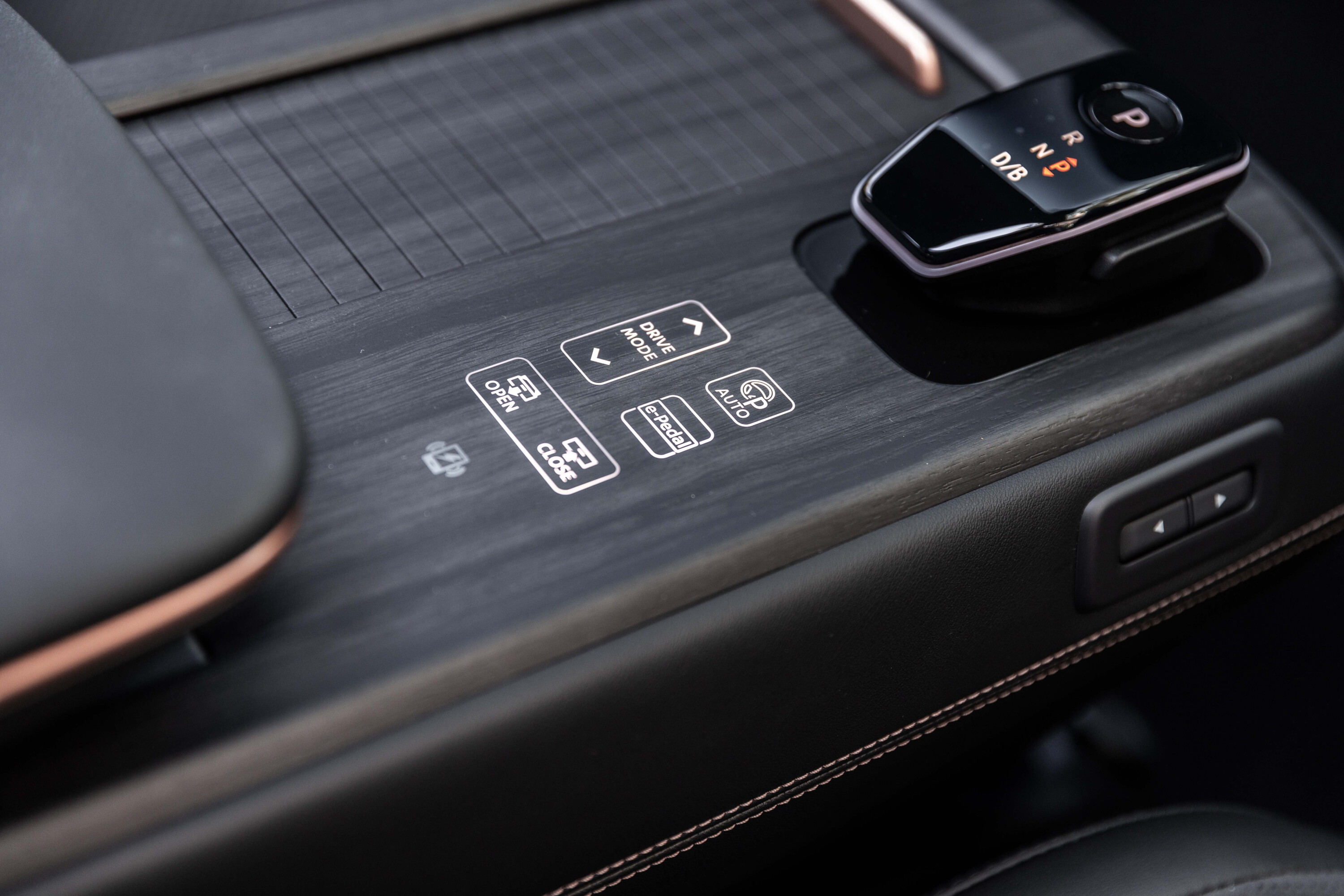
To deliver a human-centric approach to function, another innovative feature is the implementation of haptic touch buttons – in fact, Alfonso Albaisa admitted to us that it is one of his favourite design elements of the Ariya.
1
“I love the haptic because that was a breakthrough,” he told Wheels. “Nobody is doing haptics like that … When you open the doors next time, look at the power window switches and look at everything – it is blacked out. We negotiated heavily that even with the power window switches, you don’t see the icons. But when you hit the starter button, everything comes from nothing.”
The haptic buttons positioned on faux wood eliminate the need for most buttons, and when combined with the subtle use of hidden window sills, ensures a minimalist, clean cabin. A significant problem with haptic controls is that feedback needs to be immediate once the button is pressed, so that the user is aware that the button was indeed pushed. This isn’t a problem with the Ariya, though, with feedback obvious and instant.
1
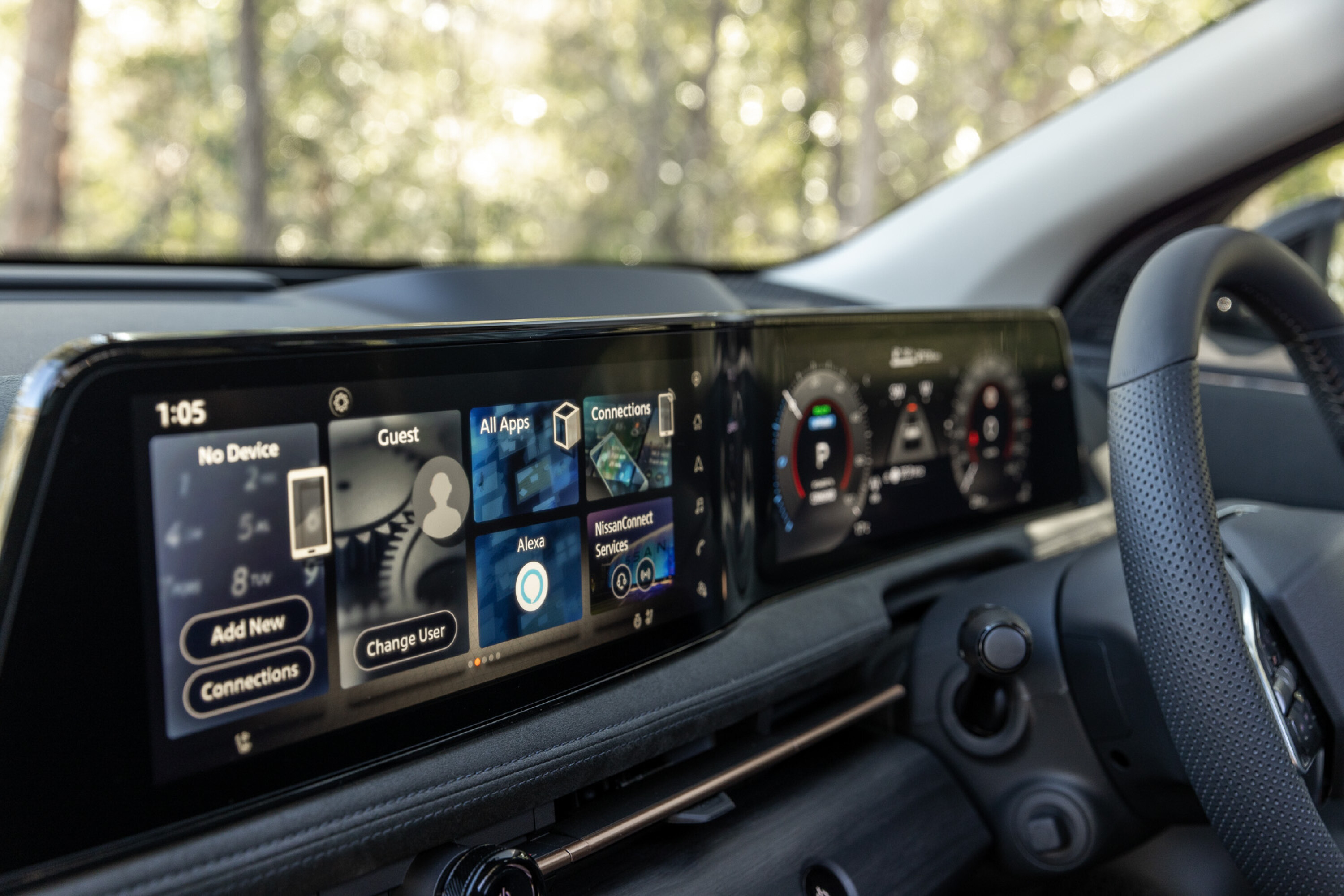
Another modern use of technology is the inclusion of a smartphone-like swipe function which can reposition apps – like mapping – from the central 12.3-inch touchscreen to the 12.3-inch driver digital display.
It’s a bit fiddly to use and, at the time of writing, only the in-built mapping would transition across. The central touchscreen also has Apple CarPlay/Android Auto smartphone mirroring
Drive impressions
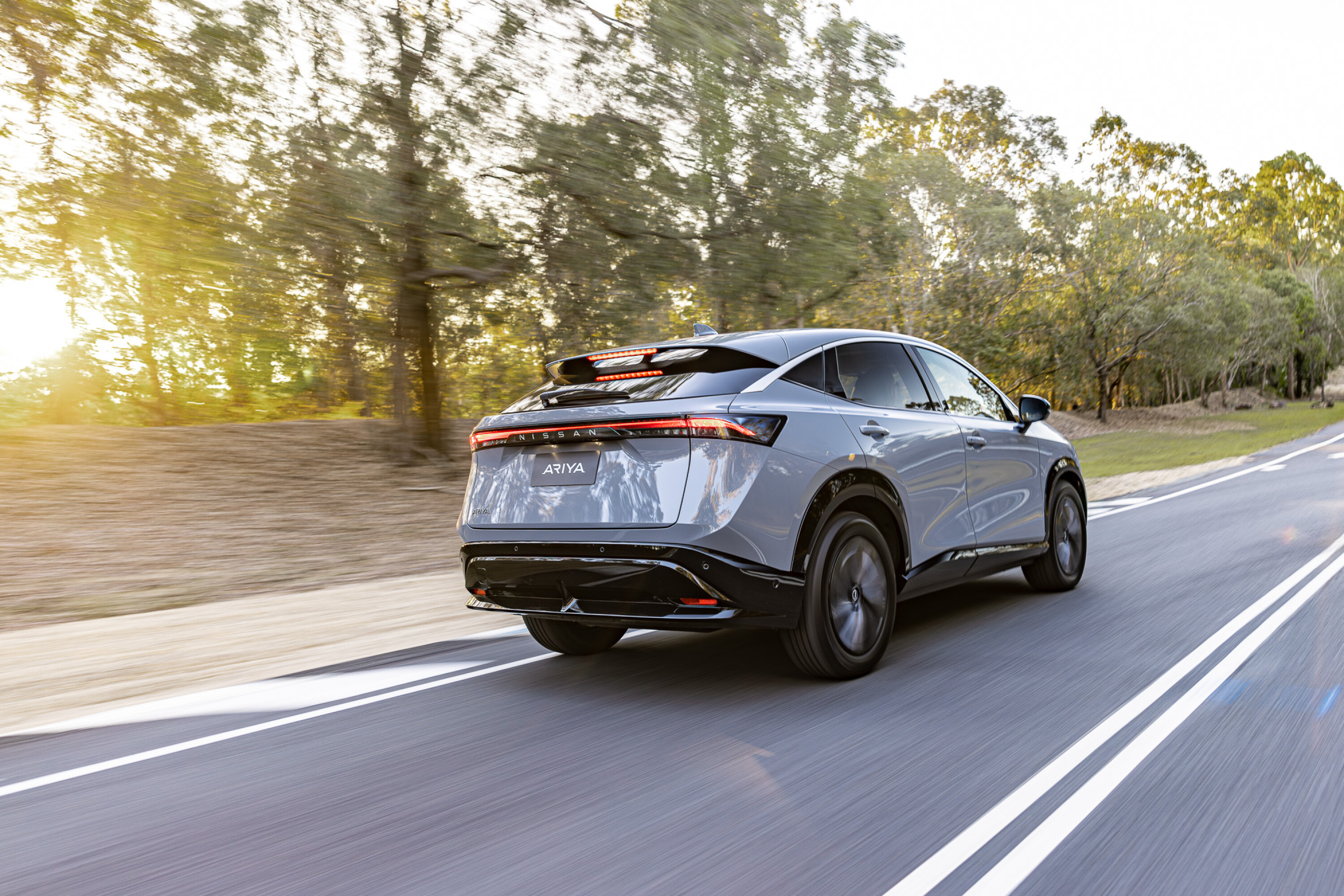
That feeling of calmness when you first enter the cabin transfers into the way the Ariya behaves when on-road – it’s calm, quiet and refined.
It’s also where the addition of an array of those sound-deadening tools previously mentioned (thicker carpet, double-glazed windows) pays dividends.
1
The suspension soaks up road imperfections, which is essential to maintain the vehicle’s zen-like cabin
The steering feels nicely weighted and torque is delivered when it’s most required. Time spent behind the wheel – on a private test loop – was limited, but we were able to be a bit more ‘liberal’ with the right pedal, and the Ariya impressed with its ability to effortlessly conjure up high speed between tight bends. In the process, the suspension soaks up road imperfections, which is essential to maintain the vehicle’s zen-like cabin.
1
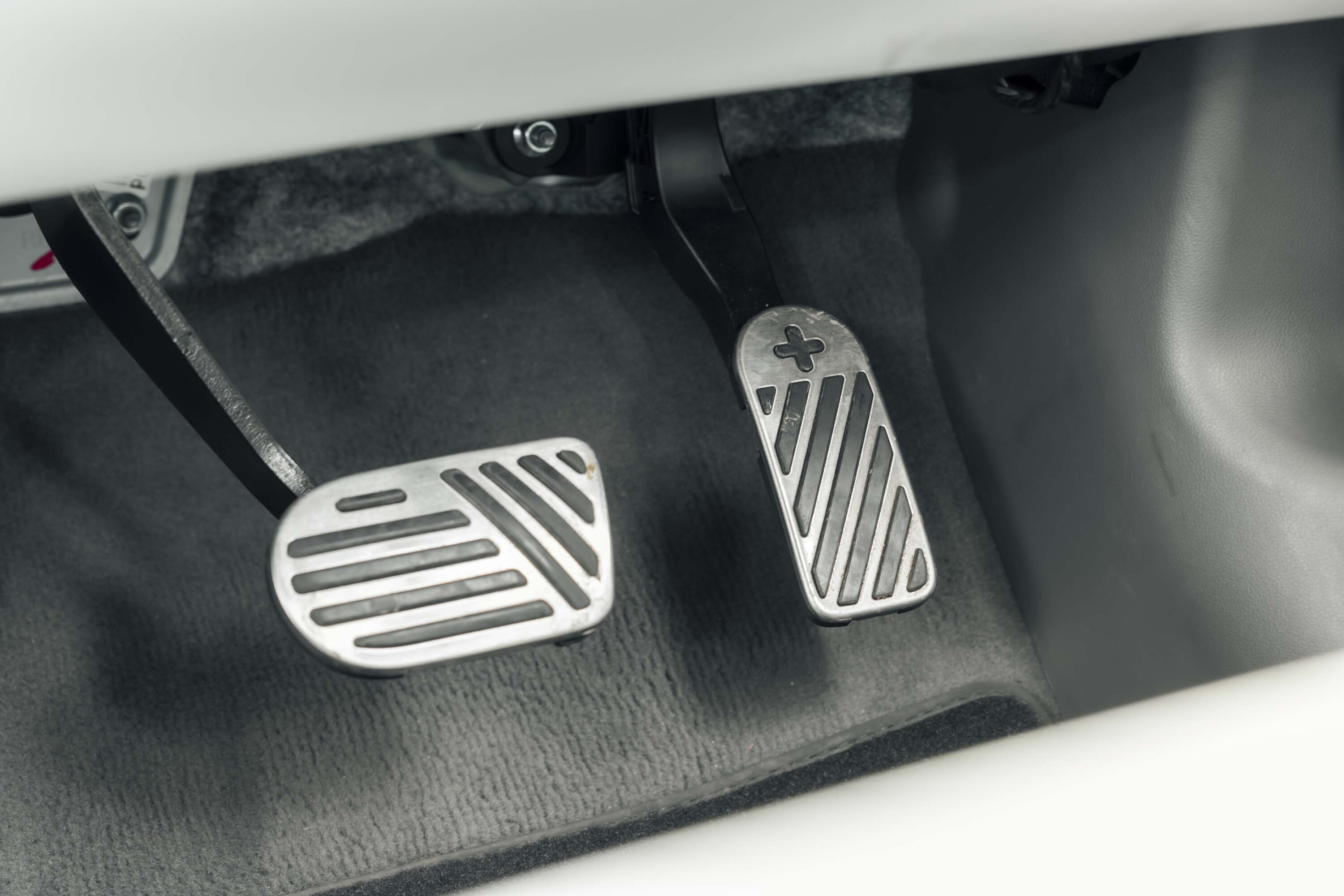
We did briefly use the vehicle’s e-Pedal function, which in theory means you can drive the car by just using the accelerator pedal – doing so will activate regenerative braking. It works well, but a longer test will be essential to really test it out.
Verdict
Nissan holds high hopes for a vehicle that has been engineered to inspire the transition to the next generation of electric vehicles, and the Ariya fits that mantle superbly.
1
Its futuristic design and high attention to detail, as well as its reconnection with its Japanese heritage make it an extremely endearing vehicle. If anything, it has made us extremely giddy for the next generation of Nissan vehicles – EV or not.
Unfortunately we’ll have to wait until at least 2024 (that’s yet to be confirmed) before we can drive a homologated model in Australia, so charging times and more in-depth analysis will have to wait until then. Stay tuned.
Research has revealed a potential safety hazard for Hyundai Motor Group’s electric vehicle regenerative braking system, as an investigation opens on reported Ioniq 5 power losses.
The important bit up front
This story refers to a matter involving models sold in North America.
A Hyundai Australia spokesperson told WhichCar this week that it is “currently checking with our parent company” to determine whether this North American market issue also affects vehicles sold in Australia, and will provide an update “once we have more information to share”.
Have you experienced these issues with your Ioniq 5? Let us know.
Snapshot
Hyundai, Kia, Genesis EVs found to have regen safety issue
Stronger regen modes donu2019t activate brake lights with gradual deceleration
Regulator investigates reported Ioniq 5 power loss faults
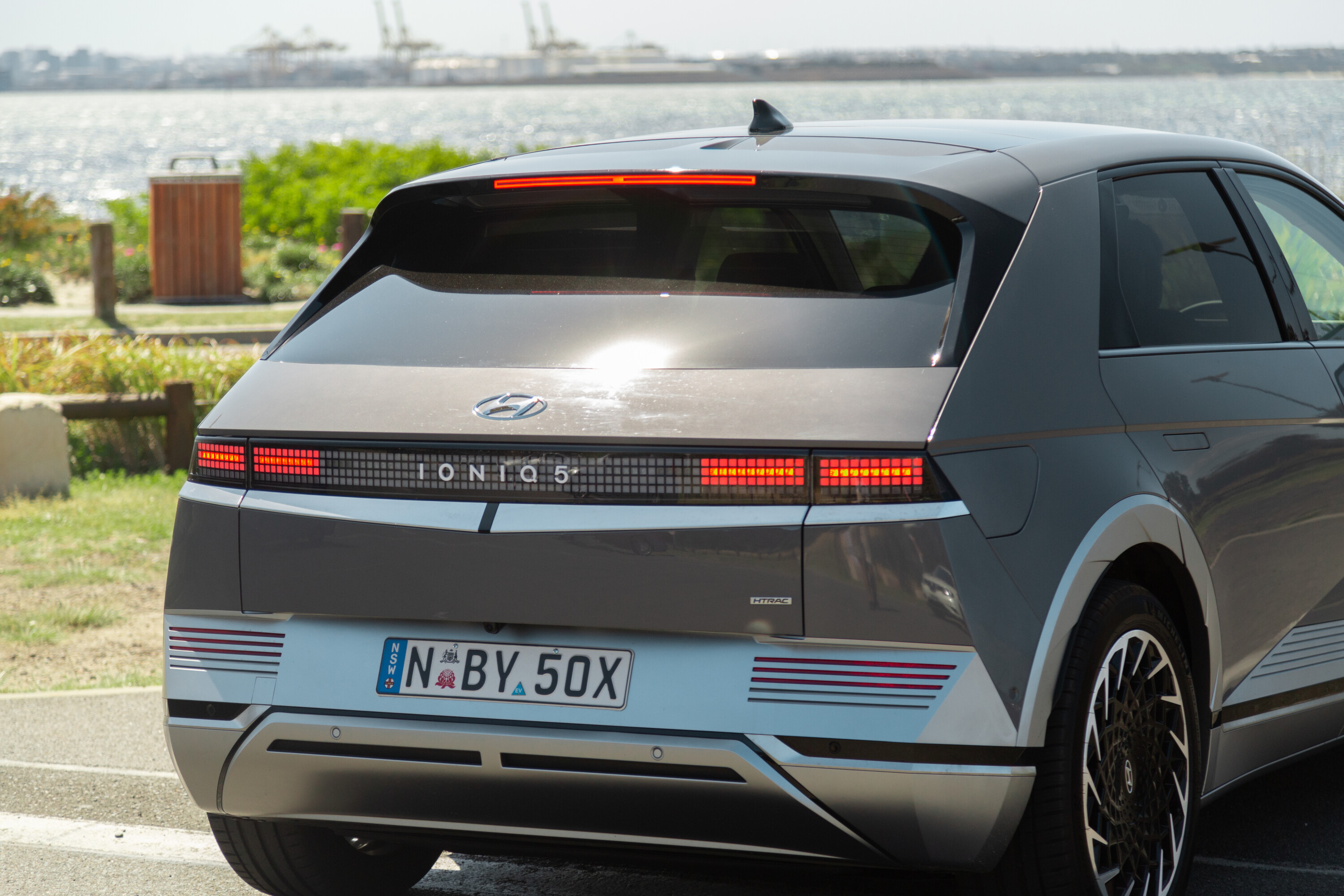
American advocacy group Consumer Reports [↗] has found the carmaker’s full EV models failed to illuminate the rear brake lights when slowing down to a stop – even if the driver had some pressure on the accelerator pedal – via stronger Level 3 and ‘i-Pedal’ regen modes.
The brake lights only activated when the driver completely lifted off the accelerator, which would warn other road users – albeit at the maximum recuperation intensity.
1
However, Consumer Reports noted an Ioniq 6 electric sedan example was an outlier and had consistent brake-light illumination when using i-Pedal.
Consumer Reports Auto Test Center director, Jennifer Stockburger, said owners should avoid using the stronger regen modes.
1
“Until this issue is remedied, drivers of the affected EVs should stick with the Level 1 or Level 2 regenerative-braking modes and avoid using the stronger Level 3 and strongest i-Pedal modes,” Stockburger said.
Meanwhile, it also found Mercedes-Benz EVs don’t immediately keep the brake lights activated during the last point of deceleration and once at a complete stop when using its strong recuperation mode. It only activated after 15 seconds – long after the vehicle stopped.
1
Software update fix coming
In response to Consumer Reports’ findings, a Hyundai Motor America spokesperson confirmed that a software update will roll out to address this regen braking safety issue.
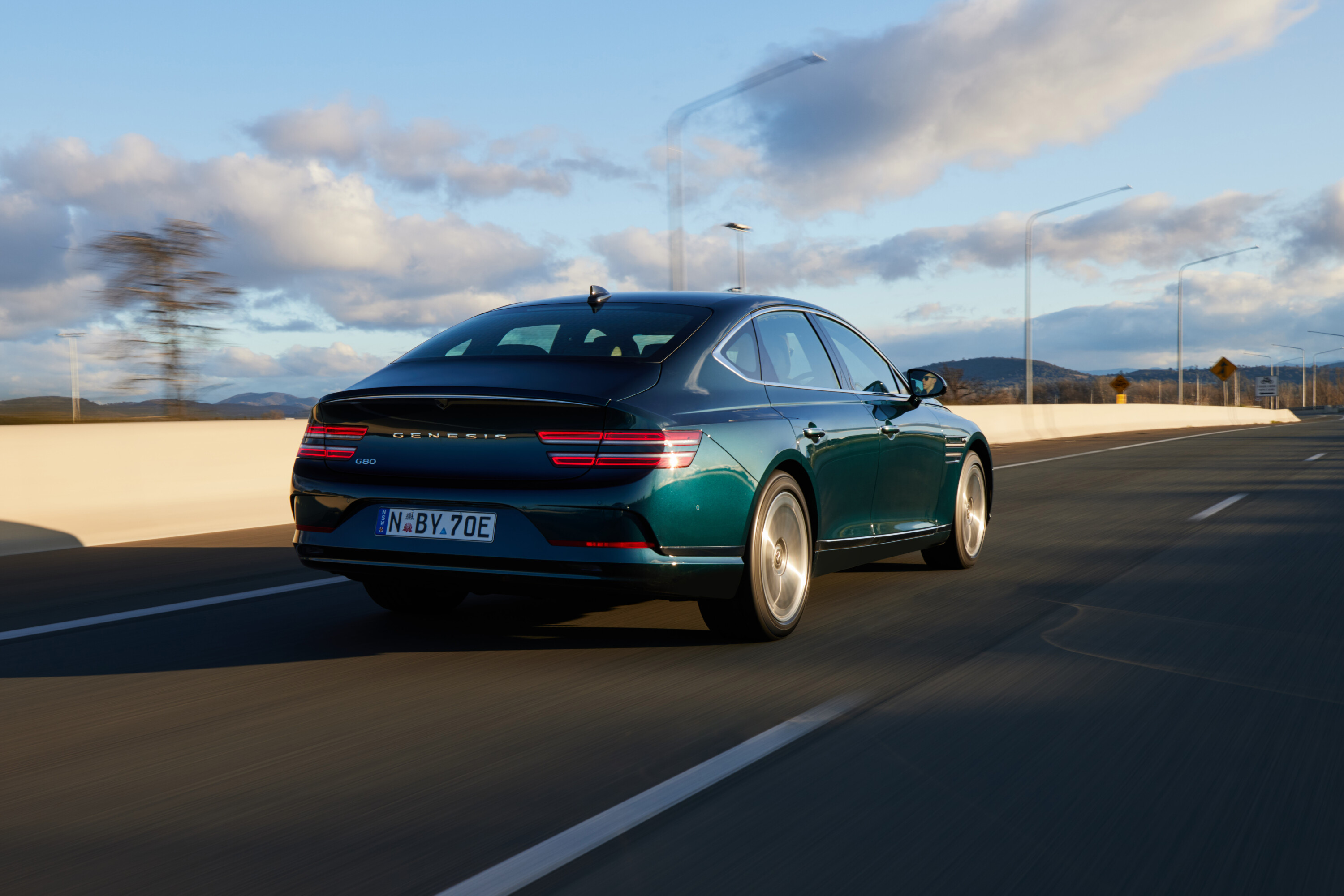
“After further investigation, Hyundai and Genesis will be launching a field service campaign to update the EV brake light logic for the Hyundai Ioniq 5, Genesis Electrified G80, Genesis Electrified GV70, and Genesis GV60. There will also be a change made to new production of those models,” the Hyundai America spokesperson said.
1
“Regardless of the accelerator pedal input, the brake lights will now turn on when the deceleration rate exceeds 1.3m/s2 (approx. 0.13G).
“The service campaign will launch in July for approximately 56,000 vehicles and will be performed free of charge.”
Meanwhile, a Kia America spokesperson told the organisation that it is ‘evaluating’ the i-Pedal brake light logic on the Niro EV and EV6 electric SUVs, but unknowingly not for the high performance EV6 GT flagship.
1
Ioniq 5 power loss under investigation
Additionally, the US National Highway Traffic Safety Administration (NHTSA) has opened an investigation to a reported spontaneous loss of power fault on 2022 Hyundai Ioniq 5 electric SUVs.
The safety authority’s Office of Defects Investigation [PDF ↗] has received 30 complaints, with many reporting a “loud pop noise followed by a warning displayed in their dashboard and immediately experience a loss of motive power that ranges from a reduction to a complete loss.”
1
It also said it has conducted several interviews with owners – each experiencing varying time intervals between the warning message and loss of power.
Hyundai told the regulator the failure is related to the Integrated Control Charging Unit (ICCU), where over-current can damage transistors in the DC-to-DC converter resulting in the inability to charge the 12-volt electronics battery.
If the issue is found to be widespread, it could impact nearly 40,000 owners in North America.
It is not yet known if the mechanically related Kia EV6 has been affected by these issues.
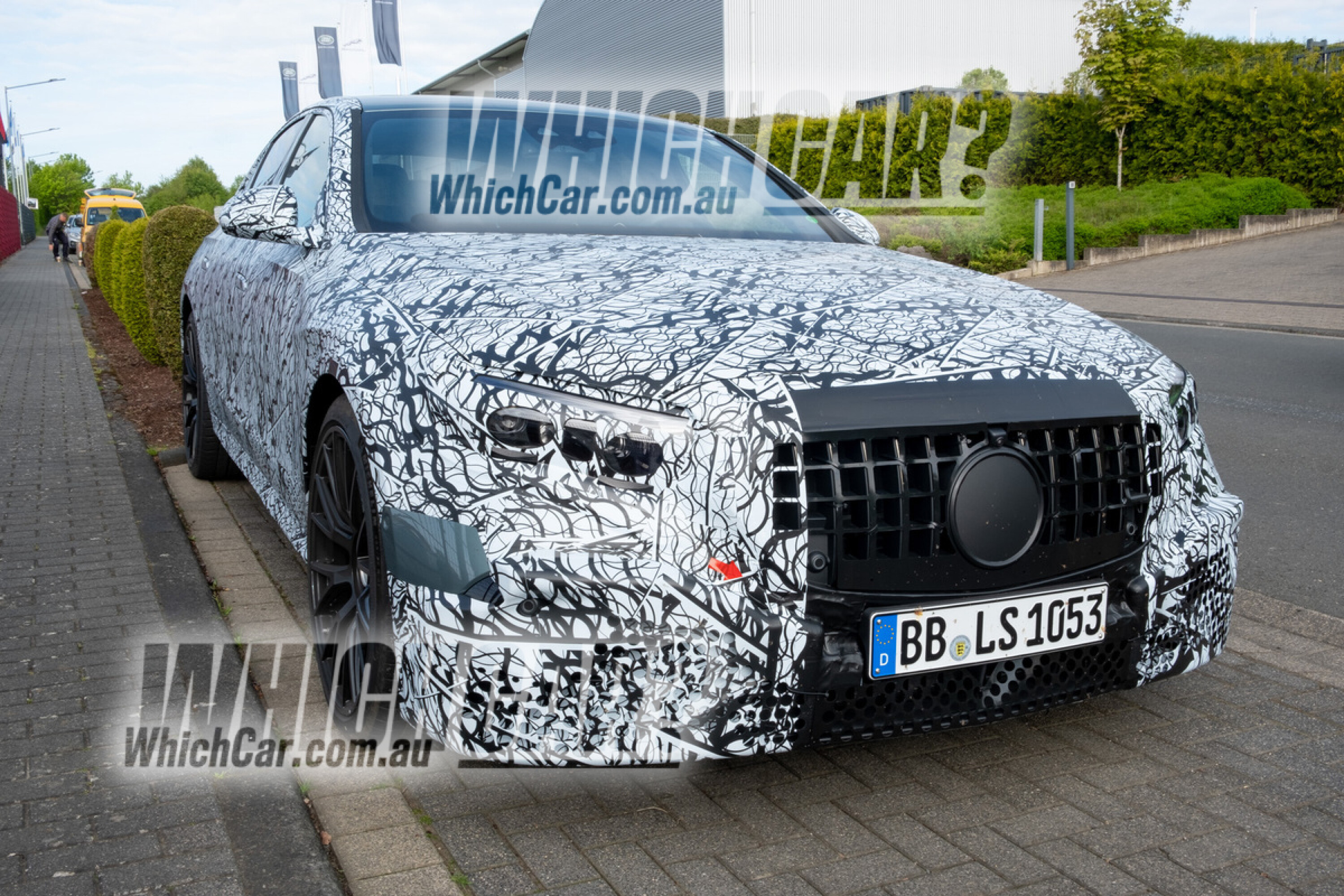
Following the April reveal of the ‘W214’ Mercedes-Benz E-Class, we’ve spied a camouflaged example of the hi-po AMG E63 at the Nurburgring.
Snapshot
AMG E63 plug-in hybrid spied!
520kW electrified straight-six expected
Could hit 100km/h in around 3.5 seconds
Similar to the AMG C63 S E Performance, the E63 is expected to drop AMG’s woofly 4.0-litre twin-turbo V8 for a down-sized combustion engine with plug-in hybrid boost. Expect a global reveal in 2024, with an Australian release to follow.
The bigger AMG is slated to use a longitudinally mounted 3.0-litre straight-six as its combustion-engine base and rear-mounted electric motor for a targeted 520kW, according to an Autocar [↗] report.
This is in contrast to the existing C63 S E Performance that will use a similar layout, but AMG’s hand-assembled M139L four-cylinder engine and rear-mounted electric motor for 500kW.
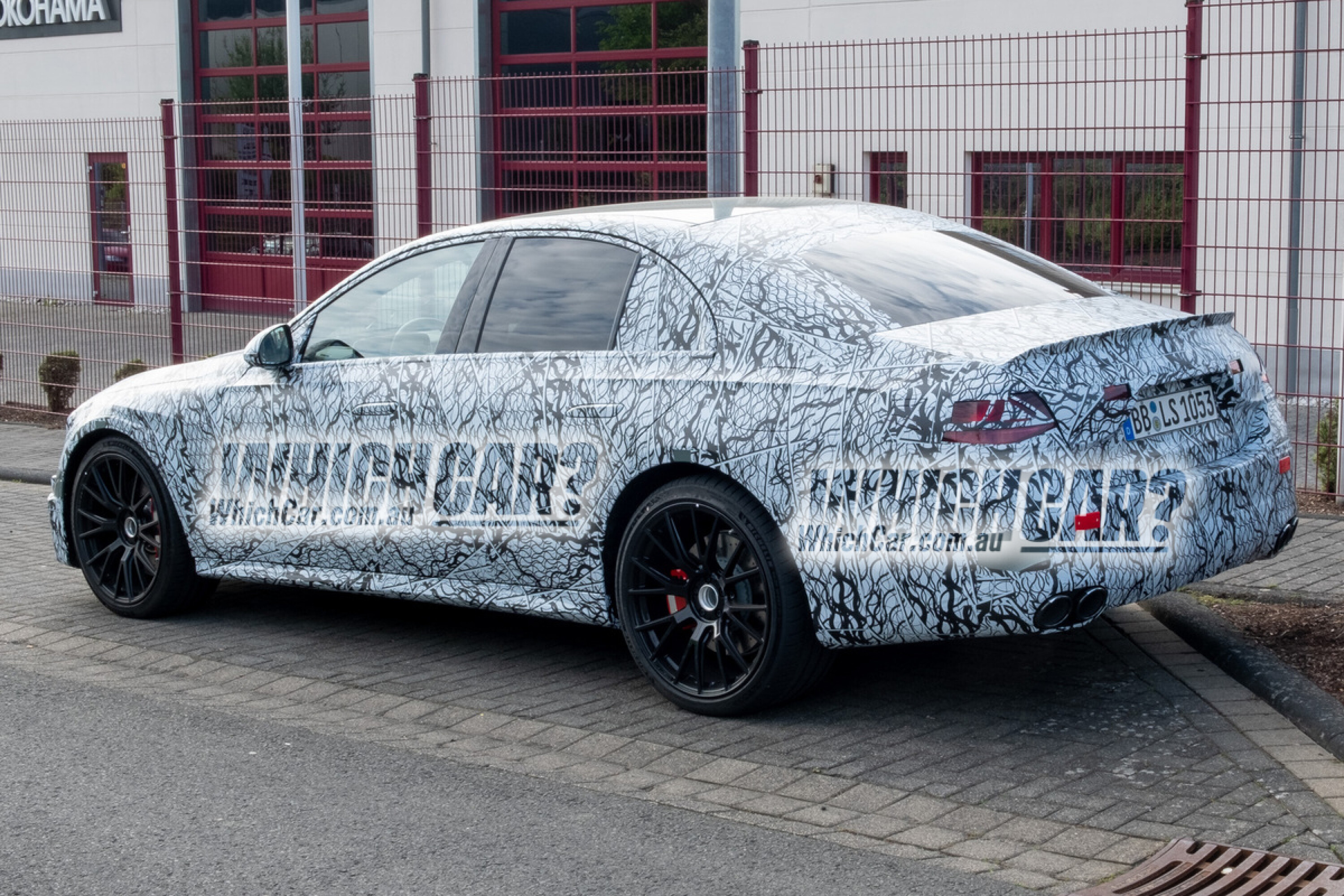
Spotted in the Nurburgring business park before the 24-hour race (won by Ferrari’s 296 GT3 car), this AMG could be an E53 rather than the full-fat E63 – which is expected to use a six-cylinder PHEV powertrain from the S580E sold in other markets.
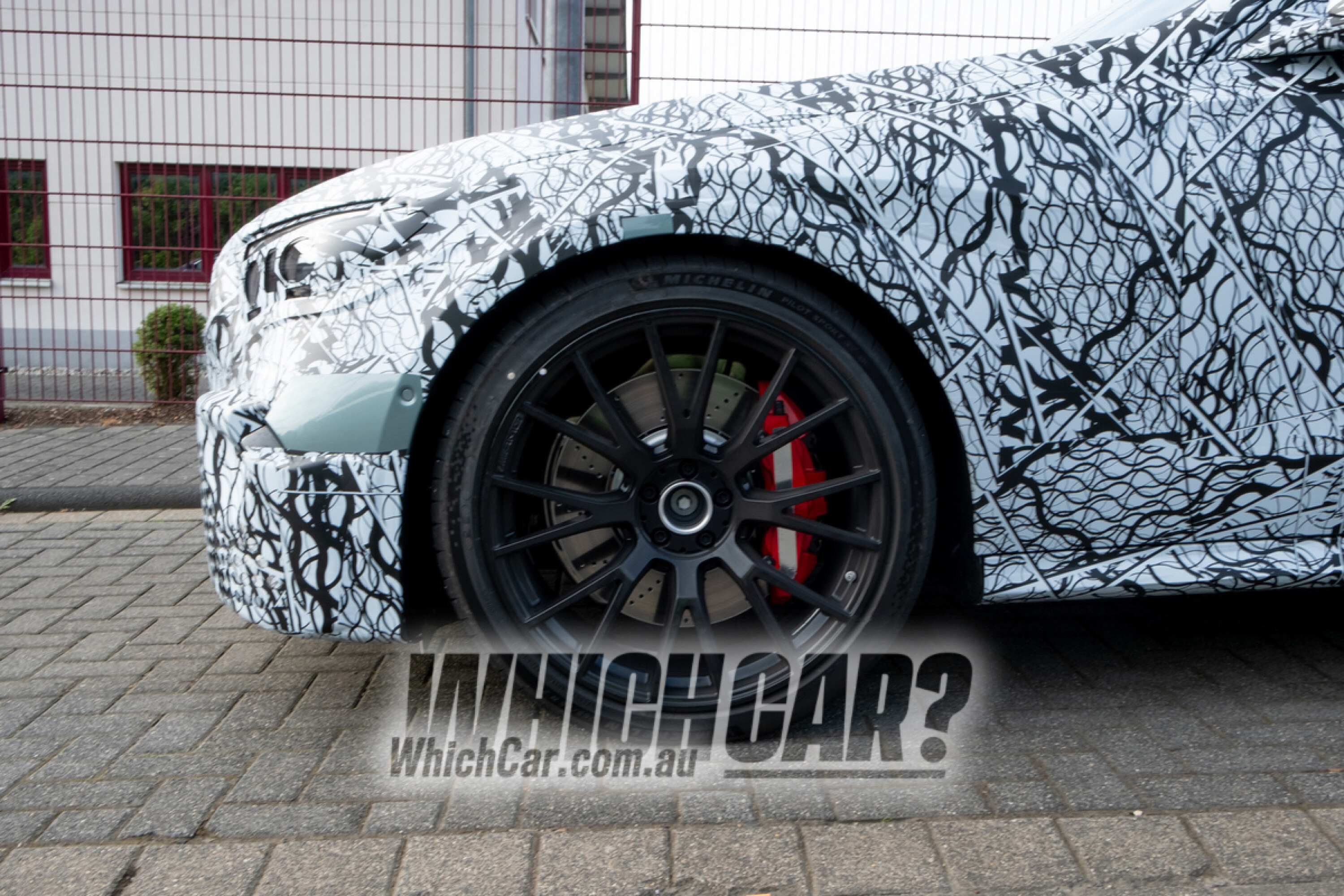
Marking the AMG test cars out from the cooking models is a new take on the Panamericana grille – or perhaps a disguise – with a box pattern rather than vertical slats. Also identifying it as a hardcore AMG product are red multi-piston brake calipers, cross-drilled rotors, and quad exhaust tips.
These have also featured on E53 test cars, however this car’s multi-spoke black 21-inch alloy wheels shod in Michelin Pilot Sport EV high-performance tyres, a rear lip spoiler, and more aggressive front valance suggest it’s the hottest of the lot – an E63 S E Performance.
Pictured here is a sedan, and while Mercedes is tipped to release an E63 wagon overseas, Australia is unlikely to get any long-roofed E-Class variants this generation.
Mercedes-AMG has not confirmed powertrain details yet, but the Autocar report speculates (with confirmation from unnamed Affalterbach insiders) on the configuration and power outputs of the forthcoming AMG model.
At its heart sits a heavily modified version of Mercedes’ existing ‘M256’ 3.0-litre straight-six petrol engine using components borrowed from the highly-strung M139L in the C63, with “similar bore dimensions”.
It’s expected that an electric motor similar to that in the C63 will be installed on the rear axle, presumably producing similar power (150kW) to that car with a 4.8kWh (usable) battery storing energy for the system.
Electric-only drive will be possible but – as in the C63 S E Performance – AMG’s powertrain is more about outright performance than driving range. Mercedes-AMG is reportedly targeting outputs of 520kW and 1200Nm – up on the 500kW/1020Nm outputs of the C63.
Expect a similarly complex AWD system to that found in the C63 S E Performance as detailed by Alex Inwood in his first drive here.
The less potent E53 will reportedly use a version of the existing S580E’s 375kW plug-in hybrid powertrain that’s also based on a longitudinal six-cylinder engine. Further details will be revealed closer to the E63’s 2024 release date.