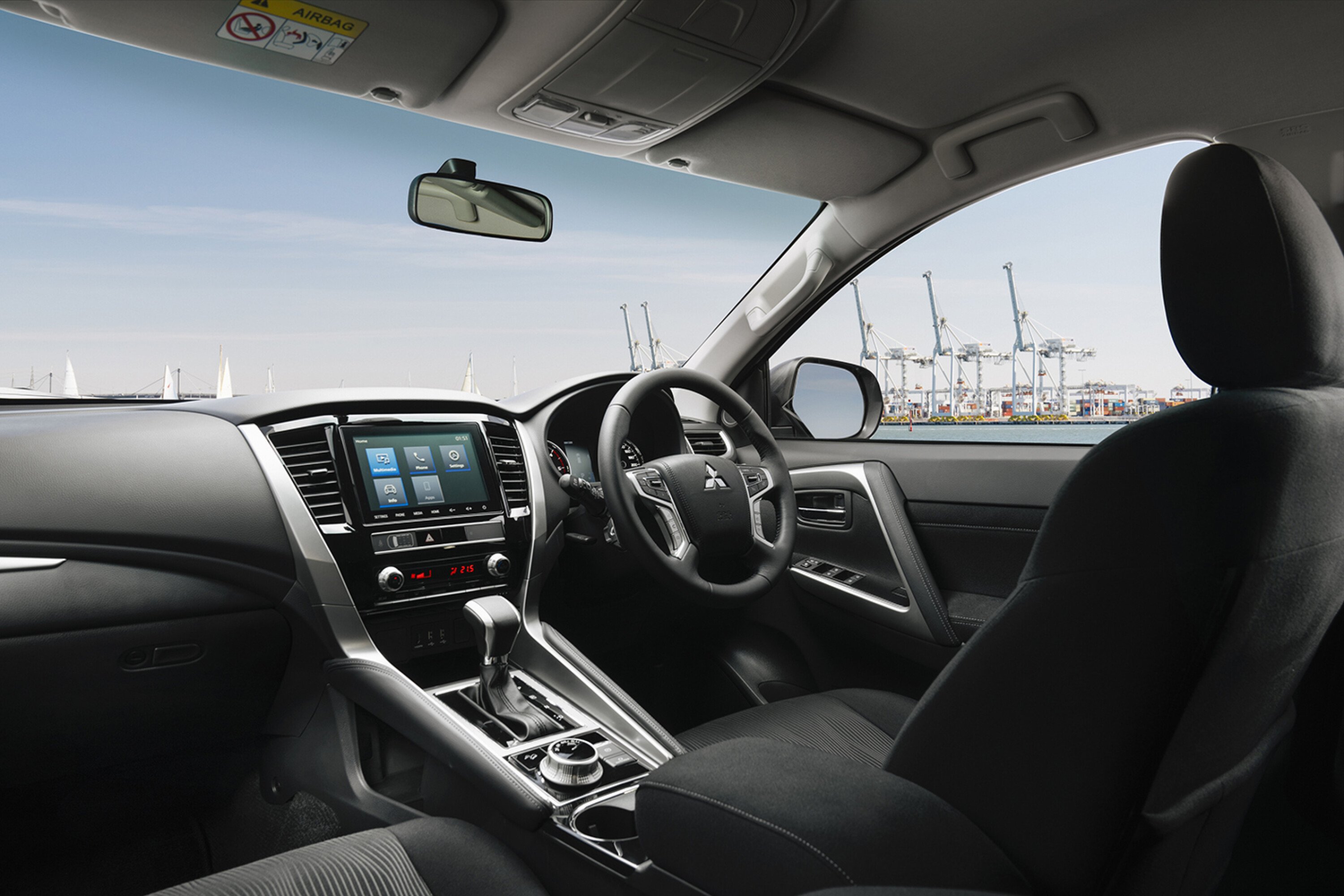
Priced from $44,940, the base-spec Pajero Sport GLX blends everyday functionality with robustness. Its diesel engine, paired with the eight-speed automatic transmission, provides a smooth and confident drive experience.
The Pajero Sport GLX is generously equipped for its price point, available in 2WD and 4WD. The base model features an efficient 2.4-litre MIVEC turbo-diesel engine, an eight-speed automatic transmission, and a comfortable seating arrangement for five. You’ll need to look at the GLS, Exceed or GSR if you want seven seats.
The 4WD variant adds Super Select II 4WD system, selectable off-road modes, and hill descent control.
Standard features include 18-inch wheels, an eight-inch central touchscreen with Android Auto and Apple CarPlay, cloth upholstery, LED headlights, rear parking sensors and a reversing camera, roof rails, and side steps.
1
Safety
The GLX model sets a high standard for safety with seven SRS airbags, cruise control, an electric park brake, and an auto brake hold function.
Mitsubishi’s MiTEC technology contributes greatly to safety, with the inclusion of a Forward Collision Mitigation System (FCM), Emergency Stop Signal Function (ESS), Emergency Brake Assist System (EBA), and Hill Start Assist (HSA).
Active Stability Control (ASC), Active Traction Control (ATC) and Trailer Stability Assist (TSA) ensure the vehicle remains firmly in control of the driver.
Key Rivals
The Mitsubishi Pajero Sport GLX competes in the tough market of midsize SUVs against the likes of:
Absolutely. With its blend of features and safety tech, the 2023 Mitsubishi Pajero Sport GLX is a practical, compelling option in the mid-range SUV market.
While it might not be the most luxurious in its segment, it’s an excellent choice for those who prioritise safety, reliability and value for money.
February 2024: i5 Touring pricing
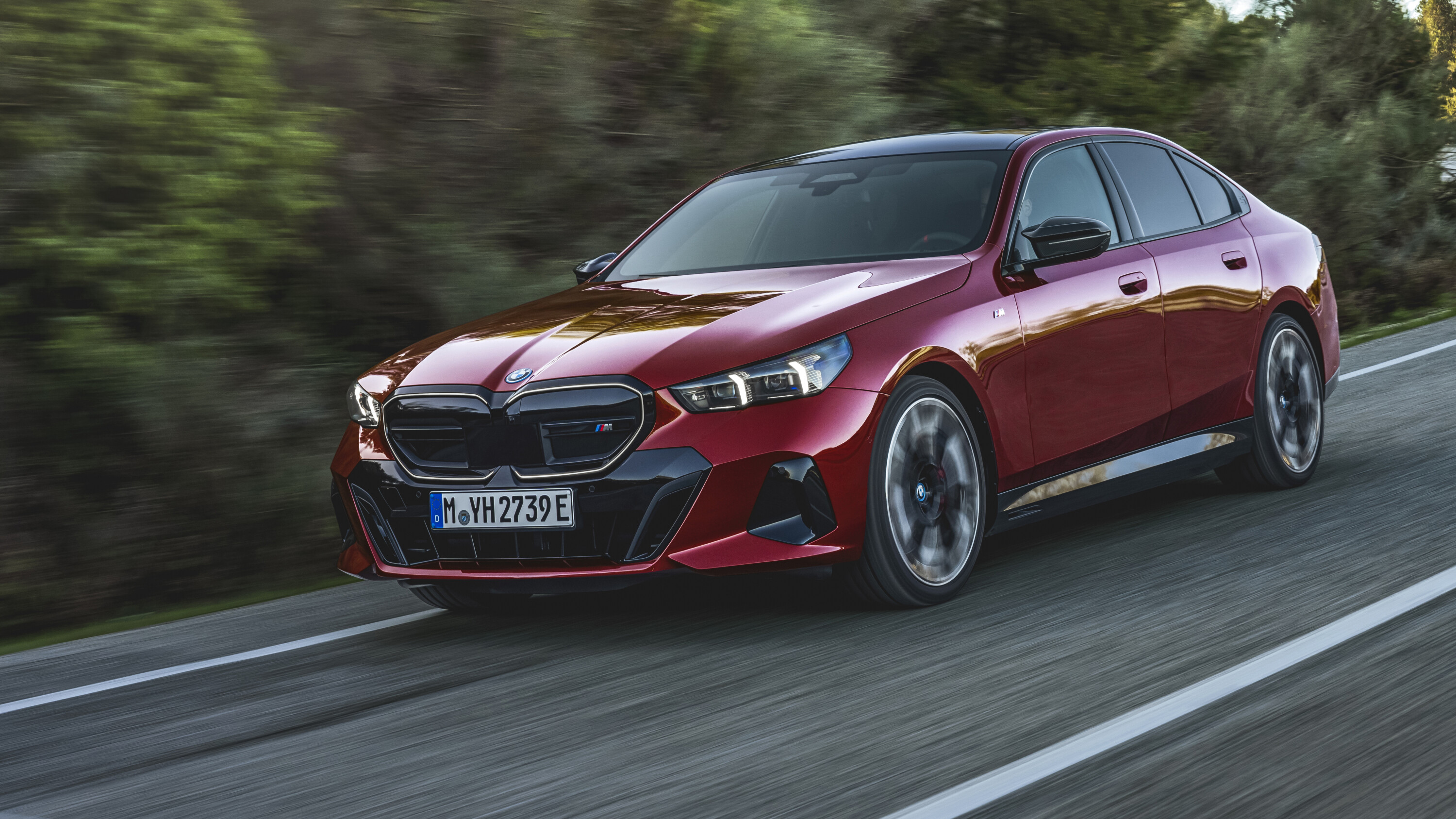
BMW’s gone and revealed an electric wagon – and it’s coming to Australia. Get all the details at the featured story linked below.
July 2023: BMW 5 & i5 sedan pricing
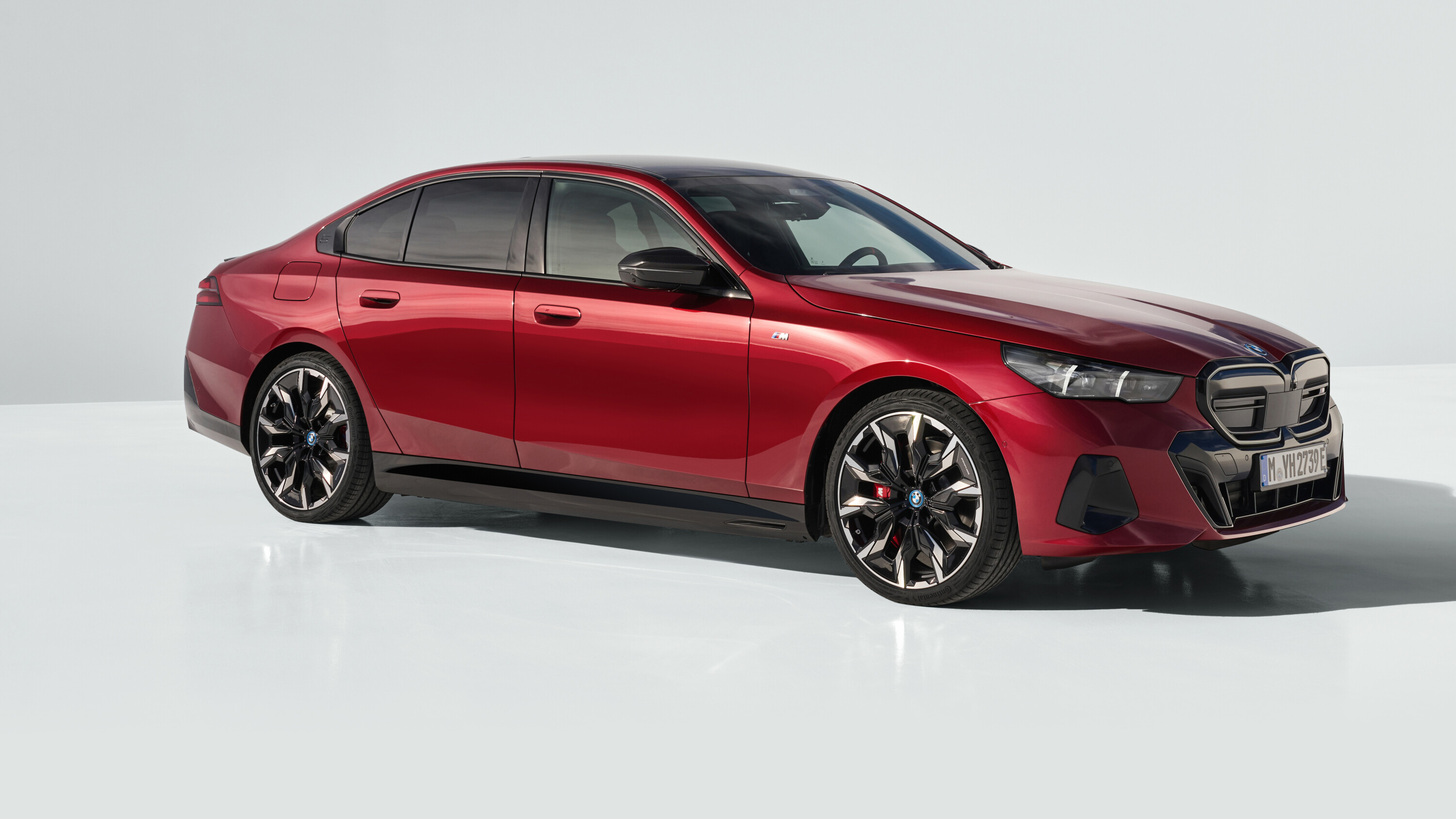
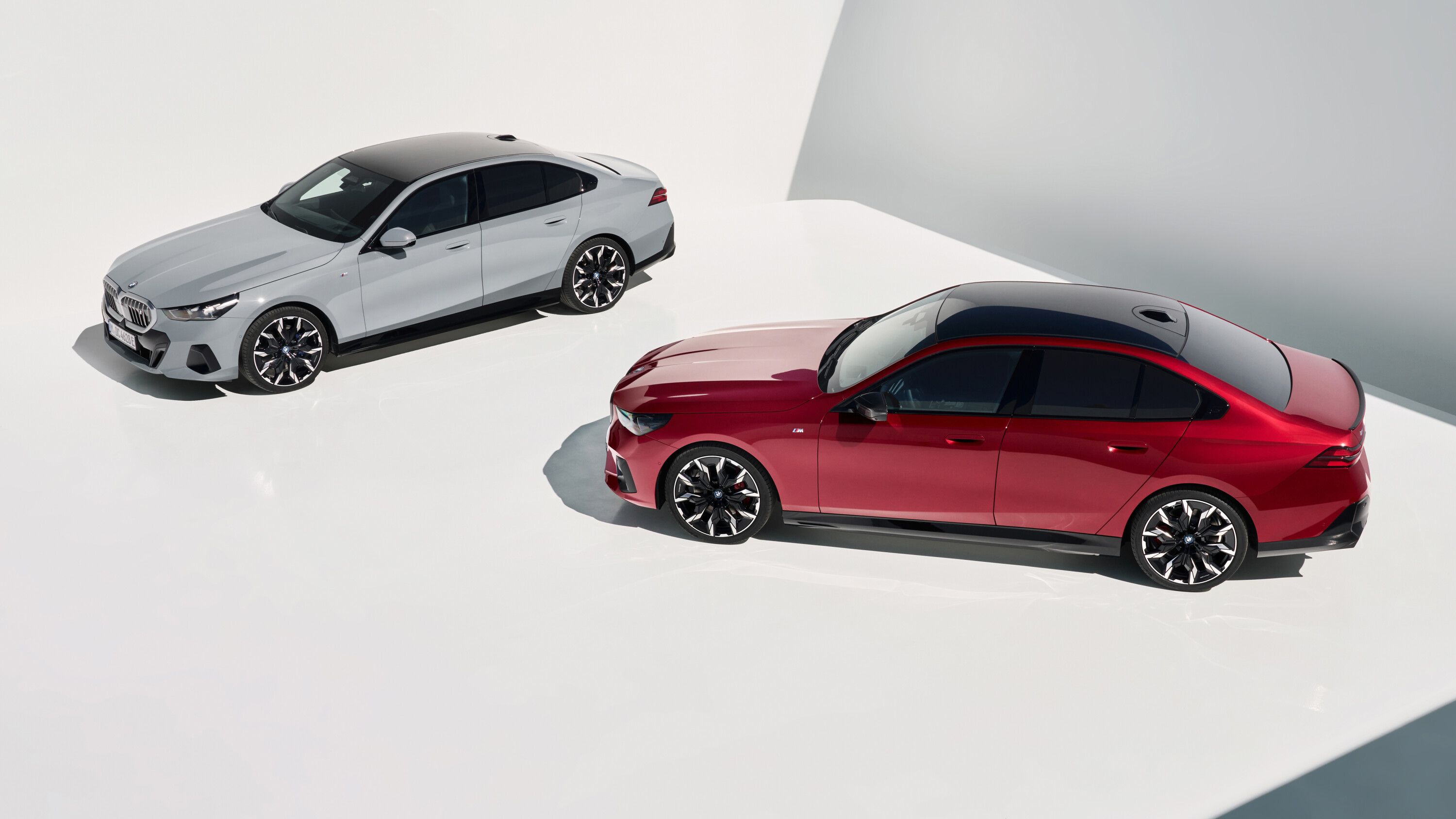
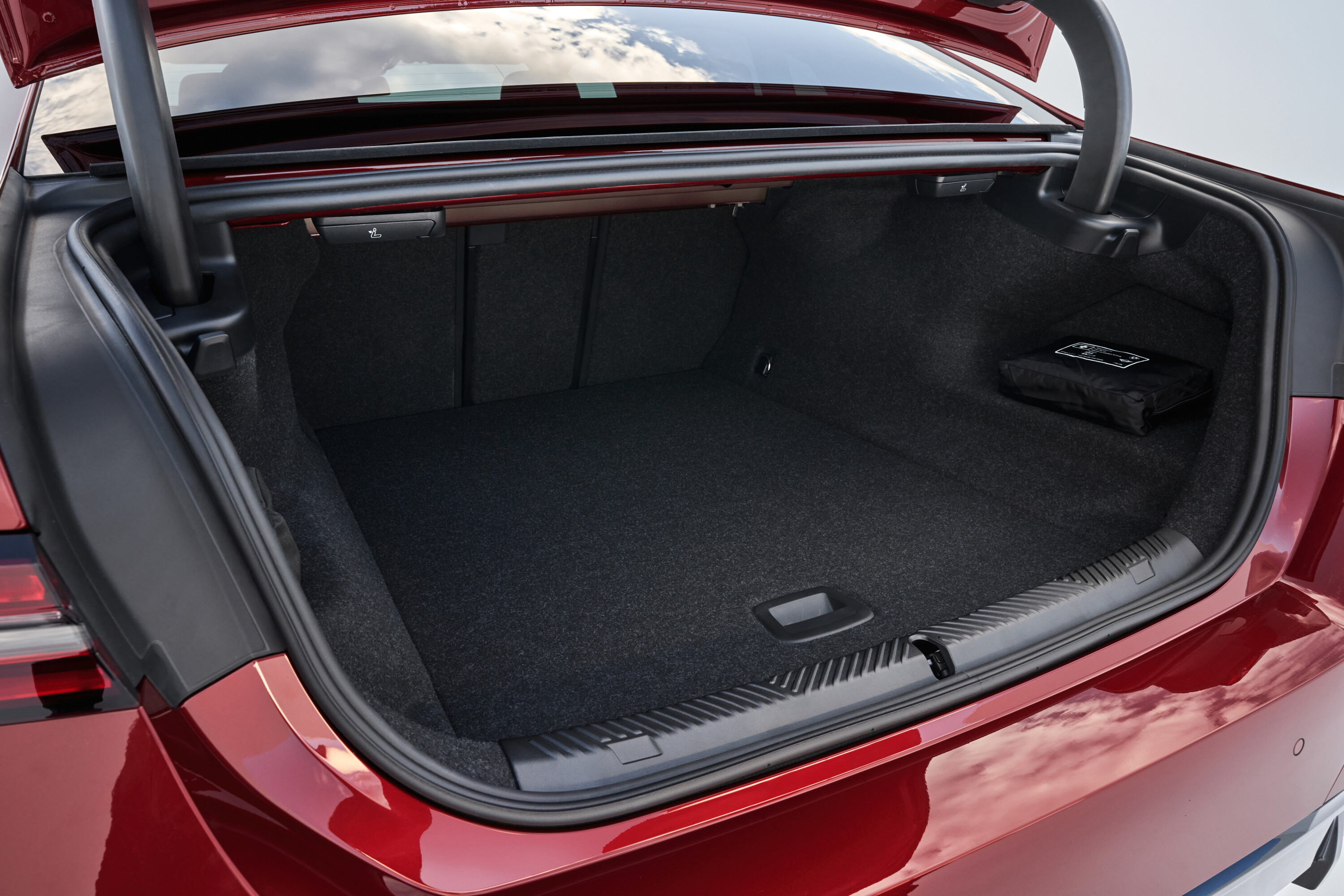
BMW Australia has announced pricing for its esteemed ‘G60’ BMW 5 Series sedan – the brand’s definition of an executive car.
Key Points
New i5 will rival Merc’s EQE, already on sale in Oz
Pricing from $114,900 for 520i; $155,900 for eDrive40
i5 eDrive40 claims 582km driving range
i5 M60 xDrive hits 100km/h in under 4.0 seconds ud83eudd2f
Following in the footsteps of the 4 Series Gran Coupe and i4, the new 5 Series keeps electric and combustion vehicles under one roof, with BMW’s cluster architecture allowing both petrol and battery power for the new G60 5 Series and G68 i5.
The 5 Series range opens at $114,900 for the sole petrol-powered 520i variant, with the mid-spec i5 eDrive40 starting at $155,900 (both before on-road costs) – a circa-$20K premium over its Mercedes-AMG EQE 300 rival.
There’s only one petrol trim for now, but it’s possible BMW will add plug-in hybrid power or greater variety down the track.
At the top end is the 442kW i5 M60 xDrive which costs $215,900 before on-road costs. A true M5 is also on the way packing a plug-in hybrid powertrain centred around a V8, but pricing and timing are yet to be announced.
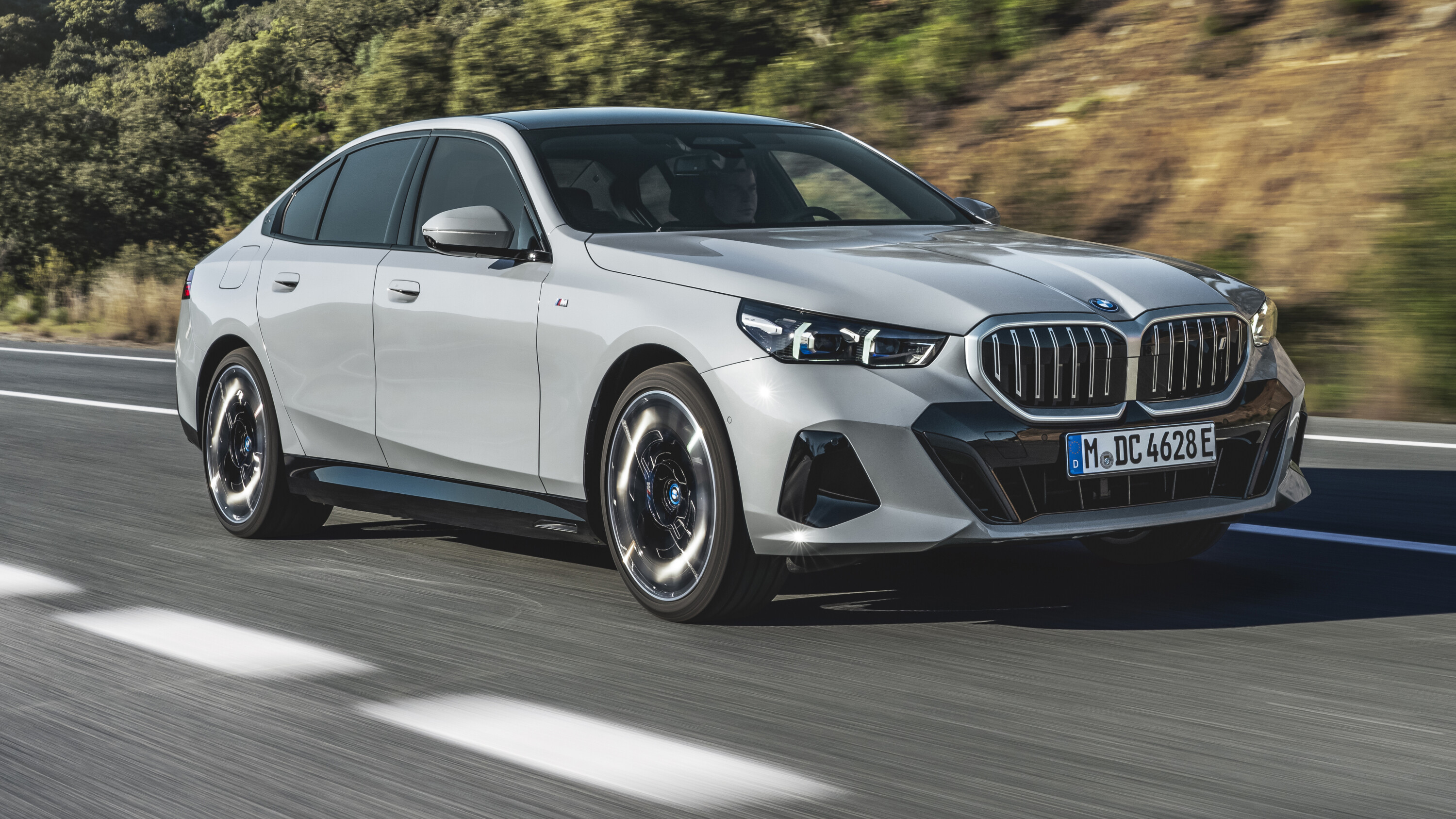
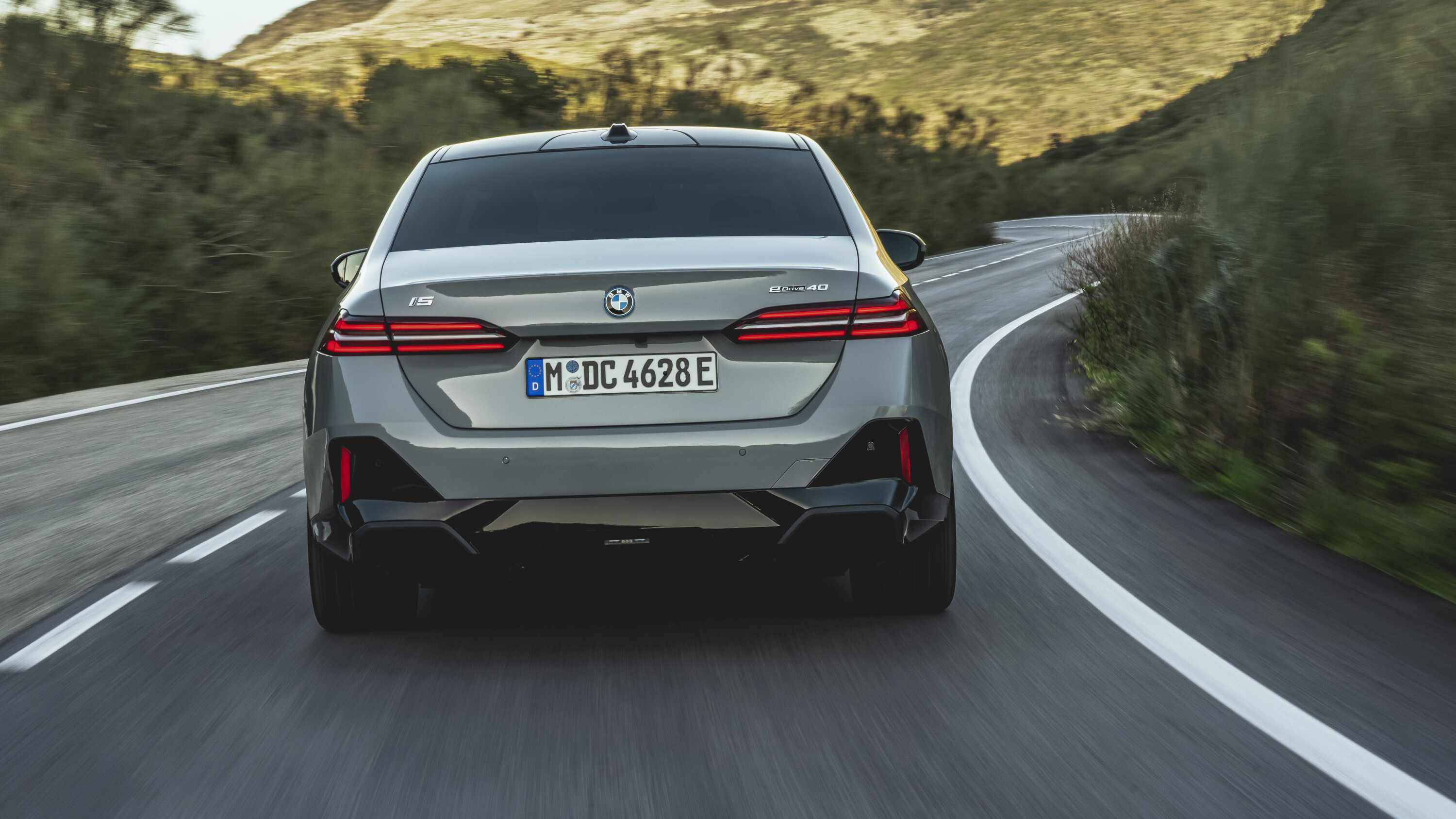
An all-new look for an all-new take on BMW’s executive sedan.
We could write ad nauseam about the i5’s looks, but it’s much more fun to see how it translates on camera. Plus, Mike Stevens and Peter Anderson are rather funny chaps. Check the video out below.
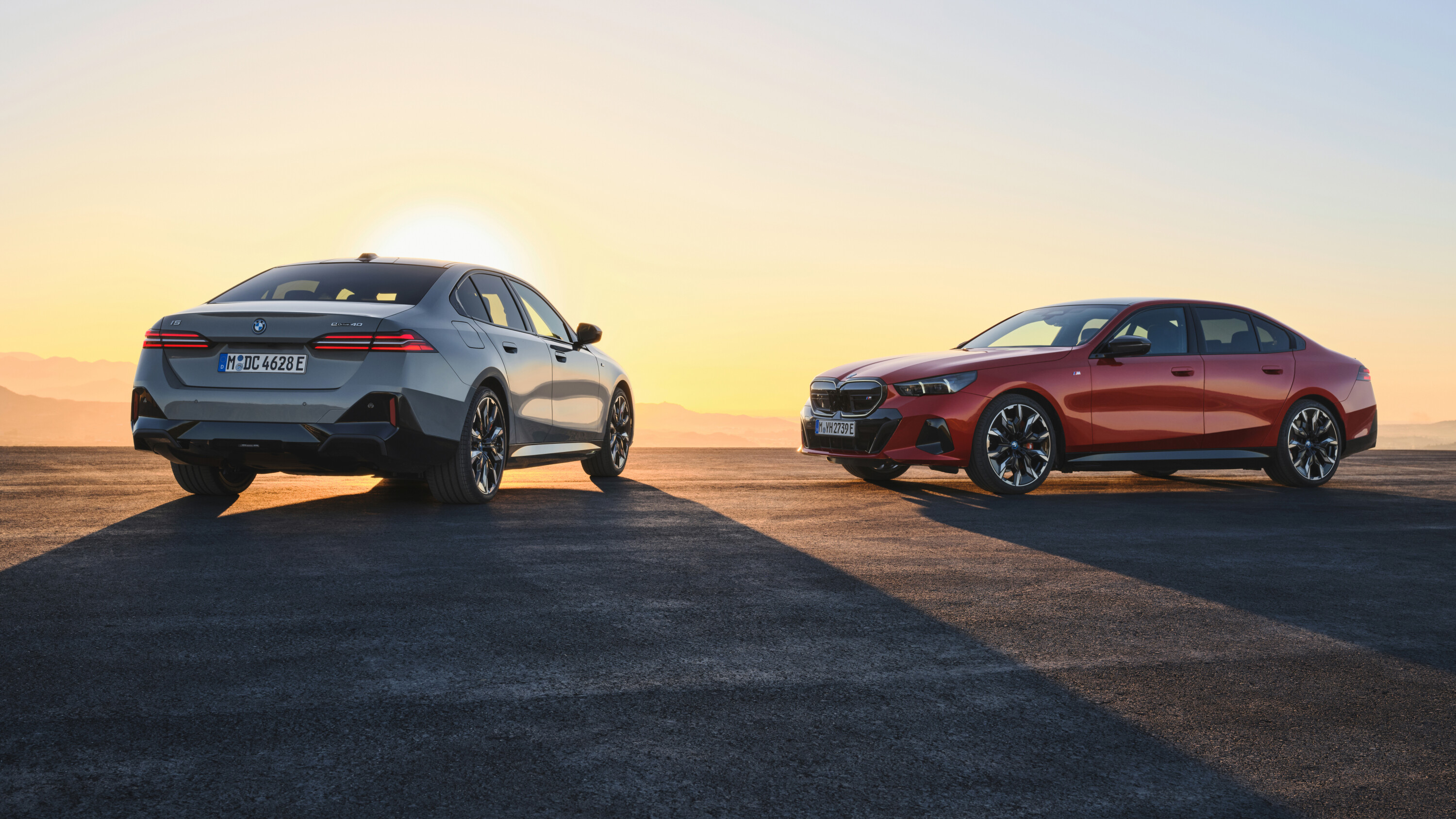
Australia will get two i5 variants: the BMW i5 eDrive40 and i5 M60 xDrive. For petrol buyers, there’s the BMW 520i.
The 2.0-litre turbocharged four-cylinder 520i is boosted with a 48-volt mild hybrid system for 153kW/330Nm. The 520i is newly fitted with an eight-speed automatic transmission.
The i5 eDrive40 features a rear-mounted 250kW/430Nm electric motor, an 81.2kWh (84kWh gross) battery and a WLTP driving range of 582km.
The flagship M60 xDrive is a performance-oriented twin-motor halo. Twin high-output motors produce a combined 442kW/820Nm and AWD grip means it’ll do the 0-100km/h dash in 3.8 seconds.
The flagship M60 xDrive is also equipped with an 82kWh battery with the twin motors limiting driving range to 516km (WLTP).
In its German home market, the 5 Series is available with other combustion engines including more powerful petrols such as the four-cylinder 530i, straight-six 540i xDrive, and even 550e xDrive V8. A plug-in 530e and diesel 520d are also offered.
The BMW i5 can take in a maximum DC charge rate of 205kW, allowing its 81.2kWh battery pack to be replenished from 10 to 80 percent in a claimed 30 minutes. Its maximum AC charge rate is 22kW.
Both BMW i5 models are delivered with a Mode 2 domestic charger, and an AC Mode 3 (PCCP) charger; while owners are also treated to a complimentary five-year subscription to Chargefox — a standard inclusion on both the BMW i5 eDrive40 and M60 xDrive.
2024 BMW i5 M60 features (in addition to e40 features)
The new class of 5 Series has grown larger in almost every dimension. It’s 97mm longer than its predecessor, 32mm wider and 36mm taller, while its wheelbase has stretched by 20mm.
The ‘face’ of the 5 has been reinterpreted with a more square headlight arrangement, and a wide stylised, illuminated kidney grille.
The detailing is sharp, but the actual body lines are smooth and soft, if anything, notably absent of superfluous character lines.
1
Welcome and Goodbye lighting animations greet and farewell the driver.
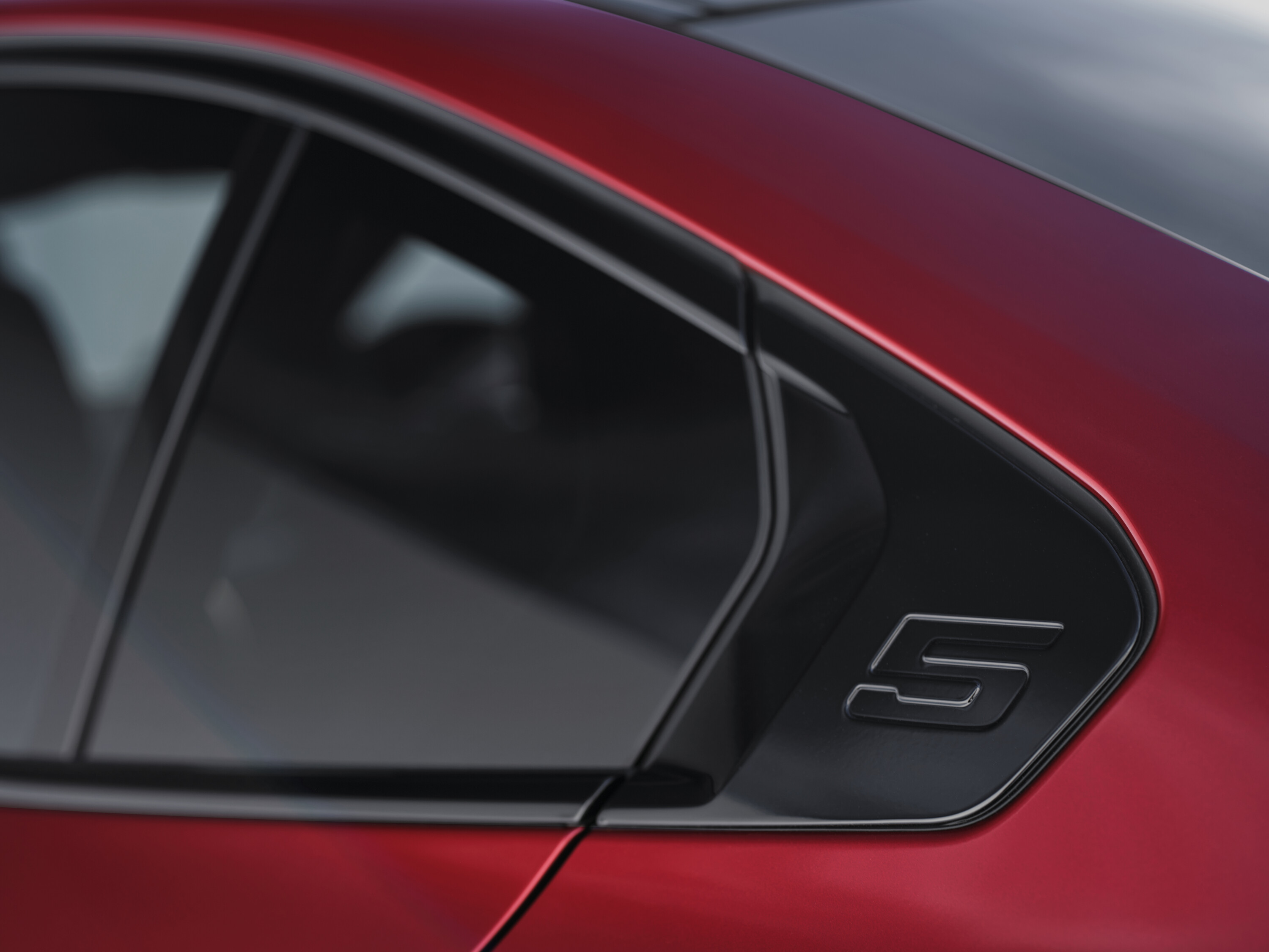
Australian 5 Series are fitted as standard with the M Sport Package, while i5s can be specified with M Sport Plus.
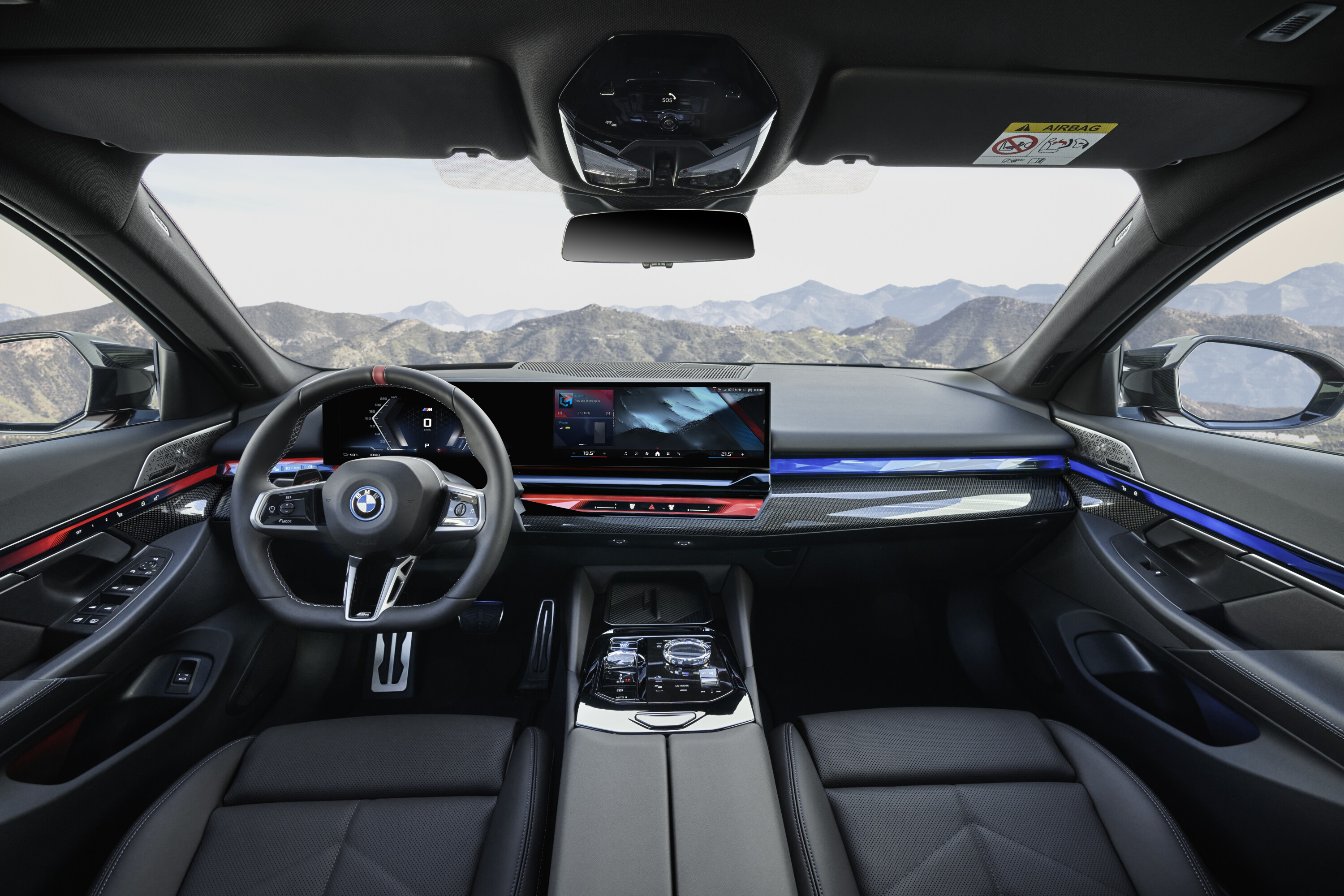
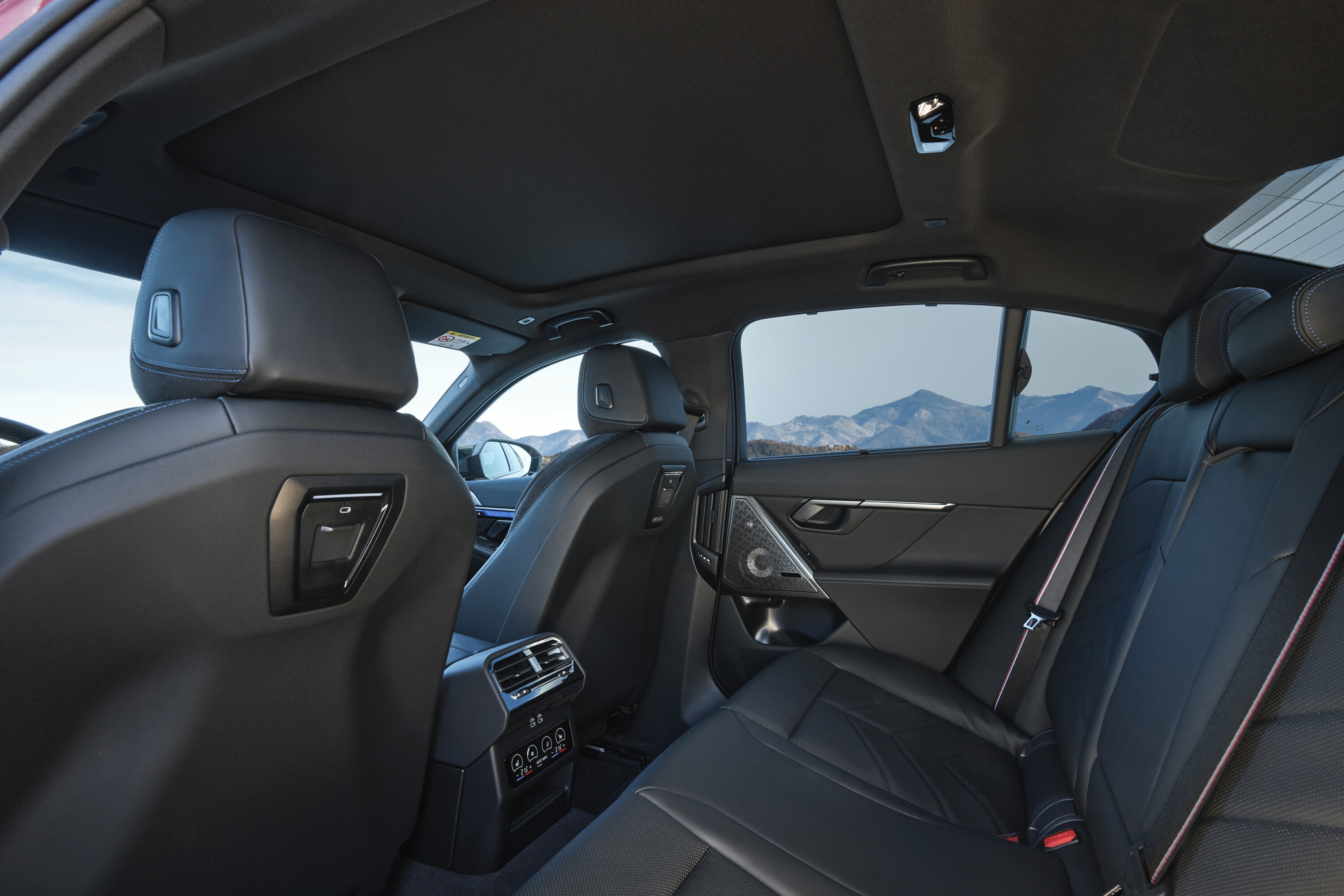
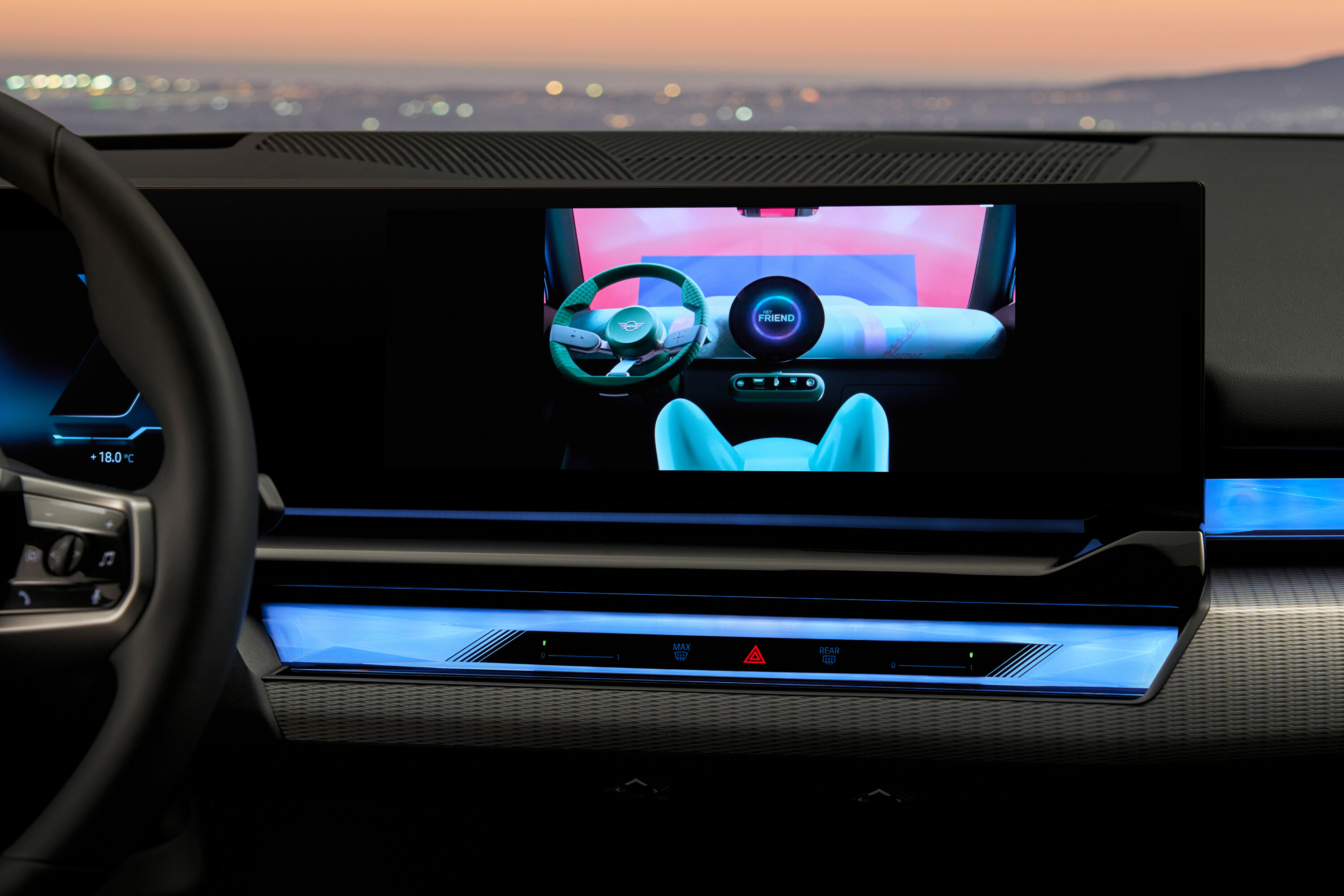
Inside is a 12.3-inch instrument cluster and 14.9-inch central display, a new flatter-bottomed steering wheel and a fixation on replacing physical buttons with touch-sensitive pads.
1
Flagship i5 M60 are fitted as standard with BMW’s ‘CraftedClarity Glass application’ with iDrive controller, start button, volume roller and gear selector finished in Swarovski crystal cut glass. The feature is optionable in both BMW 520 and i5 eDrive40 variants, too.
The new iDrive 8.5 system brings a fresh new look, with handy new QuickSelect features, and meshes with the also-standard heads-up display, digital instrument cluster and gesture control, for a wide scope of functions.
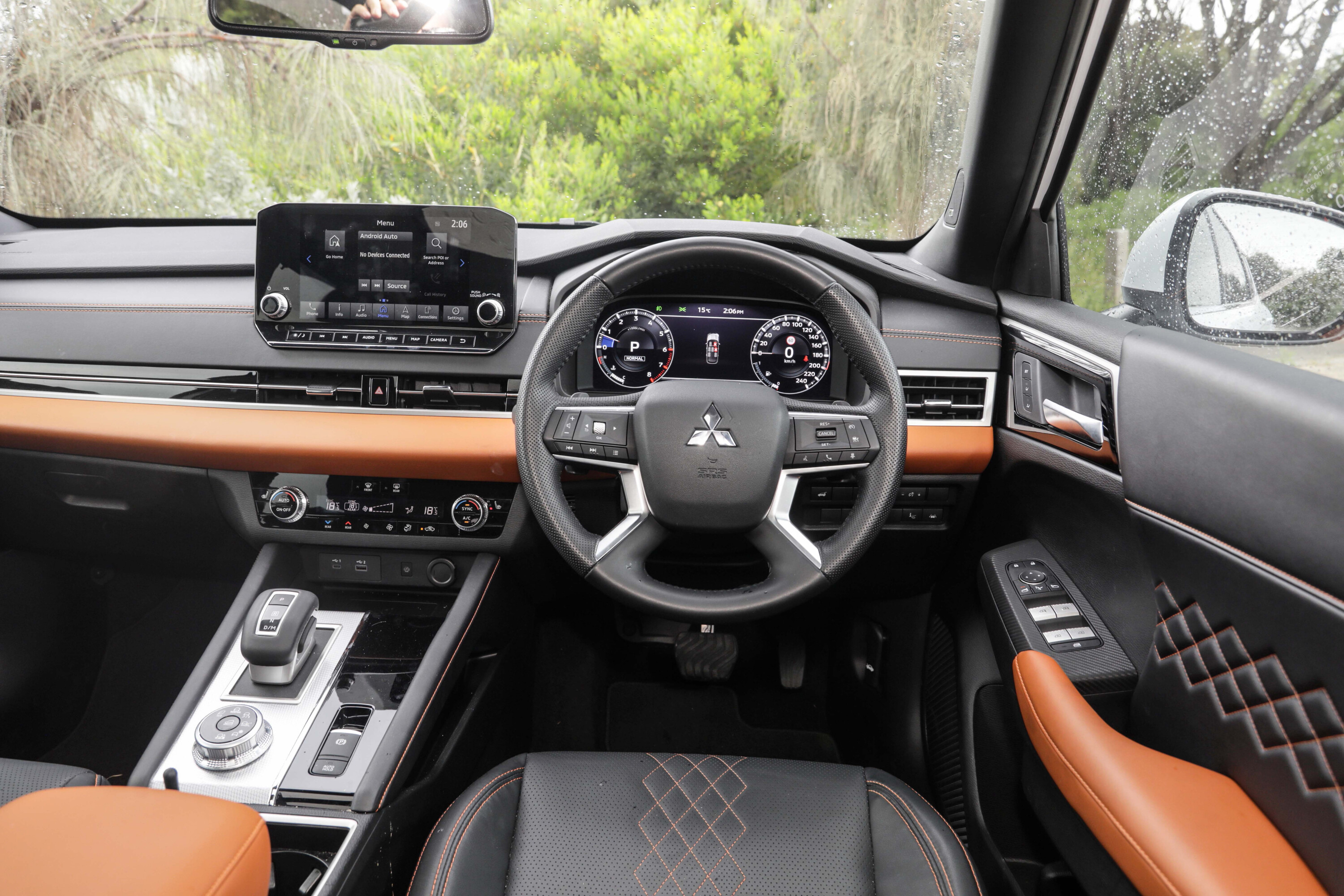
The 2023 Mitsubishi Outlander Exceed sits in the top tier of the regular, petrol-powered model range, priced from $51,990.
In addition to seven seats (in a 2-3-3 layout) and all-wheel drive, the Exceed is comprehensively equipped with convenience goodies and furnished with luxury touches such as black leather upholstery.
Exceed models are available with either a 2.5L petrol engine or a plug-in hybrid drivetrain.
The Mitsubishi Outlander Exceed has more features than any model with the exception of the Exceed Tourer.
Standard equipment includes a panoramic sunroof, auto tailgate with hands-free functionality, 12.3-inch digital driver cluster, head-up display, black (or light-grey) leather seats, adaptive driving beam, tri-zone climate control, and a 10-speaker Bose audio.
In addition to the Bose system, the infotainment set-up includes Apple CarPlay, Android Auto™, and Bluetooth with voice control.
It’s two-tone world stepping up to the $54,490 Exceed Tourer, which brings a dual-colour body and (leather) interior, as well as massage functionality for the front seats for some extra pampering.
The Exceed is also available with a plug-in hybrid drivetrain, though the more economical petrol-electric version comes at a premium, priced from $68,490.
3
Safety
The Mitsubishi Outlander holds a five-star ANCAP safety rating.
To help avoid a crash in the first place, the Japanese SUV’s advanced safety and driver assistance systems include forward collision mitigation with pedestrian & cyclist detection and junction assist, adaptive cruise control, blind spot warning, lane departure warning and prevention, and rear automatic emergency braking.
Exceed adds rear cross-traffic monitoring and a more advanced auto high beam system for night driving.
Key Rivals
The 2023 Mitsubishi Outlander Exceed competes in the midsize SUV market, facing off with higher-spec versions of key rivals such as:
It depends on your priorities, as some other medium SUVs are more satisfying to drive or provide larger boots.
But the latest Mitsubishi Outlander is the best yet of four generations, and in Exceed guise offers a host of enticing convenience and technology features to go with the Japanese brand’s industry-leading 10-year warranty.
Volkswagen Australia has announced it will increase pricing for several vehicles from July 1.
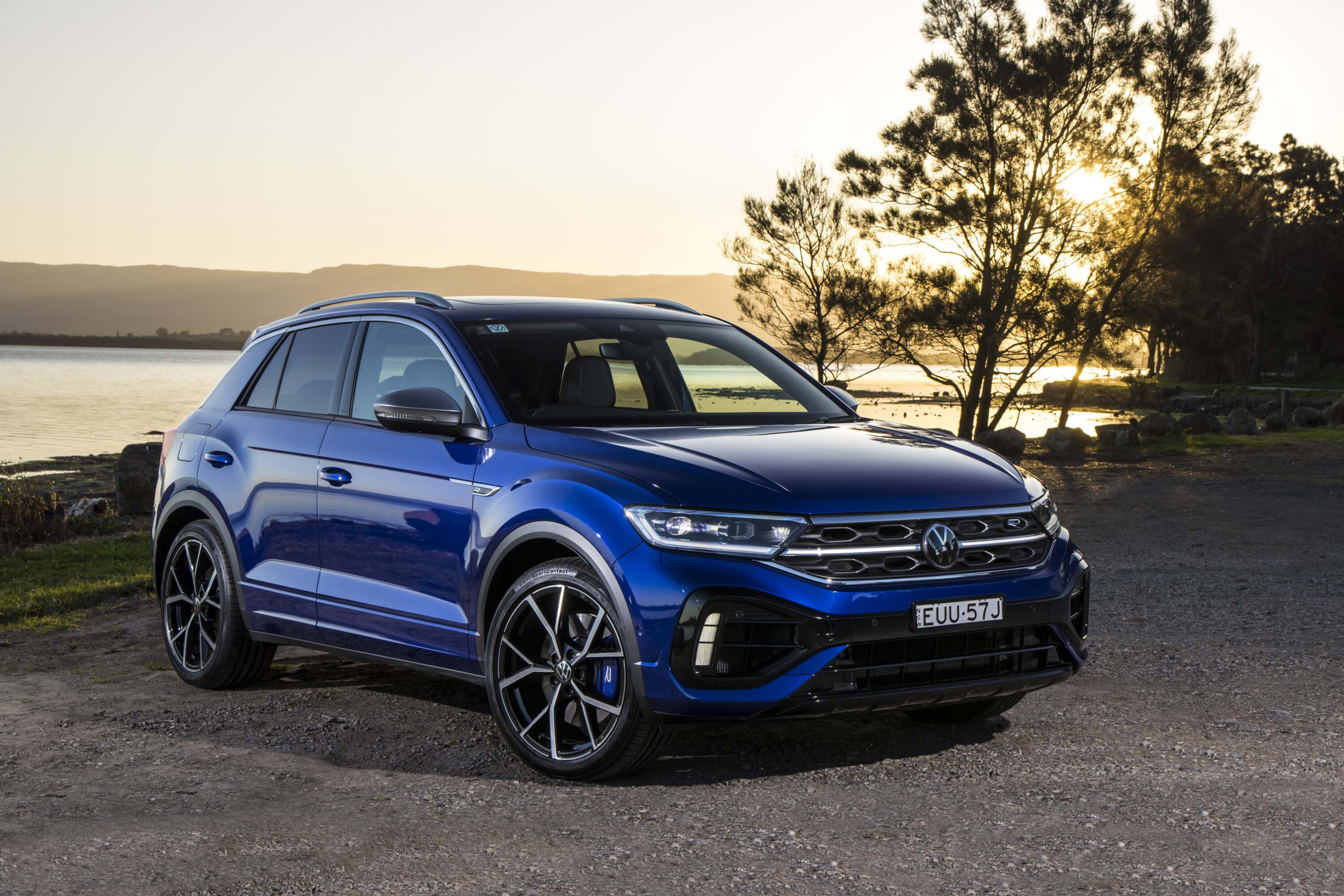
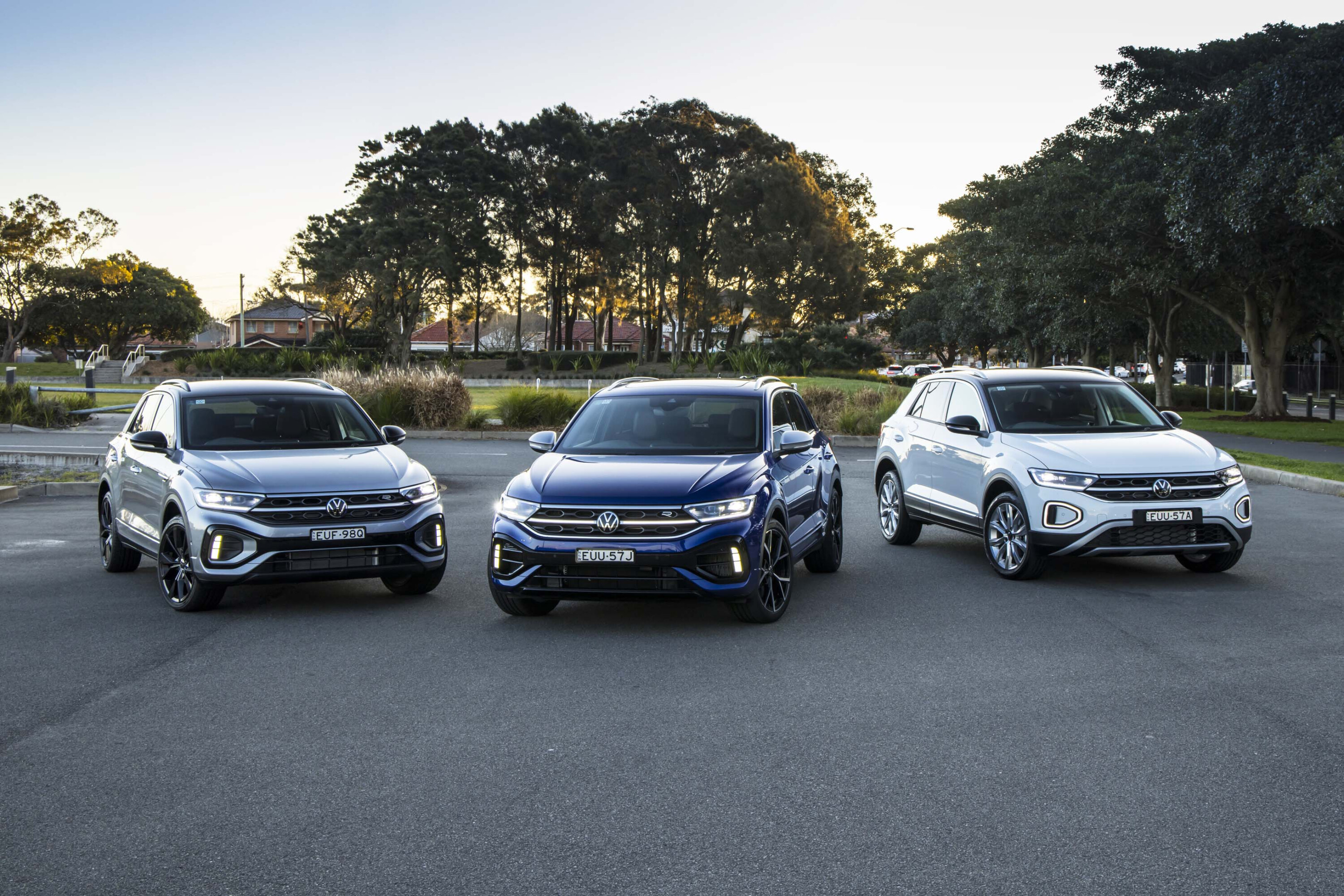
The largest price rises apply to the performance Golf R hatch and wagon, with a $2000 hike, while the T-Roc R small SUV climbs $1690.
In addition, standard Golf variants have increased between $1100 and $1200, while the Arteon 206TSI R-Line liftback and Shooting Brake are up $800.
“These changes are tied directly to supplier cost and transport increases affecting the industry,” said a Volkswagen Australia spokesperson.
1
All orders made before July 1 will be price-protected, even if delivery occurs after this date.
As announced, the Golf R hatch and wagon, and the standard-wheelbase, all-wheel-drive Tiguan 132TSI, 162TSI and 147TDI, remain unavailable to order due to supply constraints – though pricing has increased should order books reopen post-July 1.
The Golf GTI, T-Cross light SUV, standard T-Roc variants, special-edition Tiguan and Tiguan Allspace variants, and the Touareg large SUV have escaped price fluctuations.
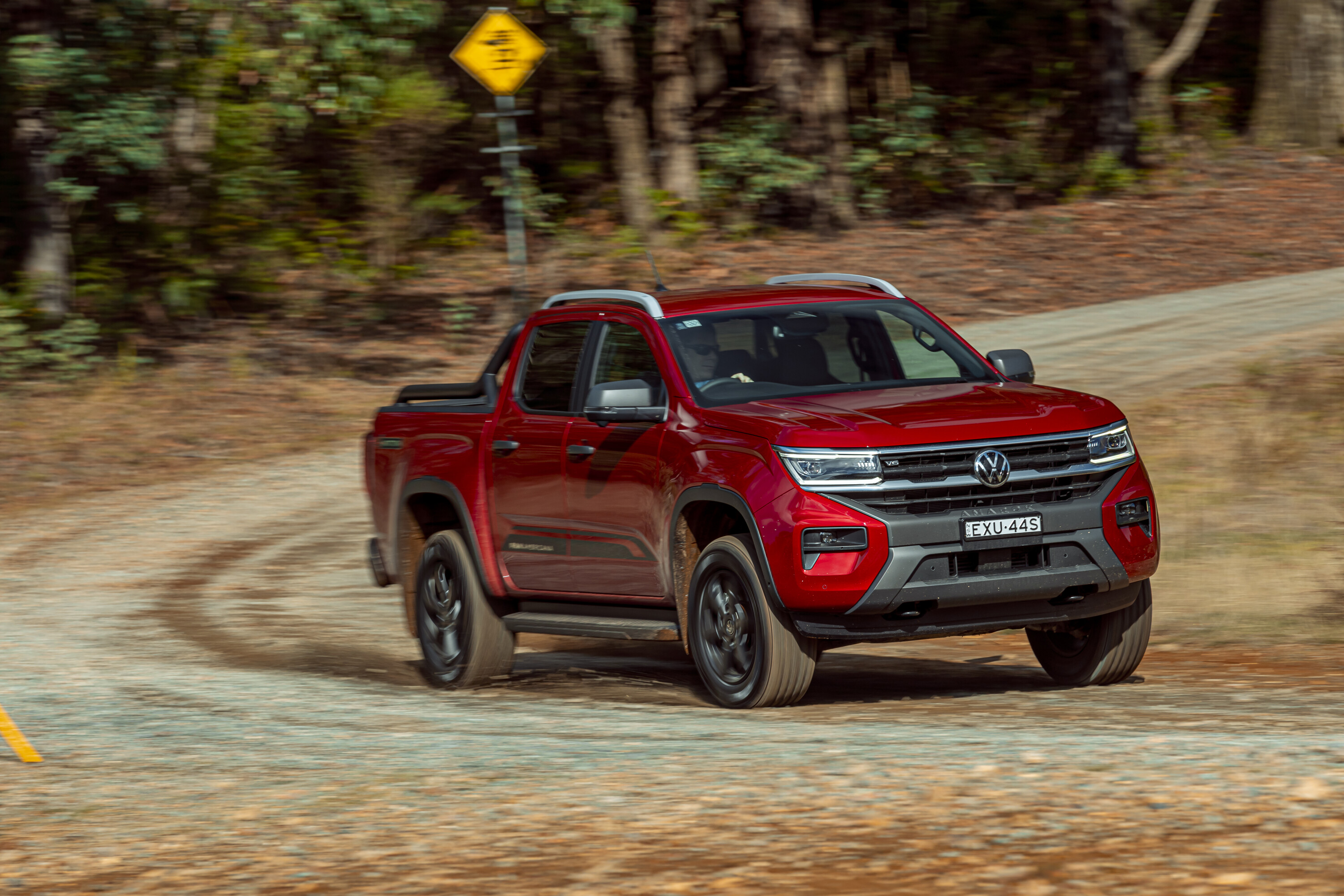
Volkswagen’s commercial vehicle range – including the recently-launched Amarok dual-cab ute – are exempt from the increased pricing.
All model-year 2023 vehicles are unchanged, with blind-spot, rear cross-traffic and proactive occupant protection alerts remaining unavailable for affected Polo, Passat, Arteon, T-Cross,T-Roc, Tiguan and Tiguan Allspace variants.
“There is no change to MY23 specification and any changes will be announced in due course, likewise for other Group brands [Skoda and Cupra],” the spokesperson added.
1
According to the brand, it has stock available for the T-Cross, T-Roc, Tiguan 110TSI and R, Tiguan Allspace and Amarok, while supply for the Golf (excluding the R), Passat, Arteon, and Touareg is said to be improving.
A full table outlining Volkswagen passenger vehicle pricing from July 1, 2023 is available below:
Volkswagen passenger car pricing (effective from July 1, 2023)
Volkswagen Polo pricing
Model
Current (to 30/06/23)
New (from 01/07/23)
Change
Life manual
$25,750
$25,990
up $240
Life auto
$28,750
$28,990
up $240
Style auto
$31,200
$31,490
up $290
GTI auto
$39,250
$39,690
up $440
The optional panoramic sunroof for the Polo Style and GTI will increase to $1650, up $50. There are no pricing changes to other option packages.
The optional Luxury Package for Style variants will increase to $5700, while the Sound & Vision package for the Elegance & R-Line will increase to $2750 – up $100 and $50, respectively. There are no other pricing changes.
The optional Luxury Package for Style variants will increase to $5700, while the Sound & Vision package for the Elegance & R-Line will increase to $2750 – up $100 and $50, respectively. There are no other pricing changes.
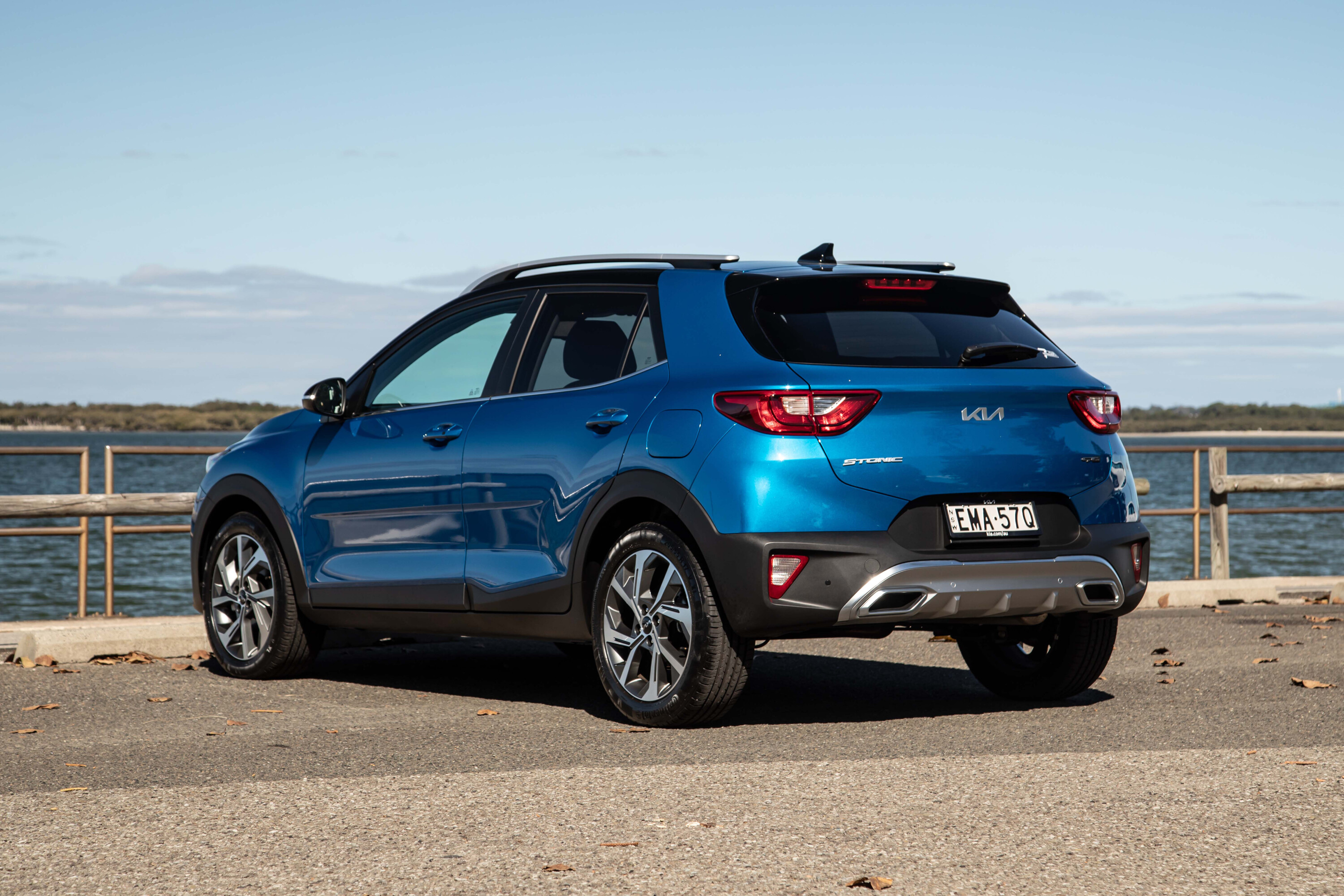
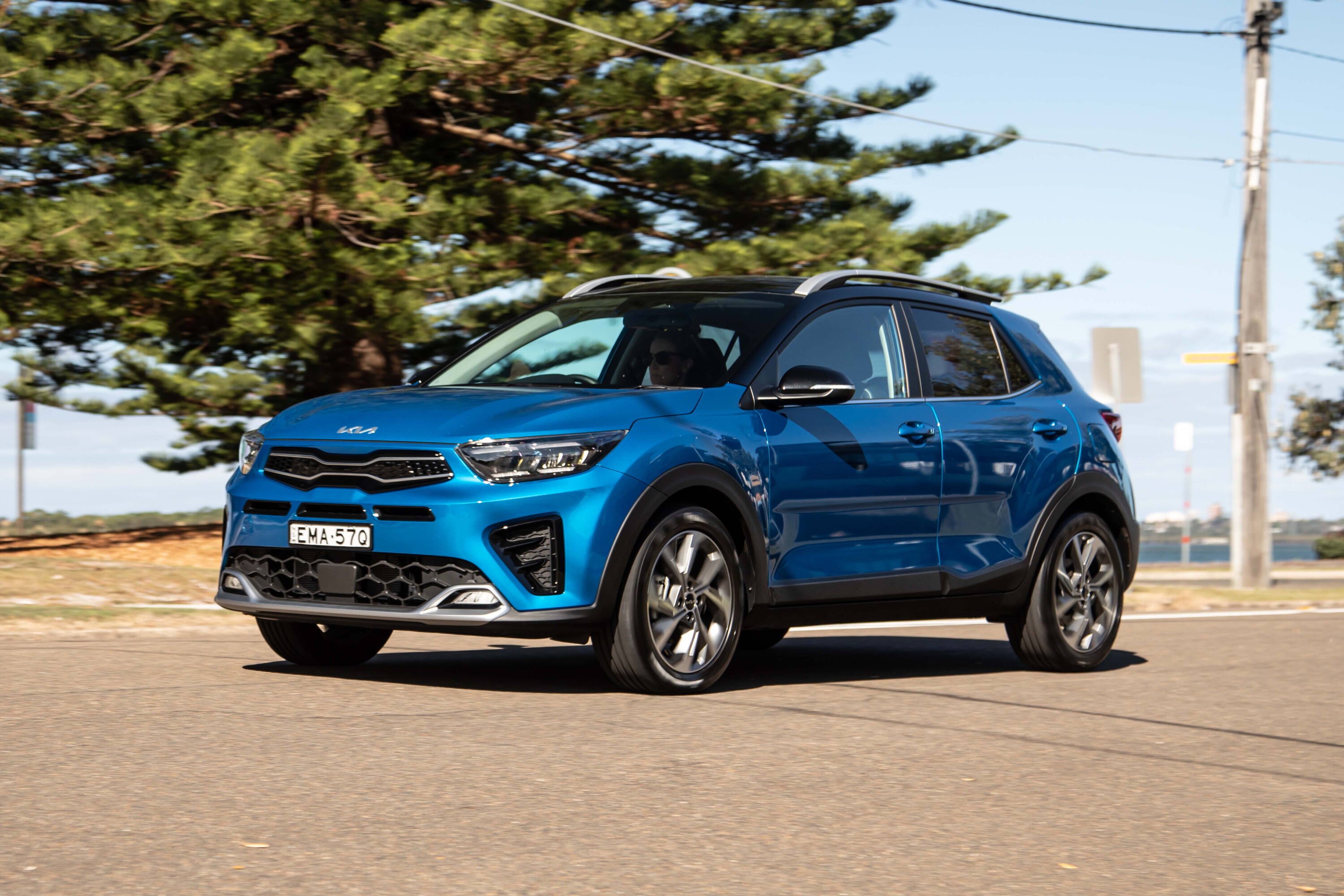
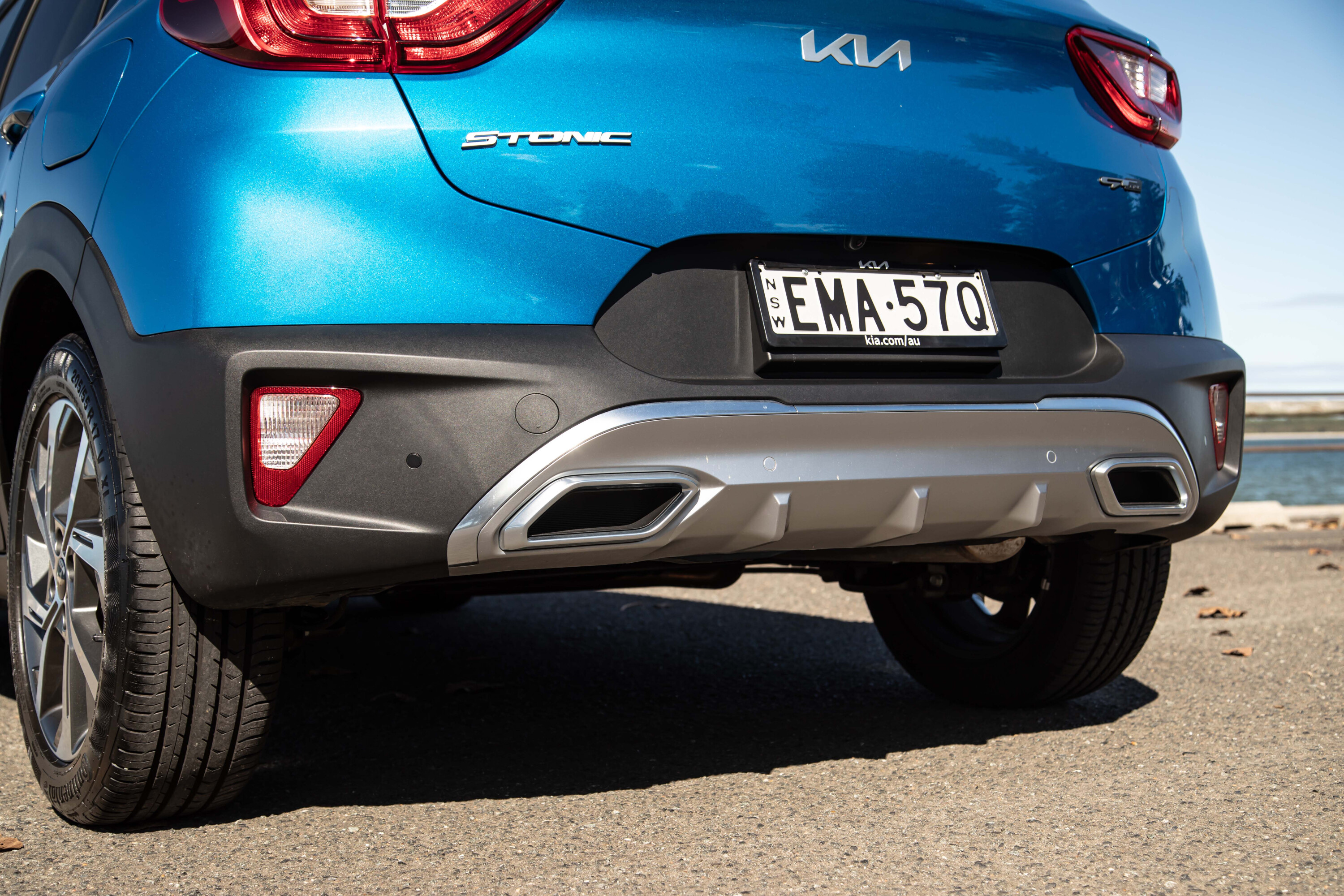
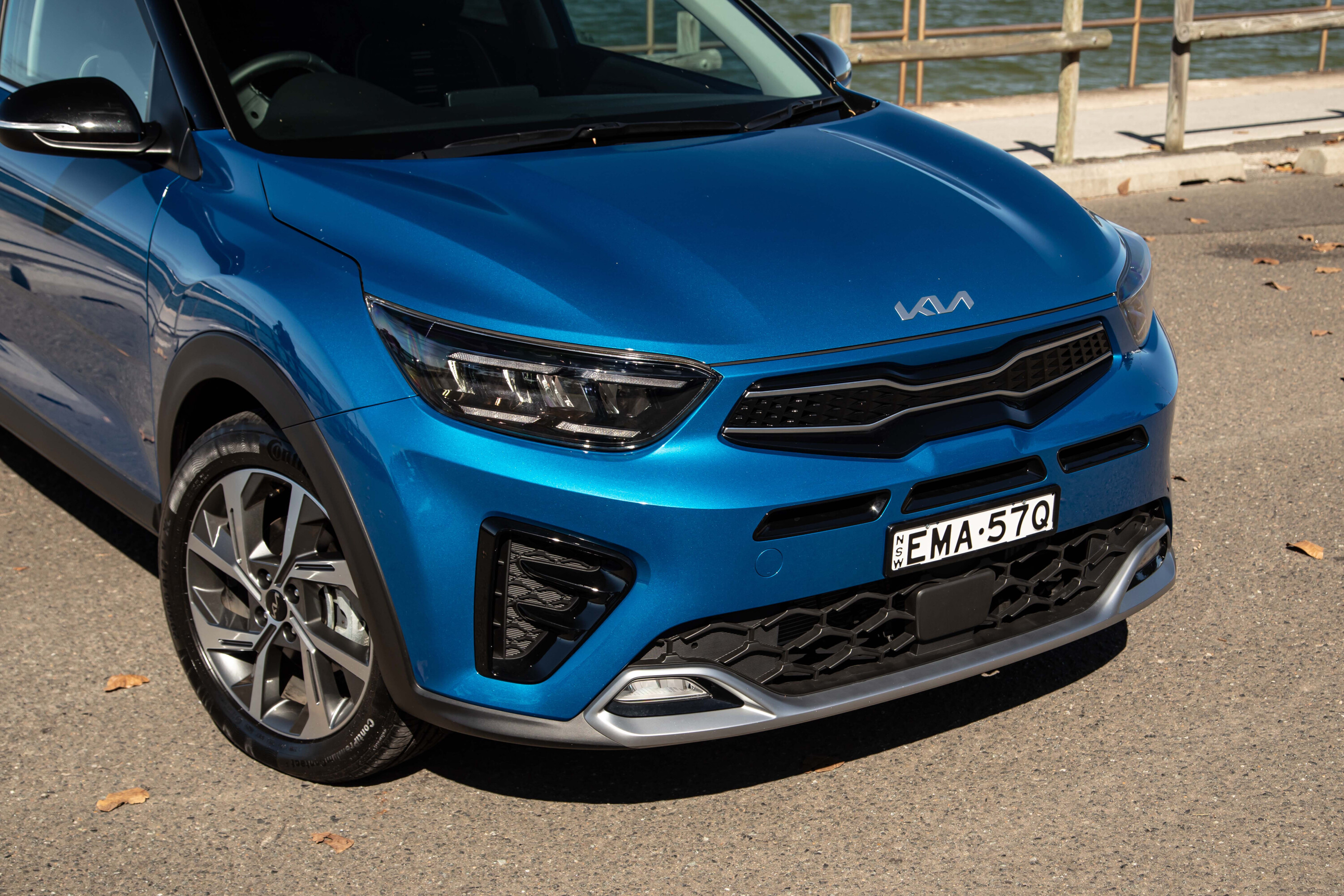
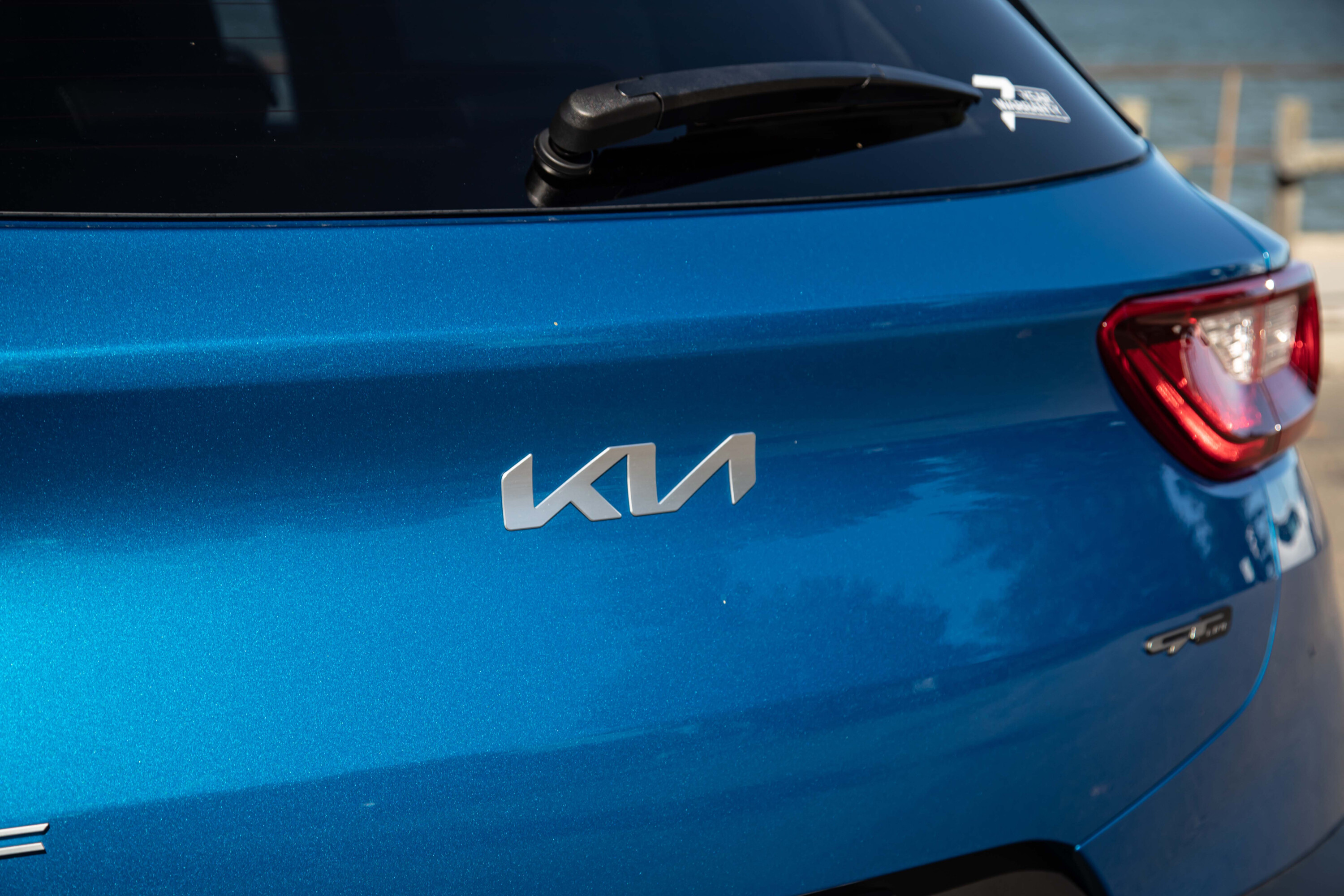
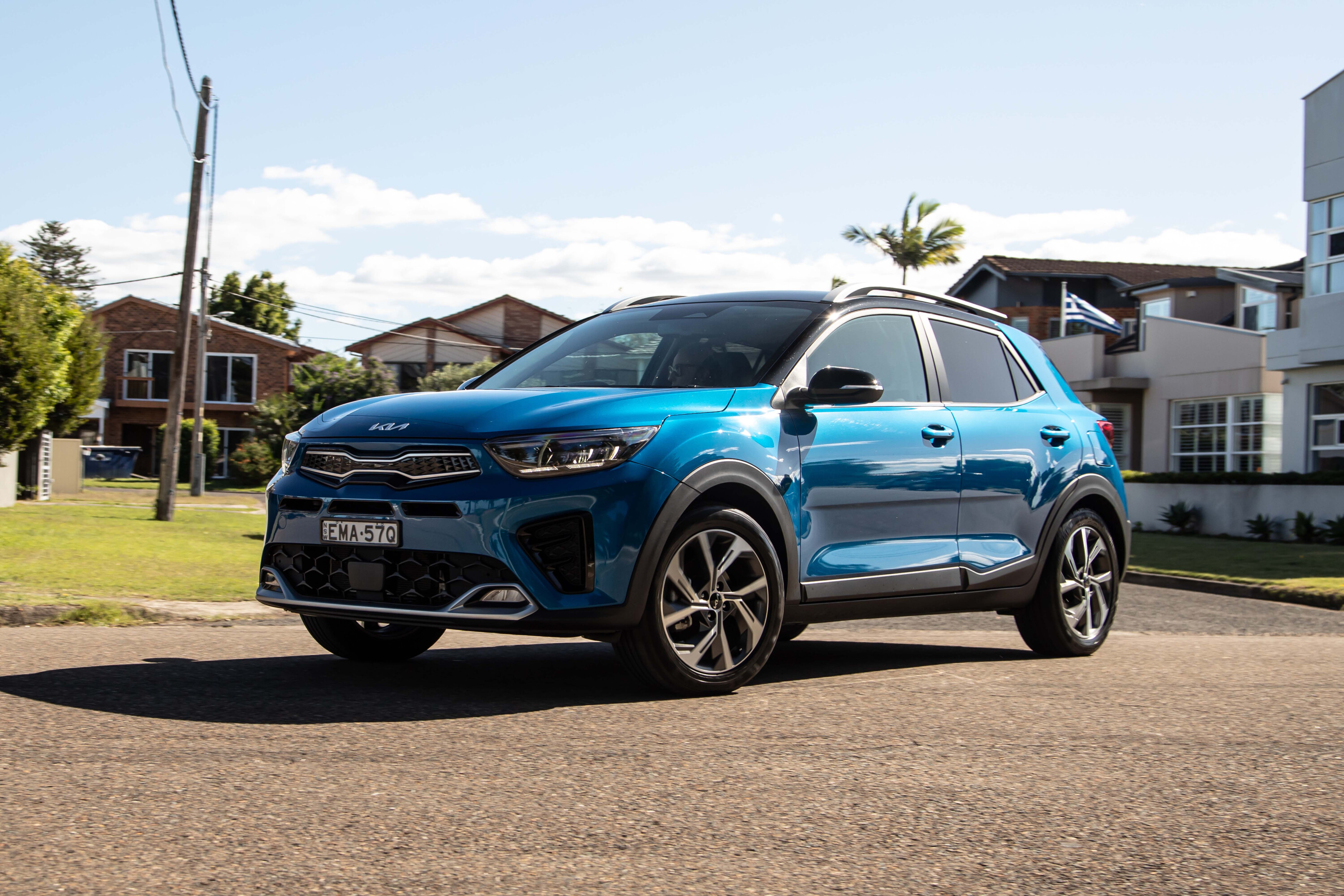
Here is something that shocked me when I read it – the Kia Stonic is the second-best-selling light SUV in Australia. One in five of that segment is the raised Rio.
That genuinely surprised me. Not because it’s a bad car or anything like that, I just don’t notice that many of them on the road. The only car outselling it is the Mazda CX-3. And it’s in a segment with a lot of quality like the Ford Puma, Yaris Cross, Hyundai Venue and VW T-Cross.
For a car we weren’t supposed to get because Kia couldn’t make them fast enough, that’s pretty good going. It’s even better going when you consider that it’s hardly a spring chicken even though it’s only been here for just over two years – it’s now firmly on the wrong side of mid-life.
The Stonic range starts with a manual naturally-aspirated model for just $23,790 while this 1.0-litre turbo-petrol with dual-clutch automatic lands at $30,790 (both plus on-road costs), just $800 more than when it first launched.
What a rare sign of restraint from a car company in these inflationary times.
The GT-Line doesn’t really have a direct competitor, but even at the top of its range, it’s still quite competitive.
Mazda’s cheapest automatic CX-3 runs to $28,260 (all prices here are before on-road costs) and doesn’t come with as much standard equipment but has a better interior and safety package.
The VW T-Cross starts at $30,990 and has a seven-speed dual-clutch auto hooked up to a 1.0-litre turbo-petrol, which sounds awfully familiar. It has a fun chassis, looks good and has a pretty good interior. It’s also the second-newest in the segment after the…
…Toyota Yaris Cross. That range starts at $27,840 for the naturally-aspirated 1.5 while the cheapest hybrid is $29,480, which looks like good value. It has a comprehensive safety package but a fairly dowdy interior apart from the front seats. Unbeatably cheap servicing, too.
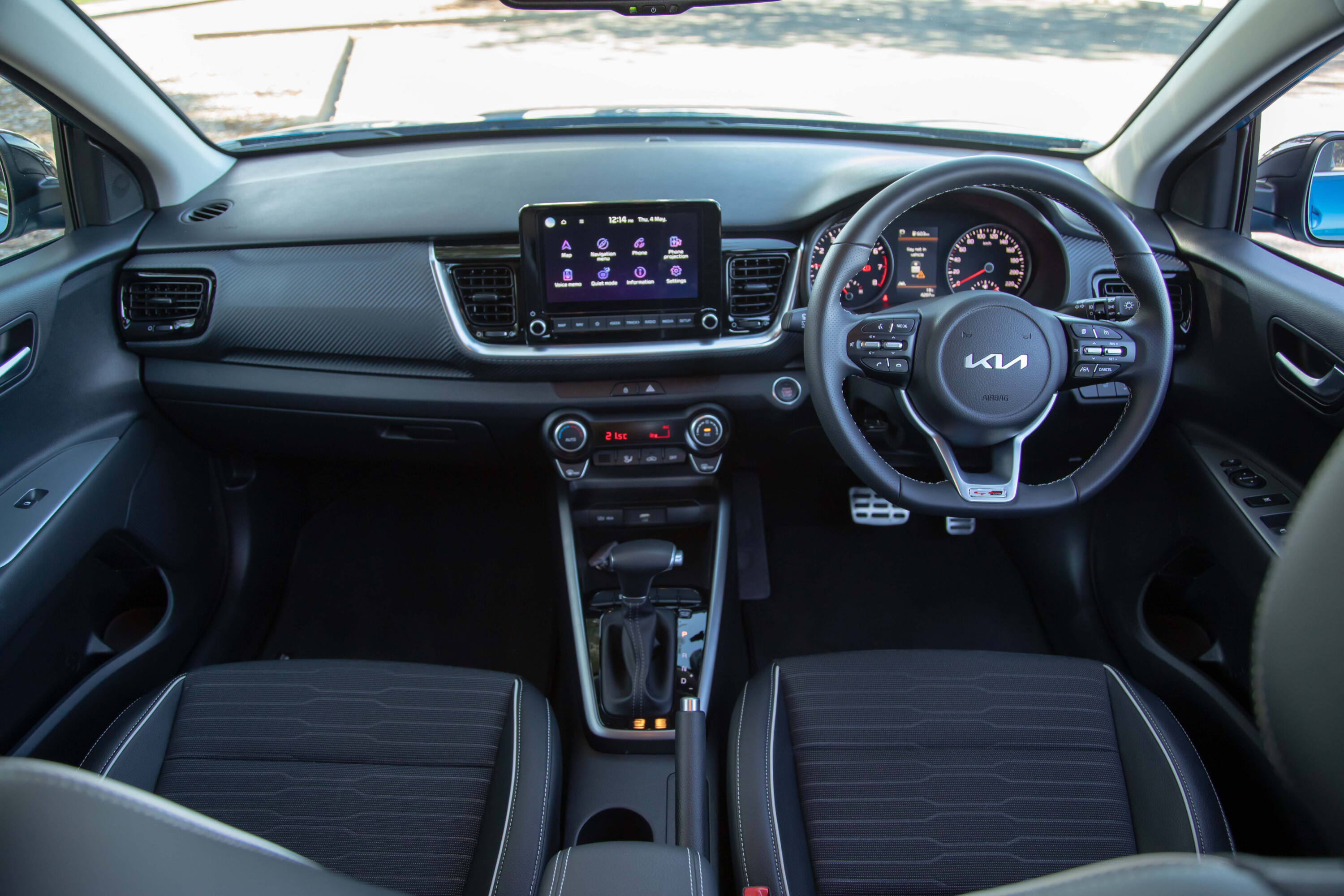
As the Stonic is basically a raised Rio (Kia tells us the panels are all different, though), it’s much as you expect; roomy if not expansive.
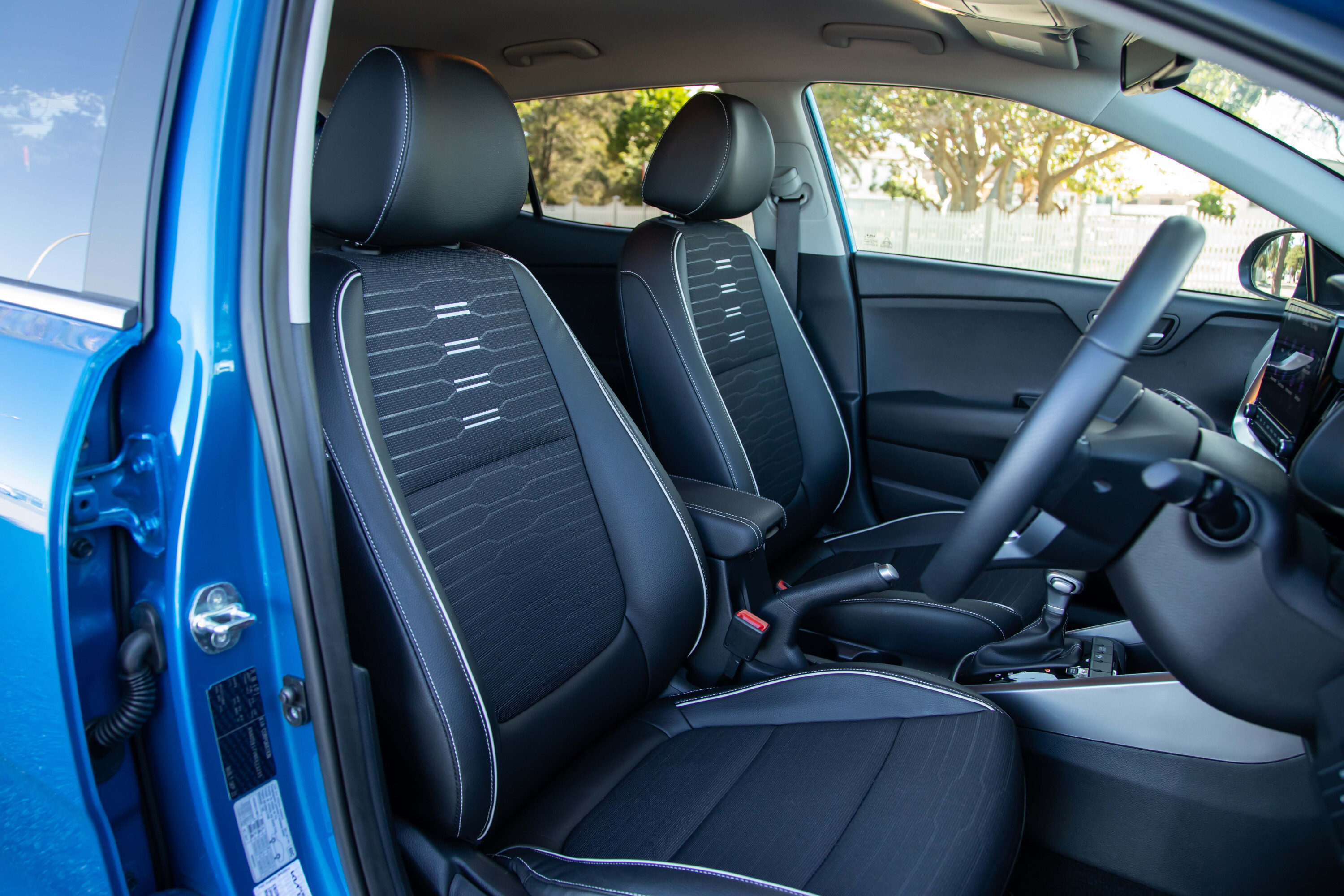
Front-seat passengers have plenty of storage to play with, including a split storage box underneath the console for phone and wallet stowage. You also get two cup holders, even with the space-robbing conventional handbrake (I like a standard handbrake, though, so I didn’t mind too much).
Each front door has a pocket for a decent-sized bottle, but not so the rear doors. You get a USB port, too.
2
At 180cm in height, I can sit behind my driving position in the rear seat and while cat-swinging is off the table, there’s not much to complain about given the car’s tiny footprint. Well, actually there are a couple of complaints. There isn’t an armrest, so no cup holders and there are no air vents. The seat itself isn’t all that comfortable but will do around town.
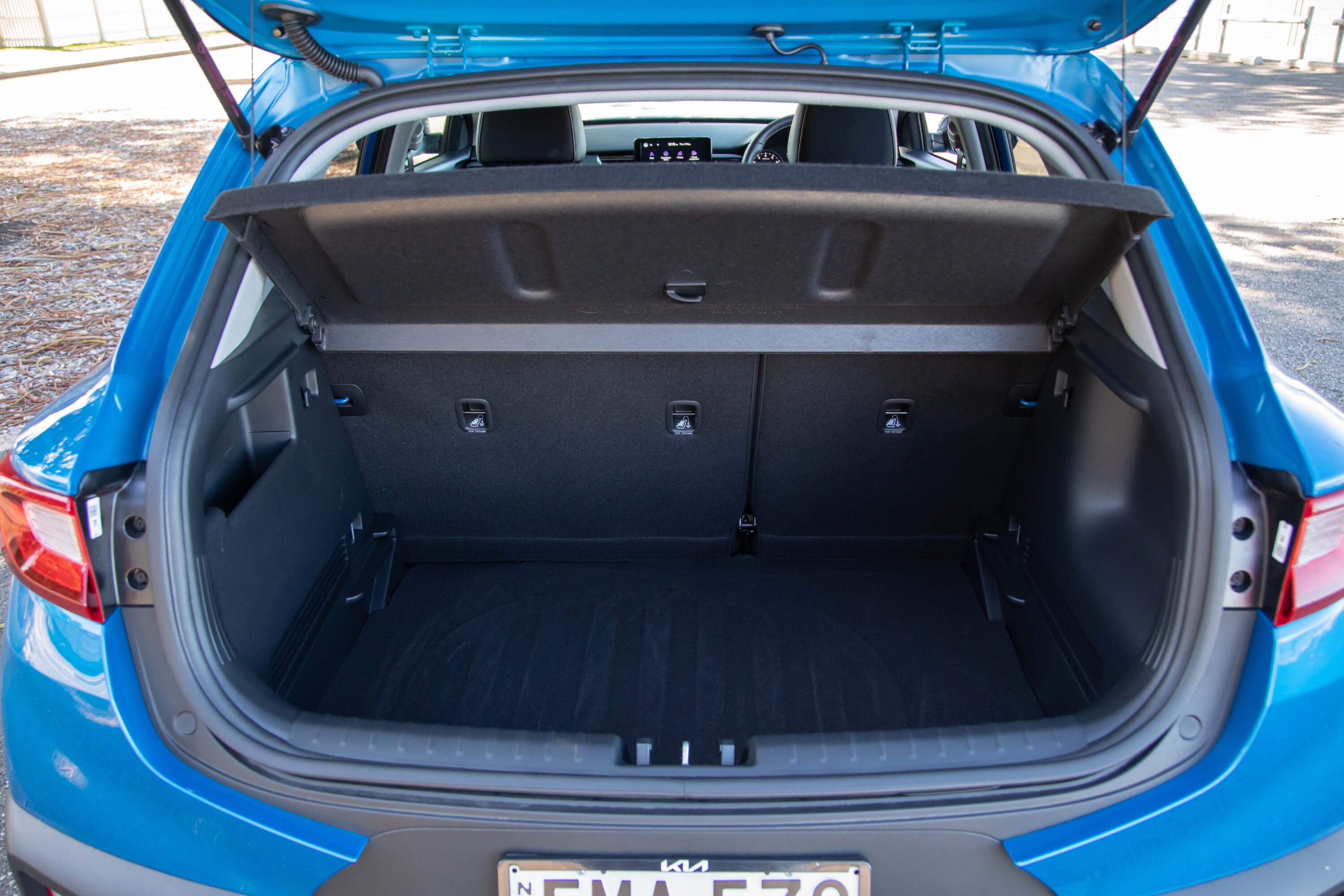
Cargo space is an impressive 352 litres with the seats up and 1155 litres with them folded. With the seats out of the way, you don’t get a flat floor and there is a reasonable drop to the boot floor over the loading lip. The opening itself isn’t huge either, but again, this is a small car.
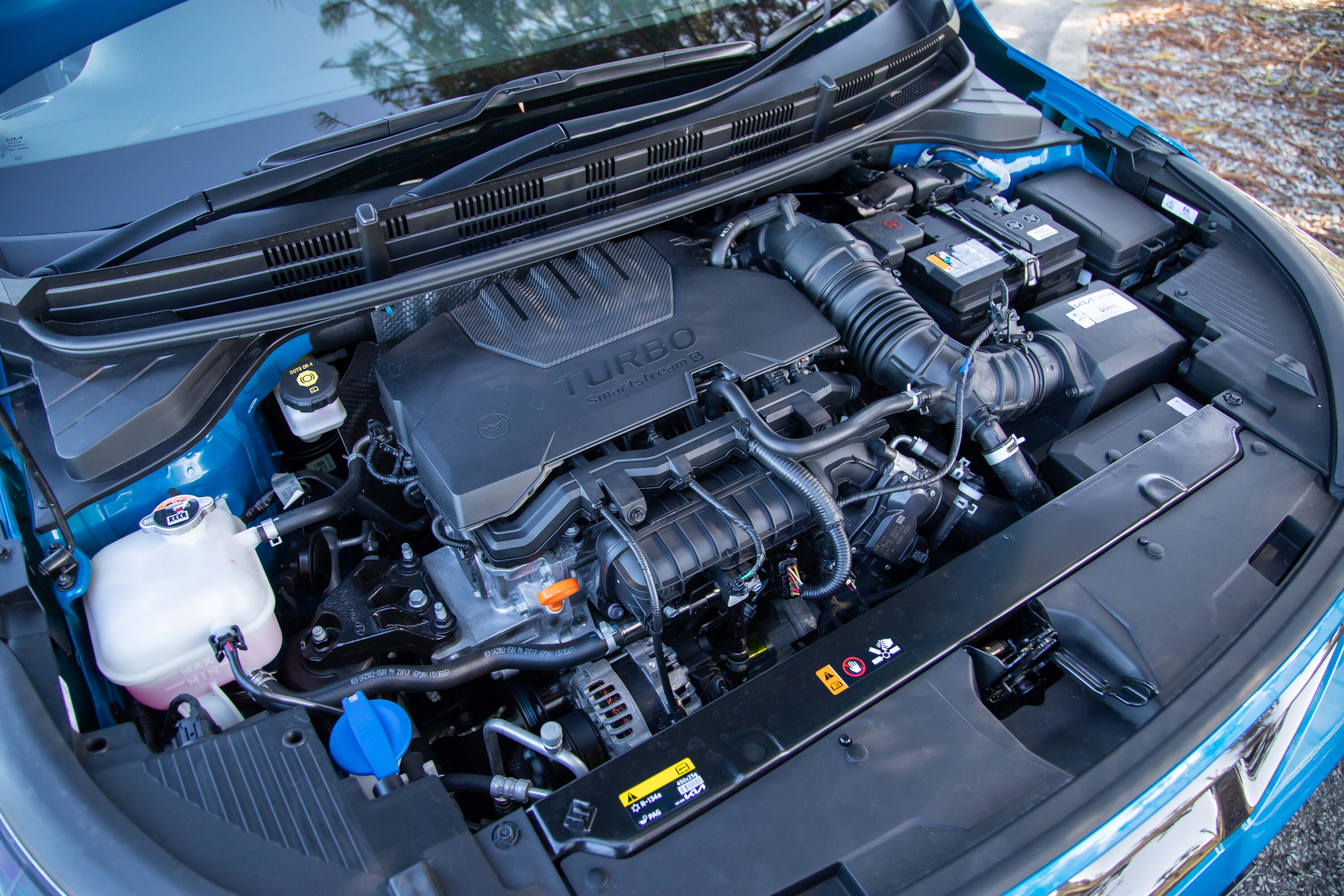
The Rio GT-Line, the hilarious Picanto GT and Stonic GT-Line all share Kia’s 1.0-litre three-cylinder turbocharged engine.
2023 Kia Stonic GT-Line drivetrain
Engine
1.0-litre 3-cylinder turbo-petrol
Transmission
7-speed dual-clutch
Power
74kW @ 6000rpm
Torque
172Nm @ 1500-4000rpm
0-100km/h
10 sec (estimate)
And it’s a great engine. Characterful and torquey (172Nm to be precise), if not ultimately powerful at 74kW (let’s be fair, it’s a three-cylinder), it pushes the 1200-odd kilos of Stonic around with more than a little bit of flair.
Unlike its naturally-aspirated brethren, the gearbox is Kia’s slightly infamous seven-speed dual-clutch. It’s not bad, it’s just a bit hesitant and could do with a thorough recalibration to smooth out some of the clunky gear changes.
1
It sort of prefers you to be pressing on, the shifts being more suited to enthusiastic acceleration rather than pootling about. It’s oddly fine at parking speeds, though, and I didn’t experience a total reluctance to reverse up an incline as I did in a Rio GT-Line last year.
The extra pep of the turbocharged engine doesn’t overcome the chassis. The ride is quite composed for front-seat passengers but the combination of ordinary rear seating and a set of torsion beams packed underneath does mean a rougher ride than is strictly enjoyable.
I quite like the steering on the Stonic, too. It’s quicker than the Rio’s and with the amusing addition of a flat-bottomed but actually quite lovely wheel, it helps the Stonic feel a bit sportier than it really is.
Kia’s fuel economy testing yielded an official combined-cycle figure of 5.4L/100km.
2023 Kia Stonic GT-Line fuel economy
Claimed fuel consumption (combined)
5.4L/100km
On-test fuel consumption (indicated)
8.2L/100km
Fuel tank capacity
45 litres
Projected real-world range
548km
Fuel type
91 RON
While it might be a great engine, it’s not easy on fuel in the real world. Our time with the car was an even mix of highway and urban/suburban running, so the stop-start didn’t have a big impact on the number.
The Stonic range shares the Rio’s five-star ANCAP rating, which was awarded in 2017 when the rules weren’t as tough as they are today.
ANCAP considers the two cars as variants of the same thing, so (eventually) applied the Rio’s rating to the Stonic range. This rating will expire in December 2024.
The forward auto emergency braking works with other cars and similarly solid objects from 5km/h-180km/h (with a solid tailwind, one would suggest) while pedestrian and cyclist detection works between 5km/h and 85km/h.
1
2023 Kia Stonic GT-Line safety features
Six airbags
ABS
Stability control
Reversing camera
Forward auto emergency braking
Lane-keep assist
Lane following assist
Driver attention monitoring
Lead vehicle departure alert
Traction control
The babies and kids are looked after with three top-tether anchors and two ISOFIX points.
It would be nice if this car had reverse AEB given it will likely be a popular choice for city dwellers and second-car buyers. After all, a similarly-priced Seltos has it.
Kia offers a seven-year/unlimited-kilometre warranty, bettered only by Mitsubishi’s 10-year/200,000km warranty.
The Stonic GT-Line must be returned every 12 months or 10,000km, which is kind of rude as the non-turbo models are 12 months/15,000km.
Kia offers a capped-price servicing regime and it’s not cheap. Over seven years you’ll pay $3344. That’s $477 on average per service and the numbers ping around a lot from as low as $287 to as high as $724 depending on interval.
This is the kind of car that aims to win you over with its charms so you’ll forget its foibles.
You could be forgiven for thinking that the Stonic is a bit cynical; a barely disguised Rio on stilts. But the addition of that engine without the Rio GT-Line’s slightly teeth-chattering suspension means it has more than enough charm for most.
1
While I’m quite sure the GT-Line isn’t the top seller, it’s easily the best Stonic you can buy and I’d have it over the equivalent Rio.
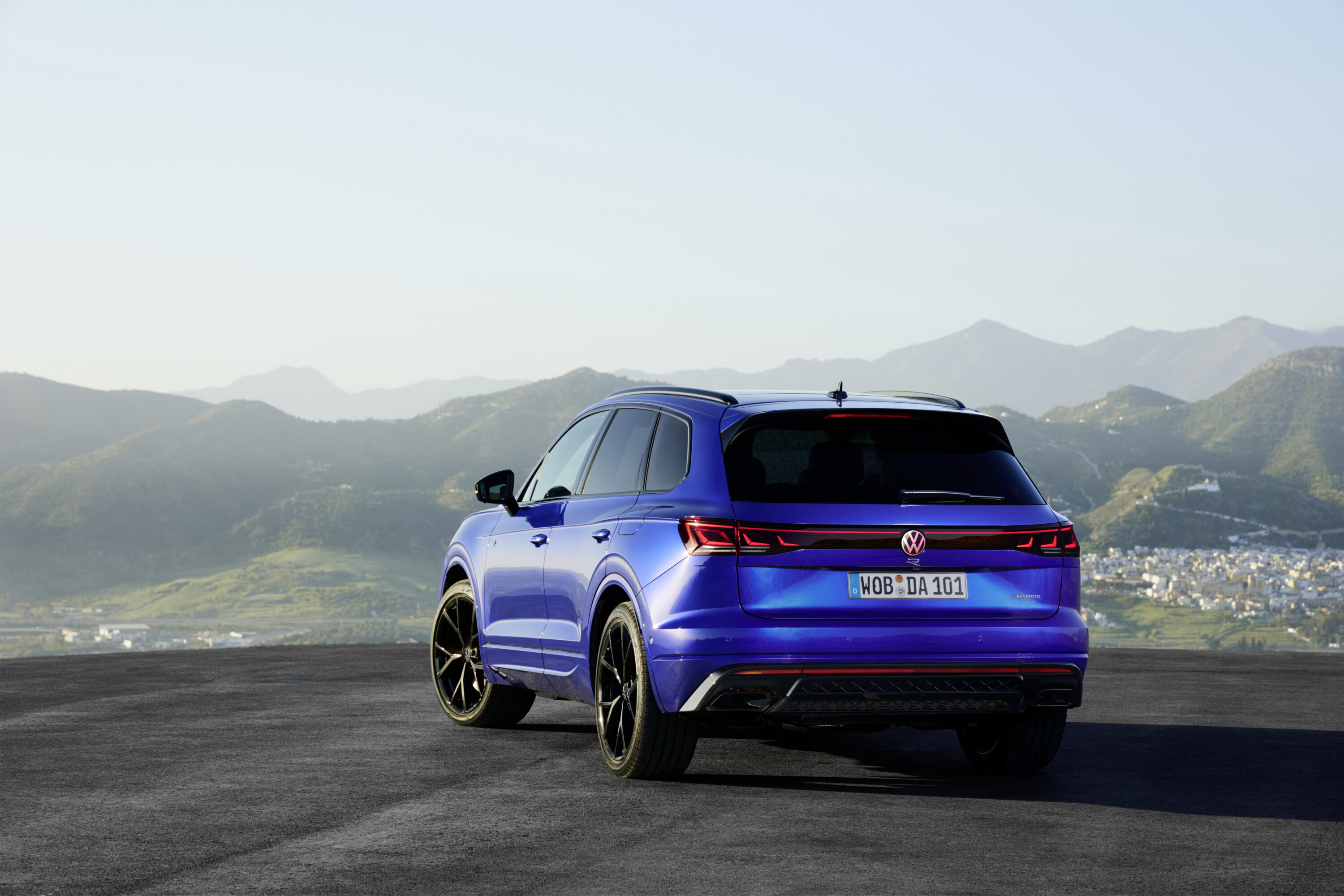
The facelifted 2024 Volkswagen Touareg large SUV has debuted ahead of its Australian launch.
Snapshot
2024 Volkswagen Touareg facelift revealed
Updated large SUV features VW’s latest tech
Due in Australia in early 2024 with hi-po R variant
Volkswagen Australia has confirmed the revised Touareg will launch here in the first quarter of 2024, headlined by the flagship Touareg R plug-in hybrid variant, following delays.
Initially set to arrive here in late 2022, the Touareg R was then expected sometime this year. However, Wheels understands it was unfeasible for the brand to introduce a few pre-facelift examples in Australia.
While the R should command a substantial premium closer to, or above, $200,000 drive-away, it includes a performance boost with a 250kW 3.0-litre turbo-petrol V6 from the Audi Q7 55 TFSI, matched to a 100kW electric motor.
In total, the Touareg R produces 340kW and 700Nm, with a claimed 5.1-second 0-100km/h time. It retains a 3500-kilogram towing capacity, but boot space is reduced from 810 to 610 litres.
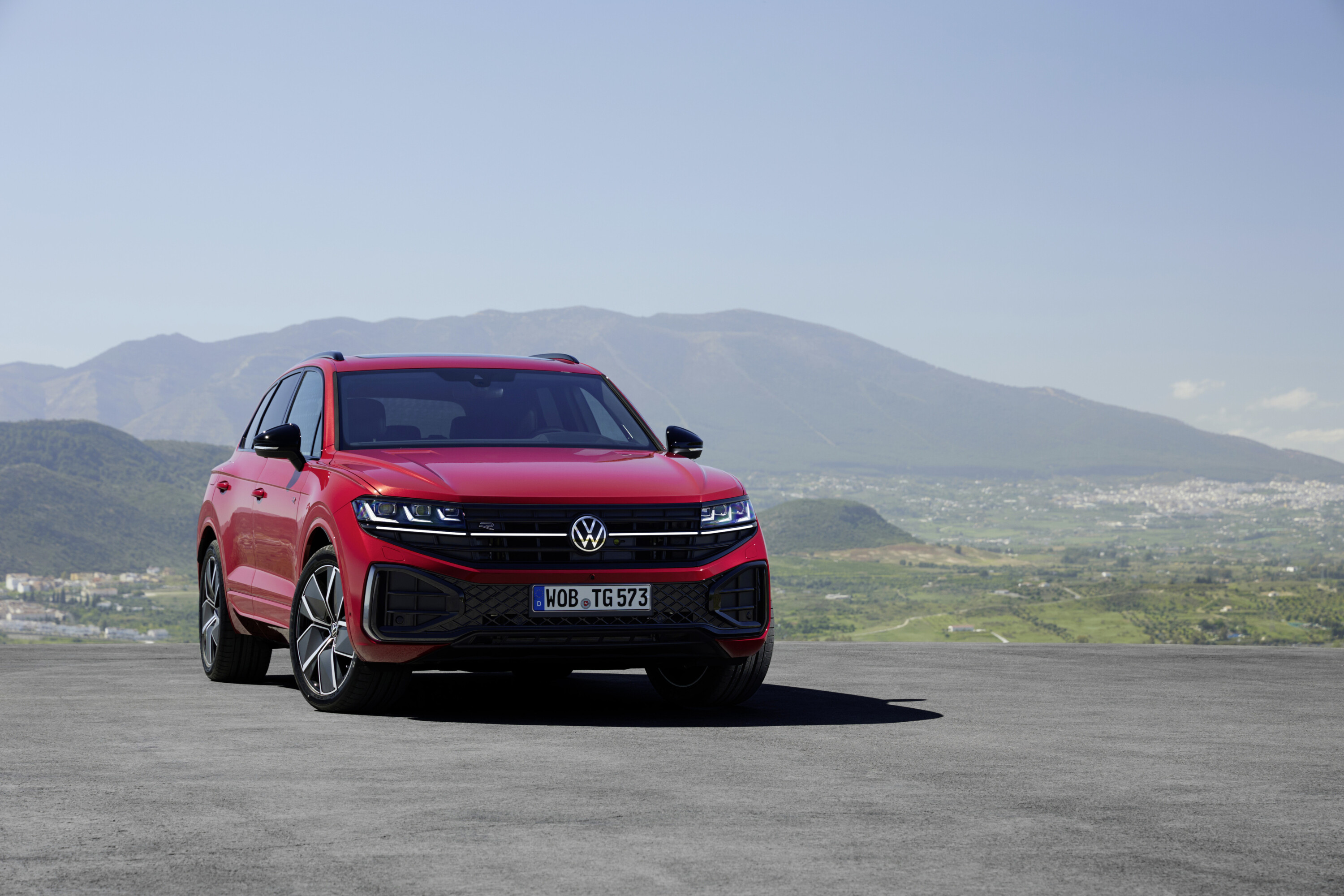
The mid-life update brings a revised front-end with slimmer headlights similar to the latest Golf and Tiguan, an updated high-definition matrix lighting system with 38,432 micro-LEDs, and an integrated light strip running across the grille.
Volkswagen claims the enhanced, “very high resolution” matrix headlights can improve brightness in low light environments without dazzling oncoming traffic, including a ‘lane light’ function to illuminate the vehicle’s lane.
1
At the rear, the facelifted Touareg sports an updated tail-light signature, a revised bumper design, a light strip, and – in a European first – an illuminated red Volkswagen badge.
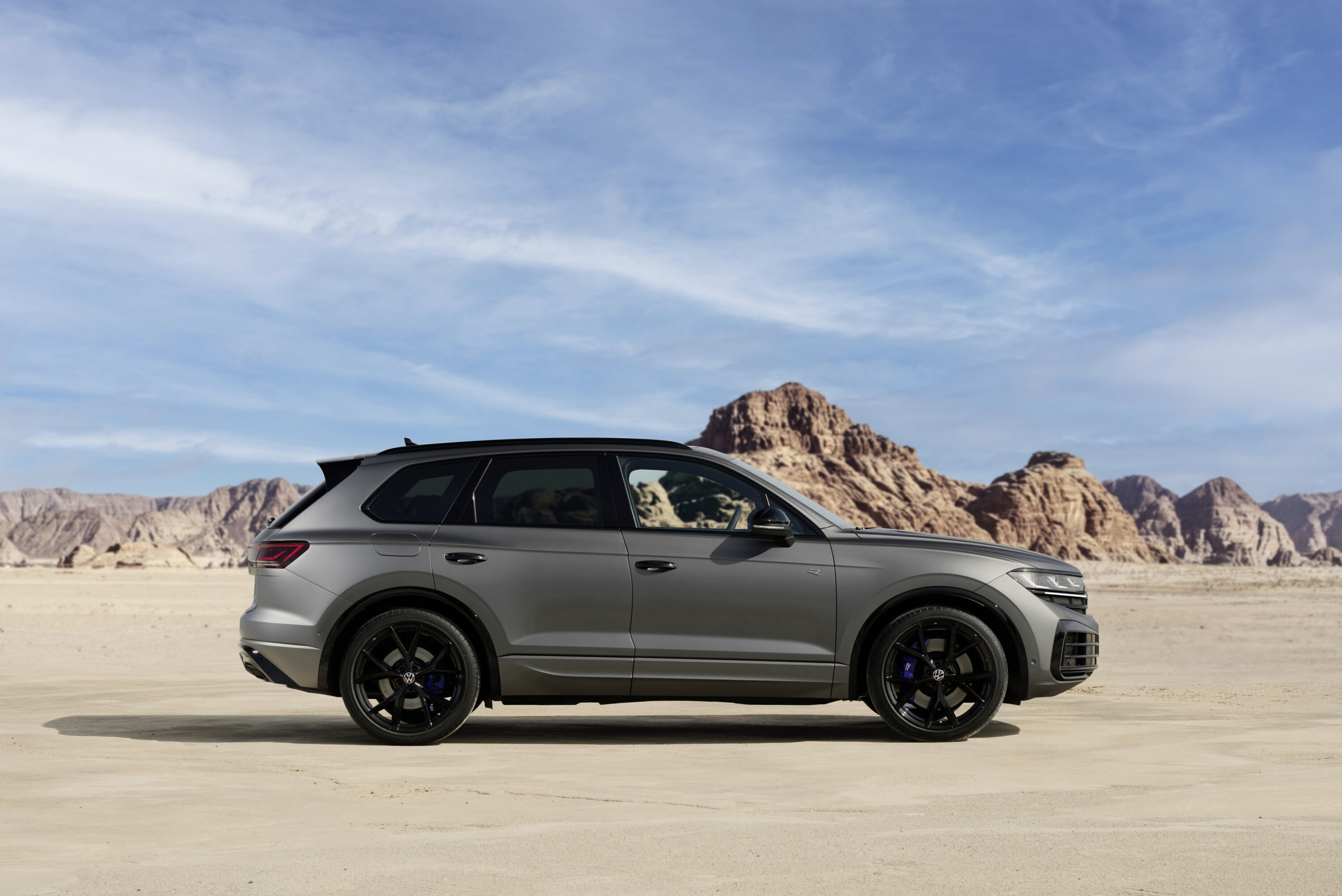
It also features redesigned 19-, 20-, 21- and 22-inch alloy wheels, while the Touareg R gains blue brake calipers and illuminated puddle lamps, both with R logos.
Under the skin, the Touareg’s MLB Evo chassis – related to the Q7, Porsche Cayenne, Lamborghini Urus and Bentley Bentayga – includes a new roof load sensor to improve agility when the roof is unladen.
1
It also has revised suspension components (for either the standard steel spring or optional two-chamber air suspension) to boost comfort and performance levels.
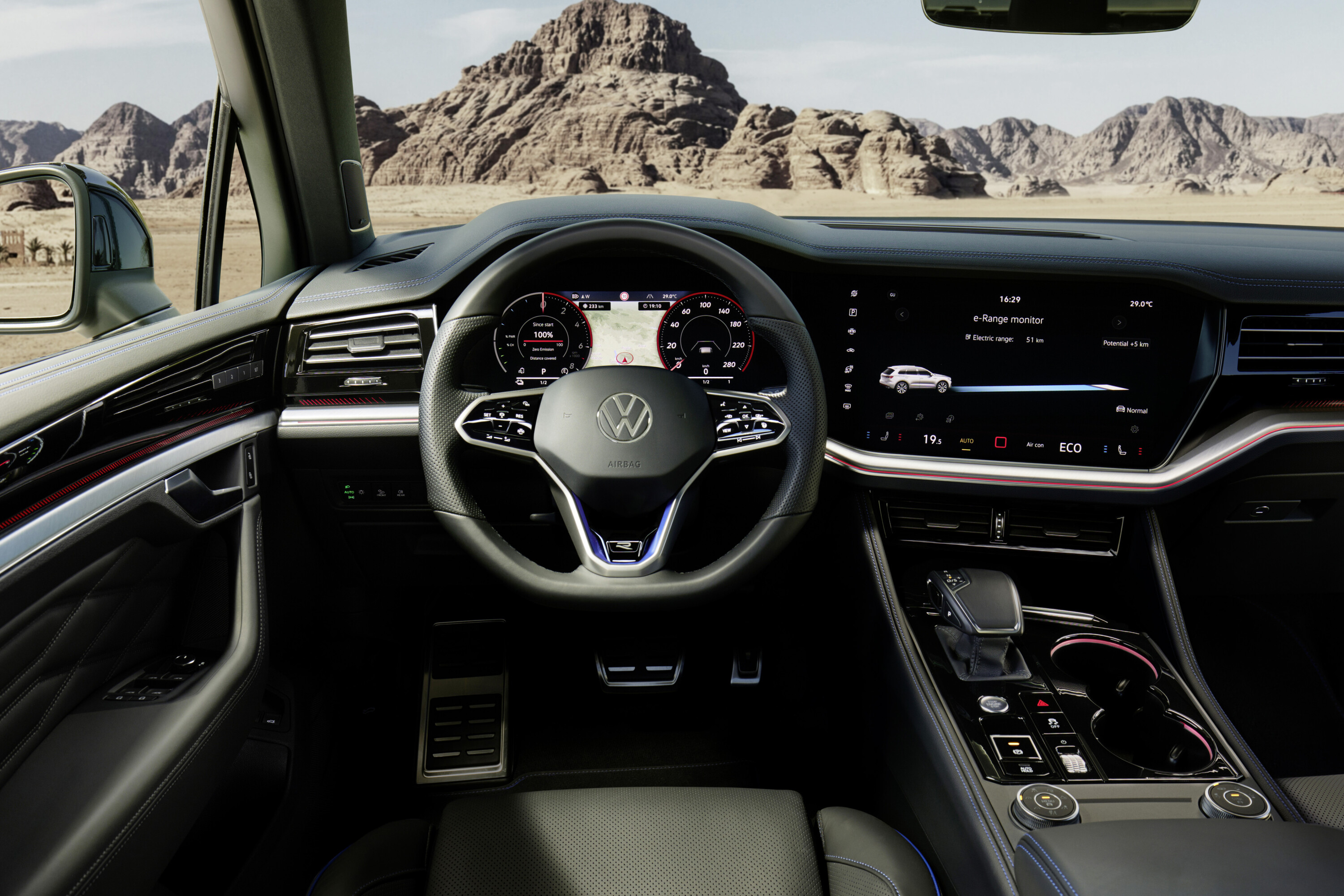
Inside, there’s an updated 15-inch Innovision Cockpit system – now fitted as standard – with VW’s latest ‘Discover Pro Max’ infotainment software to support wireless Apple CarPlay and Android Auto, ‘lane-precise’ navigation, high-resolution map data, and improved voice control.
Volkswagen has introduced footwell and cupholder ambient lighting, faster 45-watt USB-C ports – up from 15-watt – and enhanced comfort, with softer padding for the armrests and centre console.
In Europe, the latest Touareg has five 3.0-litre V6 powertrain options: one turbo-petrol, two diesels, and two plug-in hybrids.
1
There are no changes to the diesel, which is available in low-output 170kW/500Nm entry-level form or a 210kW/600Nm tune for the Elegance and R-Line in Australia.
The facelifted 2024 Volkswagen Touareg will launch in Australia in the first quarter of next year (January to March inclusive).
It is currently priced from $89,240 before on-road costs for the eponymous 170TDI, rising to $117,540 plus on-roads for the 210TDI R-Line, with price rises expected for the facelift.
Once a pioneer of electrification, Honda is now in no hurry to get its slice of the burgeoning EV market – anywhere in the world.
Our earlier story, below, saw Honda Australia boss Carolyn McMahon talk up the virtues of petrol-electric hybrid technology for markets like Australia, where EVs are currently far more expensive than equivalent combustion models (in most cases), and charging infrastructure is far from expansive.
McMahon’s position – unquestionably one directed by Japan – is at odds with the example of the many buyers moving to EVs, accomplishing most of their charging needs at home.
Her Europe-market counterpart, Katsuhisa Okuda, is parroting the same line. Speaking with the UK’s Autocar[↗], Okuda said “The pace of our EV development is just the same as infrastructure development, in terms of public charging availability.”
“We believe that in 2040 or 2050, the infrastructure will be well developed and then our many customers can enjoy EVs.
“Until then, our plug-in hybrid is a good option for commuting and for longer weekend drives. It’s very realistic and practical.”
1
Forget the chicken and egg puzzle; Honda’s chook has lost its head and nobody bothered to sit on the egg.
Honda has simply moved too slow to take a competitive position, falling back to the protest-too-much “it’s not time” position all brands take when they’ve been caught without the product so many buyers are demanding – whether it’s time or not.
To its credit, or perhaps more to the credit of the EU and its strict progressive regulations, Honda does at leave have some EVs in Europe: the impressive little E city hatch, and the new HR-V-based E:NY1 – the latter being the brand’s first proper play at offering a volume-selling EV. It also has a new CR-V plug-in hybrid.
In the US, there’s the handsome, all-electric, GM-partnered Prologue SUV, along with the bizarre Sony collaboration brand, Afeela.
March 2023: Honda won’t offer a pure EV in Australia until at least 2028
Honda Australia says it isn’t behind on electric cars, despite this week revealing it won’t sell an EV here until at least 2028.
The brand is instead focusing on hybrid models, telling Wheels it will soon have a hybrid variant across every nameplate in its Aussie line-up.
“There’s a lot of interest in electrification, and I imagine you want to know what Honda’s doing with electrification,” said Honda Australia director Carolyn McMahon. “Our electrification strategy is all about using hybrid to bridge to electrification in the future.
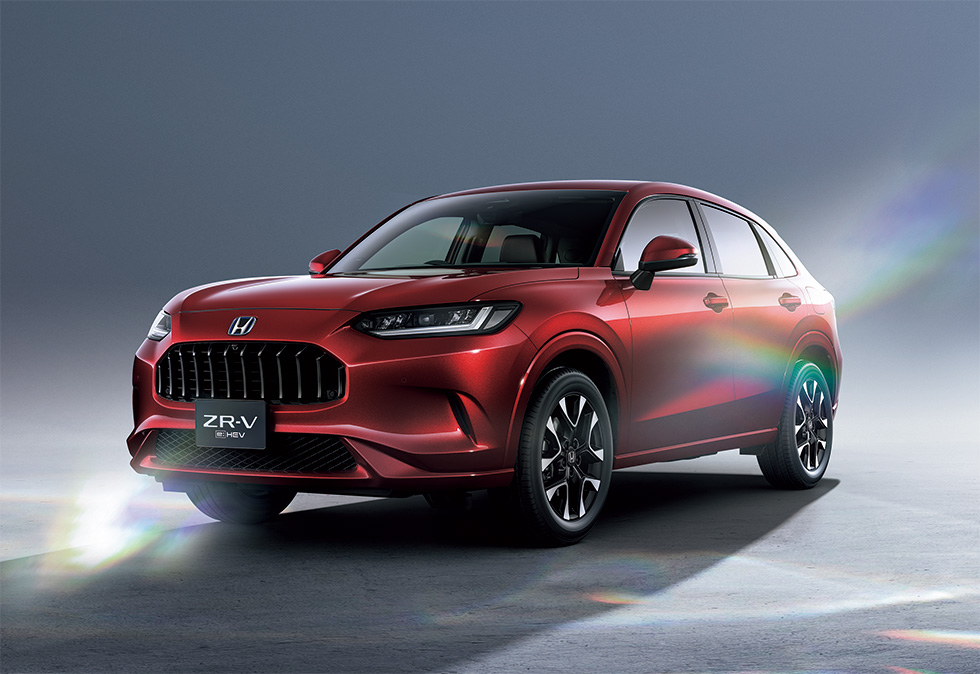
“Our main focus at the moment is to expand the hybrid technology across every model. We will have a hybrid variant across each nameplate in our line-up in Australia. And that’s continuing to gain momentum. We’ve already seen Civic hybrid and HR-V hybrid, you’ll see Honda ZR-V hybrid and of course as we roll out other models they will all have hybrid variants as well.”
“Our electrification strategy is all about using hybrid to bridge to electrification in the future. Our main focus at the moment is to expand the hybrid technology across every model.”
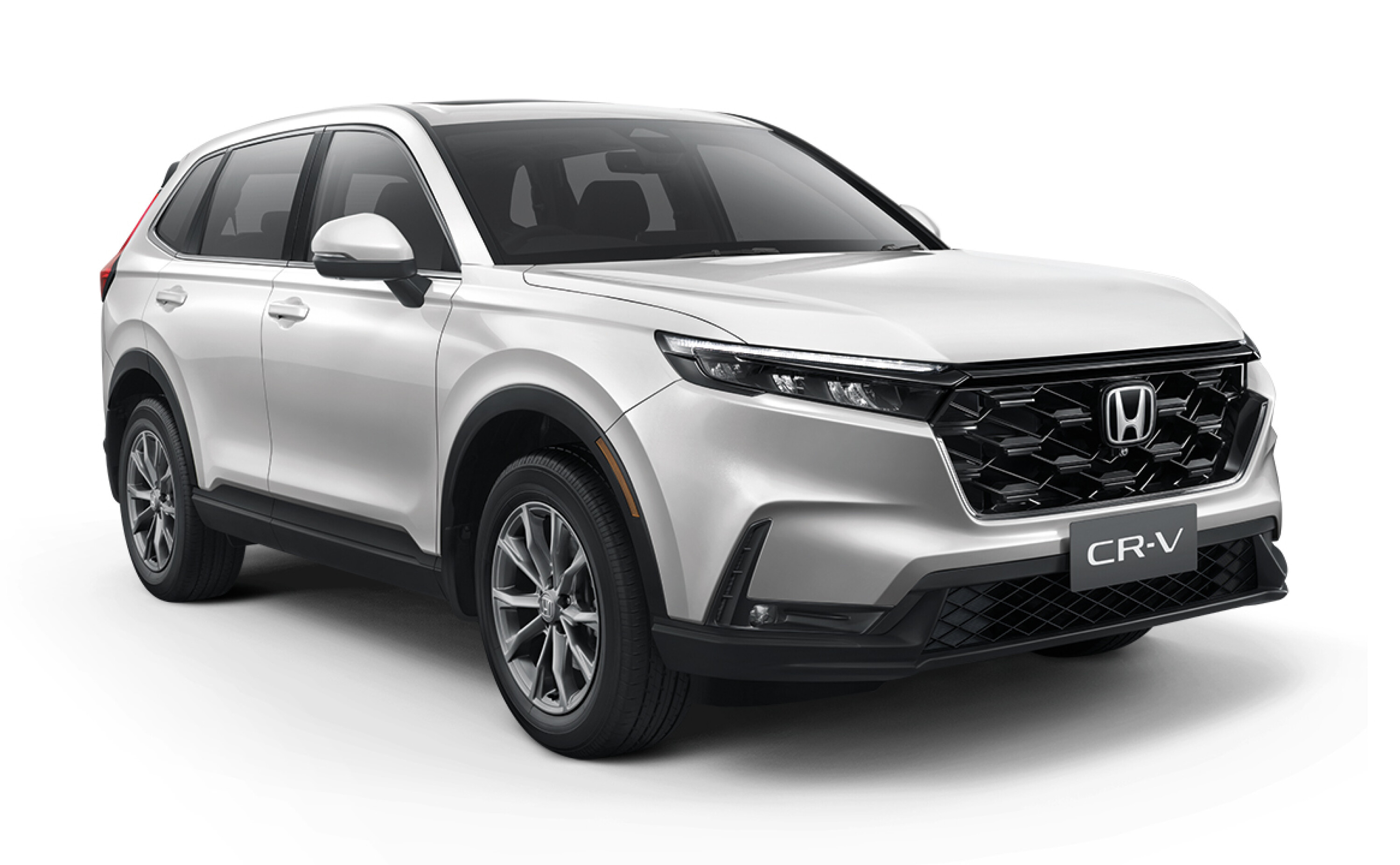
The brand has confirmed a hybrid version of the new-generation CR-V will also be offered in Australia when it launches here later in 2023.
Choosing not to offer a fully electric model in Australia in mid-term means Honda will be one of the last mainstream brand’s in our market to embrace electrification. It’s a decision seemingly at odds with Honda’s hard-won reputation was a technology and engineering leader but McMahon says Honda isn’t behind when it comes to EVs.
1
“I wouldn’t say we’re behind; I’d say our strategy is hybrid at the moment,” McMahon said. “There’s a lot of other companies doing a lot in this space, but we’re very comfortable with our hybrid strategy right now.”
McMahon also flagged concerns around Australia’s readiness for electric cars, pointing to a lack of infrastructure and clear government policy as key issues.
“When we take a look at the Australian readiness or the Australian market’s ability to cope with electric we don’t think it’s quite yet there,” McMahon said. “The other critical point is our regional and rural Australia market and for us right now we think hybrid is right.
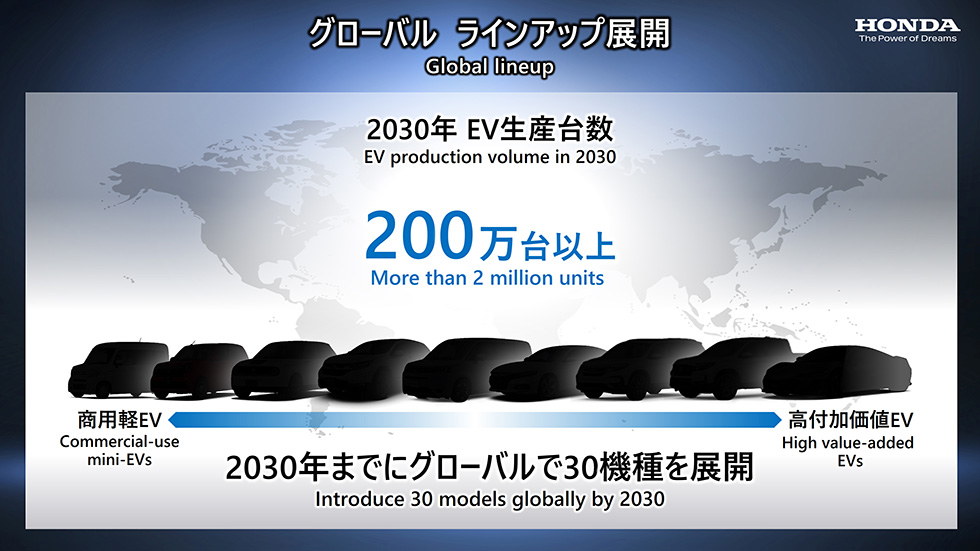
“That’s not to say Honda won’t be looking at electric vehicles in the future. You would have read about Honda’s global commitment to investing into electrification. They’re talking 30 models by 2030, so we’re really excited and confident in the longer term that we’ll have models here in Australia. But in the medium term, we think we’ve got it right with hybrid.”
McMahon clarified “medium term” means the next five years, opening the door for fresh EV models to join the Aussie line-up from 2028.
Globally, Honda is investing 5 trillion yen (AU$56 billion) into electrification, and this year it established a new division to speed up EV development.
Two electric sports cars and possibly an electric dual-cab ute are tipped to be part of Honda’s global EV rollout, and the brand has also entered into a joint venture with Sony – which has so far produced the electric Afeela EV prototype car, shown at America’s Consumer Electronics Show earlier this year.
“I don’t want to mislead anyone – we will eventually get to EV, but for the moment we think expansion of our current model line-up with hybrid variants is the right way to go,” added McMahon.
1
As for which segment is the most likely to see Honda make the jump into electrification, McMahon agreed an SUV makes the most sense. She fell short, however, of suggesting the brand could react quickly to meet rising EV demand in our market.
“Obviously our focus is on the SUV market, but I don’t want to give the wrong impression that we’re actively monitoring and we’re ready to make some sort of quick reaction to that,” she said. “I mean ‘monitoring’ in a more general sense.
“We have our plan and we’ll stick to our plan, but we also know that in the background there’s development going on at Honda Motor so at the right time we’ll have a look at those 30 or so models that are being developed and we’ll see where the right spot is for us. It might be something completely different [to an SUV] and we’ll decide to do something different in the future.”
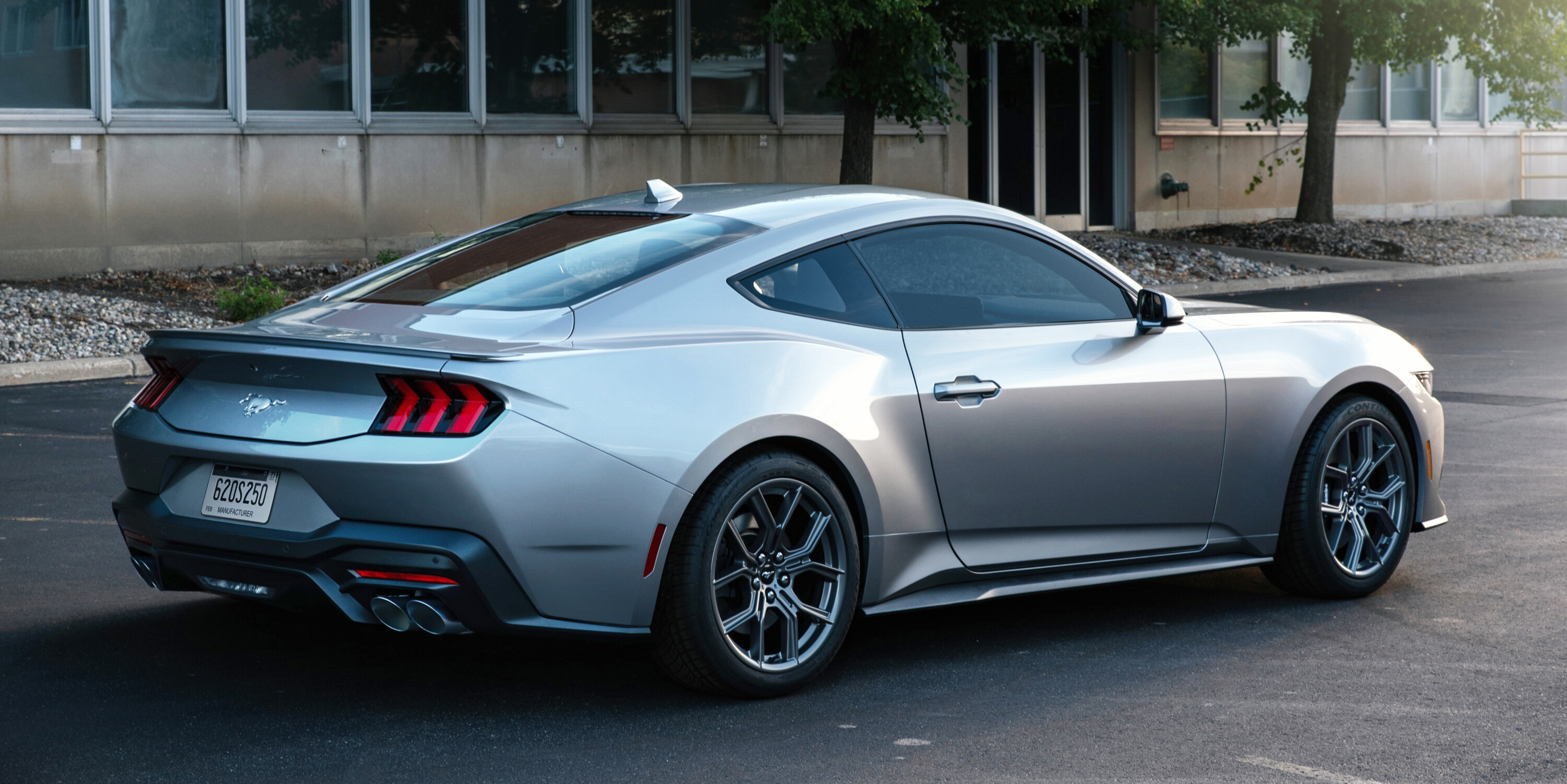
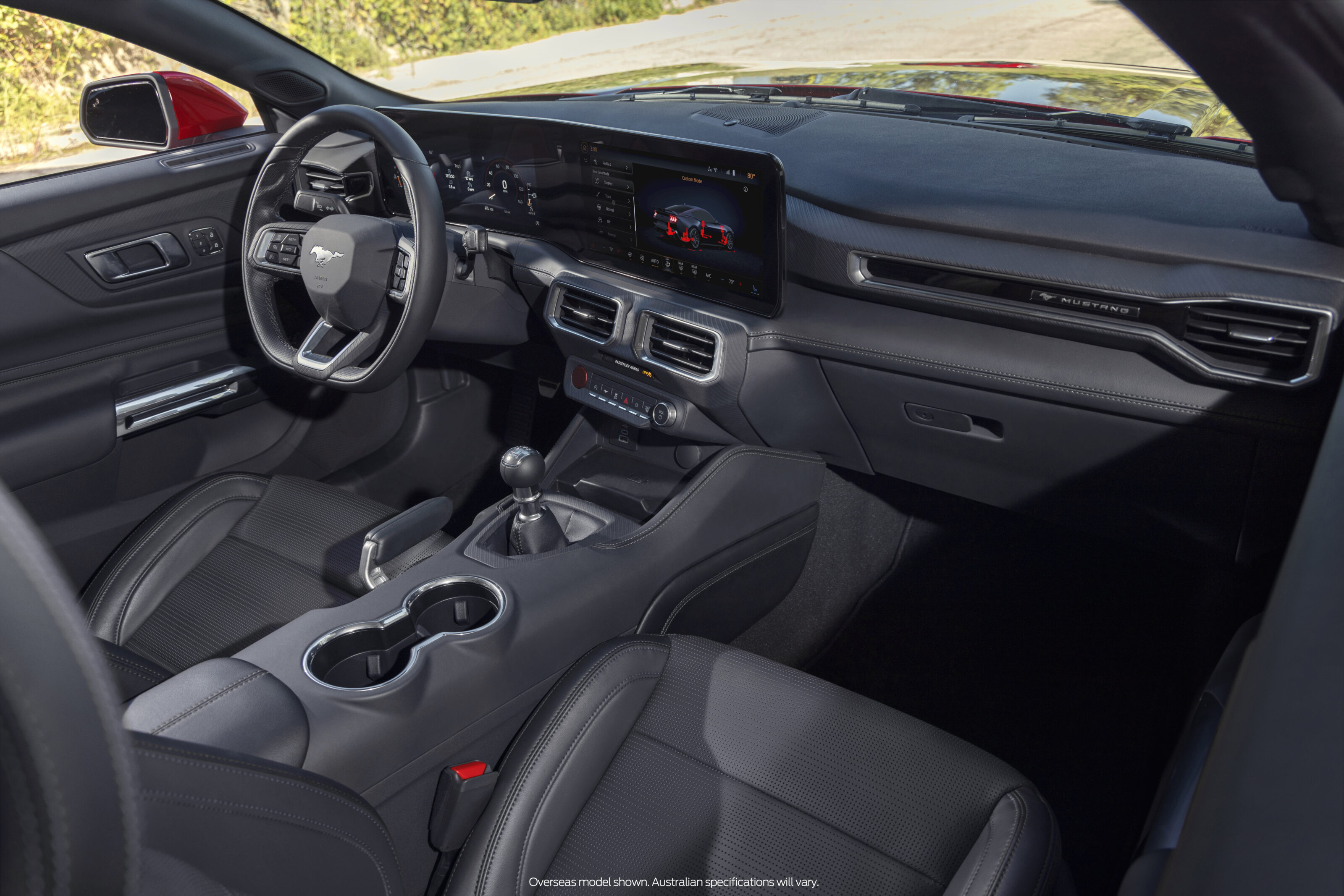
The new-generation 2024 Ford Mustang was originally expected to reach Australia in late 2023.
Then, earlier this year, Ford had good news: The ‘S650’ Mustang would be here even sooner – possibly early in the third quarter. Well, bad news.
1
According to a sneaky dealer bulletin posted to community forum mustang7g.com [↗] back in early April, global production delays have seen Australian deliveries pushed out to sometime in the first quarter of 2024 – around 18 months since the new model was unveiled.
Unfortunately for fans, Ford has now confirmed that new timing. In a statement issued to Wheels Media today, the company said: “Production for Australia-bound Mustangs is set to begin by late this year. Due to significant shipping time between the plant in Flat Rock, Michigan and Australia, we expect first arrivals in Q1, 2024.”
1
Pricing, at least, is expected to be announced sometime in the second quarter of 2023, so hopefully buyers will know more soon.
For all details on the new Mustang, see our reveal story and video below.
Key Points
5.0 V8 and 2.3 turbo carry over with improvements
Ecoboost now auto-only
Unique designs differentiate GT from Ecoboost
Drifter handbrake standard
Arriving Australia lu0336au0336tu0336eu0336 2u03360u03362u03363u0336 early 2024
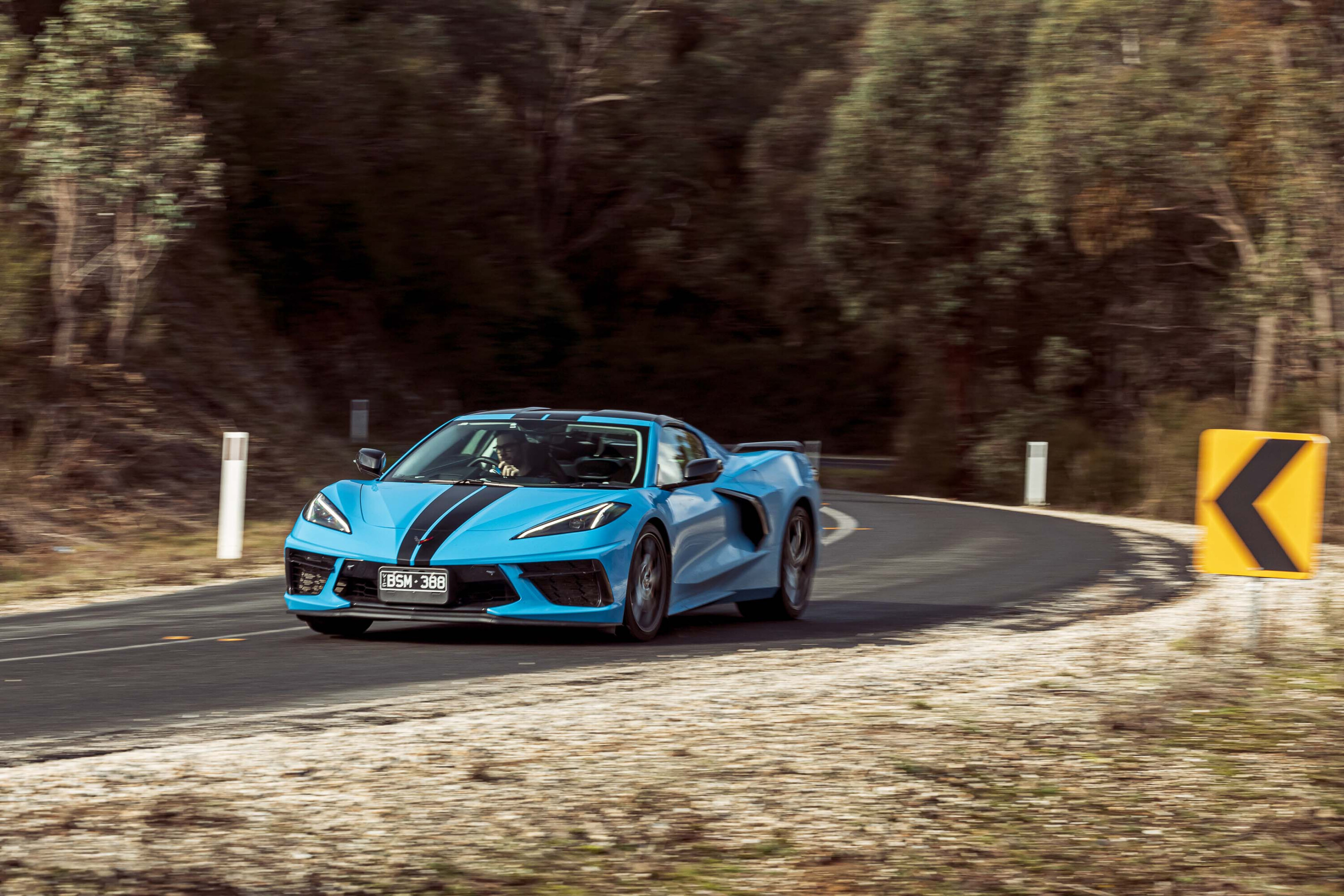
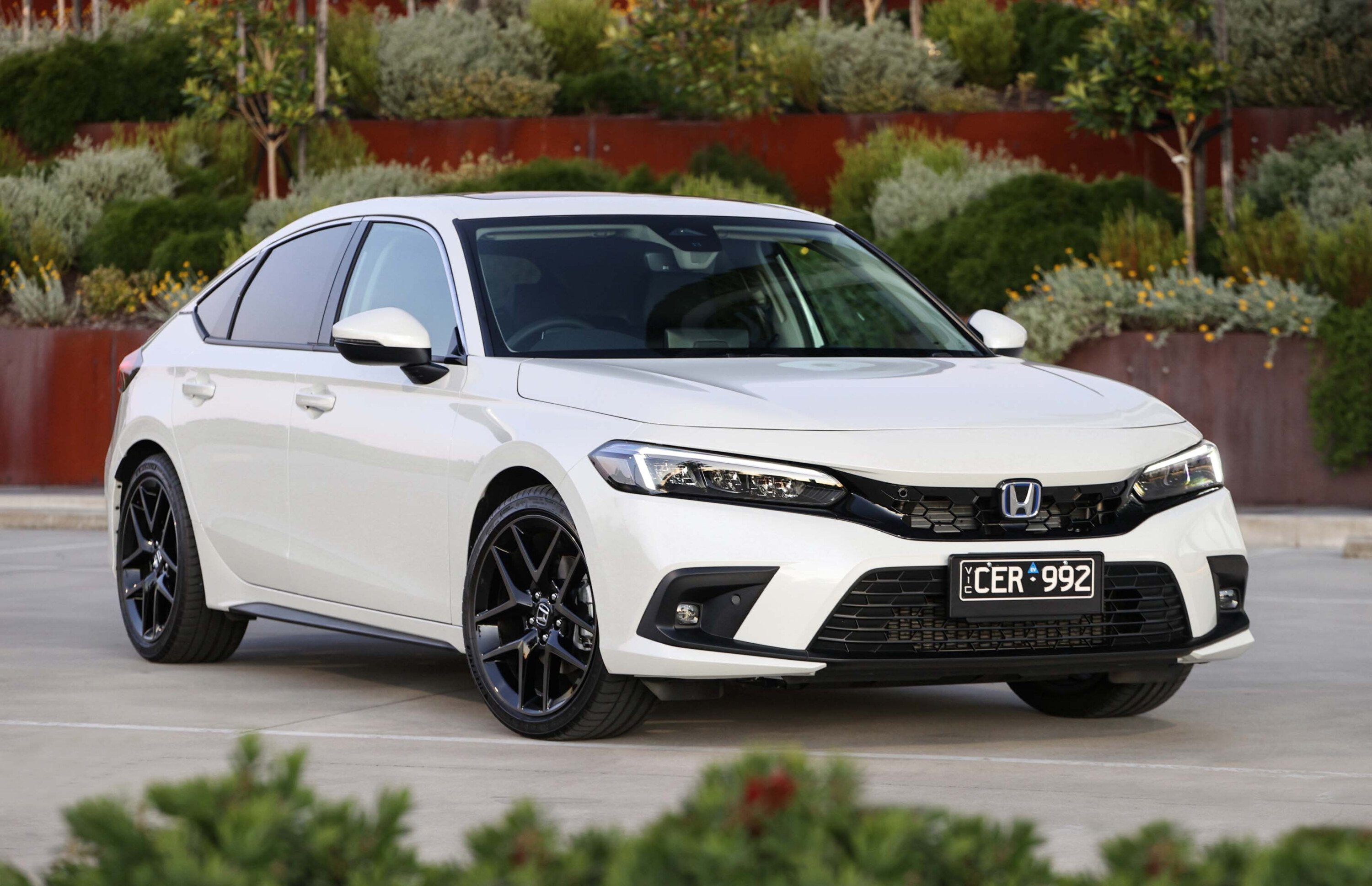
New recall notices have been issued, affecting the enthusiast favourite new Chevrolet Corvette, and Honda’s latest Civic Hybrid.
In the Corvette’s case, the recall centres around the ‘drive-by’ exhaust noise being too loud for Australian rules, while the Civic Hybrid has an issue that can cause its ECU to reset and erase all stored fault codes.
The details of each recall, as published, are posted below.
Due to a manufacturing defect, the drive-by exhaust noise exceeds the limit defined under Australian Design Rule 83/00 (ADR 83/00).
What are the hazards?
ADR 83/00 defines the limits on external noise generated by motor vehicles, motorcycles and mopeds in order to limit the contribution of motor traffic to community noise.
The vehicle is not compliant with ADR 83/00.
What should consumers do?
Owners of affected vehicles attend a General Motors Australia and New Zealand Pty Ltd (GM) dealer to have the engine control module software updated, free of charge.
Supplier details
GENERAL MOTORS AUSTRALIA AND NEW ZEALAND PTY LTD
Who should owners/operators contact for more information?
Variants: All variants within this model range (hybrid only)
What are the defects?
Due to a software fault the Electronic Control Unit (ECU) can be reset when the vehicle switches to electric drive. This will erase stored vehicle fault codes and turn off the check engine light if it is activated.
What are the hazards?
Vehicles do not comply with Australian Design Rule 79/04 because the check engine light may be inadvertently turned off and stored failure codes erased.
What should consumers do?
Customers will be advised to take their vehicle to a Honda Dealer for an ECU software update, free of charge.
Supplier details
HONDA AUSTRALIA PTY. LTD.
Who should owners/operators contact for more information?
The 2023 Mazda CX-5 medium SUV and 2023 Mazda CX-8 large SUV are now available with Android Auto.
While these vehicles had been available with wired Android Auto – and Apple CarPlay – for almost five years, it’s understood the switch to wireless connectivity for 2023 models caused certification delays between Google and Mazda.
This meant some examples of the latest CX-5 and CX-8 were built without Android Auto functionality, with Mazda Australia initially confirming a fix would become available in July.
In an update given to Wheels Media last week, Mazda Australia has now confirmed all CX-5 and CX-8 vehicles are now built with Android Auto from March production.
A dealer-initiated 15-minute no-cost software ‘patch’ to unlock the feature is available for model-year 2023 vehicles produced from November 2022 for the CX-5, and January 2023 for the CX-8.
It’s understood some dealers are automatically installing the patch at a vehicle’s initial one-month/1000km free inspection.
For model-year 2023, Mazda Australia has installed the larger 10.25-inch Mazda Connect infotainment system on all CX-5 and CX-8 grades, replacing the older 8-inch unit previously found on lower-spec examples.
While all CX-8 grades include wireless Apple CarPlay and Android Auto, the base CX-5 Maxx retains wired connectivity – but the update is still required to unlock Android Auto.