
Snapshot
- Stutt’Fest to run from January 14-16
- Track time promised alongside car show setup
- All road and track Porsches welcome
Next year will start with a bang for Porsche fans as the Stutt’Fest gathering has been announced to kick off the motorsport year in January.
Set to be hosted at Winton Motor Raceway in regional Victoria, the three-day festival will be a celebration of all things Porsche – from Stuttgart-built road cars to the race-ready machines from Weissach.
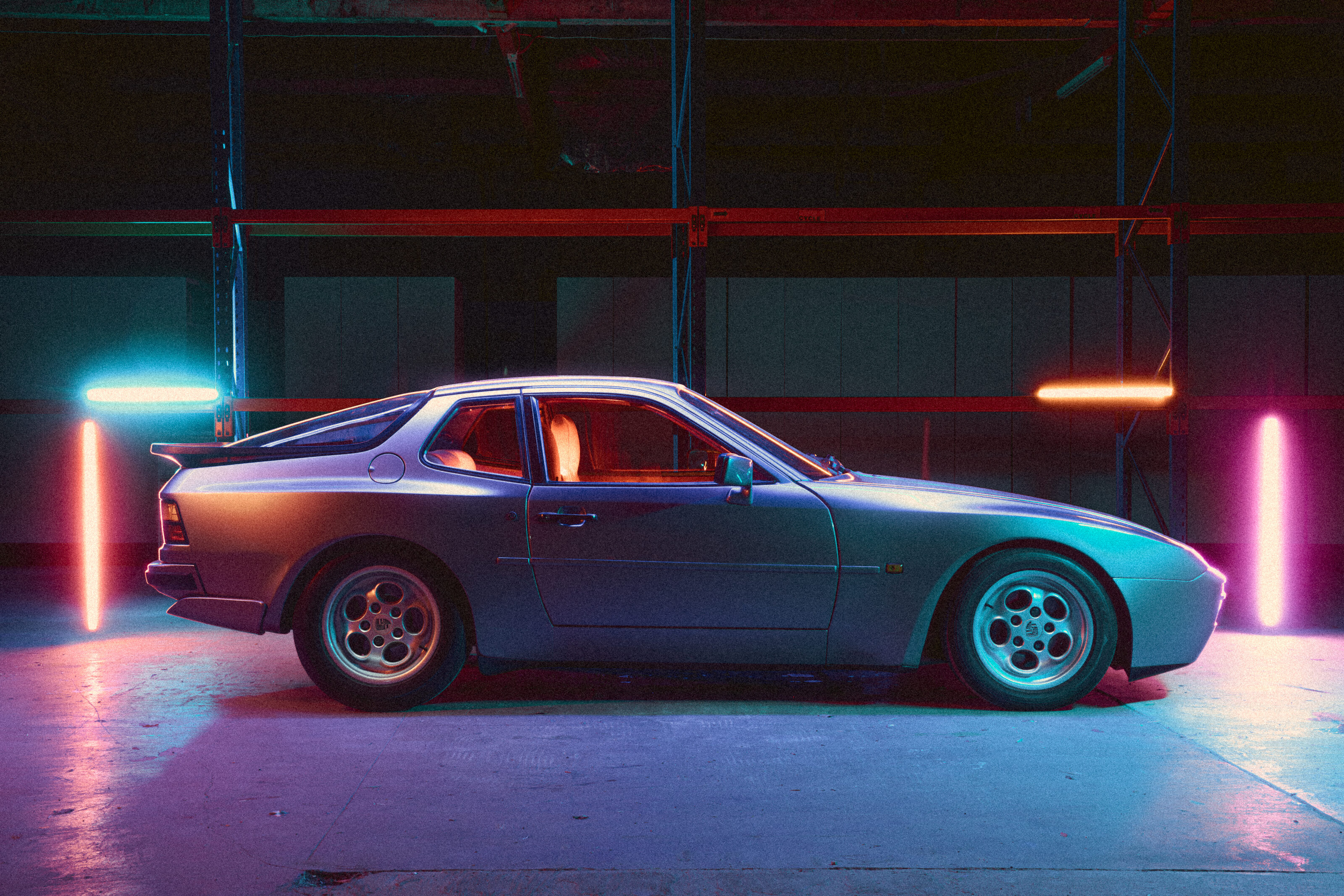
Amongst the racing categories on track will be the current stars of the Porsche Paynter Dixon Carrera Cup and Porsche Michelin Sprint Challenge Australia, as well as the Porsche 944 Challenge, IROC Challenge, Historic classes and classic Open Sports Cars.
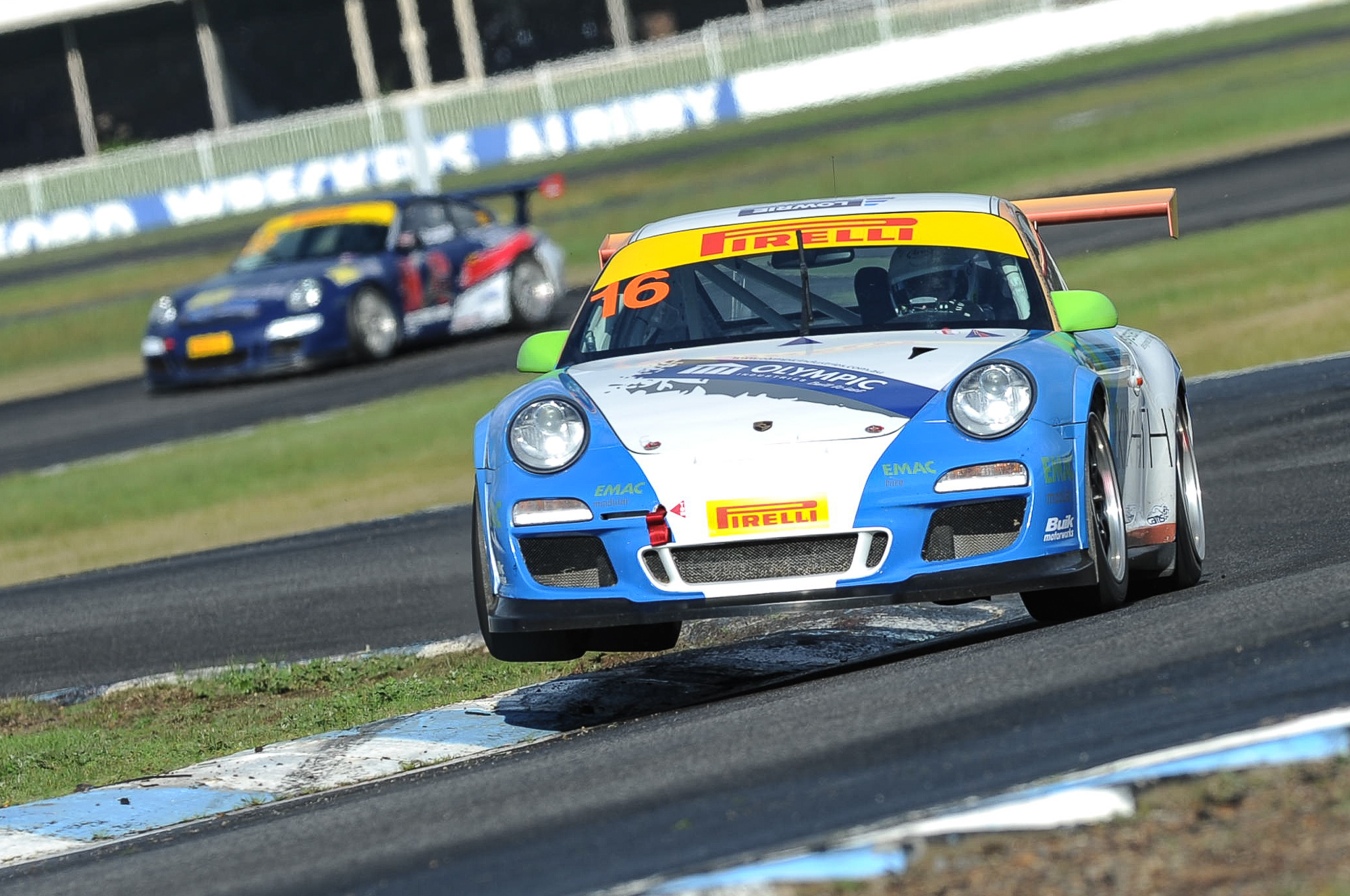
Not limited to the action on track, the festival will also include an off-track, concours-spec show and shine – as well as entertainment to continue the festival vibes.
Sven Burchartz, former Porsche GT3 Cup Challenge winner – is the founder of Stutt’Fest and hopes his concept can turn into a reality for Porsche owners around Australia.
“This started as a bit of a lockdown dream but as is always the case, has spiralled into something much bigger,” Burchartz said.
“What began as a concept to get some people together, hire the track and have some fun turned into something much more substantial.
“If I’m going to go in, I go in hard and Stutt’Fest has emerged from that concept.
“The idea was based on how good a concept the Porsche Rennsport Reunion events are. I understand completely that Porsche isn’t in the position to put one on right now with all the uncertainty, so we have taken that concept as inspiration for our own event.
“We have put a lot of the management team back together from our Porsche GT3 Cup Challenge days, and Stutt’Fest is based on that original ‘race your mates’ blueprint.
“Winton is on board to run the motorsport side of things on track, and we couldn’t think of a better place to run it; it’s a true partnership with Chris (Lewis-Williams) and his team and they have been sensational.
“The facilities are perfect for what we want to achieve and the local region in the north of Victoria is crying out for an event like this to attract people from Australia-wide.
“Stutt’Fest is a race meeting and there will be something for everyone who wants to compete; but it’s also a car display, a show ‘n shine, a tour of the local wineries and a chance to celebrate a mutual love of the brand, both for those who are fortunate enough to own one and for those who just want to see them in action.”
Benalla Auto Club CEO Chris Lewis-Williams believes Stutt’Fest will be the best way for Winton to start the racing year in 2022.
“Winton Motor Raceway can’t wait to host Stutt’Fest 2022 in January next year. We can’t think of a better way to dust ourselves off from the endless cycle of lockdowns and COVID stress by putting on a three-day festival for all things Porsche.
“When Sven came to us with the Stutt’Fest concept we were on board from the first phone call because the event concept, and Winton as the venue, aligns so well.
“Sven’s idea is a car race meeting with a Country Racing feel and we know we can deliver that! And, with the North East Victoria food, wine, craft beer and experiences all around Winton, we can see Stutt’Fest becoming an annual must do event for all Porsche enthusiasts.”
Running from January 14 to 16, tickets will be available closer to the event date from the festival’s website, with proceeds going to a mental health charity yet to be nominated.
To keep up to date with the event, you can follow the festival on Facebook and Instagram by searching for @Stuttfest
Ford Australia is recalling examples of its popular Ranger and Everest models over an issue with their roof rack awnings.
The notice affects 287 vehicles built between 2016 and 2021.
According to the Department for Infrastructure, the mounting bolts used for the Rhino Rack Sunseeker awning may not meet manufacturing specifications and could break.
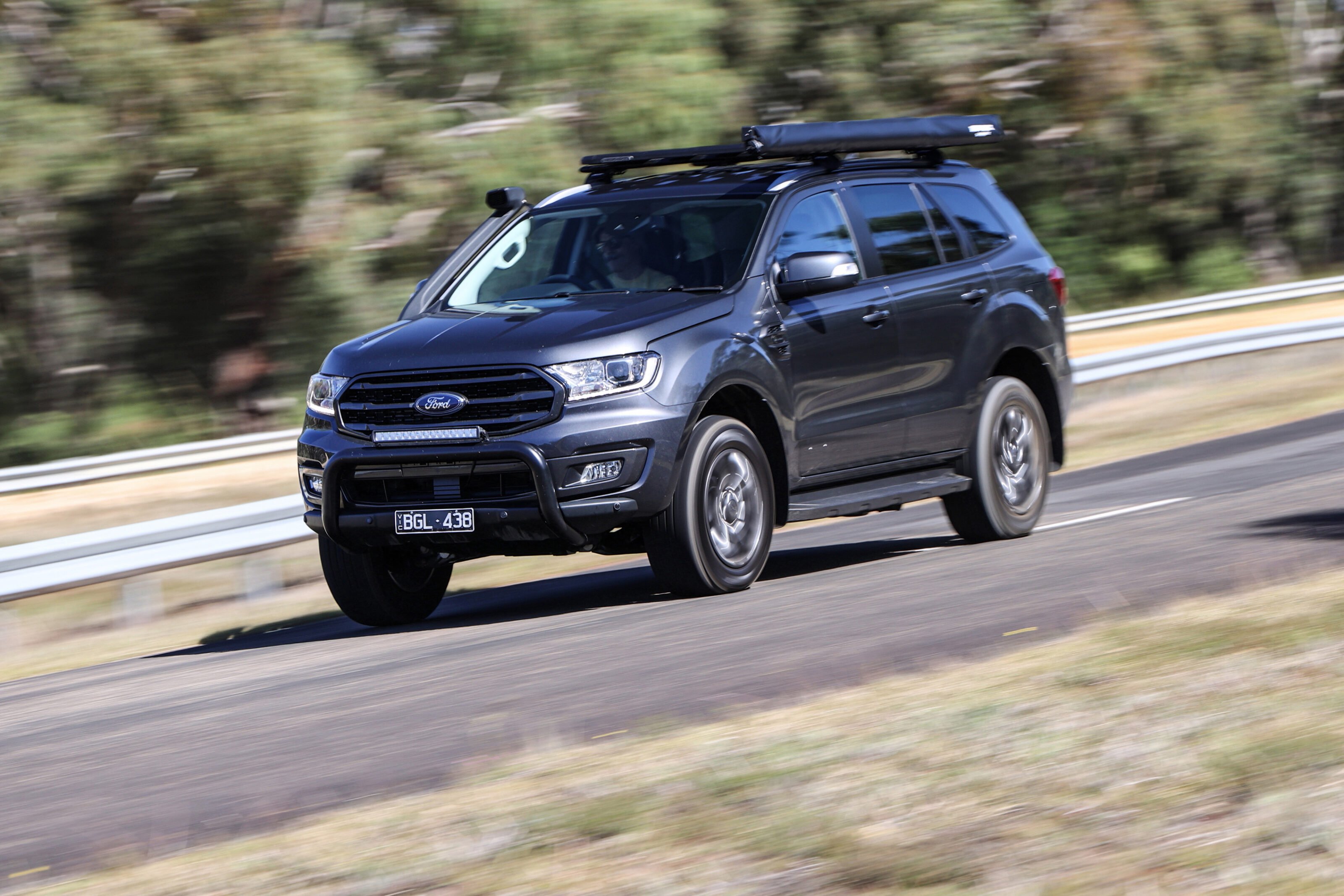
If the bolts break it could lead to the awning detaching and increasing the risk of serious injury or death to vehicle occupants, other road users or bystanders.
A list of VINs for those involved can be found here.
Owners of affected vehicles will be contacted by Ford and can arrange with their preferred authorised dealership for a free inspection and repair if necessary.
For further information Ford can be contacted on: 1800 503 672.
If you’ve ever attempted to take part in an online race you’ll be acutely aware of the absolute worst type of digital driving standards that plague every racing-themed video game. With a grid full of drivers hopped up on a hearty breakfast of Yeet-Bix and red cordial, it’s a journey of discovery in establishing exactly how much each player’s ambitions outweigh their talents.
This isn’t to deride digital racing. In fact I’m a big advocate for its benefits, as are many world-class drivers. But surely the real, expensive and life-threatening consequences of getting it wrong during a physical event would mean no actual motorsport grid would suffer the same indignant shambles as an online lobby?
Well, no.
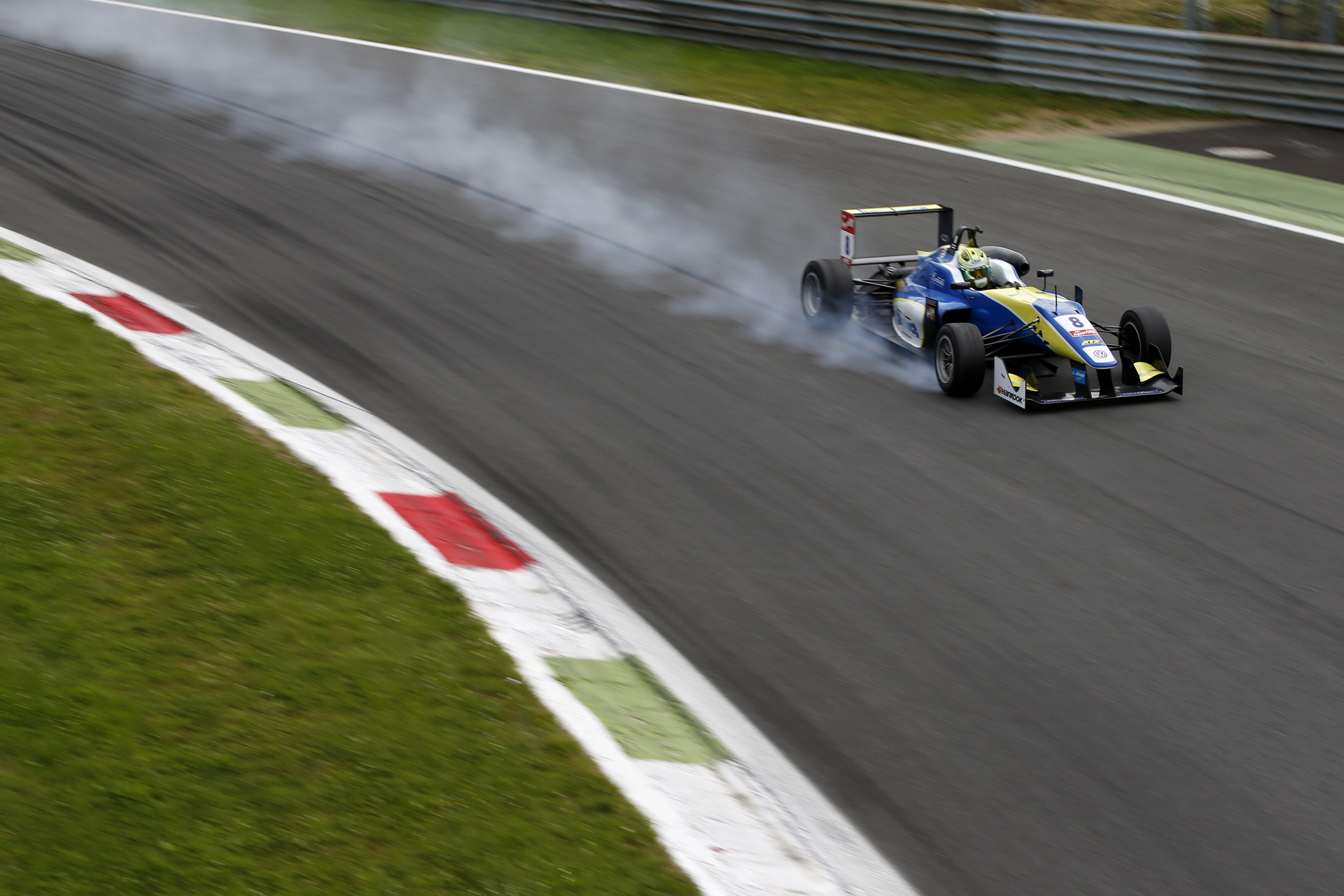
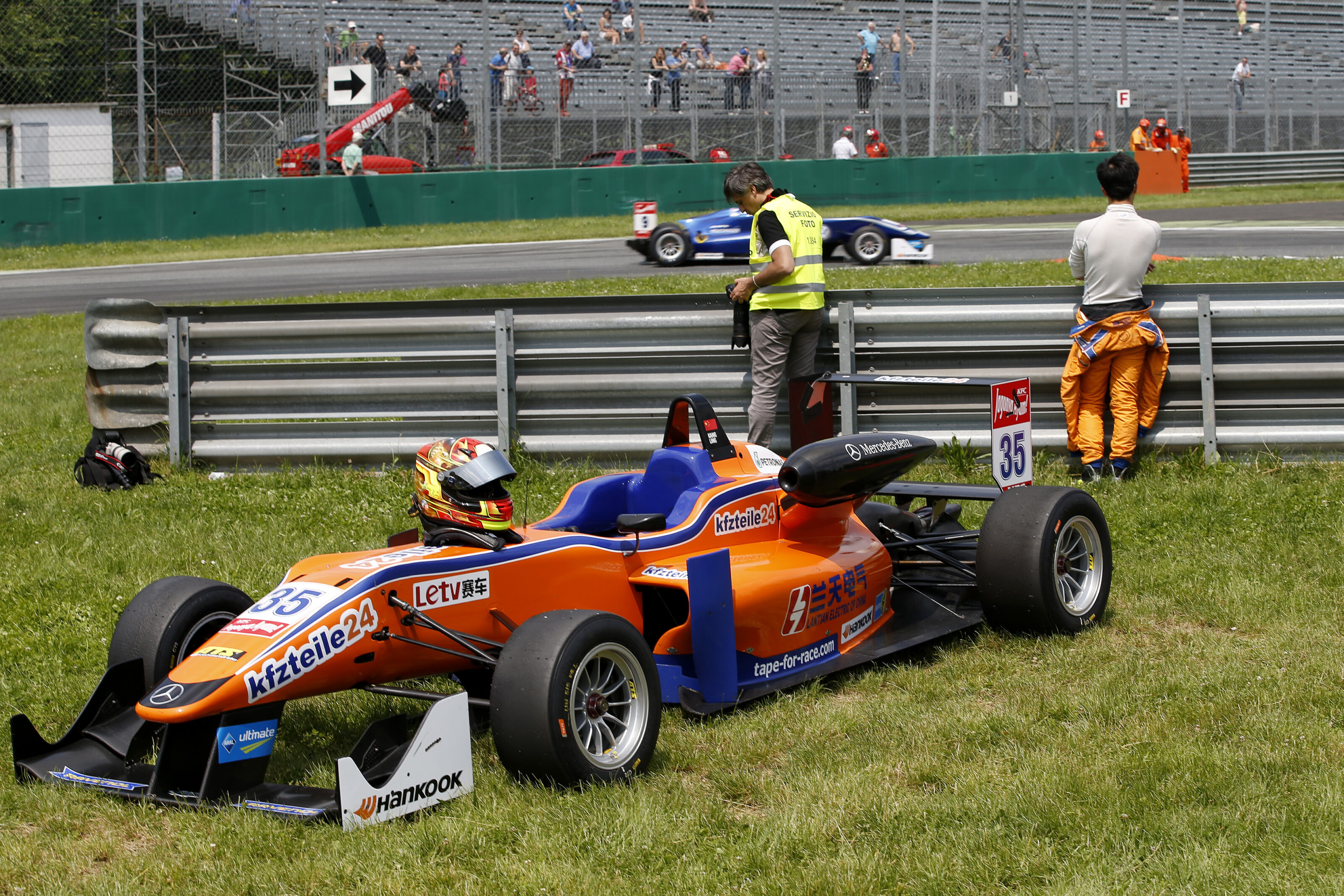
In fact, in the past decade there was an FIA-sanctioned event with driving standards so consistently poor that the whole thing was abandoned altogether – the Formula 3 European Championship’s 2015 round at Monza.
This wasn’t a grid of All The Gear, No Idea gentlemen drivers on a trip to the Temple of Speed either, but some of the hottest young open-wheel talents of the time. On the grid were five current or former F1 drivers, with a handful of future IndyCar and Formula E pilots thrown in for good measure. It was, and will likely remain for some time, the most disappointing display of amateur talent by ostensibly professional athletes in motorsport history.
The shenanigans started immediately at the start of the first race, and then proceeded to continue unabated through the entirety of the first two races.
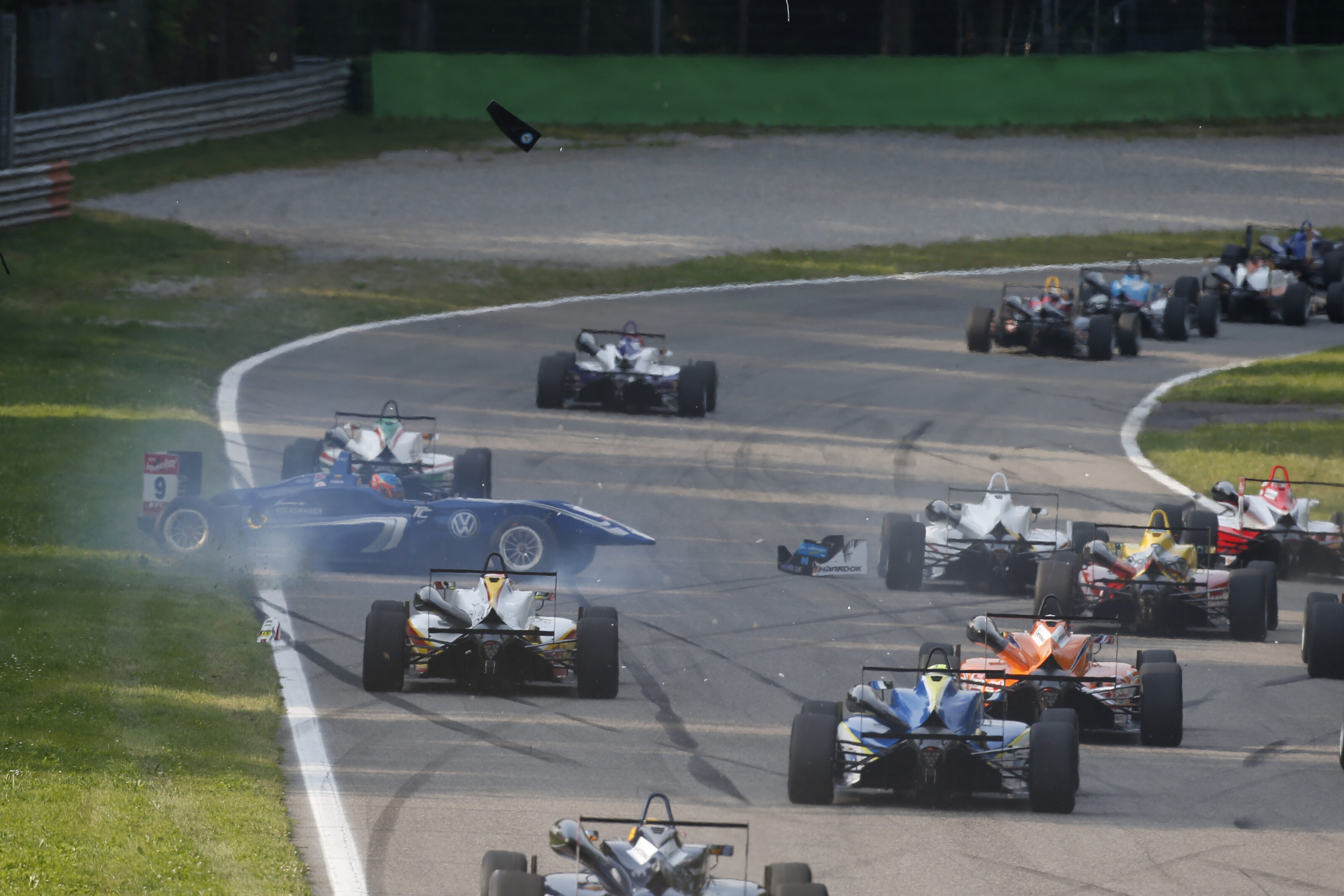
In one of the earlier crashes, Lance Stroll and Antonio Giovinazzi tangled going through Curva Grande, with the former slamming into the catch fence and getting airborne, before promptly being spiked into the ground by the hand of god.
While not present at the event, then FIA Single Seater Commission president Stefano Domenicali was so incensed at what was happening on the track that he called the stewards in a rage. By the end of the second race the grid had pushed each other off track, abused track limits, and had been such colossal nongs that race officials were at their wits’ end.
Exasperated at what he was seeing, race director Niels Wittich called an emergency meeting and summoned all drivers and team managers for a stern talking to like naughty school children. During the assembly, Wittich explained that if driving standards didn’t improve, he would have no alternative but to see the rest of the racing out under safety car conditions.
He didn’t even get to do that.
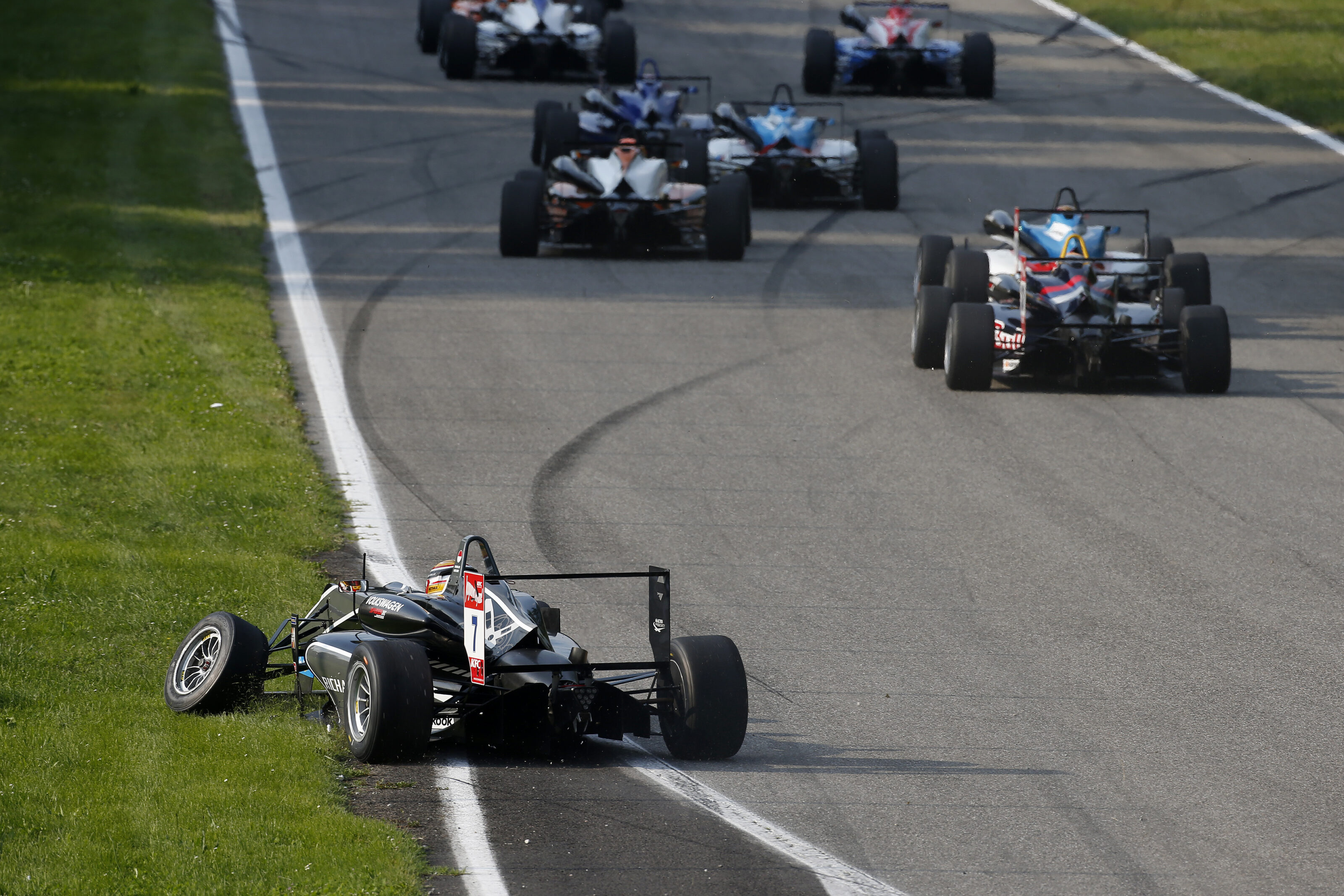
Race three began with a crash, prompting an immediate full-course caution. Wittich gave the grid one final chance to behave, with the green flag waved after the debris had been cleaned up. His faith in the youngsters was immediately proven foolhardy when Stroll (yes, again) was involved in an incident at the first chicane with Mikkel Jensen.
At this point, there had been so much crashing that even if they spent the entire time remaining in the race under safety car, the 75 per cent race distance wouldn’t be reached. Instead, Wittich called for the red flag to be waved and all remaining racing be abandoned. To drive the point home for the field of youngsters, it was decided to only award half points for all three races – including the first two which were completed in full.
So next time you find yourself in an online lobby of horrors, remember that some of the best in the world can fall victim to the red mist from time to time.
May the events of Monza 2015 never be repeated again.
It’s like you’ve fallen through a crack in the space/time continuum. Here is an oil-streaked blower Bentley, over there the pair of gorgeous dark blue Ferrari 250 SWBs once driven by Stirling Moss. In between, everything from a brace of grimy, hard-worked Aston Martin Ulsters from the 1930s to a swarm of Mini Coopers from the 1960s to four 1950s BRM grand prix cars powered by a screaming 1.5-litre supercharged V16.
Oh look… There’s Ford boss Jim Farley climbing into his stunning 1966 GT40, getting ready to race. And here’s Jenson Button, slightly wide-eyed, describing what it’s like to get wheelspin at 160km/h in third gear in a 1964 AC Cobra. The crowd is dressed in everything from 1940s military kit to 1960s hippy gear. Spitfires are parked everywhere. Olive-coloured WW2 Jeeps bustle around the infield.
Yep, the Goodwood Revival is an utterly extraordinary experience. Here’s a glimpse of an event that, if you haven’t been, deserves to be on top of your bucket list.
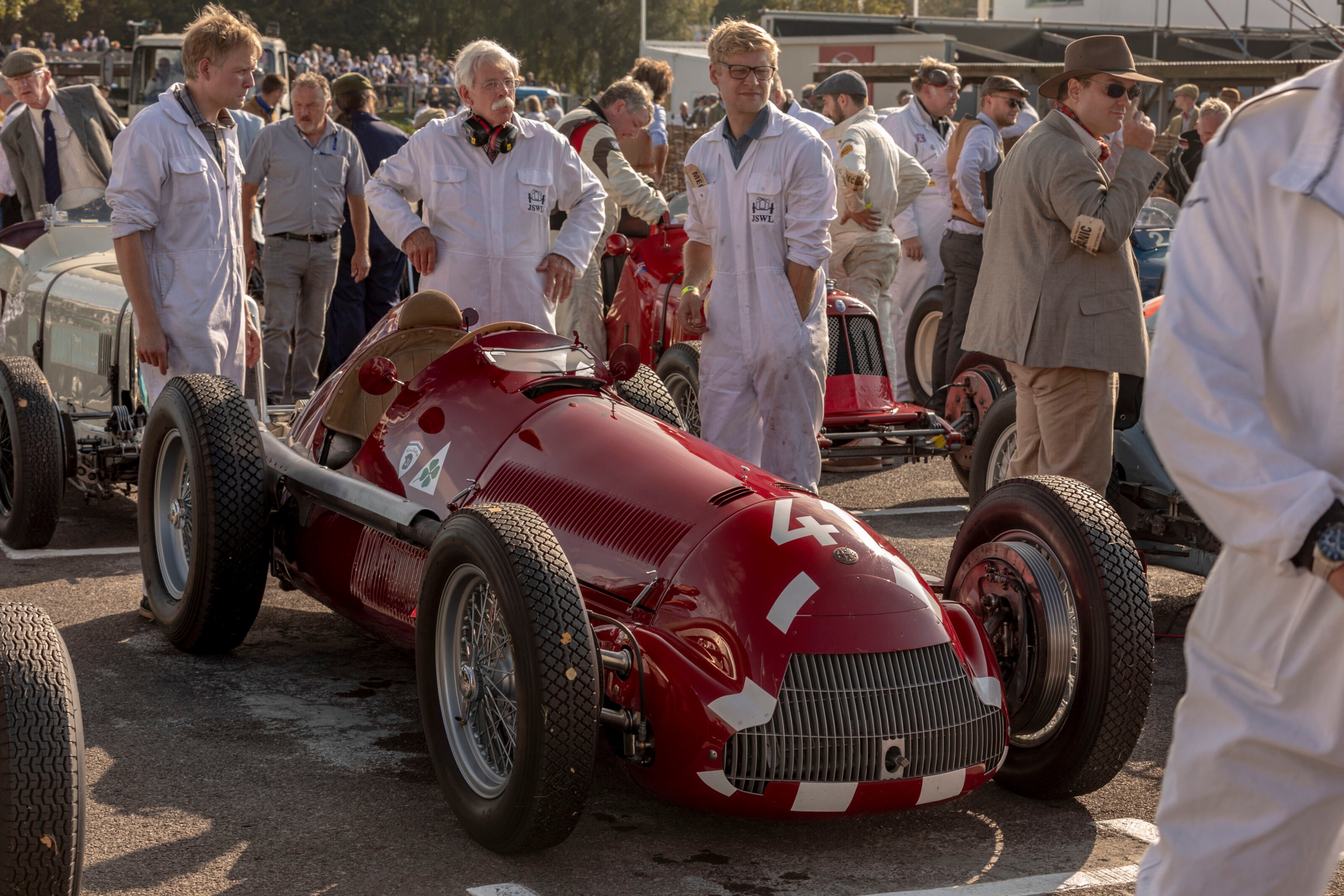
This 1938 Alfa Romeo 158 Alfetta is powered by a supercharged twin-cam 1.5-litre straight-eight making 145kW. During World War II Alfa hid its 158s from the occupying German forces.
In 1950 the 158, its power boosted to 261kW courtesy of two twin-stage superchargers, took Guiseppe Farina to the first-ever Formula 1 world driver’s championship.

Like Australians, the Brits have long enjoyed touring car racing. The diverse field for the St Mary’s Trophy Part 1 comprised cars built between 1950 and 1959, among them the ubiquitous Jaguar MkII – a winning car back in the day. And the drivers were just as diverse, too – the little Austin A35 leading this bunch was shared between Pink Floyd drummer Nick Mason and Mario Franchitti, brother of Indy 500 winner Dario.
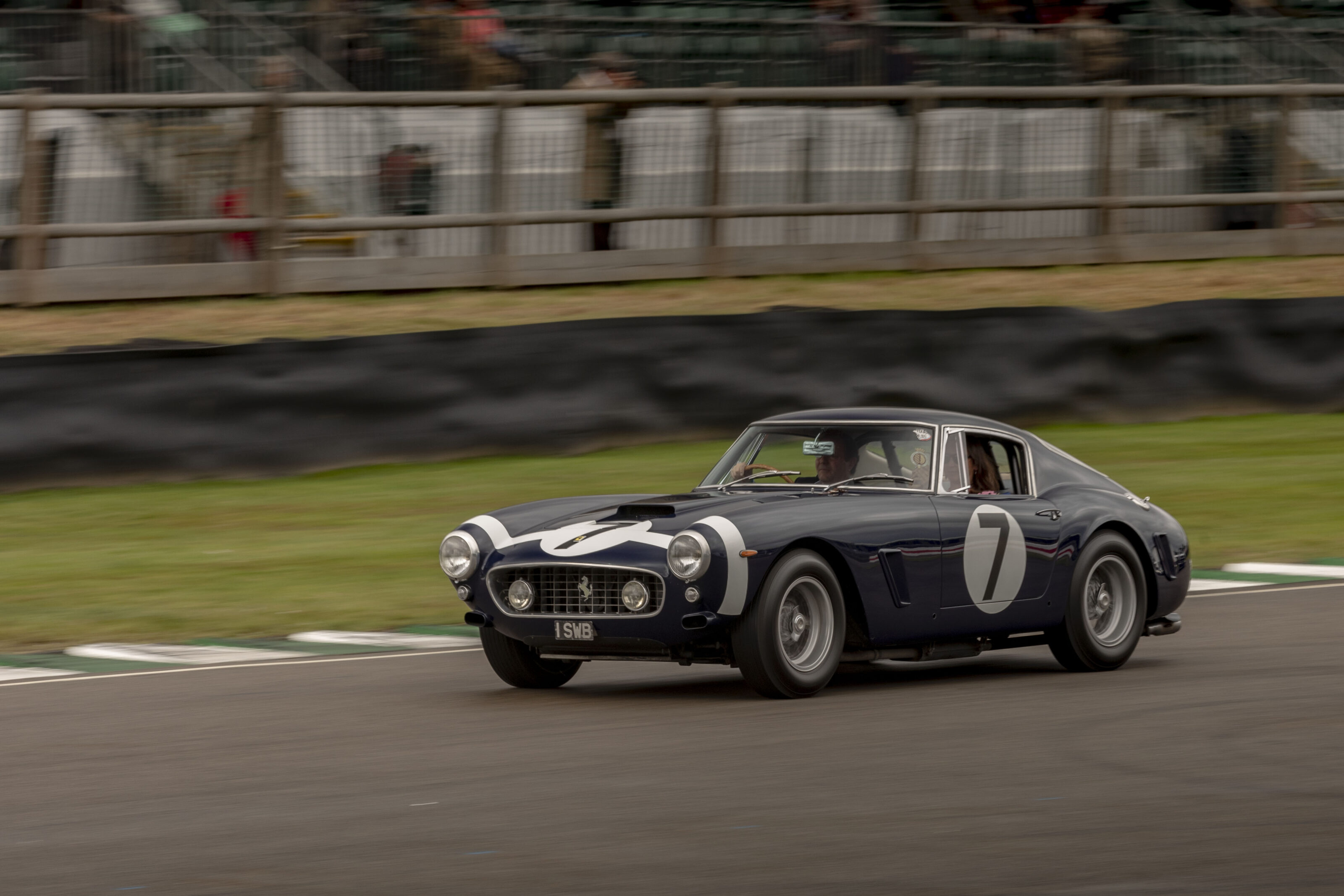
One of the highlights of the weekend was the tribute to the legendary Stirling Moss, who died last year aged 90, featuring a parade of cars he’d driven during his career. Fast and versatile – racing F1 one weekend, sportscars the next, and competing in rallies and hill climbs – Moss drove some cool machinery, but none more beautiful than the Rob Walker Ferrari 250 GT SWB he raced right here at Goodwood six decades ago.
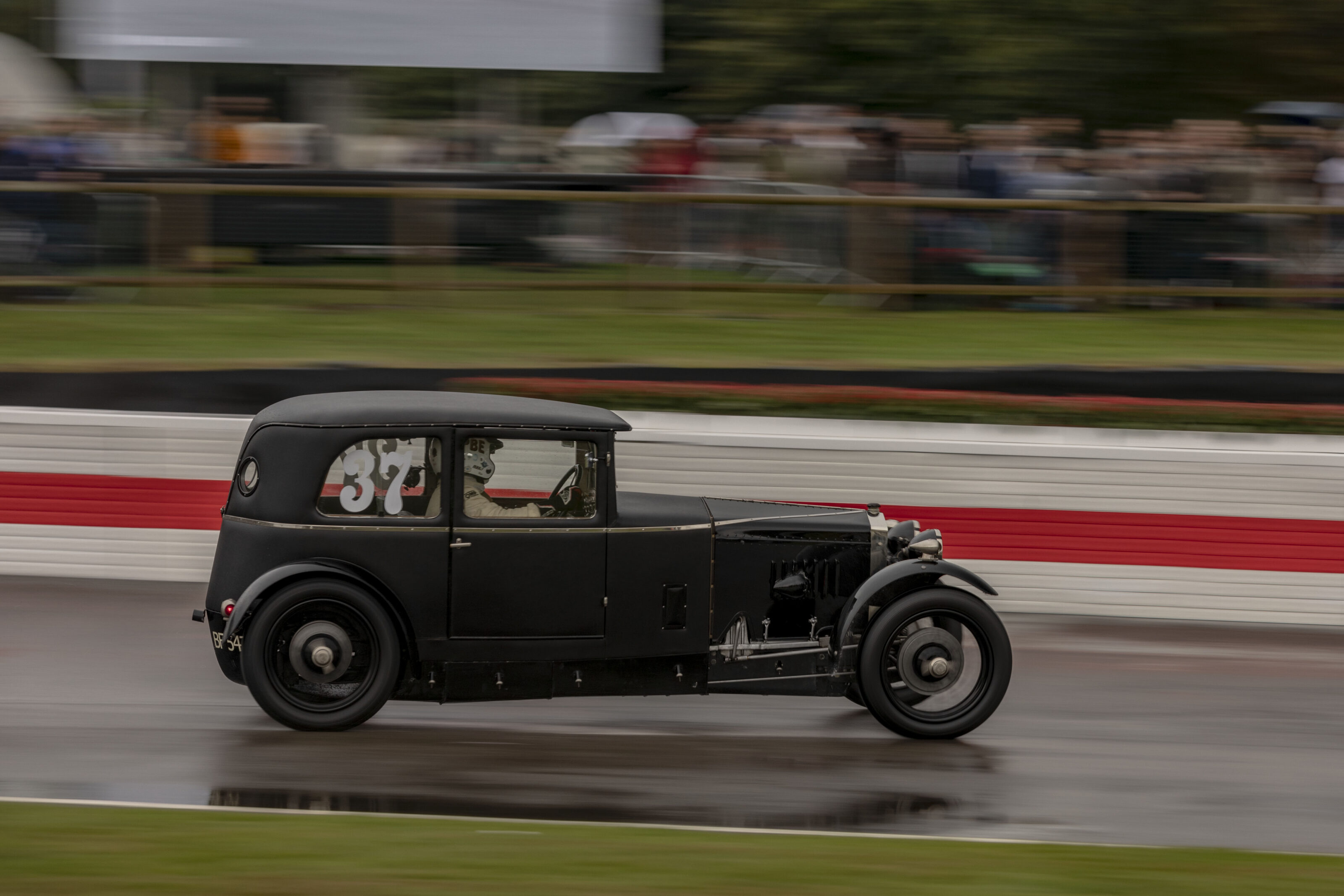
One of the biggest crowd pleasers on the track all weekend was this oddball – an exact copy of the Frazer Nash Saloon known as The Owlet built as a factory race car for the 1928 Tourist Trophy, a race first held in 1905.
Driver Patrick Blakeney-Edwards had the little Frazer Nash, with its potent 1.5-litre racing engine and chain-driven solid rear axle, sideways through every corner on the 3.8km Goodwood Circuit. Blakeney-Edwards won the race, too, beating cars like eight-cylinder Alfa Romeos and Maseratis.

Aircraft are a big part of Goodwood’s heritage. The Goodwood Circuit was laid out in 1948 around the perimeter of what had been the World War II Westhampnett airfield on the Goodwood Estate.
The idea was suggested to Freddie March, a racing driver and aeronautical engineer who also happened to be the 9th Duke of Richmond and the Goodwood Estate’s owner, by Australian racing driver Tony Gaze, who had flown Spitfires from here during the Battle of Britain.

Flat caps, white overalls and treaded racing tyres. Squint, and it could be 1955 as this Mercedes-Benz Gullwing makes its way through the paddock to the formation area for the Freddie March Memorial Trophy race.
The Goodwood Revival spectators, mostly dressed in period clothes, take the event as seriously as the racers. Freddie March was the grandfather of Goodwood Festival of Speed and Goodwood Revival founder Charles March, who is now the 11th Duke.
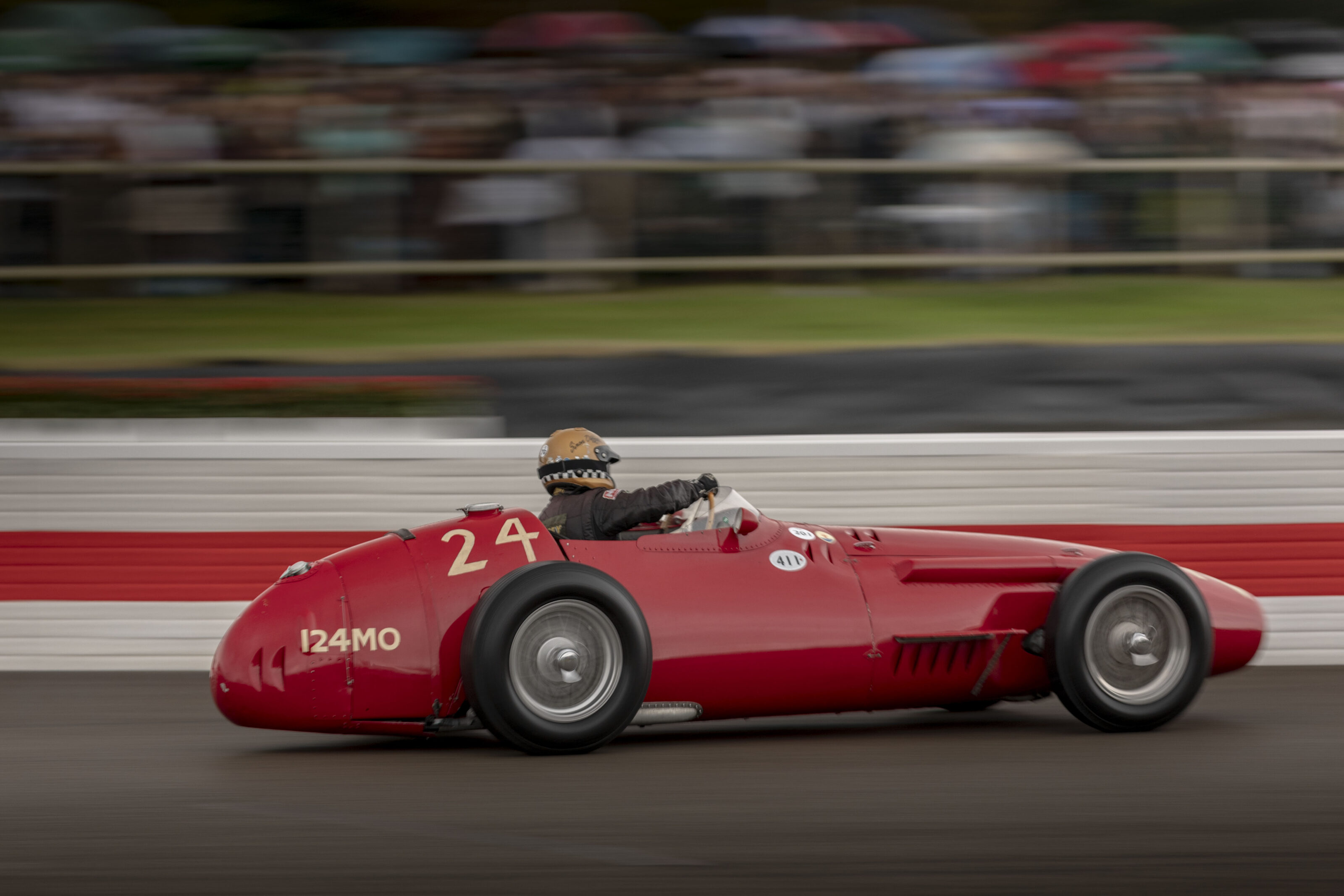
Regarded by many as the best-looking front-engined Formula 1 car, the 2.5-litre V12 Maserati 250F enjoyed a remarkable career as a front-line racer. Of the 26 built, Juan Manuel Fangio drove one to victory in the 1954 Argentine GP, the car’s first-ever race, before joining Mercedes-Benz.
Then, in 1957, after Mercedes had withdrawn from motorsport, he dove another 250F to his fourth and final world championship. In between, in 1956, Stirling Moss won both the Monaco and Italian GPs in 250Fs.
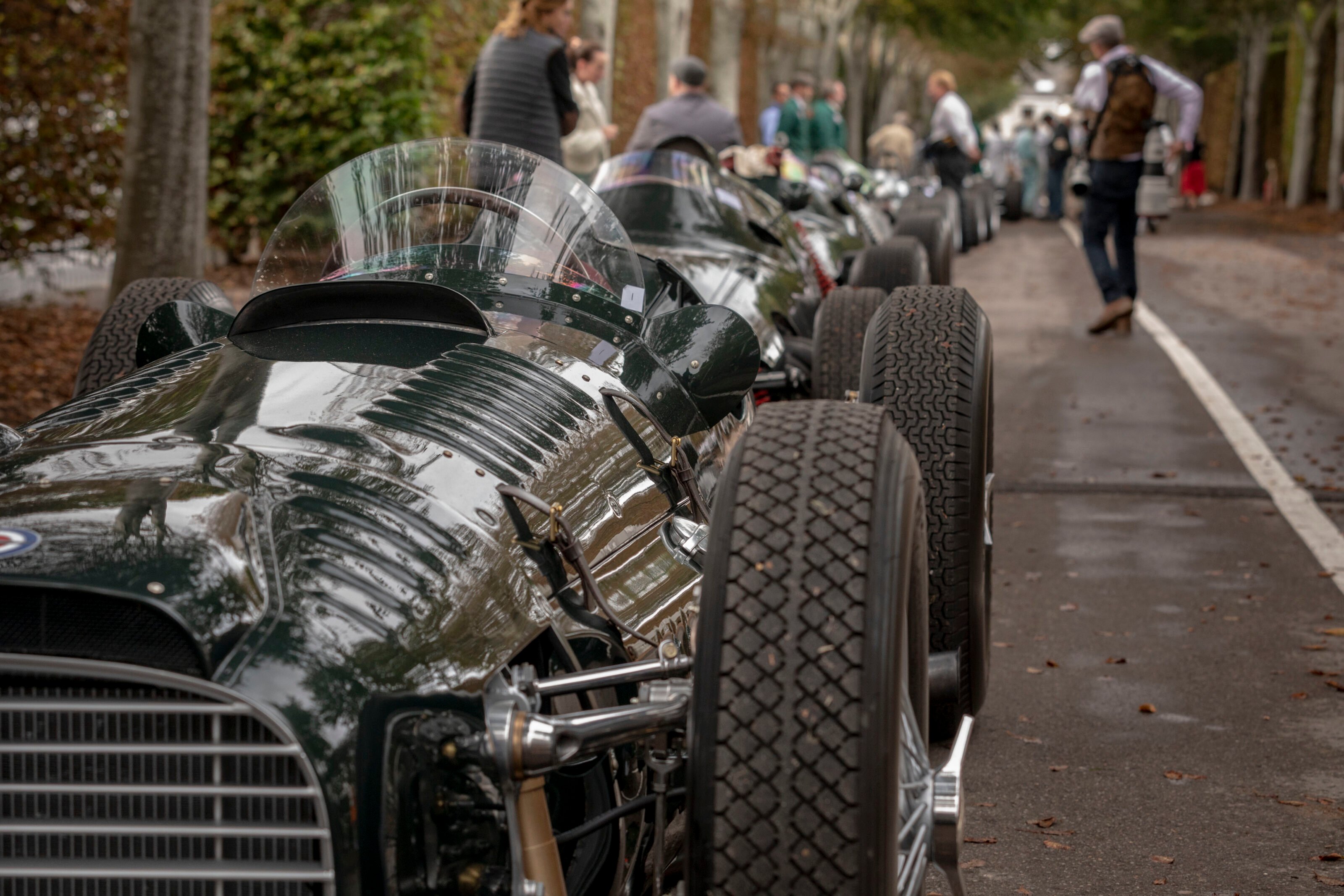
One of the featured marques at Goodwood this year was BRM – British Racing Motors – founded just after World War II. Leading this line-up of BRMs is its first car, the extraordinary Type 15 that made its F1 debut 70 years ago in the 1951 British GP at Silverstone.
The Type 15 was powered by a 1.5-litre supercharged, quad-cam V16 that revved to 12,000rpm. Not surprisingly, it proved chronically unreliable.
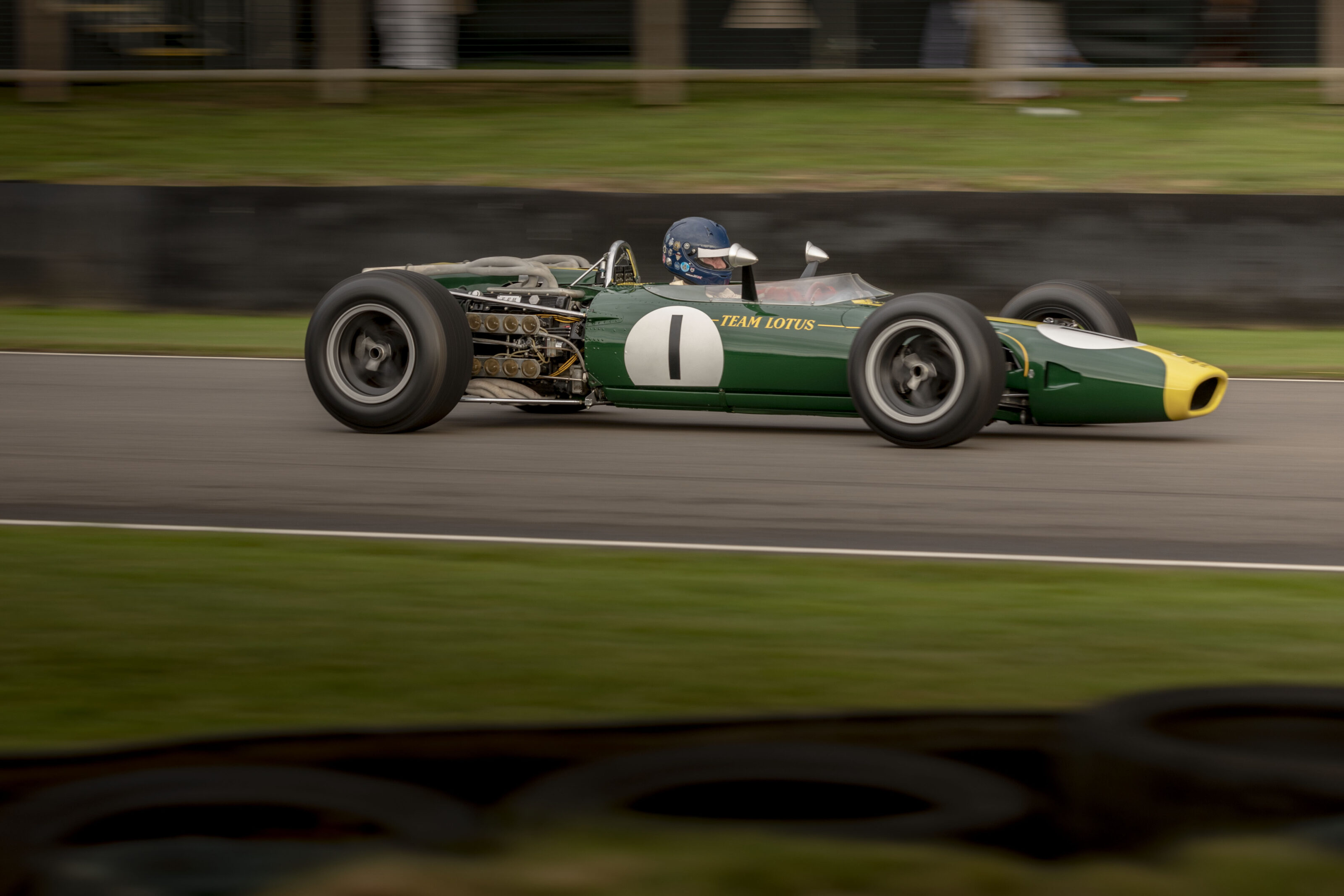
BRM seemed to enjoy making fiendishly complex racing engines. This is the 3.0-litre H16 – basically two 1.5-litre flat-8s, one stacked atop the other with their crankshafts geared together – that powered the BRM P83 driven by Jackie Stewart and Graham Hill, and this Lotus-BRM 43 driven by Jim Clark to the engine’s only Formula 1 victory in the 1966 US GP at Watkins Glen.
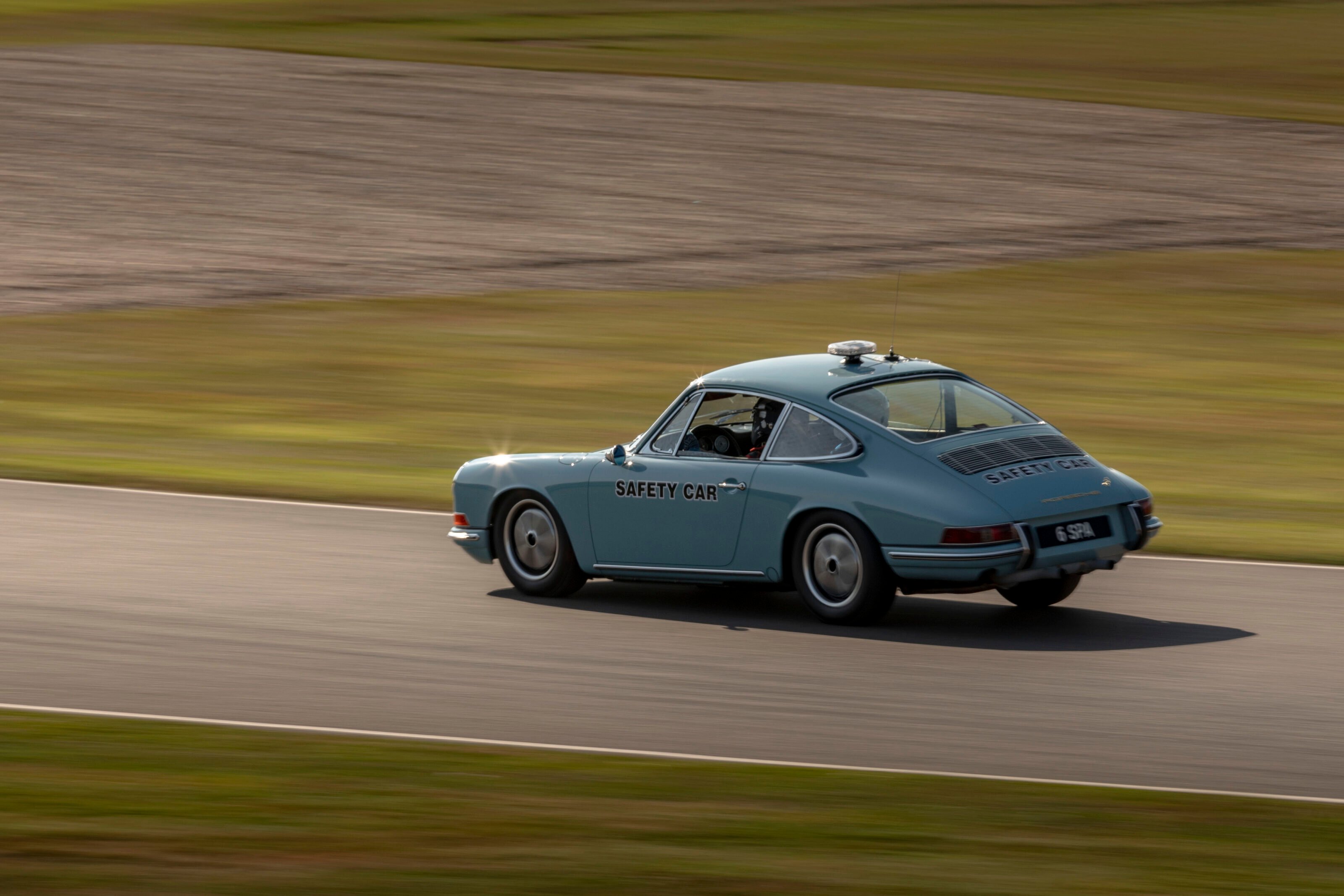
As Goodwood operated as a regular racetrack from 1948 to 1968, before being restored and reopened by Charles March in 1998, the Revival weekend focuses on cars from that era. And that focus includes even the official vehicles, such as the safety car, this lovely 1968 Porsche 911.
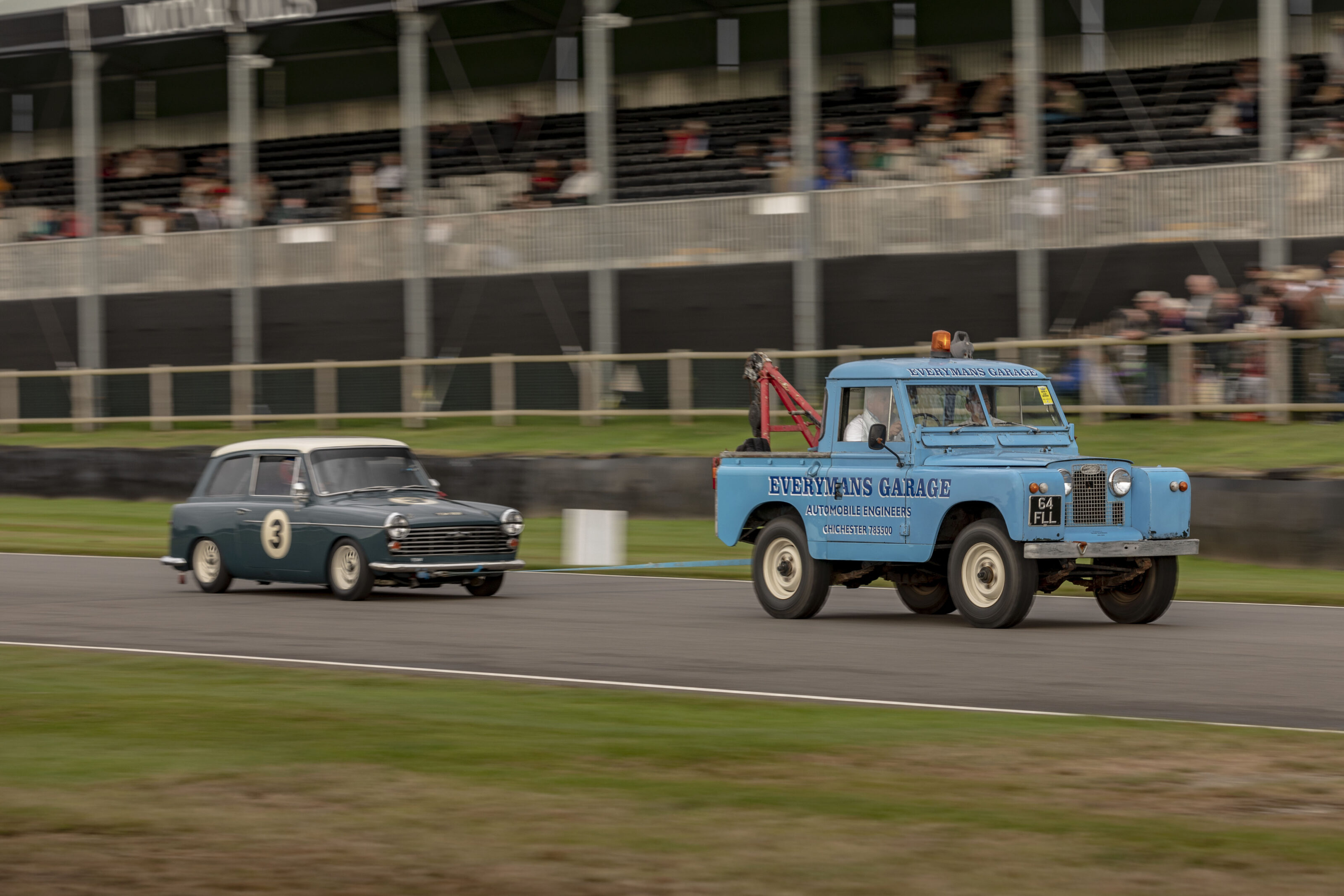
And what happens when your 1960s race car breaks down at the Revival? You get a 1960s recovery vehicle to tow you back to the pits, of course, in this case, a short-wheelbase Series II Land Rover.
The Austin A40 at the end of the tow rope was driven by former F1 and Formula E driver Jean-Éric Vergne.

Not all the interesting cars at the Goodwood Revival are on the track. And they’re not all British and European exotics. This line-up of American iron, with a pair of 1949 Cadillacs in the foreground, included a ’49 Ford Custom and a rare 1956 Continental Mark II, at the time the most expensive American car ever sold.
The 1949 Cadillac was American magazine MotorTrend’s inaugural Car of the Year. Wheels editor Bill Tuckey borrowed the idea for Australia in 1963; the Wheels COTY is the second-oldest award of its type in the world.
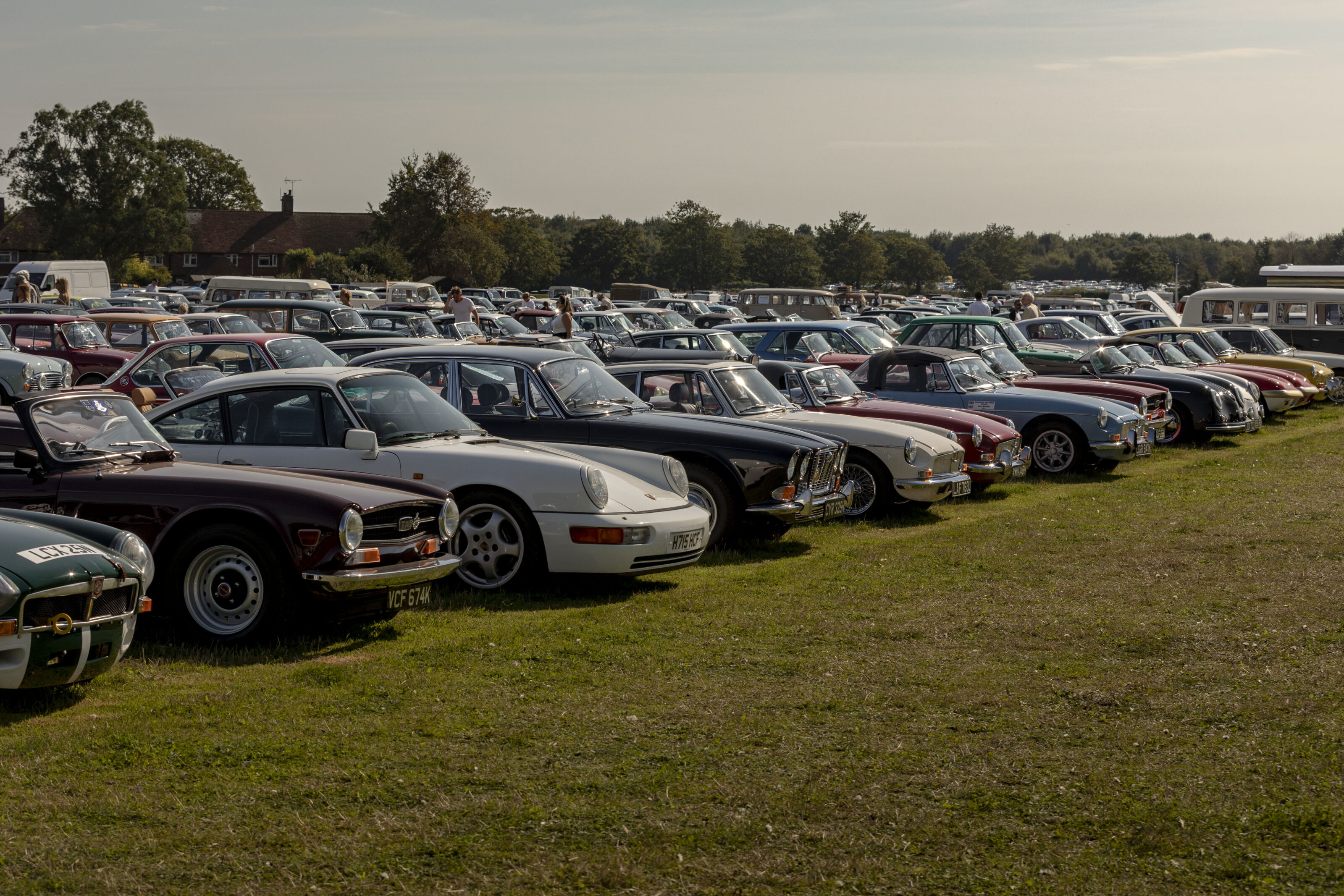
Even the car park at the Goodwood Revival is worth a look. The front row alone has a fascinating mix: MGBs, Triumphs, a Series I Jaguar XJ6, and in the distance a pair of Porsche 356 Speedsters next to a pair of Lotus Elans in the red, gold and white that mimicked the Team Gold Leaf livery made famous by the Lotus 49 F1 car. And not everything’s exotic; look and you’ll see Minis and VW Kombis, too.
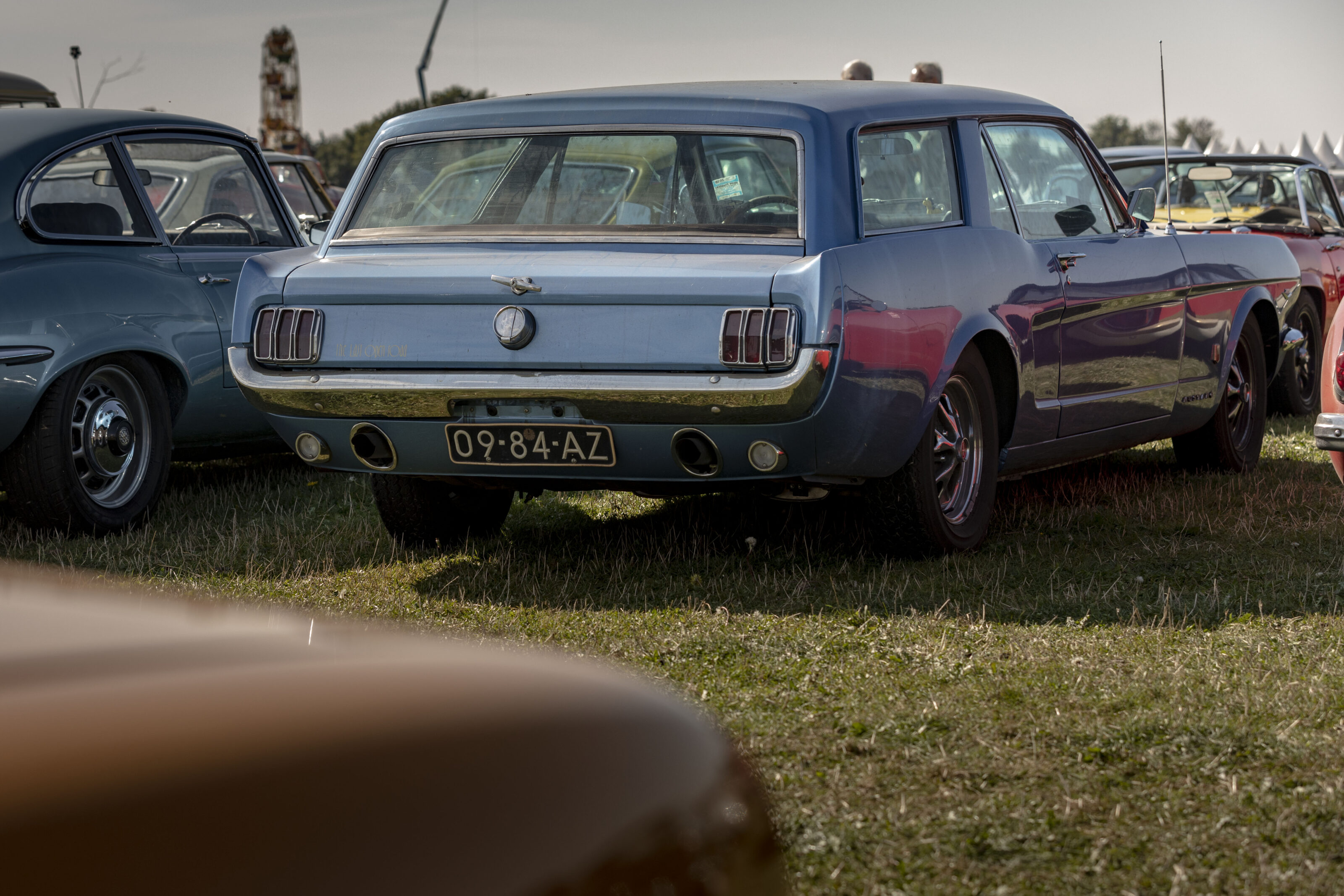
Possibly the rarest car in the car park is this 1965 Mustang wagon, regarded among Mustang enthusiasts as a near-mythical beast. One was designed by Robert Cumberford (later the automotive design critic for America’s Automobile magazine) and built in Turin by Intermeccanica.
The car was pitched to Ford as a possible production model, but senior management turned the idea down. Is this that car? No-one knows. A handful of replicas have been built over the years, and this is likely one of them.
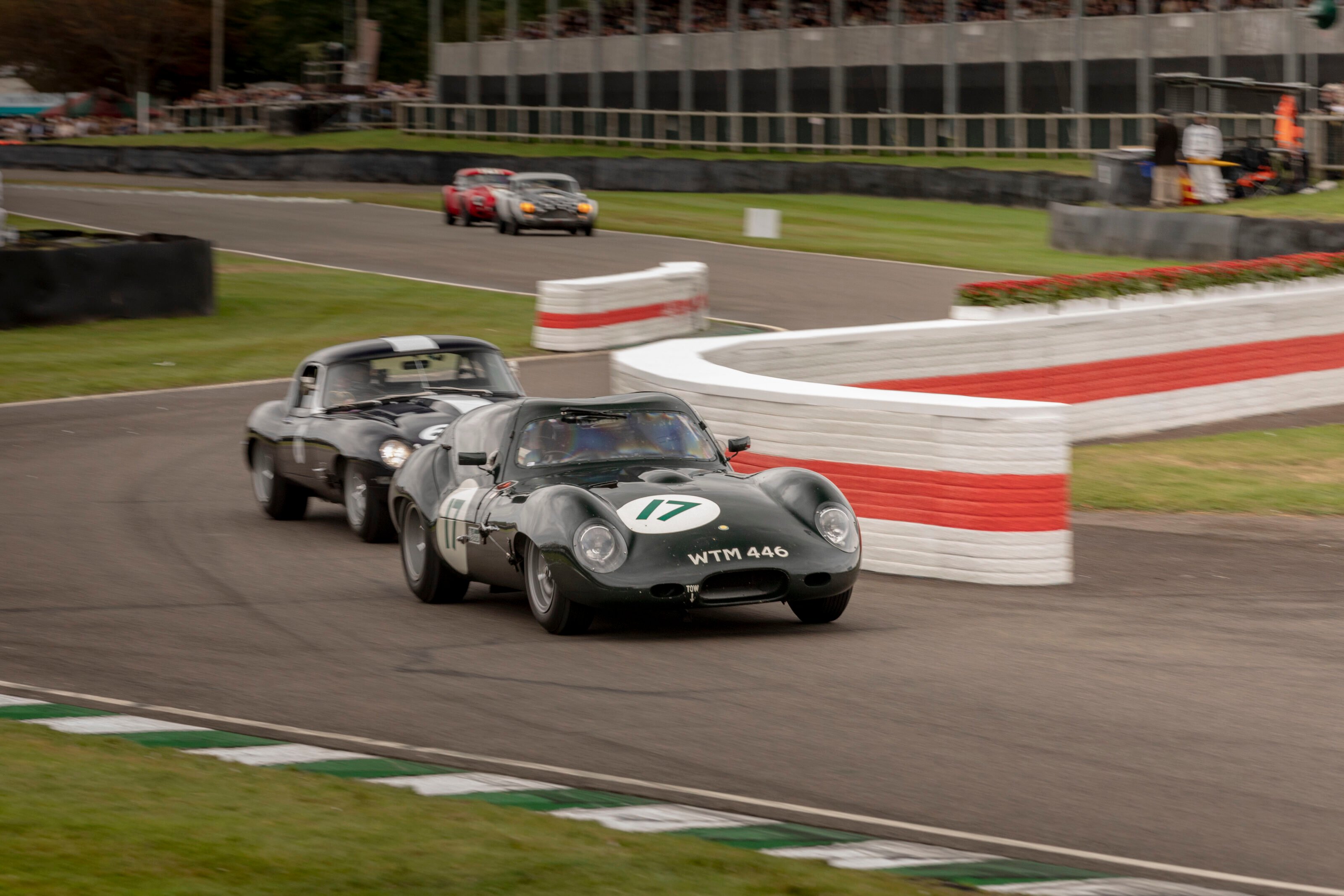
The Lister Jaguar coupe was designed in 1959 by aerodynamicist Frank Costin, who wrapped smooth, wind-cheating aluminium panels over a complex tube-steel spaceframe and a 3.8-litre Jaguar engine.
The car raced at Le Mans in 1963 but retired with engine failure after 29 laps. Even today it is a very quick beast, capable of 290km/h on a long straight.
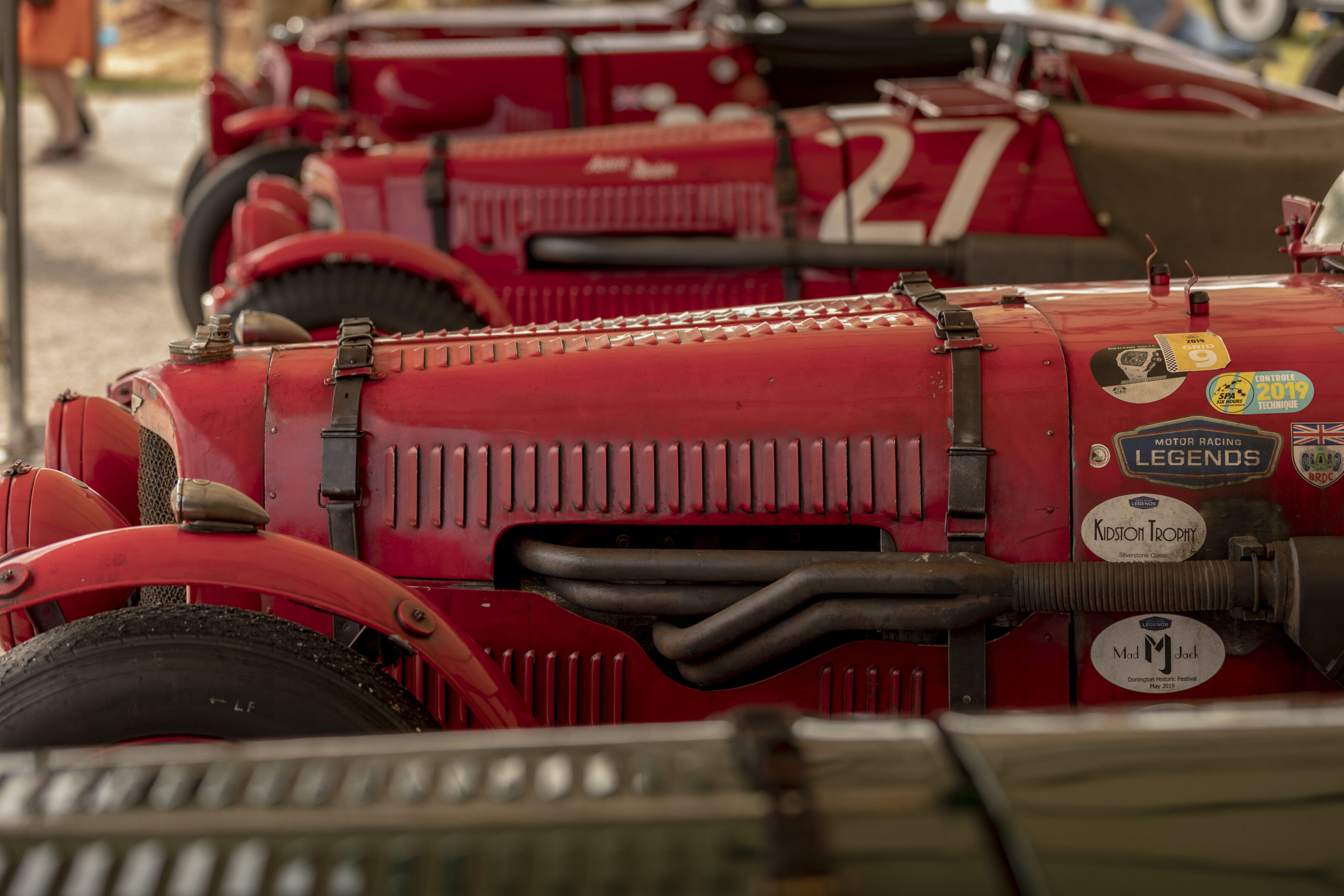
Two things to remember about the cars you see racing at the Goodwood Revival. First, they’re really racing. And second, they’re raced hard.
These mid-1930s Aston Martin Ulsters are worth between $3 million and $4 million each, but as you can see, they’re not treated with kid gloves.
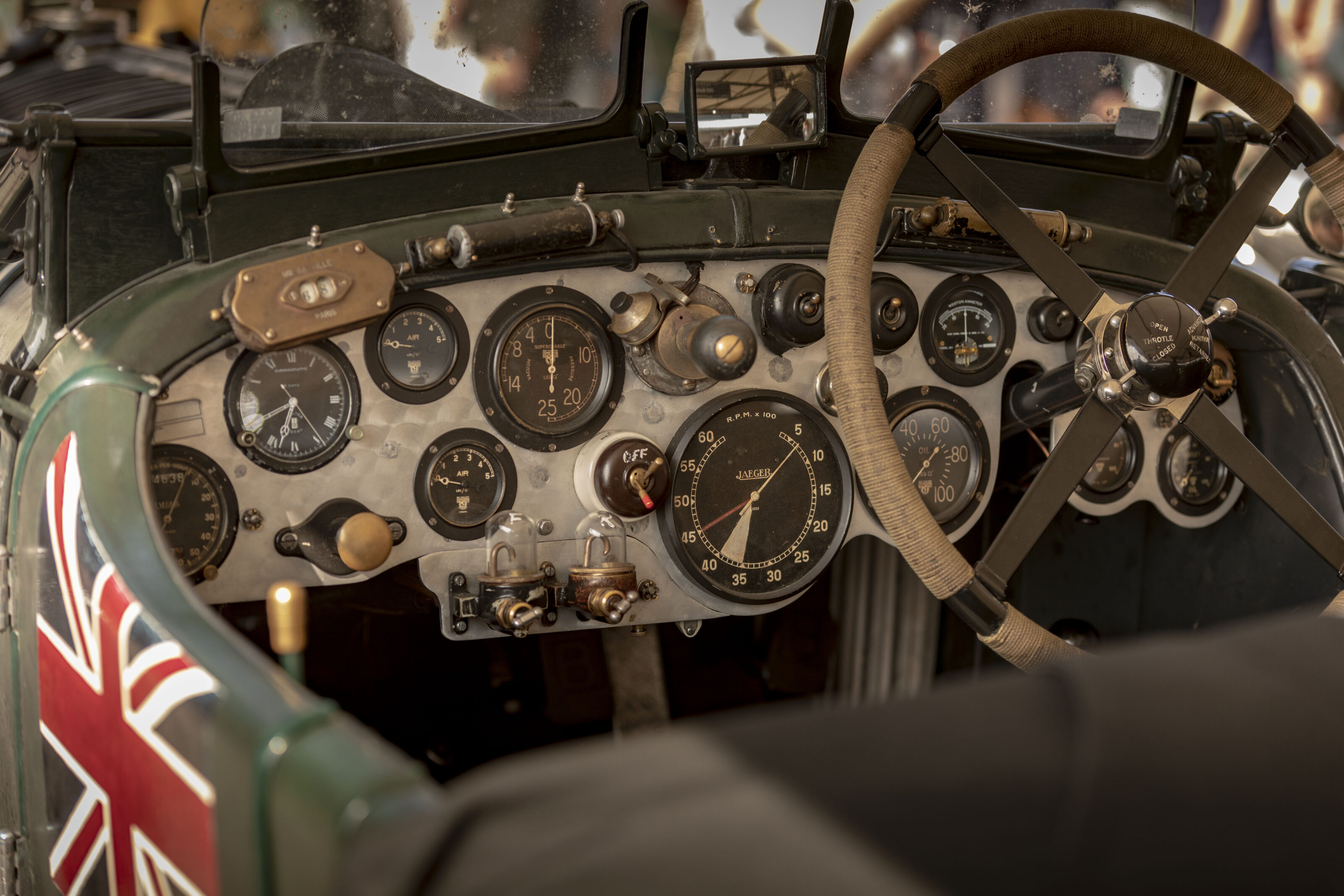
You think modern cars have dashboards with too much to look at? This is what Martin Overington has to keep an eye on while racing his 1929 Blower Bentley.
Overington once fitted a towbar to the car and used it to tow a Porsche 962 Le Mans racer from his home in England to a classic race in France, and back. He said the brakes on the trailer were drastically better than those on the Bentley, which made stopping ‘interesting’.
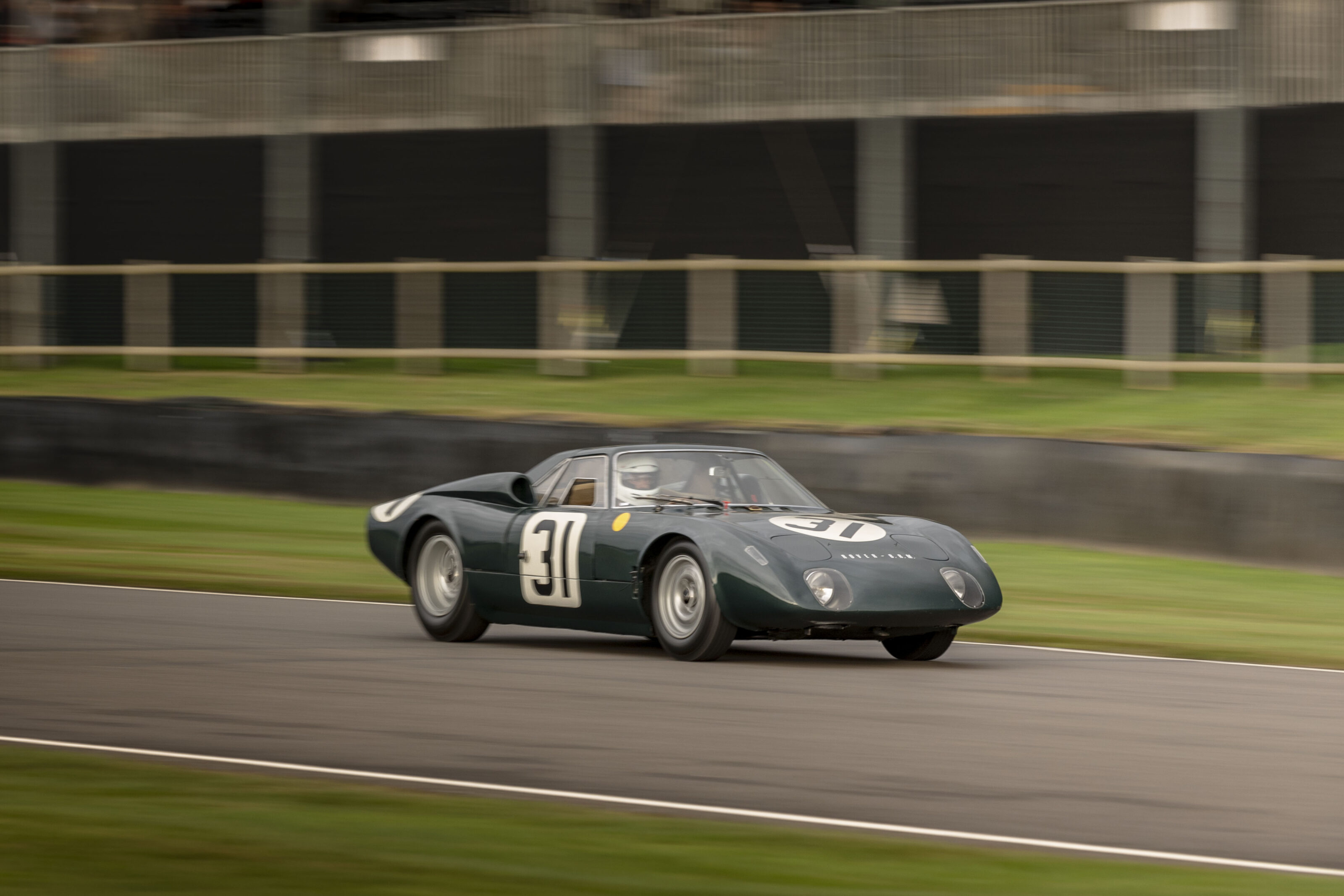
If the V16 and H16 BRMs weren’t ambitious enough, how about this, the Rover-BRM Turbine? Powered by a Rover gas turbine – the British manufacturer had been experimenting with the jet-age engine since 1950 – the car was built by BRM to race in a special class at Le Mans in 1963.
Driven by Graham Hill and American Richie Ginther, it reached the 3600km target set by organisers with hours to spare, hitting almost 250km/h on the Mulsanne Straight. Had it been included among the regular starters it would have finished eighth outright.

Even the kids get to join in the fun at the Goodwood Revival. The Settrington Cup is a race for youngsters in old Austin J40 pedal cars. Some 32,000 J40s were built between 1949 and 1971 by former miners in Wales, using surplus material from the Austin assembly line in Longbridge.
The cars were sold all around the world, and one was sent to Buckingham Palace for four-year-old Prince Charles. No fewer than 60 J40s lined up this year, the running order for the Le Mans-style sprint start drawn from a hat for the Saturday race and reversed for the Sunday race.
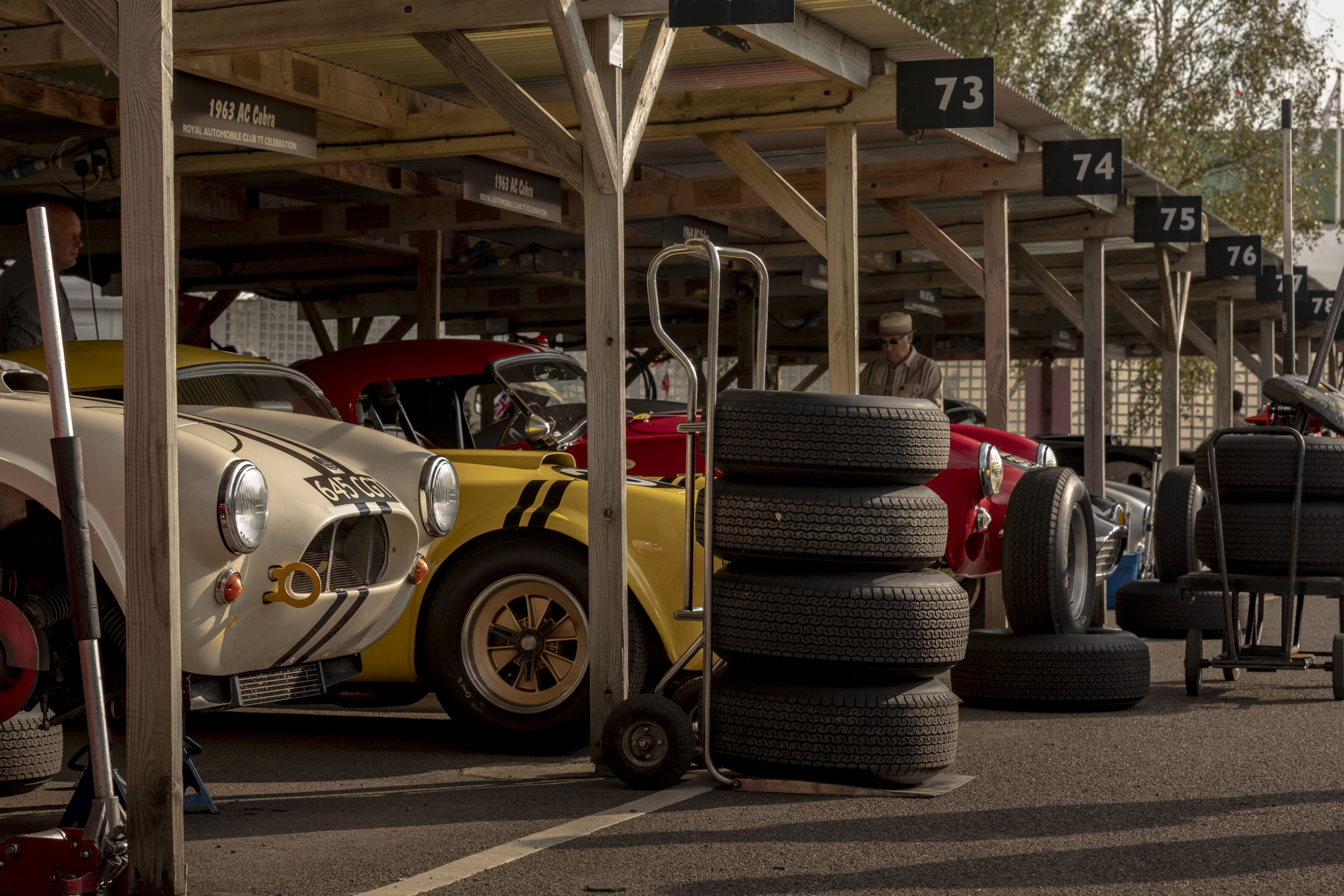
AC Cobras with the 4.8-litre Ford V8 are among the fastest cars around Goodwood, and so are highly sought after by those looking for a race win in the 60s sportscar class.
Among those behind the wheel of a Cobra at this year’s event were former F1 drivers Jenson Button, Martin Brundle and David Brabham, 2010 Le Mans winner Romain Dumas, and Aston Martin Valkyrie development driver Darren Turner.

And now for something completely different. Bill Shepherd’s 1959 Ford Thunderbird coupe was a real crowd-pleaser at Goodwood, winning both its touring car races.
Its giant 7.0-litre V8 gave it plenty of thrust on the straights, but as the race wore on, the brakes started to go away, allowing the little 1.6-litre Alfa Romeo Guiletta driven by journalist Dickie Meaden (third in this pic, behind the brown Austin Westminster) to get right alongside in the closing stages.

Passengers arriving at the Goodwood Revival by helicopter were shuttled to the infield terminal by a fleet of WW2 Jeeps, and Series I and Series II Land Rovers. This is a Willys-built Jeep. The trailer behind it was made by the American Bantam Company, the small Pennsylvania-based company that created the original Jeep prototype.
The US government decided tiny Bantam wouldn’t be able to build the 600,000 Jeeps it wanted, so awarded the contract to established carmakers Willys and Ford. As compensation, Bantam was given the contract to build 75,000 trailers.
Christmas puddings are being rolled out at the supermarkets and 2022 is looming ever nearer.
There’s plenty to look forward to in the fast-car arena so, noting that ongoing Covid-19 delays to manufacturing and logistics could affect scheduled launch times, here is the hot metal you can look forward to next year.
Audi
Audi has a couple of things in the pipeline for us.
Their flagship EV, the e-tron GT, was originally slated to make local landfall in mid-late 2021, however it was recently announced that its arrival has been pushed out to 2022.
When it lands it’ll be taking the fight to the platform-sharing Porsche Taycan, with 350kW/630Nm in base GT trim, and 440kW/830Nm in halo RS configuration.
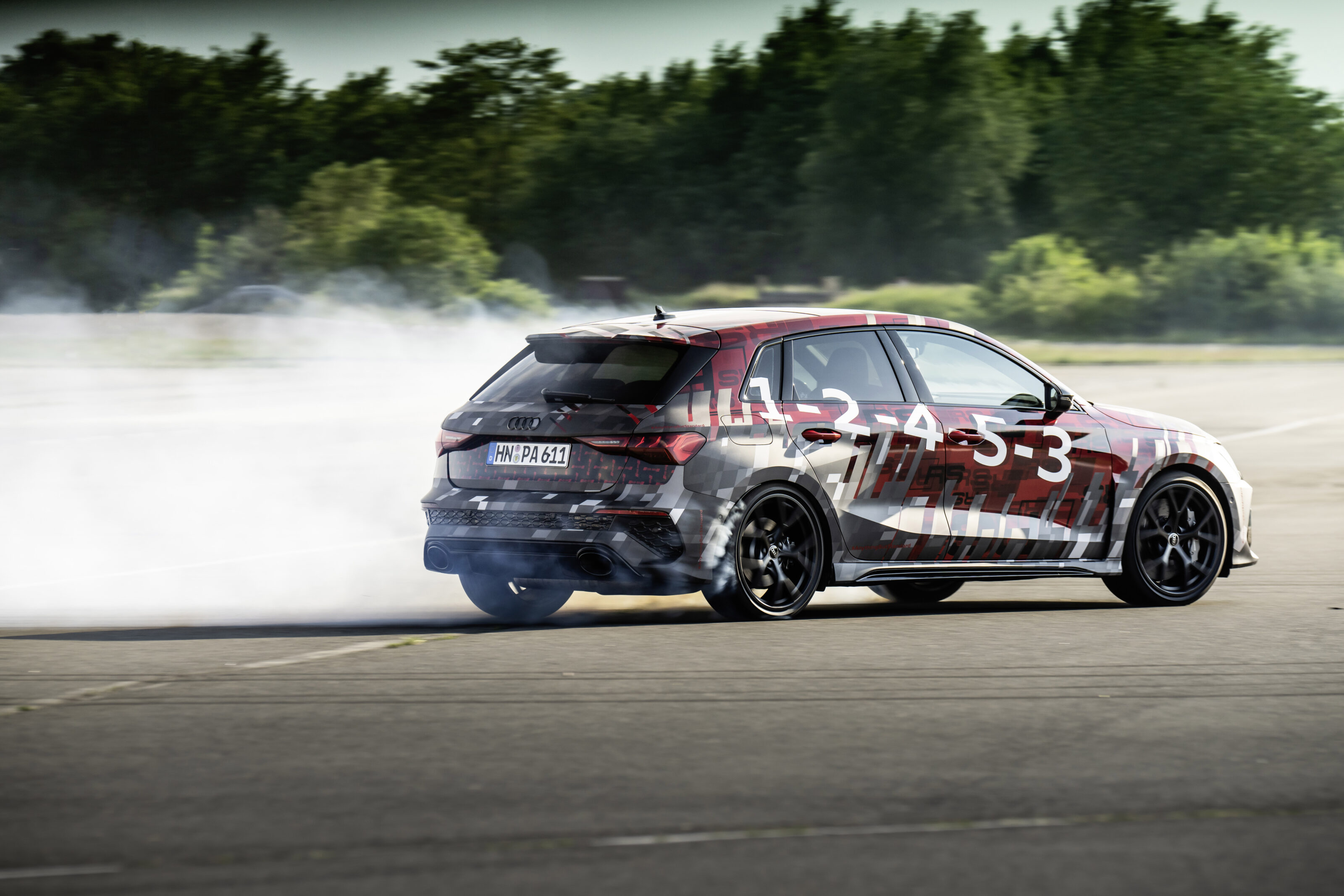
Not won over by the prospect of a lightning quick AWD EV sports sedan? Worry not as Audi’s heavily updated RS3 is also due within the first half of 2022. Retaining its signature 2.5-litre turbocharged five-cylinder, power remains capped at 294kW while torque rises to 500Nm. That’s not the whole story, however, as the 2022 RS3 also promises a big boost in dynamic tech, including drift mode and torque vectoring.
BMW
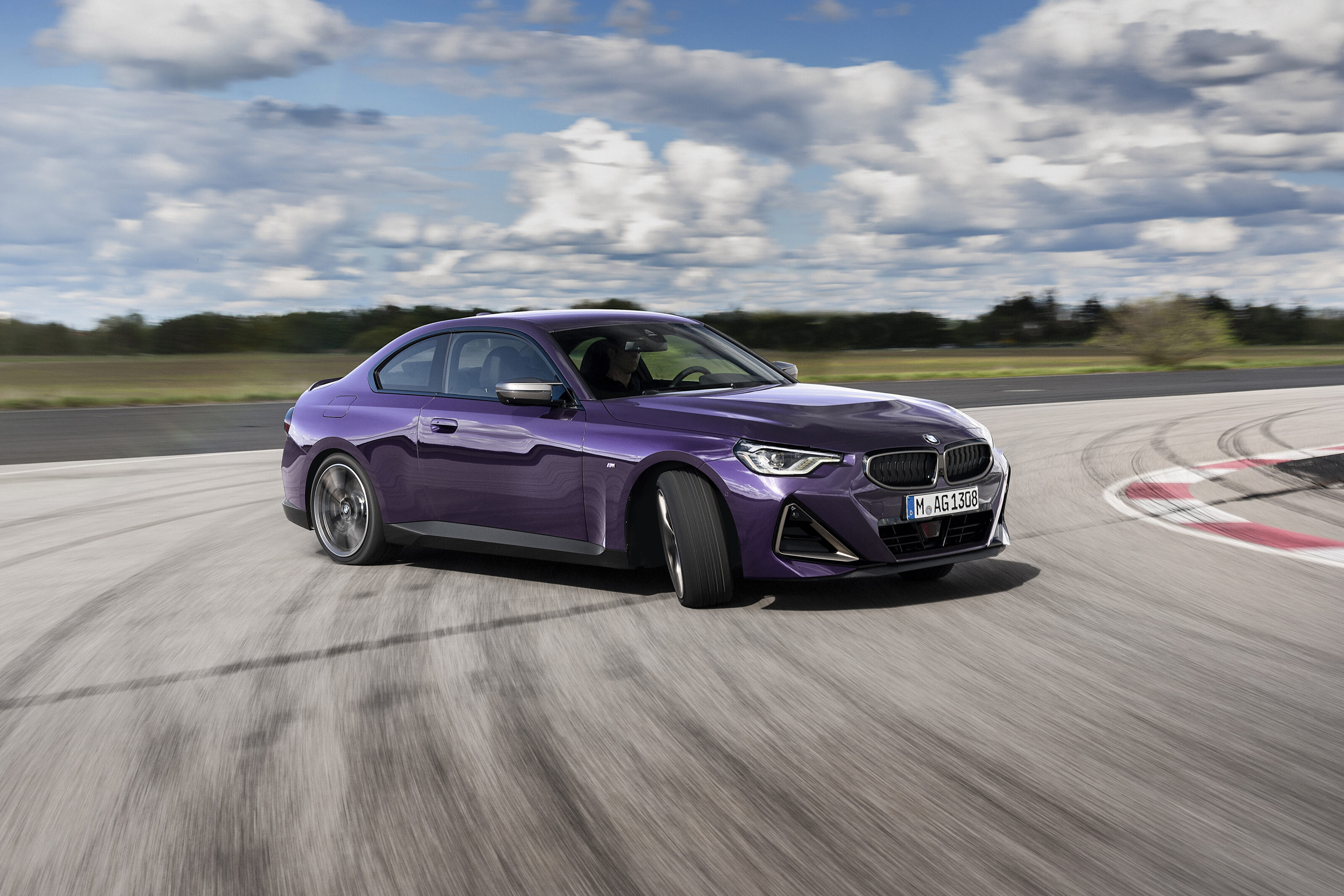
BMW’s new 2 Series might actually arrive just before the new year or, if not, the beginning of 2022.
Based on a shortened version of the G20 3 Series’ CLAR platform, the G42 2 Series will take a two-pronged approach with its lineup from launch. It’s the all-wheel drive 285kW/500Nm M240i xDrive that we’re most keen to get our mits on. The flagship M2 is also due to be revealed in 2022, likely arriving locally in 2023.
It’s no secret that the first series production M3 Touring is also well on its way with an expected 2022 reveal. We’d hope to see it as soon as possible, although recent rumours suggest the long-awaited longroof will commence production in November of 2022, following the future 3 Series’ LCI-update, making a 2023 local arrival more likely.
Cupra
A new performance model for our comparatively small and isolated market is something to celebrate. But how about a whole new performance marque? The reinvented Cupra brand is readying an Aussie assault with three interesting offerings: the Leon, Formentor and Ateca.
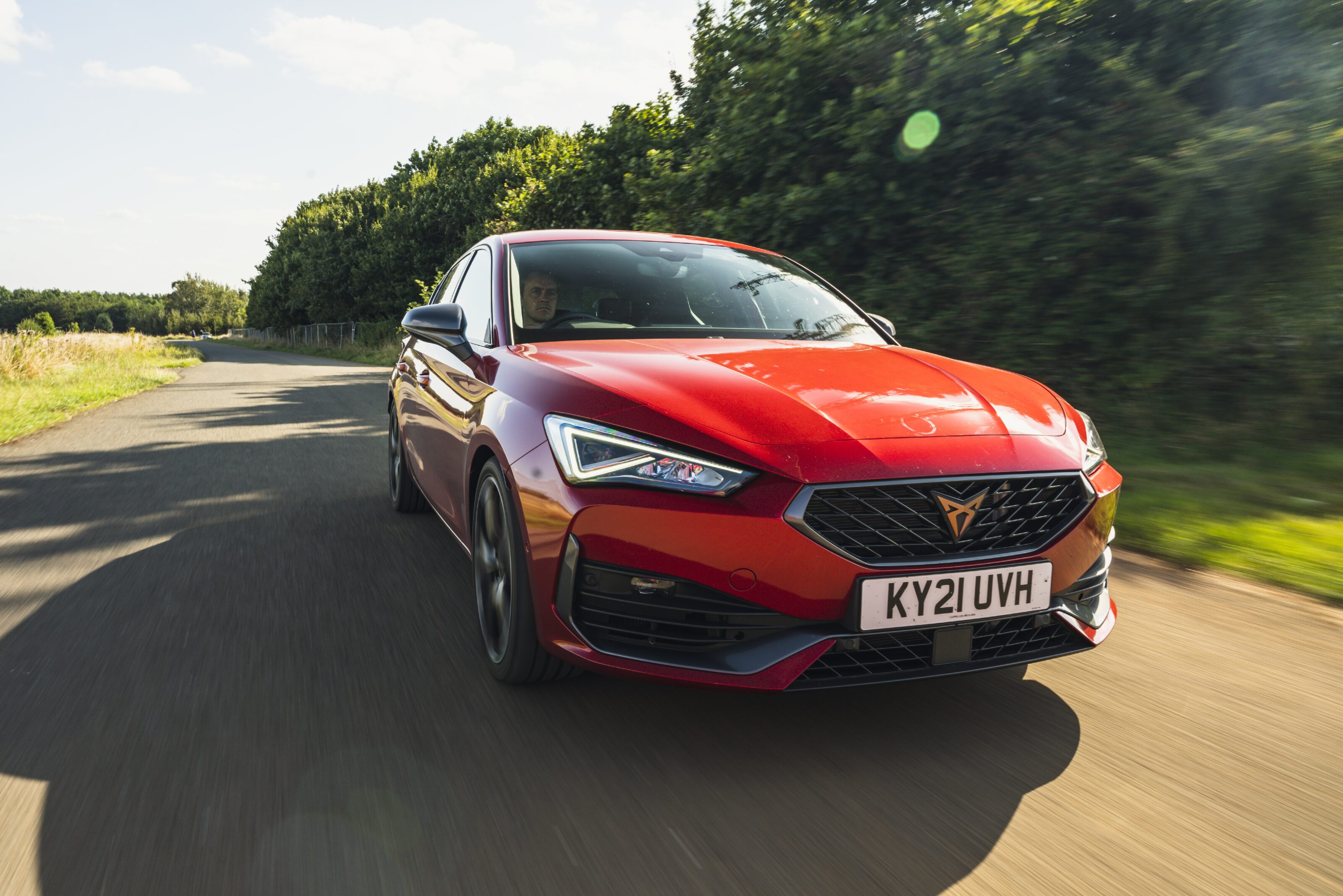
Volkswagen’s new performance sub-brand is well supported by the car making giant, based on known platforms with the proven and familiar 2.0-litre TSI turbocharged four-cylinder featuring in various states of tune.
Front-drive Leon hatchback and all-wheel drive Formentor SUV will both gain GTI-matching 180kW variants, with faster flagships that borrow the Golf R’s 221kW unit (229kW for the Formentor).
Colour us intrigued.
Lotus
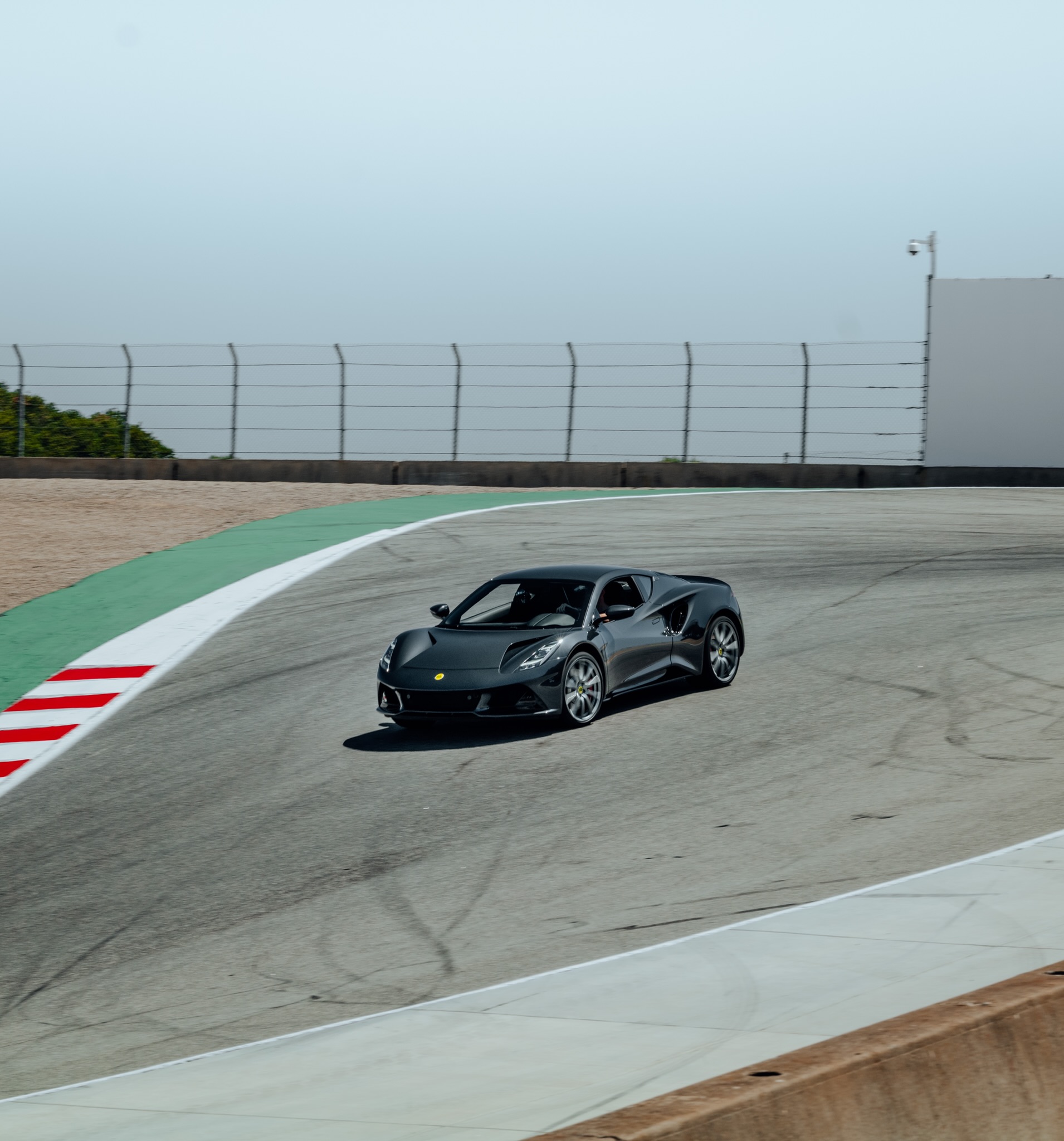
Lotus is a brand in transition, with the pivotal Emira looking to see out the long-lived Toyota-sourced 3.5-litre V6 on a high. Available in either six-speed auto or manual guise, Lotus’ last internal combustion sports car will deliver 298kW and will clock triple digit speeds in under 4.5 seconds.
From mid-2022, however, the Lotus Emira will also be available with the bombastic Mercedes-AMG 2.0-litre turbo inline-four M139 engine, lifted from the A45 S. The German powerplant will be mated to AMG’s eight-speed dual-clutch and weights 50kgs less than the V6. It’s the most significant new Lotus in decades, and represents the end of an era for a historic brand that, from henceforth, is going all in on EV performance for the future.
McLaren
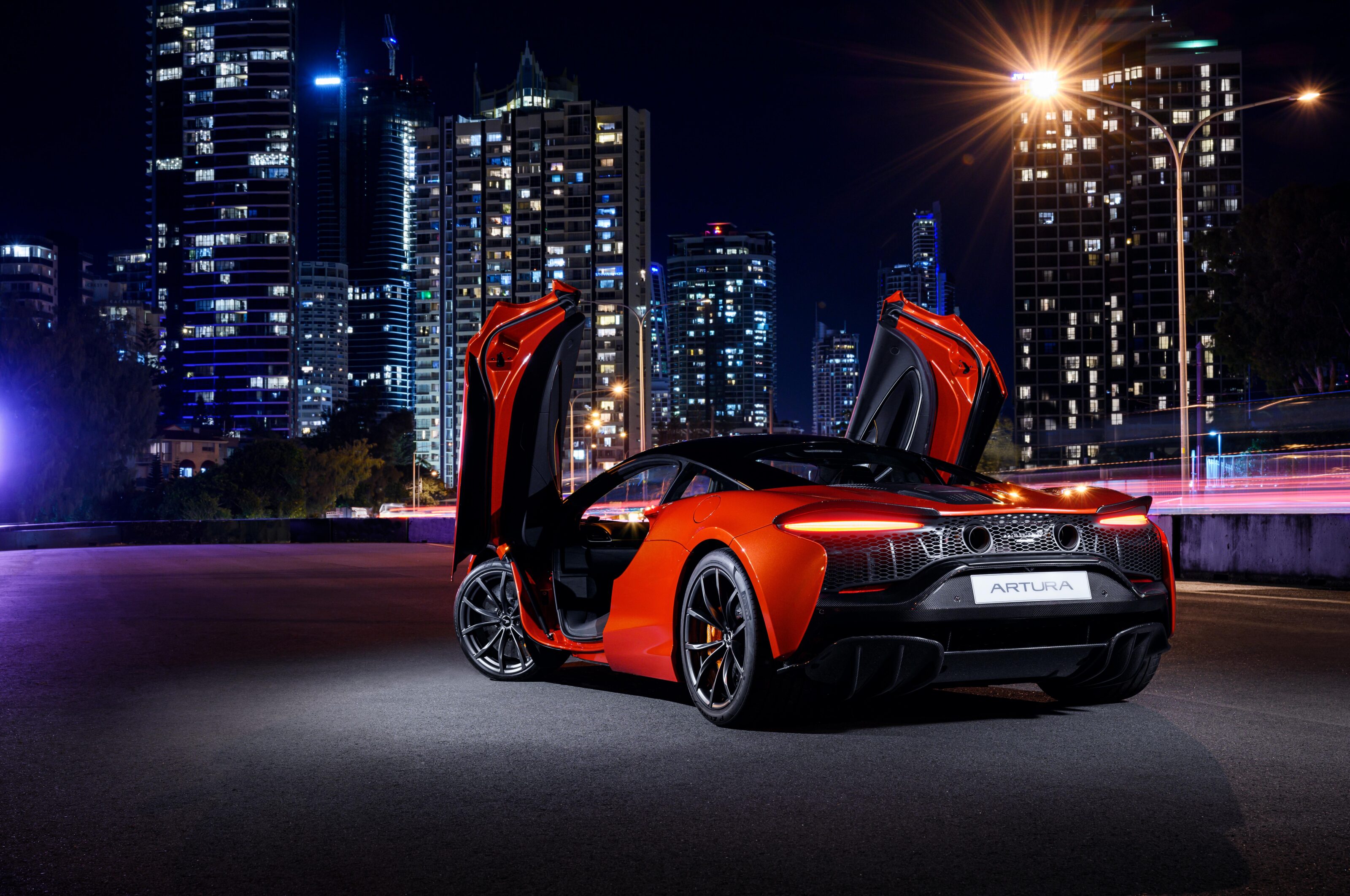
It exactly doesn’t look it, but the upcoming McLaren Artura represents a radical departure from its Woking predecessors. For one, it trades its enduring range of twin-turbo 3.8- to 4.0-litre V8s for a 3.0-litre twin-turbo V6 with hybrid assistance. It’s by no means going soft, though, promising 500kW/720Nm, a 0-100km/h time of just 3.0-seconds and 0-200km/h in a blistering 8.4-seconds.
It was meant to be here this month but, sadly, we’ve just gotten word from McLaren that its local arrival is now pegged for 2022.
Nissan
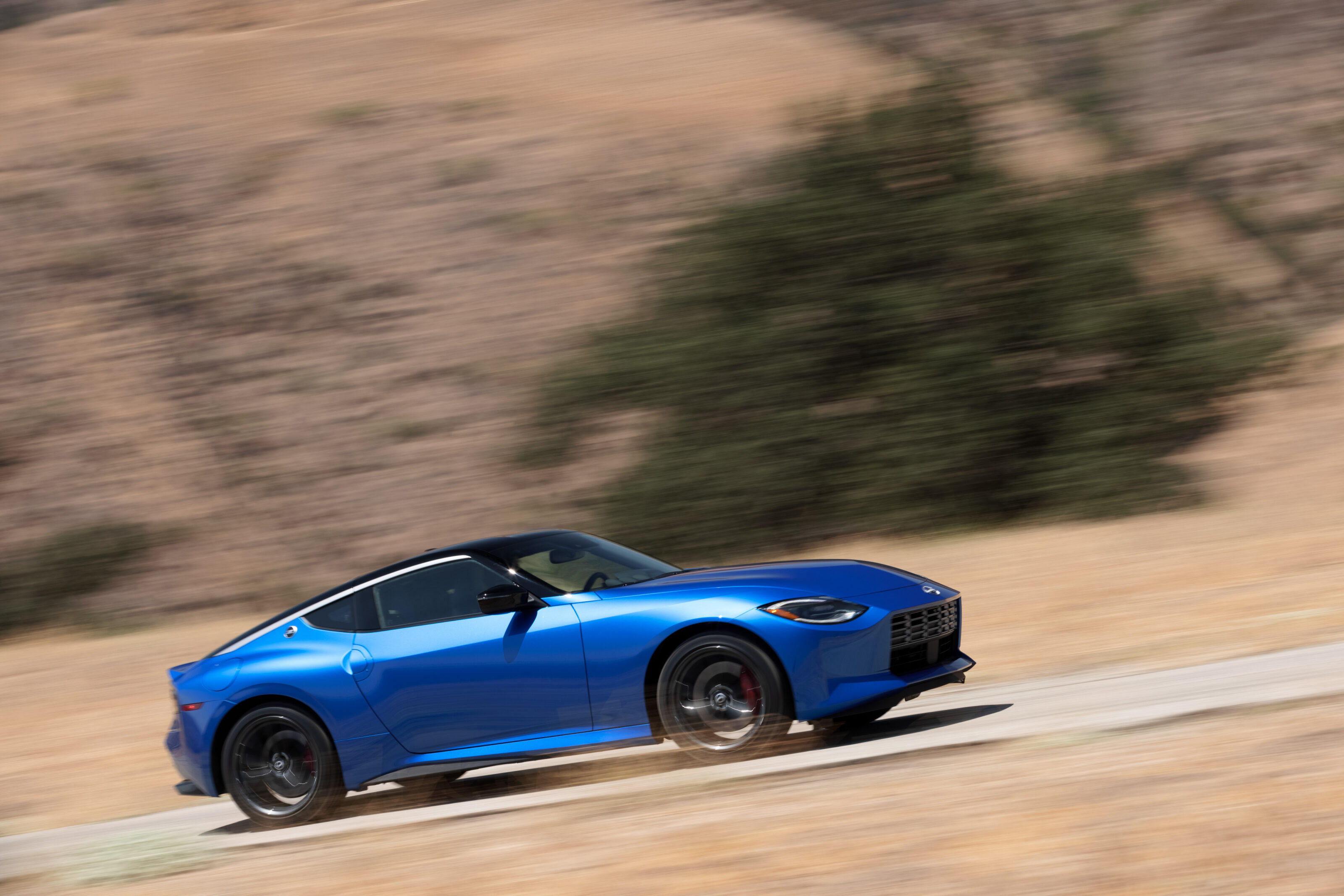
A new affordable turbocharged coupe is a rare occurrence these days, even more so when it comes available with a six-speed H-pattern gearbox and three pedals. There are still crucial unknowns surrounding the Nissan Z, including kerb weight and local pricing but the opportunity for something great is there.
Naysayers may decry its carryover platform, but the prospect of a manually-shifting rear-drive chassis with a 298kW/475Nm twin-turbo V6, and up-to-date in-car tech and active safety has us very excited. All the modern convenience and a driving experience with one hand in the past? You have to give that a chance.
Volkswagen
Not one, not two, but five rapid R-badged Volkswagens will be hitting our shores in 2022.
The eighth-generation Golf R hatchback and wagon will spearhead the assault, expected to arrive in the first quarter.
The first ever R-badged versions of the T-Roc and Tiguan are also confirmed for Australia. The Tiguan R is expected in the first half of 2022, while the T-Roc R will appear as part of a model-wide mid-life update in the later months of 2022.
All share the Golf R’s 235kW (221kW in T-Roc) 2.0-litre turbocharged four-cylinder.
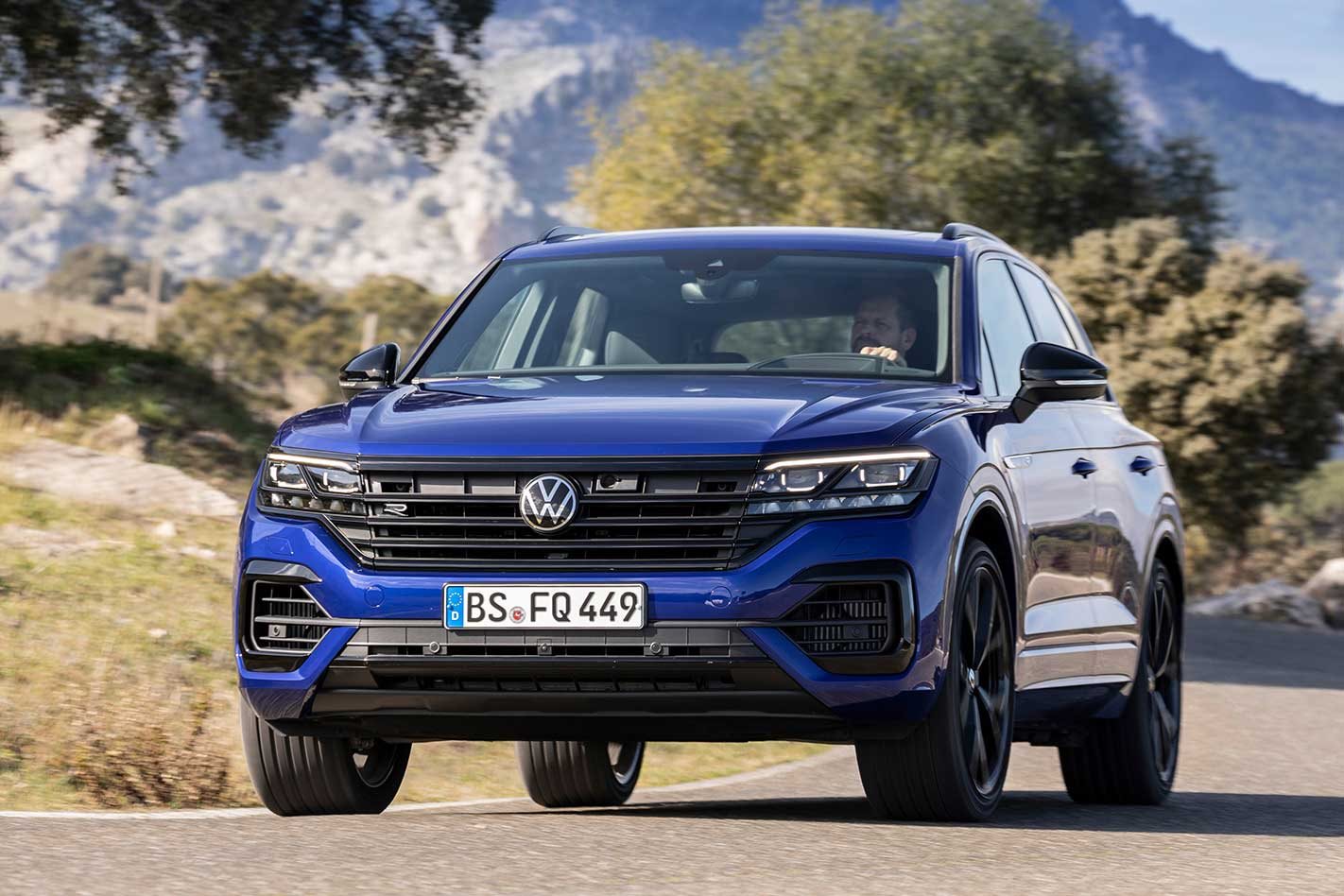
The biggest curiousity lies with the Touareg R, which Volkswagen also intends to import. The first R-badged Touareg, since the twin-turbodiesel V10 R50 of 2008, is propelled by a 3.0-litre turbocharged V6, coupled with an electric motor, yielding a combined 340kW/700Nm.
Other cars to watch out for
Bentley’s GT Speed coupe and convertible represent the aptly-named sporting versions of the traditional luxury grand tourer. With a herculean 485kW/900Nm 6.0-litre twin-turbo W12, the big barges will motor up to a whopping 335km/h, and are due early next year.
If that’s not sporty enough, the 992-generation of Porsche’s lauded 911 GTS is due in Q1 of 2022.
Elsewhere, you can look forward to the new Subaru WRX, and Aston Martin’s Vantage F1 Edition.
Snapshot
- 2024 Porsche 718 Boxster and Cayman set to become electric
- Renderings imagine next-generation sports car
- Expected to be underpinned by an all-new electric vehicle platform
The 2024 Porsche 718 Boxster and Cayman are looking increasingly likely to move to electric power, with a new rendering previewing what the next-generation could look like.
According to Car and Driver, anonymous sources within Porsche confirmed the 718 will be a fully-electric vehicle – with the iconic 911 set to maintain internal-combustion power until at least 2030.
Both models are expected to feature Porsche’s latest design language first used on the electric Taycan, with the Boxster tipped to maintain its fabric droptop.
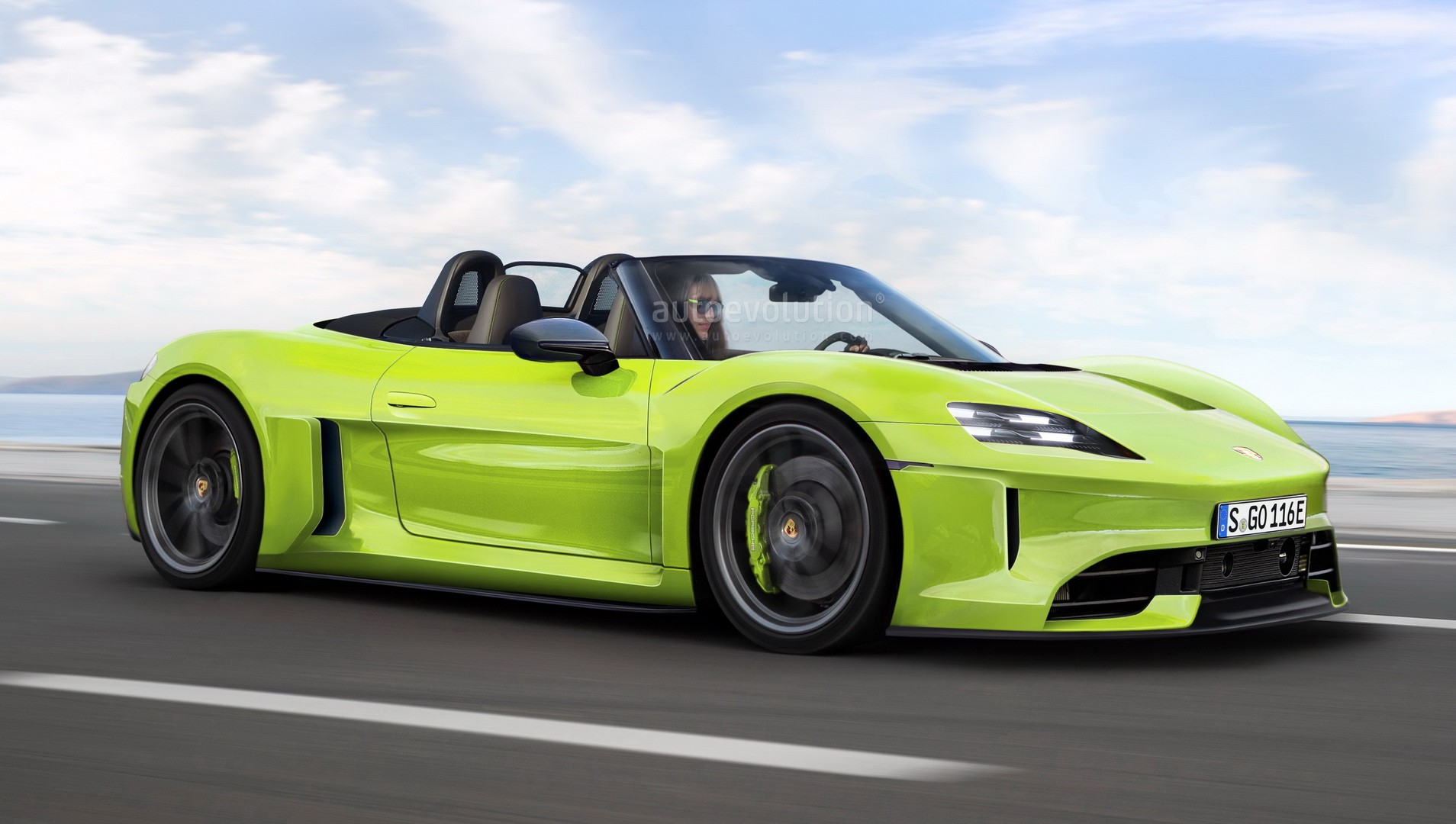
With the Porsche Mission R motorsport concept study, recently revealed at the 2021 IAA Mobility Show in Munich, believed to be an early look at the design of the 718, publication AutoEvolution has showcased renderings of the 2024 718 Boxster and Cayman to feast your eyes on.
Courtesy of designer Bernhard Reichel, the renderings demonstrate a strong resemblance to the Mission R concept – albeit in production-ready form, combined with aesthetics from the Taycan and Taycan Cross Turismo.
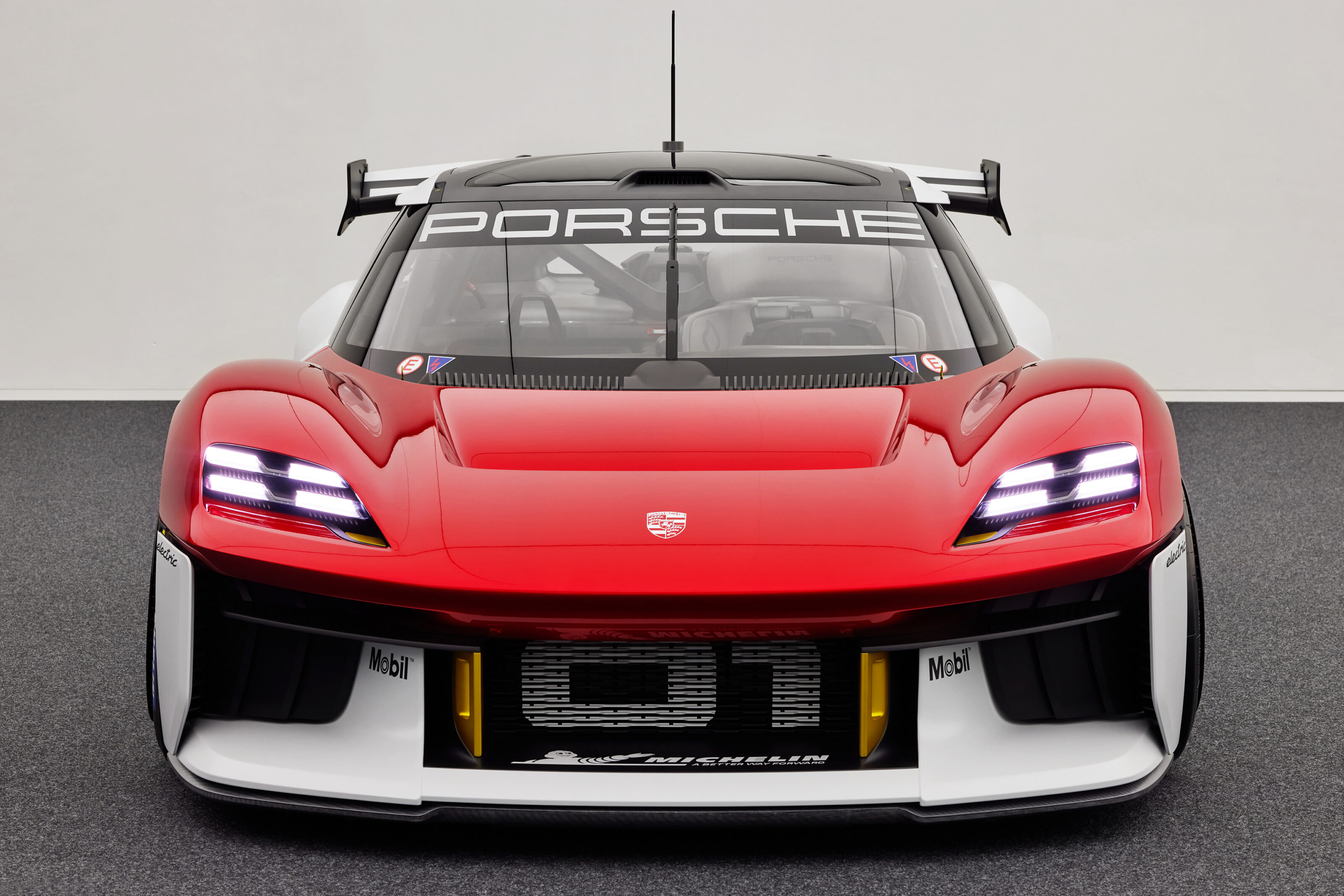
The design is headlined by ice-cube headlights and a sharp lower-bumper featuring LiDAR sensors to accommodate autonomous driving technology.
Inside, the next-generation 718 is expected to sport a futuristic design to better appeal to the Chinese market, with a new user interface believed to be under development.
The report by Car and Driver also claims Porsche is aiming to keep the 2024 718 as light as possible, despite the fitment of an electric powertrain – with a target weight of around 1,650kg the goal for engineers (approximately 270kg more than the current Cayman).
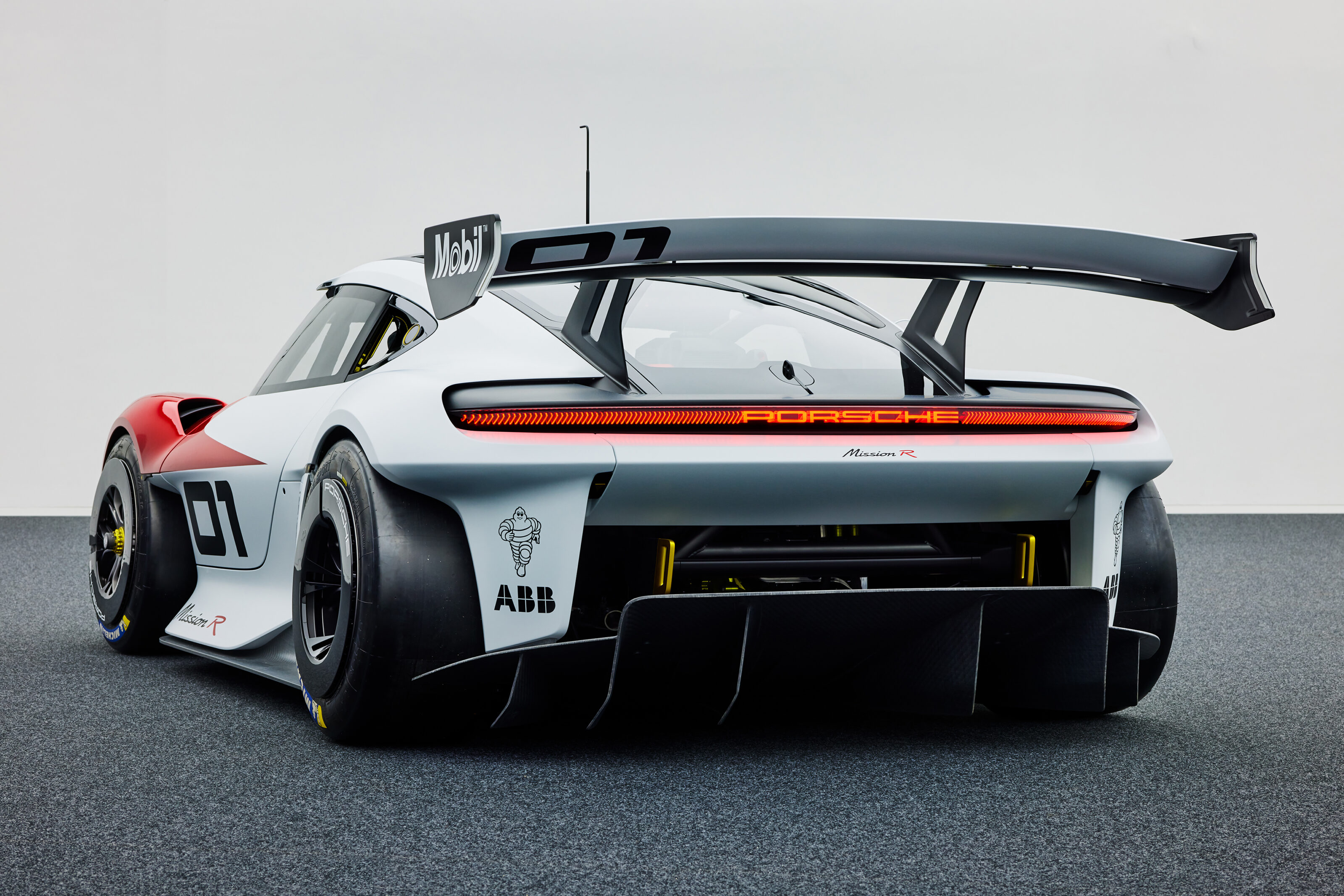
This will be achieved through the utilisation of a new electric vehicle platform from the Volkswagen Group, rather than a shortened version of the electric PPE platform underpinning the next-generation Macan, Audi A6 and Q6 E-Tron.
Entry-level models will feature rear-wheel drive as standard, while flagship models are tipped to be propelled by an dual-motor all-wheel drive powertrain.
Snapshot
- Designed to mark the centenary of Maybach’s first production car, the W3
- Mercedes-Maybach S-Class and GLS anniversary editions limited to 100 units each
- Headlined by two-tone finishes and Edition 100 badging
Mercedes-Maybach is celebrating the centenary of its first production car.
Originally founded in 1909, the brand has been synonymous with adding extravagance to already lavish vehicles for decades.
At the Berlin Motor Show in September 1921, the covers were taken off the Maybach W3 – a production vehicle built in response to the Treaty of Versailles, which prohibited German production of aerial machinery.
The company used its experience in this field to develop and construct high-performance engines for use in vehicles.
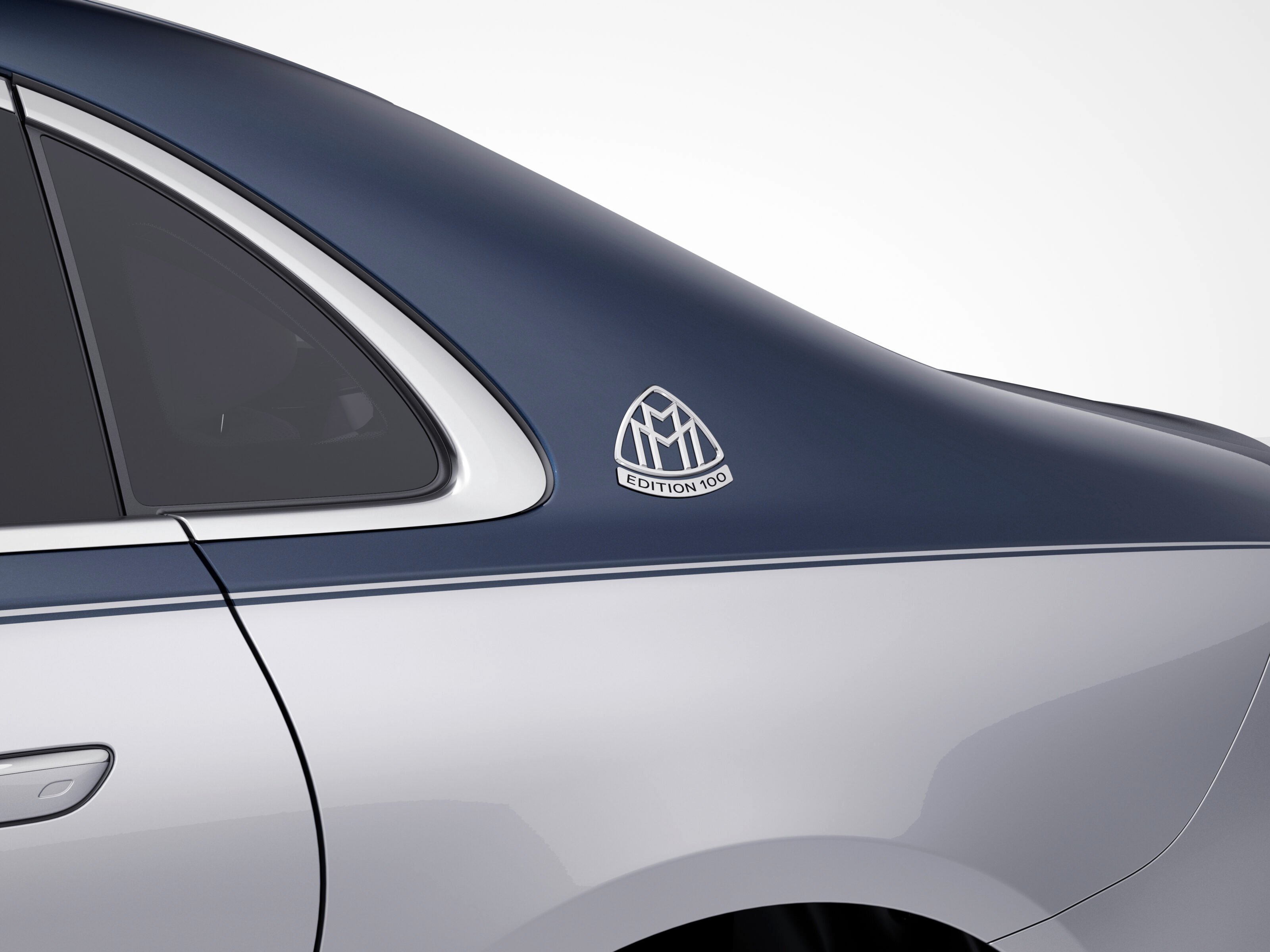
To commemorate the launch of the W3, Mercedes-Maybach has unveiled a pair of special-edition models, the S-Class and GLS Edition 100. Each model is limited to 100 units, both finished in two-tone silver/nautical blue – in addition to a crystal white/silver interior.
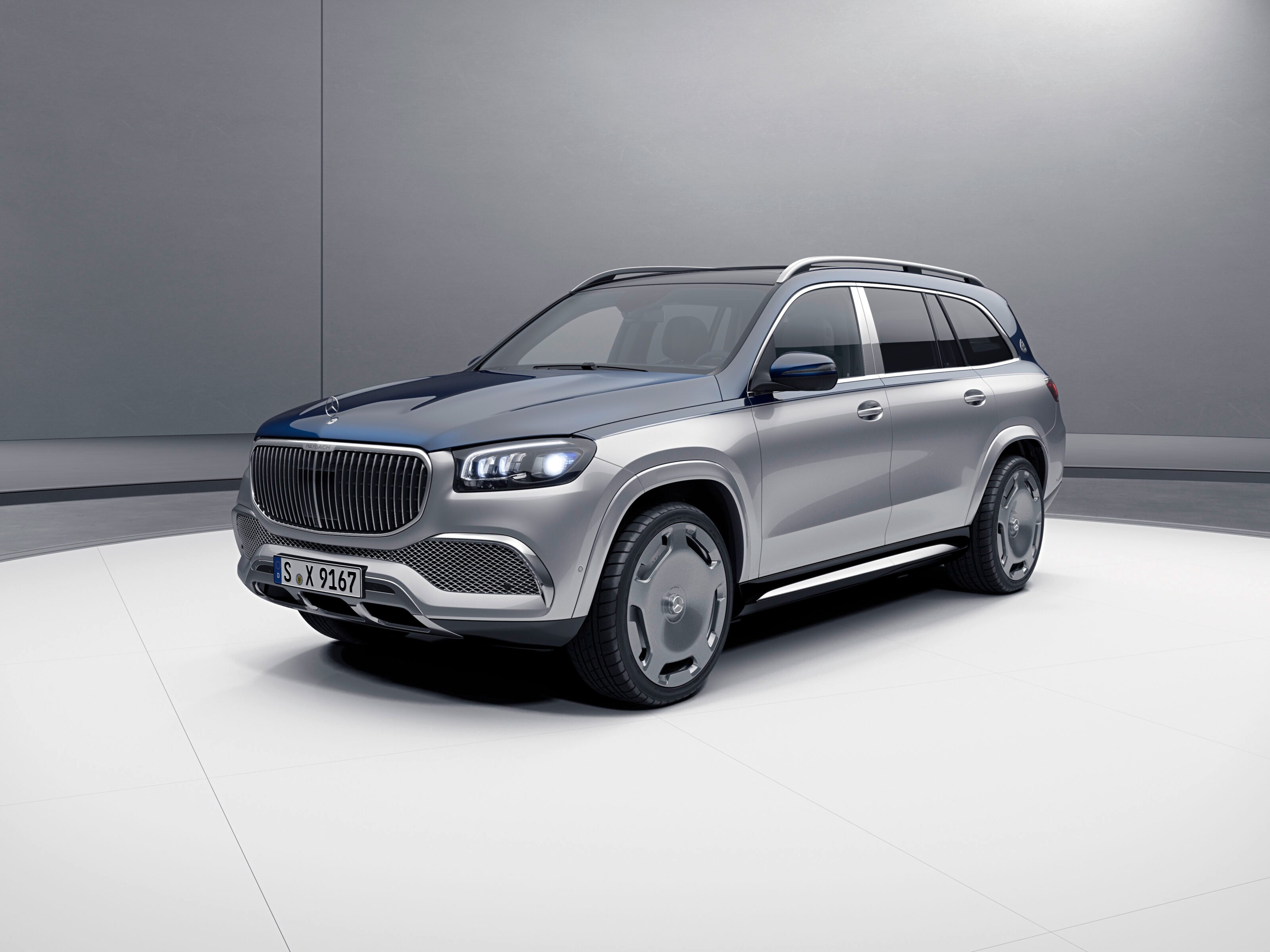
The special-edition models are also adorned by ‘Edition 100’ badging inside and out, including on the centre caps of both the S-Class and GLS – surrounded by a set of forged alloy wheels finished in grey.
Marking the exclusivity of the limited-edition models, Mercedes-Maybach will also provide buyers with a handmade car cover featuring the double-M logo, and a storage case finished in white or black leather to hold the vehicles keys or paperwork.
One point of difference between the two vehicles is under the bonnet. The flagship S-Class sports a 463kW/900Nm 6.0-litre twin-turbocharged V12 engine, while the GLS is powered by a 4.0-litre V8 producing 410kW/720Nm.
The special-edition S-Class and GLS Edition 100 models will be limited to selected markets – including Germany – with orders to begin in the fourth quarter of 2021. First deliveries will commence in early 2022.
You know the fantasy garage pub game: a couple of hypothetical empty car spaces and an imaginary blank cheque – what do you go and buy?
The MOTOR team were having such a discussion recently, when it dawned upon us that the cars we know, love and choose today, are very much a dying breed.
Some major international markets are earmarking a sales ban on new internal combustion vehicles as soon as 2035, and many of us will be alive to see petroleum-burning transport phased off the road.
That got us wondering: if you could pick any two new cars to live with until the unleaded bowsers run dry, what would they be?
Rules of the game:
- You have a two-car garage to fill all of your motoring needs, cost no object but be realistic
- Consider these the last two internal combustion-powered vehicles you ever own, choose wisely
- They must be new cars – there simply aren’t enough McLaren F1s in the world for all of us
Andy Enright, Editor
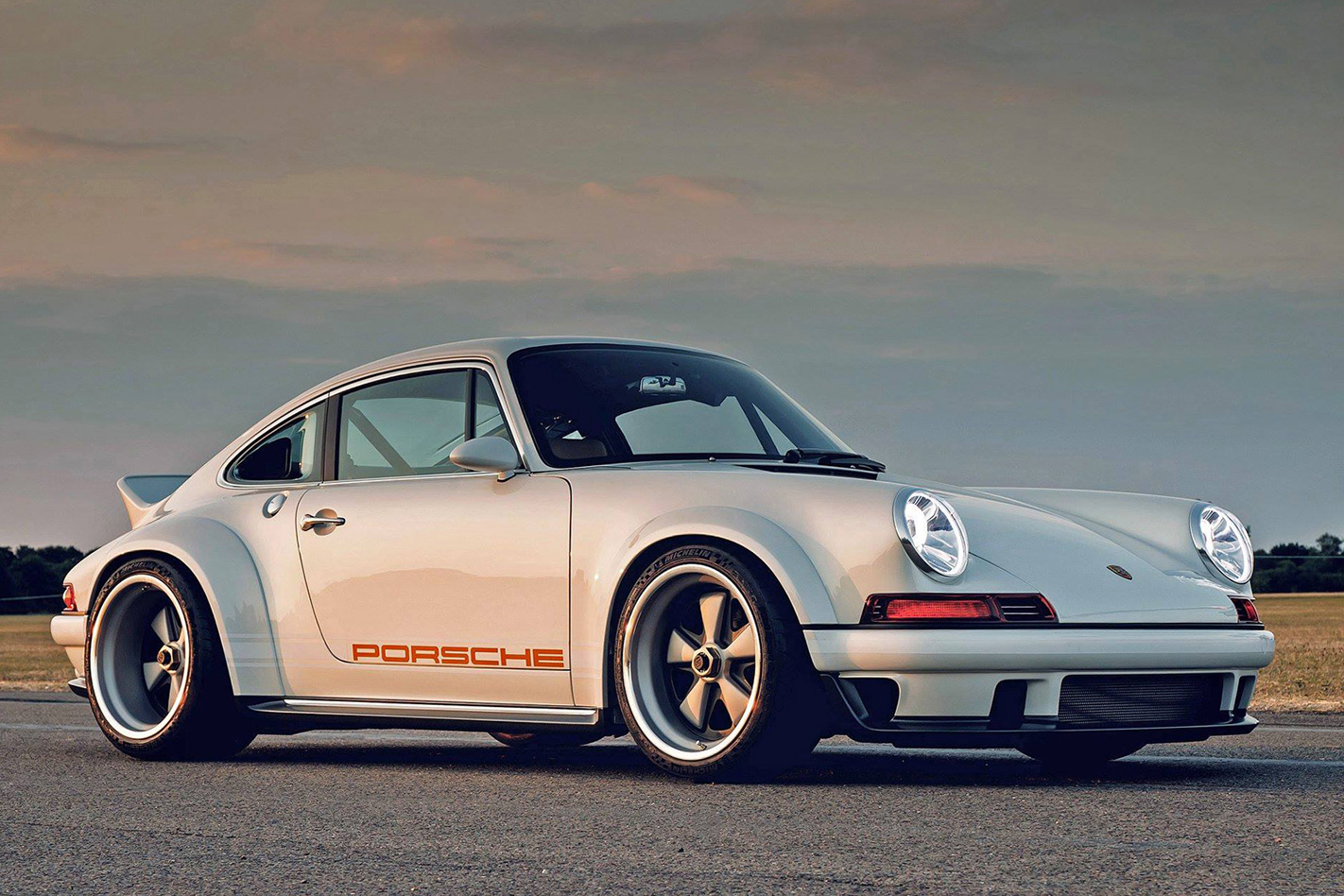
For a pure road-biased indulgence, I was going to have a Singer DLS. To really celebrate internal combustion, I’d like a very analogue, mechanical experience that functioned as a road car and I can’t think of much better than the Singer.
A 4.0-litre atmo engine developed by Williams, a manual box, houndstooth fabric and a low-key exterior finish. Maybe fish silver with no decals. And some decent security for my garage. Then I realised that the 80-car run sold out a month or so ago and now I’m having to cast around for an alternative.
Given that this is a cost-no-object exercise, I’m sure Rob from Singer could rustle up something similar as a one-off, given the right motivation. Or have I just completely blown the rules here by nominating a car that isn’t built any longer?
But clearly owning a mega-money special isn’t going to be entirely practical for a trip to Coles, so it’d need to be backed up with something that has a modicum of versatility and which can take a bit of a beating. You’d just know that with a Singer in the shed that you wouldn’t need to underscore your status or prove your car credentials to anyone so my freebie daily would be something comparatively discreet, quick and easy to drive.
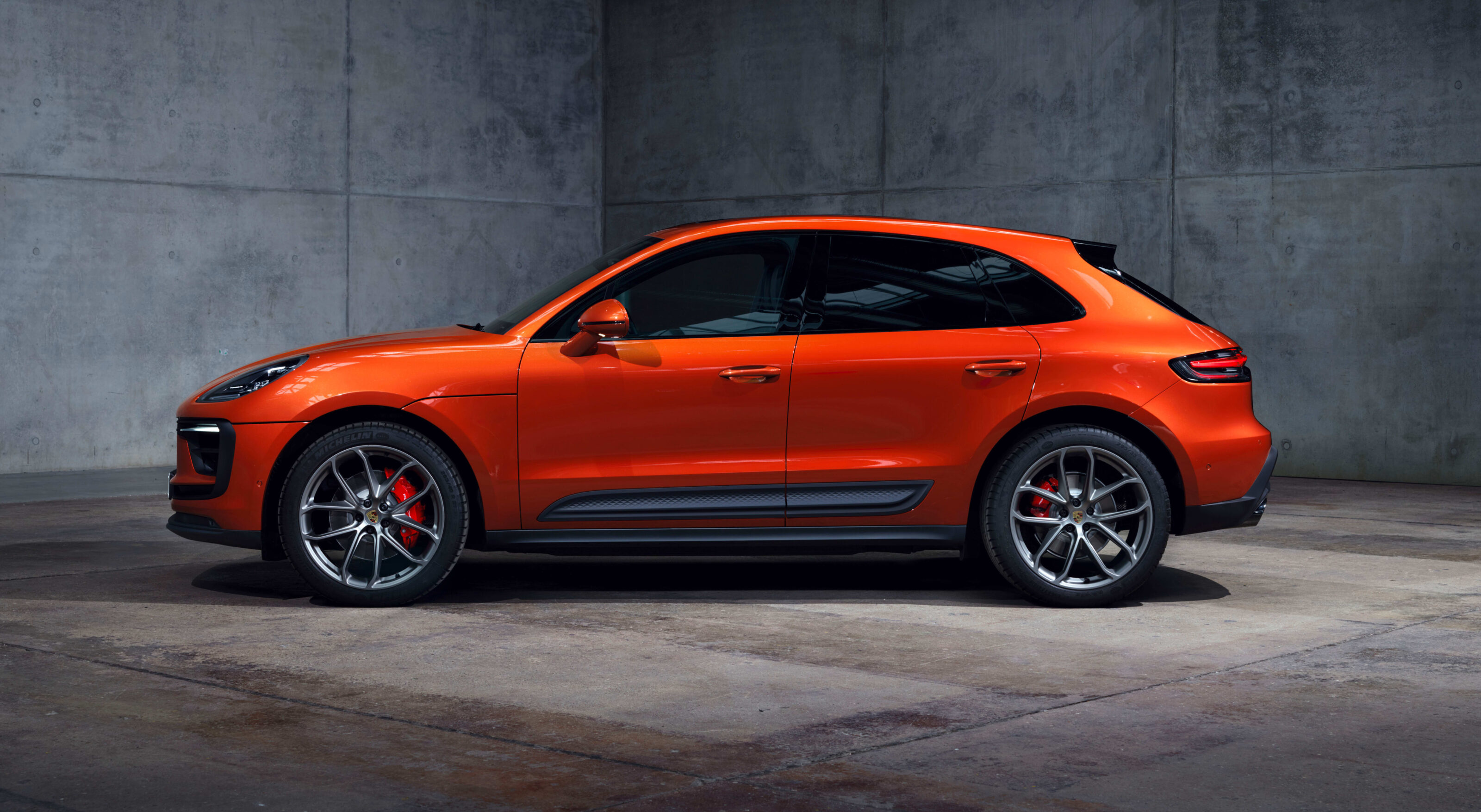
I think I might sit on my money and wait for the facelift Porsche Macan Turbo, debadged, in white and on the smallest wheels available. It’s a do-almost-anything sort of car and would easily handle the dirt tracks near my home.
I’d be happy with that as a two-car garage for many years to come.
Cameron Kirby, Deputy Editor
If these two vehicles are to be the only vehicles available to me, as much as I’d love a pair of all-out supercars to fill the garage, the harsh reality of life means something a little more practical needs to be included.
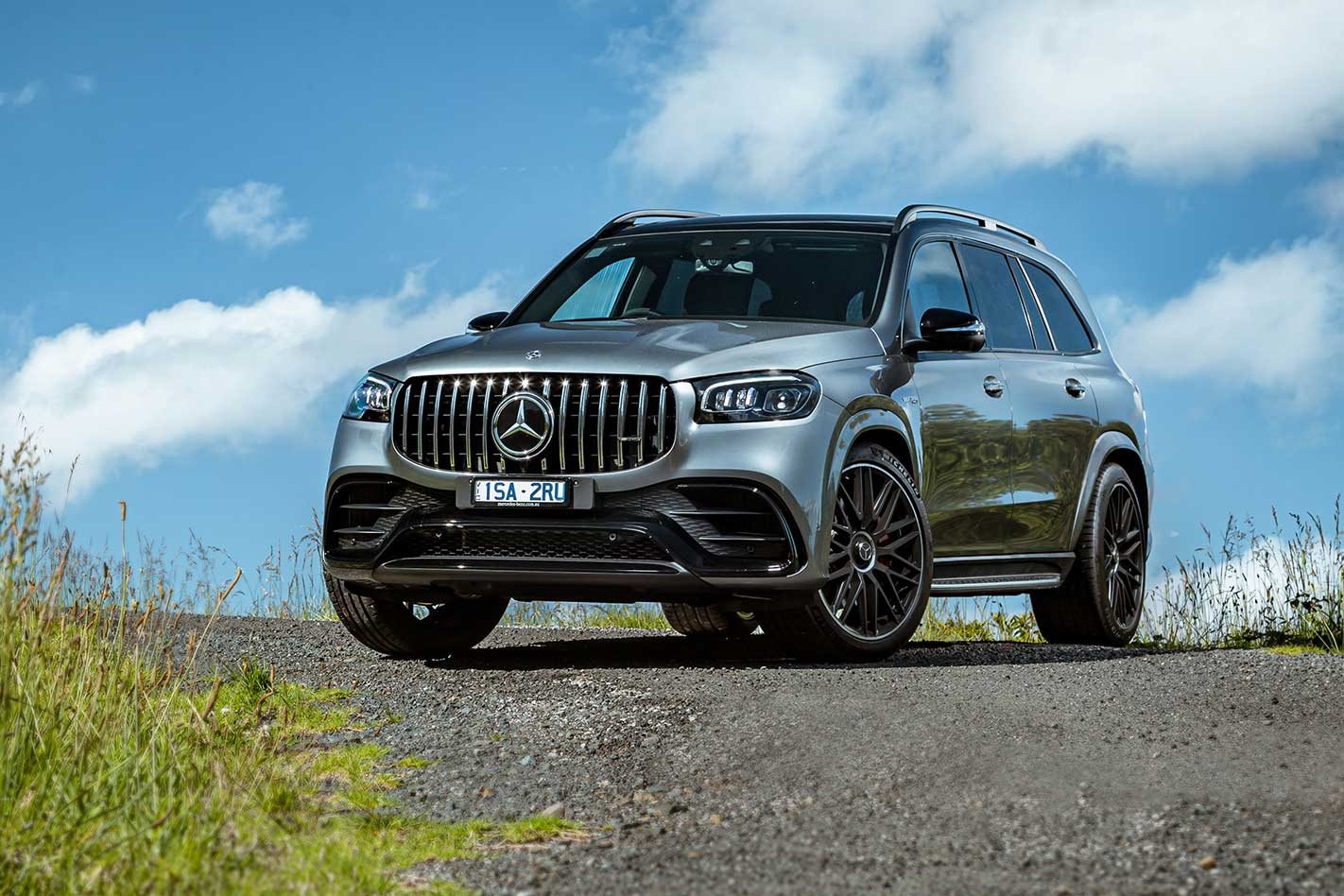
Filling this role will be the Mercedes-AMG GLS 63. The non-AMG GLS was one of my favourite cars of 2020, and the addition of the M177 4.0-litre twin-turbo V8 engine and trick suspension would make it a deft daily driver.
The GLS 63 will be able to transport me, friends and family, and my horse-sized dog in supreme comfort thanks to active anti-roll bars, adaptive air suspension with pneumatic self-levelling, and one of the largest cabins currently on sale. Don’t get caught sleeping on the GLS 63 though, with 450kW/850Nm on tap it’ll crack the tonne from a standstill in a claimed 4.2 seconds.
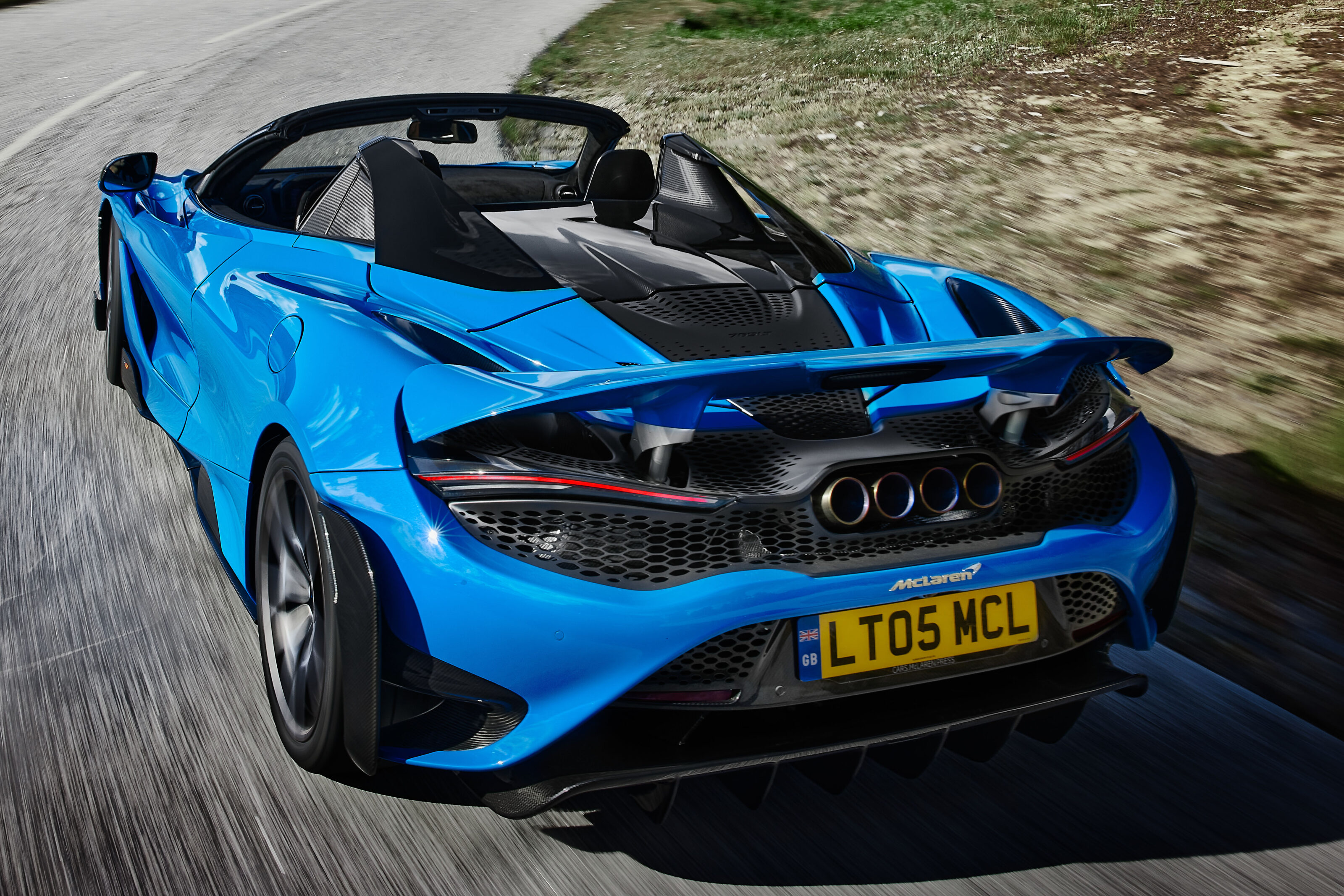
My love for the GLS 63 aside, it’s not the sharpest dynamic tool. Enter the McLaren 765LT Spider – a car that defines the zenith of Woking’s reborn era. Just the figures alone are off the charts; 563kW, 800Nm, 0-100km/h in 2.8sec, and onwards to 200km/h in 7.2 sec. I’m going for the Spider because if we are honest there will be little discernible loss in driving experience, but an exponential increase in auditory enjoyment.
The 4.0-litre M838T twin-turbo V8 engine that sits at the 765LT’s heart started life as a racing engine, and while nothing but the bore and stroke remain from those motorsport origins, the link is undeniable. If I’m going to see out internal combustion with just one engine to enjoy, it had to be this.
Trent Giunco, Staff Journalist
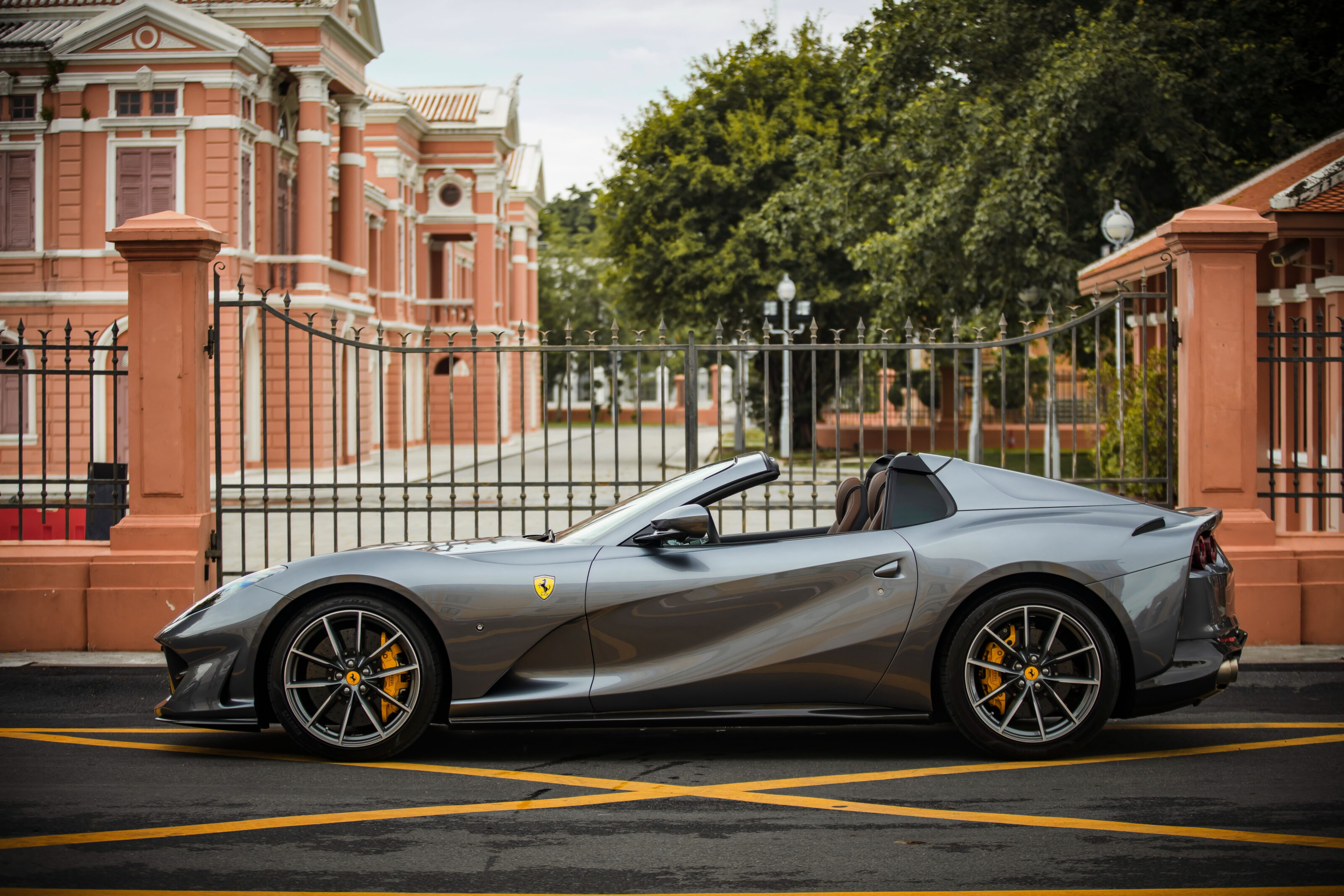
No price cap. Okay, this is fraught with danger. A 992 911 GT3 is incredibly tempting, but I’ll have to go with the Ferrari 812 GTS. Because why wouldn’t you have a 6.5-litre naturally aspirate V12 Prancing Horse that can spin to 8500rpm.
Admittedly, while it could easily blast around a track and it reaches 100km/h in a frenetic 2.9 seconds, that’s not how I’d use it. A weekend cruise, roof off and listening to the 12-cylinder soundtrack would be all I’d need to be happy. I’m sure there’d be myriad twisty roads along the way.
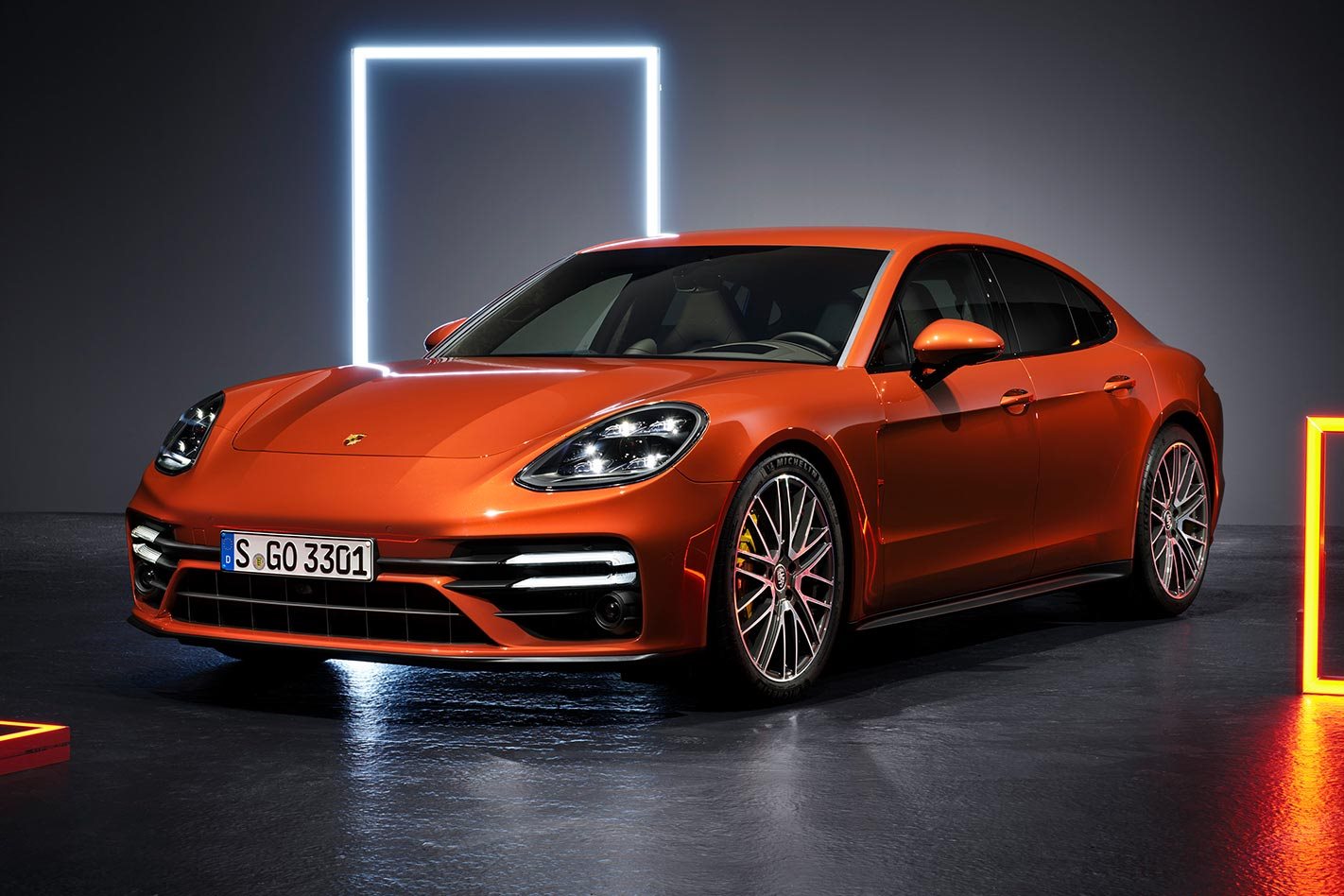
Sticking with the theme of excess, and the fact I didn’t get a Porsche for my first option, my daily would be a Panamera Turbo S. I did want a Sport Turismo for the wagon life, but it ‘only’ goes up to the GTS. You can largely forgive the two-tonne heft for the level of luxury inside, while the liftback boot is spacious and the ride quality is supple for long-distance trips.
Plus, the 463kW/820Nm 4.0-litre twin-turbo V8 counteracts the 2080kg kerb weight nicely and, being a Porsche, it doesn’t fall over itself at the sight of a corner. One can dream.
Alex Affat, Staff Journalist
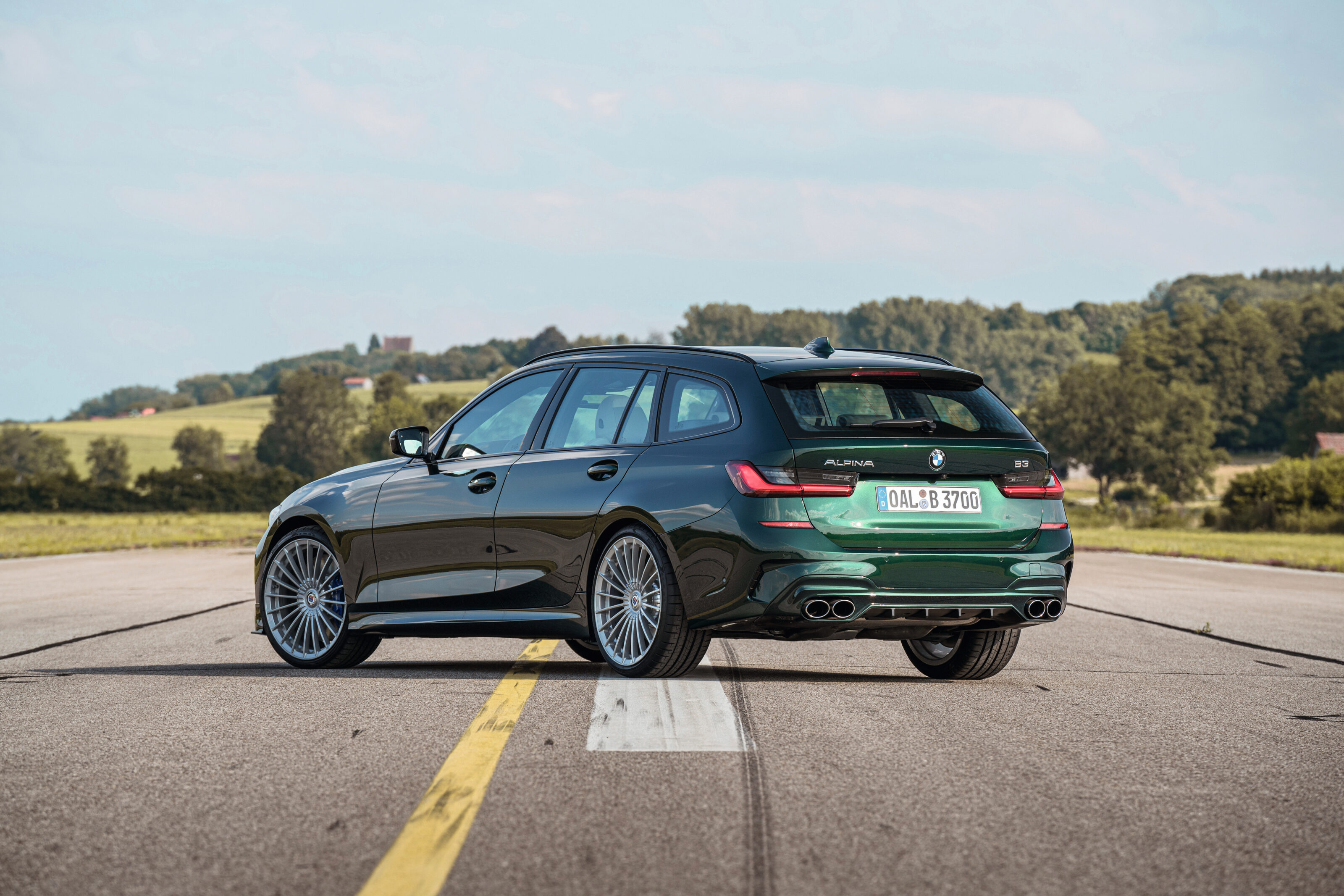
Let’s start with the daily driver. No cost? It has to be a wagon, right? But which one to choose? Do I take the Audi RS6 or do I wait for the M3 Touring? Alpina has a more immediate solution, the B3 Touring.
It shares the M3’s brutally effective S58 twin-turbo inline-six, with a number of key tweaks delivering a drastically different character and feel. Peak power may be down 35kW compared to M Division’s spearhead M3, but it’s up significantly on torque, producing a headline 700Nm which is then sent to all four wheels.
The M3 may deliver higher dynamic heights, but the Alpina is certainly no slouch. It’s a more flexible road car and arguably feels more special. And it has to be Alpina Green with gold pinstriping, please.
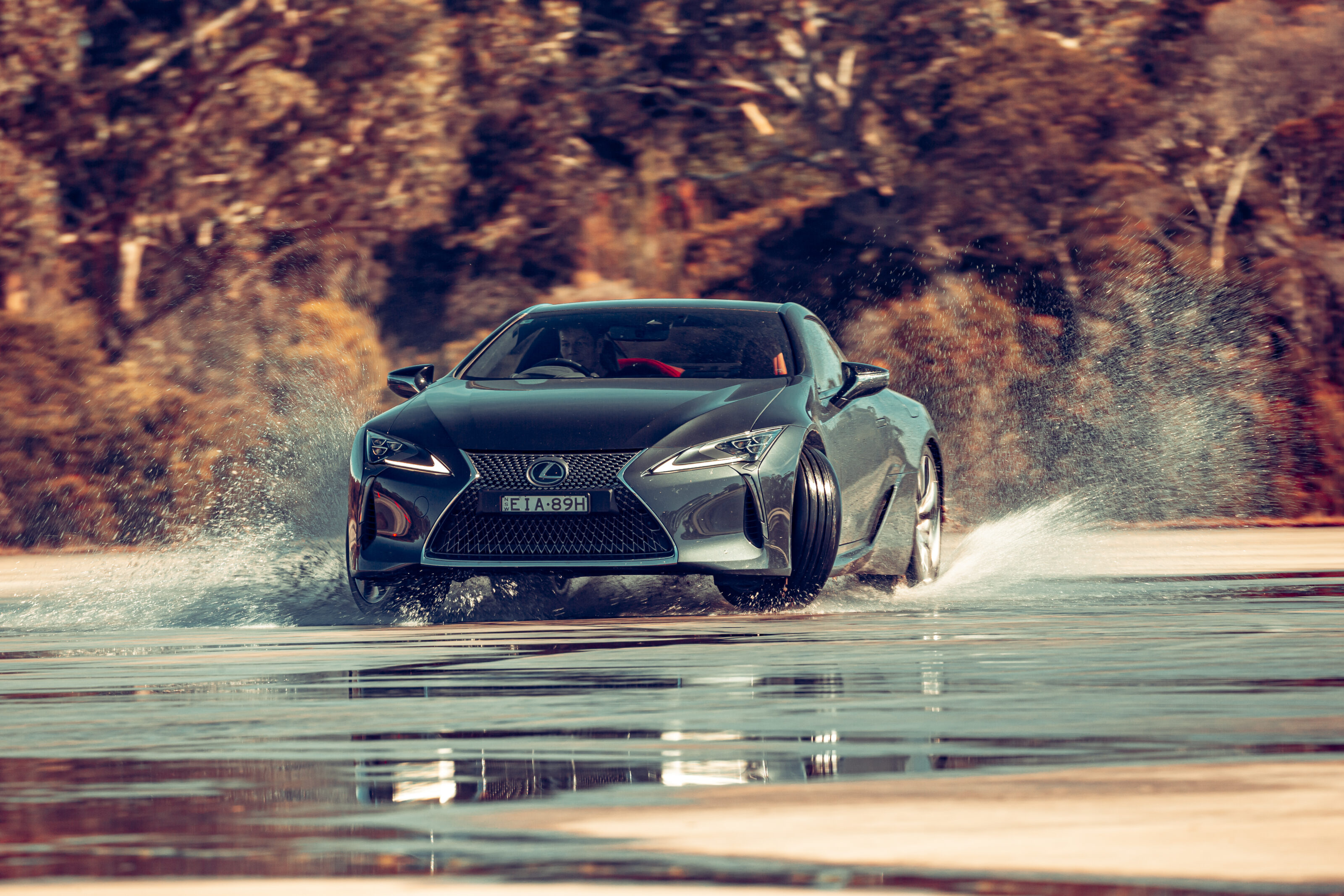
Now, for the fun car. Sadly there can only be one, but only one keeps returning to mind; the Lexus LC500. All manner of cars have passed under my lucky custodianship through this job. While it’s not the most expensive and certainly not the fastest machine that’s been charged under my care, it is one of a few particular cars where I have truly envied the owners who are lucky enough to own and live such an experience everyday.
It’s very heavy at nigh on two-tonnes, and somewhat aloof at the limit, but the free-breathing Yamaha-fettled 2UR-GSE 5.0-litre V8 is one to cherish while we still can. The rush and sound of an aspirated 351kW deployed at a dizzying 7100rpm is life-affirming stuff. It seems almost quaint compared to some of the more esteemed badges you’ve already passed over but this, however, is an emotional question, and the Lexus LC500 is one of the most emotive cars you’re ever likely to experience. There’s nothing quite like it, and there may not ever be again.
Whose garage do you most like the look of? Leave your own answers, and why, in the comments below!
Snapshot
- Dr Livingston bases himself in remote WA
- Personal GT-R is currently being used to get to emergencies as a first responder
- WA Government has refused requests for lights and sirens to be fitted
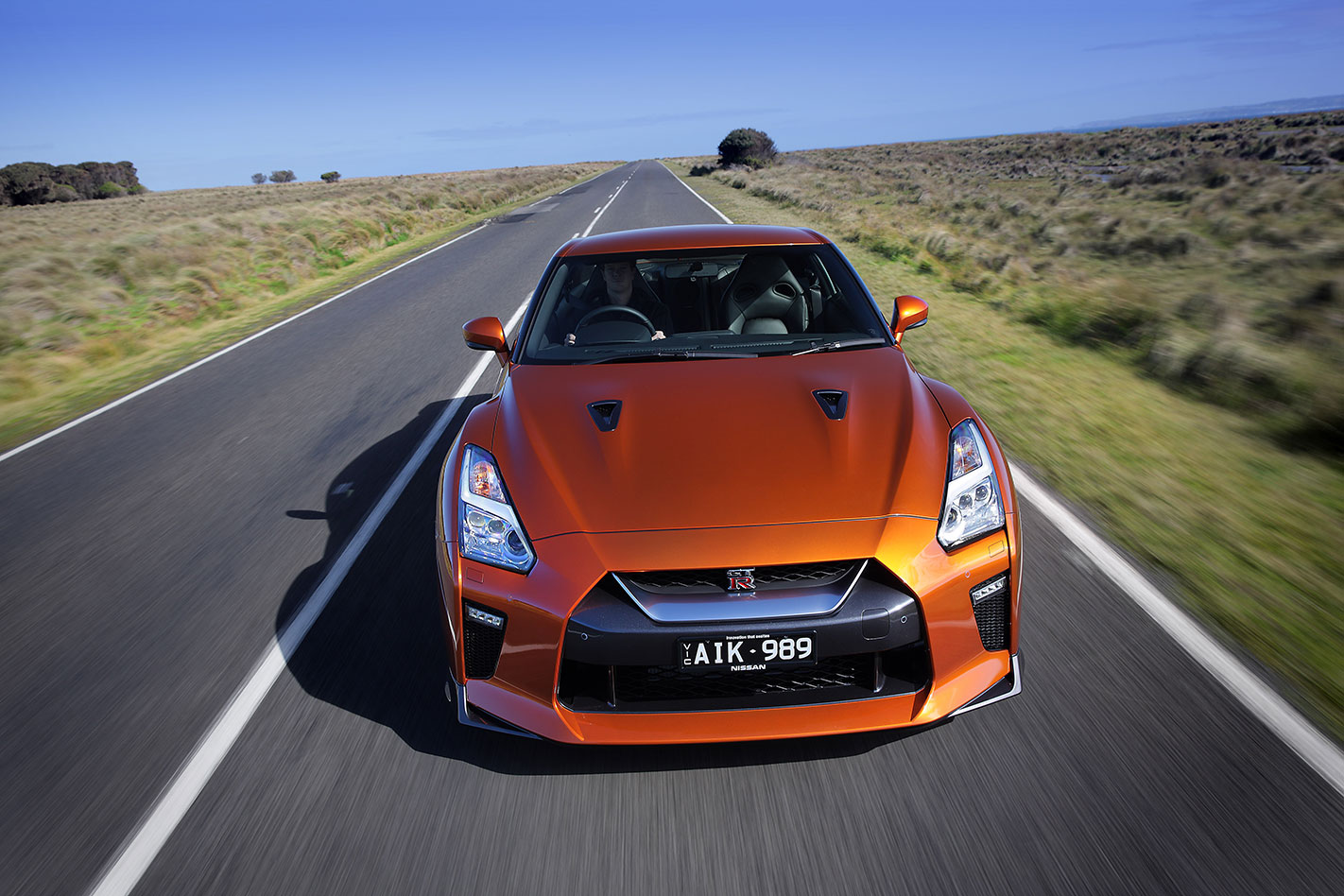
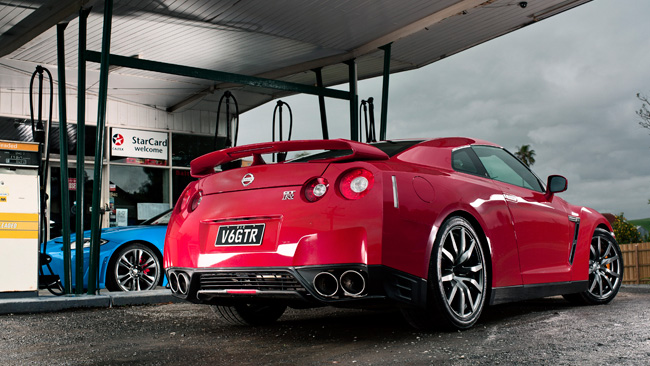
What would be your response if you saw a Nissan GT-R coming up behind you at high speed on the highway?
While we might instantly think it’s someone with a heavy right foot and a need for speed, you may be surprised if it had a doctor behind the wheel on his way to an emergency.
Dr Michael Livingston is a rural generalist with advanced qualifications in emergency and pre-hospital care, living in rural Western Australia with a handful of clinics in neighbouring towns, each between 50 to 100 kilometres away from his base.
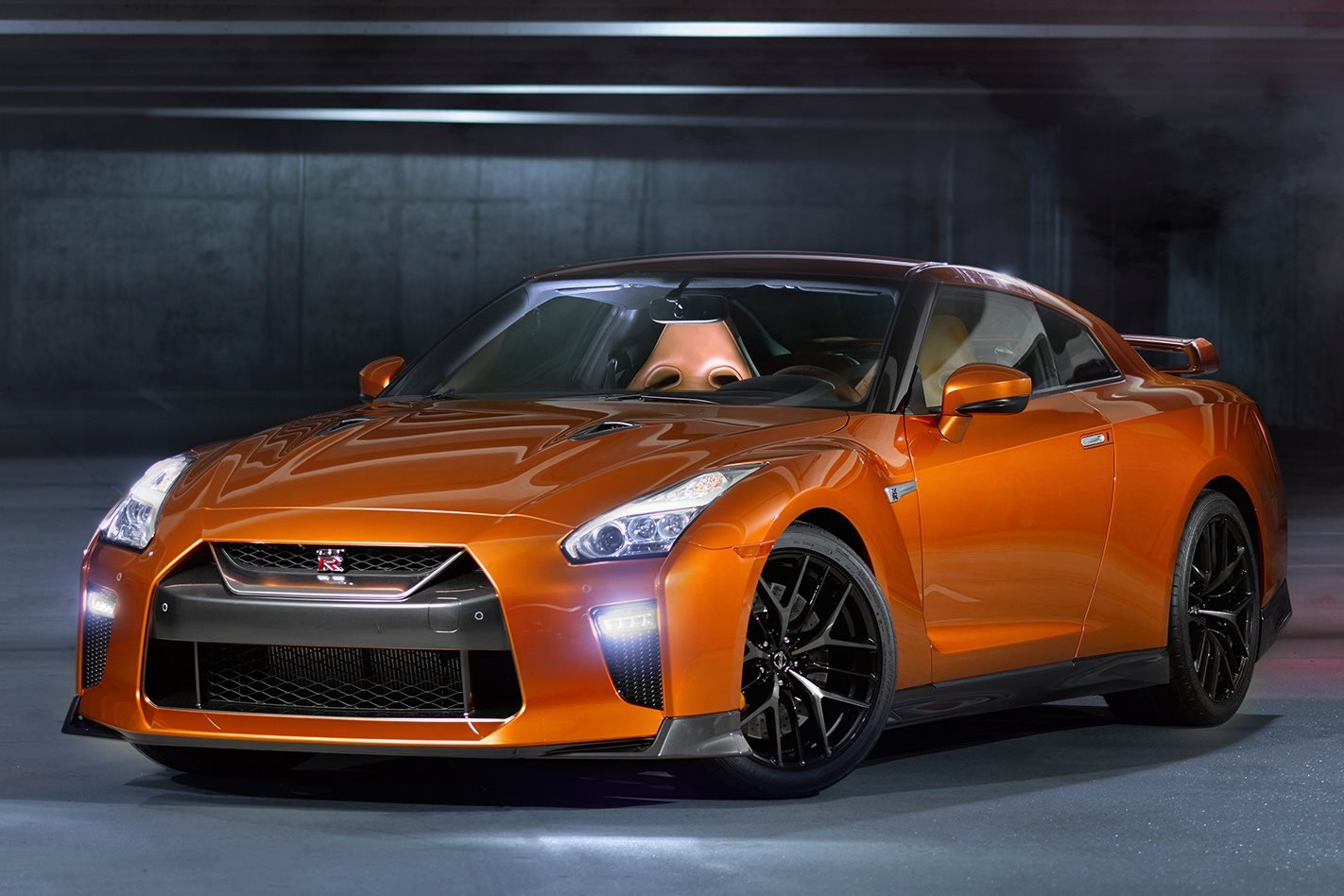
A car lover originally from Scotland, he’s owned everything from an £800 Ford Mondeo, Volvo 850 and Alfa 156 Twin Spark to Subaru WRX and WRX STis since coming Down Under, as well as the usual crop of country living-spec utes.
As a part of his daily duties, Dr Livingston has to respond to emergencies and provide critical care in a region which has a shortage of doctors. An ABC News story this week highlighted his situation after he had to travel at speed in his GT-R to respond to a child turning blue at one of his clinics, completing the journey in time to save the four-year-old.
Despite this and countless other similar situations, the WA Department of Transport will not permit Dr Livingston to fit lights and sirens on his GT-R, something he believes would not only allow him to respond even faster, but demonstrate the conditions rural doctors must work under.
Speaking with WhichCar, the doctor argued his vehicle is the right one for the job and is arguably safer than the generic four-wheel drives and utes provided to rural healthcare providers.
“I’ve got a clinic 100km north, another 50km south, a third one 100km west and another within 50km,” said Dr Livingston.
“In my contact with the WA Country Health Service, there is a close proximity fee where I have to be within 30 minutes of a hospital at any time. On one hand, you’ve got this burden where you have to get there within that time frame, but on the other, there’s no help being provided to assist me to get there safer.
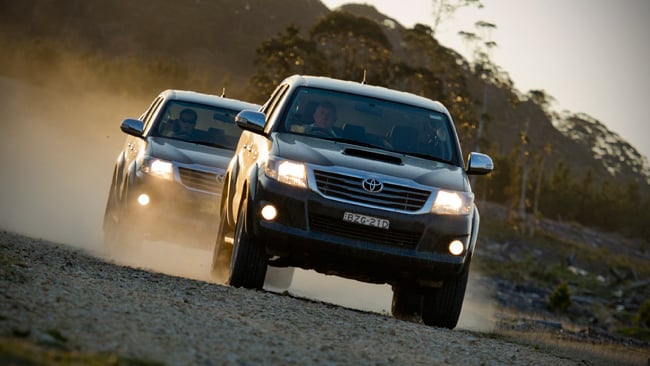
“A lot of emergencies including road trauma come through here. Even the Royal Flying Doctor Service can’t retrieve them [in some cases] so there’s a lot of pressure for me to be in a lot places at any given time. I found cars like the HiLux just weren’t cutting the mustard.
“If you need me to be there on time, I need something which can cut through traffic – it’s my scalpel. I don’t want a blunt blade like a HiLux – which is arguably more dangerous because it’s not as good at turning or stopping.
“During COVID I saw this GT-R come up for sale and told my wife we should get it before we get too old – I’m in my 40s so I thought it would be now or never. I was able to part exchange a Land Rover Discovery 3 for it so that brought the price down a bit.
“A lot of people think I want to put lights and sirens on it so I can drift around and get four wheels off the ground at 250km/h on the way to my clinic – but it’s simply not true.
“I already have a medical emergency pass, which is an agreement between the Western Australia Medical Association and the WA Police. If I get caught speeding, it can be repealed if I was doing so in a situation which calls for it. But what’s been happening is I’ll be speeding past people in the GT-R on the way to a clinic and they’ll report me for hooning.
“There’s a lot of people around here who wouldn’t know me and be able to differentiate me from someone just giving it the beans, which is what impedes me in these emergencies. I’ve got this card, but what am I meant to do – wave it on a stick?
“Some people brake test me, some think its a race – one time I was caught between two road trains, my CB radio in the car had fallen off the seat so I couldn’t pick it up, but I could hear them talking about “dusting” me. They ended up kicking up a lot of dust and rocks at the car while I was on my way to an emergency.
“I thought, how hard can it be to get some lights and sirens put onto the car so people know my intention, but to also draw attention to the fact that doctors in rural healthcare are a dying breed. Numbers are falling, we’re outnumbered by non-GP specialists in Australia. If there’s going to be a way to make this job look appealing, why not have some lights and sirens on a GT-R?”
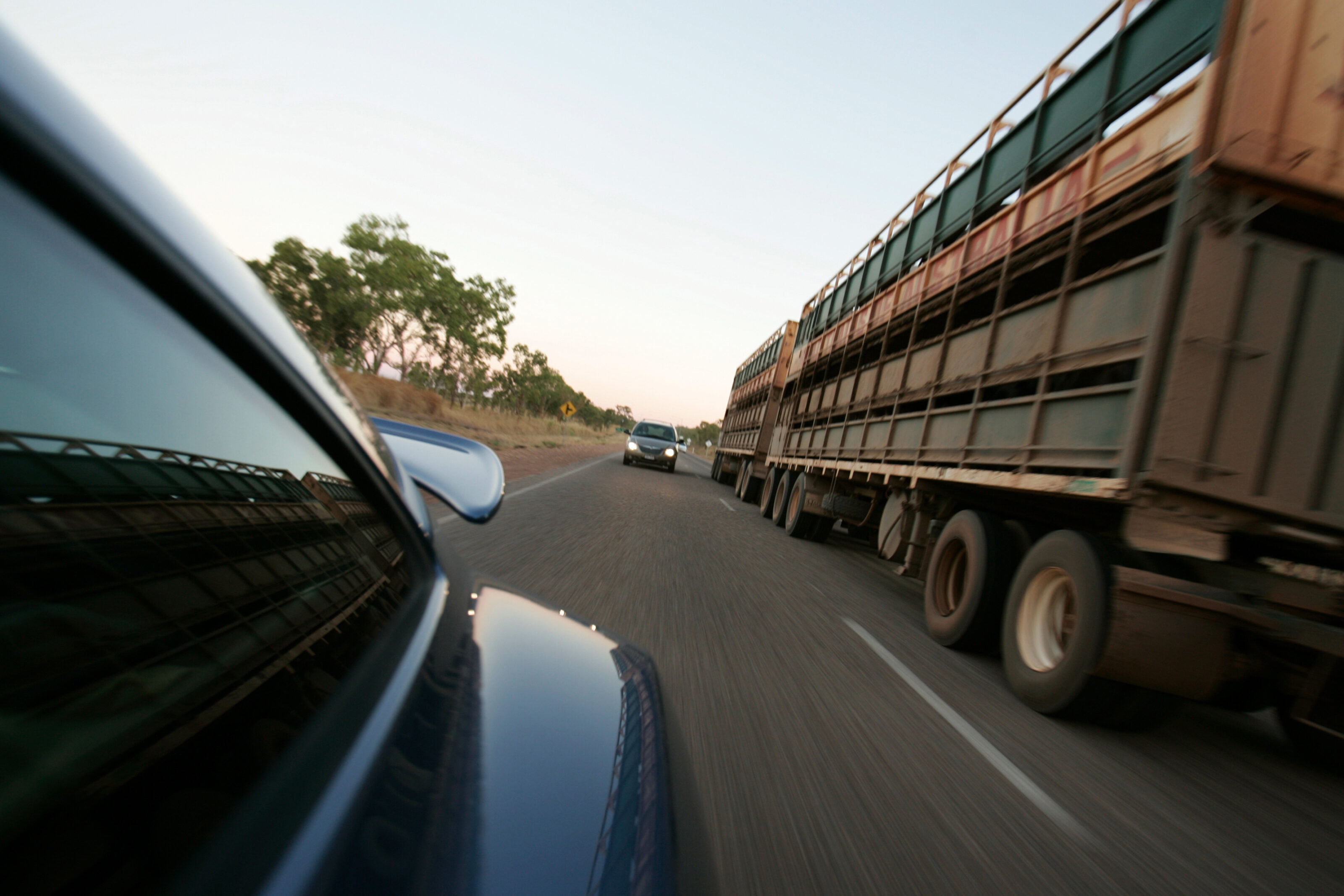
As it turns out, the process has been harder than first thought, with the WA DoT denying Dr Livingston’s request despite him fulfilling the driving courses and criteria to fit the equipment to his car.
“I did the driving under the operational conditions course, which is essentially an advanced driving test, and submitted my paperwork. I was met with resistance from the WA Department of Transport, and it denied my application as I hadn’t asked for a police escort.
“Obviously a police escort can’t happen here because there’s three cops in this town and two in the other – by the time I wait for the escort, the patient will be dead. I got the sergeant here to write a letter of support as well as the local mines and the local member [of Parliament].
“There was about seven or eight months of back and forth which concluded in a letter from the DoT, making points about males being more likely to die in a high speed crash and suffer road trauma. All the local police are male, everyone in the SES and fire service are male. Then I found out this doesn’t apply to other emergency services.
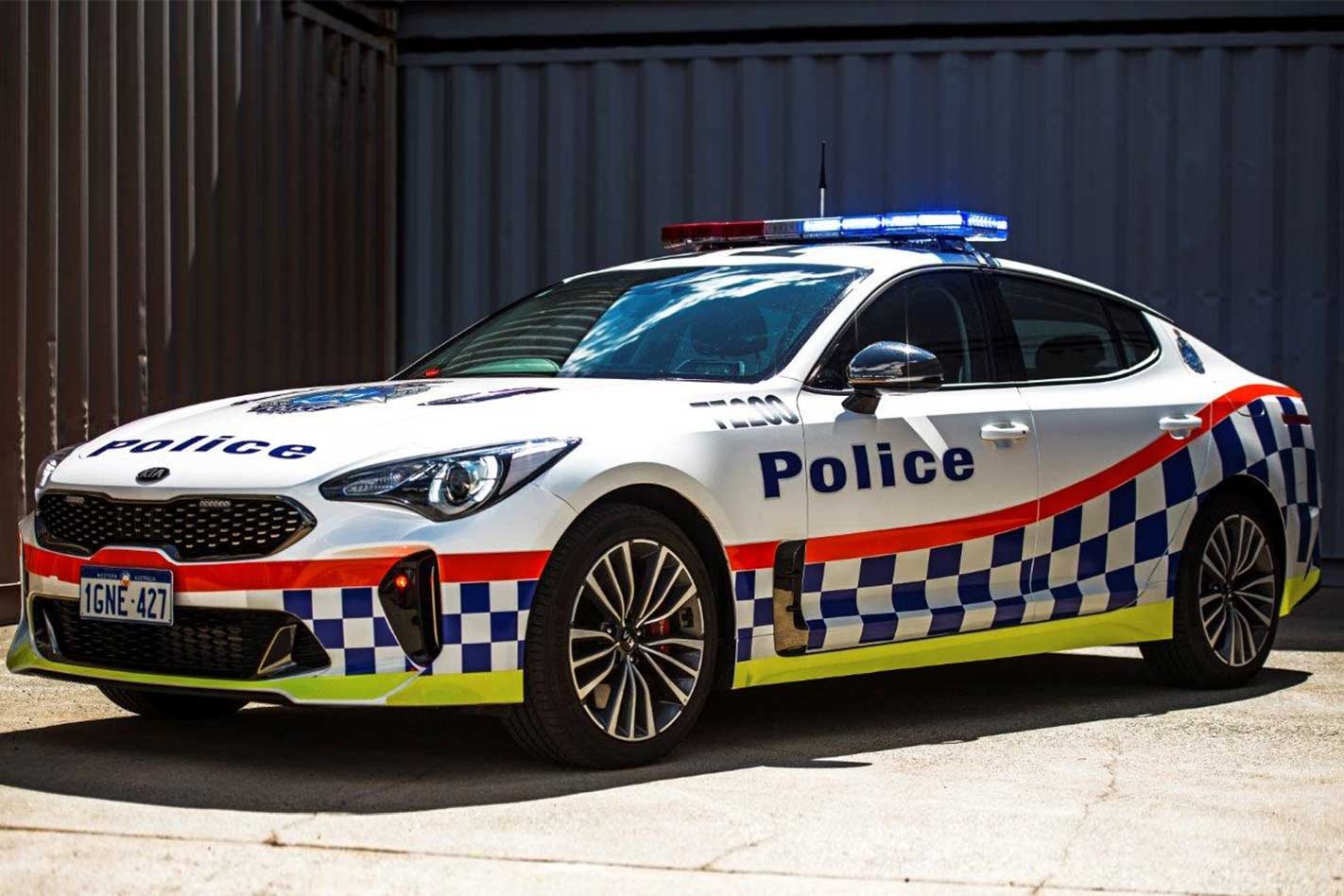
“Until recently our local police had a Holden Commodore SS, but the Highway Patrol – who drive from Ravensthorpe to Hopetoun, the same route they dispute my car is too low for, get around in a Kia Stinger GT! I’ve only ever had incidents with kangaroos in the highest risk times of the day, between dawn and dusk, but that’s not when I drive this car.
“The reasons they’ve not allowed me to do this on my car don’t apply to their own staff and vehicles. They’re worried it will create a precedent, but there’s no other doctors around here anyway. If I didn’t have the car, the kid [mentioned in the ABC article] wouldn’t have made it.
“What would the headline be if I couldn’t get there in time because my vehicle is too slow?”
MOTOR contacted the West Australia Department of Transport regarding Dr Livingston’s case.
“It is intended that Emergency Vehicle Status is only approved for vehicles responding to emergencies as part of the State’s emergency service network. This ensures a co-ordinated approach to an emergency and minimises road safety implications for the occupants of the emergency vehicle, other road users and the wider community,” a spokesperson told MOTOR.
“However, all applications for Emergency Vehicle Status are assessed on a case-by-case basis. A key consideration in assessing each application is the support of the Emergency Vehicle Committee, which is made up of representatives from the following organisations responsible for the State emergency service network:
- WA Police
- The Department of Health
- St John Ambulance
- Department of Fire and Emergency Services
- Western Australian Local Government Association.
“The Emergency Vehicle Committee considers whether the applicant is part of the State’s emergency service network and whether they have relevant approvals and Memorandums of Understanding in place to support this. If an application is not approved, it is generally because they have not satisfied the above criteria considered by the Emergency Vehicle Committee.
“However, other factors are considered, including the suitability of the applicant’s vehicle. Further, the Department of Transport (DoT) refers to a range of relevant reference material to not only assist in making an informed decision, with the view to minimise road safety implications, but also to explain its decision-making process to applicants as part of a commitment to transparency.
“Gender is not a consideration in assessing applications for Emergency Vehicle Status. The below quotation you are referring to is one of a number of points provided to [the] applicant highlighting the factors that contribute to emergency vehicle crashes.
“Male drivers are more likely to be involved in high-speed driving and have high risk-taking driving behaviours (Liu, 2007; Savolainen et al., 2009; Tay & Rifaat, 2007).
“In the past two years, [the] DoT has approved Emergency Vehicle Status for two vehicles – an Isuzu truck and a Toyota LandCruiser. Both applications had approval from the Department of Fire and Emergency Services and the support of the Emergency Vehicle Committee.”
Snapshot
- 2022 Lucid Air production commences in Arizona
- First customer deliveries to kick off in late October
- Initially available in Dream Edition guise, with cheaper variants to join the range at a later date
Californian EV startup Lucid Motors has commenced production of the 2022 Air at its new manufacturing facility in Arizona, almost five years after the luxury passenger car was first shown to the world.
However, don’t expect to see it on Australian roads anytime soon, with sales limited to the North American market for the foreseeable future.
Customer deliveries of the limited Lucid Air Dream Edition are set to commence in late October, priced from $169,000 (AU$234,740). The remainder of the Lucid Air range will commence production at a later date, with Pure, Touring and Grand Touring variants – available from late 2021 or early 2022 – on offer.
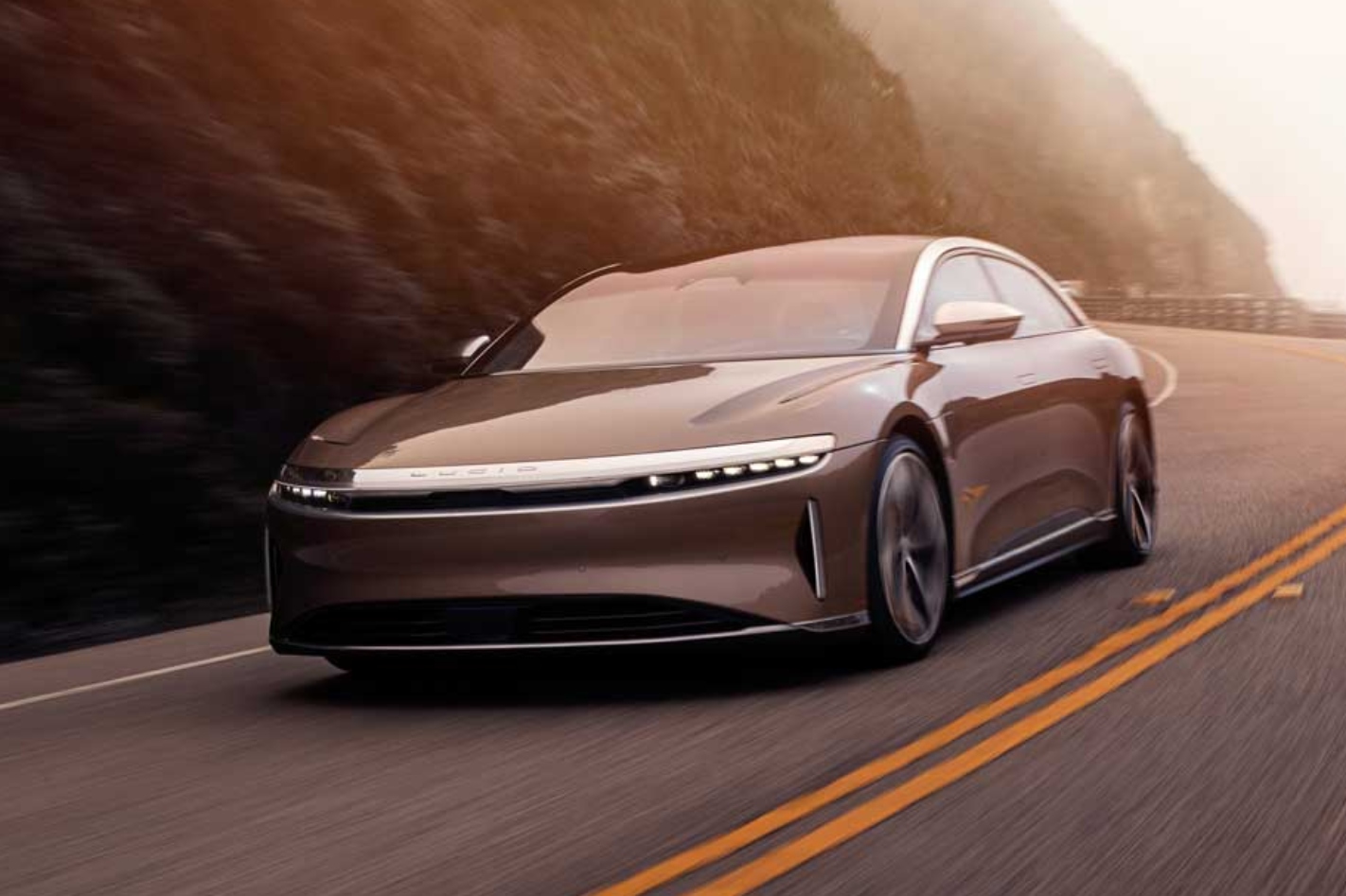
Aimed to compete against the Tesla Model S and Porsche Taycan, the flagship mainstay Grand Touring features a dual-motor powertrain that pumps out almost 600kW.
It also features a 112kWh battery pack, good for an official EPA estimated driving range of 832 kilometres – beating the Tesla Model S Plaid to take the helm as the longest-distance electric vehicle in the world.
The Lucid Air will be produced at the brand’s new ‘AMP-1’ factory in Casa Grande, Arizona, with doors to the facility opening this week. Production of Lucid’s first SUV, the Gravity, will commence alongside the Air in 2023.
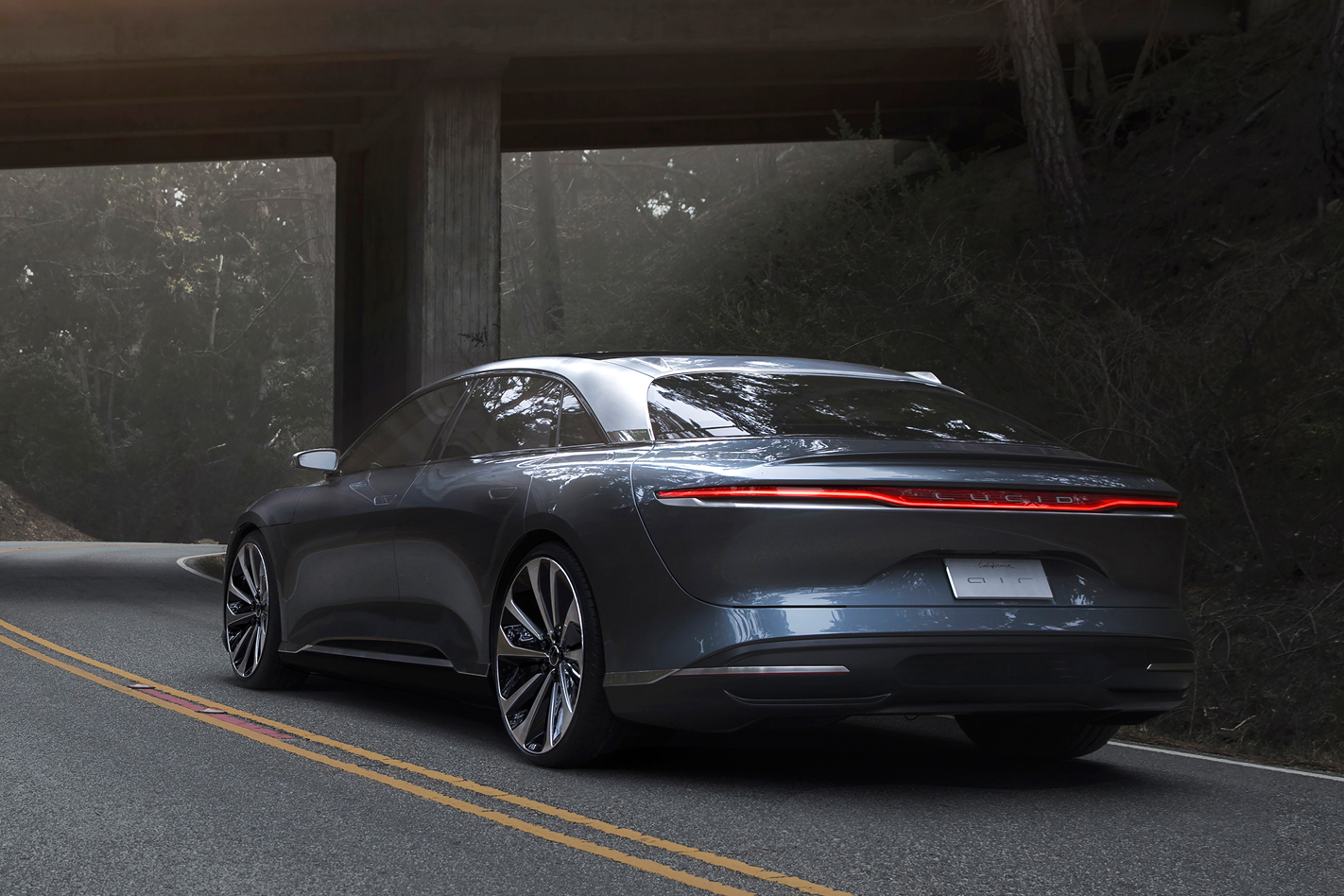
The milestone was celebrated with guests including; Air reservation holders, Lucid officials, policymakers and Arizona Governor, Doug Ducey.
Lucid says it has received more than 13,000 reservations for the Air, with production numbers for the limited-run Dream Edition increased to 520 units.
With priority given to selling electric vehicles in the North American market, the startup has not announced any official plans to expand to others yet – including Australia.
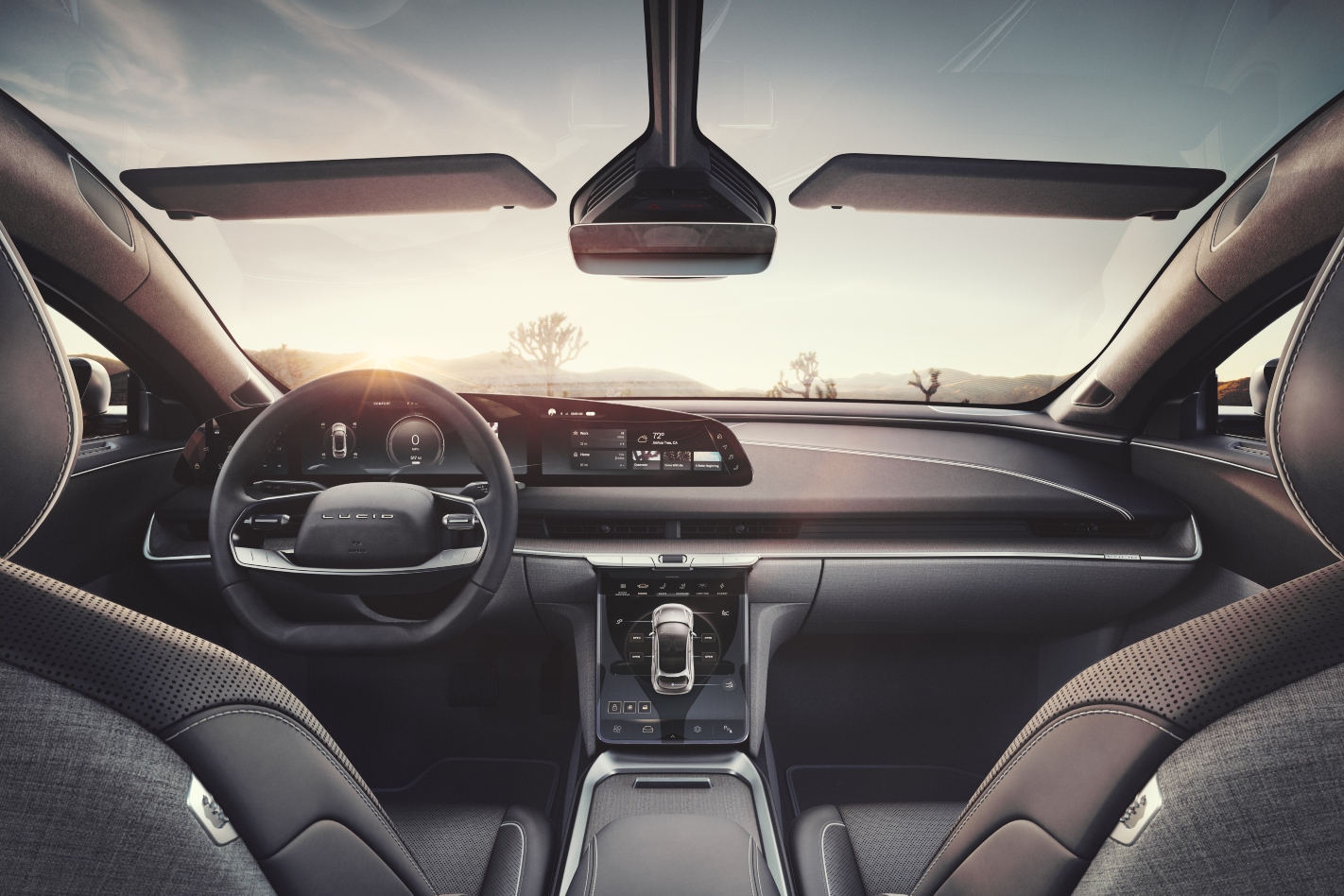
The brand has previously said an Australian launch is on the agenda, while a reservation page on its website lists the United Kingdom amongst other countries, suggesting right-hand drive production is at least under consideration.
