
Citroen and Peugeot in Australia have issued a recall for the 2015-2017 Citroen C4 and C4 Cactus and 2014-2017 Peugeot 208, 2008, and 308 models, after an issue was detected with the vehicles’ braking systems.
According to Inchcape European Automotive, the authorised distributor of both the Citroens and Peugeots in Australia, the recall is due to problems identified with the brakes’ power assistance.
Product Safety Australia claims that the issue is down to a reduction of vacuum in the braking systems, which has been caused by the degradation of the cars’ timing belts due to aged engine oil.
The recall notice states that “while the brakes will still be operable, if power assistance is reduced or lost, there is an increased risk of a collision.”
Owners of affected vehicles will be contacted by Citroen Australia and Peugeot Australia and asked to organise a time to have their vehicles assessed at an authorised Citroen and Peugeot dealership.
Vehicles suspected of having the fault will be given a software update and affected parts will be replaced as necessary.
Citroen owners wanting to know more information about the recall can contact Citroën Australia by using the form at https://www.citroen.com.au/tools/contact-us.html.
Peugeot owners who want to know more information about the recall can contact the Peugeot Customer Experience Team by phoning 1800 307 607 (Monday to Friday, 8.30am to 5pm) or using the contact form https://www.peugeot.com.au/helpful-links/contact-us/contact-us-by-email/.
Inchcape has also compiled a list of the affected Citroens’ VIN numbers and affected Peugeots’ VIN numbers.
Just rarely, a car is launched that is so revered that it creates a huge headache for its manufacturer. We examine 10 instances where car makers asked “how the hell do we replace this?”
Honda Civic FN2 Type R | 2007-2011
Honda’s Type R badge has spawned a rabidly passionate cult following over the years, appearing on the back of Civics, Integras and even the odd Accord; transforming otherwise run-of-the-mill catalogue offerings into technically advanced motorsports-focused giant killers.
It’s Civic that holds the most weight on its shoulders as the only Type R nameplate still in production. And while we are five iterations deep of Civic Type R, not all have been as universally loved as equals.
In music, there’s a phenomenon known as the dreaded ‘third album effect’, and if you ask any dyed in the wool Type R enthusiast which is worst, they’ll point right at the third-generation FN2, produced from 2007 to 2010.
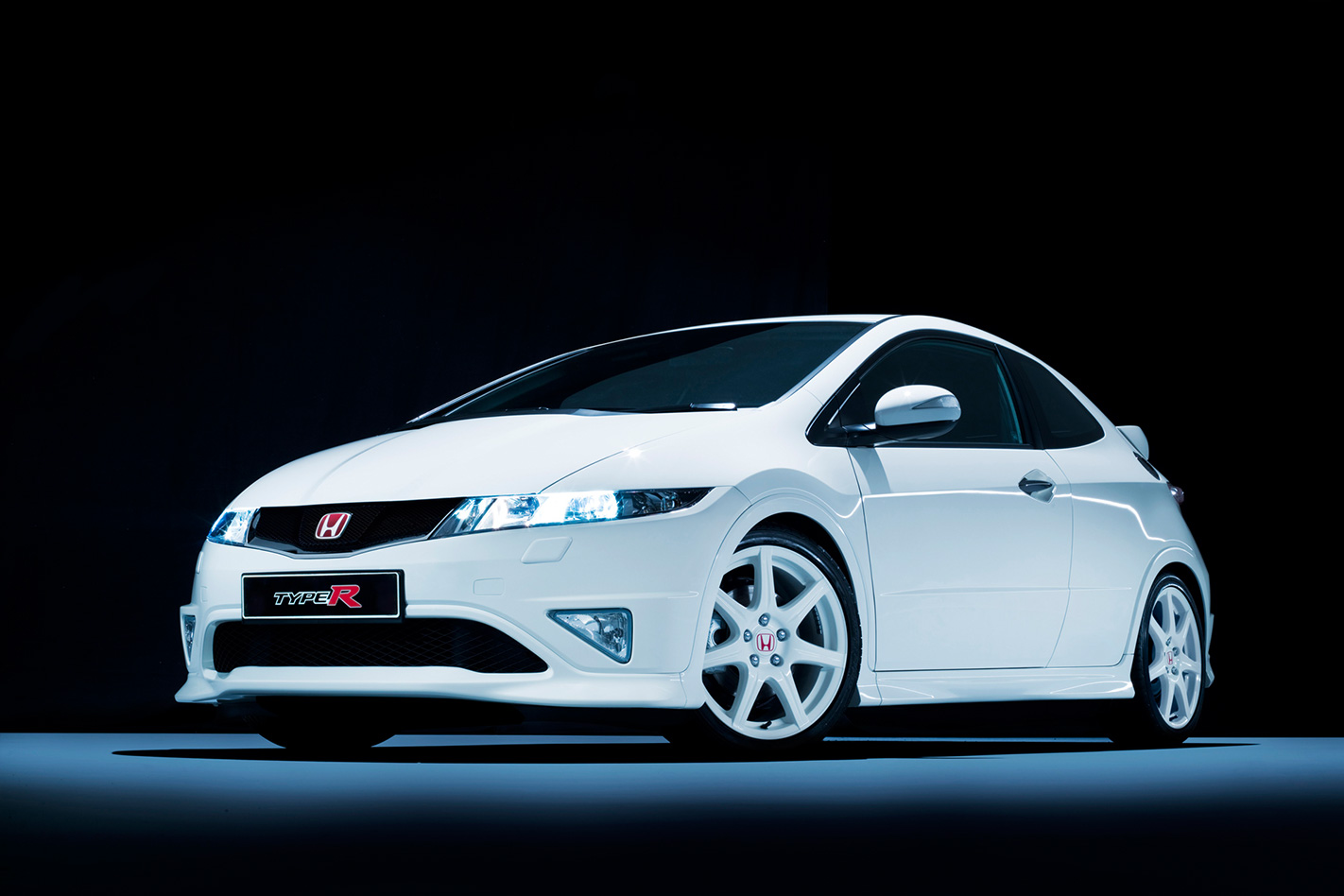
Of course the preceding EP3 was never going to impress cultists in the way of the original EG6 Civic, or the beloved goliath-killing DC2 Integra of the ’90s, but the EP3 was a tremendously handy bit of kit.
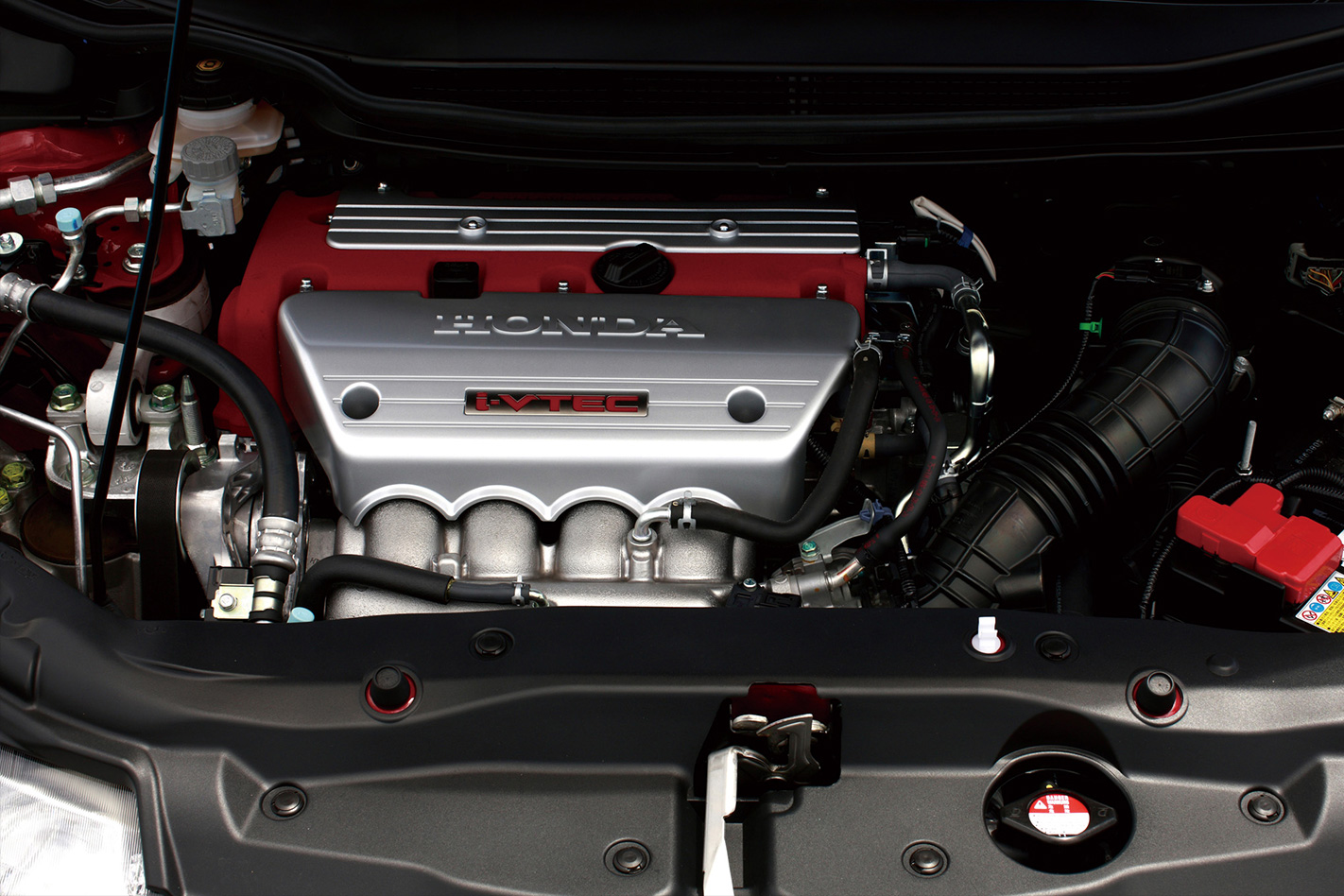
Never officially sold in Australia, although imported on the grey market since the early 2000s, the EP3 was manufactured in Swindon, UK, for the European and Japanese market. The European market gained a slightly de-tuned 147kW version of Honda’s lauded 2.0-litre K20 powerplant, with a seam welded chassis, close-ratio six-speed gearbox and uprated brakes.
The JDM model gained an 11kW bump thanks to a balanced crankshaft, different intake and exhaust manifolds, higher lift camshaft, pistons and ECU mapping. It also crucially included a helical LSD and Recaro bucket seats as standard, which the EU market car missed out on. Its one-box breadvan styling has always divided enthusiasts, but it’s aged gracefully to our eye – especially in comparison to the Civic Type R’s subsequent and increasingly busy bodies.
The following FN2 marked a departure for Honda’s innovative halo badge and represented a backwards step for many enthusiastic fans, and landed amidst the GFC which forced many manufacturers to take a more measured and cautious approach to its products.
Produced again in the UK, the FN2 carried over the EP3’s K20 engine virtually unchanged, with no improvement to power or torque. Weight increased by almost 70 kilograms and seemed technically inferior, replacing the EP3’s sophisticated multi-link suspension with a more rudimentary multi-link front and torsion beam/trailing arm rear.
Costing $39,990 when it landed, the then-new Type R was squarely in the territory of Ford’s XR5 and VW’s GTi hatchback, as well as Subaru’s WRX and Mitsubishi’s Evo.
Production in the UK ended in late 2010 ahead of incoming Euro V emissions regulations, but the ‘egg’ continued to be exported to Australia into 2011.
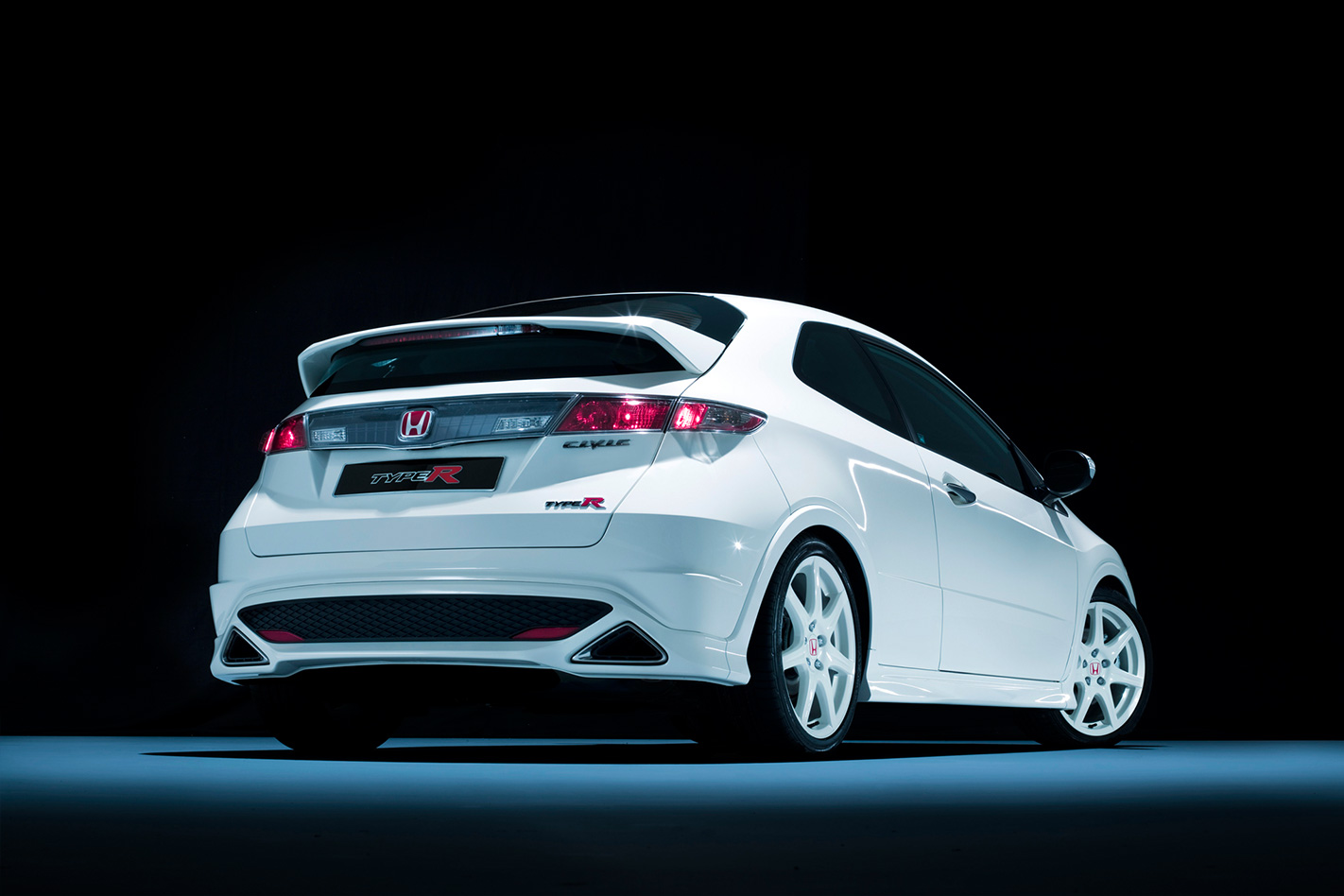
The FN2 was never a bad car per se, but it was a significantly less raw machine than the preceding generations. Like the dreaded third album, it wasn’t what fans expected.
And expectation, as they say, is the philosophical root of all disappointment.
The Icon: 2001
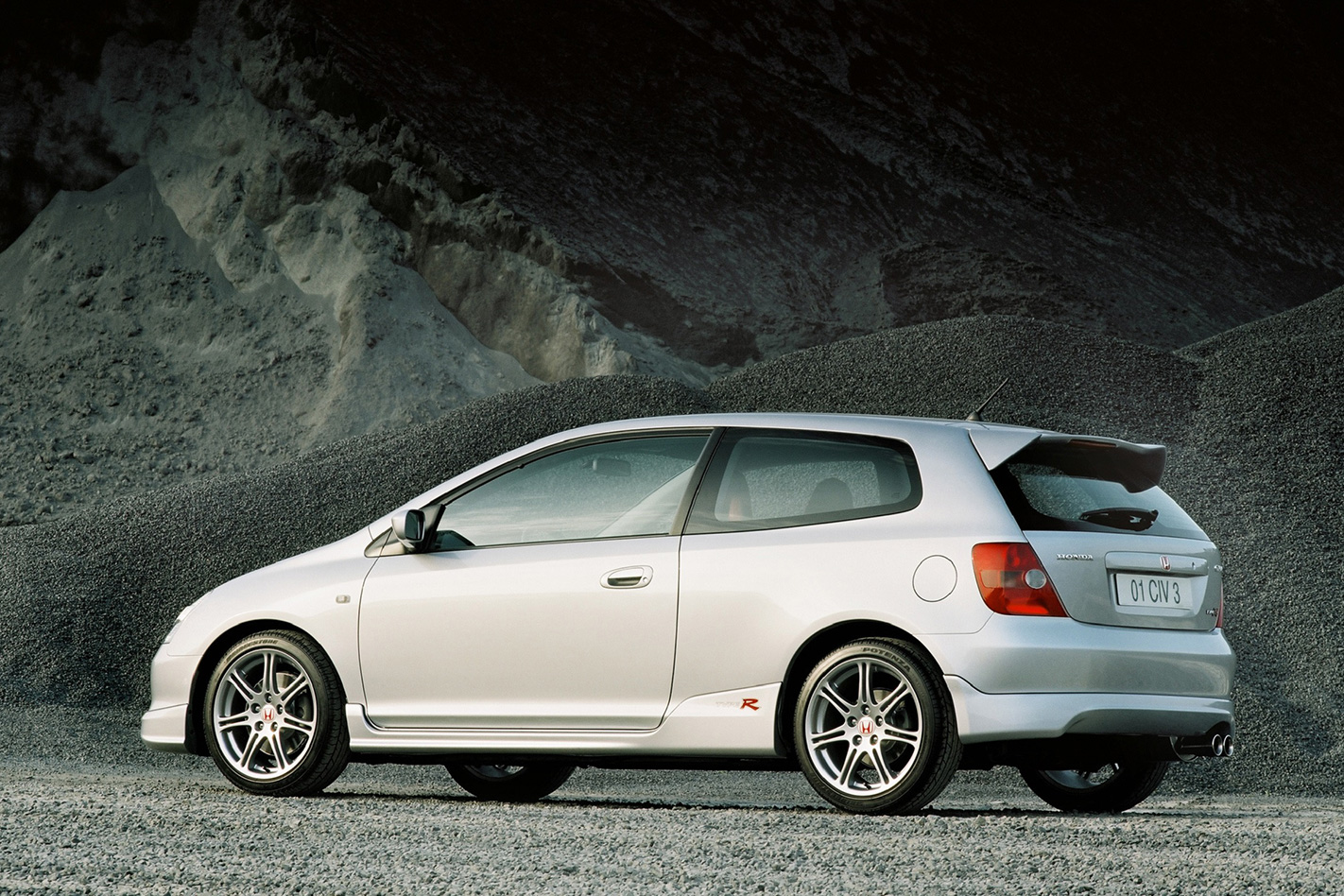
Three things that really changed
1. From a sophisticated multi-link rear to ’80s-tech torsion beam… but why? 2. The EP3 breadvan was the last graceful Type R design, compared to modern counterparts 3. One thing that didn’t change was the engine, which was carried over to the FN2 unchanged
UPDATE, September 23, 2022: New GR86 on sale in Oz, and DRIVEN!
The new 2023 Toyota GR86 has finally launched in Australia, and we’ve now driven the version buyers will get. See our full review at the link below.
Story continues
Toyota GR86 revealed
Say hello to the new 2022 Toyota GR 86, a heavily revised version of the brand’s back-to-basics sports car.
Once its Subaru BRZ twin had been announced, it was only a matter of time before the Toyota broke cover – but thankfully, reports its reveal had been delayed to the end of 2022 have proved wide of the mark.
Local pricing, specification and timing is still to be confirmed, but a number of technical details have been released, as well as confirmation of the car’s new name.
Now known as ‘GR 86’, the new coupe moves under Toyota’s Gazoo Racing umbrella to sit beside the GR Supra and GR Yaris.
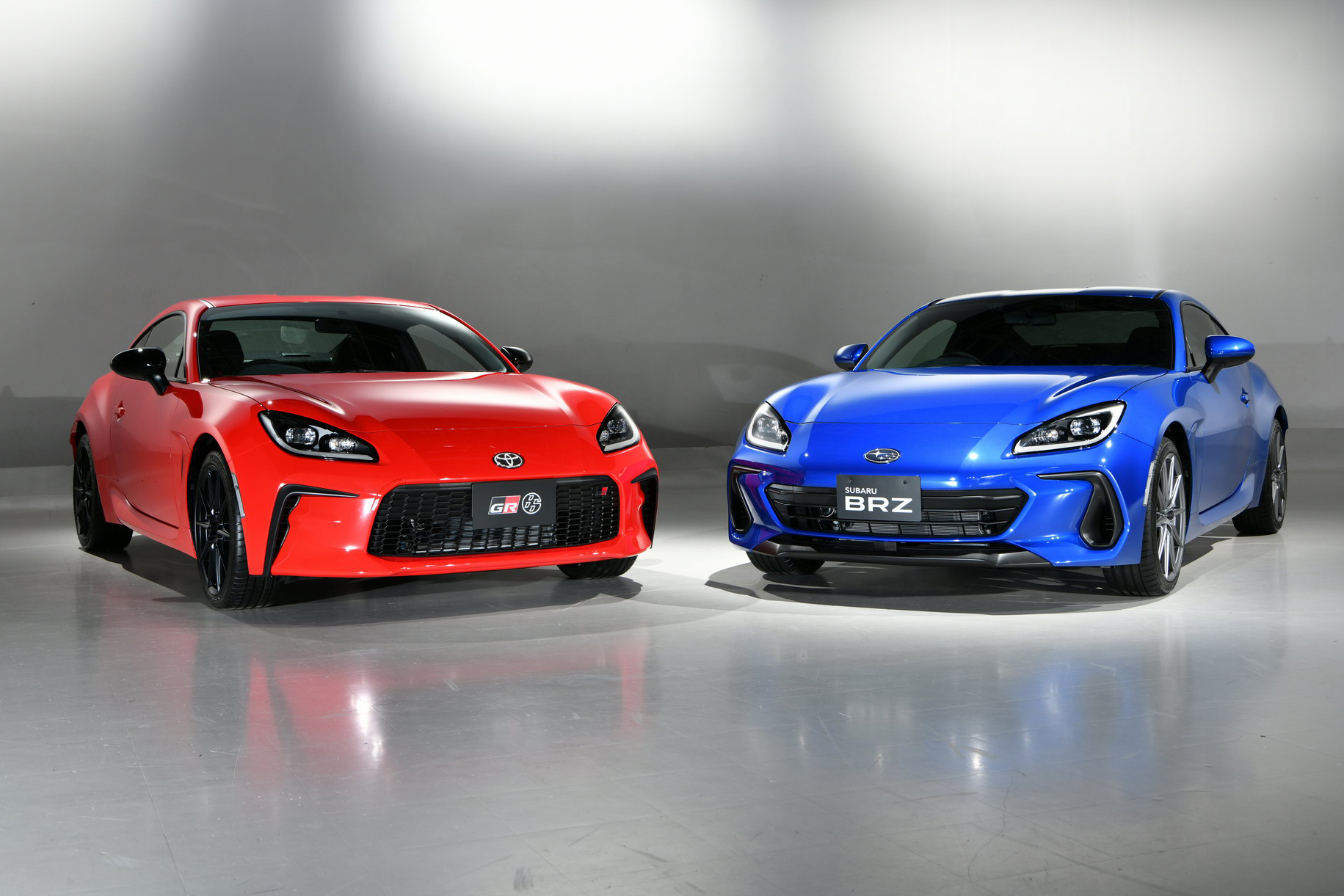
Like the Subaru, the 86’s familiar horizontally-opposed four-cylinder engine remains, but an 8mm bore increase has increased capacity to 2.4 litres (2387cc).
These changes have increased power by 21kW and torque by 38Nm for grand totals of 173kW at 7000rpm and 250Nm at 3700rpm.
That torque peak is not only higher but it occurs earlier in the rev range, the extra capacity hopefully solving one of the original 86’s greatest shortcomings, a lack of mid-range grunt.
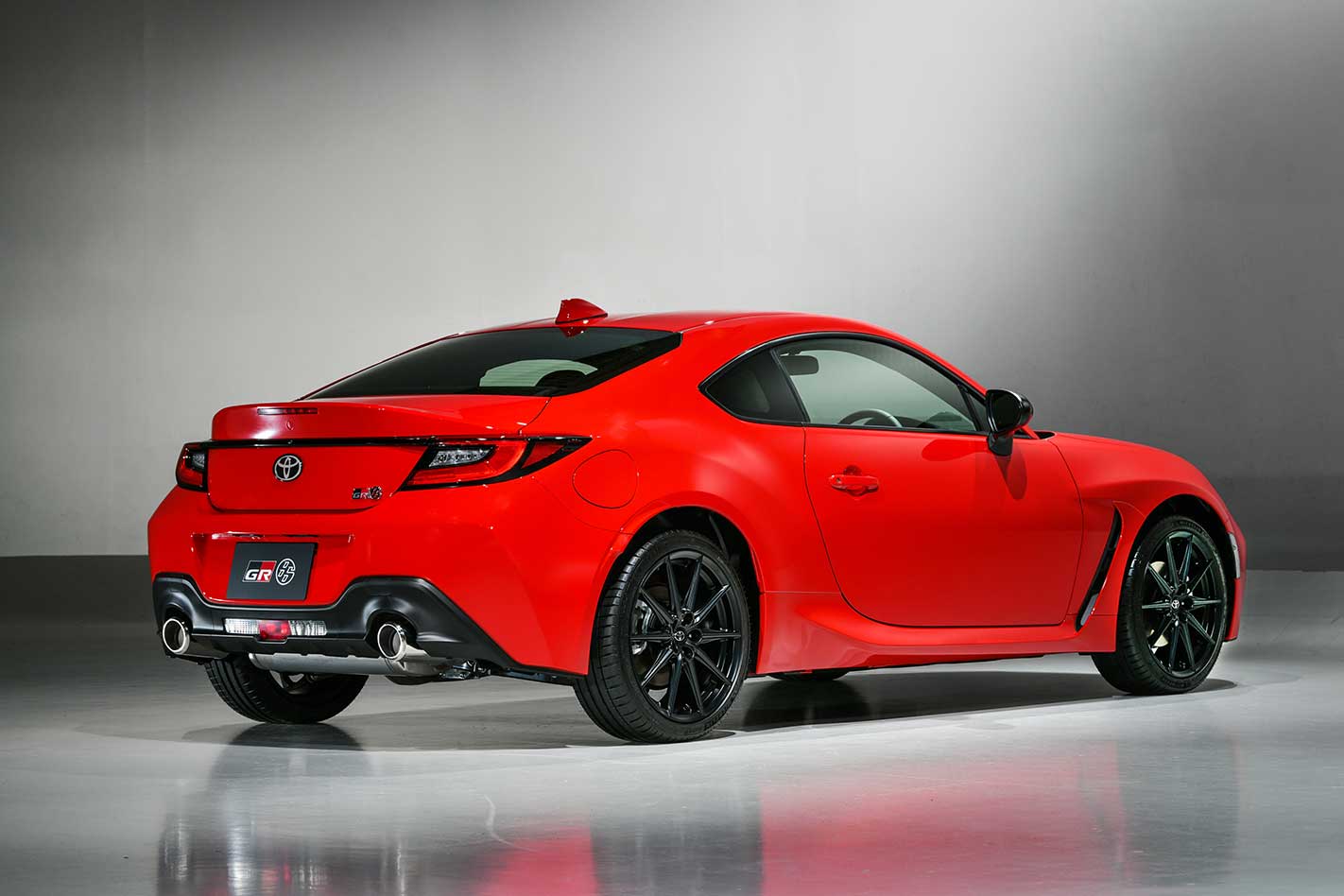
The story gets better for those who prefer, or require, that the car shift its own gears. While buyers of the previous automatic-equipped 86 have had to make do with lower outputs (147kW/205Nm vs 152kW/212Nm) the full whack is now available in six-speed manual and automatic form.
No performance figures have been announced, but we’d expect the 0-100km/h dash to fall to around the 6.5-second mark.
Of course, straight-line acceleration has never been a priority of the 86, and while the body and suspension package are very similar to the previous car, the adoption of an aluminium roof and guards lowers the centre of gravity.
Likewise, torsional rigidity is claimed to have been improved by 50 per cent for greater handling precision.
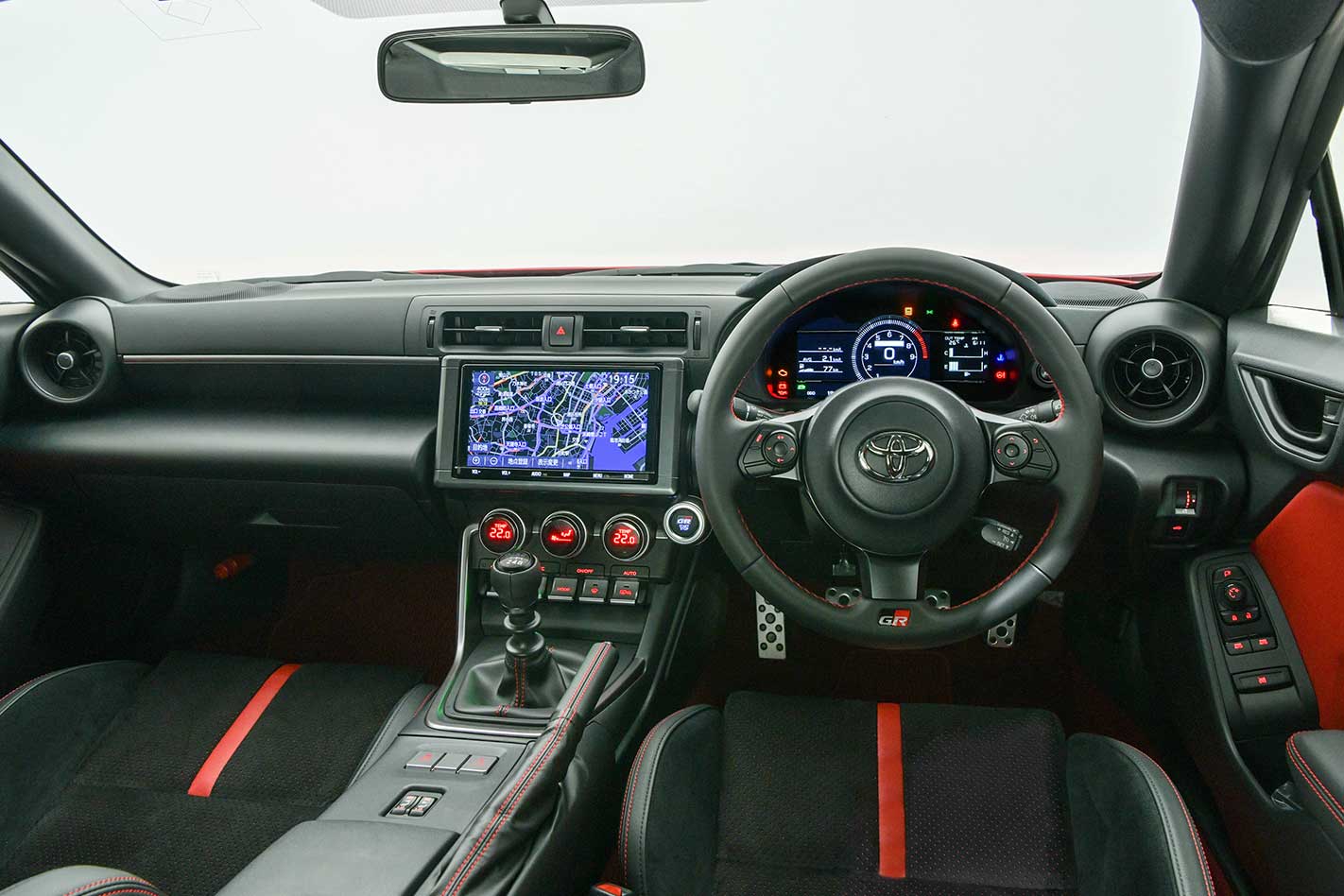
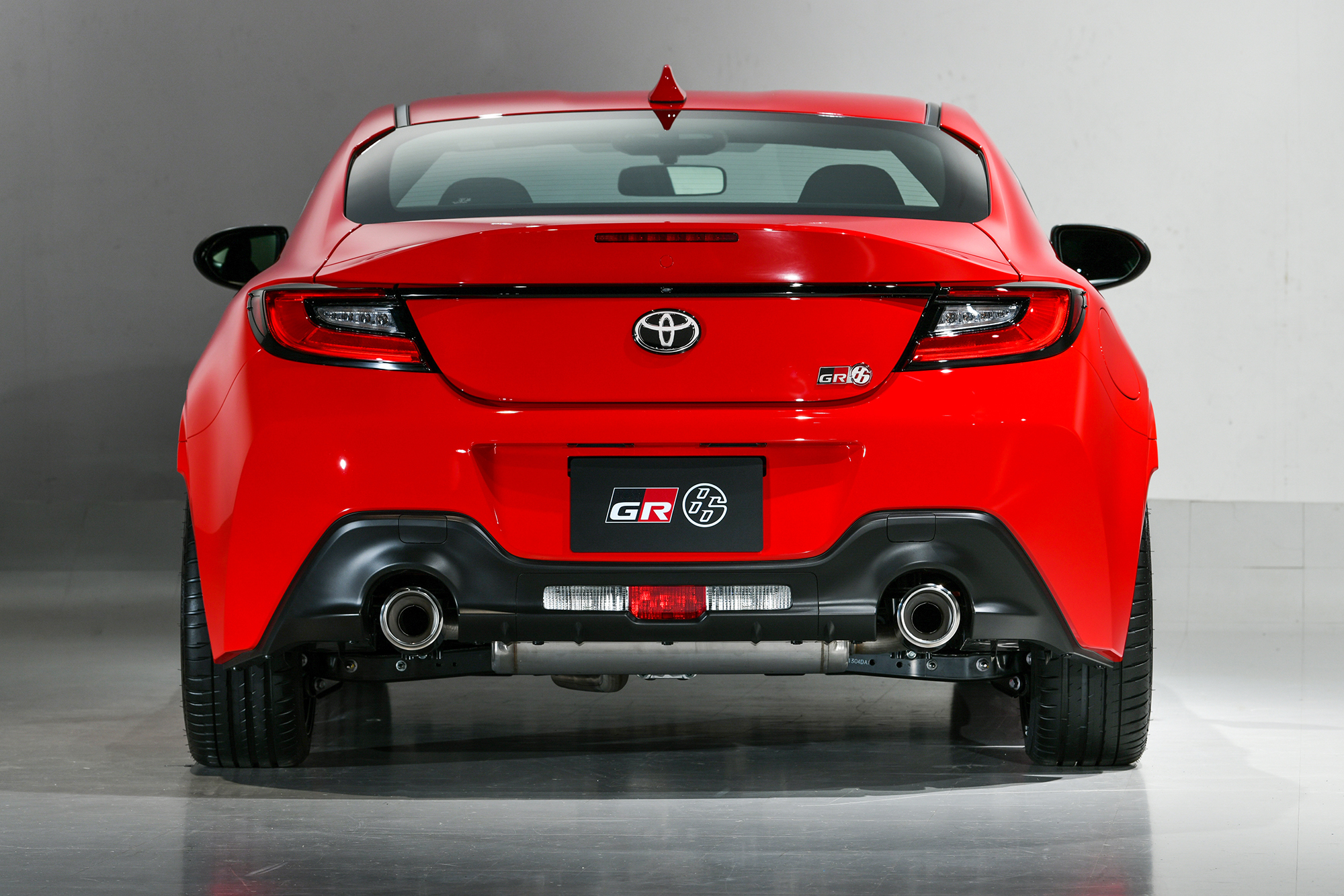
The familiar silhouette is differentiated by significantly revised styling front and rear, while inside there are new seats, digital instruments, rotary air-conditioning controls with digital displays, and a revised dash design.
Happily, the old-school manual handbrake remains in place. After all, it’d be blasphemy to ditch it.
When will the 2022 Toyota GR 86 go on sale in Australia?
Australia has been one of the biggest markets for the Toyota 86, its 20,800 sales accounting for around 10 per cent of global production. We’ll bring you more details, including local pricing, as it comes to hand.
Local timing for the GR 86 is still to be confirmed, although it has been reported that both Toyota and Subaru Australia are expecting their new sports coupes to arrive in the second half of this year.
MORE: 86 news and reviews MORE: Subaru BRZ news and reviews MORE: All Toyota stories
Tell us: which do you prefer the look of, GR 86 or BRZ?
It’s a pretty abstract concept, this whole ‘future’ thing. But here’s one indicator you may have noticed: it doesn’t actually feel like the future. Instead of being startlingly unfamiliar and difficult to navigate, it actually feels the way things should have always been.
Perhaps you remember Apple founder Steve Jobs on stage unveiling the then-new iPhone back in 2007. If you were like me, your first thought was: “This guy sure doesn’t spend his billions in clothing stores.”
But then, watching as the iPhone’s multifunction smarts and user-optimised interface were explained, you may have sat there going: “Of course. Makes complete sense. Why did anyone bother trying to do it differently?”
I’m experiencing that overarching sentiment from behind the wheel of Audi’s first mainstream EV as I thread it down a jinking, winding backroad in the lush, green Southern Highlands of NSW. Ahead of me, former Wheels Road Test Editor Nathan Ponchard is not sparing the watts to our 2020 Car of the Year, the Mercedes-Benz EQC.
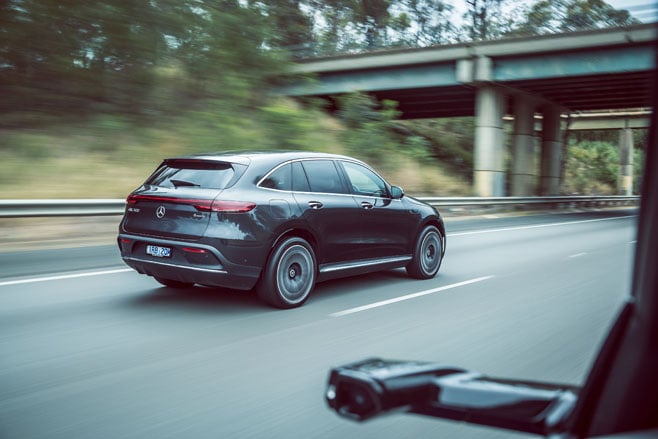
The pace is on, but the in-cabin tranquillity of the e-tron is that of a Bentley being used to chauffeur royalty. The tyres generate only a distant hiss on the bitumen, the air slips quietly over the aero-tweaked body, yet the corners arrive with a furious but soundless rush.
Later Ponch and I will dig a bit deeper into the downsides of trading combustion for electric motors, but right now there are a couple of irrefutable facts. One, this pair mirror the broader direction of the global automotive industry, and that course is unequivocally set.
And secondly, if you ignore for a moment the questions of green credentials and cradle-to-grave impacts, instead just focusing on the fundamental user experience, well, it’s quite brilliant.
As will become clear, both cars achieve such high levels of refinement, driveability and polished ease of daily operation that to separate them will require a greater drilling into other elements of the ownership experience. So let’s start with choice, prices, equipment and charging.
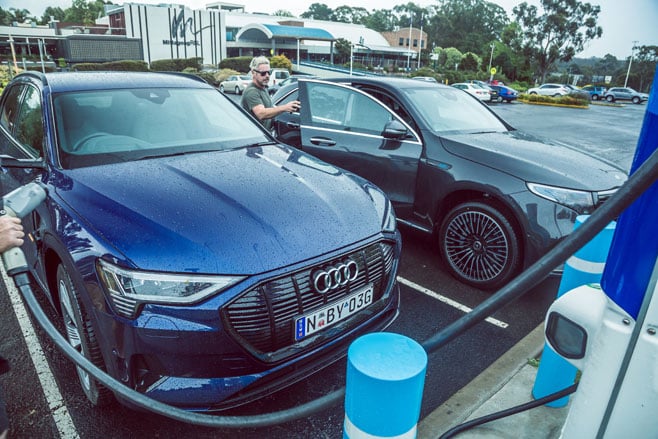
Straight away, the four-strong e-tron line-up gets a leg up over its one-model-fits-all Merc rival. The Audi may be late to the Aussie market – Wheels first drove the car in Abu Dhabi in 2018 – but it arrives here offering two battery/output options, each available in either conventional SUV or sloping-roof Sportback body styles.
Cheapest way in to e-tron ownership is with the 50 quattro SUV, with its 71kWh battery feeding two motors (front and rear, permanently excited synchronous) combining to provide 230kW/540Nm, and priced at $137,700.
The regular range tops out with the 55 quattro Sportback at $157,700, the ‘55’ designation indicating a larger battery (95kWh) and higher output motors (for a short-burst maximum of 300kW/664Nm). For anyone undeterred by those sort of numbers, some 70 units of a higher-spec ‘First Edition’ model are offered for both ‘55’ body styles, adding around $13K for their rich equipment lists. Our test car is a 55 quattro SUV First Edition, priced at $159,000 and bumped up as-tested only by $2300 for metallic paint.
A better match, at least on price, would have been the e-tron 50 SUV, because in terms of battery capacity Merc’s EQC 400 packs an 80kWh unit that wedges itself, energy-wise, between the two Audi options.
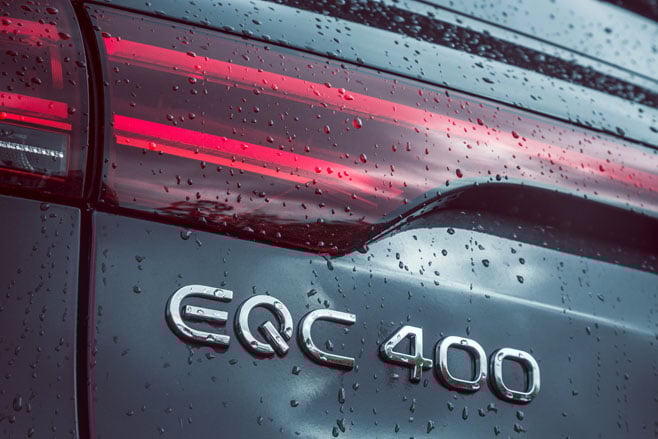
The Merc’s dual (asynchronous) motors, though, boast sizeable numbers, with combined power (300kW) bang on par with the 55 e-tron but torque (760Nm) some 96Nm stronger.
This is reflected in the EQC’s quicker claimed 0-100km/h time of 5.1sec, versus the 55 e-tron, which concedes around half a second, even when boost mode is deployed while you’re in the Sport drive mode.
But all this is really brochure posturing because, as quickly becomes evident, standing-start sprints with flattened accelerator pedals are even less relevant and less sensible in big, heavy EVs than they are in conventional ICE SUVs.
However, to provide an early answer to the first question, guaranteed, from every casual observer – “How far does it go on a charge?” – and the answer (equally guaranteed) of “that depends”… Reality is, there are a number of other factors that impact consumption compared to ICE engines.
Common to both are heaviness of the driver’s boot, but re-gen opportunities, topography, temperature and ancillary use also play a part. Official WLTP numbers reckon the e-tron 55 is good for ‘over 400km’, while the EQC claims 434km.
Our testing saw both cars consuming within 0.5kWh of each other; call it close enough to 29.5kWh per 100km. Which is ‘thirsty’, but that was mostly expressway use (with little re-gen opportunity), hard backroad driving and heavy acceleration for photography.
In more typical driving, expect around 330km per charge from the Merc and possibly an additional 20km from the Audi.
The 55 e-tron’s larger battery is tasked with powering an SUV that’s appreciably bigger – both against the tape and from behind the wheel – than the GLC-sized EQC. Audi’s EV is larger than a Q5 and smaller than a Q7, although closer to the latter.
Inside, the Audi makes that extra size apparent in all key areas. It feels a little wider – nice for occupants, but can feel bulky in tight confines for the driver – while there’s a bit more legroom in the second row.
Speaking of which, the floor in the e-tron’s second row is near-flat, whereas the EQC retains the central hump needed by the related GLC for the aft part of its all-wheel-drive system.
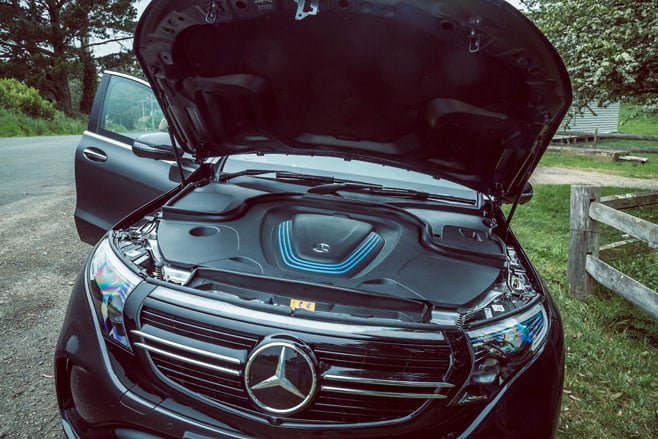
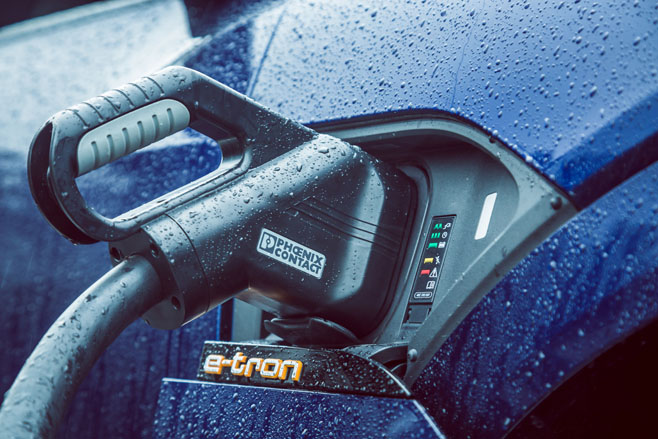
The e-tron also makes better use of its under-bonnet space, providing a shallow lidded bin to store the charging cables. The EQC squanders this space, relegating the charging cables to bags that live in the rear cargo compartment.
For the driver, the cockpits are harder to separate in terms of design, ergonomics and functionality. The EQC goes more for a faintly art-deco vibe, while the Audi is all glossy screens, uncluttered beauty and, in the First Edition variant, more premium-feeling surfaces.
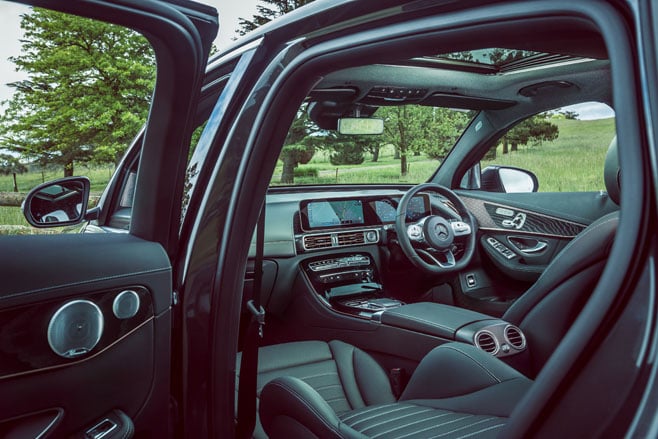
And it’s also the Audi that requires less familiarity to master the infotainment system, although the Merc attempts to counter this via its more sophisticated voice command system.
Weird the way EQC wastes its available screen real estate when Apple CarPlay is activated, though, giving a dinky rendering compared to the more to-scale display of the e-tron.
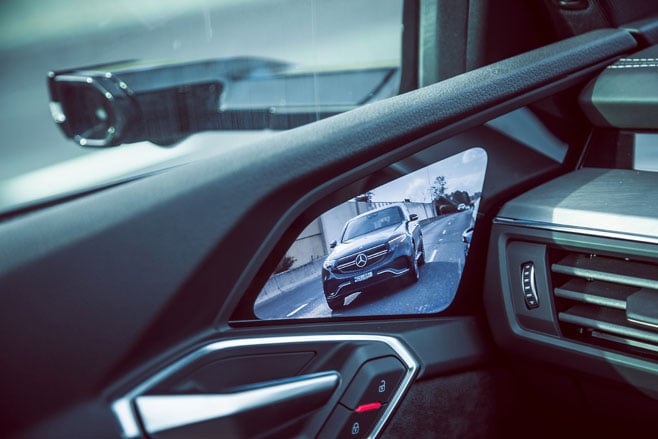
In terms of seating comfort and adjustability, both are outstanding. The e-tron is slightly more accommodating for larger frames, though those ‘virtual’ exterior mirrors are divisive.
Full points to Audi for innovation, and the slim exterior arms that house the cameras do cut wind noise, but it takes plenty of seat time to get used to glancing at the screens housed in the upper sections of door cards rather than looking outside, and they don’t provide the wide view of a conventional convex mirror when reverse-parking in tight spots.
This, however, is the only touch of ‘future-shock’ on the e-tron, which otherwise seems intent on delivering a driving experience that is both wonderfully familiar yet almost eerily devoid of all the white noise and mechanical clutter we’re used to with regular cars.
The steering is quick rather than feelsome, but even that is on-brand for Ingolstadt. What’s more noteworthy is the sheer composure and steadfast resolve of the chassis, almost irrespective of which setting you’ve chosen for the adaptive air suspension.
Around town, despite 21-inch wheels, the ride is quiet and absorbent; start hammering it on rural roads and it just keeps finding resolute responses to big challenges thrown at it.
“It never feels analogue – no surprises there,” Ponch comments later, “yet there’s a slick fluency to its dynamics that’s really satisfying. It controls body movement so well; it has a deftness that belies its beef.”
Ponch also manages to out-nerd me by observing that, at least when cruising, the e-tron is the only Audi besides an R8 to be rear-wheel drive. To reduce charge consumption, the front electric motor only comes into operation (instantaneously) under big throttle openings, or when traction or cornering load demands it, and even then the drive split continues to favour the rear with 60 percent.
The Merc? Driven in isolation, you would find it hard to fault the EQC. Loyal readers will recall it shouldered its way to COTY glory in our February 2020 issue thanks in part to “a level of polish and completeness that’s been lacking from any Mercedes SUV that’s gone before it”.
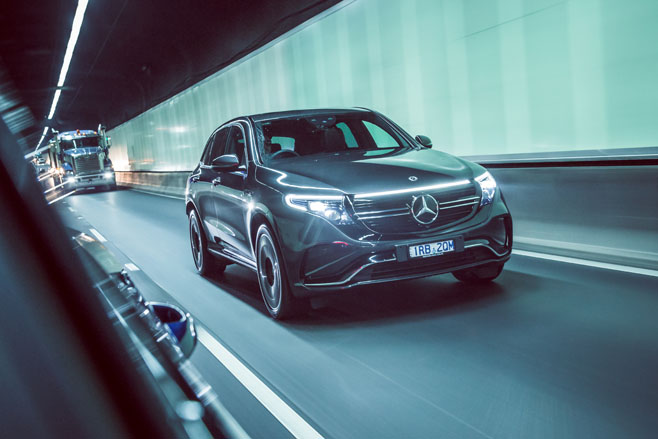
But just as Olympic gold doesn’t necessarily mean a new world record, the top step of the COTY podium has never meant the arrival of automotive perfection. No car is exempt from room for improvement.
What the Merc does have over the Audi is an immediacy and eagerness imparted through the control surfaces. It feels a little more wieldy, a touch more engaging compared to the deliberate softness and buffed lustre of the e-tron.
The nose responds to wheel inputs with a fraction more urgency, and its throttle feels more crisply calibrated in the non-sporting drive mode. Its ride, like the Audi, is wonderfully isolating, and there’s little to split them in terms of cabin quietness; subjectively, the e-tron has a small overall edge, yet some surfaces can introduce hollow-sounding tyre thump.
It’s only when really winding up the wick over demanding roads that dynamic pros and cons start to crystallise.
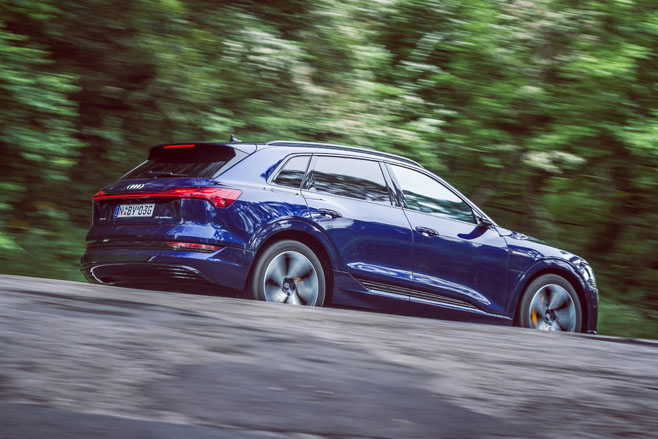
The EQC feels a little more chuckable (if that’s the word for a 2480kg SUV) but can’t quite steamroller the road into submission the way the e-tron manages.
Occasionally a really evil section of mangled bitumen will conspire to expose chinks in the EQC’s strut-front/air-sprung-rear set-up, where front damping resolve throws up the white flag.
Says Ponch: “The EQC is capable of higher highs but also can dip to lower lows compared to the e-tron. The Audi manages a level of supreme consistency and never drops the ball…”
So, for hard-driven dynamic composure, the e-tron manages to nose ahead. But when it comes to the cars’ re-gen functionality, and how seamlessly it works in normal driving, it’s the EQC that claws back points.
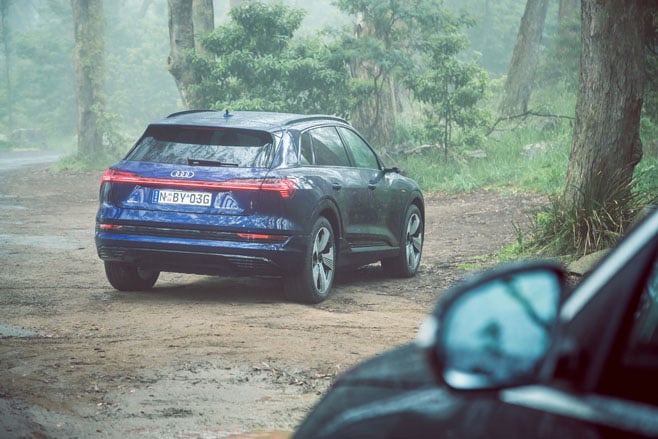
Two quite different approaches are in play here. The e-tron automatically employs a degree of re-gen when approaching other cars or road furniture like roundabouts, yet this can be disabled in the MMI system for a more freewheeling coasting feeling.
But additional re-gen force can be manually added in two levels via one or two pulses of the left-hand wheel paddle. Then, as you re-accelerate, it resets back to normal, awaiting your next input; although the level of re-gen can also be fixed, again via the MMI, giving more of a ‘one-pedal’ feel a lot of EV owners will be attracted to.
The Merc, meanwhile, offers four re-gen calibrations, ranging from ‘barely there’ to the strongest one, which is sufficient to keep you mostly off the brake pedal in stop-start driving.
So, what about the other more mundane but equally crucial stuff attached to EV ownership, like recharging? Well, the qualifier here is that most owners will charge at home, overnight, so differences in fast DC-charging capability may only present themselves on occasional road trips, depending on what your typical usage involves.

But if you do regular long hauls, both cars provide free access to the Chargefox network; the Merc for five years, the Audi for six. Thanks to better thermal management of the battery system, it’s the e-tron that can absorb faster charge rates.
Where available, the Audi can take up to 150kW DC, while the EQC can accept up to 110kW, although there are currently only 14 ultra-rapid chargers on the east coast capable of exceeding this (see sidebar opposite), and regular use of these will adversely impact long-term battery health.
Also, keep in mind that if it’s around 150km or less to a destination charger, both cars can gulp enough energy for that distance in just 15 minutes.
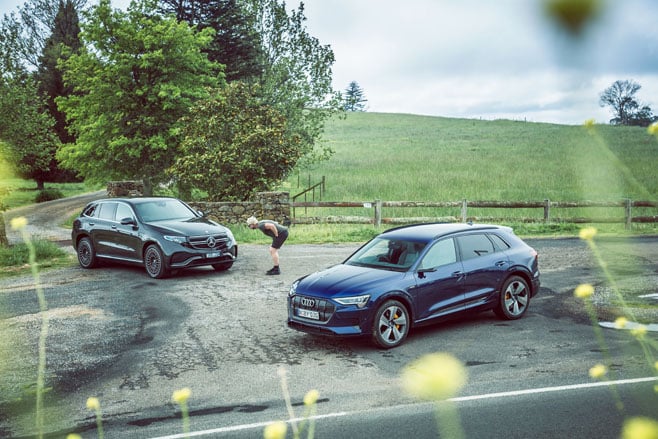
Over an afternoon coffee, Ponch and I agree there are a couple of unavoidable facts to acknowledge about this pair. The first is that neither actually makes a range, output or performance gain over the gullwinged Tesla Model X launched back in 2016. That says either motor efficiency and battery density has plateaued, or that disruptor Tesla got a massive jump on its rivals, from which they’re still playing catch-up, or something else altogether.
The second point is that for the prospective owner who does regular long hauls, the ranges of both EQC and e-tron could be an issue. Highway cruising range from an 80 percent charge will likely be no more than high-200 kays (given a buffer is needed to locate a suitable fast charger), with a recharging time of 30-40 minutes required at each stop, assuming you don’t have to wait for a charger.
But this sort of usage falls to a minority. For most owners currently driving premium SUVs, either of this pair will slot into daily driving life as seamlessly as they both deploy their powertrain power and panache.
As for picking a winner, the easiest conclusion to draw is that there’s no loser. But even ignoring for a moment the price and spec disparity of our two test cars and lining up the EQC against its direct e-tron rival, the 50 quattro SUV (where the price difference is a negligible $200), sees the EQC with battery and output superiority, countered by the e-tron still holding its space and (slim) dynamics advantage.
We’ll give it to the the Audi by a wafer-thin margin, but with both manufacturers promising that this pair are just the start of an EV roll-out across all segments, the broader take-out is this: the future is actually not that difficult to define, and it looks pretty damn enticing.
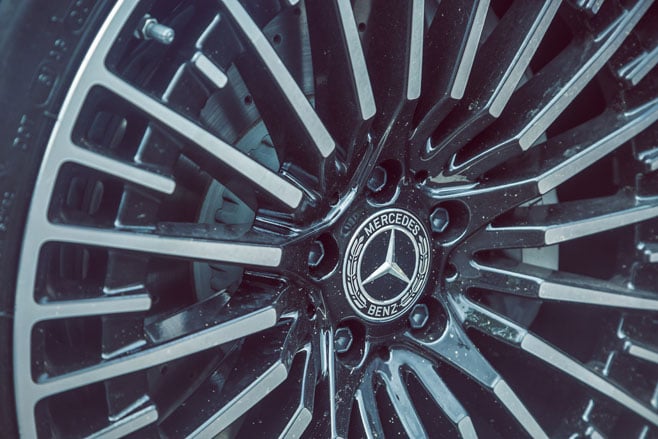
Specifications
u00a0 | Audi E-Tron 55 First Edition | Mercedes-Benz EQC 400 |
u00a0 | $159,000 ($161,300 as tested) | $137,900 ($144,200 as tested) |
Drivetrain | ||
Motors | two | two |
Layout | dual-motor (front & rear) AWD | dual-motor (front & rear) AWD |
Battery | 95kwh lithium-ion | 80kwh lithium-ion |
Power | 300kW | 300kW |
Torque | 664Nm | 760Nm |
Gearbox | single-speed reduction gear | single-speed reduction gear |
Chassis | ||
Body | steel, 5 doors, 5 seats | steel, 5 doors, 5 seats |
L/W/H/Wu2013B | 4901/1935/1629/2928mm | 4774 /1884/1622/2873mm |
Track (F/R) | 1655/1652mm | 1624/1624mm |
Weight | 2490kg | 2425kg |
Boot | 600 litres | 500 litres |
Battery | 95kwh | 80kwh |
Economy | 28.5kwh/100km (test average) | 28kwh/100km (test average) |
Suspension | Front: muti-links, adaptive dampers, air springs, anti-roll bar Rear: multi-links, adaptive dampers, air springs, anti-roll bar | Front: struts, adaptive dampers, coil springs, anti-roll bar Rear: multi-links, adaptive dampers, air springs, anti-roll bar |
Steering | electric rack-and-pinion | electric rack-and-pinion |
Front Brakes | ventilated discs (370mm) | ventilated discs (360mm) |
Rear Brakes | solid discs (360mm) | ventilated discs (360mm) |
Tyres | Continental Sportcontact 6 | Michelin Pilot Sport 4 |
Tyre Size | 265/45 zr21 (f/r) | 235/45 zr21 (f); 265/40 zr21 (r) |
Safety | ||
ANCAP Rating | not tested (aus) | not tested (aus) |
Verdict | ||
u00a0 | 8.5/10 | 8.5/10 |
What is the Ford Puma 1.0L Petrol?
Based on the Ford Fiesta hatchback, the European designed and built Puma light SUV replaces the rather bland EcoSport at the smaller end of Ford Australia’s SUV line-up and couldn’t be more different in terms of bold styling, driveability and safety technology, which makes a formidable rival against the likes of the Mazda CX-3, Renault Captur, Nissan Juke, Toyota Yaris Cross, Kia Stonic and Volkswagen T-Cross
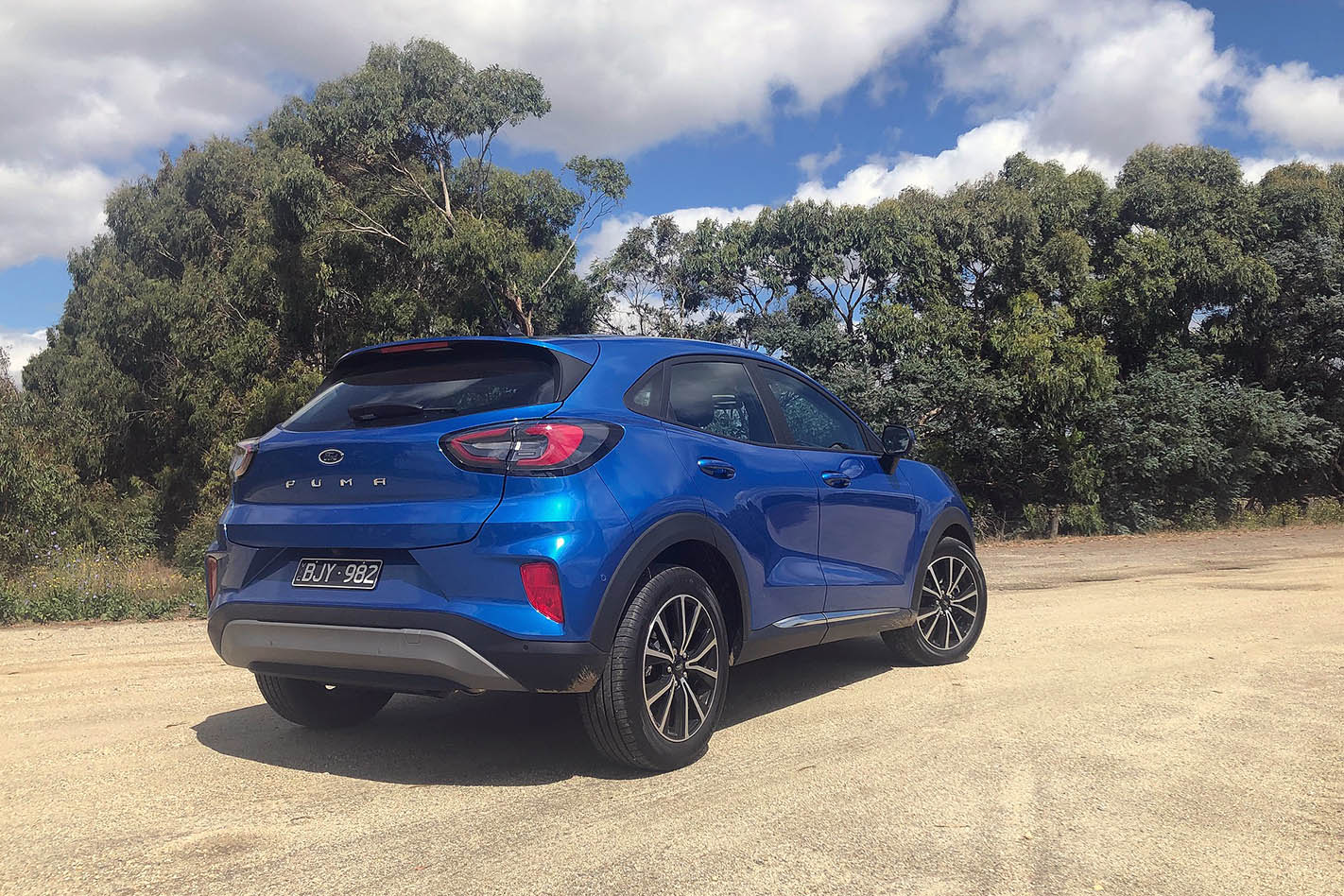
Retailing for $29,990 before on-roads, the Puma 1.0L Petrol is the most affordable of three variants that also include the sportier-looking Puma ST-Line and ST-Line V that are priced at $31,340 and $35,540 respectively.
What is the Ford Puma 1.0L Petrol like to live with?
Let’s start with those looks. The Puma isn’t exactly a pretty car like its bigger sibling the Escape, and its froggy front-end reminds me of a 1969 Austin 1800. Not that its gawky looks are a dealbreaker; if anything they provide a little charm.
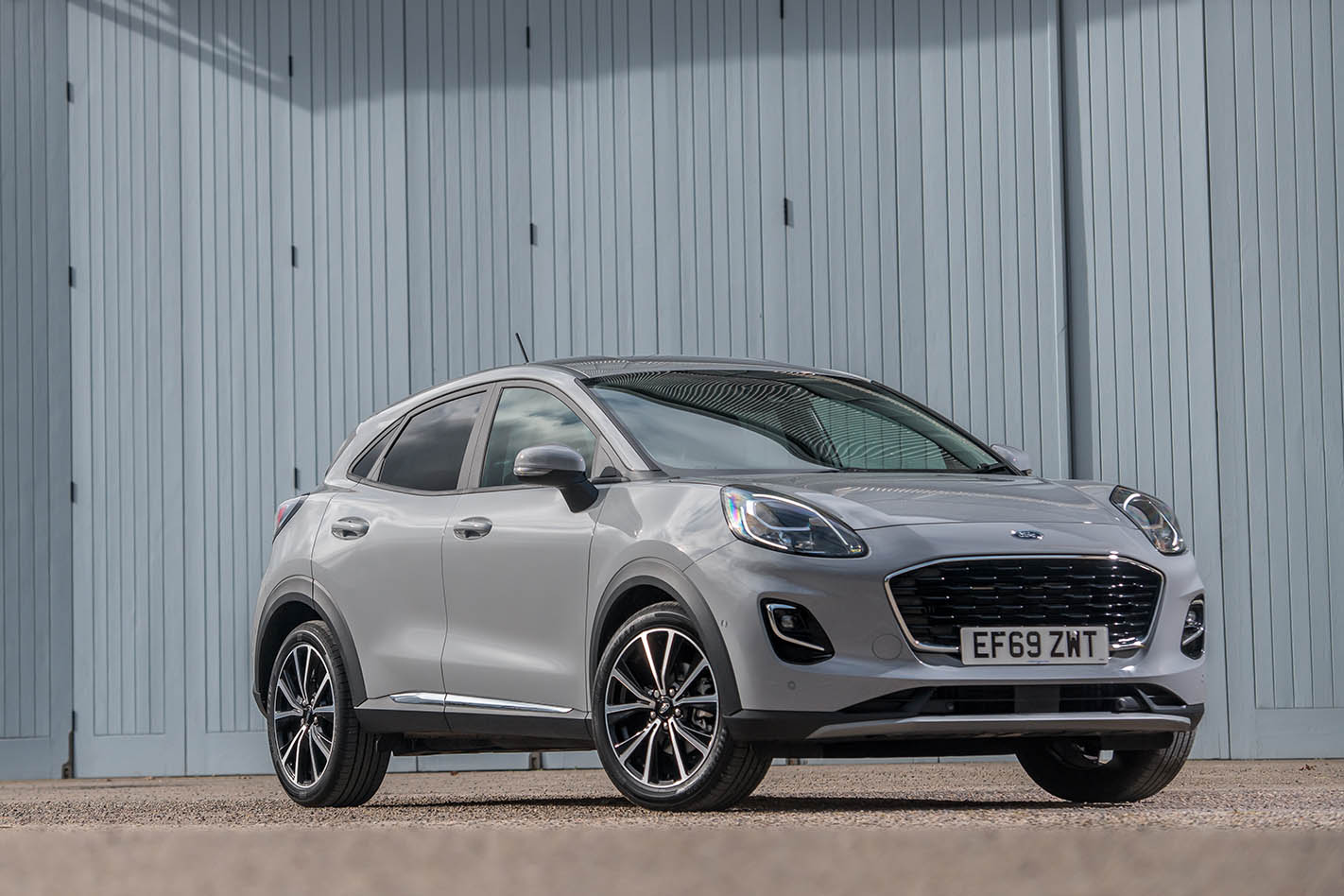
The entry-level Puma is very well-equipped and comes with cloth seats, an 8.0-inch touchscreen with Ford’s Sync3 voice-activated infotainment, Apple CarPlay/Android Auto, rear-view camera, satellite navigation, digital radio, rear parking sensors, LED headlights, LED daytime running lights, puddle lamps, front foglights and cornering lamps, 17-inch alloy wheels, leather-wrapped steering wheel, Normal, Eco and Sport driving modes, climate control air-conditioning and push-button start.
It also comes with a sound list of active safety and driver assistance features including autonomous emergency braking (AEB) with pedestrian protection, auto high-beam headlights, rain-sensing windscreen wipers and lane-keeping assist.
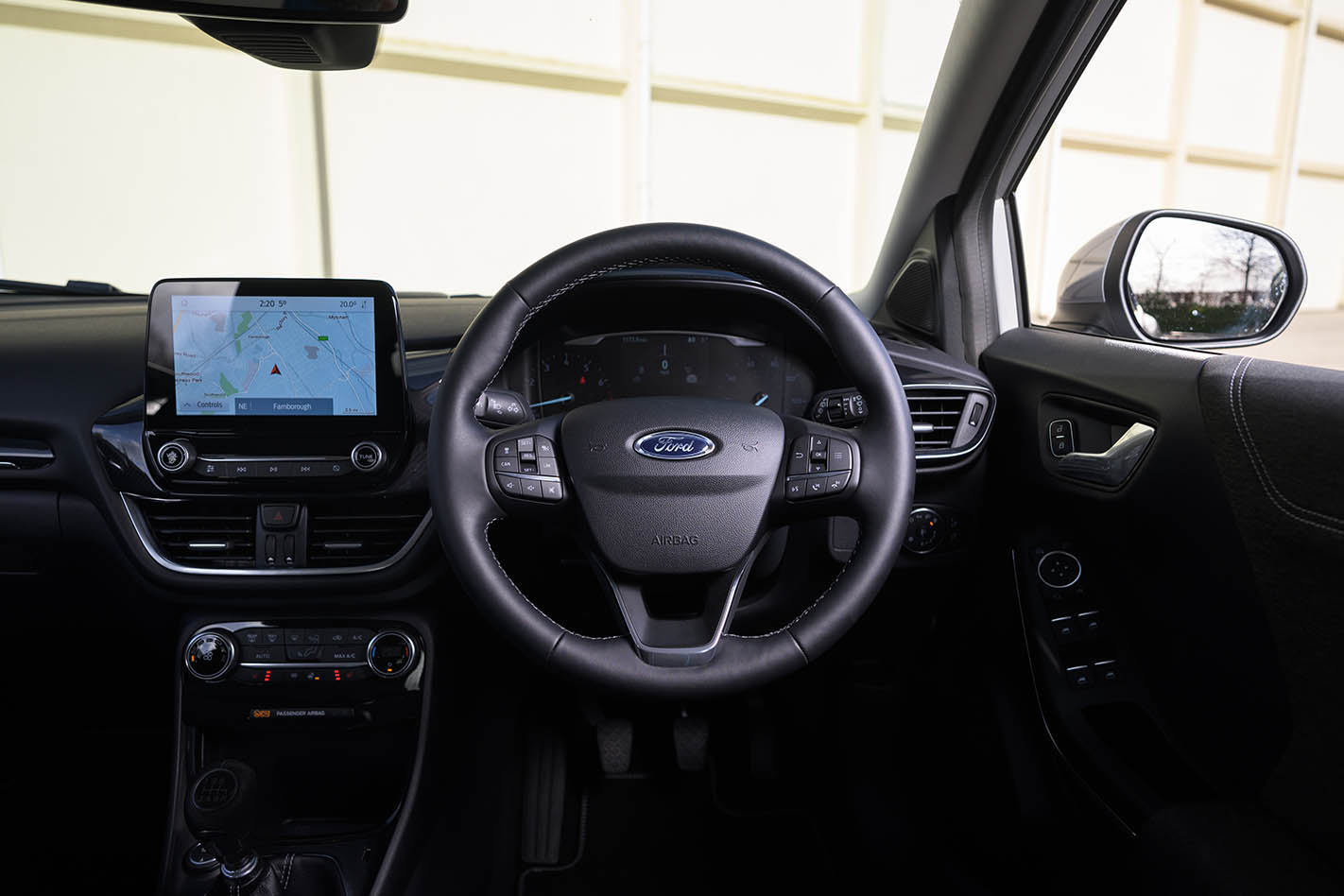
Our test car features some extra-cost options including the $1500 Park Pack that adds adaptive cruise control with Stop & Go, evasive steer assistance, automatic parking assistance and blind-spot monitoring. It also has prestige paint ($650) and a panorama sunroof ($2000) that toke the retail price to $32,340.
Being a light SUV based on a city hatch, there isn’t too much space in a Puma, but it is comfortable in the front seats at least.
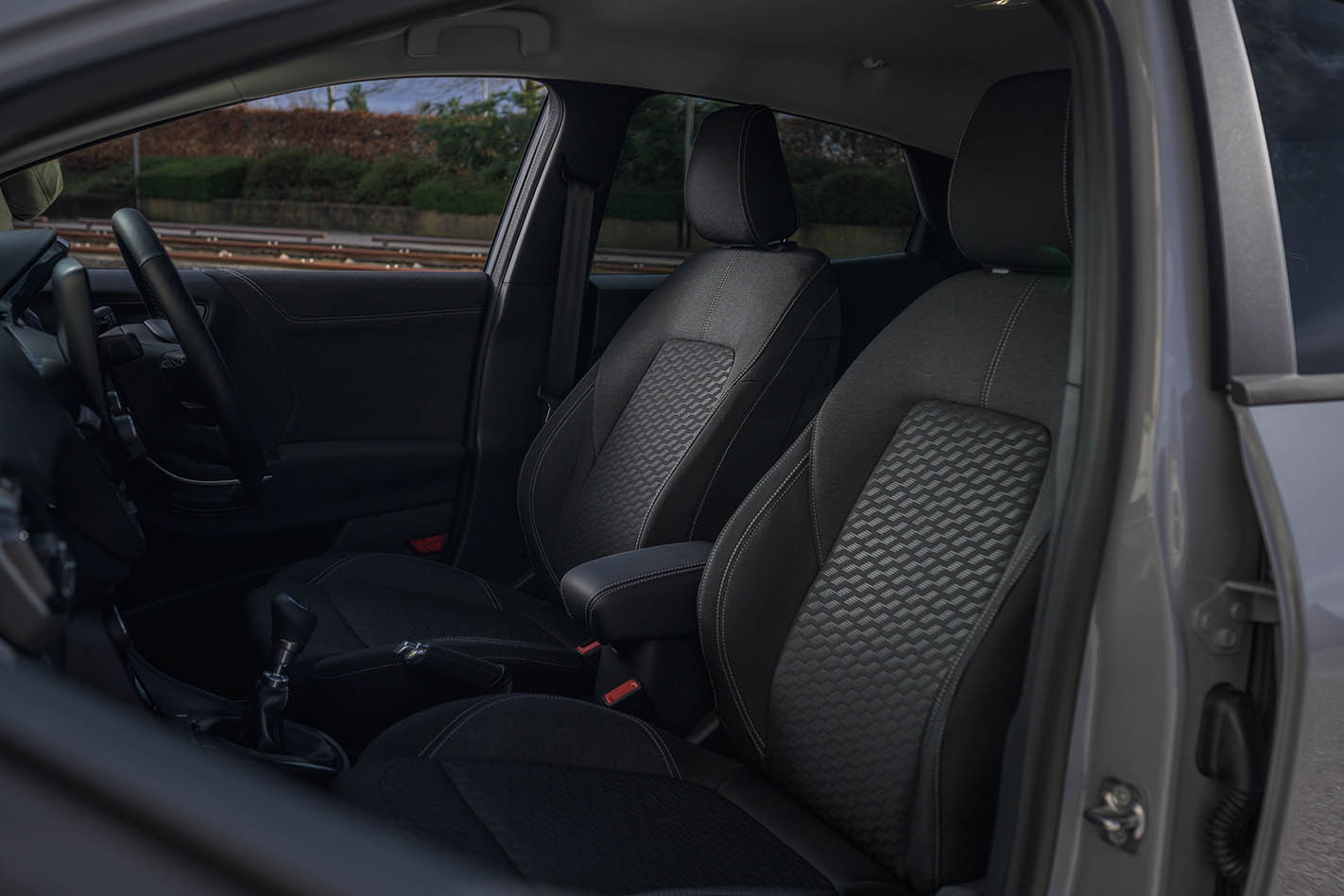
The cloth front seats are soft and supportive, and I managed to find a good driving position despite the basic four-way manual adjustments plus lumbar support.
Overall, the cabin is nicely trimmed and the attractive black denim-like seat trim replicated on the door cards.
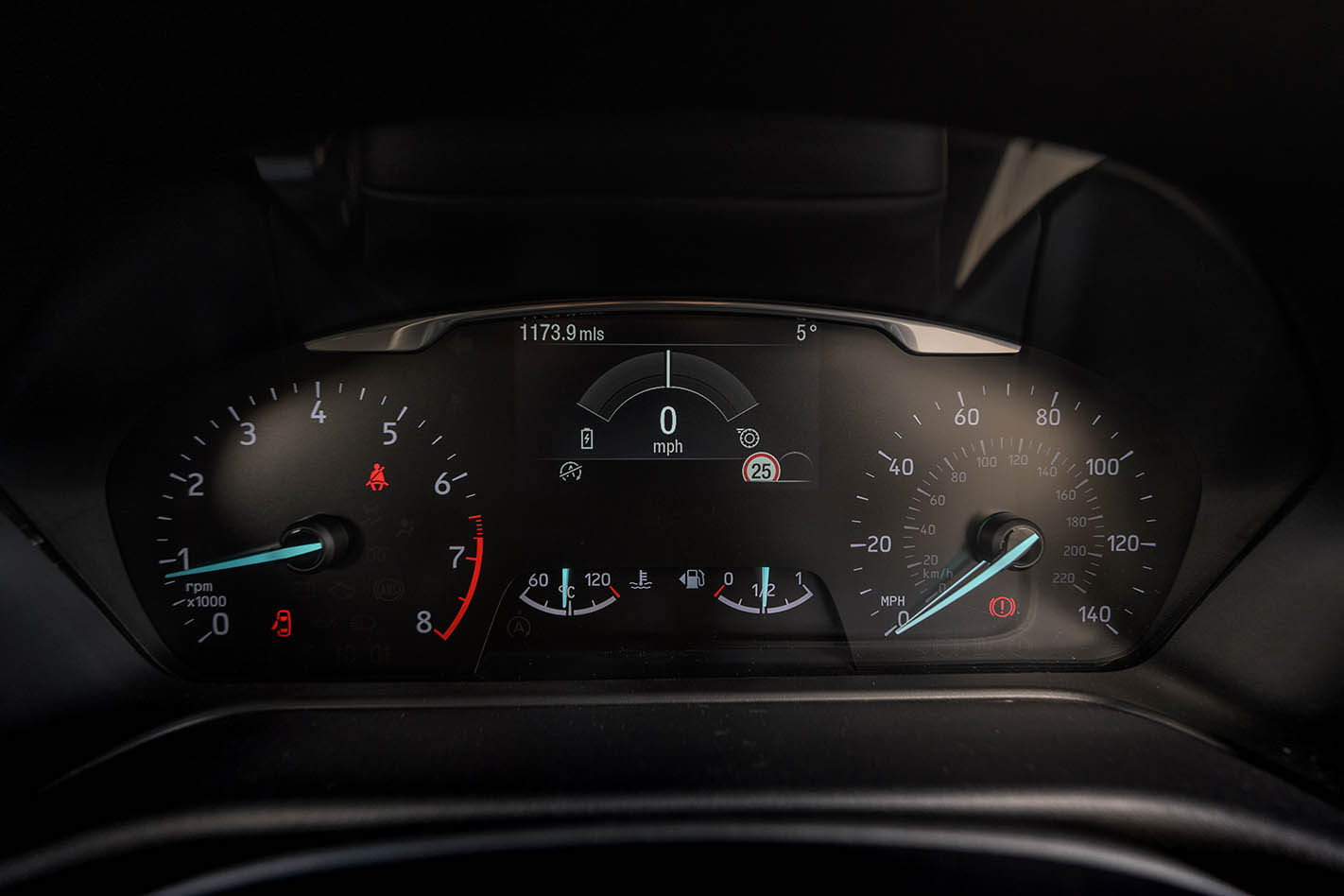
The dashboard design is straight out of the Fiesta, similar also to the Focus and Escape, and includes an 8.0-inch floating touchscreen that’s easy to reach and control. The Puma also has the same analogue gauge cluster as its stablemates, which is a little dull and looks like it belongs in a van. The pricier ST-Line versions have a more attractive digital driver’s display.
The centre console has the usual aperture in which to place and plug in your phone in front of the gear shifter, a couple of cup-holders and a small tub with a padded-armrest lid.
The Puma isn’t exactly a family car, so the rear seats are best suited for the occasional need to ferry more than one or two passengers. The rear bench will fit three kids but don’t even think of trying to wedge three adults in there.
Knee-room is pretty tight even behind an average-sized driver but there is sufficient room under the front seats to put your feet, so even taller passengers won’t have their chins resting on their knees.
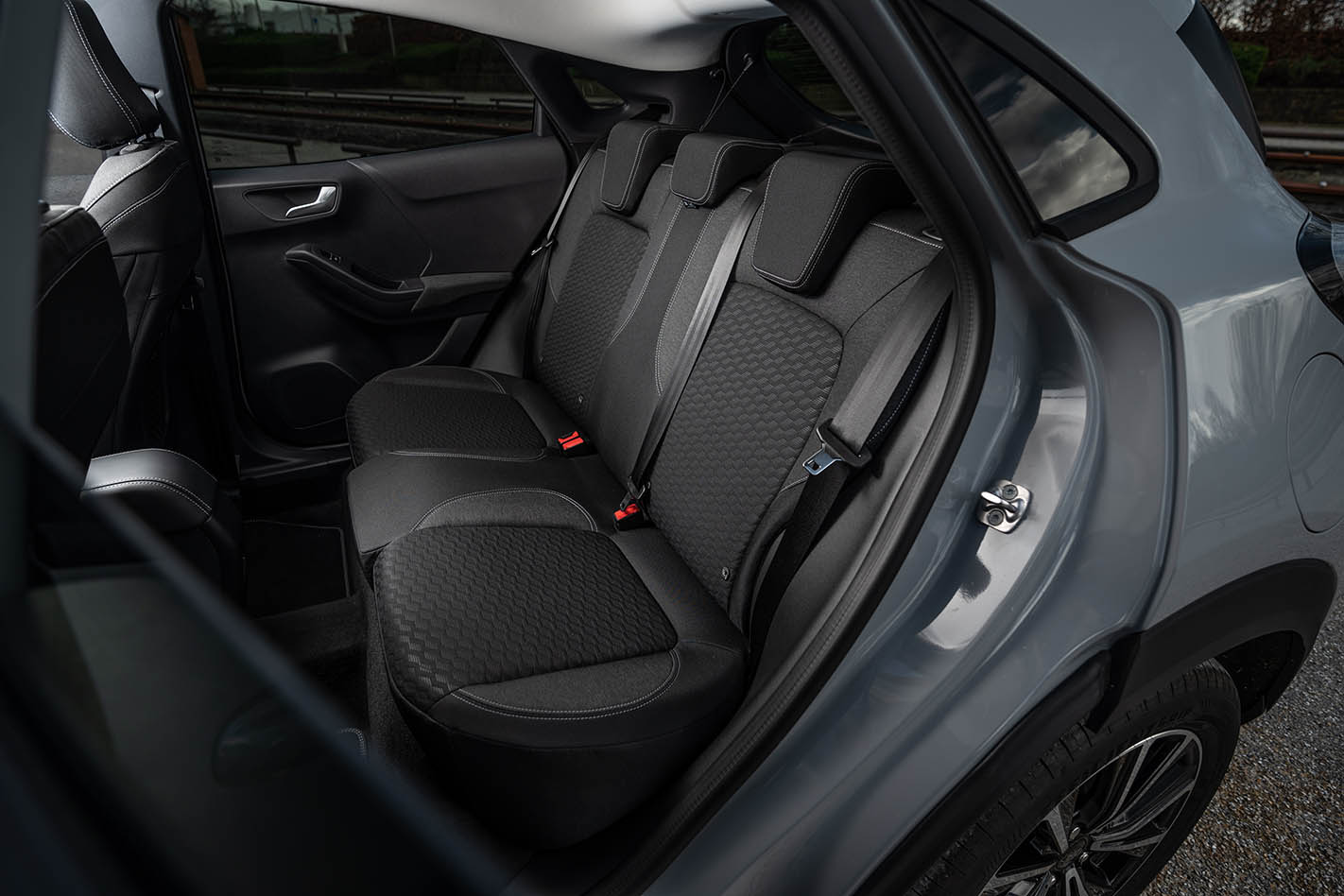
The headroom in our test car was at a premium too, though it should be more generous without the optional sunroof.
There isn’t much back there for passengers apart from seats – there are map pockets behind the front seats and small door bins that will hold a cup but no USB ports, air-vents, or fold-down middle seat cushion to act as an armrest.
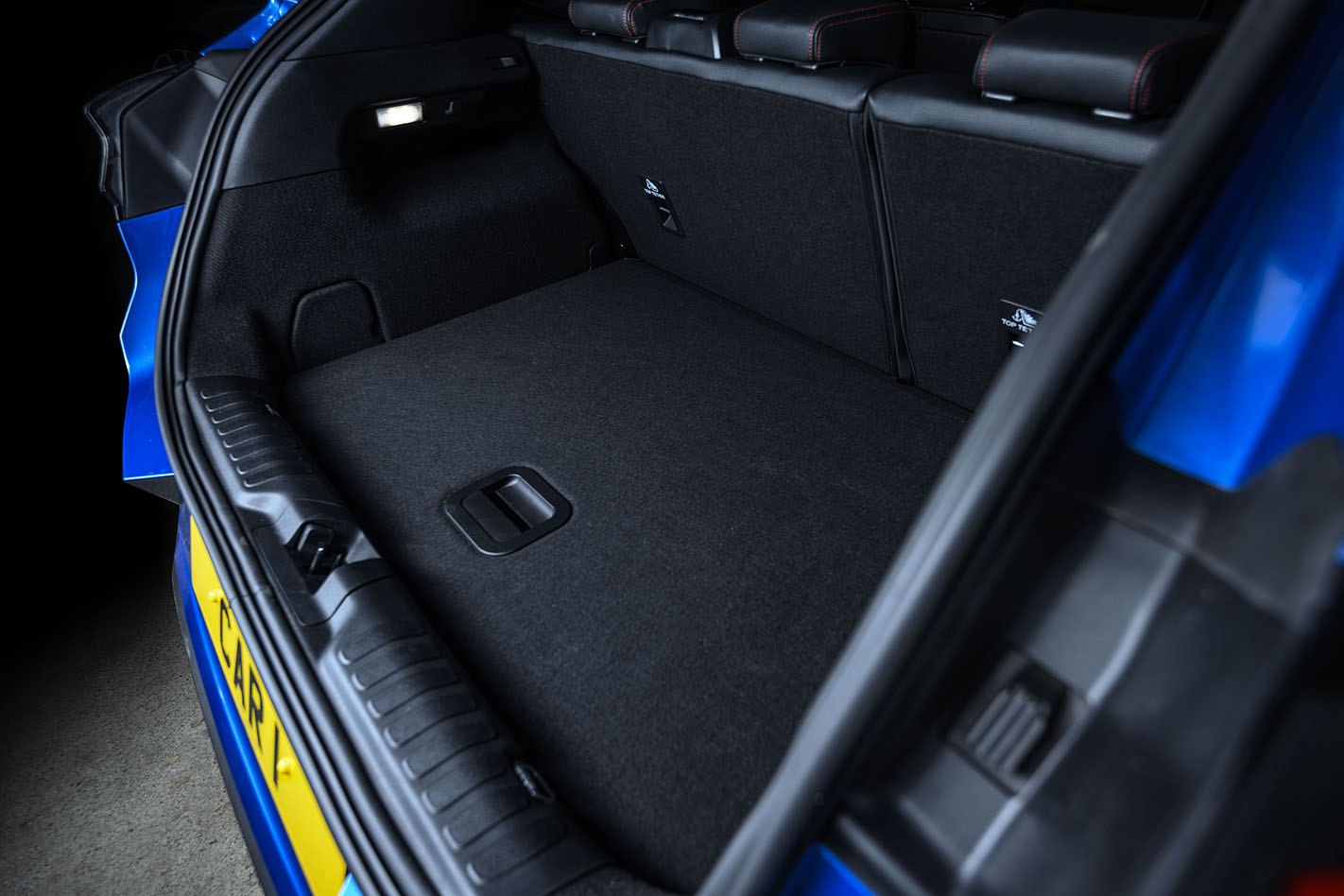
The Puma gains practicality points with 410 litres of boot space that is one of the biggest in its class. It includes a false floor under which there is a deep 80-litre removable wet tub with a drain hole. Below that, you’ll find a space-saver spare tyre.
One thing all passengers will enjoy is the quiet ride. The Puma engine purrs when you start it and driving at city speeds cabin noise is quieter than the Hyundai Kona Electric that gives off considerable tyre rumble.
The Puma is a relatively affordable vehicle to operate. Official combined fuel economy is a frugal 5.3L/100km and you will only need to trouble your local service department every 15,000km or 12 months, whichever comes first, with six-year service pricing set at a reasonable $299 for the first four check-ups, $320 for the 75,000km interval and $370 at 90,000km.
It is covered by a five-year, unlimited-kilometre warranty.
What is the Ford Puma 1.0L Petrol like to drive?
The Puma’s power comes from a punchy 92kW/170Nm 1.0-litre three-cylinder turbocharged petrol engine. Carried over from the last-of-the-line EcoSport, it feels considerably more dynamic in the Puma, which is 80kg lighter and has slipperier aerodynamics helped by an active grille shutter that reduces drag.
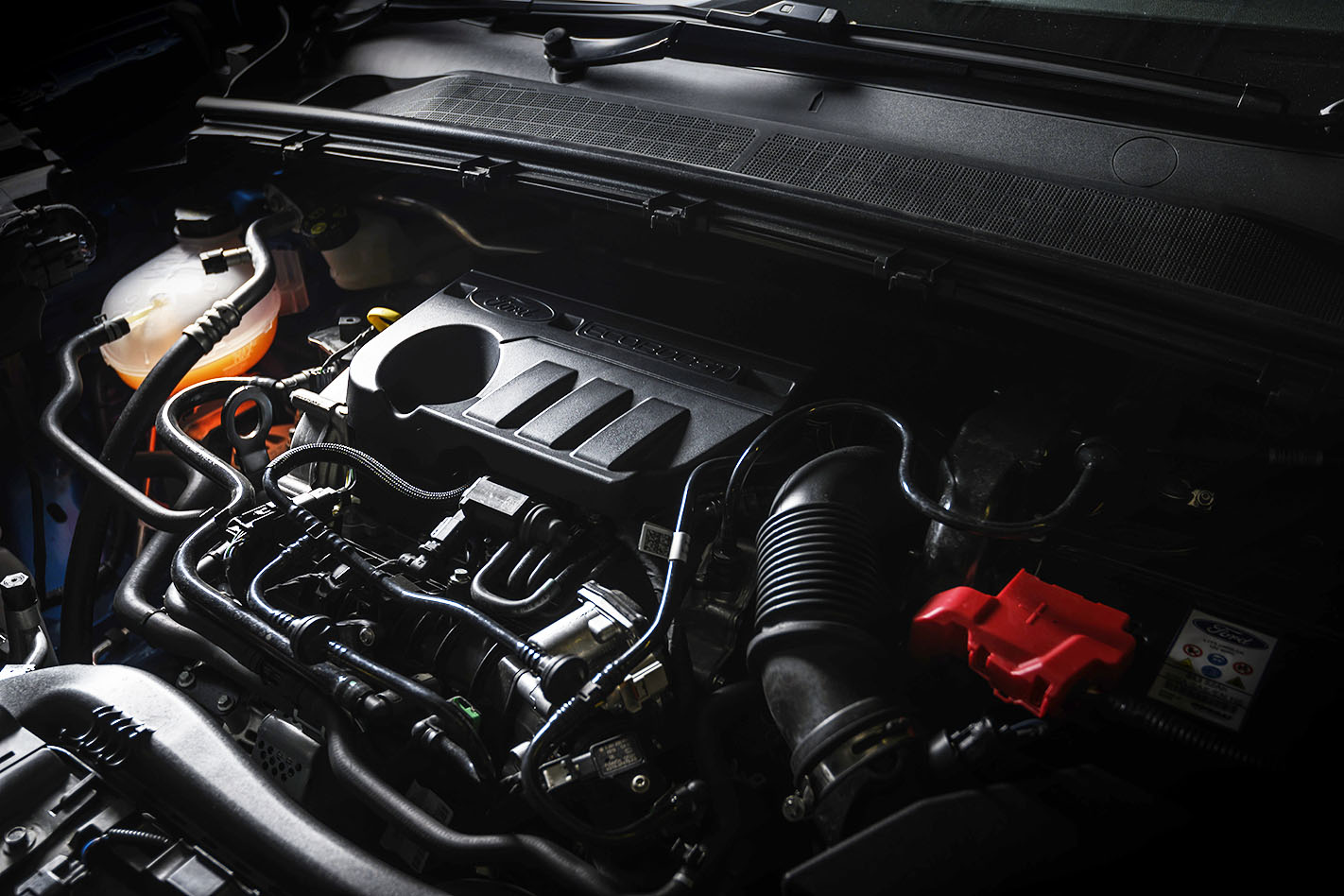
It’s coupled with a seven-speed dual-clutch transmission (DCT) that drives the front wheels. Like most little turbo/DCT powertrains it tends to exhibit a bit of lag when you put the foot down. But once you get past that barrier it’s a bit of a rocket with peak torque sticking around to 4000rpm while the rubber band is still winding up to max power.
There are five driving modes; Eco, Normal, Sport, Sand/Snow and Trail, with Sport letting you reach the higher revs with up shifting to take full advantage of the diminutive engine’s output.
Unlike the ST-Line versions, there are no paddle shifters, so you lose out on manual inputs but that doesn’t really take much away from the driver engagement the Puma offers – though the six-speed manual version available overseas would be a hoot!
The steering is precise and its taut underpinnings exhibit excellent body control so when you point the front wheels in one direction, the rear end quickly complies.
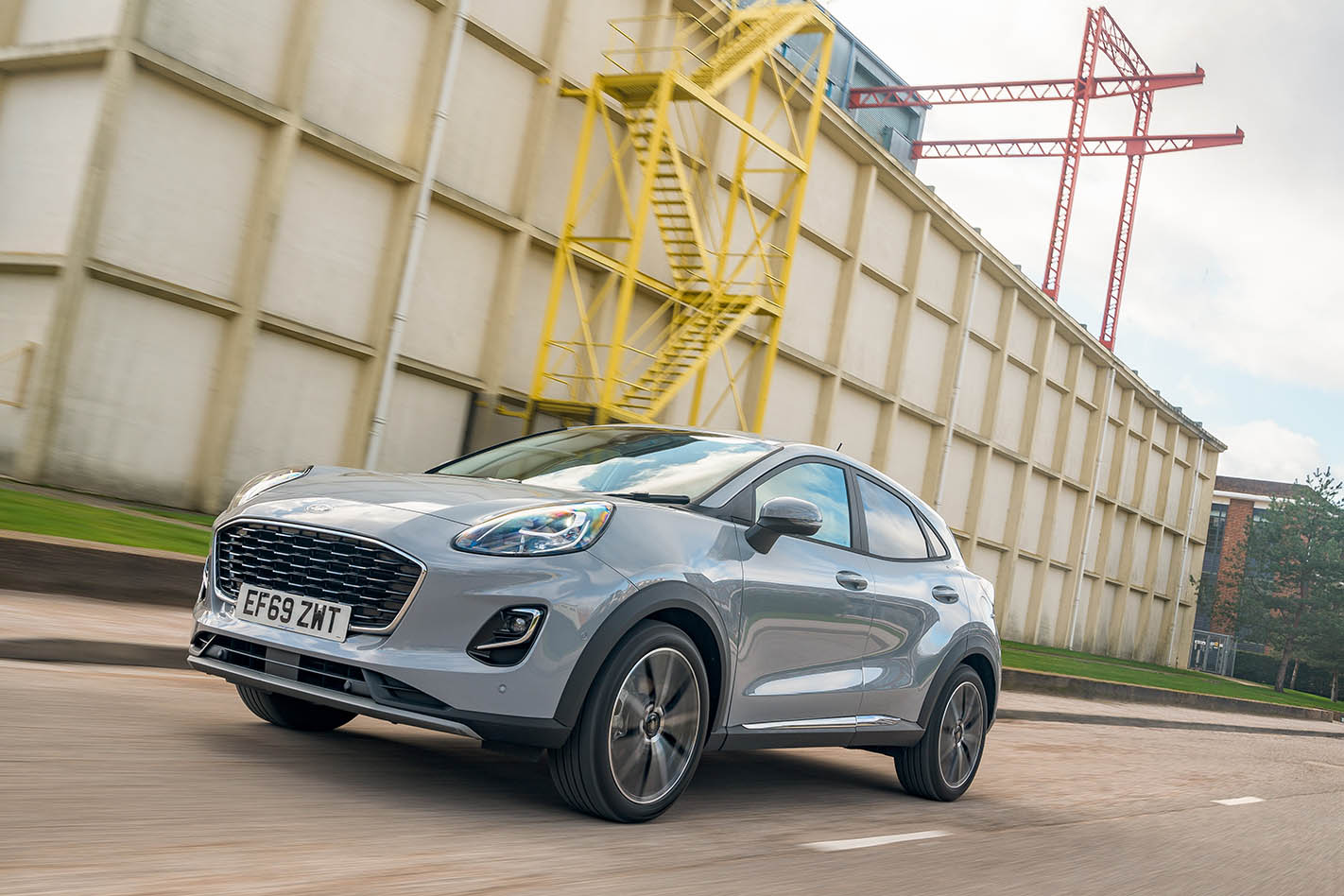
The relatively rudimentary suspension of MacPherson struts up front and rear torsion beam is a little firm so you feel the smaller bumps but it seems to come into its own at higher speeds, even on rough roads.
Taking the Puma out past Bacchus Marsh west of Melbourne on some very ordinary roads featuring a narrow strip of pockmarked bitumen, I was amazed at how it lapped up the neglected road surfaces.
It doesn’t exactly glide over them, but it absorbs them well with little secondary movement. At one point I winced as I spotted a considerably nasty pothole and was surprised by the lack of jarring.
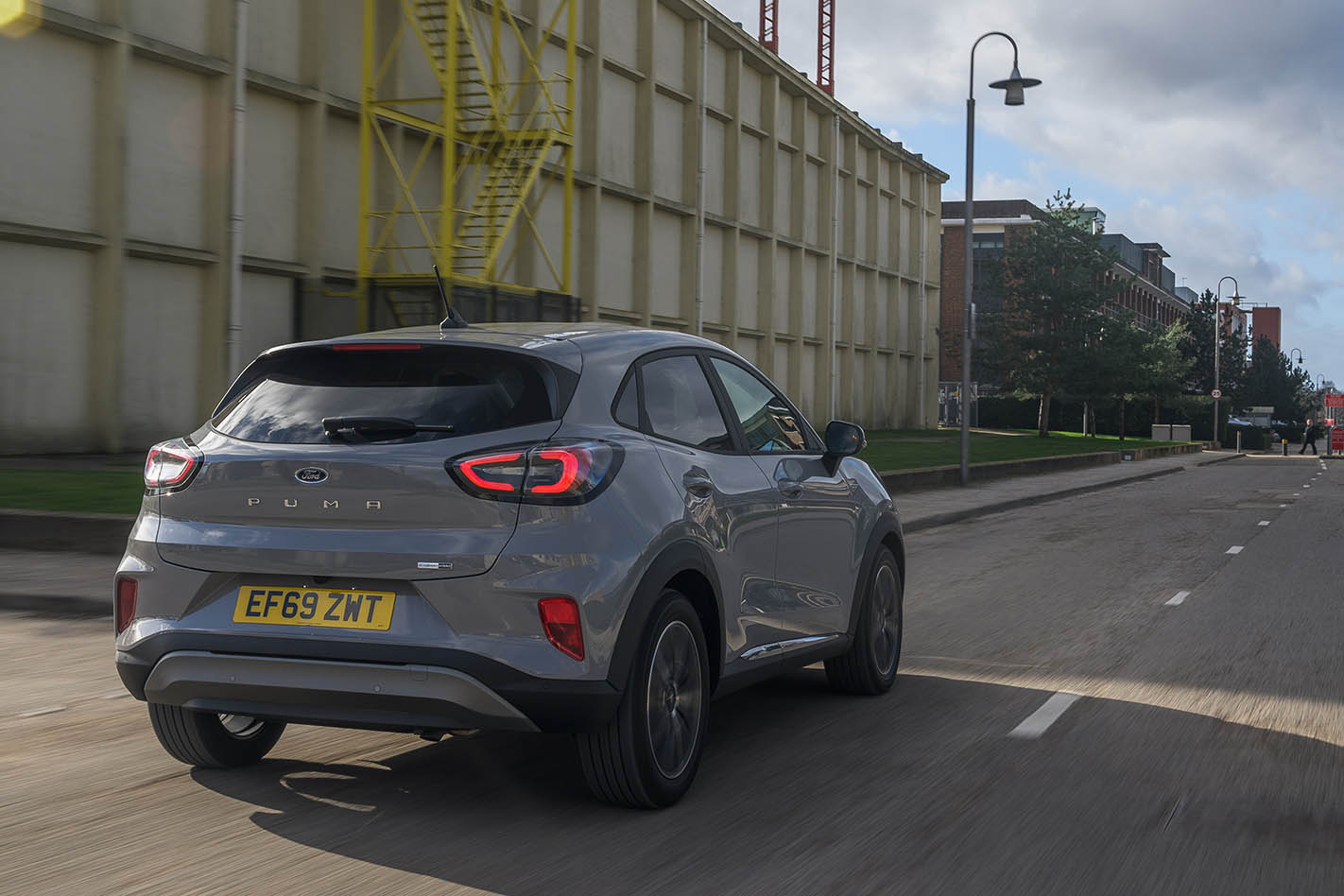
I hadn’t intended to test the Puma in these conditions, but this is where it delighted me most. It barrelled down country roads, including gravel, and there were times when I’d look down and the speedo and was amazed to see I was doing [redacted] km/h such is the ride composure. It feels like a mini grand tourer.
Needless to say, it’s also good fun and very able around town and parking is cinch; just don’t make the mistake of categorising it as a city car.
Speaking of parking, our test car had the auto-parking that came with the Park Pack. It isn’t really necessary in a car this size but I do like its simple operation. Once you find a spot you put it in neutral and hold the Auto Park button down and it shoots into your spot. All you have to do is apply the brakes.
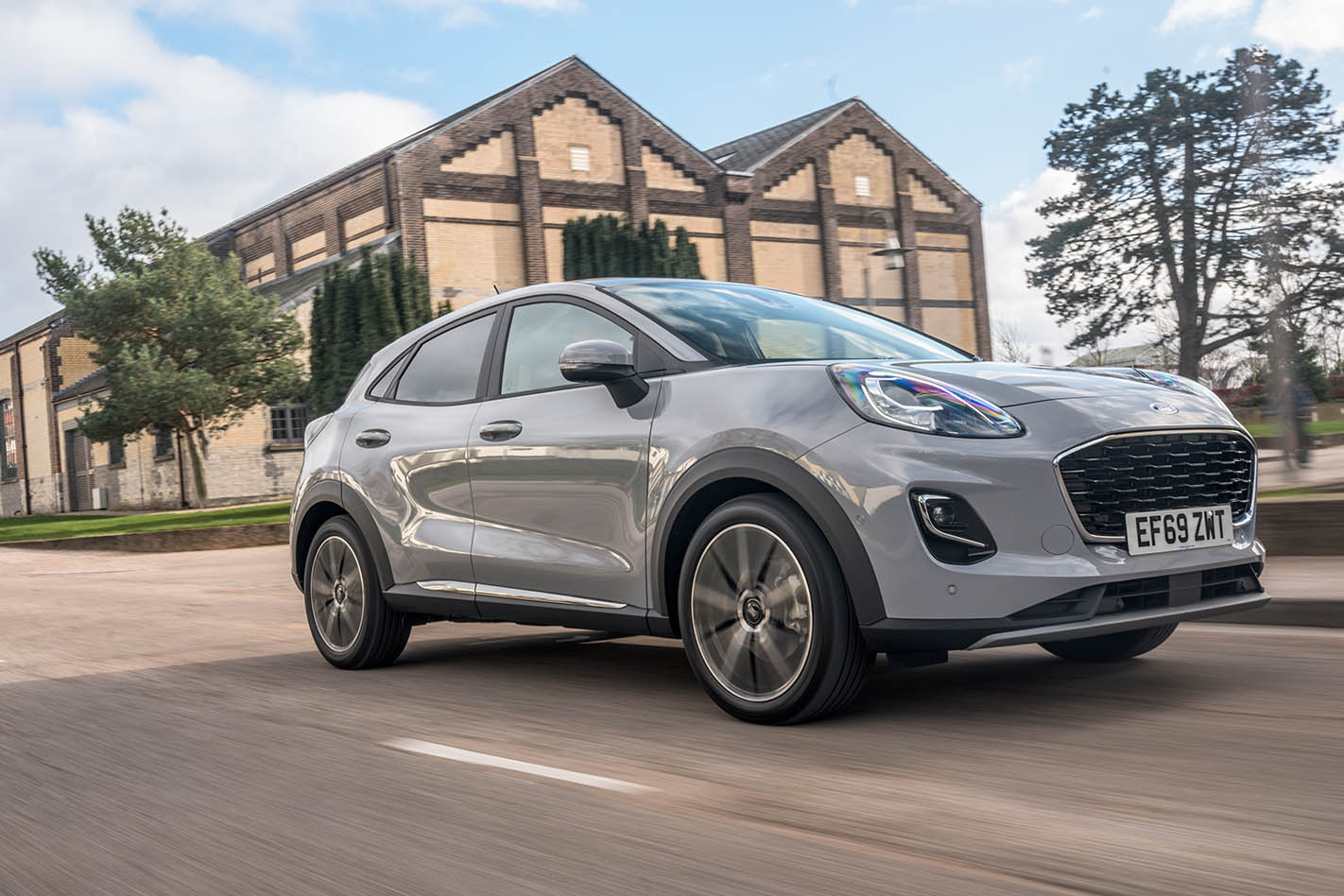
As I mentioned above, the Puma is a very quiet car. It whispers into life when you push the start button and when you drive off at low speed. When you put the foot down it gets a little vocal, but like most three-pot engines it has a throaty din that sounds quite good.
How safe is the Ford Puma 1.0L Petrol?
The Ford Puma was awarded a 5-Star ANCAP rating in September 2020 based on a Euro-ANCAP assessment that saw it achieve high marks across all categories.
It has six airbags, two front inflators and front and rear side curtains, seatbelt reminders, auto high-beam headlights rain-sensing windscreen wipers, and tyre pressure monitoring.
There are 2 x ISOFIX child seat anchor points in the rear seat plus three top-tether points.
Standard active safety and advanced driver assistance features including AEB with pedestrian protection, forward collision alert, lane-keeping assist, and traffic sign recognition.
Adaptive cruise control, evasive steer assist and blind-spot monitoring are also available but only if you specify the aforementioned optional Park Pack.
The Verdict
There are few bad cars these days which means that while most cars are able to satisfy it’s not too often that one will delight you when you least expect it. The Puma has done that for me, especially when driving it on rural roads.
The great thing is this happened in the base model and would have done so even if it didn’t have the optional Park Pack and sunroof.
Still, I reckon the Park Pack is good value but I’d rather leave out the sunroof option and pocket the $2000.
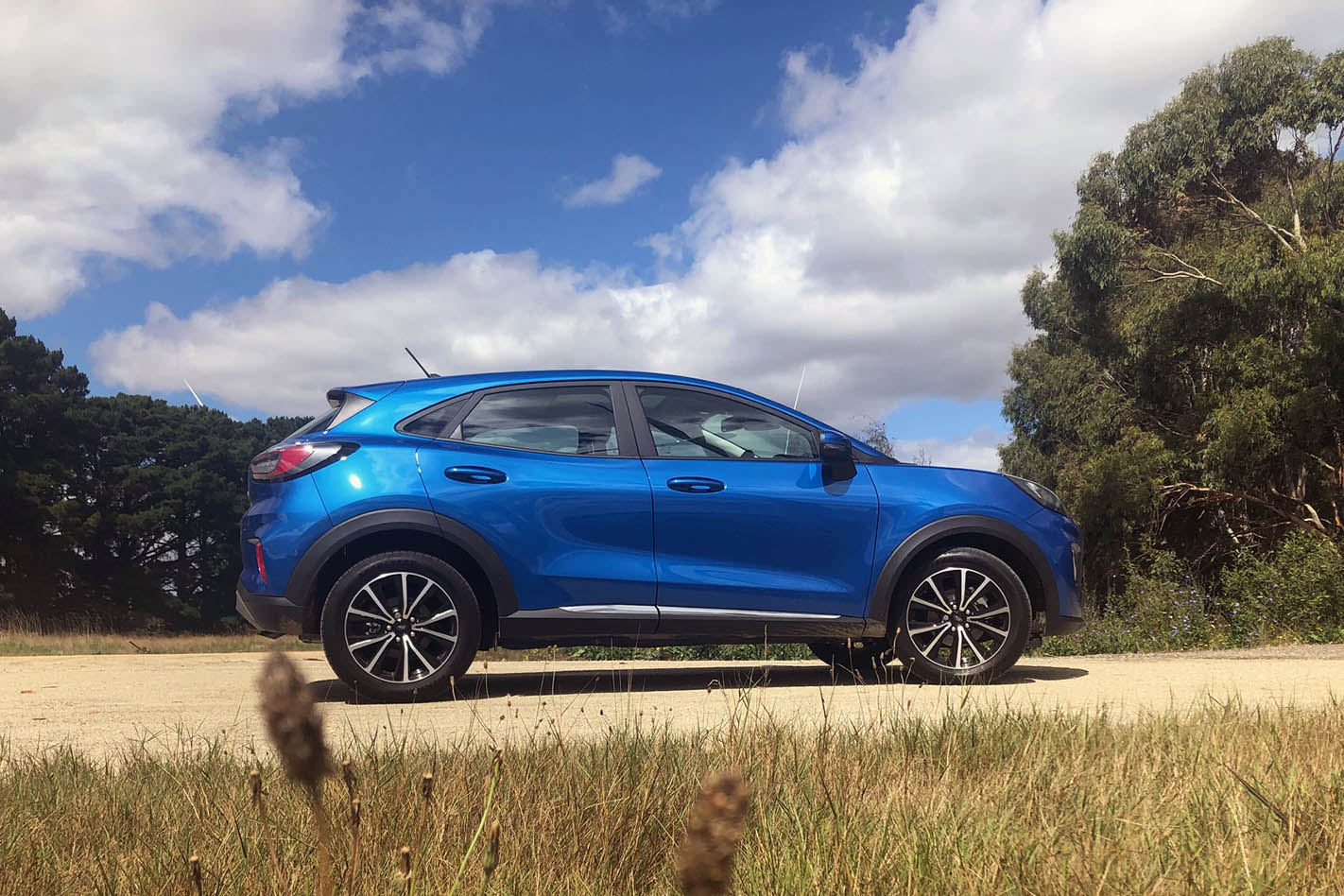
As far as light SUVs go this entry-level Puma ticks most boxes – it’s relatively affordable, stylish, practical and brings a fun factor that some of its rivals lack.
It loses a few marks because of the tight rear-seat space, but the Puma doesn’t pretend to be a family car. Like all other light SUVs, its target audience is young urban professionals though, though as we often see it’s likely to be popular with empty-nesters who want a small, fun and practical car with a slightly higher ride height.
All in all Ford Puma is a great little package that deserves more recognition than its sales figures suggest.
Score 8/10
PLUS Punchy engine, ride and handling, practicality, value MINUS Gawky looks, tight rear-seat space
Ford Puma 1.0L Petrol specifications
Body: 5-door, 5-seat SUV Drive: FWD Engine: 999cc 3-cyl, 12v turbo Power: 92kW @ 6000rpm Torque: 170Nm @ 1500-4500rpm 0-100km/h: 9.0sec (claimed) Fuel consumption: 5.3L/100km (combined) Weight: 1381kg Power/weight:72.8W/kg Transmission: 7-speed DCT Suspension: MacPherson strut/Torsion beam axle L/W/H: 4186/1805/1550mm Wheelbase: 2588mm Tracks: 1562/1567mm Brakes: Front ventilated discs / Rear discs Tyres: 215/55 R17 Wheels: 7Jx17 Price: From $29,990
Subaru of America has showcased its first model under its adventure-focussed Wilderness brand.
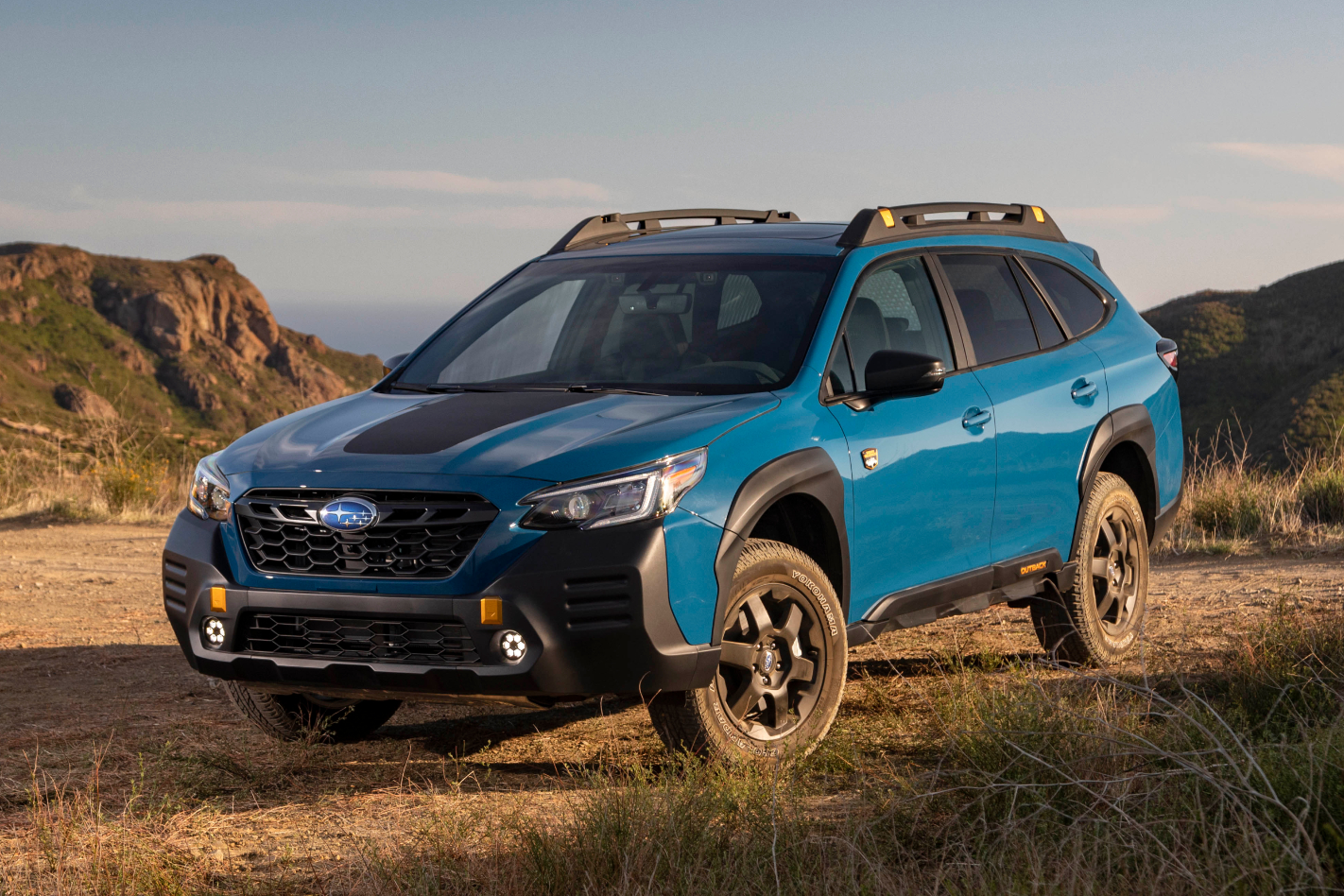
Called the Subaru Outback Wilderness, the high-riding wagon has been specifically designed for weekend warriors and the young at heart.
Based on the standard Outback wagon, the Wilderness gets a host of bespoke features aimed at improving its off-road credentials.
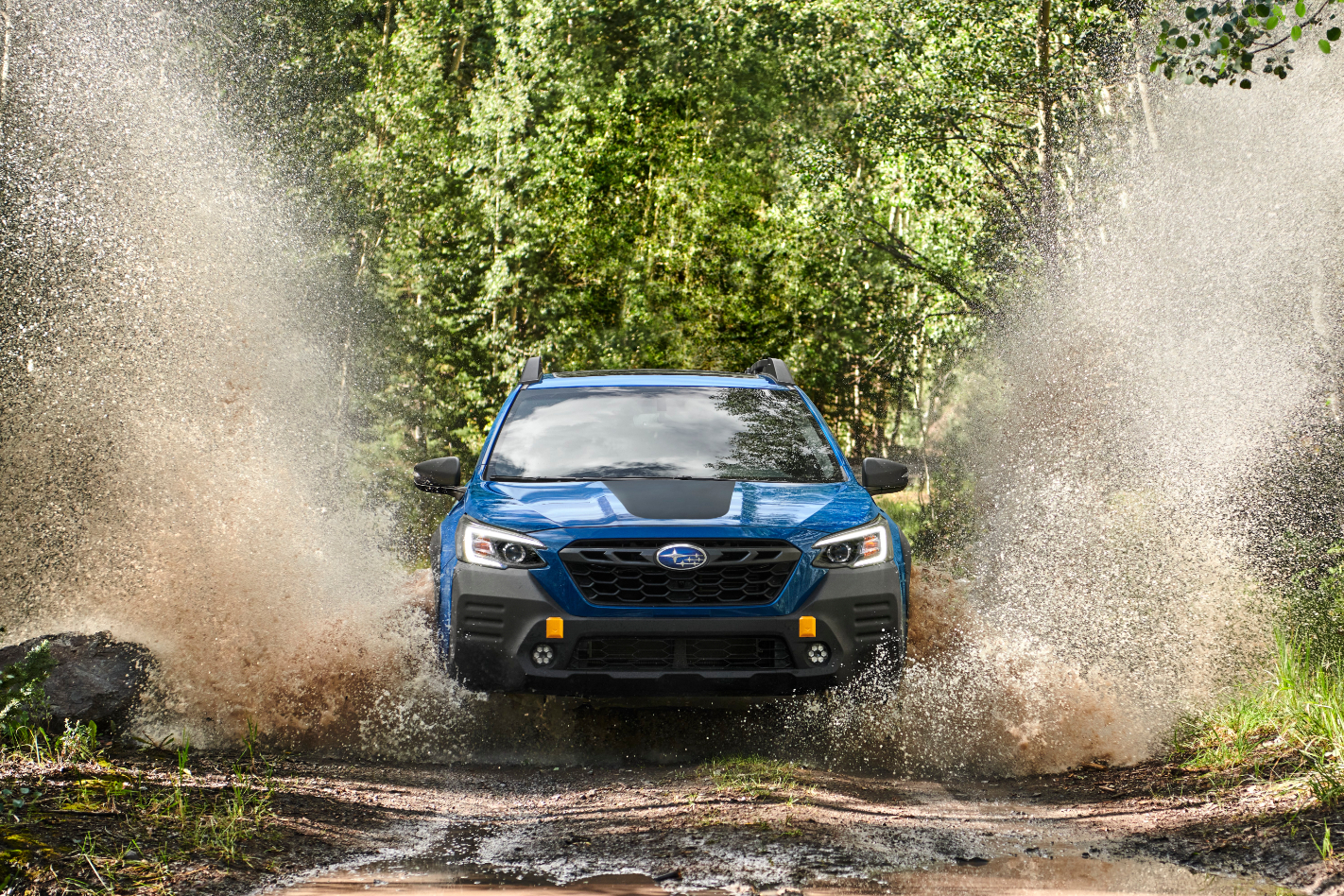
The most noticeable change is the car’s raised ride height, which now offers an impressive 241mm of ground clearance (28mm more than the standard Aussie Outback).
Subaru has been able to achieve this by fitting the wagon with a completely bespoke suspension set-up, which includes larger springs and dampers and a unique chassis tune.
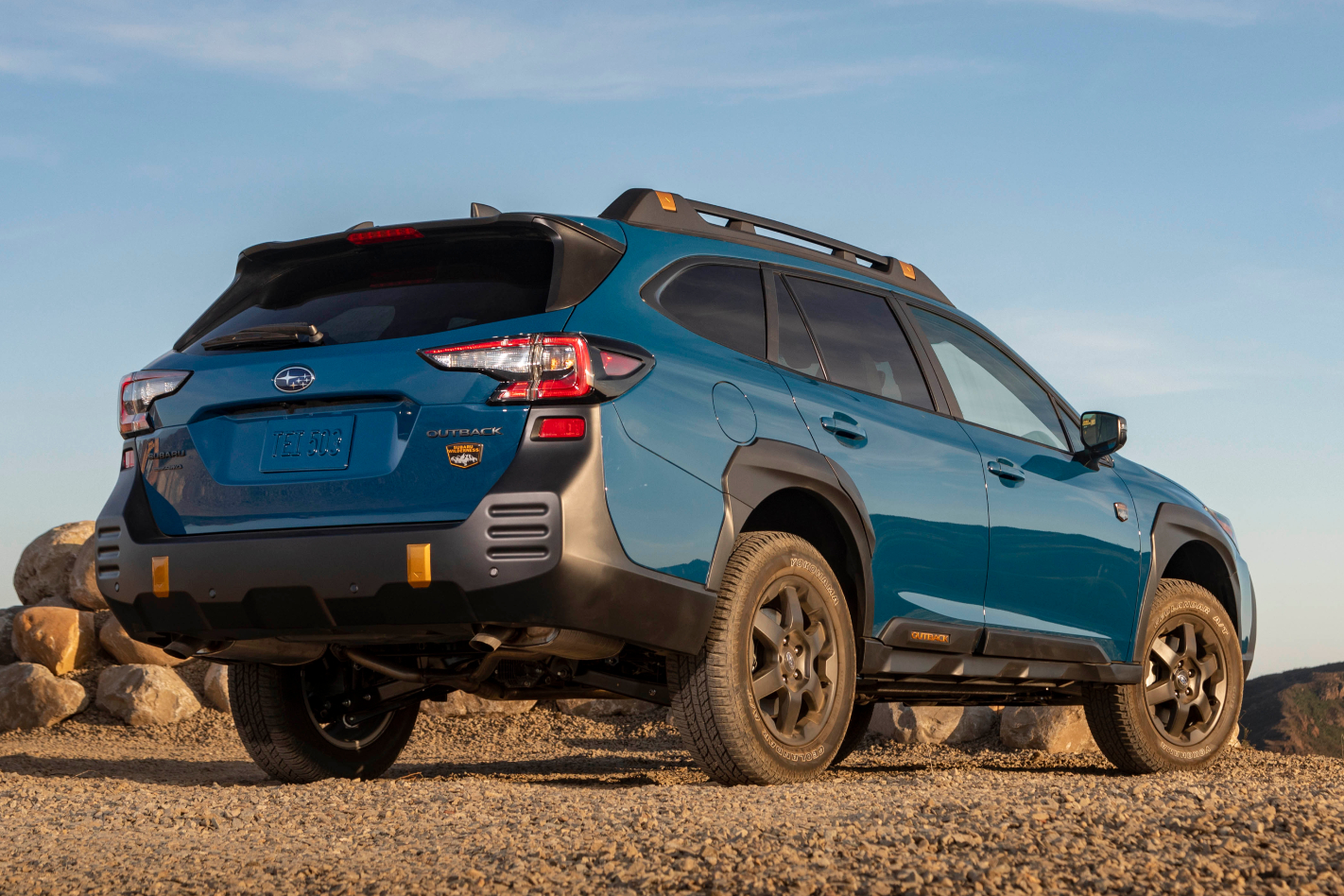
Newly designed front and rear bumpers, working in conjunction with the jacked-up ride height, also mean the Wilderness Outback has an improved approach angle of 20 degrees (1.4 degrees more than the regular Outback).
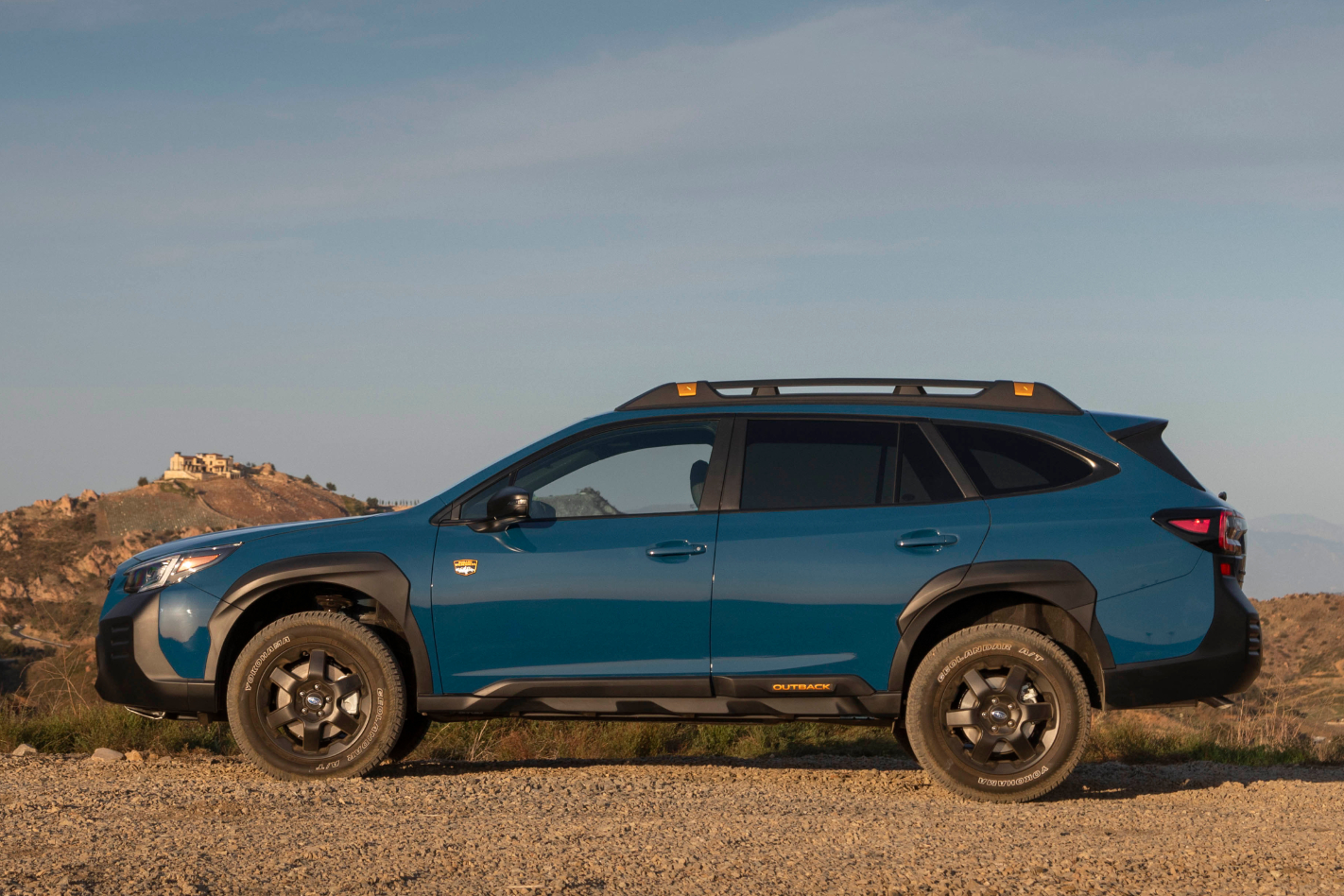
In addition to the new bumpers, the wagon also scores rugged, matt black side sills, and underbody bash plate protection, which should further enhance off-road capabilities.
The exterior gets slightly more flared wheel arches too, and a central matt-black panel on the bonnet that’s been designed to decrease glare for the occupants of the vehicle.
The Outback will even sit on a set of diminutive 17-inch matt black alloy wheels wrapped with chunky Yokohama Geolandar tyres with an uber-thick 65 profile, which should make for a capable and plush off-roading experience.
Under the bonnet is Subaru’s regular 2.4-litre turbocharged four-cylinder boxer engine, which produces 194kW and 374Nm and sends its power to all four wheels via a ‘Lineartronic’ constantly variable transmission (CVT).
Unlike the normal Outback, however, the Wilderness scores a new final-drive ratio of 4.44:1 for its rear differential, and the CVT has been reworked to offer an eight-speed manual mode function with steering wheel paddle shifters.
The interior of Subaru’s new off-road champion has also been thoughtfully modified to suit the needs of its adventurous users.
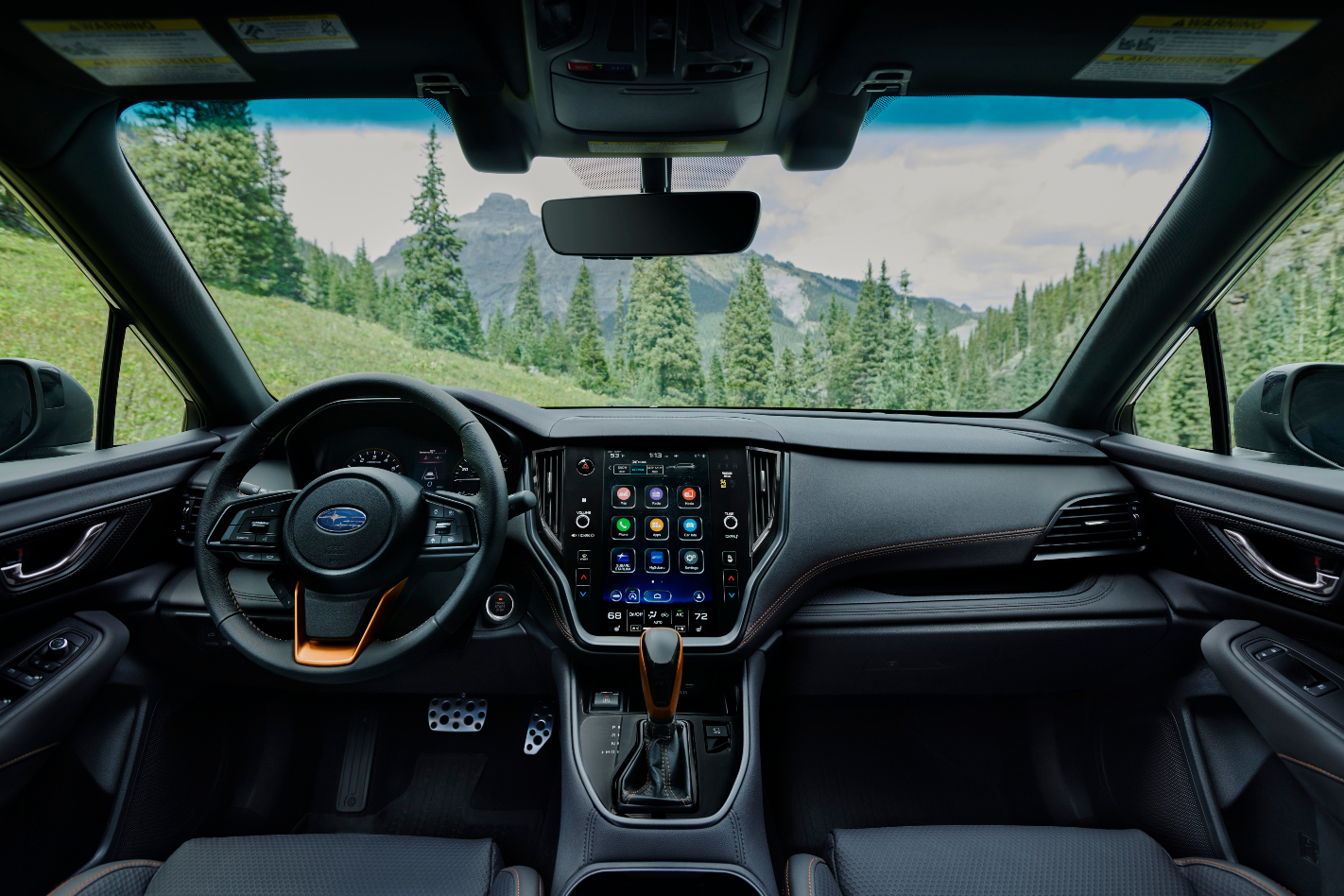
The seats, embossed with the Subaru Wilderness logo on the headrests, are wrapped in a water-repelling material known as StarTex.
Similarly, the floor mats are made of an all-weather material that promises to be hard-wearing and not afraid to get dirty, much like the rest of the car.
The cargo area’s rear seatback is wrapped in a waterproof material too, and a hardy waterproof rear cargo tray protects the floor of the boot.
There’s also splashes of copper around the interior, such as contrast stitch weaving and insert on the steering wheel, and the gear selector.
The wagon comes standard with Subaru’s ‘STARLINK’ 11.6-inch touch screen display, which enables users to interact with the car’s infotainment system, as well as the HVAC, and the vehicle settings.
Apple CarPlay, Android Auto, and Bluetooth hands-free phone and audio streaming connectivity also come as standard.
The new Outback Wilderness is being made exclusively in left-hand drive at Subaru’s Indiana production facility for the North American market.
Sadly, a representative for Subaru Australia has confirmed to WhichCar there are no plans at present to bring the tough wagon to the local market.
However, the representative also said the Aussie arm of the brand was in constant discussion with Subaru’s head office in Japan, and that both parties would be monitoring the reception of the Outback Wilderness in the US.
MORE: Outback stories MORE: All Subaru stories
UPDATE, April 18 2023: Cyberster unveiled, Australian launch confirmed
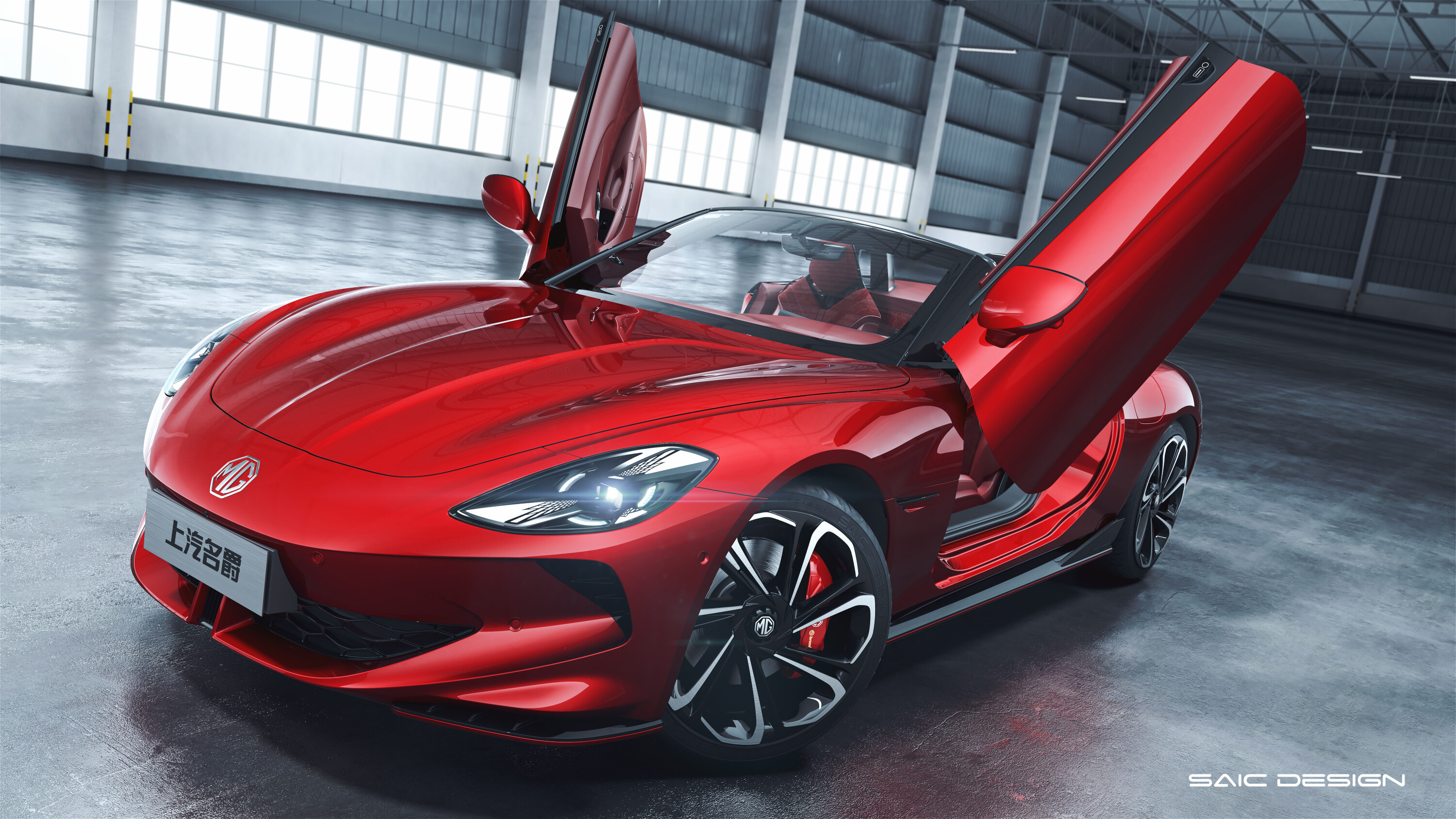
The production version of the MG Cyberster has now been unveiled, at the 2023 Shanghai motor show, and it’s coming to Australia. Get all the details at the story linked below.
June 24, 2022: Cyberster rendered!
Based on official 2023 MG Cyberster images obtained recently, we’ve had a go at imagining how the final design might look. Check out our stunning images at the link below.
April 2
British brand MG might these days be known for just about anything but the sporty little numbers that made its iconic name, but evidence is mounting that the brand’s new masters are keen to turn that around.
It’s already known that MG will launch an electric sports coupe later this year, inspired by the E-Motion concept revealed in 2017.
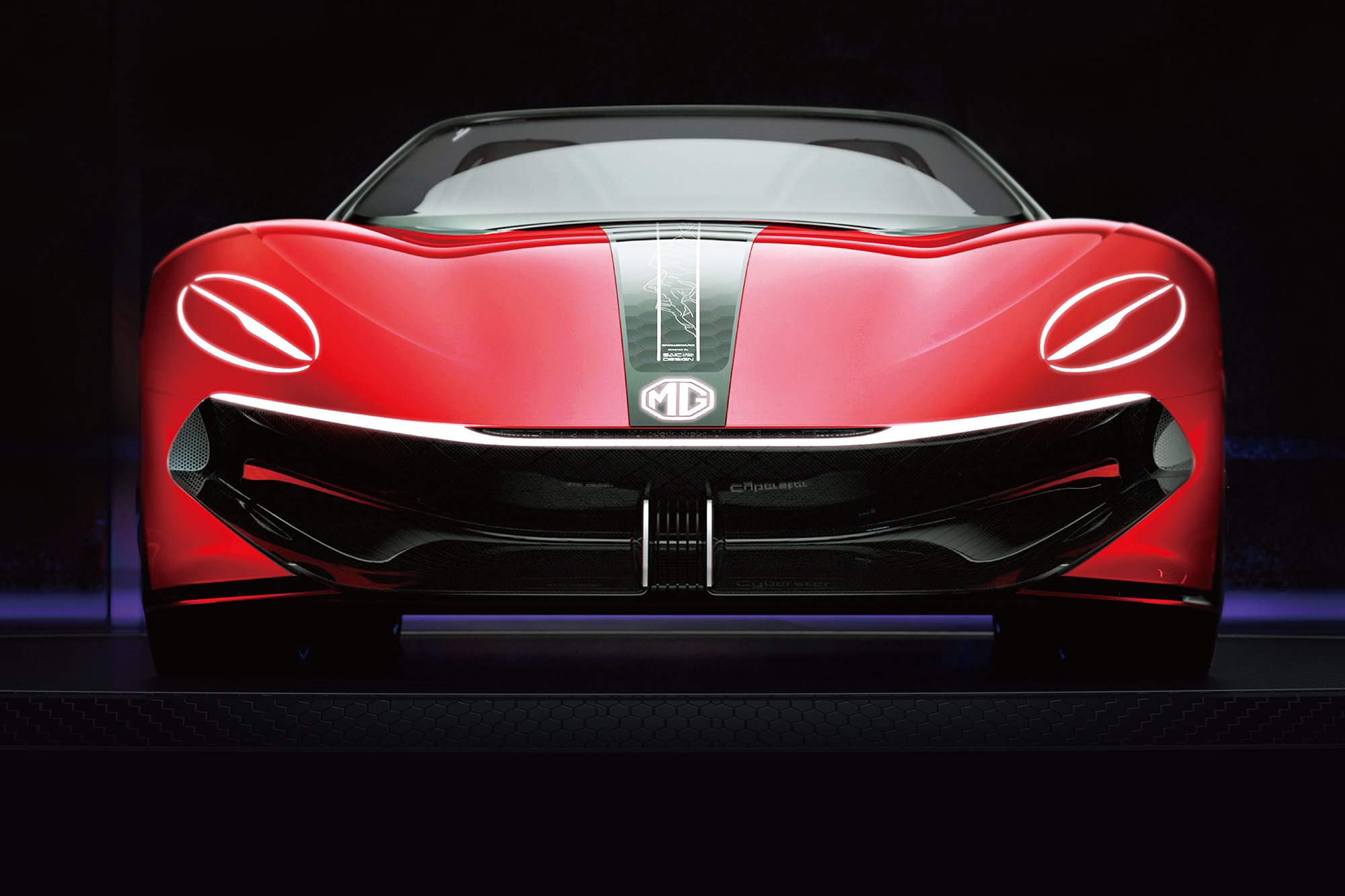
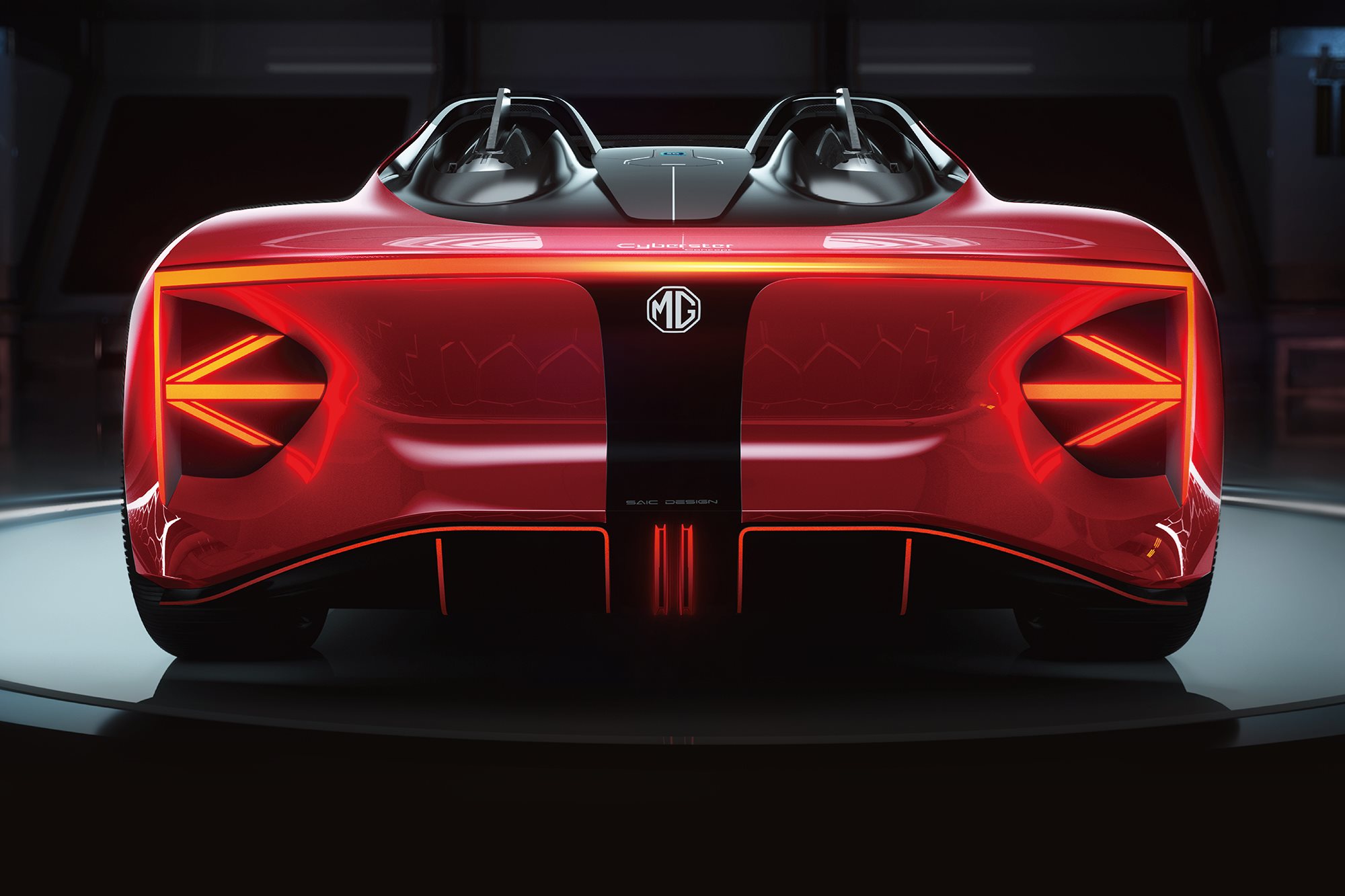
Here, we see a more dramatic, futuristic take on the best of MG styling and technology – as imagined by the designers at the appropriately London-based studio of MG’s Chinese parent company SAIC.
Leading the Cyberster’s styling was Carl Gotham, who says of its looks: “The Cyberster is a bold statement that looks strongly into MG’s future, touching on our heritage but more importantly building on our cutting edge technology and advanced design.
“Sports cars are the lifeblood of the MG DNA and Cyberster is a hugely exciting concept for us.”
Bravely, the MG team has applied a Union Jack theme to the tail lamps of the Cyberster concept, following in the trails of the Mini brand – likewise owned by a foreign marque in Germany’s BMW.
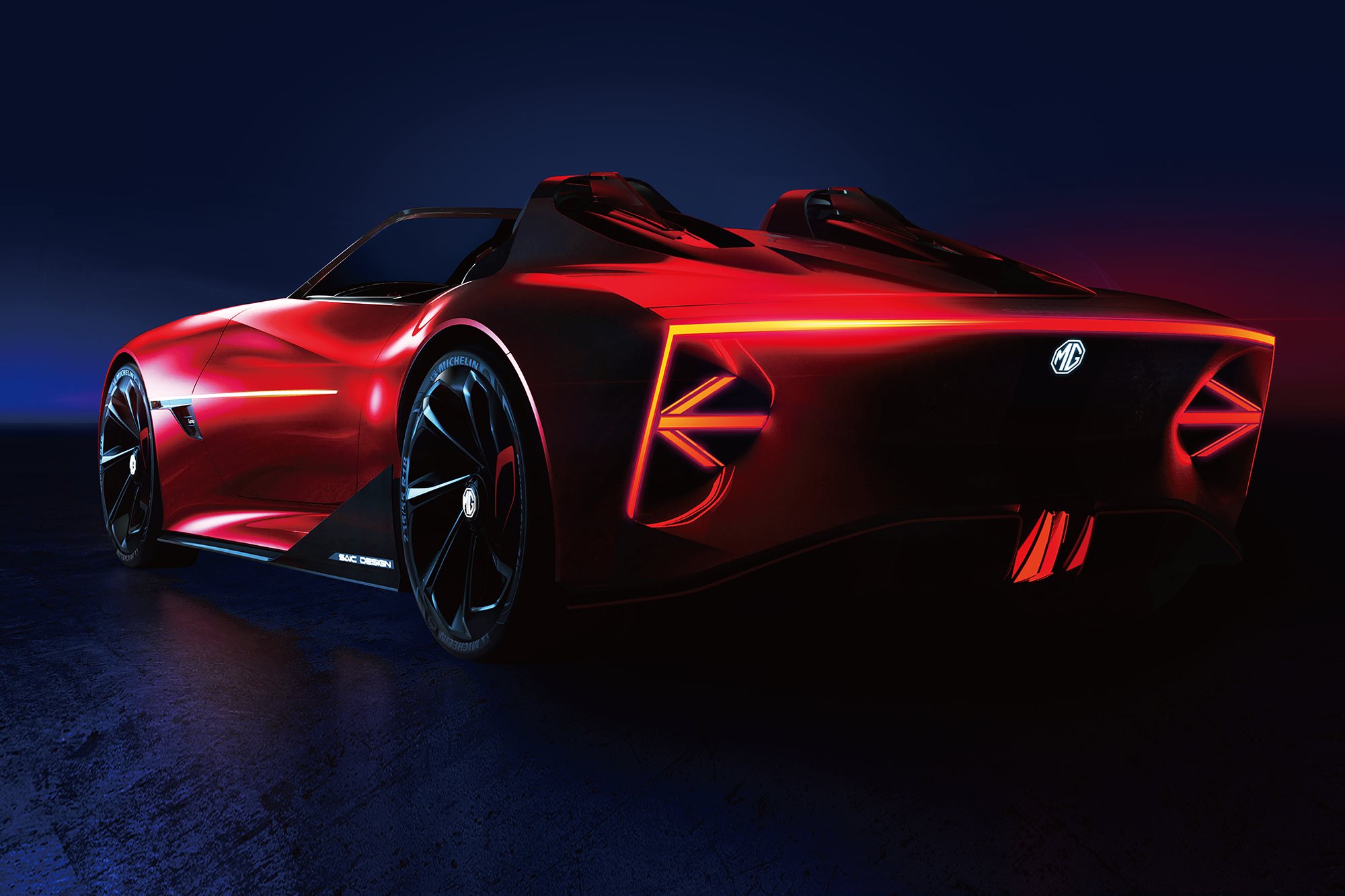
As reported below, the Cyberster concept imagines an all-electric driving range of 800 kilometres on one charge, with a 0-100km/h time “of less than three seconds”.
We won’t expect to see the Cyberster in production any time soon, but fans should watch for the E-Motion to debut in a toned-down production form sometime this year.
Click our gallery above for more revealing images of the Cyberster concept.
The story to here
March 23: MG has released three official images of its upcoming Cyberster EV two-seater sportscar concept and some headline performance figures.
Chief among them is the electric vehicle’s range, which MG claims will be no less than 800 kilometres, and its 0-100km/h time, quoted at “less than three seconds.”
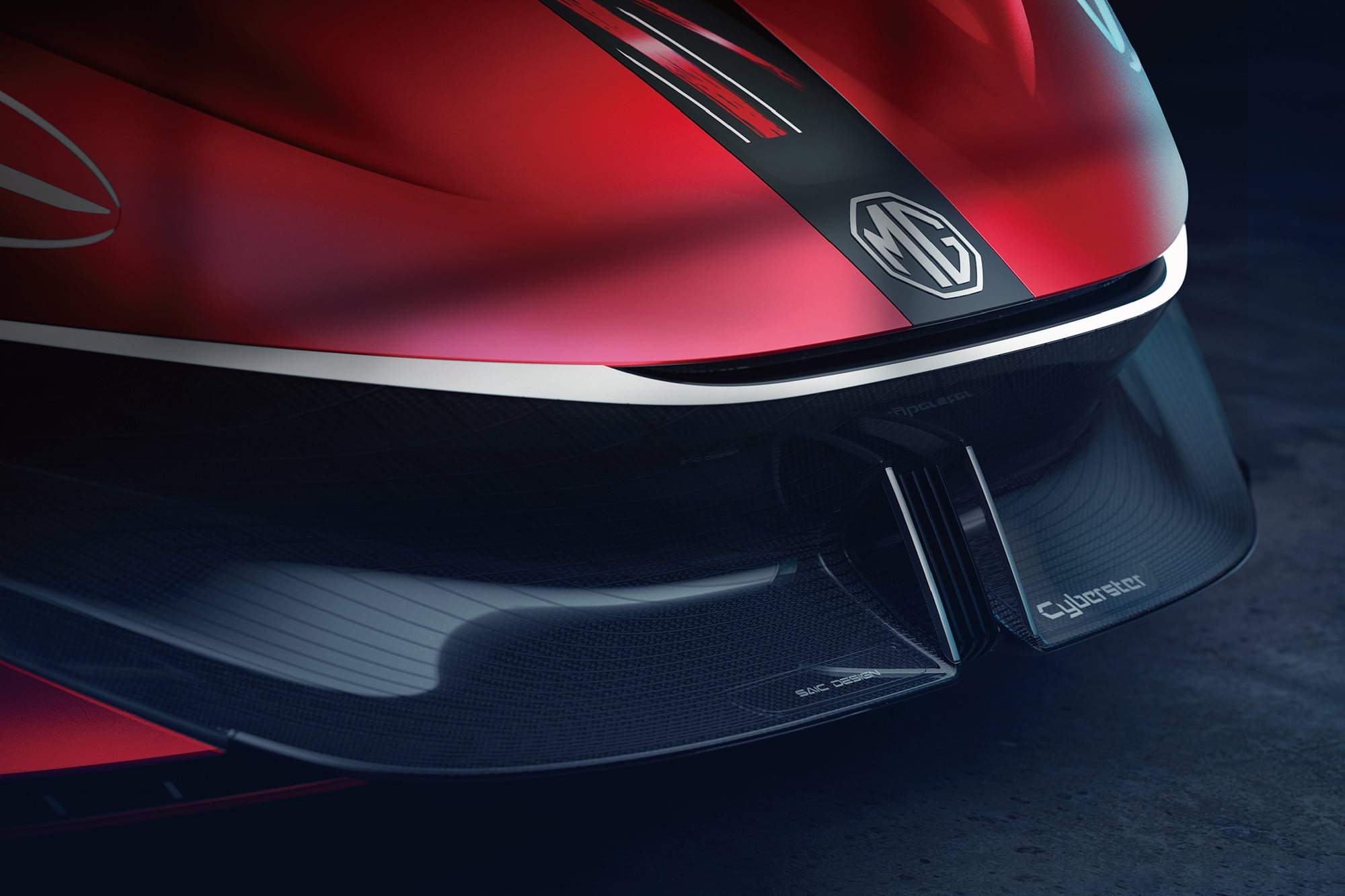
The images reveal a sleek, aero-focussed roadster design, with prominent dual buttresses on the vehicle’s rear deck and a serious-looking front splitter that promises to back up the claimed performance figures.
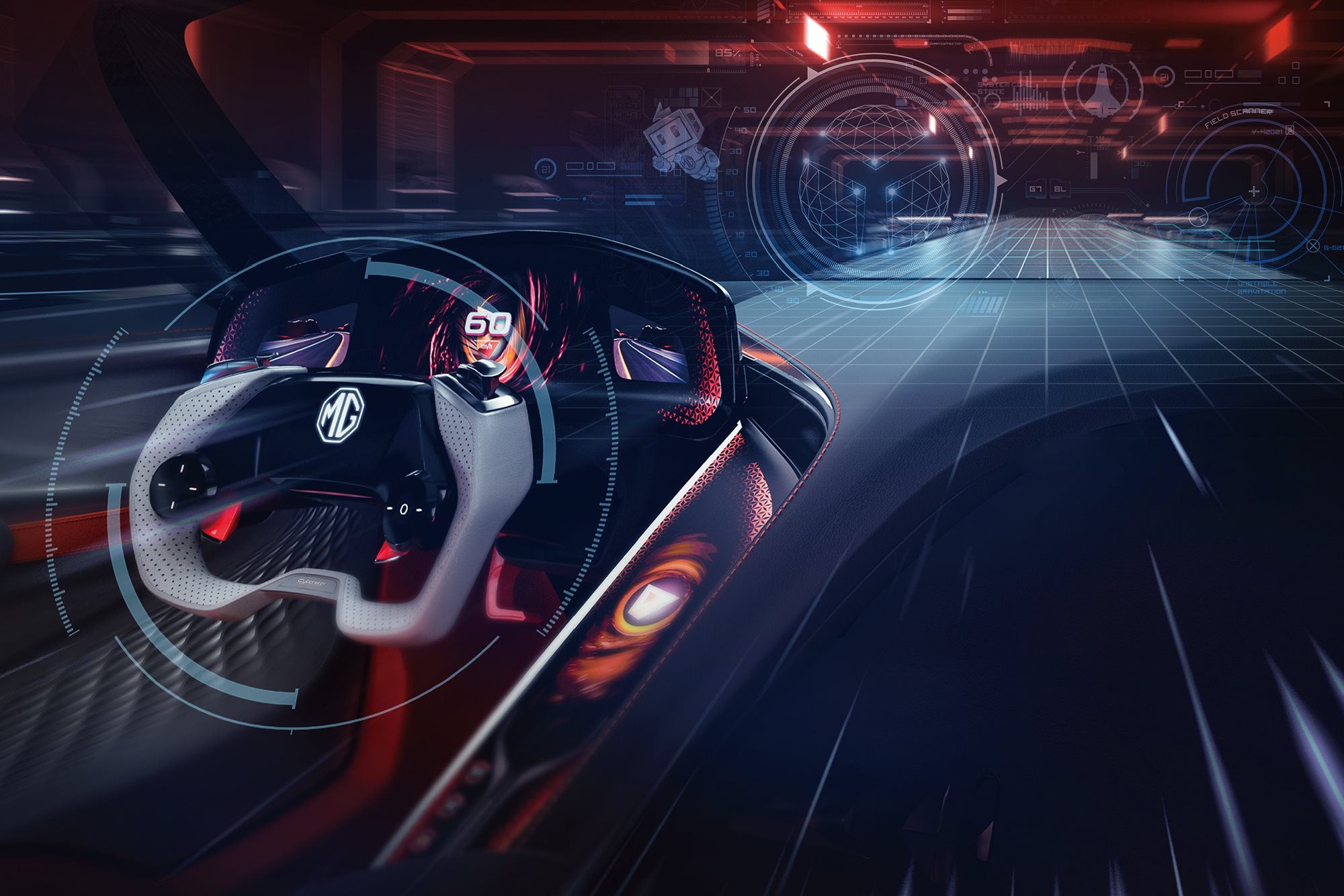
The cockpit looks to be far more concept than prototype, with a yoke-style steering wheel flanked by a wraparound infotainment system for the driver and a fully digital display.
Most likely, both the exterior and interior styling are a showcase of MG’s future design language and EV capabilities.
There’s no word yet as to what the avant-garde EV powertrain might be, however, a dual-motor, AWD set-up is likely.
MG says the Cyberster concept will also come with a suite of tech-laden features aimed at improving the user’s experience, including 5G connectivity and pure electric architecture.
The automaker has collaborated with Shanghai-based gaming and social video-sharing website Bilibili on the Cyberster, as part of an e-gaming partnership between the two companies.
More details about the radical EV sports car are just around the corner, with the Cyberster concept set to be officially unveiled at the Shanghai Motor Show on Wednesday, April 21.
Be sure to stay tuned to WhichCar as we bring you more updates.
Nissan has a new performance flagship for its fabled Patrol off-roader SUV – the Nissan Patrol Nismo.
The hotted-up 4×4 is being made exclusively for the Middle Eastern market, where the moniker enjoys an almost cult-like status.
Images show a car with an aggressive visual makeover that doesn’t look too dissimilar to what we had expected for the Aussie-bound Nissan Patrol N-Trek Warrior, which has now been pushed back to a 2022 local launch.
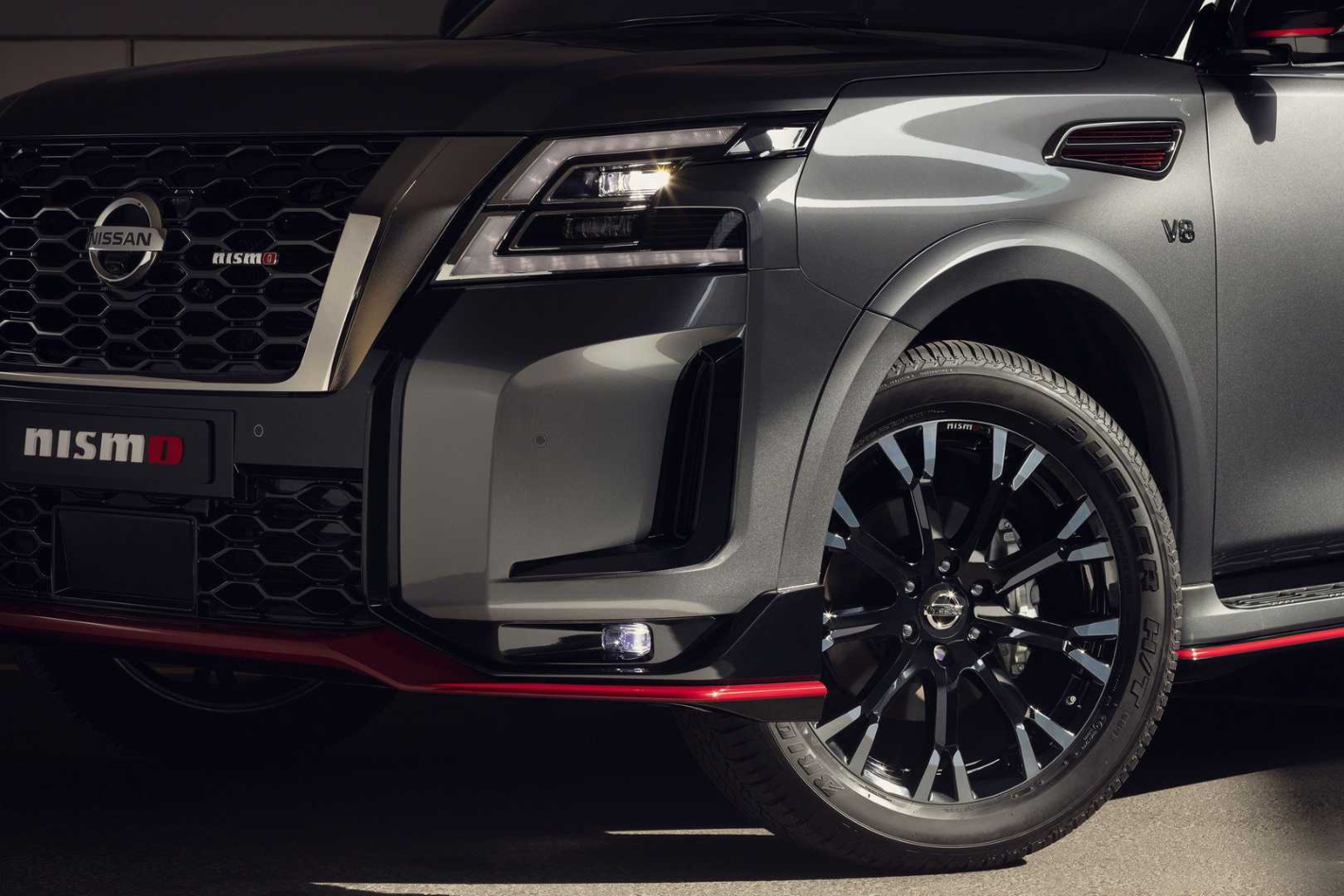
The Nismo sports an aggressive front fascia with a tough-looking matt black grille and contrasting high-gloss piano black accents.
There’s a set of large and aggressive cut-outs that flank a newly designed lower front bumper, and below that sits a glossy red front splitter that Nissan claims improves airflow over the front of the car and aids in better high-speed stability.
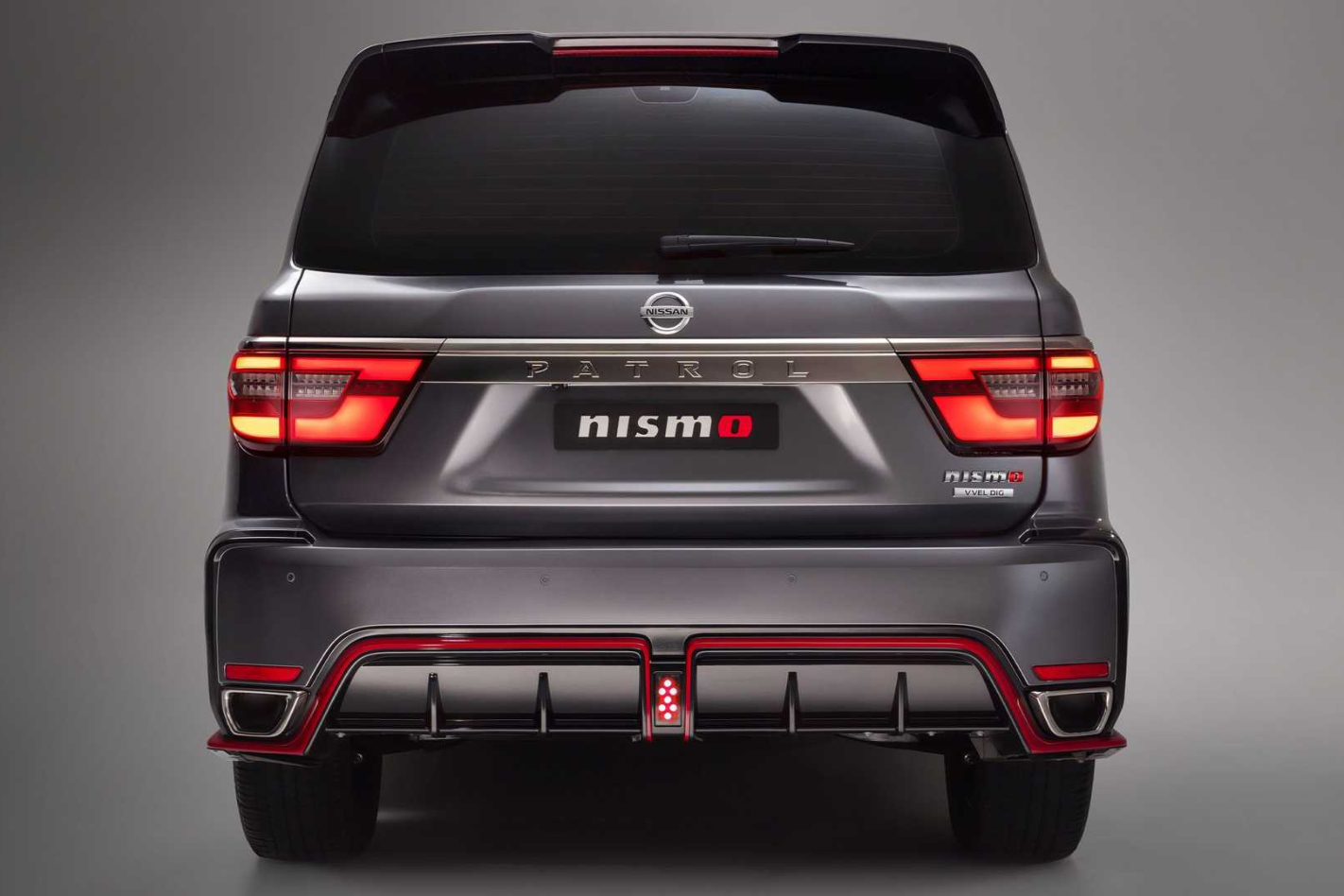
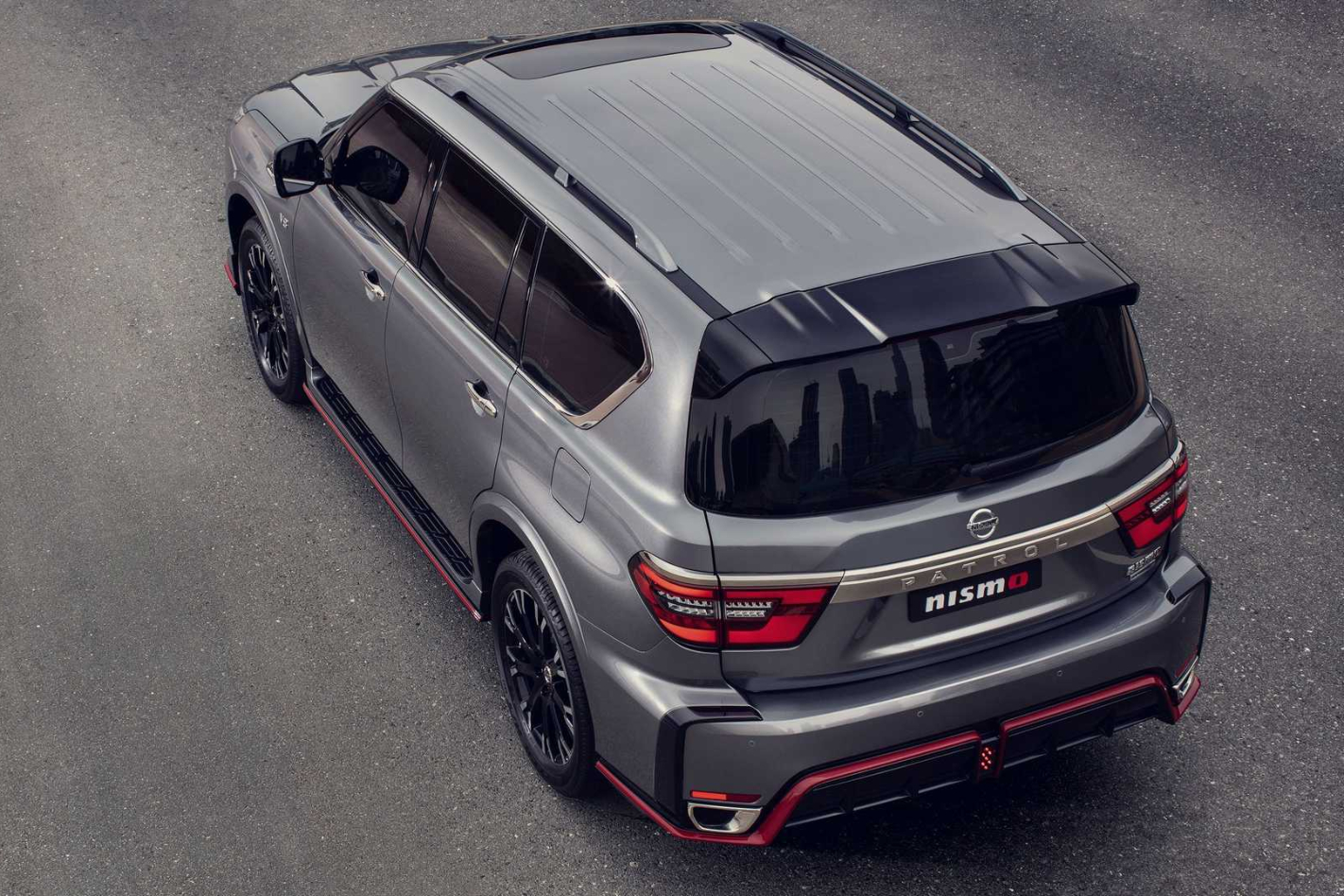
Around the back, the Patrol Nismo has a novel rear bumper design that incorporates a gloss black diffuser and integrated twin-sports exhaust outlets.
The rear bumper also gets deep black cut-outs that match the front bar, red accents and a red LED brake light that’s meant to mimic the braking lights used on Nismo race cars of old.
Inside, the Nismo has also been adorned with several bespoke elements aimed at enhancing the impression of performance.
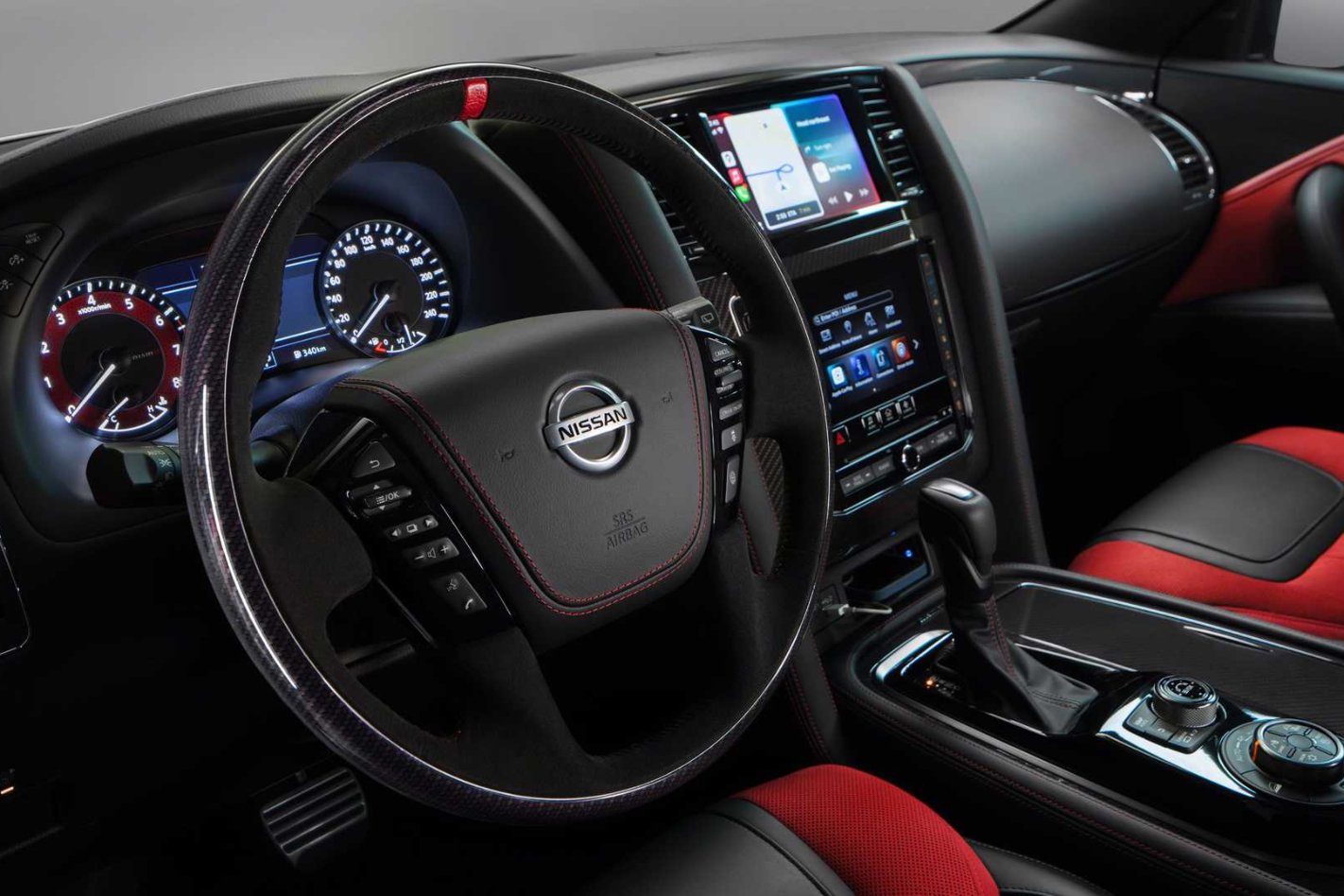
There are new black and red Alcantara seats that complement the exterior of the car nicely and a carbon fibre-trimmed sports steering wheel with red dead-centre stitching.
Splashes of carbon fibre trim pieces can also be found around the cabin, and being a Y62-generation Patrol, the car’s infotainment system now supports Apple CarPlay and Android Auto.
Changes to the performance SUV haven’t just been skin-deep though – the Patrol Nismo also scores lightweight 22-inch alloy wheels and a set of Bilstein dampers that are said to improve the dynamic characteristics of the car.
The chassis has also been tested and set up by Nissan’s Nismo motorsport engineers, who have gone about working their magic on the two-and-a-bit tonne SUV.
Under the bonnet, Nissan’s naturally-aspirated 5.6-litre V8 has also been breathed on to produce a bit more grunt, now producing 315kW and 560Nm, which is a 17kW bump compared to the engine’s standard tune.
Nissan has no plans to bring the high-riding Nismo to Australia – we’ll have to hang out for the aforementioned N-Trek Warrior to get a taste of a performance Patrol Down Under.
MORE: Patrol stories MORE: All Nissan stories
This is the 2021 model year Jaguar F-Pace medium SUV, and it’s a car with a bit of an awareness problem. When most Australians go shopping for a mid-sized prestige SUV, they usually think of the Mercedes-Benz GLC, BMW X3, Audi Q5, Volvo XC60 and maybe the Lexus NX.
If you look at 2020’s sales figures, the Jaguar F-Pace struggled to get a share of the market and that’s perplexing to me because, after having driven the new Jaguar F-Pace, it’s a really good car.
The variant we’re testing here is the Jaguar F-Pace P400 SE which is arguably the biggest newsmaker in the MY2021 Jaguar F-Pace range.
It is one of two in the new range that has an all-new engine under the bonnet, but we’ll get to that in short order. First let’s quickly go over the range and what they’ve changed visually for the 2021 model year.
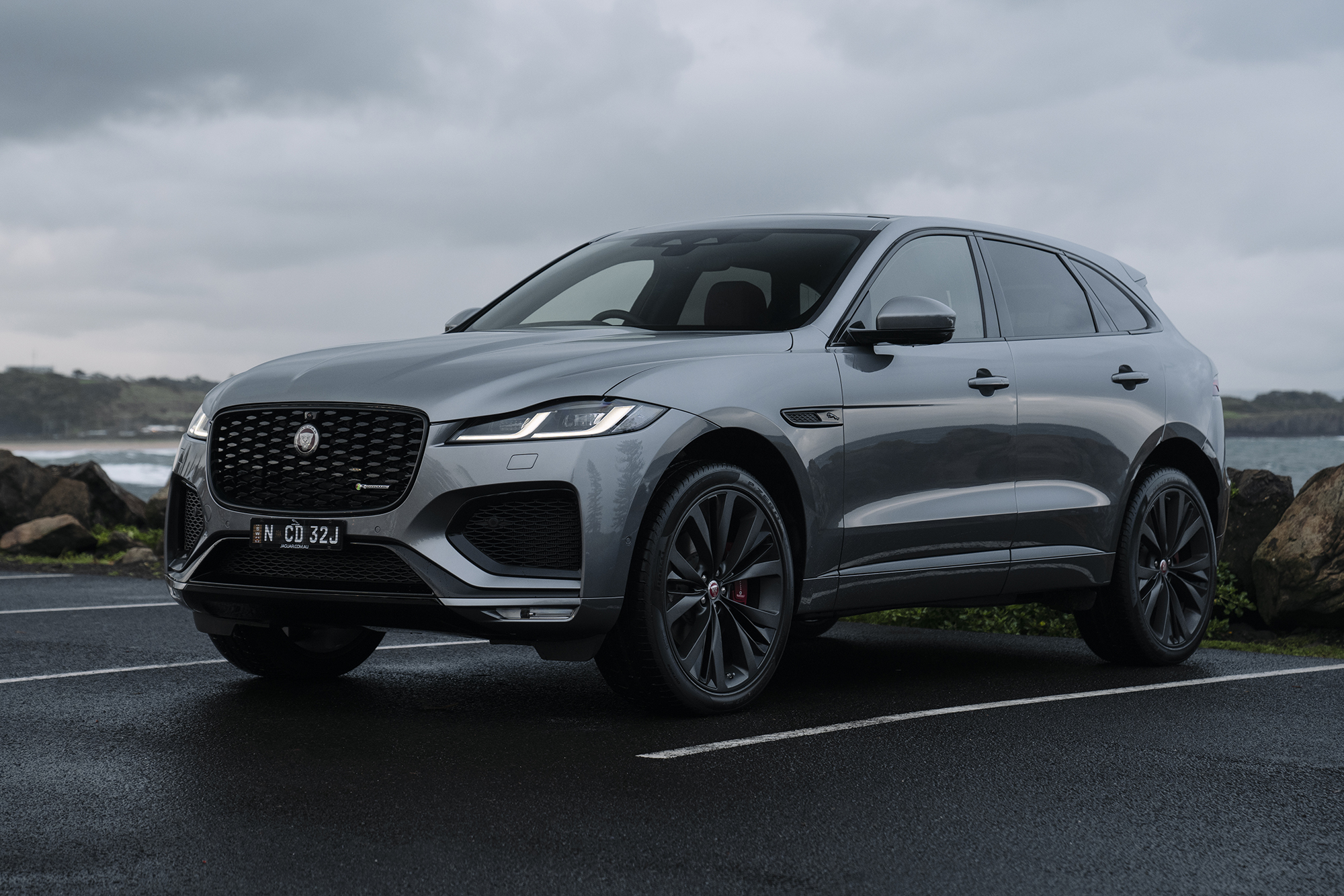
The six-strong MY2021 range kicks off with the Jaguar F-Pace P250 S priced at $76,244 before on-roads (up $1254 over the outgoing model).
Under the bonnet of the P250 S is a 2.0-litre turbocharged four-cylinder petrol engine carried over from the previous generation, mated to an 8-speed automatic transmission and all-wheel drive.
The drivetrain produces 184kW and 365Nm, is capable of accelerating the F-Pace from 0-100km/h in 7.3 seconds and has a claimed fuel efficiency rating of 7.8L/100km.
Equipment new to the 2021 F-Pace range includes LED headlights, powered tailgate (optional), configurable cabin lighting and a stunning Pivi Pro infotainment system.
The steering wheel is all-new and has integrated controls for the sound system, cruise control and trip computer. There are bigger pockets in the doors and a hidden storage area under the centre console.
Jaguar has also enhanced the active safety features on the F-Pace. Adaptive Cruise Control, Blind Spot Monitoring, Rear Collision Warning, Rear Traffic Monitor, Traffic Sign Recognition and Adaptive Speed Limiter are now standard on all models.
It’s not clear whether ANCAP will want to test the 2021 Jaguar F-Pace given the two new engines under the bonnet or carry over the MY2016’s five-star safety rating that included a 93% score for adult occupant protection.
All F-Pace models have electrically adjustable front seats, and the steering wheel adjusts for reach and rake. Dimensionally nothing has changed externally, which means the F-Pace’s internal space remains the same as before.
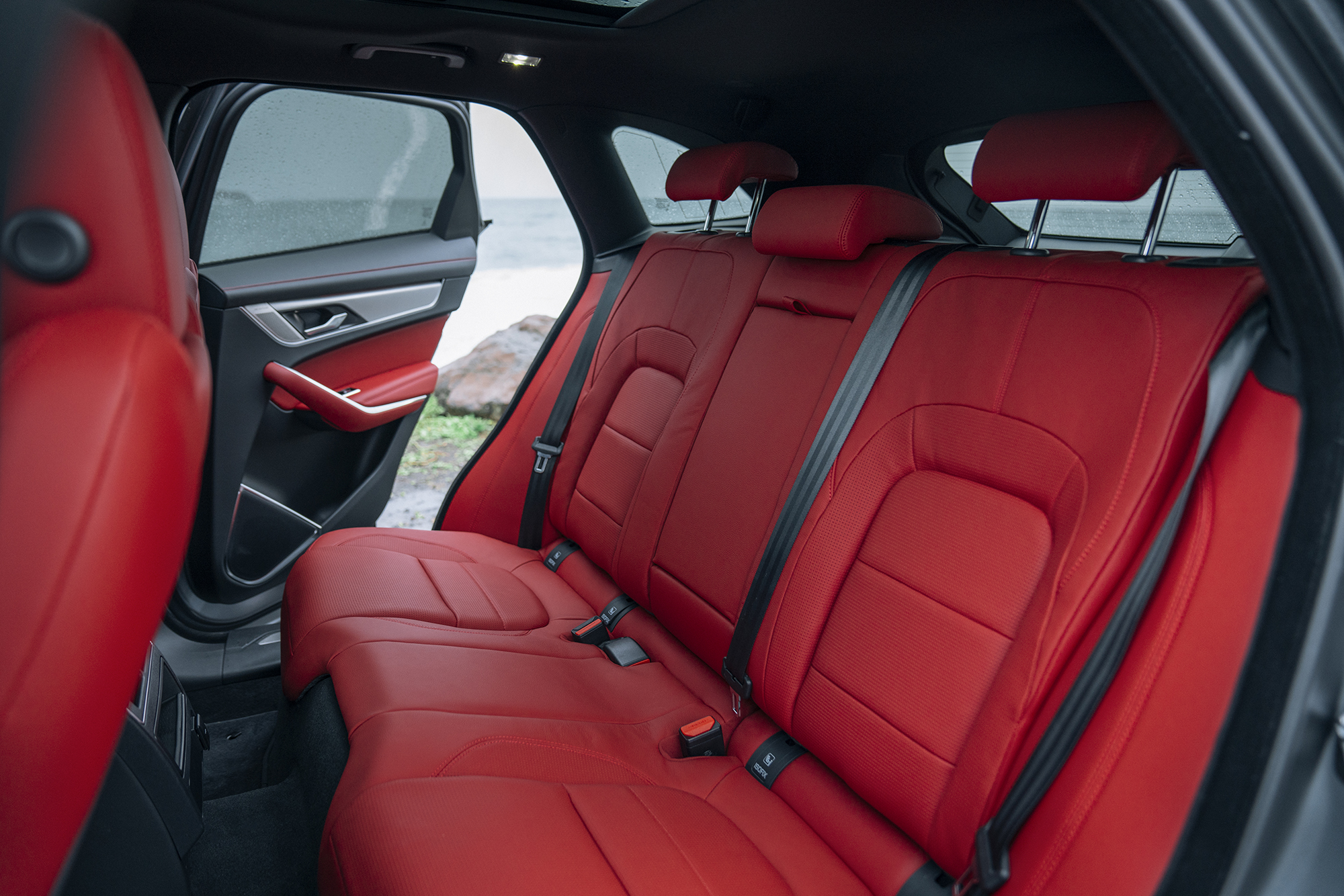
There is sufficient room in the back seat for two adults comfortably, and three at a pinch. Boot space is a minimum of 755 litres.
The second F-Pace variant in the range is the mechanically identical P250 SE variant costing $80,854.
It uses the same petrol engine as the S, so justifies its higher price with heated mirrors, high beam assist, 20-inch alloy wheels, 16-way adjustable front seats, an electrically adjustable steering column and an interactive driver display in the infotainment system.
Next up is the only diesel in the F-Pace range, the D300 SE, priced at $96,194, which features all the same equipment as the P250 SE but has the more powerful and more economical diesel engine.
Then comes the P400 SE we’re driving here, priced at $98,654 and specced similarly to the D300 SE.
The top cat of the F-Pace range – for now – is the P400 HSE, priced at $110,404, or a price jump of $11,750 over the SE.
For that, you get the high-tech Meridian sound system, premium interior materials, heated and cooled front seats, and 21-inch alloy wheels with larger 380mm front brakes.
In June 2021 Jaguar will return the F-Pace SVR to the range. This fire-breathing SUV is the performance king of the crop, boasting a supercharged 5.0-litre V8 petrol engine (405kW/700Nm) that catapults the SVR from 0-100km/h in four seconds flat. Fuel economy is rated at 11.7L/100km (272g/km).
Okay, now back to the changes. This mid-life facelift – the first major one for Jaguar’s medium SUV since it originally launched in 2016 – brings no significant dimensional changes but does improve the ownership experience considerably, especially under the bonnet and inside the cabin.
Headline changes include two new inline six-cylinder engines, an all-new Pivi infotainment system, and an enhanced active safety suite that all combine to put the F-Pace at the pointy end of the premium SUV field for appeal and value.
Plus, all Jaguar (and Land Rover) models move to a best-in-class five-year, unlimited-kilometre new car warranty from April 1, 2021 (previously it was 3yr/100,000km).
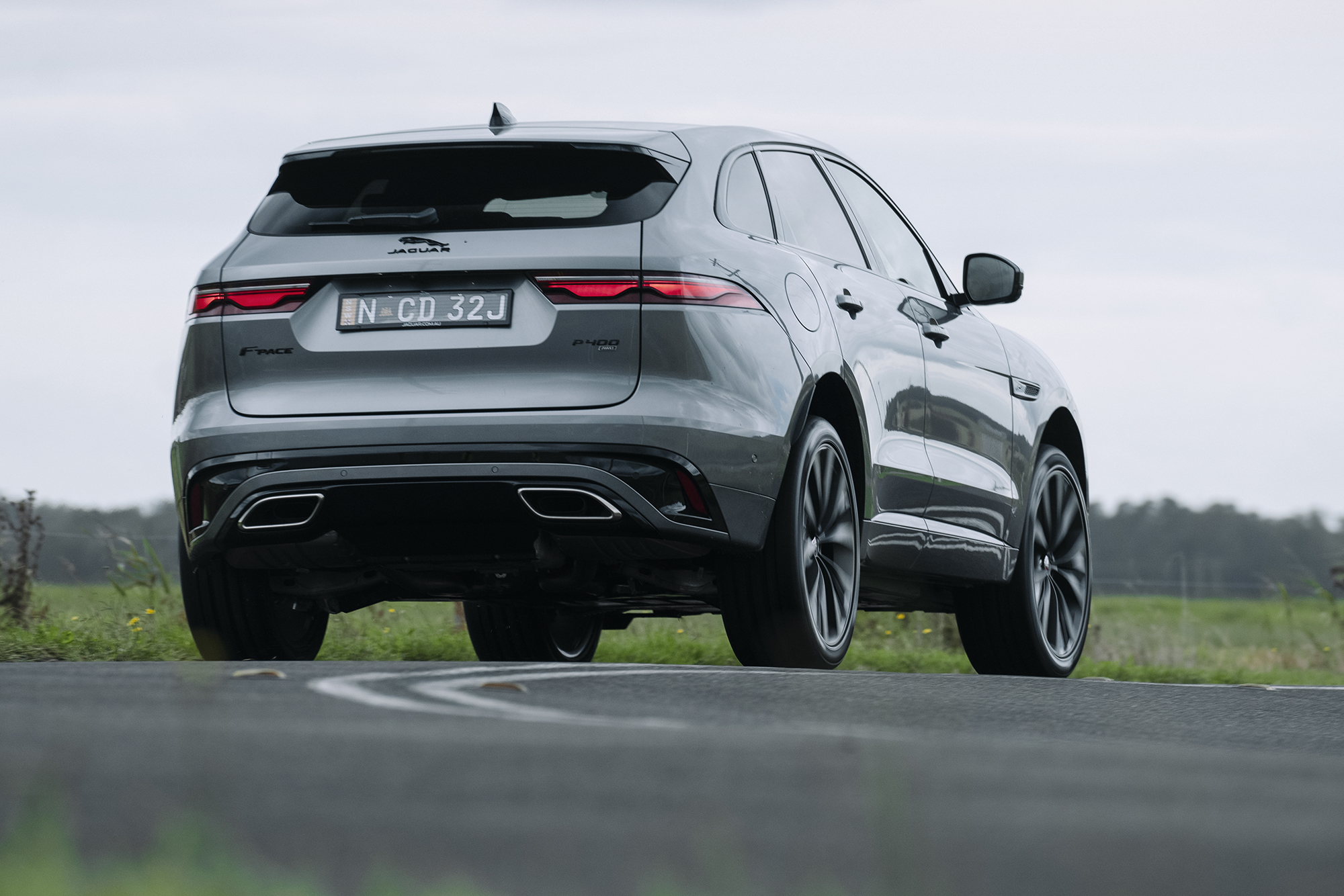
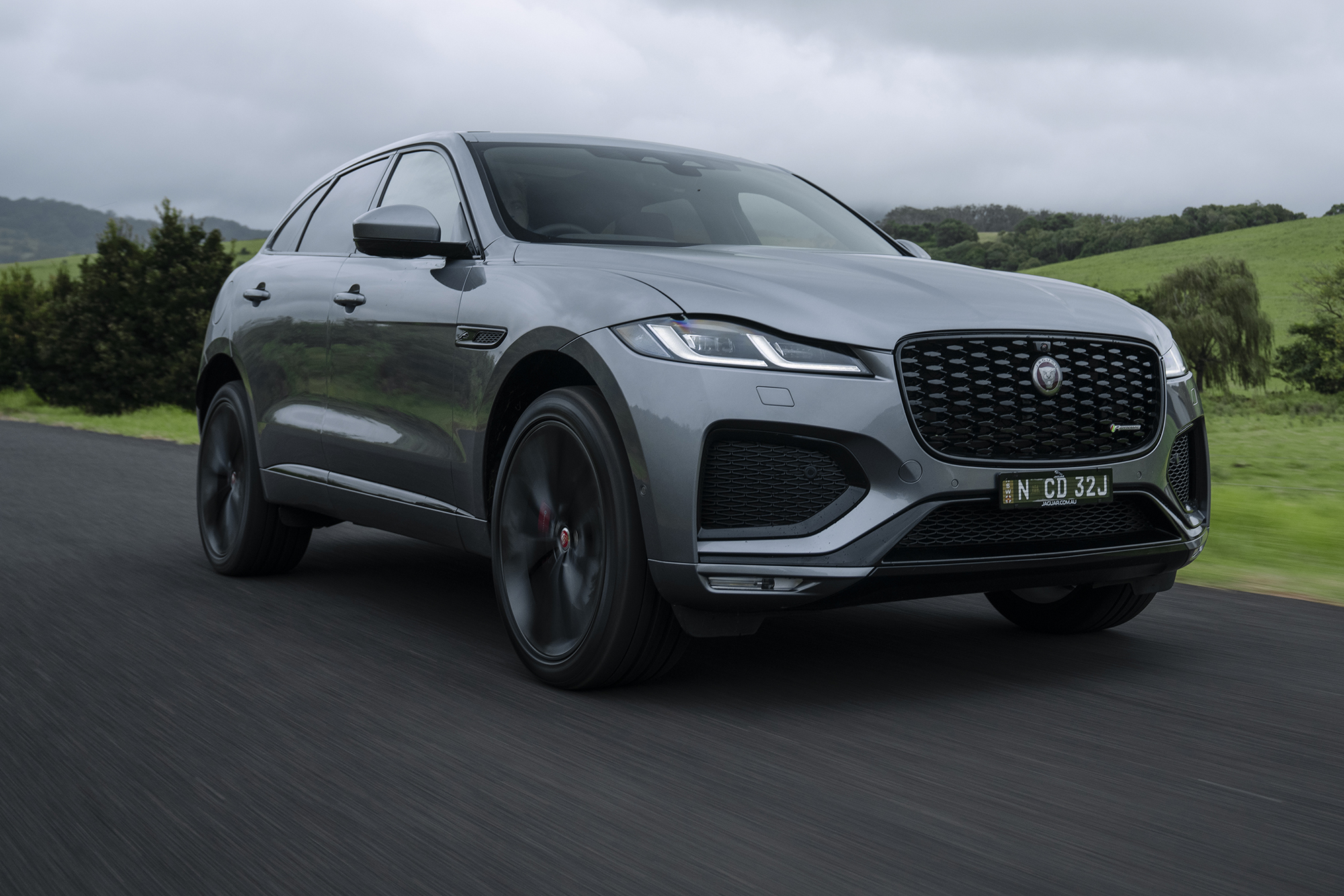
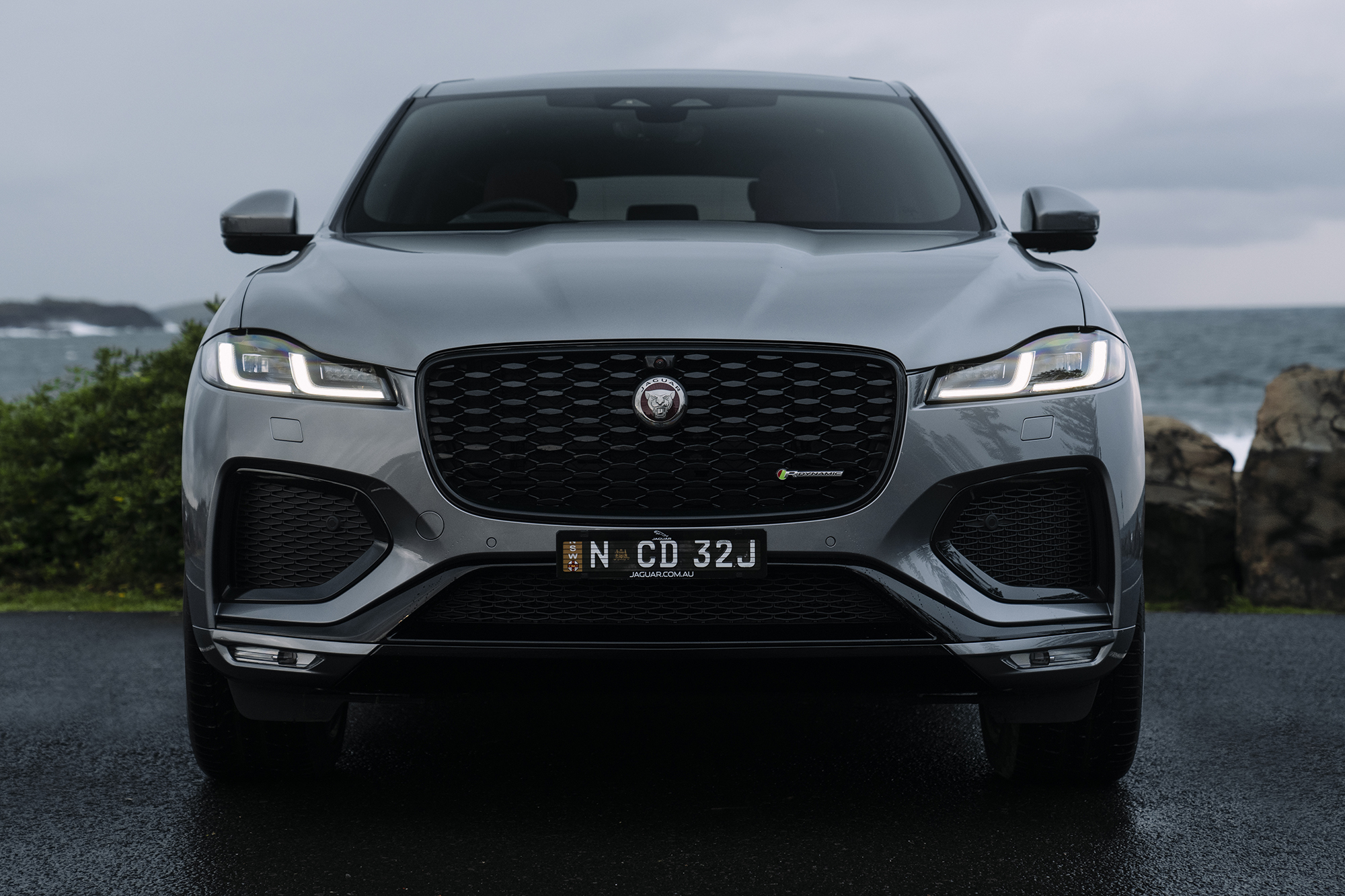
Design-wise, Jaguar has set out to simplify the exterior to improve aerodynamic efficiency and enhance visual appeal. New LED headlights sharpen the front along with a simplified bonnet and bumper design.
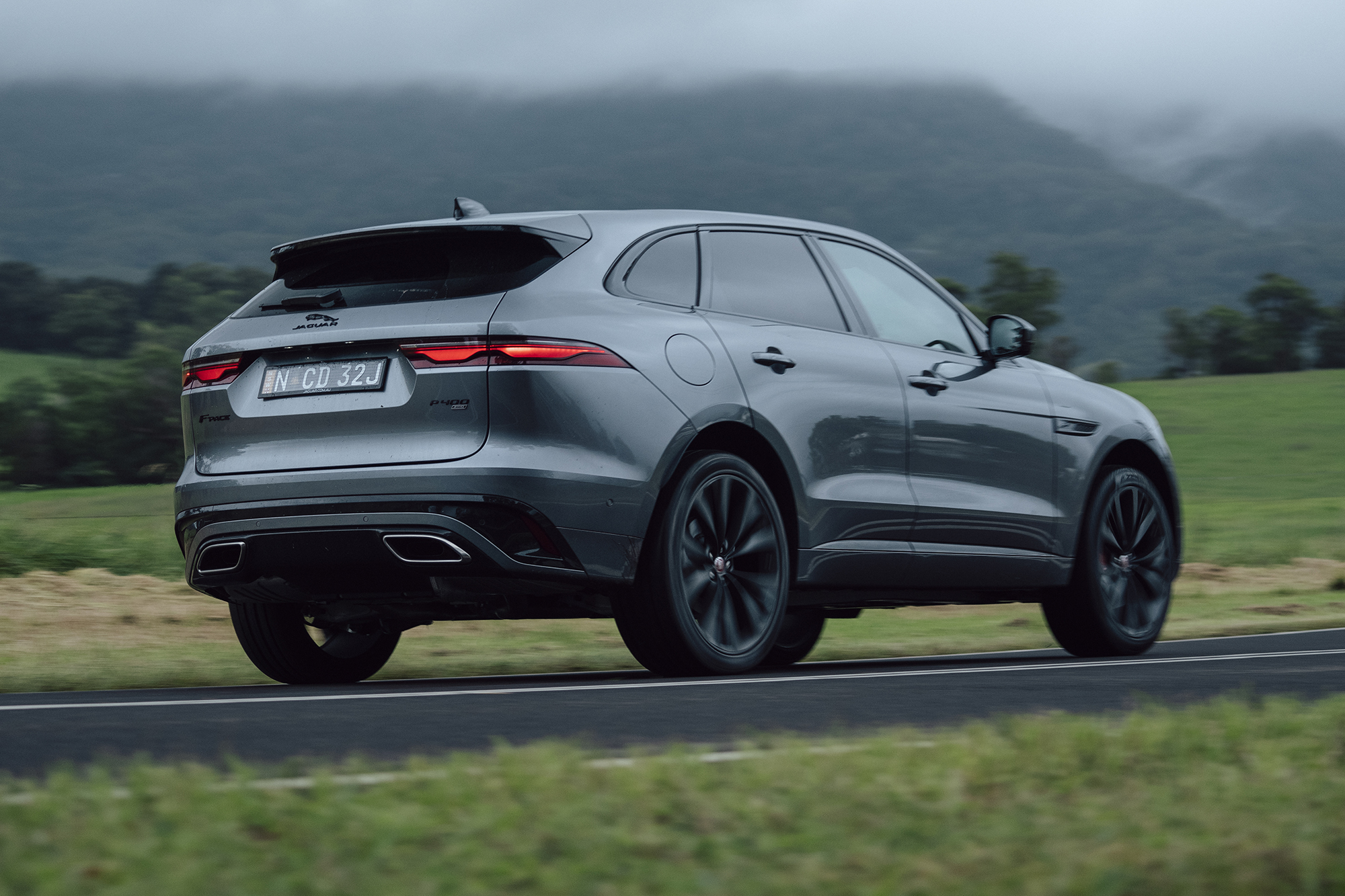
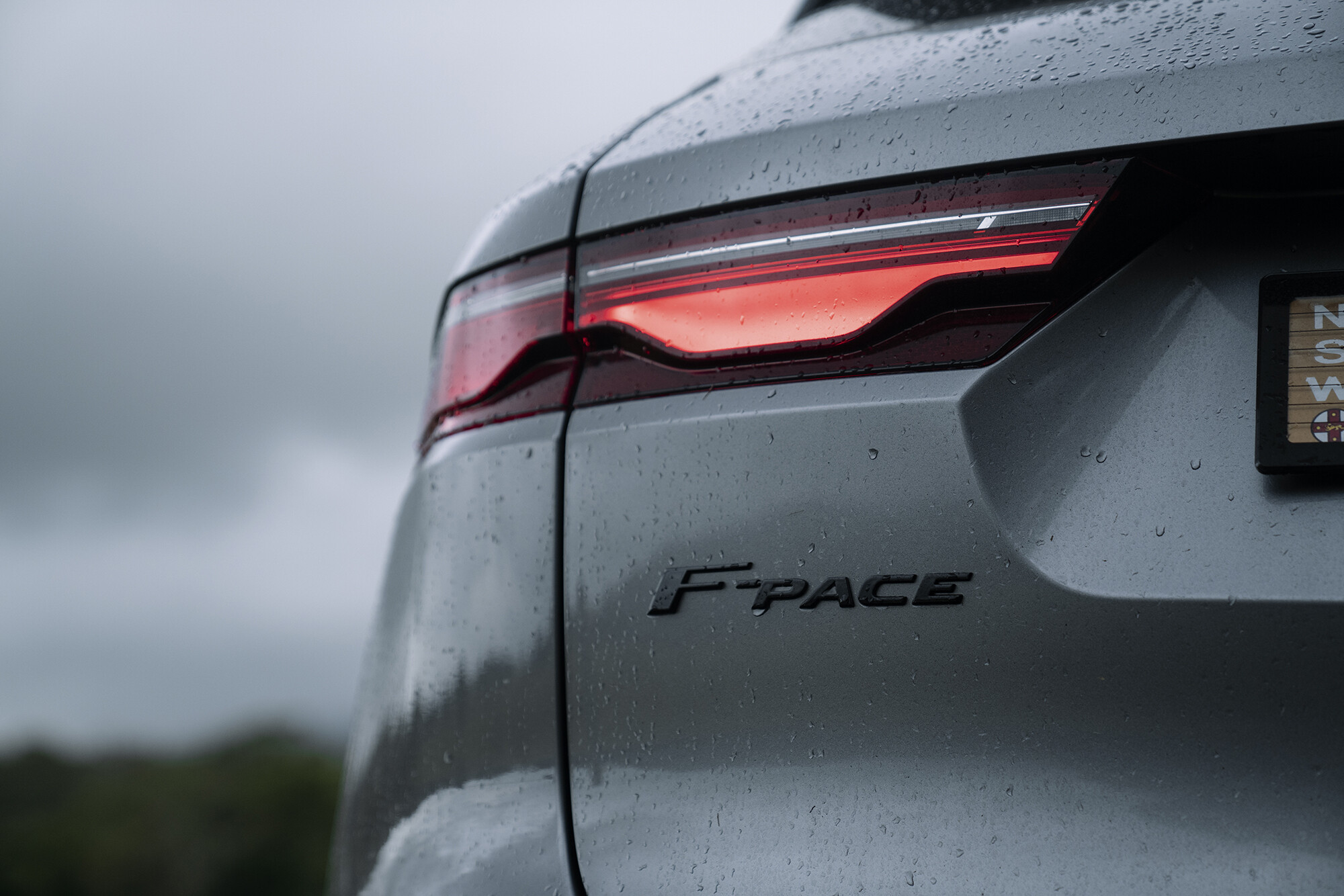
On the side, the only change is the addition of the Jaguar Leaper emblem to the front quarter panel, while at the rear the taillights and rear bumper have been reprofiled.
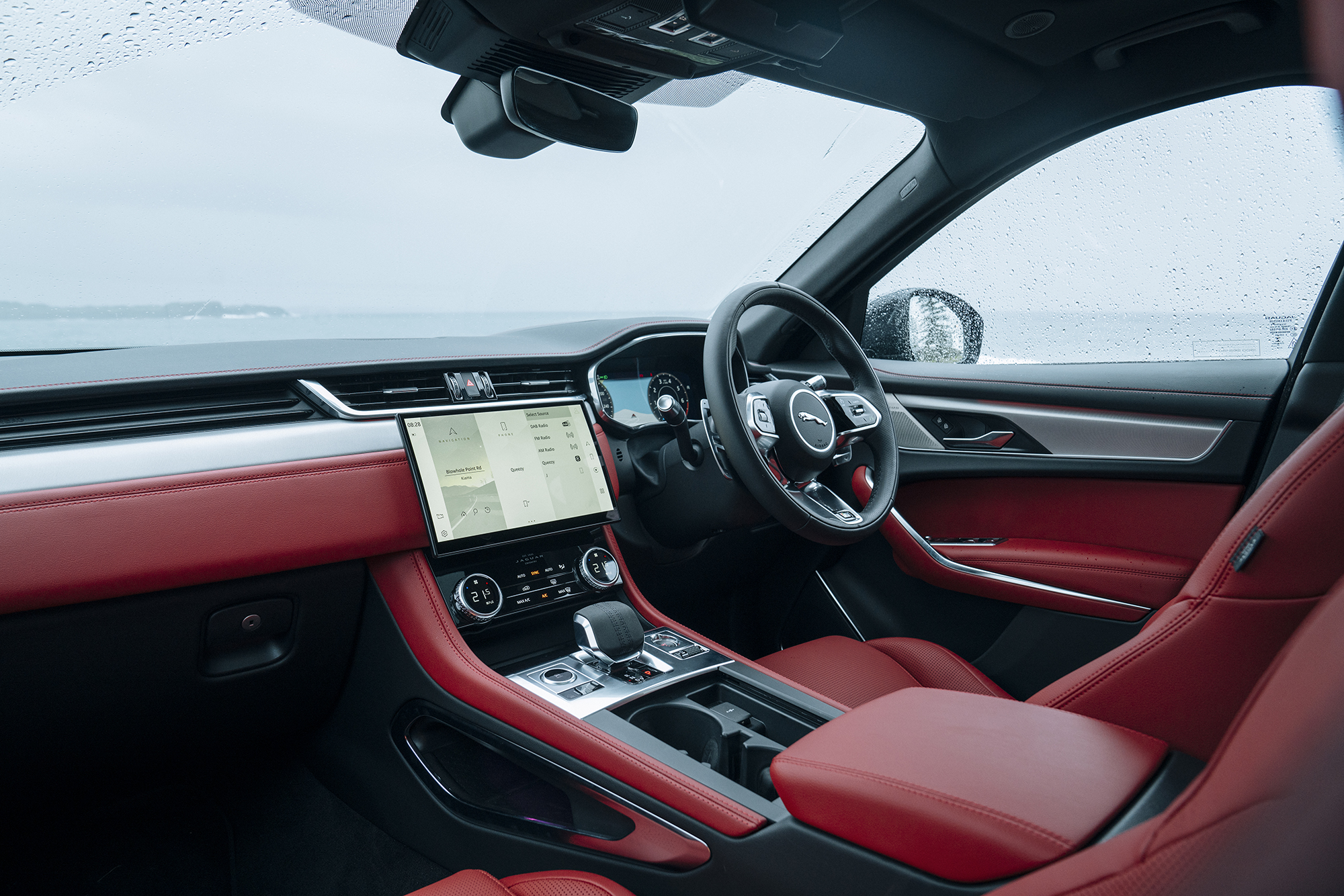
Inside, it’s clear Jaguar has gone to some lengths to lift what was already a premium interior. There’s a new steering wheel with integrated controls for the cruise control, sound system and trip computer. Behind the wheel sits a new high-quality digital instrument display.
The steering wheel itself adjusts electrically for reach and height, and the driver’s seat adjusts in 12 different ways to provide an ideal driving position to suit all but the most extreme tastes.
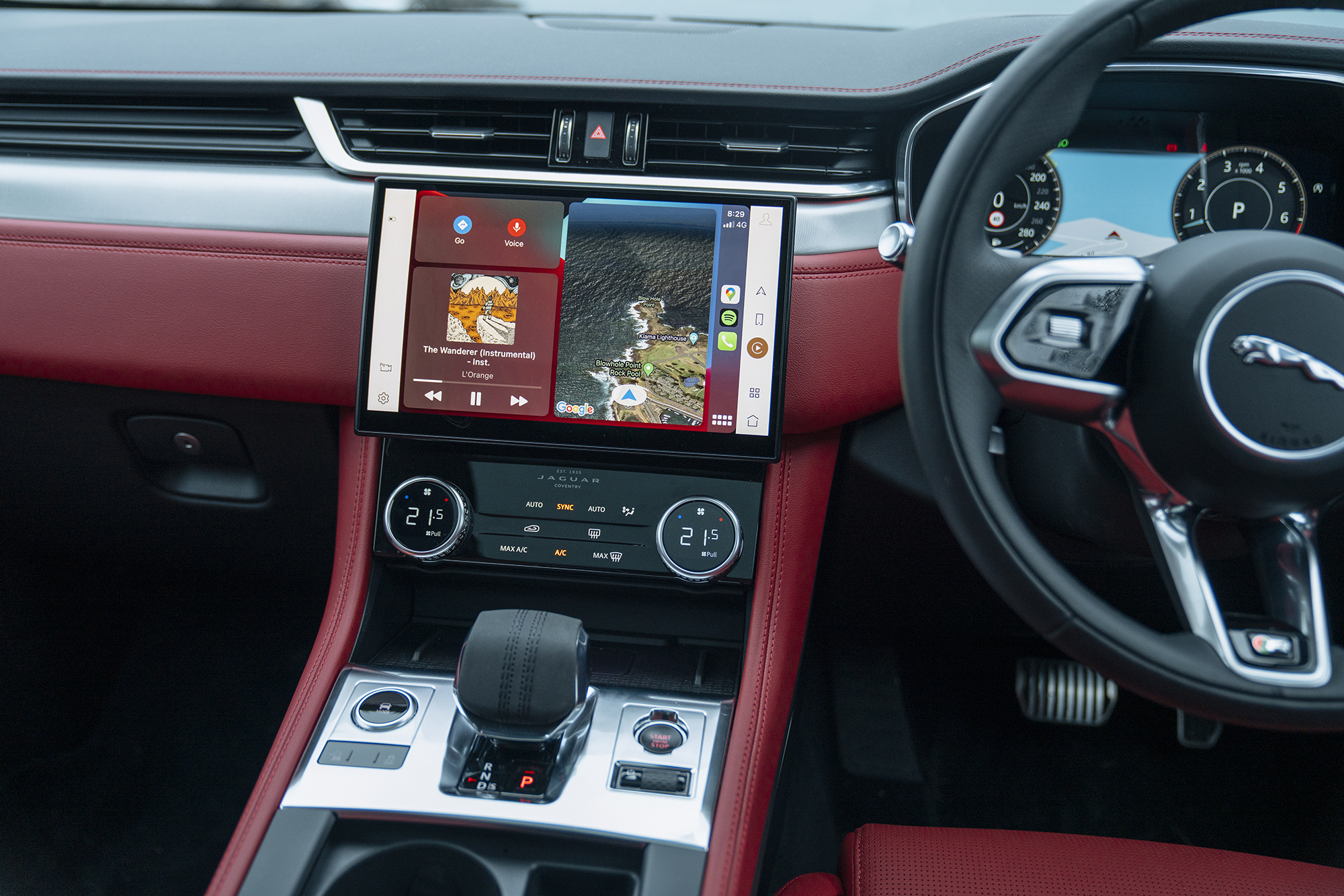
The all-new Pivi Pro infotainment system sits proudly in the centre console and is in my opinion the best in its class.
It uses an 11.4-inch curved touchscreen to house all the satellite navigation, phone, car and entertainment controls. You can also interact with this F-Pace’s dynamic drive system which allows you to stiffen the suspension, sharpen the throttle and adjust steering weight.
Our test car had the $1560 Meridian sound system option which includes active noise-cancelling technology. It’s not new to the market but it is the first time we’ve seen this in a Jaguar.
It basically means there’s a microphone in the cabin picking up all the unwanted noises such as road rumble wind noise, and it uses the sound system to output waves to reduce or nullify those unwanted sounds. In short, it amplifies the cabin’s serenity on the move, and makes conversations possible even at a whisper.
The other big change in the cabin is to practicality. Bigger storage pockets in the doors, a cool little cubby hideaway under the centre console, and a wireless charging mat (optional) add convenience to a classy cabin.
The Jaguar F-Pace has Android Auto and Apple CarPlay as standard, but not the wireless kind yet, so going truly wireless in the cabin is still in the future.
When it does come, the Pivi Pro’s OTA (Over The Air) update capability means it should be added to cars without the owner needing to a) pay for it, and b) go to a dealer.
As for back seat and boot space, nothing has changed there because the F-Pace’s physical dimensions are unchanged.
Now to this Ingenium engine, which is the big news of the MY21 F-Pace update.
The P400 SE is powered by an inline six-cylinder petrol engine displacing 3.0 litres and good for 294kW and 550Nm. All F-Paces come with an eight-speed auto and all-wheel drive.
Jaguar claims the P400 will accelerate from 0-100km/h in 5.4 seconds, and on my test drive I saw no reason to dispute that. The engine has a strong, syrupy nature that contributes to effortless daily driving.
If the driver ups the ante on the throttle, the acceleration is neck-snapping aggressive, and the transmission quickly and seamlessly drops ratios to slot the right gear for the best result.
Drive aggressively and you won’t stand a chance of achieving the WLTP fuel economy average of 8.7L/100km. But on a more casual stint we saw high sixes, so economical driving is possible.
When it comes to ride quality, our test car acquitted itself admirably given that it was wearing 22-inch wheels and tyres.
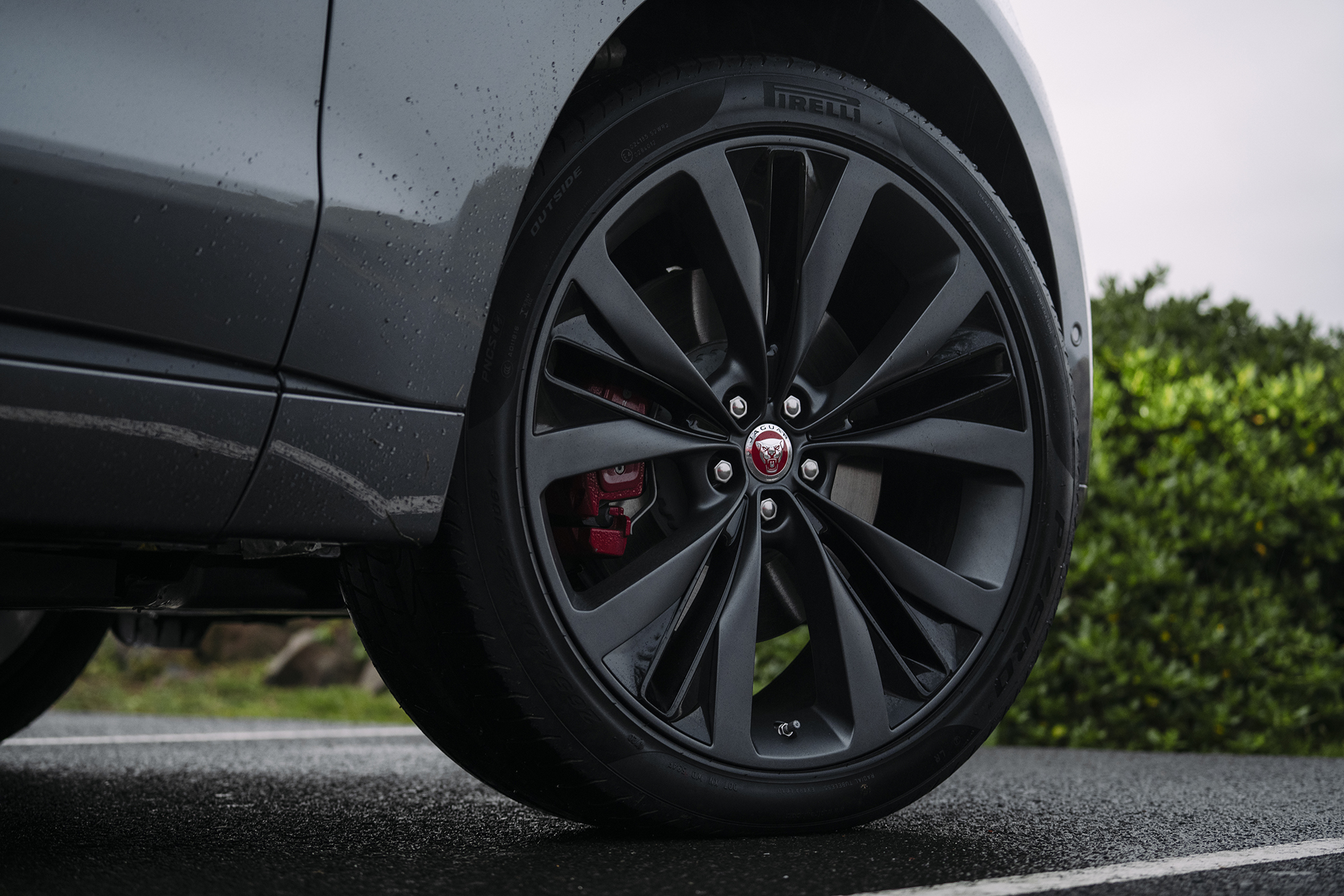
The ride is very well controlled and relatively supple in comfort mode, and dynamically capable too, although some tyre noise is evident. In firmer dynamic mode the ride is busier but still comfortable.
I also drove the P250 at the launch, and while that 2.0-litre, four-cylinder, turbocharged petrol engine is capable, it doesn’t have the catlike reflexes or generous nature of the P400, which in turn fits better with the F-Pace’s premium positioning.
At just shy of $100,000 plus on-road costs, the Jaguar F-Pace P400 SE is not cheap, but it now wants for nothing, which makes it a great addition to the shopping list for anyone looking at a premium SUV.
MORE: F-Pace news and reviews MORE: All Jaguar stories
A second recall notice for the new-generation 2021 Subaru Outback has hit the Australian Competition & Consumer Commission’s Product Safety Australia website, to address a fault with the vehicle’s stereo camera system.
This notice follows the issuing of a recall for 256 examples of the the new Outback in March, regarding the new SUV’s electronic brake booster. You can read more on that issue here.
Subaru Australia first made contact with owners for the brake booster recall in early March, and the company has confirmed with WhichCar today that owners have likewise already been contacted for this latest notice.
The newer recall centres on the Outback’s autonomous emergency braking technology, specifically the dual cameras mounted atop the windscreen, in front of the interior rear-view mirror.
According to the notice, the stereo camera system in 1982 examples of the new Outback could confuse or “mis-recognise” roadside objects, and/or miscalculate the travelling direction of an oncoming vehicle.
In the event of either software bug striking, the Outback could unexpectedly activate its pre-collision braking system.
The company says the likelihood of these symptoms occurring is low, but it is nonetheless contacting owners of affected vehicles to arrange an update to the software that controls these features.
The process takes 120 minutes, and will be carried out without charge.
Owners can visit www.subaru.com.au/retailers to find their preferred Subaru Retailer.
For further information, contact your nearest Subaru Dealership or the Subaru Customer Relations Team on 1800 226 643 (Monday to Friday, 8:30am – 5pm AEST).
MORE: Outback news and reviews MORE: All Subaru stories
