UPDATE, February 15, 2021: We’re mere days away from a full reveal of the 2021 Nissan Qashqai but that hasn’t stopped the Japanese car maker from releasing yet another teaser of the new small SUV.
The short clip uploaded to YouTube reveals the front and rear light clusters, shows off the ‘floating’ C pillar roof design and confirms that a two-tone black roof colour scheme will be available.
This latest teaser is likely the last ahead of a global unveiling set for February 18, 2021.
Nissan Australia is staying quiet on local timing for the new-generation Qashqai, which suggests it could be as far off as late 2021 or early 2022 – and the ongoing effects of the COVID-19 pandemic could contribute to the delay.
As for styling, there are few surprises to be found here, thanks to clear hints that the new Qashqai’s look will follow the themes set out in 2020 with the new-gen X-Trail reveal and the worldwide debut of the new 2021 Nissan Pathfinder.
Sharp new V-shape headlights will feature up front, styled as something of an extreme tribute to the hooked lights of the outgoing 370Z sports car.
A sharply creased character line draws down from the lights into an intake duct (which may or may not be functional) and, while not visible in these latest images, Nissan’s broad ‘V-Motion’ grille will likely dominate the front end.
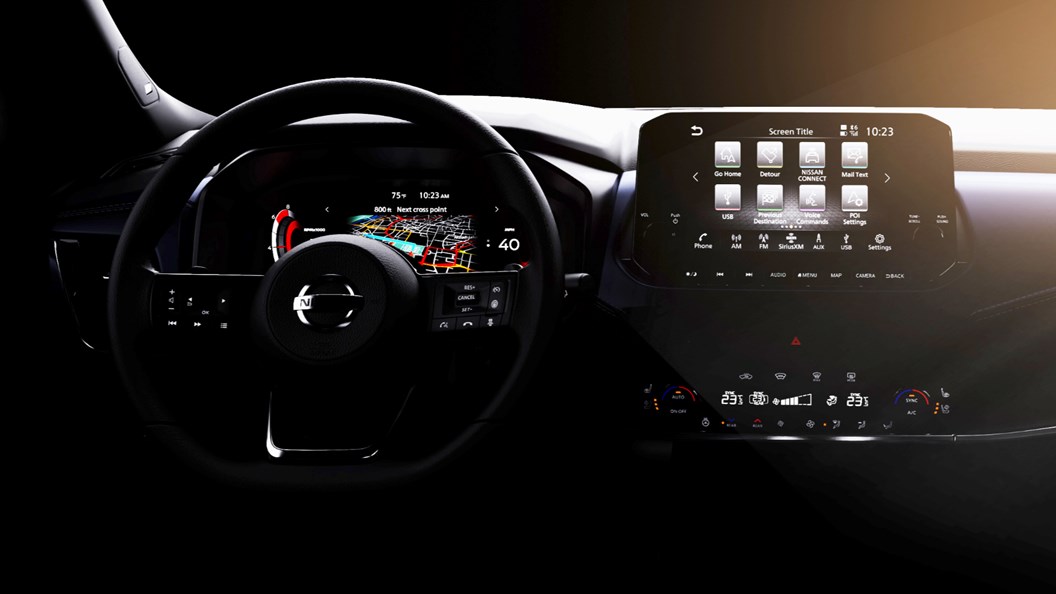
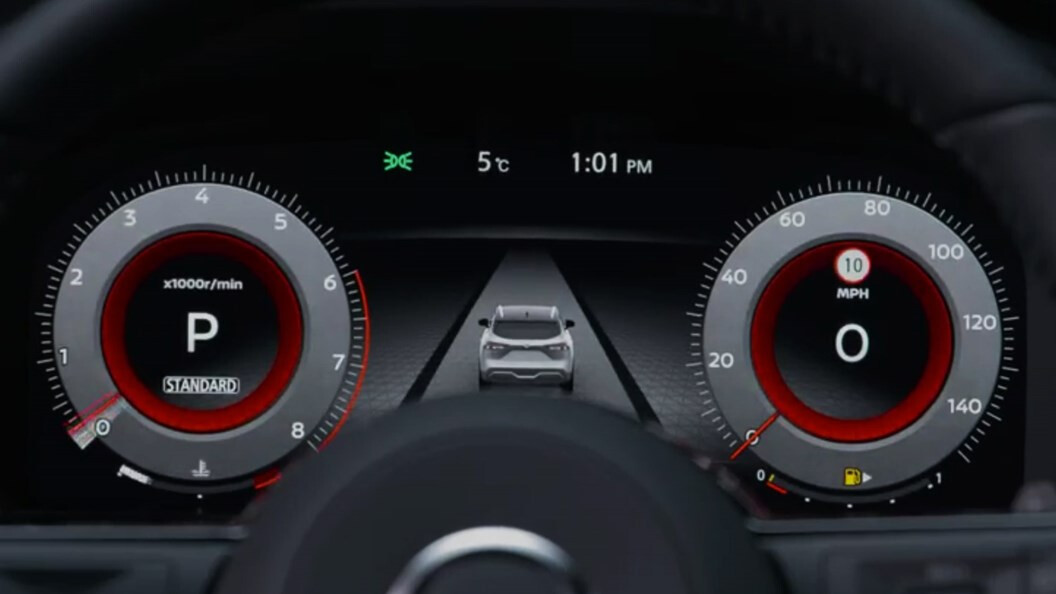
Inside, the new Qashqai will again take its cues from the bigger X-Trail and Pathfinder SUVs, with a new steering wheel, digital driver display, a short shift-by-wire gear lever set next to a drive-mode selector dial, and a large tablet-like main display in the centre of the dash.
Click our gallery at the top of this story to see more images.
Watch for more to come when the new Qashqai is revealed on February 18, and catch a detailed rundown of its technologies in our earlier story, below.
The story up to here
- Full debrief on new Nissan Qashqai
- Hybrids only – no diesel
- Hot one may be on the way
Sensibleness in the form of a new platform (CMF-C), the latest driver safety systems and hybrid engines are the big announcements for the five-seat, five-door Qashqai, which competes with cars like the Mitsubishi ASX, Hyundai Kona and Toyota CH-R.
Nissan has revealed it’s attempting to cash-in on buyers who are looking for a smaller, more environmentally friendly car.
Pricing and trim levels are yet to be announced, but we can confirm that Nissan will be keeping the car’s price ‘competitive within the segment.’
Hybrids, no diesels
Nissan is following the likes of pretty much every manufacturer around at the moment by not offering a diesel engine.
Instead, buyers can choose from a 1.3-litre mild-hybrid and a range-extender hybrid called e-Power.
Though nothing is yet confirmed for the Aussie market, the 1.3-litre comes with two power outputs, front- or four-wheel drive, and with a CVT auto or a manual.
- 103kW manual two-wheel drive
- 115kW manual two-wheel drive
- 115kW CVT (automatic) two-wheel drive
- 115kW CVT (automatic) four-wheel drive
We’d bet against the manuals making the trip down under, but watch this space.
The anally retentive will have noticed the auto is a CVT, whereas the current Qashqai uses a DCT in other markets.
Nissan Europe’s deputy director of passenger car vehicle evaluation, Peter Brown, tells us that’s because CVTs are increasingly getting better and less elastic-band like.
“We looked at customer feedback and neither the CVT or DCT was perfect. This new CVT will be the best of both worlds – offering a relaxed smooth seamless drive at low speed, but enough grunt at high speeds,” he said.
“There are variable numbers of gears with a CVT depending on speed and amount of demand, not just the standard seven or eight.”
The more interesting method of propulsion is Nissan’s e-Power system.
Nissan remains cagey about the full details, but did say power output is rated at 115kW. It’ll only be available with front-wheel drive.
Nissan’s e-Power system is essentially a range-extender hybrid, meaning it offers electric driving without range anxiety.
The wheels are driven by an electric motor, while the petrol engine simply charges the battery.
Upgraded tech
Most of the Qashqai’s tech upgrades are to do with safety and convenience. The most convenient of which is Nissan’s semi-autonomous ProPilot system.
Improvements include: slowing down to 0km/h in stop/start traffic and resuming once traffic moves again, a smoother steering system, automatic speed limit adjustments, and intervention if the driver is about to hit something in the blind spot.
There’s also a new intelligent headlight system that can turn off small sections of the LED headlights in order not to dazzle oncoming traffic.
Even base-spec cars will get intelligent cruise control.
Will it fit the kids?
The new architecture means the car is 32mm longer and 35mm wider than the current Qashqai. This means more room for passengers and stuff.
The boot will usefully hold another 50 litres over the current model too.
Interestingly, the proportional changes aren’t just for practicality. Brown tells us that the changes are also to make the car look lower and wider, giving it a better stance.
Nissan will keep its boot floor configuration system that allows drivers to alter the boot’s height and keep the parcel shelf under the boot.
Any insights on the exterior?
It’s a bit sportier according to Nissan bosses. Not that you can really tell from those images.
The front looks decidedly different from the current model thanks to different lights.
To us, it looks like it’s going in the same design direction of Nissan’s latest Rogue (X-Trail in Australia) with its separated front light clusters.
But the rear and side profile looks very similar to the outgoing model.
Didn’t you mention a hot version?
Yes, we did. Nissan Europe’s vice president for product planning, Marco Fioravanti was coy but didn’t shut the door.
“This is our key model in Europe and we aren’t closing any doors for now,” he said.
“(The car’s) life cycle is long and full of surprises – we’re pretty sure we’ll surprise you in the future.”
How about the interior?
There’s a fully customisable TFT screen on offer, plus a heads-up display that’s projected onto the windscreen.
And of course, there’s a new 9.0-inch infotainment system with a list of services as long as your arm.
Biggest of the new features are wireless Apple CarPlay, Google street view, and the option of Amazon Alexa.
There is a raft of small, but important practical improvements, including 28mm more shoulder room for front seaters, 20mm more knee room for rear seaters, bigger cupholders, and a larger space for phones.
Here’s something for stat fans. Nissan reckons it’s the first in the segment to offer massage seats, while it also offers the most powerful wireless charging pads.
Oh, and Nissan is continuing with physical heating controls.
Anything else you couldn’t shoehorn into a subheading?
In order to make the car sound more premium, Nissan has teamed up with famed video game brand Bandai Namco to create the car’s internal noises.
A seven-seat Qashqai has been ruled out, though, because it would interfere with the X-Trail.
While a Bose sound-system is available, it won’t come with speakers in the headrests.
Nissan’s 2022 Australian line-up is coming together
A peek at the government’s Road Vehicle Certification System (RVCS) documents has revealed the incoming 2021 Toyota Camry update will arrive with a more powerful four-cylinder engine mated to a new eight-speed automatic transmission.
The RVCS listing also shows no sign of the 224kW V6 currently available in the range-topping Camry SL.
The 152kW 2.5-litre four-cylinder non-hybrid engine produces 19kW more than the current 2.5-litre four-cylinder, with the 2.5-litre hybrid versions dishing out 160kW.
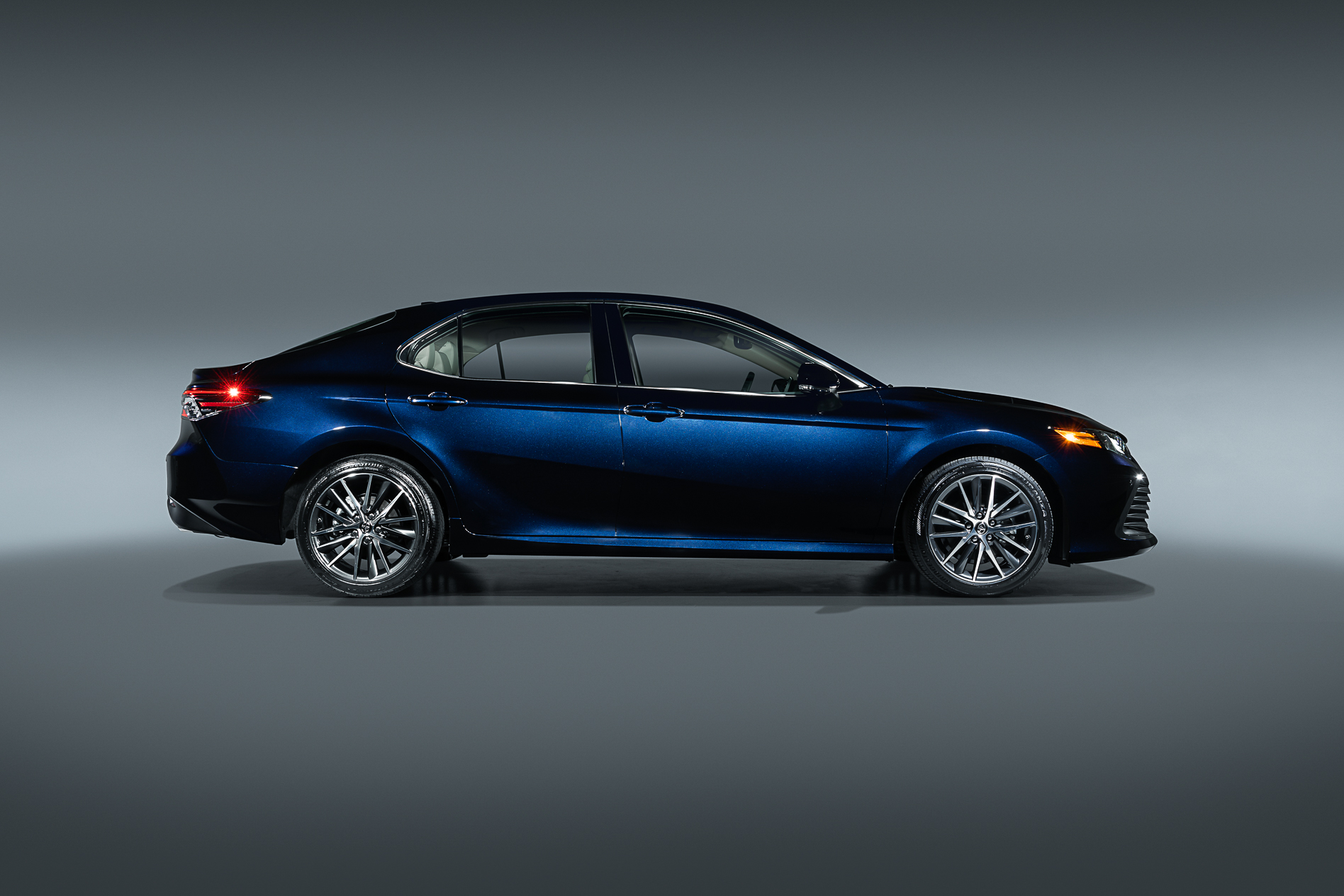
The boosted four-cylinder engine will also benefit from an eight-speed automatic transmission that replaces the current six-speed auto.
The hybrid variants will continue to operate with a continuously-variable transmission (CVT auto).
More efficient hybrid
The Camry Hybrid will also switch from nickel-metal hydride (NiMH) batteries to lithium-ion (LiON) units for the first time in Australia.
Toyota first introduced NiMH batteries with the Prius 20 years ago for their robust ability to weather repeated charge cycles. But advancements in lithium-ion technology since have allowed a lighter-weight battery outlay for the same amount of power, meaning Toyota will switch its fleet of hybrids to the newer tech.
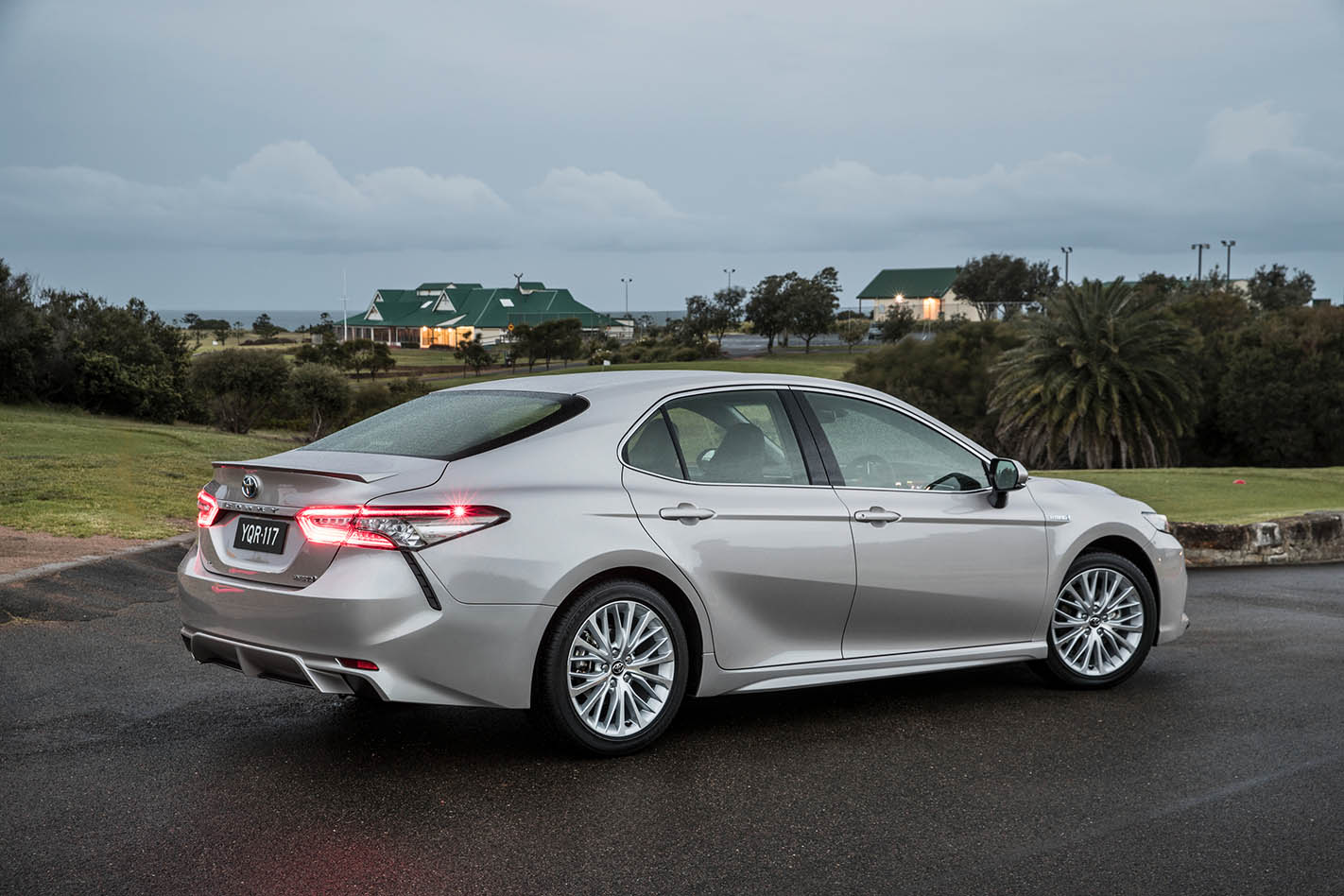
The Camry Hybrid will be one of the first locally-offered models to adopt the lithium-ion pack, which was introduced for higher-spec hybrid Toyotas in overseas markets a couple of years ago.
No word is forthcoming from Toyota Australia regarding range variants and specifications as yet, though we expect Camry Ascent, Ascent Sport, as well as sporty SX and luxury SL grades to carry-over for the 2021 facelift.
The Toyota Camry still records a healthy amount of sales despite a dwindling sedan market, regularly crossing the 1000 sales mark in a given month.
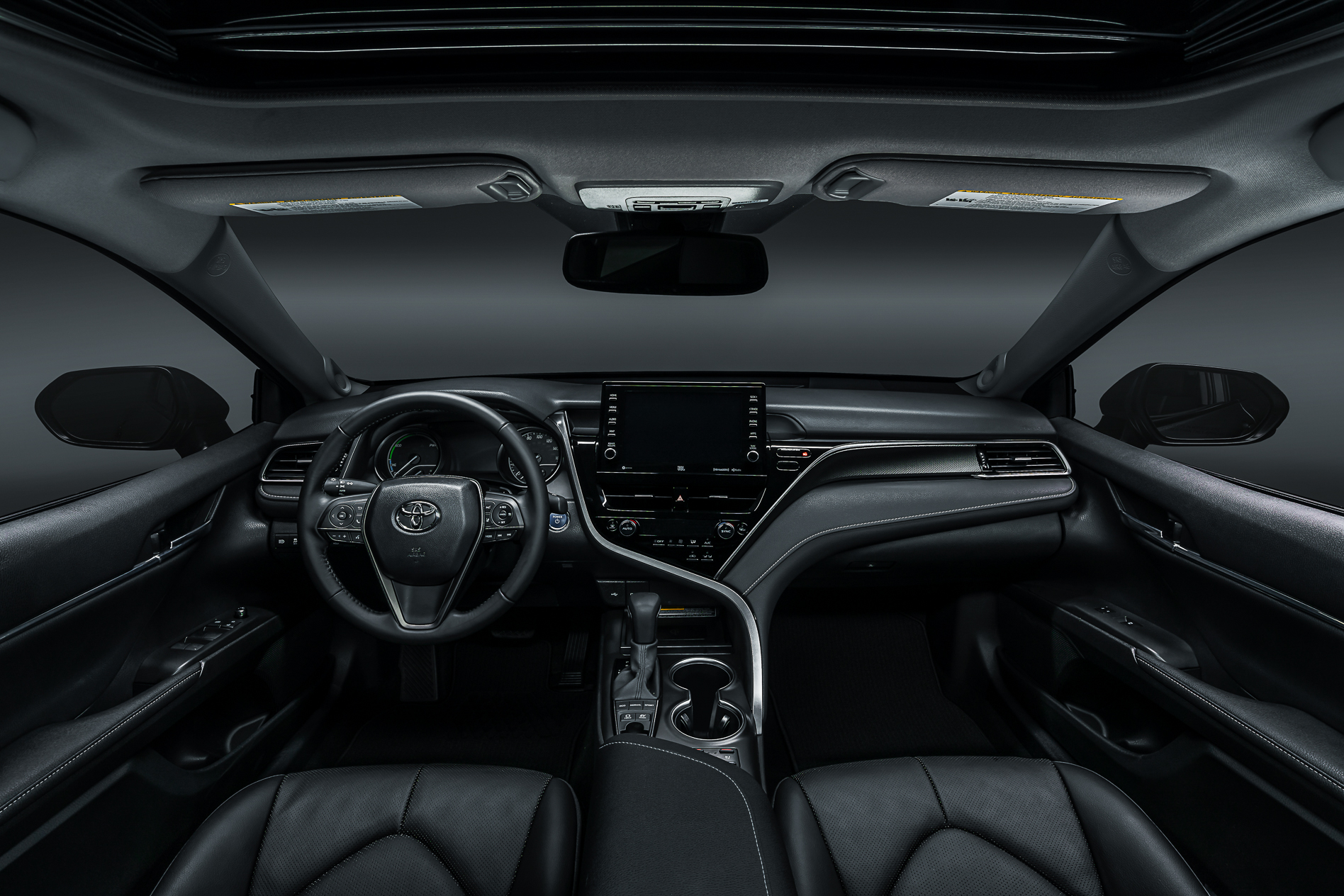
The 2021 Camry facelift will sport a slightly sharper front end, a subtly-tweaked dash outlay and a larger infotainment screen.
Toyota won’t get too specific with details of the 2021 facelift’s launch, with a spokesperson saying “The 2021 Camry will go on sale in the first half of 2021”. Further specification detail will be provided closer to launch.
This past weekend, shortly before midnight on Saturday local time, Japan was rocked by a 7.3 magnitude earthquake off the country’s northeast coast.
Effects were felt all along the east coast as far as Tokyo, however Fukushima prefecture was hit particularly hard with over 100 people reportedly injured.
One of Fukushima’s best-known motoring attractions, Ebisu Circuit, did not escape unharmed with photos showing extensive landslides which have rendered many of the complex’s famous circuits unrecognisable.

Located approximately four hours outside of Tokyo, Ebisu Circuit plays host to various historic track configurations and skid pans, including Minami South Course, Drift Land, School Course, and the ‘touge’ mountain pass. Ebisu is considered something of a mecca within the global drifting community, and has hosted generations of Japanese drivers as well as international travelers who have made the journey there in person.
Drift Land and Nishi (west) circuit appear to be hardest hit, and will reportedly be closed for at least several months as extensive clean-up efforts are no doubt required.
For those concerned for the adjacent Tohoku Safari Park attached to Ebisu, you’ll be glad to hear that all employees and animals are reported safe and without injury.
The epicenter of the quake occurred around 68 kilometers off the Fukushima coast, and sparked painful memories for residents by occurring almost ten years on from the deadly magnitude 9.0 earthquake of 2011, which sparked the Fukushima nuclear accident and killed nearly 20,000 people.

At least 121 people were injured by the quake over the weekend, although there have been no reported deaths. The earthquake registered a magnitude of 4.0 in Tokyo, causing hundreds of buildings to lose power. Shinkansen services to much of Northern Japan were suspended due to damage along various train lines, with local media asserting that repairs could take up to ten days.
Toyota and Nissan, however, have stated that none of their plants in the area were affected.
Despite the dramatic images at Ebisu, there are already talks of repair. We hope to see the historic circuit patched up and hosting Matsuri in no time!
Opinion: Drifting deserves more respect from motorsport fans
What is it?
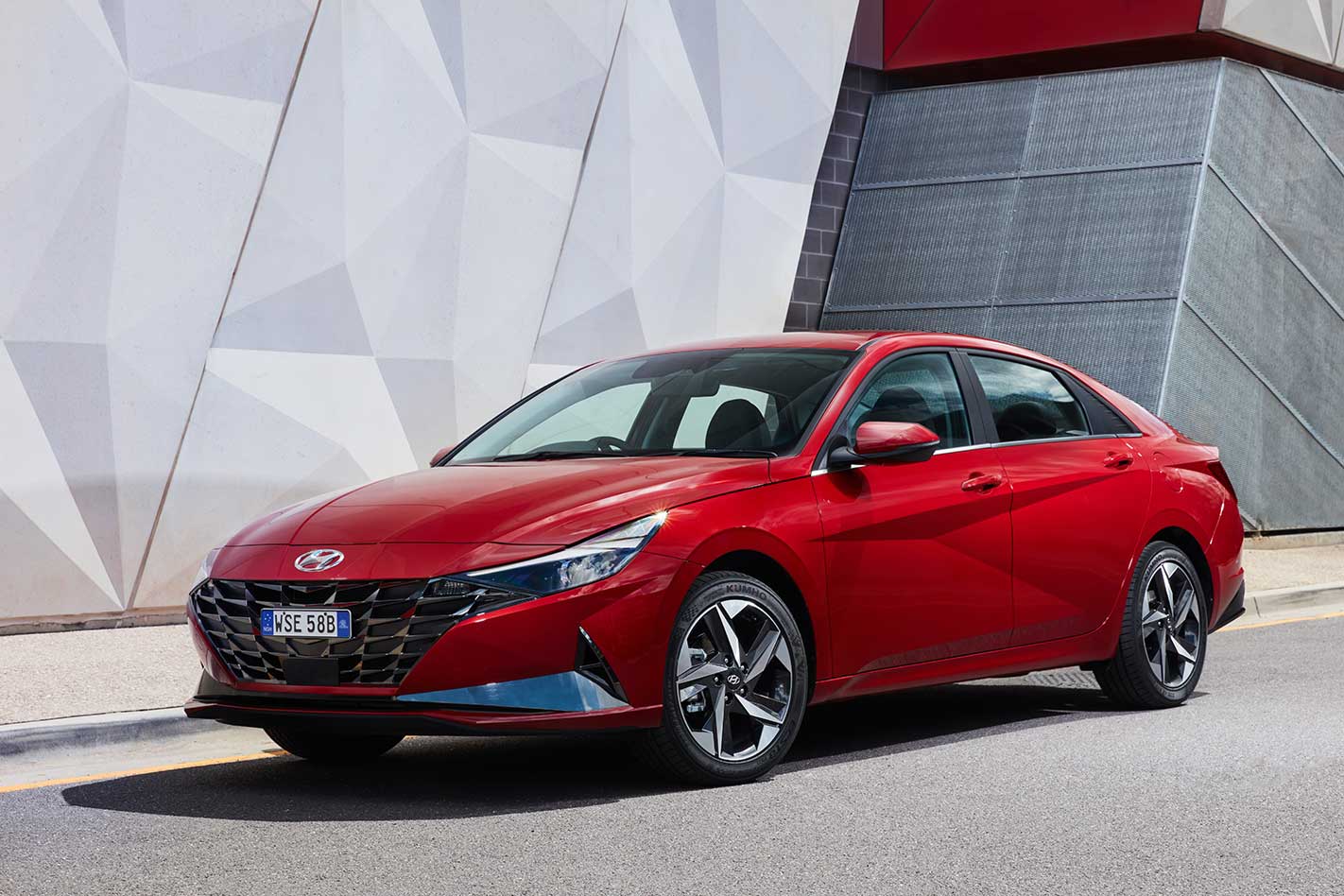
The Hyundai i30 Sedan is a switch job. Made in right-hand drive specifically for Australia, it replaces the Elantra to become the brand’s new compact value-packed four-door sedan.
It also arrives on the new K3 platform before the i30 hatch and, therefore, holds answers about what sort of future the model has in a bustling competitor segment filled with cars like the Kia Cerato, Mazda 3 and Subaru Impreza.
Price and features (6/10)
Buyers might have a wider spread of brands from which to choose a compact hatch, but more four-door sedans are entering the market as buyers look for the same all-round package in a slicker wrapping.
Price-wise, the Hyundai i30 Sedan Active begins at $24,790 for the six-speed manual transmission variant. But a six-speed automatic transmission adds $2000 to that figure, for a total of $26,790.
That sits above every one of its rivals, like the Toyota Corolla Ascent priced at $25,395, the CVT-equipped Subaru Impreza sedan 2.0i at $25,990, the Kia Cerato DCT at $24,490 and the automatic Mazda 3 Sedan at $25,590.
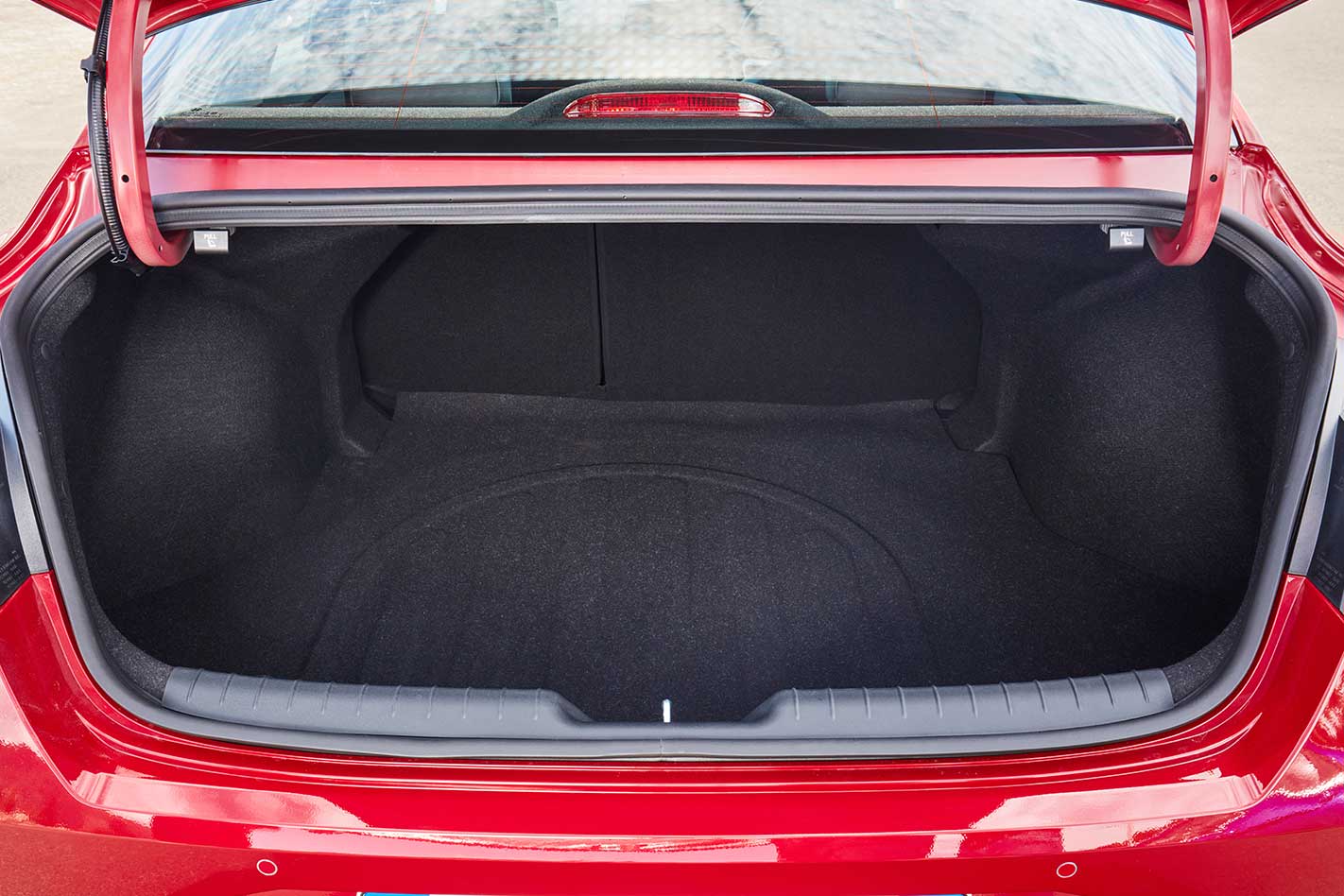
Compared to a hatch, you’ll score more boot storage in the i30 Sedan since it offers 474 litres compared to the hatch’s 395 litres, which is measured with the rear seats up.
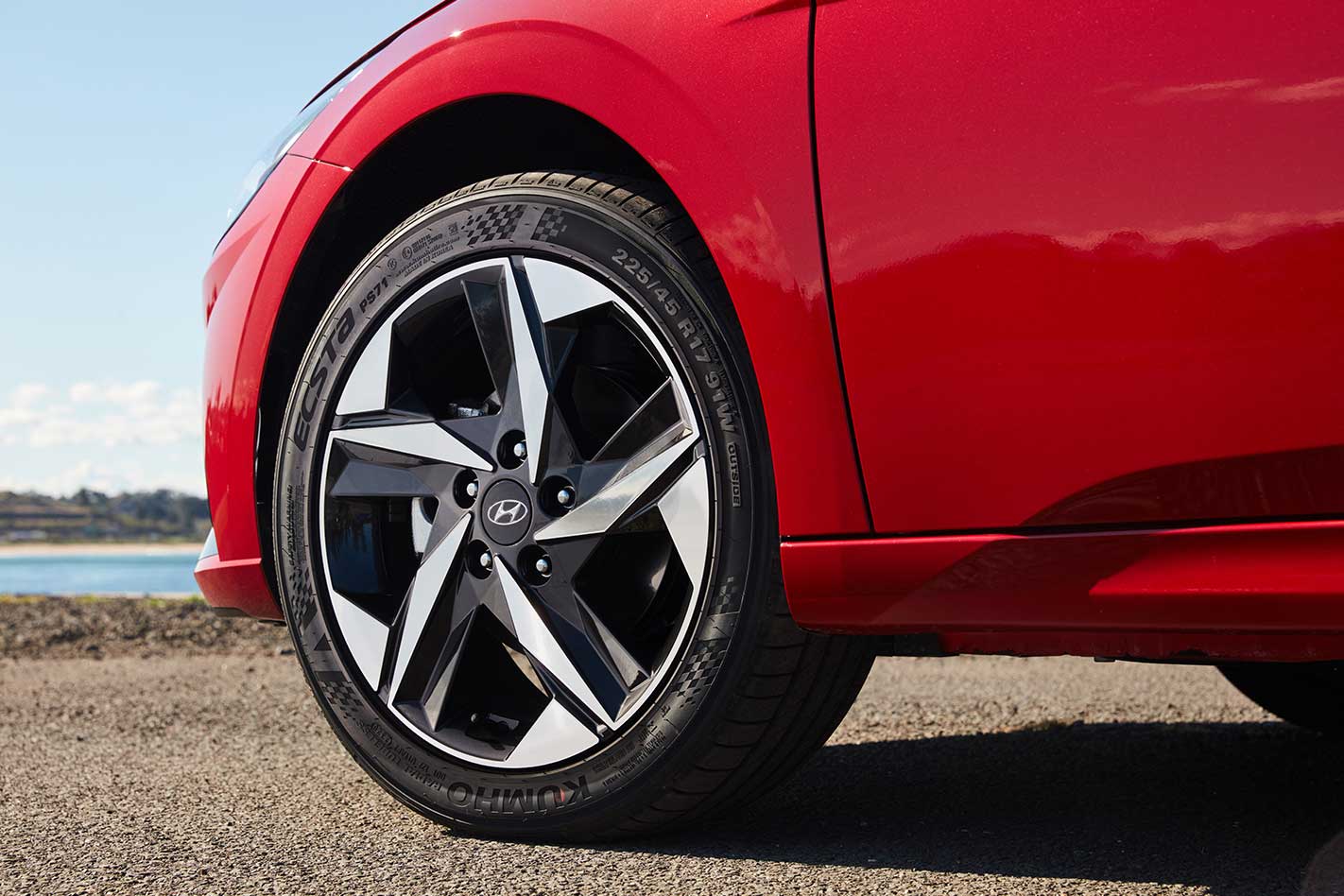
Otherwise, the Hyundai i30 Sedan comes with a four-cylinder 2.0-litre petrol engine, 17-inch alloys, a full-size spare tyre, rear parking sensors and camera, LED headlights as well as a tyre pressure monitoring system.
Ownership costs (7/10)
Hyundai offers an unlimited-kilometre five-year warranty on the i30 Sedan, with a service recommended every 12 months or 15,000km, whichever comes first.
A comprehensive fixed-price service program known as the Lifetime Service Plan provides fixed-price servicing on the life of the i30 Sedan, which can be transferred to a new owner.
On top of this Hyundai offers free roadside assistance while you’re keeping to the factory servicing plan, extending it 12 months with every scheduled visit.
Meanwhile, at the fuel bowser, the i30 Sedan’s petrol engine drinks 91RON octane unleaded fuel at a minimum and is compatible with low concentration ethanol blends like E10.
That equals a range of about 600km from a single 47-litre tank, which will cost about $60 to fill on unleaded fuel at $1.30 per litre.
Comfort and convenience (7/10)
Inside presents a completely redesigned cabin to the Elantra and current hatch with driver-centric packaging and striking styling.
Vents now blend into the sweeping metal accents, while the centre infotainment screen lives within the stack, rather than standing separate. The cluster, too, has been partitioned between analogue and digital functions, much like a Porsche 911 cluster.
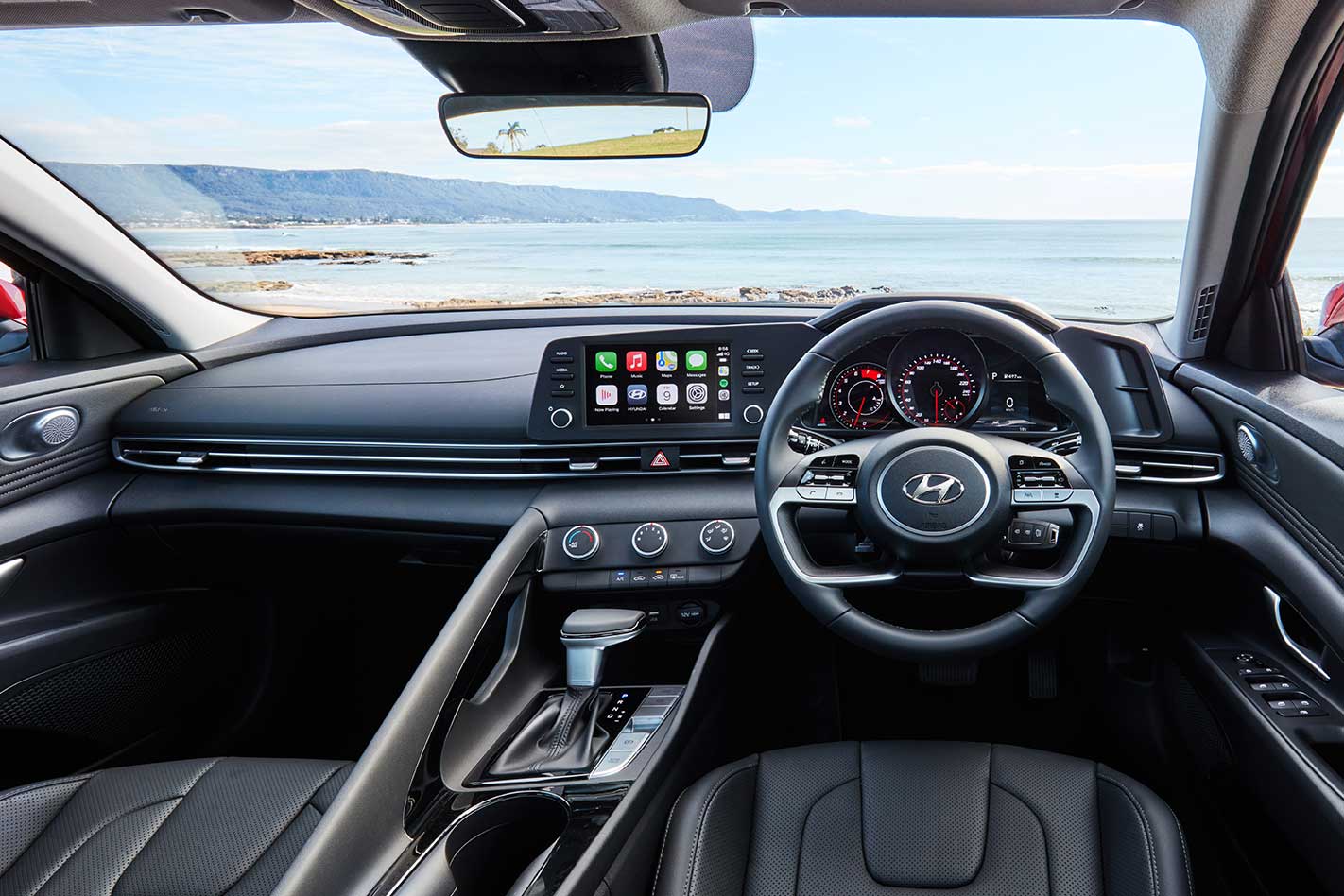
These Volkswagen Group-esque elements aren’t surprising given Hyundai’s design boss was Luc Donckerwolke, a Bentley and Lamborghini design guru until mid-2020. But given the car’s higher price, the cabin feels slightly underwhelming on perceived quality, with plastics on the centre stack and around the HVAC controls rising as the biggest culprits.
A lot is going on inside and it is almost over-styled to a fault. For instance, the central flying buttress obstructs the passenger’s right elbow from resting on the centre glove box.
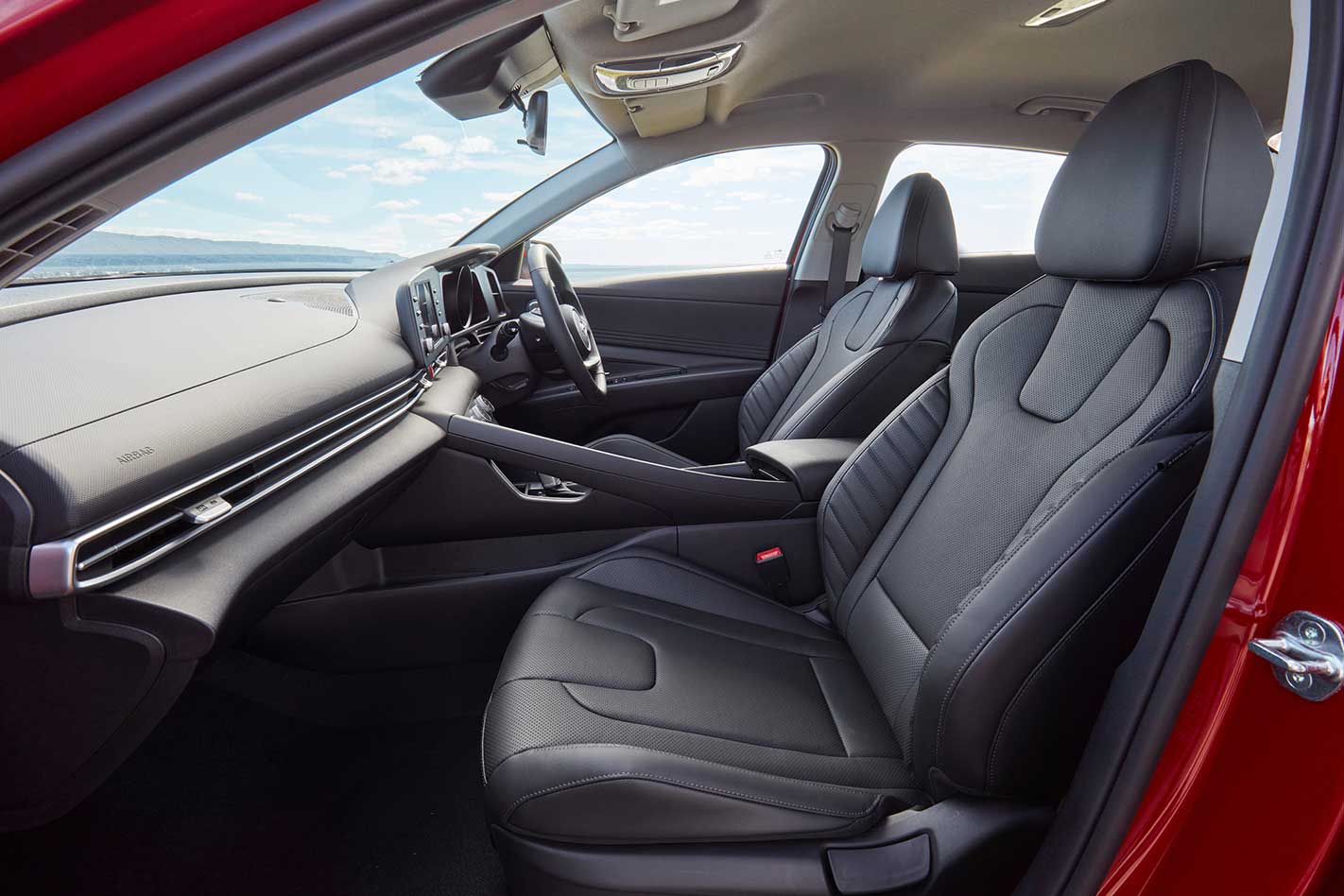
There’s also a lot of kit as standard, with wireless charging and smartphone mirroring joined by heated side mirrors and keyless entry, though turning the engine over still requires inserting the key. The Active also supplies two USB ports in the front.
When driving you’ll check your speed most often on the cluster’s digital screen, and Apple Carplay or Android Auto remain vastly superior to the car’s infotainment software, which is largely unchanged on the standard 8.0-inch display.
Annoyingly, the wireless Carplay function cut out on us repeatedly, but it’s not a problem that’s unique to Hyundai, with the same bug affecting luxury brands with the technology.
Safety (8/10)
Hyundai’s loaded the i30 Sedan Active with a good spread of safety gear. It scores hill-start assist, driver attention monitoring, lane-keeping assist, forward collision warning and automatic emergency braking. Automatic variants also come with smart cruise control.
However, you won’t find a safety rating on the product sheet because the car hasn’t been crash-tested for Euro NCAP since it isn’t sold over there. Hyundai doesn’t intend to complete local crash testing, either.
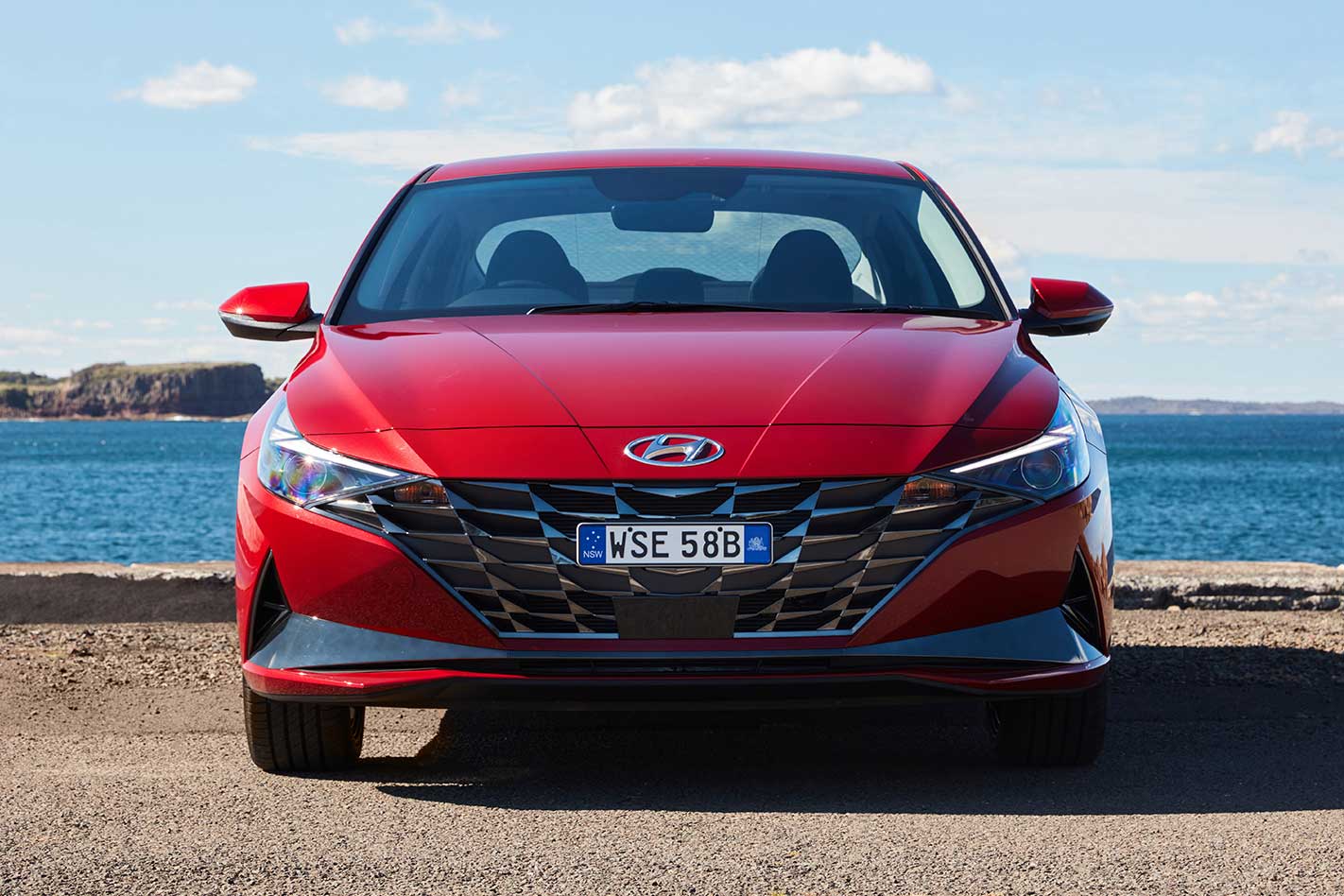
Lane-keep assist steers the car relatively straight without pin-balling between lines. Meanwhile, the smart cruise control applies the brakes gently when cars cut into its range.
Forward visibility is excellent, thanks to front pillars rotated to hide their thicker cross-section. The B-pillars also allow over-shoulder visibility.
Steering wheel buttons offer a great deal of accessibility to both controlling infotainment and safety functions, reducing the time your hands or eyes spend searching the cabin.
Power and performance (7/10)
The petrol 2.0-litre engine is a robust unit that likes to rev to its 6500rpm redline despite a heavily under square bore and stroke ratio. It’s also fairly linear, delivering its torque peak around 4500rpm before chugging on to a 6200rpm power peak.
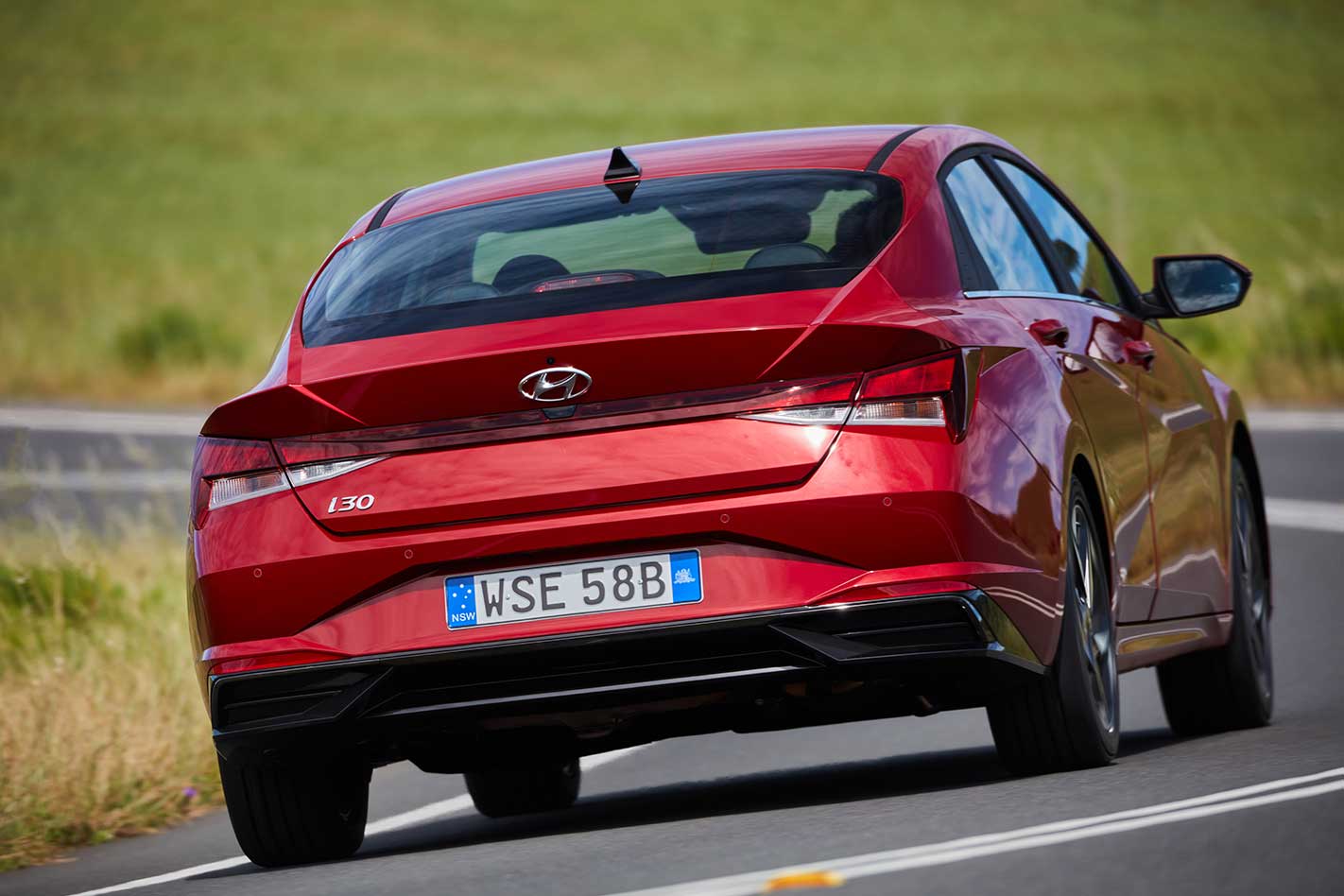
Of course, this is nothing unusual at this price point, where many rivals produce the same outputs, and there remains the more powerful, more expensive 150kW/265Nm i30 N-Line for keener drivers.
The six-speed transmission works fine for day-to-day roles, shifting cleanly and providing good throttle response at low speed. However, a manual would be more involving since the auto struggles to keep up at a brisk pace, feeling disinterested in rushed downshifts while in manual mode and staying a gear high when left to its own devices.
How does it drive? (9/10)
When you push the i30 Sedan Active on a winding road you will understand why it has a flying buttress mounted on the centre console. It’s for your front passenger to grab.
The i30 Sedan’s Australian specific suspension tune generates a surprising amount of grip from its humble Kuhmo Ecsta PS71 rubber. You can feel its low centre of gravity help hold the road with the sort of tenacity you’d expect from a warm hatch.
The car remains balanced through corners and while the front-end doesn’t respond immediately to the impressively direct steering, you can feel the car’s natural suspension balance help turn it into corners on a finely tuned brake pedal.
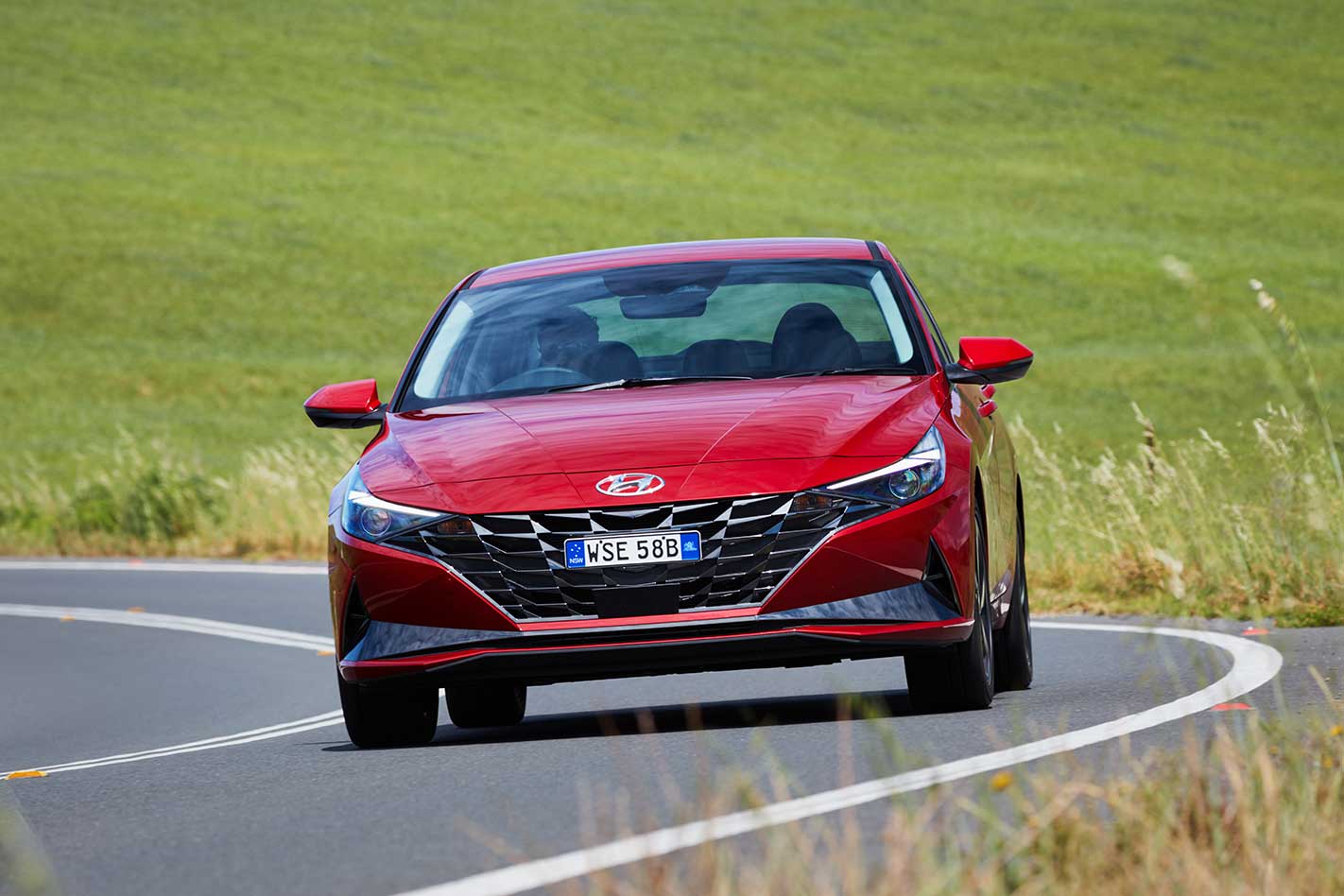
Its everyday ride is good, as well, with the reasonably chunky 45-profile tyres and torsion-beam rear axle suspension setup only transmitting some hard edges into the cabin. But this hardly spoils the car’s urban manners.
Verdict (7.5/10)
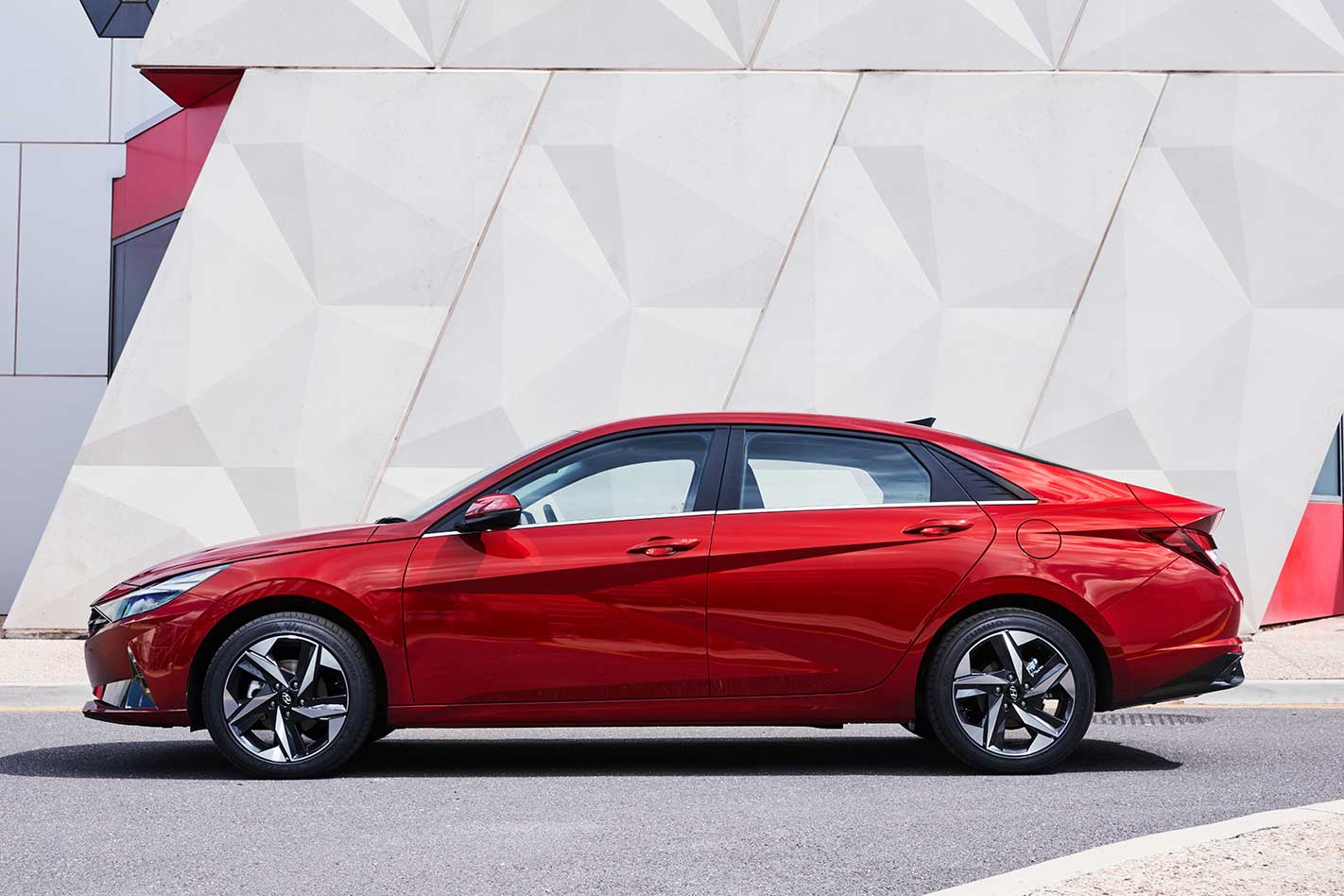
At $26,790 the i30 Sedan Active is expensive among its competitor set, its price matching the next level up in other rivals’ model ranges. Where it sets itself apart is with its sophisticated ride and handling mix that would leave brands, even some above its natural competitor set, asking why their cars don’t feature a bespoke suspension tune.
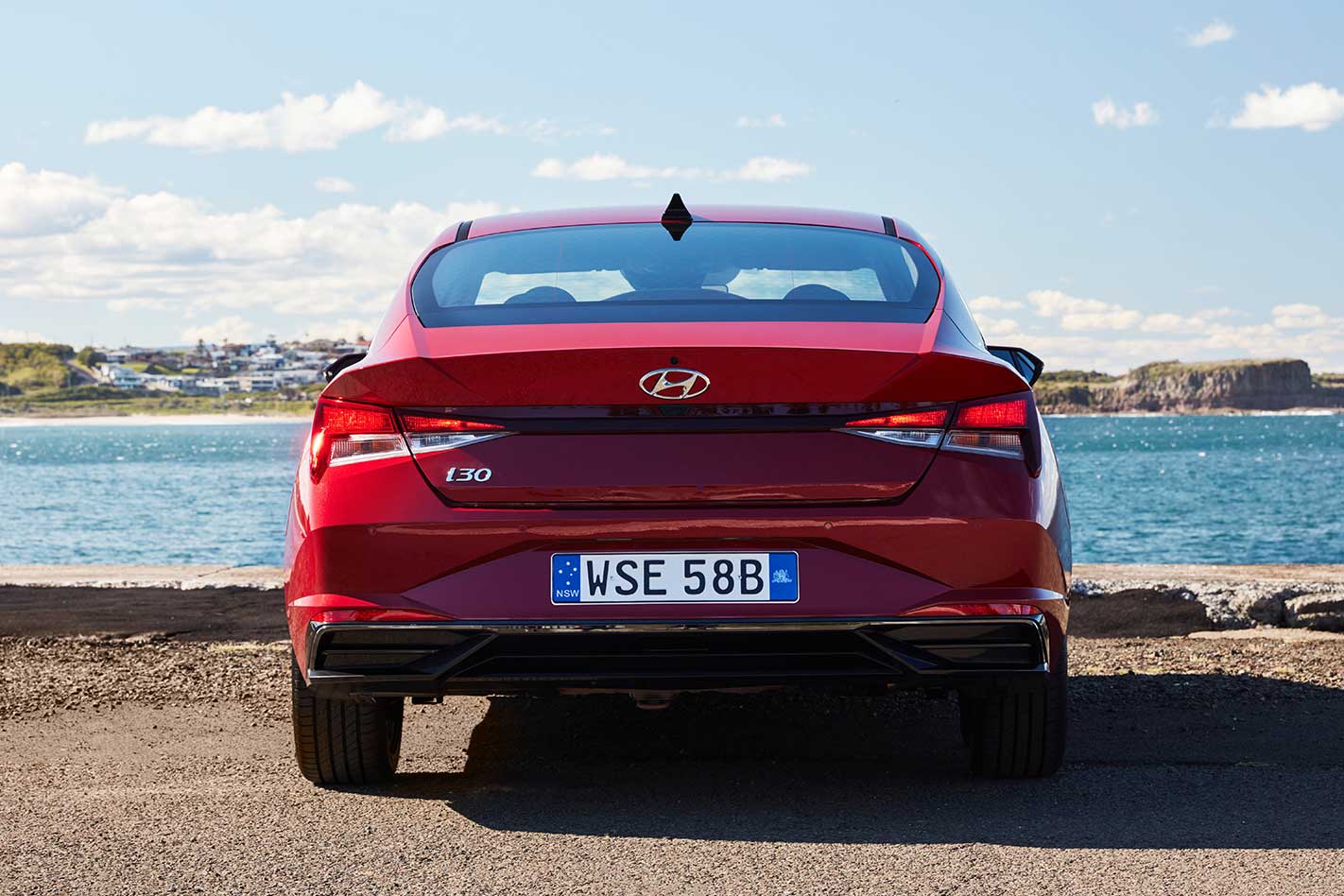
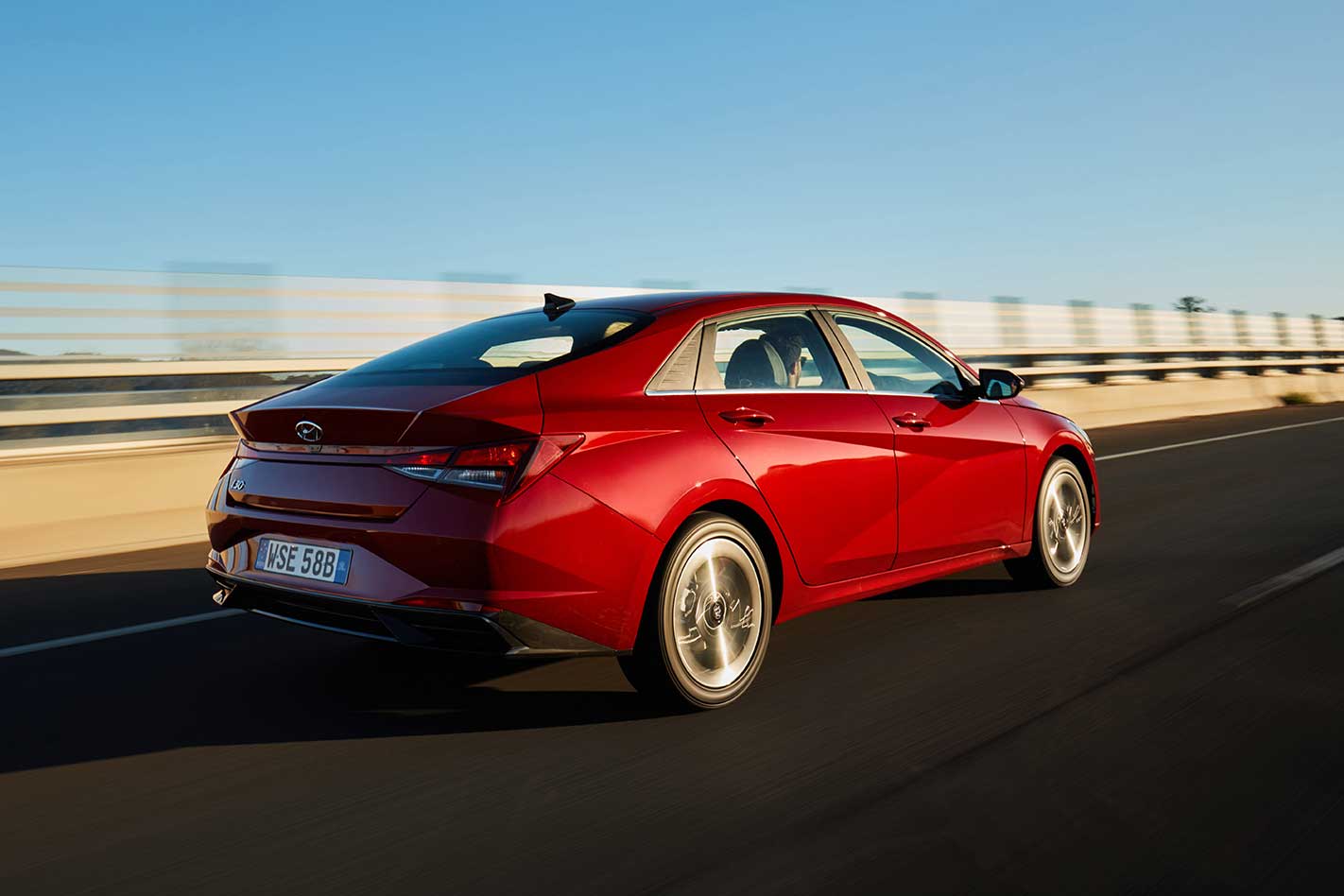
No one could call it boring, either, given its dramatic styling and futuristic design both inside and outside the car. However, while its package fails to deliver to that same sort of impact, the new i30 Sedan is a meaningful mark of progress on the Elantra that will be worth a look for some time.
Pros: Ride and handling, interior space, safety systems
Cons: Divisive impractical styling, price, needs more grunt
Specs
Body: 4-door, 5-seat sedan
Drive: front-wheel
Engine: 1999cc inline-4cyl, DOHC, 16v
Power: 117kW @ 6200rpm
Torque: 191Nm @ 4500rpm
Fuel economy: 7.0L/100km (claimed)
Transmission: 6-speed automatic
Weight: 1230kg
Price: $26,790 (before on-roads)
You may have noticed some high profile omissions from our list of the 100 greatest supercars of all time, notably the upcoming Mercedes-AMG One, Aston Martin Valkyrie, Lotus Evija and Gordon Murray Engineering T50.
We can’t rank cars we haven’t driven yet! Of course, though, all of these cars have the potential to top a future hottest 100 supercars list, if they are as exciting to drive as they promise to be.
We’ll start with the Gordon Murray Engineering T50, effectively the spiritual successor to the mighty McLaren F1. The T50 will be powered by a 4.0-litre atmo V12 revving to 12,100rpm.
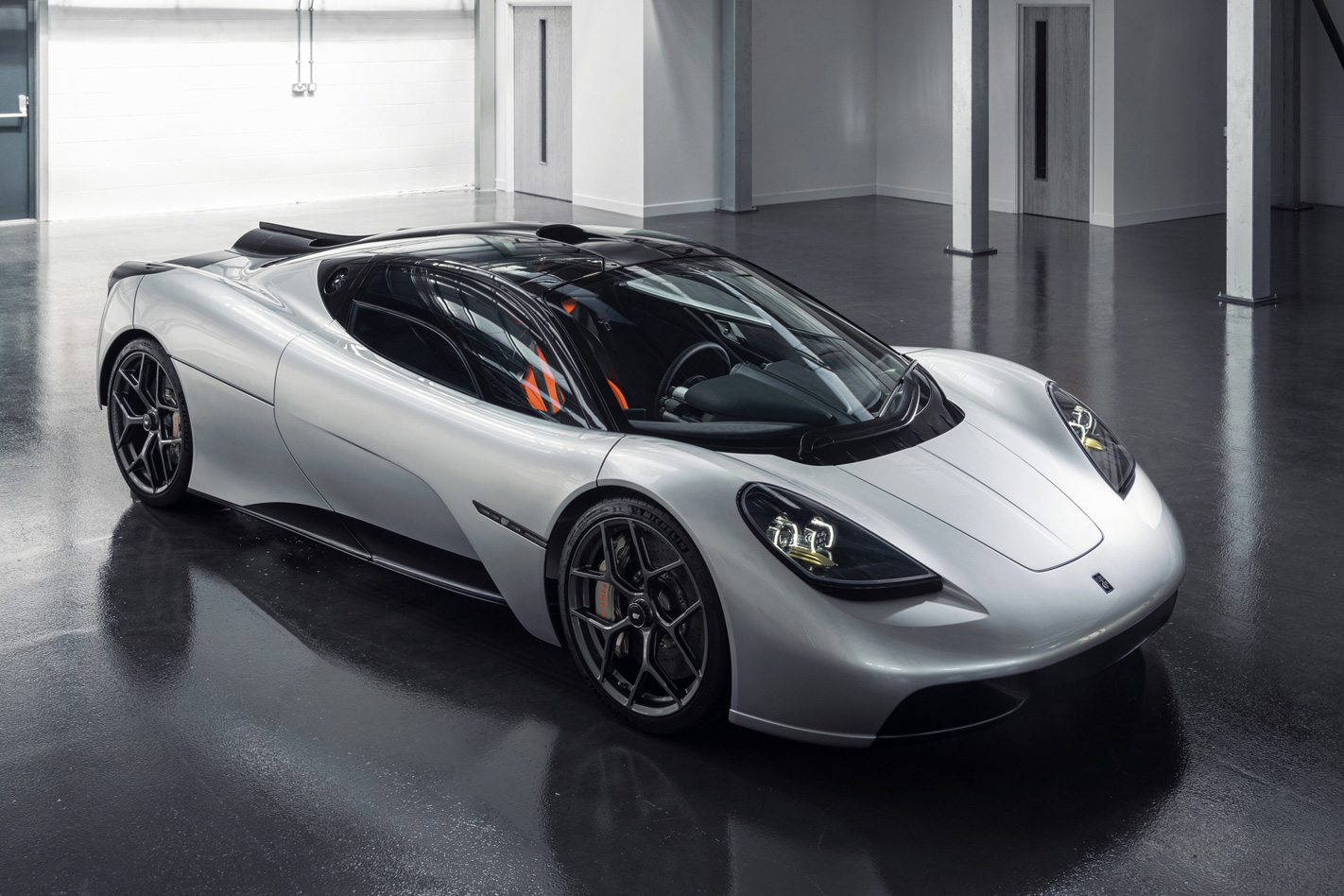
Outputs of 488kW/467Nm are to be sent via a six-speed manual (!) to the rear wheels, aft of which a large electrically driven fan enhances downforce and reduces drag.
Not much larger than a Porsche Cayman, the T50 is a three-seater, like the F1, and extraordinarily comes in at just 986kg with all fluids. Murray promises the T50 will be the ‘greatest driver’s car ever’. Just 100 are to be built, $4.3m each, with first deliveries expected in 2022.
While the T50 is getting our jollies up for the way it might drive, it’s the AMG One and Aston Valkyrie that are sort of frightening us for just how fast they might be.
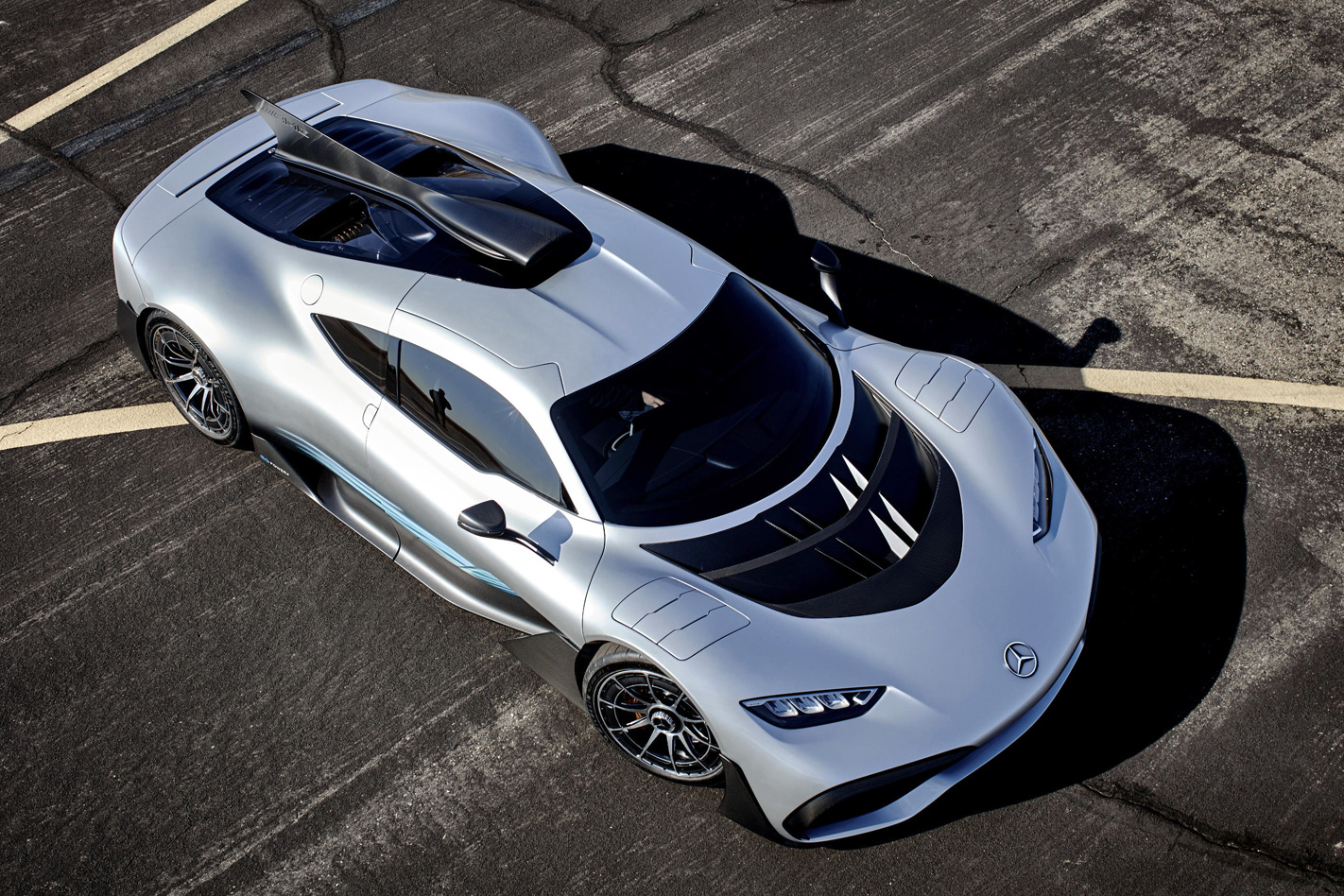
AMG’s One will be the closest thing to a Formula One car for the road. Using a road-adapted version of the 1.6-litre turbo V6 found in Mercedes’ grand prix racers, the One also uses three electric motors for a combined output of “more than 735kW”.
It will also have a full electric mode with around 25km range. On a track, even on road tyres performance will eclipse most race cars.
At $5m, eight of the 275 planned Ones are expected to be purchased by Aussies, even if they can’t be registered locally because they’ll be built in left-hand drive only. Some owners may keep their cars overseas.
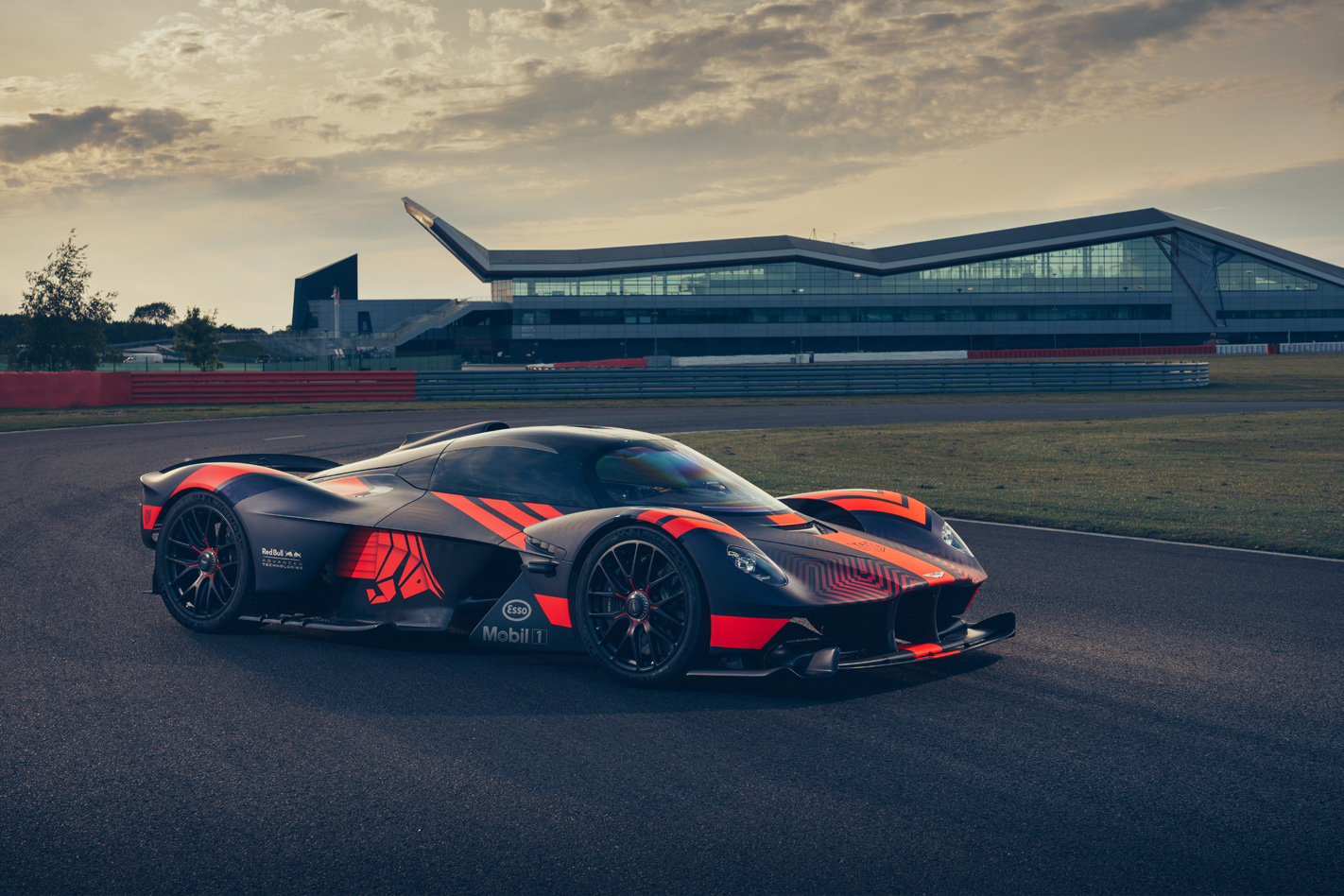
First deliveries of the Aston Martin Valkyrie are expected before the end of 2021. The work of famed grand prix designer Adrian Newey, the Valkyrie also promises F1-inspired performance for the road, “cornering and braking as aggressively as Red Bull Racing’s dominant RB6 (2010) race car”.
Weighing less than 1100kg it uses a 6.5-litre Cosworth V12 revving to 10,500rpm and producing 865kW in conjunction with a hybrid powertrain. Only 150 are in the pipeline.
Porsche is said to be considering a new hypercar using a 1.6-litre turbo V6 originally intended for an F1 team of its own, canned after VW’s dieselgate scandal.
CEO Oliver Blume has said Porsche has not yet decided whether a new hypercar would be hybridised or electric.
Lotus has made up its mind for its first hypercar, however, with the all-electric Evija, set to become the world’s most powerful production car, producing 1470kW/1700Nm.
Weighing a respectable 1680kg, and using four motors for all-wheel drive, the sprint from 0-100km/h is claimed to take less than 3.0sec. Lotus has said “three to five” people in Oz had expressed interest in the $3m-plus hypercar.
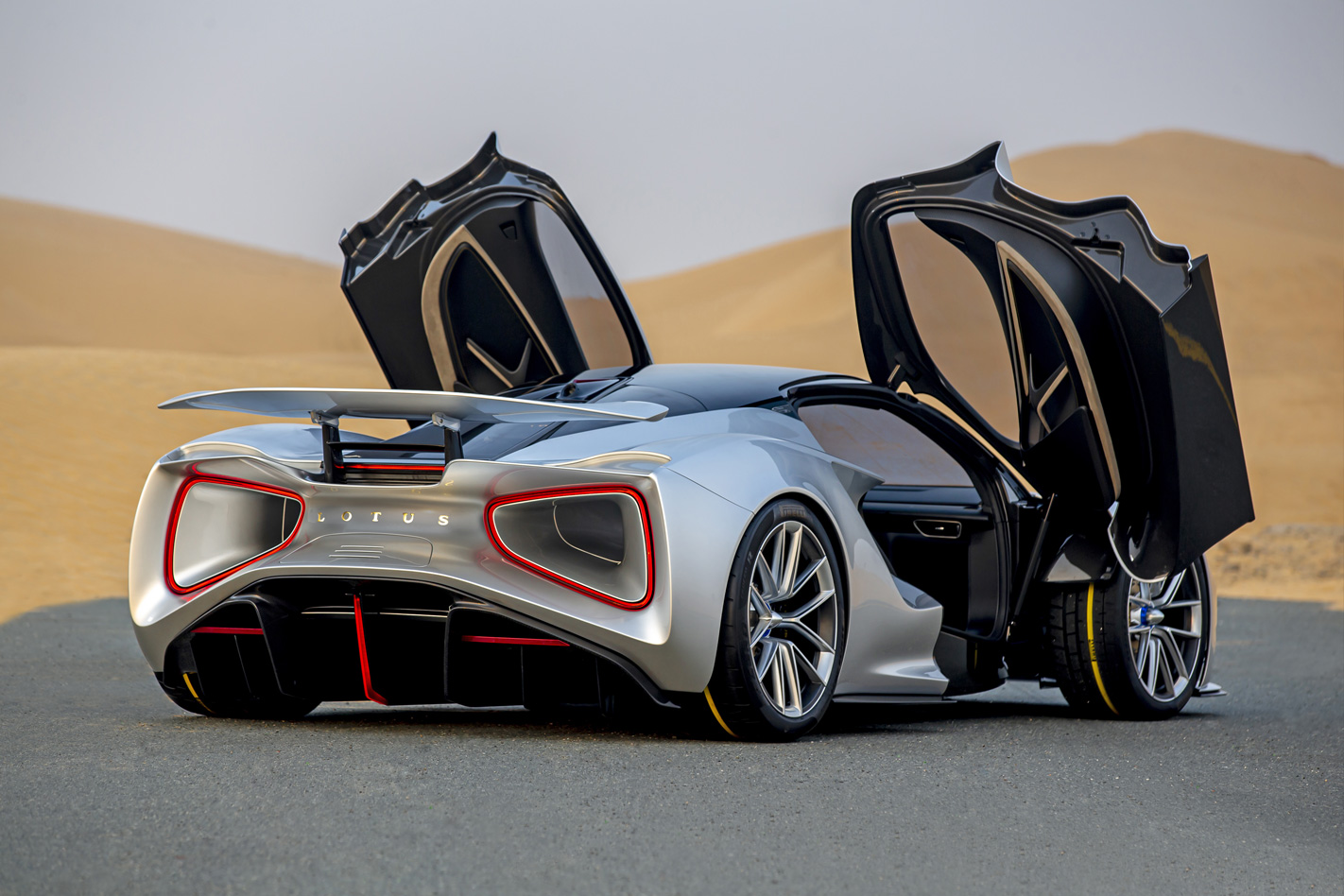
Lotus won’t go unchallenged, either, if Croatian firm Rimac has its way. Its all-electric C_Two previews its first production car.
The C_Two uses four electric motors, like the Evija, to produce a lazy 1408kW/2300Nm, 0-100km/h set to take less than two seconds, with 0-300km/h taking 11.8sec. Yes, 300.
Rimac also promises its electric cars will be fun to drive. Beyond that, it’s tricky to know what the future holds for the supercar.
As hybrid and electric become the norm, there’ll be a place for the internal combustion engine – it might just be very expensive. And if speed enforcement becomes equally more advanced, supercars that prioritise enjoyment at cost of performance might have their day in a big way.
Maybe Murray was on to something all along.
Hyundai seems to have a thing about autonomous robot vehicles.
In January 2019 it showed off the incredible Elevate Walking Car concept, and this week it revealed the TIGER X1 (Transforming Intelligent Ground Excursion Robot).
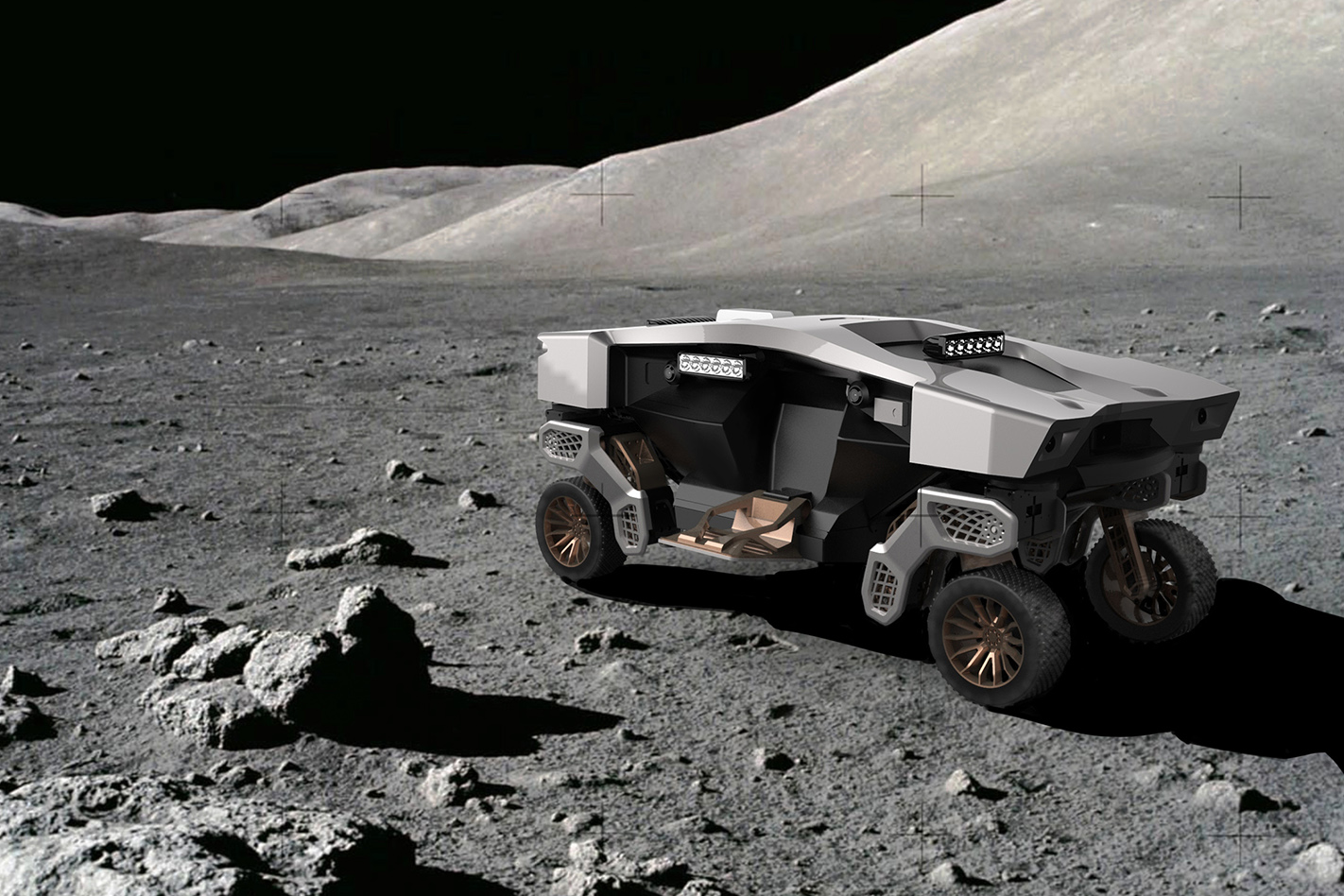
Developed by Hyundai’s California-based New Horizons Studio in partnership with design software company Autodesk and industrial design group Sundberg-Ferar, this latest Ultimate Mobility Vehicle (UMV) is designed to operate without a crew and carry various types of payload over challenging terrain.
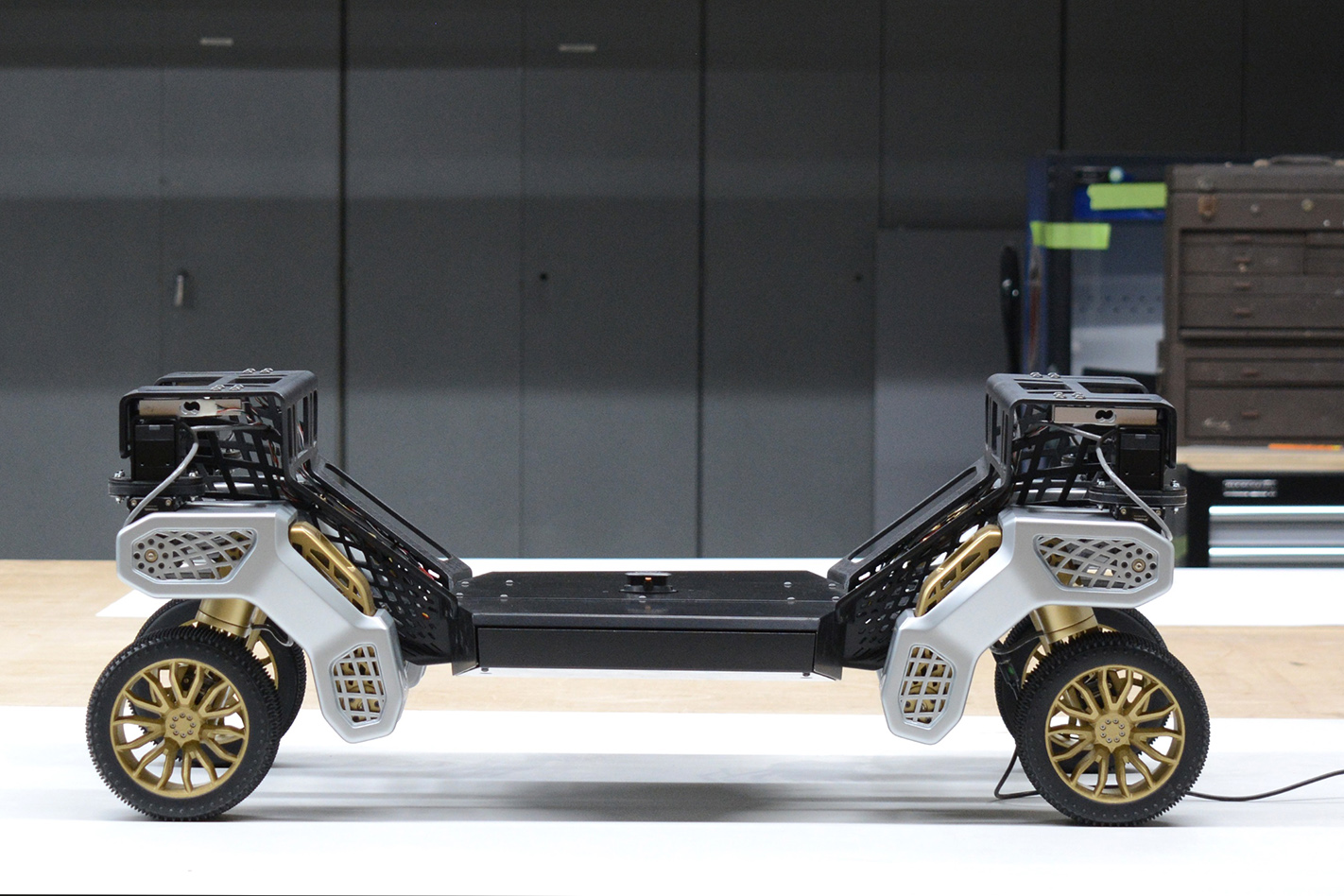
Unlike the terrifying four-legged dog-bots that robotic engineers seem to enjoy trolling us with, the TIGER X1 has four wheels attached to extendable legs as seen on the Elevate concept.
With its legs retracted, it drives like a 4WD vehicle and is in its most efficient mode, meaning it only engages its walking ability if it gets stuck in, or needs to travel over, very difficult terrain – which, going by the pictures supplied, includes the moon.

Based on a modular platform architecture, the TIGER is designed to function as a mobile scientific exploration platform in extreme and remote locations, which, if the pictures are any guide, include the moon.
As well as its leg and wheel locomotion system, it features 360-degree directional control, and a range of sensors for remote observation.
It can also deliver goods, or be deployed to deliver aid packages in emergency situations – and can even connect to unmanned aerial vehicles (UAVs), which can fully charge and deliver TIGER to inaccessible locations.
“Vehicles like TIGER, and the technologies underpinning it, give us an opportunity to push our imaginations,” said Dr John Suh, Head of New Horizons Studio.
“We are constantly looking at ways to rethink vehicle design and development and re-define the future of transportation and mobility.”
New Horizons Studio, headquartered in Mountain View, California, is tasked with developing vehicles that shape the future of mobility.
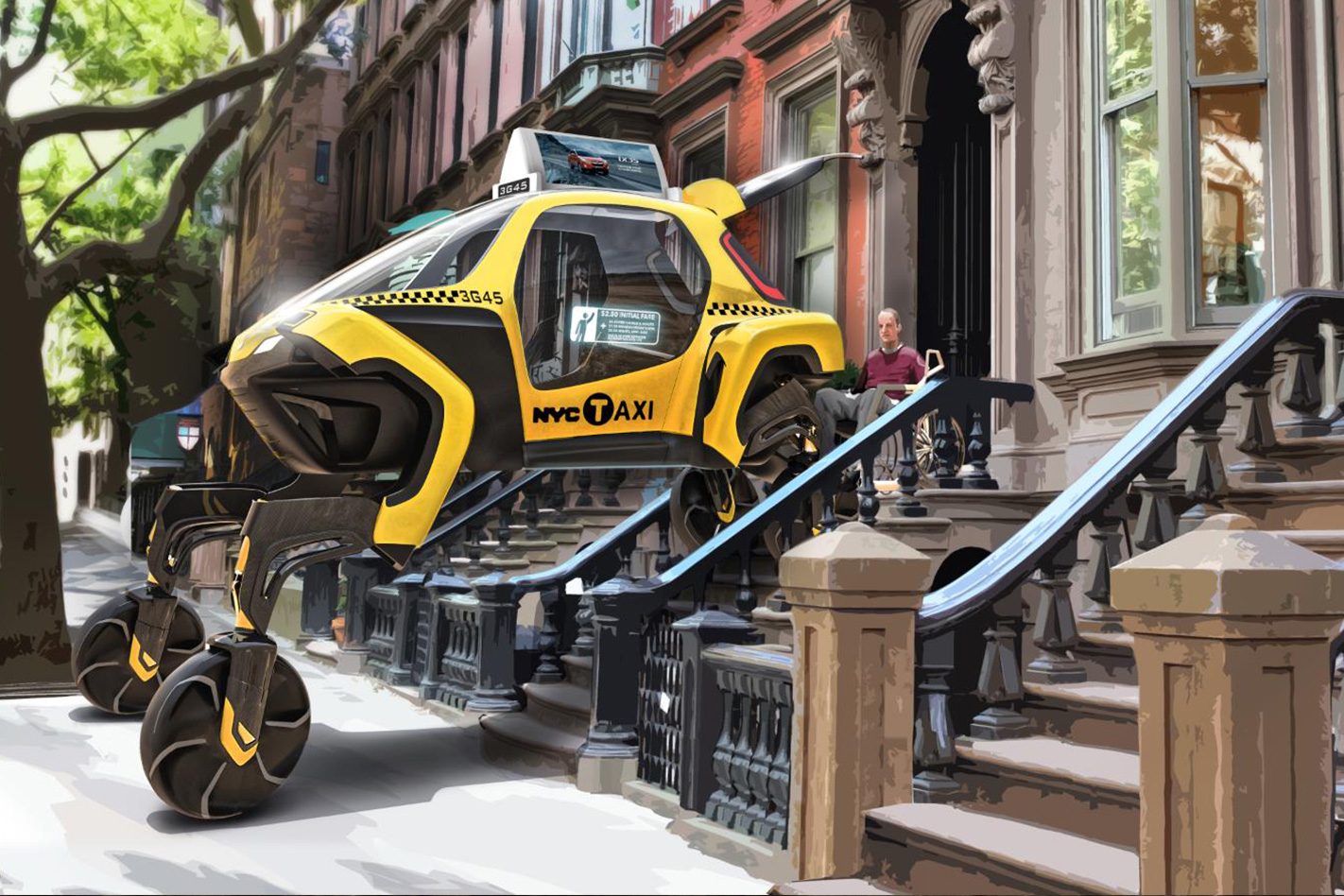
Its UMV concepts do not rely solely on wheels and are expected to address challenging driving situations – for example, a car with robotic legs that could save lives as the first responder in natural disasters; or people without access to a curb ramp could hail a car to walk up to their front door, level itself and allow wheelchairs to roll in.
Hopefully, we’ll see such technology actually used in practical situations in the near future.
There’s wild speculation, and then there’s a bloody good chance – and surely, the notion of a wagonised Audi E-Tron GT Avant falls into the second column.
For one, Audi loves the wagon body style. There’s the A6 Avant and A4 Avant models and their high-riding Allroad counterparts, and even the A3 Sportback looks like more of a ‘wagonette’ Avant model than the average hatchback, premium or otherwise.
For another, you’ve got the simple fact that the E-Tron GT’s electric platform-mate, the Porsche Taycan, will soon add a ‘Cross Turismo’ model to its roster – albeit as a high-riding, fence-sitting faux SUV to maximise profit potential.
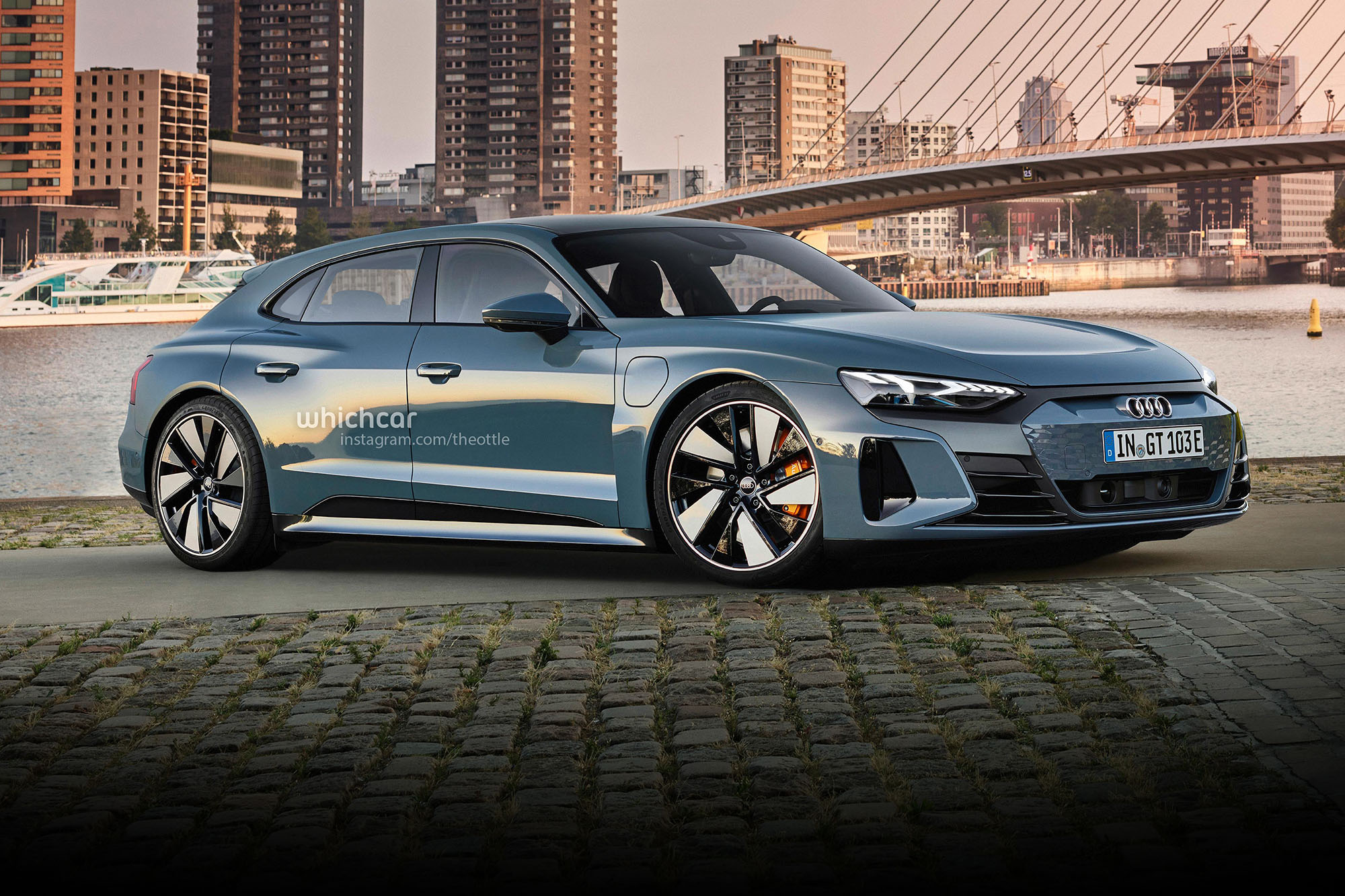
We shouldn’t be too surprised, then, if Audi announces at least an E-Tron GT Allroad in the not too distant future – and we shouldn’t get hung up on the pairing of the classic ‘GT’ badge with an ostensibly dirt-focused name like Allroad, because, really, tradition went out the window a long time ago.
But, let’s say Audi goes with an oh-so-Euro wagon body, badged as the E-Tron GT Avant… how would it look?
As this writer’s good mate Theophilus Chin shows here on his Instagram profile, it’s clear the E-Tron GT and Taycan share at least a roofline and a few windows – so why shouldn’t the Taycan Cross Turismo share some of its upper styling with an Avant?
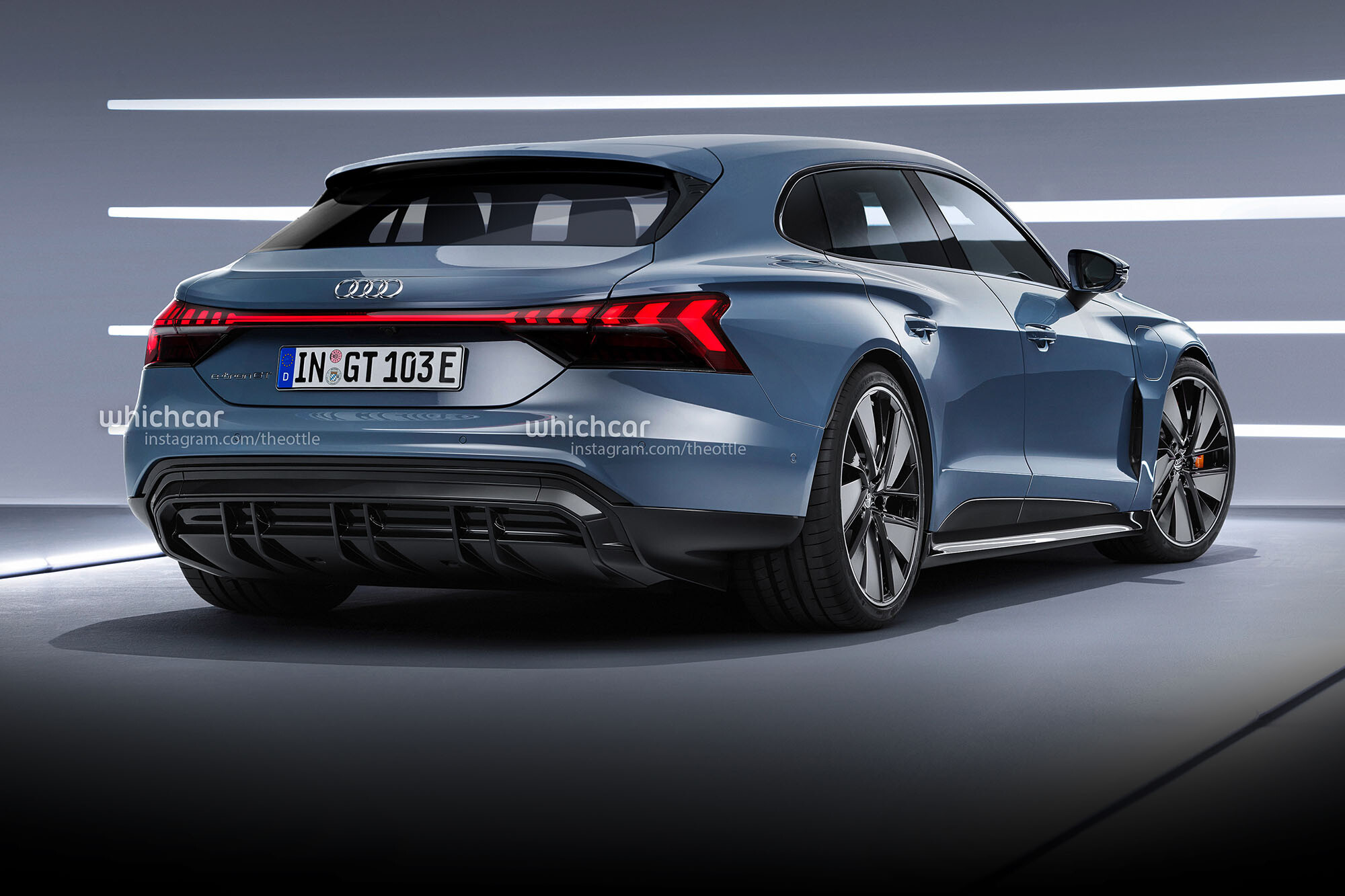
Take a look at Theo’s renderings in this story and tell me a wagon-bodied E-Tron GT wouldn’t do all the right things.
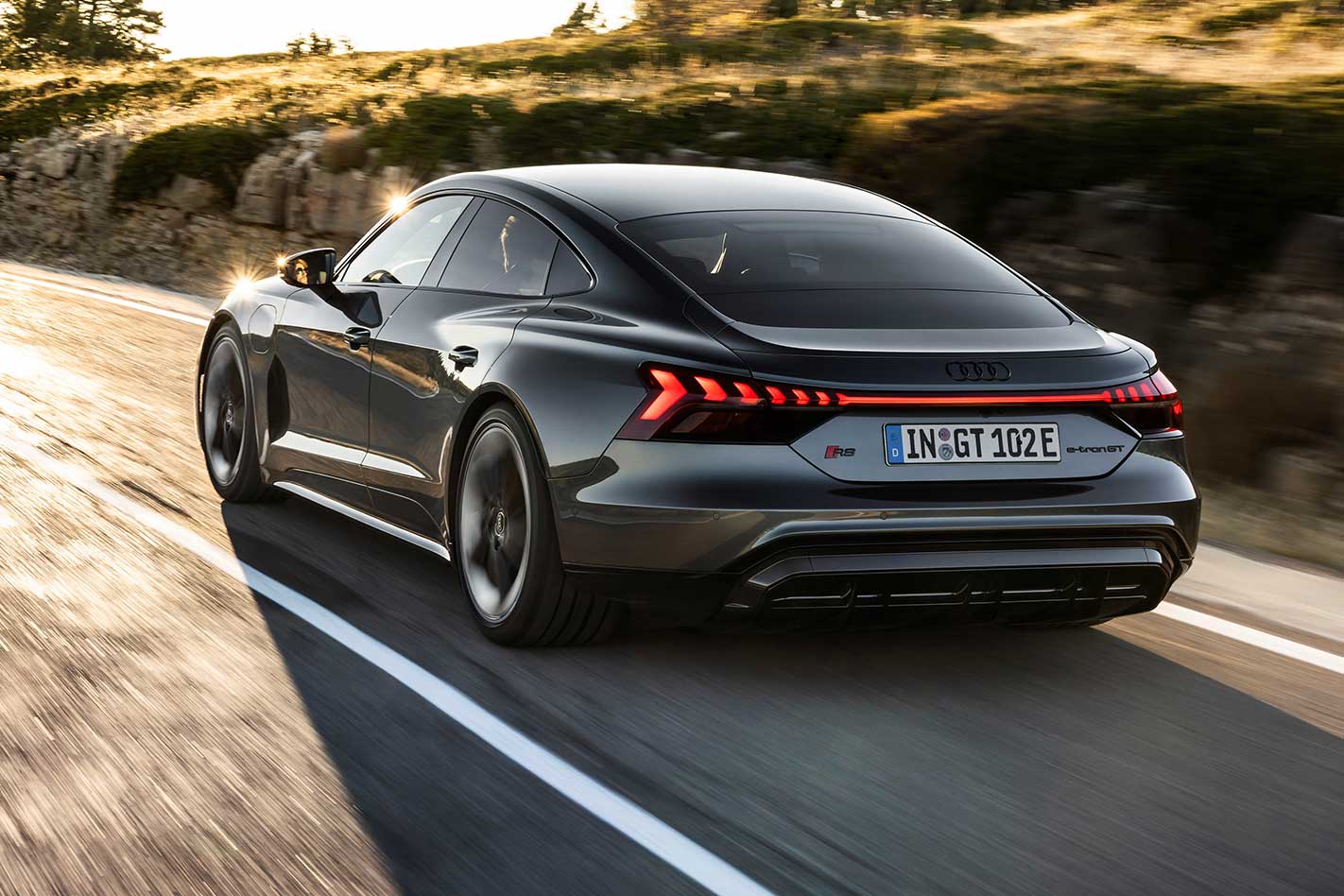
To catch you up, the E-Tron GT as we know it is powered by a 350kW/630Nm dual electric motor system – with “extreme driving situations” capability of 175kW at the front and a mighty 320kW at the rear.
In hero RS form, the front and rear motors are rated at 175kW/335kW, but as a single system they’re rated at 440kW/830Nm – and then there’s the short hit of 475kW in overboost form. (The regular model bumps up to a formidable 390kW in overboost, too.)
For more on the E-Tron GT, see our coverage here – and for expressions of interest in an E-Tron GT Avant, get in line right behind me.
MORE: E-Tron GT revealed MORE: Audi news and reviews
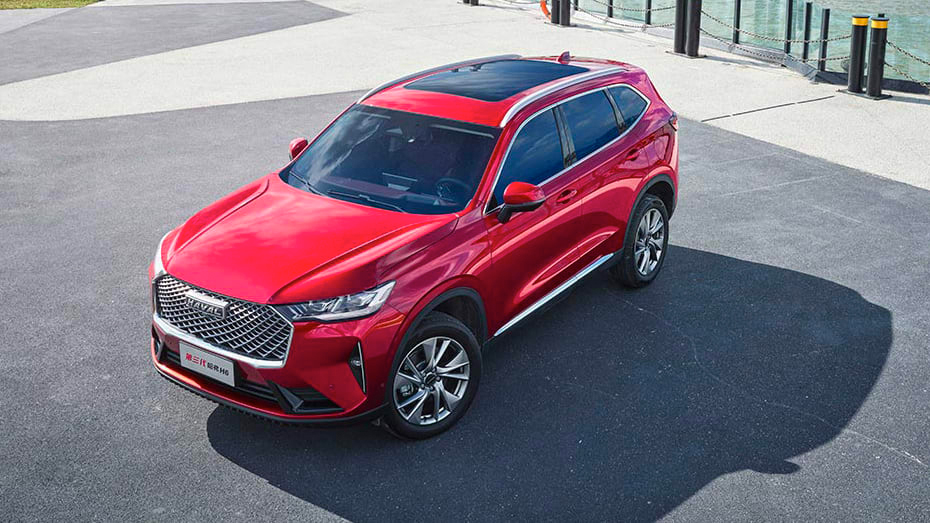
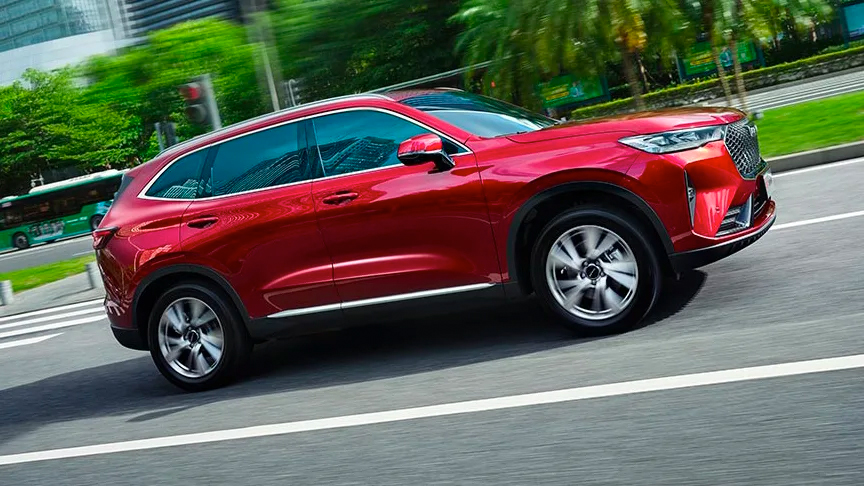
An Australian debut for the new 2021 Haval H6 has come one step closer after surfacing in the Australian government’s Road Vehicle Certification System.
Revealed in Beijing last year, the new-generation rival to models like the Mazda CX-5 and Toyota RAV4 could go on sale in Australia this year, giving the Chinese brand some long overdue fresh product.
Haval arrived here in 2015 with the stated goal of becoming Australia’s number-one SUV brand – no small task in a market that has quickly become obsessed with SUVs, and with no shortage of options from established legacy brands.
Since then, the brand has been left with ageing product while impressive new models – albeit exclusively left-hand-drive – go on sale in its home market of China.
In COVID-cursed 2020, the brand shifted just 957 examples of the H6 SUV in Australia, representing a tiny proportion of the 179,722 medium SUVs sold for the year.
At last, an all-new model is on the way in the form of the latest H6, drawing power from a competitive 150kW 2.0-litre turbo petrol four-cylinder engine matched to a seven-speed dual-clutch automatic.
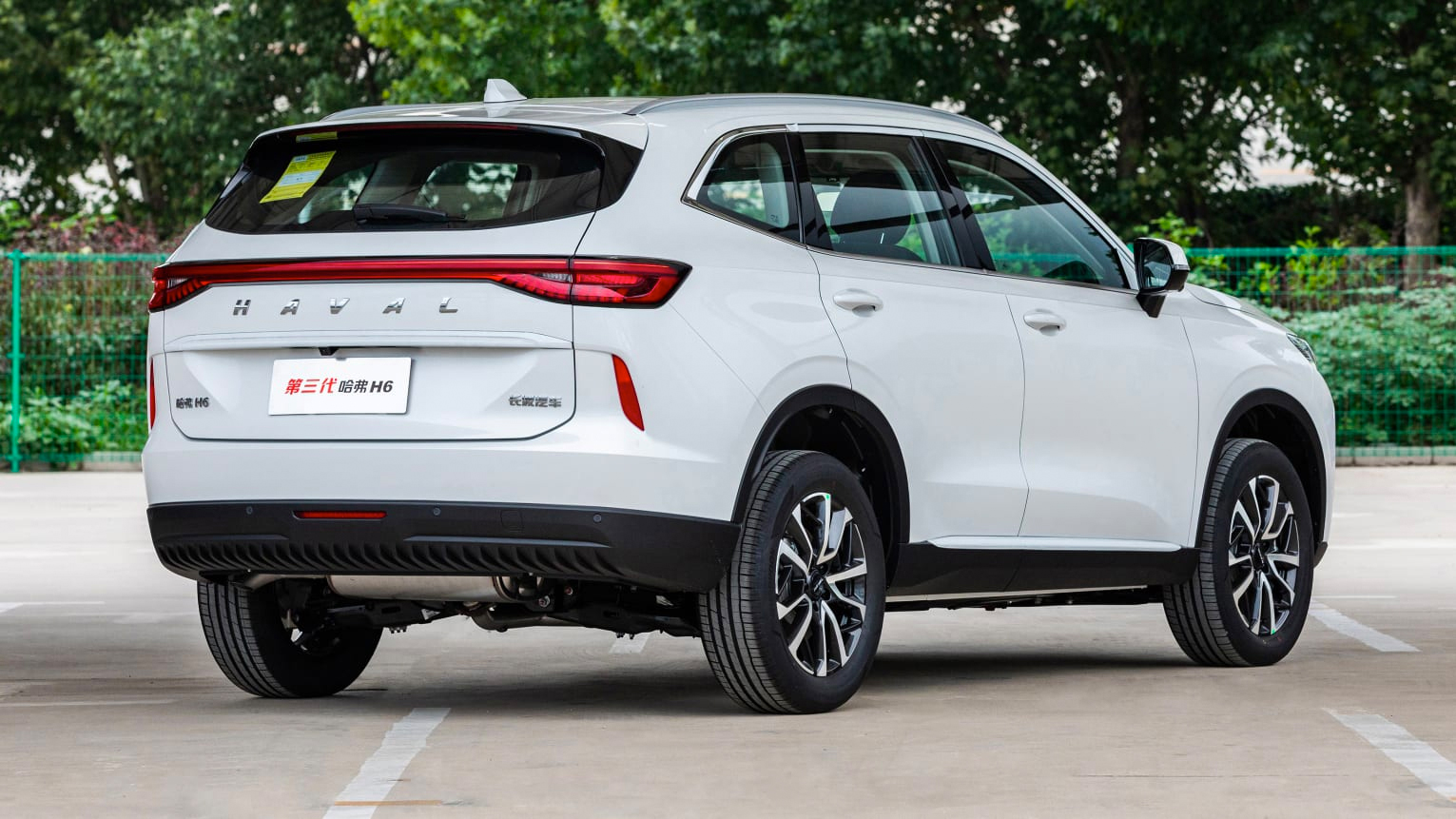
Front- and all-wheel drive configurations are also expected, bettering the FWD-only offering of the outgoing H6.
The new H6 will replace the current first-generation model that went on sale here in 2016, but has actually been on sale in China – in various looks and configurations – since 2011.
Astonishingly, and as an example of the sometimes unfortunate complexities of international interpretations, the H6’s new modular architecture is called LEMON – Lightweight, Electrification, Multi-purpose, Omni-protection and Network.
Don’t expect the local arm to make a song and dance about that particular detail when the new model arrives.
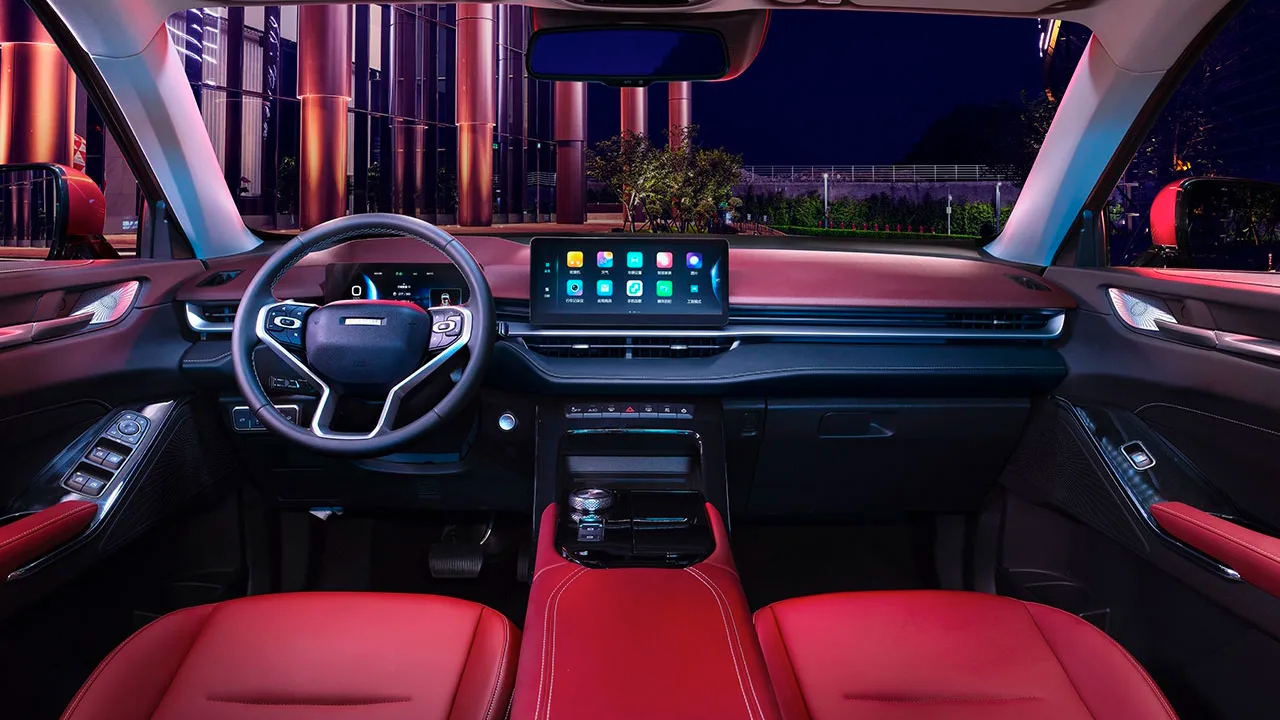
To its credit, the new H6 appears to be anything but a lemon, with advanced safety systems integrated in its Chinese-market form – including 14 radars, six cameras and a raft of driver assist features.
Specifications for home-market models include a 9.0-inch main screen and a 12.3-inch driver display, leather trim throughout, dual-zone climate control, a panoramic sunroof and 5G connectivity with over-the-air updates. Nothing that pushes the boundaries of the segment, but enough to make the H6 competitive – especially if priced to undercut rivals.
Watch for a local debut to occur in the coming months.
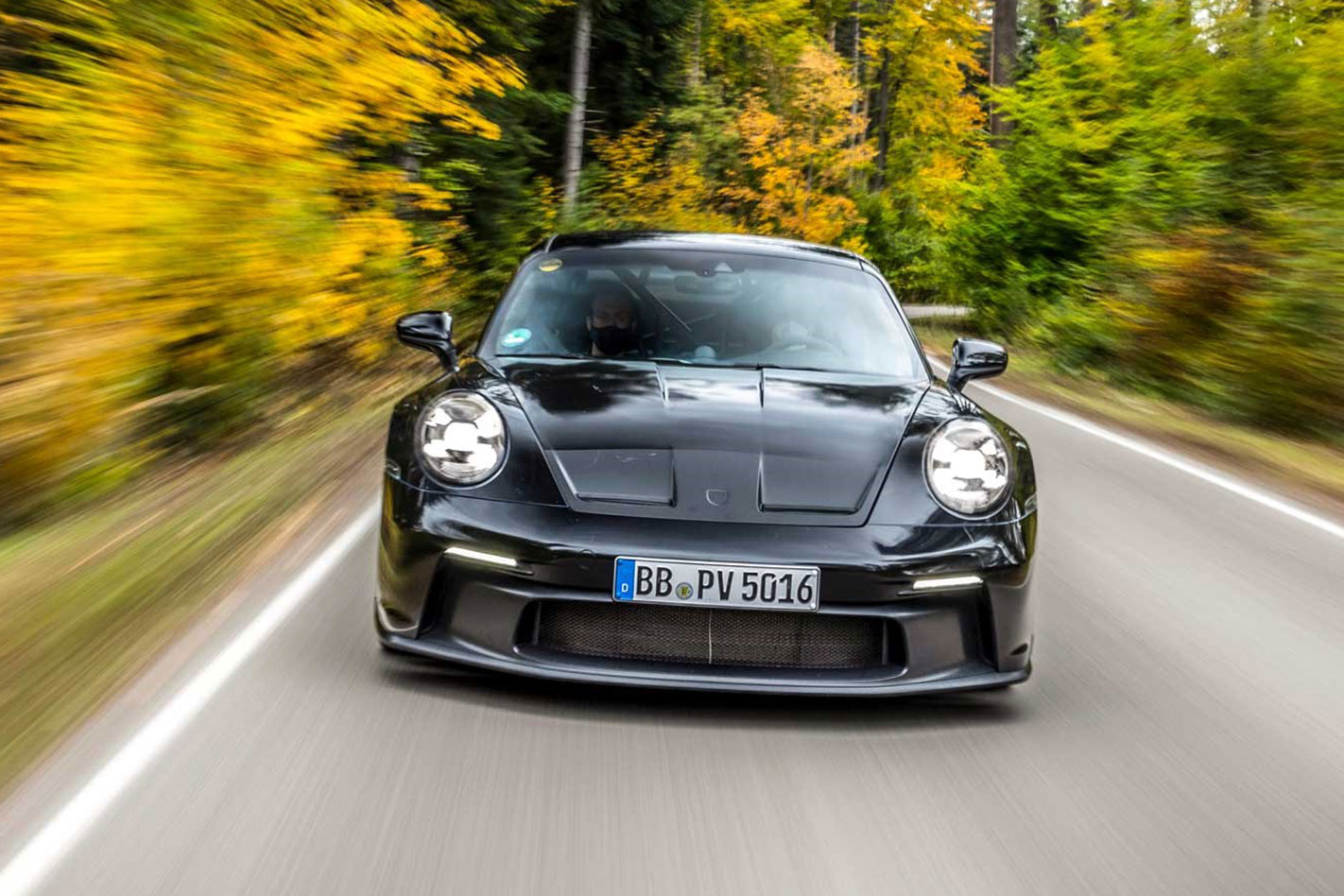
The new 2021 Porsche 911 GT3 will be unveiled on February 16, but the German icon has spent the past week drip-feeding fans with shadowy preview images and video.
This latest set of teasers shows the new model sitting in a dark garage, but tweaking the photo reveals a more detailed look at the coupe’s large rear wing.
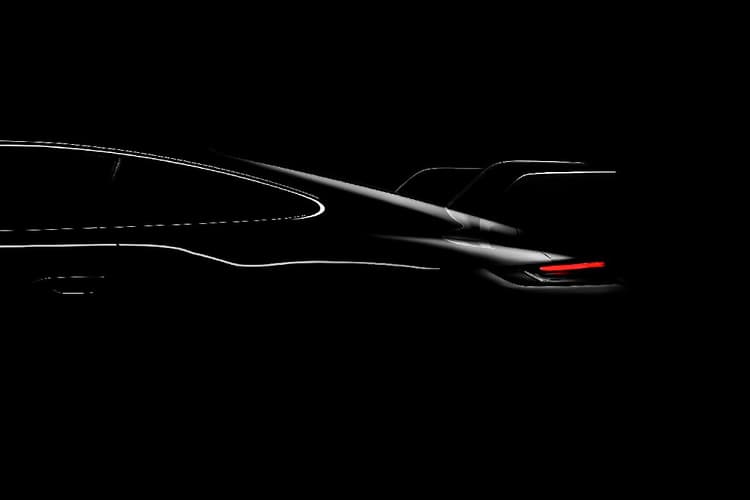
Porsche hasn’t officially identified the new 911 variant as the GT3, but the timing and details line up with earlier confirmed plans – and spy photos that have surfaced over the past year.
Thanks to a shotgun ride in a prototype of the new model last year, we already know the new GT3 will develop around 375kW of power – marking an increase of about 8kW depending on the final figure – and still without any turbocharging.
Another interesting detail is the switch up front from MacPherson struts to double wishbones, ensuring – according to Porsche’s GT division boss Andreas Preuninger – advantages in camber stiffness and precision.
“Our mid-engined competitors have had double wishbones for a long time but it wasn’t possible on the old 911 platform,” Preuninger told us in November.
For more on the new GT3, catch our ride-along review here, and watch for the big unveil on February 16.
MORE: 911 GT3 shotgun ride review MORE: 911 news and reviews MORE: All Porsche stories
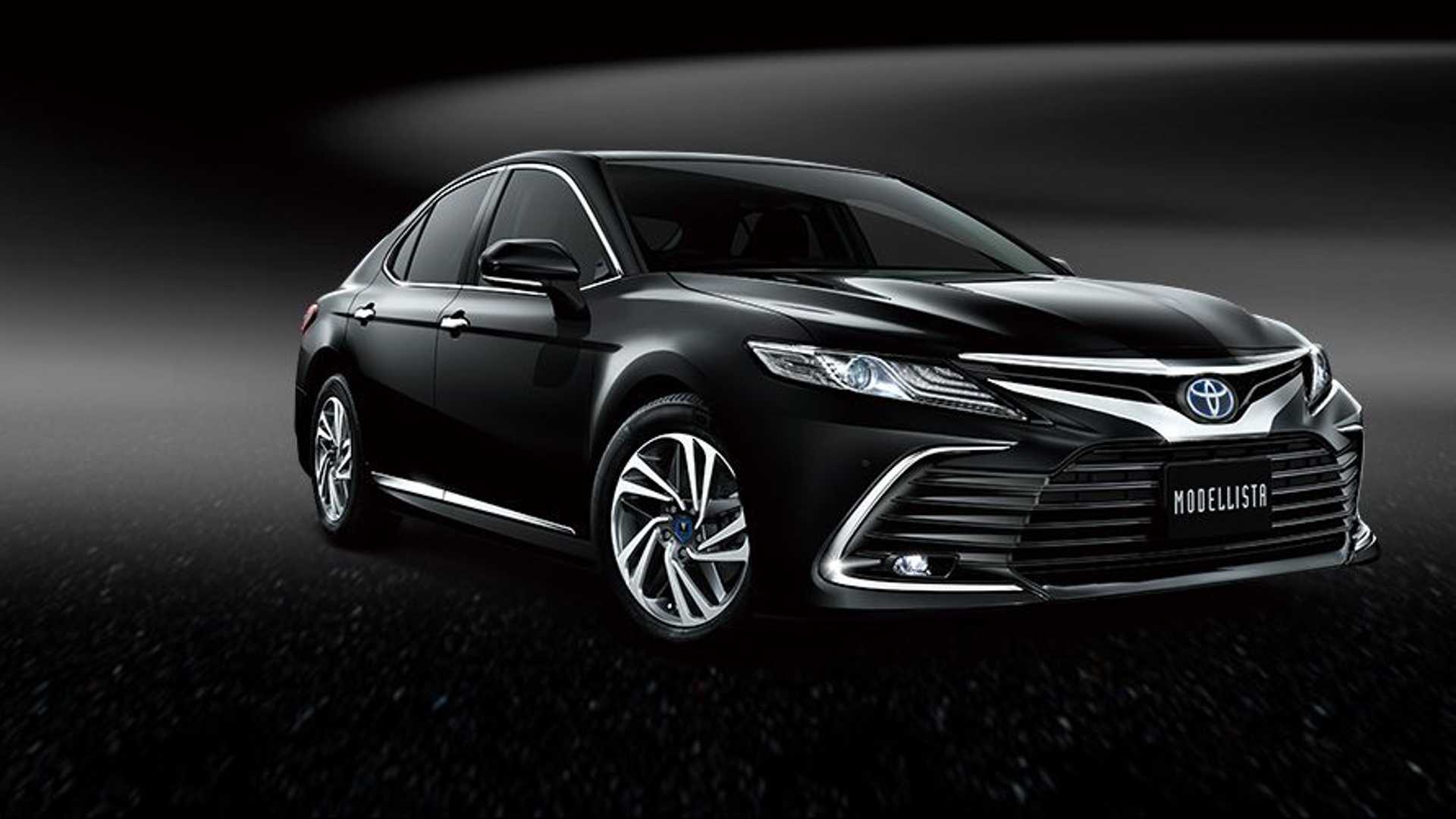
The already stylish new-generation Toyota Camry has been given a sporty makeover for the Japanese market, thanks to the release of new ‘GR Parts’ and ‘Modellista’ body kits and accessories.
A number of similar items have already been released for other Toyota models, including the new Yaris Cross compact SUV, but these mark the first official styling enhancement options for the new Camry.
Neither kit offers any performance improvements, with the GR Parts range offered entirely as an aesthetic exercise to give the Camry a little more visual flair.
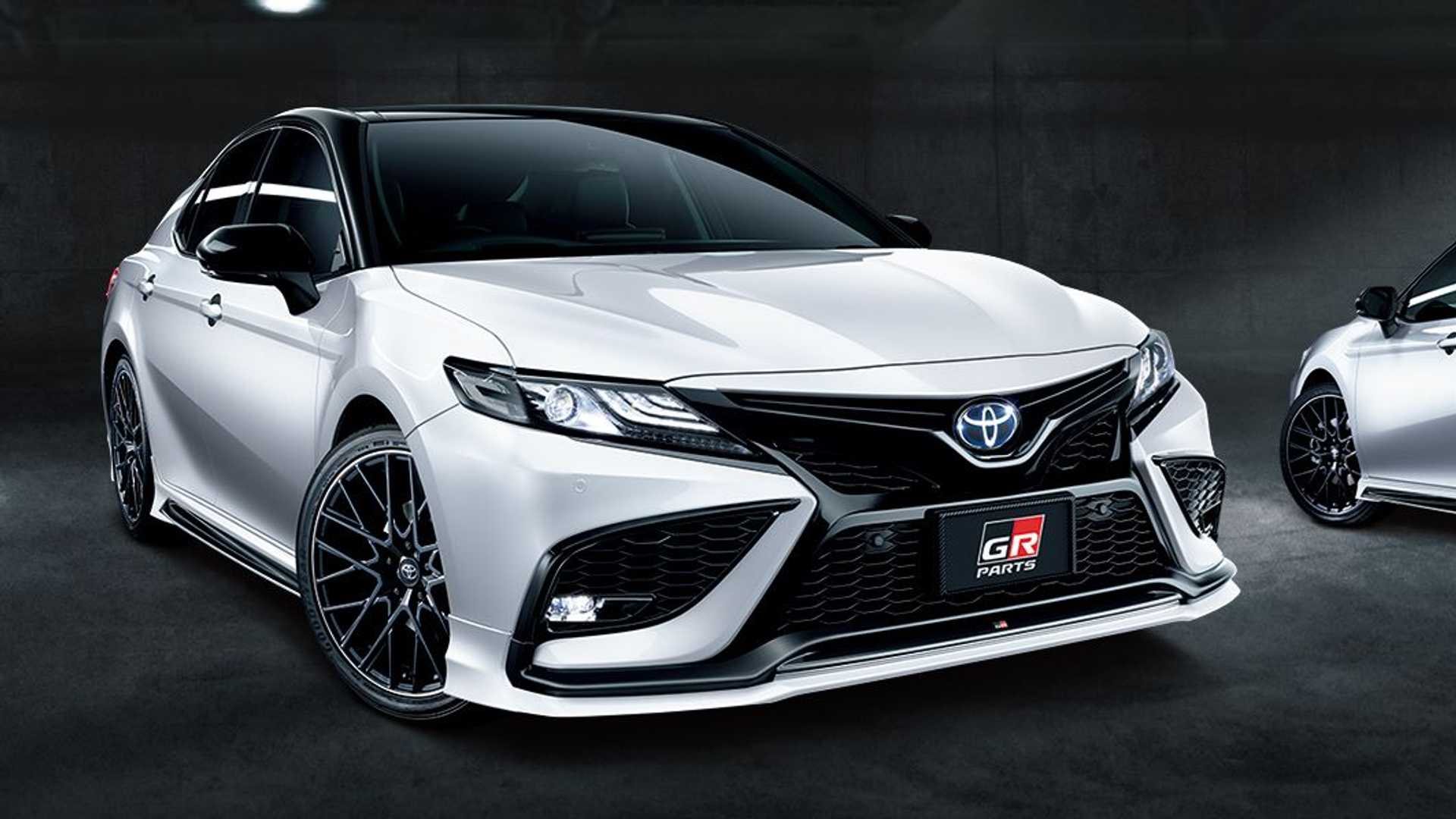
Pieces include new front and rear bumpers with large faux intakes and chrome-trimmed fake exhaust tips, new 19-inch alloy rims, low skirts and boot-lip spoilers.
Various accent and garnish items are also on offer, including bold chrome frames to surround the grille and front bumper openings.
Where the GR Parts package focuses on a racing look, the Modellista brand is aimed at more of a Japan-style premium look.
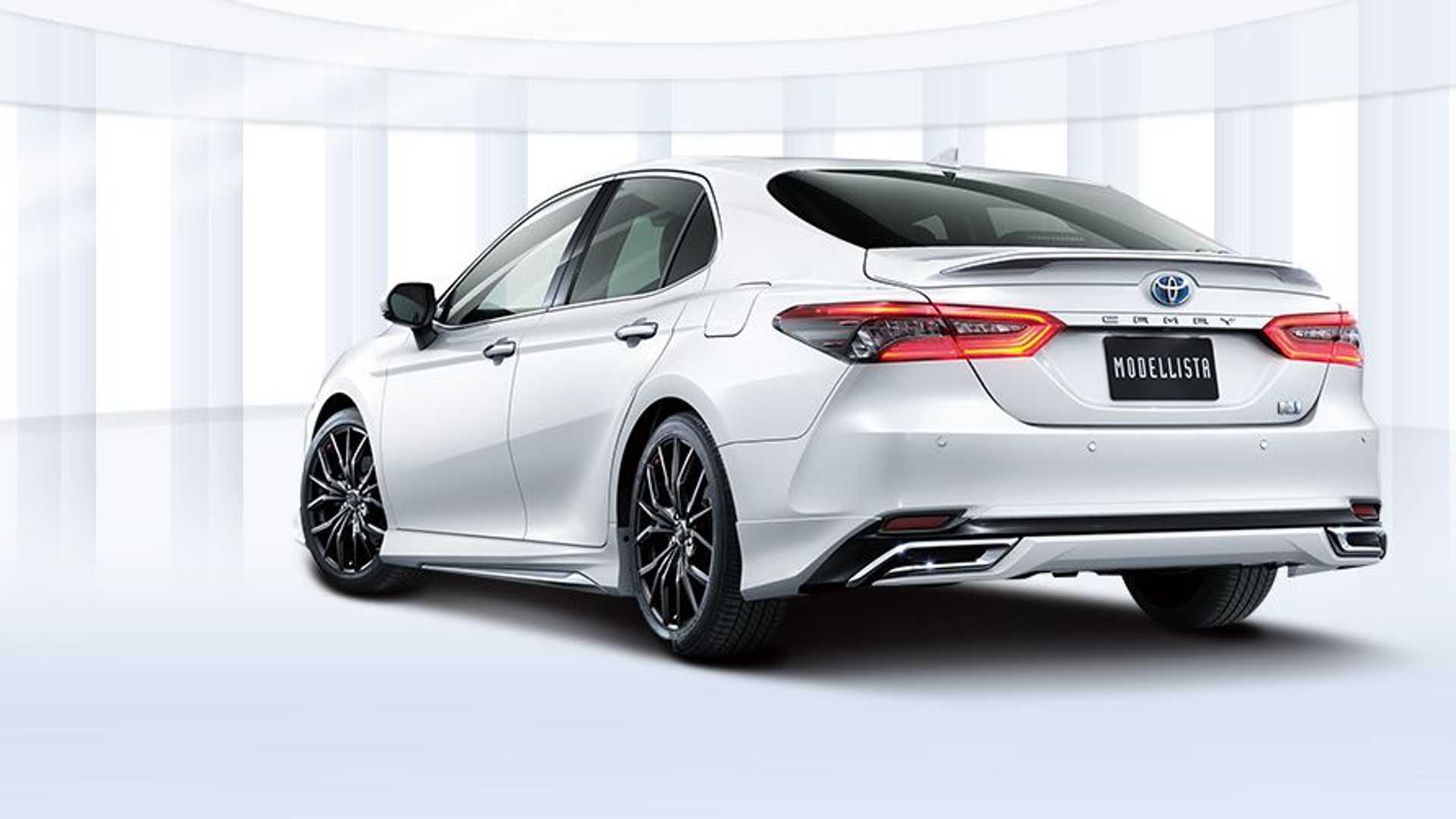
Neither package is planned to come to Australia – at least not through official channels – with Toyota’s local arm focused on building the GR (Gazoo Racing) brand as a bonafide performance offering before it considers diluting the program with styling or handling options, in the case of next-level-up GR Sport models.
Watch for more on the Camry, including a facelifted and upgraded model, to come in the months ahead.
MORE: Camry news and reviews MORE: All Toyota stories