
Not everything about the car industry is doom and gloom in 2020. British EV conversion specialist Lunaz has doubled the workforce and introduced a new model for 2021.
Having started building the world’s first electric classic Rolls-Royces for those who want timeless style mixed with the latest electrified powertrains, it’s now offering what it claims is the world’s first fully electric, convertible SUV…
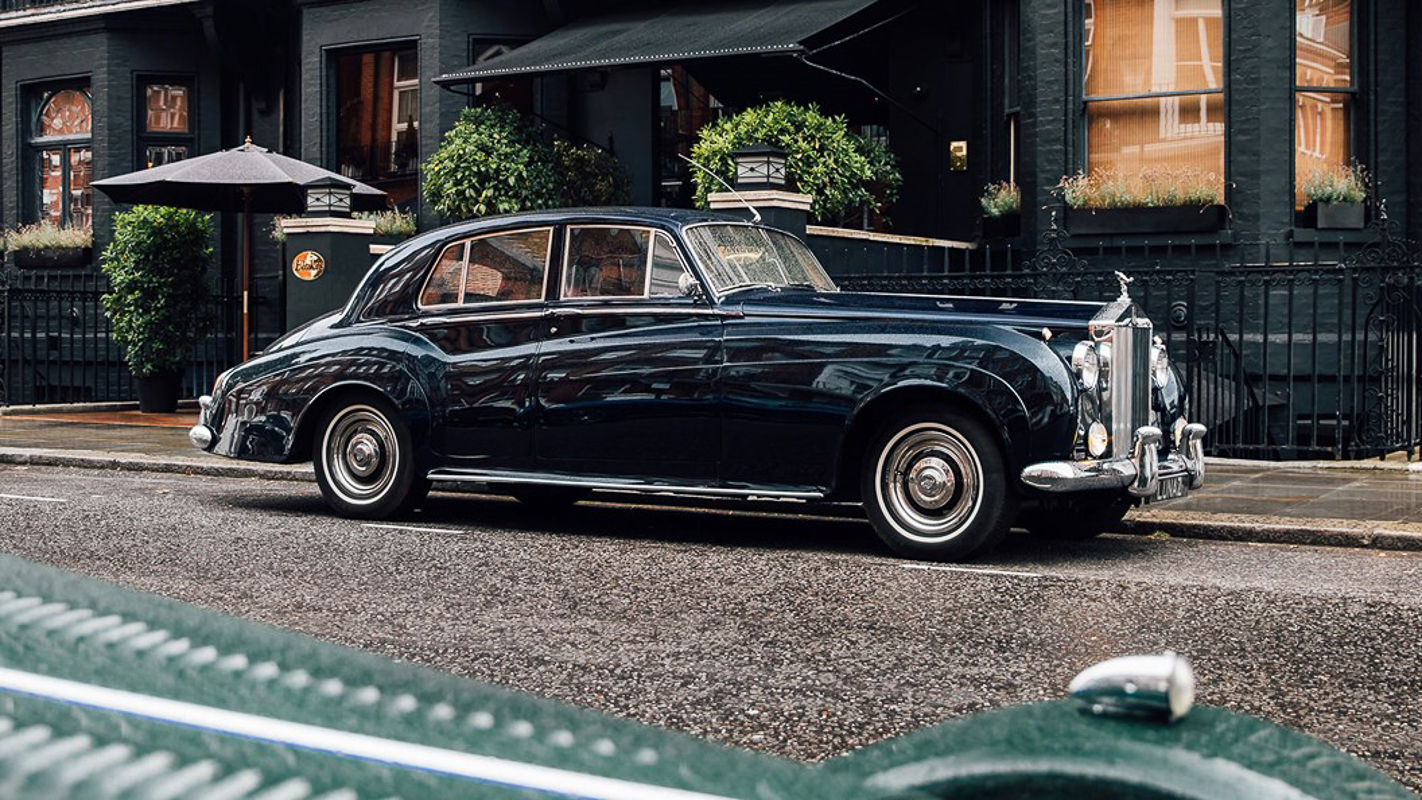
Joining the $600,000+ 1960s Rolls-Royce Phantom V or Silver Cloud in their catalogue, a fully restored, electrified and retrimmed original Range Rover is available from $450,000 – plus taxes, of course.
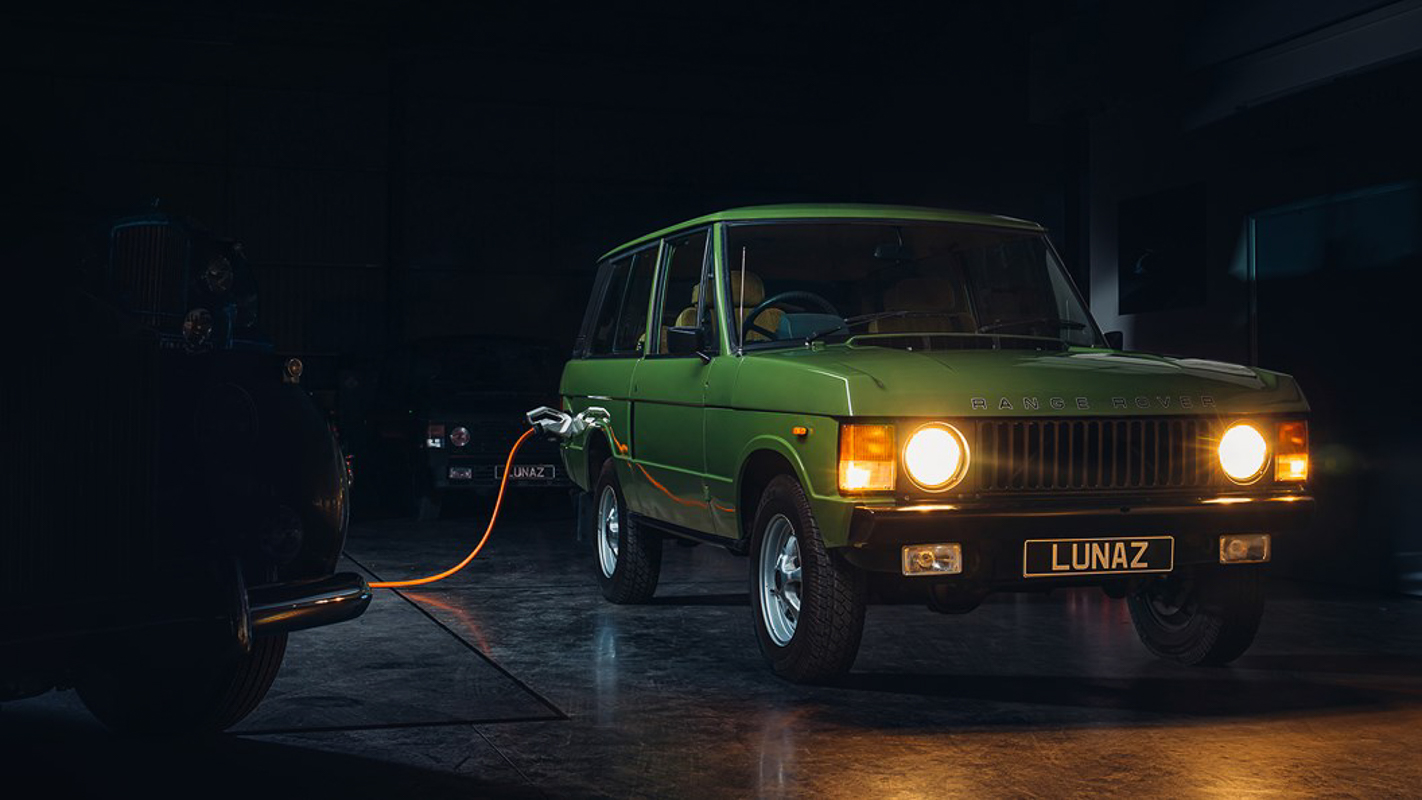
Like the Rolls Royce range, you can pick from four-doors, with long wheelbase optional, two-doors and even a convertible.
Lunaz has already established a sustainable business converting classic Bentleys and Jaguars at its Silverstone base near the famous F1 circuit, and claims to have been first to convert old Rolls-Royces. Now it’s claiming the first fully-electric SUVs, too – retaining the 4×4 system of the Range Rover.
It’s not exactly a ground-breaking price that’ll transform the market, but for $450,000 a fully restored, electrically-powered Range Rover is Lunaz’s most rational product yet.
Not only is the original Range Rover a trendsetting legend that established a template for what many consider to be the epitome of luxury cars now – height and dominance over the road and countryside alike – it’s a great model for sustainable motoring, with lightweight aluminium panels, a bolt-on approach to maintenance and proven track record of repairability and accessibility that classic Rolls-Royce and Bentley models lack.
Lunaz converts the Range Rover as part of a bare metal restoration.
It’s also not that unrealistic a price, given the values of even ropey Range Rovers are heading skyward and a full nut and bolt restoration isn’t a cheap undertaking – even without the EV conversion. Better yet, you can hope that the donor cars are mopping up the unloved and unwanted, rather than the cherished and rare.
A good example of that is the Safari Top. Rather than seeking out rare converted open-top Range Rovers to electrify, Lunaz is converting models from standard hard-top bodies to create the desired open-air experience. The first one has already sold…
The Lunaz Range Rover comes in two flavours, ‘Town’, and ‘Country’. Town represents something Range Rover never built itself – a two-wheel drive, passenger-focused experience with luxurious rear seating (choose the long wheelbase) and the option to really go to, er, town on the luxury appointments. Simplifying the drivetrain helps range, of course, but it also reflects the anticipated use of these as a city-centric vehicle.
The Country model offers all the benefits of a classic Range Rover, with a rebuilt – but authentic – four-wheel drive system on the single-motor model, or a motor per axle on the twin-motor setup. Details have yet to be released around performance, but we can assume it’ll be quick, tractable and capable off-road given the original drivetrain beyond the motor isn’t being altered significantly. Anti-roll bars improve the handling.
Unlike the monster packs in the Rolls-Royce conversions below, the Range Rover can be specified with 60kWh or 90kWh packs; these should give a potential for around 320 kilometres given the relatively light – by modern standards – construction of the Range Rover; at least before too many lavish options have been added.
Customers have a great deal of flexibility – including the aforementioned Safari conversion – but Lunaz is aware of the many details and diversions that exist within the Range Rover’s evolution.
We’re assured that any upgrades will be sympathetic; if you’ve a hankering for 1970s simplicity or the refinement of the last soft-dash luxury, speak to Lunaz. Conversions on your own Range Rover are available too (as with the other classic cars Lunaz has worked with) but as part of a bare-metal restoration, the saving for providing your own is probably quite small.
Even in challenging economic circumstances, Lunaz is finding demand for converted, restored classics is growing – with a younger demographic finding the appeal of artistic, legendary styling with modern powertrains rather more alluring than the oily-rag enthusiasm of old.
As such, the workforce at Silverstone has doubled to meet capacity as an ever-more sophisticated process allows a wider range of classic cars to be converted using a blend of traditional coachbuilding techniques and F1-developed powertrain and chassis improvements. Demand for export is high as cities around the world turn to excluding ICE vehicles – classics included – to drive down local emissions.
Electric classic Rolls-Royces: how Lunaz converts them
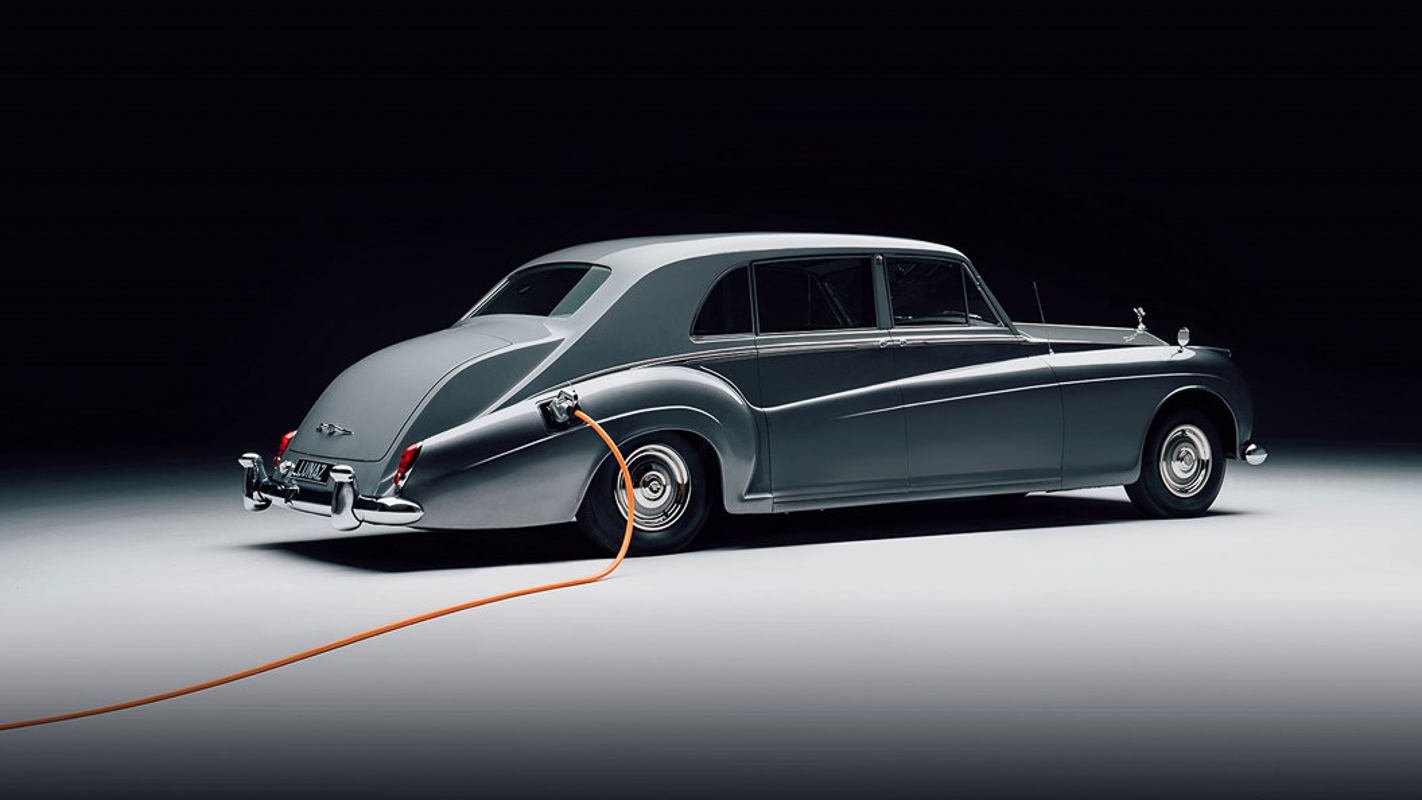
Batteries of up to 120kWh mean these electric Rolls-Royces can travel up to 480 kilometres on one charge
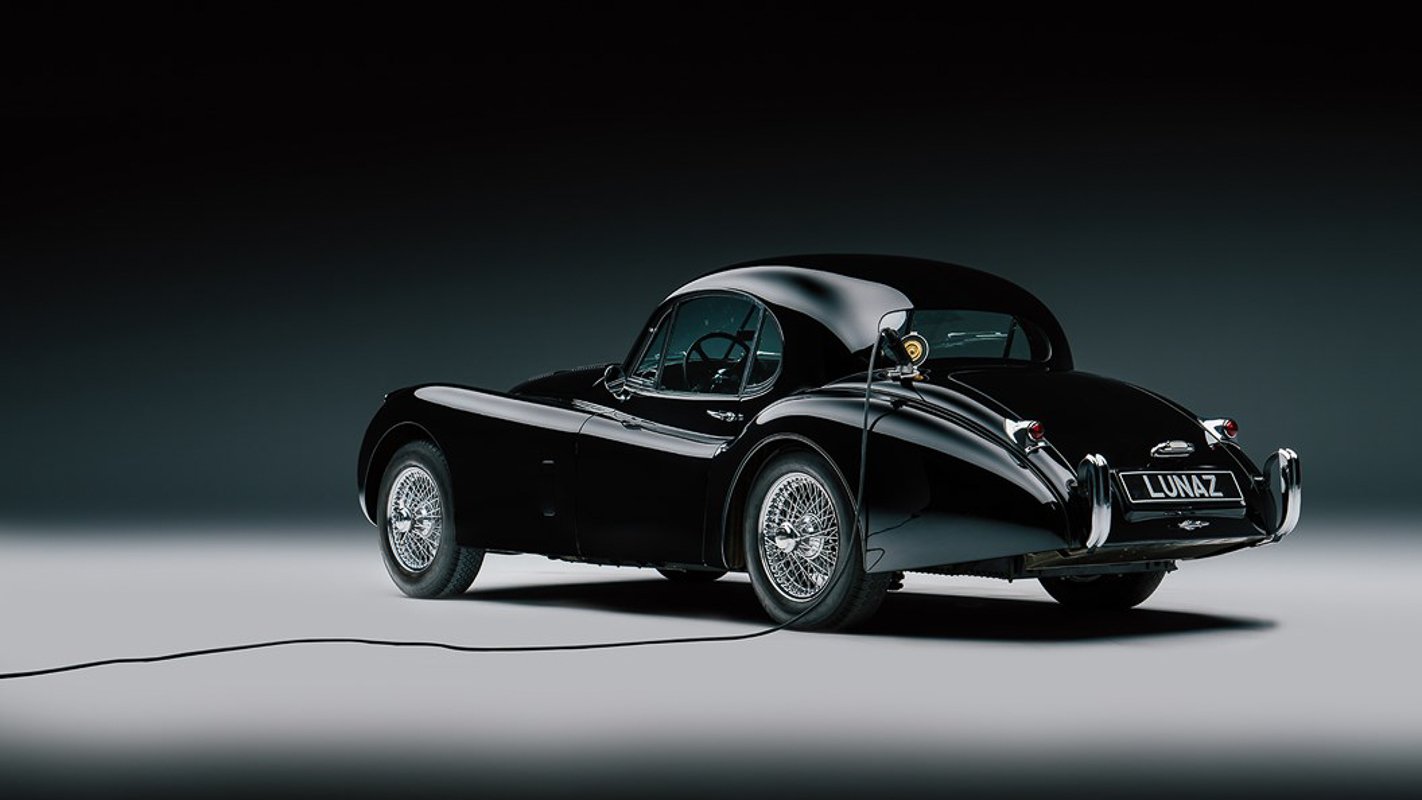
First, suitable examples are sourced and given a ground-up restoration. Out go the period petrol motors (sigh…) and in comes Lunaz’s proprietary EV powertrain.
That means a substantial 120kWh lithium-ion battery pack for the Phantom (claimed to be the largest cell of its type in production), which is enough for a claimed 500+ kilometre range. The Silver Cloud models make do with a smaller 80kWh energy pack, which interestingly carries a similar range claim.
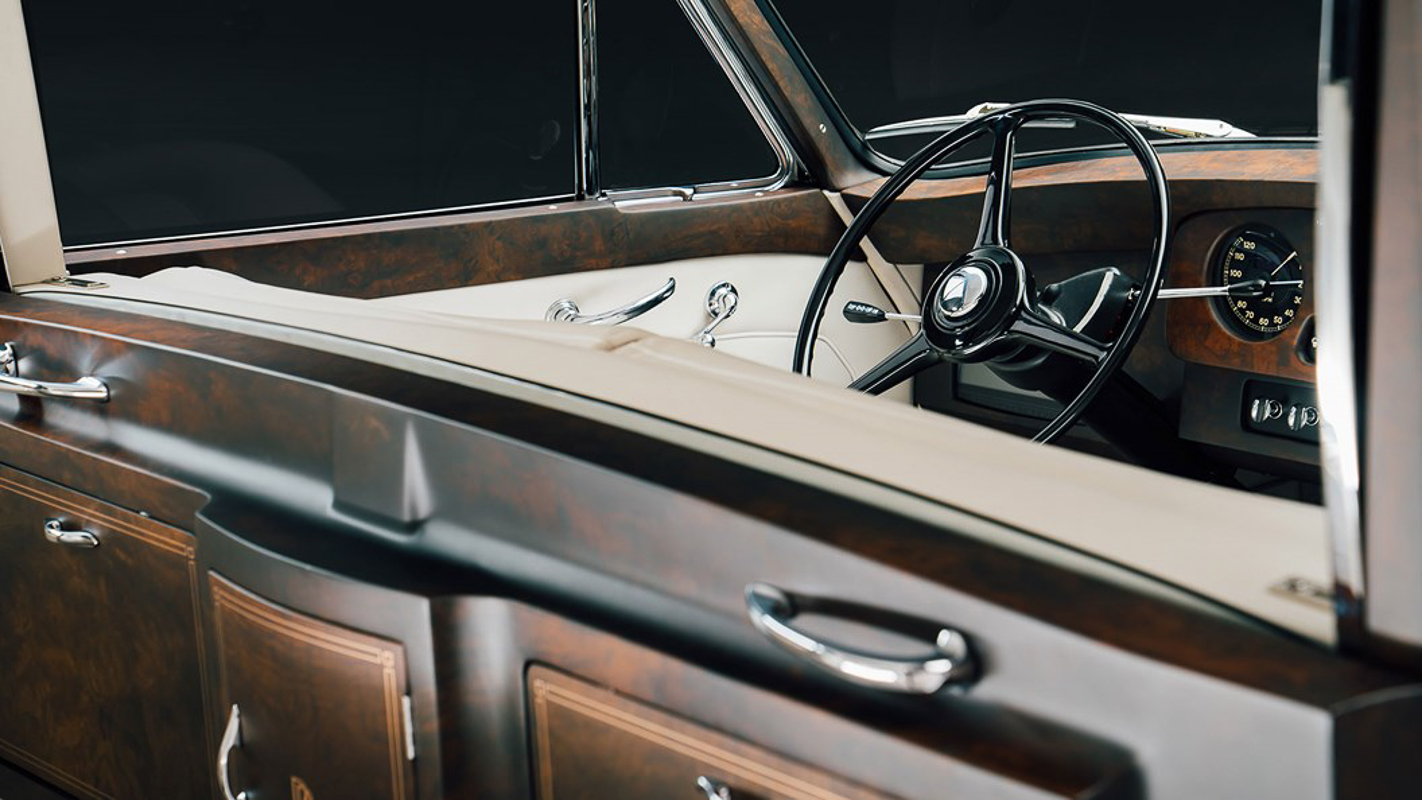
Period details are retained throughout, although Lunaz will upgrade details like the Bakelite telephone between the rear seats with modern cellular technology. Sounds pretty cool to us – and clients can influence the design and personalisation to a high degree, as you’d expect at this lofty price.
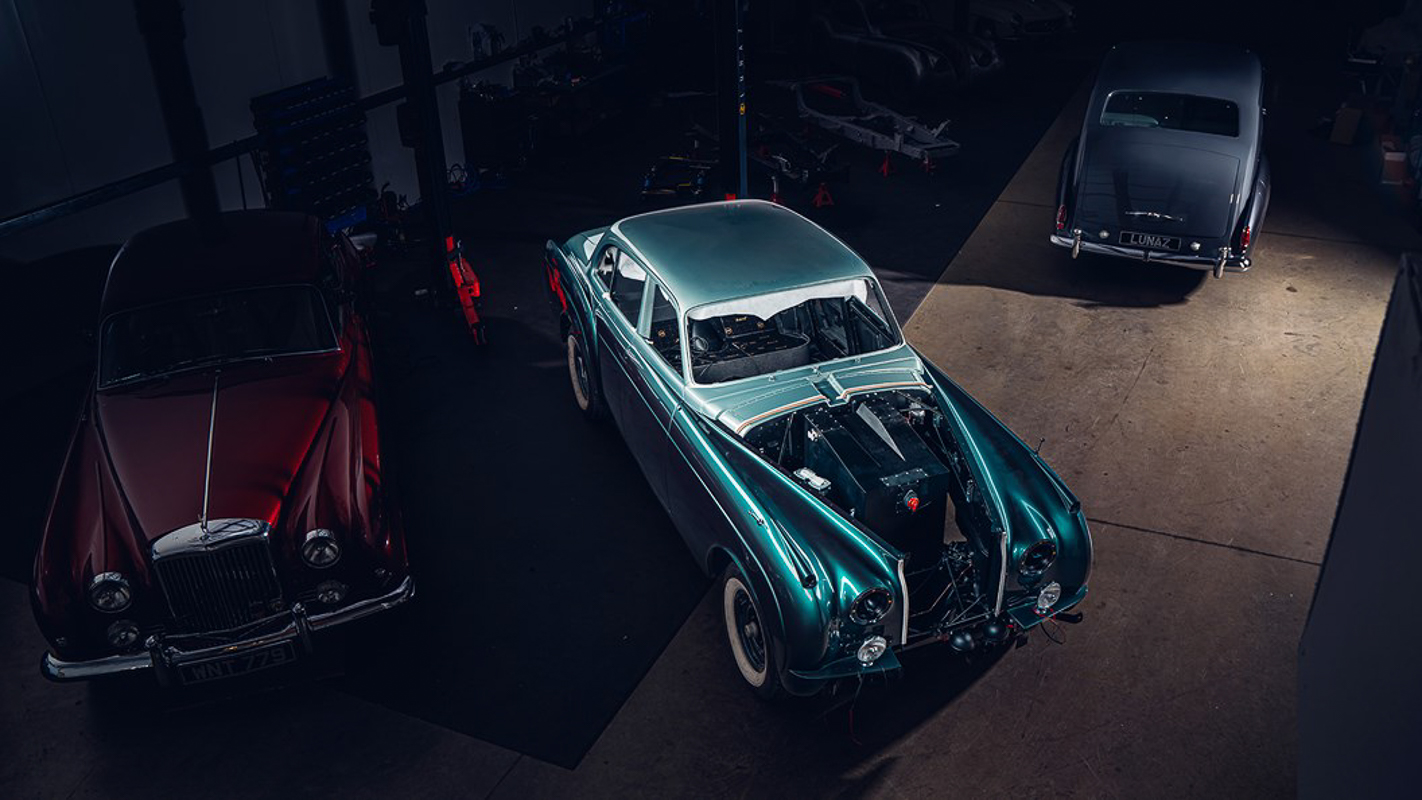
Lunaz founder David Lorenz said: “The time is right for an electric Rolls-Royce. We are answering the need to marry beautiful classic design with the usability, reliability and sustainability of an electric powertrain. More than ever we are meeting demand for clean-air expressions of the most beautiful and luxurious cars in history. We are proud to make a classic Rolls-Royce relevant to a new generation.”
Prices for the Silver Cloud start at $630,000 (plus local taxes), whereas the Phantom models start at a cool $900,000.
This story was originally published on carmagazine.co.uk
Hyundai has introduced an all-new model to its Australian range, placing the Palisade large SUV right at the top of its local line-up.
The Hyundai Palisade seven- or eight-seat large SUV makes its debut with a relatively simple range, with just two trim levels on offer with a choice of petrol or diesel powertrains and the option of front- or all-wheel drive.
Kicking off the range is a front-wheel-drive petrol car simply named Palisade, which costs $60,000 (plus on-road costs), before stepping up the Palisade Highlander 2WD specification for $71,000.
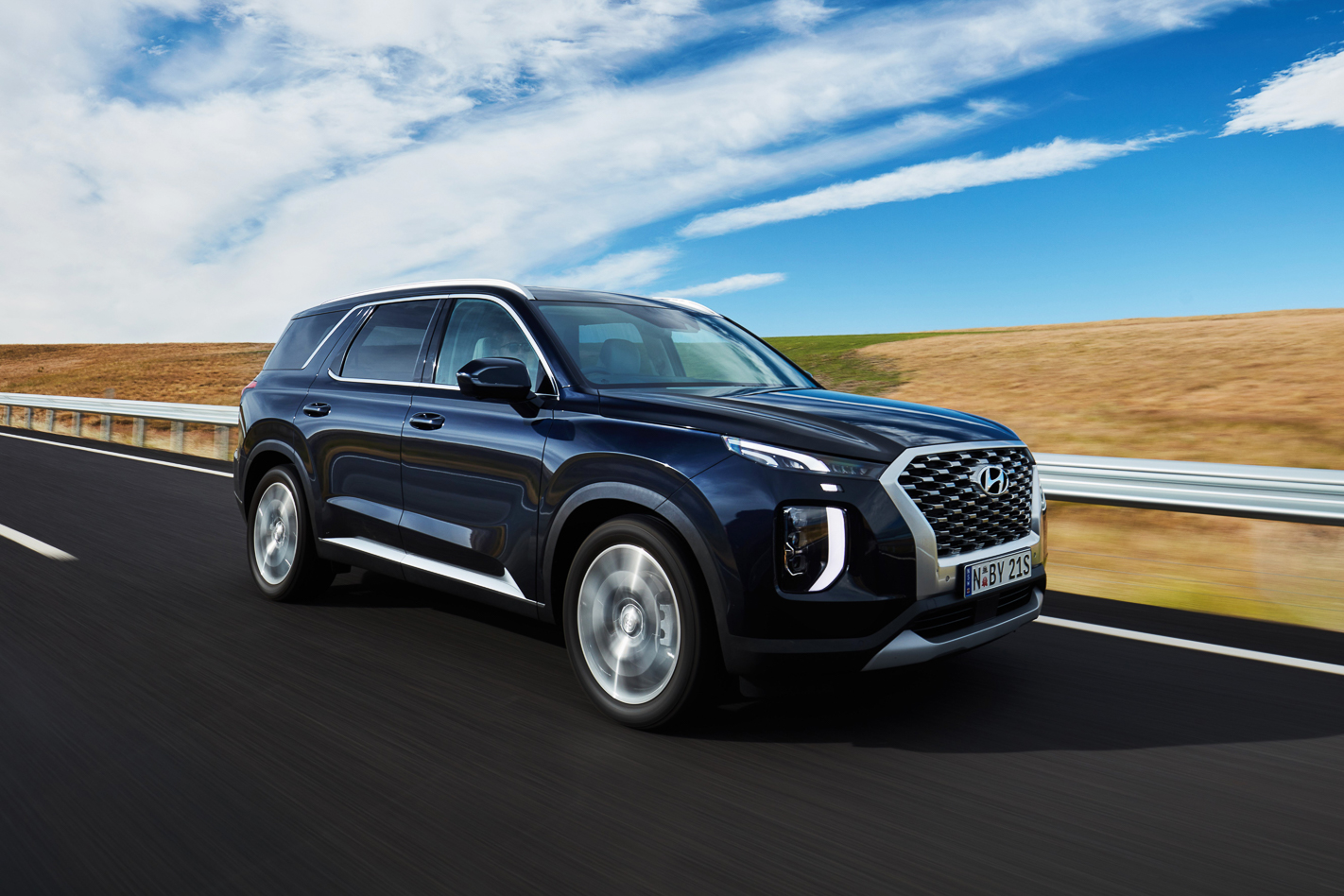
Diesel power is on offer from $64,000 in the Palisade AWD, then steps up to $75,000 for the Palisade Highlander AWD.
One immediate way that the Palisade stands out among its competitors is that it offers both seven and eight seats; an uncommon occurrence in the large SUV market and you can choose either option for no additional cost.
Eight-seat versions have a three-up second row (seven-seaters use two captain’s chairs in the second row), while the third row always has a three-wide bench in place.
Hyundai intends to position the new Palisade as a more road-defined, car-like offering than its group of body-on-frame rivals like the Isuzu MU-X, Toyota Fortuner, Ford Everest and Mitsubishi Pajero Sport.
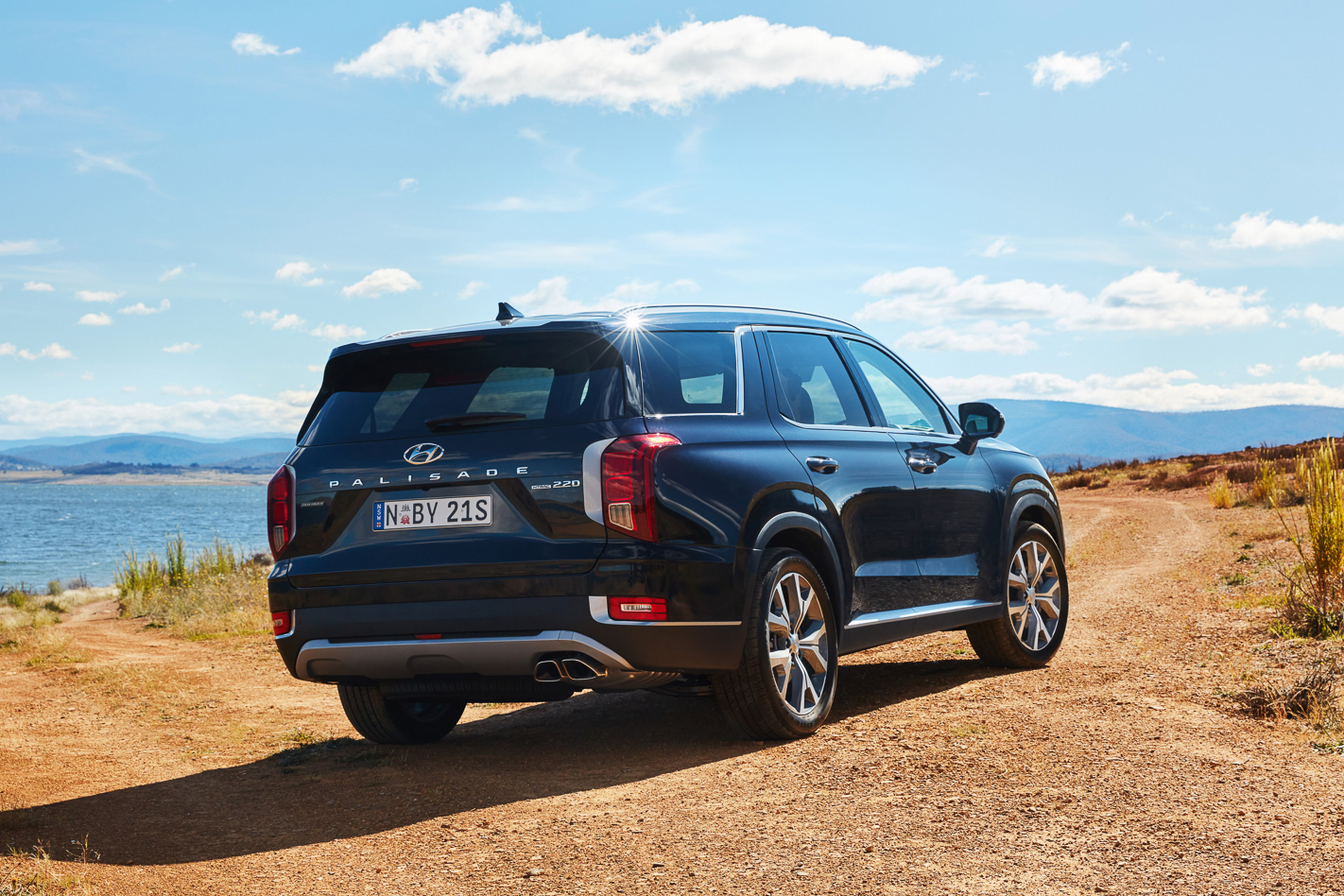
It’s based on the same platform as the Santa Fe, but presents 210mm longer and 85mm wider. That extra size translates to extra space inside for passengers, and extra storage space with 704 litres of volume in the boot with the third row stowed.
Eight things we love already about the Hyundai Palisade
Powering the Palisade is the choice of a 217kW/355Nm 3.8-litre V6 engine (which sends power the front wheels only) or a 147kW/440Nm 2.2-litre turbo-diesel four-cylinder engine which sends power to all four wheels.
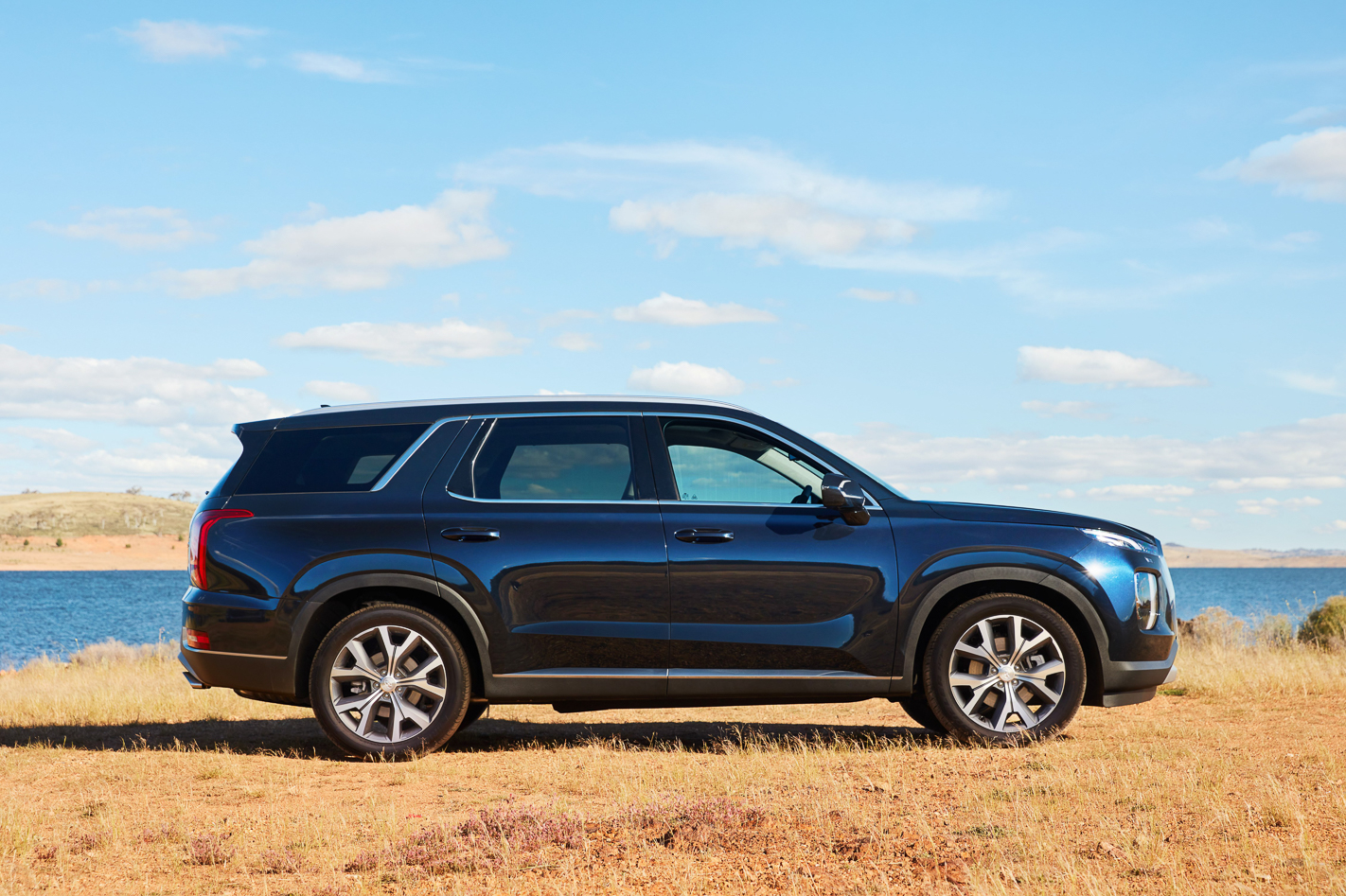
Hyundai says the diesel engine returns a 7.3L/100km consumption, while the petrol consumes 10.7L/100km on a combined cycle.
Each version receives an eight speed automatic transmission as standard.
The Palisade also comes with a full-size spare wheel and is rated to tow 2200 kilograms.
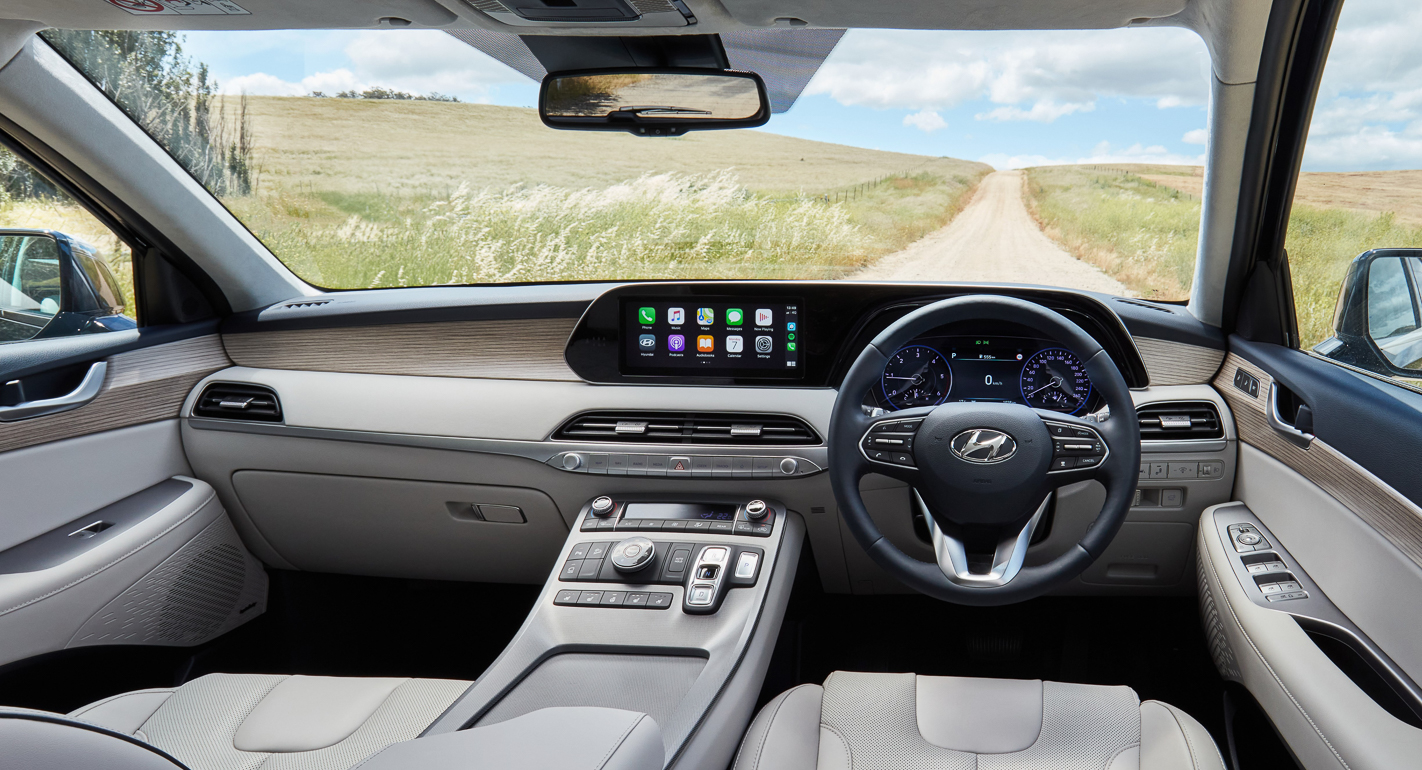
Standard specification includes black leather upholstery, a 10.25-inch infotainment screen with 7.0-inch digital instrument cluster, powered driver’s seat, three-zone air conditioning and an Infinity audio system.
It also adds keyless entry, push-button start and an extensive list of Hyundai SmartSense safety features including autonomous emergency braking, driver attention warning, blind-spot collision avoidance, lane-following assist, rear cross traffic avoidance and a stop/go adaptive cruise control system.
Step up to the Palisade Highlander and you receive Nappa leather upholstery, a suede headliner, heated and ventilated powered front seats, dual-panel sunroof, wireless charging, a head-up display, powered tailgate and 20-inch alloy wheels.
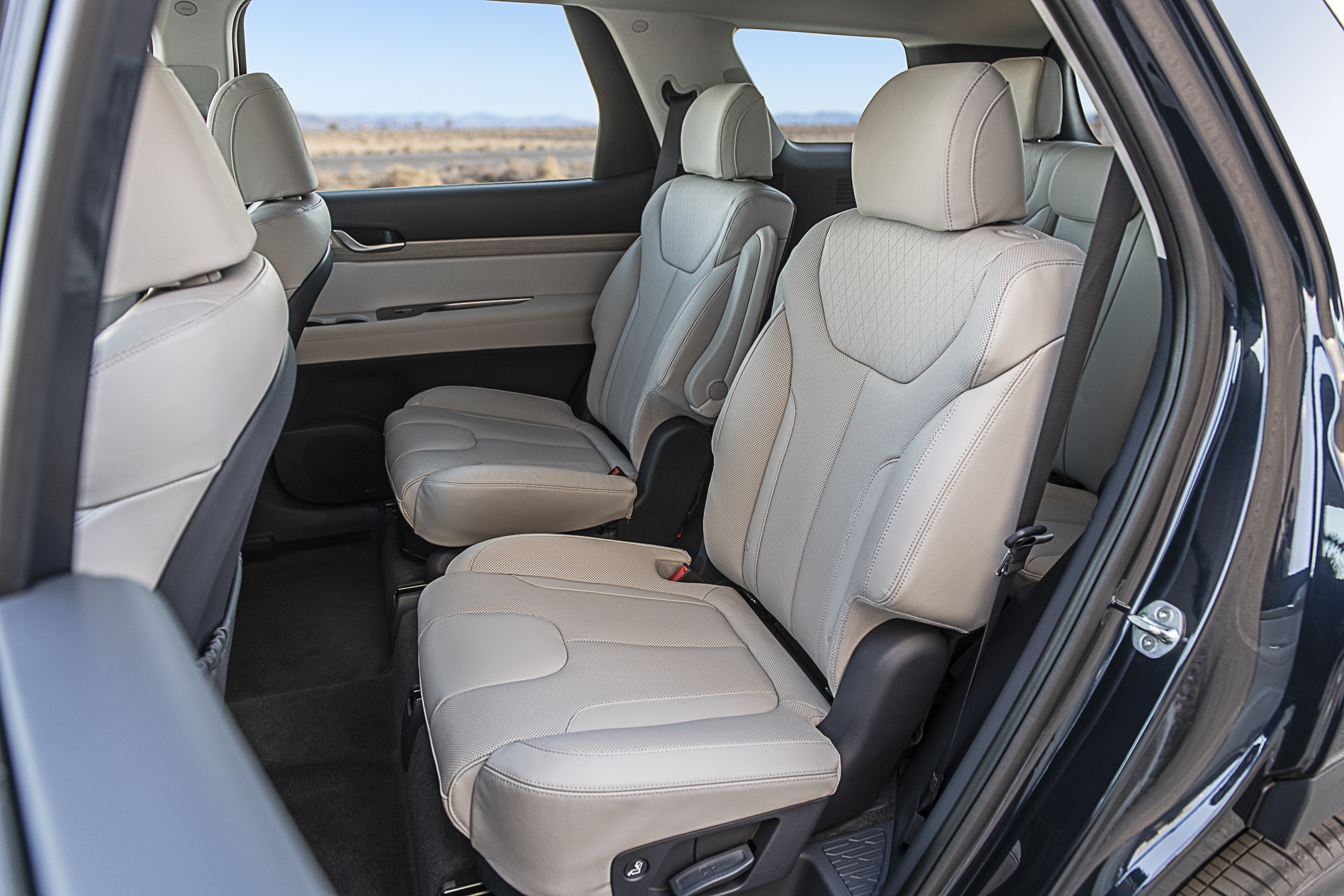
There’s a whopping 16 cupholders found in the cabin, and seven USB ports too. There’s even a feature that allows the driver to use a PA-style microphone system to calmly tell off wayward kids up the back.
As with many of its locally-available cars, Hyundai Australia had a say in the technical development of the right-hand drive Palisade – getting involved early to provide insight to achieve the unique Australian ‘flavour of tune’ that we’ve grown accustomed to.
The Palisade is designed to be serviced every 12 months or after every 15,000 kilometres, with diesel versions costing $469 each visit and petrol variants costing $399 each visit.
It’s covered under Hyundai’s five-year/unlimited kilometre warranty with 12-month complimentary roadside assist, and is on sale and in dealerships now.
2021 Hyundai Palisade Australian pricing
- Palisade petrol 2WD – $60,000
- Palisade diesel AWD – $64,000
- Palisade Highlander petrol 2WD – $71,000
- Palisade Highlander diesel AWD – $75,000
Only two months after launching the Ioniq brand for its EVs, Hyundai has announced it will make a similar play with its burgeoning fuel cell division.
It’ll be known as HTWO, the name is an amalgam of ‘H2’ and ‘human’, and will include fuel cell vehicle development and the roll-out of worldwide hydrogen refuelling strategies.
“Building upon Hyundai’s 20-plus years of experience in hydrogen fuel cell technology, the brand will present hydrogen as a positive energy for humanity,” Hyundai said in a statement overnight.
Hyundai will, it says, step up efforts to develop a next-generation hydrogen fuel cell system that can be applied to various forms of mobility including cars, ships and trains.
The second-generation system will be cheaper, lighter and offer both more range and better performance, according to Hyundai.
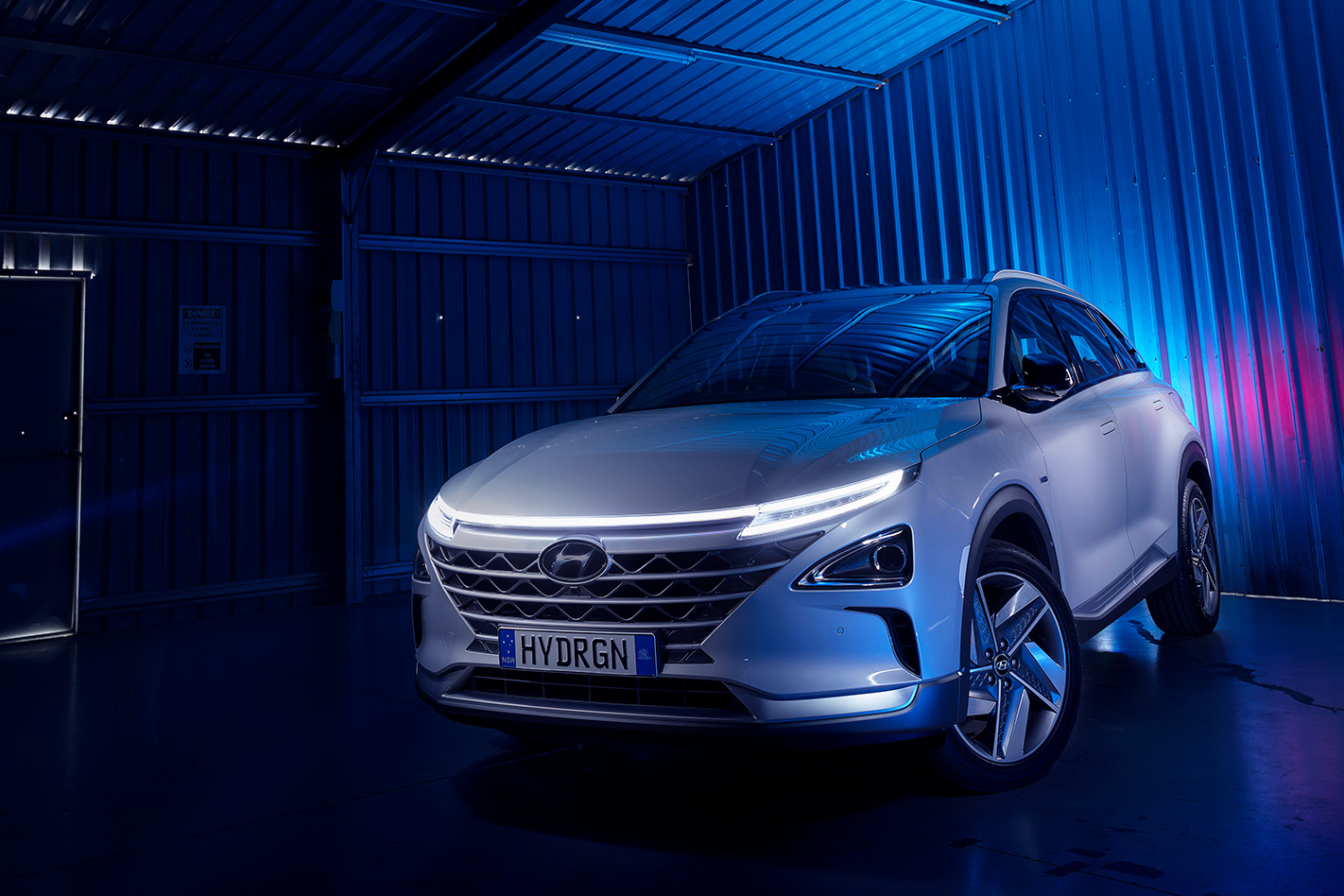
Even after 20 years, the future of fuel-cell-powered passenger vehicles is – despite the presence of the Nexo fuel-cell SUV – some way off. However, hydrogen fuel cell tech’s strongest play arguable lies in the area of commercial vehicles.
To this end, Hyundai has also signed a deal with one of America’s biggest commercial vehicle companies, Cummins, to research and develop fuel cell-powered trucks.
Despite its image as a diesel leader, Cummins is quite advanced in the area of electric propulsion for larger vehicles like semi-trailers.
Using fuel cells to power those vehicles will reduce the requirement for a huge battery array, while the out-and-back nature of commercial transport means that trucking yards, mines and construction sites are well placed to build their own mini hydrogen refuelling bays to service the vehicles.
Australian fuel cell development is moving apace after the federal government’s $350 million investment announcement for the sector, with companies like H2X indicating its interest in building both passenger and commercial fuel cell-powered vehicles.
Hyundai will roll out 20 of its production Nexo fuel cell-powered SUVs into Canberra next year, to partner the territory government’s new Hornsdale Wind Farm project.
The Nexo’s Achilles heel is the lack of commercial hydrogen refuelling capability in this country, which will restrict any plans to roll the car – which is similar in size to a Santa Fe – to a wider audience in the short- to medium term.
With a projected range of 800km, an estimated five-minute refill time and emissions that equate to just water spitting from the exhaust, the Nexo is the second hydrogen passenger car to come from Hyundai, and isn’t likely to be the last.
It will, however, wear a HTWO badge when it’s eventually offered to Australian consumers.
Online retail sales spiked in Australia during 2020 as people across the country endured some kind of coronavirus restrictions.
However, while Aussies were ordering food and buying shoes and jigsaw puzzles over the internet in record numbers, Covid-19 failed to have an impact on online vehicle sales.
Surveys carried out over the past few years have shown that about a third of Australians were ready to buy a car from a virtual showroom sight unseen.
The most recent poll, by online car financial brokers Savvy, suggests even being locked down hasn’t changed vehicle buying habits.
Furthermore, it will take some time to convince the remaining 70 percent.
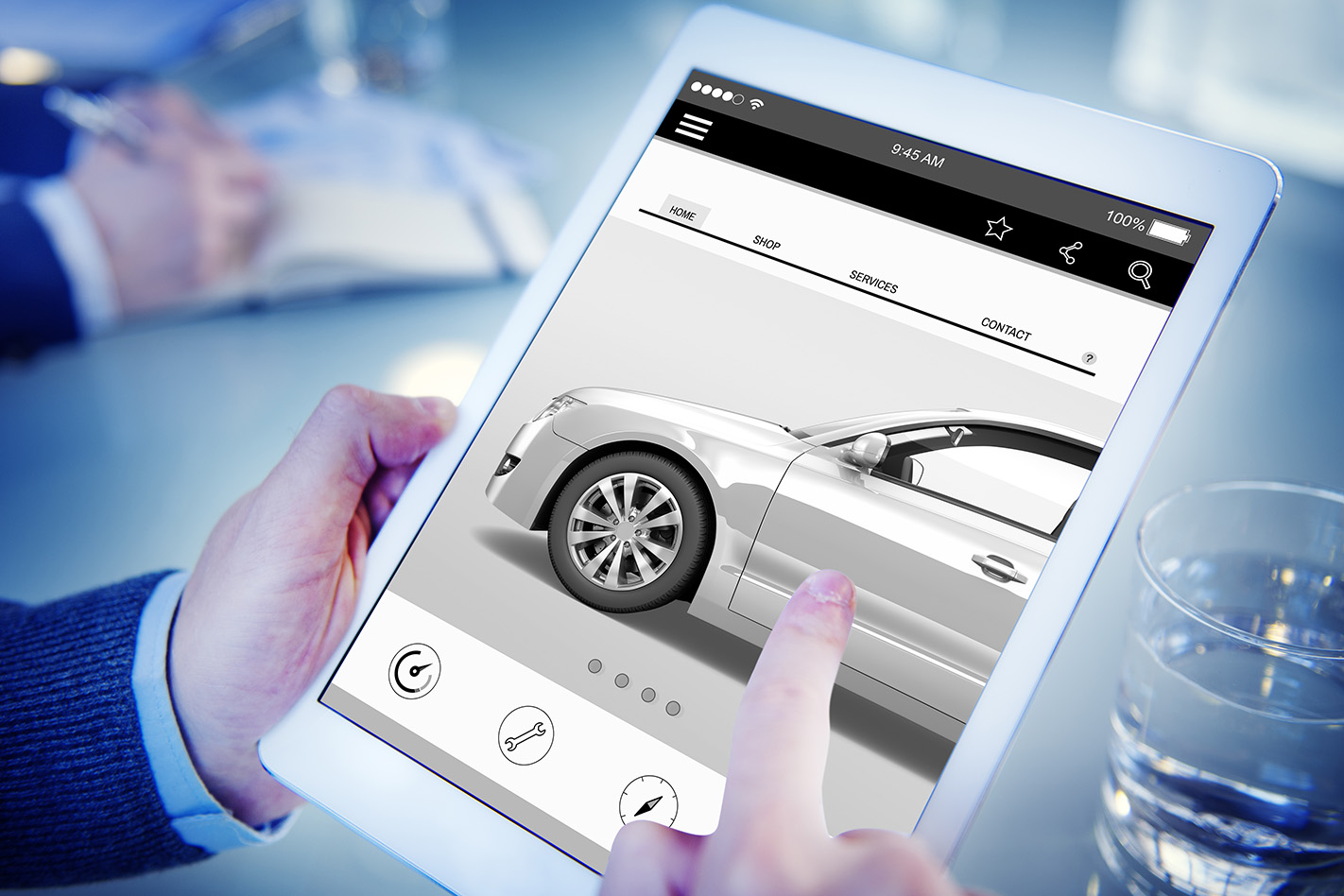
According to the survey of 1001 Australians, more than two-thirds said they were ‘uncomfortable’ about home-facilitated test drives, virtual demonstrations, remote payments, and dealer delivery, with more than half of them saying they were ‘extremely uncomfortable’ with purchasing online.
Only four percent of all survey recipients said they were ‘extremely comfortable’ with buying a car over the internet.
“It seems we’re not quite there yet when it comes to buying big assets like cars online,” said Savvy’s managing director Bill Tsouvalas. “We don’t want to buy a car sight unseen, but we are still in the market for cars and vehicles in general.”
Tsouvalas says that overwhelming hesitancy to purchase a car online has contributed to Covid-19 having a bigger impact on vehicle sales in 2020 than it needed to.
“Work From Home doesn’t seem to have made much of a dent in consumer sentiment – but the fact many aren’t prepared to take a leap of electronic faith has.”

The survey also showed the reasons why people held off purchasing a new car this year.
Not surprisingly, 20.7 percent of respondents said they were concerned about personal finances. Interestingly, that was one of the few reasons that could be attributed to Covid-19, with 9.6 percent saying they were still comfortable using public transport or alternative transport, and nine percent admitting they were waiting for better bargains.
Just over 53 percent said they’re holding off as they say it’s too early to upgrade.
And with up to 4.3 million Aussies working from home at some point and not requiring a car to drive to work, just 3.9 percent of respondents said not having to commute was the reason they were holding off on buying a new vehicle.

Tsouvalas said this reflects how cars are such a big part of people’s lives.
“Aussies see car ownership as fundamental, not just as a means from getting to and from work,” he said. “It’s for getting around, taking holidays, getting the kids to their activities, and just to have that sense of freedom.”
Car loan deferrals on the rise
The Savvy Finance survey also revealed that 25.5 percent of people with an active car loan requested a payment deferral during the pandemic.
And 20 percent of people on JobKeeper payments also directed some funds to cover their car loan repayments.
“One in four people have gained a deferral, which means lenders and brokers are trying hard to reach equitable arrangements with people undergoing hardship due to the pandemic,” Tsouvalas said.
“However, the industry must have a plan in place for vulnerable consumers when JobSeeker and JobKeeper end, if a robust recovery isn’t forthcoming.”
At long last, Mazda has finally confirmed that it will indeed go electric in 2021, with the debut of the funky MX-30 crossover.
Two versions – a plug-in petrol/electric hybrid and a battery-electric vehicle – will wing their way to Australia in 2021, with pricing yet to be confirmed.
Closely related to both the Mazda3 and CX-30, the MX-30 caused a sensation when it debuted in Tokyo in 2019, thanks in part to its nod to the lamented RX-8 sports car.
Though Mazda calls them ‘freestyle’ doors, the rest of the world refers to them as suicide doors, and they were last seen on the RX-8 before it bowed out of production in 2012.
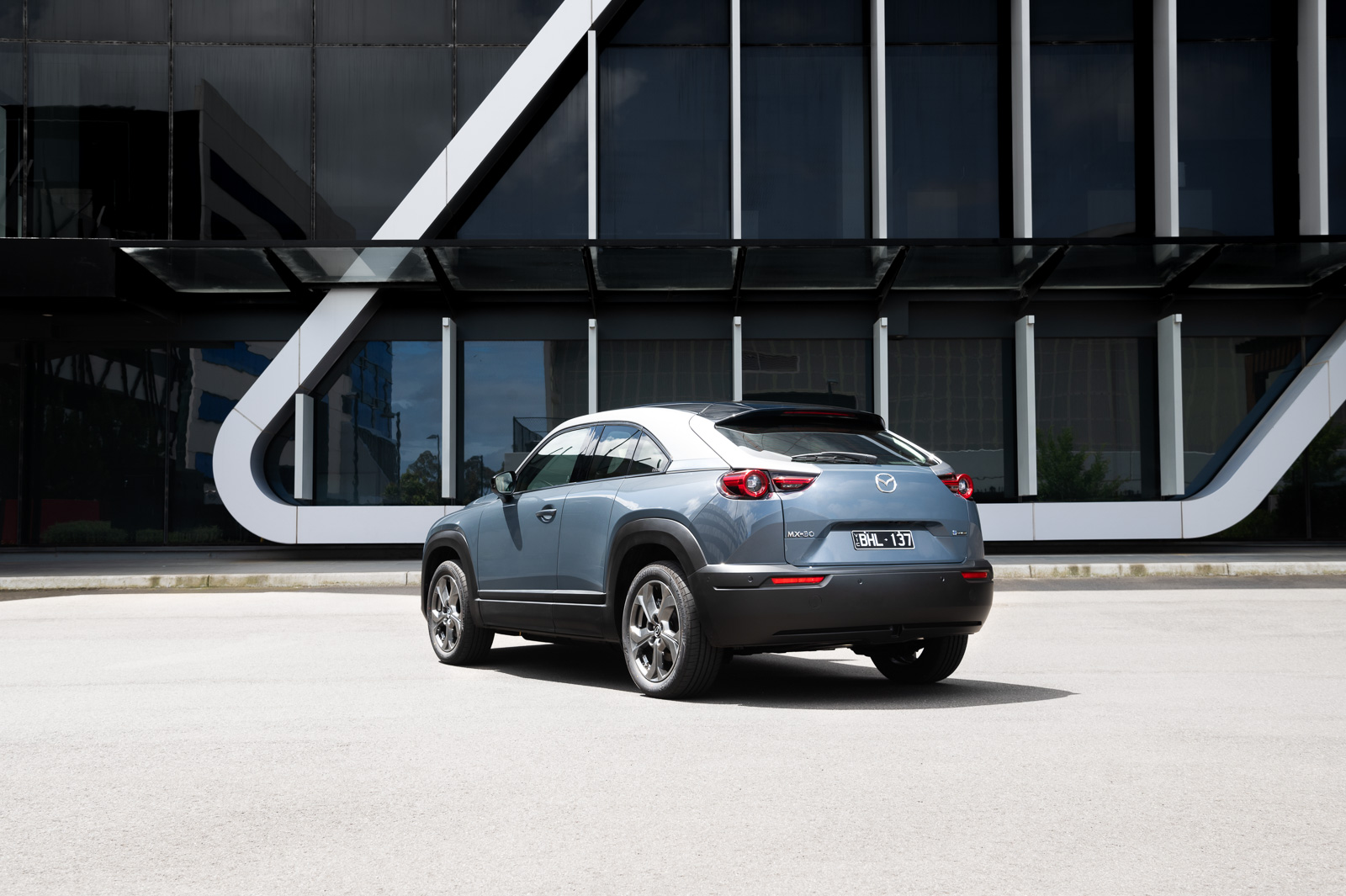
The MX-30 is still considered part of the Kodo design family, and it certainly blends the looks of the CX-3 and CX-30 while introducing an even more abbreviated rear roofline.
A handful of details were released, including the all-important – and slightly contentious – claimed range for the EV of 224km from a 35.5kWh battery array.
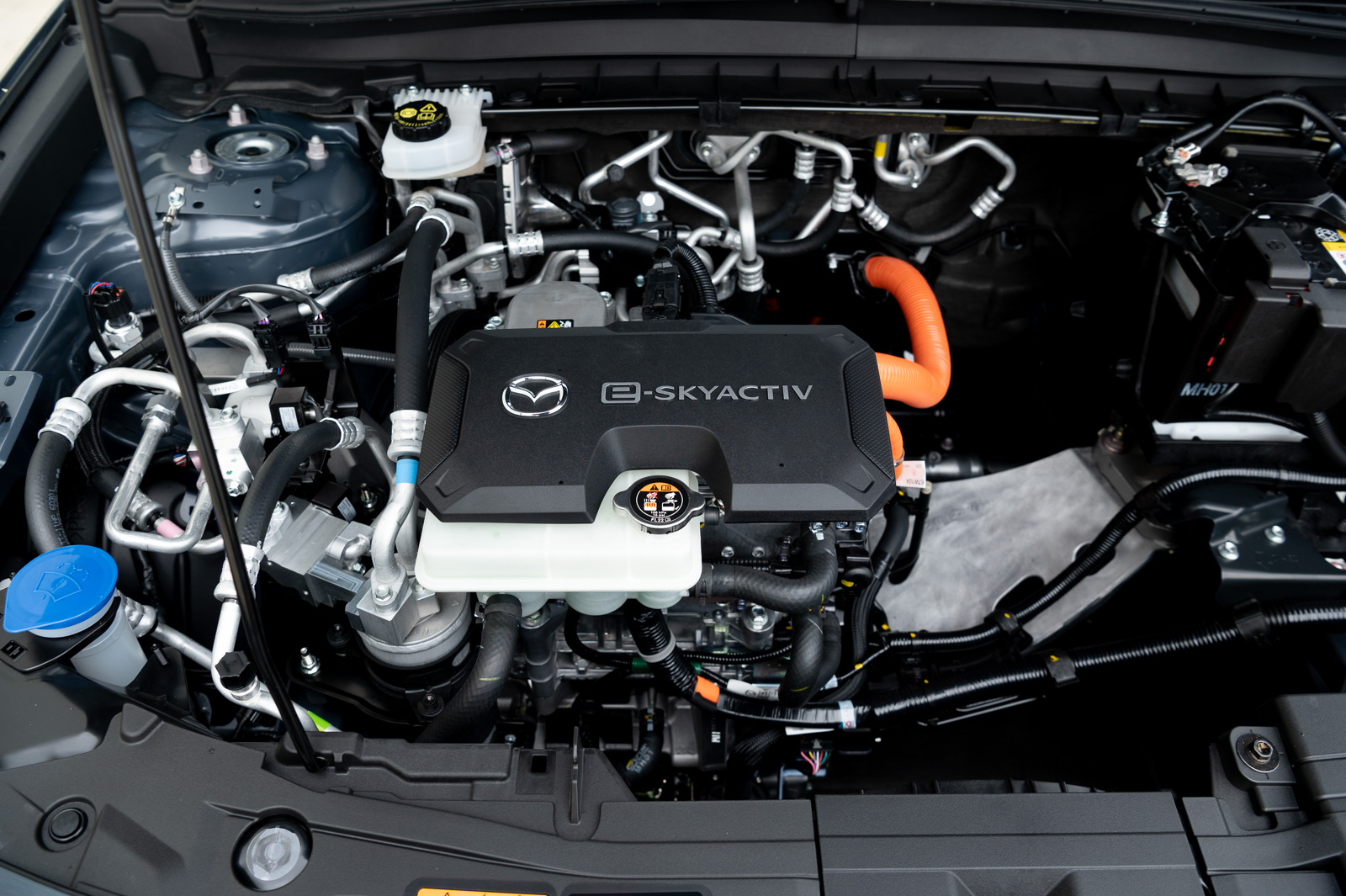
It’s powered by a single electric motor on the front axle that makes 171kW and 271Nm, and the battery can be charged via an AC or a rapid-charge DC connector.
The electric motor, inverter, DC-DC converter and junction box are integrated into a single high-voltage unit that’s mounted towards the front of the MX-30
No efficiency figure per km was offered.
Mazda claims that, given the average Australian commute of 32km per day from home to work and back again, the MX-30 can run for a working week without being recharged.
A smaller battery offers the advantage of being lighter and faster to charge.
When asked if there was any concern about the relatively short claimed range of the EV version, Mazda’s director of sales and marketing, Alistair Doak, said the company had hit its target.
“People are aware of that [range] before they start,” he said.
Managing director Vinesh Bhindi also said that the MX-30 is a “very focused” product.
“It’s a niche product, like the MX-5,” he said. “It won’t be for everyone.
“We’re lucky enough to have a mild-hybrid version that looks exactly the same.
“If a customer comes in [looking at the EV] and says range and range only is the primary concern, we can say that we have a different vehicle for you in the mild hybrid.”
The hybrid will come equipped with a 2.0-litre version of Mazda’s older generation SkyActiv G that helps to create a combined output of 114kW and 200Nm when combined with Mazda’s M Hybrid system.
It’s good for a claimed 6.4L/100km combined fuel economy return – though the CX-30 can return a very similar 6.5L/100km when asked.
So where’s the long-rumoured rotary assistance engine?
“It’s something we would like to see here,” confessed Doak, adding “it’s something that hasn’t been signed off.”
“2022 is the target,” added Bhini. “Every time we get on a plane, we’re like ‘Pick me, pick me!’
“It supplies another option choice, and a unique choice for Mazda.”
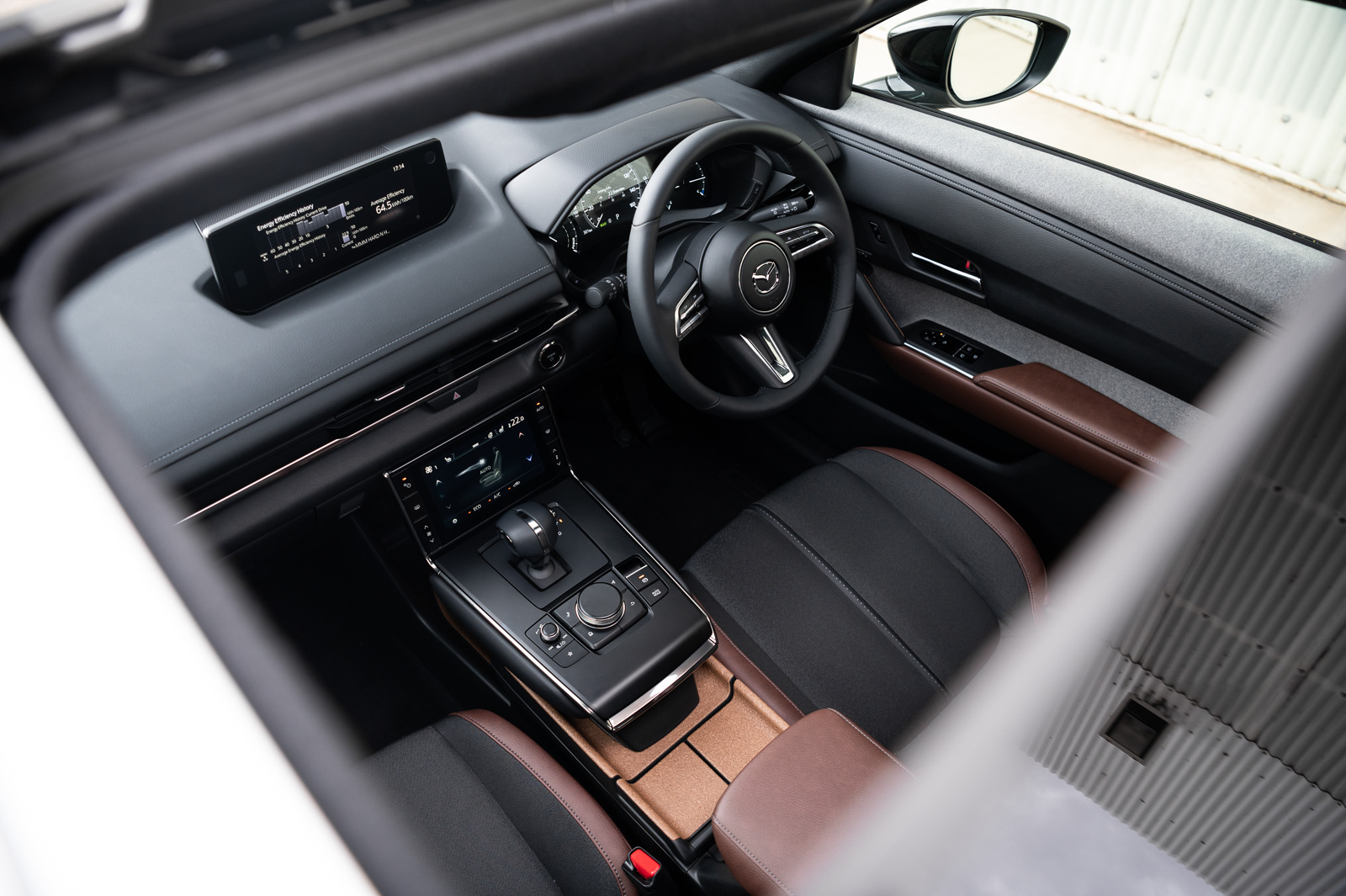
On the inside, the CX-30 features sustainable cork elements as a nod to Mazda’s history.
Synthetic leathers that use water rather than chemical solvents in the tanning process are also used, along with recycled PET plastic bottles for the upper door trims.
The floating design centre console is also a new direction for Mazda.
A new 7.0-inch touchscreen display sits on the central console and adapts its display to suit the temperature and time of day. The climate control system (including air-conditioning and seat heating) is controlled via this screen.
An 8.8-inch widescreen central display, as seen in the Mazda CX-30, acts as an information centre, while a 7.0-inch TFT LCD meter panel sits in the instrument panel.
The MX-30 M Hybrid will arrive in the first half of 2021, with the MX-30 Electric on-sale in the middle of the year.
Some are born great, while others have greatness thrust upon them. Then there are those who achieve greatness over time through a process of hard graft. It’s into this last category that the Mercedes-AMG GT falls.
We’ve always wanted to love AMG’s testosterone-fuelled two-door, a brawny, bent-eight alternative to the Porsche 911, but the expectation has never quite lived up to the reality. Head-smashing performance has always been a given, but over-sensitive steering, an allergy to bumps and unresolved handling have taken the edge off.
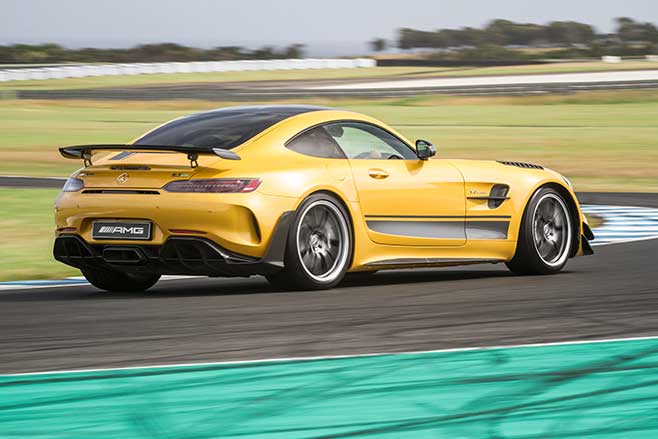
Over the years AMG has chipped away with tweaks here and adjustments there and it’s now all come together in an unlikely fashion with the GT R Pro. The Pro is to the GT R what the GT3 RS is to the GT3 – a harder, sharper version focused on circuit performance.
A hardcore, road-going track car doesn’t sound like an obvious candidate for cohesion and the confusion deepens when a look at the spec sheet shows that the Pro has no more power than the GT R on which it is based. Nor is it any lighter.
The gearbox is the same, as are the wheels and tyres, so consequently performance is also identical. Figures of 430kW/700Nm, 0-100km/h in 3.6sec and a 318km/h top speed aren’t exactly shabby, but it’s difficult to see where progress has been made.
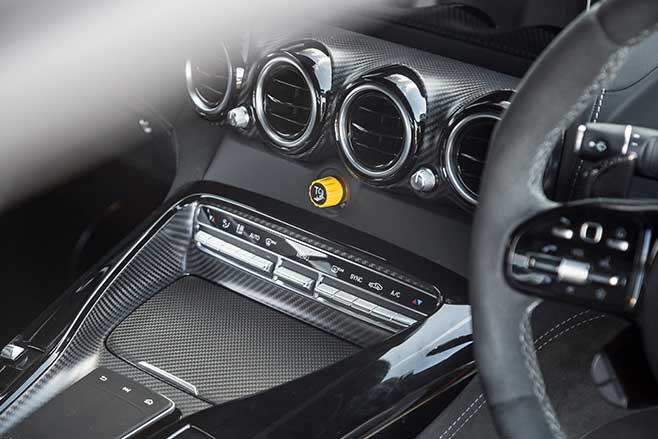
Carbon-ceramic front brakes (using massive 402mm discs) are standard, but that seems a fairly lean return for the $84,500 price premium over the ‘regular’ GT R. To appreciate the Pro you need to delve deeply into the details.
Weight has been saved, but it’s also been replaced in the form of a body-stiffening roll cage and underbody carbon fibre shear panel. The standard adaptive dampers have been jettisoned for manually-adjustable coilovers, tuneable for rebound and high- and low-speed compression, the carbon front anti-roll bar and hollow steel rear are likewise adjustable and there are uniball bearings for both the upper and lower wishbones to eliminate any slack.
Finally, there’s the aerodynamic addenda that have sprouted all over the GT. The front splitter has been extended (and can be extended further via a button on the centre console), new aero flics threaten the shins of witless pedestrians and louvres above the front wheels vent turbulent air out of the guards
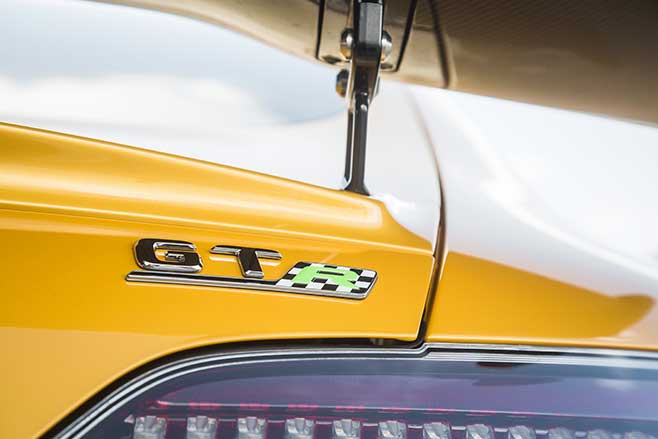
At the rear a re-designed carbon fibre roof lowers the centre of gravity, carbon panels at the rear help direct airflow and the massive wing has been enhanced with a gurney flap. In total, an extra 99kg of downforce is produced at 250km/h.
The other way to identify the differences between the GT R and the Pro is to drive them. From the first turn of the steering wheel the Pro makes its case with more weight and a greater connection to the razor sharp front end.
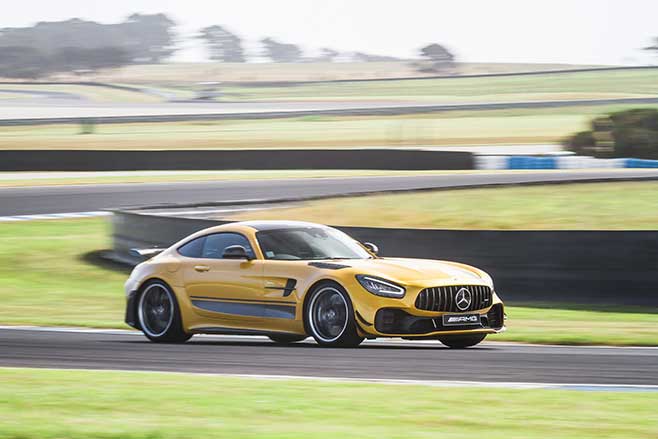
There is a slight delay on centre before it reacts very quickly, presumably a result of the all-wheel steering, but it’s easy to adjust to and once dialled in you needn’t give it a second thought, the 275mm front Michelin Pilot Sport Cup 2s scribing your chosen line like a slot car.
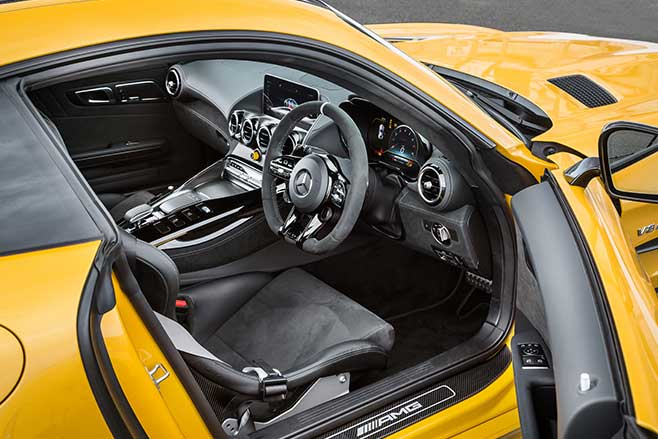
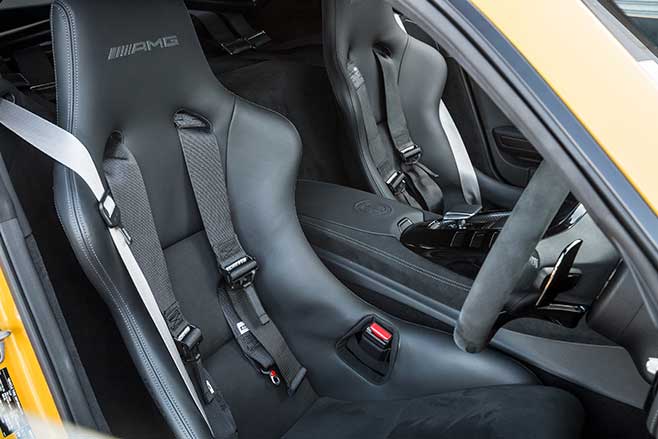
Lateral grip is astonishing, as is traction out of slower corners, though if you’re clumsy with the throttle wheelspin can be checked with either the ESP Sport mode or a few flicks of AMG’s 10-stage traction control system. The four-point harnesses are necessary to keep your body located and make a huge difference to the driver’s ability to feel what the car is doing at the limit.
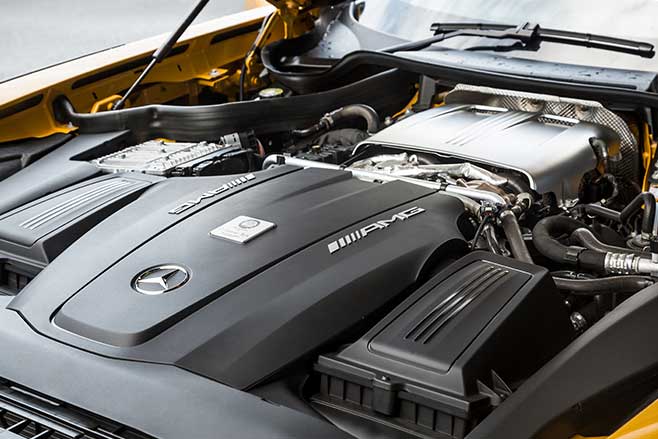
Power might remain the same but there’s enough for truly brutal acceleration; power tails off slightly around 6500rpm but each upshift plunges you deep into the pool of torque and the noise the dry-sumped V8 makes should carry an adults-only warning.
Most incredible of all are the brakes; even with massive closing speeds they can be applied ridiculously late, the Pro hunkering into the ground and shedding speed like a parachute’s been pulled. They also simply refuse to tire, nor do the, err, tyres, remaining consistent lap after lap after lap.
The only criticism to point the Pro’s way on track is that entering Phillip Island’s quicker corners its weight becomes apparent, the car taking a fraction of a second to settle after turn-in. This has the potential to be scary when speeds are north of 200km/h but such is the feedback and confidence the rest of the package provides that it only needs to be observed, not reacted to.
Of course, that a high-end, track-focused car works well on a dry, warm racetrack perhaps isn’t a revelation, and it must be said that at the first sign of moisture the Pro becomes about as potent a weapon as an over-cooked noodle, but in the environment in which it’s designed to work it is absolutely phenomenal.
There are also questions over the Pro’s road usability, as our first taste was limited exclusively to Phillip Island, but sadly it’s somewhat a moot point as just 15 of the worldwide production of 750 are coming to Australia and all are spoken for, even at a base price of $453,200.
Nevertheless, the Pro has realised the GT’s potential. By abandoning any pretence of civility and unleashing the monster within, AMG has created something truly great.
Verdict
5/5
Likes: An engaging, exhilarating, accessible track monster
Dislikes: Expensive; quite heavy; road-suitability
Specifications Engine: 3982cc V8, DOHC, 32v, twin-turbo Power: 430kW @ 6250rpm Torque: 700Nm @ 2100-5500rpm Weight: 1575kg 0-100km/h: 3.6sec Price: $453,200
Two of Australia’s newest SUV arrivals have scored five stars under ANCAP’s safety ratings scheme based on their European crash test results.The 2021 Kia Sorento seven-seat large SUV performed well across a variety of physical crashes and bolstered that performance with a ‘very strong’ Safety Assistance score of 89 per cent – the highest score achieved to date under 2020’s new stringent assessment criteria.
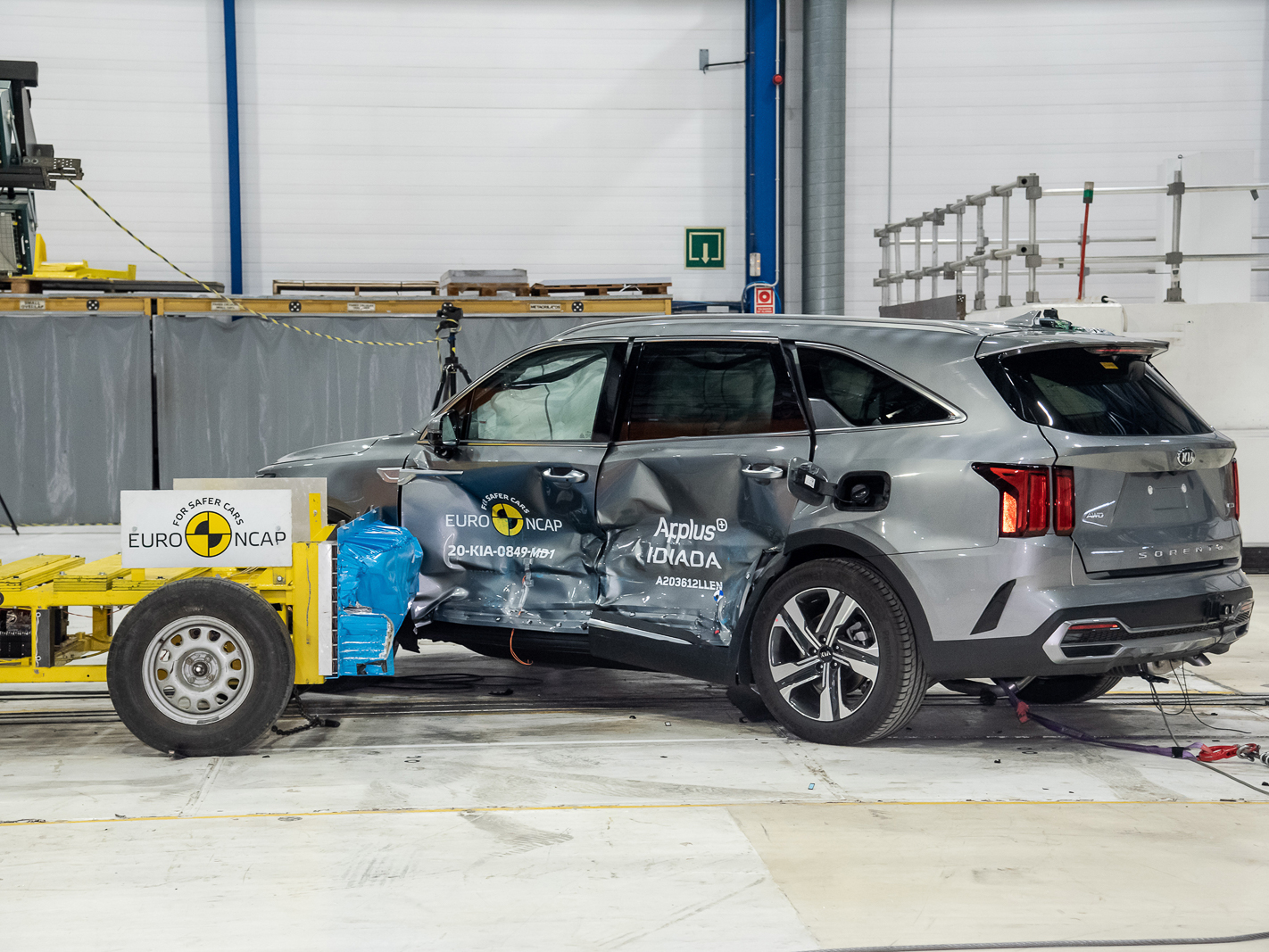
“The Kia Sorento introduces a number of new features to the Large SUV segment including an advanced autonomous emergency braking system with the ability to brake to prevent collisions when turning in front of another vehicle,” said ANCAP director of communications Rhianne Robson.
“For a vehicle of its size and mass, the Sorento also offers good levels of compatibility with other vehicles – reducing the risk of serious injury to occupants in an opponent vehicle.”
Land Rover’s 2021 Defender also fared well across the four key criteria areas.
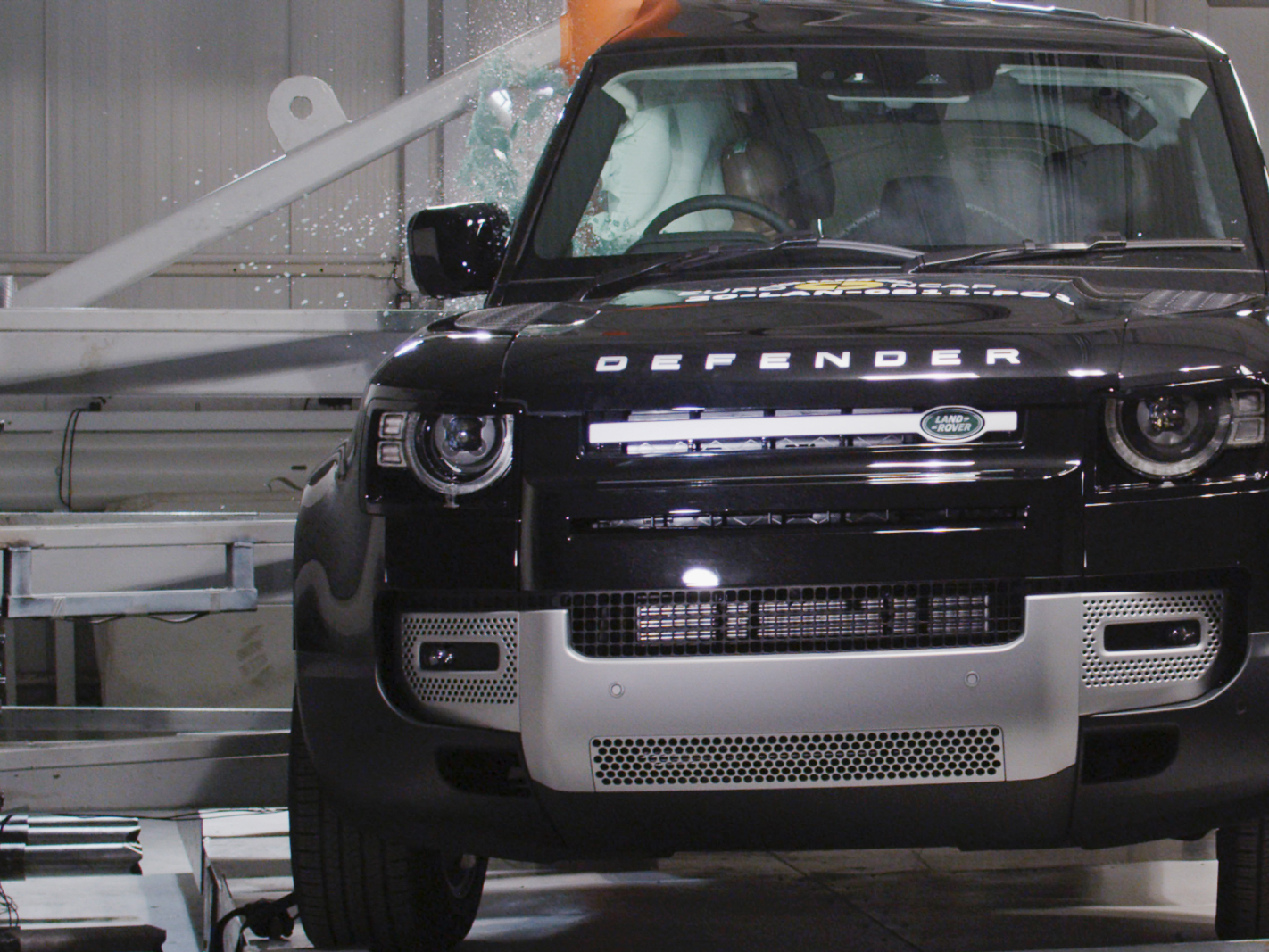
“Adult Occupant Protection and Child Occupant Protection scored well, with maximum points recorded for adult occupants in the side impact and oblique pole tests, and for child occupants in the frontal offset and side impact tests.”
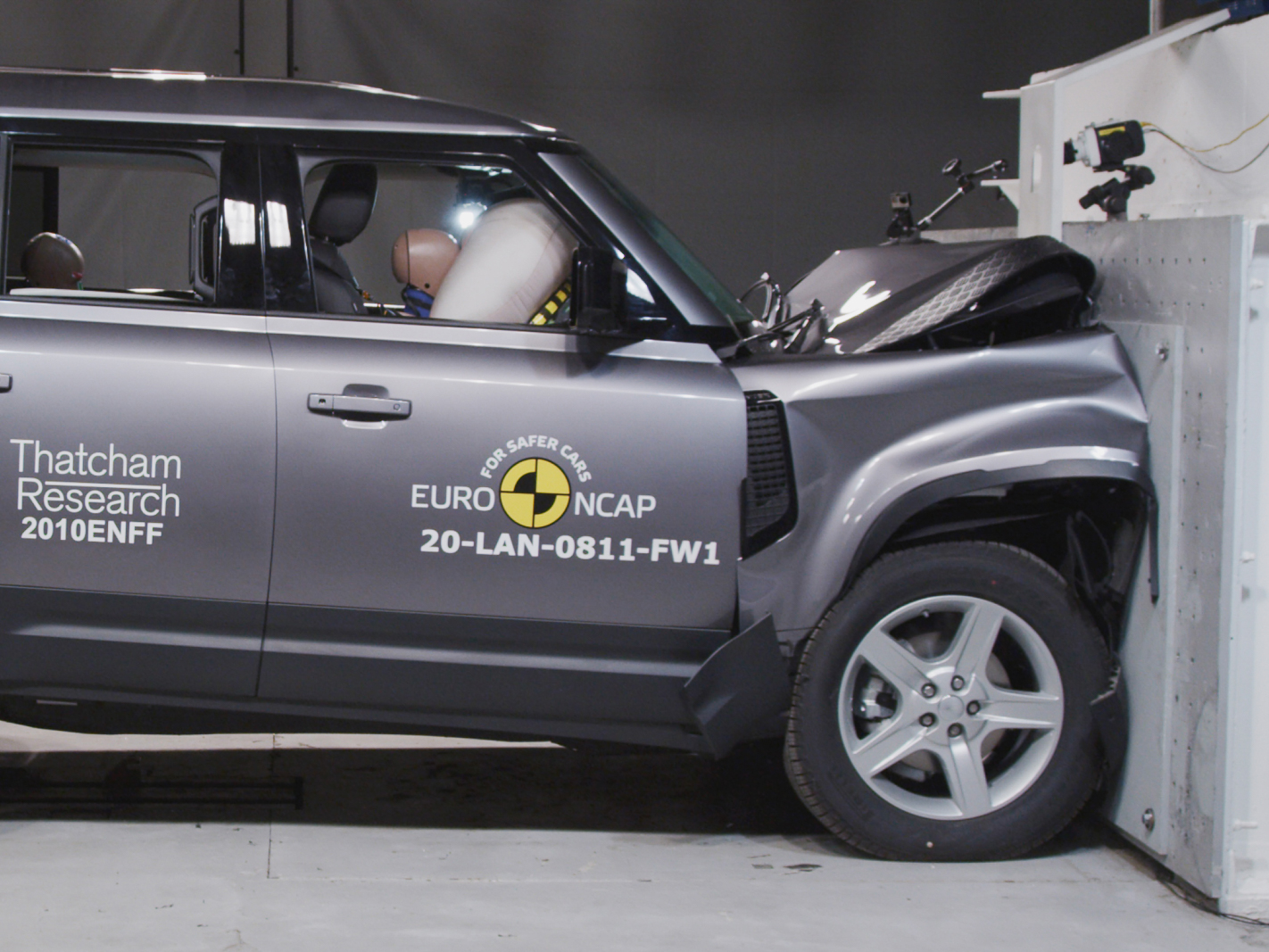
“In contrast to the Sorento however, the front structure of the Defender presents a higher risk to occupants of an oncoming vehicle in a crash, and as a result, its score in the frontal offset test was reduced,” Robson added.
Both tests were applied to the ANCAP standard after being conducted by Europe’s Euro NCAP equivalent. Both testing standards mirror one another, meaning results from one apply directly to the other.
The five star safety rating is applicable to all variants of the Land Rover Defender, but only the diesel versions of the Kia Sorento will receive official five-star standards.
No petrol versions of the Kia Sorento are sold in Europe (therefore no petrol cars on-test), likely explaining the difference.
BMW’s iNext has a new(ish) name, and it’s now much closer to being production ready. This is the BMW iX, a near-complete version of BMW’s long-teased all-electric SUV. Munich says this new EV crossover will debut the brand’s latest tech and innovations, and push the EV powertrain game forward.
Our original suspicions that the new electric SUV would be called iX5 when it made production were put to rest by member of the board, Frank Weber, who told us that ‘iX’ will be this car’s production car name. In finished form, the new iX goes on sale at the end of 2021. Here’s a rundown of what we know so far.
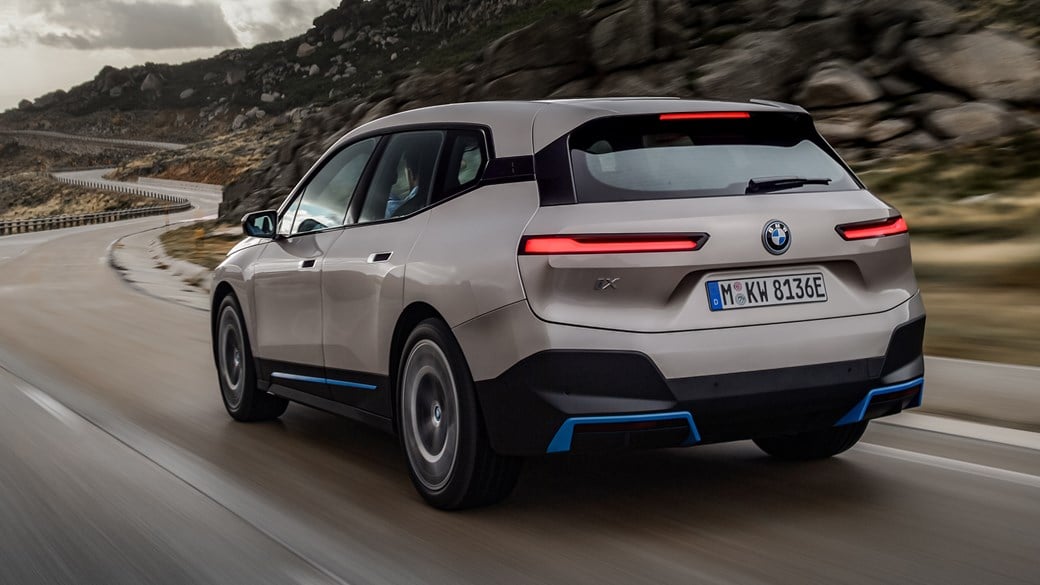
Still looks weird…
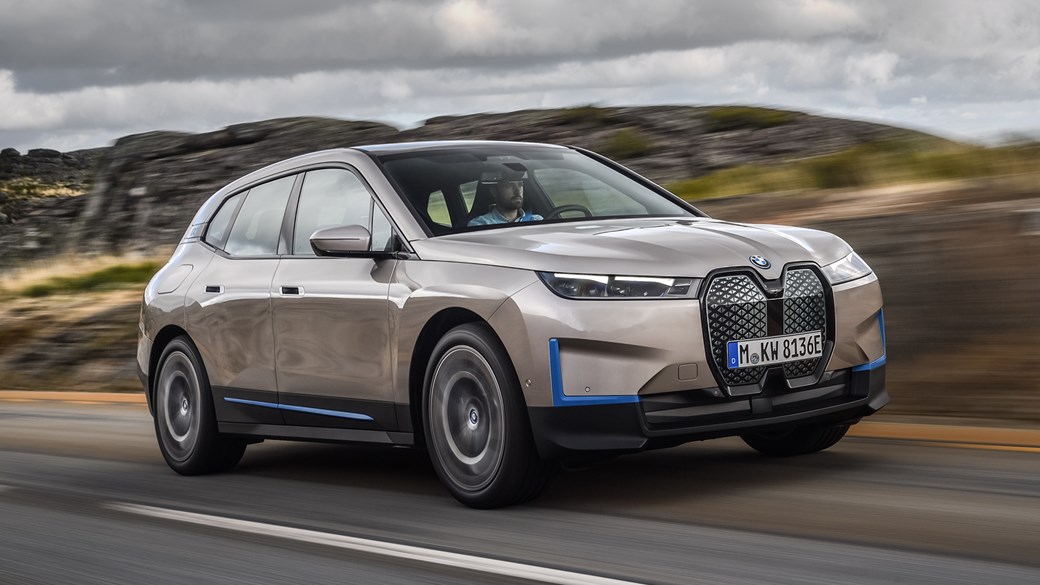
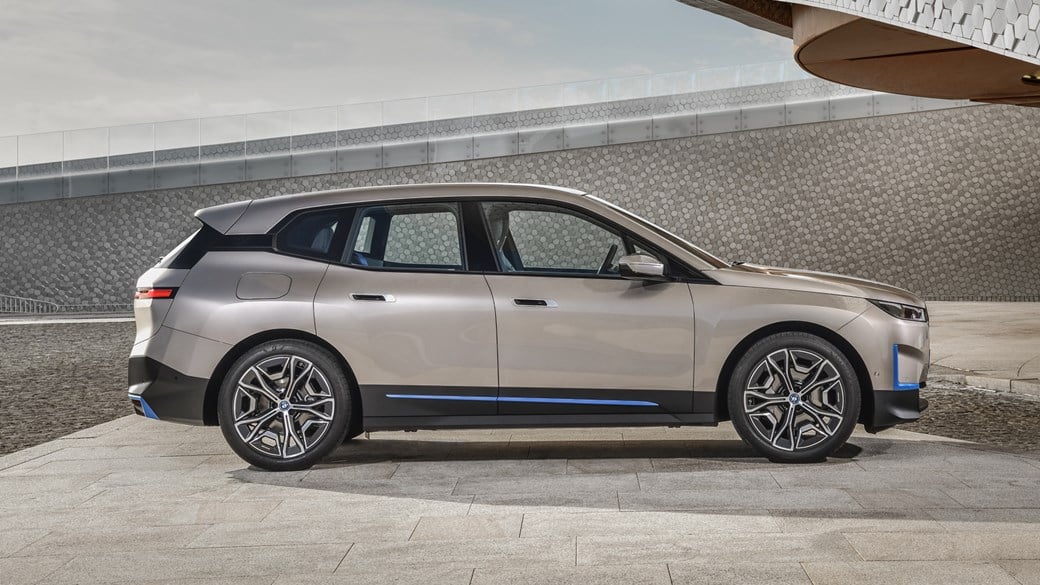
That it does. Still, since that tall ‘grille’ had been teased through the iNext concept and i4 concept, it’s less of a surprise. BMW says the iX has exterior dimensions of an X5, is as tall as an X6 and has the wheelbase of an X7 – the latter implying full-SUV interior space in something with a smaller exterior footprint.
The bodywork is devoid of creases, the headlights are shallow and frowny and the shape of the rear end gives the iX a silhouette much closer to an X6 than the boxier X5. Blue detailing highlights its electric underpinnings – a staple since the original i3 and i8 – while flush door handles and a panoramic glass roof feature.
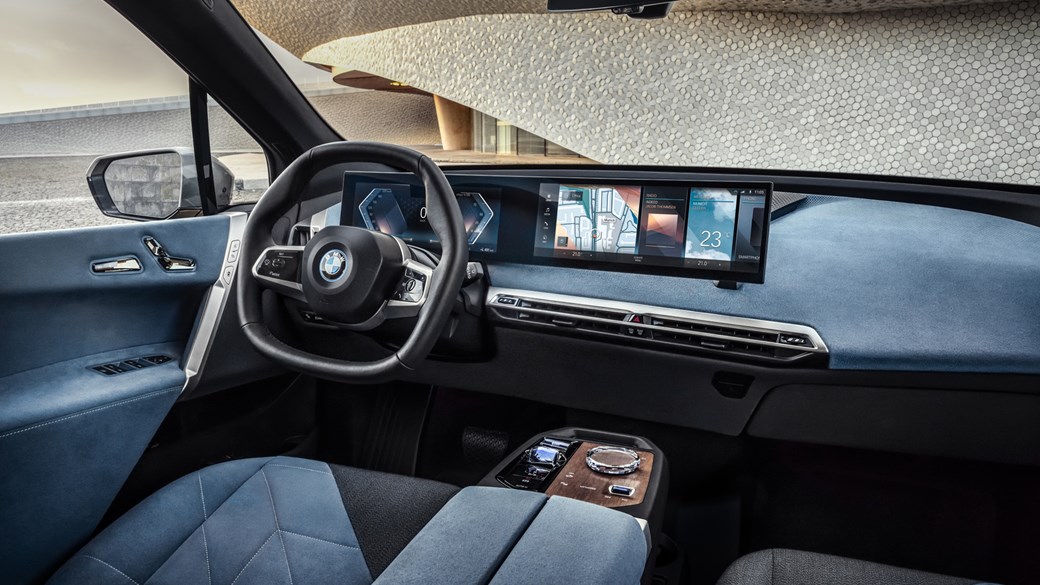
Inside, the iX’s cockpit again uses a lot of inspiration from the iNext; there’s a hexagonal steering wheel and a huge amount of screen real estate for the driver and front passenger to use. BMW calls it its Curved Display, making up a 12.3-inch screen for driver instrumentation and a wider 14.9-inch one in the centre – housed in one centrepiece.
When we asked if the operating system running it was an all-new generation of iDrive, Weber confirmed that this was true: “this is a completely new system, our iDrive version 8.0. You will find out more about its functionality in the first few months of 2021.”
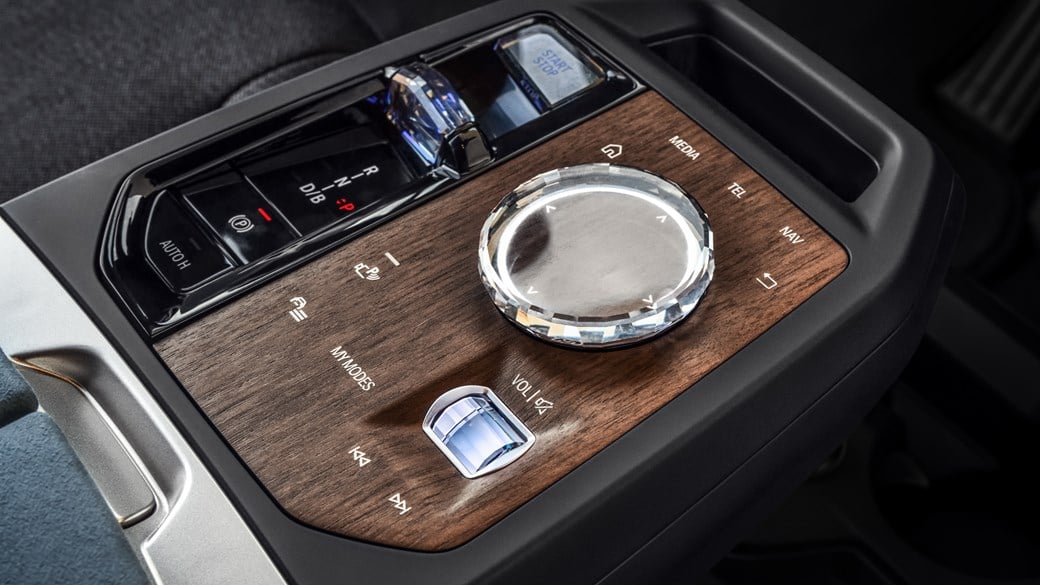
Audio speakers and the head-up display are hidden away, while new touch controls with haptic feedback all debut here. An optional Bowers and Wilkins audio system is available with 30 speakers in total.
EV Cheat sheet: understanding the future of mobility
What powers the new iX?
BMW has been boasting about its new ‘fifth-generation’ electric powertrain tech for the best part of a year, making its debut here. There’s a 100kWh battery pack underneath, with BMW claiming a usable range of more than 600 kilometres on one charge.
Two e-motors – one on each axle – provide 367kW of shove, good for a 0-100km/h sprint in under five seconds. BMW says the iX is capable of up to 200W DC fast charging, allowing a 10-80 per cent charge to be done in 40 minutes.
BMW confirms its first all-electric M car
BMW also says that its latest EV tech is highly recyclable, with e-motors that don’t use rare earths.
When can I buy an iX?
Australian customers can now secure a BMW iX via the new BMW Shop, almost a year before it’s due to arrive Down Under sometime in the fourth quarter of 2021.
The pre-buy enables early adopters to secure their iX months before the model’s line-up, pricing and standard specifications have been announced.
Those who reserve their vehicle and place a $500 deposit can then choose and specify their specific model in coordination with their preferred dealer in mid-2021 when full details about the new model have been confirmed.
For more details, visit the BMW iX reservation page.
This article was originally published at carmagazine.co.uk
Mazda will spearhead its updated 2021 MX-5 range with a new track-going hero variant, and it’s an Aussie exclusive.
The MX-5 GT RS follows in the wheeltracks of the turbocharged NB-series MX-5 SP from 2002, providing local flair to a worldwide favourite.
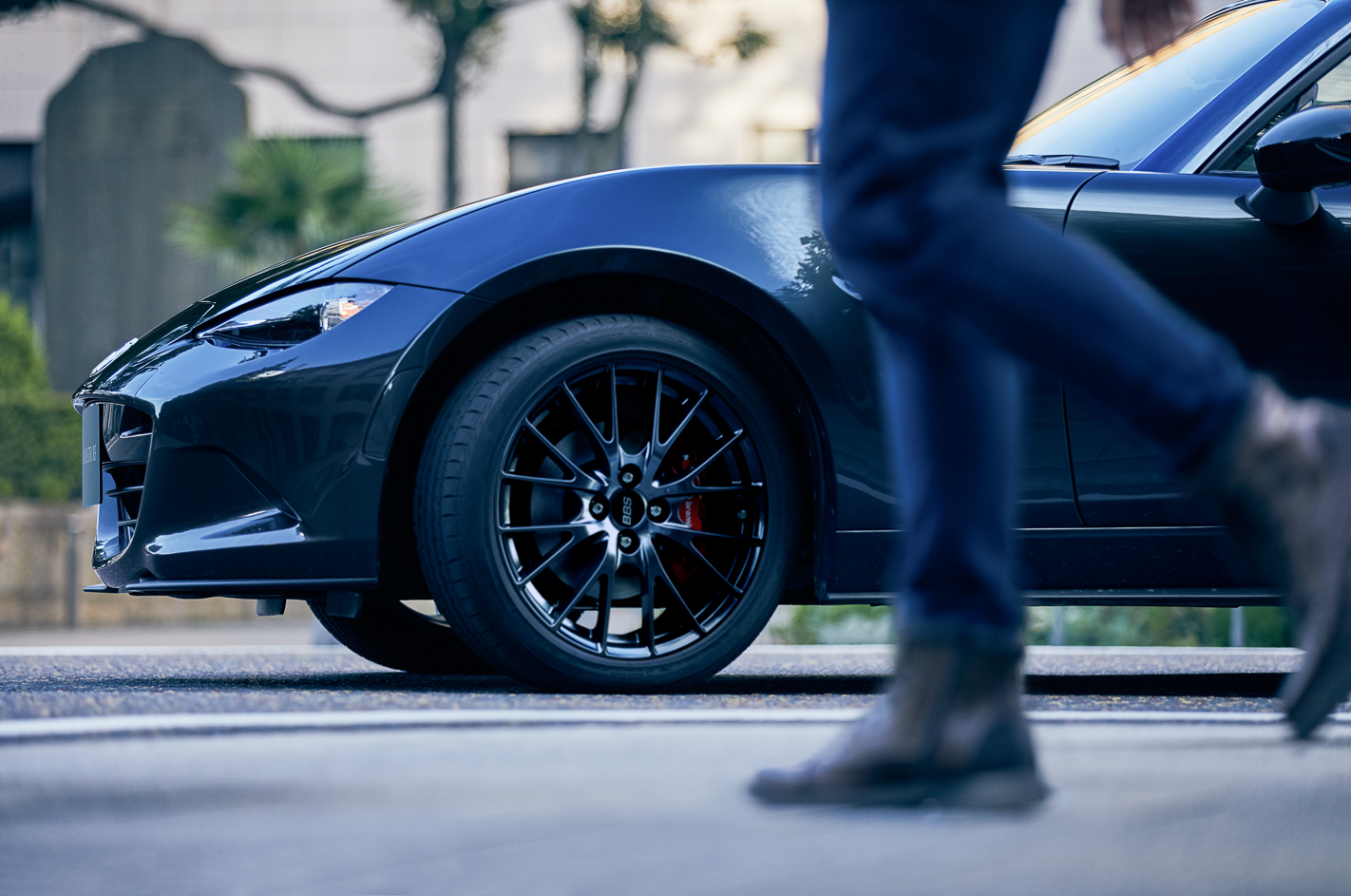
While the new Mazda MX-5 GT RS doesn’t follow in the old MX-5 SP’s turbocharged footsteps – it retains the standard naturally-aspirated 2.0-litre four-cylinder engine – Mazda Australia has genuine dynamic intentions for the new spin-off.
It’s available exclusively with a six-speed manual transmission, using the 135kW 2.0-litre four-cylinder Skyactiv-G engine.
The MX-5 GT RS gains a Brembo brake package with four-piston aluminium calipers, while performance brake pads offer stronger brake feel and improve fade resistance by up to 26 per cent.
This new Brembo front brake kit is also two kilograms lighter than the ordinary set-up.
Furthering the weight reduction is a set of new 17-inch BBS forged alloy wheels wrapped in Bridgestone Potenza S001 tyres.
Mazda has also fitted upgraded Bilstein dampers, which are said to provide track-ready feedback and grip while retaining ride comfort for the drive home.
There are no mechanical changes under the bonnet, but you will find an alloy strut tower brace to tie the two front suspension towers together for enhanced steering feel and chassis rigidity.
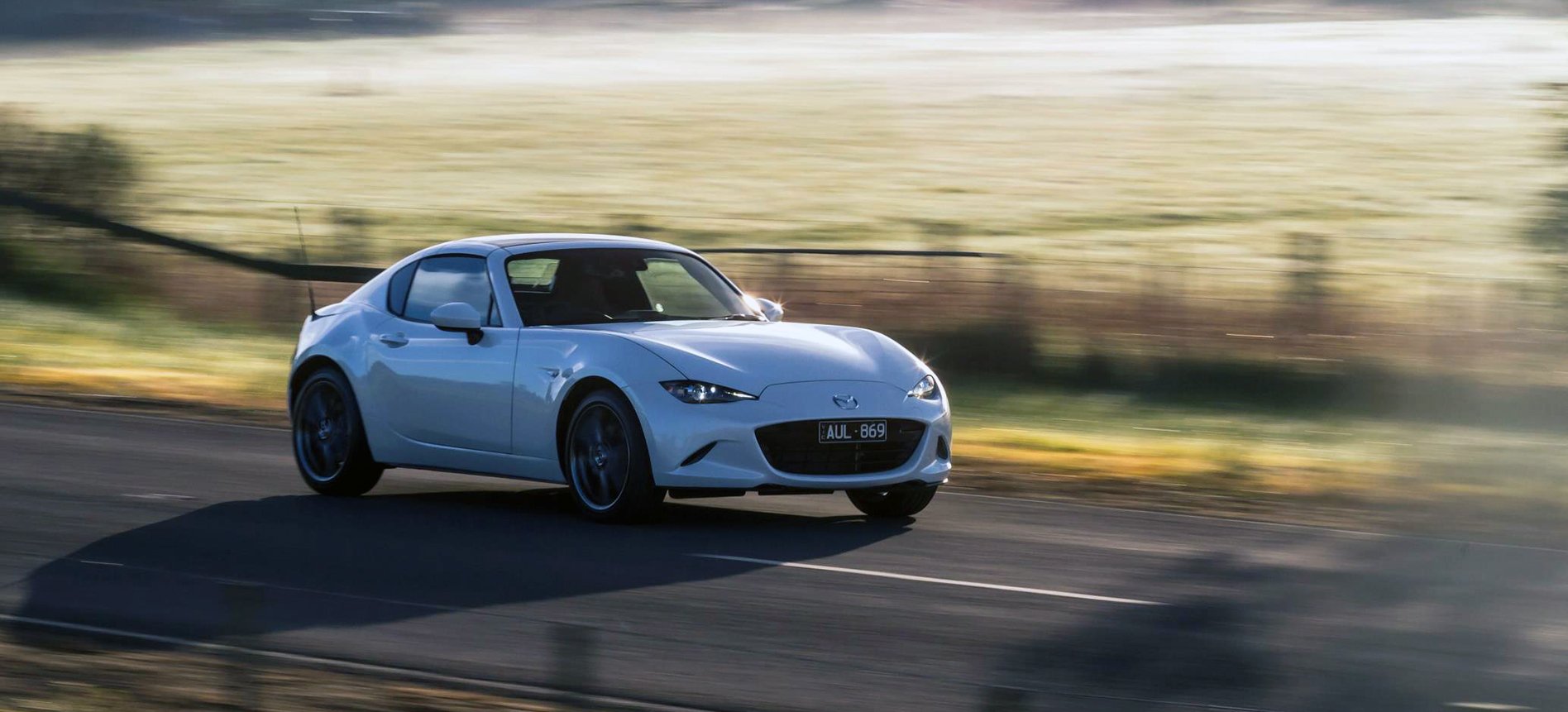
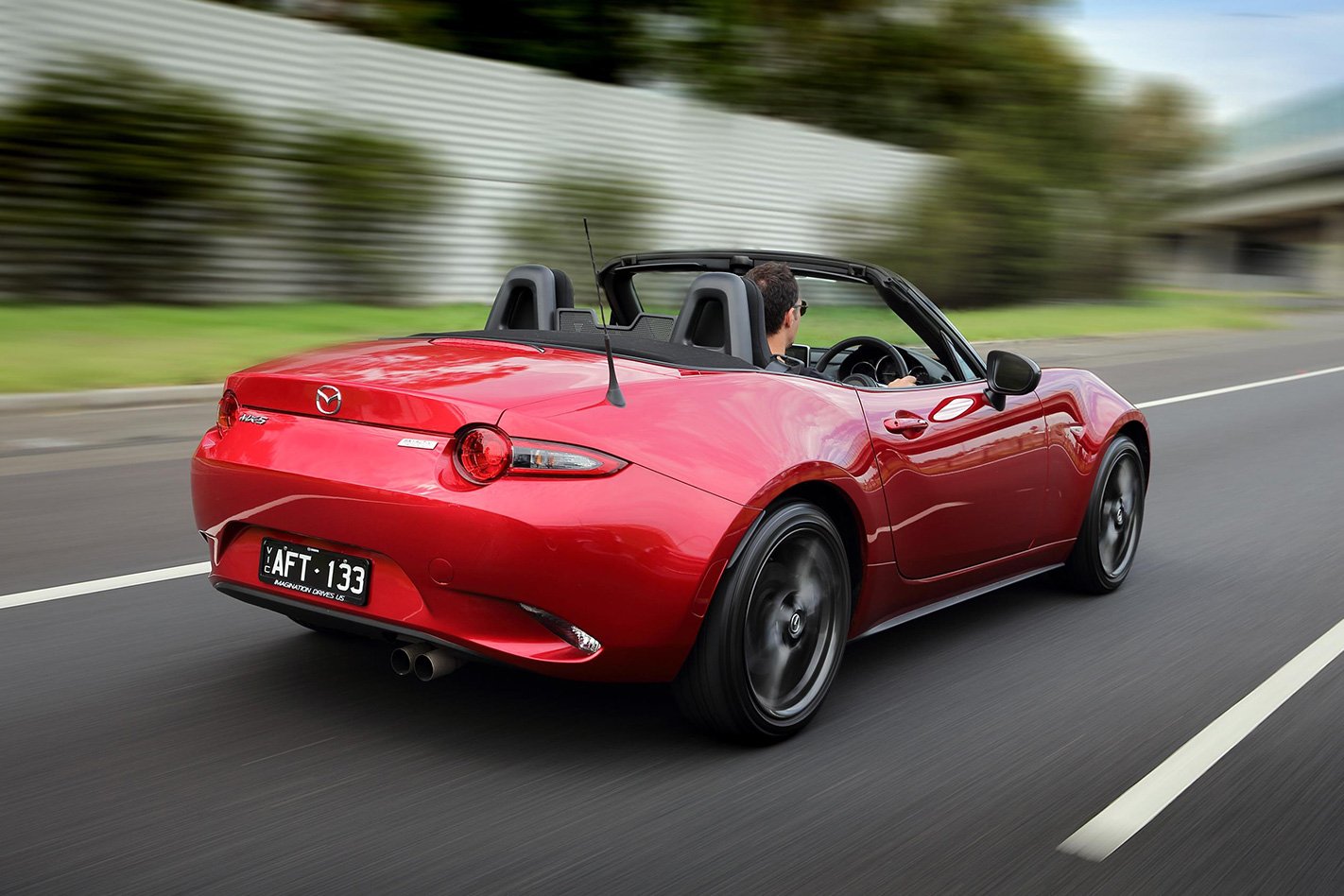
The MX-5 GT RS is available in both soft-top Roadster GT and RF hard-top guise, with each version also receiving black mirror caps.
The remaining entire 2021 Mazda MX-5 range benefits from wireless Apple CarPlay, while a new Deep Crystal Blue paint colour joins the existing Snowflake White Pearl, Jet Black, Machine Grey Metallic, Soul Red Crystal Metallic and Polymetal Grey Metallic options.
Prices have risen slightly for 2021, with each variant adding between $100-200 to its list price. A full run-down of 2021 Mazda MX-5 range pricing is listed at the bottom of this story.
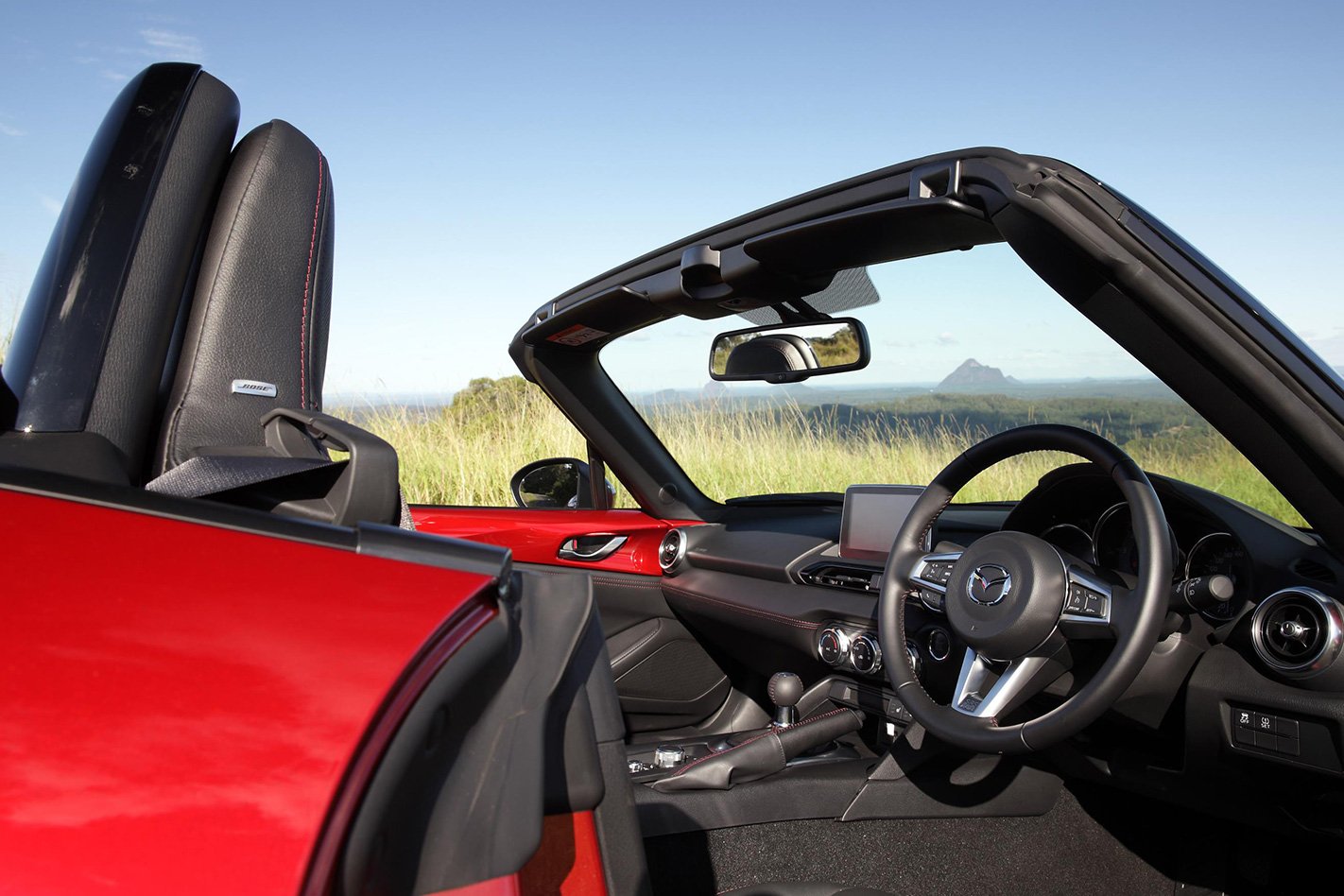
The only other change for 2021 is a new Pure White Nappa leather upholstery option for the Mazda MX-5 RF GT Black Roof variant.
“These new MX-5 GT RS variants offer more focused dynamics with upgraded suspension and braking systems that provide greater feedback, control and performance,” said Mazda Australia managing director Vinesh Bhindi.
“They are a perfect addition to our updated MX-5 range, which now offers advanced connectivity and fresh exterior and interior finishes.”
The updated range will go on sale in January 2021.
2021 Mazda MX-5 pricing
MX-5 Roadster | 1.5-litre manual | $36,090 |
MX-5 Roadster | 1.5-litre automatic | $38,090 |
MX-5 Roadster GT | 2.0-litre manual | $44,020 |
MX-5 Roadster GT | 2.0-litre automatic | $46,020 |
MX-5 Roadster GT RS | 2.0-litre manual | $47,020 |
MX-5 RF | 2.0-litre manual | $41,400 |
MX-5 RF | 2.0-litre automatic | $43,400 |
MX-5 RF GT | 2.0-litre manual | $48,100 |
MX-5 RF GT | 2.0-litre automatic | $50,100 |
MX-5 RF GT RS | 2.0-litre manual | $51,100 |
MX-5 RF GT Black Roof | 2.0-litre manual | $49,120 |
MX-5 RF GT Black Roof | 2.0-litre automatic | $51,120 |
All listed prices are without on-road costs.
One of the world’s most prolific producers of petrol-powered cars may need to do a backflip in less than a decade, as Japan’s government considers a ban of the production of internal combustion engine-cars.
The plan comes as Japan looks to reduce its carbon emissions to a net-zero figure – where human-made emissions are matched by carbon-capturing tech like reforestation or carbon capture – by 2050.
It’s comparable to the UK’s recent announcement that it’s advancing plans to ban ICE-powered cars to 2030, and in line with similar plans that are in the works in countries such as Germany, Canada and Norway.
This doesn’t mean, however, that we’ll just be driving battery-powered electric cars only in the mid-part of the next decade; both battery-electric vehicles (BEVs) and petrol-hybrid electric vehicles (PHEVs) are part of the transition plan to a greener future.
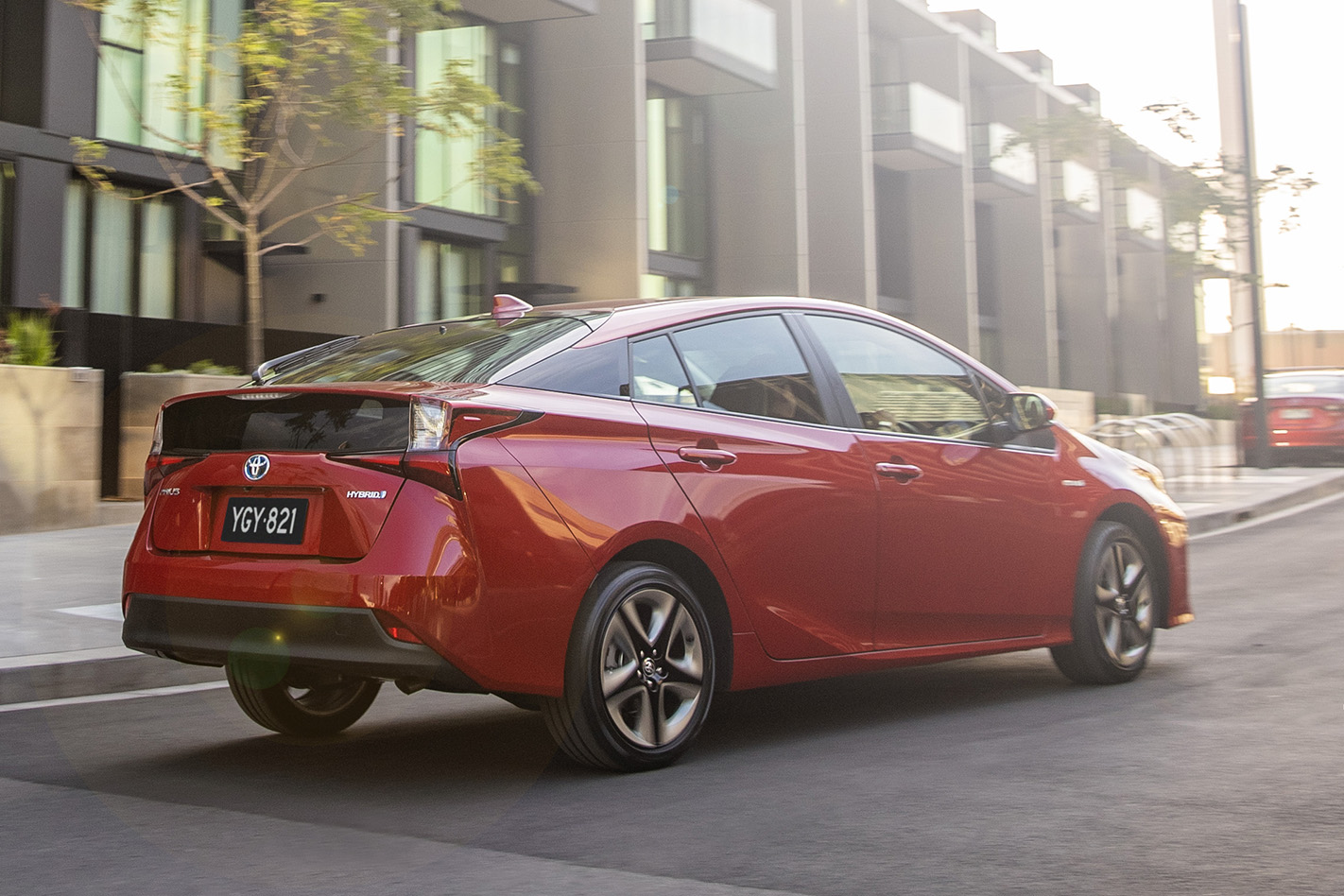
Suddenly makes sense why Toyota is pushing so hard on hybrids now, right?
The world’s number one carmaker was the first to roll out a commercially-successful hybrid car in the Prius, and its current line-up of cars includes hybrids in virtually every model range save for the 86 sports car.
It’s not just the current crop of cars like the RAV4, Camry, Corolla and Yaris, either; even the venerable LandCruiser will eventually add a hybrid version to the incoming 300 series.
Toyota’s premier brand Lexus, meanwhile, sees an upside to any decisions taken in Tokyo.
“The process we go through in terms of when vehicles are available on a global stage, then we pitch very heavily to get them into our marketplace,” Lexus CEO Scott Thompson told WhichCar.
“The right-hand drive/left-hand drive combination is a bit of a challenge for us in our market, but the good thing is when Japan is looking at focusing on it as well it gives us a great impetus to bring them into the country.
“The next conversation we’ll be having is about a plug-in opportunity that they’ve announced globally, and we’ve got to start having those conversations.
“We believe there is market opportunity in Australia for a range of electric offerings. We still believe in that hybrid will take the lion’s share based on affordability and performance, but we do believe from a plug-in and a battery-electric [view], there are opportunities.”
And Toyota isn’t the only company that can take advantage of worldwide governments’ re-examination of the global climate crisis, though few are as well advanced.
Even though its partnerships should have resulted in an EV overload by now, the Nissan Renault Mitsubishi Alliance are in a reasonable spot to capitalise on the seismic shift in showroom staples in the face of ever-tightening regulations.
Nissan, for example, has plans to introduce hybrid versions of the next-generation X-Trail and Qashqai with petrol/electric hybrid technology, while Mitsubishi will look to the next generation Outlander to continue its good work in this area to date.
Honda currently offers a single hybridised version of its Accord sedan, but recent sightings of hybridised versions of the CR-V SUV lend credence to the theory that the brand will spread its hybrid footprint more widely.
While hybrid sales are rising locally – thanks mainly to Toyota – there’s little indication that our federal government is even close to thinking about the makeup of Australia’s future when it comes to restricting the sales of pure ICE vehicles.
But if it does, there will be no end of choice for Aussie consumers, thanks mainly to decisions taken at government and business levels in other territories.
