
Chinese EV newbie to Australian shores XPeng has announced three new models for our market in 2026.
Celebrating 2000+ sales here in 2025, XPeng, the new arrivals will begin with the updated G6 due in the first quarter. The G9 electric people mover will launch mid-year, while the G9L large SUV will land by year’s end.
Updated G6: late Q1 2026
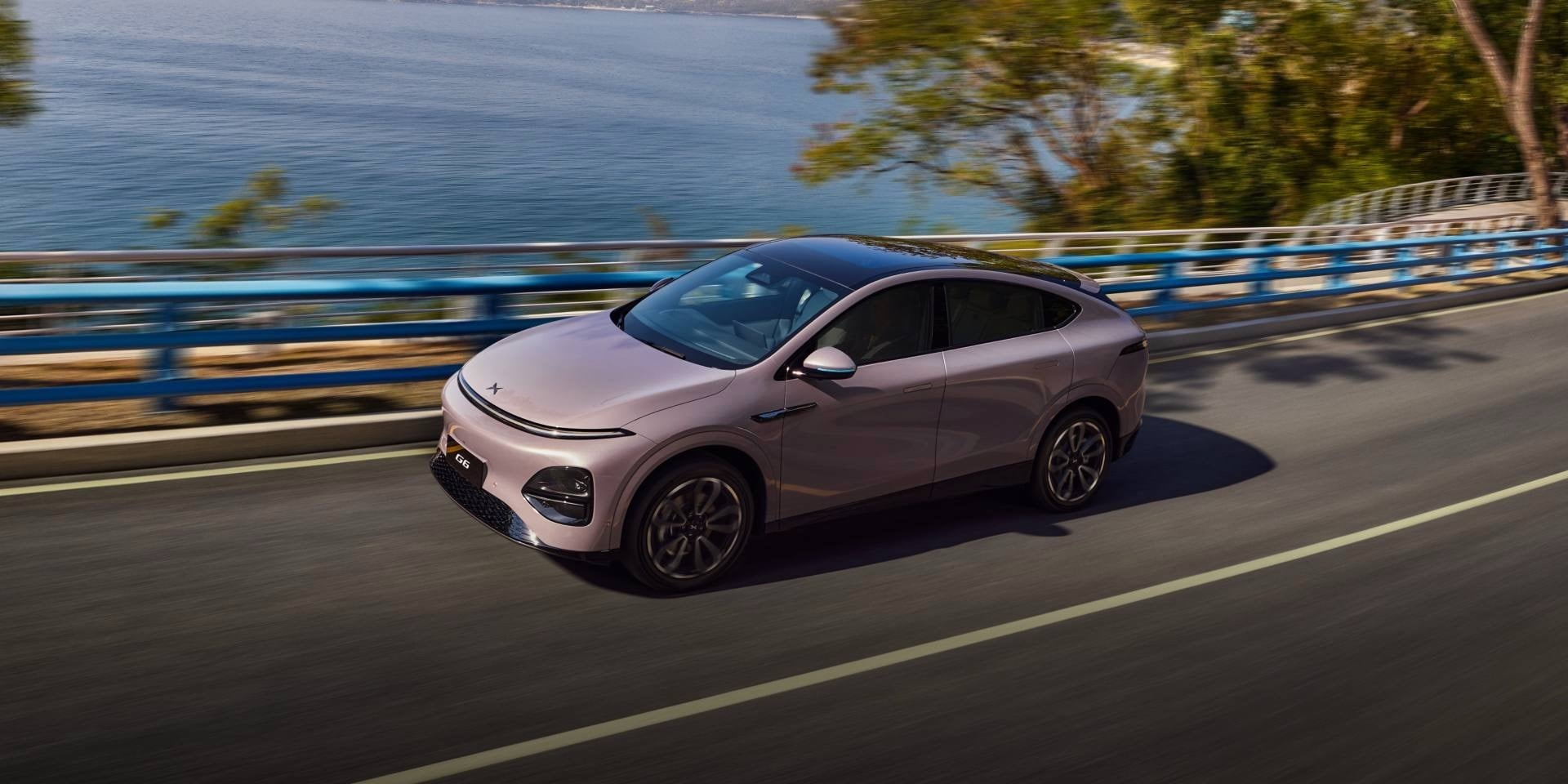
The G6 mid-size electric SUV is the first – and only – XPeng product available in Australia and its mid-life update is launching at the end of the first quarter of 2026. The revised model will feature refreshed exterior styling including new front and rear lighting units, and new alloy wheels.
Inside the updated G6, the touchscreen grows from 14.9-inches to 15.6-inches in size, while there is also a redesigned dashboard with new ambient lighting and new higher-quality materials.
The G6 Standard Range’s battery has grown from 66kWh to 68.5kWh, increasing its WLTP range from 435km to 470km. The G6 Long Range, however, is now fitted with a smaller battery in European markets. Its former 87.5kWh battery is now 80.8kWh, which has resulted in a 525km WLTP driving range rating (down from 570km) though at least power has increased from 210kW to 218kW.
A new Performance model has been added making 358kW/660Nm outputs and using the same 80.8kWh battery as the Long Range for a 510km WLTP rating. It hits 100km/h in just 4.1 seconds. Australian models and pricing is yet to be revealed.
X9 people mover: mid-2026
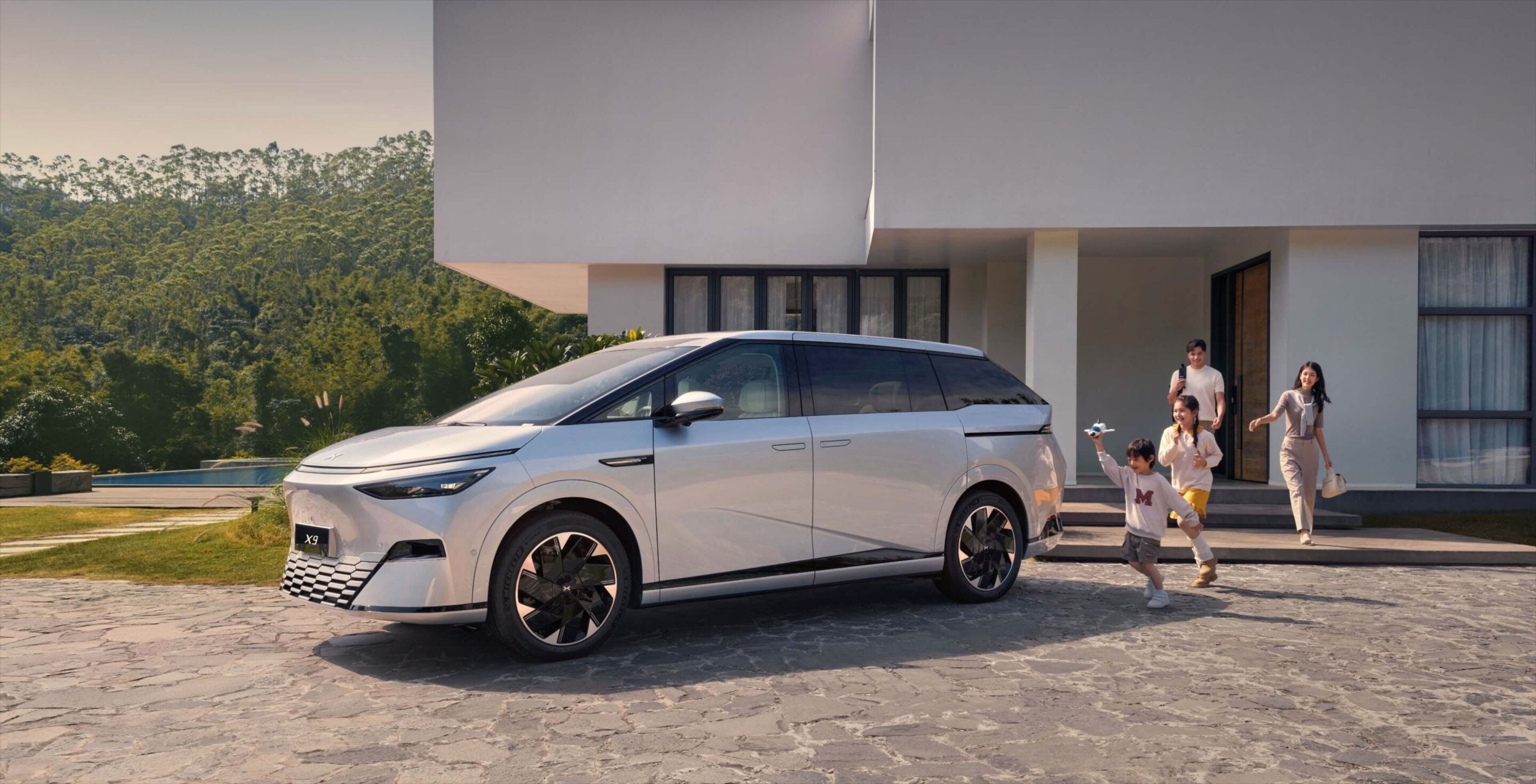
The second model in XPeng’s Australian expansion, the X9 people carrier, will arrive in mid-2026. Pricing is yet to be announced, but the X9 is a large seven-seat fully electric MPV that uses an 800-volt architecture and depending on market, 94.8kWh LFP or 105kWh NMC battery options for up to 702km of range on the lenient CLTC cycle (WLTP figures are yet to be confirmed).
Inside the X9 is a broadly similar dashboard layout to the G6 with a large touchscreen, freestanding driver’s display and a lot of soft touch materials around. The X9 offers seating for up to seven, with electrically adjustable captain’s chairs in the second row.
While features and specifications are yet to be announced, available features on the X9 include “zero gravity” front seats with 16-point massaging, auto-retracting second- and third-row seats, a 21.4-inch rear passenger screen and a 23-speaker Xopera sound system.
G9L: late 2026
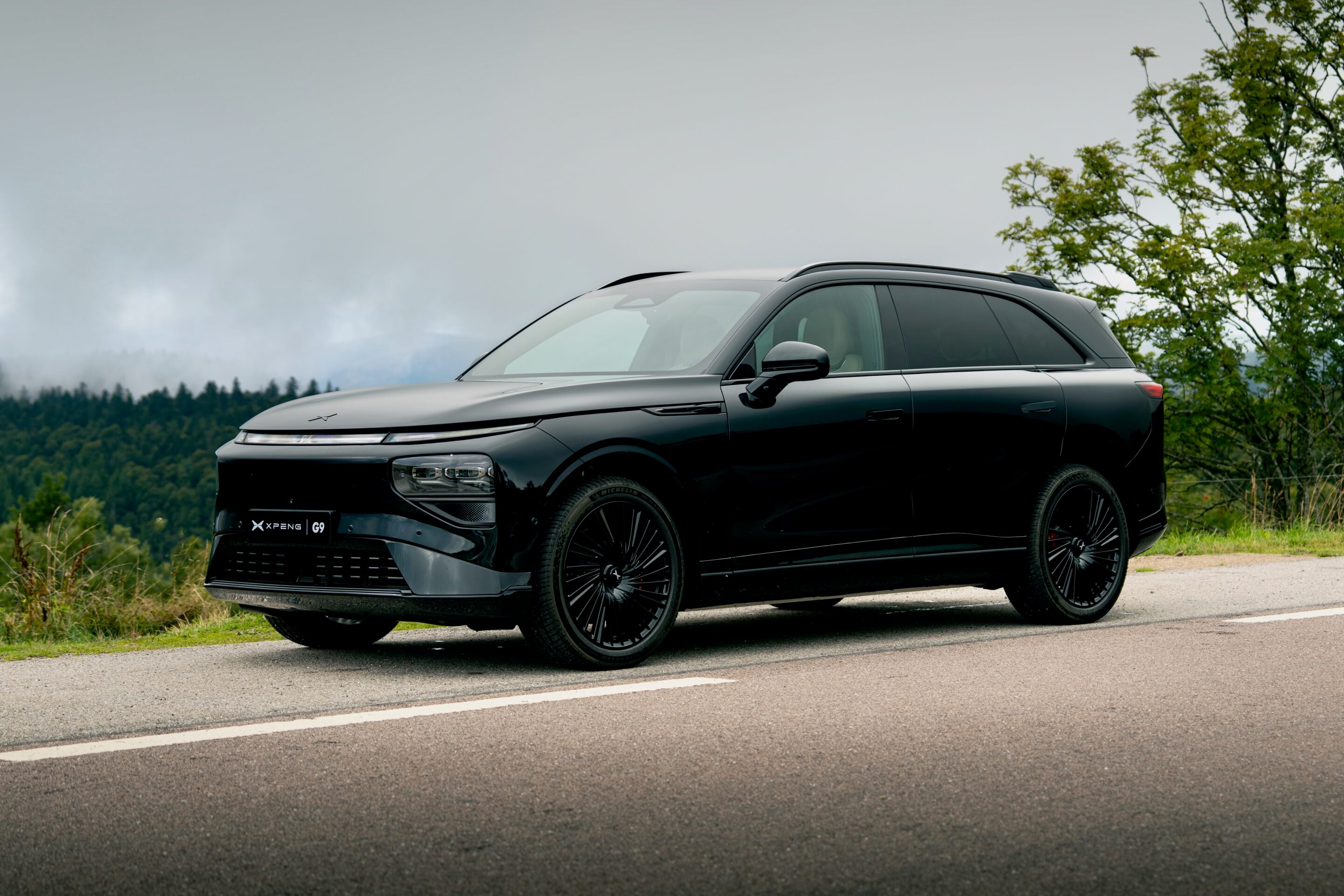
The final piece of XPeng’s 2026 puzzle will be the G9L large SUV, which will arrive in the final quarter of 2026. Measuring just under 5.0 metres long, the G9L will compete with cars such as the Toyota Kluger but is fully-electric.
Using the same 800-volt architecture as the X9, the G9L will offer a range of up to 570km (WLTP) from its 89kWh battery that can be recharged at up to 300kW for a 10-80 per cent charge in a claimed 20 minutes. All-wheel drive models produce up to 408kW of power and can hit 100km/h in just 4.2 seconds.
Features available on the G9L include air suspension, a 22-speaker Xopera sound system, external speakers to play music, soft-close doors, massaging front and rear seats and Nappa leather trim.
In addition to the three new models announced, XPeng’s local distributor also confirmed that XPeng has “two to three” new global models in development.
Australian pricing and specifications for the additions to the XPeng range will be confirmed in 2026.
For 62 years and counting, Wheels Car of the Year (COTY) has reigned as the most coveted award on the Australian motoring scene.
In 2025, Wheels COTY is back bigger and better than ever, with 20 cars in the running for the prestigious 2025-26 award.
“A Wheels Car of the Year winner doesn’t just have to satisfy the judging criteria as set out in the testing guidelines,” said Wheels Managing Editor, Trent Nikolic. “It has to stand out in a field of quality cars that are new to market, and it must continue to impress across a week of long days, rigorous testing and real-world assessment.”
“History shows that vehicles from every segment can win the coveted Wheels Car of the Year award. Sportscars have achieved the highest honour, along with small and large sedans, hatchbacks, SUVS, V8s, hybrids and even fully electric cars showcasing the future of automotive. Right now, value for money, both at the time of purchase and across the ownership experience is as important as it’s ever been, and this year our average purchase price sits right in the sweet spot for the largest cohort of Australian new car buyers.”
The 2025-26 Wheels COTY winner is the Honda Civic.
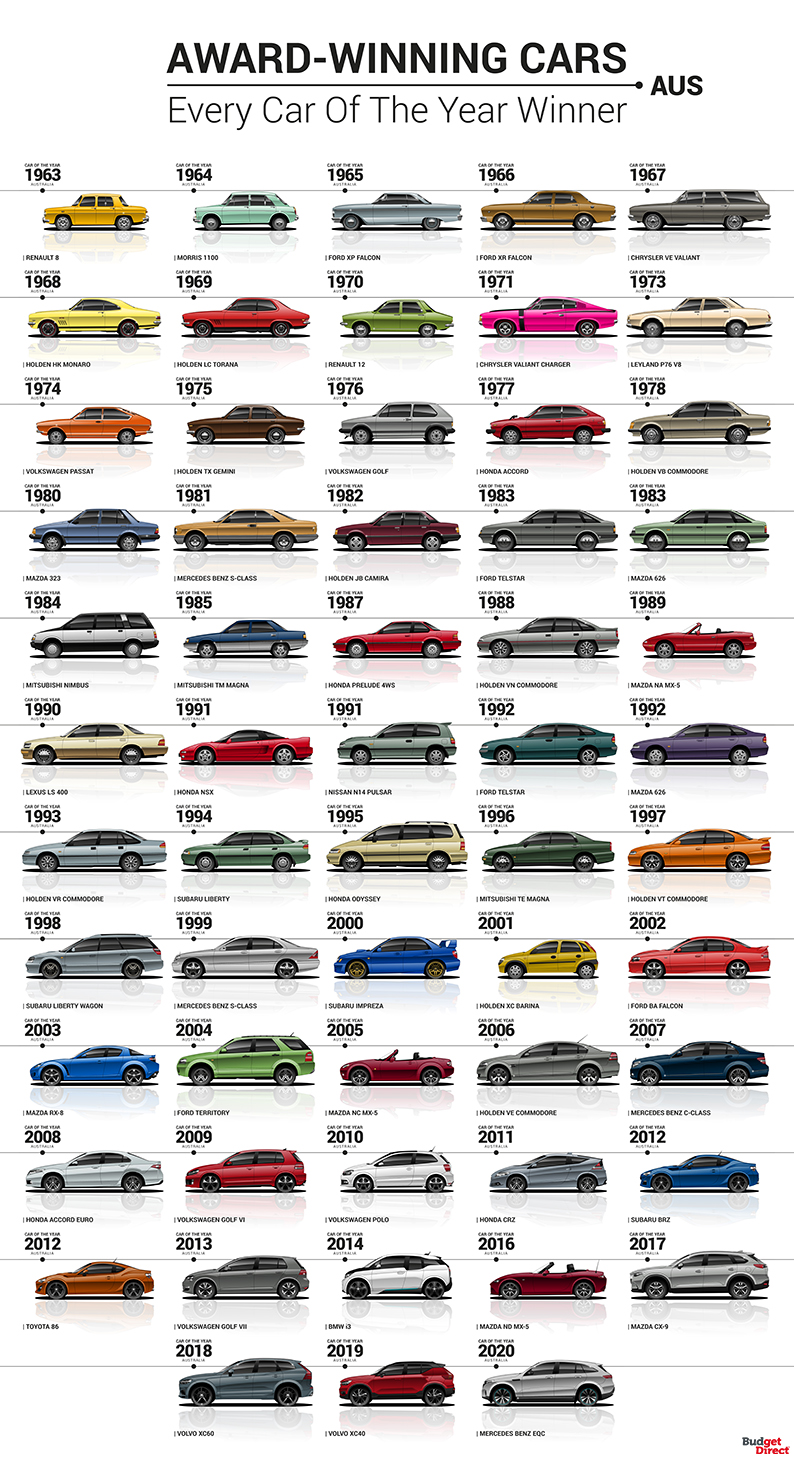
The honour roll of Wheels Car of the Year winners is nothing less than a time capsule of the evolution of motoring in Australia, as the full list going back to 1963 below demonstrates. The common thread among all of them, however, is that they were good enough to be judged the best of their time by a panel of Australia’s most seasoned motoring journalists.
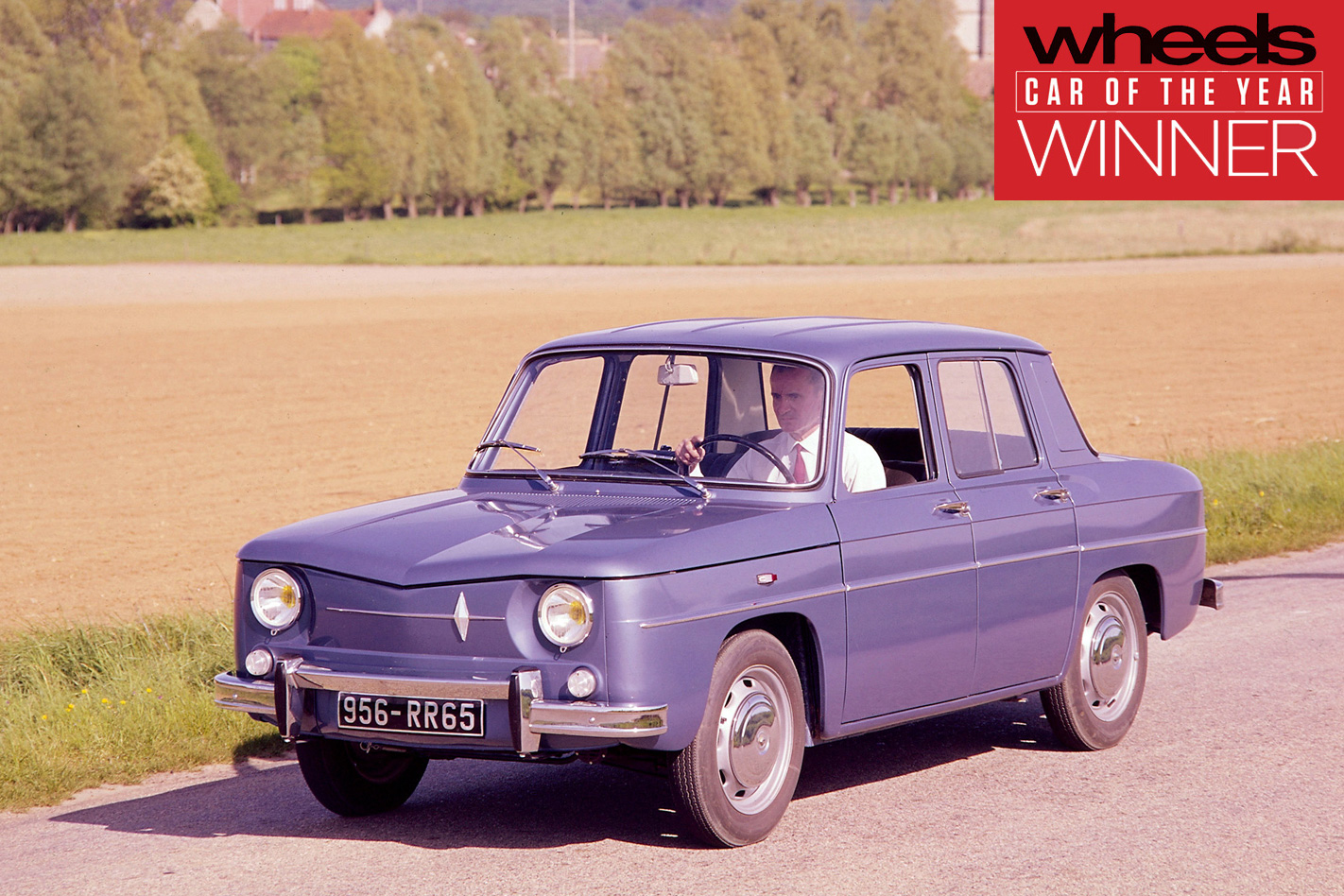
1963: Renault 8
Who knew a modestly sized French sedan with the engine in the boot would take top honours in the inaugural running of Wheels Car Of The Year? Those who’d experienced its versatility, comfort and French panache, that’s who.
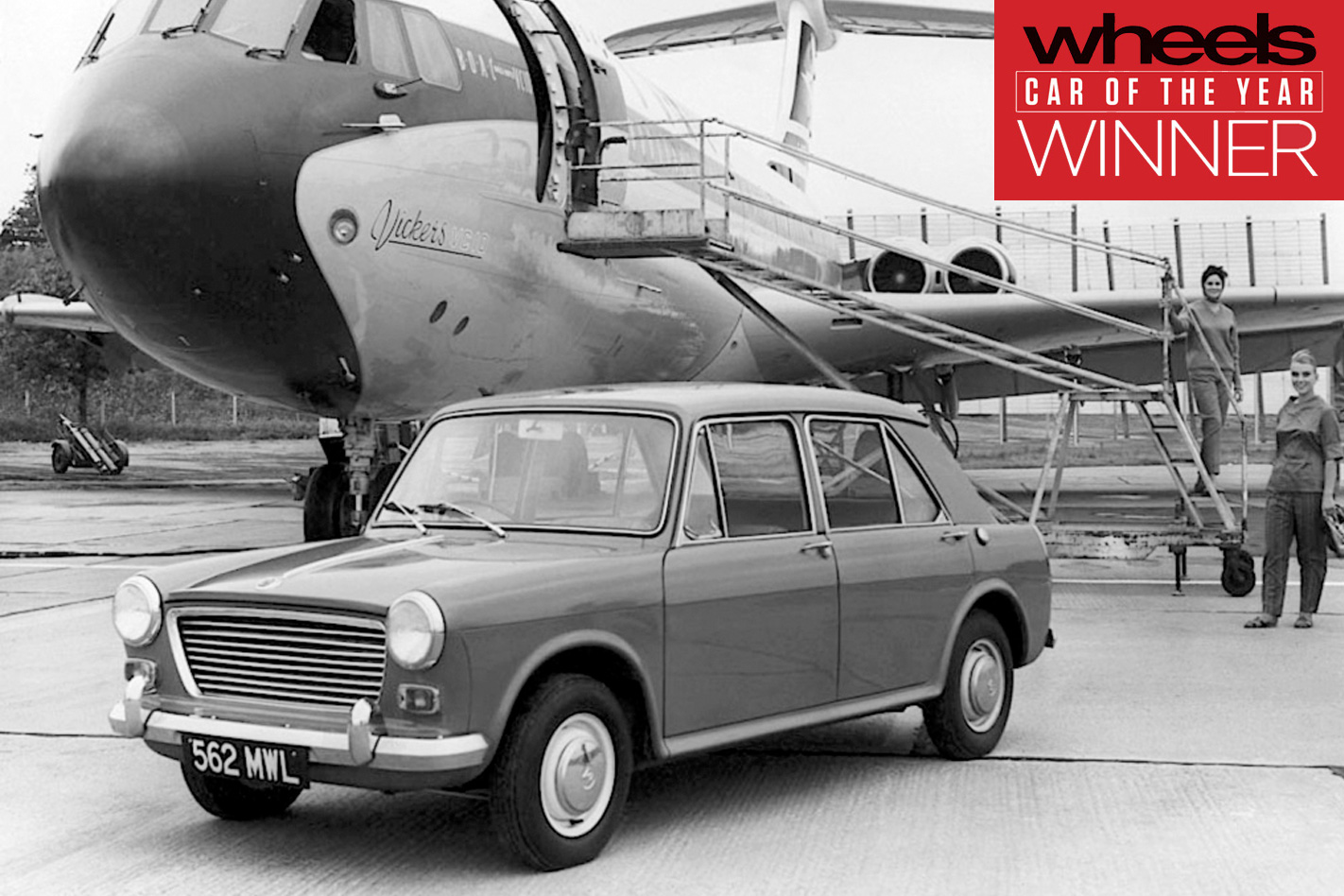
1964: Morris 1100
As Alec Issigonis’ follow-up project to his iconic Mini, the Morris 1100’s more generous proportions and supple-yet-controlled Hydrolastic suspension gave a British marque its first COTY crown.
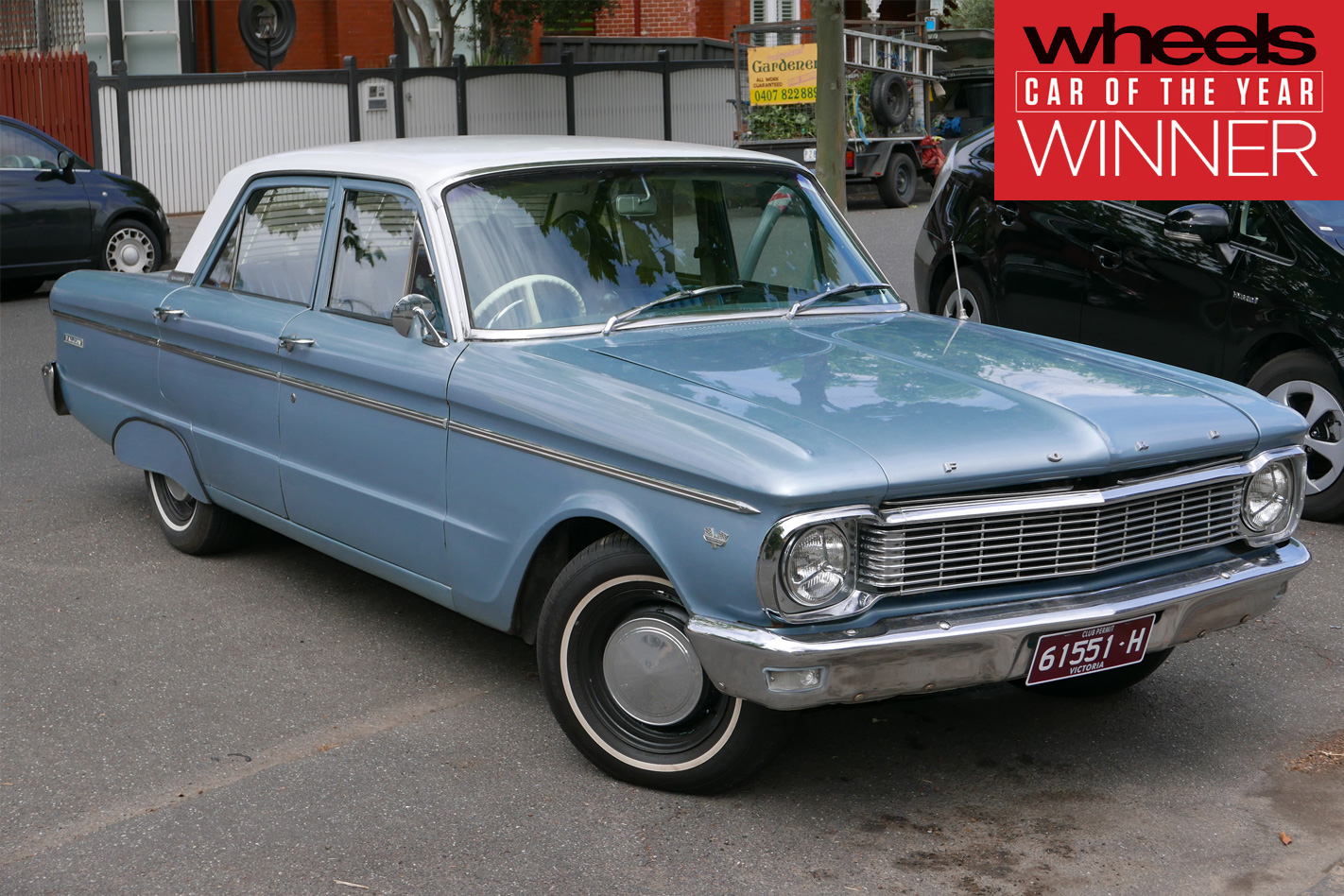
1965: Ford XP Falcon
Considerable body strengthening and vastly improved dynamics allowed Ford’s final iteration of the first-gen Falcon to score its first COTY win.
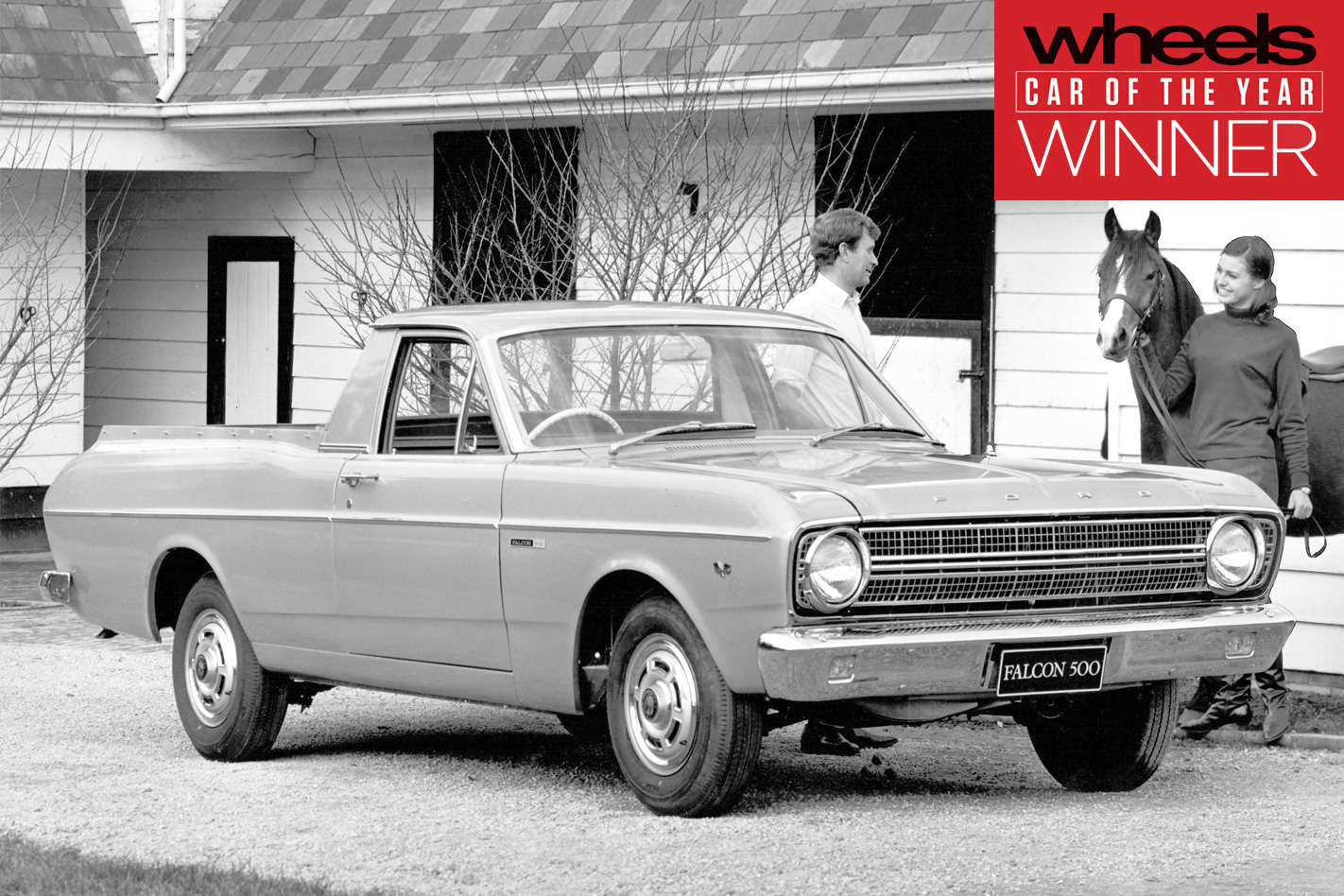
1966: Ford XR Falcon
Ford made it two-in-a-row with the second-generation Falcon, which still featured US-styled sheetmetal on the sedan but locally penned wagon styling, and introduced V8 options across every model grade.
Though not available in ’66, the XR also spawned the legendary Falcon GT nameplate the following year.
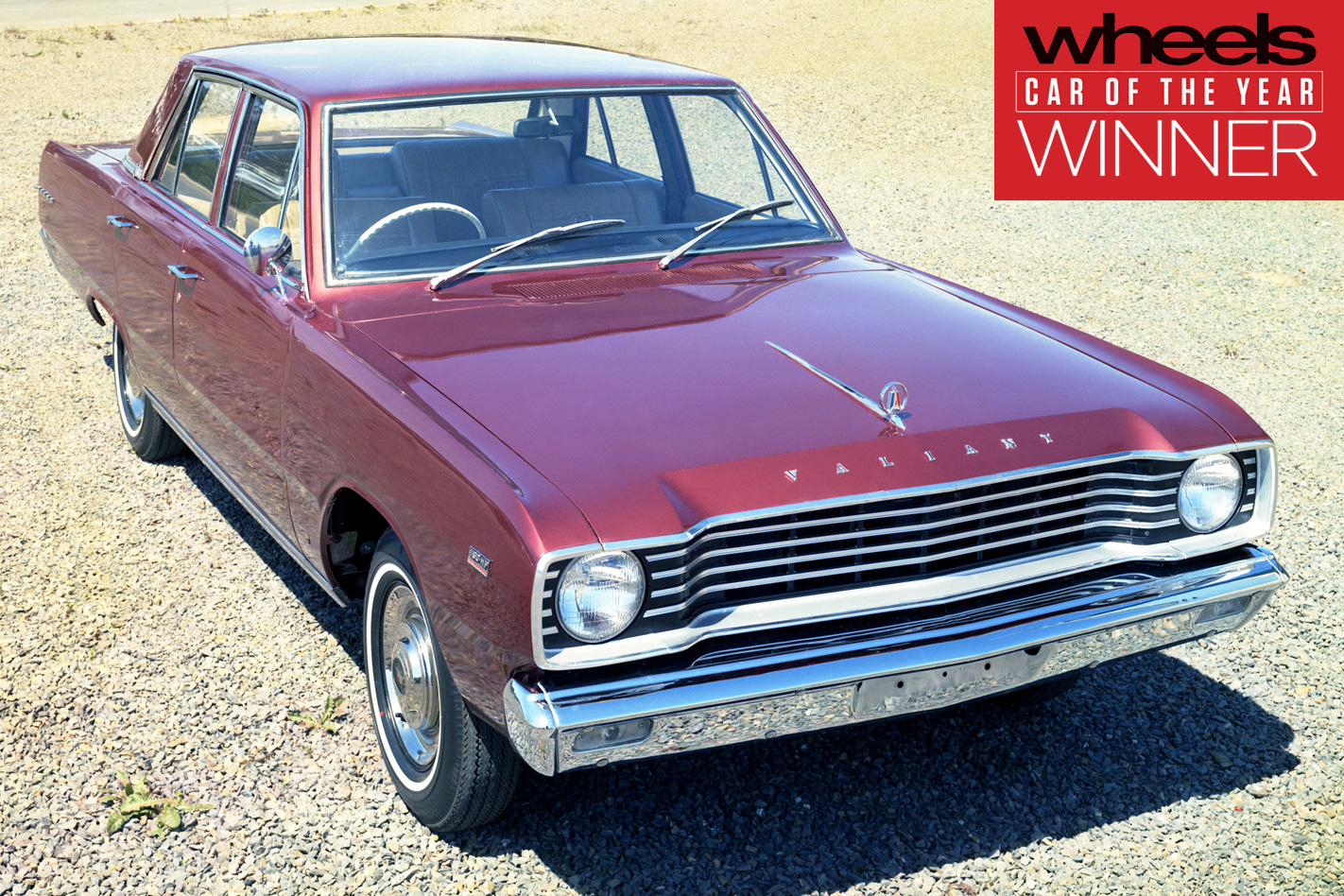
1967: Chrysler VE Valiant
American marques continued to win favour with COTY judges in the late 1960s, but this time it was Chrysler’s locally styled Valiant that shone brightest.
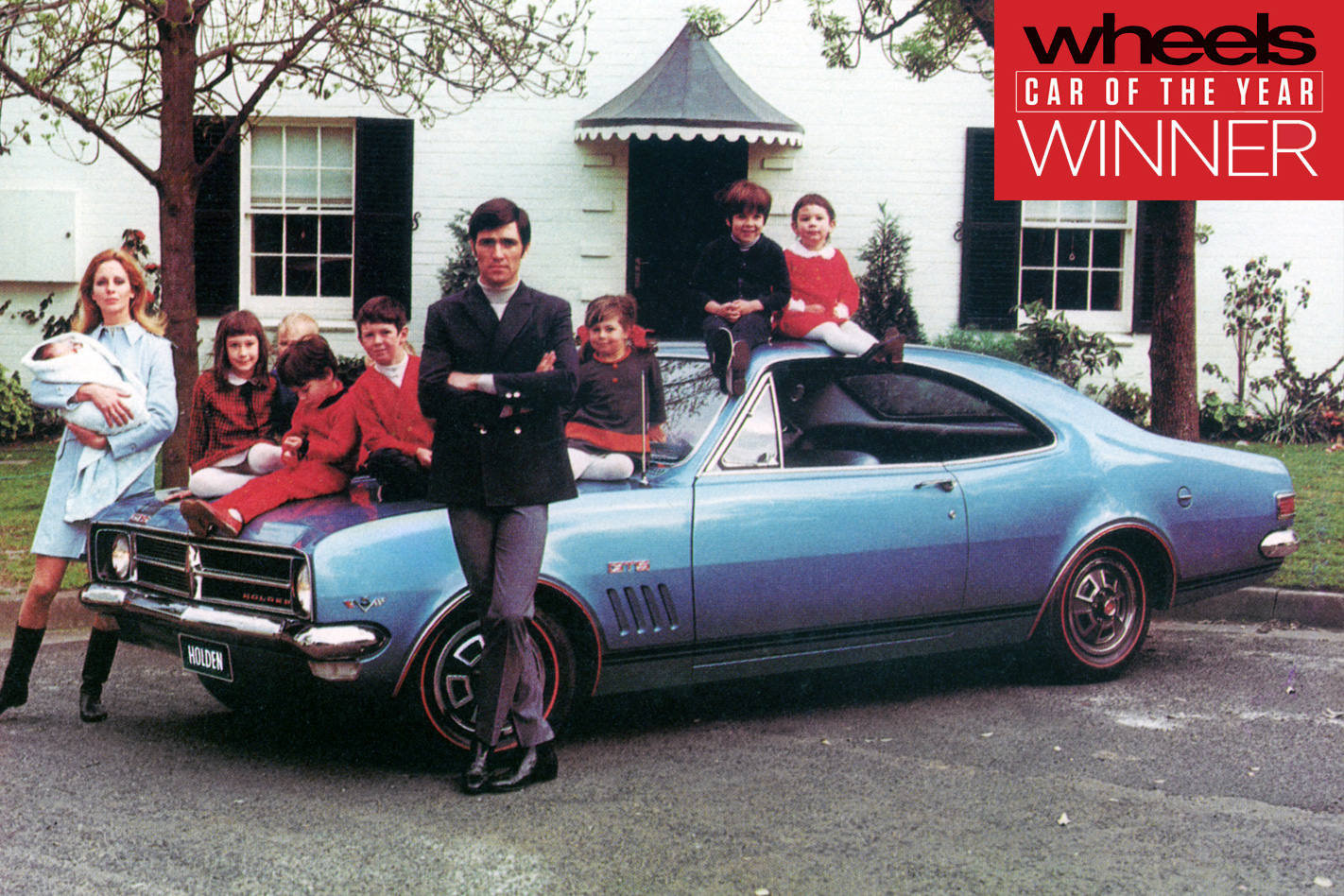
1968: Holden HK Monaro
Holden’s pillarless hardtop was a home-grown revelation, and one that’s proved to have enduring appeal among Aussie car fanatics.
The GTS 327’s win at Bathurst in the same year certainly helped prove its muscle-car credentials.
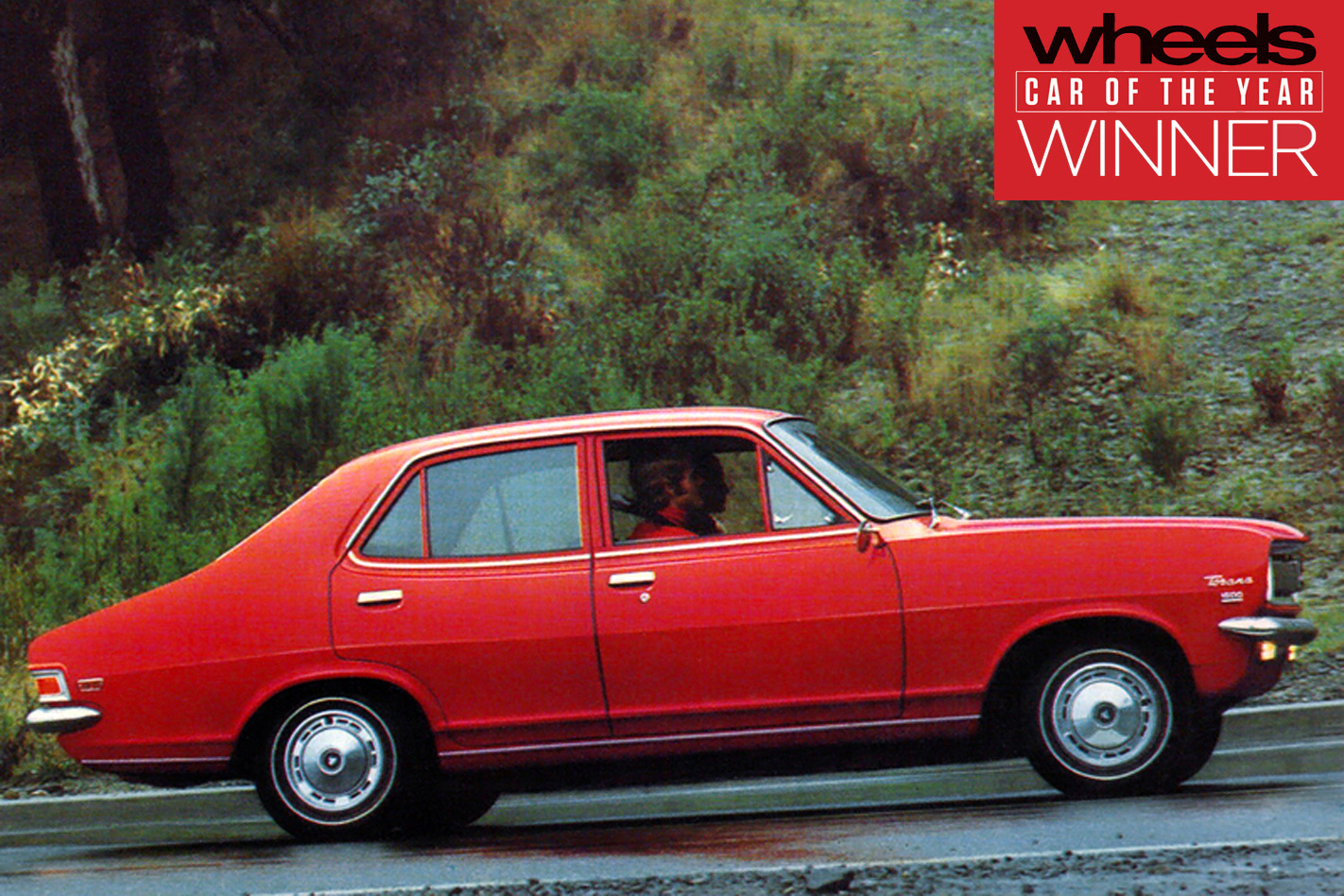
1969: Holden LC Torana
Holden took another COTY trophy home in 1969 with the second generation of its Torana small sedan.
The addition of a six-cylinder long-wheelbase option gave the Torana added sporting zeal, while the four-pot options were competitive for efficiency and driving ease.
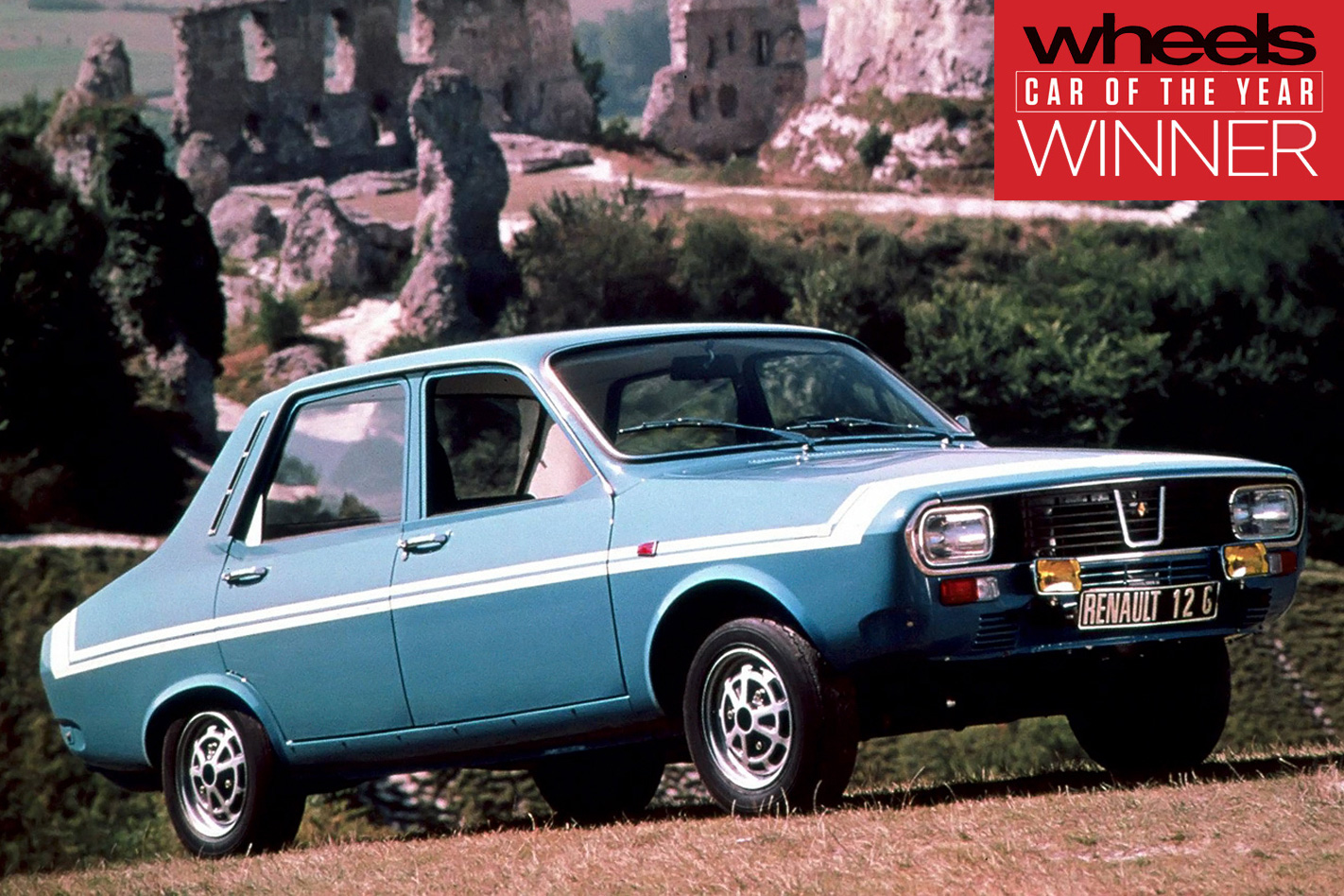
1970: Renault 12
Assembled locally in West Heidelberg, Victoria, Renault’s family-sized sedan and wagon reigned supreme for seat and ride comfort, as well as visibility and ruggedness. It lived for a decade.
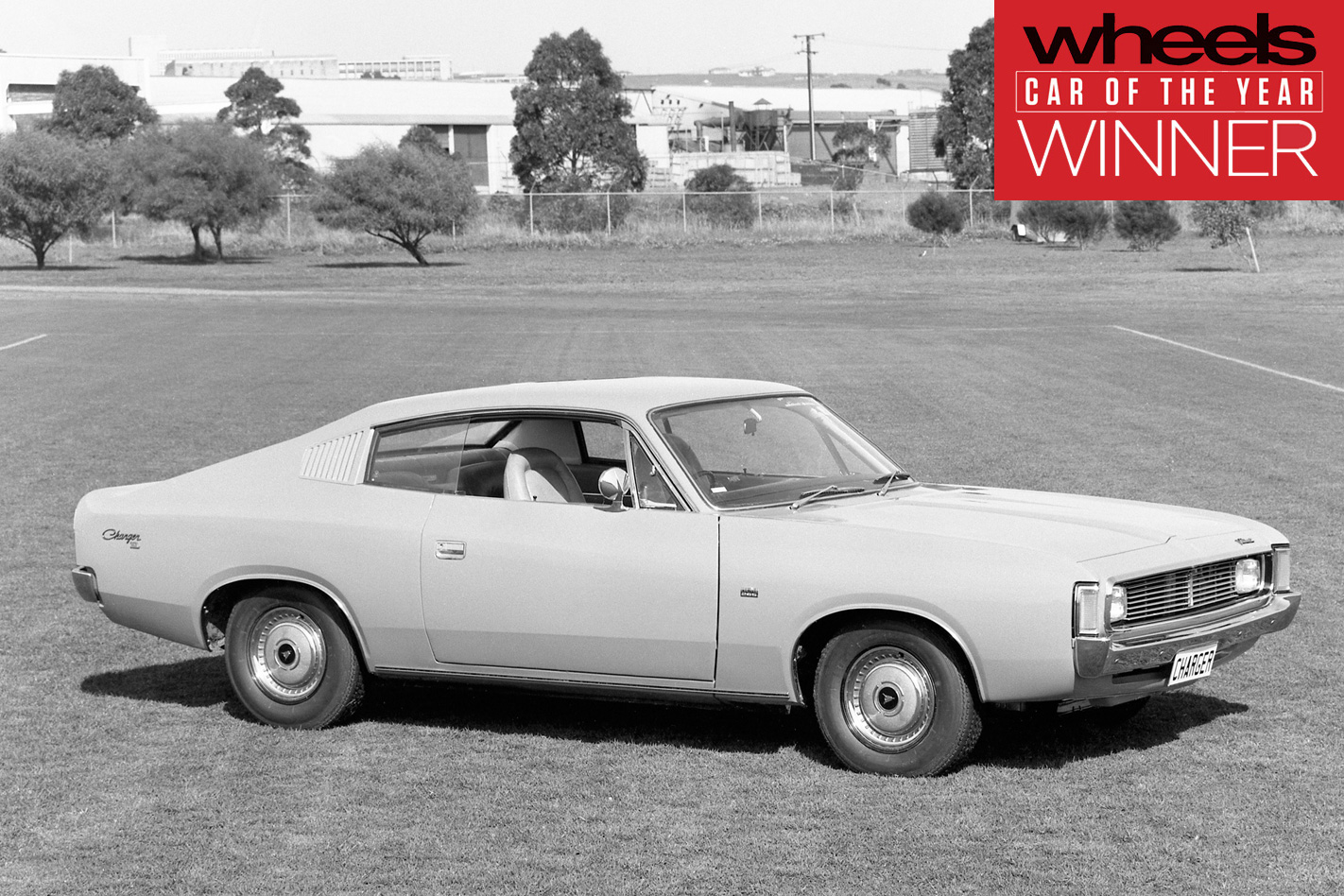
1971: Chrysler Valiant Charger
Hey Charger! Chrysler’s attractive two-door had more to offer than just a memorable ad campaign, with all-Aussie design and huge youth appeal. Also spawned the iconic E38 and E49 six-pack triple-Weber screamers.
1972: Award withheld
Yep, no award was given in 1972, a shock decision given the fresh metal that included the Ford XA Falcon and Cortina, Morris Marina, and the Datsun 180B.
“The guidelines laid down for the award require that the car must present a significant product advance,” Wheels said at the time. “None of the cars released really achieved this criterion.”
READ: Why Wheels withheld Car of the Year in 1972
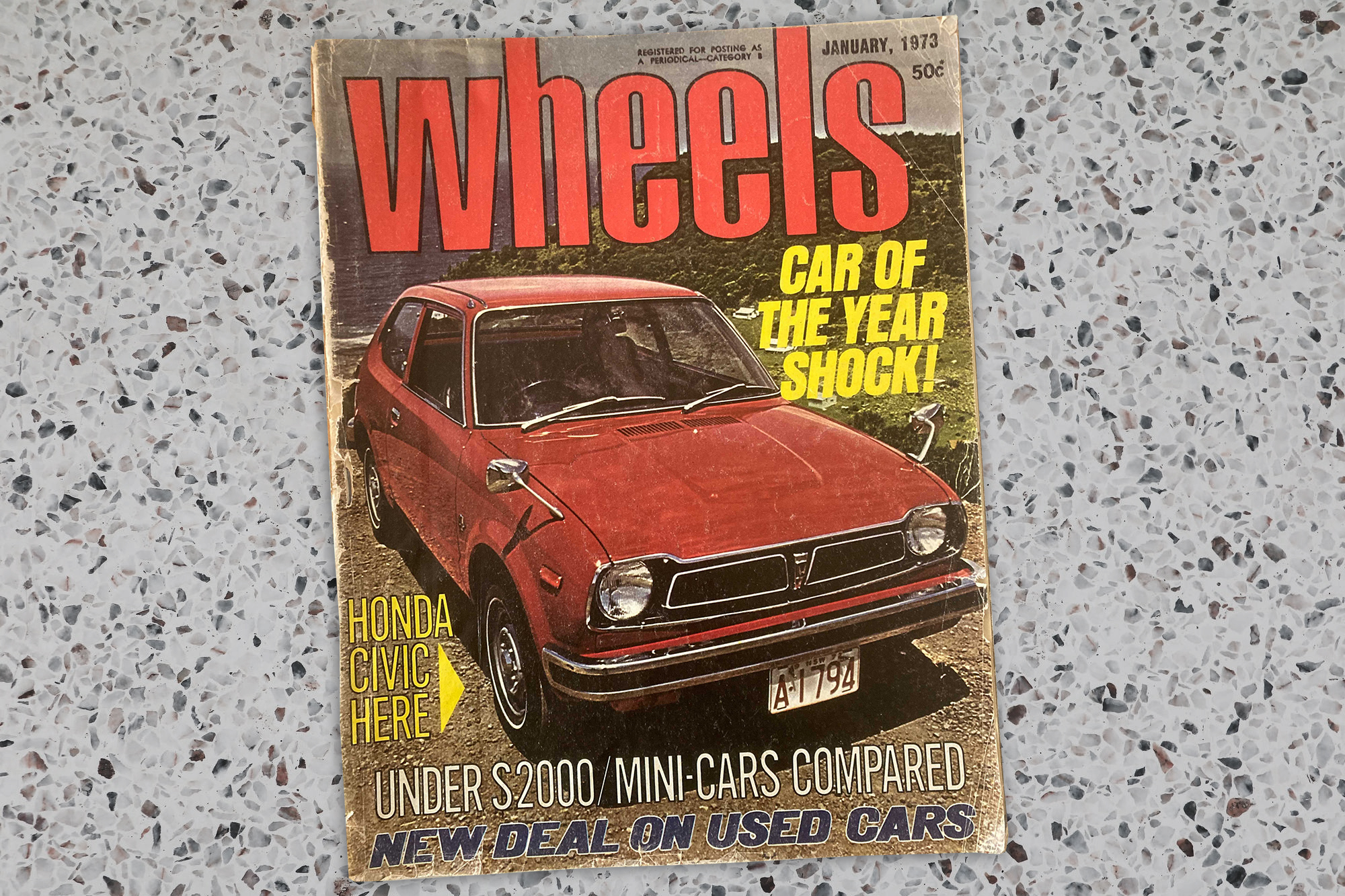
1973: Leyland P76 V8
While most may remember the P76 as being the car could fit a 44-gallon drum in its boot, we remember it as the best car that 1973 had to offer.
One caveat: we gave the award solely to the roomy, agile, relatively efficient all-alloy V8 version, not the underwhelming 2.6-litre six, only to have Leyland then advertise the entire P76 range as ‘Car of the Year’.
This led to changes in COTY rules that meant future wins would have to take the entire model range into account – not just a specific variant.
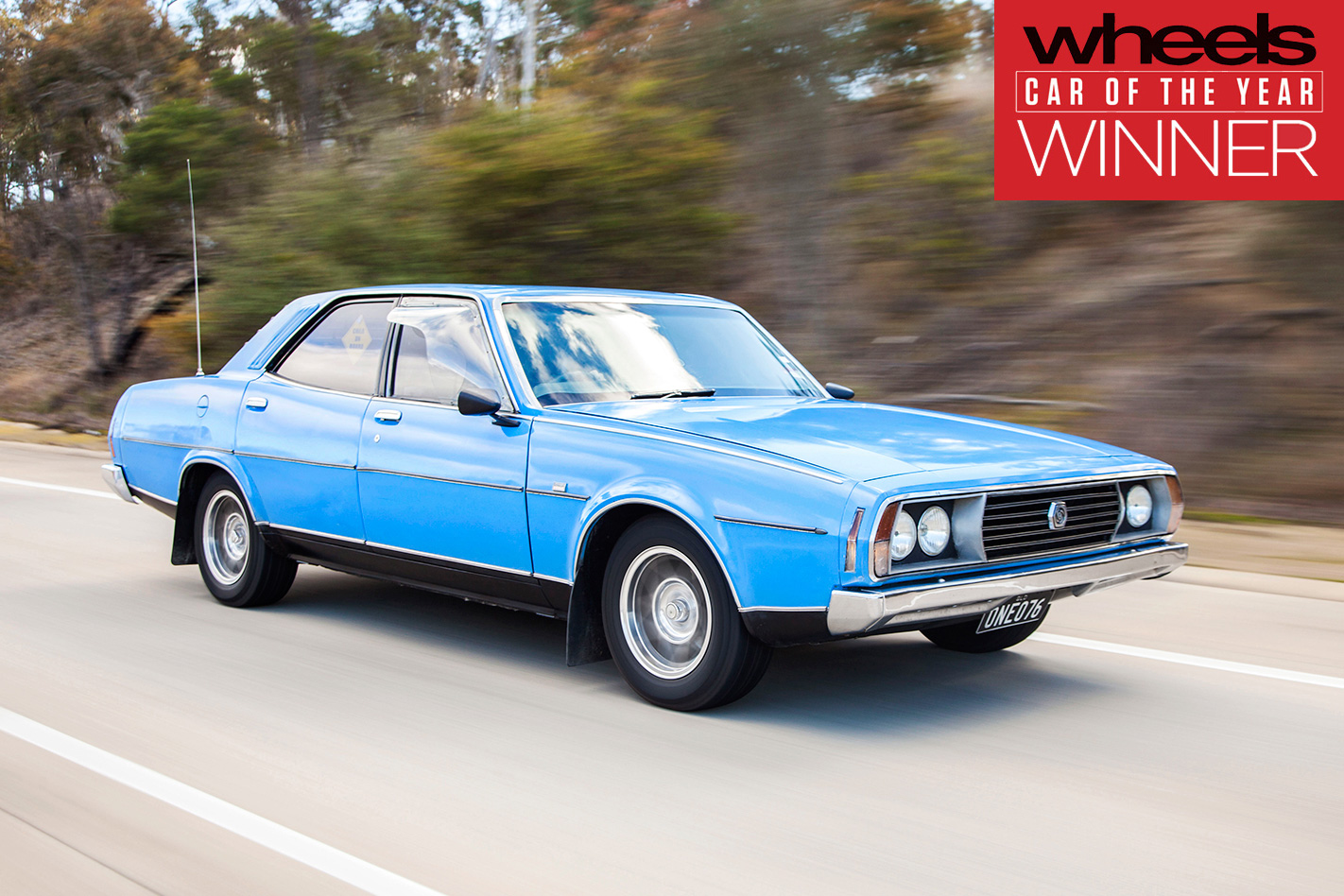
1974: Volkswagen Passat
Attention shifted from big Aussie sedans and coupes to a sophisticated, modern and comparatively compact European in 1974 – the first generation Passat.
The first of a new breed of watercooled, front-engined, front-drive Volkswagens in Australia, the Passat was a radical departure for VWA and the blueprint for every modern Volkswagen, including the first Golf.
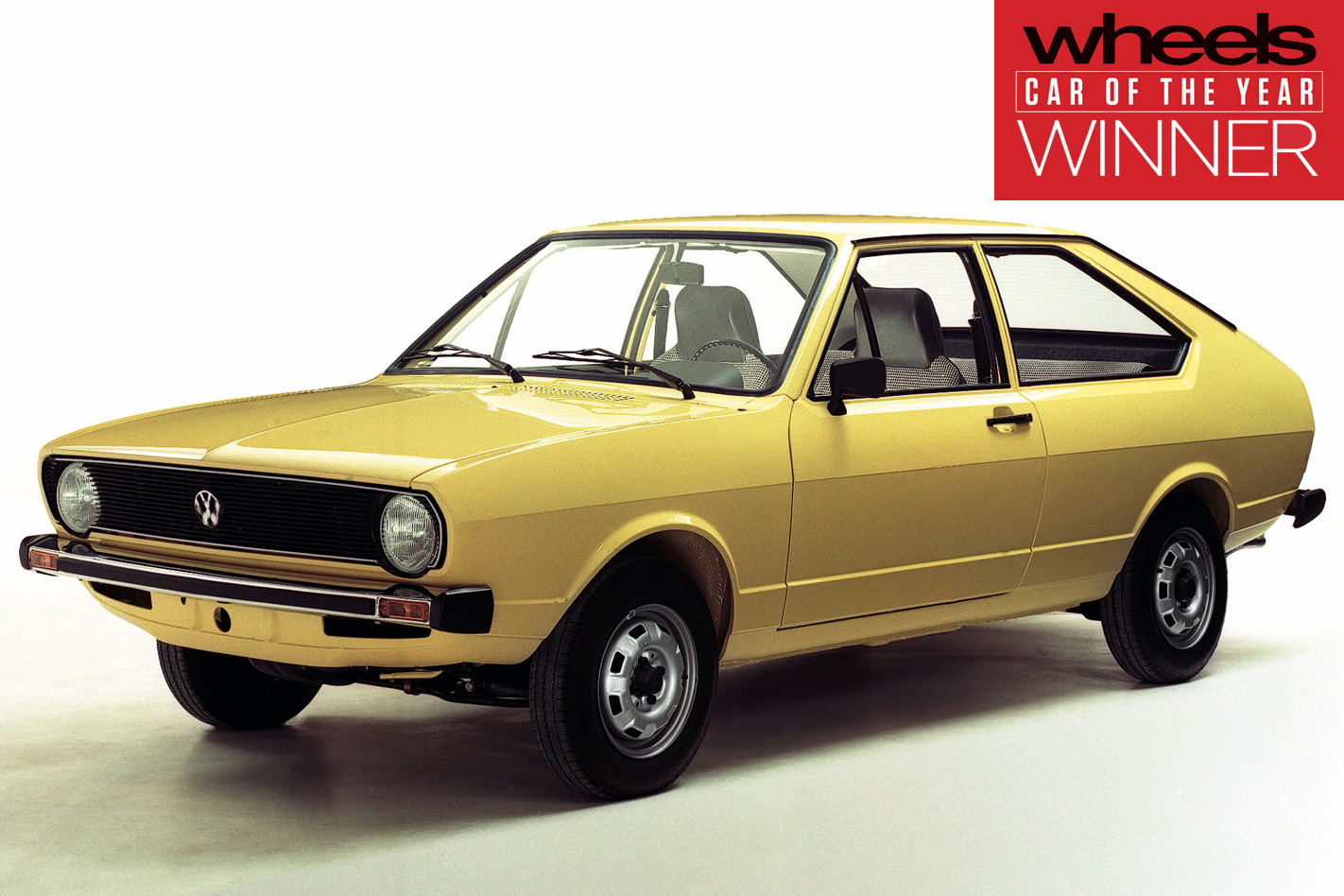
1975: Holden TX Gemini
Holden’s compact first-generation Gemini was marketed with Isuzu-Holden badges on the boot and Isuzu mechanicals underneath for some Japanese reliability cred, but was based on an Opel-engineered core.
Simple, capable and honest, it rose to the top in the middle of the disco decade.
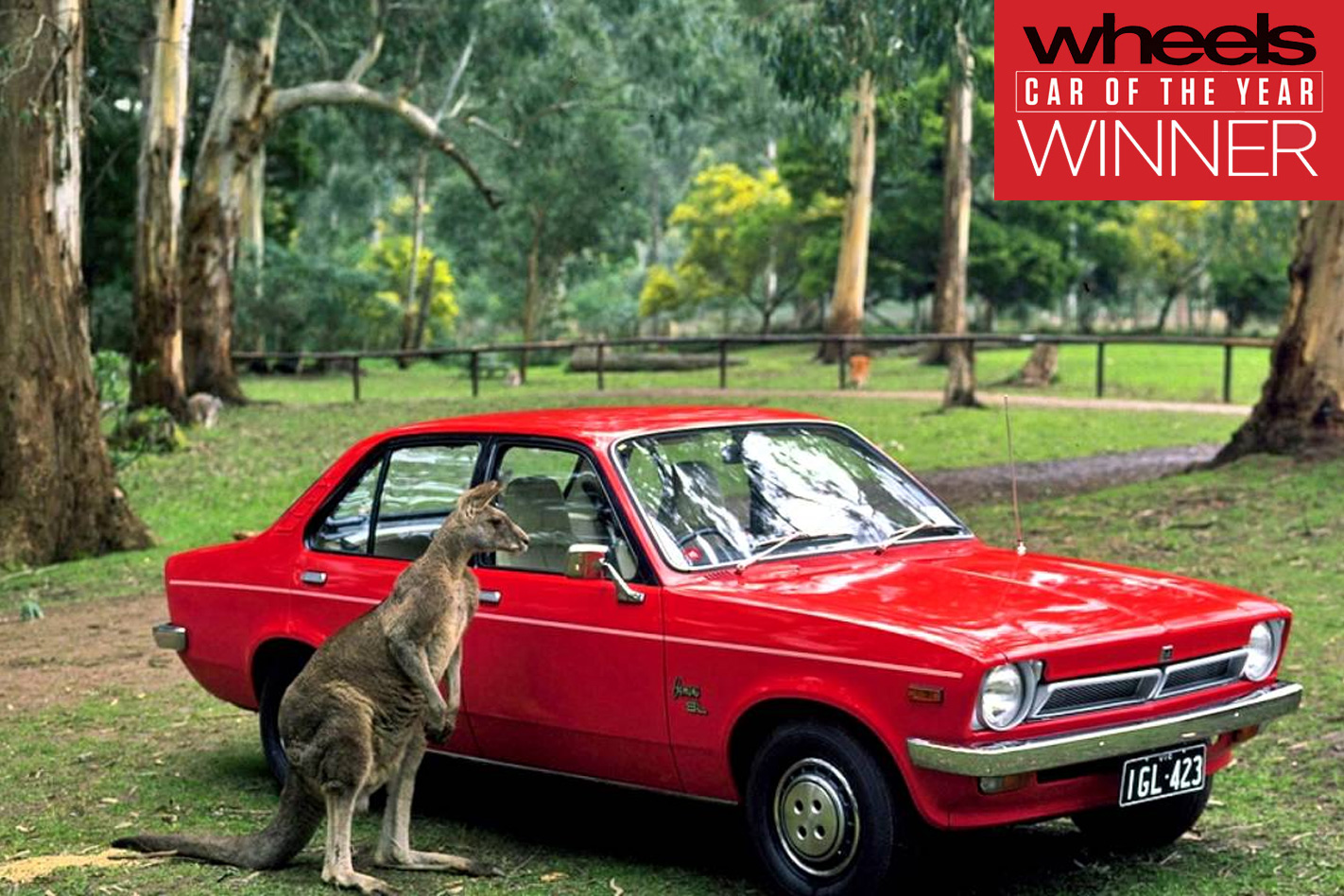
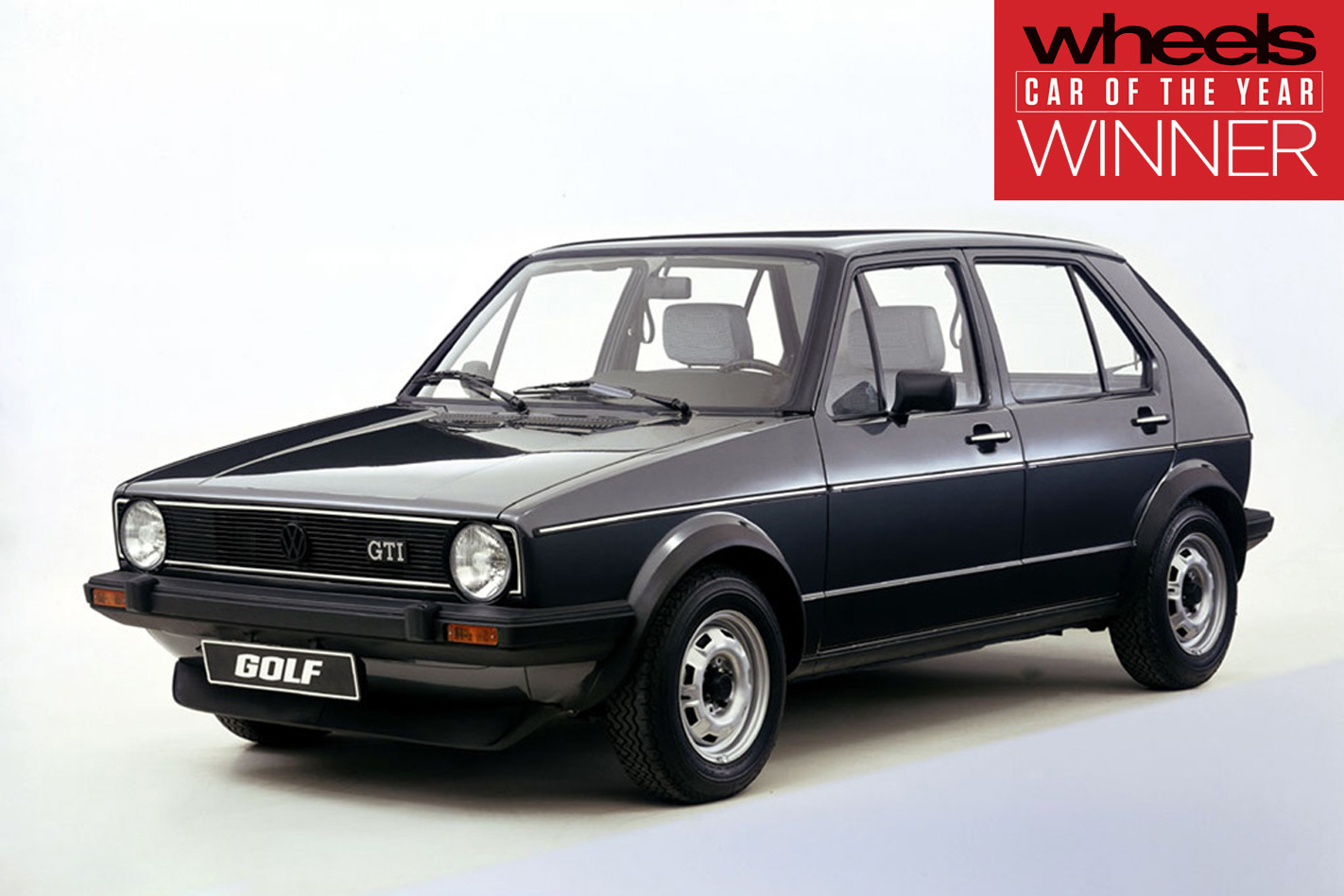
1976: Volkswagen Golf
The first-gen Golf brought Passat values of refinement and engineering to the everyman in ’76, as well as giving Volkswagen a compact car leagues ahead of the by-now archaic Volkswagen Beetle.
This was the first year that COTY was opened up to fully imported cars, however the win ironically went to the Aussie-assembled Golf.
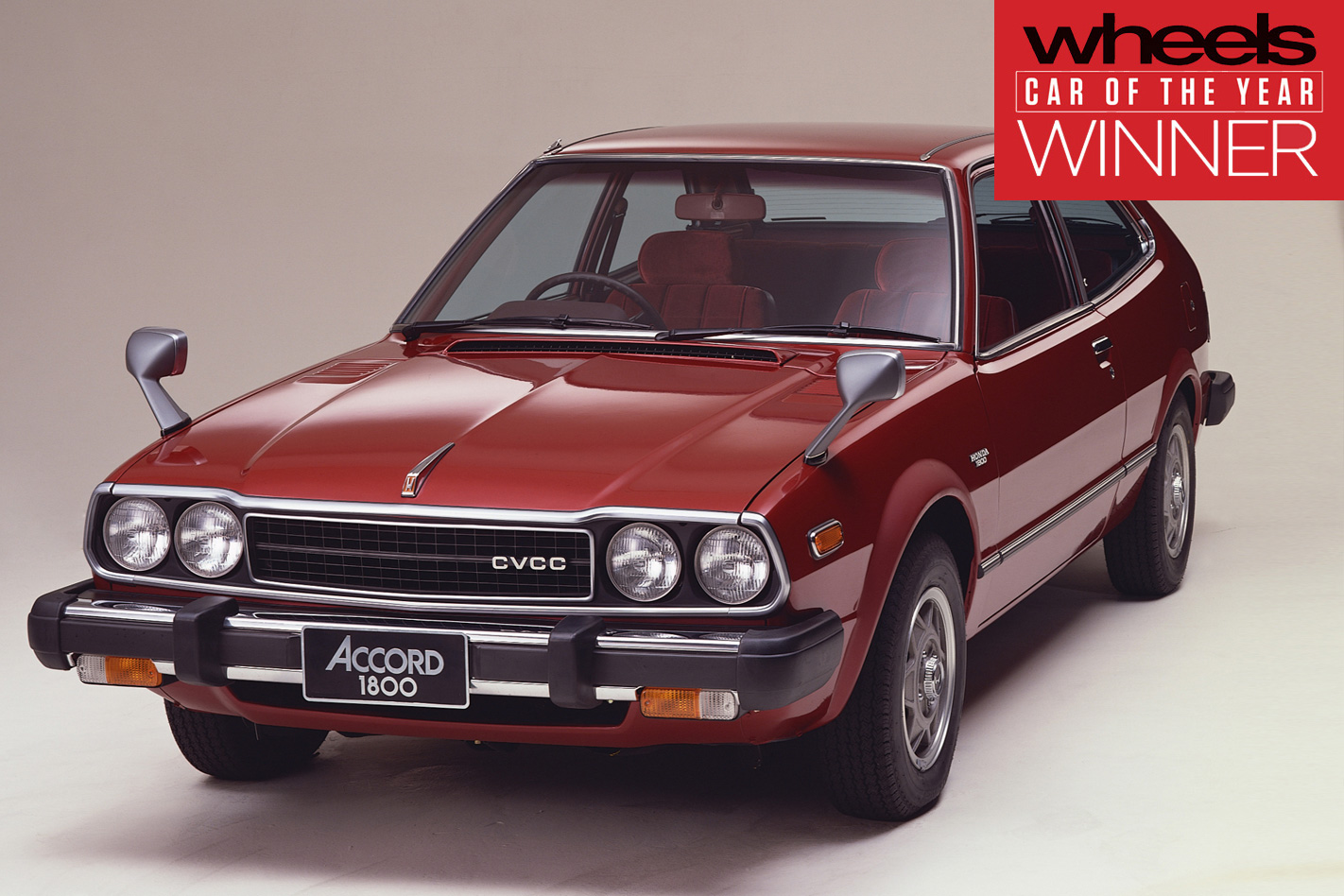
1977: Honda Accord
Minute compared with the modern-day Civic, the first-generation Accord nevertheless took Honda into a larger size class, and one more appropriate for Australian tastes.
With BMW-rivalling quality, superior front-drive dynamics, plus groundbreaking and ultra-efficient CVCC engine tech, the Accord was a winner – and the first Japanese car to win Wheels COTY.
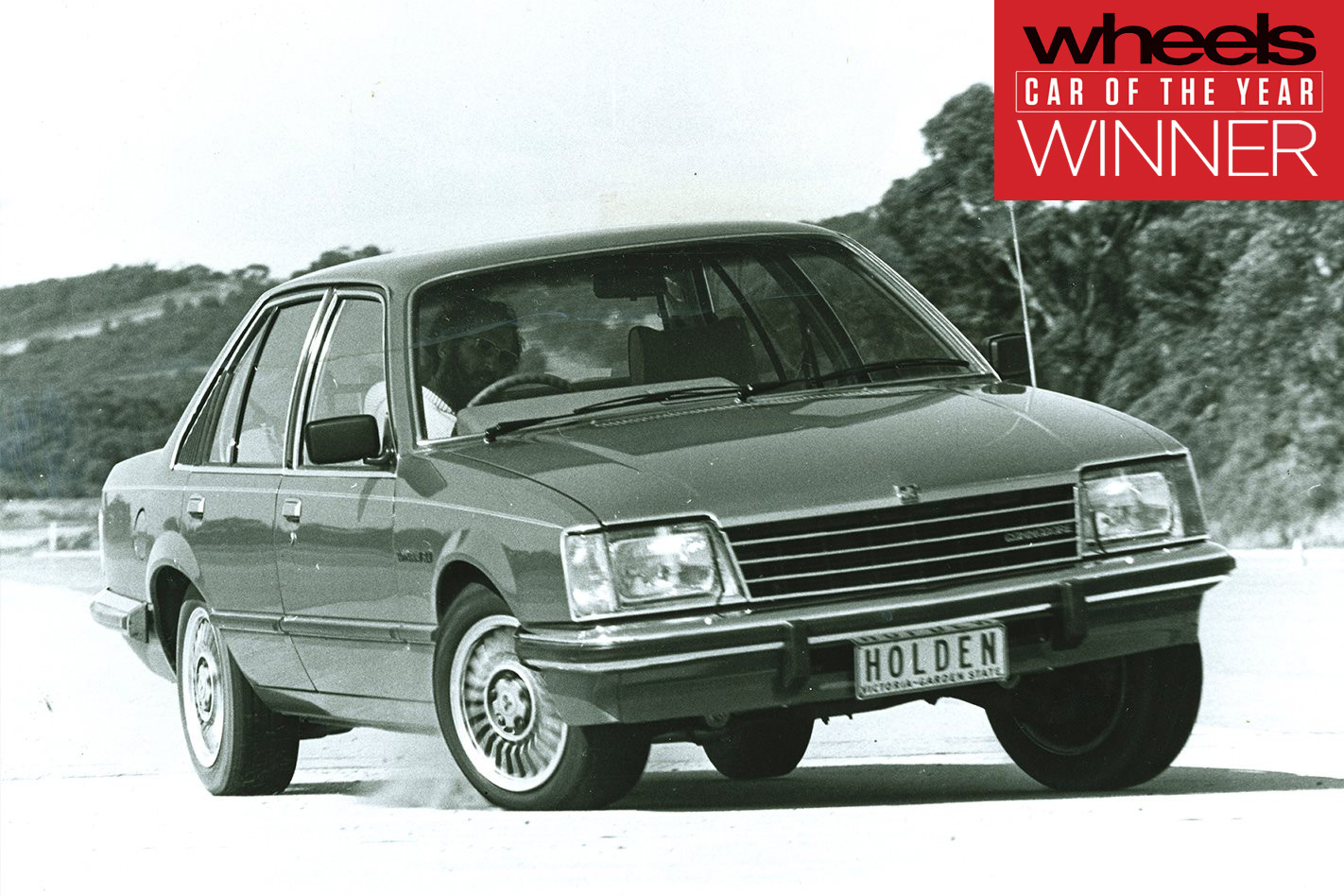
1978: Holden VB Commodore
Back in ’78 we didn’t know just how much the Commodore would become integral to Aussie culture, but we were definitely sure that Holden was onto a good thing with its first Opel-based large car.
The VB set new standards for dynamic excellence – even compared with Europe’s best family sedans – and transformed Holden’s image.
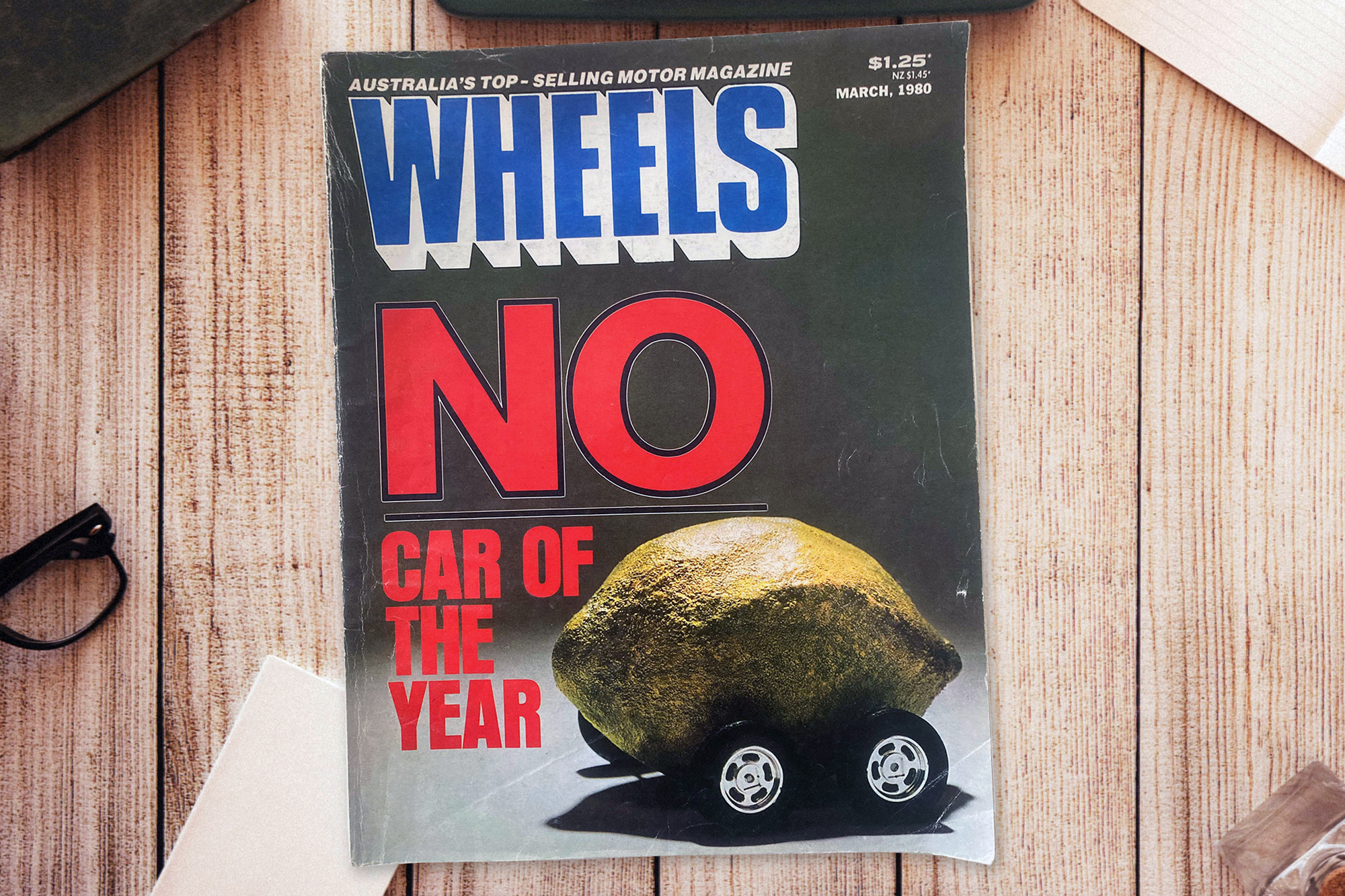
1979: Award withheld
Another controversial result. Ford had expected its XD Falcon would take home the trophy. It didn’t. Instead, the magazine carried the now famous image of a four-wheeled lemon and the simple headline: “No Wheels Car of the Year.”
READ: The true story behind Wheels’ most controversial magazine cover
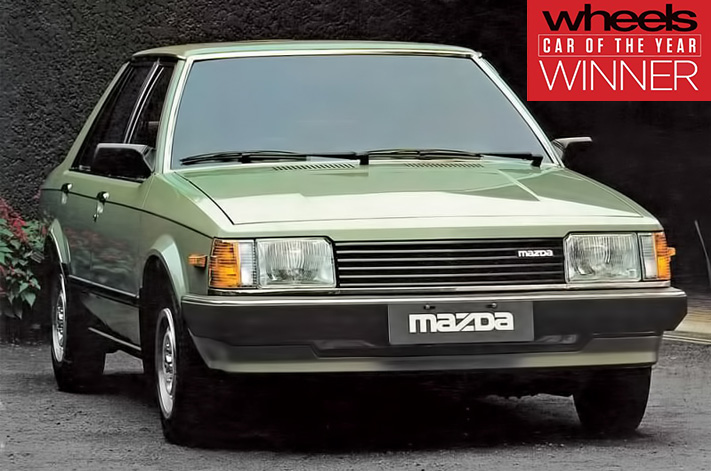
1980: Mazda 323
The second-generation Mazda 323 made the shift from rear- to front-wheel drive, and stood out for its strong drivetrains, crisp handling and classy design.
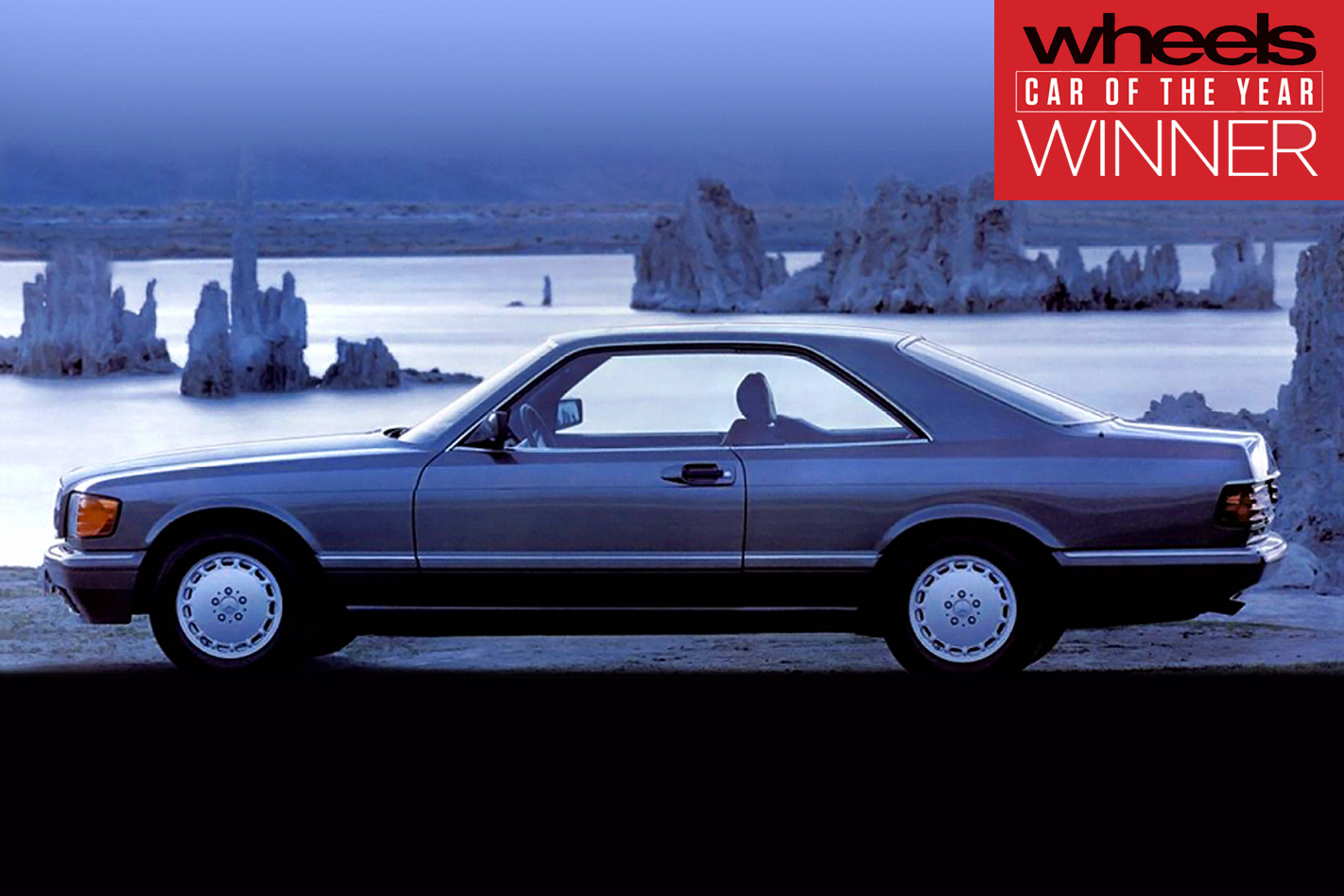
1981: Mercedes-Benz S-Class
A plutocrat-grade luxury sedan was a COTY winner? Say what you will, but the W126 S-Class’ outstanding build quality, refinement and engineering made it the luxury sedan benchmark for the 1980s.
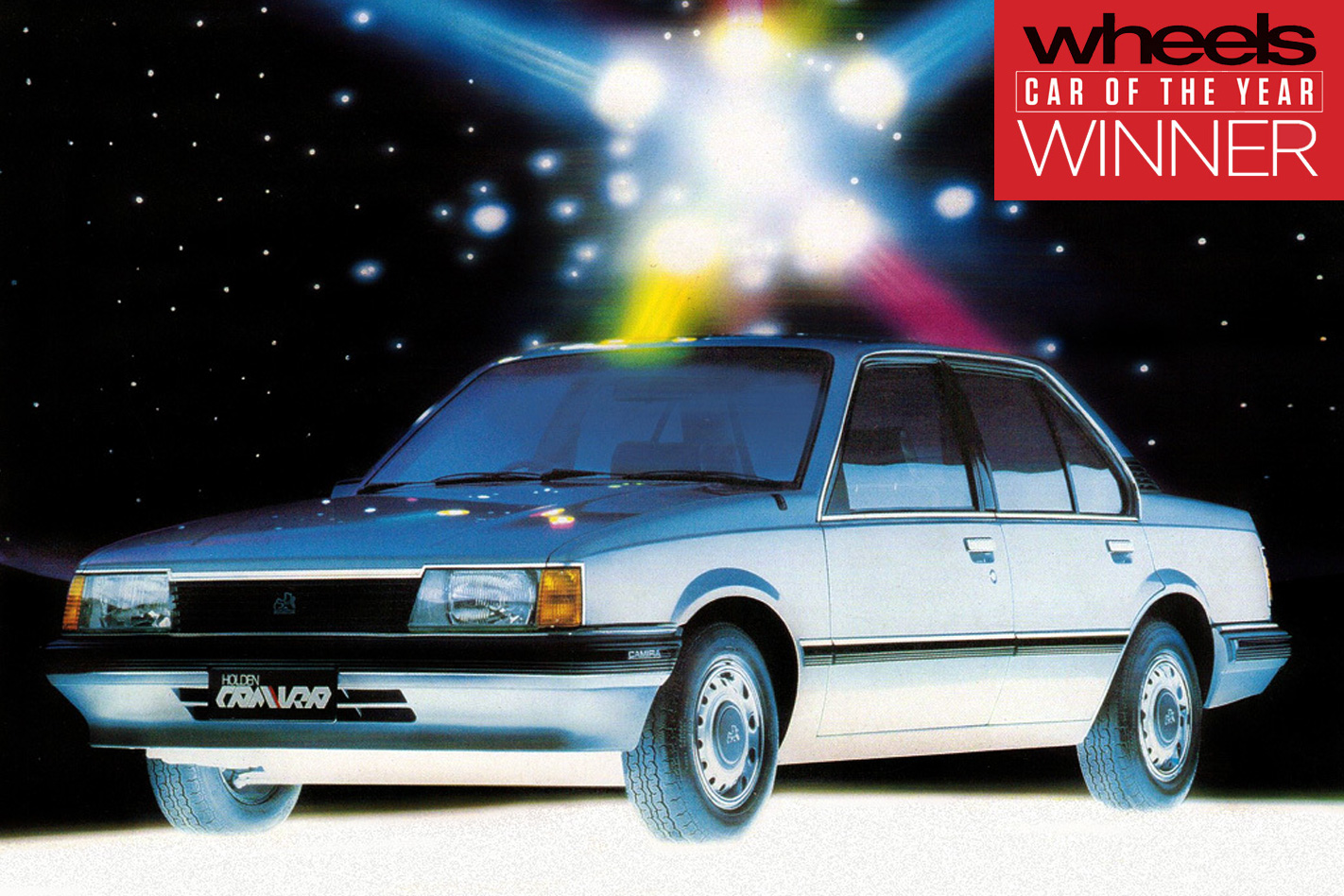
1982: Holden JB Camira
Awarded with reservations, the Camira nevertheless attracted praise for its ride, handling, packaging and then-uncommon front-engine, front-drive midsize layout.
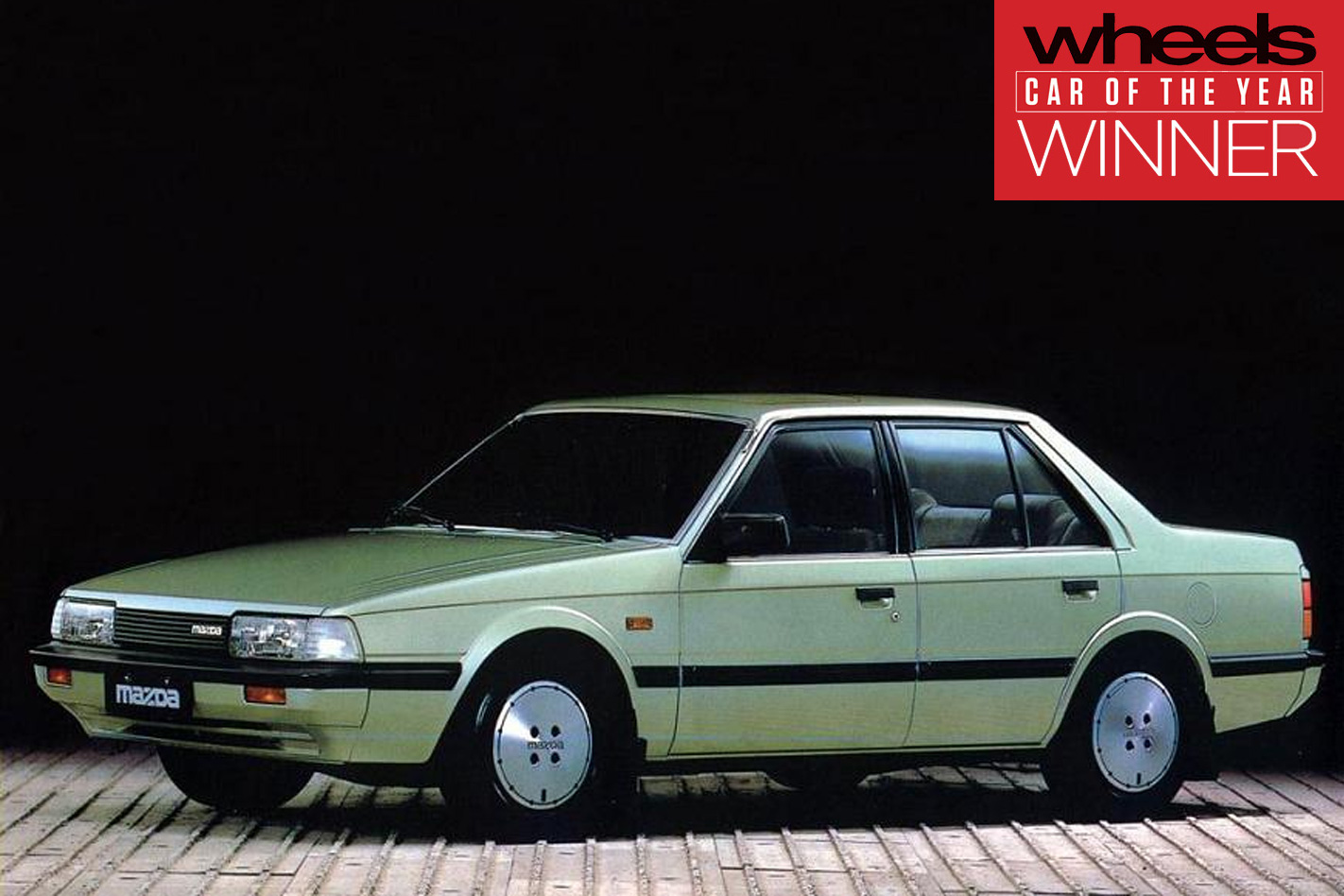
1983: Ford Telstar/Mazda 626
Ford and Mazda’s midsize twins-under-the-skin shared the 1983 COTY award.
Segment-leading performance, economy and engineering saw it take down the Audi 100, Toyota Supra and BMW 3 Series, and even though the Ford was locally styled and built (with the exception of the made-in-Japan TX5) and the Mazda (available in coupe, sedan and hatchback form) fully imported, both were deemed equals.
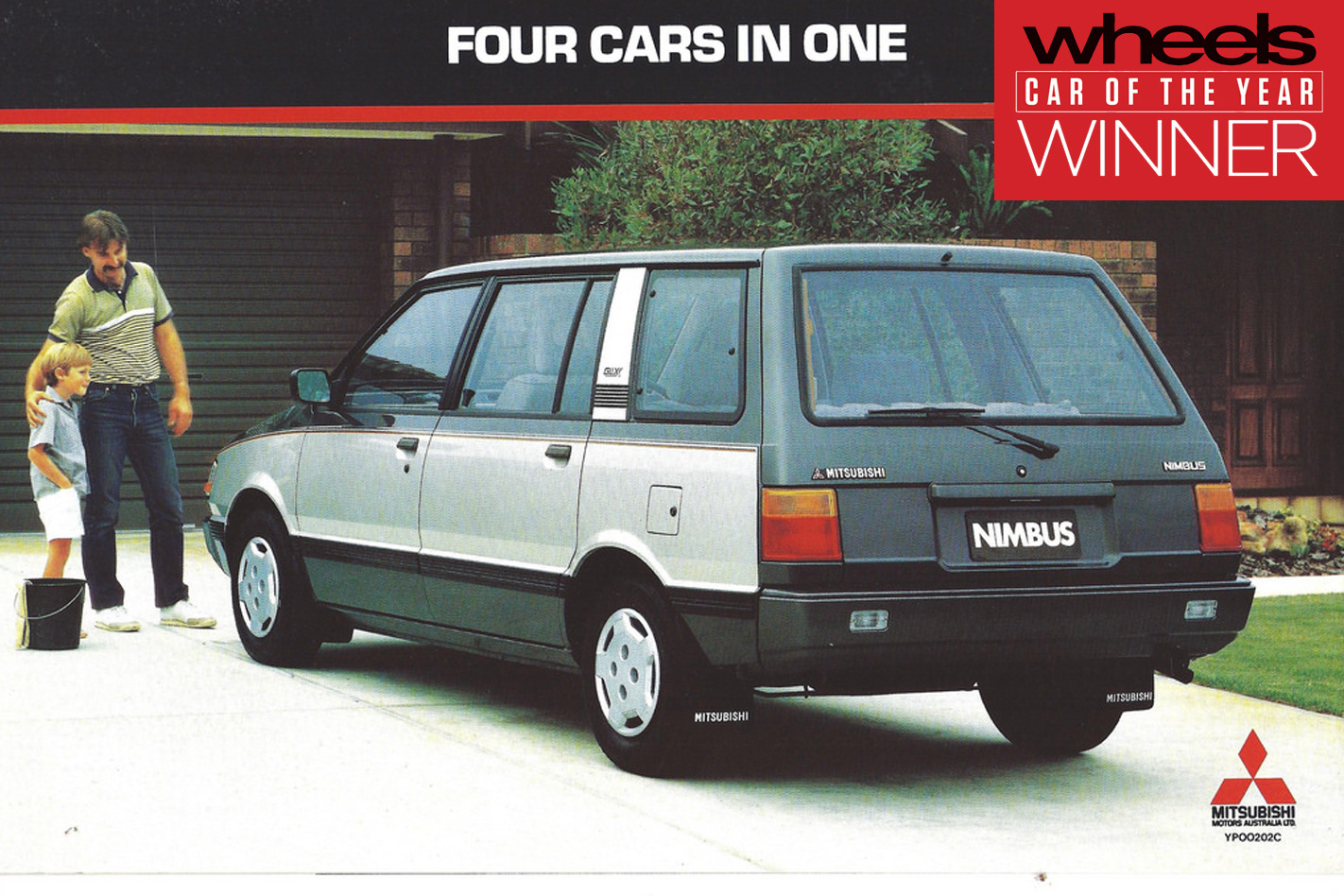
1984: Mitsubishi Nimbus
People movers may seem old hat now, but back in the mid-’80s the concept of a family “multi-purpose vehicle” with car-like handling was fairly revolutionary.
The Nimbus’s focus on versatility and innovative packaging, coupled with decent dynamic performance, saw it come to the fore.
1985: Mitsubishi TM Magna
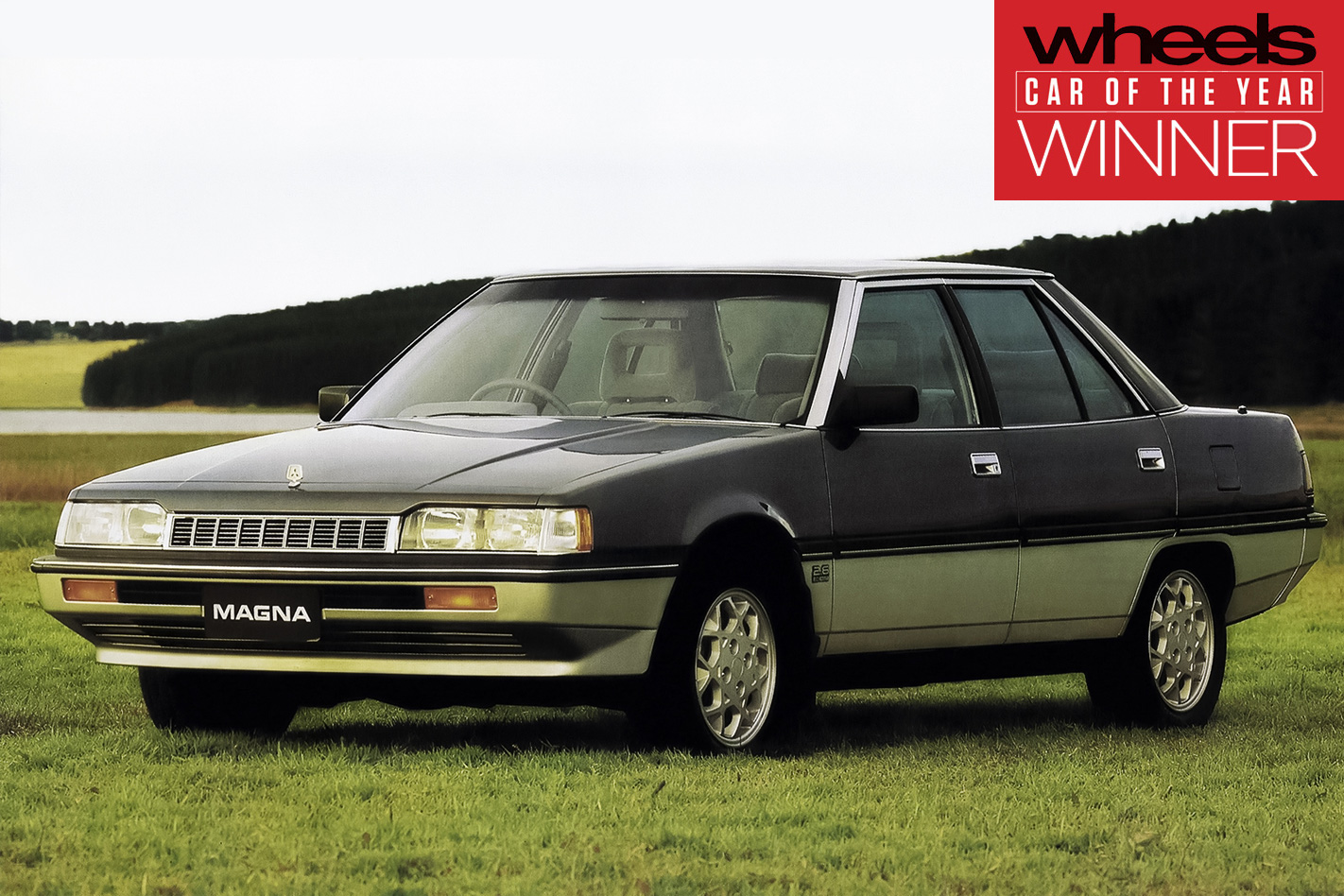
Mitsubishi made it two in a row in 1985, following the strong performance of the Nimbus with its Magna large car.
With more width spliced into the middle compared to the Sigma, the Magna was also more refined than the contemporary Falcon and Commodore offerings, and more akin to the upmarket Audi 100.
1986: Award withheld
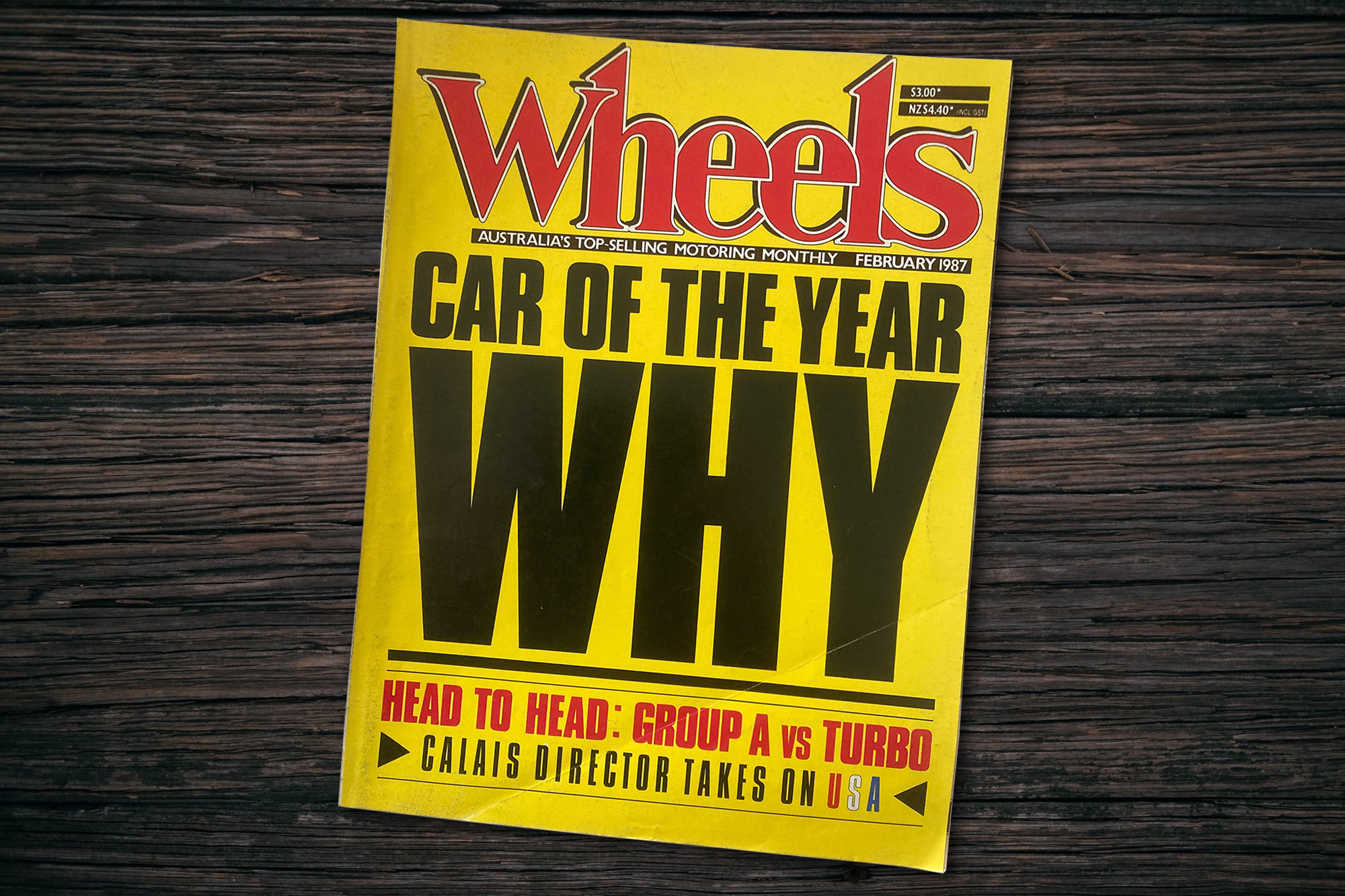
Forced to make a choice between cars including the Nissan Skyline, Saab 9000, Mercedes-Benz 300E, the soon-to-be reborn Toyota Supra, the rotary-engined Mazda RX-7 and the Honda Legend, nothing was deemed to meet Wheels’ “true spirit”.
1987: Honda Prelude 4WS
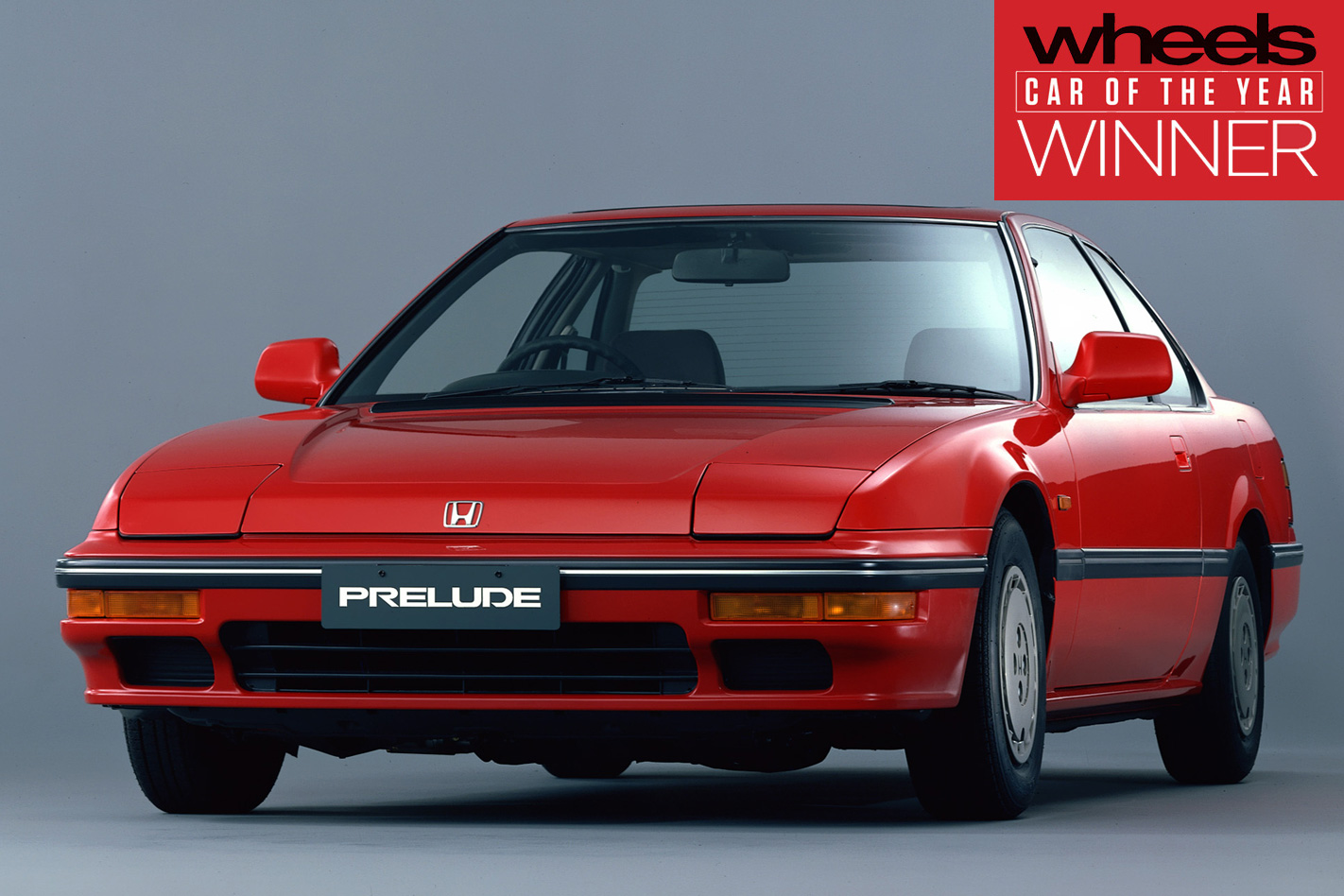
Honda’s spirit of technological innovation won it another COTY trophy, with the Prelude coupe’s high-revving four-cylinder engine, mechanical four-wheel steering, and outstanding handling hoisting it head and shoulders above rivals including the Ford Laser 4WD Turbo, BMW 735i and Toyota MR2.
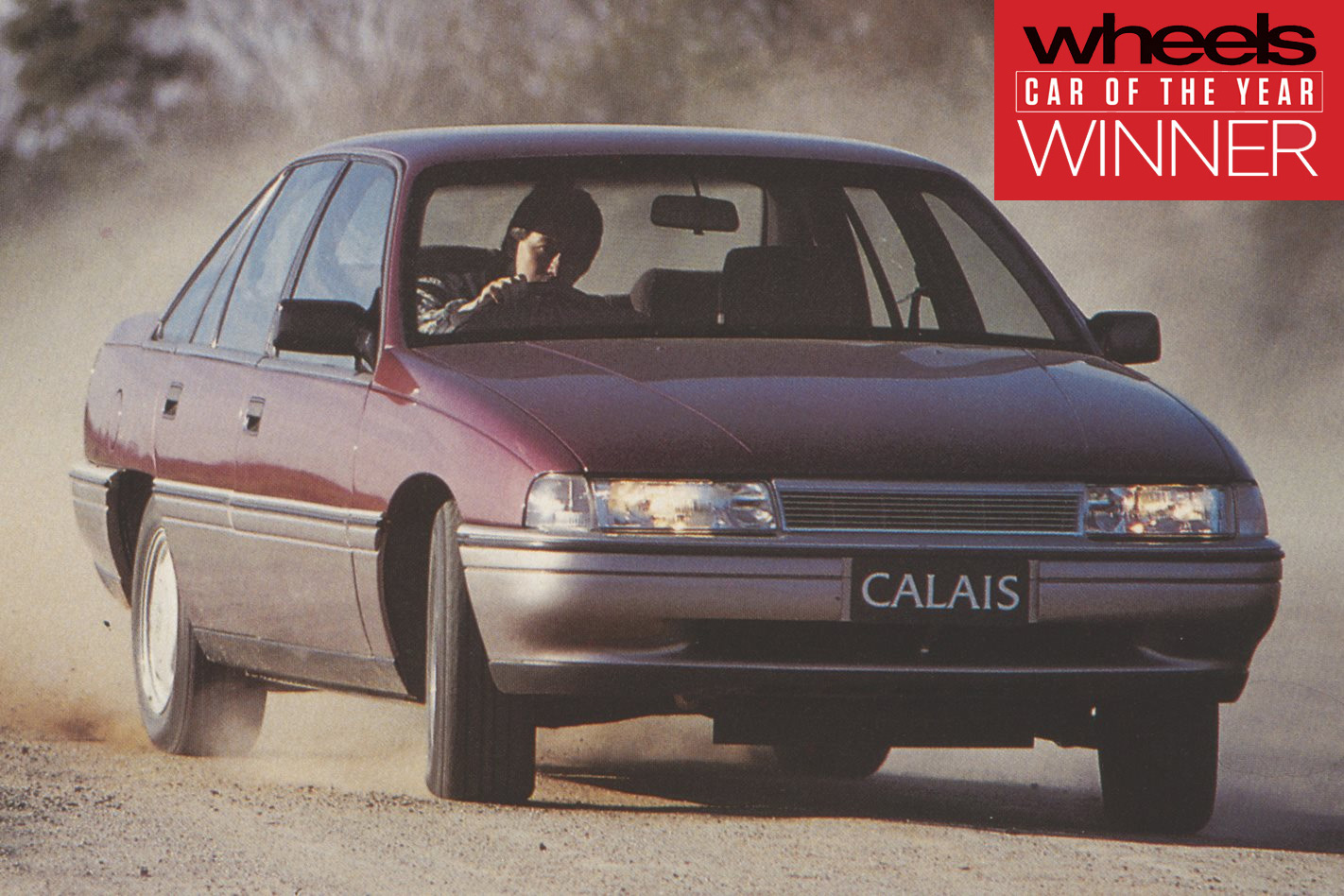
1988: Holden VN Commodore
Holden’s second-gen Commodore narrowly outplayed the BMW 5 Series and Honda Civic in ’88, thanks to its relative efficiency, strong performance and value for money.
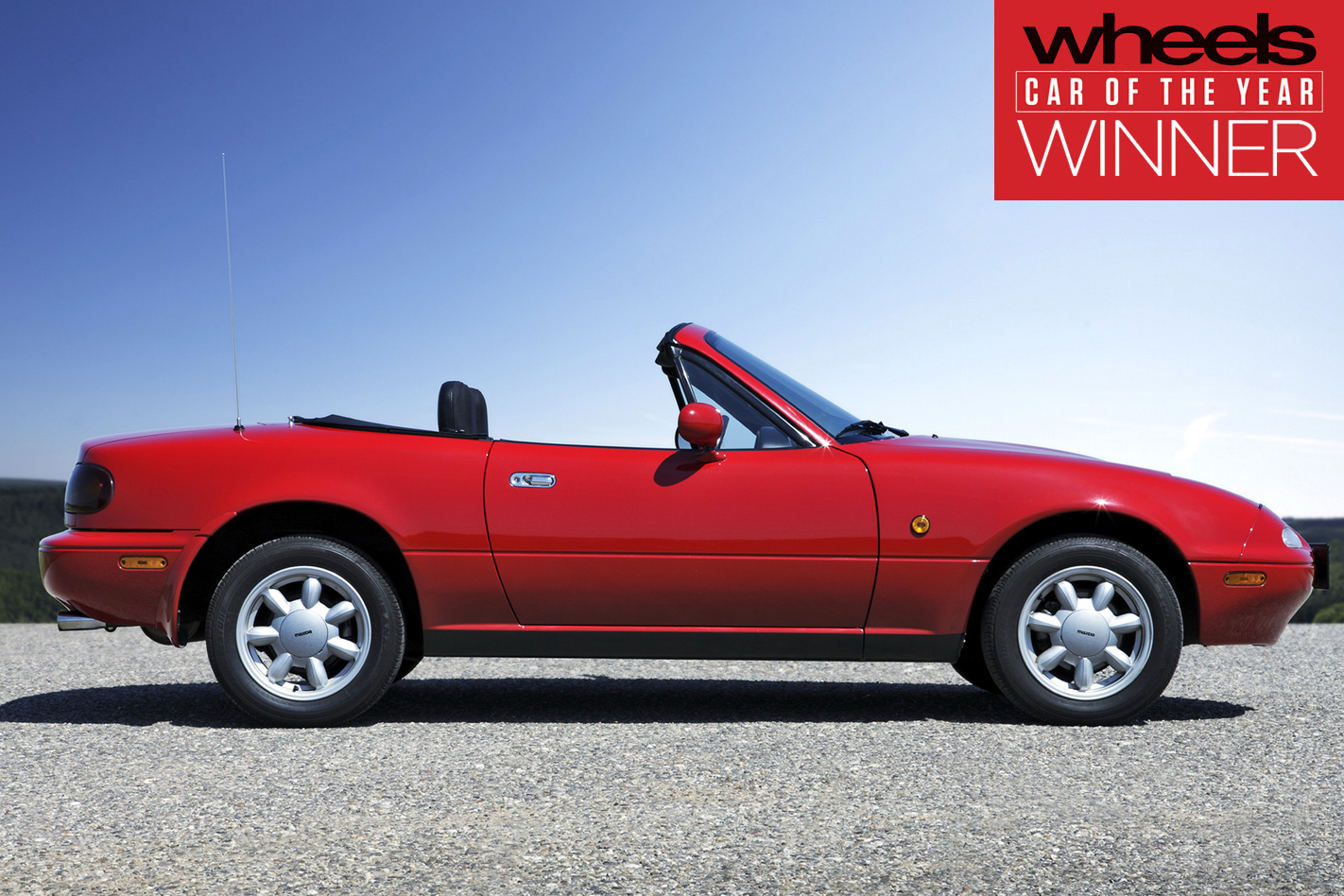
1989: Mazda NA MX-5
It was obvious from the start that Mazda was onto a good thing with the MX-5.
Old-school but not old-fashioned, the Mazda roadster combined rear-drive fun and a traditional roadster format with sound Japanese engineering and lasting driver appeal
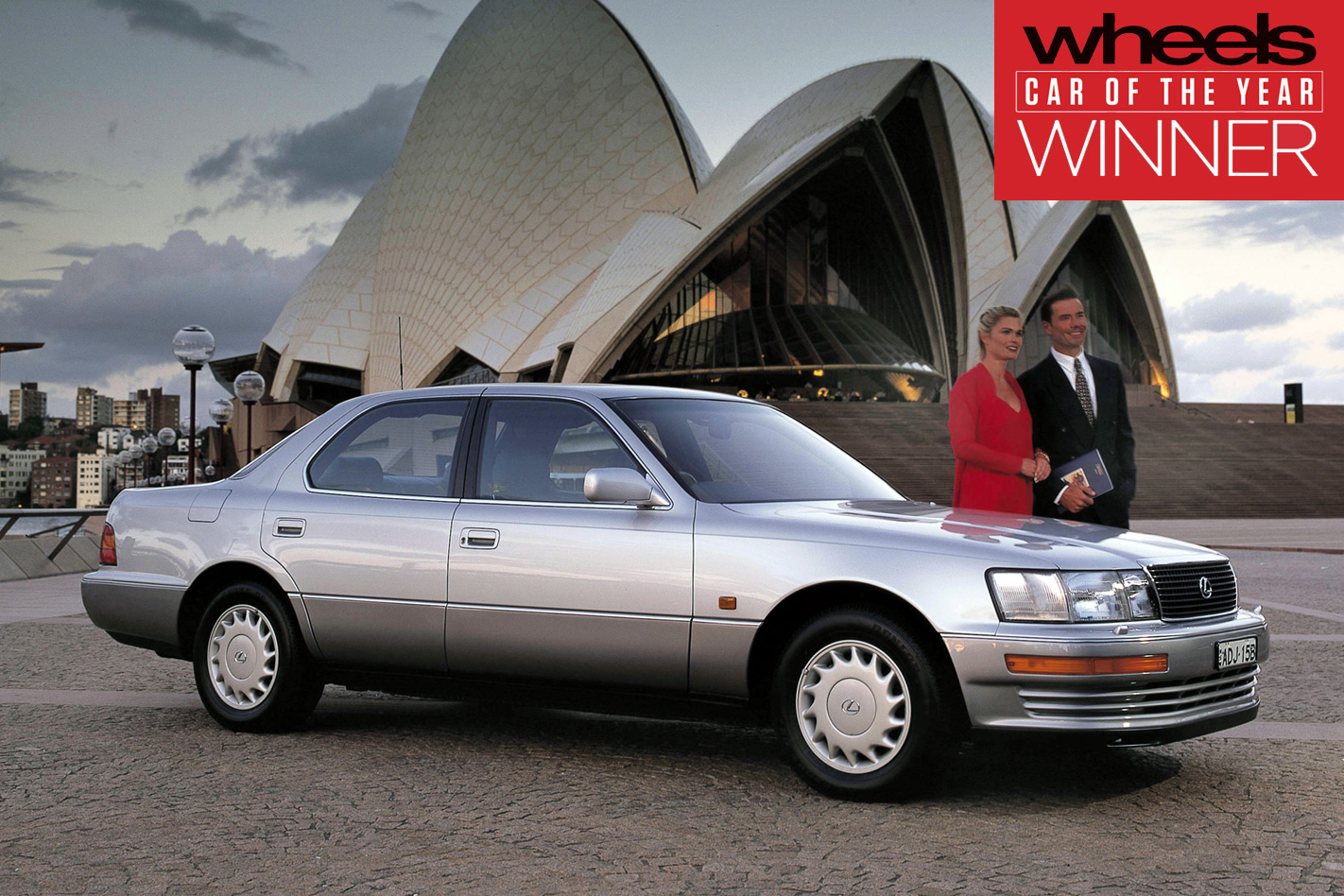
1990: Lexus LS 400
Japan’s answer to the S-Class wowed COTY judges with its peerless build quality and refinement. It put the Germans on notice, and put Lexus on the map.
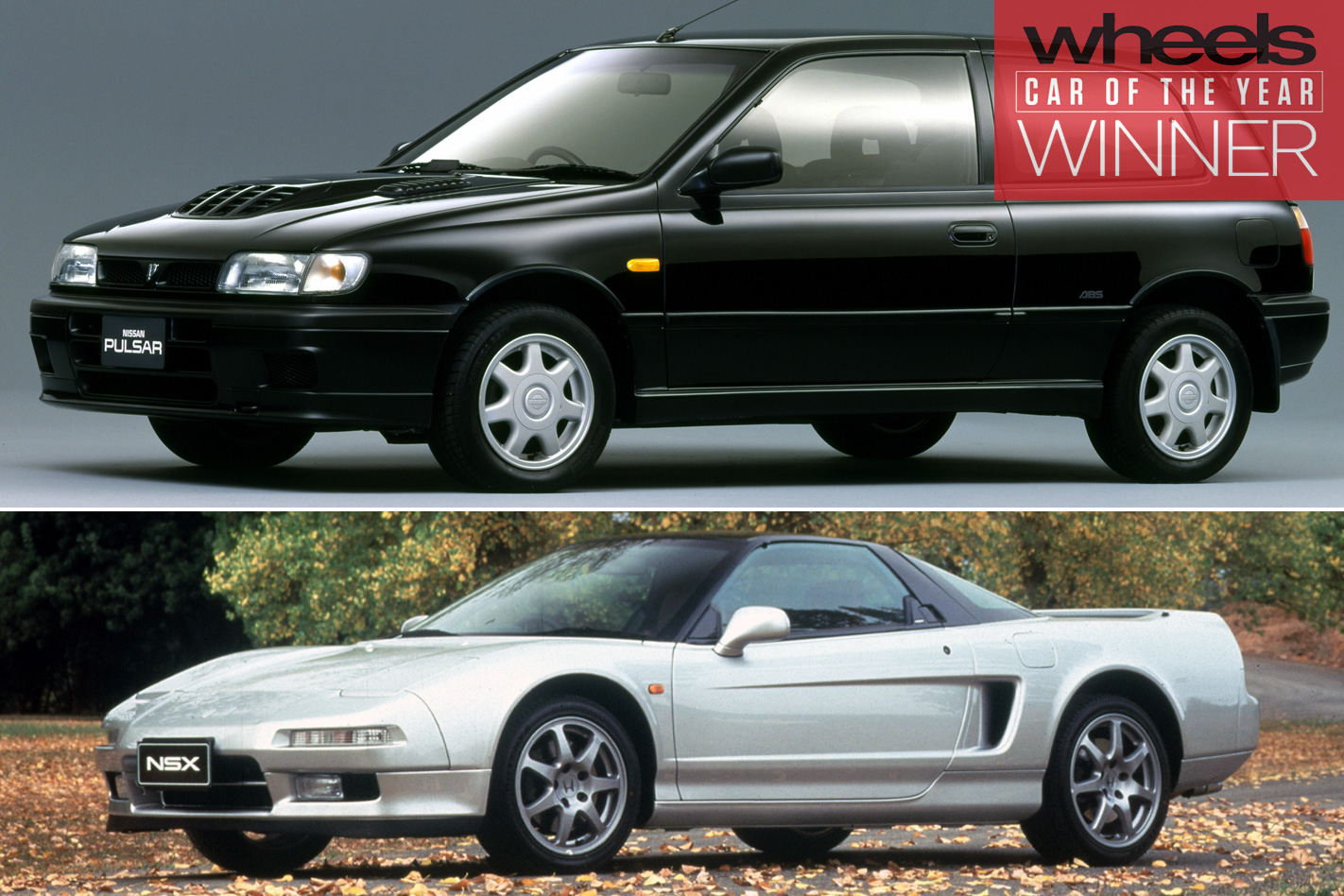
1991: Honda NSX/Nissan N14 Pulsar
Japan’s auto industry still had plenty of stunners lined up, and COTY 1991 rewarded that country – arguably at its peak – handsomely.
Why? The Honda for its combination of Ferrari-smashing pace and poise with exquisite Japanese mechanical engineering and the Pulsar for its locally tuned dynamic excellence and the strength of its value and performance – mostly due to Nissan’s legendary SR20 engine.
1992: Ford Telstar/Mazda 626
Less than a decade after they first earned a combined COTY crown, Mazda and Ford’s midsize duo managed to once again top the Wheels podium – this time in an all-new generation that introduced greater sophistication and technological innovation, such as four-wheel steering on range-toppers, a lovely 2.5-litre V6 option, excellent built quality and great dynamics.
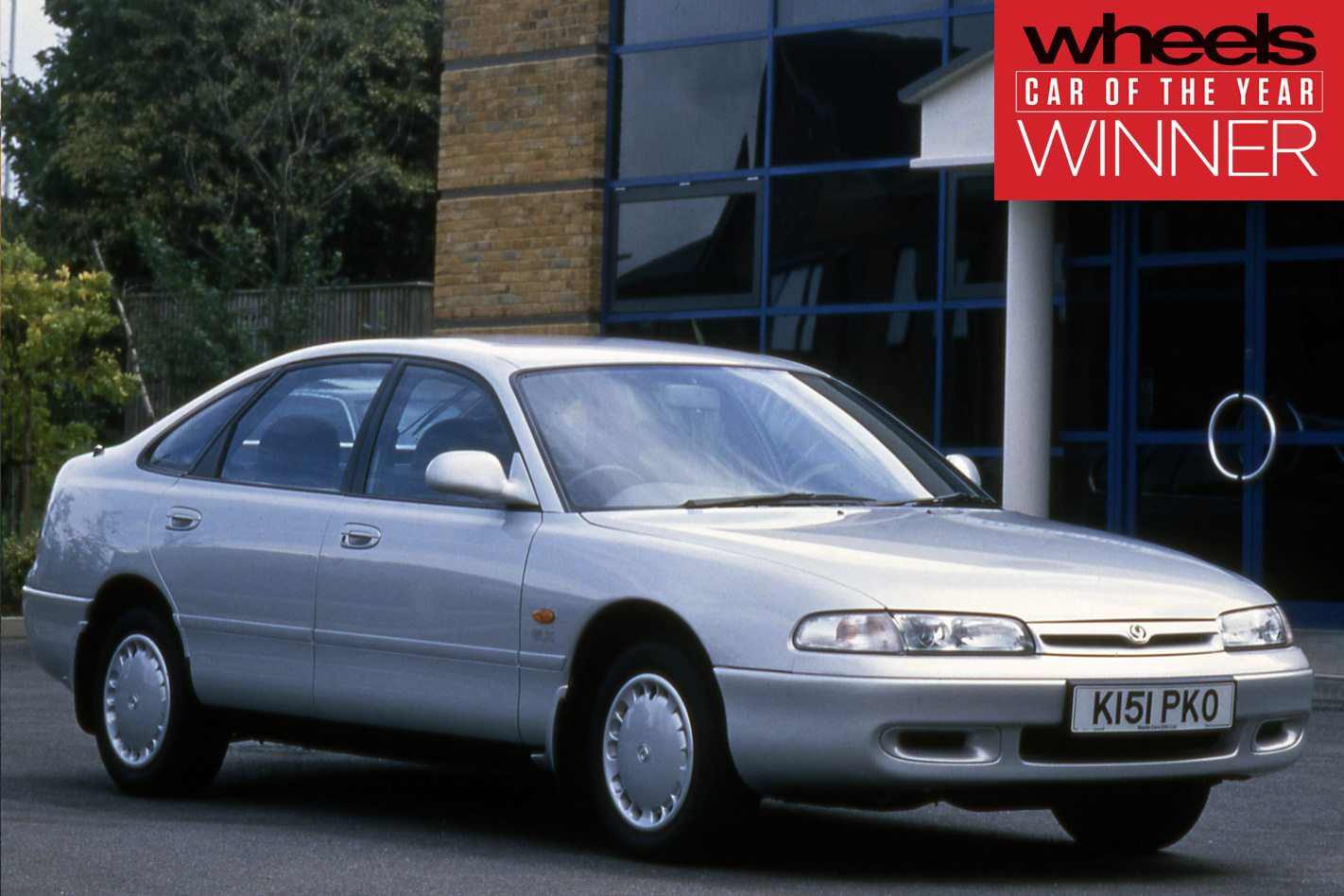
1993: Holden VR Commodore
Essentially an extensive re-engineering of the VN, the VR Commodore brought more modern furnishings, a driver’s airbag, a broader front track and independent rear suspension to Holden’s big-selling family sedan.
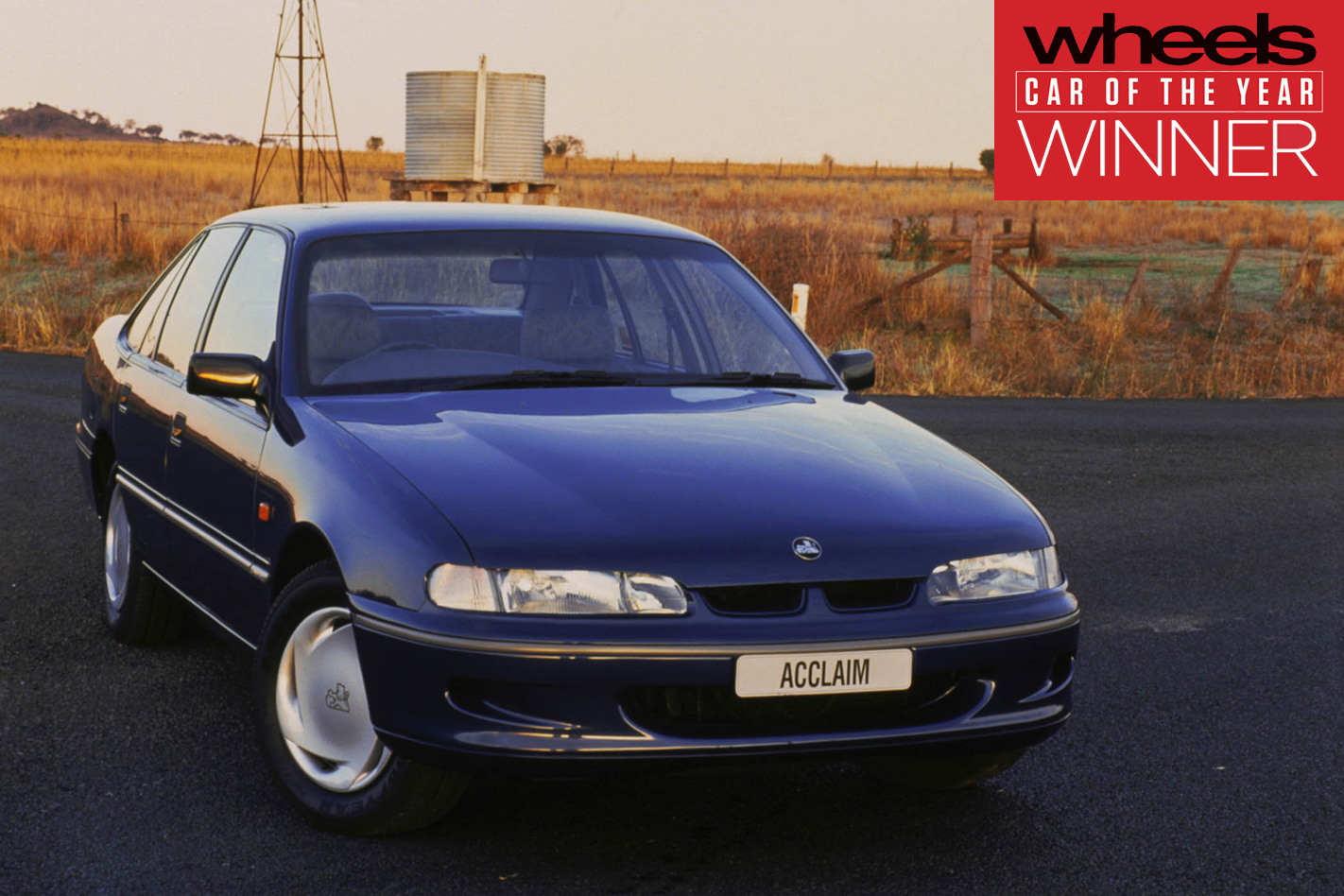
1994: Subaru Liberty
Subaru’s second-generation Liberty beat Nissan’s 200SX and the Mazda 323 Astina thanks to strong value for money, safety gear, refinement and quality.
Its likeable range of flat-fours also proved popular among COTY judges, while AWD gave it a unique point of difference against its peers.
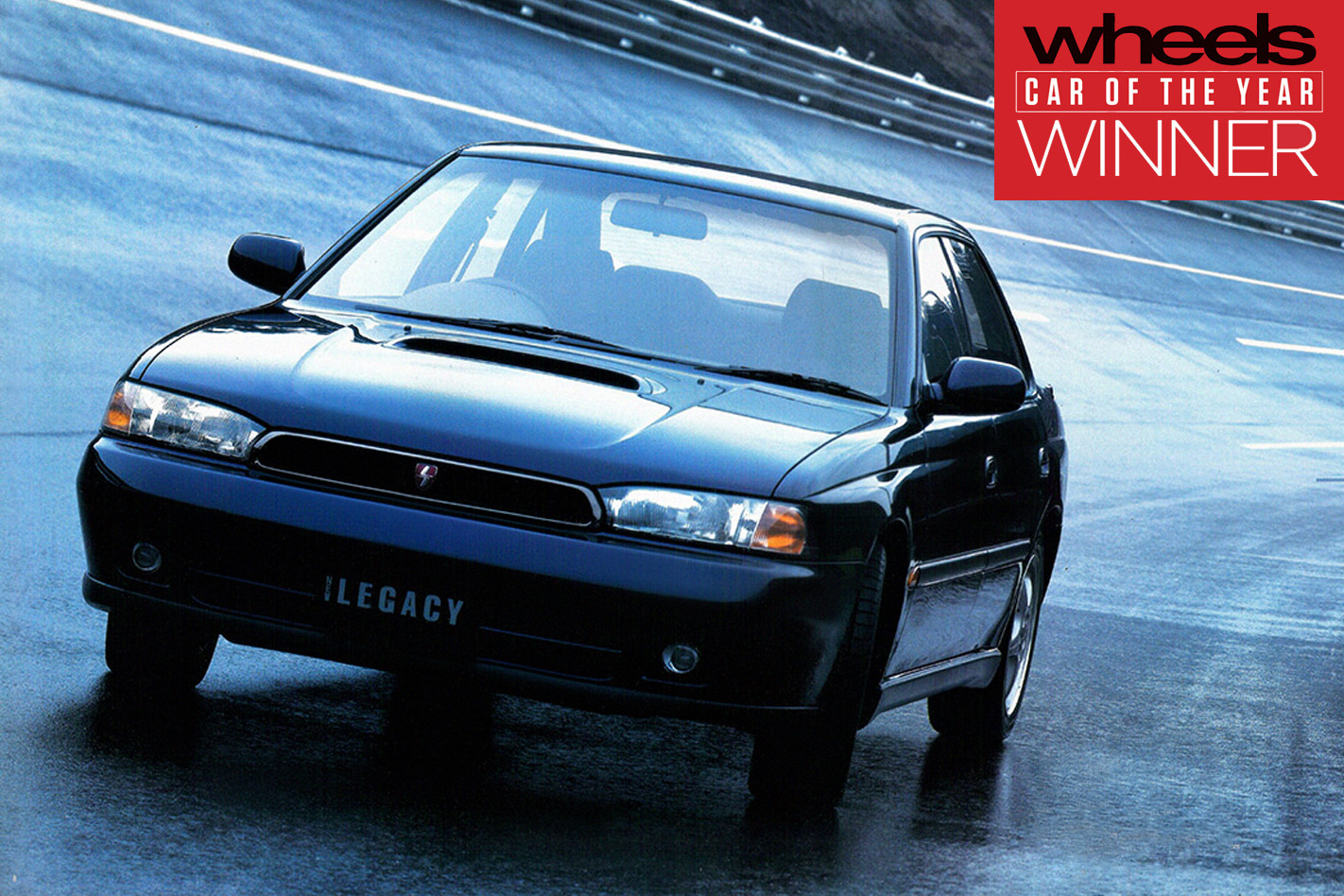
1995: Honda Odyssey
Following in the Nimbus’ footsteps was Honda’s three-row people carrier, which once again proved that car-like handling need not be incompatible with an MPV body style. Honda’s reputation for quality engineering also shone through once more.
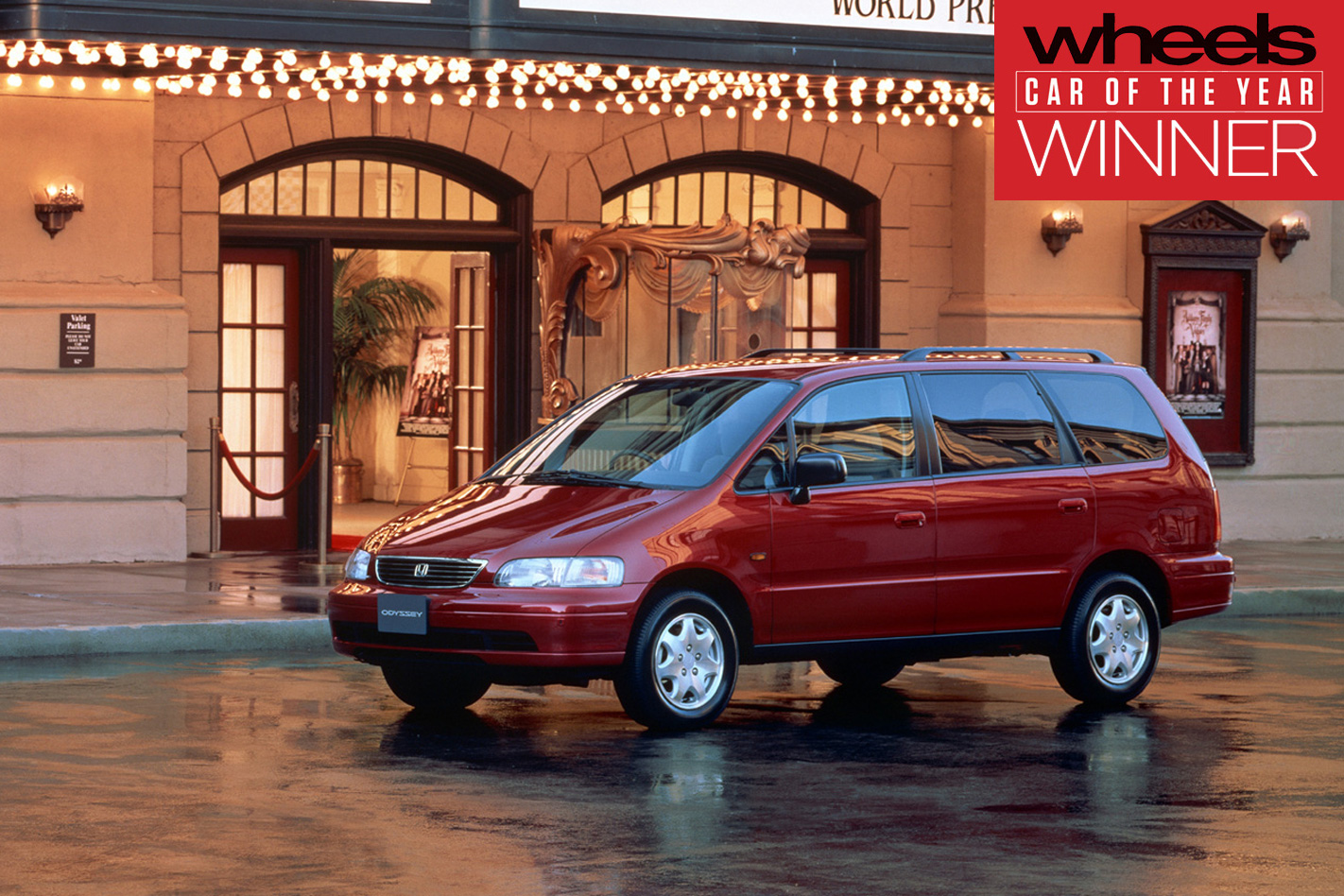
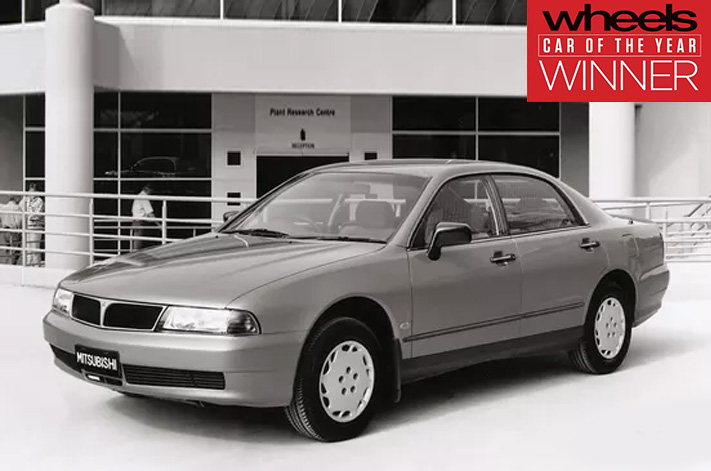
1996: Mitsubishi TE Magna
In a time when locally-built large cars were king, taking on the dominant Ford and Holden was a perilous undertaking.
Thankfully for Mitsubishi, its Aussie-made Magna had a range of sweet (and efficient) drivetrains, superior refinement and frameless-doored elegance on its side.
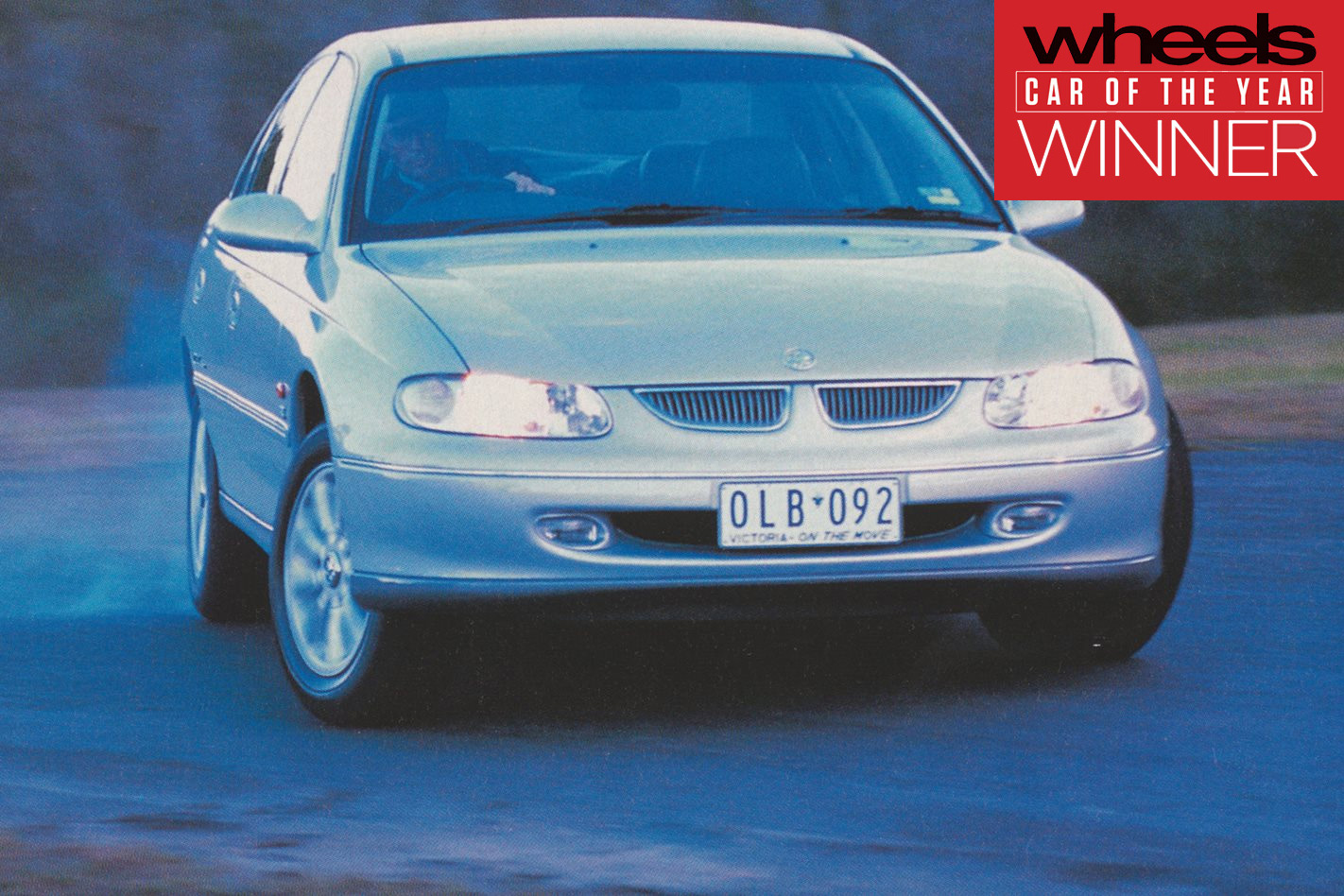
1997: Holden VT Commodore
The third-gen Commo advanced the nameplate further.
Core architecture was new (though still borrowed from Opel), and range-wide IRS, extra airbags, more equipment and improved value-for-money gave the VT an edge over the competition.
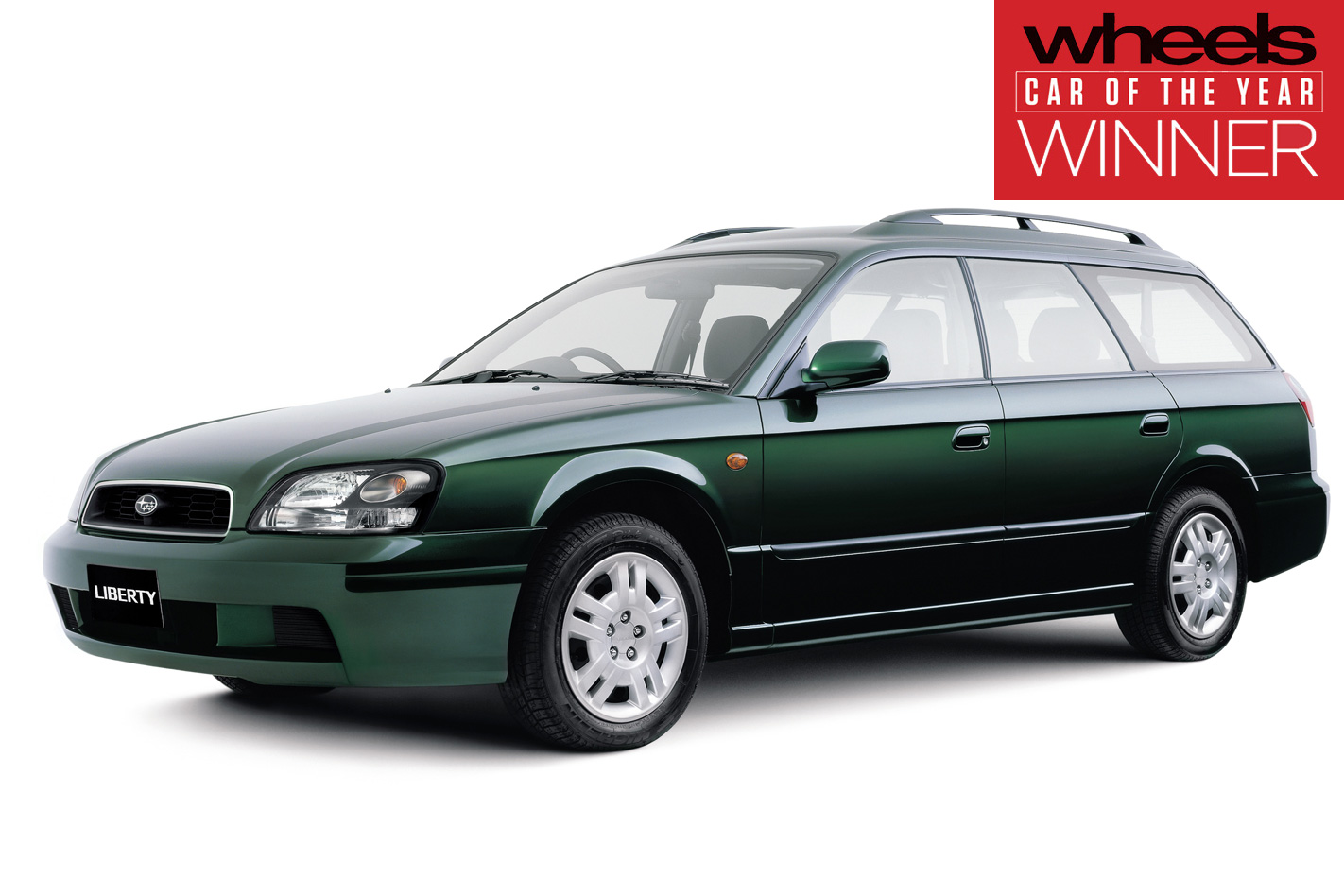
1998: Subaru Liberty Wagon
Another controversial win, given the Liberty wagon not only knocked out Porsche’s first all-new 911 in three and a half decades, but also the NB MX-5, Benz’s innovative A-Class and the AU Falcon.
However, as with the previous-gen Liberty, consistency and balance gave Subaru another COTY feather to tuck into is cap.
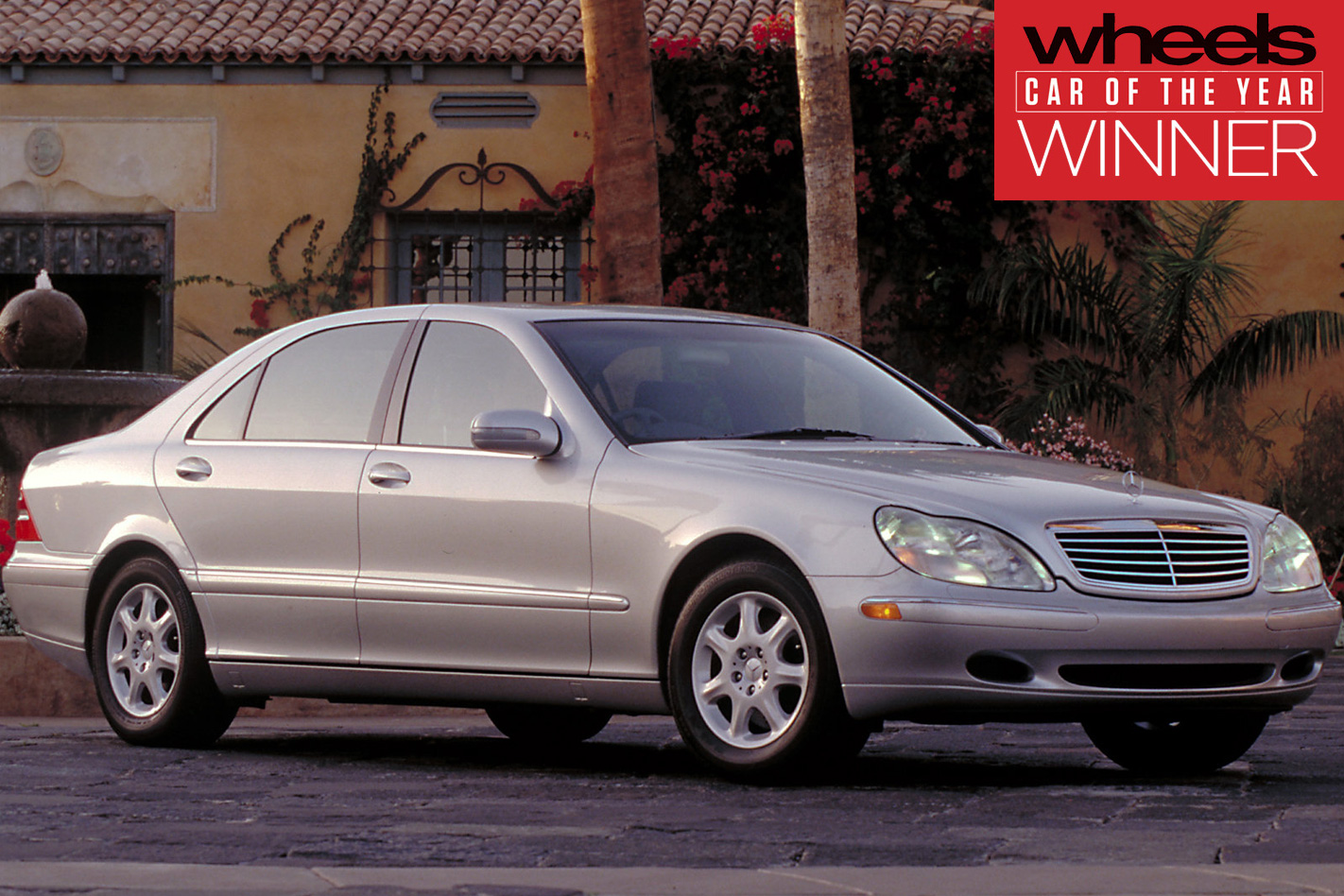
1999: Mercedes-Benz S-Class
Technological advancement was what gave the W220 S-Class, as expensive and outsized as it was, its second Wheels COTY trophy.
Its many computers communicated via fibre optics, it bristled with airbags and boasted double-glazed glass, yet weighed hundreds of kilos less than its predecessor. A flagship in every sense.
2000: Subaru Impreza
From the humble GX grade to the muscular WRX, the second-gen Impreza had a lot to offer Australian motorists.
All-weather grip, solid Japanese build quality and, at the top end, giant-shaming performance were all key Impreza attributes.
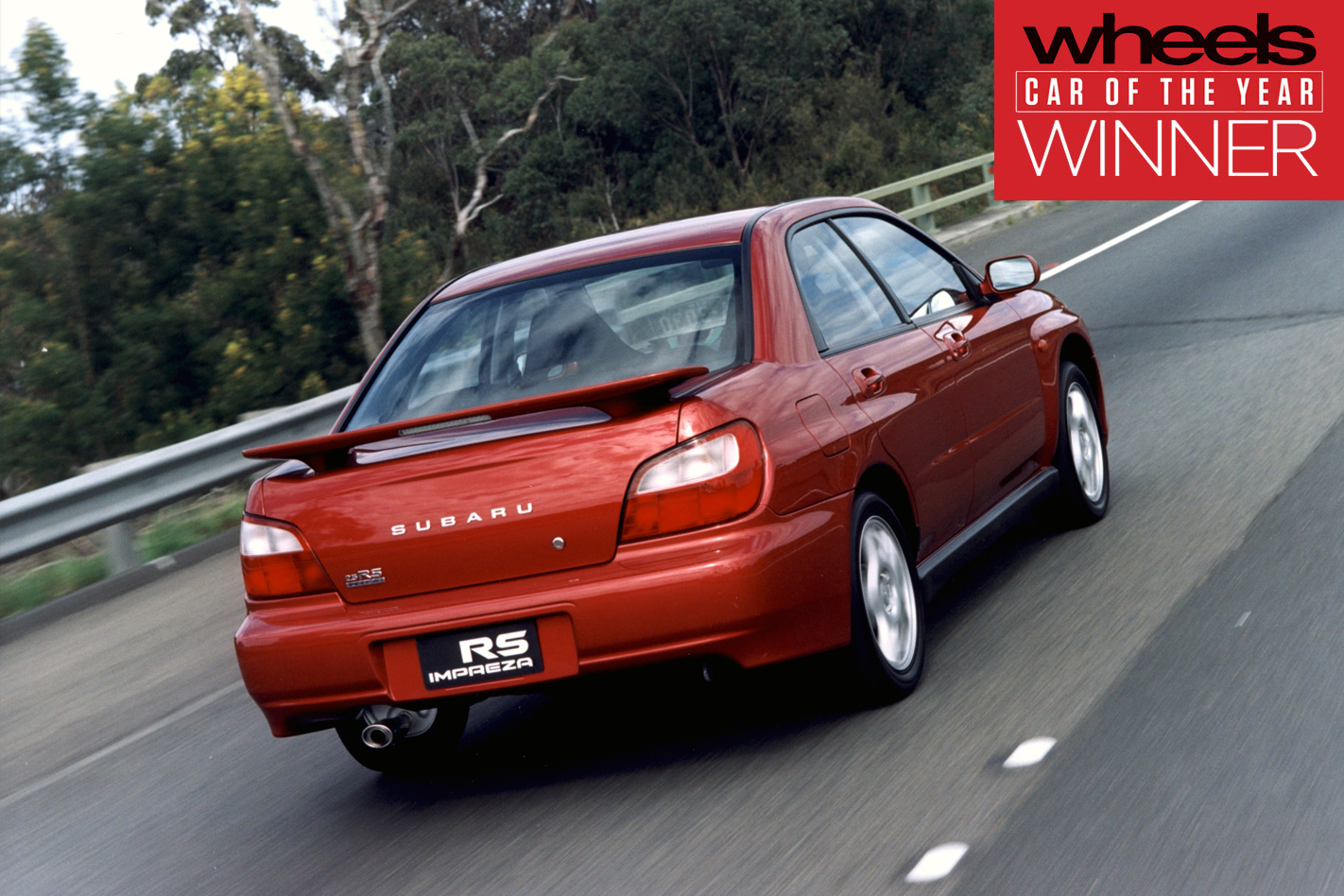
2001: Holden XC Barina
Yep, the Barina was once a COTY dux. Combining segment-leading dynamics, European design (it was, after all, an Opel Corsa at heart) and an affordable price point, the Barina took down more expensive scalps.
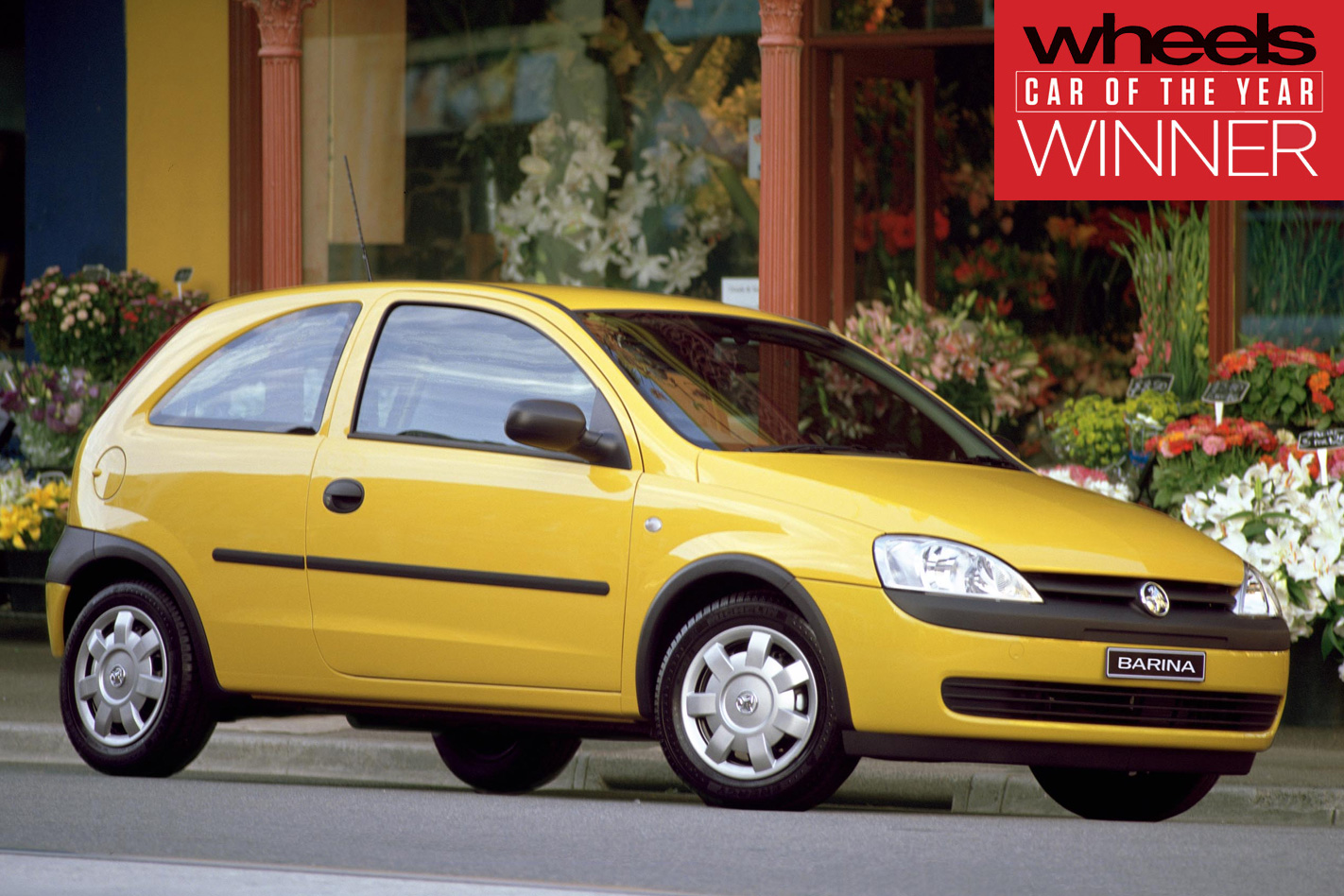
2002: Ford BA Falcon
You might know it as the car that birthed the mighty Barra turbo 4.0, but back then we simply knew it as Australia’s best car of ’02, and a substantial improvement over the AU.
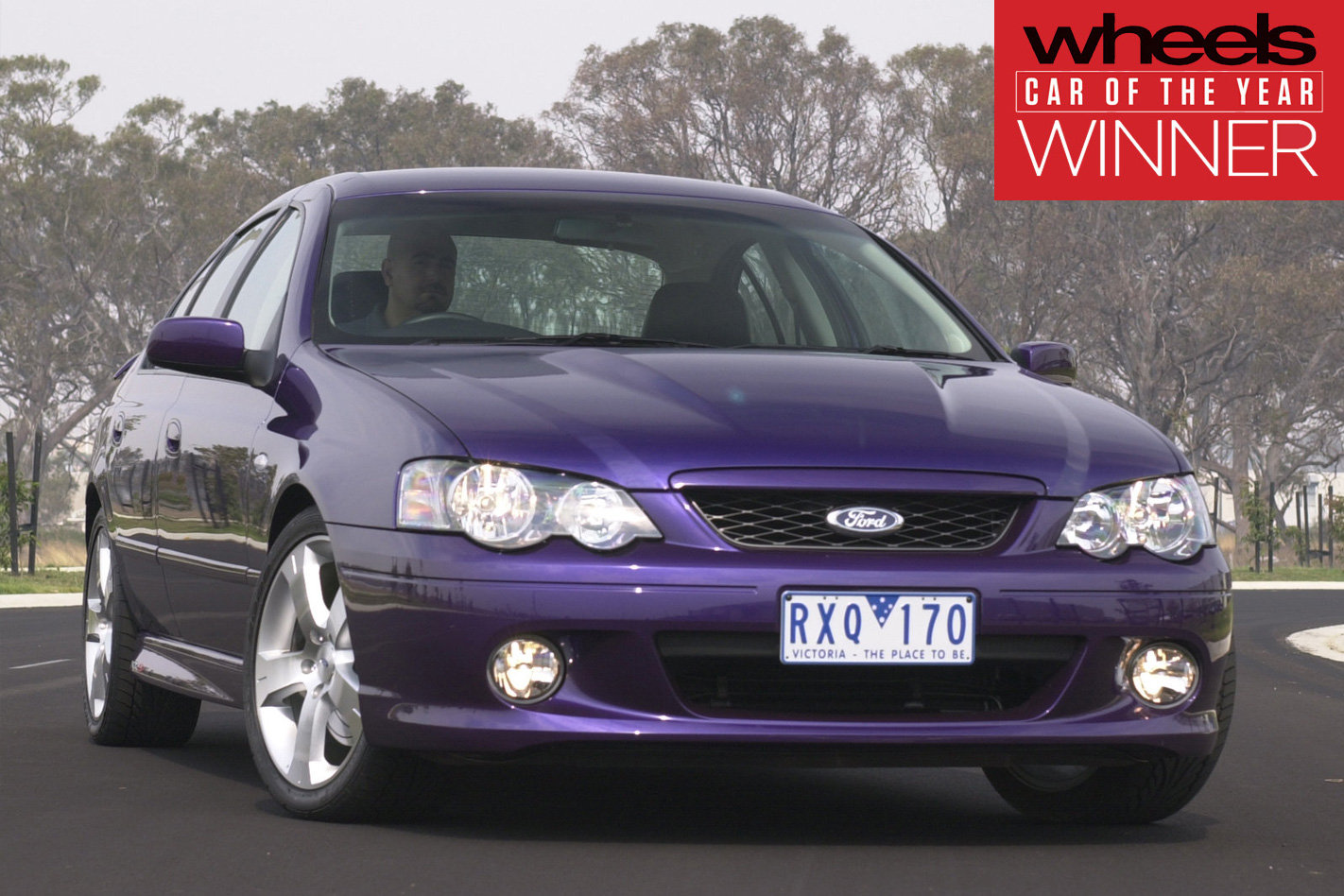
2003: Mazda RX-8
Mazda’s rotary redux subtracted a pair of turbos from the RX-7 and added two more seats and a set of suicide rear doors creating one of the most unique – yet still engaging – sports cars.
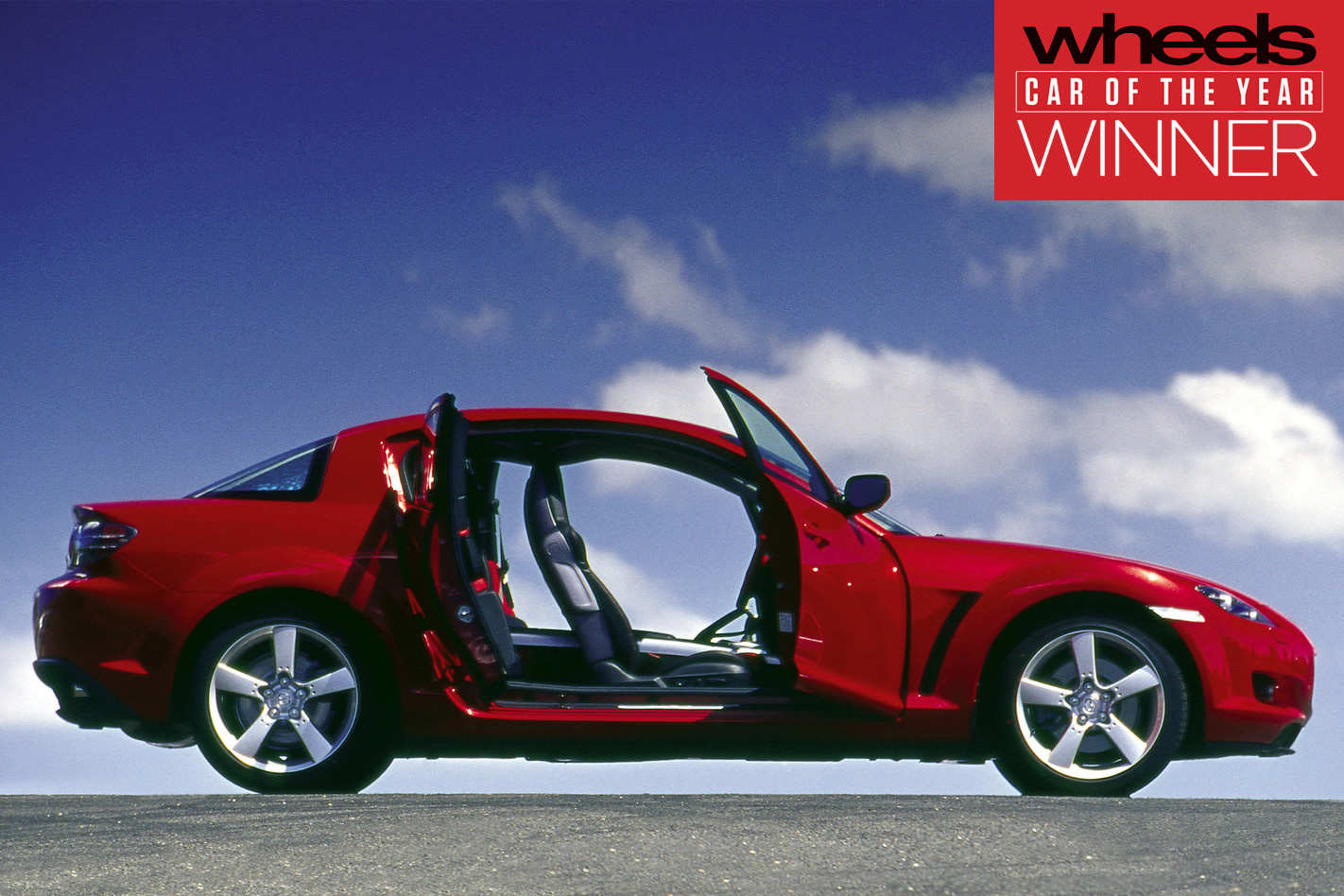
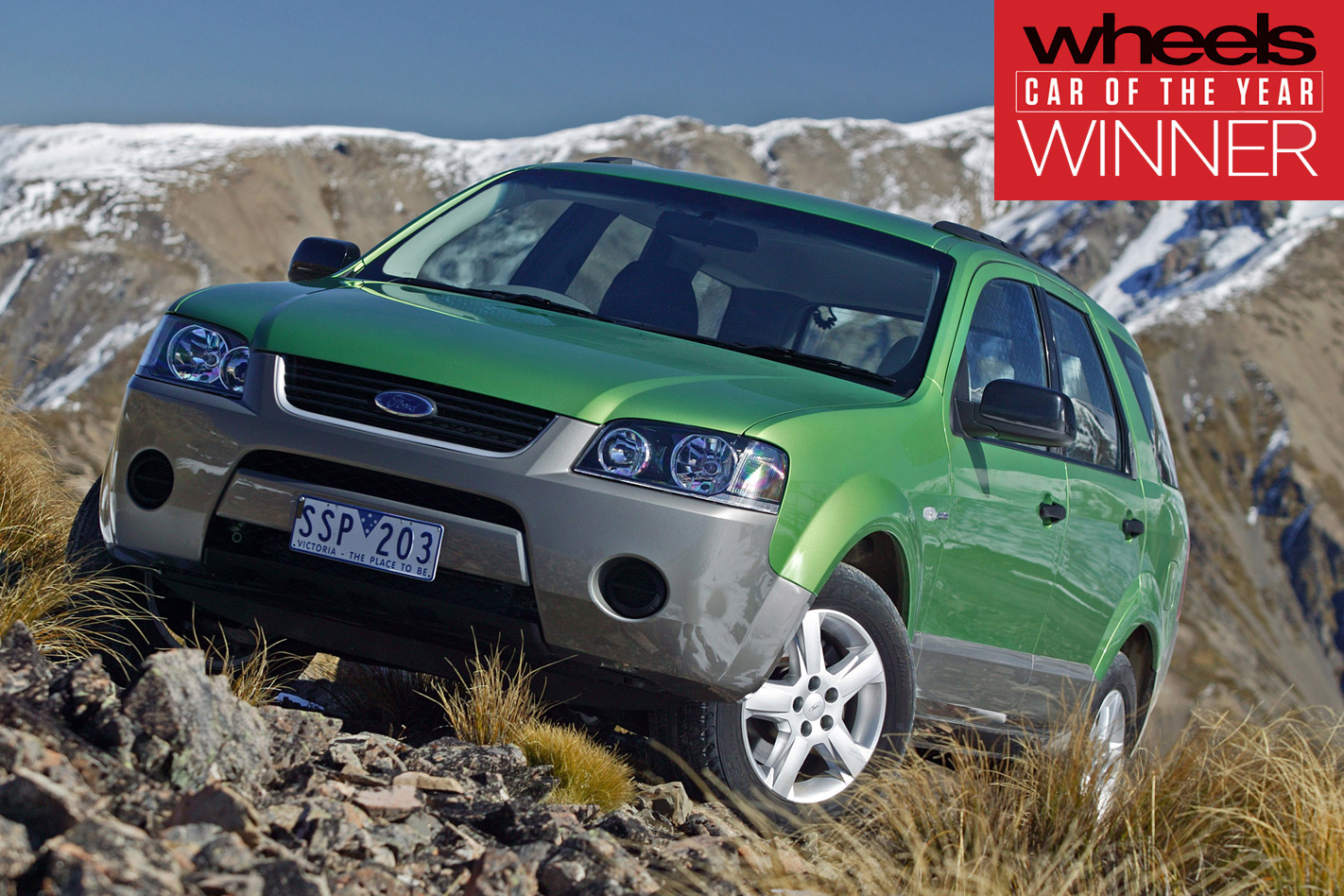
2004: Ford Territory
Shock! The first SUV to win COTY was a signal to consumers that high-riding family wagons didn’t have to handle like crap.
Buyers were spoiled for choice too, with RWD or AWD and five or seven seats all on the menu. Clever built-in storage options and excellent seat comfort also made it a perfect family whip for its time.
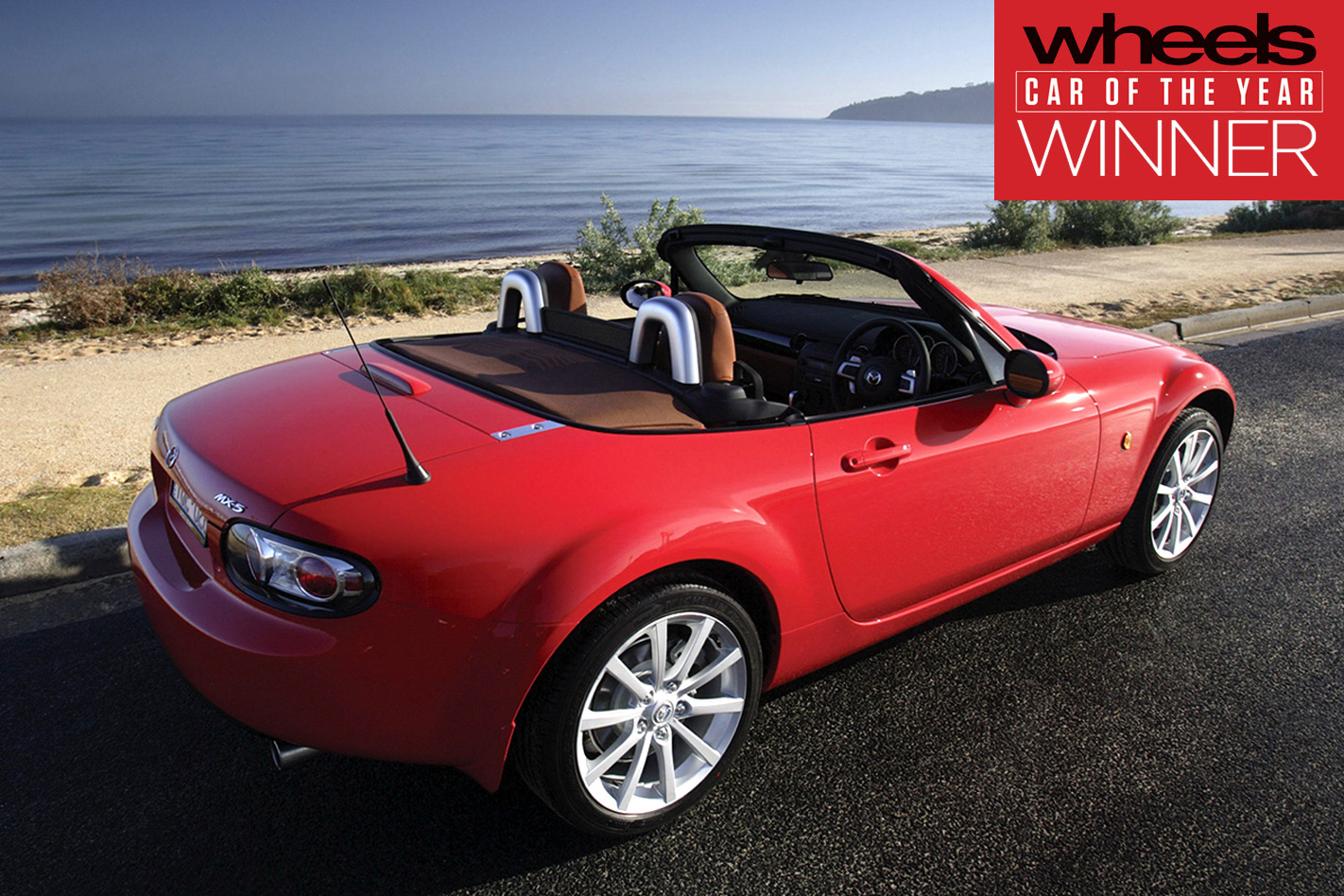
2005: Mazda NC MX-5
Despite some generational bloating, Mazda’s decision to stick to the NA MX-5’s values of sporting purity resulted in yet another win for the company’s drop-top.
NC was a far more complete car than the NB that came before it – curiously the only MX-5 not to win a Wheels COTY gong.
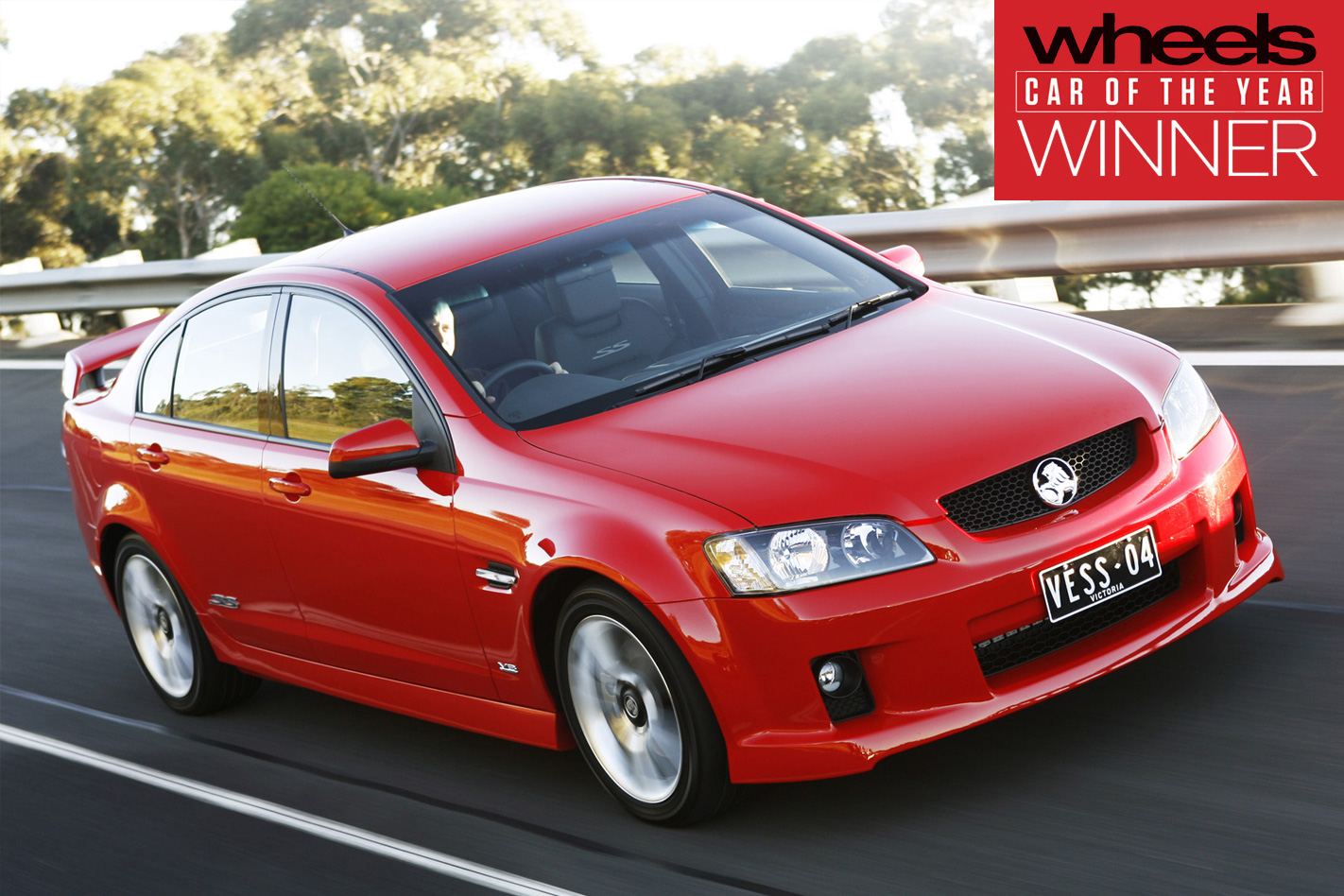
2006: Holden VE Commodore
Holden’s billion-dollar baby was the first truly ridgy-didge Australian Commodore since Holden took up the nameplate. It also happened to be a truly world-class large car.
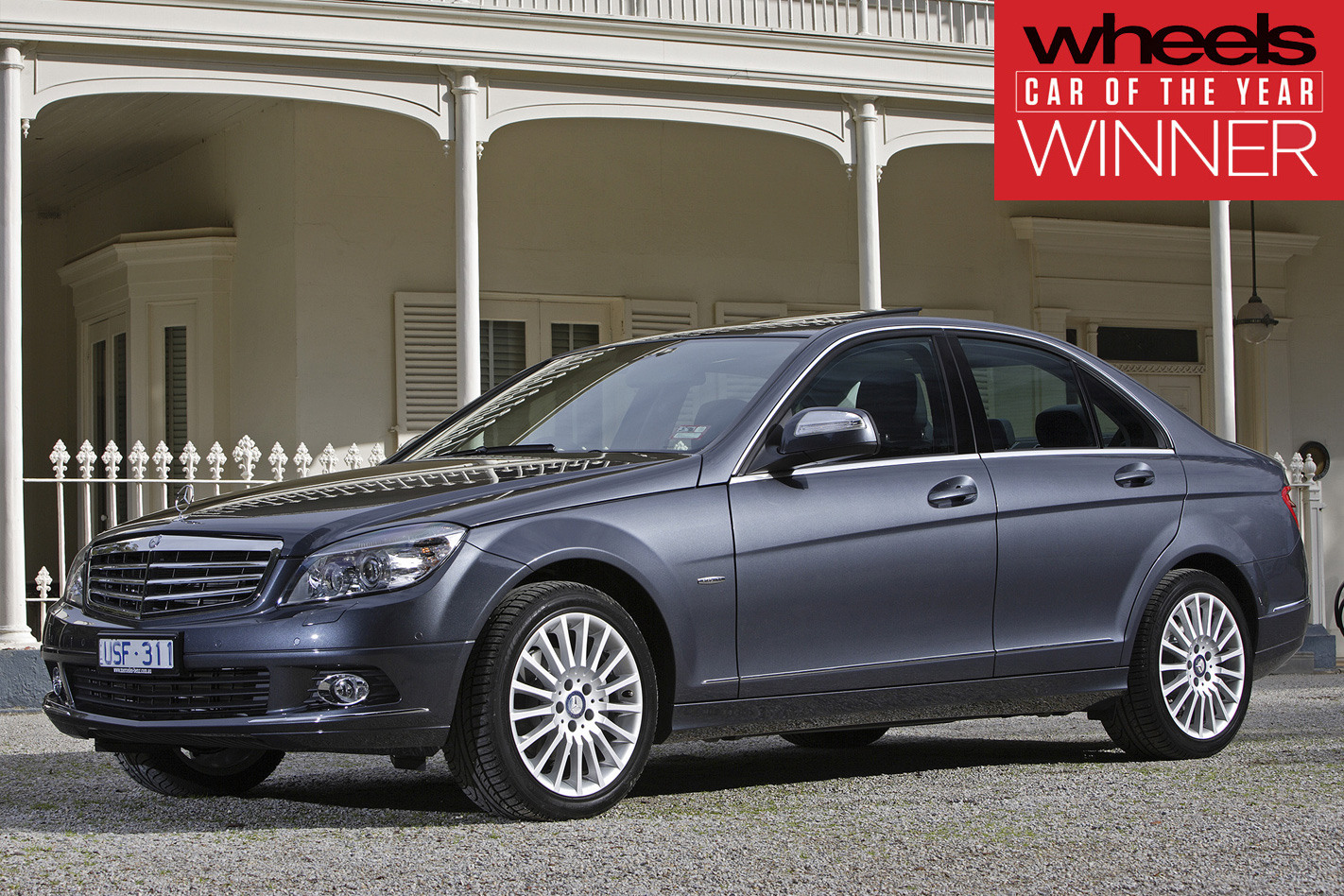
2007: Mercedes-Benz C-Class
Efficiency, safety credentials and outstanding handling saw the C-Class become the first non-S-Class Benz to ace Wheels Car Of The Year.
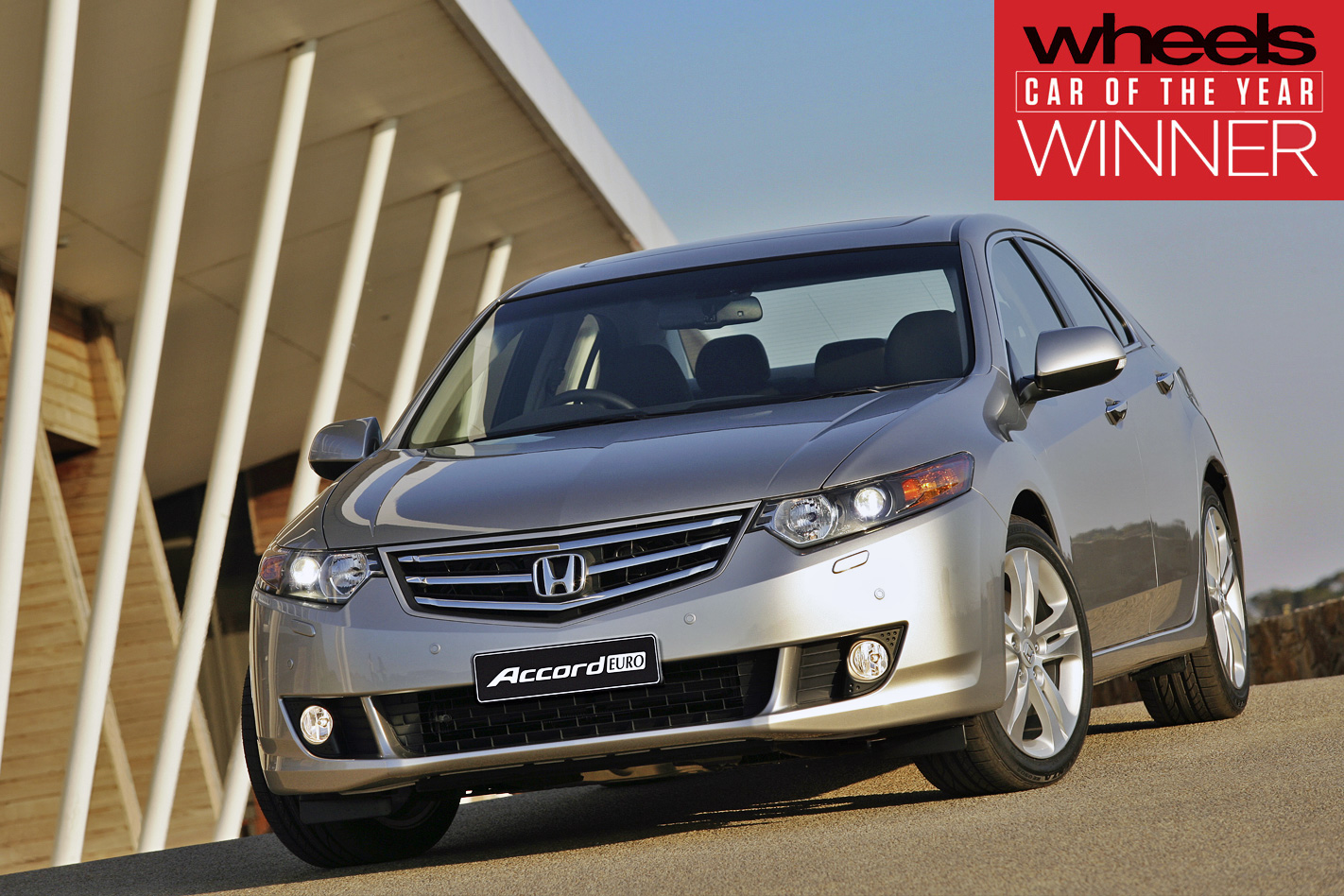
2008: Honda Accord Euro
Front-drive midsize sedans aren’t exactly synonymous with “driving passion”, but the Accord Euro was the car that proved mainstream three-box front-drivers could sport plenty of charm and soul.
Especially good fun when you opted for the snickety six-speed manual trans.
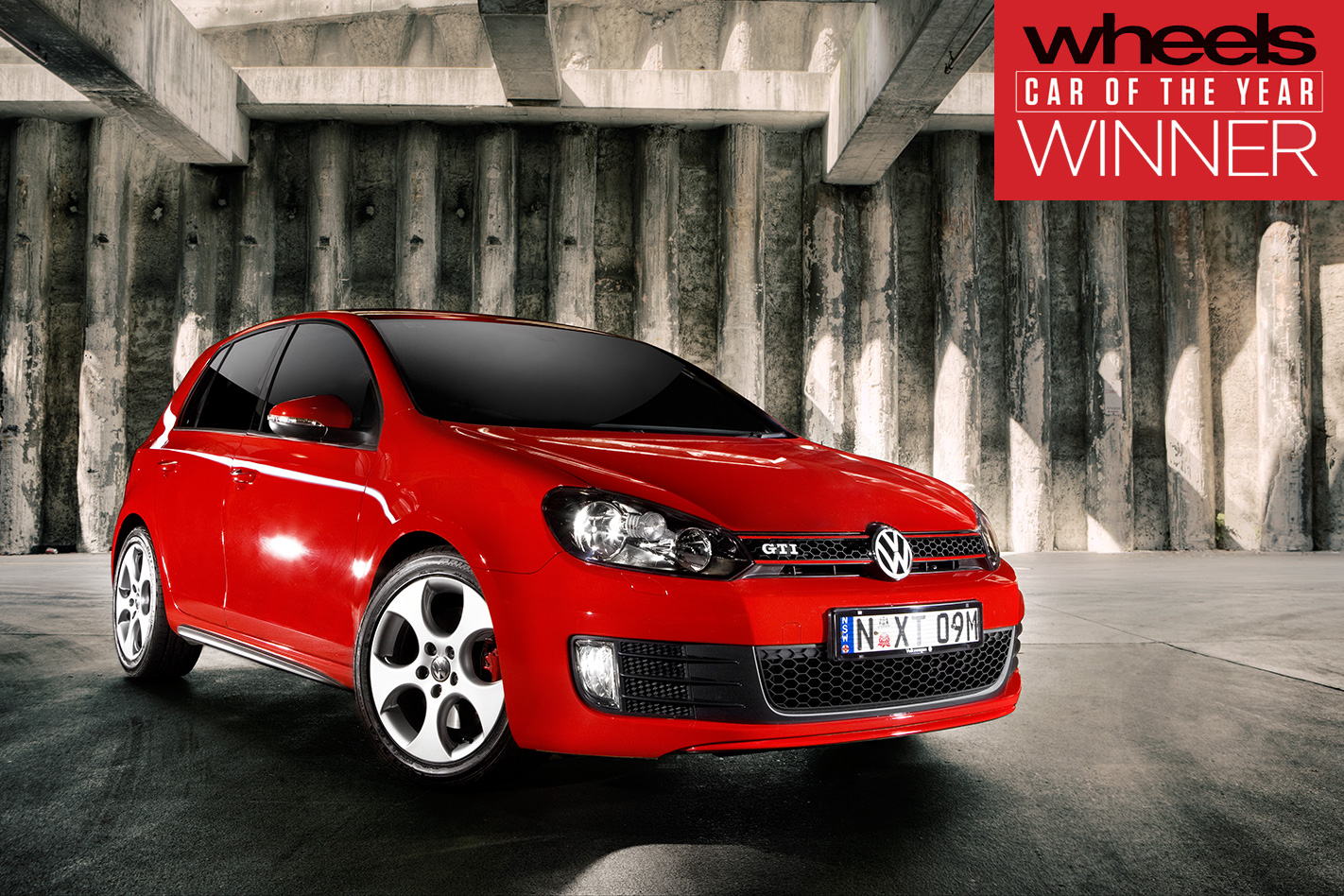
2009: Volkswagen Golf VI
The sixth-gen Golf elevated Volkswagen’s small hatch to near-premium status, while also offering one of the broadest local line-ups in the nameplate’s history.
With class-leading refinement, handling and comfort, the Golf VI’s COTY win was a deserved one.
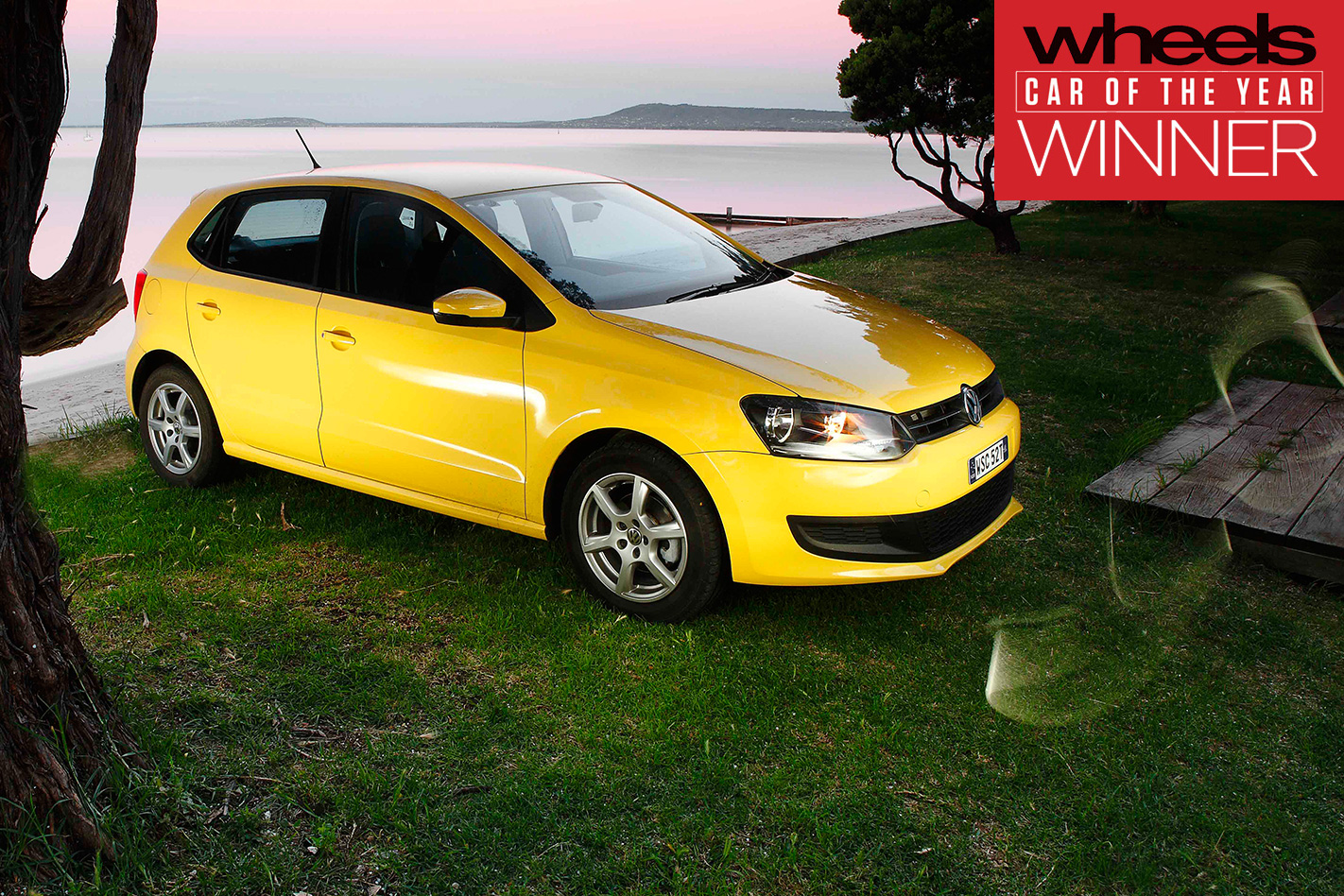
2010: Volkswagen Polo
The pint-sized Polo delivered Volkswagen two consecutive COTY victories, but given its high-end feel that was very much at odds with the rest of its segment (but in a good way), that was no surprise.
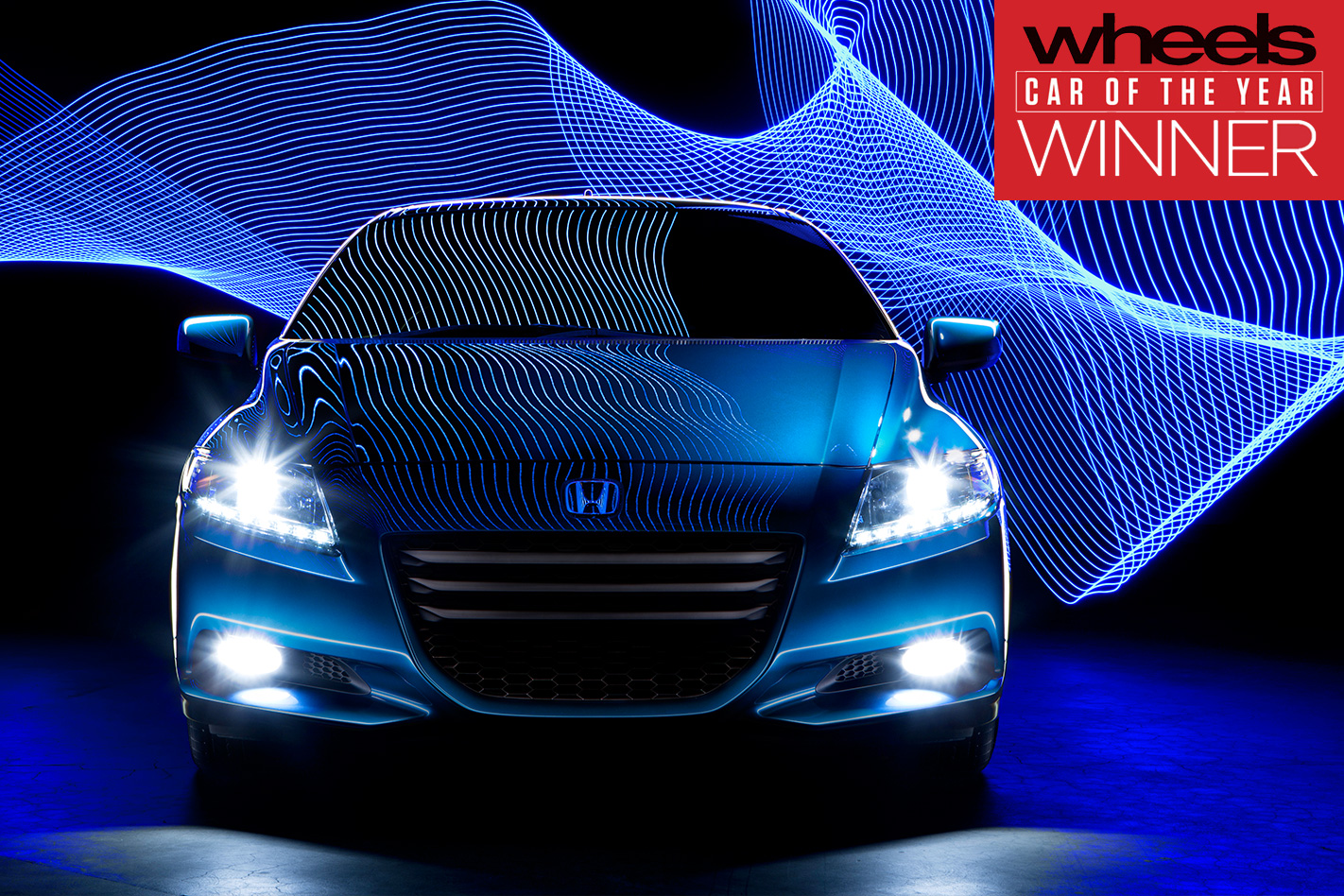
2011: Honda CR-Z
A controversial win, considering the CR-Z was the first hybrid COTY champ – and the only one with a manual gearbox – as well as a niche performance car that, at face value, wasn’t terribly great value for money.
Even so, smile-inducing dynamics and the fact that it wasn’t a boring hybrid allowed Honda to claim its sixth COTY trophy.
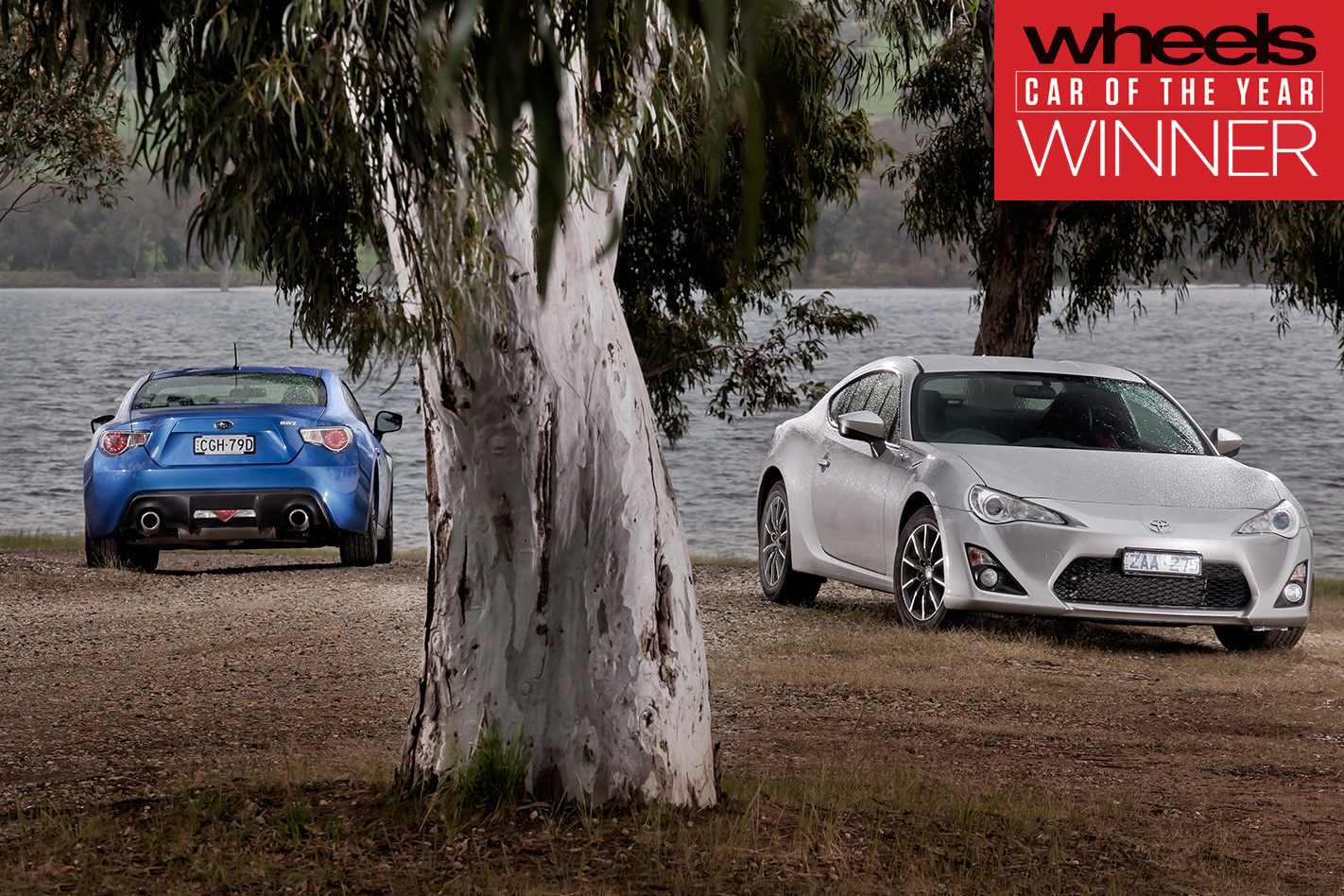
2012: Toyota 86/Subaru BRZ
So far the only Toyota to notch up a COTY crown – surprising, given the brand’s history and popularity in this country – the 86, and its Subaru-badged twin, reminded us that the joy of driving was best experienced in a lightweight, rear-drive platform.
Stunning pricing also democratised the sports car, and made the 86/BRZ a fast favourite.
2013: Volkswagen Golf VII
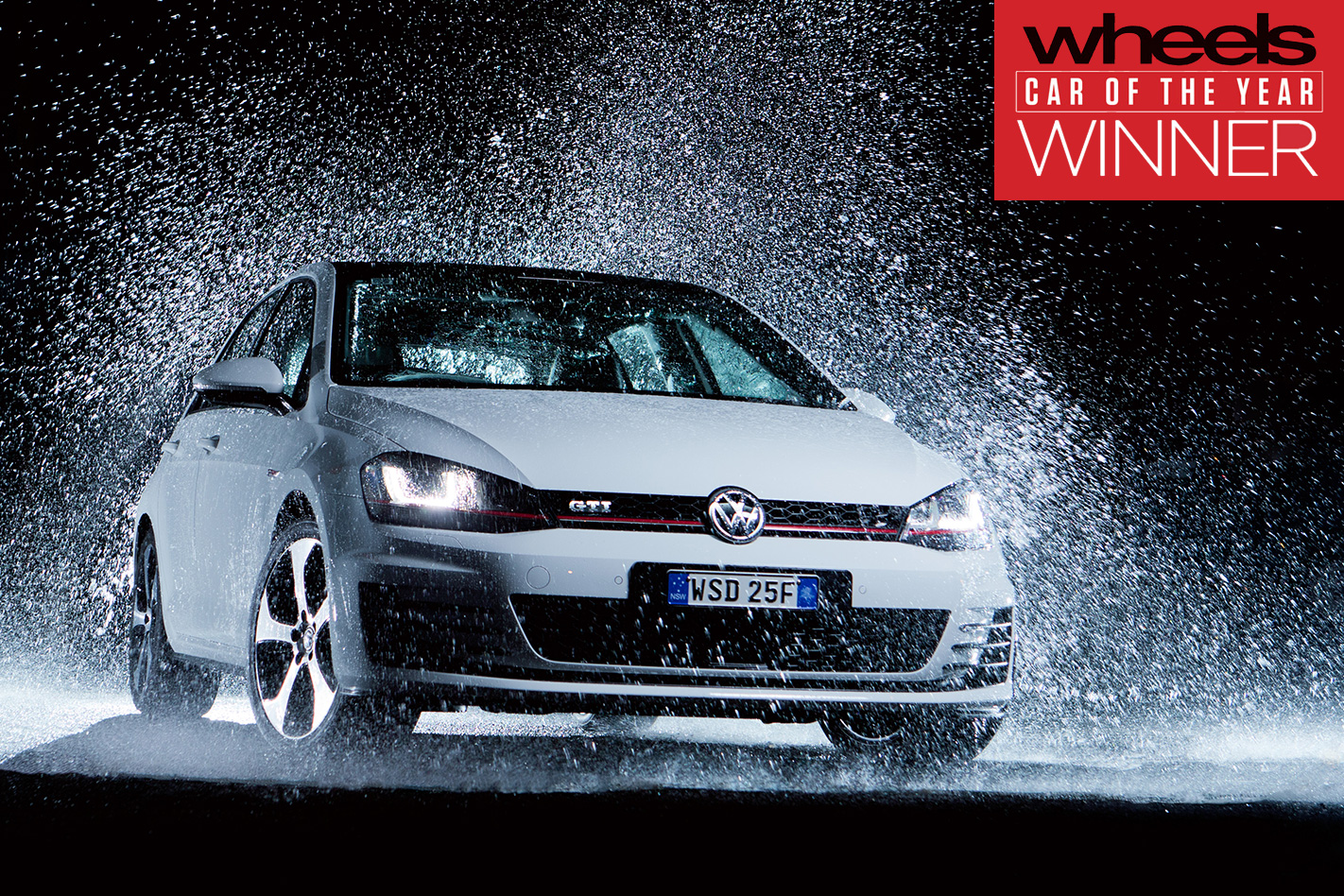
Four years after nabbing a COTY win with the Golf VI, Volkswagen was back in fine form with the Golf VII.
The same quality fundamentals as before and outstanding MQB platform underneath, coupled with more modern design and a lusty GTI performance option, gave the Veedub the lead it needed.
2014: BMW i3
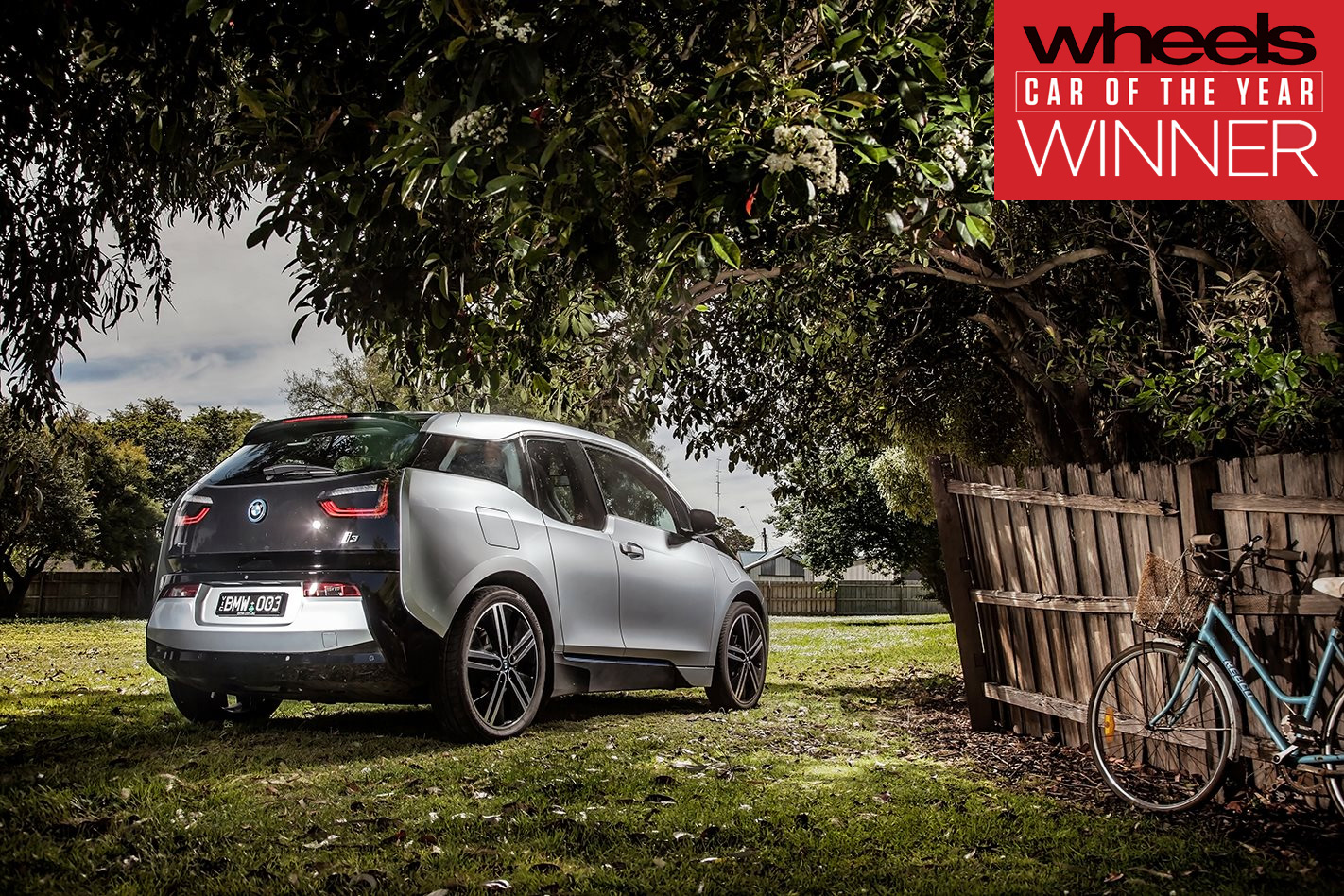
Munich’s futuristic city car showed us that an electrified future can indeed be a bright one – with warmth, texture, design savvy and entertainment value.
2015: Award ‘withheld’
Nothing sinister here. A shift in COTY protocol meant there was no 2015 award – instead, the reigning year is now the one put against the car’s name, rather than the year it launched.
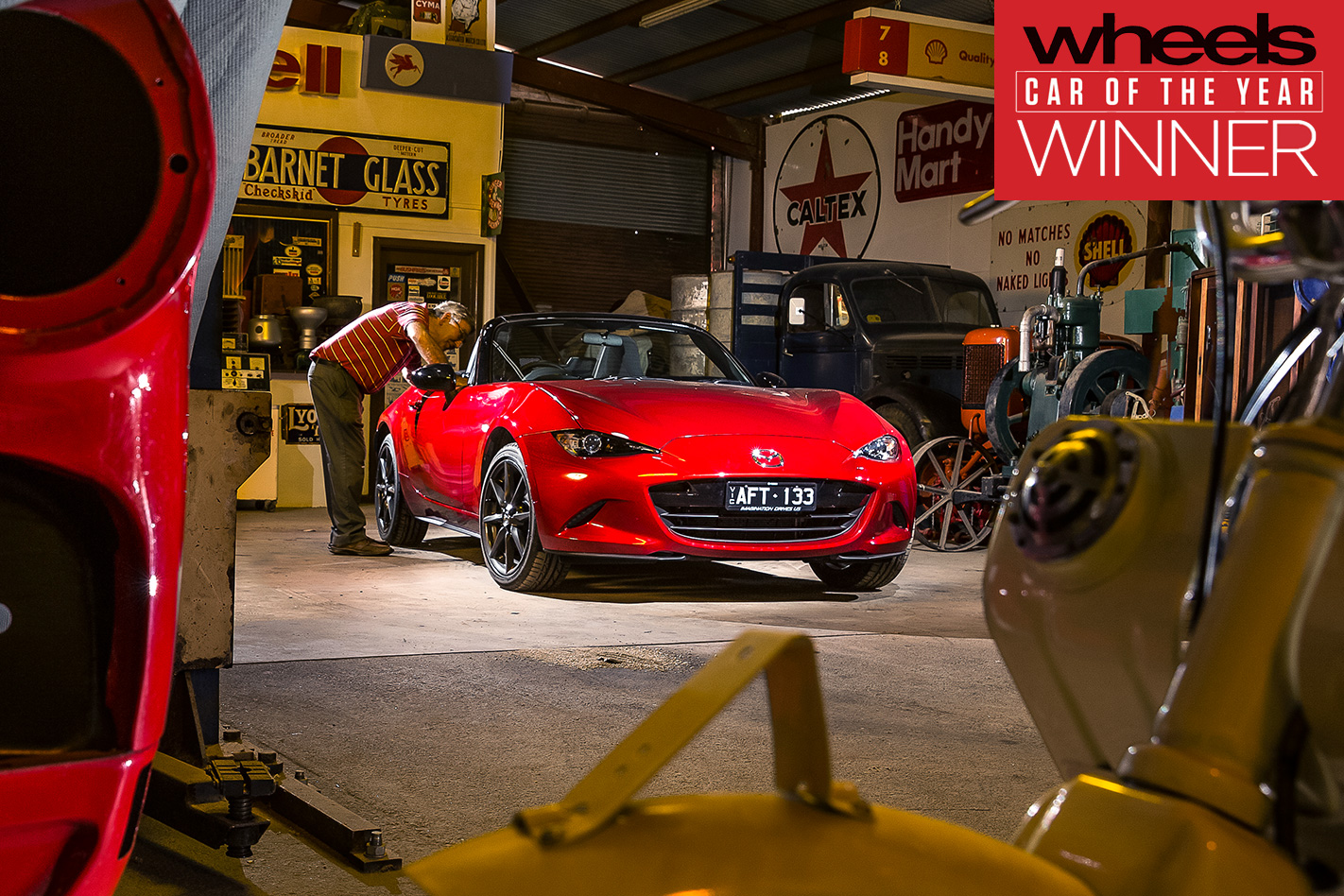
2016: Mazda MX-5
The Mazda MX-5 earned its third COTY gong with the fourth-generation model, cementing its place as one of the most accomplished nameplates in COTY history.
If the recipe of light weight, ultra-crisp steering and brilliantly balanced handling works, why mess with it? What’s more, the introduction of a revvy 1.5L brought down the price of entry while still keeping things fun.
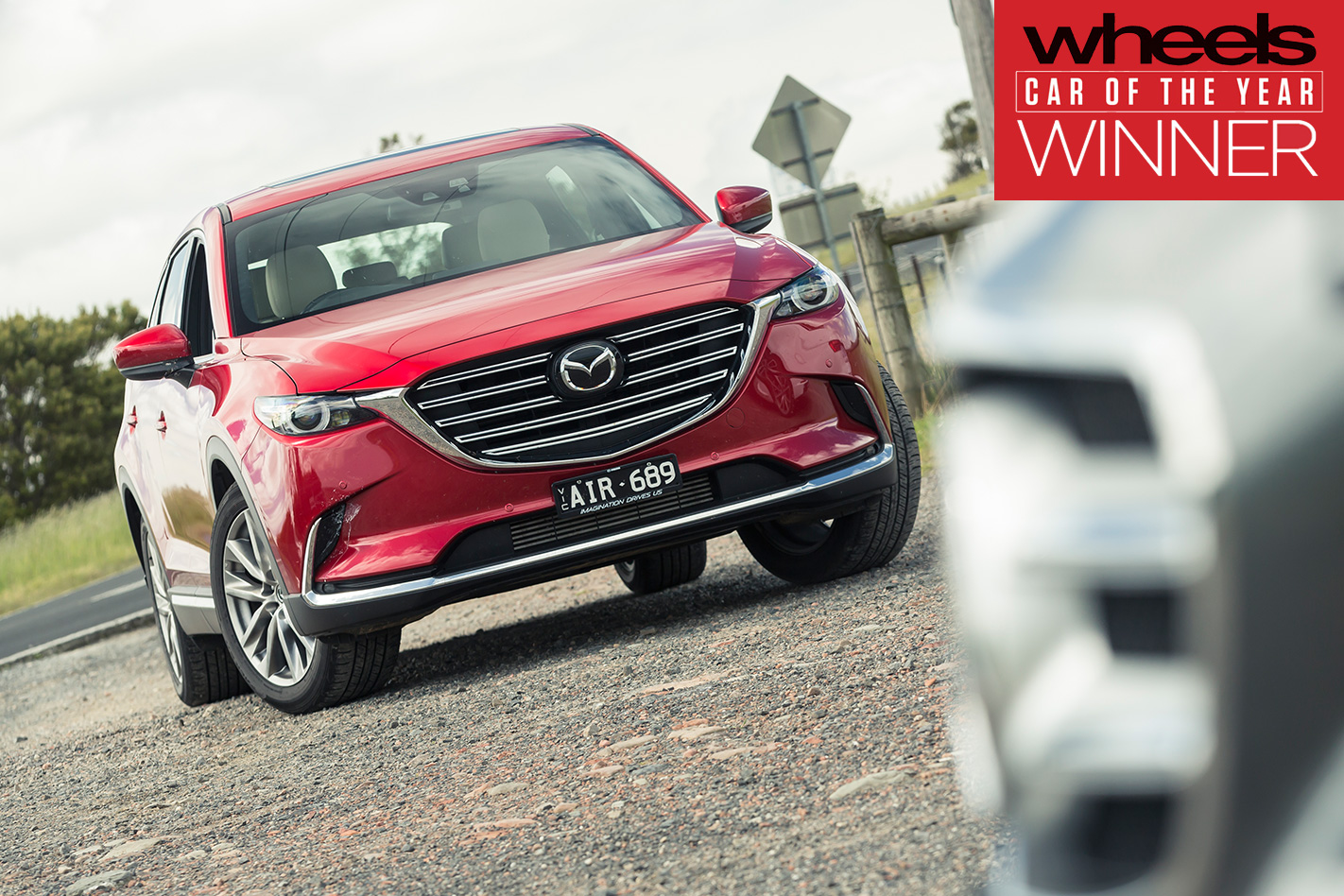
2017: Mazda CX-9
Only the second SUV to win COTY since the Territory, and a back-to-back win for Mazda, the CX-9 proved itself to be several leaps ahead of its segment competitors, not to mention good enough to put its fellow finalists, the impressive E-Class and A4, in the shade.
A better ride than the luxo Germans? You bet.
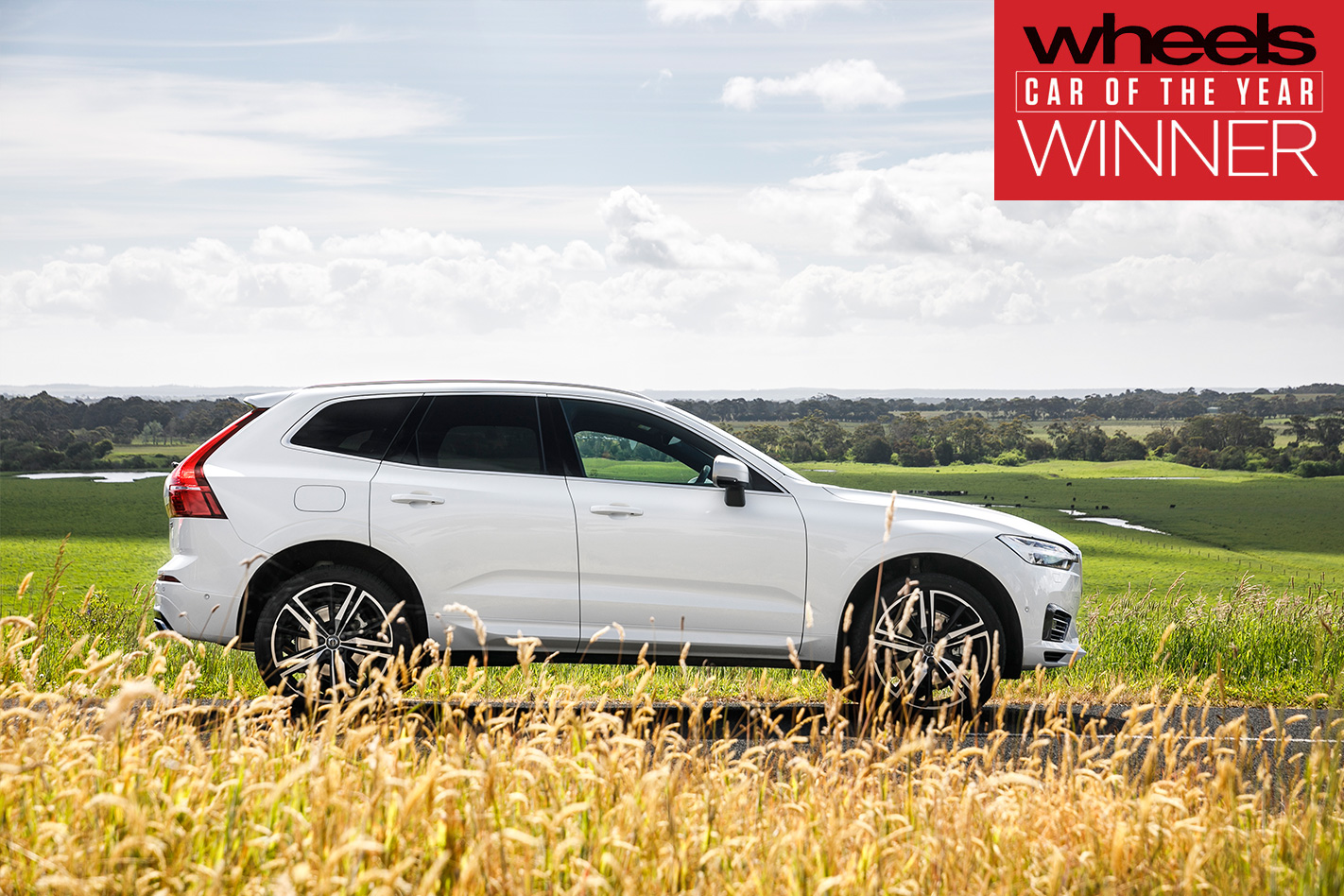
2018: Volvo XC60
Volvo notched up its first COTY win with the impressively polished XC60 midsize SUV, a family wagon that proves that when you pay a premium (which you do with the XC60), you actually get a premium product.
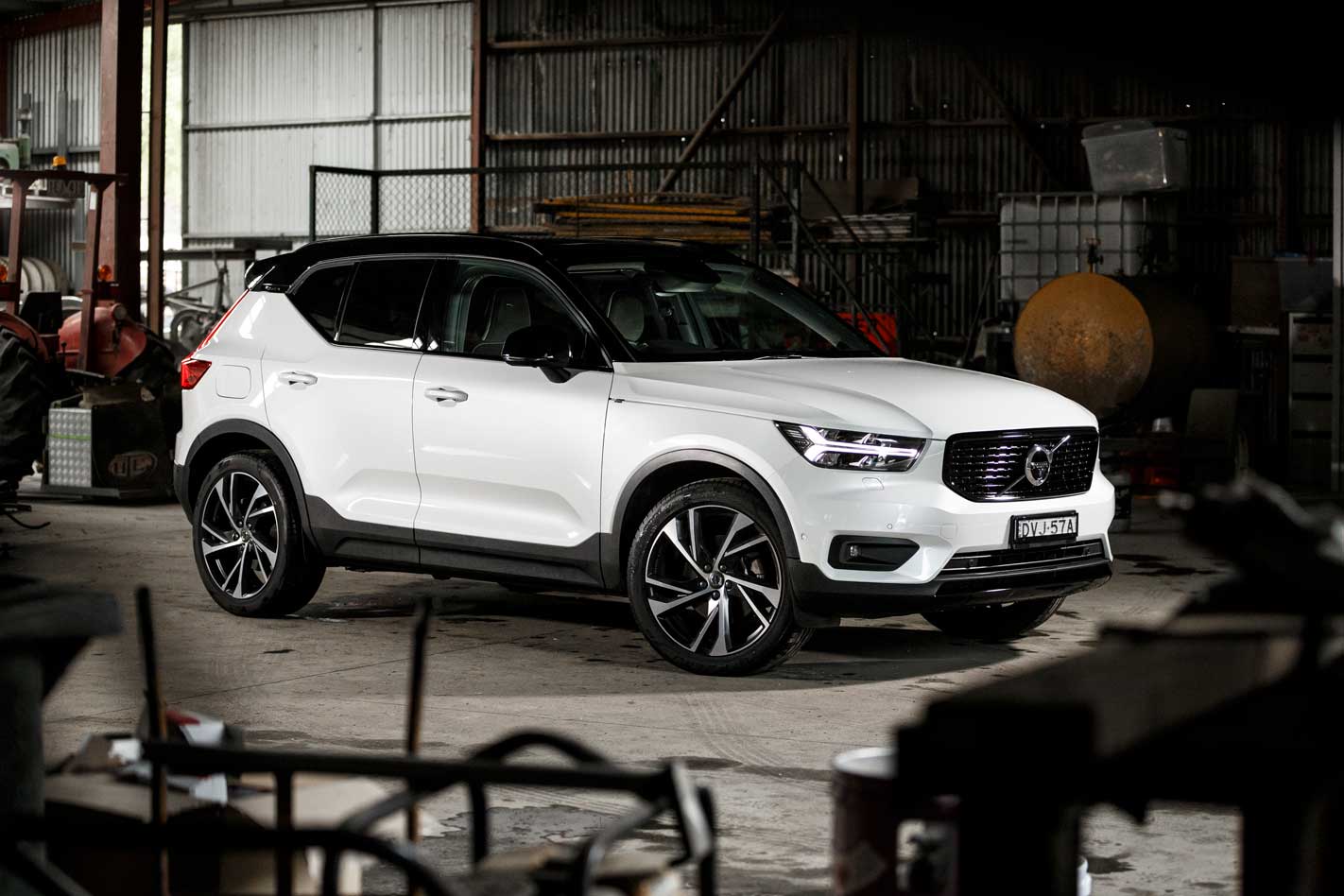
2019: Volvo XC40
How Swede it is… lighting strikes twice… okay, we’ll stop now. Volvo impressed all judges with the XC60, and the XC40 continued the winning formula, just in a slightly smaller package.
Another truly premium offering garnered two COTYs on the trot for Volvo.
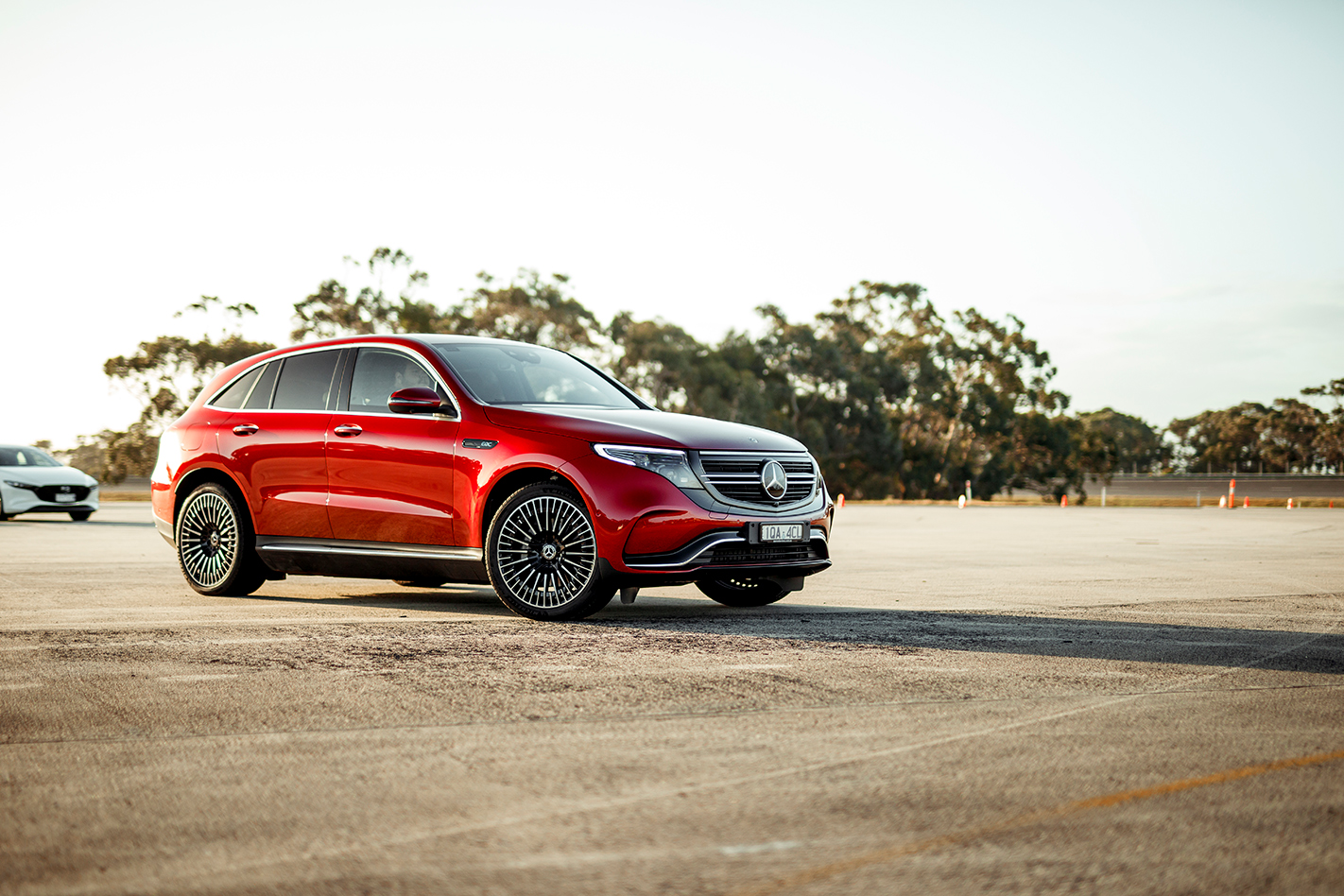
2020: Mercedes-Benz EQC
After a 12-year hiatus, Mercedes-Benz once again has ownership of the Wheels Car of the Year trophy with its all-electric EQC.
Somewhat of a surprise packet, the seven judges deemed the Merc EV as the cream of the 31-car crop for 2020.
2021: Mazda CX-30
In the event that nearly didn’t happen – thanks to the lockdowns and restrictions brought by the COVID-19 pandemic – Mazda’s CX-30 small SUV was declared 2021 Wheels Car of the Year.
A unanimous decision, the CX-30 was awarded for its fun driving experience, its stylish good looks and near-premium quality.
Wheels editor Dylan Campbell said: “For me, the CX-30 is a car that democratises luxury; it has a level of craftsmanship not evident in rivals. You sense the passion and commitment that’s gone into it, making it feel like a treat every time you get in.”
This win marks Mazda’s ninth COTY award, trailing current champ Holden by just one. And, with Holden now out of the picture, Mazda will surely be favouring its chances of taking the mantle in the years ahead.
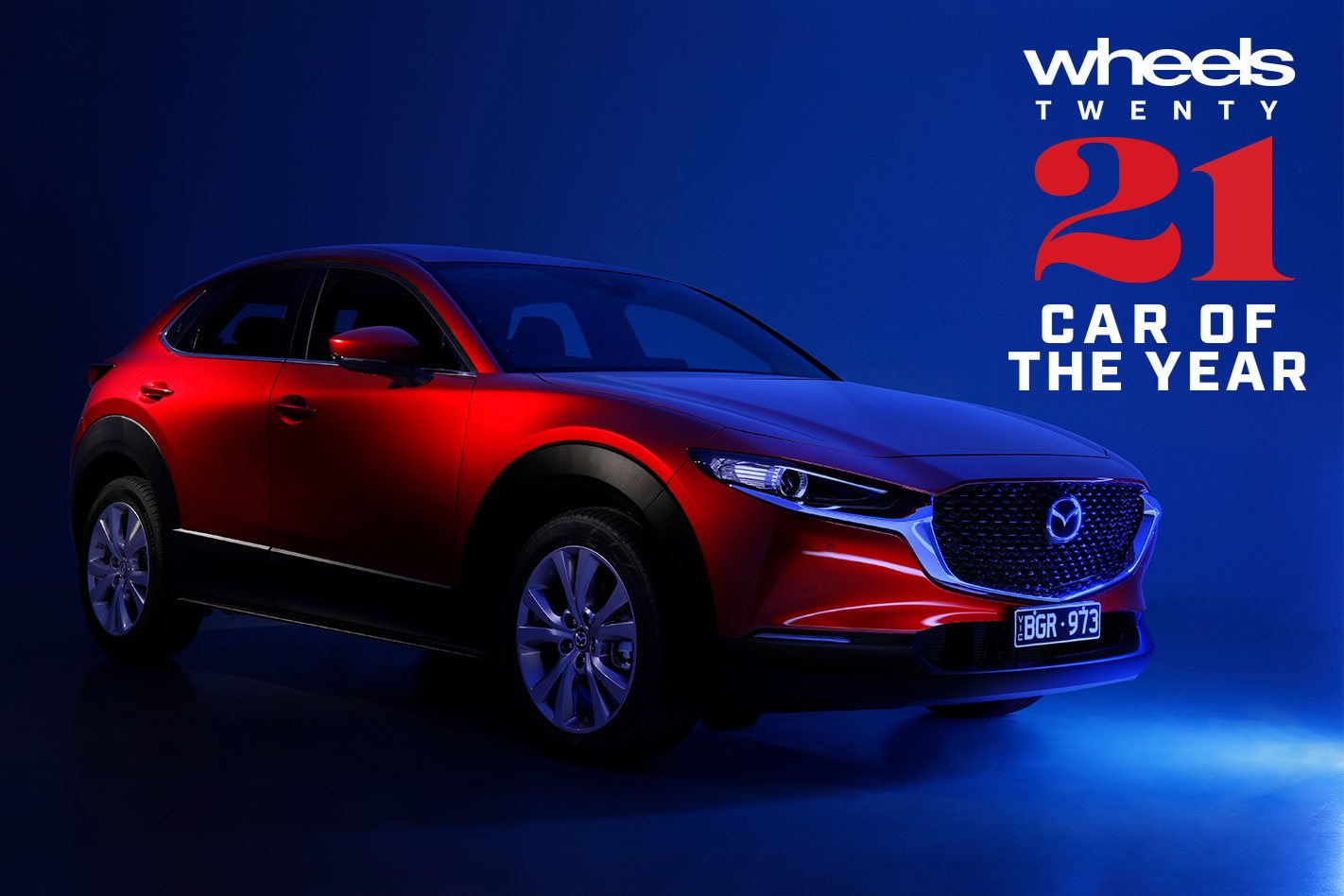
2022: Kia EV6
In one of our most tightly contested fields in years, the Kia EV6 shouldered its way to the front to take a landmark win. It was the first time Kia had won at COTY and the EV6 wasn’t only a daring and expertly executed electric car but a stark reminder of just how far the Korean brand had come in a relatively short period of time.
It was a close thing, though, with the EV6’s closely related sibling, the Hyundai Ioniq 5, making a convincing case for 2022 to be a joint award. But the Kia’s slightly sharper value proposition and sportier, locally tuned dynamics saw it edge far enough ahead for an historic win.
2023: Ford Everest
Another year for landmark wins, this time in the form of a first-ever COTY awarded to a ‘ute-based SUV. The type has been around for many years now, but it wasn’t until Ford’s new second-generation Everest appeared on the scene that any seemed even close to COTY material.
That changed in 2023, the first time Ford has won COTY since the Territory took the gong back in 2005 – itself a similarly controversial win, as the first SUV to take the award.

2024-2025: Hyundai Ioniq 5 N
Hyundai’s first Wheels Car of the Year award came in the form of the first electric vehicle to offer such character and involvement that even the fiercest of petrolheads would be convinced of an electric future: the Ioniq 5 N.
That’s not down to its awesome performance, suitably sporty hot hatch styling, fabulous handling or insane point-to-point ability, but that Hyundai’s engineers managed to add ICE features such as a convincing engine soundtrack, gear shifting and even turbo lag to a car that doesn’t feature an engine.
While 2024-2025 wasn’t the first year that an electric vehicle had won COTY, it was one of the first that delivered a unanimous verdict across all six judging scorecards in the blind final-round voting.
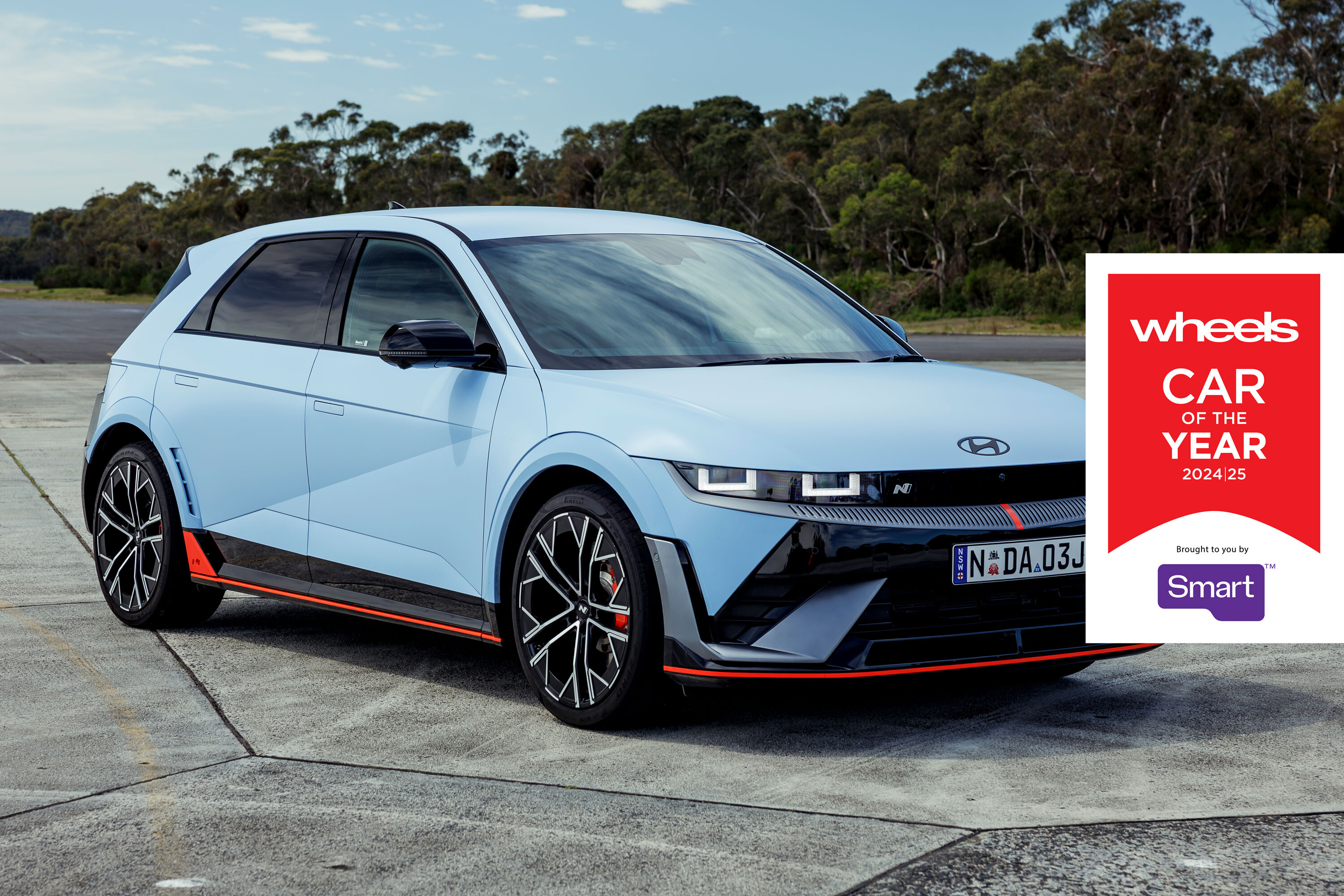
2025-2026: Honda Civic e:HEV L
“The Honda Civic is a car you’ll buy now and love from the get-go – and six months later, you’ll feel even better about it,” observed judge David Morley. That sentiment neatly captures why the Honda Civic is the 2025–26 Wheels Car of the Year.
In a field dominated by SUVs, the Civic proves a well-executed conventional car can still win on comfort, space, efficiency and genuine driving enjoyment. The facelifted 11th-generation model blends real-world practicality with refined manners and unexpectedly engaging dynamics, earning unanimous praise from the judging panel.
Its hybrid-only powertrain is a standout: smooth, punchy and genuinely efficient. Honda claims 4.2L/100km, and real-world testing often dipped into the high threes. With 135kW and 315Nm, performance is brisk without sacrificing refinement, while steering, ride and handling inspire confidence on all roads.
The cabin may not chase trends, but it impresses with quality, simplicity and ergonomics. Technology works seamlessly, comfort is excellent, and space outclasses most rivals in the small-car segment.
Yes, the Civic is expensive upfront, but capped-price servicing, strong warranty coverage and low running costs help offset the premium. More importantly, it delivers lasting satisfaction.
In celebrating tradition, execution and balance, the Honda Civic reminds us just how good a great car can be – and why it deserves the ultimate prize.
Every winner through the years up to 2020
Early in 2021, the team at Budget Direct made a poster with every Wheels Car of the Year winner beautifully illustrated.
It’s a great reminder of exactly how long Wheels has been testing cars, and how vehicles have changed and advanced through the ages.
(They’ve since removed their blog post with this image, having bought an automotive publisher of their own!)
Kia has teased images of its all-new Seltos small SUV, ahead of the second-generation’s official reveal on December 10.
Launched globally in 2019, the Kia Seltos has gone on to amass sales of over 55,000 in Australia alone, capturing a touch over seven per cent market share in an increasingly competitive segment.
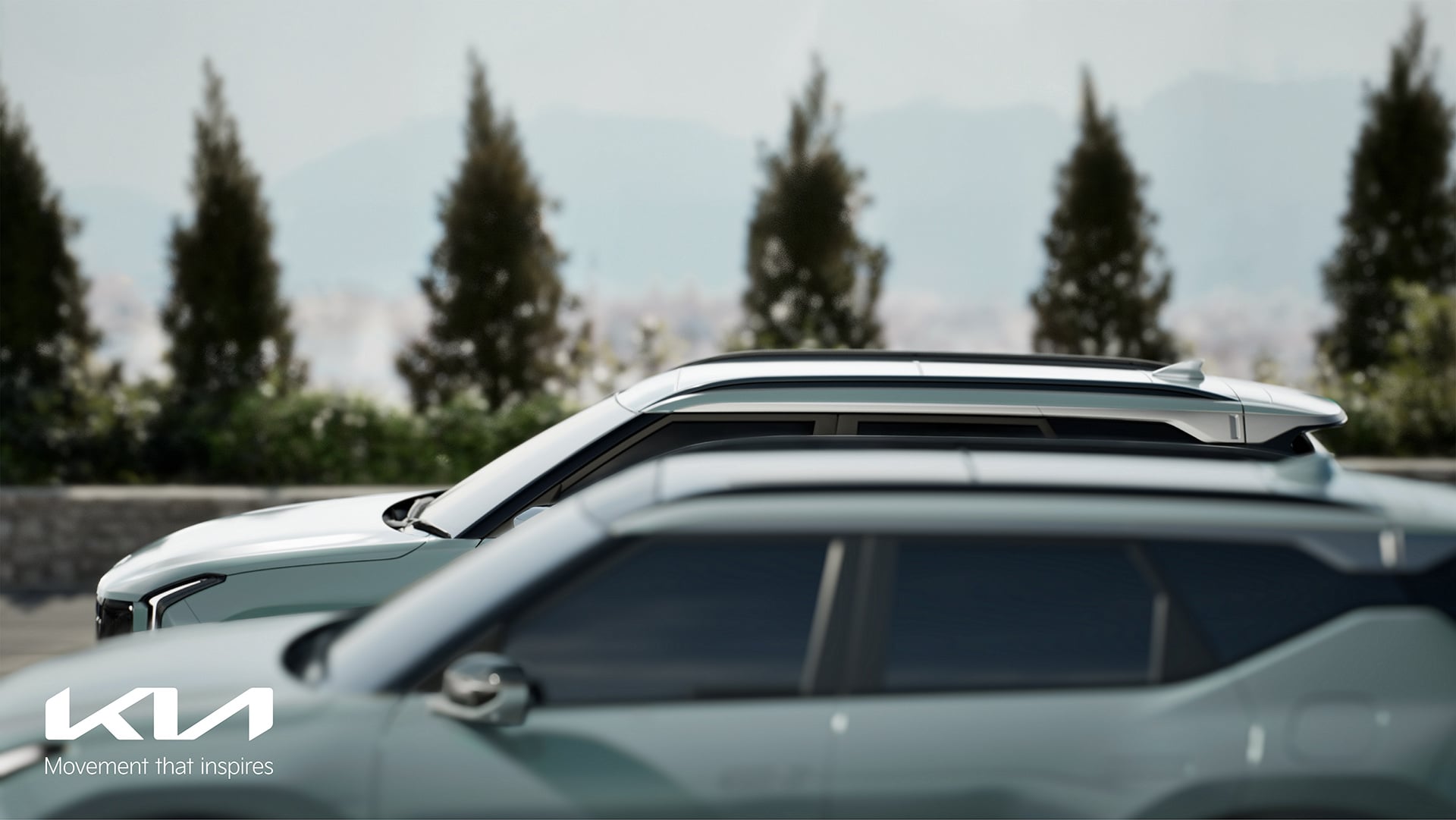
While the all-new model won’t officially be revealed until next week, Kia’s teaser images point to a bold new design for its soft-roading high-rider, a design that draws on the Korean brand’s Opposites United design language underpinning Kia’s range of electric SUVs, including the EV3 and EV5.
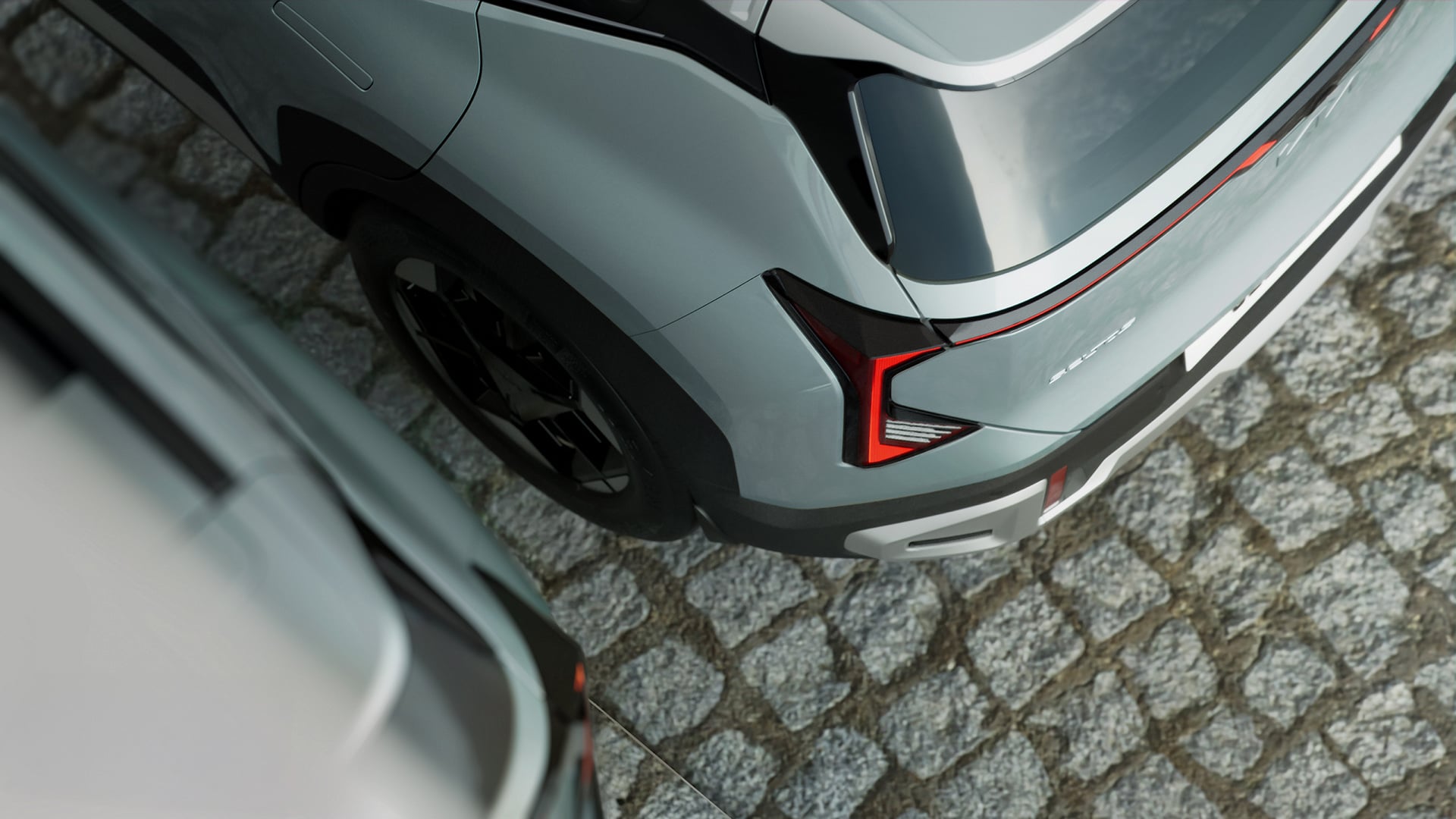
“The design blends the rugged heritage of past ICE SUVs with the clean, aerodynamic sophistication of Kia’s latest EVs,” said Kia in a statement.
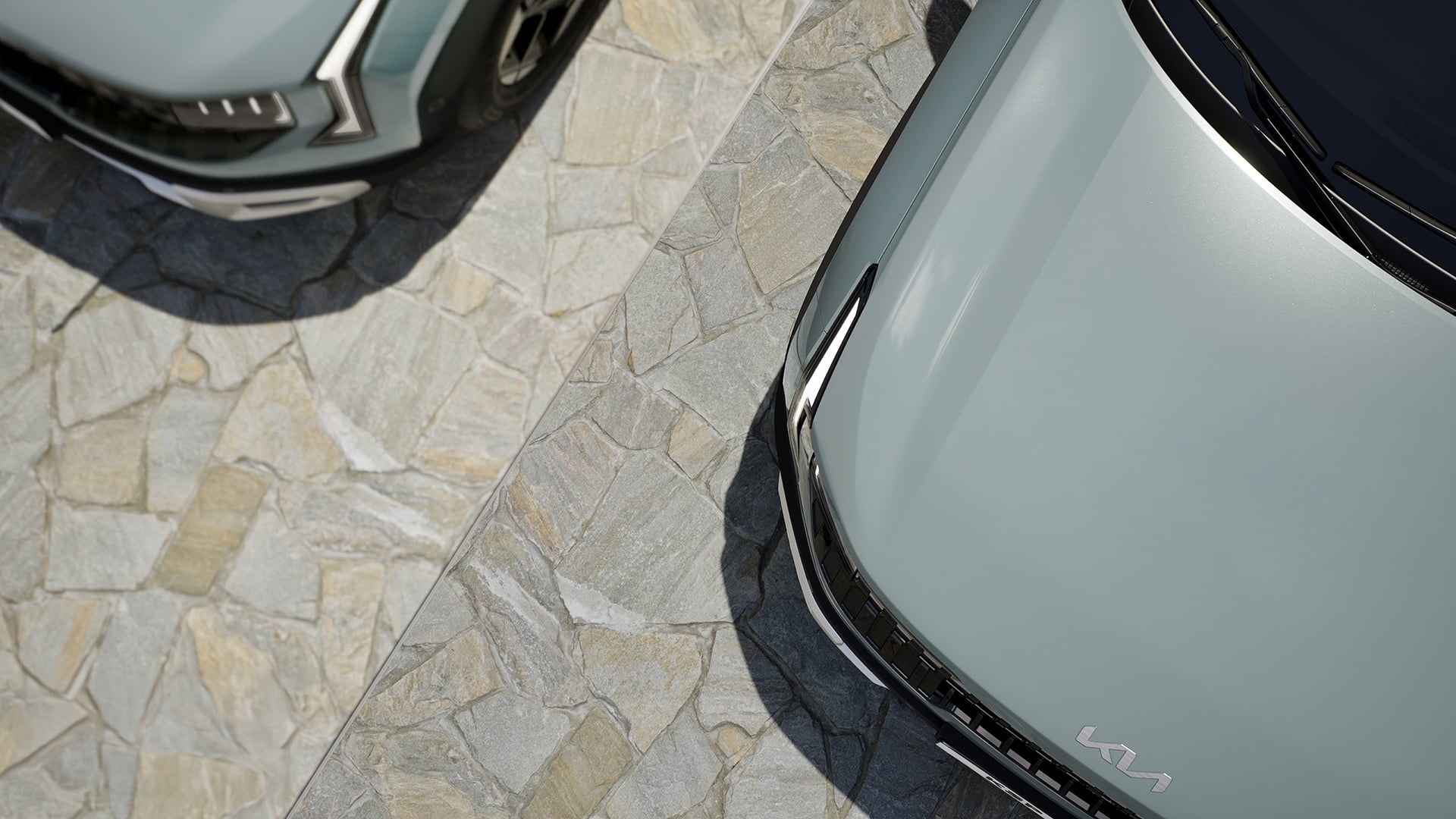
While the teaser images remain exactly that, the few details we can make out hint at bolder exterior styling, with Kia signature elements, such as the Star Map daytime running lights signature clearly evident on a bolder front fascia.
Out back, a full-width horizontal lightbar is flanked by vertical tail-lights in a distinctive c-shaped design. Flush-fitting door handles enhance the Seltos’ aerodynamic profile while pumped wheel arches lend the small SUV some rugged kerb appeal.
There has been no word on what powertrains will underpin the second-gen Seltos, but it’s expected the new-gen model will sit on Kia’s K3 platform that also underpins the Kia K4 sedan and hatchback and its Hyundai Kona small SUV stablemate. And that means it’s likely the Seltos will be offered with a petrol-hybrid powertrain for the first time. The outgoing model’s K2 platform is limited to petrol and diesel drivetrains.
The current-gen Hyundai Kona is available with a 1.6-litre non-turbo petrol-hybrid with outputs of 104kW and 265Nm and claimed fuel efficiency of 3.9L/100km on the combined cycle.
Kia did not release any images for the Seltos’ interior. However, expect bigger screens, more tech and a cleaner design language inside, in keeping with the brand’s broader line-up.
Full details of the second-generation Kia Seltos will be revealed on December 10 ahead of a 2026 launch. A Kia Australia spokesperson told WhichCar local deliveries are slated for the second half of 2026.
The Volkswagen Touareg is facing the axe, with production due to cease early next year. The luxury SUV was introduced in 2002 alongside the Porsche Cayenne, the two models sharing a platform. While the Cayenne transformed Porsche’s volumes, the Touareg never created quite such a cultural shift within Volkswagen.
Given that luxury SUVs ought already be quite amply catered for, and would have been a better fit for the Audi brand within the group, it might seem odd that Volkswagen wanted to push upmarket in this way, but in the late 1990s, Ferdinand Piech’s manic brand extensions were in full flight and all the tenets of traditional brand management seemed to have been cast to the winds in Wolfsburg.
In some market sectors, Volkswagen, Audi, Skoda and SEAT were all cannibalising sales from each other in an internecine survival of the fittest, so perhaps it wasn’t entirely unexpected that Volkswagen would launch the Phaeton sedan in 2001 to compete directly with the Audi A8 and then the Touareg SUV the following year, to compete with the Cayenne.
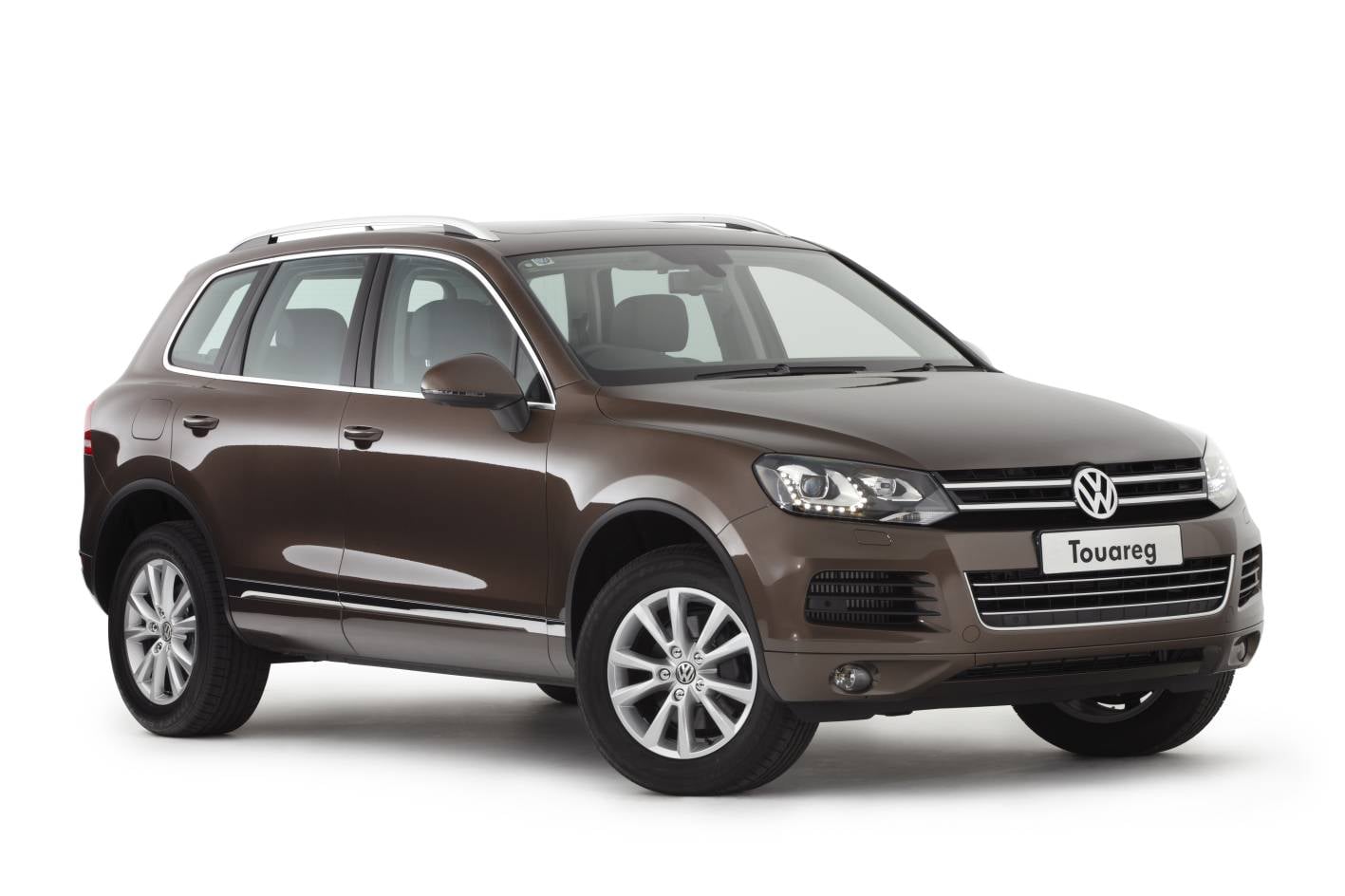
It was the third model to be spun off the Slovakian-built VW Group PL71 chassis, the Audi Q7, which would appear comparatively late in the piece in 2005. Both were integral to Piech’s vision of increased profitability per vehicle for Volkswagen, following a strategy he’d successfully executed at Audi. While the Phaeton was a sales flop, the Touareg performed reasonably across three generations. The ‘7L’ model ran from 2002-2010, the ‘7P’ from 2010 to 2018 and the ‘CR’ iteration took up the mantle through to 2026.
The first generation was undoubtedly the most radical, featuring both a 6.0-litre W12 petrol option and a 5.0-litre V10 diesel.
The Wheels first drive of the original sagely predicted that “Touareg top-end models may well struggle against more prestigiously badged competitors”. In other words, we didn’t buy into Volkswagen’s upmarket aspirations then and nothing has changed our view on the interim. While badge equity is not an immutable concept, there’s a lot to be said for focusing on what you’re best at.
Even in 2015, the Touareg’s most successful year of Australian sales, it achieved a nine per cent share in its sector, outshone by the likes of the Audi Q7 (12.1 per cent), BMW X5 (17.4 per cent), Land Rover Discovery (10.3 per cent) Range Rover Sport (12.9 per cent) and Mercedes-Benz GLE (11.4 per cent). Half-year sales for 2025 stood at 472 units.
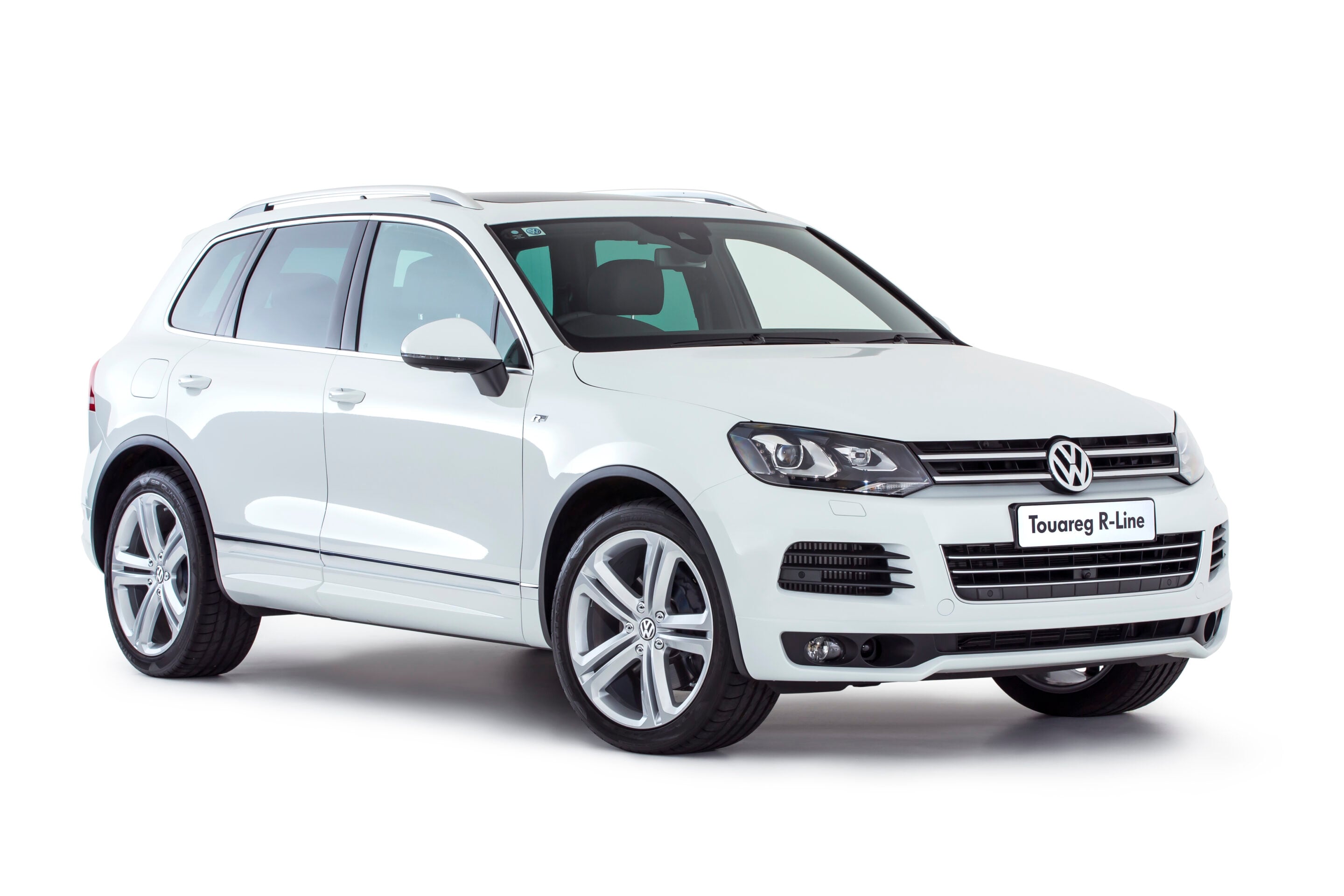
It’s not all bad news. In switching attention from the Toureg to the more practical and affordable seven-seater Tayron model, Volkswagen is finally adopting a measure of pragmatism that was missing from all those years of hubris. With prices that start at around $53k versus the Touareg’s $89k, the Tayron looks a smarter bet for success. If it doesn’t at least double the Touareg’s best ever year of sales in Australia during its first full year on the market, we’d be very surprised. Here’s to sticking to the knitting.
Touareg sales in Australia
| 2003 | 311 |
|---|---|
| 2004 | 935 |
| 2005 | 561 |
| 2006 | 491 |
| 2007 | 509 |
| 2008 | 730 |
| 2009 | 762 |
| 2010 | 374 |
| 2011 | 963 |
| 2012 | 1737 |
| 2013 | 1755 |
| 2014 | 1926 |
| 2015 | 2568 |
| 2016 | 2168 |
| 2017 | 1612 |
| 2018 | 939 |
| 2019 | 1116 |
| 2020 | 1202 |
| 2021 | 1261 |
| 2022 | 1222 |
| 2023 | 921 |
| 2024 | 908 |
The article originally appeared in the December 2025 issue of Wheels. Subscribe here and gain access to 12 issues for $109 plus online access to every Wheels issue since 1953.
The Toyota RAV4 has been a sales phenomenon for Toyota, especially in recent years. In 2024 alone, it sold 1.187 million units and that was enough to make it the world’s best-selling car.
With news of the new generation model arriving in Australia in the first half of 2026, do those eyeing off the RAV4 wait for the new model or buy the current shape instead? Here’s the WhichCar by Wheels guide:
Pricing
Toyota Australia announced pricing and specifications for the new RAV4 a few weeks ago, with a $3730 jump in the price of the GX entry-level model and up to a $5930 increase for models higher in the range. The only model to lower its asking price is the off-road themed Edge, which was previously the top-spec model but is now sitting at the mid-spec point of the range.
New plug-in hybrid models – strangely only available in XSE and GR Sport grades – start from $58,840 plus on-road costs and the most expensive RAV4 model is the sporty GR Sport, which is priced at $66,340 +ORC.
| 2025 Toyota RAV4 | 2026 Toyota RAV4 | |
|---|---|---|
| GX | $42,260 +ORC | $45,990 +ORC |
| GXL | $45,810 +ORC | + $48,990 +ORC |
| Edge | $58,360 +ORC (used to be top-spec) | $55,340 +ORC (is now mid-spec) |
| XSE | $48,910 +ORC | $58,340 +ORC (AWD now standard) |
| Cruiser | $51,410 +ORC | $56,990 +ORC |
| XSE PHEV | Unavailable | $58,840 +ORC |
| GR Sport | Unavailable | $66,340 +ORC |
Standard features
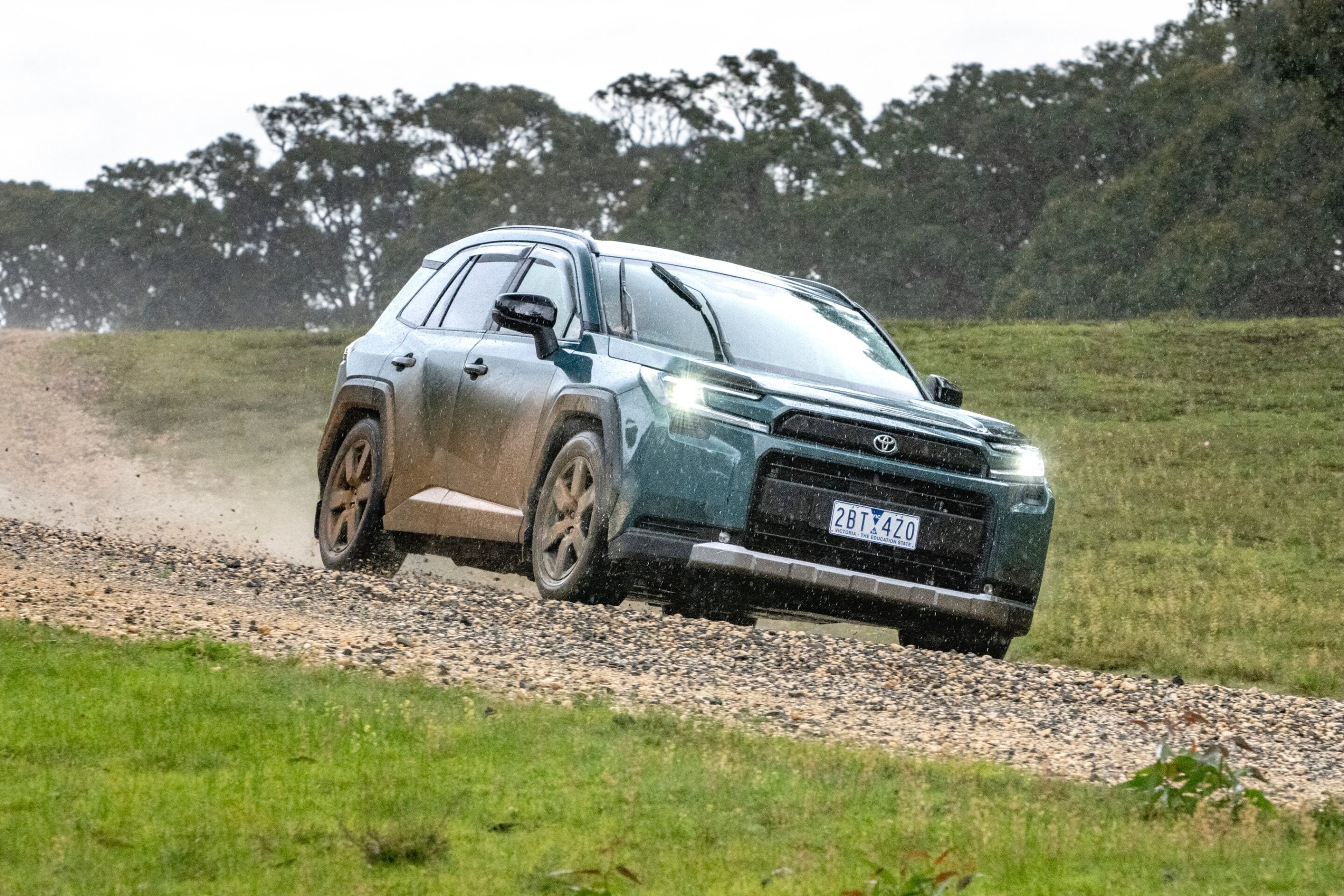
Behind the increased price sticker for the new Toyota RAV4 range is the fact the whole range is overall better equipped than the previous car, with a big upgrade in technology in every model. The entry-level touchscreen grows from 8.0-inches to 10.5-inches, gains new software and new features – plus, those buying the Edge and above upgrade to an even larger 12.9-inch screen. All models now feature a 12.3-inch digital driver’s display as well.
Despite the additional technology, the GX does have less features with a leather-wrapped steering wheel and automatic wipers strangely no longer part of the spec list despite an almost-$4000 price rise. Because the Edge is now the mid-spec car, it loses features such as leather upholstery and a sunroof, while buyers must choose the Cruiser if they want a panoramic sunroof.
| 2025 Toyota RAV4 | 2026 Toyota RAV4 | |
|---|---|---|
| Wheels | 17-inches (GX) to 19-inches (Edge) | 17-inches (GX) to 20-inches (GR Sport) |
| Touchscreen | 8.0-inches – 10.5-inches, live services | 10.5-inches – 12.9-inches, new ‘Arene’ software with live services and over-the-air updates |
| Driver’s display | 7.0-inches – 12.3-inches | 12.3-inches |
| Sunroof | Single-pane on Cruiser and Edge | Single-pane on XSE, panoramic on Cruiser |
| Airbags | 7 | 8 |
| Electric tailgate | From XSE and upwards | From Edge and upwards (kick sensor on Cruiser and GR Sport) |
| Seat upholstery | Cloth (GX and GXL), synthetic leather (XSE), leather (Cruiser and Edge) | Cloth (GX and GXL), synthetic leather (Edge and XSE), leather (Cruiser), synthetic leather and suede (GR Sport) |
| Steering wheel | Leather | Urethane (GX), leather (GXL and above) |
Drivetrains
Like the last RAV4, the majority of the new model’s line-up is powered by a 2.5-litre four-cylinder hybrid drivetrain mated to an e-CVT transmission and either front- or all-wheel drive. The new model features the same engine as before, though now complying with Euro 6 emissions standards and up to 20kW less powerful as a result. Toyota is yet to announce fuel economy and emissions figures, but we’re expecting them to be slightly less than the previous model (so less than 4.7L/100km and 106g/km).
Also new to the RAV4 range in Australia is a 2.5-litre plug-in hybrid drivetrain making either 200kW in front-drive or 227kW in all-wheel drive forms, making it the most powerful RAV4 offered locally. Like the hybrid, Toyota is yet to reveal local fuel efficiency and emissions figures, but it is reportedly capable of driving 100km on a full electric charge from its 22.7kWh battery (which can be charged at up to 50kW).
| 2025 Toyota RAV4 | 2026 Toyota RAV4 | |
|---|---|---|
| Drivetrain | 2.5-litre four-cylinder hybrid | 2.5-litre four-cylinder hybrid, 2.5-litre four-cylinder plug-in hybrid |
| Combined power | 160kW (2WD), 163kW (AWD) | 143kW (hybrid), 200kW (PHEV 2WD), 227kW (PHEV AWD) |
| Combined fuel consumption | 4.7L/100km – 4.8L/100km | TBC |
| CO2 emissions | 107g/km | TBC |
| PHEV electric range | NA | 100km (WLTP) target |
| PHEV charging | NA | 11kW (AC), 50kW (DC) |
Dimensions
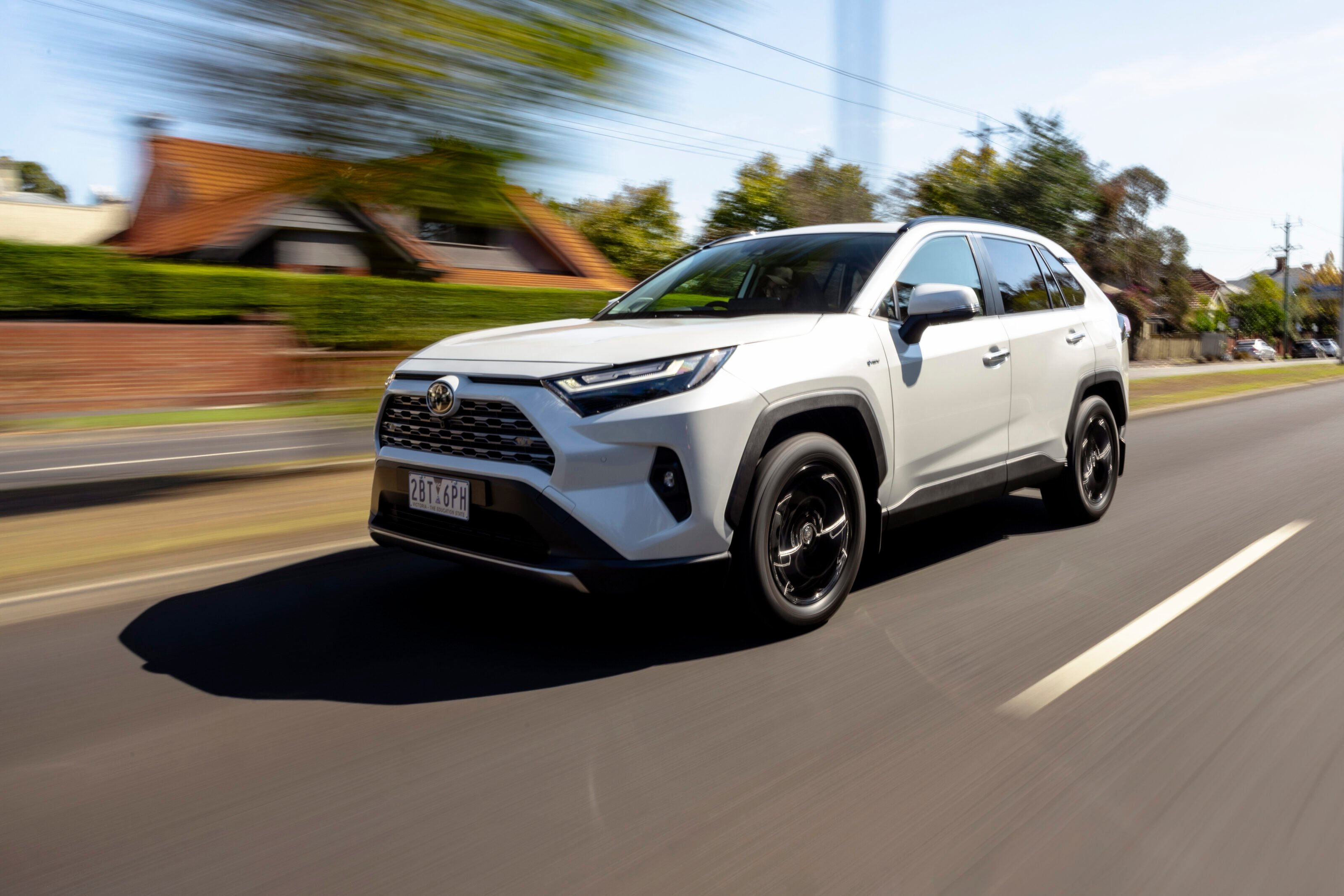
This may surprise you given how different they look, but the 2025 and 2026 RAV4s are nigh on identical in size. The only change in size from the top-spec GR Sport model which has different bumpers, a wider track and is slightly lower than the rest of the range.
Toyota is yet to reveal bootspace figures for the new RAV4 models, but we aren’t expecting much change from the old model’s 542-580 litre space.
| 2025 Toyota RAV4 | 2026 Toyota RAV4 | |
|---|---|---|
| Length | 4600mm | 4600mm – 4645mm |
| Width | 1855mm | 1855mm – 1880mm |
| Height | 1685mm | 1680mm – 1685mm |
| Wheelbase | 2690mm | 2690mm |
| Bootspace | 542 litres – 580 litres | TBC (but likely very similar to the old model) |
Conclusion: Should I wait for the new Toyota RAV4?
There’s no doubt that the new Toyota RAV4 is worthy of the step up in price compared with the outgoing model thanks to its added standard features across the range, new-feeling interior and revised model line-up. The first-time-for-Australia plug-in hybrid variants offer healthy performance and electric-only driving ranges and across the offering, it is sharper to drive as well.
However, while the new car is a step up, for many people the decision will likely depend on what sort of deals are available on the previous model to get them sold. If Toyota dealers are still famously tight on deals for the old RAV4, we’d be going to the new model. But if there’s room for bonuses and the price gap grows, you won’t feel shortchanged as it’s still an excellent and very fuel efficient mid-size SUV.
Searching for a medium SUV in today’s new car market is a daunting prospect, with more than 20 different options to choose from. For car makers, standing out in such a busy and crowded market can be tough.
A reliable and enduring attraction for buyers, however, is good value, which GWM’s products routinely deliver and why we awarded the GWM Haval H6 the Value award in this year’s Wheels Best Medium SUV 2025 awards. Let’s learn more about the H6 and what it offers to medium SUV buyers.
2026 GWM Haval H6 pricing (drive away):
| Lux 2.0T | $35,990 |
|---|---|
| Ultra 2.0T | $38,990 |
| Lux Hybrid | $38,990 |
| Ultra Hybrid | $41,990 |
| Ultra Hybrid AWD | $45,490 |
| Lux Plug-in Hybrid | $42,990 |
| Ultra Plug-in Hybrid | $45,990 |
| Ultra Plug-in Hybrid AWD | $48,990 |
GWM Haval H6 drivetrains
GWM Australia offers the Haval H6 with a full array of five drivetrains: one petrol, two hybrid and two plug-in hybrid, and impressively, all run on 91RON regular unleaded fuel. The ‘entry-level’ drivetrain is the 2.0-litre four-cylinder turbo-petrol making 170kW of power and 380Nm of torque. It sends its power to the front wheels only using a nine-speed dual-clutch transmission, and combined fuel consumption is rated at 7.4L/100km.
Above the 2.0T sits the most popular drivetrain in the H6 range: the 1.5-litre turbo-petrol hybrid. Making 179kW of power and 530Nm of torque, it makes more grunt than the 2.0T, but it’s also 2.2L/100km more fuel efficient at just 5.2L/100km. It’s front-wheel drive like the 2.0T, but GWM has recently added an all-wheel drive version that adds an electric rear motor for 268kW/760Nm combined outputs – yet, just a 0.2L/100km increase in fuel consumption and 5g/km increase in CO2 emissions at 5.4L/100km and 125g/km respectively.
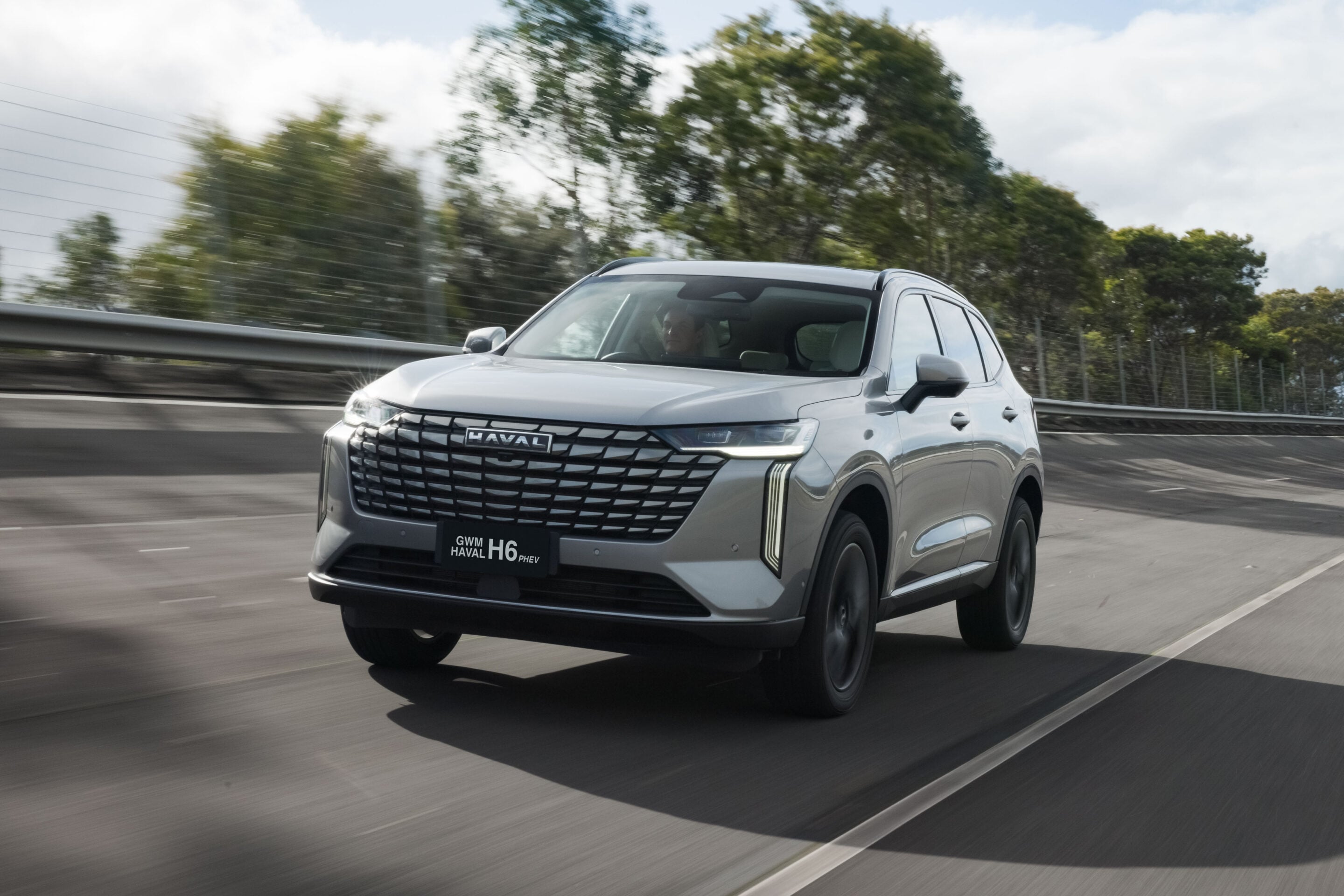
GWM Australia also offers the Haval H6 with a choice of two plug-in hybrids, with both using a turbocharged 1.5-litre four-cylinder petrol engine. The front-wheel drive version makes 240kW/540Nm outputs, while the all-wheel drive drivetrain makes the same outputs as the all-wheel drive hybrid at 268kW/760Nm – or, comfortably, the most powerful in the mainstream medium SUV segment.
Plug-in hybrid models feature a 19.09kWh LFP battery that can be DC fast charged at up to 34kW for a claimed 30-80 per cent charge time of just 28 minutes. The claimed NEDC range for the 2WD PHEV is an impressive 106km, with the AWD PHEV losing just 6km for 100km in total.
Combined fuel consumption for the H6 PHEV with a charged battery is rated at between 1.0 and 1.1L/100km, but the low charge claimed consumption is 5.0L/100km (5.3L/100km for the AWD model) so even without a full charge, the H6 PHEV is still impressively fuel efficient.
GWM Haval H6 dimensions
Regardless of model chosen, the Haval H6 measures 4703mm long, 1886mm wide, 1730mm tall and rides on a 2738mm long wheelbase. The boot in all variants measures 560 litres with the rear seats up, and either 1445 litres (hybrid + PHEV models) or 1485 litres (2.0T) with the rear seats folded.
Kerb weight for the H6 ranges from 1592kg for the 2.0T to 1652kg for the Lux hybrid, to 1946kg for the AWD PHEV. Braked towing capacity is 2000kg for the 2.0T and 1500kg for all hybrids.
GWM Haval H6 safety features
All GWM Haval H6 models are equipped with:
- 7x airbags
- Autonomous emergency braking (AEB) with pedestrian, cyclist and junction assistance
- Lane keeping assistance with adaptive lane guidance
- Adaptive cruise control with traffic jam assist
- Traffic sign recognition
- Driver fatigue monitoring
- Blind-spot monitoring
- Rear cross-traffic alert with braking
- Door open warning
- Front and rear parking sensors
- 360-degree camera
- Tyre pressure monitoring
The Ultra models further add automatic parking functionality and automatic reverse braking.
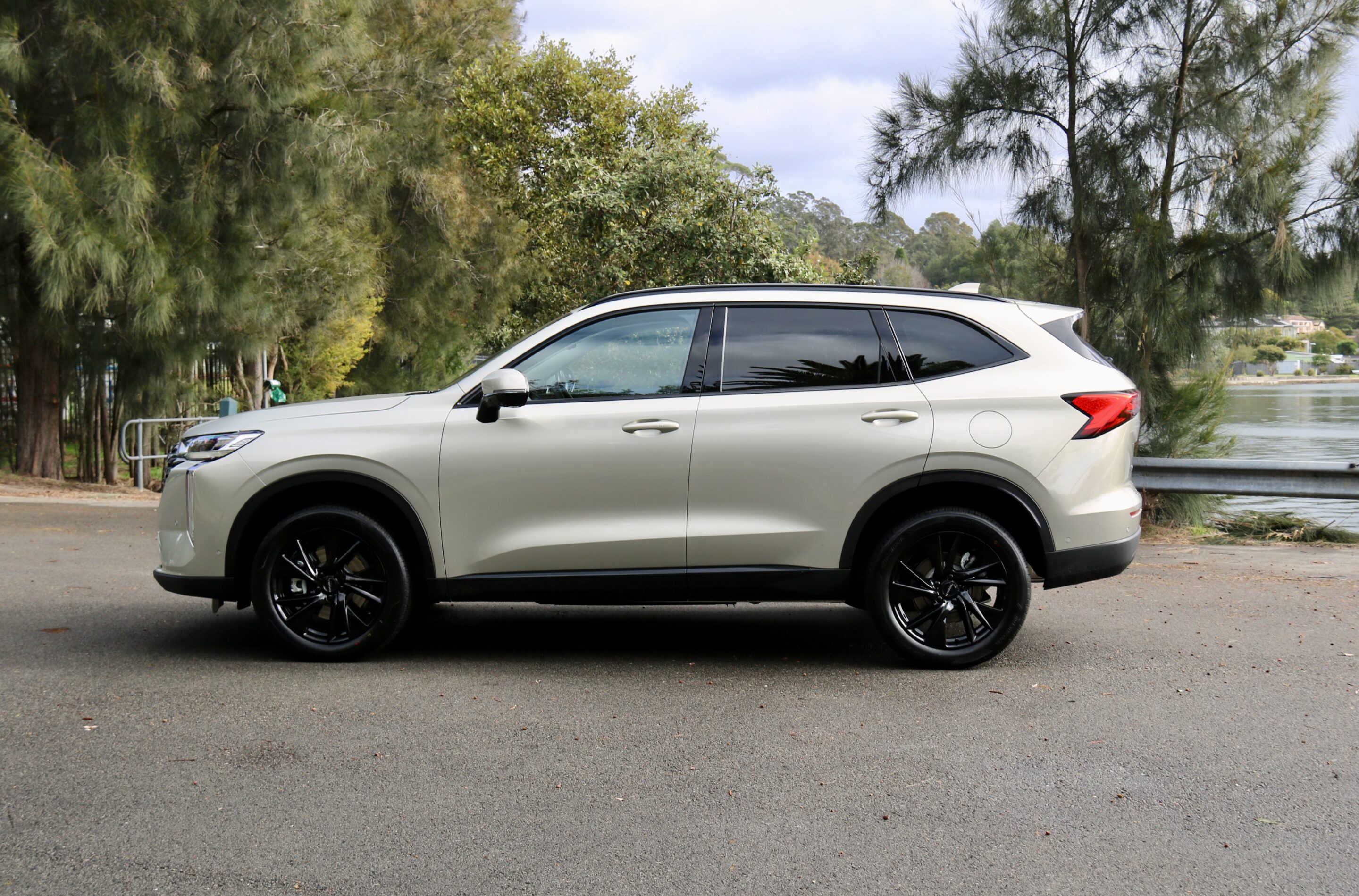
The H6 range received a five-star ANCAP safety rating in 2022 with scores of 88 per cent for adult occupancy protection, 88 per cent for child occupancy protection, 73 per cent for vulnerable road user protection and 81 per cent for safety assist.
GWM added and refined the H6’s safety features in its 2025 facelift, so it would likely score higher if tested again.
GWM Haval H6 Lux standard features
- 19-inch black alloy wheels
- Dusk-sensing automatic LED lighting
- Rain-sensing automatic wipers
- Keyless entry and push button start
- Heated and auto-folding mirrors with puddle lamps
- Electric tailgate with kick-to-open functionality (hybrid only)
- Leather steering wheel
- Synthetic leather upholstery
- Driver six-way electric seat adjustment
- Dual-zone automatic climate control with rear air vents
- 10.25-inch digital driver’s display
- 14.6-inch touchscreen with wireless Apple CarPlay and Android Auto
- AM/FM/DAB+ digital radio
- Wireless phone charger
- Live services (PHEV only)
- 5x USB charging ports
GWM Haval H6 Ultra model adds to Lux:
- Head-up display
- Rear privacy glass
- Panoramic sunroof
- Driver seat memory and lumbar adjustment
- Heated and ventilated front seats
- Heated steering wheel
- Eight-speaker sound system (hybrid – petrol and PHEV have nine speakers)
- Automatic parking (excluding PHEV)
- Stainless steel front scuff plates
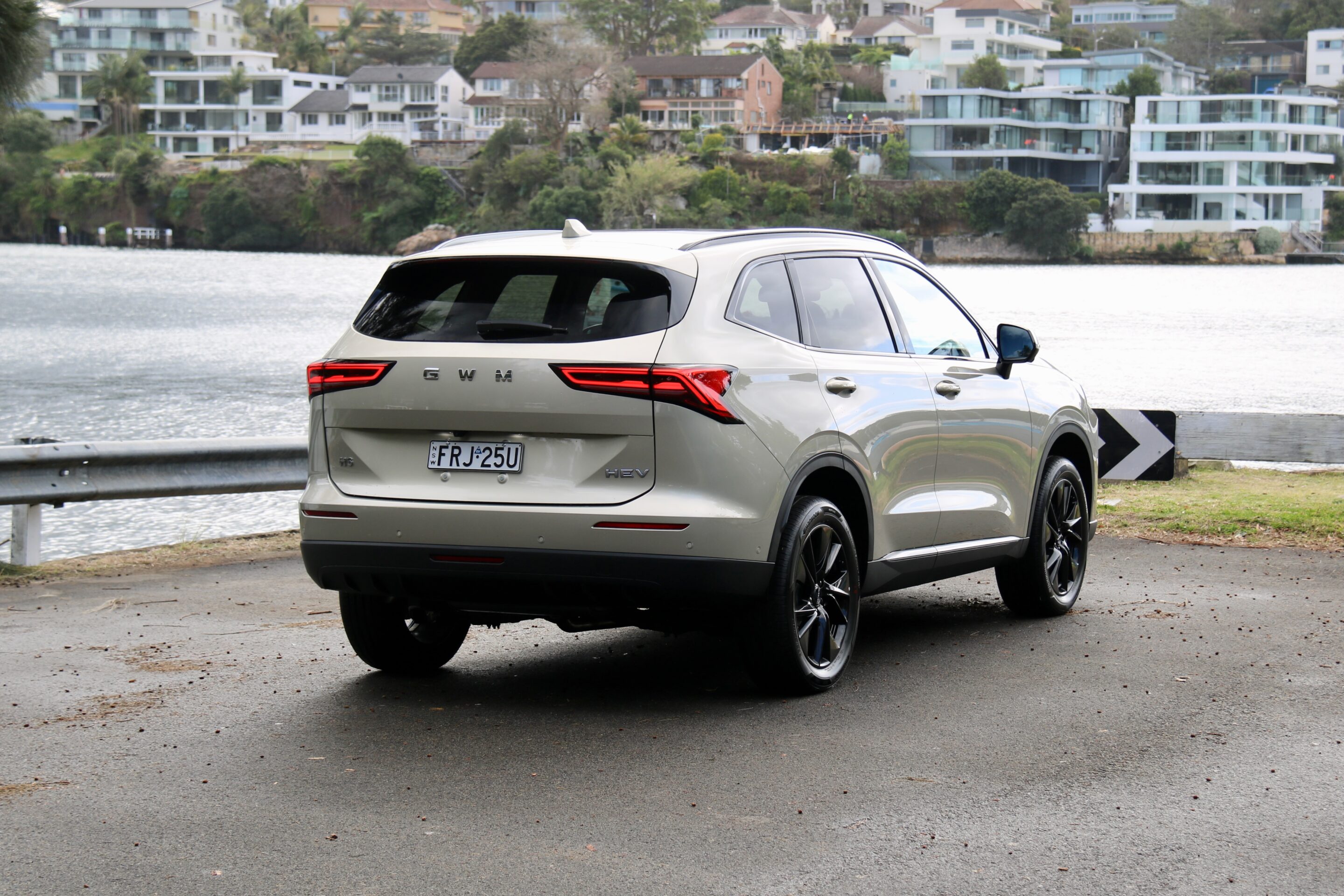
H6 colour range
- Hamilton White
- Golden Black (+ $495)
- Astral Pearl (+ $495)
- Ayers Grey (+ $495)
H6 warranty and service costs
The H6 is covered by a seven-year/unlimited km warranty with an eight-year/160,000km warranty for the battery on hybrid and plug-in hybrid variants. There is also five years of roadside assistance and five years of capped price servicing.
Five years/70,000km of servicing the H6 costs between $2110 ($422 per year) for the 2.0T, $2145 (2WD) / $2175 (AWD) for the hybrid and $2220 for the PHEV variants. The first service due is in 12 months or 10,000km (whichever comes first) and every service afterwards a further 12 months or 15,000km (again, whichever comes first).
The Ford Ranger is undoubtedly Ford Australia’s biggest success story over recent years. In 2024 alone, more than 62,000 of them were sold Down Under and it was the best-selling vehicle in the country. Its stablemate, the Everest, has also been a volume seller in these parts.
But in Ford’s home market in the USA, another vehicle using the Ranger’s platform is the star: the Ford Bronco. The Bronco uses the same ‘T6’ platform as the Ranger and Everest, but instead of a ute or seven-seat large SUV, it’s a two- or four-door SUV in a similar fashion to the Jeep Wrangler. In 2024, Ford USA sold almost 140,000 Broncos versus just under 52,000 Rangers (but also 733,000 F-150s), and even in 2025, a big waiting list still exists. There’s also some Australian in the Bronco: it was partly developed by Ford Australia’s engineers.
Pricing for the Ford Bronco in the USA starts at around US$40,000 (A$62,000 at current exchange rates) for the entry-level two-door version, extending all the way to around US$83,000 (plus options) for the high performance Raptor, which is quite similar in mission to the Ranger Raptor. It even uses the same twin-turbocharged 3.0-litre petrol V6 engine and 10-speed automatic transmission but produces even more grunt at 311kW/597Nm.
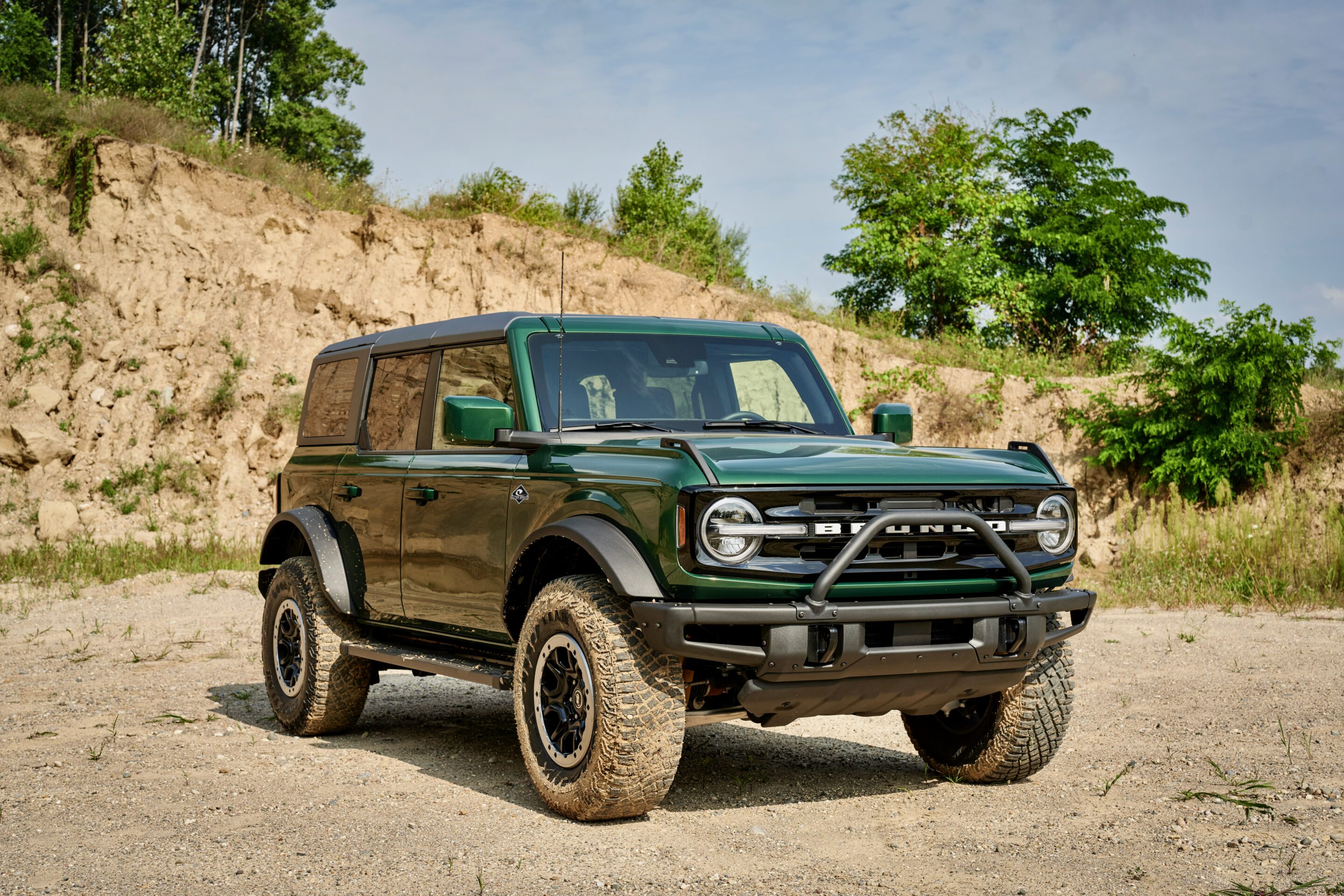
Lesser Ford Bronco variants use a 224kW/441Nm 2.3-litre turbo-four or a 246kW/563Nm 2.7-litre turbo-V6 (both of which are available in the US-spec Ranger), with a 10-speed auto on both or – enthusiasts rejoice! – a seven-speed manual also available for the four banger.
Equipment on the base model includes LED headlights, cruise control, an 8.0-inch infotainment system with Ford’s ‘Sync 4’ software, wireless Apple CarPlay and Android Auto smartphone mirroring, and a set of 16-inch steel wheels with all-season tyres. There are a variety of packages, optional extras and accessories to add to the Bronco to truly make it yours, and the price climbs rapidly as a result.
Models above the base Bronco include the Big Bend, Outer Banks, Badlands, Heritage Edition, Stroppe Edition and finally, the Raptor, and all of them feature unique trims, colours and options.

In bad news for Australia, the Bronco’s insane popularity in the markets in which its sold mean that Ford is not even thinking about right-hand drive production yet because the current left-hand drive production slots just don’t exist. But again, using the same platform as the Ranger and Everest surely means that it can be factory converted to right-hand drive easily enough when the timing is correct.
Alas, for now, the Ford Bronco isn’t coming to Australian shores – not officially anyway – but we know there’s demand there for it. Just how much – especially with NVES likely pushing the prices up thanks to the lack of hybrid or electric drivetrain in US models – is not yet known.
Prices are also not yet known – in Australia, the Bronco would likely not be cheap. But seeing how many Ranger Wildtraks are around (and they’re comfortably asking above $80,000) there would likely be demand. Until then, we’ll just have to keep ooh-ing and aah-ing at the Bronco… that Raptor sure does look like good fun!
Toyota is just days from unveiling a new V8-powered supercar, a flagship intended to sit in the lineage of the 2000GT and Lexus LFA. This next halo model isn’t aimed only at weekend drives, either: a GT3 race car has been developed in parallel, signalling a serious motorsport mission. With the covers set to come off on December 4, here’s a clear picture of what has surfaced so far.
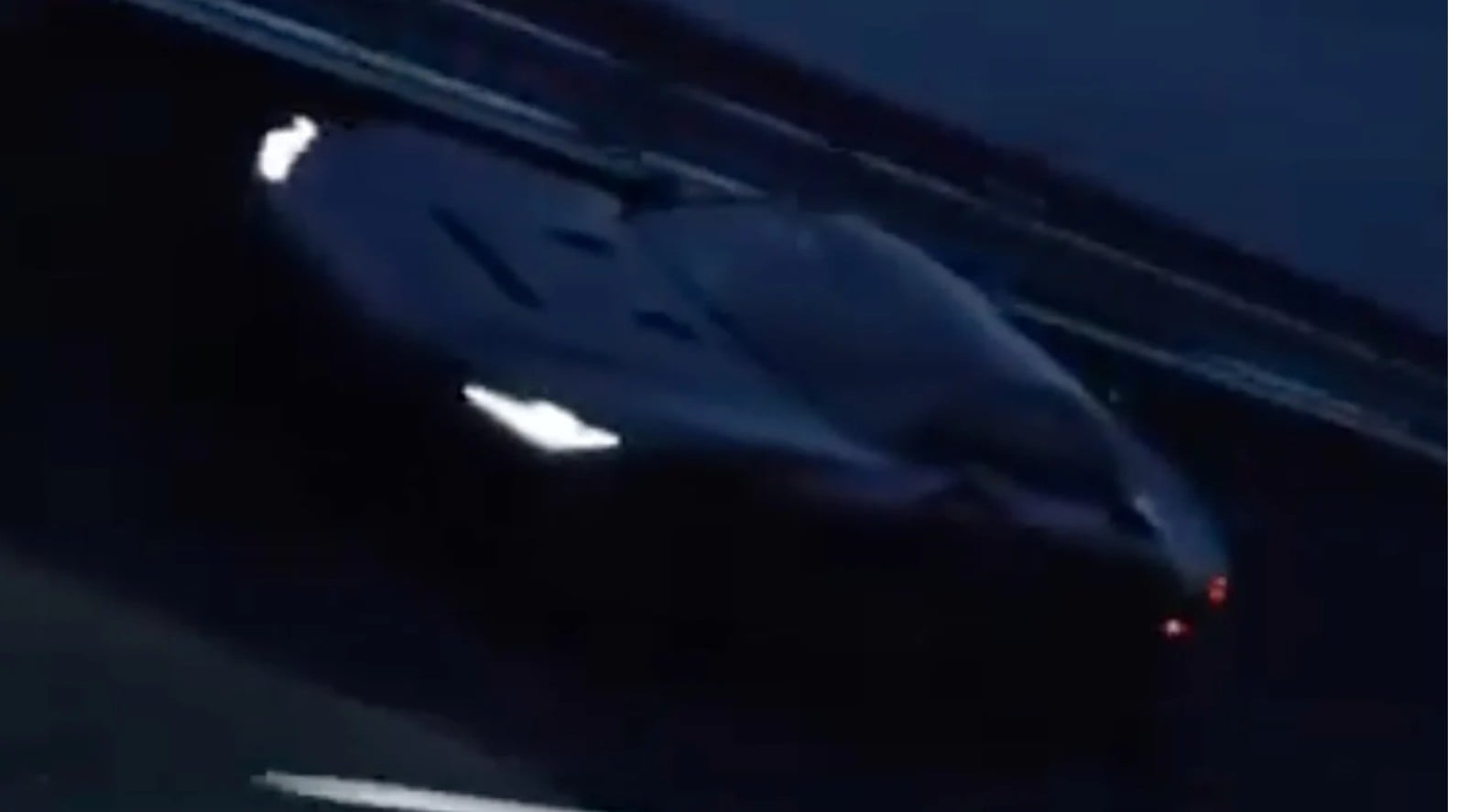
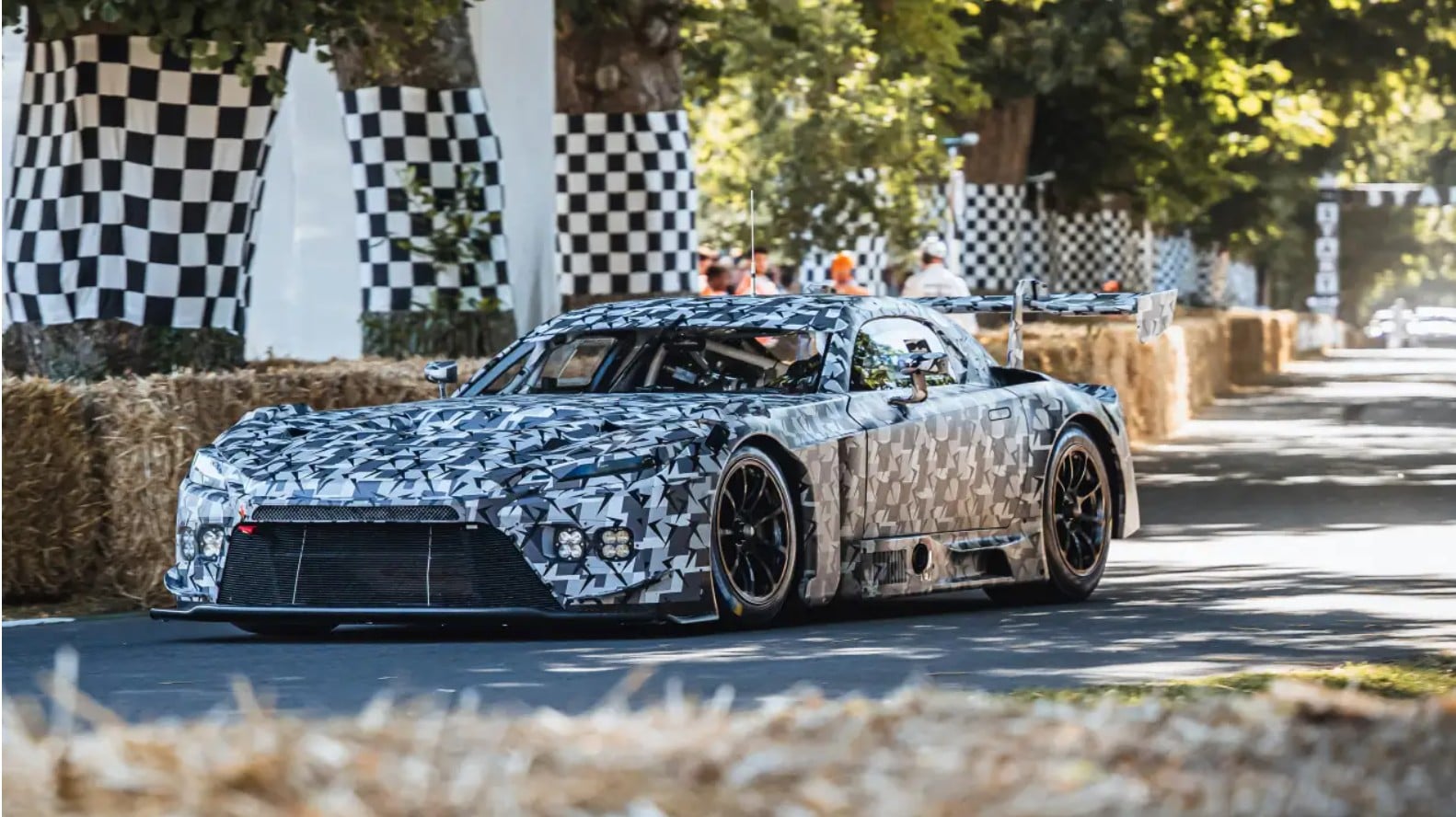
In Toyota’s latest teaser, the mystery coupe – widely tipped to be called the Toyota GR GT – shows a long bonnet, a tight rear overhang and a wide, planted stance. It lines up with what we’ve already seen from camouflaged prototypes running at the Goodwood Festival of Speed, and confirms a dramatic, aggressive shape. The silhouette feels closer to something like a Mercedes-AMG SLS Gullwing than any recent road-going Toyota, which is exactly the point of a halo car.
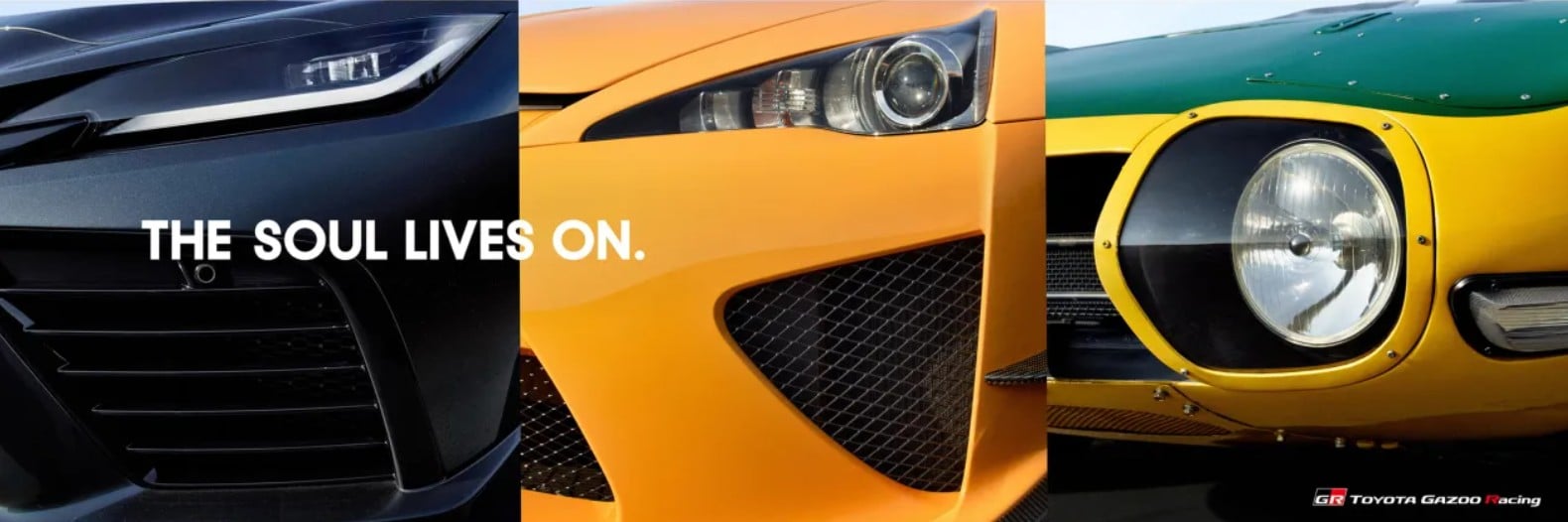
That teaser follows an official image released around last month’s Japan Mobility Show in Tokyo, revealing a partial front quarter. Even from that narrow view, the car wears slim LED headlights and a deep lower intake suggesting serious cooling and aero needs. A second, wider photo of the same car appeared on trackside signage at Fuji Speedway, giving a better sense of its low, stretched proportions.
Crucially, that Fuji shot shows a GR (Gazoo Racing) badge in the lower grille. Whether the finished product sits under Toyota or Lexus branding, the GR badge confirms the project is being led by Toyota’s competition arm rather than a purely road-car design studio.
Toyota has stayed quiet on hard technical details, but the breadcrumbs are meaningful. After the Goodwood hillclimb run, the company released audio clips of the engine note as part of its Japan Mobility Show build-up. The sound is unmistakably V8, and most signs point to a turbocharged unit. A hybrid boost for the road car is also on the cards, given the direction of modern performance flagships.
Output figures remain guesswork, but today’s rivals operate comfortably in the 520kW-plus bracket, and Toyota is unlikely to launch a halo model without playing in that same league. Expect a headline number that puts it squarely among the world’s quickest GT-style supercars.
The car’s layout also seems increasingly clear. Its proportions indicate the engine sits ahead of the cabin but behind the front axle, creating a front-mid-engine balance similar to the previous Mercedes-AMG GT. That configuration suits both a road car chasing agility and a GT3 machine chasing lap time.
Transmission details are still unknown, but the prototypes suggest power will be sent rearward via a transaxle, likely housing a limited-slip differential and a fast-shifting self-shifter. Whether Toyota opts for a traditional automatic, a dual-clutch, or something more bespoke remains to be seen.
Rumours also point to a carbon-fibre-intensive structure. If true, it would mirror the Lexus LFA approach, where Toyota’s luxury arm pioneered carbon construction within the group to cut weight and increase rigidity.
The road car’s purpose goes beyond showroom theatre. Toyota intends to homologate a GT3 racing version alongside it, echoing how the GR Yaris was built to support Toyota’s World Rally Championship program. GT3 is one of the toughest, most prestigious global classes, with Ferrari, Porsche, McLaren, BMW, Lamborghini and Aston Martin all represented — and Toyota is clearly aiming to join that fight with factory backing.
As for the badge on the nose, the momentum now leans strongly toward Toyota branding. Lexus appears to be concentrating on upcoming electric models, including a possible performance coupe inspired by the Sport Concept shown at Monterey Car Week and again in Tokyo. That shift also strengthens the view that Gazoo Racing will be the named team taking the car into WEC GT3 competition.
Either way, the wait is almost over. Toyota’s December 4 reveal should finally confirm the GR GT’s name, specs and full road-and-race intent — and whether this V8 halo car becomes the most ambitious Toyota performance statement of the modern era.
Buying a new car is an exciting time, but there needs to be a lot of research to make sure the one you end up with suits your needs and your budget requirements. A car can be fantastic but if one element to its existence is not to your expectations, that can sour it for you and give you ‘the ick’. Servicing your new car at least once per year is incredibly important, but how long will a new car service take?
In this article, we’re focusing on servicing within a warranty period. How long a new car logbook service can take to complete depends on the brand, the type of car, whether it uses petrol, diesel, hybrid or electric power and if anything else is needed during the service like a wheel alignment or a recall fix.
How long will my logbook car service take?
Obviously, this depends on a number of factors mentioned above, but as a general guide, a minor logbook service should only take a few hours at most.
A major service, however, can take most of the working day or longer, depending on the car and if any other work is needed. We advise asking the dealership or workshop chosen to perform the servicing as to how long it’ll take.
Can I book my car’s logbook service at short notice?
Absolutely not. While some dealerships and service centres may have cancelled bookings that you can take advantage of, book your car in at least a few weeks before it’s due.
Service centres need to budget for the parts required, staff needed and a whole number of other factors that work on sufficient booking notice from customers.
Plus, the further out you book, the more chance there is in getting a loan car to use while your car is being serviced.

What does a minor logbook car service include?
The biggest item during a minor logbook service is replacing the engine oil and the oil filter, as well as testing the 12V battery to ensure that it’s still holding charge.
Checking the brakes and topping up brake fluid and inspecting and maybe rotating the tyres is performed as well, while also testing the car’s major functions: the lights, steering, suspension, wipers and heating and ventilation system.
More checks are performed under the bonnet, including the air, fuel and pollen filters, the leads and spark plugs, belts, hoses and exhaust. Finally, topping up or changing fluids such as engine coolant, transmission fluid and windscreen washing fluids as required is also part of a minor service.
The above is for a standard petrol car and more may be needed, depending on the car being serviced. For example, if it’s a hybrid or EV, it may need a battery and electric motor checking, as well as checking the high voltage system and charging ability.
What does a major logbook car service include?
In addition to what’s performed in a minor service, a major service then adds a number of items such as fully changing the fluids and oils and checking performance.
A wheel alignment and suspension check is necessary. Depending on age, replacing certain parts such as timing belts, filters, hoses, spark plugs and brakes can be undertaken too.
How much does logbook servicing cost?
This depends on what type of car is being serviced, as well as what type of propulsion it uses, how often it needs servicing and how many km it’s travelled.
As a general guide for mainstream brands, a five year service cost up to around 80,000km can range from under $1000 for a new Honda to almost $4000 for brands like Volkswagen.
Some brands offer a service plan that can be purchased with the car or before its first service to lessen the cost of ownership and/or help budget running costs by building servicing into car repayments.
How often should I service my new car?
Generally, most new cars require being serviced annually or every 15,000km (whichever comes first). But there are many exceptions to that rule, including some cars in the Toyota range that require servicing every six months, but many electric vehicles don’t need to see a dealership for two years.
As always, confirm a vehicle’s specific requirements with the car’s service manual, manufacturer or the dealership.
Below you’ll find a list of the 10 most popular vehicles of all time and we bet there are a few surprises. However, what’s really interesting is how the list will look in another five or 10 years as a couple of cars are no longer in production and others have definitely fallen out of favour.
For example, the Toyota RAV4 isn’t on the list, but as 2024’s most-popular car globally with 1.18 million units sold, it won’t be long before it starts climbing the lower reaches of this all-time ladder.
Precise production figures are difficult to ascertain (and obviously a moving target given some cars sell almost 100,000 examples a month), but we’ve done our best to collate an accurate list using several sources. So, without further ado.
10. Honda Accord – 19,500,000 approx.
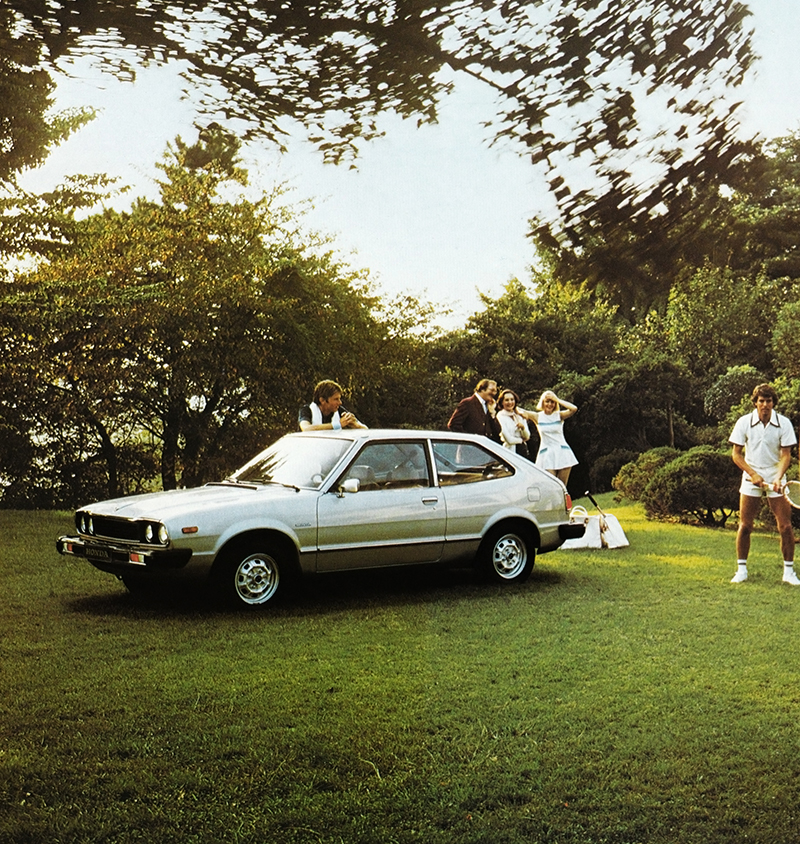
How many of you had the Honda Accord in the top 10? Liars. First introduced in 1976, Honda’s large sedan is now in its 11th generation, though its popularity is a fraction of what it once was, even being removed from sale in its native Japan due to a lack of demand.
The US accounts for most of these sales (more than 13 million), but the Accord is a hugely important part of Honda’s history and was often a perfect example of the brand’s engineering excellence, as evidenced by its pair of Wheels’ Car of the Year wins in 1977 and 2008.
9. Ford Escort – 20,000,000 approx.

Helping the Ford Escort’s position on this list is the fact that it’s a nameplate that has taken many forms over the decades. There’s the European-style Escort most will be familiar with, plenty of which were made in Australia, that existed from 1968-2004 before being replaced by the Focus.
Then there’s the US-spec Escort that proved very successful in the 1980s and ’90s and the Chinese Escort that revived the nameplate from 2015-2023. All in all, more than 20 million examples were produced along with some of the most iconic cars of all time, including the RS1600 and RS Cosworth.
8. Toyota HiLux – 21,000,000 approx.
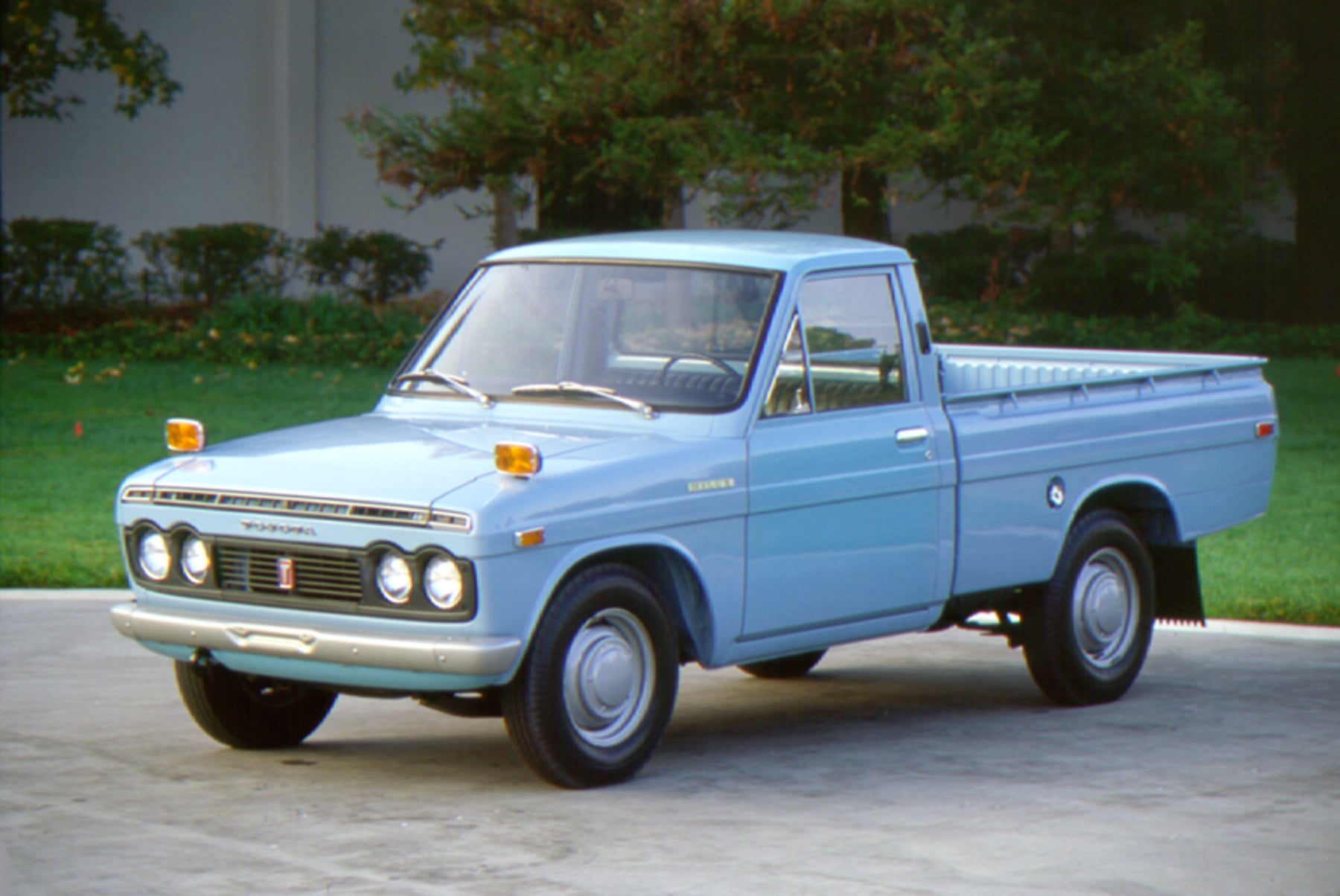
Having passed 18 million sales in 2018, we calculate that global HiLux sales are now somewhere north of 21 million, with plenty more to come thanks to the recent reveal of the ninth generation.
First appearing in 1968, its reputation for rugged reliability has seen it prosper in some of the world’s harshest climates, including Africa, the Middle East and, of course, here in Australia.
7. Toyota Camry – 22,000,000 approx.

Just as bread and milk aren’t the most exciting items on most people’s shopping list, but that doesn’t stop them being popular, so the Toyota Camry has garnered more than 22 million customers since 1982.
Ironically, though its popularity is now waning – even being discontinued in Japan – today’s Camry is one of the best ever, with plenty of space, an exceptionally frugal hybrid drivetrain and the sort of polished driving manners that haven’t always been present across its 10 generations.
6. Volkswagen Beetle – 23,000,000 approx.
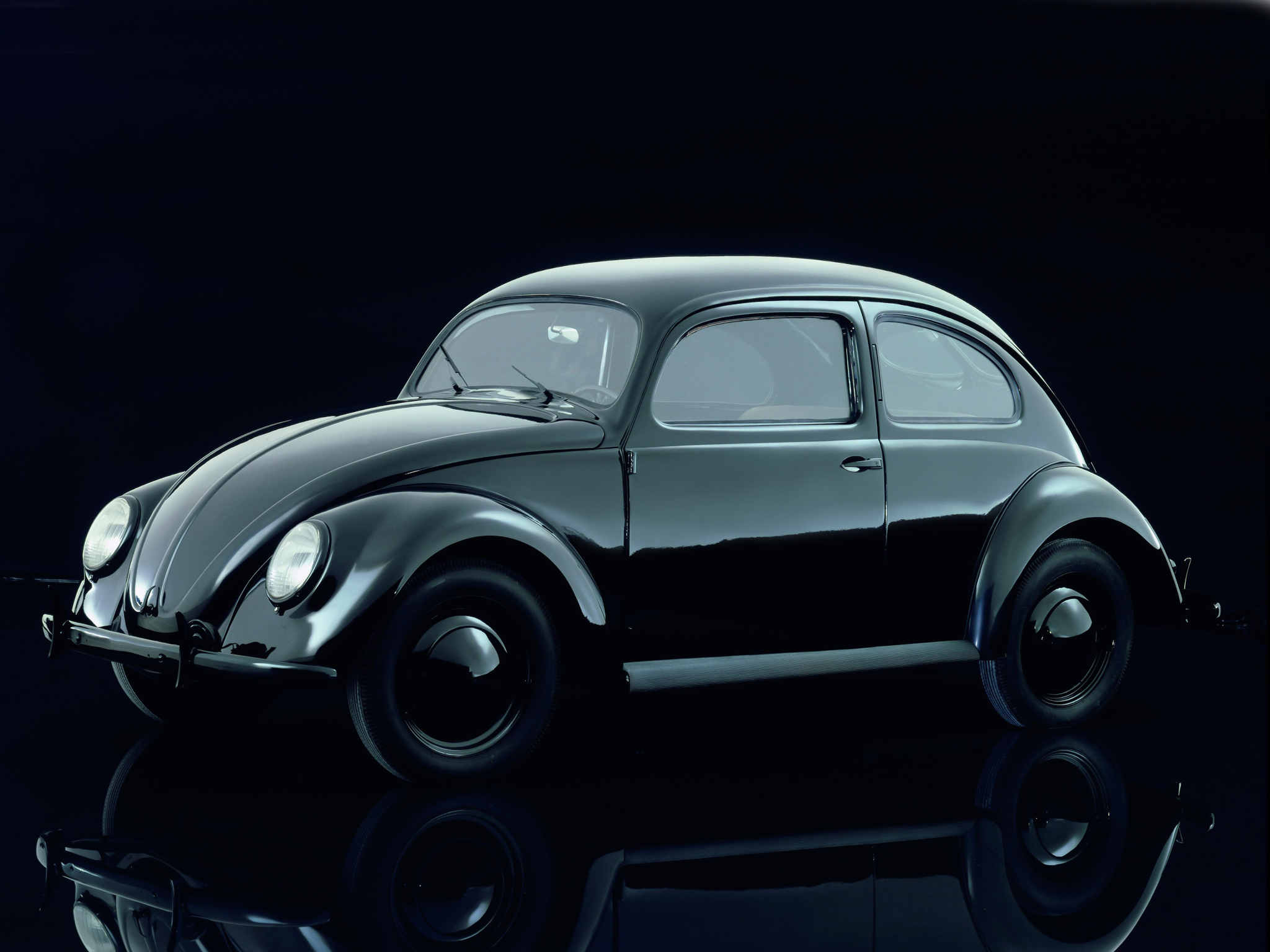
If you want to sell a lot of a car, keeping it in production for 65 years is a good start, the first-generation Beetle finally ceasing production in Mexico in 2003 having first been introduced in 1938, though serious production didn’t start until 1945 for, ahem, reasons.
While the iconic original accounts for most of the total figure, the New Beetle, introduced in 1998, adds another 1.2 million and the oft-forgotten third generation another 500,000-odd between 2011-2019.
5. Honda Civic – 28,000,000 approx.
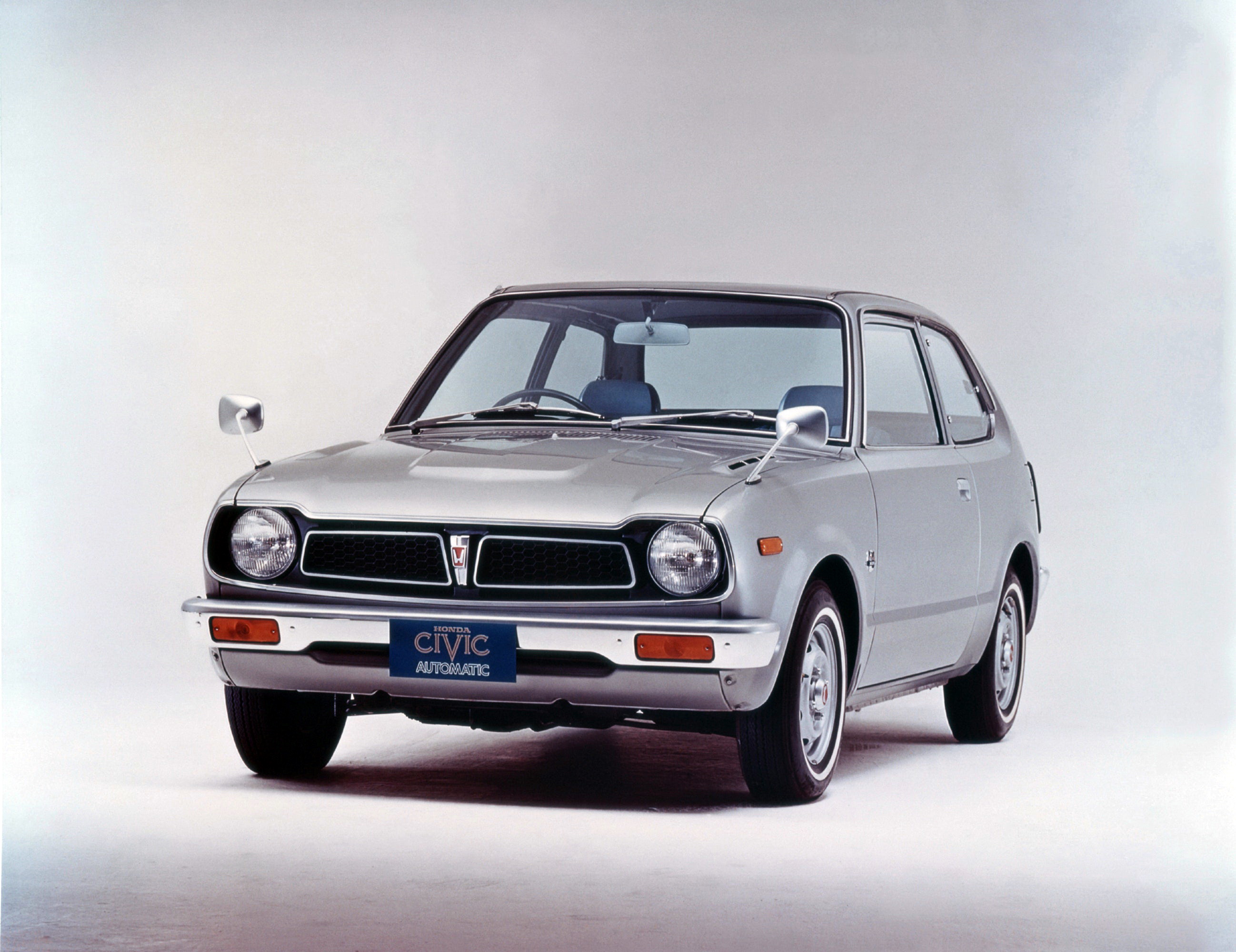
Having passed 27 million units sold in 2021, we’re confident the global sales total for the Honda Civic now sits well north of 28 million, a testament to its combination of quality, fuel efficiency and reliability in a small package.
Today’s standard Civic is a return to form, its elevated price tag justified by a premium interior, excellent dynamics and hybrid power, while the Type R is one of the most thrilling and capable front-wheel drives ever produced.
4. Volkswagen Passat – 34,000,000 approx.
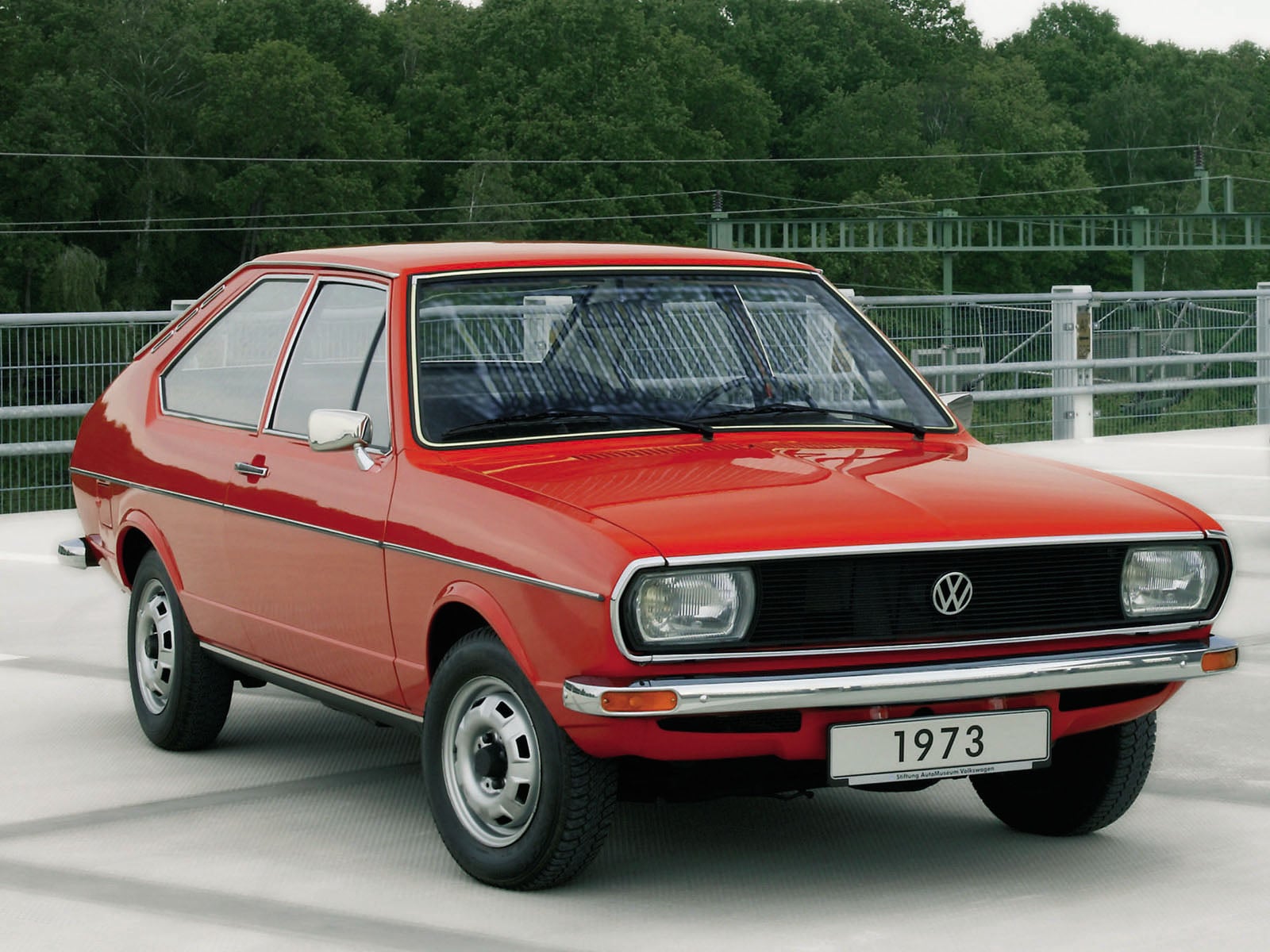
Success in its European homeland was one thing, but the best example of the impact the first Volkswagen Passat made was its 1974 Wheels’ Car of the Year win in rugged, big car-loving Australia.
Across nine generations it’s consistently offered clean-cut, conservative styling – though the Giugiaro-designed original is lovely – and a premium experience for the everyman. Not the sort of car many dream about, but one that fulfils the needs of many.
3. Volkswagen Golf – 37,000,000 approx.
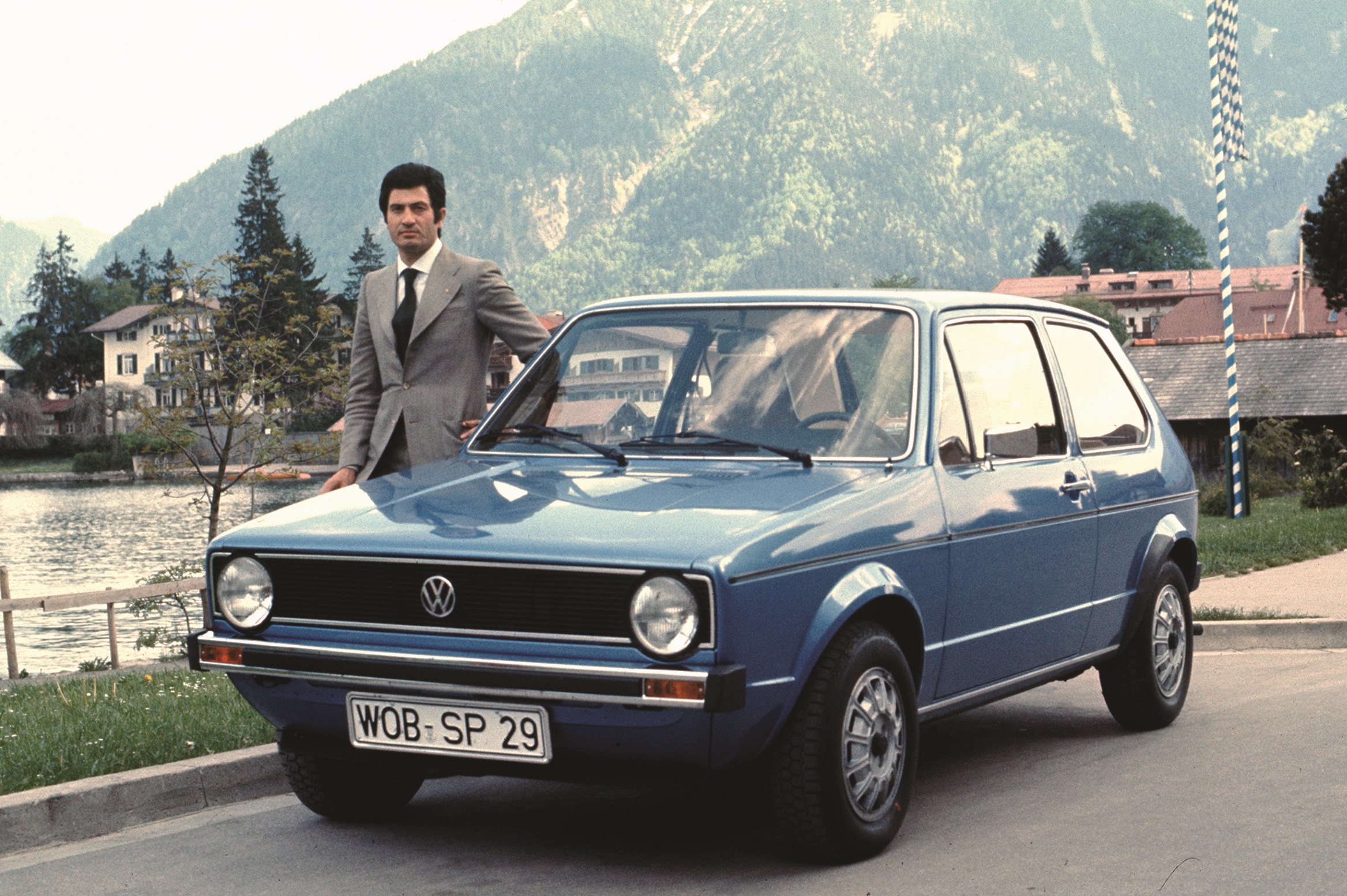
The Volkswagen Golf cemented the direction established by the Passat. A switch from rear- to front-drive, sharp Giugiaro-penned styling and a premium presentation that made it as comfortable in Melbourne as it was in Monaco or Mogadishu.
These traits have carried across five decades and eight generations to make this humble hatchback one of the most popular cars of all time. Car of the Year trophies aren’t everything, but the fact the Golf has three (1976, 2009 and 2013) speaks volumes.
2. Ford F-Series – 43,000,000 approx.
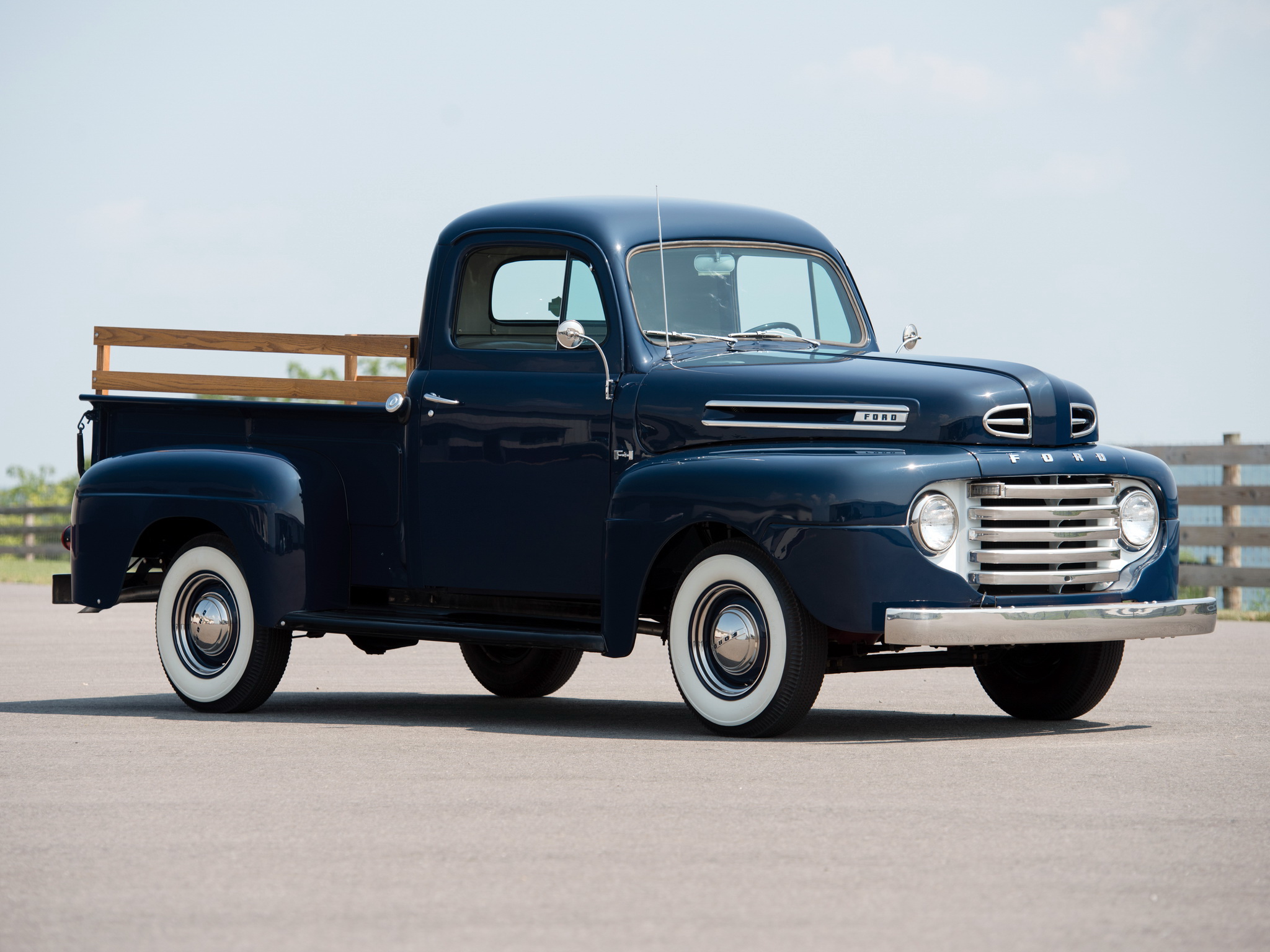
The Ford F-Series is a sensation. It’s a sales sensation, passing 40 million units in January 2022, a profit sensation, its huge margins the pillar on which Ford’s financials are built, and it achieves all this without really venturing beyond its local shores.
Introduced in 1948 and now in its 14th generation, unlike other vehicles on this list, the F-Series shows no sign of slowing down, having sold 620,580 examples in the first three quarters of 2025 alone, up 13 per cent on the previous year.
1. Toyota Corolla – 53,000,000 approx.

Even so, it’s going to take Ford’s monster truck a long time to catch the humble Toyota Corolla as the most popular car in history. Despite changing tastes meaning the affordable hatch/sedan no longer fights for the annual top spot, it continues to sell more than half-a-million examples each year.
It passed the 50 million sales mark in August 2021, an astonishing achievement, and next year the release of the 13th generation will coincide with the model’s 60th anniversary.
While it would take more than a decade for the F-Series to overtake the Corolla even if production stopped tomorrow, perhaps it will remain around long enough for small cars to become in vogue once again. Here’s to the next 50 million.
