JUMP AHEAD
Nissan is set to physically unveil a family of four electric vehicle concepts at the 2023 Japan Mobility Show from October 26. Click on the links below to check out the details of each model.

Jet Charge has launched a subscription service that allows business fleets to install electric vehicle charging infrastructure at reduced cost pressures.
The Australian EV charging equipment company’s Charging as a Service (CaaS) model will allow businesses to install, report – and importantly maintain – EV charging stations in return for a fixed monthly fee, instead of a one-off upfront cost.
The $24.9 million project will last for three years and claims it will introduce more than 3100 new EV chargers.
The Australian Government’s Australian Renewable Energy Agency (Arena) has co-funded the project to the tune of $12 million.
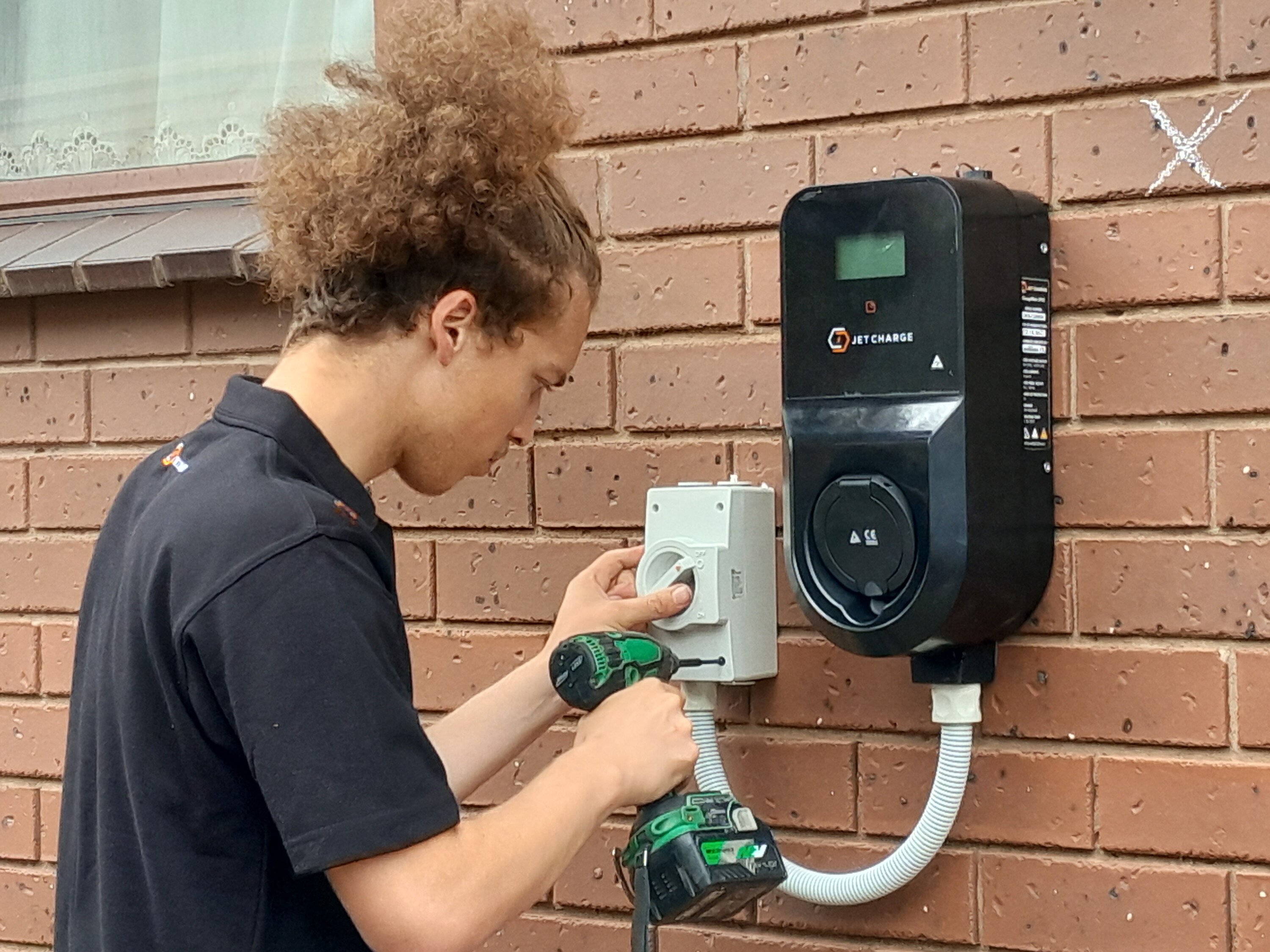
While the exact cost of each install depends on fleet requirements, Jet Charge offers a subscription for installing units at both employees’ homes and commercial sites, divided into what’s known as a ‘Starter Pack’ and ‘Deployment at Scale’.
Jet Charge chief executive Tim Washington said it is a “game-changing model” for Australian business vehicle fleets.
“We know that fleets are looking for a way to electrify and that infrastructure is a key barrier,” Washington said.
“Our CaaS project will not only increase affordability but also demonstrate what running private charging networks will look like at scale.”
“Dramatically reduces dwindling excuses”
Meanwhile, Greenpeace Australia Pacific welcomed the new subscription model to lower the barrier for fleets to make the electric switch.
“It’s time for big business to step up on transport by committing to 100 per cent electric cars and trucks. Increased investment in charging-as-a-service dramatically reduces dwindling excuses from the business sector,” a Greenpeace spokesperson said.
“Fleets play a critical role in Australia’s transition to electric vehicles as their cars make up over 40 per cent of new car sales and are only used for three to five years.
“So when a business commits to going electric, that means more everyday Aussies will be able to buy second-hand EVs sooner and start driving toward cleaner, healthier streets.”
Depending on how far employees drive, EVs can save hundreds – if not thousands – of dollars per year in running costs compared to diesel or petrol-powered vehicles.
Combined with solar-generated energy, charging becomes almost free for fleet operators, allowing them to cut expenses and reduce their lifetime environmental footprint.
Fans of the A-Team always knew they’d come around again. Yep, just like baggy jeans, the daggiest of body types is back in vogue: the passenger van.
Of course, some brands never gave up on the segment, with the Kia Carnival now into its second generation as a sleek and muscly family-hauling box. (Might be time to do something about that throwback circus tent name, though…)
Nissan is set to physically unveil a family of four electric vehicle concepts at the 2023 Japan Mobility Show from October 26. Click on the links below to check out the details of each model.
Both models were developed with chauffeur-loving Asian markets as a priority, but while the LM is confirmed for Australia (watch for it to be a favourite with upmarket hotels and limo services), the EM90 is strictly a China-only affair.
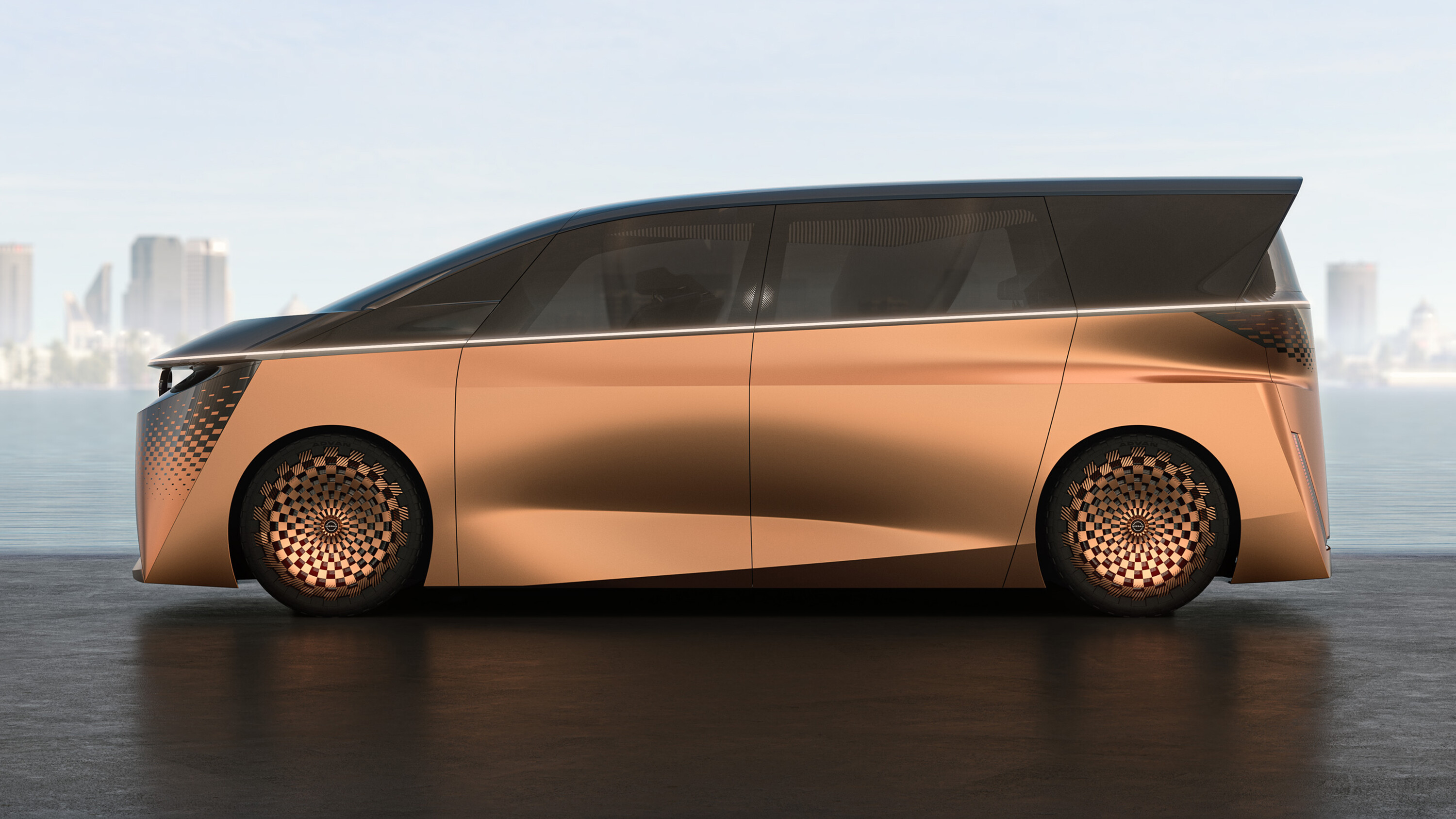
Now there’s this, the Nissan Hyper Tourer concept – the third model in a family of four electric show cars that will debut on October 25 at the 2023 Japan Mobility Show.
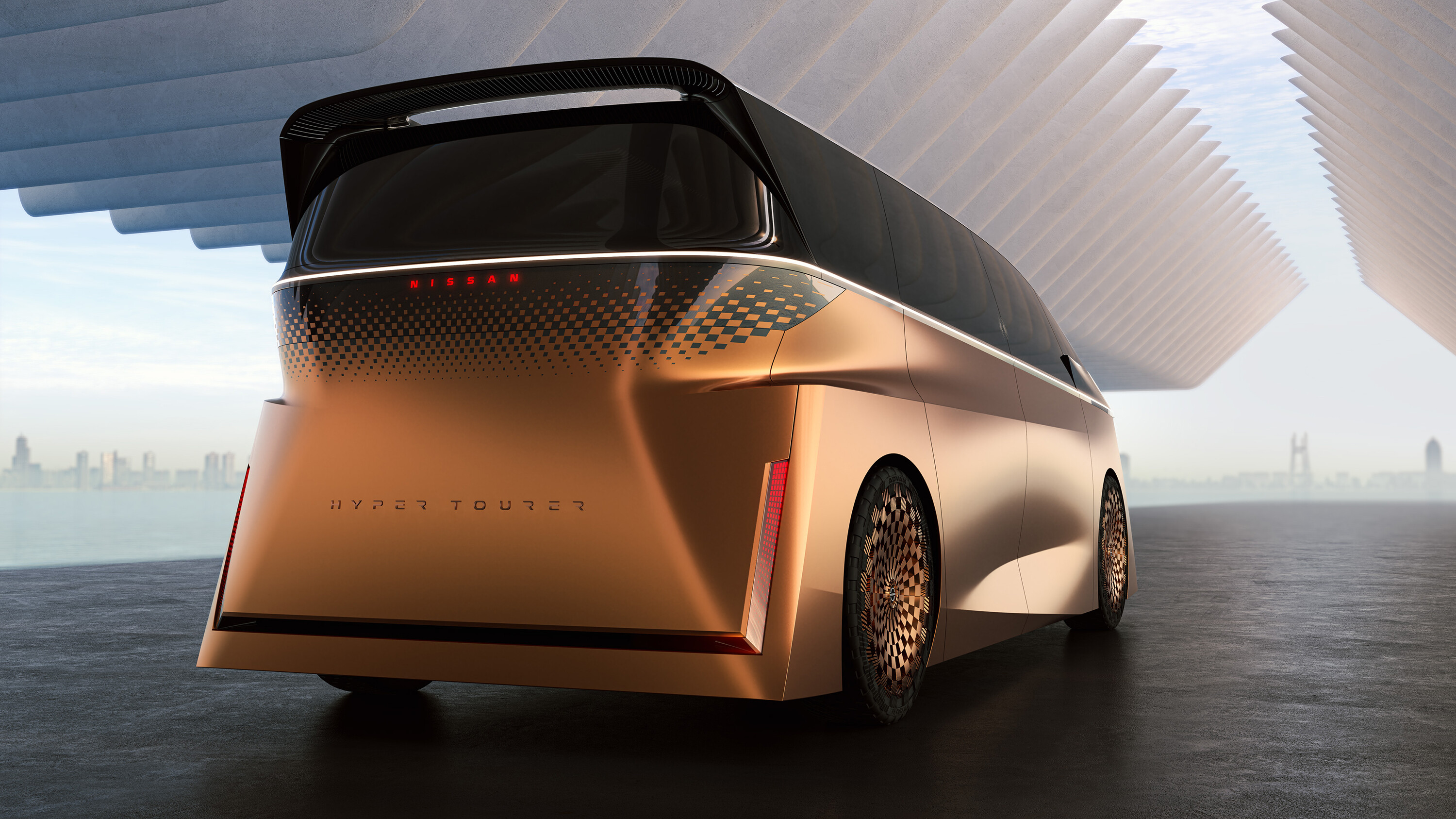
It’s no surprise then that Nissan has used it in today’s announcement. Lexus, too, stamped the word on its media release for the LM.
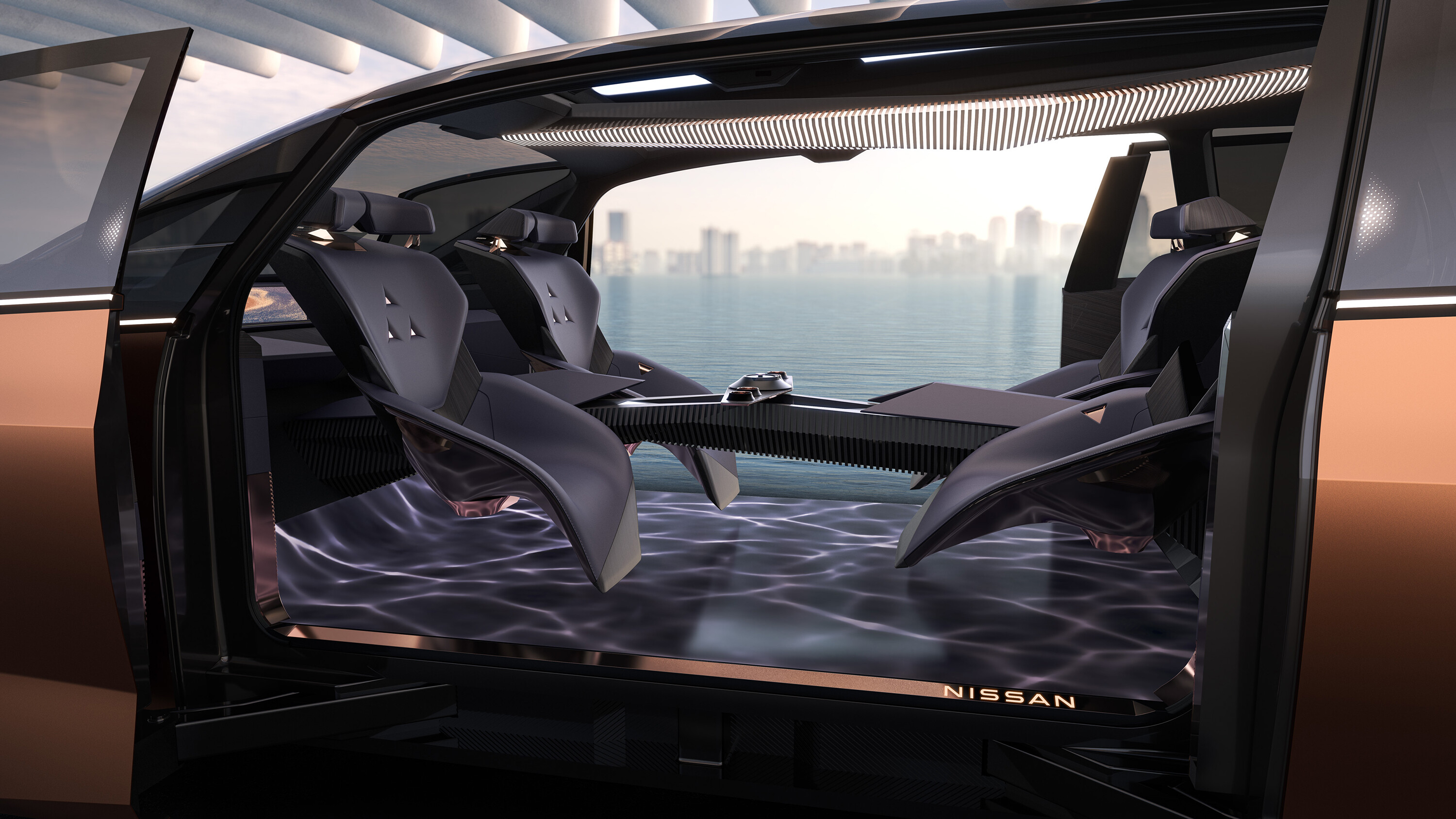
As a concept, the Hyper Tourer showcases the same subtle profile curves and aggressive ends as its Adventure and Urban teammates, while the interior plays up the space that only an EV platform can offer.
There’s little else to know from a technical standpoint, with useful details like dimensions, power and driving range all conspicuously absent. This is, ultimately, an exercise in design more than technology.
Watch for more details to come at the show, if any are to be had.
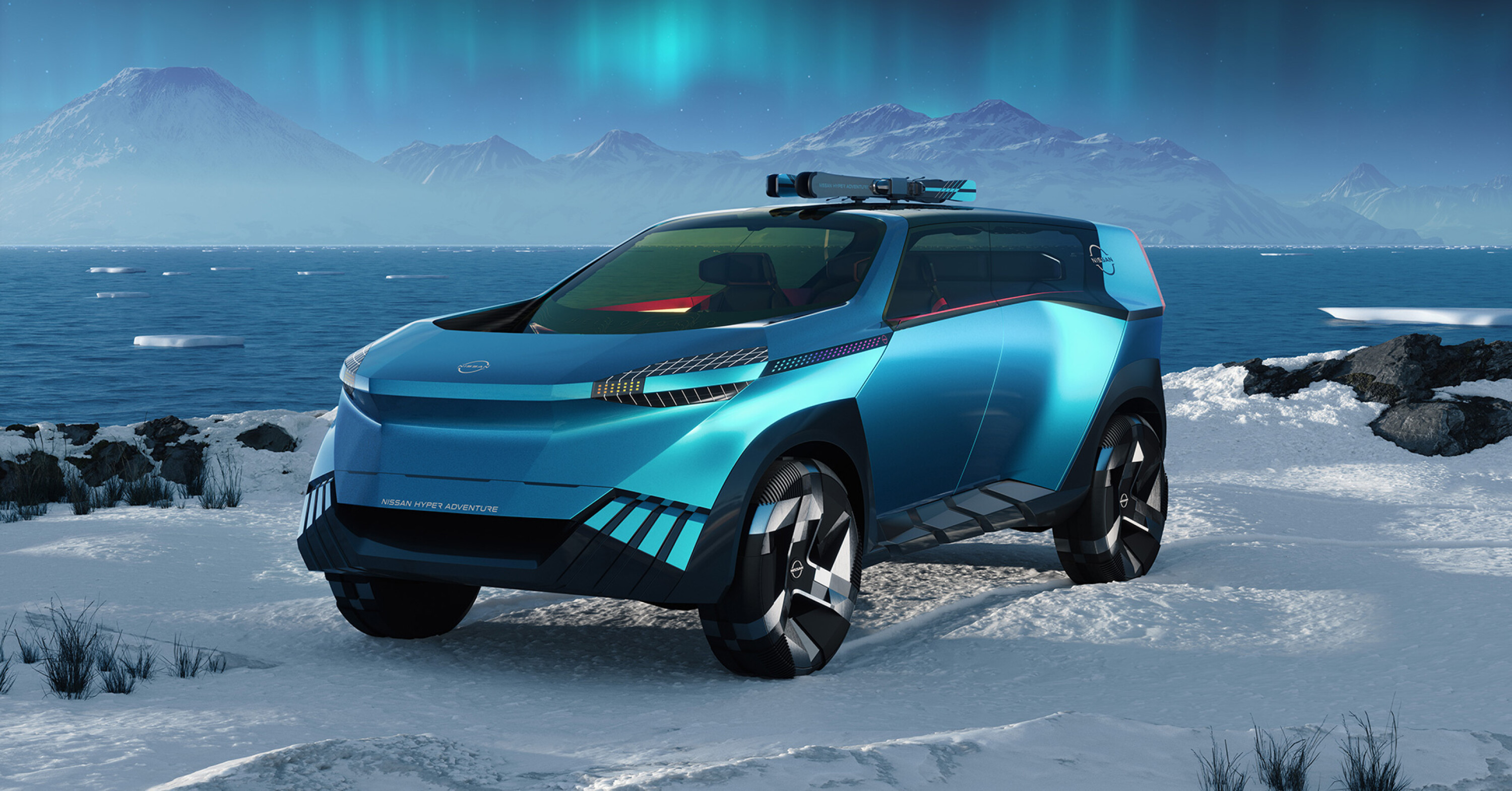
The Nissan Hyper Adventure is a two-row electric SUV targeted at “people passionate about outdoor adventures and an eco-friendly lifestyle”.
There’s a focus on the snow with traction gears embedded in the wheels and front and rear bumpers, aided by the Japanese company’s E-Force all-wheel drive system.
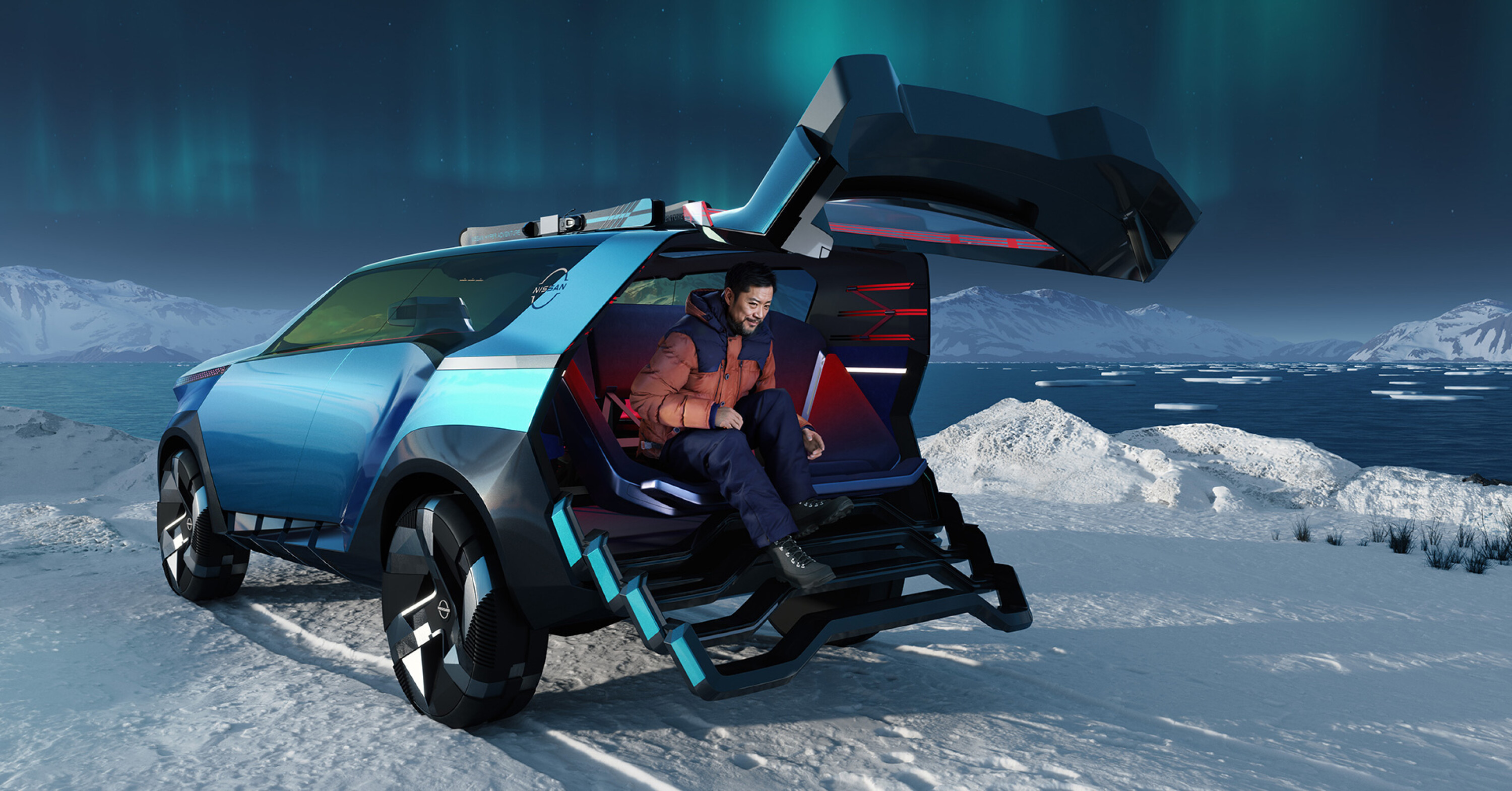
At the rear, automatic steps can be deployed to allow the boot to be used as a seat.
The exterior also features a blue paint colour similar to the Kia EV9 large electric SUV, a prominent Nissan logo at the C-pillars, and red-green-blue (RGB) light elements at the front.
Meanwhile, the Hyper Adventure’s interior features a rear bench contraption that can rotate 180 degrees to face the rear.
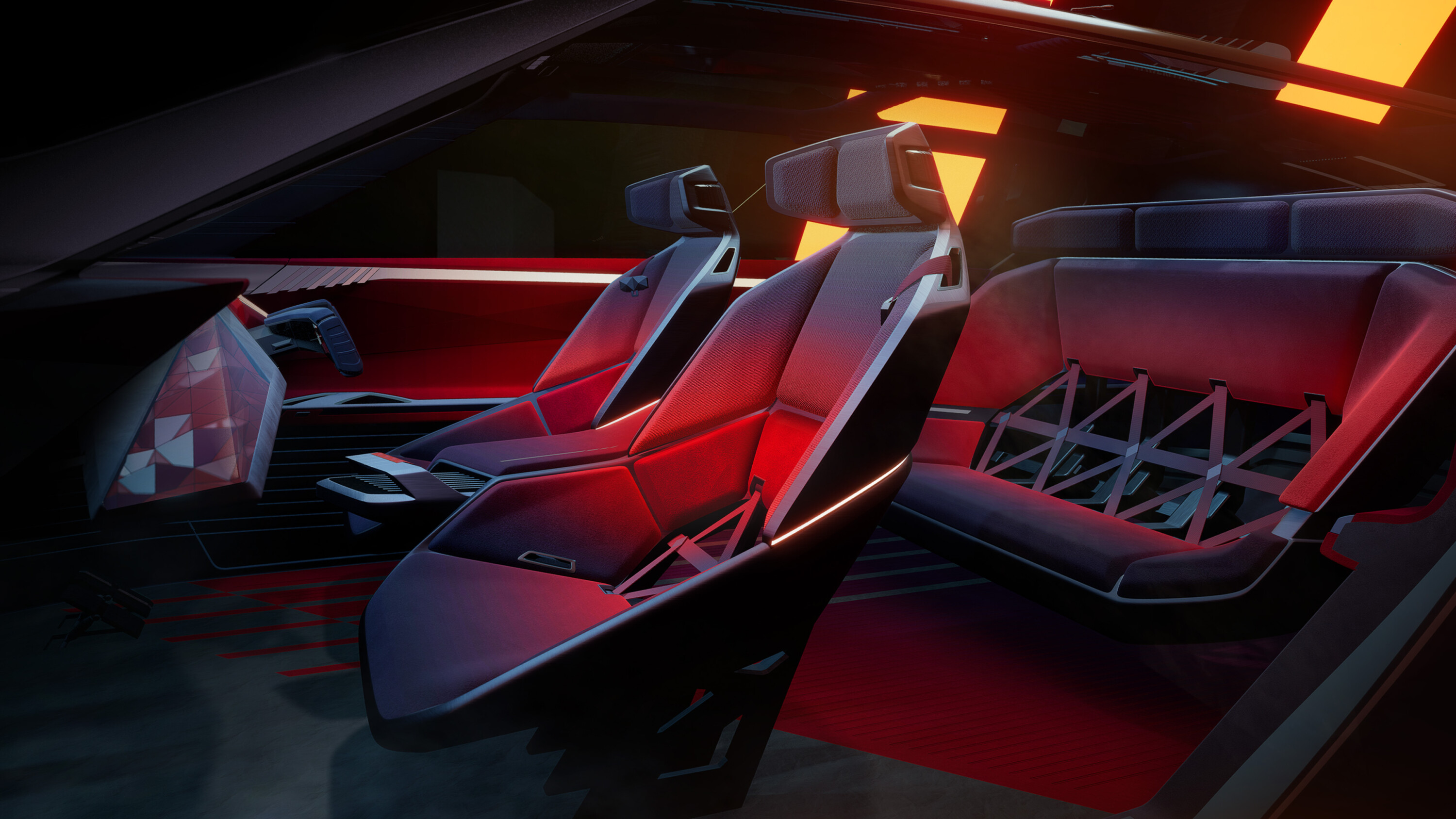
The sharp angles and webs are reminiscent of the forthcoming Tesla Cybertruck with a retractable yoke-style steering wheel and glass that integrates across the windows, roof and rear end.
As per the Hyper Urban small electric SUV concept, it has vehicle-to-home (V2H) and vehicle-to-grid (V2G) capability.
The Nissan Hyper Adventure doesn’t appear to preview a production model (the closest is the off-road focused seven-seat Patrol) but does signal the automaker’s design intentions.
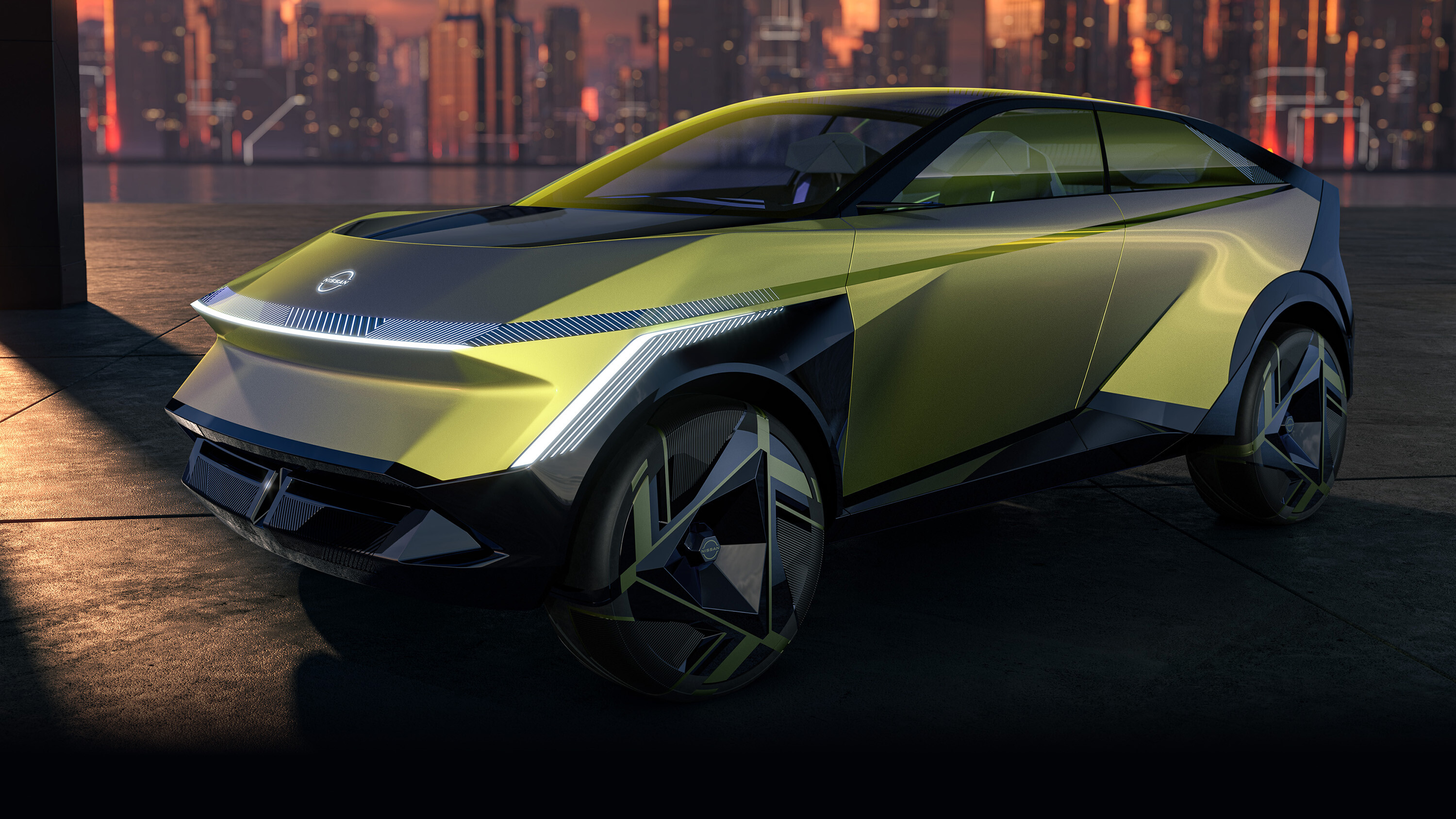
Nissan has previewed its first electric concept car as part of four new ‘Hyper’ concepts set to debut at the Japan Mobility Show.
The Nissan Hyper Urban is an edgy-looking electric SUV representing the company’s future design and technology direction.
It is a significant departure from the current Ariya – which could arrive in Australia next year – with a lime-yellow design theme, a myriad of repeating and opposing whisker LED light elements, a high and sloping rear, and a 45-degree side profile crease reminiscent of the Hyundai Ioniq 5.
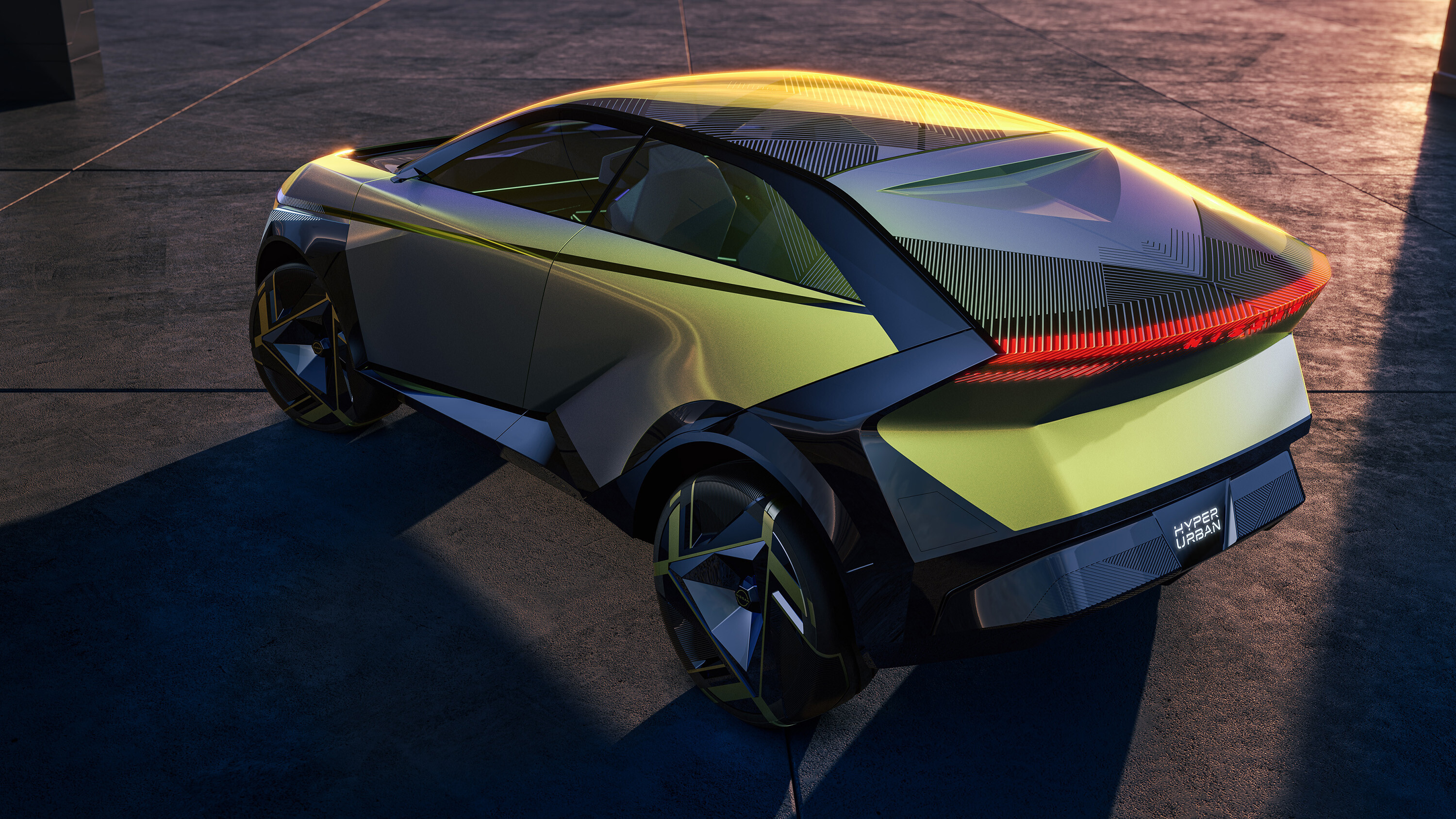
The interior features kaleidoscopic triangles, a retractable aeroplane-style yoke steering wheel, and front driver and passenger displays integrated into the triangular dashboard.
Additionally, the front seats can collapse and fold into the back to form a lounge-style layout for viewing videos on the pop-out widescreen.
As per the current Nissan Leaf small electric hatchback, it offers vehicle-to-home (V2H) and vehicle-to-grid (V2G) bidirectional charging capability.
It enables owners to cut the vehicle’s running costs and the holistic environmental footprint by using its battery pack to power buildings when there’s no solar energy generation, donate excess electricity into the grid, and automatically recharge when there are renewables.
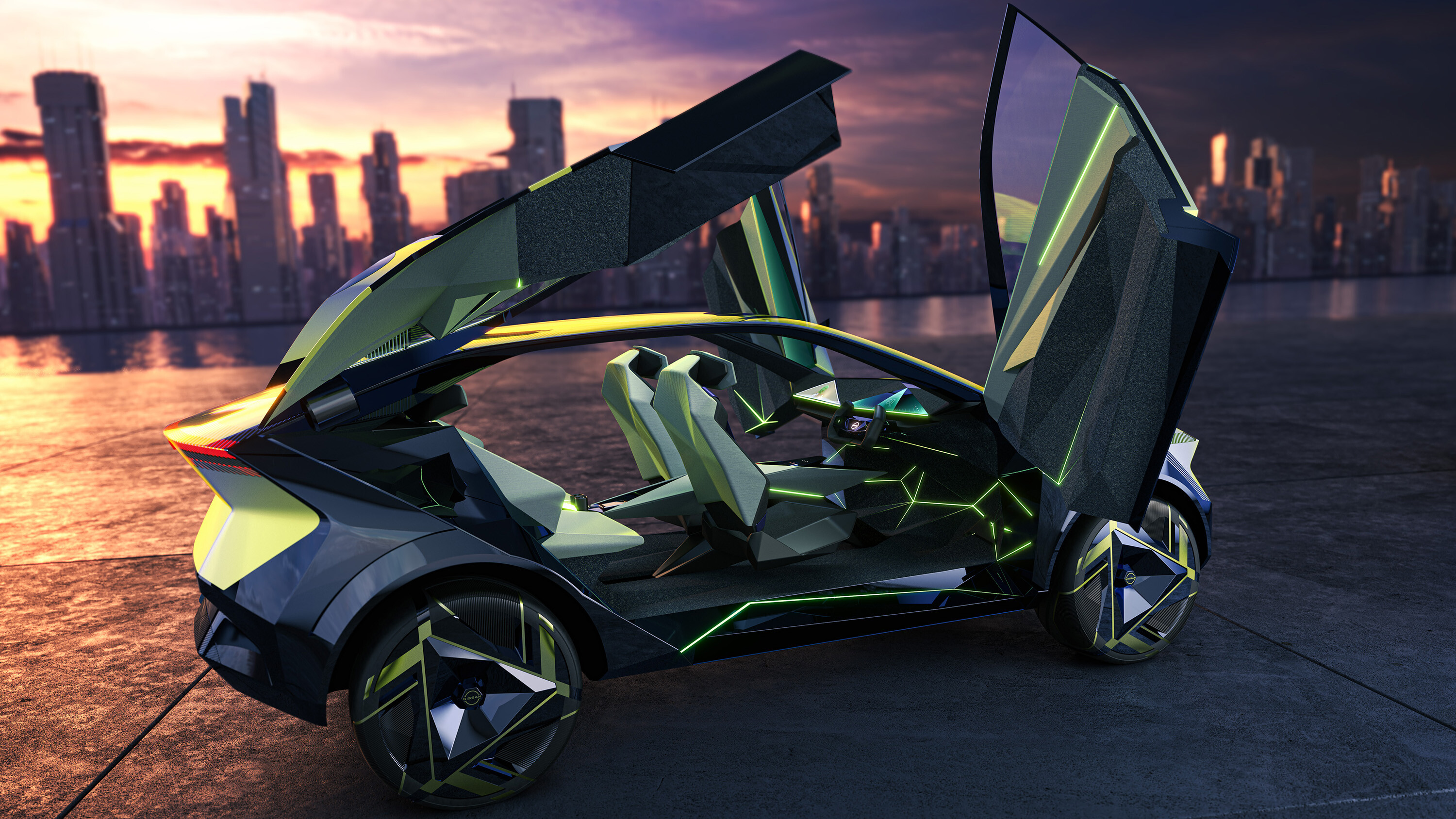
The Japanese carmaker states the Hyper Urban can receive hardware and ‘regular’ software updates, and is said to be designed for drivers living in urban and suburban areas.
It’s part of four electric vehicle concepts set to debut physically at the Japan Mobility Show from October 26.
The company will also debut 90th-anniversary special edition models featuring cooper exterior accents, unique wheels and seat materials, which will apply to the Nissan Leaf hatch and X-Trail medium SUV overseas.
The Hyper concepts follow Nissan’s four EV concepts in 2021 with the ‘Out’ suffix and recently previewed an electric Micra hot hatch for Europe.
Along with unveiling a family of models at its Kia EV Day event – including the production EV5 medium SUV, Concept EV4 sedan, and Concept EV3 small SUV – the company has quietly confirmed to Autocar [↗] that a smaller city-focused EV2 is also coming, most likely a hatchback.
However, Kia Australia’s product planner Roland Rivero has confirmed to Wheels it won’t come to Australia.
It will be made in Kia’s Slovakian factory, which currently produces the Europe-only short-wheelbase Sportage SUV and Ceed hatchback.
Australia lacks a free trade agreement with Slovakia – which saves a five per cent import tax – so there’s no business case to offer it locally.
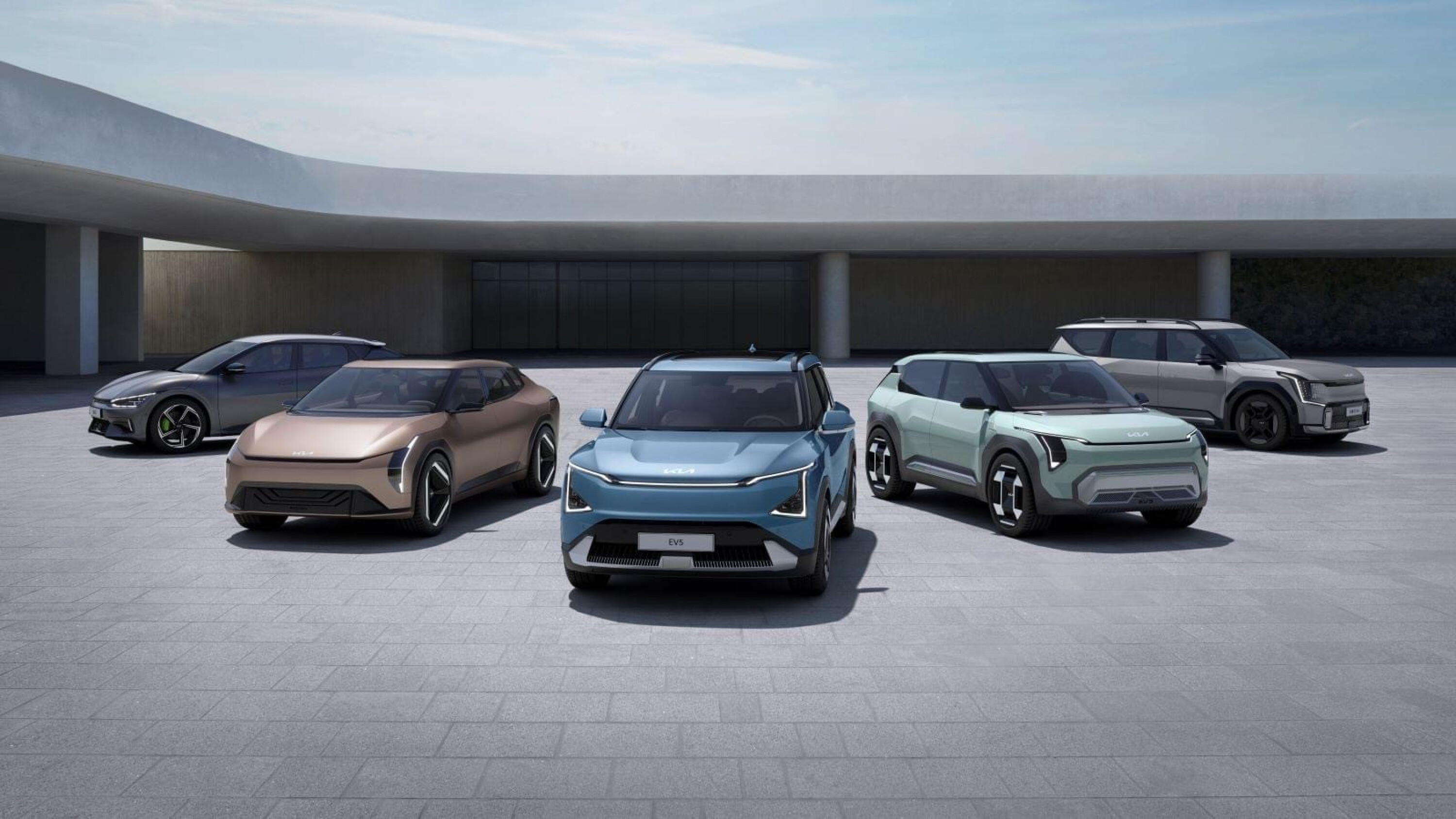
With a targeted starting price of around AU$47,500 (US$30,000), it’ll likely be a more premium small electric car offering to rival the pricier Fiat 500e, upcoming Peugeot E-208, and Mini Cooper Electric.
That’s instead of the sub-$40K Chinese-made BYD Dolphin, MG 4 and GWM Ora, which Hyundai and Kia aren’t targeting, though they can cost around $50K or more for a top-spec variant.
Similar to the circa-$40K Volkswagen ID.2, the Kia EV2 will focus on European markets where there is more demand for smaller EVs.
A high-performance EV2 GT is also reportedly being developed.
Kia hasn’t revealed any details yet, but expect the EV2 to use the Hyundai Motor Group’s Electric Global Modular Platform (E-GMP) based on a lower-cost 400-volt class battery architecture, as per the EV3, EV4 and EV5.
Kia imported 150 cars back in May, and that was the final batch to be delivered to these shores.
It has vanished from Kia’s local configurator, its flagship sporting car status usurped by the EV6. A car whose star burned so brightly for such a short period of time is about to blink out, and that is a bit of a shame.
In truth, the Stinger was never a great performance sedan. I ran the range-topping GT for a while and it was one of those cars with a respectable turn of pace, but which always seemed happier the gentler you were driving it.
It was nevertheless comfortable, well equipped, nicely finished, backed by a great warranty, always interesting to behold and seemed a generally good fit for Aussie road conditions.
Here was a big, fast, five-door sedan/liftback that while not exactly matching the Aussies’ DNA strand for strand, nevertheless offered buyers who wanted a grunty, generously-cut and affordable rear-driver something credible to consider.
We put the Stinger 330Si up against the Holden Commodore SS-V Redline and the Volkswagen Arteon 206TSI back in a 2017 test, fairly confident that the box-fresh Kia would do a number on the ageing Commo and the milquetoast Volksy. The results were surprising.
We quickly realised that only in Australia were we pigeonholing the Stinger as a Commodore rival. It wasn’t. It was more of a cut-price BMW 440i Gran Coupe or Audi S5 alternative instead, not really accustomed to rolling up its sleeves and wading into the mosh pit.
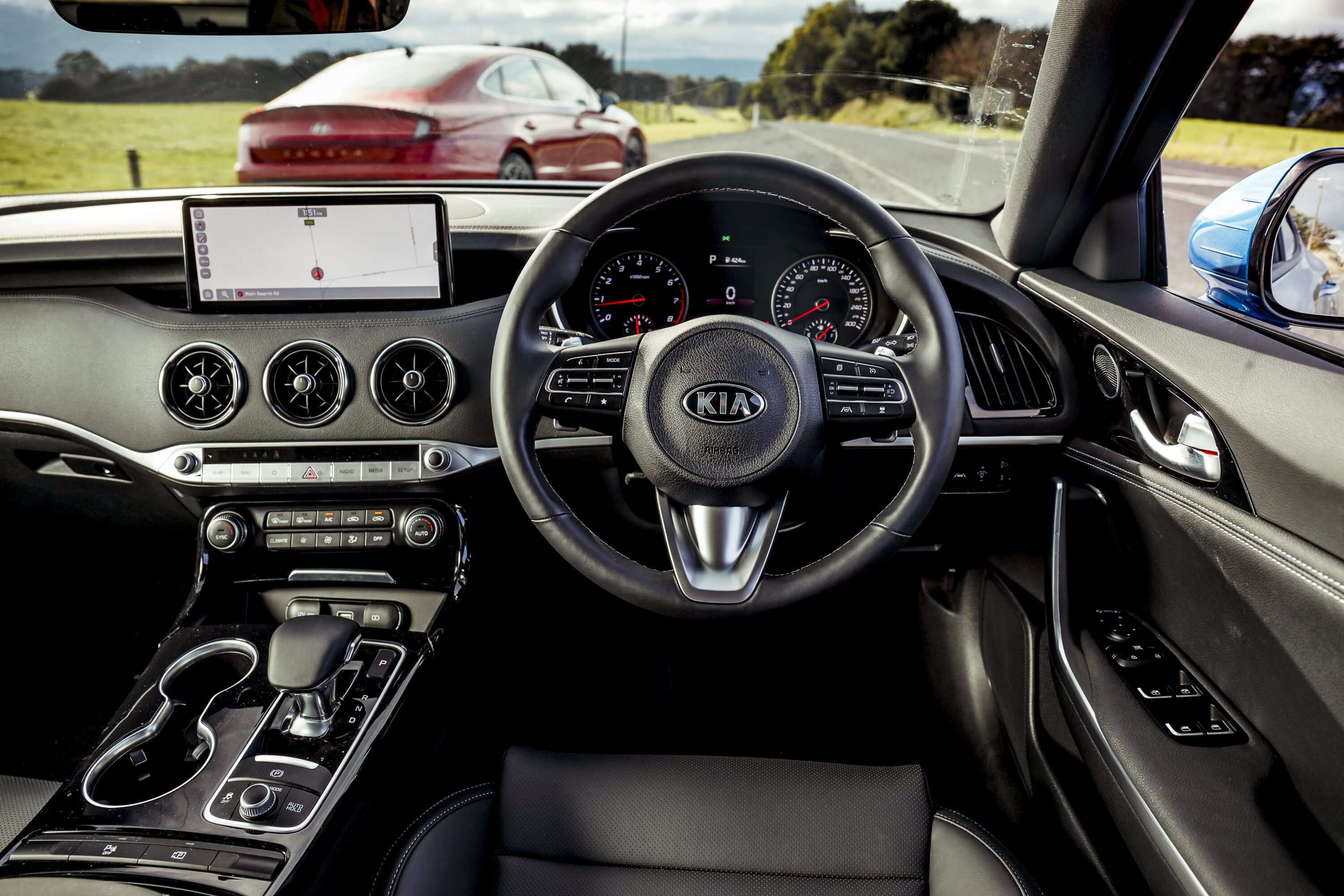
It would easy repeat 4.9sec pulls to 100km/h thanks to its largely unflappable launch control system
Driven hard it would chew through its tyres easily, and its approximate body control and dogged refusal to hold a gear would frustrate the enthusiast driver. But boy, was that V6 model quick.
It would easy repeat 4.9sec pulls to 100km/h thanks to its largely unflappable launch control system.
We all marvelled that here was a car that at the time cost a nadge over $50K, yet it came with a seven-year warranty, would fit your family with ease and could hold up in a drag race with a Porsche 996 GT3. Maybe not with the kids on board.
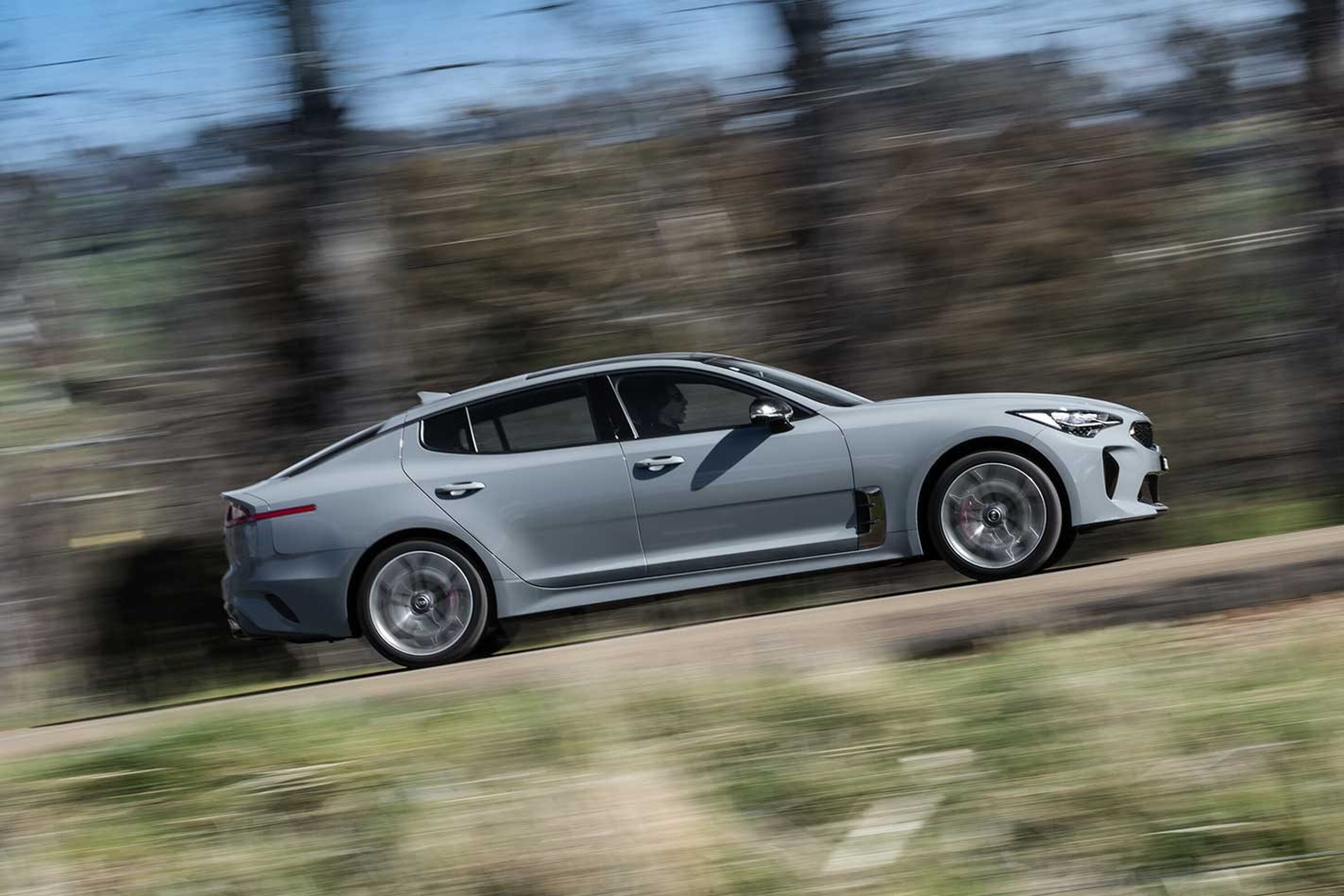
It had a lazy likeability that never really rubbed off, happy to burble about most of the time before it reluctantly demonstrated its 272kW/510Nm party trick.
Oh yes, there was a weaksauce 2.0-litre turbo model for those who enjoyed wilful demonstrations of missing the point but we can happily gloss over that one.
Residual values for six-pot Stingers are reassuringly healthy, reflecting the fact that most have been well maintained with warranty still outstanding. It still makes a great used buy because, let’s face it, they won’t make one quite like this ever again.
The bright yellow two-door remains shrouded in mystery with all manner of conjecture as to what iconic coupe it will spiritually replace for the electric age. The Supra, MR2 and even Celica have all been floated.
What we do know, is that it will be purely electric. Toyota describes it as just one of its proposed models of “sports car in the carbon-neutral era“, suggesting that the Gazoo Racing arm will double down on driver enjoyment in the electric age.
Part of what makes this car possible is extensive parts sharing with the FT-3e concept (also present at the show), says the Japanese carmaker. This will be made possible by the eventual production versions of these concepts moving onto a new modular architecture that differs from the BZ4x‘s underpinnings.
So far, we can only see a few details of the FT-Se, which looks to be a development of concepts shown previously. It’s low and wide, with a narrow cabin perched in the centre of its bodywork like a Le Mans prototype racer.
The proportions aren’t typically front-engine rear-drive or mid-engined, with the cabin almost exactly in the middle of the vehicle – that’s because it’s a BEV.

Inside said cabin, Toyota has allowed us a peak of the ‘intuitive controls’ within. A yoke steering wheel, for a start, sits below a digital driver’s display that’s flanked by two screens.
In the centre is a large portrait-oriented screen for major HMI interactions like a McLaren Artura. On the left, there’s another smaller smartphone-sized display with some extra info.
Toyota will reveal more details about the FT-Se concept, and the model it’s likely to spawn, at the upcoming Japan Mobiliy Show on October 26.

It’s not a car that bowled us over, its four-cylinder hybrid powertrain feeling overwrought after the muscle car swagger of its older namesakes.
Well, this is the first time we’ve got our hands on the setup since. While this GLC63 is almost 150kg heavier – at a gobsmacking 2310kg – much less of that weight is being carried on its shoulders. Halving the cylinder count of a performance car feels a less sacrilegious act when the car is already something of a sin in the first place. Namely, a fast SUV.
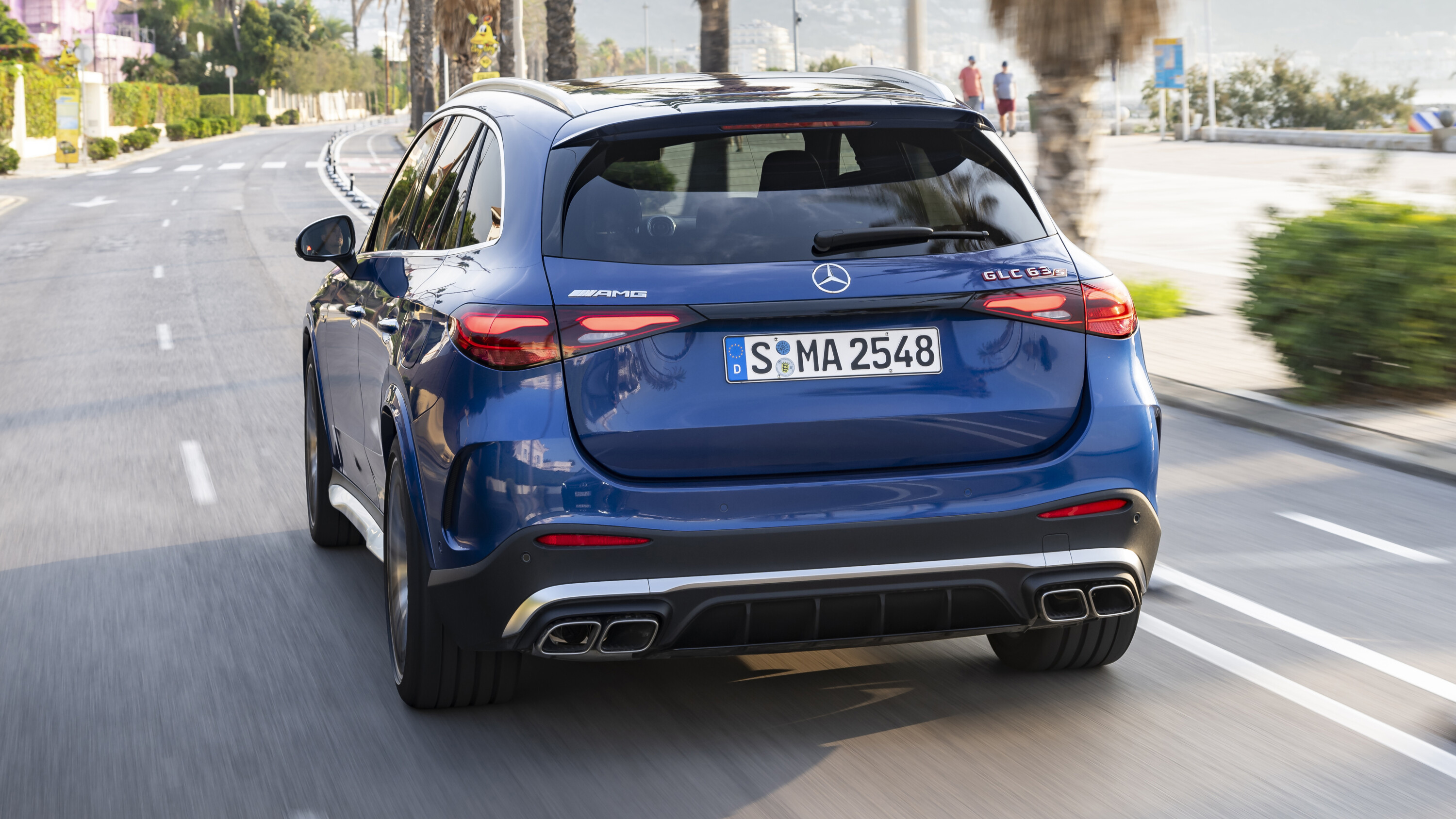
They bond via a highly adaptable all-wheel-drive system – the electric motor can actually send its power up front – with a 3.5sec 0-100km/h time as the result. In the context of EVs, that’s not exactly shocking. Engage launch control and your brain will vehemently argue that point, though.
Just like the C63, you could probably write an entire thesis on the GLC63’s technological prowess.
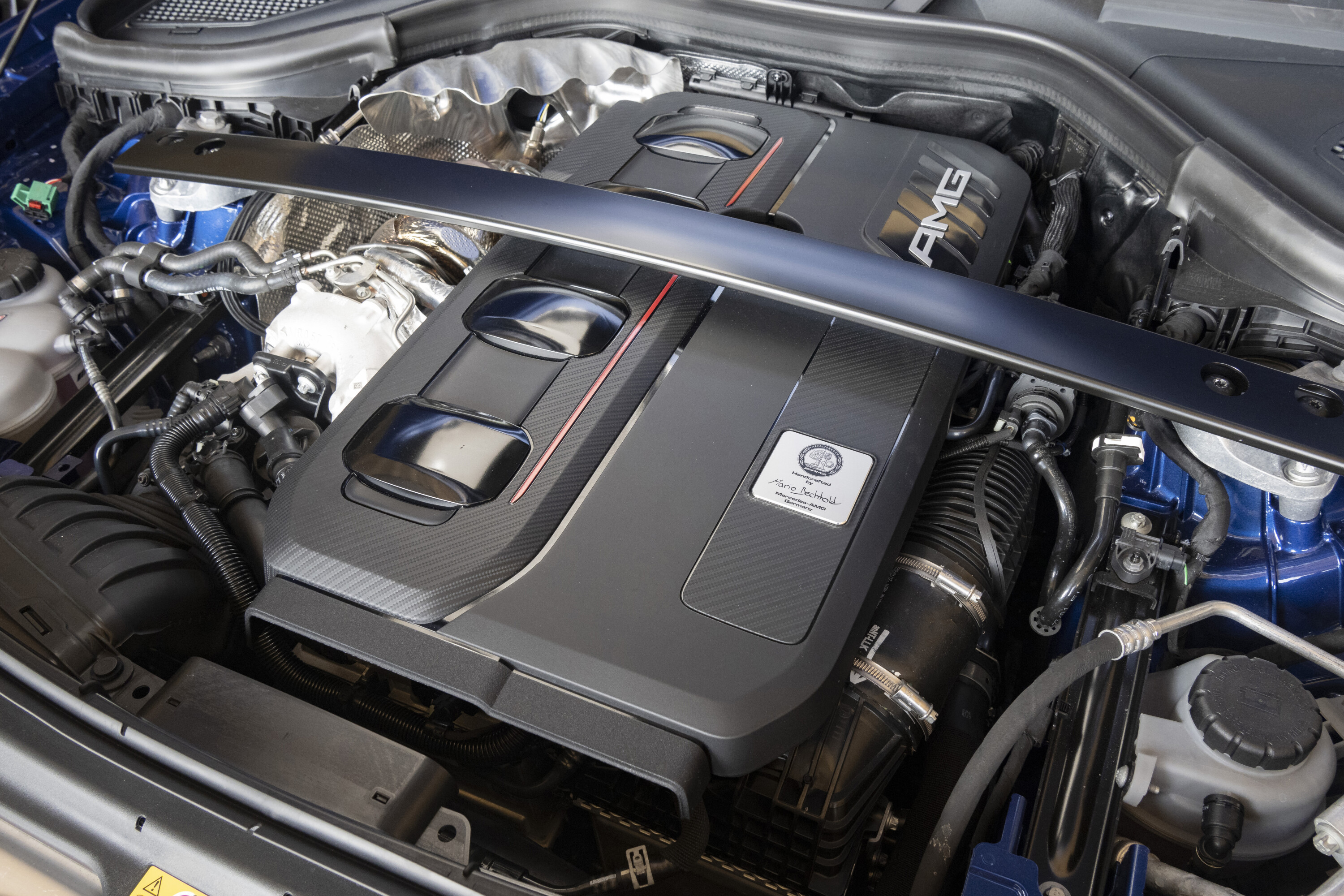
Alongside its eight different driving modes you’ve three settings for the ESP and four levels of brake regen
An electrical turbocharger is a ‘direct derivative’ of AMG’s F1 program – less of a boast as Max Verstappen polishes his third title in a row, perhaps – while the electric motor is integrated with the limited-slip diff on the rear axle to help neaten the handling without the ESP needing to intervene.
There’s standard all-wheel steering, adjustable damping and – unlike the C63 – active anti-roll control. Performance SUVs are no stranger to such systems, and it’s borderline essential if they’re to properly act the role of a hiked-up sports car.
Alongside its eight different driving modes (!) you’ve three settings for the ESP and four levels of brake regen, not to mention a decision on whether you’d like to shift through its nine-speed transmission manually.
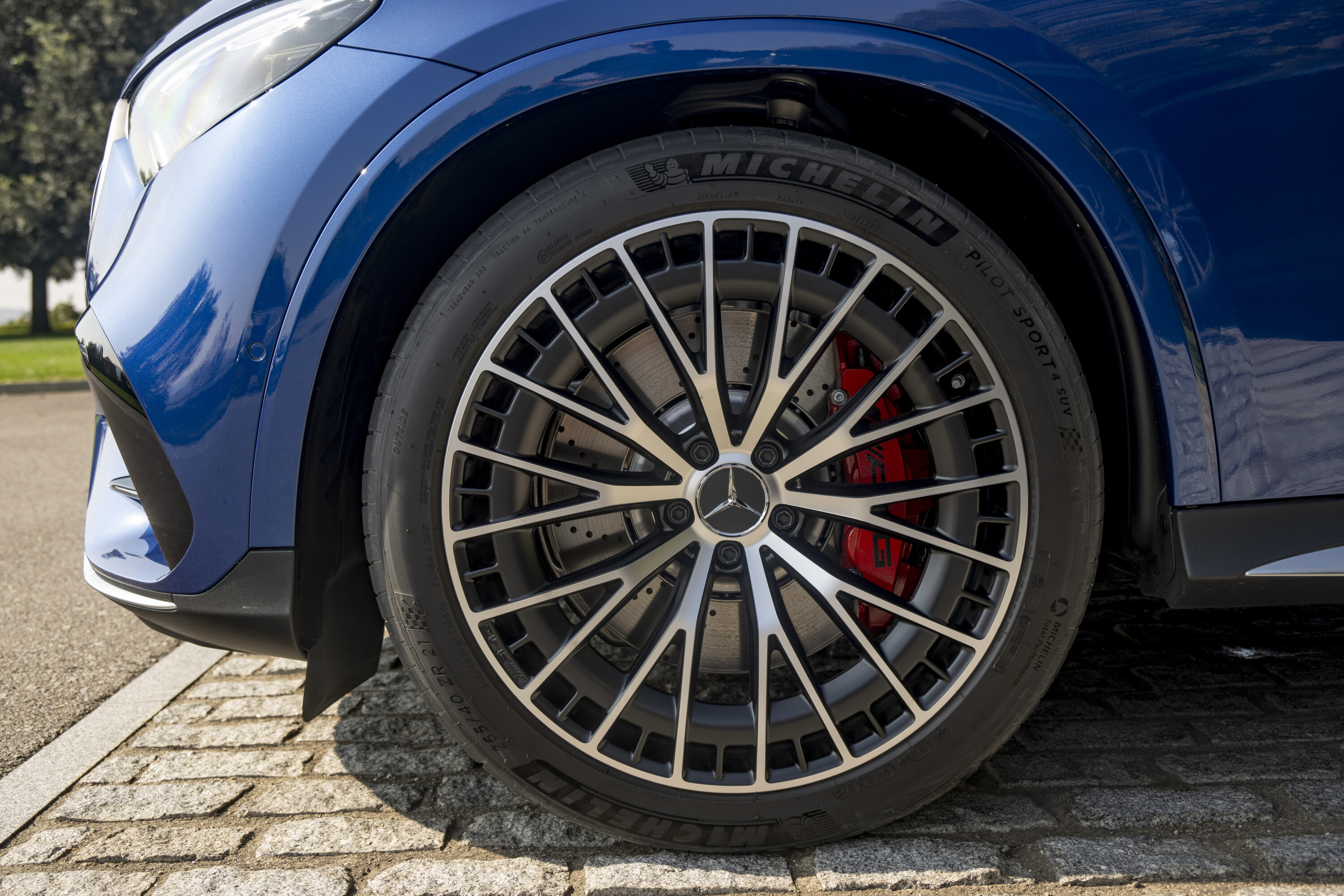
The GLC63 will arrive on our shores in the second quarter of 2024, with a slinkier Coupe version to follow a few months later. Prices are yet to be confirmed, but there’s a good chance the 63 will start at more than $200,000. Better get saving.
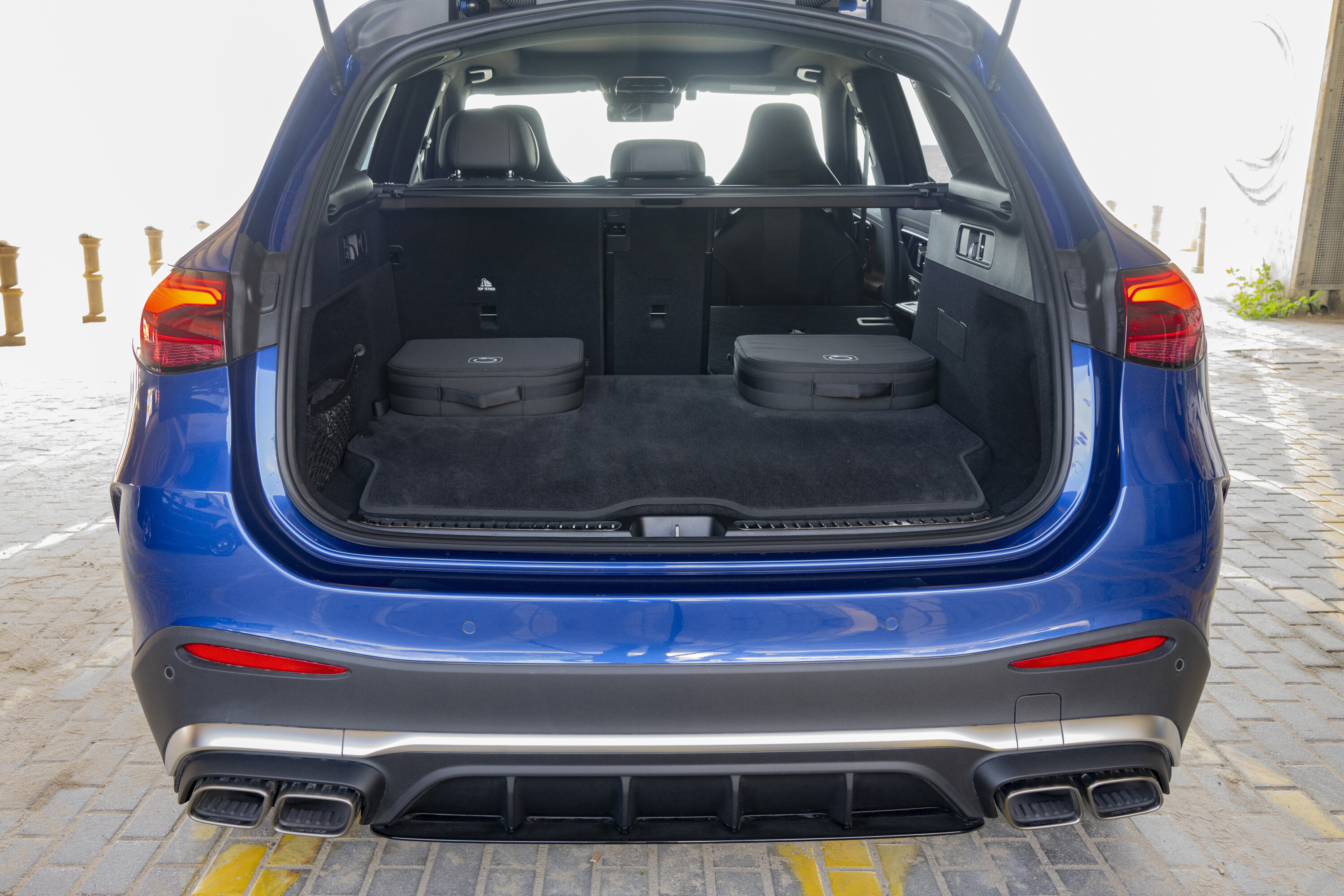
Choosing which of its seven other drive modes you engage from there is actually deceptively simple – if it’s smooth tarmac, then the car shines brighter than we dared hope in its burly Sport+ setting.
The GLC63 turns into corners keenly, its near-perfect 51:49 weight distribution an improvement on its V8 predecessor and enough to lend it a surprisingly lively character.
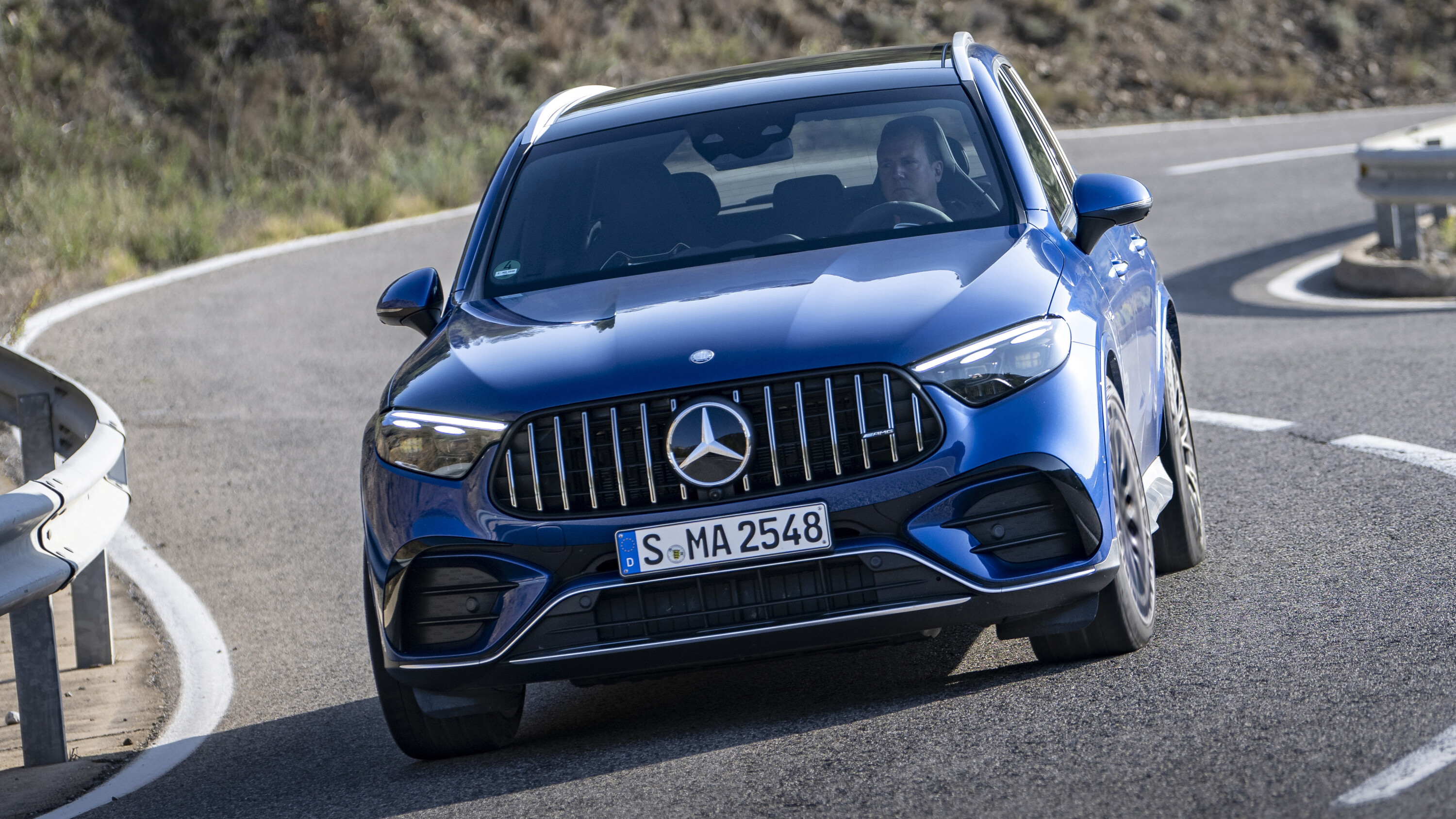
Whether the ride quality will be untied on bumpier roads remains to be seen
The rear axle really plays its part, the instant vigour of its 150kW/320Nm electric motor helping point the nose of the car right at the apex, perhaps with a full flourish of oversteer if you’ve loosened the ESP into its Sport setting (or perhaps off altogether). Absurd behaviour in an SUV, of course, albeit warranted by its equally absurd spec sheet.
Whether the ride quality will be untied on bumpier roads remains to be seen, and an SUV that only reveals its fun side with committed driving won’t prove to be the most subtle of everyday tools.
But we had a blast driving it, no longer so encumbered by concerns about how right this powertrain is for the job.
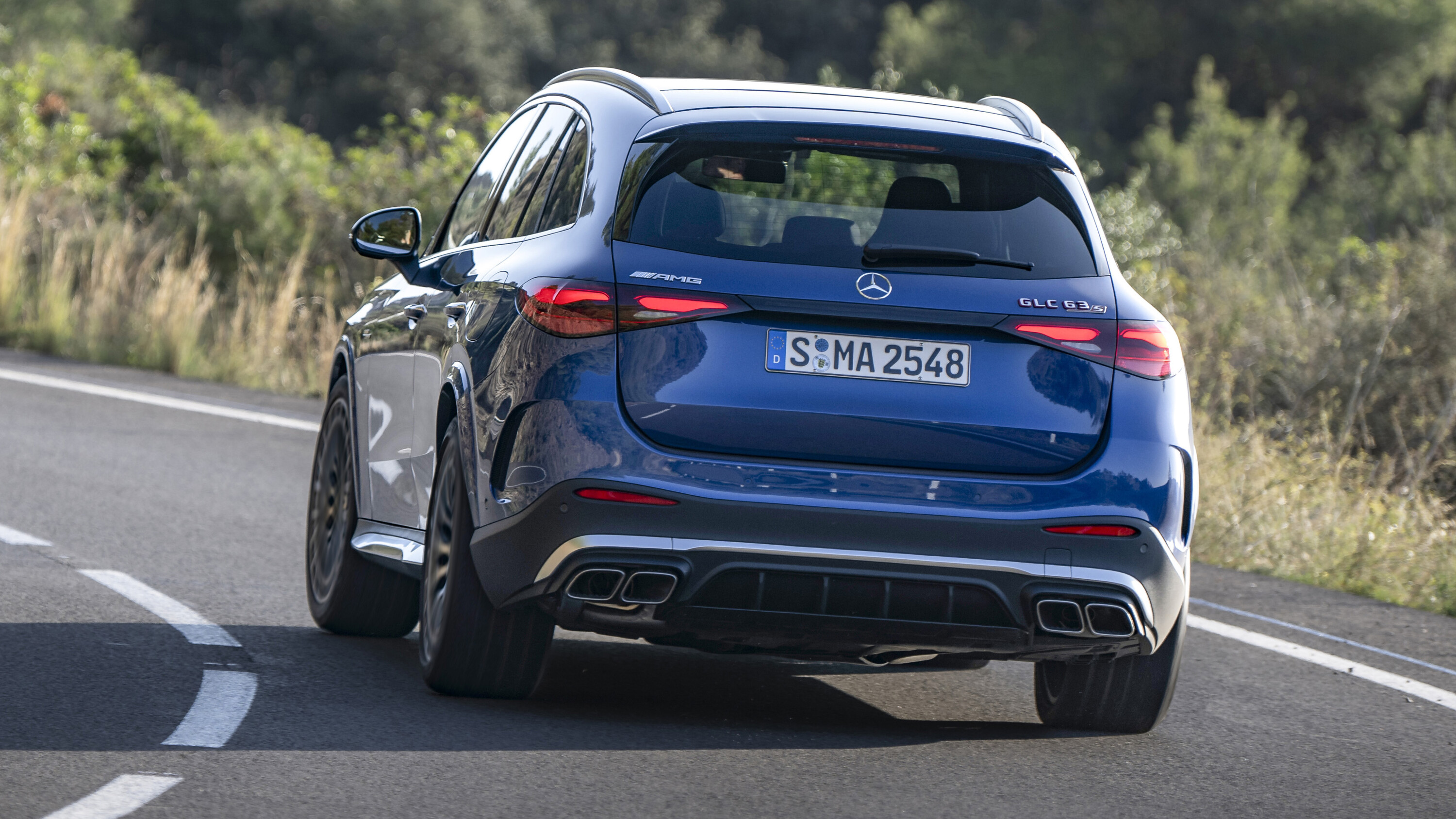
Its electric-only range is a paltry 12km when a stock GLC hybrid offers the same inhibited boot space (470 litres) yet a significantly more useful 129km.
But we also live in a wild world where circa-500kW SUVs aren’t uncommon, so the ability to at least slink away in silence each morning might prove a neat selling point.
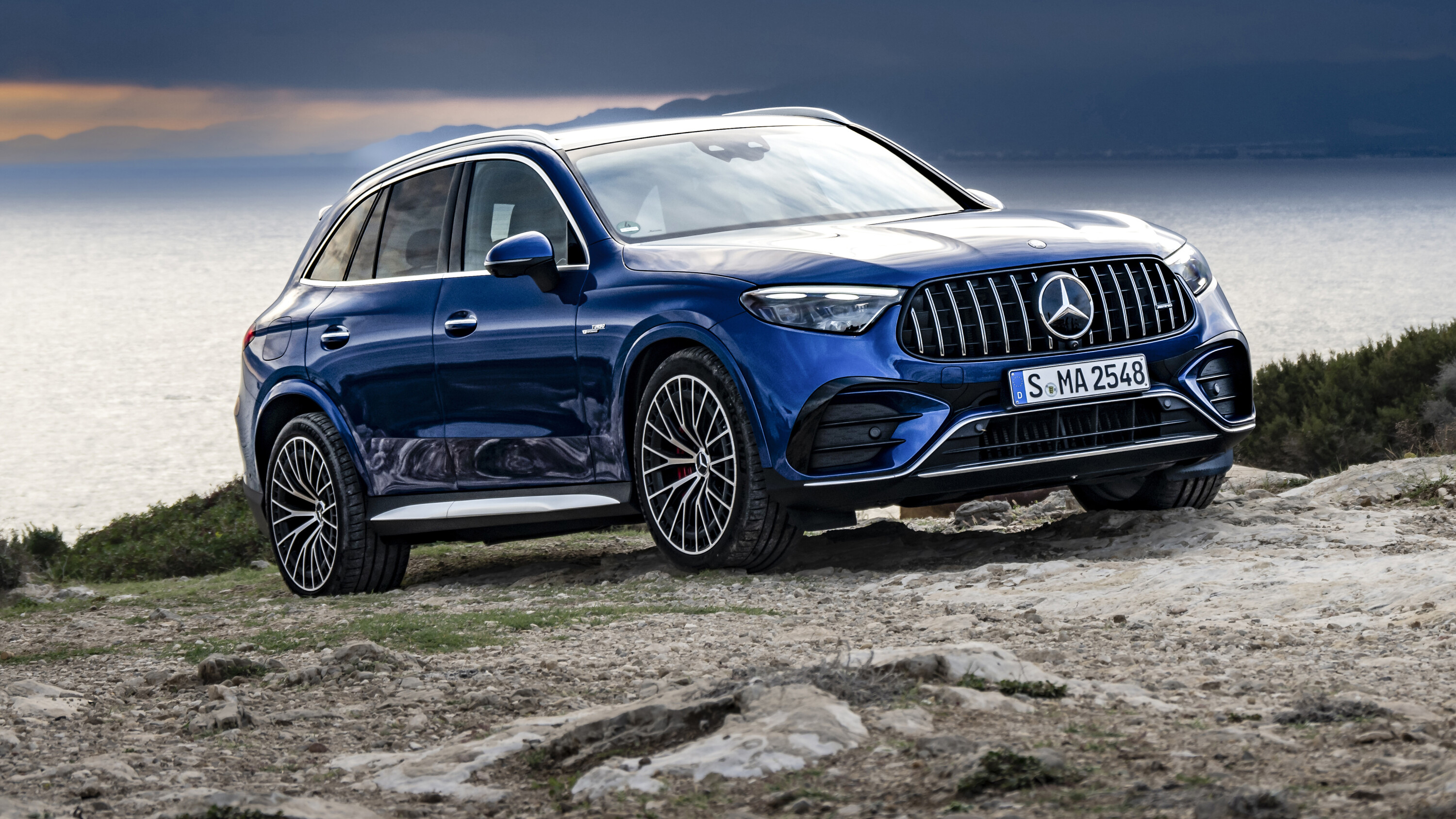
Either way, the GLC63 had less character to surrender in its switch from pure V8 to hybrid four-cylinder propulsion than the C63, and if your heart is already fixed on a chunky crossover, this looks to be a particularly intriguing take on the genre.
Whether a 2.3-tonne car of such prodigious power belongs on a climate-appeasing electrification journey is a debate for someone more academically qualified, perhaps…
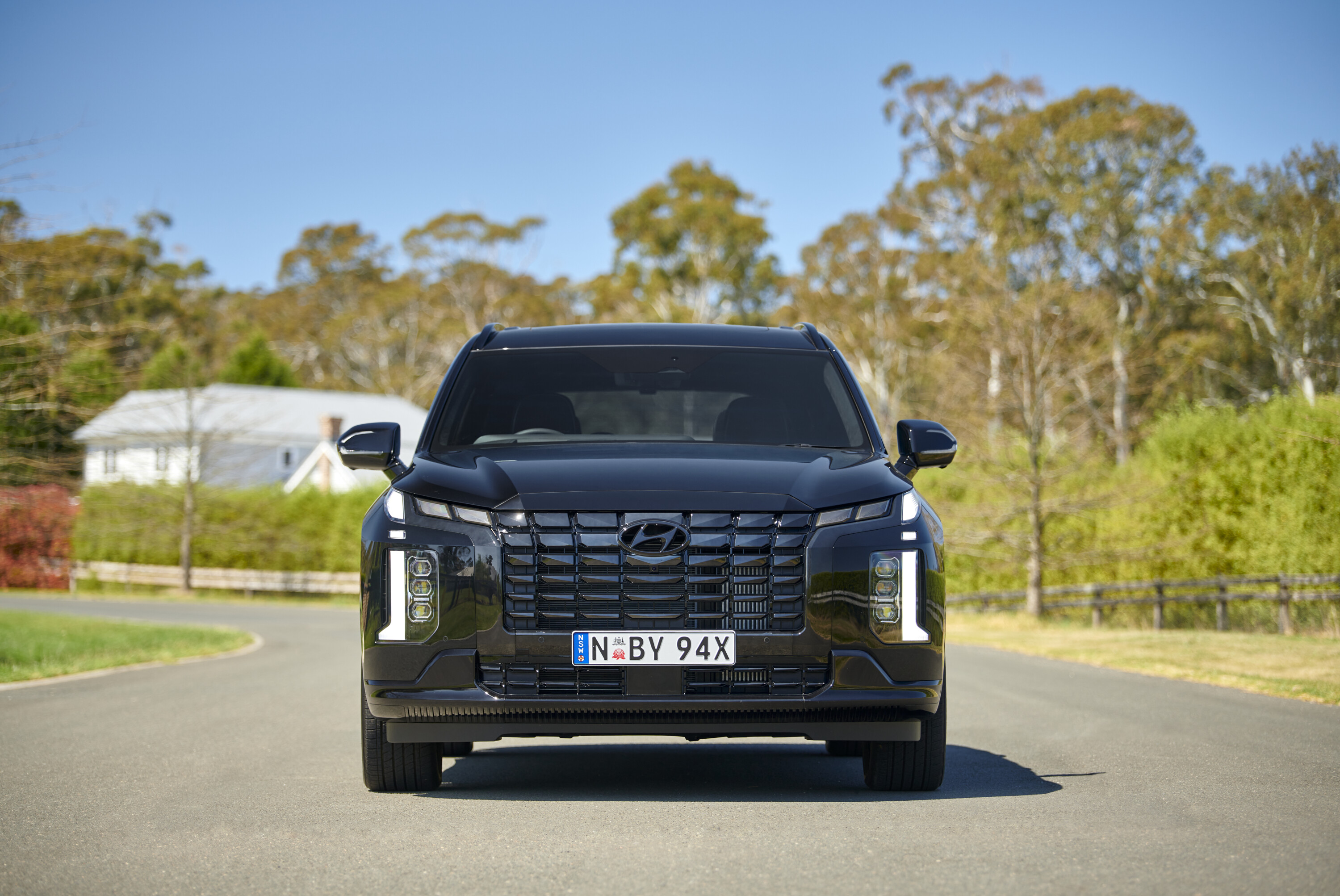
Pricing for the updated 2024 Hyundai Palisade has been confirmed after it was revealed early in an industry pricing guide.
As exclusively reported by Wheels Media in August, the Palisade large SUV will receive a Calligraphy flagship replacing the Highlander and a luxe blacked-out range-topping version.
There are modest price increases for the Palisade with Elite variants up $900 ($66,800), Calligraphy FWD petrol up $935 ($75,900), and the Calligraphy AWD diesel up $1530 ($79,900, both compared to superseded Highlander).
Full pricing ? update
This article, originally published 13/10/2023, has now been updated with full 2024 Palisade pricing and features.
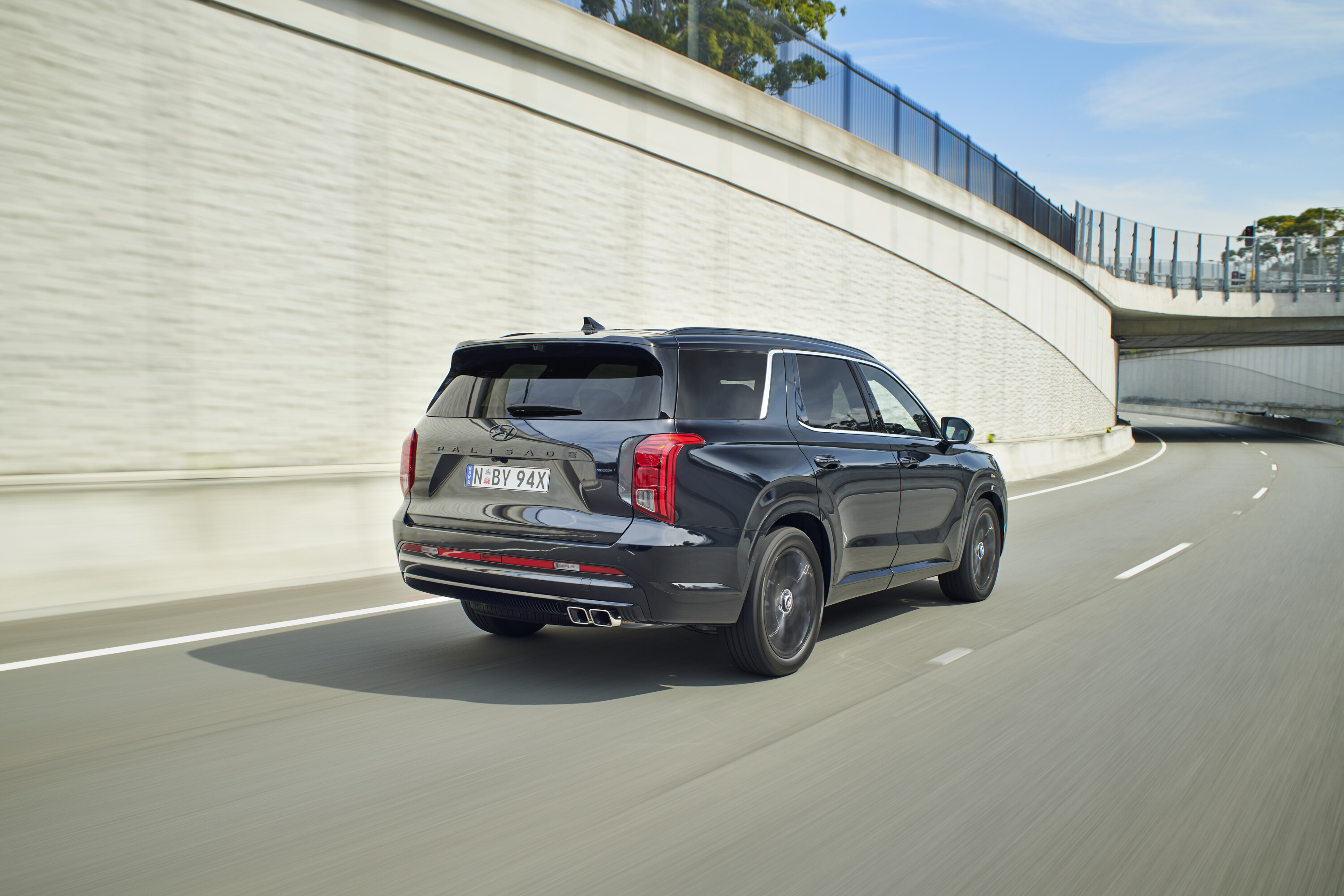
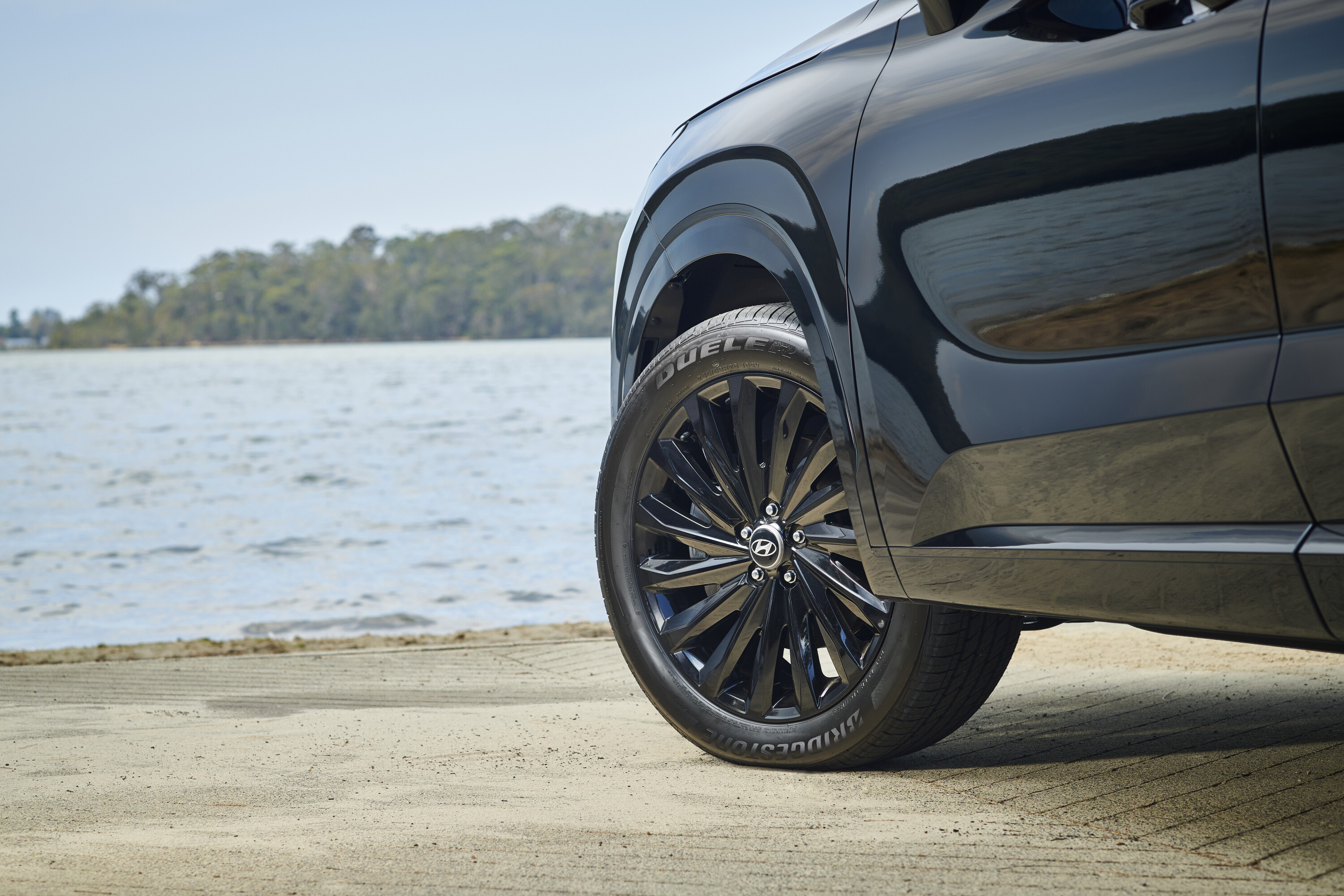
The Black Ink adds a blacked exterior trim and 20-inch alloy wheels, dark-tinted badges and tail-light garnishes, black suede seats and headlining, and a revised aluminium centre console pattern.
A touch-type climate control panel, hydrophobic front door glass, and acoustic laminated rear door glass are new additions for the Calligraphy over the previous Highlander.
The Elite adds an eight-way power-adjustable passenger seat, a heated steering wheel, a cargo area carpet mat, melange fabric headlining, and a vertical wood-look trim insert.
‘Deluxe’ alloy scuff plates and front door acoustic laminated glass will be added to all Palisade variants. All other equipment carries over from the previous model.
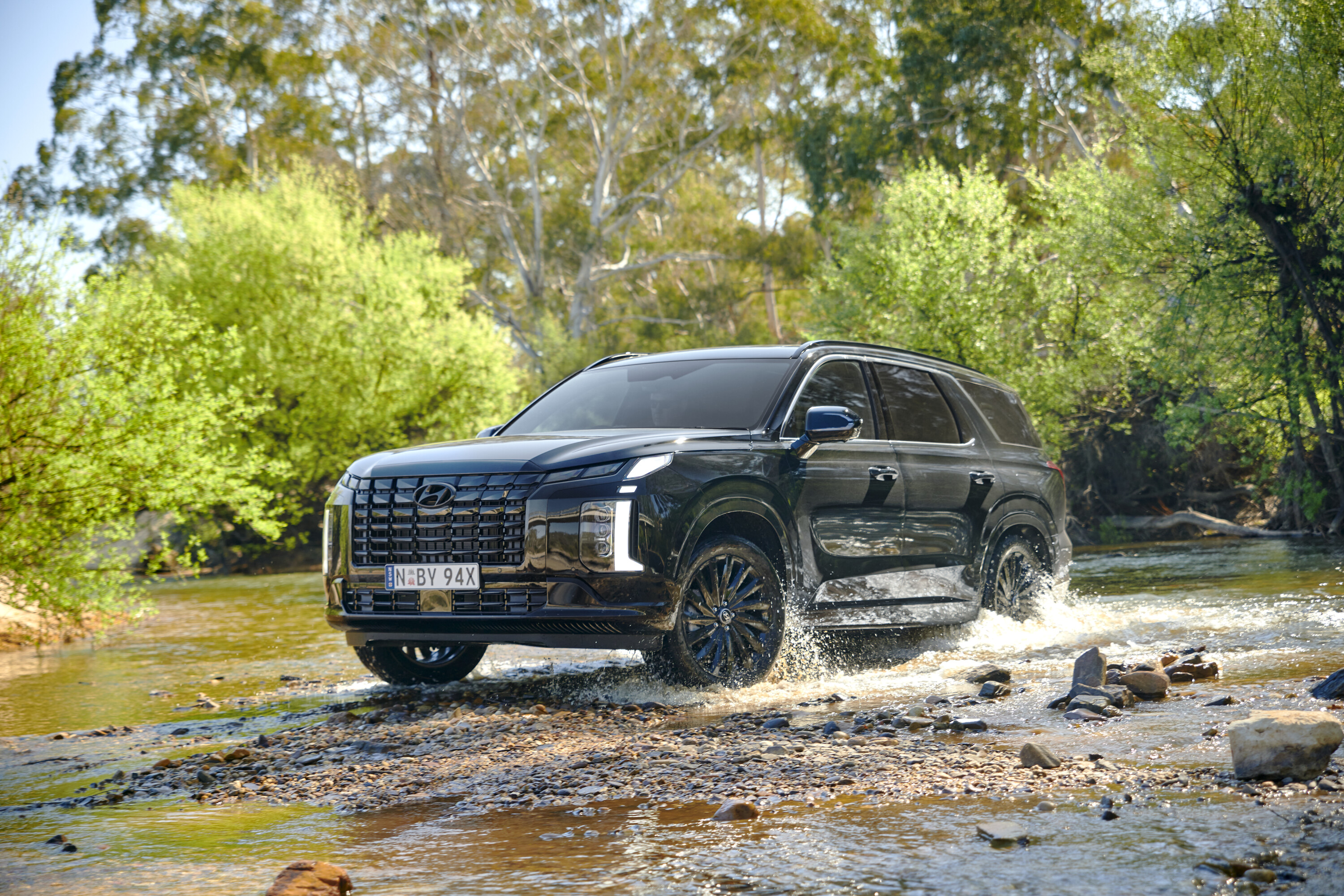
Prices exclude on-road costs
| Model | Pricing | Change |
|---|---|---|
| Elite FWD petrol | $66,800 | up $900 |
| Elite AWD diesel | $70,800 | up $900 |
| Calligraphy FWD petrol | $75,900 | up $935 (vs. 2023 Highlander) |
| Calligraphy AWD diesel | $79,900 | up $1530 (vs. 2023 Highlander) |
| Calligraphy Black Ink FWD petrol | $76,900 | new |
| Calligraphy Black Ink AWD diesel | $80,900 | new |
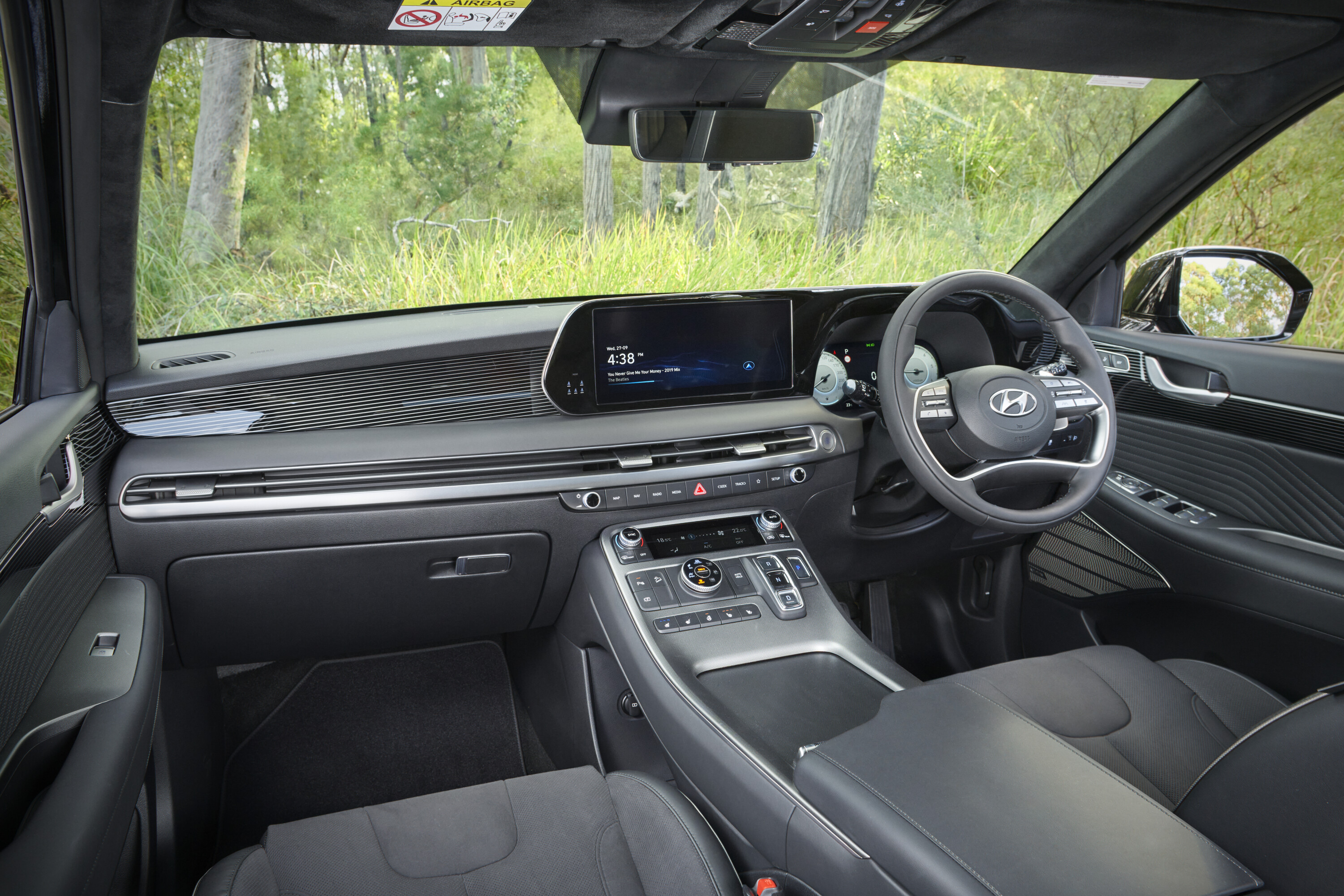
For 2024, the entry-level Elite gains new scuff plates and a power passenger’s seat.
| Palisade Elite features | |
|---|---|
| 20-inch alloy wheels | Full size alloy spare wheel |
| Black tinted grille | Deluxe alloy scuff platesu200b |
| LED headlights, tail-lights and daytime running lights | Acoustic laminated windshield/front door glassu200b |
| 12.3-inch Instrument cluster | 12.3-inch touchscreen display |
| Apple CarPlay and Android Auto compatibility | Satellite navigation with telematics |
| Multi-Bluetooth connection | Bluelink |
| Electro-chromatic mirror | Single panel sunroof |
| Tri-zone climate control | 15-watt wireless phone charging pad |
| 12 speaker Infinity audio system | Driver talk function |
| Quiet mode function | Four-spoke leather steering wheel with heating |
| 8-way power adjust front seats | Black leather upholstery |
| Melange knit headlining; A/B/C pillarsu200b | 16 cup holders |
| Vertical wood (look) film insertu200b | Speed adjustable, hands-free power tailgate |
| Cargo area carpet matu200b | |
| Calligraphy features, in addition to Elite | |
|---|---|
| Body coloured cladding and bumpers | Dual sunroof with tilt function |
| Digital electro-chromatic mirror with full display | Four-spoke, two-tone leather heated steering wheel |
| Automatic defog | Second row wing-out headrest |
| Driveru2019s seat integrated memory system (IMS) | Heated & ventilated front and second row seats (now available on both seven and eight seat variants) |
| Rain-sensing wipers | Hydrophobic front door glassu200b |
| Remote smart parking assist | Touch type AC controlsu200b |
| Separated tail-light feature | Back-up light guide |
| Calligraphy exclusive skid plates and chrome grille with hidden DRL | Suede roof lining |
| Head-up display (HUD) | Rear door blinds |
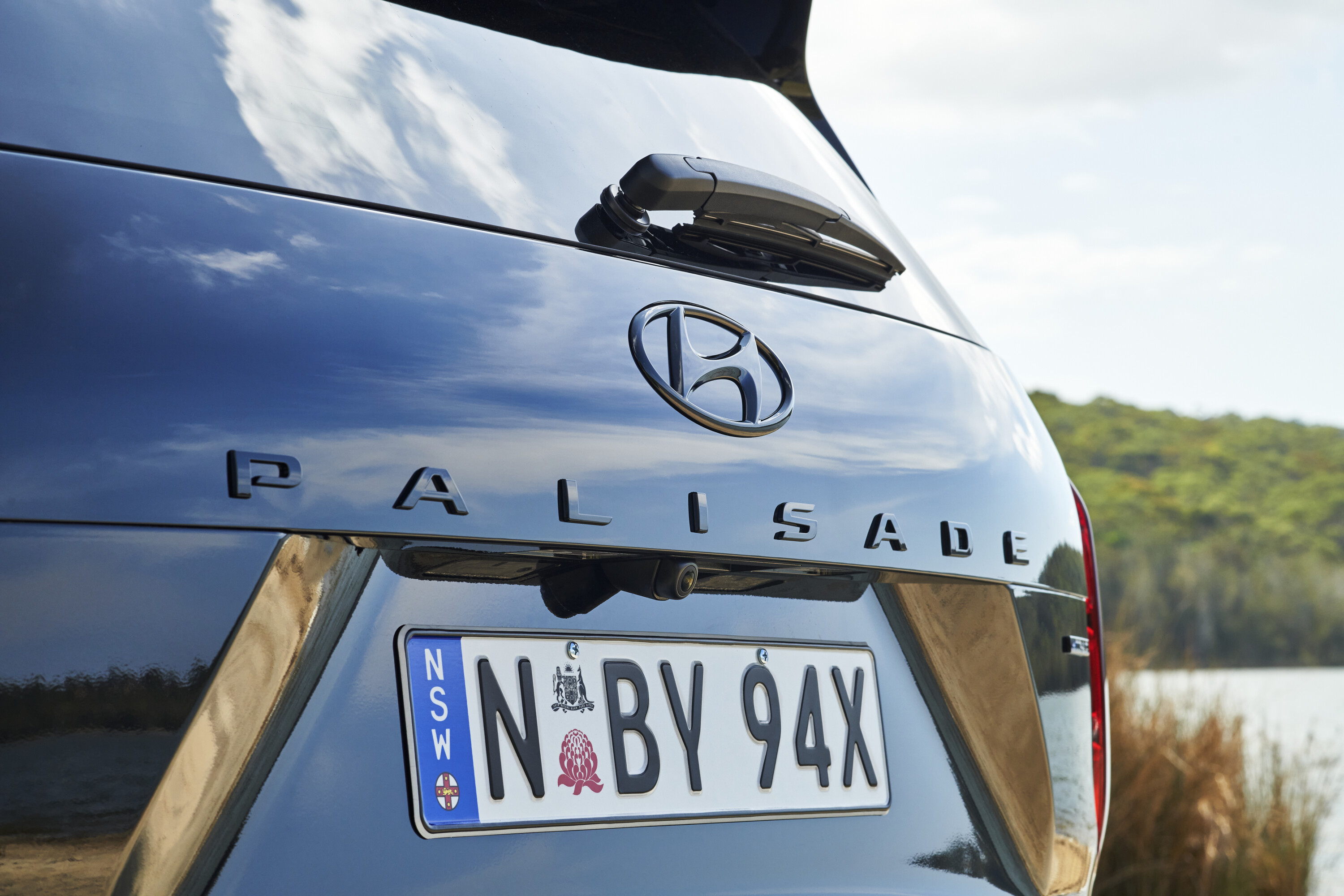
| Blank Ink features, in addition to Calligraphy | |
|---|---|
| Dark tinted lower door garnishu200b | Dark tinted taillight garnishu200b |
| Dark tinted radiator grilleu200b | Black glossy roof railsu200b |
| Black suede seatsu200b | Dark tinted front & rear skid plateu200b |
| Black Glossy 20-inch alloy wheelsu200b | Dark tinted bumper garnishu200b |
| Dark tinted badgingu200b | Black suede headliningu200b |
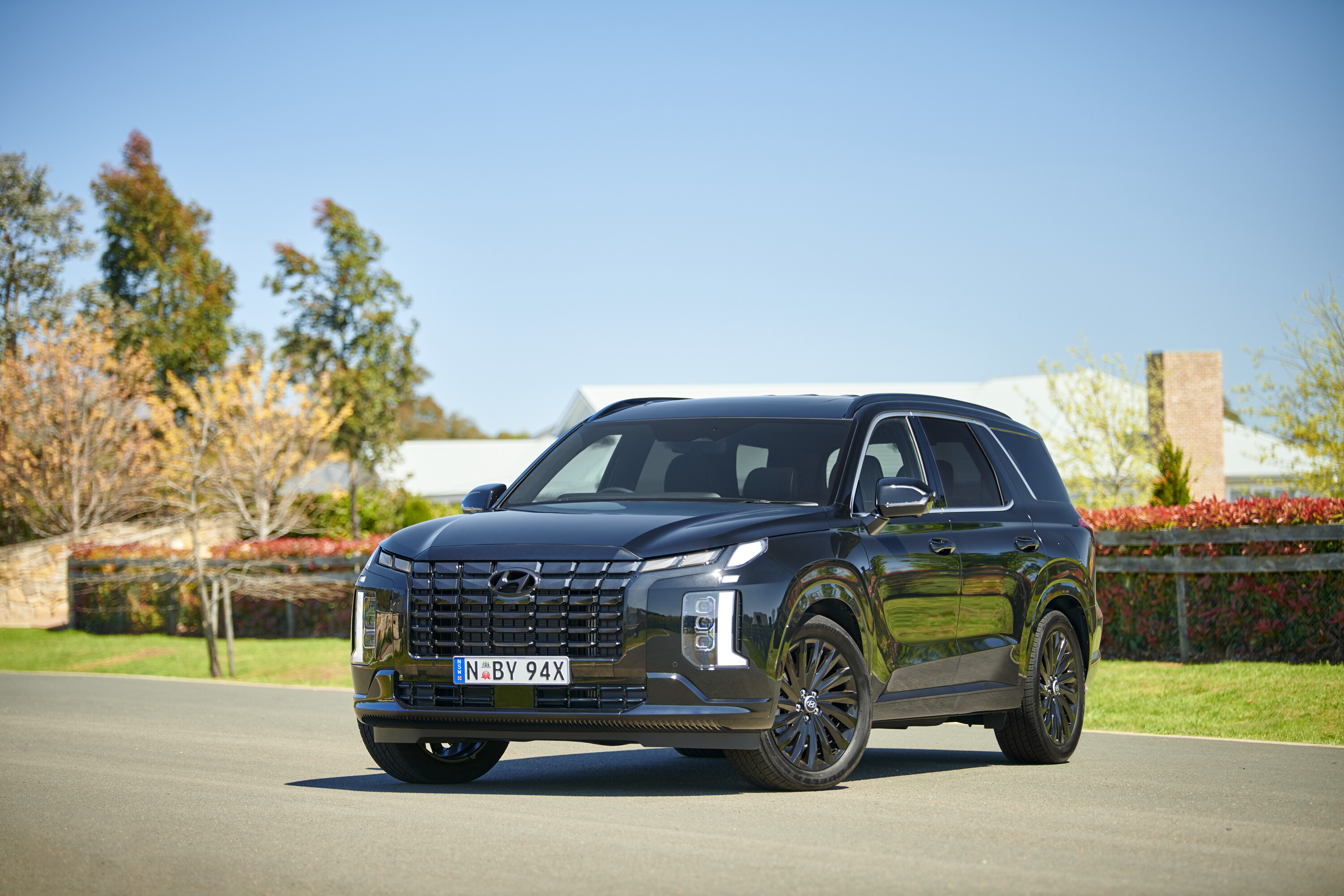
The MY24 Santa Fe Calligraphy Black Ink is available exclusively in Abyss Black or Creamy White. All colours but Creamy White incur a $695 premium.
| Creamy White | Shimmering Silver |
| Graphite Grey | Sierra Burgundy |
| Moonlight Blue | Abyss Black |
| Calligraphy only | |
| Olivine Grey | Gaia Brown |
| Robust Emerald | |
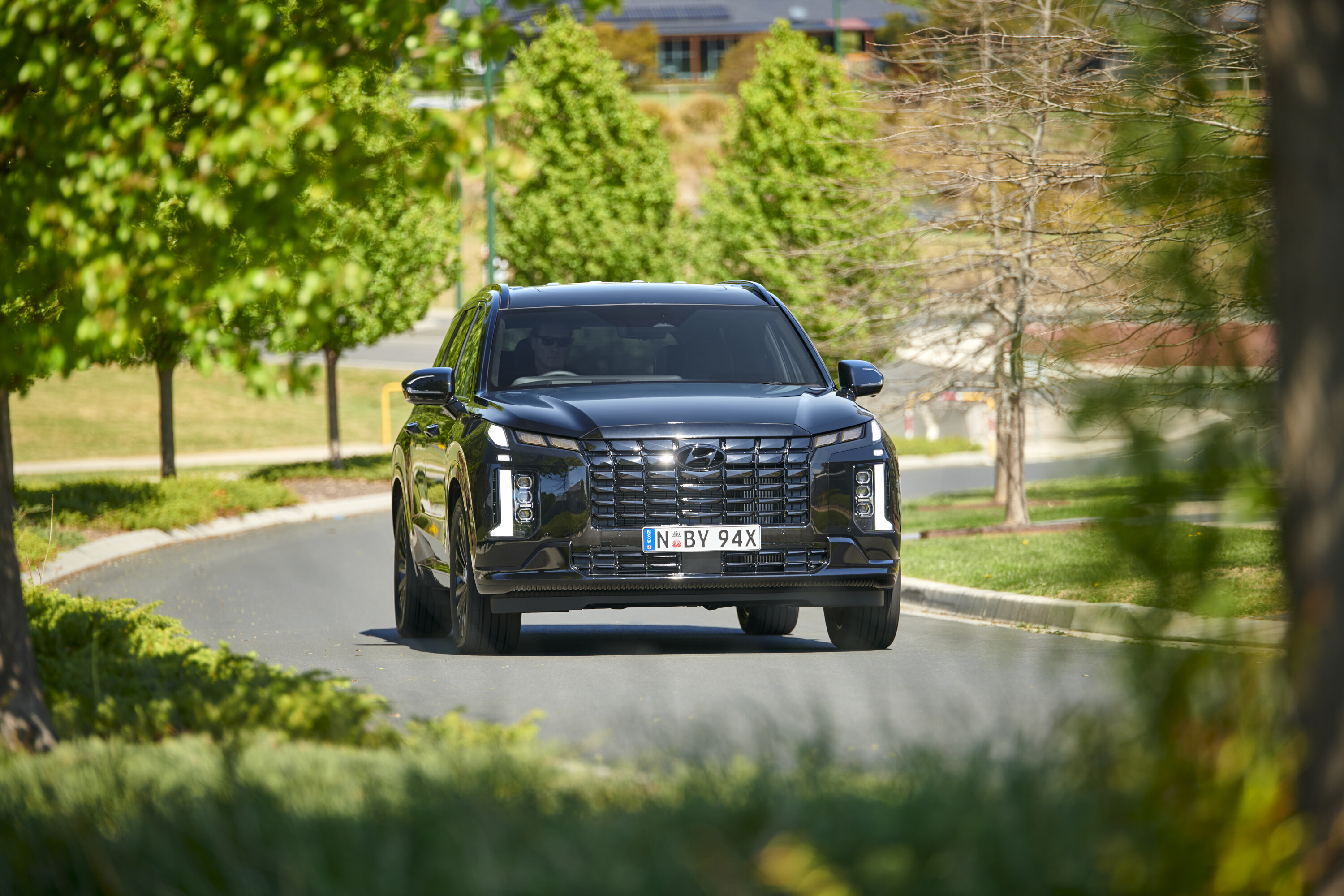
Fuel consumption ranges from 7.3L/100km for the diesel to 10.7L/100km for the petrol, both in combined ADR 81/02 efficiency testing.
All models are offered with seven or eight seats featuring second-row captain’s chairs for the former setup.
The standard safety kit is listed below.
| Blind-spot collision-avoidance (BCA) | Rear occupant alert (ROA) |
| Driver attention warning (DAW) | Smart cruise control with stop and go |
| Forward collision avoidance (FCA) | Parking distance warning (front and rear) |
| FCA junction turning assist (FCA-JT, new) | Rear view camera with guide lines |
| High beam assist (HBA) | Tyre pressure monitoring (TPM) |
| Lane keeping assist (LKA) | Trailer stability assist (TSA) |
| Lane following assist (LFA) | Multi-collision brake (MCB, new) |
| Rear cross-traffic collision avoidance assist (RCCA) | Intelligent speed limit assist (ISLA, new) |
| Calligraphy exclusive features | |
| Parking collision-avoidance assist (PCA) | 360-degree surround view monitor (SVM) |
| Blind-spot view monitor (BVM) | |
The Palisade is covered by a five-year/unlimited-kilometre warranty with service intervals set every 15,000km or 12 months.
Following a free 1500km check-over, each subsequent service will cost $399 for the petrol and $469 for the diesel over the first five years/75,000km.
The revised Palisade range – including range-topping Calligraphy Black Ink – is available at Hyundai dealers now from between $66,800 to $80,900 before on-road costs.
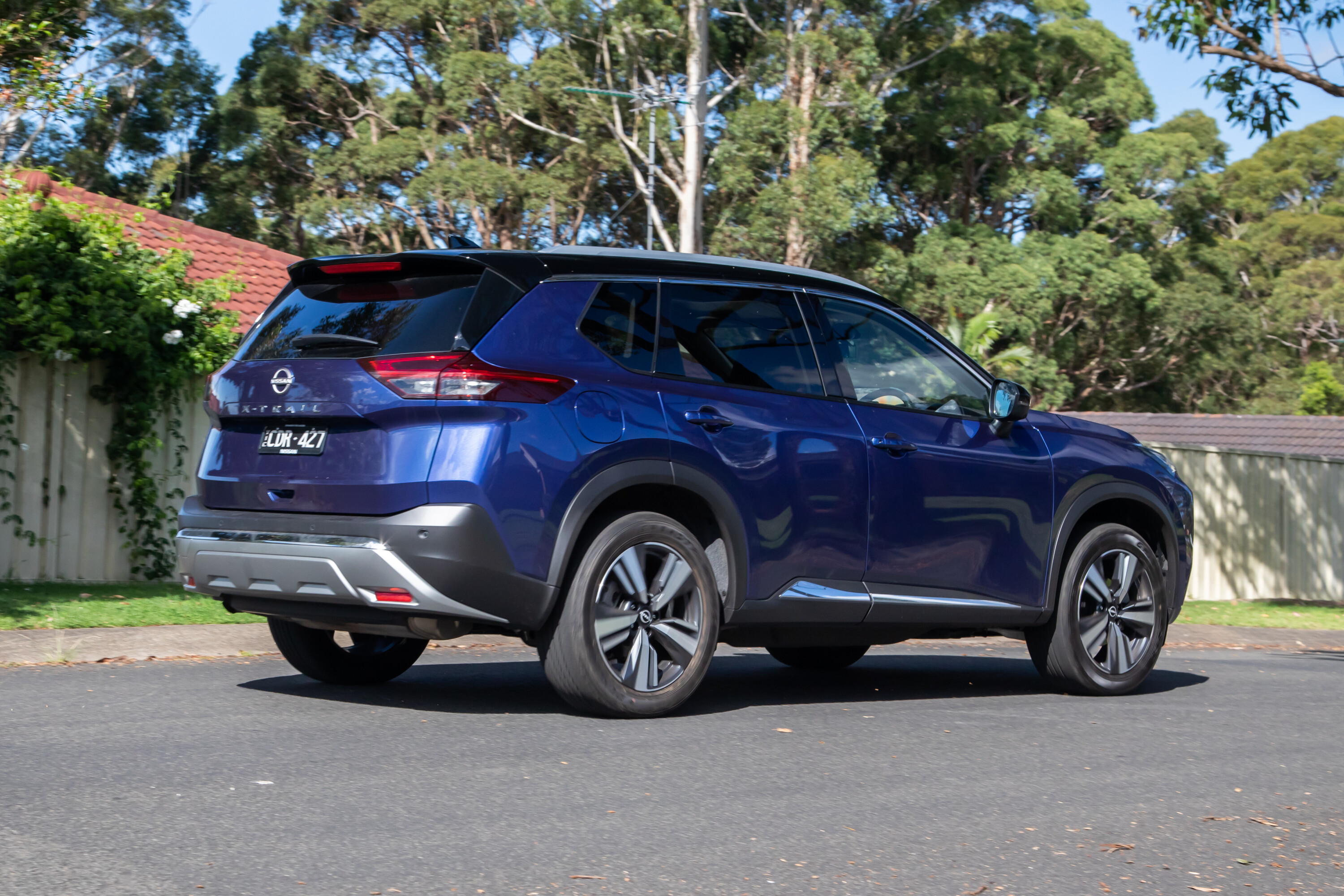
Nissan’s X-Trail is a bit like Madonna. Every few years it pops up out of nowhere looking and sounding completely different.
The first car was a boxy homage to the off-roader in soft-ish roader form and looked quite distinctive if a bit like it was teetering on very high heels. The second-gen resolved a lot of the styling ideas and looked pretty good.
What distinguished the X-Trail from early on was a variety of engines and transmissions to keep everyone happy.
That third-gen car soldiered on for a little longer than we were perhaps expecting, longer still when you consider its now-twin, the Mitsubishi Outlander, arrived last year. Both cars have grown in every direction and they look it, although the Nissan less so.
What this new car brings is a lot of new tech that we’ll explore over the next few months.
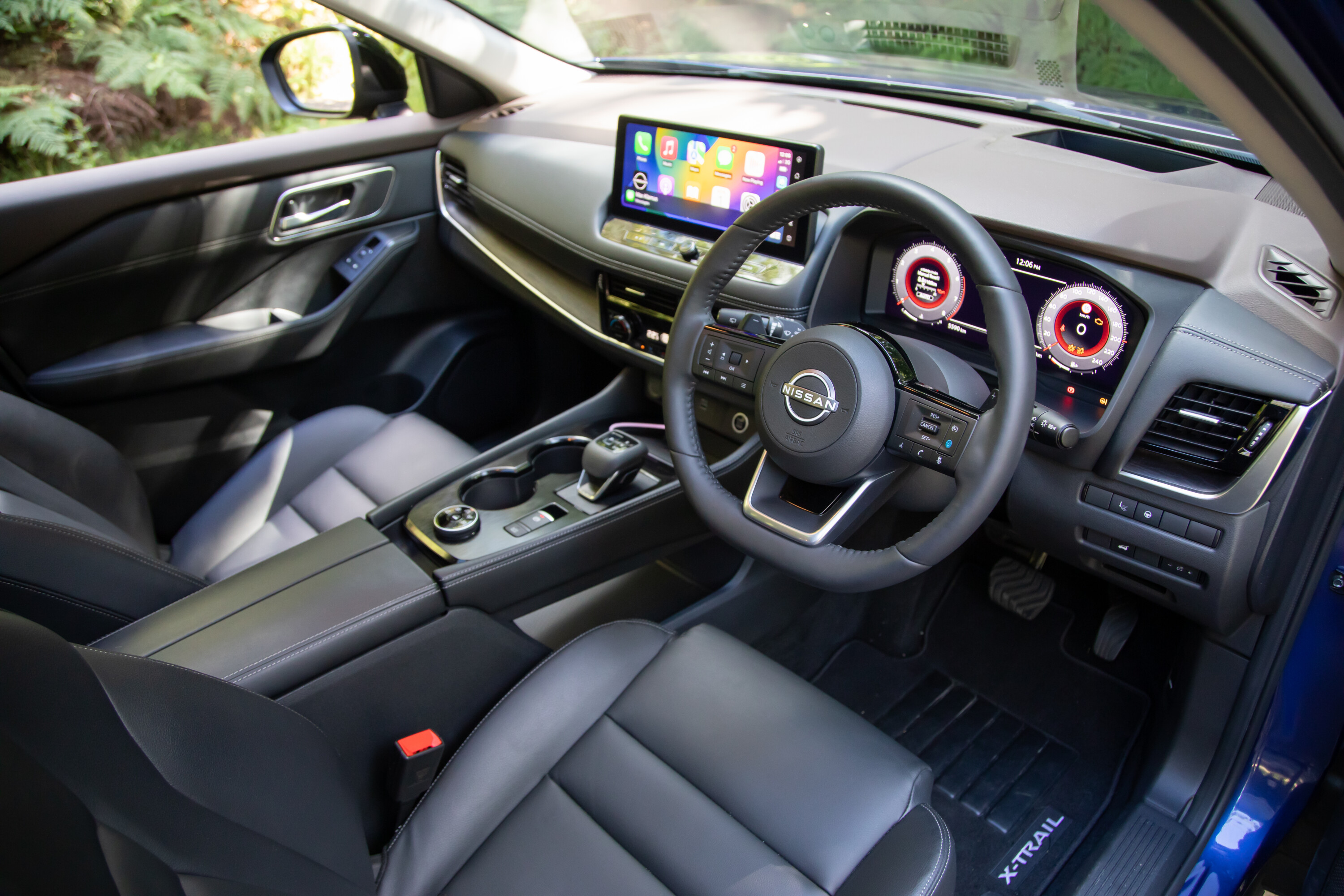
The digital dash with very familiar graphics (familiar if you’ve driven an Outlander) is present, too. You also get a generous 10.8-inch head-up display that I’ve immediately taken to, partly because I find the dash itself a bit busy-looking.
Nissan’s Pro-Pilot provides a pretty clever set of features that make both city and freeway driving less tiresome, with a cruise control that will slow the car to a stop and with a flick of the Resume switch get it going again when the car in front moves. I know that’s not new, but it does a lot more besides as we’ll explore.
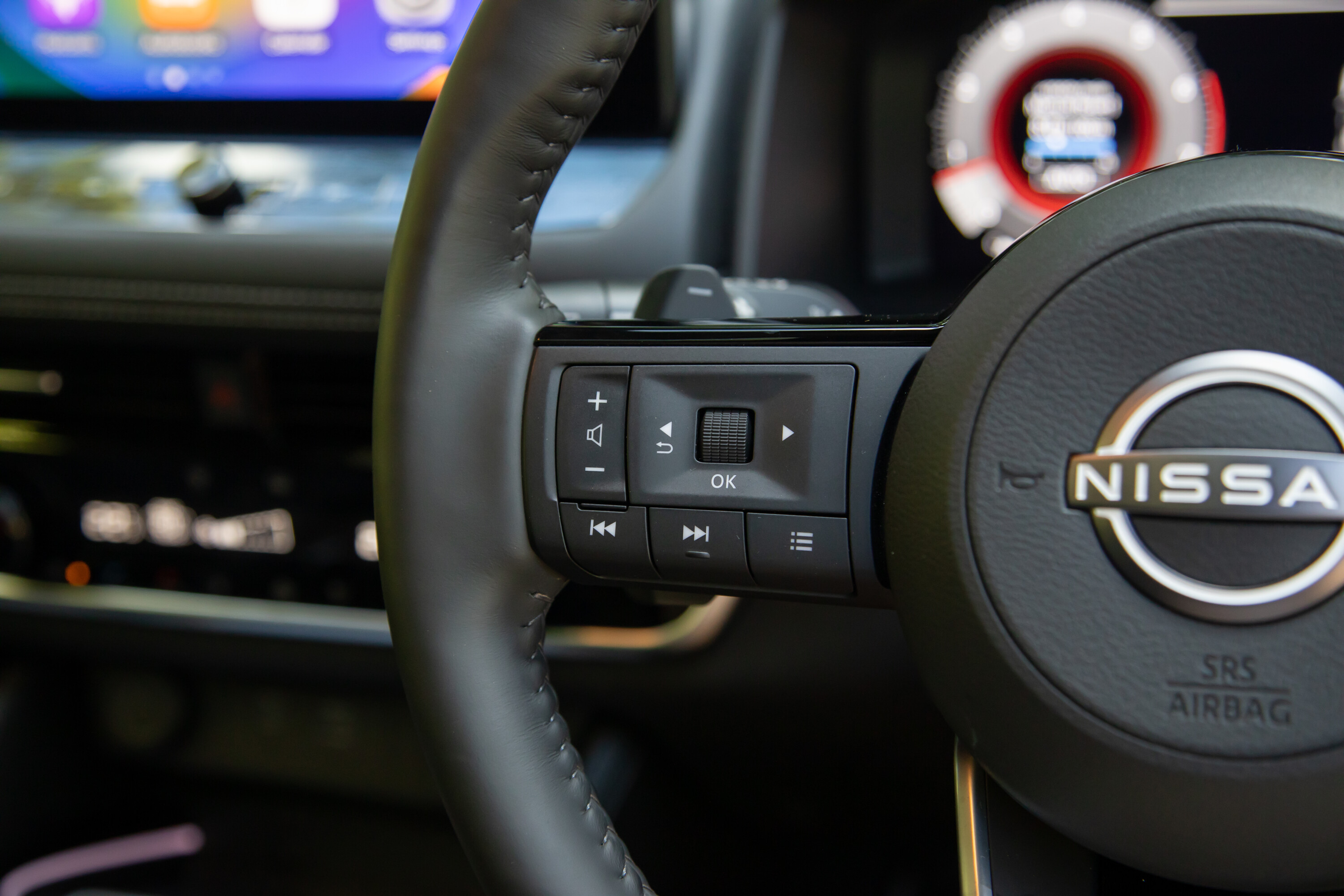
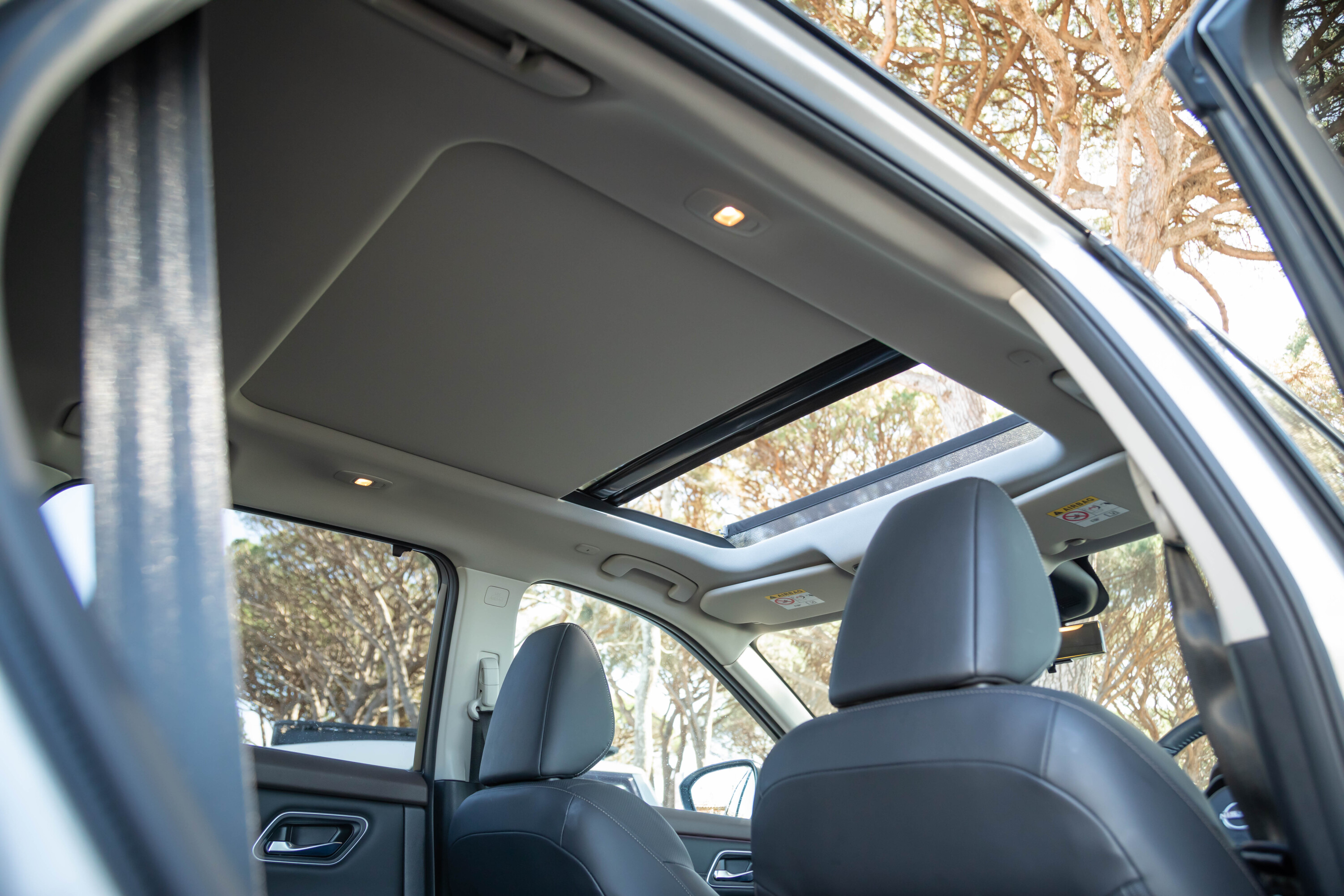
The big screen hosts Android Auto via USB and Apple CarPlay wirelessly and you get a wireless charging pad into the bargain. You’ll survey the new interior – light-filled if you’ve opened the sunroof – from part-leather seats and grip a leather-clad steering that feels remarkably like Nappa although Nissan doesn’t say it is.
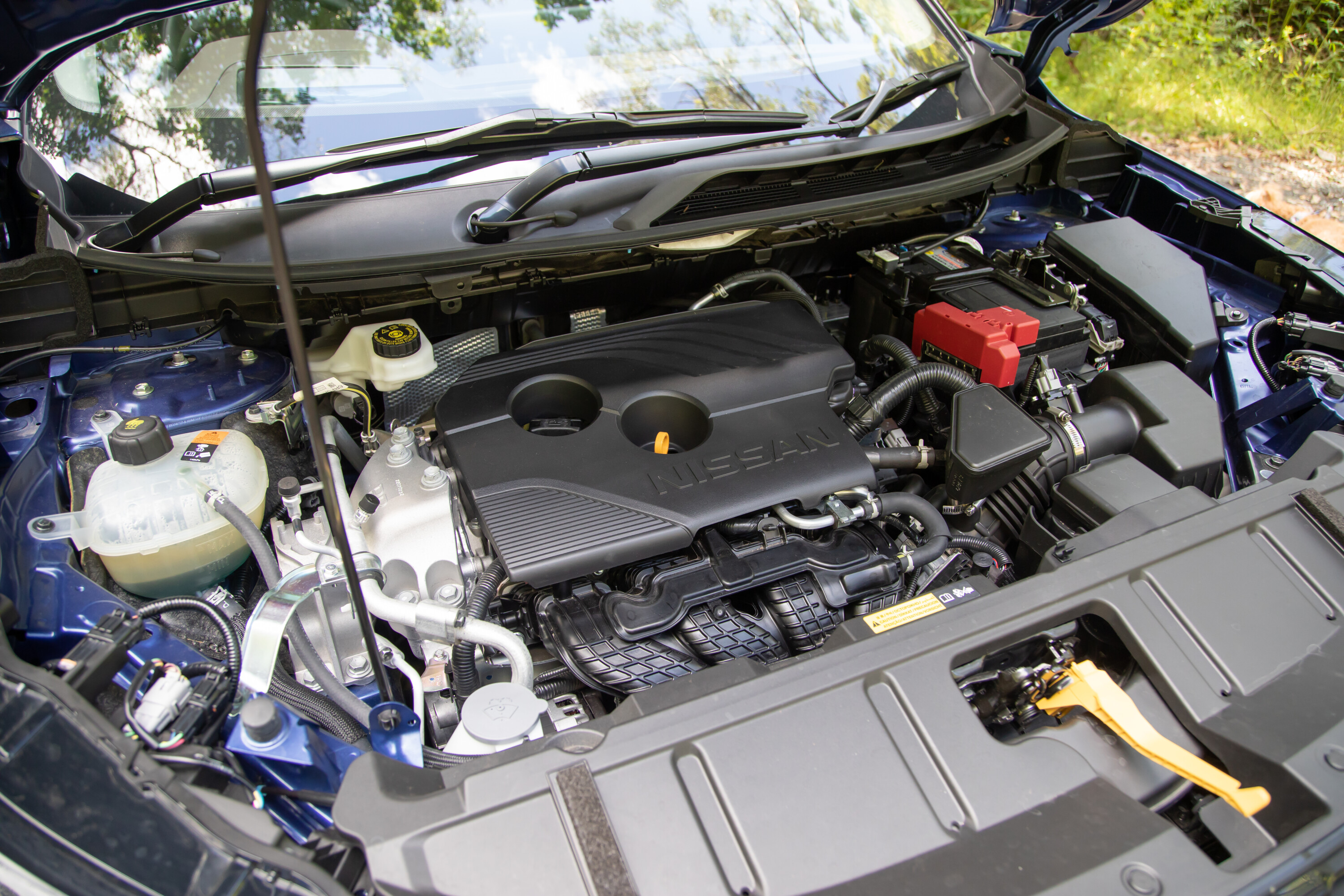
While it’s all change inside and out – and in a lot of areas underneath – the engine and transmission could best be described as improved rather than new. Nissan’s 2.5-litre naturally aspirated four drives all four wheels (in the Ti and Ti-L) through a slightly better calibrated continuously variable transmission (CVT), a transmission type I used to despise with all of my heart.
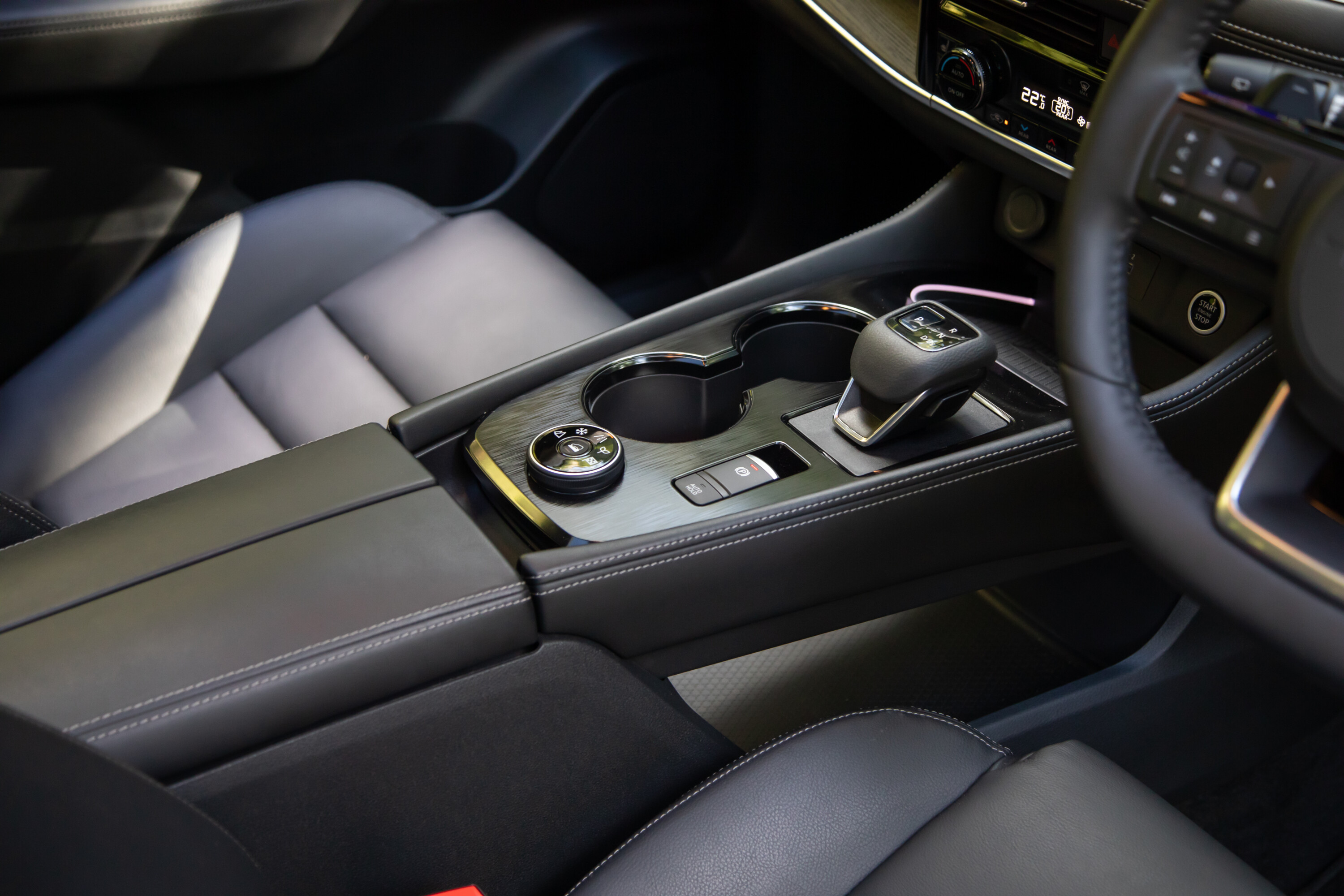
Power and torque are both up, by 9kW and 18Nm respectively. The car itself – rolling on a new, stiffer CMF-C platform with lots of aluminium panels to save weight – is nearly 100kg heavier but it is packed with a lot more gear.
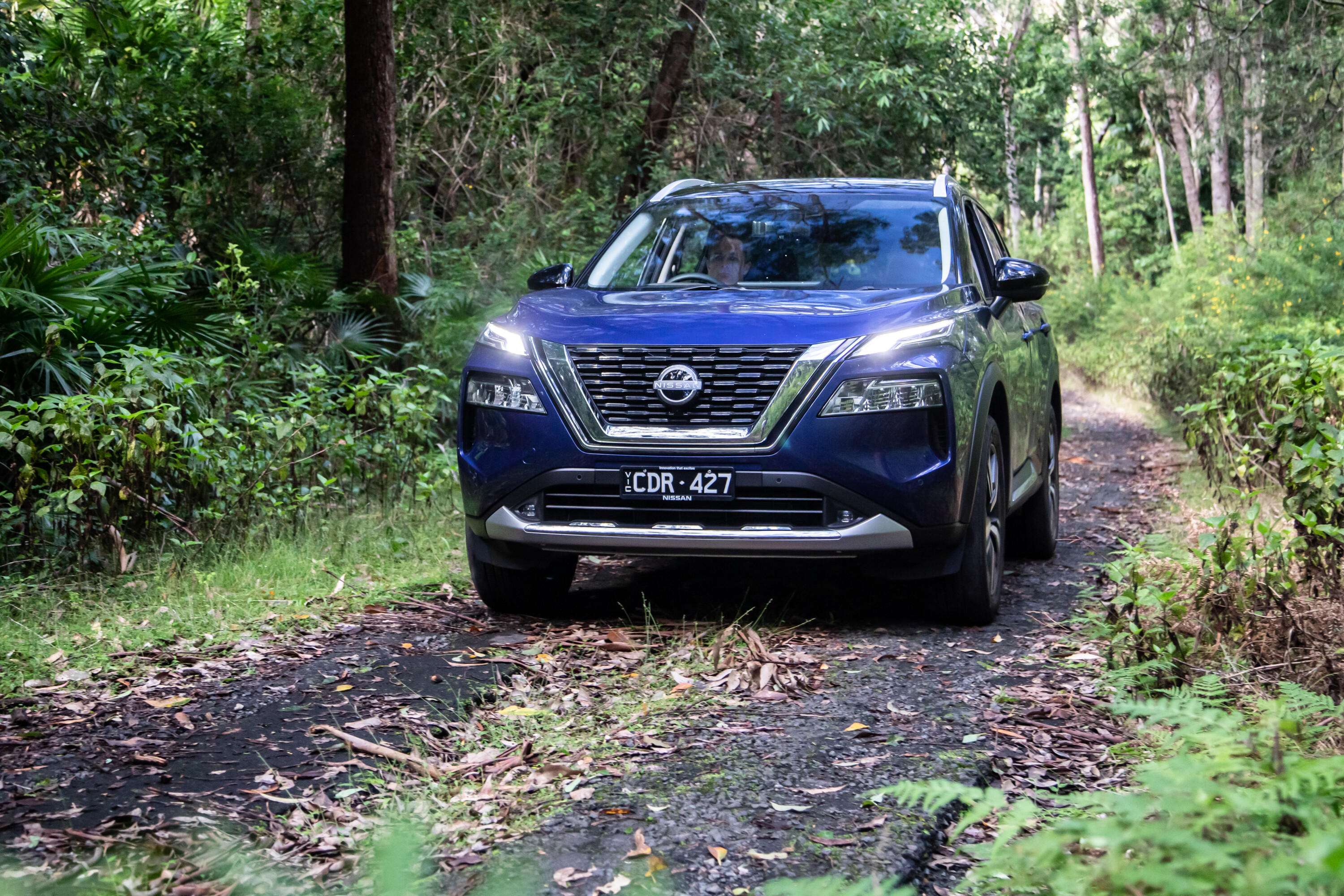
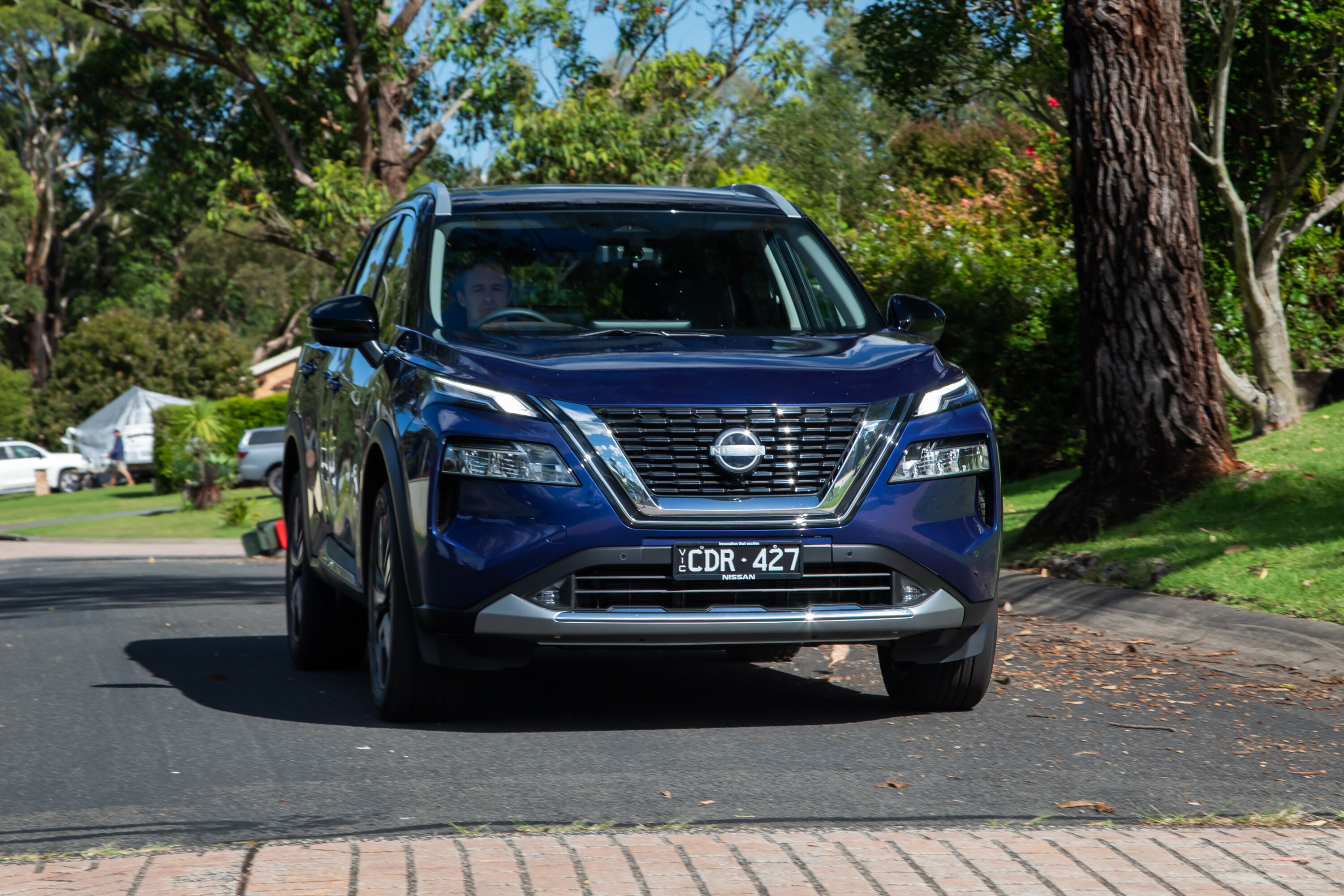
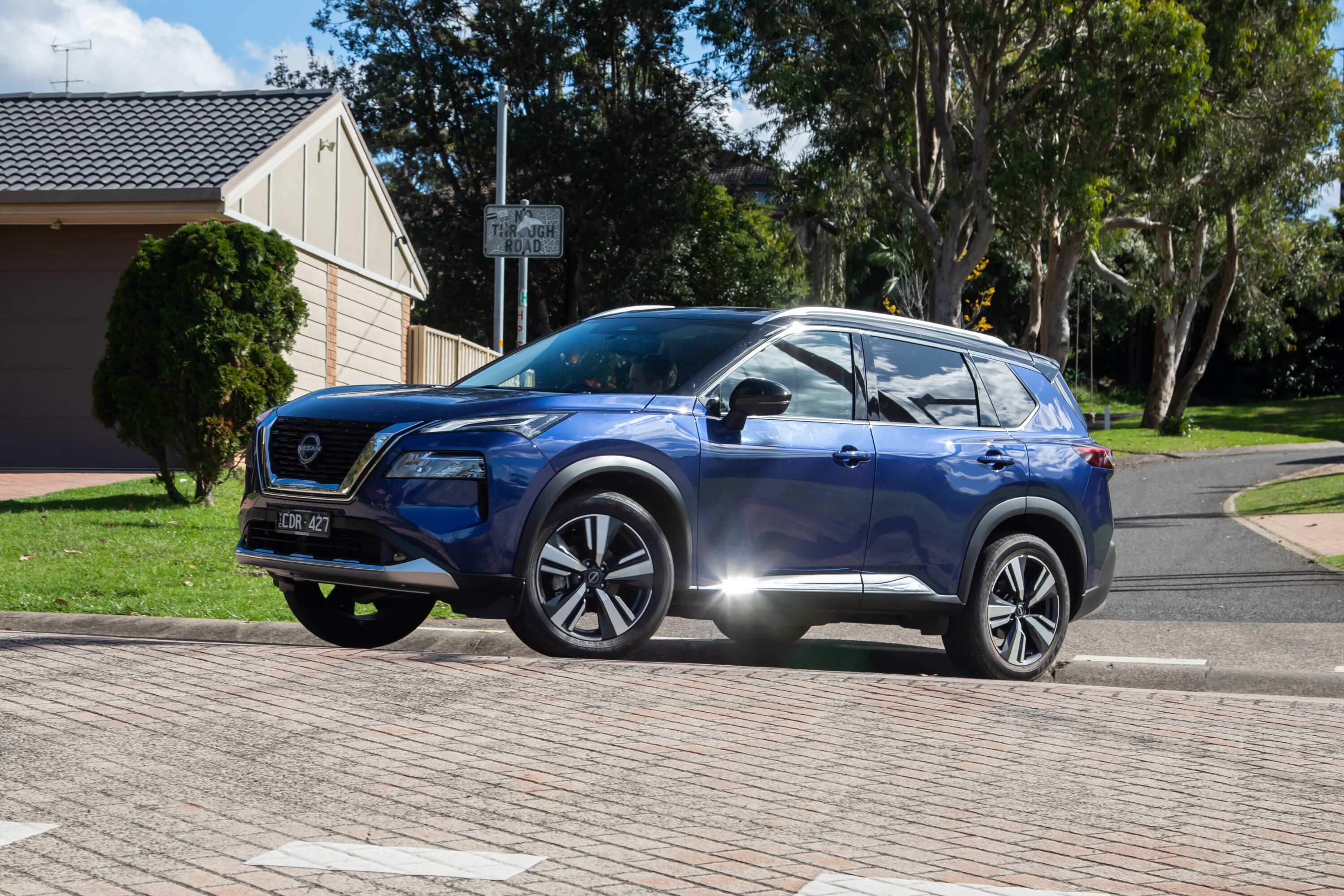
My first impression of the new X-Trail is that it’s a much more accomplished design than any of its predecessors. There’s nothing awkward about it but nor is it boring. No, it won’t go down as a design classic, but it’s sleek and classy for such a big unit.
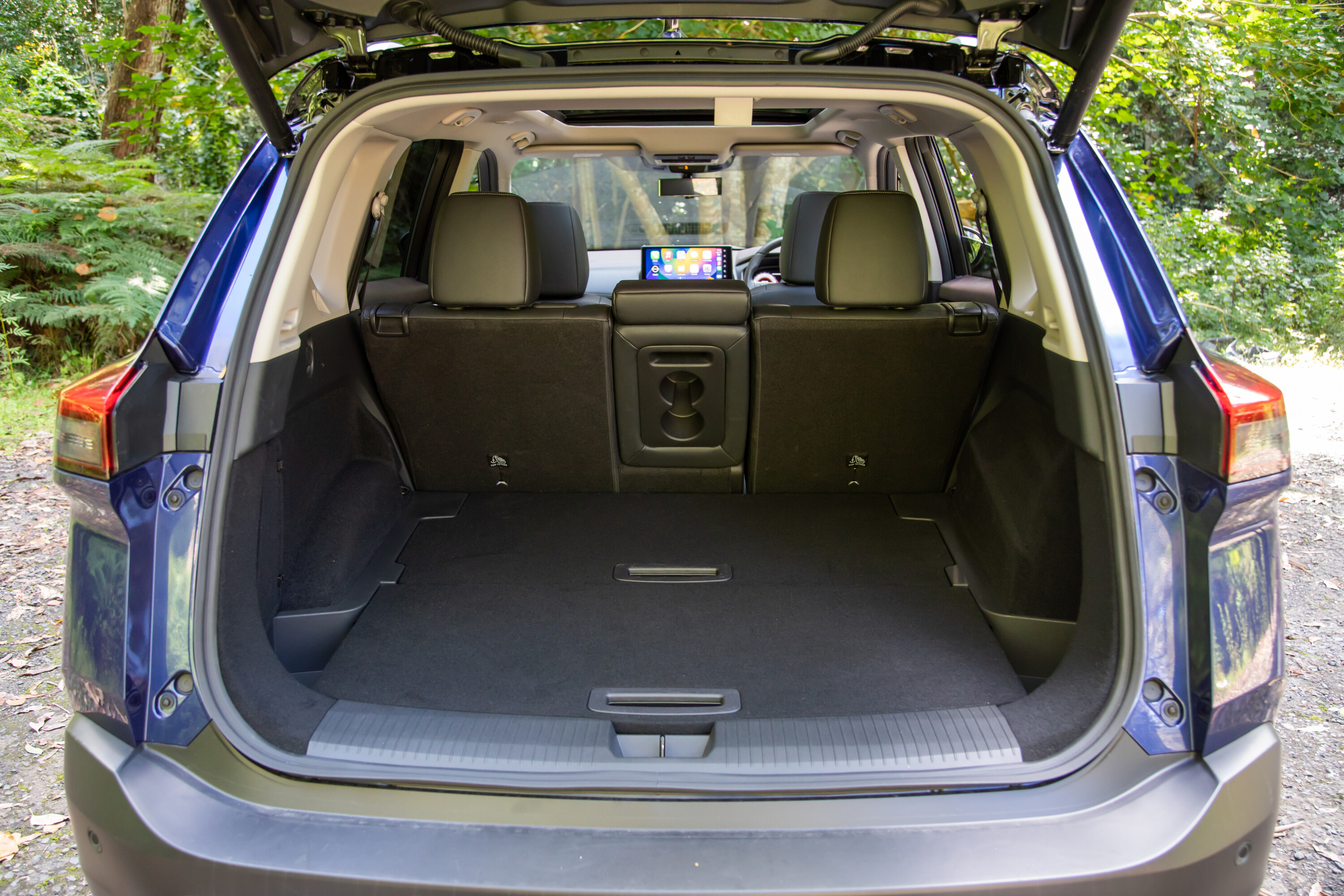
That means lots of interior space, which I hope to test with people and things. In fact, I’m sure it will be tested given my proximity to the airport and my wife’s penchant for furniture and hardware purchases.
Also top of my list is the way it drives and rides. Again, first impressions are promising. I recently rode in a third-generation X-Trail as a rear passenger and it was not a lot of fun, so with the new platform and a thoroughly reworked suspension set-up, I’m expecting a big improvement.
Fuel economy so far is reasonable, too, given it hasn’t stretched its legs yet. At 9.9L/100km, it squeaks under the double-digit mark and isn’t too far off the official 7.1L/100km figure on the sticker.
Next month it will have had its legs stretched a bit and the dog will have had her say.
It’s not as though past versions have been particularly flappable; that would be perhaps be a little unfair. But this one is a heftier machine with a road presence you feel from the driver’s seat.
It’s larger and heavier than the previous model, an SUV I drove many times over its years on sale. But this new one feels even more composed and somehow grippier, which feels vaguely odd to note given that an all-wheel-drive X-Trail has usually been very good both on- and off-road.
The gains for the X-Trail are significant but not as wildly improved as the three-diamond equivalent
I think the real change is the weight of the controls. The feel through the steering wheel is more substantial than past versions, and it’s quite interesting how my memory keeps blurting out how much better the new car feels as a whole.
It steers well, rides much better and generally gives a greater impression of solidity.
We got a preview of this in the X-Trail’s twin, the Mitsubishi Outlander, a car so much better than the one it replaces it’s scarcely believable it came from the same manufacturer. The gains for the X-Trail are significant but not as wildly improved as the three-diamond equivalent.
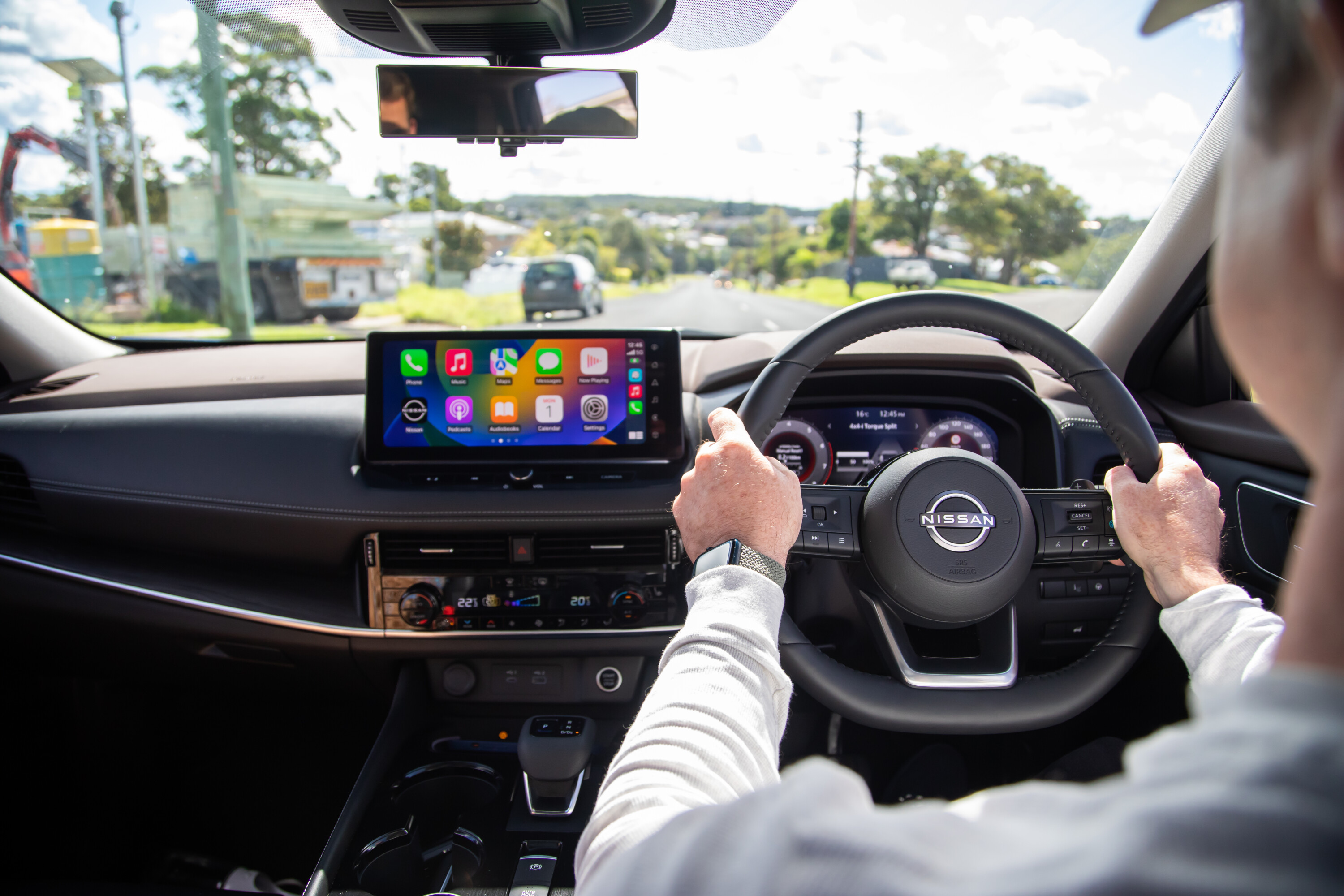
The screen is big and welcoming, the wireless Apple CarPlay has rarely faltered. Most CarPlay systems are completely flummoxed by just one phone let alone two that sometimes turn up at the same time.
Doesn’t sound like a big deal but what’s really annoying is when one person is in the house on the phone and the other person goes and gets in the car, the person on the phone loses audio and it ends up in the car. The X-Trail doesn’t do that.

Nissan’s attention to the various systems has meant very few expletive-laden rants about inaccurate speed limits or a lane-centring system that would really rather you were over there rather than going where you want to go.
Although one day in heavy rain it did shut down the forward AEB but unlike some older Subarus, made enough of a point of it so you knew it had happened. Not much you can do about it, of course.
Pioneered in Jaguar Land Rover products, it still hasn’t won over either my wife or me. There’s something oddly unsettling about looking at the rear-vision mirror and expecting a couple of headrests and the outline of the rear window but seeing none of those things.
Obviously 25 years of driving has formed expectations that I can’t quite shake. It’s genuinely unsettling which is a great shame because it’s otherwise very useful. It just feels a bit weird.
One of our regular test routes with a car is the long highway run from our place in the Sydney suburbs up the Blue Mountains to Katoomba and Medlow Bath.
Some CVTs I’ve driven aren’t very good up hills, spinning the engine up to peak power as though at any moment you’re going to need to overtake a road train somewhere around Wentworth Falls but it’s going to rev that engine from Penrith onwards.
My view is that CVTs work best in torque-limited applications and the 2.5-litre four, while hardly anaemic, is not exactly rippling with muscle either.
It cheerfully hauled us up the hills without histrionics, although there were just two of us on board.
That long run also saw the fuel consumption dip to 6.0L/100km, bringing our overall average down to 8.7L/100km where it has stayed despite most of our driving being short suburban trips.
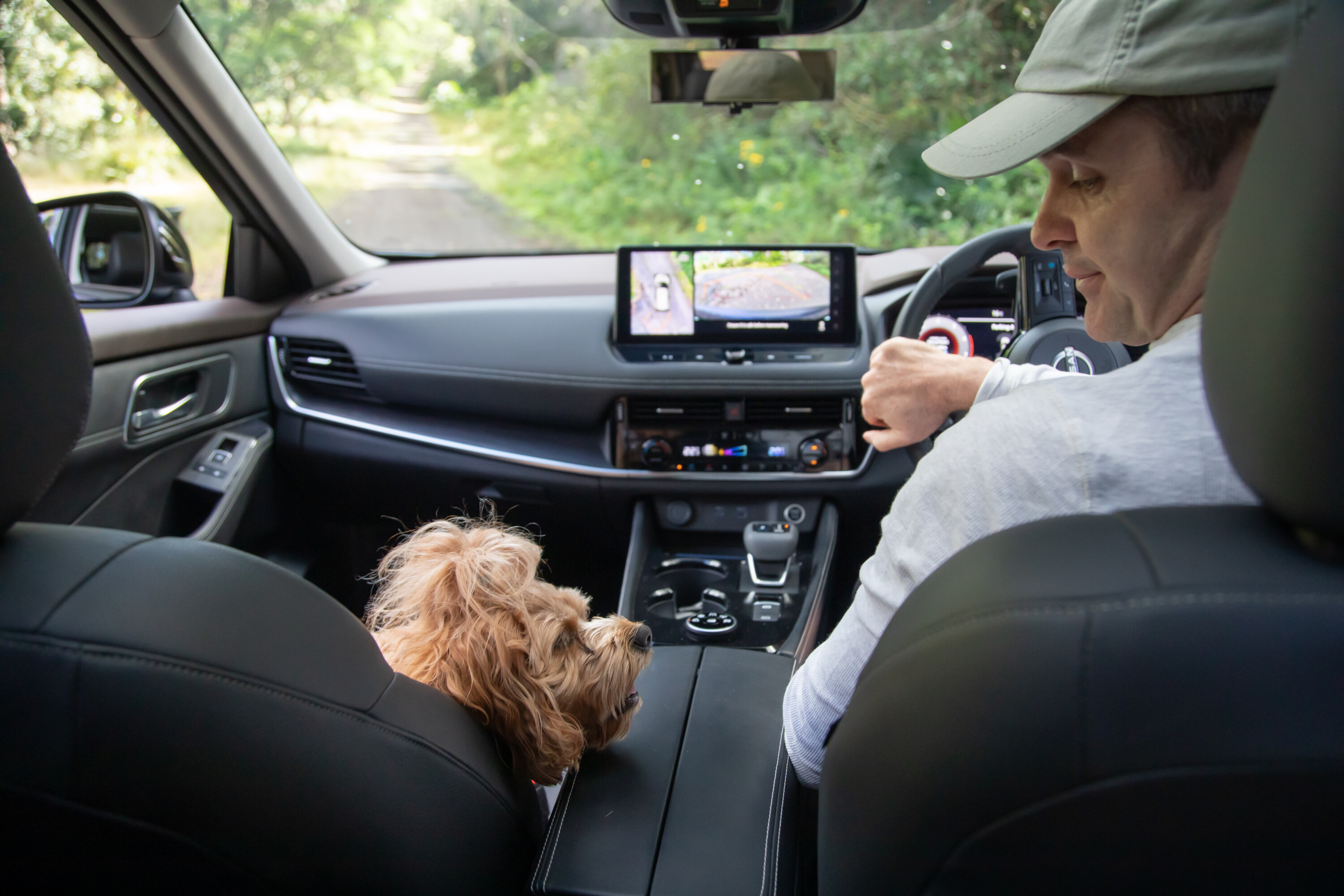
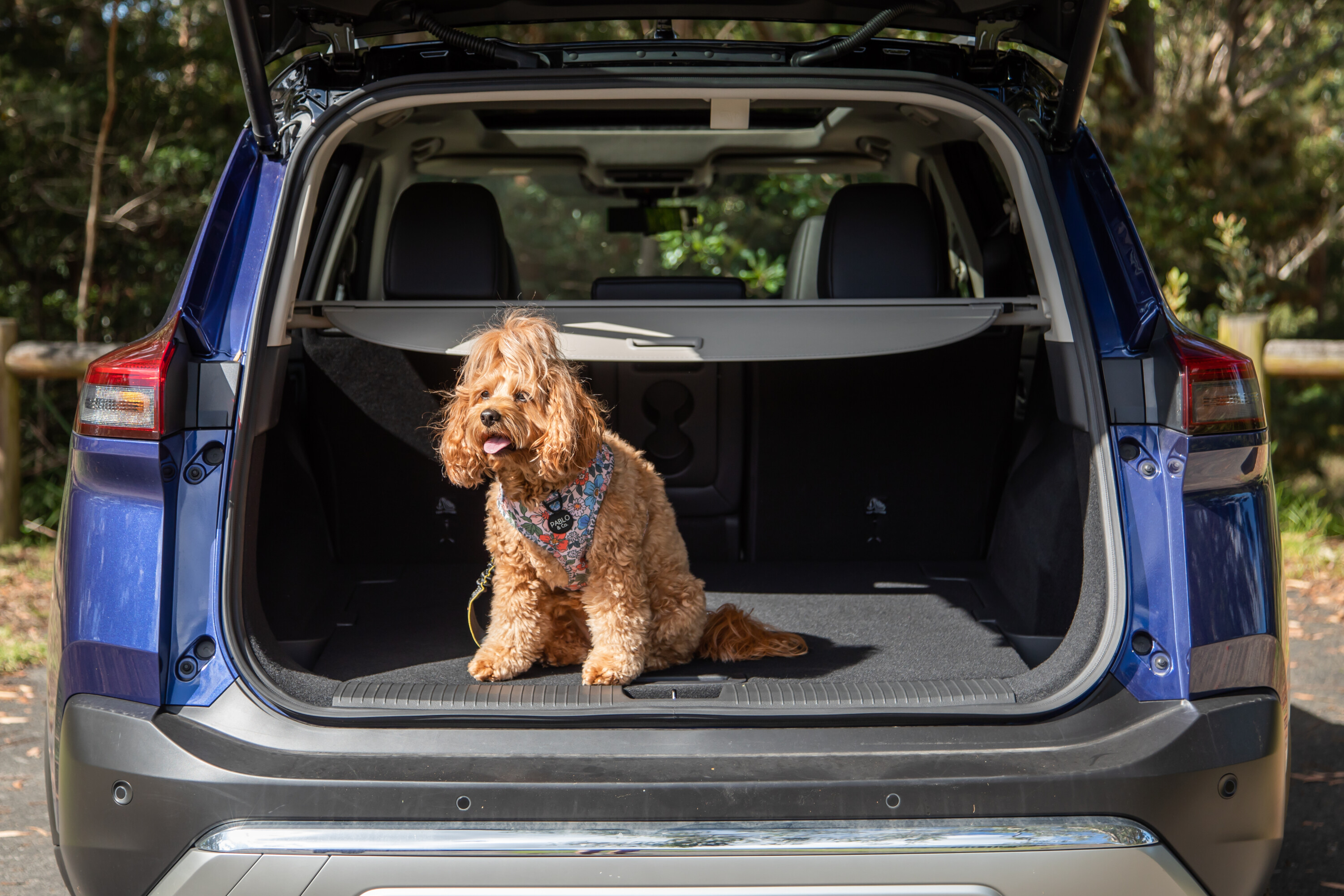
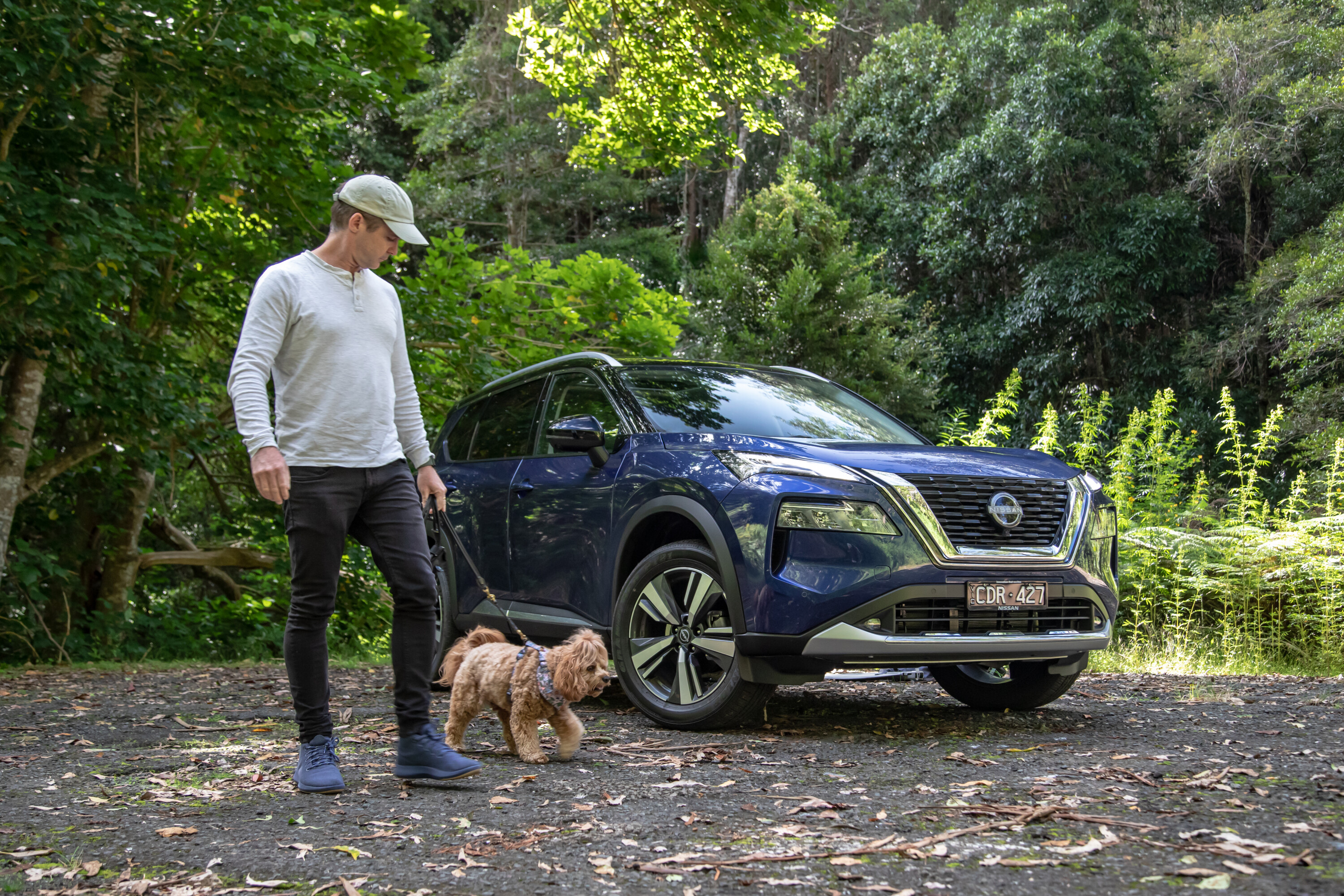
The dog has also taken to the X-Trail, appreciating the well-designed armrest that allows her plenty of paw space while sticking her head out the window. We appreciate it too because the ridiculous animal gets car-sick if she’s not most of the way out of the car for the majority of the trip.
Some people will pull me up and say that, actually, it isn’t big. But it is big. While the X-Trail occupies the same segment as the Mazda CX-5, they are from different planets. Five adults is a reasonably agreeable proposition in the Nissan whereas the CX-5 would require a level of financial compensation and physical therapy to convince the middle-seater to join in the fun.
I wouldn’t call it a jolly experience in the X-Trail, but it’s bearable for short trips. It really feels a size larger than its Mazda and Toyota compatriots and has the legroom of the pricier Tiguan.
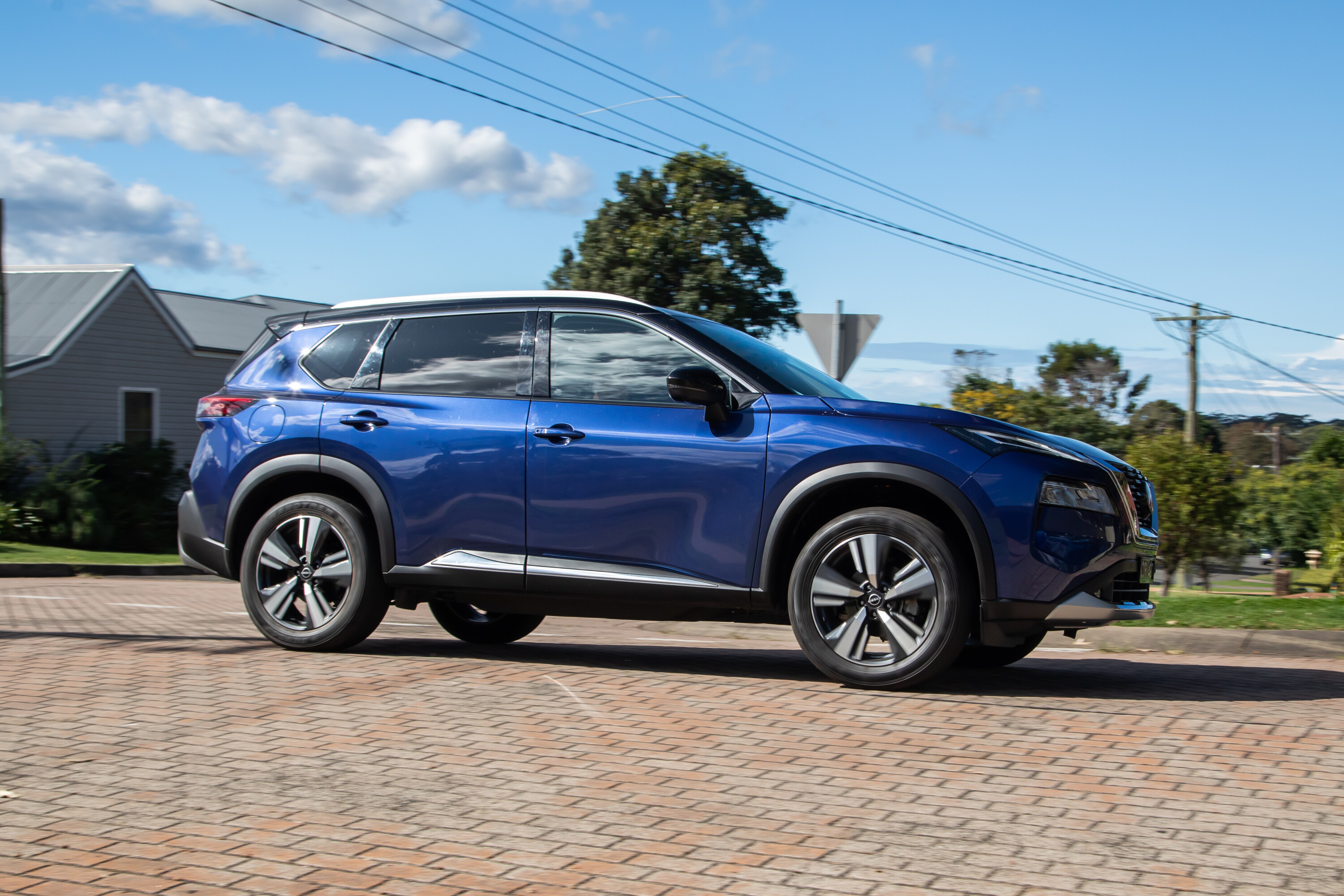
Having said all of that, the people moving portion of this month involved the shuttling of international visitors. It was a cold day in hell (Sydney) that greeted them as I whisked them between appointments. Well, whisked might be slightly overdoing it as the X-Trail is still sluggish if faultlessly smooth owing to its relatively modest outputs and tuned-for-comfort CVT.
The passengers remarked upon the roominess in the back, finding it almost luxurious. They also complimented the ride without prompting, saying it was smooth and quiet. It handled the inner west and CBD sections with aplomb.
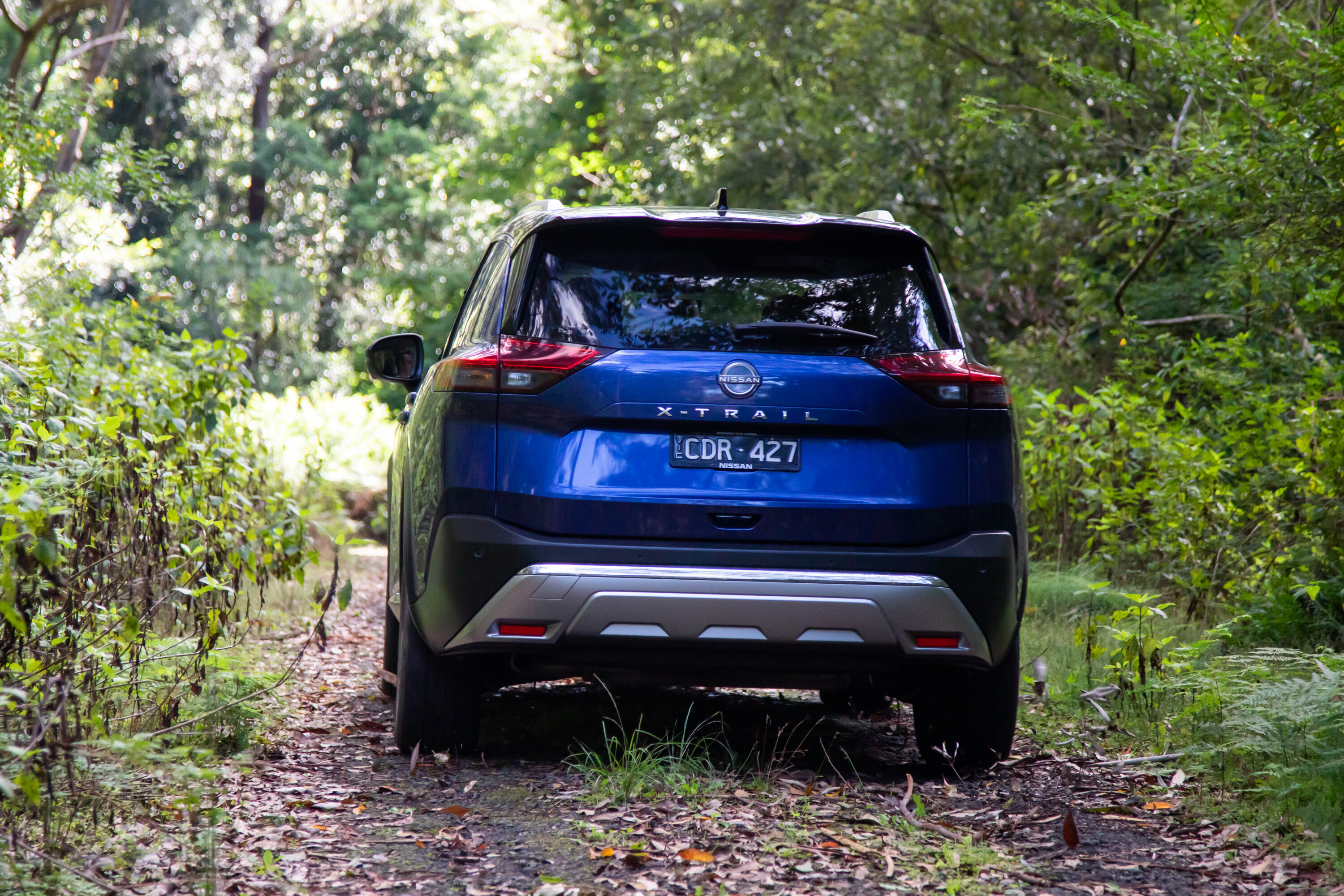
Another, more judgemental passenger, was our idiot dog, regularly seen in these pages as the better looking creature in the photos. Indy suffers from car sickness, a malady so maddening for someone in this job I nearly wept on our first trip with her up to the Blue Mountains.
The ridiculous animal staggered from a RAV4 and brought up everything it had eaten in the last week or so before looking accusingly at me. After some time we worked out it was a dastardly combination of anxiety and motion sickness.

This allowed the spoilt brat to stay in her car bed but also pop her paws up on the centre console and breathe heavily on my elbow for our mission to Jervis Bay to supply our son with a birthday cake. Both dog and cake survived without any untoward splatterings or upsets. She seemed a lot happier with this arrangement and given she didn’t puke, so did I.
This 400km round trip also reinforced how frugal the X-Trail is on long journeys. Stretch its legs and it will use fuel in the high fives or low sixes for the freeway section, which is mightily impressive for such a big unit. What it loses out in power and performance it absolutely gains in efficiency.
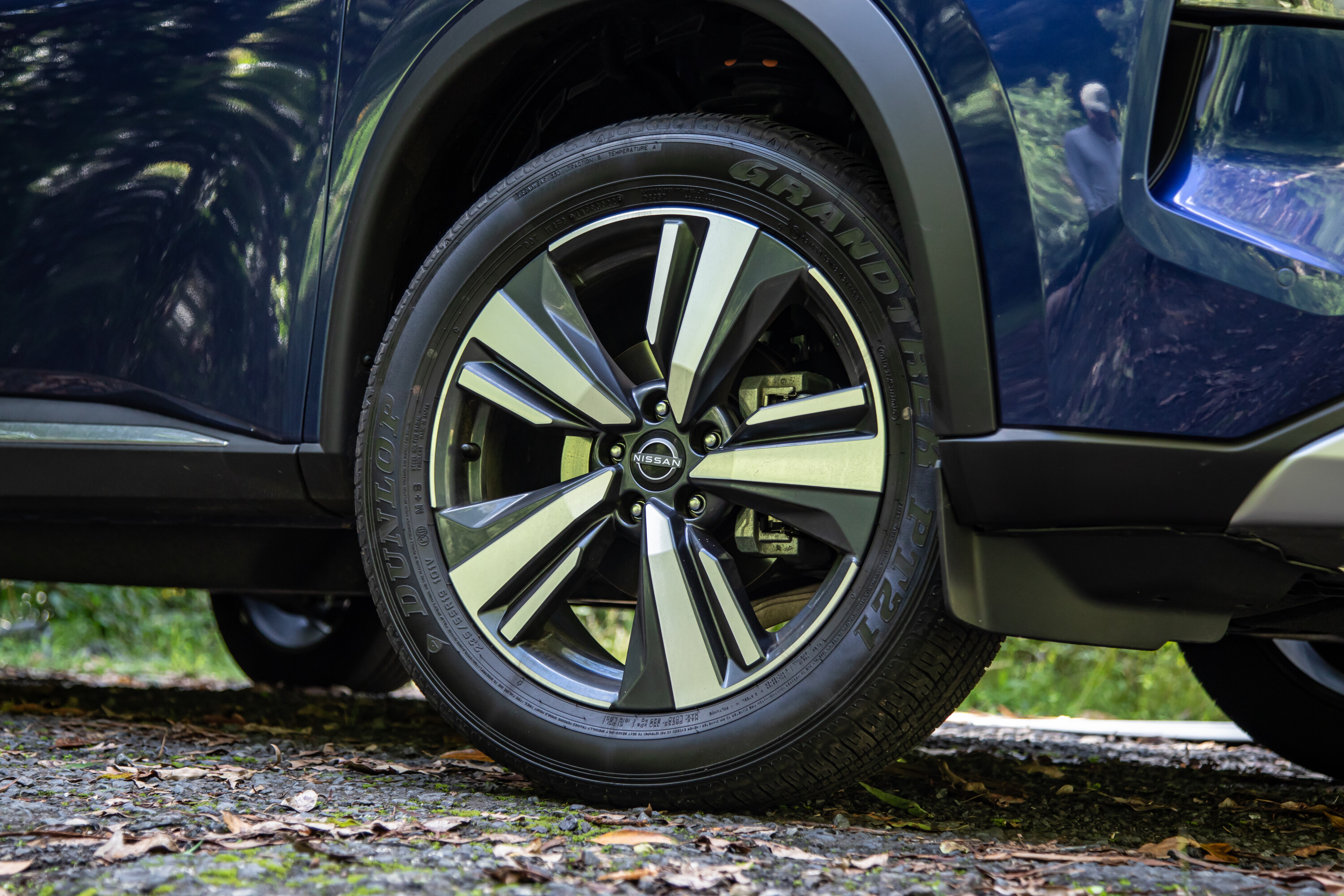
Its final challenge in this frantic third month was a trip to Bunnings. After a slow first half of the year for my wife’s ambitious DIY program – nearly dying on the floor of an emergency department tends to slow one down for a little while – she suddenly found that she needed both a trip to Bunnings and several nurseries to get things back on track.
As expected, the X-Trail swallowed an improbably large bag of soil, several plants, some large plant holder things (guess who isn’t the handy person in the house) and various gardening accessories and it all found its way home in a single trip.
And so the time has come to set it free and return it to its maker. We loved the X-Trail’s time with us – a low-stress, easy companion that can do just about anything. Luckily, we’re getting another, this time the E-Power hybrid version. See you next month.
Far from it. There is so little difference between the two I can’t really understand the appeal of the Ti-L when compared to the Ti, but hey, people do like a sunroof and a particularly nice version of leather. That’s basically it, so anyone sitting on the fence should be across why the Ti-L costs more.
Colour aside, the big change between these two cars is the drivetrain. Where the Ti-L had a fairly adequate 2.5-litre/CVT/all-wheel drive setup, the Ti had the e-Power e-4orce (Nissan’s idea, not mine).
Where most hybrids have an electric motor somewhere between engine and gearbox, Nissan has changed the order and not provided a physical connection to the wheels or even a gearbox.
The 1.5-litre has a variable compression setup which is meant to save fuel and behave more efficiently as a generator but it also makes what can only be described as a long continuous farting sound when it’s cold.
Practically this means you’ve got approximately 1000km of range without having to find a charger because the battery is so small – compared to the Mitsubishi’s approach on the same platform with a 20kWh battery and a plug – there’s no point to having a plug.
It also means the X-Trail is rather more spritely off the mark than the 2.5. The electric motors just go and it has a pretty reasonable turn of speed off the lights if being a little light on for overtaking on motorways and highways. It’s still better than the 2.5, though.
The body is also a little less well tied-down in corners and, oddly, you notice the effect of big wheels more than the petrol.
We’ve got the car for two more months, so we’ll see if our initial impressions smooth out a bit.
Arms crossed, she laments that she can no longer drive her car. “You all took it off me,” she crows to assembled family. Her licence, she means.
At 82, she’s still a spring chicken in some circles, but the serpent that is dementia has found a spot inside her head, coiling more tightly around her sense of self with each passing day. She can barely make a cup of tea, let alone safely drive a car. Even though she wants to.
It was in early adulthood that I gained a sense, vividly, of the responsibility we have to those too infirm to be driving safely – and the safety of those around them.
Almost 15 years ago to the day, I was sat in my 1986 Toyota MR2, perpendicular to some main road in the Blue Mountains, NSW, checking my head for blood as I heard the scream of a young woman somewhere outside.

Literally seconds earlier, ‘Shine On You Crazy Diamond’ was distorting the speakers as I calmly motored to the Bathurst 12 Hour for work as a junior motorsport reporter.
I was on a long, gentle curve near Blackheath and recall seeing a Mitsubishi Verada coming straight at me from the opposite direction. Because it was a curve, I assumed it would turn, and the chilling visual of a car missiling towards me would subside.
Seconds later, it was clear it wasn’t turning, so I hopelessly attempted to swerve left as near 1600 kilograms of Mitsubishi slammed into my side, like a meteor.
“If he’d hit you in the door, you’d be at least critical,” said the gruff highway patrolman as he surveilled the aftermath. While to meet ADRs, my imported 1986 MR2 required the fitting of heavy side intrusion bars inside the doors – like metal cricket bats – they’d be about as effective as urinating on a bushfire. Luckily, I was hit just after the B-pillar.
The Verada, having punted my sub-1000kg MR2 out of the way as if a beach ball, ploughed head-first into an old Camry behind. “Your car just exploded out of the way,” said the young male driver of the Camry later. “Suddenly, there was a car having a head-on with us.”
Within seconds, three cars were written off. A chain-link fence immediately beside the road caught my spinning car like a baseball mitt. My heart was racing like someone had just injected a fat syringe of clear adrenaline right into it, but checking my legs, arms and head, I seemed to be okay.
No pain, no blood.
“I don’t know what happened. It’s never happened before; I just blacked out.”
I got out of my car, physically fine, but in obvious shock, and wandered to the old, crumpled Camry. Luckily the only harm to its occupants – including the passenger, the screaming girl – was also shock. Nobody, in the entire accident, was seriously hurt.
The Verada driver was an older gent, in his late 80s. Travelling around 90km/h, he didn’t brake at all (clearly preferring the ‘bowling ball’ technique of wiping off speed).
“I don’t know what happened,” he later explained on the phone, his voice gentle, kind and contrite. “It’s never happened before; I just blacked out.” Of course, passing out behind the wheel is not a risk only for the old. And I’m not wishing for anyone to lose any freedom any sooner than they strictly need – or joy, if they love cars.
But while even the wisest of old owls can keep the mind pin-sharp, bodies and faculties are doomed to fail. As I learned myself when at, just 20, I came to form the not-particularly-controversial view that when the time comes, we should hand in our licences with grace and acceptance.
Or, if you’re a family, even take them off those who’ve not the awareness to know the time has come.
Not that my Nan put up too much of a fight.
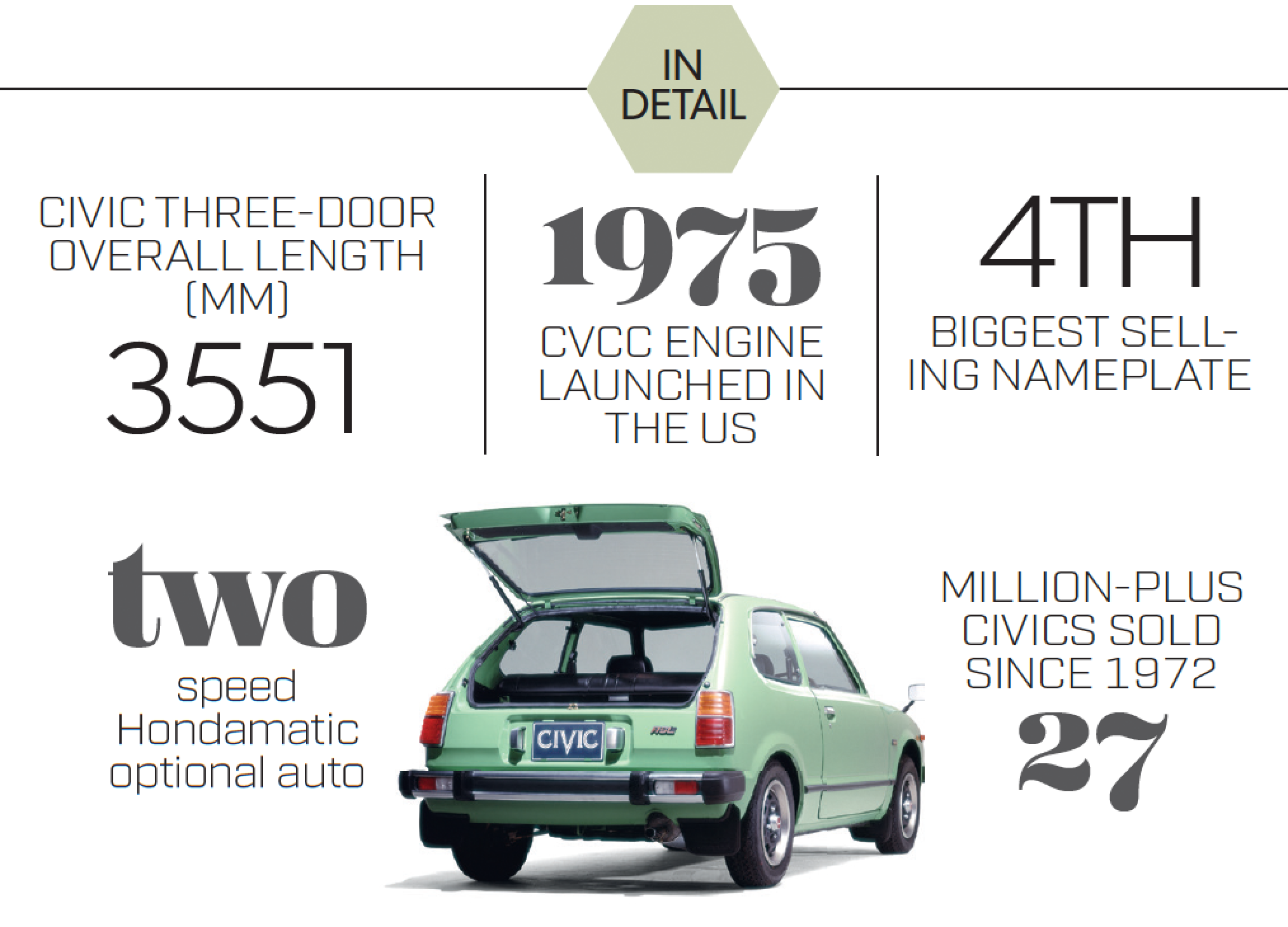
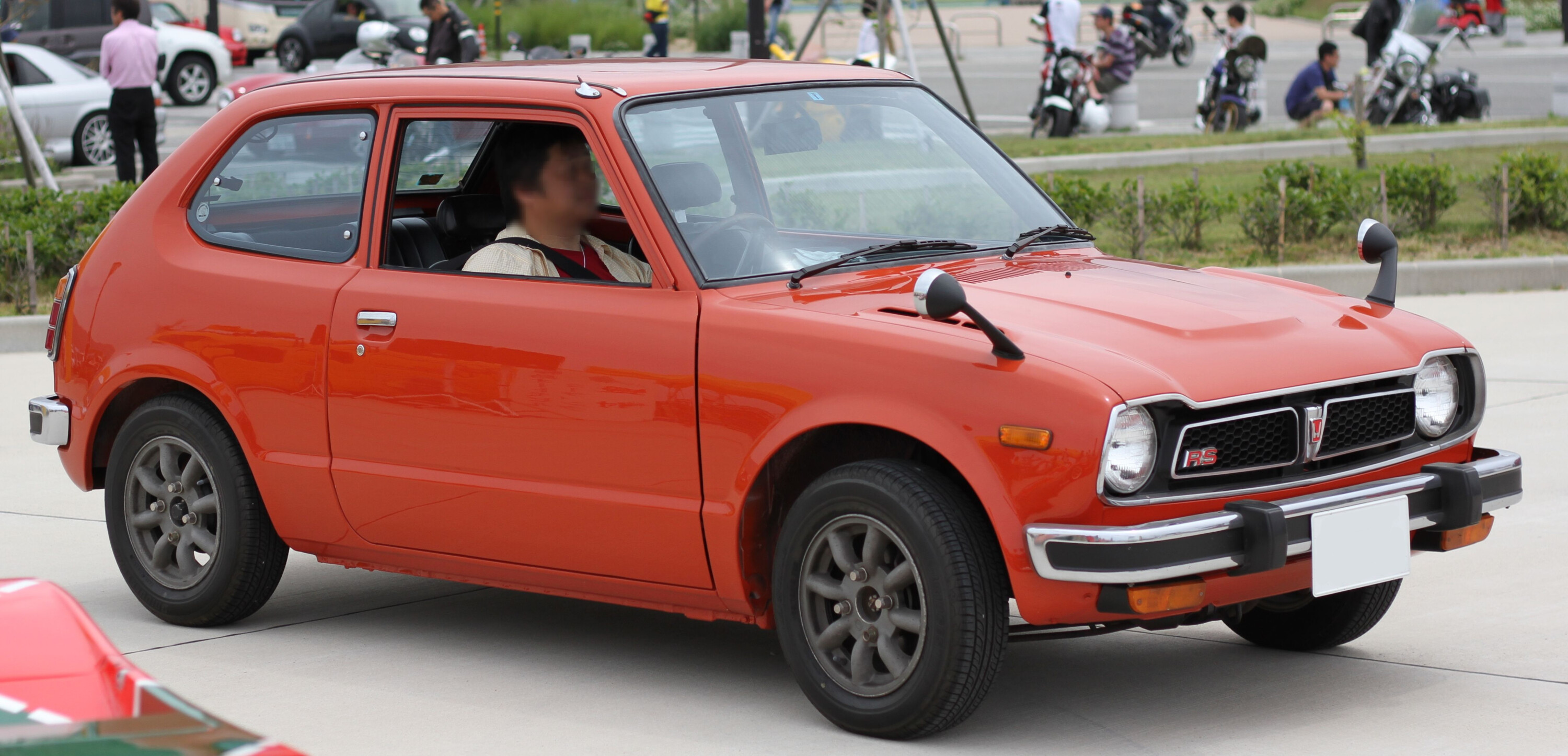
It was neither Honda’s first small car, nor the first transverse front-drive littlie, but the Civic – “created for citizens and cities” – nailed the sweet spot in a time of energy uncertainty and expense.
It went on to be a major and enduring influence on the world’s small-car buying habits, and on the success of Honda and Japan.
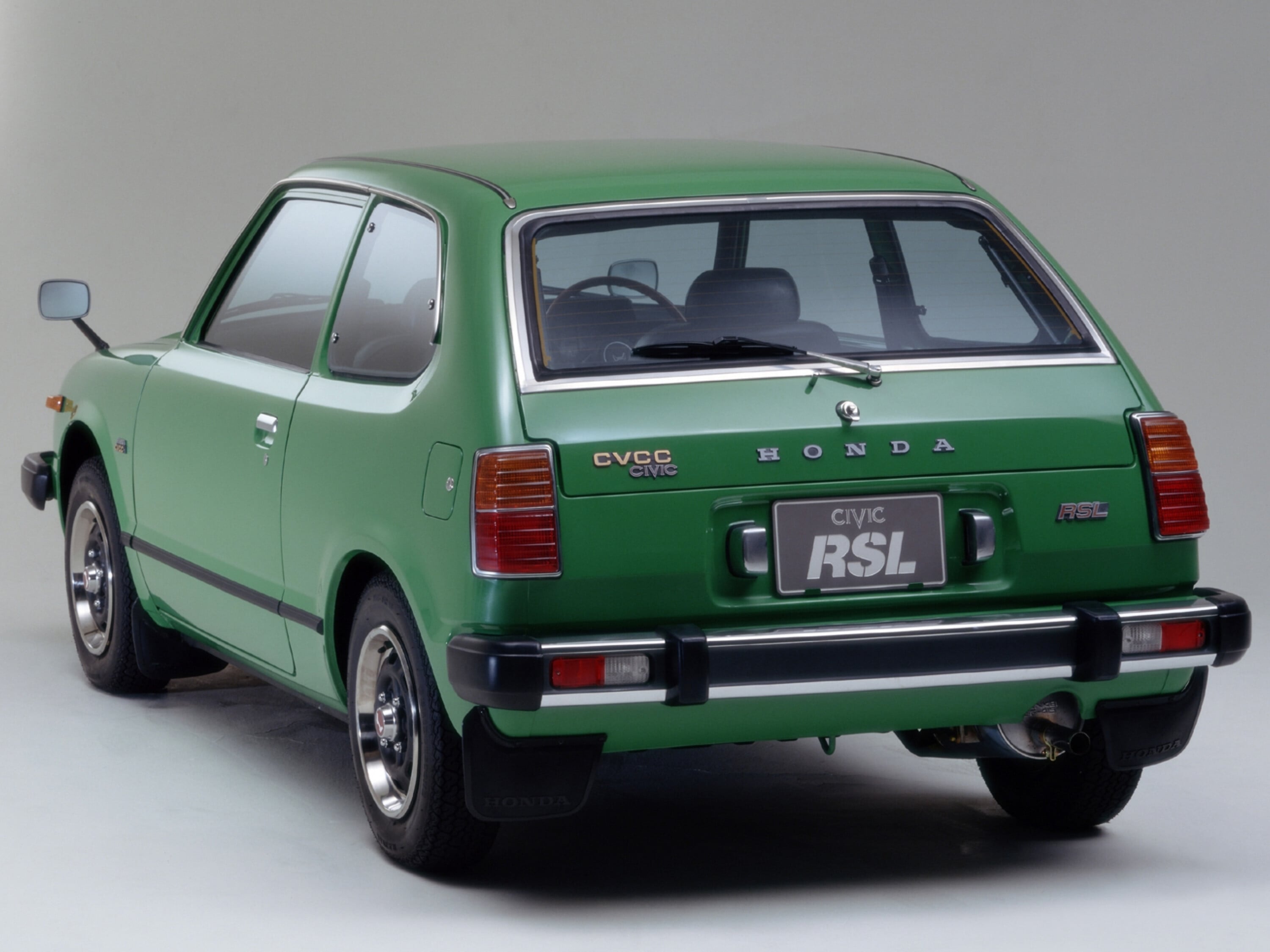
In 1973, however, even these were secondary to its fuel economy of 5.9 litres/100km (a magic 40mpg in the US), as the OPEC oil crisis set about quadrupling US fuel prices in just 12 months.
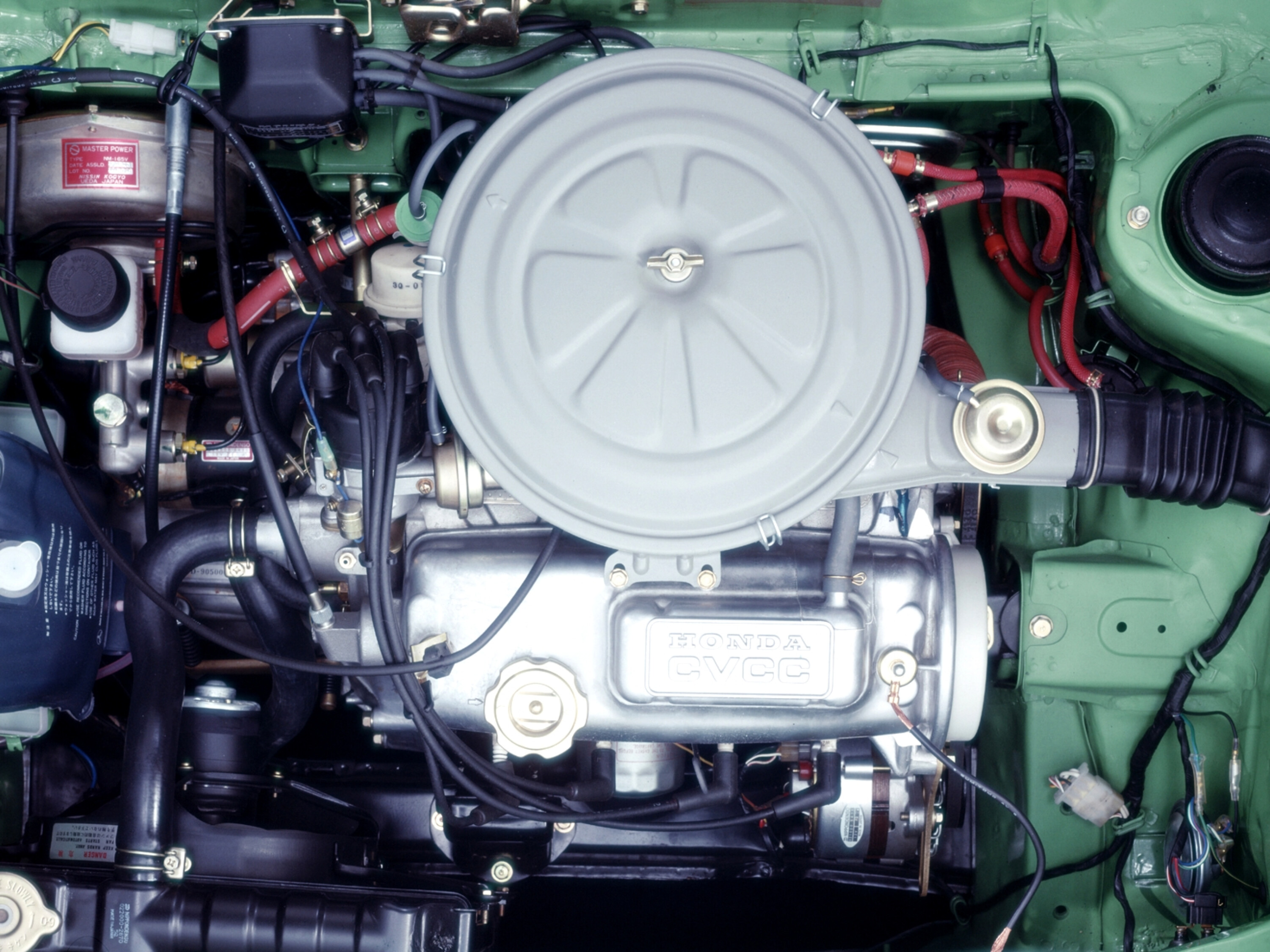
The Civic’s US appeal grew further with the 1975 launch of the 1.5-litre CVCC (Compound Vortex Controlled Combustion) engine. Using a small pre-combustion chamber for each cylinder, the lean-burning 12-valve engine achieved the US’s harsh 1975 Clean Air Act without a crippling performance compromise or catalytic converter.
The entirely agreeable Civic was quite unlike the handful of quirky Honda cars that had preceded it, such as the N360, S600 and the air-cooled 1300 coupe. Indeed, the latter’s seismic commercial failure had driven Civic project leader Hiroshi Kizawa to get his wish for “a more ordinary car”, rather than “a car that the Old Man (Soichiro Honda) wanted to build.”
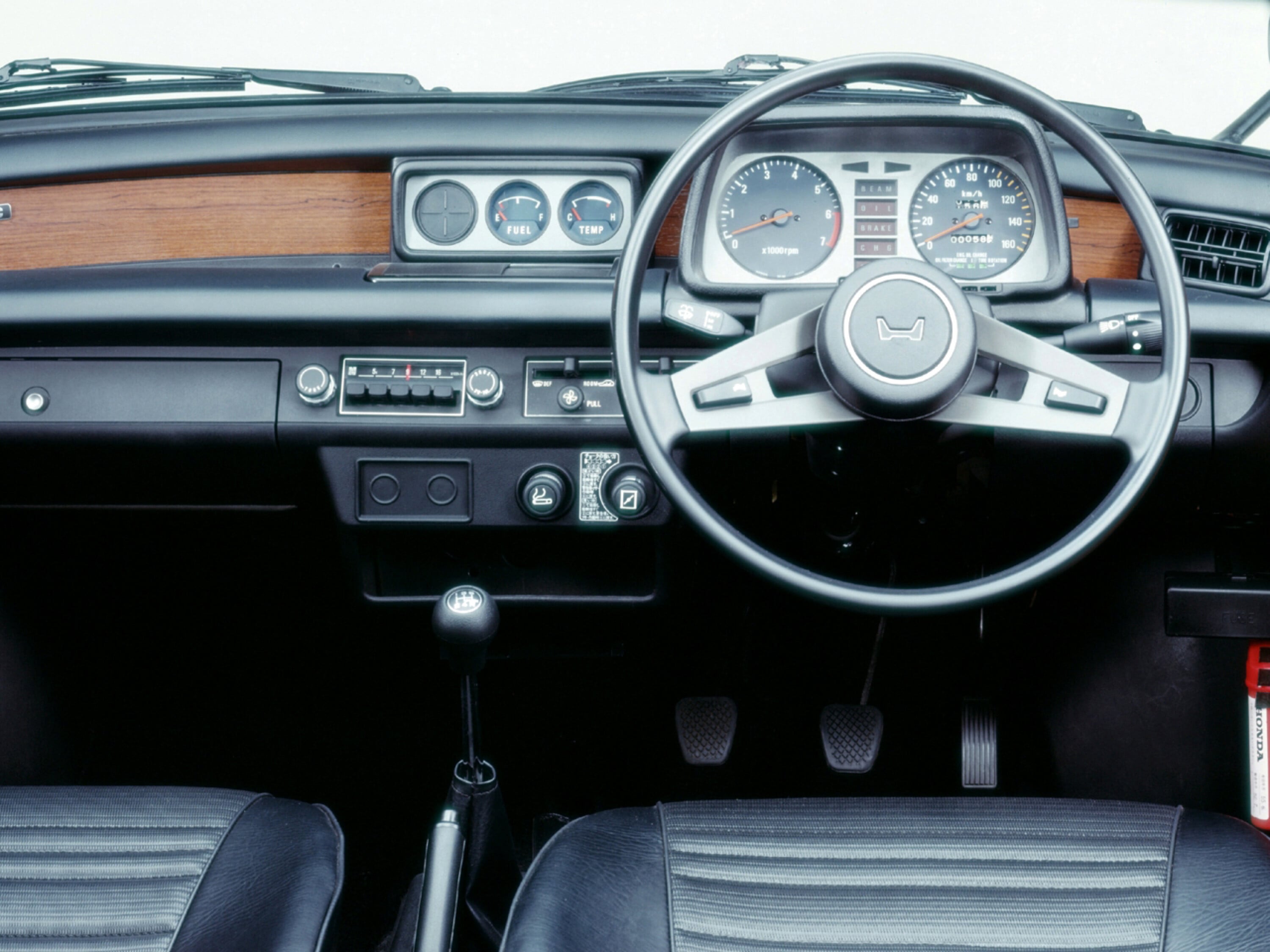
The main lesson from the 1300 coupe – a staggering engine, with the car as an afterthought – was the need for a complete package of quality and comfort.
The Civic design was completed in an astonishing two years, with the first production model rolling off the line in July 1972.
The first generation was produced until 1979, by which time the world was a happier, cleaner and more civilised place. That’s at least partly because the Honda Civic was in it.
Interiors were simple featured a gently arced and fake woodgrain-accented dash, sporty two-spoke steering wheel, and boldly modern instruments.
A bore increase from 1974 brought 1237cc, 39kW and 82Nm, with torque then upped to 88Nm for 1977. A 1488cc engine propelled the longer versions from 1975, with 48kW/103Nm.