Old racing cars typically die an inglorious death.
They’ll be pirated for parts, left to rot among good intentions in a shed, and being eventually only valued as scrap, take their final chequered flag in the maw of a metal shredder.
Prior to the baby-boomer boom in historic racing, not even iconic race cars were immune. Peter Brock, speaking to this writer about his HDT Torana A9Xs for a February 1996 Wheels feature (“Once Were Warriors”), admitted: “So far as I’m concerned, a race car is a utensil. When its use-by date is up, it’s up.”
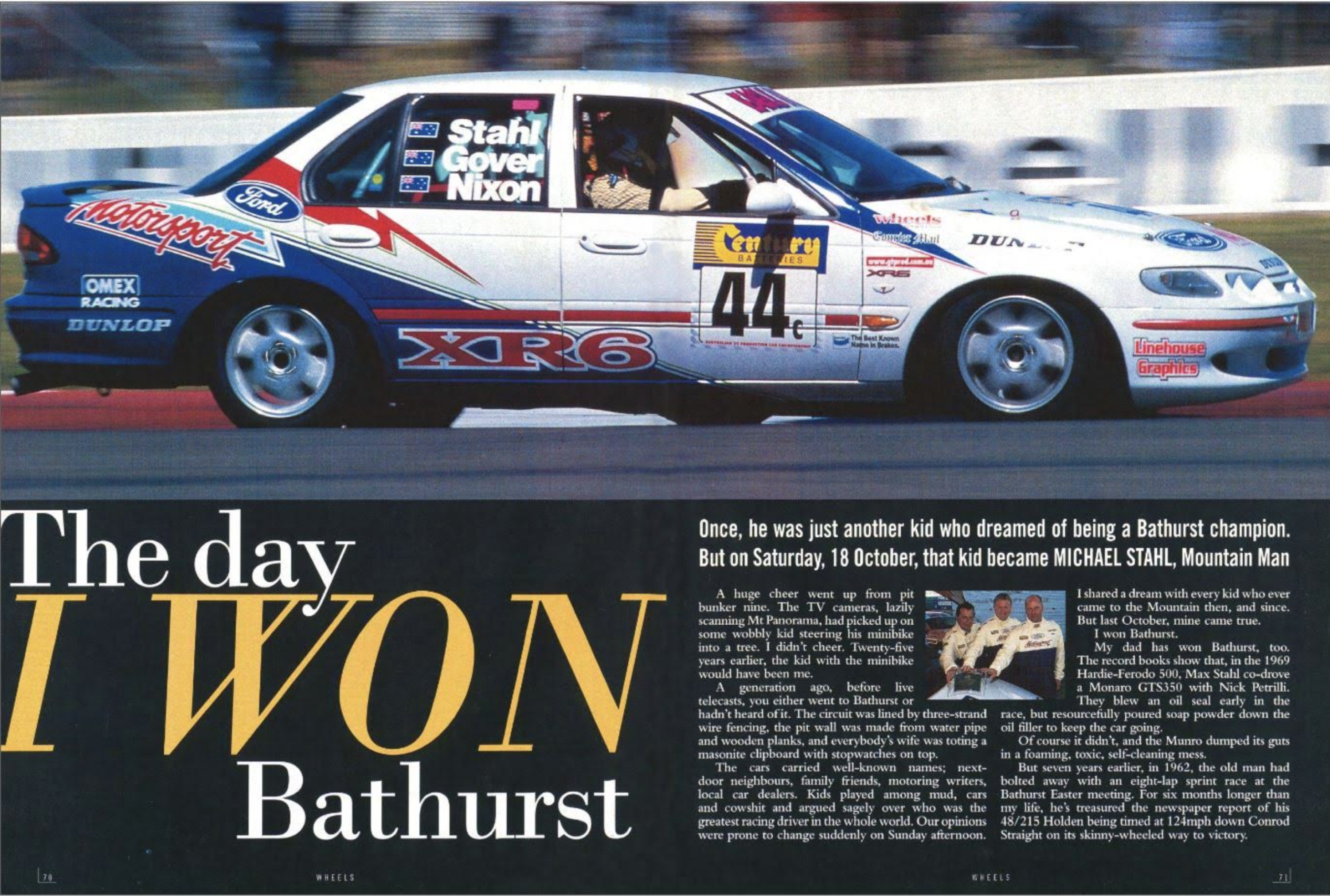
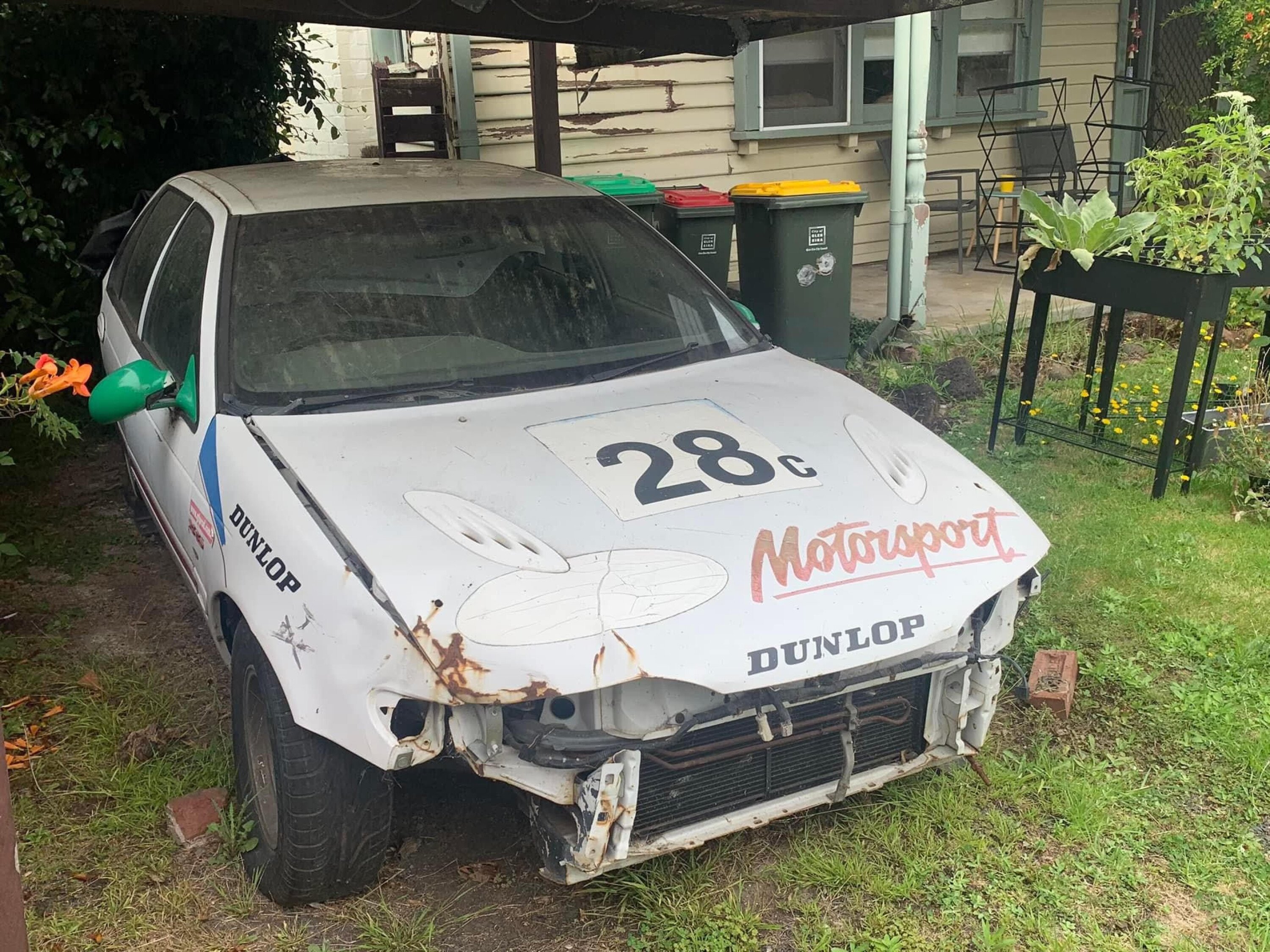
After more than a quarter of a century, the chances of survival for a little-known Ford Falcon EL XR6 production-class racer – the car in which I and two fellow journos took class victory in the 1997 GT Production Three-Hour enduro at Bathurst – should be close to zero.
1
1
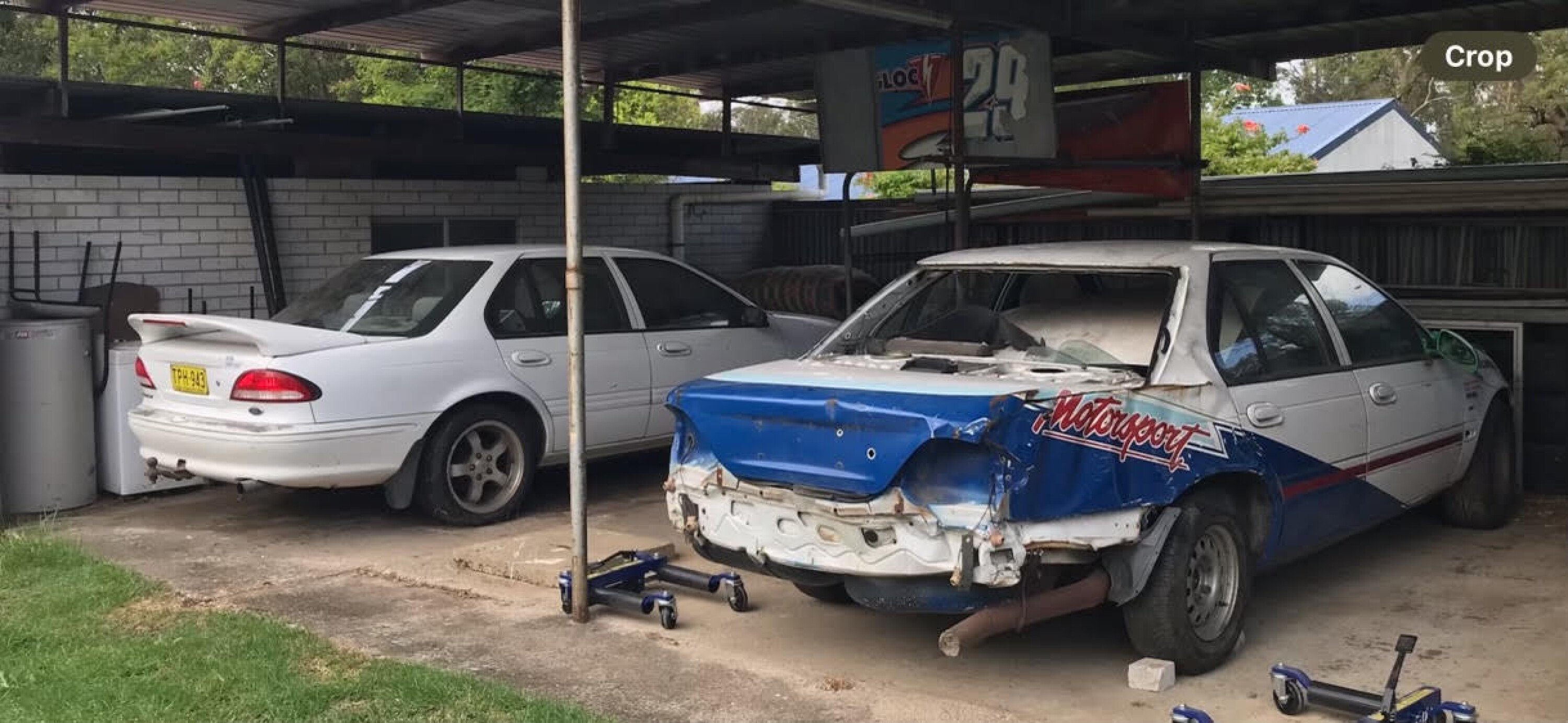
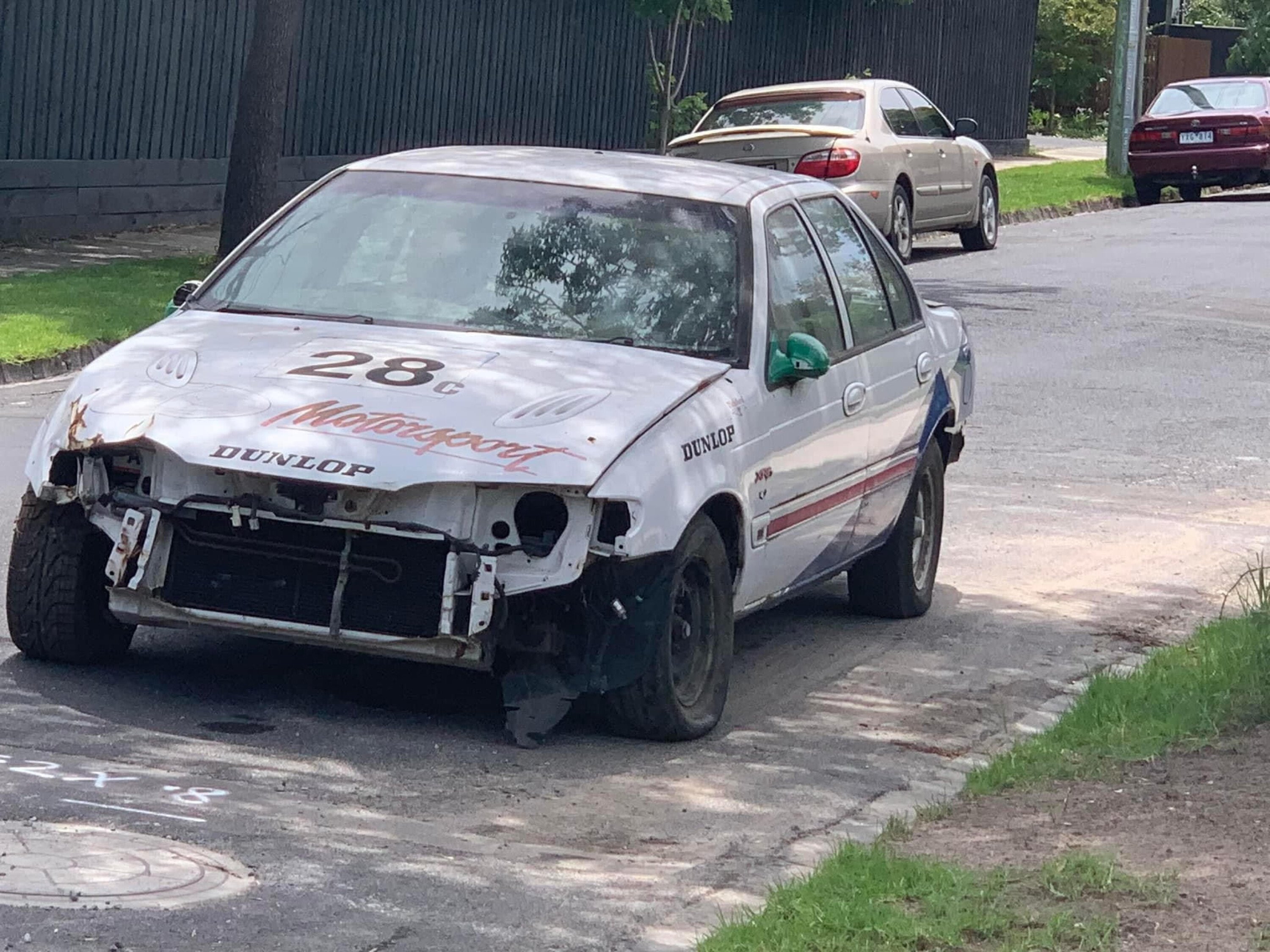
However, that car, in substantially one piece and still in its distinctive Ford Motorsport livery, has been discovered languishing in a Melbourne scrapyard.
Newcastle (NSW) motor sport enthusiast David Perkins, a longtime friend of three-time GTP class champion and period XR6 campaigner Chris Sexton, as well as Team Manager for Super3 Series Supercar driver Ryan Gilroy, has bought the car and is already progressing with plans to restore it.
“You’re far from being the only one who has fond memories of that car,” Perkins tells me. “Remember, it ran in official Ford Motorsport colours and because of what it was, generated a lot of media coverage through the season.”
1
In 1997, reigning GTP class C champion Chris Sexton was approached by Ford Australia to run a second XR6 alongside his own Yellow Taxis-sponsored car.
The white Ford Motorsport “media” car was to be driven by a different motoring journo at each of the eight GTP championship rounds, with the three least-suicidal drivers being selected for the pinnacle Three-Hour Bathurst Showroom Showdown in October.
Wheels subscribers can use the archive to read the story of this Bathurst debutante’s dream coming true, at this feature.
1
We’re looking forward to covering more of the exhumed XR6’s story and its restoration in a forthcoming feature.
What’s already known is that AFL football identity Sam Newman was subsequently loaned the car to gain licence signatures for a Ford-supported XR8 campaign in 1998. The XR6’s mangled rear corner and shattered rear window are just as Newman left them…
Chris Sexton suspects Newman’s tail-first thumping into a Calder Park mudbank has done the car at least one favour.
1
“The mud has completely plugged the exhaust pipe, which is normally where moisture can get in and ruin the engine.”
Chris Sexton’s Yellow Taxis Racing XR6 is still in running condition at his home in the NSW northern rivers. David Perkins’ goal is to ultimately reunite the two cars, and their drivers, at Mount Panorama.
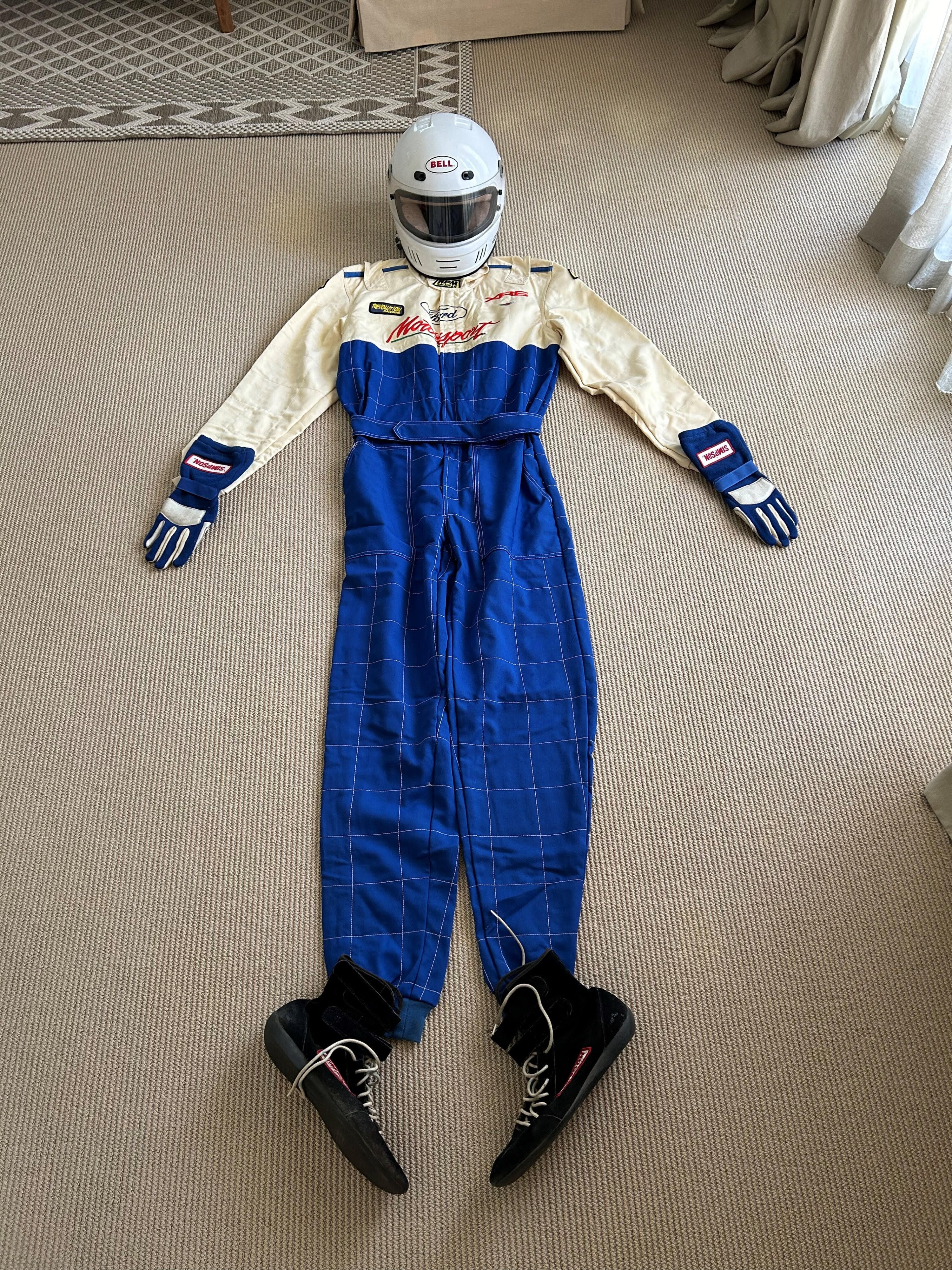
I can verify that at least one of these drivers still has all his original Ford Motorsport race gear from Bathurst 1997. Although, fitting into them may be something else again.
January 2023: Genesis X Convertible wins Chicago Athenaeum Museum’s Good Design Award
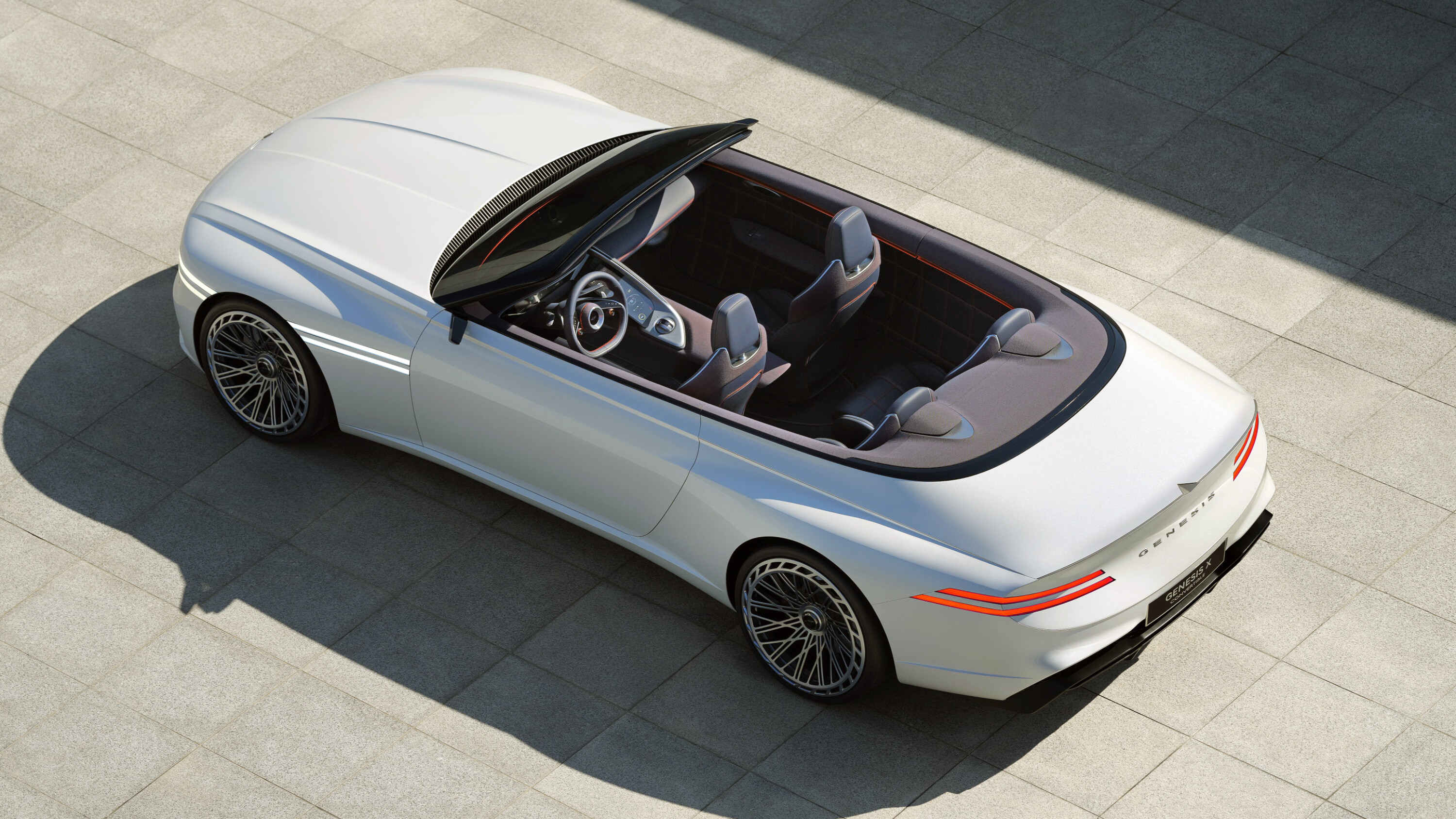
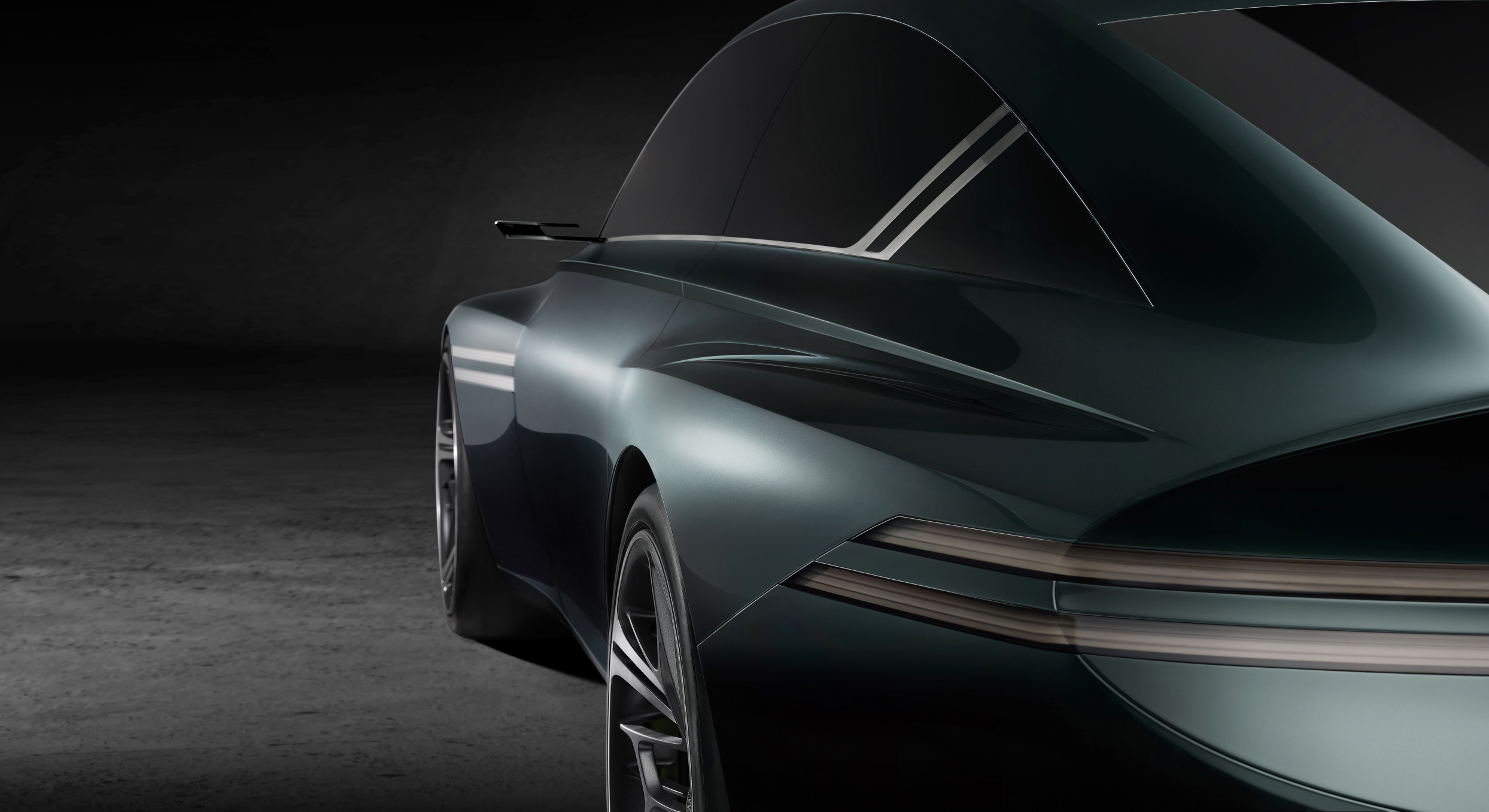
Although it was technically unveiled way back in November 2022, the convertible piece of Genesis’s X concept trilogy has been awarded the 2023 Good Design Award in Transportation.
The prize is awarded each year by the Chicago Athenaeum Museum: Museum of Architecture and Design, and The European Centre for Architecture Art Design and Urban Studies.
“Founded in 1950, the prize honours the highest level of design excellence across more than 30 categories,” today’s news notes.
None of the X concepts have been confirmed for a production schedule, but fans of retro-futuristic design will be hoping for an announcement soon.
1
November 2022: Genesis X Convertible completes concept trilogy
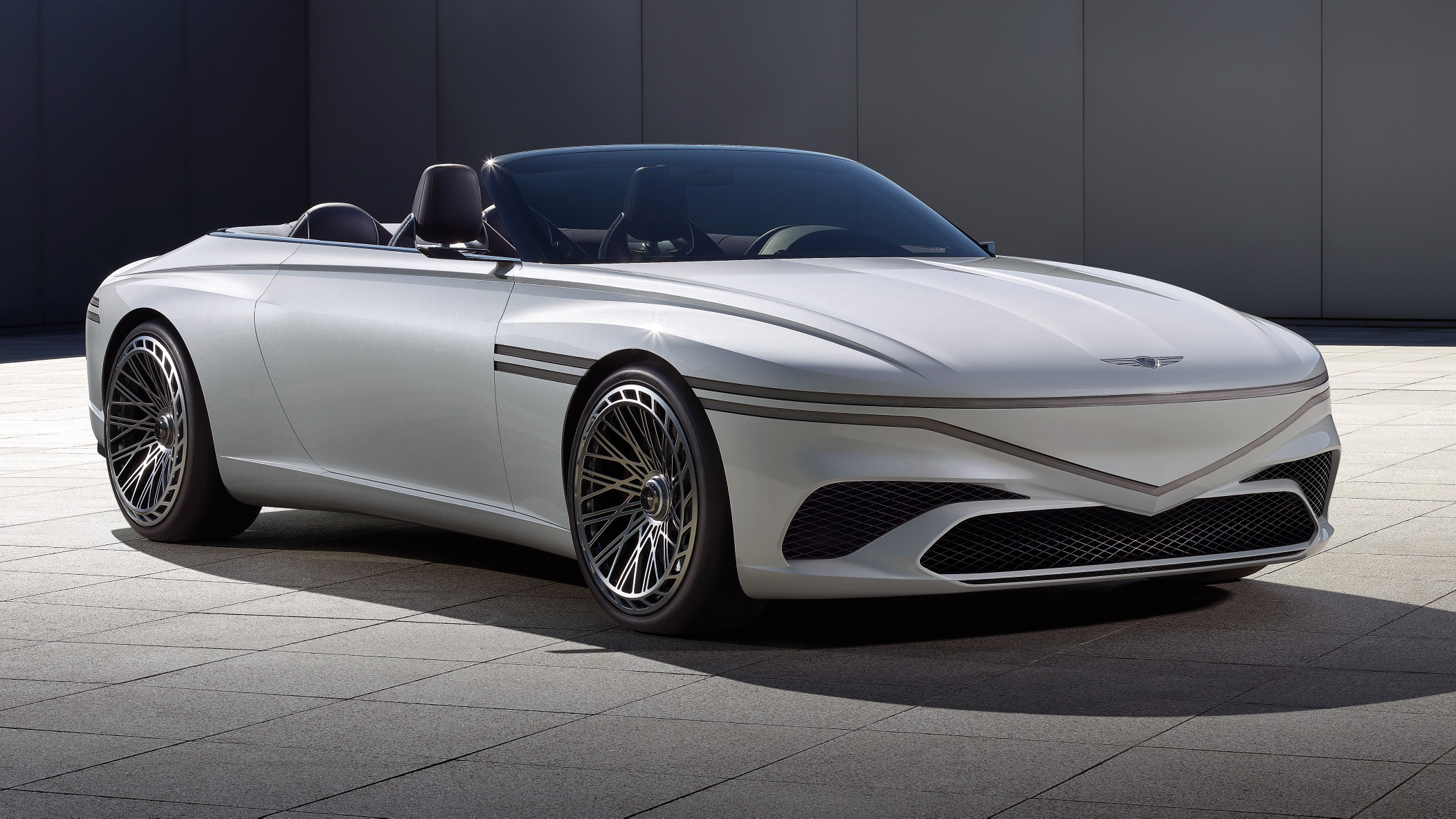
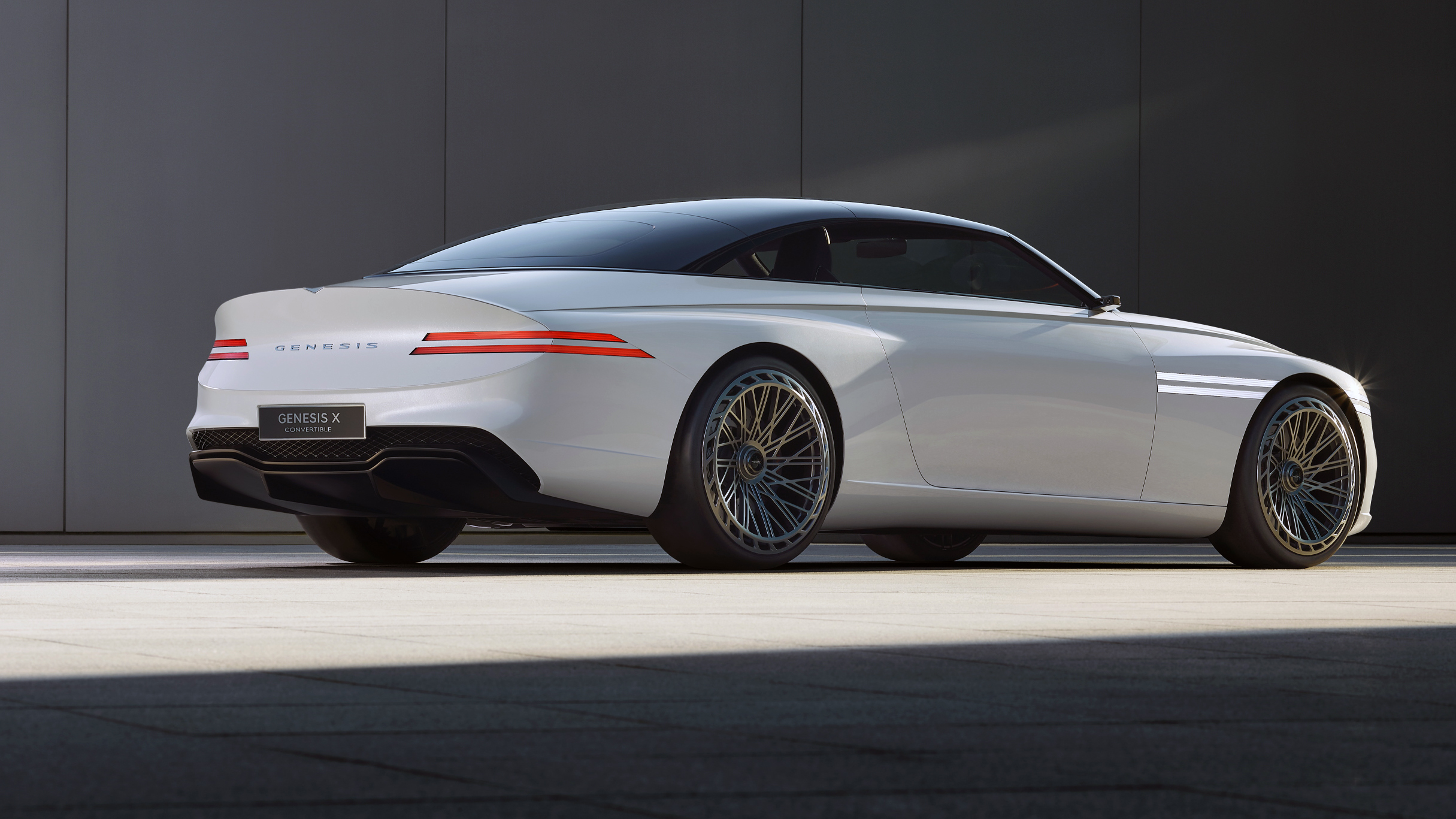
Hyundai’s luxury spinoff has completed what nobody expected to become a series, unveiling the third model in its ‘X’ concept range: the X Convertible.
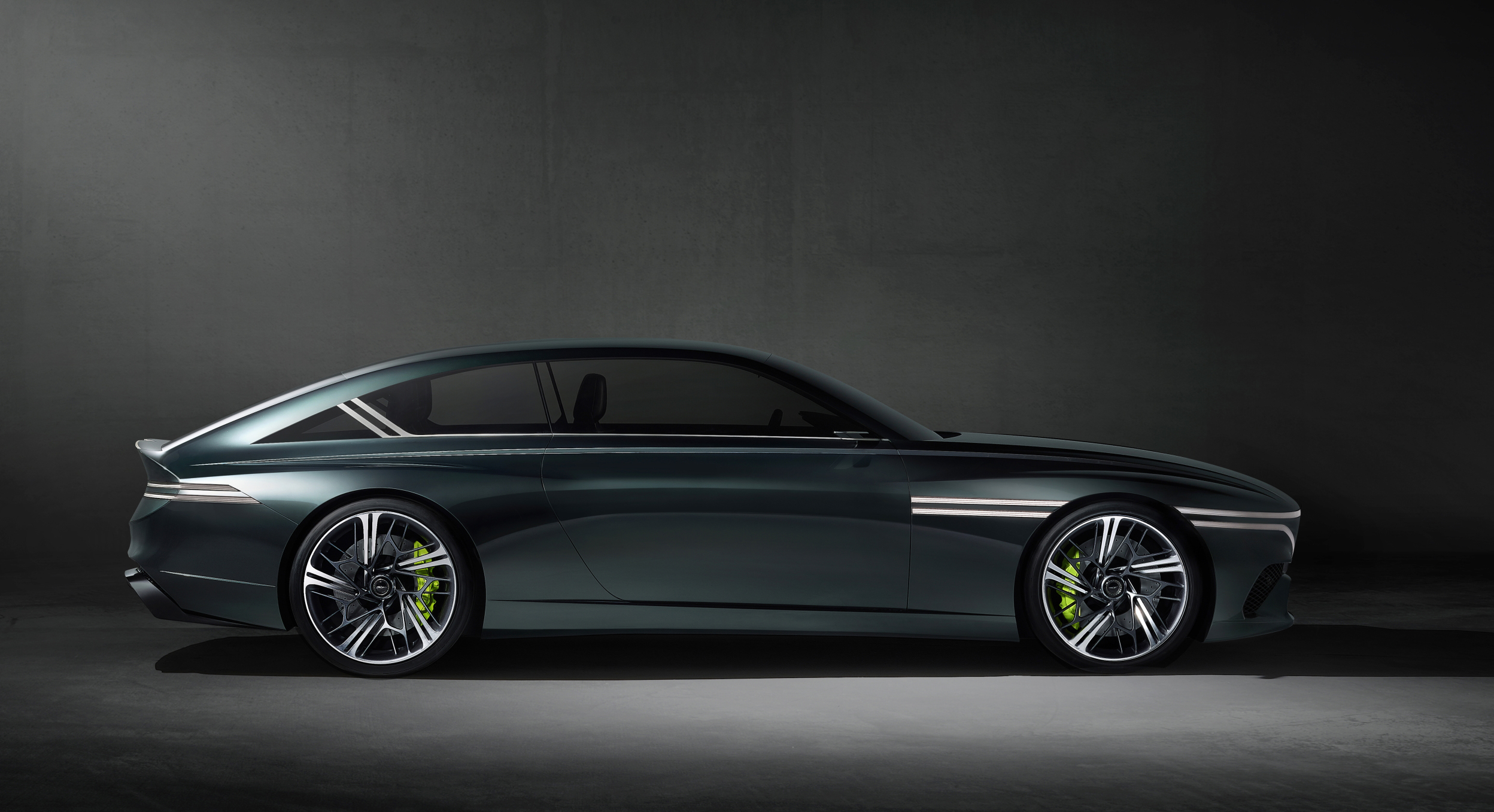
The new droptop show car follows the earlier debut of the original X coupe concept in March 2021, followed by the X Speedium four-door coupe concept unveiled earlier this year.
In its open form, the Genesis X Convertible concept builts on the original X concept’s sleek and wide two-door design.
At the front end, the concept takes more inspiration from the later Speedium four-door coupe, with a huge LED lighting signature designed to hint at the Genesis brand’s shield-like ‘grille’ design.
1
Speaking on the styling freedoms explored with these big electric grand tourer concepts, Genesis design boss Luc Donckerwolke said:
““Genesis started life by producing sedans mainly targeting business users. While creating a new, differentiated design DNA, we gradually increased the emotional appeal by applying this DNA to the SUV typology.
“Now, electric powertrains have given us the perfect scenario in which to enjoy nature, and propelled the brand to create vehicles with even greater emotional resonance.”
1
The X convertible also features a folding hard-top roof, giving it a genuine coupe look when raised, while offering ‘transparent moon roofs’ above the front occupants.
Which of these three concepts do you prefer? Tell us in the comments below.
For now, Genesis has offered no word on whether it will introduce the X concepts into production, but with Polestar’s O2 concept now confirmed for market, we can only hope Genesis will make the right call.
1
The story to here
August 23: Genesis X Speedium Coupe concept interior revealed at Pebble Beach
The interior of the Genesis X Speedium Coupe concept has debuted at Pebble Beach Concours d’Elegance – the finale of the Monterey Car Week.
Genesis says the interior was developed over the past five months by its design group, following the unveiling of its external body in April (see below).
It utilises the cabin of the previously-revealed two-door Genesis X concept as its basis, but with a new colour scheme and second-row seats.
“The X Speedium Coupe was conceived as an internal design exercise that we later decided to reveal publicly. It was nothing more than a hard model built on our Athletic Elegance design identity,” said Luc Donckerwolke, chief creative officer at Genesis.
5
“Given the positive reception it received at the event, we chose to complete the concept and present it to discerning attendees at the Pebble Beach Concours.”
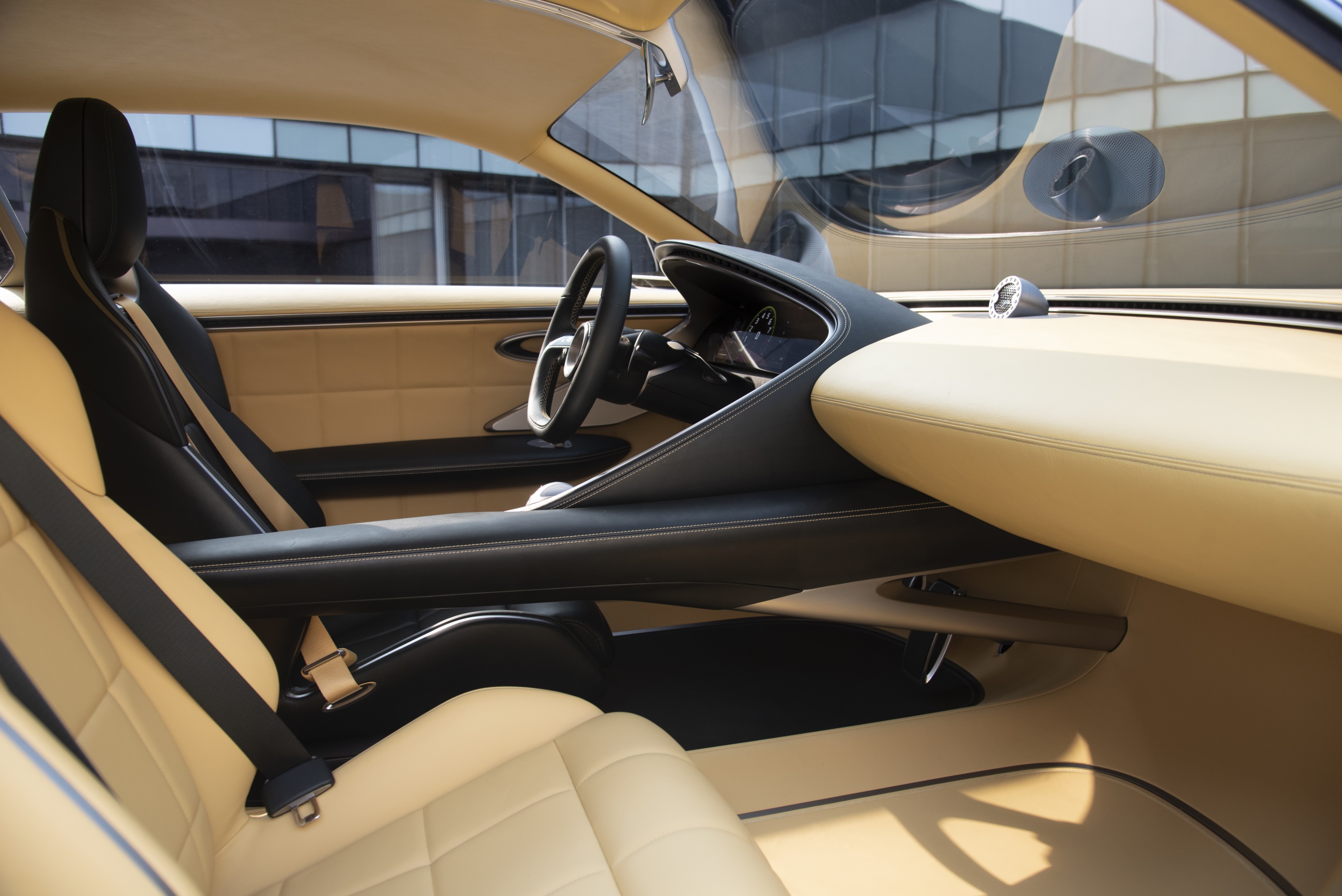
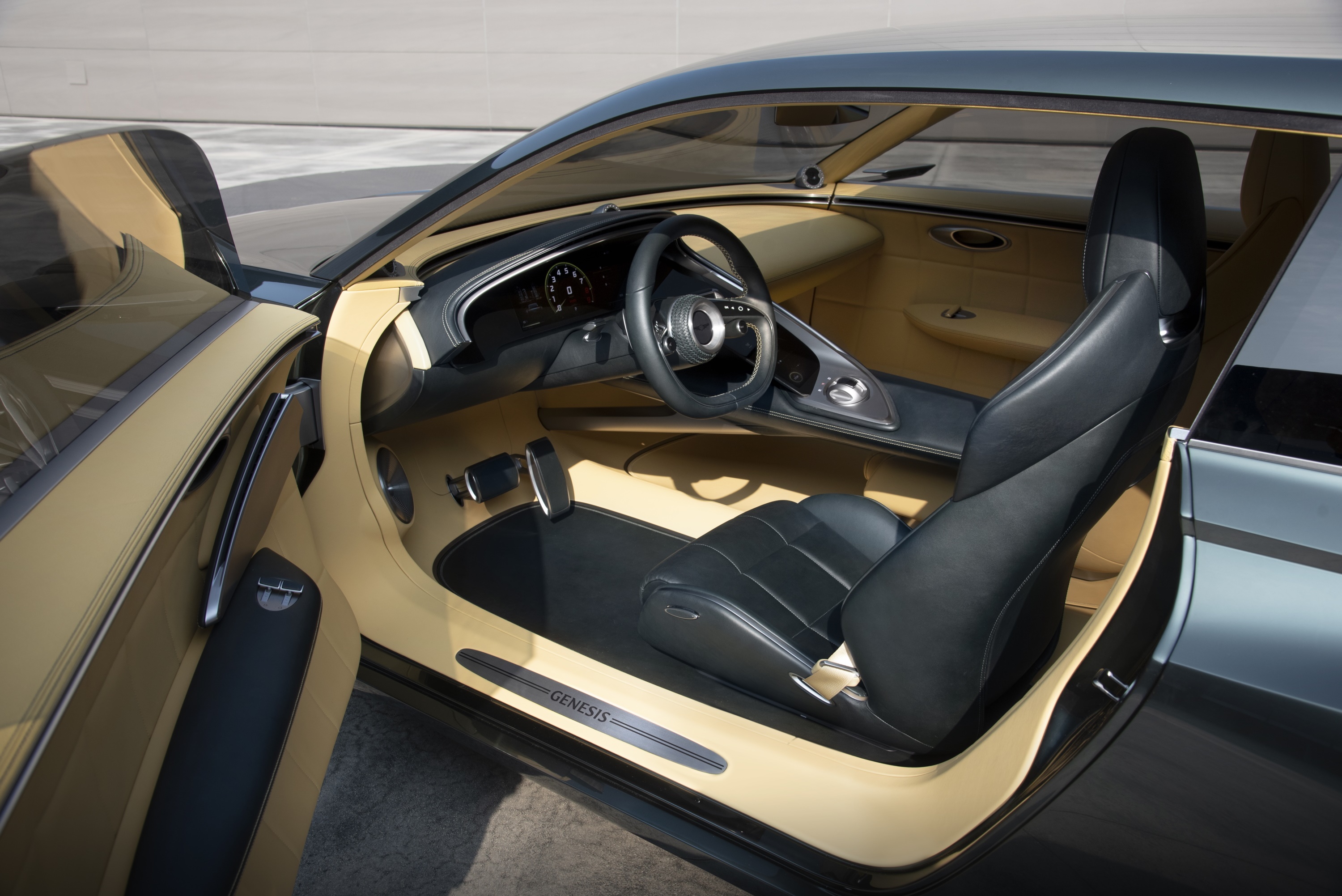
According to the brand, the concept’s interior is inspired by classic Korean architecture, with minimalist design elements and an asymmetric, driver-orientated dashboard.
The front seating is finished in pinegrove green – a similar finish to the exterior – while the dashboard, centre console and rear seats are monterey gold, in a nod to the Northern California region that hosts the Monterey Car Week.
1
In addition, Genesis has collaborated with South Korean sound designer Guk-il Yu – who also worked on the Hyundai Grandeur Heritage Series concept – with speakers “strategically positioned” throughout the cabin to “optimise acoustic performance”.
The cockpit features a curved OLED instrument cluster screen with a unique motor output indicator, while the central display includes the start button, and multimedia and climate controls.
Two types of sustainable leather were sourced for the concept: plant-derived vegetable-tanned leather and ‘breathable grain leather’, which is said to require less water and chemicals to manufacture.
1
June 6: Sleek concept bound for Goodwood debut
Genesis has confirmed the X Speedium Coupe concept will make its ‘real world’ debut at the Goodwood Festival of Speed next month.
The event will mark its first public event since it was unveiled in April, following the earlier reveal of the slightly more sporting X concept.
The X Speedium Coupe concept is set apart from its predecessor with a new grille-free front end, along with a stretched wheelbase and squarer roofline – potentially hinting at plans for a big four-door coupe to sit alongside the next-generation G90 limo.
At Goodwood, the X Speedium will be presented alongside an actual production model: the new Genesis Electrified GV70, recently driven in Australia. Catch our first-drive review at the link below.
Following the global debut of the sleek Genesis X Speedium Coupe concept, public government documents in Australia reveal that a trademark has been requested for the Speedium name.
This news does not necessarily represent confirmation that the Speedium will enter production, as pre-emptive trademarking is often carried out to ensure a compelling name is not snapped up by a rival.
Still, the X Speedium show car is Genesis’s second swing at this concept, having already revealed the initial X concept in April last year. Interestingly, that earlier concept looked even more production-ready than this latest iteration.
Realistically, if the X Speedium does enter production, it could be more likely to arrive as a large four-door coupe rather than a two-model, and the latest concept’s stretched roofline could be a hint towards such a plan.
For an idea of how treacherous the world of trademarking can be for global brands, see our story below about Ford’s efforts to bring its US-market Edge to Australia, where Toyota already owns Edge as a variant badge. (And all for nought, now, given the Endura has exited Australia.)
The concept previews Genesisu2019s future EV-led reductive design language
It is based on the Genesis X Concept
Genesis aims to have an all-EV line up by 2030
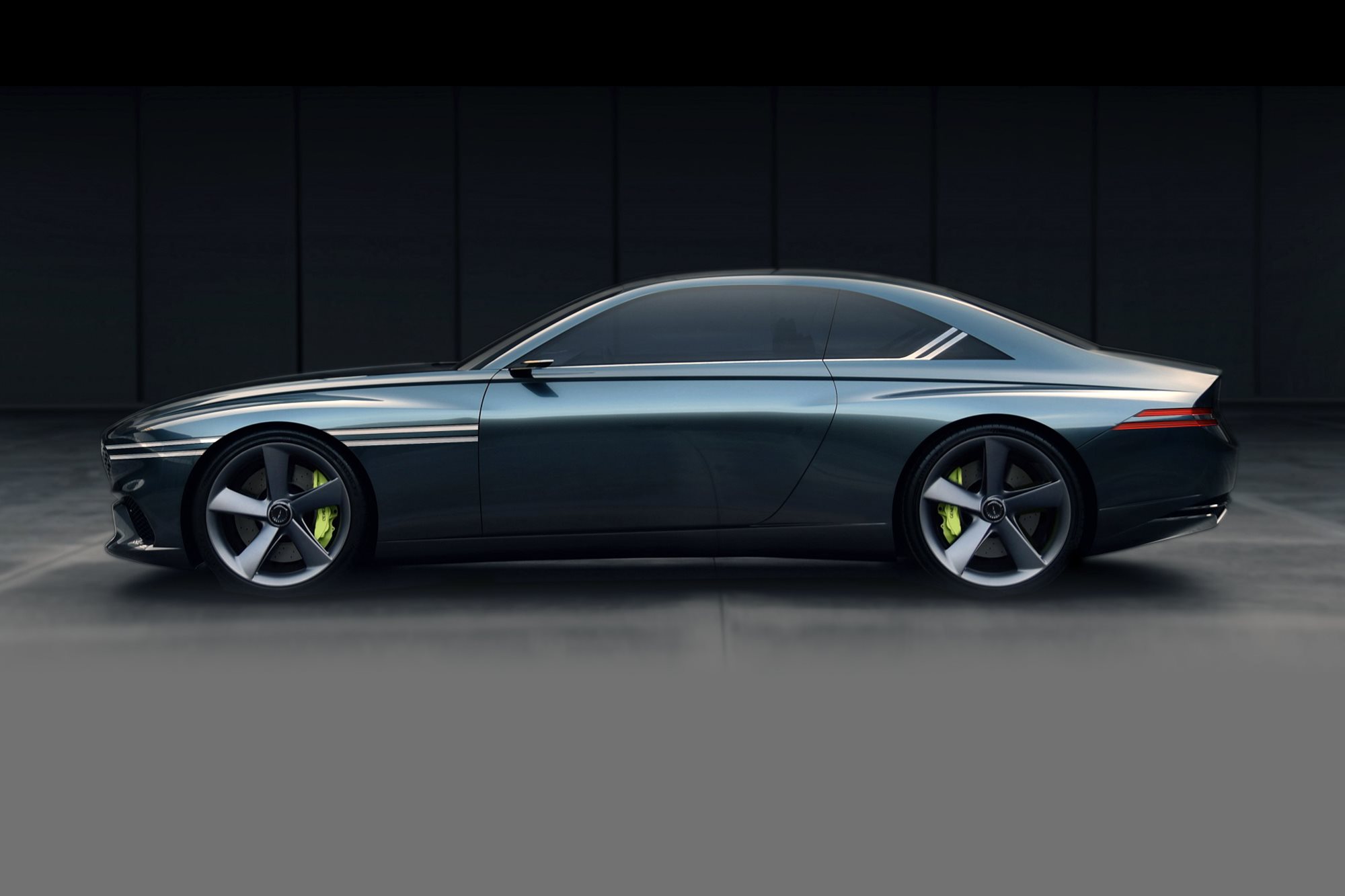
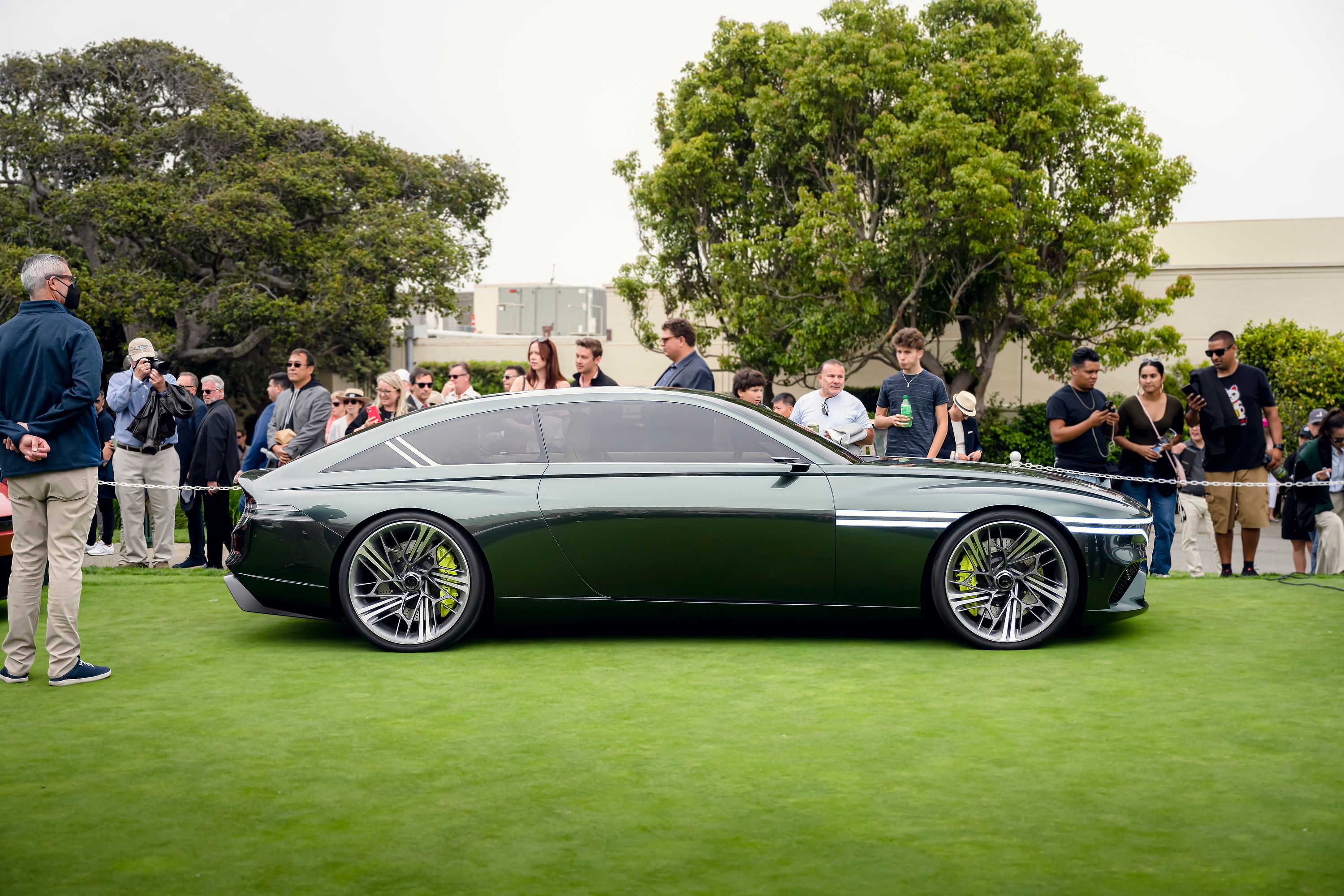
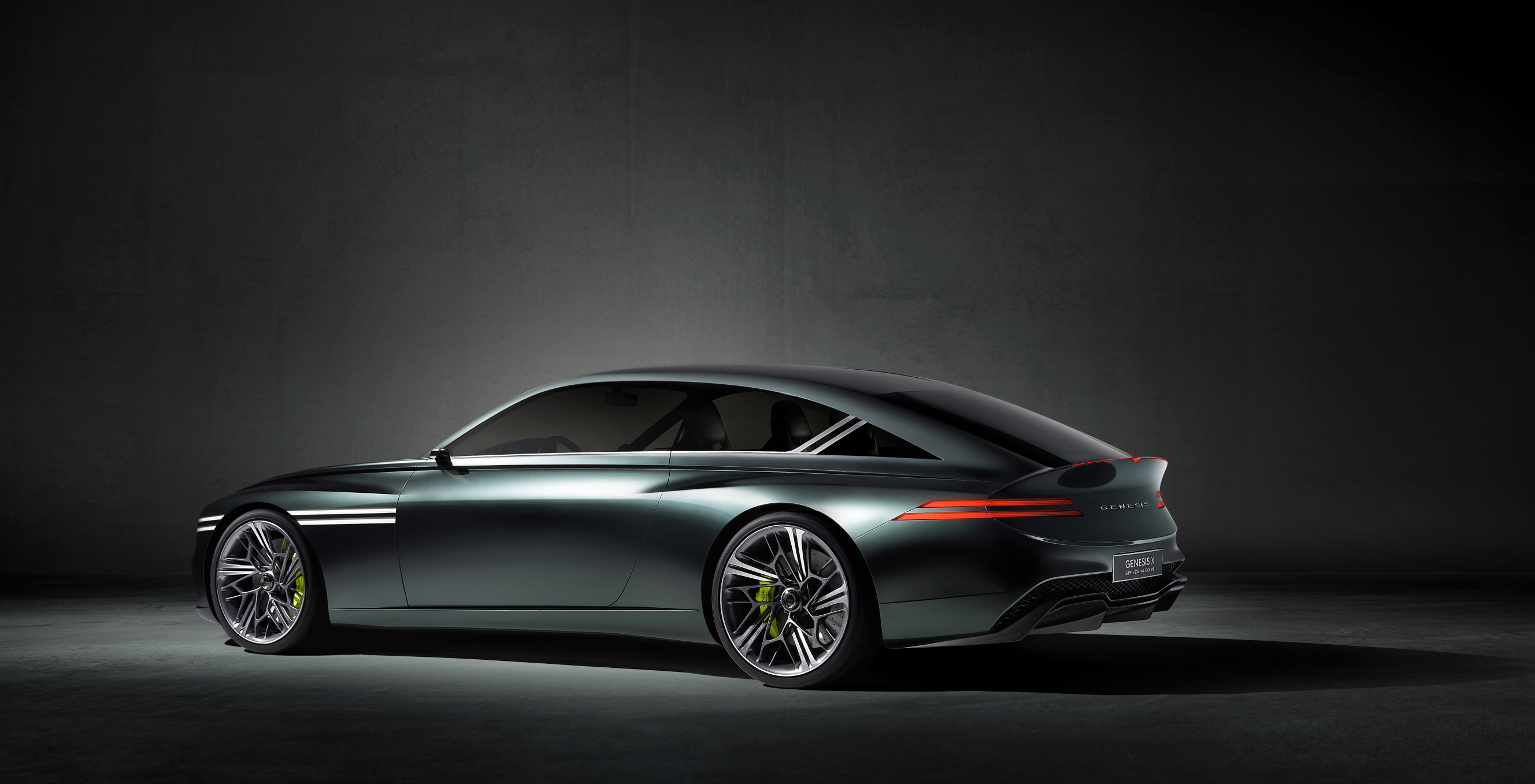
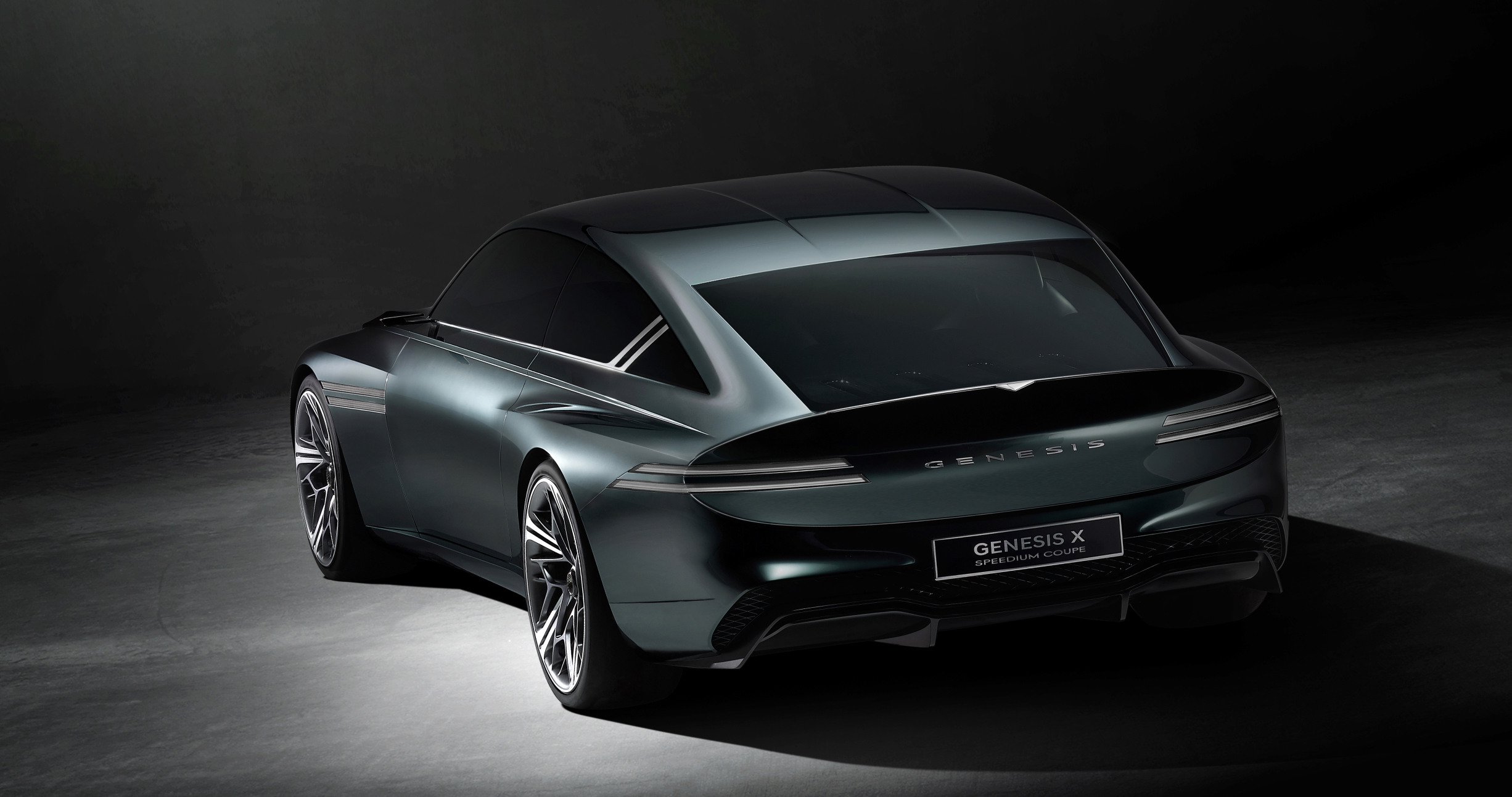
Genesis has unveiled its latest concept, the X Speedium Coupe, which it says incorporates the brand’s DNA (Audacious, Progressive, Distinctly Korean), while looking ahead to the next wave of EVs.
The Genesis X Speedium Coupe was born out of a “freestyle” design exercise based on the Genesis X Concept, led by 2022 World Car Person of the Year – Genesis Chief Creative Officer Luc Donckerwolke.
1
The name Speedium was inspired by the passion for motorsports felt by Genesis designers at the Inje Speedium Racetrack and encapsulates a belief that the emotional value of driving will remain strong well into the electric future.
Genesis went with a reductive, or “less is more,” approach to the concept, which features restrained elegance, clean lines, and subtle curves.
If you’re hoping to see the X Speedium Coupe go into production, you will be disappointed.
1
“This car is an open-door moment in Genesis’s journey towards our future EV design,” said Donckerwolke.
“This isn’t a show car – it’s a look into our design processes as we explore ideas for the next wave of EVs.”
The front of the vehicle features a variation of Genesis’s signature two line lamps, which have evolved into a full-width element that encompasses the shape of the crest resembling the Genesis crest grille.
1
It was designed to carry the brand signature of the wing-face in lieu of an actual grille by integrating the daytime running lamps with the low beam and high beam together. According to Genesis, the new EV face symbolises Genesis’s transformation towards becoming an all-electric car brand by 2030.
Looking at it from above reveals an hourglass silhouette formed from the curvaceous wheel arches that give the X Speedium Coupe a muscular presence.
Viewed from the side, the parabolic line extending from the front to the rear of the car maintains forms a classic, “anti-wedge” design, which culminates in an understated, but streamlined, look.
1
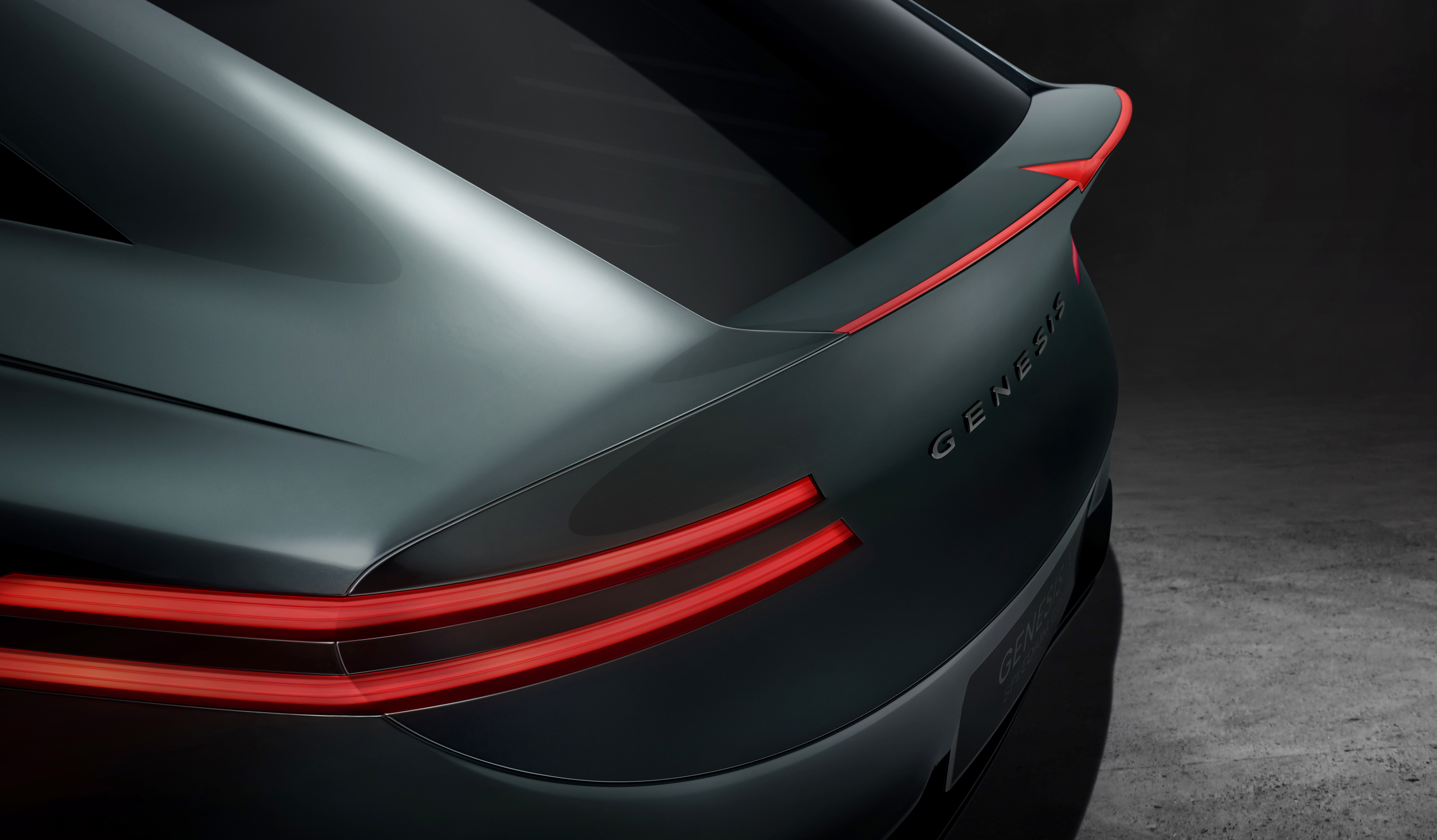
The elliptical tail balances out the look, while the V-shaped brake lights interrupt the circular shape by producing the striking contrast, which is a Genesis hallmark.
“We are giving each design element space to breathe,” said Donckerwolke.
“It’s not about making the design elements compete with each other, but about orchestrating the elements so that they complement and respect one another.”
The concept’s metallic emerald green shade is referred to as “Inje green.”
1
Why did they choose that colour? It encompasses the mountainous landscape in the country’s east where the Inge Speedium racetrack that inspired its name is located.
Good news V8 fans: Ford’s global boss says his company will keep building eight-cylinder engines for as long as it possibly can.
At a time when most brands are moving away from big-old-school engines — Dodge, Jeep, Ram, Chrysler, AMG and Nissan are all culling their V8s — you could forgive Ford for also caving to ever tightening emissions regulations.
But Ford’s V8-loving global CEO, Jim Farley, is having none it, stating he wants Ford to continue with the V8 for a long time yet.
“Mustang is going to celebrate its 60th anniversary coming up here,” he said. “A lot of our competitors have left. They’ve come and gone. We never did that. We’ve always been there with Mustang.
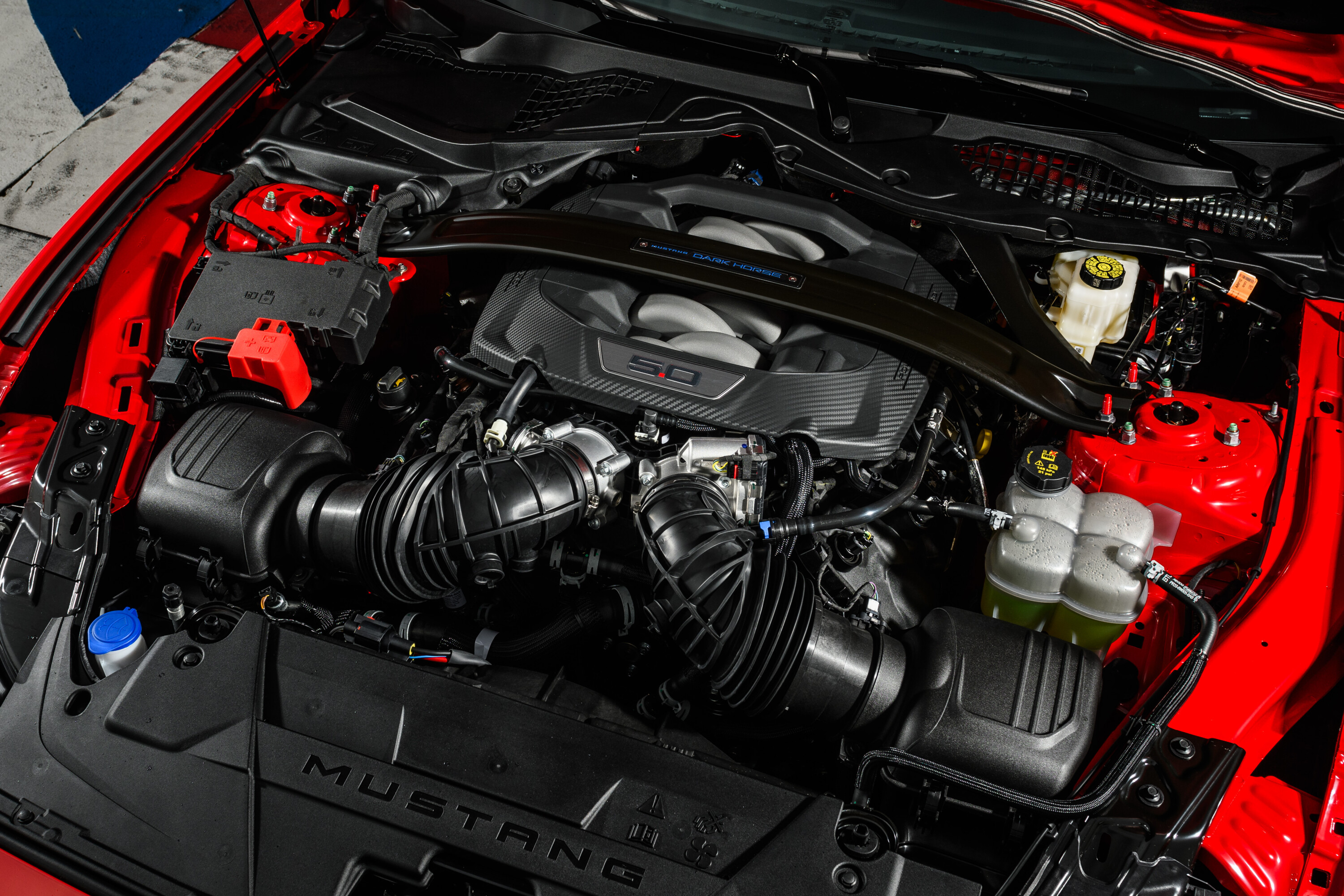
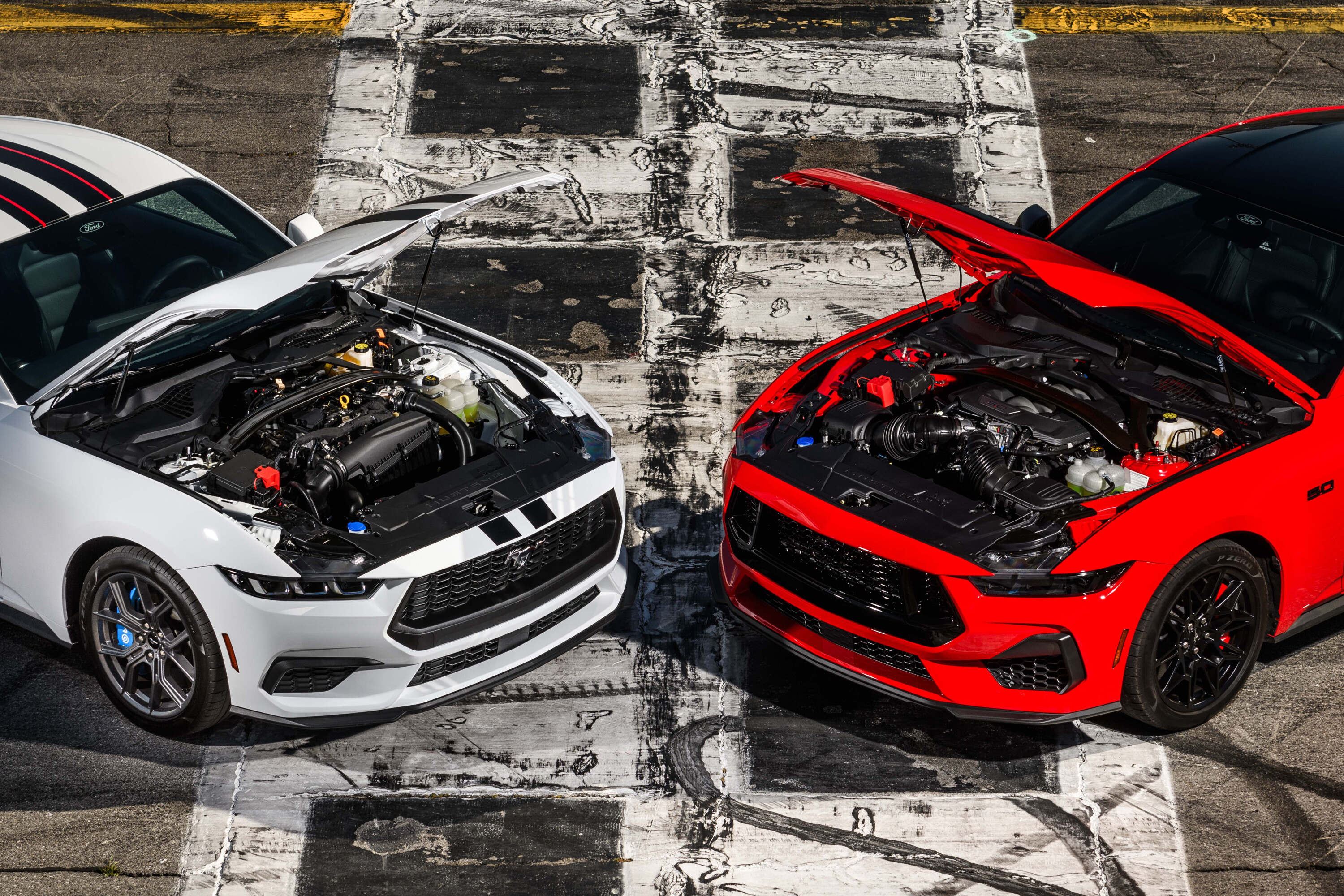
“Sixty years, and it’s changed over time. We have EcoBoost, we have the Dark Horse now, and we’re going to continue to invest. And if we’re the only one on the planet making a V8 affordable sports car for everyone in the world, so be it.”
1
Farley was speaking at the launch event for Ford Performance’s racing season in Charlotte, North Carolina, so connecting the brand’s racing success — which is mostly propelled by V8 engines — to its future road cars makes sense, yet we love the sentiment. The news Ford will continue to invest in combustion engines is encouraging, too.
Farley also added that the Mach-E, which controversially carries the Mustang name, also plays a role in allowing Ford to invest in future V8s.
“Mach-E lets us sell ICE vehicles for a long time to come,” said Farley.
1
Australia is doing its bit to help with the V8’s longevity, too. In 2023, we bought 1337 V8 Mustangs compared with just 138 examples powered by the 2.3-litre Ecoboost four-cylinder.
Only time will tell how long Ford will actually keep building V8s, of course, but for now join us in applauding Farley’s stance.
It is time to banish a very popular but equally stupid theory on how to eliminate road toll once and for all.
The theory goes that if everyone had a metal spike attached to their steering wheel, the certainty of impalement and death following even a small collision would make us all much more careful drivers.
I understand that the idea is not meant to be taken literally and the metal spike is intended as a metaphor, but if proponents honestly think the way we are going to make roads safer is by driving unsafe cars then they certainly shouldn’t be the ones making decisions about how we drive. Unfortunately though, they often are.
I do agree that travelling around in a high-strength steel box, surrounded by nine airbags that you won’t ever need because autonomous braking will prevent you hitting anything, has the potential to make drivers desperately complacent.
1
But limiting maximum speed on a freeway to 110km/h creates a false sense of security in exactly the same way. At one end of the spectrum we feel invincible; at the other, suicidal.
Unfortunately, neither ultra-safe cars nor deadly ones will reduce deaths and serious injury on our roads to zero. The idealistic and overly simplistic spike theory assumes that we are only ever impacted by the result of our own actions, good or otherwise.
Fact is, we don’t all waft around in a utopian world of instant karma. All it takes to upset the perfect harmony is for a meth user to jump behind the wheel and cause several human kebabs, not just one made from themselves.
1
When you introduce a maniac into the mix, a deterrent based on mutually assured destruction will only last so long, as Vladimir Putin will most likely demonstrate before the decade is out.
You are not the only person who suffers the consequences of your own fault.
People buy large 4x4s as the family car so that in the event of a crash it’s your children that are killed and not theirs, so good luck trying to get people to buy a car that guarantees instant death for all. So if driving is dangerous why not continue lowering speed limits?
After all, we can’t be trusted to drive fast then we must all be punished by going slower, but this only exacerbates the invincibility delusion. Safer cars protect us from the bad decisions of others but hazardous cars make us more aware of our own mortality and actions.
1
What we need is a virtual spike
The problem in both cases is not driving ability or skill, it all comes back to attitude and behaviour.
If we are ever going to dramatically reduce the road toll, we need to change the way people think behind the wheel.
This requires a different approach to driver education and perhaps even a change in our culture but, unfortunately, the people employed to make our roads safer through legislation are not behavioural experts, scientists nor driver training specialists. They’re politicians and therefore completely unqualified.
1
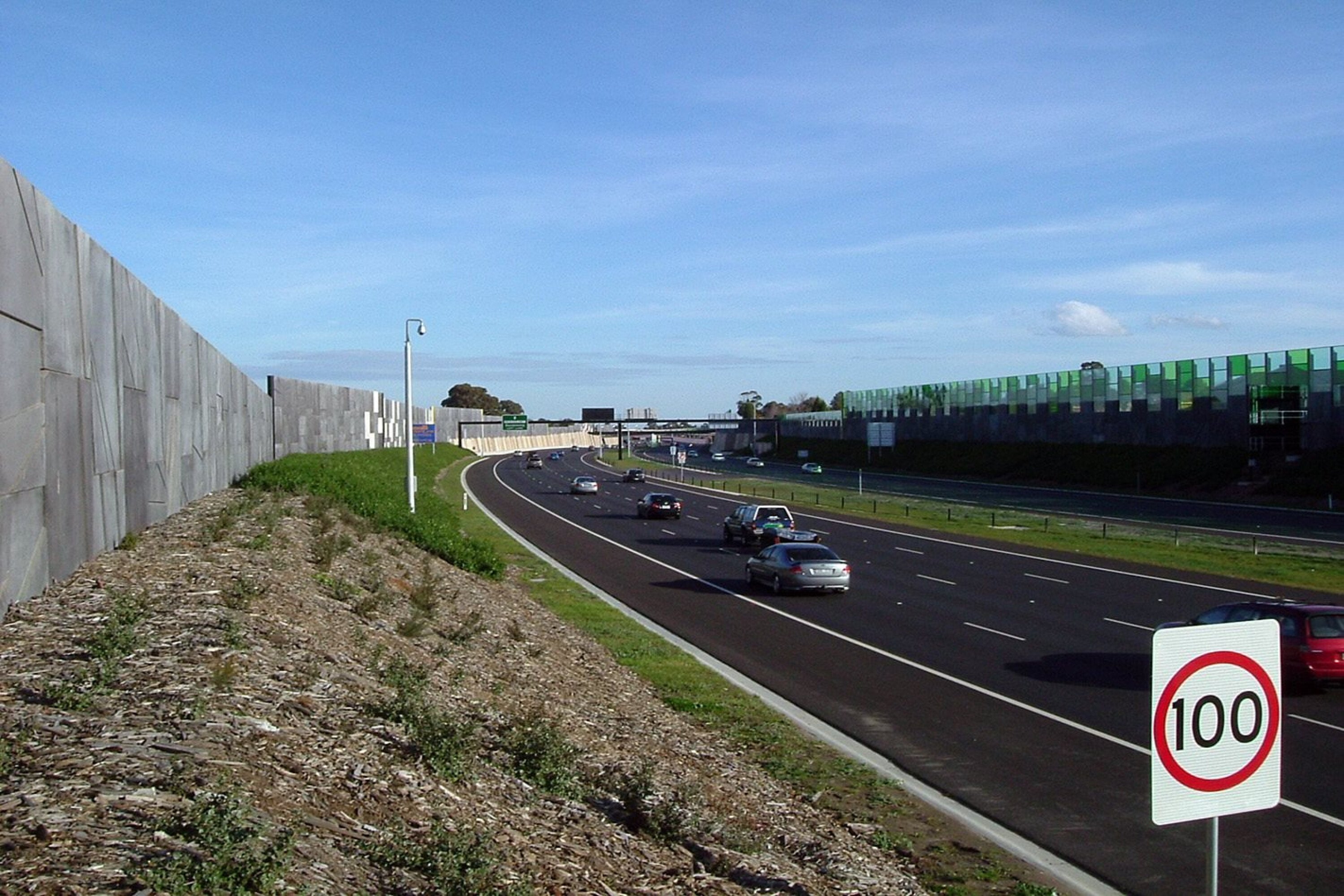
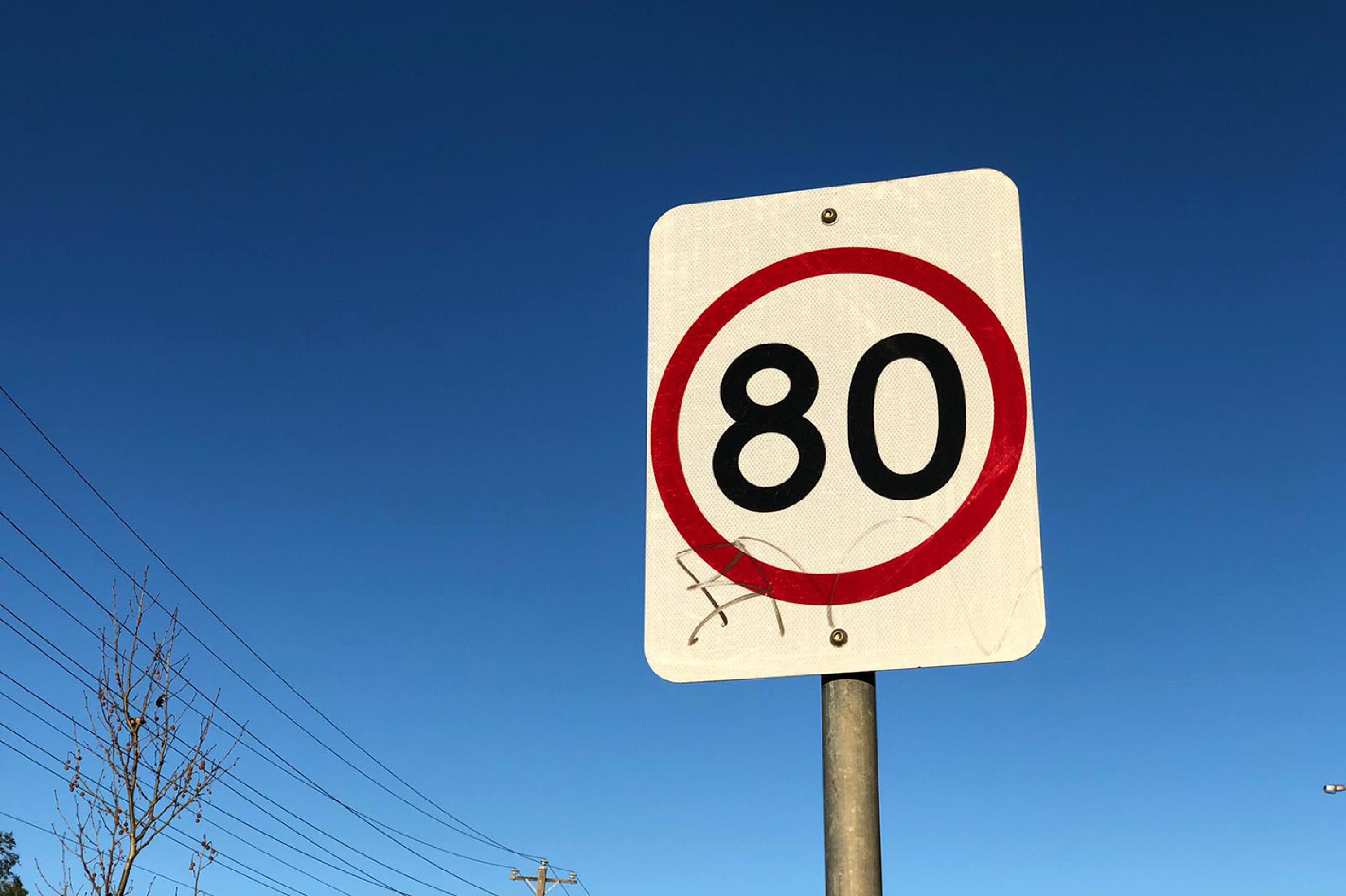
Whether it’s a metal spike, or a mandatory speed limiter, or an 80km/h speed limit on a quiet six-lane freeway, you should be insulted, because all of these measures imply you are not a good enough human to make the right decision for your own safety and that of everyone else.
Maybe we’re not, but until we revolutionise the way we teach people to behave on the road, the chances of dramatically reducing road toll to zero are exactly that – zero.
Better still, key it on and listen to the last and greatest iteration of Giotto Bizzarrini’s V12, the legendary Lamborghini twelve-pot that can trace its lineage all the way back to the birth of the company, some 60 years ago. Yet this is a car that has only recently earned its due appreciation.
If you know your Lamborghini history, you’ll know that the tall V12 never actually fitted beneath the bonnet of that first and ultra-shapely Scaglione-styled 350 GTV, and that car appeared on the stand at the 1963 Turin Show with 500kg of ceramic tiles under the bonnet instead.
It wasn’t until ‘64 that the production 350GT appeared, with its markedly less aggressive front end housing the twelve-cylinder behemoth.
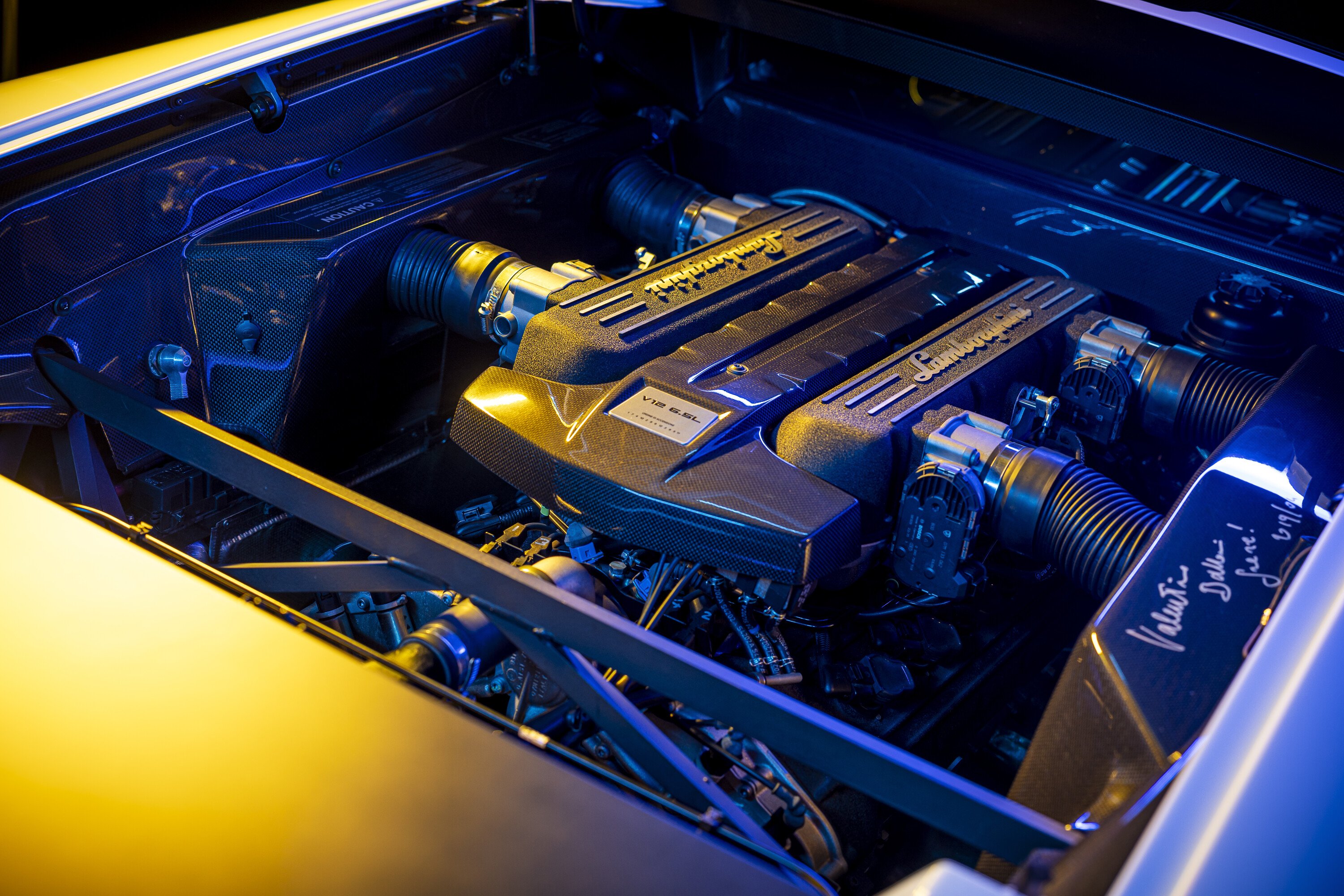
So we know where the engine began and where it ended up. Along the way, the Bizzarrini production powerplant increased in size by 3032cc (87 percent), in power by 284kW (136 percent) and in torque by 335Nm (103 percent). Displacing 6496cc, the aluminium alloy 60-degree V12 plumbed into the middle of the Murcielago SV is good for a heady 493kW at 8000rpm and 660Nm at 6500rpm.
1
Visit the factory and you’ll realise that the car is wrapped around the engine, transmission and exhaust units in much the same way that the fuselage of an A-10 Thunderbolt jet is shrink-wrapped around its GAU-8 cannon.
The snub nose of the Murciélago means that this assembly accounts for around 75 percent of its length and the aperture required before the running gear is lifted in is cavernous.
But in these straitened times, a car that’s largely defined by its engine is something that ought to be celebrated. And what an engine it is.
On paper, it lacks the herbs of its successor, the Aventador LP700-4, but there’s an earthiness to the Bizzarrini V12 that feels as if its almost been uprooted from the clay soils of the Emilian Plain, something almost agricultural in its gutsiness that then becomes operatic in the upper registers.
By contrast, the revised firing order and shorter stroke of the successor V12 fitted to the Aventador give it a very different character: cleaner, crisper and more responsive but there’s a slight tang of Germany in its genes.
1
But we’re getting ahead of ourselves. While we can trace a mid-engined bloodline for this car all the way back to the Miura of 1966, via Countach and Diablo, the Murcielago couldn’t have happened without Audi. It’s there for everyone to see, clear as day; the gulf in quality and execution between the Lamborghini-era Diablo and the Audi-directed Diablo 6.0-litre.
Emerging from the harsh but necessary cost-cutting era of Vittorio di Capua, Project 147 – as the Murciélago development program was known – kicked off in a distinctly chaotic manner.
Plans to replace the Diablo had been a long time in gestation. Back in 1995, three years before Audi became involved with the business, a super-Diablo was planned, running on a modified Diablo chassis with the most powerful V12 available.
Development was split into two competing camps. On one side was a Marcello Gandini-styled proposal; on the other a computer-designed shape, courtesy of Norihoko Harada from styling house Zagato. This featured huge air intakes atop the rear haunches, designed as a workaround because the Diablo’s radiators couldn’t be moved.
1
By 1997, test cars were being snapped by spy photographers, with the car carrying the working title Canto, but the following year Ferdinand Piech decreed that the styling was too dated and too weak and tore the project to shreds.
At the last minute, he pulled the revised Canto from display at the 1999 Geneva Show and commissioned Belgian stylist Luc Donckerwolke to design something dramatically, authentically Lamborghini.
Donckerwolke solved the airflow cooling issue by introducing the Murciélago’s signature motorised rear intakes and insisted on a sleeker fly-line for the glass house. The Canto project was not entirely for naught, however, as the basics of the interior architecture were grafted into the Murciélago.
Technically, the Murciélago was a derivation of the Diablo, built around a steel tubular frame coupled with carbonfibre body panels, with aluminium used for the roof and doors.
The DOHC 48-valve engine evolved from that of the Diablo 6.0 – that car’s bore and stroke of 87 and 84mm were stroked to 86.8mm for another 200cc of swept capacity.
1
It was mated to the first six-speed gearbox in Lamborghini’s history, while all roadgoing cars featured the VT all-wheel drive system. The engine saw its final increase in capacity with the facelifted LP640-4 model in 2006, rising to 6496cc thanks to bore and stroke enlargements to 88 and 89mm respectively.
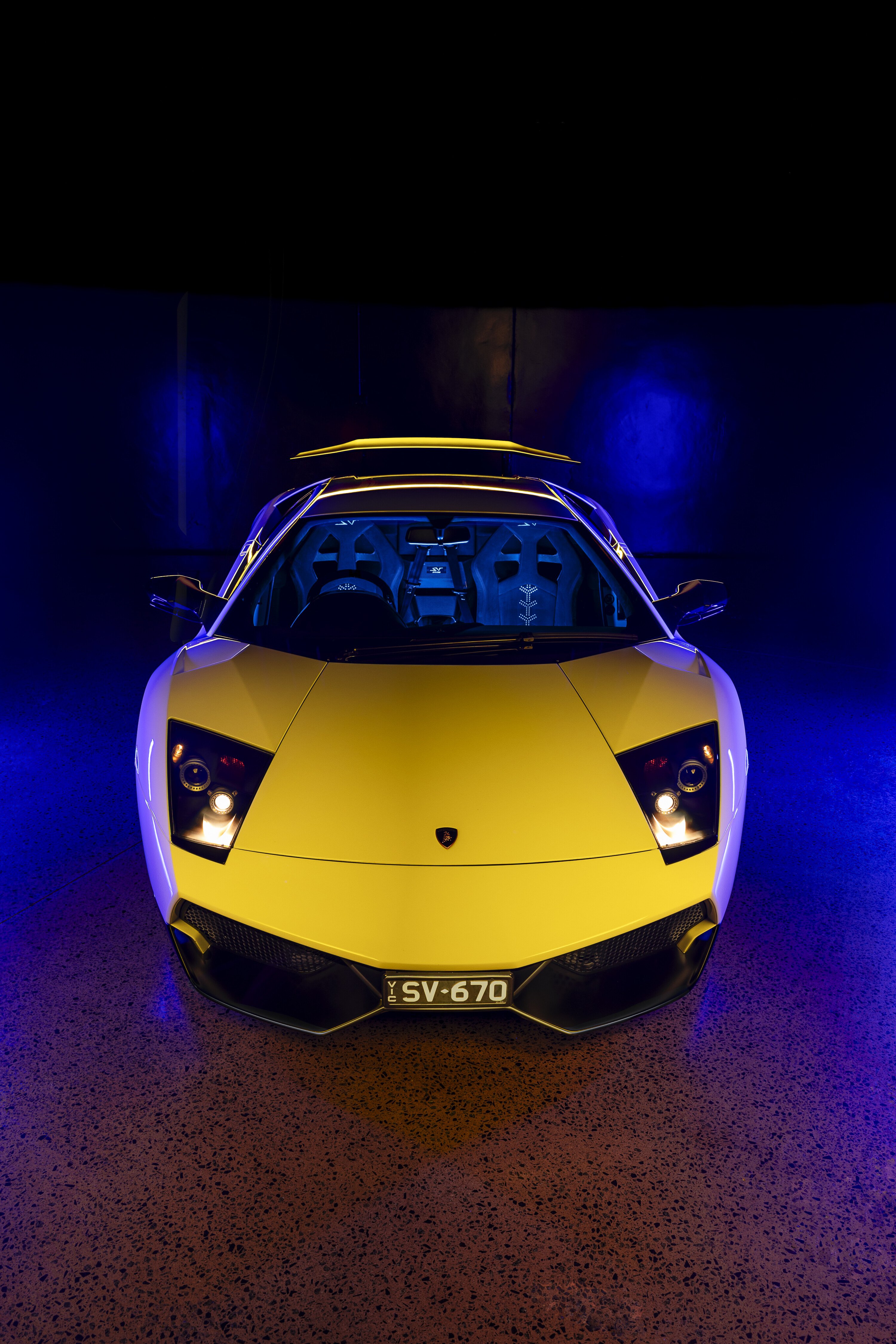
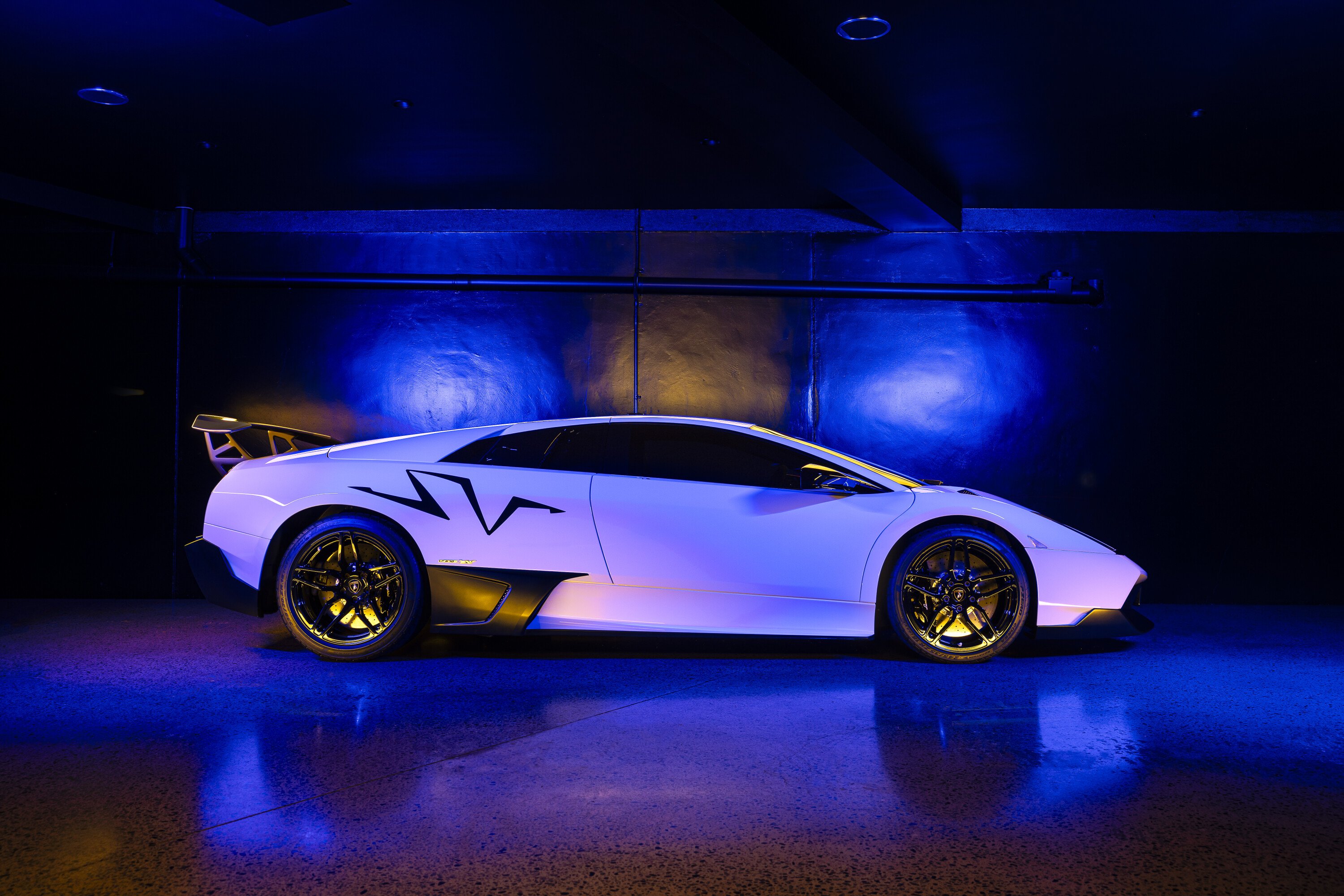
The Super Veloce arrived in 2009, conveniently fitting into the 80s, 90s and 00s edict of our Modern Classic section. Over the eight years it had been in production, the soap-bar smooth styling of the Murcielago was beginning to date, despite the remedial action taken by Filippo Perini’s 2006 update.
The simple surfacing of the Lamborghini contrasted with the muscular, contoured shape of the Ferrari 458 Italia (2009), the neo-brutalism of the Mercedes-AMG SLS (2010) and the F1-inspired box-arched Ferrari Enzo (2002).
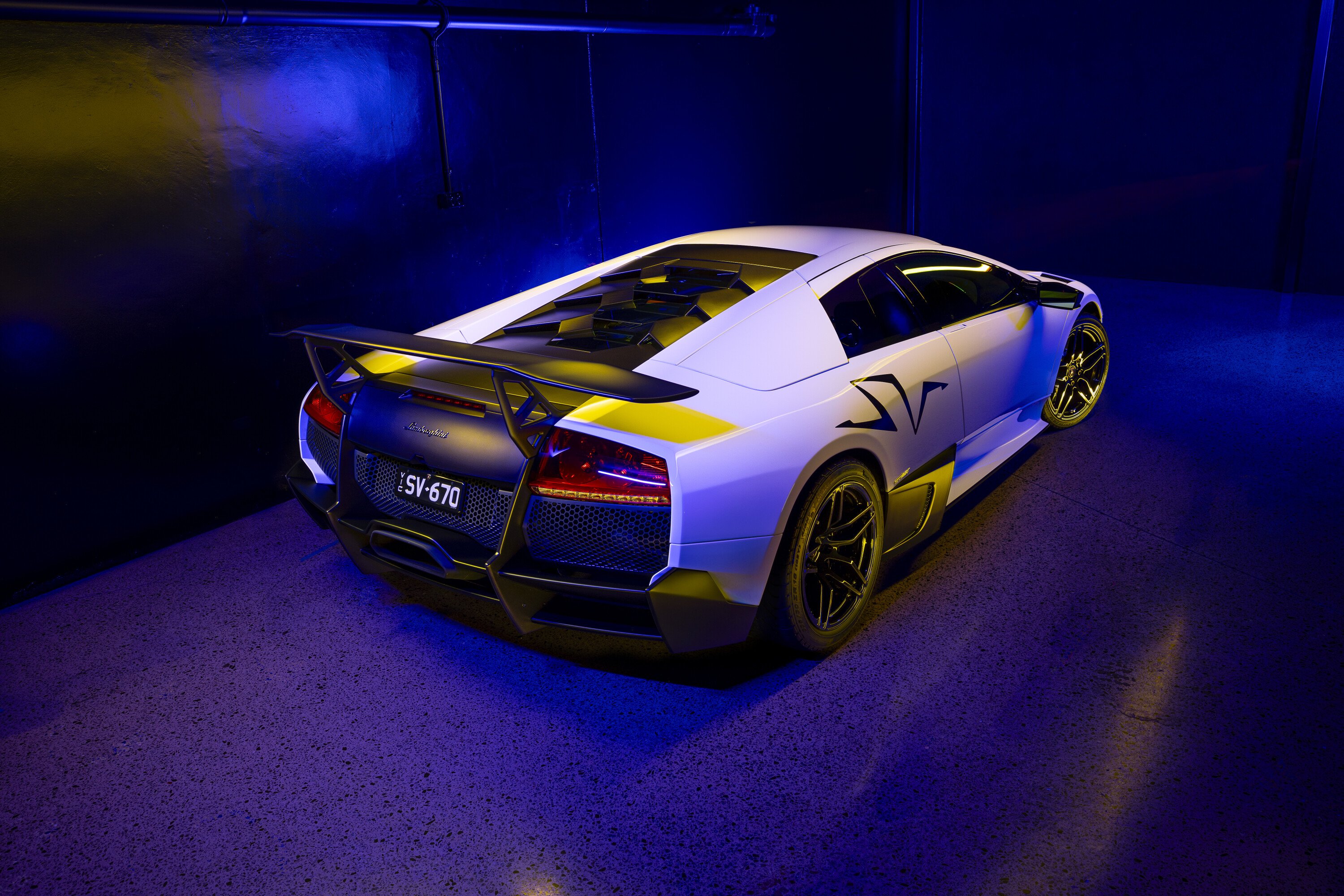
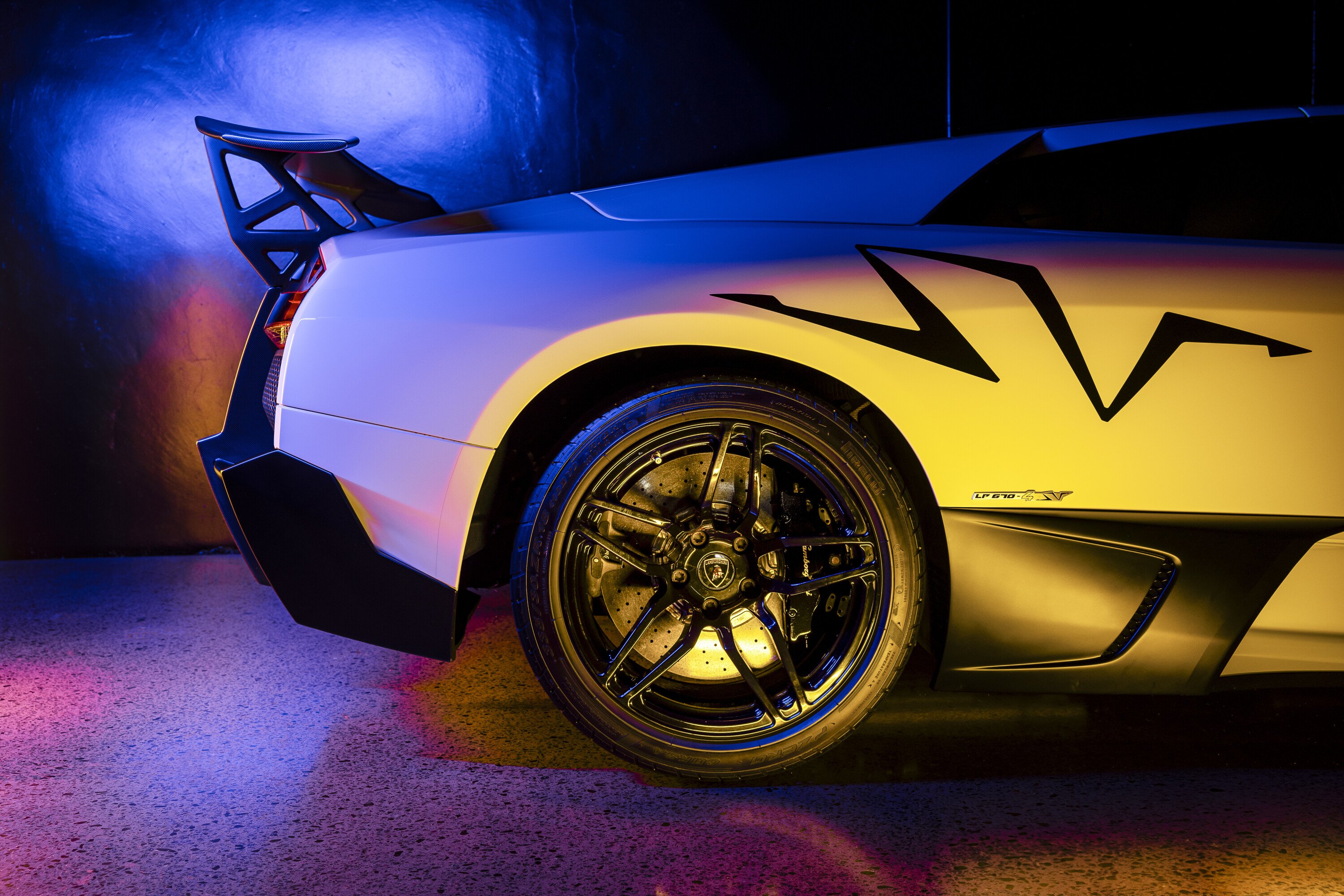
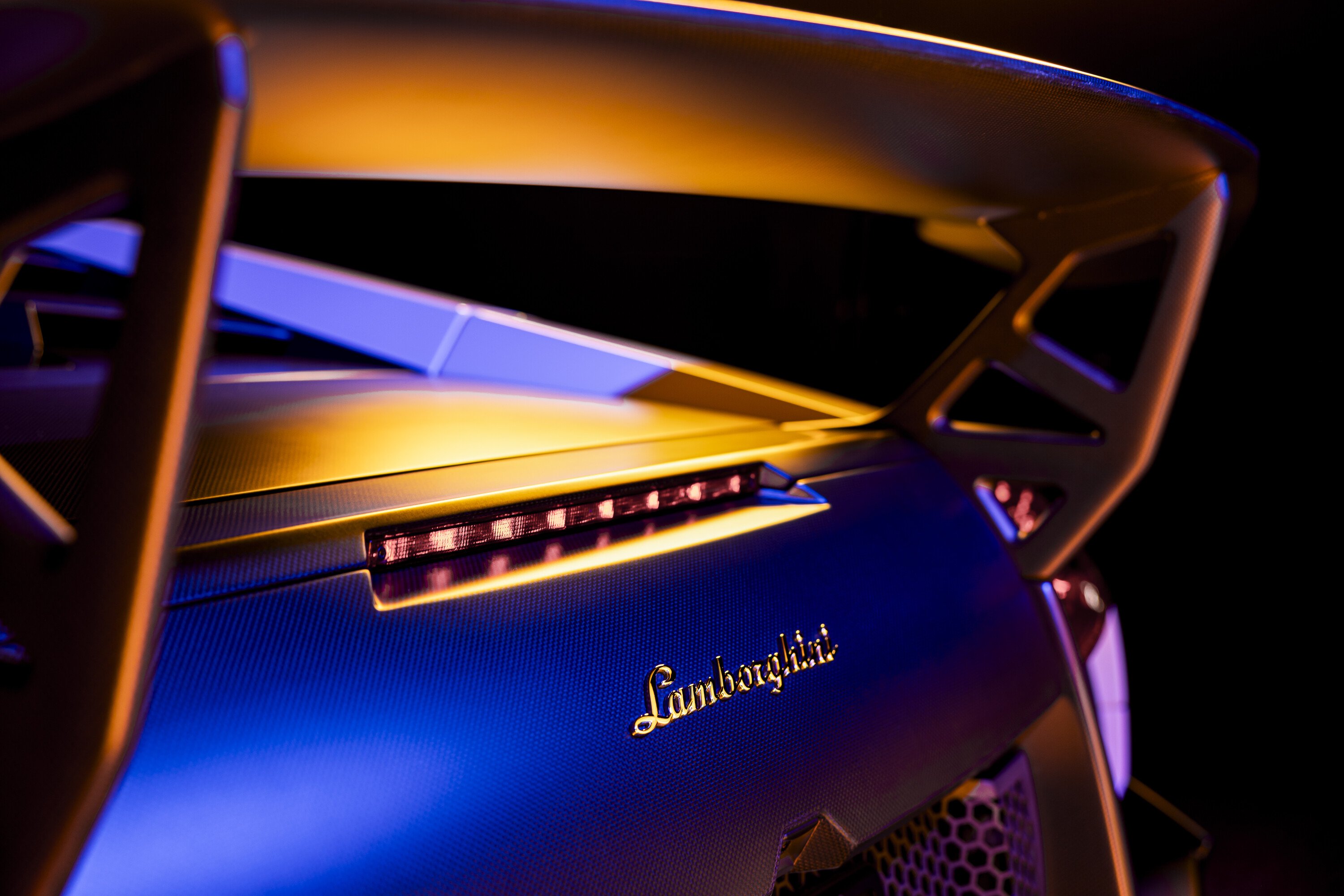
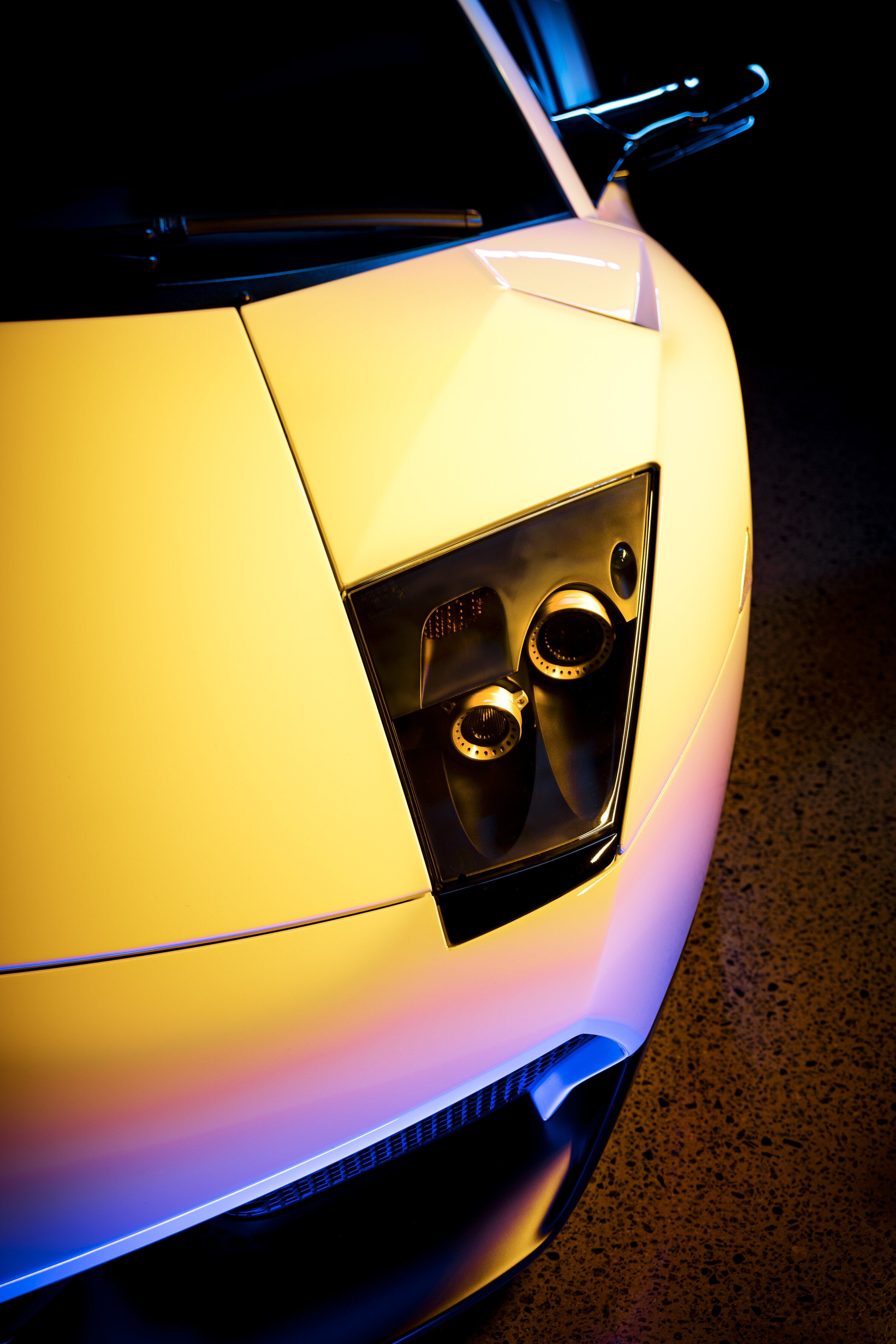
The Super Veloce left the basics alone, but added some long overdue aggression to the Murciélago’s body. The front intakes grew into huge trapezoidal maws, with sharp blade elements lending even more visual punch.
1
There was the option of two different fixed rear wings, but virtually every customer opted for the big one. Ditching the motors of the LP640’s active aero saved 13kg back there, and beneath the skin, the spaceframe was updated with high-tensile steels to save 20kg, while a lighter exhaust and a revision of the gusseting and bracing in the engine bay saved an additional 33kg.
Another option that almost nobody chose was the manual gearbox. It’s believed that of the 261 Murciélago SVs that were sold, only five featured three pedals and a stick (and a mere 70 were right-hookers).
It may not have escaped your attention that the Murciélago SV was launched right into the teeth of the Global Financial Crisis. This scuppered Lamborghini’s plans for a 350-car production run. Slowish sales of a run-out model meant that SV production was wrapped up long before that target could be reached in order to rejig the production lines at Sant’Agata for the box-fresh Aventador.
Did this dent the Murciélago SV’s legacy? In the short term, maybe. It was viewed as something of a commercial flop, but the benefit of hindsight helps cement this car’s legacy as one of the all-time great Lamborghinis.
1
Indeed, some argue its place as the most desirable of the lot; the final furious fling of the engine that built Lamborghini.
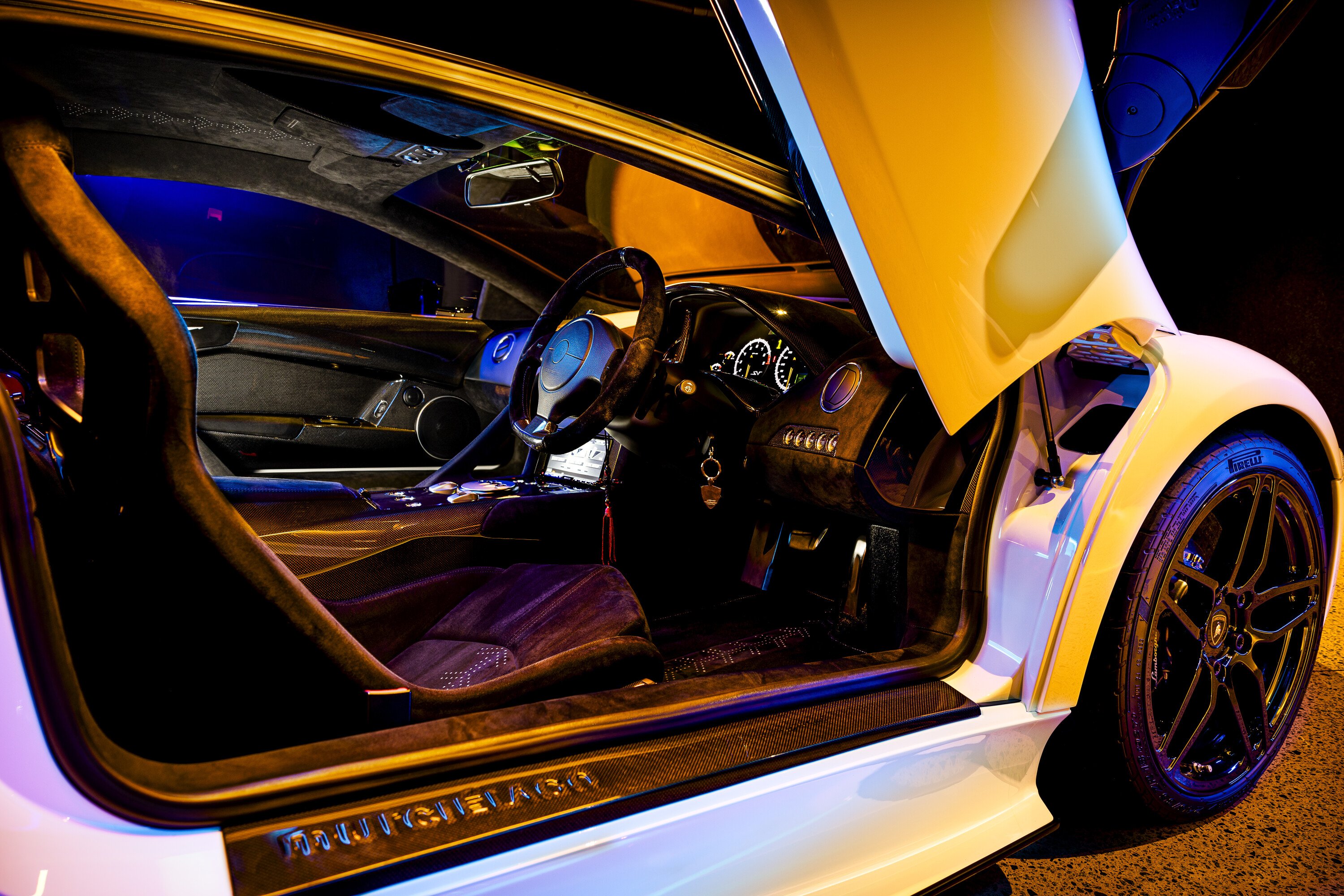
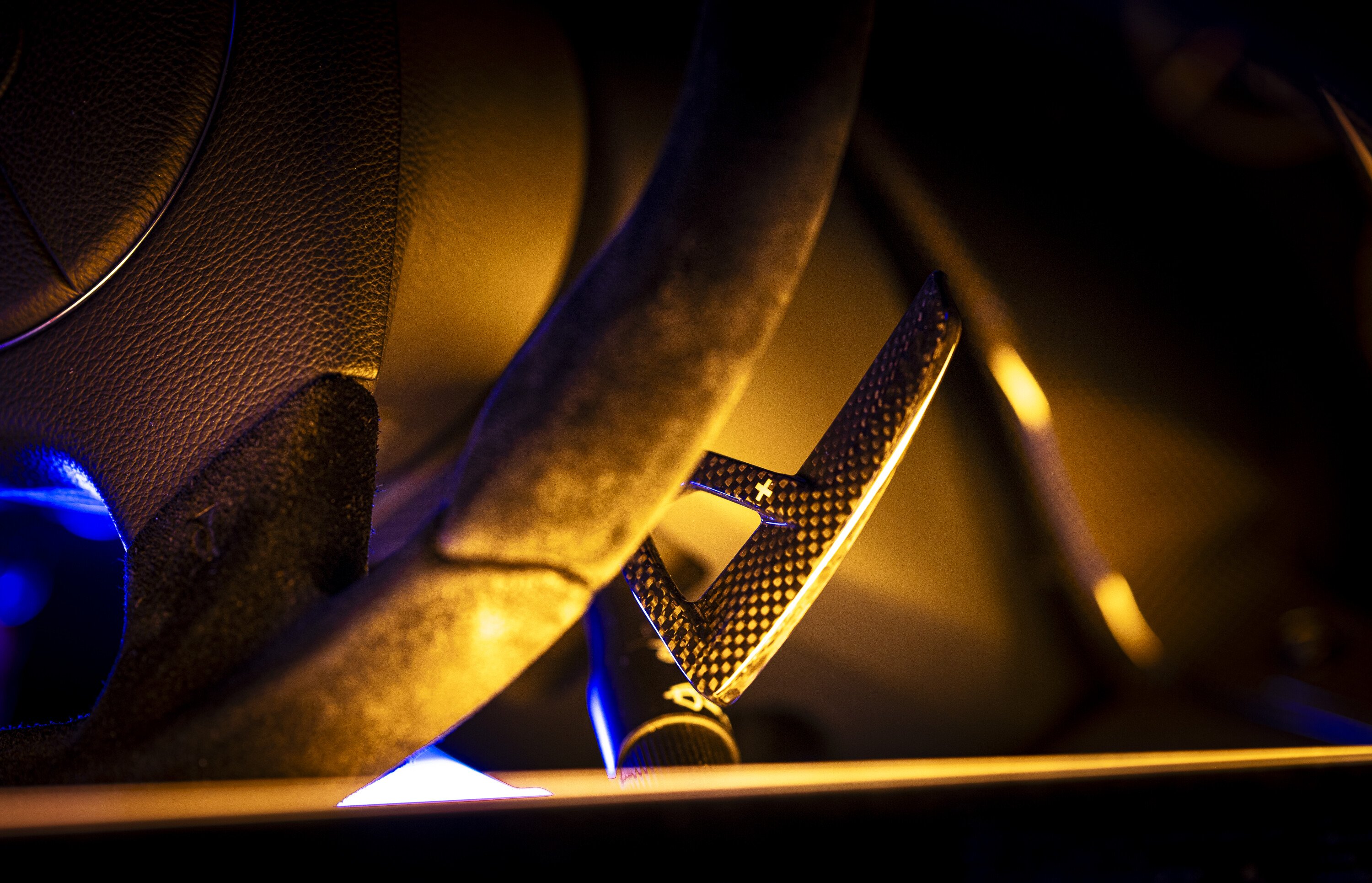
It’s a car that feels as if it has one foot in the past and another in the present. It’s fitted with a rudimentary traction-control system but you’ll search in vain for electronic stability control or launch control. The single-clutch automated manual isn’t the last word in sophistication, and shifts up some way short of the redline in the first three gears as if to save the engine from grenading itself.
The ride and handling package, however, are excellent. The short-travel dampers let you know what’s happening at the front contact patches, helped by a revised steering set-up that builds confidence in the front end like no Murciélago before.
Whereas even the LP640 can feel like a bit of an arm wrestle, the SV can be guided confidently into a corner, trailing the carbon-ceramic brakes, and feeling the chassis balance become neutral, feeding power gently at the apex.
1
Of course, with this sort of power, weight distribution and lack of electronic nannies, the SV can and will bite if you’re injudicious, but it nevertheless feels like the driver’s car the Murciélago always promised to be.
Inlet timing, valve lift and that freer-breathing exhaust help to liberate an extra 22kW over the standard Murci’, but that’s what? Less than five percent more power? On its own you’d probably have difficulty discerning that additional thrust.
Shaving around 100kg from the standard car helps too, lifting the power-to-weight ratio from 283 to 315kW/tonne, but to get that figure you’ll need to do without niceties like air conditioning and infotainment.
Lamborghini reckoned this was enough to drop the 0-100km/h time from the LP640’s 3.4 seconds to 3.1 seconds, but with all-wheel drive and a dry strip, it’s fairly easy to beat that figure. Top speed? Well that depended on which wing you optioned. The big wing limits you to a mere 337km/h while the smaller one sees that top end eke out to a vaguely academic 342km/h.
1
As much as we heap plaudits upon the soundtracks of the great V10s like the Porsche Carrera GT and the Lexus LFA, a Murciélago SV at full noise is absolutely electrifying. Knowing that there’s no stability control safety net only serves to amp up the adrenalin still further. It’s one of the very last properly hairy-chested supercars.
One question that continues to hang in the background surrounding this car is whether we can celebrate the Murciélago SV without denigrating its successor, the Aventador.
Lamborghini could argue, with some justification, that the market has already spoken on that one. Across its lifespan, the Murciélago sold 455 units per year, where the Aventador sold 1042 units per annum across its lifespan. In case you were wondering, the Diablo’s numbers are 262, the Countach is 124 and the Miura a mere 109 cars produced per year.
1
The Murciélago SV appeals to a different buyer to the Aventador LP700-4. It’s the last of the artisan Lamborghinis, and its engine and spaceframe chassis tell a story, that of a lineage that can be traced from the 1960s across the decades.
The Aventador was a clean reboot, and is none the worse for that. It was required, it was executed extremely competently and it cleverly retained enough Lamborghini DNA.
The final Ultimae models will always retain a cachet as the last of the pure ICE Lamborghini V12s.
But the Murciélago SV is the special one, be in no doubt of that. As we transition towards an electric future, all of the things that we know we’re going to miss are exemplified in this car better than pretty much any other. The rawness, the charisma, the purity of bloodline, the tactility – it’s all there in the Lamborghini Murciélago SV. It just took a while for us to realise.
Fast facts
Lamborghini improved the durability of the clutches on the e-gear cars in 2009, which helps if the SV sees a bit of urban use. The Pirelli P Zero Corsa tyres are around $4000 for a full set.
Throttle bodies can go out of tune, which is sorted by updating the LDAS software and some cars can mysteriously enter limp mode, for which dealers will diagnose – and charge for – a new clutch. The fix is a whole lot simpler and entails checking the ABS control module connector plug for corrosion.
There are a couple of pins that send traction control information to the engine ECUs which retard power, disable the nose lift and illuminate the traction and e-gear lights. If these pins show green corrosion, replacing or cleaning the pins and adding some conductive paste will often be the fix that’s required.
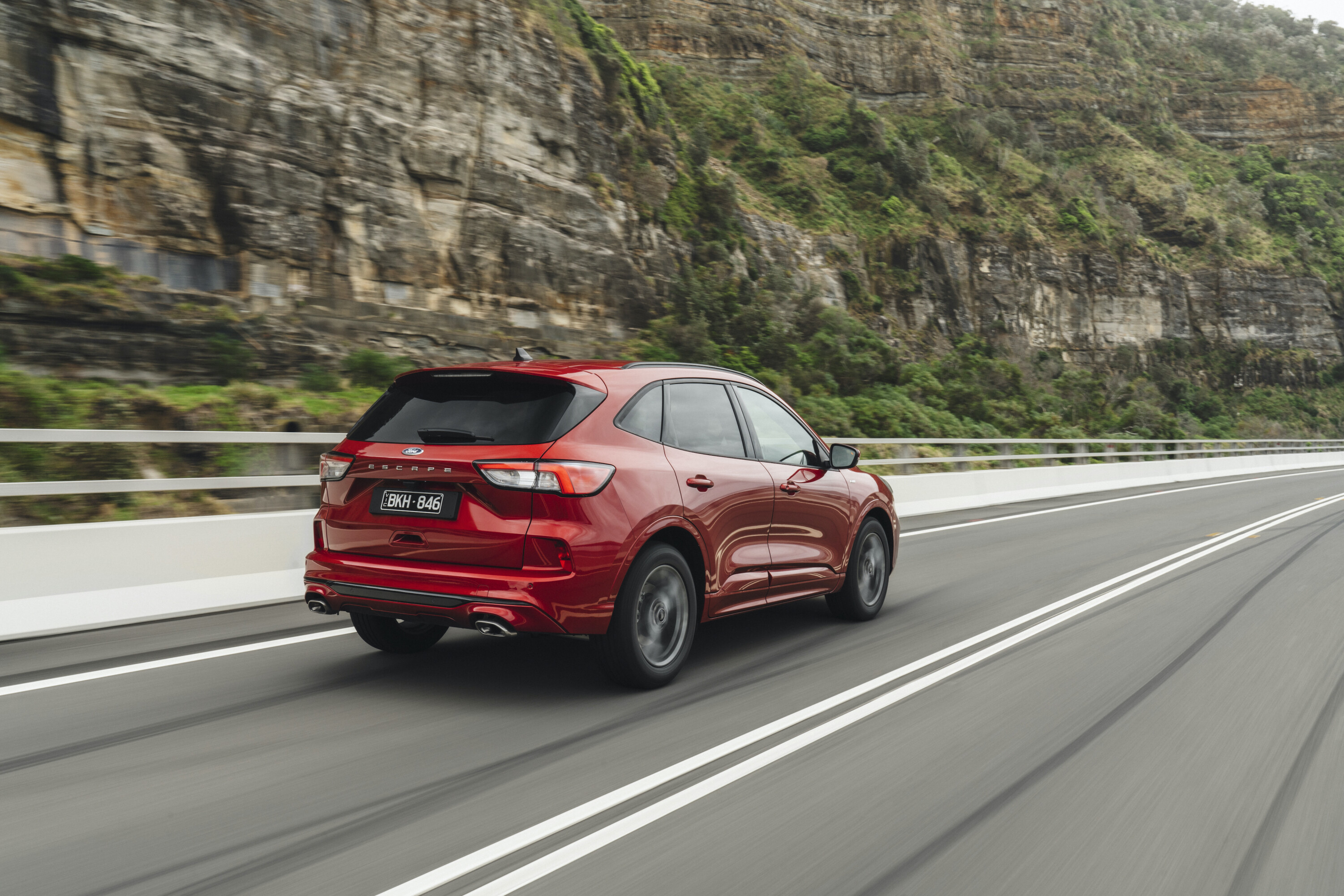
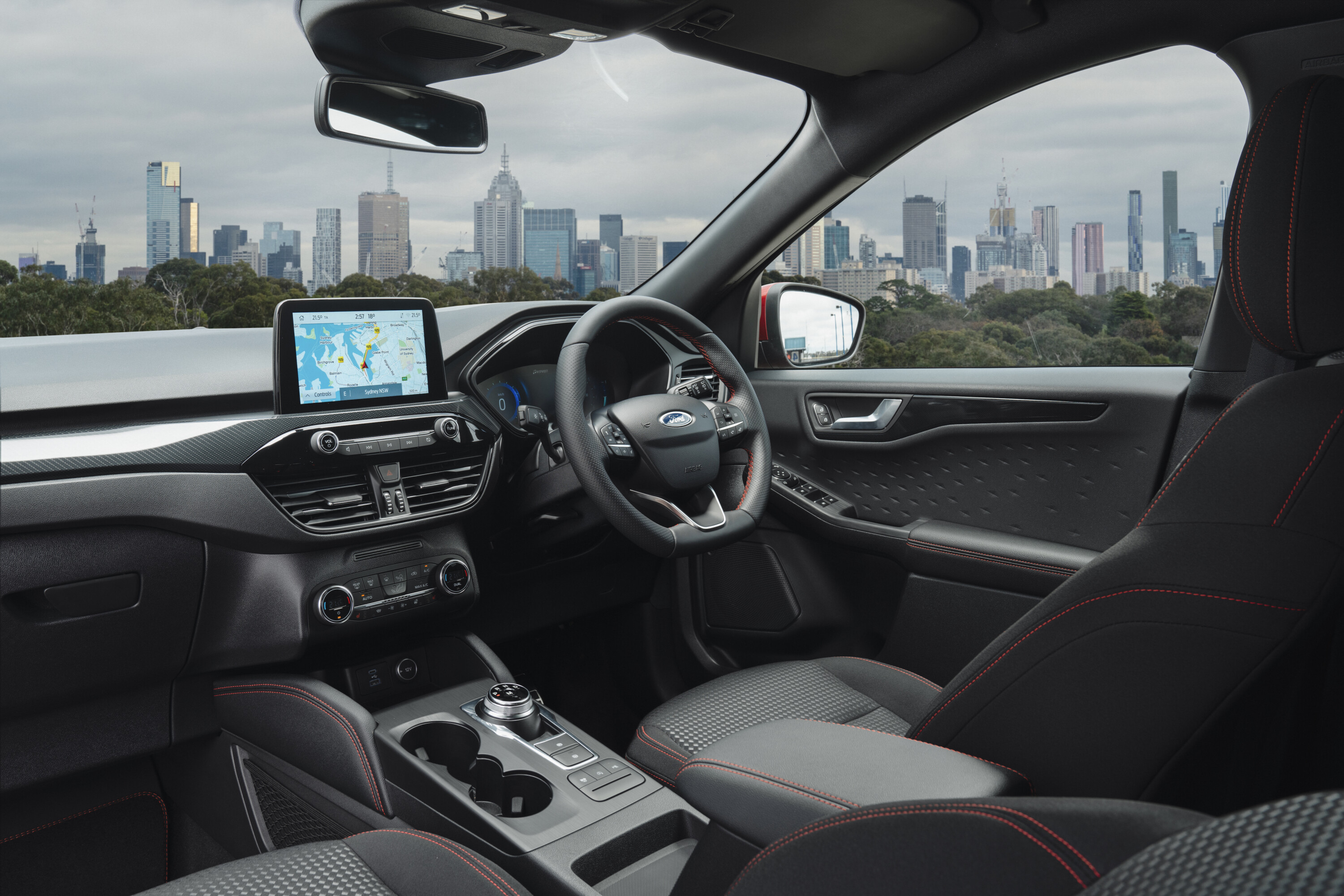
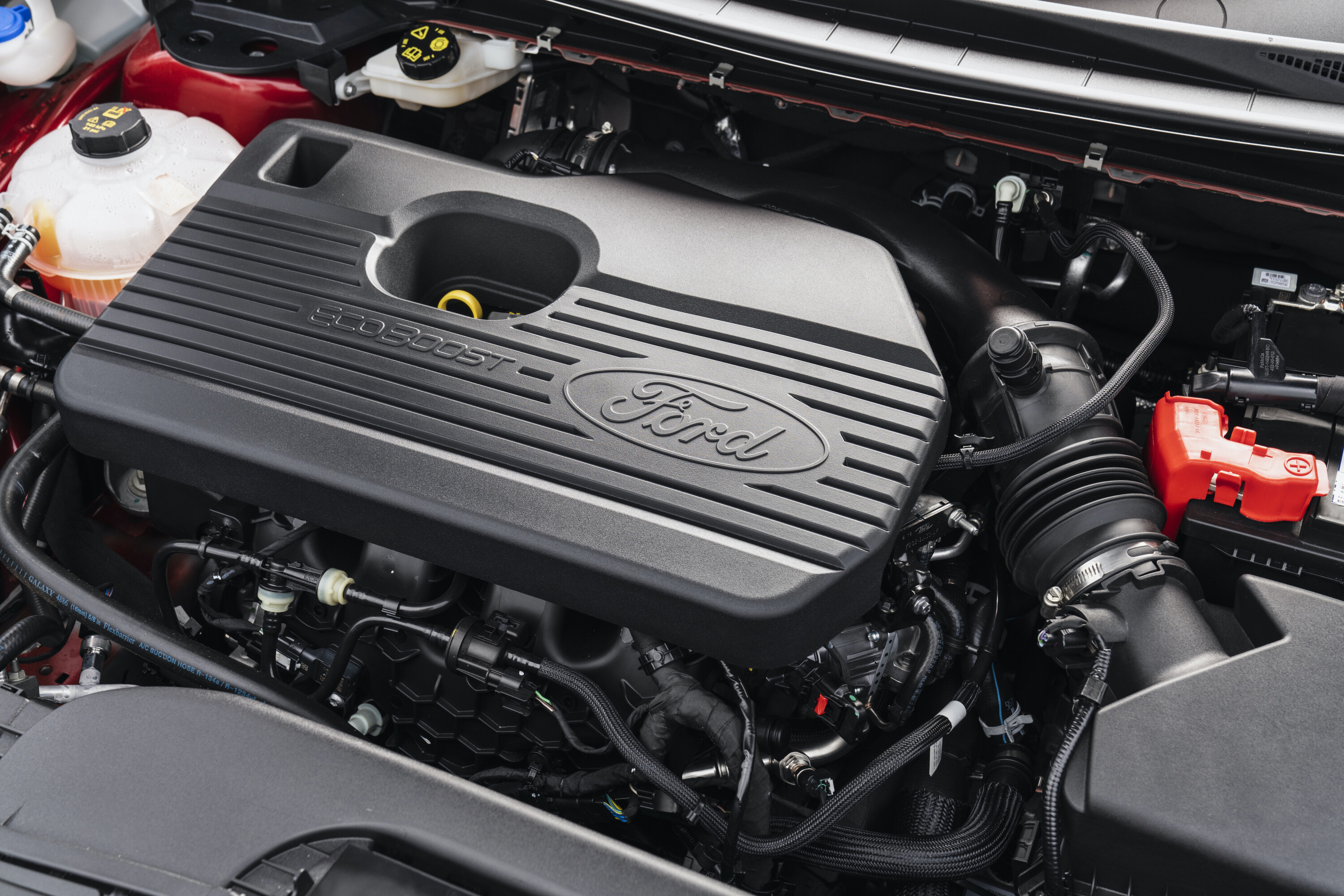
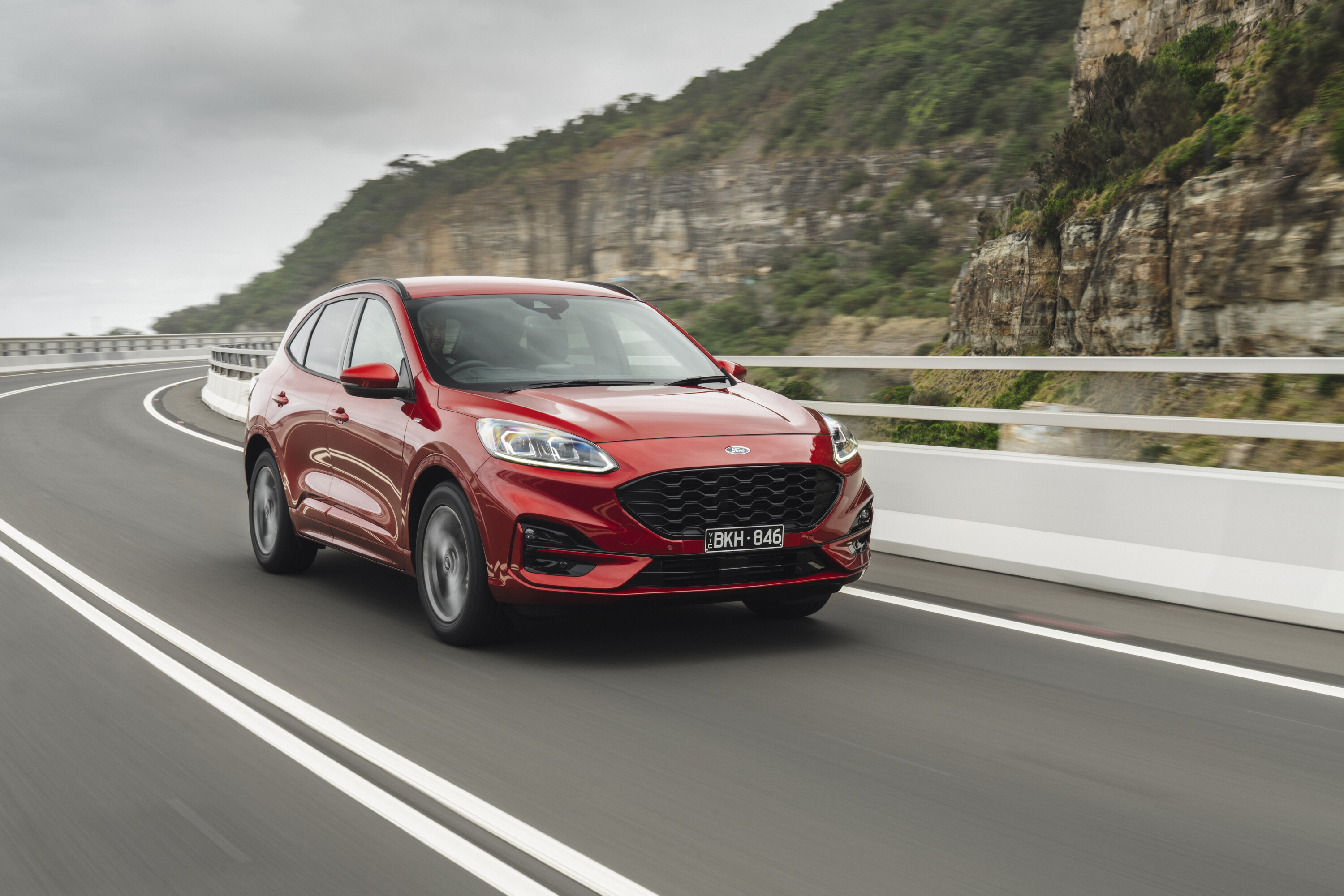
The designer was assessing Ford’s box-fresh Escape at the 2021 Wheels Car of the Year, and after giving his views on its design, summarised with the pithy observation that it “may struggle to get noticed.”
Yes, the Escape was ejected in round one of the event, but the judges all loved its ride and handling, yet instinctively knew that the dynamics alone wouldn’t deliver the sort of showroom sizzle that would pitch the Escape ahead of the likes of the Toyota RAV4 or the Mazda CX-5 in the VFACTS rundown.
In fact, its sales were even more dismal than we could have likely imagined. Ford sold 1673 Escapes in 2021, where it was beaten by the Renault Koleos (1937). To offer some frame of reference, the RAV4 shifted 35,571 units.
1
The Escape’s tally grew to 2179 cars in ’22, its share of market rising from 1.1 to 1.2 per cent.
But again, a clogger like the Koleos beat it, selling 2552 units. At the last published sales report of this year, its market share had swollen to, you guessed it, 1.3 percent.
At this rate, it would only take another 150 years before the Escape became the dominant player in the Medium SUV sector.
As you may have cunningly deduced from the title of this section, Ford isn’t giving it that sort of stay of execution. In fact, the very last shipment of Escape PHEVs are en route to dealers as you read this. That means you can no longer spec an Escape to order.
1
If you want one, you’ll have to get your elbows out and start perusing dealer stock. The pure-ICE Escape is already done, so the only available Escapes will be those that you plug in.
But not to a DC rapid charger, note. The Escape PHEV only accepts low-speed AC charging. That might be a bit quaint, but the plus side of which is that you’ll never find one hogging a public charger.
The Escape wasn’t helped by Ford’s perpetual dithering over its mid-sized SUV offerings post-Territory. You knew exactly what you were going to get with a big ‘un like an Everest, but an Escape? Or, come to that, the even more mystifying and equally short-lived Endura?
1
They just proved that Ford could build a decent product but could neither get the marketing or the messaging right to resonate with the Aussie consumer.
In November 2022, we pitched the Escape into its first comparo. Ford Australia’s first plug-in hybrid offering lost fairly convincingly to a car with eight years of plug-in backstory, the Mitsubishi Outlander PHEV. With DC charging ability, all-wheel drive, a superior warranty and a multi-link rear end, the Japanese car notched up a convincing win.
The Ford Escape certainly struggled to get noticed. Many would say that was warranted.
1
A great used buy?
The Escape struggled in the new-car market, but may represent a decent pick second time round.
Low recognition means that search volumes for the Escape are tiny, which reduces competition. We’re seeing MY21 Vignales at less than $40K with 20K on the odo, a 20 percent drop in two years in a market where mid-range SUVs cling to value. A 2021 RAV4 Hybrid, by contrast, will have lost barely any value
Test notes
In our Feb ’21 mag, we put the Escape Vignale up against the Mazda CX-5 Akera. James Whitbourn noted “the Escape’s reserves of talent and grip have the CX-5 covered… but the trade off is pretty stark.
The Vignale, on our test car’s optional 20-inch wheels, is taut to the point of terse. We wonder whether it’s a bridge too far given this is a quality you put up with all the time, while most will only revel in the handling occasionally.”
On finishing the article on the possible return of General Motors to Australia I had to check the date of the magazine. It was with horror that I realised this was not your April first edition.
This is just what every pedestrian, cyclist and sedan owner has been waiting for; more monster (stop using full-size to describe these) trucks occupying our streets. Existing examples can’t be entered without the obligatory side step addition just so normal sized individuals can get behind the wheel.
1
“Oh the humanity!”
You can’t put tools, equipment or even household rubbish in the back without opening the flaps on either side of the ute tray to lower the height you have to lift said item to clear the high gloss paintwork.
Let’s assume that all owners of these vehicles take advantage of their supposed towing capacity. Can you imagine the chaos of a combined mass of over 6000kg meandering along our local roads. As the commentator said of the ‘Hindenburg’ air disaster, “Oh the humanity!”
ud83dudede Editor Andy
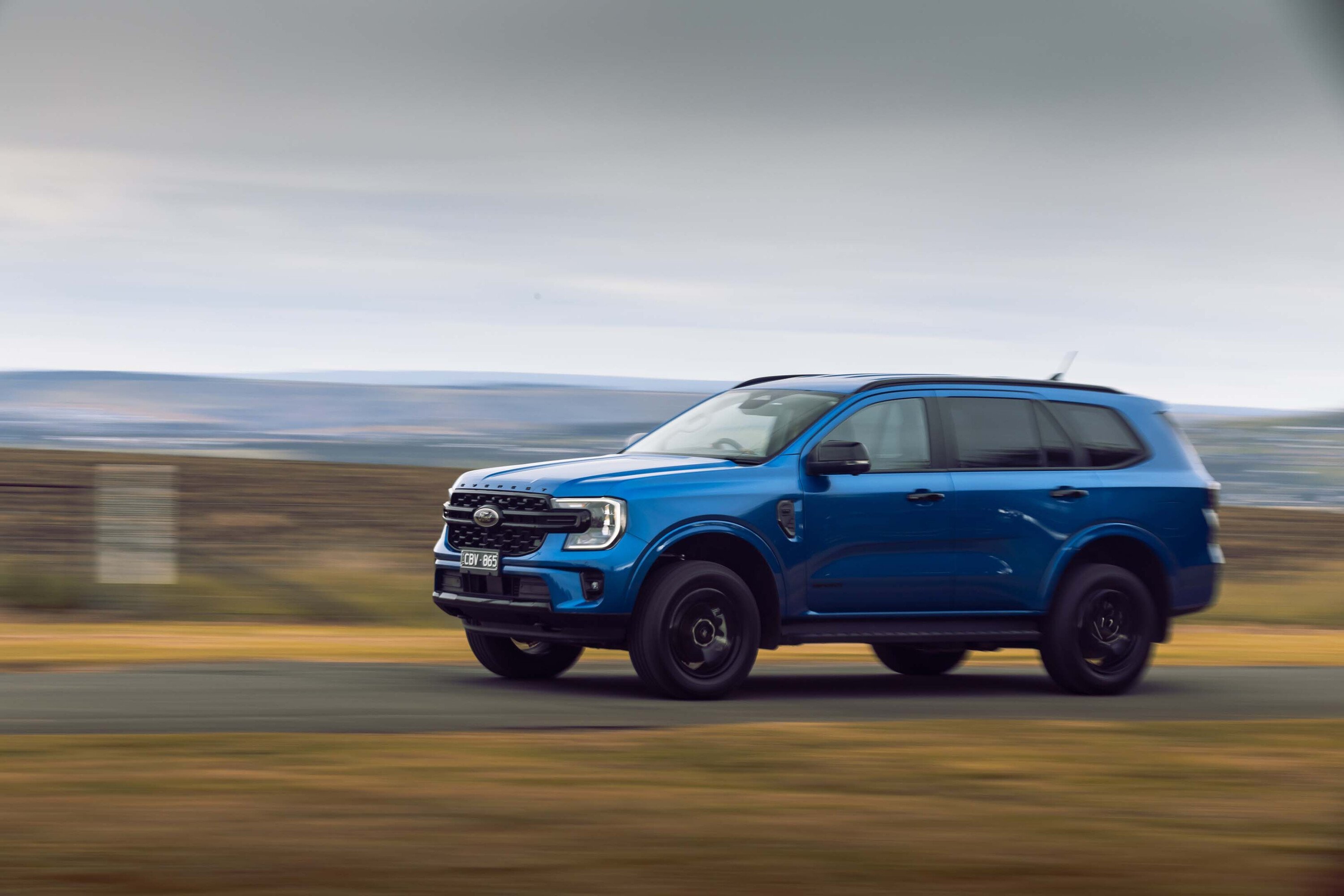
My read, Paul? Sales of these truly big utes will be self-limiting. For a small minority, they’re truly fit for purpose, but many who try them will discover that they’re genuinely too big and cumbersome for their needs.
Personally I think it looks great, however, within a split second of seeing the article I immediately thought of my favourite supercar brand, McLaren.
1
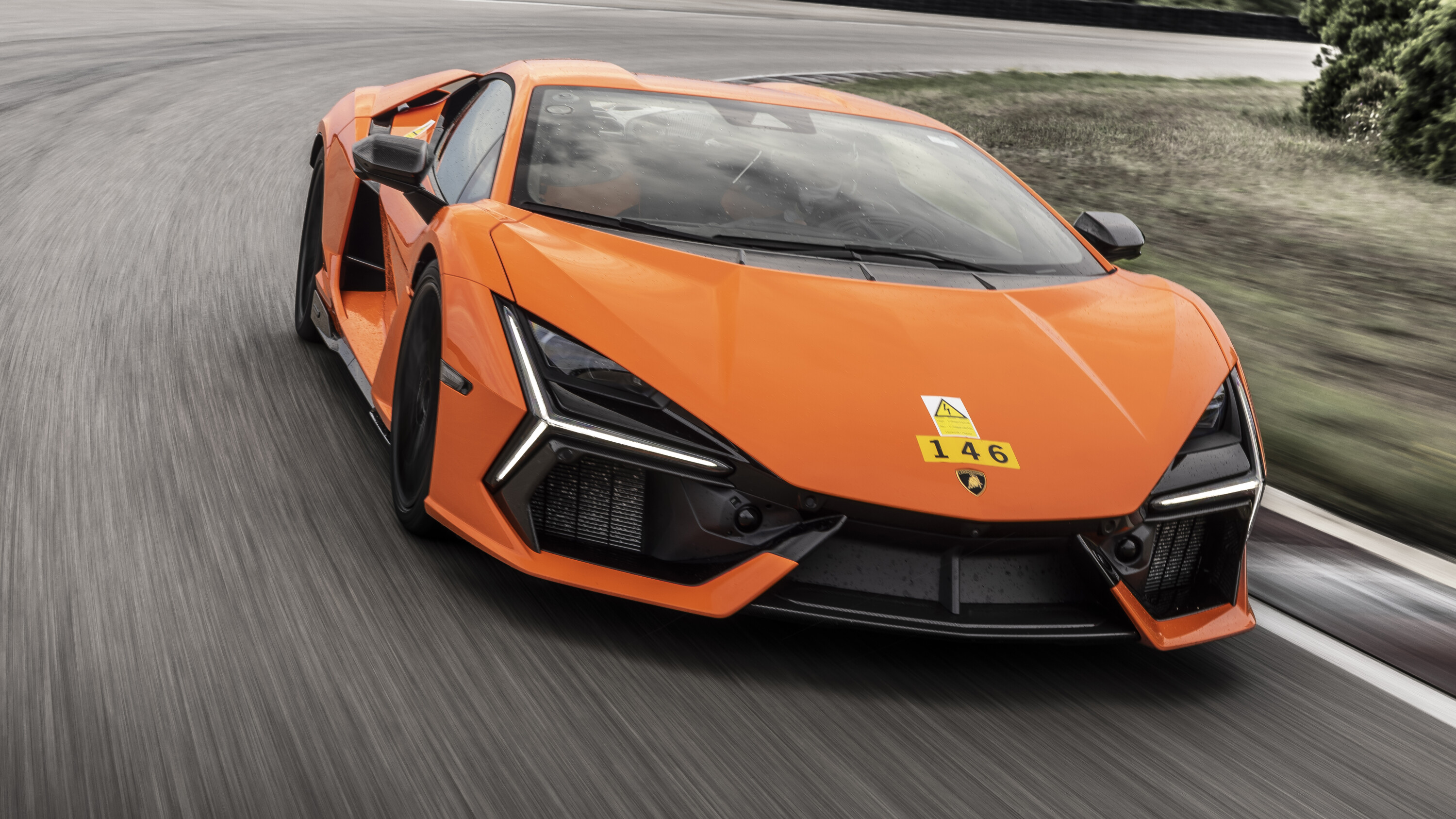
Firstly, the air intakes above the lights are so McLaren as is the other end of the car with the sunken in exhaust pipes set against a black background. Then thirdly, maybe a marketing oversight by Lamborghini, why would you roll out a near Papaya Orange version when that colour rightfully screams McLaren? It would have looked better in white perhaps.
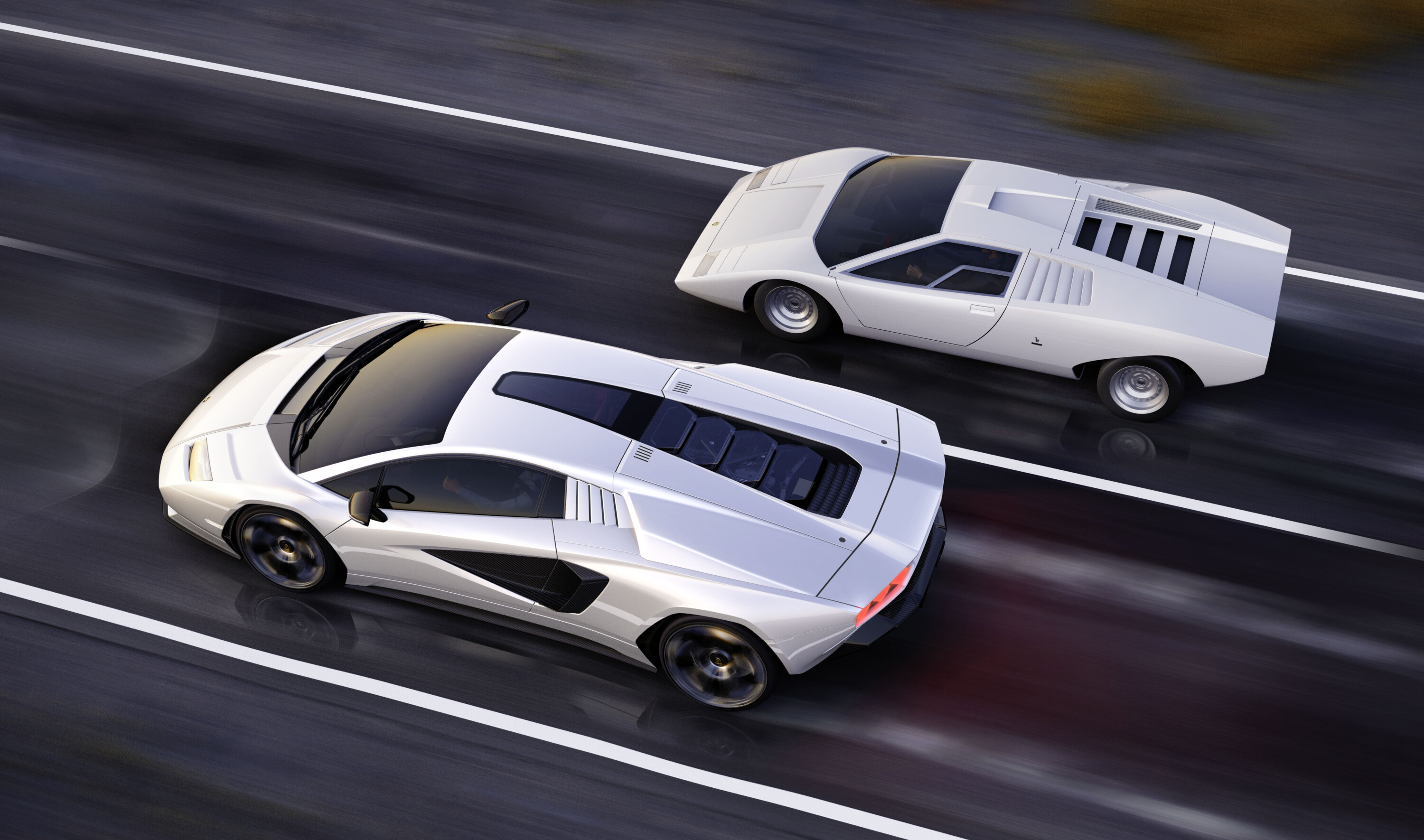
The modern version of the Countach LPI 800-4 still takes some beating. I would have liked to have seen the new halo car take more styling cues it look more like that. So, to answer your question, not for me.
ud83dudede Editor Andy
I hated the ‘new’ Countach when I first saw it, but I think it could well become a bit of a sleeper collector’s fave. Jury’s still out on the Revuelto. I think I need to drive one.
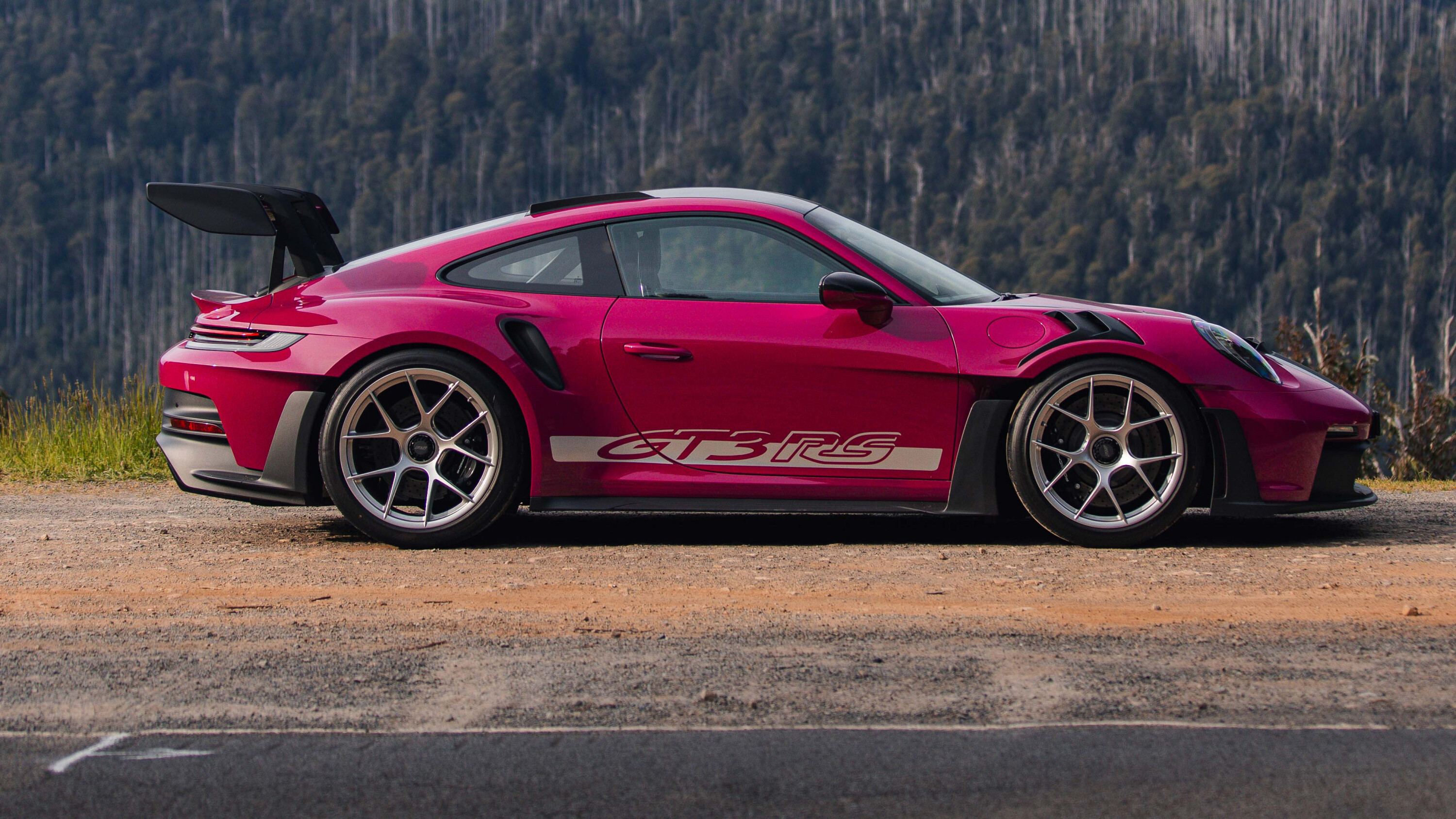
The Porsche is one of my favourite cars with the Aston Martin DB5, Lancia Integrale rally car and my all time favourite car the Porsche 911 GT3 RS: its power, looks and it being one of the favourite cars of Top Gear and The Grand Tour presenter Richard Hammond’s, what’s more to like!
1
The problem is though, I don’t think I will be able to own any of these cars.
The Aston will be an antique, same with the Lancia and the Porsche will probably be dead. But there is still hope!
So thanks to a great article I have found out that I can technically own one of my favourite cars! So thank you Wheels, it’s been a pleasure to write to you guys and I love what you do.
ud83dudede Editor Andy
Cheers! This month’s going to be a treat for a GT3 RS fan. And we’re hunting for a tidy Integrale for Modern Classic.
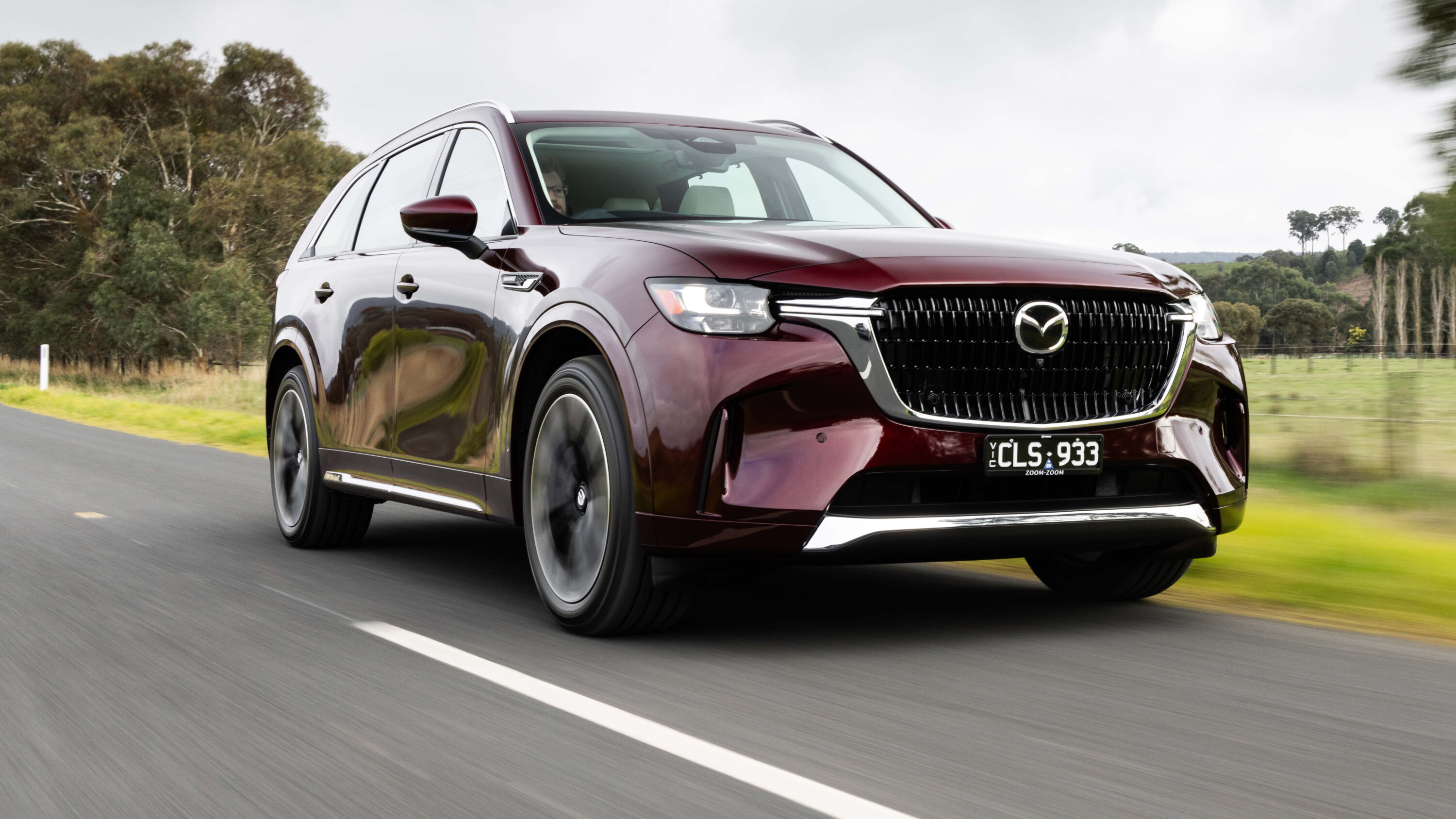
“…while others will be perturbed by the inexplicable lack of touchscreen Apple CarPlay (forcing you to use the hand controller, even though the infotainment screen is within easy reach).”
I have commented many times that the CX-60 and CX-90 do act as a touchscreen for both CarPlay and AA.
ud83dudede Editor Andy
I was just beginning to draft an “I think you’ll find…” sort of response but contacted Inwood first, who’s running a CX-90 to verify. And there it is, buried beneath multiple menu layers – a way to activate the touchscreen when driving. Many thanks, Mark. That’s a plus in the CX-60/CX-90’s favour. Owner feedback is always welcomed.
1
Unsafe at any speed
?️ Martin Geoghegan,Thirroul, NSW
Just picked up the December issue of Wheels and was intrigued to read Andy Enright’s editor’s letter at the start.
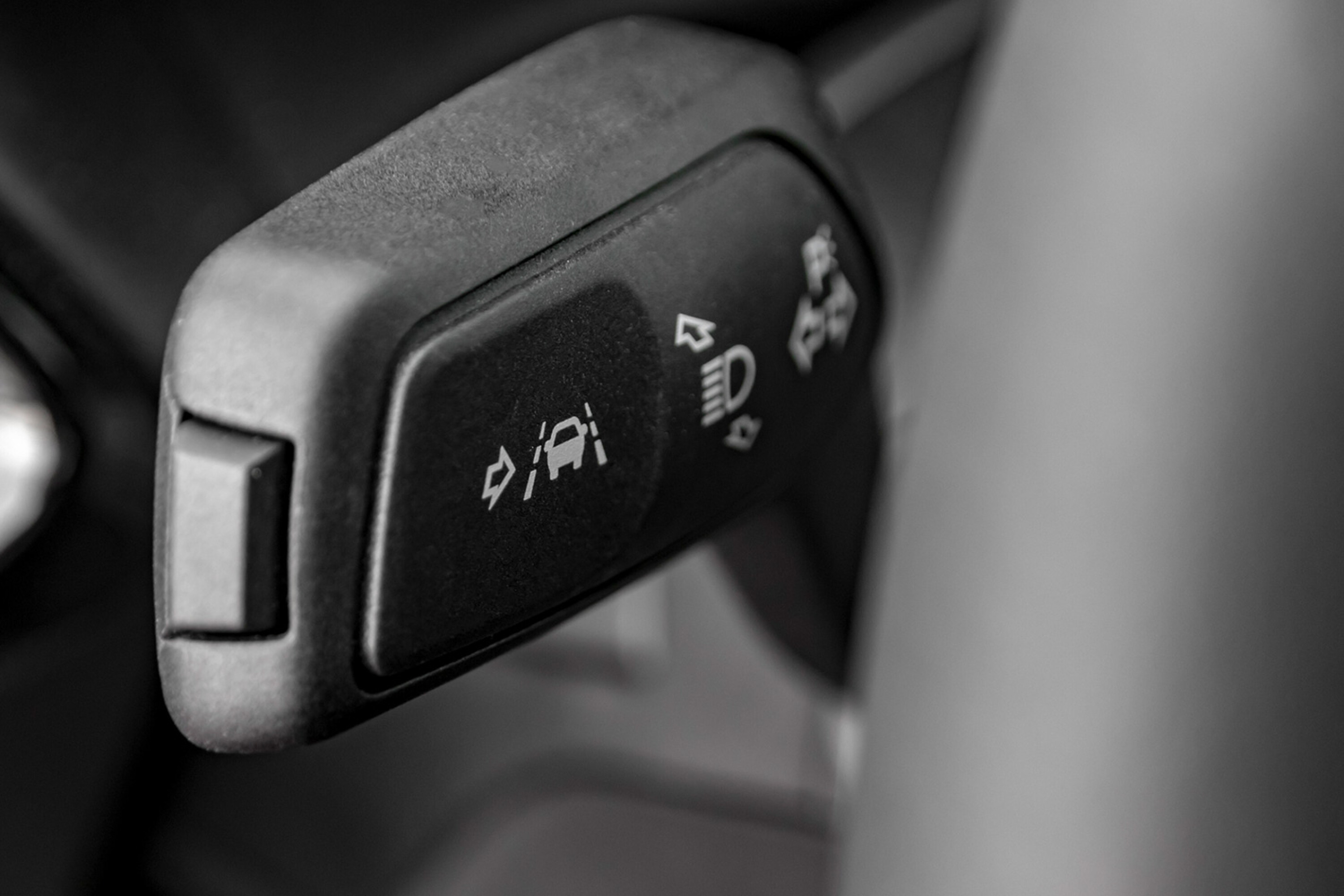
This obsession with building useless and often distracting ‘safety’ features into cars has been making modern cars less and less pleasant to drive. I’m glad somebody’s had the balls to take a stand against it.
I noticed that only this week, Euro NCAP has come out against manufacturers who seem to be deliberately rolling the arm by including lane-keep assist features that just don’t work in the real world. I’m glad that the protocols are now being updated to include real-world testing because some of these features are making vehicles borderline undriveable.
1
Forza Honda
?️ Mark Stevens, Port Noarlunga
Thanks for all the Honda stories (FN2 Type R, Honda at 60, new CR-V) slotted into the December issue. I often feel that Honda, as a company, doesn’t get the recognition it deserves.
For me it’s right up with Ferrari, Mercedes-Benz and Porsche in terms of quality of engineering. Sure, we have to put up with some ideas that don’t really hit the mark, (I’m looking at you, second-gen NSX) but it’s worth tolerating the near-misses to be treated to the best that the company can produce.
I’m beyond excited to hear that after much dithering, Honda will continue its engagement with F1. Here’s to bigger and better things.
1
The Wheels question to you
What’s the single worst feature you’ve seen on a new car and why?
Screen of death
Itu2019s the touch screen gear shift in the new Tesla Model 3. I understand the move to make things cheaper to build, but at what point does Elon Musk think u201cthis is getting sillyu201d? Or does he not possess that filter? Glen Allen, via Facebook
Idle fail
Iu2019m going ultra-specific, but itu2019s non-killable idle-stop in any car that doesnu2019t have 48v electricals. Nothing worse than trying to pull out of a junction only for the engine to die just as you commit. D. Winship, via Facebook
Want to have your say? Keep it tight (no more than 200 words) and include your suburb if via email: [email protected]. You can also chime in on Facebook & Instagram.
The ties between Mazda and Toyota continues to strengthen, with the former confirming it will use the latter’s ‘in-vehicle systems’ for its upcoming EVs.
What’s an ‘in-vehicle’ system’? It’s an industry term to describe the combined operating system (OS), electronic control units (ECU), and wiring harnesses – more or less the electronic portion of an EV, with the main electrical components being the batteries and motors.
This system controls the various functions of the EV, such as driver assistance, safety, heating, ventilation and cooling (HVAC), and infotainment, as well as linking the various functions to the user interface (UI) – that is, one or more touch screens, and perhaps a few hard switches.
1
Just like a phone or desktop computer, in-vehicle systems are complex, and therefore expensive to develop and produce. It’s been reported that some major automakers and parts suppliers spend up to $2 billion a year on software development alone.
Mazda is a relatively small manufacturer and the cost of developing its own in-vehicle systems would be prohibitive and unstainable.
Adopting Toyota’s Arene OS will significantly reduce the cost of developing in-vehicle systems for Mazda EVs, compared to creating a system for EV models on its own. Mazda expects that its systems will be 90% identical to Toyota’s by 2027, lowering development costs by 70-80%.
Mazda, Toyota and Denso Corporation (Denso) formed the likeably Japanese-sounding EV C.A. Spirit Co Ltd in 2017 with the objective of developing basic structural technologies for electric vehicles for greater efficiency.
Shared in-vehicle systems is one example of this partnership bearing fruit.
The partnership was also intended to leverage “Mazda’s bundled product planning and prowess in computer modelling-based development, Denso’s electronics technologies, and the Toyota New Global Architecture (TNGA) platform”, so these systems could be just the start.
Will future Mazdas feature TNGA technology, functionality, and production engineering? Time will tell.
Is the BYD Seal’s low price too good to be true? We find out by pitting it against two key four-door rivals.
REVIEW: New Hyundai Kona EV
This is the one: Hyundai’s best chance yet at continuing its growth not only in petrol and diesel, but also in the new electrified world – where ‘affordable small EV’ has been all but surrendered to China.
All the new Volvo models coming soon
This year, Volvo’s Australian line-up will welcome two very important models on the brand’s march towards full electrification.
Every new GWM SUV, ute and SUV on the horizon
Chinese car-maker GWM has a host of exciting new models planned for 2024, including boxy off-roaders, an updated dual-cab and fresh electric cars.
The New Old School: Rear-Drive Sports Cars compared
In an era of ‘zero-emissions mobility solutions’ there’s still a place for great engines and rear-wheel drive goodness. But which of this gang of four is the go?
Minor update for Ford Ranger and Everest brings a new towing assist borrowed from the F-150 – and reduced line-ups.
Tesla Model 3 EV deliveries paused due to compliance issue
Deliveries of the facelifted Tesla Model 3 EV have been paused – and a recall is likely – after the brand removed a flap to access the rear-centre top-tether point required under the Australian Design Rules.
Mazda 3 2.5 Turbo concept headlines Spirit Racing launch
House-tuned fast Mazdas set to make a comeback in Japan, will Australia follow?
Mazda 6 future in doubt
Plans for the future of the Mazda 6 will be announced at “an appropriate later date”, as reports claim production will soon end in Japan.
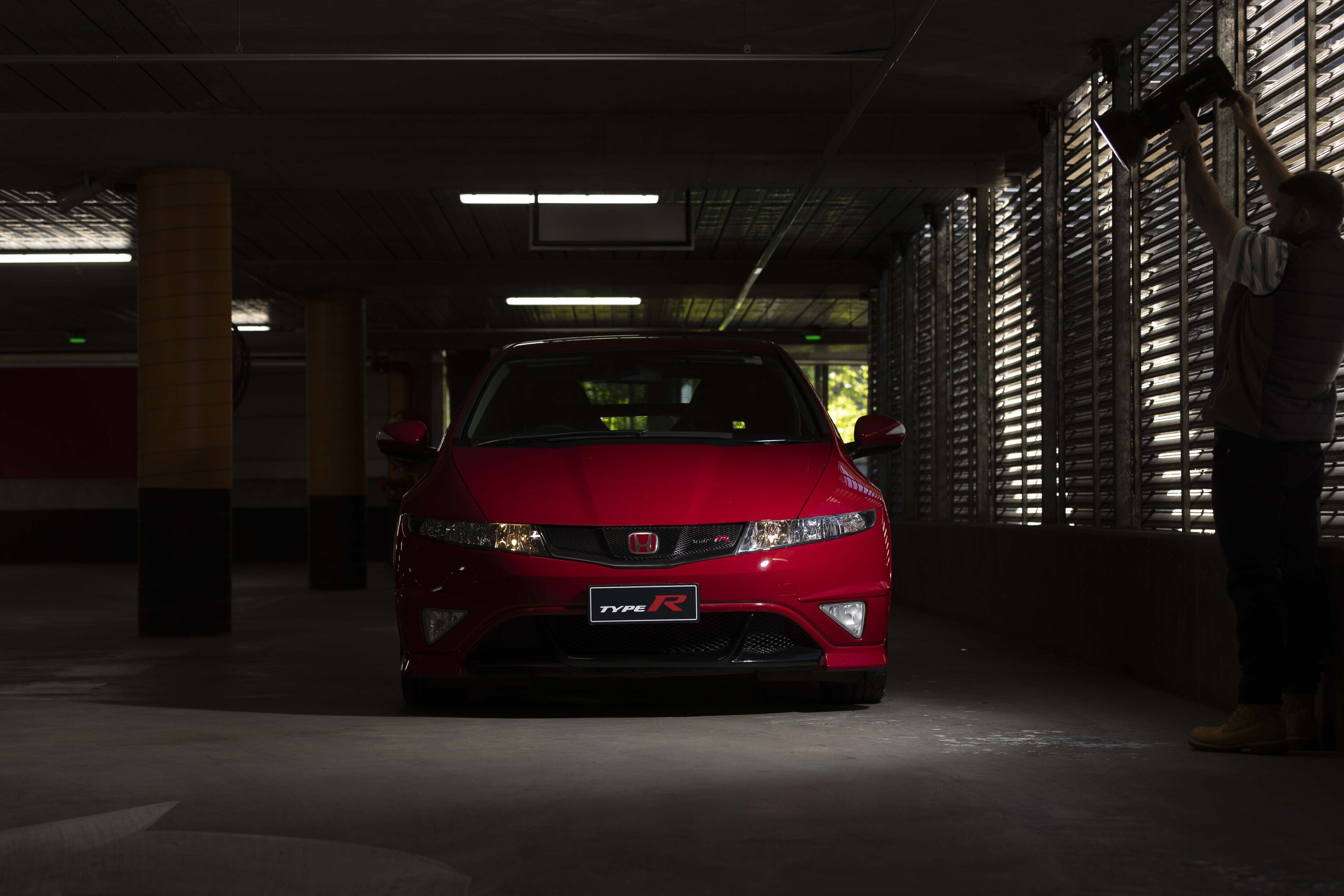
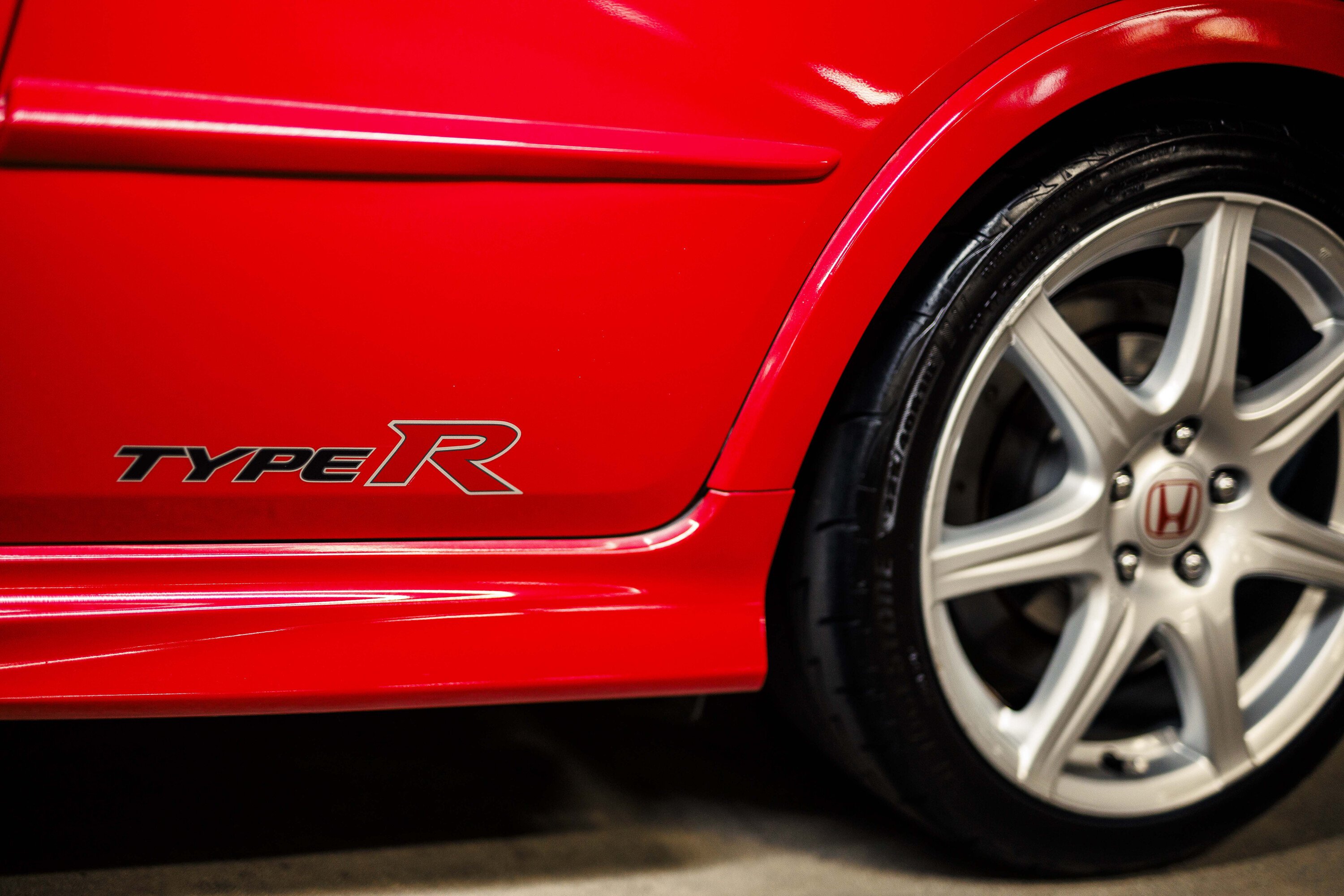
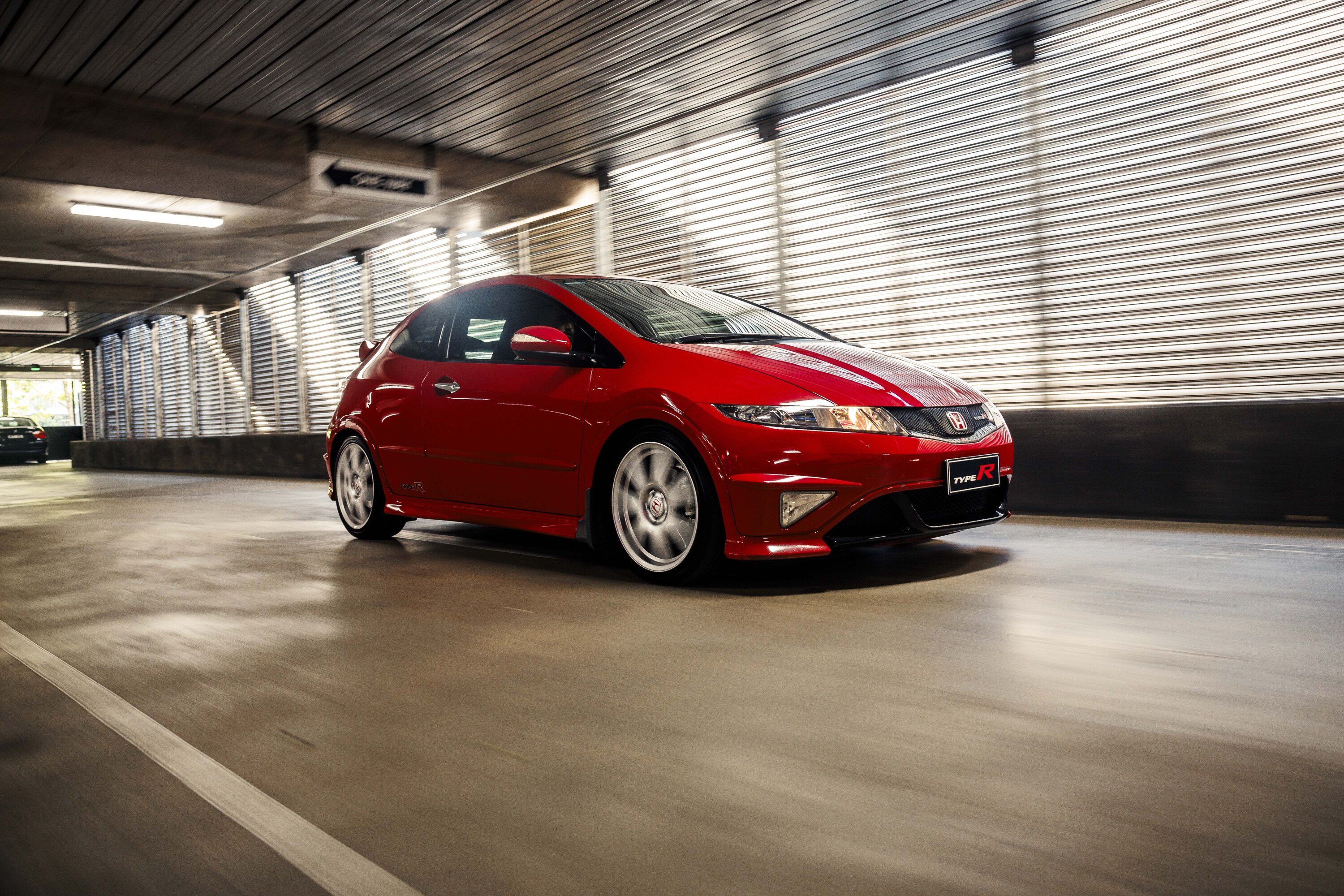
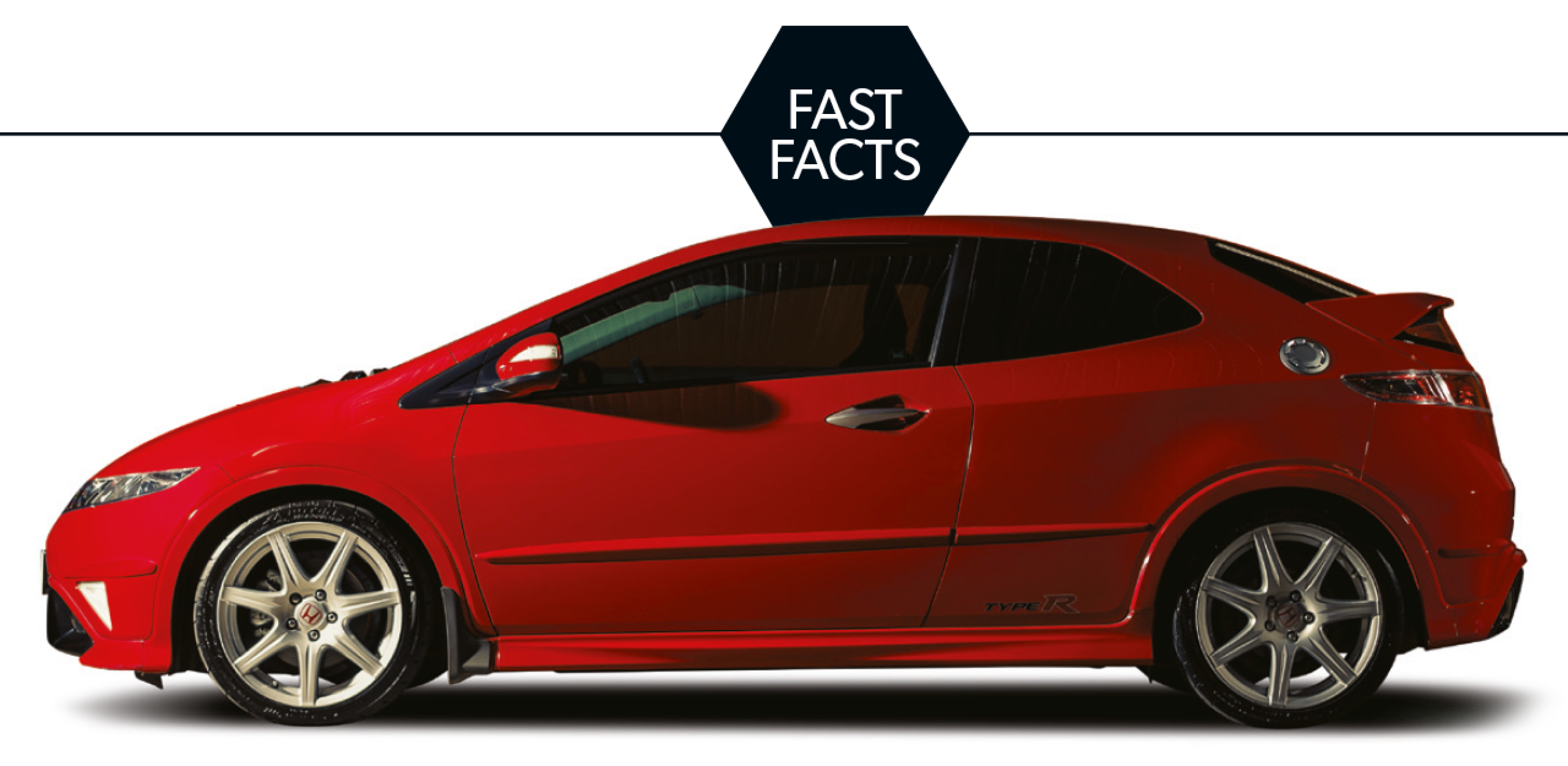
Were you to believe everything you read on the internet, you’d know that this is the worst Civic Type R that Honda ever built.
The FN2 has no diff, no torque and no independent rear suspension. It’s around 100kg heavier than its predecessor, the breadvan-shaped EP3, with no added power. “It just doesn’t feel that quick,” said Jeremy Clarkson on Top Gear, adding “all the poise and controllability that you used to get in the old car is just sort of… gone”.
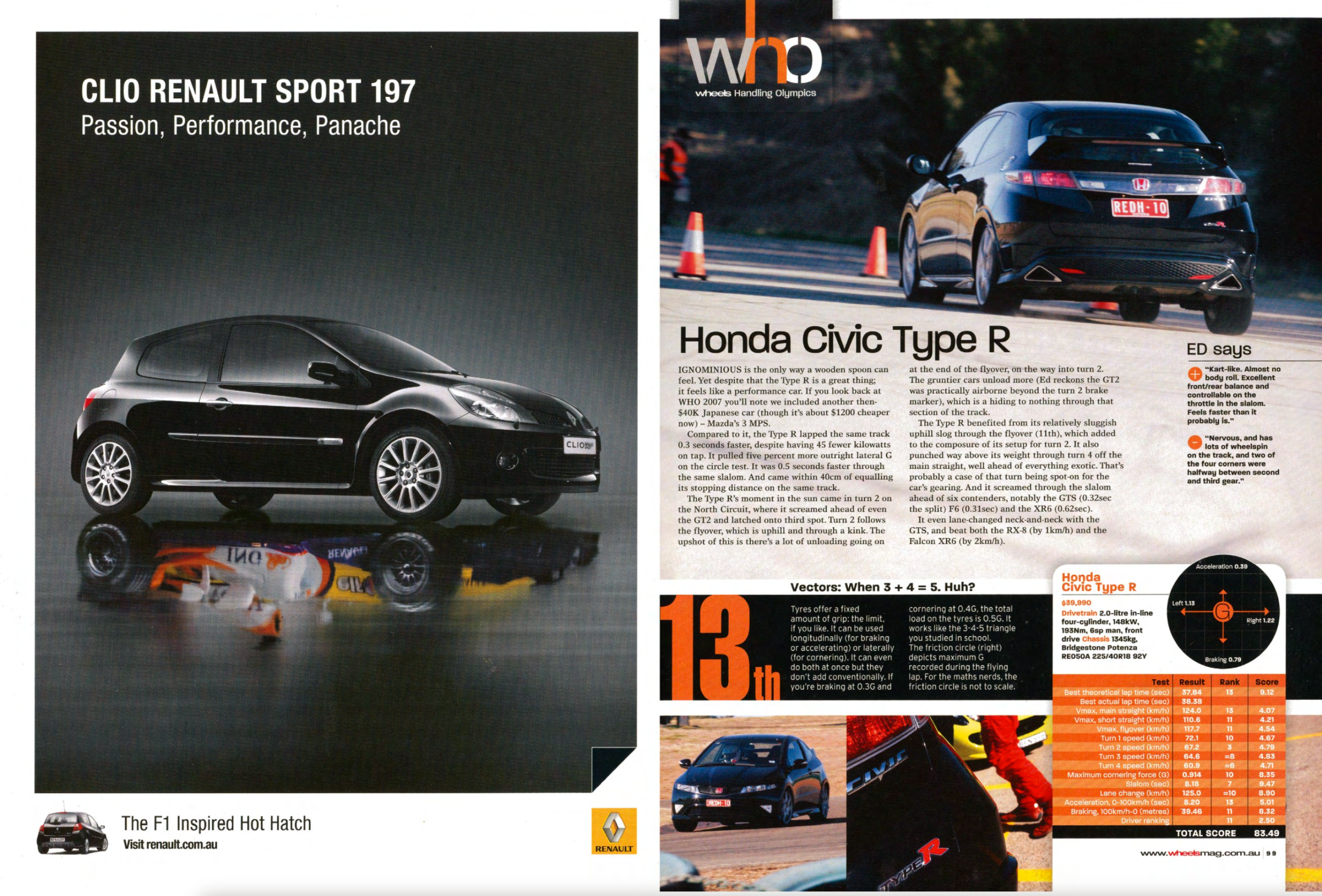
Wheels threw the FN2 Type R into two big sports car tests. It came last at the 2008 Handling Olympics and was slowest around Haunted Hills in a hot hatch megatest in March 2011.
1
So what went wrong? And why is this car even here when it’s clearly the runt of the CTR litter? Hindsight and perspective – those two luxuries we are now afforded – frame this Civic in a very different light.
It’s the last of the normally aspirated screamers, which explains why it was slower around Haunted Hills (the clue is in the name) than its torque-rich turbocharged brethren.
So while its 193Nm is less than you’d get in your holiday hire Hyundai i30 (and less than half the quota of a current Civic Type R), there are a number of compensations that we once took for granted. Things that we dearly miss today.
1
Try finding a modern hot hatch with a characterful engine (a barrage of manufactured exhaust pops or dual-clutch tromboning doesn’t count).
Once you’ve done that, refine your search further by finding one with a beautiful manual gearbox. I’ll save you some time. That car doesn’t exist. Granted, a pair of what some may view as anachronisms don’t confer worthiness in and of themselves, but there’s more to the Civic.
When we take a look at its rivals in that 2011 review, almost all have been replaced by incrementally better versions of their ilk. You can buy something from the same marque that’s cut from ostensibly the same cloth that’s newer and better.
1
Why buy a MkVI Golf GTI when the MkVII is a big improvement? Same goes for the Megane RS 250. Buy a 265 or a 275 instead. You’ll have more fun. But the Civic? It changed. Tester Jimmy Whitbourn found it old hat in that company. Probably rightly so.
“At launch in mid-1997, the Type R looked futuristic but the look – inside and out – has dated, along with its approach to performance,” he noted. “Volkswagen’s benchmark for hot hatch liveability – the Golf GTI – delivers its performance effortlessly; in the Civic you really have to work for it.”
In the interim, we’ve become accustomed to EVs that can accelerate to 100km/h in two seconds and change. Instant gratification is available on demand, with the result that we now treasure those cars that sing like the Civic. It’s part of the reason why the 911 GT3 has become so revered.
1
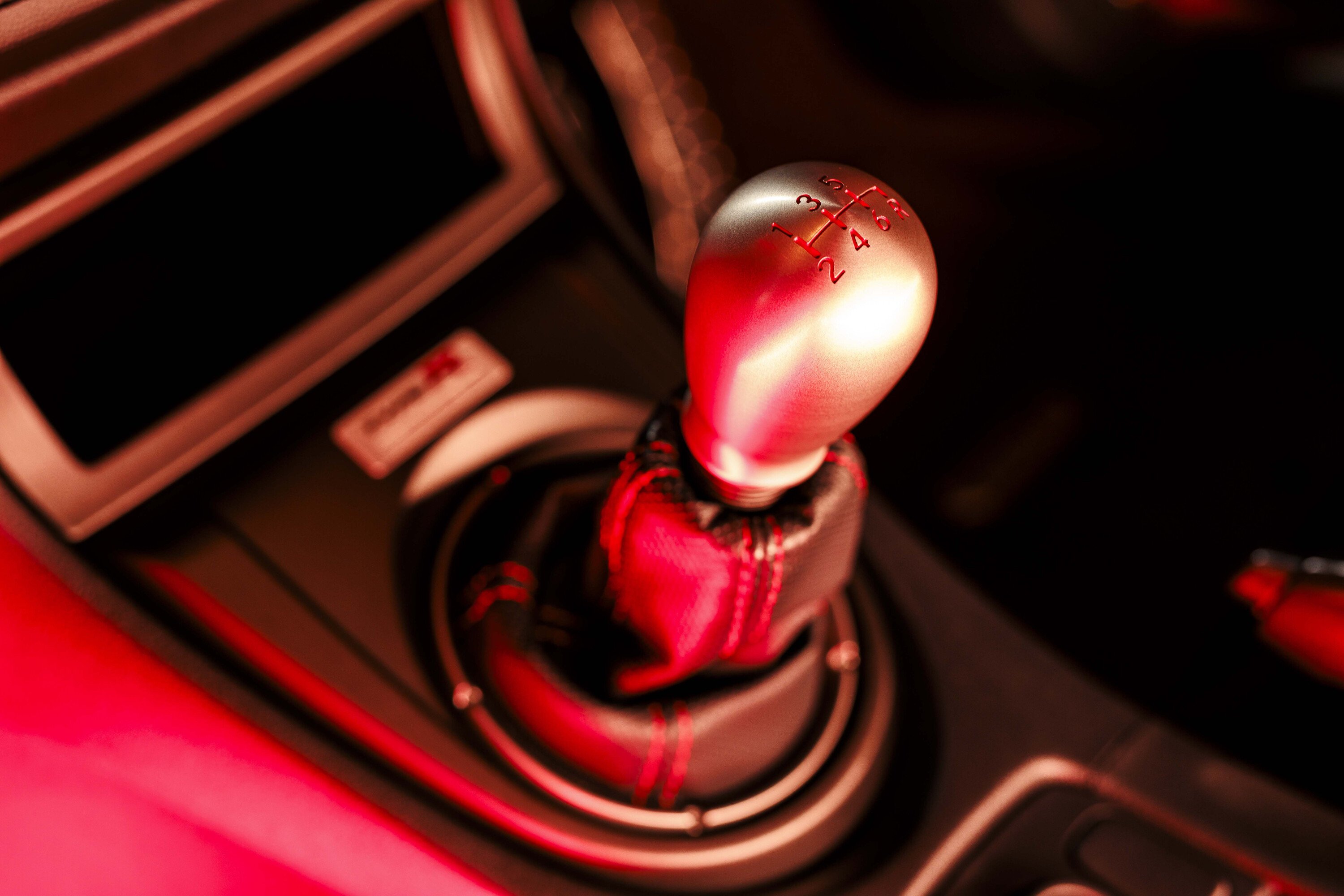
It’s a delightful gearbox – maybe not S2000 slick, but probably the equal of any manual shift offered today
We just couldn’t have anticipated that in 2011, when turbocharging appeared the answer to every question.
To that end, a naturally aspirated Civic Type R has only seen its stock rise in recent years, and this FN2 model was the last of that particular line. That’s why a car that finished flat last in those big comparison tests is now starting to pique the interest of collectors.
The true anoraks among you will know that while we got the British-built FN2 hatch, in Japan there existed a very different beast, sold for the same 2007-2011 period.
The FD2 was a four-door sedan, riding on an 80mm-longer wheelbase and featuring more grunt (165kW/215Nm versus 148kW/193Nm), a Torsen diff and independent rear suspension. It’s a superior car, but it’s not the Type R many of us grew up with.
1
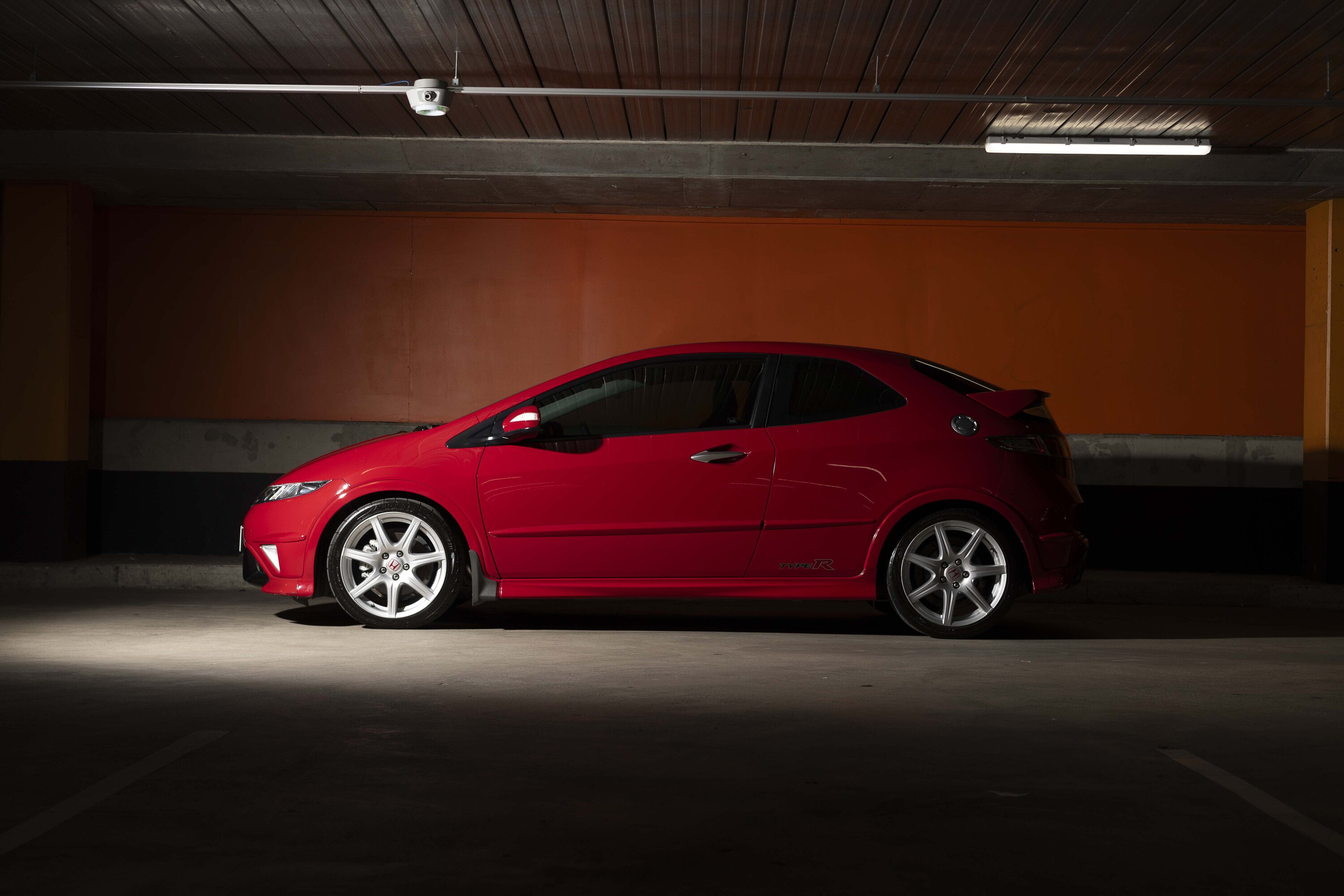
The FN2 certainly came as a shock when it was unveiled at the 2005 Frankfurt Show.
Toshiyuki Okumoto’s design was 35mm shorter and 35mm lower than its immediate predecessor, but it offered a 30mm longer wheelbase and was 65mm wider.
Its compact torsion-beam rear suspension allowed for proper fold-flat rear seats, while space in the rear was helped by relocating the fuel tank to a position beneath the driver’s seat.
Although the Civic clearly benefited from these packaging developments, they didn’t bode well from an enthusiast’s perspective. Indeed, the minimum seat height for the driver didn’t feel particularly sporty, especially when compared to its predecessor, the EP3.
1
Moving the wheels to each corner also had another effect which wasn’t fully appreciated at the time. The bonnet was shorter and more steeply angled.
In order to comply with pedestrian crash legislation, this limited the available real estate for the front strut assemblies, something we’ll come back to later.
The FN2 Type R launched in 2007 priced at $39,990, Honda quoting a very optimistic 6.6-second 0-100km/h time and a top speed of 235km/h. We took it to the dragstrip on a number of occasions and never managed to dip into the sevens, which means that you won’t choose one of these cars if you’re intent on winning stop-light grands prix.
1
Supply was initially fairly strangled, with no more than 100 cars a month making landfall in Australia, largely due to an engine production bottleneck in Japan.
At the time, Honda Australia put the power difference between the Australian and JDM versions down to a difference in fuel, but there were significant differences between the engines – the Japanese car featuring revised cams, an RRC intake manifold, higher compression ratio, no balancer shafts and a larger throttle body.
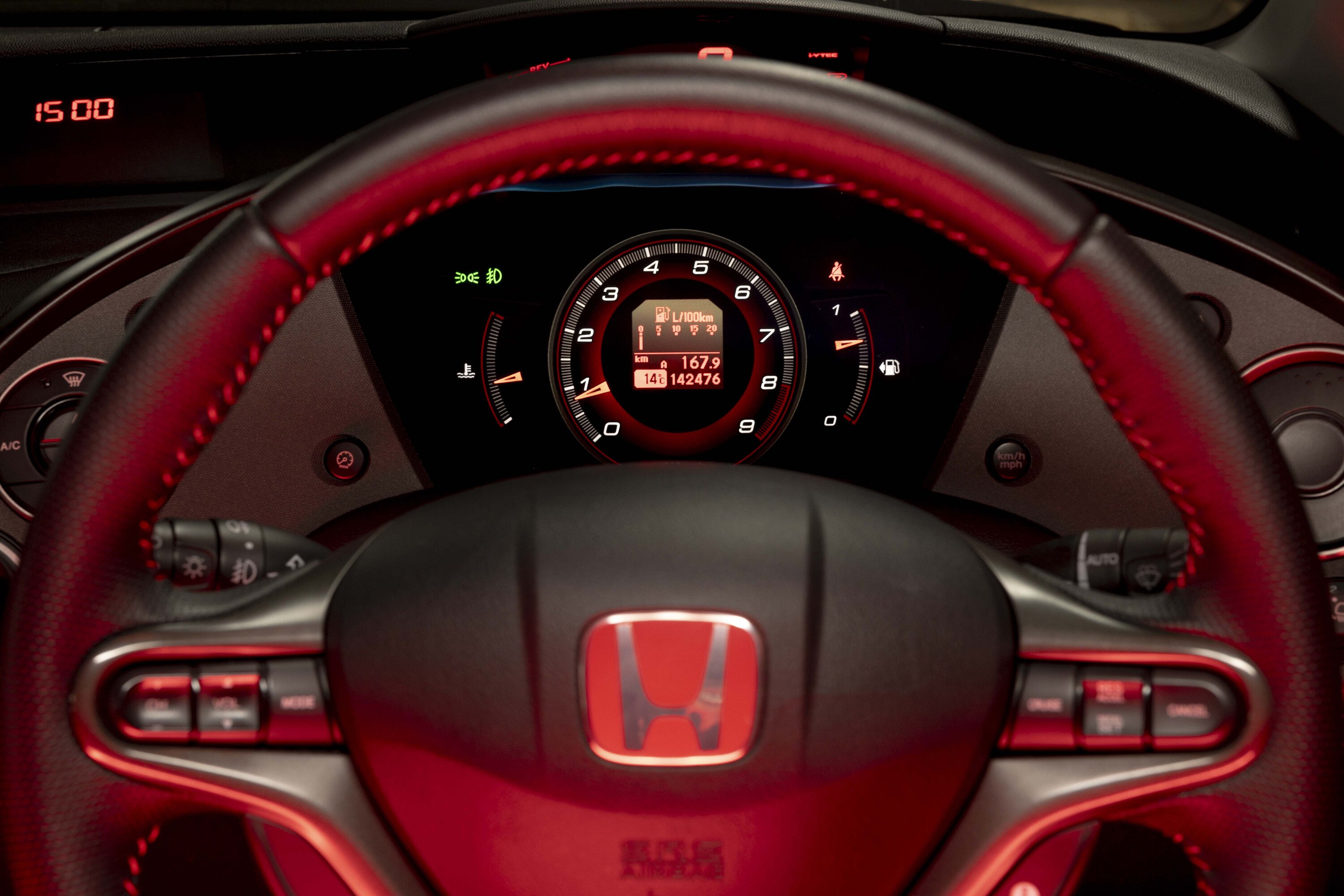
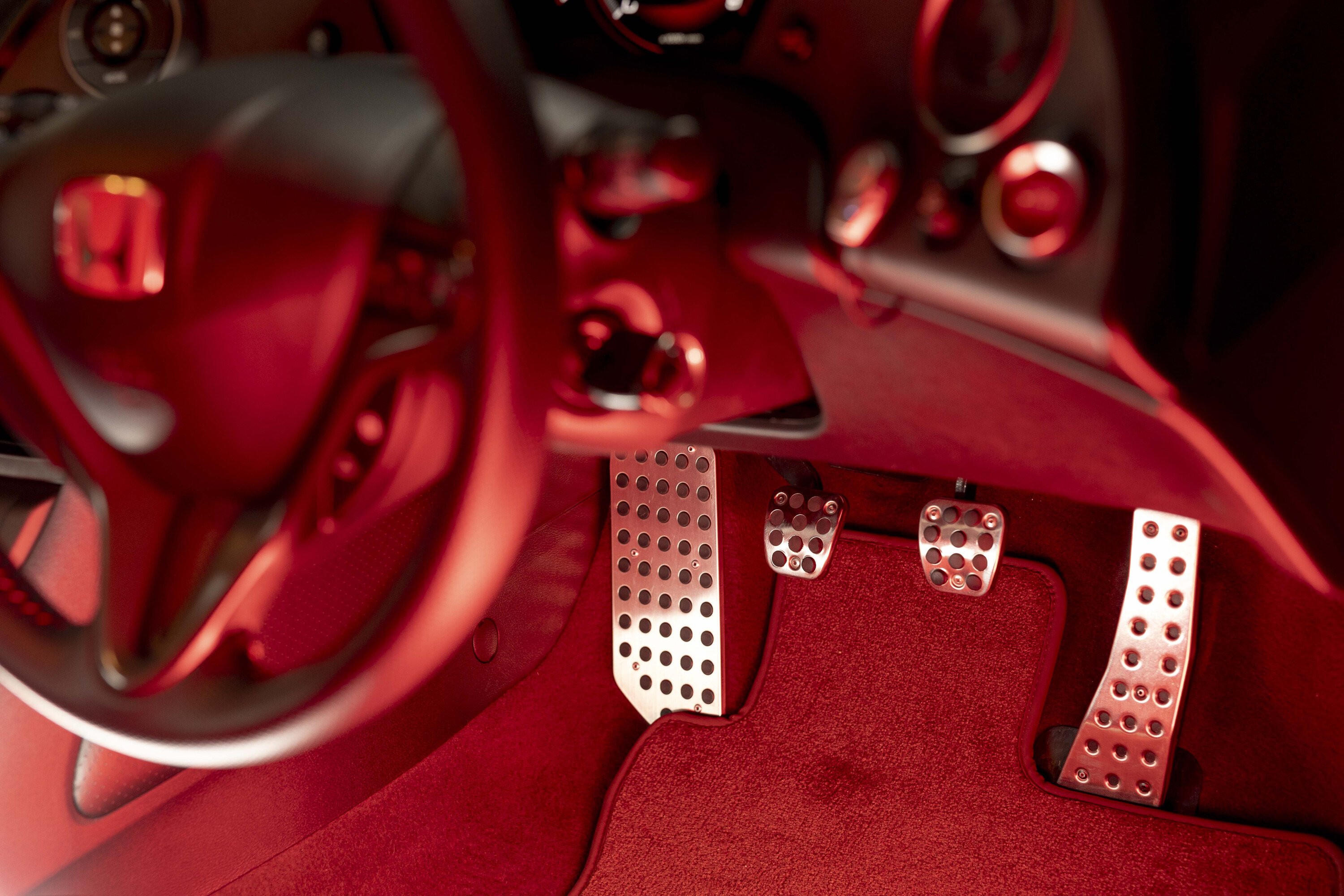
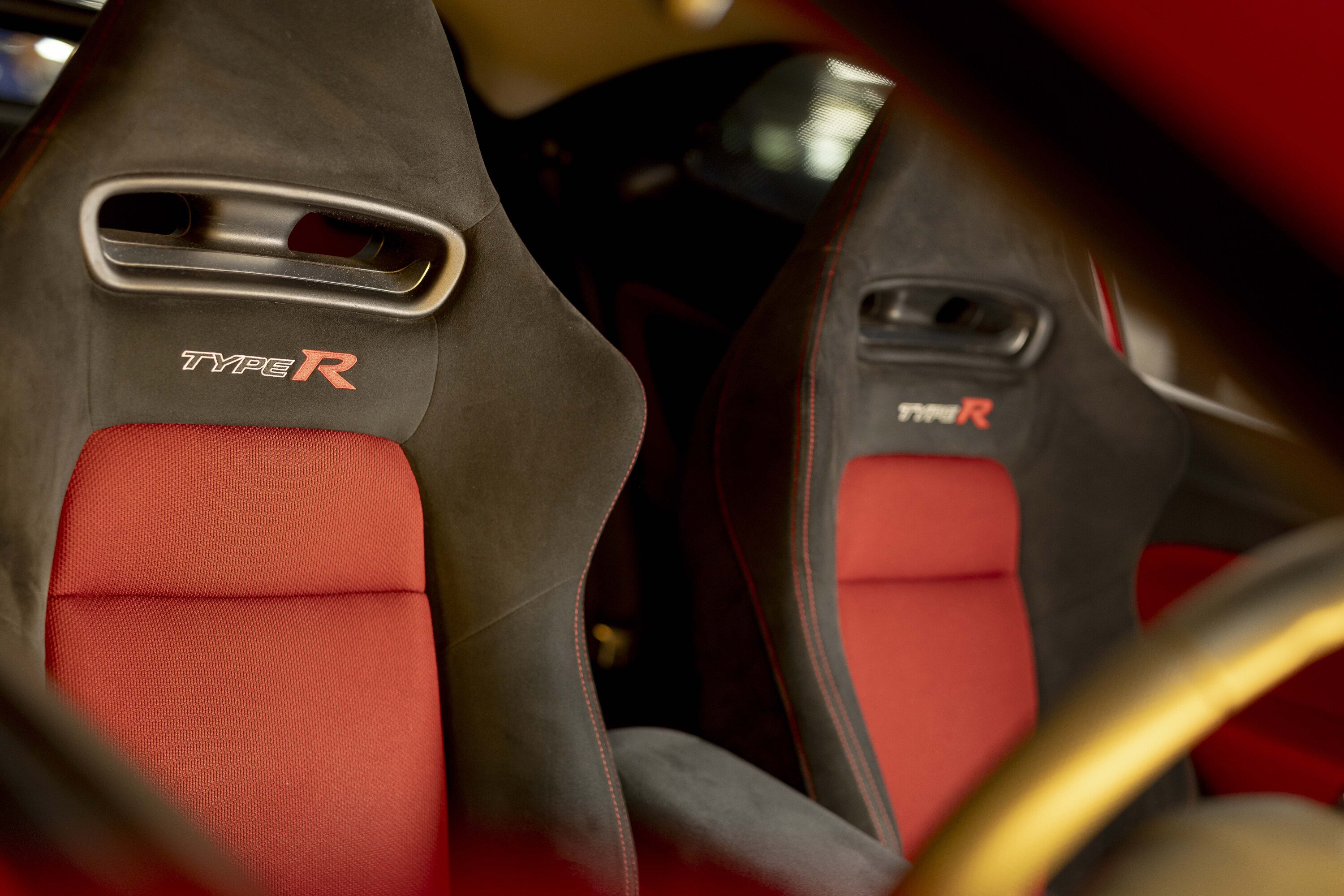
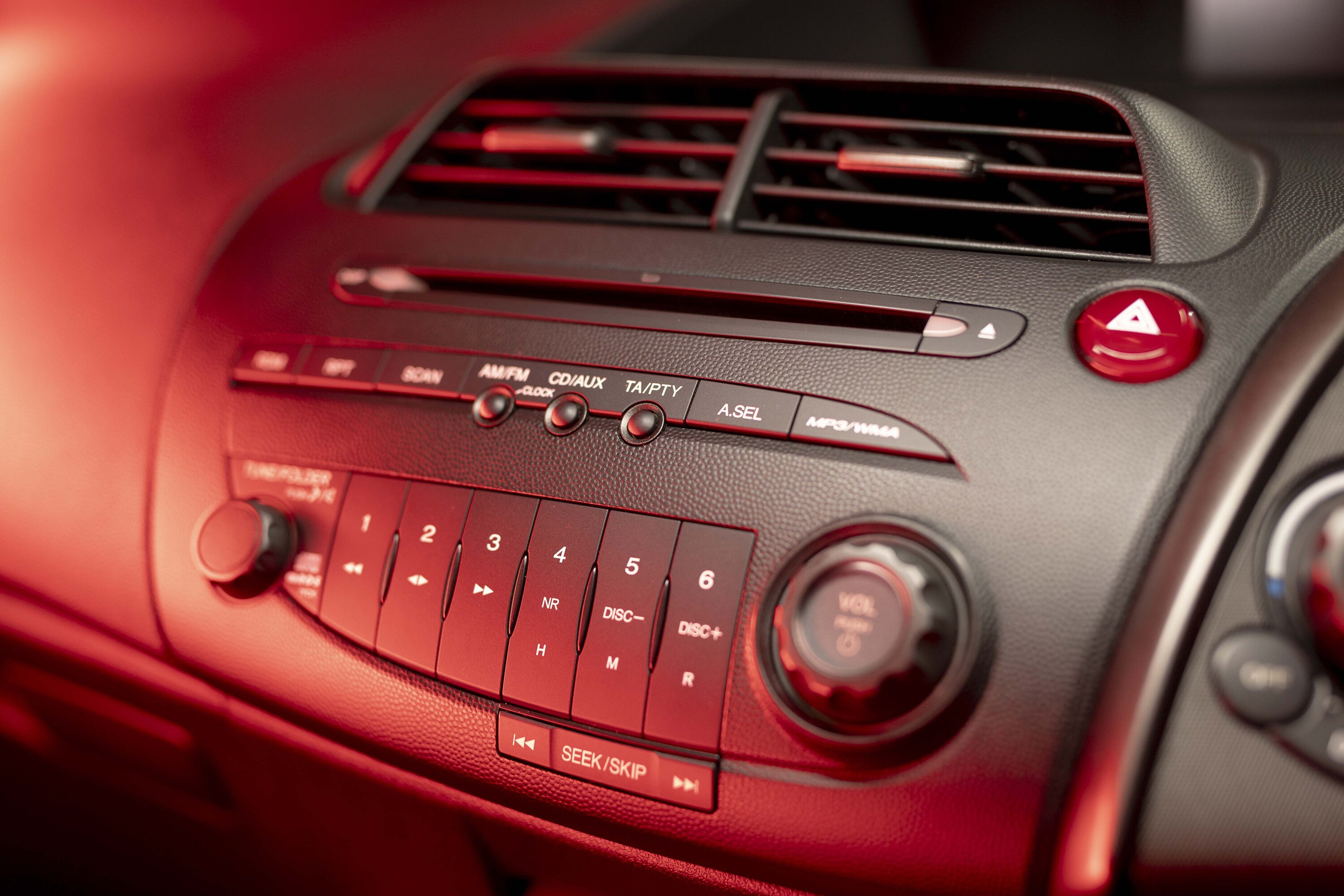
We were offered a colour palette of red, silver or black, and all cars featured red and black cabins with tombstone seats which, annoyingly on a three-door, wouldn’t return to their original position once you’d folded them forward to access the rear. Much has been spoken of the futuristic dash layout, which we all expected to date very quickly.
1
Compared to a Golf MkVI, it looks fresher today, to these eyes at least, but the materials quality inside was probably a notch or two below the vault-like Volkswagen’s.
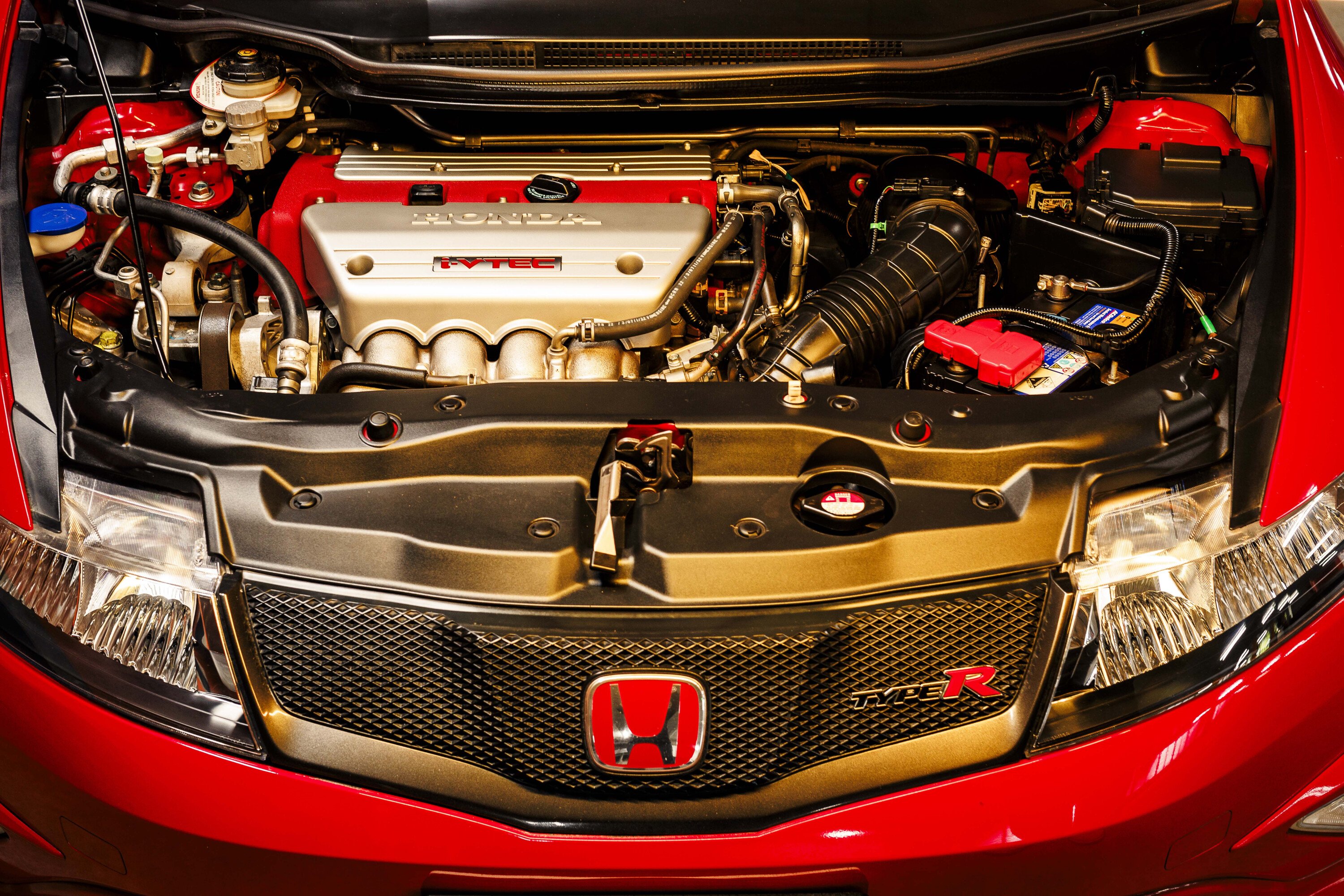
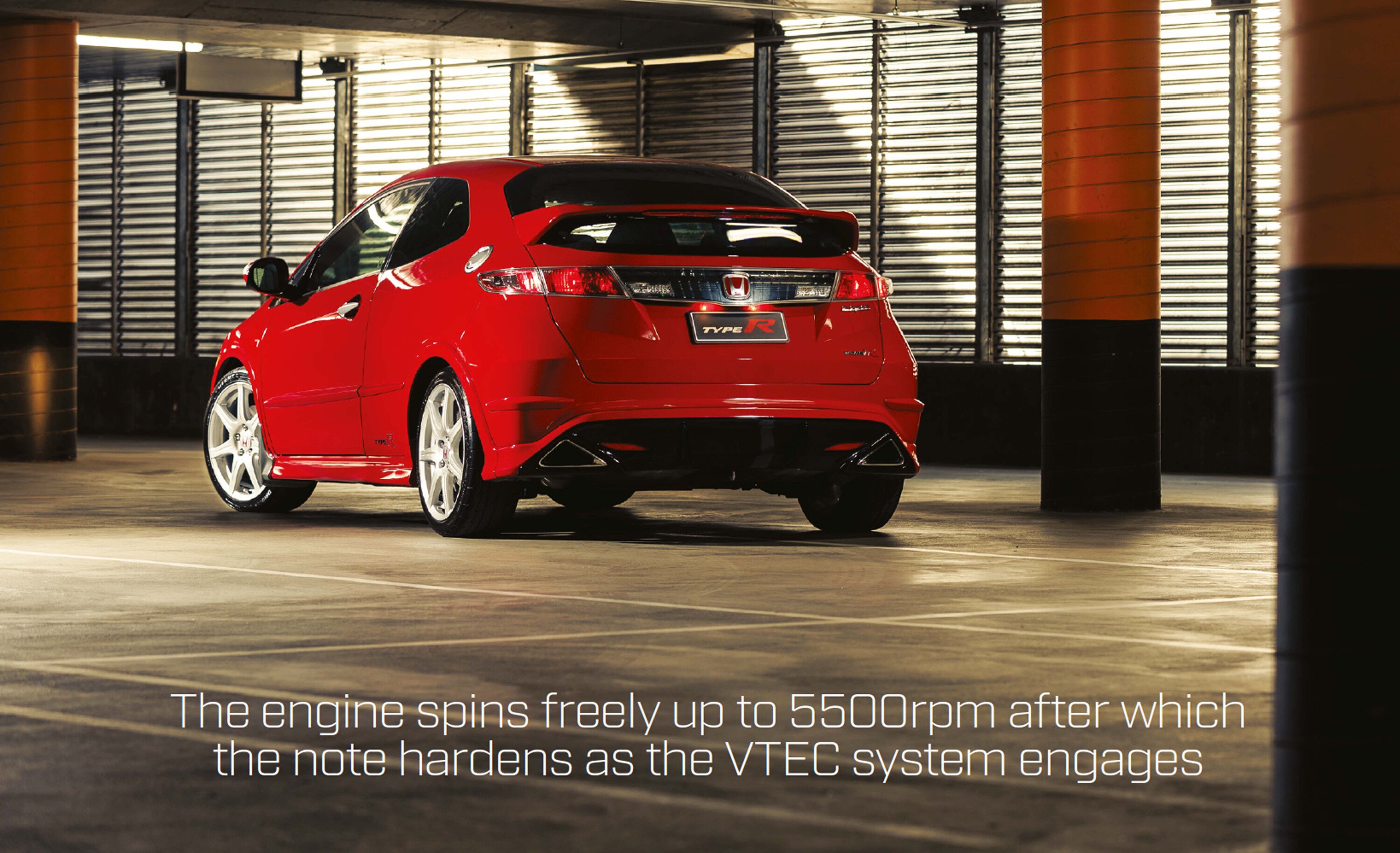
You’d rather rely on Honda mechanicals though. The engine spins freely up to 5500rpm, which is where the note begins to harden and the VTEC system engages through to the 8000rpm redline. Unlike the EP3, the FN2 is equipped with an OBDII port, which helps with remapping.
A common modification is to bring down the VTEC switchover to somewhere just north of 4000rpm, which some claim improves driveability (see breakout below).
1
Big power is hard to achieve without either a swap to a 2.4-litre lump or the relatively simple fitment of a Roots-type supercharger. Install either and you’ll also need a limited-slip differential.
But what of that torsion-beam rear suspension? Ah yes, a beam at the back – the hardware choice of notably awful-handling hot hatches such as the Peugeot 308 GTi, Renault Megane RS 275, the Clio 182 Trophy and the Ford Fiesta ST. Note obvious sarcasm.
The torsion beam in the rear of the FN2 certainly did create a significant noise pathway into the one-box passenger cell. The FN2 Type R is undeniably uncouth on coarse-chip surfaces.
1
There is another characteristic of the FN2’s handling and that is transient understeer.
Many have attributed this to the torsion-beam rear end, which is nonsense. The culprit is a lack of travel in the front suspension, which results in not only a stiff ride but poor front wheel control, especially on challenging surfaces. Many aftermarket damper options exist (Sachs offers a decent solution) that will fix this particular shortcoming.
Replacing the linear-rate front springs with progressive Eibach items and checking geo will also help. We don’t recommend that you ever increase the wheel size of the FN2 Type R, though. In some markets a 19-inch wheel option was offered, but this changes the ride from merely hard to absolutely wince-inducing.
1
This implementation of a torsion beam does affect handling in extremis. Drive an FN2 back to back with an EP3 down a challenging road and you’ll realise that the older car offers you more options in terms of how you exploit the chassis balance.
You’ll also notice that the lauded EP3 steers considerably more vaguely than the FN2. There’s a decent weighting to the newer car’s electrically assisted rack, even if it’s not the chattiest in terms of detailed feedback.
The lack of a limited-slip differential does make itself apparent when accelerating out of tighter corners or in the wet, when the Type R can bleed torque from its unweighted inside tyre. In 2009, Honda Australia finally offered the FN2 with a helical limited-slip differential, allowing for some superior traction when punching out of a second-gear corner.
1
The manual gearshift is excellent, which is fairly surprising given that it’s a cable-shift, which often feel a little more lax than a rod-type set-up. The brakes are respectable for road use, although if you’re planning to track your FN2 you may well want to upgrade.
There’s a decent amount of room in the cabin, although taller drivers will curse the high-mounted seats and shorter drivers will realise that the rear spoiler makes it hard to spot the local constabulary who’ll be attracted to the sound of limiter-bashing, even if flat-chat in second does only translate to 86km/h in this infamously short-geared hatch.
Ownership is generally undramatic. There are a few issues that commonly crop up, such as leaking tailgates, creaking dashboards and soft paint. Worn seat bolsters are a recurrent FN2 issue.
1
Mechanically, the Type R is robust, but 2007MY cars suffered third-gear synchro issues, which could result in the car jumping out of gear. Squeaking clutch pedals are usually rectified with a squirt of chain lube on the entrance to the clutch master cylinder.
The K20 engine is as near bulletproof as it’s possible to get, and certainly shrugs off hard use and higher miles better than anything you’d find from Renault. Valve clearance need to be checked every 40,000km or so and while the engine uses a rugged timing chain rather than a belt, don’t let that fact lull you into believing that this is not a maintenance part.
Get a gauge on the previous seller by asking about their oil maintenance routine for the car. If they gaze at you blankly, walk away. There’s choice in this market.
2
Some owners have taken to fitting 17-inch wheels with 225/45 tyres, often sourcing the wheels from a Mitsubishi Evo (generations 5 to 9 inclusive) to give a little more sidewall compliance.
Others swear by the 15mm spacer kit offered by Eibach to ease the wheels out from beneath the arches a little for a more pugnacious, foursquare stance.
By now you’ll have probably figured out that an FN2 Honda Civic Type R is a car that may well have been misunderstood. It’s also one that rewards a bit of well-informed tinkering. Get one right – you can pick up a very tidy example for somewhere south of $20K – and you’ll have a performance bargain on your hands.
Time has smiled on this hot hatch in a way that initial reviews never did. That can be to your gain. One things’s an absolute certainty. They’re never going to make one quite like this again.
1
At first it seems a bit of a no-brainer.
Some simple recoding with a laptop plugged into the OBDII port of the FN2 Civic Type R can bring down the VTEC changeover point from 5500rpm to somewhere a bit more accessible.
Like most things, if they seem too good to be true, they usually are. Honda engineered the VTEC switchover to take advantage of the relative power/torque responses of both the low- and high-lift cam profiles. Lower that crossover and you’ll drop into a monstrous torque hole that’ll make your Civic slower, rather than quicker.
Some owners have reported that their VTEC crossover point is around 5800rpm, but while the engines of the FN2 are pretty metronomic, it seems that rev counters can be comparatively errant.