
Jeep has waved the upgrade wand over its fastest, most powerful Grand Cherokee ever for 2020, bestowing the insane Trackhawk with a midlife refresh that takes nothing away from its crazy side.
The Trackhawk is, of course, powered by a supercharged 6.2-litre Hemi V8 engine – known in Fiat Chrysler Automobiles (FCA) parlance as the Hellcat engine – and produces a truly astronomical 522kW of power and an even more amazing 868Nm of torque, easily holding the mantle of most powerful SUV in Australia.
In fact, the Jeep Grand Cherokee Trackhawk is the third most powerful car you can buy in Australia at any price – and you can buy about 13 of them for the price of the top two, Lamborghini’s V12-powered Aventador and the McLaren 720S.
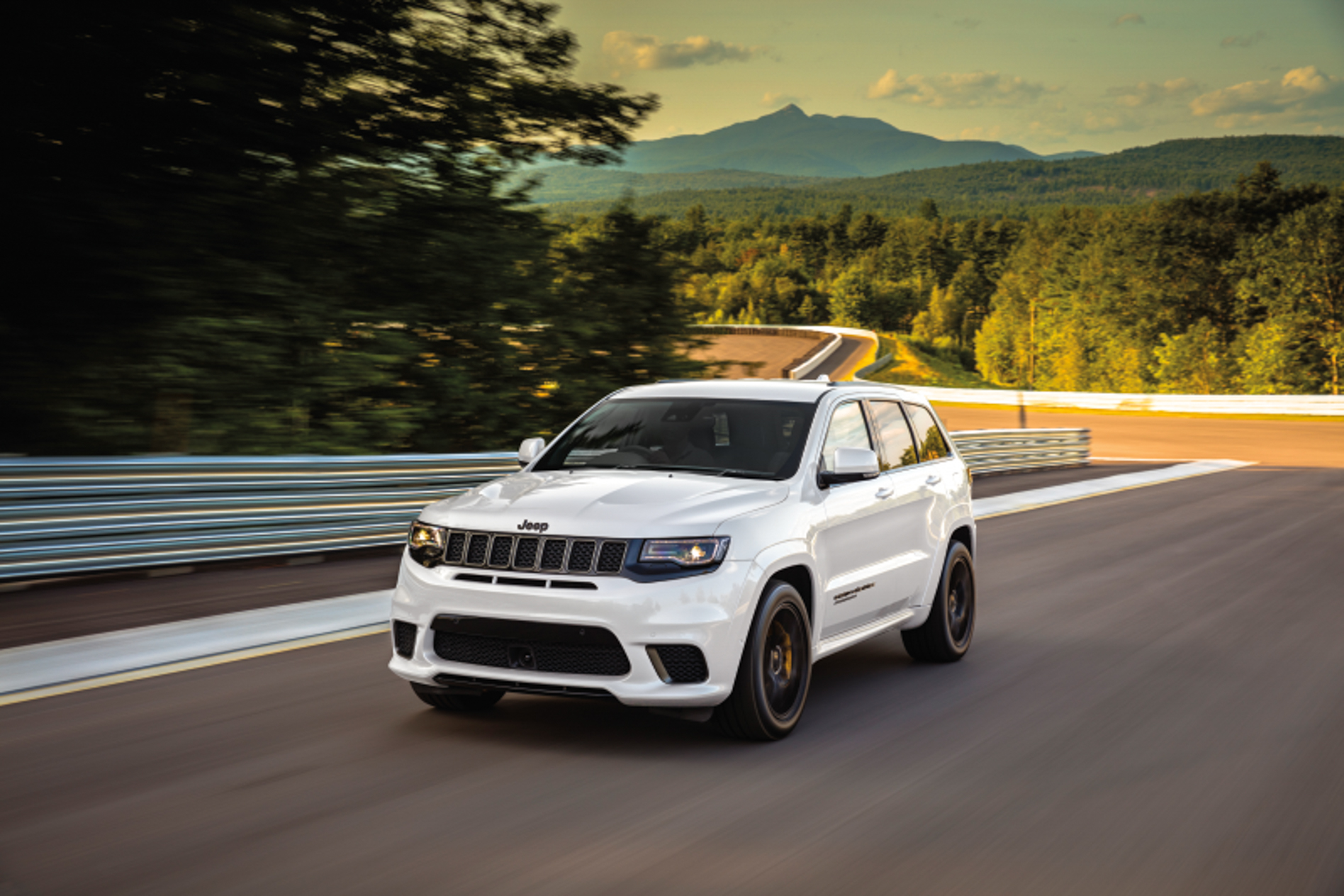
The monster powerplant is accompanied by key engineering updates to parts like hubs and other drivetrain parts, along with the biggest brakes ever fitted to a Jeep product.
After dropping off price lists for a few months, Jeep has given the Grand Cherokee Trackhawk the once-over for 2020 via a new set of forged 20-inch alloy rims wrapped in high-performance Pirelli P-Zero tyres, and has added a high-grade Laguna leather upholstery.
Carbon interior highlights, a 7.0-inch digital dash and an updated Uconnect 8.4-inch multimedia touchscreen with sat nav, Apple CarPlay and Android Auto, as well as auto lights and wipers, a powered tailgate and colour-coded wheel arch flares are all standard features.
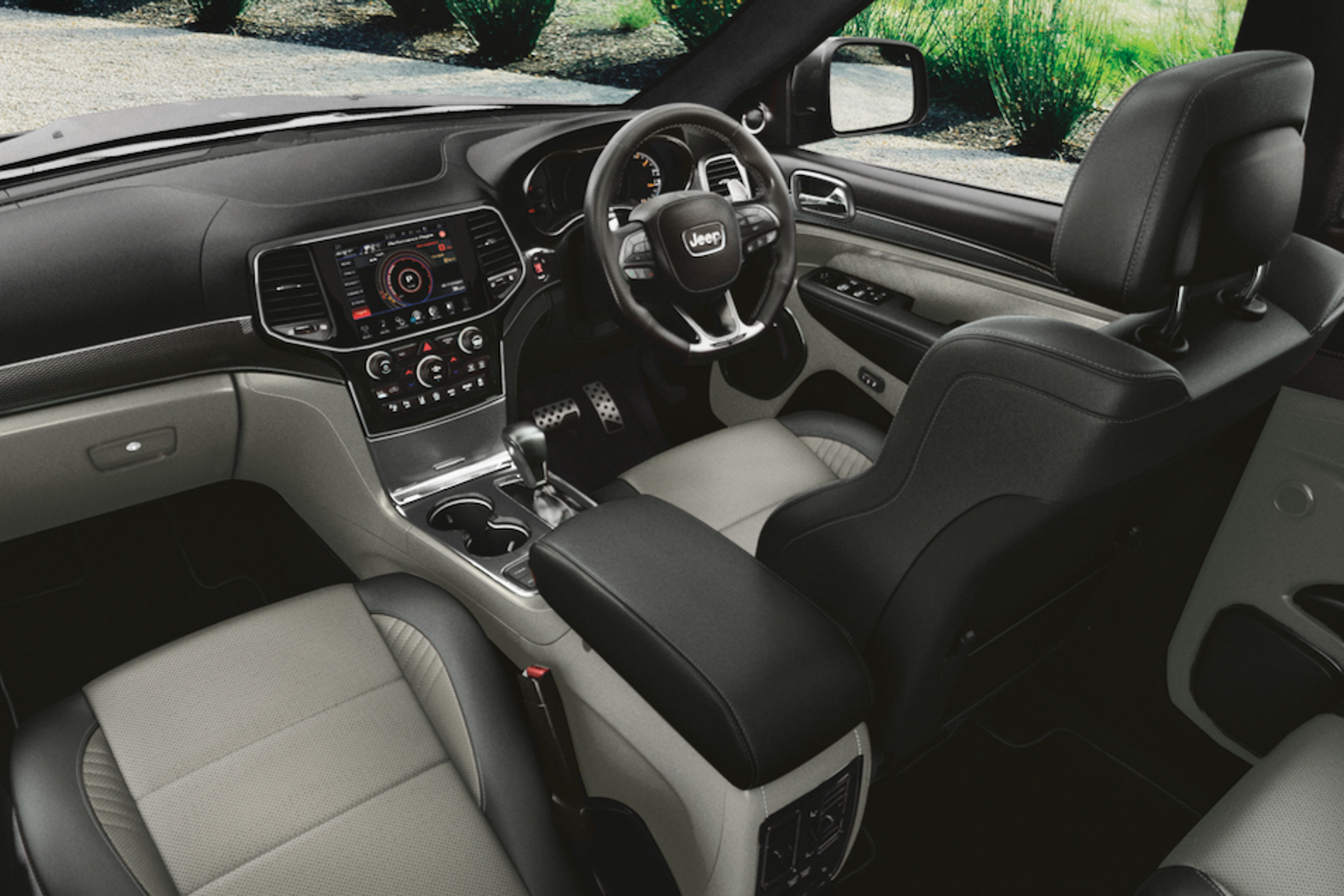
Add to that a vast array of safety features, including trailer sway control and at-speed towing camera, adaptive cruise control, lane departure, blind spot warning and rear cross-traffic alerts, and the Trackhawk looks like a bit of a bargain when compared to rivals like Mercedes-AMG’s 450kW/850Nm GLE63 S AMG Coupe, the 405kW/680Nm Range Rover Sport SVR and the 460kW/750Nm BMW X5 M.
This midlife update comes with a price hike, though with the Jeep Grand Cherokee Trackhawk now priced at $139,950 plus on-road costs.
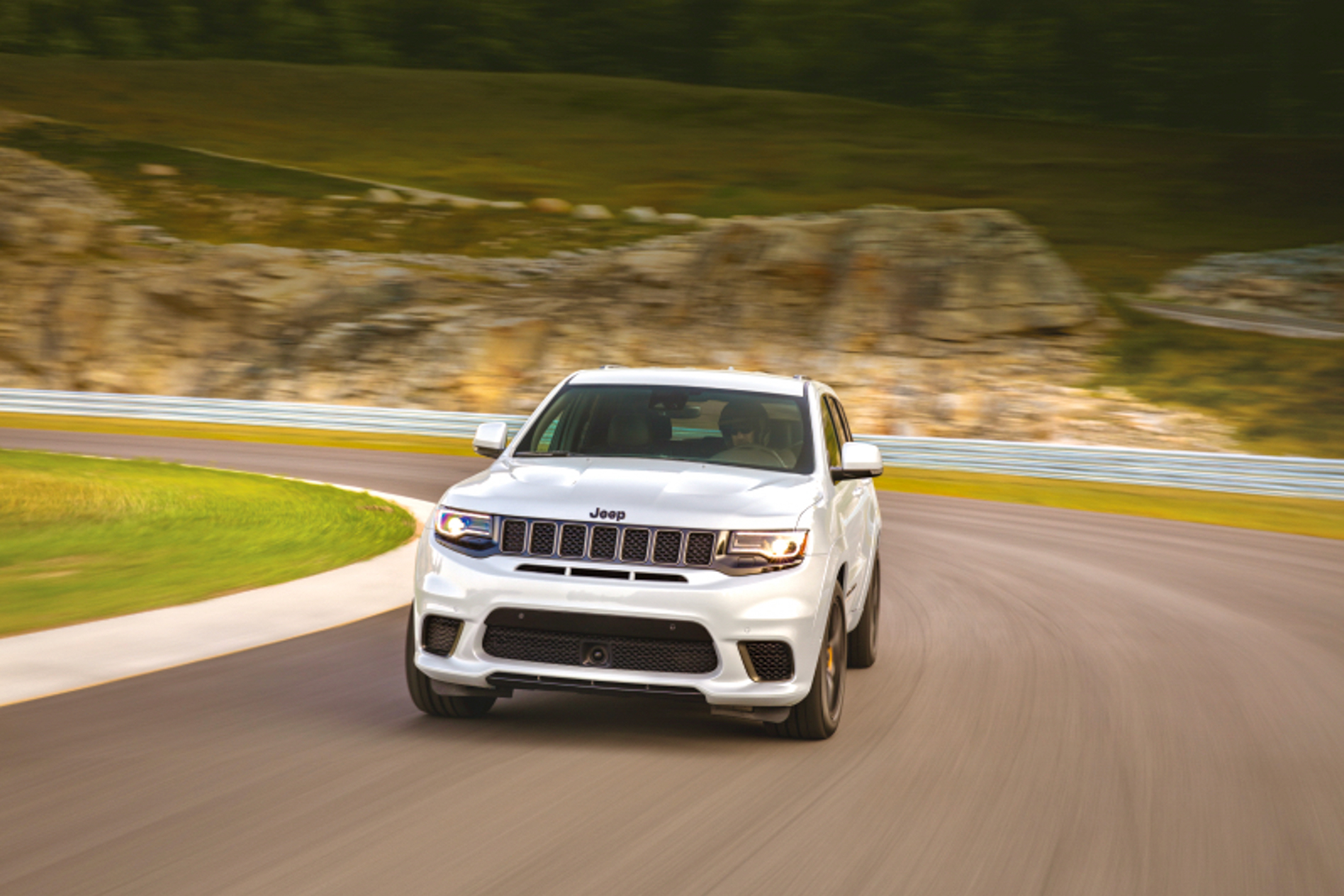
The current Grand Cherokee architecture can actually be traced all the way back to the Mercedes-Benz ML-Class of 2006, when Merc’s parent company Daimler owned Jeep’s overlord Chrysler.
The Grand Cherokee’s replacement could, however, be revealed as soon as next year.
Earlier this year, Jeep Australia has announced a new capped price servicing program for 2020, which covers the whole range of new Jeep models, including its Grand Cherokee SRT and Trackhawk.
New Jeep models under the program will have a capped-price servicing cost from just $399 per service for the first five services.
While many SUV buyers in Australia convince themselves that they would prefer a high-riding vehicle for its rugged off-road ability, the reality is that most spend their time burbling around suburban streets.
Luxury SUVs are often marketed off the back of their ability to take you anywhere, wrapped in leather and comfort. But can they actually do that in the real world?
Well, have we got a video for you, with a group of expensive SUVs thrown at a dirt hill to see if their off-road ability is based in reality, or mere marketing guff.
The hill in question isn’t a rugged car-killer by any stretch, but it has enough ruts and bumps to challenge a selection of popular all-wheel-drive luxury rides.
In Australia, most of these SUVs will never see a dirt road, let alone an actual off-road trial like in the video, but it is fascinating watching them rock, roll, and claw their way up the embankment.
This Royal Rumble of high riders was organised by the people at the SUV Battle YouTube channel.
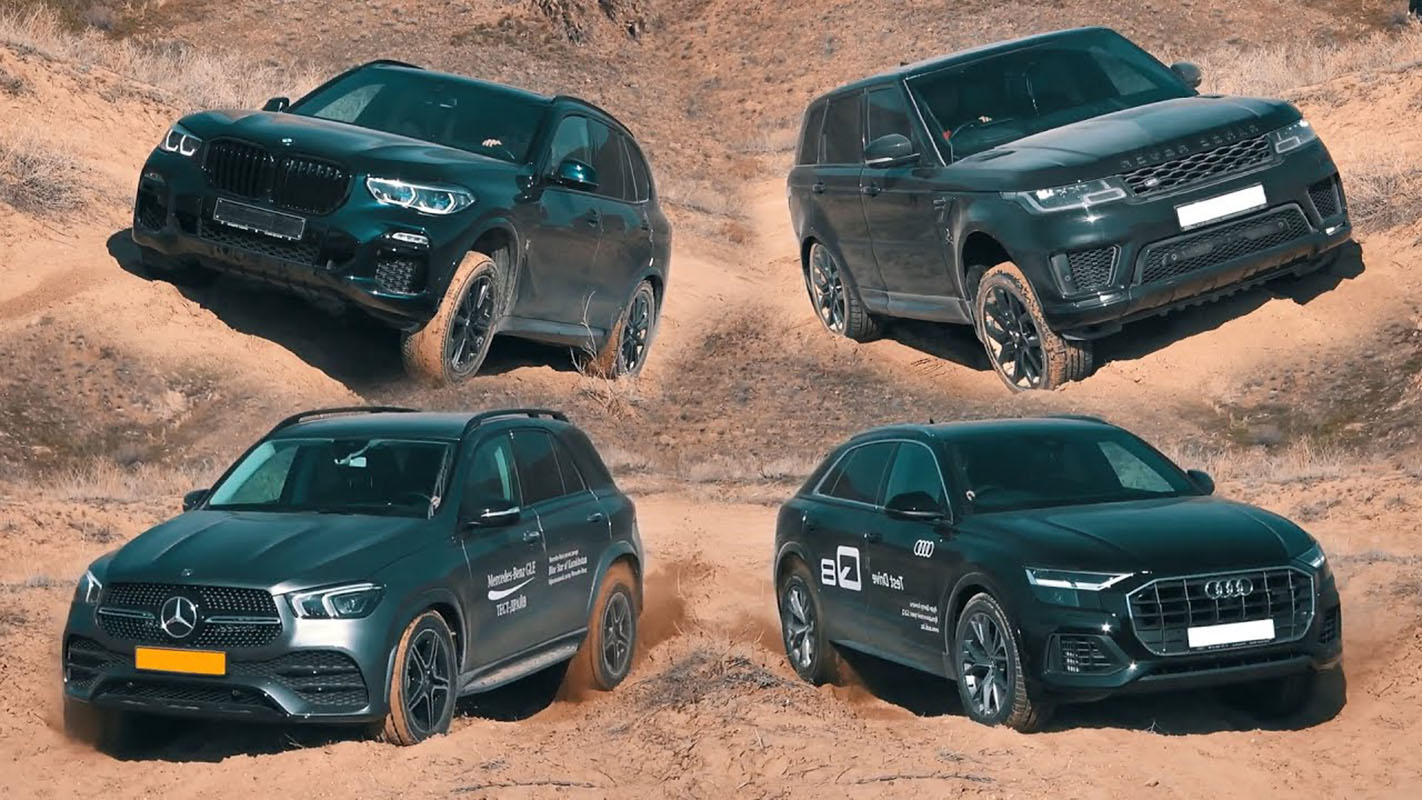
All up, nine contenders attempted the course, to varying degrees of success.
Contestants included the Audi Q7, Audi Q8, BMW X5, BMW X6, Jeep Grand Cherokee, Lexus RX350, Mercedes-Benz GLE, Range Rover Sport, and Volvo XC90.
Some of the SUVs impress, while others fail to meet the challenge almost immediately.
While we enjoy watching these six-figure SUVs struggle to tame the challenge, there is some serious consumer advice to be gleaned from the video.
By using a range of different driver modes and aids, the SUV Battle team have shown that not every all-wheel-drive system is created equal.
Certain systems work well, grabbing hanging wheels and controlling the power to make their way relentlessly forward, while others find themselves stuck, spinning their wheels and flinging dust into the air in frustration.
Want to know how your SUV performs? Watch the full video below:
There’s a reason the BMW 3 Series nameplate is so revered.
Mention the name in automotive circles and people get preachy, shouting its attributes and successes both on- and off the racetrack.
More often than not, most have a story to share about the car that singularly defined the brand (and the sports sedan segment) to what it is today.
But while we look back on the 3 Series lineage with fluttery eyes and a knowing nod today, is the current G20-generation worthy of the same appreciation?
All photos: Alastair Brook
There’s precedent for being apprehensive. The direction that BMW’s headed now is vastly different from where its priorities lay before.
A greater emphasis is being placed on technology, space and engine tech to compete with a set of competitive cutting-edge rivals.
But in focusing so hard on what everyone else is doing, has the BMW 3 Series managed to keep a hold on what made it so great?
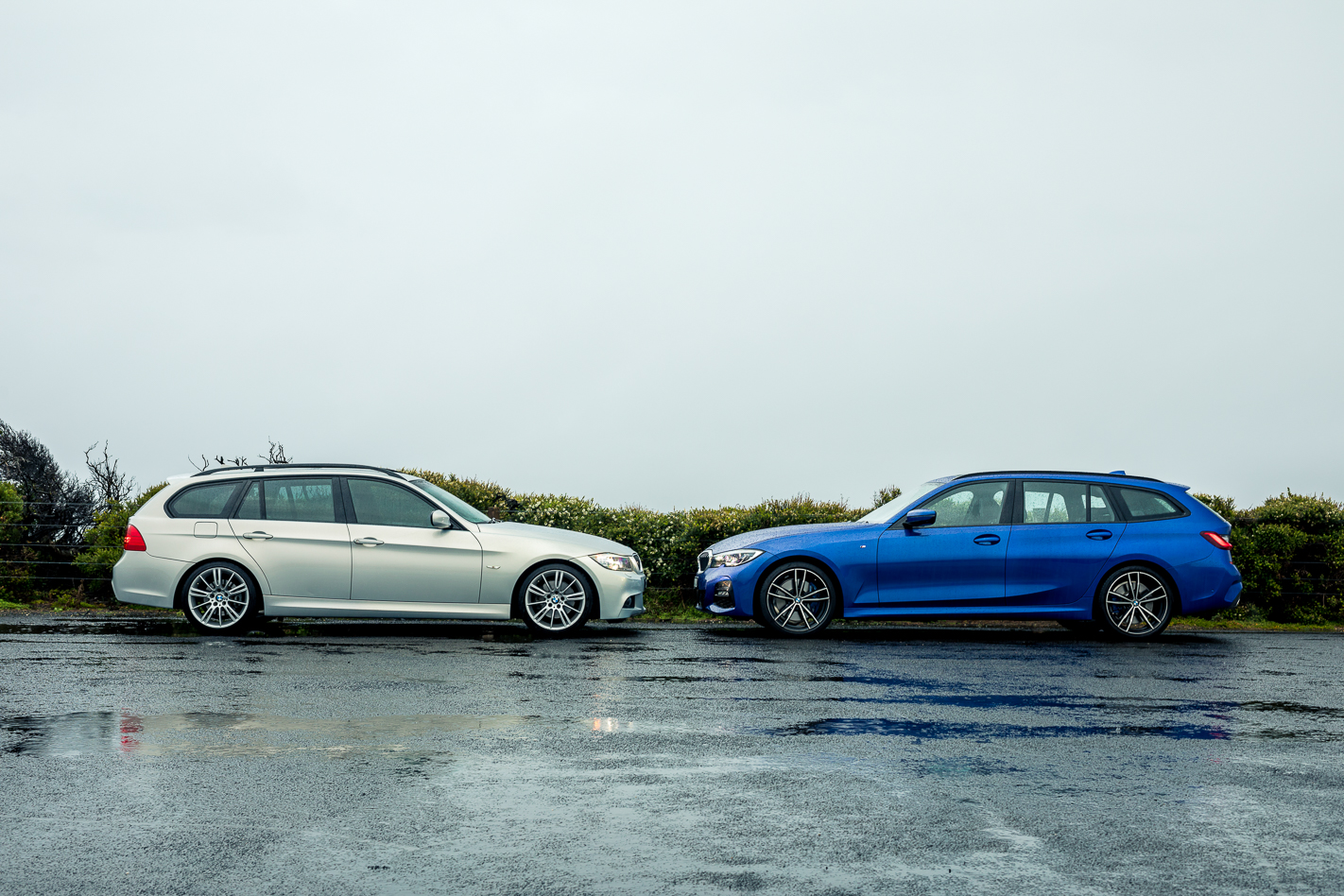
Comparing a new 2020 BMW 330i Touring to my own 2009 BMW 323i Touring ought to let us know.
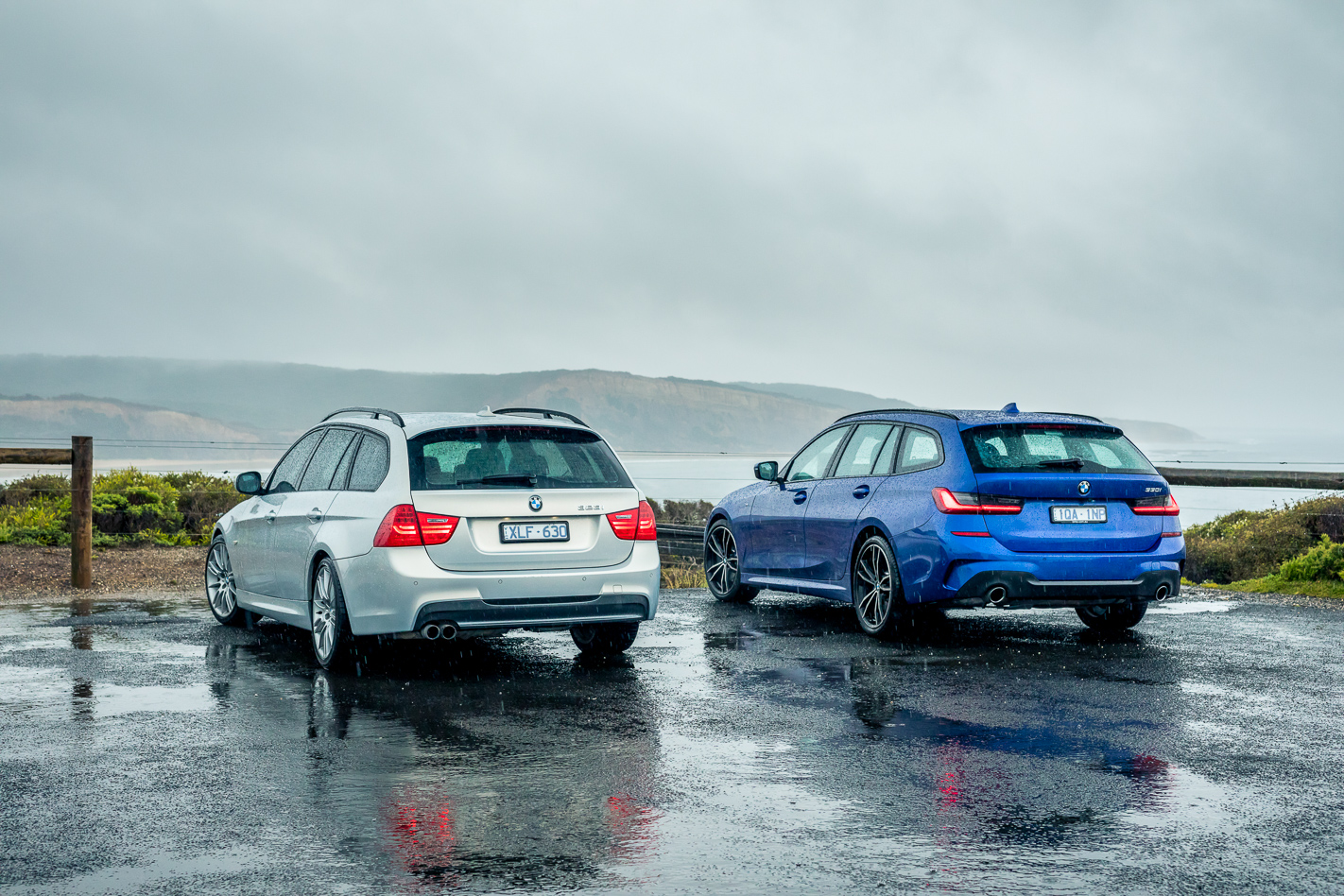
Both cars are similarly matched – not quite at the top of their respective model lines, yet the 330i is the second-best 3 Series you can buy and the 323i more or less found itself in the same position when it as on sale 10 years ago.
With that, the 323i Touring (codenamed E91) is a good yardstick to measure 10 years of progress against.
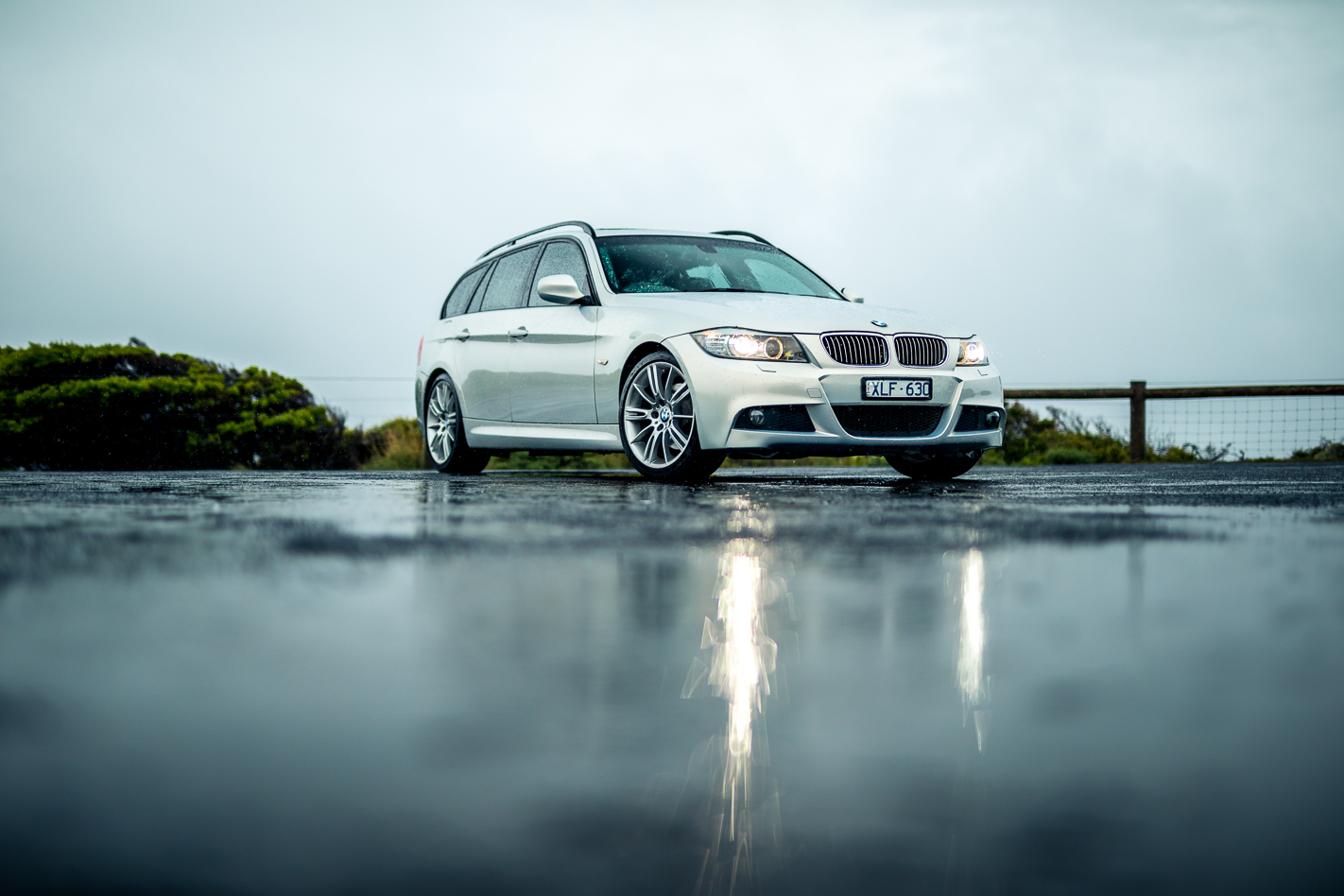
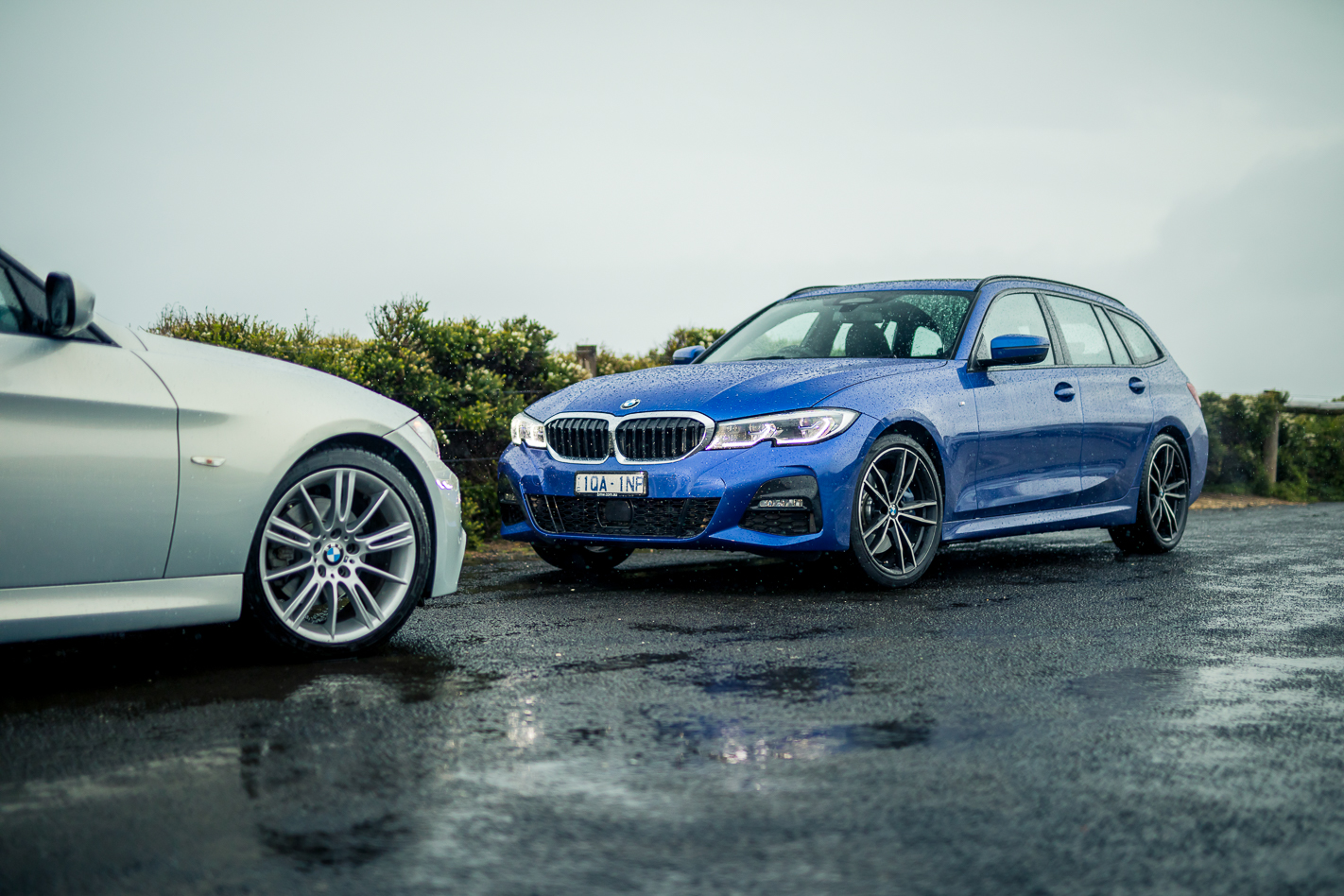
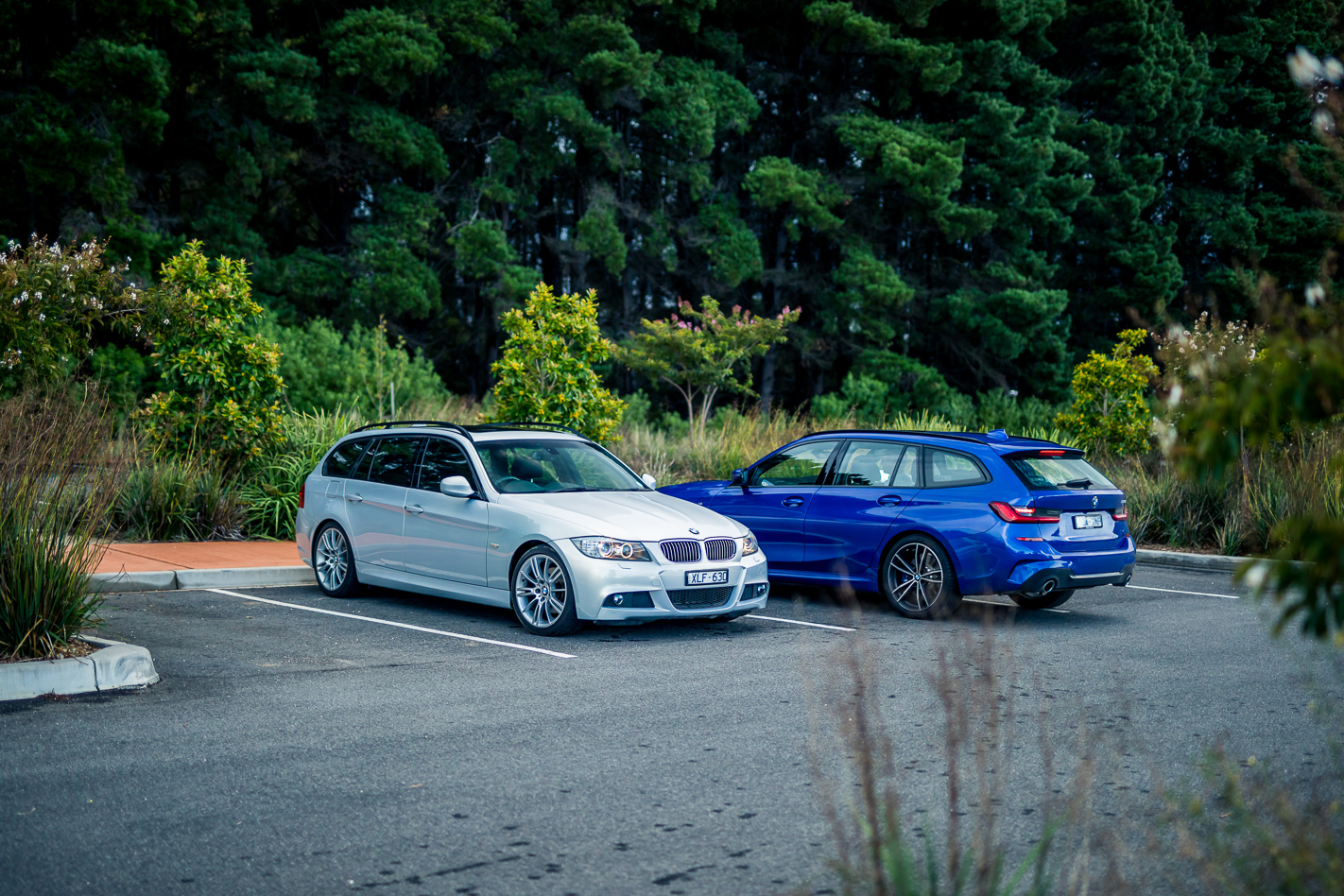
Some of the most noticeable changes you can immediately see on the new 330i (codenamed G21) is it has grown physically larger.
Standing the two side by side, the E91’s shape is taut while the G21 is bulgier in a number of areas, and there’s been a substantial change in dimensions as well.
The G21 is nearly 200mm longer, 20mm taller, 10mm wider and 40 kilograms heavier (now 1538kg) than the E91.
Interior space has benefitted majorly because of those changes, packing much more room for both the front and second rows, which is important for families who might be trying to buck the SUV trend.
It’s amusing comparing the two cabins and witnessing the massive change in design and technology. BMW was often chastised for its outdated interiors, but the G21-generation has addressed the complaints head-on with a much more tech-minded interface and forward-thinking design.
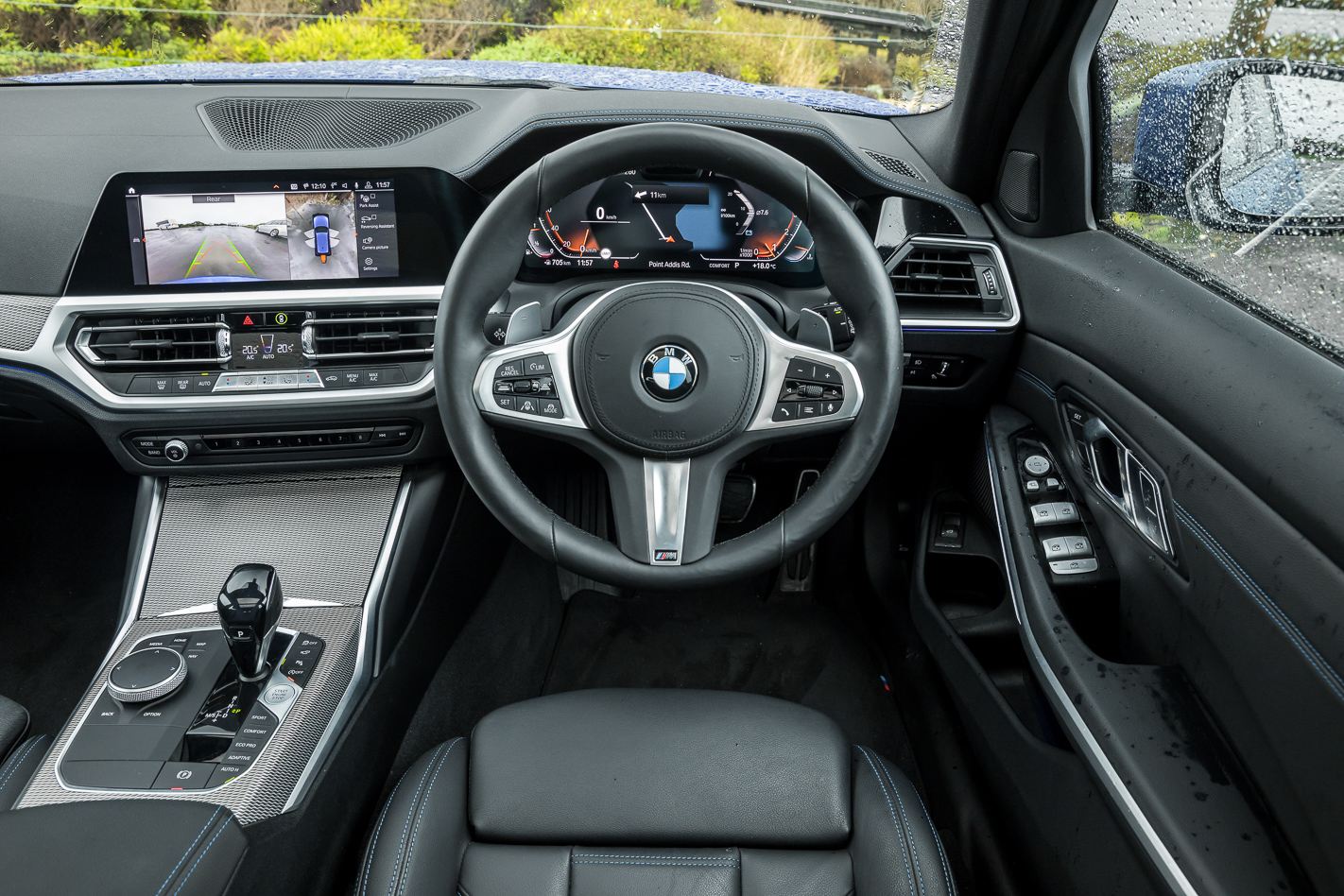
The gap between the two in terms of infotainment is like comparing a Nokia 3310 to an iPhone.
The G21 tech suite is far superior in every way; internet connectivity, applications and the sheer amount of features thoroughly eclipses that of the E91, whose greatest tech boast is a system that can check the engine’s vitals digitally… and which is mostly wrong.
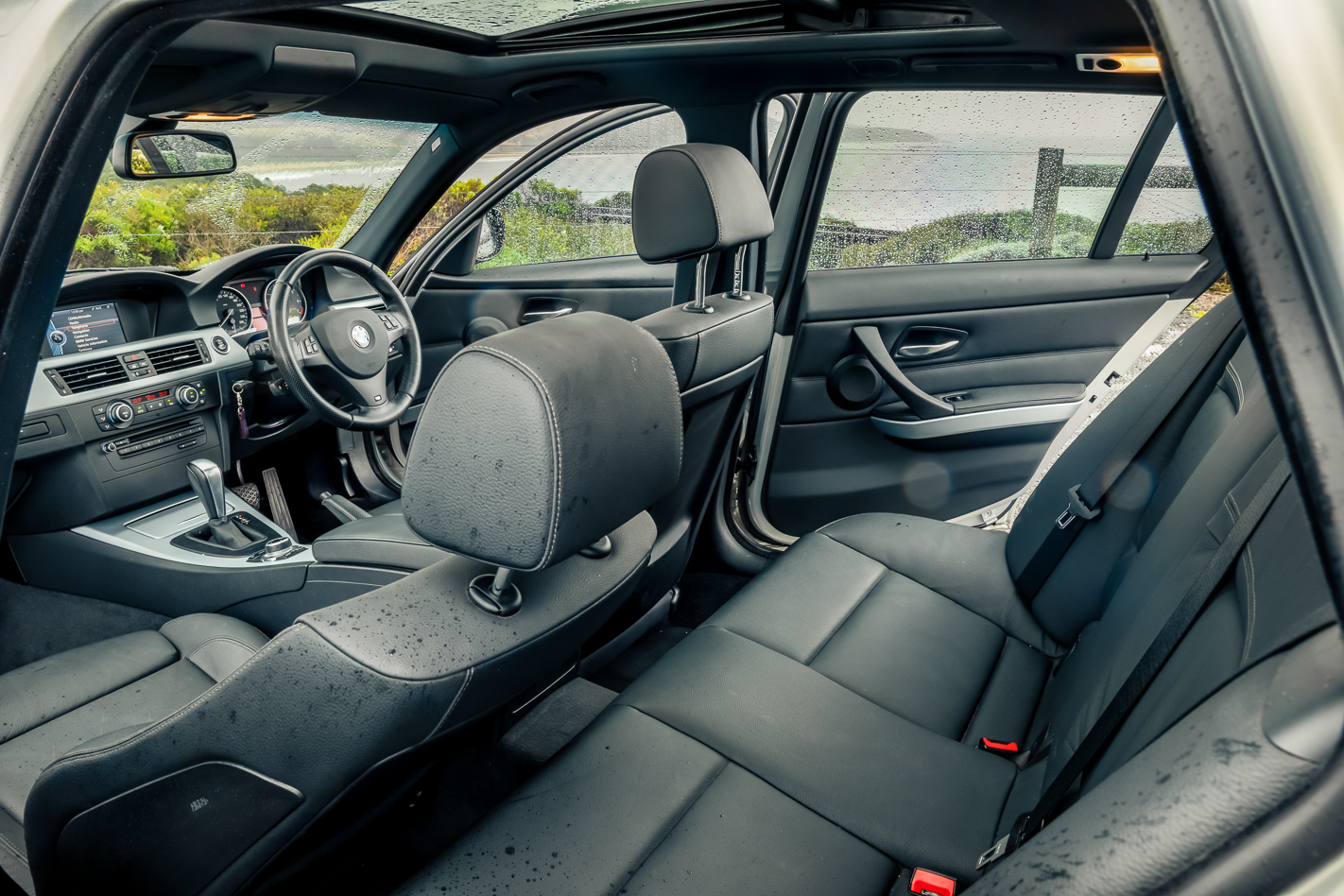
At the same time, the G21 hasn’t strayed too far from familiarity.
I feel completely familiar jumping between the old and new cars, so upgraders aren’t going to have a hard time coming to terms with the new layout.
However, in refreshing the interior, some unique aspects have been lost.
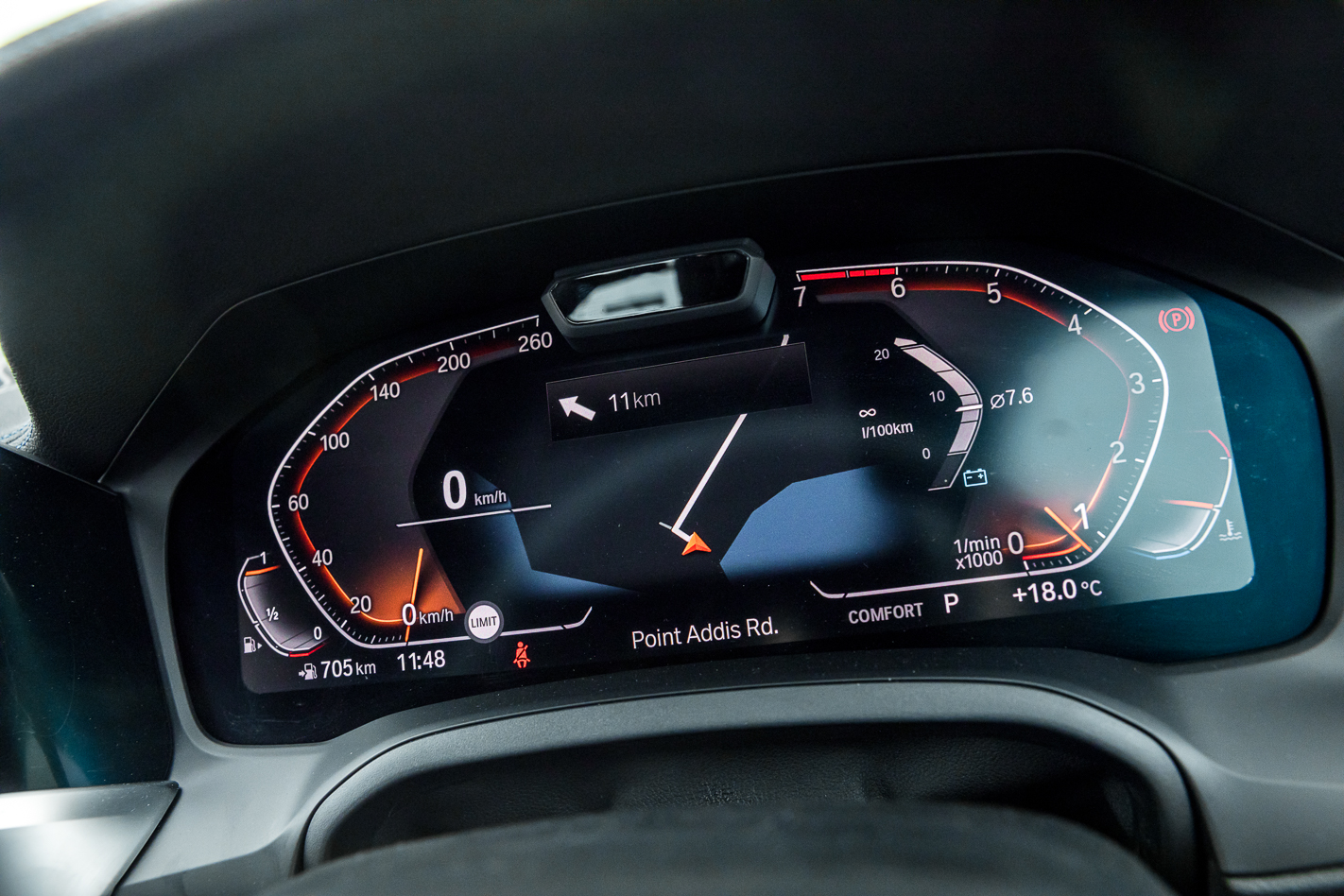
Gone are the cool Porsche-esque cupholders that pop out of the dash, replaced with conventional centre console ones, while the mechanical cruise control indicator that would swing around to the appropriate point on the speedo is replaced with a fully-digital 12.3-inch instrument cluster.
In terms of feel, similar driving positions are experienced in the hot seat, which means a nice, low and planted seat and great adjustability of seat and steering wheel.
IAnd while the steering wheel in the E91 is thick, the new tiller in the G21 is on another level.
My E91 has held up remarkably well over 90,000km with good build quality and tough materials, and if the G21 can hold together like its forebear over the next ten years then it’ll be doing well.
The ‘same same but different’ theme continues into how the two cars drive.
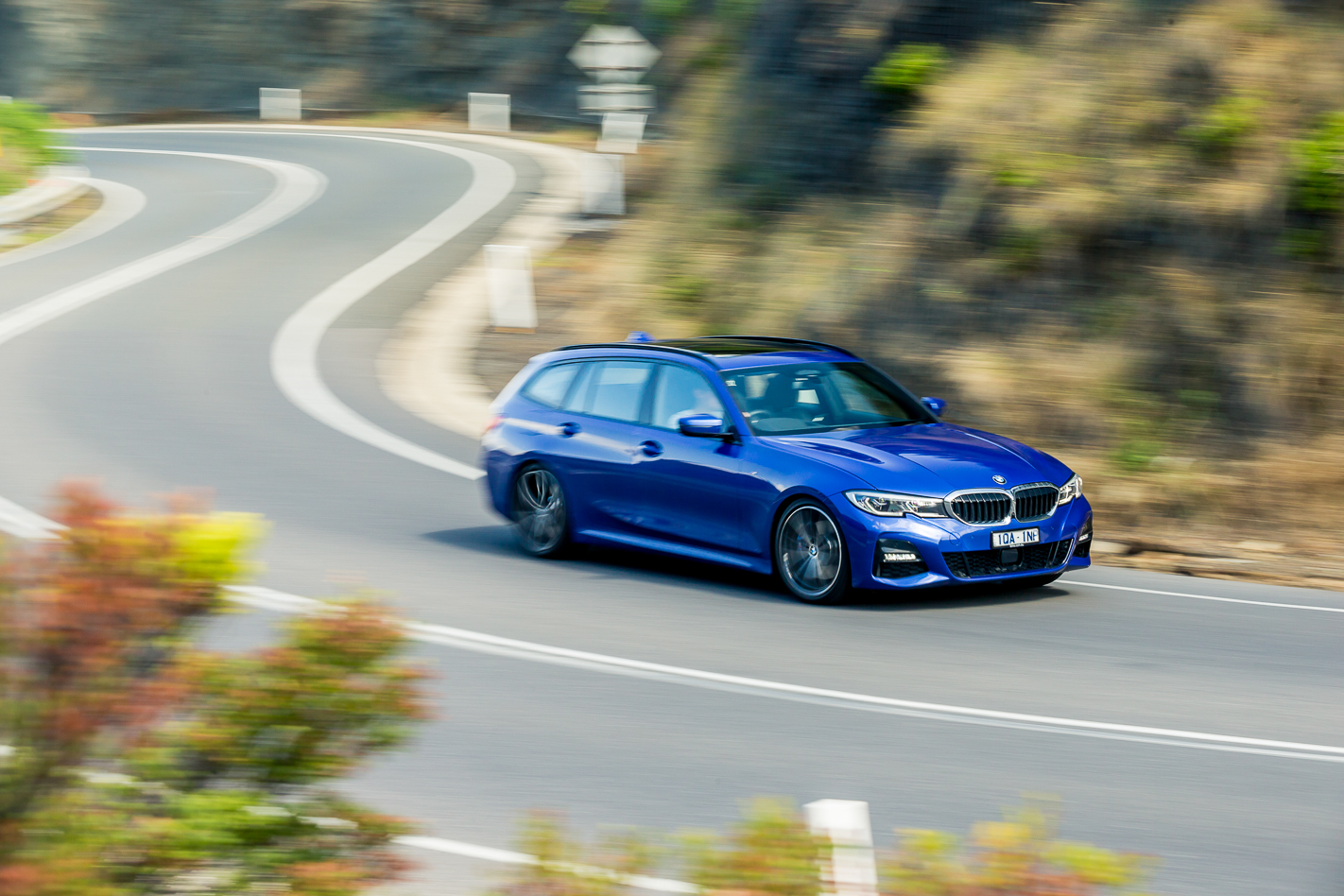
Of course, it’s impossible for things not to change over a 10-year timespan, but every so often you catch a recurring characteristic between the new and old.
more about the BMW 3 Series range
The powerplant has arguably seen the most drastic improvements – the G21 330i uses a 2.0-litre turbocharged four-cylinder engine that – thankfully – still sends power to the rear wheels.
The 190kW/400Nm outputs are sent through an eight-speed automatic transmission and those numbers are well-up on its predecessor.
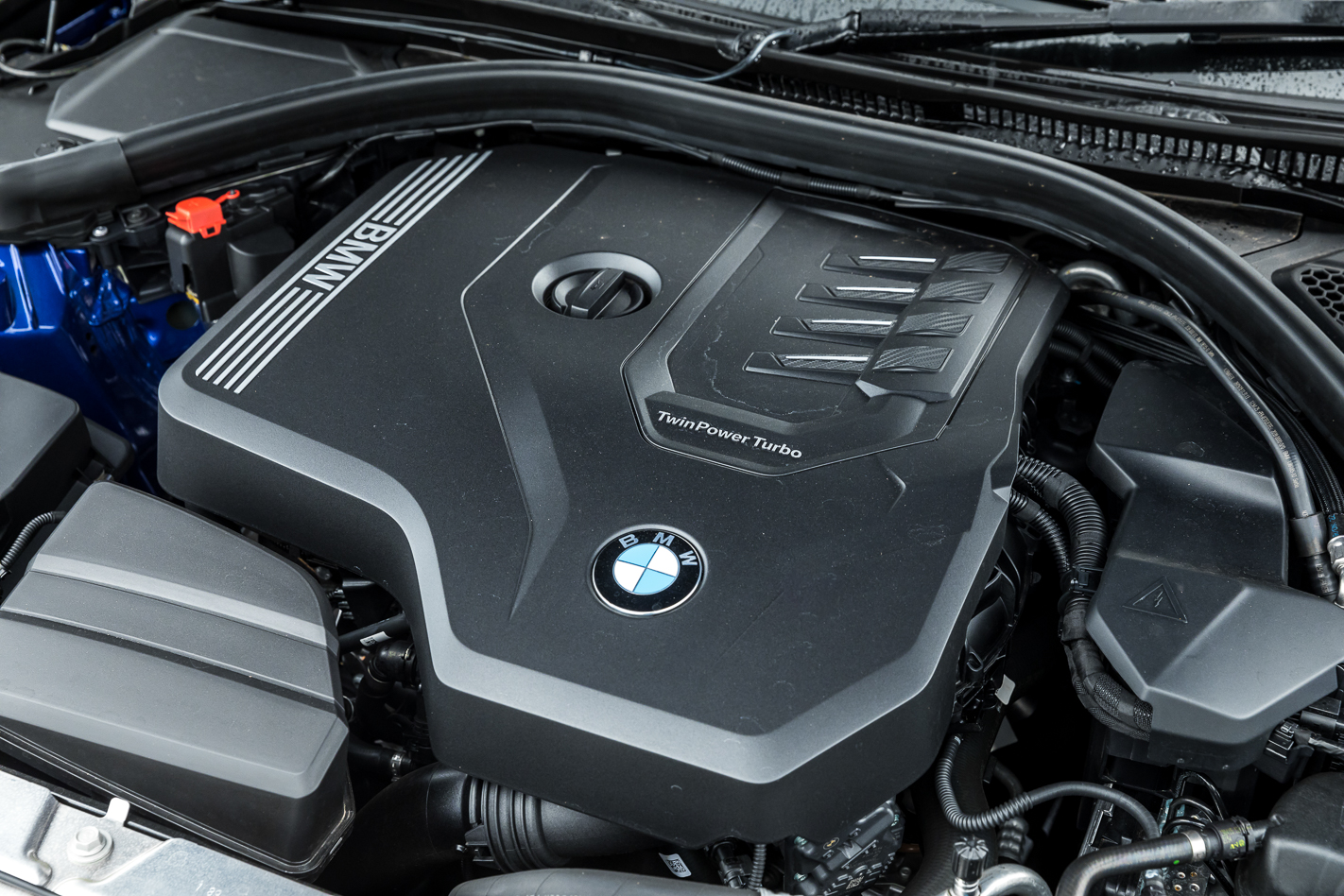
The engine in the E91 323i is prehistoric in comparison, subscribing to the ‘no replacement for displacement’ old school of thinking.
It uses a 2.5-litre naturally-aspirated six-cylinder engine that sends 140kW/250Nm to the rear wheels via a six-speed automatic transmission.
Suppose for a second that you weren’t completely convinced of the progress just in terms of numbers; put them into practice, though, and the difference is night and day.
The G21 feels remarkably sprightlier, hustles much harder and its transmission is more intuitive than the E91. The E91 feels underpowered and overworked by comparison, despite being the lighter car.
Torque feel and transmission behaviour of the G21 are the two main ‘seat of the pants’ noticeable improvements; it’s far easier to overtake in the newer car and to power out of corners and up hills.
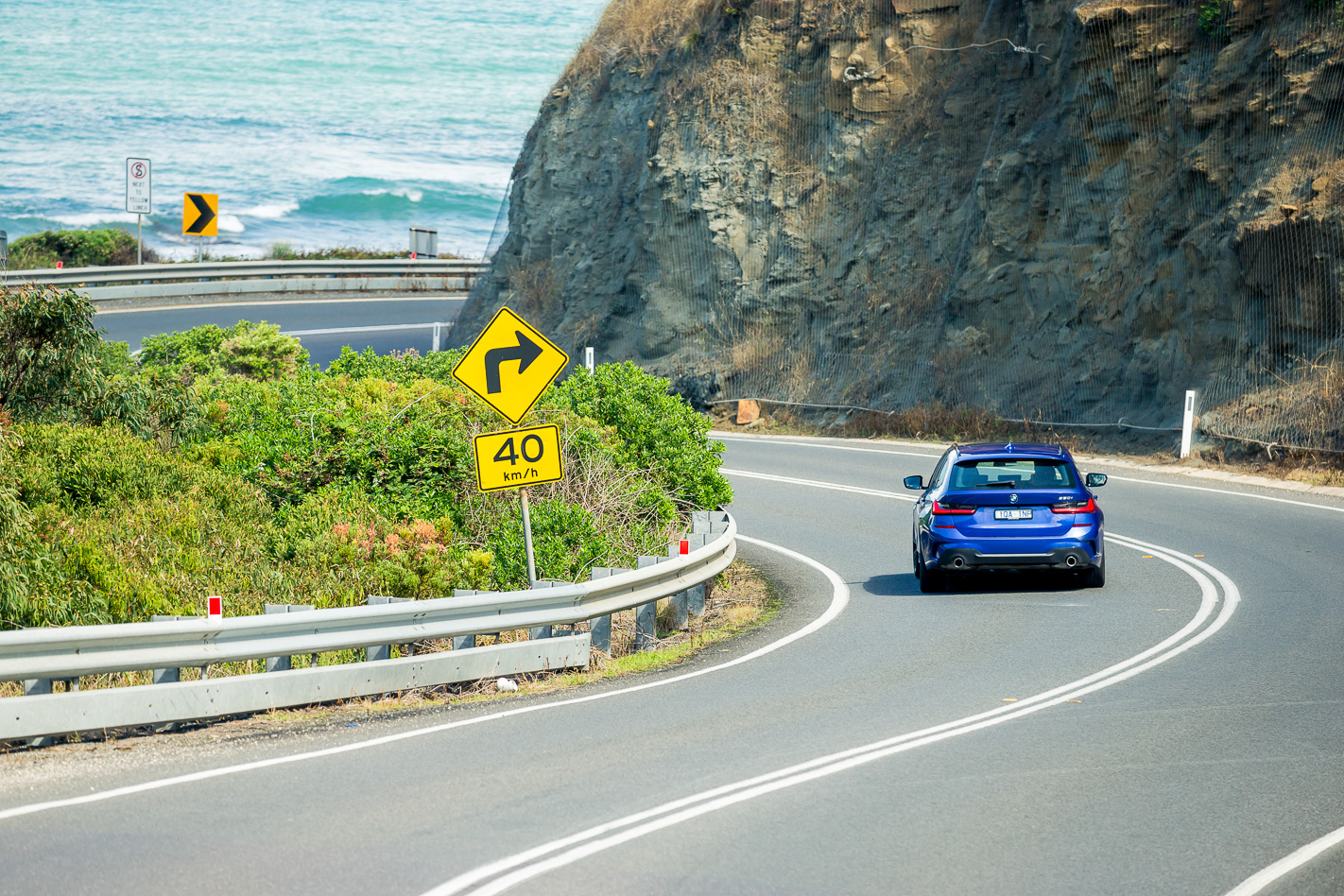
To get the same feeling from the E91, you have to work a lot harder.
The best of the E91 is found in sports mode, whereas the G21 can boogie no matter what mode you’re in.
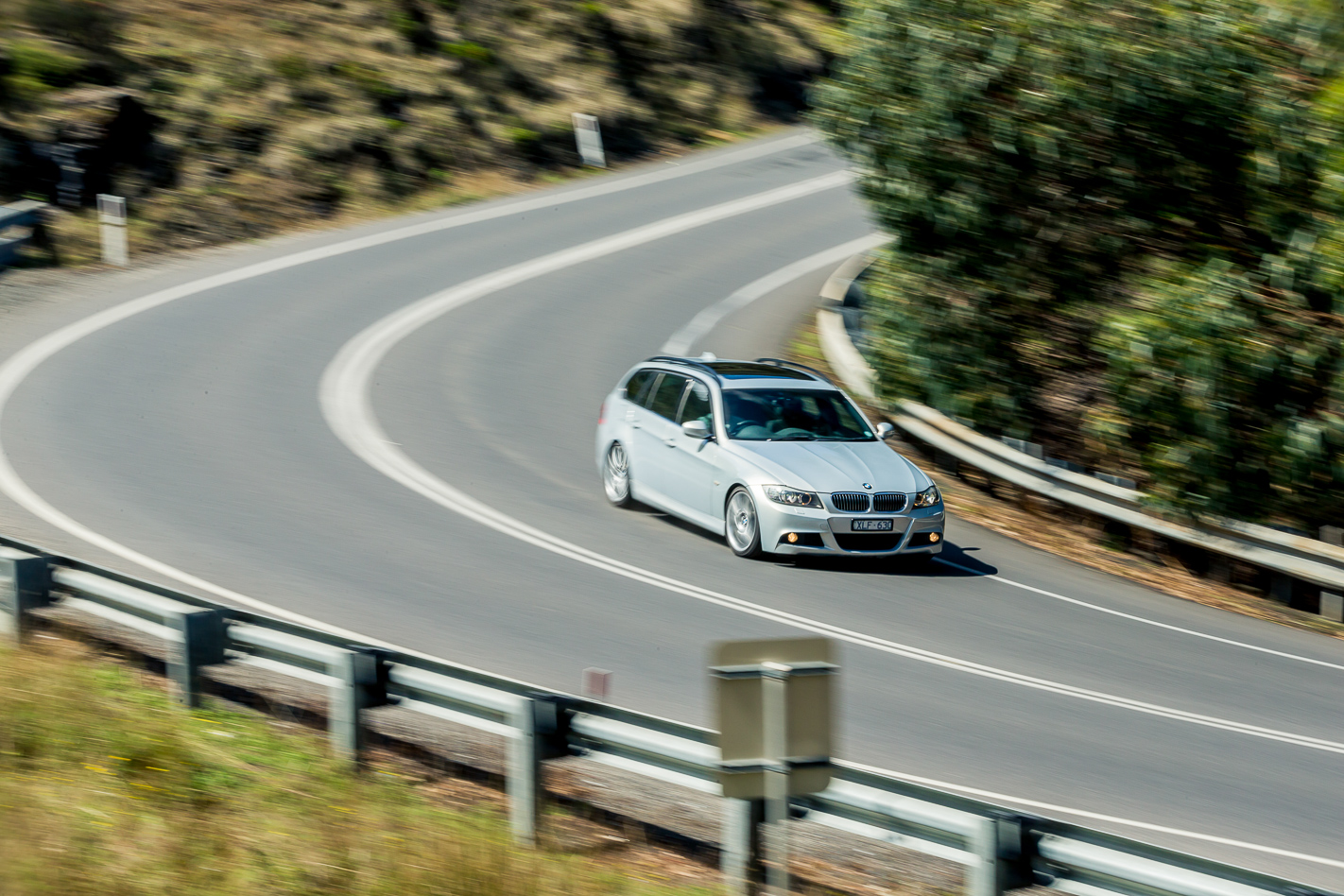
It’s hard to believe, but the G21 even sounds pretty decent for a turbocharged four-cylinder engine. It’s never going to sound as good as the famed BMW six-cylinder of the E91 which warbles out a sonorous note as you rise through the rev range.
Surprise surprise, the efficient four-cylinder of the G21 (7.6 litres per 100km) beats out the older six-cylinder of the E91 (12.8 L/100km) for fuel consumption as well.
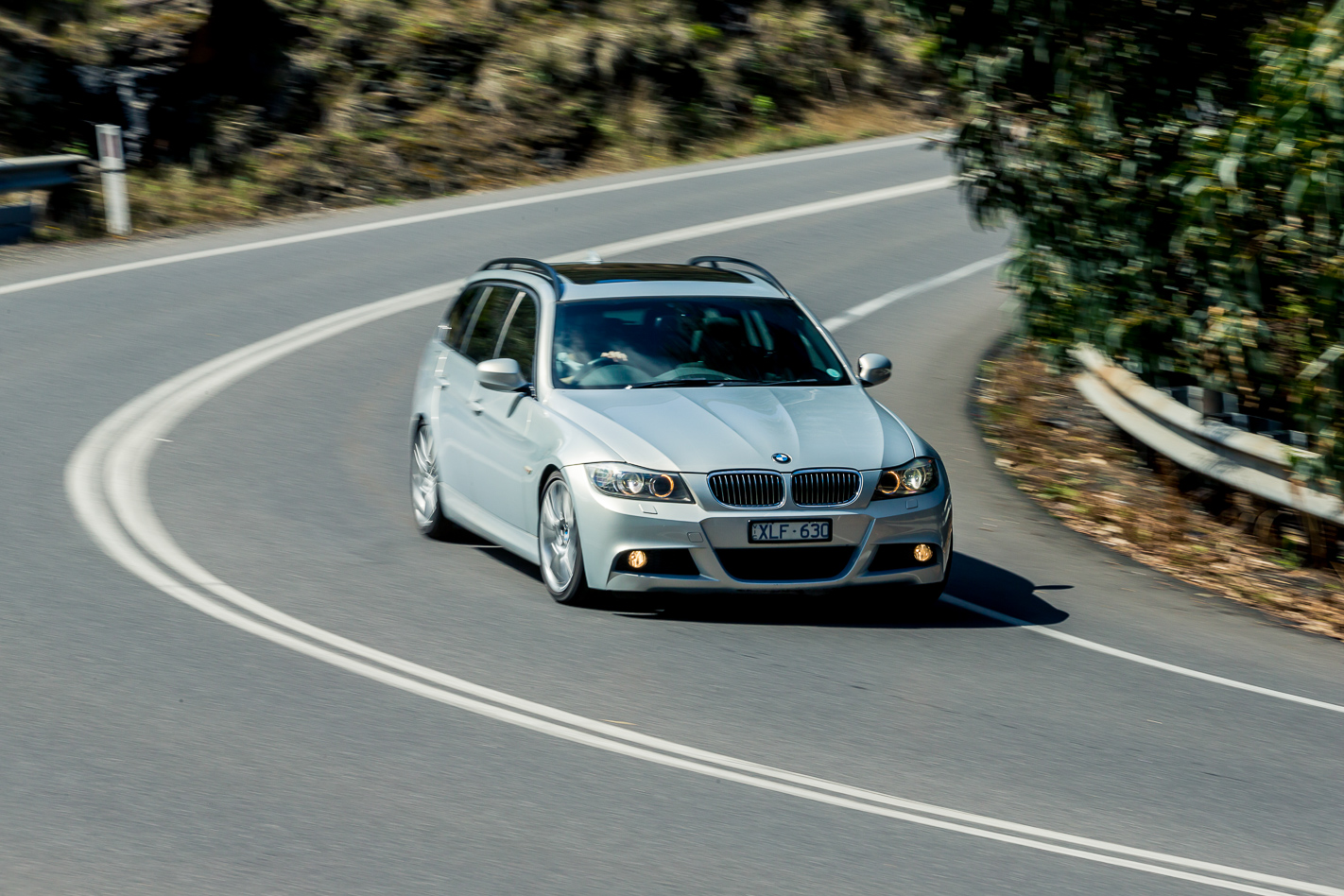
Things haven’t changed nearly as much with how the old and new cars handle, though.
Both feel innately planted through bends with little body roll and impressive turn-in for a family wagon.
Steering in the E91 is incredibly heavy and feelsome which is a great attribute to have when attacking corners, though that weight does become arduous around town when trying to reverse park.
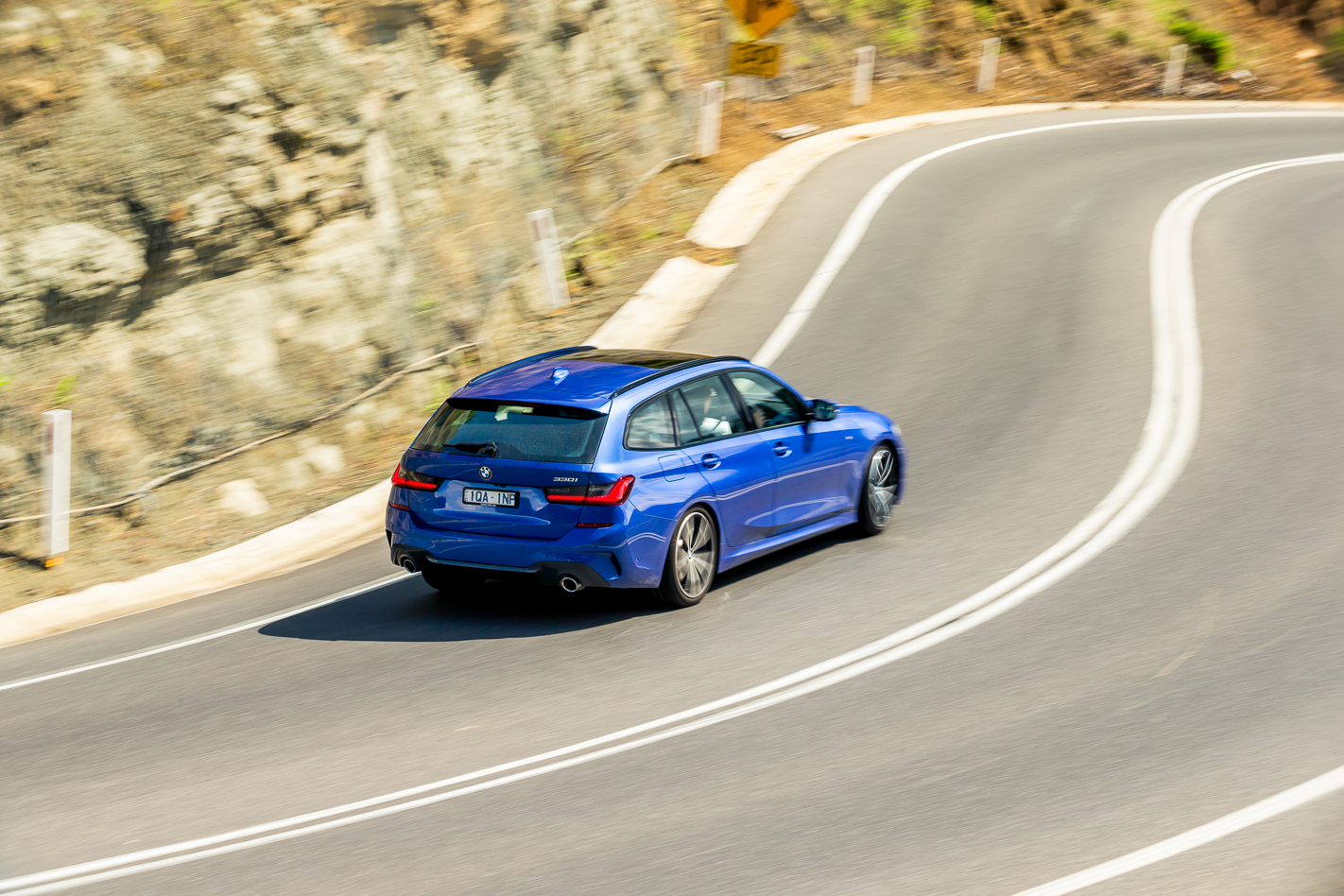
The button-laden steering wheel of the G21 is much easier to turn while retaining a similar weight, but is far nicer to handle around suburbia.
Both cars sport the dynamic M Sport package which includes a firmer suspension tune, and the comfort levels suffer to an extent because of it. The E91 feels jittery over light bumps and can crash over some of the larger road-joins, but feels impressively tight for its age.
There’s not much forgiveness from the G21, which feels too rigid over speedbumps and rebounds hard. But it does iron out the smaller bumps well to be a comfortable freeway cruiser.
Between the two of them, the sports wagon is well represented. Without getting into M, AMG or RS territory, it’s hard to think of another wagon that can trouble the Touring on sheer sporting ability.
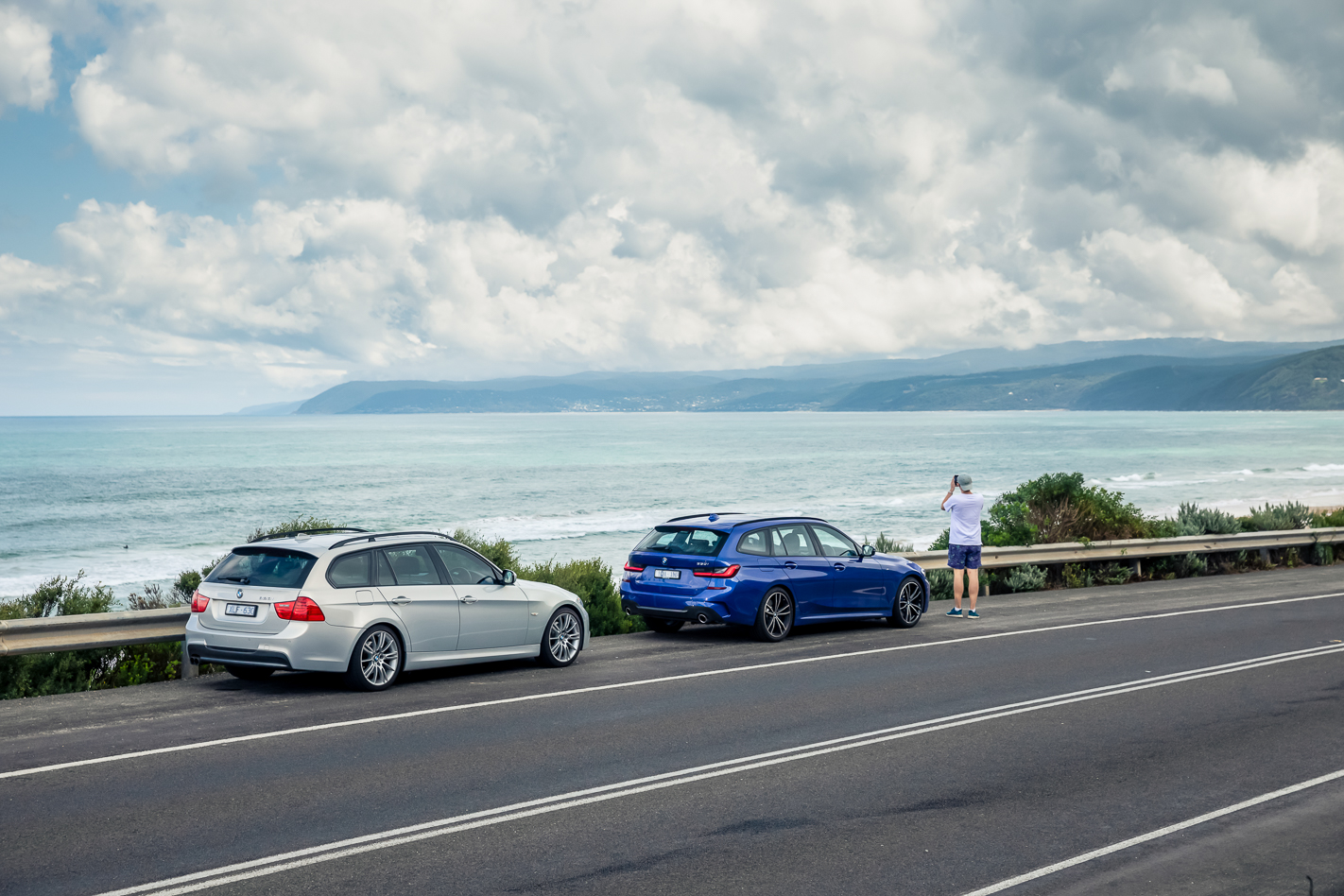
There’s no doubting the improvements BMW has made to the 3 Series over the last decade which are so illuminated by putting these two cars side by side.
But in all that change, it’s great to see similarities between the two.
The Walkinshaw Group has revealed Holden Special Vehicles lives on under licence in its care, despite the fact that the Holden brand is no more.
While it may seem contradictory, given HSV was born as Holden’s in-house performance arm, a Walkinshaw Group spokesperson told MOTOR during an exclusive interview the iconic brand still actually “exists”.
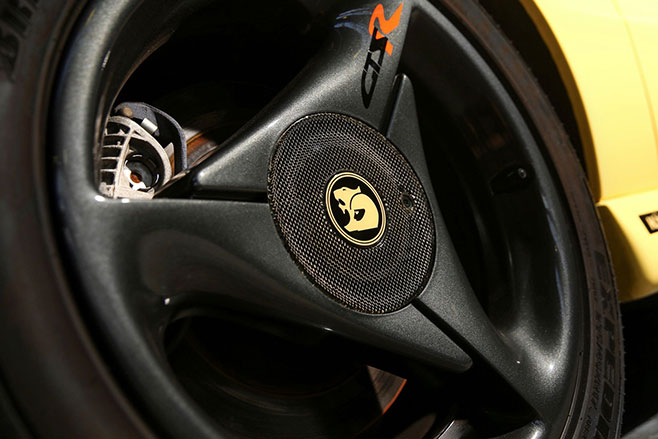
They said Walkinshaw will continue to honour warranty claims, replacement parts and servicing schedules for customers as the basis for the claim, while also revealing it still operates the brand under licence from General Motors and will for some while.
Walkinshaw Group traditionally has operated HSV under licence from GM’s Holden through Walkinshaw’s subsidiary company Premoso Ltd.
Meanwhile, it’s easy to think HSV has been spiritually replaced by the venture between subsidiary Walkinshaw Automotive Group and GM’s Specialty Vehicles operation, given its model range will introduce cars like the Chevrolet Corvette, which loosely suit HSV’s niche American V8-bred identity.
| MORE Australia’s best HSV collection
In reality, however, the deal is very different to that of HSV.
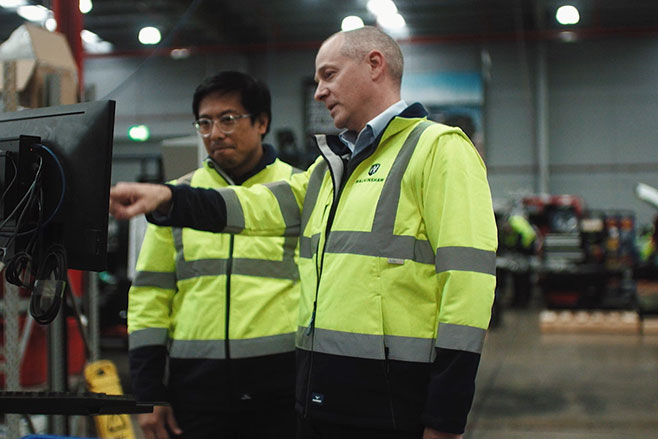
“We’re separate businesses,” Walkinshaw AG boss Joel Stoddart told MOTOR, when asked if the two would share returns, risks or profits.
“And we [the Walkinshaw Automotive Group] work on a contract basis for the engineering and production for some of the models brought to market by GMSV.”
Some readers have asked if the potential exists to use HSV as a resto-mod company like Singer and its work with classic 911s. We put the questions to Walkinshaw AG.
“We get asked this all the time,” Stoddart said. “We’re focused on the future, and we’ll continue to bring exciting and aspirational product to market.
“Having said that, we’re extremely proud of HSV and it’s enduring impact on the Australian Automotive landscape – and if the right opportunity presents to enhance that, then we’d be silly not to look at it.”
| MORE 30 Years of HSV
Stoddart would certainly be the man for the job if a Singer-like HSV ever did appear, revealing to MOTOR he stashed a couple “collectable” HSVs in his garage during his 20 years as chief engineer at HSV.
And it seems that passions still burns brightly.
“We’re car people at Walkinshaw – and that won’t change regardless of what project we’re working on,” he adds when talking about his plans looking forward. “In addition to the passion and expertise we’ve developed over the years, we’ve also got long-standing relationships with GM International.
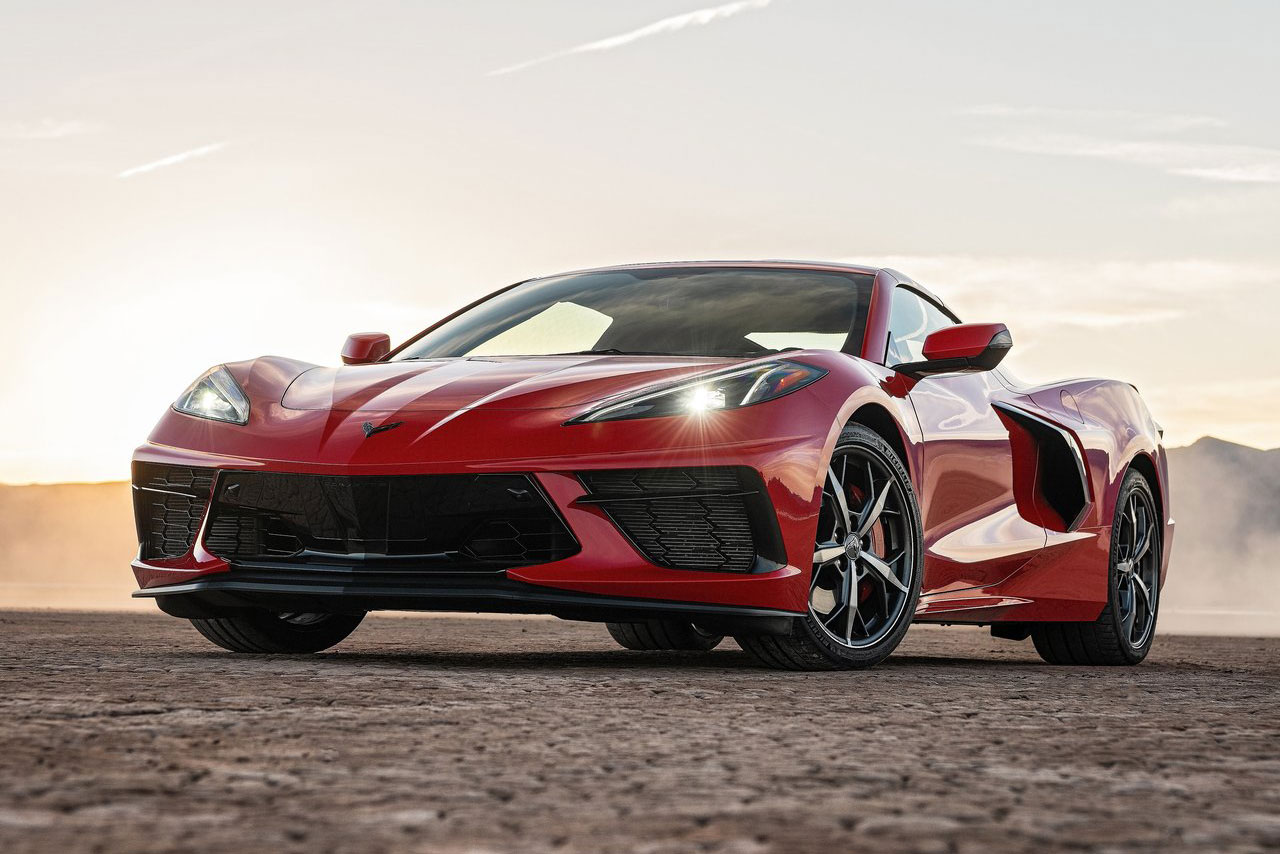
You can also still purchase HSV products like the Colorado Sportscat, current-generation Silverado and Camaro from dealers for as long as stock lasts.
However, as far as some Australians and Holden loyalists might be concerned, the brand is dead.
The recent Holden closure has spurred some Holden dealers to band together and take legal action against GM, accusing it of phoenixing, or potentially rebirthing an illegal business. GMSV denies this.
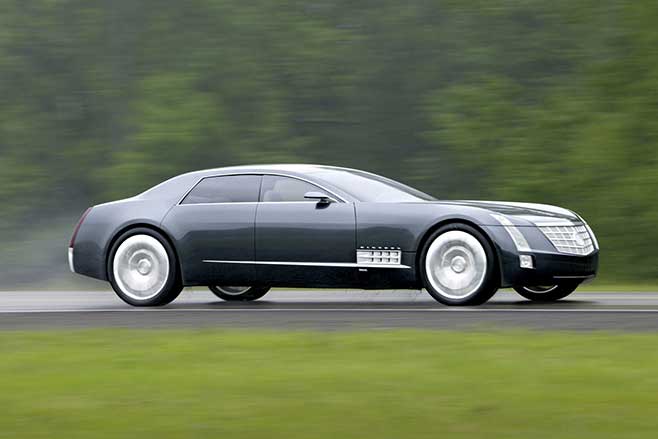
The Cadillac Sixteen was everything an American luxury car should be: brash, ostentatious, perhaps even a bit vulgar. And that was exactly the point.
The Sixteen was intended to be noticed, a reminder that Cadillac was once America’s Rolls-Royce, a purveyor of the finest luxury automobiles. Everything about it was over the top. It was 5672mm long (a Nissan Patrol is 5175mm), weighed 2270kg, had 24-inch rims and, the whipped cream on the cherry pie, was powered by a 13.6-litre V16 engine, a nod to the similarly powered Caddys of the 1930s.
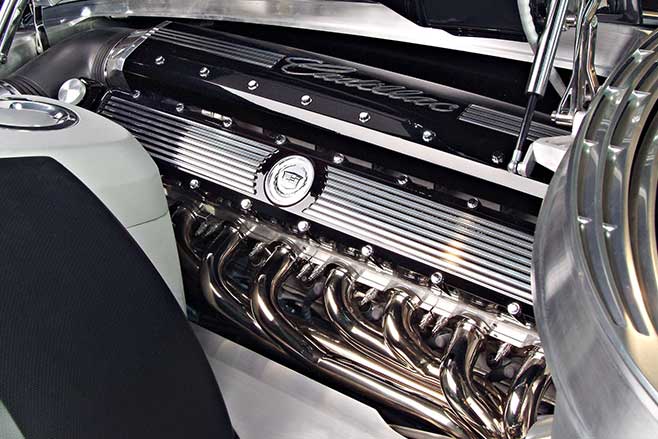
Producing 746kW (1000bhp) and 1356Nm (1000 lb ft), the 13,577cc monster motor wasn’t a pipe-dream but a proper working prototype. It was one of the first examples of GM’s ‘Displacement on Demand’, the Sixteen able to run on 16, eight or four cylinders with the potential for 14L/100km on a light throttle.
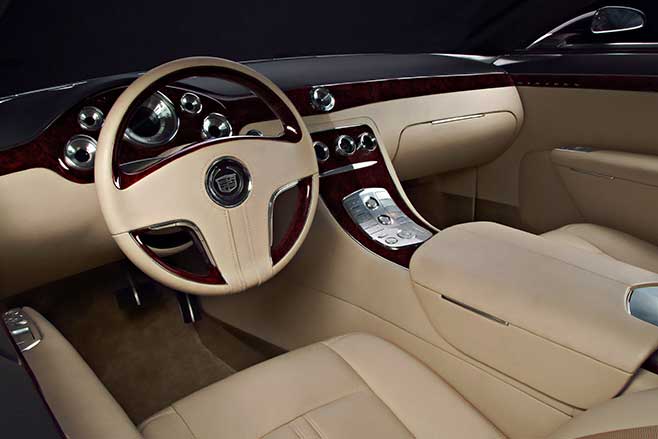
Inside it was a smorgasbord of leather, wood, glass and aluminumium, with seating for four easily accommodated for by the vast 3556mm wheelbase (again, a Nissan Patrol’s is 3075mm). The Cadillac logo in the steering wheel was carved out of crystal and there was even a Bulgari clock in the dashboard.
The plan, spearheaded by outspoken GM Vice-Chairman Bob Lutz, was to produce around 350 cars annually at a price of USD$300,000 to go head-to-head with the Mercedes-Benz Maybach and Rolls-Royce Phantom, albeit with a 7.2-litre V12 and on a stretched version of the Zeta platform. Holden was to lead the car’s development due to its spare engineering capacity at the time (2007).
Sadly, a production version never appeared and rich Americans bought Mercs and Bentleys instead. Nevertheless, the Sixteen did its duty, helping revitalise Cadillac’s image and lending some of its styling cues to future models like the XLR and CTS.
Specifications
Engine: 13,577cc V16, OHV, 32v Power: 746kW Torque: 1356Nm 0-100km/h: 5.5sec (est.) Weight: 2270kg
Skoda is aiming to make diagnosing car issues easier with a smartphone app that can detect troubling engine sounds all by itself.
The Skoda Sound Analyser app was designed and created by the carmaker’s software team to aid its mechanics in their duty to find and fix problems with cars.
It works by recording a snippet of audio from a running engine and compares the audio to a bank of stored sound patterns that indicate a specific problem.
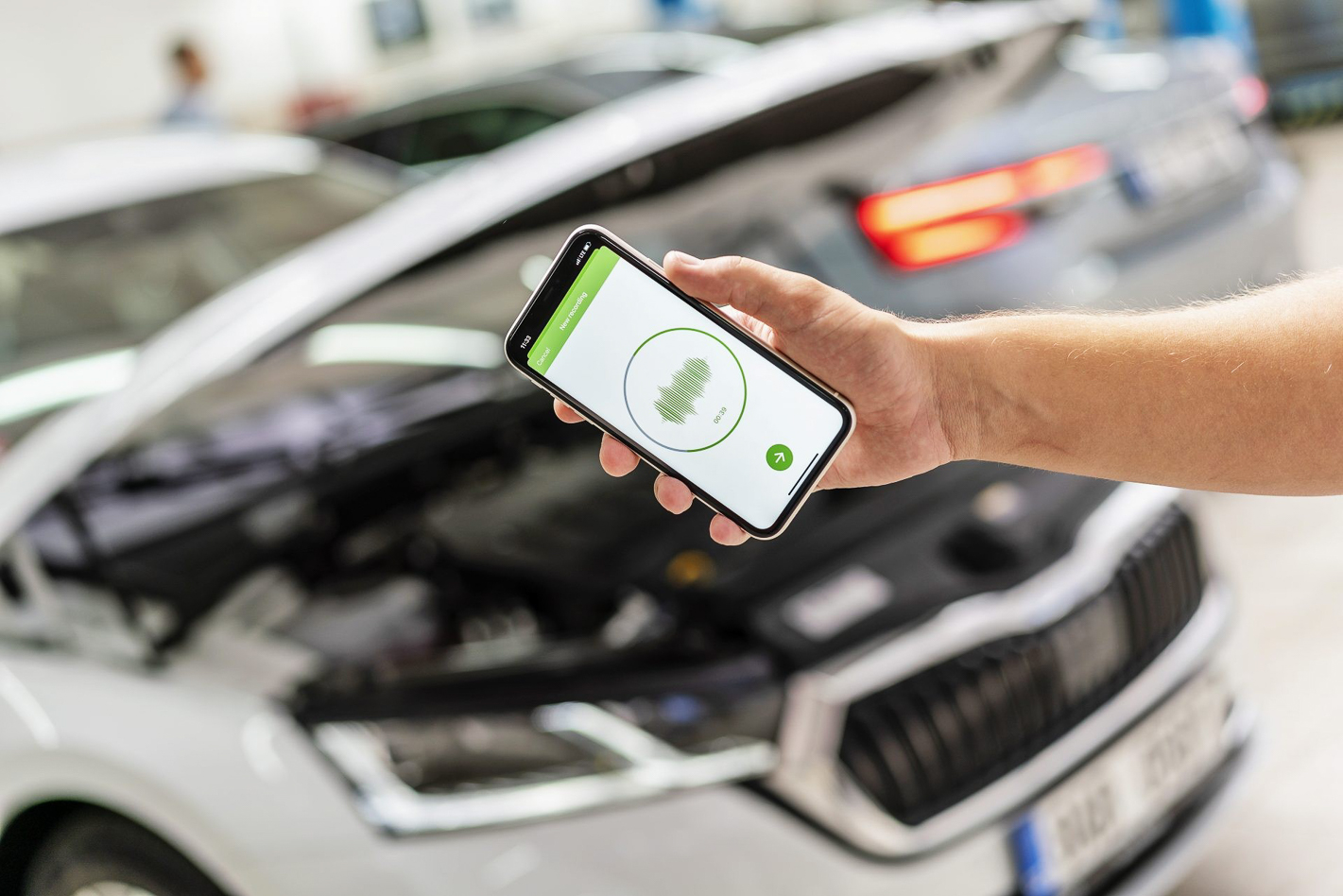
If the application detects that something’s amiss, it’ll let the mechanic know where to look for issue. Skoda says it gets it right more than 90 percent of the time.
Recognised sounds include steering column problems, DSG gearbox clutch issues and failures of the air conditioning compressor.
We wont bore you too much with the fine detail, but it’s able to spot a problem using artificial intelligence which converts the audio into a spectrogram visual representation. The app can then compare the peak/trough deviations and decide on a close match for the problem.
The idea behind the app is that it’ll mean less time a Skoda sits in the service centre which is a better outcome for consumer as well as busy service centres.
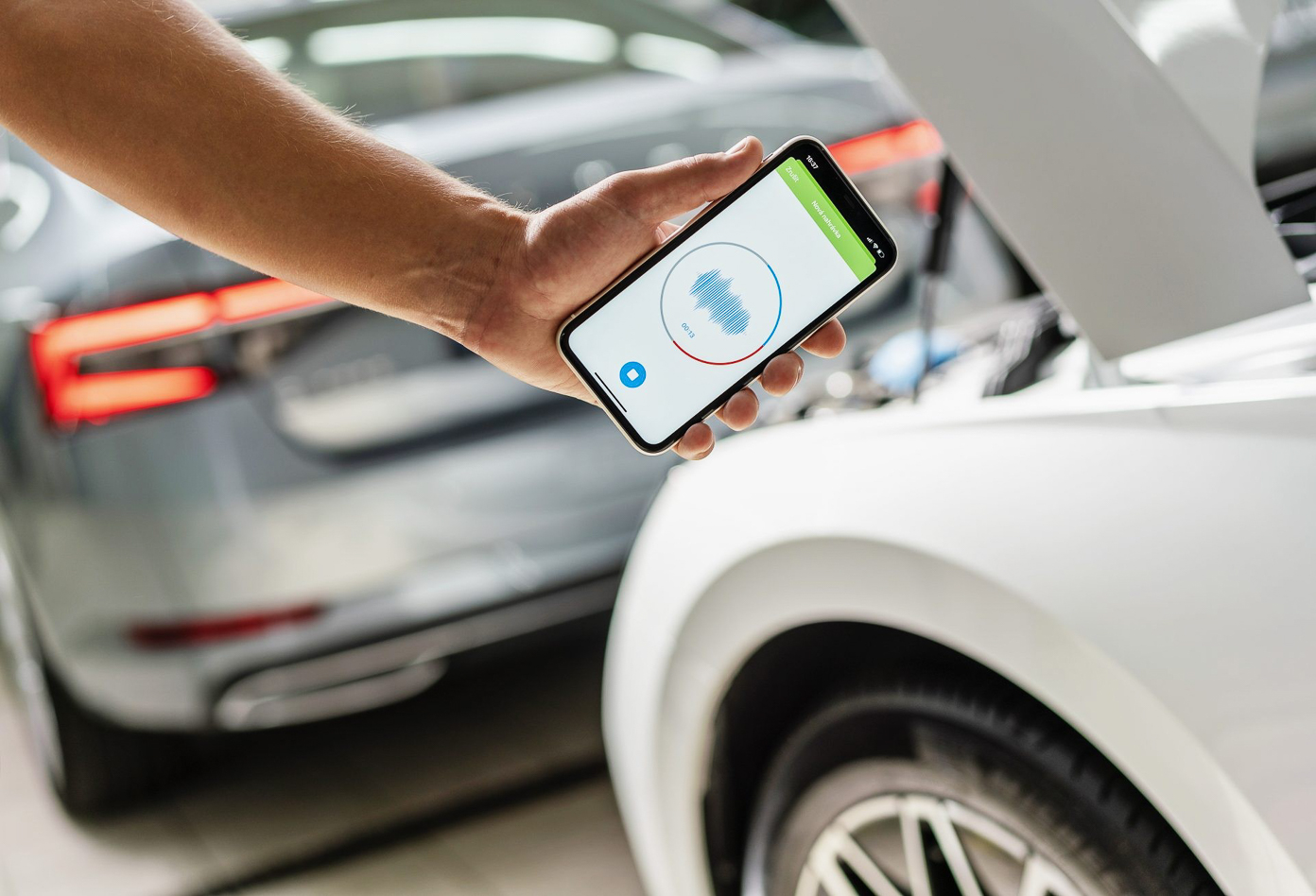
The technology is already being trialled in 14 countries and over 245 service centres helped to supply the problem sounds for comparison’s sake.
Skoda has also hinted at potentially fitting the analyser to its vehicles in the future – using sensors to listen to abnormalities and potentially diagnose problems before they actually become a problem.
Further application of the tech would be to make it available to the general public to diagnose their own cars, but Skoda hasn’t explained how far they’ll release the technology just yet.
No word yet on how it’s going to tackle issues with the carmaker’s first EV, the Enyaq.
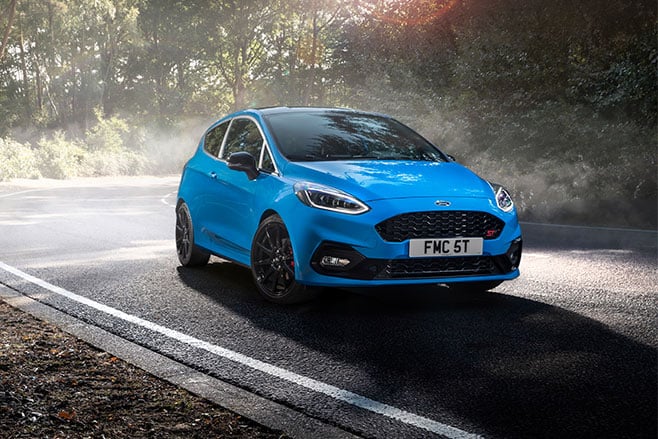
Ford has revealed an upgraded version of its Fiesta ST, although we’re sad to report that Aussie punters hopeful for a little more on top of the standard car are in for disappointment.
The upgrade, known as the Ford Fiesta ST Edition, includes adjustable suspension, a new set of lighter wheels, an Azura Blue paint job with black accents (much like the Ford Focus RS Limited Edition), but is available in the three-door model only.
As Ford Australia only brings the five-door hatch Fiesta ST to Australia, the three-door would not only require more certification, but its relatively price in the UK is also likely a factor.
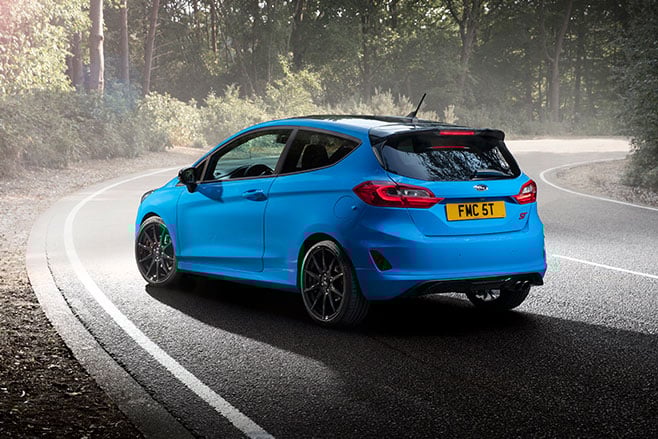
At £27,075 (A$48,850) to secure one of 300 units destined for the UK, Australians would have been hard-pressed to justify the price once the extra cost of bringing a car to Australia was added.
With this in mind, we asked Ford Australia if there were any plans to create a slightly more achievable special edition or something similar for Oz.
“The Fiesta ST is a car that MOTOR readers have really taken to, and we’re glad to have been able to bring in the latest generation here for driving-focused hot hatch Australians,” a spokesperson says.
“While we’re always looking for the most desirable models from the Ford Performance line-up, we’re not looking to add to the Fiesta ST line-up.”
The Fiesta ST special is not the only hot Ford to be passed over by the parent company, with the recently announced Puma ST crossover also staying in the northern hemisphere.
While the Focus ST is available locally in both automatic and manual variants, we still miss the Focus RS, banished to the history books after a successful run down under.
Both MOTOR and Wheels magazines have given the current Fiesta ST high praise, so we suspect Ford feels that the Fiesta ST certainly ain’t broke and doesn’t require fixing.
Volvo is working on a steering system that can switch from left-hand-drive to right-hand-drive and back again, in a bid to slash development costs.
Designs for the sliding steer-by-wire controls were submitted to a United States patent office last month and list details for a wheel that can move back and forth across the cabin for both left-hand-drive and right-hand-drive applications.
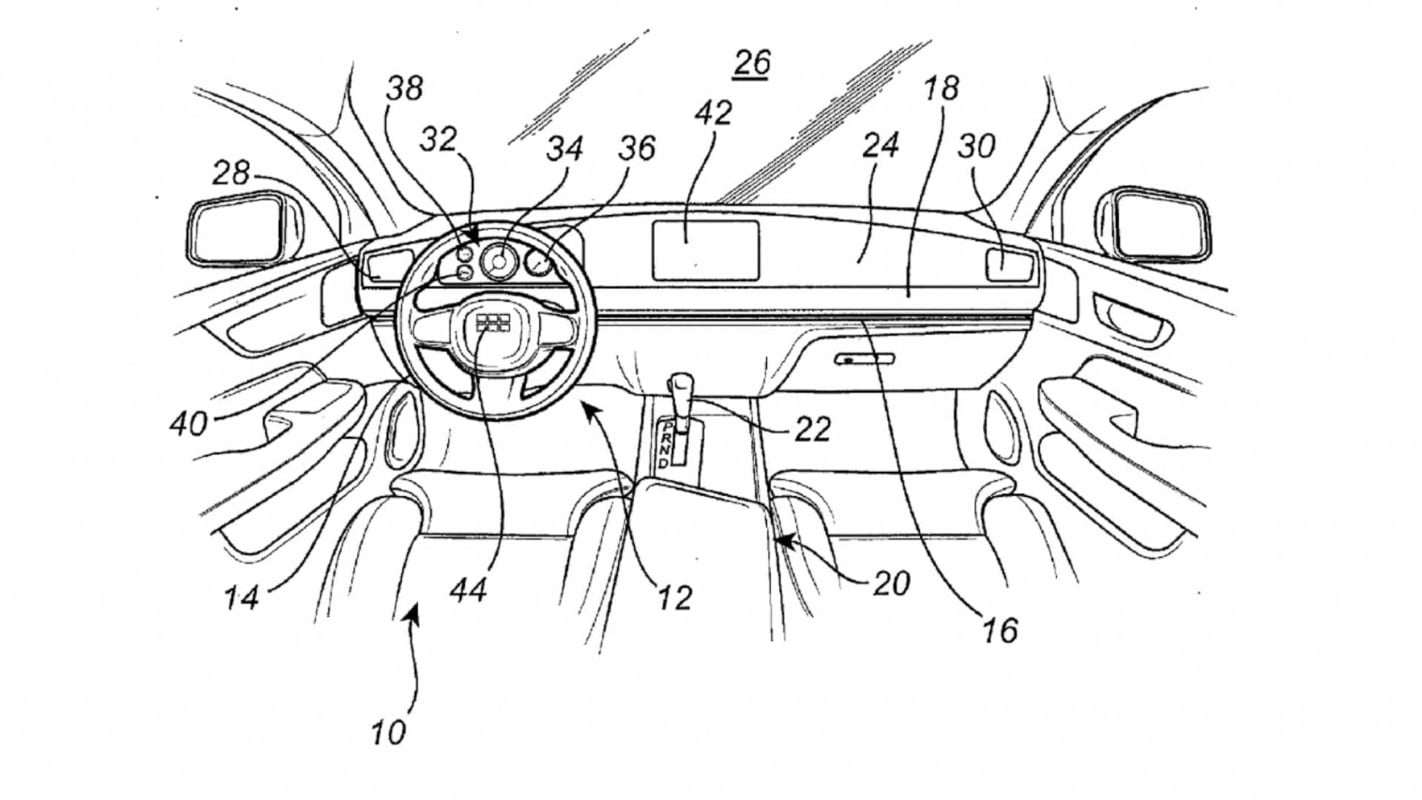
Not only would the sliding steering system negate the need to produce cars in left- and right-hand-drive, it also has implications for cars travelling between countries, too.
With Volvo’s would-be steering system, cars could freely travel over borders and easily swap the steering wheel to the correct side upon entry.
According to the filing, the system will also become useful when autonomous driving becomes commonplace.
Once the autonomous driving systems take control of the car, the wheel could be moved out of the way for unimpeded relaxation space.
Through the patent, Volvo suggests that either the entire dash will contain a full-width screen for driving information, or the sliding wheel will be accompanied by an attached instrument cluster.
Volvo’s patented gift to the world: the seat belt
As for the pedals, it seems as though they’ll be replaced with pressure-sensitive floor panels that will provide accelerator and braking inputs – though the full picture is still unclear.
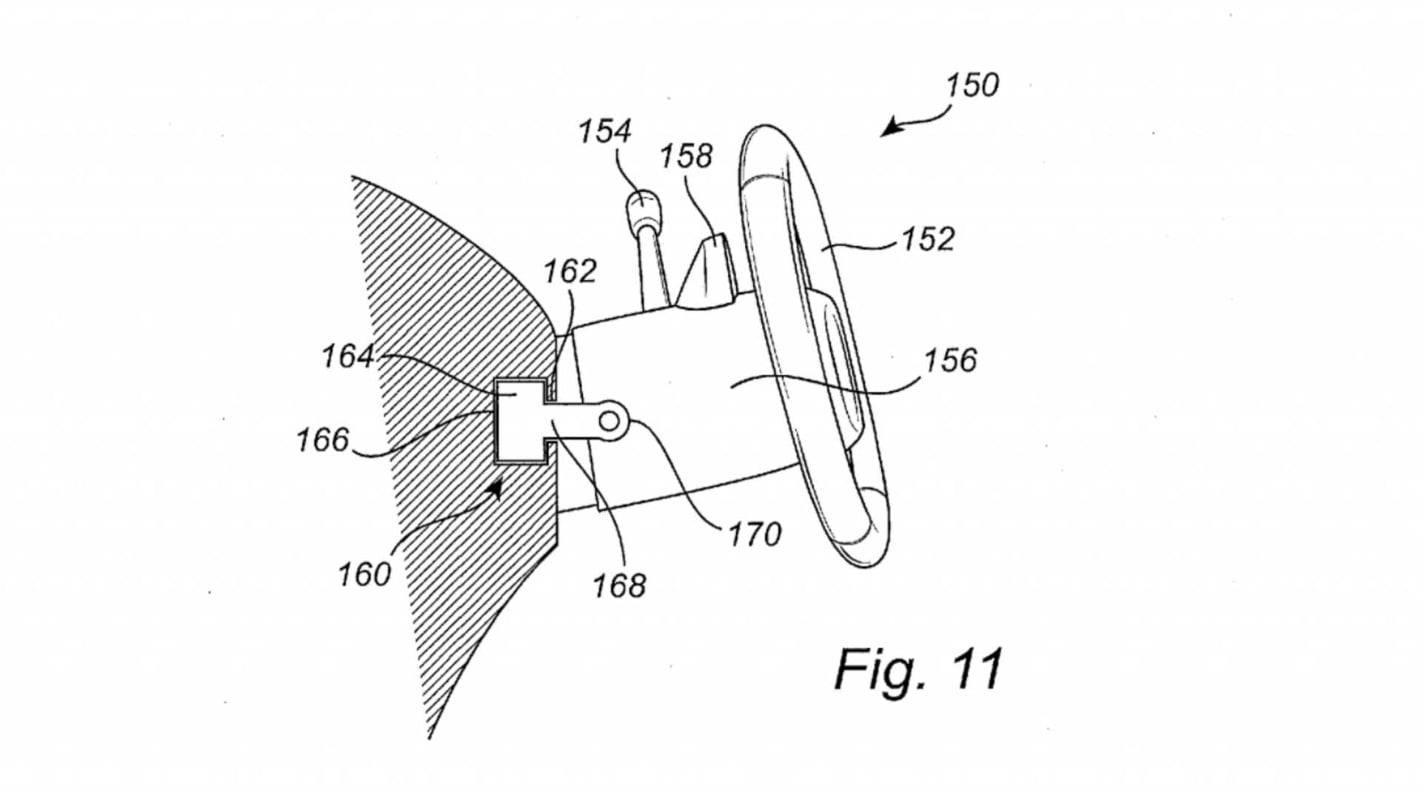
The patent also shows the possibility of a central driving position, which would likely mean a cabin-wide front bench in place of the two front seats.
Volvo isn’t the first manufacturer to suggest doing away with a steering wheel in autonomous vehicles. The BMW Vision Next 100 concept features a fold-away steering wheel and neither is Volvo the first to develop a sliding steering wheel – which already exists in a Unimog.
Volvo’s design is, however, the neatest and most elegant example yet.
Swapping the steering wheel from one side of the other would be far easier than requiring an entire country to start driving on the other side of the road, as revealed in this amazing piece of footage from Sweden (Volvo’s country of origin) in 1967.
As more and more carmakers move away from right-hand-drive, Volvo’s drive-by-wire system could mean that markets like Australia won’t be overlooked when it comes to cool new cars from the company.
Volvo’s effort is a good idea in principle which could see use in a number of applications, though whether it passes stringent government regulations and its ultimate street-use certification is another story.
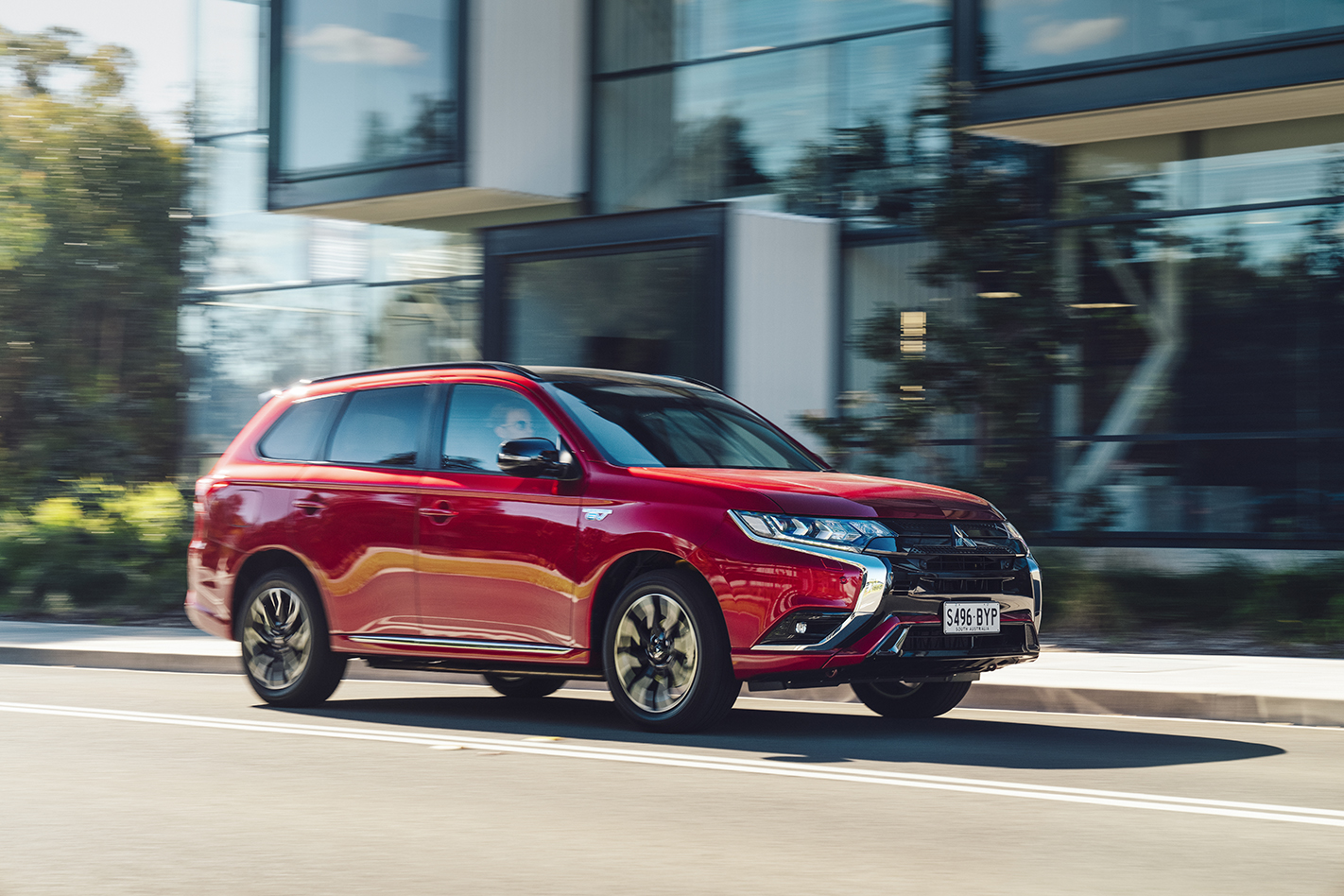
Mitsubishi has rolled out a raft of changes to its Outlander PHEV range, including a new variant, more standard safety and the ability to use the car to power your home on to return energy to the grid.
The Mitsubishi Outlander PHEV medium SUV has gained a new GSR variant that bridges the gap between the ES and Exceed.
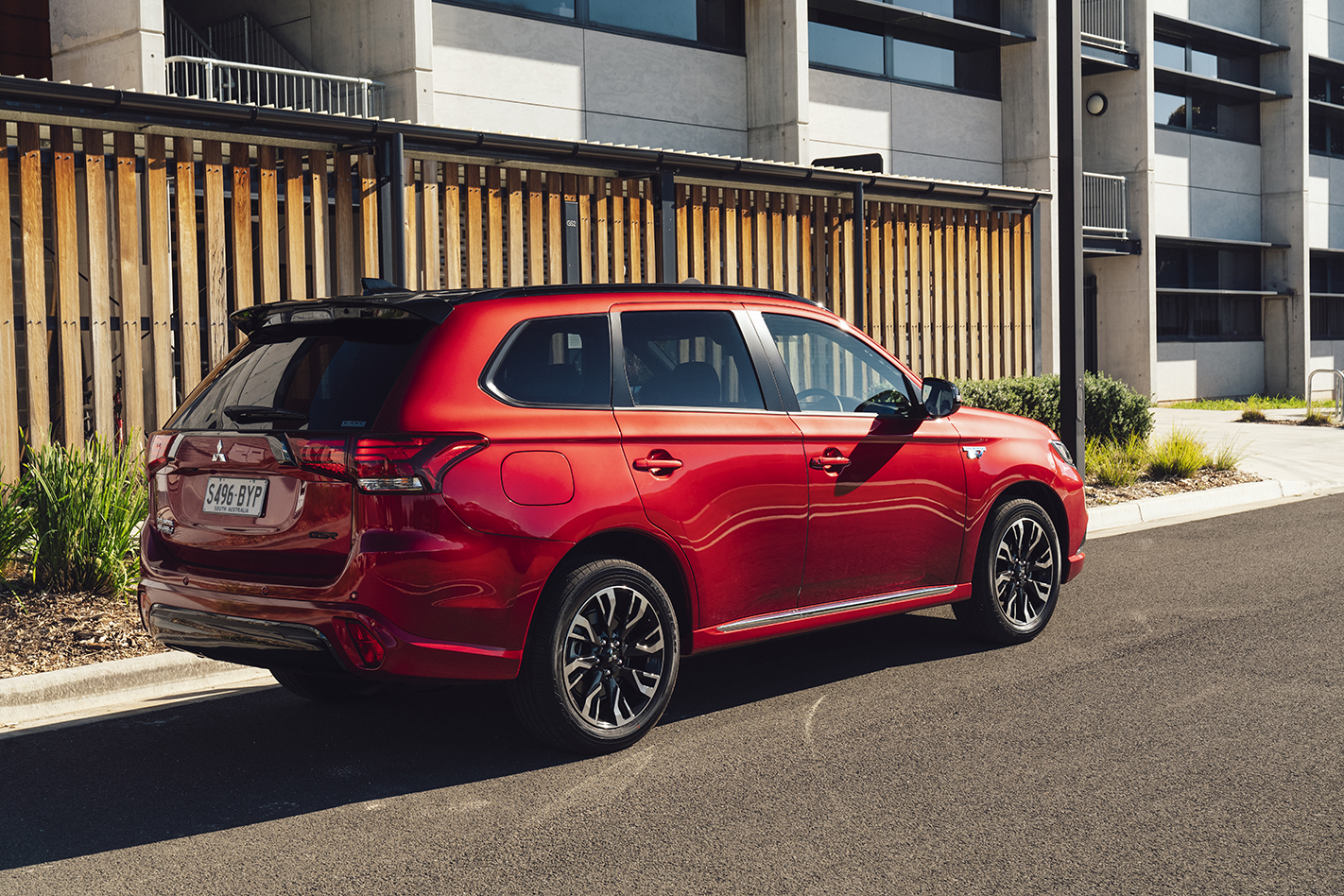
Aesthetically, the GSR stands out from the other versions, with black touches including the roof, roof-rail, front- and rear bumper skid plates and door mirrors, while the grille, front diffusers and tailgate garnish are trimmed with black chrome.
A set of Bilstein shocks also adds substance to the GSR’s style.
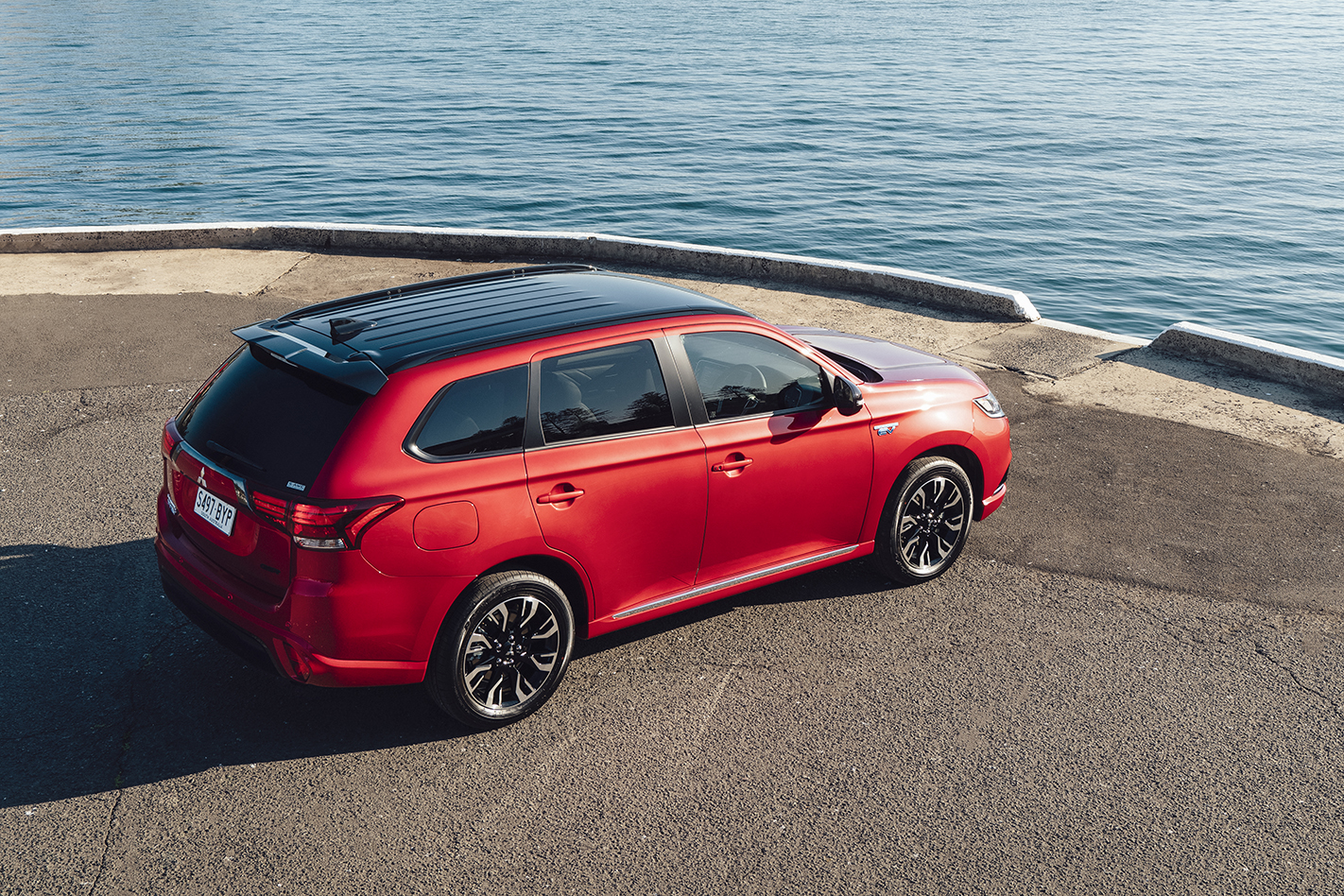
The Outlander PHEV GSR also features 18-inch black/machined two-tone alloy wheels and LED self-levelling headlights and front fog lamps.
Black is also a theme inside, as seen on the gear-shifter knob, roof-lining and A-pillar trim, along with while glossy piano black surfaces.
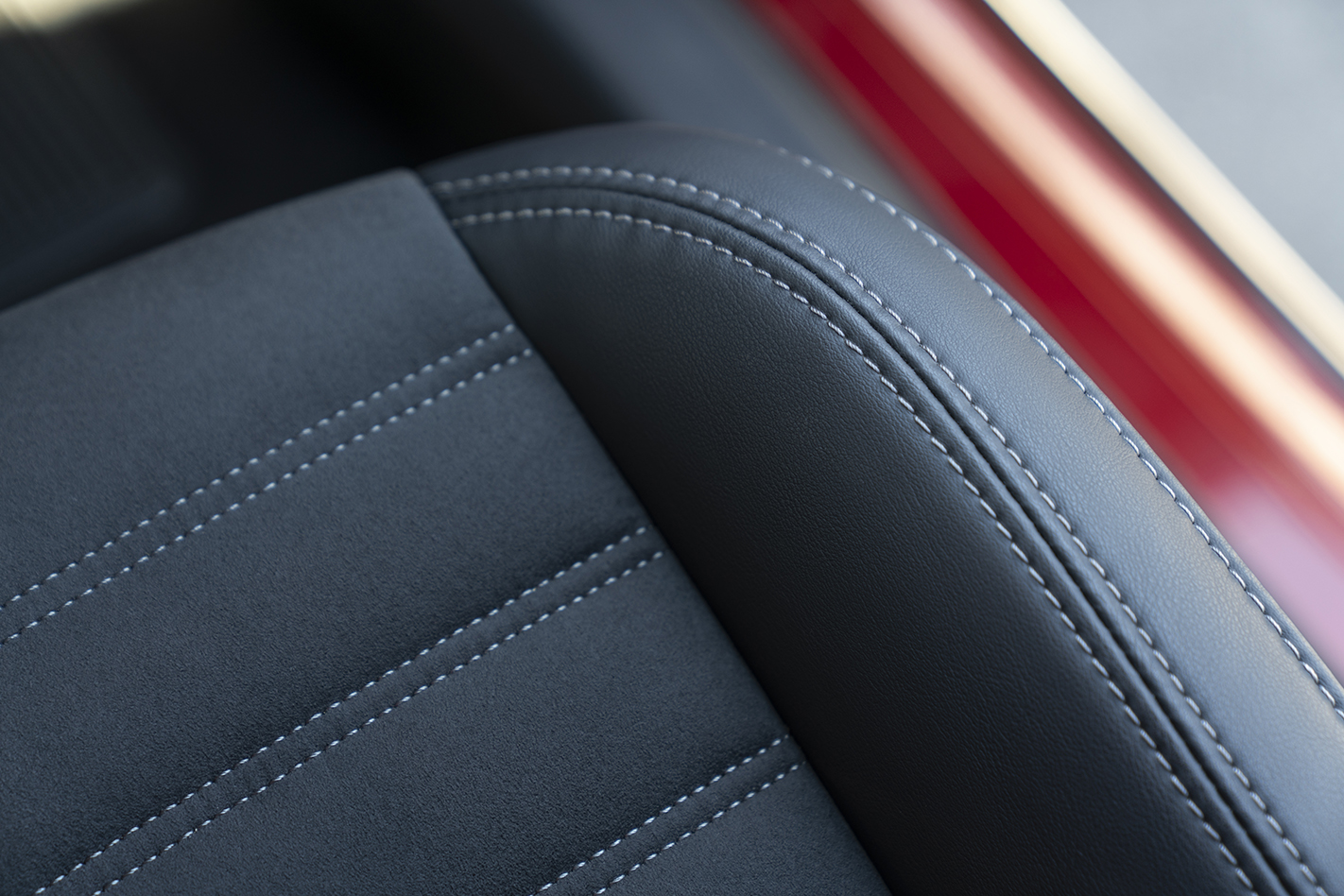
The GSR also features microsuede seats with faux-leather bolsters and four-way driver’s seat adjustment, a powered tailgate and eight-speaker premium audio.
These and a few additional active safety features attract a $4500 premium over the entry-level Outlander PHEV ES, which now comes with Mitsubishi’s Advanced Driver Assist System (ADAS) as standard.
This brings entry-level pricing up by $1000 to $47,990, with the extra cost bringing adaptive cruise control, lane-departure warning, rain-sensing windscreen wipers, auto-on/off headlights, auto high-beam, and power-folding door mirrors.
Plug-in hybrid powertrain
The key change for the 2021 Mitsubishi Outlander PHEV is the deployment of the company’s Vehicle-To-Grid (V2G) and Vehicle-To-Home (V2H) capability. While it’s been a feature of overseas-market Outlander PHEVs since 2017, it’s the first time that the technology will feature on Australian-spec cars.
V2H and V2G simply means that the energy stored in the Outlander PHEV’s battery can be used to either power a household, or to be fed back into the grid.
For example, the Outlander PHEV could be programmed to feed energy into the grid when energy prices – which can fluctuate by the minute – are higher, and recharge when costs fall.
There are no performance changes to the 2021 Outlander PHEV, which received a significant upgrade for the 2020 model.
The plug-in hybrid powertrain features a 94kW/211 2.4-litre four-cylinder petrol engine paired with two electric motors (one on each axle) for a combined power rating of 157kW/332Nm to all four wheels.
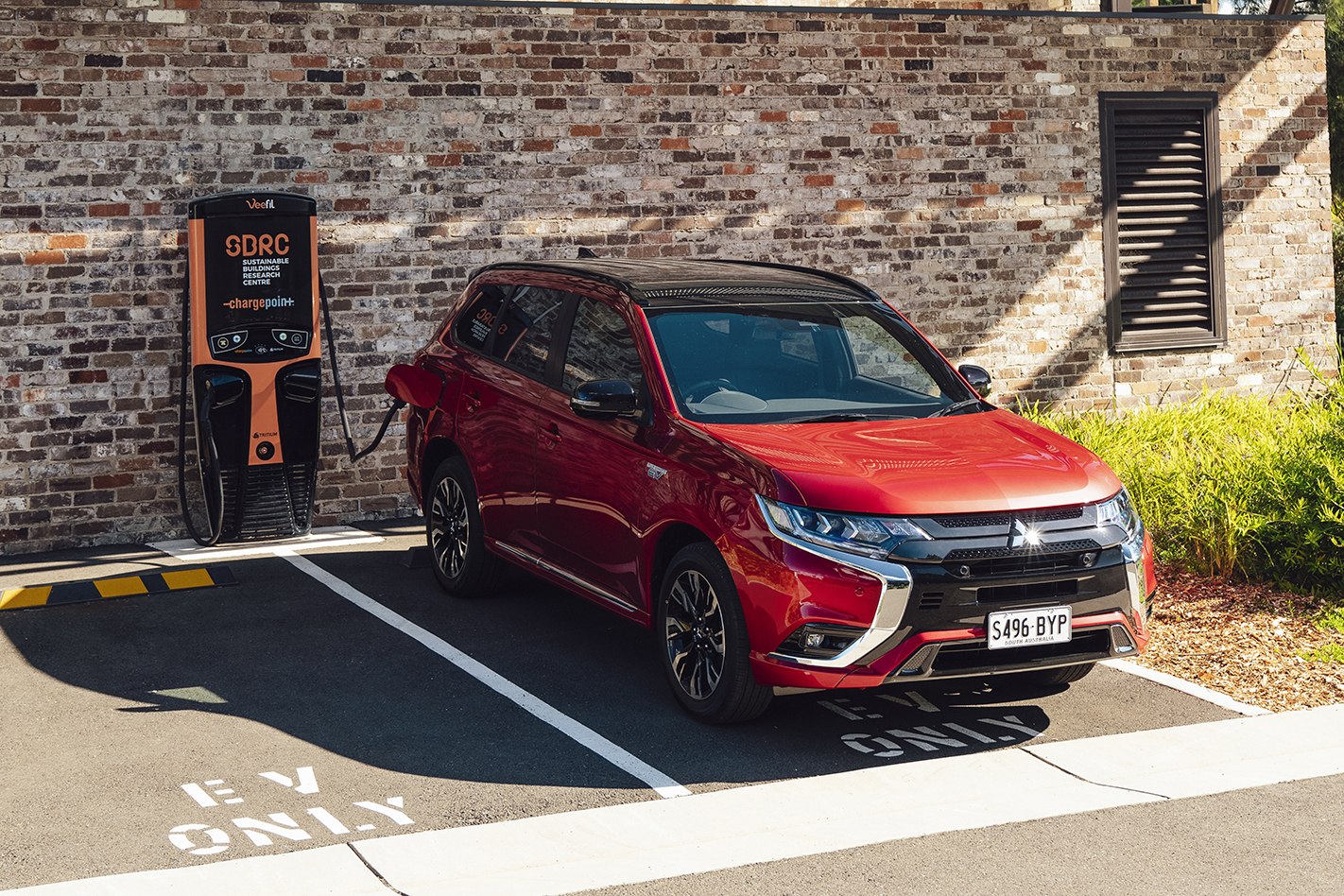
Its 13.8kW battery offers a potential all-electric driving range of 54km, more than enough for the average daily commute.
The Outlander PHEV features a clever regenerative braking system that allows the driver to select the level of retardation – the rate at which the car slows when you lift off the accelerator but aren’t on the brake – by using repurposed shifter paddles behind the steering wheel.
The higher the level of retardation, the less you need to use the brakes, and the greater the amount of charge returned to the battery.
The battery can be charged fully charged in around seven hours from a normal 240-volt socket (known as Level 1 charging) to fill the Outlander PHEV’s 3.7kW battery to 100 percent.
Charging times decrease dramatically when the Outlander PHEV is plugged into a commercial charger – it takes three hours and thirty minutes with a 16-amp Level 2 charger, and just 15 minutes with a 50kW DC fast charger.
Starting a journey with the battery fully charged achieves fuel economy as low as a claimed 1.9L/100km, depending on the length of the journey.
Outlander PHEV features
As mentioned above the range starts at $47,990 for the Outlander PHEV ES grade which comes with:
- 8.0-inch touchscreen
- AppleCarPlay/Android Auto smartphone pairing, Bluetooth connectivity with voice control and AM/FM/Digital radio.
- Reversing camera and reverse parking sensors.
- Autonomous emergency braking.
- ADAS (see above).
- LED daytime running lights.
- Reverse parking sensors.
- Auto-dimming rear-view mirror.
- Seven airbags.
- Hills Start Assist.
- 18-inch alloy wheels.
- Black cloth seat trim.
- Dual-zone air-conditioning.
- Rear-seat air-conditioning vents, and 2xUSB ports.
- Blind-sport warning.
- Lane keeping assist.
- Rear cross-traffic alert.
- Electric tailgate.
- LED headlights with auto levelling.
- 360-degree surround-view monitor.
- Satellite navigation and speed limit info
- Ultrasonic Misacceleration System (UMS), which prevents parking mishaps should a driver accidentally pressing the accelerator.
- Electric sunroof.
- Headlight washers.
- LED front fog lamps.
- Leather seats with synthetic leather bolsters.
- Silver roof rails.
- Scuff plates.
- Electric heater.
- EV remote app that lets you set a charge schedule, activate the air-conditioning, control headlights and parking lamps, and monitor your PHEV statistics.
Mitsubishi Outlander PHEV retail/drive-away pricing
- Outlander PHEV ES – $47,990 / $51,990
- Outlander PHEV GSR – $52,490 / $56,490
- Outlander PHEV Exceed – $56,490 – $60,990
The Walkinshaw name is sticking around in Supercars, according to the new boss of the group’s car-making arm.
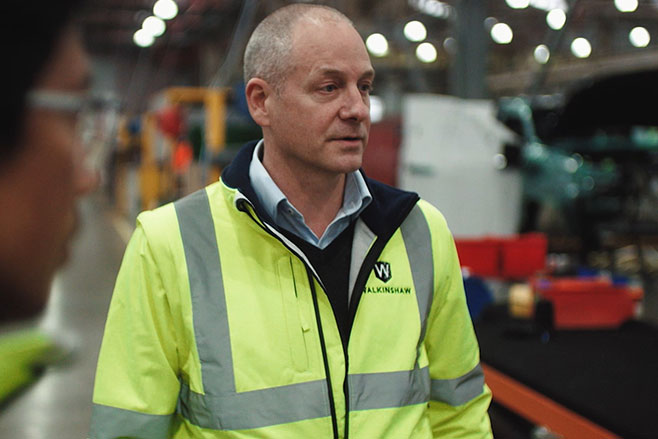
Walkinshaw Automotive Group’s new managing director Joel Stoddart confirmed the news exclusively to MOTOR during an exchange set up to learn more about the man who now replaces the long-serving Tim Jackson.
Stoddart also revealed that while Holden will cease to exist at the end of 2020, the company will continue to support the sport through to the end of 2021.
“We’re talking to a few interested parties about involvement in Supercars,” Stoddart says in regards to what will eventually replace the Holden Commodore ZB supercar currently raced by the team.
And while he won’t be drawn on who those parties are, “what I can say is that Supercars is important to us as a group – and we’re committed to the series.”
The former HSV chief engineer (below) is now in charge of the heading up the manufacturing arm based in the Melbourne suburb of Clayton, with a venture between itself and General Motors’ local GM Specialty Vehicles set to launch before the end of the year.
This partnership, where Walkinshaw AG will contract its skills and services to GMSV but not directly link WAG to the sales of new cars, has connected the group’s race team, Walkinshaw Andretti United, to at least one marque.
| MORE What happens after Holden’s gone?
Stoddart’s statement bolsters hopes the racing team will lock in a new marque soon, with co-owner Ryan Walkinshaw previously suggesting that former negotiations had fallen over due to COVID-19, with one party progressing to the contract stage before pulling back.
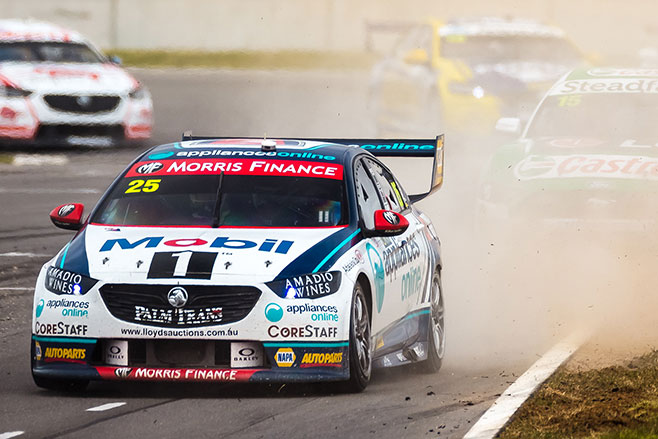
Previously, it was believed the WAU team would replace the Commodore as soon as next year, but COVID-19 has readjusted that timeline to 2022 or 2023.
This also has the effect of lining up better with an anticipated move by the series to a Gen 3 Supercar in 2022.
General Motor’s decision to pull the Holden brand from Australia led many to fear that the Supercars championship would default to a Ford Mustang-dependent series once the ZB Commodores are retired.
However, the Commodore can easily be raced in the 2021 series and beyond, thanks to the category’s use of spec parts like transaxles, suspension components and brake parts.
There is also a healthy supply of the GM Motorsport 5.0-litre V8 engine currently within the paddock, while body panels will also be able to be sourced from Holden.
MORE Scott McLaughlin’s road-going Mustang supercar
Long-standing rival Ford, meanwhile, has expressed a desire to stay if only there are other manufacturers to race.
Head of Ford global motorsport Mark Rushbrook told sister magazine Wheelsthat multi-manufacturer competition is an important way to measure itself and justify involvement.
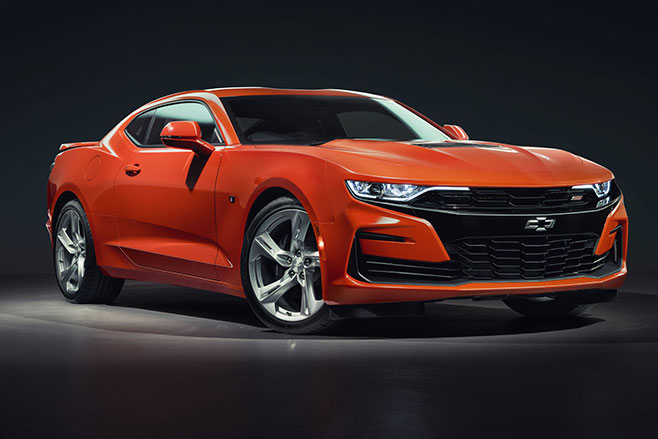
We can only speculate what WAU will race in 2022 given Stoddart’s guarded word, but it’s safe to rule out the Chevrolet Camaro, given the Walkinshaw Group axed the project this year and that a successor to the sixth-generation car is uncertain.
But that may change given anything could happen when GMSV arrives.
“Camaro was always intended to be a limited run program,” said Stoddart. “We remanufactured just under 2000 Camaros both SS and ZL1. The feedback we had from our customers was fantastic, but moving forward any decision to reintroduce would be up to GMSV.”
