
- Diesel version of hot Audi Q5 arrives November from $104,900
- Quicker than petrol version
- Turbo, electric compressor and mild-hybrid-equipped
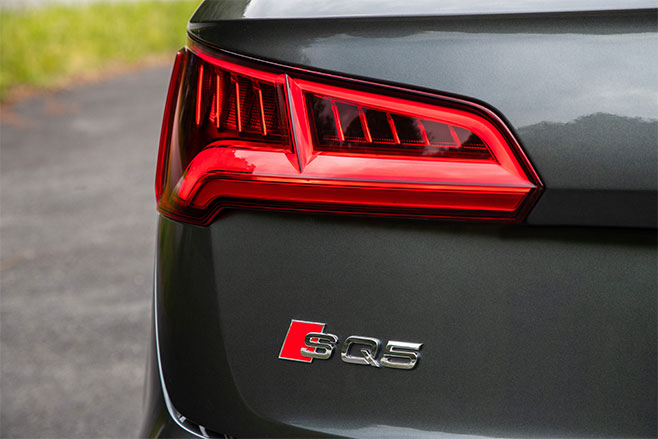
The Audi SQ5 TDI Special Edition, as it’ll be known, will debut for $104,900 before on roads, pricing it close to four grand above the petrol version which originally replaced the diesel-only SQ5 range.
As the name implies the SQ5 Special Edition will re-introduce the variant in limited numbers as the current generation prepares for its replacement.
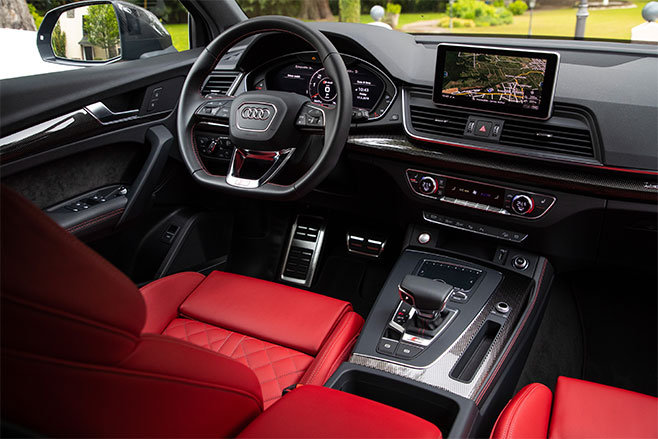
The TDI scores a black exterior styling package (worth $1430), as well as Matrix LED headlights ($1700), massage front seats ($700) and carbon inlays ($1500).
That’s $5330 worth of equipment.
Of course, the petrol-powered SQ5 has been on sale here in Australia for some time, featuring a 260kW, 500Nm version of Audi’s 3.0-litre V6 turbocharged petrol engine – and the very first SQ5 was, in fact, a diesel.
As with the petrol, Audi Australia has pumped the wheel size up to 21 inches over the European version’s 20-inch items.
They’ll mate to adaptive dampers and steel springs, with six-piston front brake calipers.
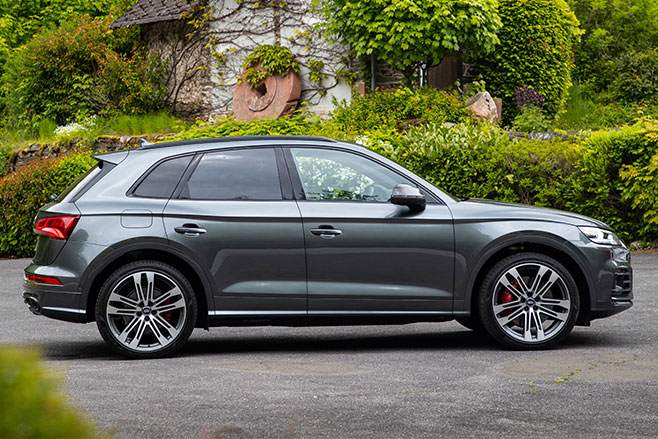
The updated SQ5 TDI will offer up 255kW of power and – more importantly – a serious 700Nm of torque from its 3.0-litre turbocharged V6 diesel.
Through an eight-speed transmission, its centre diff-equipped AWD system will send 60 per cent of drive to the rear end normally, and can fire up to 70 per cent rearwards if required.
While its most logical rivals are the Porsche Macan S and the Mercedes-AMG GLC43 in petrol guise, it’s a pretty unique proposition in diesel form.
A digital dashboard, all the active driver safety aids you can think of, large multimedia screen with Apple CarPlay and Android Auto, inductive phone charging and a Wi-Fi hotspot will feature on board the five-seat, five-door mid-sized SUV.
And despite carrying an extra 110kg, it’s big draw will be a superior ADR fuel consumption figure compared to the petrol, with its 6.8-litres per 100km beating the TFSI’s 8.7-litres on the combined cycle.
If you’re considering putting a mainstream large SUV on your driveway, you are spoiled for choice with a market that’s brimming with compelling options to choose from, including two high achievers – the Mazda CX-9 and Kia Sorento.
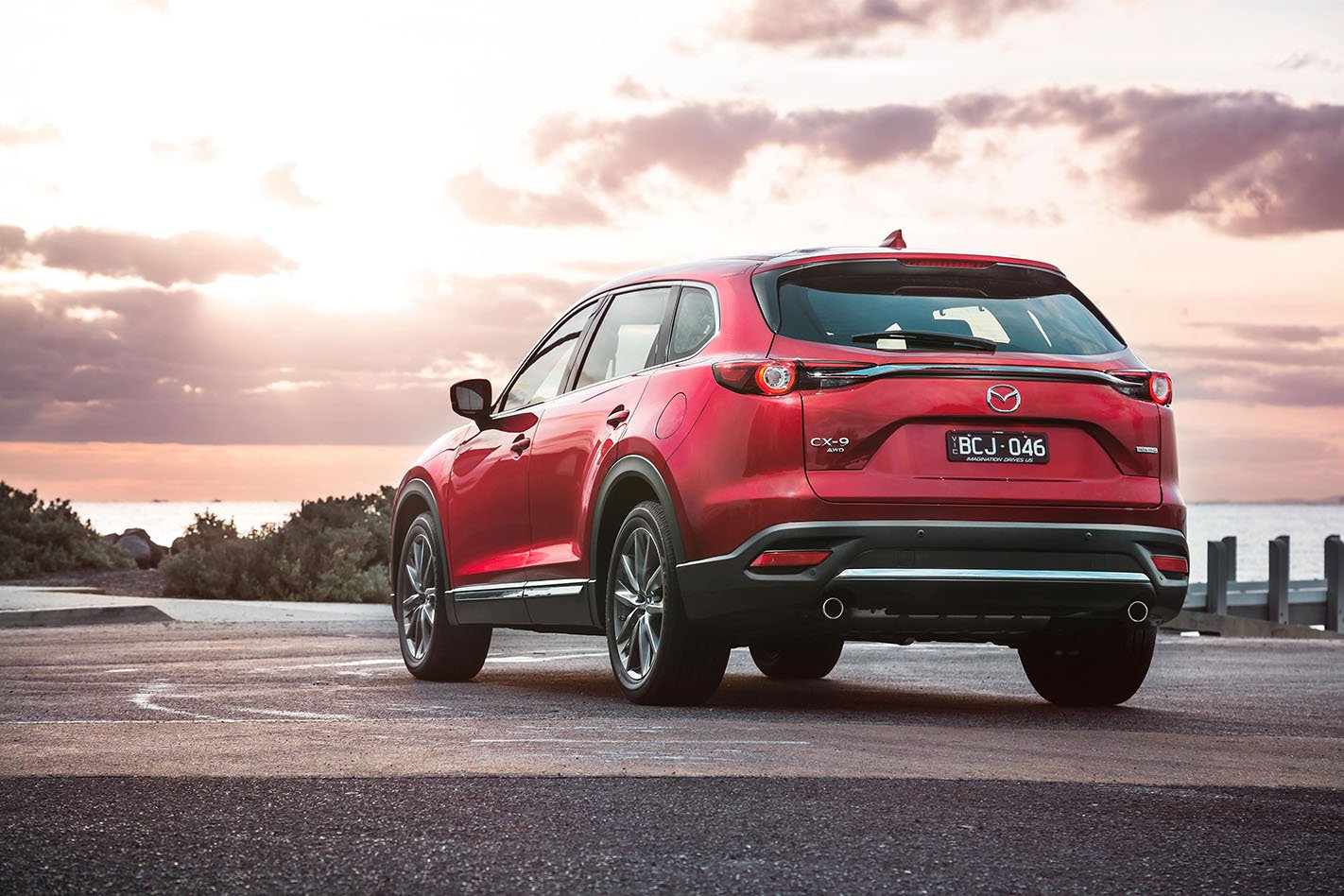
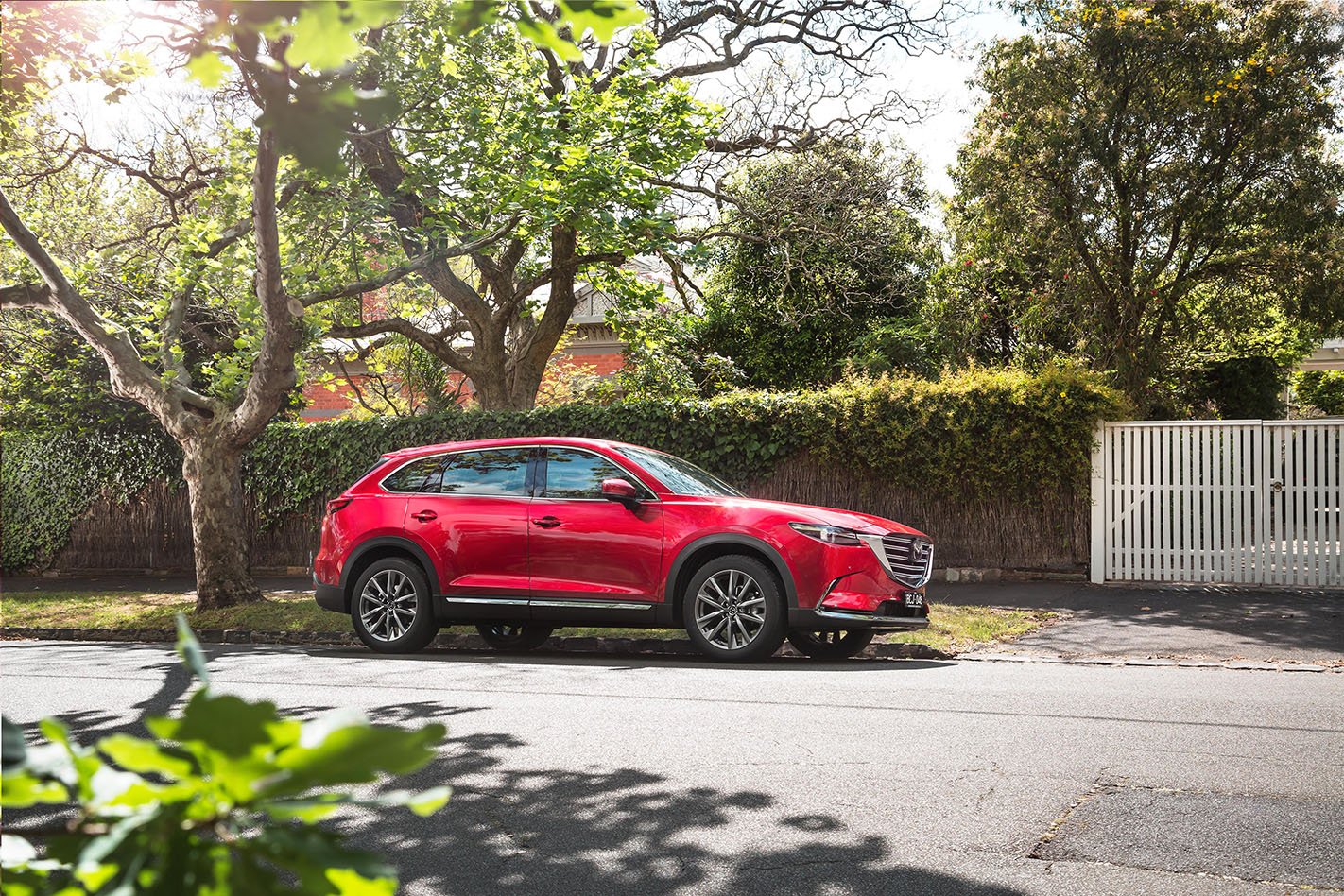
Mazda’s seven-seater CX-9 has been on the market for a couple years now, but remains the class benchmark, winning the coveted Wheels Car of the Year award in 2017, and backing it up with multiple comparison test victories.
The Japanese manufacturer hasn’t been resting on its laurels either, giving the popular SUV a series of small updates since it was first launched locally.
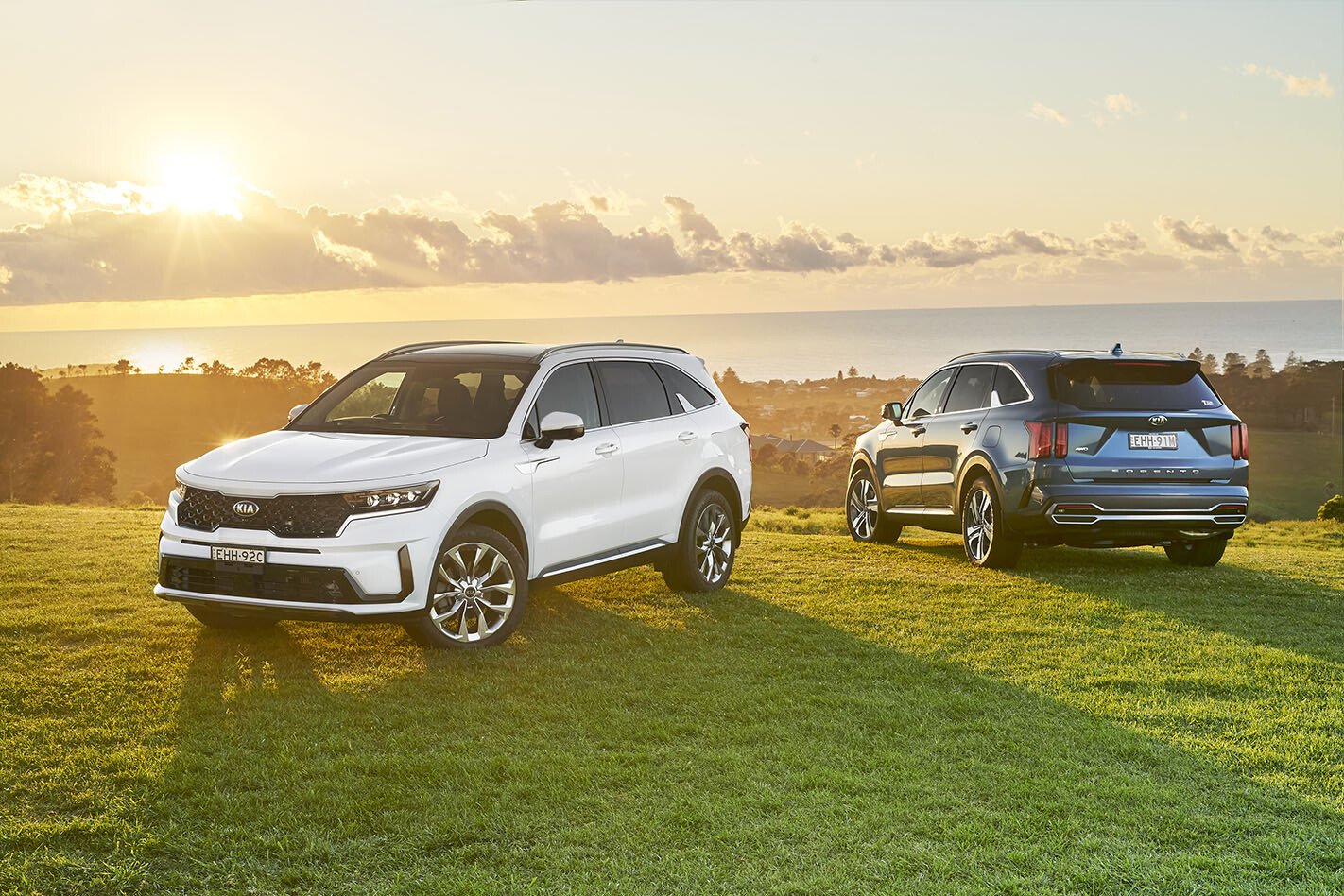
Attempting to steal the CX-9’s crown though is an all-new Kia Sorento.
The fourth generation of the Korean high rider is perhaps the most complete car to roll of a Kia production line, and this new model brings a raft of tweaks and improvements with the clear intention of raising the bar for luxury and equipment in the segment.
Let’s compare the pair and see which is right for you and your lifestyle.
HOW MUCH DO THEY COST?
Of the pair, the Sorento has the cheaper starting price (just), with Kia also running an enticing driveaway pricing offer.
The base Sorento S petrol has a recommended retail price of $45,859, compared with the entry-level Mazda CX-9 Sport FWD’s $45,920 RRP. Kia is offering customers a driveaway price of just $46,990 for the cheapest variant.
While the Sorento has increased slightly in price compared with the outgoing model, this is more than compensated for by a significant jump in quality of materials and equipment.
In total there are eight different Sorento variants to choose from, spread evenly across a reasonable price range. The flagship GT-Line diesel tops the range with a $63,070 or $64,990 driveaway.
Mazda also offers eight variants, with the most expensive Azami AWD wearing a $69,303 RRP pricetag. Prices were adjusted across the range slightly at the very start of 2020, with the update bringing additional equipment.
Here’s what the full variant spread looks like for each model:
2021 Kia Sorento range and price:
- Sorento S FWD petrol: $45,859 RRP, $46,990 driveaway
- Sorento S AWD diesel: $48,850 RRP, $49,990 driveaway
- Sorento Sport FWD petrol: $48,470 RRP, 54,390 driveaway
- Sorento Sport AWD diesel: $51,470 RRP, $52,990 driveaway
- Sorento Sport+ FWD petrol: $52,850 RRP, $54,390 driveaway
- Sorento Sport+ AWD diesel: $55,850 RRP, $57,390 driveaway
- Sorento GT-Line FWD petrol: $60,070 RRP, $61,990 driveaway
- Sorento GT-Line AWD diesel: $63,070 RRP, $64,990 driveaway
2020 Mazda CX-9 range and price:
- Mazda CX-9 Sport FWD: $45,920 RRP
- Mazda CX-9 Sport AWD: $49,920 RRP
- Mazda CX-9 Touring FWD: $53,310 RRP
- Mazda CX-9 Touring AWD: $57,310 RRP
- Mazda CX-9 GT FWD: $61,720 RRP
- Mazda CX-9 GT AWD: $65,720 RRP
- Mazda CX-9 Azami FWD: $64,893 RRP
- Mazda CX-9 Azami AWD: $69,303 RRP
WHAT EQUIPMENT DO YOU GET AS STANDARD?
Even on base models, the Kia has a generous (and extensive) list of standard equipment, including:
- LCD touchscreen infotainment with Android Auto/Apple CarPlay smartphone pairing.
- Bluetooth and USB connectivity.
- AM/FM/Digital (DAB+) radio.
- Reversing camera with guidelines.
- Front and rear parking sensors.
- Digital gauges.
- Active safety including autonomous emergency braking with pedestrian, cyclist and junction detection, lane-keeping assist, rear-cross traffic alert, blind-spot collision avoidance, driver attention alert.
- Advanced Smart Cruise Control with stop and go function.
- Full LED lighting including headlights, daytime running lights, front and rear fog-lights.
- Rain-sensing windscreen wipers.
- Alloy wheels including the full-size spare.
- Auto-folding door mirrors.
- Roof rails.
- Sliding and reclining second-row seats.
The main display unit grows from 8.0-inches to an impressive 10.3-inches, while the alloy wheels fitted as standard also increase from 17-inches to 19-inch.
Additional spec inclusions for the Sorento Sport are as follows:
- Satellite navigation with 10 years of traffic information and map updates.
- Dual-zone climate control air-conditioning.
- Auto-dimming rear-view mirror.
- 10-way powered drivers’ seat settings.
- Leather-appointed seats.
- Heated front seats.
- Heated steering wheel.
- Smart keyless entry and push-button and remote-engine start.
- Heated door mirrors.
- Hands-free powered tailgate.
- Privacy glass.
- 2nd and 3rd row USB sockets
These include:
- Smart key with remote smart parking assist.
- 12.3-inch high-resolution digital instrument cluster.
- Head-up display.
- In-car intercom.
- 360-degree parking camera.
- Parking collision avoidance.
- Dual-projection LED headlights.
- Blind-spot monitor.
- Quilted Nappa leather seats.
- Heated front and rear seats.
- Ventilated front seats.
- 14-way power-adjusted driver’s seat.
- 10-way power-adjusted front passenger seat.
- Panoramic sunroof.
- Paddle shifters.
- Interior mood lighting.
- Alloy sports pedals.
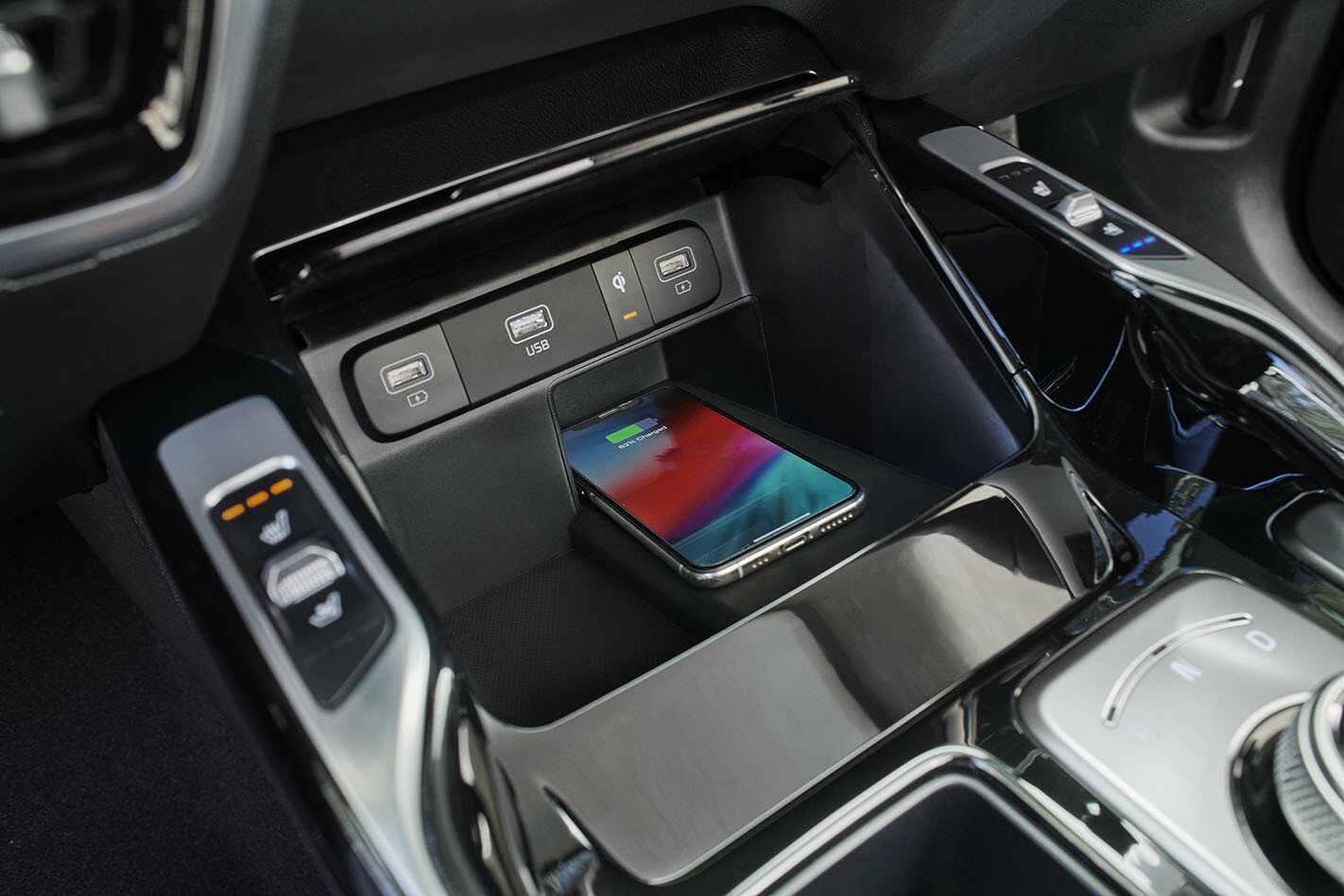
- Wireless fast phone charging.
- BOSE premium sound system.
- 20-inch alloy wheels.
Mazda has also done well to fit the CX-9 with as much standard equipment as possible.
In every variant you get:
- Auto emergency braking with forward collision warning alert.
- Lane departure warning.
- Adaptive cruise control.
- Apple CarPlay and Android Auto.
- Reversing camera and parking sensors.
- Seven seats with third-row airbags.
- Satellite navigation.
- 18-inch alloy wheels.
- Tyre pressure monitoring.
- Heated folding electric mirrors.
- DAB+ radio.
- A 7.0-inch infotainment screen fitted with MZD connect.
- Three-zone air conditioning.
- Black leather trim.
- Power-adjustable and heated front seats.
- Auto headlights and wipers.
- The GT variant adds larger 20-inch alloy wheels, in addition to:
- Hands-free power tailgate with foot detection.
- Black or beige leather trim.
- Keyless entry.
- Front seat memory function.
- Heated second row seats.
- Powered glass sunroof.
- Rear seat sunshades.
- Traffic sign recognition.
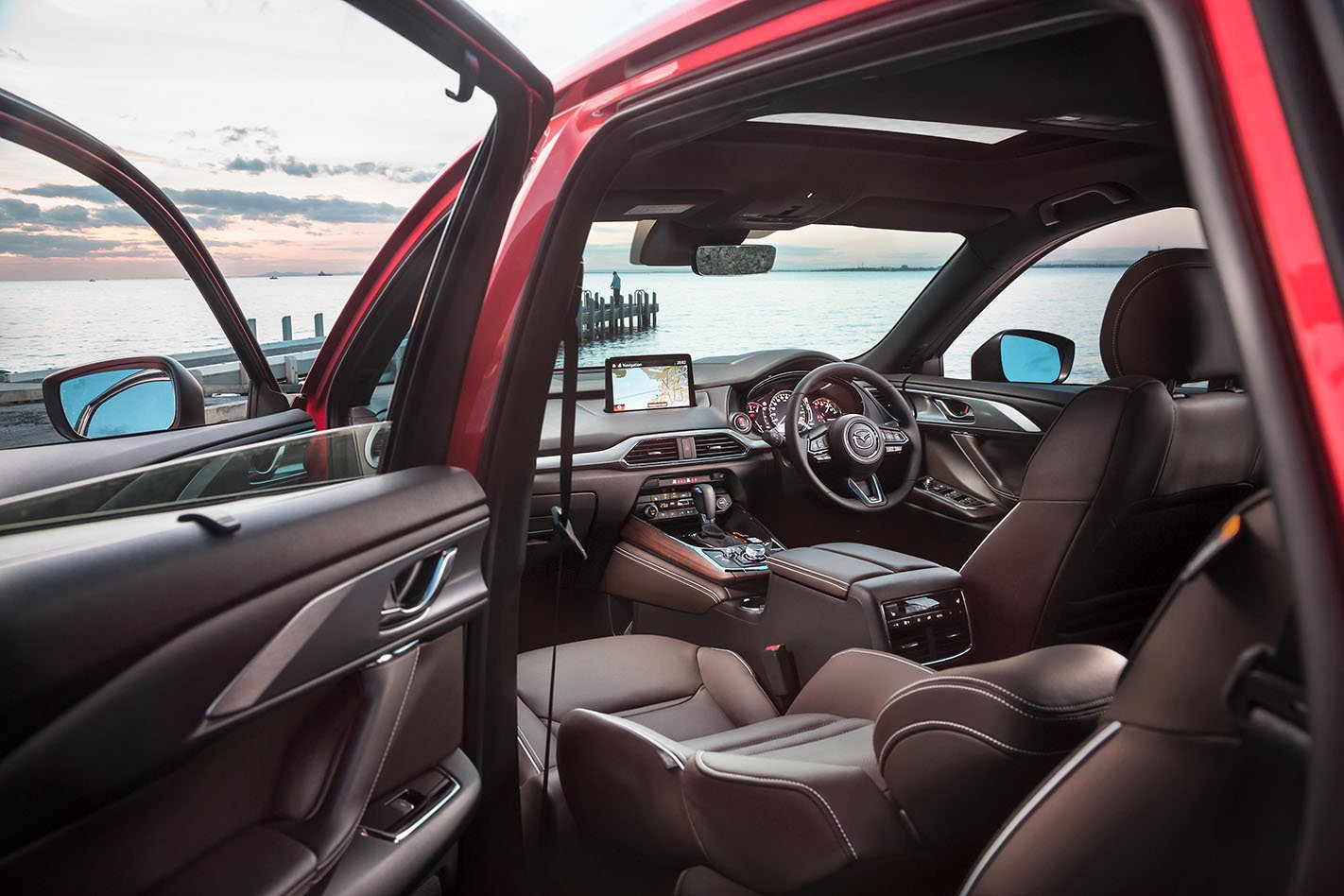
- Nappa leather upholstery and hand-crafted wooden trim.
- 360-degree parking monitor.
- LED daytime running lights.
- Windscreen de-icer.
- Ventilated front seats.
- Heated steering wheel.
- A 7.0-inch LCD multi-information display between the gauges.
The Kia has a full-size alloy spare tyre as standard, while the Mazda makes do with a space-saver unit.
Buyers of the Sorento receive a seven-year, unlimited kilometre warranty, with CX-9 owners being given a five-year, unlimited kilometre warranty period.
WHAT ENGINES ARE AVAILABLE?
Kia offers the choice of two engines for the Sorento. The first is a naturally aspirated 3.5-litre V6 with front-wheel drive, or the second – a 2.2-litre four-cylinder diesel with all-wheel drive. Both are paired with an eight-speed automatic transmission, with the petrol being a more traditional torque-converter design, and the diesel utilising a dual-clutch system.
The petrol engine produces a decent 200kW and 332Nm, with a claimed combined fuel consumption figure of 9.7L/100km
Meanwhile, the diesel produces less power (148kW), but a much meatier torque output (440Nm), making it feel more muscular. Claimed combined fuel consumption is 6.1L/100km.
The diesel also produces its peak figures much lower in the rev range, with max power arriving at 3800rpm vs 6300rpm for the petrol. Similarly, maximum torque is available between 1750-2750rpm in the diesel, while the petrol doesn’t put all its Newton metres to the ground until 5000rpm.
We are yet to conduct an extended test to gauge the Sorento’s real-world economy performance however, our experience tells us the four-cylinder diesel is the pick of the pair, even though you’re asked an extra $3000 over the equivalent petrol.
However, it’s important to remember that a diesel engine isn’t for everyone. If you only ever travel short distances, and have no towing or loading requirements, it might be best to opt for the petrol V6.
The Sorento is set to have hybrid and plug-in variants available early next year, with the electrified models mating battery power with a 1.6-litre petrol turbo engine.
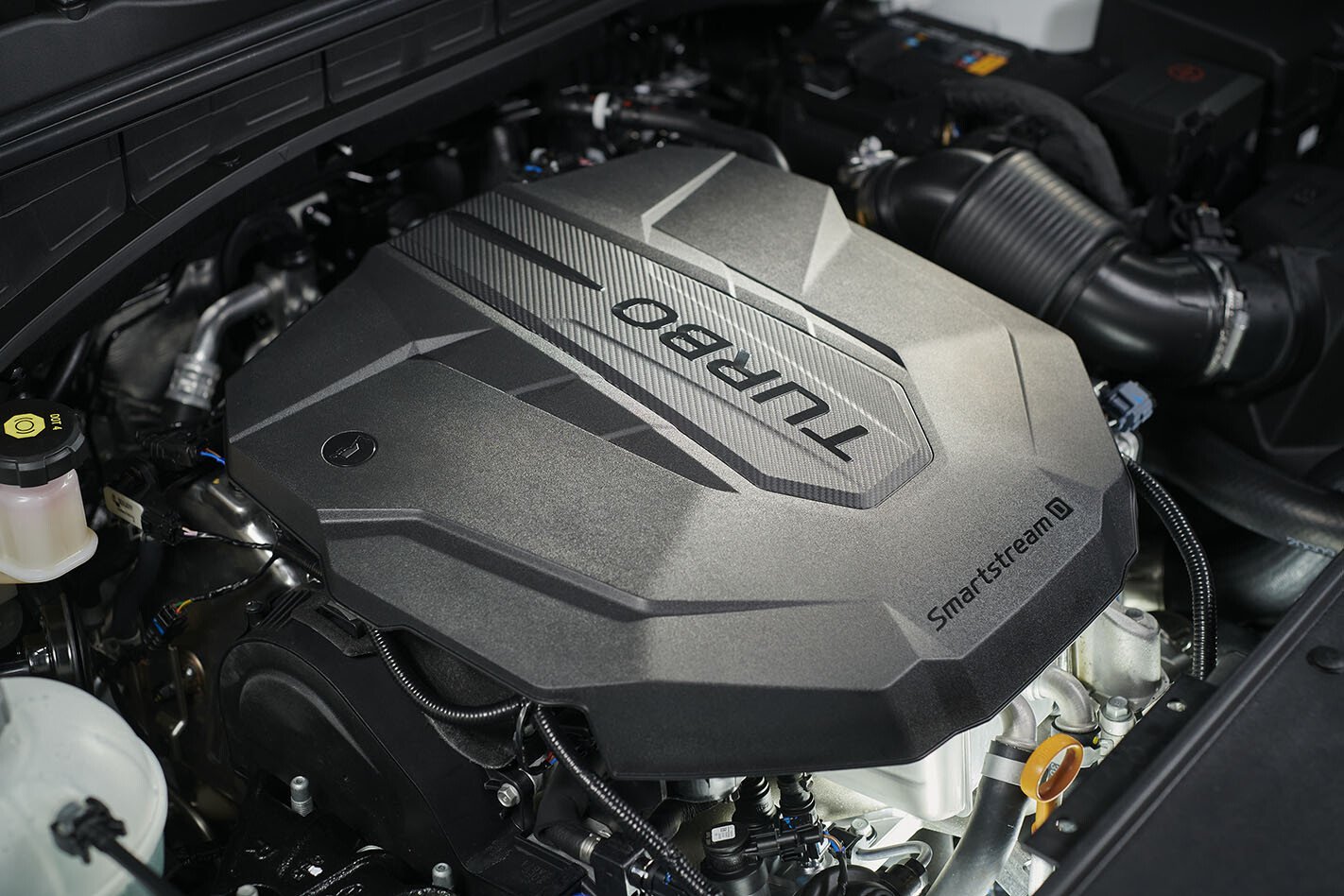
Mazda sells the CX-9 with just one engine option, an impressive 2.5-litre turbocharged petrol four-cylinder. Fitted to all CX-9 variants, the four-pot produces 170kW and 420Nm, and peak power is delivered at 5000rpm, while maximum torque is in at 2000rpm.
The engine is mated to a six-speed automatic, in either all-wheel drive or front-wheel drive depending on the variant. In all-wheel drive guise, the combined fuel consumption is claimed to be 8.8L/100km, compared to 8.4L/100km for the front-drive variants.
During a 10-car megatest, conducted by Wheels, the CX-9 consumed 11.6L/100km, which is an impressive real-world figure for a car of this size. For context, the CX-9 was more efficient than any other petrol on test, but couldn’t match the turb-diesel models.
HOW MUCH LUGGAGE CAN THEY CARRY?
Which of these large SUVs is best at hauling people and gear comes down to which configuration you are most likely to use.
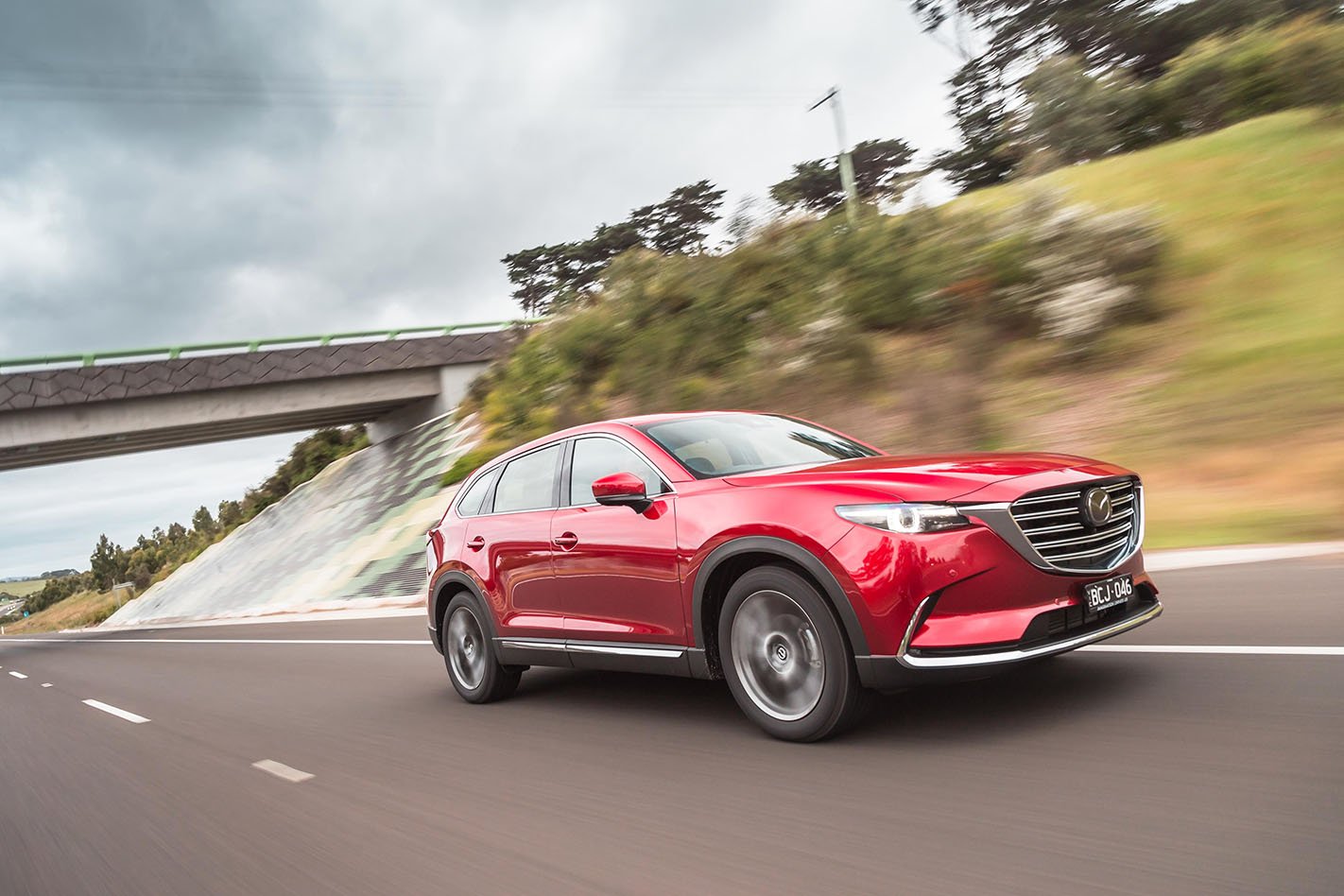
With the third row in use, the CX-9 can carry 230 litres of luggage (down 37 litres compared with the previous generation), which is about what you’d expect from a small city hatchback. Meanwhile, Sorento owners will only have 187 litres of space at their disposal.
When the most rearward seats are stowed, the CX-9 can haul 810 litres worth of cargo, compared with the Sorento’s 616 litres.
In ‘van mode’, with both the second and third rows folded flat, the Sorento can be stuffed with 2011 litres worth of cargo. The Mazda maxes out at 1641 litres in the same configuration.
CAN YOU TOW WITH THEM?
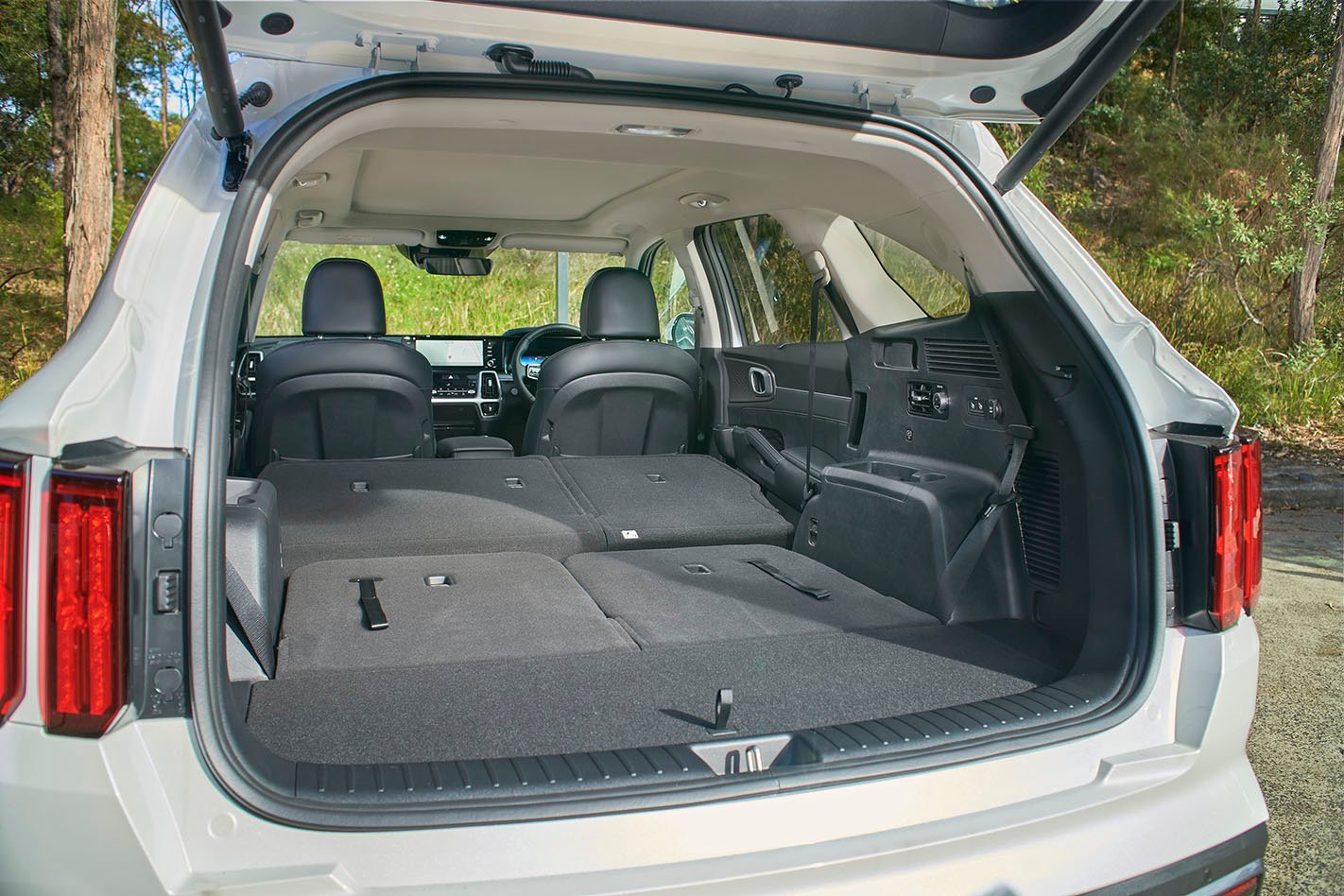
Both cars can be used for towing duties with the fitment of optional towing packs. Each has a claimed braked towing capacity of 2000kg, however the Sorento gets the upper hand with its increased towball download limit of 200kg (double the 100kg recommended by Mazda).
The Sorento’s diesel engine is best suited to towing duties, with superior levels of torque that are available at lower engine revolutions.
First seen at the tail end of 2017, Ferrari’s Portofino was lauded as a big step forward from the mixed reception garnered by its predecessors, the California and the California T. It looked better, drove better and just felt more of a Ferrari. Just three years later, however, it’s come in for a refresh – say hello to the Ferrari Portofino M.
Those of you who know Ferrari’s model history will know that the company often introduces an M, or ‘modificata’ model halfway through a model’s life and they’re often the ones to look out for. There was the 456m (launched in 1998), while in many regards, the 575M of 2002 was an evolution model of the 550 Maranello.
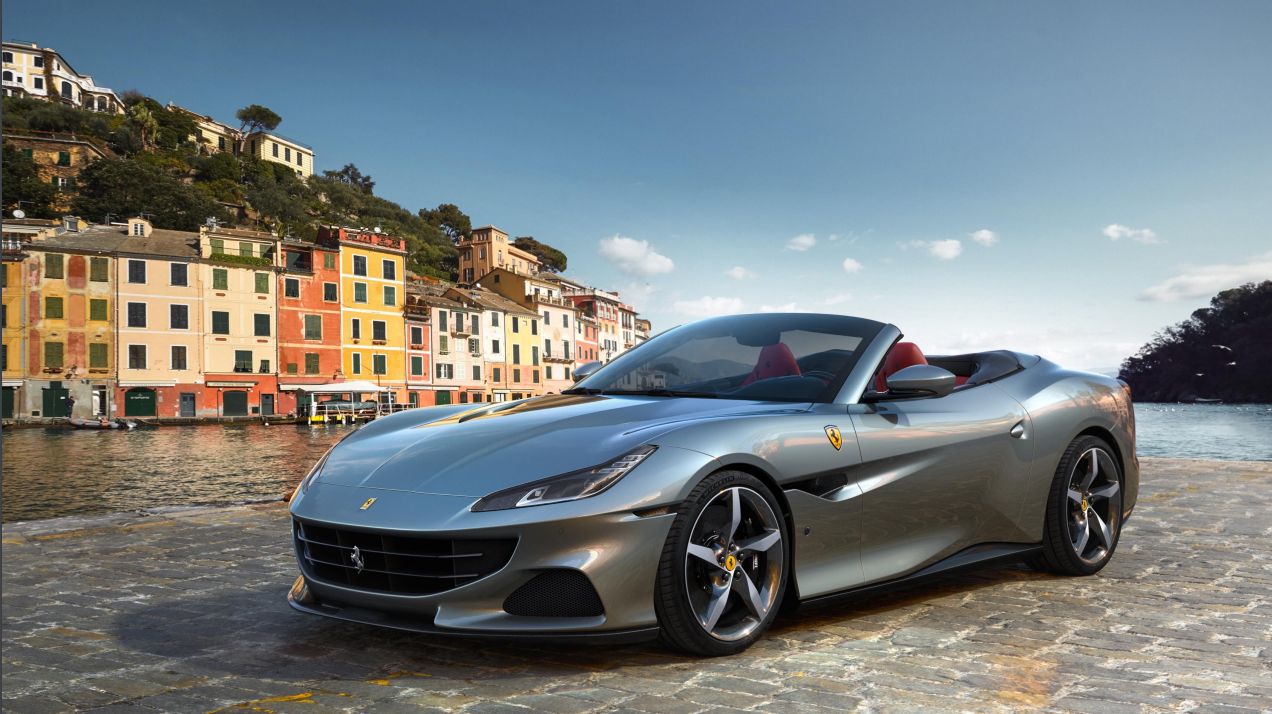
The latest version of the Portofino sees the F154 V8 twin-turbo engine’s power creep up from 441kW to 462kW at 7500rpm, while the car also gets an 8-speed twin clutch transmission that weighs just 96kg and replaces the old seven-speed unit. It’s not the same unit as the SF90 Stradale, instead featuring a longer final drive and a mechanical reverse gear.
Ferrari also promises zero turbo lag, which is quite the claim. Variable Boost Management ramps up boost as the car ascends the gears, reaching 760Nm in 7th and 8th ratios. The company claims the M knocks a second off the Portofino’s sprint to 200km/h.
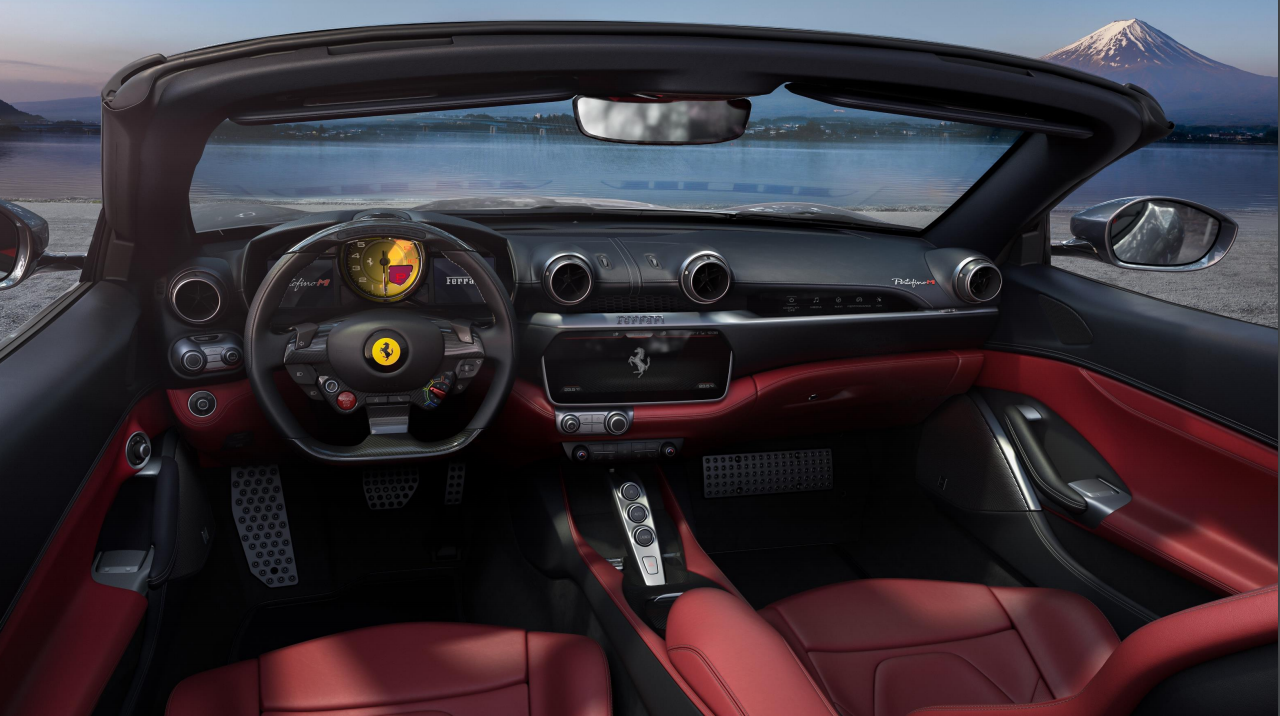
Unlike the old Portofino, which featured a rudimentary three-position manettino with Comfort, Sport and ESC off modes, the latest car gets those three modes as well as Race and Wet settings, mirroring that of the Roma. Ferrari, however, is at pains to stress that the Roma is not a Portofino M with a hardtop and the Portofino M is not a cabrio Roma. The company claims the chassis shares only a 30% parts commonality and the two vehicles can coexist to satisfy different customer profiles.
The styling of the car is largely evolutionary, Ferrari claiming that design should serve function, and that the function in question is performance and fun. Aero has been tweaked and there is a new exhaust system and alloy wheel designs. The interior has also been refreshed, with the addition of a 10.25-inch touch screen front and centre. Both Android Auto and Apple CarPlay are integrated.
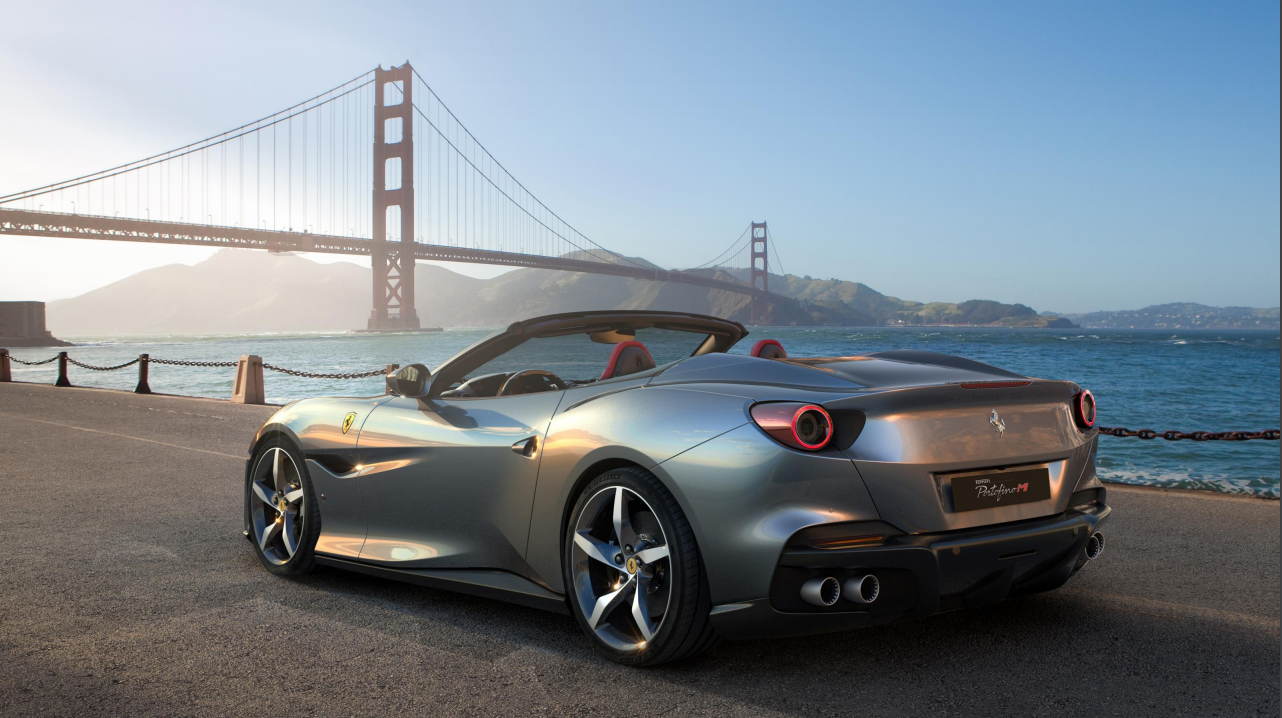
Deliveries begin in Europe in Q2 2021 and Ferrari has mentioned an initial price of 206,000 Euros, with Australian pricing to be announced at a later date. Ferrari has also announced a seven-year care package for the vehicle with intervals of 20,000km or once a year with no mileage restrictions. We’ll have more details as they become available, but it looks as if Ferrari’s entry-level model is about to offer a good deal more for the keen driver.
Days after the Ford Ranger Tremor was revealed in the United States, it sounds like Aussies are about to get a similar product after Ford Australia dropped a teaser campaign on its Instagram account.
The Ranger Tremor in the US is effectively a lower-spec Ranger Raptor (which isn’t available Stateside), fitted with Fox Racing off-road dampers, increased ride height, 32-inch off-road tyres, front coilovers with leaf-spring rears and trim enhancements including suede insert seats and an exterior sticker pack.
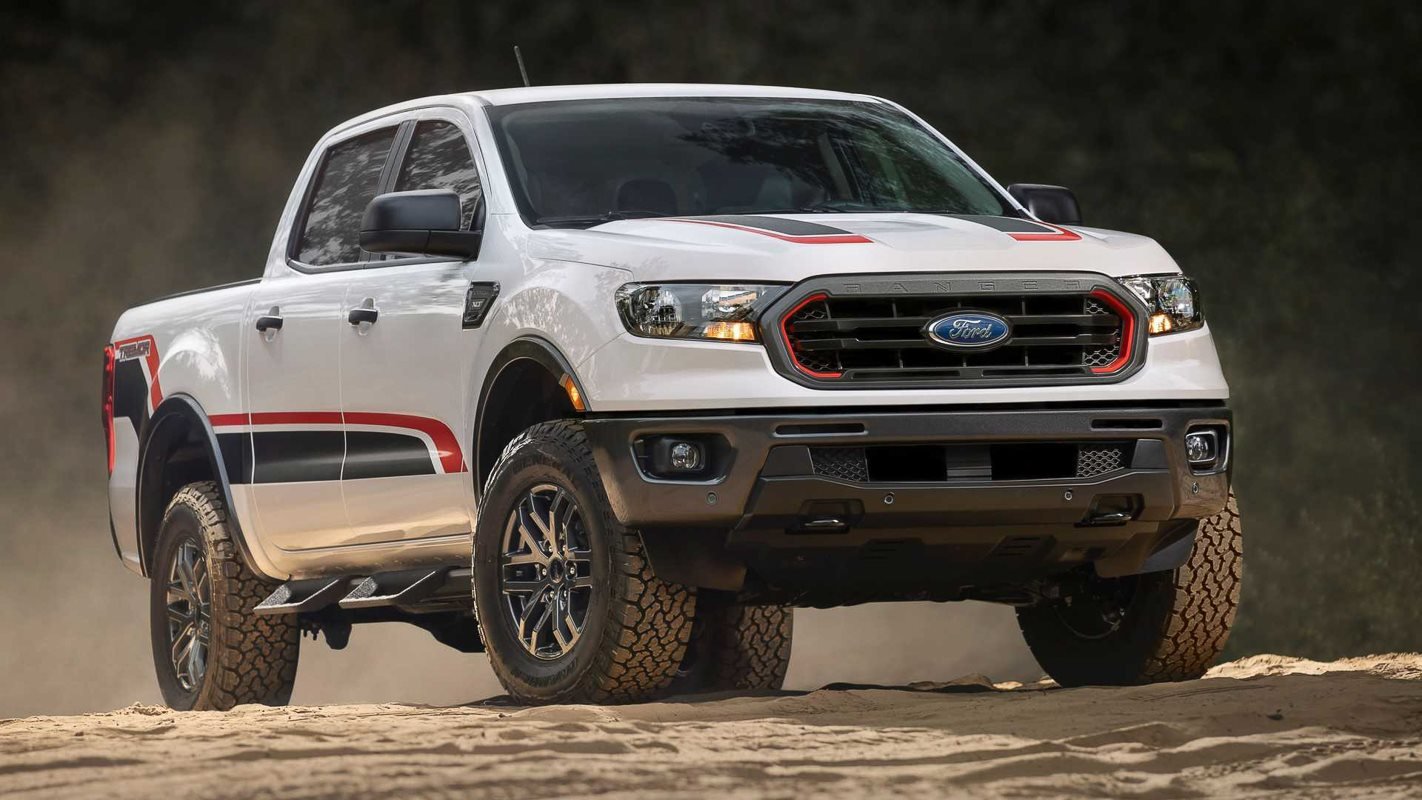
From the brief glimpses we can see, it seems like a similar amount of kit will be offered on Australia’s version.
https://www.instagram.com/p/CFLuhOGAJ5X/?utm_source=ig_embed&utm_campaign=loading
The Fox shocks, heavy-duty side steps, black-out roll bar, red stickers, auxiliary blank buttons for aftermarket equipment and underbody protection were all caught on tape in the short teaser video.
There’s also a high-mount tow bar for improved off-road clearance and a set of all-terrain tyres similar to the US-spec Tremor.
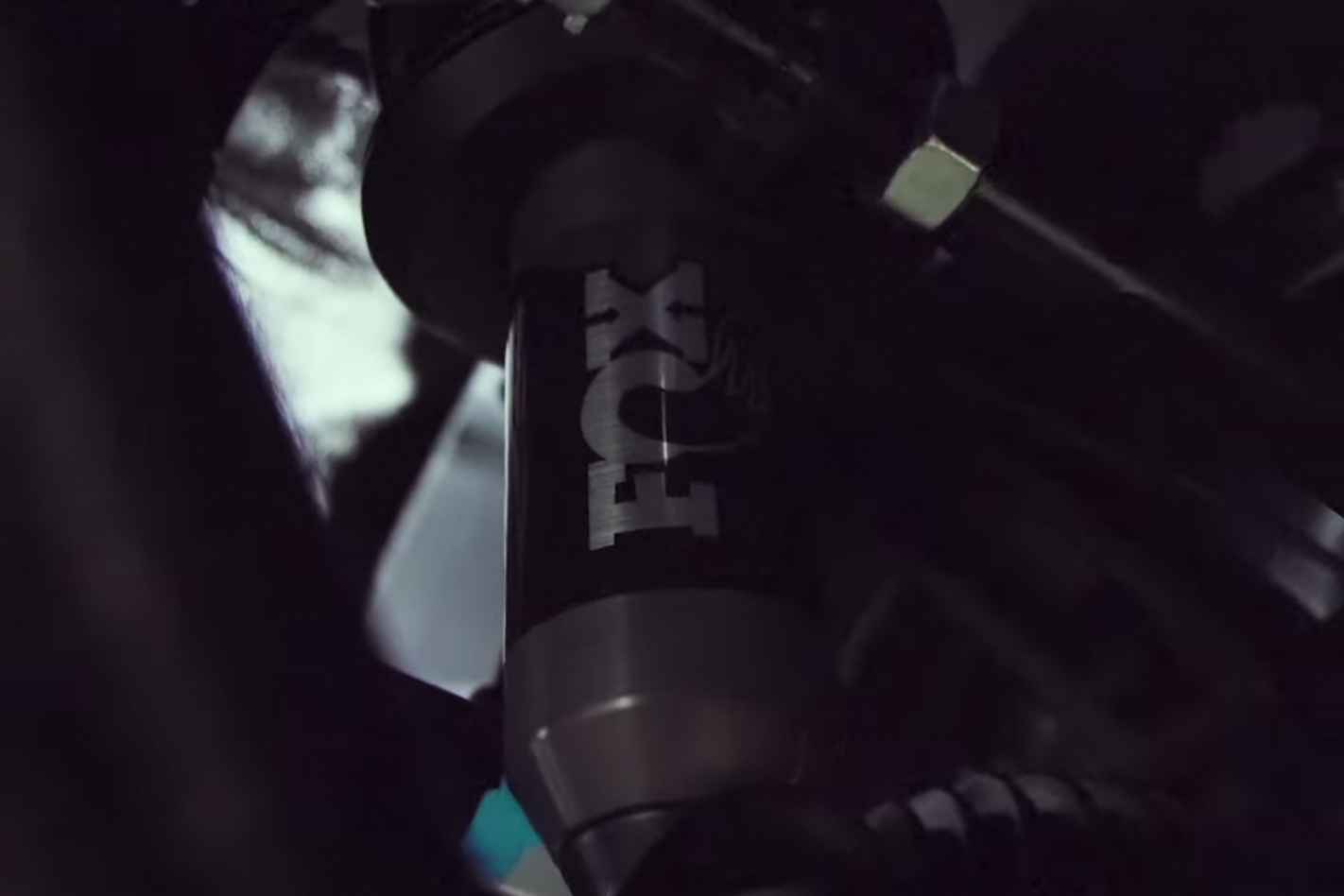
That amount of kit clearly points to a more substantial special edition than current offerings, leading us to believe that this newcomer will be a more affordable Ranger Raptor.
While the US-spec Tremor is powered by a 200kW/420Nm 2.3-litre Ecoboost four-cylinder petrol engine paired to a 10-speed transmission, we expect the Australian version to stay the course with diesel engines.
That’ll either mean a 2.0-litre four-cylinder bi-turbo diesel engine with 157kW/500Nm or a 3.2-litre five-cylinder turbo diesel with 147kW/470Nm – and most likely just the former.
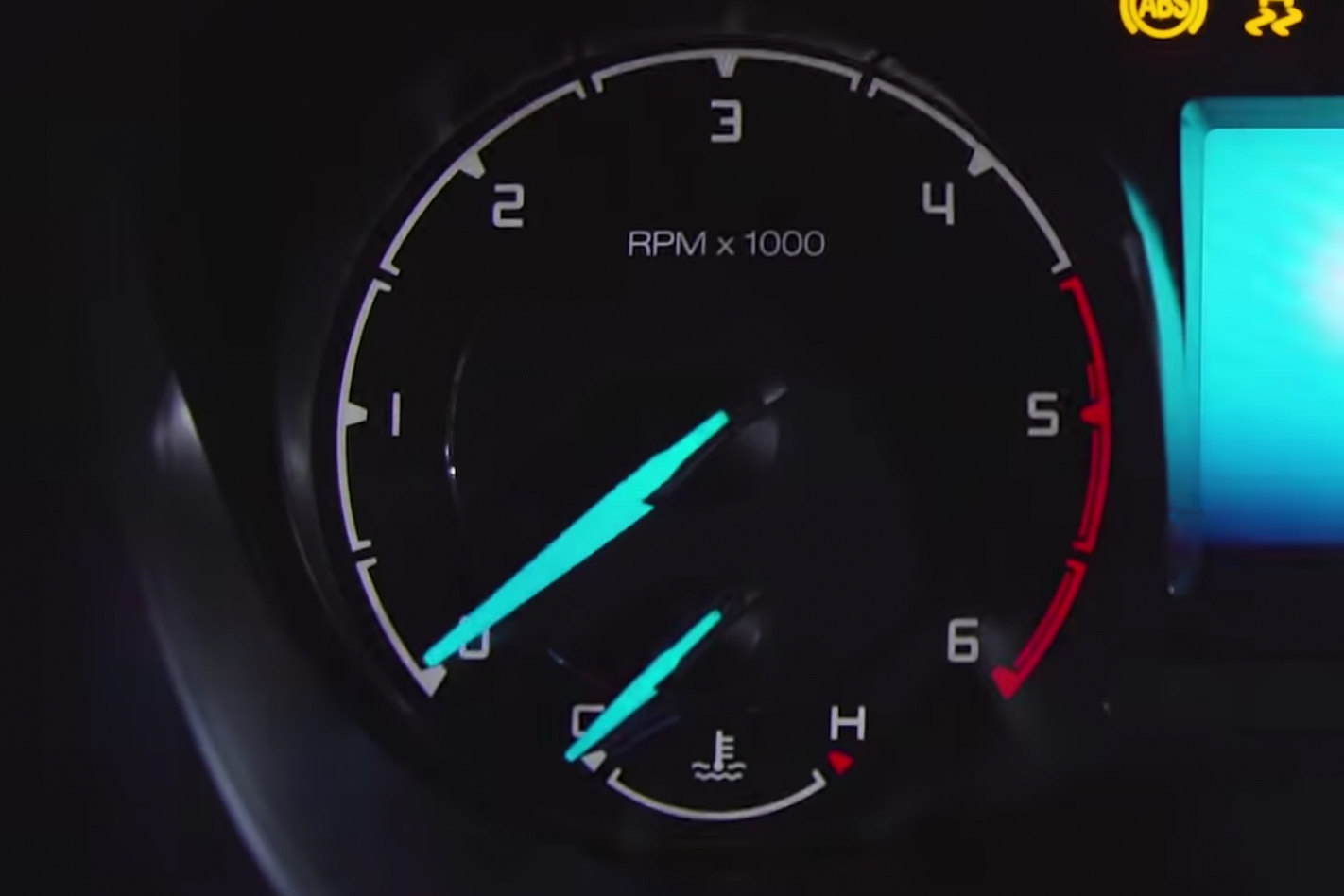
We asked Ford Australia for further details but it’s keeping quiet on what this new variant is and when it’ll see the light of day.
However, don’t expect a long wait after the seeing amount of detail revealed in the teaser video.
This mysterious new Ranger will add another feather in the cap of Aussie Ranger special editions joining the Wildtrak X, Tradesman, FX4 and Sport, ahead of an all-new Ranger which will be revealed toward the end of next year.
In the mean time, stay tuned to WhichCar as we pass on further information regarding this special edition as soon as we get it.
Jaguar has unleashed its new-look 2020 F-Pace, revealing a tweaked face, restyled interior and revamped engine line-up for the mid-size SUV, including a 294kW six-cylinder petrol engine option.
You’ll have to look closely to spot changes to the exterior compared to the previous F-Pace, however, since many hide within its unchanged silhouette.
For instance, there’s a wider power dome on the Jaguar’s new bonnet, while new lights feature at the front and rear.
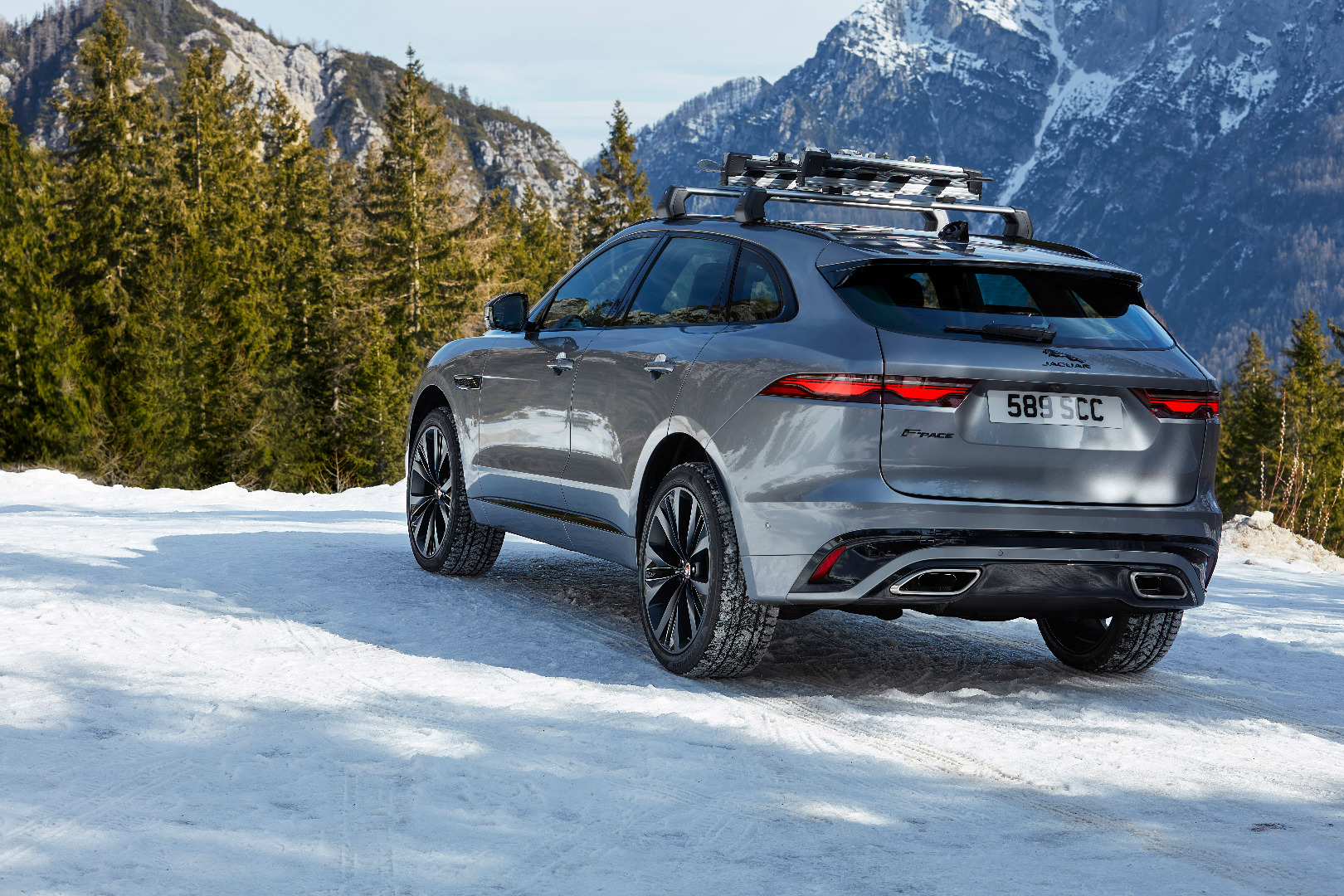
The rear slimline lights now feature a new ‘double-chicane’ design and match a redesigned rear bumper.
You’ll find a more thorough rework inside the cabin, with a larger 11.4-inch touchscreen replacing the old 8.0-inch item.
It comes loaded with a new infotainment program Jaguar calls Pivi Pro, which replaces the InControl Touch Pro program and which debuted on the Land Rover Defender.
The driver’s tacho cluster is also now completely digital.
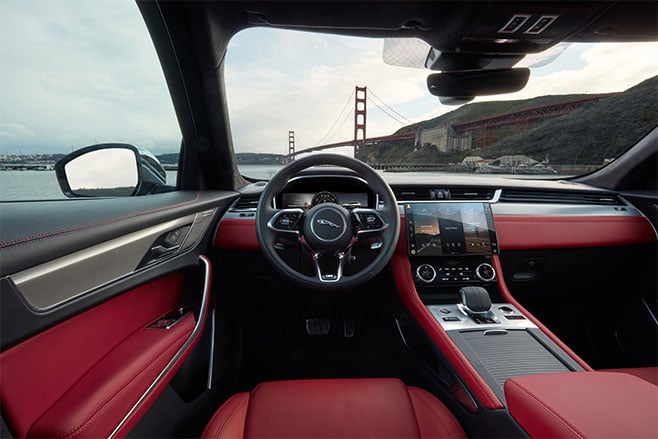
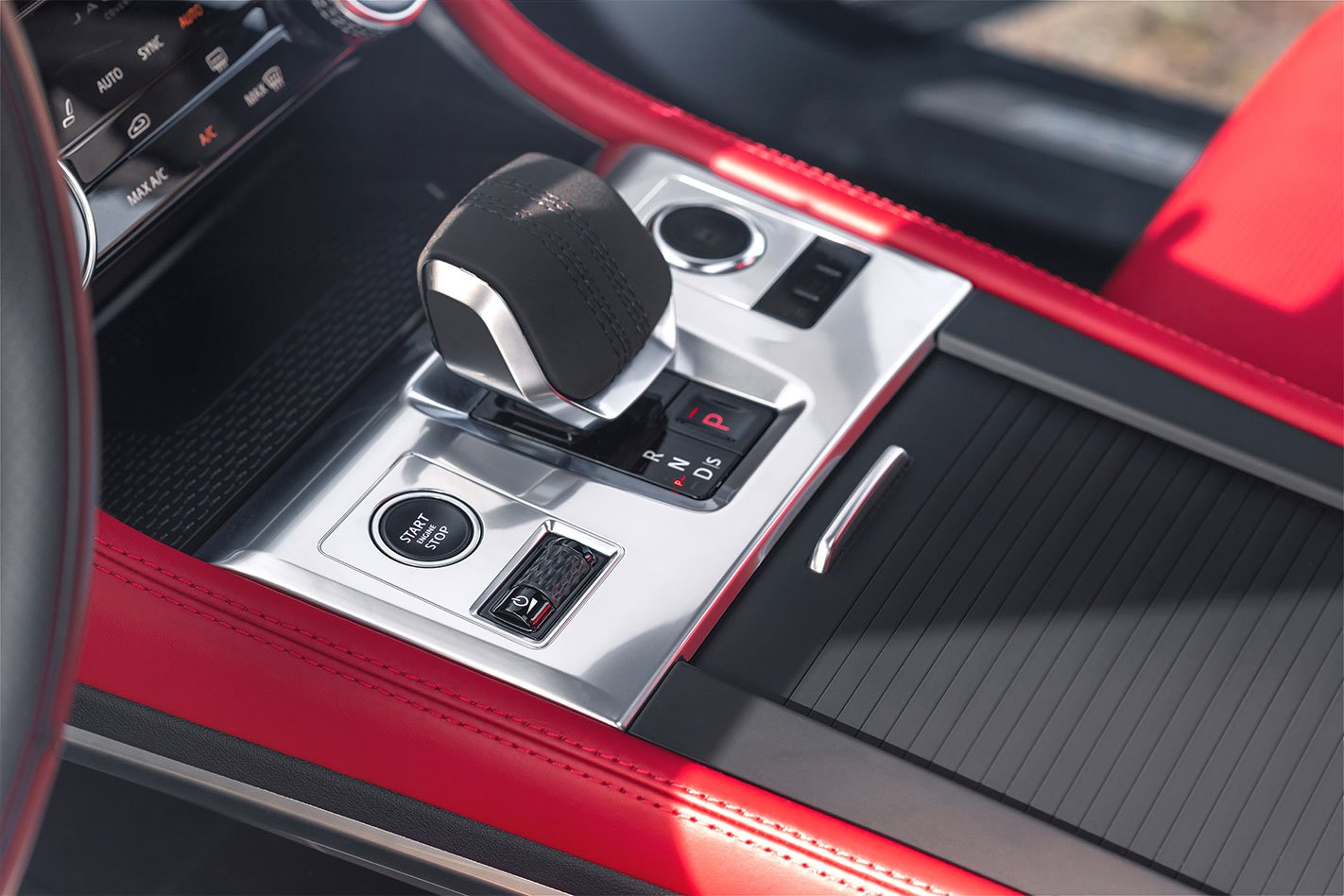
The other big news inside concerns the gear selector that has switched from the controversial rotary dial to a new stubby lever that’s finished with cricket ball-style stitching.
And if you’re expecting an apocalypse, Jaguar’s also fitted the car with a PM2.5 filtration system that can be activated via a ‘Purify’ button.
The most significant change for the new F-Pace exists underneath the bonnet, where it offers the choice of two new inline six-cylinder engines.
Both diesel and petrol options rely on mild-hybrid technology that recharges a 48-volt lithium-ion battery to improve coasting abilities.
But it’s the petrol-powered six that ups the stakes, using an electric supercharger that pairs with the twin-scroll turbocharger to boost the 3.0-litre unit to 294kW and 550Nm.
From a standing start, the F-Pace P400, as the petrol twin-charged six will be known, will hit 100km/h in a claimed 5.4 seconds. Both engines are mated to an eight-speed transmission.
The range is rounded out with a petrol four-cylinder (P250) and begins at $74,990 before on road costs and options.
But if you want to get into the new six-cylinder, the 221kW twin-turbo diesel will start at $94,940 and the petrol six (P400) at $109,150.
The Hyundai Tucson has been doing a great job of ushering in a new styling direction for the South Korean giant, with most in favour of its bold, angular aesthetic.
Look beyond the fresh panelwork, however, and those of us who believe that form should follow function keep returning to the same question.
What’s the fastest Tucson that will be offered? More to the point, will there be a Tucson N?
It may not have escaped your attention that a Korean website called Autospy published the following image, which it claimed was an internal Hyundai document that details plans for both a Tucson N line and a full-fat Tucson N.
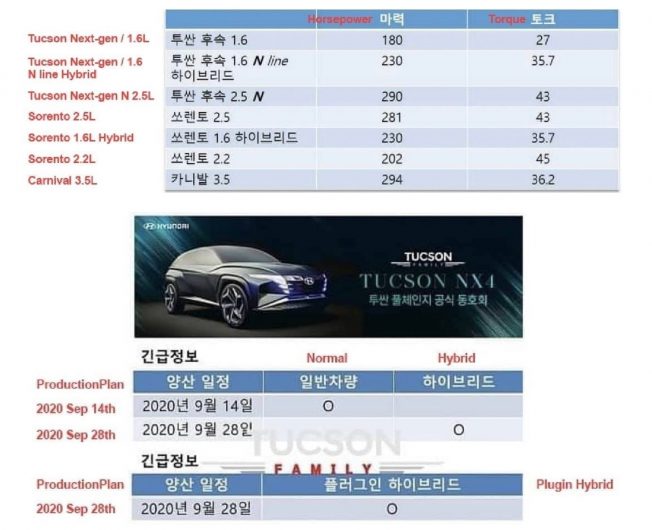
Translated into metric measures, that’s 171kW for the Tucson 1.6T hybrid and 216kW for the N proper. These figures would seem to tally with the stated power output of the forthcoming 1.6-litre (171kw/348Nm) and, given that the Tucson is already getting a 2.5-litre four-cylinder engine, the N’s figure isn’t far off the 213kW turbo four that’s headed for the Sonata N line.
Small problem, though. It’s not enough power. The boss of Hyundai’s N division, Albert Biermann, has made no secret of his desire to develop high-performance SUVs, and the Tucson, in particular, has been on his radar for a very long time.
This from 2018: “If you look at the Tucson today it is very relaxed, very comfortable to drive, but to have an N version requires a lot of power, nice transmission, nice handling, sportier tyres and lowered body,” he said. “The cars are out there and we can have a very good business with SUVs. We have a good platform with the Tucson to make a high-performance SUV.”
But in order to wear the N badge, it can’t just be a mats, flaps and sticker pack job. It needs to completely change our perception of Hyundai’s place in the pecking order.
Simply putting a Sonata N line engine into a heavier vehicle and badging that an N appears to make little sense from a brand management perspective.
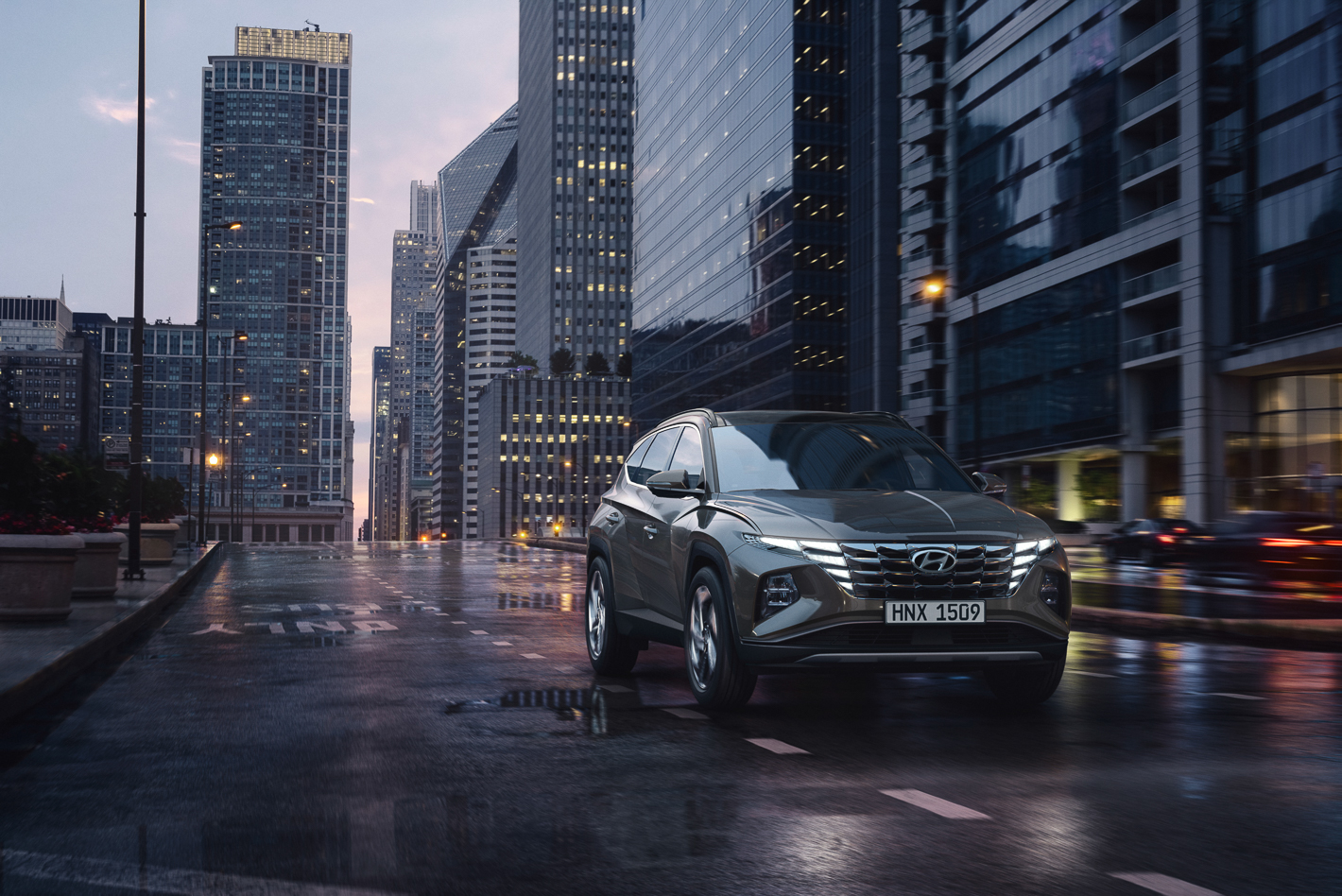
And the Tucson will be quite a sizeable thing when it arrives in Australia, as we’re only getting the long-wheelbase body that adds 75mm between the axles and 130mm to the length. That will likely mean a kerb weight in the region of 1750kg, which would translates to a 123kW/tonne power to weight ratio, given a 216kW powerplant.
An Audi SQ5 develops 134kW/tonne and even a BMW X3 M40i is good for 141kW/tonne. Just for some measure of perspective, an X3 M proper is a whopping 190kW/tonne. Obviously price plays a part in assessing the relative value propositions here, but will Hyundai be content to go straight to the bottom of the class with its game-changing flagship performance SUV?
MOTOR asked Hyundai’s Head of Global Product Management, Lorenz Glaab about the prospects of a hot NX4 Tucson and, again, he wasn’t denying the company was interested.
“When we talk about N actually, this is a very exciting story and it’s also very close to our heart. I know that Australia is very fond of racing and high performance models and so are we, so we will keep on building our N models and our N story and we will not only keep the current story alive but our objective is to build up on that,” he said when asked about Tucson N.
“So the N model, if we talk about the strategy and the logic a little bit. The N model is about an increase in substance, an increase in performance and really make it race track capable. N line, per se, is about design. It’s about adding some features, accent colours, spoilers, metal pedals and such like. So N line is of the design side and N model really is about performance and additional substance. That is our direction going forward.”
This seems a change for Australia, given that the N line version of the i30 we’re used to is a semi-hot 150kW hatch, positioning N line as N-lite, if you will. Clearly that’s not going to be the case henceforth. N line is the optic pack. But what of a Tucson N proper? Here Glaab was keen to keep his options open.
“Nothing is impossible and we monitor the situation very closely. If we feel that it should make sense, that the appetite is there in a segment to have an offering, then we are able to move pretty fast,” he confirmed.
So there you have it. If there’s sufficient demand, it’ll be built and brought to market rapidly, suggesting the hard yards of chassis development and electronics calibration have been done already.
And, as Glaab hinted, there’s demand in Australia, at the very least, and it’s hard to see significant markets like the US, the UK and Germany turning their noses up at a hot Tucson.
That’s about as close to a green light as you’ll get from a senior executive without laying all the cards on the table. Now, about that vexed issue of power…
This is the Nissan Z Proto. It’s currently just a concept car, but it’s expected to foreshadow the introduction of a new Z production car dubbed 400Z and scheduled to appear in 2022.
Concrete technical details are relatively thin, with the concept intended to be more a design peek than a performance preview, but Nissan has provided enough to whet our appetite.
The headline act is that there will be a twin-turbo V6 under the bonnet – likely the 298kW/475Nm 3.0-litre unit from the Infiniti Q50 Red Sport – which will connect to a six-speed manual gearbox, though an automatic is also being developed.
UPDATE, August 18 2021: The new Nissan Z has now been officially revealed. READ IT HERE.
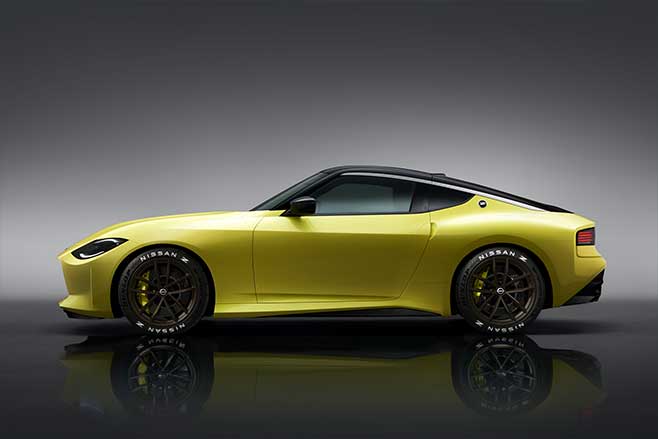
At 4382mm long, 1850mm wide and 1310mm tall, the Z Proto is 117mm longer, 5mm wider and 5mm lower than the 370Z it replaces.
It also has a much more substantial footprint, its Dunlop Sport Maxx tyres measuring 255/40 at the front and 285/35 at the rear, an increase of 30mm and 40mm respectively.
The dynamic development of the new Z will be led by Hiroshi Tamura, Nissan’s chief product specialist for sports cars.
“With the Z, we’re bringing drivers the excitement of a pure sports car,” he said. “It is a vehicle that creates a connection with the driver not just on the physical level, but emotionally, and responds to the driver’s impulses.”
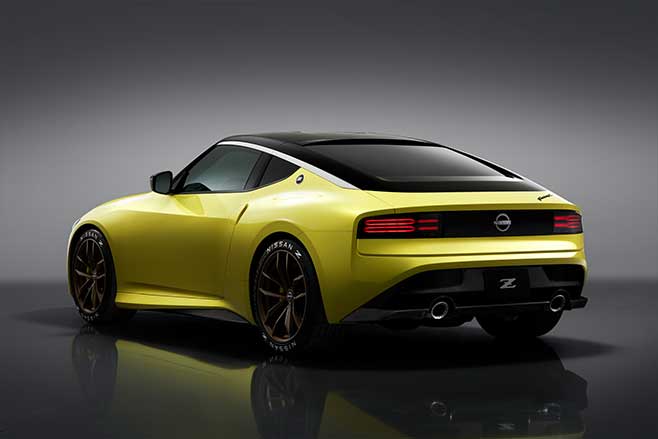
Nissan’s design boss, Alfonso Albaisa, said of the styling process: “Our designers made countless studies and sketches as we researched each generation and what made them a success. Ultimately, we decided the Z Proto should travel between decades, including the future.”
As such, the shape of the bonnet and the LED headlights hark back to the original S30 Z, while the grille’s rectangular shape is a nod to the current Z and the rear offers a modern interpretation of the taillights found on the Z32 300ZX.
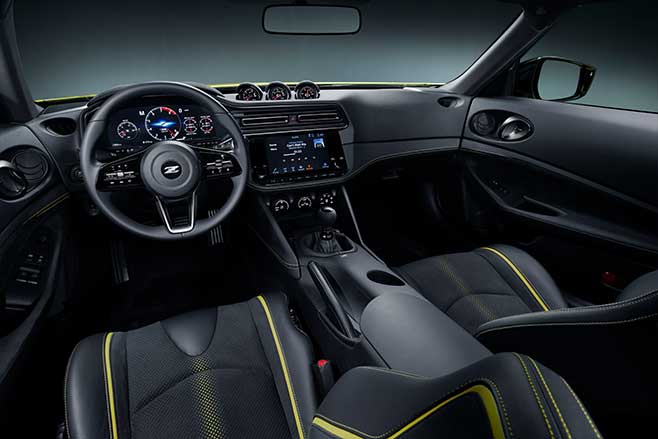
Retro touches continue inside with the dash-mounted gauges and circular side vents. There’s plenty of modern tech, too, including a 12.3-inch digital instrument display and large central infotainment touchscreen.
While it’s exciting that Nissan is committed to offering a powerful, rear-wheel drive, manual gearbox-equipped sports car, Tamura suggests the development process is likely to take two years.
If this comes to fruition, it will mean that the bones of the 400Z can be traced right back to 2001, when the FM platform on which the 350Z and 370Z ride upon, was first introduced.
As a company, Nissan is struggling, enduring huge losses in the wake of the COVID-19 crisis and soldiering on with an ageing model line-up.
Its part in the wider Nissan Renault Mitsubishi Alliance seems to have had no bearing on the reinvention of the 400Z; developing or modifying a new or existing sports car platform would make more fiscal sense if the cost could be shared across multiple brands, but there’s no evidence that this will occur in this case.
We’ll bring you more news on the Nissan 400Z as it comes to light.
Contributing: Tim Robson
Two of the world’s wealthiest people have entered into an online EV slanging match highlighting the divide and difference of opinion that still surrounds the future of transport and zero-emissions vehicles.
It started with an update from environmental and humanitarian philanthropist Bill Gates, who published a post on his blog gatesnotes.com warning that climate change could result in a world far more grim than the impact of the COVID-19 crisis.

At a point in the business magnate’s alternative transport summary, Gates mentions the imminent arrival of electric trucks and how battery powered utes will soon be a reality.
“You’ll even be able to buy an all-electric pick-up truck soon thanks to legacy companies like GM and Ford and new carmakers like Rivian and Bollinger,” he said, before touching on the prospects of electrification in larger classes of vehicles.
But while Gates is clearly excited about the future of light vehicle electrification, he is less confident of battery power in larger vehicle classes and heavy haulage.
“Electrification isn’t an option for many types of transportation,” he said. “Even with big breakthroughs in battery technology, electric vehicles will probably never be a practical solution for things like 18-wheelers, cargo ships, and passenger jets.”
Perhaps it was the dismissal of battery power for heavy goods transport or the omission of Tesla’s Cybertruck in his examples of all-electric pick-up trucks, but either way, Tesla founder Elon Musk took umbrage at the claims and responded in a manner that has become synonymous with the entrepreneur.
In a tweet, Musk snapped back at Gates claiming the fellow billionaire “has no clue” about electric trucks.
Musk is not known for his diplomatic responses to opponents or any kind of negative press surrounding his various interests, but this latest comment by Gates has struck a particularly raw nerve.

Not only does Tesla take the side of heavy goods transport with battery power, the company is already on their way to produce one – a battery powered tractor unit that has a range starting from 480km and a starting price of about US$150,000 (A$205,000). Gate’s latest remarks imply Tesla has got it wrong.
So who is right? There’s no doubt the Californian start up is committed to the battery truck cause and is on course to deliver its first commercial vehicles, it says, but the company’s critics argue any amount of promises and enthusiasm is meaningless until the first vehicles are commissioned and out earning their keep.
While the majority of the world’s light vehicle manufacturers are very much in support of electrification with battery models rolling out thick and fast, the heavy vehicle industry is not so unified with Tesla on the feasibility. Many believe the future of commercial transport is hydrogen.
Volvo and Daimler (Mercedes) have recently joined forces to develop heavy vehicle hydrogen fuel cell systems, and Hyundai already has 50 examples of its Xcient hydrogen truck doing the rounds on Swiss roads.
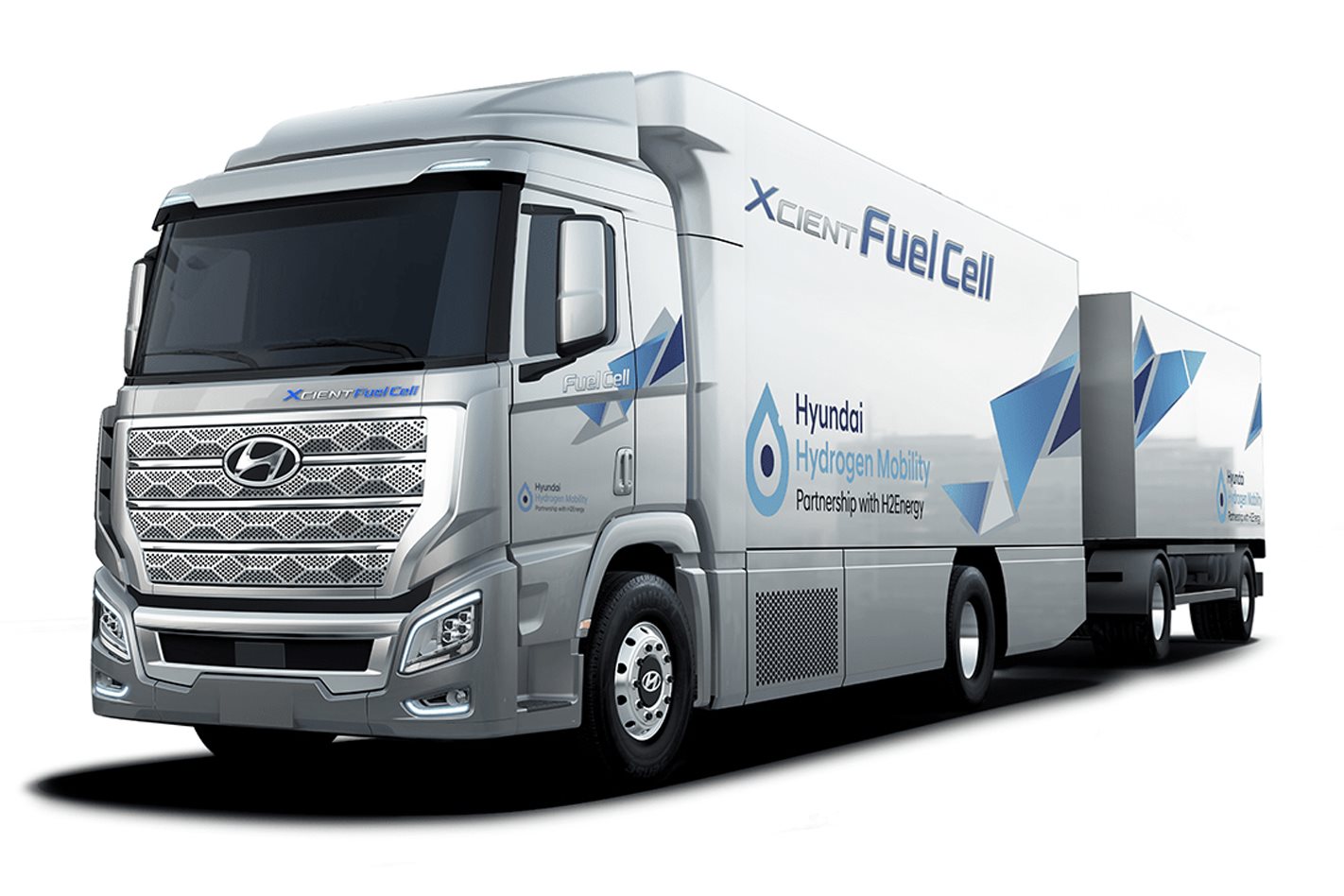
That said, Volvo is also investigating the possibilities of battery power for heavy haulage in parallel with its hydrogen projects, while Chinese electric giant BYD is readying a fleet of electric heavy trucks, some of which will go to work in the US.
Furthermore, Daimler/Freightliner has the eCascadia that is chalked for production in 2021, while Nikola Motors is very much on the fence with both battery and fuel cell technology promised for its range of heavy vehicles – though you’ll have to wait until 2028 for those.
Until the major manufacturers put all their electric eggs in one basket, the feasibility and future of zero-emissions heavy goods transport continues to hang in the balance.
Lexus is ready to bring sexy back to Australia’s luxury drop-top segment when it debuts the incredible LC 500 Convertible this month.
Not only that, but the new variant should also set our ears alight when its four-layer roof reveals the range topper’s 5.0-litre naturally aspirated V8, an engine that MOTOR nominated as one of the best sounding of 2018.
That’s probably why you’ll see one tearing through tunnels in the brand’s campaign video, just above.
Lexus will welcome the convertible LC 500 at the end of the month when Australian dealers receive a limited edition that arrives in a special Structural Blue paint and white-and-blue leather interior trim.
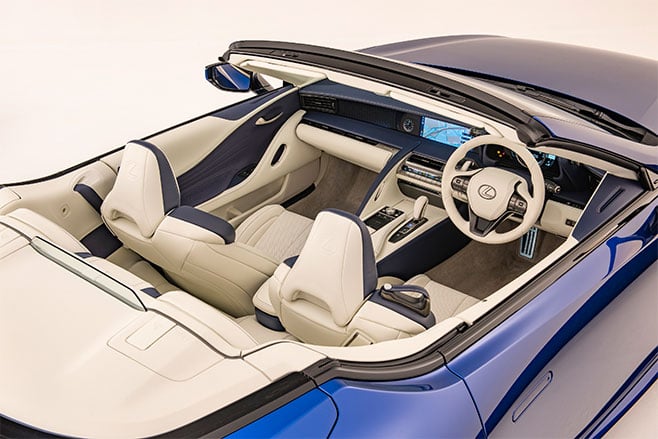
Only 10 examples are available with this four-layer hue that’s claimed to reflect higher “luminescence and saturation”.
However, we reckon the car’s sharp, angular lines would fascinate in any colour given Lexus engineers have worked to change as few body parts as possible when creating the convertible’s silhouette.
Only the front pillars, rear guard and boot lid have been modified, which has allowed front and rear headroom to stay within 11mm and 4mm of the coupe, respectively. That’s quite an achievement given the roof sports a sound-insulating layer and three fabric ones. The outside is finished in cloth.
You’ll be able to match 10 exterior colours, some of which you can find in this article’s picture gallery above, with four sets of interior colour sets to make one of 40 combinations. Hydraulics power a roof mechanism that’s made from aluminium and magnesium, ensuring it can drop in 15 seconds while travelling at speeds under 50km/h.
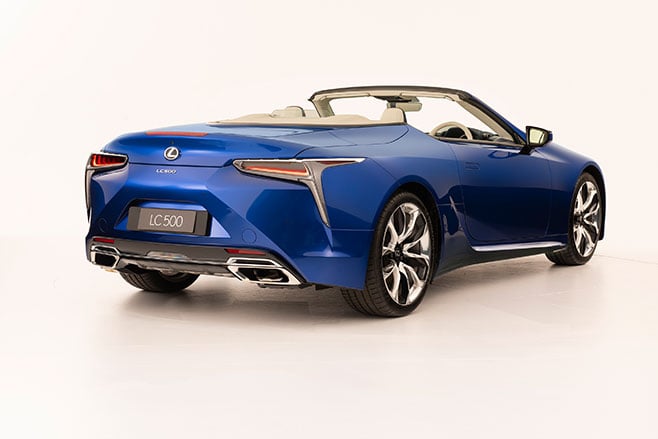
Once there, you’ll not only have 351kW/540Nm underfoot but one of the greatest sounding Japanese engines since the LFA at your ears, combined with the LC500’s familiar 10-speed automatic transmission.
We’re yet to find out just how much the roof and any extra chassis bracing has penalised weight on Aussie models, so stand by for a 0-100km/h figure.
But the chassis is loaded with clever tech – including forged aluminium components, a hollow roll bar, a chassis damper and rear steering – to help it handle the extra flab.
As for price, we’re waiting to hear from Lexus on the special edition LC500 Convertible and the standard range, but we’ll update the article when that comes to hand.
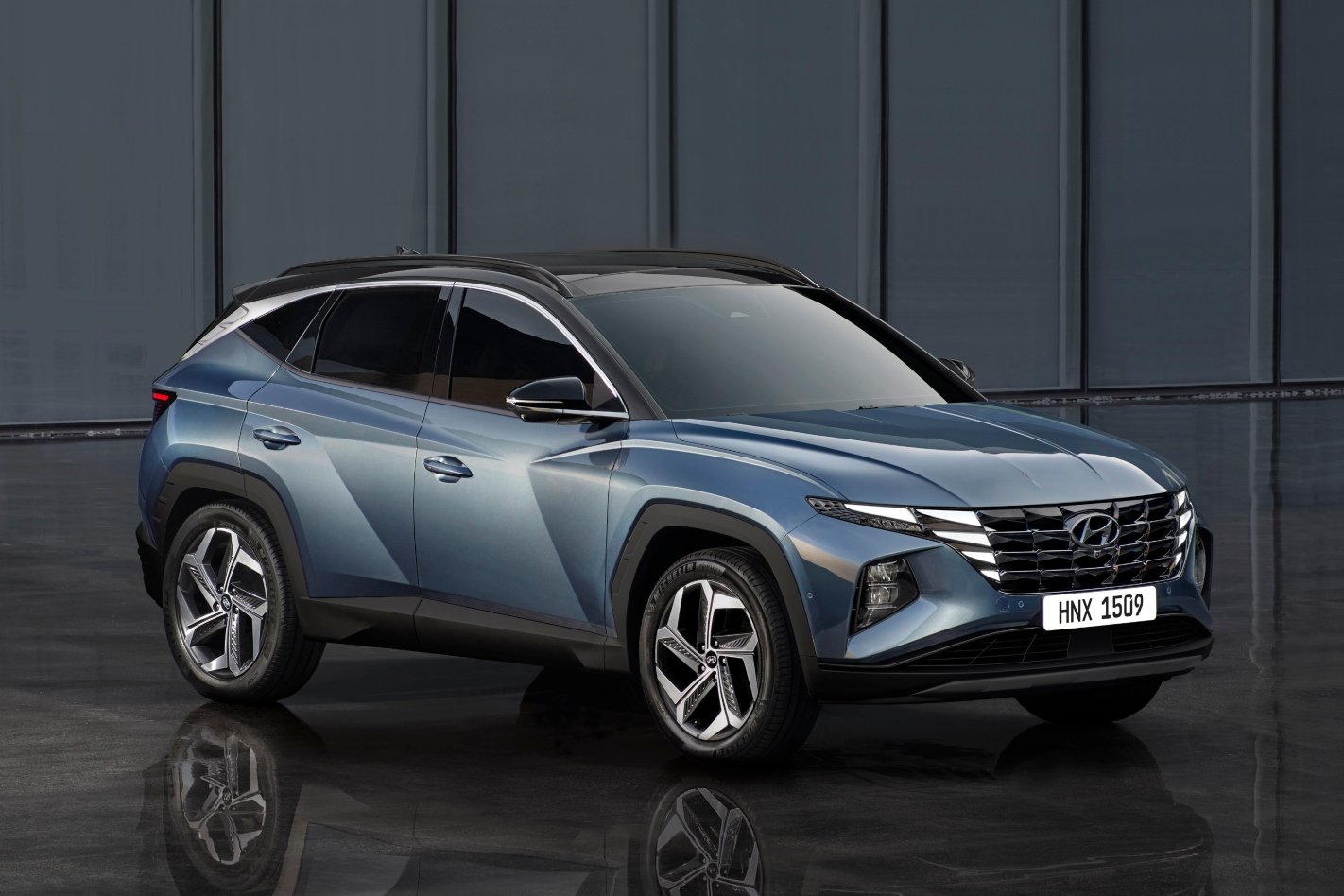
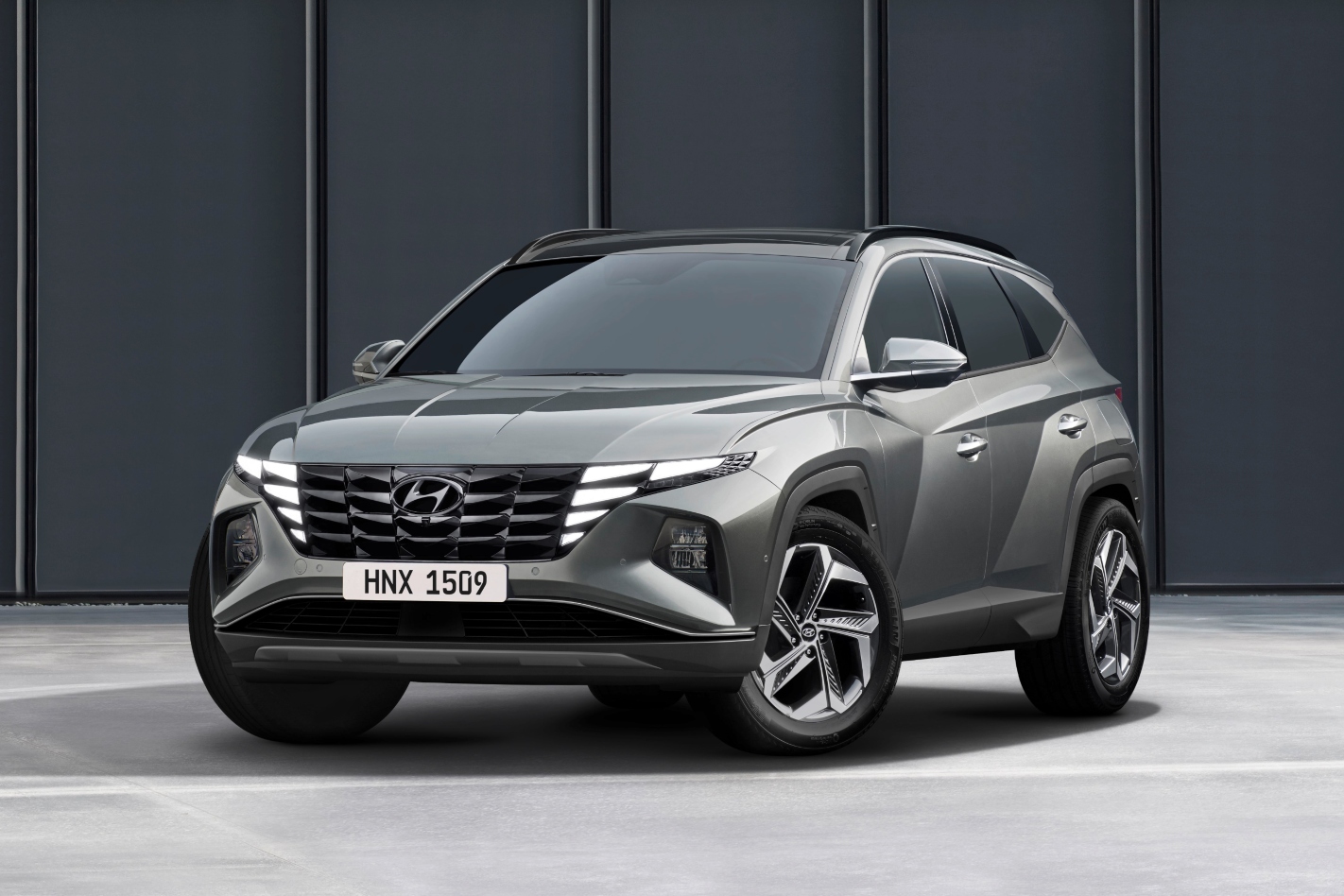
Hyundai has unmasked its 2021 Tucson mid-sized SUV, revealing a dramatic change in design direction and a model packed with enough safety, comfort and convenience technology to take the fight to some serious premium competition.
The second-generation Hyundai Tucson (or fourth if you count the two generations of ix35 before it) will touch down in Australia during the first half of 2021.
While Hyundai has previously revealed the model will be built in two wheelbases, it has now confirmed Australia will only be offered the longest of the pair.
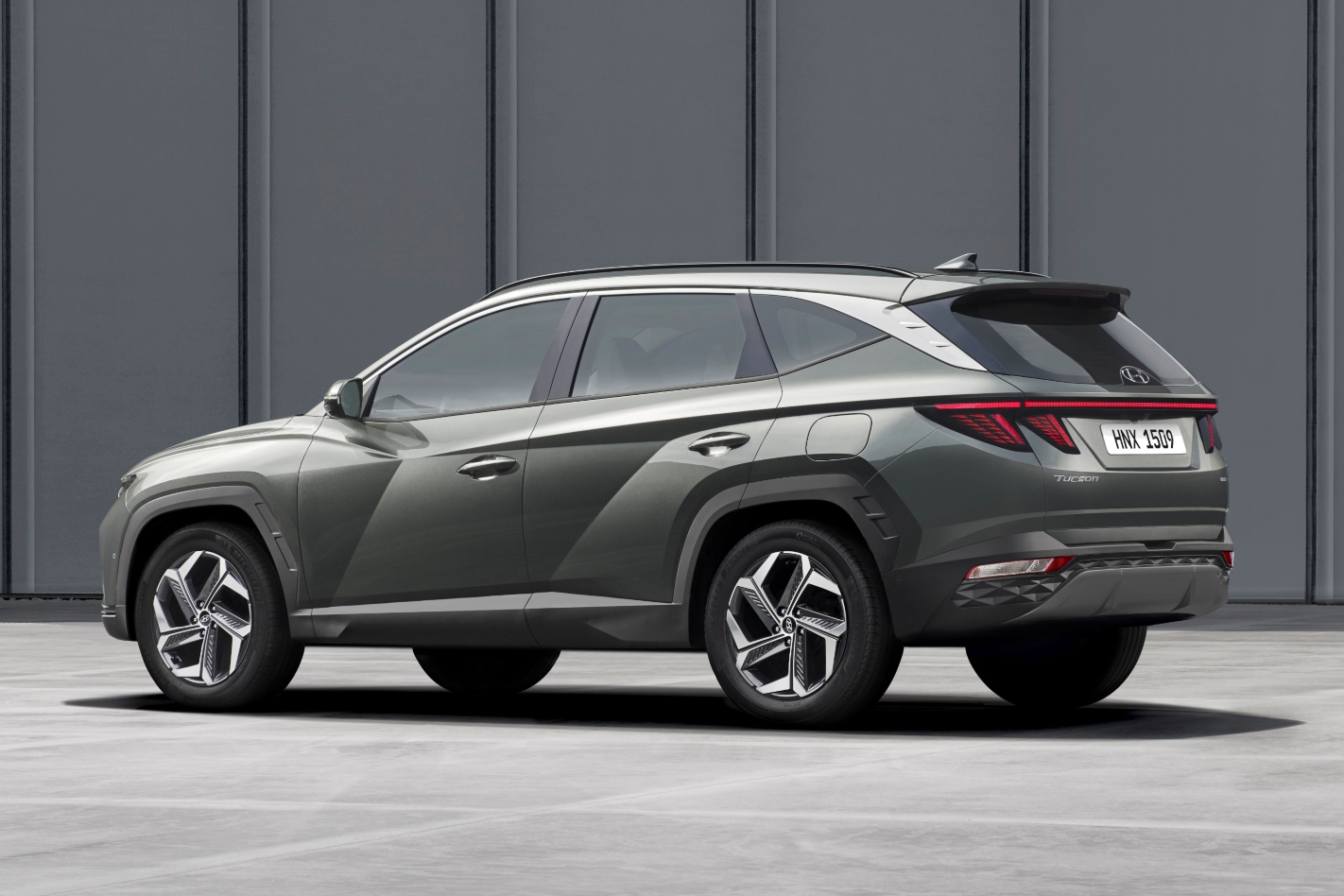
Volkswagen’s Tiguan and longer Tiguan Allspace, therefore, won’t get a direct rival in the new Tucson, although the new model does pack a host of other features to worry the German marque, along with Mazda’s CX-5 and the Toyota RAV4.
Better still, the model will be the next to receive Hyundai’s N-Line treatment. While Europe already has a version of the Tucson N-Line, the new model will mark the second Hyundai to be offered with the sporty enhancements in Australia, following in the i30’s tyre tracks.
Design
Leading the Tucson charge into new high-end territory is a design that keeps the promises made by previously released teaser images.
Instead of dumbed-down and pedestrian styling emerging from the dusky hype campaign shots, the new Tucson’s ‘parametric dynamics’ look is just as arresting in full light.
Both its angular flanks and wheel arches borrow a little Lexus UX and NX DNA albeit with more restrained elegance, while the aerodynamically slippery nose has a touch of Mercedes EQC about it thanks to the Pegasus wing-shaped monolithic headlight and grille dominating the front end.
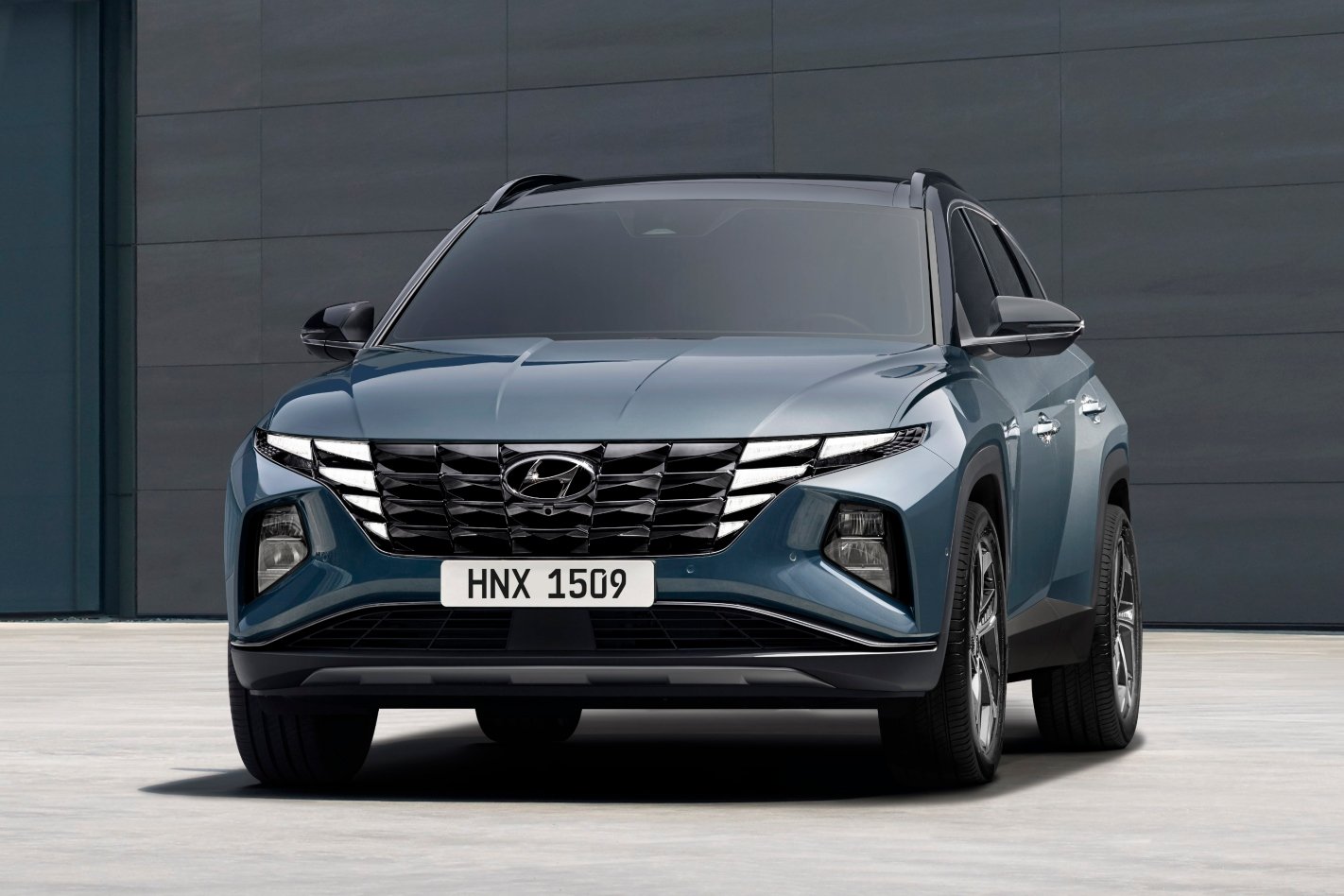
The tail end doesn’t let the side down, either, with more bold design signatures. There are aggressive blade-like D-pillar finishers and tail light assemblies that tie together with a continuous, full-width light strip.
The after-dark effect is striking and unmistakable.
Its dramatic leap into a new outfit is matched by a similarly significant step up in technological levels for the Tucson.
Interior tech
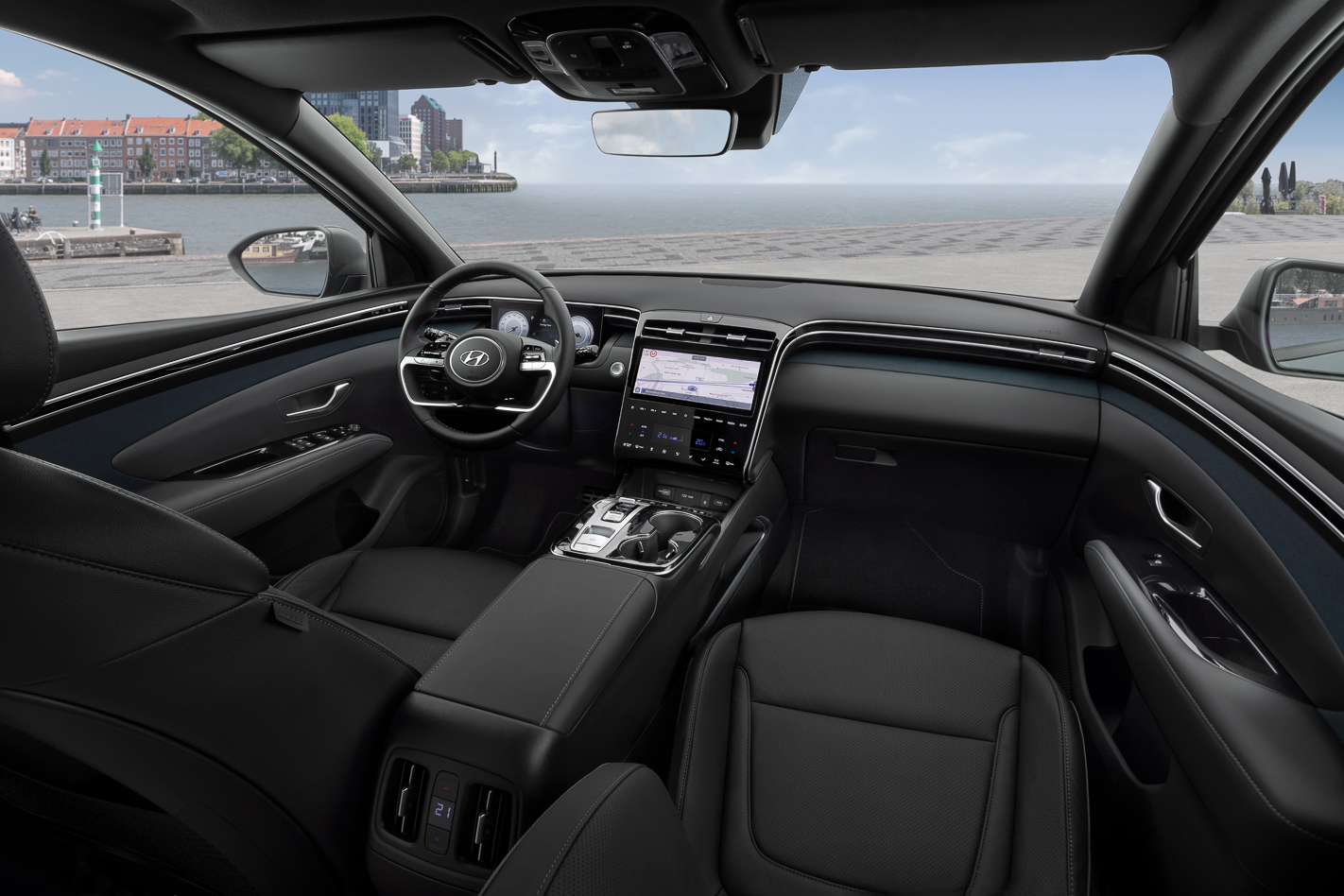
On the inside, the new interior is bathed in ambient mood lighting that’s customisable through 64 colours, picking out the new cabin details such as the dashboard, which blends into side doors and a vertically oriented centre fascia that cascades into the console “like a waterfall’” says Hyundai.
Nestling in the dash is an expanse of digital screens with touchscreen function. Dual 10.3-inch vertically positioned displays form the centerpiece, along with a fully digital driver’s cluster.
There’s a smaller 8.0-inch touchscreen for more affordable variants, but all offer smartphone connectivity that allows the pairing of two devices simultaneously and Android Auto/Apple Carplay.
There’s also a new Car-to-home feature that allows customers to connect and control functions if their home is ‘smart’ enough, including air conditioning and lighting, for example.
The technology works in reverse and can be used to start and warm or cool the Tucson before entry.
Central to the ground-breaking features is Hyundai’s Digital Key smartphone application which adds another clever feature to the Tucson’s repertoire and keyless freedom.
Once installed, the phone acts as the ‘key’ and is used to unlock and start the vehicle as well as enabling remote starting or panic mode up to 27 metres from the car.
Engines and transmission
The engine line-up has been given a shake-up as significant as the design and tech overhaul. While the current Tucson range offers a naturally aspirated 2.0-litre petrol and turbo diesel of the same size, the 2021 Tucson introduces a 2.5-litre naturally aspirated four-cylinder and hybrid technology along with a returning 1.6-litre turbo in hybrid form.
With the capacity increase, the non-turbo engine gets a performance boost from 122kW/205Nm to 141kW and 246Nm. With its new hybrid assistance, the 1.6-litre turbo four-cylinder power rises to 171kW and 348Nm combined.
Significantly, the hybrid Tucson has been engineered as a mild hybrid as well as a plug-in, although its maker has not yet revealed the pure electric range of the PHEV, nor has it released fuel economy or performance figures for any variant.
WhichCar understands the Australian line-up will be a more conservative offering that mirros the current three-engine range, but both the HEV and PHEV are under consideration.
An eight-speed automatic transmission will be offered with the 2.5-litre petrol but Hyundai has not detailed gearboxes for other engines.
It’s likely the option of front-wheel drive as well as the company’s HTRAC all-wheel drive will be offered depending on the engine and transmission combination, as per the current line-up.
Driver assistance
A flurry of new driver assistance and safety technology joins the Tucson nameplate for the 2021 model including the features that are standard with the Hyundai SmartSense suite:
- Highway Driving Assist (HDA)
- Forward Collision-Avoidance Assist (FCA) with pedestrian detection
- Lane Keeping Assist (LKA)
- Lane Following Assist (LFA)
- Blind-Spot View Monitor
- Blind-Spot Collision Warning (BCW)
- Surround View Monitor
- Reverse Parking Collision-Avoidance Assist (RPCA)
- Remote Smart Parking Assist (RSPA)
- High Beam Assist (HBA)
- Driver Attention Warning (DAW)
- Blind-Spot Collision-Avoidance Assist (BCA) with Rear Cross-Traffic Collision-Avoidance Assist (RCCA)
- Advanced Smart Cruise Control (SCC) with Stop and Go
- Safe Exit Warning (SEW)
Click through the gallery at the top to view more photos of the 2021 Hyundai Tucson.
