There are few things more annoying than carefully trying to peel a sticker from your windscreen or other car glazing and leaving a stubborn sticky residue behind.
It’s a frequent occurrence in cars, and while registration stickers on the windscreen might be a thing of the past, there’s still parking passes, event stickers and even your footy team’s member stickers to think about.
Or maybe your car’s rear windows have been sticker-bombed by bored kids in the back seats? let’s go over a few of the most effective ways to remove stickers and the more persistent glue they leave behind, for sparkling car windows.
An easy way to start is by spraying some window cleaner on the offending article or dampening it with some rubbing oil or alcohol and leaving for 10 minutes. This helps the bonds in the sticker’s glue start to break down and make it much easier to peel off. Continue to rub alcohol over until no residue is left behind. Any final smears can be removed with less aggressive window cleaning products.
If you don’t have those items on hand, you can try preparing a solution of warm water and detergent and dabbing it on the sticker using a towel. If the mixture is left on the sticker for a few minutes, the heat in the water and soap will break up the glue and make the sticker easier to remove.
If you’re having trouble getting started with the peel, carefully use a razor blade to pry up a purchase on the sticker and then continue peeling from there. For really tough bonds, a razor blade in a simple holder can be a sticker’s worst enemy.

Holding the razor against the glass at almost the same angle as the glass allows it to cut under the sticker and free it from the glass. It’s important to keep the angle of the blade as shallow as possible to avoid scratching the glass. This method is so effective you can use it to remove almost anything including overspray after bodywork has been carried out.
Some other items you can use to ease the process are eucalyptus oil (sure to be found in any Australian’s medicine cabinet!) and even some WD-40 can do the trick.
As for those pesky stickers applied by children to the rear windows, all of the above can be effective. However, if the side glass has been tinted you might be in trouble.
The more delicate film applied to the window to protect occupants from UV is not as durable or resistant to cleaning efforts and there’s a greater chance of damaging it than plain glass.
The best advice for side windows is to never allow anyone to place any kind of sticker on the glazing – that’s even before we talk about the potential safety risks of obscuring the view out.
No matter which method you use, persistence should pay off so keep at it using the techniques above and you should have a clean windscreen and panes in no time.
UPDATE:
Another teaser from Nissan has revealed two more aspects of the Z Proto, which is to be revealed in full next week on September 16.
First, Nissan confirmed the manual gearbox present in the prototype for its next Z, something which had already been alluded to.
Second, the new teaser features the sound of the Proto revving, with what sounds very much like a V6 as expected.
See story continued below for full reporting on what to expect.
FULL STORY:
The Nissan Z Proto is only one week away from being revealed, says Nissan, which has continued to drop teaser after teaser for the last month.
“Modern technology, and a nod to 50 years of heritage,” says Nissan in announcing the imminent Zed car, which we still expect to be called 400Z.
The heritage aspect seems incredibly important to head designer Alfonso Albaisa, who shared a design sketch on Instagram (main image) that confirms at least the use of a very 300ZX taillight cluster design.
It appears, as the latest video (above) shows, the headlights are also inspired by a past Z, the first in fact.
https://www.instagram.com/p/CEl9fanFDdQ/?utm_source=ig_embed&utm_campaign=loading
“Projects with huge meaning do not come every day, on top of that, few projects trigger immediate “slide show” memories like Z,” Albaisa said on Instagram.
Finally, the latest video very much hints that another tradition will continue… the manual gearbox. The last few seconds show a driver’s hand placed on a shifter in the centre console, and while it’s hidden from view, the posture doesn’t exactly speak to an automatic shifter.
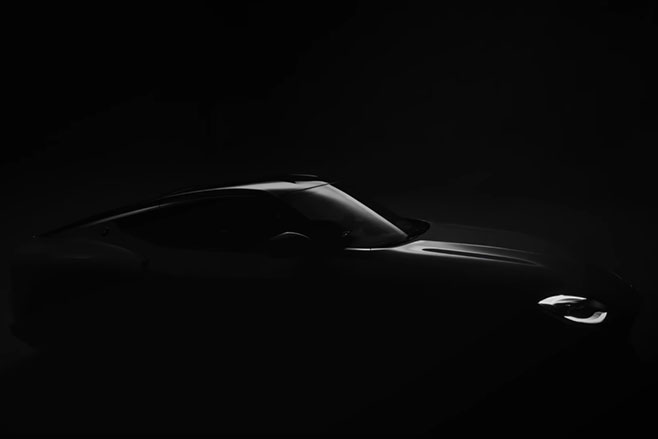
There are also new features that define a fresh design language, like a bonnet that follows a flatter plane and more angled slant to the front bumper. Meanwhile there’s a ‘Z’ emblem badge placed on the rear pillar in a nod to former Zs.
We can only speculate on further details at the moment but it’s rumoured the car will be known as the ‘400Z’ and borrow the twin-turbo engine from an Infiniti Q60 Red Sport.

With the current 370Z relying on an atmo V6 after 11 years in production, this would see it welcome at least 298kW/475Nm from the Q60 RS’s VR30DTT. Quite a step up from 245kW and 363Nm.
Otherwise the video supports the company’s bold new ‘transformation plan’ that it says targets sustainable growth over four years.
A sports car like the Z should also play a part in Nissan CEO Makoto Uchida’s plan to restore a culture of “Nissan-ness” in a company that’s been plagued with unfavourable press surrounding the performance of its brand alliance.
Nissan has just reported losses on its newly revealed 2019 financial results that run up to March this year and announced widespread cost cutting as it regroups, which includes reducing its “global product line-up” from 69 to 55 models.
And while we’re yet to see any signs of the next GT-R in this heavily SUV and pick-up ute focused line-up (there’s conjecture on whether it’ll survive a succeeding generation) the Z provides some hope for sports cars at the brand.
If you’re interested in men’s fashion, or even if you’re acutely aware of the social circles of particular rap artists, you know who Virgil Abloh is.
If you don’t, you’re probably wondering why he’s so interested in creating a modified Mercedes-Benz G wagon, which came about via collaboration with Mercedes’ chief designer Gorden Wagener.
The creative director of Louis Vuitton’s menswear sector worked with Wagener to design this, Project Gelandewagen.
Touted as a blend of ‘new luxury’ and racing elements, the car probably won’t make a lick of sense to anyone unfamiliar with Abloh’s MO.
It features an interior completely stripped and splashed with colours that most would consider clashing, while the whited-out motif is present everywhere else. Seats come from a Merc DTM car, while the steering wheel is modelled on that of the Project One hypercar.
A big red button in the centre console is the ignition, while there are no windows save the windscreen, and the instruments are all analogue as a ‘nod to classic cars.’
It’s designed to look like a race car but lacks some of the functionality required to really be one.
How about a G Wagon that has more than 700kW?
“The initial idea was to question, to make this sort of twist on reality and speed to have this car that is luxurious in a deconstructed way,” Abloh explains upon the reveal of the Gelandewagen.
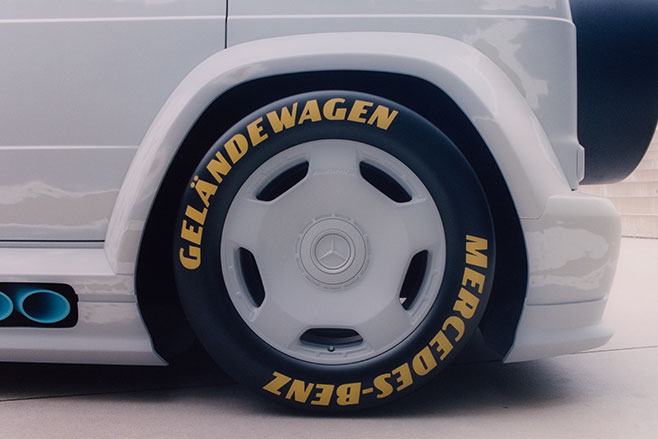
From the outside, its clear Abloh was serious about questioning. Massive Mercedes monoblock wheels are wrapped in chunky rubber, with yellow race-style sidewall lettering heralding the vehicle’s name.
It’s also been painted to look unfinished, kind of like someone’s stripped the paint back on a Matchbox car.
“The idea of the paint is unique in so that it runs away from the idea of perfection. The finish is typically like the underlining of a car. The idea here is to embrace the human touch.”
Abloh says he also wants to inspire younger designers and creatives to question traditions, which we can’t argue this wagon does. For example, we’re questioning why there’s red tape on the air vents.
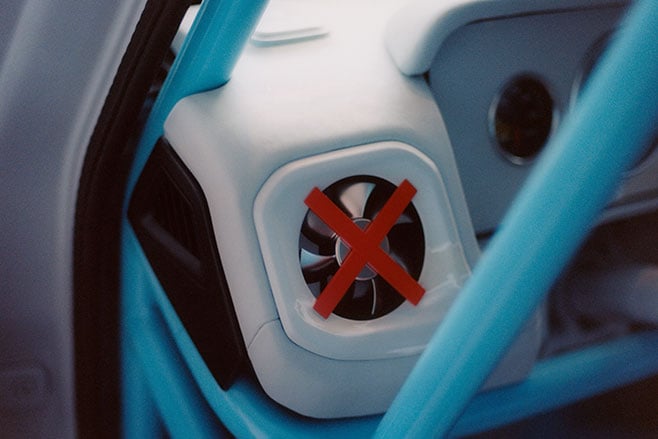
“My ultimate goal in this project with Mercedes-Benz is inspiring young artists, engineers, designers to question the status quo, in addition to experimenting with my own design abilities,” Abloh says.
“For me it’s all about providing opportunities for those coming after me and giving this next generation a foundation for success, both here with Mercedes-Benz and through my own Virgil Abloh “Post-Modern” Scholarship Fund.“
Abloh’s career has had ups, many in fact, and a down here and there. Most notably of the latter is his recent album art for a posthumous release by Pop Smoke. His artwork was widely mocked online and replaced with work by another artist for the album release.
But in the world of fashion, Abloh’s creativity has received acclaim for breaking traditions and challenging the norm.
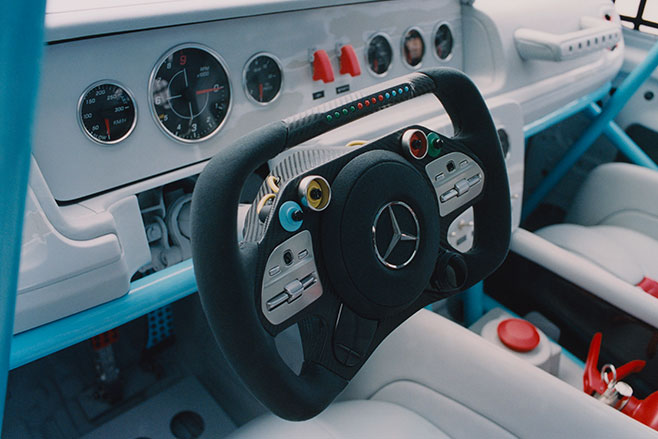
Does his technique work when it comes to the world of car design? Gorden Wagener thinks so.
Mercedes’ chief designer says the creation “perfectly encapsulates Mercedes-Benz’s manifestation of contemporary luxury.”
“With Project Geländewagen we create a unique artwork that showcases future interpretations of luxury and the desire for beauty and the extraordinary. The result is something between reality and future”, says Wagener.
“The collaboration with Virgil has seen two distinct design philosophies unite, for a one-of-a-kind re-imagination of the G that continues to celebrate the extraordinary at its core.”
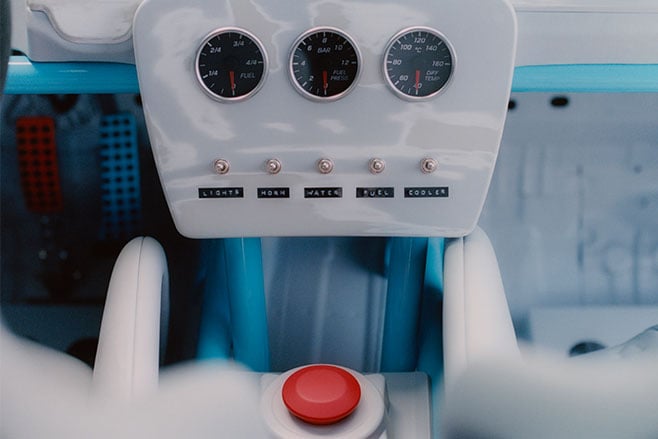
“To me this is a very progressive step towards the future of luxury.”
We hope for the market’s sake Mercedes’ next S-Class doesn’t come with DTM seats and a Project One steering wheel.
A 1:3 model of Project Gelandewagen will be auctioned by Sotheby’s online in three weeks, with estimated pricing between US$60,000-80,000.
Let us know below what you think of Abloh’s Gelandewagen creation.
After a protracted campaign of teaser images, technical tidbits and performance demonstrations, Californian EV startup Lucid has finally opened the order books for its first model – the Air.
If you’ve been following the company’s hype trail, you’ll already know how fast the luxury sedan goes, and a bit about its battery, as well as how far it can go on a single charge. But the company has delivered a whole flurry of new information about its first model at the Air’s official launch in the US.
Coinciding with the 170th anniversary of California’s formation, and World EV Day, the Lucid Air is now available to order in North America with the first deliveries expected in early 2021. If you thought the company’s first car gives Tesla something to worry about before its launch, just wait until you read Lucid’s latest revelations.
How much does the Lucid Air cost?
In a bid to make the biggest splash, the Air makes its debut in range-topping Dream Edition specification for a starting price of US$169,000 which is about $233,000 in Australian dollars. For their cash, the first American customers will get the most potent version of the Air including the dual drive motor transmission for all-wheel drive, fed by a 113kWh battery and 0-100km/h acceleration in about 2.5 seconds, says Lucid.
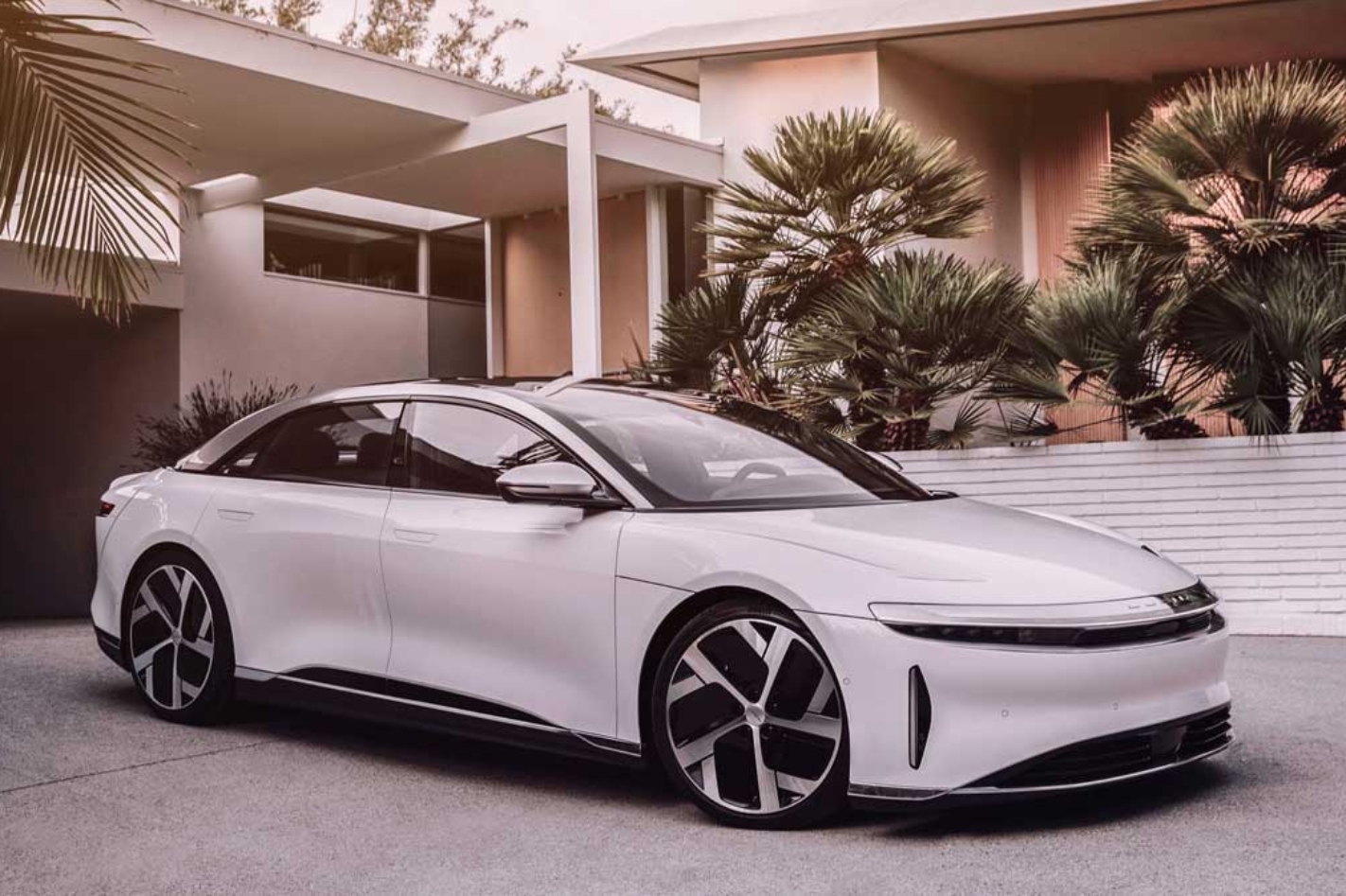
It’ll also crack the standing-start quarter mile in 9.9 seconds – the launch date of the 9/9 is just a coincidence, apparently.
Production preparations are in the latter stages at the Lucid factory in Arizona and the first examples will start silently rolling off the lines early next year.
About the middle of next year, a second Grand Touring version will come online priced from US$139,000 (A$191,000), and it will be followed by a US$95,000 Touring (A$131,000) at the end of 2021.
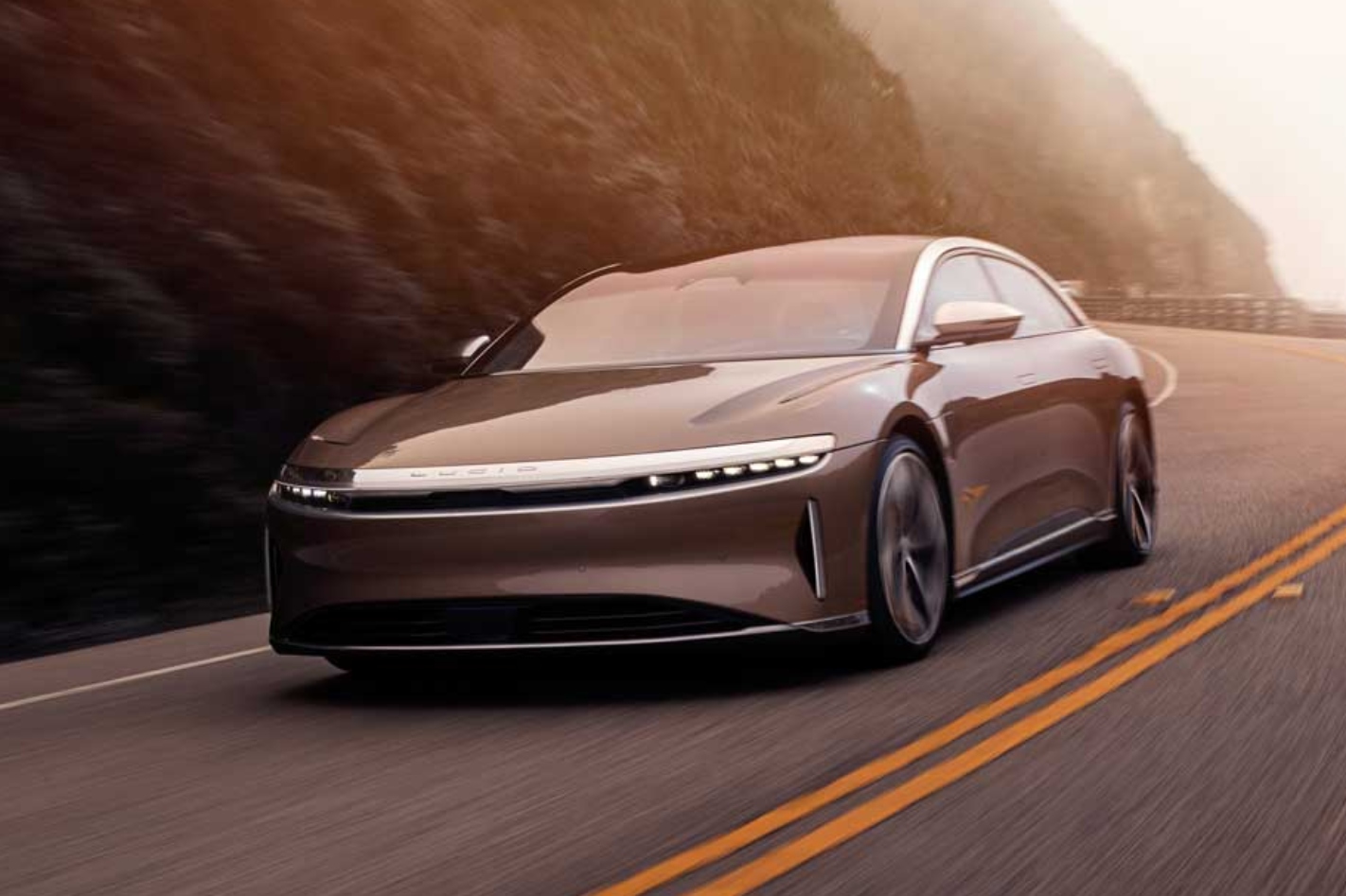
Finally, in 2022, the Air line-up will be completed by a new entry level version dubbed simply the Air, priced from less than US$80,000 or about $110,000 in Australian money.
For comparison, Tesla’s Model S ranges in the US from about US$80,000 to US$120,000 or A$148,000 – A$167,000 in Australia.
Below the halo Dream Edition, the Grand Touring will get 597kW, Touring versions will have 462kW and the company has not detailed the entry level Air power. Drivetrains that will be supplied in the more affordable versions have not been detailed, but the company has explained its flexible and modular architecture enables one, two or even three motors to be fitted along with batteries of widely varying capacities.
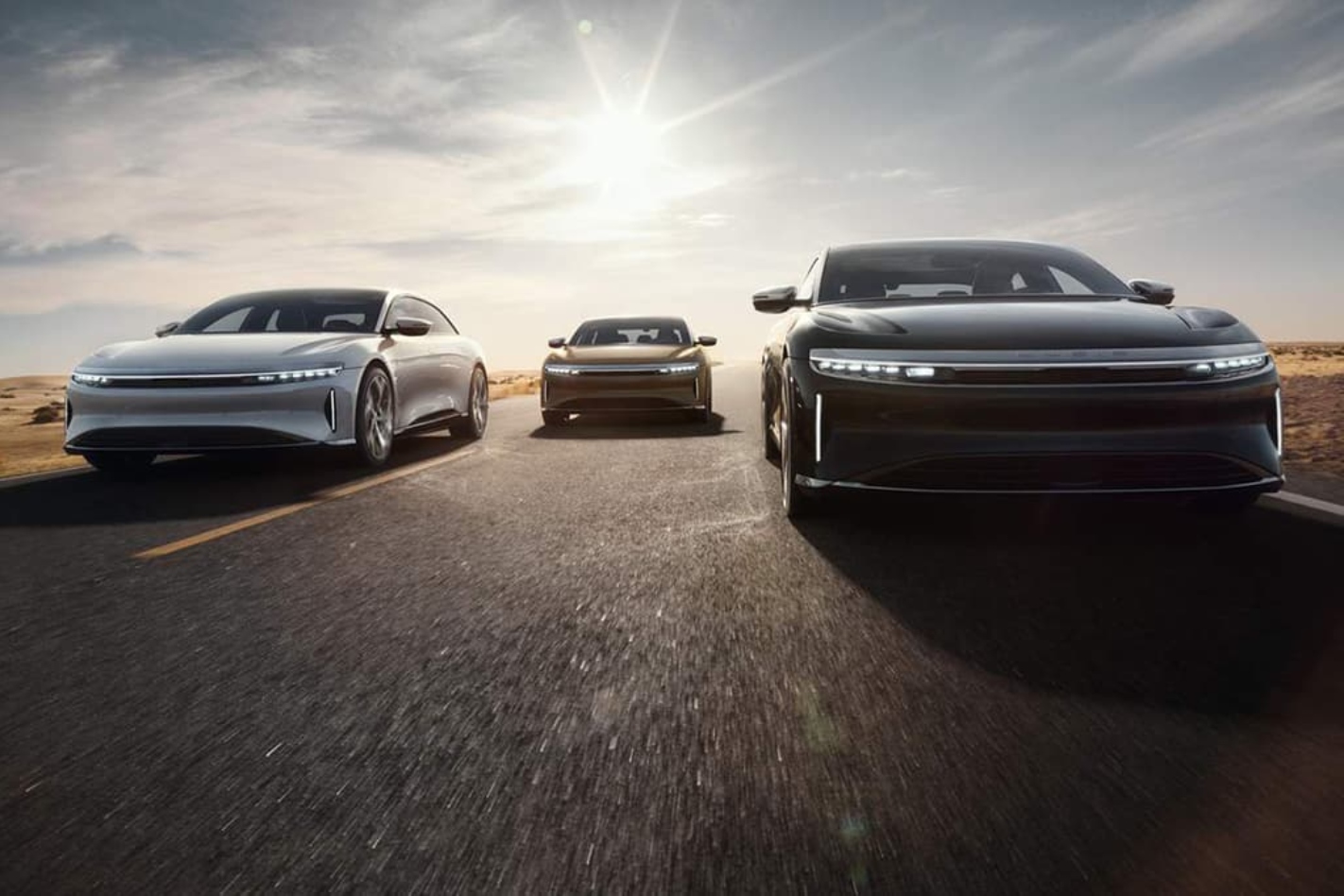
The range will not be presented in conventional showrooms but in spaces Lucid calls ‘studios’ in a bid to revolutionise the car retail experience. It’s a similar model to other brands such as Genesis in which customers feel more relaxed in a less sales-lead environment. If that’s still too much, a purely online purchasing process is also available.
Drivetrain
At the heart of the Air, a sophisticated battery and drive motor system offers scaleable and flexible powertrains. While the range-topping version has the biggest battery, its modular lithium-ion packs are ‘like Lego bricks’ and can be assembled to produce less expensive and lighter battery units.
Lucid Motors CEO Peter Rawlinson explained there was no point pursuing “dumb range” with ever-increasing batteries that become prohibitively heavy and expensive. Instead, the former Tesla engineering vice president said Lucid focuses on “smart range” and the optimum balance of capacity, power, size and weight.
Lucid’s battery technology and efficient power management has allowed the Air to set a new EV benchmark in single-charge range and an independently verified range of more than 830km.
The company is obsessed with miniaturised components and has managed to produce a drive motor and gearbox unit that, at 73kg is both smaller and lighter than any of its rival’s equivalent hardware, according to its maker.
In a different form, its battery technology has already undergone extensive testing in the unforgiving arena of motorsport. Lucid’s battery manufacturing division Atieva is the exclusive supplier to the Formula E championship and the high-performance units have experienced zero failures over the entire 2019 season.
Charging
Unlike all other EVs on the market, Lucid uses a 924-volt electrical system. It’s this step that imparts many of the Air’s headlining potential including performance and charging.
With the correct infrastructure, the Air can be pumped up with enough power for a 480km cruise in just 20 minutes. US owners will benefit from the emerging Electrify America charging network that offers public charging stations across the nation and a three-year subscription to the service is included with a new Air.
While Tesla’s are more limited to the company’s network of Superchargers, Lucid has gone for a more agnostic approach with more charging possibilities when on the fly – pun fully intended.
Key to the Air’s versatile charging options is the charmingly named Wunderbox – an advanced battery management system (BMS) and onboard charger, which is not just more efficient than many systems (as much as 6.4km/kWh) but also enables a number of versatile power options.
Bi-directional charging allows the Air to be charged rapidly, but the vehicle can also be used as a charger itself. In the event of a power interruption, owners can use their car to provide power to the household or even charge another Lucid.
Other clever tech
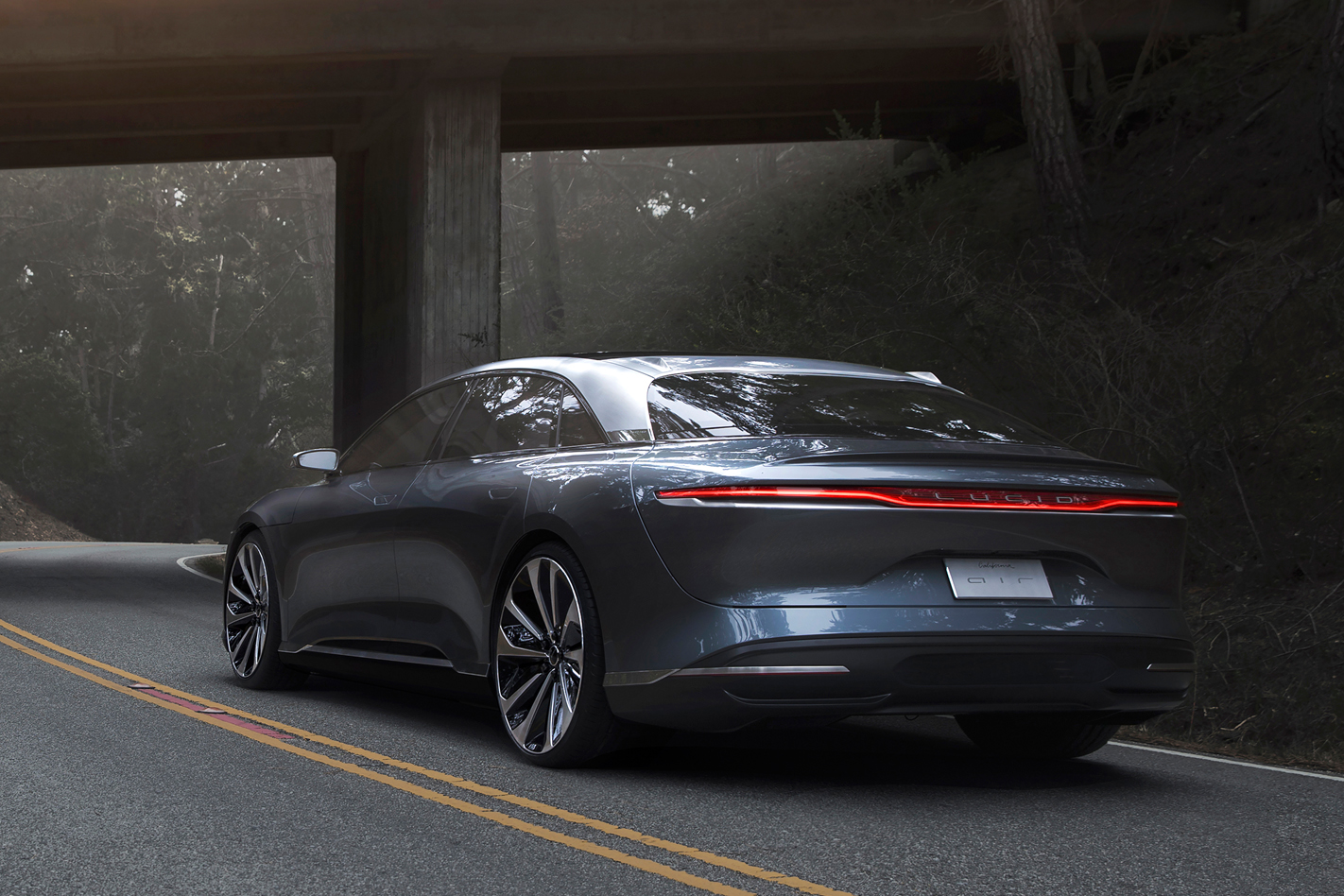
The Air’s nose is filled with the company’s Micro Lens Array headlights which use the latest LED technology to project an intense and directional beam but using only solid state components. It has also resulted in the narrowest headlight aperture of any vehicle to date.
It’s a similar story at the tail end where a single-piece tail light lens spans the entire width of the Air and contains more LED technology – conversely, it’s the largest of its kind.
Customers can use the Lucid smartphone application to preload the Air with journey information including destination and climate settings. On approach, the car recognises the owner and initiates all their predetermined settings.
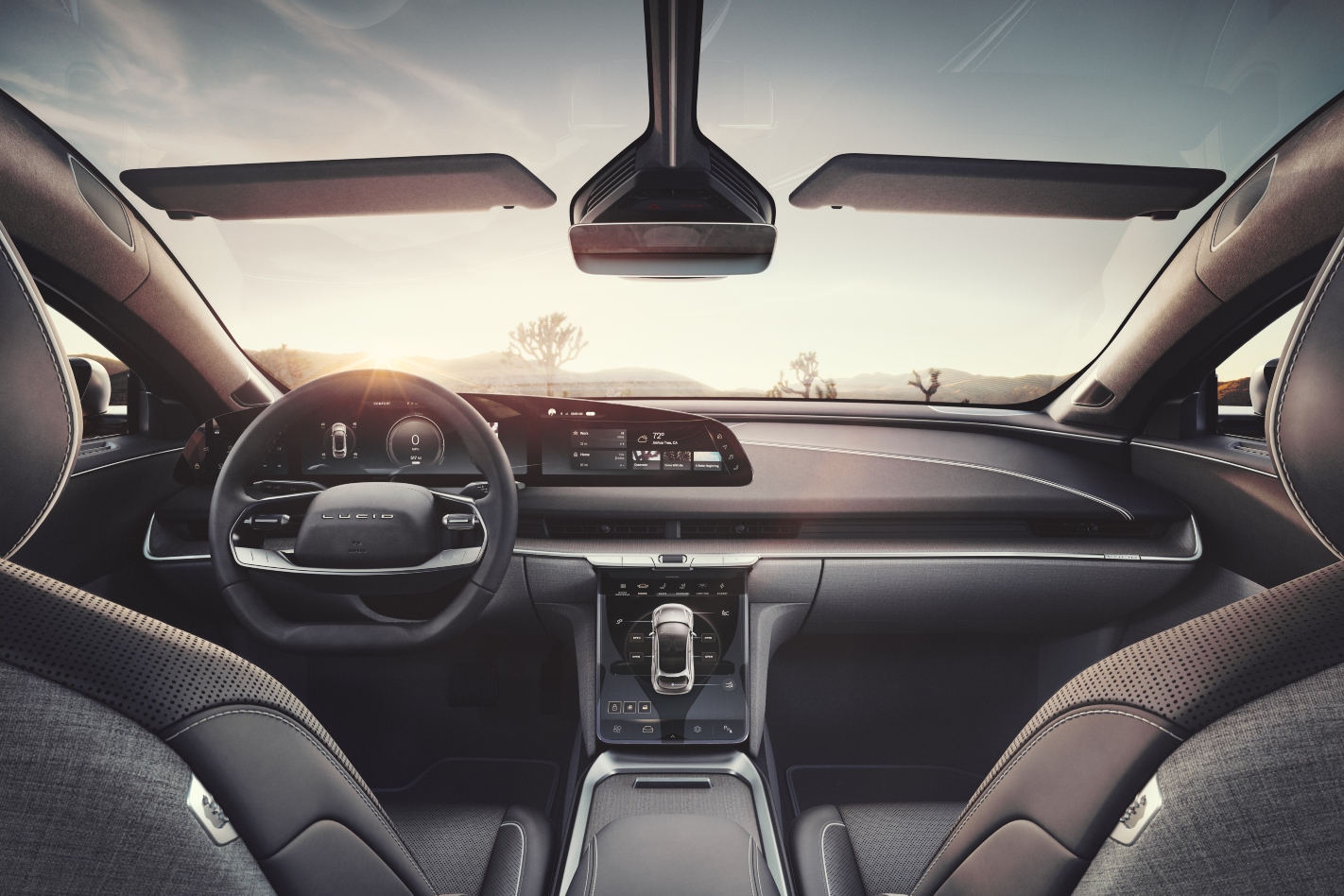
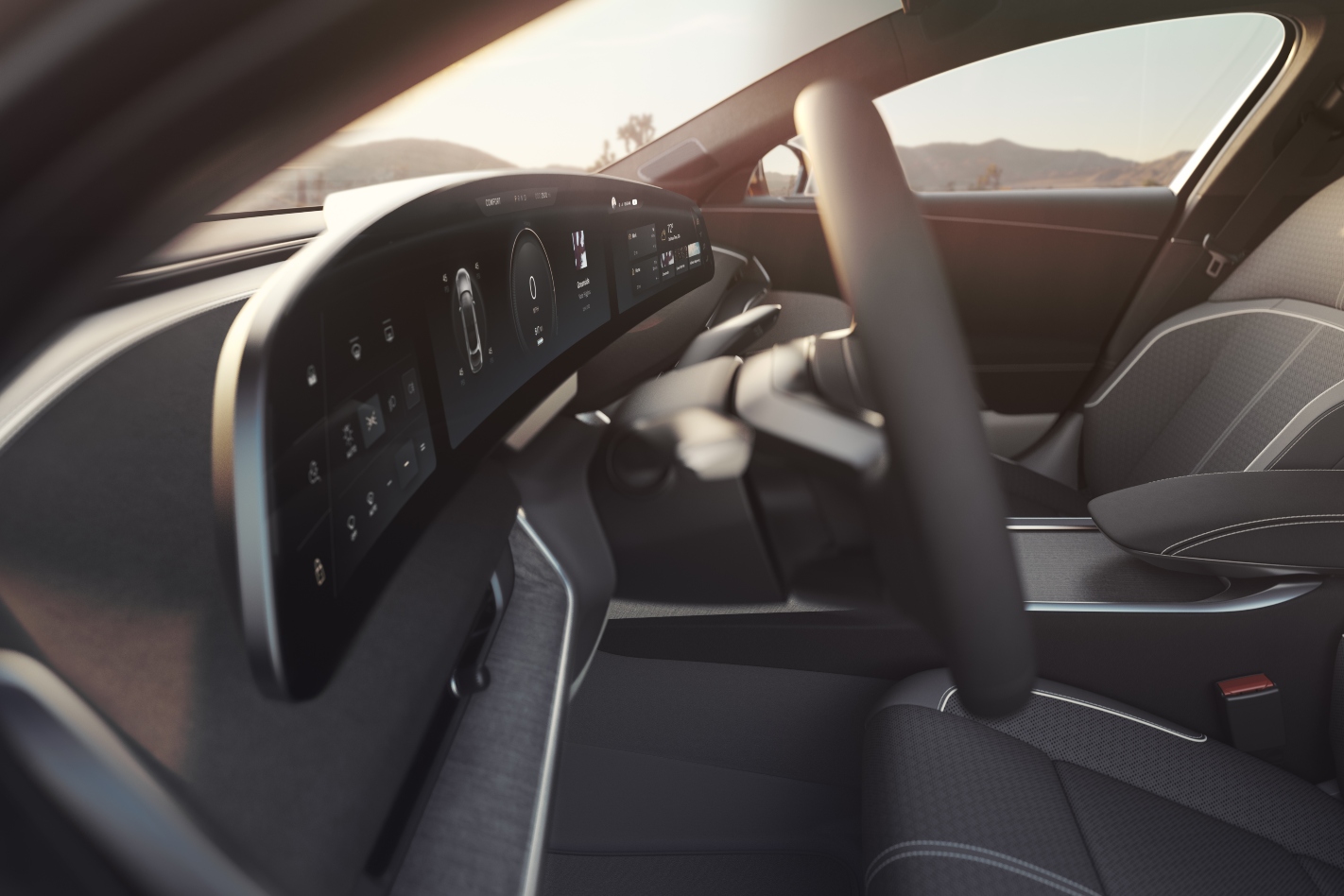
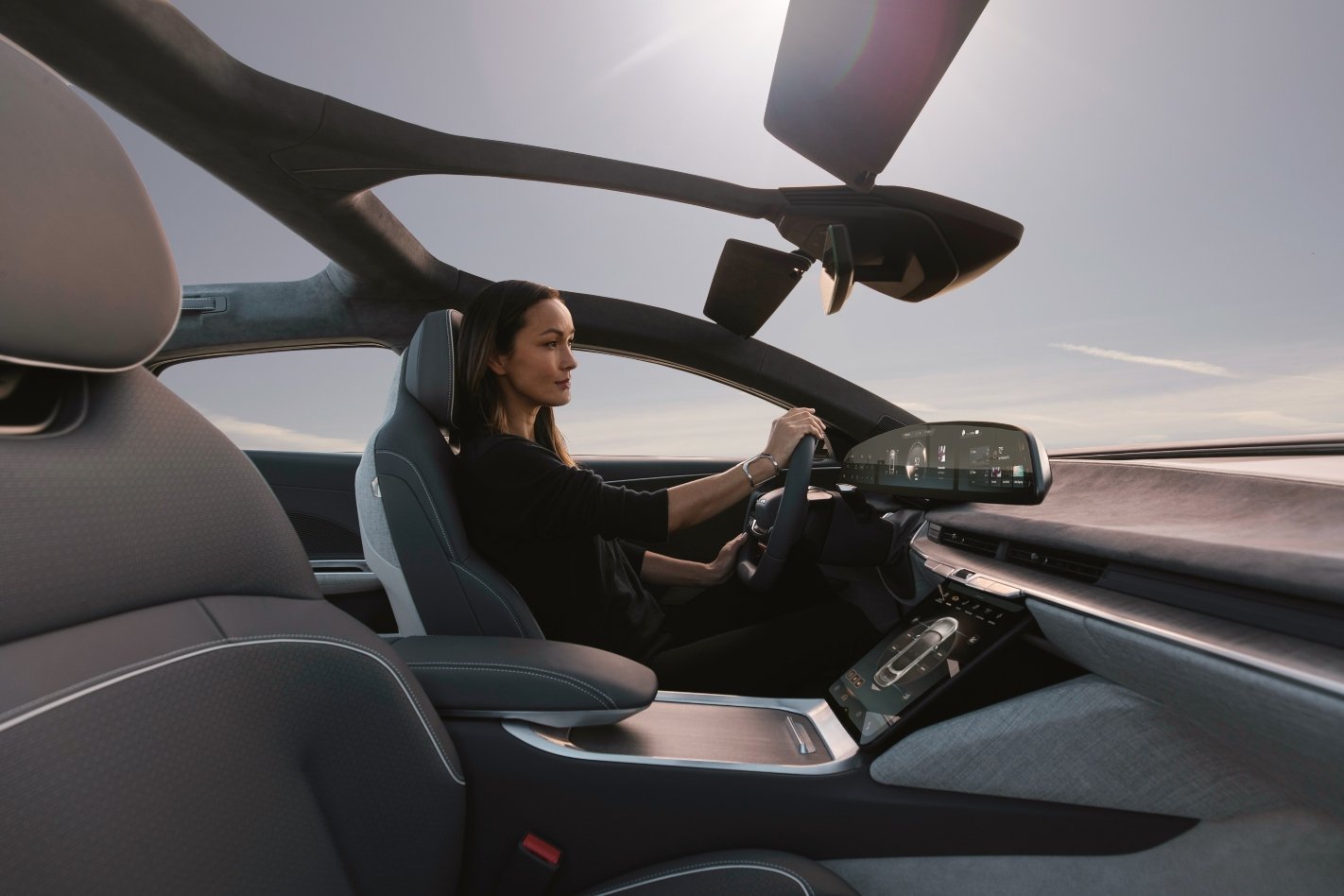
Once inside, a 12-volt Ethernet system manages data with high levels of redundancy for top security of the driver’s information and fast processing throughout the various digital displays. If Tesla’s enormous central touchscreen offering is a little overkill for you, Lucid’s version seamlessly slots away into the dashboard.
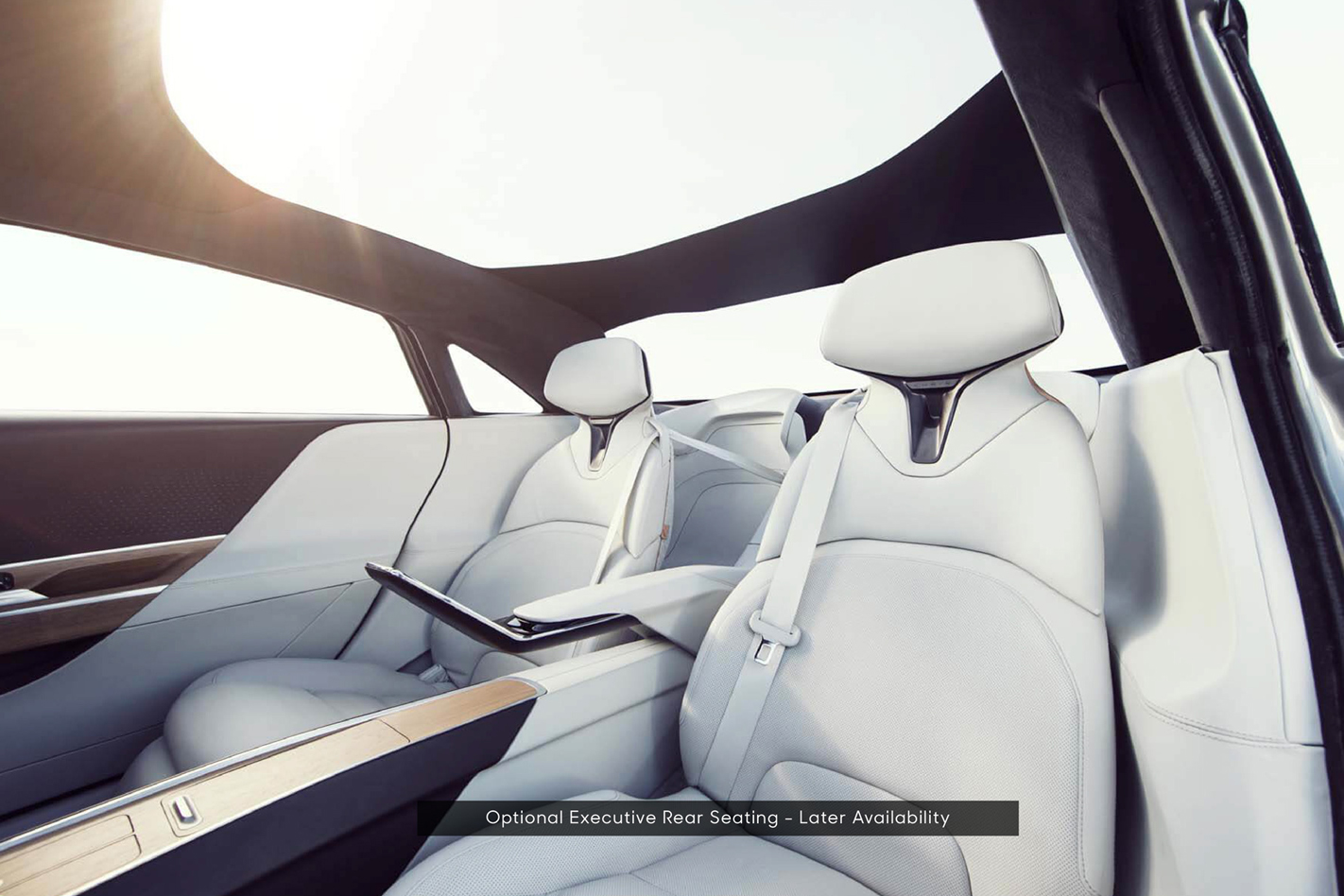
Two versions of the second row will be offered with a more conventional bench seat as standard or an optional Executive Seat that offers two luxurious seats that recline. Interior colour and trim options were inspired by different Californian locations at different times of the day. The Dream Edition gets Santa Monica at dusk.
Look closely and you’ll find a number of bear images hidden about the Air cabin similarly to Jeep’s Easter egg surprises and as a nod to California’sstate flag.
Safety
Lucid is yet to crash test its first model but it assures potential customers it has been designed to pass the American NCAP testing with five stars. A special carbon fibre passenger cell combines with numerous airbags and many of the modular components have been dual-purpose designed to lend structural impact strength as well.
As you might expect, the Air is mass of sensors including radar, lidar and cameras. The networked matrix of hardware enables plenty of driver assistance systems including a remote parking function and there’s even a camera that monitors the driver for attentiveness. It also enables certain functions with a simple glance.
While Lucid says its cars will soon offer escalating levels of autonomy its approach to driverless technology couldn’t be more different to rival Tesla.
Lucid is making no claims as to when the first levels of autonomy will be rolled out, but it says it will offer the technology to customers for no extra charge as soon as it is available. Tesla on the other hand is sticking to its claims of full autonomy this year and will charge Australian customers more than $10,000 for it.
At this stage, Lucid has not revealed if it is planning an Australian presence in the near future. But if this intriguing Californian startup really wants to give Tesla a hard time, you can be certain it will be assessing all global market with a fine-tooth comb.
UPDATE September 10, 2020: Following yesterday’s global reveal of the more affordable Xbox Series S, we finally have full details regarding Australian launch dates, pricing and specs for both variants of Microsoft’s next-gen gaming platform.
Pricing
As expected, the more affordable Xbox Series S will land on Australian shelves for a suggested retail price of $499 while the flagship Series X will be priced locally at $749.
Curiously, this presents a $100 increase over the current-generation Xbox One X being launched locally at $649, despite both wearing an international MSRP of US$499.
Despite the generational increase, rumours still suggest that the rival Playstation 5 will exceed that of the Xbox Series X, although the ball is now firmly in Sony’s court regarding launch details for its PS5.
Launch Date
In line with yesterday’s overseas launch date announcement, both the Xbox Series S and Series X will be available as of November 10. Pre-orders will open later this month on September 22.
Specs
Full specs for the Xbox Series X have previously been outlined below, however the Series S offers a cheaper buy-in in exchange for slightly lower specs.
The main differences are a slightly under-clocked graphics card (1.565GHz v 1.825GHz), while RAM also operates at a slightly lower bandwidth speed (10GB v 16GB).
Elsewhere, while the Series X boasts a whopping 12.15 teraflops of GPU power, the Series S bears 4 teraflops of power.
In terms of benchmarking, the flagship Series X is able to deliver 4K at 60fps, and up to 120fps; while the Series S delivers 1440p at 60fps, and up to 120fps.
Both consoles include a rapid NVME solid state drive which promises super fast loading times, with allowances for expandable storage cards. The Series X boasts a native storage capacity of 1TB while the Series S has 512GB.
It’s also worth noting that the Series S is a digital-only console, while the Series X includes a 4K UHD Blu-Ray disc drive.
Original story:
If you’re curious about what you’ll be playing the next generation of Forza Motorsport and Forza Horizon on, ponder no longer: Microsoft has revealed its fourth-gen console, dubbed the Xbox Series X, and it’s going to be one powerful machine.
Previously known as Project Scarlett, the upcoming Xbox will generate four times the computational grunt as the current Xbox champ, the One X – a massive 12 teraflops of GPU power. Considering the One X boasted around 4.5 times the graphics processing power as the original Xbox One, the Series X and its AMD-supplied processors should barely sweat while rendering games at 4K resolution.
“Xbox Series X will be our fastest, most powerful console ever and set a new bar for performance, speed and compatibility,” said Phil Spencer, head of Microsoft’s Xbox division.
“Its industrial design enables us to deliver four times the processing power of Xbox One X in the most quiet and efficient way, something that is critically important in delivering truly immersive gameplay.”
Want some specific numbers? Spencer claims 4K gaming at 60 frames per second will be easily achieved, with 120FPS and 8K resolution possible – though obviously not at the same time. Hardware-accelerated ray tracing should see incredibly lifelike graphics (think accurate reflections in car paint and water puddles, and ultra-realistic shadows), and Microsoft says the Series X will deliver “a new level of performance never before seen in a console”.

A big claim, and one that Sony will no doubt be scrambling to challenge when the Playstation 5 arrives at the end of this year.
The console’s performance all comes from a custom-designed processor manufactured by AMD and based on their Zen 2 and RDNA 2 architecture. Hard drive size is 1TB for the flagship Series X with compatibility for expandable storage.The SSD memory will cut loading times and deliver enough storage for the larger game worlds and high-def textures of the platform’s next-generation games. HDMI 2.1 protocol will take those juicy graphics to your TV or monitor.
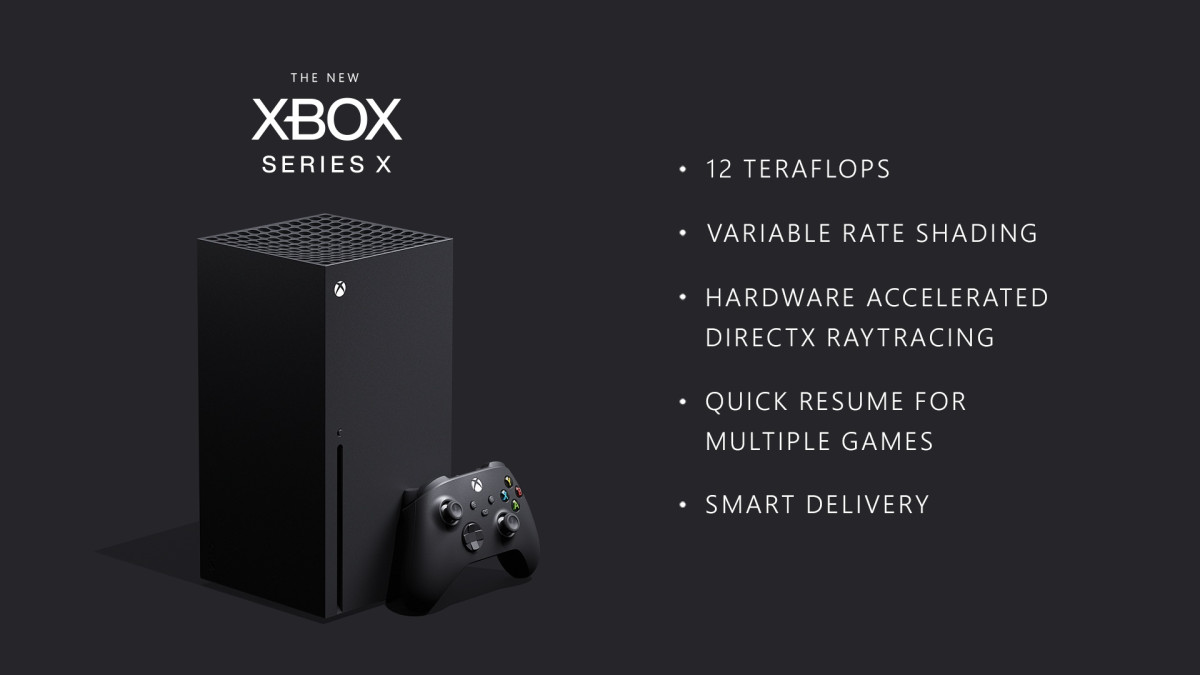
Hardware-accelerated DirectX raytracing will boost graphics immersivity even further, with better lighting, sharper reflections and even more realistic acoustics – though there’s curiously no mention whatsoever of a VR capability. ‘Quick Resume’ will allow multiple games to be paused and resumed almost instantly, for those that like to hop from game to game in a single session.
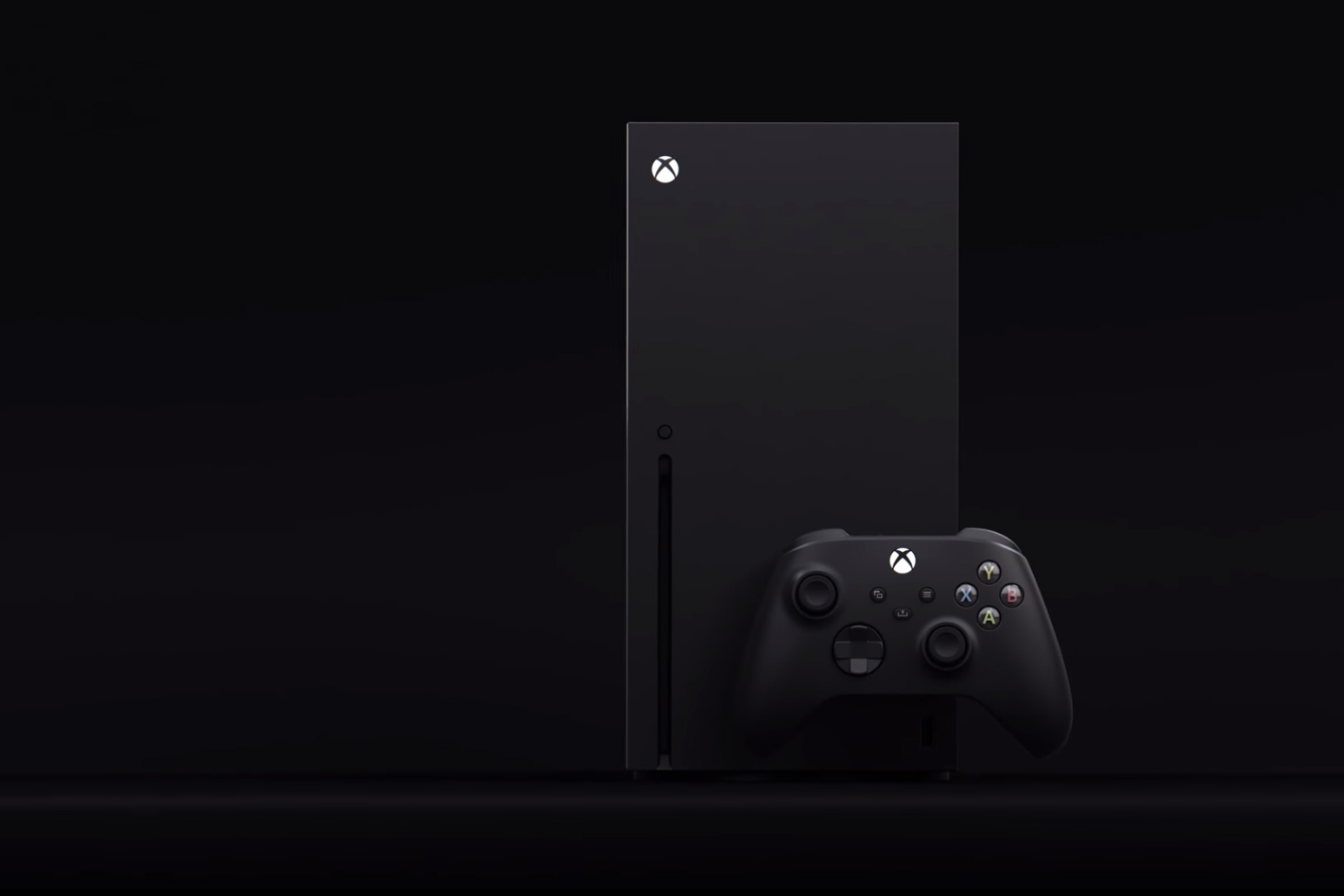
Built into an upright black housing somewhat reminiscent of a PC tower (how very Microsoft), Spencer said Xbox Series X will deliver its impressive performance in “the most quiet and efficient way”. Is there some Apple-style passive cooling in there? We’ve yet to find out.
Don’t like the Series X’s monolithic tower config? Microsoft has designed it to work in a horizontal orientation as well, which indicates there must be some special thermal management trickery to enable it to stay cool in both positions – or at least enough fans to force-feed air through it when it’s laid sideways.
It’s not the only new hardware to be revealed so far. The Xbox Wireless Controller will be paired with the Xbox Series X and promises better ergonomics for a “wider range of people” (we think that means it’s better for bigger hands) as well as out-of-the-box compatibility with Windows 10 PCs. There’s also a dedicated one-touch screenshot and clip capture button, while Microsoft says its new Dynamic Latency Input tech will reduce controller lag to nearly-imperceptible levels through a new proprietary wireless protocol.
Oh, the cherry on top? You won’t need to cling onto your old Xbox, as the Series X will be backwards-compatible with all prior Xbox titles as well as all Xbox One peripherals.
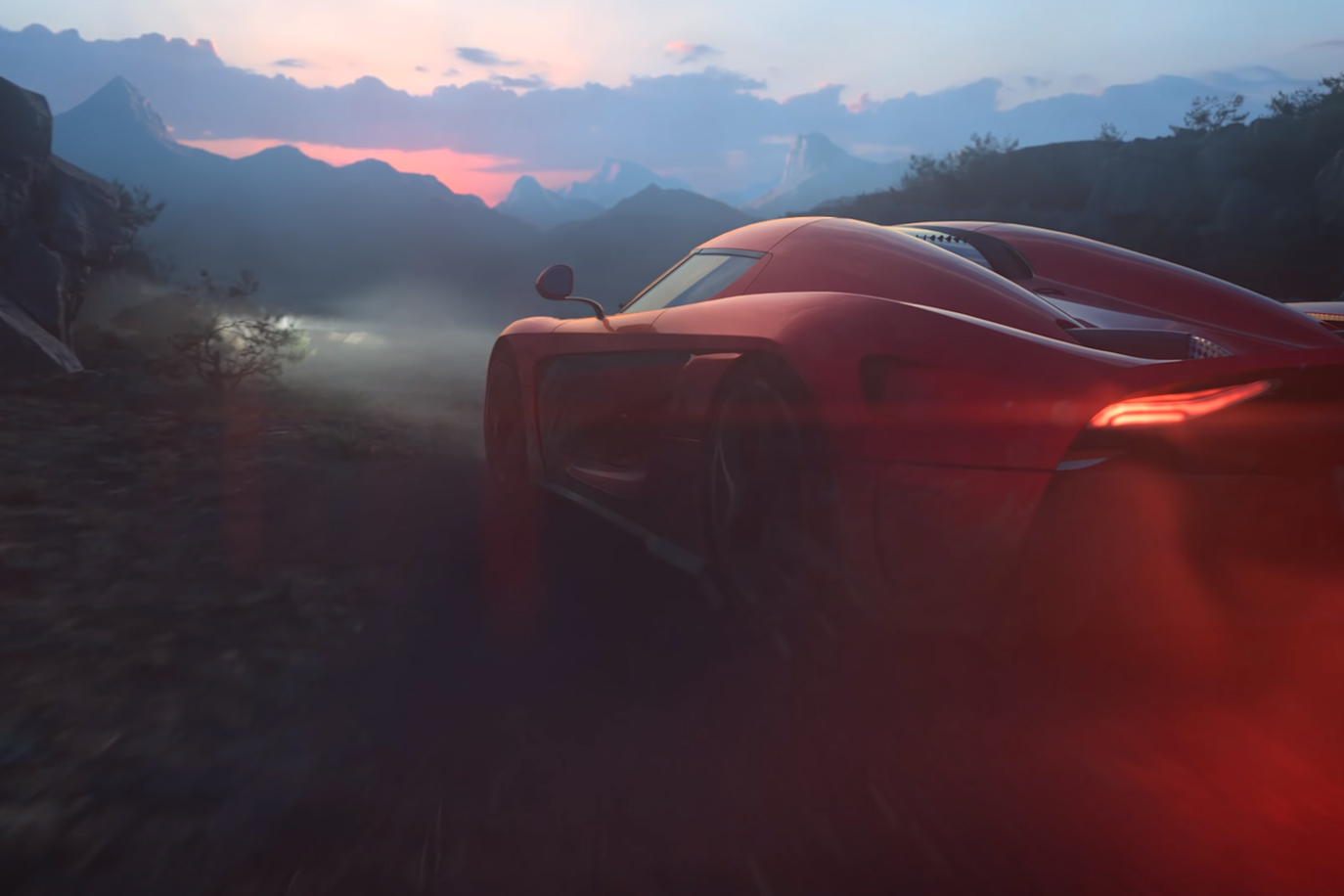
The specs sound promising so far, and judging by the prominent placement of a Koenigsegg Regera in the official reveal video above there should be a Forza title available at launch. It’s no secret that Forza Motorsport 8 was delayed to align it with Series X, so odds are that title is already chambered and ready to fire.
We’ve got a wait ahead of us though. The Xbox Series X is slated to release in “Holiday 2020”, or the fourth quarter of this year. Don’t hock your Xbox One just yet.
Challenger EV manufacturer Lucid has used the launch of its first car – the Air – to announce a large SUV named the Gravity will follow, as the company’s second offering, along with a brief glimpse of the new vehicle.
No information was offered regarding the next Lucid other than its moniker and that the more all-terrain focused EV will continue the company’s space-maximising mission and flexible architecture that will enable a broad spread of variants.
The company – which started out as a battery and drivetrain supplier – has laid out a 10-year growth plan which will introduce many more new models, building the assault against established luxury EV manufacturer Tesla.
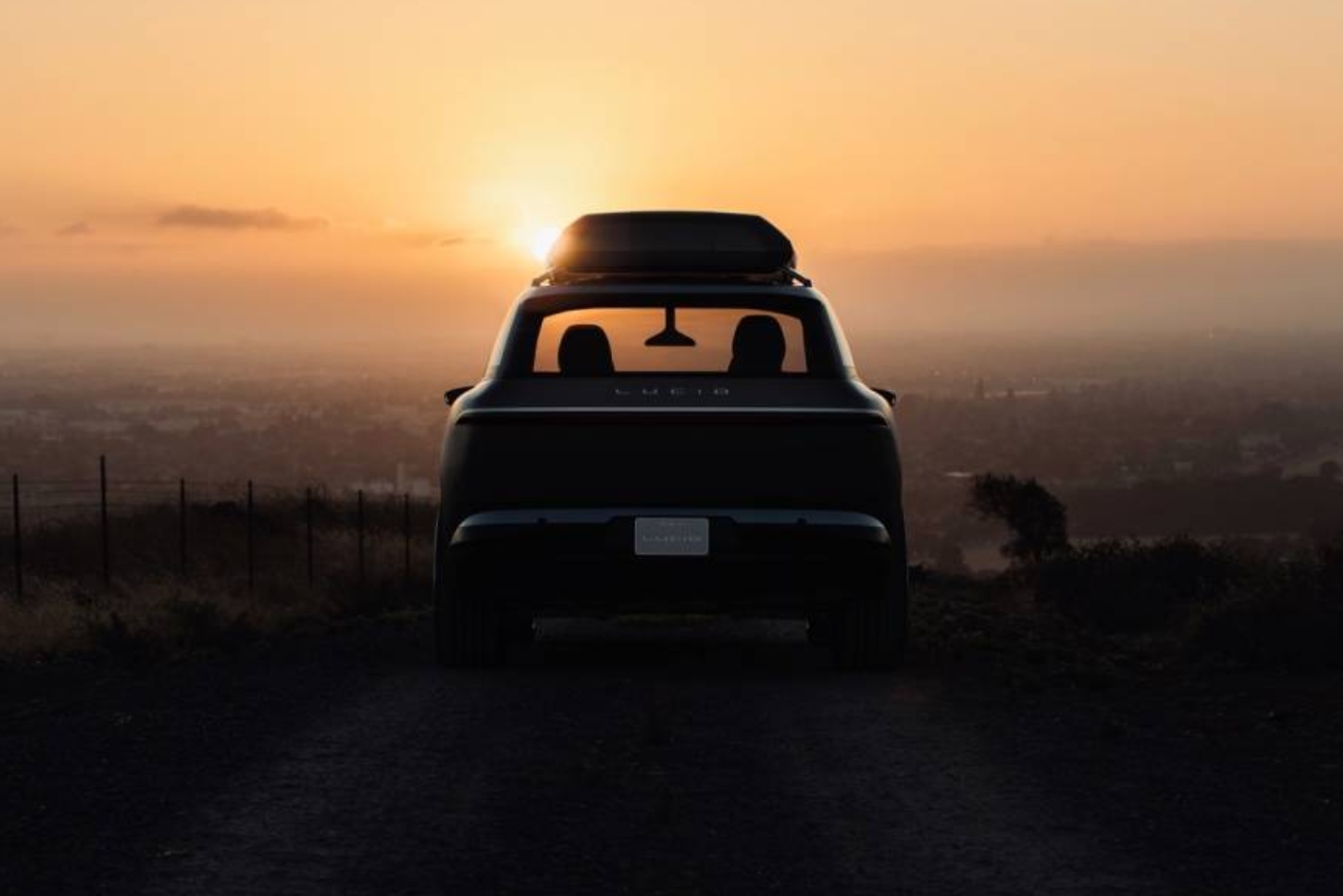
In addition to the Tesla Model S-taunting Air that was officially launched in the North American market today, Lucid’s latest revelation heralds a new rival for the fellow Californian manufacturer’s Model X, along with a growing number of zero-emissions SUVs from various mainstream manufacturers.
Given Lucid’s development of a ‘skateboard’ type vehicle platform it would be safe to assume the new Gravity will share the same architecture as the Air, bringing similar advantages and performance claims.
In its most premium form, the Air Dream Edition packs a 113kWh battery, about 736kW, all-wheel drive and a range of about 830km although there are three other more accessible variants on the way as per Tesla’s model offering.
It’s likely the mechanically similar Gravity will follow up with a range walk-up in parallel with the Air.
The ambitious company has not confirmed when its first SUV will hit the market or trails, but it slots into the decade-long strategy and will roll out in stages along with the various Air variants.
Lucid has not yet indicated any plans to offer its models outside its main focus and the North American market although, given the momentum its arch rival is building in other nations including Australia, you can bet your last Bitcoin the company is eyeing other lucrative arenas including ours.
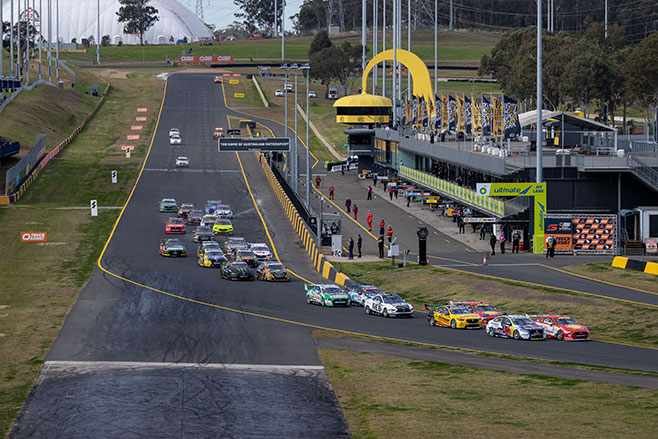
Repco is the new title sponsor for the Supercars championship for five years from 2021, taking over from Virgin Australia which had held the position since 2016.
Only last month, Repco announced it would become the naming right sponsor for the 2021 Bathurst 1000, with its retail rival Supercheap Auto no longer naming sponsor.
“We have been building towards this moment for the last three years” says Jamie Walton, Repco’s general manager of marketing for Australia and NZ.
Bathurst 1000 delayed for 2020
“It’s an honour to become naming rights sponsors for the Supercars series for the next five years. One of the first things we want to do is engage directly with the fans and hear their thoughts on how we can take the Supercars Championship to a whole new level.”
What happens to Supercars without Holden?
Of course, Repco is a company with a strong motorsport link, having been part of Jack Brabham’s F1 success and even being a sponsor to the current leading team in Supercars, DJR Penske.
Repco executive general manager Wayne Bryant says it’s an important move for the company to get closer to its racing roots.
“We have a rich history with the sport, and together with the Repco Bathurst 1000, this is our most exhilarating step yet. We can’t wait to work even more closely with Supercars, and with the teams, the drivers, and support crews.”
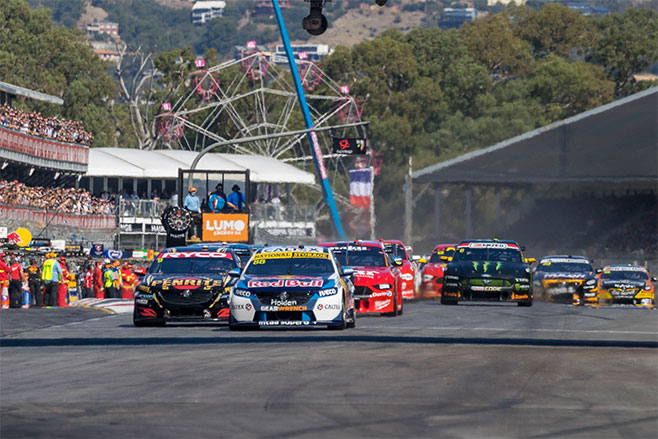
Supercars CEO Sean Seamer shares the sentiment.
“We are delighted to have a name that has been associated with Australian motorsport since the 1940s as our naming rights partner for the next five years.
“Repco has invested considerably in our sport and to carry their name as naming rights partner.”
The partnership begins next year, when it’s hoped a full, regular Supercars season can return.
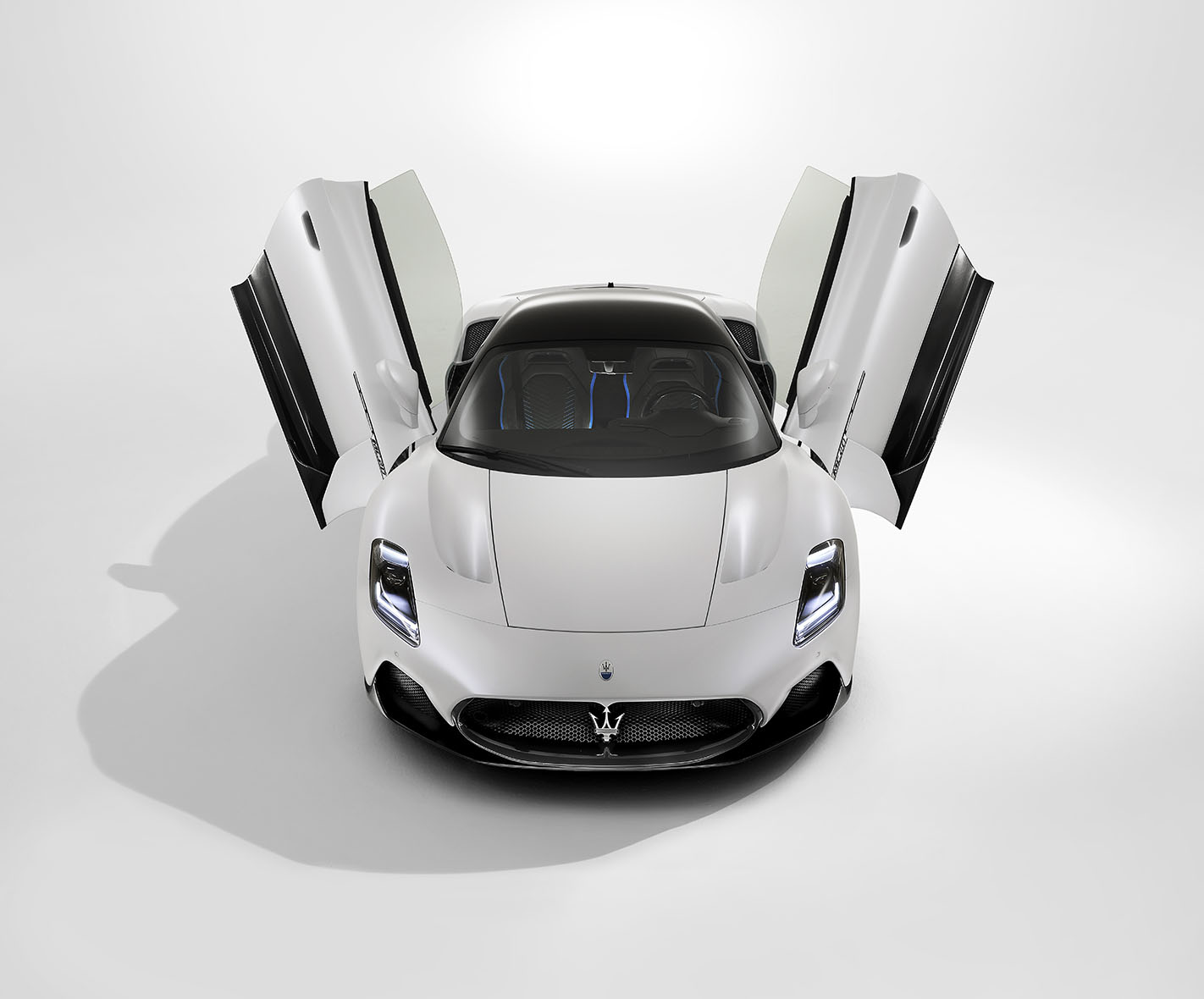
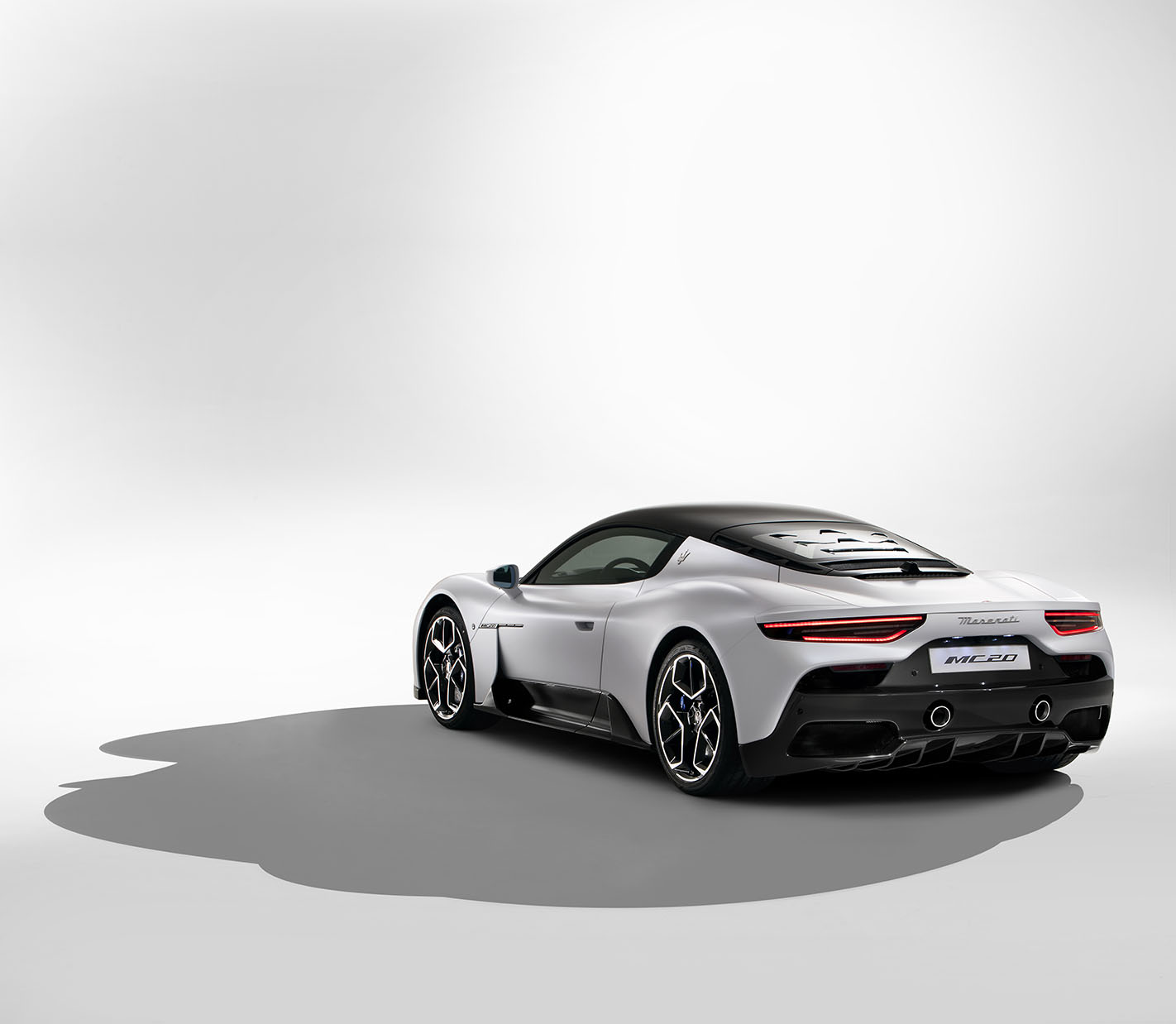
Maserati’s emblem, the trident, is a three-pointed weapon, so it’s fitting that the MC20 you see here is the first of a trio. This beautiful mid-engined coupe, powered by a hugely powerful new Maserati-made twin-turbo V6, is the brand’s first supercar since the 2004 MC12 and is likewise destined for the racetrack as well as the road.
It will be followed, predictably, by a convertible. But the final instalment, due in 2022, is something truly startling; it’s a pure electric MC20, and the EV will be quickest of them all. Project MC20 signals the opening of a new era for Maserati, one in which the brand will embrace electrification as it expands and renews its model line-up.
Neither Maserati nor its parent company, Fiat Chrysler Automobiles, have great track records of sticking to plans.
It’s possible this tendency may be reduced after the completion next year of the mega-merger of FCA with PSA Group of France, makers of Peugeot and Citroen. The corporation, to be named Stellantis, will be the world’s fourth-biggest car maker by volume.
Whatever the future brings, the genesis of Maserati’s new supercar is a very FCA kind of story. The first hint that something like the MC20 was in the works came in June 2018. The event was FCA’s last capital markets day with Sergio Marchionne at the helm, held at the company’s Balocco proving ground outside Turin. The charismatic CEO died less than two months later.
FCA’s capital markets days, which only come around every four or five years, are must-attend events. Organised primarily to convince investors and market analysts that FCA stock is worth owning, the company’s leadership presents detailed, brand-by-brand plans for the coming half decade.
One of the big surprises that day, aside from how unhealthy Marchionne was looking, came in the Alfa Romeo presentation. Included in the product-plan grid for launch before 2022 was the new 8C, a mid-engined supercar with a twin-turbo engine and carbonfibre chassis just like the MC20.
For some reason, and presumably at a very high executive level, the decision was made soon afterwards to take the project from Alfa Romeo. “It was decided to assign it to Maserati,” confirms an in-the-know executive who asked not to be named. The switch was made before serious work on the car began, he explains. “So, no contamination, you could say.”
By March 2019, Maserati exterior design chief Giovanni Ribotta was staring at a not-quite-clean sheet of paper. It showed the car’s hard points, defined by Maserati engineers already working on the MC20 for some time, that the designers would have to clothe.
Ribotta and his team had to hurry. They had a design-freeze deadline nine months away, before Christmas 2019. He says the Birdcage 75th concept, created by Pininfarina in 2005 to celebrate its own important anniversary as well as Maserati’s Tipo 60 and 61 racers of the 1960s, was one important source of inspiration. The designer wanted a similarly clean look for the MC20. One of the team that helped shape the car was a modeller who, as a young man, had worked on the Lamborghini Countach. Now in his 70s, this veteran helped give the final, full-size model of the MC20 its finishing flourishes.
Ribotta, whose previous Maserati credits include the Levante SUV and the lovely Alfieri concept coupe from 2014, says he made a pact with the engineers working on the project. He wanted the upper part of the MC20 to express dynamism and purity. In practical terms this meant no obvious aero-aids up top, and air intakes so subtly integrated that they’re invisible from some angles. In return for enabling design’s ideas, the aerodynamics team could have complete authority when it came to shaping the underside of the MC20.
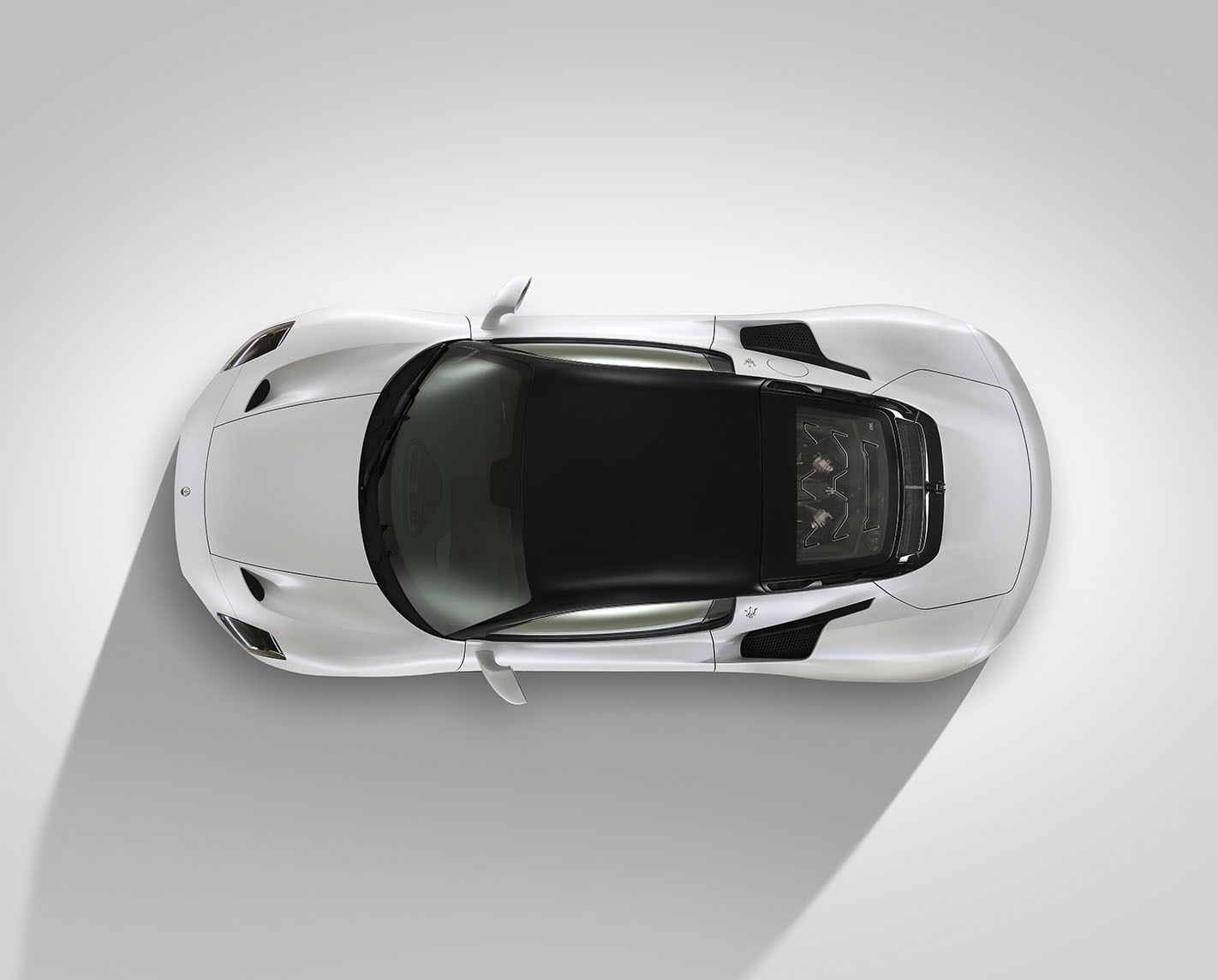
It was a good deal Ribotta made. The MC20 is elegantly proportioned, cleanly detailed and essentially Italian. There’s a clear distinction between the upper section and the technical lower part, the designer points out. Visible carbonfibre marks the low-down territory of the aerodynamicists, while colour coats the designers’ zone. Opening the MC20’s butterfly doors takes the effect a step further, exposing plenty more structural carbonfibre to view, as well as Alcantara and leather.
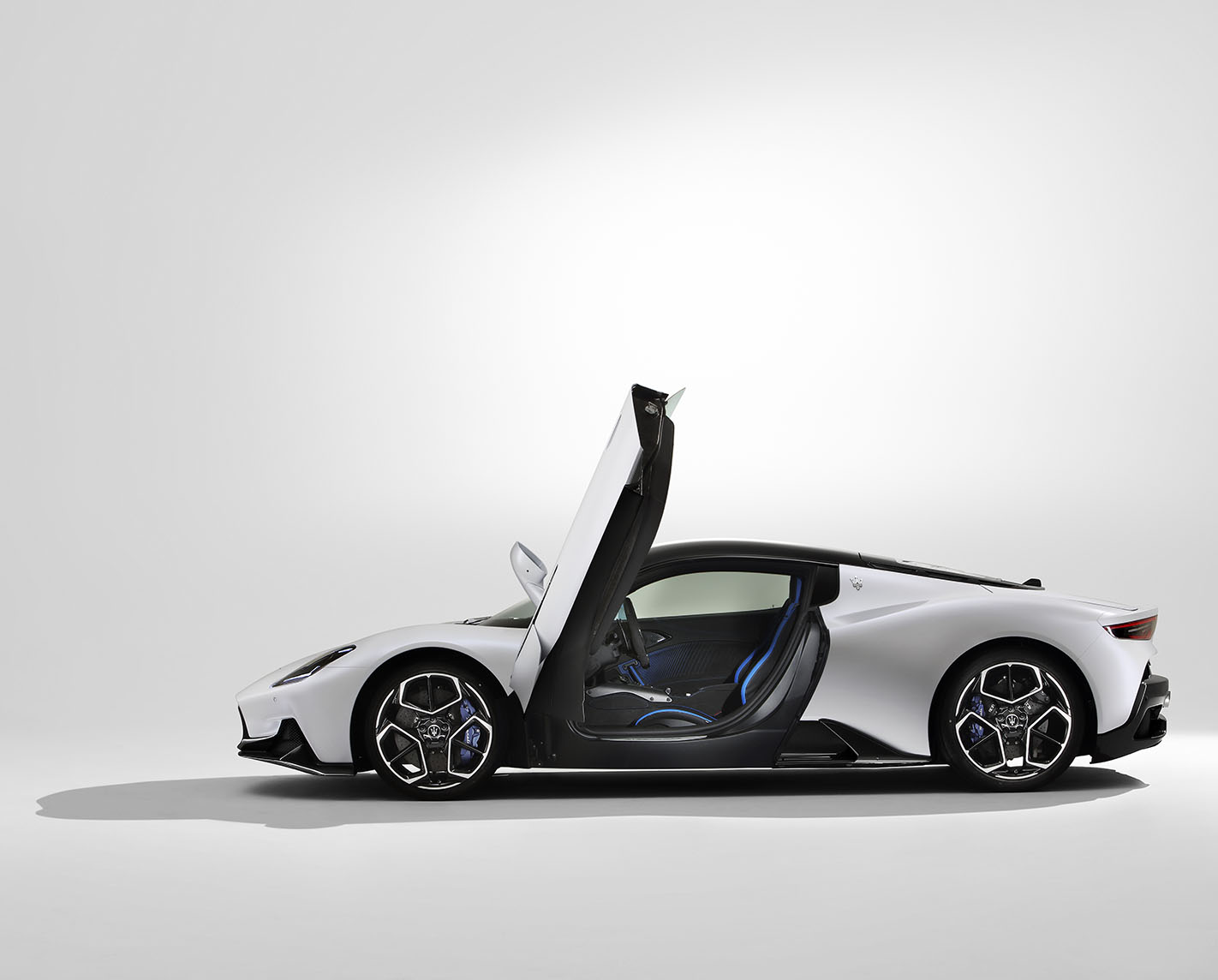
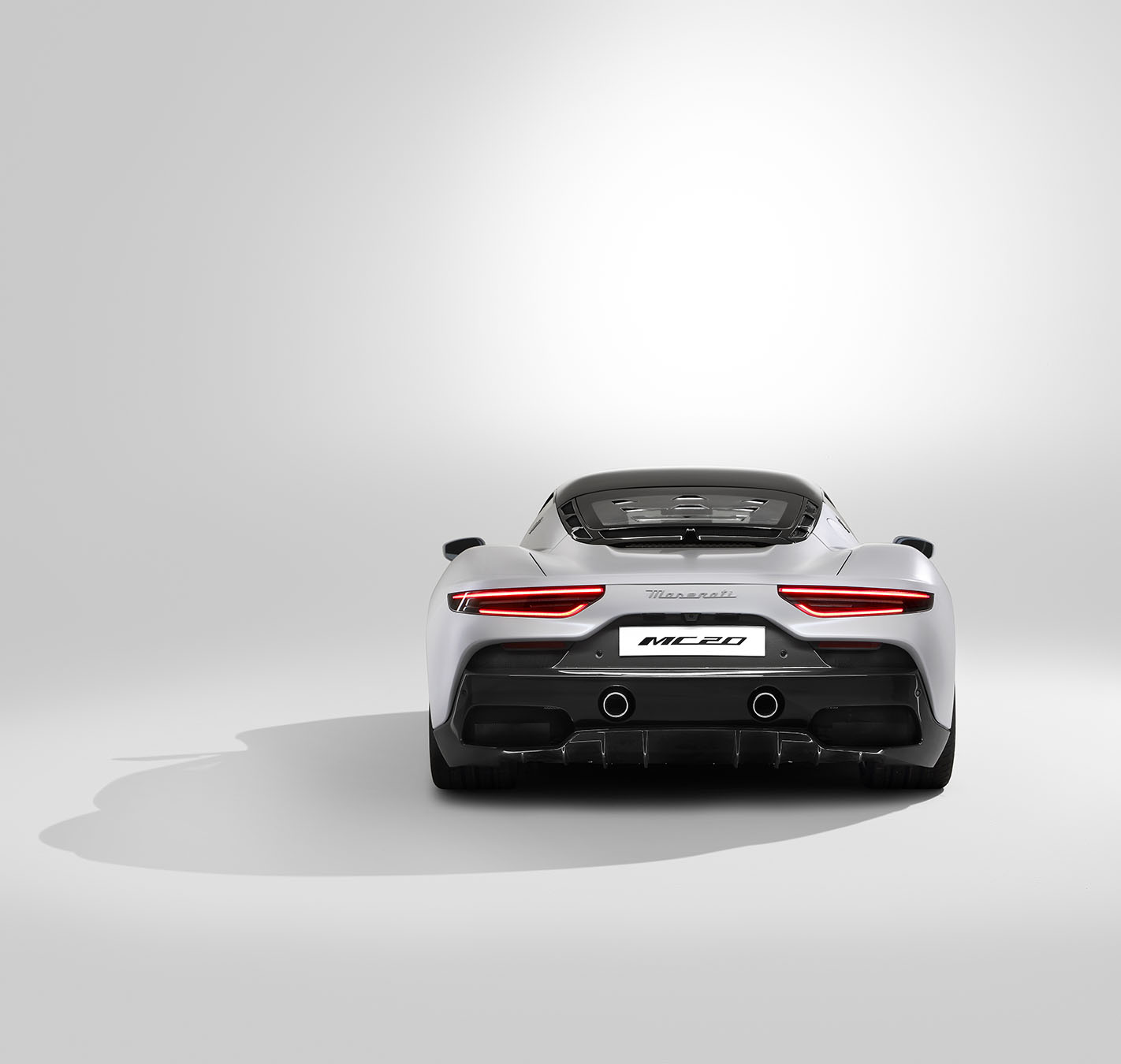
The fully enclosed underside of the car is, in its own way, equally impressive. A system of vortex generators and vent channels, along with the large rear diffuser, combine with the humped shape of the underbody to create high downforce without excess aerodynamic drag.
Six MC20-specific paints in white, black, grey, blue, red and yellow, were designed by Maserati’s colour and materials department. They’ll be applied in the company’s new paint shop. Previously, bodies of Modena-made Maseratis were transferred to Maranello and put through Ferrari’s paint shop.
All three versions – coupe, convertible and EV – will utilise the same carbonfibre chassis. This central structural element of the MC20 was engineered by Maserati, then developed for production by Dallara, the well-known Italian designer and constructor of sports and race cars. It will be manufactured by automotive and aerospace composite specialists TTA Adler.
There’s another Alfa Romeo link here. Dallara and TTA Adler played similar roles in the creation and production of the 4C sports car. And don’t forget that this small but flawed gem was assembled by Maserati, in its hometown factory in Modena, from 2013 to 2019.
Made from 57 moulded carbonfibre pieces, this new monocoque chassis will be used in all three MC20 versions. But there will be minor differences in fibre distribution within those parts for each of them. These adjustments are designed to give the convertible chassis essential torsional stiffness and the heavier EV the greater overall strength it needs.
To make room in Modena for the MC20 assembly line, production of the old Gran Turismo and Gran Cabrio stopped in 2019. In effect, Maserati has folded the stillborn 2014 Alfieri concept into the new Gran Turismo and GranCabrio, which were slated to appear in 2015. The new models will be made in Turin, site of FCA’s Italian centre for EV production.
Though it’s a very long time since Maserati created anything like the MC20, it’s longer still since it manufactured its own engines. The last one entirely designed and built by the company was the twin-turbo 3.2-litre V8 of the 3200GT, produced in Modena from 1998 to 2001.
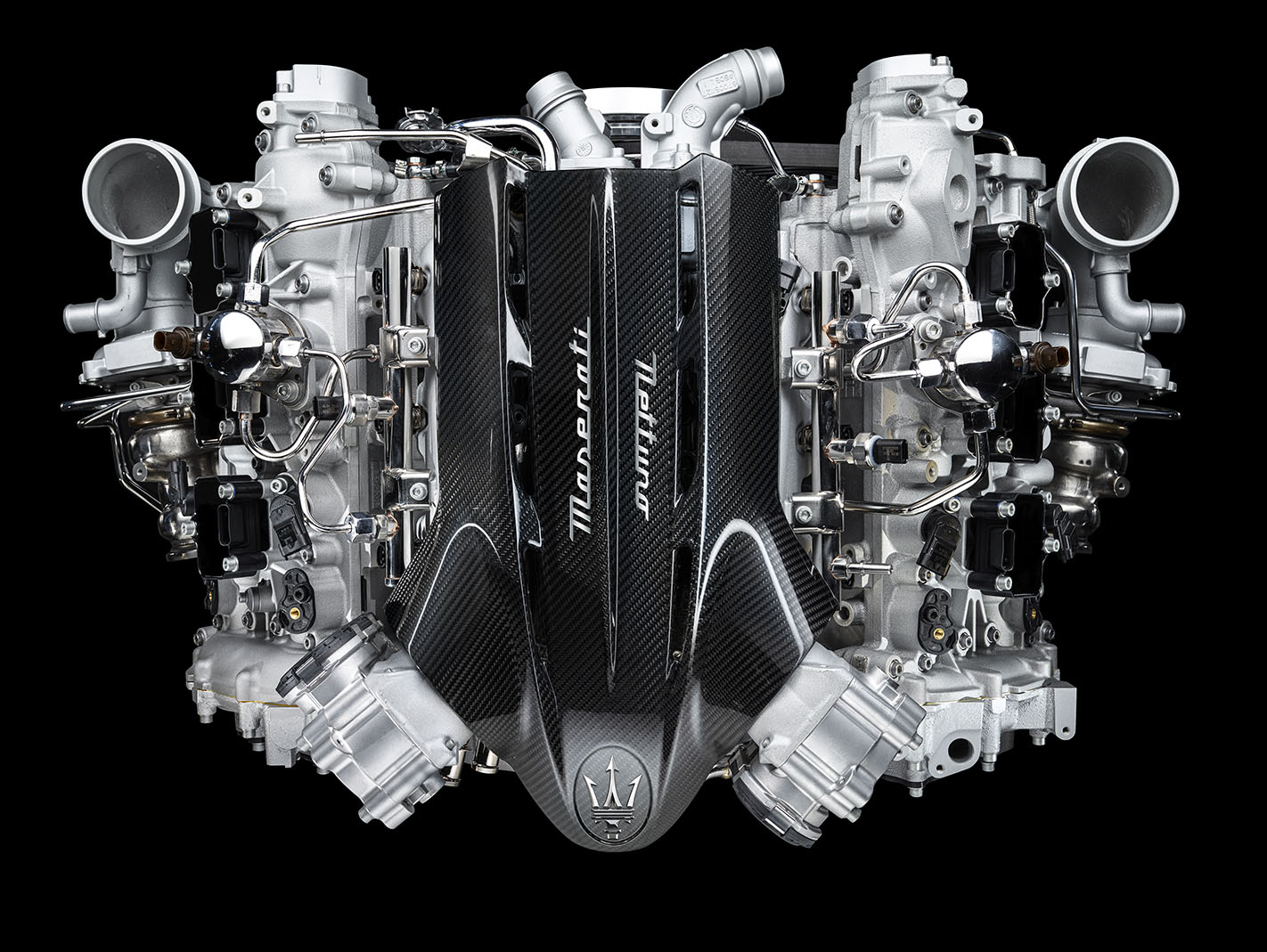
Since then, Maserati has relied heavily on nearby Ferrari. With few exceptions, like the 3.0-litre turbo-diesel V6 of the Levante and the 2.0-litre turbo four of the Ghibli Hybrid, Maserati engines have been manufactured at Maranello. This arrangement won’t end abruptly with the arrival of the MC20, but Maserati’s supercar will have a Made in Modena engine. Nettuno – Italian for Neptune, ancient Rome’s trident-wielding god of the sea – is the name of this twin-turbo V6.
Nettuno’s maximum power – 463kW at 7500rpm – is a massive number for a 3.0-litre engine. What extracting more than 150kW from each litre of capacity means is best understood by making a comparison. The specific output of the Maserati engine is 13 percent higher than the Porsche 911 GT2 RS’s twin-turbo 3.8-litre flat-six. Margins of superiority like this don’t happen by accident…
The Nettuno is a dry-sumped engine with a 90-degree vee angle. Perhaps it’s only coincidence, but its bore and stroke dimensions happen to match the new twin-turbo 4.0-litre V8 of Ferrari’s SF90 Stradale. With its turbochargers mounted outboard of the engine’s vee, the Nettuno at first appears to stick to a traditional Italian high-performance recipe.
It’s deep in the combustion chambers that the secrets of the Nettuno’s power lurk. Enclosing each cylinder’s central spark plug is an F1-style passive pre-chamber. This close-fitting copper-alloy sheath has a series of tiny holes that connect the small pre-chamber to the much larger main combustion chamber. Plasma jets spurt from the holes when the central plug fires, speedily igniting the fuel mixture in the main chamber. This boosts the engine’s high-load power output and efficiency; a second, side-mounted plug without pre-chamber handles low-load running.
Nettuno-powered versions of the MC20 feature an eight-speed dual-clutch transmission. Maserati promises a sub-3.0 second 0-100km/h time, but hasn’t yet confirmed if this is in part down to AWD, or even hybrisation. The EV definitely will be eAWD, a Maserati engineer confirms. Its three motors – two at the rear for effective torque-vectoring and one at the front is the logical layout – will make it fractionally the quickest variant from 0-100km/h. Like the Porsche Taycan, the MC20 EV will have an 800-volt battery pack, and a range of more than 380km is promised.
Early Nettuno drivetrains were road-tested in heavily camouflaged and bulked-up 4C-based development mules. Maserati released teaser shots of these late last year, leading to a flurry of inaccurate media speculation that Maserati’s then-nameless new supercar might be some kind of evolution of the little Alfa.
Now we know the MC20 is nothing of the kind. It’s a deftly designed and unexpectedly innovative car that’s also a true Maserati. But does it truly signal the opening of an excitingly successful new chapter? Only time will tell, but what is certain right now is that Maserati needs a change in strategy.
From a brief peak of more than 50,000 global sales in 2017, more than half of them Levante, the trident brand slumped to fewer than 20,000 in 2019. Maserati clearly believes that a timely embrace of electrification in combination with renewal of its line-up offers the best chance to flourish.
With the MC20 as a bright-shining halo for the brand, Maserati’s fervent prayers for sustained success must have some chance of being answered…
NETTUNO: MODENA VIA MARANELLO?
Maserati touts the Nettuno V6 as all-new and 100 percent its own work, but a closer look at the engine reveals some striking similarities to the Ferrari F154 V8 engine and, by extension, Alfa Romeo’s 690T V6 as seen in the Giulia QV.
Like the F154, the two banks of cylinders are reposed at a 90-degree angle with an 88mm bore and an 82mm stroke. The rev limit of 8000rpm is a match for the F154-engined SF90 and the 1-6-3-4-2-5 firing order is identical to the Alfa.
While the heads and thus the compression ratio are claimed by Maserati, remove those and you see the cylinder block is clearly related to or, if we’re being kind, very heavily influenced by the F154. Cylinders, liners, fluid galleries and stud patterns look identical to the Ferrari, but with a cylinder lopped off each bank. Even the oil filter fit is the same.
Maserati has been smart to fit off-shelf items from elsewhere in the Stellantis group’s stable, with the air conditioning compressor bearing part number 50537067, again identical to the hot Giulia. Look really closely and you’ll even be able to spot Alfa Romeo’s badge on this part. Likewise, the Denso-branded alternator, part number 670050552, is also used on Alfas.
Even the ingenious twin-spark and pre-chamber design of the head could have Maranello’s imprimatur on it. The patent for this technology lists Fabio Bedogni as the lead inventor. Not familiar with Mr Bedogni? He’s worked at Ferrari since 2009 on engine development and is still there.
BACK TO THE GRID
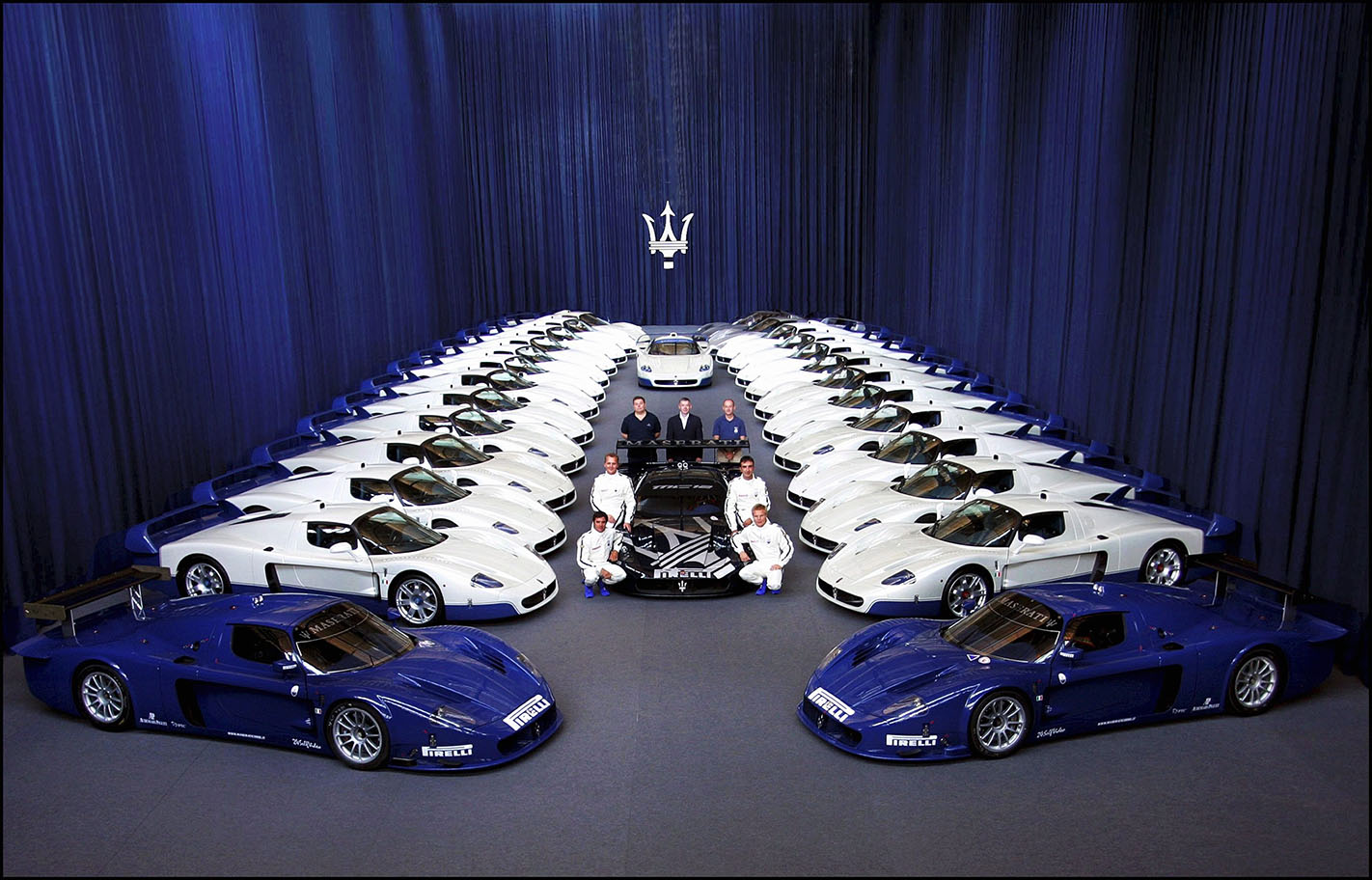
The MC20 will fill the shoes left by the MC12 in multiple ways. Maserati’s first mid-engined supercar since the Enzo-based cult hero will also be its first factory-backed racer in 16 years. The MC20 will see the brand return to the global motorsport stage but Maserati hasn’t confirmed in which category. Our bet is GT3 or GTE – the latter allowing a return to Le Mans.
2021 MASERATI MC20 SPECS
Engine: 2992cc V6 (90°), dohc, 24v, twin-turbo
Max power: 463kW @ 7500rpm
Max torque: 730Nm @ 3000-5500rpm
Transmission: 8-speed dual-clutch
Weight: 1470kg
L/W/H/WB: 4669/2178/1224/2700mm
0-100km/h: sub-3.0sec (claimed)
Economy: 11.5L/100km (estimated)
Price: $420,000 (estimated)
On sale: 2021
The fourth-generation Kia Sorento large SUV has finally arrived Down Under bringing with it an all-new platform and new levels of comfort, convenience and safety technology.
Priced from $45,580, it is again available in four spec grades, S, Sport, Sport+ and GT-Line.
Each grade comes with a choice of two powertrains: the 3.5-litre V6 petrol with front-wheel-drive and the new, lighter 2.2-litre four-cylinder diesel with all-wheel-drive.
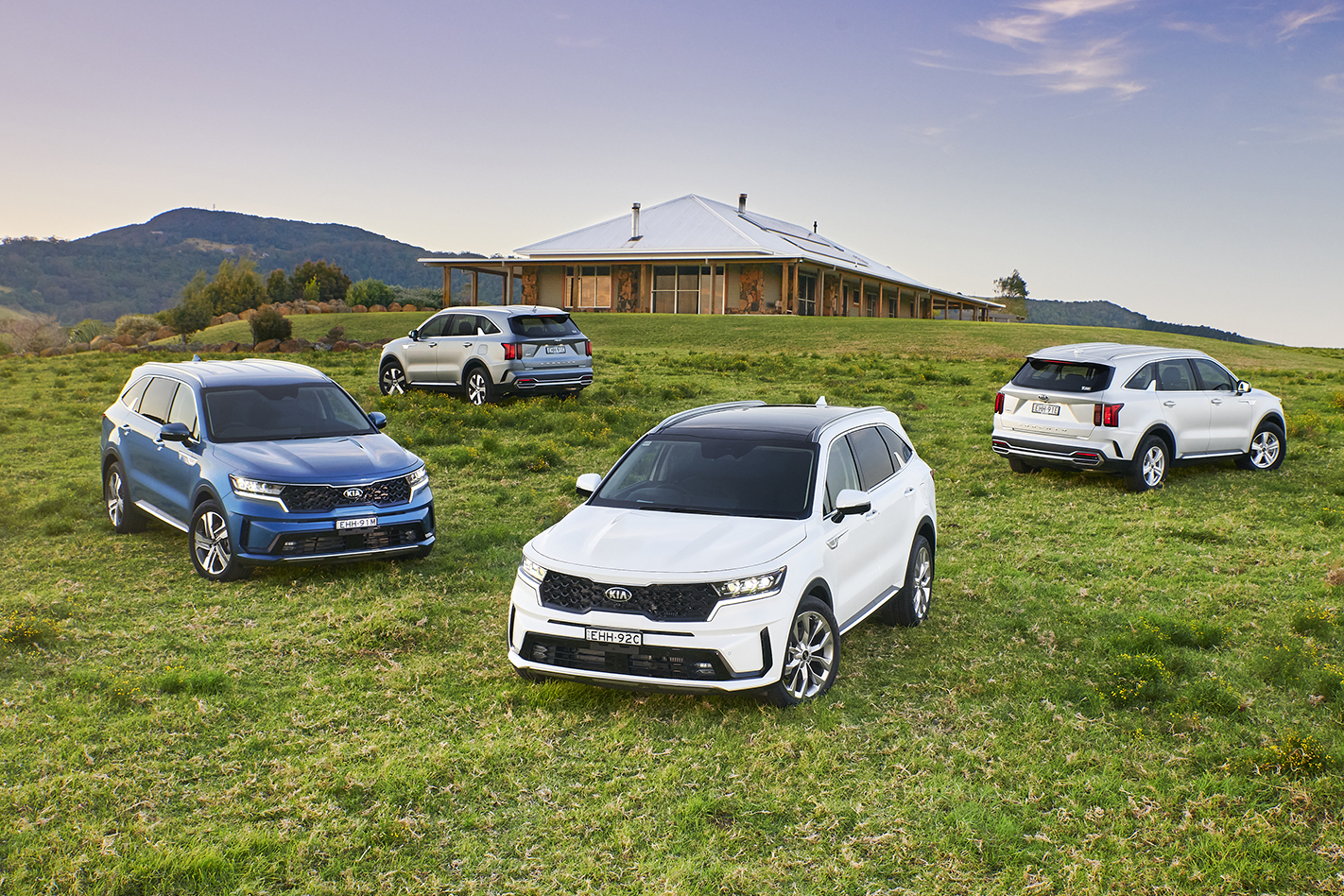
The Kia Sorento range will also gain hybrid and plug-in hybrids linked to a 1.6-litre petrol turbo engine, in early 2021,
Kia Sorento standard features
The 2020 Kia Sorento is the most high-tech Kia model to date and, while some of the most advanced features have been reserved for the upper-spec versions, it still has a generous standard features list that includes:
- LCD touchscreen infotainment with Android Auto/Apple CarPlay smartphone pairing.
- Bluetooth and USB connectivity.
- AM/FM/Digital (DAB+) radio.
- Reversing camera with guidelines.
- Front and rear parking sensors.
- Digital gauges.

- Active safety including autonomous emergency braking with pedestrian, cyclist and junction detection, lane-keeping assist, rear-cross traffic alert, blind-spot collision avoidance, driver attention alert.
- Advanced Smart Cruise Control with stop and go function.
- Full LED lighting including headlights, daytime running lights, front and rear fog-lights.
- Rain-sensing windscreen wipers.
- Alloy wheels including the full-size spare.
- Auto-folding door mirrors.
- Roof rails.
- Sliding and reclining 2nd-row seats.

- Satellite navigation with 10 years of traffic information and map updates.
- Dual-zone climate control air-conditioning.
- Auto-dimming rear-view mirror.
- 10-way powered drivers’ seat settings.
- Leather-appointed seats.
- Heated front seats.
- Heated steering wheel.
- Smart keyless entry and push-button and remote-engine start.

- Heated door mirrors.
- Hands-free powered tailgate.
- Privacy glass.
- 2nd and 3rd row USB sockets
- Smart key with remote smart parking assist.
- 12.3-inch high-resolution digital instrument cluster.
- Head-up display.
- In-car intercom.

- 360-degree parking camera.
- Parking collision avoidance.
- Dual-projection LED headlights.
- Blind-spot monitor.
- Quilted Nappa leather seats.
- Heated front and rear seats.
- Ventilated front seats.
- 14-way power-adjusted driver’s seat.
- 10-way power-adjusted front passenger seat.
- Panoramic sunroof.
- Paddle shifters.
- Interior mood lighting.
- Alloy sports pedals.
- Wireless fast phone charging.
- BOSE premium sound system.
- 20-inch alloy wheels.
Fresh look
With a face resembling its Seltos little brother, the Sorento’s new design is noticeably more sculpted than the current model, with fresh geometric details and more swept-back, elongated proportions.
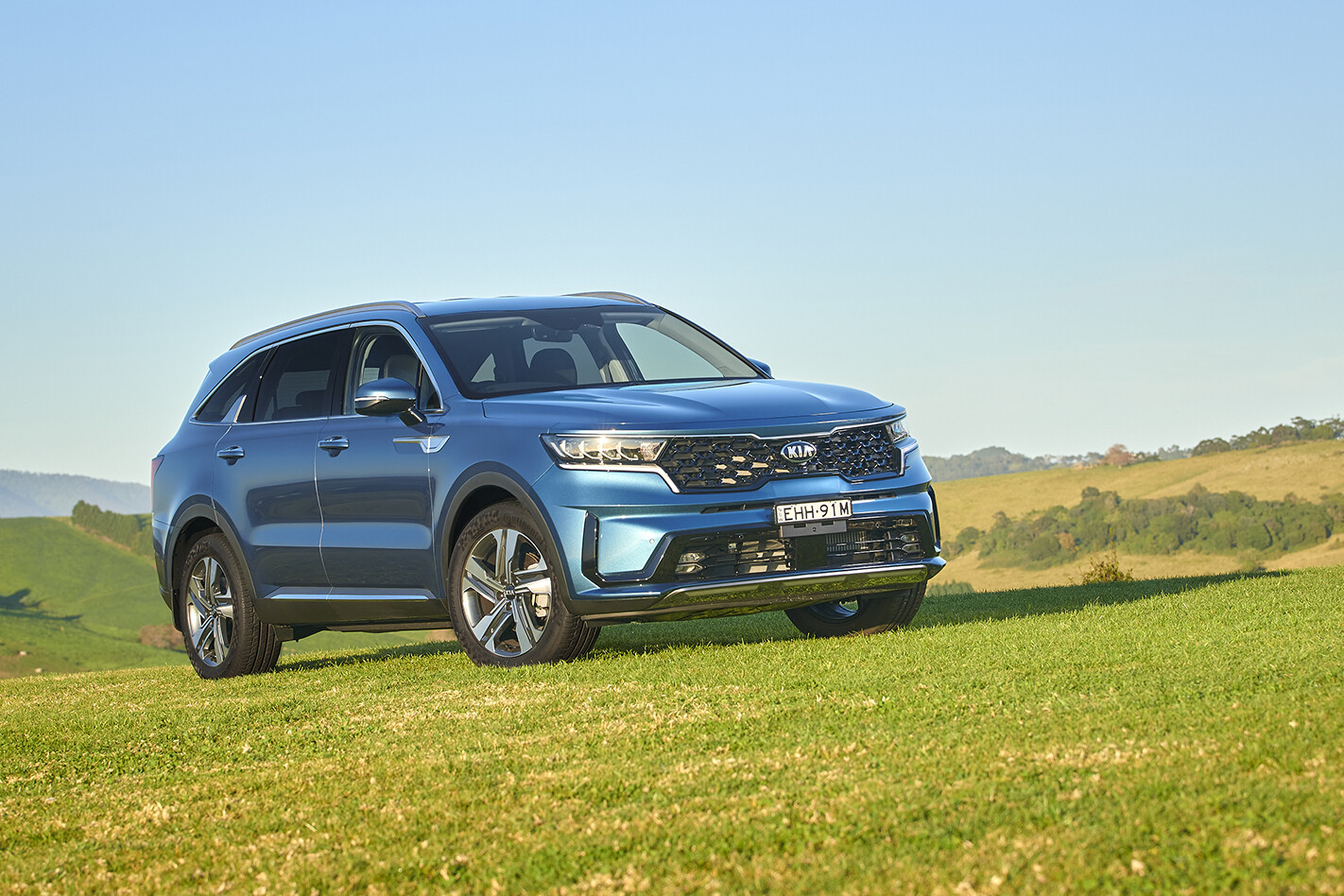
As well as introducing a handsome design to the family, the new Sorento is the first Kia to be built on the Korean carmaker’s new SUV platform that brings a host of technological advancements to match the smouldering looks.
It also offers more space than its predecessor, along with a host of new driver assistance systems, revised and updated information and entertainment tech, making it the most high-tech vehicle Kia has ever created.
More space and comfort
Kia says the three-row SUV also has one of the highest quality interior spaces found in any of its models to date, with the intuitive, tech-oriented cabin featuring a 10.25-inch touchscreen infotainment system in all but the entry-level Sorento S, and a new 12.3-inch high-resolution digital instrument cluster in the GT-Line.
Material quality is enhanced, with a cabin that blends metallic trim and embossed satin-effect surfaces. Various spec grades feature black cloth, leather-appointed black cloth or black quilted Nappa leather.
The 2021 Kia Sorento is 10mm wider and has a 35mm longer wheelbase than the previous model, resulting in more cabin room. Second-row seats are able to slide 45mm further, creating more legroom and a wider point of entry to the third row.

There is also a new grab handle built into the C-pillar, giving third-row passengers something to hold on to as they climb aboard.
The Kia Sorento boot space is also greater, up from 605 litres to 821 litres, with the third row of seats folded down. With the third row in use, available cargo space is up 32 percent to 187 litres.
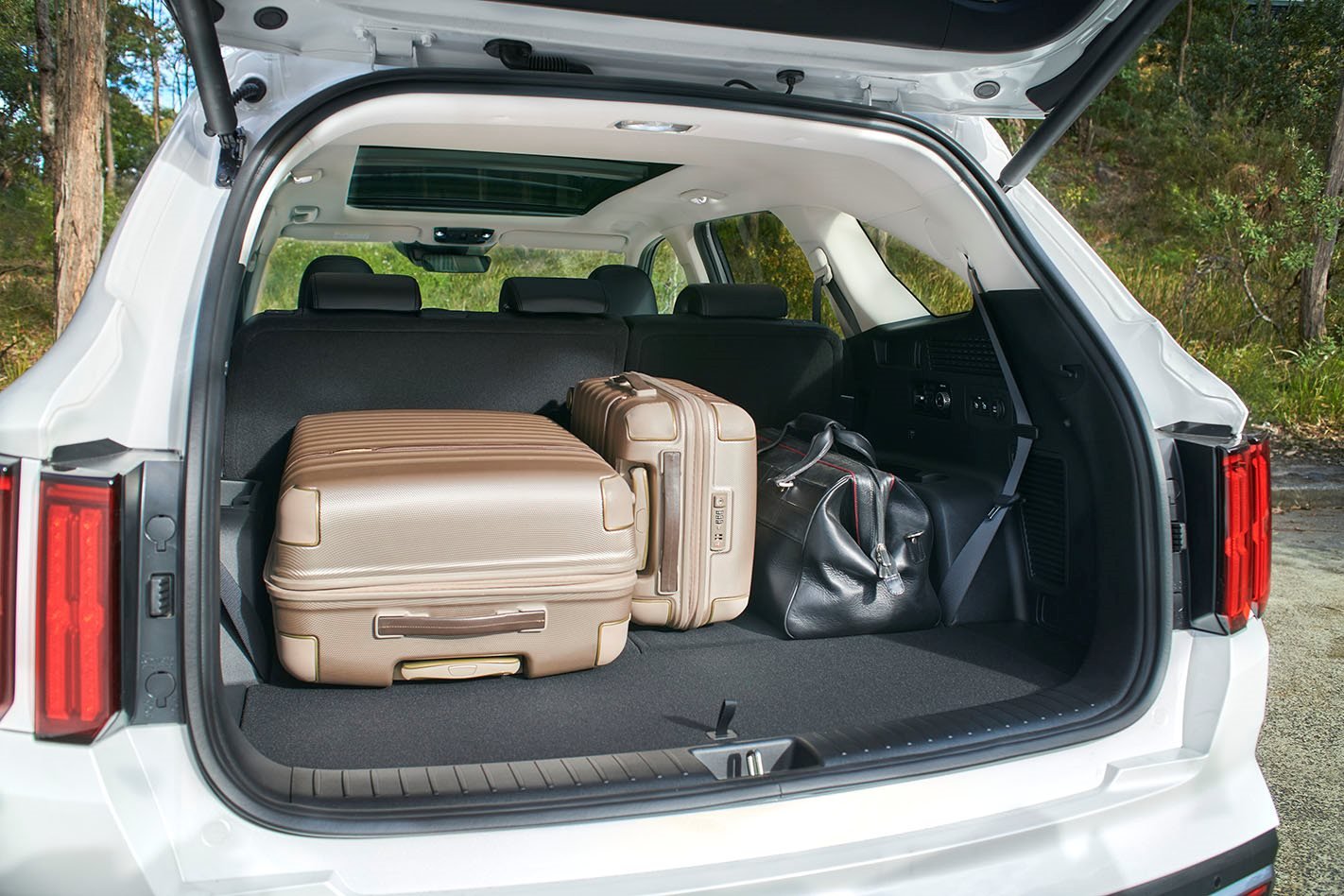
All Sorentos have full-size spare wheels under the boot floor.
Technology and safety
The 2021 Kia Sorento GT-Line has a head-up display, mood lighting with seven preset and customisable colour schemes that work with ‘Sound of Nature’ ambient sound delivered by a 12-speaker Bose surround-sound audio system tuned to deliver optimal sound to all three rows.
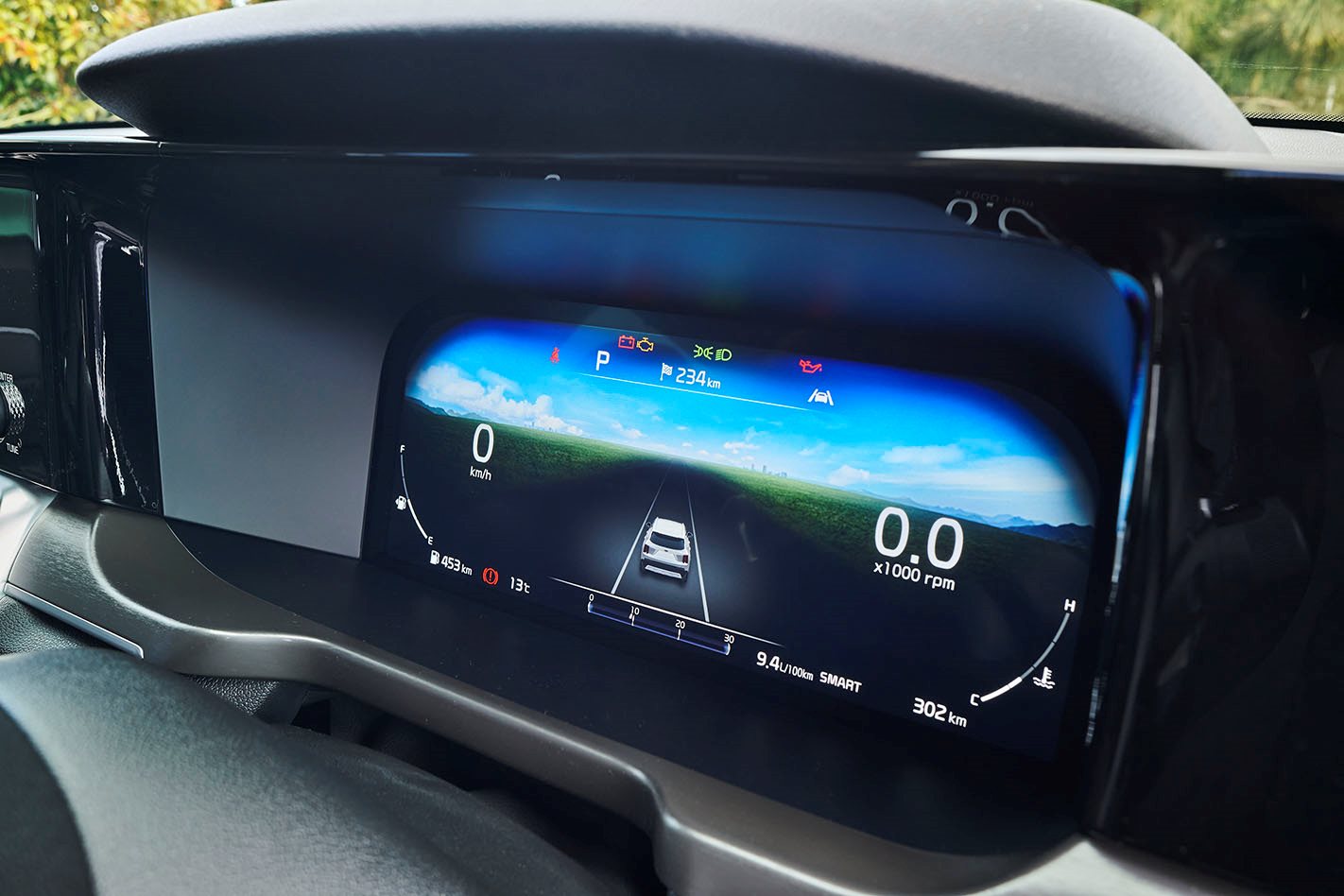
Safety-wise, the advanced driver assist system (ADAS) brings Kia’s latest autonomous emergency braking technology with pedestrian, cyclist and vehicle detection. It can also spot oncoming traffic when making a turn at a junction.
It is available with blind-spot monitoring, surround-view parking display, intelligent speed limit assist, smart cruise control with Stop & Go, navigation-based smart-cruise control that can adjust your speed based on speed limits, lane-keeping assist, and driver attention warning.
The 2021 Kia Sorento is now available in Kia showrooms.
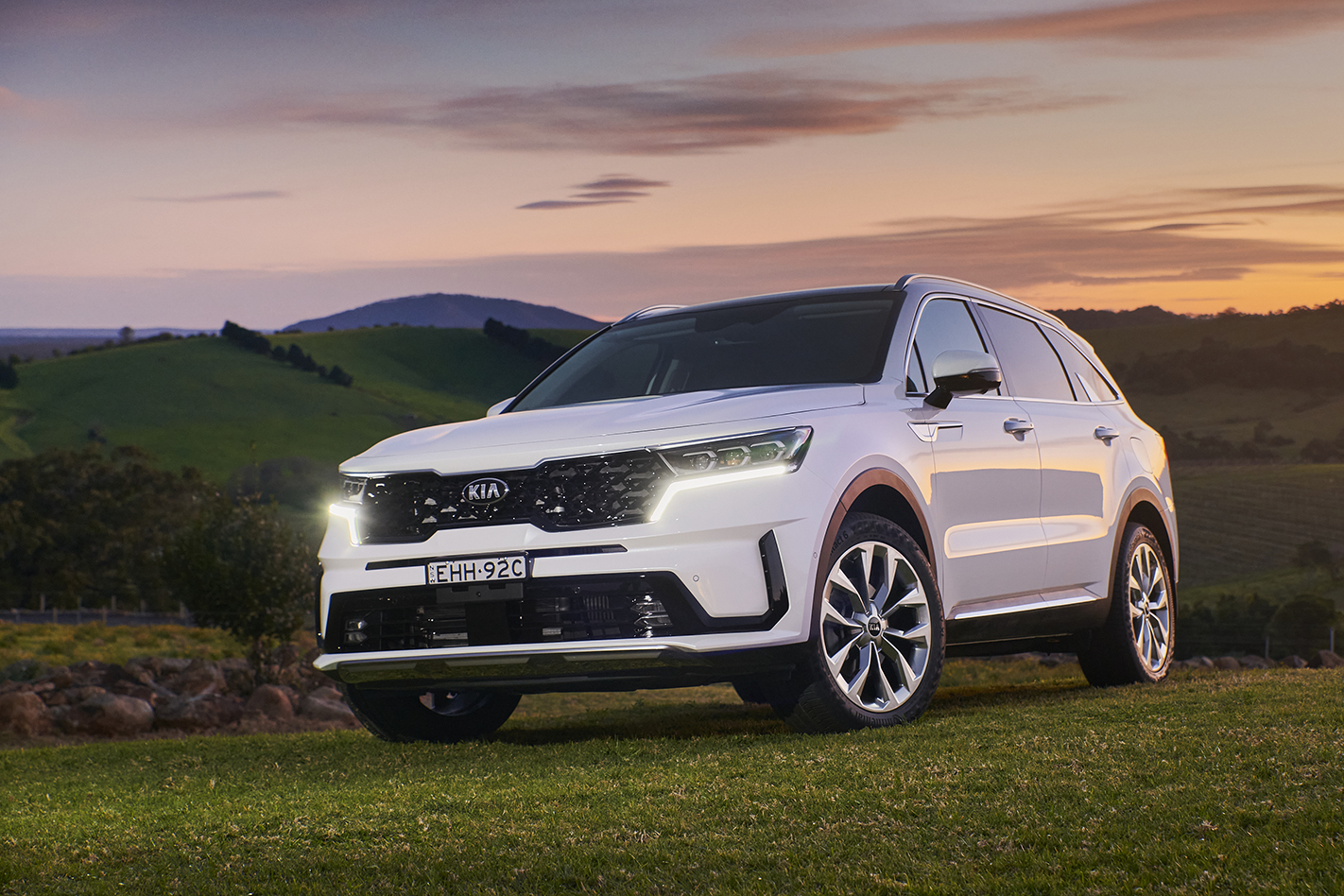
2021 Kia Sorento pricing
- Sorento S FWD petrol – $45,859 RRP, $46,990 driveaway
- Sorento S AWD diesel – $48,850 RRP, $49,990 driveaway
- Sorento Sport FWD petrol – $48,470 RRP, 54,390 driveaway
- Sorento Sport AWD diesel – $51,470 RRP, $52,990 driveaway
- Sorento Sport+ FWD petrol – $52,850 RRP, $54,390 driveaway
- Sorento Sport+ AWD diesel – $55,850 RRP, $57,390 driveaway
- Sorento GT-Line FWD petrol – $60,070 RRP, $61,990 driveaway
- Sorento GT-Line AWD diesel – $63,070 RRP, $64,990 driveaway
So HSV as we knew it is no more, and instead selected vehicles from the GM empire will come Down Under via the newly established General Motors Specialty Vehicles (GMSV).
The cars we know are locked in for 2021 are the C8 Corvette plus the Chevrolet Silverado 1500 and 2500. Beyond, that, though, the senior executives at GMSV are not saying.
So let’s have a comb through the GM catalogue, and consider what’s available, what we’d like to see make it here, and assess the likelihood of viability in the Aussie market.
Model: Chevrolet Tahoe
The all-new fifth-gen Tahoe retains a separate chassis, or body-on-frame construction, (as opposed to monocoque) which makes it well-suited to owners towing vans or boats. With the Holden Trailblazer set to bite the dust, this could serve as a useful (larger) seven-seater substitute.
Its rear suspension is independent, not a live axle, and when fully specced, the Tahoe can be had with magnetic dampers and air springs. US road tests reckon the ride is nothing like that of a typical separate-chassis SUV, even on the baller-spec 22-inch wheels.
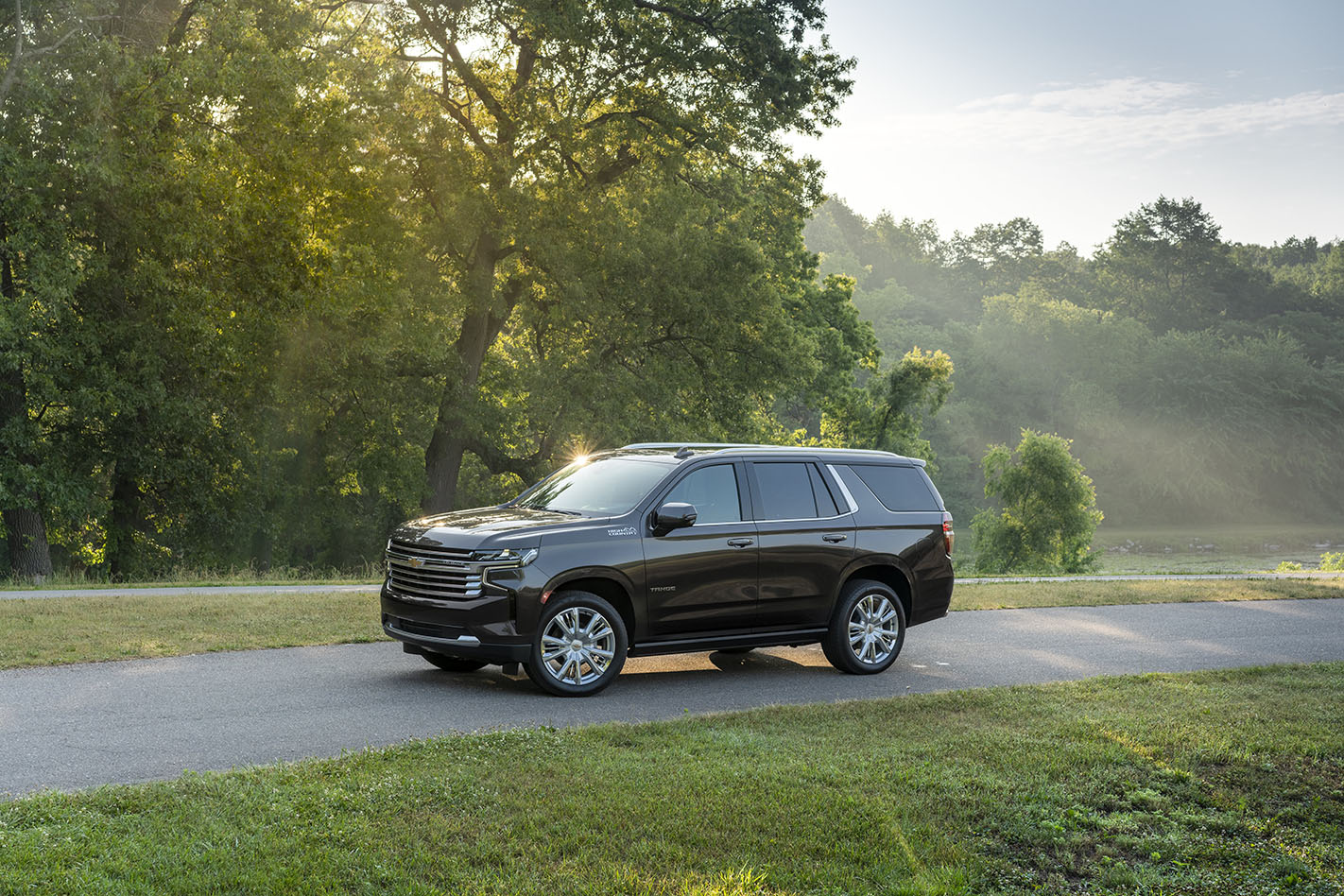
In the US, the Tahoe is offered with a choice of three engines.
The opener is a 5.3-litre V8 making 266kW, while the top-spec model comes with a 6.2-litre V8 good for 315kW/624Nm; the engine we’re familiar with here thanks to the Silverado 1500. There’s also a new 3.0-litre turbo-diesel inline six, with all engines hooked to the 10-speed transmission co-developed with Ford (as fitted to the Mustang).
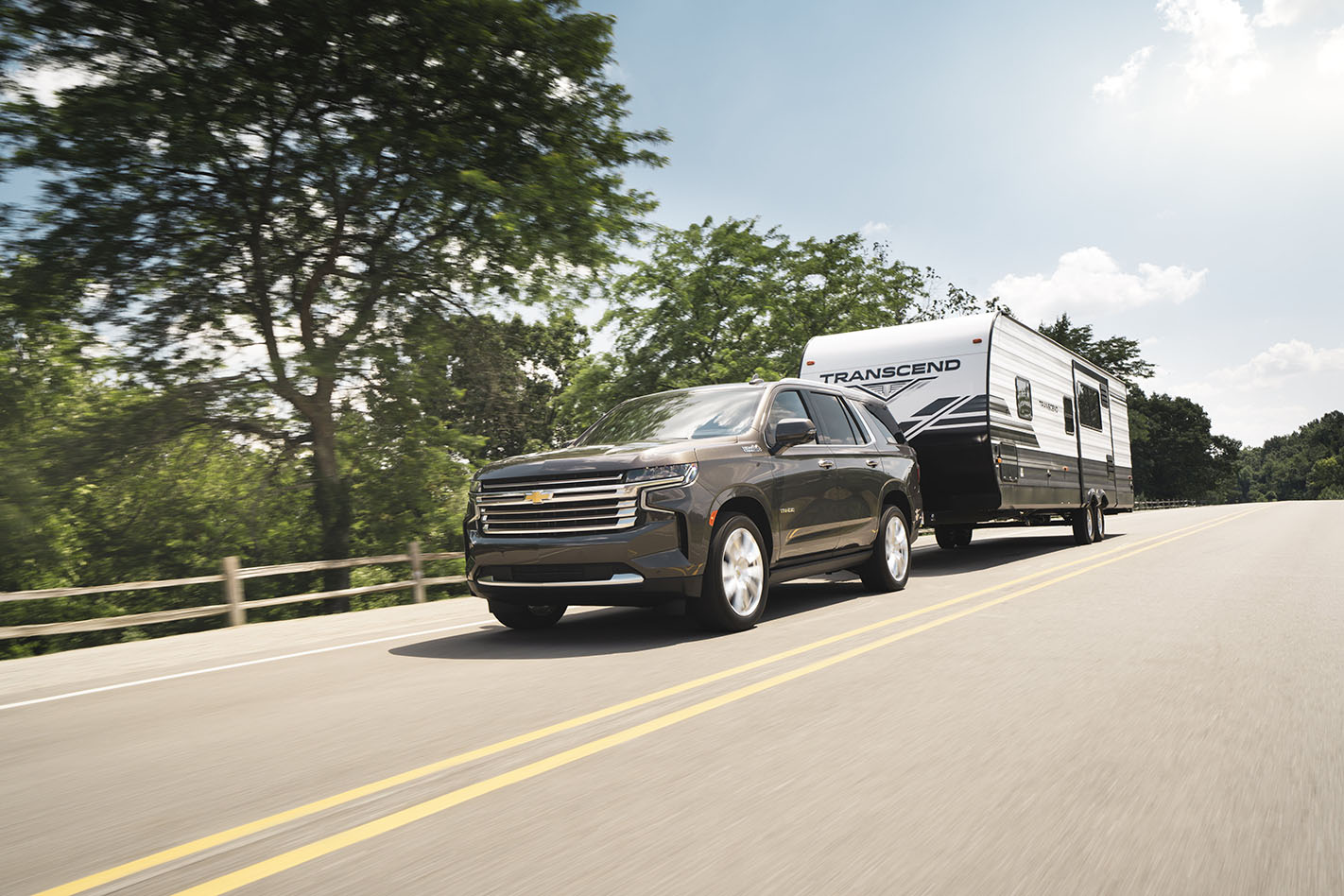
The Tahoe can also be specced with AWD, a two-speed transfer case, hill-descent control, all-terrain mode and front skid plate, giving it decent off-road ability. And as a tow rig? In the US, the Max Trailering Package adds a more robust radiator and cooling fan, plus hitch guidance and hitch view in the reversing camera, a package we reckon could find a welcome market here given the rise in van-dragging grey nomads.
Verdict: Bring it
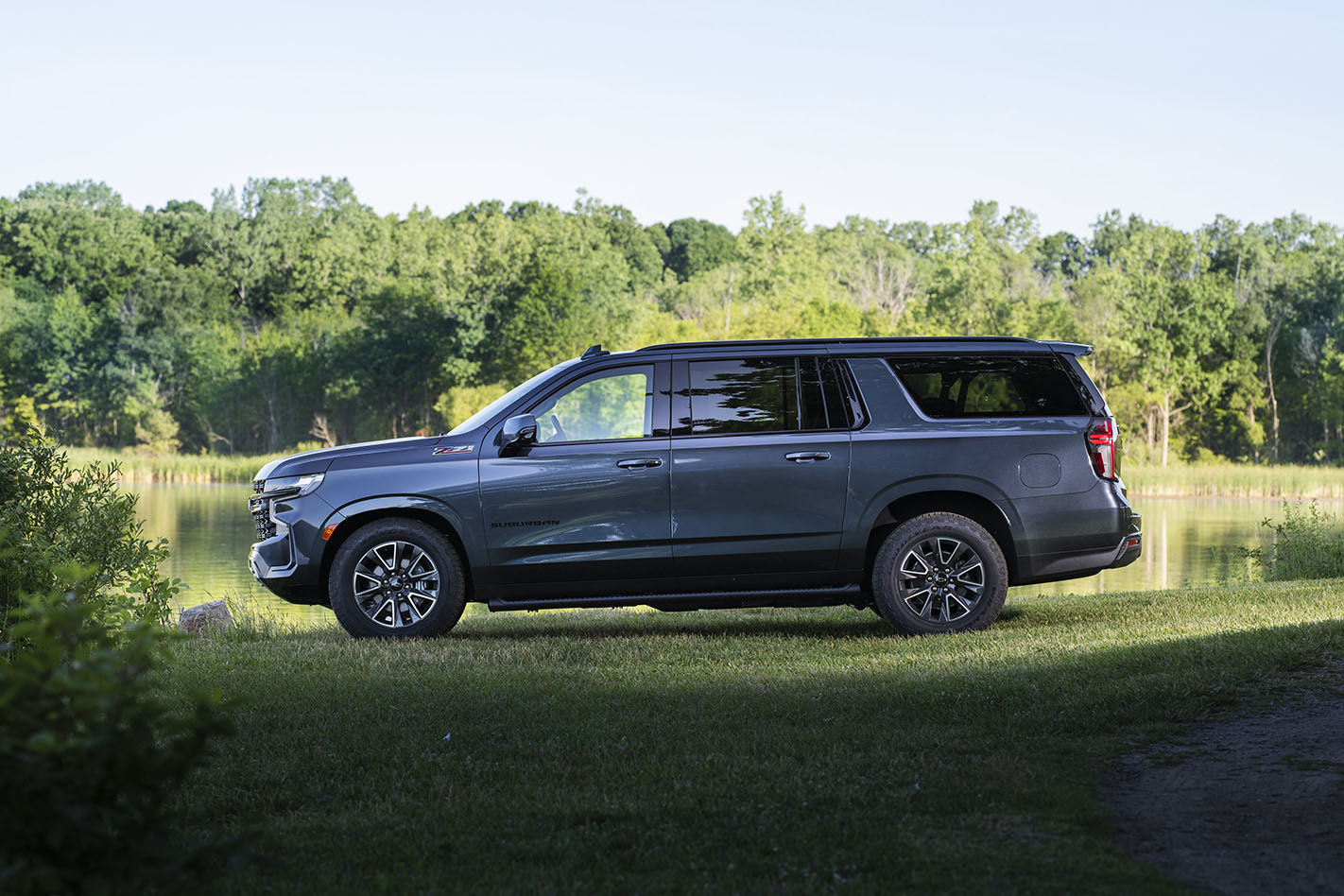
Model: Chevrolet Suburban
Take everything we’ve just said about the Tahoe – separate chassis, IRS, option of active dampers, powertrain choice – and now just add even more hugeness.
This thing is a whopper – at 5732mm, it’s nearly 400mm longer than the XL-sized Tahoe – so no sane person dealing with inner-city streets and multi-story car parks would go near one.
But it does mean a third row that can accommodate adults, so it’s possible there’s a niche for it here for big families, hire-car companies and lovers of all things massive.
But enough to justify the whopper price tag ours would carry, once converted? In the US, a top-spec Suburban is around $US75,000, so don’t expect any change from $150,000 if GMSV was to offer it.
Verdict: Ah, go on then, bring it.
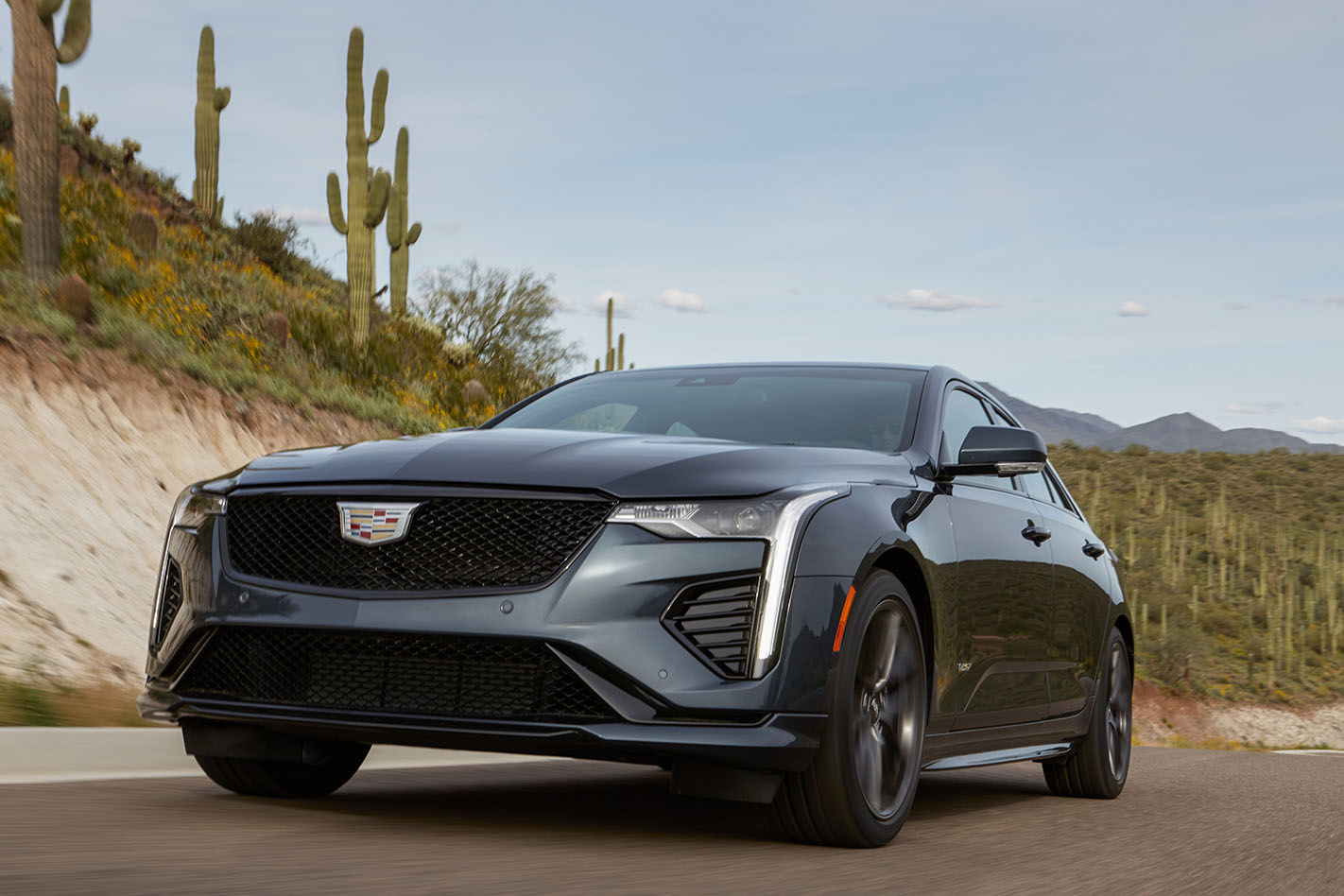
Model: Cadillac CT4
This is the American premium brand’s competitor for the BMW 3 Series/ Audi A4/ Merc C-Class, but just as Genesis does here, Cadillac attempts to offer US customers higher engine outputs and a richer spec list for similar money to the Germans.
The top-spec CT4 V-Series, which would be the only model with a hope of finding a niche here, is built on GM’s Alpha architecture, and packs a more powerful version (242kW) of the 2.7-litre turbo four-cylinder engine, 10-speed auto along with mechanical limited-slip differential, Brembo brakes, magnetic ride control, 14-speaker Bose audio, and wireless phone charger, among other refinements.
On paper, it looks like a more powerful rival for the Genesis G70 2.0T Ultimate, but the Korean offering is under $70,000, whereas the Cadillac is around US$45K in the States, which could translate to close to A$90K here.
Could GMSV find enough Aussies ready to drop that kind of money of a four-pot sports sedan to justify the cost and complexity of conversion? Unlikely, we reckon.
Verdict: Keep it.
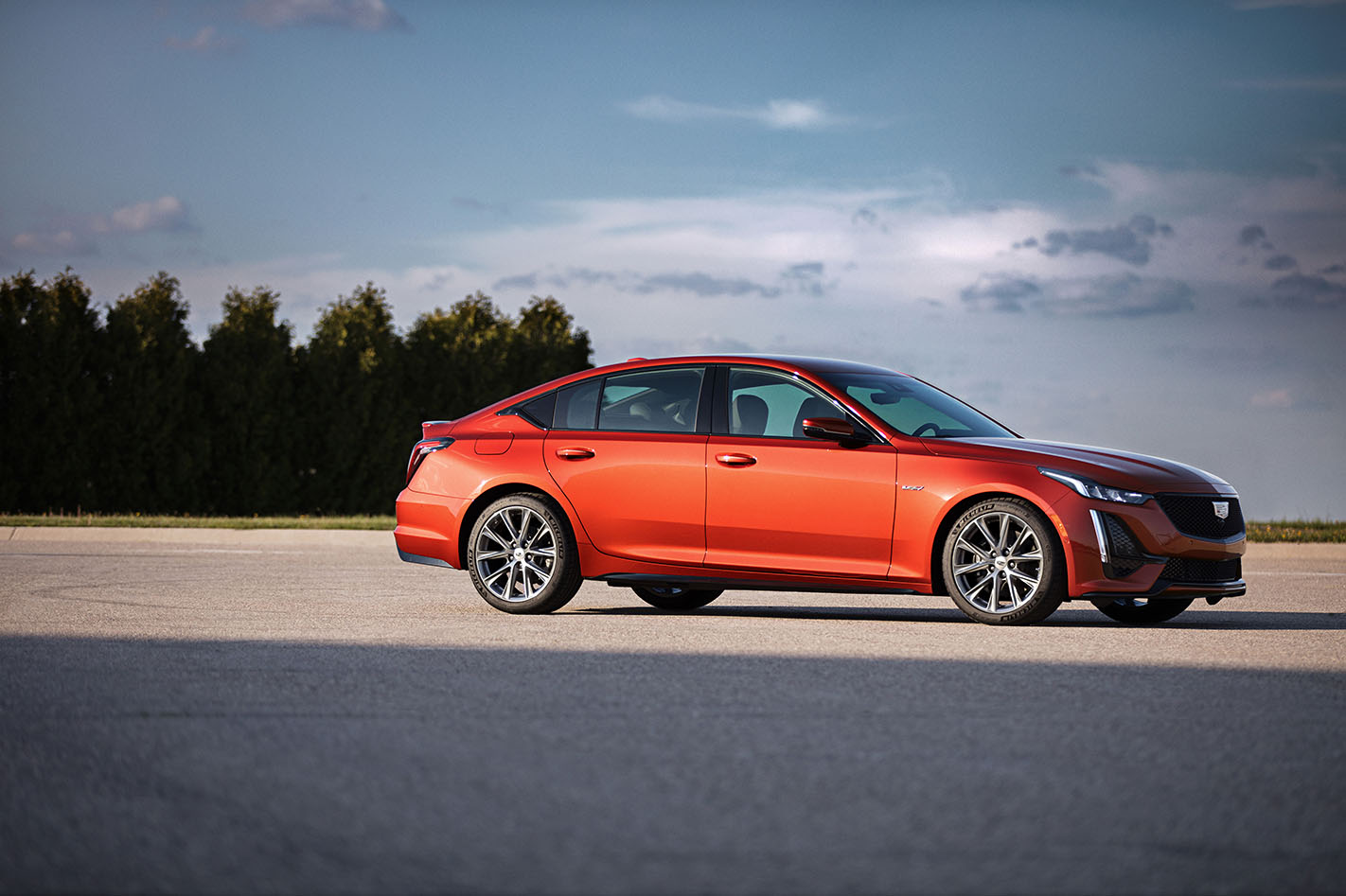
Model: Cadillac CT5
Caddy’s 5 Series/ E-Class competitor ups the ante with the availability of a 3.0-litre twin-turbo V6 making 270kW and 550Nm when fitted to the most sporting of the line-up, the CT5 V.
These are pretty handy numbers when compared to the outputs achieved by BMW, Audi and Mercedes-Benz from their respective turbo-petrol sixes of the same capacity. CT5 V features similar performance equipment as little bro CT4 V, although the LSD is electronic, not mechanical.
It can be had with AWD, as per the CT4, although we’d question whether Aussies not living in the snowy pockets would really net significant benefit from it. But here’s the thing: in the US, the CT5 V is not massively more expensive than its four-pot junior sibling, so could that translate to a sub-$100K price tag from GMSV here in Oz? If so, it has our interest.
Verdict? Bring it.
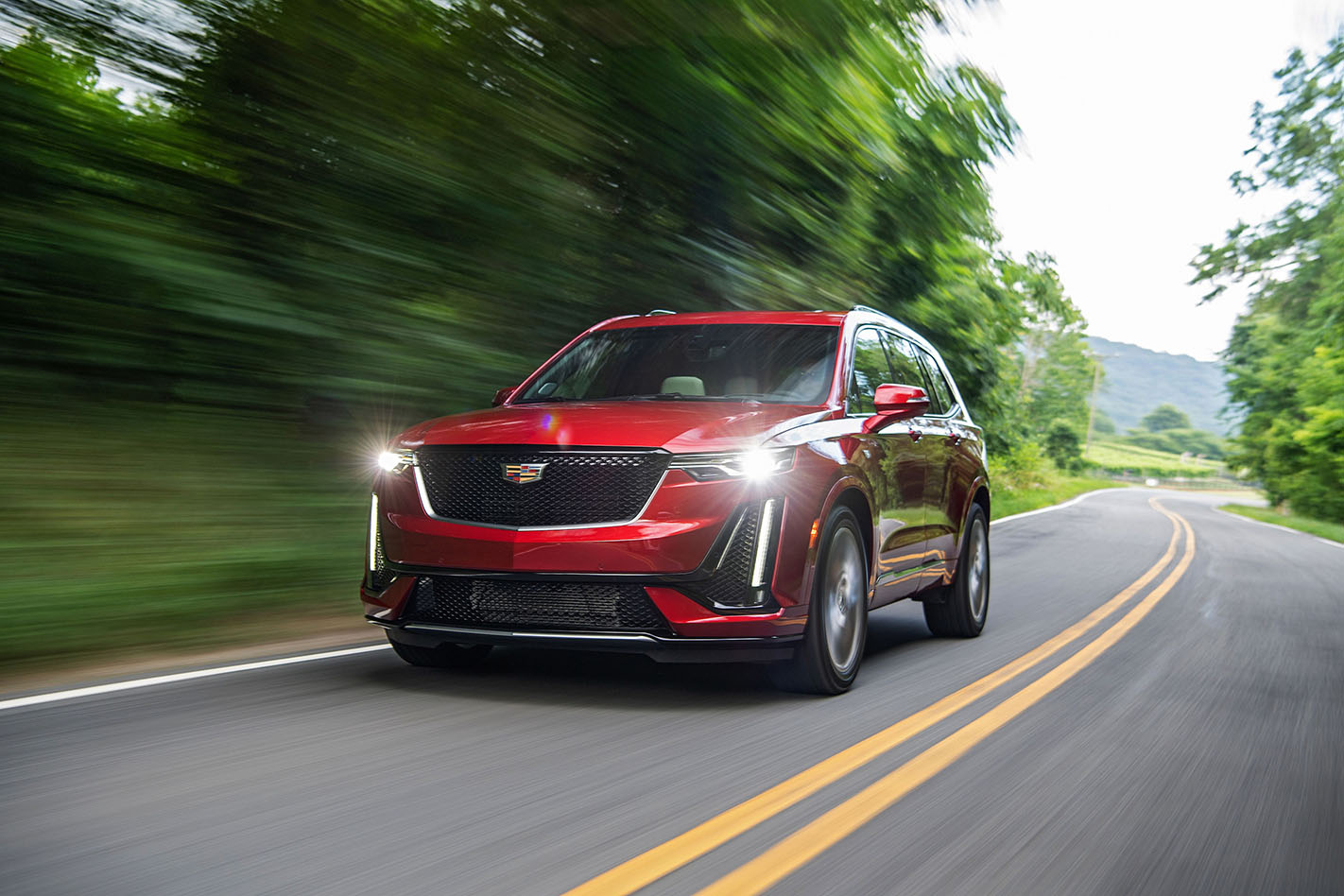
Model: Cadillac XT6
There are currently five SUVs in the Cadillac line-up: the XT4, XT5, and XT6, before stepping up to the iconic big boy, the Escalade, and topping out with the massive Escalade ESV, a long-wheelbase beast seemingly built purely to chauffeur hip-hop stars and their entourages to night clubs.
The XT6 is the seven-seater option below Escalade, and is built on the same front/AWD platform as the soon-to-be-defunct Holden Acadia, and shares similar dimensions. Powertrain choice is limited to an atmo 3.6-litre V6 making 231kW and 367Nm, hooked to a nine-speed auto. So all a bit yawn-burger, as rivals roll out mild hybrid tech and PHEV alternatives delivering livelier performance and better consumption.
And therein lies the issue with the XT6 – it’s a competent, capable luxo SUV, but one that doesn’t really advance the cause enough to get us excited about it, especially given the (very) premium price tag it would carry by the time it was offered here as a right-hooker.
Verdict: Keep it.
Model: GMC Canyon
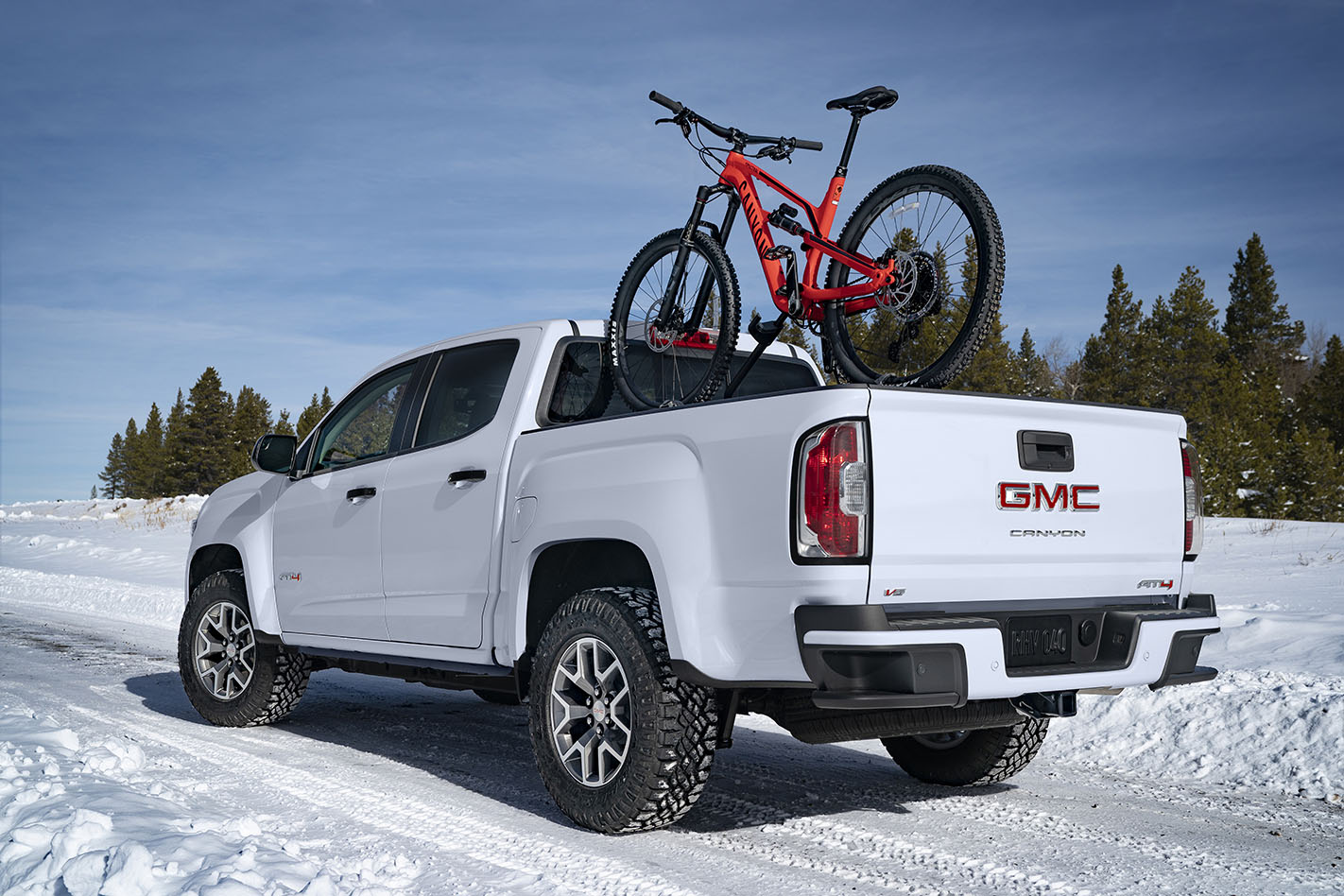
Here’s another GMC model that could potentially fill a void left by the Colorado as the Holden brand turns to dust. This one is classified as a ‘small pick-up’ in size-obsessed America, meaning it’s the right dimensions to be an alternative to Hilux, Ranger, et al.
In the US it’s offered with either a 3.6-litre petrol V6 making 231kW, or a version of the 2.8-litre turbo-diesel four used in Colorado making similar outputs to the exiting Holden. And as you’d expect for a model made for ‘Murica, there’s the option to go rich on the spec, with 20-inch wheels, heated and ventilated seats, multi-speaker Bose audio, and ample driver aids all on the menu.
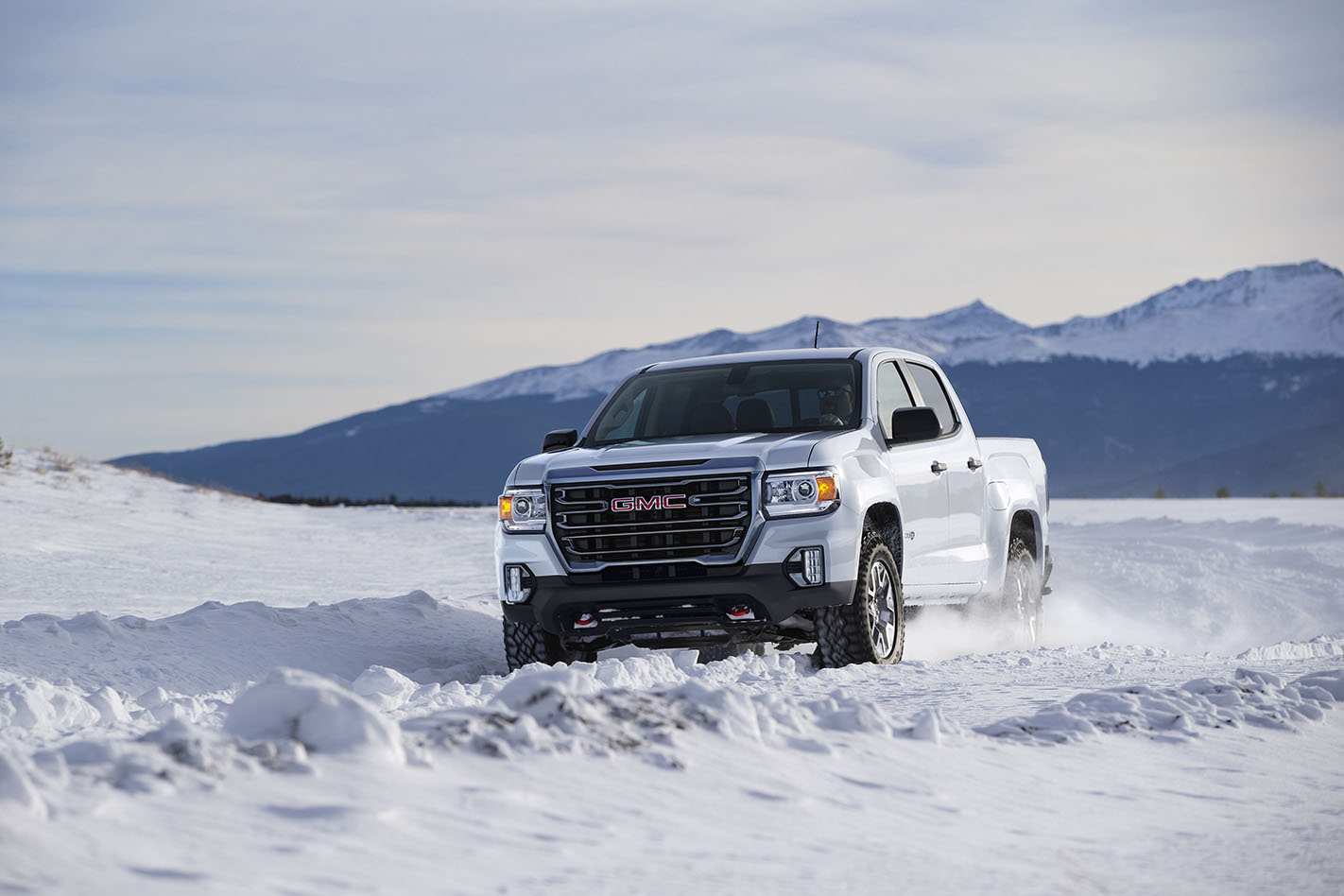
But given the emergence of Nissan’s N-Trek Warrior and Ford’s debut with the off-road-focused FX4 Ranger, we reckon the smarter play may be for GMSV to spec an Aussie-market Canyon with the dirty weekend package that brings 31-inch Goodyear Wrangler Duratrac tyres, 4WD with locking rear diff, two-speed AutoTrac transfer case, off-road suspension set-up, and more advanced hill descent control.
If the numbers for it crunched favourably, we’d bet that this one would find Aussie homes.
Verdict: Bring it
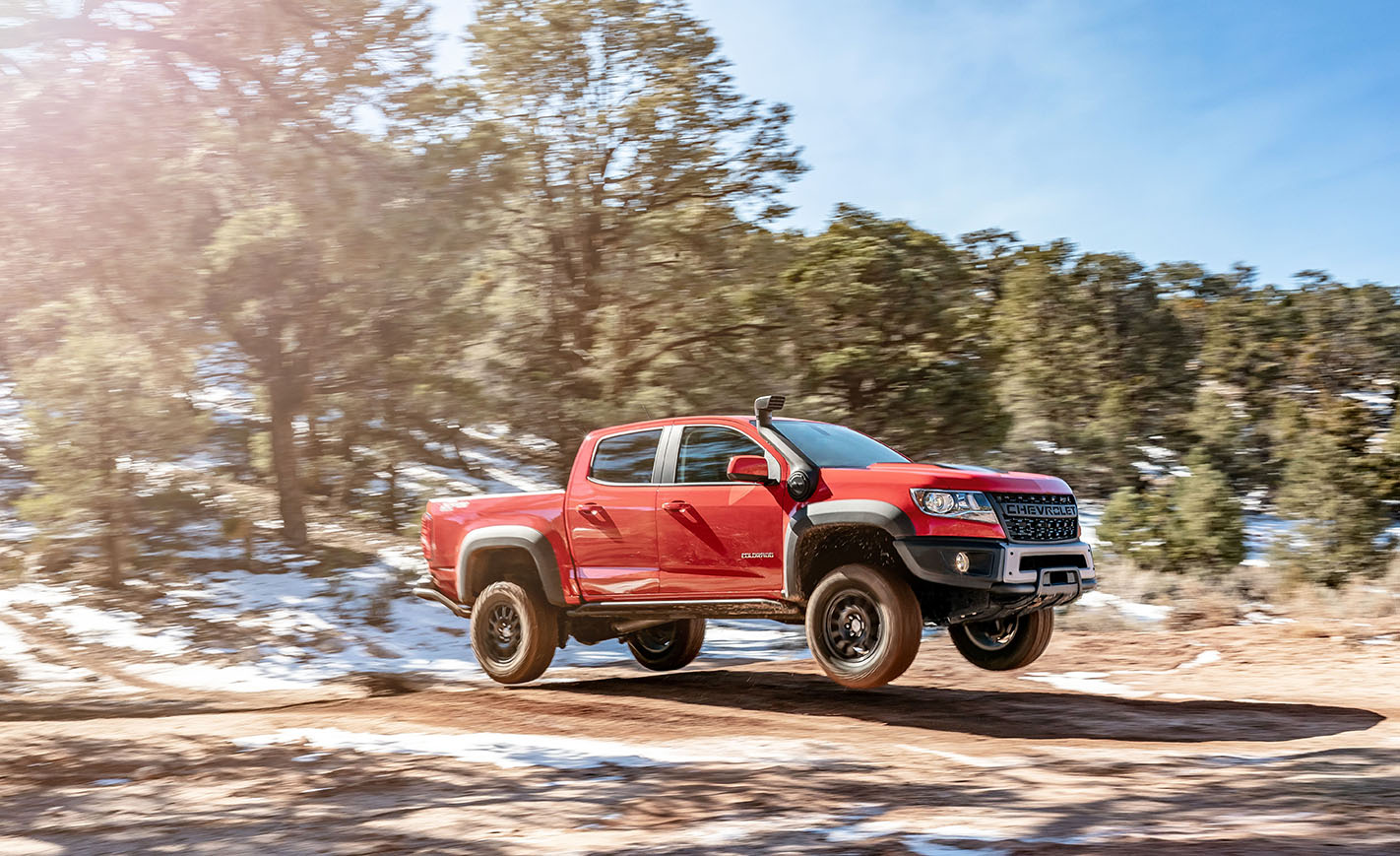
Model: Chevrolet Colorado ZR2
Think of this one as a 4×4 dual-cab ute from half a class size above our Colorado/Hilux/ Ranger and fitted with the sort of off-road hardware intended to make it more of a rival, in terms of bush-bashing ability, for the (smaller) Jeep Gladiator Rubicon.
In the US it’s offered with the same powertrain options as the GMC Canyon – atmo petrol 3.6-litre V6 or 2.8-litre turbo-diesel. Bushi bragging rights extend to Multimatic shocks specced to help provide up to 48mm more lift, front/rear electronic locking diffs, skid plates and rock sliders.
Given the obvious appetite for 4×4 utes larger than our mainstream offerings – witness Silverado and Ram – we’ll give this one the nod, although strictly for the rare few ready to get their circa $120K big rig down and dirty.
Verdict: Bring it