
Gauges are becoming less frequent in new cars with once-commonplace coolant temperature, volts and amp readouts, for example, now largely consigned to history and the classics.
The theory goes that even if you did know how many psi of oil pressure is healthy, there’s only a limited amount you can do on the roadside if it does start to falter out of range.
In most cases, a simple warning light or message prompts a visit to the service centre where the pros will deal with it instead of the driver having to deal with a full dial of information, but there’s one gauge that is still very much a part of your dashboard and will continue to be for many years yet. Or will it?
RPM
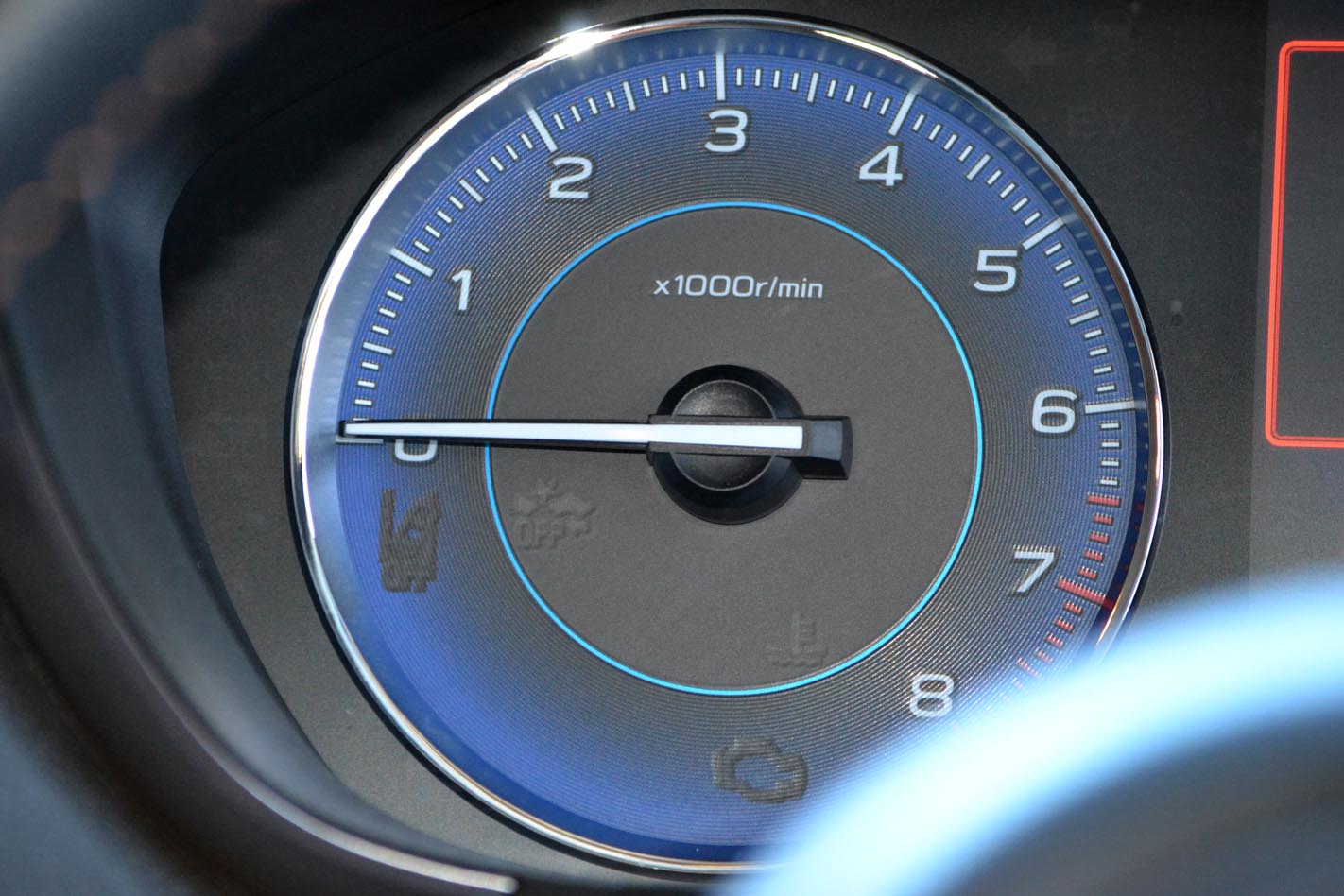
Simply, RPM stands for revolutions per minute (or revs per minute) and this significant gauge tells the driver how fast the engine is spinning.
A typical engine rev-range is from an idle of between 500 and 1000rpm, and a maximum speed of about 6000 to 7000rpm.You’ll often find a little multiplication sign next to RPM so that neater single or double figures can be displayed on the gauge instead of the full four-digit number.
The gauge’s correct name is the tachometer which many shorten simply to tacho or rev counter. It gets its name from the Greek word for speed – tachos.The reason the tachometer has hung around for so long while many other gauges have fallen from the dashboard is that it is not primarily a diagnostic device. Knowing how fast the engine is turning is arguably as important as the other gauge that often sits next to it – the speedometer.That said, the rev counter can also be an important diagnostic device, especially when describing the nature of a problem to a mechanic.
Why does RPM matter?
How fast the engine is revolving has implications for both performance and efficiency. As a general rule, the faster an engine spins, the more power it produces up to a point near the maximum designed speed, at which point power production starts to drop off.If you want the maximum performance out of your engine, you’ll want to know how close you are to its peak power revs.Knowing your car’s engine speed will also help you find the torque sweet spot, too. Unlike power, which generally increases with speed all the way to the redline, torque production is not related to time and often has a peak lower down in the rev range.
Of course, both of these elements are tied to fuel economy. If you are seeking maximum mileage out of a tank, keeping the revs low or around the peak torque point is key.
And if you choose to spend all your time near the rev limiter for max power, you’ll notice another gauge moving fast – the fuel gauge, in a downwards direction.
R-evolution
Would you believe that years ago a tachometer was seen as a bit of a luxury and only provided as standard on high-performance and premium models?
As engine performance and efficiency improved over the years, however, the tacho became more commonplace for all vehicles regardless of the price.But now, rpm and the rev counter is entering a new phase in its life. As more vehicles evolve into an electric era, rpm is becoming less relevant, with no need to inform the driver of electric motor speed.There is a glimmer of hope for the three letters, though. While a vast majority of EVs are single speed, multi-speed gearboxes are emerging as a potential technology for electrified vehicles, bringing all the advantages they did to combustion power.That might mean the reintroduction of this longstanding acronym and its preservation into a very different automotive landscape.
What stands out?
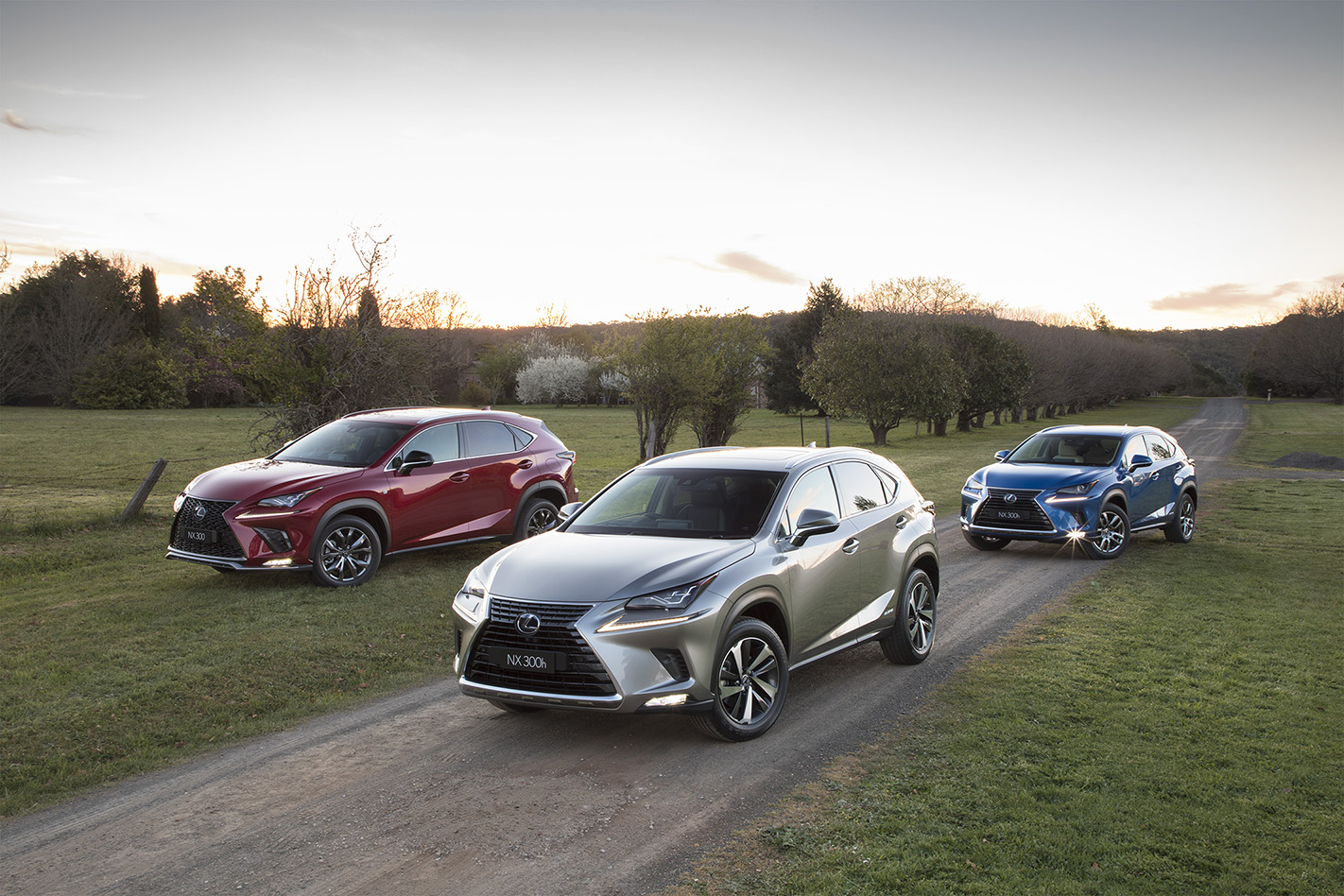
The Lexus NX is a distinctive looking medium SUV with a richly appointed interior, a great reputation for reliability, and a four-year warranty. You can have a smooth turbo-petrol engine, or a petrol-electric hybrid. All-wheel drive is available, and autonomous emergency braking is standard.
What might bug me?
Driving under 80km/h on the space-saver spare tyre, until you can fix your full-sized flat.How bumpy roads have become since you got your NX, and especially if you ordered one of the more expensive F-Sport or Sport Luxury trims. These replace the conventional suspension used on less costly NX models with more sophisticated, but unfortunately less comfortable, adaptive dampers.
What body styles are there?
Five-door SUV-type wagon only.The Lexus NX drives either the front wheels or all four wheels, depending on the version.
The all-wheel-drive systems used in the NX are on-demand systems. Most of the time, they drive the car through the front wheels, saving fuel. But they drive the rear wheels also, automatically, when that’s helpful.The NX is classed as a medium SUV, higher priced.
What features does every Lexus NX have?
- Driver assistance including adaptive cruise control and autonomous emergency braking – which Lexus calls Pre-Collision Safety System (PCS) – lane-keeping assist, road-sign assist, blind-spot monitoring
- 10.3-inch multimedia screen with satellite navigation and live traffic updates.
- A reversing camera, and parking sensors front and rear (these help you judge how far the bumpers are from obstacles).
- A 10-speaker audio system with dual USB inputs, digital radio, and Bluetooth for phone calls and audio streaming. A Remote Touch controller on the centre console, which lets you navigate phone, audio, navigation and other functions.
- Keyless entry and start (which lets you unlock the car and drive away without removing the key from your pocket or bag).
- Automatic transmission, with paddle shifters.
- Dual Zone Climate Control Air Conditioning
- Rain-sensing windscreen wipers, automatic high-beam and self-dimming mirror.
- Heated and power-adjusted front seats
- A drive mode select system with eco, comfort and sports settings, which lets you adjust how eagerly the engine and gearbox respond to your right foot.
- Tyre pressure monitor, which warns you if a tyre has lost air.
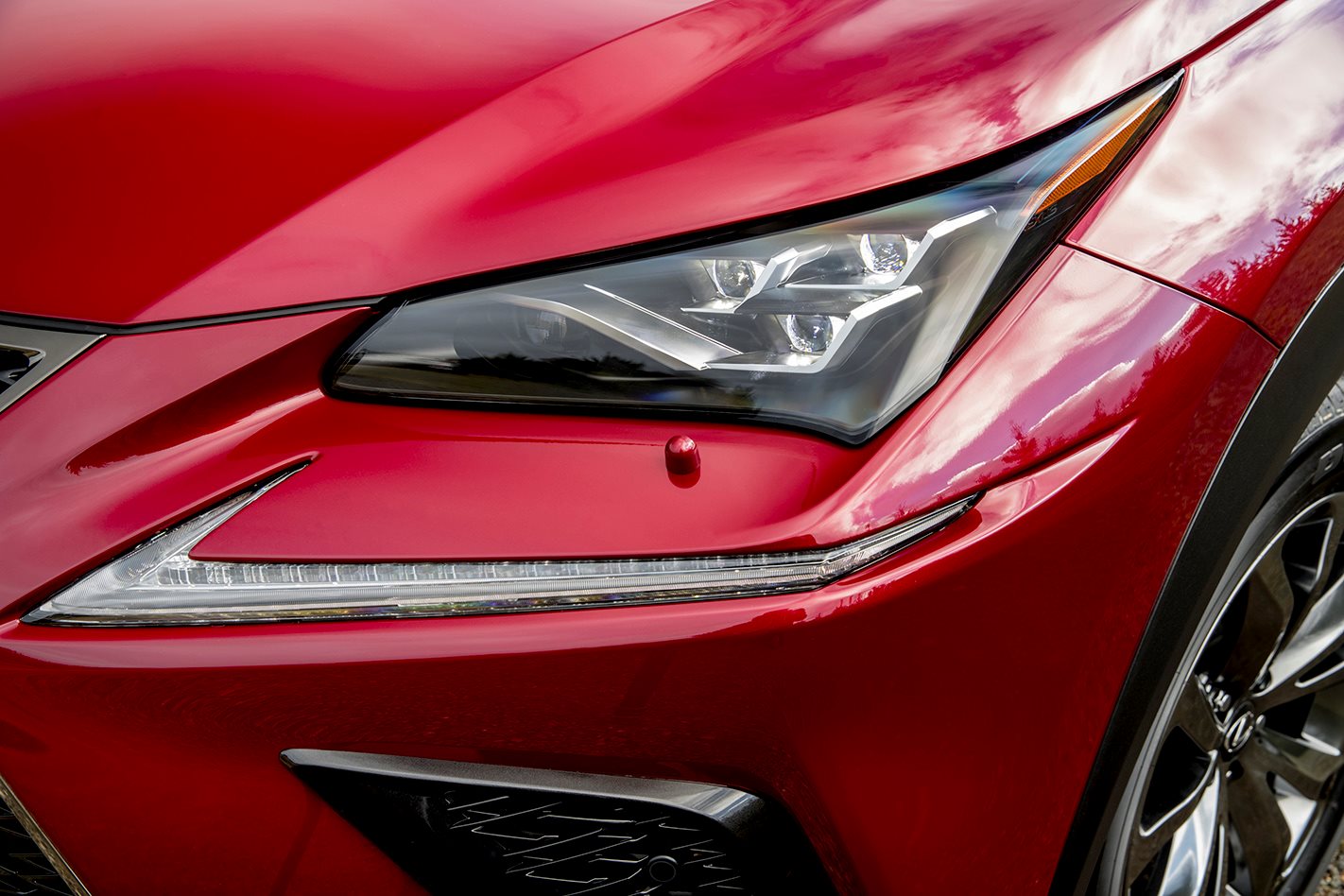
- Bright, long-lasting LED headlights with washers.
- LED daytime running lights and fog lights with cornering lights.
- Eighteen-inch wheels made from an alloy of aluminium, usually lighter and better looking than the steel wheels with plastic covers found on some lower-priced cars. A space-saver spare wheel and tyre.
- Power-operated tailgate, rear spoiler and roof rails.
- Illuminated door handles and puddle lights.
- Hill-start assist and trailer sway control.
- Eight airbags: two directly in front of the driver and front passenger; one alongside each front occupant to protect the upper body; a curtain airbag down each side protecting the heads of front and rear occupants; a knee protection airbag for the driver; and a cushion airbag in the base of the front passenger’s seat near the front of the cushion, to help hold you in position during a crash.
- Electronic stability control, which can help you control a skidding car. All new cars must have this feature.
Which engine uses least fuel, and why wouldn’t I choose it?
The 2.5-litre, four-cylinder, petrol-electric hybrid in the NX300h uses the least fuel on the official test, consuming about 5.7 litres/100km (city and country combined).One reason you might not choose the hybrid is that you plan to use your Lexus mainly on long drives in the country. The NX300h relies on deceleration to charge the battery that powers its electric motor, and it gets much more of that around town. In steady cruising, its fuel use will approach that of similar non-hybrid cars.
Another is that you would rather pay less for your Lexus NX, while getting more power. The less costly NX300 uses the alternative engine, a 2.0-litre turbo-petrol four-cylinder. It offers about 20 percent more power than the NX300h when you work it hard – say, when overtaking. But it will use a lot more fuel around town, with a combined test figure of 7.7 litres/100km.The NX300h has a continuously variable transmission (CVT), which does away with fixed gear ratios and responds steplessly to the driving conditions. The NX300 has a conventional six-speed automatic.
What key features do I get if I spend more?
The NX300 and NX300h each come in three versions: Luxury, F-Sport and Sports Luxury. The least costly is Luxury, which has a leather-like synthetic seat trim and the equipment found in any Lexus NX. You can have front-drive only, or all-wheel drive – the more expensive F-Sports also offer FWD or AWD, while Sports Luxury versions are AWD only.
Paying more for an F-Sport gets you:
- Interior cosmetic touches include aluminium alloy control-pedal covers and door-sill scuff plates, while outside you get sportier looking bumper bars, front grille and wheels.
- Sport+ and Custom drive modes
- The power-adjusted front seats on an NX F-Sport can be cooled (as well as heated)
- Driver’s seat adjustment memory, which makes it easy to restore your setting after a companion has driven the car.
- Bolstered front seats with adjustable headrests, and driver’s seat lumbar support.
- Part-leather seat trim.
- Sports steering wheel.
- Wireless phone charger.
- Multi-element LED headlights dip only part of their high beams for oncoming vehicles, retaining full illumination to either side.
- 360-degree panoramic view monitor, which gives you a bird’s eye view of the car to help you park in tight spaces.
- AWD as standard.
- Power-operated sunroof.
- Heated rear seats that power-fold.
- Cabin trim that substitutes woodgrain highlights for the F-Sport’s metallic look.
- 14-speaker Mark Levinson branded sound system.
- Head-up display lets you check speed without taking your eyes from the road.
Does any upgrade have a down side?
Choosing the hybrid NX300h brings some unusual driving traits. In particular, its brakes feel unresponsive when you first press the pedal, then become more powerful quite sharply as you press harder. This is a symptom of the hybrid’s brake energy regeneration system, which uses energy from your slowing the car to help charge the battery that drives the electric motor.Moving from an NX Luxury to an NX F-Sport or Sports Luxury brings you a feature Lexus describes as Adaptive Variable Suspension. The Adaptive suspension has the capacity to adjust how softly or firmly the NX rides, depending on road condition, how you are driving, and the drive mode you choose.
Not all exterior colours are equal: some are designated Premium and cost about $1000 extra.
How comfortable is the Lexus NX?
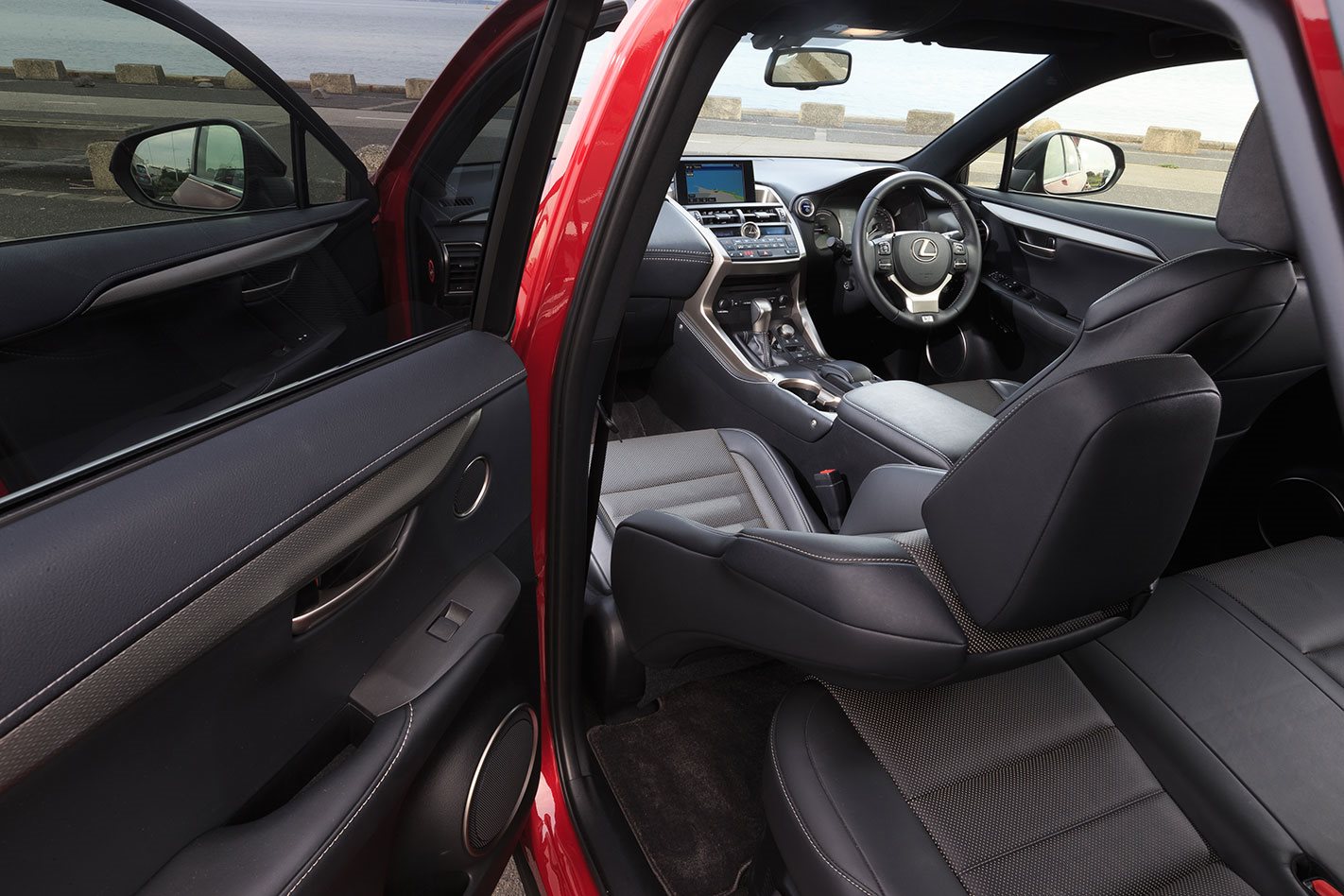
The sumptuous NX interior pampers you, and while it is smaller than most alternatives, that lends a cosy and cossetting – rather than claustrophobic – feel to the cabin. (The relatively compact proportions do mean less space to stretch out for those in the back, however).The stitching and trim on the dashboard, door trims and the seats themselves (be they the real leather versions) is beautiful to behold and lovely to touch. The steering wheel is nicely sculpted, and the front seats are supportive and comfortable.
The layout of the buttons, such as for the climate control and driver aids, seems fussy and disorganised at first, but familiarity breeds ease. Nevertheless, WhichCar testers find the ‘remote touch’ infotainment interface on the centre console difficult to use.The NX shuts out tyre, suspension and wind noise well. The ride of an NX Luxury may feel a bit firm and sharp around town but on the highway it is quite good.The Adaptive suspension in the NX F-Sport and Sports Luxury (revised for the 2018 model year) supplies a more brittle ride than you get in an NX Luxury.
What about safety in a Lexus NX?
A reversing camera, front and rear parking sensors, tyre pressure monitors, anti-lock brakes, the mandatory stability control and eight airbags contribute to an impressive standard safety package in the Lexus NX.Augmenting this on every NX is an active safety suite comprising auto emergency braking, lane keeping assistance, a blind-spot monitor and a rear cross-traffic alert.Two of the eight airbags are placed directly in front of the driver and front passenger. One alongside each front occupant to protects the upper body. There is a knee-protection airbag for the driver, and a cushion airbag in the nose of the front passenger’s seat to help hold you in position during a crash. Finally, a curtain airbag down each side of the car protects the heads of front and rear occupants from side impacts.The auto-braking on an NX works at speeds up to 180km/h, drawing on radar and camera-type sensors to scan the roadway ahead. It recognises pedestrians at up to 80km/h. If it detects a collision risk, it will warn you. If you don’t act on the warning, it will brake automatically.Lane keeping assistance alerts you if you begin to stray distractedly into a neighbouring lane – and can even start to steer you back onto your own part of the road. It can operate even where the left side of the road is unmarked.The blind-spot monitor makes it safer for you to rely on your exterior mirror when changing lanes, while a rear cross-traffic alert helps you avoid embarrassing (and sometimes dangerous) crashes when backing out of parking spaces and driveways.The Australasian New Car Assessment Program (ANCAP) awarded the Lexus NX its maximum five stars for safety, most recently in October 2017.
I like driving – will I enjoy this car?
With its angular headlights and tail-lights and an hourglass front grille, the NX looks sporty and even avant-garde alongside its reserved European alternatives.Climb into the cabin and that impression stays with you. Like the others, it is a luxury car, but its personality feels slightly different and more extroverted.The NX300h has hybrid quirks that may endear it to some but will irritate others. The first – perhaps equally a peculiarity of its CVT auto – is the appearance of a delayed response to the accelerator pedal. You hear a faint whine from the electric motor and a rising note from the petrol engine before the car builds much speed. Similarly, the brakes do not seem to slow you much at first, but they get more powerful quickly as you depress the brake pedal further (a characteristic connected with their role in charging the hybrid drive system).
The flip side is that driving the NX300h smoothly, and allowing the regenerative system to capture kinetic energy by planning your acceleration and braking, brings a satisfying feeling that you are making progress efficiently.The NX200t offers more traditional driver appeal. It’s more powerful, and lighter. The conventional six-speed automatic makes it easier to take control of the engine, which also sounds nicer and spins freely. Paddle gear shifters on the steering column and the Sport+ driving mode in the more expensive versions add the enjoyment.
However, even the NX300 isn’t as much fun to drive as alternatives such as the Audi Q5 and Land Rover Discovery Sport. In corners, its attitude is not easily adjusted with the steering, throttle or brakes, and the steering wheel doesn’t deliver a great sense of connection with the road. And if you drive any NX version enthusiastically, the electronic stability control system is quick to curtail the adventure.Stiffening of the suspension about November 2017, for the 2018 model year, improved handling as intended. But the NX remains short on dynamic polish by comparison with several strong European alternatives.The all-wheel-drive system fitted to most NX versions aids stability on wet or otherwise slippery roads and helps you make progress in muddy or snowy conditions. However, the NX is not built to tackle rough tracks or off-road – and if you were to get a puncture you would have only the skinny space-saver spare tyre.
How is life in the rear seats?
Not as spacious as it is in most alternatives. For a medium SUV the Lexus is narrow with a short wheelbase, which means its rear passengers have less shoulder and leg room. Space aside, however, the Lexus looks after occupants quite well.There are dedicated air-conditioning vents, and a fold-down armrest. The seatback angle is well judged, and there’s good under-thigh support. Foot room and headroom are pretty good also. And just as it is in front, it’s quiet in the rear compartment.
How is it for carrying stuff?
The Lexus NX can squeeze in as much cargo as some alternatives but significantly less than others, such as the BMX X3. The luggage bay expands to 1545 litres with the rear seatbacks folded, and they split 60-40. Tie-down points and metal scuff plate on the loading lip are nice touches.
The standard powered tailgate opens when you press a button on the key fob or on the tailgate. It can be programmed to open to a specified height – so that it does not foul a low roof, for example.
Where does Lexus make the NX?
The Lexus NX is made in Japan.
What might I miss that similar cars have?
If you will do a lot of long-distance driving, perhaps a turbo-diesel engine. Many medium SUV alternatives have a diesel option. A turbo-diesel in a similar package will give a longer highway range between refills.The ability to integrate your smartphone with the car’s touchscreen, via Apple CarPlay or Android Auto, so that you can display and control phone apps with the screen. This is available in most of its luxury and mainstream rivals.Among other premium medim SUVs worth considering are the, Audi Q5, Mercedes-Benz GLC-Class, Land Rover Discovery Sport, and BMW X3, Volvo XC60, or the smaller Lexus UX.
Are there plans to update the Lexus NX soon?
The Lexus NX300h arrived in October 2014, and the NX200t in early 2015.About November 2017, the NX received a facelift and significant upgrade, which extended auto braking and other active safety features to all NXes (previously this was standard on Sports Luxury, and an option on F-Sport). The NX200t was renamed the NX300, and all trim levels also received active cruise control, LED headlights, a bigger, 10.2-inch touchscreen, revised interior trim, and modified suspension aimed at improving handling.
In July 2019, Lexis introduced a special-edition NX Crafted that added additional features and was available with both powertrains and a choice of front- or all-wheel drive.The NX is derived from the previous-generation Toyota RAV4, and given the RAV4’s age we expect a short model cycle and an all-new NX before the turn of the decade.
I like this car, but I can’t choose which version. Can you help?
We like the NX300 Luxury. The turbocharged NX300 is a more enjoyable drive than the NX300h, and it costs less. And its passively damped suspension is more comfortable to ride on than the active suspension in the more expensive F-Sport and Sports Luxury.
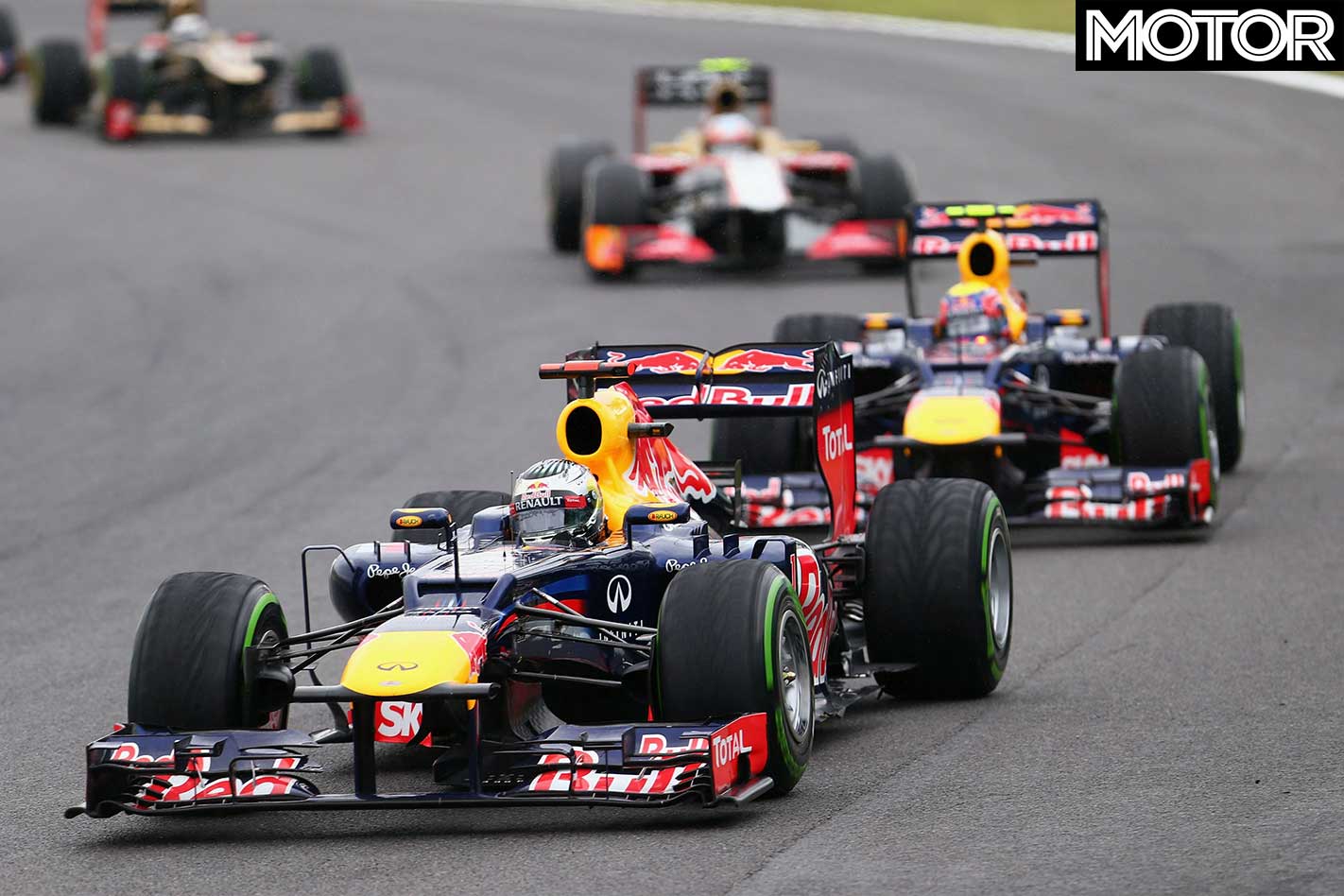
Formula 1 has its fair share of poor souls that have had wretched luck in their careers, but perhaps the unluckiest (certainly of the modern era) has to be Nico Hulkenberg.
The German driver has the unfortunate record of having started more F1 grands prix than any other competitor without ever finishing on the podium.
Hulkenberg has started 177 grands prix, collected 511 points, scored a single pole position, even won the 24 Hours of Le Mans, but never, ever, stood on the F1 podium.

It seemed his Grand Prix career had ended at the end of 2019 when The Hulk was forced into retiring from F1 after a decade on the grid, destined to ply his racing trade elsewhere.
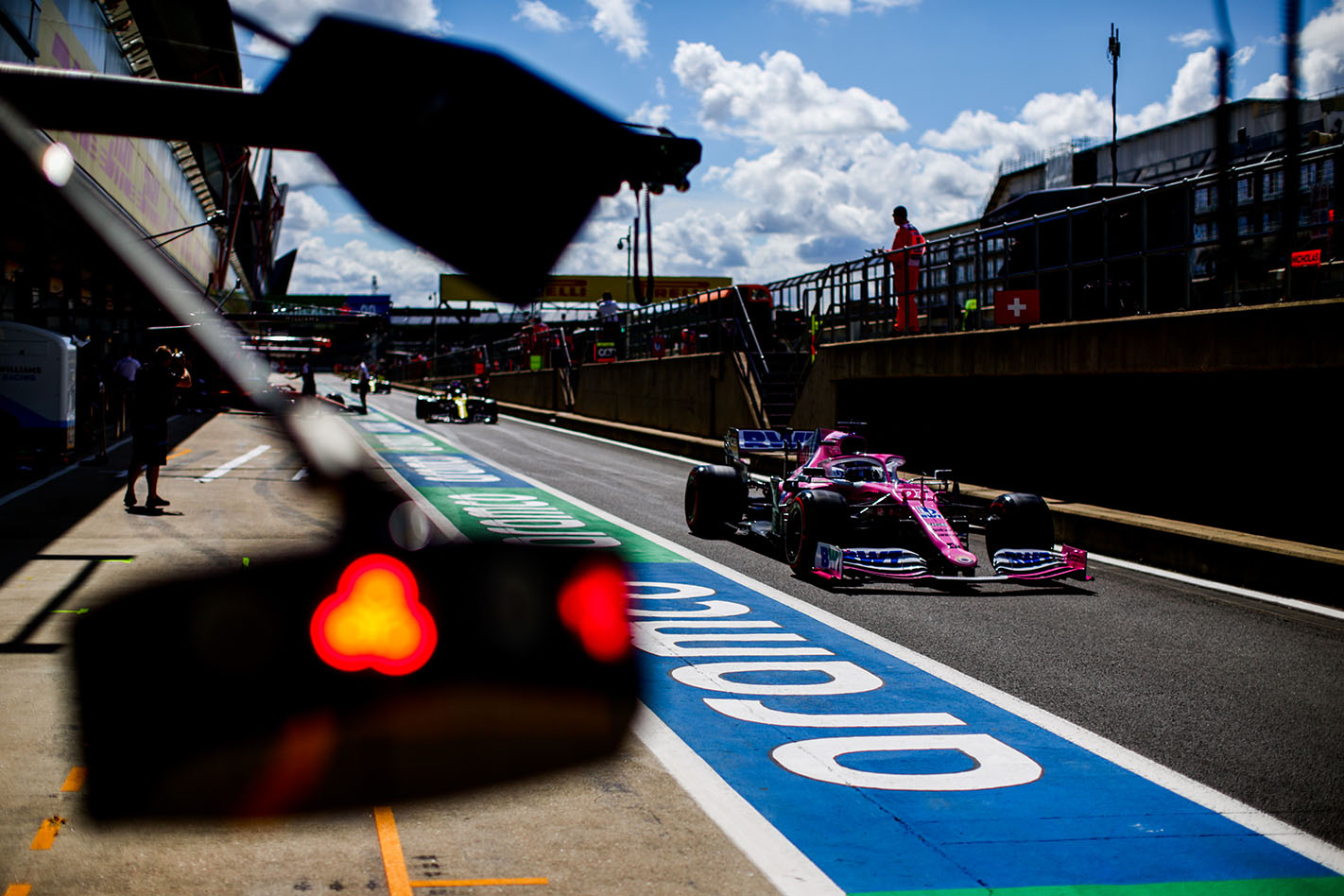
But with Sergio Perez testing positive for COVID-19, Hulkenberg was called up at the last minute to fill the Mexican driver’s seat at Racing Point.
With the Racing Point arguably the second-best car on the 2020 F1 grid, this seemed the perfect moment for Hulkenberg to nab that elusive podium.
Then, come race day, the darned car wouldn’t start, and Hulkenberg never took his place on the grid.
This was just another chapter in the torrid tale of Hulkenberg’s hunt for a podium, but does it make him the unluckiest driver in F1? Let’s look at some of his other misfortunes, and fellow nominees for the unenviable title.
NICO CAN’T CATCH A BREAK
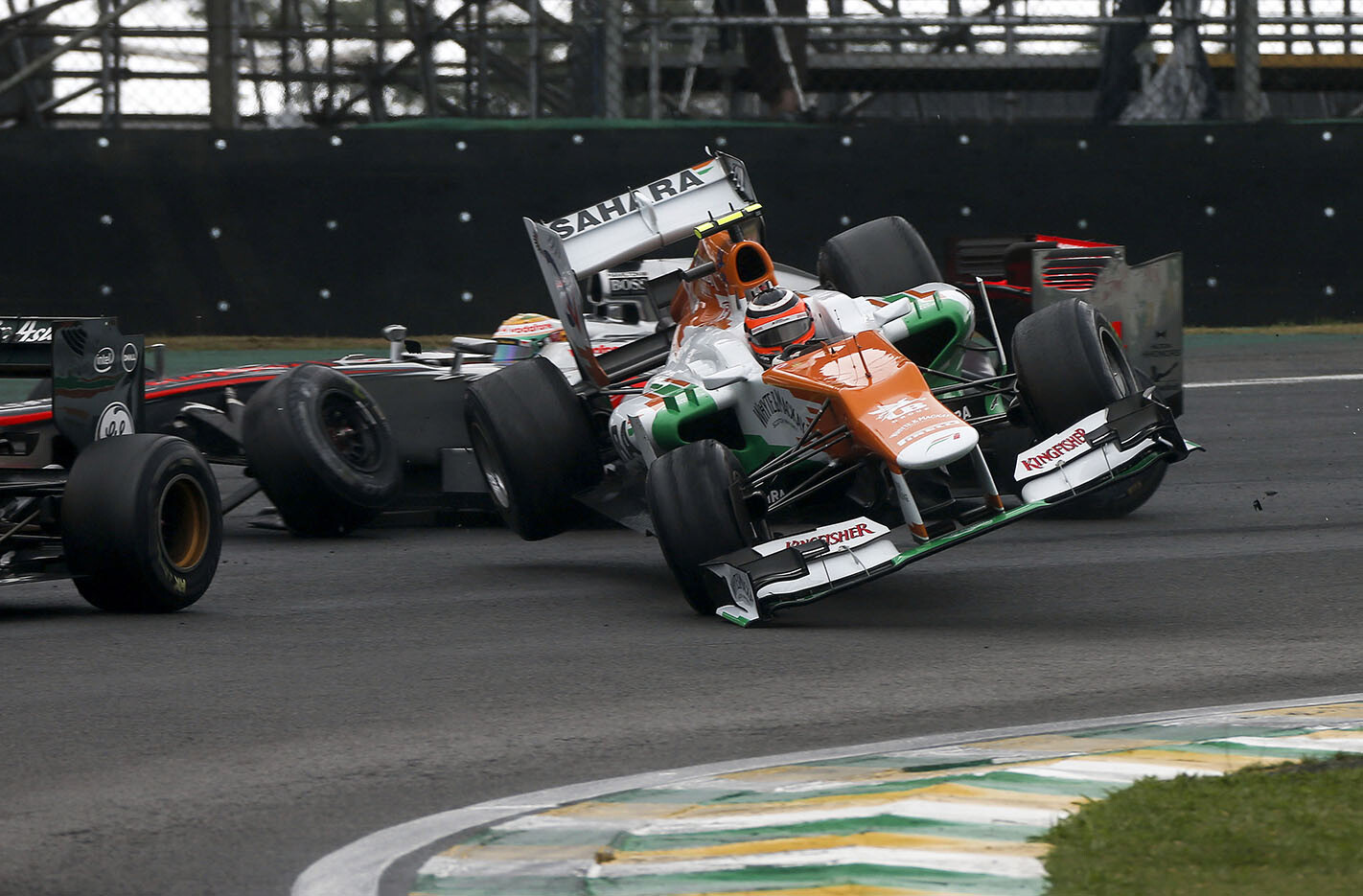
Perhaps Hulkenberg’s greatest misery came at the Brazilian Grand Prix in 2012.
Driving for Force India, Hulkenberg was leading the field by lap 18, but was overtaken by Lewis Hamilton after a Safety Car.
As the pair approached a backmarker on lap 54, Hulkenberg made his move to retake the lead.
On a damp but drying track, the German locked his tyres, and collided spectacularly with Hamilton’s McLaren.
While Hamilton was forced to retire, The Hulk finished fifth after receiving a drive-through penalty for his part in the incident.
Hulkenberg admits that if it weren’t for that mistake, his career could have gone in a very different direction.
“I was trying to get the lead back. It was a bit unfortunate; it was damp still on one side and we had this other lapped car in front, which didn’t help as well,” he told CNN earlier this year.
“It was racing, but also a bit too rushed; [I was] not patient in the moment, that was maybe not the smartest thing.
“So, if I had maybe settled in that corner and waited for another opportunity it could’ve been a very different day.
“It was early in my career and that could have put my career in a different path, a different trajectory.”
CHRIS AMON COULD HAVE, SHOULD HAVE, BUT NEVER DID
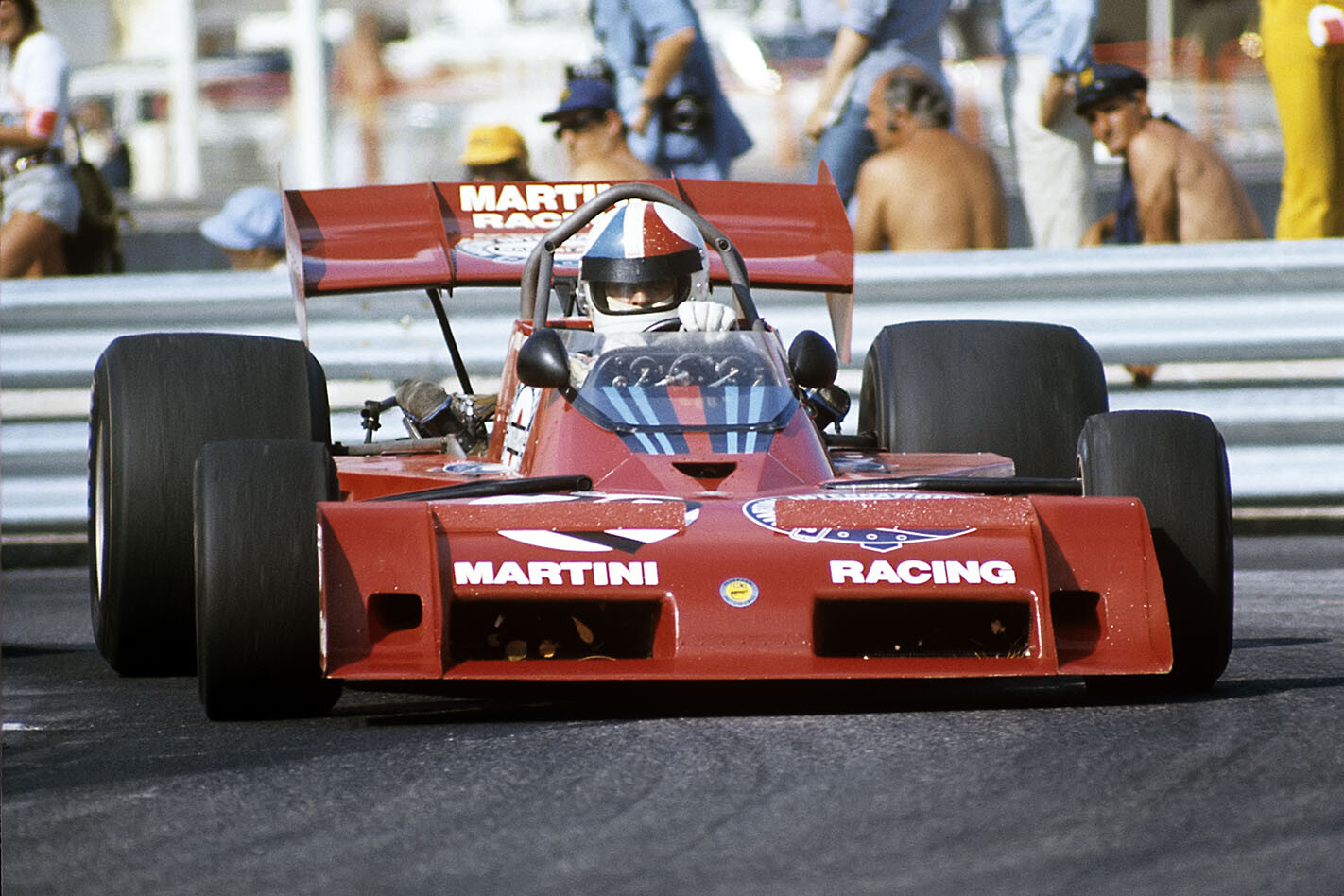
Before Hulkenberg many consider Chris Amon to be F1’s unluckiest driver.
The New Zealander had such torrid fortunes that rival Mario Andretti once joked, “If he became an undertaker, people would stop dying.”
Former Ferrari Technical Director Mauro Forghieri once said Amon was “by far the best test driver I have ever worked with. He had all the qualities to be a World Champion but bad luck just wouldn’t let him.”
During his career, Amon led 183 laps, yet never once won a Formula 1 race. Ouch.
Like Hulkenberg, Amon found success at the 24 Hours of Le Mans, winning the endurance classic with Bruce McLaren in 1966 – yes, the one where the Ford GT40 pounded the Europeans into dust.
SIR STIRLING MOSS: THE WORLD’S FASTEST BRIDESMAID
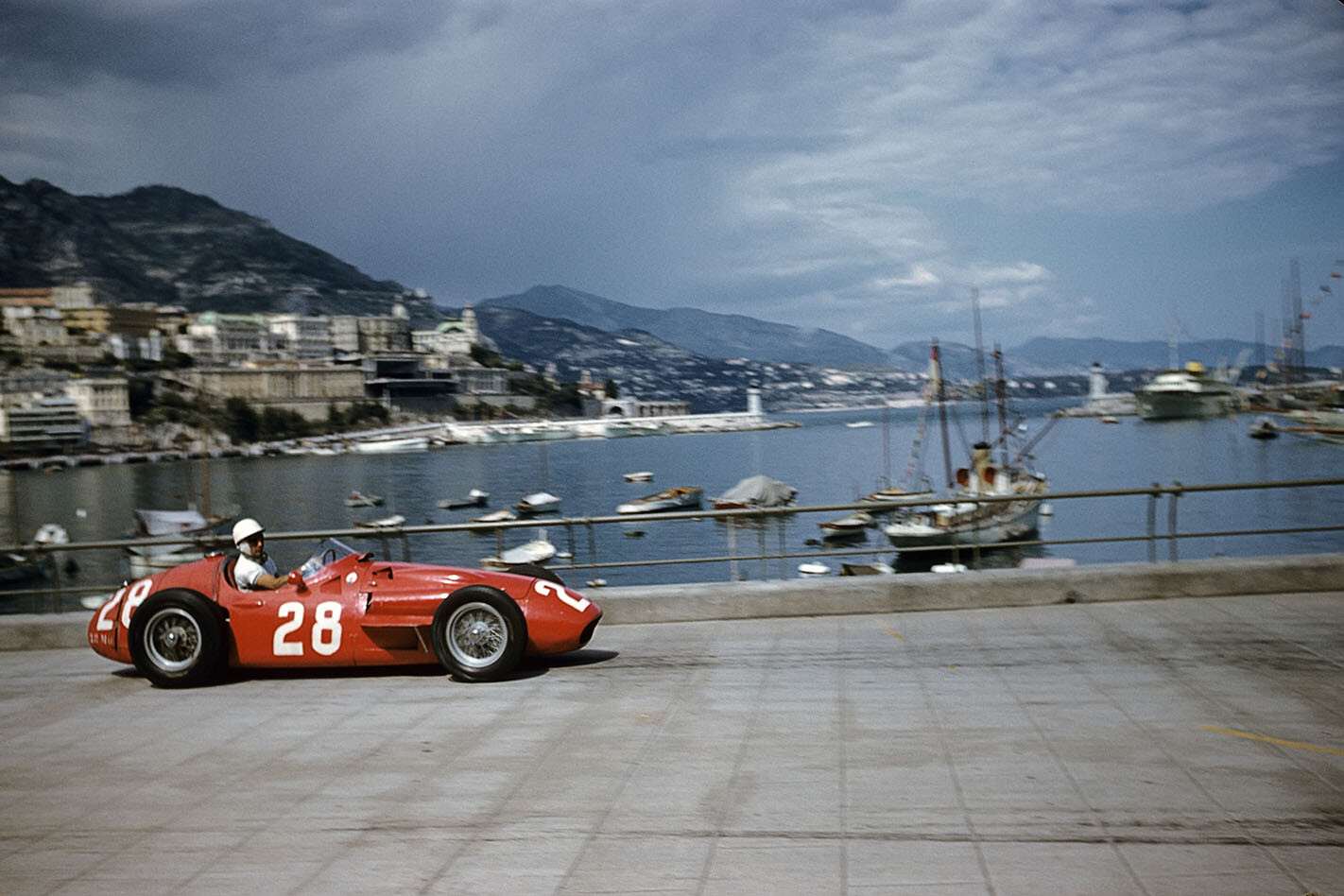
It is no stretch to call Sir Stirling Moss one of the greatest racing drivers to have ever lived.
Of the 529 races he entered during his career, Moss won 212 of them. That’s a frankly insane win rate of 40 percent.
From 66 Grand Prix starts, Moss won 16 times, but was never able to clinch the world driver’s championship – not for lack of trying.
In the seven years between ’55 and ’61 Moss was runner-up for the F1 driver’s title four times, and third in the championship another three times.
WOLFGANG ALEXANDER ALBERT EDUARD MAXIMILIAN REICHSGRAF BERGHE VON TRIPS: LONG IN NAME, SHORT IN LIFESPAN
In the list of awesome names that have competed in racing, old mate Wolfgang just about takes the cake.
However, the story of Wolfgang Graf Berghe von Trips, or simply Taffy, is one mired in tragedy.
Wolfgang was a German nobleman and successful racer in the early days of grand prix racing, and was set to clinch the ’61 driver’s title.
All he had to do was finish third at that year’s Italian Grand Prix at Monza and the crown would be his.
Instead, the 33-year-old crashed into Jim Clark, slammed into a barrier, and was fatally ejected from his race car. He would posthumously finish second in the championship fight behind teammate Phil Hill.
In a double twist of bizarre fate, the plane von Trip was set to catch the next day on the way to the US crashed over Scotland.
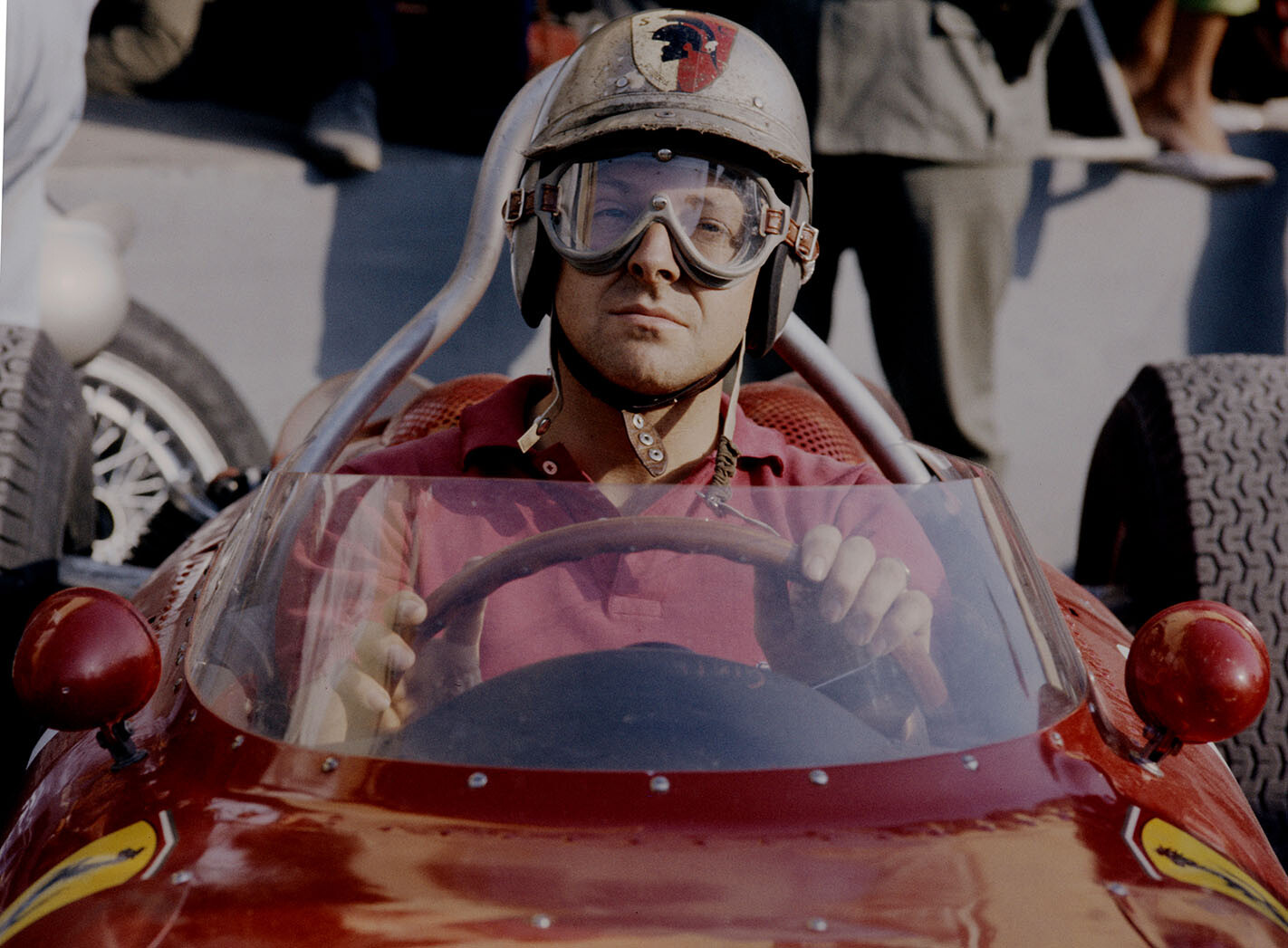
MARTIN BRUNDLE HAS THE WORST TIMING
Martin Brundle is loved by many for his commentary during F1 television broadcasts, but what some forget is he has a colourful F1 racing history of his own, mired with poor decisions and even worse timing.
A young Brundle harassed Ayrton Senna on track when both competed in F3, taking the title to a nail-biting finish.
Finally getting his first F1 seat at Tyrell in 1984, his debut season was entirely scrubbed from the record books when the team was disqualified for an entire year over blatant chea- ahem, rule bending. The same year he smashed his ankles into oblivion in a nasty shunt, and never fully recovered.
Bouncing between midfield teams, Brundle landed a seat as a fill-in driver at Williams in 1988, but left for Brabham just prior to Sir Frank’s team’s period of domination after failing to get a full-time gig.
In 1992 he was racing for Benetton, and nabbed a couple of podiums, but again left just as the team hit its championship-winning stride.
Even his year at McLaren was a nightmare, as the Woking crew used woeful Peugeot engines.
Finally, he finished his career at Jordan, but his timing was off once again, retiring at the end of 1996 before they also started winning races.

FELIPE MASSA: THE 40 SECOND CHAMPION
For roughly 40 seconds, Felipe Massa was the 2008 F1 world champion, having won in dramatic fashion in front of his home crowd at a soaking wet Brazilian Grand Prix.
Massa and his Ferrari team had fought tooth and nail against a young Hamilton at McLaren, taking the championship to the final race of the year.
The Brazilian driver had to win the race with Hamilton finishing lower than fifth to secure his maiden F1 crown.
At the completion of 71 laps, Massa took the flags, having done everything he could to win secure the title. As the Ferrari crossed the line, Hamilton was still stuck in sixth place.
Then, a few moments later, Hamilton managed to pass a struggling Timo Glock in the dying seconds, crossing the line in fifth to win his first F1 championship.
The 2008 Brazilian Grand Prix would be Massa’s 11th and final victory in F1.

Update #1
August 3, 2020 Km Driven: 420km Avg fuel use: 7.5L/100km
Hybrid and electric cars get a lot of press these days, and you don’t need to be Benjamin Franklin to understand why.
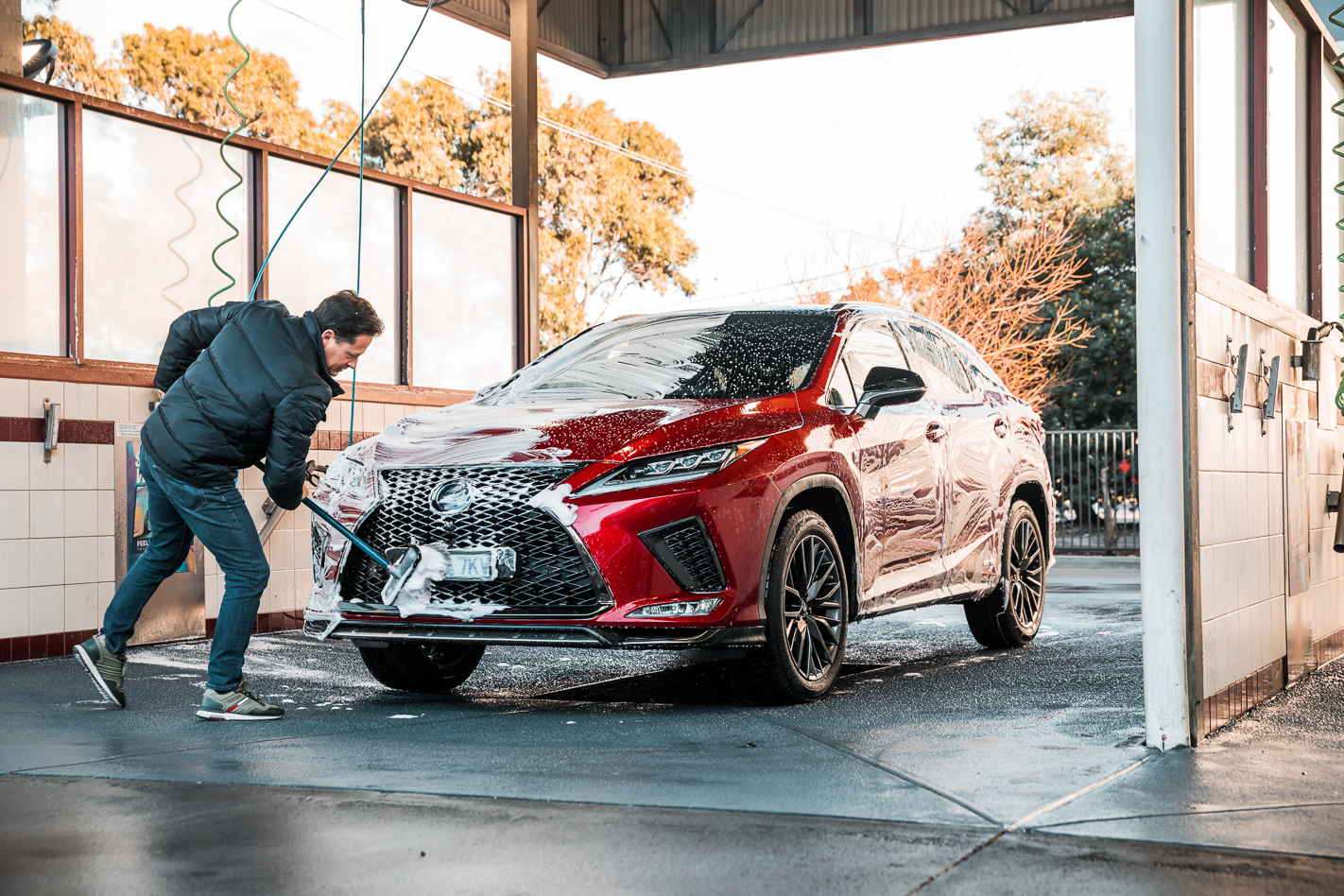
The two-pronged imperative of reducing our carbon footprint and increasing our motoring miles per dollar are strong motivators to choose a greener, leaner machine.
That’s what I’m telling myself as I slide behind the wheel of the Lexus RX 450h at the start of a month of temporary ownership. This hybrid-powered large SUV is the pinnacle of Lexus’s RX range.
It carries a $103,440 price tag, and it has an electric motor and battery pack to reduce my daily reliance on its 3.5-litre V6 petrol engine.
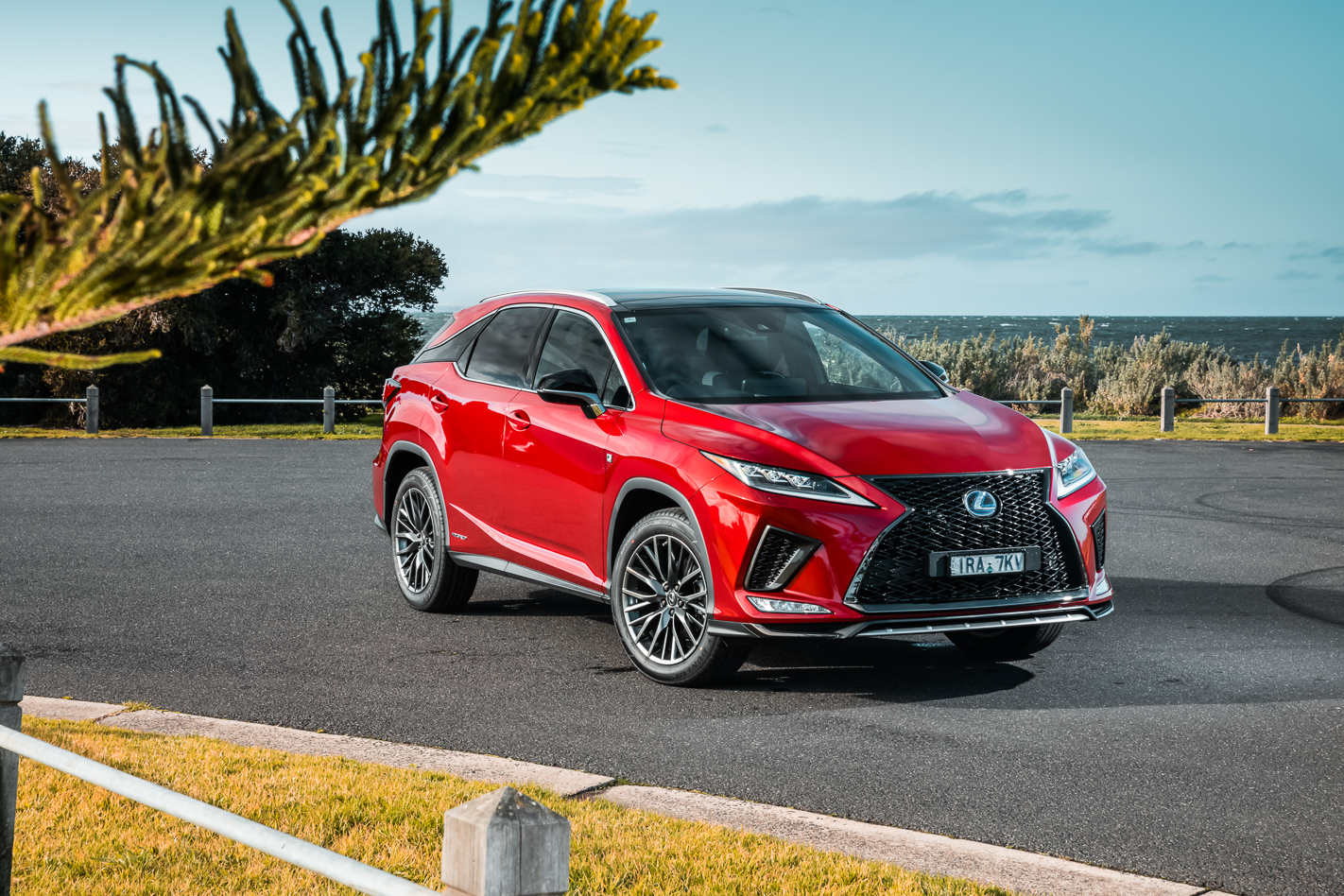
I’ve just come out of six weeks in the RX 350 (priced from $81,890) – which you can read about here – and before that I spent six weeks in the RX 300, which is the most affordable variant in the RX family (and of course you can read about that here).
The RX 450h has the same high-riding 5-door SUV wagon bodystyle as its more affordable brothers, so I’m not expecting great surprises in there. That’s fine because I learned that the space is capable of accommodating five adults, and the boot is big enough to swallow my semi-regular jaunts to Bunnings for garden supplies, tools and wood.
My COVID hobby is turning perfectly good wood into sawdust and I’m very good at it. Occasionally, a wonky coffee table or teetering bookshelf also emerges from my man-cave.
Despite being the flagship of the RX range, the Lexus RX 450h’s cabin is not much of a step up on its less expensive brothers, but that’s partly because all RX models have high-quality, well-equipped cabins, and all three test vehicles have been equipped with Lexus’s F Sport options pack.
For the record, standard RX fare includes keyless entry and start, power steering wheel adjustment, privacy glass for all but the front row of seats, satellite navigation, digital radio, 12-speaker audio.
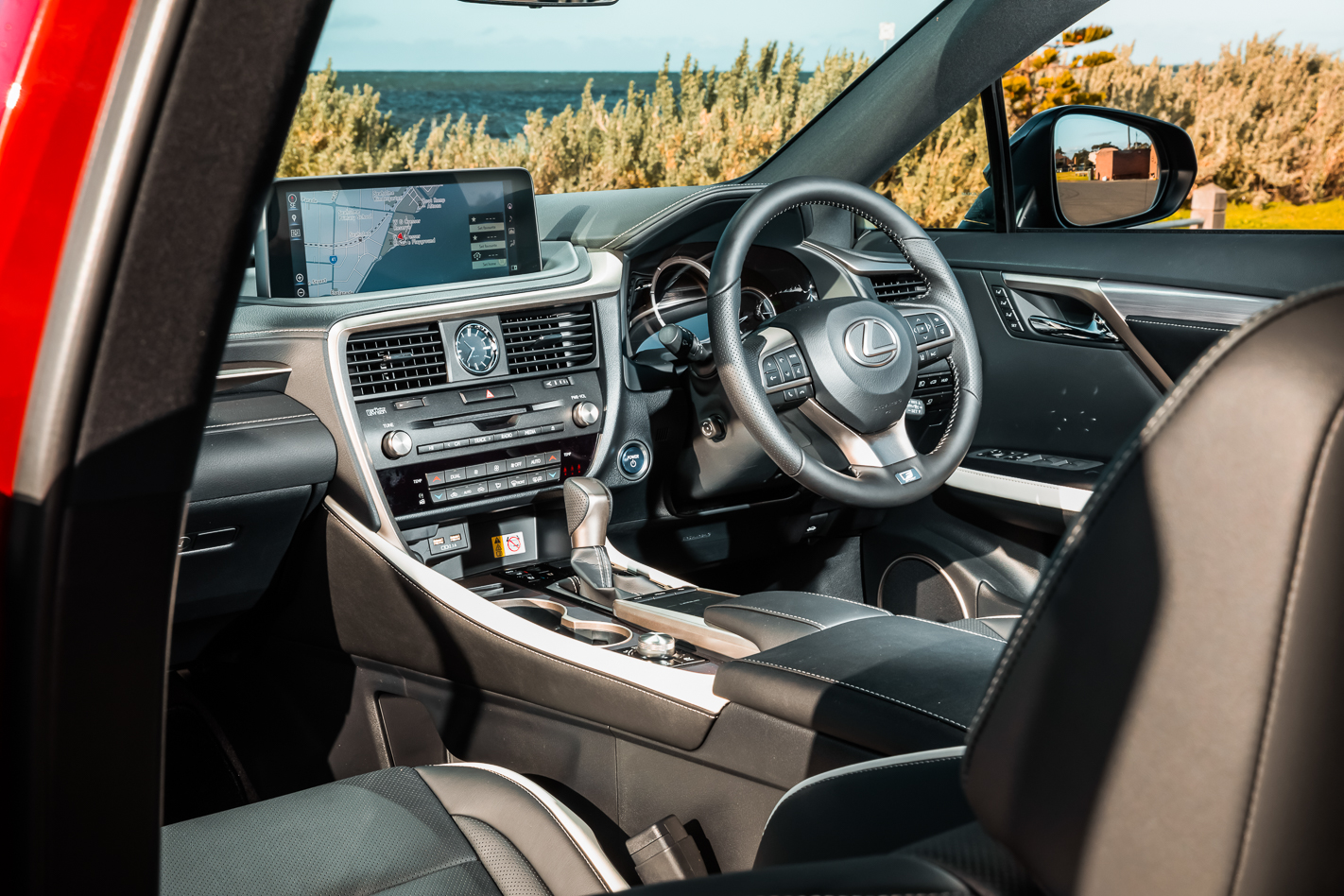
The headlamps, wipers and high beam are all intelligent, meaning they operate automatically when needed. Both cars had heated seats and memory settings for the driver’s seat – both of which are must haves. It should go without saying that all luxury SUVs have Android Auto and Apple CarPlay connectivity; all RX models do.
The ‘F Sport’ package brings a few other interior advantages such as sunshades for the rear doors – great for keeping the sun off baby’s delicate skin – a 15-speaker Mark Levinson sound system which is crisp, clear and true, and a panoramic view monitor. This last item combines the images from the front, side and rear cameras to give the driver a 360 degree view around your car.
So, what does the $103,440 Lexus RX 450h get inside to justify its higher price? Nothing. There are a bunch of new interior options – leather colours, bamboo woodgrain, etc – which only 450h buyers can fork out for, otherwise the car’s interior is just as luxurious as the less expensive RX 350.
The big difference is mechanical, and I’m not talking about the added left-front suspension member mount which Lexus says is there to reduce noise. I am talking about the hybrid drivetrain; the RX 450h’s unique combination of 3.5-litre V6 petrol engine and battery-driven electric motor, which brings two tangible benefits to daily driving.
Before we dive into how well the system works to reduce fuel use and improve acceleration, let’s quickly remind ourselves of why hybrids exist. It is to reduce our carbon footprint, and reduce the money we spend on petrol each week, because petrol isn’t getting any cheaper, right?
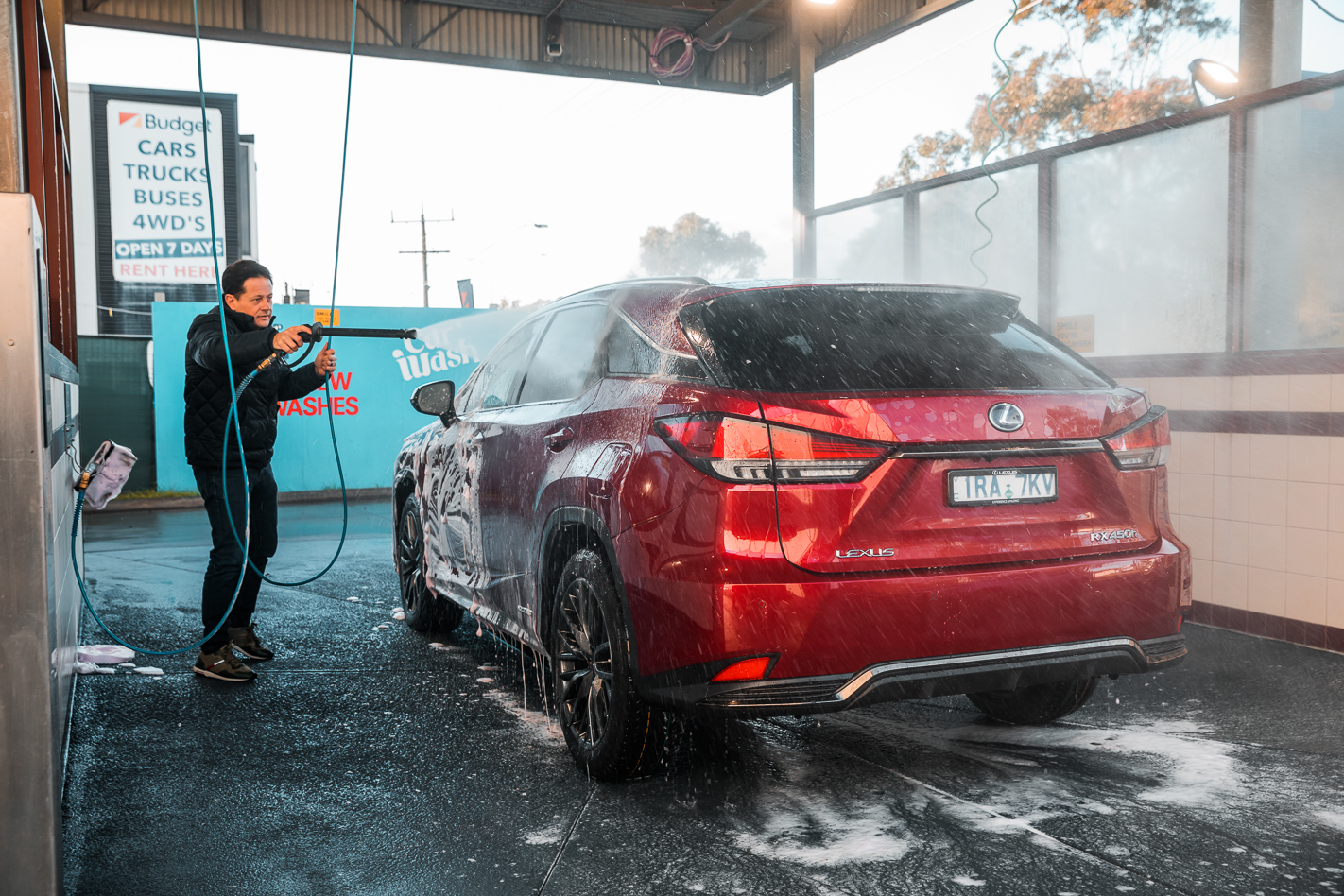
Actually, it is. The price of petrol in Australian capital cities in August 2020 is around $1.20 per litre, roughly the same as it was way back in 2005.
During that time, the average weekly wage has risen 60 percent, so the $50 a week you’re spending on petrol is now a much smaller percentage of your take-home pay. We’re also driving shorter distances each year, so we’re spending less again on fuel even before you consider how much more fuel-efficient non-hybrid 2020 cars are compared to their 2005 equivalents.
So, let’s not look at the RX 450 hybrid as little more than a money-saving motor vehicle, because firstly it costs almost $10,000 more than the non-hybrid RX 350 I had. It is rated to consume less fuel than the RX 350 (5.7L/100km vs 9.6), so if you do 400km a week that’s a $20 saving at the pump. Keep doing that for another 499 weeks and you’ve got your money back. That’s assuming you can hit the fuel economy rating, which I haven’t so far, so I’m only saving about $12 a week.
Luckily, the Lexus RX 450h has more to offer than just being a more economical RX. The 450h’s combination of petrol engine and electric motor delivers more real-world power than the RX 350 and therefore more performance, so it’s easier to drive. Accelerating away from traffic lights, the RX 450h feels smoother, yet has more urgency and energy too, and that is an addictive combination.
The electric motor and petrol engine are tuned to work together with a continuously variable transmission (CVT), and it works well. Also, if you spend some time under 30km/h – tootling around carparks, crawling around in traffic – it’s possible to hit the EV mode button and put the petrol engine to sleep, although I found it a touch hit and miss. Sometimes it worked, sometimes it ignored me.
Now that two of our six weeks together have passed, I am quietly impressed by the RX 450h. It has all the luxury, comfort and practicality of the other RX models, and offers more performance and better economy.
I do think Lexus could have done a bit more to differentiate the interior from lesser models, but the cabin is not exactly skid row. My only real problem so far is getting my head around whether saving $20 a week is worth an extra $10K up-front.
I guess it comes down to how seriously you take your responsibility to our planet. But then if you’re that kind of person, you’re probably on a bicycle and not driving a car.
If you’ve considered owning a Shelby GT500, but didn’t think 567kW was quite enough, there’s good news for you.
Australians will soon be able to get their hands on the freshly announced Shelby American Mustang GT500 Signature Edition, which the eponymous company has taken and cranked up to make more than 597kW from its supercharged 5.2-litre V8.
Mustang Motorsport will be the Australian go-to for securing one of these beasts, as it has been for Ford’s own Shelby Mustang GT500 and GT350 models.
Shelby American VP and R&D chief Vince LaViolette outlines the changes Shelby American has made to the car to give it that extra potency over the ‘standard’ Ford Performance version.
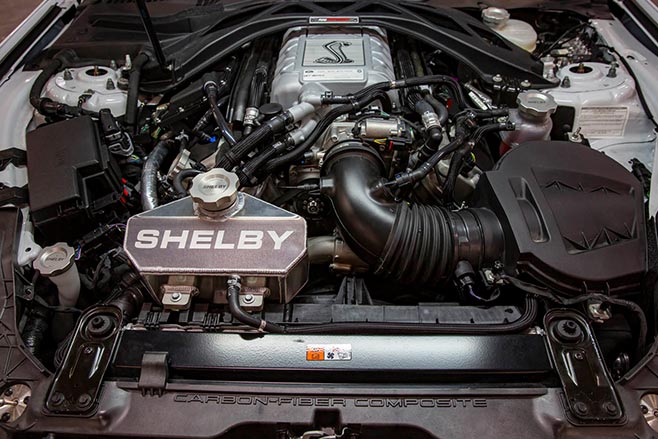
“We integrated a new pulley and coolers so the 5.2-litre V8 churns out over 800 horsepower,” says LaViolette,
“We lowered the car with more track-focused springs that match a new aggressive suspension tune.
Ford Mustang Shelby GT500 performance details
“Then we cut 30 pounds off the top of the Shelby GT500SE with the ultra-light dry carbon fiber hood, which is also much stronger and lighter. An optional wide body modification is even available for the serious driver.”
Mustang Motorsport will of course also offer the Shelby America GT350 in Signature Edition specification, which utilises the naturally aspirated version of Ford’s 5.2-litre, flat-plane Voodoo V8.
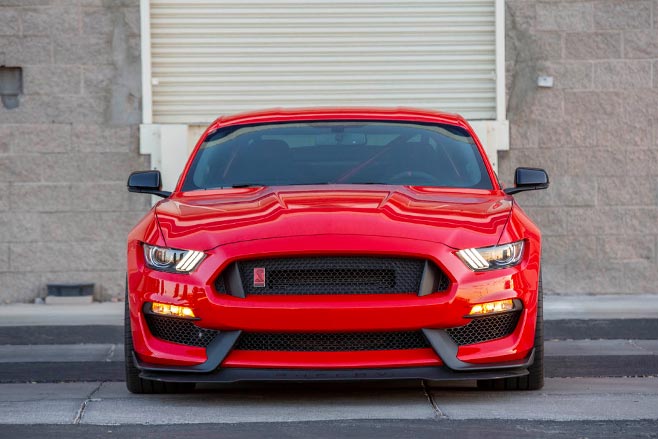
Shelby American president Gary Patterson says the Signature Edition also coincides with the 55-year anniversary since the 1965 Shelby GT350, created in partnership with FoMoCo.
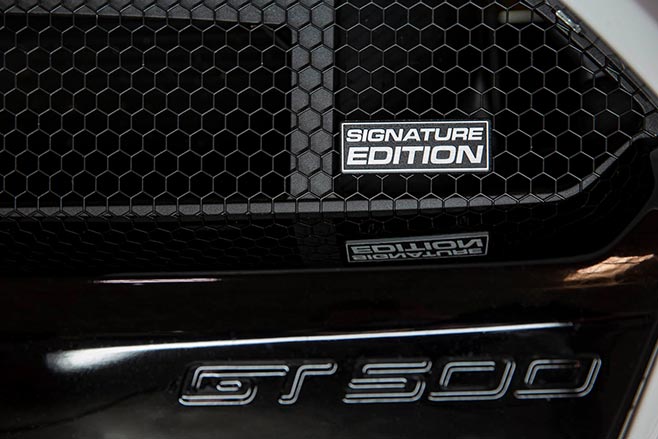
“To celebrate 55 years of collaboration, we created the Shelby GT350SE with a more aggressive handling package, sporty interior, stripes, special wheels, performance tires, and several functional styling elements.
“The 2020 model cars will wear a unique anniversary badge while 2015-2019 cars will have a standard one. The Shelby GT350SE package is affordable, distinctive and includes the coveted Shelby serial number.”
Affordable is unfortunately subjective, and in Australia there’s no pretending that the process of bringing a USDM car here is a cheap exercise.
Mustang Motorsport is transparent about the likely expenses, with its specification and pricing estimator allowing you to select a base (stock from Ford) GT500 for around AU$245,000, or kit it out completely with colours, stripes (painted for $21k), a $40k track pack, and interior options for AU$322,450.
Then the price of the Shelby American Signature Edition conversion is an additional $49,990 over the price of your specified GT500.
With the modifications from Shelby American, it’s likely the best way to get a GT500SE is to simply add it to a base GT500 for a total AU$294,990 estimated spend.
Get your free weekly MOTOR report!
Have you ever wished you were a highway patrol cop so you can throw the book at some idiot who cut you off? Drivers across the UK are being encouraged to the next best thing, by sending in unsolicited dash cam footage of dangerous driving.
Some police forces have used dash cam footage provided by concerned citizens to prosecute hundreds of drivers.
According to The Times newspaper, Avon and Somerset Police claimed it has secured 388 prosecutions against dangerous drivers and sent 273 warning letters with the public’s help.
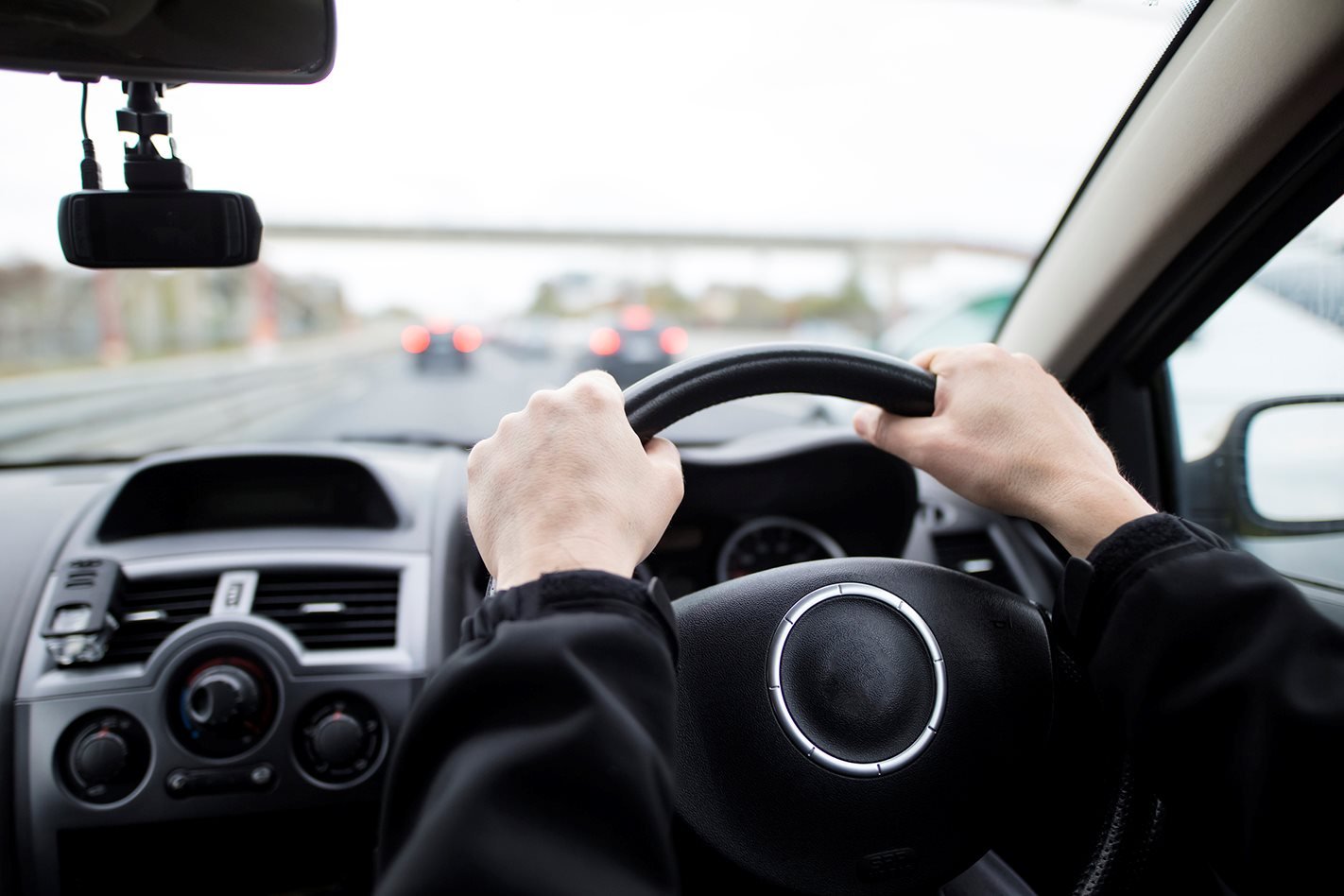
London’s Metropolitan Police has followed suit and last month alone received more than 3000 videos.
There are now calls for a coordinated national approach to help smaller police forces that lack the manpower or equipment to deal with the dash cam videos.
Opponents argue many videos sent in are for minor infringements and the scheme is just another example of the public being asked to do the police’s work.
But Metropolitan Police Detective Superintend Andy Cox disagreed, telling The Times that the public has always been part of the solution in every type of crime.
“The police can’t be everywhere all the time but the public can,” Cox said.
“If I’m a dangerous driver, I may look for the police car and the speed camera. If I don’t see them I might be minded to drive illegally, dangerously.
“If I’ve got the mindset that a member of the public might report me, I think that is a significant deterrent.”
Australian police forces often seek dashcam footage to help investigate serious accidents and have acted upon footage that has gone viral on social media.
However, there are no direct ways for the public to upload unsolicited videos when reporting unsafe driving on police websites or so-called Hoon Hotlines.
What do you think? Should there be an easy way for drivers to dob in dangerous driving using dash cam evidence, or should it only be used to investigate serious incidents? Let is us know what you think in the comments section below.
For many, the concept of good design is somewhat esoteric. If done properly, good design is invisible, so how we interpret and interact with it is – as fictional lawyer Dennis Denuto from The Castle so eloquently states – down to “the vibe of it”.
For new car buyers, the segments most keenly impacted by good, and bad, design are SUVs. Built to cater to the varied demands and needs of a modern family, the smaller the SUV, the greater the need for design ingenuity. Put seven seats into the compact packaging required for inner-city living, and well, that’s one hell of a design challenge.
Enter the Mercedes-Benz GLB and Land Rover Discovery Sport, a pair of compact SUVs that must simultaneously attract a high-paying customer with a refined aesthetic, while packaging seven seats into a (relatively) small platform.
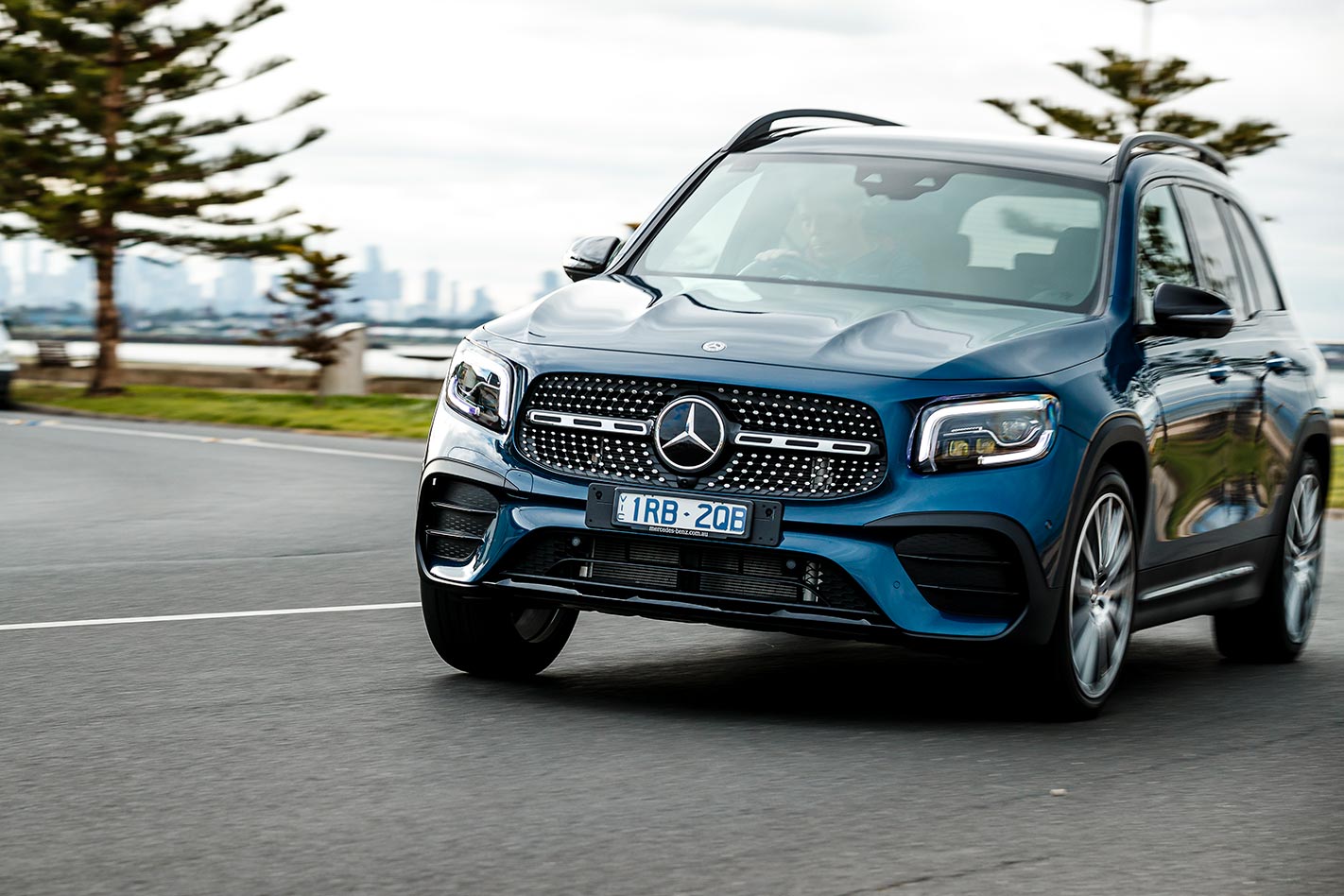
The GLB is the newer of the pair, entering the Australian market in the past month with two variants: the entry-level front-drive 200 ($59,900) and more powerful all-wheel drive 250 tested here ($73,900). An AMG 35 sports flagship will also be available by the end of the year.
Built on the same MFA2 small-car platform as the A-Class, CLA, B-Class, and GLA, the GLB is the largest of Mercedes’ compact family and comes fitted with seven seats as standard. It’s easy to dismiss the GLB’s existence as a niche-filling exercise dreamt up in a boardroom – every third Mercedes-Benz sold globally is an SUV, with every fourth being a compact car, so blending the two is a marketing no-brainer – but there is real merit to the GLB in the real world.
The flagship (for now) GLB 250 4Matic starts at $73,900 but the car we drove had more than ten grand added to the as tested price, with almost every option pack fitted resulting in an $86,830 price tag. Ratcheting up the cost is optional paint and 20-inch wheels ($1490/$1290), as well as a glut of option packs – AMG exclusive ($2490), Communications ($2490), Driving Assistance ($1990), Sports ($1990), and Vision ($1190).
While the optional extras add to our GLB tester’s profoundly lux feel, they aren’t entirely necessary, with Mercedes-Benz giving the 250 a generous slug of standard kit. Adaptive dampers, heated/power front seats, a sliding and reclining second row, third row ventilation, panoramic sunroof, LED headlights, keyless entry, twin 10.25-inch digital screens, wireless phone charging, smartphone mirroring, 360-degree parking camera, the Mercedes Me connect and MBUX infotainment systems, and adaptive cruise are all fitted without the need to bother the options list. In fact, you could get by without any of the option packs fitted. The one caveat would be the Driver Assistance package, which adds Mercedes-Benz’s full suite of driver safety aids and semi-autonomous systems. It would be nice for this feature to be included as standard – customers shouldn’t have to pay extra for safety tech.
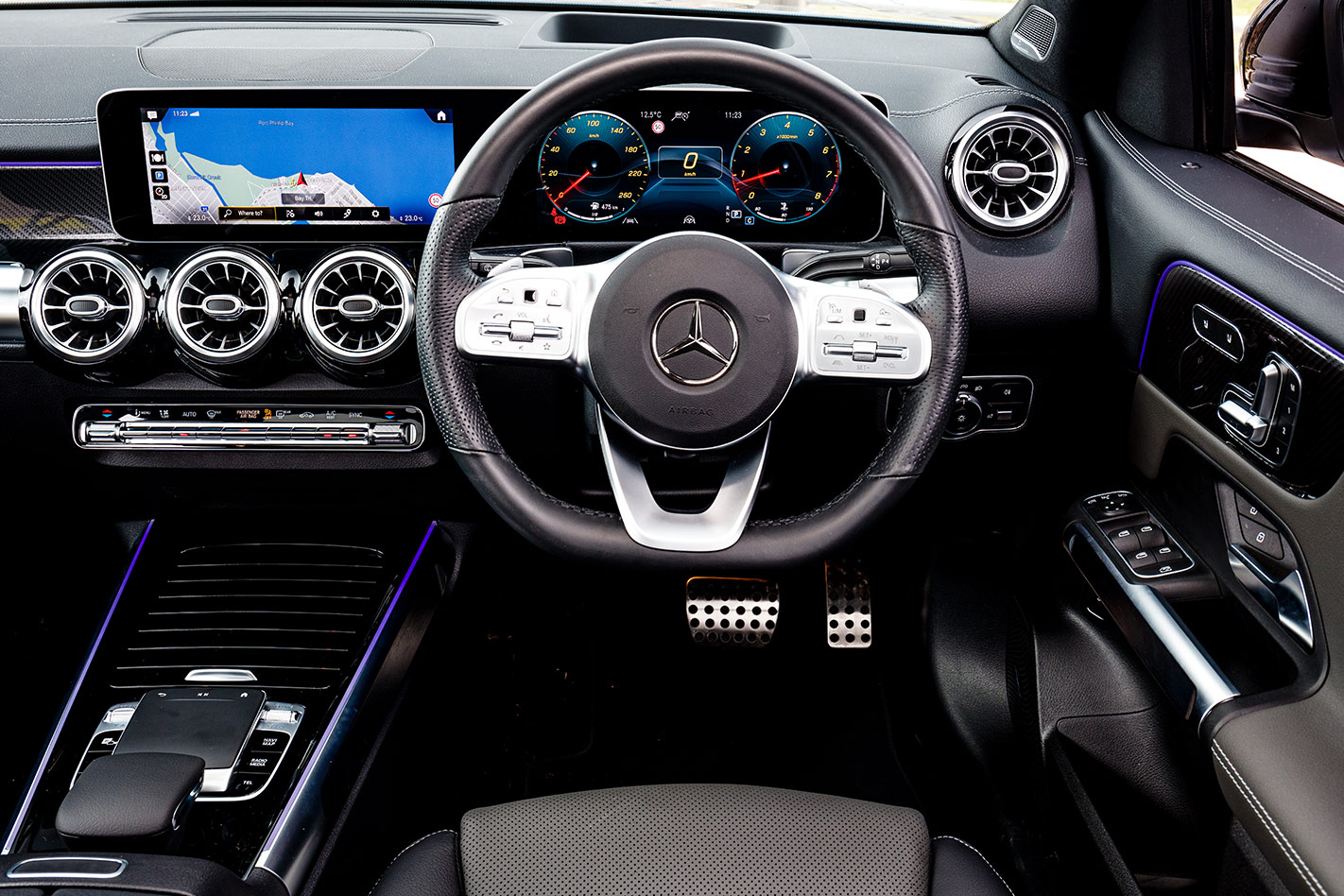
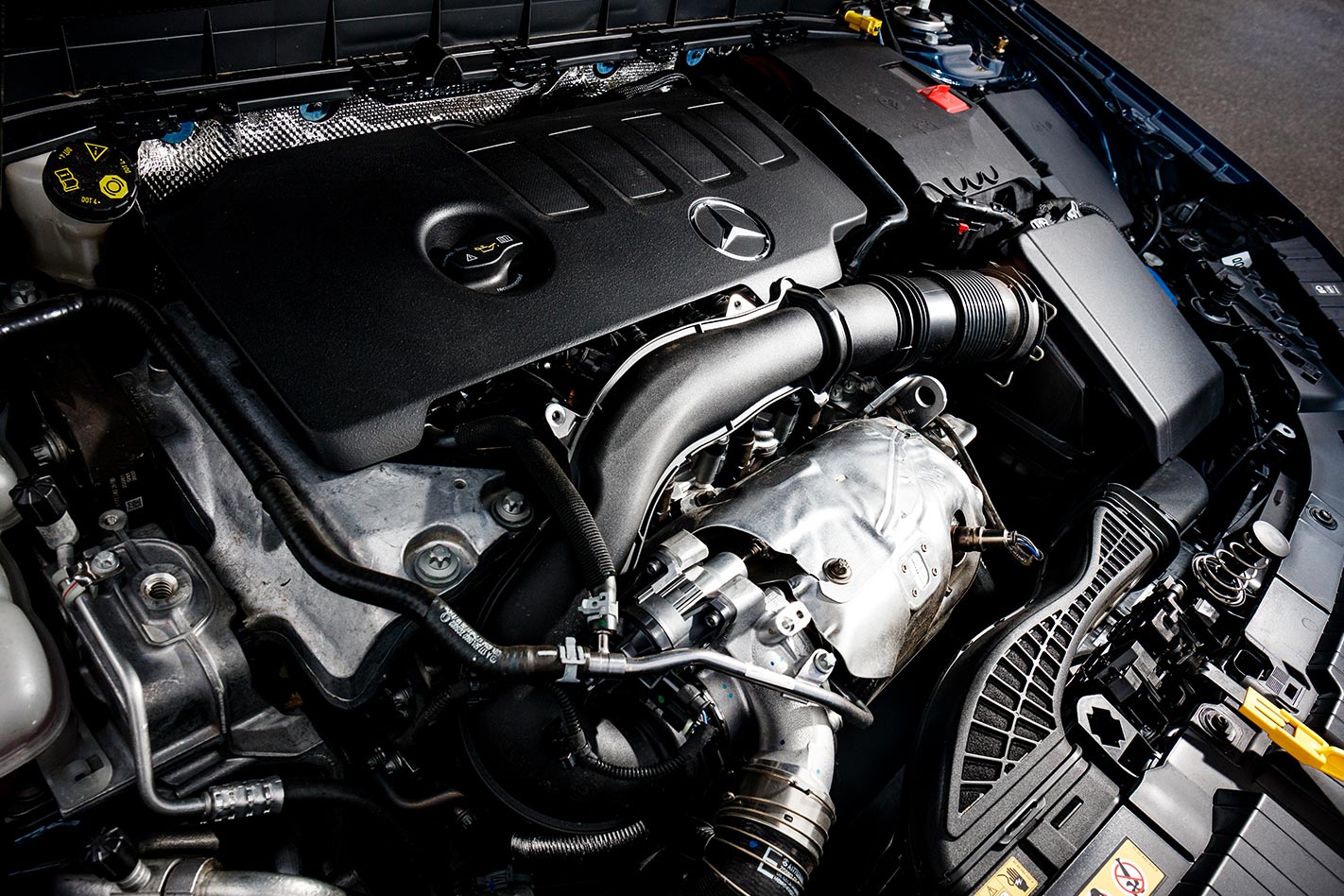
Under the bonnet is the same engine as hatch sibling the A250, with the 2.0-litre turbocharged petrol four-pot sending 165kW and 350Nm to the ground via an eight-speed dual-clutch. It’s a fruity and energetic engine; not sporty, but with enough gusto to crack 100km/h in a brisk-ish 6.9 seconds. The gearbox is inoffensive, with smooth take-off at low speeds and slurring subtly through ratios in the background during normal driving.
Being a niche segment, the GLB’s native rivals are thin on the ground but that doesn’t mean the three-pointed star will have things easy. Enter the British competition – the Land Rover Discovery Sport.
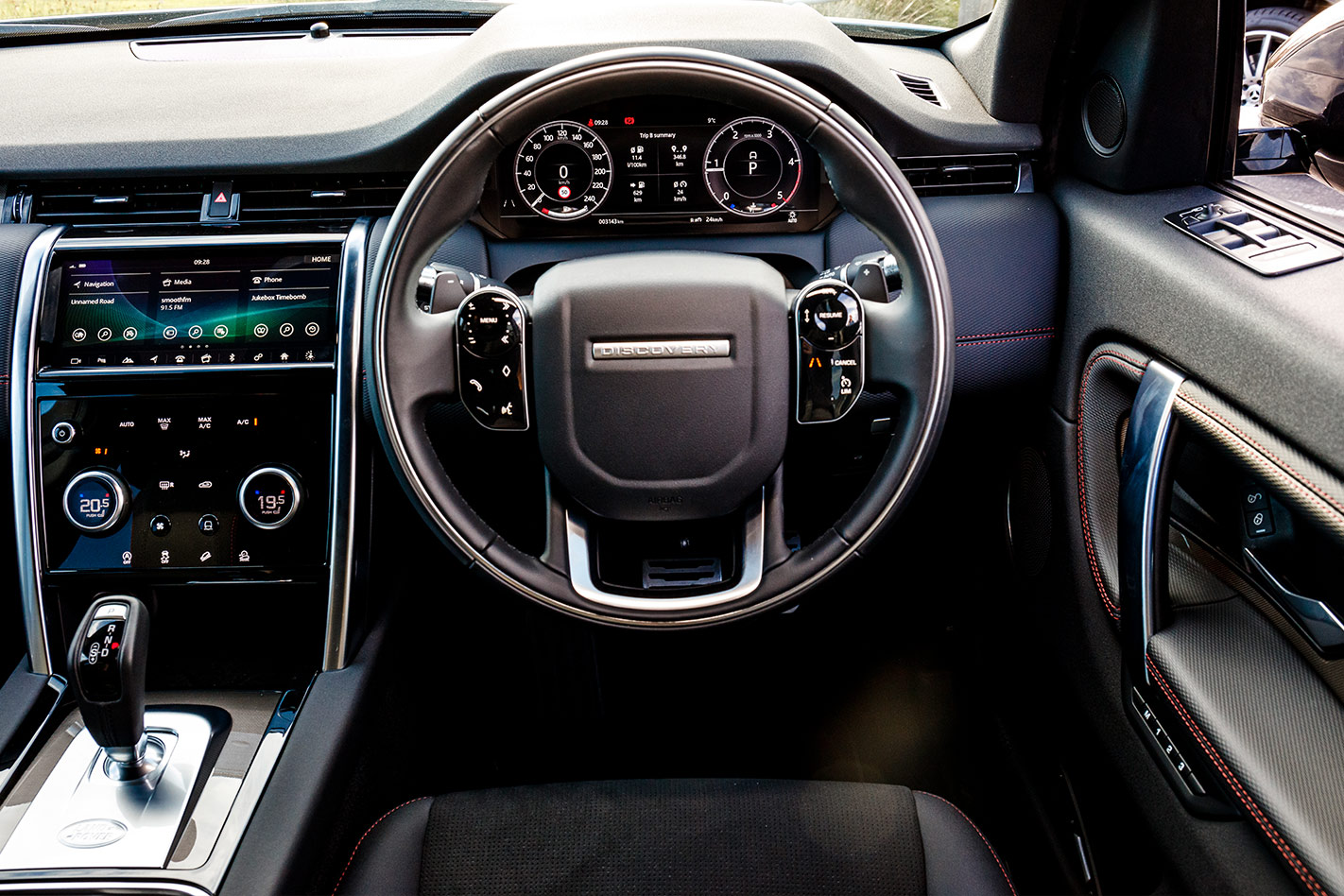
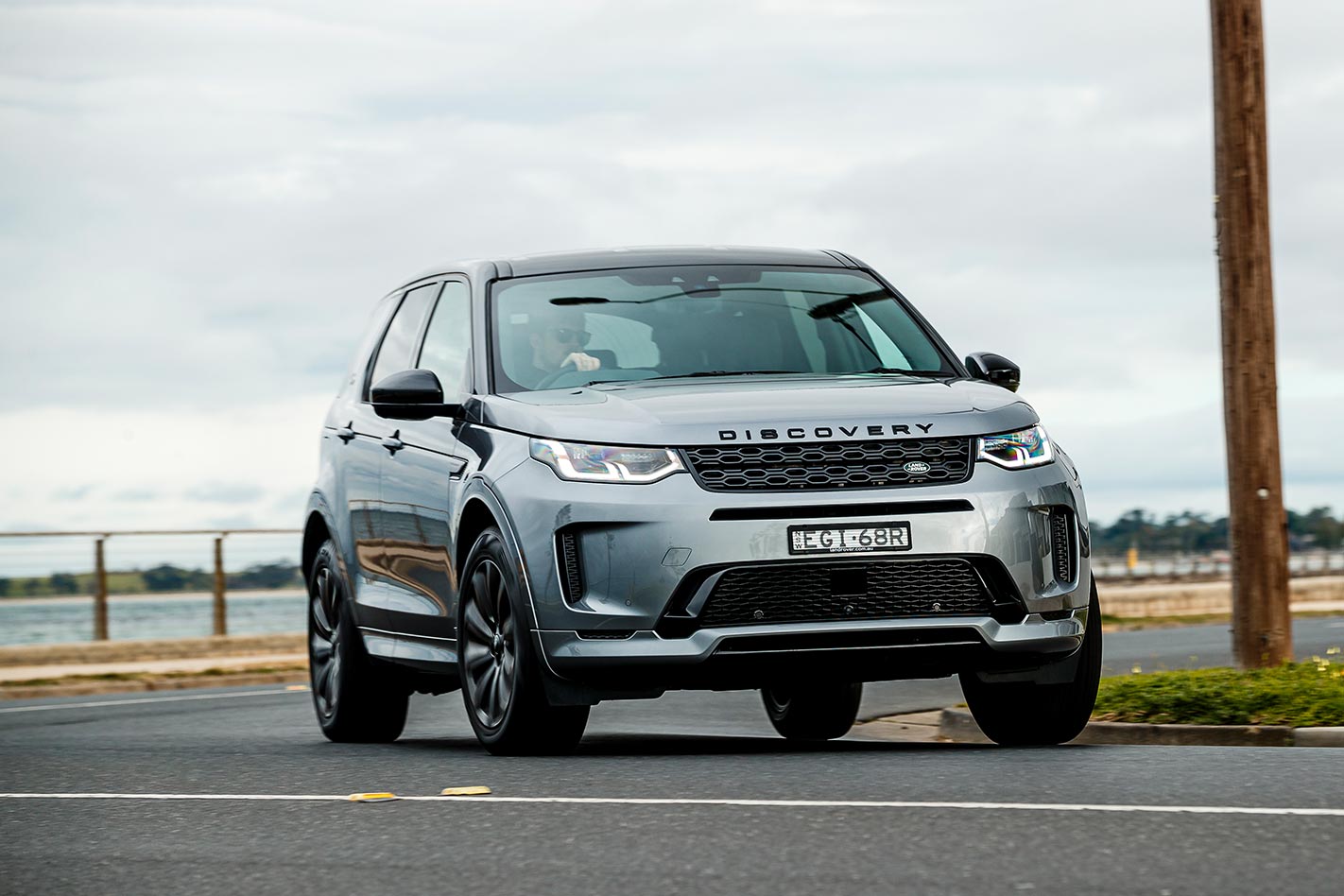
First introduced in 2014, the ‘baby Disco’ came in for a mid-life facelift late last year which added welcome styling and tech upgrades. The Discovery Sport R-Dynamic SE D180 (what a mouthful!) we have on test starts at $70,510, but this particular model has a $78,011 sticker price after some considered box-ticking from JLR’s local press office.
As standard, this Discovery Sport variant is fitted with 19-inch alloys, LED headlights (at last), 12-way power adjustable front seats, manual sliding and reclining second row, two-zone climate control with second row vents, suede seat trim, 10-inch infotainment touchscreen, digital instruments, Apple CarPlay/Android Auto, adaptive cruise control and JLR’s full suite of safety and off-road tech. Extra value comes in the form of a black exterior pack ($1590), metallic paint ($1400), black contrast roof ($920), keyless entry ($900), heated electric memory front seats ($810), privacy glass ($650), JLR’s clever ClearSight camera-based rear view mirror ($551), a 360 degree parking camera ($410), cooling vents in the third row ($150), and a wireless phone charger ($120).
Land Rover does offer the Disco Sport with a 2.0-litre turbo petrol in multiple tunes, but the engine we have here is the 2.0-litre diesel. Paired with a nine-speed auto it sends 132kW/ 430Nm to all four corners. This unit has an obvious low-end torque advantage over the Merc but it takes 10.1sec to 100km/h and the gearbox calibration is best described as lazy. It holds onto gears for a long time after bursts of acceleration and can be reluctant to shift down when overtaking – resulting in a flare of revs and a drop of several ratios once the throttle is reapplied.
The exterior design of the pair is a story of two diverging paths. The Discovery Sport is more athletic and bold, while the GLB has a utilitarian, almost brutalist flavour thanks to its boxier silhouette. Personal taste will dictate your preference but inside the Merc’s practical focus shines through.
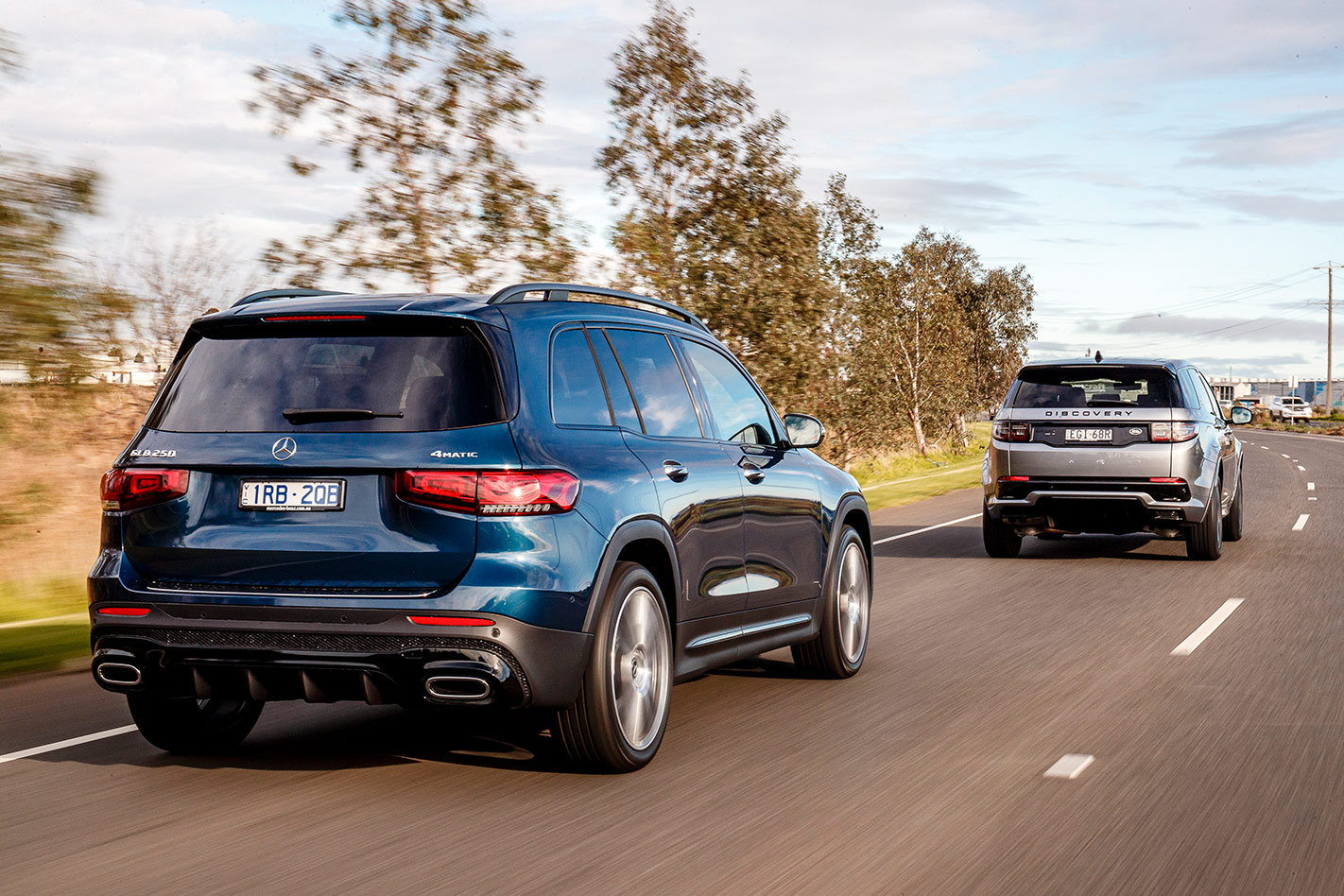
The glasshouse is tall and vision is excellent for first- and second-row occupants. While the standard panoramic sunroof eats up some of the headroom, a six-footer won’t feel cramped in either of the front two rows. There is ample legroom with the second row slid to its most rearward position, and the cabin feels airy. The powered tailgate opens high enough for tall adults to stand underneath without hunching and the 560-litre boot has a lower lip than the Discovery (which offers up to 689 litres of cargo space). There are also dual USB-C ports for each row of seating.
Unfortunately, the Disco Sport has some design foibles that see it fall short of the GLB’s polish, like the lack of USB ports beyond the first row, or the fact the second-row windows only lower two-thirds of the way where the GLB’s can be lowered completely.
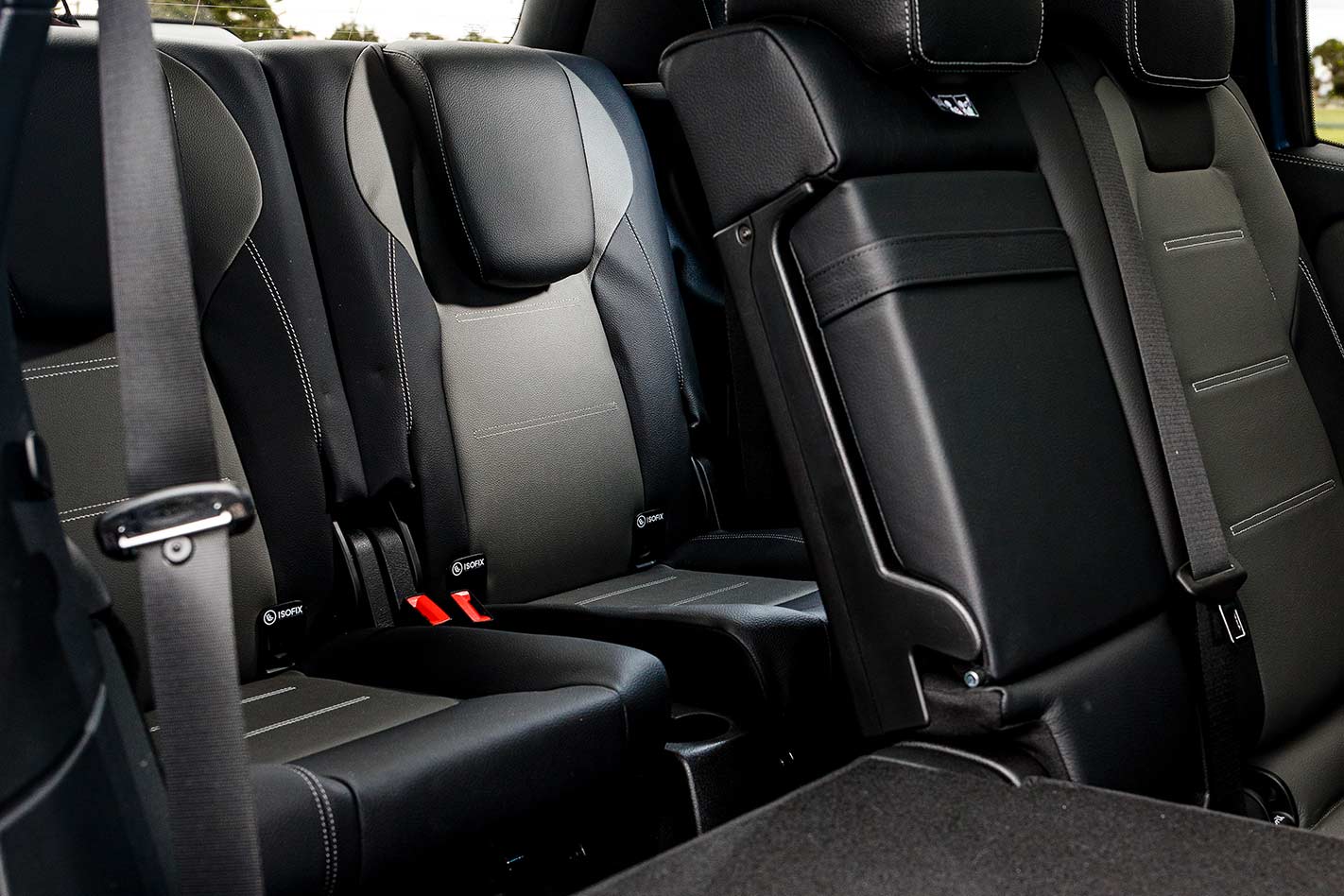
While both vehicles come with seven seats as standard, the third row in each is best left for part-time use. And hang a ‘kids only’ sign above the most rearward seats as adult occupation is almost entirely off the table. Of the two, the GLB’s third row is the better executed. Air vents are standard (they’re optional in the Land Rover), there’s storage for phones in the side panels, and you can stow the parcel shelf under the floor when the extra seats are used – you’ll need to find space elsewhere for the Disco’s shelf.
As standard, the GLB 250 rides on 19-inch wheels with chunky 55 profile sidewalls, but even on the optional 20in wheels with 235/45 rubber, the ride is wonderfully compliant. Around town, the GLB’s ride refinement is excellent, with the engineers taking a keen eye to ensuring the SUV handles the bumps and challenges of a modern urban environment with confidence. With the adaptive dampers in their softest setting, you’d be forgiven for thinking the car was fitted with air suspension as it wafts gently down the road. Thankfully, it avoids the under-damped pogo-esque nature of its GLC and GLE siblings, instead returning to the level with relative poise after large bumps.
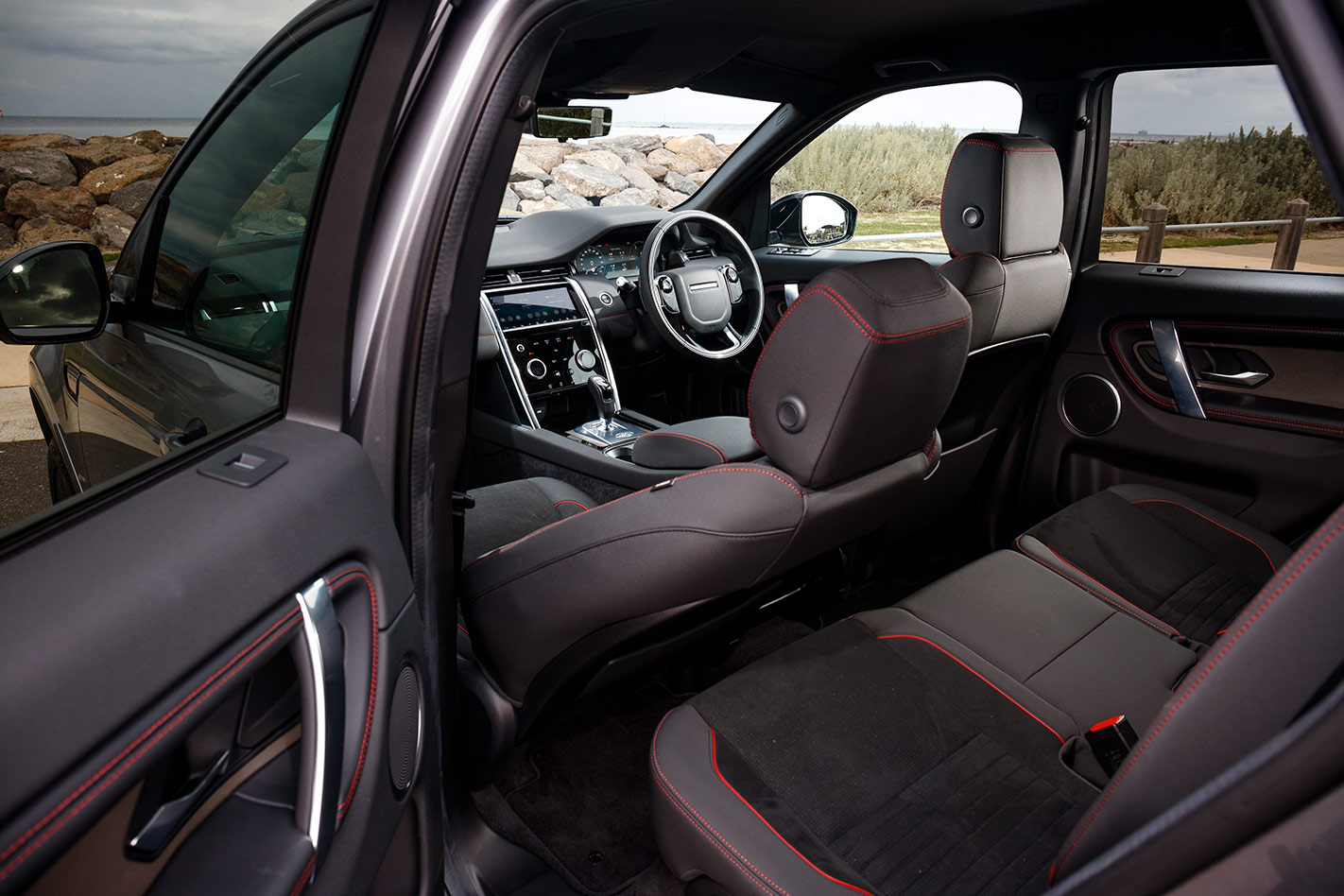
Somewhat surprisingly, the Discovery Sport is the firmer riding of the pair, with JLR’s engineers firming up the damping in the initial moment of compression. The primary ride is sportier but it retains a more confident rebound on big compressions compared to the GLB. Calling the Land Rover’s ride harsh is a disservice – it just doesn’t have the wafting air-like nature of the Merc. And while the GLB is the better sorted vehicle around town, the Discovery Sport really has no right to be as well refined as it is given its clear advantage off-road. Kudos, JLR.
Though Land Rover has done a great job of making the updated Discovery Sport feel considered and genuine, it can’t escape the fundamental age difference in this comparison. Six years of chassis and platform development allows the GLB to make better use of its space.
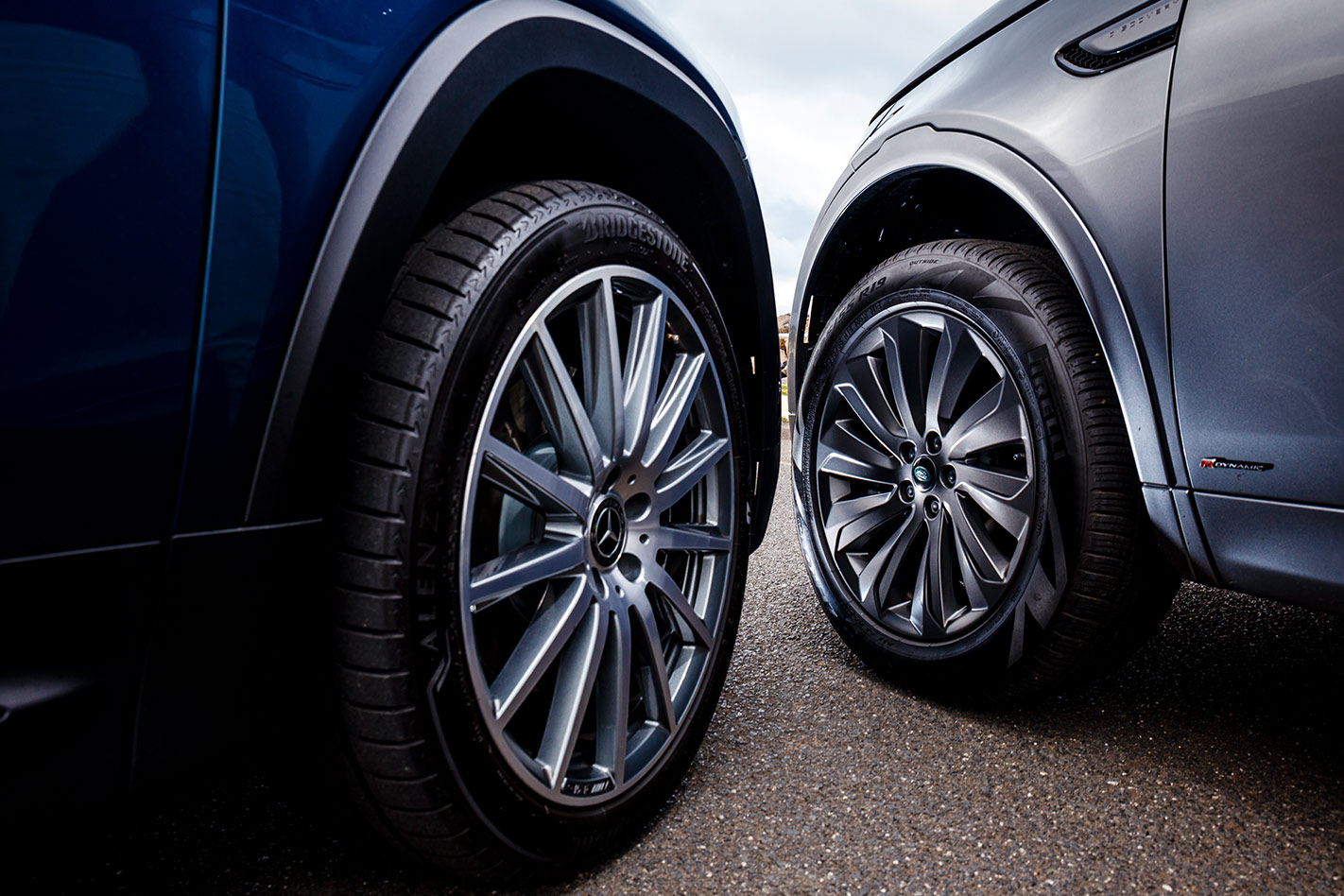
The GLB has the nicer engine, the more pleasant suspension tune, an airier cabin, and is friendlier and more intuitive to use. It’s also more expensive, especially if you opt for a petrol-powered Disco Sport – the P250 SE costs less ($67,825) and has more power and torque due to 184kW/365Nm outputs.
And yet, the GLB remains the better SUV. It is fundamentally well-engineered, cleverly designed and thoughtfully packaged. It will also continue to surprise and delight throughout the ownership experience. That is what good design is about.
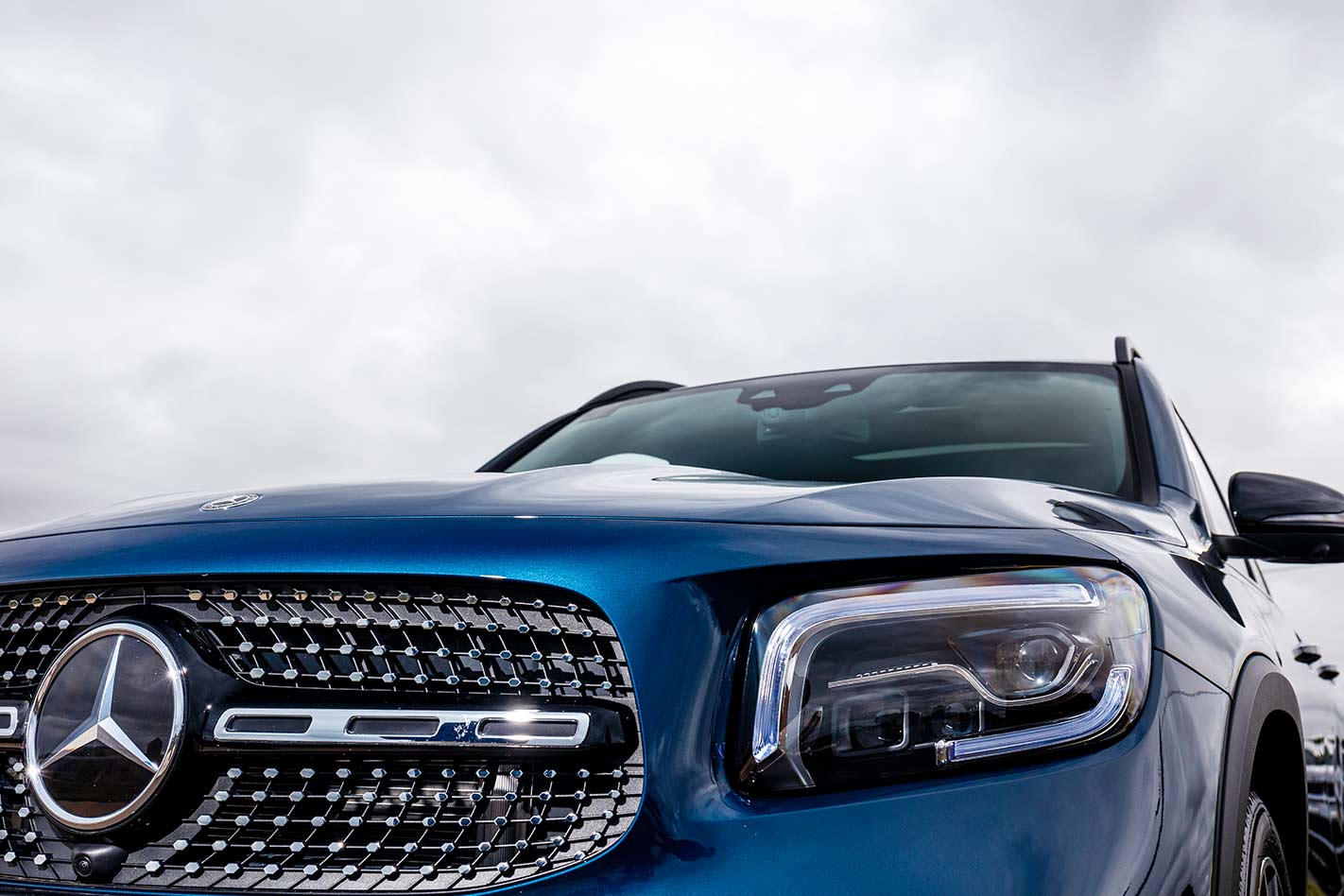
MERCEDES-BENZ GLB 250 4MATIC SPECS
Engine: 1991cc 4cyl, dohc, 16v, turbo Max power: 165kW @ 5500-6100rpm Max torque: 350Nm @ 1800-4000rpm Transmission: 8-speed dual-clutch L/W/H/WB: 4638/1834/1659/2829mm Weight: 1721kg 0-100km/h: 6.9sec (claimed) Economy: 7.7L/100km Price: $73,900 Plus: Well thought-out design; urban-friendly ride; luxury feel; punchy engine and slick dual-clutch gearbox Minus: Certain safety tech should be standard; options can increase already expensive base price rapidly
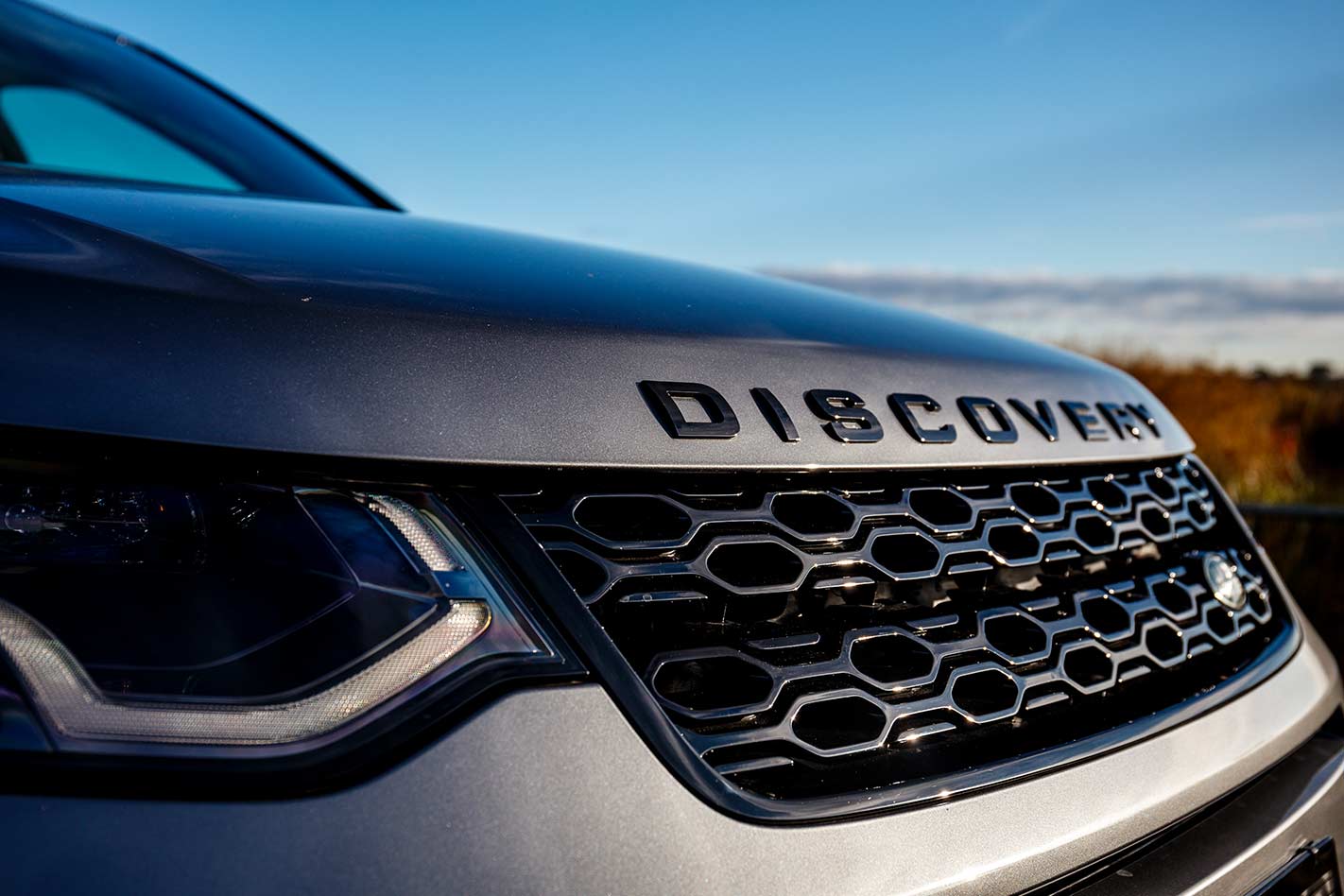
LR DISCOVERY SPORT R-DYNAMIC SE D180 SPECS
Engine: 1997cc 4cyl, dohc, 16v, turbo diesel Max power: 132kW @ 4000rpm Max torque: 430Nm @ 1500-3000rpm Transmission: 9-speed automatic L/W/H/WB: 4597/2069/1727/2741mm Weight: 1921kg 0-100km/h: 10.1sec (claimed) Economy: 5.9L/100km Price: $70,510 Plus: Torquey engine; impressive off-road ability and on-road composure; cheaper starting price Minus: Hard to hide age of platform; lazy gearbox calibration; no USB ports beyond front seats; odd design foibles
THE RIVAL
VW Tiguan Allspace 162TSI Highline: $52,490
Can’t stretch to the $70,000+ required for this pair? Volkswagen has a budget-friendly small-ish seven-seat option for you. The Tiguan was a COTY finalist for good reason, and this slightly stretched version adds an extra degree of practicality. A 2.0-litre turbo four-pot petrol sends 162kW/350Nm to all four corners via a seven-speed dual-clutch. It lacks the luxury parlour tricks of more expensive rivals, but is an earnest, grunty, and well-appointed choice.
Sorry to mention it if you were trying to forget the entire planet is in the clutches of a viral pandemic, but the crisis is continuing to impact automotive events all over the world, including the latest twist of the knife and another disruption to the Formula 1 championship.
Opening the chat for another WhichCar Weekly instalment, Chris Thompson, Dan Gardner and Tim Robson discuss the bombshell that could scupper not just Silverstone, but the entire championship.Later, Chris explains how car design legend Ian Callum is filling his semi-retirement and the revisiting of one of his previous designs.
Which begs the question, which other cars could benefit from a redo years after they were finished the first time around?
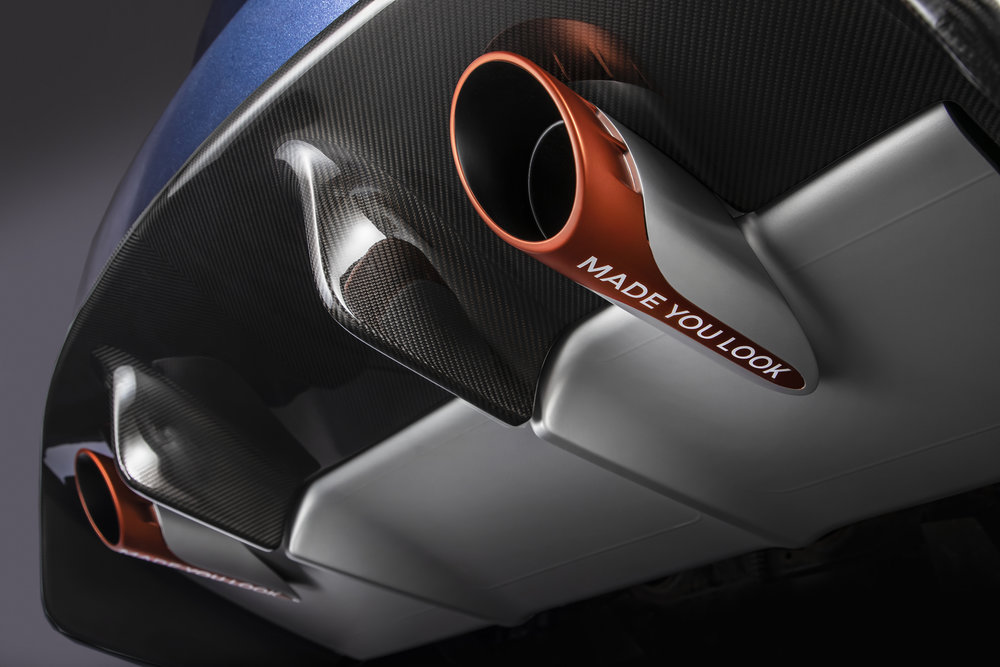
Oh, and Dan admits the time he offended Ian…
Rounding out the chat, Chris explains why he has been spending too long in his bedroom and night after night with a playlist on repeat – and it’s not for the reasons a good looking young man should be.
Motor’s digital journalist (or editor, as Dan likes to call him), has been going above and beyond the call of duty to complete a car project in isolation. Listen in to see if this nostalgic nod is heaven or hell.You can find WhichCar Weekly on all manner of podcast apps including iTunes and Podbean. Please rate, subscribe and leave a review!
And if you want yet more WhichCar action whether it be behind the scenes insights or the very latest from the automotive front line, follow the day-to-day happenings of the WhichCar team on Facebook @whichcarau, or Twitter and Instagram @whichcar
And if you really want to get involved, send us a question or auto anecdote of your own. We endeavour to answer all your messages.
Listened to or watched the WhichCar weekly podcast? Help us out
- Leave a note in the comment section below
- Leave a review on Apple Podcasts/iTunes
- Subscribe to our podcast
