
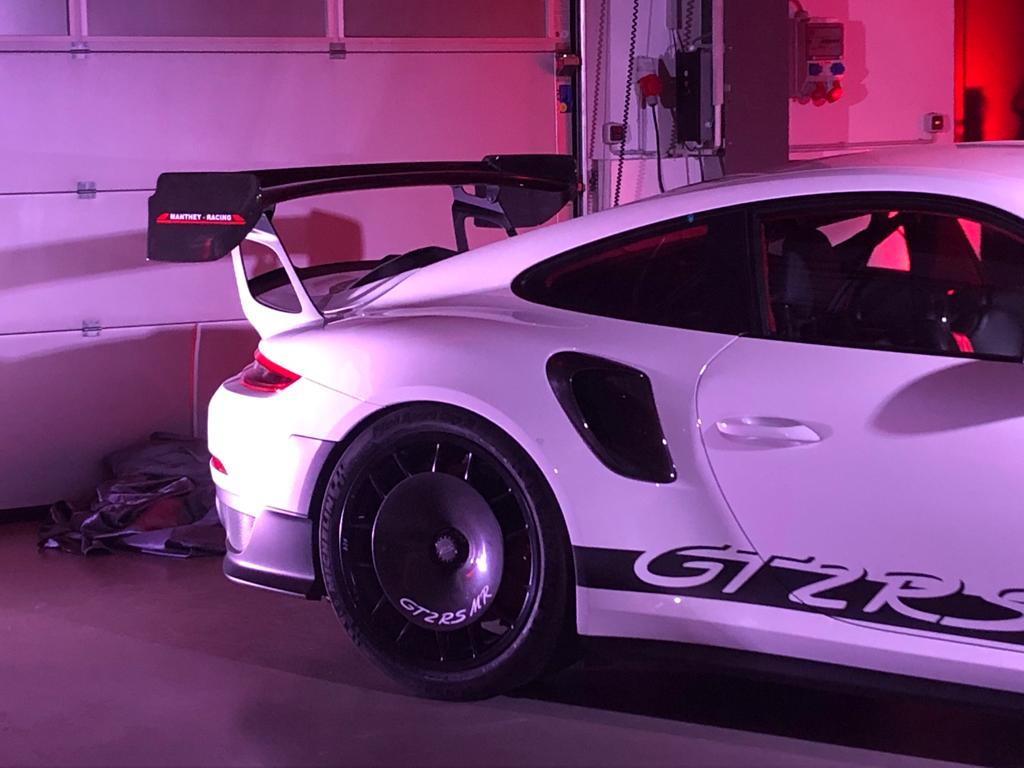
Manthey Racing is responsible for the kit which helped the Porsche 911 GT2 RS take the Nürburgring production lap record back from Lamborghini, and now the upgrade is available to Australian buyers.
Porsche Melbourne has announced it’s making not just the GT2 RS kit, but several Manthey Racing upgrades available to its customers.
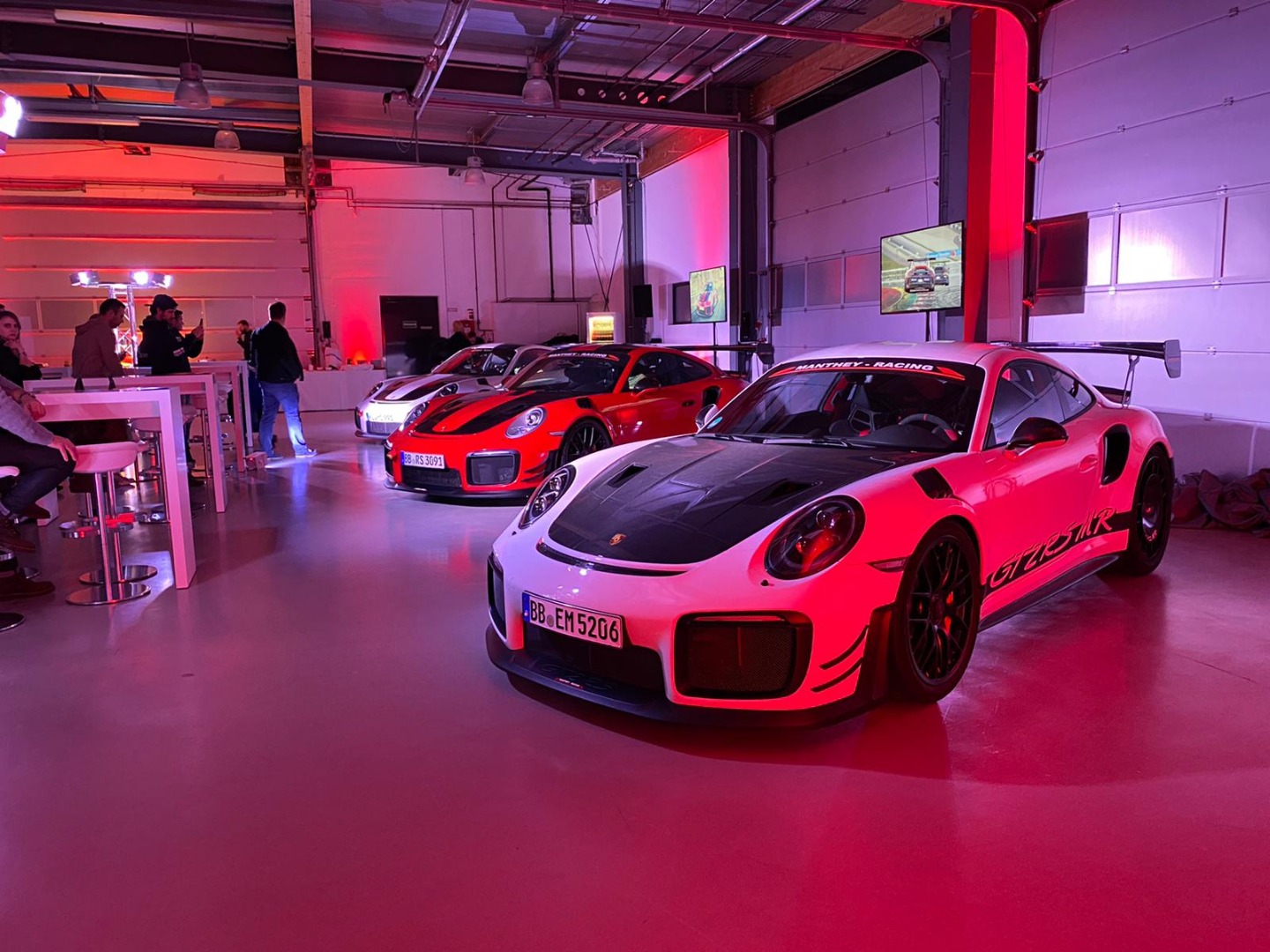
The Melbourne dealership says two of its managers “recently attended an exclusive launch event for the 911 GT2 RS MR Kit developed by Manthey-Racing at Nürburg in Germany.”
Calling the Nürburgring its home has likely given Manthey Racing somewhat of an advantage when it comes to lap times, which is how it landed its 6:40.33 lap time around the Green Hell more than a year ago.
“Since the 25th of October 2018 the Porsche 911 GT2 RS MR has been the fastest road legal car on the Nürburgring Nordschleife,” Porsche Melbourne said in a statement.
“Porsche Centre Melbourne Motorsport are delighted to be able to make this kit available to our customer base in Australia.”
The GT2 RS kit, being the big item on offer, includes plenty of goodies including an aero kit which adds upgraded parts like a new front splitter, aero curtain, rear diffuser, and even a reinforced engine lid, plus there’s an adjustable suspension kit with race springs, as well as a brake set with pads suitable “for street and track day use.”
Also included are braided brake lines, an auxiliary water tank for cooling, and a set of lighter magnesium wheels.
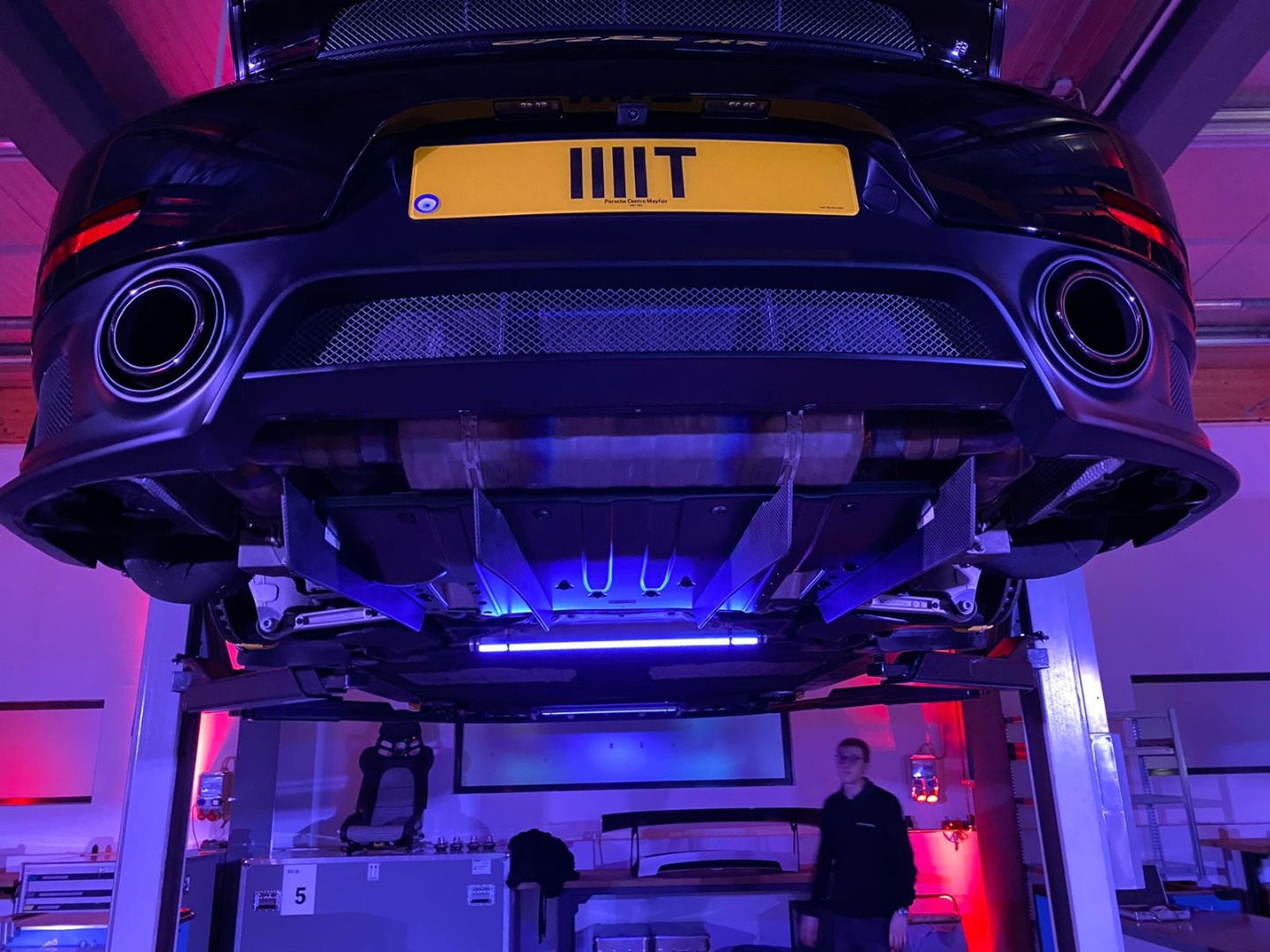
Porsche Melbourne will also offer a 911 GT3 RS MR Conversion Kit, as well as one for GT3 and for the Cayman GT4, all of which include upgrades like coilovers or standard suspension upgrades, racing wheel and brake packs, and MR wings.
Pricing hasn’t been announced for the kit, likely because the cost for each individual car’s upgrade may vary depending on the car’s condition.
Mazda has updated its popular city hatch and sedan for 2020, adding extra safety kit, and adjusting prices accordingly.
The line-up has been refined, with just three variants now on offer, starting with the G15 Pure, then the G15 Evolve, and finally the G15 GT range-topper. Both sedan and hatch bodystyles are on offer, though not on every model grade.
Previously, the cheapest Mazda 2 you could buy was the manual Neo for $15,570, though the range now starts with the G15 Pure, which in its cheapest manual guise starts at $20,990. Opting for an automatic gearbox adds $2000. A sedan bodystyle can be chosen for no extra cost.
The G15 Evolve is only available as an automatic hatch, and costs $24,490, while the G15 GT wears a $25,990 sticker price. The range-topping model is only available as an auto, but can be bought as either a hatch or sedan.
Powering each Mazda 2 is a 1.5-litre naturally aspirated four-cylinder engine, sending 82kW and 141Nm to the front wheels.
In automatic guise the claimed combined fuel consumption is 5.3L/100km, rising to 5.4L/100km for the manual.
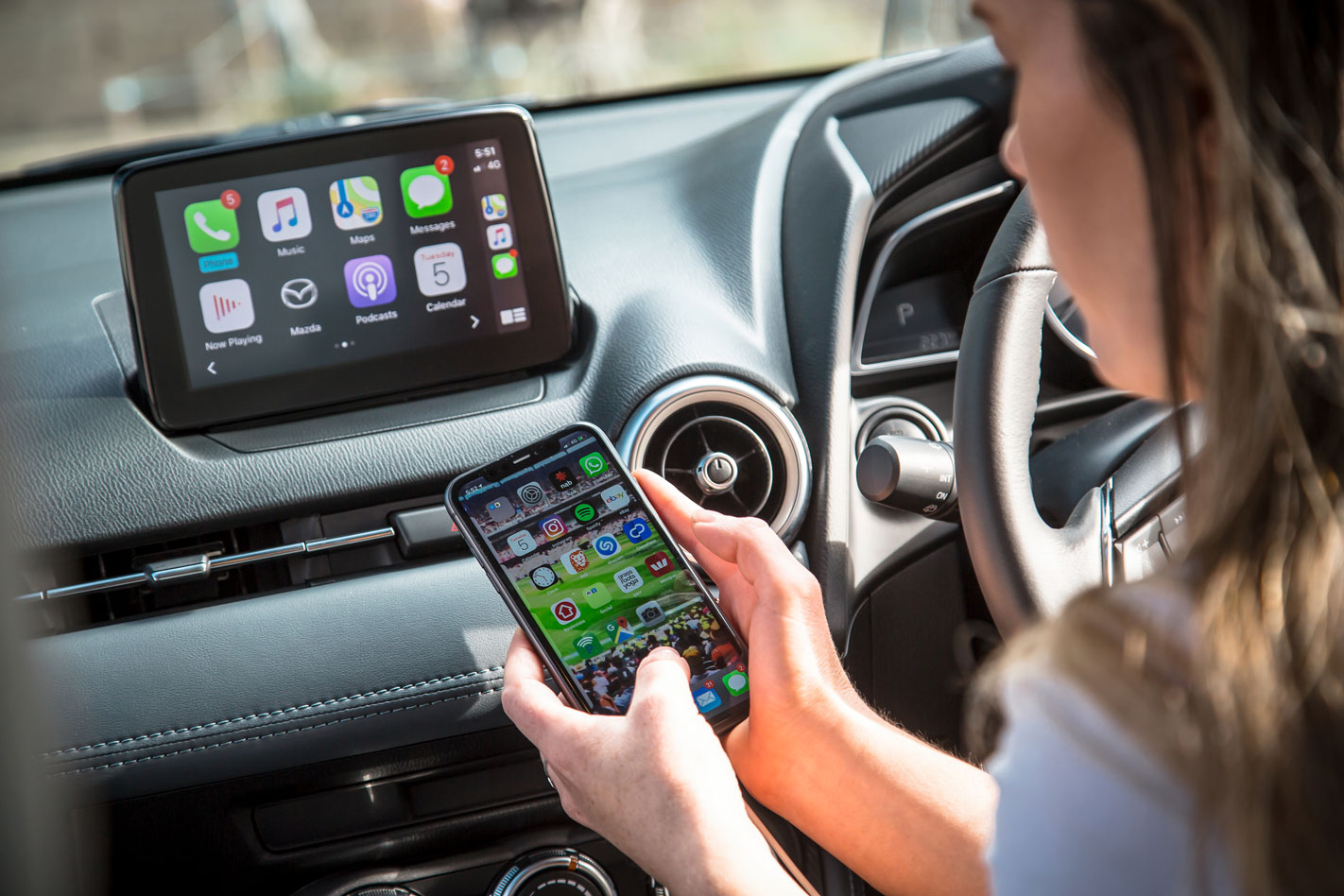
Apple CarPlay and Android Auto are now standard across all models, while active safety is boosted across the range – lane-keep assist, blindspot monitoring, and rear cross-traffic alert are all standard features for each variant.
Evolve and GT models gain traffic sign recognition and an auto-dimming rear- view mirror, while every high-spec variant is fitted with radar cruise control and a 360 degree camera.
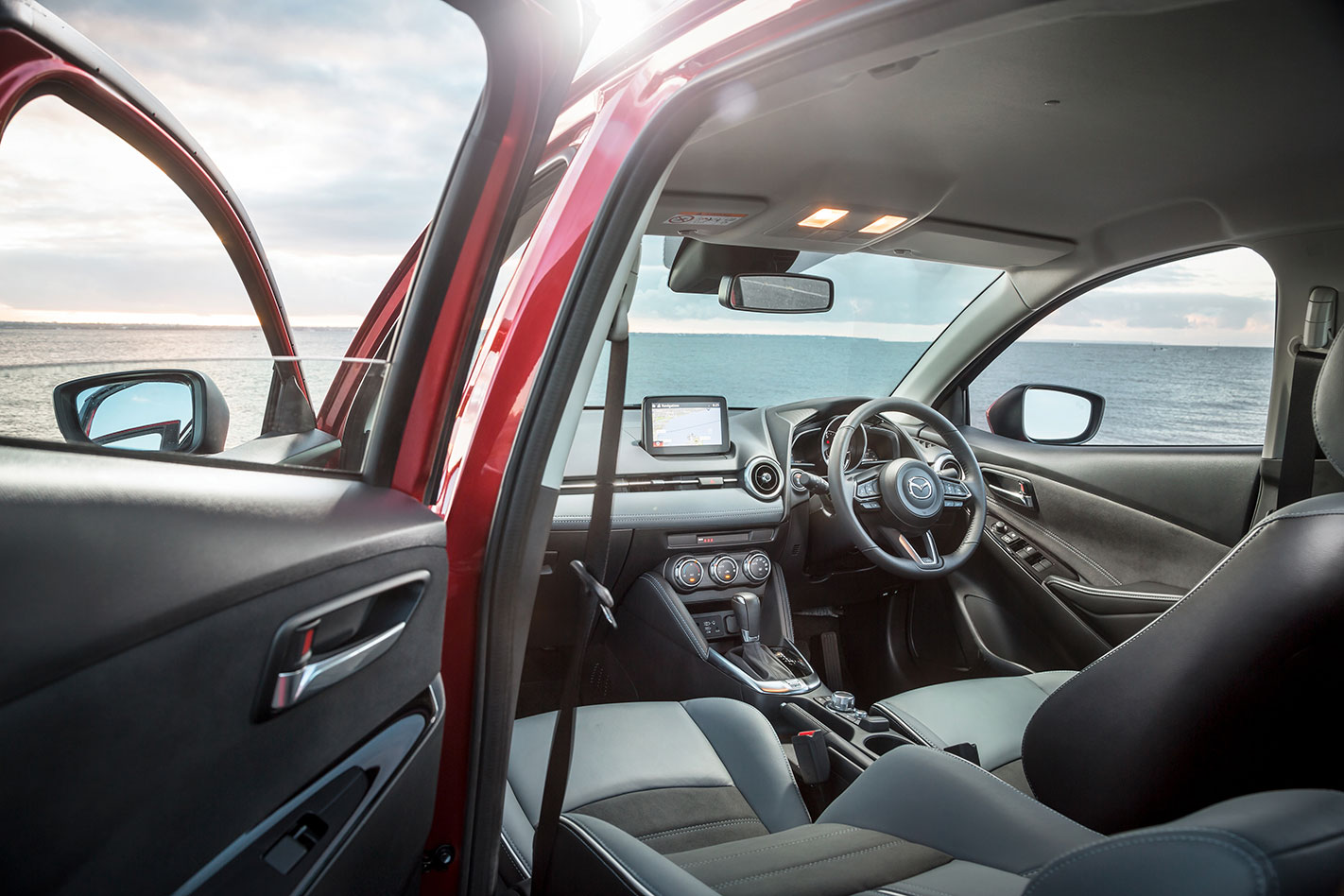
Visual changes to the Mazda 2 include a restyled grille, bumper, and headlights.
Mazda expects 77 percent of buyers will opt for the base-level Pure model, with 16 percent choosing the Evolve and only seven percent driving away in a range-topping variant.

While it’s a pleasant surprise to see a manual gearbox remain on offer, Mazda estimates just six percent of all Mazda 2 buyers will want a three-pedal variant. The hatch bodystyle is predicted to make up 85 percent of sales.
The last thing Holden needed was another bump in the road.
The announcement that chairman and managing director Dave Buttner would depart the top job 16 months into a plan to revive the iconic brand – and put Holden back on “the consideration set” – has come as a shock to staff and dealers.
It leaves questions as to why the sudden change.
The brand that has sold more cars in Australia than any other is on its knees; poor planning, bad decisions and tough competition making life the most difficult it’s been for the lion brand since it built its first Australian car in November 1948.
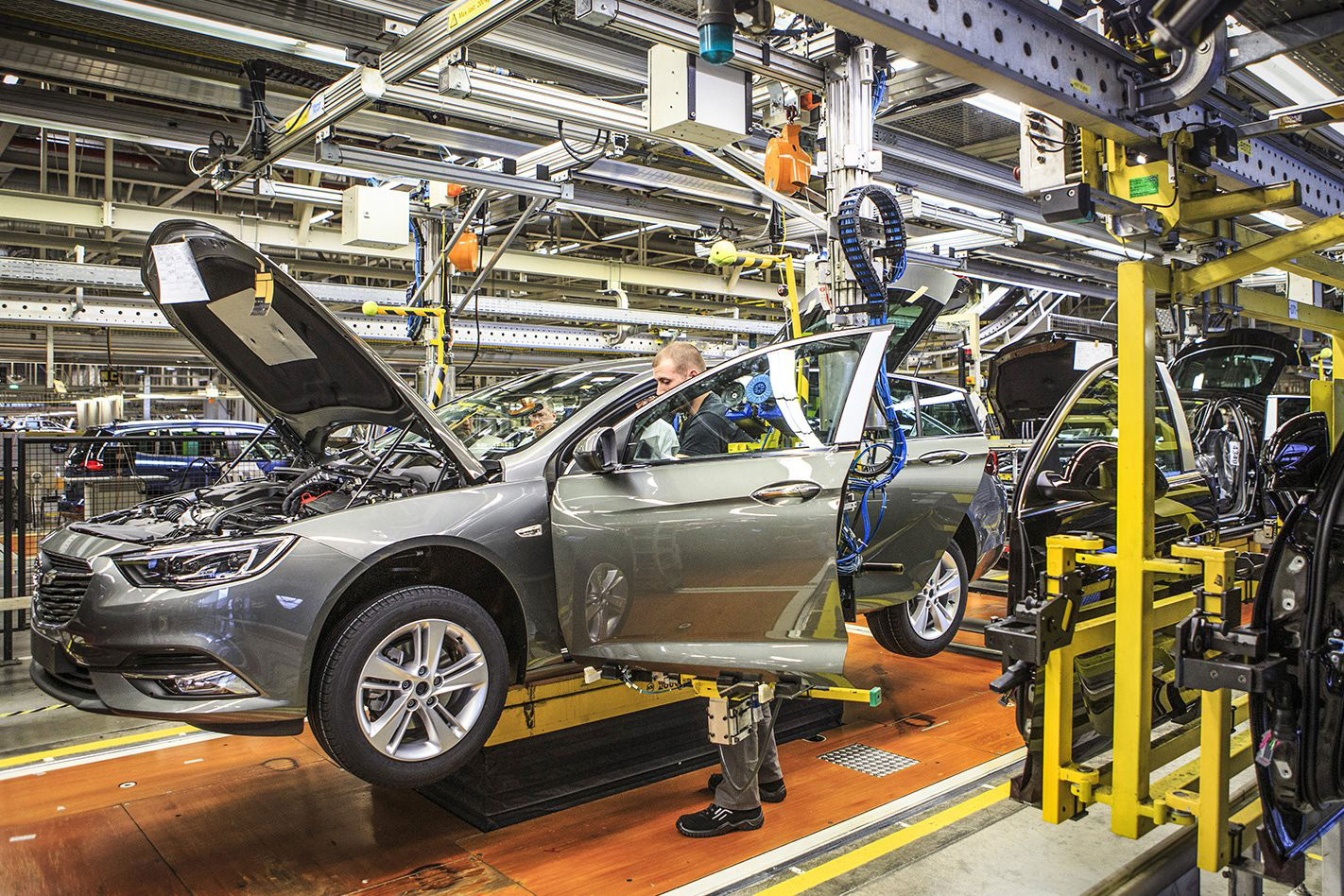
Following a string of nine bosses in a little over a decade, Holden was desperate for stability.
In a brief statement the explanation given was that Buttner was leaving for “personal reasons”.
Often that’s industry code for “pushed” or “asked to leave”.
That’s not the case here. In trying to learn more about the shock departure it’s clear there are genuine personal reasons, which we won’t be detailing.
It’s also clear there was respect for the changes Buttner made in the short time he led the once dominant brand.
He made tough decisions, such as temporarily halting shipments of some key models in order to clear excess stock that was gathering dust around the country. It was all about returning to more natural demand, rather than forcing cars on the market.
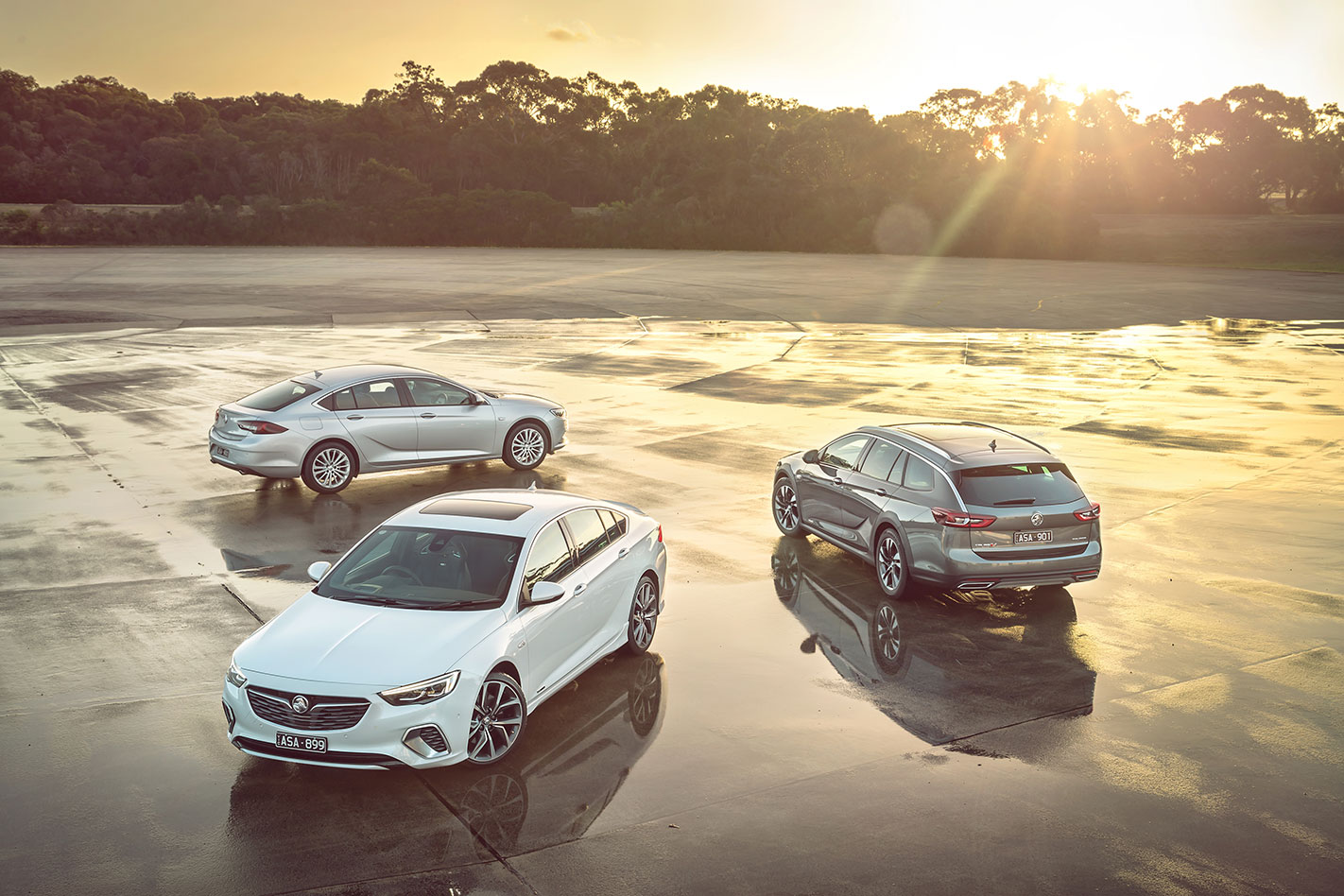
He also helped improve relations with some at times hostile dealers, rightly frustrated with the plight of the brand.
His tenure coincided with the biggest downturn in the industry since the GFC – and Holden was hit harder than most.
Poor sales showed he was looking longer term rather than heavily discounting cars to effectively buy short term market share.
Not that many were smiling. Holden, its dealers and its parent company in Detroit clearly want sales to be better. Since Buttner has been in charge sales have dropped to record lows, both in market share and outright numbers.
While it’s easy to blame the person at the top for the current predicament, much of the gloom is the result of decisions made years (even decades) earlier; decisions on which vehicles to sell in Australia, decisions on which dealers to let go and decisions on how to market and position the brand.
Some of those decisions weren’t even Holden’s doing, but they’re decisions that have crippled a brand that half of Australia once aspired to own.
As an American-owned brand with a parent company that was scarred from bankruptcy only a decade ago, what was going on Down Under was not a top priority in the upper echelons of the Detroit head office.
Whereas Holden learnt to survive (and thrive) on its own, the brand now must learn to live within a larger ecosystem – and one where it must fight for everything. Holden has gone from being a big fish in a small pond to a minnow in a global ocean.
Buttner was helping Holden on that journey, setting the foundations for a brand that aspires to get back on the radar of new car buyers – albeit with a towering mountain blocking the way.
Arguably the hill Holden is climbing just got that fraction steeper.
Fully driverless cars are “science fiction” and could be decades away, according to one of the leading experts in the field.
Miklós Kiss is Audi’s head of advanced development for automated driving and says the futuristic dream of having no steering wheel and pedals is likely decades away.
In Australia for the launch of the movie titled Machine – a documentary on artificial intelligence, which explores the role AI will play for driverless vehicles – Kiss nominates meandering country roads as the biggest challenge for cars controlled by computers.
“Rural roads add complexity with high energy and nobody has developed a sensor that can see through the forest,” said Kiss in explaining the challenges with intersecting rural roads.
It’s a particular issue in Australia, where a large chunk of the 873,573km road network is made up of smaller roads in often poor condition.
According to the Department of Transport and Main Roads 640,216km of Australia’s roads are “local roads”. Adding to the challenge is that 377,383km of Australian roads are unsealed, with less grip and variable road surfaces compared with paved roads.
An autonomous A6 has lapped a racing track at speed – but it’s a controlled environment
Kiss says the timeline for autonomous cars continues to get pushed back, partly because engineers underestimated the enormity of the task.
“At the beginning when we started [working on autonomous technology] we were expecting it to be manageable by a specialist group of 10 people that do a specialist codebook,” he said.
“Now we’re thinking we need an industry and university consortium.”
Kiss’s comments echo those of Mercedes-Benz’s board member for research and development, Markus Schäfer, who told media recently the company underestimated the challenges with driverless cars.
They’re also in line with actions from other companies, including Tesla.
Tesla once claimed it would have fully autonomous cars on the road in 2017, a timeline that gets progressively stretched as the challenge of the task becomes apparent.
Other carmakers also believe Tesla is lacking key hardware – namely lidar, or laser radar – despite claims from the Silicon Valley-based company its cars are prepared for full autonomy.
Audi is racing to be the first car maker to offer level three autonomy, something currently going through homologation.
That would allow the car to drive itself in certain situations, such as a freeway. However, the driver would always need to be ready to take over, with Kiss nominating a 10-second window for the handover from machine to human.
A level four autonomous car retains its steering wheel and pedals
He says level four autonomy – which would allow the driver to perform other tasks or sleep, but again only in certain situations – could take 10 to 15 years, or possibly longer.
“Maybe we have a level four system in a parking garage, that can happen quite fast,” he says of low-speed parking manoeuvres, also adding that highway and freeway driving on well-marked roads was likely to arrive sooner.
“Having a level four system in a city is quite far away.”
The challenge for carmakers and tech companies in the race to create driverless cars is that more drivers would benefit from city autonomy functionality.
Kiss said the high profile crashes of two Boeing 737 Max aircraft reinforced the enormous engineering efforts being spent on autonomous technology.
He said the crashes – which were blamed on a partially autonomous system that forced the nose of the plane downwards – reiterated the importance of ensuring systems worked perfectly.
“It pointed out we’re going in the right direction,” he said. “It pointed out it is reasonable to have that effort.”
Kiss said Audi’s proximity to Airbus Defence – the military arm of the European plane manufacturer – meant employees and ideas were sometimes shared between the two.
However, there were still big differences between the two.
Development cycles of cars are typically much shorter than planes, for example. And most mid-air incidents typically allow the pilot many seconds or minutes to evaluate the situation and formulate a response, whereas many car incidents need to be reacted to within fractions of a second.
Machine opens in cinemas on December 12.
Sign up here to get the free weekly WhichCar eNewsletter
The Chevrolet Camaro ZL1 is an absolute rocketship in a straight line.
Check the end of this story for an update with more recent tests – including in manual guise!
That might seem like stating the obvious when it has a 477kW/881Nm 6.2-litre supercharged V8 and 10 gears to choose from, but high-powered rear-drive rs are notorious for being a nightmare to launch on anything other than a fully-prepared drag strip.
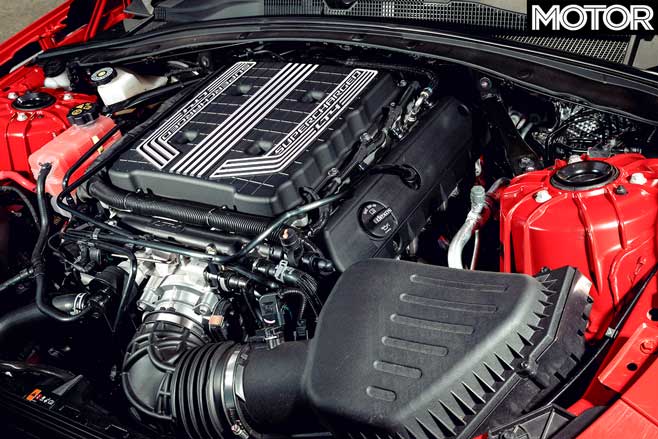
To illustrate this fact, the last time we performance-tested the Camaro ZL1 at a slippery unprepped Heathcote Raceway, it recorded 0-100km/h in 4.3sec and a 12.1sec quarter mile at 201.4km/h. Impressive numbers, but the trap speed indicates its capable of much more.
While we don’t have access to a prepped drag strip, during Performance Car of the Year testing we did have a perfectly dry surface at The Bend Motorsport Park and a new set of Goodyear Eagle F1 Supercar 3 tyres to use.
Yes, these are the tyres that failed the ADR tests but it’s the tyres it was on during our previous comparison (HSV supplies them through Walkinshaw Performance as a $1000 Track Pack) and given we’re on a track, it seems reasonable to use them.
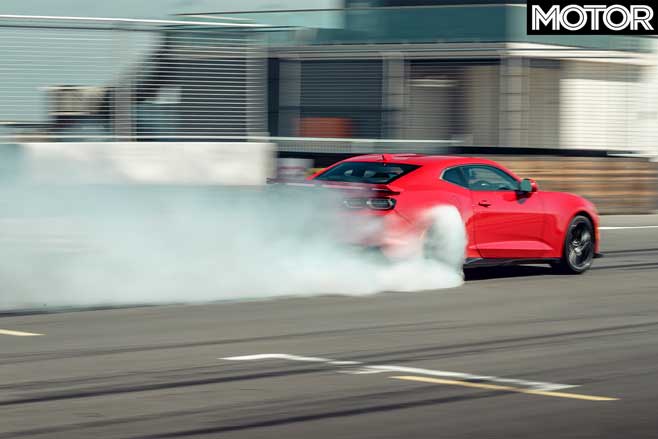
Traction is limited on cold tyres, but planting your foot and grabbing gears will see the ZL1 do an almighty power skid all the way to fifth gear, which seems sufficient to build enough temperature.
Getting it rolling initially still requires a sensitive right foot – as ever, it’s quicker with all electronic aids disabled – but short-shifting into second helps traction with next to no penalty in acceleration rate thanks to the super-close gearing of the 10-speed auto.
From there it’s a case of remembering to change gear, something you’ll be doing regularly as the Camaro ZL1 is into sixth gear by the time it crosses the quarter mile.
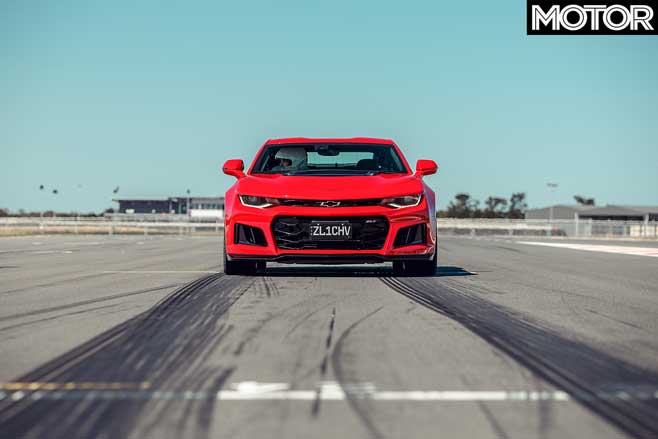
The figures are very impressive: 0-100km/h takes just 3.93sec and the quarter mile disappears in 11.73sec at 201.09km/h. These numbers put it within fractions of the 557kW/930Nm Walkinshaw W557, which managed 0-100km/h in 3.81sec and 11.69sec at 201.56km/h for the quarter.
There’s potentially more to come from the ZL1, too. Timing difficulties meant we had to re-run all the cars with limited time and on one of its earlier runs the ZL1 ran 11.6sec at 205.0km/h. Even better, use strip timing and slap a set of drag radials on, like Street Machine did during its Drag Challenge, and you’ll manage 11.2sec at 204.47km/h.
MOTOR has just taken delivery of a Camaro ZL1 long-termer, so with those same drag radials and a bit of luck, could we possibly squeak into the 10s? It’s worth a try.
UPDATE: Drag tyres and manual testing
Since we first published this story we’ve had the opportunity to performance the Camaro ZL1 on a number of other occasions, including in manual guise.
Staff Journalist Louis Cordony nabbed the Mickey Thompsons from Street Machine and headed to Heathcote, but sadly Victoria’s recent wild weather left the strip covered in a thing layer of dust. Despite the sticky drag rubber, the Camaro’s epic power simply couldn’t be deployed on the slippery surface.
Undeterred, we headed back to compare the automatic long-termer to the new manual variant. Thankfully, conditions were much better and the times reflected this. Both cars were fitted with the Continental ContiSportContact 5P tyres.
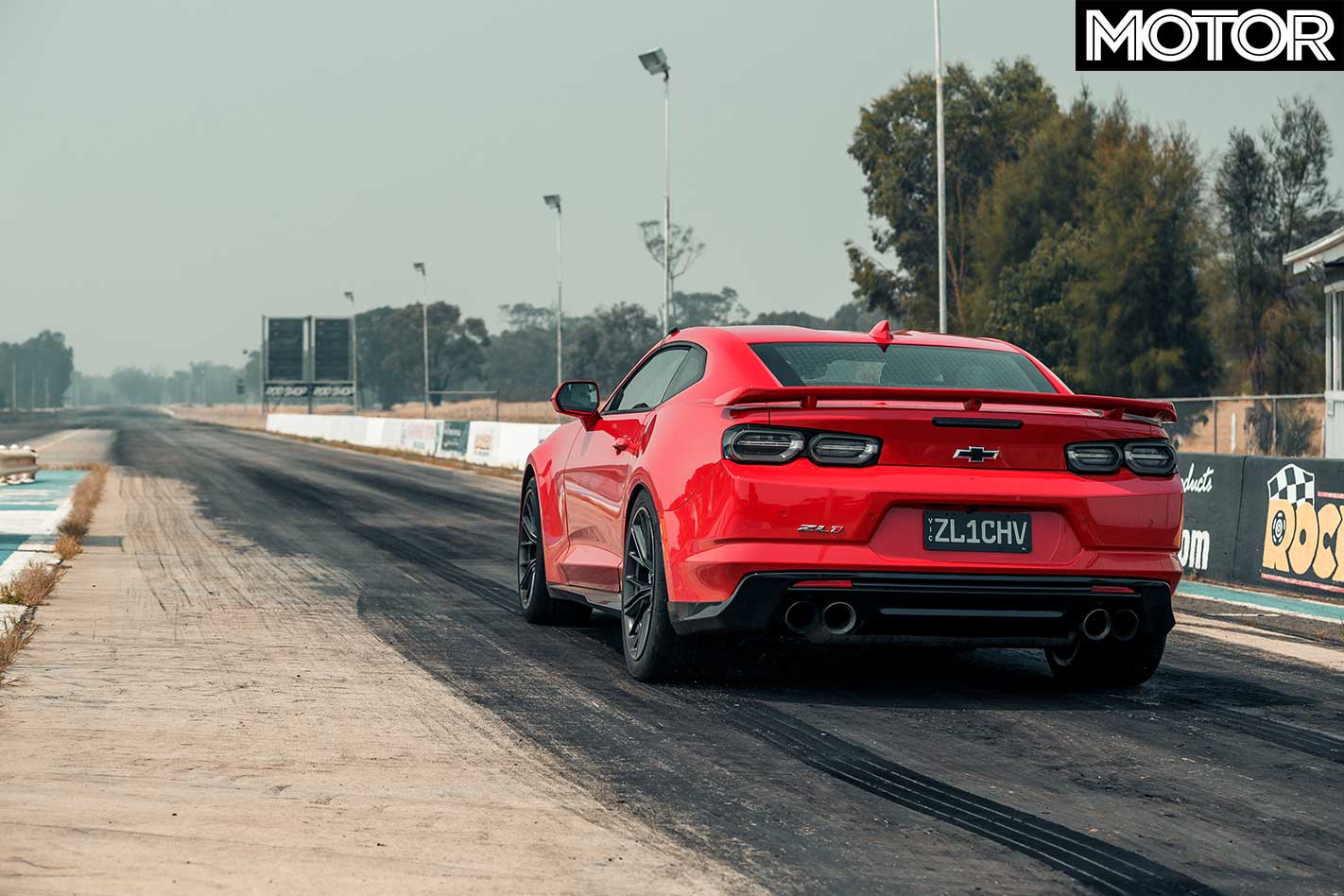
Apply rollout to give a more accurate representation of drag strip timing and the figures drop to 3.99sec/11.85sec at 196.51km/h and 3.79sec/11.60sec at 200.03km/h for the manual and automatic respectively. On a drag strip in perfect conditions with the right tyres we reckon an automatic ZL1 has the potential for a 10sec pass, even if it is a 10.99!
If ever there was a car that didn’t need a facelift, it’s the still-glamourous Jaguar F-Type.
Still, if you’re standing still in the rapidly moving automotive business you’re effectively moving backwards, so Jaguar has given its sports car a heavy refresh for 2020.
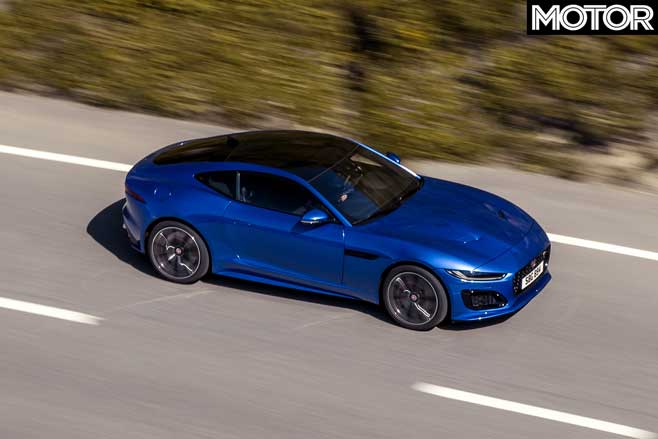
Most obvious are the aesthetic changes. New slimline headlights bring its face into line with others in Jaguar’s range, most notably the XE, while on the range-topped F-Type R the headlights are pixel LEDs with the ability to turn off individual LEDs so as not to dazzle oncoming vehicles.
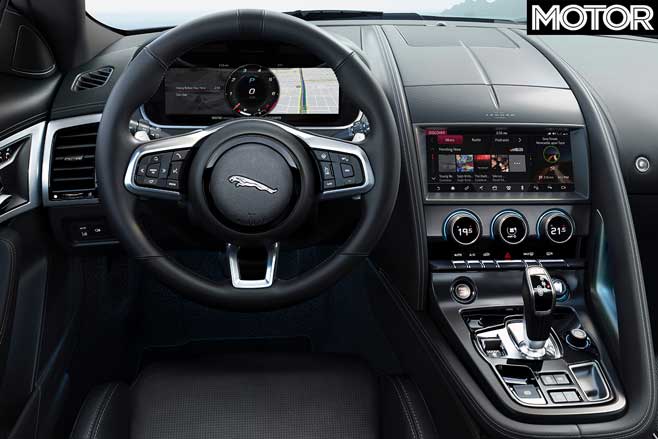
New taillights now smoothly integrate into the rear and feature a ‘chicane’ graphic introduced on the I-Pace. The biggest changes inside are the adoption of a 12.3-inch customisable TFT screen for the instruments, which can be configured to display navigation or traditional dials.
Powertrains are largely carryover, the range kicking off with the 221kW/400Nm Ingenium four-cylinder turbo which claims 0-100km/h in 5.7sec and a 250km/h top speed. It starts from $126,400 for the Coupe and $145,100 for the Convertible.
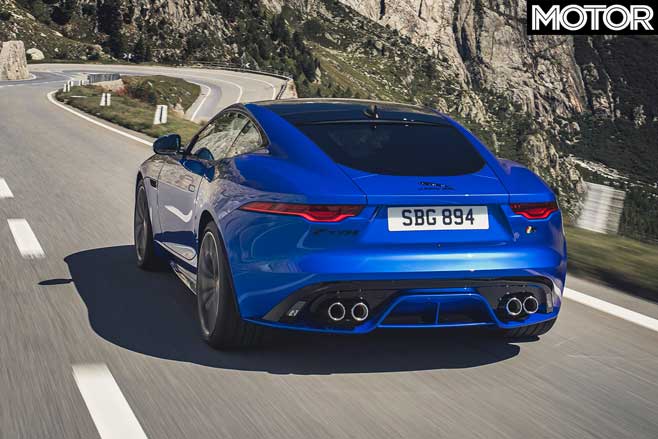
Next up is the 280kW/460Nm F-Type V6, which is now only available in rear-wheel drive (with a limited slip diff) and automatic, the manual and all-wheel drive variants disappearing from the range. The Coupe is $173,100 and the Convertible $191,800, though a special First Edition is available for the first year of production and adds a black contrast roof, exterior design pack, unique 20-ich wheels, 12-way adjustable performance seats and a choice of three bespoke colours for $205,300.
Finally, the F-Type R flagship has benefited from the greatest number of changes. It has essentially morphed into the SVR, the 5.0-litre supercharged V8 now producing 423kW/700Nm (up from 405kW/680Nm) for a claimed 0-100km/h time of 3.7sec (which we’d suggest is conservative) and an electronically limited 300km/h top speed.
The transmission has been recalibrated using lessons learns from the XE SV Project 8, tyres are 10mm wider at each end (now 265/35 front and 305/30 rear) and there new springs, dampers, anti-roll bars and stiffer rear knuckles for better toe and camber stability. New calibrations for the stability control and steering have also been installed.
In a gift for neighbours of F-Type R owners, there is now a Quiet Start mode to muffle the bark of the blown V8. Now available as a Coupe only, it starts at $263,300. Sadly, arguably the most tantalising new F-Type is off limits to Australia. Overseas markets have access to a new 331kW/580Nm version of the supercharged V8 in all- or rear-wheel drive, but there are no plans to offer it locally.
The new Jaguar F-Type is on-sale now.
Usually it’s bespoke hypercars or supercars with exotic badges that incur an extensive waiting period, not a high-spec Toyota RAV4 hybrid.
Such is the demand for the RAV4 Cruiser hybrid that, at its peak, customers were told that they wouldn’t receive their vehicles for eight months after signing on the dotted line.
Speaking with Wheels, Toyota Australia Vice President Sales and Marketing, Sean Hanley, said that waiting times are reducing and that everything is being done to aid supply as quickly as possible.
“It was at a peak of around eight months, and by the end of the year that’ll drop down to six months.
“Hopefully in the foreseeable six months we’ll get it down to around three months – which would be acceptable. This has been driven only by incredible demand for this car.”
Sales of the RAV4 in October were up 34.8 percent on the same month in 2018 (2132 versus 1582), while the year-to-date is also up 6.7 percent (19,732 versus 18,500 in 2018).
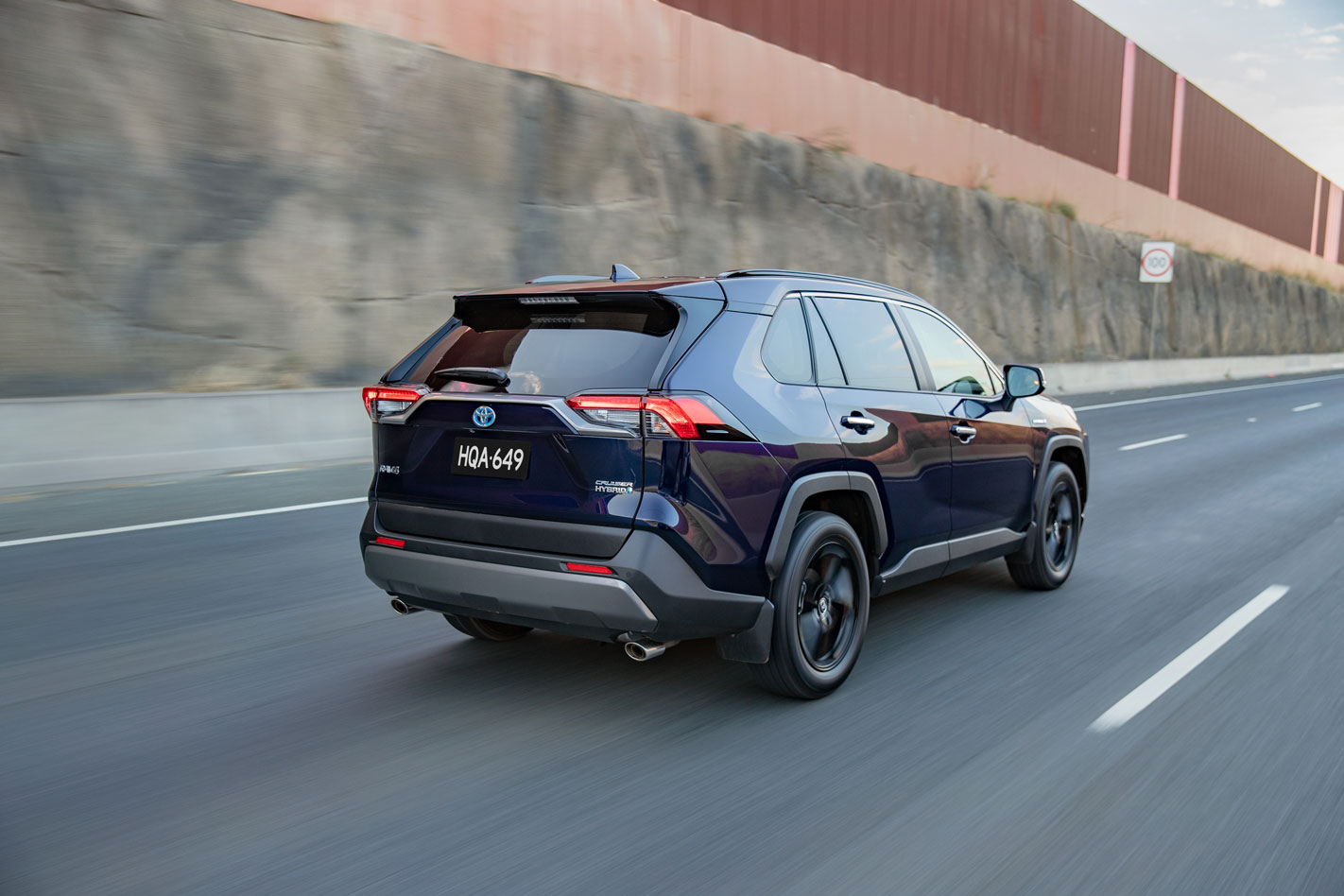
When asked if Toyota has been caught off guard by the interest in the RAV4 Cruiser hybrid, particularly given the increased interest from private buyers and not fleet sales, Hanley said “not entirely”.
“I’m surprised by the magnitude of the demand, but I’m not surprised there is higher demand. I always knew that the RAV4 Cruiser hybrid was going to be a superstar,” Hanley said.
Buyers of the popular hybrid-electric model left waiting for their car won’t be stuck without wheels – if they’re willing to pay for them.
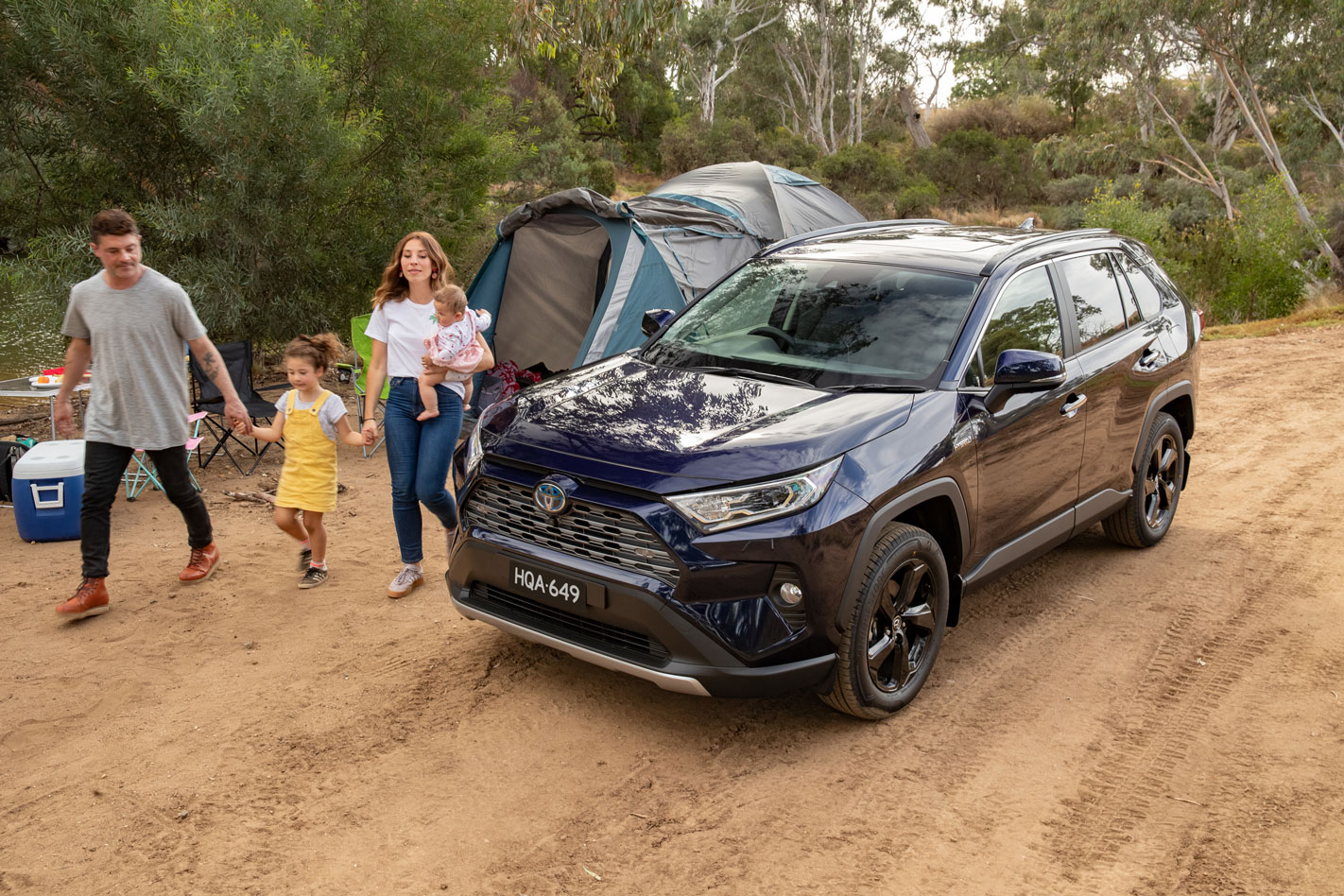
“We have a program which allows them [RAV4 Cruiser hybrid customers] to rent a vehicle off Toyota at a very competitive price,” Hanley said.
That subsidised rental program is called ‘While You Wait’ with pricing to be determined in correlation with what car you choose from the Toyota line-up.
Currently 34 Toyota dealerships countrywide offer the service, with the program to be rolled out nationally if there is significant customer take-up.
The three blokes – blue work pants, sturdy boots, flouro tops – slowly circled the low-slung, bright red Camaro, parked in the main street of a small South Australian town gently warming in the spring sunshine.
“Mate, now this is a Holden,” drawled one, casting an appreciative eye over the $160,000 ZL1. “I love it, but I won’t be able to afford it ever. Nice to dream, though.”
“Look in there,” said his mate, pointing to the Camaro’s entertainment system. “You can see the Commodore in there.”
Another tells me the story of how he – a Holden man through and through – met legendary Supercars racer Greg Murphy at Bathurst. “I love my VE,” he tells me, but like his mates, he can’t keep his eyes off the ZL1.
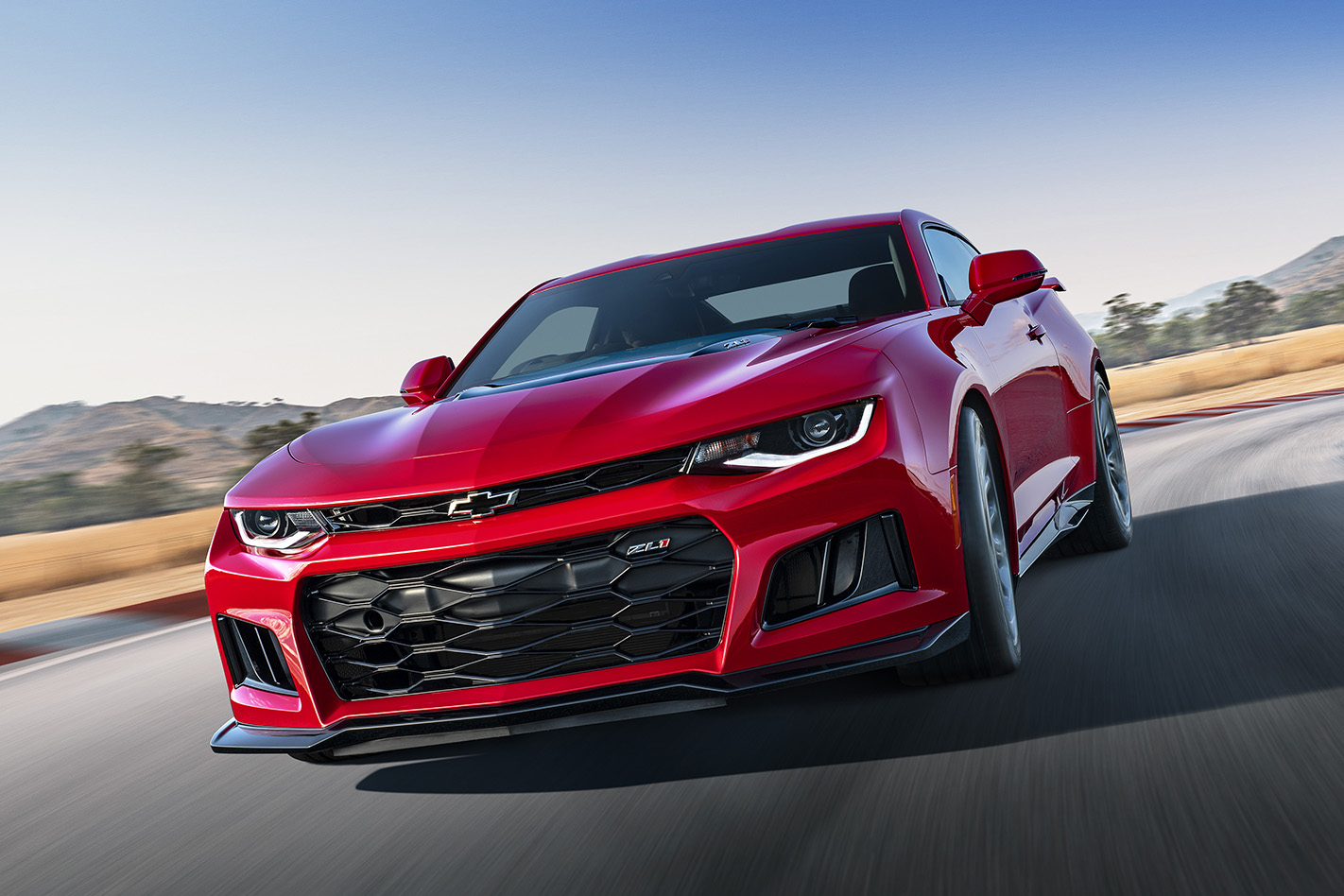
There are still plenty of Aussie-made Commodores in this part of the world, less than 80km from the former stronghold of Holden car-making in Elizabeth, but tellingly, copies of the new German-sourced version are thin on the ground.
Equally, there are plenty of locally-produced Cruze sedans in evidence, but the unloved Equinox and the underrated Astra are rare sights.
The brand is taking a battering in the sales race, but the glass-eyed reaction of the three tradies to the Camaro got me thinking; though it’s late in the piece, it may not be too late to turn the brand around.
But how?
Despite the battering the brand has taken in the harsh spotlight of social media since the end of local manufacturing – not helped, many would argue, by the company not reading the room correctly at the time and persisting with the Commodore nameplate – rolled-cuff marketing types would argue that the brand still carries equity with a wide swath of customers who, brought up with the brand over generations, are loath to switch.
That buyer set arguably isn’t part of the baying masses flooding Holden’s social streams, and are happy enough to stay loyal to the Lion.
Key to this strategy playing out over the longer term, however, is the simple fact that Holden needs product. Now.
New, exciting, current, advanced… pick a couple of adjectives, and that’s what the brand needs to stem the defection of once-loyal buyers to brands like Kia and Hyundai.
“There’s just nothing in a Holden showroom that excites me,” one of the tradies tells me, his eyes never straying from the Camaro. “Except for this.”
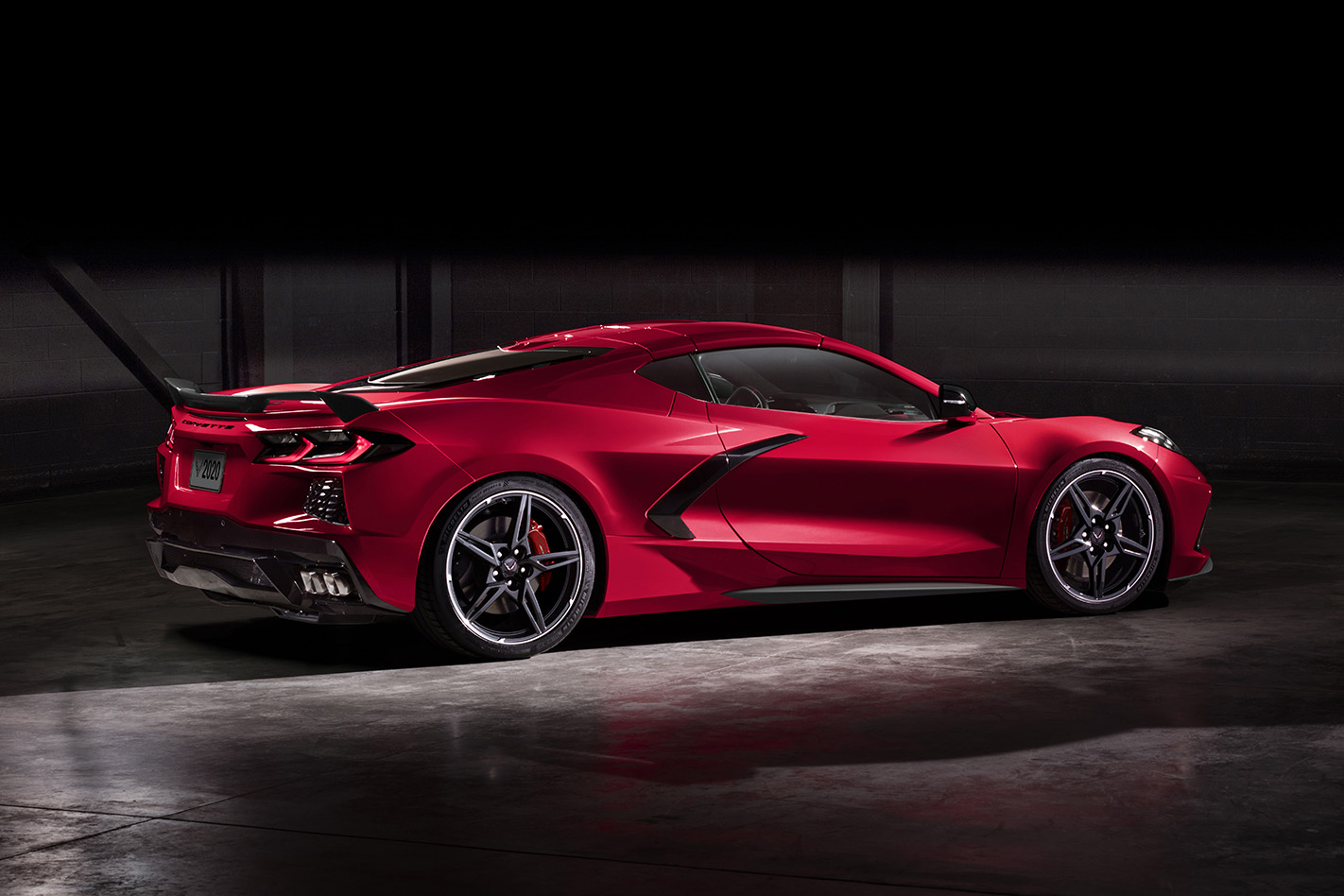
He has a point. Halo heroes like the Camaro are all well and good, and the incoming Corvette C8 (above) will also play its part in bolstering the flagging morale of its local troops, but this glorious cavalry charge of sexy metal needs to be swiftly followed by a rear-guard action of good-looking, appealing, affordable real-world cars.
Of its current offerings – including Trax, Astra, Commodore, Equinox, Acadia and Colorado – the greatest potential arguably lies with the last two. Large SUVs are building sales momentum off the back of the success of cars like Mazda’s CX-9, and the Acadia, despite its love-it-or-hate-it bold styling, should be able to lead from the front in the three-row stakes.
Likewise, the Colorado ute has had more localisation performed on it than virtually any other car on sale here today. Did you know it uses the same steering rack as the last locally-developed Commodore? Or that even the metal used in the rear leaf springs is a custom specification just for Holden?
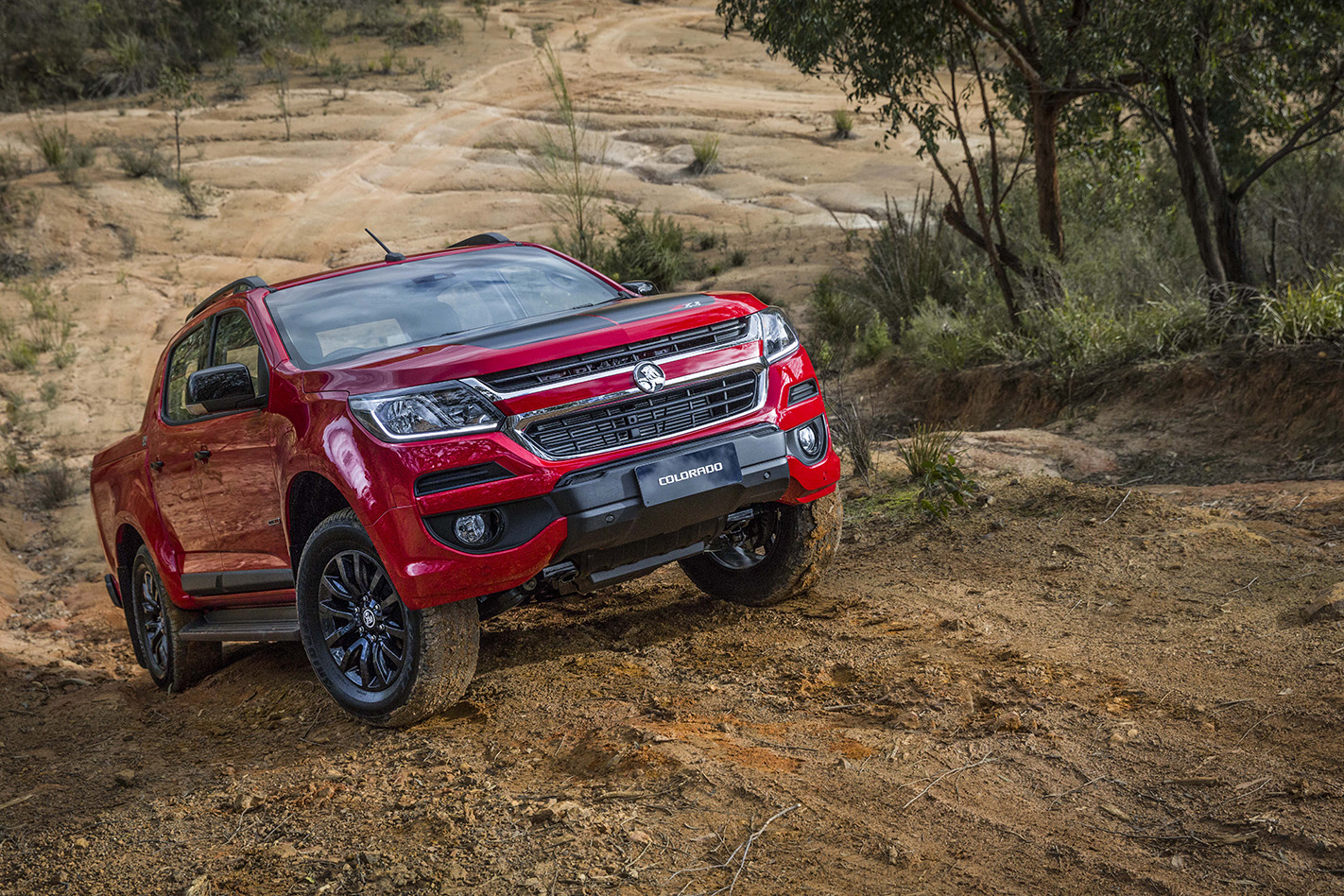
The Colorado is in many ways a great example of the dogged persistence and pure passion that still lives within the Holden ranks locally.
Though the ranks have thinned over the years, there is still a small nucleus of hard-won local auto industry experience within the ranks, experience that serves General Motors well out at Lang Lang, long a globally recognised centre of engineering for the brand.
But Holden has some hefty millstones around its neck, not least in the form of the poorly performing Equinox. In October alone, the category-leading Toyota RAV4 outsold the Equinox by almost eight to one, while the much more expensive Mercedes-Benz GLC will trounce it in annual sales come the end of the year.
Its Astra hatch, too, should be doing far better. Last October it sold 1103 cars. This October? Just 105.
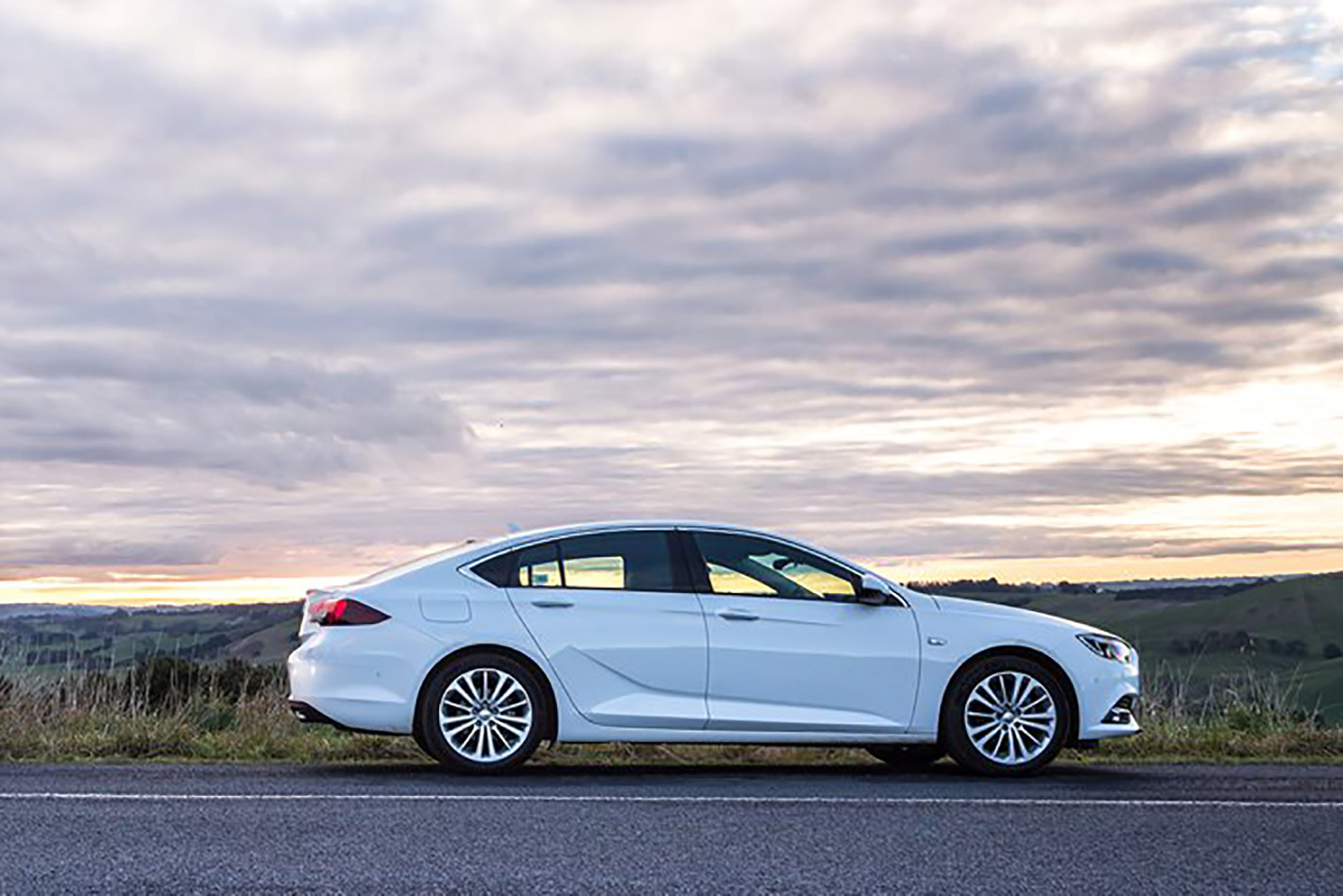
The Commodore… what to do about the Commodore? By all accounts, it’s not a bad car, and if you take away the dominant Toyota Camry, it would be the second best-selling sedan in Australia behind the long-popular Mercedes-Benz C-Class.
Holden knew the bottom would drop out of Commodore sales after it closed Elizabeth – and don’t forget, the car – reportedly under review to slim down its model range – wasn’t selling that well when the plant closed. Sales have inched upwards since its launch, too – but it’s a matter of critical mass.
Holden is a company that once sold 175,000 cars a year at its zenith, and despite shedding facilities, dealers and staff, its current sales volumes are closer to that of smaller players like Honda or Subaru. After an awful 2018, the Lion of 2019 is leaner, but it really needs cars in key segments – like the Equinox, for example – to work harder.
But the three tradies staring in awe at the Camaro paints a more vivid picture than poring over stats on monthly sales charts could ever do. Holden needs desirable cars to draw people back to the brand, and it doesn’t have to be a two-door muscle coupe.
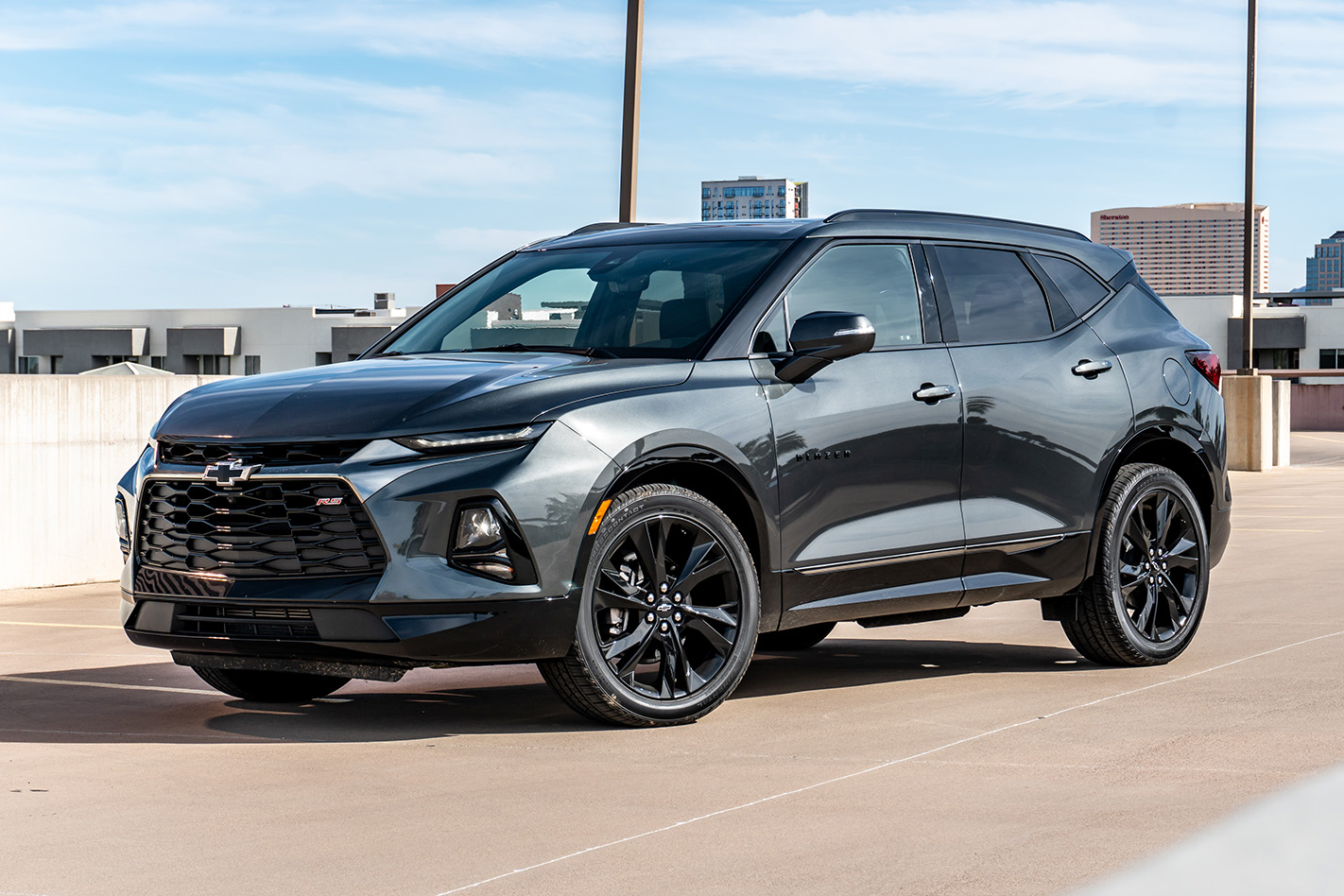
SUVs like the Chevrolet Blazer(below), for example, would give Holden a stylistic edge in the ultra-competitive space, while the GMC Sierra – think ute version of the Acadia – could also be a hit here.
But with its parent company fighting numerous fires on the domestic front with its own striking workforce while simultaneously streamlining its operations at home and around the world – including the sale of Commodore and Opel supplier Opel to Peugeot – it seems that a viable, executable product plan for its far-flung property is not front of mind.
Holden will keep plugging away, but the unfortunate departure of much-loved CEO Dave Buttner – to reportedly look after multiple issues on the family front, we understand – will dent the company’s impetus a little.
His interim replacement, sales director and former head of the New Zealand operation Kristian Aquilina, knows the company inside and out, though, and no doubt he and Dave have had long chats around the water cooler about which direction to take the company.
Only time will tell if our three tradie mates will choose to buy something with a Lion on the nose again, though.
As far as motoring urban myths go, one of the biggest and most infamous in Australia is that of the McLaren F1 crashed by a mechanic.
It’s something you hear from time to time, whispered in hushed tones at car meets and between mates at the pub. Only 64 road-faring McLaren F1s exist in the world, with just a single model believed to reside in Australia.
For the uninitiated, the legend goes something like this: Australia’s only McLaren F1 was dropped off to BMW Sydney for a routine service, when a junior mechanic snatched the keys and took the original hypercar for a joy-ride.
Despite his hubris, it’s retold that the mechanic was wholly unprepared for the F1’s 461kW and 650Nm at full throttle, and promptly wrapped the McLaren around a light pole.

It’s a story so outlandish that it can’t possibly be true, right? Well, not exactly. At its core the legend is rooted in reality, but the details are slightly different.
The car in question is McLaren F1 chassis 009, which was built in 1994 and was the eighth example to have left Woking. Originally finished in Magnesium Silver, 009 has changed somewhat in its 25-year history.
At the time, 009 was owned by Dean Wills, the then CEO of Coca-Cola Amatil in Australia. He bought the Big Macca in England in the ’90s, before importing it to Australia, wriggling around our regulations thanks to the F1’s central seating position.

By all accounts the incident occurred in 1997 when the F1 was undergoing some maintenance work by BMW Sydney. However, it wasn’t a junior who snatched the keys for a joy-ride but a senior member of the technical department that had permission to drive the multimillion dollar machine.
Where the joy-ride myth comes from is the fact that the unfortunate carbon-breaking incident occurred at night, while the employee had a pair of friends along for a ride. To this day the mechanic’s exact identity remains unknown.
It’s almost impossible to damage an F1 to the point of it being a complete write-off, as McLaren is always willing to conduct repairs. This is because the stratospheric prices of F1s make any repairs justifiable, no matter how extensive.

The ‘Aussie’ F1 was sent back to home base in Woking to be returned to working order, at the same time getting new paint that was a darker shade of grey, and the wheels now wearing a body-matching hue.
Estimates at the time stated that the insured repair bill came in just under $1 million – around $1.7 million in today’s money.
There are rumours that the crash resulted in one of the most expensive repair jobs in Australian history.

In 2005, chassis 009 changed hands, being sold to Tony Rafits, who switched the wheels back to their original colour before offloading the hypercar a year later.
Barry Fitzgerald was the next custodian, and is the current owner. A very successful businessman in his own right, Fitzgerald added his own stamp to the unfortunate history of chassis 009 in 2016.
While taking part in the inaugural Epic New Zealand Road Tour the car was crashed once again, this time only suffering minor damage.
It’s unlikely to hurt the car’s resale value, with Rowan Atkinson’s twice-crashed Macca fetching $16 million when it was sold three years ago.
Do you know who crashed the ‘Aussie’ F1? If so, get in contact with us at [email protected]
World’s Best Nissan GT-R collection is a bold claim, but read on and you’ll discover it’s no idle boast or duplicitous clickbait title.
Over the weekend Melbourne workshop V-Spec Performance held an open day, allowing the general public to come and have a poke around its workshop and fleet of incredibly special GT-Rs.
Regular readers may remember the name as V-Spec generously supplied the Nismo 400R and Mine’s Ultimate Response R34 for our recent GT-R special, however, since then there have been a couple more very special additions.
You know you’re about to see something special when the entrée is a Mercedes-AMG GT R, Lamborghini Aventador SVJ and Ferrari 488 Pista on carbon wheels, the trio of Euro exotics sitting outside, leaving the workshop interior as a Japanese-only zone.
Let’s start with the Nismo 400R, a comprehensively re-engineered R33 GT-R using bits from Nissan’s Le Mans program. The engine is the centrepiece, a 2.8-litre 294kW beast called the RB-X, though virtually every part of the car has been altered compared to stock. Just 44 were built, with this example being 007.
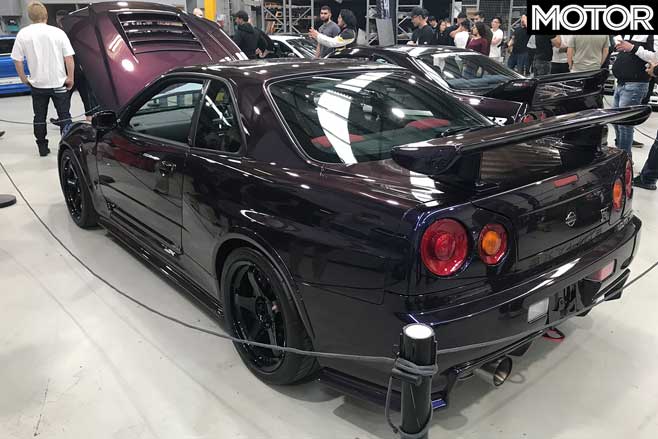
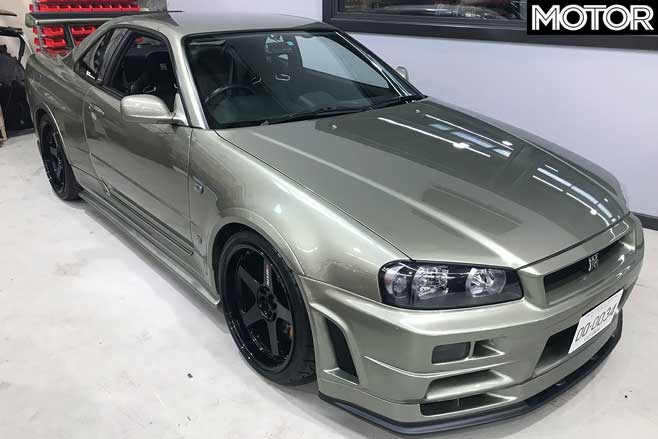
In a similar vein is the Nismo Z-Tune. In the early-2000s Nismo bought a number of immaculate second-hand R34 GT-Rs (the model having gone out of production) and turned them into 368kW monsters with carbon panels and uprated drivetrains.
Just 17 were built, all in silver bar one Midnight Purple example. V-Spec’s example, number 15, was originally silver but during a comprehensive restoration by Nismo, which blew the landed cost out to a rumoured $2.5m, it was painted in Midnight Purple.
In contrast, an R34 GT-R Nur is almost commonplace, though see multiple examples under one roof is rare, as just 1003 of these models were built to farewell the R34 in 2002, most painted in the signature Millennium Jade paintwork and with stronger N1 engines as standard.
Speaking of the N1, one of just 56 R34 N1s is also present, a stripped-out, mechanically uprated GT-R built for endurance racing. Sitting next to it is a Tommykaira R-Z, one of just 11 built. Like the Nismos, it’s a complete turn-key mechanical and styling package with a 390kW/535Nm 2.7-litre engine.
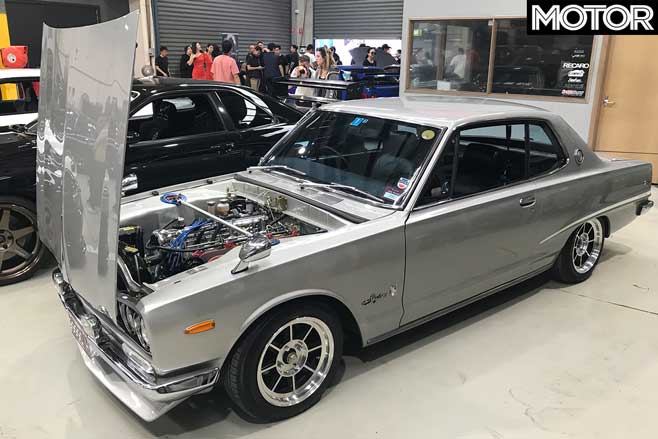
The oldest car on display is this KGC10 2000 GT-X, a high-performance variant of the first Skyline coupe which sat underneath the iconic KPGC10 ‘Hakosuka’ GT-R. While the GT-X used an L20 engine instead of the GT-R’s twin-cam S20, it produced 96kW/172Nm which wasn’t to be sneezed at in 1971.
Sitting opposite the GT-X is the Mine’s Ultimate Response R34 GT-R. Made famous by the Japanese Best Motoring DVD series, it was designed to be the ultimate expression of what Mine’s could do as a tuner.
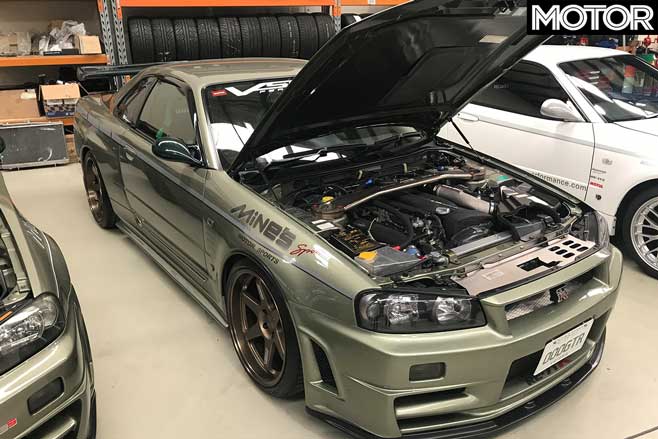
While this car isn’t the famous Best Motoring car, it was built as a more street-friendly version for Mine’s boss Tsuzo Niikura, including a 2.8-litre engine and the shorter diff ratio, the combination of these two modifications making the Mine’s R34 brutally quick.
Last, but certainly not least, is V-Spec’s latest acquisition, the HKS Zero-R. Initially planned as a limited-run version of the ‘ultimate GT-R’, the project was abandoned when HKS discovered it would have to crash test the cars.
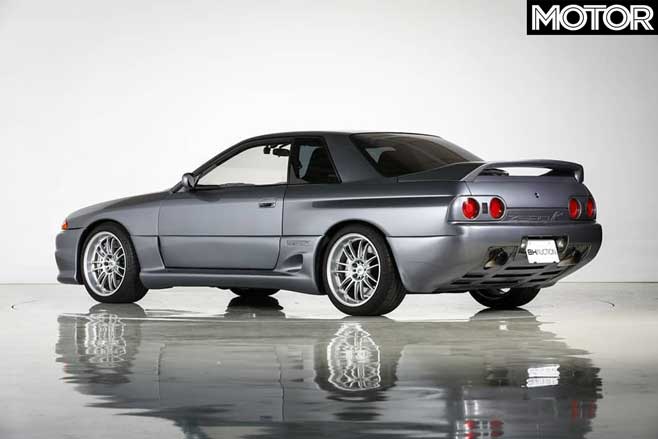
One of the four cars built was sent to the Sultan of Brunei with the other three sitting at HKS until it decided some years ago to restore the cars, upgrading them with the best possible parts to create a 441kW street weapon.
V-Spec purchased the car, which is so comprehensively modified it features no Nissan badges, at the 2019 Tokyo Auto Salon and has just finished compliance. We’ll hopefully tell the story of the Zero-R in a future article, but until then enjoy a quick look at V-Spec’s remarkable GT-R collection.
