
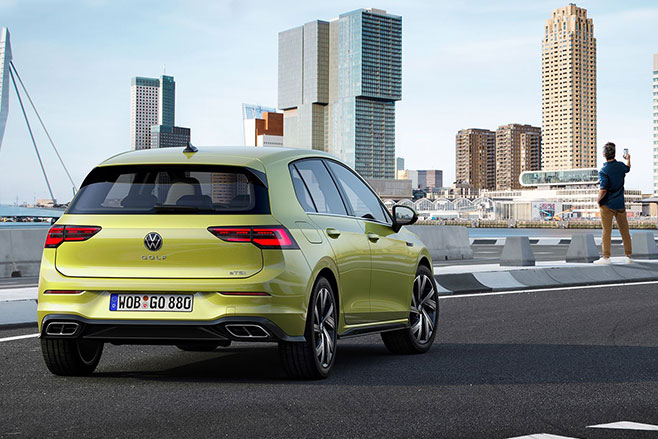
UPDATED 25/10 – Volkswagen’s eighth-generation 2020 Golf hatchback has finally been unveiled in Germany.
A leak from German publication Ausburger Allgemeine, which uploaded a full suite of 2020 Golf pics online ahead of the embargo before promptly pulling the shots back down again a short time later, proved on the mark in terms of the look and feel of the Mk8 Golf, but we can now reveal some local details around the car.
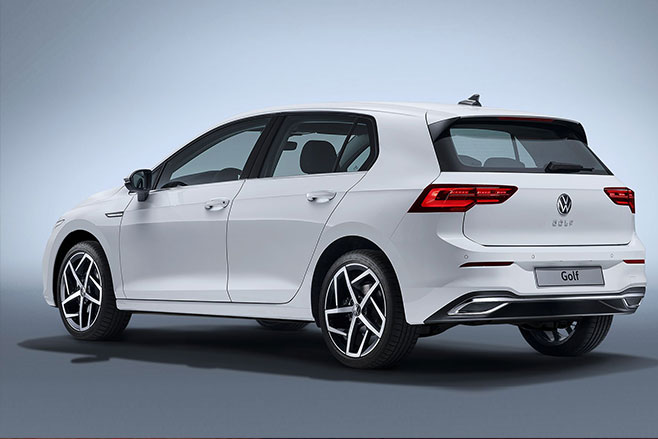
The first Mk8 Golfs will, we’re told, land in Australia in early 2020, potentially alongside an all-new version of the venerable Golf GTI.
It’s expected to run a 180kW version of VW’s EA888 2.0-litre turbocharged 2.0-litre four-cylinder engine, along with an electronic limited-slip diff as standard. The Golf R isn’t expected to land for at least 12 months, though.
VW’s 1.4-litre turbocharged engine will carry over from Mk7.5 Golf into the new car – blame our terrible fuel for that – while new tech will include a heads-up display, a new 10-inch multimedia screen and more active safety tech.
Wireless Apple CarPlay will also be offered, according to our sources.
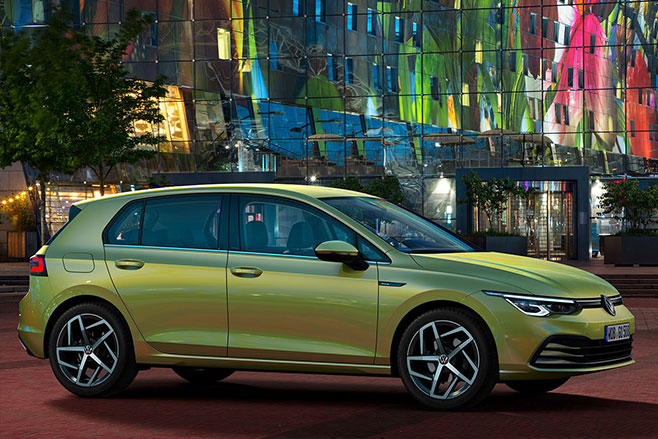
Unsurprisingly, the 2020 Golf is a gentle but significant evolution of the seventh-generation model, preserving the unmistakable look but introducing some bold styling highlights.
Both front and rear lights gain a step about their midpoint, which accentuates the internal LED arrangement, while the headlights have an even more dramatic evolution with an eyeliner accent added to each outside corner.
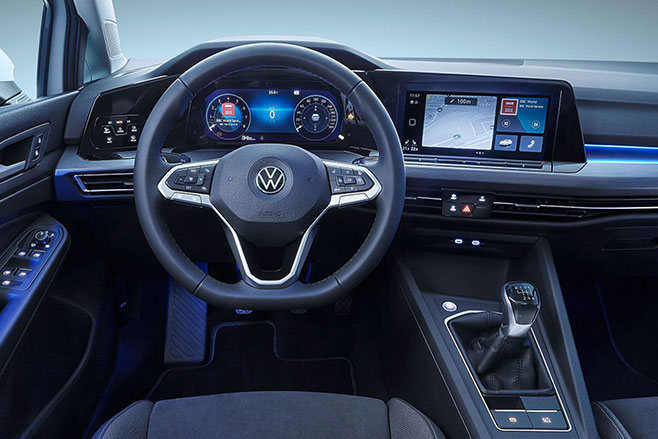
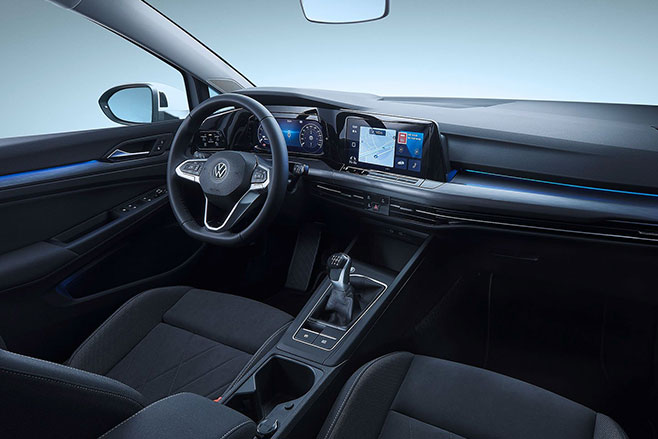
The detail continues through the light’s LED upper accents and the new slimmer grille for a continuous full-width fine line. It’s duplicated inside with a fin that cuts through the dashboard from the air vents right and left.
A range of variants are represented in the leaked shots including an R-Line version that wears a colour similar to the current Turmeric Yellow, a white version appears to be the closest to the affordable end of the range, while a second white version confirms a new GTE.
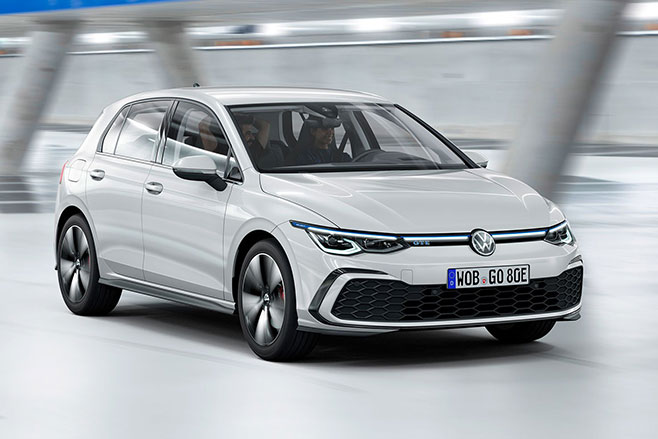
Interestingly, the company will introduce eTSI boot badging with the new Golf range, presumably depicting a hybridised version of the TSI turbocharged petrol engines.
The eighth-generation Golf is also the first combustion-powered Volkswagen to roll out wearing the company’s new-look badge. The revamped badge made its debut on the nose of the ID.3 small hatchback.
Both manual and automatic transmissions are shown in the images and cabin views also offer a glimpse of a huge 10-inch central information touchscreen, complemented by the fully digital instrument cluster.
No three-door versions are shown in the photos, which adds to speculation the Golf will continue on in five-door configuration only; however, the absence of a GTI or R variants in the pictures is not likely to be prophetic.
Check back in early tomorrow as we bring you more images and the full technical story following its official release.
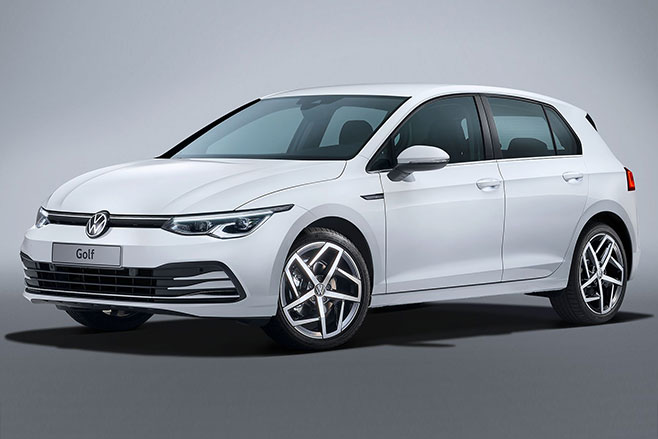
Click through the image gallery at the top for plenty more photos of the 2020 Volkswagen Golf.
- Toyota sees only upside for hybrid Hilux, Landcruiser
- Electrified sales to top 40 percent by 2030 locally
- Infrastructure still a key stumbling block
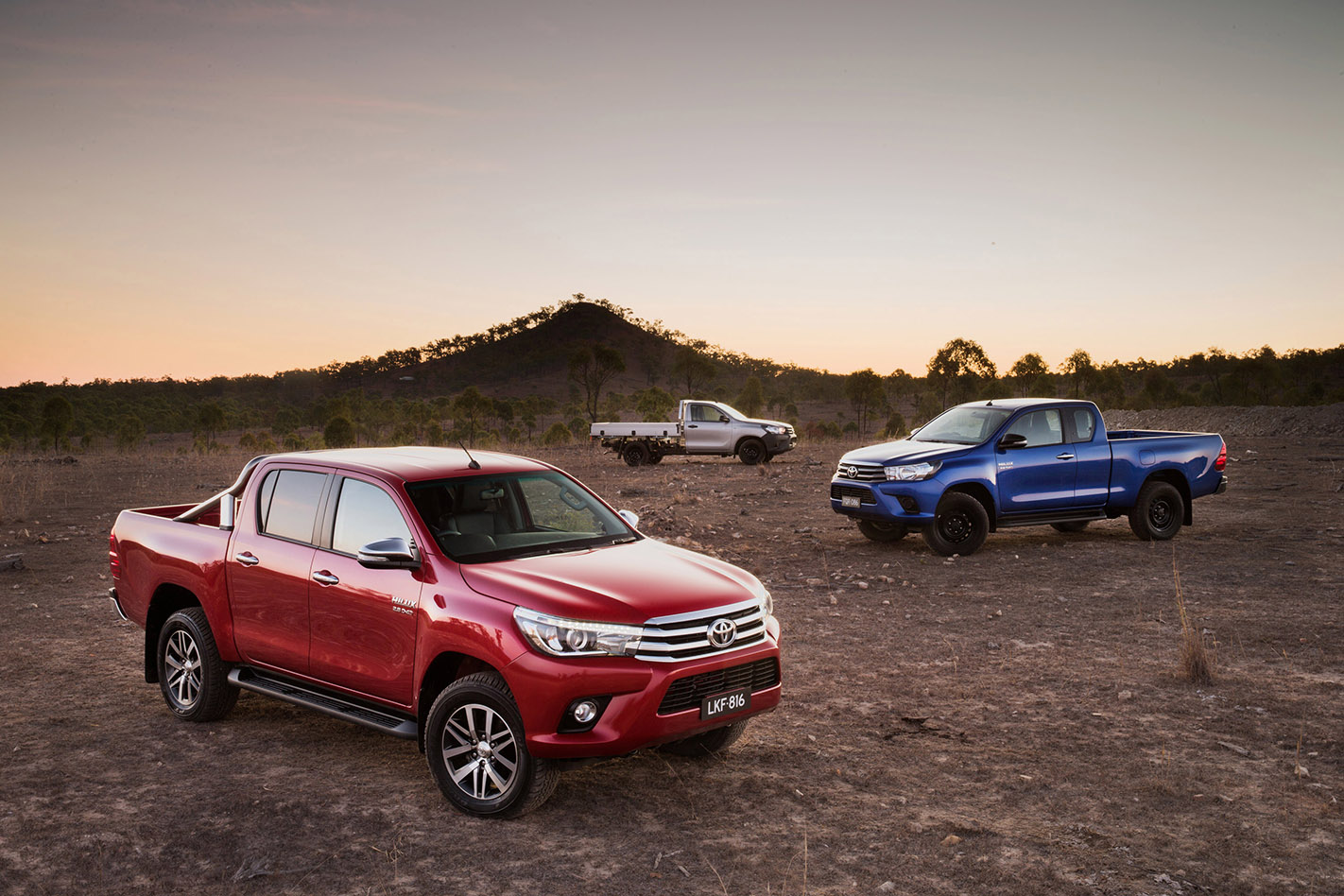
Ask Sean Hanley, Toyota Australia’s vice-president of sales and marketing, about whether petrol-electric versions of the Hilux – or indeed the Landcruiser – are a good idea for this country, and he immediately gets fired up.
“As an industry, one thing we all agree on – and there’s no debate – is that we MUST reduce our CO2 here in Australia,” he said at the Tokyo Motor Show. “We’re planning ahead, we’re not waiting for legislation, we’re planning now for what we think is the future. We’re not waiting.”
Hybrids are a subject close to Hanley’s heart. He was the man tasked with introducing the Prius to Australia back in 2001, and though many manufacturers have introduced hybrids, plug-in hybrids and fully-electric vehicles in those intervening years, Hanley says Toyota still has a leadership position when it comes to low-emission vehicles.
Toyota Australia has a plan to grow its total sales mix of hybrid cars from its current level of 12 percent to around 20 percent by the end of 2020. By 2030, Hanley expects that sales of all electrified Toyotas – including hybrids, plug-ins, pure-EVs and fuel-cell vehicles – to account for a solid 40 percent of Toyota Australia’s annual volume.
It’s a slightly conservative number compared to the more bullish predictions of some other companies, but one that Hanley feels is realistic for this country.
“Electrification in its current form is quite expensive,” he said. “Therefore we don’t see hybrid-electric as an interim solution, we see it as one of four [long-term solutions]. I think ultimately … Toyota will certainly be part of bringing electric vehicles to Australia, it’s just a matter of when – not if.”
Hanley wouldn’t be drawn on EV timing but believes that infrastructure – or a lack of it – is a key factor.
“I don’t have a particular date to announce today, but it’s fair to say that between 2025 and 2030 we’ll have EVs in the Toyota lineup in Australia,” he said. “Globally they’ll have them a long way before that, but it’s just a matter of time before we bring them to our country. I don’t think [the timing] is down to the people’s readiness, I think it gets down to infrastructure and I think it gets down to affordability.”
So where does that leave one of Australia’s most popular vehicles, the Hilux? According to Hanley, Toyota’s customers working in trades or living in regional areas are more than ready for a battery-enhanced workhorse.
“We’ve currently got what we call a ‘hybrid cavalcade’, with a number of our vehicles on trucks going around to our regional dealers, inviting customers to events to talk about hybrids, how they work and above all dispelling myths about hybrids, battery life, what they’re capable of and how much they cost,” he said.
“What we’re finding out is two things: our regional areas, particularly in the agricultural sector, is that they are well advanced in alternate powertrains in terms of their own machinery. What we’re also learning is that they’re very enthusiastic for Toyota to bring out commercial vehicles as hybrids, and they’re also very enthusiastic to learn what those commercial vehicles would be capable of doing.
“These people work the land. They live and breathe the nutrients of the earth, so they’re all for reducing CO2 footprint, and 100 percent committed to the agricultural sector.”
Hanley also said that the venerable Landcruiser (below) will live on for the foreseeable future.
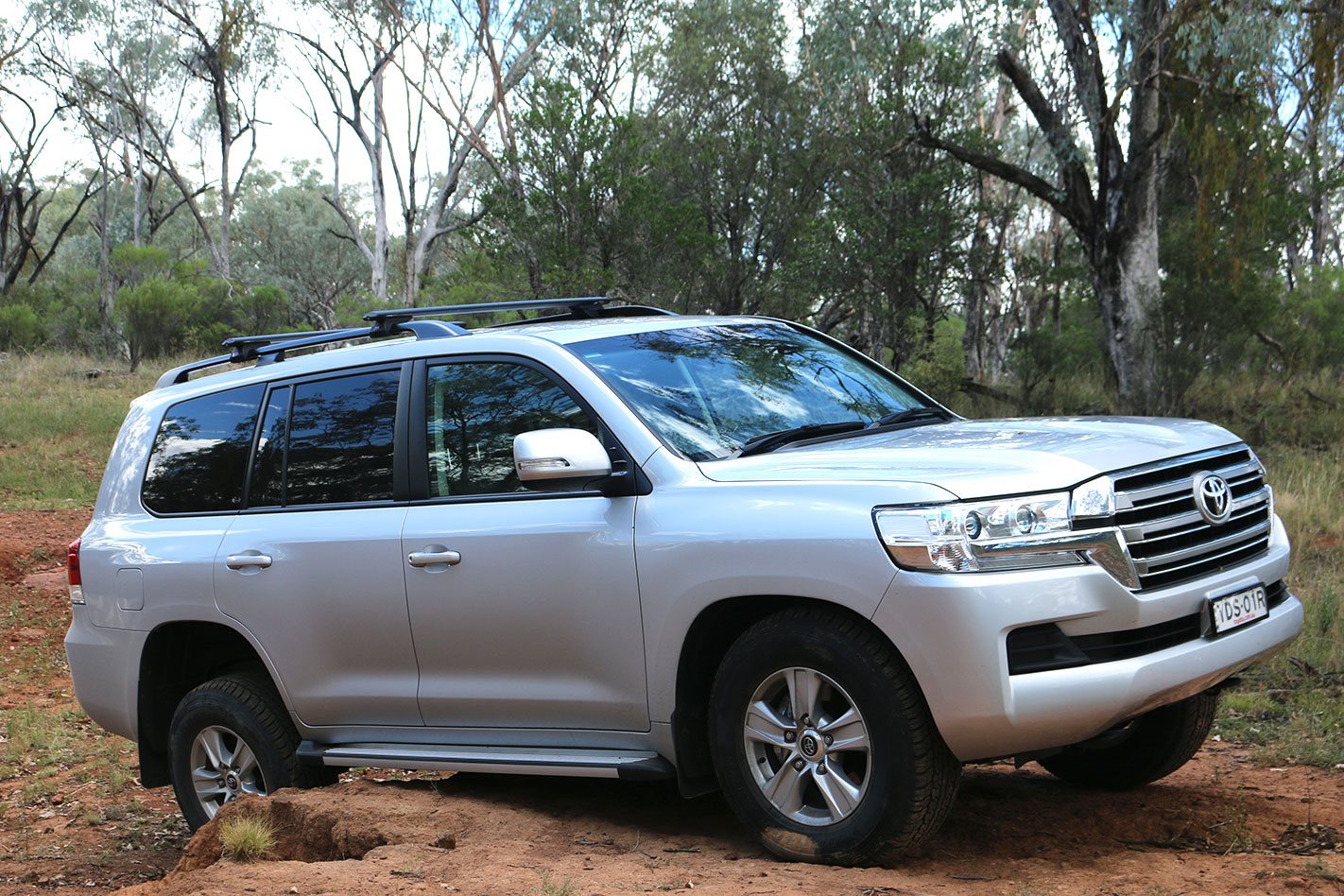
“Whatever we do in the future, we will continue to have Hiluxes and we will continue to have Landcruisers going forward,” he said. “Whatever we bring out, will have the capability required to fulfil their [rural buyers] requirements. We don’t have any announcements on a hybrid ute today, but we are certainly looking at all of those types of expansions going forward.”
However, a hybrid Hilux is still some time away. With the current Hilux platform not being compatible with electrification and only halfway through its lifecycle, an electrified heir likely won’t appear until deeper into the next decade. A purely electric Hilux also seems unlikely at this point.
The Landcruiser, meanwhile, is gearing up to launch in its new generation (expected to be dubbed the 300 Series) in the near future, and a hybrid powerplant is suspected to form part of the range.
Diesel-electric hasn’t been ruled out, but with Toyota’s much greater experience with petrol-electric hybrids it will be interesting to see what fuel source they end up selecting… not to mention what Australia’s farmers and tradies think of it when they arrive.
The all-new 2020 Honda Jazz has been unveiled at the Tokyo Motor Show with a hybrid powertrain and an outdoorsy crossover version.
The fourth-generation Jazz retains the same overall shape that accommodates the generous interior and clever flip folding ‘Magic Seats’, but with much of the current model’s lines and creases ironed out for a sleeker look.
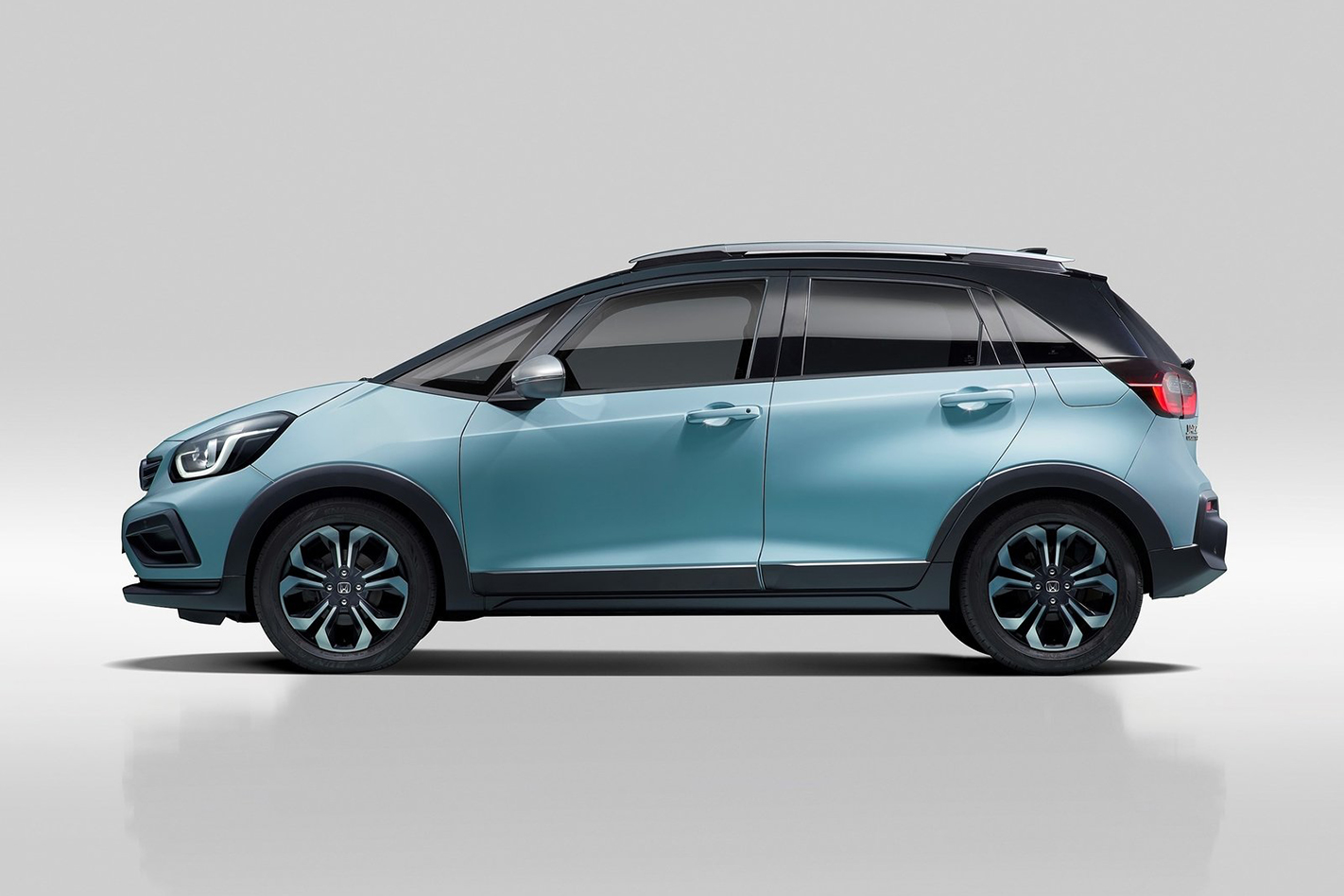
Of note is an SUV-inspired variant called the Crosstar (above) featuring increased ride height, a unique front grille design, durable black wheel arches, lower bumpers, water-resistant upholstery and integrated roof rails.
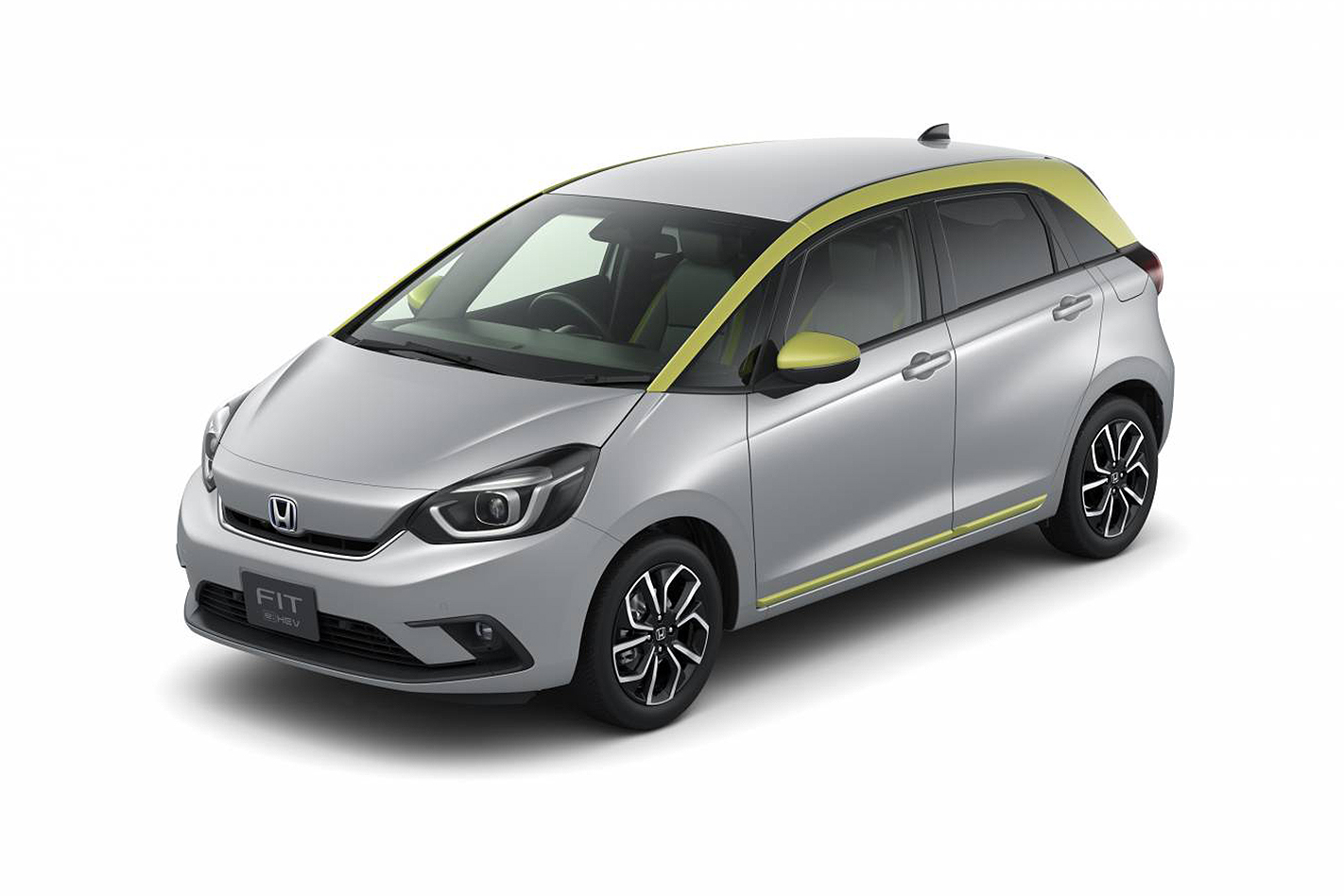
Other specialised variants include the Basic, Home, Luxe, and the sporty Ness (below) with contrasting colours for the side rubbing strips, roof arch and wing mirror caps.
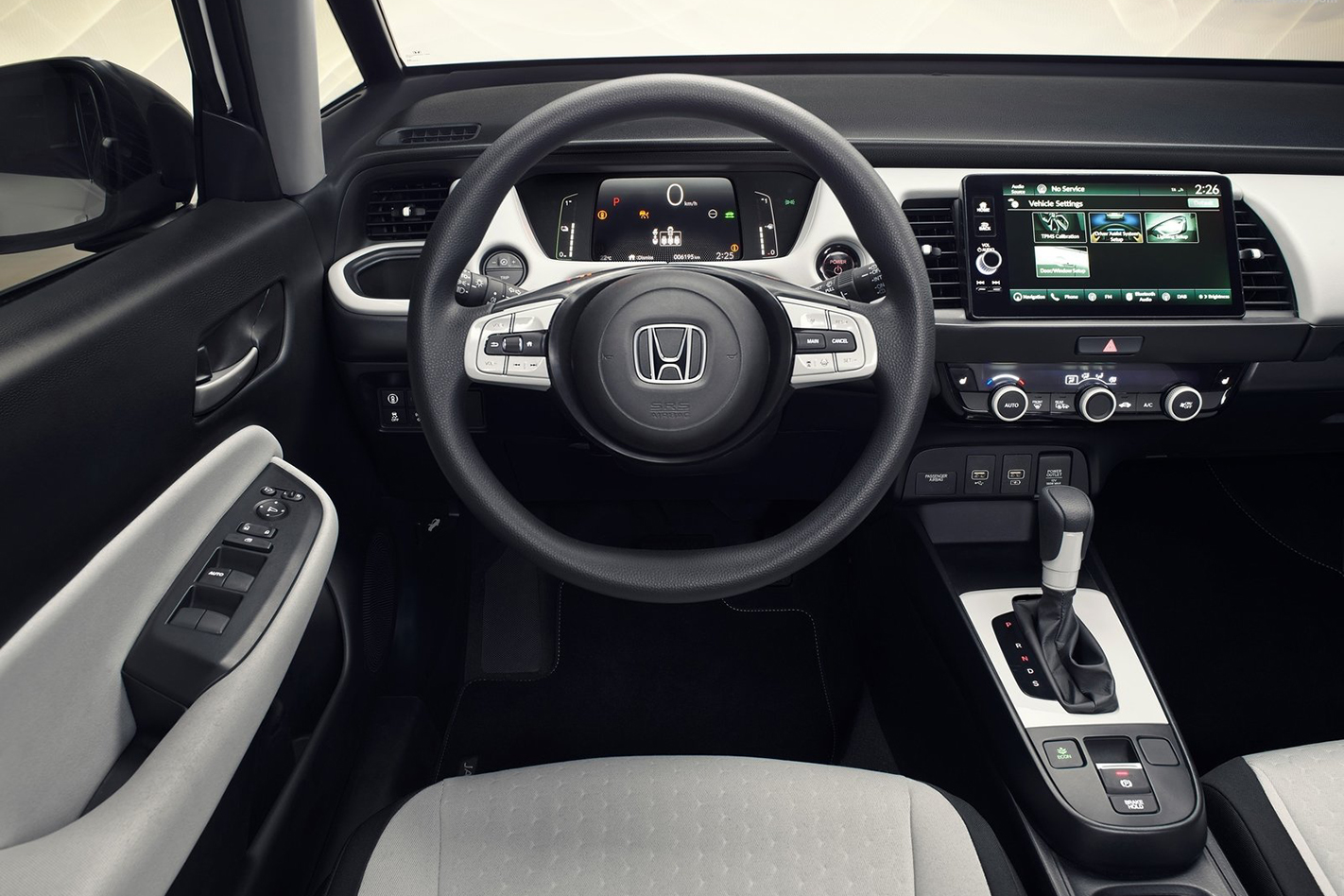
The interior has also adopted cleaner lines and the instrument panel features a flat topped dash.
Honda claims the new model will be much safer too thanks to the addition of an A-pillar with a cross sectional structure that channels impact energy to the vehicle body in the event of a collision. The newly designed front pillar also improves frontal visibility, which is further enhanced by the windshield wipers positioned so they’re barely visible from inside the cabin.
Active safety will also be a strong point, with the Jazz finally gaining the brand’s latest Honda Sensing technology which includes autonomous emergency braking with night-time operation to detect pedestrians and cyclists even when there is no street lighting, active cruise control and lane-keeping assist.
Honda also promises superior comfort than ever before, with new-generation body stabilising seats initially developed for its more luxurious sedan models.
The fourth-gen Jazz will gain a hybrid powertrain combining a 1.5-litre petrol four-cylinder with dual electric motors, and will be introduced to the market as a part of Honda’s e:HEV models.
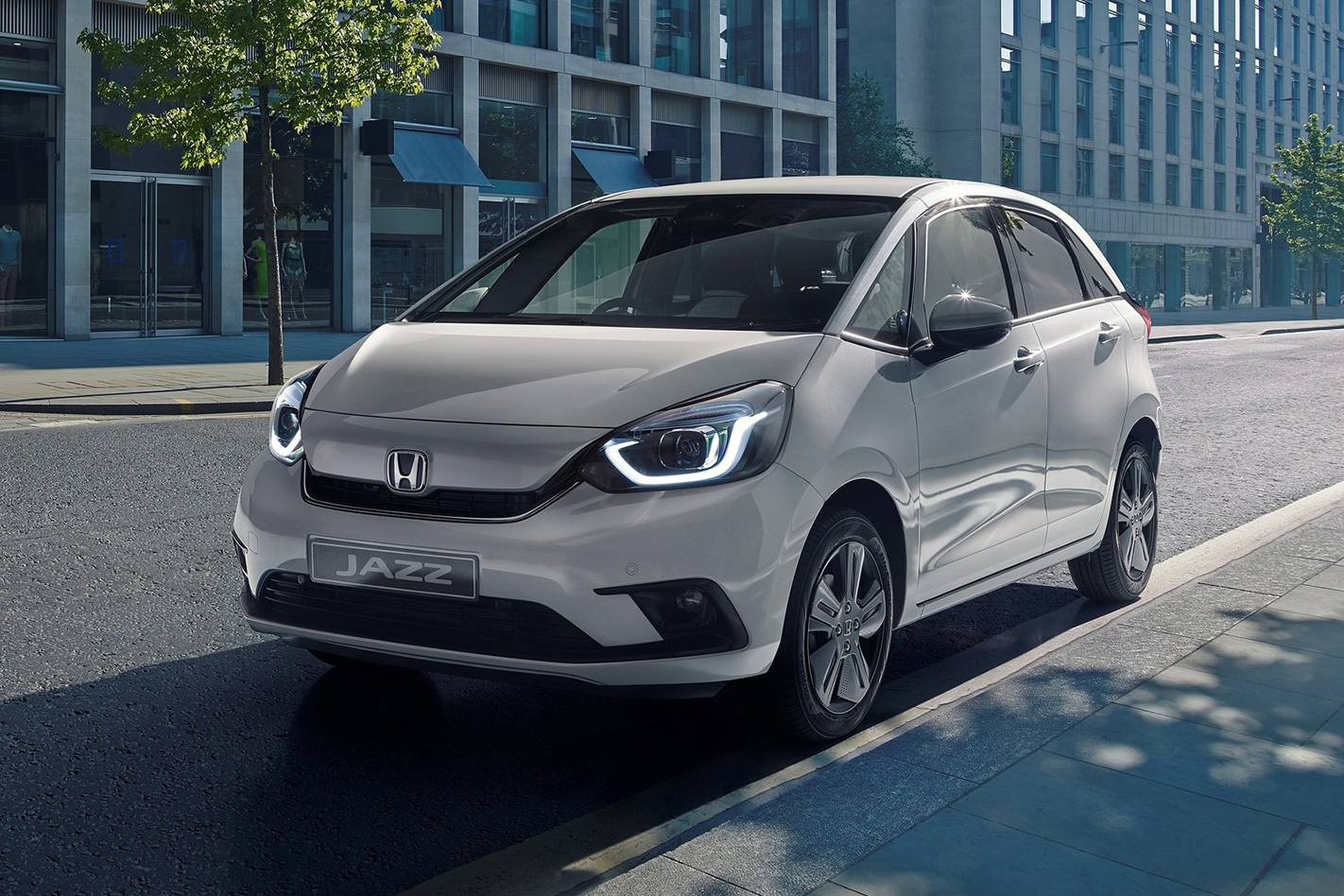
The all-new Honda Jazz will go on sale in European markets in mid-2020. It’s too soon for Honda Australia to discuss it will arrive in Australia, and which specifications or powertrains will be available here.
Click on the gallery above for plenty more photos of the new Honda Jazz.
Bang on cue the winds dropped from a maelstrom to a murmur and the incessant rain gave way to the calm after the storm. A perfect October day in Tokyo, and the perfect October day for the opening of the 2019 Tokyo motor show – the kind of break in the weather that suggests a higher power… in this case Akio Toyoda, ranked by CAR just last month as the most important and influential person on the planet when it comes to the motor car.
But from the first words of Toyoda’s opening address, it was clear this would be no ordinary show. ‘Our booth this time does not feature a single car to be launched next year,’ he said. ‘All that is found here are forms of mobility that link to society and communities and provide modes of getting around and services to people.’
In truth, the show represents the first step on the road to next year’s 2020 Olympic games, which Toyota will sponsor and use to help make real its vow to transition from a carmaker to a mobility service provider. On the evidence of Toyota’s Tokyo show output, it’s not kidding.
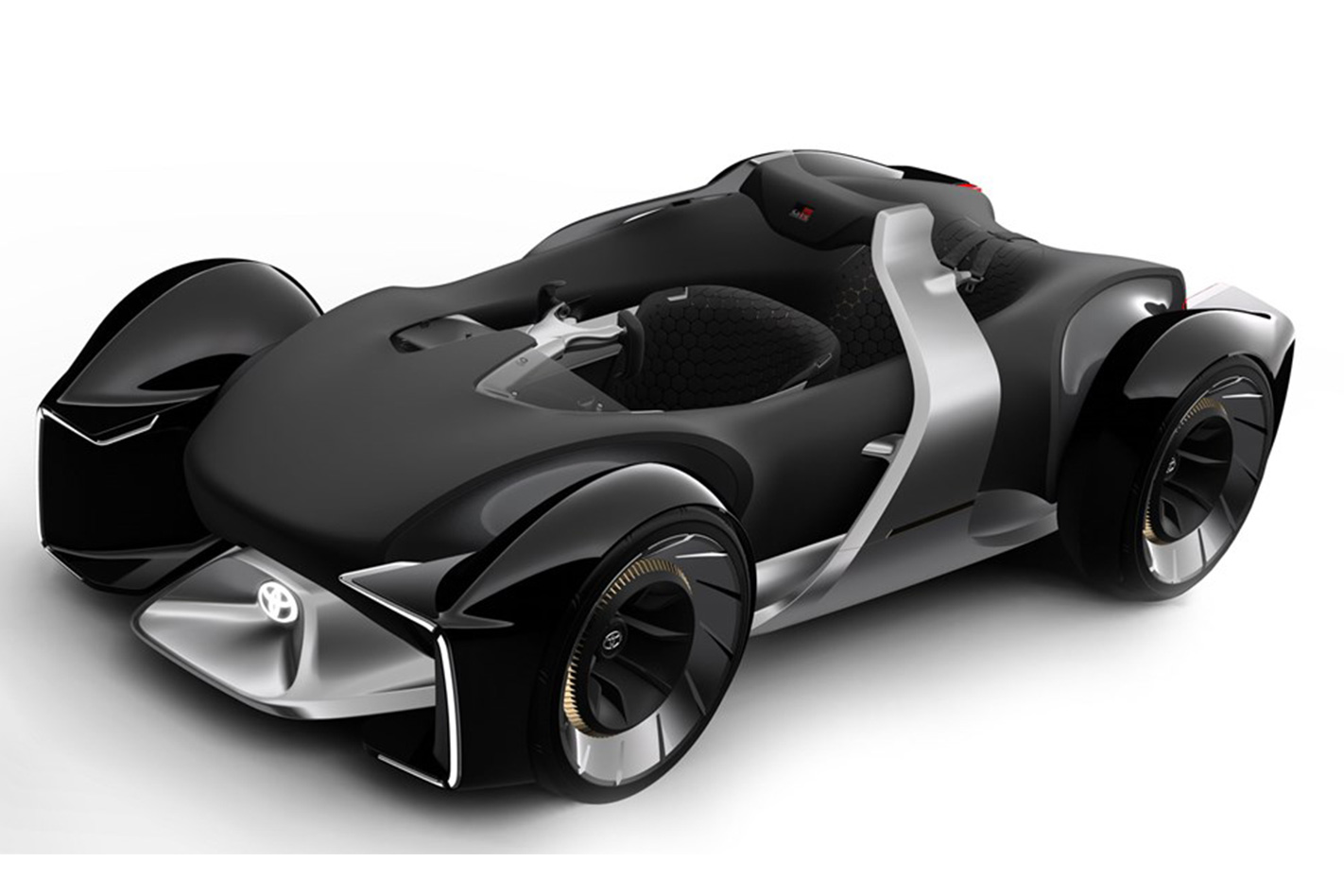
Instead of actual cars you might be able to buy (and that Toyota might be able to sell, more crucially) Toyoda unveiled a torrent of blue-sky concepts. The augmented reality e-Racer. The e-4me self-driving single-seat pod. The ride-sharing e-Trans (think Renault EZ Go but less pretty). A self-driving ambulance able to virtually link you to a doctor in transit to the hospital.
And the crowning glory to all this zero-emission, largely driverless madness: e-broom – a ‘mobility platform integrating people and machines, allowing users to reaffirm the enjoyment of mobility and modelled after a broom used by witches’.
Of course, Toyota hasn’t yet given up on the car as know and love it. At Tokyo, it unveiled the new Yaris, 20 years on from the original: a handsome and thoughtfully resolved supermini on the low-slung and rigid TNGA platform.
Clever tech includes electric all-wheel drive and, on hybrid versions, a 1500W power output option. Inessential on your daily run around town, perhaps, but a neat touch when it means the car could be used as a generator should storms strike, as they regularly do in Japan.
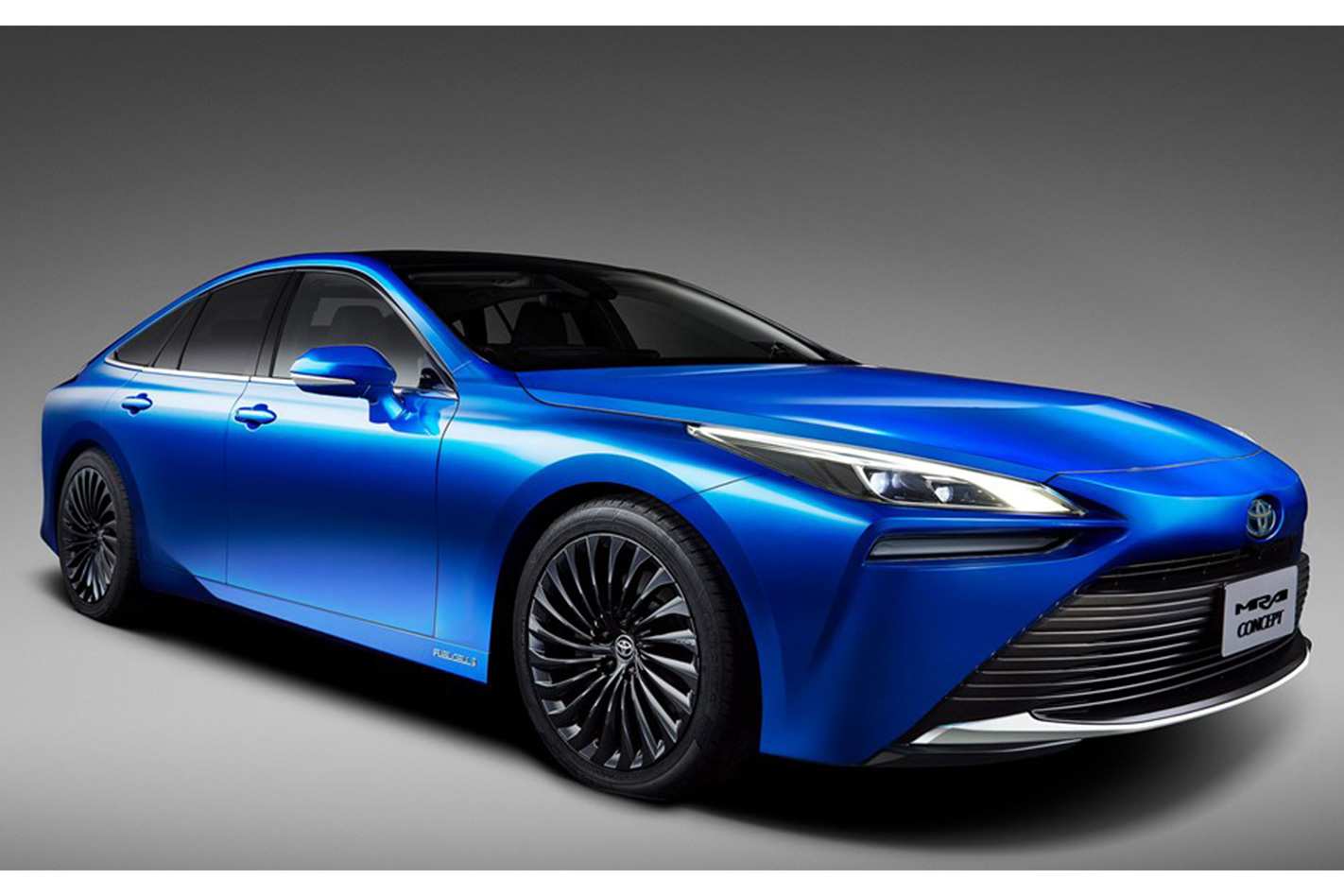
Toyota also showed a new version of its hydrogen fuel cell Mirai (below) and doubled down on its pledge to develop a raft of low- and zero-emission powertrain options. The second-gen Mirai is everything the original was not – i.e. handsome and desirable – and promises to do for the fuel cell car what the Tesla Model S has done for the premium battery-electric saloon. It sits on an all-new platform, with longer, sleeker proportions, five seats instead of four, a quieter drive unit and 30 percent more range.
And – drum roll – hybrid-obsessed Toyota’s finally building battery-electric cars. Long reluctant to do so, pointing out that there’s little that’s sustainable about building cars that don’t make money, it’ll have a Smart-esque battery-electric kei car on sale in Japan by late 2020.
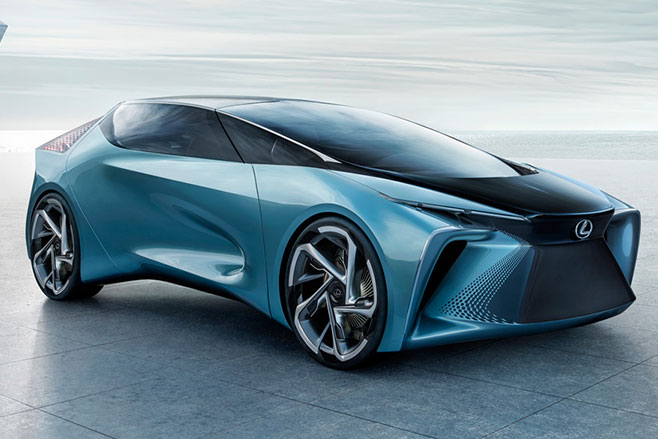
Meanwhile, premium division Lexus will show its first battery-electric car in China in a matter of weeks, likely an electric version of the UX crossover. In the meantime, Lexus stole the Tokyo show with its bold imagining of the electric Lexus of 2030, the LF-30.
Yes, there’s a drone to carry your briefcase, a ferociously cost-prohibitive carbon fibre structure and the promise of full autonomy. (Interestingly Toyota Research Institute CEO Gill Pratt, who’s working on such technology, mused on the parallels between full autonomy and the vaccine; is society accepting of the notion that it’ll save countless lives, but that a few people are going to suffer along the way?)
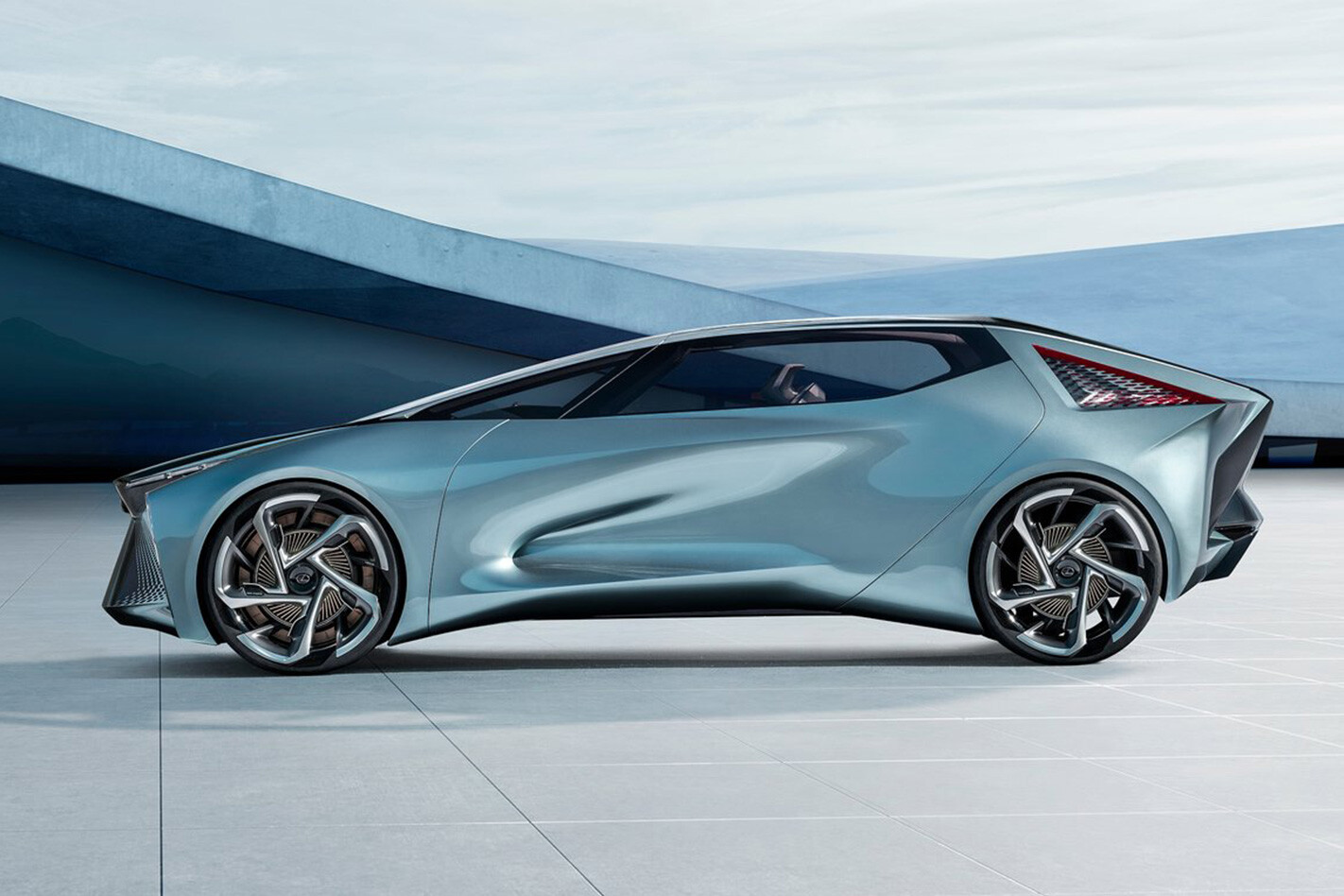
But the LF-30 also shows Lexus’s design elements amped up as far as they’ll go: a transition from supine curves at the front to hard, shard-like structures at the rear; a burnt cedar floor inlaid with metal detailing to evoke a circuit board; and a stunning full-length, raked glasshouse incorporating augmented reality and gesture control functionality. If this is the electric future, we’re in.
In stark contrast, Mazda’s Tokyo EV, the confusingly similar-in-name MX-30, will arrive in early 2021, fully formed and on sale. Like Toyota, anti-EV Mazda has realised the impossibility of meeting emissions requirements without a battery-powered electric vehicle – hence the MX-30.
It sits on a platform related to that of the CX-30 but optimised around an EV powertrain. A 35.5kWh battery sits under the floor, powering a single e-motor on the front axle and offering a range of around 225km between charges.
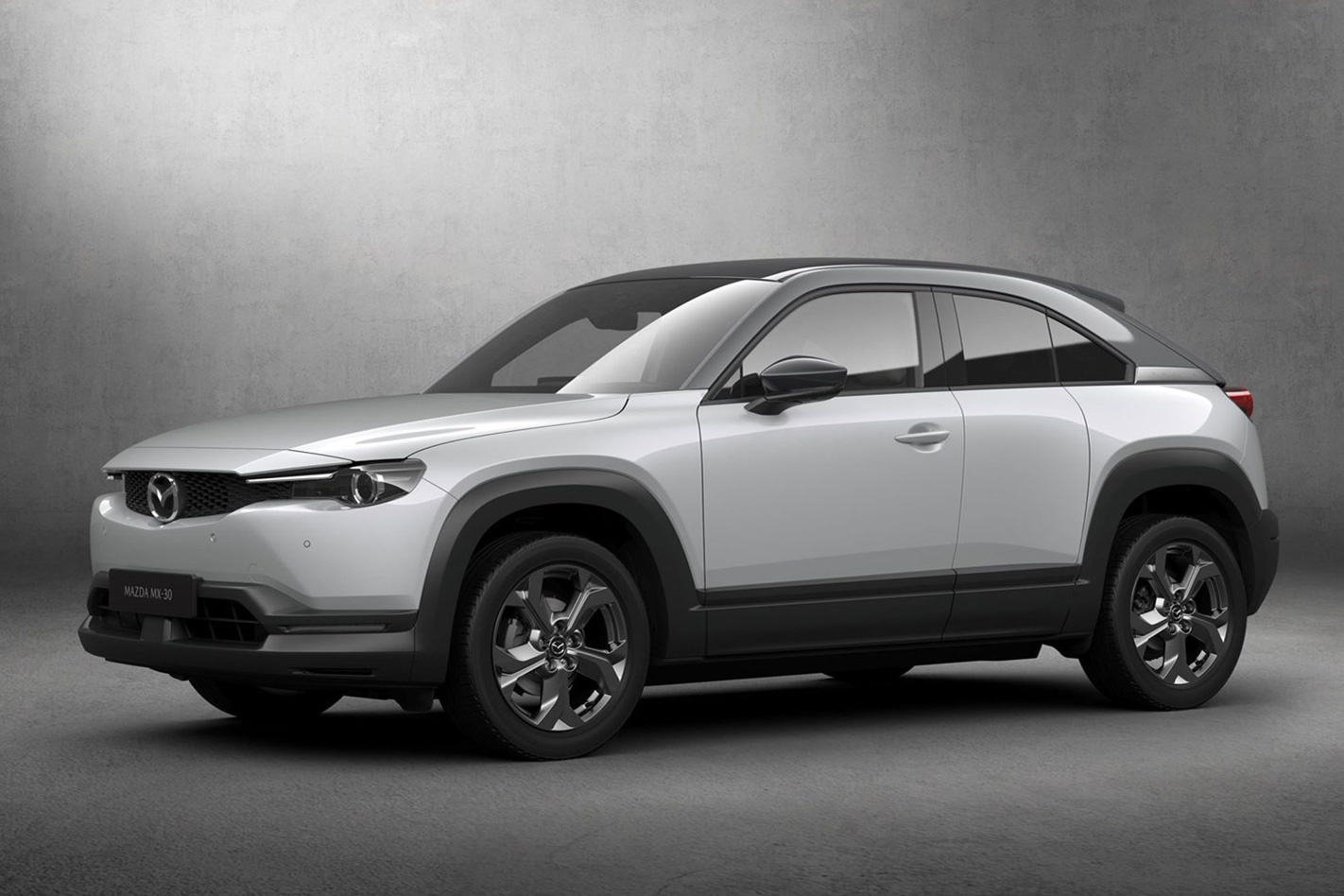
Pretty feeble when compared with some rivals, though Mazda insists such a range is more than enough for most of its customers, and that a smaller battery is both more environmentally responsible and better for driving dynamics. A rotary range extender MX-30 is in development and will follow a year later.
As the likes of Mazda and Toyota move begrudgingly to embrace the battery-electric future, Nissan can surely feel justifiably smug, with some 430,000 Leafs shifted since the trailblazing hatch went on sale.
R&D boss Kunio Nakaguro spoke of ‘transformational times’ at Tokyo, but the truth is Nissan’s looking good, literally, with electrification long since part of its story and, under senior vice president for design Alfonso Albaisa, its design direction promising to kick on from underwhelming reboots like the new Juke.
Fresh at Tokyo was the Ariya (below), an exceedingly good-looking electric crossover concept that previews a new, more serious electric platform from Nissan with twin electric motors and all-wheel drive. A concept for now, but says Albaisa: ‘The Ariya is not your normal show car – you will soon be able to drive something like it.’ Looking forward to it.
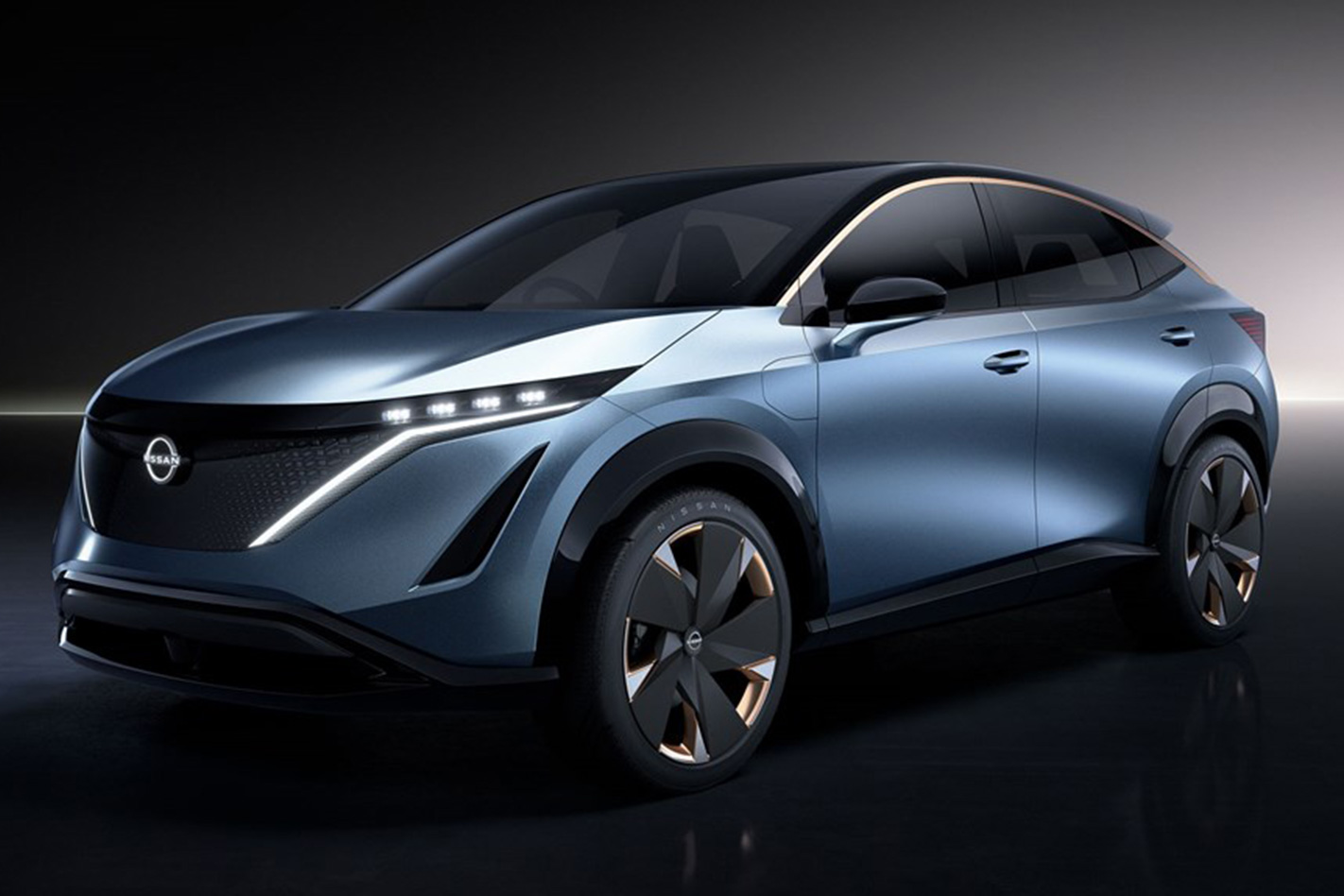
Albaisa even managed to deliver the first kei car you might actually wish would make it to Oz, Nissan’s IMk concept. It combines an underfloor battery, shag-pile carpet and surfacing you could cut sushi with to devastating effect.
Nice idea, though the cost of re-engineering them to meet tougher regulations would almost certainly strip them of profitability. They also tend to be painfully slow, though electrification could change that. We implore the Nissan/Mitsubishi alliance to bring us the IMk.
And what of Honda? Nowhere were the stark contradictions at the heart of car making in 2019 more apparent than at Honda. It reaffirmed its electrified commitment – though not to Australia, sadly – while also celebrating its first F1 wins since the company’s troubled return to the sport as an engine provider in 2015 and domination of the MotoGP motorcycle world championship. Silent, zero-emission EVs cheek-by-jowl with a motorsport effort so CO2-heavy you can almost smell it – truly we are at a crossroad.
Right, Akio?
Article republished from carmagazine.co.uk
Daniel Ricciardo’s performance at the Japanese Grand Prix typified his driving style since joining Formula 1, with a hard charge through the field which included a number of daring overtakes.
Unfortunately, his impressive climb from 16th on the grid to sixth will be scrubbed from the record books, as his Renault F1 team has been found to be using an illegal driver aide.
Both Ricciardo and his teammate Nico Hulkenberg have been disqualified from the Japanese Grand Prix following a protest lodge by rival team Racing Point.
An FIA stewards teleconference was held yesterday to assess whether a brake bias adjustment system used by both Renaults was legal, according to Motorsport.com.
While the stewards determined that the system was not in contravention of the sport’s technical regulations, it was decided that it was a driver aid, and hence deemed illegal.
According to Motorsport.com, Racing Point lodged its protest of the Renault F1 team, believing that the French manufacturer was using a pre-set lap distance dependent brake bias adjustment system.
How would Racing Point even know if another team was using such a system? Well, according to FIA documents, a suggestion this technology was in use was made by an ex-Renault employee.
In its defence, Renault claimed that the brake bias adjustment system did not use a lap distance trigger, meaning it didn’t break any rules. It event went as far as providing the FIA will full details on the system, which has been kept secret… obviously.
The judgment handed down by the stewards stated “while Renault used innovative solutions to exploit certain ambiguities in the Technical Regulations and other supporting documents, their system does not breach any current Technical Regulation.”
However, Ricciardo and Hulkenberg were disqualified from the race in Suzuka because ““The brake balance adjustment system in question acts as a driver aid, by saving the driver from having to make a number of adjustments during a lap,” according to the stewards, meaning it breaches Article 27.1 of the FIA’s Formula 1 sporting regulations.
Renault can still appeal the penalty, and has until 10am local time in Mexico on Thursday to do so.
In announcing the debut of the ambitious Lexus LF30 all-electric concept at the Tokyo Motor Show, the head of Lexus’ electrification programme, Takashi Watanabe, confirmed that big-battery Lexus production cars aren’t far away.
In fact, we’ll see the first of them next month.
In a product roadmap revealed to journalists at this week’s Tokyo Motor Show, the Japanese automaker signalled a firm intent to bring a slew of alternative powertrains to its production cars over the next ten years, beginning with a purely electric version of an existing model that will be revealed in November.
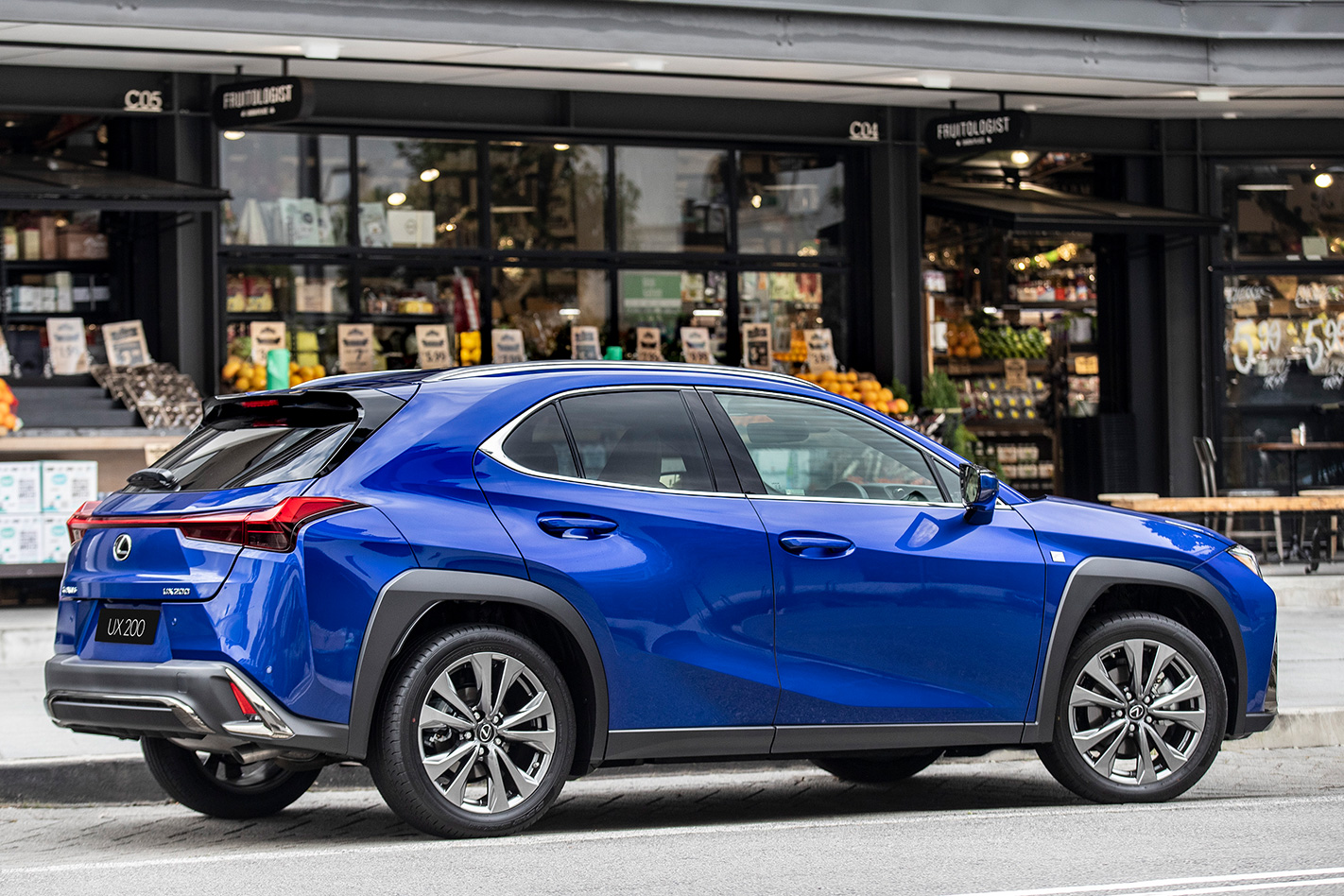
Watanabe wouldn’t give much away on which model would be the recipient of the brand’s first all-electric driveline, but with only four models in Lexus’ current lineup being based on an EV-capable platform – the Lexus UX compact hatch, ES midsize sedan, LC coupe and LS large sedan – the list of candidates is small.
Our money is on the UX: while the others very much represent the ‘old’ Lexus, the UX breaks the mould and appeals to a much younger audience, one that would arguably be far more receptive of an all-electric car. It also has a form factor that resonates with current tastes in the Chinese car market, and was deliberately styled to appeal to European buyers as well – two core markets for electric vehicles right now.
As for timing, two major auto events occur next month, the Los Angeles motor show and Auto Guangzhou. Both have good odds of being the debut venue, with LA being in the USA’s most EV-friendly state and Guangzhou being a key motor show in the largest electric car market in the world: China.
There’s also the chance that Lexus could side-step both events and do an independent unveiling, but whatever the case we won’t have long to wait to find out.
For Lexus Australia, the company’s first-ever battery electric car is one that it wants for its local showrooms.
“I’d love to take it,” said Lexus Australia boss Scott Thompson to WhichCar in Tokyo. “But the conversation will be around timing, infrastructure, regulations and global demand for the car and what they can produce.”
Asked if the Australian business case would still be strong despite the current lack of incentives for zero-emission cars, Thompson was optimistic that conditions could still be favourable.
“It’s a good question. If the product is good and the specification is good and our parent company provides it to us, then yes. We’re fairly single-minded on what an electrified vehicle has to deliver, and it’s focused around the ‘guest’. Our whole brand has been built for 30 years around treating every customer like you would a guest in your own home, so we have a guest-focused mentality.”
“So for us to bring out a form of [new] technology it must deliver it to the same high standard as our current vehicles do. We’re not just going to bring a product into the market for the sake of it, it’s going to have to deliver on all the right aspects of a Lexus vehicle.
Thompson also reiterated his company’s commitment to having an electrified version of every model in its lineup by 2025 – yes, that includes a hybridised derivative of the hulking LX SUV.
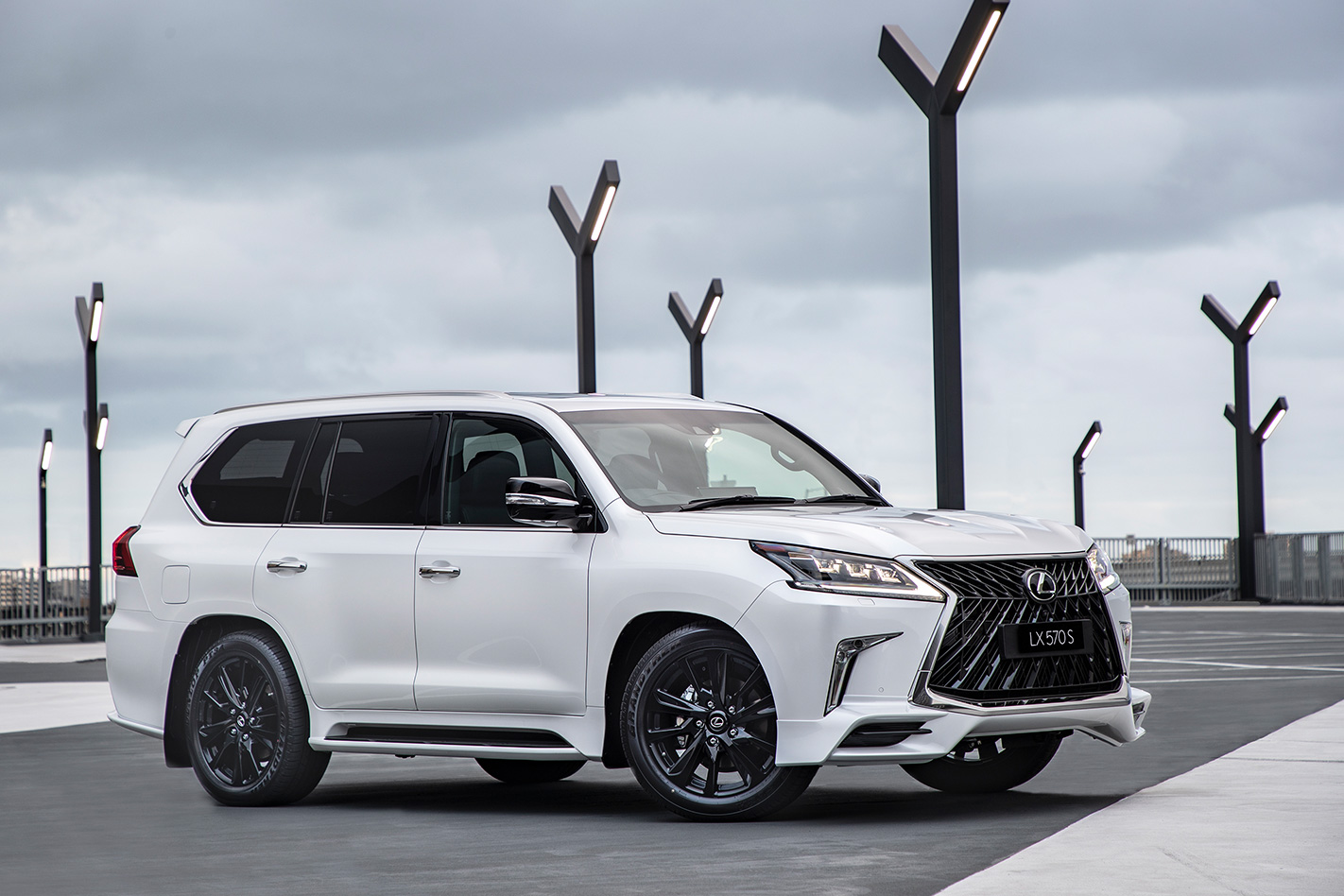
Following the on-sale debut of its first battery-electric vehicle next year, Lexus will expand its range with the introduction of its first plug-in hybrid in 2021, with an exclusively-electric vehicle built on a dedicated EV platform to arrive in the early 2020s as well. As to what form the latter may take, the LF-30 concept revealed in Tokyo this week offers some clues… but not the full picture.
UPDATE: Honda has since confirmed that it has no intentions to sell the Honda e in Australia now. Addressing Australian media at the 2019 Tokyo Motor Show, Honda CEO Takahiro Hachigo didn’t specify why it wouldn’t be offered, but we would imagine that its high price and lack of EV infrastructure in Australia led to its downfall.
“Honda e is just for Japan and Europe,” he said. “There are no plans unfortunately for Australia now.”
Honda has taken the wraps off the mass production version its Honda e electric city car in Frankfurt, announcing pricing for Germany but stopping short of providing pricing for anywhere else.
The first electric-only car to come from the Japanese manufacturer, the Honda e will launch in European countries from autumn/winter 2020, priced from 29,470 euros ($47,473 AUD).
But that doesn’t seem to help us in Australia very much.
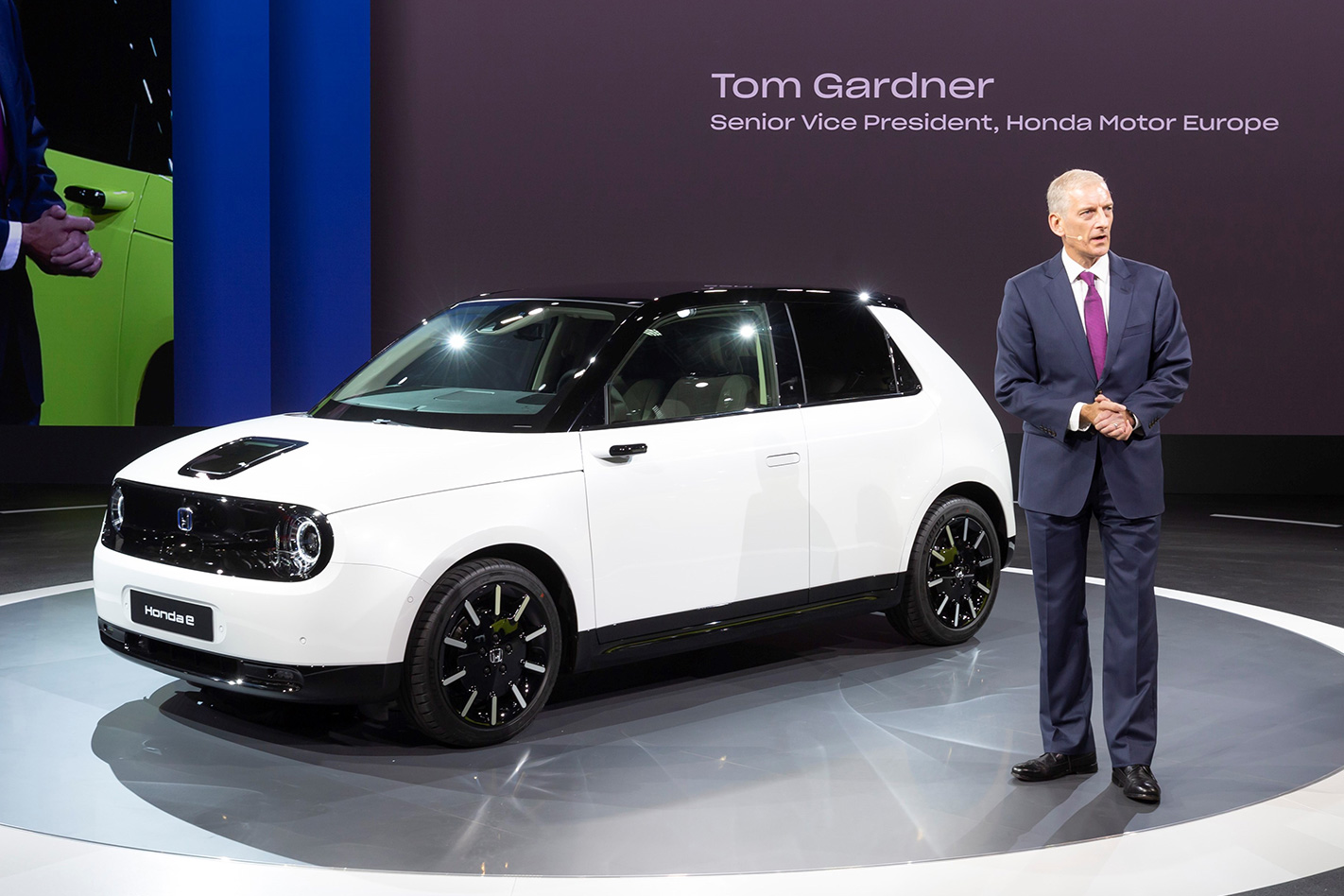
Despite aiming for 25 percent of its range to be electrified (either hybrid or battery electric) by 2025, Honda Australia hasn’t yet committed to the Honda e.
“While we have no concrete plans yet we are looking into what is possible for Honda in Australia in this space, as the future technology available in the global Honda network is really exciting,” said Honda Australia Director, Stephen Collins.
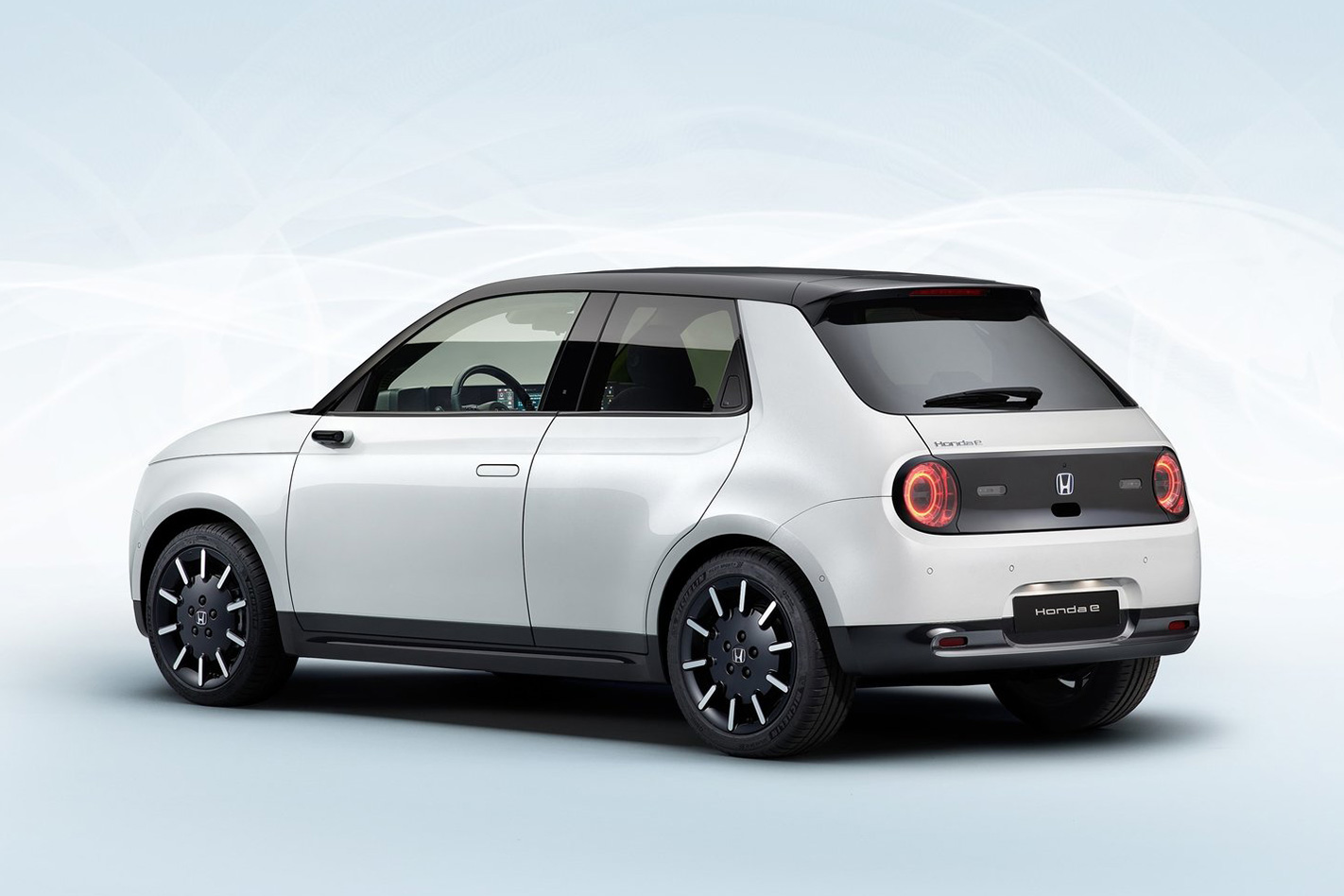
“When the right product is available and the business case stacks up, we will be very excited to launch into the new era of electrification.”
How long it takes Honda to decide whether the business case is there is unknown, but we have previously heard that the company wants to see a keener uptake in EVs, as well as more government support before it begins to fully embrace electrification in Australia.
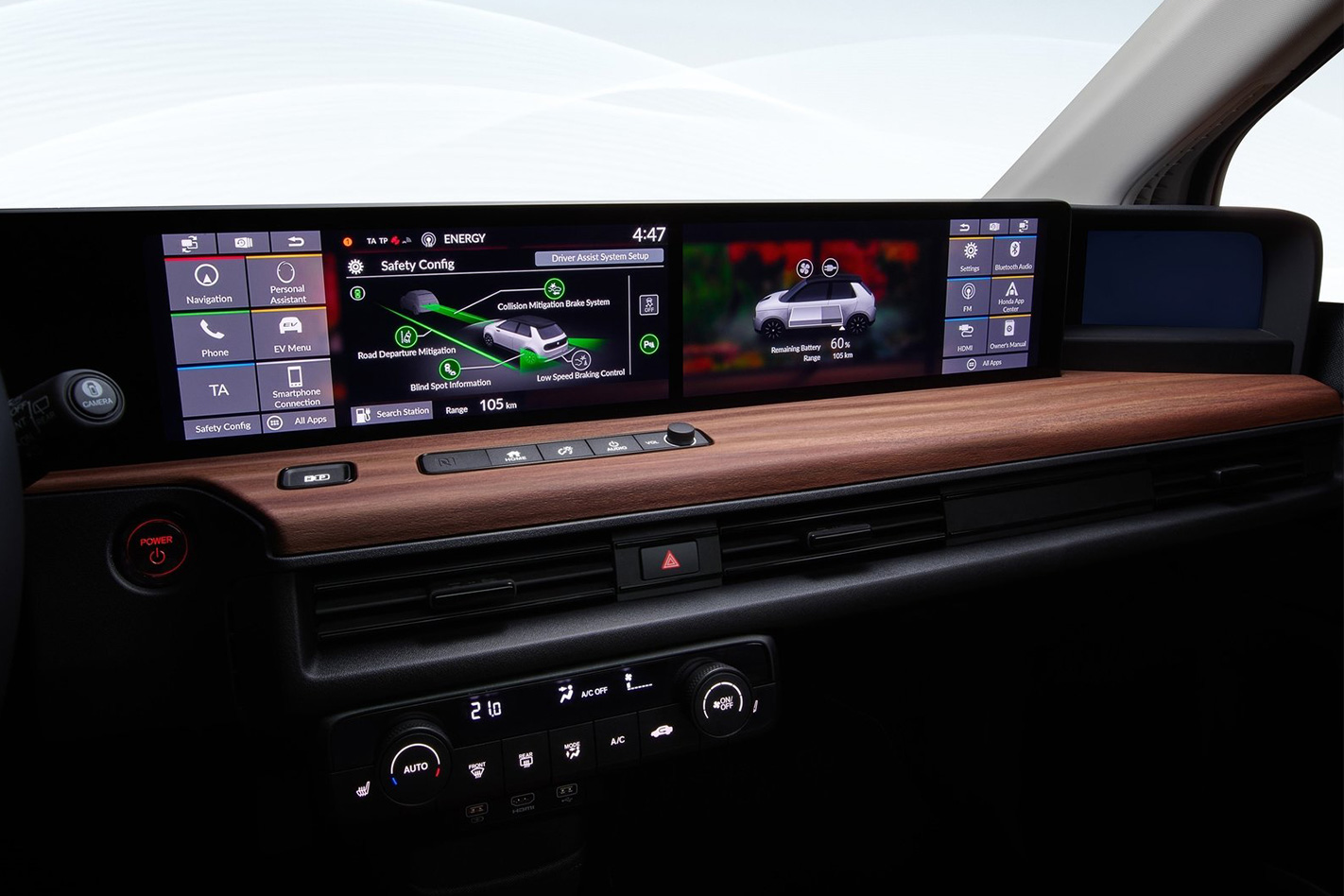
Back in Europe, the Honda e will be offered with two power outputs, a 100kW base version and an upper-spec 113kW ‘Advance’ model which will likely bring extra goodies in addition to the power bump.
The 35.5kWh battery is said to return a range of up to 220km from a single charge according to Honda, which compares against Volkswagen’s ID3 hatchback’s 330km from its 45kWh battery.
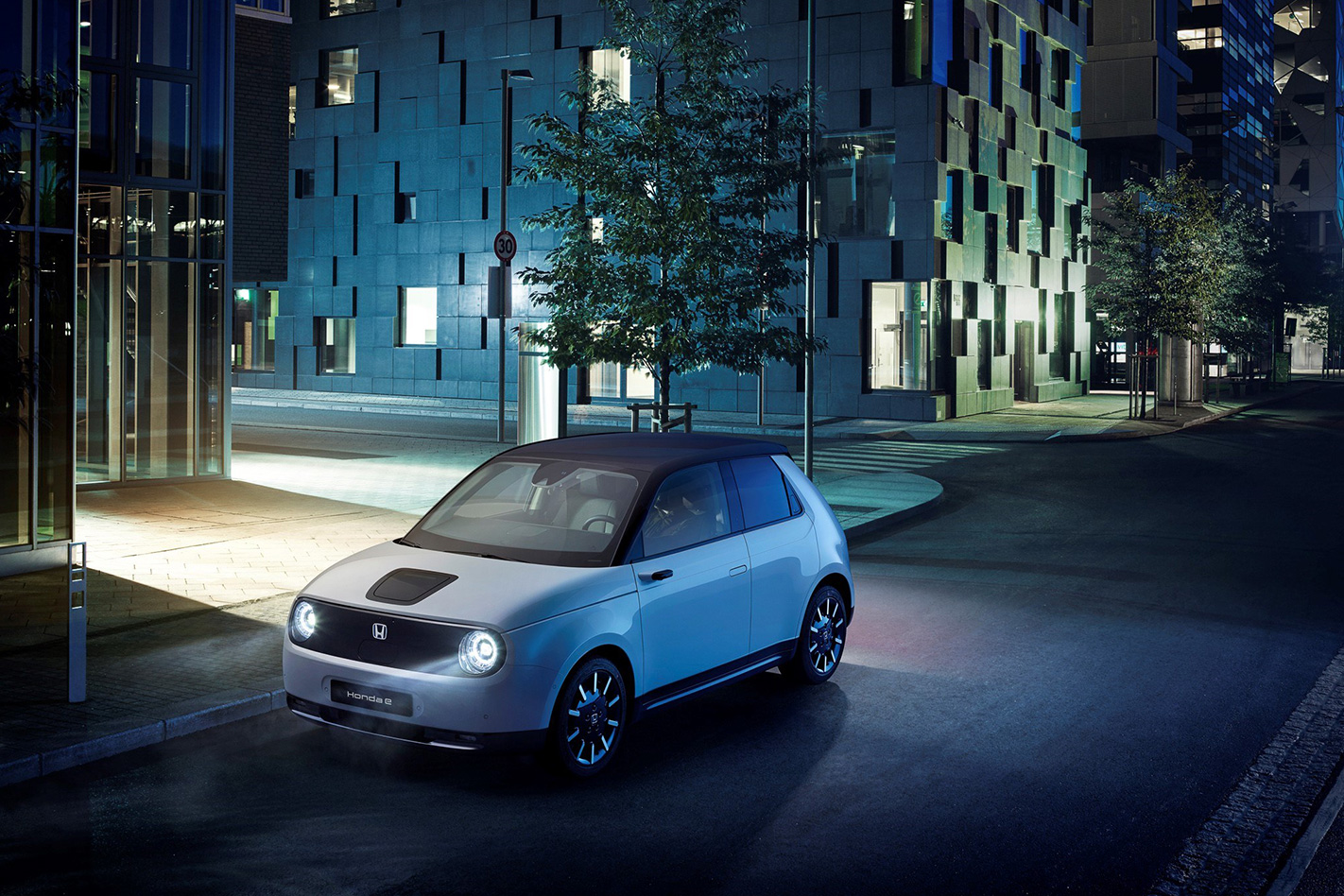
Hopefully, we will eventually see the Honda e electric hatchback Down Under. We’ve contacted Honda Australia to get a clearer outlook on its viability and we’ll update this story if more information unfolds.
Keep abreast of the 2019 Frankfurt Show right here
Alpina has revealed its B3 Sedan, the ‘limousine’ version of its 3 Series-based executive ‘Bahn-stormer.
With the same 340kW and 700Nm outputs from its S58 engine (BMW’s new M-designed 3.0-litre twin-turbo unit) as the Touring and an 8-speed ZF gearbox, the Sedan is able to hit 100km/h in just 3.8 seconds according to Alpina. The B3’s specification sheet has also confirmed the B3 Touring takes only an extra tenth to hit the figure.
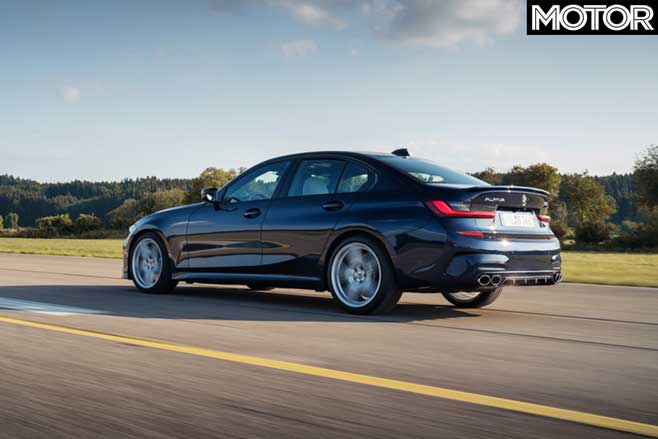
The B3 Sedan is then able to go on to hit 303km/h, topping the wagon’s top speed by 3km/h.
Like the B3 Touring, the Sedan’s power and torque is transferred to all four wheels via Alpina’s own tuned version of BMW’s xDrive all-wheel drive system. The brand says the B3 is designed to behave with “a rear-drive feel, but with superior traction in all conditions.”
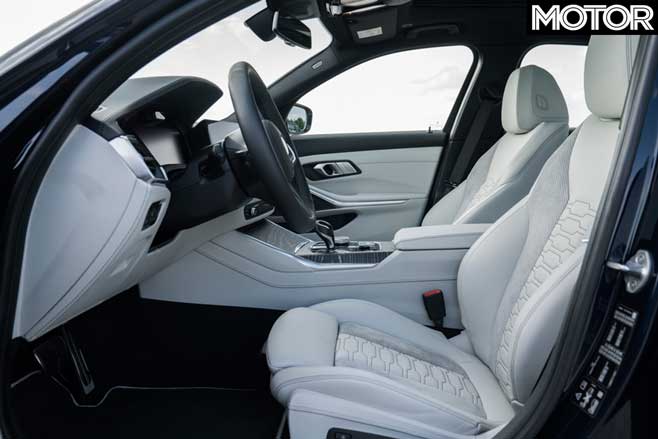
The Sedan also gets the same options for drive modes, including Comfort+, as well as the same interior with hand-stitched ‘Lavalina’ leather. Alpina even measured the road noise produced by the tyres at 70dB for the front and 71dB for the rears in the Euro market version.
The B3 Touring is confirmed to arrive in late 2020, but Alpina Australia hasn’t yet said the Sedan is a definite arrival. However, the brand’s local arm is “interested in bringing the Sedan variant to Australia in late-2020,” meaning there’s a good chance it’ll show up with the wagon.
Alpina Australia will reveal local specs and pricing for the Touring, as well as confirmation of the Sedan’s availability (or unavailability) at a later date.
Testing for Performance Car of the Year 2020 has already been carried out by the team here at MOTOR, but we won’t know which car takes home the trophy until we put all the numbers and judges scores together.
In the meantime, here’s a look at what you need to know before the announcement is made in early 2020.
The cars of PCOTY 2020
Alfa Romeo Stelvio Q
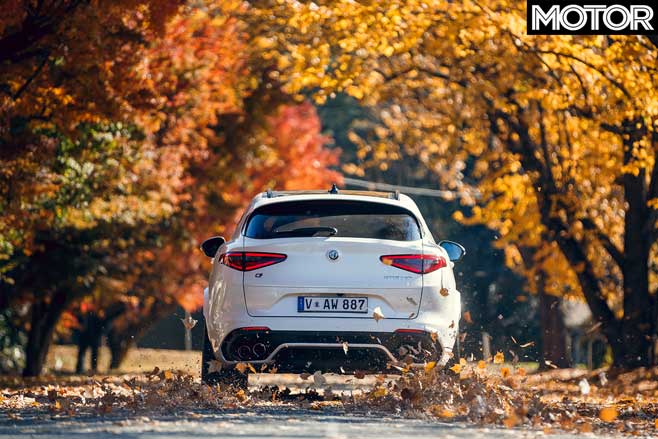
Italian do-it-all machine aims to get the kids to school quickly. But can it hold its own against proper ‘cars’? And no, this isn’t the first time we’ve had an SUV at PCOTY…
SPECS Engine: 2981cc V6, DOHC, 24v, twin-turbo Power: 375kW @ 6500rpm Torque: 600Nm @ 2500-5000rpm Drive: AWD Weight: 1830kg 0-100km/h: 3.8sec (claimed) Price: $149,900
Chevrolet Camaro ZL1
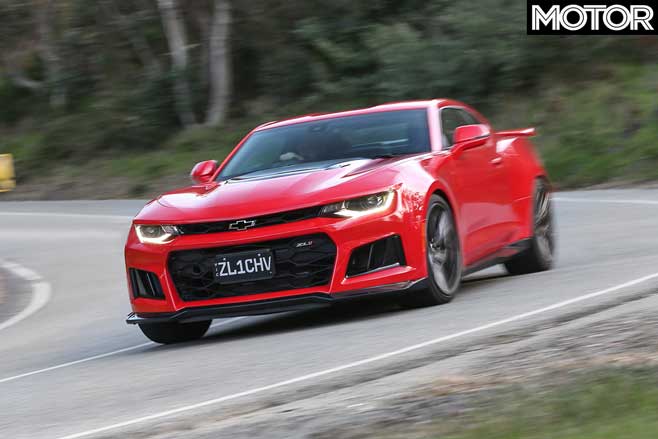
Clayton’s converted beast from the States. Is its supercharged V8 enough to overpower the competition, or just its rear tyres?
SPECS Engine: 6162cc V8, OHV, 16v, supercharged Power: 477kW @ 6400rpm Torque: 881Nm @ 3600rpm Drive: RWD Weight: 1807kg 0-100km/h: 4.3sec (tested in 08/2019 issue) Price: $163,100
Genesis G70 3.3T
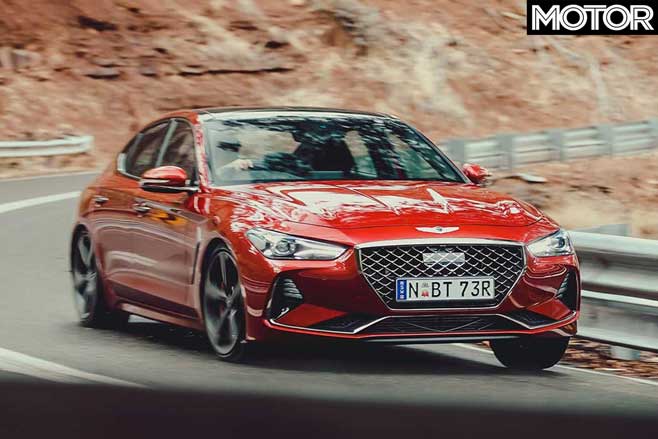
Hyundai’s (uh, we mean Genesis’) 3 Series rival is plush, but is it actually a performance car? Hopefully its Stinger GT underpinnings help it out.
SPECS Engine: 3342cc twin-turbo V6, DOHC, 24v Power: 272kW @ 6000rpm Torque: 510Nm @ 1300-4500rpm Drive: RWD Weight: 1762kg 0-100km/h: 4.92sec (tested in 08/2019 issue) Price: $79,950
Lexus RC F Track Edition
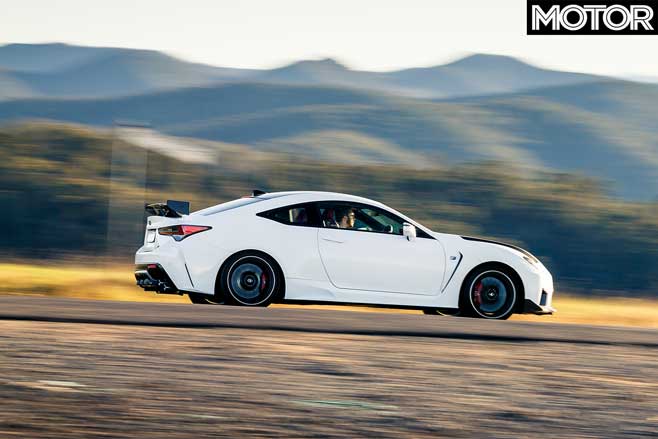
Lexus takes its V8 coupe back to basics with more carbon, less weight, and a mechanical diff. Is old school still cool enough for PCOTY?
SPECS Engine: 4969cc V8, DOHC, 32v Power: 351kW @ 7100rpm Torque: 530Nm @ 4800-5600rpm Drive: RWD Weight: 1715kg 0-100km/h: 4.3sec (claimed) Price: $165,690
Lotus Exige Sport 410
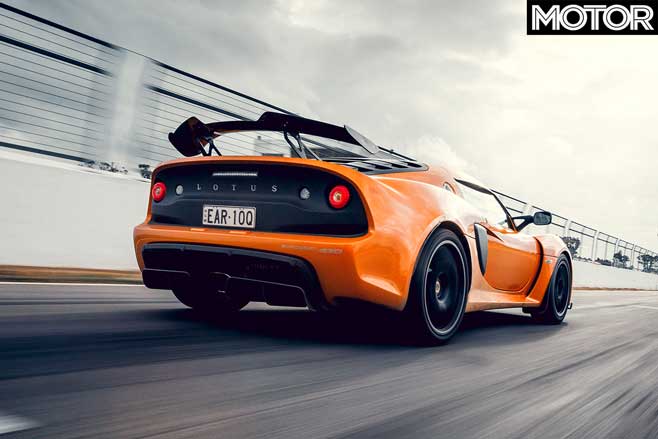
Speaking of old school! The Exige helps its driver as little as possible, and that makes for an engaging drive, but does this track special have the skills to pull off a PCOTY podium… or a win?
SPECS Engine: 3456cc V6, DOHC, 24v, supercharged Power: 306kW @ 7000rpm Torque: 420Nm @ 3000-7000rpm Drive: RWD Weight: 1108kg 0-100km/h: 3.72sec (tested in 10/2019 issue) Price: $159,990
Mercedes-AMG A35
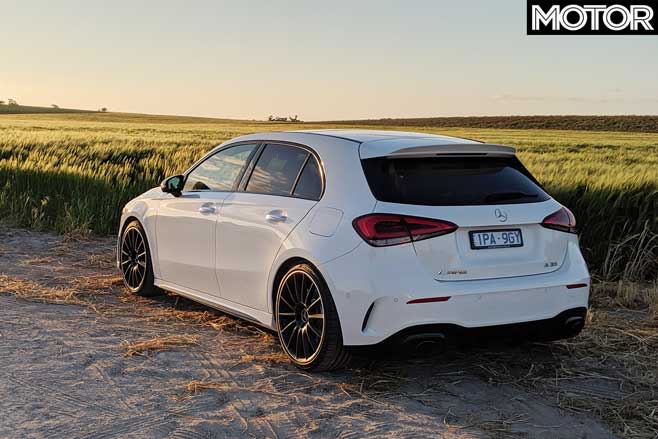
The cheapest AMG model is also the cheapest car at PCOTY. But this ain’t Bang For Your Bucks, so the A35 will have to be impressive to top the likes of its stablemate…
SPECS Engine: 1991cc inline-4cyl, DOHC, 16v, turbo Power: 225kW @ 5800rpm Torque: 400Nm @ 3000-4000rpm Drive: AWD Weight: 1480kg 0-100km/h: 4.7sec (claimed) Price: $67,200
Mercedes-AMG GT63 S
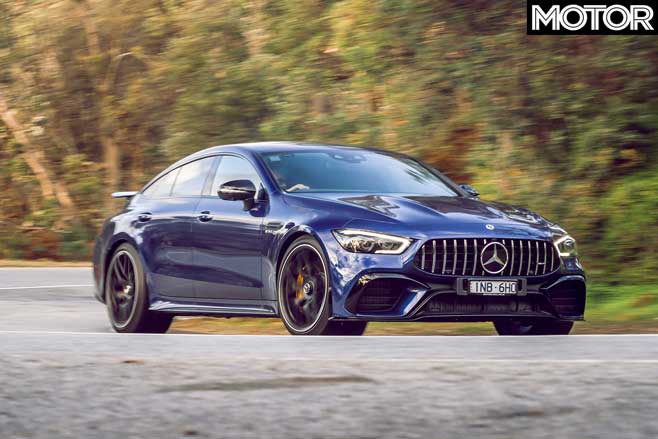
…and the A35’s stablemate is an absolute beast on paper. It’s also the fastest four-door car MOTOR has ever tested (which we discovered in our August 2019 test). Can two tonnes make it to the top rungs of the PCOTY ladder?
SPECS Engine: 3982cc V8, DOHC, 32v, twin-turbo Power: 470kW @ 5500-6500rpm Torque: 900Nm @ 2500-4500rpm Drive: AWD Weight: 2045kg 0-100km/h: 3.16sec (tested in 08/2019 issue) Price: $349,900
Porsche 911 Carrera S
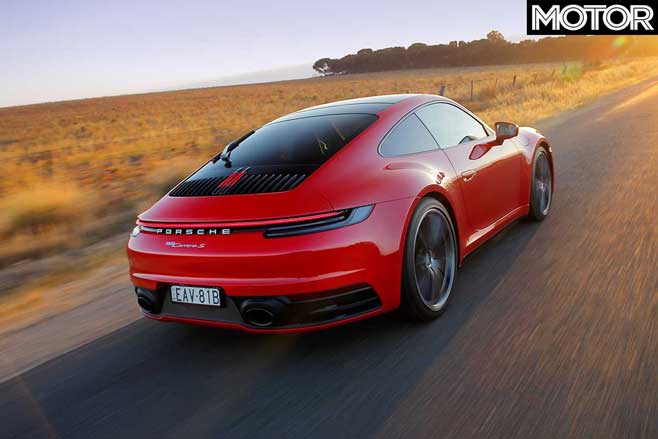
Porsche’s consistency when it comes to building some of the best sports cars in the world has nabbed it plenty of PCOTY titles, but it needs to work hard to keep on top of the game. Does the 992 Carrera S fill the brief?
SPECS Engine: 2981cc flat-6cyl, DOHC, 24v, twin-turbo Power: 331kW @ 6500rpm Torque: 530Nm @ 2300-5000rpm Drive: RWD Weight: 1515kg 0-100km/h: 3.5sec (claimed) Price: $265,000
Renault Mégane RS Trophy-R
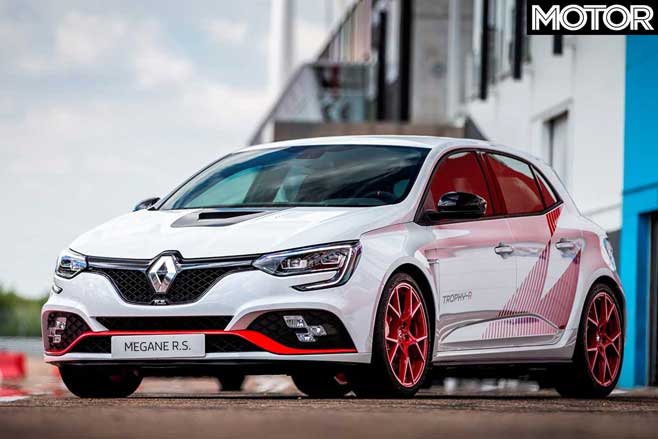
We discovered just how much the Trophy-R costs while we were out in the field (literally) during our PCOTY testing. It’s a pricey track-stripped hatchback, but it’s also rather capable as proven by its Nürburgring record. Is it in with a PCOTY chance?
SPECS Engine: 1798cc inline-4, DOHC, 16v, turbo Power: 220kW @ 6000rpm Torque: 400Nm @ 3200rpm Drive: FWD Weight: 1306kg 0-100km/h: 5.4sec (claimed) Price: $74,990
Toyota GR Supra GTS
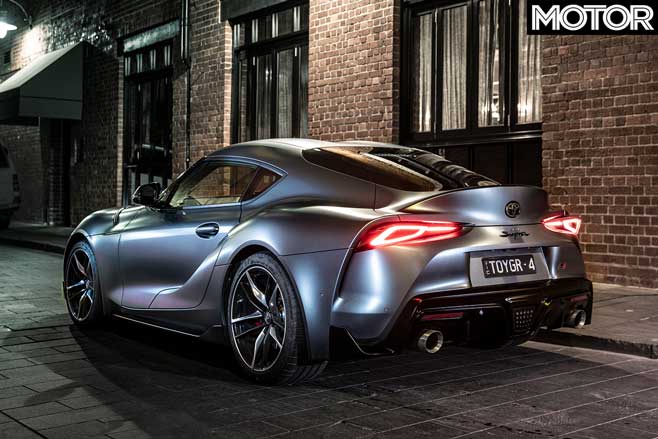
Toyota’s BMW-powered sports car revives a legendary name (we can likely thank FnF for that) and has divided fans, but our first drive in Oz showed us it’s a good thing. But in the fight to be the best performance car, it’s up against strong competition.
SPECS Engine: 2998cc inline-6cyl, DOHC, 24v, turbo Power: 250kW @ 5000-6500rpm Torque: 500Nm @ 1600-4500rpm Drive: RWD Weight: 1495kg 0-100km/h: 4.3sec (claimed) Price: $94,900
The Judges
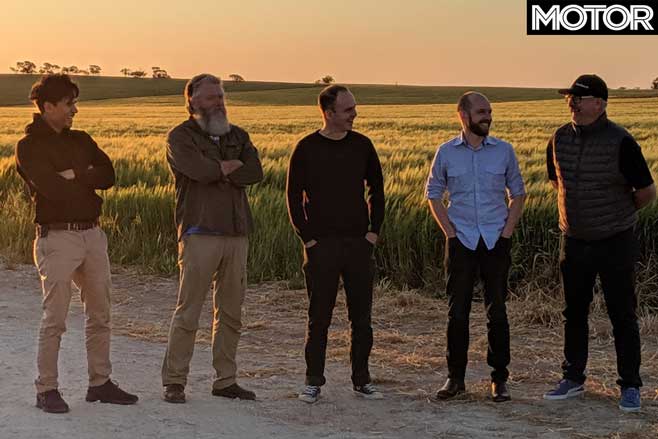
Dylan Campbell
MOTOR Magazine’s fearless leader likes to be kept at a temperature above 30 degrees Celsius, so the sunshine during PCOTY testing was a nice change for him. Creatively logical, possibly a lizard-person, says he’s quit coffee in favour of tea.
Scott Newman
Our Dep. Ed.’s Instagram handle is @addictedtosliding. ‘Nuf said. Has a dog named after a breakfast food, bursts into song occasionally, loves a cola or choccy milk (which doesn’t seem a good mix when drifting).
Louis Cordony
MOTOR’s staff journalist liked judging PCOTY 2019 so much he came back for another go. Unnecessarily fashionable, owns a cart, can put away enough food for three, keen on kombucha and weird green smoothies.
David Morley
Morley’s one of the most respected and experienced motoring journos in Australia, and can cut a confident statement down with a single deadpan quip. Lives and breathes all cars new and old, mechanically handy, probably drinks engine oil and/or WD-40.
Tim Robson
Former MOTOR boss man Robbo has come back to the judging panel after being a spectator last year. Dips his toe into anything motorsport-related whenever possible, drinks about 17 long blacks per day.
The Driver
PCOTY 2020 has a slightly different format in terms of judging this year – the driver we’ve used for our lap times isn’t on the panel. He is, however, our ticket to getting reliable lap times from each car.
Michael Almond is our man this year, based in Adelaide and currently competing in the Australian Porsche Carrera Cup, Almond has several podiums and a win under his belt alongside his achievements in the series over the past few years.
Having been involved in a variety of other categories from TCR to the Production Car series, and a few tilts at GT and enduro racing, Almond’s consistency behind the wheel is exactly what we need to draw proper lap times from each PCOTY contender.
The Location
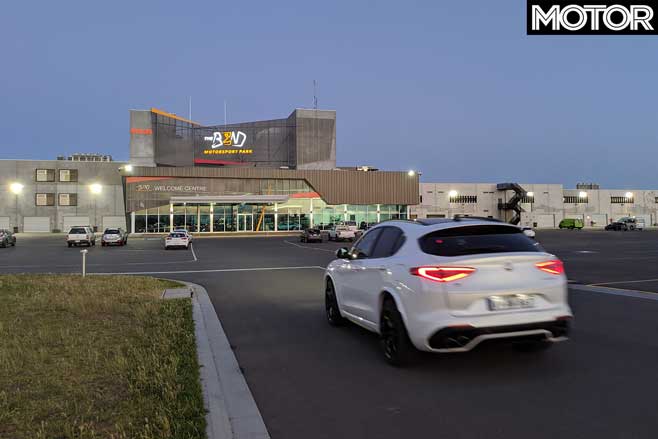
The Bend Motorsport Park was so good for PCOTY 2019 we decided to go back. It also means we’ve got the Adelaide Hills and the Barossa Valley on our doorstep for access to some of the best driving roads in Australia.
Lap times and performance testing happens before judges are free to use the track to get all their more extreme driving out of the way before the 10 cars are convoyed out to a nice section of twisty road to see what each contender is like in the real world.
Which car do you reckon deserves the PCOTY 2020 gong? Let us know in the comments below!
Can I tell you a fact that’ll make you sad? The Toyota MR2 was built across three generations from 1984 through to 2007. It’s one of the best-selling mid-engined cars the world has ever seen, those 23 years yielding more than 330,000 sales. But in today’s economy, that’s still not enough. It’s 55 days’ worth of Corolla sales, so there’s little convincing business case for Toyota to tool up for a budget roadster.
Tetsuya Tada appreciates this better than most. “I believe most people are looking forward to the smallest of the ‘three brothers’,” said the chief of Gazoo Racing back in 2017. “And when people say the smallest they expect it would be the most affordable. But in reality coming up with a compact small sports car is quite difficult.”
Given increasing compliance requirements with safety and emissions regulations, it’s now not that much less expensive to design, tool up for and build a small car than a large one. The margins that can be achieved on a car set against its predicted sales make a budget roadster a tough ask. It’s not helped by the existence of the 86.
“In the actual market there are now plenty of second hand GT86s that are fairly compact,” said Tada, “so in order to compete with these second-hand cars it’s difficult to come up with a smaller version.” This means that in order to reintroduce a roadster into Toyota’s line up it would likely be priced some way above the 86.
The company developed the 86 with Subaru and the Supra with BMW, and with Porsche committing to an electric Boxster, this could create a burgeoning niche for a pared-back electric roadster.Tada has been unabashed in his admiration for Porsche’s values.
In an interview with Wheels last year, he said, “For me, Porsche represents industrial products: the best,” he adds. “Ferrari? Not so industrial, it’s like an art whereas Lotus is like a craft,” he explains. “Because I’m an industrial engineer, I see Porsche as my benchmark; my mentor.”
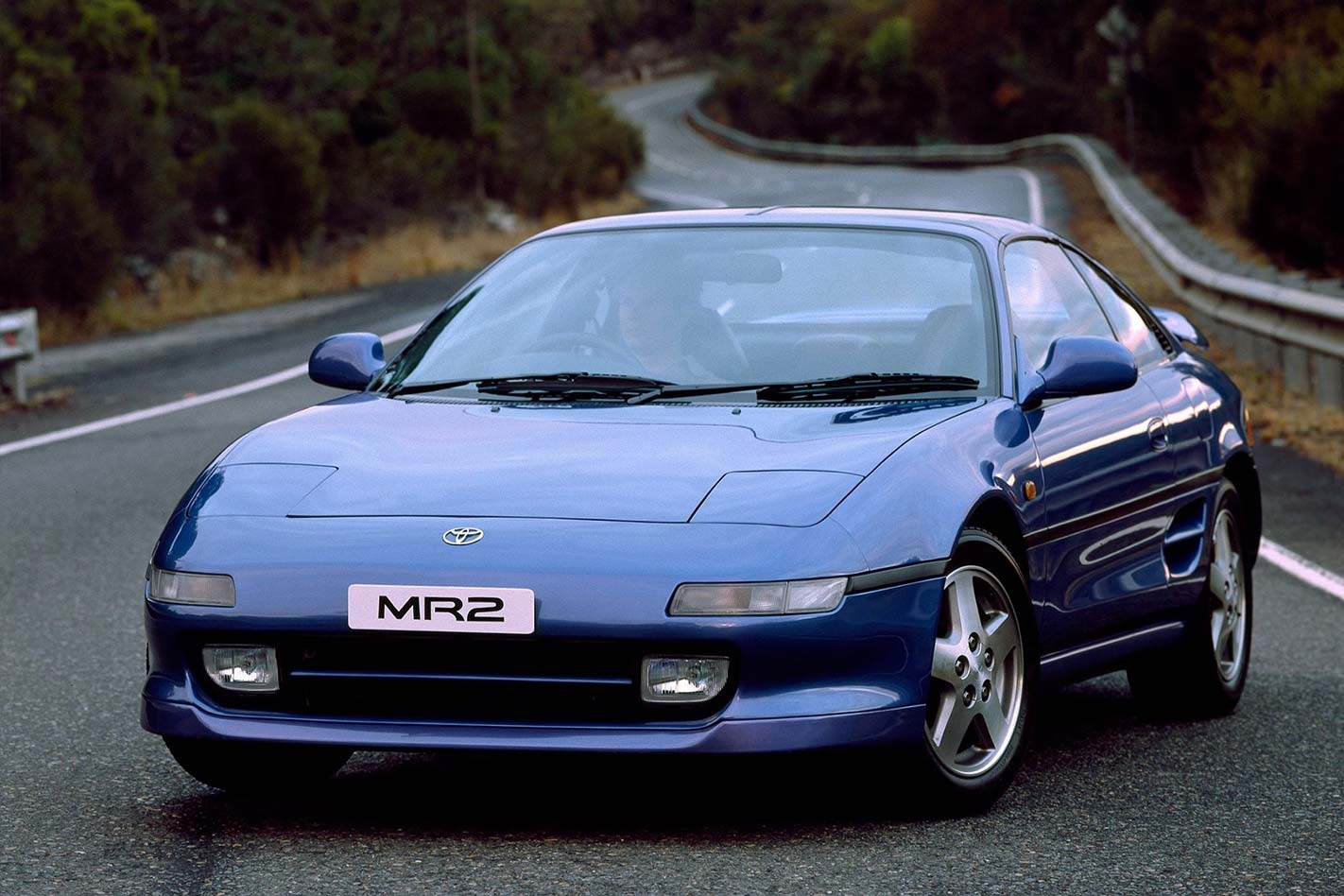
When asked who he’d turn to in order to revive the MR2, his answer is unequivocal. “Porsche.”
Were Porsche to develop an electric Boxster, Toyota could conceivably launch a pared-back minimalist car based on the same Rimac-derived battery tech at a lower price point, the two companies sharing development costs. It’s speculation at the moment, based on Tada’s aspirations. But it’s a tantalising prospect that follows a logical progression and the ‘three brothers’ sports car strategy seems to be coalescing into policy. Let’s hope so.
