
What stands out?
The Hyundai Tucson is an enjoyable, well-equipped and very comfortable medium SUV that seats five. A powerful turbocharged diesel engine is available across the range, and you can also get a smooth and swift turbo petrol. All-wheel drive is available, and autonomous emergency braking is available across the range. Every Tucson has Apple CarPlay/Android Auto connectivity, and are covered by Hyundai’s five-year warranty.
What might bug me?
Not having the option to fit the SmartSense active safety suite in manual versions of the Active and Active X.Having to make do with the relatively lacklustre 2.0-litre petrol engine if you want a more affordable two-wheel-drive Tucson.
What body styles are there?
Five-door SUV-style wagon only.Some Tucsons drive only their front wheels, while others drive all four wheels. The Tucson is classed as a medium SUV, lower priced.
What features do all Tucsons have?
Cruise control, air conditioning, a reversing camera, and rear parking sensors that help you judge how far the bumper is from obstacles.Headlights that turn on automatically when it’s getting dark, and bright, long-lived LED daytime running lights and front fog lights.A colour touchscreen, from which you can control the audio system. Sound sources include an AM/FM radio, aux and USB inputs, and Bluetooth phone calls and audio streaming.Support for Apple CarPlay and Android Auto, which lets you display apps from your smartphone on the car’s touchscreen and operate them from there.A tilt and telescopic adjustable leather appointed steering wheel with controls for audio, phone, cruise control and trip computer.Roof rails, which make it easier to fit rooftop luggage systems.Hill-start assist, which operates the brakes automatically to make take-offs on steep hills easier. Downhill brake control, which can regulate speed automatically on steep downslopes when driving off-road.Alloy wheels, and full-size spare wheel.Hyundai Auto Link app which you can use to keep track of vehicle information such as tyre pressure, driving history statistics, parking management and service scheduling.Six airbags. Electronic stability control, which can help you control a skidding car. (For the placement of airbags, and more on Tucson safety features, please open the Safety section below.)All automatic Tucsons come with an active safety package, which Hyundai calls SmartSense, that includes autonomous emergency braking, forward collision warning, driver attention alert, lane keeping assist.Every Hyundai Tucson carries a five-year, unlimited kilometre warranty.
Which engine uses least fuel, and why wouldn’t I choose it?
The 2.0-litre turbo-diesel uses least fuel of the three engines available in a Tucson, consuming as little as 6.4 litres/100km on the official test (city and country combined). This diesel four-cylinder – which Hyundai calls the 2.0 CRDi – is also the most powerful engine in a Tucson. And every diesel Tucson drives all four wheels.In the real world the diesel uses a bit more fuel than that, and especially when lugging around town. On a long highway trip you could expect about 7.5 litres/100km, but if you use the car mainly around town then a long-term average nearer 11 litres/100km is likely.Therefore, one reason you might not choose the diesel is that most of your driving is short suburban trips, where its fuel use advantage is less significant. As well, a diesel Tucson needs frequent 30-minute highway drives to prevent clogging of its particulate filter, which prevents exhaust soot from dispersing into the atmosphere.A second reason you might not choose the diesel is that you want to pay less for your Tucson: at any equipment level, the diesel costs more than its petrol alternative.Finally, both of the Tucson’s petrol engines are smoother and quieter than the diesel.For fuel use, it makes little difference which petrol engine you choose.The more powerful of the petrols is the 1.6-litre turbo four-cylinder that you can get with the more expensive Tucsons, the Elite AWD and Highlander. Hyundai calls it the 1.6 T-GDi, and it uses 7.7 litres/100km on the official test.In a real-world comparison conducted for Wheels magazine, a Tucson Highlander with this engine averaged 10.9 litres/100km, ranking second for efficiency among four medium SUVs reviewed (behind a Mazda CX-5 – 10.2 litres/100km).The less powerful petrol engine is the GDI (for gasoline direct injection) 2.0-litre non-turbo four-cylinder supplied with front-drive Go, Active X and Elite Tucsons. It uses about as much fuel as the 1.6 turbo – Wheels recorded a 10.7 litres/100km average.The 2.0-litre petrol engine is available with either a six-speed manual gearbox (Go and Active X) or a conventional six-speed automatic (Go, Active X, and Elite). It’s a good engine for around town and does well at highway speeds, however it lacks oomph when needed, such as when overtaking.The 2.0-litre turbo-diesel now comes with an eight-speed automatic gearbox (Elite and Highlander), which makes it quieter and more responsive than previous models equipped with a six-speed transmission.The 1.6-litre turbo-petrol comes only with a seven-speed dual-clutch automatic gearbox (Elite and Highlander).A dual-clutch automatic works like a manual gearbox that’s controlled robotically. It reduces fuel use and offers very smooth shifts on the highway. But it cannot match the very fluid, elastic starts from rest that you get with a conventional automatic.(Power outputs and all other Tucson specifications are available from the Cars Covered menu, under the main image on this page.)
What key features do I get if I spend more?
The least costly Tucson is the Active. It comes with the 2.0 petrol engine and two-wheel-drive, 17-inch alloy wheels and full-size steel spare, cloth seat trim, a 7.0-inch touchscreen, six-speaker audio system, and the features in all Tucsons.The cheapest Active comes with the manual gearbox, but you can upgrade to the six-speed automatic gearbox, which also brings ‘SmartSense’ active safety that includes camera-based auto braking and lane-keeping assist.You also pay more to get the diesel engine and all-wheel drive – the latter enhancing security and stability when the going gets slippery. (An eight-speed auto gearbox is standard.)Paying more for an Active X sees an improvement to the entertainment system including an 8.0-inch touchscreen, satellite navigation and DAB+ digital radio. You also get part-leather seats (there is a mix of real and fake leather) with front lumbar support, a nicer feeling steering wheel and gear knob, and more attractive door trims.The exterior gains power folding, heated side mirrors, and the alloy wheels grow to 18-inches with full-sized alloy spare.Tyre pressure monitoring helps with tyre wear and fuel economy, and parking is made easier with rear parking sensors.The Active X has the same petrol and diesel powertrain options as the Active.Upgrading to the Tucson Elite brings additional features to the SmartSense package including adaptive cruise control, blind-spot monitor and high-beam assist. The autonomous emergency braking is more advanced, using both camera and radar sensors that allow to detect pedestrians and prevent or mitigate collisions at higher speeds.The full SmartSense suite also adds non-safety extras such as duel-zone climate control that allows you to set different temperatures for each side of the cabin, electric parking brake glovebox cooling, and puddle lamps that shine down from the external mirrors when you walk up to the car at night.The Elite also gains smart key and a start button, which let you unlock and start the car with your key kept safely in a pocket or bag. The driver’s seat is power-adjustable, the windscreen wipers turn on automatically when it’s raining, and the wheel diameter grows to 18 inches, with wider tyres that supply more dry-weather grip.In an Elite you can stick with 2WD, in which case you receive the same engine as the Active and Active X. Or you can go for all-wheel drive, which allows you to have either of the more powerful engines – the turbo-petrol or the turbo-diesel.Going for a Tucson Highlander adds power adjustment for the front passenger’s seat, and heating and ventilation to both front seats and heated steering wheel.The Highlander also gains bi-function LED head-lights and tail-lamps, front parking sensors, wireless phone-charging pad, keyless power tailgate, panoramic glass sunroof, twin-tip exhaust and bigger 19-inch alloy wheels.
Does any upgrade have a down side?
Not really. Spending more on a Tucson brings you the better turbo engines and of course more handy features.The Tucson Active rides more comfortably on its 17-inch wheels than the Active, Elite and Highlander ride on their 18s and 19s, because the lower profile tyres on the bigger wheels have less rubber and air cushioning the wheels from the road. The difference is most pronounced at city speeds.Of nine colours available only one, Pure White comes without extra cost. Other colours cost about $600.If you want the beige interior in the Active X, Elite or Highlander you’ll have to pay $295 over the standard black.
How comfortable is the Tucson?
The Hyundai Tucson has everything passengers need to feel very comfortable, from ample room to an absorbent ride and great seats.The front-seat cushions are generously proportioned and nicely cushioned, and the backrests offer good side support. The leather-trimmed steering wheel is nice to hold. Minor controls (such as those for the air-conditioning and audio systems) are neatly laid out.The Tucson’s steering-wheel buttons help the driver to work the audio system, a paired phone and the cruise control. The satellite navigation on Active X, Elite and Highlander versions is easily programmed via the central touchscreen.The Tucson handles bumps smoothly. Its suspension feels more supple than that on most alternative medium SUVs, without being floaty.Occupants are well insulated from noises and harshness from the engine, suspension and tyres, which makes the Tucson feel solid and refined. The engines themselves are nice too. The petrols – the 1.6 turbo in particular – are a bit quieter and smoother than the diesel.The Tucson’s steering, accelerator and brake controls are smoothly responsive, and light to operate. Even the 2.0 petrol in 2WD Tucsons can handle highway cruising quite comfortably. It is when overtaking, or perhaps when climbing long hills with a full load, that you might wish for the additional thrust that either turbo will give you.
What about safety in a Hyundai Tucson?
Autonomous emergency braking, forward collision warning, anti-lock brakes, stability control, a strong body, six airbags, a reversing camera, and seatbelt reminders for all positions, are solid safety fundamentals in all Hyundai Tucsons.The airbags are in the usual places: two directly in front of the driver and front passenger; one alongside each front occupant at chest level to protect from side impacts; and a curtain airbag down each side protecting the heads of front and rear occupants.The Hyundai SmartSense package is available across the range, albeit with a more, camera-based, basic version in the more affordable Active and Active X Tucson. It features a City/Urban version of the Forward Collision-Avoidance Assist (auto braking) system, which utilises a windshield-mounted camera to detect other vehicles in front of the Tucson. This works above speeds of 8km/h, up to speeds of 180 km/h and, if a potential collision is detected, sounds an audible warning chime and display a visual warning. It will also automatically apply the vehicle’s brakes in the case of a potential collision and will attempt to bring the vehicle to a complete stop if activated up to speeds of 65 km/h.This system also comes with lane-keeping assist that acts on the steering to help you bring the car back, and driver attention alert, that senses if the car is drifting within its lane and recommends the driver take a break.The SmartSense system in the Elite and Highlander features both camera and radar sensors allowing for additional active safety applications. These include a more advanced auto-braking system that detects pedestrians as well as other vehicles and will bring the car to a stop from speeds up to 80km/h.It also brings smart active cruise control which also works at slow speeds in heavy traffic; blind-spot detection, which warns when a vehicle is alongside out of view. Lane change assist alerts you if a vehicle in an adjacent lane is approaching quickly from behind. Lane departure warning lets you know that you are drifting distractedly out of your lane (a sign of fatigue), and rear cross-traffic alert, which warns when reversing that something is crossing your path.The Australasian New Car Assessment Program (ANCAP) awarded the Tucson five stars for safety, its maximum, in January 2016. The Tucson achieved perfect scores in the pole and side-impact parts of the ANCAP test, on the way to a terrific total score of 35.53 out of 37.
I like driving – will I enjoy this car?
The Tucson is a responsive, well-balanced handler. It grips the road surely and is capable of surprisingly quick cornering without excessive body lean. The steering is quite keen, although it’s not as feel-rich as the steering systems in fine-handling SUV alternatives such as the Mazda CX-5 and Ford Escape.The 19-inch wheels and low-profile tyres on Tucson Highlanders give them more direct steering and crisper handling than the other versions.The turbo petrol and diesel Tucsons are the most responsive to drive. You don’t have to press the accelerator far for them to accelerate effortlessly.All-wheel-drive Tucsons offer extra stability in slippery conditions, such as on gravel or wet roads.Even with AWD, road-oriented medium SUVs such as the Tucson are suited to only light off-road duty, such as snowy conditions or reasonably smooth dirt tracks. The Tucson is one of the more versatile, thanks to good ground clearance, the inclusion of a full-size spare wheel and tyre, and a standard downhill brake control system that can regulate the car’s speed automatically on steep descents. However, reviewers have noted that grip on dirt from the standard tyres is relatively poor, and that the Tucson’s electronic stability control can be slow to intervene when the tyres begin to slip.
How is life in the rear seats?
It’s comfortable in the back of a Tucson. The seat is broad, inviting and supportive, and there’s a good view forward and out the sides. Leg, toe, head and shoulder room are generous.Not so generous are the doors: a low roof-line and short upper frame hinder access for grown-ups.Each door has a bottle-holder, however, and there are twin cup holders in a centre armrest. Elite and Highlander versions (only) get rear-passenger air-conditioning outlets in the rear of the centre console.
How is it for carrying stuff?
With the second row seats upright, the Tucson cargo bay swallows 488 litres of stuff, and with the second row folded (60-40), cargo capacity is a cavernous 1478 litres.There’s room for a folded pram and a few large bags in the back (with the second row still upright) – likely enough to accept a family’s luggage for a week away.The Highlander’s hands-free powered tailgate opens when you walk up to it with the car’s key in your pocket, which eases loading when you have your hands full.
Where does Hyundai make the Tucson?
All Tucsons are built in South Korea.(Prior to May 2017, only the Tucson Active X was made in South Korea, with all others sourced from the Czech Republic.)
What might I miss that similar cars have?
Perhaps the driver appeal of the Ford Escape, which has sharper steering than the Tucson and an even more potent, 2.0-litre, turbo-petrol engine option. The Holden Equinox offers a bigger and more powerful turbo petrol engine.Possibly seven seats in a compact SUV package, like you get in a Mitsubishi Outlander, Honda CR-V, or a Nissan X-Trail.Maybe standard access to autonomous emergency braking in lower-spec versions. The X-Trail, Kia Sportage, Mazda CX-5, Subaru Forester, Toyota RAV4, and Volkswagen Tiguan supply AEB standard on all versions, for example.
I like this car, but I can’t choose which version. Can you help?
We like the Tucson Elite with the turbo petrol 1.6 engine and all-wheel drive. The Elite brings a big boost in equipment for the extra outlay. And this drivetrain, which costs less than the diesel, is smoother and more refined than its oil-burning counterpart while delivering similar low-speed driveability and urban economy.
Are there plans to update the Tucson soon?
The current, third-generation, Hyundai Tucson arrived in mid-2015, replacing the ix35 (as the second-gen Tucson was named in Australia).About September 2016, Hyundai added an AWD diesel version of the Active. About the same time it upgraded the cloth seats and 18-inch wheels of the Tucson Elite to part-leather and 19s.In May 2017 Hyundai extended the more powerful, direct-injected, 2.0-litre petrol engine, originally supplied only with the Tucson Active X, to the Tucson Active and the Tucson Elite 2WD (which previously had used a port-injected 2.0 petrol). It also extended support for Apple CarPlay and Android Auto, initially restricted to the Active and Active X, to the bigger touchscreens in the Elite and Highlander, making the superior smartphone integration available on every Tucson.The Tucson received a facelift for the 2019 model year in August 2018, with updated interior and exterior styling, improved infotainment system, an eight-speed automatic gearbox for the diesel engine and wider availability of SmartSense active safety across the range, The Active spec was deleted and replaced by the Go at the bottom end of the range.In July 2019 Hyundai dropped the Go badge and brought back the Active to the bottom of the range for the 2020 model year. Autonomous emergency braking was also included as standard in the Active and Active X versions along with lane keeping assist and driver attention alert.The next all-new Tucson might be expected about 2021.
The Volkswagen Scirocco is back with a vengeance. Exactly 34 years after the debut of the MkI, the new Scirocco looks set to revive the stagnant compact coupe market.
This review was originally published in MOTOR’s September 2008 issue
The coupé project, which previews the Golf VI set to launch later this year, was initiated by VW’s former brand chief Wolfgang Bernhard, whose cost-cutting has ensured the top-shelf 147kW 2.0 TSI Scirocco undercuts the current Golf GTI’s price in Europe.
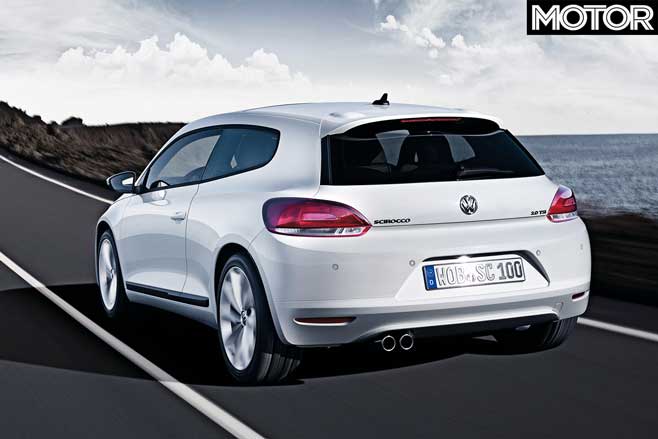
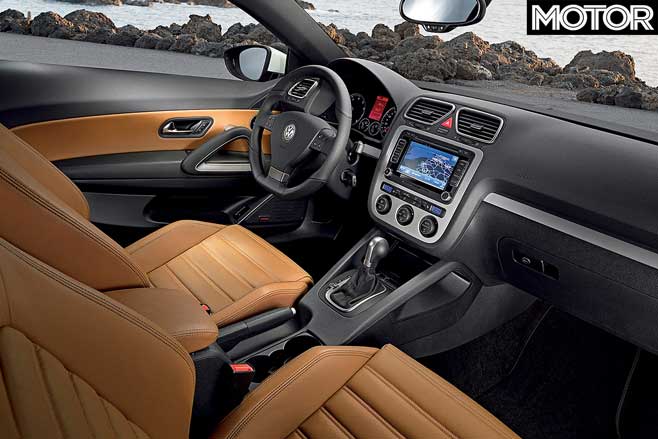
Open the XXL doors and, theoretically, Scirocco is a four-seater. Realistically, though, rear access is compromised by the low roofline and the tapered plan view. While row two is definitely more Economy than Business, the driver and the front-seat passenger travel First Class. A generous adjustment allowance, plenty of lateral support and failsafe ergonomics make you instantly feel at home.
The bland dashboard is pinched from the Eos, but the bespoke door trims and excellent sports seats give the Scirocco cockpit its own dynamic identity. Drawbacks? The tailgate is a remote-control release job, the fat near-side A-pillar reduces vision through a corner, and the rear view is obstructed by fixed head restraints and chunky C-pillars.
In Europe, Scirocco fans can choose between three petrol (90kW, 118kW and 147kW) and two diesel engines (103kW and 125kW), with all five being turbocharged, direct-injection units.
We tried the 118kW 1.4 TSI and the 147kW 2.0 TSI. Apart from the obvious differences in performance (0-100 in 8.0sec/7.2sec, top speeds of 218km/h/235km/h), the two Sciroccos also feature bespoke chassis set-ups.
While the 1.4 TSI is all about compliance and composure, the 2.0 TSI feels tauter, sportier and more agile. Extra money buys DCC (Dynamic Chassis Control) which will modulate the damper and steering calibration, but not the throttle response of the optional dual-clutch DSG transmissions, available with either six- (103kW TDI and 147kW TSI) or seven-speeds (118kW TSI).

When driven moderately, the 1.4 TSI is quiet, refined and composed. Pushed hard, it shows considerable handling prowess and demonstrates strong roadholding. The 2.0 TSI is even more energetic, but it’s also noisier and coarser.
The ultimate Scirocco could well be the Audi TTS-derived 200kW 4motion flagship insiders are predicting for mid-2010. In the meantime, Europe will get the R-Line edition and a fully loaded ‘Individual’ model. The Scirocco isn’t confirmed for Oz, yet, as the local outfit fears it could cannibalise GTI sales, even though most are five-doors and it’s a three-door. You do the maths.
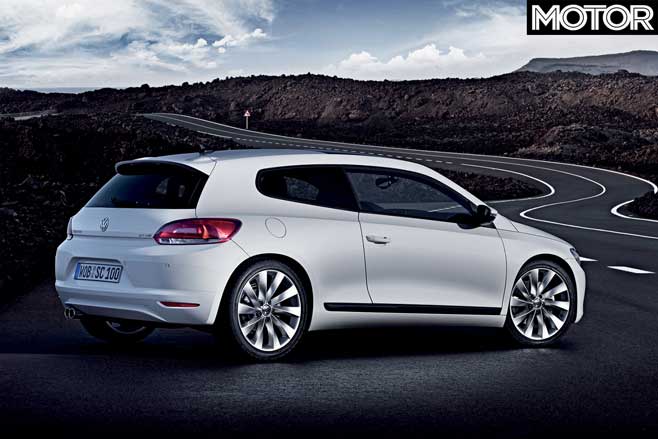
2008 VOLKSWAGEN SCIROCCO GT SPECS Engine: 1984cc 4cyl, DOHC, 16v, turbo Power: 147kW @ 5100-6000rpm Torque: 280Nm @ 1700-5000rpm Weight: 1298kg 0-100km/h: 7.2sec (manual – claimed) Price: $45,000 (estimated)
Like: Sharp styling, proven engineering, hot pricing… in Europe Dislike: Lacks Golf’s functionality, not for Oz… yet
QUITE SOME time ago, I resigned myself to an irrevocable fact: that my epitaph is unlikely to read “He changed the course of humanity”. Look, as long as it doesn’t read: “He died of loneliness; now missed by his 16 cats”, I feel I can rest easy.
The way I figure it, anything must be better than the epitaph that hangs over the long-deceased racetracks that once thrived in Sydney and its perimeter. Let’s face it, words don’t get more crushingly depressing than those etched into their metaphorical headstones: “Tragically swallowed by urban sprawl”.
That’s the fate that claimed Oran Park in Sydney’s south-west in 2010. The same thing saw the closure of Amaroo Park in the north-west in 1998. The list goes on.
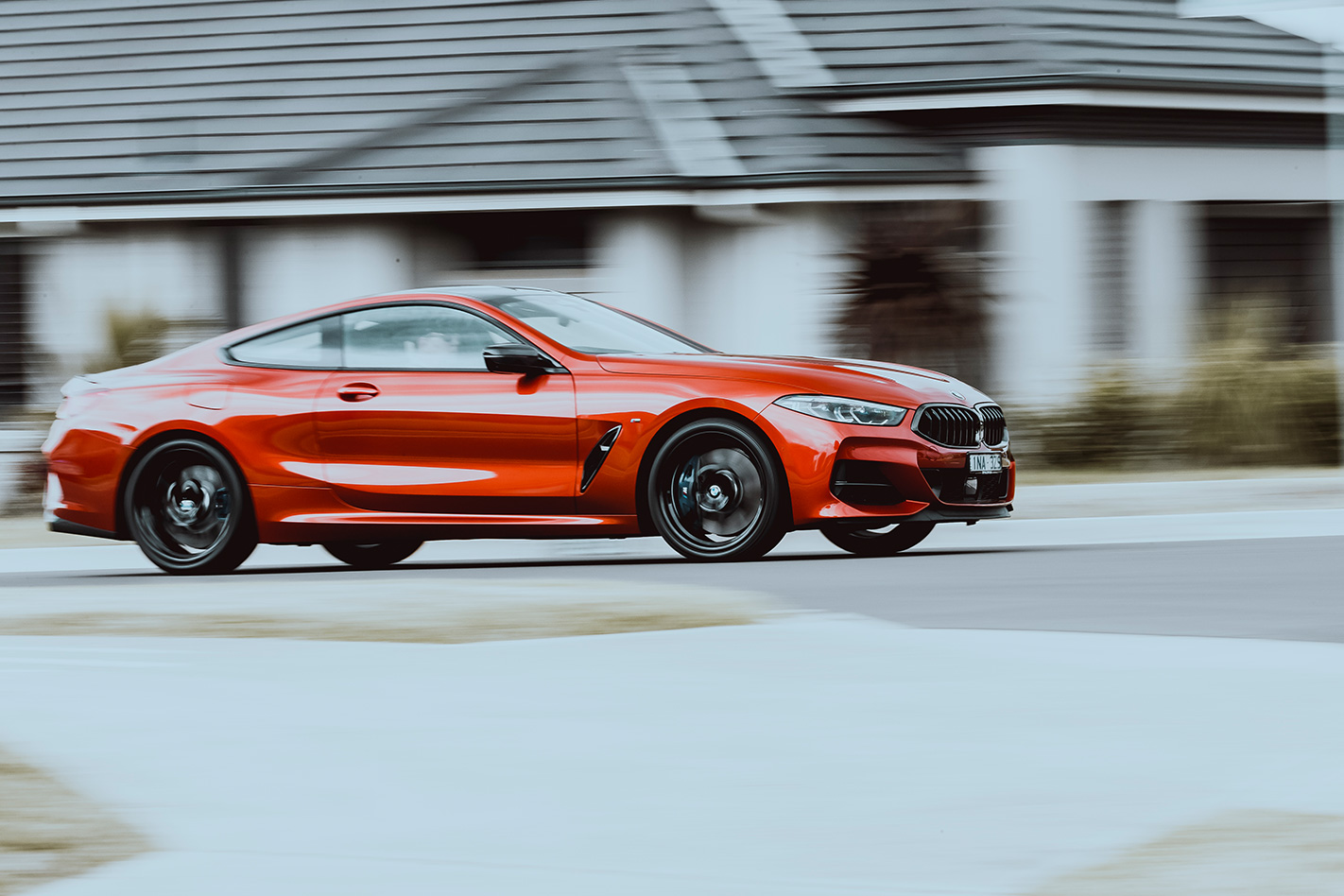
A respectful visit of reminiscence seemed appropriate, especially as we had early Aussie access to this, BMW’s first resurrection of the 8 Series moniker since the E31 launched in 1989. But there’s more to this car than just being an enticing GT. To properly understand the new 8 Series, first we have to acknowledge the departure of the G32-gen 6 Series, because there’s a little bit of model-positioning sleight of hand going on here. This new M850i is actually 43mm shorter than the outgoing 6 Series, and rolls on a wheelbase 33mm shorter than that car. It’s feature- and tech-heavy, naturally; all-wheel drive, rear-wheel steering, active anti-roll, and carbonfibre used in the construction. Clearly the marketers saw this as an opportunity to bury the 6, and pitch the new model further upmarket as an 8, and, in the process, allow it to stare eyeball to eyeball with the $315K Mercedes S560 Coupe.
So yes, it’s called the 8 Series – a convertible is also available, while a four-door Gran Coupe and M8 flagship will follow. But it’s really a spiritual successor to the 6, and that, we reckon, means it has lineage to the most successful racing BMW ever campaigned in Australia – the visually beguiling, dynamically brilliant E24 635 CSi.
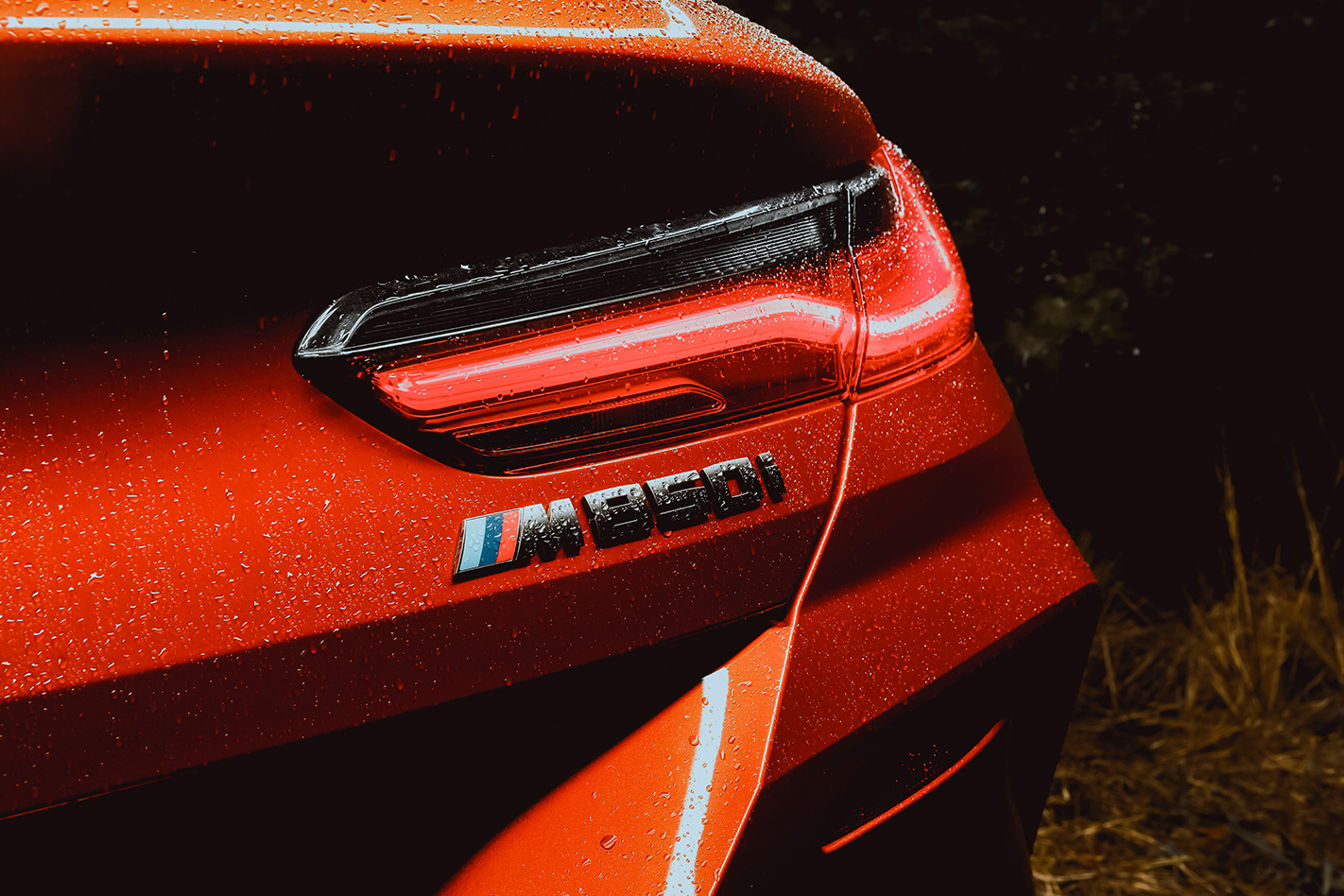
A BIT OF Googling quickly shows there’s little point in a visit to Amaroo. The AMSCAR Series held there in 1981 modified the rules to become an under-3.5-litre series to accommodate the JPS BMW 635 CSi of Allan Grice, but these days, apart from a few motorsport-themed street names, there’s little left that recognises the 31 years of racing the place hosted.
Instead, we decide to see what’s become of Oran Park, and we also wanted to visit a race circuit with no real connection to BMW; an abandoned one with a dark past – Catalina Park in the NSW Blue Mountains.
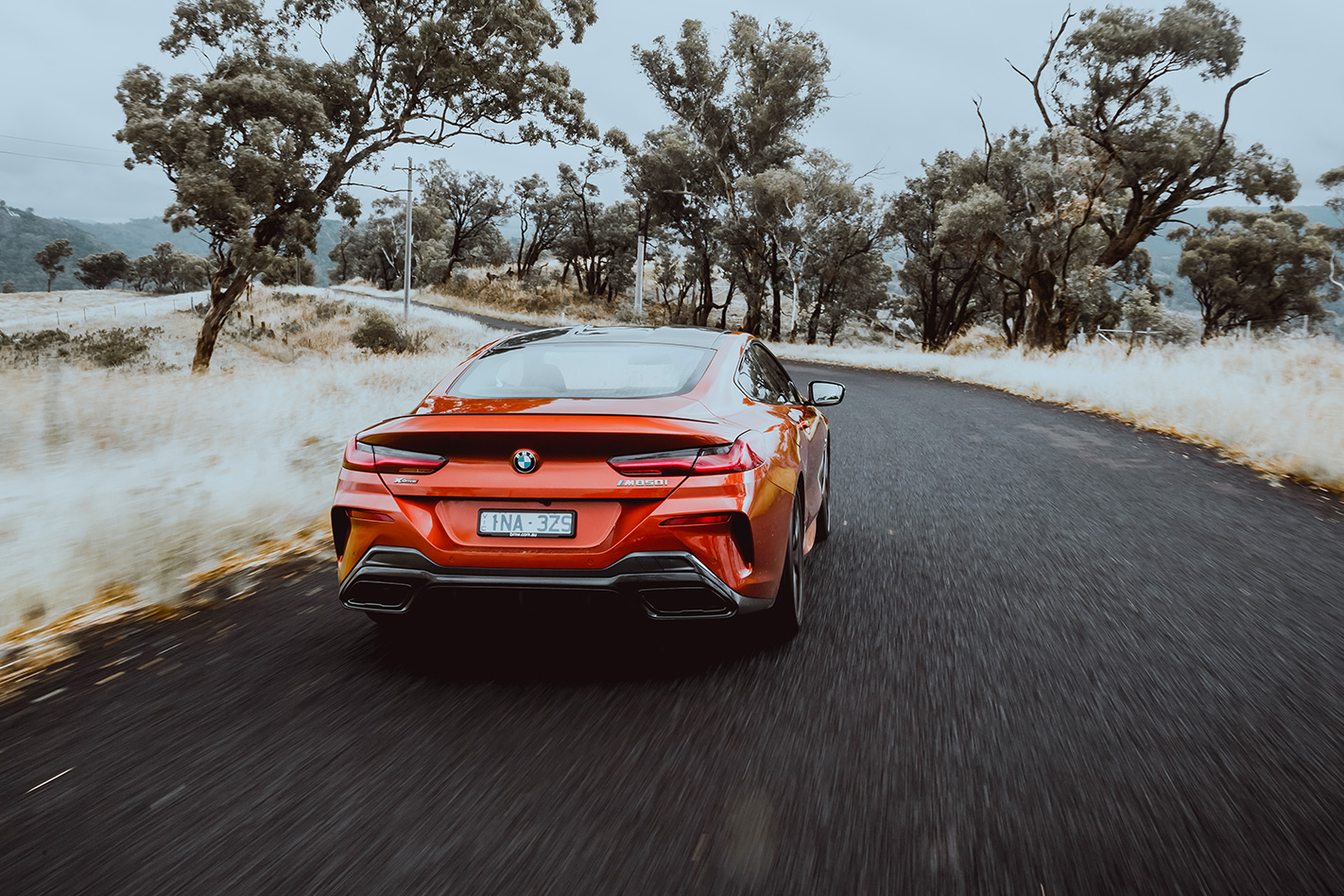
As we burble through Sydney’s suburbs, it’s a chance to reflect on what a big GT like this needs to deliver. For me, it has to tread a fine line in the quest to achieve real duality of character. It needs to cosset with long-legged refinement, then be able to demonstrate a bit of mongrel when you get up it. And maybe even more importantly for buyers in this segment, it has to make a style statement.
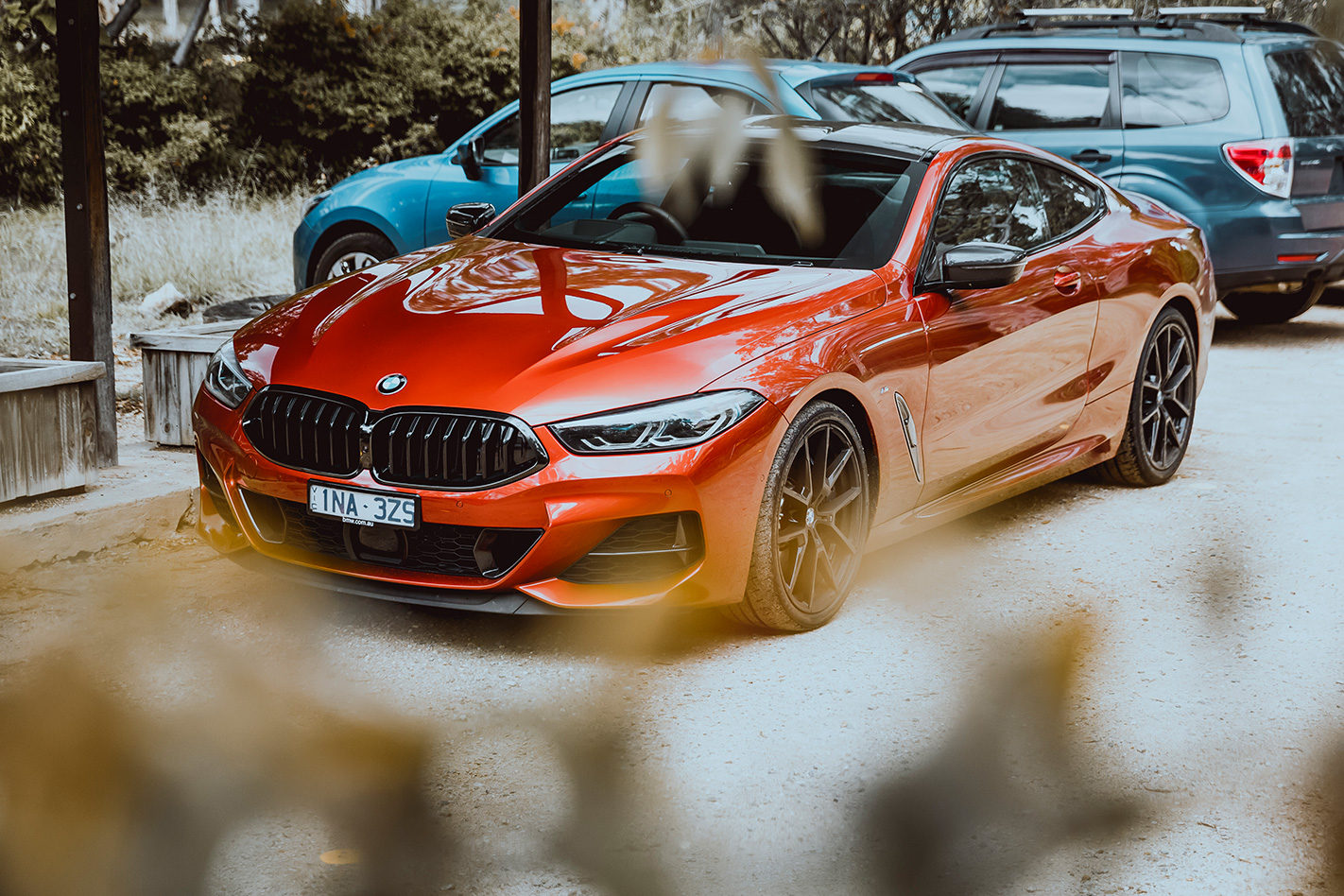
On that latter score, it seems to succeed. Heads turn and camera phones point our way; the mix of low, wide stance and the sheer aggression of the front end clearly drawing attention. I’m unconvinced about the rear – all those folds and creases make me feel it was the work of someone over-caffeinated in an origami class, while the four meek exhaust pipes visible through the two big outlets are a bit bogus.
Inside, it’s more persuasive (see sidebar, right), but the back seats are emergency accommodation for lower-limb amputees only. This is a big indulgence car, really built for two people and luggage. On the upside, the twin-turbo 4.4-litre V8 has a carefully considered burble that barely hints at the 390kW and 750Nm it’s ever ready to unleash, and the auto’s calibration is incredibly intuitive. The steering is quick at 2.2 turns lock-to-lock, so the nose feels ultra alert. It’s just a shame there’s no true sense of connection down at the tread blocks. Only coarse-chip road noise blots the otherwise impeccable GT refinement.
BACK IN 1989, I landed my dream job on Wheels’ sister magazine, MOTOR. Oran Park was our ‘home’ track, so performance testing saw me there every second week or so. It was the first track I ever experienced. The first decent car I drove there was a white Nissan Skyline RB30, while the last lap I did of the place was on my bicycle. That was late 2009. As we packed away the performance-testing gear and cameras, I wanted to have one last, more intimate goodbye to the place. Busting my lungs for a couple of laps, skinny bike tyres flicking over the marbles left behind by the race cars, seemed an appropriate way to do it. I was genuinely saddened as I drove out of the main gate for the last time, my gut heavy with the sense of an era coming to an end.
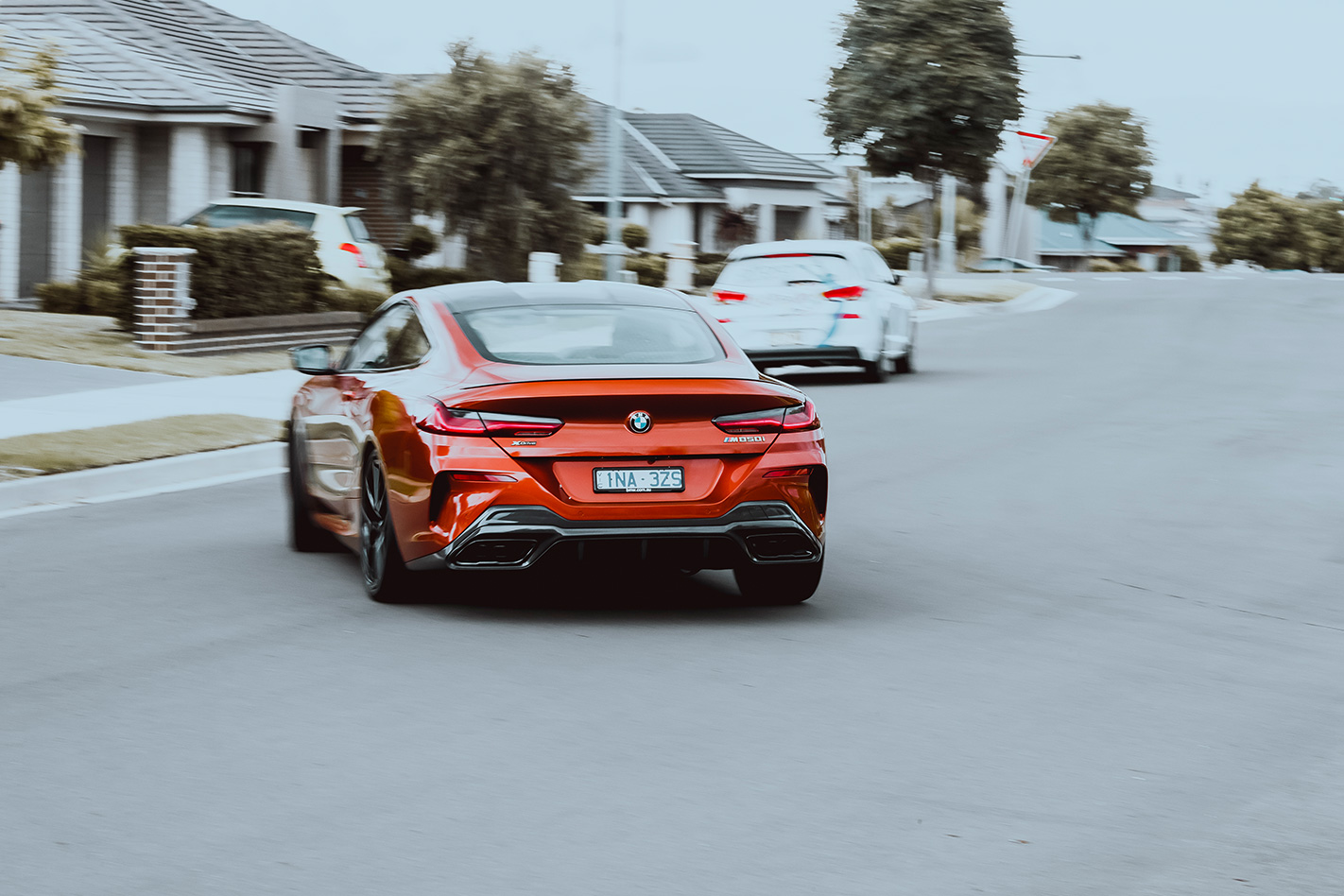
Now, almost a decade later, I know the place will be unrecognisable, but that doesn’t stop an involuntary “holy sh_t” falling from my lips as we crest the final rise and get a full vista of what is now Oran Park Town. As the BMW glides quietly over the fresh hot mix, the view through the windscreen is nothing but an undulating ocean of dark-grey roof tiles.
The site now has over 3300 homes (and growing), a shopping centre, and council headquarters. Initially, I find the lack of anything to help me anchor the place back to the old circuit both frustrating and a bit surreal. It’s like being in a dream where your bedroom door opens into a closet; or finding your mum cooking in a kitchen where your garage should be.
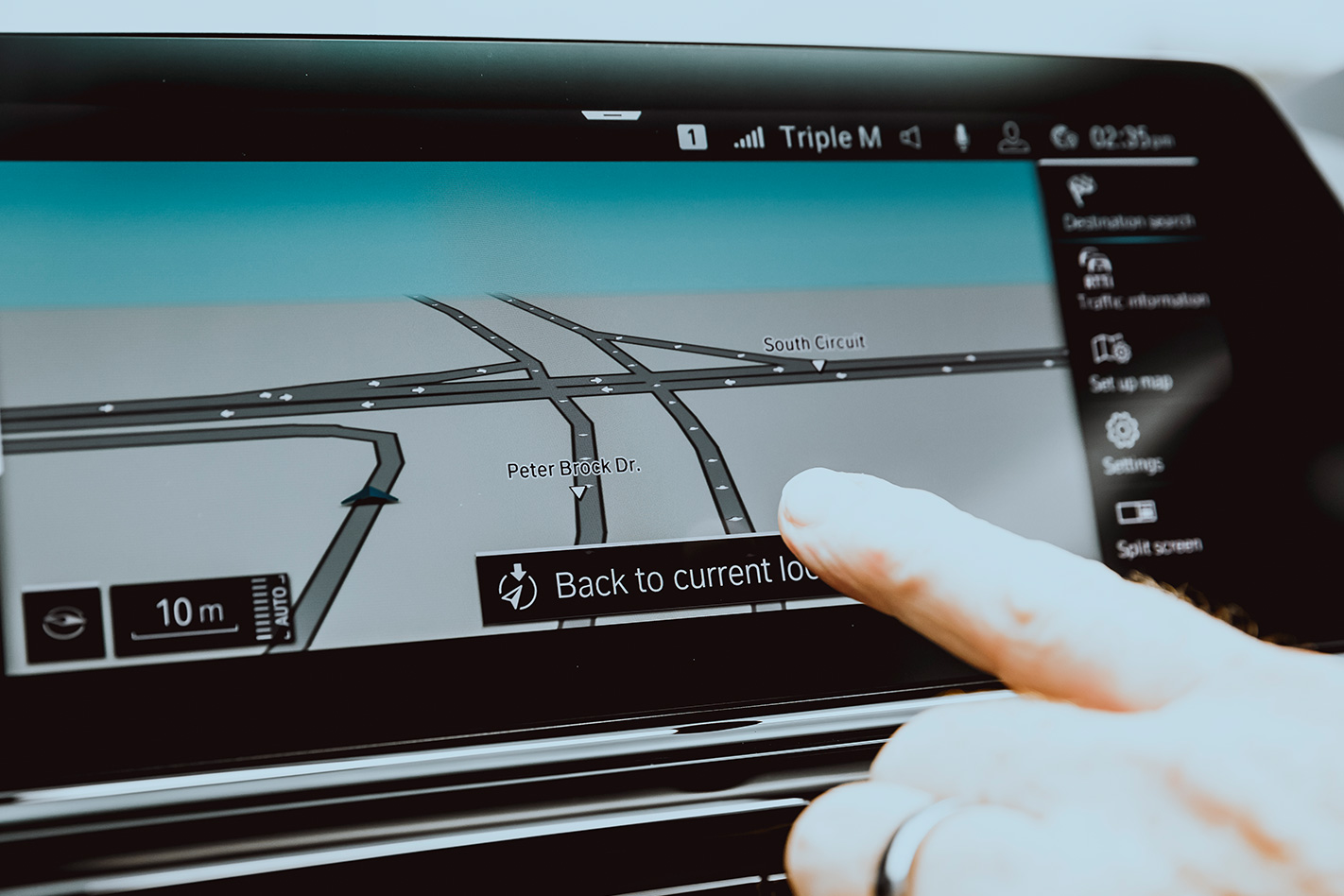
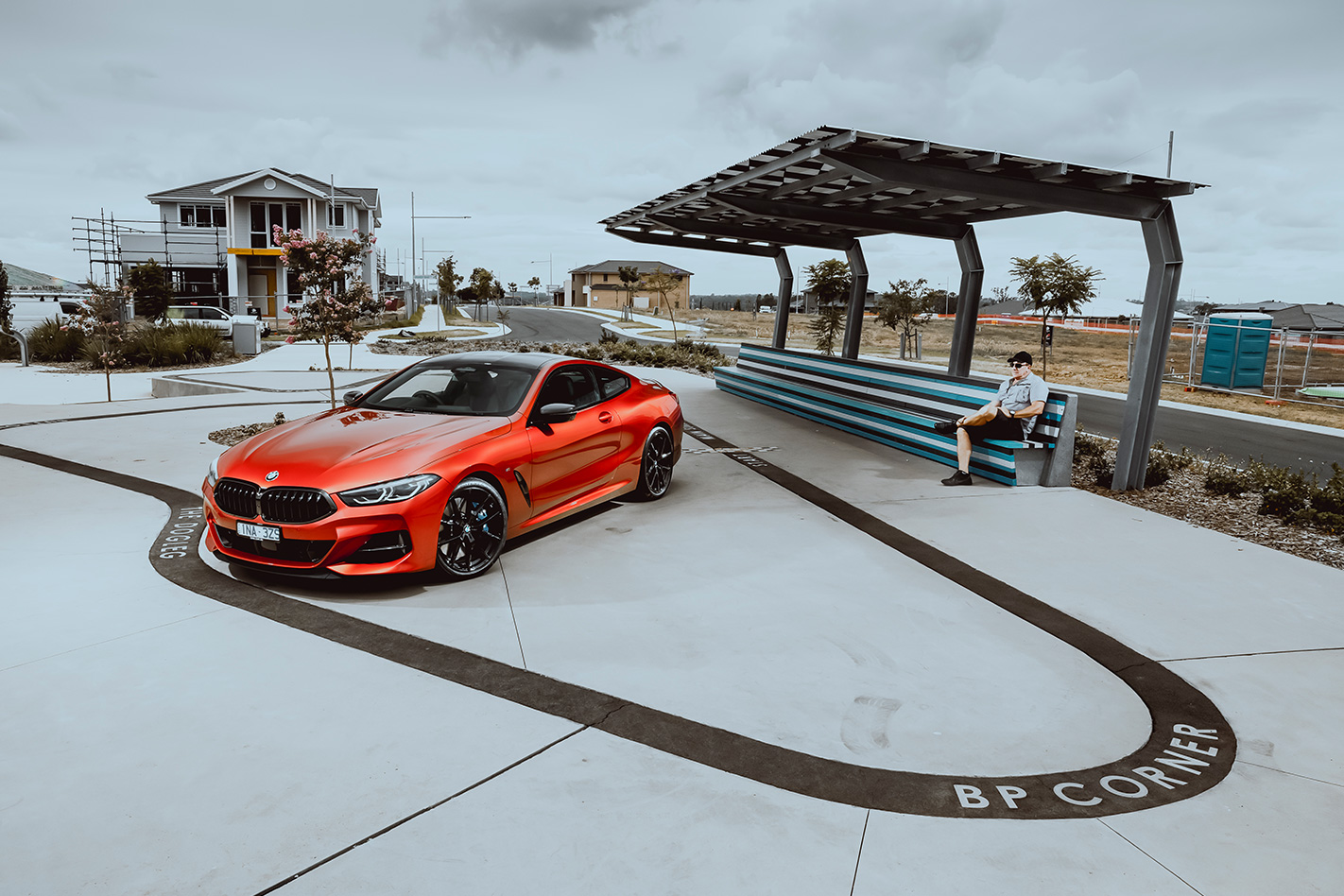
At one point the topography feels familiar, and I think I may have my bearings, but then I just end up more confused and mildly irked than I am on a normal day. At least the street signs are a nod to the tin-top heroes who thrilled fans here – we cruise along Peter Brock Drive, and go exploring down Skaife Street, but they still don’t help me orientate myself. Some of the less obvious street names raise a smile of recognition. Finally, right near Francevic Street (“Ah, Robbie … won the ATTC in ’86 in the Volvo, I remember that!”) and opposite where yet another house is being built, we find the most significant memorial of this place’s motorsport heritage. Grandstand Park is a kids’ play area dominated by an elevated concrete podium shaded by large awnings and flanked by bench seating. Recessed into the concrete is scale map of the track, complete with names of the corners, while a plaque acknowledges that this is where the grandstand stood on the main straight.
I doubt it would be enough to bring tears to the eyes of a bloke like Jim Richards, never mind Brock, Johnson, or even Skaife, who collectively dominated this place over four or so decades, but at least it’s a small reminder of what Oran Park once meant to Australian motorsport. There’s a bollard at the entrance designed to keep cars off, but I have to smile when I look at the inner bit of the track map and see the clear rubber imprint of a performance tyre, presumably by someone just like us chasing a photo. We roll out to the hammering sounds of construction carried on a warm breeze, as the second storey of yet another house in Oran Park Town goes up.
LEADEN, low clouds are exhaling a fine mist when we eventually find Catalina Park in the Blue Mountains, now flanked by an aquatic centre in bushy suburbia. The weather casts a moody, sombre atmosphere over the place, which is in some ways fitting, given both the circuit’s slow demise and its violent, hostile beginnings. This was once Aboriginal land, and there’s signage that now acknowledges the traditional owners who were forcibly removed from their homes back in 1960 when ‘The Gully’, as it’s known, was approved for development into a racetrack. According to reports at the time, it was a horrendous event; the steadfast Aboriginal men in handcuffs, their families dragged out crying and screaming as the earth-moving teams watched on and waited for the all-clear.
There’s no vehicular access onto the 2.1km circuit these days, so we start a lap on foot. The first surprise for me is the width of the track – at 11m, it’s wider than Mount Panorama. As we begin to walk in the direction of travel from the start/finish line, I’m struck by how verdant and tranquil the place is. There’s a modest pond populated by quietly quacking ducks, and picnic tables sit invitingly in the grassy section off to the right. Close your eyes, concentrate, and for a moment at least, if the distant trucks up on the highway stay off their airbrakes, there’s not a single sound of human habitation.
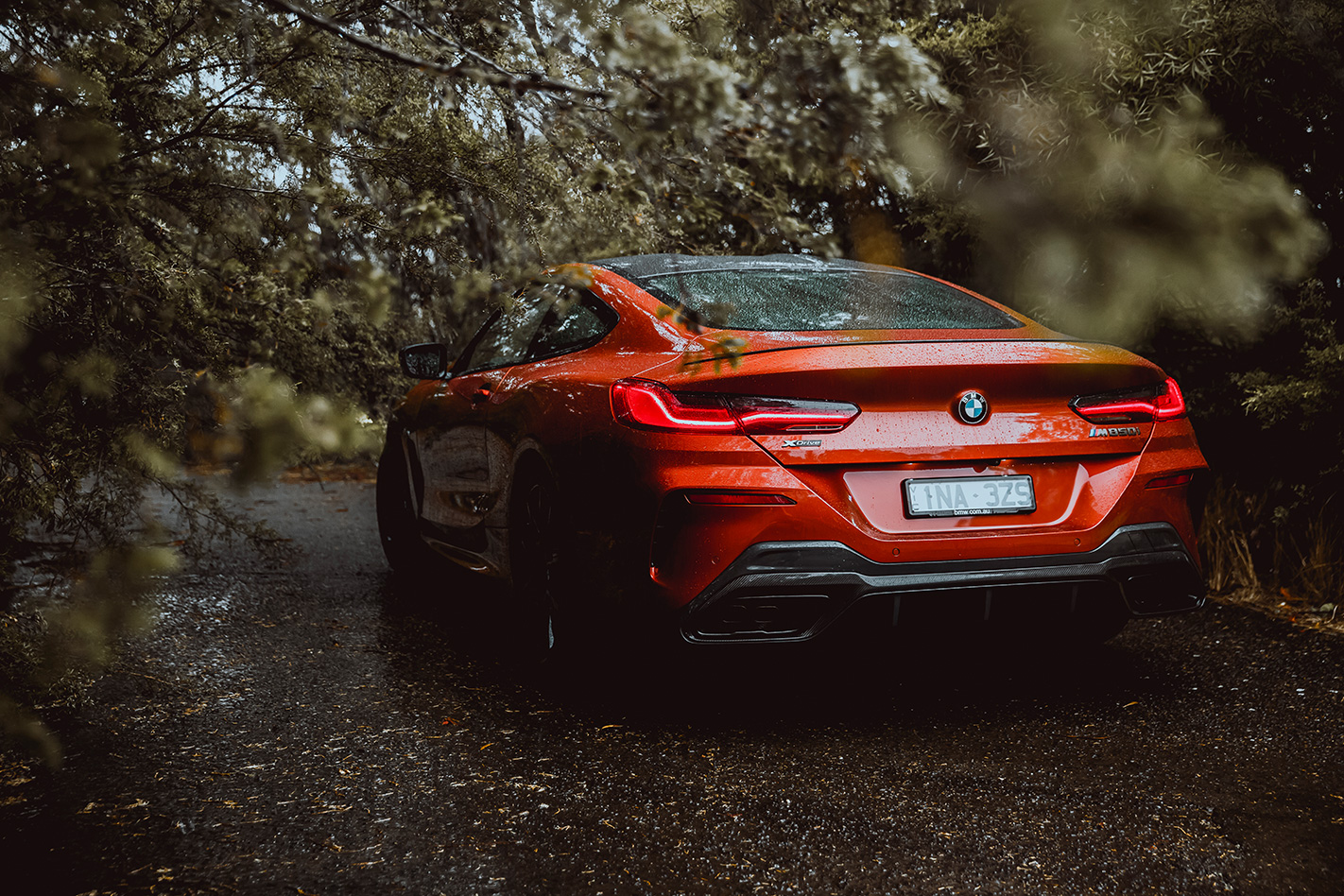
Just as striking is the decline of the track itself. It’s not so much being left to decay; instead Mother Nature seems intent on reclaiming it into bushland. As we walk up the first incline towards the fast right-hander of turn one, trees with trunks now as thick as my calf have punched their way through cracks in the bitumen, and their foliage hangs heavy over where there was once an apex. In some places, this once five-car-wide track is reduced to a gap in the dense foliage barely broad enough for me to pass through with my arms open.
It’s fascinating, but also a real trigger for the problem-solver in me. I can’t stop thinking about how satisfying it would be to watch some heavy brush-cutting machinery prune it back; to watch a Bobcat clear the piles of eroded soil and clay; to help a team of tradesman restore some of the timber barriers. Then I remember I’m too indolent for that level of productivity, so I go back to being mildly irked, left to walk as I juggle a mix of fantasy and frustration.
Eventually we cross paths with a small group of dog walkers. We chat briefly as their panting mutts shake the light rain from their coats. What would they like to see done with the place? Peter, a mid-30s small-business owner who lives nearby, is equally frustrated at the inaction: “It’s clear they [council] don’t know what to do with it,” he says. “I think the Aboriginal sensitivities attached to the place are just forcing it into the too-hard basket. It’s a real shame.”
We part ways agreeing that it will surely be less than a decade before it reverts to bushland if nothing is done. To blow away that depressing thought, we take one more proper strafe in the big coupe through the tight, zero-forgiveness roads of the Megalong Valley.
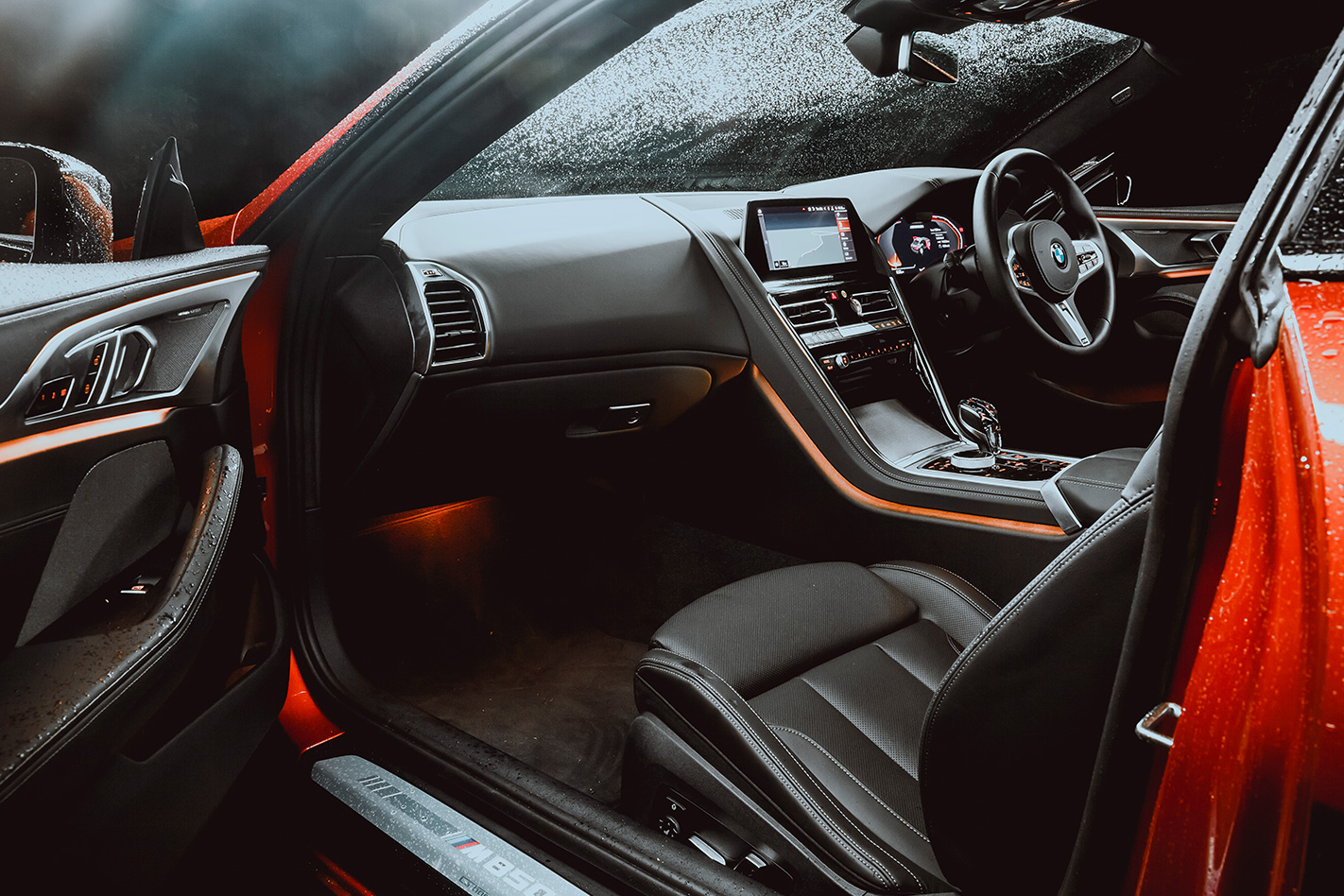
You can never escape the reality that this is a big car, but set to Sport Plus, it’s happy for you to give it a decent pasting. Of course it’s properly quick, but more than that, it’s agile. The rear-wheel steering is one of the best set-ups I’ve experienced. Right when the front end is fully loaded and your in-built coccyx angle sensor predicts the rear is going to struggle to follow the arc, there’s a perceptible pivot behind your hips as it rails around. The all-wheel-drive traction allows you to chase the throttle early, yet the overall dynamic flavour feels thoroughly rear-drive. It’s impressive, for sure, but ultimately there’s a whiff of aloofness that you just can’t quite shake.
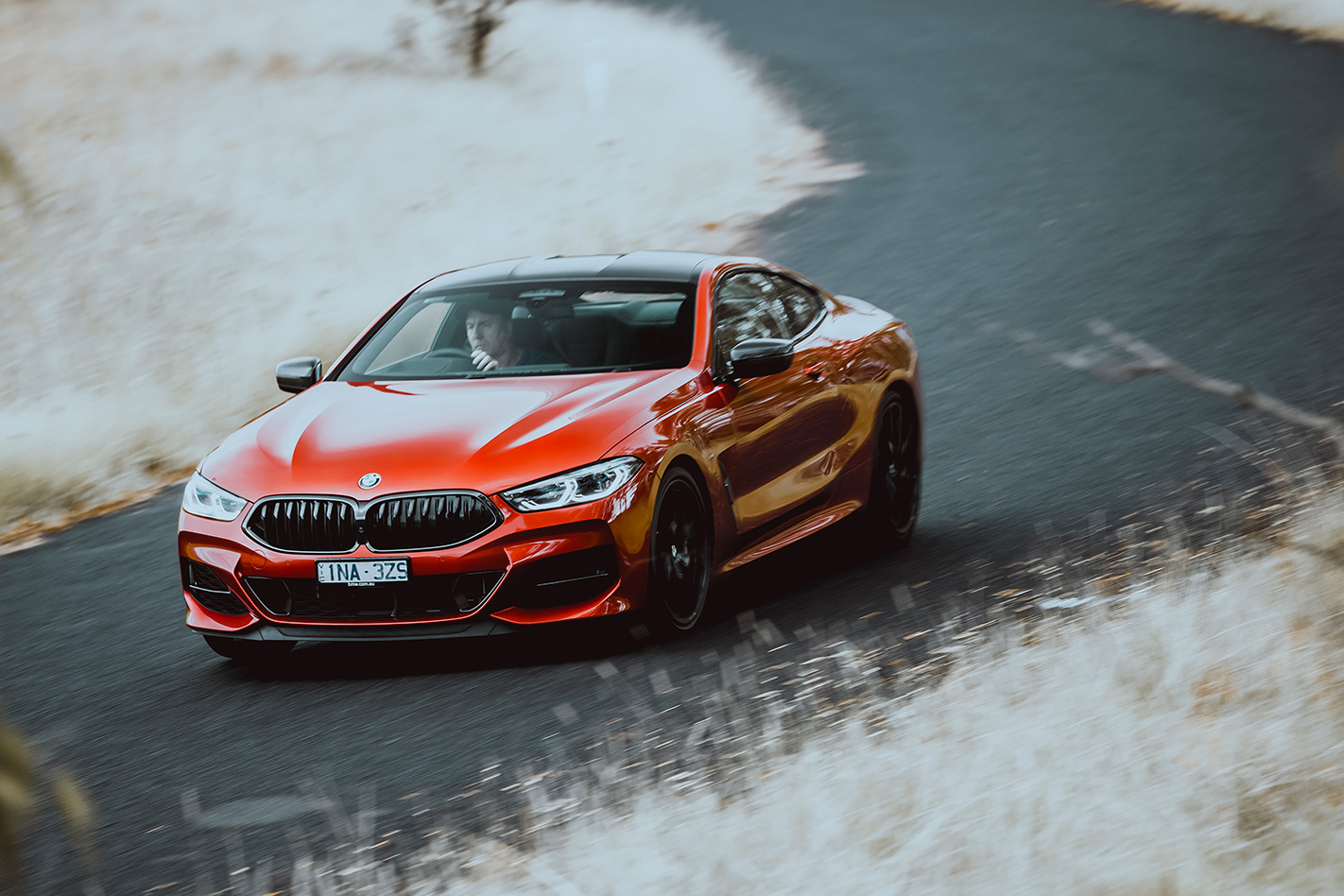
But buyers won’t care – and if they do, BMW will happily point them to the M8, due next year. And that, after all this talk of slow demises and extinction, makes me happy. I’m glad big GT coupes have not yet raised their own epitaph. In this era of rationalisation and electrification, cars like the M850i are almost a defiance.
I look at this car and all I see is an unspoken message that riffs off that Mark Twain misquote: “Reports of my death have been greatly exaggerated…”
The message drops into to the voicemail inbox on a dreary Tuesday afternoon. “Hey mate, do you and Max want to come and do an autocross this weekend?” asks my buddy Dave, who’ll race anything and everything he can get his hands on.
Hah, I think a little bitterly. Who’s got that kind of motorsport money laying around? I figure it’s a nice idea, but shy of finding a spare thousand bucks down the back of the couch, I think we were sitting it out.
A message popped into my DMs. “Here’s the beast. A hundred bucks each and you’re in,” it read, accompanied by what could be best described as a pic of a Subaru Impreza that the Mad Max production team would have dismissed as being too dystopian.
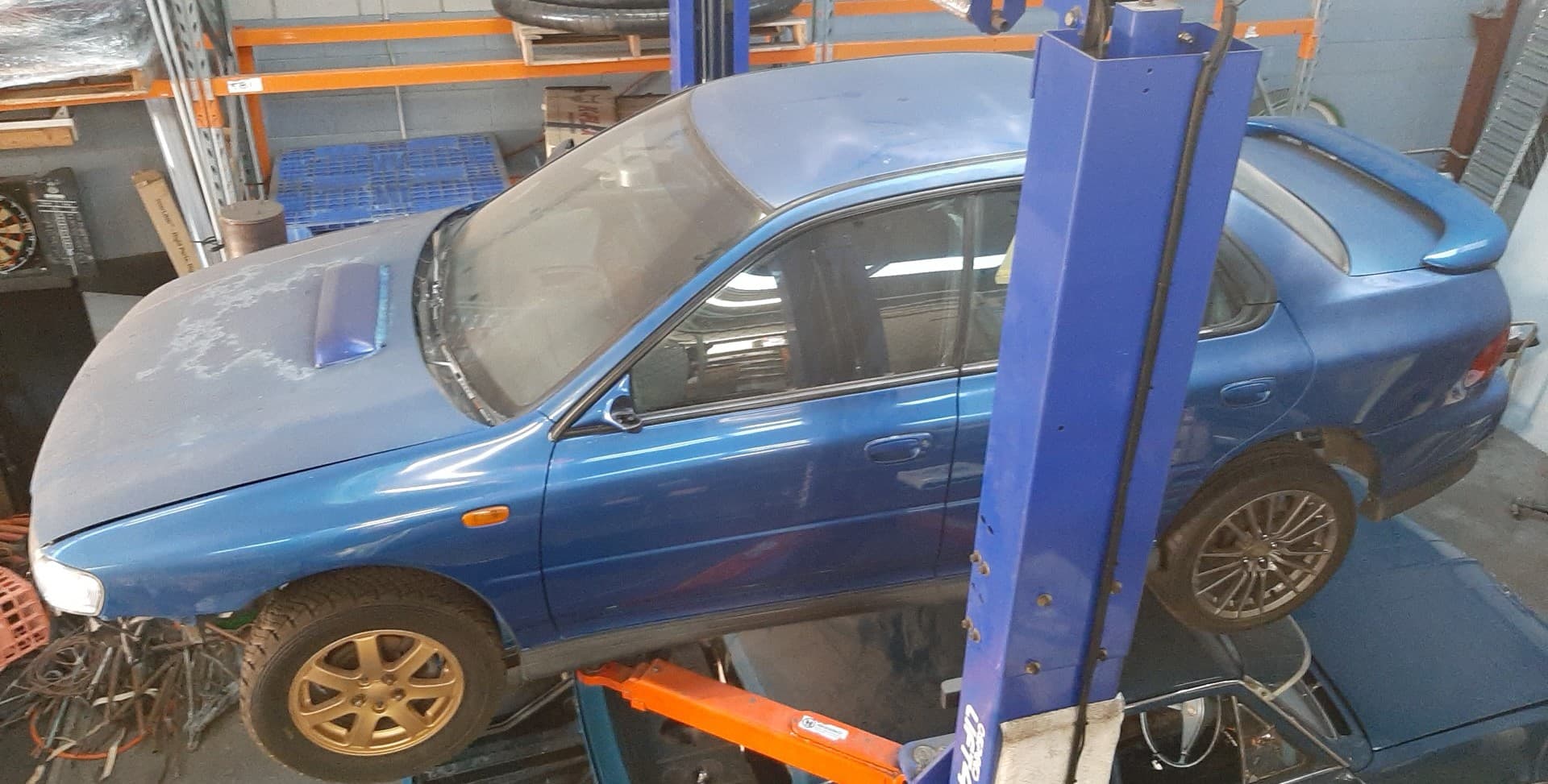
A hundred bucks? Once I’d supplemented my 17-year-old’s entry by half, I’d be up for $150 and some petrol money. Dinner was even laid on by the organisers! Total win!
There’s no doubt about it, motorsport is an expensive exercise, even at the entry-level. It’s a bloody shame because it’s insanely fun. However, there are still ways and means of scoring a motorsport fix without mortgaging the house.
One of those is autocrossing, which basically involves belting around a short dirt loop in a car that may or may not make it around a 30-second lap twice in a row.
Competitors sign on to a class based on their machinery – our 1996 Subaru Impreza RX is a ‘non-turbo AWD’, for example – and line up to do two flying laps of Colo’s short dirt course. Today we’ll actually be doing it in both directions; reverse direction (not gear!) during the day and regular direction at night. Yes, night.
It’s simply driver and machine versus the clock, and it’s the very definition of ‘run what ya brung’. In fact, the track at Colo Heights, not quite two hours west of Sydney, even has the facility to store your crapper on site for a modest fee.
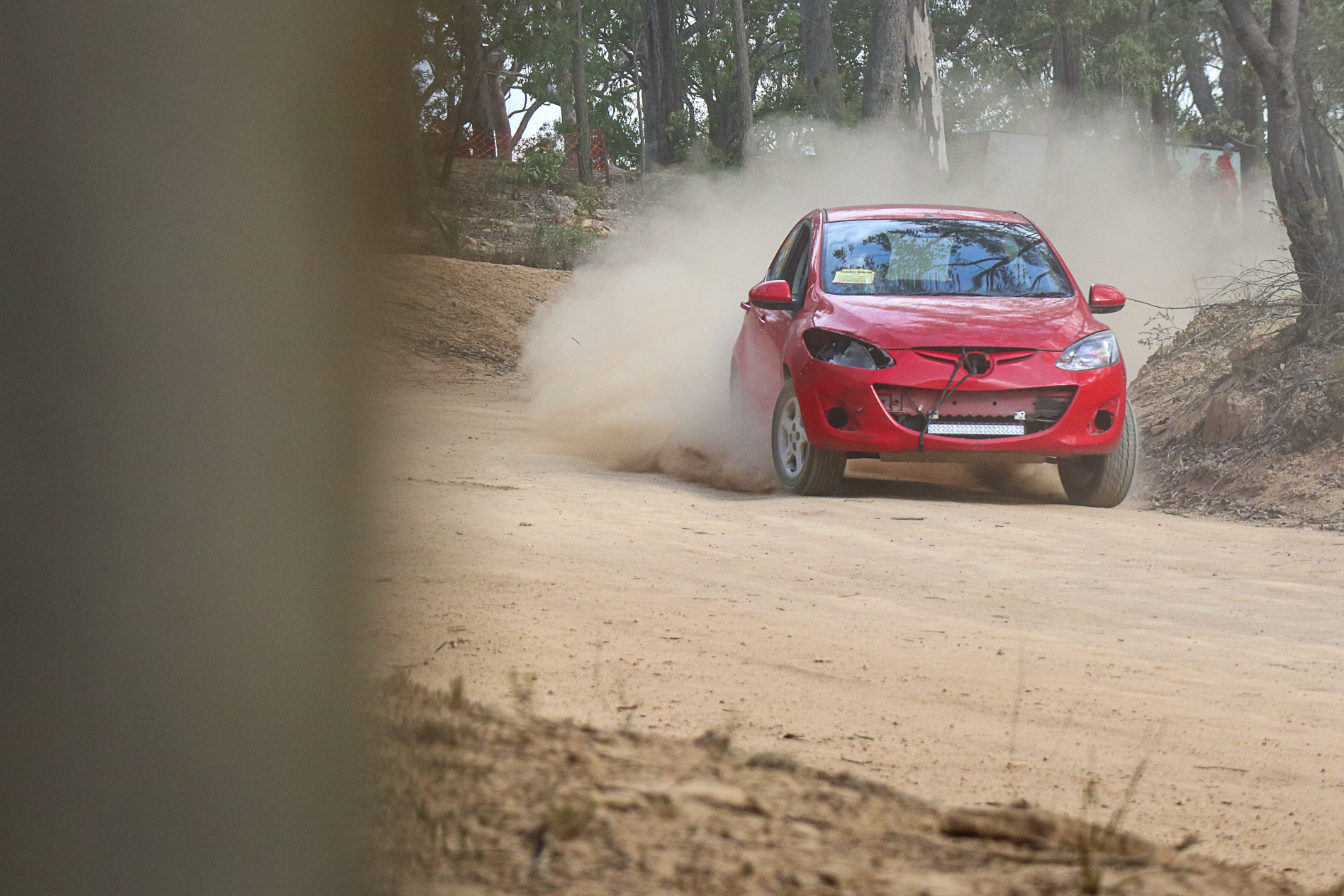
Our Impreza owes Dave $500, and comes complete with not much. He poached a racing seat and harness from another car, and ‘borrowed’ (his words) an extinguisher from his mum’s kitchen. Crucially, our car is fitted with discarded rally tyres, which will give us valuable grip on the loose and dusty track.
I’m up first. “Oh, I haven’t actually tried the car out yet,” remarks Dave casually. “Good luck!” Wait… what?!
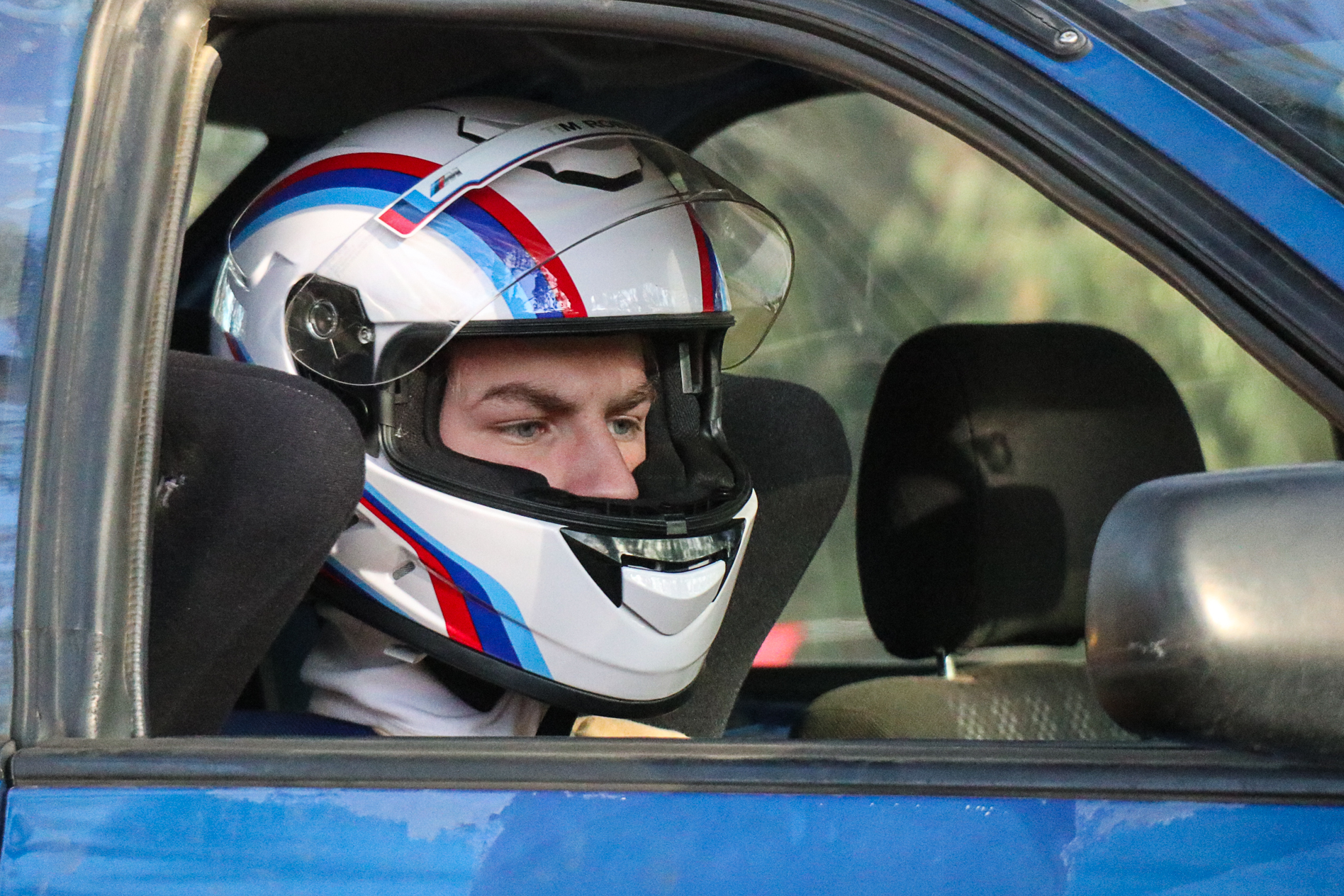
Max waits for his go
I roll down to the starting queue, a Holden ute with a canopy and extension ladder in front of me and a dishevelled Subaru Outback behind me. “Yeah, it’s my mum’s old car,” the high school-age Subaru driver tells me. “We crashed it last time we were here.”
She’s sharing the car with her dad; there are a lot of parent/sibling teams on hand, thanks to the fact a kid can get a CAMS licence at 14.
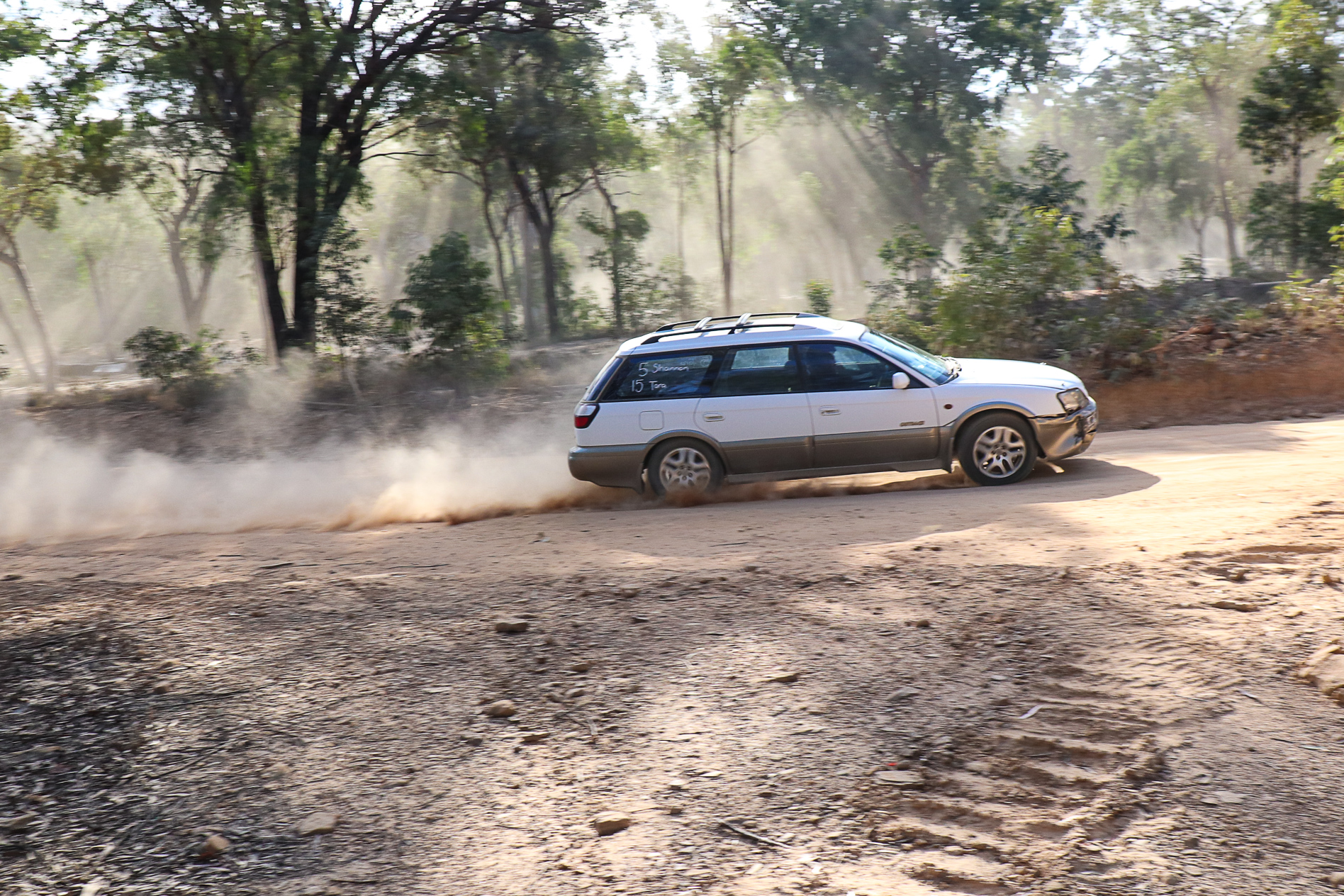
“Hey! Bring my car back! I need to go to work!”
Too soon I’m at the start line, and I get set to take off. “Make sure you only pass the finish line three times,” is the final instruction. Erm, where is that again?
The Impreza’s clutch is a bit how’s-yer-father, but the brakes work really well, there’s no traction control at all and the exhaust seems to be missing entirely as I charge up to a long left-hand downhill turn. The rally tyres find amazing amounts of grip and the car is surprisingly well behaved, and soon I’m having the absolute time of my life.
I almost spear off the track into the undergrowth when I slot fourth instead of second and slide into a dirt berm, but I recover sufficiently to record a top-ten time, which absolutely blows me away.
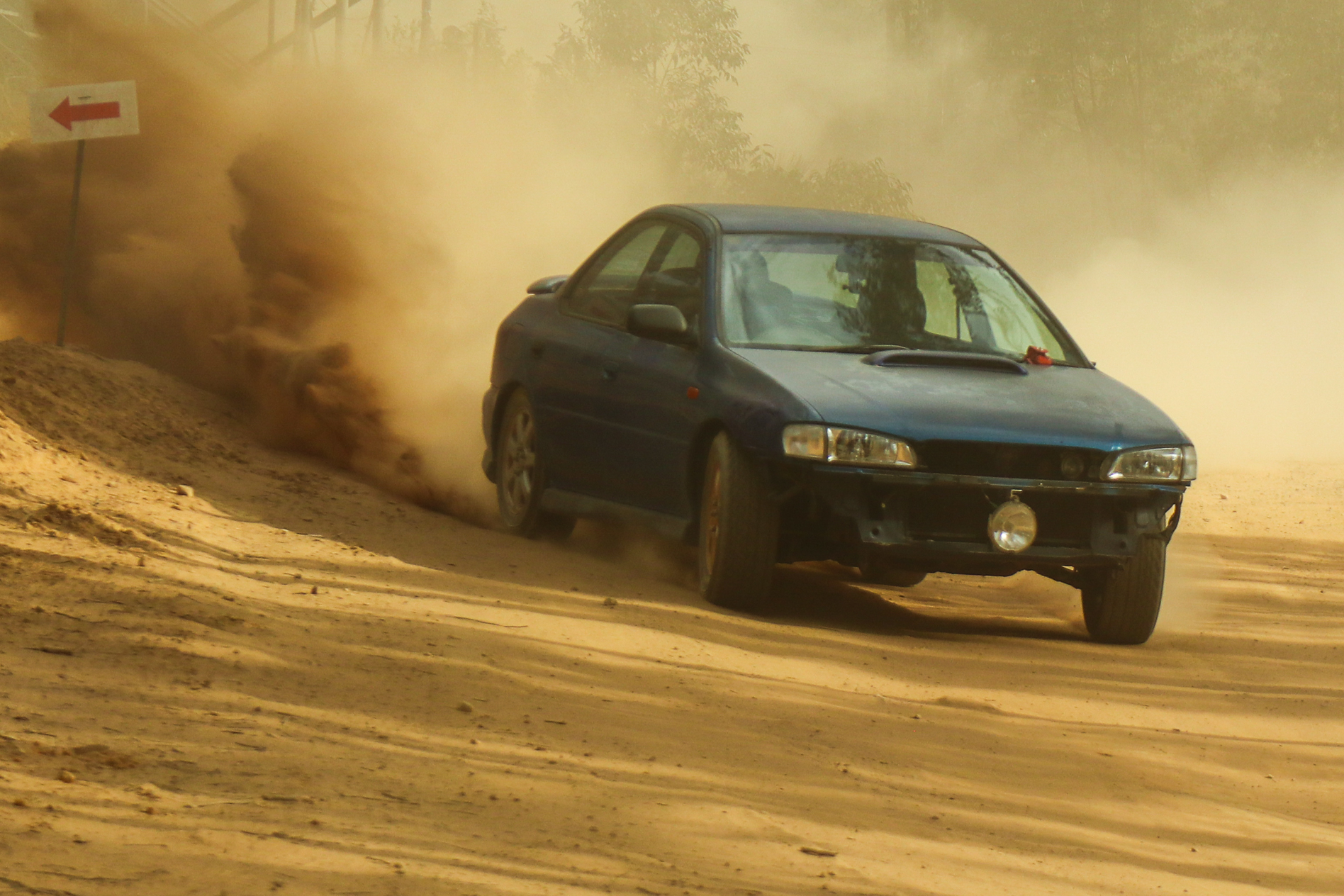
SKIDS!
Dave manages a huge spin during one run and demolishes a star picket on another, while junior-aged Max kills it, mere tenths from Dave and I’s times on most of his runs.
He did try and mow down some spectators in the infield when he misjudged a corner entry, but they didn’t seem to mind.
We power through the day and into the night, and the times tumble. The dust becomes a real drama at night, with not a breath of wind anywhere to clear the way, but overall, the day is a non-smashing success. Well, for most people.
Autocrosses are easy to find, and if our day was any indication, newbies are welcomed with open arms and loads of helpful advice. Beats a night out at a fancy restaurant hands-down, too.
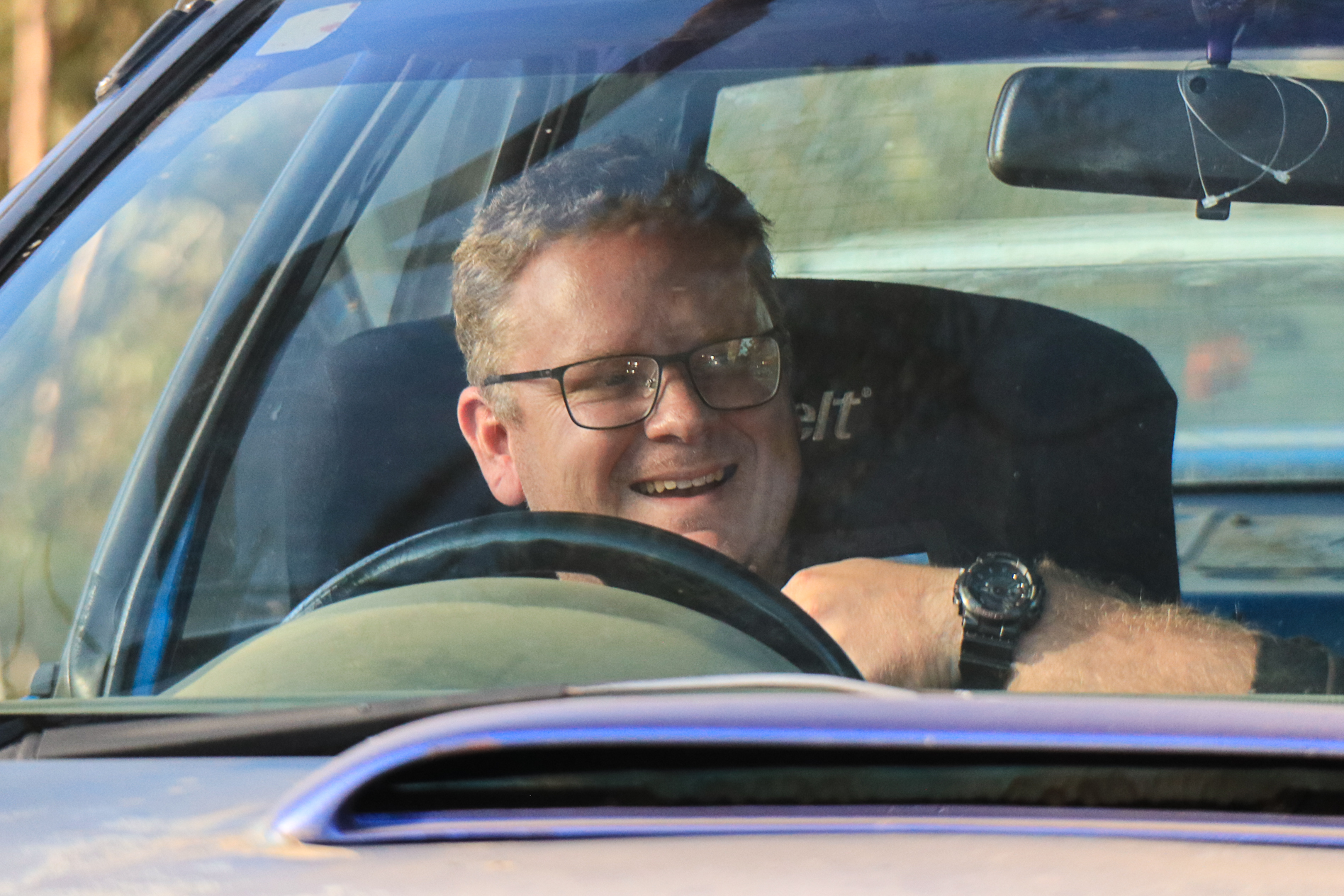
Car owner Dave, laughing in disbelief that his car is still in one piece
How can I get involved?
If we want to build our own autocrosser – and I think we may just do that – there are a surprising number of cars out there that have been declared a write-off for the most minor things.
Hail damage is the main culprit, and offers the advantage of the car (usually) being in pretty good shape. We’re already eyeballing Mazda2s and Ford Fiestas for little more than $500. A set of second-hand rally tyres can be had for $200 or so – call it $400 if you need wheels.
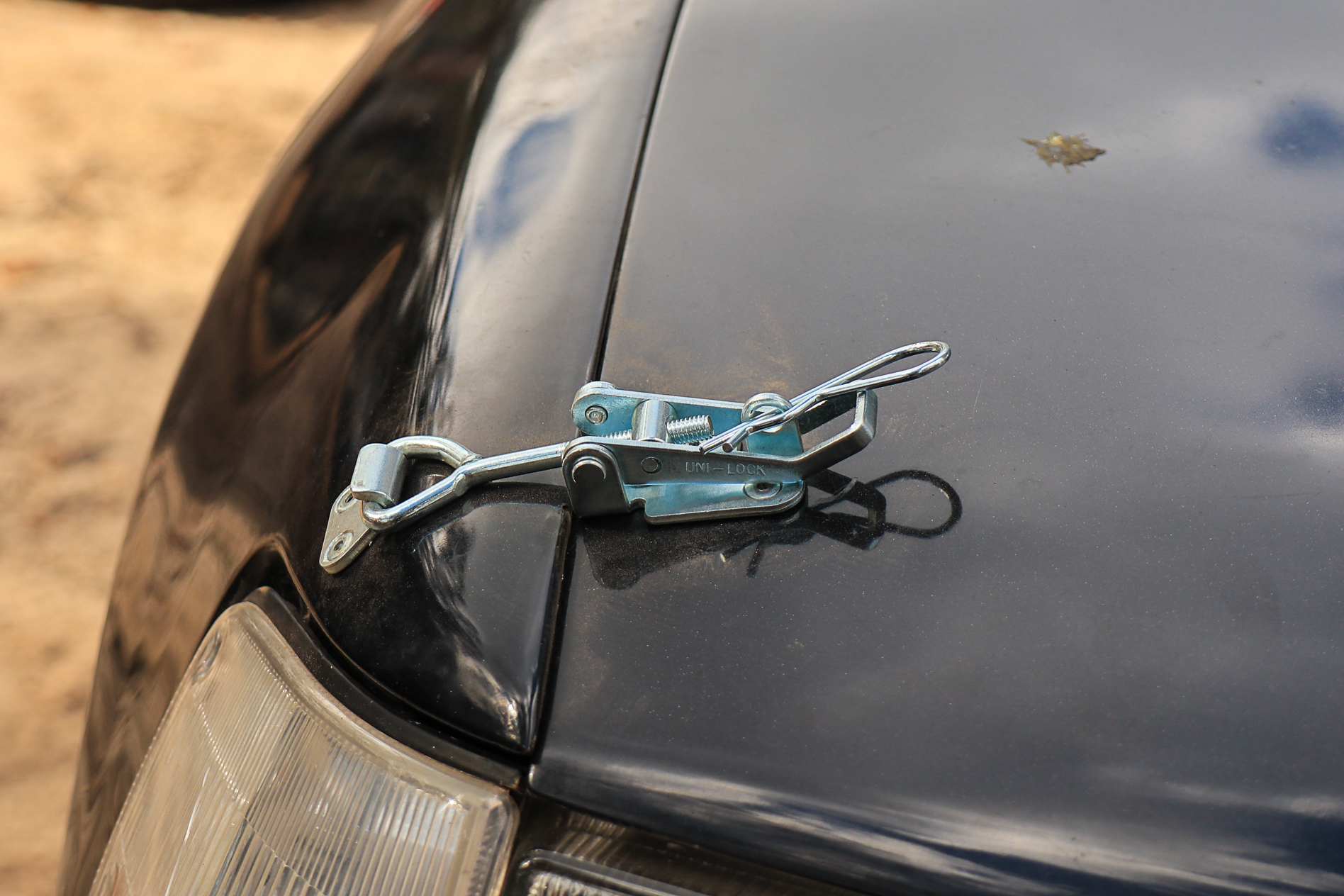
Grab an extinguisher from a hardware store for twenty bucks, and figure out a way to add a secondary bonnet restraint – I saw elastic straps and a gate latch being used – and you’re good to go.
Safety is important, of course, and a surprisingly decent helmet can be bought for less than $200. Jeans and a long-sleeve cotton tee will complete your basic ensemble, and Vans-style flat sneakers are far more preferable to joggers – more feel through the pedals, you see.
I’m a big advocate of using as much safety as possible, and we added proper fireproof gloves to our kit. Motocross stuff isn’t fireproof, so I would not recommend it in the confines of a car.
If we were to get serious about the sport, I’d add basic rollover protection to whatever car we chose (say another $600) and invest in second-hand race seats and harnesses. Interestingly, you can buy ‘out of date’ gear from more serious motorsport competitors, who are required to update safety gear after a set number of years.
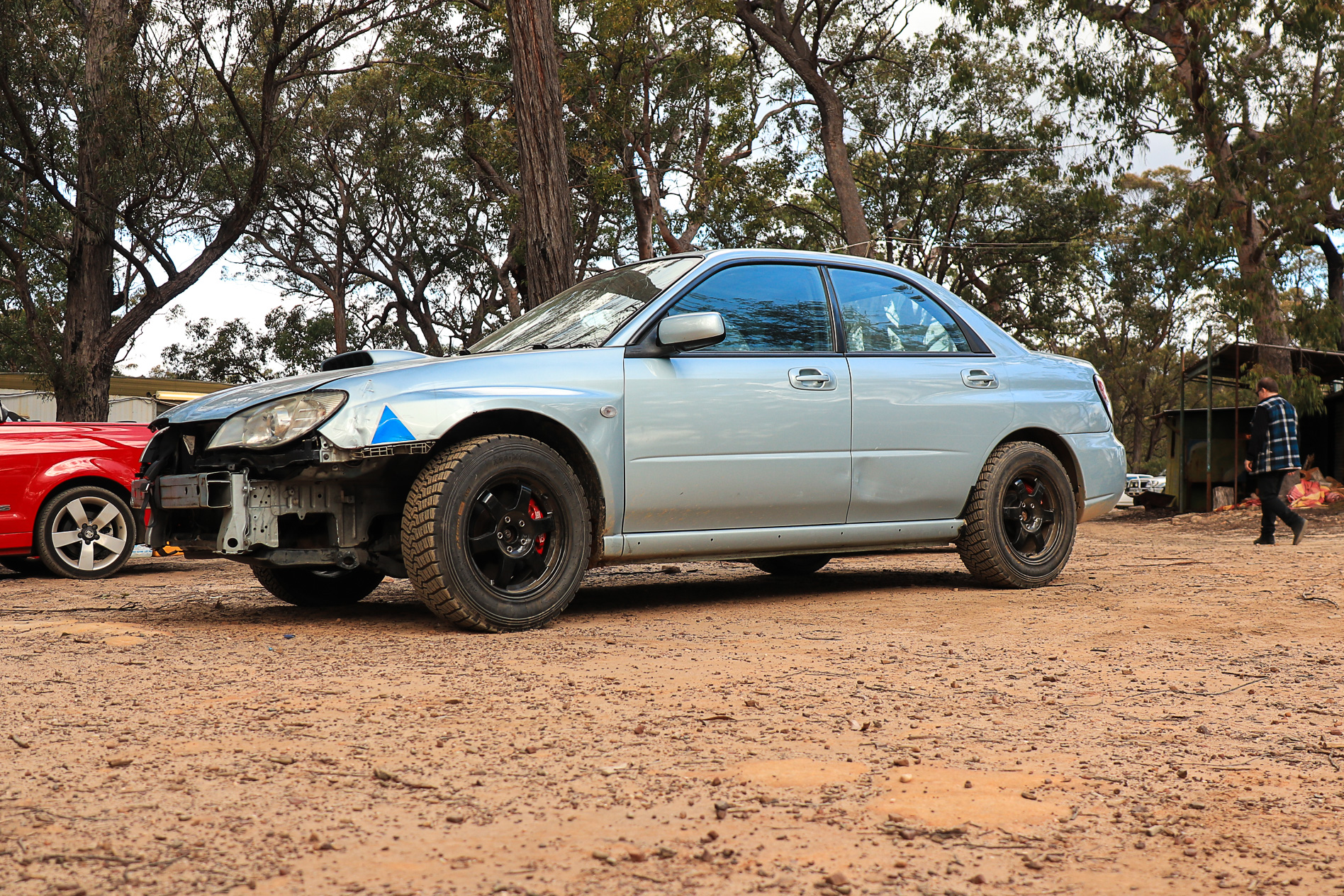
Rally tyres are a great addition
An out-of-date seat is much safer than the stocker in your beater, and unless they’ve been in a crash already, harnesses have very long lives outside of their motorsport body-sanctioned expiry date. Hint: keep them out of the sun when not being used.
Max and I already use HANS (Head And Neck System) restraints in other forms of racing, and it’s becoming a heck of a lot cheaper to buy a HANS device. Again, the classifieds are a good place to buy a once-used device from someone who tried the sport and didn’t like it.
Finally, a CAMS speed event licence and a club membership will cover the paperwork side of things for about $120 or so.
It may seem an impossible feat to predict the future, but when it comes to fuel prices, there are ways to find out the best possible time for you to fill up.
A petrol price cycle is defined as the movement in retail price from a low point to high point, and back to a low point again. The duration of this cycle differs throughout Australia, but generally, for the east coast, it lasts close to a month, while the west coast is a shorter cycle, being closer to a week.
Short term petrol price cycles are predominately governed by Australian retailers which, according to the Australian Competition and Consumer Commission (ACCC), are “the result of deliberate pricing policies of petrol retailers, and are not directly related to changes in wholesale costs.”
It kind of makes you feel helpless if they’re all in on it together, doesn’t it? But we can game the system by using historical data and current trends to predict the ideal time for you to fill your tank.
Let’s start with a few caveats. Ultimately, there are many factors that influence the end price of petrol at the bowser, including crude oil prices, exchange rates, tax policy, and supply disruptions.
Additionally, some of us burn through petrol sooner than others, rendering you helpless when your fuel light blinks on. In that case, you’ll just have to fill up, no matter the price.
For those of us who can sway with the cycles, it’s worth keeping an eye on (and bookmarking on your internet browser) the constantly-updated ACCC petrol fuel price guide.
Previously unavailable to consumers, recent court action allows the ACCC to list petrol price cycles (with the help of fuel price consultants Fueltrac.com.au) for Australians to monitor.
The ACCC provides fuel price graphs, fuel price trends and buying information for every state, allowing motorists to make informed decisions.
In the long term, GlobalPetrolPrices.com forecasts that there’s an unlikely chance that we will see significantly higher prices in the coming years. Due to burgeoning electric car sales and as environmental standards get tougher, it seems petrol might actually have to become competitive with alternative fuel choices, thereby stagnating or dampening increased end fuel prices.
They have also estimated that crude oil prices will remain steady well into 2020.
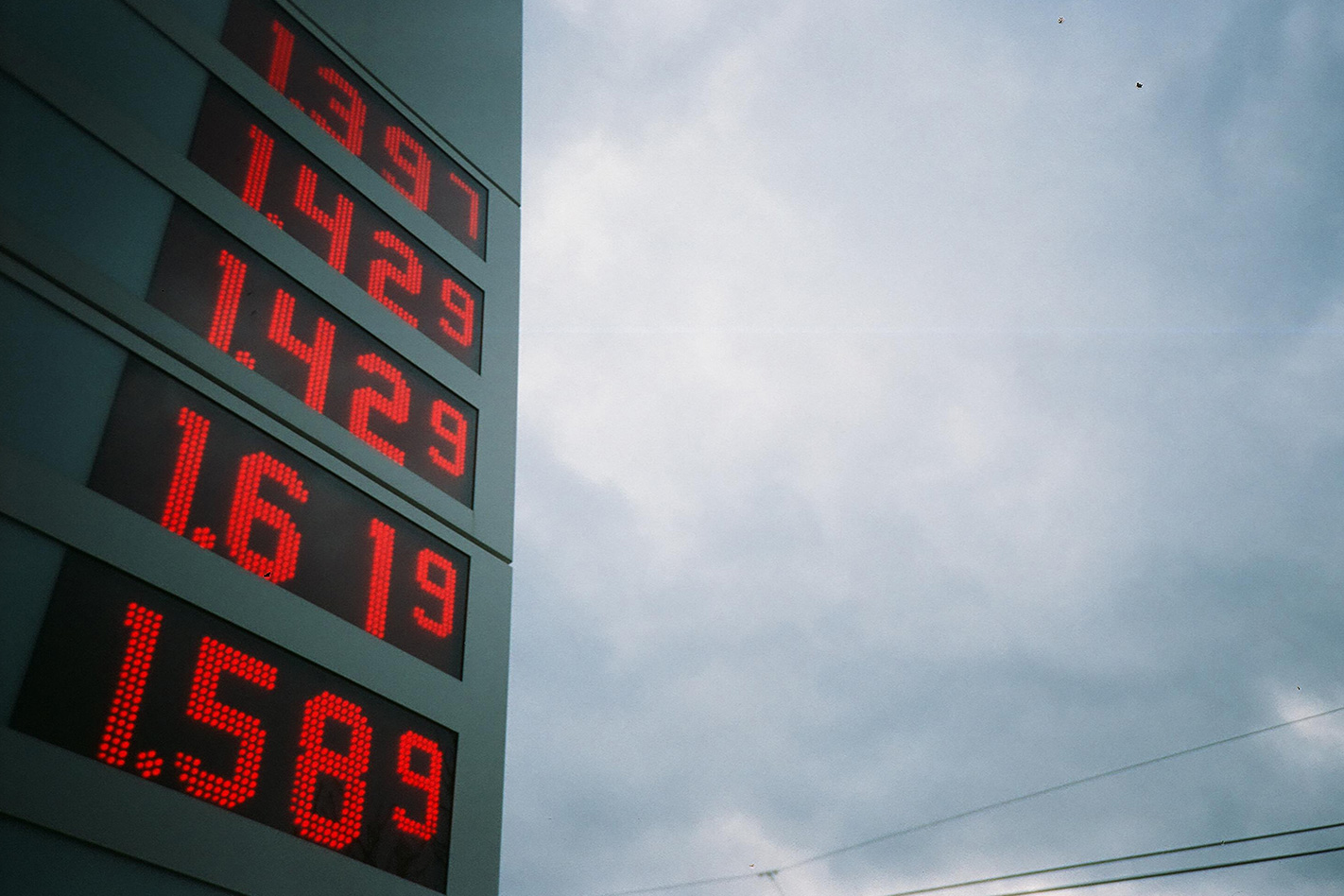
So, barring any unforeseen circumstances, Australian fuel prices should remain familiar to what they currently are for the time being.
If you’re keen on beating the Australian petrol retailers, though, keep an eye on the fuel price cycles which will give you an indication of when you should be topping up.
When Hyundai declared it would unleash a 3-Series fighter with its luxury sub-brand, Genesis, we bet a few of you thought ho-hum. The Genesis G70 is years late to the game, at least in Australia. Plenty of it is shared with a Kia Stinger. And Hyundai is not the first to launch an attack on the established German marques.
Plus, Genesis has failed to land any solid hits since the nameplate appeared in 2008. So why should the new G70 strike fear into BMW, Mercedes-Benz and Audi, if at all? Well, that’s what we’re here to find out.
Biermann, who was once in charge of BMW M, oversaw chassis development. Lavlova brought colour and trim expertise from Mercedes-Benz. Audi alumni Schreyer waved his experienced pen over design. Fitzgerald, from Lamborghini, steers the ship.
Better yet, their involvement is sweetened by some ripe ingredients. Underneath, engineers installed strut front and multi-link rear suspension. It’s shared with a Kia Stinger but with a shorter wheelbase, 2905mm versus 2835mm.
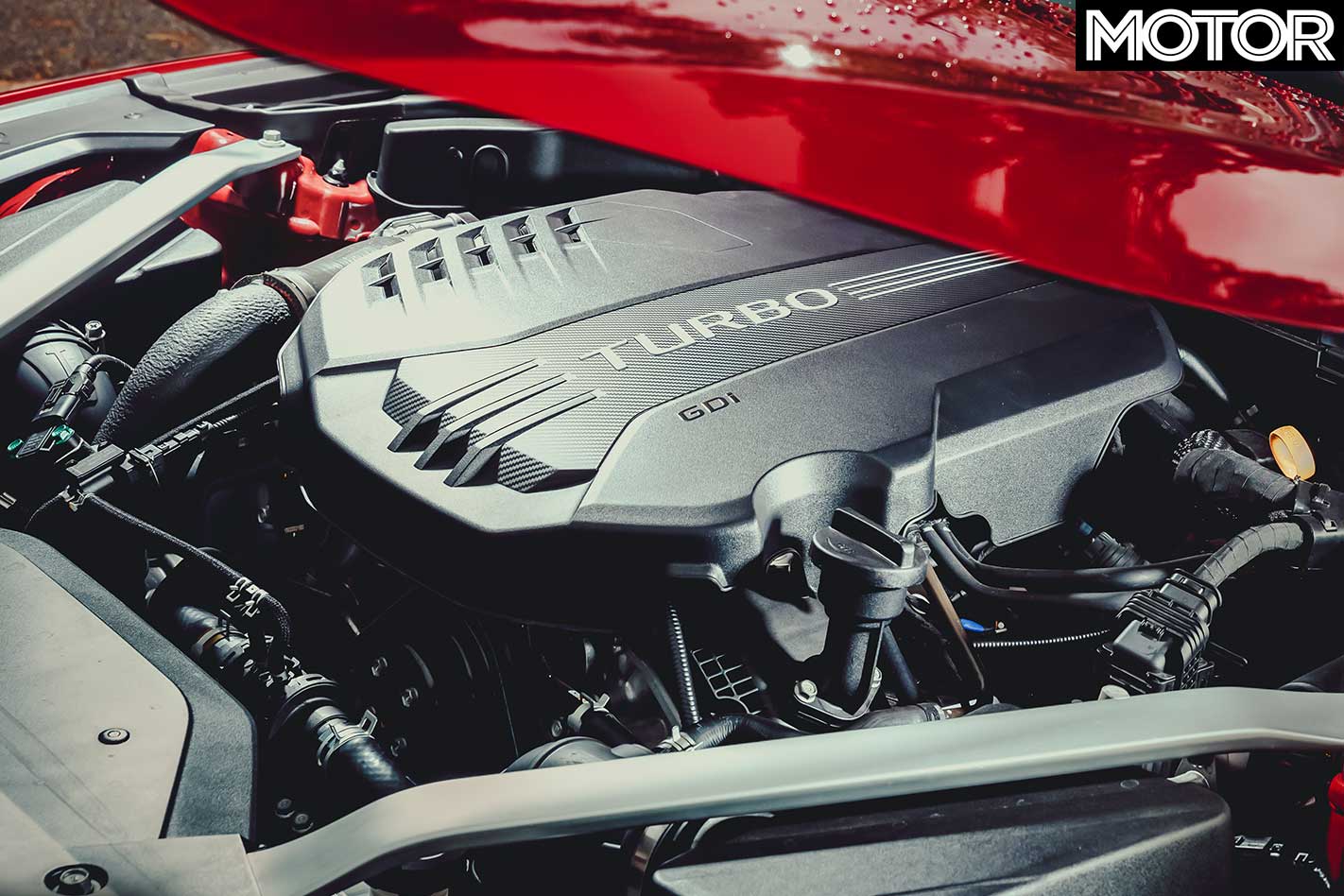
Aussies miss out on all-wheel drive and a manual transmission, at least for now, so it will launch with a choice of two engines driving the rear axle through an eight-speed automatic – a turbocharged 2.0-litre inline-4 and a 3.3-litre twin-turbo V6. Today we’re in the six-banger.
Two low-mounted turbos plumb boost into a 60-degree block to make 272kW at 6000rpm and 510Nm at 1300-4500rpm. This helps add 115kg to the base four-cylinder’s kerb weight, for 1719kg in total, but it can still dispatch the 0-100km/h sprint in a claimed 4.7 seconds. You’d need an all-wheel drive Audi S model to match that, yet also a lot more money.
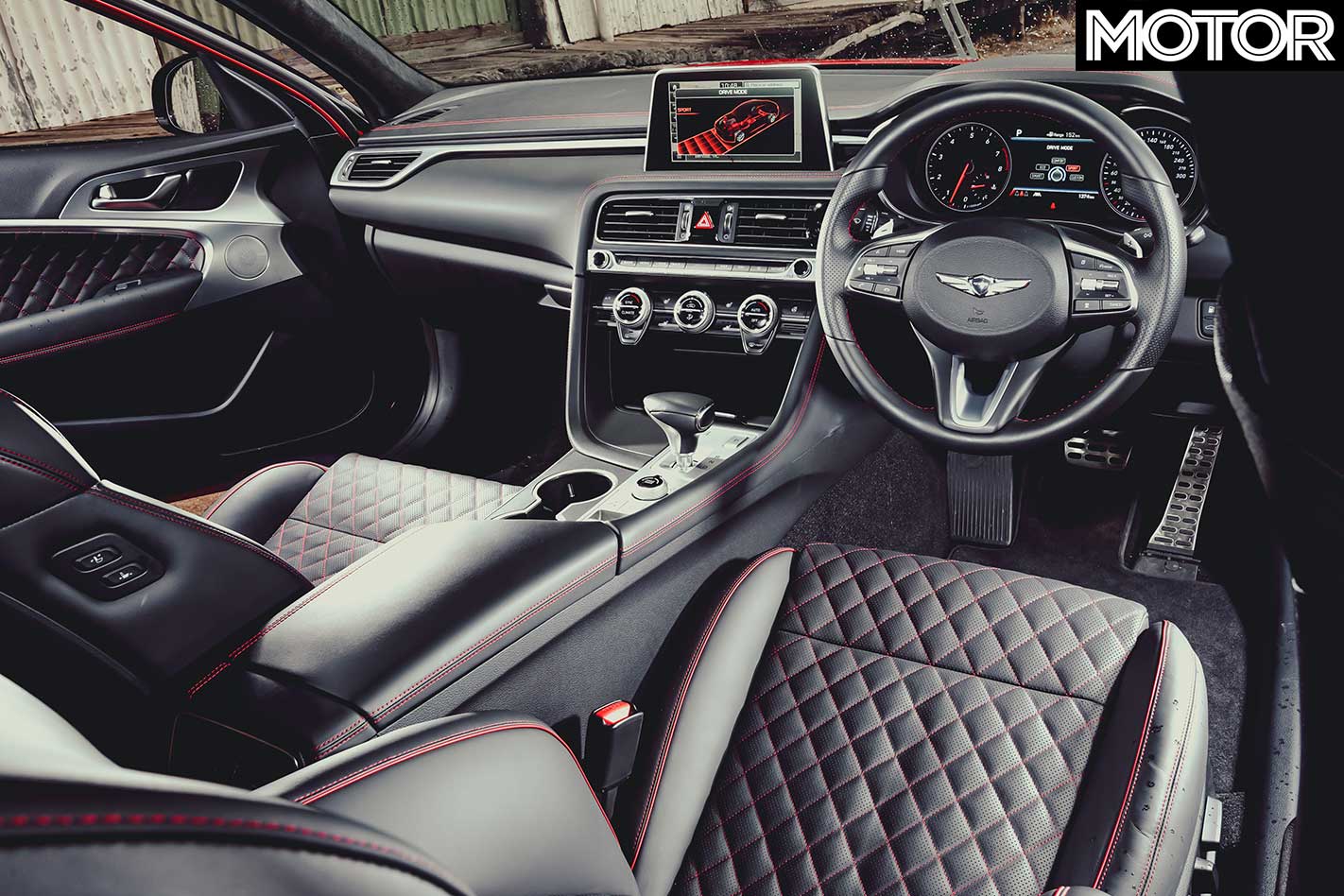
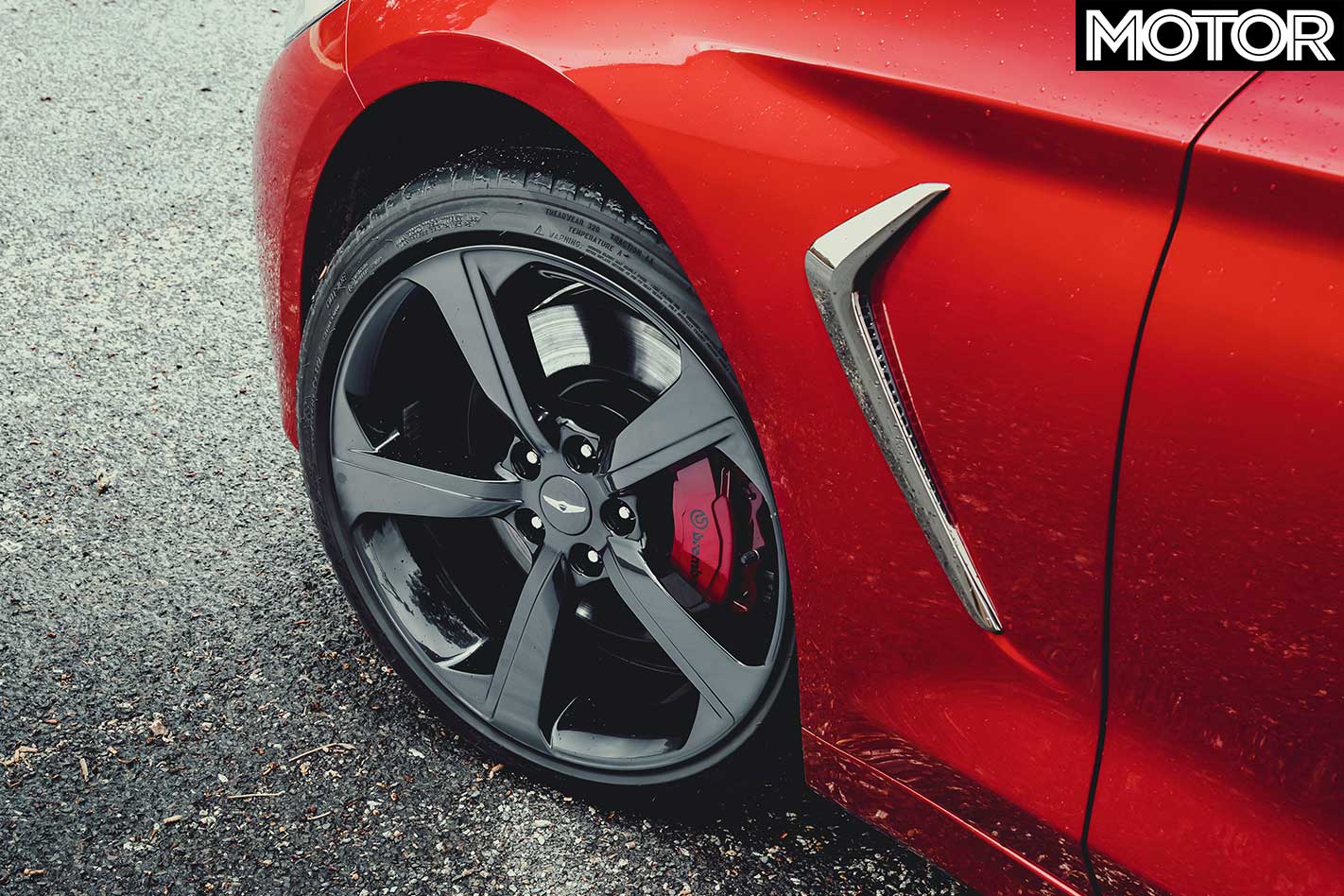
Before on-road costs and depending on grade, the six-cylinder charges between $72,450 and $79,950. Our Ultimate Sport sits at the top. It comes in an exclusive Havana Red, on unique five-spoke alloys, and welcomes you with cross-stitched Nappa-quilted leather seats. They’re gorgeous.
Adaptive dampers are exclusive to the 3.3T model, as is variable-ratio steering. But while big Brembos, a mechanical limited slip differential and 19-inch Michelin Pilot Sport 4 S rubber are limited to one grade on the 2.0-litre, they’re standard across the top Sport, Ultimate and Ultimate Sport grades in the 3.3-litre range.
Thumb its starter button and the engine wakes without much drama, quietly humming away under layers of leather and soundproofing. Pull the odd-looking gear lever down into Drive, then release. There’s also a launch-control function, so of course you’re going to try it.
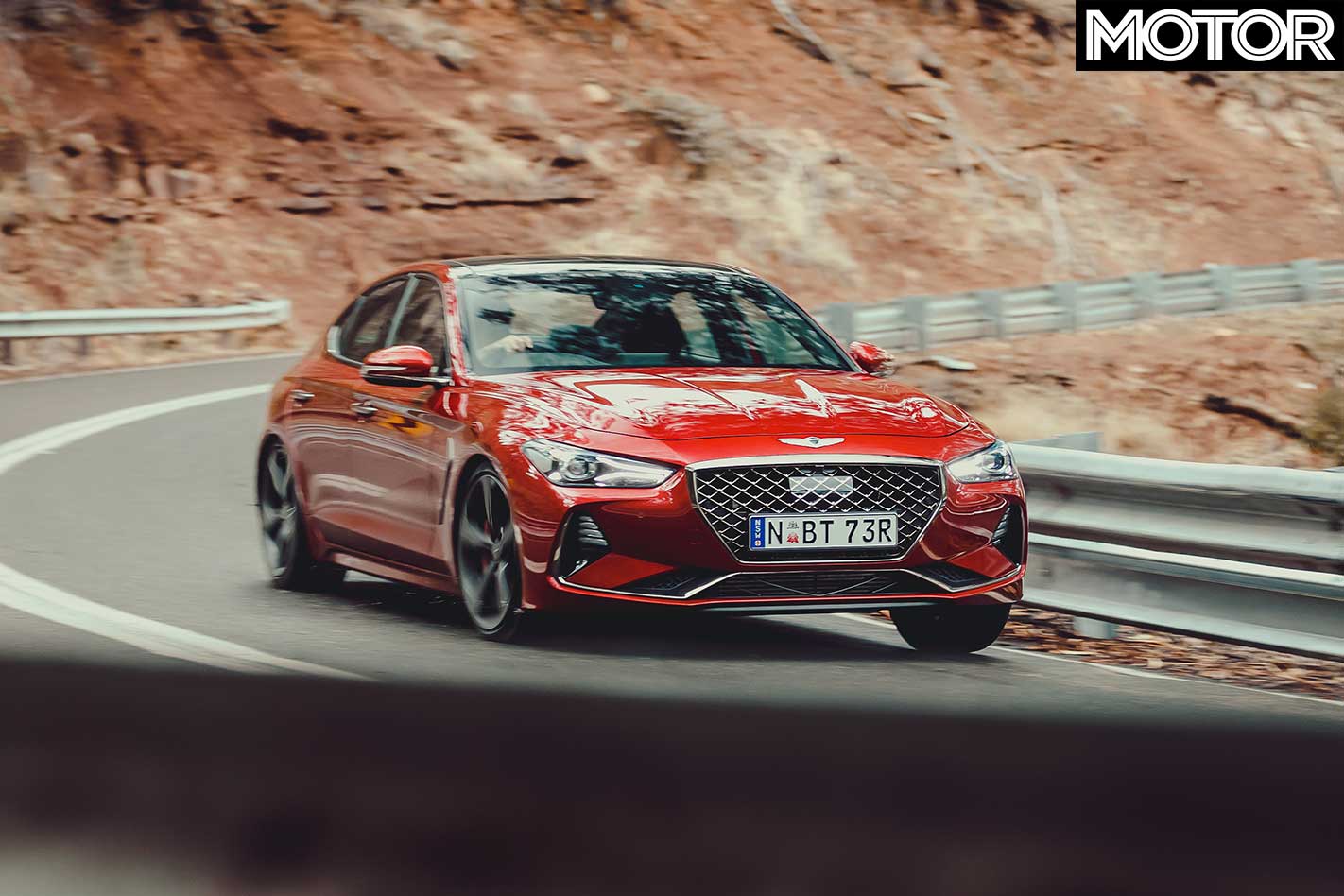
Stomp on the brake, in Sport, load the throttle and a chime rings to confirm it’s on. And at the 2100rpm stall a growl emerges from the engine bay. It’s remarkably undramatic when you release the brake. It surges forward and the rush of boost does little to upset the rear tyres.
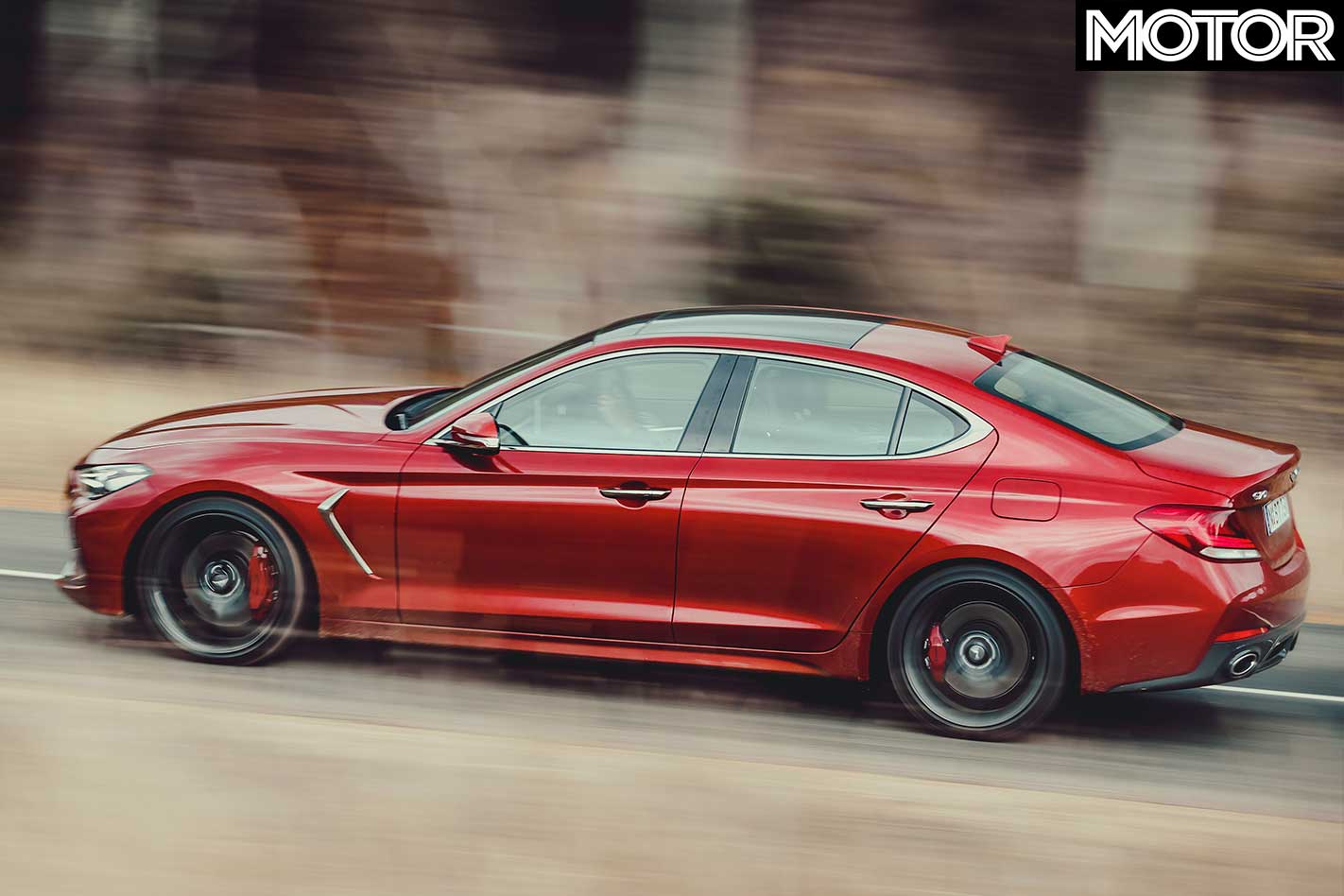
The car feels effortlessly quick, which should come as no surprise given the engine is shared with the Stinger 330S yet the car sheds a full-grown rottweiler’s weight (in base form). It charges harder as speed builds and that growl expands into a full-bodied, if slightly artificial, roar. Against the clock, triple figures arrive in 4.92sec and the 400m mark passes after 13.15sec at 173.19km/h. It will also punch from 80-120km/h in 3.03sec.
It hauls down from 100km/h to rest in 36.29 metres at the other end of the strip. The brakes feel solid, too, even if we wish they would bite a little harder. They’re welcome on more winding roads where you need precise control of its weight.
Despite the aluminium in its bones, the G70 is hefty. The new BMW 330i and current Mercedes C300 sedan are each more than 130kg lighter than the 2.0-litre G70. But this only makes the Australian chassis team’s work on its handling even more impressive.
As with the i30 N, they perfected the chassis for our cruddy roads, taking more than six months to cycle through different springs, roll bars, dampers and steering tunes. And yet its classic rear-drive dynamics feel like they’ve been honed for much longer because it’s a wonderfully balanced thing, despite a touch of push into corners.
The variable-gear steering feels fluid in weighting and action, and even in damp conditions it holds the road tenaciously. But what’s disappointing is that its fancy multi-link rear suspension can’t save it from sudden power oversteer, especially in damp conditions.
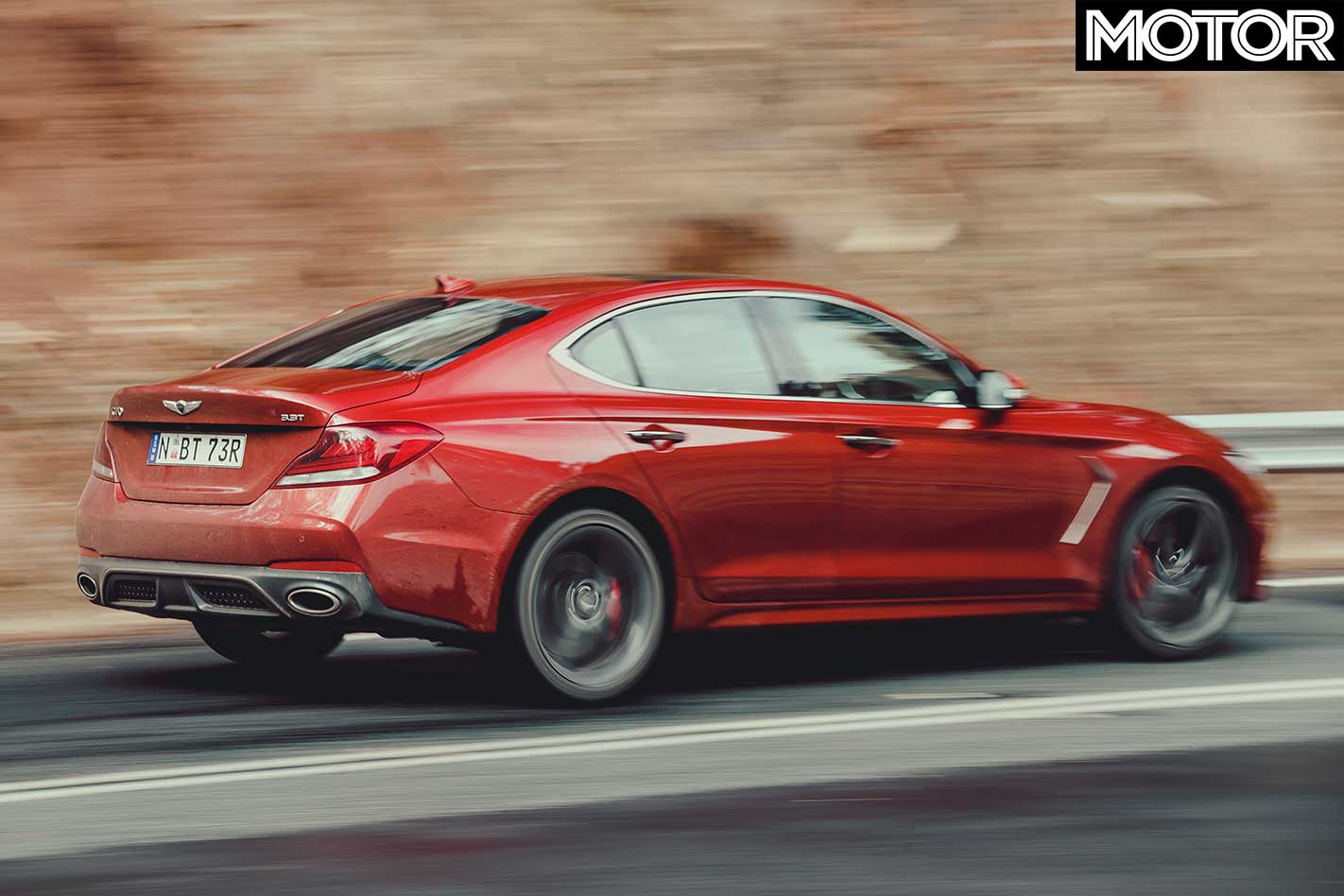
Ease on the throttle exiting a bend, as you wind back lock, and suddenly you’re sawing from right to left to keep it straight. It’s eerily similar to a Stinger V6’s behaviour, as if there’s no LSD at all.
This could be down to the inherent suppleness in the car’s set-up. It’s plain to see this is one of the best-riding cars under $100K. Really. Switch those two-mode adaptive dampers into Comfort through the dial on the console and it unlocks proper long-stroke absorbency. There’s even enough cushion in Sport mode when you’re attacking bumpy roads, helping to settle the car at corner entry and follow your selected path. Maybe Hyundai sacrificed rear roll stiffness to gain this supreme compliance and stability.
Sport mode offers performance pages on its cluster screen when you’re up it, with all engine vitals and real-time info on G-force put in view. The only technological fumble we find is with the transmission. It’s reluctant to stay in manual shifting and likes to hunt through ratios to settle on a nice fuel-sipping cog. It’s a shame because the paddles are genuinely nice to use.
The clean, functional interior balances symmetry and driver-focused design. One nice feature is a cavernous storage compartment in the centre stack with a small bed to wirelessly charge your phone, while the steering wheel moulds to your palms and its button pads feel soft, matte and tactile underneath your fingers.
However, it’s only a matter of time before you recognise parts from cheaper models. The steering wheel’s rim design, for instance, is identical to a Stinger’s. The cluster design and infotainment screens? i30 N.
The graphics on the page where you select your drive mode? Stinger again. And the same goes for the lettered markings next to the gear lever. All of which makes us paranoid about the familiarity of some material finishes. Even though it definitely looks superior to its cousins’ cabins, sharing is the reality for an entry-level luxury car.
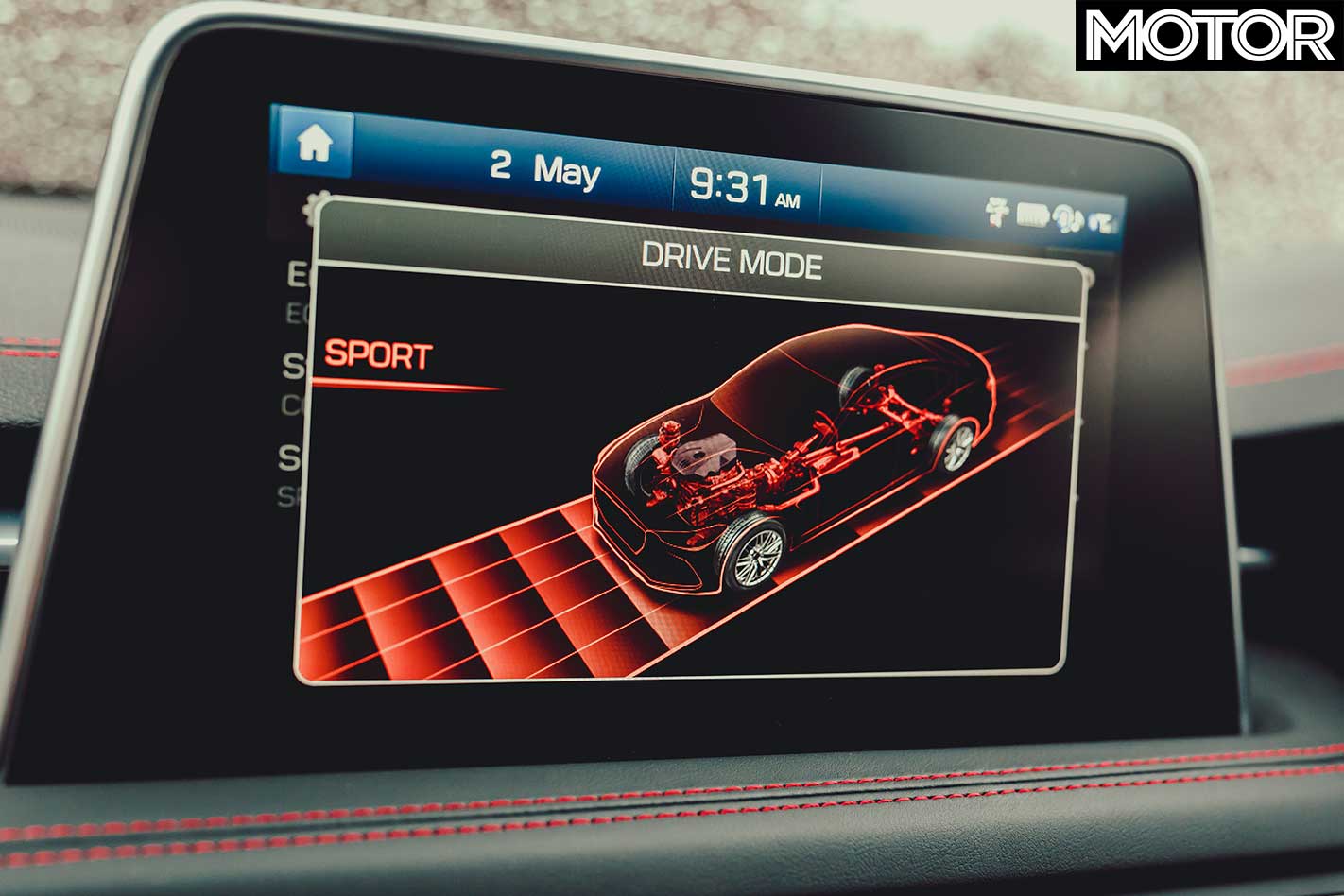
So, the G70 rides comfortably, handles tenaciously and goes like a proper twin-turbo rear-driver should. On top of that, it’s built solid, specified competitively and packs presence. Is that enough, though, in such a competitive class?
Before anything, Genesis stands in a long line of brands keen to stamp their mark in the luxury arena with a game-changing compact sedan. Just look at the Lexus IS 350 F-Sport, Jaguar XE R-Dynamic and Infiniti Q50 Red Sport.
The Red Sport steps forward as this car’s most natural rival. And, while they’re closely matched on straight-line performance, which is potent enough to challenge German sedans with proper performance badges, it’s the G70 that feels a generation ahead of the Infiniti on handling, ride and interior design. And although its sudden power oversteer is problematic, there’s something charming about the assumption you’re mature enough to handle its overpowered chassis.
The Lexus wouldn’t treat you the same way. Jaguar would certainly be impressed with the G70’s ride and handling, and perhaps even irked by its nicely weighted controls, interior NVH and ergonomics. Meanwhile, the build quality is ahead of Alfa Romeo.
This car’s appeal lies in being a cut-price luxury sedan that goes like a rocket. Add a strong warranty and customer care package and it stacks up as the pragmatist’s choice. It feels more developed and refined than its relative, the $59,990 Kia Stinger GT, to justify the $11K premium. As it should.
Where the G70’s powers start to unravel is against established opposition. Hopping back into an A4, C-class or 3-Series exposes the inferiority of its smaller details. For instance, you notice its snatchy doorhandles and chintzy glasshouse trim, along with the lower resolution touchscreen and derivative exterior design. Nit-picking? You must in the luxury world.
Early adopters would go for the new 3-Series, while speed cravers might stump up for the all-paw (and pricier) AMG C43. Status seekers or designphiles will stay loyal to an A4. They all are safe for now. But bet on one thing: no-one will think ho-hum if Genesis makes BMW M, AMG or Audi RS its next target.
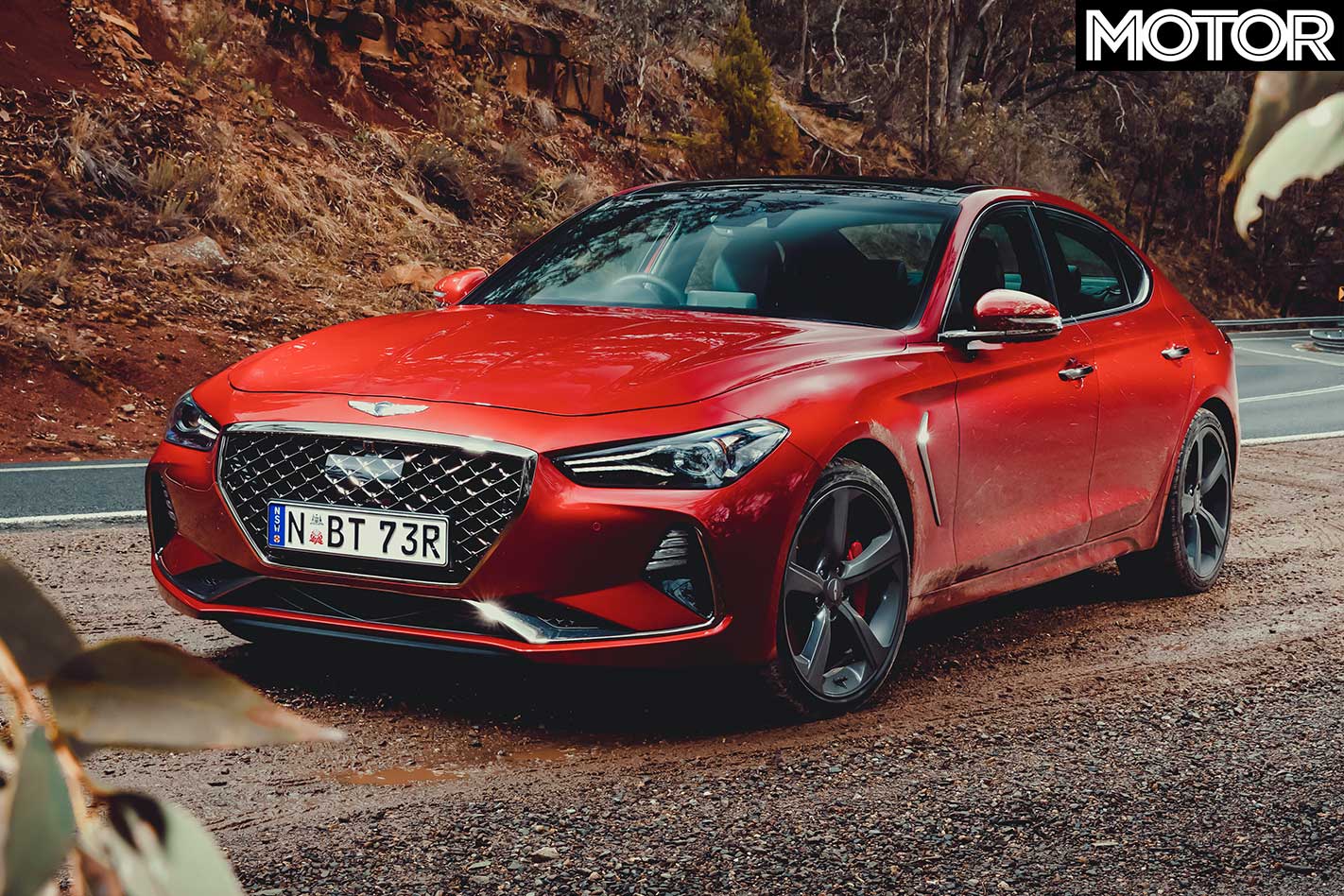
FAST FACTS 2019 Genesis G70 3.3T BODY: 4-door, 5-seat sedan DRIVE: rear-wheel ENGINE: 3342cc twin-turbo V6, DOHC, 24v BORE/STROKE: 92.0 x 83.8mm COMPRESSION: 10.0:1 POWER: 272kW @ 6000rpm TORQUE: 510Nm @ 1300-4500rpm WEIGHT: 1762kg POWER-TO- WEIGHT: 154kW/tonne TRANSMISSION: 8-speed automatic SUSPENSION: struts, coil springs, roll-bars, adaptive dampers (f); multi-links, coil springs, roll-bars, adaptive dampers (r) L/W/h: 4685/1850/1400mm WHEELBASE: 2835mm TRACKS: 1596/1604mm (f/r) STEERING: electrically assisted rack-and-pinion BRAKES: 350mm ventilated discs, four-piston calipers (f); 340mm ventilated discs, two-piston calipers (r) WHEELS: 19 x 8.0-inch (f); 19 x 8.5-inch (r) TYRES: Michelin Pilot Sport 4; 225/40 R19 95Y XL (f), 255/35 ZR19 96Y XL (r) PRICE: $79,950
PROS: Class-leading ride, feel of controls, stonking engine CONS: On-limit traction, perceived quality, weak noise RATING: 4 out of 5 stars
The Strip
| Genesis G70 3.3T | |
| 0-10km/h | 0.32sec |
| 0-20km/h | 0.79sec |
| 0-30km/h | 1.21sec |
| 0-40km/h | 1.59sec |
| 0-50km/h | 1.98sec |
| 0-60km/h | 2.50sec |
| 0-70km/h | 3.00sec |
| 0-80km/h | 3.53sec |
| 0-90km/h | 4.21sec |
| 0-100km/h | 4.92sec |
| 0-110km/h | 5.71sec |
| 0-120km/h | 6.56sec |
| 0-130km/h | 7.47sec |
| 0-140km/h | 8.61sec |
| 0-150km/h | 9.86sec |
| 0-160km/h | 11.19sec |
| 0-170km/h | 12.65sec |
| 0-400m | 13.15sec @ 173.19km/h |
| 80-120km/h (Drive) | 3.03sec |
| 100-0km/h | 36.29m |
| Speed in gears | |
| 1st | 65km/h @ 6500rpm |
| 2nd | 99km/h @ 6500rpm |
| 3rd | 148km/h @ 6500rpm |
| 4th | 200km/h @ 6500rpm |
| 5th | 238km/h @ 6500rpm* |
| 6th | 270km/h @ 6090rpm* |
| 7th | 270km/h @ 4740rpm* |
| 8th | 270km/hu00a0@ 4100rpm* |
Winton Raceway, 15˚C, dry. Driver: Louis Cordony Timing: VBOX Australia *Manufacturer’s claim
What is Land Rover’s DNA? For many, it’s an automotive helix spun around the farmer’s truck; a four-wheel-drive that was more comfortable in the paddocks than posing down High Street – even though later in life it would look good doing that too.
But the new Defender, due next year, which comes after 67-years of the previous-generation truck, won’t be anything like the old one. At least it won’t if you’re used to that charming country character.
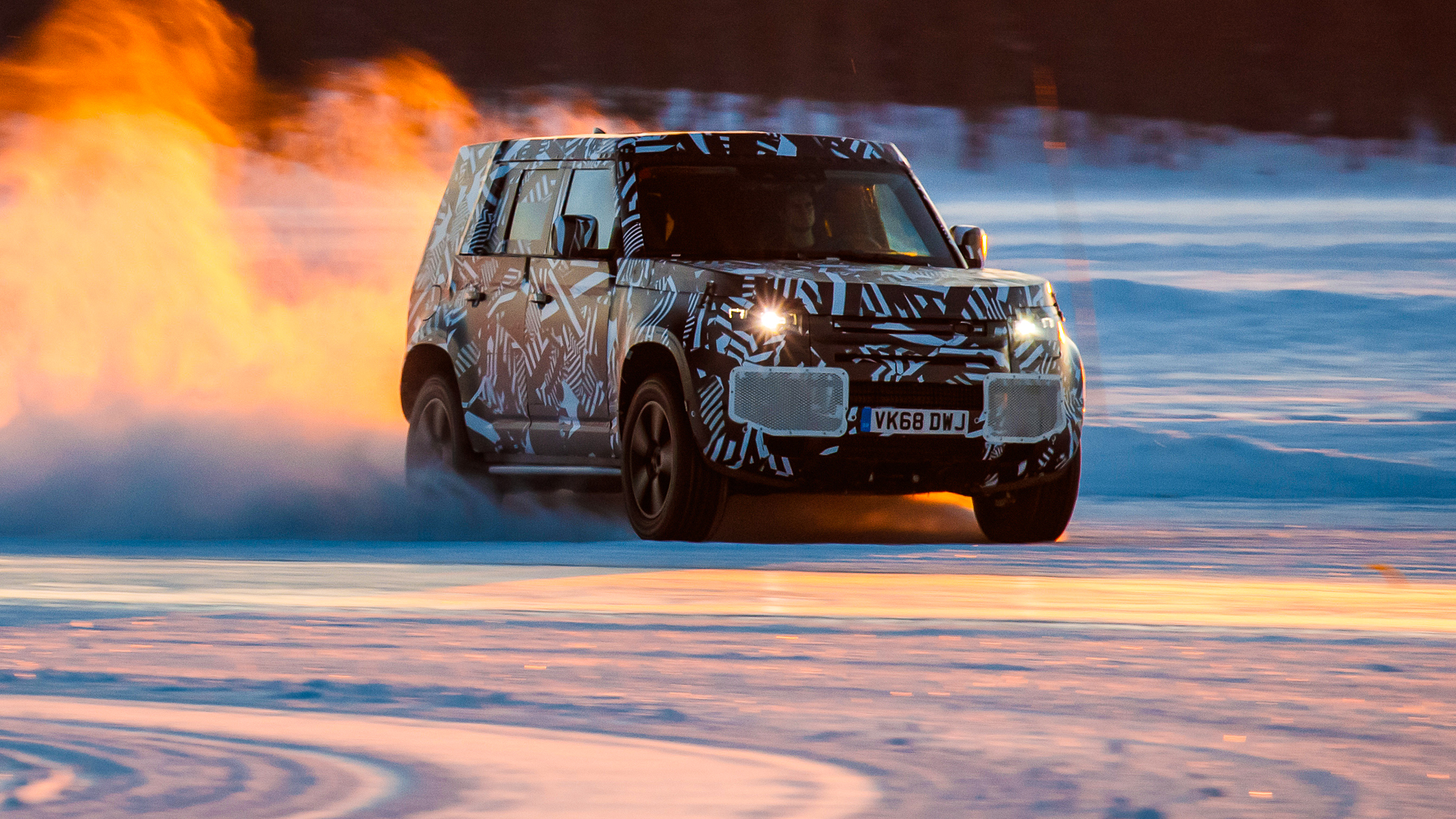
Speaking with Wheels this week, Mark Cameron, Managing Director for Jaguar Land Rover Australia, says that while the new four-wheel-drive will remain capable, its focus is to be a much easier steer in the suburbs, catering for a broader audience than before.
“If you look at the previous generation, and the generations before that, it started off as a farmer’s vehicle. [The new Defender’s] positioning is going to be slightly different,” he tells us.
“That first generation had so many different body styles; you could put a flat bed, a cherry picker on it if you wanted too. The amount of conversions that people did with the previous generation was huge.”
It’s no surprise then that the new Defender, which will adopt a unique version of the D7U aluminium monocoque chassis found in the Discover, will be oriented towards urban buyers. By contrast, the old Defender was a niche player in the Toorak tractor scene, a manual transmission and bare bones equipment limiting appeal. And lacklustre engine emissions prevented JLR from selling it in important markets.
“Here’s the crucial thing, it also has to be modern. If you look at the old car in a rational perspective, it fell short of what many people expect these days, whether that be in safety or emissions, ride comfort, technology and connectivity, all those things.
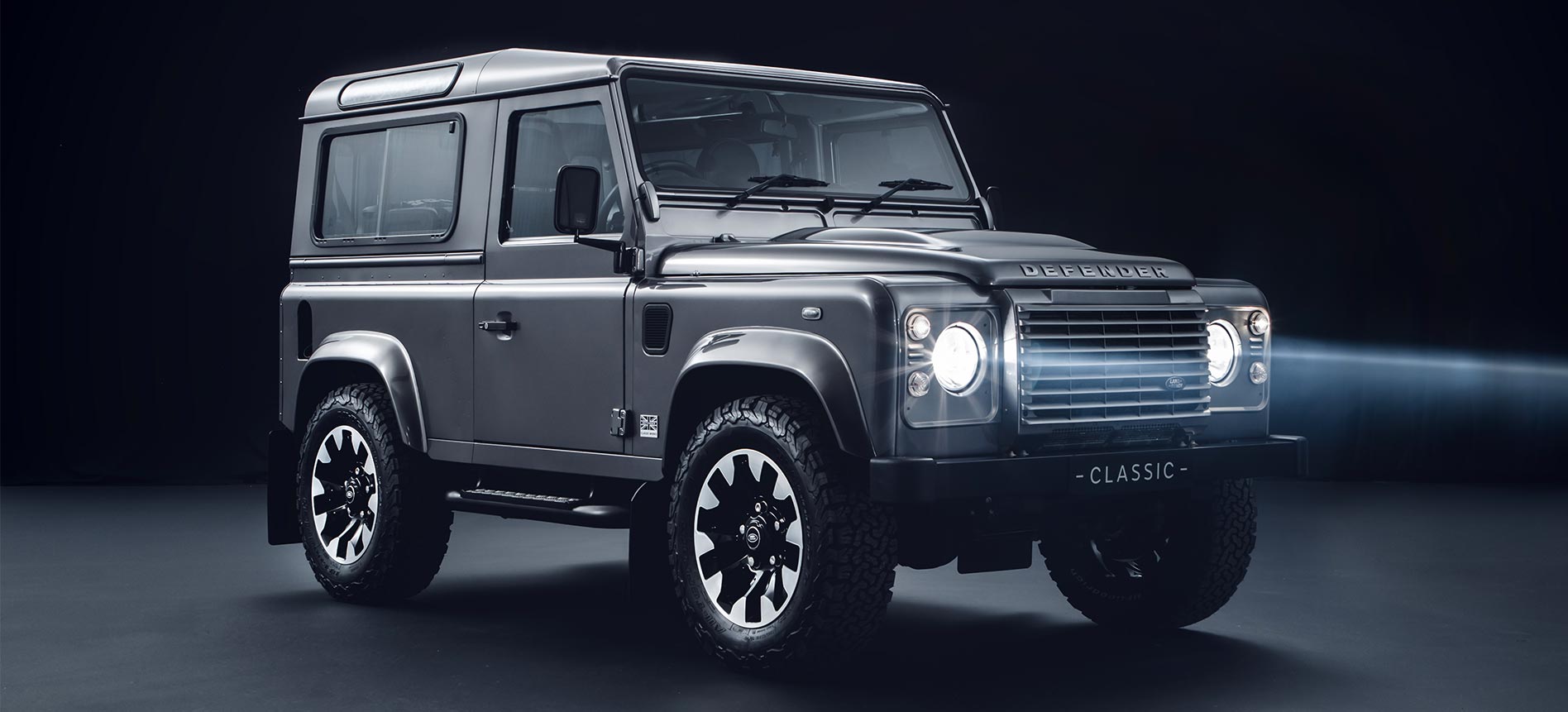
“The real challenge for our designers and engineers has been to find that sweet spot where you don’t lose the DNA of what people loved about the old defender, but you correct the era states, and things that people now expect and legislation demands,” he said.
“You have to remember that with the old Defender we couldn’t sell it in half the world. North America we couldn’t sell it, Europe we couldn’t sell it because of emissions, so we had to do something, and what I have seen of the car, I think it will talk to those people that want something that is Defender-eque but is also modern and comes with good on road manners.
But just because Land Rover are targeting a wider net of customers doesn’t mean it won’t be competent off-road, which has to be some of the Defender USP. In fact, Cameron tells us that the new model will be just as capable in the backwoods using new monocoque technology as it was on the old body-on-frame chassis. .
“Where this car will absolutely meet the DNA of the previous Defender is in the durability and capability. But it won’t be the traditional farmer’s vehicle that it once was.”
TUESDAY EVENING: As I lean against the Boeing’s window, transfixed by the sunset punching through clouds, I ponder what any normal person would in the situation – is the station wagon really dead? I’m flying to Adelaide for a rendezvous with Holden’s new VE Sportwagon and I can’t help but feel that there’s never been a more appropriate moment for a solution to the Toorak Tractor.
This feature was originally published in MOTOR’s September 2008 issue
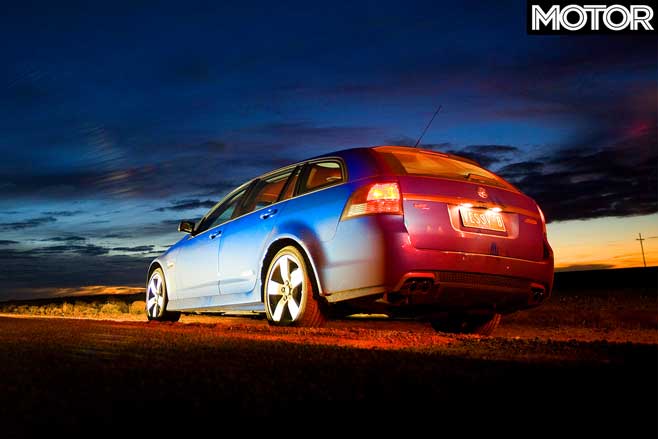
Which brings me back to the Commodore Sportwagon. It’s the anti-dag load-lugger with an emphasis well and truly on ‘sports’, but still packing enough versatility to make the whole exercise worthwhile.
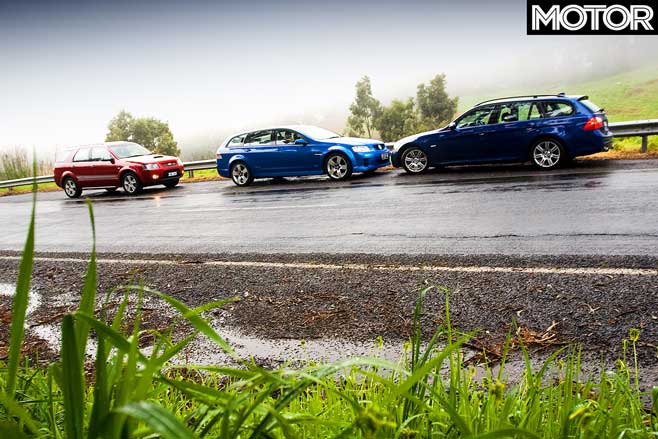
And seeing we’re heading all the way to South Oz to drive it, what’s stopping us attempting a true-blue Aussie road-trip – Adelaide to Sydney, via Broken Hill, in an automatic SS V Sportwagon – and why not bring along two like-minded alternatives?
After some deliberation, we decided on a Ford Territory Turbo and a BMW 335i Touring. Even though neither is an obvious competitor, the Ford is the closest alternative in terms of space and power that also has a toe dipped into the SUV pool, and the BMW is simply our benchmark sports-wagon, even though at $108,600, it’s almost double the price of the Holden ($55,790).
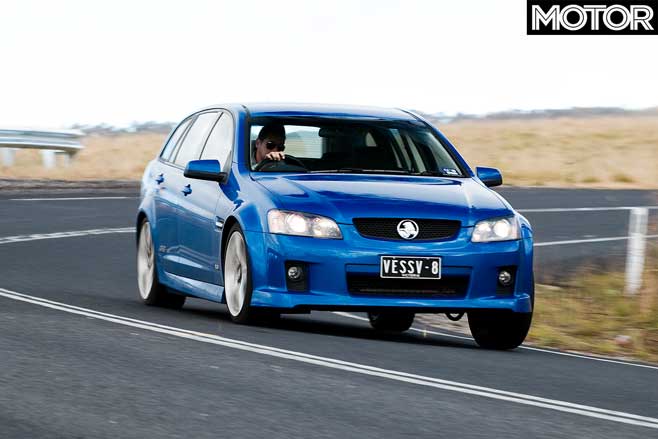
As photographer Wielecki and I wait on the footpath outside Adelaide airport, I spot the projector headlights of our Voodoo-blue SS V Sportwagon in the distance. On approach, Editor AMac in the hot seat, it looks like any other VE, but once the profile comes into view, it appears shorter than I remembered from the Sportwagon’s two previous motor-show outings.
But she’s definitely fit – well-proportioned and nicely toned, without any visual flab. Strangely for Holden’s home-town production base, though, barely anyone takes any notice of her as we perform several laps of the airport marking time before collecting our final pilot, Warren Luff.
Being, in all honesty, a massive car nerd, I notice some minor interior changes in the Sportwagon – stuff like the re-drawn red ancillary dials above the centre air-vents that now show battery voltage, oil temp and oil pressure in actual digits instead of just voltage and oil pressure in useless bar grids. And the shamefully stingy deletion of courtesy lights in the glovebox and centre-console bin. In mean, come on – that’s on par with stealing chocolate from a baby. My 1967 HR Premier mightn’t have much, but at least it has a glovie light.
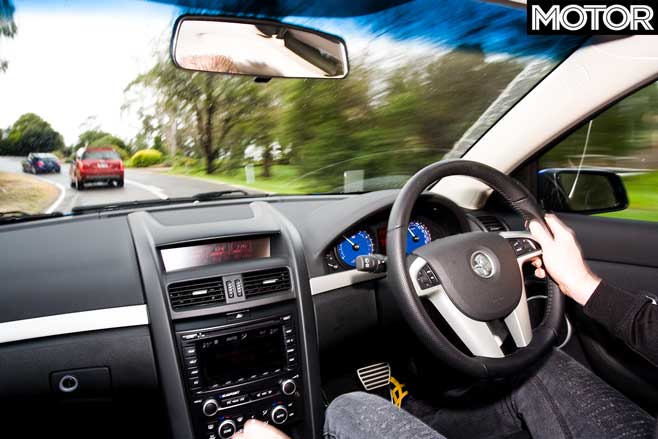
WEDNESDAY: The four of us pack into the Holden and head for Adelaide’s – and South Australia’s – sole BMW dealership to collect the 335i.
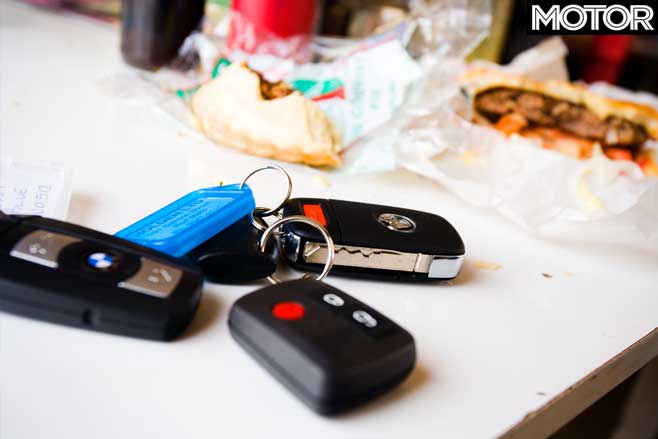
As we park nose-in next to the workshop, the BMW mechanics show unexpected interest in the Sportwagon and one comments that he likes how you can hear its V8 burble at idle, “because you can’t hear anything in a 5 Series”. When the 335i Touring emerges, it’s obvious the pre-delivery crew’s minds were elsewhere, too, because the car is filthy and needs fuel.
To save time while the Beemer gets detailed, we head to a nearby Ford dealer for our Territory (or F6X, as it turns out). Compared to the austere minimalism of the German digs, the Ford joint is like a massive step back in time. The service desk is simply someone’s ‘work station’ facing the door, with half a dozen other desks scattered behind it filled with blokes who are all busily working. The ‘customer lounge’ consists of five vinyl-padded seats skirting a narrow waiting area to the left, all facing a large fish tank containing, of all things, a turtle.
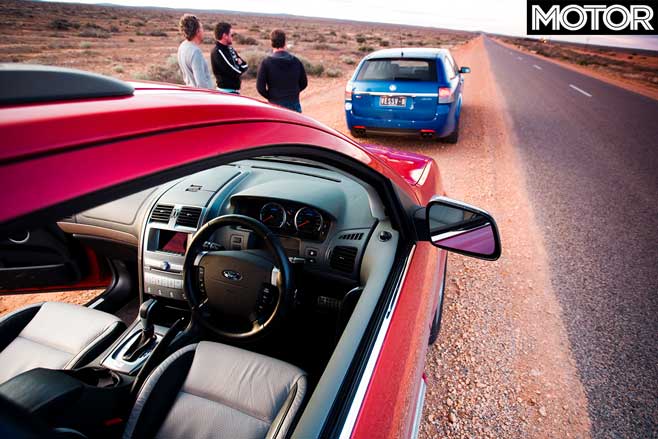
“We’re here to pick up an FPV Territory for MOTOR magazine.”
“Okay, just have a seat while we try and find it”, replies the service bloke, so we spend the next 10 minutes mesmerised, seeing how long the turtle can hold its breath and wondering what does in its spare time. It’s actually a brilliant relaxation tool – visual Valium while you wait – and probably the only area where the Ford outfit manages to one-up the BMW franchise, but they do happen to share one thing in common…
“So, do they normally give them to youse clean and full?” asks a bloke from the workshop, Territory keys in hand.
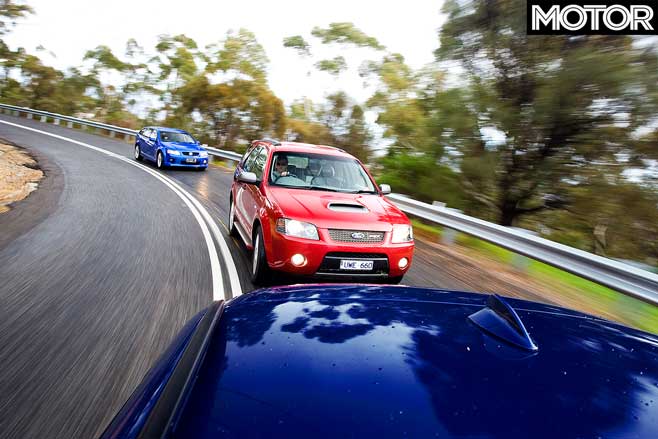
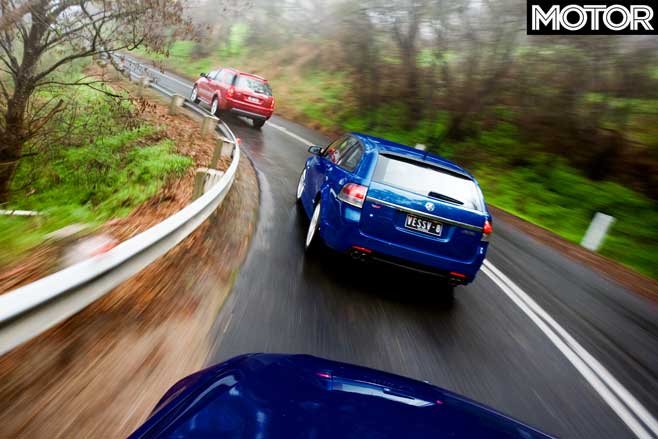
We eventually depart Adelaide in light drizzle and fog, and head east along the brilliant Lobethal Road through instant curves and painted hills to Lobethal. With traffic scarce, we’re instantly into it, and despite the moist road surface, all three cars impress with their wet-weather talent.
You’d expect the all-wheel-drive Territory to nail a wet road, and it does, with great poise and ample grip, even on its un-sporting Goodyear Fortera tyres. But the big surprise is just how quickly you can hustle the Holden and BMW while barely troubling their excellent ESP systems.
Corner-exit power down from both rear drivers is absolutely first-class, and even somewhat similar in feel. The outside rear wheel figures prominently in the balance of each car, but unless they’re actually provoked, oversteer is rarely an issue. When the back ends do start to slide, it’s always a progressive movement and because the communication from the BMW and Holden’s rear suspension is so crisp, it’s confidence-inspiring, too.
In order to ensure the Sportwagon does what it says on the tin, while still being able to carry a load, Holden has actually made the VE wagon’s suspension stiffer than the sedan’s. In the sports model’s case (SV6, SS, SS V), spring rates have increased by 23 percent and the rear suspension now includes three cross-axis ball-joints instead of two to optimise two-link stiffness.
Despite an 82kg increase in weight for the SS V variant, the Sportwagon’s structure isn’t quite as rigid as the sedan’s – as is the case with a wagon bodystyle – but an additional crossmember that runs across the floorpan just behind the rear seat achieves most of what a rear bulkhead and parcel shelf do.
The result of the suspension revisions is an even better drive than the sedan. Body control feels a bit tighter and the Sportwagon seems to corner slightly flatter, though the difference isn’t huge. What can’t be ignored, though, is the SS V Sportwagon’s ‘intimate’ ride quality. Riding on wheelarch-filling 19s, it jostles over urban scars and feels pretty firm, but unless you’re very old and hyper-critical, you couldn’t call it uncomfortable.
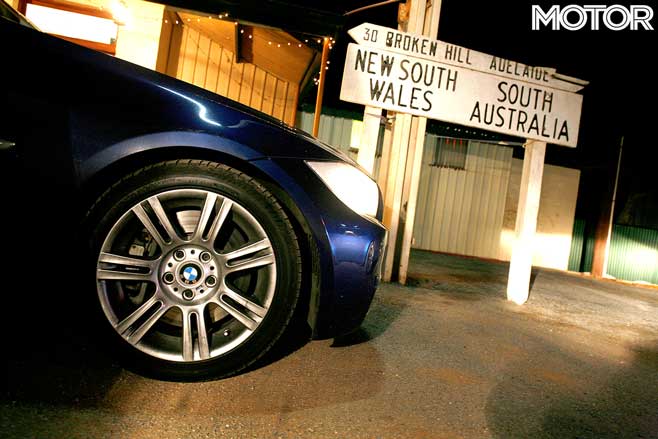
The BMW’s the exact opposite. Despite the test car’s M Sport pack, the 335i’s chassis is actually quite supple and does a respectable job of absorbing bumps in town, even wearing run-flat tyres, but at higher speeds on outback Australian roads, things start to unravel.
As we leave our lunch stop at Gawler and head north on the Barrier Highway, the rumbling road surface introduces some abrupt undulations and the BMW pitches up and down on its recommended 32psi-front/38psi-rear tyre pressures, and at times even flashes its ESP light, even though we’re on a straight road.
The mis-match between the stiffness of the tyre sidewalls and relatively supple suspension means that I can feel the BMW’s vertical motions sloshing the pie, sausage roll and snot block I inhaled for lunch around in my guts. Thankfully, I don’t get car sick.
As the day progresses, three very different characters emerge. The Territory, even in stiffened FPV F6X guise, proves a superb open-road cruiser. At speeds that probably shouldn’t be mentioned (and won’t be) out on the reasonably straight, mostly deserted Barrier Highway heading north-east to Broken Hill, Ford’s sportiest SUV is in its element.
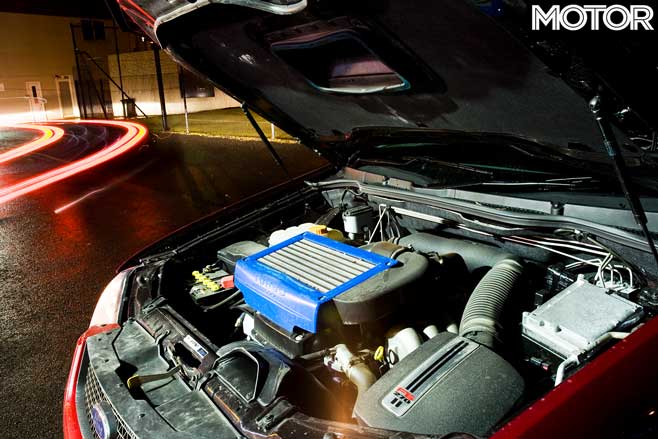
Its ride quality is superb, yet for something that weighs 2155kg, it feels light on its feet through the few curves we encounter, and its 270kW turbo six packs big-time overtaking thrust. Great seats, too, and an unrivalled view of the breathtaking shapes and colours on display, but with one limiting factor – fuel consumption.
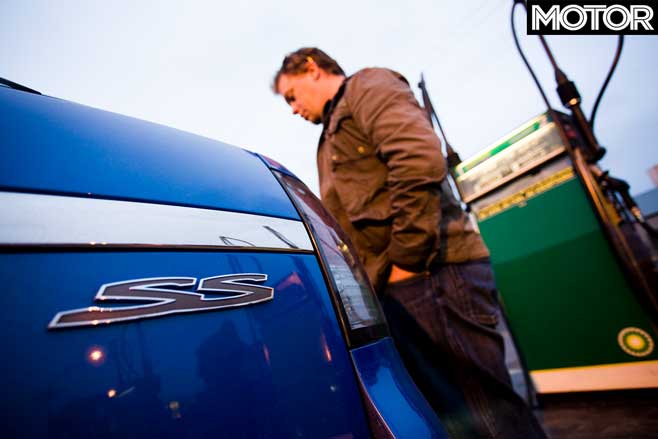
Our aim is to plan re-fuelling stops around the BP servos that stock 98-octane Ultimate. The boys at the office email suggested stops to AMac’s Blackberry and as we pass the mostly deserted ghost town of Terowie, we ignore its roadside servo.
Distance signs indicate that Oodla Wirra – and a BP – is only 32km away, so we keep the right foot buried and even play a few car-against-car overtaking games when the opportunity presents itself, all for the science of road-testing, of course.
As we slow into Oodla Wirra, the servo’s still there, but the BP sign isn’t and the front door is padlocked shut. I’d fuelled and eaten at this very spot in 2006, but judging by the lack of weeds in the gardens and concrete cracks, the joint must have only closed down a week ago.
Feeling slightly distressed, we pull back out onto the highway with no option but to continue. The next fuel stop isn’t until Yunta – 60km away – but Wielecki thinks the servo has closed down there, too, and Broken Hill is another 197km beyond that.
We set off at about 130km/h, but as the Territory’s distance-to-empty estimate starts to plummet like a stone, our speed drops to 100, then 80, then 60. In the middle of nowhere, when you’ve previously been making brilliant time, 60 feels utterly agonising.
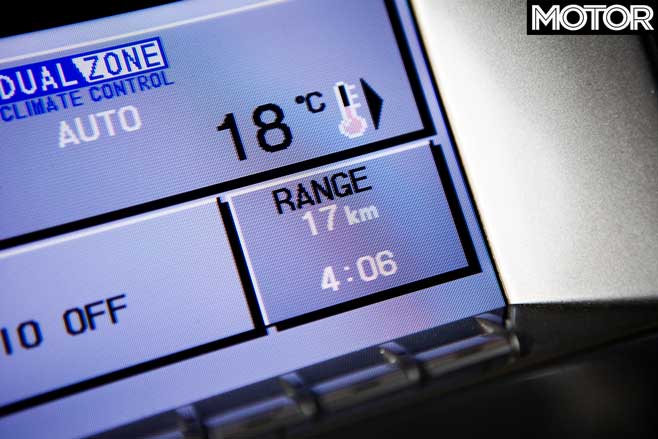
As we crawl into Yunta, trip computer reading 17km to empty, I spy a servo with visible life. We juice up all three cars, but it’s the Territory that swallows the most – 74.22 litres brims its 75-litre tank, meaning 20.4L/100km. The Sportwagon swallows 63.55 litres for a 16.3L/100km first leg, while the relatively lightweight 335i (1630kg compared to the Commodore’s 1890) sips exactly 52 litres for a 13.9L/100km average.
Since time waits for no man (or woman), we swap cars and aim for Broken Hill while the pub and grub are both still serving. And we get there only to discover that we’ve timed our arrival with Pamela Anderson’s insertion into the Big Brother house.
By the time she enters, the pub has completely emptied. To pass the time, Wielecki orders one of his famous desserts – three scoops of ice-cream in a bowl, with chocolate topping in a gravy jug on the side. “And what table number are ya?” asks the lone waitress. “Ah, we’re the only people left in the pub love….”
THURSDAY: No trip to Broken Hill is complete without a journey west to Silverton, 23km west – where the township began out here before everyone decided to relocate to where Broken Hill is now, and where Mad Max II was famously filmed.
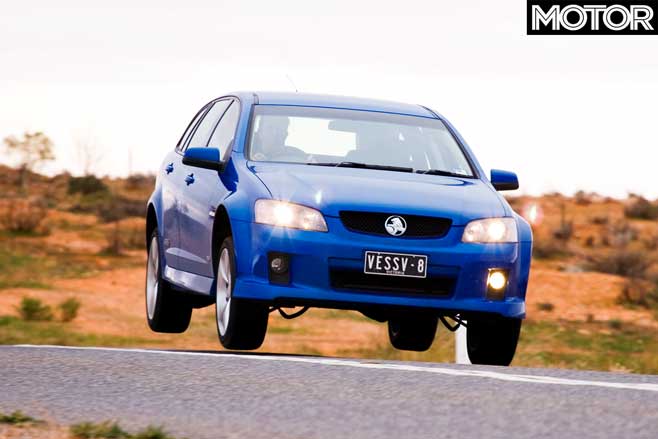
But it’s the appalling road surface heading to Silverton that attracts masochists like us. After launching over one particularly bad hump in the 335i, I turn to Wielecki and ask him if he felt the back end get air.
“Yeah!” he replies, so we quickly pull over to see how the other cars fare. AMac claims he could see daylight under the Territory’s tyres so we send Luffy out for obligatory airborne shots in all three, only to discover that the BMW is the least dramatic even travelling 20km/h faster than the others, and that putting two large-ish males into the back seat of the Territory doesn’t stop it from flying highest, with its arse way up in the air. It just makes it land harder.
By the time we’ve fiddled around, re-fuelled, and had both lunch and yet another coffee, it’s 1.30pm. And Dubbo’s still 750km away – via the never-ending Barrier Highway to Nyngan, then the Mitchell Highway.
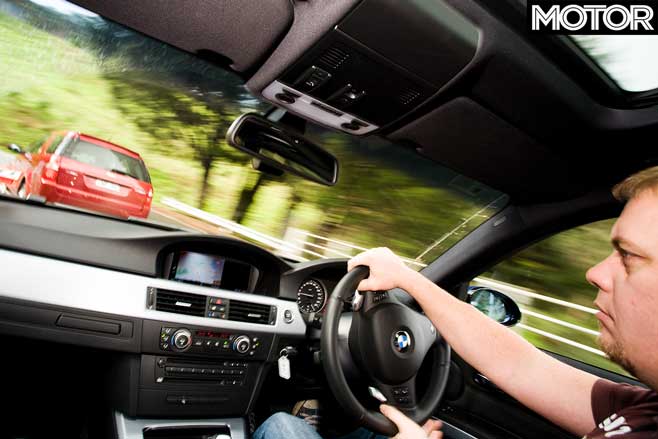
After Wednesday’s ride discomfort in the 335i, we’ve dropped the rear tyres from 38psi down to 32, and the difference is noticeable, but not enough. It’s an exceptionally long-legged car, the 335i Touring, with a tremendous engine and genuine shove-in-the-back accelerative ability, but it never relaxes on these roads.
It feels constantly alive when you’re only trying cruise, and demands firm hands and plenty of concentration. Every time the front tyres react to bumps, the steering-wheel moves and so does the car, creating a frustrating amount of head toss.
In comparsion, the Sportwagon feels totally at home. There’s more road noise, and you can hear some exhaust-hiss through the rear floor under full throttle that isn’t there in the sedan, but it’s much more relaxing.
As the front wheels react to the road surface, the steering-wheel casually rocks in your hands, body still arrow-straight and head toss non-existent. Even the SS V’s firm ride quality makes total sense out here.
But for the full waterbed experience, the Territory is unmatched. You can feel it struggling against its house-brick aerodynamics at higher speeds and its subsequent thirst is a direct result of that, but arguably no other sports SUV in existence can match its comfort.
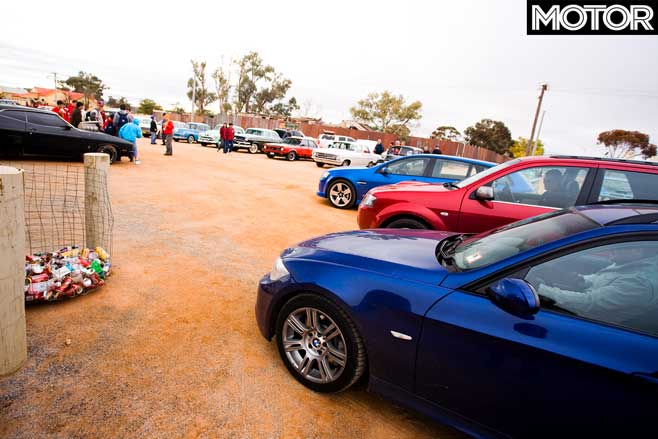
FRIDAY: After a hearty dinner of vegemite and cheese on white toast the previous evening, bought from the servo down the road, and instant coffee for brekky, we leave Dubbo in peak-hour.
The road to nearby Wellington is packed with cars and, after two days of minimal traffic and epic speeds, it’s a weird feeling. And we’re stuck behind a radar copper in an XR6 Turbo doing 102km/h. For an hour and a half. Karma, perhaps?
But it gives me time to reflect on the crawl back to Sydney. Unlike every Holden load-lugger since 1957, the Sportwagon really is ‘sporting’, and in a few months will even become the rather trite-sounding HSV ‘Tourer’.
Indeed, here’s a large, big-power wagon for a third of the price of an E500, that is more likeable and suitable to interstate road trips than a BMW 335i, and a more efficient way to travel than Ford’s benchmark SUV. If the VE Sportwagon is anything to go by, the station wagon can’t be dead. It certainly doesn’t deserve to be.
Fast Facts
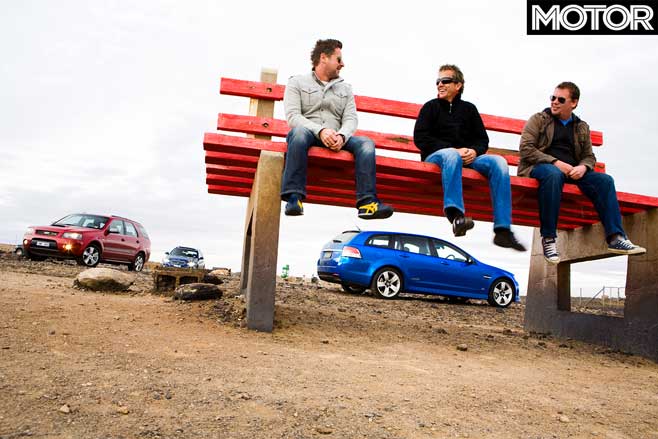
| u00a0 | FPV F6X | BMW 335i Touring | Holden SS V Sportwagon |
| Body | 5-door, 5-seat SUV | 5-door, 5-seat wagon | |
| Drive | all-wheel | rear-wheel | |
| Engine | 3984cc in-line 6, DOHC, 24v, turbo | 2979cc in-line 6, DOHC, 24v, twin-turbo | 5967cc 90-degree V8, OHV, 16v |
| Bore x Stroke | 92.3 x 99.3mm | 84.0 x 89.6mm | 101.6 x 92.0mm |
| Compression | 8.7:1 | 10.2:1 | 10.4:1 |
| Power | 270kW @ 5000rpm | 225kW @ 5800rpm | 270kW @ 5700rpm |
| Torque | 550Nm @ 2000-4250rpm | 400Nm @ 1300rpm | 530Nm @ 4400rpm |
| Power/Weight | 125kW/tonne | 138kW/tonne | 143kW/tonne |
| 0-100km/h | 6.03sec | 5.36sec | 5.46sec |
| 0-400m | 14.09sec @ 165.44km/h | 13.51sec @ 170.65km/h | 13.60sec @ 171.36km/h |
| Transmission | 6-speed automatic | ||
| Weight | 2155kg | 1630kg | 1890kg |
| Suspension (f) | double A-arms, coil springs anti-roll bar | struts, A-arms, anti-roll bar | |
| Suspension (r) | multi-links, coil springs, anti-roll bar | ||
| L/W/h | 4856/1898/1714mm | 4520/1817/1418mm | 4897/1899/1476mm |
| Wheelbase | 2842mm | 2760mm | 2915mm |
| Tracks | 1626mm (f); 1597mm (r) | 1500mm (f); 1513mm (r) | 1602mm (f); 1618mm (r) |
| Steering | power rack-and-pinion | ||
| Brakes (f) | 355mm ventilated discs, four-piston calipers | 348mm ventilated discs, single-piston calipers | 321mm ventilated discs, two-piston calipers |
| Brakes (r) | 328mm ventilated discs, single-piston calipers | 336mm ventilated discs, single-piston calipers | 350mm ventilated discs, single-piston calipers |
| Tyres | Goodyear Fortera HL edition; 235/55 R18 104Vu00a0(f/r) | Bridgestone Potenza RE050A II; 225/45R17 91W (f),u00a0 225/40R17 94W (r) | Bridgestone Potenza RE050A; 245/40R19 98W (f/r) |
| Price | $77,190 | $114,700 | $56,190 |
| Pros | Brilliant ride; crisp steering; powerhouse engine; seats | Outstanding engine; sharp handling; superb efficiency | The best VE variant of all; character; agility and versatility |
| Cons | Mis-matched tyres; ageing styling; high-speed thirst | Unresolved ride; heavy low-speed steering; price | Lacks ride polish; interior not up to exterior; tyre rumble |
| Rating | 4 out of 5 stars | 3.5 out of 5 stars | 3.5 out of 5 stars |
At school, I was fascinated by atomic science, but thanks to my dyslexia, the best my teacher said I could expect was a career in unclear physics, so motor journalism it was. Many years later, though, two tangentially different paths have converged and I find myself pondering the miracle of fusion once again.
Unless you have a sizable solar array plumbed into a home power wall and smart charging hardware, running an electric vehicle in Australia relies heavily on fossil-fuel power generation – and largely from archaic, dirty brown coal.
And it’s exactly this argument that many EV opponents cling to, to justify good-old, dependable combustion engines. What’s the point of an ‘emissionless’ electric vehicle if its tailpipe is next to a cooling tower, they say. Even as an EV advocate, I’d have to agree.
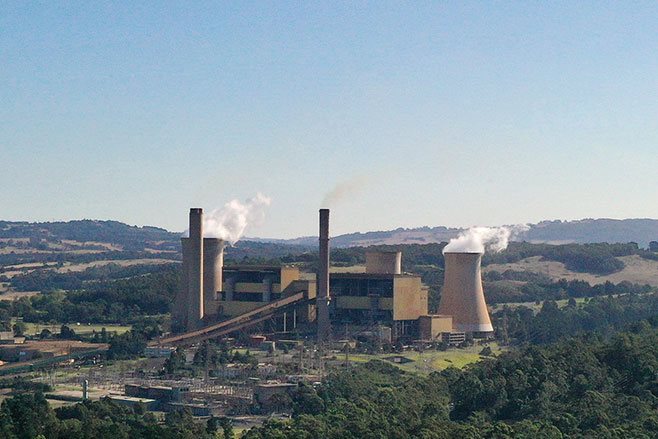
A coal-fired power station
But it won’t always be that way. Regardless of the short-sighted government calling the shots or continued consumer apathy, there’s only so much stuff we can dig out of the ground and torch before CO2 emissions accelerate our climate into temperatures hotter than the boilers themselves, or we simply reach the bottom of the hole.
Neither scenario is favourable, and finding alternative generation methods is the only way to avoid that bleak inevitability, which is why suggestions the government is considering lifting the ban on nuclear power are so enthralling.
Last week, reports confirmed a parliamentary enquiry is underway to revisit and investigate the use of nuclear power in Australia, which, by no means, confirms there will be reactors dotted along coasts up and down the country within years, but it does open an intriguing Pandora’s box.
Just say, for the sake of an argument, Australia does reverse its policy on nuclear power and starts pumping atomic electricity into the grid, would that make you happier about charging an electric vehicle?
Nuclear power has the incredible ability to polarise opinion, so here’s some food to fuel your thought reactor.
The news coincides with the recent release of an HBO series that documents in horrifying detail exactly what went wrong at the Chernobyl power plant in 1986, and how its profoundly disastrous effects continue to impact our world.
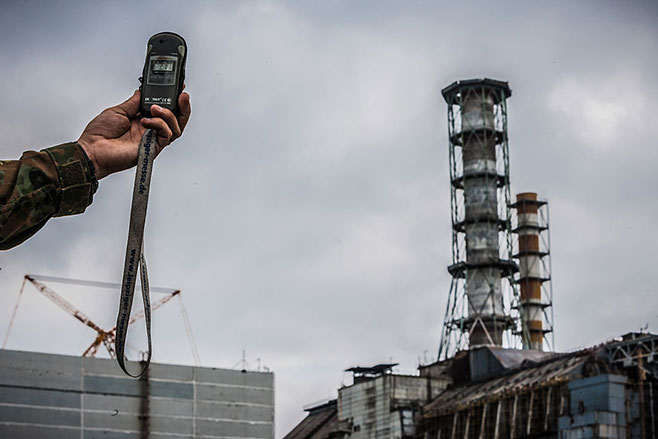
Opponents of nuclear energy also have the Fukushima disaster to bolster their case and, if pushed, will probably mention the Windscale, Three Mile Island, and Chalk River accidents as the other energy-related incidents with unenviably high scores on the International Nuclear Event Scale.
Safety is pretty much always the number-one reason cited against nuclear power stations, but using a disaster that happened more than three decades ago, under a regime that is as renowned for honesty, integrity and human rights as North Korea as an example is just silly.
And while Japan rates a little higher in those areas, you’d be forgiven for suggesting that constructing a reactor on a coastline susceptible to tsunamis and earthquakes was perhaps a little foolhardy.
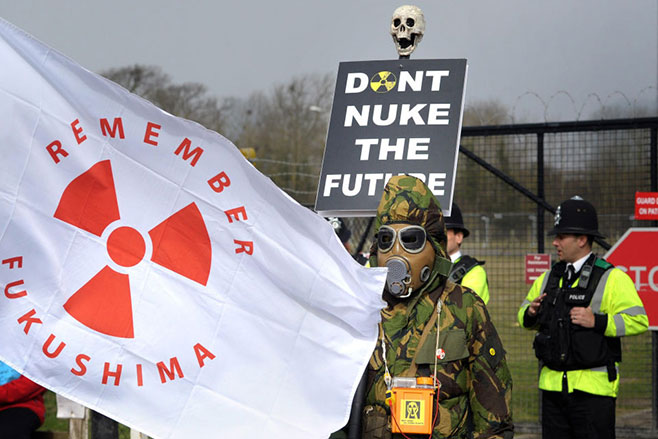
Australia, on the other hand, is one of the least seismically active continents on the planet, second only to Antarctica.
But when it comes to the trust and integrity part, could we rely on a government to delegate the task of regulating and managing the most poisonous substance known to humankind? Australia has not forgotten the Longford gas explosion which was caused by a relatively safe fuel in a nuclear energy context.
And if we can’t even rely on our leaders to successfully organise an online census count without it blowing out by $30m, what hope have they for keeping us safe from rogue neutrons? And let’s not even get started on the pitfalls of privatising a national nuclear energy institution, should it happen.
Toxic waste is another dirty word often used in the argument against nuclear power, which is again a warranted concern, especially in countries that rely on precious underground aquifers. If only there was somewhere in the world that had lots of space, miles from anything…
There is. It’s called the Gibson Desert. This largely featureless expanse of 156,000 square kilometres in the middle of Western Australia has very little porous aquifer groundwater, it’s about 500km from the Great Artesian Basin, and it’s a really, really long way from anything that even looks a bit like civilisation.
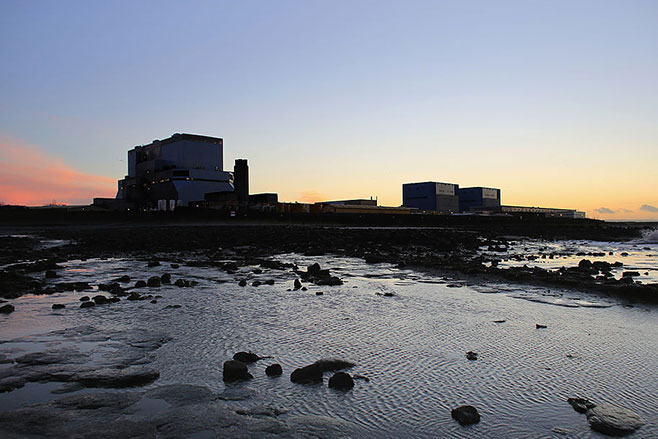
Walk to the middle, dig a big hole, fill it up with some benign-looking glass-filled barrels and that’s the last you’ll probably ever see of them.
We also have the largest uranium deposits in the world and we have remote coastlines that provide both the perfect location for generation facilities, as well as a method of receiving the insanely massive and heavy reactors from one of the few places they can be manufactured globally.
I can completely sympathise with many Australians who have never lived with nuclear power and who are understandably nervous about the notion of an innocent-looking building just down the road, which contains something unimaginably dangerous.
But I grew up with nuclear power. Just 20km from my home town there were three nuclear reactors that provided power to the hospital where I was born, their electricity lit my school and it was with Hinkley Point Power Station volts that I learned to weld.
But I’m also acutely aware of the implications when things go wrong. Probably one of my earliest memories is shortly after my sixth birthday and my parents insisting that I wash my hair every day. I was too young to understand the events unfolding in a far off country, but old enough to know that an invisible cloud drifting over Europe was deeply sinister and something to be feared.
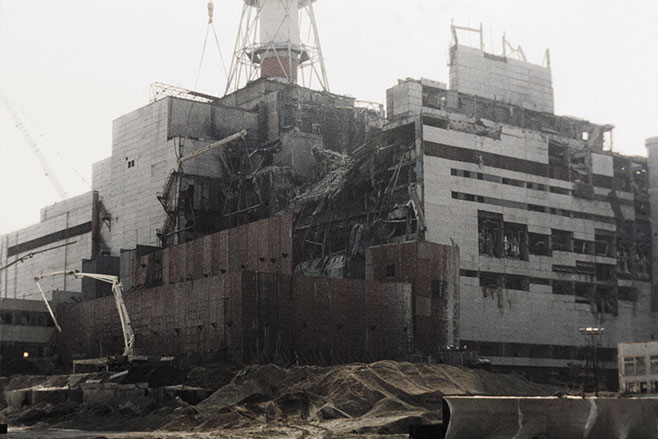
All things being well however, nuclear power is a clean form of energy which makes good economic sense and, when properly managed, offers a relatively guilt-free method of charging electric cars. Obviously, the ultimate solution is renewable energy, which, Australia also lends itself to quite nicely, but that’s a subject for another rant.
As a sceptic and pragmatist, for me, the entire nuclear energy argument boils down to just one word: likelihood.
If we blanket the entire country in nuclear power stations, each fizzing with intense radioactivity and producing a constant stream of waste that must be buried for many, many millennia before it is no longer highly toxic, an unforeseeable incident might, might at some point result in a disaster that causes you to grow a third nipple and turn the forests red. The operative word here is – might.
But if we continue to burn fossil fuels at an alarming rate and with absolute ignorant abandon, fuelling a monstrous carbon-belching machine, the release of billions of tons of greenhouse gasses into the atmosphere is not a matter of maybe, it’s a certainty.
Many perceive nuclear power stations as a sort of time bomb, but as the mountain of damning carbon emissions evidence grows by the day, climate change is the grenade which has already had its pin pulled.
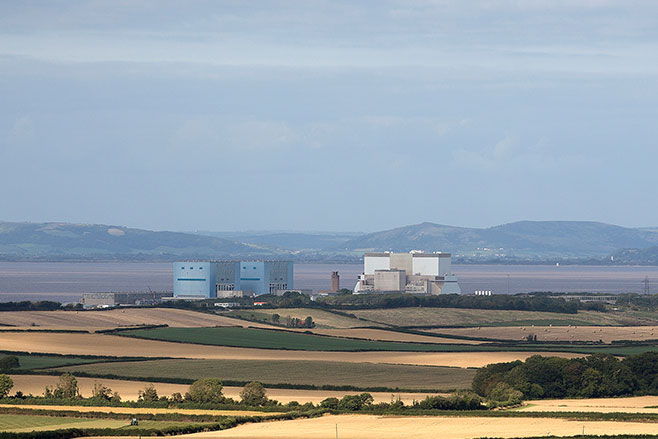
WhichCar.com.au has this week been shortlisted in three categories of the annual Mumbrella Publisher Awards: Consumer Website of the Year, Best Use of Video, and Brand of the Year.
On behalf of the hardest working and most talented team reporting on the automotive industry, we are honoured to be recognised for our commitment to empowering new car consumers and delivering the most engaging editorial and video content across digital, TV and social.
Fingers crossed!
Another sign that our compelling stories and videos are hitting the mark: WhichCar set a new audience record in July, reaching 1.36million car consumers, intenders and enthusiasts.
Okay, let’s get on with the Week in Review … and we’ll start with some real estate. If you’re shopping for a new house but need a garage with capacity for 25 cars, check this dream garage out. But before you buy 24 other cars to stock it, steer clear of these machines that – inexplicably – attract Australia’s revenue raising luxury car tax.
And now for something completely different. How does a dictatorial Central Asian president who’s been in hiding prove he’s still alive? By doing donuts in a Dakar car next to Hell’s Gate, of course. Bonus points if you can pronounce his last name…
Why on earth are you expected to pay a ‘Luxury Car Tax’ on something as prosaic as a Toyota?
Meanwhile, we strapped into a Mercedes E-Class rival from Australia’s newest luxury brand, celebrated 20 years of a Porsche icon with a video tribute, and after learning that using your phone to pay in a drive-thru could see you fined $464, we asked you, Dear Reader, to tell us the most ridiculous and annoying traffic fine you’ve ever received. I don’t deny that police have a tough and often unappreciated job, but some coppers don’t help the situation…
It’s a battle of the EVs, but which Tesla would you spend your $91K on?
We learned how a Supercars podium stunt went from bad behaviour to charity fundraiser, how Queensland has upped the ante on Lemon Laws, and we copped an unofficial gander at the new, eighth-generation VW Golf 12 months ahead of launch. We also took the opportunity of the Tesla Model 3’s arrival Down Under to debate whether you’d buy it or a second-hand Model S.
Speaking of dubious automotive investments, Renault UK is offering a limited edition Megane RS for the equivalent of $130,000 AUD. That’s just crazy money for a hot hatch. And before you ask, no it does not come with a built-in Daniel Ricciardo.
Have a great weekend and see you next week.
