
Our luck had to run out eventually. After years of being blessed with the weather for Bang For Your Bucks (BFYB – our annual mega-test to find Australia’s best value new performance car under $100K) and not having to worry about anything more than a brief shower, 2019 broke the streak in fine fashion. And we were unlucky.
Winton Motor Raceway, ostensibly the current ‘home’ of BFYB, hadn’t had rain worth the name in more than six months and the days either side of our booking were fine and sunny but BFYB isn’t a logistically flexible operation. Still, excellent news for farmers and the like who are doing it tough in the surrounding regions.
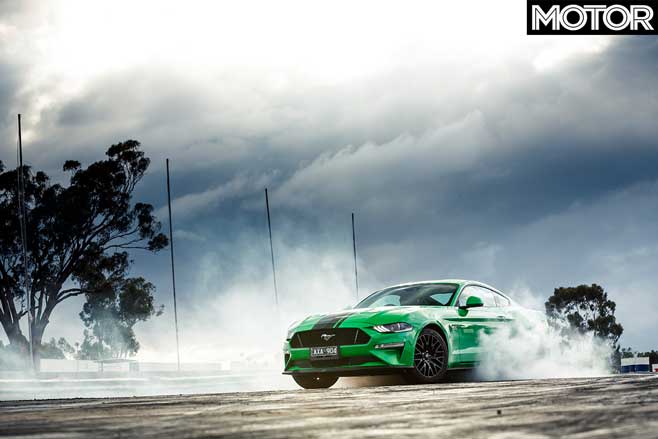
At least we weren’t taken by surprise. A week out from the event the forecast predicted nothing but doom and gloom, allowing us to form a back-up plan. There is absolutely no point in trying to hold a credible
data-based competition in anything other than dry conditions. Not only would a slippery surface unfairly favour certain all-wheel drive contestants, but the chances of the track being equally wet for all cars were precisely zero, so the only fair course of action was to make BFYB 2019 a purely subjective competition.
That’s what we’ve done for 50 per cent of the mark – replacing all the performance data we usually collect, such as lap time, 0-400m, 0-100km/h and so on – with subjective judges’ rankings. This will make up ‘Bang’. ‘Bucks’, meanwhile, as something not affected by the weather, continues to be crunched through the regular formula that has guided our competition since 1994. Points for Bang and Buck are determined, and then crunched together within our formula for a Bang For Your Bucks score which sorts out the all-important finishing order.
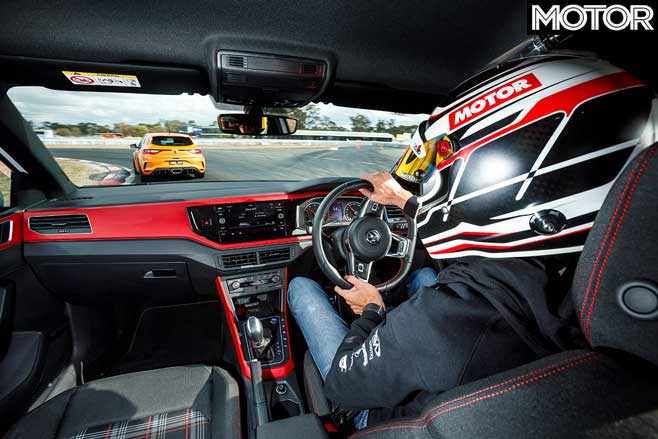
It’s also crucial to note that you’ll see we’ve included 0-100km/h and 0-400m figures where attained from previous tests. While these are our own kosher, hard-fought, independent figures, given they could have been recorded on different days, not in exacting conditions (although all dry) and at possibly different venues, these are for your reference and interest only and do not contribute to the overall outcome of BFYB 2019.
In terms of that outcome and the vehicles this year comprising it, it’s not been the biggest year for fast, affordable machinery, but hopefully you’ll agree that what our 11-car field lacks in quantity it makes up for in quality. And if your favourite is missing, remember that criteria for eligibility is either a new model, substantial mechanical update or sizeable price cut – basically, anything that would radically alter a car’s BFYB score.
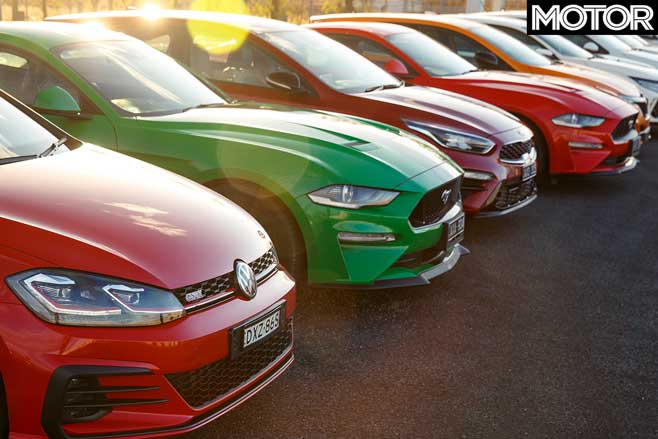
Let’s start with what’s not here. Warm hatches like the Ford Focus ST-line, Hyundai i30 N-line and Mazda 3 G25, while all fine cars, were judged to be lacking sufficient Bang. That’s not a description that could be levelled at the Chevrolet Camaro, but as has become customary, HSV declined our invitation.
The Nissan 370Z (not new but has not competed since its massive price cut) also fell through the cracks and the Genesis G70 was all booked until it fell foul of embargo dates. Next year.
Speaking of, looking forward briefly for a moment, 2020 should be a cracker, with a pair of BMW M Performance models (M135i and M340i), Ford Focus and Fiesta ST twins, Hyundai Veloster Turbo, Mercedes-AMG A35, Renault Megane RS Trophy and Toyota Supra just to name a few.
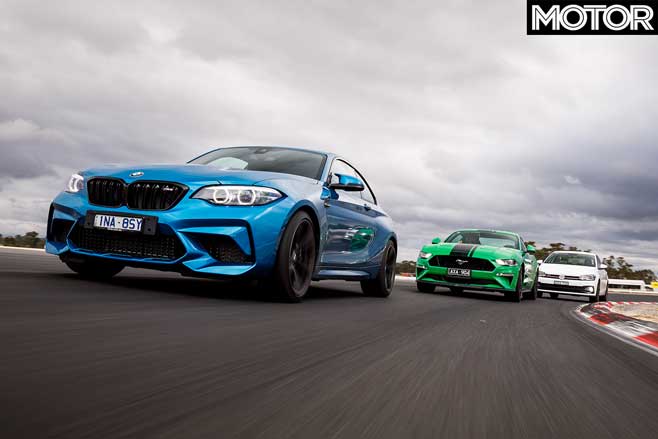
On to this year’s contestants. Starting in alphabetical order puts the BMW M2 Competition Pure at the top of the list. It j-u-s-t scrapes under the cost cap at $99,900 but thank god it does, as cars this fast and focused aren’t usually eligible for BFYB. We already know it’s brilliant – second at last year’s PCOTY proved that – but whether it can rank high enough to overcome its significant price disadvantage is another question entirely.
Having just missed the cut last year a pair of MY2018 Mustangs front up, a manual Ecoboost and automatic GT. The manual V8 is cheaper, but the performance potential of the 10-speed auto (4.6sec 0-100km/h; 12.6sec 0-400m) suggested it would easily overcome the extra $3K required. As it happens, its price would be the least of the Mustang’s worries, but more on that later.
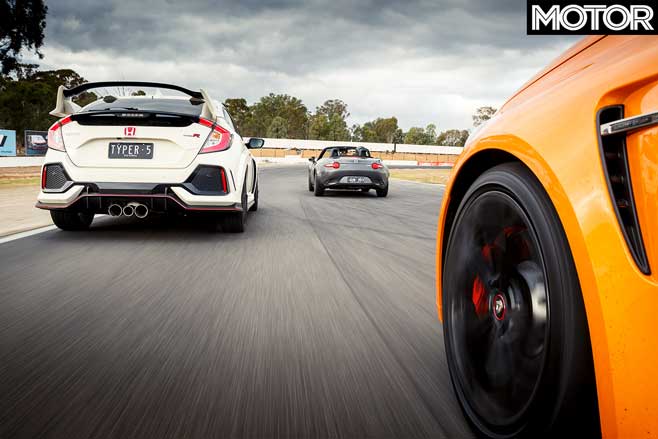
As the 2018 winner, the Honda Civic Type R earns the right to defend its title. If you’re standing still in the performance car game you’re going backwards so it’s going to be a tough task for Honda’s hottie to repeat its dominant win of 12 months ago. Then again, it was our 2018 Performance Car of the Year.
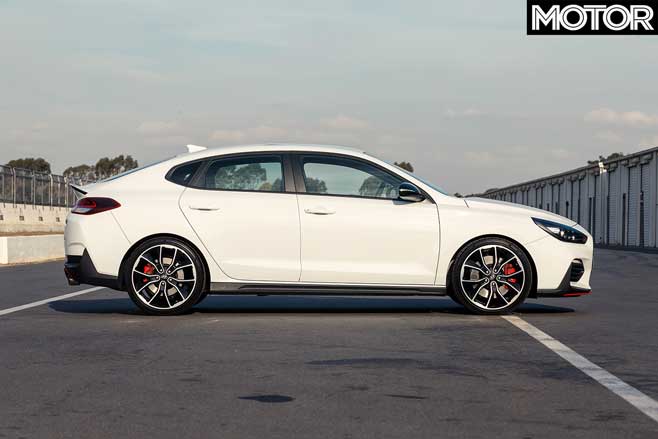
Snapping at its heels will be the Hyundai i30 Fastback N which has landed in Australia with a little extra junk in its trunk and a revised suspension setup with plenty of input from Hyundai’s local chassis boffins.
It’s slightly heavier and $1000 more expensive than the conventional hatch which managed a fifth place finish last year but has the potential to trouble the podium, particularly now subjectivity replaces data.
Also from Korea is the Kia Cerato GT, a polished warm hatch with a well-sorted chassis, grippy tyres, a torquey 1.6-litre turbo engine and sharp $31,990 driveaway sticker that offer an opportunity to punch above its weight.
That’s something the Mazda MX-5 has always excelled at and the iconic roadster returns to BFYB with its powered-up 2.0-litre offering a higher redline and extra acceleration. The Bang formula hasn’t always been kind to the MX-5 but on every appearance it’s always ranked well with the judges.
As has the Renault Megane RS, though the latest model hasn’t blown our socks off yet to the same extent as some of its lauded predecessors. It’s undoubtedly fast and agile but often feels a little over-gripped – perhaps slippier conditions will allow its character to shine as bright as its Orange Tonic paintwork. The Cup chassis is fitted to our manual test car, adding $1490 but bringing with it stiffer suspension and sharper responses.
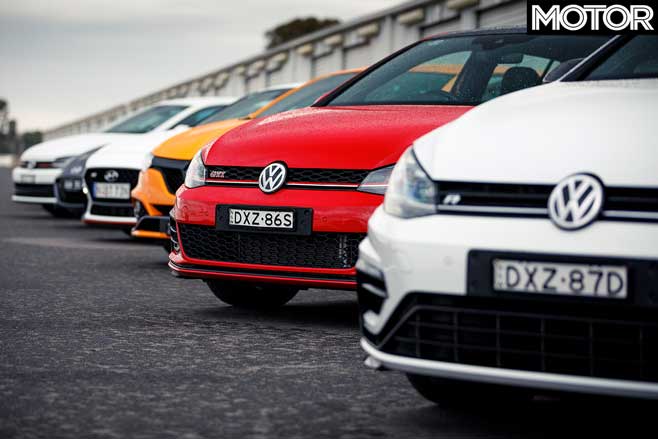
Rounding out our motley crew is a trio of Volkswagens: the Polo GTI, Golf GTI and Golf R Special Edition. As a three-time champion the former would be a hot favourite under our usual scoring system but is more than talented enough not to fear subjective assessment, particularly when it shares the event’s lowest price tag with the Cerato GT.
The Golf GTI is another past winner, the final iteration of the Mk7.5 platform qualifying by virtue of being loaded with all the gear previously reserved for the Performance Pack, including a 180kW/370Nm engine tune, electronically-controlled limited-slip diff and bigger front brakes.
Last but certainly not least is the Golf R Special Edition, one of our favourite hot hatches made more potent with an angry Akrapovic exhaust, bigger brakes and new wheels wrapped in different tyres. Sadly, the goodies also add $4800 to the price of a standard Golf R and a whopping $14,500 over the Golf R Grid that finished third a year ago, which won’t help its chances.
So there we have it: 11 cars, five judges (who, between them, have driven every new performance model of importance in the last 30 years), two photographers and one very soggy racetrack. Let’s start the countdown on the 2019 – and 25th – running of MOTOR’s Bang For Your Bucks .
Bang For Your Bucks 2019: The Contenders
BMW M2 Competition Pure – Click here for the results! Mucho performance but also mucho dollars to overcome
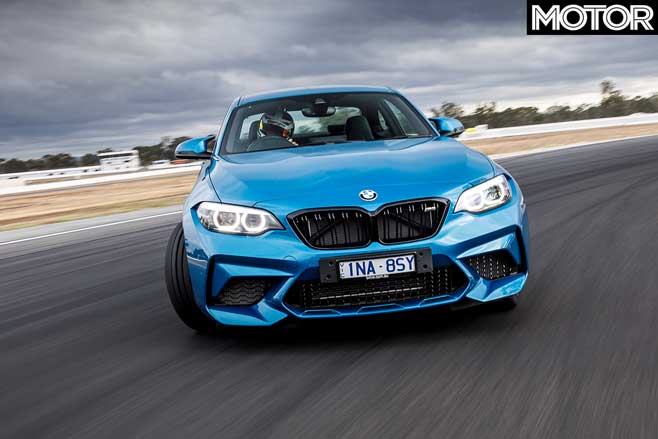
Specifications Engine: 2979cc inline-6, DOHC, 24v, twin-turbo Power: 302kW @ 5250-7000rpm Torque: 550Nm @ 2350-5200rpm Transmission: 7-speed dual-clutch Weight: 1550kg Power/Weight: 195kW/tonne Price: $99,900
Ford Mustang Ecoboost – Click here for the results! Revised engine and suspension for the MY2018 four-pot pony
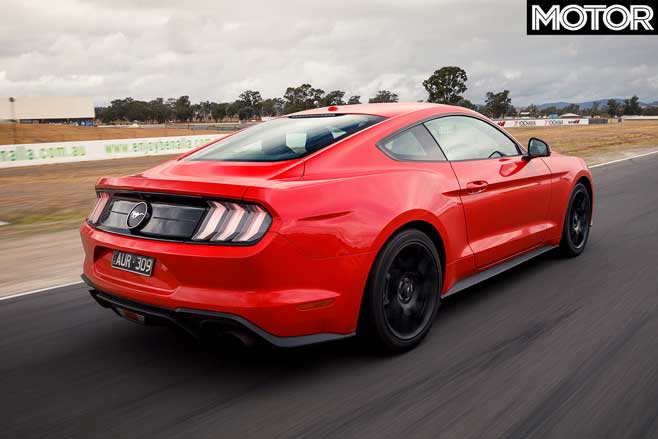
Specifications Engine: 2261cc inline-4, DOHC, 16v, turbo Power: 224kW @ 5700rpm Torque: 441Nm @ 3000rpm Transmission: 6-speed manual Weight: 1705kg Power/Weight: 131kW/tonne Price: $49,990
Ford Mustang GT – Click here for the results! More grunt, extra gears and better tyres make this year’s V8 a very different prospect
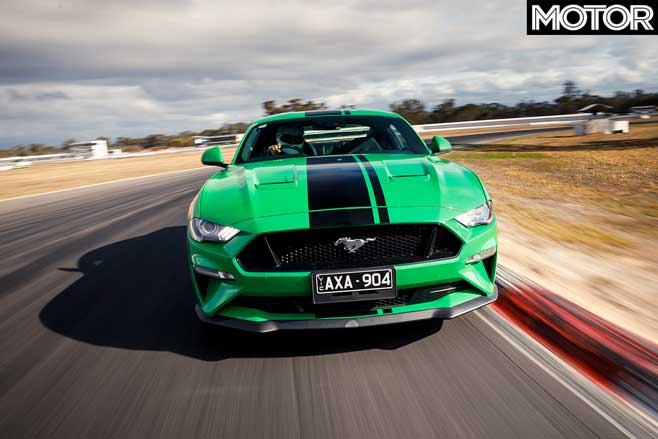
Specifications Engine: 4998cc V8, DOHC, 32v Power: 339kW @ 7000rpm Torque: 559Nm @ 4600rpm Transmission: 10-speed automatic Weight: 1784kg Power/Weight: 202kW/tonne Price: $66,290
Honda Civic Type R – Click here for the results! The only car ever to win PCOTY and BFYB is back to battle a new batch of challengers
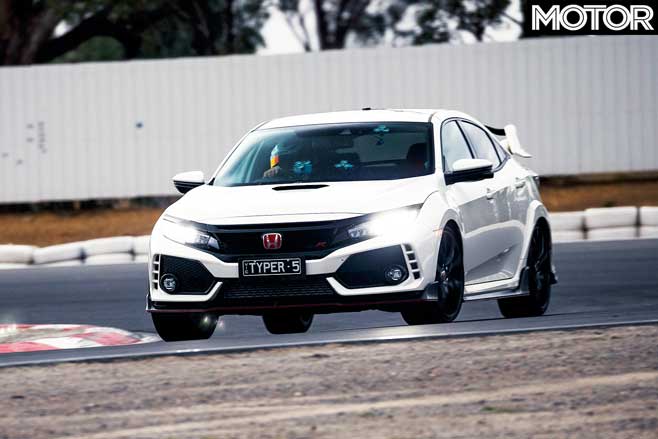
Specifications Engine: 1998cc inline-4, DOHC, 16v, turbo Power: 228kW @ 6500rpm Torque: 400Nm @ 2500-4500rpm Transmission: 6-speed manual Weight: 1380kg Power/Weight: 165kW/tonne Price: $51,990
Hyundai i30 Fastback N – Click here for the results! A bigger booty doesn’t qualify the Fastback, but new suspension does
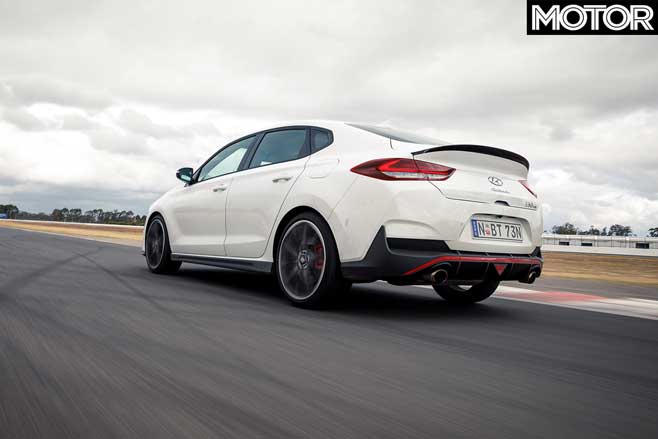
Specifications Engine: 1998cc inline-4, DOHC, 16v, turbo Power: 202kW @ 6000rpm Torque: 353Nm @ 1450-4700rpm Transmission: 6-speed manual Weight: 1520kg Power/Weight: 134kW/tonne Price: $39,990
Kia Cerato GT – Click here for the results! Doesn’t stand out on paper, but the new 150kW/265Nm Cerato is a solid performer
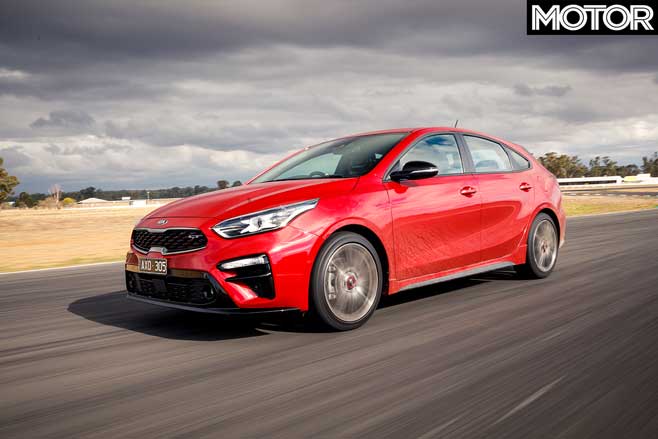
Specifications Engine: 1591cc inline-4, DOHC, 16v, turbo Power: 150kW @ 6000rpm Torque: 265Nm @ 1500-4500rpm Transmission: 7-speed dual-clutch Weight: 1395kg (tare) Power/Weight: 107kW/tonne (tare) Price: $31,990
Mazda MX-5 – Click here for the results! More potent 2.0-litre engine takes care of the Bang, but adds Bucks in the process
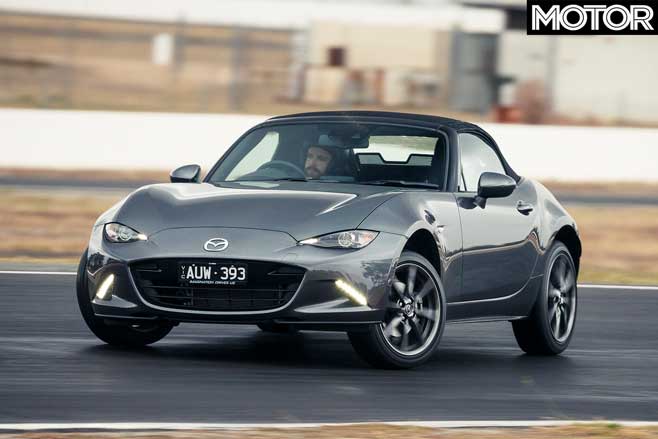
Specifications Engine: 1998cc inline-4, DOHC, 16v Power: 135kW @ 7000rpm Torque: 205Nm @ 4000rpm Transmission: 6-speed manual Weight: 1105kg Power/Weight: 122kW/tonne Price: $41,960
Renault Megane RS280 Cup – Click here for the results! French hottie has another chance to win us over on track
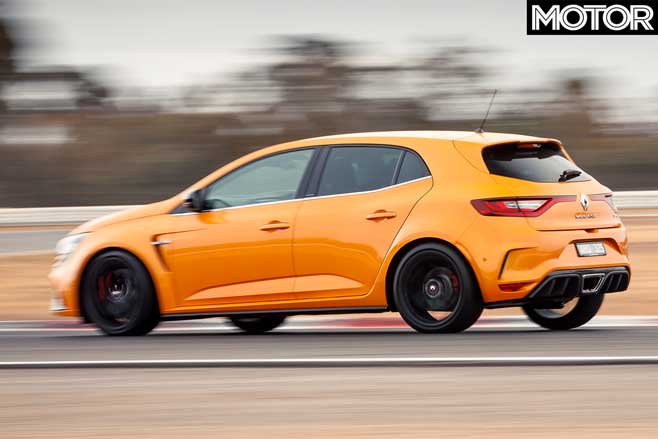
Specifications Engine: 1798cc inline-4, DOHC, 16v, turbo Power: 205kW @ 6000rpm Torque: 390Nm @ 2400-4800rpm Transmission: 6-speed manual Weight: 1407kg Power/Weight: 145kW/tonne Price: $48,990
Volkswagen Polo GTI – Click here for the results! Has had an iron grip on BFYB in years past, but is no longer a sub-$30K proposition
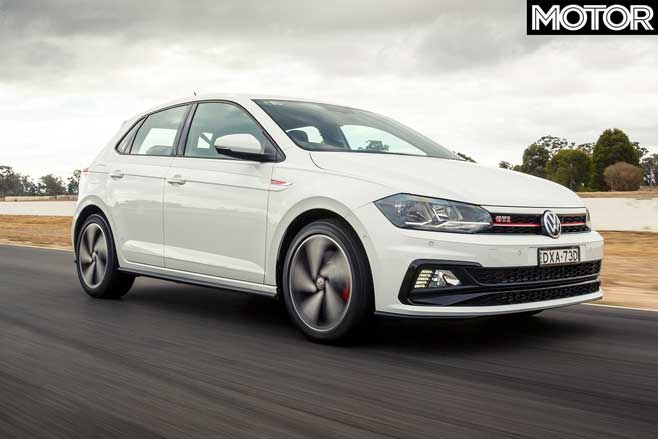
Specifications Engine: 1984cc inline-4, DOHC, 16v, turbo Power: 147kW @ 6000rpm Torque: 320Nm @ 1500rpm Transmission: 6-speed dual-clutch Weight: 1285kg Power/Weight: 108kW/tonne Price: $31,990
Volkswagen Golf GTI – Click here for the results! There’s never been a more potent ‘base’ Golf GTI than this Mk7.5 swansong model
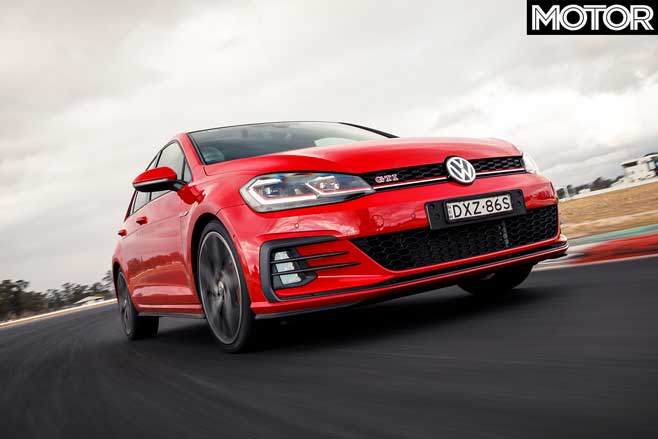
Specifications Engine: 1984cc inline-4, DOHC, 16v, turbo Power: 180kW @ 7000rpm Torque: 370Nm @ 4600rpm Transmission: 7-speed dual-clutch Weight: 1352kg Power/Weight: 133kW/tonne Price: $46,190
Volkswagen Golf R Special Edition – Click here for the results! Trick bits add some aggro to the otherwise sensible Golf R
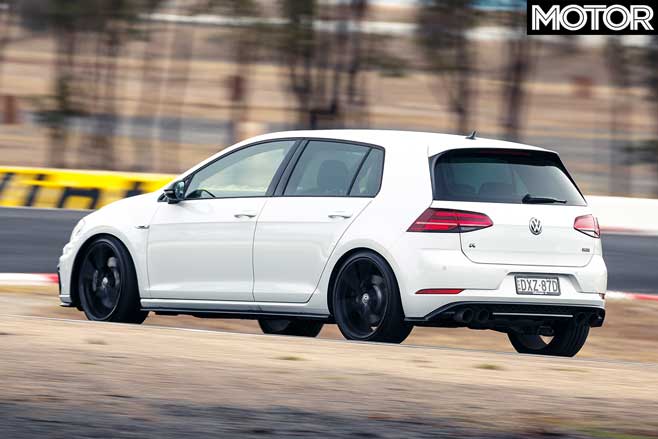
Specifications Engine: 1984cc inline-4, DOHC, 16v, turbo Power: 213kW @ 5400rpm Torque: 380Nm @ 1850rpm Transmission: 7-speed dual-clutch Weight: 1450kg Power/Weight: 149kW/tonne Price: $61,990
Bang For Your Bucks 2019: The Judges
Dylan Campbell Cannonball impersonator; Instagram guru; driver of Hachi Roku; healthy eater; final boss

Scott Newman Likes to live life sideways; besotted doggy daddy; plays a mean version of ‘Eruption’ by Van Halen
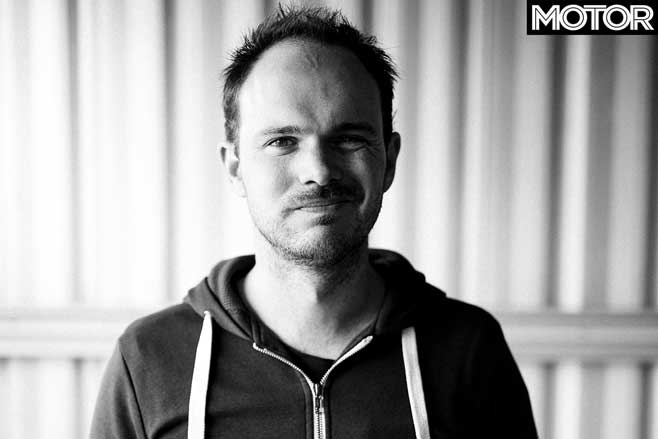
David Morley Opinion giver; beard cultivator; suppository of wisdom; car hoarder; Santa’s stunt double

Louis Cordony Peter Pan; holder of keys; t-shirt aficionado; zen master; go karter; real estate mogul
Warren Luff Speedy driver; professional skidder; race winner; hair model; daddy day care; teller of tasteless jokes
Kia’s taken the cloth off its new compact SUV that’s destined for Australia and it will deliver segment-busting inclusions such as Level 2 autonomous driving aids and tremendous interior packaging.
Though we’re yet to receive finalised specifications for our market, the new Seltos will arrive on Aussie shores later this year and likely with much of the same gear announced today for its home market.
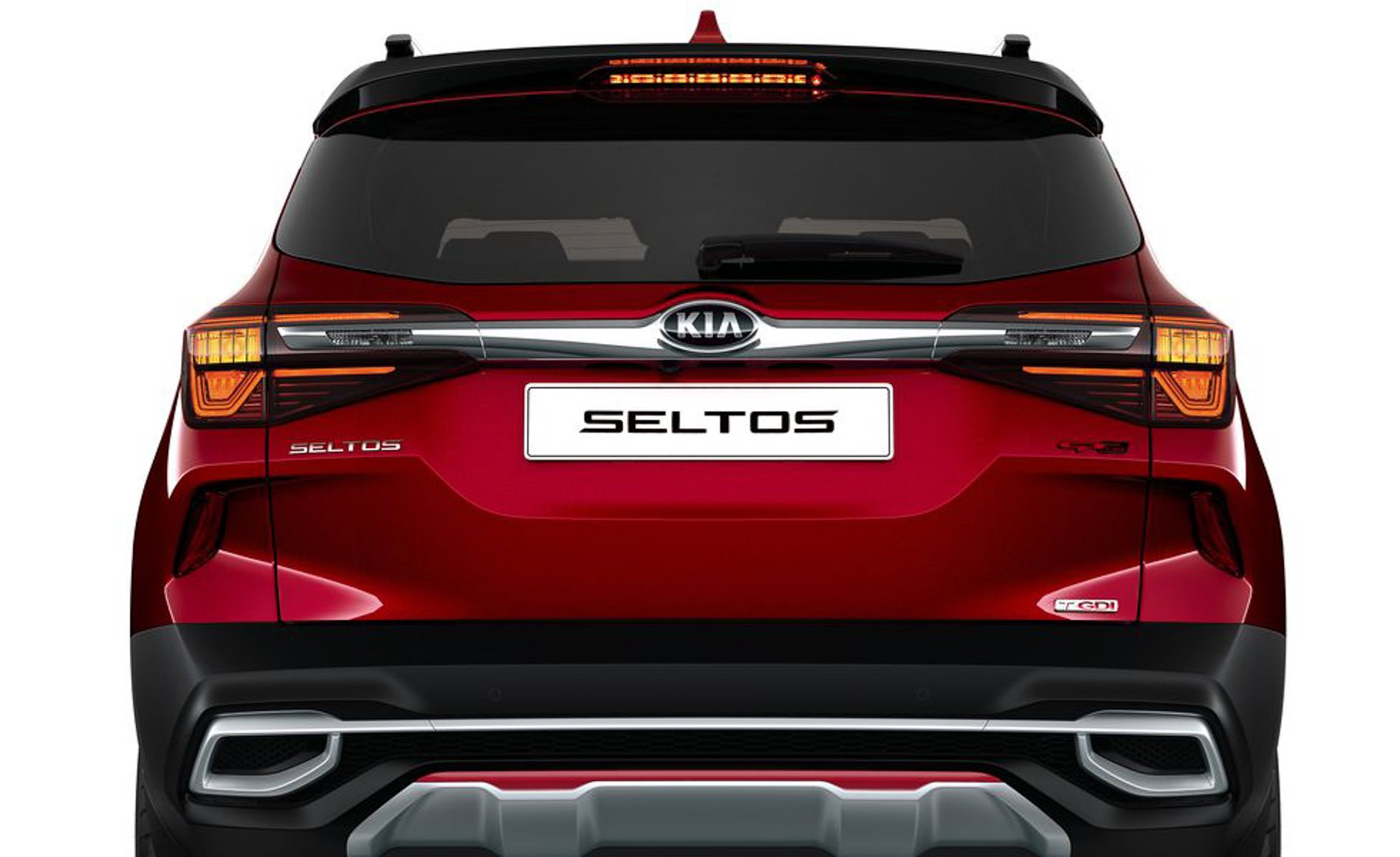
Kia touts the compact SUV as having “more space for passengers and luggage than any rival B-segment SUV,” which is a big call but one backed up by a huge boot. Around the back the Seltos claims a whopping 498-litre boot that tops any rivals such as the Mitsubishi ASX (393L), Mazda CX-3 (264L) and its Korean sibling the Hyundai Kona (361L). The kicker for load luggers is that the rear seats fold completely flat for an even larger cargo hold.
It’s capacious interior is likely from stretched exterior dimensions that measure 4370mm long and 1615mm high with a 2630mm wheelbase. The latter gives the Seltos what Kia claims as “the most accommodating [rear cabin] in the class,” measuring 30mm longer than even the Kona on which it shares the same platform.
Other mod cons for rear seat occupants are reclining seats, heating, ventilation and air conditioning controls, and USB and 12v ports for charging devices.
Up front is the compact SUV segment’s largest infotainment system, fronted by a wide 10.25-inch screen with sat-nav, split picture for looking at things like music playlists and navigation at the same time and Apple CarPlay and Android Auto connectivity. An eight-speaker Bose sound system can also be optioned and Kia introduces a new Sound Mood Lighting system that can pulse ambient lighting effects around the cabin in time with music.
For the driver, there is an 8.0-inch head-up display system and 7.0-inch digital cluster which replaces the traditional dials in the dash. The rest of the surrounds can be finished in a variety of trims and fabrics including ‘urban’ grays and blacks with geometric patterns, black and gray semi-aniline leather, and high-quality gloss black or metal-effect panels with soft-touch finishes.
Where does the Kia Seltos fit into the SUV mix?
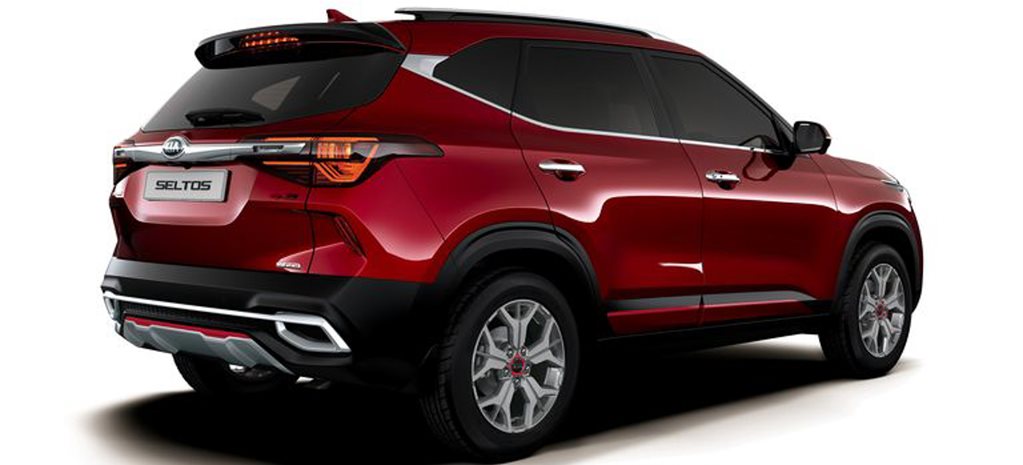
And what about that new-look exterior? Kia is claiming a drag coefficient of 0.33 Cd which is more efficient than many other cars in the segment and aided by a rear tailgate-mounted spoiler. Upfront is Kia’s ubiquitous tiger nose grille and contemporary design and colour options are black, white, gray, orange, blue and yellow with two-tone cody colour options available in some markets. Does it look any good in the metal? We’ll be able to let you know this Friday after our first drive review.
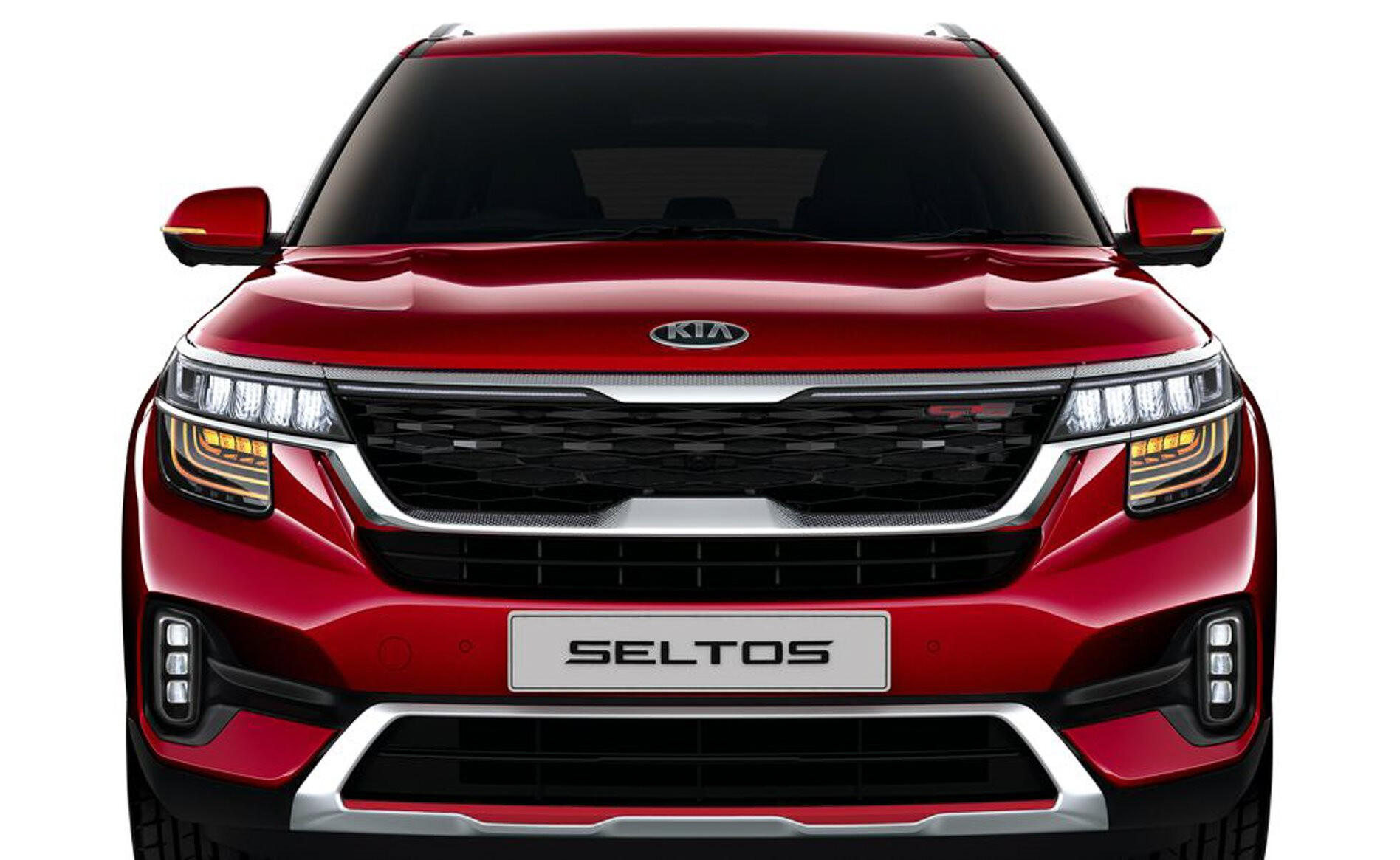
Bolstering its credit and of particular importance to Australian ANCAP safety rating expectations are six airbags and the availability of many automated safety aids including adaptive cruise control with stop and go, navigation-based smart cruise control, blind-spot collision warning and blind-spot collision assist, rear cross-traffic alert, forward collision warning with car and pedestrian detection, lane keeping assist, and highway driving assist.
Of note is Kia’s ‘Level Two’ autonomous driving technology in the form of Lane Following Assist that will track leading vehicles and decipher road markings to keep the car in-lane and a safe distance from any cars in front, along with the new safety exit function that will warn occupants of traffic when opening the door.
Motivation for the range comes from three engines: a 1.6-litre turbo four producing 130kW and 265Nm, helping the Seltos launch from 0-100km/h in 8.0sec, a 100kW/320Nm 1.6-litre diesel turbo, and a 2.0-litre naturally aspirated petrol producing 110kW and 180Nm. Transmissions include a seven-speed dual-clutch and CVT automatic connected to front- or all-wheel-drive. The latter also includes an upgrade to the rear suspension from torsion beam to multi-link setup like in the Kona.
Kia Australia has set a local launch date in the fourth quarter this year, with pricing and specifications to be announced.
Volkswagen will introduce a brace of new variants to the Touareg large SUV range from October this year with a 190TDI and 190TDI Premium that retain much of the Launch Editions appeal, but for a significantly reduced entry price.
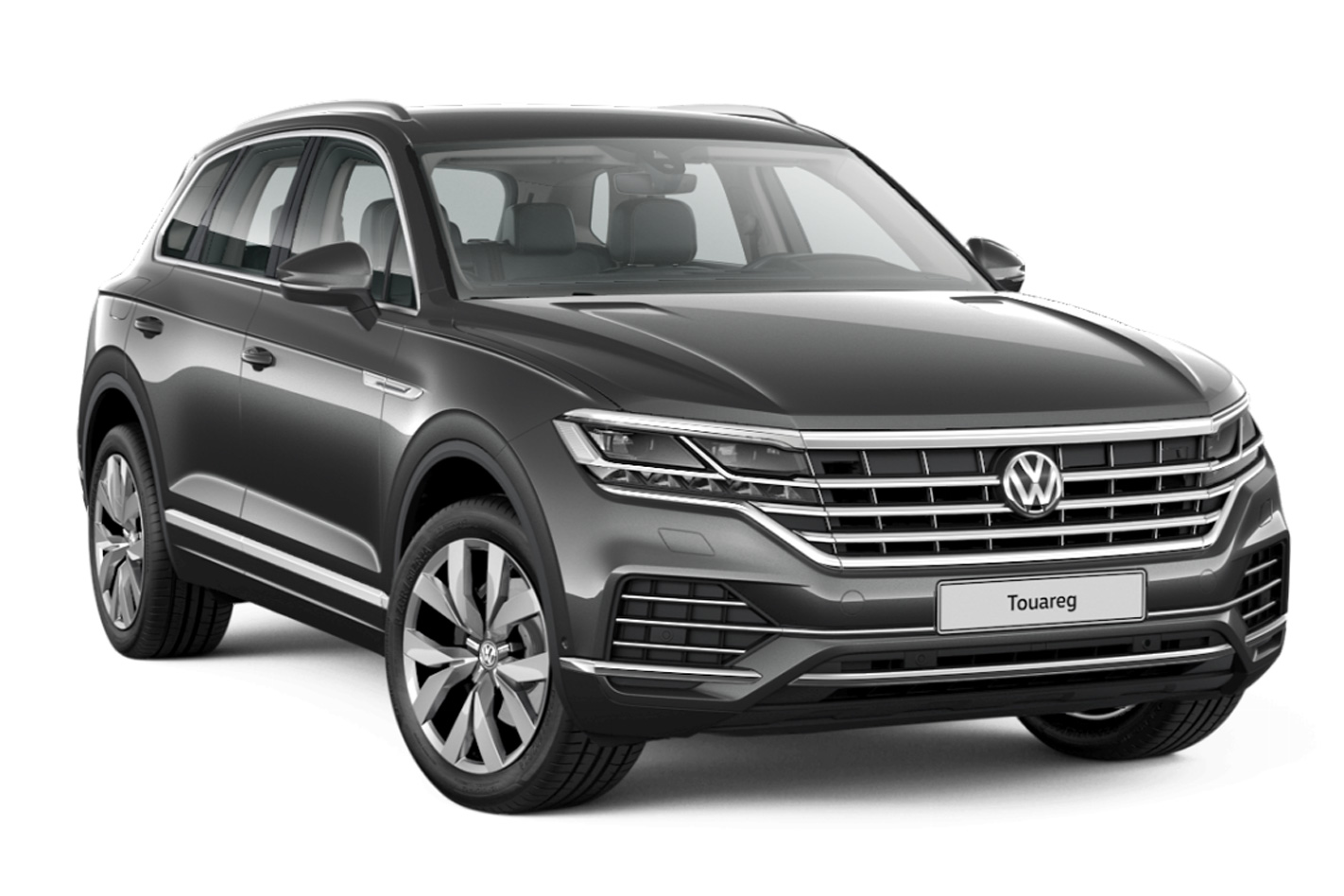
Priced from $79,490 before on-road costs, the new entry point of the pack is a whole $10,500 cheaper than the Launch Edition that kicked off the new-generation VW Touareg in June, but is equipped with the same silky drivetrain.
Under the bonnet, a 3.0-litre V6 diesel pumps out 190kW and 600Nm through an eight-speed automatic transmission – enough to accelerate to 100km/h from standstill in just 6.5 seconds, but still only asks for 7.4 litres of diesel per 100km.
It’s the same story for the new 190TDI Premium which costs $85,490 but adds in a few extras for the cash.
It might be the most affordable option in the now three-car line-up, but the 190TDI is far from budget in specification. On the inside, it gets Vienna leather seats, the same 9.2-inch central information screen found in the Launch Edition, and four USB charging points scattered about the cabin.
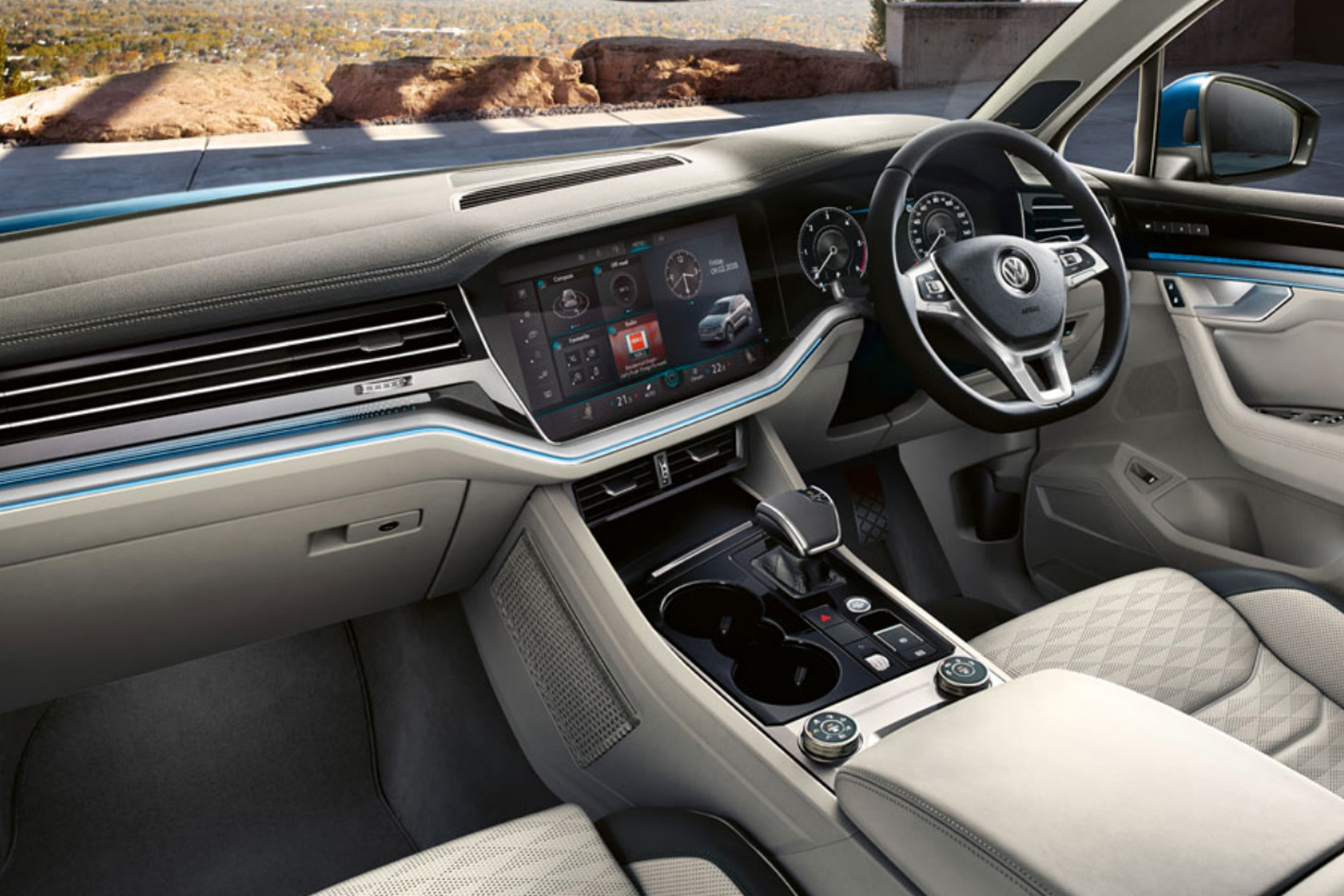
On the outside it rolls on 19-inch alloy wheels, there are six new paint colours to choose from, and gaining access to all doors is made smiler with the inclusion of keyless entry as well as a power tailgate that has easy opening and closing.
As for safety features, even at the most affordable level, the Touareg has autonomous emergency braking which functions at both freeway and stop-start traffic speeds. There’s adaptive cruise control that will maintain a distance from the car ahead, even down to static traffic, while lane-keeping assistance and side assist complete the package.
Stepping up to the 190TDI Premium throws in a number of enhancements over the entry variant including finer Savona leather which can be optioned in a lighter Mistral tone over the standard black, while the front seats have a massage function and ventilation.
Wheels are upgraded to 20-inch versions and the standard coil-spring suspension is swapped out for more cosseting air springs.
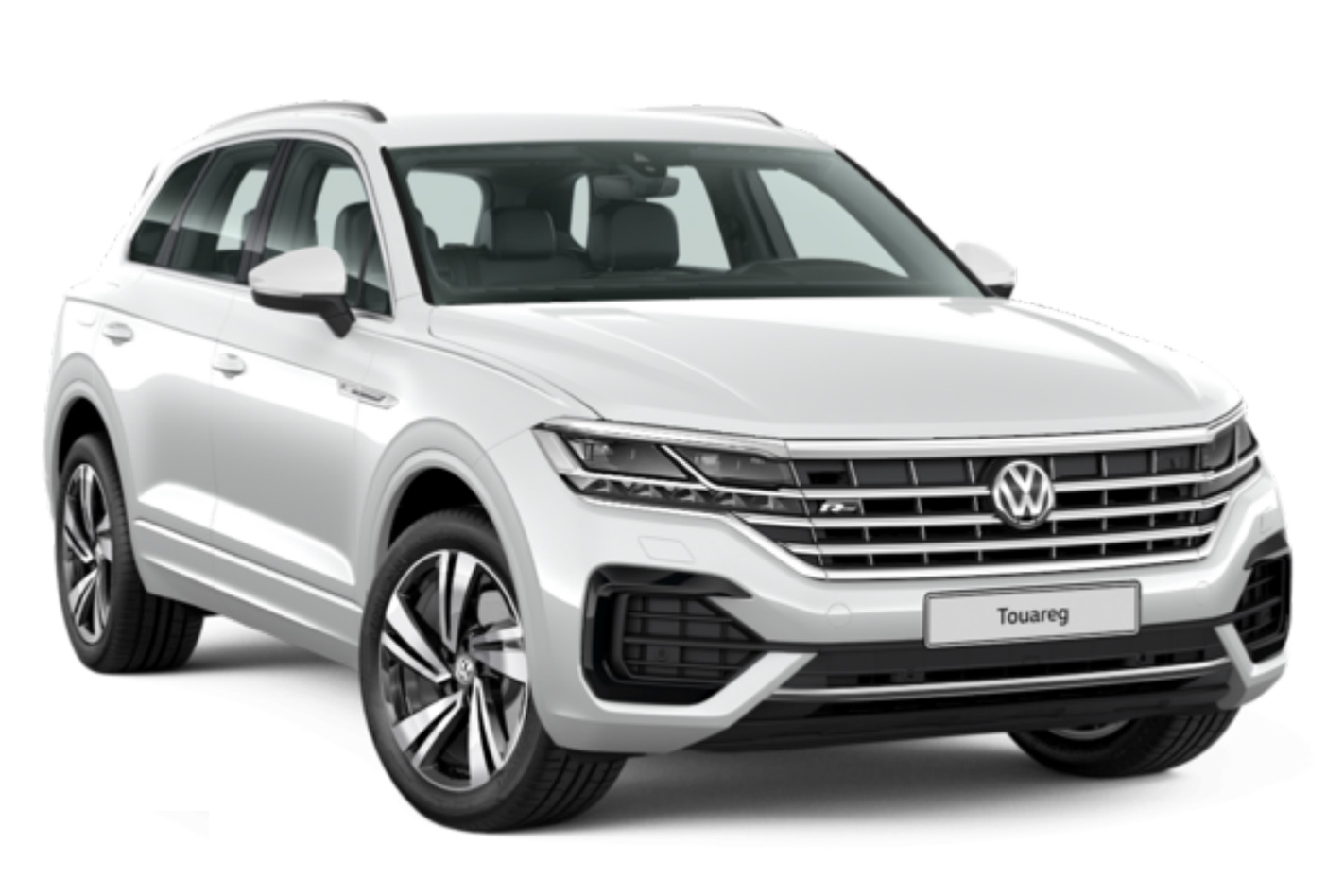
In addition to the extensive safety features of the 190TDI, the Premium gains IQ Matrix LED headlights that incorporate self dipping and adaptive beam technology.
If customers feel that the new additions to the range don’t offer the exact spec sweet spot they are looking for, a choice of three options packs will also be introduced with the arriving variants.
Available for both variants and the Launch Edition, an Innovision pack costs a hefty $8000 but stretches the standard infotainment screen to a whopping 15 inches, the analogue gauges are upgraded to a fully digital instrument panel, a colour head-up display is slotted in and the cabin is treated to customisable ambient lighting.
Customers choosing the Premium are offered a Sound and Comfort pack which bundles seat position memory for the front row and heaters for the second row, Area View 360-degree camera, a high-grade stereo system by Dynaudio, and quad-zone climate control for another $8000.
Also costing $8000, the R-Line package is for the driving enthusiast with four-wheel steering and an active anti-roll bar for sharpening the Touareg’s handling and responsiveness, a number of R-Line embellishments are added to the interior and exterior, while a unique-design set of 20-inch wheels completes the look.
Finally, a panoramic sunroof can be added to the list for $3000.
For those with a more accommodating budget, the Launch Edition still appears to represent the value pick of the range with pretty much everything in the above optional packs included in the $89,990 price, but the pair of new options arriving in October are bolstering the seriously compelling Touareg range even further.
WE’RE a greedy bunch, aren’t we? Porsche has only just given us the new 982 Cayman GT4 (our review is here), but already our minds are pondering “what if it had more performance…”
And we aren’t the only ones. Andreas Preuninger, who heads Porsche’s coveted GT division, has hinted that an even hotter GT4 RS could be on its way.
Speaking to Wheels at the GT4’s international launch, Preuninger revealed that the increasing popularity of Porsche’s GT cars means he sees room for a GT4 RS to join the Cayman range.
“There’s always room, if you create the room,” he said. “There’s lot of ideas that we have at the moment, and the good point is we have a lot more ideas than we can really carry out and realise. But I would say yes, sure. Stay tuned on this channel.”
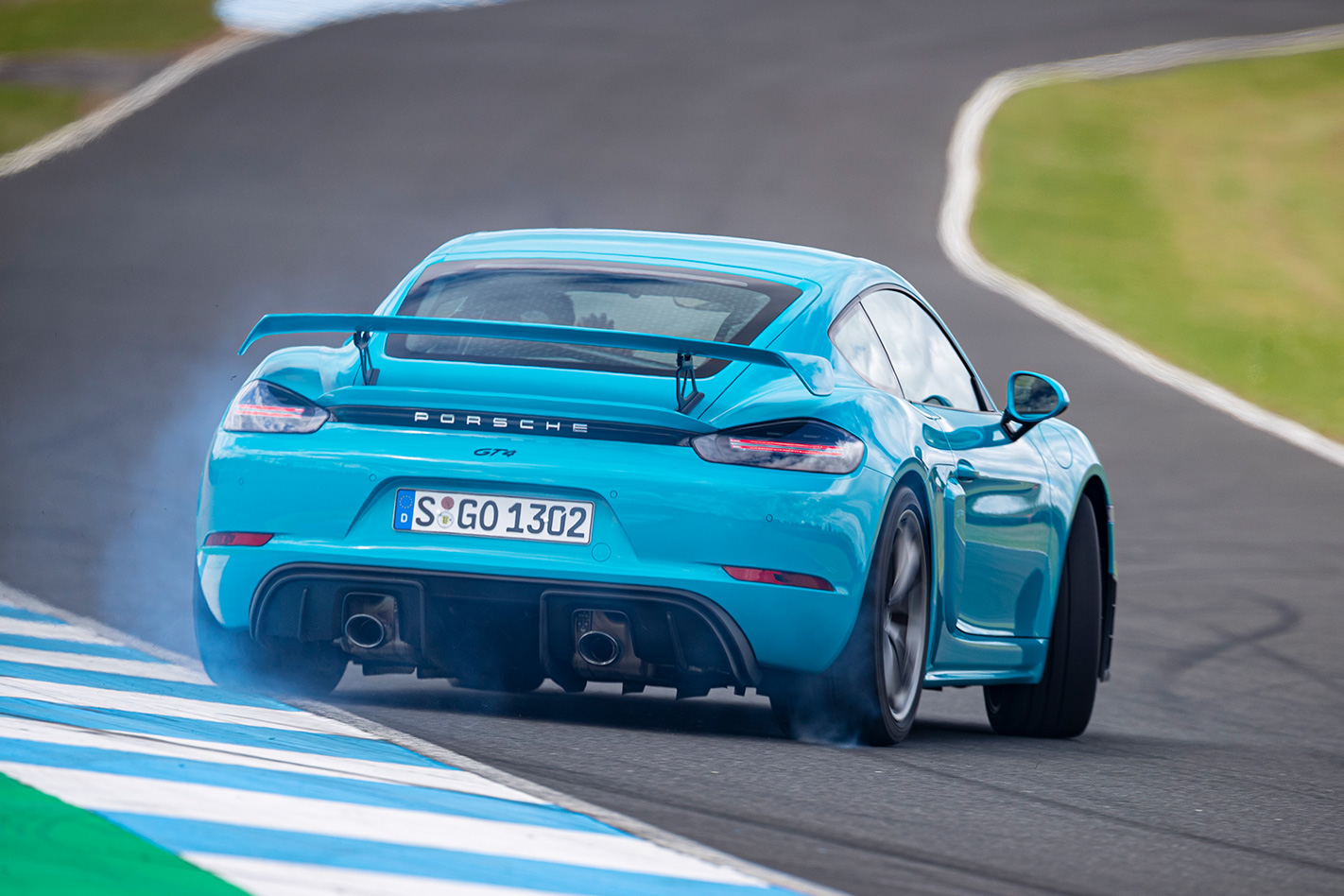
Wheels understands any potential GT4 RS is well over 12 months away, though Preuninger did shed some light on how its additional performance could be achieved.
“There’s meat in this engine construction,” Preuninger added, referring to the GT4’s all-new, naturally aspirated 4.0-litre flat-six. “We concentrated on getting the regular GT4’s 420hp (309kW) so it’s right on the longevity side and on the emissions side, but I think that with this engine, if we weren’t strangled by [emissions] laws, it could produce more power quite easily.”
The man in charge of developing Porsche’s boxer engines, Markus Baumann, added some further detail, explaining that more performance could easily be extracted by fitting the new 4.0-litre with the GT3’s titanium internals, rigid valvetrain and rear-mounted dry sump.
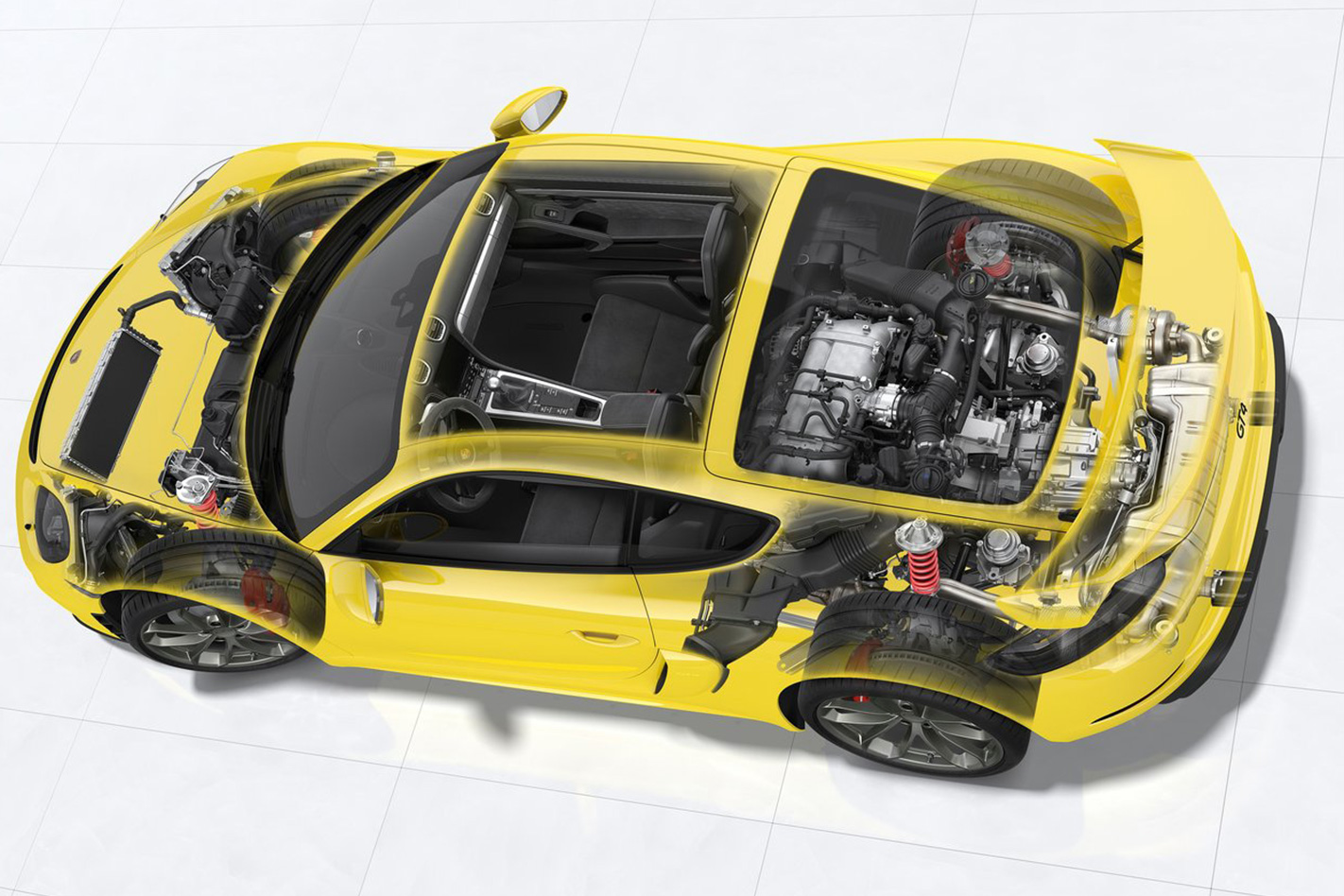
“There’s a lot of room,” said Baumann, when asked how much additional power the 4.0-litre can make. “You can add technologies and then you enable this engine for more power and more revs.”
On top of the customary chassis improvements (improved aero, wider tracks, stickier rubber, and rose-jointed suspension), it’s likely the GT4 RS would be offered solely as a seven-speed dual-clutch to keep it in line with the rest of Porsche’s auto-only RS range.
The biggest hurdle facing the GT4 RS is cost. “To give this engine [the GT4’s 4.0-litre] more RPMs you give it more components that become really costly,” said Preuninger. “That’s why the GT3 engine was not an option for the GT4. In the GT3 we might have one of the most expensive engines in the automotive market for a street-legal car.”
Ensuring any potential GT4 RS doesn’t cannibalise the 911 range by offering similar performance to a GT3 is also a valid concern. So there are roadblocks to navigate, but as Preuninger says, stay tuned to this channel.
Let’s be honest, we never thought that the Holden Commodore’s 3.6-litre Alloytec V6 was ever going to be the stuff of supercar fame, but a knavish father and son duo thought they could make it sing.
Brazil’s Santa Catarina state police allege the pair had been producing and selling faux Ferraris and Lamborghinis for a steal of a price in the South American country. A steal that is, if you think a replica Lamborghini with a Commodore V6 banging in the back-end was your idea of sixty grand well spent.
Not that the V6 isn’t somewhat capable – just last week the driver of a Commodore driver who tested positive for methamphetamines had fitted a leaf blower to the engine to act as some sort of ‘ghetto supercharger’.
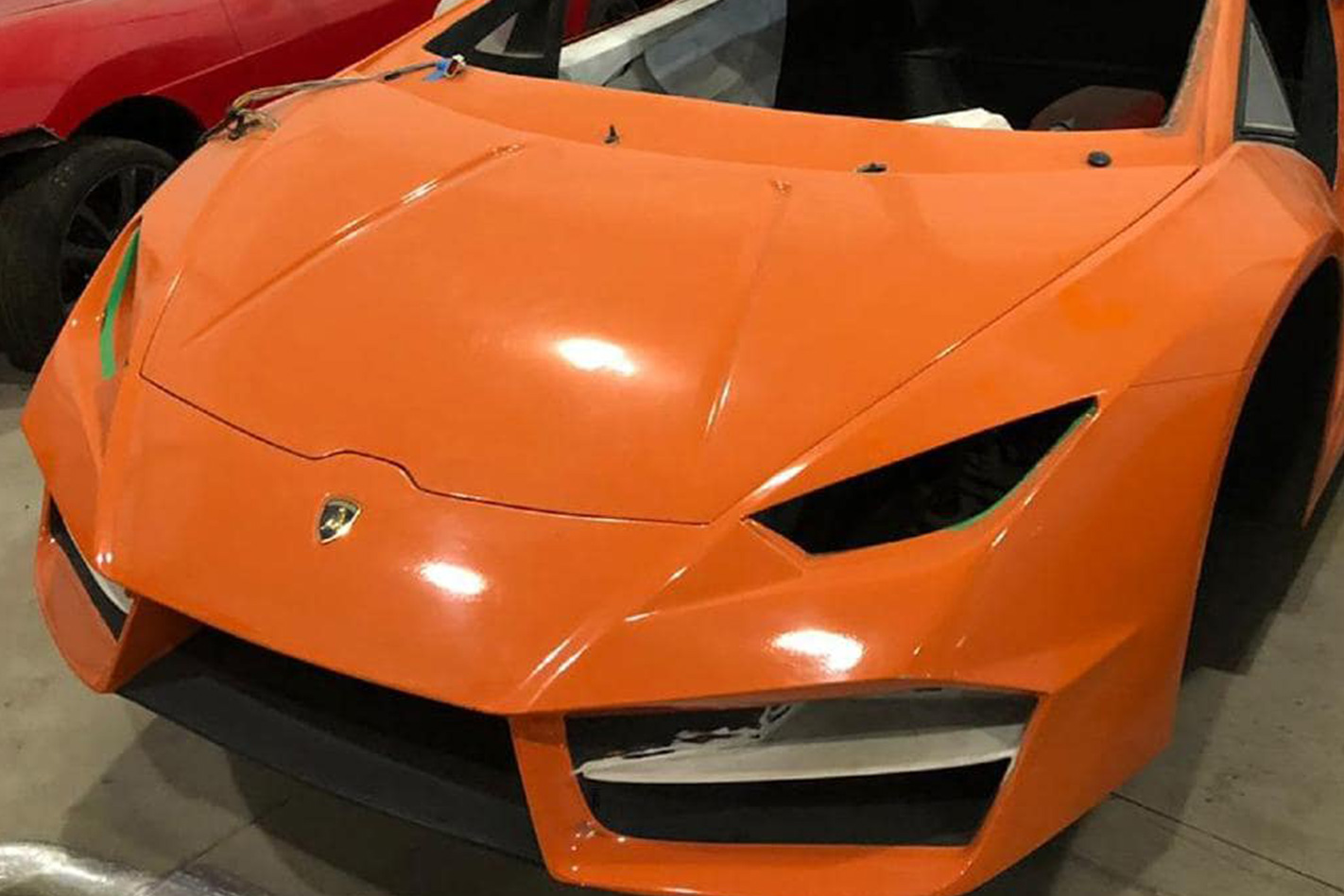
Back with the boys from Brazil, eight supercar replicas were seized by the police when they raided a workshop earlier this month. The tip off came from a law firm which told Lamborghini of ads for the cheap ‘supercars’.
The fakes were apparently so elaborate that each was fitted with knock-off badges and accessories, and were selling from ‘as little’ as $60,000.
According to a report from the UK’s The Guardian, the officer in charge of the operation, detective Angelo Fragelli, said that “in one of the vehicles, they were installing the engine of an Omega.”
That’s the Holden Commodore which was exported to Brazil as the Holden Calais VT, VX and VY, powered by a 3.8-litre V6 motor, and the Holden Commodore VZ and VE which got the perkier 3.6-litre six.
Fragelli added that, “the motors were much less powerful [than Lamborghini’s engines]” – no surprise there.
Though fake Lambo and Ferrari replicas fitted with a humble Chevy V6 were never going to frighten the real Italians, the cars have been seized and the pair have been issued with intellectual property charges. The father and son argue that the bodies are legal prototypes, and plan to continue selling them to customers.
BMW has responded to recent media criticism that the company has squandered an early lead in the escalating race to electrification.
The company was one of the first to introduce a battery-electric vehicle (BEV) line-up with the BMW i3 hatch and i8 sports car in 2013, but has not taken the range into the SUV or larger passenger car segments.
The recent resignation of BMW’s chief executive officer Harald Krüger after just four years has been partially blamed on his inability to push the company’s electric roll-out any faster, focusing instead on more profitable SUV spin-offs.
However, BMW’s 1 Series powertrain manager, Christian Bock, believes that while BMW may appear to have slowed the pace of electrification, all is not as it seems.
“Perhaps it’s fair, but on the other side, we were the first company to make a statement with the i3 and the i8,” he told WhichCar in Munich. “It was a very positive commitment to say that ‘yes, we are thinking about this direction’. But if you make a strong first statement and no second statement, it gives this impression to the outside.”
Bock believes that the future direction of electrification is yet to fully reveal itself and that the so-called cross-over point when BEV vehicles become cheaper than internal combustion engine (ICE) cars is not yet clear.
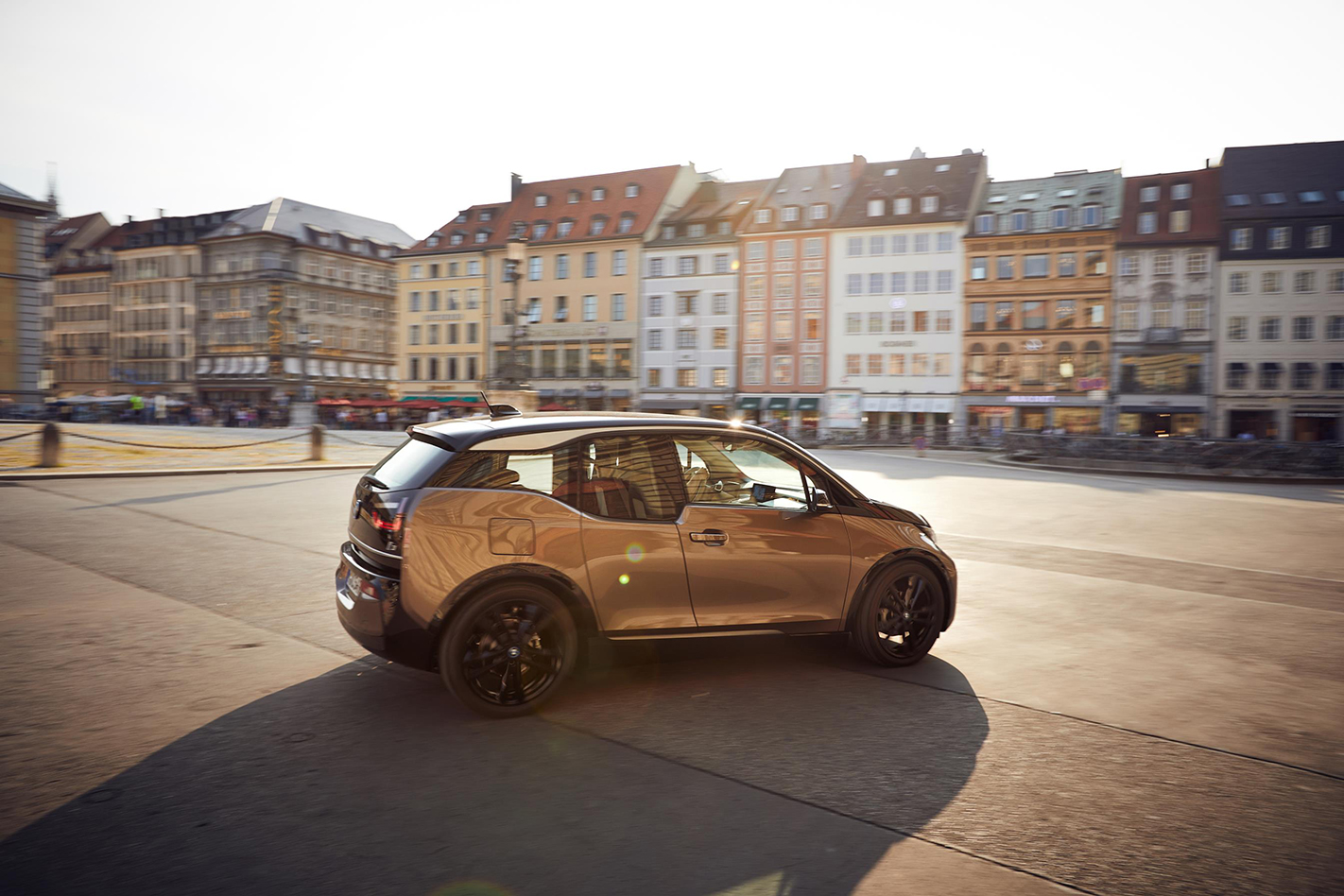
“I think it was the right decision,” he said. “To make too many fast steps, it would waste a lot of money, because the profits of BEV cars are not in comparison to ICE cars. So it’s always about balancing, investment in the future, like the i3, sending a message to the others, and to make money with the cars.
“I think that’s a good balance for BMW to have. I don’t think there is a mistake in our strategy. [Take the] first step, then look at how things are developing, looking for the crossing point, and then be ready.”
Bock believes that the step to full battery-powered cars will be preceded by a generation of plug-in hybrid vehicles that will complement BMW’s BEV plans.
“The most important thing at the moment is flexibility. It’s a key element,” Bock said. “The way for BMW to go is to ramp up BEVs and plug-in hybrids – which we see not as interim, but as long term, and for many customers, depending on the use case, the plug-in hybrid is the better concept.
“We’re not talking about electric cars with 500km range and 100kw/h batteries here, with associated costs and weights and increased C02 penalties from production. I think the discussion at the moment more and more goes in this direction – are battery cars really the answer for everything?”
Increasing the usable range of plug-in hybrids (PHEVs) is a focus for the company, according to Bock, but he’s also aware that there is a balance to strike between building hybrids that are seen as useful and attractive, and not just as cars that are merely purchased to ‘game’ government incentives that allow owners to save tax or pay a lower entry price.
“I think 80km of electric range is about the right number,” he said. “There is also the point that in some countries like the Netherlands, where the hybrid is [subsidised], more than 50 per cent of cars are never plugged in. It is our job to make them attractive enough for the customers to use it, but not to make a car for simply cheating governments.”
The new incoming CEO of the company, meanwhile, is Oliver Zipse, who has been a vocal supporter of using BMW’s existing ICE car platforms for EVs, in a bid to hasten the company’s plans to introduce 25 models by 2025.
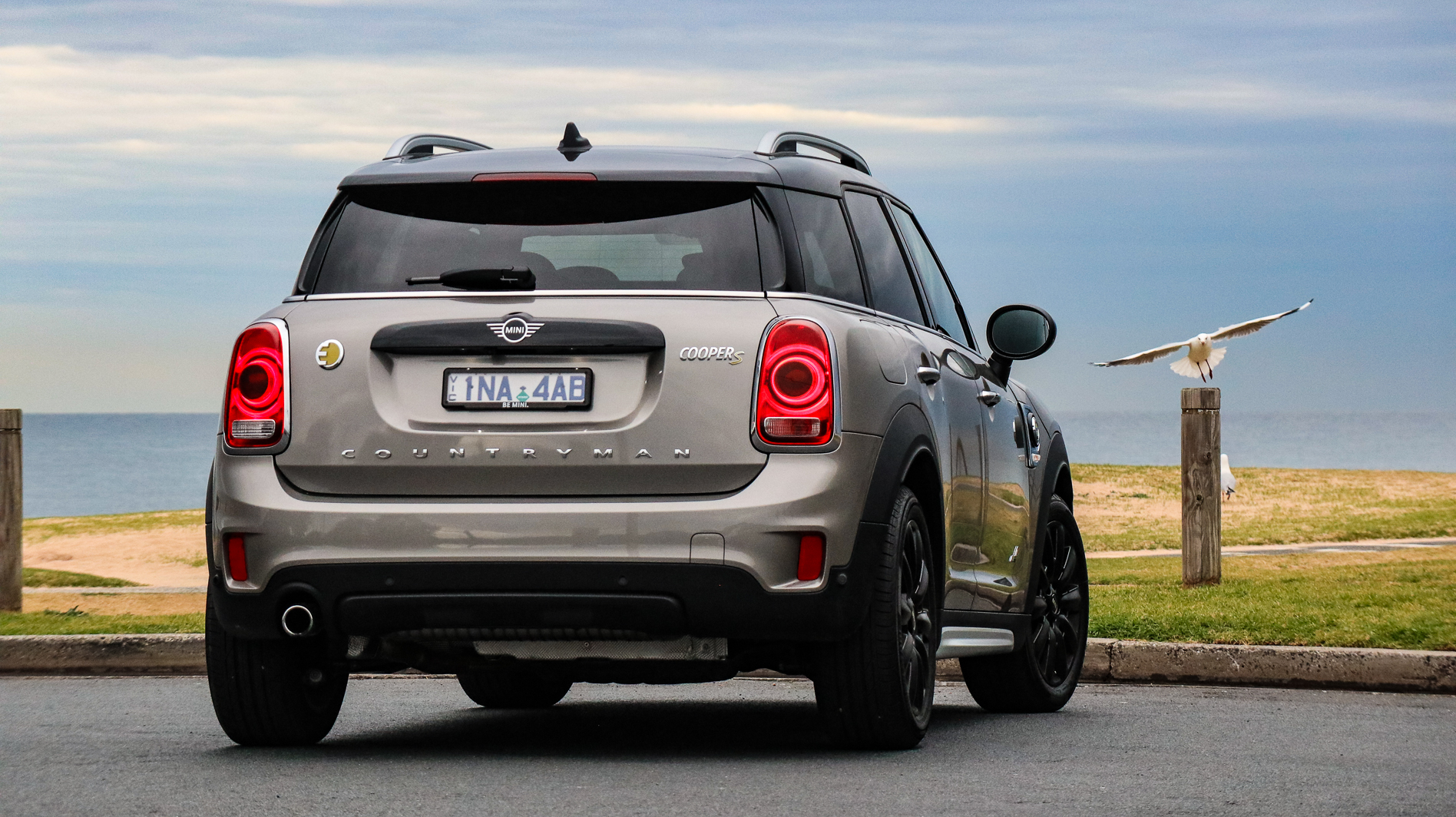
In Australia, BMW now sells the i3 BEV from $68,700 and the i8 PHEV from $318,900, as well as the $200,000 7 Series and the $57,200 Mini Countryman electric. The BMW 330e, a plug-in hybrid variant of the all-new 3 Series, also recently went on sale in Australia priced at $75,900, with deliveries set to commence in September.
Andrew Bagnall sold his 1994 McLaren F1 LM ‘High Downforce’. For a lot of money.
You may have several questions about this statement, such as ‘who is Andrew Bagnall?’ or ‘High Downforce?’. Or, you might just be wondering how much it sold for.
Well, this F1 is now the most expensive McLaren in the world, having fetched USD$19.8 million, or about AUD$29.2 million.
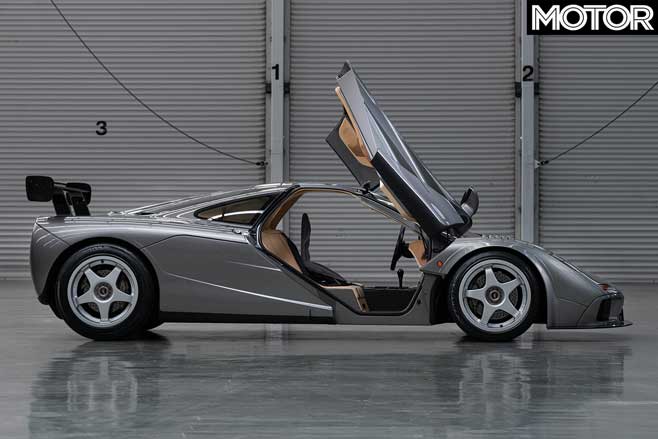
But that’s no huge surprise. This is one of only two McLaren F1s in the world to have been fitted with the high downforce aero kit designed by McLaren to “have more downforce than the Le Mans–winning 1995 GTR race car,” according to a McLaren Special Vehicle Operations estimate.
A redesigned nose is part of the upgrade, with an altered front fender vents and that less-than-subtle rear wing. The front air vents are also part of the kit. While the car is a ’94 model, RM Sotheby’s says this upgrade was undertaken in 1999 under its second owner.
Being one of only two of 64 F1 road cars to be converted to LM-spec with the downforce kit by McLaren, the car wasn’t going to sell for pennies.
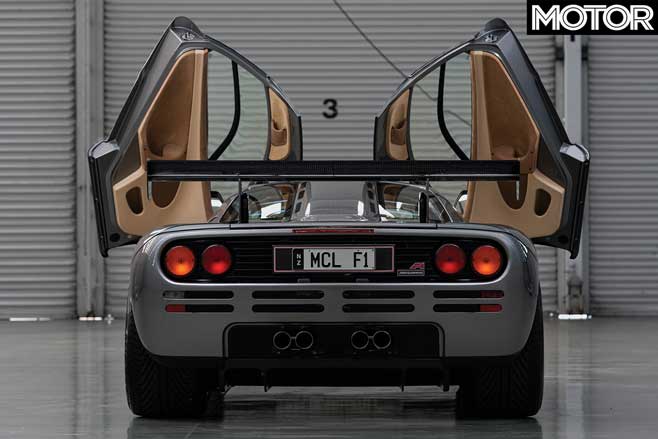
Speaking to the car’s provenance, RM Sotheby’s says F1 service program manager Harold Dermott holds the car’s second owner (before Bagnall, the third) in the highest regard. “You could not ask for a more dedicated owner,” he wrote in a letter to the current owner.
Until now, NZ racing driver (and five-time Bathurst 1000 competitor) Andrew Bagnall was in charge of the car which the aforementioned Mr Dermott calls his one of his favourites and “one of the most heavily developed cars that we have ever built”.

Bagnall had owned the car for more than a decade, having driven it regularly (once a month, according to McLaren) and kept it in top shape with regular servicing by MSO. It shows just 21,500km on the odometer.
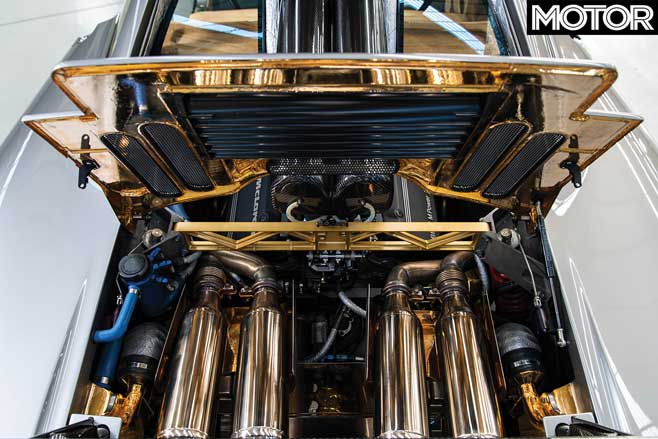
Bagnall says the car’s BMW-built, naturally aspirated 6.0-litre V12 produces around 522kW (he says approximately 700hp, to be specific) and behaves like a proper race engine – he’d know.
Aside from his five tilts at Bathurst during the 1980s (and ’90), Bagnall has found himself with a class podium more recently after an effort in the 2016 Bathurst 12 Hour saw him third in the GT3 Am class driving an Audi R8 LMS with Rick Armstrong and Matt Halliday. They placed 11th overall from 20 finishers and 37 starters.
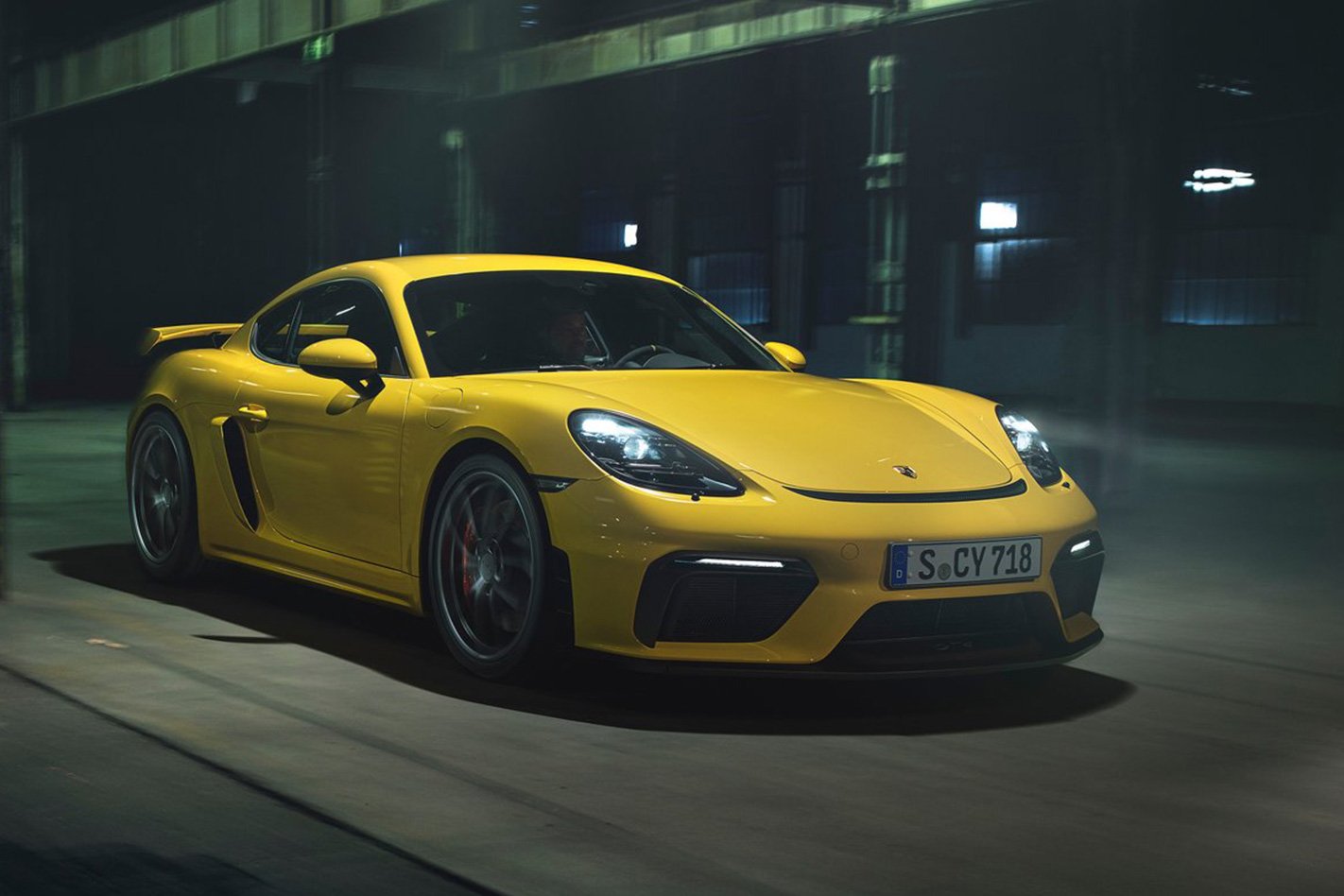
DEEP breaths, engine lovers. Porsche has some news. Hot on the heels of giving us an all-new 4.0-litre flat-six to lust after in the second-gen Cayman GT4, Porsche’s engineers have confirmed it has ample headroom for more power and torque, and a GT3-rivalling 9500rpm rev limit.
Speaking to Wheels at the GT4’s international launch in Scotland, Porsche’s GT division boss, Andreas Preuninger, and the man responsible for Porsche’s boxer engines, Markus Baumann, both confirmed the 4.0-litre has lots of potential.
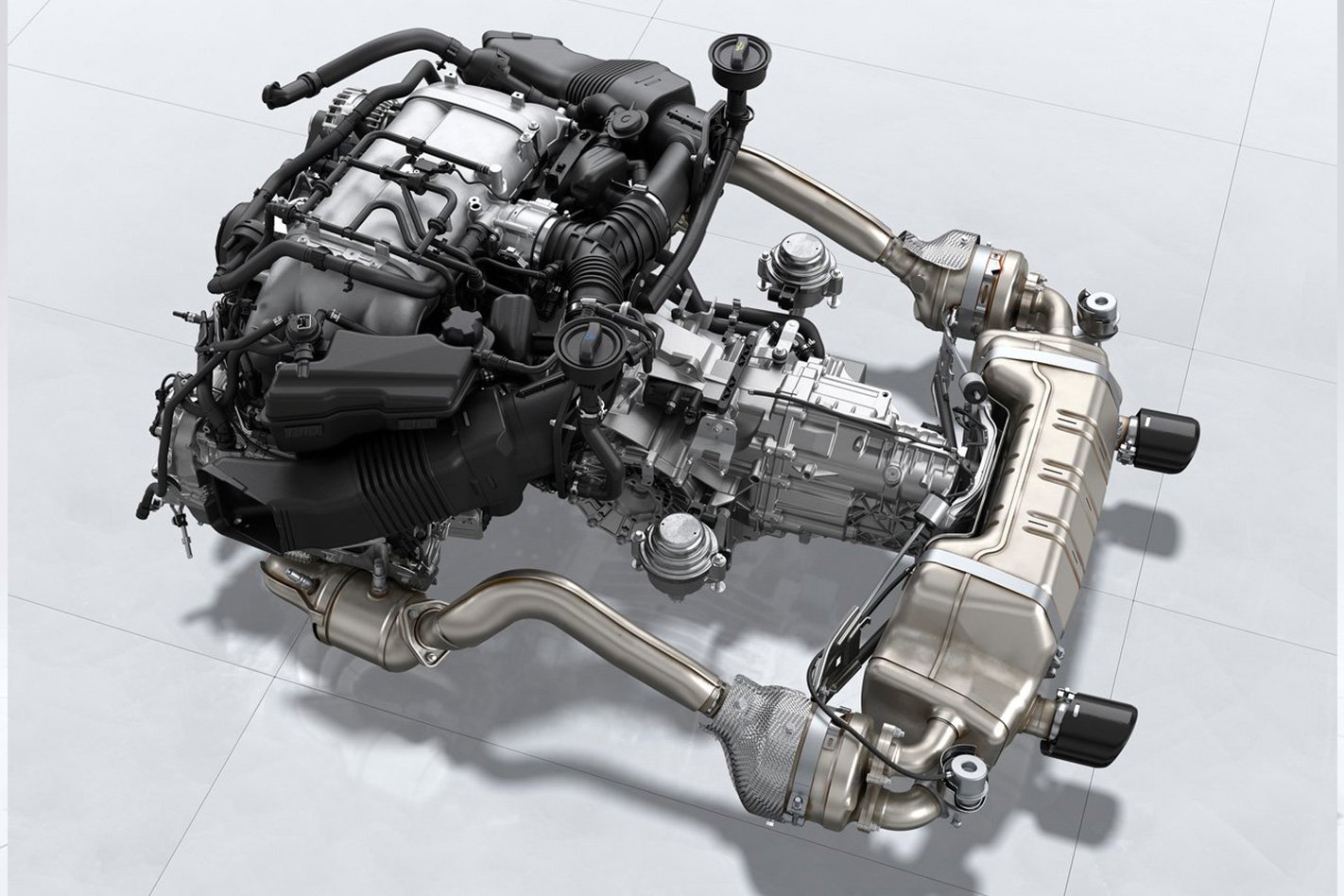
“There’s meat in this engine construction,” said Preuninger. “We would be stupid to give it the maximum for the first time. If you look at the Mezger when it first appeared in 1999 in the GT3, it had 360hp (265kW), and then when we stopped with the Mezger more than a decade later in the 4.0-litre it had more than 500hp (368kW).
“…with this engine, if we weren’t strangled by [emission] laws it could produce more quite easily.”
Not to be confused with Porsche’s other atmo 4.0-litre, which is fitted to the GT3 and is motorsport derived with titanium components, the Cayman GT4’s unit is based on the 911’s 3.0-litre twin-turbo, though around 80 percent of the engine is unique.
We’ve detailed the extensive technical changes here though two juicy technical details we didn’t know then are that the new 4.0-litre shares its sparkplug design with the 918 Spyder, and, contrary to reports that the engine’s sole transmission would be a six-speed manual (in the Cayman GT4, at least), it will be paired with a seven-speed dual-clutch.
Back to the performance. Like Preuninger, Baumann smiles knowingly when you ask him how much headroom the new 4.0-litre has to give.
“There’s a lot of room,” he says. “A lot of room. If someone wants us to enable this engine for more performance, we have those steps. Just look at what technologies the GT3 engine has … you can add technologies and then you enable the engine for more power and more revs.”
Specifically, Baumann is referring to the GT3’s titanium con-rods and valves, its unique valvetrain, plus its rear-mounted dry sump design, which is different to the GT4’s integrated dry sump.
Preuninger explains: “You need more RPMs for more power, and for more RPMs you need to look at the internals; the weight of the pistons, the friction parameters of the piston rings and the cylinder bores and the bearings.And the more RPMs you give the engine, the more components you need that become really costly.
“That doesn’t mean it’s at the edge of its capabilities mechanically, not by far,” Preuninger added. “But I can’t just plug in a different ECU and make 500hp and rev to 9000rpm. That wouldn’t be possible. First you’ve got the cam adjusters, we’ve got a rigid valvetrain in the GT3 … This [Cayman’s 4.0-litre] is still a high-revving sport engine, but it is not a race engine we can make 150hp more by the switch of a button.”
Cost isn’t the only hurdle Porsche faces when developing the 4.0-litre. Meeting ever-tightening emissions laws is arguably the bigger obstacle, though Preuninger assures us the new mill is futureproofed.
“It’s even better than it has to be on the legal side,” he says. “It’s already fulfilling the emissions rules for the day after tomorrow. [So] it’s not so much what the engine can make mechanically, it’s about how much horsepower can we make under the circumstance of the emissions. This is definitely the limiting side, it’s not the hardware.”
And as for a 9500rpm rev limit, or even beyond?
“Why not?” laughs Baumann. “If you had a dry sump, titanium components and a rigid drivetrain … anything is possible.”
Apple recently announced the impending arrival of its far-reaching iOS 13 update for its tablets and phones, and one of the most significant changes is one that will benefit drivers – an extensive revamp of the company’s Apple CarPlay smartphone mirroring system.
The iOS 13 update is currently in ‘public beta’ mode ahead of its full release later this year, meaning savvy users can opt-in to an early update. Do so, and you’ll find that CarPlay’s home screen now looks significantly different.
There’s now a slicker presentation to the ‘dashboard’, which clusters together a large tile for your sat-nav app of choice – which displays a smaller map view to enable you to keep tabs on your location from the dashboard screen – alongside three smaller tiles that show what’s playing on your media app, suggested destinations in your area, and a new calendar app that can display upcoming appointment times and locations.
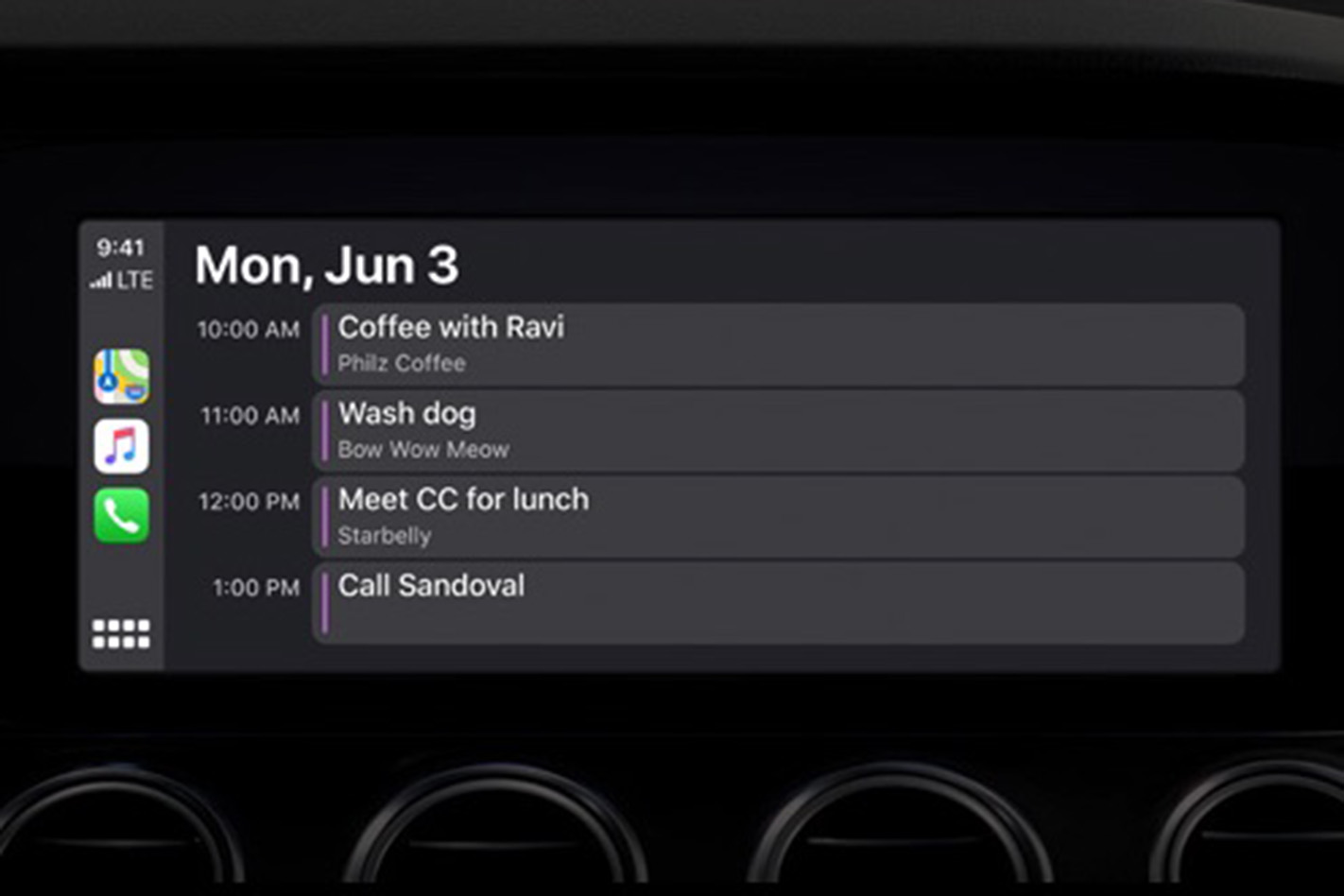
It’s a solid evolution over the old system, and displays more information on the one screen to allow better at-a-glance usability. Having to flick between ‘pages’ to get info on what song is being played should be a thing of the past.
Using the Siri voice assistant is also another streamlined process, with the Siri interface being overlaid on whatever screen you happen to be on, thus allowing you to still see your navigation instructions while dictating commands. There’s also some integration with Apple’s HomeKit ecosystem of IOT devices, giving you remote control over connected devices in your house like, say, a garage door opener.
Also, if your passenger happens to grab your phone while it’s plugged in and change to a different app, it will no longer boot you out of whatever app was being displayed on your car’s screen.
If you’re shopping for a new car, especially one at the cheaper end of the pricing spectrum, the recent rise of smartphone mirroring from Google’s Android Auto and Apple’s CarPlay has been nothing but transformative. After all, with updates such as CarPlay’s iOS 13 roll-out happening on a regular basis, it means the infotainment system of your car will evolve and get better over time – something that doesn’t generally happen with built-in infotainment systems.
Now, all your car needs is a touchscreen and compatibility with Android Auto or Apple CarPlay for you to put a high-tech, internet-enhanced infotainment suite on your dashboard – even if your car doesn’t come with built-in sat-nav system as standard. Mirroring systems are fast becoming a fixture of standard equipment lists too, with even cars as cheap as the $14,990 Kia Picanto sporting a touchscreen and smartphone mirroring as factory-issue gear.
Where did it all go wrong – again – for Jaguar Land Rover? Every year since 2011, JLR made more in annual profit than the A$2 billion it cost Ratan Tata to buy it from Ford back in 2008, saving it from its last major crisis.
Profits peaked at $4.8bn in 2015, thanks to strong new product, booming sales in China and the explosion in global demand for SUVs.
But in February JLR announced that it had lost a staggering $6.3bn in its third quarter alone, and is cutting 4500 jobs and $4.6bn in costs. It hasn’t announced its final loss for the full financial year, which ended in March, but annual sales are down six percent, and the decline accelerated in the final quarter.
Jaguar posted a three percent rise, but that’s only due to the addition of E-Pace and I-Pace. Every other model is down heavily.

Land Rover posted a nine percent decline despite the Velar making its first full-year contribution: the ageing Range Rover and Range Rover Sport were the only other Land Rovers to show an increase.
JLR has been caught in a perfect storm of slumping Chinese sales and uncertainty over both Brexit and the future of diesel. And it could get worse.
With the terms on which the UK will leave the European Union still unresolved, JLR may yet be hit by tariffs and delays on the parts it imports and the cars it exports. Add to that further expense in closing one of its factories in the UK. It confirmed in April that the new Defender would be built at its plant in Slovakia.
Of that huge loss, ‘only’ $500m was operational. The vast majority of the number – $5.8bn – was a write-down of capital investments made in previous years. Although sales have grown strongly under Tata’s ownership, they haven’t grown as fast as planned.
Privately, Tata and JLR’s board, led since 2010 by Ralf Speth, hoped to get JLR to a million cars a year, and they invested accordingly. JLR made huge operational profits for its owner, but Tata ploughed billions back into the business. With annual sales now dipping back below 600,000, the write-down is a public admission its plan hasn’t worked.
Like Ford, Tata tried to make Jaguar a rival to BMW and Mercedes. It developed the XE and XF at huge expense, but with sales stuck an order of magnitude behind their German rivals and declining, this has been JLR’s most obvious failure. “We should never have been chasing big volumes, trying to be BMW,” one former senior JLR executive told Wheels. “The sedans never washed their faces. They just cost too much to develop. They shouldn’t be replaced. Jaguar should just make EVs, the SUVs, and petrol-powered halo sports cars.”
Max Warburton, the leading car industry analyst who is usually excoriating in his criticism of wrong-headed CEOs, goes easy on Speth.
“I’d challenge anyone to have come up with a better strategy at the time,” he says. “Maybe you could say they should have been more aware of how global demand for sedans was going to shrink, but I don’t think even the Germans expected it to be quite so rapid,” he noted.
Speth may have called it wrong on sedans, but he’s given JLR a massively expanded range, an EV which beat its Germans rivals to market and won the European and World Car of the Year, and the ability to manufacture its own engines, electric motors and batteries. It has all been done at huge cost to Tata, but the depth and scale of JLR’s operations now means that the current crisis is not the existential one it might have been a few years ago.
Insiders say that the 63-year-old Speth planned to stay until he’d made good on his promise to electrify every model in the JLR line-up by 2020, before handing over to Hanno Kirner, currently JLR’s Strategy Director.
Kirner oversaw the deal to supply 20,000 I-Paces to Waymo, Google’s self-driving car arm, and has the vision to make JLR fit for the modern age. But his succession might be disrupted if Speth has to carry the can for the current losses, and depart early – or if the company is sold (see below).
WILL STRIFE MEAN TATA FOR JLR?
TATA INSISTS that JLR isn’t for sale, but with no synergies between JLR and Tata’s Indian car business, it has never made a particularly logical owner. “There’s not many people at Tata who really know why they own JLR,” says car industry analyst Max Warburton.
The mounting losses might be all the incentive Tata needs to put the operation on the market – and there would be no shortage of suitors if it did, Warburton says.
“It could be PSA buying it, or any of the three Germans. And an acquisitive Asian company like Geely or another Chinese OEM would definitely look at it,” he says.
A new owner would likely be less sentimental about Jaguar remaining a maker of petrol-powered sedans, and would probably rationalise Land Rover’s range to suit its current, more realistic sales volumes. This crisis won’t kill them, but Jaguar and Land Rover could both emerge from these dark times looking very different.
