
Porsche has offered the world a first glimpse of its upcoming all-electric Cayenne SUV, putting a camouflaged prototype through its paces during a film shoot at England’s iconic Shelsley Walsh hill climb.
The prototype set a new benchmark, breaking the previous SUV record by more than four seconds on the historic course.
Driven by Gabriela Jílková, development and simulator driver for the TAG Heuer Porsche Formula E Team, the Cayenne Electric impressed with a 31.28-second run up the narrow, 914-metre course, which features gradients as steep as 16.7 per cent. Notably, the vehicle hit the 60-foot mark in just 1.94 seconds –performance territory typically reserved for purpose-built single-seater race cars on slick tyres. The Cayenne, by contrast, was fitted with standard summer tyres.
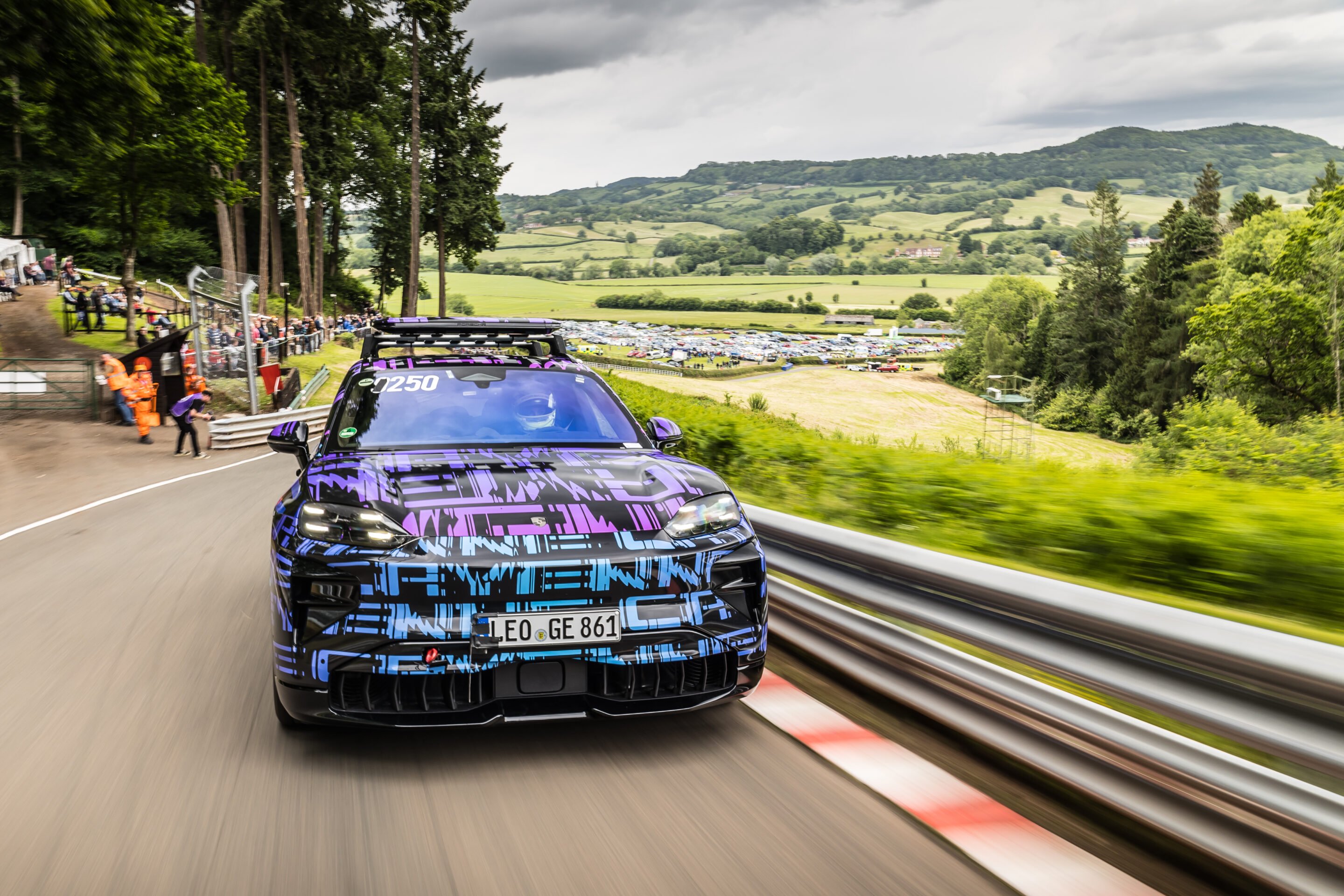
Much of the prototype’s composure was credited to Porsche Active Ride, the new chassis system engineered to keep the vehicle flat and controlled under hard braking, acceleration, and cornering. “I felt completely confident at all times,” Jílková said after her run. “The active suspension gives the Cayenne enormous stability and precision.”
Michael Schätzle, Vice President of the Cayenne Product Line, explained that while final tuning continues, the record-setting prototype featured production-level drivetrain and suspension components. He emphasized that electrification is enabling Porsche to push SUV performance to unprecedented levels. “The Cayenne Electric will set new standards – without compromising practicality.”
To prove that point, Porsche also demonstrated the prototype’s towing capabilities. During filming with British TV personality Richard Hammond, the Cayenne Electric towed a 100-year-old vintage car – over two tonnes – plus trailer, from Hereford to Hammond’s garage. With a maximum towing capacity of up to 3.5 tonnes, Porsche says the new EV matches traditional combustion-engine SUVs in utility.
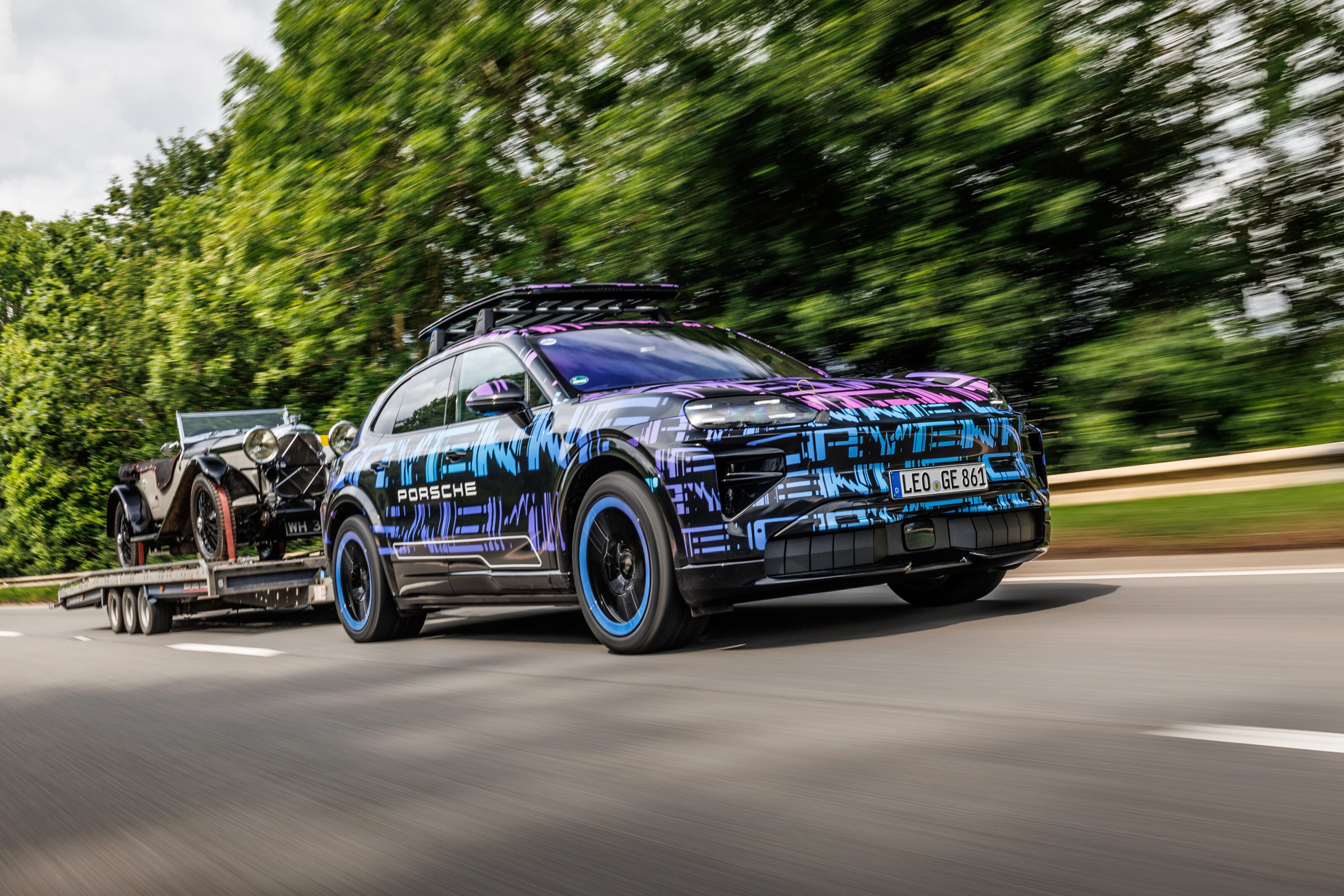
The Cayenne Electric is the second all-electric SUV from Porsche and is designed to continue the nameplate’s legacy of versatility, long-distance comfort, and off-road prowess. With a global launch still to come, the vehicle’s capabilities are being showcased in stages.
Its next public appearance is set for the Goodwood Festival of Speed, from July 10 to 13, where the same camouflaged prototype will be on display.
As of mid-2025, Australia’s people mover market is experiencing a resurgence, with several models gaining popularity among families and transport services. According to the latest VFACTS data, 7087 people movers have been sold in the first six months of 2025, versus 6279 last year.
Here are the top five best-selling people movers in Australia in the first half of 2025, with the Kia Carnival again leading the pack.
1. Kia Carnival – 5,173 units
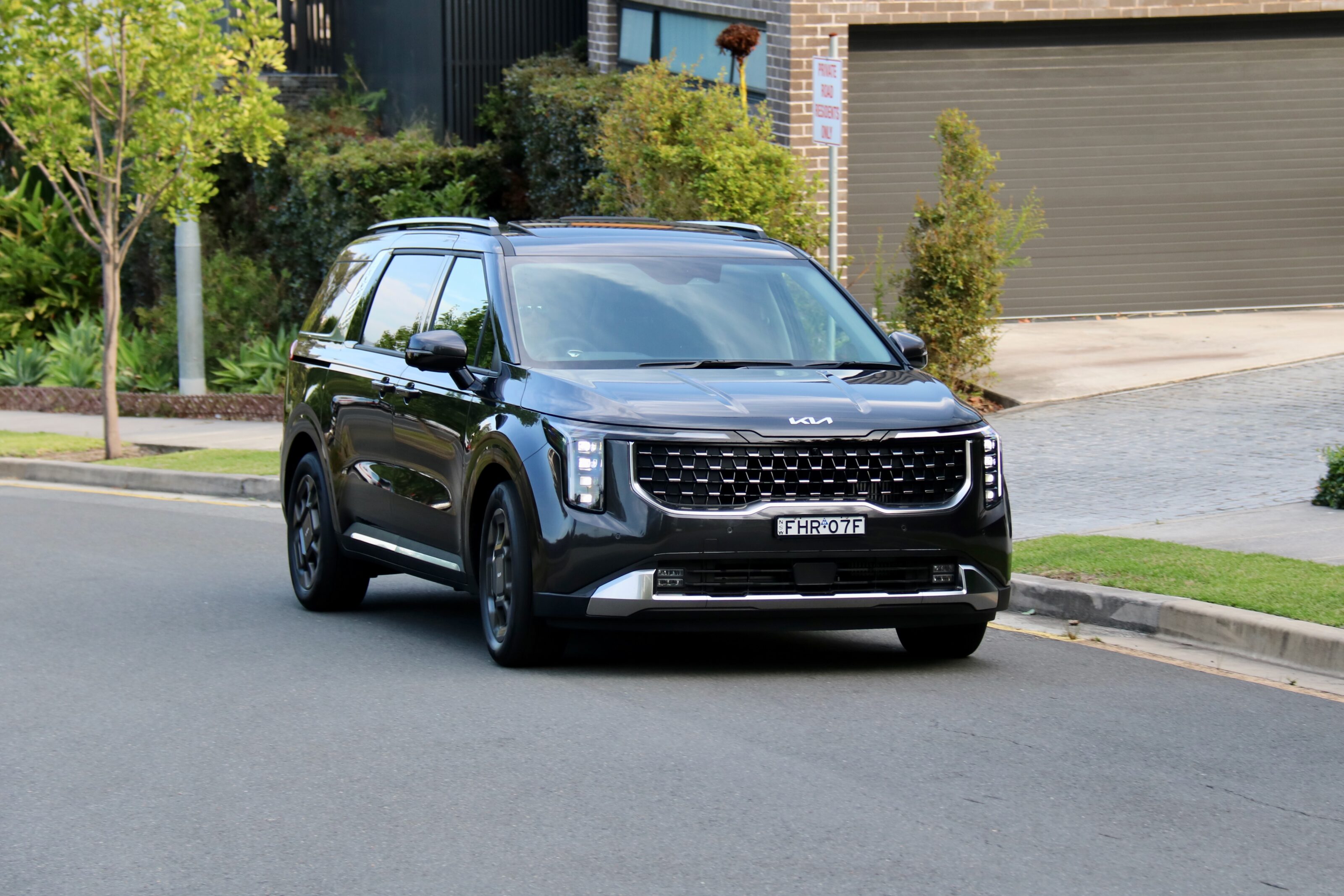
The Kia Carnival continues to lead the segment, with 5,173 units sold in the first half of 2025, accounting for 82.3 per cent of the segment. This ocntrasts with 4572 Carnivals sold for the same time last year, a 13.1 per cent rise. Its enduring popularity is attributed to its spacious interior, advanced safety features, and a range of powertrains, including petrol, diesel, and hybrid options. The recent introduction of more affordable hybrid variants has further broadened its appeal.
2. Hyundai Staria – 565 units
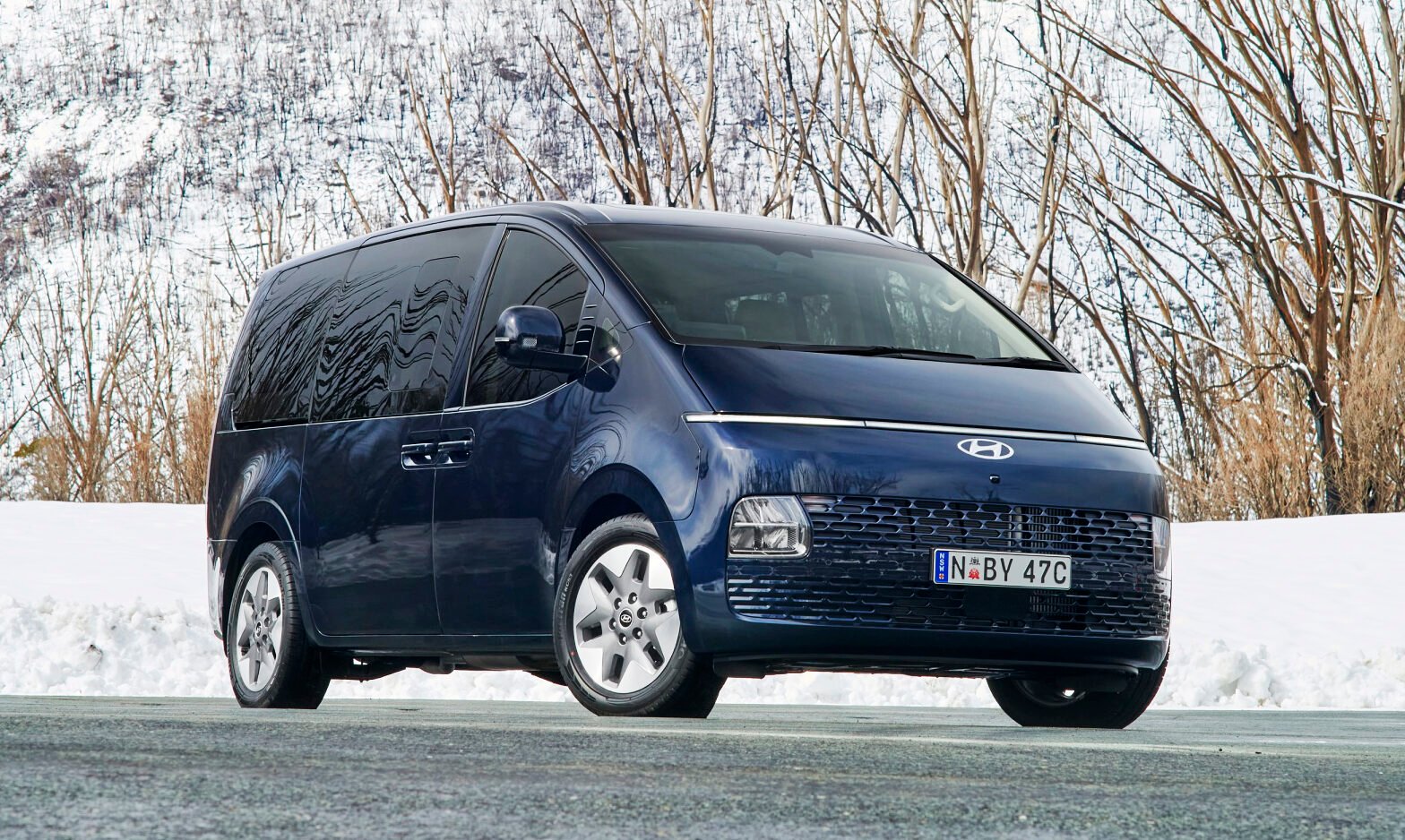
The Hyundai Staria, with its futuristic design and versatile configurations, secured the second spot with 565 units sold. Available in various trims, the Staria offers both petrol and diesel engines, catering to families and commercial users alike.
3. Ford Tourneo – 376 units
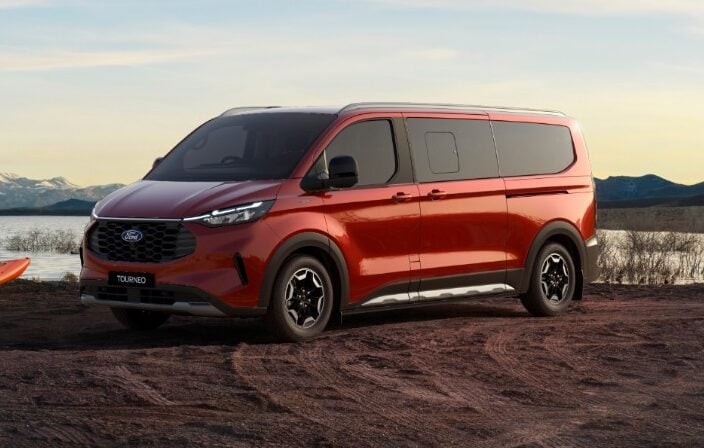
The Ford Tourneo has made a notable entry into the market, selling 376 units. Known for its practicality and comfort, the Tourneo offers flexible seating arrangements and modern features, appealing to both families and businesses.
4. Lexus LM – 163 units
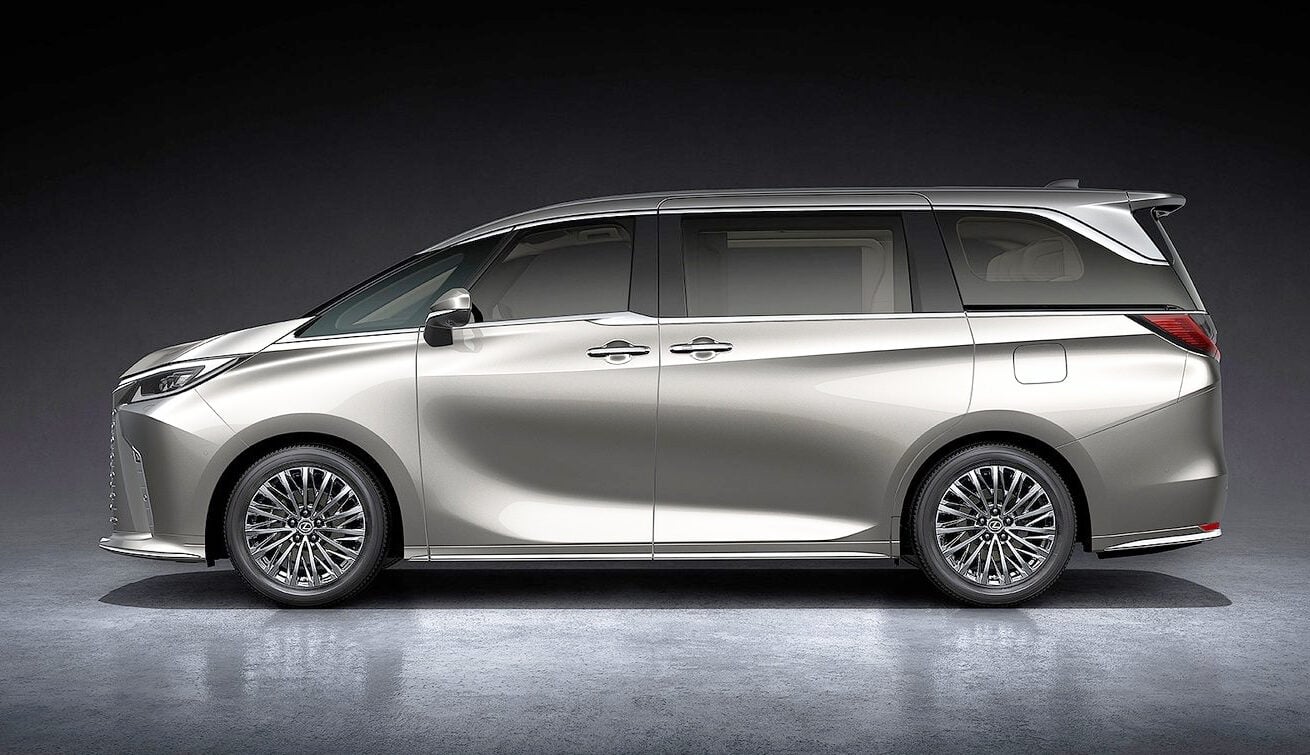
In the premium segment, the Lexus LM has garnered attention with 163 units sold. This luxury people mover offers opulent interiors and advanced technology, targeting customers seeking comfort and exclusivity.
5. Volkswagen ID. Buzz – 154 units
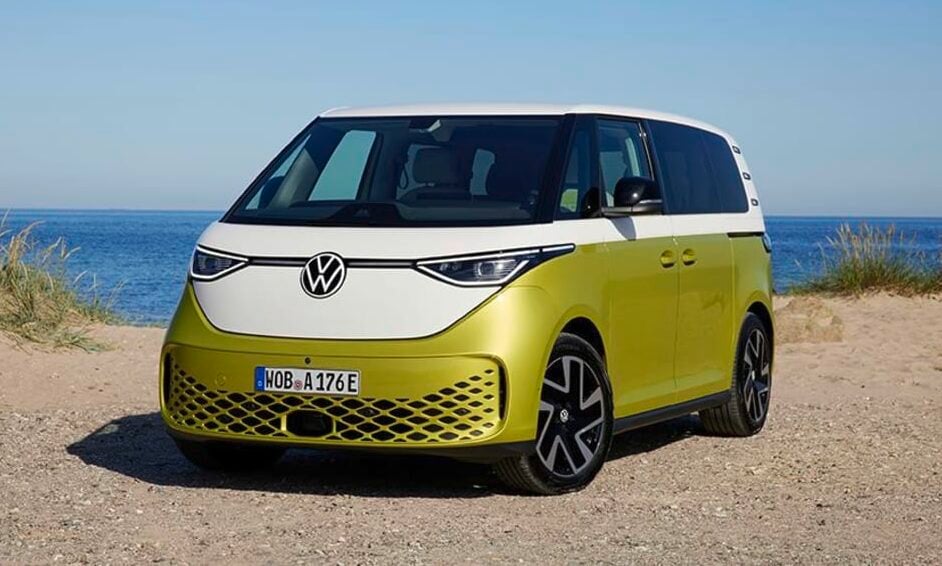
The all-electric Volkswagen ID. Buzz combines retro styling with modern electric vehicle technology. With 154 units sold, it appeals to environmentally conscious consumers looking for a unique and spacious vehicle.
The people mover segment in Australia is evolving, with a mix of traditional and electric models catering to diverse consumer needs. The Kia Carnival‘s continued success underscores its strong all-round offering, accounting for its near blockout of this segment, while a range of other brands attempt to differentiate themselves and battle for increased market share.
Check the August 2025 of Wheels magazine, on sale July 28, for a more in-depth comparison of people movers on sale in Australia.
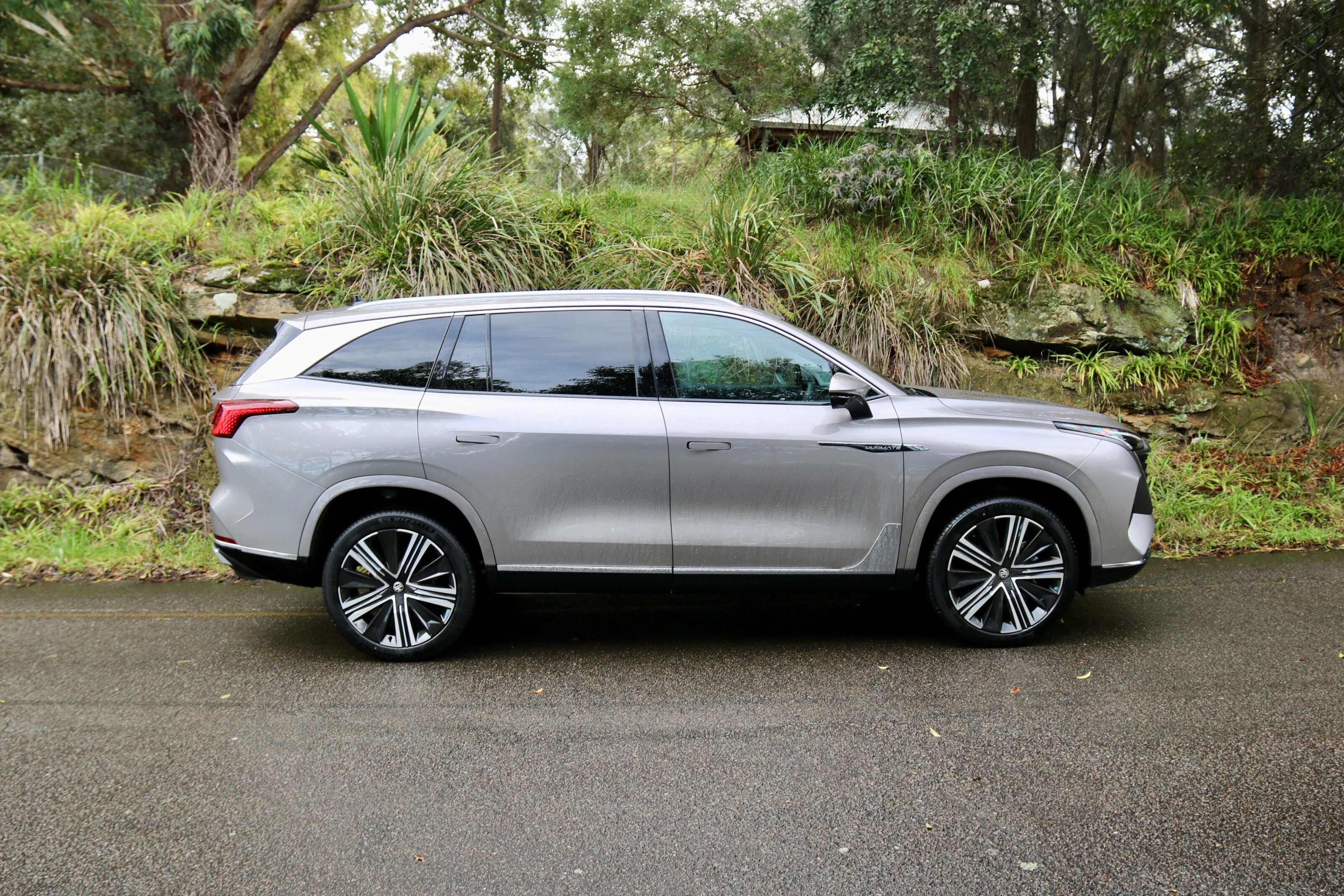
In the Australian new car market it’s said that without a large seven-seat SUV in your line-up, you may as well not bother selling cars here given their enduring popularity. Until now, MG was one such brand but that’s now been fixed with the arrival of the new MG QS – launched with keen pricing, a spacious cabin and a long list of features to establish a foothold in the seven-seat SUV segment.
Here we assess whether the new MG QS is worth consideration over more expensive big names, such as the Toyota Kluger and Hyundai Santa Fe?
Price and equipment:
For now, there are two QS models in Australia: the entry-level Excite and upper-spec Essence, the latter of which is equipped with all-wheel drive.
MG QS pricing (drive away):
| Excite | $46,990 |
|---|---|
| Essence | $50,990 |
MG QS Excite standard equipment:
- 20-inch alloy wheels
- Dusk-sensing automatic LED headlights
- Rain-sensing automatic wipers
- Silver roof rails
- Heated/auto-folding mirrors
- Keyless entry with push button start
- Electric tailgate
- Panoramic sunroof
- Leather steering wheel
- Tri-zone automatic climate control
- Normal, sport and eco driving modes
- Cloth upholstery
- 8-way electric front seats
- 12.3-inch digital driver’s display
- 12.3-inch touchscreen with live services
- Access to the MG iSmart app (12-months’ complimentary access)
- Wireless Apple CarPlay and Android Auto
- Satellite navigation
- AM/FM/DAB+ digital radio
- Bluetooth calling and audio streaming
- 8-speaker sound system
- Normal, eco and sport driving modes
- 5x USB ports
MG QS safety features:
- Seven airbags (including a front centre unit)
- Autonomous emergency braking
- Adaptive cruise control with traffic jam assist
- Lane keeping assistance
- Adaptive lane guidance
- Blind-spot monitoring
- Rear cross-traffic alert with braking
- Driver attention monitoring
- Traffic sign recognition with intelligent speed assist
- Rear parking sensors
- 360-degree camera
- Rear automatic braking
- Door open warning
- Tyre pressure monitoring
At the time of writing, the QS is yet to be tested by ANCAP for a safety rating.
MG QS Essence model adds:
- All-wheel drive
- 21-inch wheels
- Front parking sensors
- 12-speaker Bose sound system
- LED front fog lights
- Auto high beam
- Wireless phone charger
- Black leather upholstery (light colour optional)
- Heated and ventilated front seats with driver’s memory
- Heated steering wheel
- Auto-dimming rear mirror
- Extra driving modes: snow, custom and off-road
Interior, practicality and bootspace:
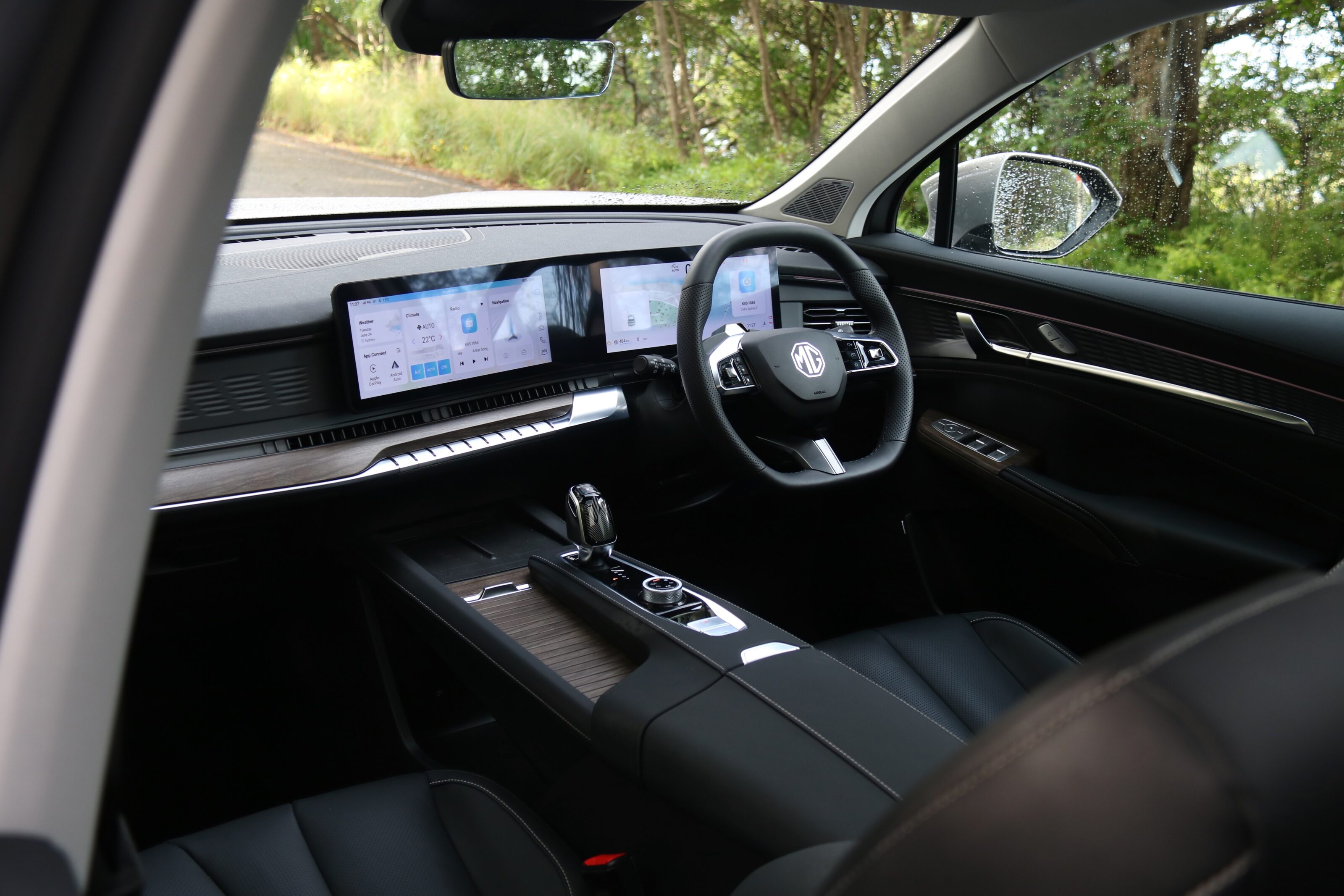
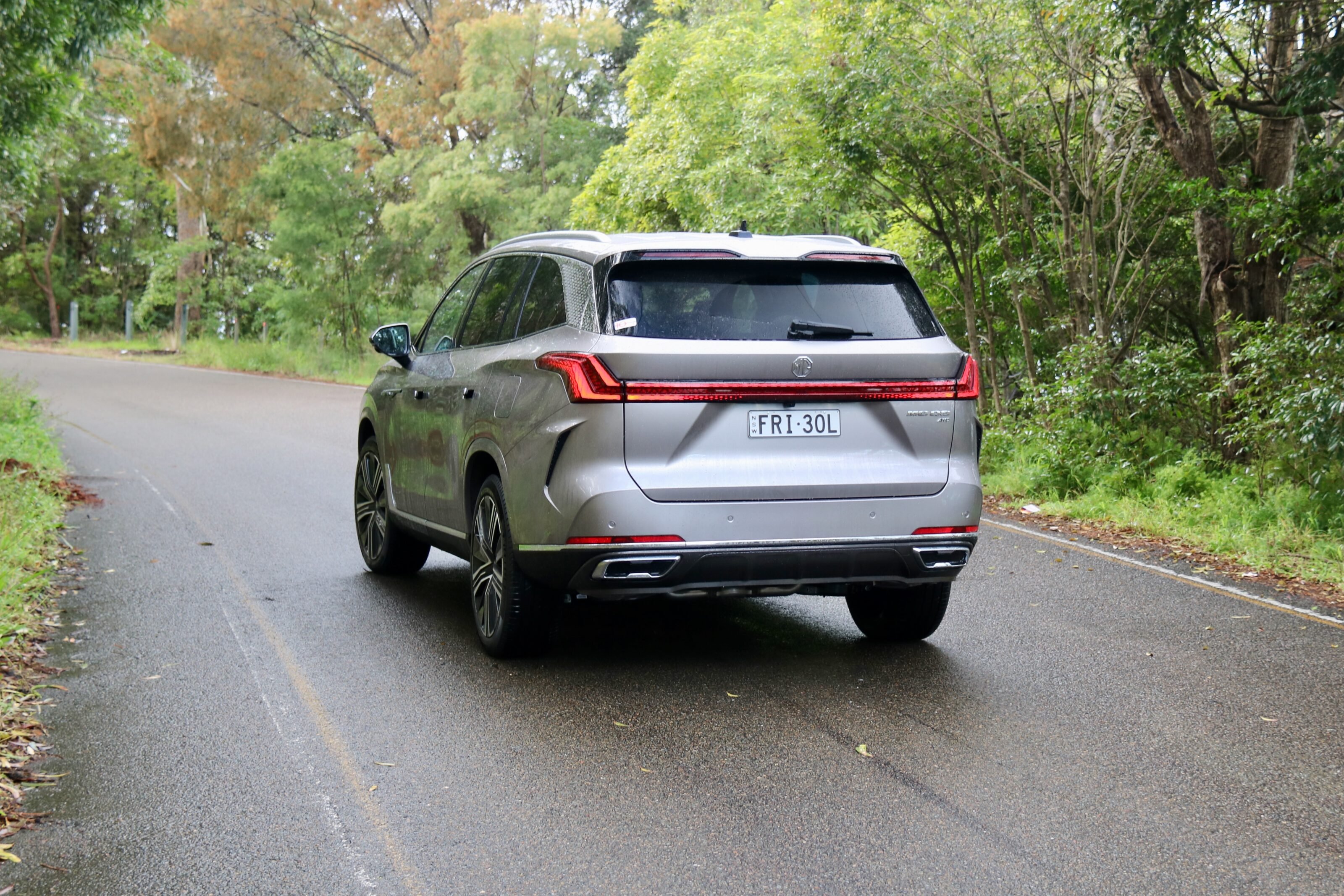
MG’s cabins have come a long way in just a few years. The new-generation ZS, for example, gives off a far more expensive and higher quality vibe than the model it replaced. The QS is no different, with an impressive cabin that looks and feels expensive – certainly more than its keen pricing would suggest.
Throughout the cabin are quality leather trimmings, tasteful – but obviously faux – woodgrain trim and tight-feeling switchgear that feels good to touch. Front seat comfort is excellent, with ample adjustment in the driver’s seat – finally under-thigh angle adjustment in a Chinese car! – and effective heating and cooling. The driving position offers a lot of adjustment as well, while the view out is good thanks to big windows and mirrors, and a good quality 360-degree camera.
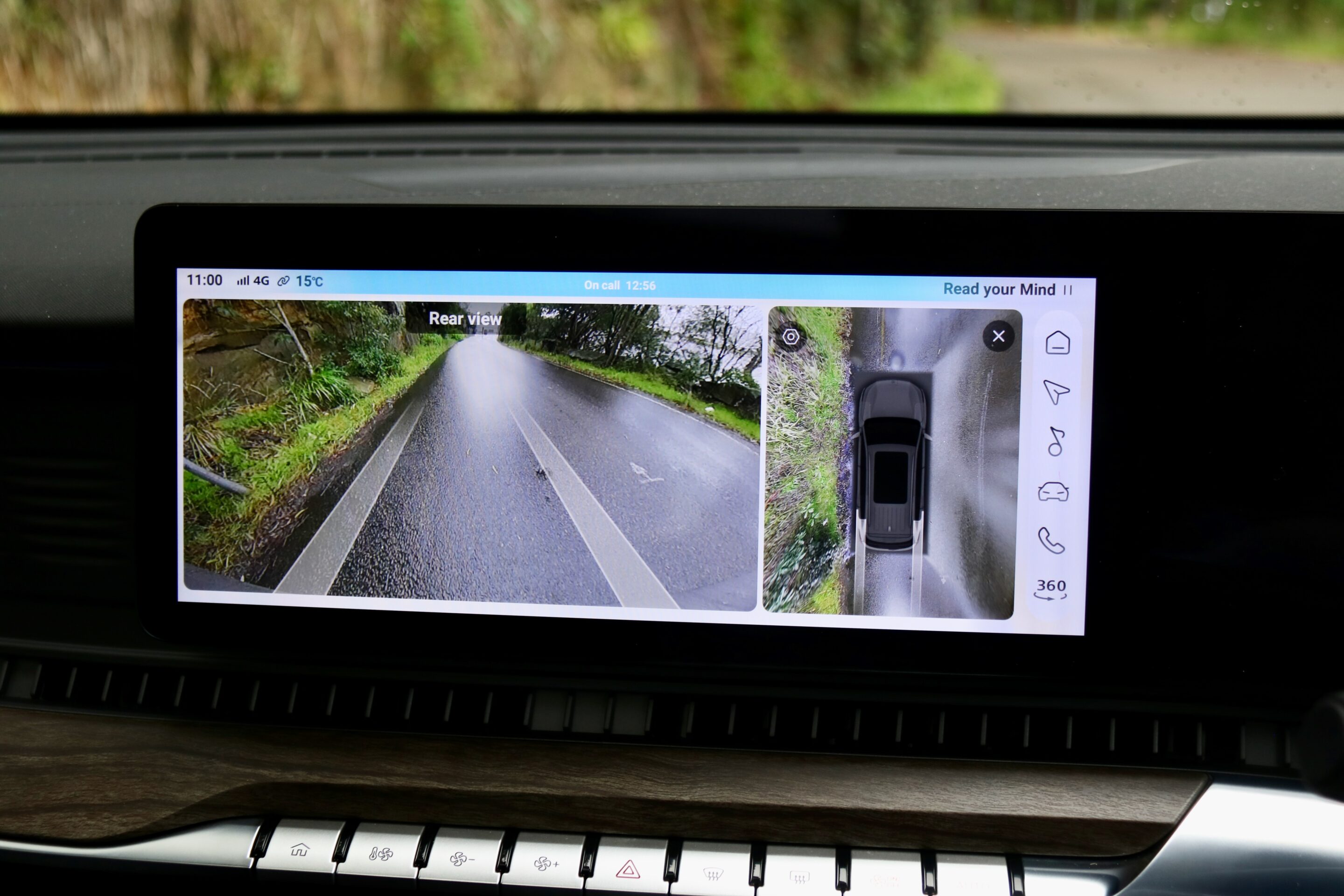
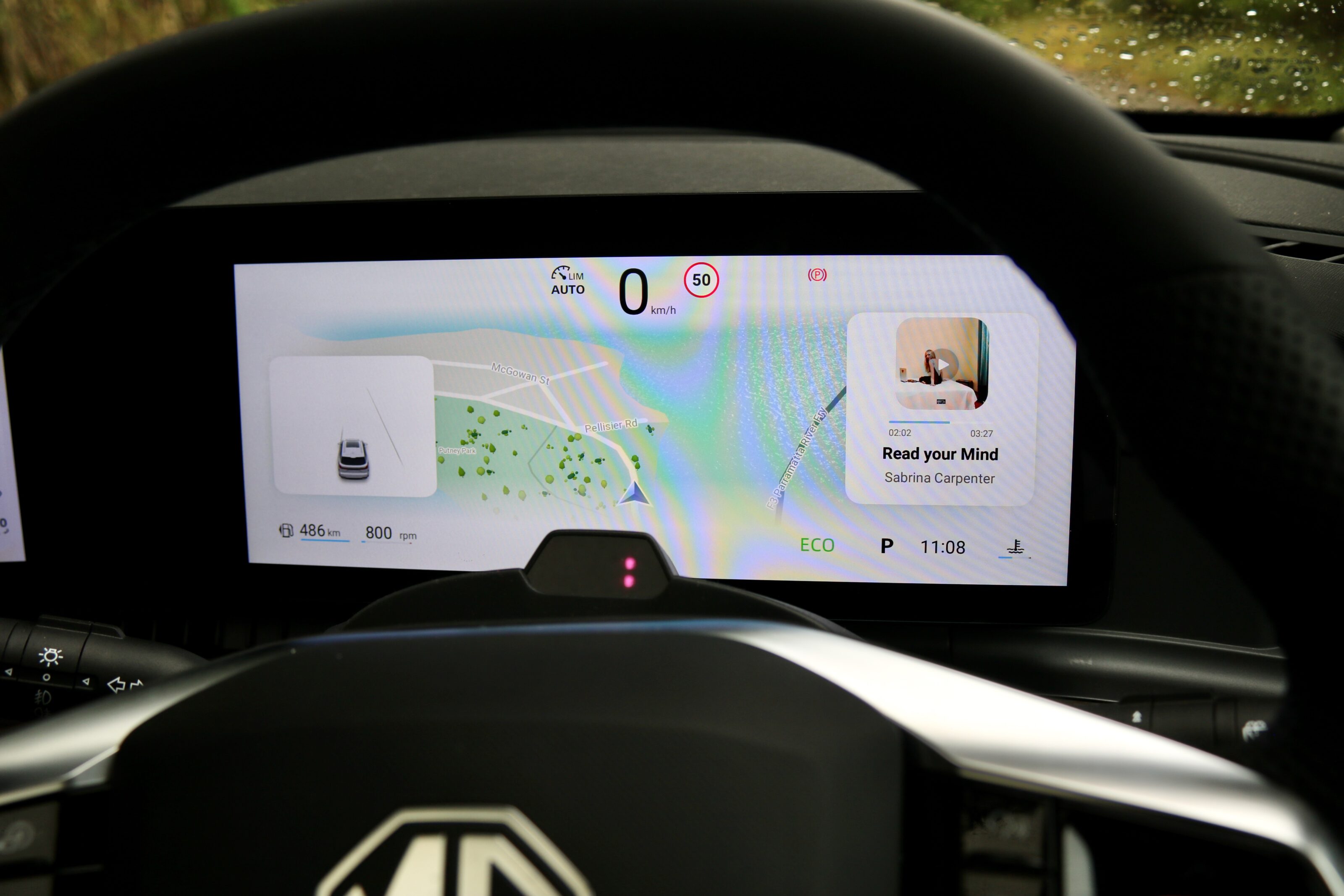
The QS range uses a dual 12.3-inch screen set up, with one for the driver’s display and one for the infotainment system. Using the same software as the smaller HS – though not the newer system that’s used in the newer MGS5 EV – the QS’s screens are crisp and easy to use. The driver’s screen is configurable as well, allowing users to select a few views, including a map.
Regardless of model chosen, the touchscreen has plenty of features such as live services, sat-nav with live traffic, wireless Apple CarPlay and Android Auto, DAB+ digital radio and even handy menus to – for example – find the nearest MG dealership, check the weather or call roadside assistance. We also quite like the physical buttons below the screen for features such as fan speed, turning the AC to auto and a home button, but the 12-speaker Bose sound system in the Essence could be punchier.
Storage solutions in the MG QS are excellent, with a seemingly endless supply of cubbies to store life’s various trinkets. That includes a large tray underneath the centre console, a box underneath the central armrest, big door bins, big cup holders in the centre console and a sectioned tray at the foot of the dashboard with a wireless phone charger and second tray for a phone.
The second row of seating in the MG QS is quite comfortable and spacious, with ample room for three adults thanks to a wide cabin and flat floor. Amenities include a third zone of climate, big door bins, a central armrest with cupholders, two USB-C charging ports and two map pockets – though no heated seats or inbuilt window shades. The second row of seating folds and slides easily for third row access, more so than the Kia Sorento.
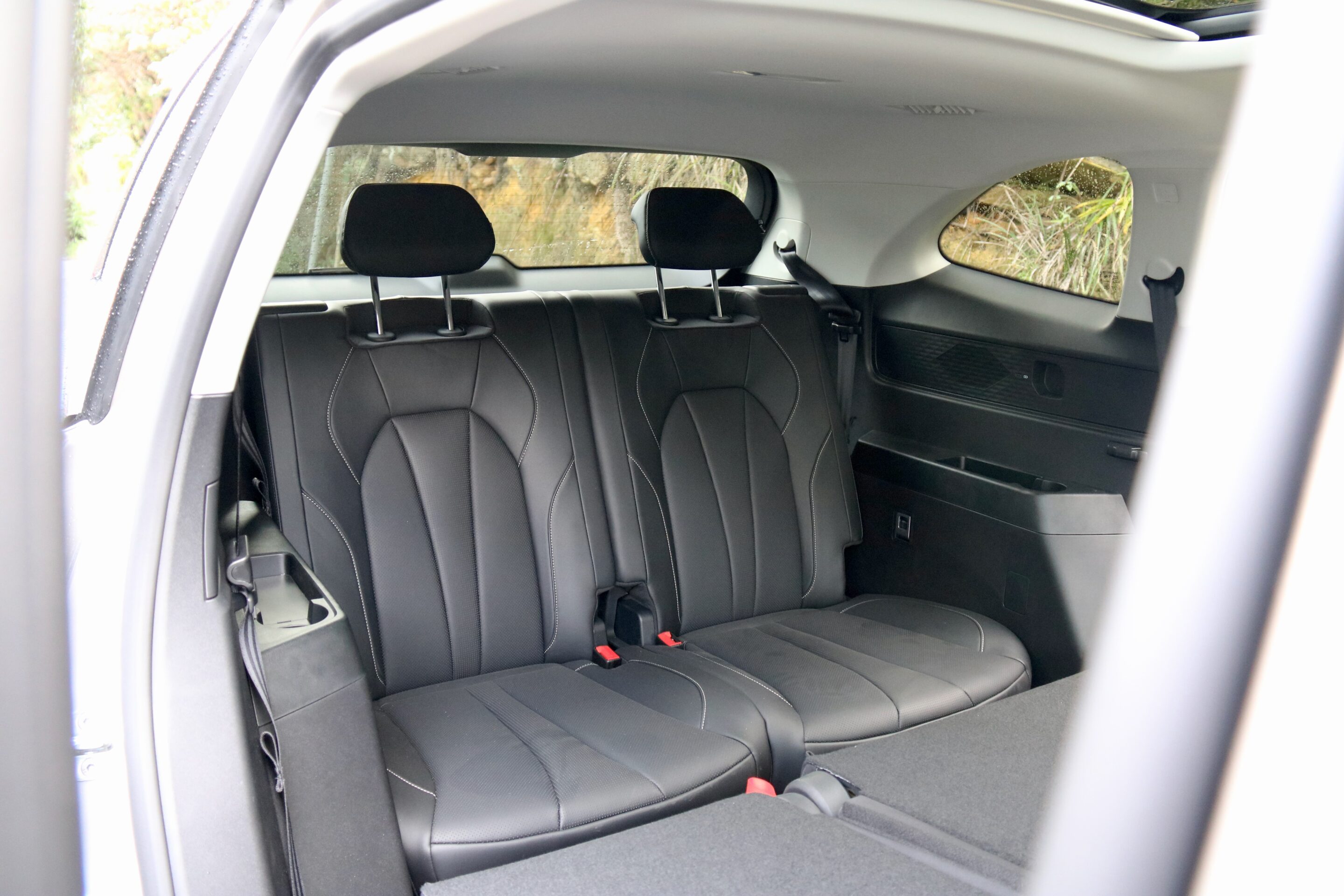
MG sells the QS as a proper seven-seater and not a ‘5+2’ as do some rivals like the Sorento, and the third row is fine for two adults around the six-foot tall mark, with good legroom (especially with the middle seat slid forward) and headroom as well. In addition, there are also air vents, cup holders and a USB port.
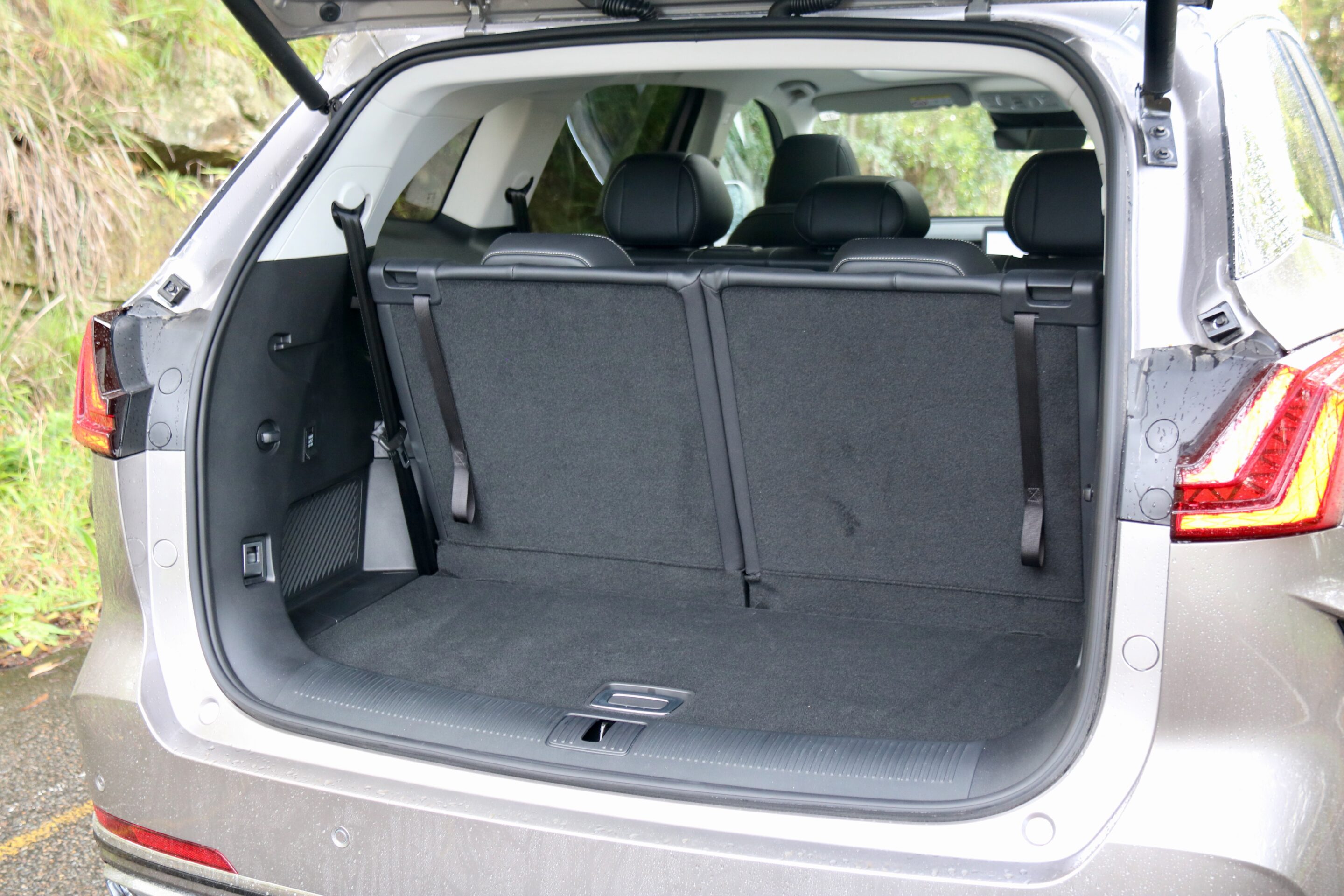
Behind the third row of seating is a healthy 203 litres of space, with some under-floor storage for storing the cargo cover and tyre changing tools. Fold the third row and 517 litres is on offer (likely to the window line) and folding the second row increases that to 1052 litres (again, that’s likely to the window line and not including the space above that). Underneath the QS is a space-saver spare.
Performance and fuel economy:
For now, the MG QS range uses a turbocharged 2.0-litre four-cylinder petrol engine making 153kW of power and 360Nm of torque. Mated to a nine-speed automatic transmission, the QS Excite is front-wheel drive, while the Essence is all-wheel drive.
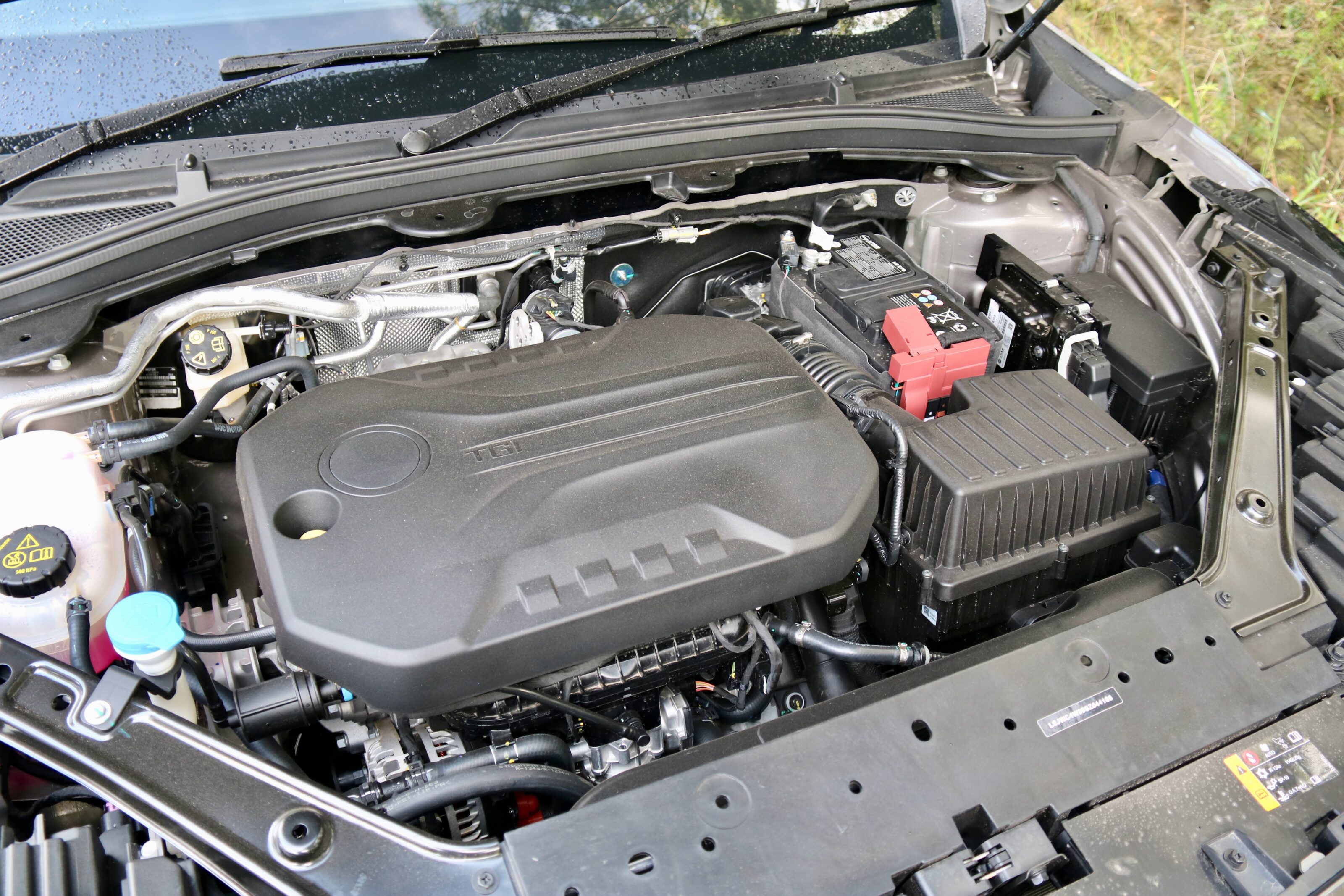
MG claims that the QS Essence will use 8.8L/100km of 95RON premium unleaded fuel, and in our testing skewed towards urban driving used 11.3L/100km. Its claimed CO2 emissions are 198g/km, and it features a 65-litre fuel tank.
On the road:
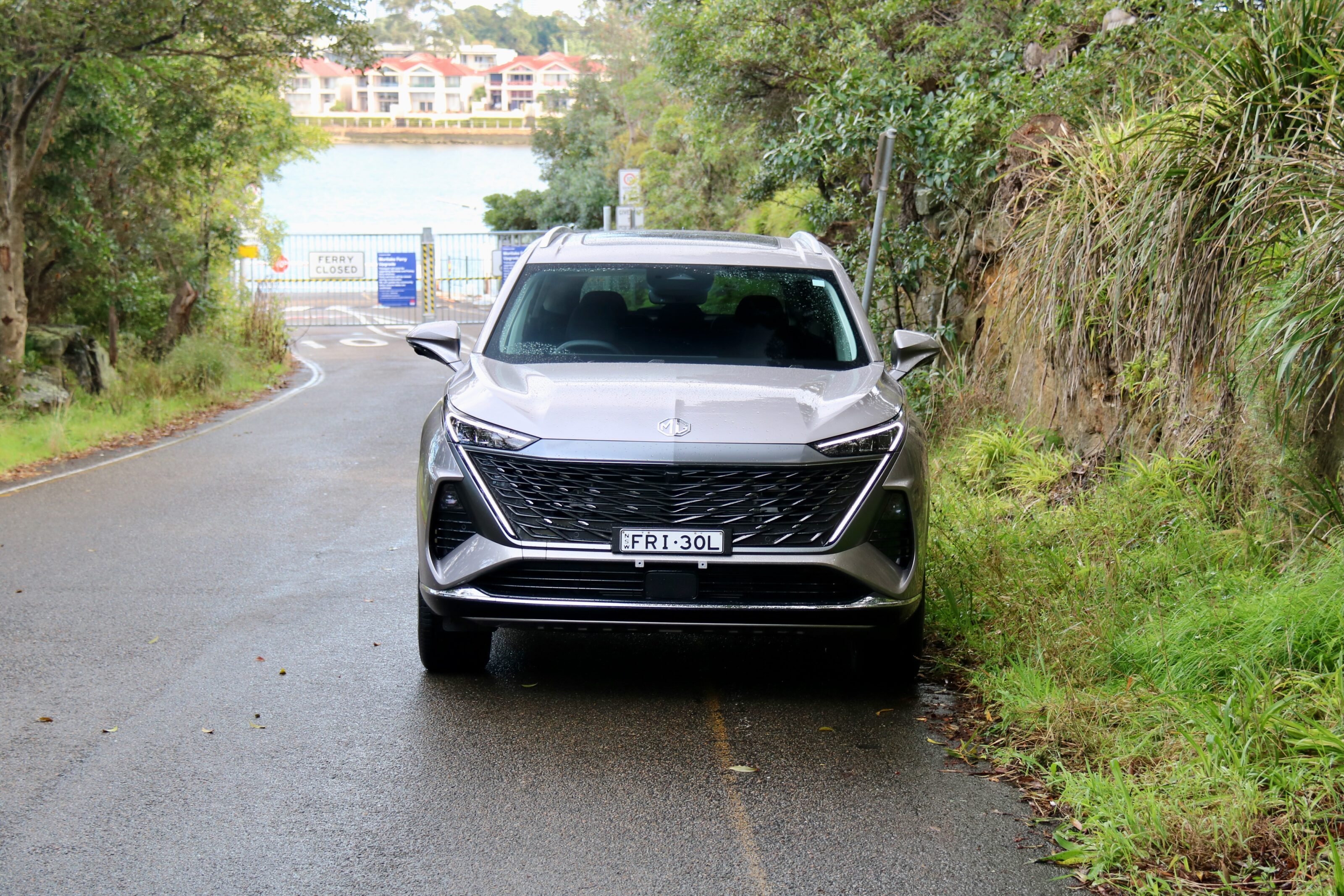
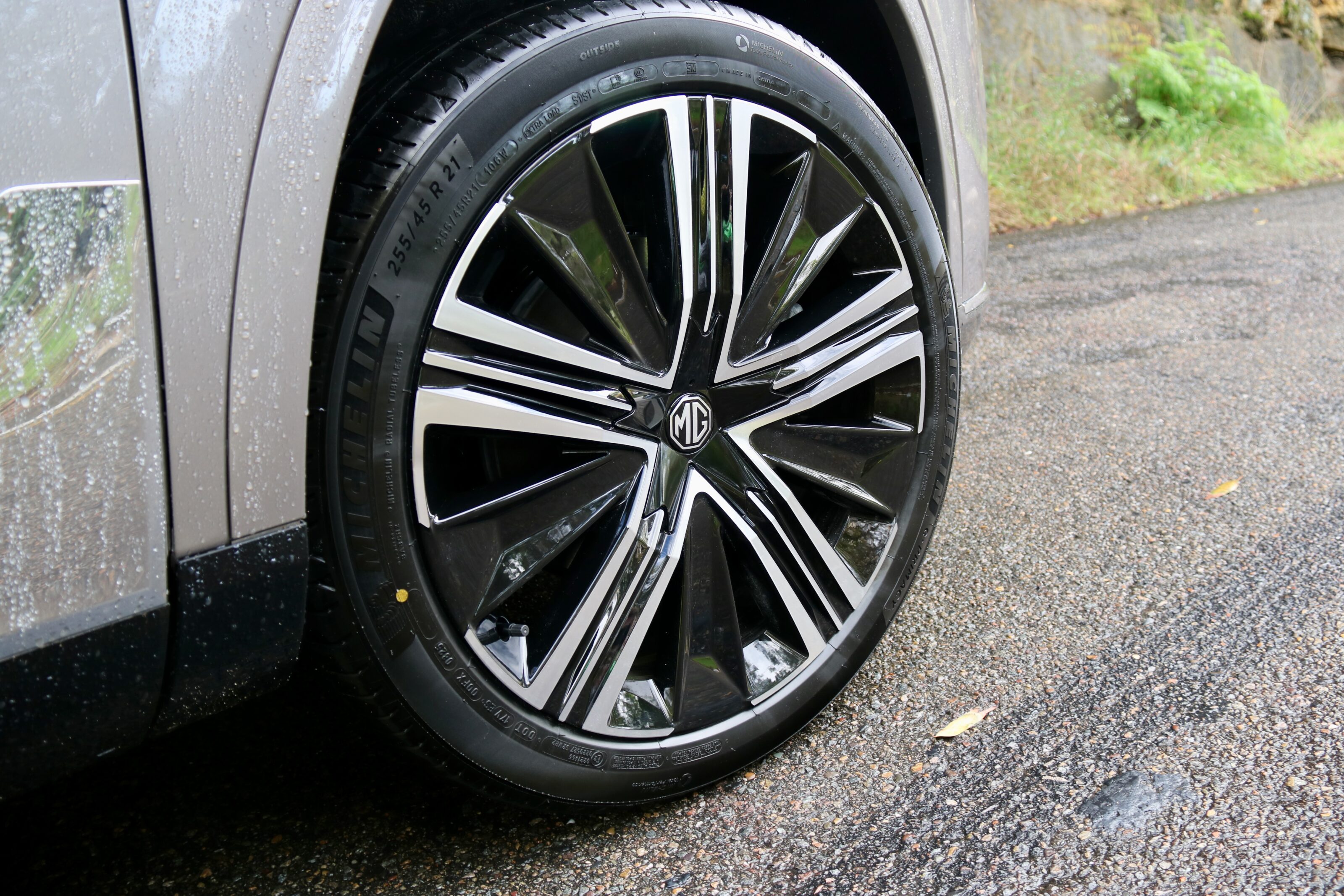
MG’s recent run of impressive products from behind the wheel continues with the QS because it offers up a refined and comfortable driving experience with few faults. We expected the ride quality to suffer thanks to the QS Essence’s huge 21-inch alloy wheels, but thanks to its adaptive suspension, it actually rides quite well and is quite comfortable no matter the surface.
In some ways, it feels slightly European from behind the wheel: the ride is taut but comfortable and displays good body control. Being a large almost-two tonne SUV, the MG QS is not the world’s best handling car but it feels confident in the bends thanks to its steering weighting and nimble – for its size – chassis. The QS also has excellent refinement with little in the way of road noise, even at highway speeds.
Even though it’s been detuned compared to the 178kW/392Nm outputs in its home country, the QS’s engine is more than punchy enough for most. MG doesn’t list where peak torque occurs, but like most modern turbocharged engines, it feels relatively early in the rev range. The nine-speed automatic transmission is generally intuitive, though there’s no manual mode to increase engine braking. While we like the QS’s engine, a hybrid option would be great as it can be thirsty.
Like the MG HS that it sits above, the QS’s active safety features are a big improvement on a lot of MG products of the past, though some features such as the lane keeping assistance and speed limit warning were still too sensitive in our testing. We’d also love to see the ‘MG Pilot Custom’ mode from the S5 added to the QS so it’s easier to adapt features to a driver’s taste with each drive.
Service and warranty:
The QS range is covered by a seven-year/unlimited km warranty that’s extendable to 10 years/250,000km if serviced through an MG dealership. The QS’ roadside assistance lasts as long as the warranty, so minimum seven years and maximum ten in total.
The QS’ service intervals are once-yearly/every 15,000km and five years/75,000km of servicing costs an expensive $3442 for the Excite and $3618 for the Essence. The yearly amount ranges from $688 to $723 on average for the first five years and for buyers planning to keep it for over five years, the six-year/90,000km service alone costs a massive $2526 for the Excite and $2920 for the Essence.
Verdict: Should I buy an MG QS?
Overall, the MG QS is definitely worth consideration over more established rivals such as the Kluger and Santa Fe. MG has largely hit a home run with the QS and that’s thanks to its spacious and upmarket-feeling cabin, comfortable and refined driving experience and a strong value equation that sees it offering a similar level of equipment to a Toyota Kluger Grande – which costs around $40,000 more once on-road costs are added into the equation.
Granted, the Kluger features a hybrid drivetrain and costs a lot less to service, but the QS is larger, more spacious and better finished. Really, our complaints are minor: add in a more responsive and more efficient hybrid drivetrain, cheapen the expensive service pricing and remove the ‘Ultimate’ side badging. Importantly, the QS has broadened MG’s local line-up and entering such a popular segment will no doubt improve its sales even further.
MG QS rivals:
MG QS specifications:
| Model | QS Essence AWD |
|---|---|
| Engine | 1986cc turbocharged 4-cylinder petrol |
| Peak power | 153kW |
| Peak torque | 360Nm |
| Transmission | 9-speed automatic, all-wheel drive |
| Fuel consumption (claimed/as tested) | 8.8L/100km, 11.3L/100km |
| CO2 emissions | 198g/km |
| Fuel type, tank size | 95RON premium unleaded, 65 litres |
| Dimensions (length/width/height/wheelbase) | 4983/1967/1778/2915mm |
| Boot size | 203 litres (third row up)/517L (third row folded)/1052L (third + second row folded) |
| Tare weight | 1994kg |
| Braked towing capacity | 2000kg |
| On sale | Now |
One of my oldest mates, with whom I started school at age five, has asked me if I’ll be guest speaker at his next car club night. Gavin’s first car was a Fiat, a 125 sedan that he and his dad bought cheap and fixed up in time for his driving licence. He’s been a member of the Fiat Car Club and has owned a variety of 124 coupes for about as long. Which is now – eek! – more than 45 years.
My first thought was: well, what do I know about Fiats?
I was always about Alfa Romeos, an affair that was cemented at age 12 when a family friend let me drive his Alfasud 1.2 ti around the old Catalina Park circuit. I later bought my own Sud 1.5 and just recently received a badge from the Alfa Romeo Owners Club for – eek! – 40 years of membership.
My second thought was: hang on, I owned a Fiat. Not only did I own that beautiful light green 1963 500 Giardiniera, I fully restored it (Wheels, April 1992) and kept it for 24 years. Our time together started with me regularly begging Robbo, decamped to Italy in the late-1980s, to help track down and surface-mail spare parts for me, and ended with the El Dorado of internet forums and online ordering.
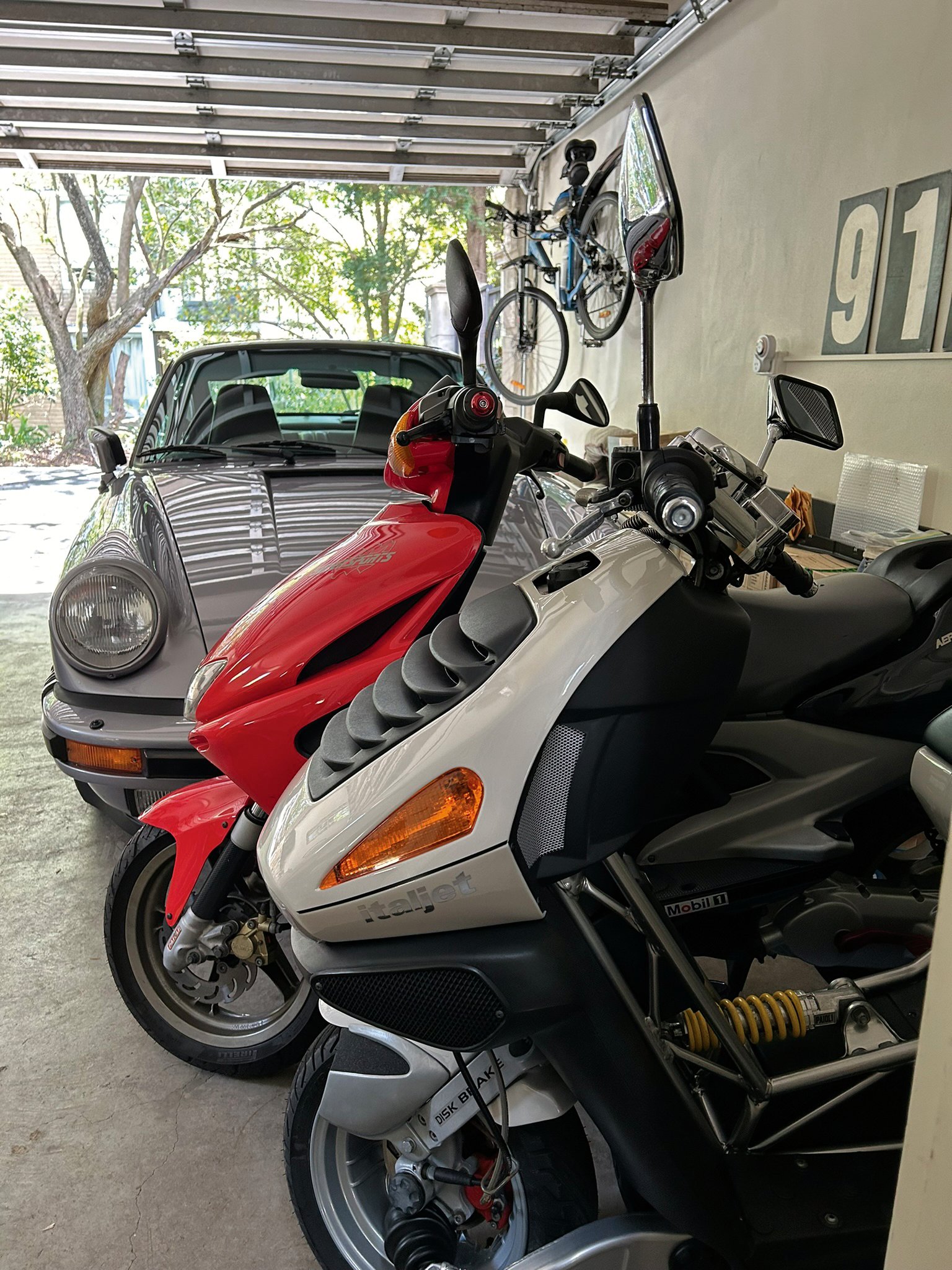
I replaced the Fiat with the ’89 Porsche 911 Carrera 3.2 that I’ve now had for 13 years. I plan to die with it. Although, not in it.
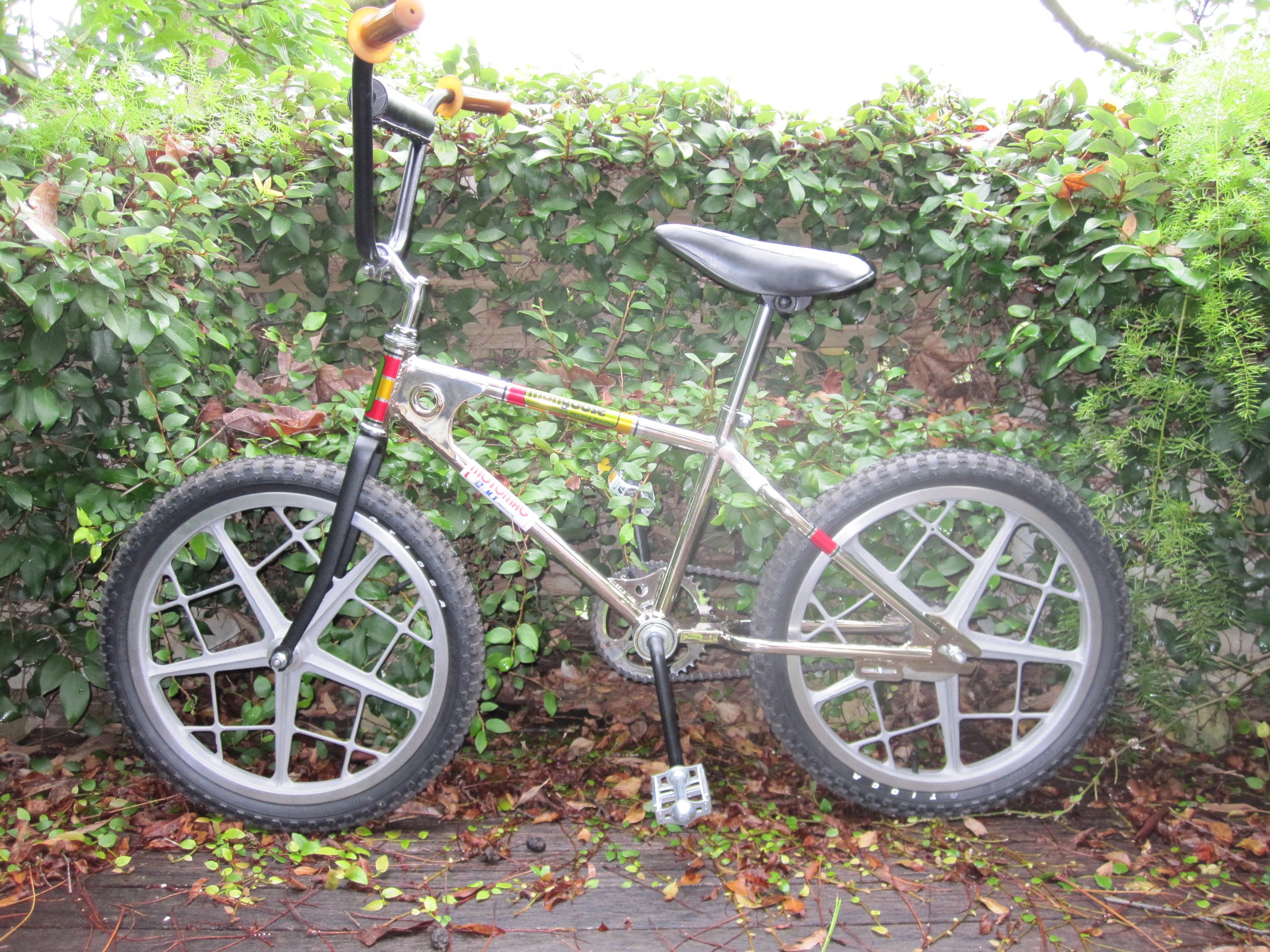
There’s a belief system I’ve identified here. Among my handful of motorcycles and scooters, all registered and ridden, are a 1972 MV Agusta 350 and 2000 Yamaha 100 scooter that I’ve owned for 24 years. Both bow down to a Mongoose BMX bike that I got for my 14th birthday, in 1976.
What delights me most is when a friend remarks that all my stuff looks like it’s only five years old. I know I’m not alone. Someone else very close to this magazine confessed to me that he has only ever sold one car – his first. So much did he regret it, he has kept everything since. He now has 26 cars and bikes.
My wife thinks that people like us are hoarders. But I’ve directed her to a photo of racing driver Dario Franchitti’s fabulous man cave, where a tapestry cushion proclaims: “It’s not hoarding if your shit is cool.”
Which reminds me that in 2003, while living in Europe, I had the extraordinary experience of accompanying Jay Kay, frontman of funk band Jamiroquai, to Maranello to take delivery of his Ferrari Enzo. His shit was cool. Among his 17 cars, which included a Lamborghini Miura, Aston DB5 and Mercedes 300SL roadster, was a BMW 1602.
It was his first car, which he’d later sold to a band member and subsequently bought back. “The only thing I regret is selling the F40,” he added, “but you’ll always be able to find a good F40.” Easy for him to say.
Over the years I’ve heard countless people wishing they’d never sold that Dino 246, or Alfa Montreal, or Aston DB6, or whatever infuriating, fiscal sinkhole they’d been ecstatic to offload for $4000 at the time.
Right now, I’m in the opposite predicament. Within four years of buying my 911 in 2012, its value more than trebled as air-cooled 911s enjoyed a demographic sweet spot. I’m watching those values soften, but I have no interest in selling.
It’s never been an investment. It’s my car.
For all of this, I can blame my late father and the 1966 Volvo 122S that was our family car. My dad bought ‘Victor’ in 1968 and only sold it in 2014 when, at 79, he could no longer cop the manual steering. I drove it, for the first time, a year earlier (Wheels, April 2013).
Yes, it sure did hurt to see it leave the family. And yes, I think almost every week about how I want it back.
This article originally appeared in the June 2025 issue of Wheels magazine. To subscribe, click here.
HINDSIGHT IS A wonderful thing. Part of the joy of this Modern Classic series arrives courtesy of the luxury of time and perspective. Not every car that we showcase here was an instant hit. There were cars that, at the time, failed to live up to the promise of their predecessors, such as the second-gen Toyota MR2 or the Ferrari 575.
Then there were cars like the BMW E36 M3 that diverged from a formula so far they initially confused the public. Once in a while, you get vehicles that came good at the very end of their parent model’s lifespan, by which time their equity in market was all but expended. They’re rarer beasts. For this, we present Exhibit A: the Tickford TS50.
The reason for its existence was simple. In 1999, the opposition, Holden Special Vehicles, introduced the 5.7-litre Gen 3 V8, in the process bumping power outputs up from 195kW to a strapping 255kW. Meanwhile the ageing Ford Windsor 5.0-litre V8 could only manage a peak of 220kW and in this sector of the market, big numbers really mattered.
Built on the third-generation AU Falcon, Tickford’s clap back involved a comprehensive reworking of the Windsor V8. Supercharging, turbocharging and enlarging the capacity of the engine were all options on the table at the time, but forced induction was eventually nixed on the basis that the target customer would prefer a larger capacity powerplant. Stroking the engine was deemed the best solution, bringing prodigious helpings of torque in the process and endowing the motor with a more muscular feel.
The engine modifications were more than a mere stroking though. Tickford really threw everything it knew at not only generating more power and torque, but doing it reliably and with driveability in mind. Tickford realised that due to the limitation of the BTR LE97 automatic transmission, a 500Nm torque ceiling was what it had to work with. The challenge from there was to eke power upwards while respecting that torque limit.
It was clear early on in the piece that the old T5 manual ’box wasn’t up to that particular task, so the Tremec TR3650 – as seen in the 2002MY Mustang – was sourced, and a custom adaptor house was cast for it, in order for it to mate to the old T5 bell housing.
Australian suppliers worked with Tickford to supply a new crank, rods, pistons, heads, camshaft, inlet manifold and throttle bodies. From there, each of these ingredients were hand-assembled in order to create the 5.6-litre stroker powerplant. The difference in the way this engine was developed compared to the base 5.0-litre units in the XR8 were stark.
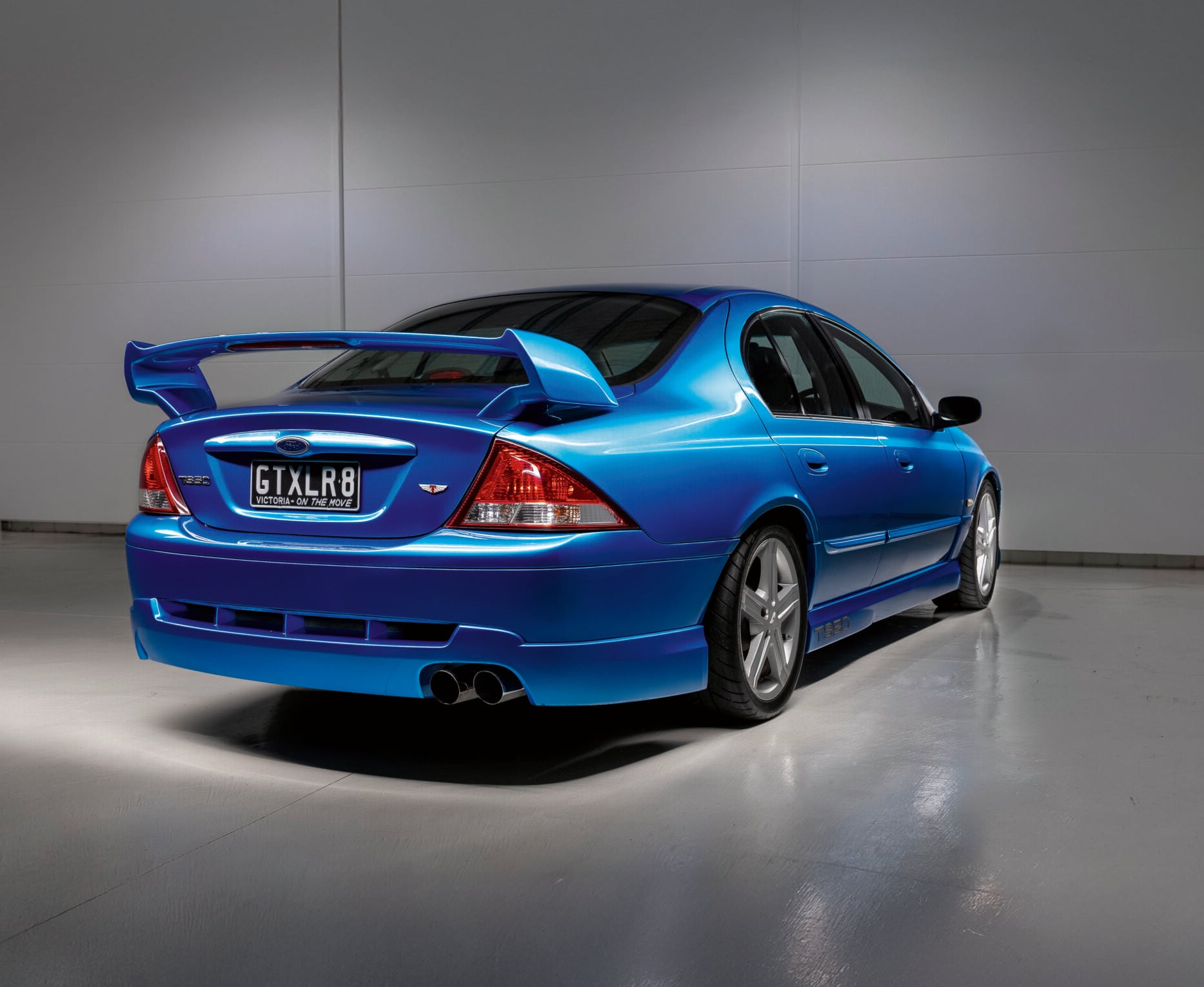
Whereas an XR8 usually requires frequent oil tip ups, the 5.6-litre isn’t afflicted. Why? Because as soon as the iron blocks were received, Tickford stripped them down, cleaned them and treated them to a torque plate honing that opened the bores out to 101.67mm. A set of ARP studs and a custom stud girdle were fitted to the main bearing tunnel in order to create a rigid base capable of handling that 500Nm torque reaction. The 86.4mm long-stroke crank, worked on by Crankshaft Revolution, is key to proceedings, while Precision Parts of Wagga Wagga supplied the uprated harmonic balancers.
The conrods are a particular work of precision art, being created from a single billet by Argo in Newcastle before shot peening and machining. ACL supplied the bearings and pistons, while Crow Cams developed a version of the Ford’s F1ZE cam with the lobe timing retarded by three degrees. Each engine was entrusted to a single builder who, in true AMG or Aston Martin style, got to have their name on a plaque on the car’s engine.
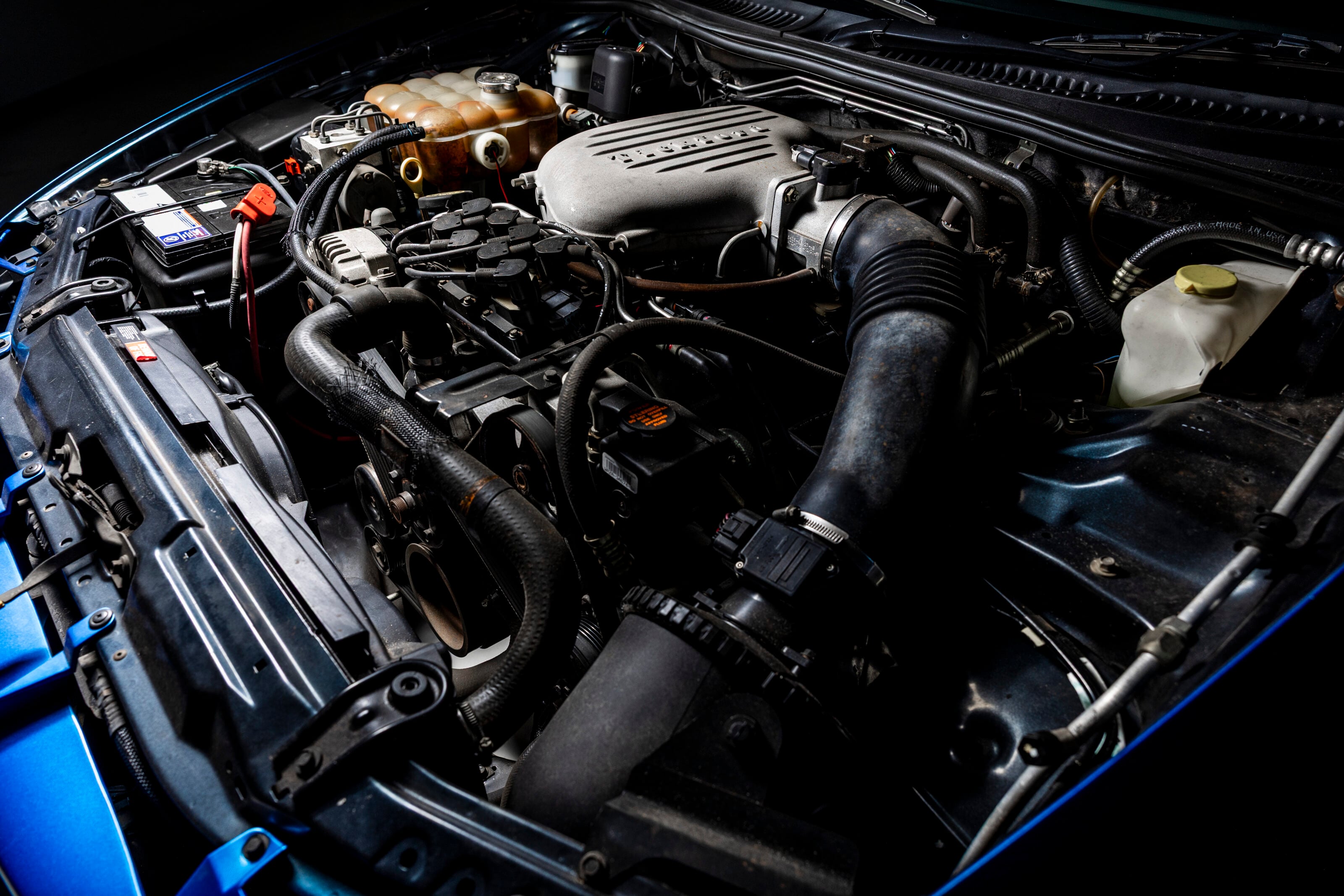
Perhaps the greatest technical challenge in the process was honing the engine’s breathing. Tickford initially believed that the original intake manifold could be modified in order to feed the greater swept capacity, but after several iterations it was apparent that both the through-flow and the plenum volume were inadequate for the task at hand. An entirely new part was needed. Ford rendered assistance with a computer simulation that effectively confirmed Tickford’s issue, and developed a CAD file that pointed to a successful resolution.
It was found that the stock plenum would starve the engine when the throttle was quickly opened, but going too large compromised response, as the mass air flow sensor would then take a beat or two to accurately measure conditions. Tickford was also keen to retain the standard injectors, but fuel pressure was increased from 2.8 to 4.3 bar, so that fuelling could match the bigger 82mm throttle bodies. When the results came good it was found that the 5.6-litre lump would develop more torque at 1800rpm than the old 220kW T-Series could boast when at flat chat.
Wheels got to ride with Tickford’s engineers on pre-production hot weather testing of the 5.6-litre engine back at the tail end of 2001. Based in Katherine, NT, the TS50 sedan and ute mules were punished in a hot tent, made to tow a dyno rig for hundred of kilometres at 45km/h – deemed the least efficient speed for engine cooling – and set to cruise at the hottest parts of the day at 220km/h for hours on end, the latter test to assess fuelling, finesse engine oil requirements and finalise radiator top tank specifications.
The Wheels treatment
The acid test came in January 2002 when Wheels put the TS50 up against the obvious competitor, the VX-based HSV Clubsport R8. Both were manual sedans, and both were priced identically at $66,950 before options and on-roads. With 24kg less to haul up the road and 5kW more to boot, the HSV leveraged a 149kW/tonne on-paper advantage versus the Tickford’s 145kW/tonne showing, but the Tickford 25Nm torque advantage made it anyone’s guess which would prove quicker. On a chassis dyno, the Tickford made 205kW and the Clubsport a hefty 226kW at the wheels.
Against the stopwatch, the TS50 drew first blood, notching a 6.3 second 0-100km/h time, while the HSV clocked 6.5 seconds. For the 400m sprint, the Tickford would still be hauling in third as it crossed the line in 14.6 seconds at 156km/h, while the closer-geared six-speed HSV would require a grab for fourth, which meant it was just pipped, registering 14.7 seconds at 159km/h. In truth there’s precious little in it in terms of straightline speed.
Out on track on Oran Park’s short circuit with gun driver Peter McKay behind the wheel, the two cars got one warm-up lap, three timed laps and a cool-down in-lap to show their stuff. Our man much preferred the feel of the TS50’s Tremec manual compared with the lower-spec Tremec T56 six-speeder in the HSV, although the extra ratio meant that on the two key corners bookending the main straight, the R8 was comfortably into third where the TS50 was near banging the limiter in second, third feeling way too tall. Thus compromised, the HSV squeaked home with a 0.2 second advantage.
“While the Ford feels way more stable and composed under brakes and puts its power down better, it is handicapped by some missing horses (race drivers, eh?) and that way-too-tall third gear,” McKay opined. “Those couple of extra gear changes would, I imagine, account for those extra two-tenths. At another circuit, on another day, the outcome could well be different, provided the corners better suited the Ford’s gearing.”
Road tester Mike McCarthy noted that the Koni-damped TS50 rode more firmly than the comfy R8, but it leveraged a key benefit when it came to driver feedback. “Ride apart, the TS50 has the more responsive chassis, the more decisive and better balanced handling, and the more directioned steering,” he noted, some of the detail calibrations coming from hours of testing and feedback by Aussie tin-top hero John Bowe. “The Ford has the sharper focus at straight ahead and unsullied connection between steering wheel and road. The HSV feels a bit detached on centre and doesn’t steer quite as crisply. When cornering, the Ford sits flatter, grips harder, carries more speed with more confidence, and there are constant cues that this is what it’s made for. Scything through turns as if tracing French curves – tyres biting and engine yowling with forceful enthusiasm – the TS50 is every inch the sports sedan.”
He concluded by saying “There’s no argument about this TS50 having the looks, brawn and balls to hit the R8 where it hurts. On the road and in the driving, for sure. And, by rights, in the showroom.”
Limited runs
But while HSV shovelled Clubsport R8s out of its Clayton plant by the thousand, the TS50 Series III’s hand-fettling meant that it wasn’t a car that could be rushed through the production process. In all, just 224 were built, including four prototypes. Aside from these development cars, the production run was split between 70 manual-equipped cars and 150 automatics.
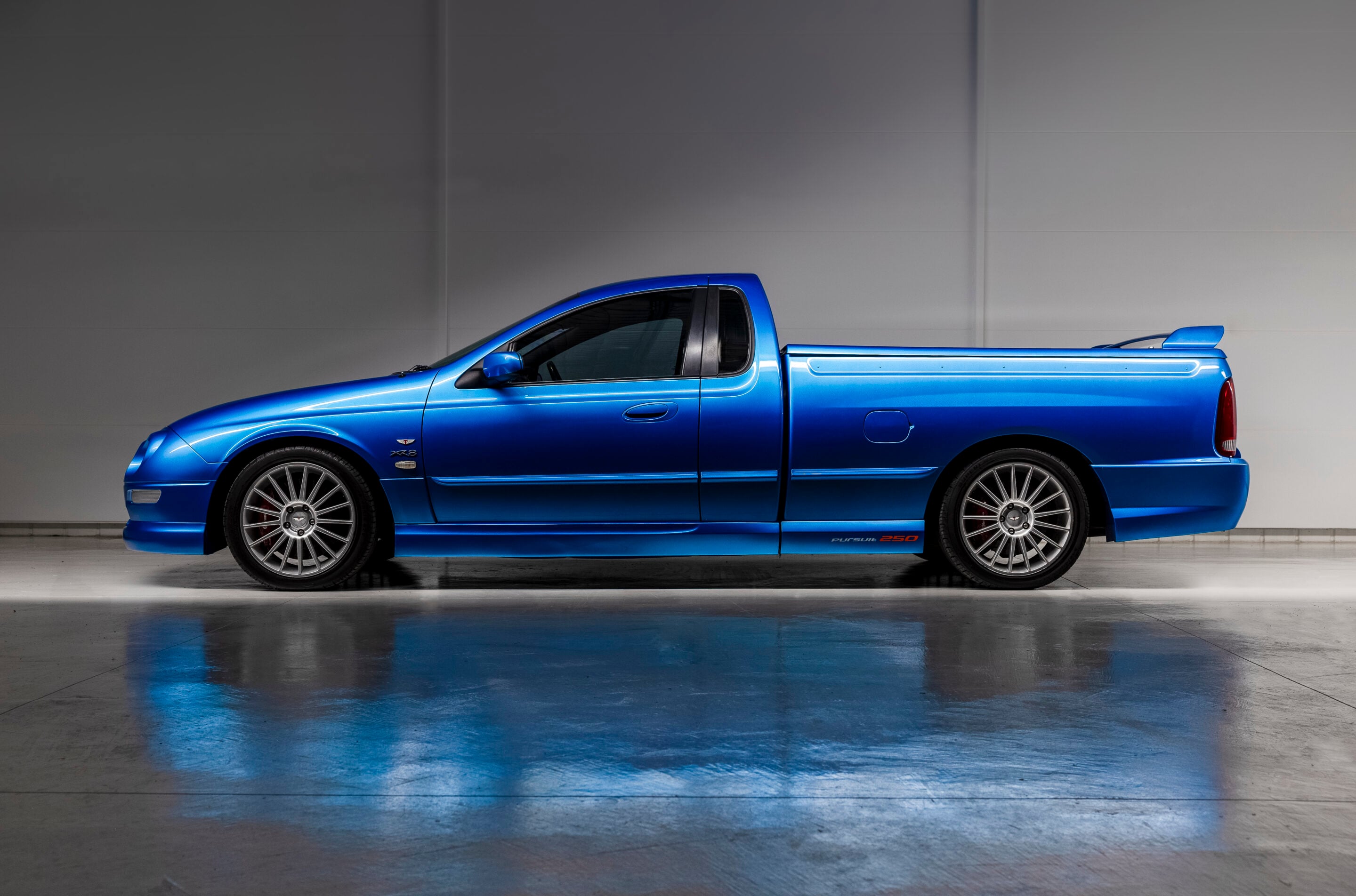
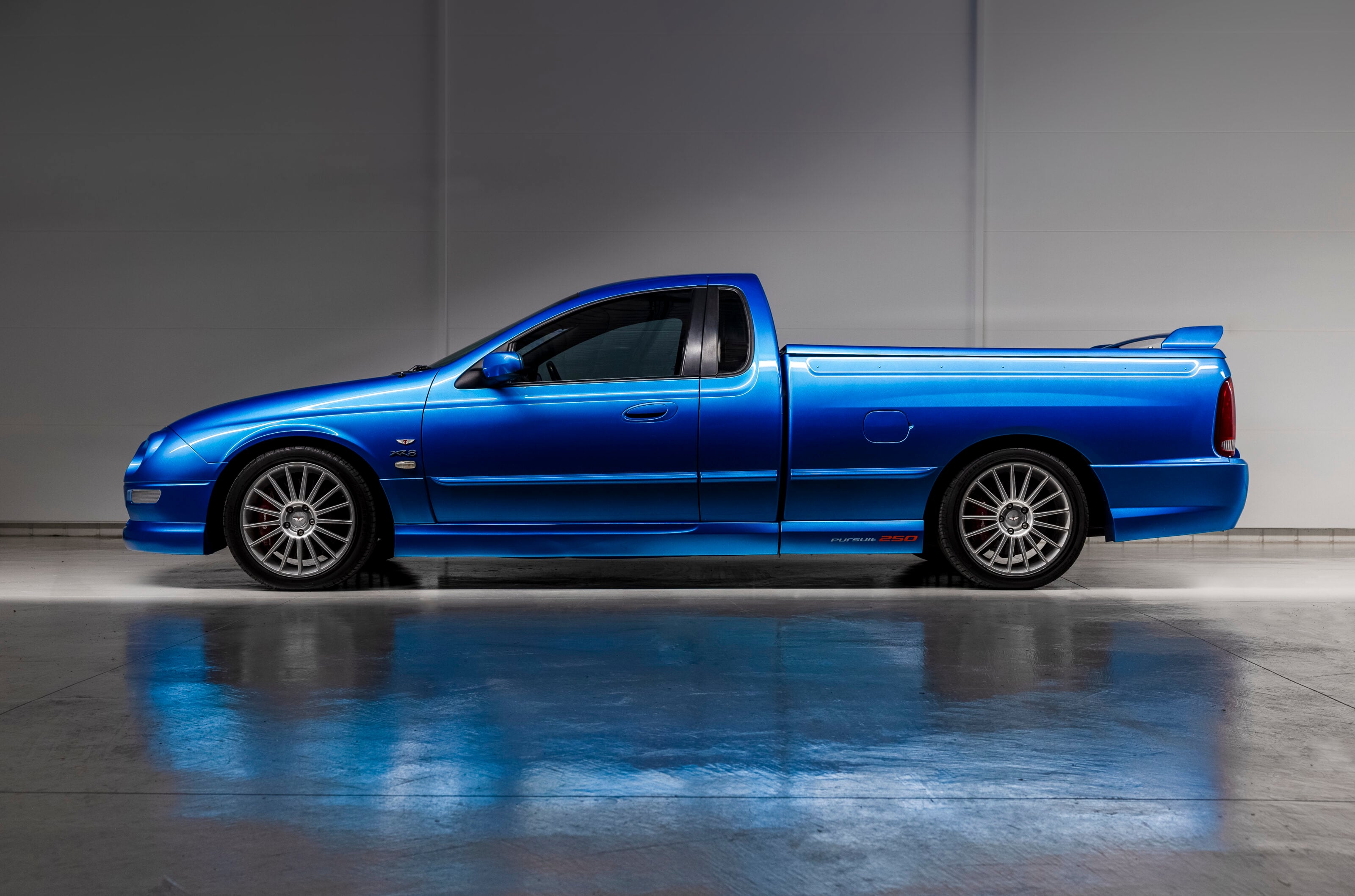
The 5.6-litre XR8 Pursuit 250 ute you see here is rarer still, with only 54 ever built. Both the cars here are owned by David Earl, a Melbourne-based enthusiast who prefers putting his money into rare metal than trusting a super fund manager. Both are finished in the wonderful and apt Blueprint colour scheme, which accounted for more than a third of all Series 3 TS50 production. The other two new colours added for Series 3 production were Congo Green and Monsoon Blue joining Narooma Blue, Winter White, Meteorite, Mercury Silver, Liquid Silver, Silhouette and Venom Red.
Ford offered the standard wheelbase sedan in both TE50 and TS50 guises. The cheaper TE50 retailed at $57,350 for the manual or $58,350 for the auto, compared with $66,950 for the flagship TS50. Both cars featured the no-holds-barred 5.6-litre stroker powerplant, and identical suspension and driveline, although the Koni dampers were a $1500 option on the TE50 and standard-fit on the TS50. The only difference in the standard brake setup was that the TE50 got a three-channel ABS system and the TS50 a four-channel arrangement.
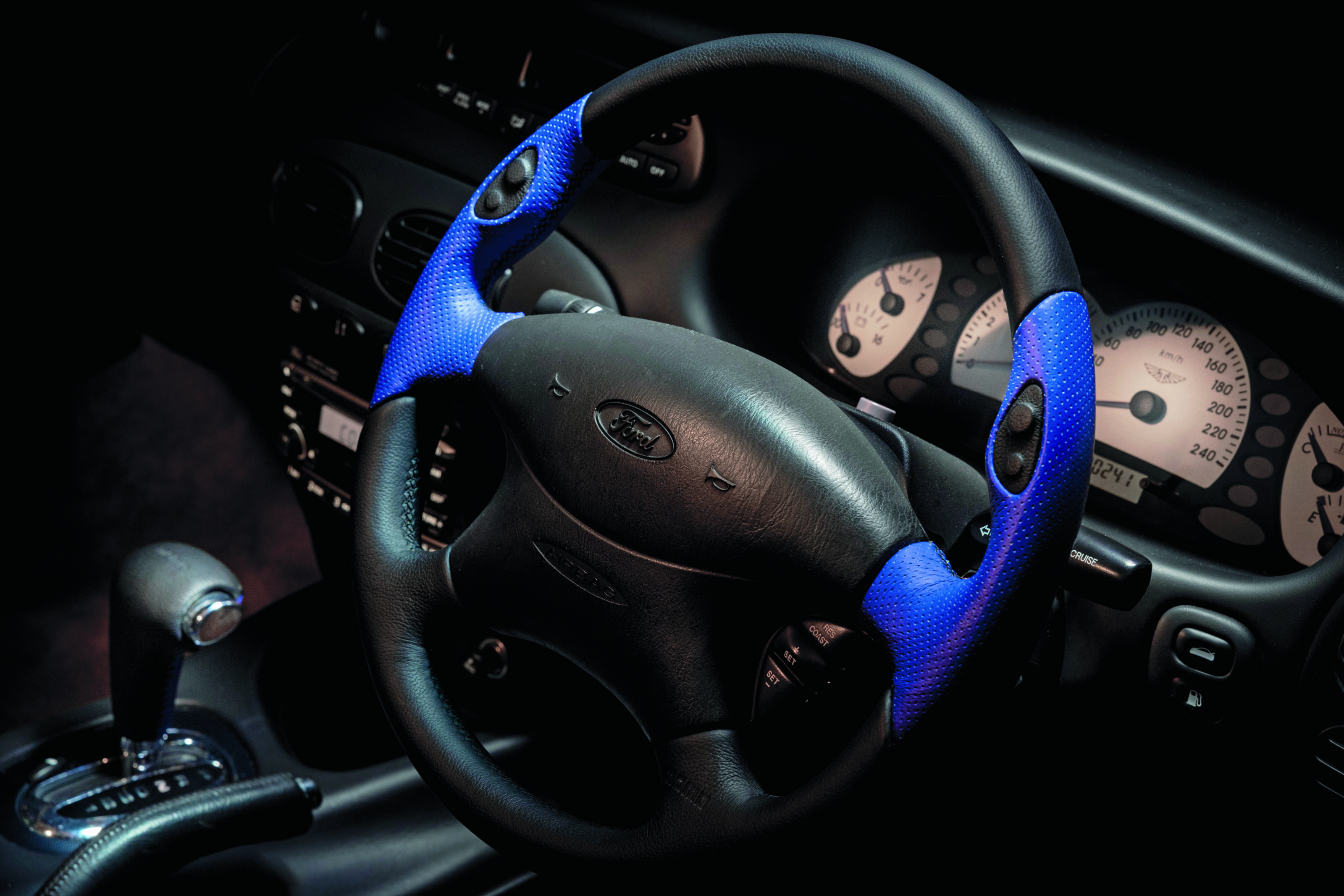
What’s more, the ESS sequential-style shift was reserved for the TS50. The uprated Brembo brake package (four piston calipers all round, Textar 4000 pads and cross-drilled rotors of 355mm up front and 330mm at the rear) was a hefty $5350 extra on both models and while the TE50 got an Alpina-like 18-inch turbine alloy wheel as standard, the TS50 featured an arguably more dynamic-looking five-spoke design. Indoors is where you’ll find significantly more differences, largely because the TE50 was spawned from a more prosaic Falcon donor whereas the TS50 started life as a Falcon Ghia and so has climate control rather than air-con and so on. It also carries a 15kg weight penalty as a result.
The XR8 Pursuit 250 was priced at $54,250 for a manual model or $54,912 for the auto. You could also specify the Brembo brakes for this, the other key option being a hard tonneau cover which would set you back $2750. In case you were wondering, no, the ute’s not lighter than the sedan, largely thanks to the heavy duty leaf springs out back. It also got an 82-litre touring fuel tank versus the sedan’s 68-litre unit. Model for model the pick-up’s around 15kg heavier than the TS50.
For the collectors
Unfortunately, you’re a little late on the draw if you were looking to bag a Tickford TS50 at the depth of its depreciation curve. The launch of the FG Falcon in 2008, supplied with a 270kW/533Nm turbo-six that eclipsed the 5.6-litre stroker unit’s numbers, corresponded with the nadir of Tickford T-Series values, but since then the market has changed. First there was the frenzy in Falcon speculation that accompanied the demise of the FG-X and that went hand-in-hand with a gradual recognition of the talents, exclusivity and focus of the TS50. Even today, you won’t find a Falcon that’s a sweeter steer than these late-era AU models.
Should you decide to take the plunge, prices start at around $45,000 for cars in reasonable condition which, given the rarity and specialist nature of these cars, still feels criminally undervalued. A BMW E39 M5 of similar vintage and mileage would easily be double the price, and these are relatively commonplace cars in comparison. Indeed it was the 5 Series that was initially benchmarked in the development of the first AU FTE (Ford Tickford Experience) models.
Because it was engineered for Australian conditions, TS50s tend to be rugged beasts and due to the fact that there’s significant overhead in their valuations, most have been looked after, latterly at least. Paint has often been a complaint, with the Venom Red cars suffering particularly from fading and all paint finishes susceptible to milky clear-coats. Panel fit was also iffy around the custom front and rear clips, and door hinges can drop. Although most of these cars will now live in a garage, rust is something to check for. Seams, chassis rails, strut towers, boot floor, windscreen bases, beneath the number plate, under rubber seals, inner guards, engine bay – you name it, it’ll need the once-over. Galvanisation was not in Ford’s vocabulary at the time.
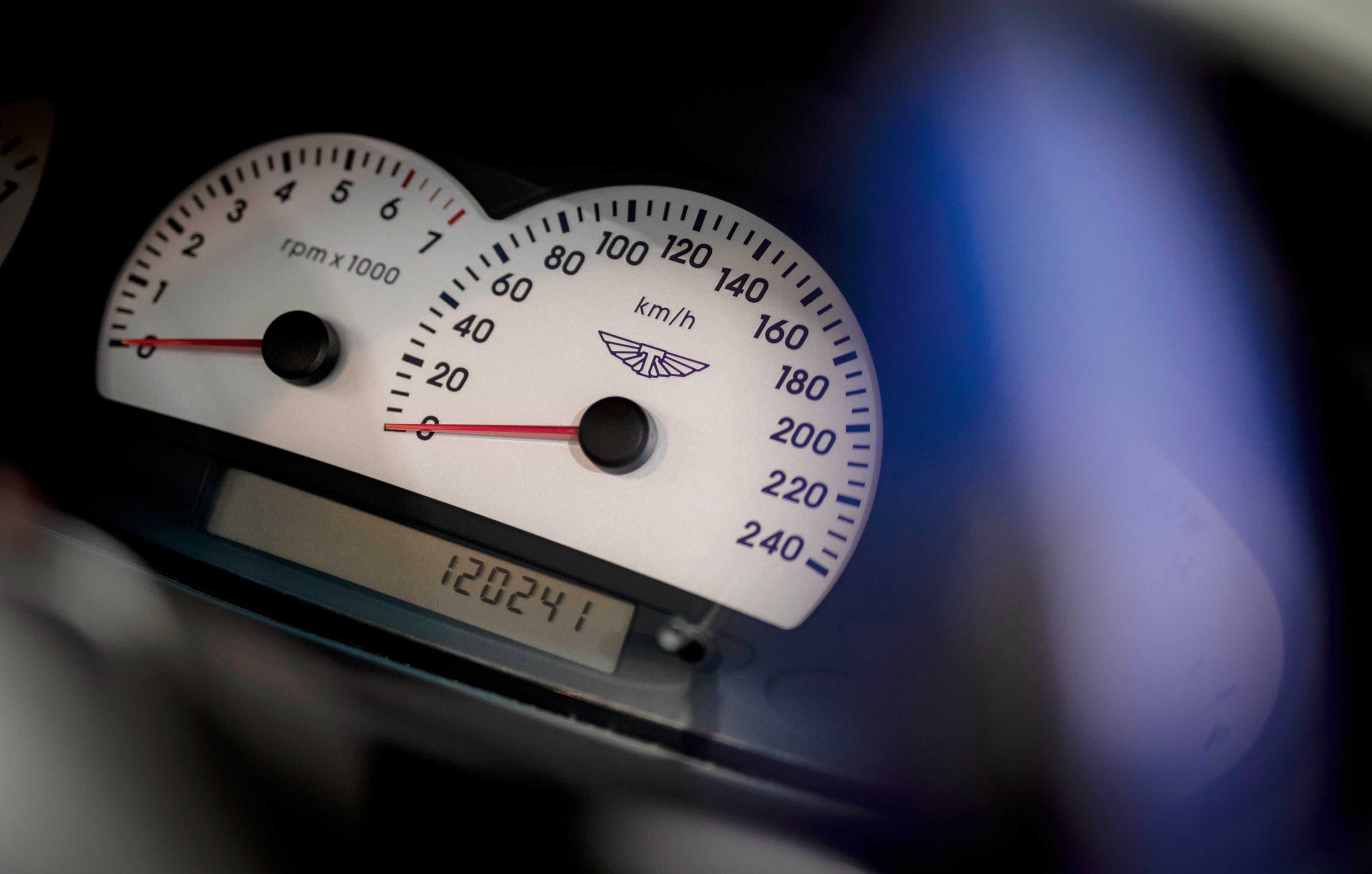
The interiors are generally reasonably hardwearing, but turn of the century electricals will need checking. LCD panels on the trip computer, climate control and odometer need to be given the once-over to make sure all characters appear and the readouts haven’t dimmed. The bolstering on the leather seats can also be prone to wear and central locking, temperamental.
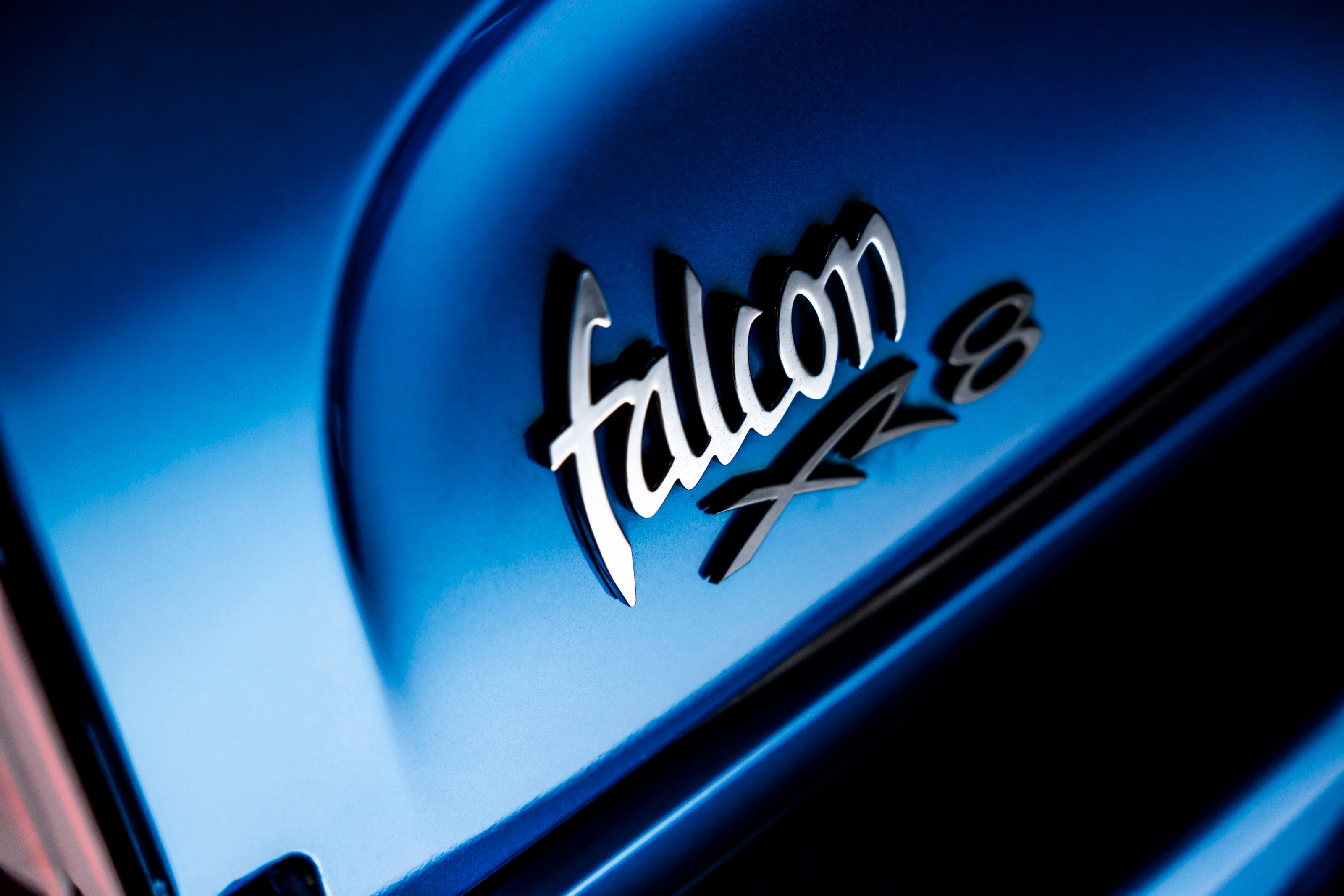
Mechanically, the 5.6-litre engines are robust but check for water and oil leaks. Cars without the optional ‘Ultimate’ Brembo brake package could warp their 329mm front and 287mm rear discs if driven hard, while higher mileage automatics need to be checked for any suspicious clunks or unacceptable driveline shunt.
The Tickford TS50 Series III didn’t live a long life. Within seven months of Wheels’ first comparison with the 5.6-litre hero car in the January 2002 issue, the next-gen BA Falcon was already featuring on the cover of the magazine. It seemed a heck of a lot of effort to go to in order to build such a limited run of cars and, in truth, it was. Ford Australia’s boss, Geoff Polites, had come under extreme pressure from the Dearborn mothership to turn things around, and the problem child was the AU Falcon, outsold by the VT and VX Commodores, ceding a lead in the market that even the commercially smarter BA couldn’t claw back.
It was this AU malaise that, for a long time, tainted the reputation of the Tickford TS50. It carried the aura of reflected failure. As we can now appreciate, that was far from the case. The Series III TS50 achieved exactly what it set out to in terms of giving HSV a black eye and is right up there with the most special sporting sedans that Australia ever produced. It deserves to be recognised for the excellent driver’s car that it is. Time, as ever, has been a wonderful healer.
This article originally appeared in the June 2025 issue of Wheels magazine. To subscribe, click here.
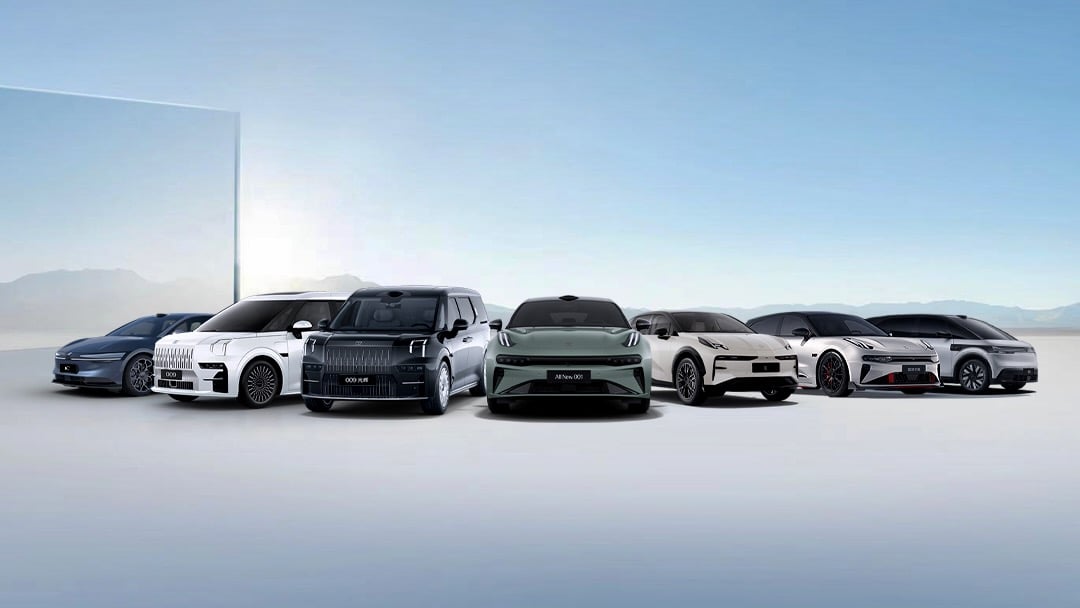
With the flurry of new brands to Australia, it’s difficult to keep up with the names that have recently launched into our market. In October 2024, it was Zeekr’s turn to do so – but who or what is a Zeekr? Let’s take a look at the young brand’s rise to prominence.
Zeekr is a premium electric car brand that’s headquartered in Ningbo in the Zhejiang Provence in China. It was founded in 2021 – yep, just four years ago – and is owned by Geely Automobile, which has also just launched its own brand in the Australian market. That means that Zeekr is owned by the same company as brands such as Volvo, Lotus, Polestar and Smart, all of which are also sold in Australia.
Where does the name Zeekr come from? According to CarNews China, it’s derived from a mix of the term Generation Z and the word ‘geek’. Its first vehicle was the 001 Shooting Brake, which launched in April 2021 using the ‘SEA’ platform and if that name sounds familiar, it’s because cars such as the Polestar 4 and Lotus Eletre also use it.
In its first full year of sales in China, Zeekr sold almost 72,000 units of the 001.
Through 2022, the brand focused on collaborating with American autonomous driving company Waymo to develop a new self-driving taxi, which was revealed in November 2022. Called the Zeekr M-Vision, it used the same platform as the 001, and was developed for mass transport including robotic services. The M-Vision started testing in mid-2024.
The next Zeekr product off the line was the 009 large electric people carrier, which went on sale in China in early 2023. It uses the same architecture as the 001, and was the first Zeekr product to use CATL’s Qilin long-range 140kWh NMC battery, giving it a range of 582km (WLTP) – impressive for an almost-three tonne MPV.
The 001 also gained the CATL battery tech soon afterwards and it allowed the brand to launch into Europe in 2023, with both the Swedish and Dutch markets receiving the product first.
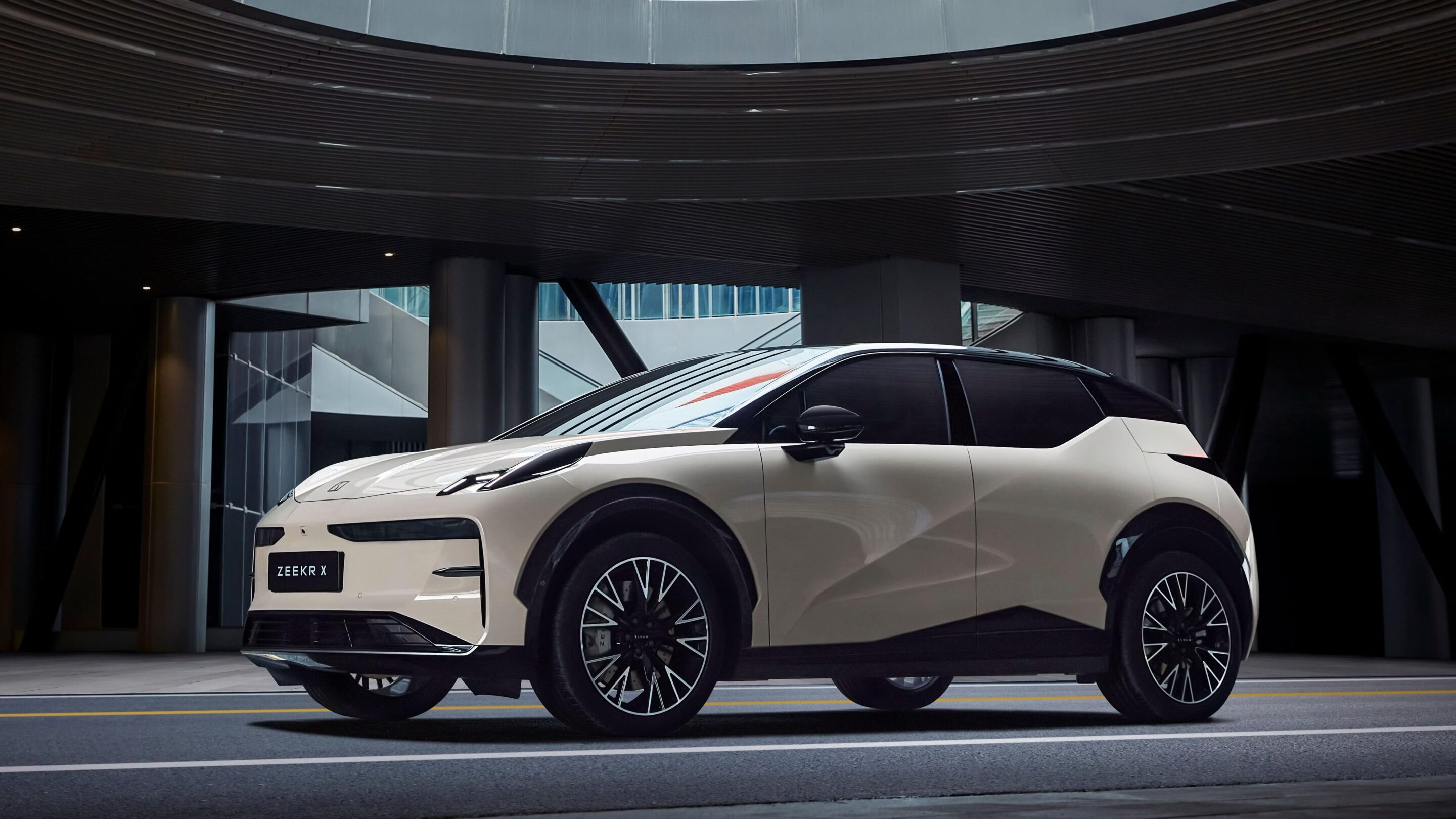
The Zeekr X small SUV came next, based on the same ‘SEA2’ architecture as the Volvo EX30 and Smart #1 and #3 twins. Like those cars, it’s available with both rear- and all-wheel drive drivetrains.
The Zeekr 007 mid-size sedan was next, using a new ‘PMA2+’ platform that is also used by the Smart #5 and with up to 870km of range on the lenient CLTC testing cycle. The 007 is due to be joined by a GT wagon later in 2025.
The 007 was launched with the brand’s new LFP battery, which supports mega-fast charging for a 10 to 80 per cent charge in under 11 minutes. In China, Zeekr opened over 500 ultra-fast charging stations, all of which can support 800V charging, with plans to expand that number to 10,000 by 2026.
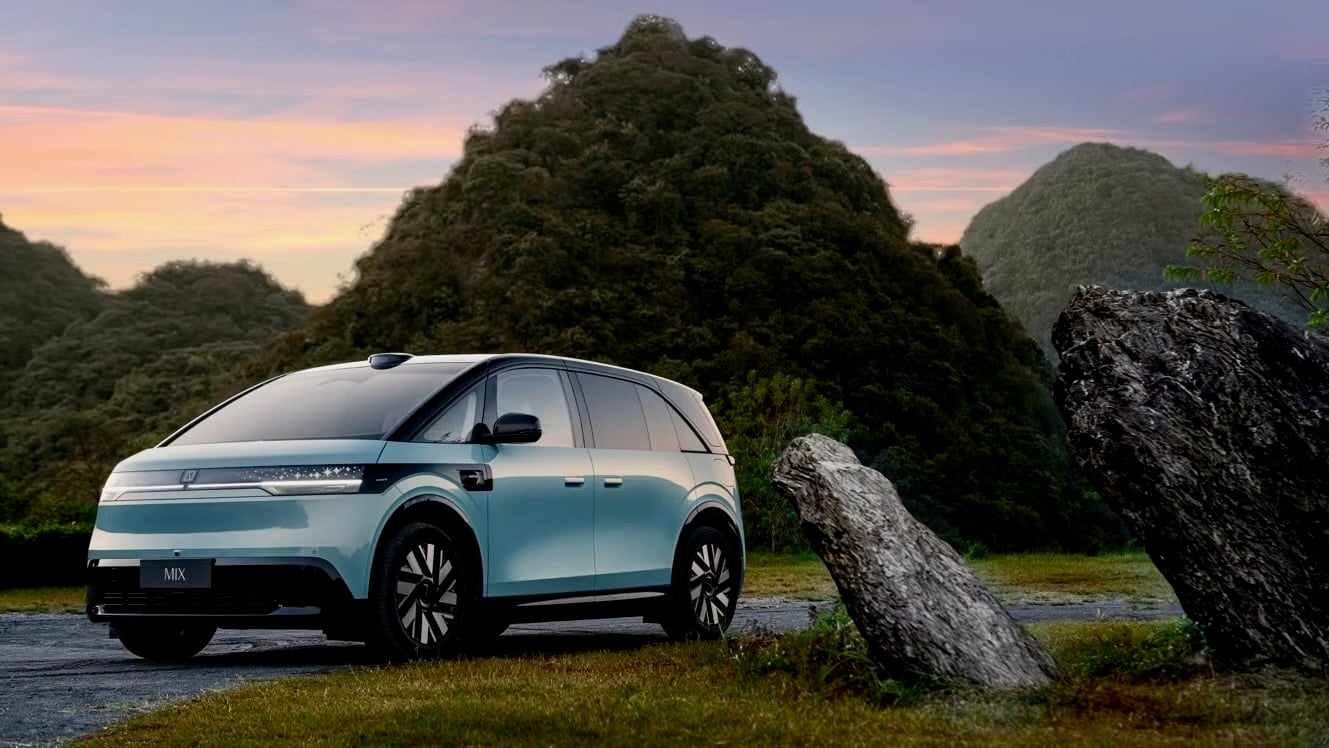
The final two models in the global Zeekr lineup are the Mix smaller MPV, which launched in China in April 2024, and the 7X mid-size SUV. In the whole of 2024, the brand sold 222,123 cars globally – 104,000 more than in 2023, with further increases targeted for 2025 thanks to new markets and new products.
In May 2024, Zeekr filed its initial public offering (IPO) on the New York Stock Exchange with around $441 million raised, making it the largest IPO of a Chinese company since 2021.
Zeekr launched in Australia in October 2024 and currently sells two models: the X small SUV (priced from $49,990 plus on-road costs) and the 009 people carrier (from $135,900 +ORC). The 7X mid-size SUV is also due to go on sale locally before the end of the year as well.
As well as new product, Zeekr is also aiming to expand its retail network and improve brand recognition with plans to triple the size of its dealer network for its target to sell 10,000 vehicles in just a few years.
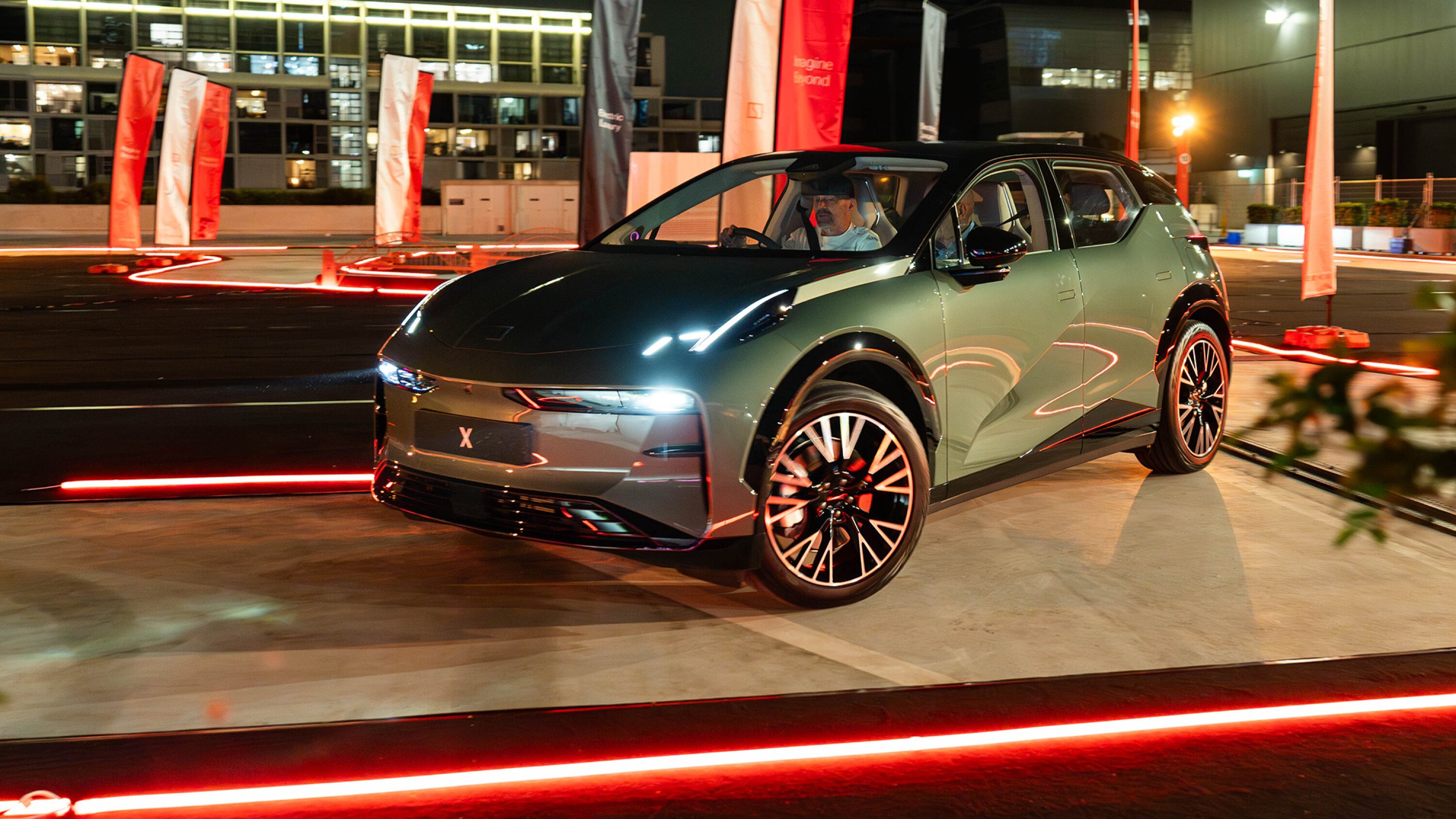
Its current dealer network comprises of six permanent showrooms in Perth, Geelong, Melbourne, Canberra and Sydney, with pop-up locations on the Sunshine Coast, Brisbane and Melbourne.
Zeekr is proud of being the first premium Chinese EV brand in Australia. According to the brand, new product, more dealerships and more opportunities for brand recognition will allow it to gain more sales in its aim towards 10,000 sales in the next few years. Watch this space.
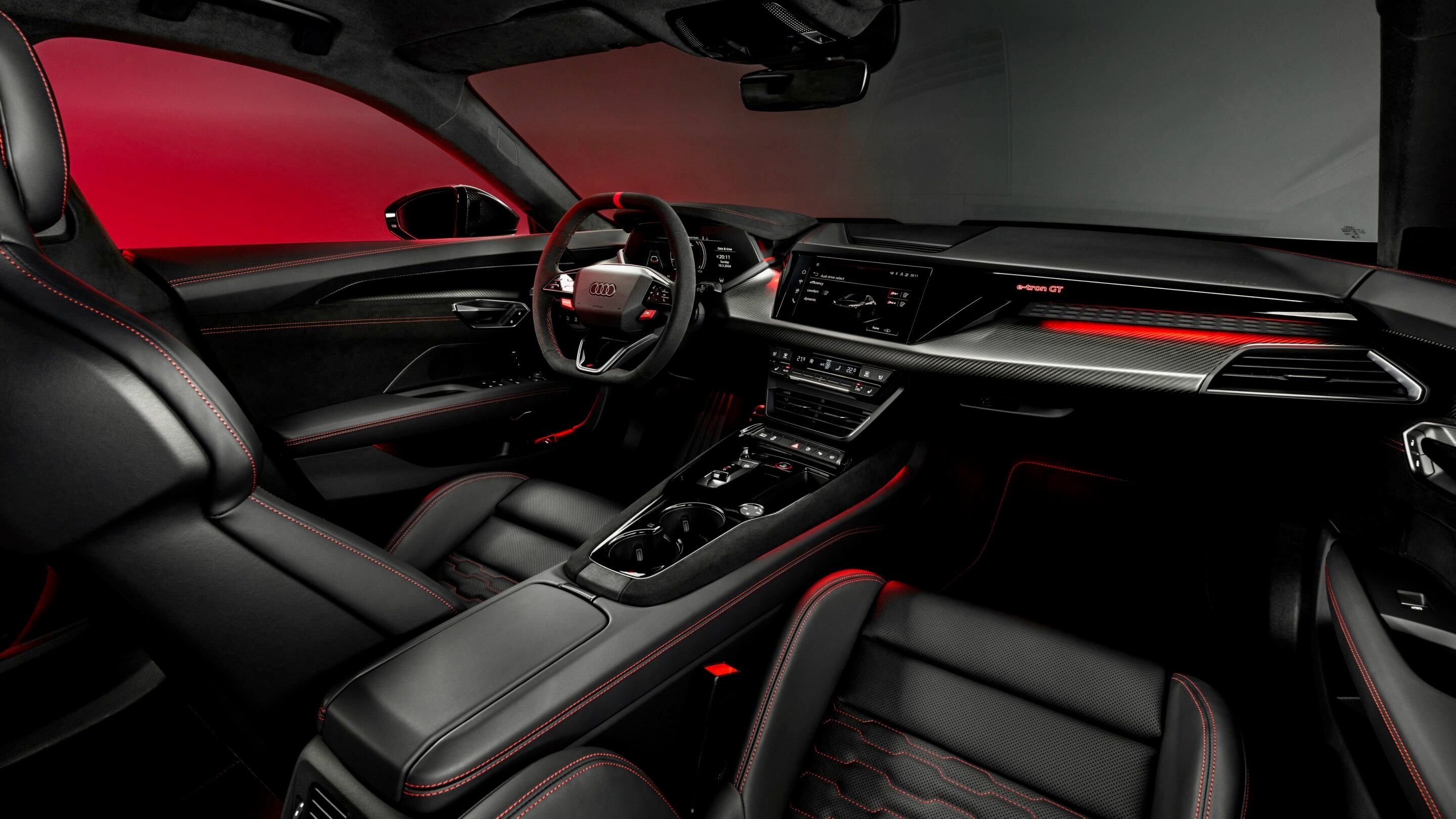
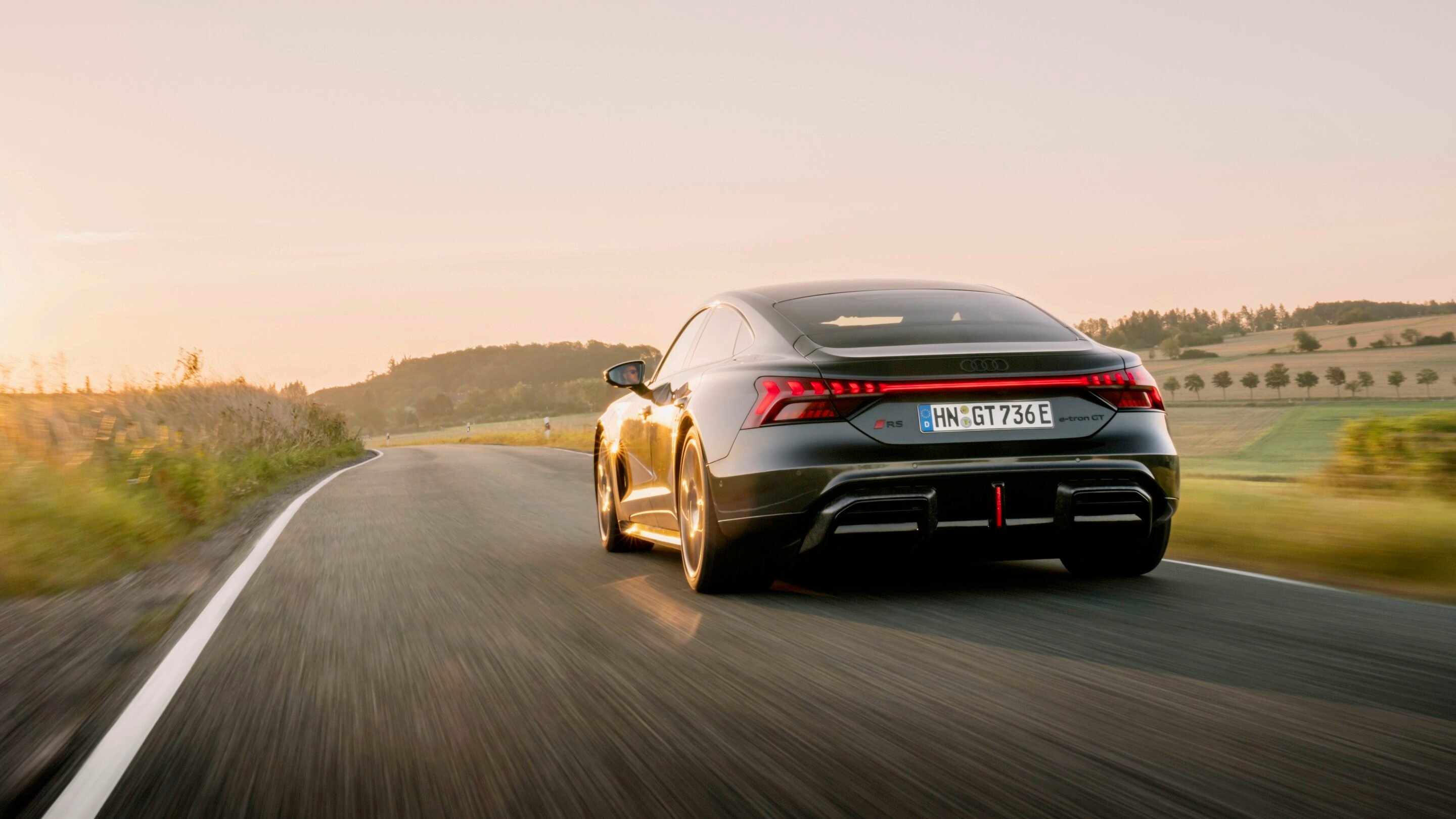
Audi Australia has announced local pricing and specifications for the updated Audi e-tron GT electric sports sedan, which is due in local Audi dealers imminently. Priced from $209,900 plus on-road costs, the new e-tron GT adds a whole host of upgrades including more powerful motors, a larger battery with faster charging speeds, styling and equipment upgrades and a revised model structure.
Now with 435kW/740Nm (or 500kW on boost), the new ‘entry-level’ S e-tron GT is on par with the pre-facelifted RS model. It hits 100km/h in just 3.4 seconds, while thanks to its new 105kWh battery, its range has increased to 559km (WLTP) and its peak charging speed is now 320kW (+50kW) for a 10 to 80 per cent charge in as little as 18 minutes.
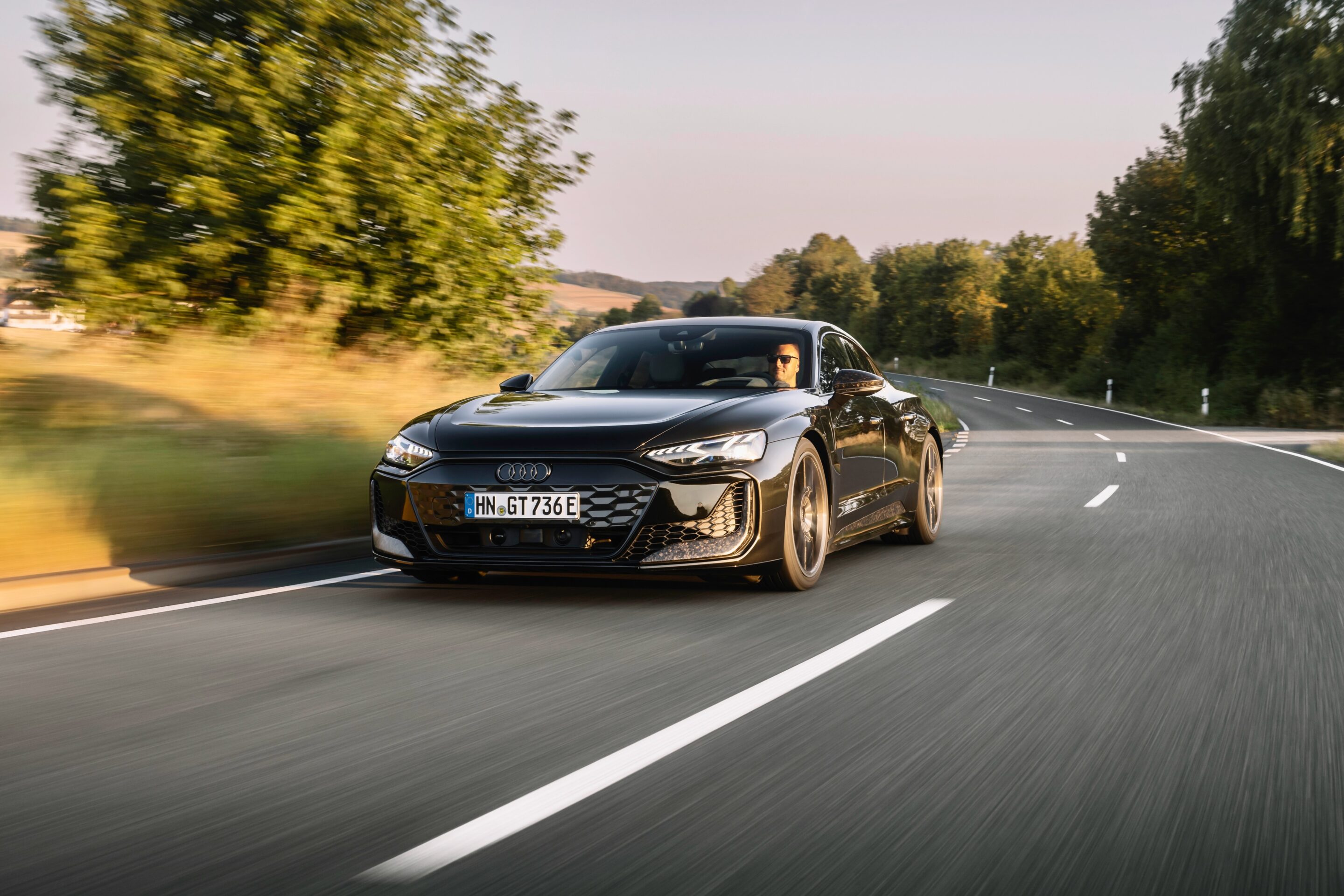
Above the S e-tron GT, the RS e-tron GT is now the mid-spec model in the range and makes 500kW of power (630kW on boost) and 865Nm of torque for a 3.1-second 0-100km/h sprint time. The RS e-tron GT’s range is now 522km.
At the top of the range is the new RS e-tron GT Performance, which increases power by 50kW to 550kW (630kW on boost) and torque to a massive 1,027Nm. Its 0-100km/h sprint time takes just 2.5 seconds, and its range is 528km.
As before, the e-tron GT range comes with six years of servicing and roadside assistance and 12 months of charging through the Chargefox network as standard, in addition to a five-year/unlimited km warranty and an eight-year/160,000km battery warranty.
Audi e-tron GT pricing (plus on-road costs):
- S e-tron GT: $209,900
- RS e-tron GT: $264,900
- RS e-tron GT performance: $309,900
Audi S e-tron GT standard equipment:
- 20-inch alloy wheels
- Adjustable air suspension
- ‘e-quattro’ differential with torque vectoring
- Four-wheel steering
- Metallic paint
- Black exterior detailing
- Matrix LED headlights with Audi laser light
- Panoramic roof
- Electric bootlid
- Nappa leather upholstery
- 18-way electric front seats with heating, ventilation and driver’s memory
- Tri-zone automatic climate control
- Heated leather steering wheel
- LED ambient lighting
- Audi Connect Plus live services
- 710-watt 16-speaker Bang & Olufsen sound system
- Wireless Apple CarPlay and Android Auto
- Wireless phone charger
- DAB+ digital radio
- Head-up display
- Autonomous emergency braking (AEB) with intersection assist
- Adaptive cruise control with stop and go functionality
- Traffic jam assist
- Lane keeping assistance with adaptive lane guidance
- Blind-spot monitoring with rear cross-traffic alert
- Exit warning
- 360-degree camera
- Tyre pressure monitoring
RS e-tron GT adds:
- 21-inch alloy wheels
- Panoramic glass roof with switchable transparency
- RS-specific electric sound
- Performance brakes with tungsten carbide coating
- Sports steering wheel
- Massaging front seats
- Matte carbon twill inlays
- RS-specific digital driver’s display
RS e-tron GT performance adds:
- Different 21-inch wheels with milled black inserts
- Active suspension
- Performance driving mode
- Suede headliner
Audi e-tron GT options:
- Sensory Package (S only, with ioniser, heated outer rear seats, massaging front seats and a suede headliner): $6000
- Interior Design Package (S only, with dashboard and centre console trims in Nappa leather, suede door trims): $3800
- Carbon Exterior Styling Package in either gloss or matte (RS variants, with gloss carbon trim for the front air intakes, side sill trim, rear diffuser, exterior roof panel and mirror caps): $10,000
- Interior RS Design Package (RS variants, with a suede steering wheel, dashboard and centre console trim in Nappa leather and suede): $4500
- RS Performance Design Package (Performance only, with a black suede steering wheel with green stitching, green stitching on the seat belts and floor mats and Nappa leather and suede dashboard and centre console trims): $4500
- Carbon ceramic brakes (RS only): $13,000
The facelifted Audi e-tron GT will enter local Audi showrooms imminently.
The next-generation Toyota HiLux, which is likely to be launched sometime in 2026, will add a new plug-in hybrid drivetrain according to Japanese magazine Best Car, in addition to familiar diesel powertrain options.
Set to rival PHEV utes such as the BYD Shark 6, Ford Ranger PHEV and GWM Cannon Alpha, the new HiLux will reportedly use a new platform to accomodate the new tech.
Best Car offered no suggestion as to when the PHEV drivetrain will arrive, nor any details about it but with the recently-revealed new-generation RAV4 SUV using a new 2.5-litre four-cylinder plug-in hybrid drivetrain, it’s easy to imagine that same powertrain being used in the next HiLux.
The publication also claimed that it will use a new-generation ‘GA-F’ body-on-frame platform that’s used underneath the LandCruiser 300 Series and Prado. But recent prototype sightings appear to be a heavily updated version of the current model, so it could also use the same platform as its predecessor.
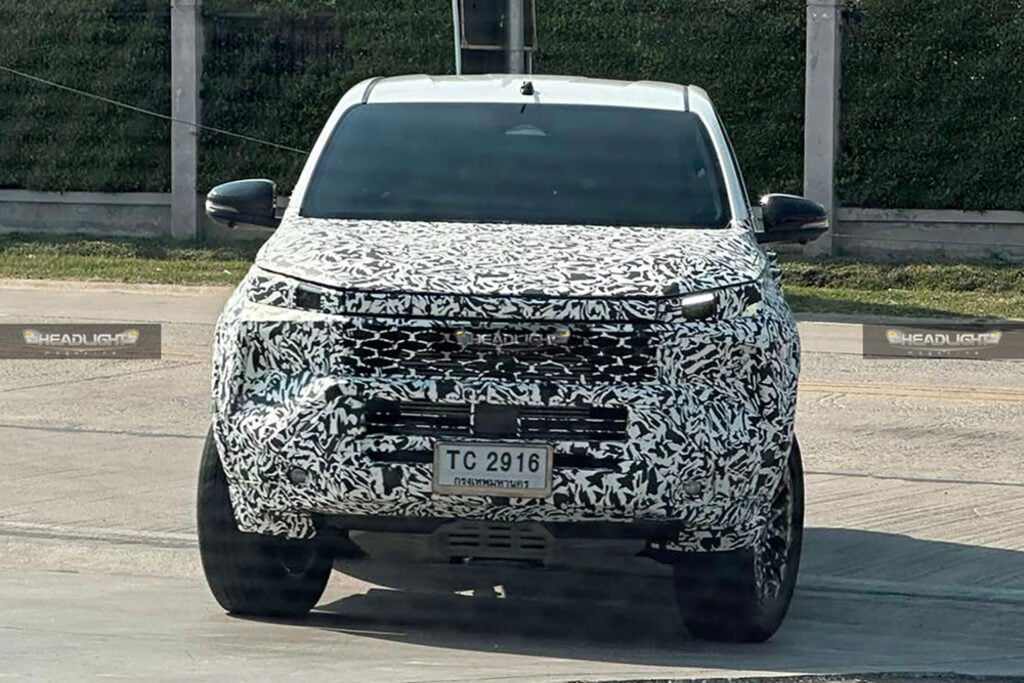
The next-generation Toyota HiLux has been testing spied in Thailand.
The 2.8-litre turbo-diesel that’s used in the current HiLux will also reportedly feature in the new one, again with a 48-volt mild-hybrid system, while also adopting the Prado’s newer eight-speed automatic transmission. In some markets, a 2.0-litre turbo-petrol engine has also been rumoured for launch, as well as the smaller 2.4-litre turbo-diesel currently offered.
More details of the next-generation Toyota HiLux will be announced closer to its full reveal, which is expected in the next six months ahead of a 2026 Australian launch date.
Talk about going out at the top. The finest coupe and convertible in their respective classes are no more, despite 2024 being their biggest selling year in Australia. The Porsche 718 series, encompassing both the Cayman and the Boxster, is going out of production, largely due to an almost unfathomable botch concerning its electric successor.
Porsche is far from alone in finding this electric transition hard to manage. Whether it’s governments constantly shifting legislative goalposts, Chinese rivals moving the tech game forward at pace or Porsche’s battery supplier for the 718 project going bankrupt, life hasn’t been easy in the halls of Zuffenhausen of late.
Tentatively positive results for the electric Macan in the US have stopped a boardroom bloodbath, but other markets, most notably China, have been slow to warm to what has traditionally been Porsche’s volume-selling SUV. The 718 line was due to follow on the heels of the Macan, but now the launch date has been pushed back to – at the most informed estimates – 2027.
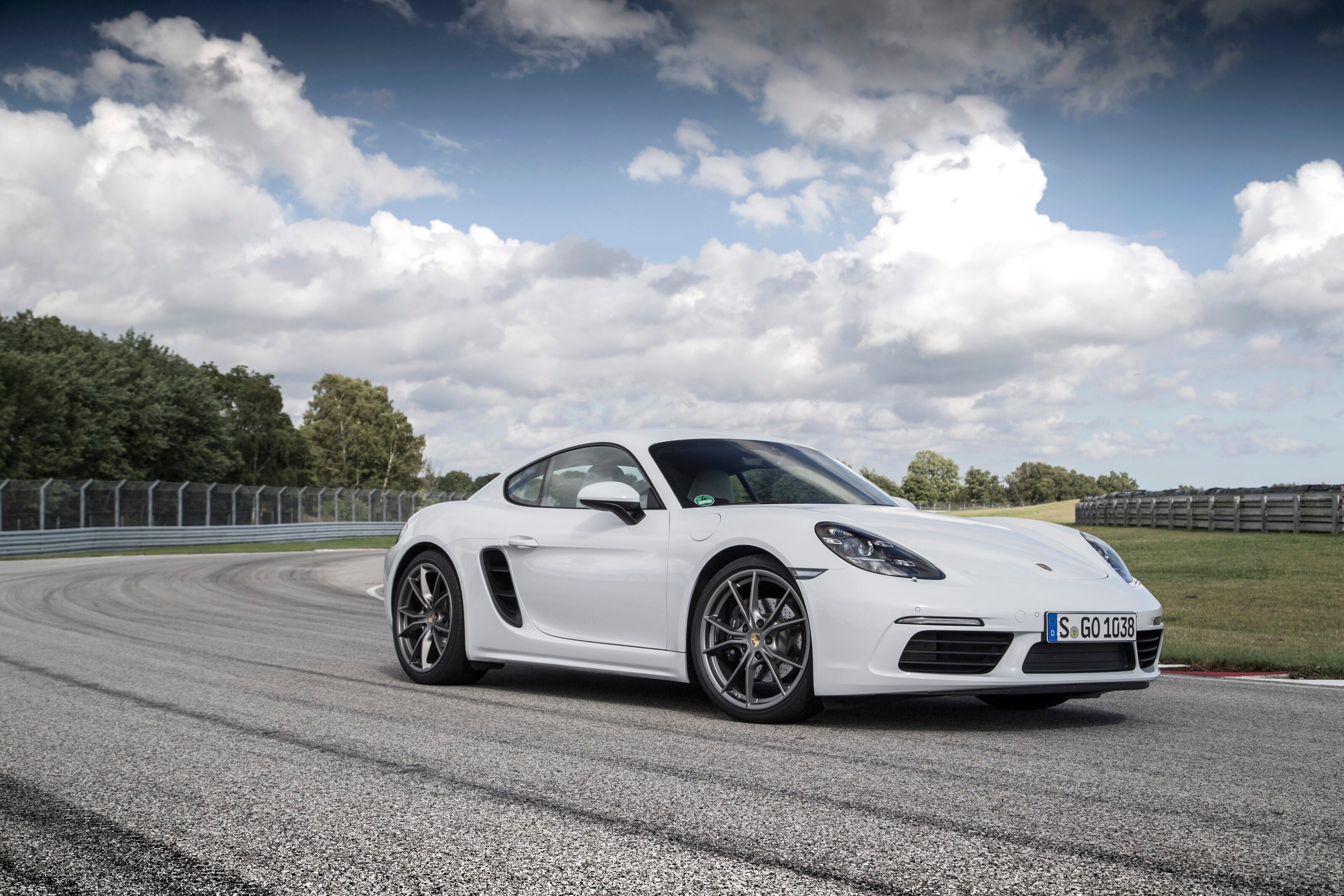
It’s been a slow and protracted death for internal-combustion versions of the 718. Like the ICE-engined Macan, it was cancelled in Europe not due to emissions but off the back of arcane cybersecurity regulations. These rules applied to the mainstream range but due to their limited production run, not the 718 Boxster RS Spyder and 718 Cayman GT4 RS specials. Run-out 718 stock has provoked a bit of a feeding frenzy in EU countries with buyers keen to register cars before July 1, after which unsold cars became unregisterable.
Demand for the 718 has held firm in many other key markets, despite this model line being nine years old, but the very last units are scheduled to be built in October. There will then be a considerable hiatus before we get our hands on the electric 718, Porsche’s CEO Oliver Blume telling the Annual General Meeting last May that these cars would arrive in the “medium term”.
The nightmare scenario has come to pass. An already cash-strapped Porsche will be without its budget sports car range for what could be two years.
The 718 has not been without its travails. Introduced at the 2016 Geneva Show, the initial line up consisted purely of four-cylinder turbocharged models which found new buyers for Porsche but didn’t endear themselves to the notoriously conservative Porsche faithful.
The company made amends by reintroducing the flat-six engine to the line up in 2019 with the Cayman GT4 and Boxster Spyder, introducing a 4.0-litre normally-aspirated version of the Porsche 911’s 9A2EVO engine. Good for 309kW in this guise, it was subsequently slotted into the 4.0 GTS models, albeit in
detuned 294kW guise.
The ultimate incarnations of the 718 were the 370kW Cayman GT4 RS and Boxster Spyder RS models, which challenged the rigidly maintained Porsche hierarchy that had traditionally protected the 911. These were the gloves-off 718 models we’d all hoped for but never thought we’d see and the results were explosive. As it stands, it looks like we’ll never see their likes again. We’ll have faster, we’ll have smarter but don’t count on anything more exciting. For the foreseeable future at least.
| Cayman | Boxster | Total | |
|---|---|---|---|
| 2017 | 221 | 132 | 353 |
| 2018 | 229 | 106 | 335 |
| 2019 | 156 | 89 | 245 |
| 2020 | 164 | 82 | 246 |
| 2021 | 147 | 109 | 256 |
| 2022 | 159 | 94 | 253 |
| 2023 | 282 | 136 | 418 |
| 2024 | 445 | 301 | 746 |
| 2025 (to May) | 103 | 86 | 189 |
This article originally appeared in the Driven to Extinction section of the June 2025 issue of Wheels magazine. To subscribe, click here.
Mahindra has announced Australian pricing and specifications for the Mahindra XUV 3XO small SUV, which will go on sale on July 4.
Offered in two models with a three cylinder turbo-petrol engine, pricing starts at $23,490 drive away (or $23,990 from September 1), making it a bargain in the small SUV segment.
Under the bonnet of the Mahindra XUV 3XO in Australia is a turbocharged 1.2-litre three-cylinder engine making 82kW of power (@5000rpm) and 200Nm of torque (@ 1500-3500rpm), mated to a six-speed automatic transmission that sends grunt to the front wheels.
It’s rated at 6.5L/100km for combined fuel consumption and 136g/km for CO2 emissions.
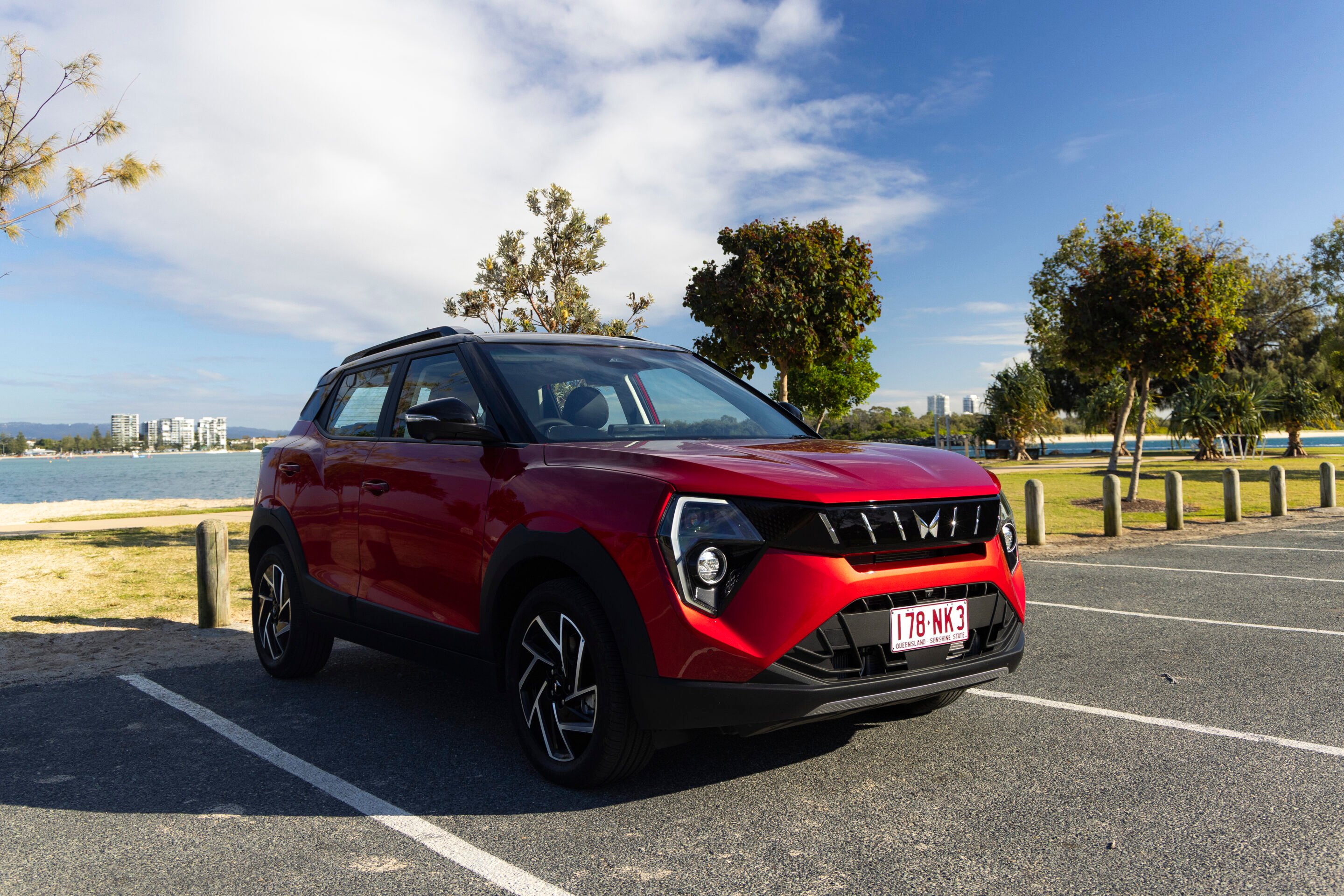
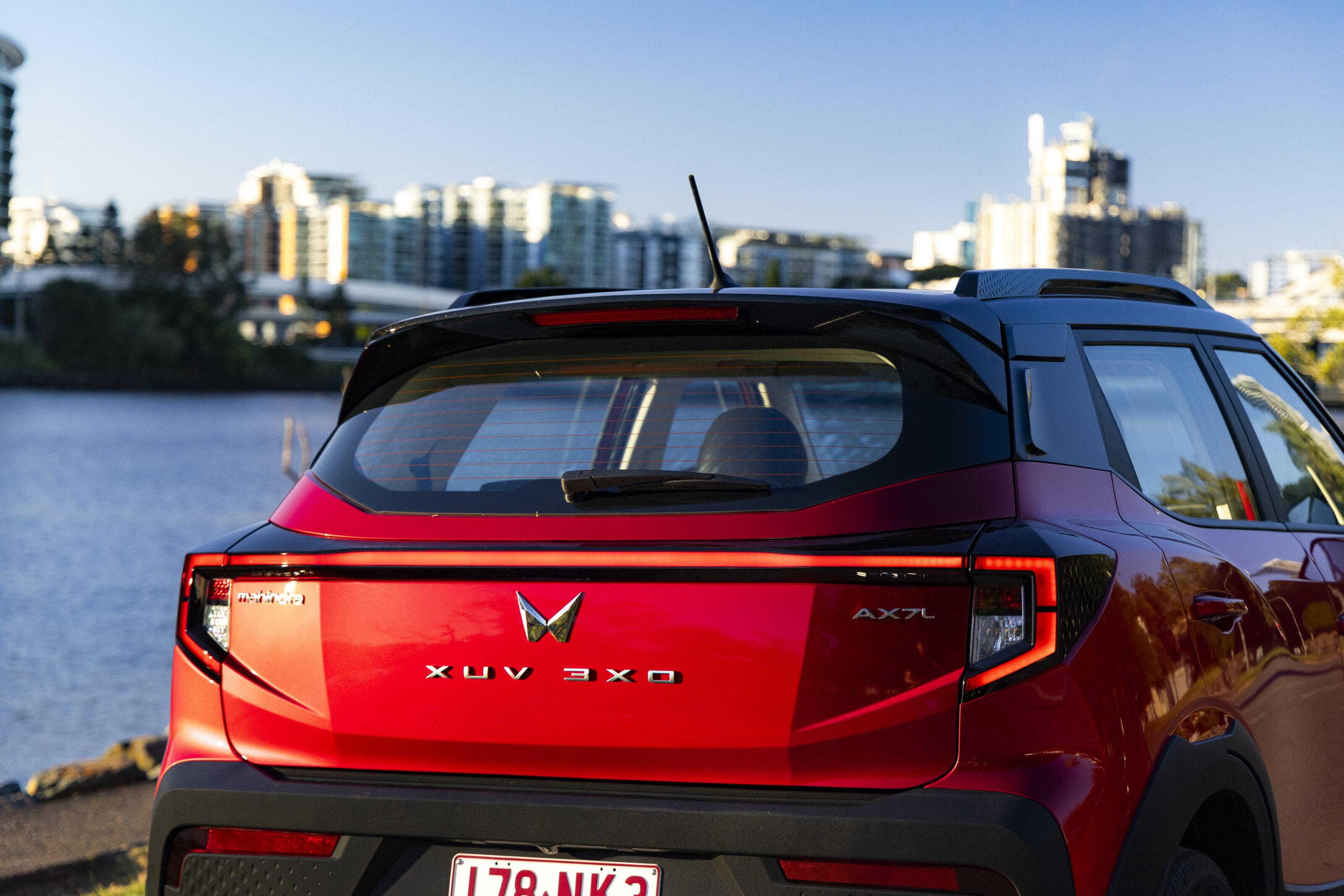
Measuring 3990mm long, 1821mm wide, 1647mm tall and riding on a 2600mm long wheelbase, the Mahindra XUV 3XO is 285mm shorter than a Mazda CX-3, but its 364-litre boot capacity is 100 litres larger.
The XUV 3XO AX5L is available in ‘Everest White’, ‘Galaxy Grey’, ‘Stealth Black’ and ‘Tango Red’ colours, with the upper-spec AX7L replacing the black hue with ‘Citrine Yellow’.
The XUV 3XO is covered by a seven-year/150,000km warranty with seven years of roadside assistance. Its six-year/85,000km capped price servicing totals $1994 ($332 annually).
Mahindra XUV 3XO pricing (drive away):
| AX5L | $23,490 ($23,990 from Sept 1) |
|---|---|
| AX7L | $26,490 ($26,990 from Sept 1) |
Mahindra XUV 3XO AX5L standard equipment:
- 16-inch alloy wheels
- Dusk-sensing automatic LED headlights
- Rain-sensing automatic wipers
- Auto-folding mirrors
- Dual-zone automatic climate control with rear air vents
- Keyless entry with push button start
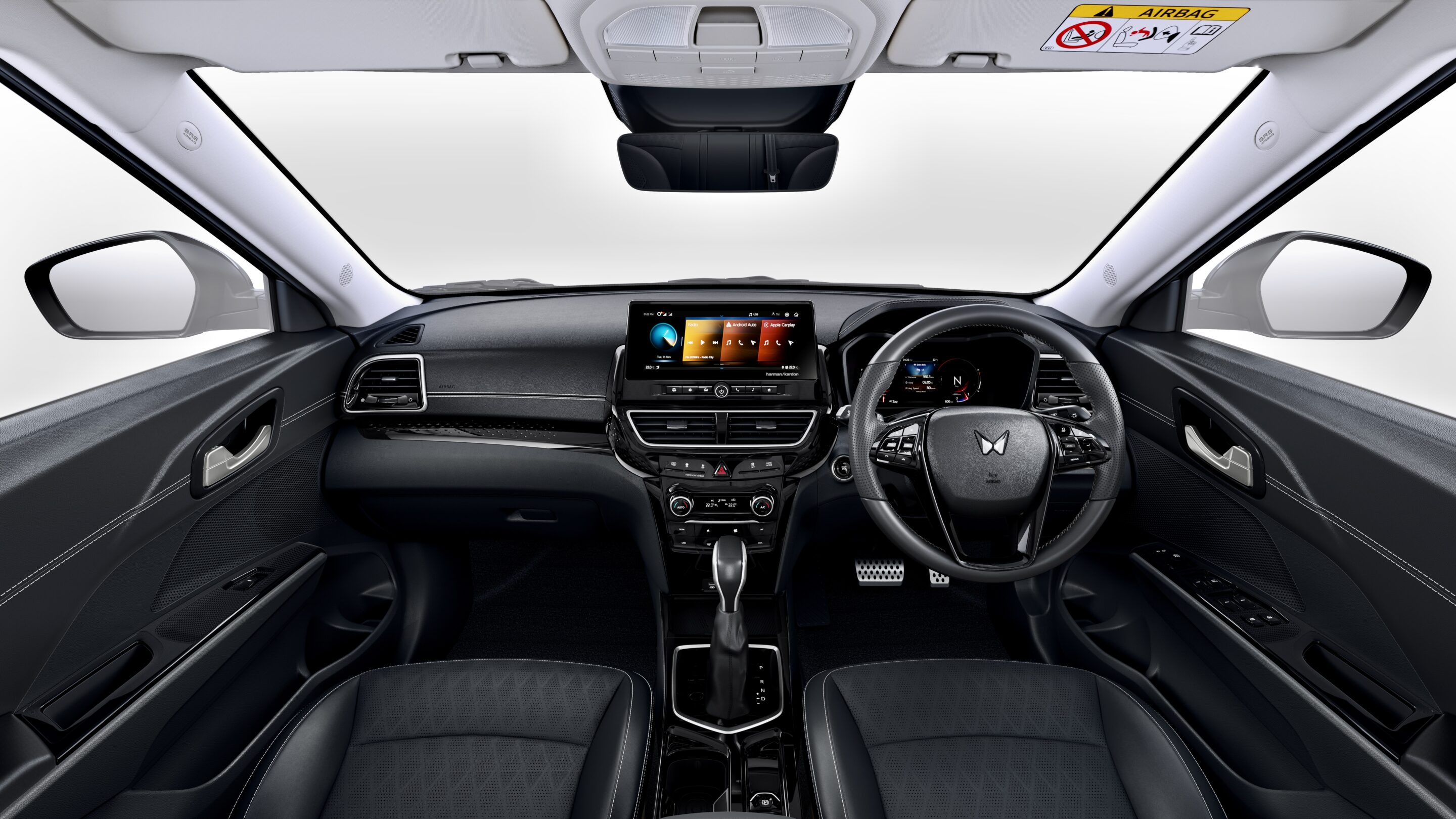
- 10.25-inch digital driver’s display
- 10.25-inch touchscreen
- Wireless Apple CarPlay and Android Auto
- Three USB ports
- Leather steering wheel and gear selector
- Black cloth upholstery
- Cooled glovebox
- Electric parking brake with auto hold
- Sunroof
XUV 3XO safety features:
- Six airbags
- Autonomous emergency braking (AEB) with cyclist and pedestrian detection
- Forward collision warning
- Adaptive cruise control with stop and go functionality
- Lane keeping assistance with adaptive lane guidance
- Traffic sign recognition
- Auto high beam
- Blind-spot camera
- Reversing camera
- Tyre pressure monitoring
XUV 3XO AX7L model adds:
- Panoramic sunroof
- 360-degree camera
- Black leatherette seat upholstery
- 17-inch alloy wheels
- Seven-speaker Harman Kardon sound system
- Soft touch leatherette dashboard and door trims
- LED front fog lights
- Front parking sensors
- 65W USB-C fast charging
The Mahindra XUV 3XO is on sale in Australia from July 4, with local deliveries due to commence soon.
