
Thirteen months after revealing its stunning Kai concept hatchback at the Tokyo Motor Show, Mazda will soon reveal its production-ready progeny: the next-generation Mazda 3.
Scheduled to debut at the Los Angeles Auto Show at the end of this month, the 2019 Mazda 3 – one of Australia’s best selling cars – will not only break cover in hatchback form, but in a sedan bodystyle as well.
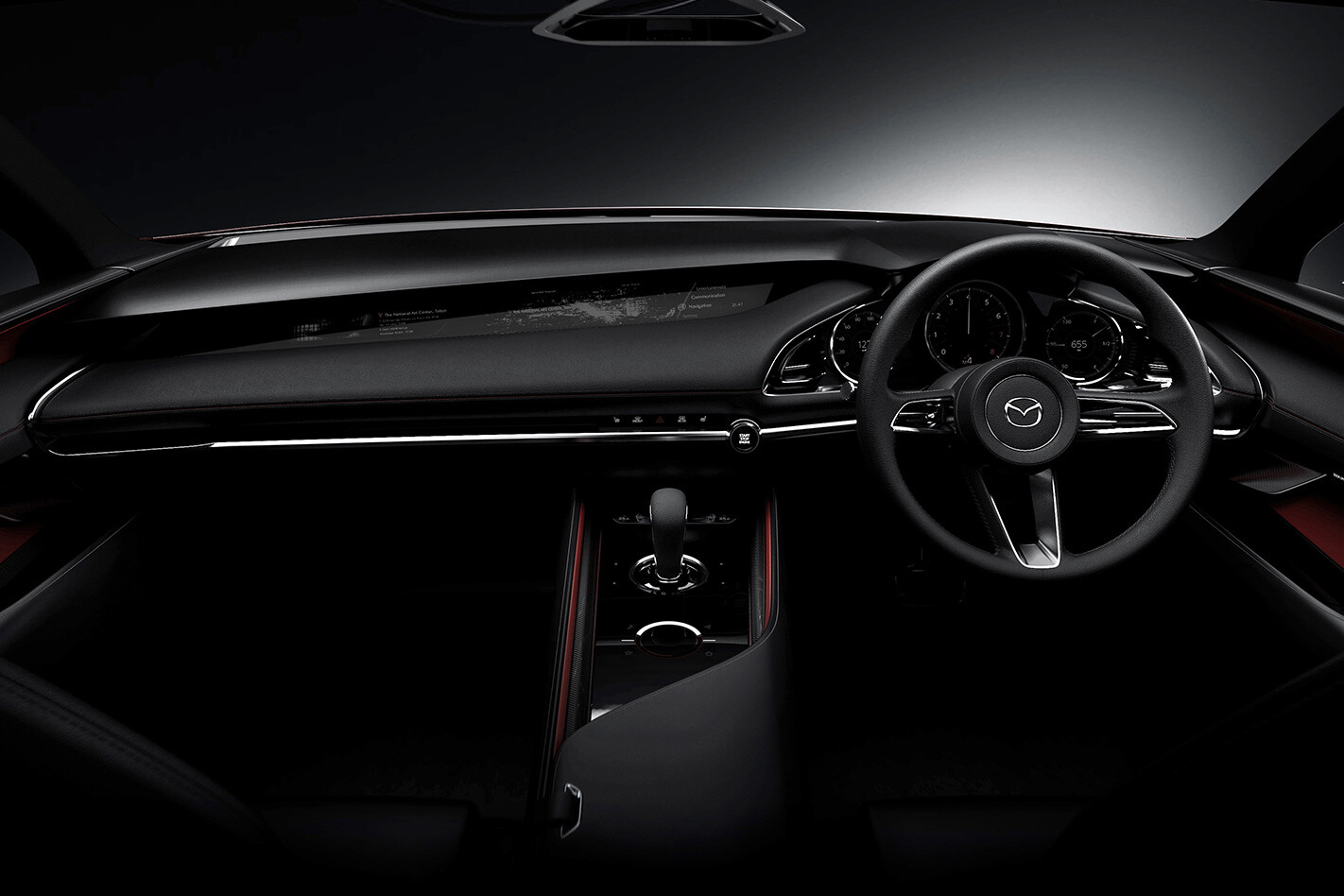
A shadowy teaser released today confirms the sedan will deviate significantly from its hatch sibling. While many small sedans tend to share their rear doors with their hatch siblings (take a look at the current Mazda 3, Honda Civic and Subaru Impreza, for example), the next-gen Mazda 3 will see unique treatments for both sedan and hatch.
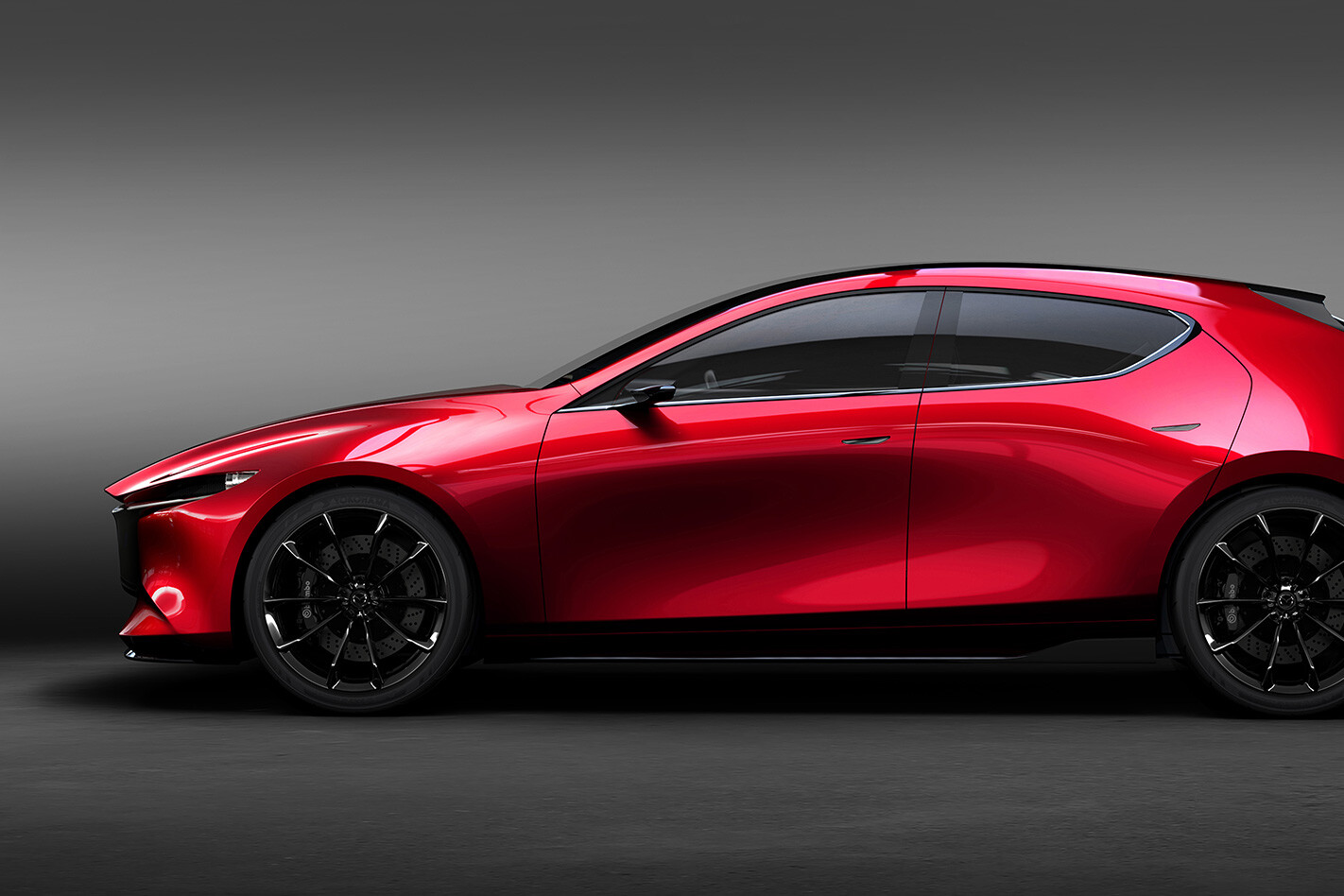
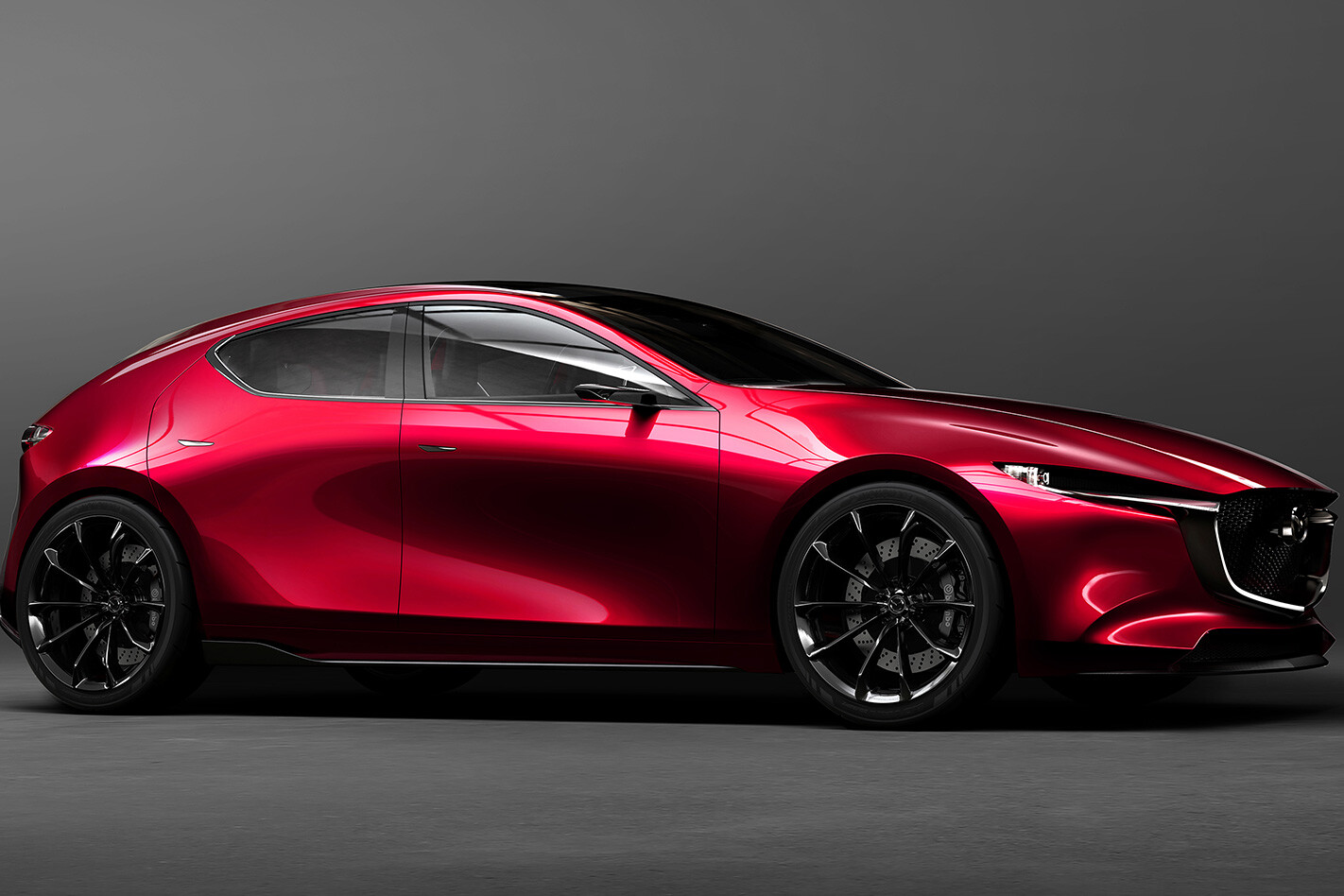
The Mazda 3 hatch will, as expected, remain faithful to the look of the Kai concept, with a pronounced kick-up to its belt line that creates a fat C-pillar graphic (but which creates a smaller window opening for back-seaters as a result).
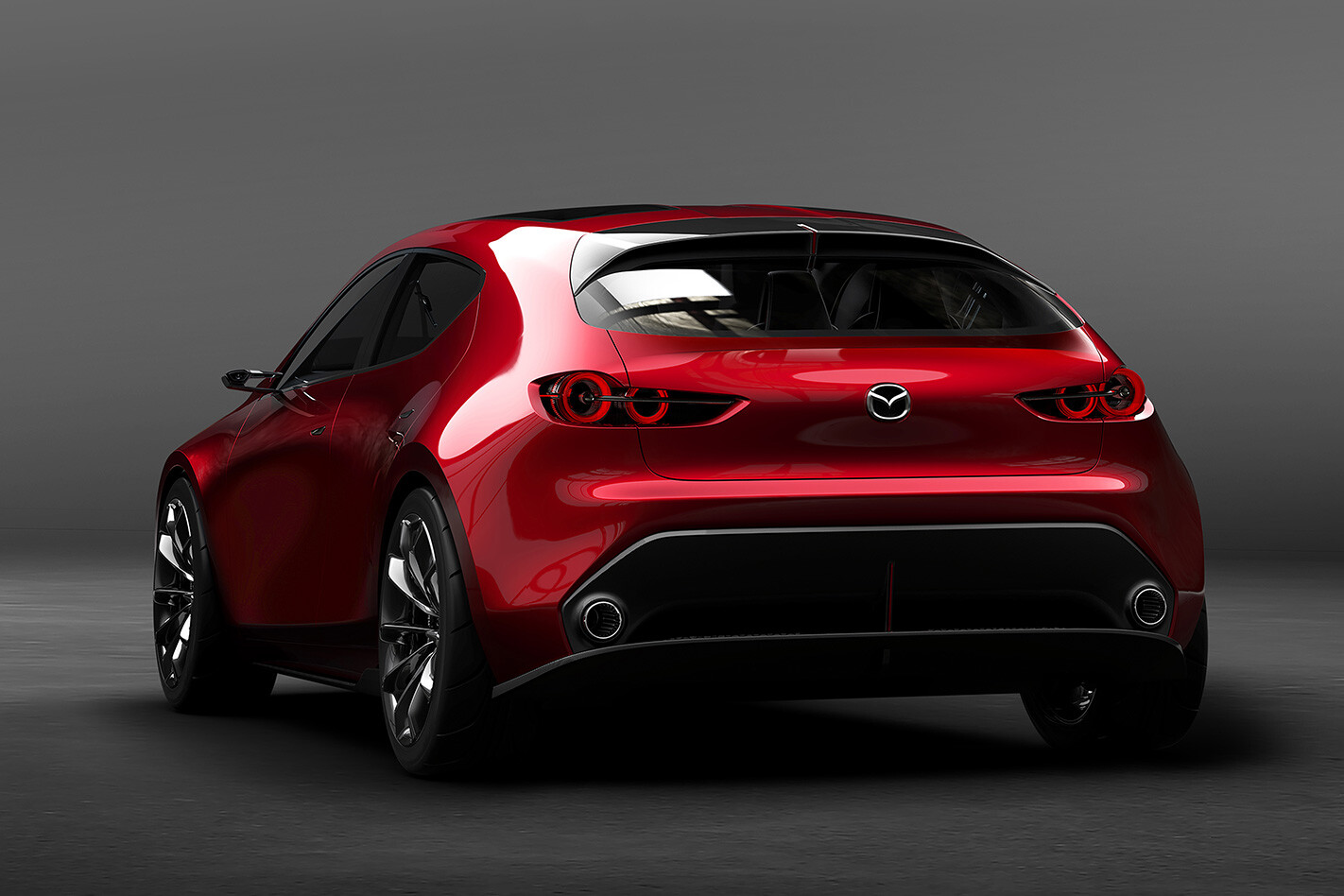
Meanwhile, the sedan takes a more conventional approach to its glasshouse. The rear window extends much further toward the rear of the car, and the boundary between the rear door sheetmetal and rear glass is almost ruler-straight when compared to the hatch.
That’s all we can see for now, but there are other things we know about Mazda’s imminent small car. For one, it will debut the company’s innovative compression-ignition petrol engine dubbed SkyActiv-X, which deploys clever ignition technology and a supercharger to reduce its thirst without compromising on power – while still being able to run on 91-octane petrol.
And, with Mazda’s recently-announced plan to electrify its entire range by 2030, a hybrid variant may also slide into the new 3’s lineup at some point in its lifecycle to pave the way for a fully-electric Mazda 3 range in the following generation.
Audi knows if you’re going to be late then you better make a good entrance.
In 2012 it entered the sedan-cum-coupe category with the A7, a stylish hatchback alternative to the established Mercedes-Benz CLS. Quickly, though, it found the Benz had its measure.

Now the second generation A7 rings the bell on round two. It faces a tougher challenge against a revamped mild-hybrid CLS while Porsche’s Panamera and the BMW 6 Series Gran Turismo have since joined the fray.
But it heeds the battle and uses technologies from its new A8. The A7 is based on the same MLB Evo platform to make it lighter and stiffer. The wheelbase lengthens by 12mm to boost interior space, while its overall length has shrunk.
It wears battle-readiness on its sleeves, too. Its tracks are widened under aggressively pumped guards. A new power dome bonnet looms above a wider one-piece front grille and V6 models come with an S-line specific front bumper.
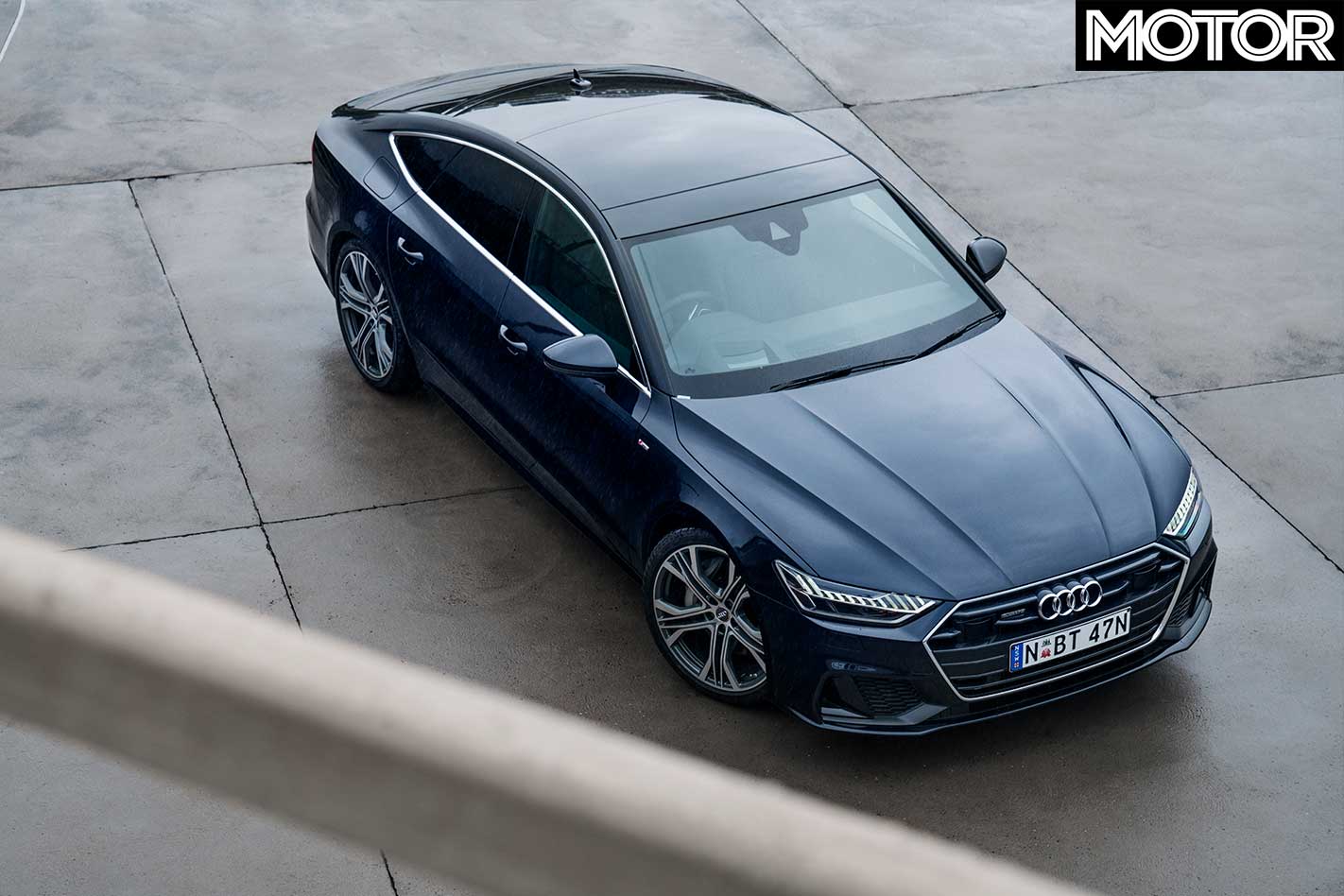
A fleet of new engines start with a 180kW four-cylinder petrol, progressing to a 210kW V6 diesel and then a 250kW V6 petrol. We’re in the latter, now named the 55 TFSI, until the diesel (50 TDI) and four-cylinder (45 TFSI) arrive next year.
It swaps the old 228kW supercharged 3.0-litre V6 for a new turbocharged unit closely related to the S4’s. Like the S4 its cylinder heads are flipped so exhaust gases flow inwards to the twin-scroll turbo in its vee. It produces 500Nm between 1370rpm to 4500rpm.
It opens fire with brisk rather than rapid acceleration. It mates Audi’s ‘Ultra’ part-time all-wheel drive to 255mm-wide Pirellis. Combined with an improved seven-speed dual clutch they make a claimed 5.3sec sprint from 0 to 100km/h believable.

The full-throttle stuff produces less noise than expected, except for an occasional high-pitched whir from the new 48-volt powered alternator. It offers no extra power, just quicker engine restarts to allow to eco-coasting or earlier start-stop engagement.
Luckily, the car’s handling is more involving. Even though it’s more a gran tourer than apex-carver, it’s a good sign of things to come for S and RS versions. By mounting the front subframe rigidly to the chassis its steering has become more tactile.
There’s more grip than you expect when leaning into a corner, too, especially when considering its size and the comfort on offer. The upgraded rear five-link setup also helps it hug its line, keeping 1815kg in check. An optional all-wheel steering package promises to further hone its agility, but we’ll have to see whether it’s worth the extra $4200 when we drive it.
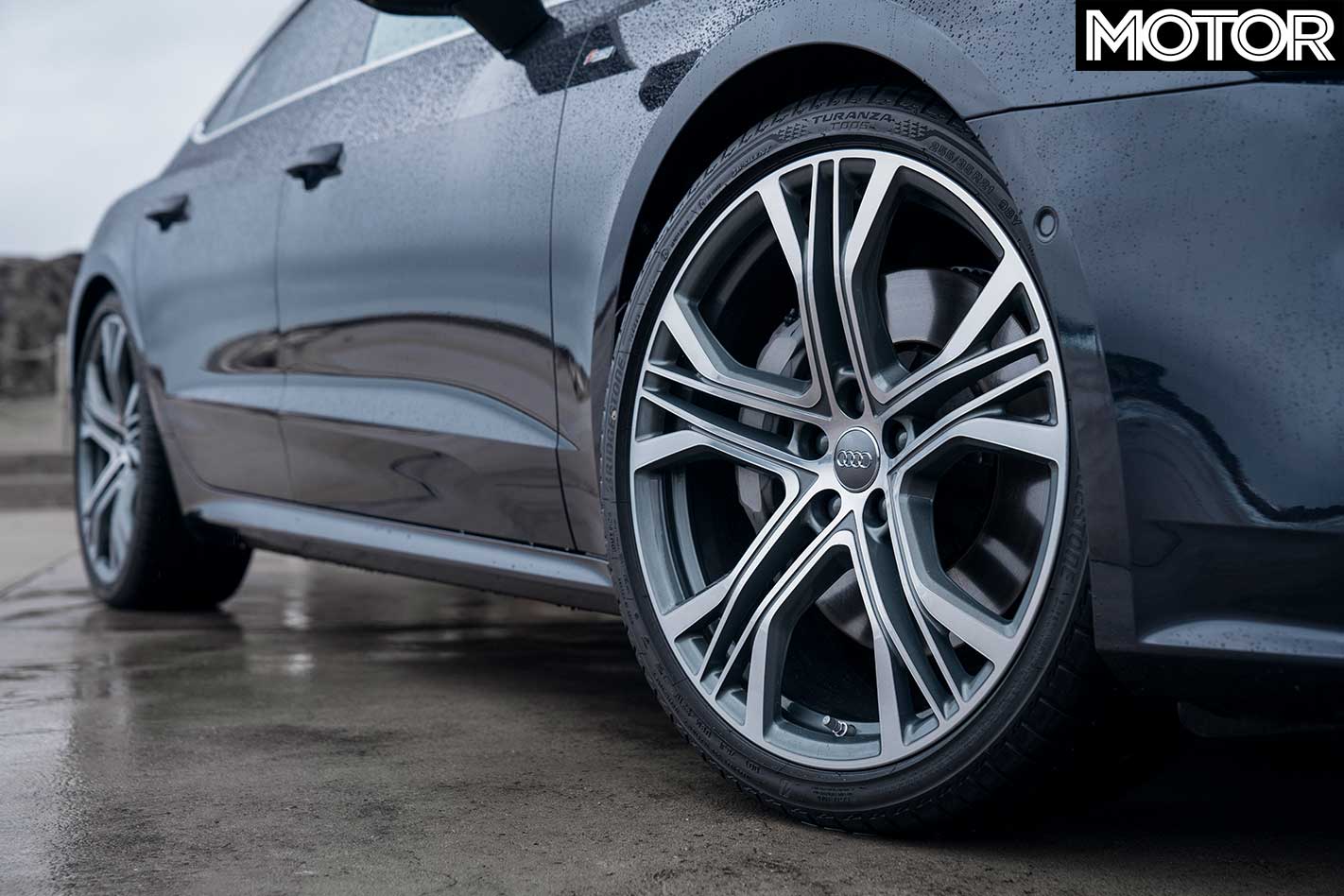
Aussie cars shun the base 18s offered in Europe for 20-inch wheels as standard. You can then upgrade them to 21-inches in an $8000 Premium Plus package, reducing the tire aspect ratio from 45 to 30. The pack, part of a more streamlined approach to customisation, also includes air suspension that manages to cushion and control the car’s mass simultaneously very well.
It also seems to have more lasers, sonar and infrared cameras than an inter-continental submarine for safety. Meanwhile a heads up display above Audi’s familiar 12.3-inch Virtual Cockpit are joined by 10.1-inch and 8.6-inch displays in the centre stack.
Thankfully, the bigger screen handles navigation, media, connectivity and drive mode selection, while below is reserved for HVAC controls or doubling as a scribble pad. They click satisfyingly with haptic feedback, but the real draw is the new space found by deleting a multimedia controller wheel.
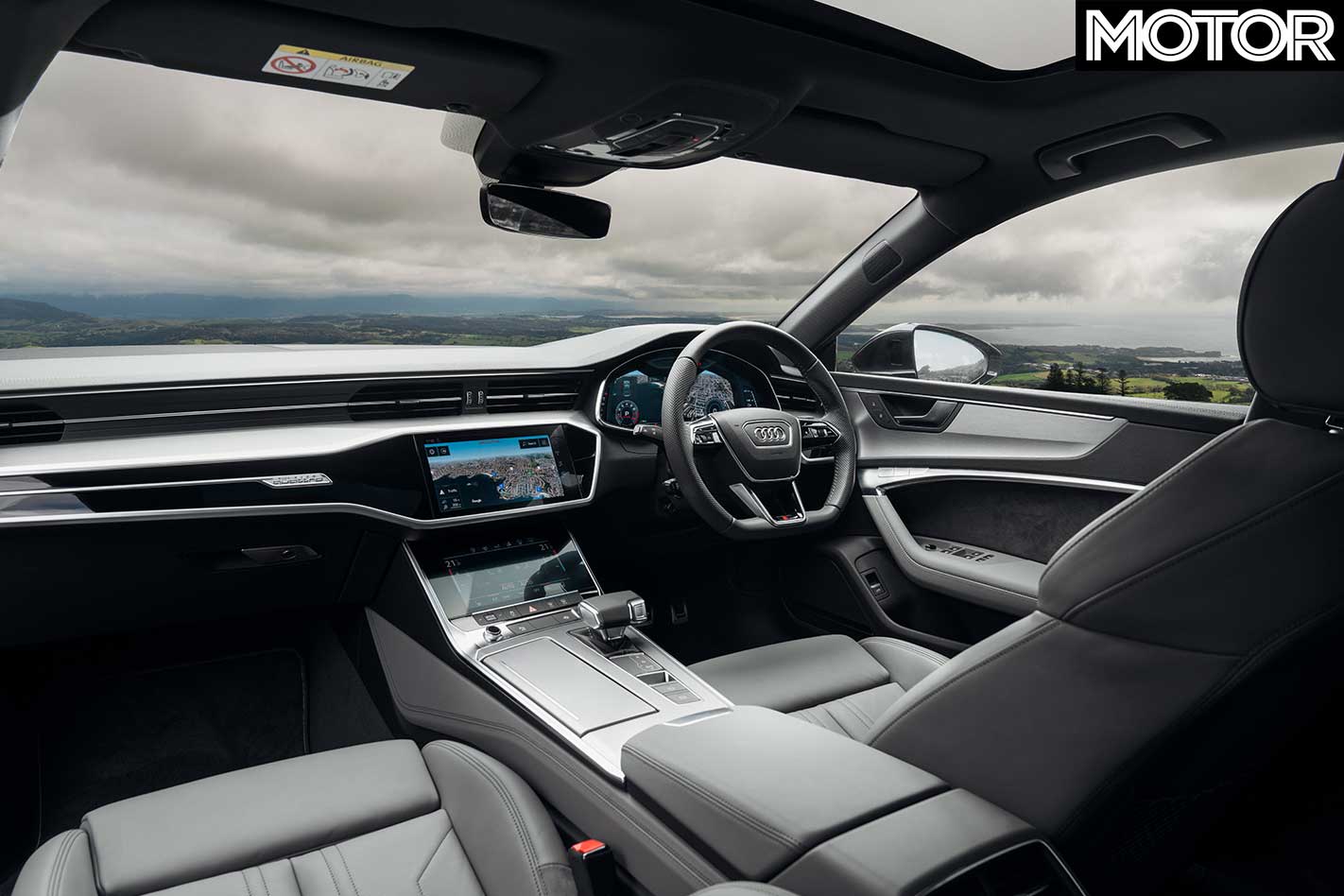
The slick driver-focused interior is only let down by the seats that lack useful bolster. But the fact it needs some shows how far its dynamics have come, and at no cost to comfort.
It won’t be the most memorable car we drive this year, even with the pokey V6, but to be fair that’s not what anyone should expect from it. Bring its competition into focus and the A7’s charms are clearer. Even with the expensive Premium Plus package its $131,900 base undercuts rivals from Mercedes-Benz, BMW and Porsche.
The chassis, too, promises some delicious S and RS versions down the track. Add those alluring looks and we’re inclined to bump its first rating to four stars. It’s relative, of course, and might change after a more thorough drive, but for now it looks like the A7 has made the entrance it intended all along.
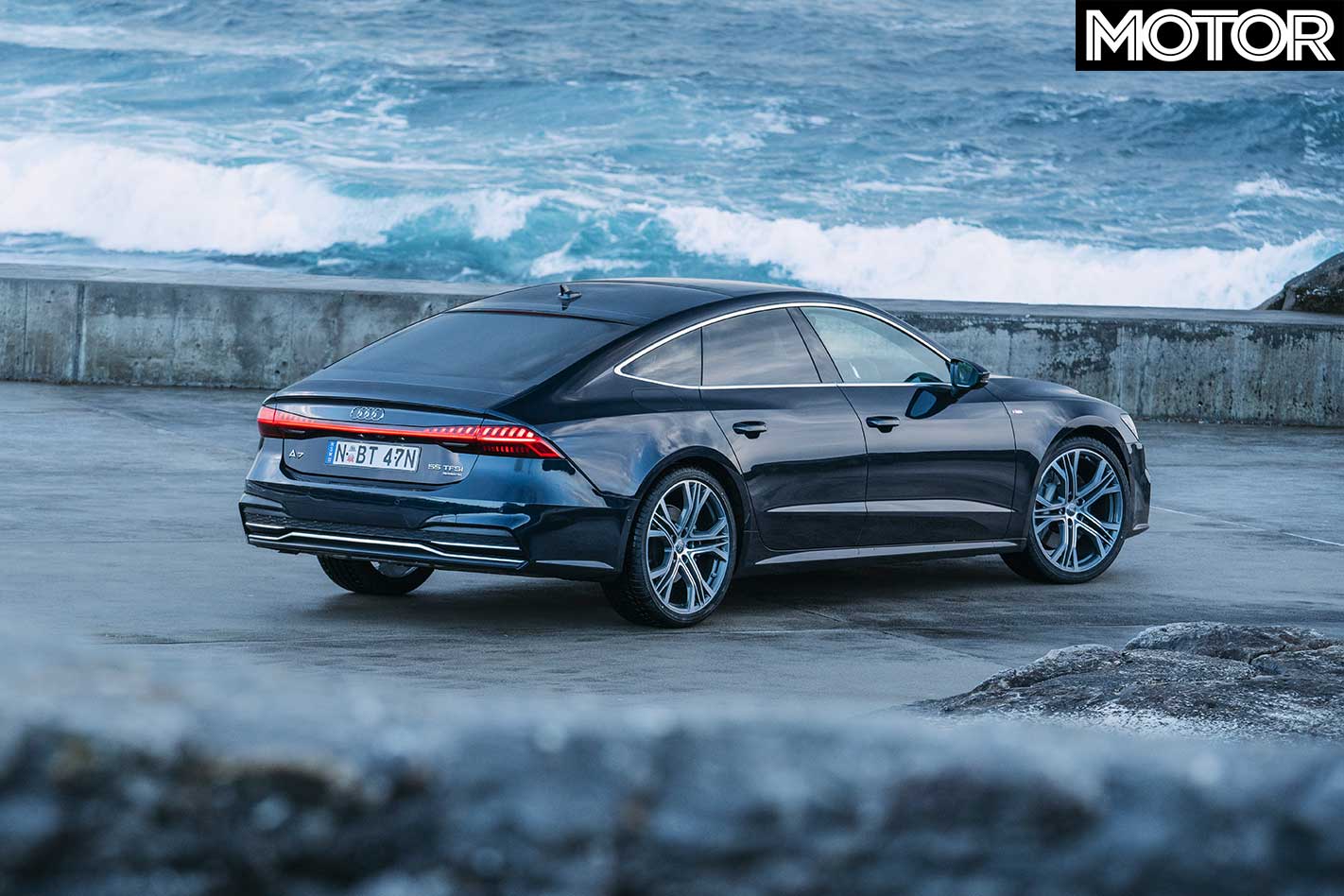
2019 AUDI A7 Sportback 55 TFSI SPECS Engine: 2995cc V6, DOHC, 24v, turbo Power: 250kW @ 5000-6400rpm Torque: 500Nm @ 1800-4800rpm Transmission: 7-speed dual clutch 0-100km/h: 5.3sec (claimed) Weight: 1815kg Price: $131,900 Rating: 4 out of 5 stars
Aspirational brands such as the three major German premium manufacturers Audi, BMW and Mercedes trade heavily on creating desirability, and part of that allure is founded by hyperbolic luxury and high-performance models, far out of the reach of most customers.
But it’s at the more affordable end of the spectrum where most budgets fit.
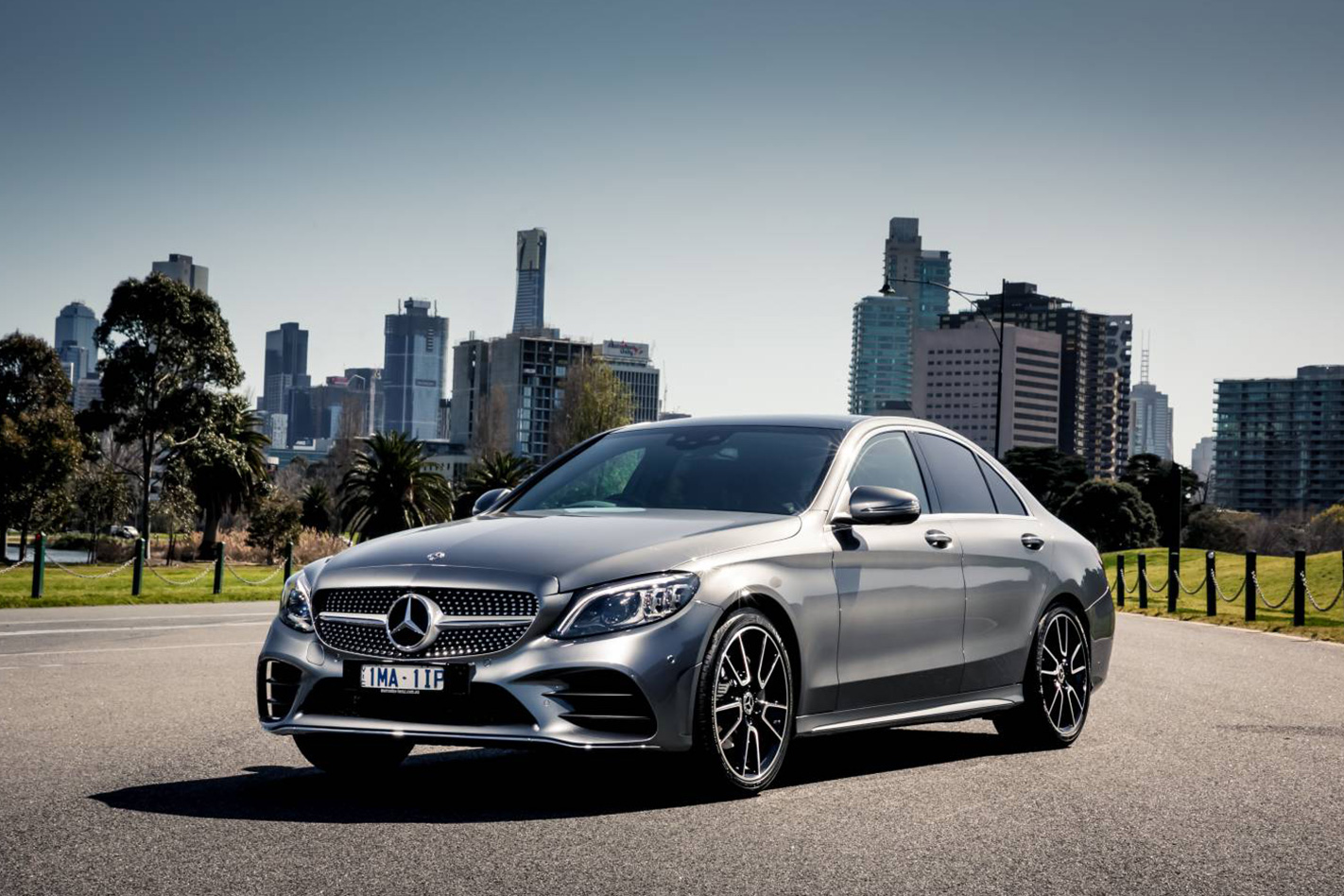
In the case of Mercedes-Benz, its most popular model in 2017 – the C-Class – is on offer at the top of the pack with a convertible roof, powered by a powerful turbocharged V8 engine, wearing an AMG badge and a hefty $181,000 price tag.
But while many Merc fans drool over the flagship C63 S Cabriolet, it’s the $63,400 C200 sedan at the entry point of the C-Class range that is more realistically going to end up on the driveway.
So, is the most affordable way into the popular C-Class club a forgettable Spartan gesture to entice you into the showroom where you’ll more likely buy a mid-range variant, or a bargain option well worth considering?
VALUE
Priced from $63,400 before on-road costs, the most affordable way into the C-Class is on the expensive side when compared to its arch rival equivalents. Audi’s A4 1.4 TFSI kicks off from $56,100, while BMW’s entry-level 318i costs $57,300.
It stands out less if the selection pool is broadened to include the $60,500 Jaguar XE 20t Prestige and if you want a feature-packed Euro sedan then you should certainly check out the fizzy Volkswagen Arteon which starts at $65,490.
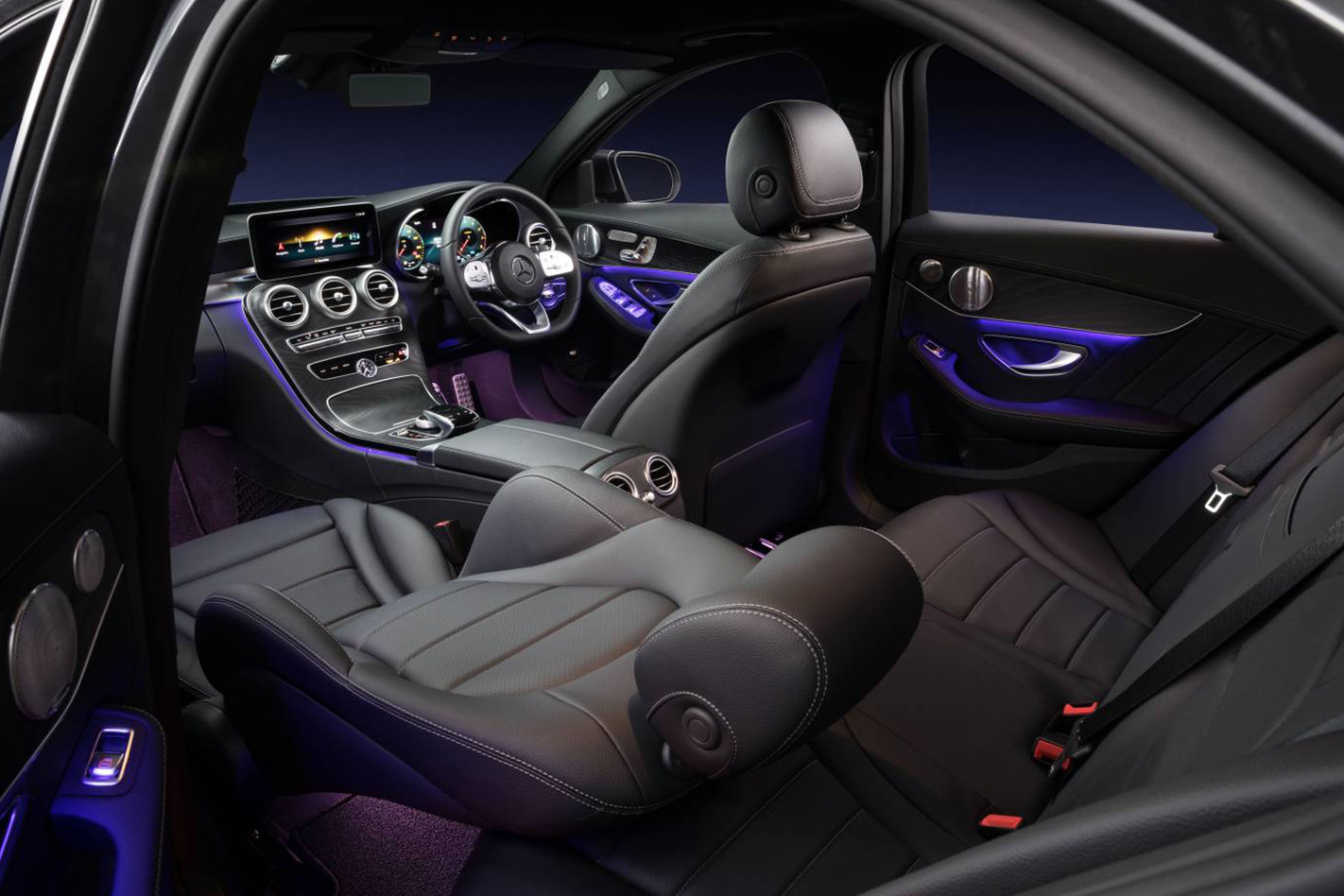
Like its closest German rivals, the C-Class underwent an engine downsize for the latest generation entry variant, which has chopped fuel consumption and therefore running costs. Mercedes claims the C200 will use on average 6.4 litres of fuel per 100km, which until recently was the sort of frugality only achieved by diesel engines in the segment.
STANDARD FEATURES
On face value, the entry C200 looks like a pretty reasonable way into the broadly respected and acclaimed C-Class, but it’s definitely worth inspecting what isn’t included as much as what you do get as part of the deal.
Notable inclusions however, are the drivetrain which features a sophisticated nine-speed automatic transmission and 1.5-litre turbo petrol engine, which might be diminutive but behaves like a bigger engine thanks to a turbo and mild-hybrid electric motor.
There’s also a fully digital instrument cluster, beautiful ambient lighting throughout the synthetic leather upholstered cabin, which is hard to (if not impossible) to tell from real cow hide. A central 10.3-inch information and entertainment system screen for accessing the navigation (and paired smartphones) is also part of the deal.
However, our car had been liberally enhanced with more than $12,000 of options. The $1769 Comand package adds more technology in the form of top-spec Burmester sound system, more sophisticated navigation, high-resolution screen, internet connectivity and more driver assistance systems such as traffic sign recognition.
A Vision package is pricey at $4846 and brings an expansive panoramic glass sunroof, 360-degree camera for easier manoeuvring, while LED headlights and a head-up display are welcome inclusions for the cash.
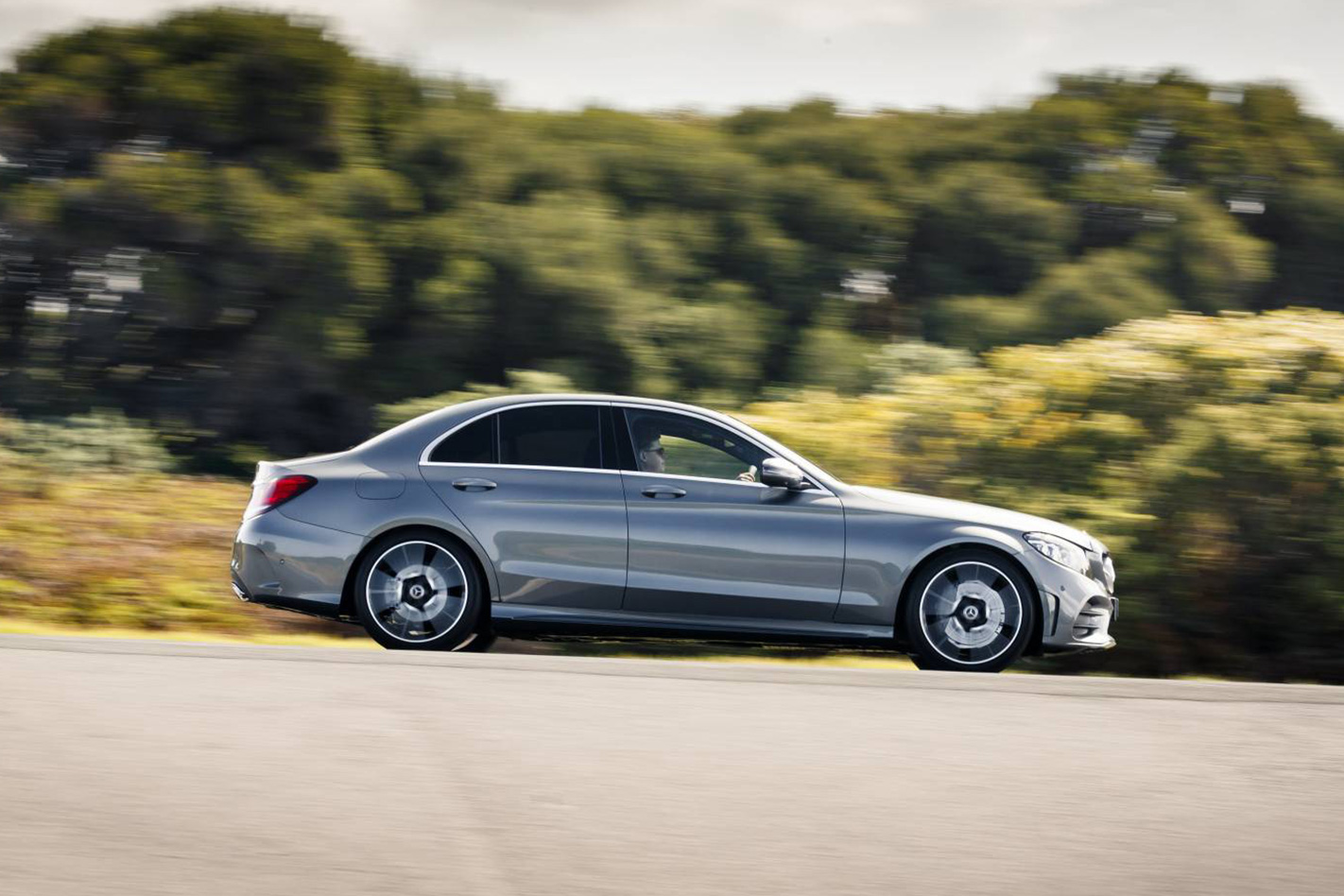
For $2846, the AMG Line pack is well worth the cash and takes the very standard looking C200 up several notches in the premium stakes. 19-inch alloy wheels, cross-drilled front brake discs and AMG body styling transform the exterior, while a sporty steering wheel, sports seats, smart black wood trims and more imitation leather for the dash completes an otherwise fairly plain cabin. The kit also adds functional AMG touches including sports suspension and tyre pressure monitoring.
In addition to the AMG suspension, our car also had Dynamic Body Control for $1077, the Seat Comfort pack adds electric front seat adjustment and heating along with memory for the seats and door mirrors ($692).
A Selenite Grey Metallic paint caps off the extras, which is pleasant, but its $1154 asking price seems steep for a fairly standard-looking tone.
Bottom line: $75,784.
SIZE
Officially, the C-Class is in the mid-sized sedan segment, which means it can happily accommodate four occupants such as a family or four adults as long as there isn’t a massive amount of luggage coming along for the ride too. Passengers in the back seats get 69cm of leg room and 94cm of headroom.
The boot can accommodate 455 litres of luggage but that can be expanded into the second row of seating with 60:40 split folding seats.
Overall dimensions measure 4.9 metres long, 1.8 metres wide and 1.4 metres tall.
SAFETY
It might lack some of the luxury features often associated with the Mercedes brand, but the C200 certainly doesn’t go light on safety features for which the German car maker is also well known.
Nine airbags are scattered about the cabin for looking after occupants if the worst happens, along with seatbelt tensioners and an active bonnet which can reduce the severity of a pedestrian collision.
For avoiding collisions and accidents though, the C200 is packed with safety gear including autonomous emergency braking with collision warning, blind spot warning, traffic sign recognition and driver fatigue monitoring technology.
COMFORT
The C200 really excels for comfort and, despite its smaller size, offers comfort levels of a vehicle several segments above it.
Admittedly the unenhanced version might not score so highly without the upgraded seats and suspension fitted to our car, but even so, the C200 is a car we always looked forward to spending time in, regardless of the journey type or duration.
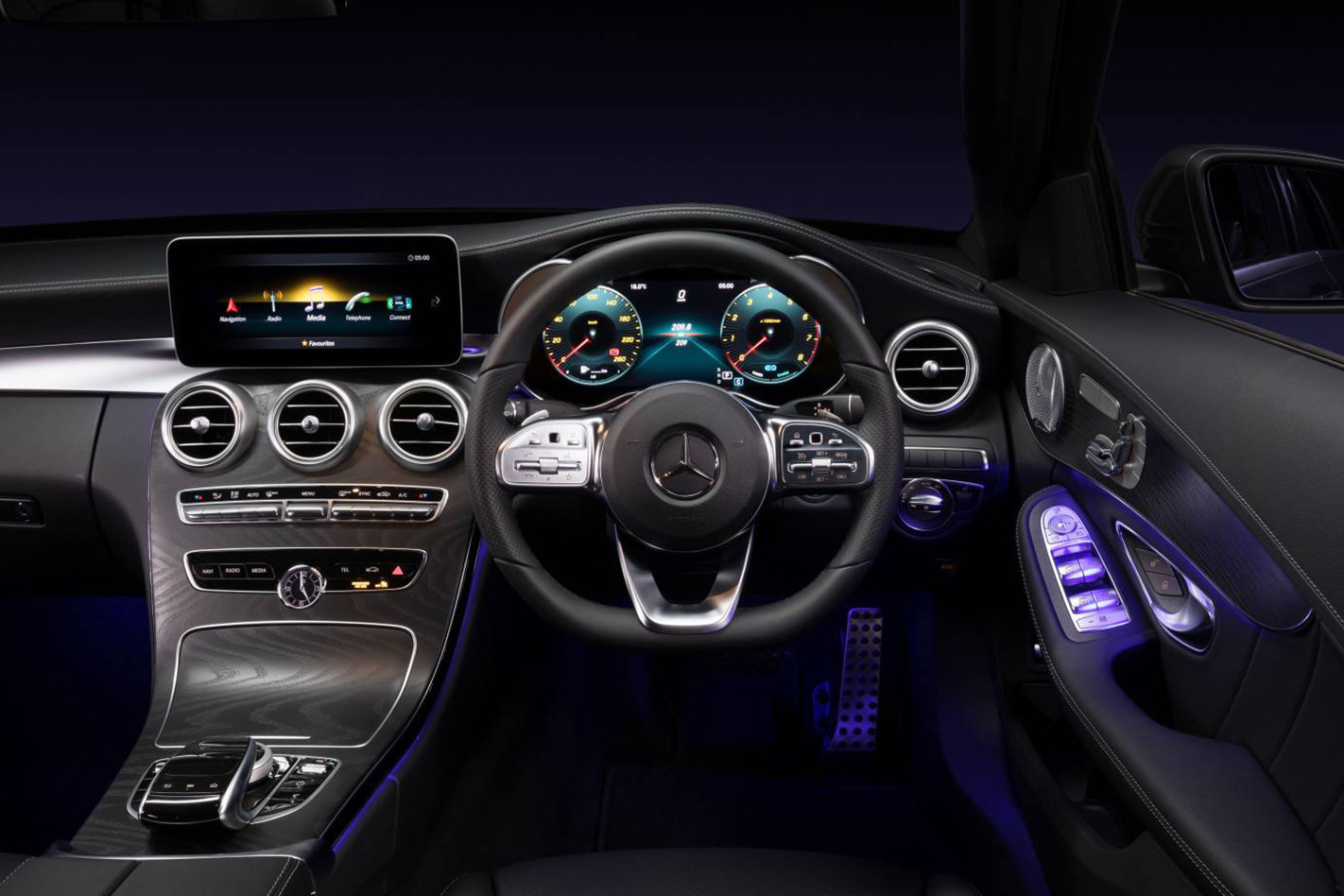
The second row will accommodate adults, but using the third middle seat is perhaps asking a bit too much for longer trips, and the lack of rear-seat equipment like USB sockets might have the kids complaining when compared with a large SUV for example.
Cabin noise and vibration levels are excellent when cruising at freeway speeds and among the best in the class with just a whisper of wind and road roar to remind you of the speed. There’s also minimal jolts sent through to the cabin from imperfections in the surface.
Considering our car had the optional bigger wheels and skinny ‘run flat’ tyres, which can harm ride quality, the C200 performs admirably for cosseting occupants.
ON THE ROAD
The C200 is safe, comfortable and looks good, but the C-Class also pertains to be a driver’s car – even in this variant far beneath the undisputed AMG performance heroes.
With the handful of enhancements from the options list, our customised C200 is as rewarding to throw through a few corners as it is to pilot on freeways.
There’s a slight fussiness to the rear suspension however, and we found the traction control intervening over even small road imperfections and with only light acceleration. Perhaps the less sporty suspension offers a little more compliance and road contact. On smoother surfaces though, the traction is excellent.
Steering feels light and fast in the hands but without lacking too much feel, and the nose turns into corners with surprising obedience. Wide Continental tyres provide lots of confidence-inspiring grip and the chassis has an instantly noticeable rear-drive character without feeling intimidating.
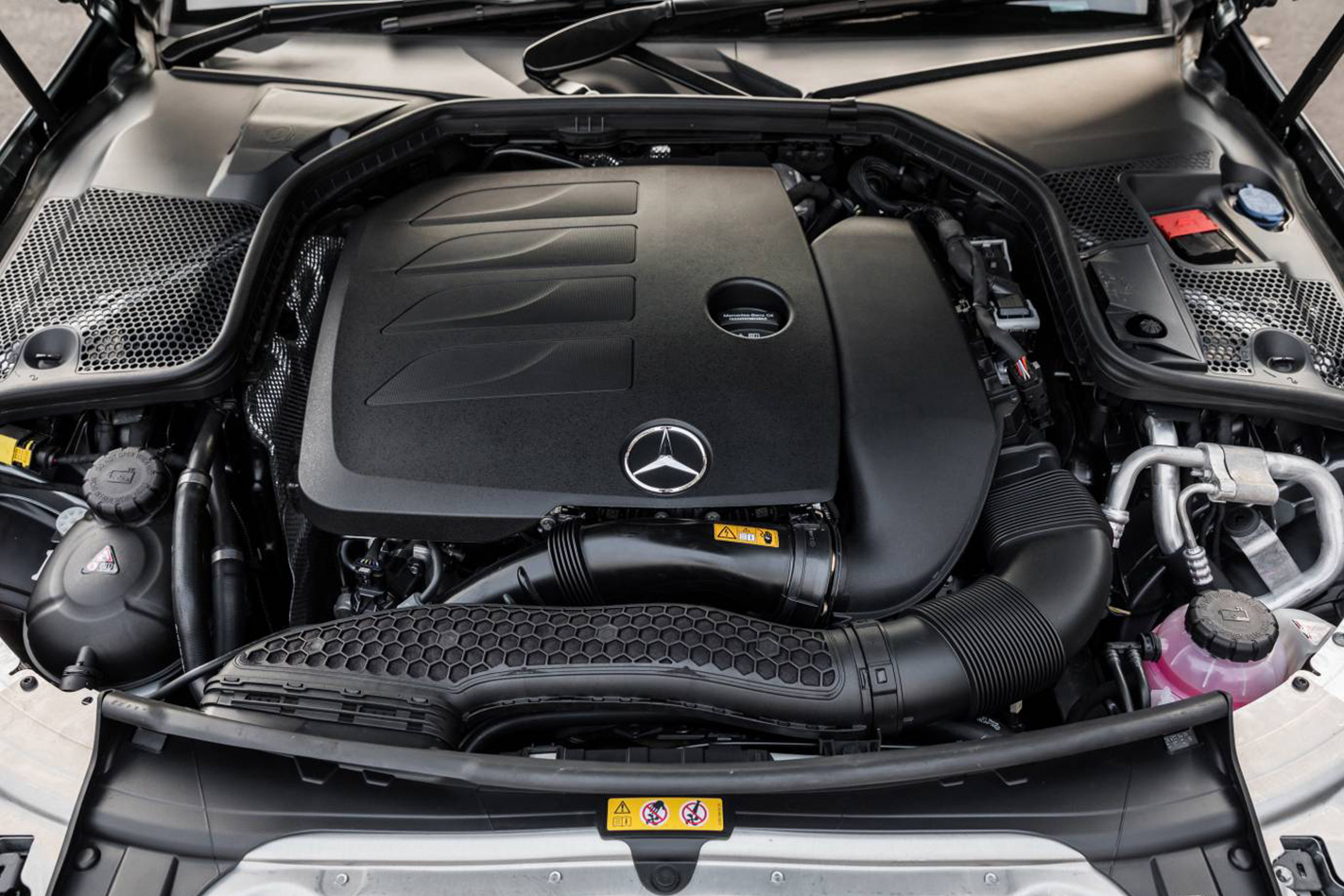
Up front, the C200 may only have 1.5 litres to play with and its 135kW may sound lacklustre on paper, but Mercedes’ proprietary EQ electrification technology lends a helping hand when you need to get somewhere fast.
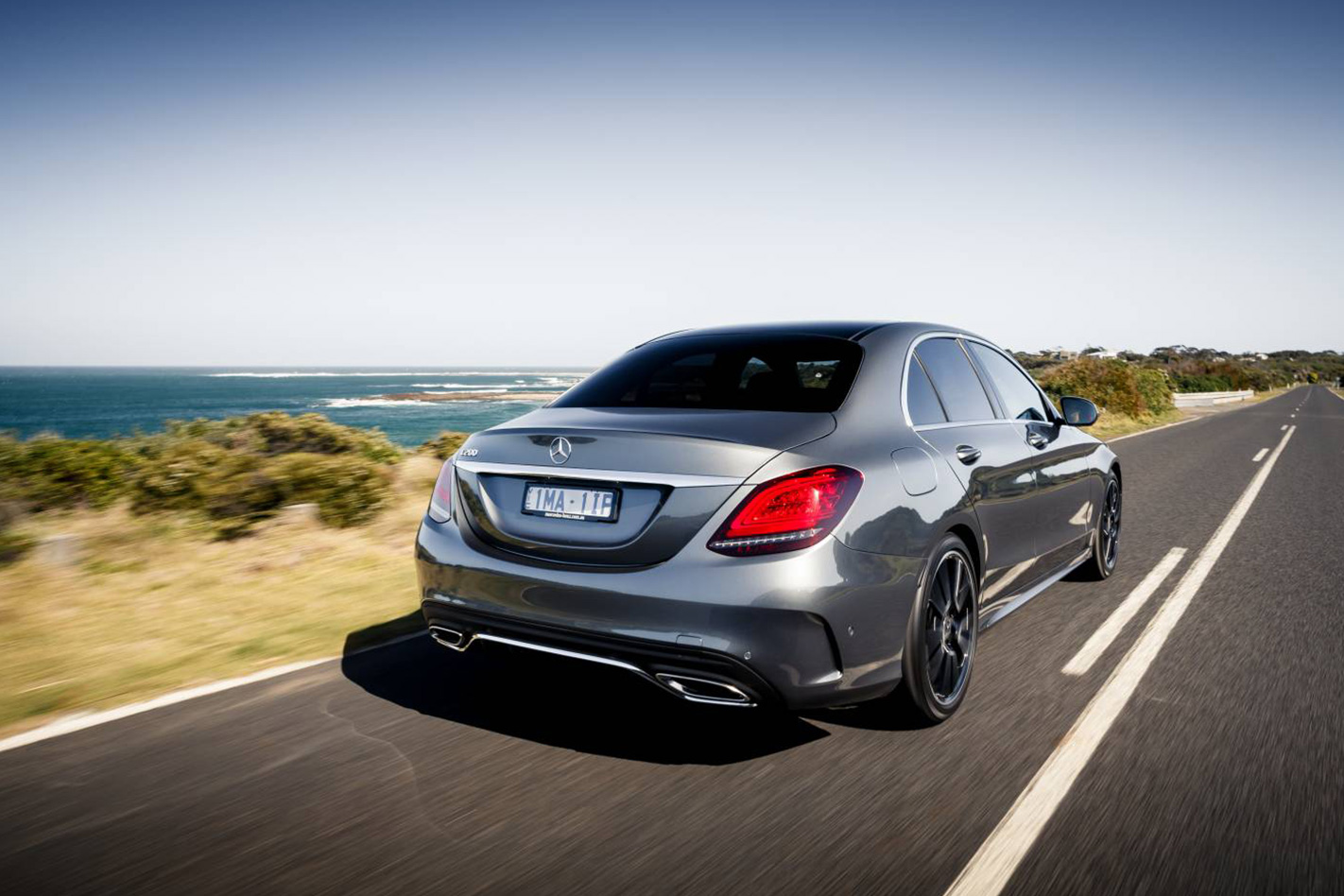
The result is an engine that feels no smaller than the 2.0-litre of the previous generation. Off the mark acceleration was a little more delayed than we were expecting given the instant nature of electric motors, but this was mostly attributable to transmission lag. Switching the driving mode into a sportier setting helps this.
Generally speaking, the nine-speed transmission is silky and fast acting. With very close gear ratios, the transmission allows the engine to be kept in the most efficient or powerful ranges depending on your driving style.
Instead of a separate starter motor, the electric drive also restarts the petrol engine and we particularly like the almost undetectable whirr as it fires up the power from a standstill in traffic.
Once up and running the turbo petrol is surprisingly capable and feels faster to 100km/h than the claimed 7.7 seconds.
All in all, the C200 doesn’t feel like a budget option to drive. It has an excellent seating position for the driver, is a hoot to chuck around when you want to have fun, but then whisks you where you really need to be effortlessly.
VERDICT
For the Mercedes loyalist on a budget, the C200 is certainly a viable option offering bags of badge cache and typical Mercedes quality, even if the out-of-the-box version lacks the luxury you might be expecting.
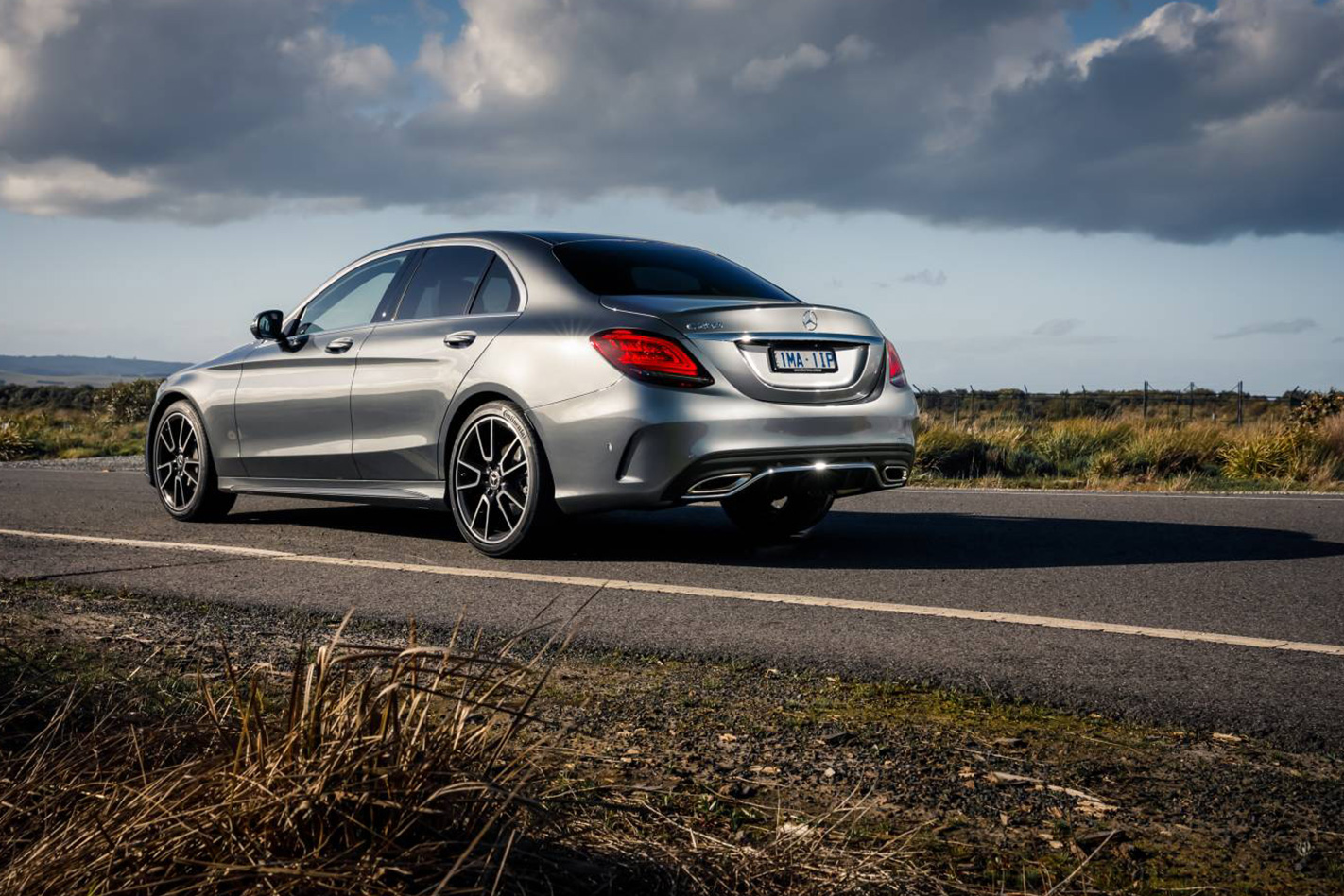
But our test car demonstrates that a bigger budget can quickly upgrade a pedestrian variant into something more satisfying and memorable. The question is, is it worth it?
If you consider the more generously equipped C300 starts at $71,400 – less than the as-tested price of our car – the bigger engine, more standard features and improved performance might make a lot more sense than going to town in the options catalogue.
The C200, however, is not simply a folly designed to lure customers into the showroom where they will decide a higher-spec car is more suitable.
Its diminutive but surprising engine is very efficient, but not at the cost of all usable performance, and it still feels like a Mercedes, from the styling through to the bonnet badge.
While our car had been treated to a bumper upgrade from the extras catalogue adding another 19 percent of the starting price, with a little spending restraint, the C200 can be desirable without busting the budget.
For our cash, the AMG Line kit is an absolute must, avoid the expensive paints and stick with the no-cost colours and you can put a handsome C-Class on your drive that you’ll always look forward to hopping in as much as you do staring at it.
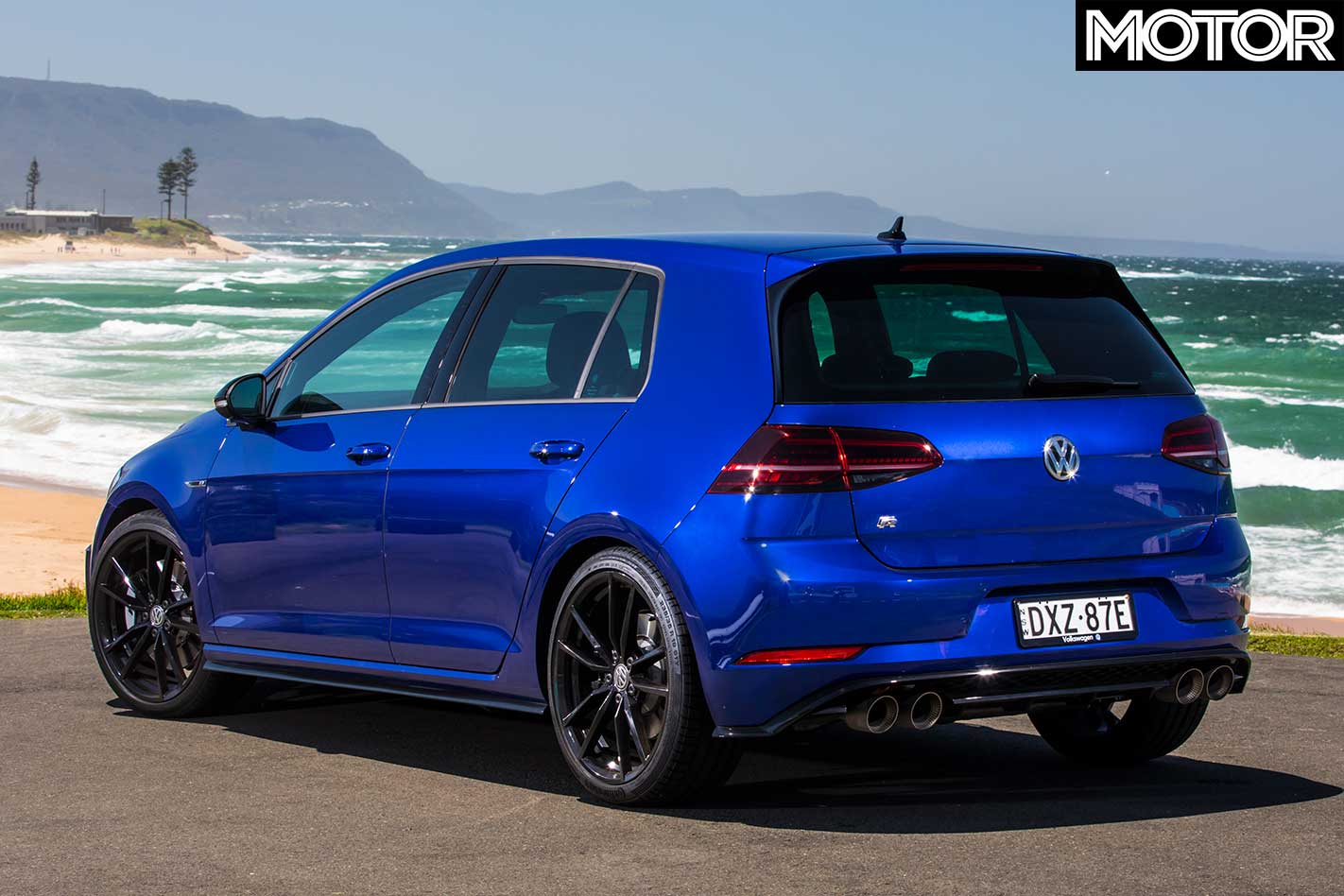
Volkswagen is getting more serious about its R Performance sub-brand, and the 2019 VW Golf R Special Edition is Australia’s first taste.
This hot hatch with ‘the lot’ is, essentially the same a standard Golf R with 213kW and 380Nm, Volkswagen’s 4Motion all-wheel drive, and an interior to suit the tastes of those with the cash to pick one up.
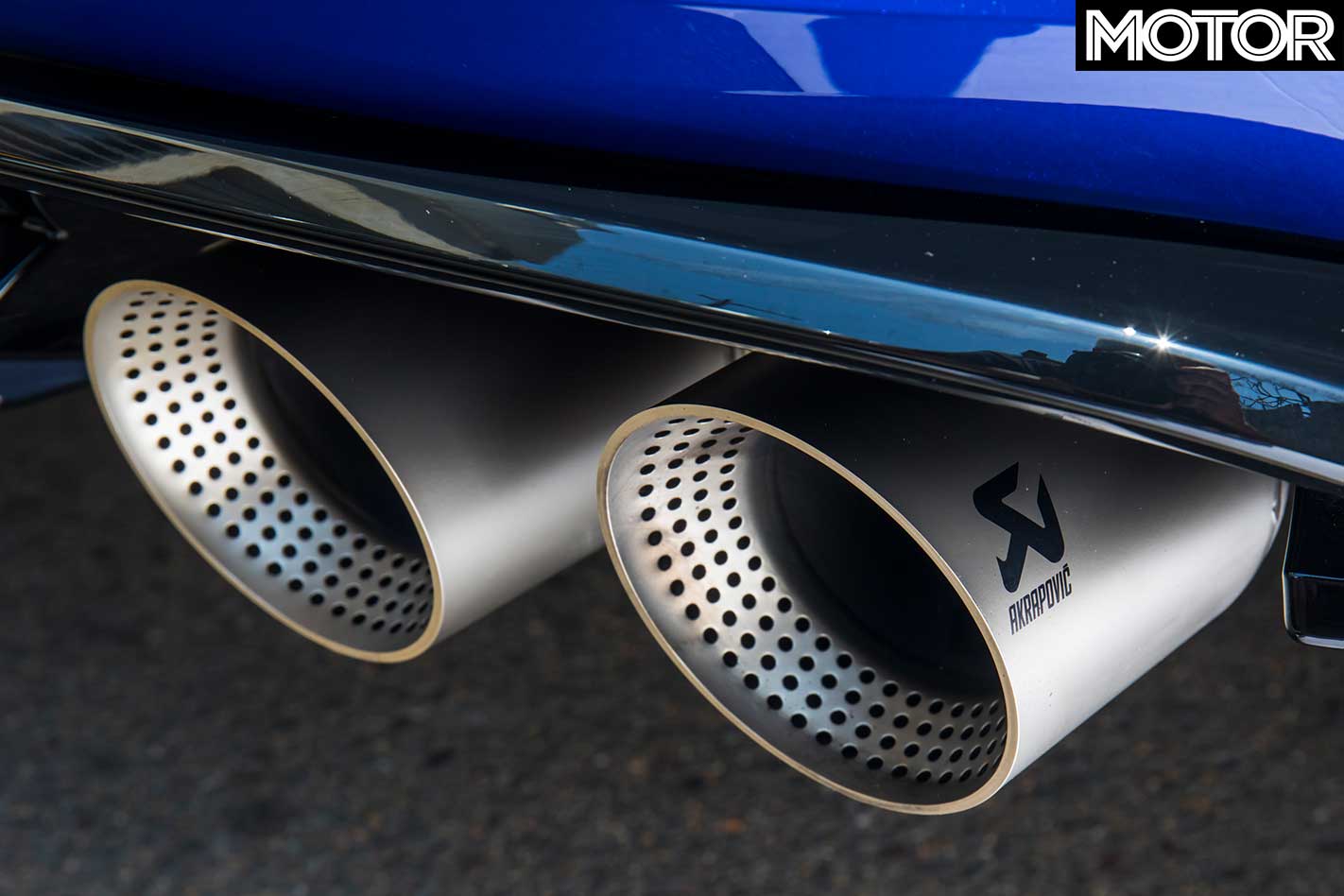
A handmade Akropovic titanium exhaust, which saves 7kg compared to the R’s standard pipes, provides a more raucous soundtrack than is expected of VW’s otherwise ‘sleeper-like’ hot hatch.
It also scores the R Performance brake system with cross-drilled front discs and better pads, as well as Volkswagen’s fetching Pretoria 19-inch alloys. The brakes are around 2kg lighter than standard in total, while the Pretorias only weigh 9.6 each. That saves 1kg per corner.
The other major addition for the Special Edition is the Dynaudio Excite 400W audio system, which is a $1000 option for the standard R. The Special Edition costs an extra $5,500, coming to $61,990 all up.
At a very rainy Luddenham Raceway in Western Sydney, we had a chance to sample the Special Edition. While wet weather is generally not the preferred condition for testing a car, it gave the 4Motion system a chance to shine on the tight and winding track.
Continental Sport Contact 5P tyres and all-wheel drive do their best to improve traction rather successfully, though one particular off-camber turn at Luddenham provides ample opportunity to rotate the R with some gentle trail braking.
If driven smoothly and with considered inputs, traction control is altogether avoidable – even in the pouring.
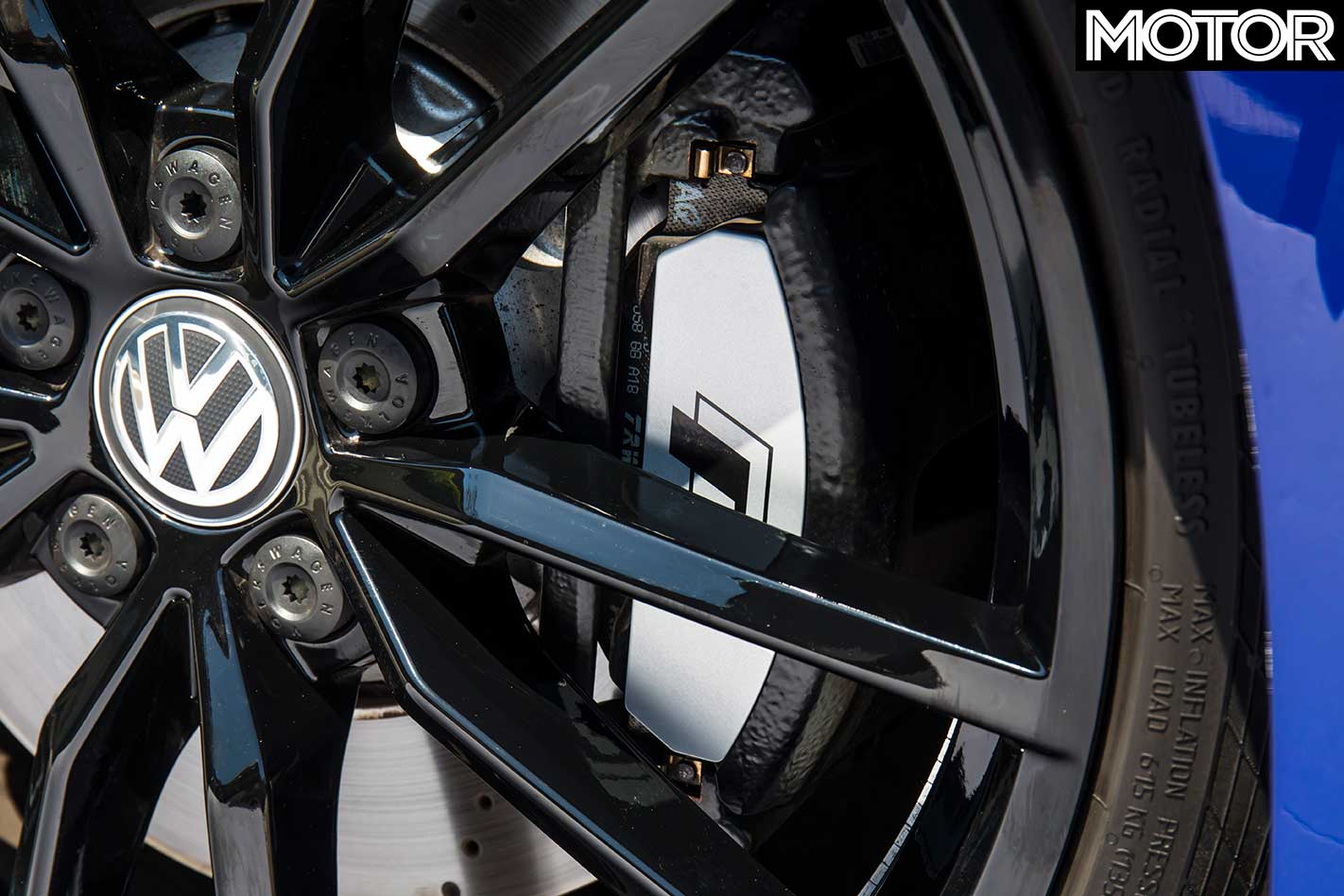
On that note, the R Performance brakes didn’t appear to provide very noticeably stronger stopping power or staying ability than the standard R brakes (now on the MY19 GTI, driven the same day), though this could be down to everything being fresh and new on the day, and the relatively short amount of time they were used.
The biggest selling point, we expect, will be the much more lively exhaust. High revs and gear changes now have a different character to the standard R, sounding more aggressive and louder than before. The Akrapovic’s trademark crackles shine through on the overrun.
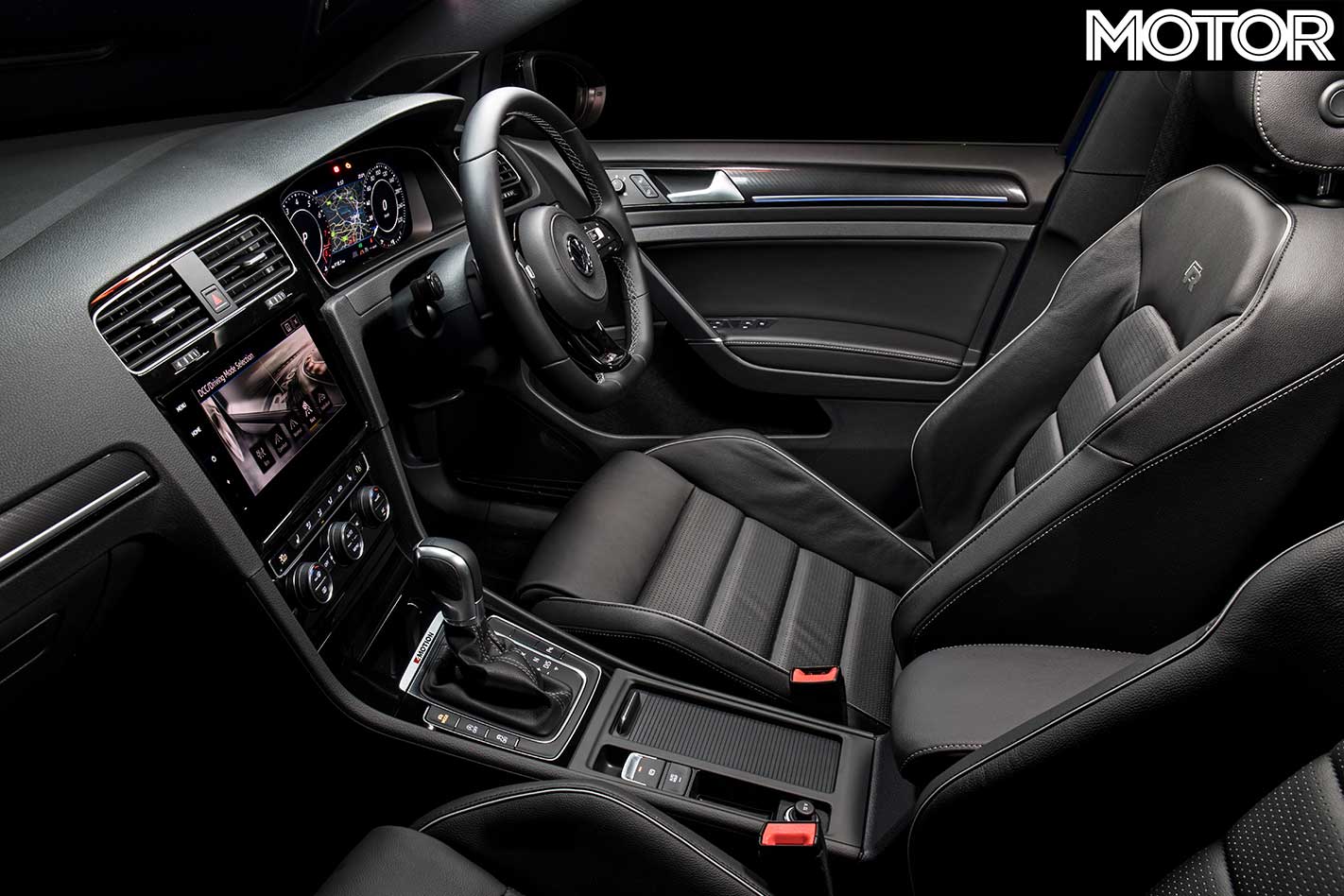
Without fundamentally changing what the Golf R is, the Special Edition injects a little bit more fun into a car that is otherwise quite grown-up – and rather luxurious with its exquisite interior, for a hatch.
Unfortunately, only 400 of these versions are to be built, and with Australia being one of the world’s strongest market for R cars, we expect they won’t last a long time.
2019 VOLKSWAGEN GOLF R SPECIAL EDITION SPECS Engine: 1984cc inline-4, DOHC, 16v, turbo Power: 213kW @ 5400–6500rpm Torque: 380Nm @ 1850-5300rpm 0-100km/h: 4.8sec (claimed) Weight: 1450kg Price: $61,990
Volkswagen’s most iconic hot hatch has undergone few major changes in its 43 years, the most significant being the introduction of forced induction in its fifth generation.
Now, the 2019 Golf GTI has taken another step in its evolution, and one that might upset the purists among us.
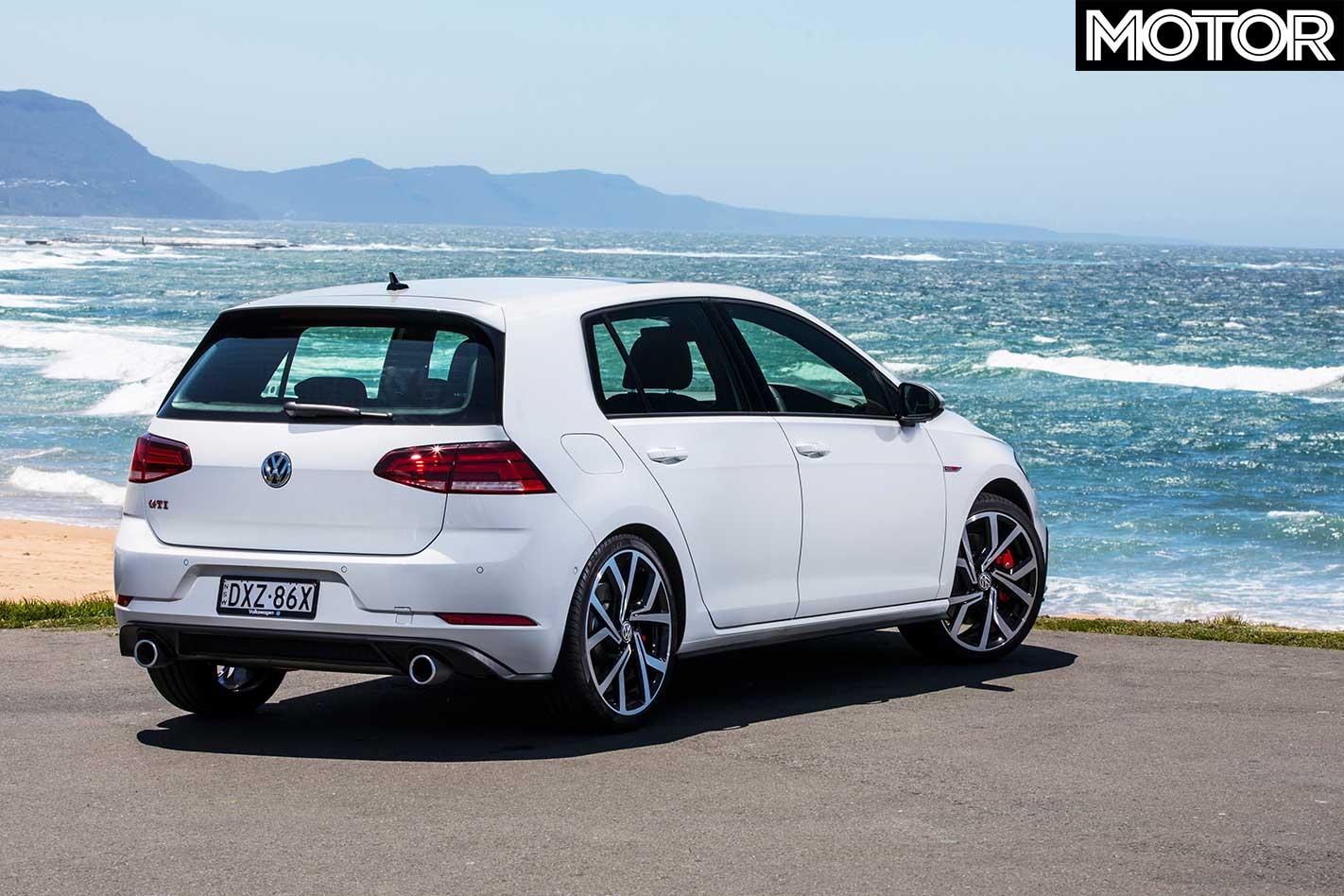
In the fight to be the ‘Best Hot Hatch On Sale’, the GTI has upped its competitiveness with the adoption of the kilowattage (180, with 370 Newtons) and limited-slip differential from the Performance Edition introduced in 2017.
It gains more goodies, such as the larger brakes from the Golf R, the Audi-style Active Info dashboard, and driver assist pack which includes ‘city emergency braking’ and pedestrian monitoring.
While this is all good news, you can’t get a manual one anymore. Volkswagen says sales mean the manual wasn’t performing well anyway, but purists might be turned off by the now DSG-only model.
Put to the test at the freshly-built Luddenham raceway on a very cold, wet day the 2019 GTI proved it’s able to out-corner its ancestors.
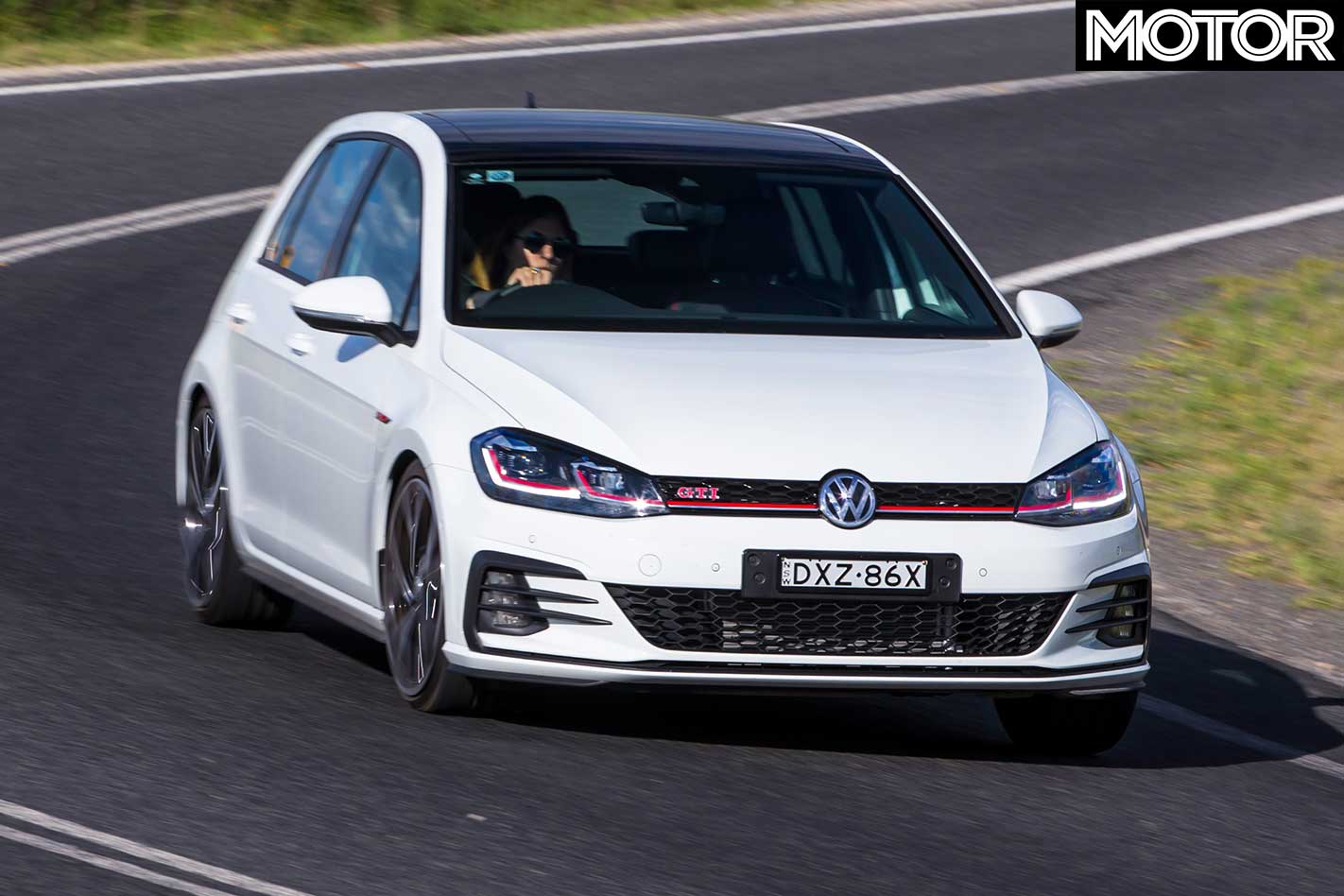
Though traction control was rather eager when puddles or camber changes were involved, nursing the throttle proved the best way to work alongside the LSD to keep power (and full torque from 1600rpm) pulling the 1377kg mass along.
Tail movements brought on by trail braking were mostly curbed by the aforementioned electronics, though conditions on the day (and Luddenham’s tight turns) were conducive to a little bit of playfulness.
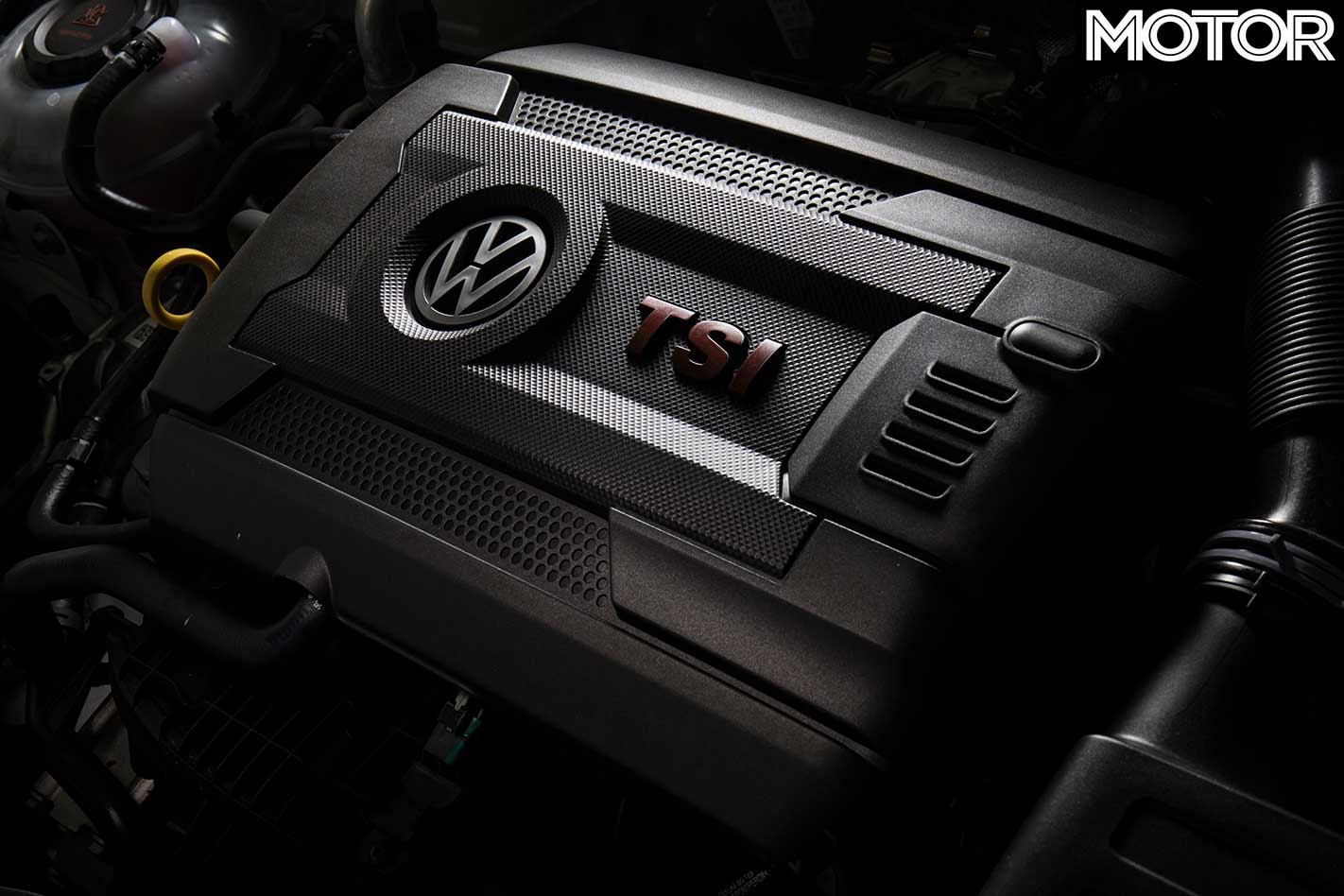
If you’ve driven the 169TSI-powered GTI, you’ll appreciate the extra 11kW/20Nm, though the LSD might – or should – be the real draw of the new model year. The 7-speed is well-matched to the engine, and its sport mode is good enough to be left to its own.
The brakes, now larger, also seem to have more stamina. After a long session with plenty of heavy braking we didn’t notice much fade, though in hotter conditions (it was roughly 20 Celsius) results may vary.
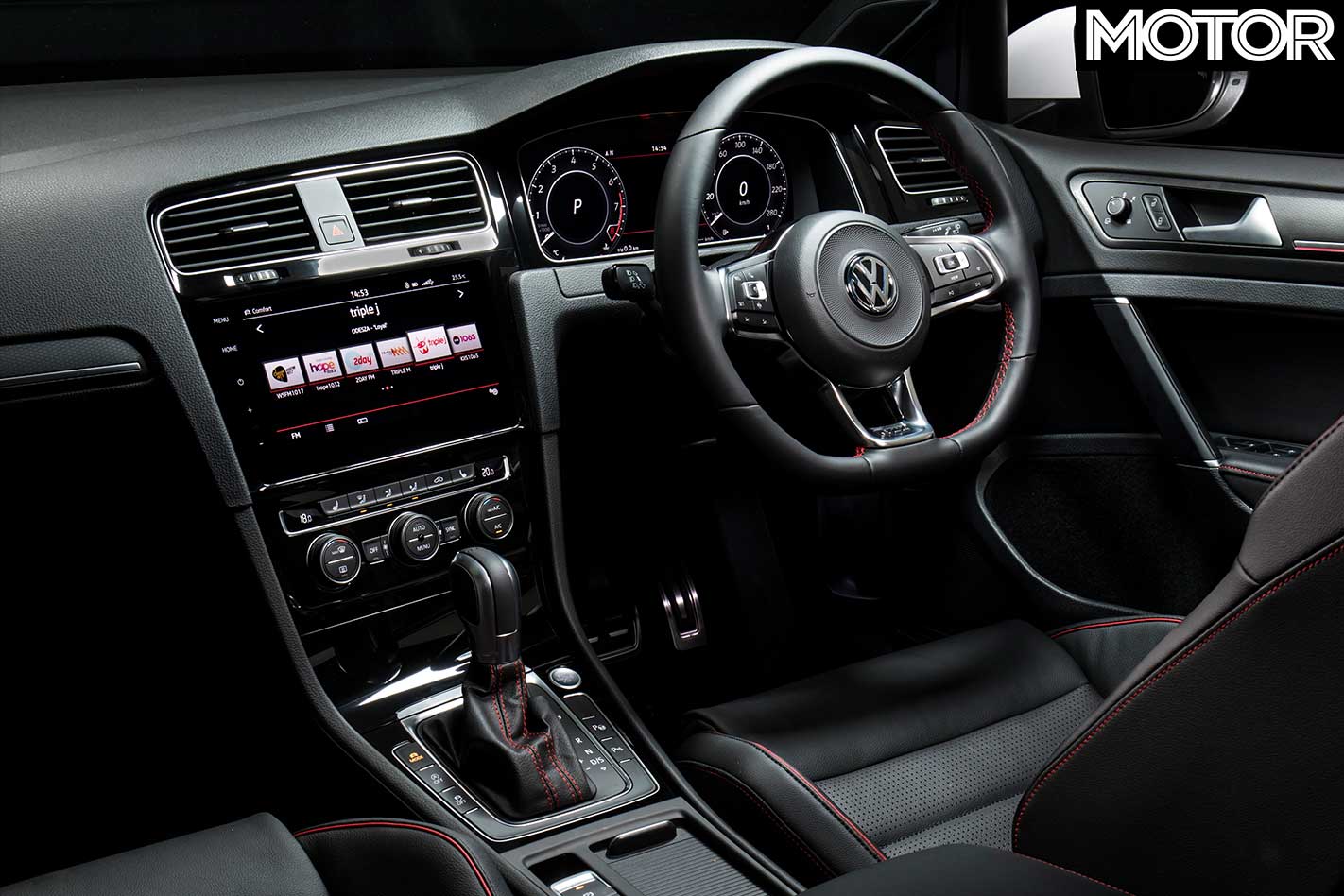
In terms of ownership prospects however, there’s little to be disappointed with. The ride is sublime, even on the most Australian of roads, and the interior is years ahead of rivals.
A leather-trimmed luxury pack is available for $3900, though snubbing the Clark tartan for heat-retaining leather in Australia makes little sense to us. A sunroof, as well as heated, electrically adjustable seats and memory exterior mirrors also come with this pack.
The 2019 GTI joins a competitive pack of hot hatches, some of which are faster, some sharper, some more wild, and others just plain better as performance cars. But the GTI is still the solid all-rounder.
2019 VOLKSWAGEN GOLF GTI SPECS Engine: 1984cc inline-4cyl, DOHC, 16v, turbo Power: 180kw@5000rpm Torque: 370Nm@1600rpm 0-100km/h: 6.2sec (claimed) Weight: 1377kg Price: $45,490
Toyota’s progress towards offering the option of an all-hybrid model line-up gains momentum with the launch of hybrid RAV4s in April next year. The new, fifth-generation, RAV4 is the first Toyota SUV hybrid available in Australia and effectively replaces the current diesel version.
Sean Hanley, vice president National Sales and Marketing Operations for Toyota Australia, expects the RAV4 hybrid to take at least, “20 percent of all RAV4 sales” but admits, “That’s our target. It’s pessimistic and we’ll do a lot better”.
Currently, hybrid Camrys account just under half of all Camry deliveries (48 percent), while the new Corolla hybrid captured a third of sales in its first two months (August and September) of deliveries, jumping to a staggering 46 percent of Corolla orders in October.
As if to emphasis Toyota’s increasingly hybrid credentials, Hanley’s computer proudly wears a sticker proclaiming the company’s internal mantra, “Toyota Hybrid: Lead the Drive.”
“Hybrid (sales) are taking off because it is normal,” says Hanley. “You just get in and drive, there are no charging worries. It has got to be priced right and affordable so that it does not compromise in any sense. ”
However, he admits Toyota is, “acutely aware that one single technology is not going to be enough. We will not only have hybrid, but we will pioneer hydrogen technology and, at some point, plug-in (electric) cars by 2030 and beyond. Plug-in is one option of many.”
With the popularity of SUVs on an inexorable rise (YTD 42.9 percent of the total market, up from 39.1 percent in 2017), Toyota plans to offer the hybrid in both front and all-wheel drive variants. Utilising the Camry’s 2.5-litre 155kW/221Nm hybrid drive train with a CVT automatic transmission, the hybrid RAV4 is the most powerful model in the new line-up. Toyota claims the base 2.0-litre engine delivers 127kW and the 2.5 petrol 152kW. Petrol versions will deliver up to 7.8l per 100km combined consumption, while the hybrid achieves 6.0l/100km.
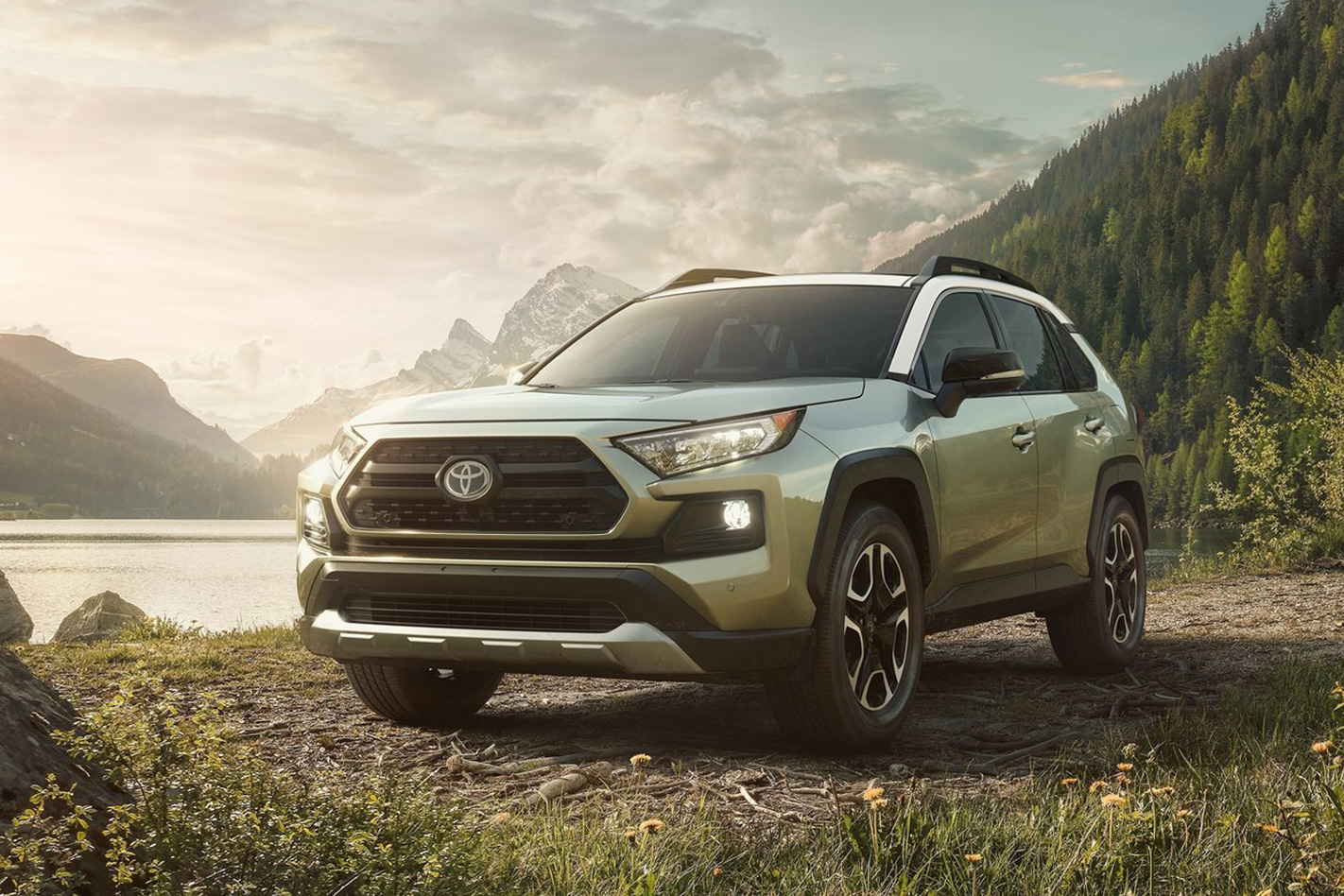
The new RAV4, styled and engineered in Japan, despite adopting the aggressive front end styling of Toyota’s American 4Runner and Tacoma pick-up trucks, will offer three model levels and three drive-trains (four if the manual version of the 2.0-litre is included) in Australia.
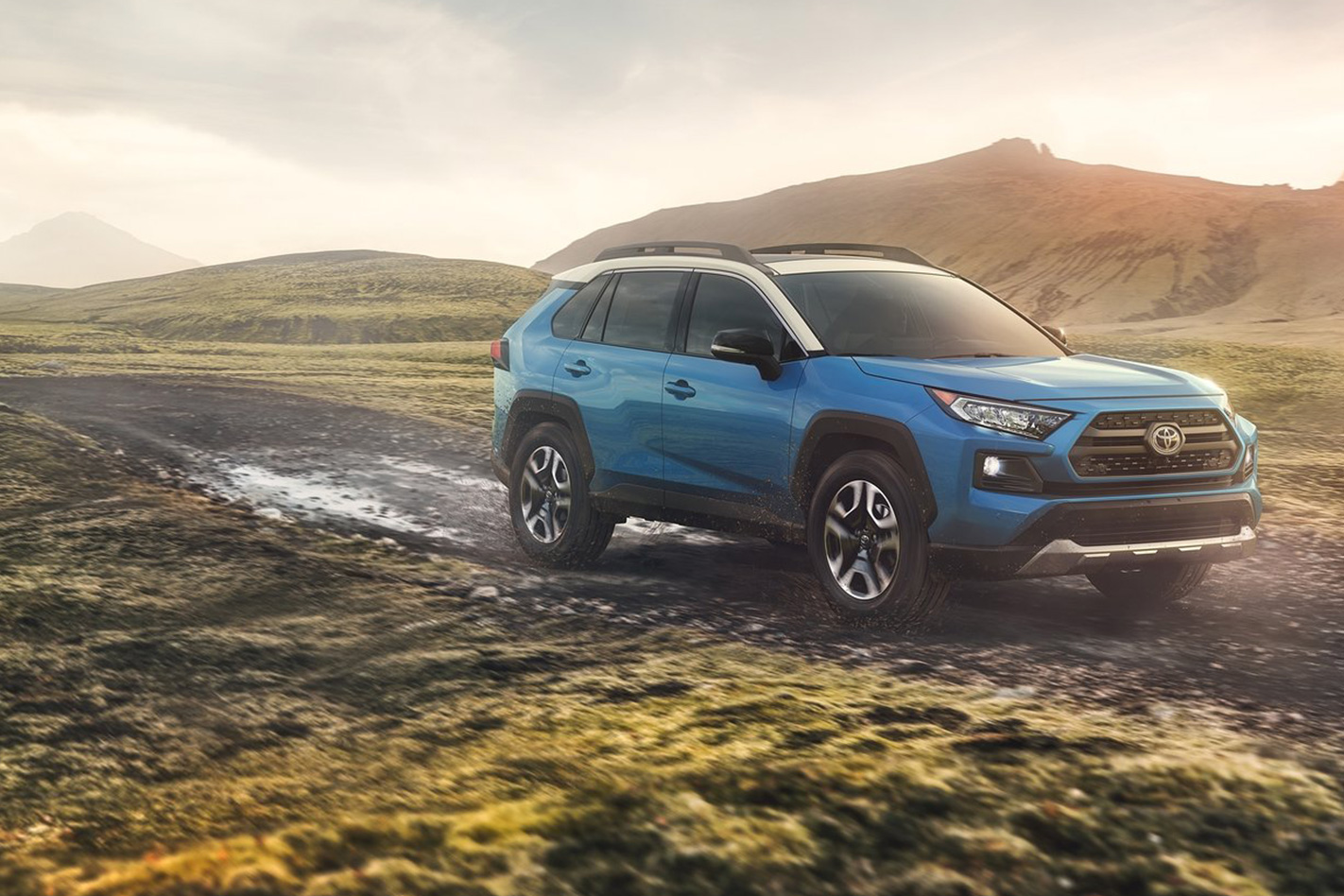
“Instead of the soft, curvy shapes of previous RAV4s, the new model is a more dedicated SUV appearance that takes its inspiration from trucks” claims Hanley. Unlike the American cars produced in Canada, Australian RAVs, manufactured in Japan, won’t have Apple Car Play from launch. Toyota is looking at alternative technologies, but has yet to commit though Hanley admits the company is also testing Android systems and Amazon Alexa voice activation, all of which are offering on RAV4s sold in America.
At this stage Hanley won’t talk price, but given the Hybrid drive train adds just $1500 to the cost of a Corolla and $2300 to a Camry, the RAV Hybrid is expected to add around $2000 to the price of comparative petrol models.
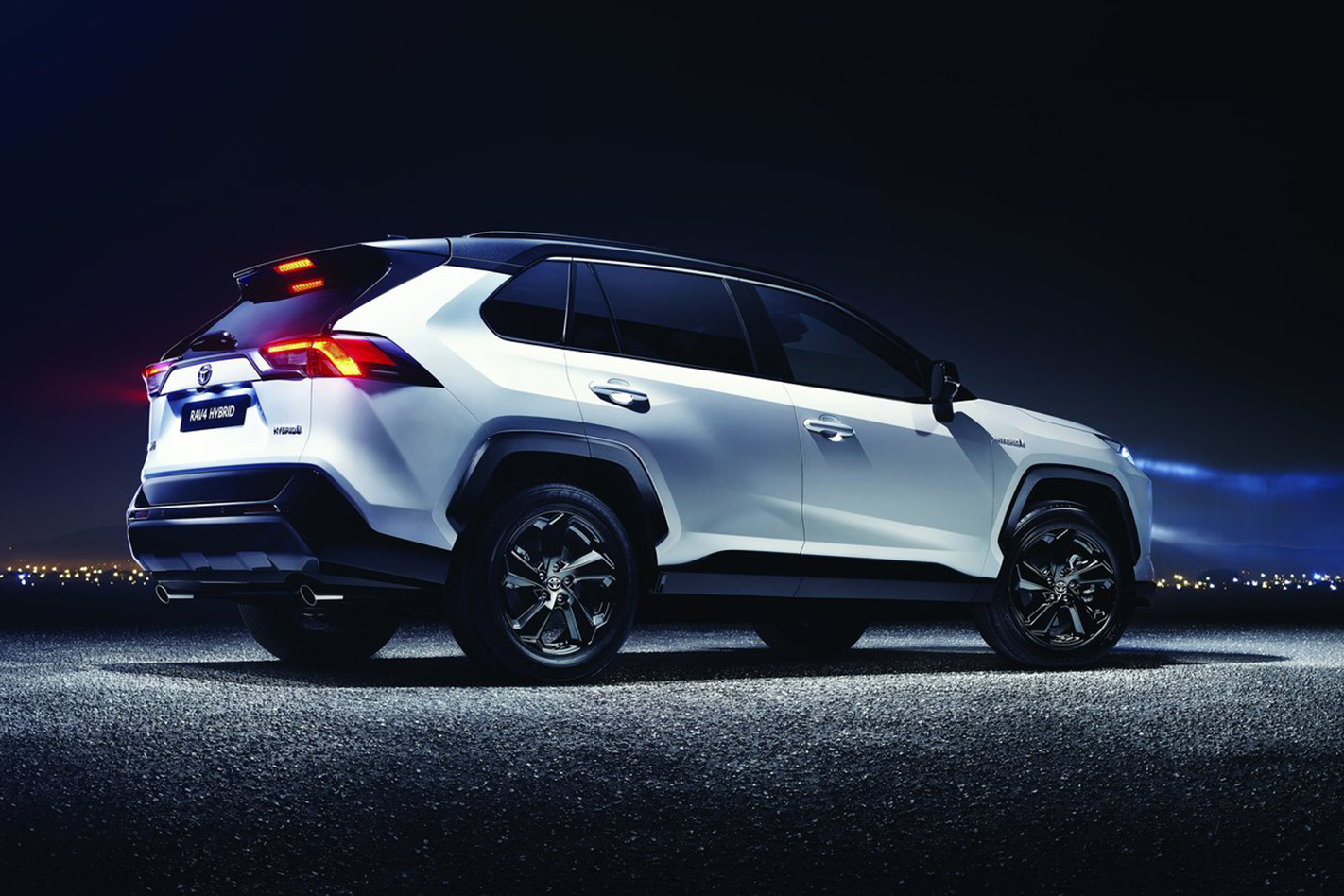
Toyota Australia is committed to offering 10 hybrid models by the middle of 2020 – the new RAV4 takes it to six – while globally Toyota claims that by 2025 every model with offer hybrid or electric versions. Of the current line-up, Toyota has the option of adding hybrid versions of the CH-R, Yaris and Kluger, which are all available in hybrid forms elsewhere.
Famously, Toyota was beaten by Honda in being first to the local market with a hybrid in 2001. The original Honda’s Insight went on sale just before the Toyota Prius hit local showrooms in October 2001, but sales of the expensive two-seater coupe were slow and it was withdrawn in 2004.
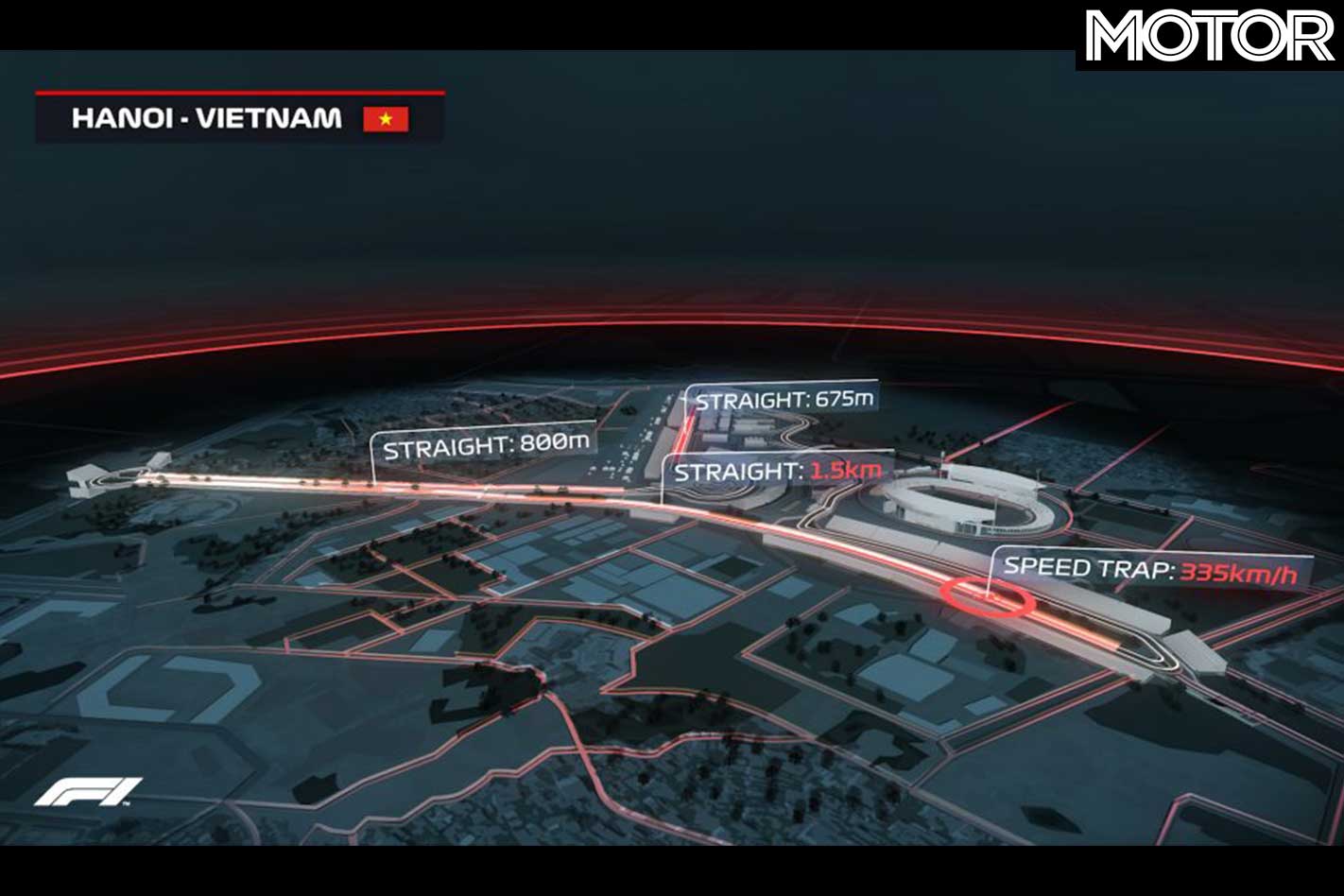
Formula 1 has revealed the track layout for the newly announced Vietnam GP, to be held in 2020.
The 5.565km track will be a street circuit in the city of Hanoi, with 22 turns and numerous straights.
To illustrate the layout of the track, Formula 1 has mocked up the intro to the race in a similar fashion it expects will occur in April 2020.
The longest straight, measuring around 1.5km, is expected to have a trap speed of 335km/h.
Several sections of the track also draw inspiration from other world tracks, with Monaco’s first couple of turns being emulated between turns 12-15, and the start of the Hanoi track being based on the opening turns of the Nürburgring.
Chairman and chief executive for Formula 1 Chase Carey says, “we are delighted to announce that Hanoi will host a Formula 1 Grand Prix.
“Since [Liberty Media] became involved in this sport in 2017, we have talked about developing new destination cities to broaden the appeal of Formula 1 and the Vietnamese Grand Prix is a realisation of that ambition.
“This is the perfect formula for Grand Prix racing and I look forward to this becoming a real highlight of the F1 calendar.
“Our Motorsport team, working in collaboration with the City of Hanoi and promoter Vingroup, has worked to enable a circuit that will not only test the drivers but also ensure that our fans enjoy the racing spectacle.
“We are really looking forward to seeing Formula 1 cars speeding around the streets of this fantastic city from 2020.”
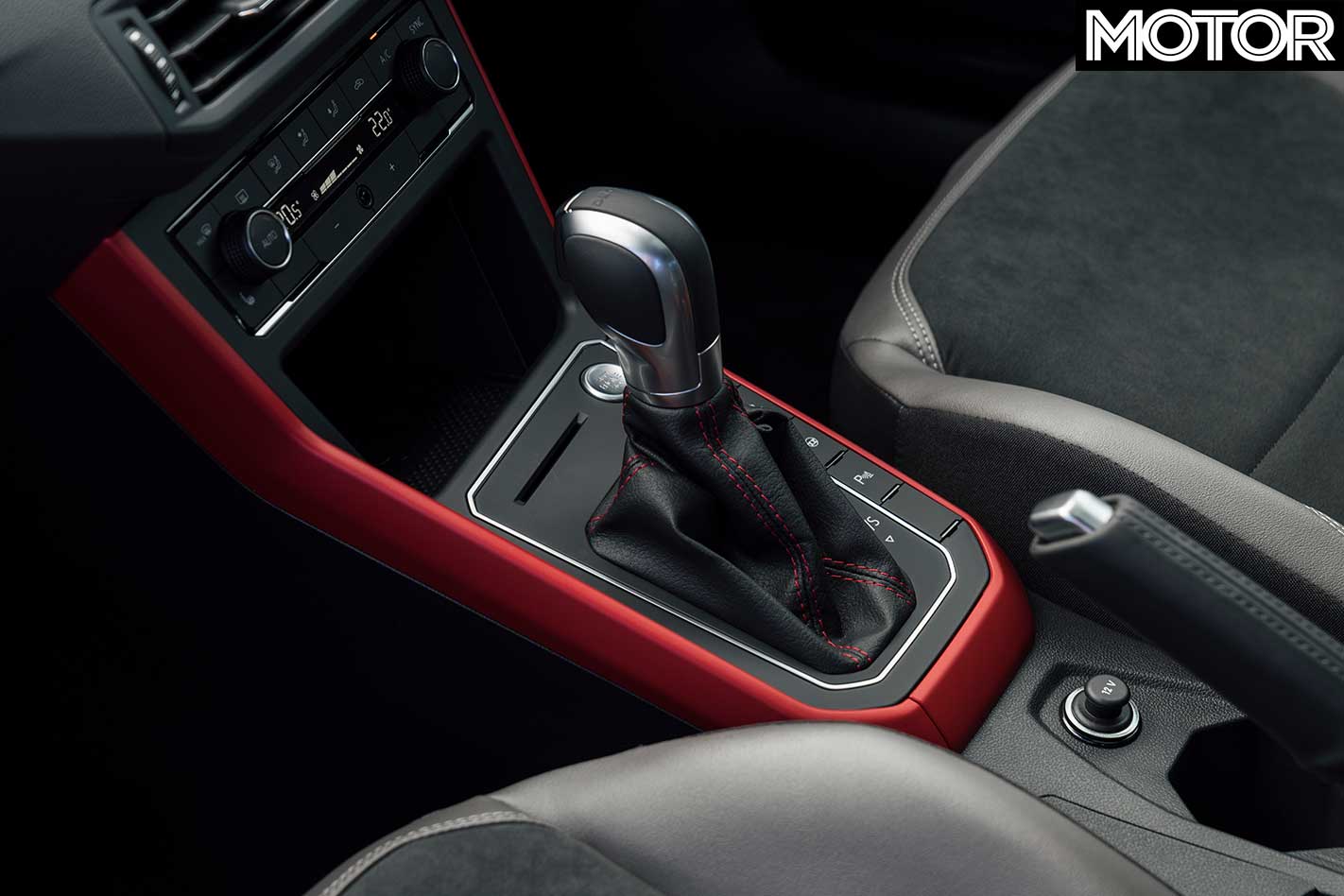
After Volkswagen announced it was cutting the manual gearbox from its standard range, speculators expected there would be an occasional limited edition manual version of the Golf GTI or R to keep purists on the hook.
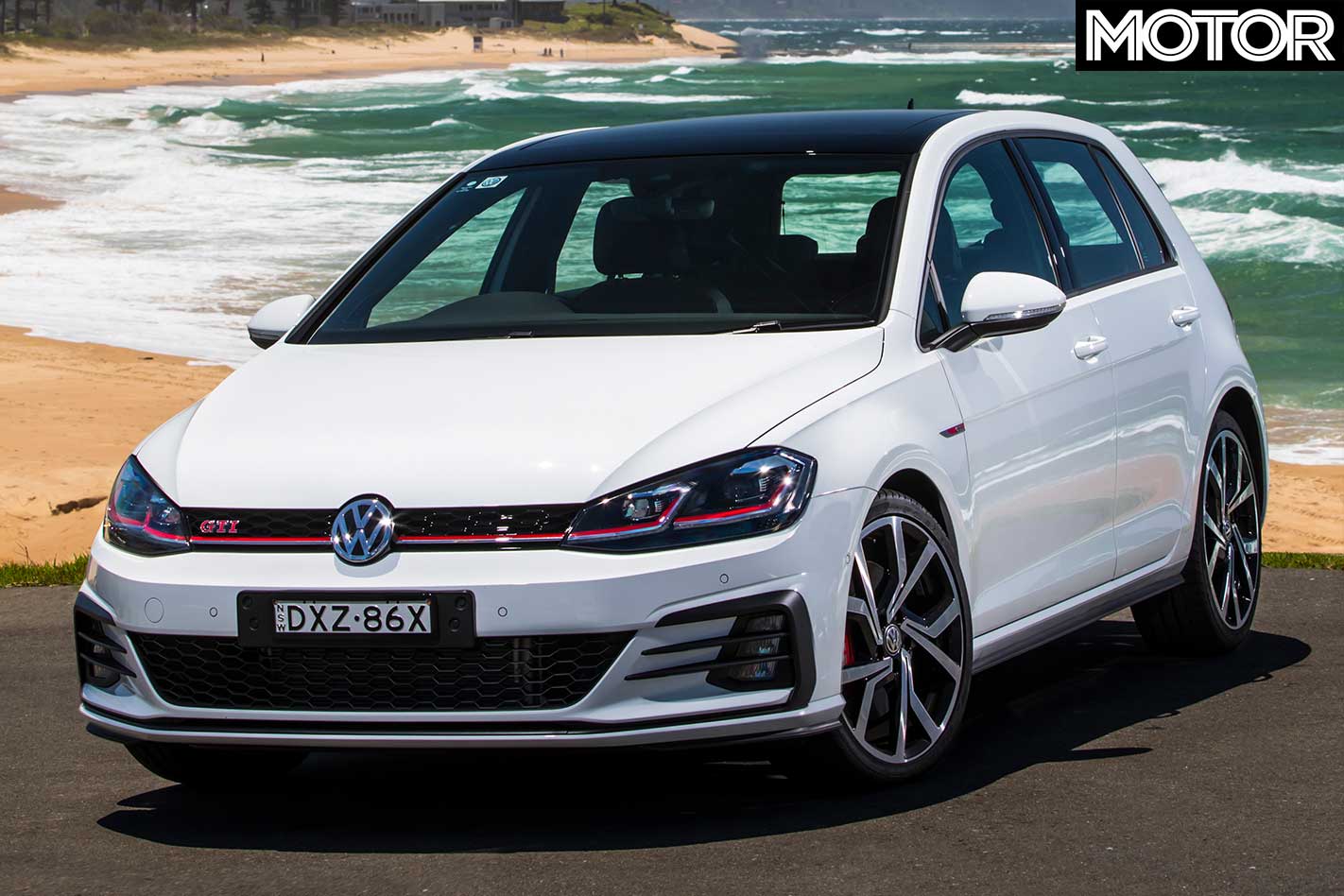
The 2019 Volkswagen Golf GTI now incorporates the specifications of the Performance Edition GTI introduced in 2017, with 180KW, a limited-slip differential, and 7-speed wet-clutch DSG as standard.
There’s no option for a manual gearbox now, and it seems that’s the way it’s going to be from here on.
VW Australia product marketing manager Jeff Shafer tell MOTOR that despite enthusiasts lamenting the demise of the third pedal, sales don’t reflect that.
“With the manual, we don’t expect it to return in the Golf range or performance range, certainly in terms of the sales being overwhelmingly DSG at the moment.
“I think it’s unlikely we’ll see it return even if it’s only for a small run.”
While Shafer concedes it’s a shame the Golf won’t likely don the manual gearbox in the future, he says the production of a small run of special edition GTIs or Rs with manual ‘boxes wouldn’t be economically viable.
“The costs and process for approving a run of 100 cars is the same as it is for 100 cars, or 10,000.”
He adds that cars made like this would need to be unreasonably expensive to make up for the production costs.
Earlier this year, when the WLTP (Worldwide Harmonized Light Vehicles Test Procedure) began to change the way emissions are tested, VW Australia marketing manager Ben Wilks explained the reasoning for the transition to the LSD-equipped GTI becoming the standard version.
“Change brought about by the advent of Worldwide Harmonized Light Vehicles Test Procedure in Europe is one of the major challenges confronting European brands in this market, but we were able to take advantage of this situation to improve the best-selling car of its type.
“This GTI embodies what customers want.”
BMW has treated its X1 and X2 fraternal twins to a mid-life update which will bring extra technology to all variants from January and more accessible pricing for some variants.
Costing from $45,900 before on-road costs, the base X1 sDrive 18i price is unchanged with the update, as is the diesel equivalent sDrive 18d which commands a $4000 premium at $49,900, however, the mid-range the sDrive 20i has been shaved down a hearty $3700 to $50,900.
Above that, the only four-wheel drive option – the xDrive 25i – is now cheaper by $600 at $60,900.
Over in the X1’s more coupe-like sibling’s stable, the X2 variant spread is also unchanged but the range-opening sDrive 18i has copped a significant $3000 price drop, falling to $46,900. The two more premium offerings in the X2 line-up have unchanged pricing with the update, despite gaining more standard kit.
Previously, only the range-topping X1 offered a head-up display (which was available as an option for the X2), but from early next year, all X1 and X2 variants will arrive with the safety- and convenience-boosting HUD technology as standard.
The upgrade also bundles in a larger 8.8-inch central screen with more intuitive touchscreen controls, plus BMW’s top-shelf navigation system.
Also now offered as standard fare, smartphone mirroring will join the X1 and X2 ranks with Apple CarPlay supported – regardless of your budget.
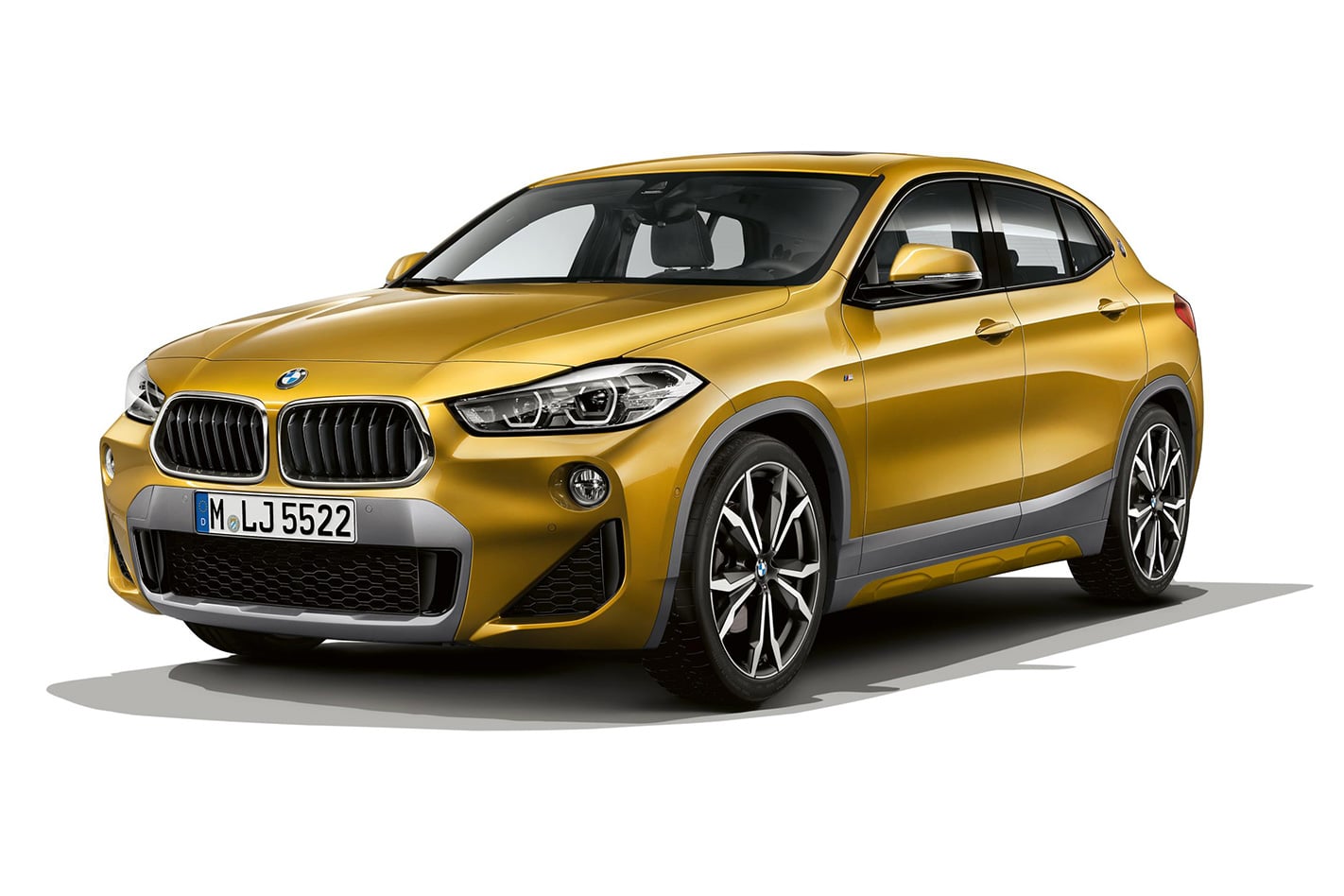
One additional enhancement is also added to the entry X2 sDrive18i with the pre-update models’ 18-inch alloy wheels upgraded to 19-inch Y-spoke design rims in Orbit Grey.
Of the pair, the X1 is the clear leader in popularity and the third best-selling model for the German car maker with 2366 registrations to the end of October this year. That compares with 849 for the more niche X2 over the same period.
While BMW will no doubt be looking to invigorate interest in all its models, BMW Group Australia CEO Vikram Pawah said the smaller end of the SUV market is of particular importance.
“BMW recognises these segments as key in the Australian market,” he said. “It is also an area that is constantly evolving in terms of technology, specification and customer preference.
“BMW prides itself on being at the forefront of such topics. With the additional specification now found across the X1 and X2 ranges, as well as sharper pricing on key models, we continue to provide compelling offers in this space”.
BMW X1, X2 PRICING
- BMW X1 sDrive18i – $45,900
- BMW X1 sDrive18d – $49,900
- BMW X1 sDrive20i – $50,900
- BMW X1 xDrive25i – $60,900
- BMW X2 sDrive18i – $46,900
- BMW X2 sDrive20i – $55,900
- BMW X2 xDrive20d – $59,900
Toyota USA has let slip a hint of what it’s got in store for the Los Angeles Motor Show, and it appears the Camry, a nameplate not traditionally known for performance, could be in line for a sporty treatment at last.
Details are thin on the ground for now, with the company obviously reserving the big news for the LA event, but a teaser shot shown of the Camry and its US-market Avalon twin suggest it could be more than just a sticker-pack special.
The name is also a clue. Toyota USA openly described both show cars as members of the “TRD family” and with those three letters standing for “Toyota Racing Development”, a suffix reserved for performance-enhanced versions of Toyota’s regular road cars, it’s a strong hint that the pair might pack some genuine go-faster cred.
Those red calipers suggest that there might be heavier-duty braking hardware on the TRD-enhanced sedans, and there’s also scope for other bolt-on modifications like a sports exhaust and a tauter suspension tune. The visual package will be tickled through some add-on body plastics (the teaser reveals black plastic under-spoilers on the front bumpers of both) and TRD wheels as well.
We wouldn’t expect much in the way of power changes, but with the regular V6 Camry already pumping out 224kW and 362Nm in standard form, the Toyota sedan’s straight-line performance is already fairly brisk.
Will a hotter Camry come our way following its American debut? Speaking with Toyota’s Australian operation, it seems unlikely. The TRD name, for starters, is not coming back to our shores. TRD used to be Toyota’s global go-faster division, but these days it’s being phased out in favour of the company’s new Gazoo Racing branding – which will enter Australia next year applied to the hot new fifth-generation Supra.
And the Camry TRD and Avalon TRD are expected to be US-market specials, built in that country rather than sourced from the same Japanese factory that supplies Australia.
“If it happens to work for Australia, then that’s a good thing,” said Toyota Australia spokesperson Orlando Rodriguez. “However generally, it’s easier for us to get things from Japan or Europe, given their regulations are usually quite close to ours.
“Our read on the situation is that these cars are a domestic US-only thing at this stage.”
But Toyota’s local office does have aspirations to grow the number of Gazoo-branded performance products beyond the Supra. Perhaps the most compelling (and achievable) candidate currently is the 86 coupe, which is already available in Japan in several Gazoo-enhanced forms, however, that’s yet to be locked-in.
“At the moment there’s no plans on which [Gazoo] vehicles they’re going to be… and as far as these two models (Camry TRD and Avalon TRD) are concerned, it’s probably too early to say. It’s something that we probably need to go off and investigate a little bit more, but we wouldn’t rule out performance product for that segment – we’d just need to look into it a little bit further.”
