
INTRODUCTION
Exactly which vehicle – or even brand – marked the advent of the modern SUV is a contentious issue, but with the Leone four-wheel drive wagon of 1972, Subaru certainly has a stake in some of the earliest models that combined car-like properties with more all-terrain ability.
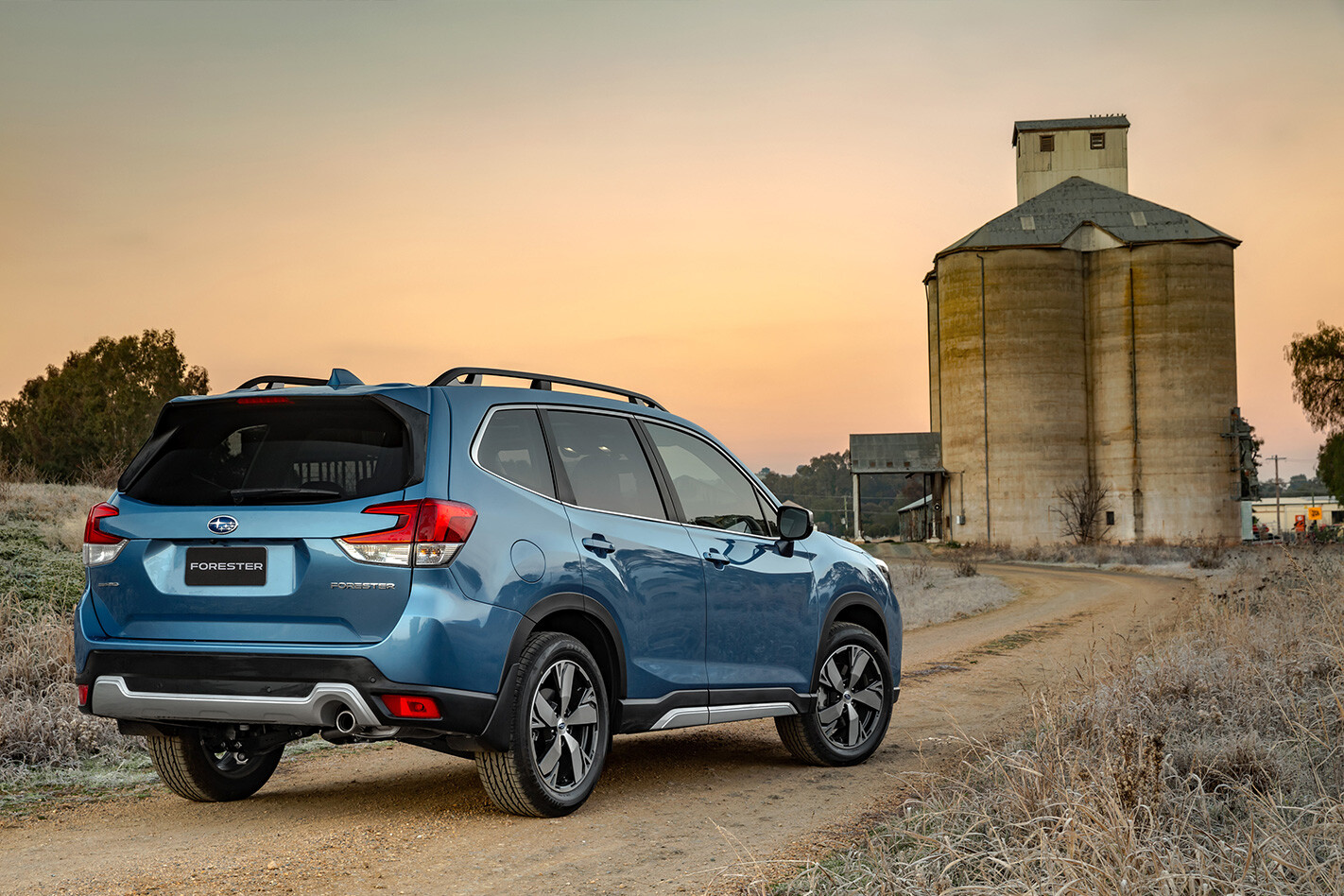
Fast-forward 46 years and the Japanese car maker is still specialising in SUVs with genuine off-road promise, and the Forester is very much its standard-bearer in that regard. Now in its fifth-generation, the 2019 model arrives with a pared-back range, but more technology and the company’s advanced Global Platform as its basis.
VALUE
Compared with the previous line-up, five variants have been dropped from the Forester range including the $30,240 entry 2.0i-L. In its place, the new 2.5i costs $3250 more at $33,490, but it has an automatic transmission as standard instead of the old 2.0-litre’s manual, along with a larger, more powerful engine and a host of technological upgrades.
An engine revision has made the 2.5-litre flat four more efficient, with 7.4 litres of fuel per 100km being the factory claim – that’s an improvement of 8.6 percent when compared to the outgoing 2.5, but the previous-generation’s more frugal 2.0-litre diesel – which needed as little as 5.9L/100km – has been discontinued.
With a deliberate focus on meaningful off-road ability, one of the Subaru’s closest rivals is the Jeep Cherokee which starts from $35,950 or $41,450 for the cheapest four-wheel drive version, while Nissan’s X-Trail kicks off from $27,990 or $32,490 for the more capable 4WD version.
A three-year warranty is still the best Subaru can do while many other brands go to five years and beyond, but there’s a capped price servicing offer to sweeten the deal.
STANDARD FEATURES
Subaru is proud of its policy that leaves nothing for the options list and, in short, everything is a standard feature. If you want leather upholstery, you must buy the range-topping 2.5i-S, while standard-issue satellite navigation starts in the 2.5i-Premium, however the company’s unique EyeSight suite of driver assistance systems is standard on all variants. Even the range of nine metallic and pearlescent paints doesn’t attract an extra charge.
With the range revision, just one engine – the 2.5-litre 136kW/239Nm non-turbo flat four petrol – is available, as is the automatic CVT. All versions are permanent four-wheel drive and only equipment levels differentiate the greatly simplified line-up.
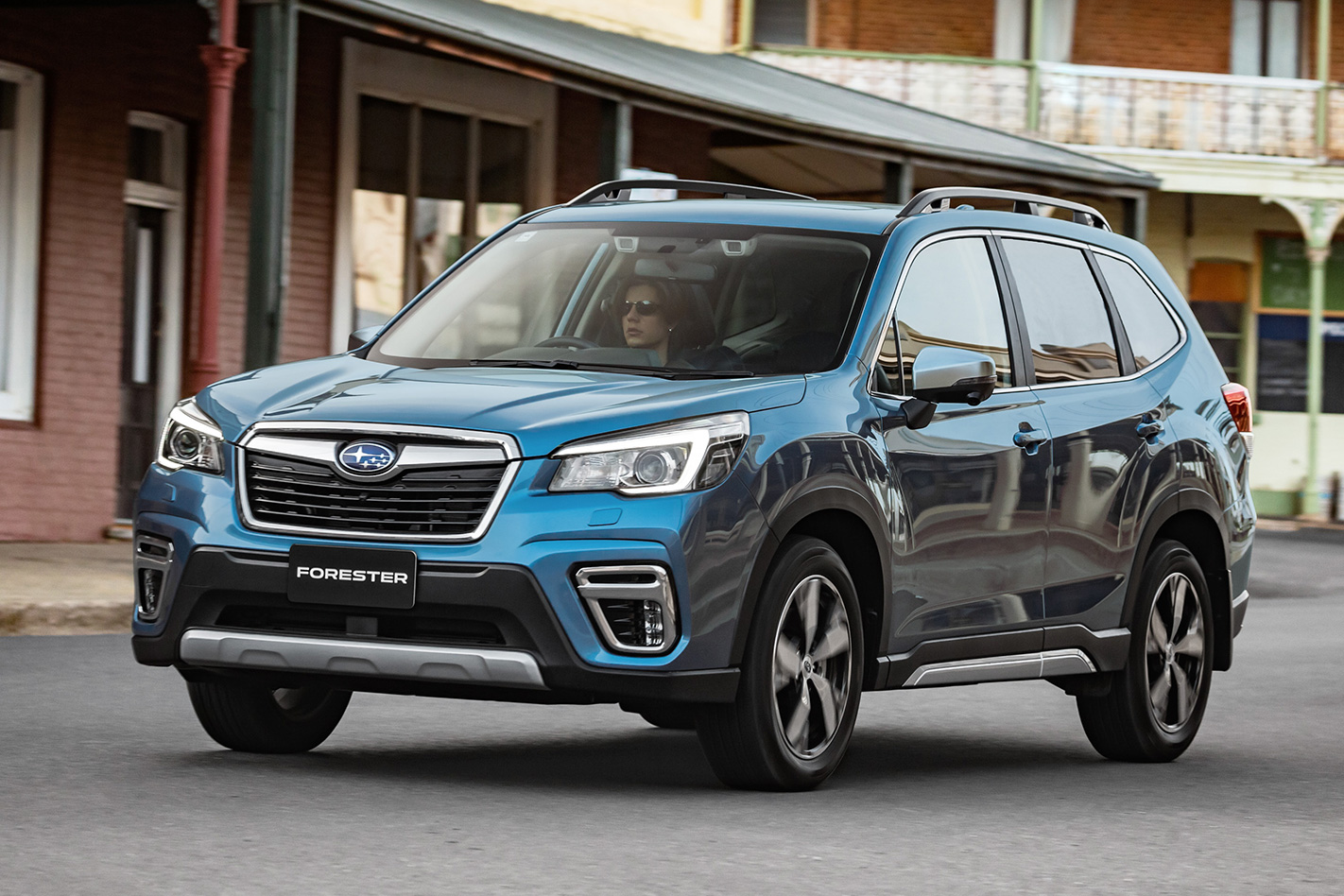
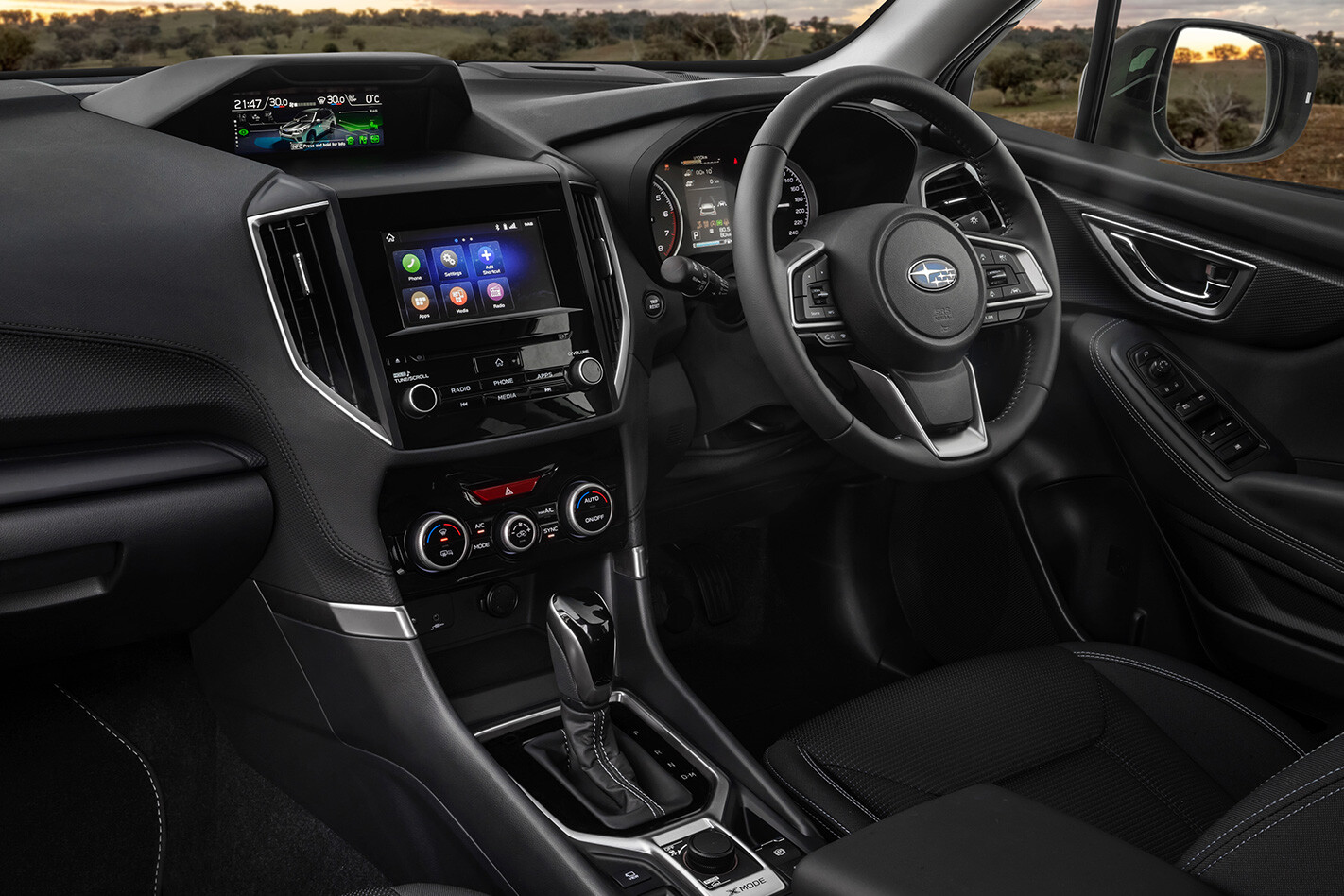
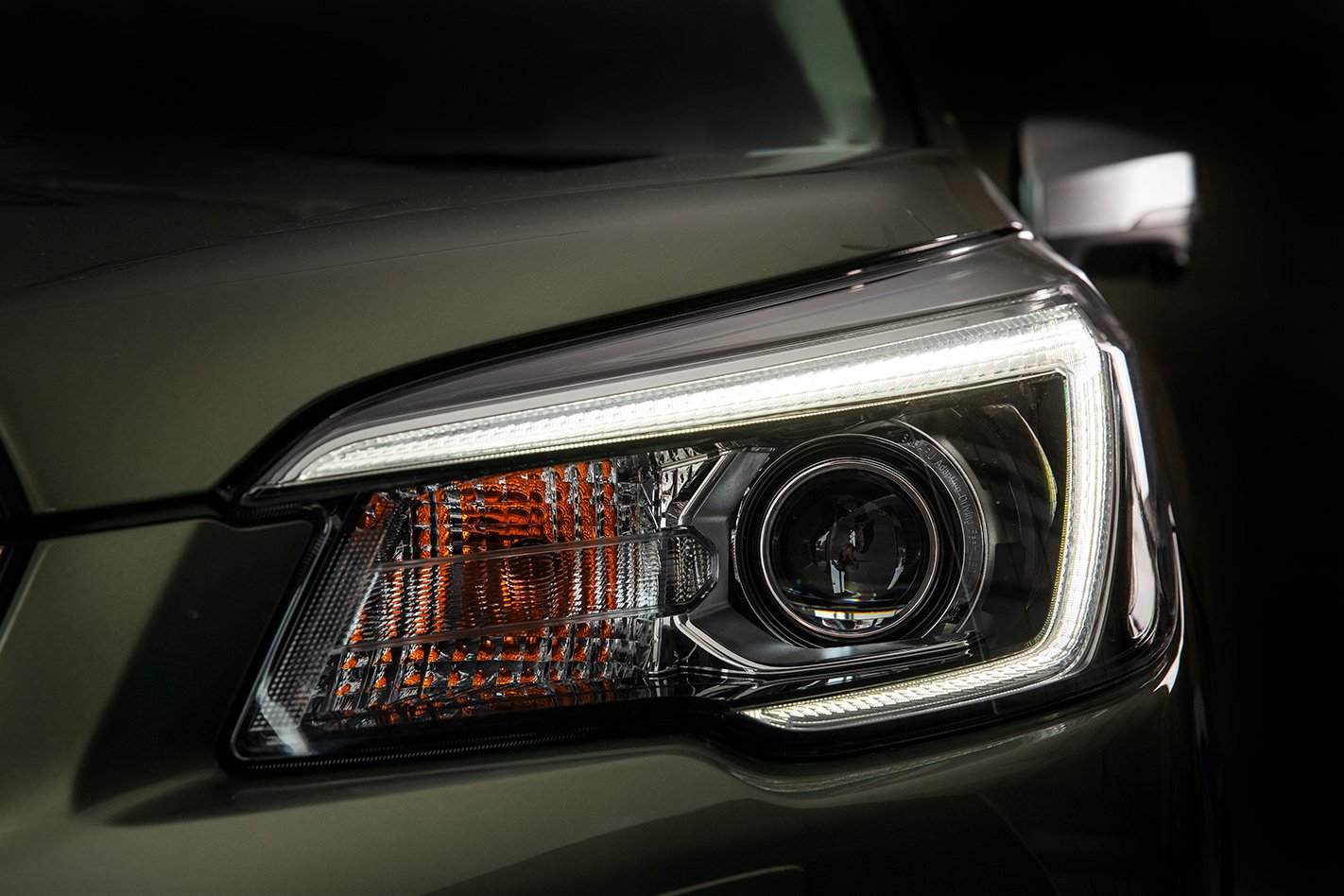
Other notable highlights include three colour displays, LED headlights and tail lights, autonomous emergency braking and a number of clever convenience features to enhance the Forester’s practical applications both on and off the road.
SIZE
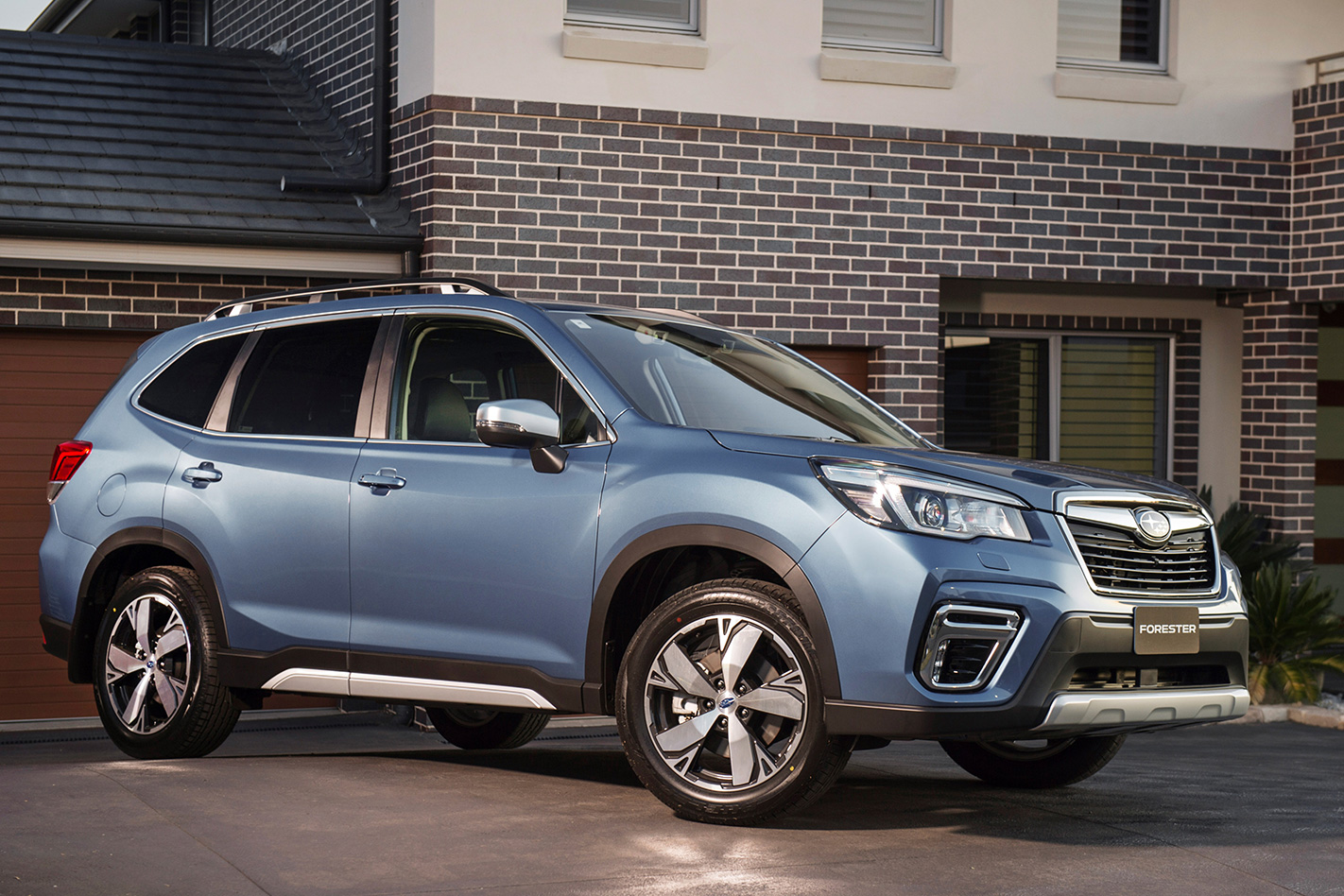
It might be the largest SUV in the Subaru range, but the Forester aligns in size with some other SUVs in the middle of the pack. Think Mazda CX-5 and Ford Escape dimensions. But compared with the previous model, the Forester has boosted the useful spaces.
The second row of seating is bigger in every direction and cavernous even with the front seats adjusted back far enough for generous room in the front row. Headroom is bountiful all round. There’s not quite enough room for a third row of seating but the boot is now more practical.

Its load opening now measures 1258mm wide between the tail lights and the widest point of the luggage area is up to 1300mm – enough for a golf bag’s length says Subaru. With the rear seats in place the boot accommodates 498 litres of stuff but expands to 1768 litres with the 40/60-split seats folded. We particularly like simple touches like a flat area at the corner of the rear seats, which allows a person to stand safely when loading the roof storage area.
SAFETY
Subaru clearly understands the value Australian buyers place on safety features and even entry versions of the Forester are well appointed. The company’s trademark EyeSight suite is standard for all variants which brings adaptive cruise control, AEB, lane keep assistance, and lane departure warning.
There’s also a reversing camera and ISOFIX anchor points for two child seats as standard, but you’ll have to step up to the Premium or S variants to gain reverse automatic braking and a front and side view monitor, while adaptive headlights are fitted to all versions except the entry 2.5i.
Perhaps the most fascinating element of the new Forester is provided for all but the base 2.5i and introduces a facial recognition system. When boarding the car, a camera concealed in the centre of the dash identifies the driver’s face and automatically sets a number of parameters to the user’s pre-sets. Climate control, customised displays, seat and mirror positions are all adjusted simply by looking forward.
But there are added safety benefits too. The camera continues to monitor the driver during a journey and if it recognises the tell-tale signs of drowsiness or distraction, the car will issue audible and visual warnings. Some other systems rely solely on steering inputs to determine a sleepy driver, but the Subaru approach is unique.
COMFORT
After only a short time in the Forester, the mid-sized SUV quickly presents itself as the kind of car you could throw a few tins of beans into, a swag on the roof and drive around Australia. There is a confidence to the ride which feels assuring and comfortable but purposeful.
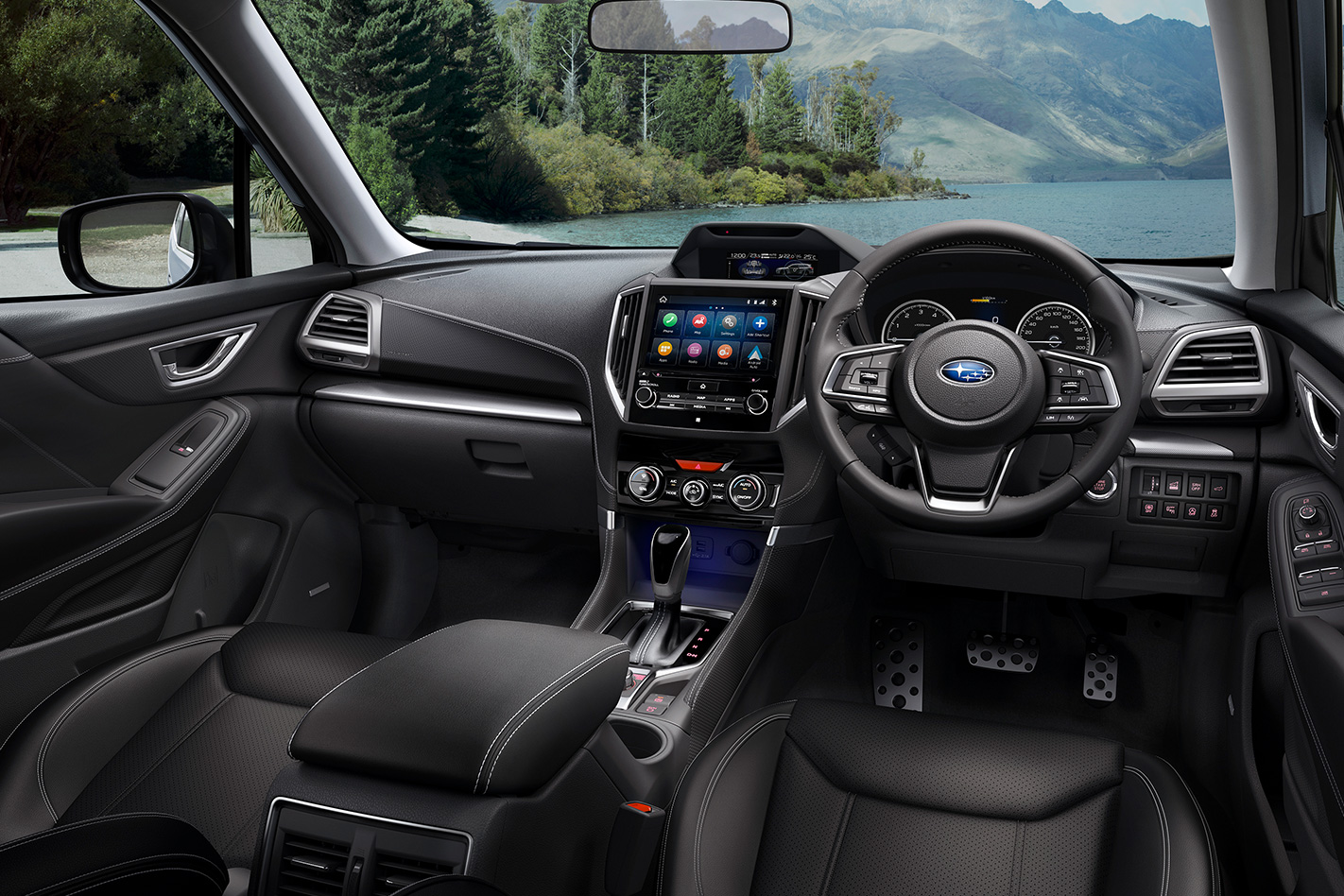
And on that extended journey there would be few complaints from any of the occupants. Seating is ergonomically well finished for all four main spots (putting someone in the middle rear pew might be asking a bit much on extended trips) and there are enough comfort features for the entire family. A high-quality stereo by Harman Kardon and smartphone mirroring are highlights, while rear air vents and a pair of USB sockets for rear occupants are welcome arrivals for the 2019 model.
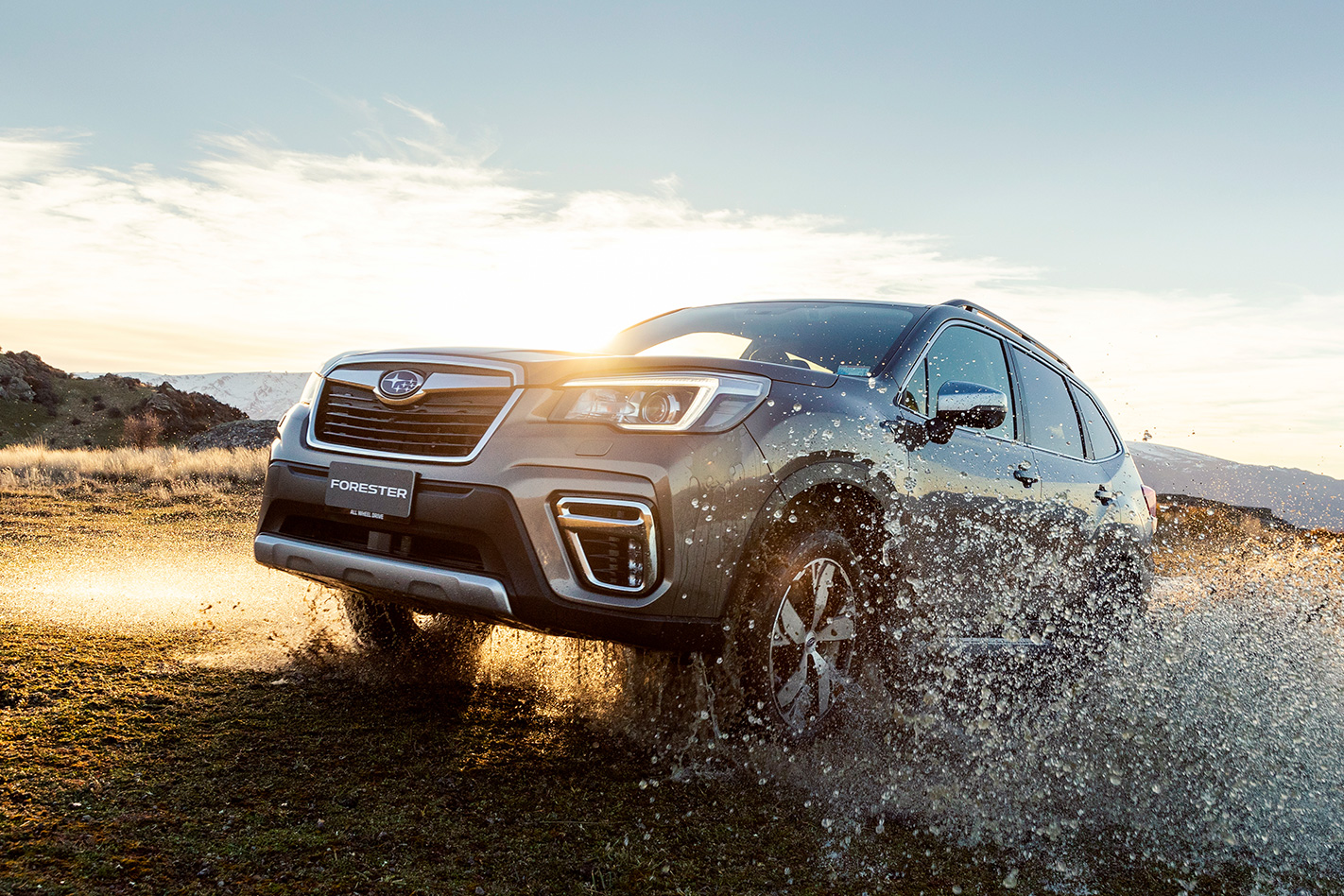
Even on coarse surfaces and unsealed tracks, the Forester is composed and quiet with a nature that feels as though it was designed specifically for Australian conditions.
ON THE ROAD
Sadly we weren’t given an opportunity to test the Forester’s off-road prowess, which is a shame because, in the previous generation, it was surprisingly good. Subaru’s X-Mode provides the optimum grip levels when the going gets tough, coupled with a clever transmission system and a lofty ground clearance of 220mm, but we can only speculate just how far off the beaten track you can go.
On-road behaviour, however, is up to standard and although we didn’t find any bends to push dynamic capability to the limits, communication from the steering and chassis is above average for the segment. All too often a manufacturer will sacrifice driver reward for ease of use of comfort, but the Forester finds an excellent balance.
Until an unconfirmed XT, GT or STI version of the Forester arrives, the 2.5-litre is as sporty as you can get, but it’s probably the weakest link in the driving enjoyment stakes. 136kW can be described as ‘adequate’ but can get a little frustrating if the car is heavily laden or you need to suddenly overtake at highway speed. We like the general operation of the CVT transmission, which is one of the finest when it comes to the continuously variable principle.

If you miss the stepped ratios of a conventional automatic, then the Subaru’s gear shift paddles on the steering allow you to move through several pre-set ratios to add some driver involvement – or simply to keep the engine spinning fast when you need to work it hard.
On a section of varying unsealed surfaces, the Subaru Forester’s secure handling works to keep everything facing the right direction, and the sense of confidence imparted by the ride continues even when grip levels drop off or the road gets truly choppy.
We were only given the opportunity to sample the Premium and S variants, which provide an identical driving experience (and likely the same as the two most affordable versions), with only the leather interior, sunroof and slightly more convenient X-Mode operation setting the S apart from the Premium.
VERDICT
From the outside, the 2019 Subaru Forester appears to have been given not a major overhaul but a mid-life facelift, but it’s actually a completely new vehicle. Subaru’s evolutionary approach is understandable though considering the Foresters did everything so consistently well in previous generations: it would simply be unwise to shake up the recipe to any great degree.
The Forester manages to be charming and likeable without trying too hard, and its combination of unpretentious styling, unquestionable practicality and a compelling value package will no doubt continue to appeal to not only the vocal base of Australian Forester fans.
But with a marked upgrade in technology to align it with competitors in classes above, it’s likely to deservedly attract even more attention from SUV shoppers in general.
It’s been several years since Ssangyong shut up shop in Australia, but the Korean automaker is making a comeback in November this year. And to make sure Aussie SUV and ute shoppers take notice, the brand has announced not only a three-model range of keenly-priced products, but one of the best factory warranties in the country as well.
All new Ssangyongs sold in Australia will be covered by a seven-year, unlimited-kilometre warranty, the most generous terms of any manufacturer bar Kia, which also boasts seven-year coverage of its cars. It’s a strong show of faith in its own products by the company, and also comes with seven years of roadside assistance and fixed service pricing.
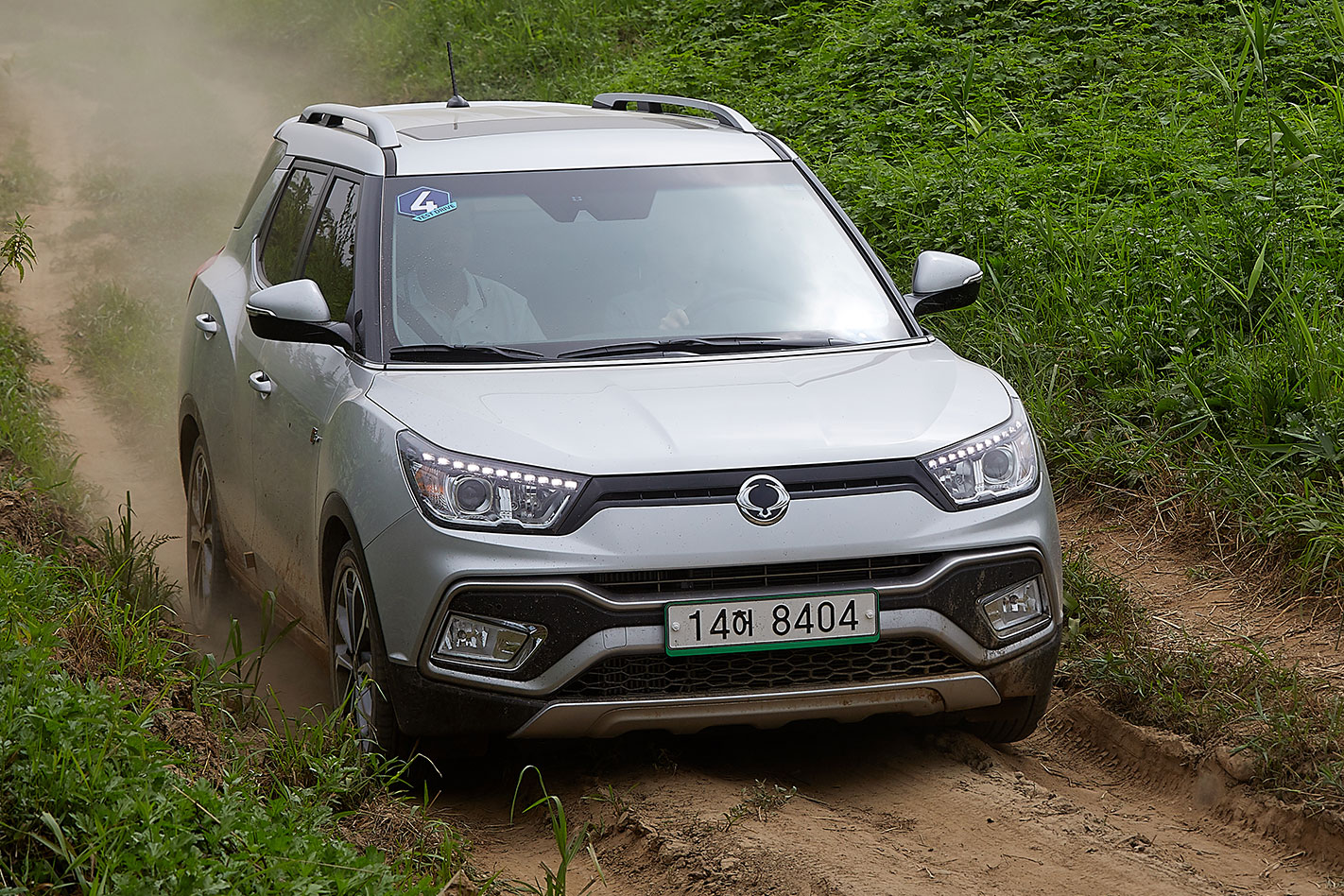
Pricing transparency will be another strong suit of the incoming Ssangyong range, which will be made up of the Tivoli small SUV, the Musso dual cab ute and the Musso-based Rexton large SUV.
Ssangyong has taken the unusual step of announcing national driveaway pricing for each variant of all three models, meaning prospective buyers will have a much clearer idea of how much they’ll need to pay to put one in their driveway.
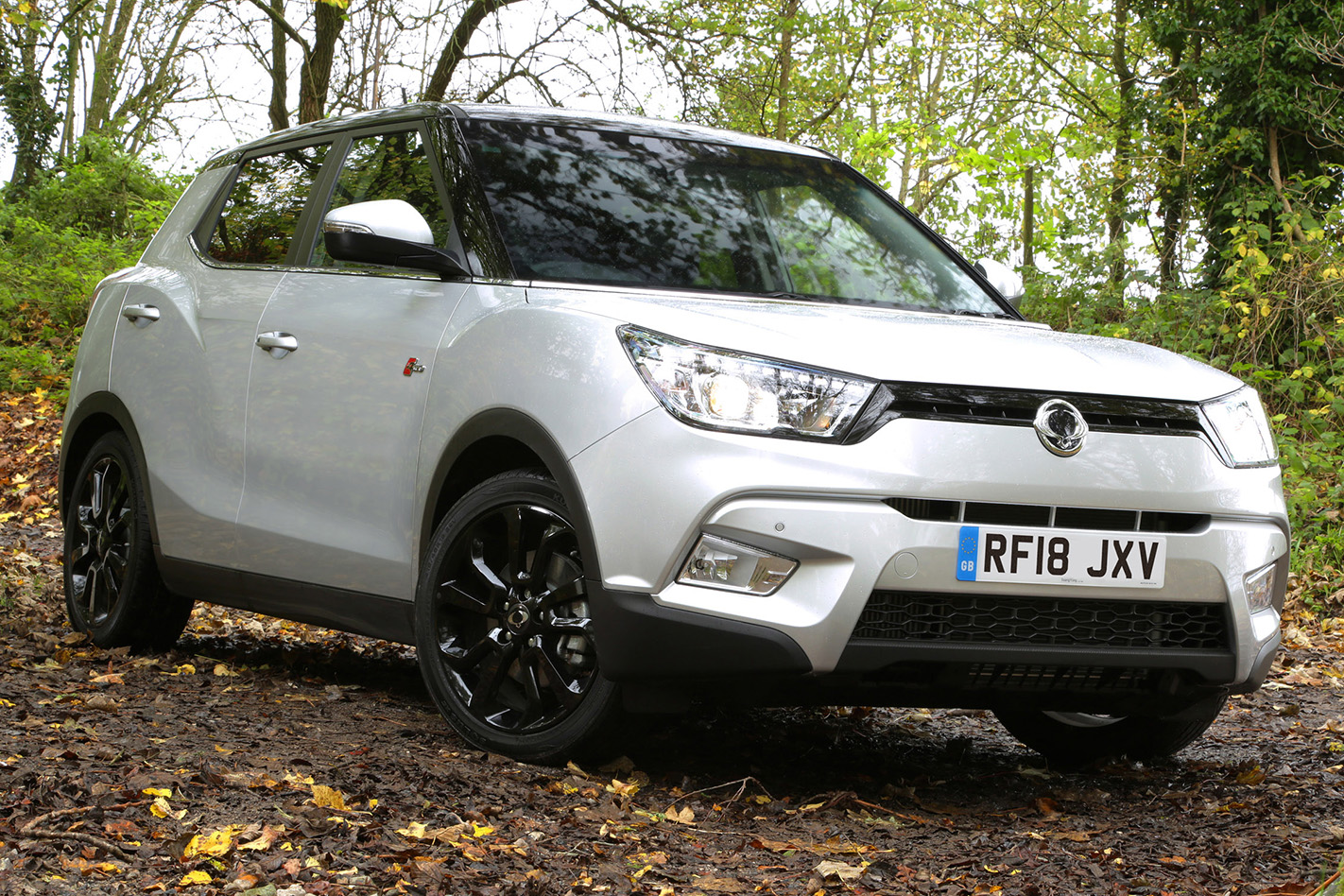
The Ssangyong Tivoli EX is the price leader with a drive-away sticker of $23,490, putting it at the lower end of the small SUV segment against rivals like the Mazda CX-3, Ford EcoSport, Haval H2 and Holden Trax. Apple CarPlay and Android Auto smartphone mirroring will be standard, along with a reversing camera, rear parking sensors, seven airbags and the aforementioned AEB and FCW.
Power will be provided by a 1.6-litre petrol or 1.6 litre diesel, the former generating 94kW/160Nm, and the latter offering 84kW/300Nm. A six-speed manual will be available with a six-speed automatic optional, with all models besides the range-topping Ultimate grade taking power to the front wheels only.
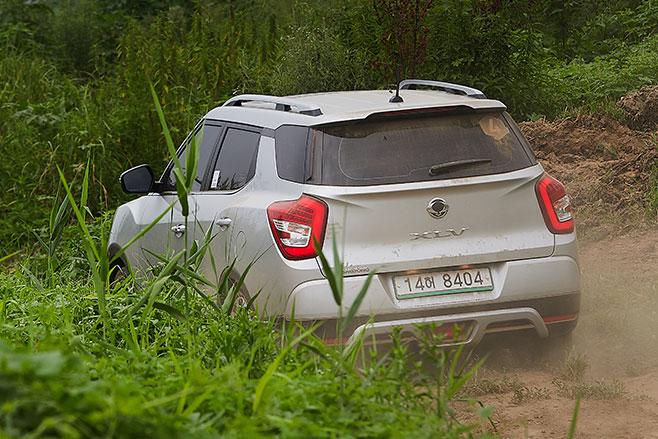
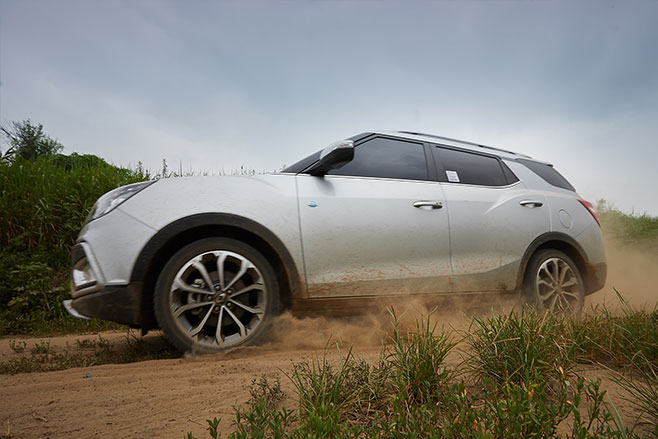
The Tivoli XLV sits alongside the regular Tivoli, but features 245mm of extra length behind the rear wheels to endow it with a larger boot (measuring a sizable 720 litres) and a more conventional SUV wagon bodystyle. Only available with the 1.6-litre diesel, the Tivoli XLV will be offered in two grades: ELX or Ultimate, with the ELX costing $31,990 driveaway and the Ultimate transacting at $34,990 (add $500 for a two-tone paint scheme).
REXTON
The Ssangyong Rexton offers a larger SUV option, with seven seats aboard its sizable 4.8-metre long body and with rugged off-road underpinnings shared with the Musso utility.
Three variants make up the Ssangyong Rexton line-up – EX at the bottom, ELX in the middle and Ultimate at the top. The Rexton EX, only available with a turbocharged 165kW/350Nm 2.0-litre petrol four-cylinder, six-speed auto and rear-wheel drive, opens the range at $39,990 driveaway, significantly undercutting similar competitors like the Ford Everest, Holden Trailblazer, Isuzu MU-X, Mitsubishi Pajero Sport and Toyota Fortuner. Standard features will include AEB, FCW, auto high-beam, lane departure warning, smartphone mirroring and dual-zone climate control.
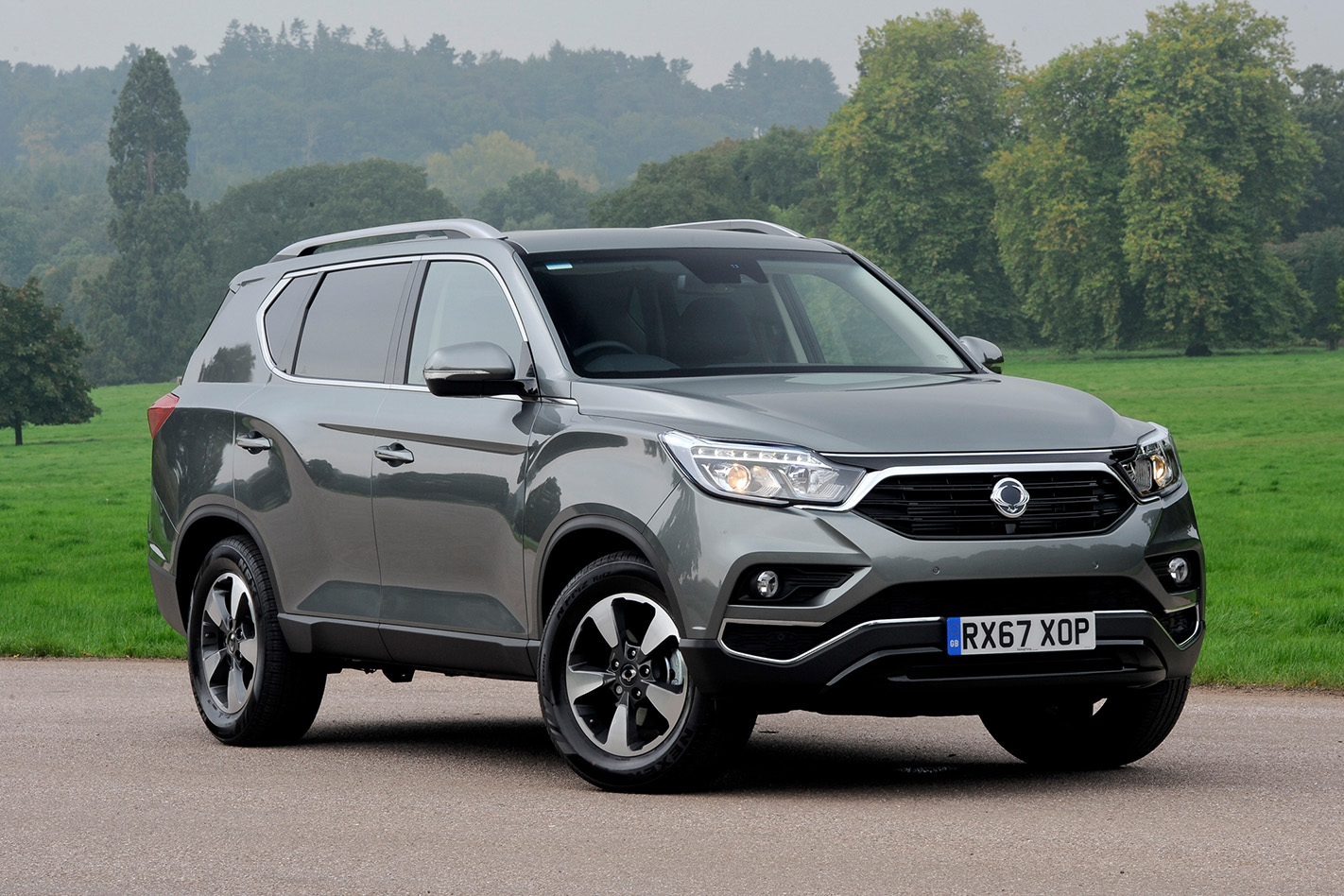
The $46,990 ELX grade adds a diesel 2.2-litre with 133kW/420Nm, and features a Mercedes-Benz-sourced seven-speed automatic and four-wheel drive as standard. The same mechanical layout propels the flagship Rexton Ultimate, priced at $52,990 drive-away.
The airbag count increases to nine and blind spot monitoring, lane change assist and rear cross traffic alert are added to the safety list at the ELX level, while the Ultimate gains heated/ventilated front seats, 20-inch wheels, a 360-degree parking camera, powered tailgate, leather upholstery and a sunroof.
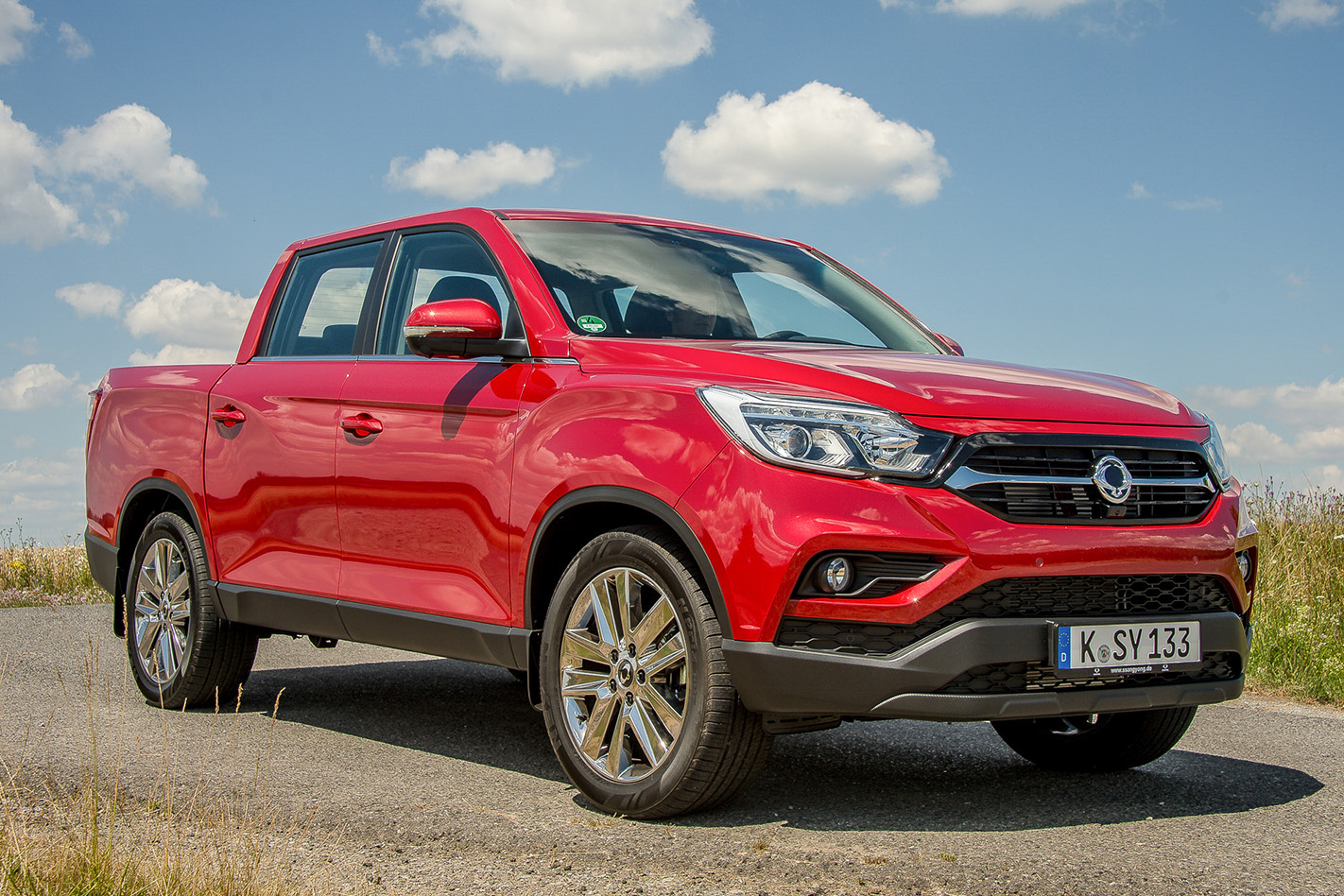
MUSSO
Dual-cab utilities are big business in Australia, and Ssangyong is returning to the segment with the latest generation of the Musso. The all-new Ssangyong Musso will have a three-variant, all-diesel range with a familiar EX, ELX, Ultimate hierarchy. The base Ssangyong Musso EX can be had with a six-speed manual or six-speed automatic (not the Mercedes unit found in the Rexton, but one sourced from Japanese company Aisin), while the Musso ELX and Ultimate will be equipped with the six-speed auto as standard.
No matter which grade you select, every Musso comes with a 2.2-litre turbo diesel four developing 133kW and 400Nm, plus four-wheel drive, a limited-slip differential, AEB, FCW and a three-tonne towing capacity – which Ssangyong Australia is working on increasing to 3.5 tonne.
The base Ssangyong Musso EX begins at a very sharp $30,490 driveaway (add $2000 for the automatic), putting it well under not only popular dual-cabs like the Ford Ranger, Toyota HiLux, Holden Colorado, Isuzu D-Max and Nissan Navara, but also into a competitive position against bargain-priced competitors like the Mahindra Pik-Up and Great Wall Steed.
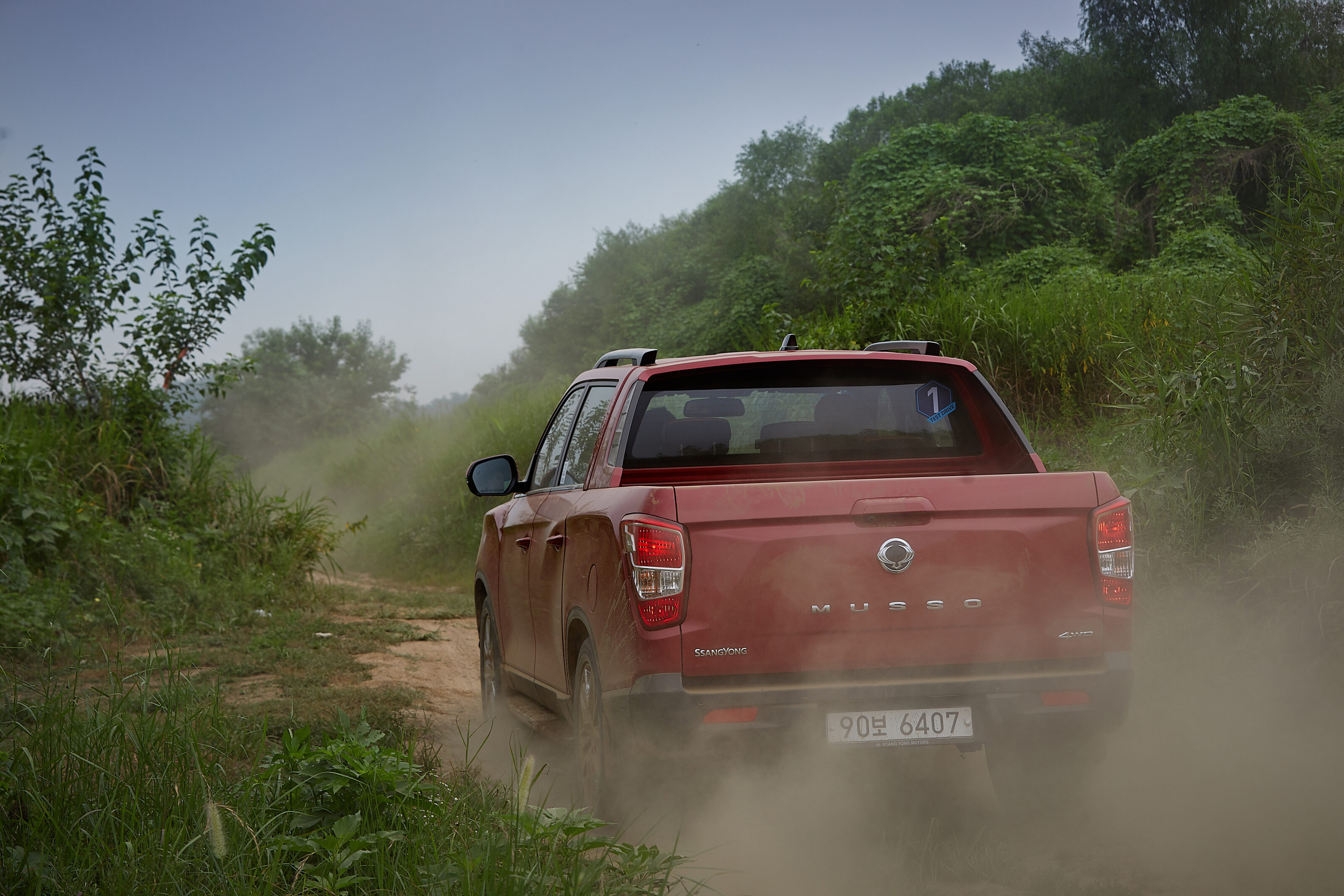
Step up to the Ssangyong Musso ELX and the price rises to $35,990 that’s still well ahead of mainstream rivals and enhanced by the addition of Apple CarPlay and Android Auto, 18-inch alloy wheels, blind spot monitoring, rear-cross traffic alert and lane change assist.
Meanwhile at the top of the tree sits the Ultimate at $39,990, which lobs in cheaper than most dual-cab diesel entry models from the dominant players in the segment and carries the additional benefit of that seven-year warranty – a level of coverage that simply doesn’t exist in the commercial utility segment given Kia’s absence from that end of the market.
Equipment highlights for the Ssangyong Musso Ultimate include heated and ventilated front seats, leather upholstery, 20-inch alloy wheels and a 360-degree parking camera.
PRICING
Note: all prices shown are drive-away
Tivoli
- Ssangyong Tivoli EX petrol manual – $23,490
- Ssangyong Tivoli EX petrol automatic – $25,490
- Ssangyong Tivoli ELX petrol automatic – $27,490
- Ssangyong Tivoli ELX diesel automatic – $29,990
- Ssangyong Tivoli Ultimate AWD diesel automatic – $33,990
- Ssangyong Tivoli XLV ELX diesel automatic – $31,990
- Ssangyong Tivoli XLV Ultimate AWD diesel automatic $34,990
- Two-tone option for Ultimate – $500
Rexton
- Ssangyong Rexton EX RWD petrol automatic – $39,990
- Ssangyong Rexton ELX 4WD diesel automatic – $46,990
- Ssangyong Rexton Ultimate 4WD diesel automatic – $52,990
Musso
- Ssangyong Musso EX 4WD manual – $30,490
- Ssangyong Musso EX 4WD automatic – $32,490
- Ssangyong Musso ELX 4WD automatic – $35,990
- Ssangyong Musso Ultimate 4WD automatic – $39,990
DESPITE looking like coming from different planets, there is one core ingredient that links the Ford Model T and the McLaren 720S – the tyres.
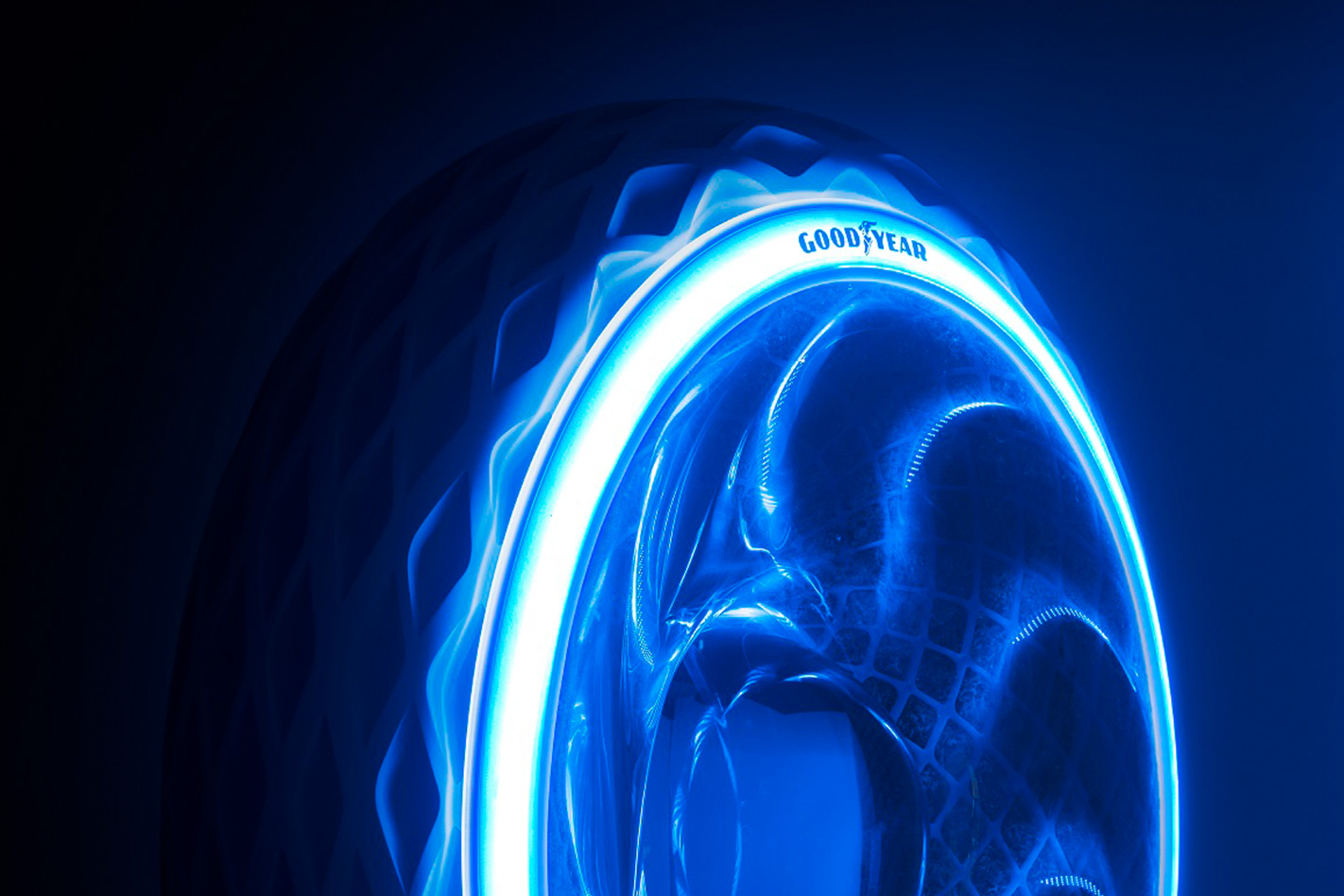
For over a century the concept of car tyres has remain relatively unchanged, while many other aspects of modern vehicles have transformed to be almost unrecognisable for a time-travelling Henry Ford.
That’s not to say things haven’t changed in tyre technology. Advancements in construction and compounds have improved the performance of tyres, but visually not a great deal has changed. They’re still black hoops wrapping your rims, filled with a few psi of compressed air. The latter refinement came courtesy of John Boyd Dunlop in 1888. Radials arrived in 1946, while Goodyear’s Captive Air run-flats were co-developed with Chrysler back in 1958.
But rather than dwell on past achievements, Goodyear – which has been building tyres almost as long as cars have existed – has envisaged what the future of the tyre will look like. Two of the concepts are more realistic creations that could foreseeably be introduced in the next couple of decades, while the others are pretty out-there conceptual takes on the future of the tyre.
BH03

An integral aspect of an electric vehicle’s appeal is its range. Developing new batteries, motors and aerodynamic devices to extend that radius of operation is one of the key challenges facing automotive engineers and the tyre has become a critical aspect.
Dubbed the BH03, this tyre concept transforms the heat generated by the friction of the rolling tyre into electrical energy.
Goodyear claims the tyres use an “ultra-black texture” to absorb light and heat, and are constructed from a “thermo/piezoelectric material”, which simply means it’s capable of converting friction into an electrical charge.
While nowhere near enough to power the vehicle completely, Goodyear claims the BH03 can help improve overall range and efficiency for EVs and hybrids.
Triple Tube

While the BH03 caters to EV drivers, the Triple Tube is a Goodyear concept which should appeal to enthusiasts.
The conceptual design includes three internal tubes and an integrated pump which can manipulate the shape and, by extension, the footprint of the tyres while driving.
Capable of three core shapes, the Triple Tube tyre manipulates the carcass of the tyre to optimise traction and control for the conditions.
The first setting is focused on safety and economical driving, with all three internal tubes fully inflated. The ‘sporty’ mode reduces pressure within the more inward tube to create a form of artificial camber during turns. The system is designed to work alongside GPS data and can pre-empt oncoming curves in the road.
Finally, a ‘wet traction’ mode maximises pressure within the middle tube to reduce hydroplaning and improve wet-weather grip.
Oxygene

Moving away from the traditional construction of a tyre is Goodyear’s Oxygene concept, which is airless, 3D-printed, and has a “living” sidewall.
According to Goodyear, the living sidewall can absorb water, either from the air or as spray coming from the road’s surface – to mix with airborne carbon dioxide. Photosynthesis then turns the mixture into breathable oxygen.
By Goodyear’s calculations, if a city like Paris, with 2.5 million vehicles, put its entire fleet of cars on the Oxygene, the tyres could generate almost 3000 tonnes of oxygen a year from more than 4000 tonnes of carbon dioxide.
Constructed using 3D printing, the rubber compound is essentially puncture-proof, while the open tread and structure improves wet-weather grip.
Eagle 360 Urban
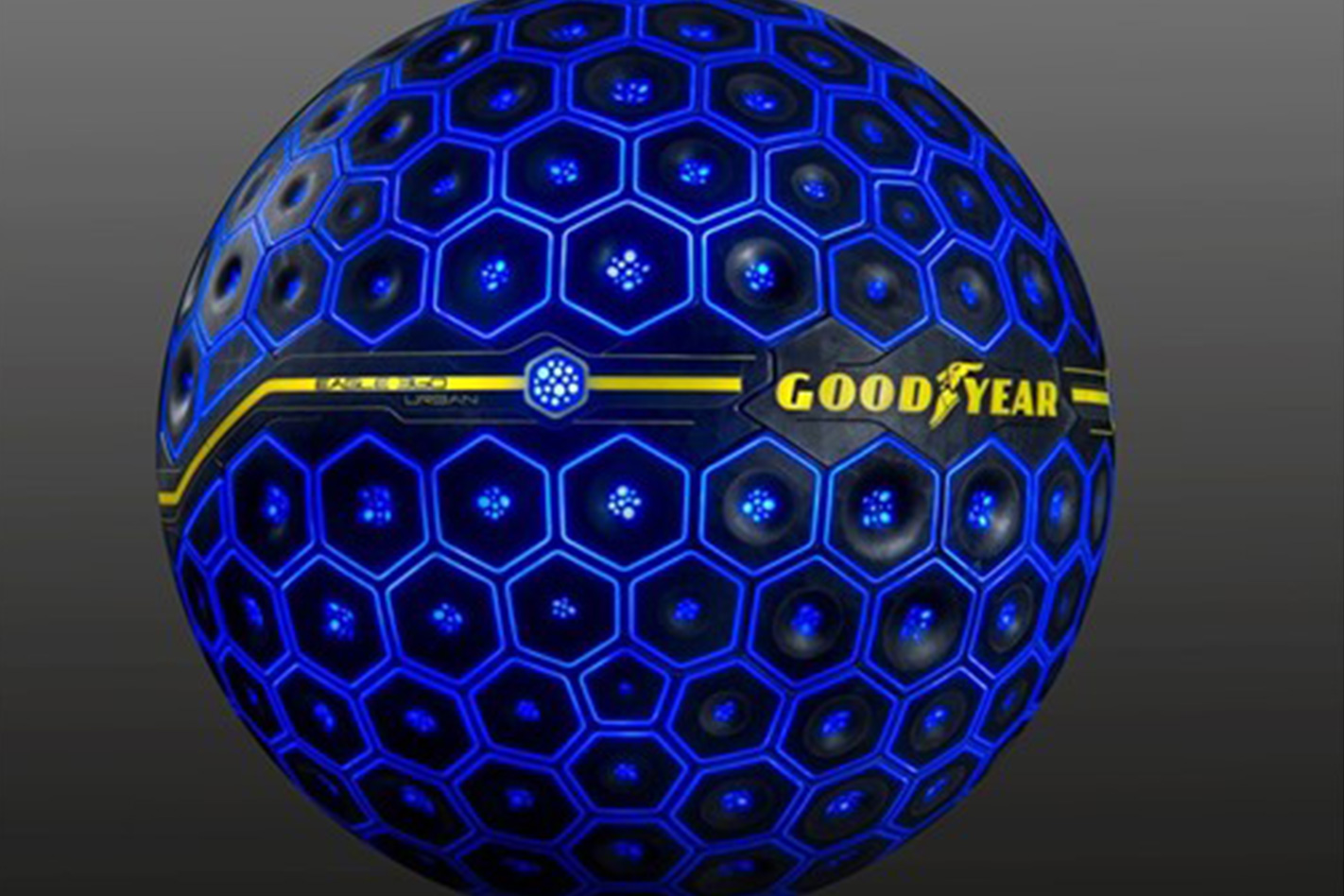
Here’s where things really diverge from the norm, with Goodyear’s completely spherical Eagle 360 Urban concept, which the company states is ‘powered’ by artificial intelligence.
Goodyear envisages the tyre being 3D printed with a super-flexible polymer, which is able to stretch and slightly change shape depending on the weather conditions.
Being a sphere, the concept allows vehicles to move sideways laterally.
The Eagle 360 Urban is envisaged for vehicles so far in the future, it isn’t even connected physically to the car, instead using magnetic levitation.
While the concept is still likely another century (or more) away from becoming a reality, it’s good to know that Goodyear is looking a long way beyond vulcanised convention.
A more aggressive look for the 2019 Fiat Abarth 124 Spider could be on the cards for Australia if FCA’s local arm follows the lead set by the US.
While the US has only just added the Record Monza Exhaust to its options list, according to a new press release, Australia has had it as an option since its introduction, and as standard on a limited ‘Monza Edition’ model. A black bonnet option also appears to be a possibility for Australia.
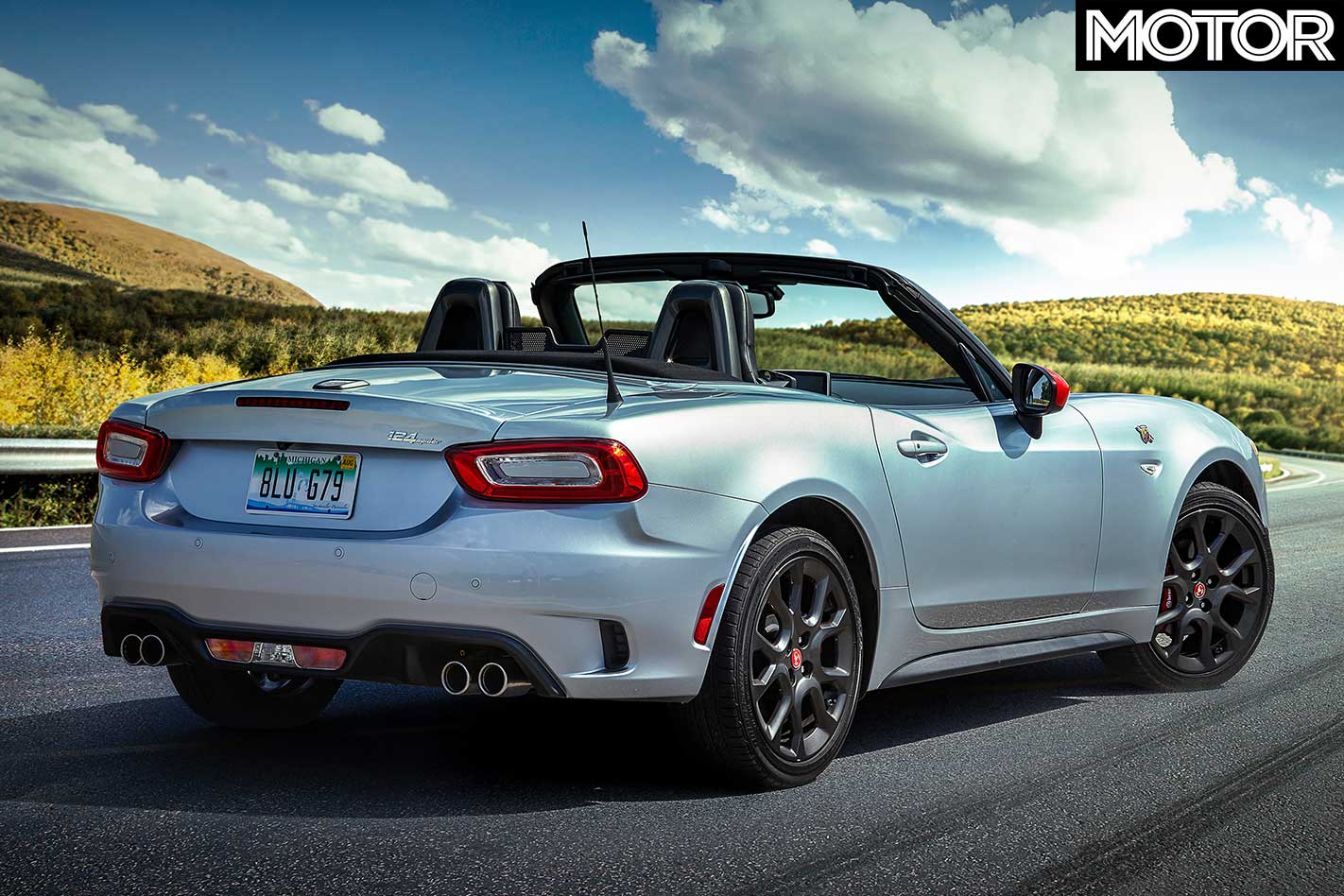
It’s unlikely we’ll see changes in the 125kW/250Nm outputs from the Spider’s 1.4-litre turbo four.
Two option packs, ‘Classica’ and ‘Lusso’, are available for the standard Fiat 124 Spider in the US, while the Abarth encompasses a different level of specification. Classica and Lusso are essentially sports and luxury versions of the base car respectively.
Another option pack called the ‘Veleno Appearance Group’ adds red exterior mirror caps, a red lower front lip and a red front tow hook. Veleno is Italian for poison, a reference to Abarth’s scorpion connection. New floor mats are also part of this pack.
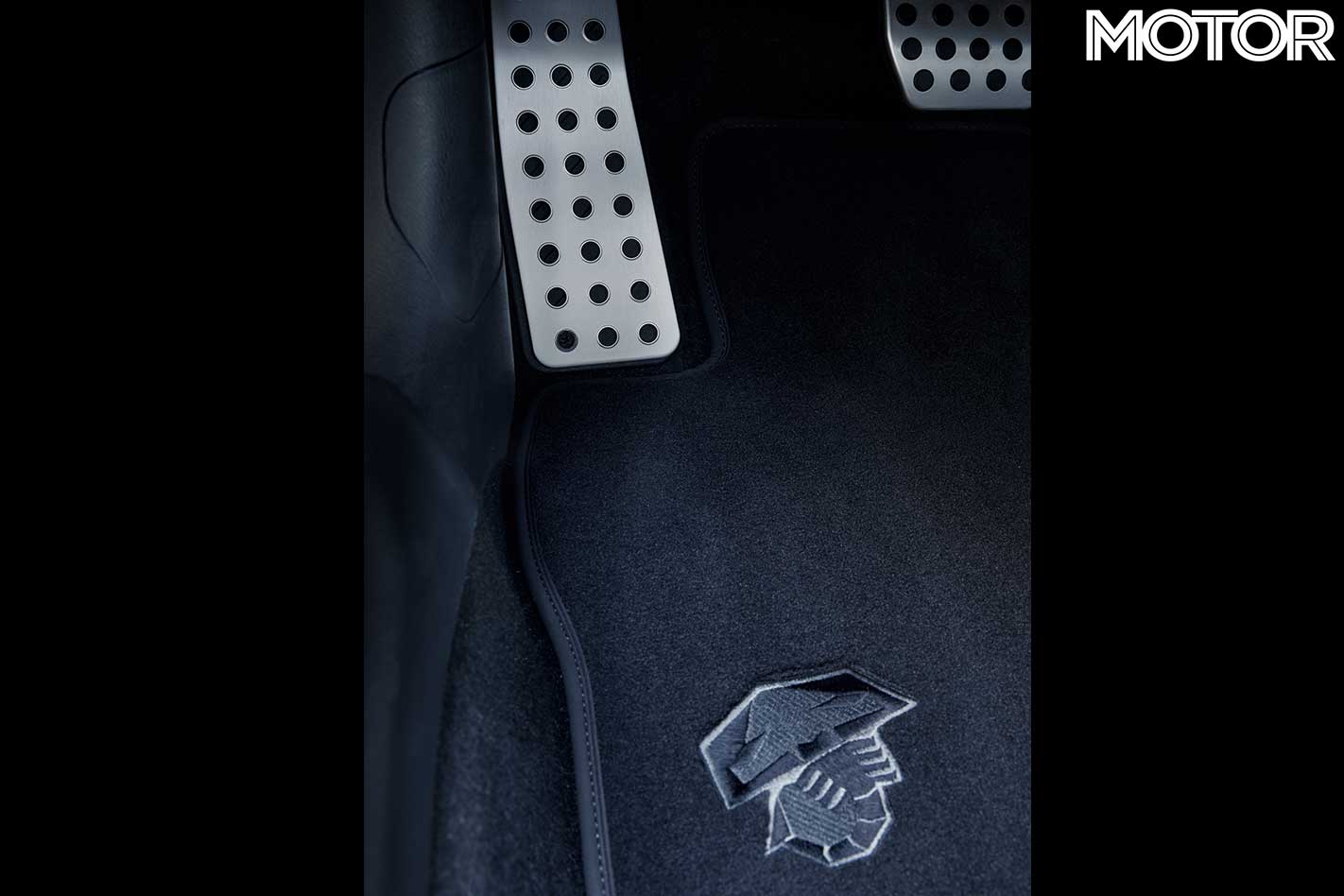
Some of these features have already been seen in Australia, the Monza Edition features red mirror caps, with special paint options and a different interior treatment. Two-tone black and red leather seats further differentiate the Monza.
A spokesperson for FCA Australia tells MOTOR there’s no word yet on whether the options will make it to Australia as permanent additions to the range.
VOLKSWAGEN’S passenger cars will no longer carry the VR6 engine, with the announcement that the Passat is phasing out the clever narrow-angle V6 petrol engine that has been part of the German company’s performance portfolio for 27 years.
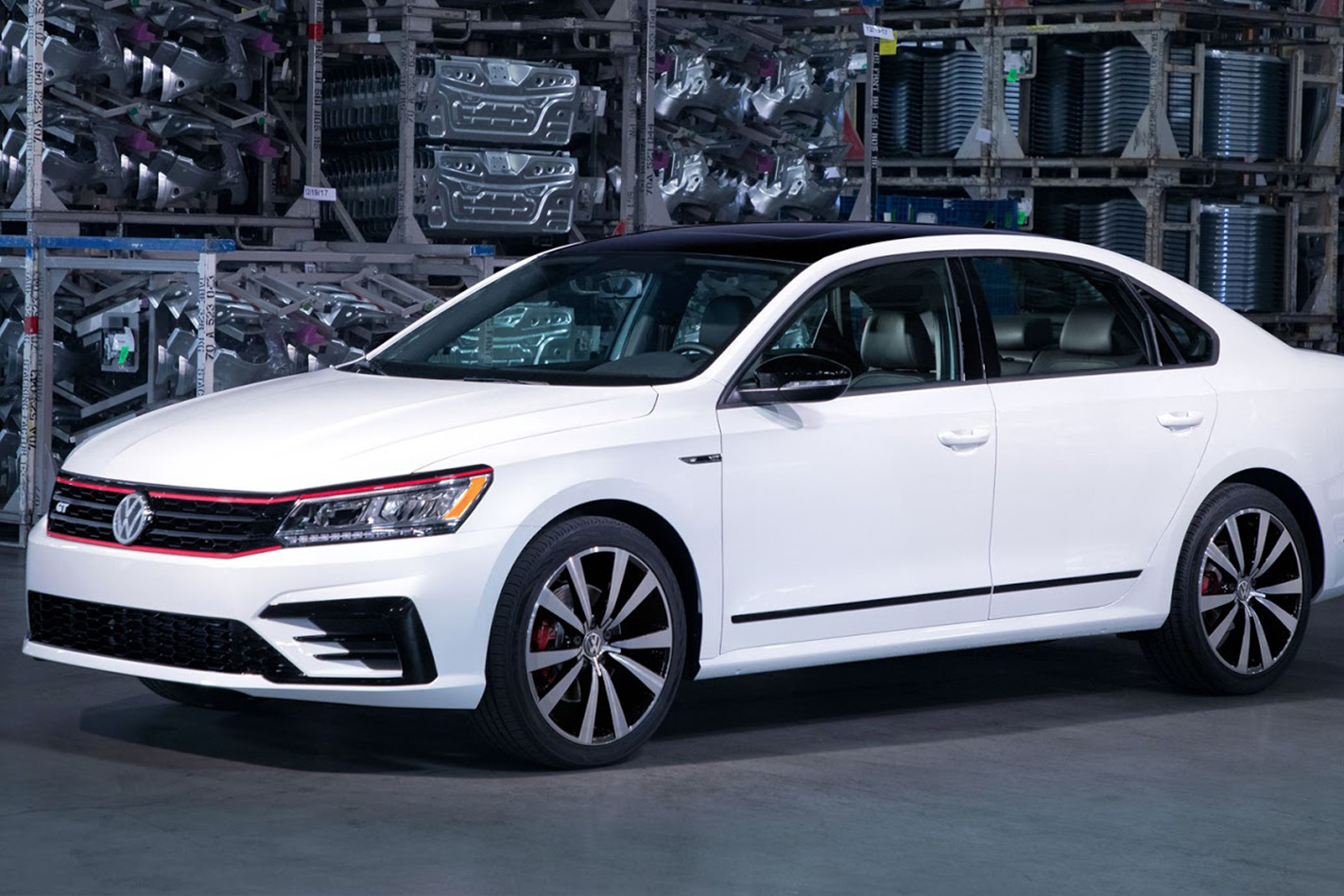
US customers can – for the time being at least – get hold of the engine in the giant Atlas SUV, but its days also look numbered, sales of the smaller two-litre turbo four putting the VR6 on death row, even in trucks.
Although Lancia must be credited as the masters of the narrow-angle V engine, the VR6 developed that theme still further. It was, in effect, a V-inline engine, as oxymoronic as that sounds, as it had offset cylinders but one cylinder head.
Like so many innovations, it was born from necessity. Volkswagen’s product portfolio in the late eighties was heavily skewed towards transverse engined, front-wheel drive cars. A straight-six or a V6 would have presented insurmountable packaging issues in the short and relatively narrow engine bays of vehicles like the Golf, Corrado and Passat, so rather than design a V-configuration six-pot with the usual 60-degree angle between cylinder banks and a head atop each, the 15-degree offset of the two banks of the VR6 required a double overhead cam but one head.
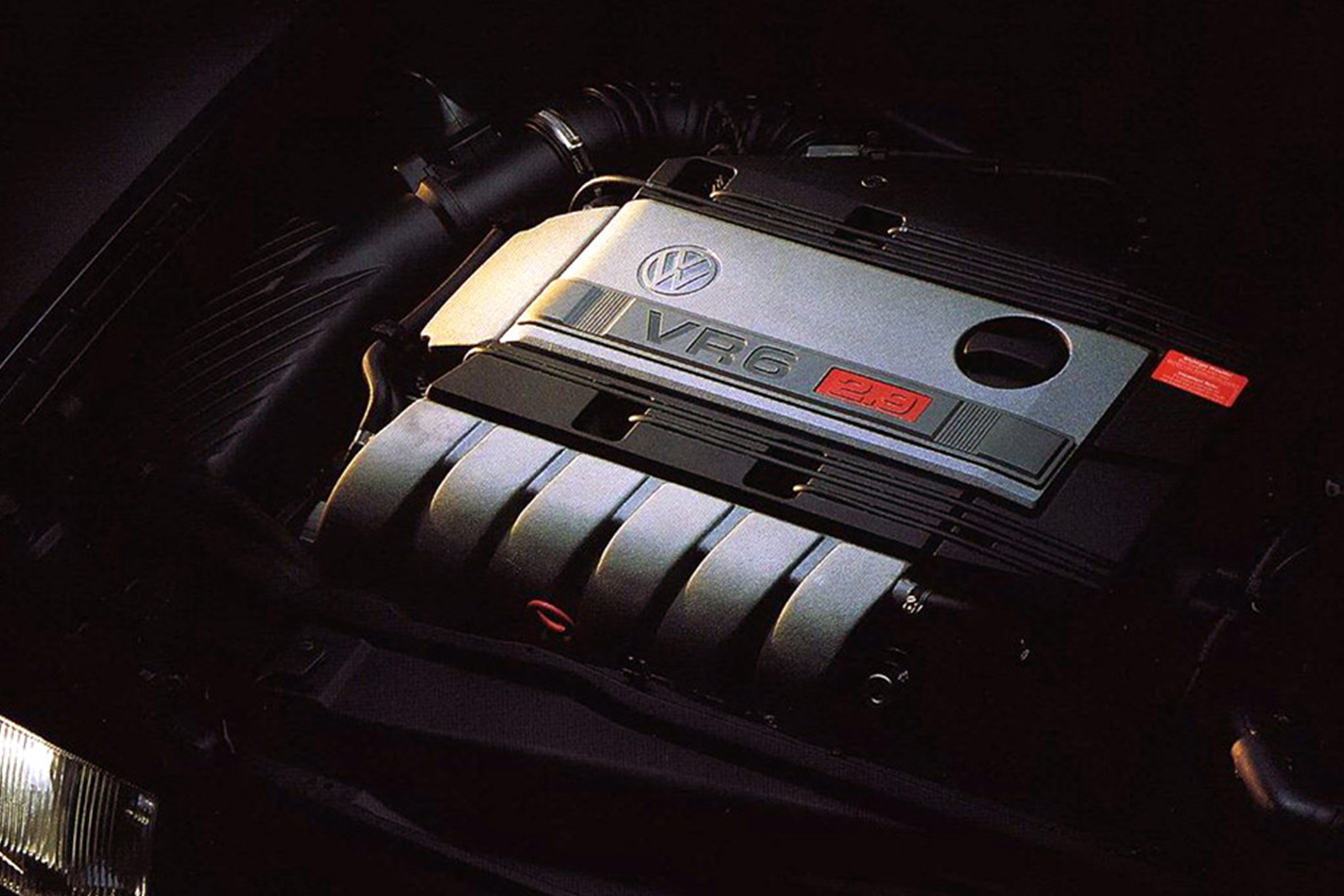
Originally 2.8-litres and then bored to 2.9-litres, the VR6 proliferated within Volkswagen Audi Group products. The larger capacity Corrado engine originally featured a clever dual-tract variable-length inlet manifold, dubbed the VSR (Variables SaugRohr) that delivered a stack of low-end torque but was ditched on cost grounds. The tech was sold to Schrick who later made a small fortune marketing an optimised version to VR6 owners as the Schrick VGI (Variable Geometry Intake).
In 2001 it was enlarged to 3.2-litres for the limited run Beetle RSi, that unit then being fitted to the 177kW Golf Mk4 R32 and the 184kW Audi TT. The largest capacity VR6 was the 3.6-litre lump, introduced in 2005. It’s also worth mentioning that Volkswagen and SEAT used a 2.3-litre 100kW VR5, first seen in the 1997 Passat.
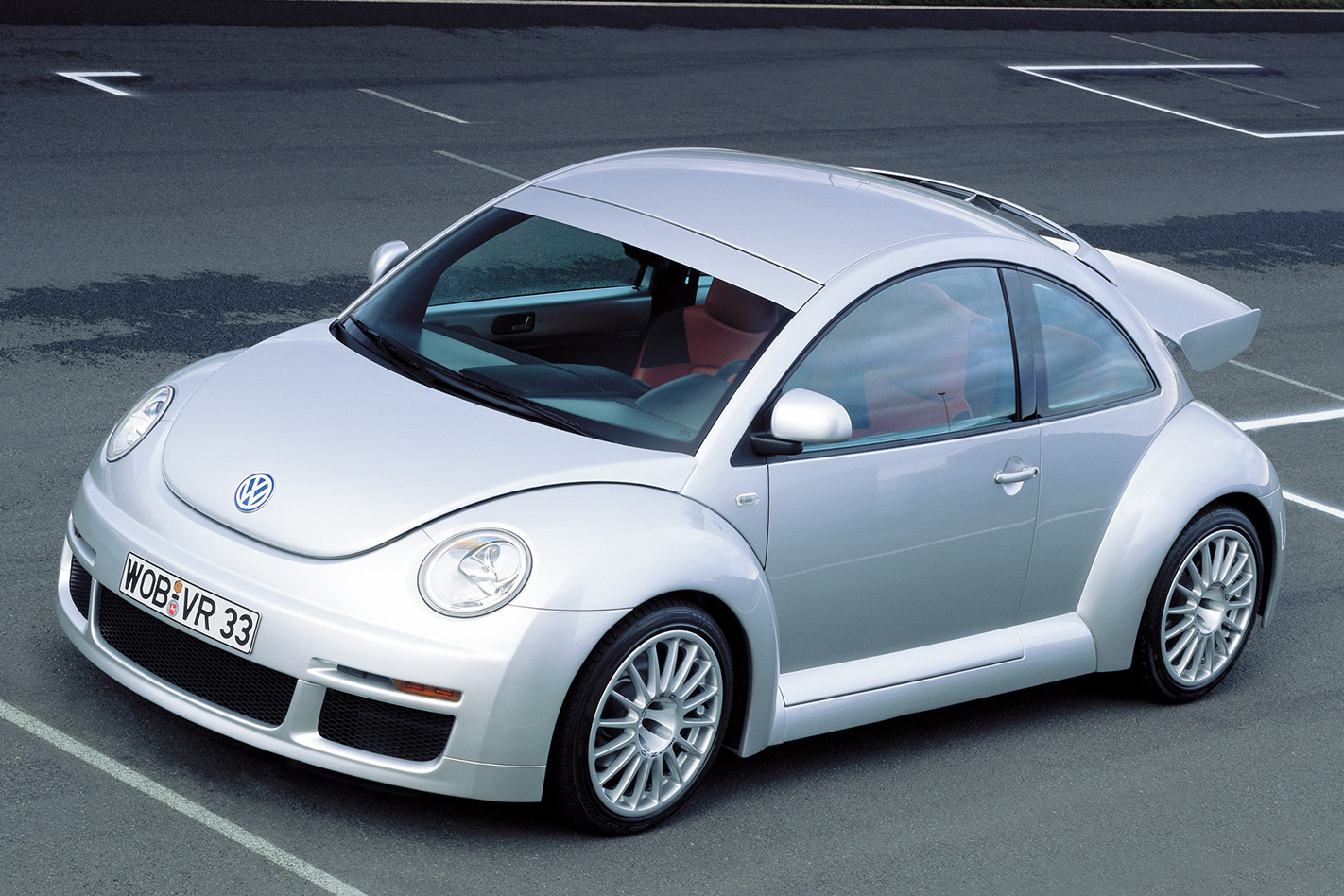
As well as Volkswagen and Audi, versions of the VR6 powerplant were used by Porsche in the Cayenne, Skoda in the Superb, Ford in the first-gen Galaxy, Mercedes-Benz in the V280, Artega with its GT and even Winnebago, who plumbed it into their Rialta, Vista and Itasca Sunstar utes. Back in 2010, Horex even fitted a supercharged VR6 to a motorbike.
The narrow-angle theme developed from the VR6 too, the Volkswagen Group creating W8, W12 and W16 engines, the latter being reserved exclusively for Bugatti in its Veyron and Chiron models. This engine creates a 90-degree V by using two VR8 banks.
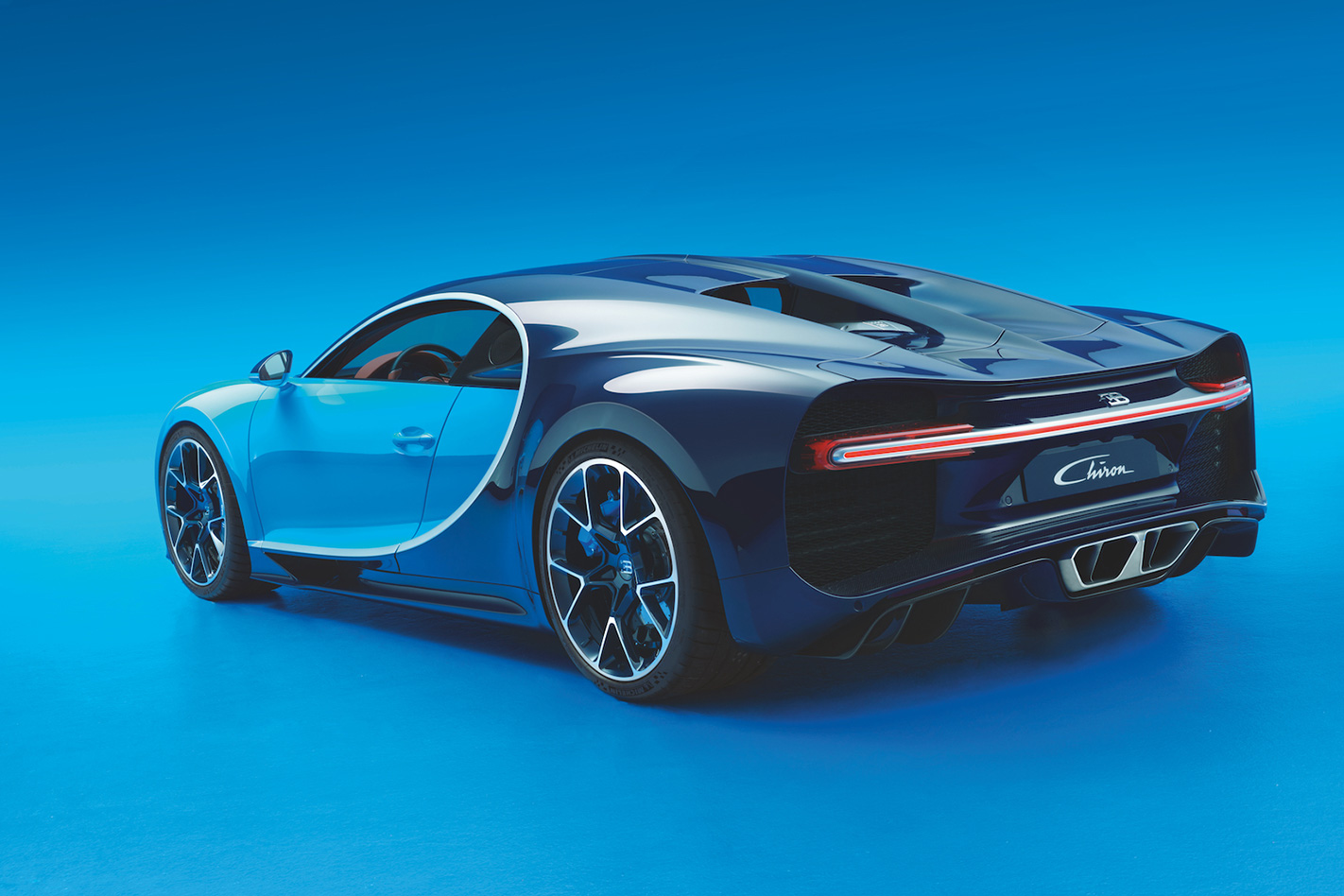
With the improved economy, emissions and torque response of smaller capacity turbo fours increasingly elbowing the VR6 aside, the writing has long been on the wall for this characterful engine with its unique sound signature. Australia never really enjoyed the full onslaught of VAG’s VR6 assault in the early Nineties, but we’re a nation who loves a good six-pot. We’ll miss it.
The Mitsubishi Outlander plug-in hybrid (PHEV) range has received the brand’s fresh ‘Dynamic Shield’ looks while also getting a lower entry price. Mitsubishi Outlander PHEV buyers now have two specification levels to choose from: the new $45,990 entry-level Outlander ES (which replaces the LS) and the $53,990 Outlander Exceed.
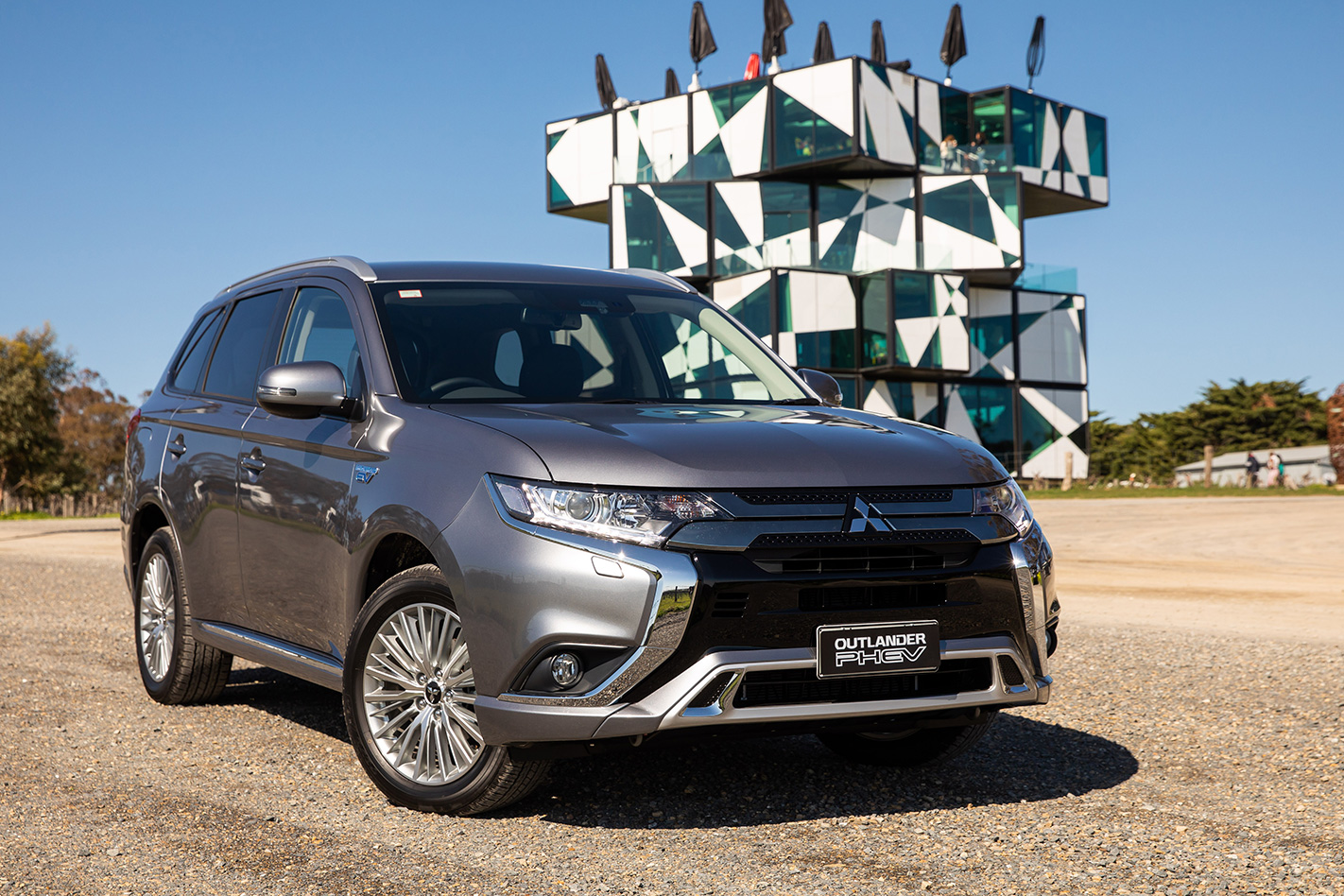
The new Outlander ES lowers the price of entry compared to the old LS by $4500. The Exceed is $1500 cheaper.
More Mitsubishi Outlander news
The Mitsubishi Outlander PHEV currently has no direct rival in the plug-in hybrid SUV market. But not for long; newcomers like the Hyundai Kona EV and Toyota RAV4 Hybrid could change that. Electric vehicle buyers may also consider the Hyundai Ioniq and Nissan Leaf small hatchbacks to be rivals.
Both Outlander models are powered by a 2.0-litre petrol engine which, in combination with two electric motors, provides power to all four wheels. Mitsubishi Motors Australia elected to not include the larger, more powerful 2.4-litre engine offered in Europe.
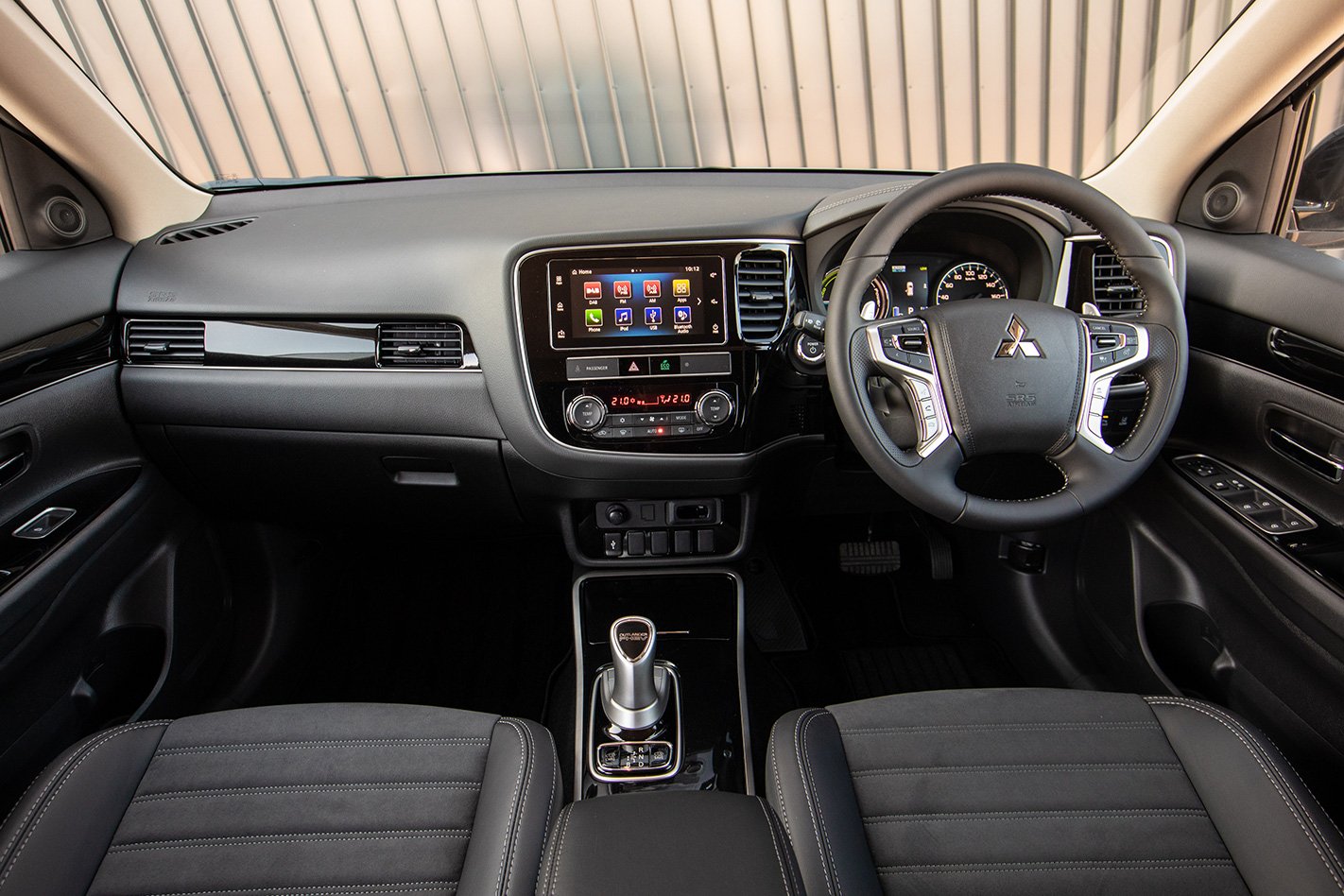
The new Mitsubishi Outlander PHEV range starts off with the entry-level Outlander ES which includes new leatherette and microsuede seat trim, new front and rear bumper styling, 18-inch alloy wheels and one-touch power windows. An optional Advanced Driver Assistance Systems (ADAS) package is available on the ES for $1500. ADAS includes forward collision mitigation, adaptive cruise control, automatic high beam and lane departure warning.
The Outlander PHEV Exceed adds to the Outlander LS’s equipment levels with a 360-degree multi-view parking camera, higher grade of leather upholstery, carbon fibre-look dash inserts, black headliner, lane change assist and rear cross traffic alert as standard.
Inside, both Outlander PHEVs now have new front seats designed to be more comfortable, one-touch power windows, soft leather-look centre console and rear seat air-vents.
Mitsubishi claims modifications to the suspension improve ride comfort and body control.
Pricing
- Mitsubishi Outlander PHEV ES: $45,990
- Advanced Driver Assistance Systems (ADAS) pack: $1,500
- Mitsubishi Outlander PHEV Exceed: $53,990
The Mitsubishi Eclipse Cross range has officially dipped below the $30K mark thanks to the release of new entry-level ES grade, which takes up position at the bottom of the Eclipse Cross family tree and a retail price of $29,990.
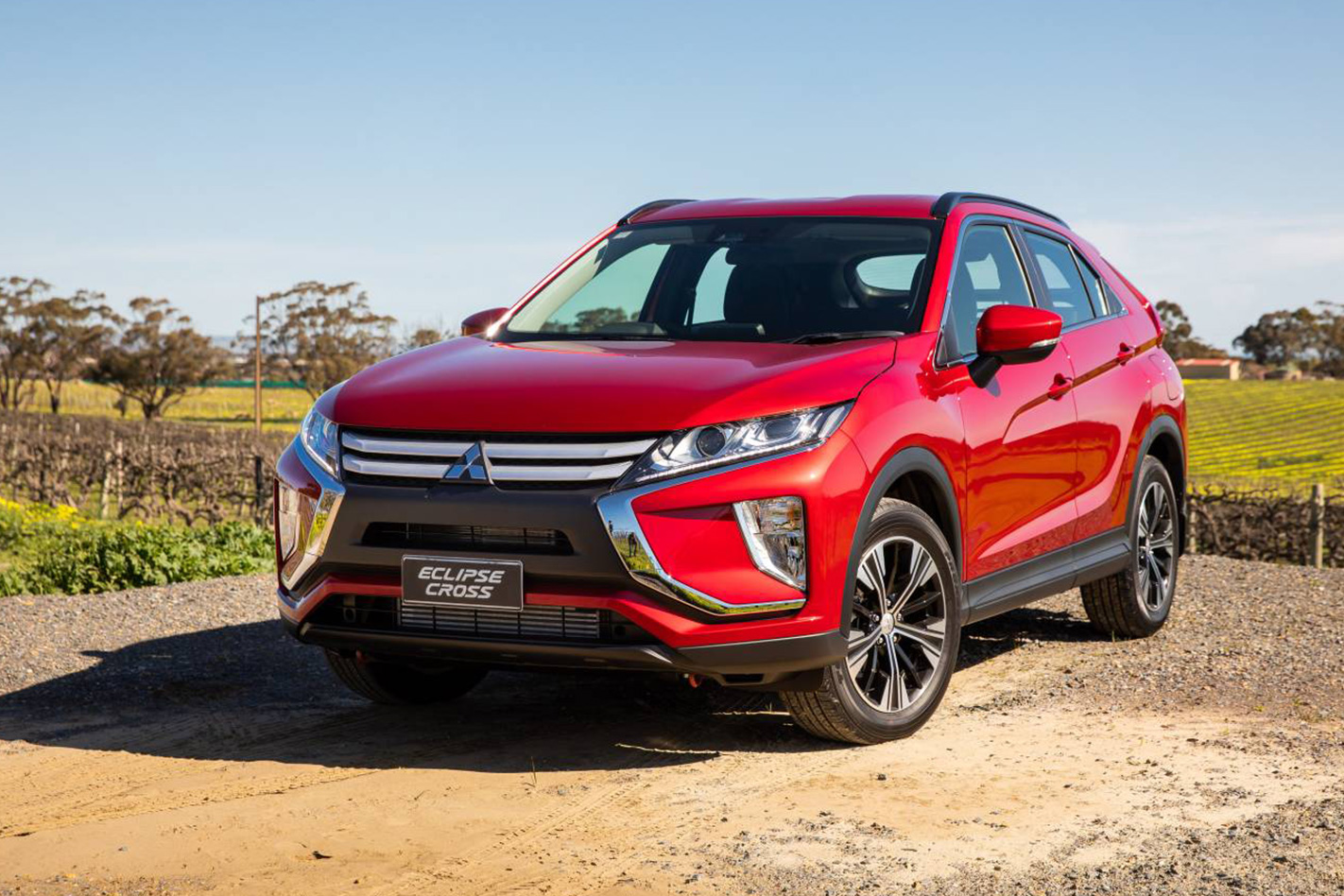
However as far as price drops go, it’s a modest one. The existing Eclipse cross range only launched locally at the start of this year, and the previous base-grade Eclipse Cross LS retailed for $30,500 – just $510 more than the new ES. That said, the LS – now the mid-grade variant – moves up in price by $1490 to sit at $31,990.
The Eclipse Cross Exceed and Exceed AWD, meanwhile, retain their $36,000 and $38,500 price points.
Key standard equipment for the Eclipse Cross ES includes autonomous emergency braking, seven airbags, automatic high beam headlights, LED daytime running lamps, a reversing camera, front fog lamps, 18-inch alloys, touchscreen infotainment and six speaker audio.
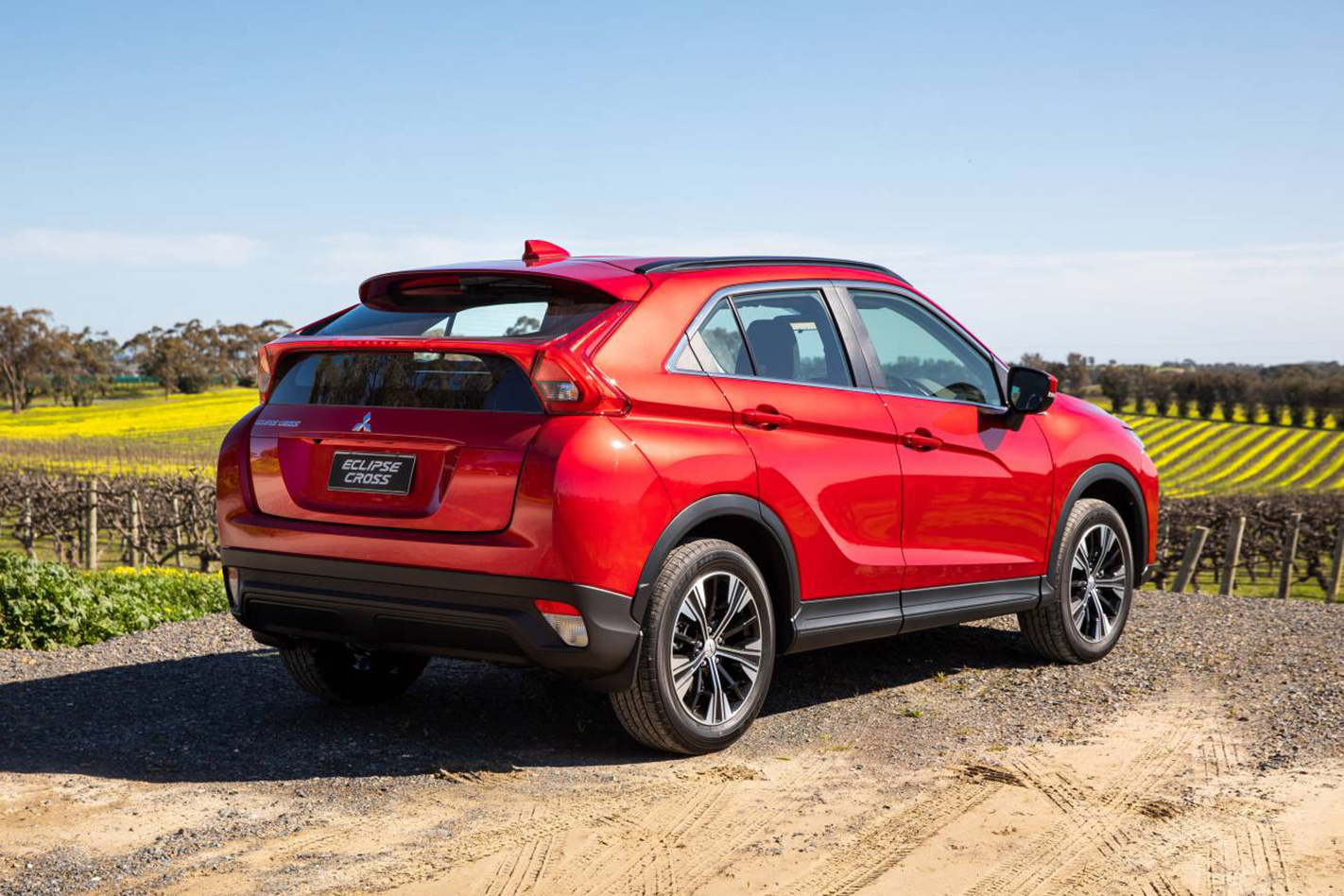
As with all other Eclipse Cross models, power comes from a 1.5-litre direct injected turbo inline four-cylinder petrol engine, with drive taken to the ground via a continuously-variable automatic transmission. Fuel economy is a claimed 7.3L/100km and the ES is strictly front-wheel drive; the top-grade Exceed is the only variant to be offered with all-wheel drive as an option.
PRICING
- Mitsubishi Eclipse Cross ES FWD – $29,990
- Mitsubishi Eclipse Cross LS FWD – $31,990
- Mitsubishi Eclipse Cross Exceed FWD – $36,000
- Mitsubishi Eclipse Cross Exceed AWD – $38,500
If there’s good and bad in everyone, as John Lennon insisted, it’s easy to spot the delineation in the Maserati Quattroporte.
This review was originally published in MOTOR’s June 2007 issue
The good with the Quattroporte Automatic is that the car is now complete. The bad is that it took Maserati so very long to fit it with the gearbox it should have had back in 2003.
The ZF six-speeder it now carries is one of a raft of upgrades, but it’s the most critical one. Some journos have claimed it’s the same unit as you’ll find in a tired Falcon taxi, but that’s like saying beer’s the same as water ’cos they both come on tap.
For starters, there’s no way the Falcon version is aggressive enough, nor could it cope with the Quattroporte’s appetite for revs. And nor, when you’ve had your fun and are settling back into life on the waft, is the more basic version of the gearbox smooth enough on the upshifts.
Fire it up, and where the MDS fiddle-farts around with the computer, tweaking the twin-plate clutches just as you’re manoeuvring in and out of carparks, the auto just takes your thoughts on board and does as it’s bloody well told. No more jerking, no more shuddering, no more metallic bangs as cogs clang home and no more noise as the clutch surfaces wear down.
In short, the key to the auto isn’t that it stands out, but rather that you don’t notice it much at all. It becomes an invisible link between your foot and the treads, where the MDS often felt like a hurdle to jump over.
While it’s demonstrably better trickling through traffic, it’s only ever a plucked paddle away from a shorter gear and an aggressive charge. Which is how the Quattroporte always should have been. And yet… sixth gear is taller than it was, so the fuel economy is better again (it’s had a 26 percent improvement in two years) and its shift times run at close to the MDS’s claims.
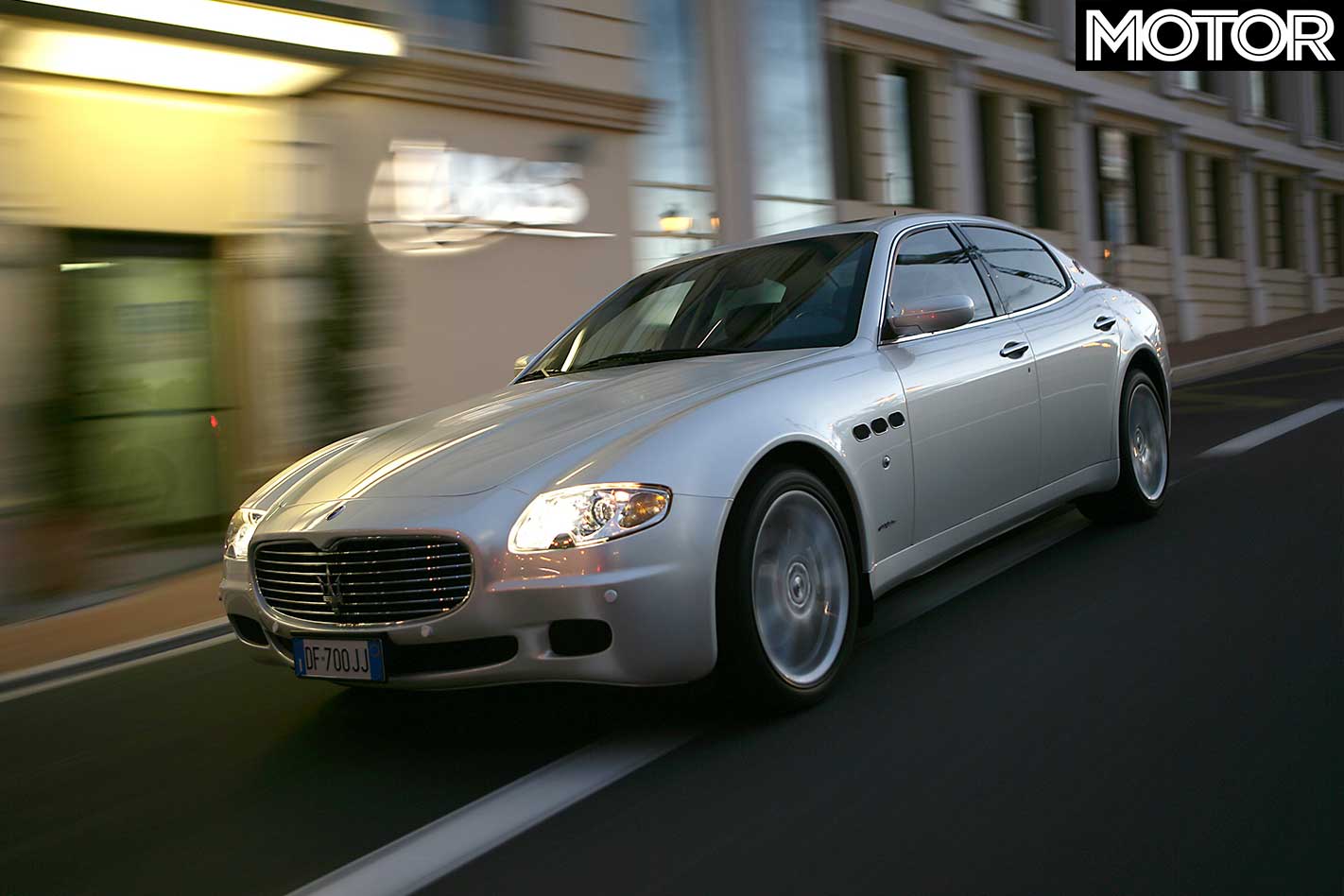
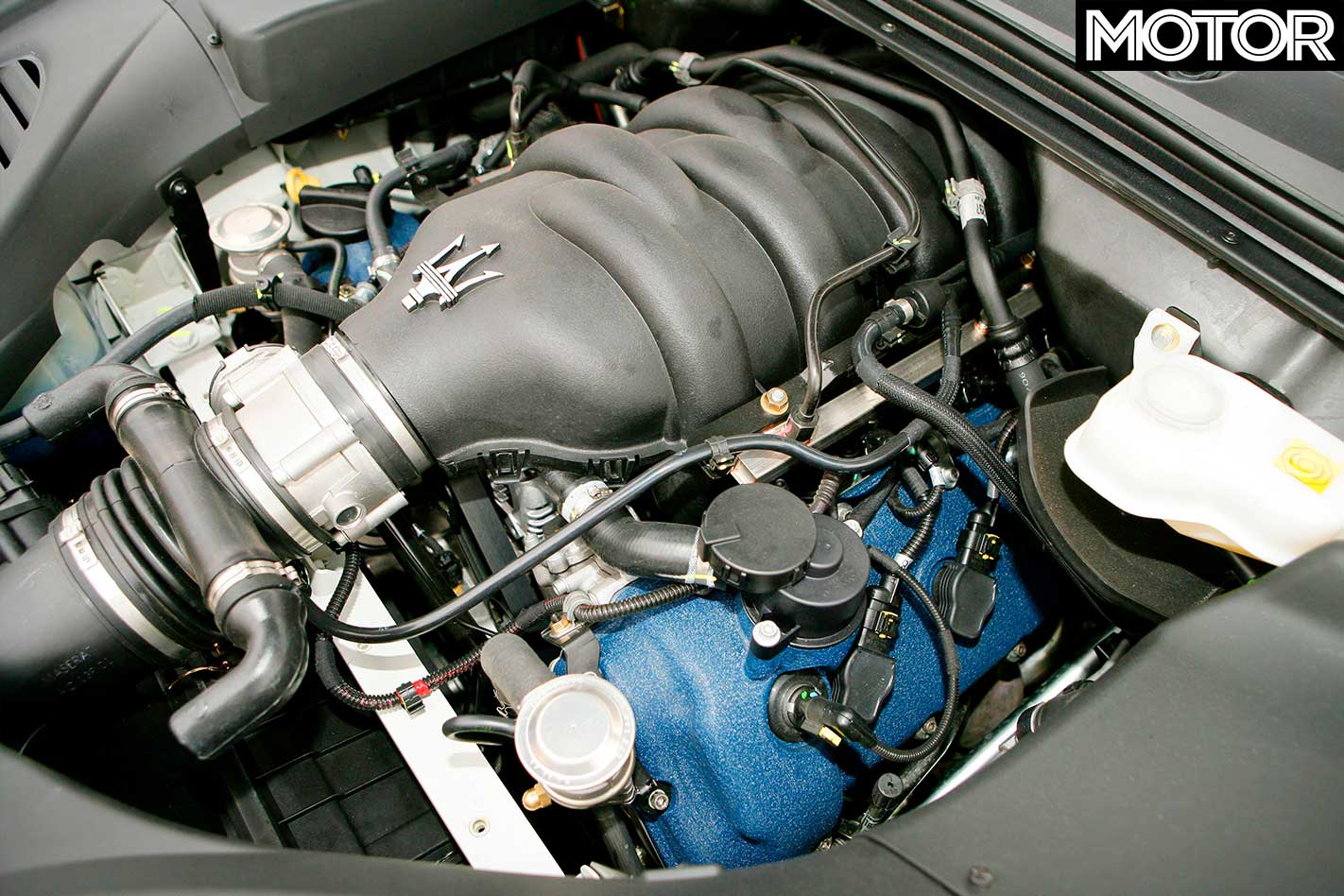
It’s also picked up more torque in the shift from a dry- to a wet-sump lubrication arrangement, and that torque arrives earlier, too.
And that’s the real beauty. Maserati claims a 10 percent ride improvement thanks to new dampers and new bushes, but point it at a series of corners and the Skyhook active suspension immediately reacts to stiffen the chassis. It handles.
It’s the most chuckable thing you could imagine at near two tonnes, and it stops, too. The brakes have been upgraded, with four-piston calipers now squishing the back rotors, and Maserati claims it will decelerate at up to 1.24g. In layman’s terms, that’s right up there in Porsche 911 country.
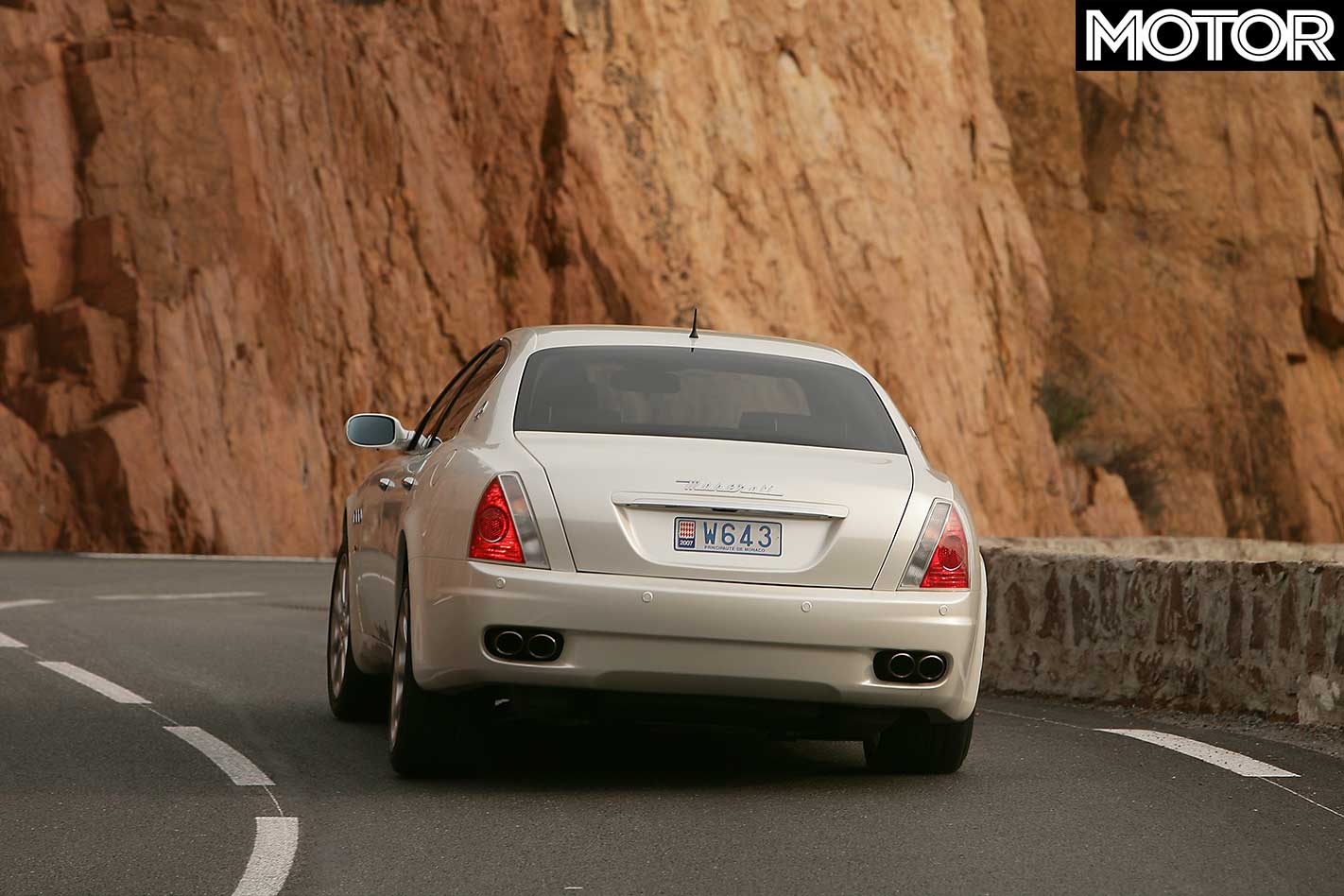
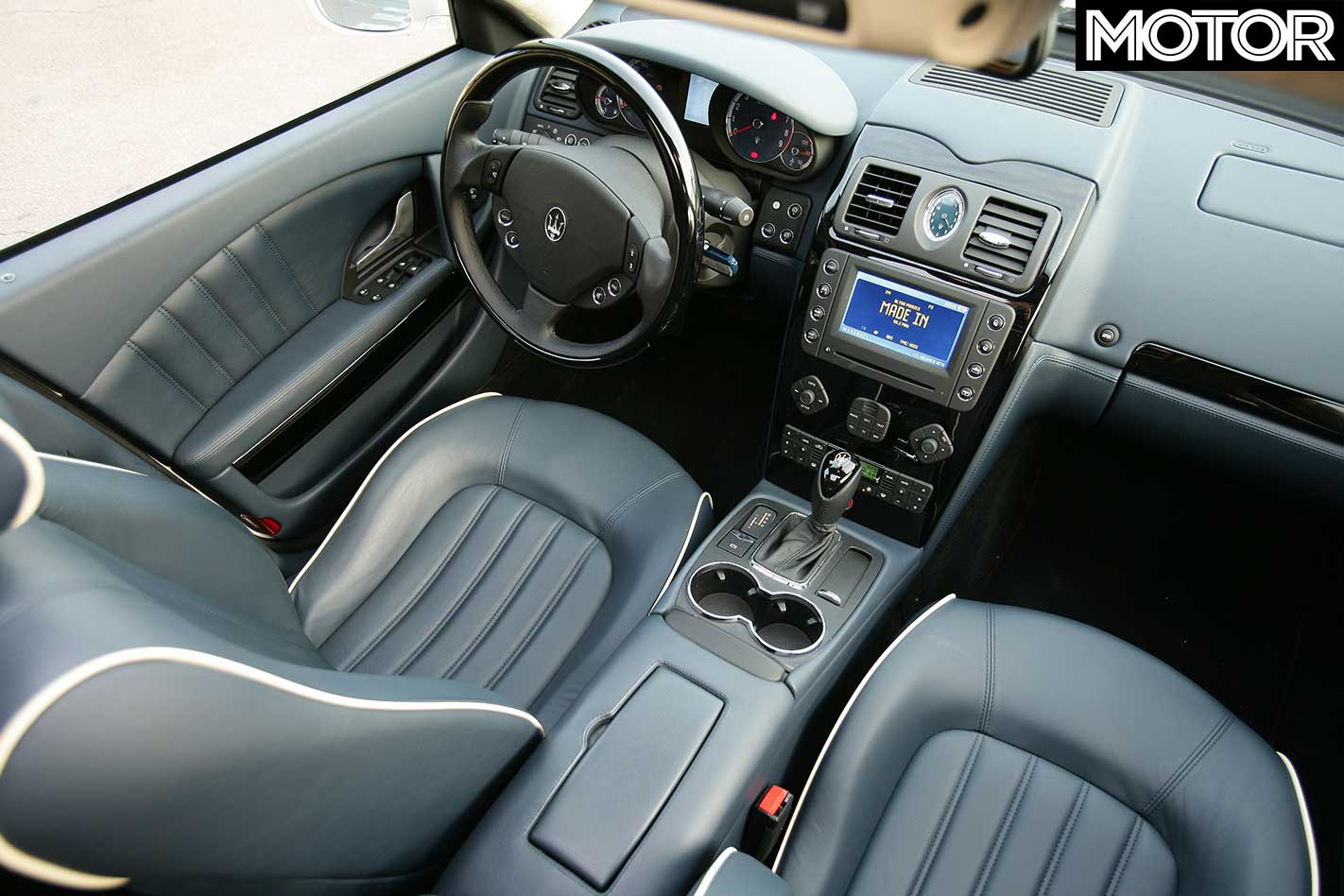
While the MDS is still optional, the auto also gets an upgraded interior, which includes a new console, a normal Prindle (with a classily trimmed wood-and-leather stick) and a pair of conventional cupholders. It even brings with it an electric handbrake, while an overhaul of its HVAC hard- and software has given it a 50 percent boost in the cabin’s airflow, too.
There was only ever one thing that needed urgently fixing in the Quattroporte, and Maserati has fixed it, and much more besides.
FAST FACTS 2007 Maserati Quattroporte Engine: 4244cc V8, DOHC Power: 294kW @ 7000rpm Torque: 451Nm @ 4500rpm Weight: 1930kg Power-to-Weight: 152kW/tonne 0-100km/h: 5.2sec (claimed) Top Speed: 275km/h Price: $269,000
Likes: The car the Quattroporte should always have been Dislikes: Styling still not to all tastes, Mercedes E63 still quicker and cheaper Rating: 4 out of 5 stars
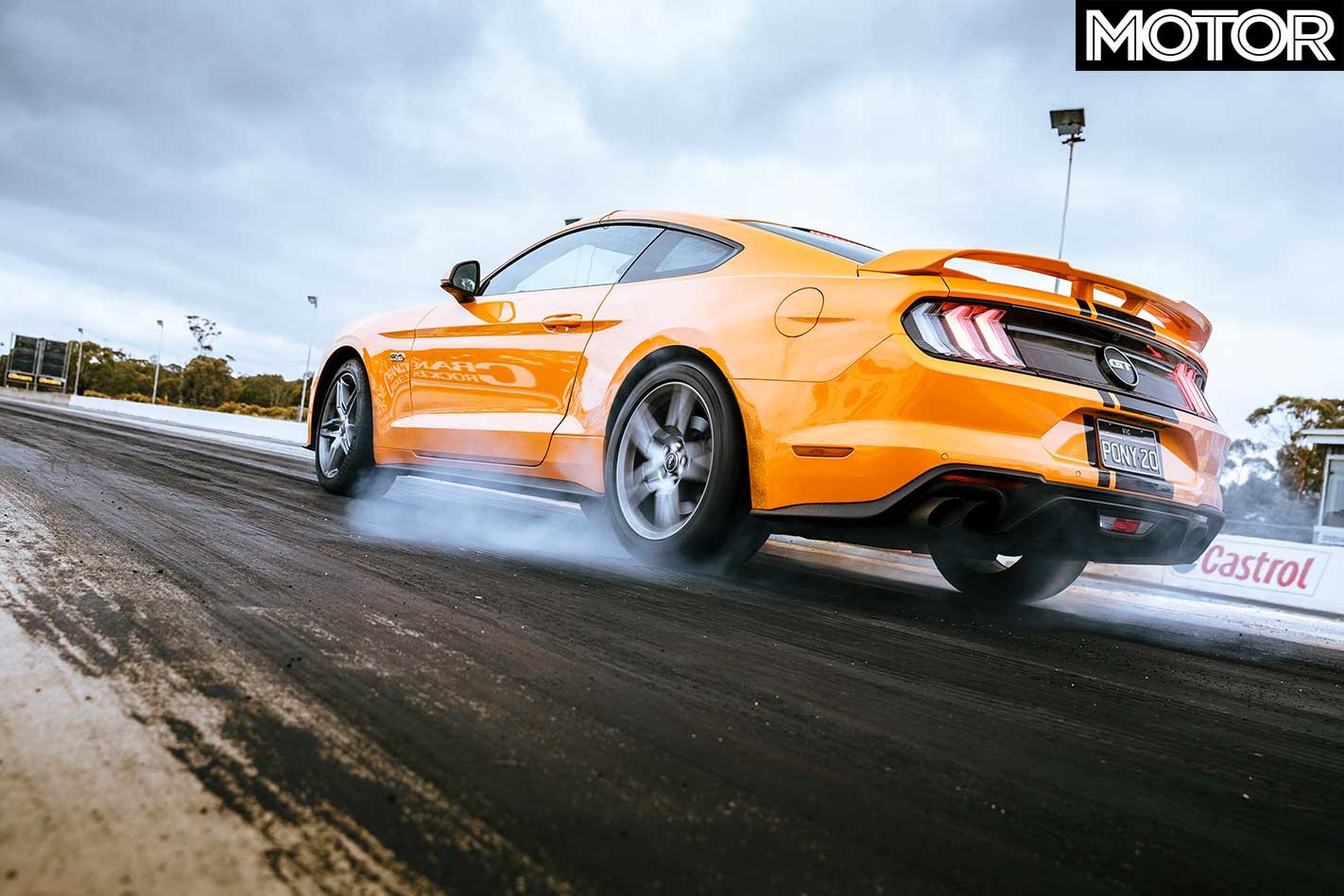
Ford Australia has seen its highest sales figures since this time last year for the Ford Mustang, which was introduced a little over a month ago in 2018 form.
Before August, March 2018 held the year’s highest figure for Mustang sales at 705, but Ford shifted 736 last month, topping that by 31.
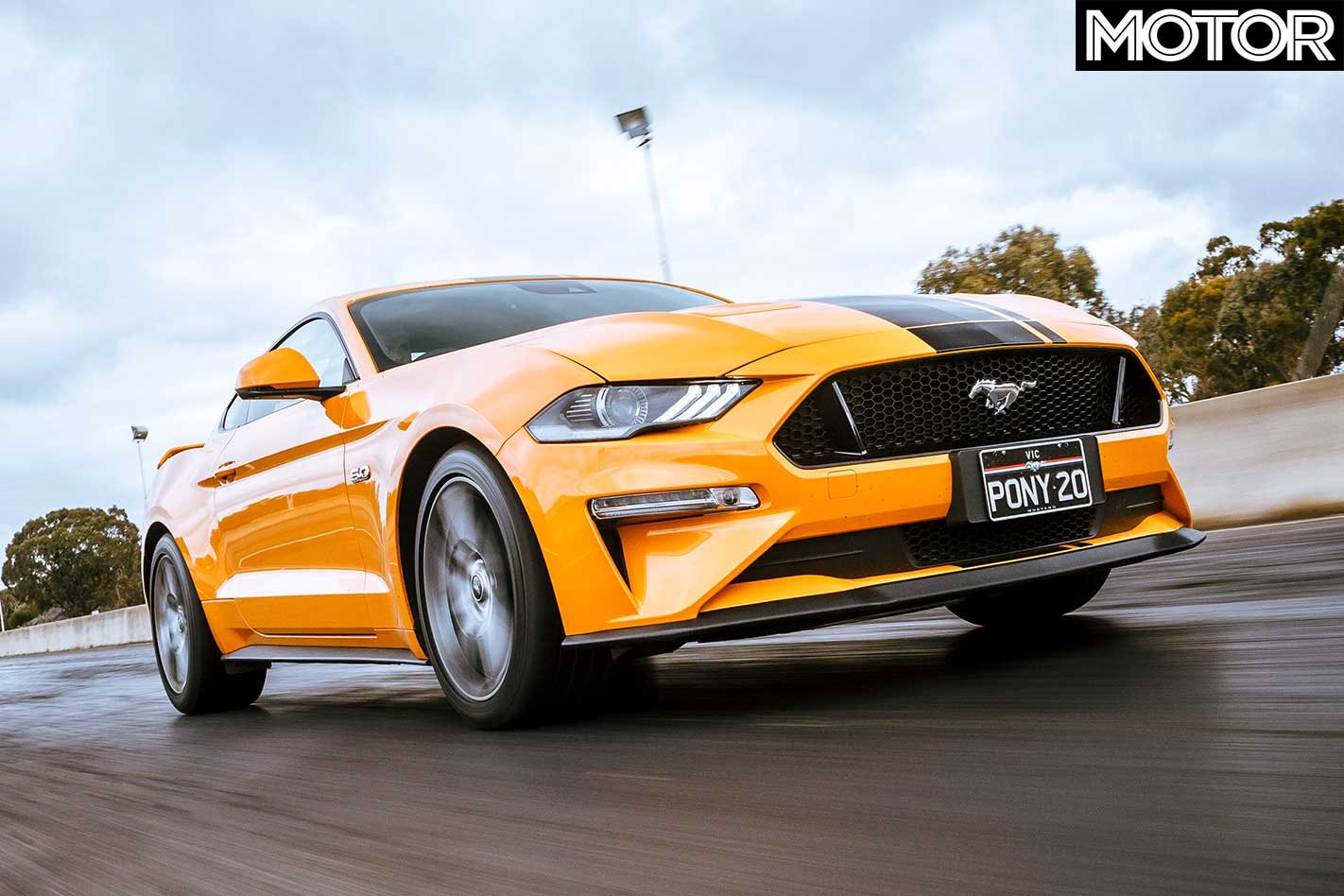
Though it’s unlikely Ford will ever see a repeat of the May/June succession of four-digit figures that it achieved last year, it’s likely the refreshed Mustang will also power Ford’s sales a little harder.
August 2018 also marks the first time overall sales of the Ford Mustang have outstripped overall sales of the Holden Commodore, as VFACTS reports include all Commodores sold whether VFII or ZB.
Where Holden’s Commodore sales totalled 682 units in August, Ford was able to move 52 more Mustangs than that.
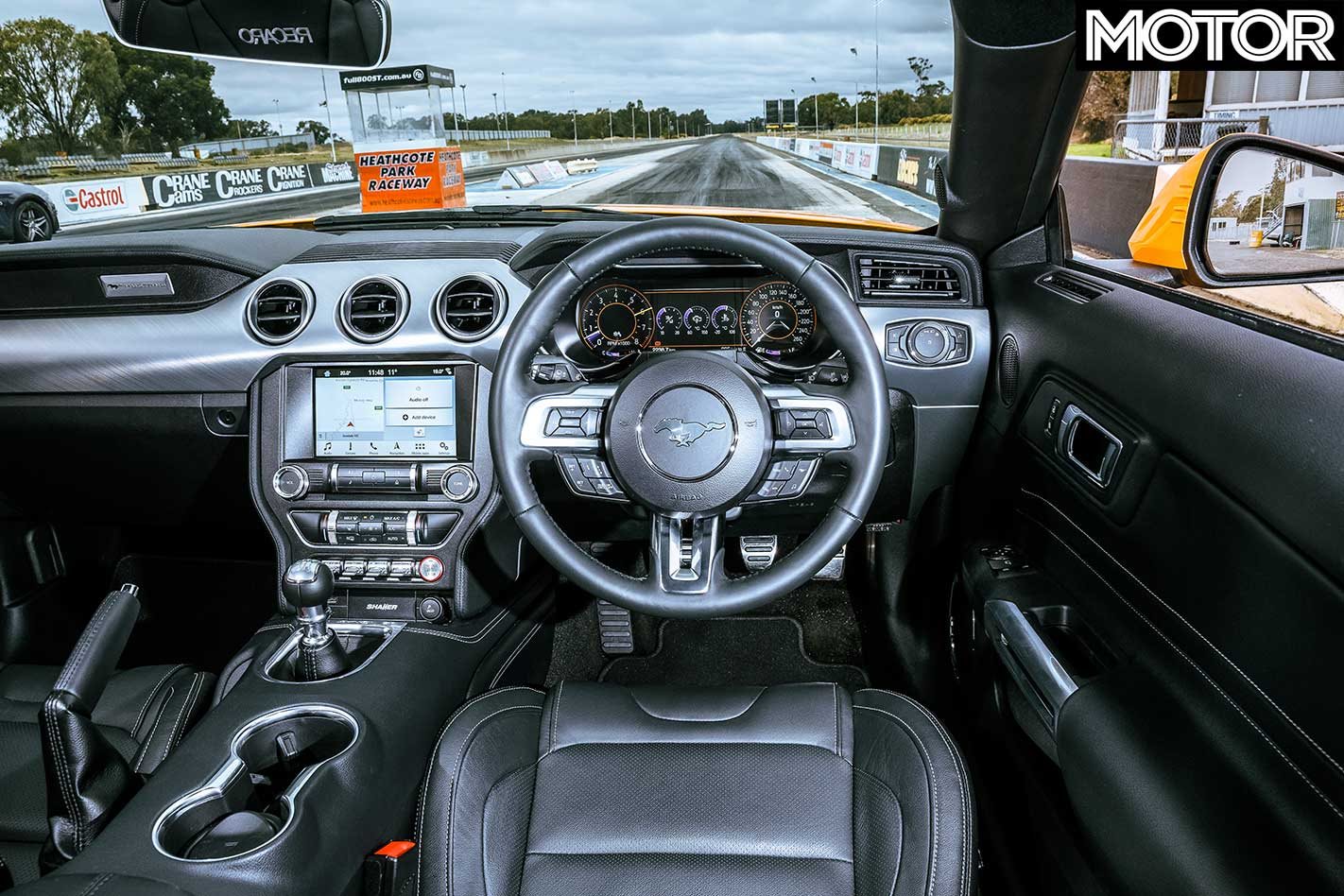
It’s one of the best months Mustang has seen, with only a handful of months topping August 2018 since it went on sale at the end of 2015 – two of those being May ’17 (1351 Mustangs sold) and the June immediately after (1276).
Overall, new car sales in Australia are down 1.5 per cent from the same time last year, with Aussies buying 95,221 new vehicles in August 2018.
In line with the trends we’ve seen lately, passenger cars continue to fall (now by 4793 compared to August ’17), and SUVs march upwards with 3153 over the same month last year.
Despite Ford being a key player in several segments (with Mustang and Ranger doing a lot of heavy lifting), Toyota led the market in August, followed by Mazda and Hyundai.
This was meant to be a review of the 2018 Cooper S, but a booking mix-up landed us with a base Cooper automatic by mistake. No bad thing, as it turns out.
The standard Cooper arguably gets closest to capturing the character of the original. Its thrummy 1.5-litre turbo three-pot sounds suspiciously like an old 911, but ridiculously tall gearing makes the standard manual too slow.
Thankfully, the new seven-speed dual-clutch offers much closer ratios to give the Cooper a bit of verve, yet its lack of outright pace means its entire performance envelope is accessible in almost every situation. Speed is fun, but lack of speed also has its appeal.
Current Minis aren’t as sharp as their predecessors, but accurate steering and light weight ensure you won’t be bored behind the wheel. Stick with the smallest possible wheels and replace the run-flat tyres at the first opportunity and you’ll even enjoy respectable ride quality.
At $29,990 (plus $2500 for the dual-clutch) the Mini is an expensive small car, but it has the swagger to pull it off, with neat touches like the puddle lights and new Union Jack tail-lights, with an interior that’s much classier than more mainstream offerings. If you were sensible you’d buy a Golf, but a Mini is much more fun.
2018 MINI COOPER SPECS: Engine: 1499cc inline-3 turbo, 12v Power: 100kW @ 4500-6500rpm Torque: 220Nm @ 1480-4200rpm Drive: FWD Weight: 1115kg 0-100km/h: 8.0sec (claimed) Price: $29,990
