
MCLAREN has released Australian pricing for its latest addition to the Sports Series family, and if you’re in the market for a 600LT you’ll be asked to stump $455,000 before on-road costs – and the almost endless customisations list.
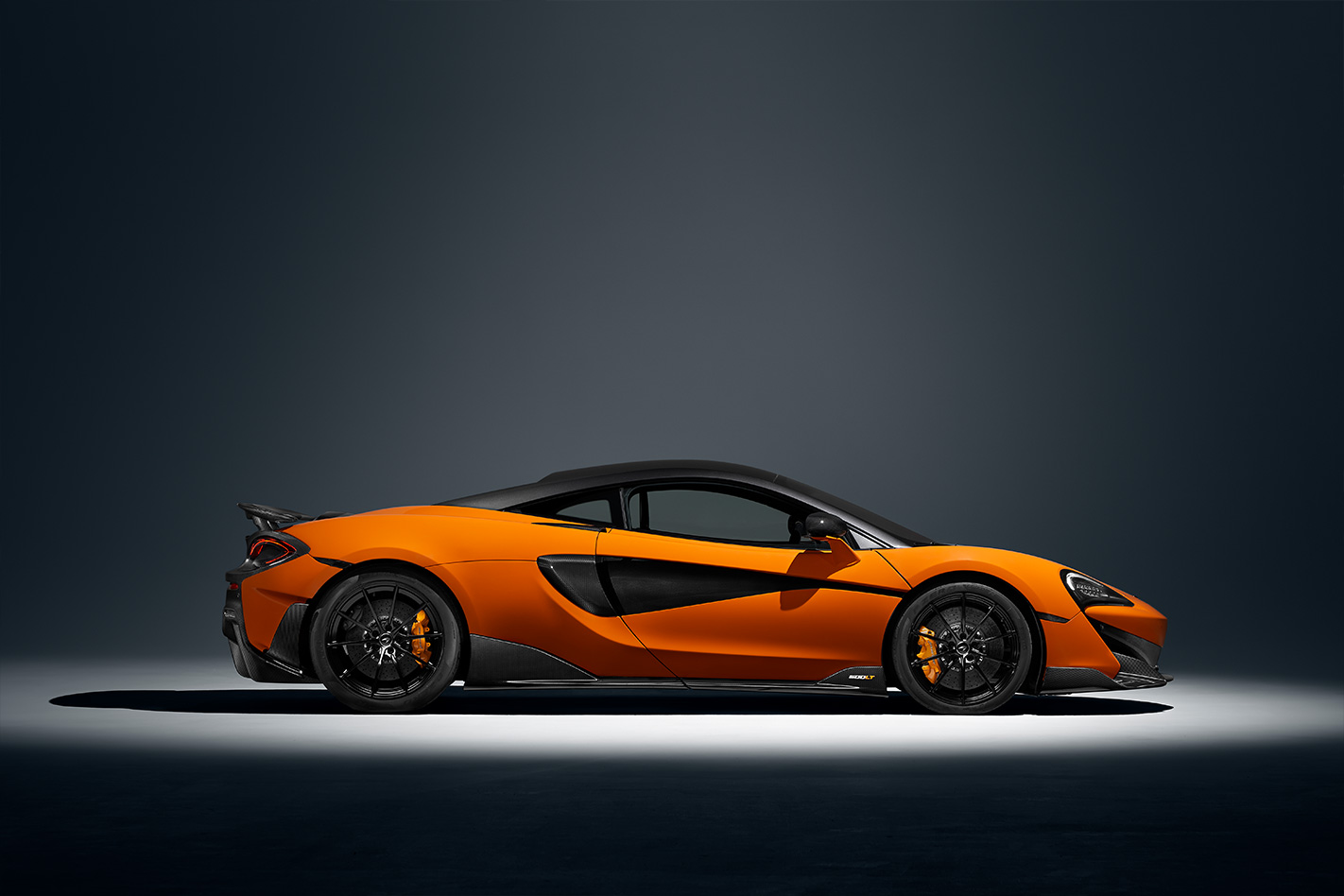
That represents a $60,000 premium over the 570S, which forms the basis of the new 600LT, but includes a host of mods for the extra cash, including a power-up to 441kW/620Nm and a crash diet that slims the kerb weight down to 1356kg.
Pricing positions the mighty Mac significantly cheaper than the $645,700 Porsche 911 GT2 RS but at a premium over its more affordable GT3 RS sibling, which kicks off at $416,500.
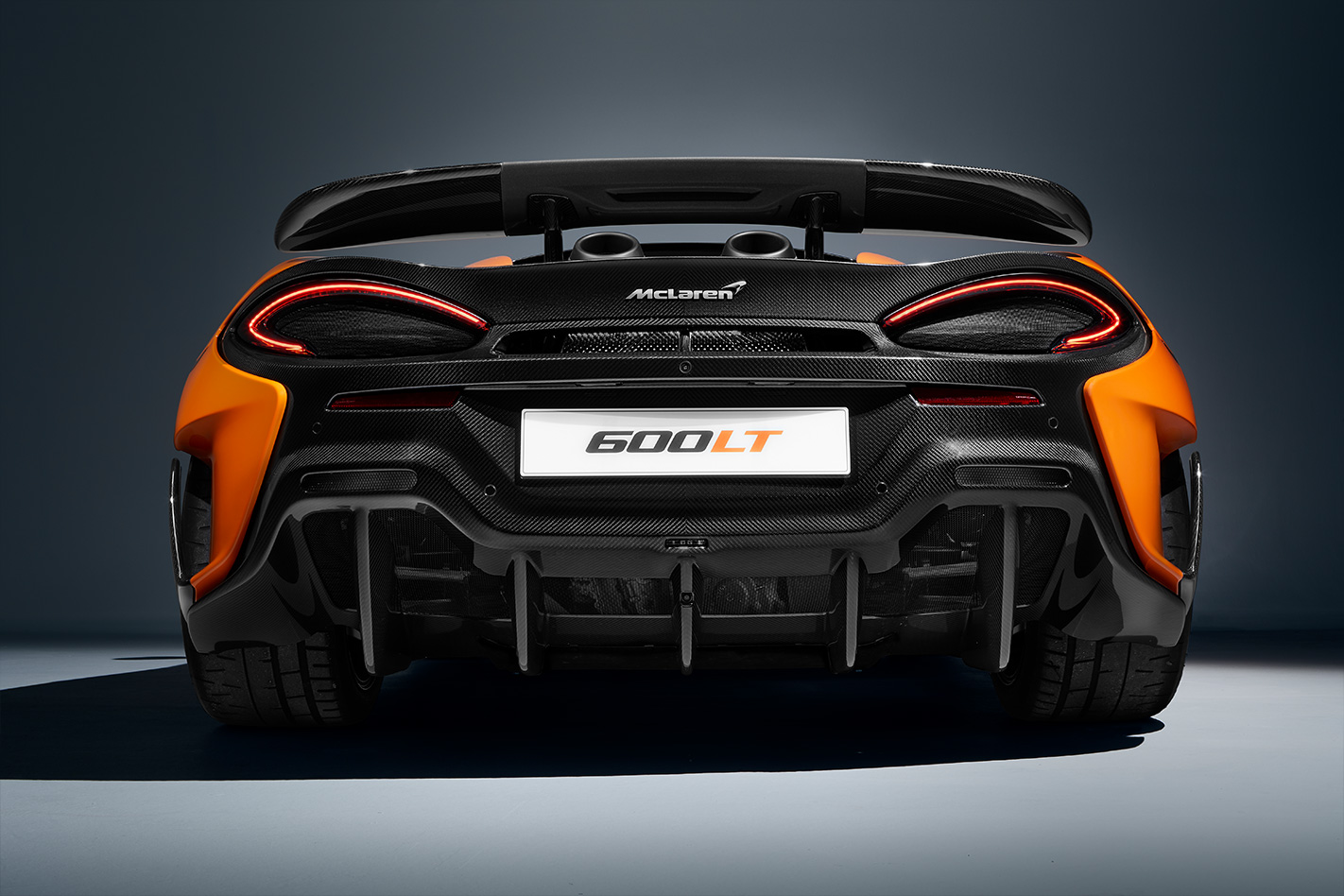
Fans of the McLaren may also be cross-shopping other high-achieving supercars including the $348,711 Mercedes-AMG GT R, Lamborghini’s $483,866 Huracan Performante or the Ferrari 488 Pista which has already effectively sold out in Australia.
Announcement of the 600LT’s pricing follows its first public outing at the Goodwood Festival of Speed over the weekend, where the fittest variant of the McLaren Sports Series demonstrated its ability to accelerate to 100km/h from zero in 2.9 seconds and some serious corner carving ability.
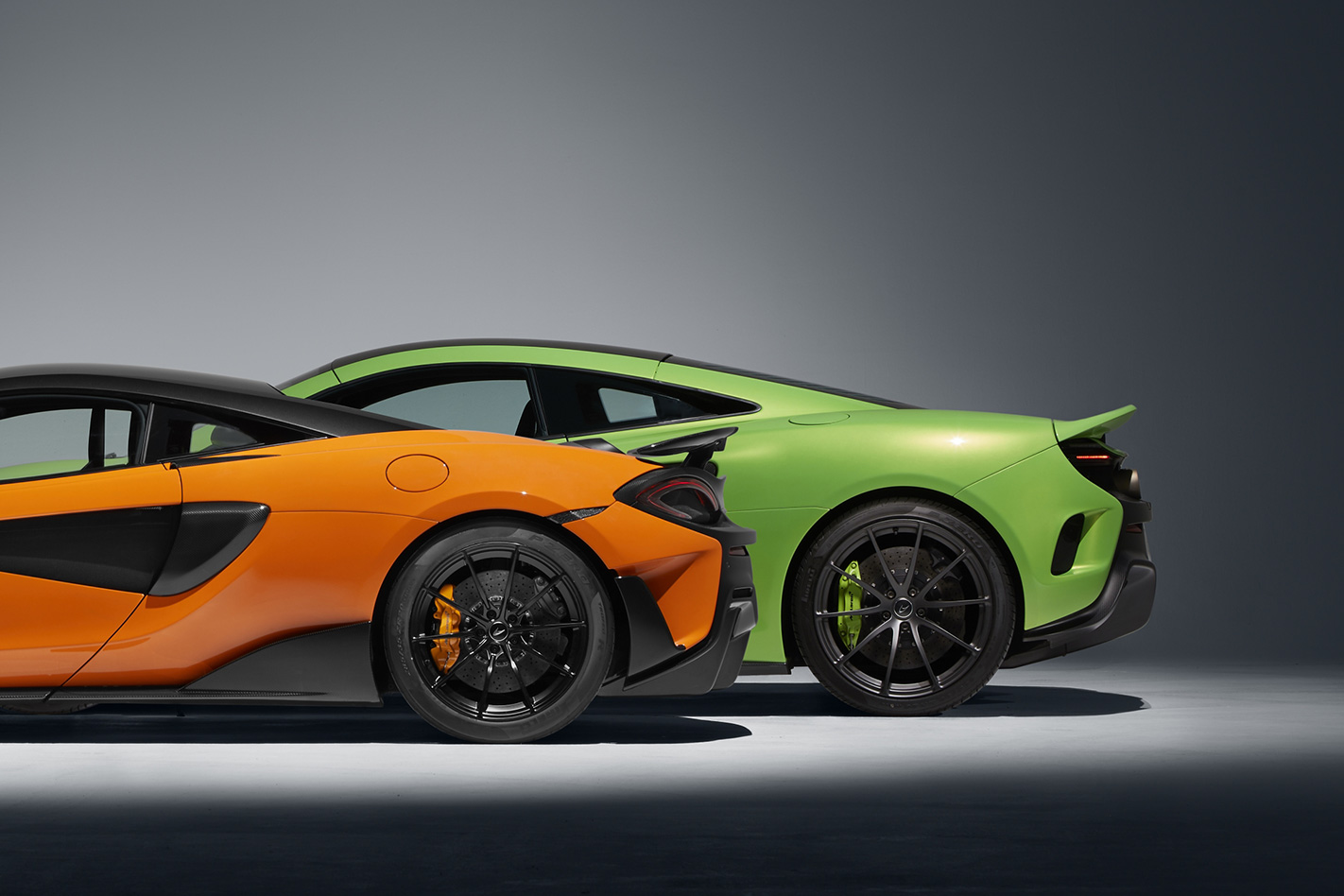
Some deft power oversteer and a little shameless tyre-slaughtering doughnut action kept the crowds happy under the English summer sun.
It added agility is thanks to a combination of lighter and stiffer suspension components and brakes pinched from its 720S sister and the liberal use of cabrbonfibre body components. It also has a pair of top-exit exhausts for, well, why not?
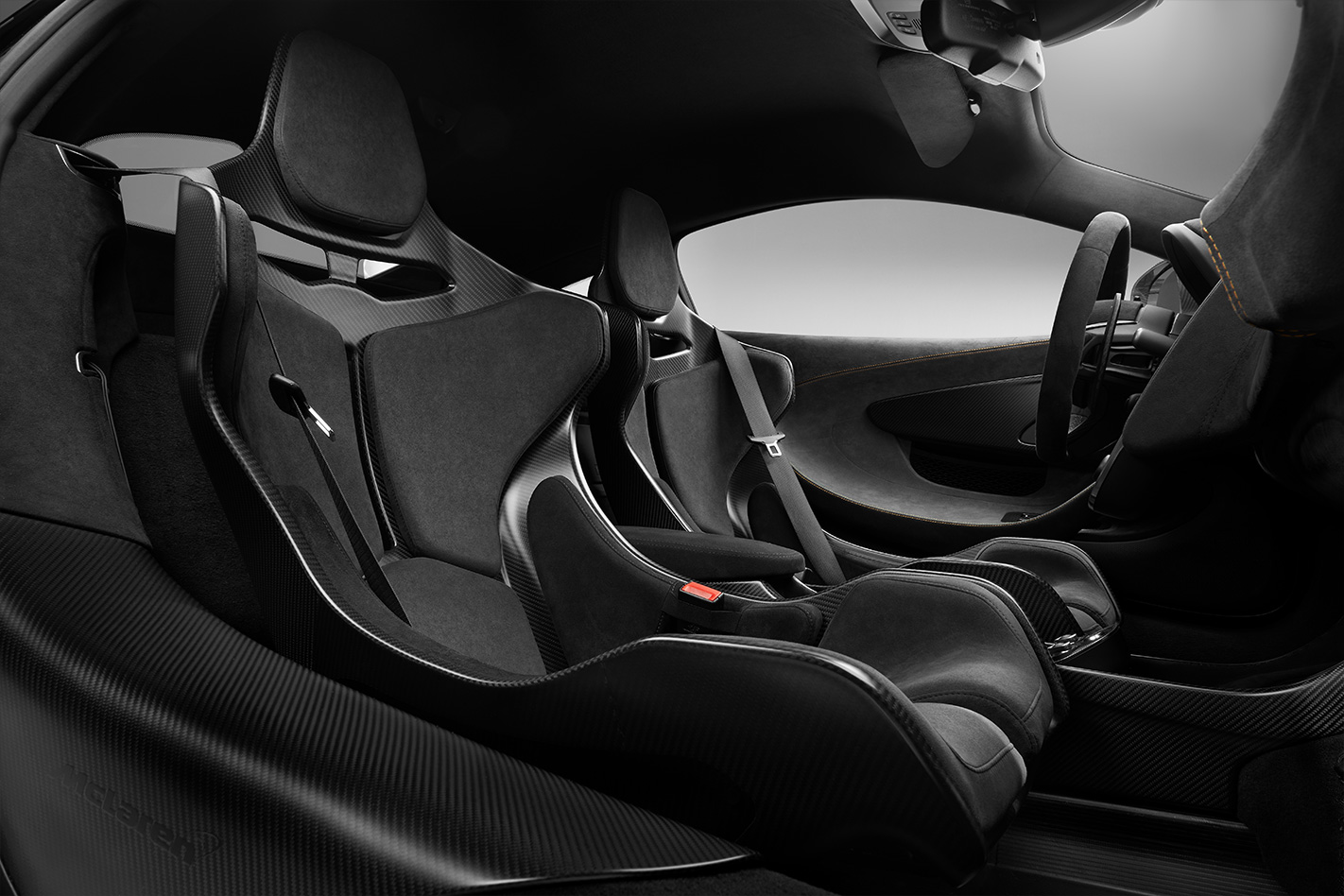
Customers that feel their Longtail is still a little too flabby can opt for the MSO Clubsport pack which trims even more weight with the inclusion of lighter carbonfibre seats, steering wheel, display housings and gear shift paddles. Go for the MSO Clubsport Pro pack and you’ll get a six-point harness.
Although Kia doesn’t plan to shove a V8 in the Stinger anytime soon, it’s at least made an effort to intensify the V6’s growl. For $2600 you can now bolt an optional cat-back system, developed right here in Australia, to the 3.3-litre engine.
This might seem like the piece to complete the Stinger puzzle since the stock set-up would sound a little breathless and thrashy if it wasn’t for some artificial noise coming through the speakers in the interior.
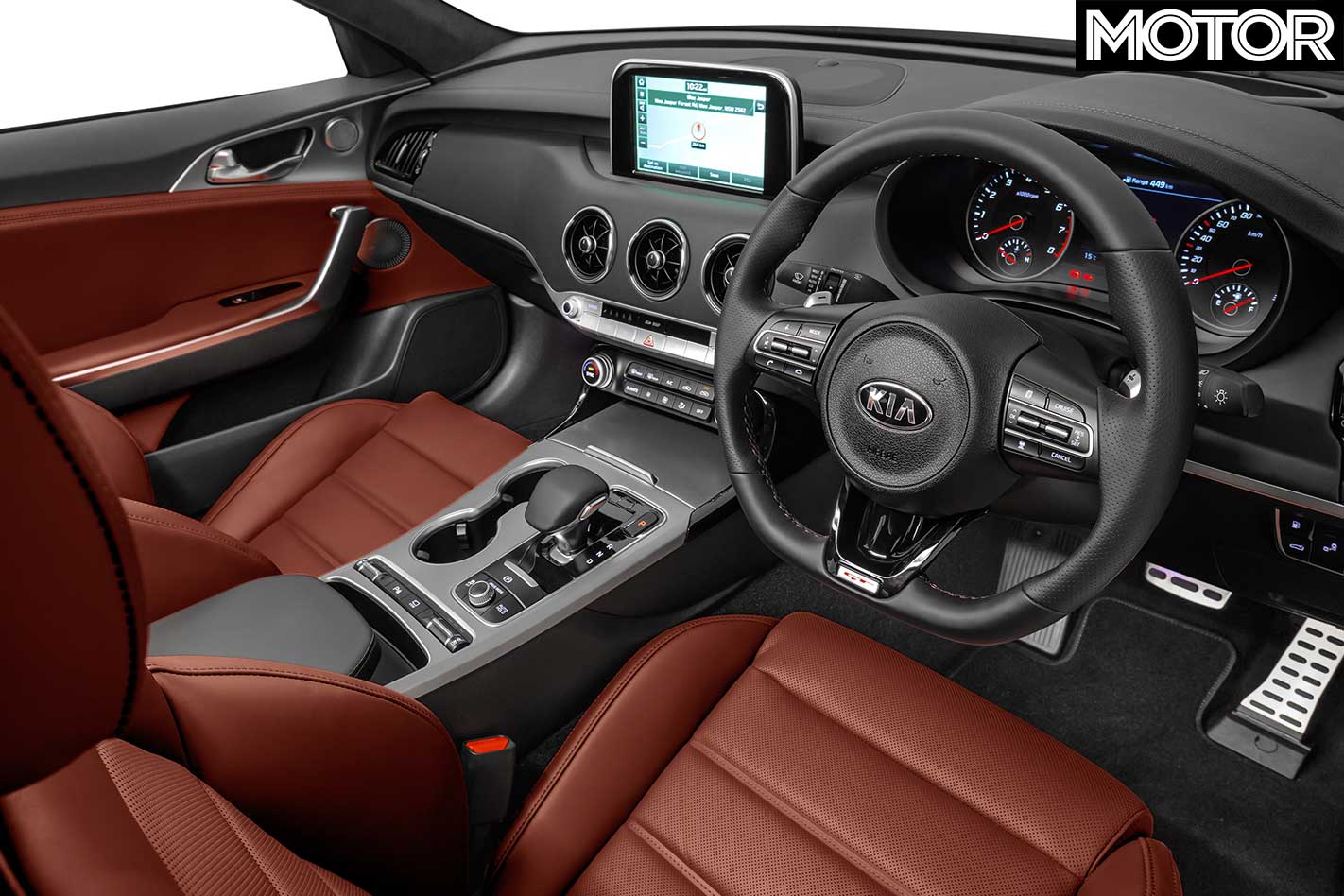
Unfortunately, though, this exhaust doesn’t deliver the note the V6 Stinger deserves, not to our ears anyway. There’s a fair bit of low-frequency waffle from the system at all times.
The automatic doesn’t help, either, in its determination to knock you out off manual mode constantly and keep the revs from reaching 4000-5000rpm, where it sounds a bit like a BMW N55. Even there its scream is muffled by a resonance that sounds far from OEM; there’s never a crispness to it.
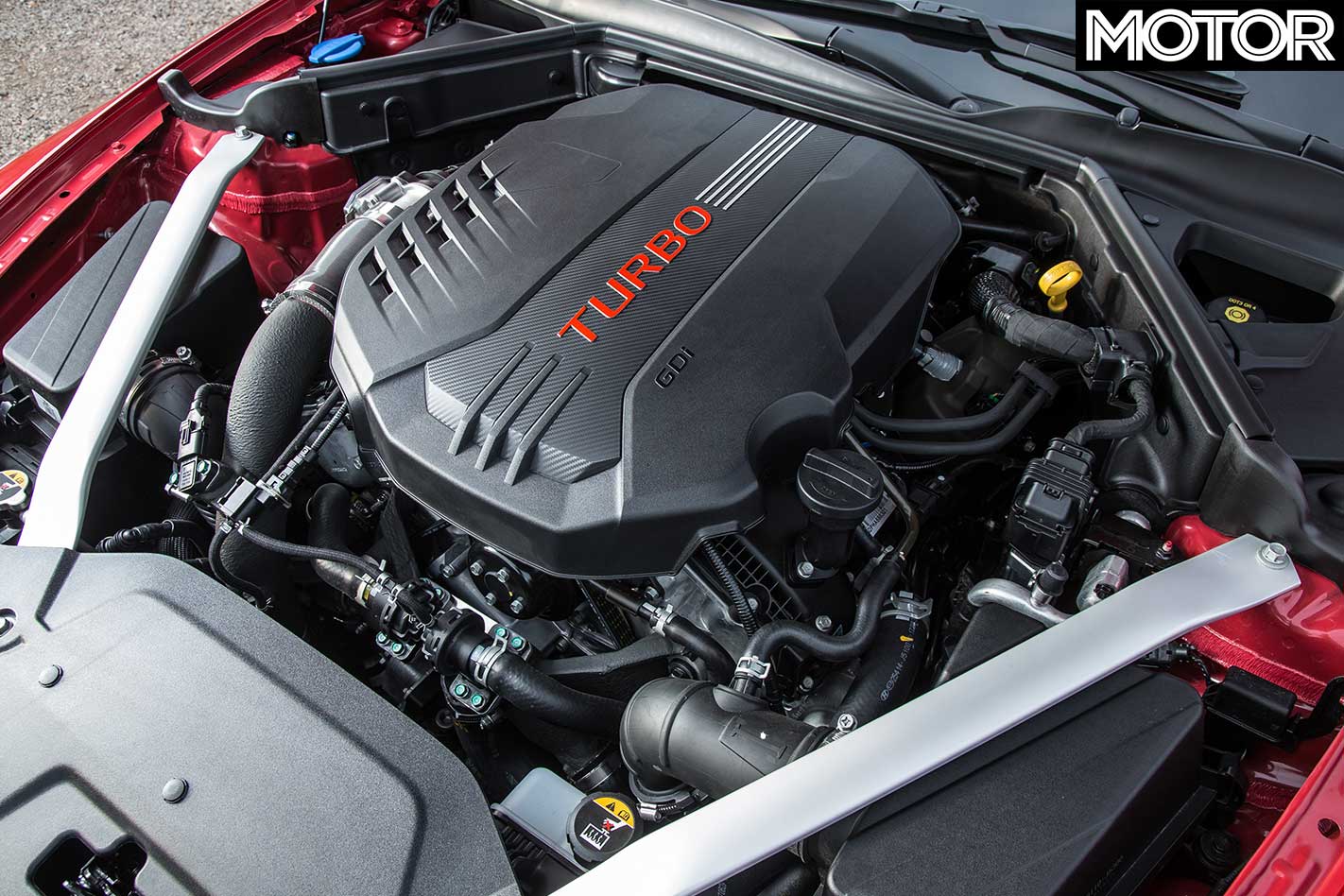
We didn’t expect Kia to carve half a Lambo V12 from just a cat-back system, but based on our drive of the prototype version months ago, and hearing videos of aftermarket systems, we did expect better.
Hopefully Kia can improve the second time around on the exhaust its developing for its four-cylinder, expected Q4.
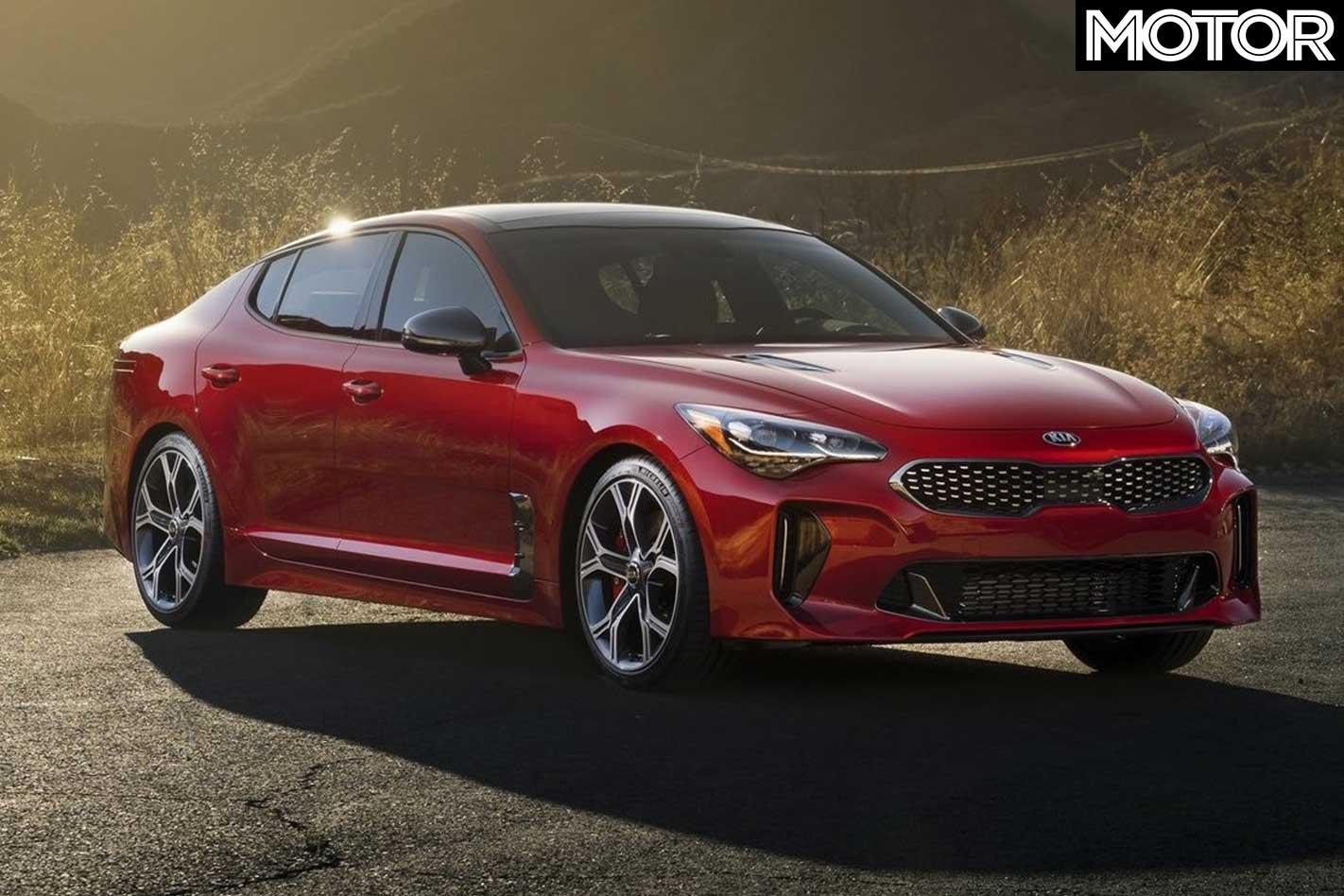
2018 KIA STINGER GT SPECS:
Engine: 3342cc V6, DOHC, 24v twin-turbo Power: 272kW @ 6000rpm Torque: 510Nm @ 1300rpm Drive: rear-wheel Weight: 1780kg Price: $55,990
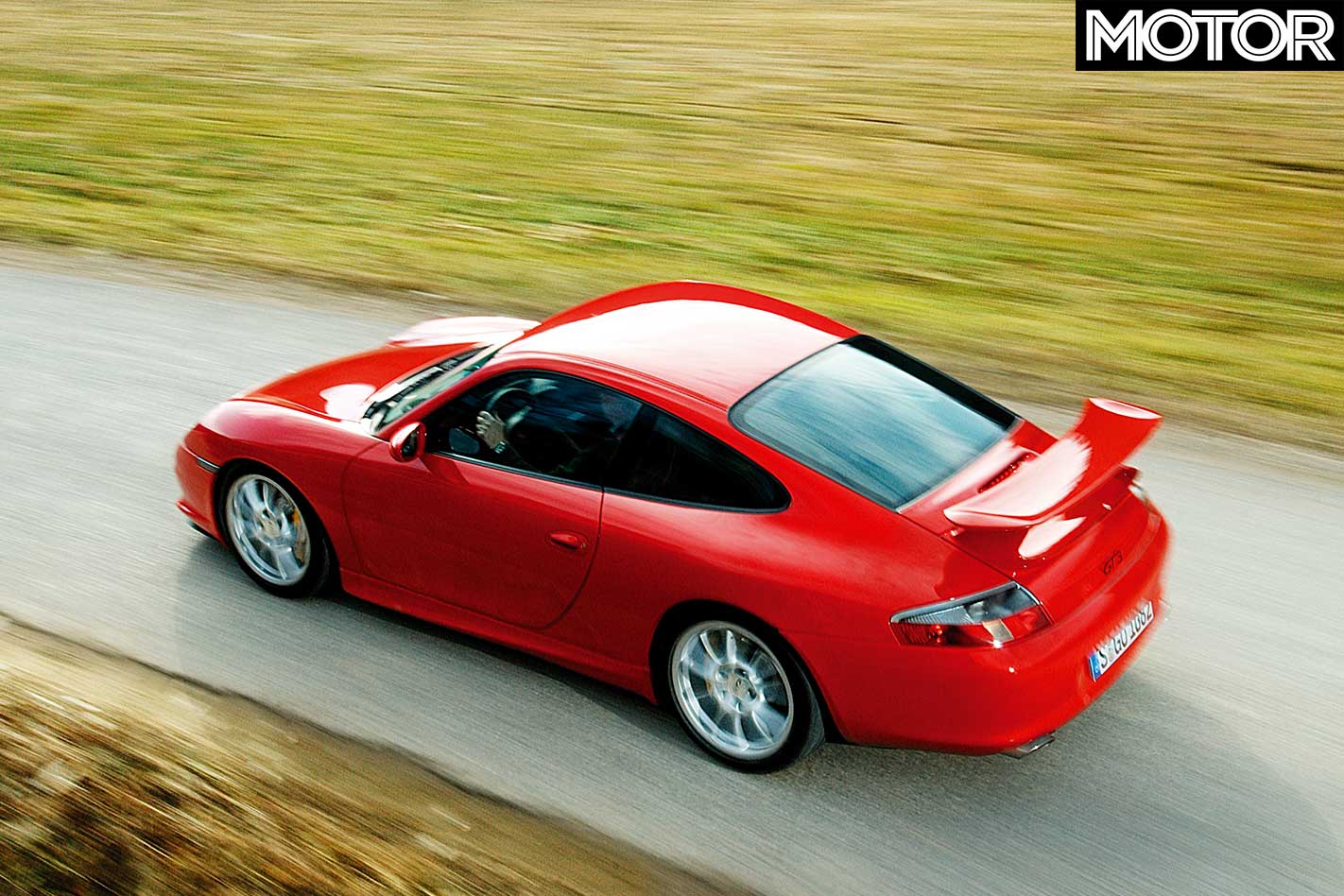
Autostrada Venezia-Belluno. It’s Sunday morning, but that does not stop the Italian cops from airing their radar guns.
This review was originally published in MOTOR’s May 2003 issue
Luckily I spot the blue-on-white panda car just in time, but we are not much over the limit anyway, and after a brief stab at the brake pedal the Indian Red (okay, it’s orange) GT3 passes the speed trap at a politically correct 130km/h.
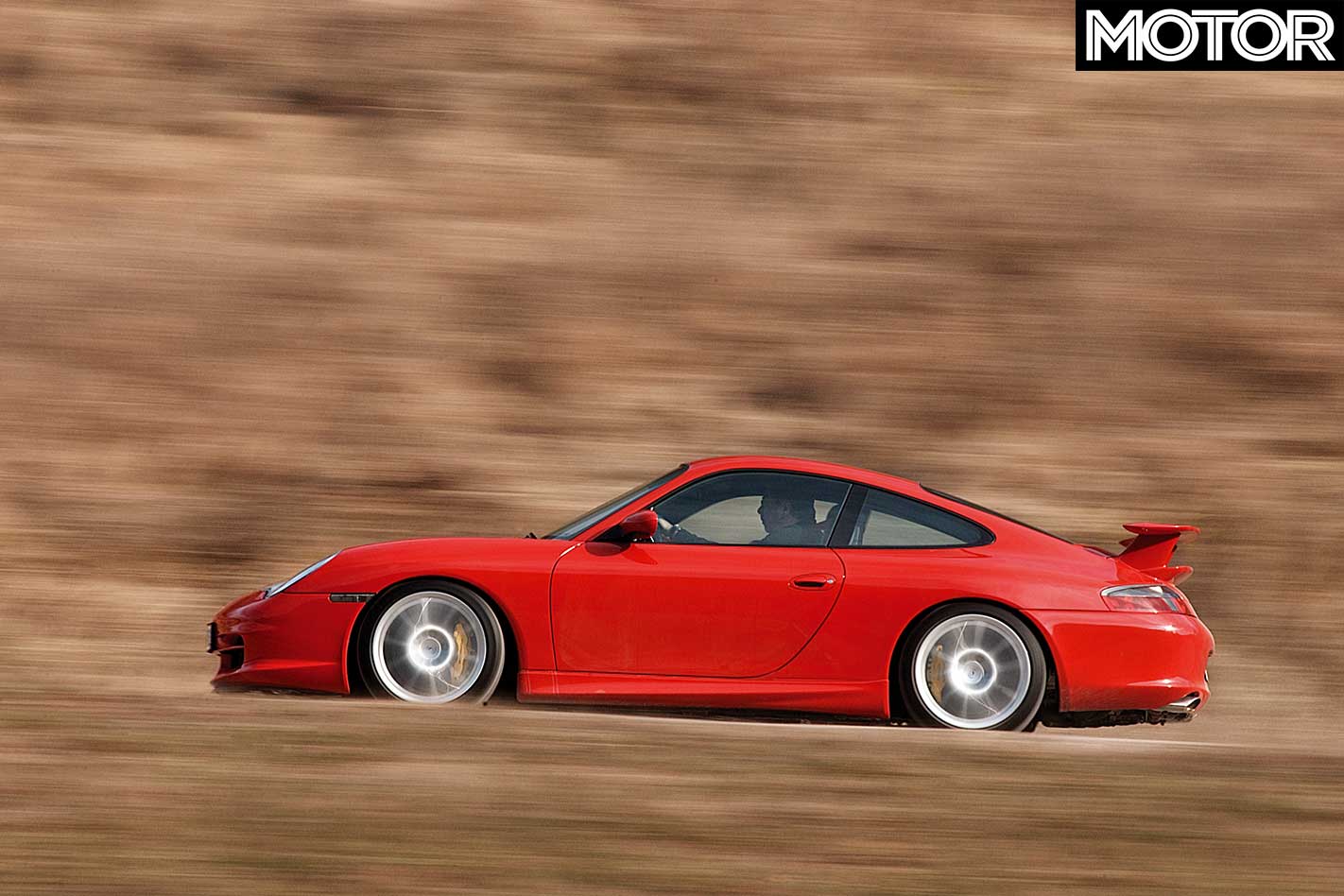
It’s available as coupe and convertible, as broad-shouldered 4S and as translucent Targa and in rear-wheel-drive or four-wheel-drive. The top-of-the-range model of this comparatively conservative and pragmatic bloodline is the 911 Turbo, a 309kW all-wheel-drive coupe. But there is also a sportier, rougher and tougher side to the 911 family tree: this division harbours the awesome 340kW GT2 and the brand-new second-generation GT3, a bespoilered 284kW featherweight due to arrive at dealers in April.
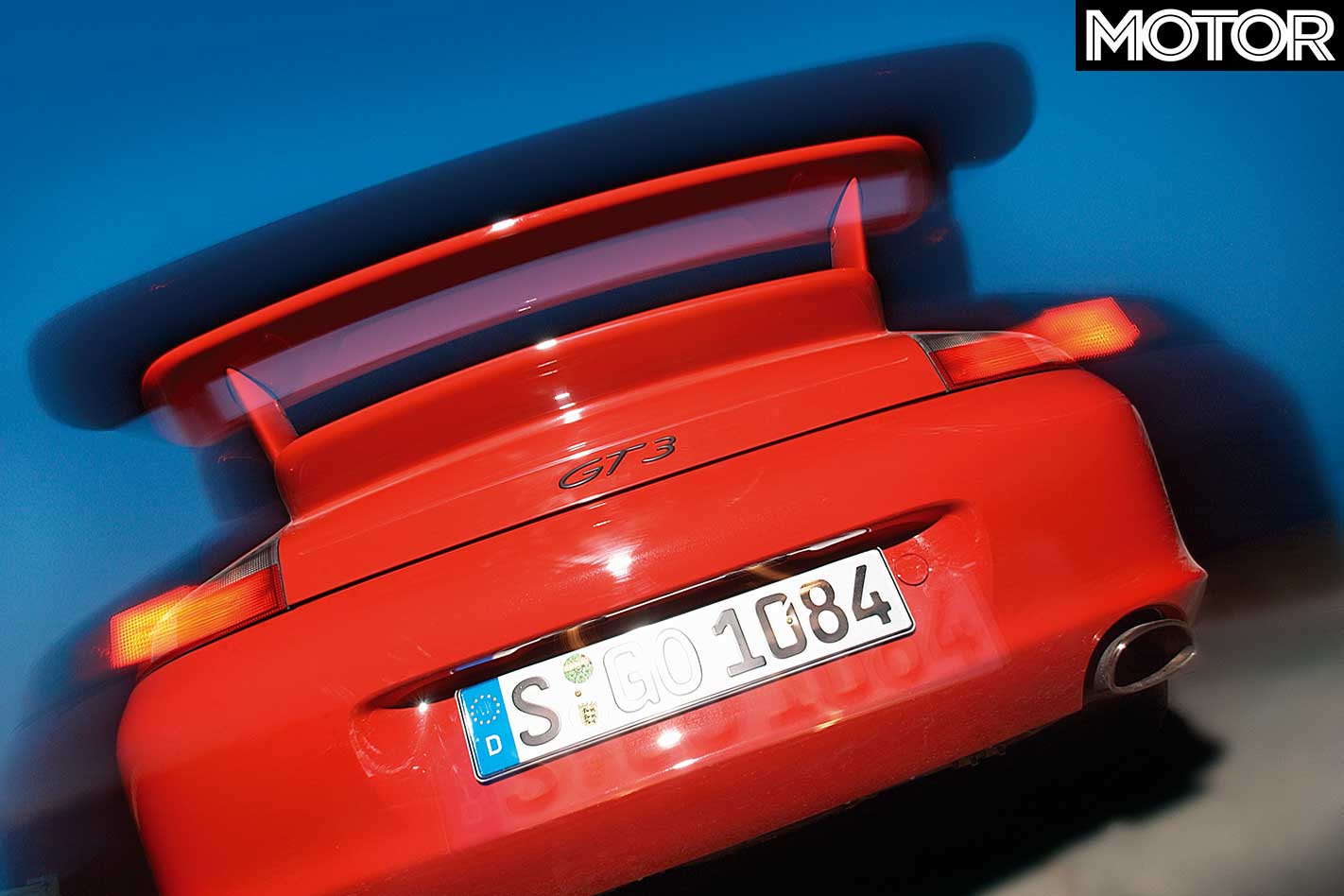
The first-edition 274kW GT3 – built in two batches between June 1999 and December 2000 – was roughly ten percent less expensive than its replacement, and available only in limited numbers. Not so the new GT3, which will be around until the 996 gives way to the 997 in mid-2005.
Porsche expects to build at least 2500 batmobiles, among them up to 500 right hand-drive models which are again handicapped by that miniature 64-litre fuel tank.
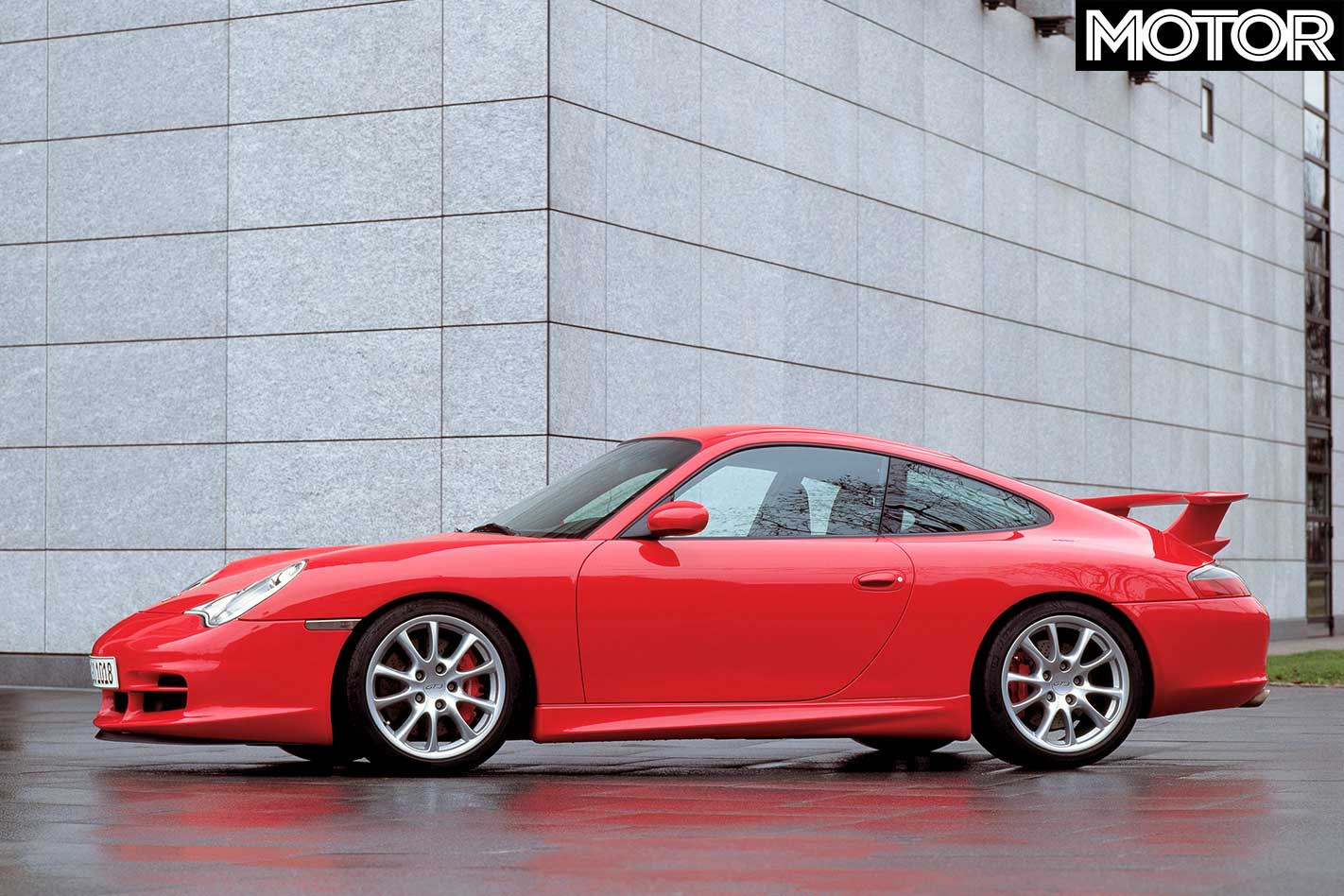
Like its predecessor, the MkII GT3 is primarily aimed at amateur racers who like to use their hardcore 911 as a weekend track tool. That’s why the factory offers a no-cost Clubsport option which includes a roll cage, six-point belts and tight-fitting bucket seats. Although the springs, the suspension kinematics and the rear wing are adjustable for competition purposes, there exists only one street-legal set-up.
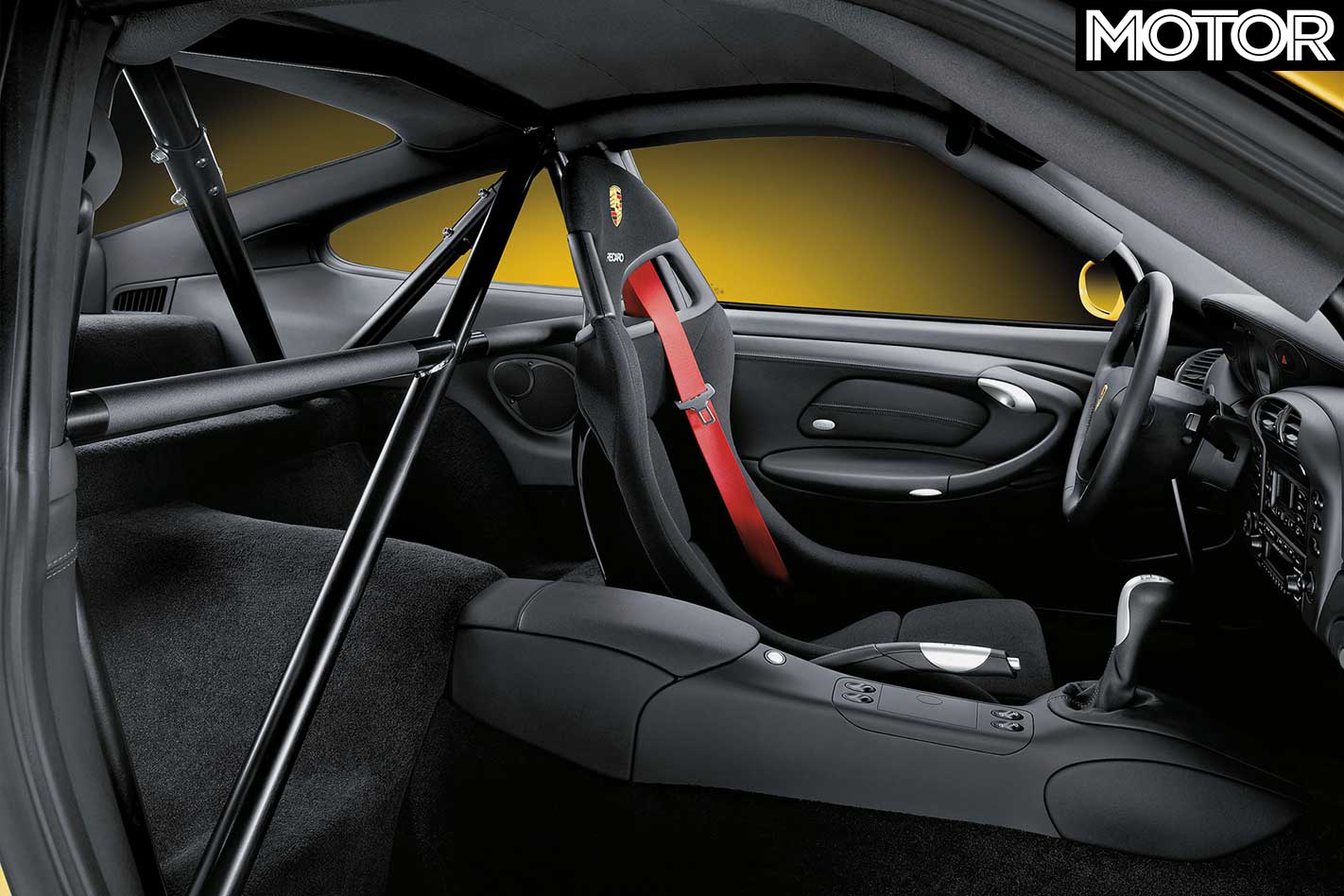
Aerodynamic modifications include a new front apron, redesigned sill covers, a bi-plane tail spoiler and a flush-fitting underbody. While the drag coefficient is an unchanged 0.30, axle lift has been reduced and the downforce has increased.
All this sounds quite promising, but if you think the new 911 follows the chosen line without any ifs or buts, think again – or take a high-speed ride.
Up to 200km/h, the GT3 is as benign as a pussy cat in front of the fireplace. Between 200km/h and 250km/h, however, the cat will spit, show its claws and arch its back. From 250km/h all the way to the 306km/h top speed, on a fast stretch of Autobahn which is neither dead straight nor mirror flat, the GT3 makes the driver feel like a jet ski rider battling the waves.
The front end goes through the full pitch and yaw spectrum, the suspiciously light steering is struggling to find rhythm and the directional stability is more of a letter of intent than a signed contract. No, this car isn’t about confidence or trust. It’s about sheer speed and goose-pimple excitement.
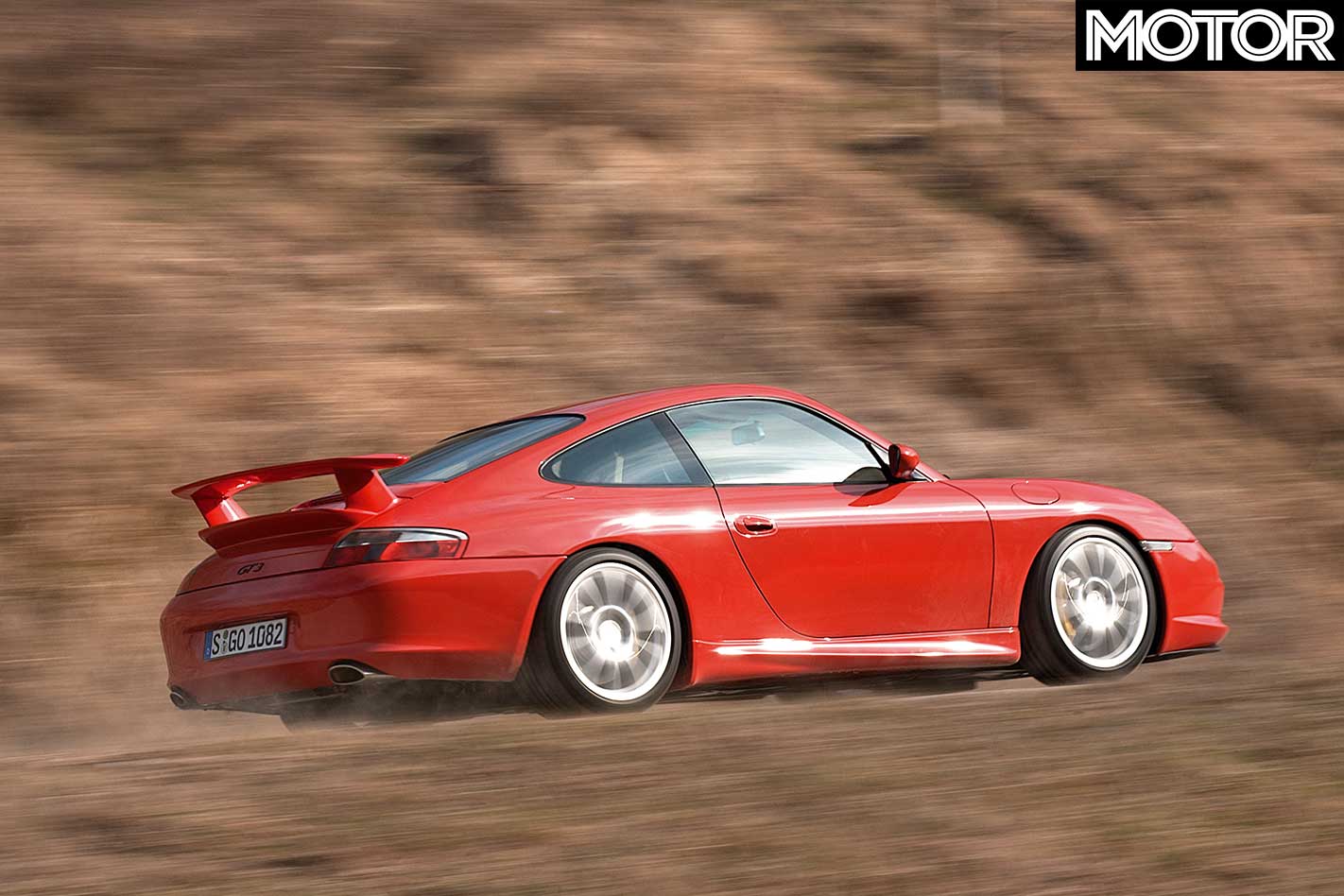
The Swabians are quick to point out the GT3 was tuned for optimum handling and roadholding, and that the ride comfort was clearly priority number two. True, the suspension is firm, but it’s neither unacceptably harsh nor is the dialogue between springs and dampers ill-matched.
On broken-up roads, however, over ridges and crests or through potholes and dips, the GT3 should be kept on a short leash. There’s plenty of steering fight to attend, pronounced tramlining to deal with and an ever-changing mix of latent understeer and pending oversteer which puts all six senses on alert.
To beef up the roadholding, Porsche fitted even wider 18-inch rims shod with 235/40 rubbers in the front and 295/30 footwear in the rear. Michelin Pilot Sport and Pirelli P Zero Rosso are the only homologated tyres.
Our test car was equipped with the optional ceramic disc brakes, new to the GT3. Priced at a whopping $14,000 and sporting yellow instead of red calipers, they respond promptly, are immensely powerful and virtually immune to fading.
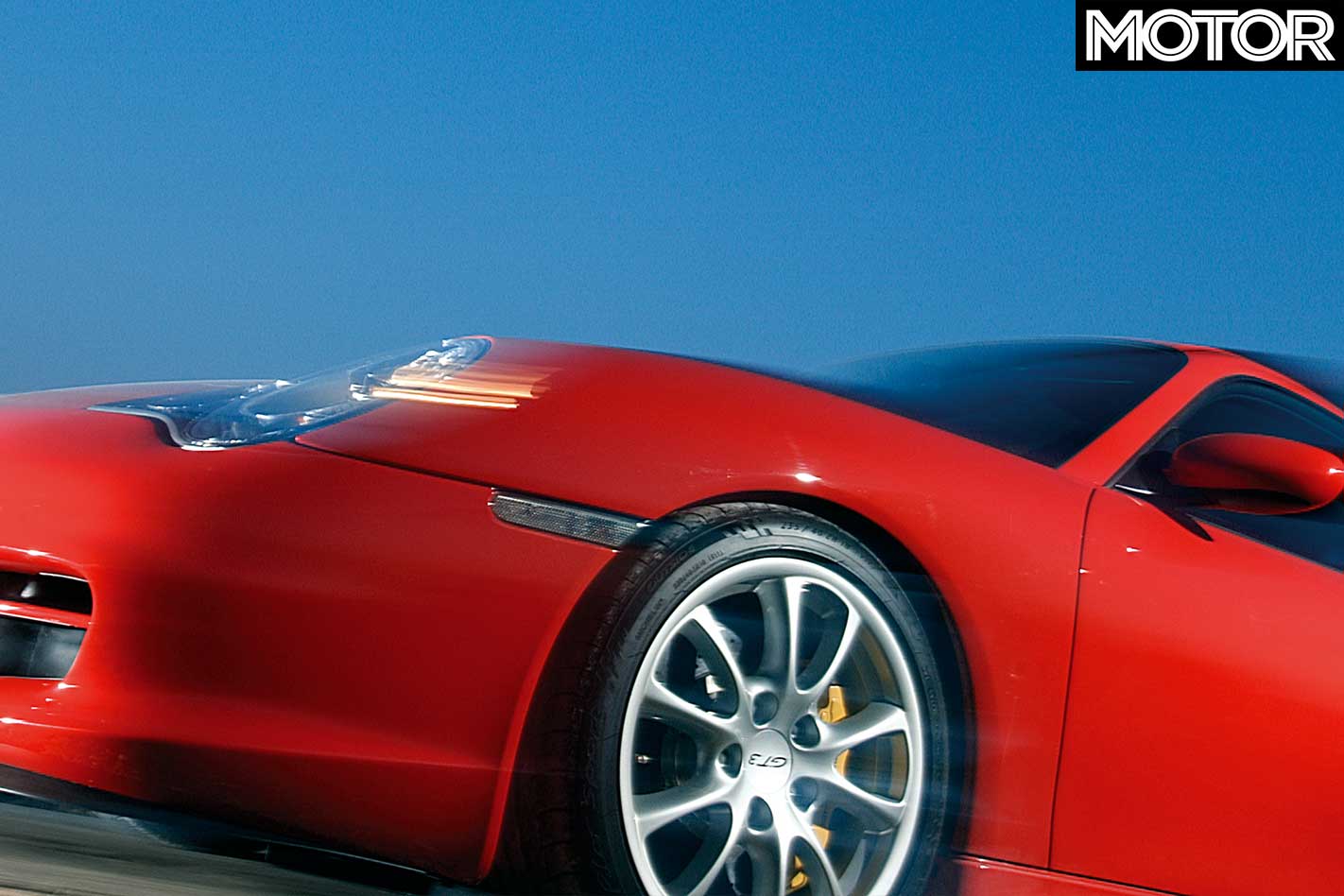
Dive even deeper into a corner, and you feel the brake balance transferring more work to the rear wheels, and squash energy incredibly hard time after time without ever detecting a variation in pedal travel or effort.
The ceramic discs don’t only enhance active safety, they reduce the unsprung weight by about 18kg. It is worth noting though the standard brakes have been upgraded, too. Key improvements include larger diameter cross-drilled and ventilated front discs, bigger cooling ducts and stronger six-piston front calipers with a 40 percent greater swept area.
The overriding development goal of the R&D squad was to remove weight, the result here an ascetic 1377kg. The long list of calorie-reducing measures concerns the rear seats (gone), the wheels (new flow-forming design) and the standard equipment (which includes several delete options).
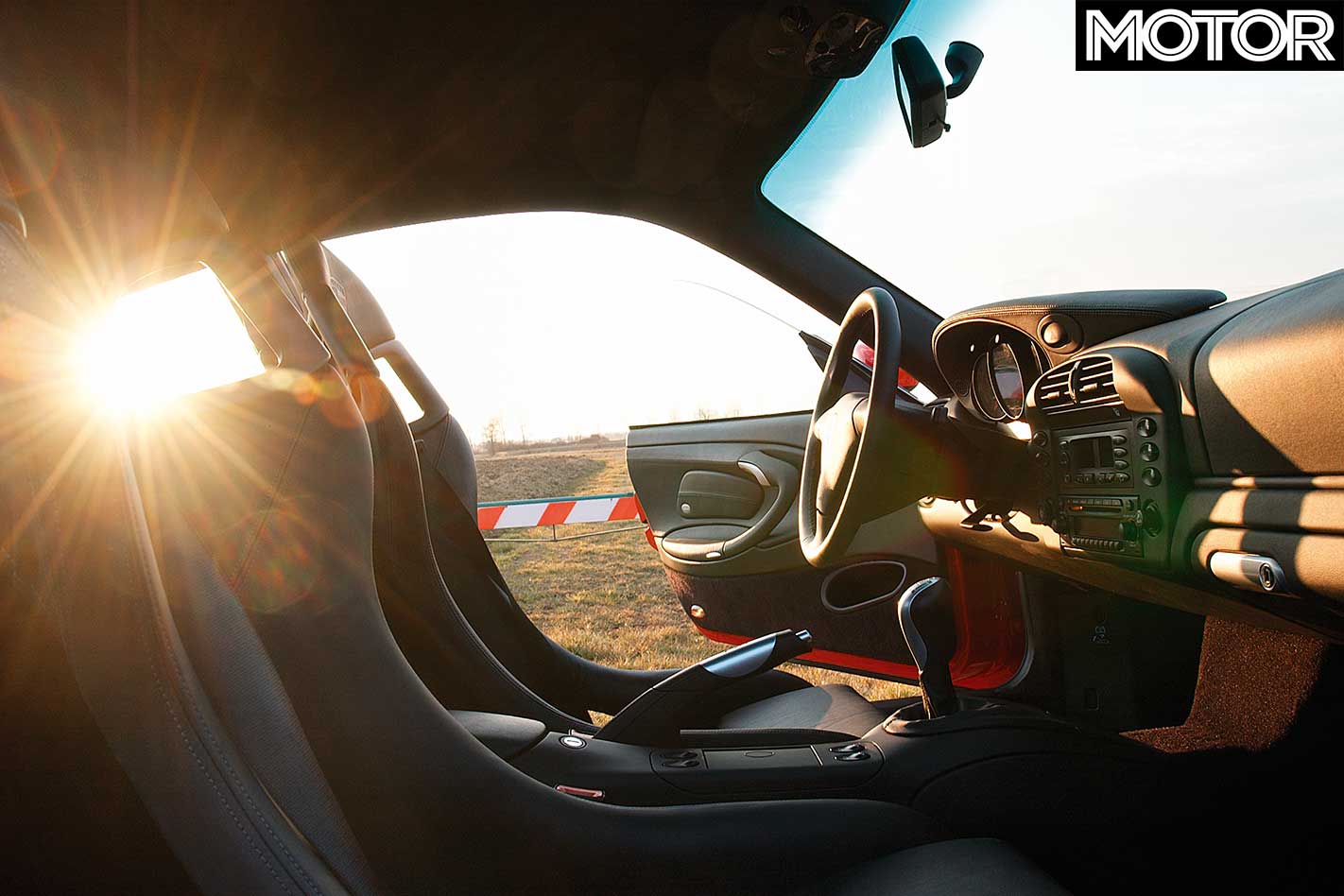
The corporate weight watchers have also dealt with the engine, now 3.5kg lighter thanks to smaller tappets, slimmer valves, shorter pistons and thinner con rods. By reducing the weight of moving parts and minimising friction losses, the engineers created the precondition for a higher rev limit which is one of the main differences between the old and the new GT3 unit.
Redlined at 8200 instead of 7800rpm, the 3600cc flat-six now churns out 284kW instead of 269kW. Maximum torque has risen slightly from 370 to 385Nm at an unchanged 5000rpm.
Taking a mere 4.5sec to accelerate from 0-100km/h, the 2003 GT3 eclipses the series one version by 0.3sec. The Carrera 2 can repeat this act in five seconds flat, the turbo does it in 4.2sec, and the GT2 gets there in 4.1.
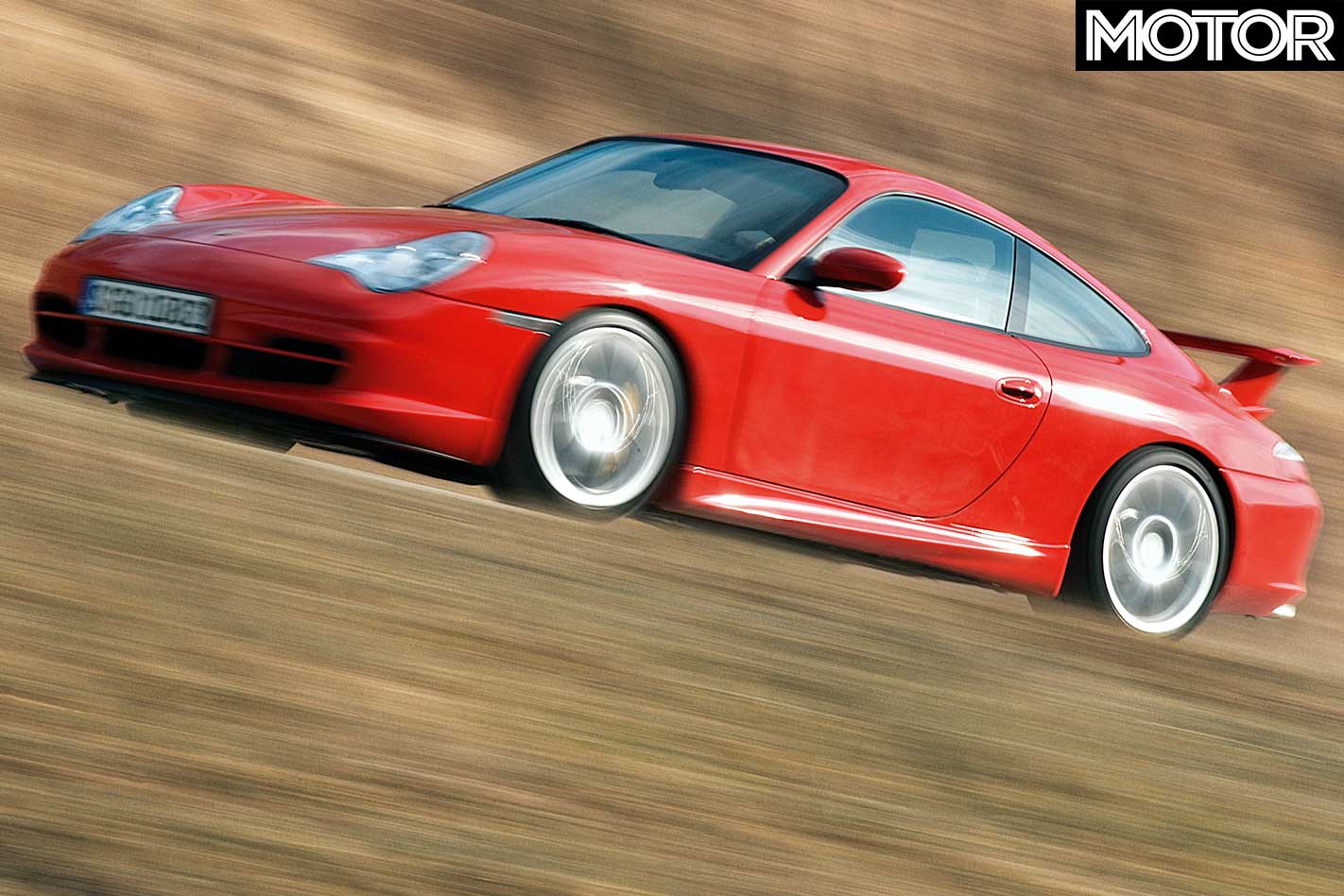
By selecting slightly shorter fifth and sixth gear ratios, the GT3’s pulling power above 200km/h has substantially improved. The maximum speed did, on the other hand, only go up a fraction from 303km/h to 306km/h. While the GT3 is an academic 2km/h faster than the 304km/h Turbo, it is clearly eclipsed by the 315km/h GT2.
In absolute terms, the asking price of $245,000 (est.) can only be described as steep, but in relation to the $306,000 Turbo and the $399,000 GT2, the latest 911 does offer a lot of go and show for the money.
The base engine still owes its fundamental design to the legendary GT1 motor conceived in the mid-’90s. It features a split crankcase, titanium con rods, four-valve cylinder heads and a dry sump. To meet the latest EU4 and LEV emissions, Porsche fitted an electronic throttle and a revised exhaust system.
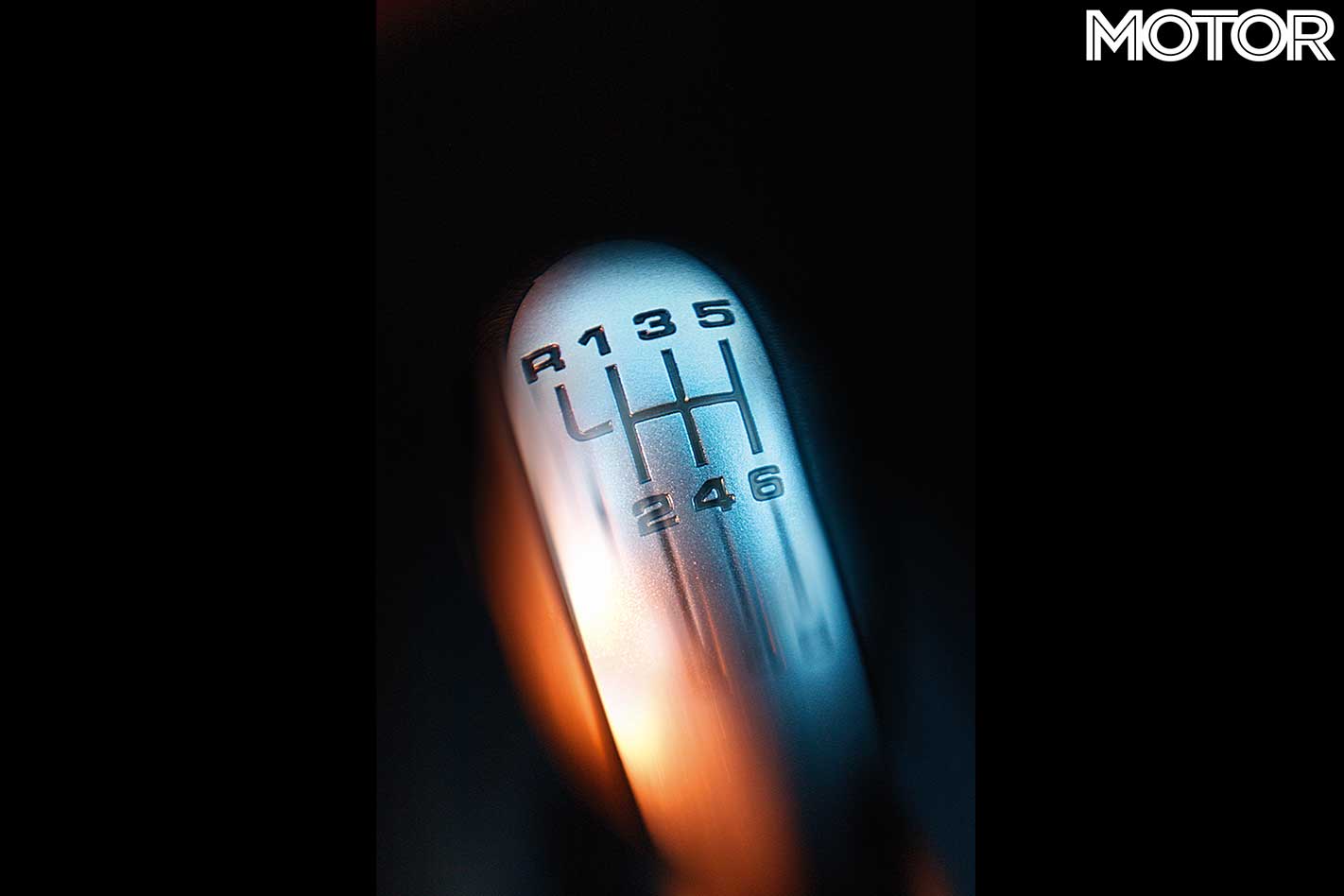
Also new is the VarioCam camshaft adjustment which can no longer only select between two fixed positions but is progressive and covers a 45 degree range. The six-speed transmission adopts the GT2 linkage for quicker and shorter throws.
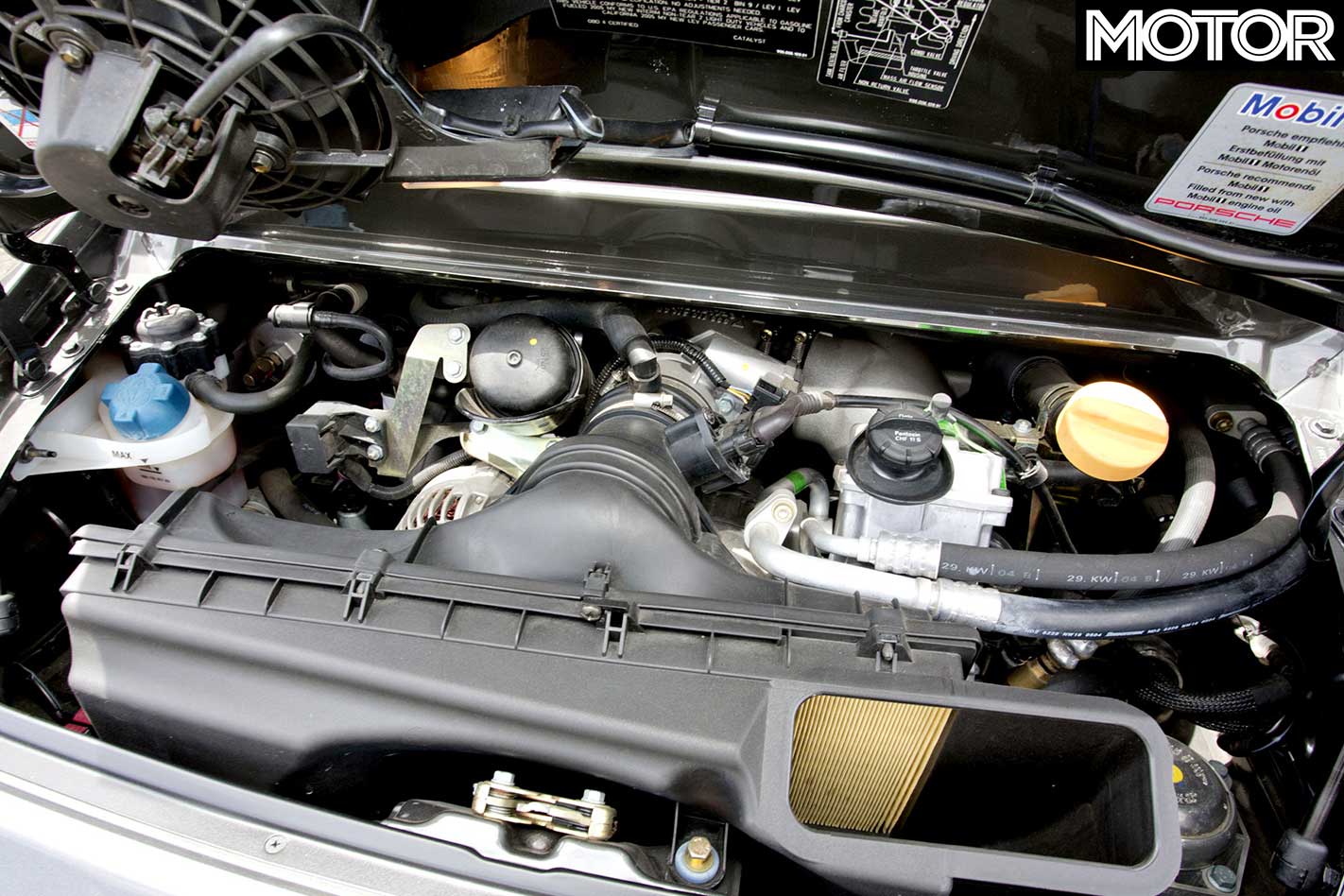
In the GT3, traction control and electronic stability control are conspicuous by their absence. Instead, this model is fitted with a mechanical diff lock which employs a 40 per cent locking ratio under power and a 60 per cent lock under trailing throttle.
Although the winged warrior has no problems putting all the oomph down on the tarmac, the transition from grip to slide and vice versa can be sudden and edgy.
Unlike other 911s, the GT3 is comprehensively equipped and there are really only two truly desirable options: the aforementioned ceramic brakes and the high-intensity bi-xenon headlights.
The question does arise, however, why a car of this calibre and pedigree is not available with an alternative quickshift gearbox, be it an Audi TT-style twin clutch direct-drive transmission or a sequential paddle-shift box like in the Ferrari 575M. Also missing are tyre pressure monitors and a steering wheel which adjusts in reach and rake.
Of course these items don’t matter much in the grander scheme of things which ranks the GT3 as the most uncompromising driving machine this side of the GT2. The best way to relish the difference between this 911 and its lesser stablemates is to keep revving the 3.6 litre engine to the redline, from gear to gear, from toll booth to fast lane, up the hill and down.
Pushed hard, first will take you to 74km/h, second stretches to 133km/h, third runs out of steam at 181km/h, fourth is good for 234km/h, and fifth throws in the towel at 275km/h. The GT3 requires only 14.3 seconds to catapult itself from standstill to 200km/h. At the same time, the Porsche is perfectly happy to potter along in top gear at 2000rpm where 80 per cent of maximum torque’s on standby.
Between 2500 and 5000rpm, the resonance chamber will open to bolster the mid-range. Above 5000rpm, the by-pass closes again so the short respiratory ducts can support that distinct willingness to rev.
The new GT3 is only marginally more powerful, more flexible and quicker than the car it replaces. But when you add up the individual kW, Nm and km/h advantages, the difference between old and new becomes obvious. It’s raw and pure, and elevates the game. Neither the press kit nor the owner’s manual say so, but the new GT3 is definitely capable of sifting the men from the boys.
After that wild ride I’m just not sure anymore which group I belong to.
FAST FACTS 2003 Porsche 911 GT3
DRIVE: rear-wheel ENGINE: rear-mounted 3.6-litre DOHC 24-valve flat-six BORE/STROKE: 100mm x 76.4mm COMPRESSION RATIO: 11.7:1 POWER: 284kW @ 7400rpm TORQUE: 385Nm @ 5000rpm WEIGHT: 1377kg POWER-TO-WEIGHT: 206kW/tonne TRANSMISSION: 6-speed manual SUSPENSION: MacPherson struts, coil springs, anti-roll bar (f); multi-link, coil springs, anti-roll bar (r) L/W/H: 4435/1770/1275mm WHEELBASE: 2355mm TRACK: 1485mm (f); 1495mm (r) BRAKES: 360mm ventilated discs, six-piston calipers (f), 330mm ventilated discs, four-piston calipers (r), ABS WHEELS: 18 x 8.5-inch (f); 18 x 11-inch (r), alloy TYRES: Michelin Pilot Sport, 235/40 ZR18 (f); 295/30 ZR18 (r) FUEL: 64 litres, PULP PRICE: $245,000 (est.)
ROLLS-ROYCE has flown a single example of its eagerly anticipated Cullinan SUV foray to Australia for a lucky few to get a first glimpse at the mighty model ahead of the first orders arriving later this year.
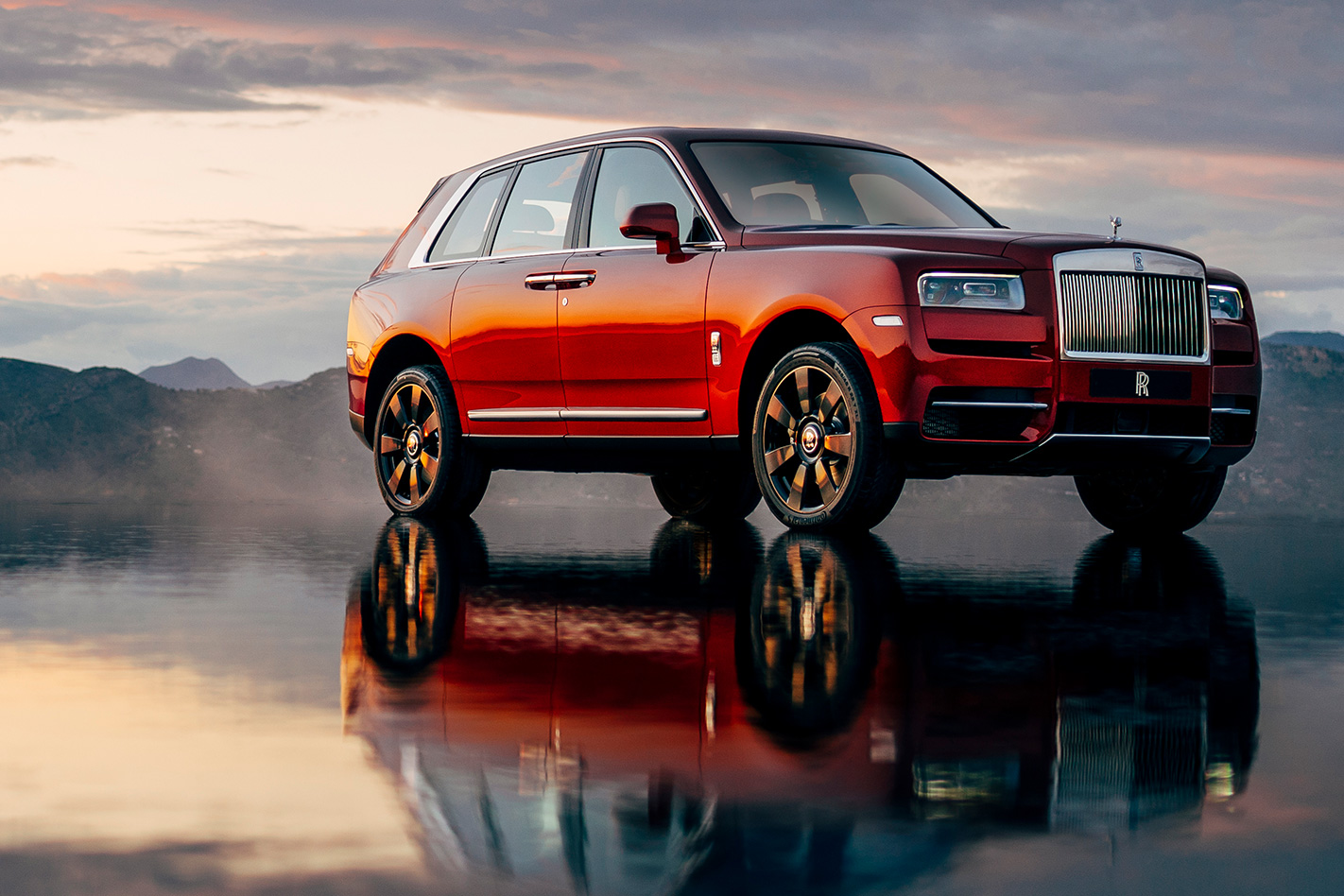
In our first encounter with the Brit tourist, we sniffed out some of the more fascinating features among the countless gadgets, opulent design touches and cutting-edge technology.
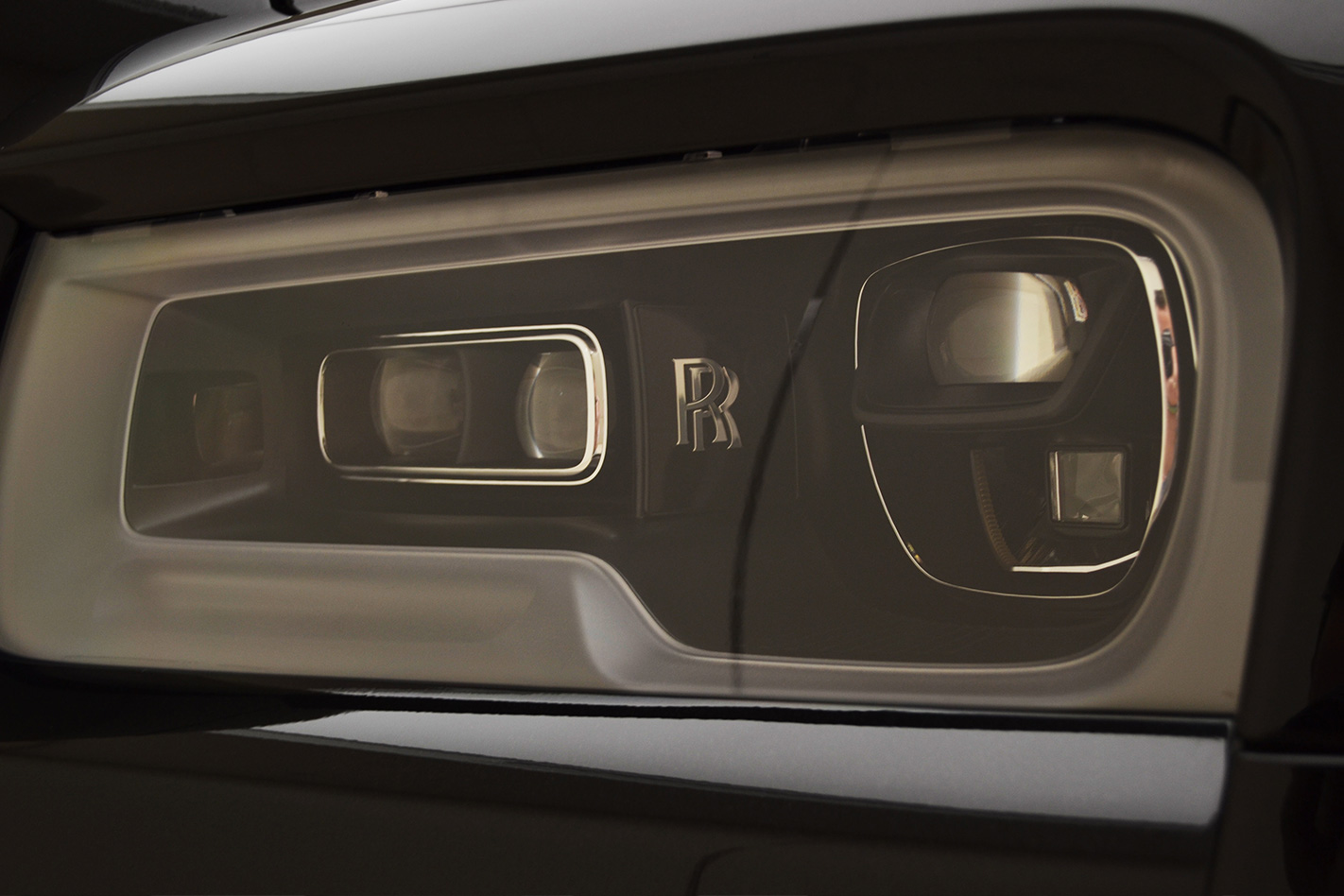
Beam theory With up to twice the intensity and power of LED lighting, the Cullinan’s laser headlights have an effective range of up to 600 metres. Not only are they incredibly powerful, the diodes are more controllable for adaptive beam direction and are smaller and lighter in construction.
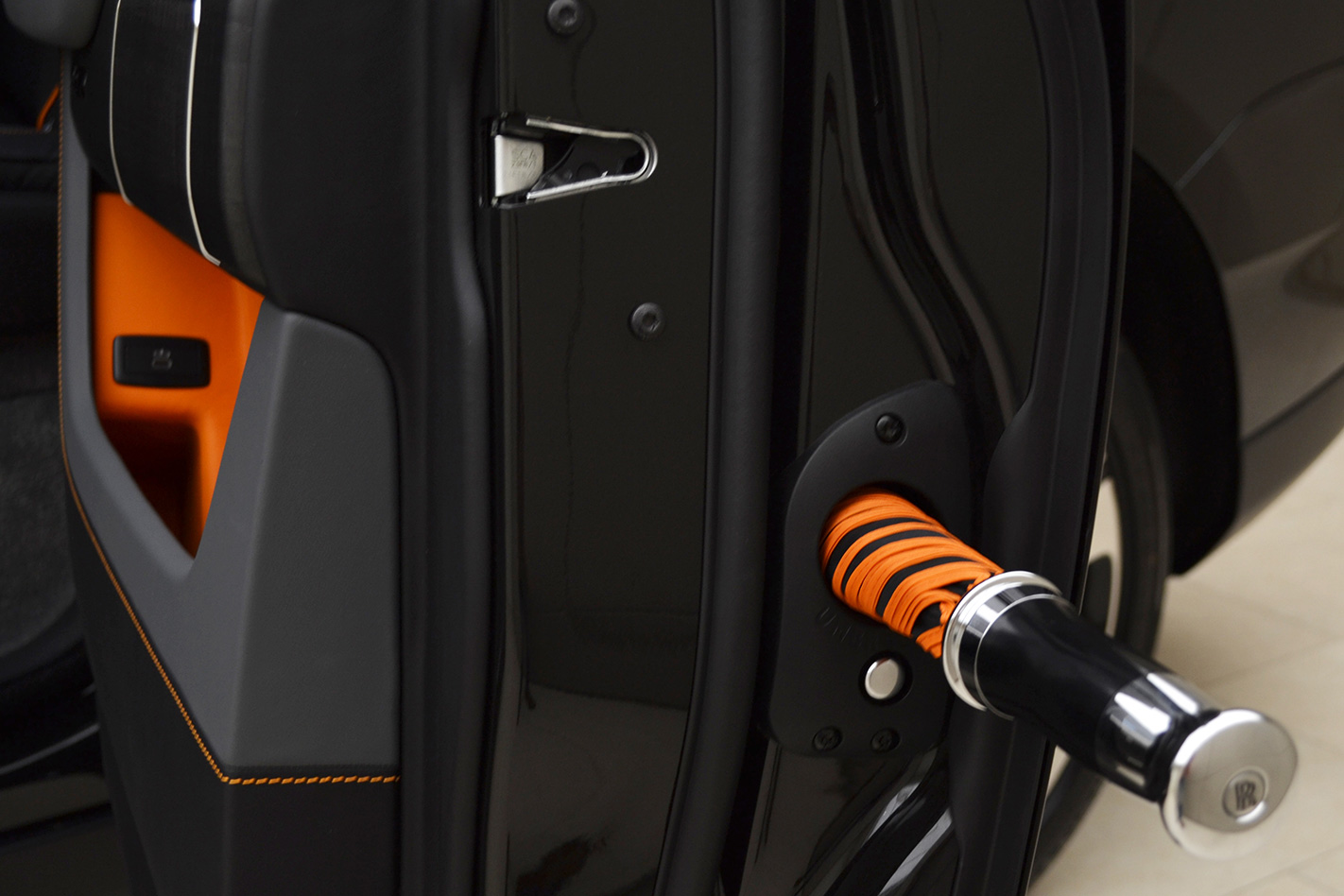
Umbrella solution Yes, you can also have an umbrella cleverly concealed in the door of a far more affordable Skoda, but the Czech manufacturer won’t tailor the brolly’s colours to match your interior.
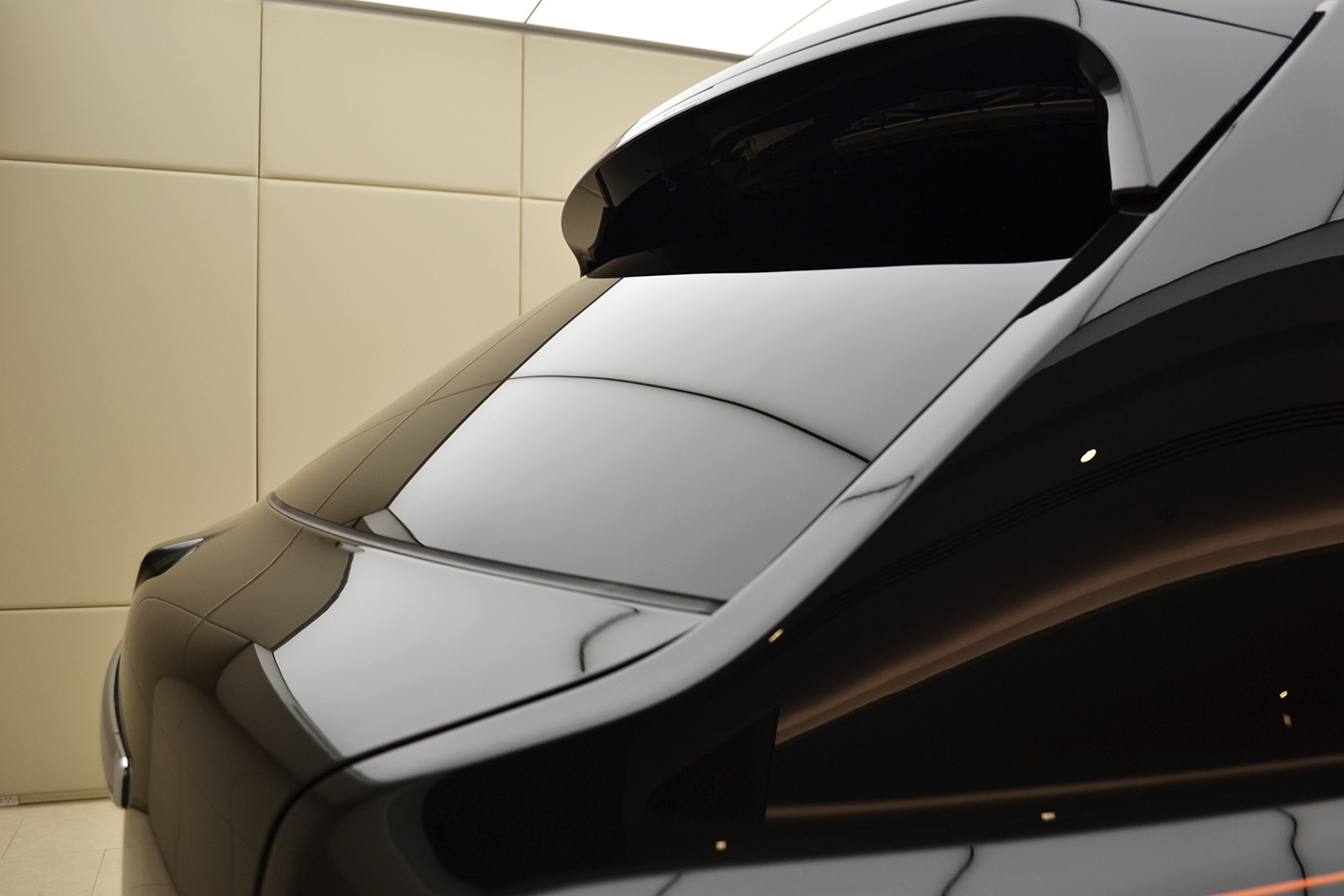
Concealed blade The Cullinan’s designers went to great lengths to maintain clean lines and large uninterrupted smooth surfaces including at the tail end, where the rear window wiper has been cunningly concealed high up in the roof spoiler.
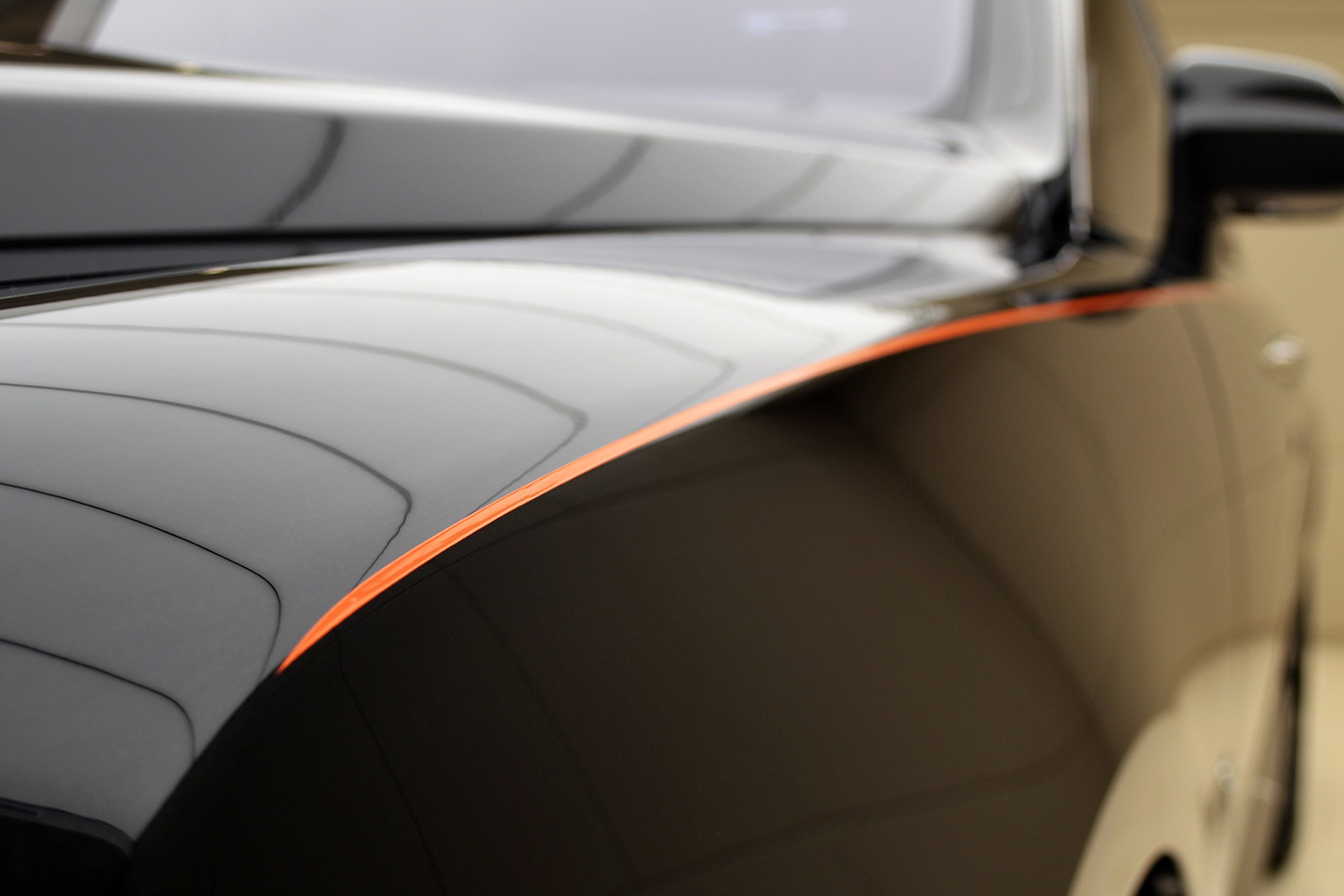
Earning stripes Continuing the orange highlight theme around this UK-specification Cullinan, a single pinstripe runs the length of the massive SUV along its belt line. But this is no peel-and-stick strip and is instead hand painted using traditional pin-striping techniques.
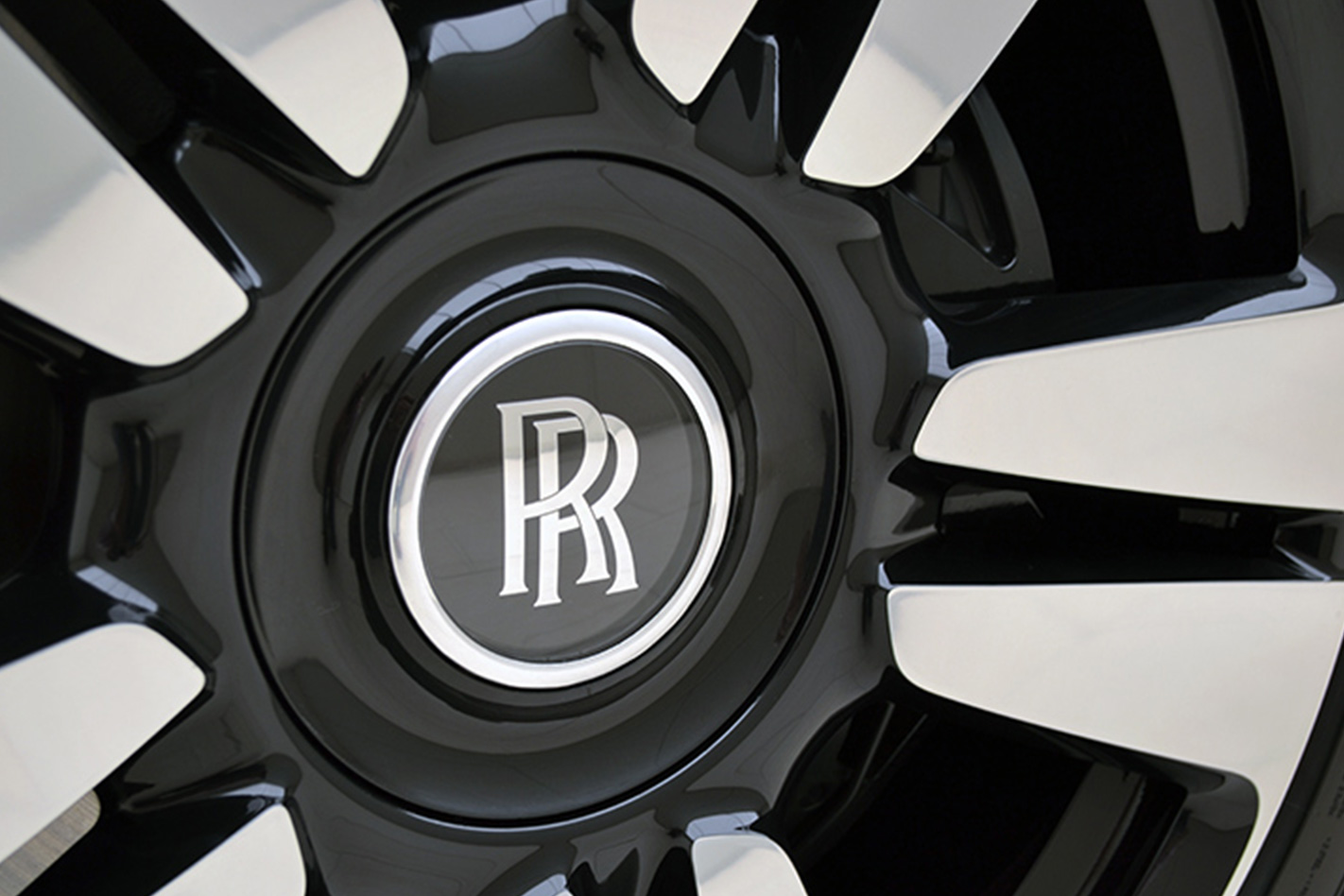
Wheel bearing Now a company trade mark, the Rolls-Royce wheel centre badges float on an ultra-low friction bearing, preventing the pair of Rs from ever turning on their heads. During prototype testing however, the RR was covered by an imitation compass needle, which always pointed north.
Quiet Fido Option your Cullinan with the ultra-opulent Rear Theatre Configuration and not only will you sit on seats even more luxurious than the front pew, and a whole plethora of other delights, the cabin temperature won’t be effected if someone opens the boot (sorry – ‘clasp’). A glass panel partitions the luggage area from the passenger compartment maintaining the perfect atmosphere.
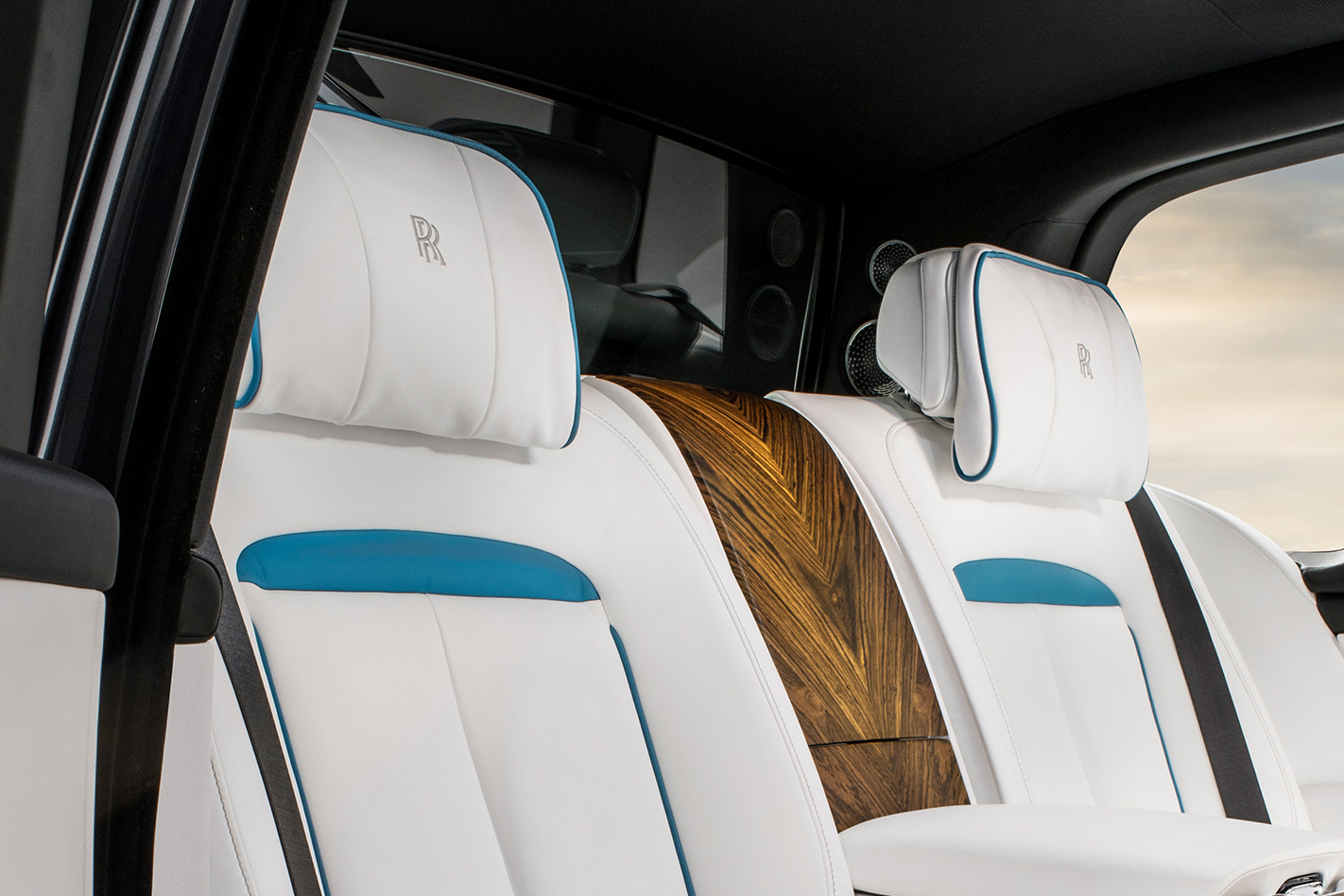
Armless action Getting your chauffeur to close the door for you is so Victorian, but you won’t have to carry out the exhausting process yourself thanks to an electric closing function. With a press of a button the ‘coach’ doors effortlessly swing closed. Just don’t call them suicide doors!
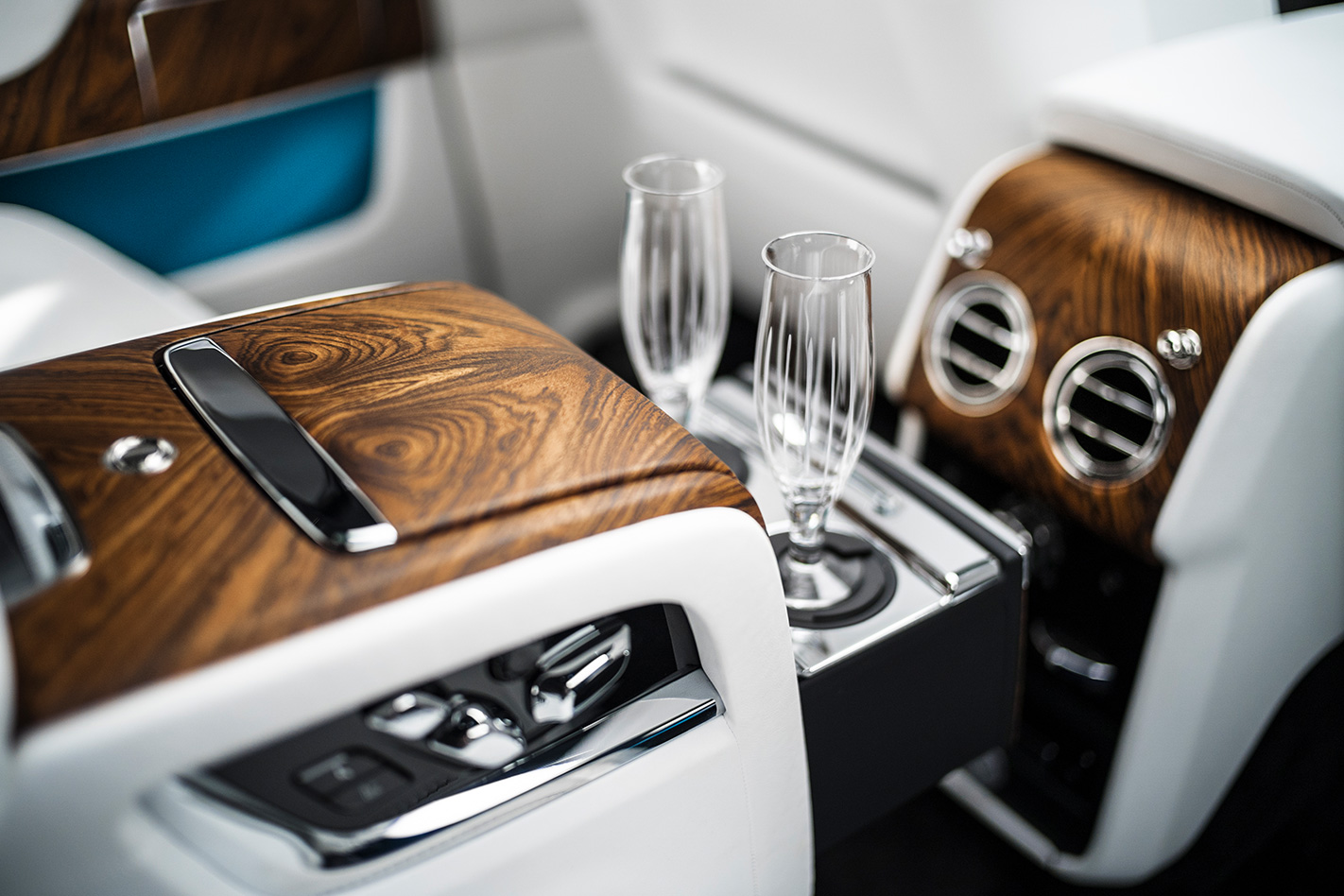
Classy glass Also a part of the Theatre rear seating, a fine crystal whisky decanter complete with glasses is housed in the central arm rest. Spirits not your thing? Behind it is a refrigerated space for a bottle of bubbly and a pair of flutes that tuck into specially tailored silicone slots during use to prevent spillage.
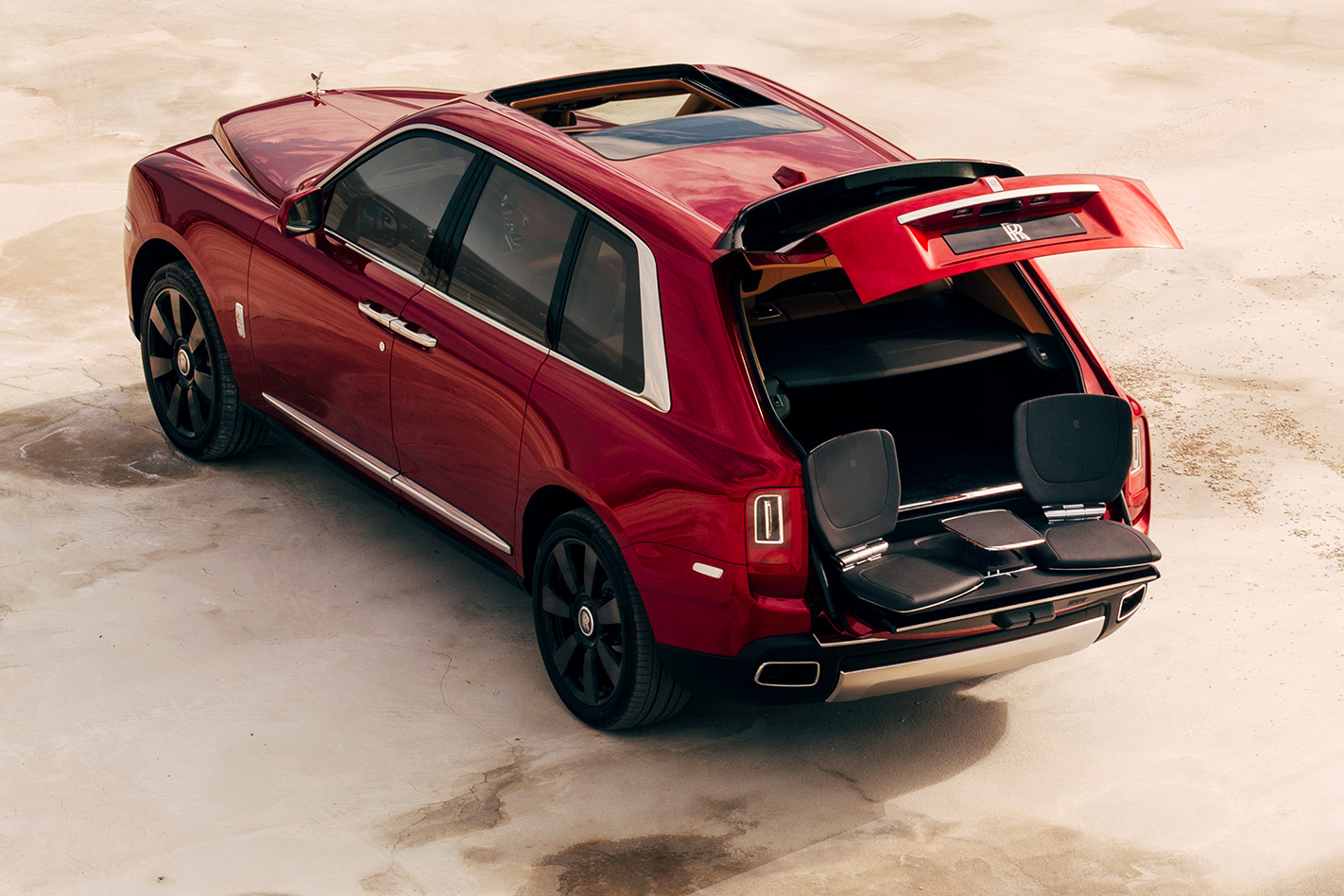
Chukka hamper in the boot Cullinan owners should never have to perch on the edge of an uncomfortable tailgate when watching a round of polo. Dig a little deeper in your pockets and Rolls will fit a special pair of leather upholstered seats that fold out from the boot space complete with table to continue the alcohol consumption that started in the second row.
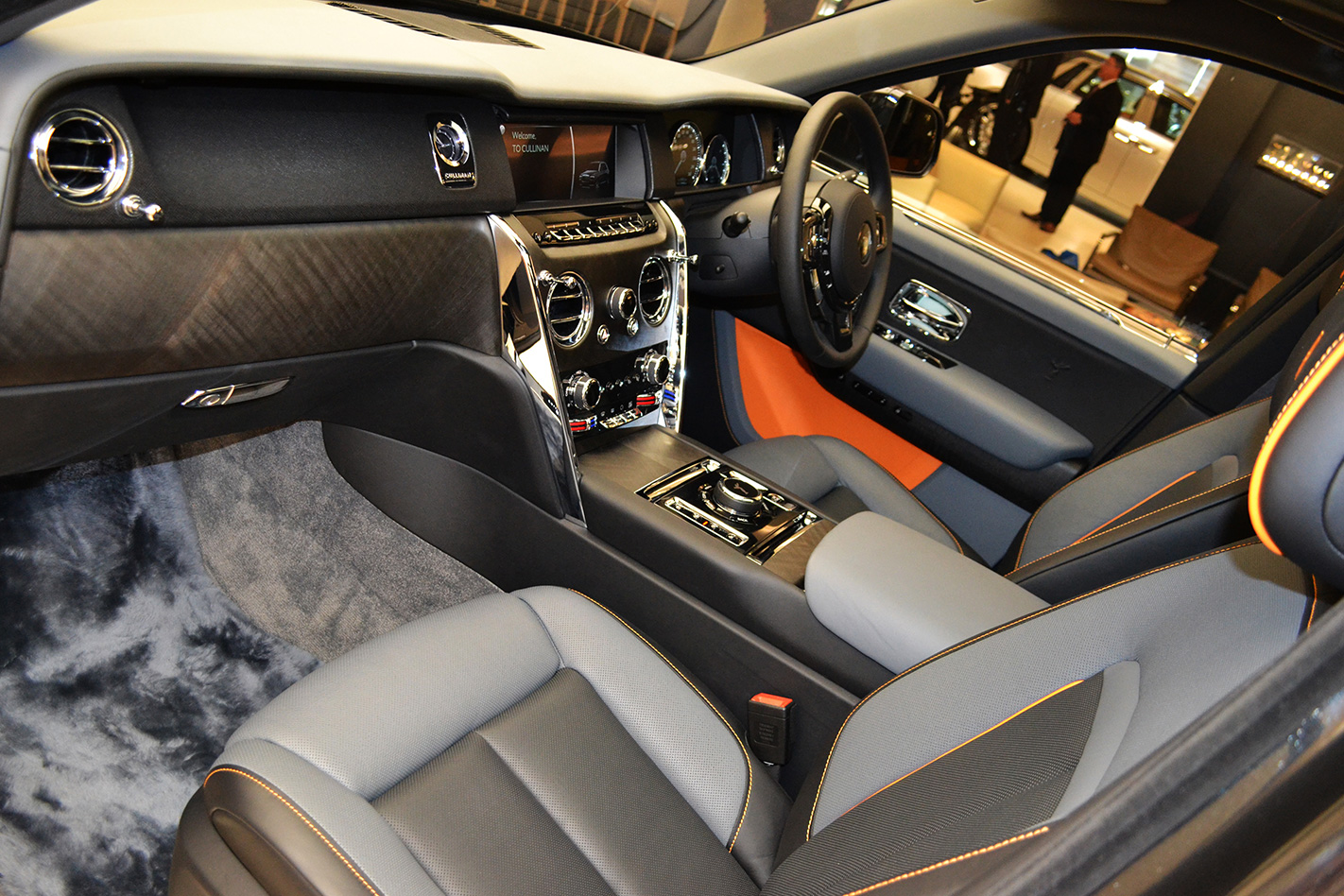
Tangible values In an effort to highlight the Cullinan’s earthy connection, more tactile textures and materials have been used about the cabin. This one was decked out with unvarnished, open-pore wood veneer and a lovely dimpled leather dash upholstery.
Properly bespoken If all that simply doesn’t make the Cullinan unique enough for you, there’s always the money-no-object range of Bespoke options. You won’t find a comprehensive brochure of options because Rolls-Royce says “the limit is your own imagination”.
An unlimited range of customisations are on offer as long as you have the cash. Previous customer requests have included solid gold inclusions, diamond-encrusted badges and even a special paint finish that had crushed diamonds suspended within the clear coat.
French tyre-maker Michelin has revealed plans to use wood to make tyres from as early as 2020.
Rather than timber treads carved by wheelwrights, this will be the work of scientists, with the wood used as an alternative to expensive and not-so environmentally friendly oil-based synthetics, across the Michelin range.
Synthetic elastomer is artificial rubber that’s combined with the real thing in modern tyre compounds, to increase durability, flexibility and grip, explains Michelin’s worldwide head of science and innovation communication Cyrille Roget.
“We have a project that is called Bio Butterfly that we are in partnership in France and we are trying to create sustainable synthetic elastomer … using the chip waste from the wood industry, Roget told WhichCar.
“At the beginning [wood content] will be small, about two percent, basically to replace some of the [oil-based] synthetic elastomer. It will be small, but we’ll be able to increase it.”
Roget says the switch to a wooden by-product will have a range of benefits, including a reduced reliance on oil-based butadiene and the opportunity for Michelin manufacturing plants around the world to source alternative raw materials locally.
“We hope that in 30 years tyres will have 80 percent material recycled and renewable, made from wood, some natural rubber and recycled material.”
“Natural rubber is still a key ingredient, because it has some performance that we are not able to reproduce.”
Michelin is also investigating the viability of other organic materials such as straw and beets, to create its products.
Head back a couple of decades and choice at the very top of the car market was pretty much limited to two duopolies.
If you wanted supercar thrills then it was a coin toss between Ferrari and Lamborghini; if you needed a pluto-barge to whisk you to the stock exchange it would wear either a Bentley or a Rolls-Royce badge.
Other challengers came and went and some managed to exist around the fringes. But choice was limited and volumes were tiny; before the DB7 was launched Aston’s annual sales never broke into four figures, and sometimes struggled to reach three.
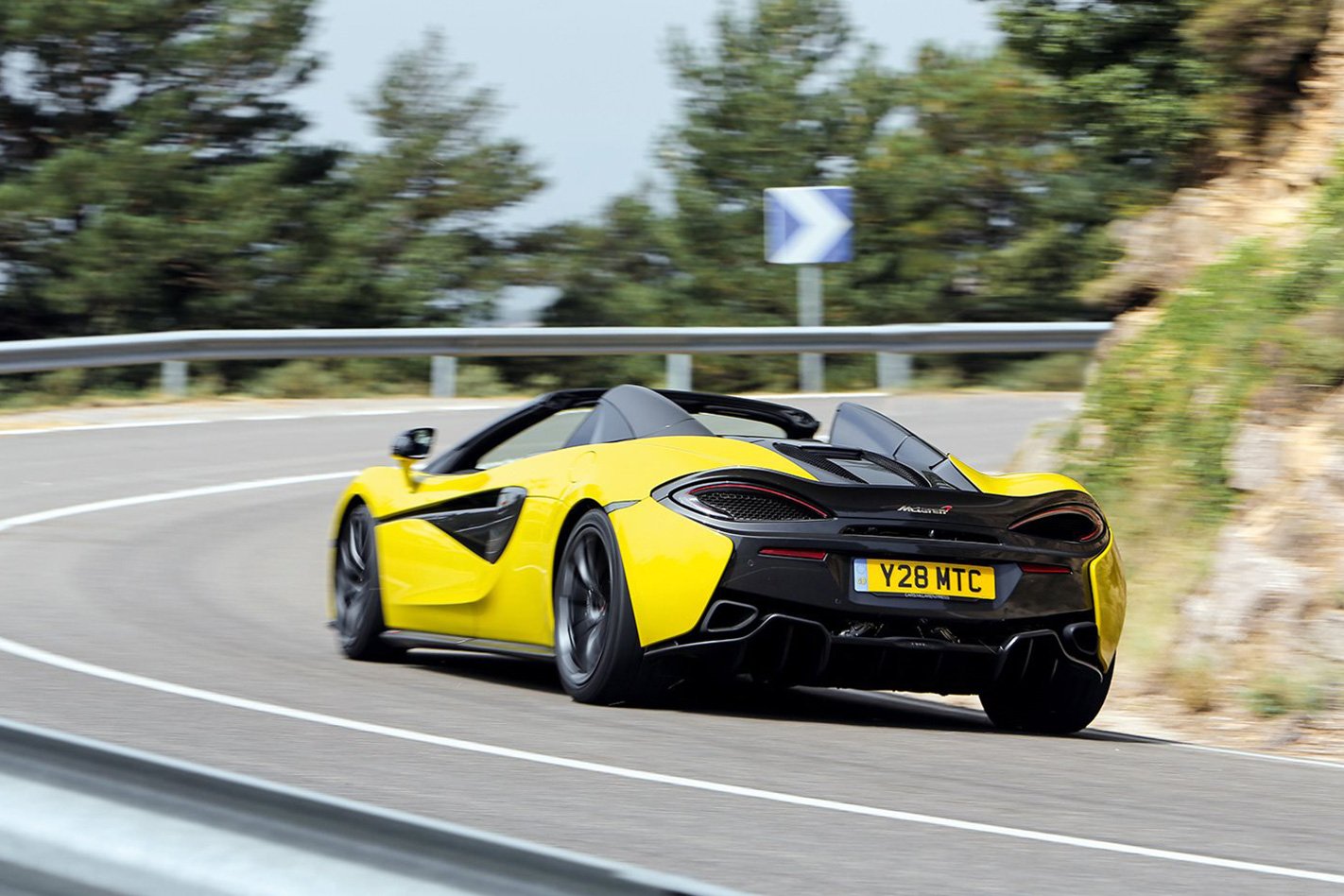
But if you’re in the lucky position to have north of $500,000 burning a large hole in your pocket, the world is your bivalve mollusc. The global population of so-called High and Ultra High Net Worth Individuals has increased dramatically, and so have the number of ways for them to spend their cash. Bentley has broken the 10,000 annual sales barrier, Ferrari sold 8000 cars last year, Aston managed 5000 and Rolls-Royce, Lamborghini and McLaren – the last of which didn’t exist as an auto maker a decade ago – all moved more than 3000 units.
Limited runs and specials from Premier Cru brands routinely sell out before they are officially announced or even seen. No wonder that other players now want to get a piece of the action.
Brabham Automotive marks the return of a very famous name, and the prospect of Australian production of the forthcoming BT62 hypercar, which promises 522kW and enough downforce to give it the theoretical capability to operate upside down. But although it looks like a road car, the fledgling company admits it has been designed with the requirements of production-based GT racing in mind.
The run of 70 are going to be sold for track use only, and with a very serious $1.8m pricetag. Despite the racing pedigree of the Brabham name, that’s a huge ask for a car that buyers won’t be able to drive home in.
Yet the forthcoming Pininfarina PF0 makes the Brabham look like a safe bet. The famous Italian carozzeria’s first own-label model is going to be an EV that shares its underpinnings with the Rimac C_Two, but which looks likely to be sold with a premium over its Croatian sister; the company is suggesting a price of around $3.3m.
Pininfarina is being coy about exact production targets, but has dropped some hints that it hopes to make around 90 of them. Despite the lustre of Pininfarina’s famous name – the brand now owned by India’s Mahindra – finding customers for so many cars is going to be a serious challenge. As Jolyon Nash, McLaren’s sales and marketing director said recently, “I’ve never had a customer ask me for an electric car. Ever.”
The established players have all fought hard to get where they are. The start-ups seem to be betting on what is still a rising market, and picking up customers who haven’t managed to get into limited editions from the better-known brands, but even a flood tide is going to struggle to lift some of these shiny new vessels.
Not so high lux

As the bigger luxury brands have become the top-drawer equivalent of volume players, so some companies have demonstrated the logic of staying small. Koenigsegg has made fewer than 300 cars throughout two decades of production, while Pagani only builds around 50 a year. Both know their customer base exceptionally well and enjoy lots of repeat business. More importantly, both are profitable.
TELL ME ABOUT THIS CAR
The Picanto GT-Line is the new flagship of the range, sitting above the only other variant – the S trim – thanks to some cosmetic additions, uprated suspension and premium pricing.
Beneath the bonnet, the Picanto GT-Line is largely identical to its S-badged sibling, so we took the opportunity to get behind the wheel to see if the new visual additions and driver focus were worth the price of admission.
STRENGTHS
- Interior. Don’t let the diminutive exterior dimensions fool you. The Picanto has a spacious interior for the class, with plenty of head and shoulder room for front passengers, while actual person-sized rear occupants can sit in comfort.
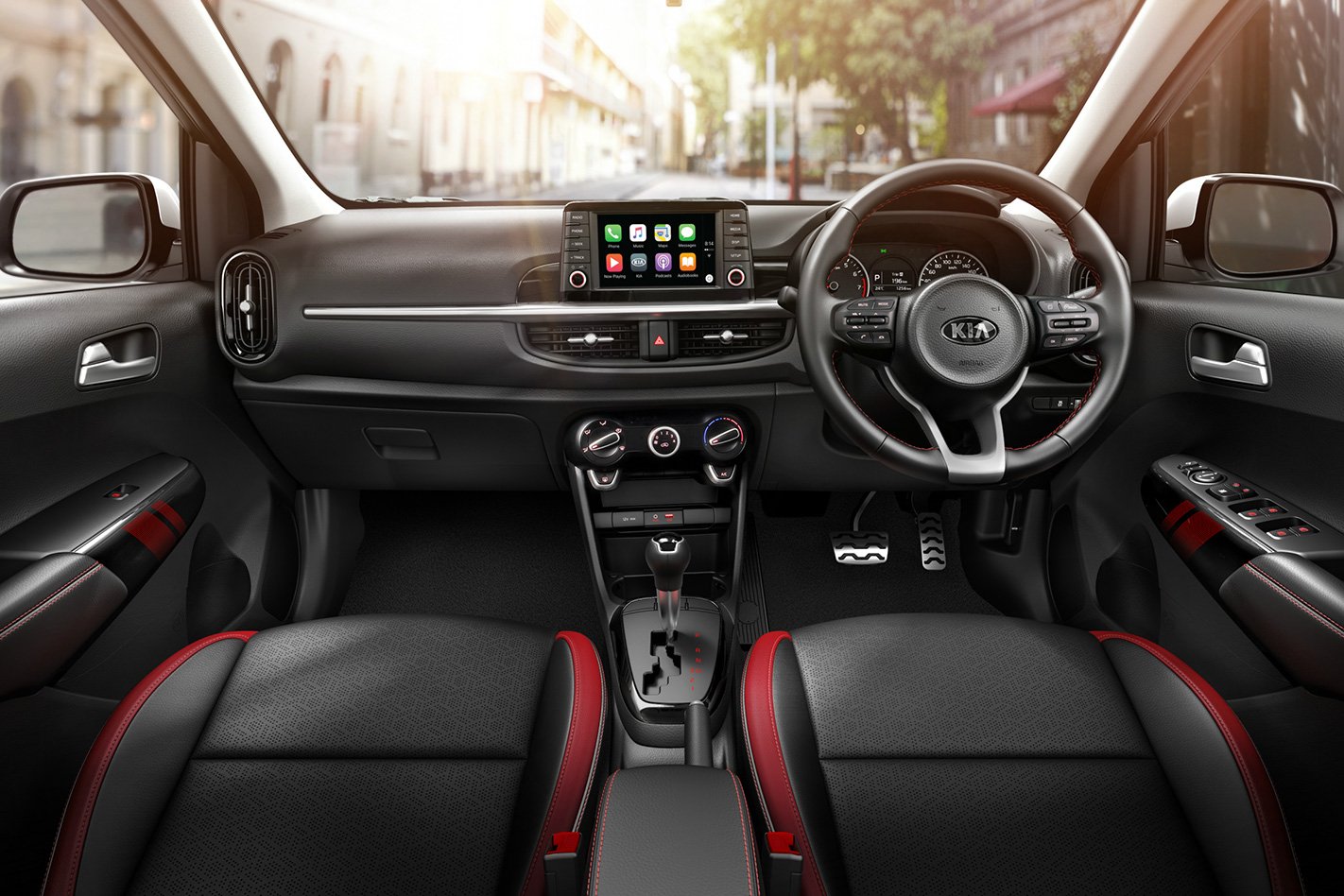
- Handling. Kia has revised the suspension calibration for the GT-Line, sharpening up its handling, and giving it a sportier feel. The steering is weighted variably depending on the speed, giving it composure on highways, and ease of manoeuvrability at low speeds.
- Generous equipment. For the sub-$20K price tag, the Picanto GT-Line offers plenty of kit. Reversing camera, cruise control, smartphone mirroring, and automatic emergency braking are all standard.
- Price. The GT-Line has a sticker price of $17,290, (our test car’s vibrant red paint finish was a $520 option). That’s just $1600 more than the standard automatic Picanto S, which costs $15,690. For the price premium you receive a funky new bodykit, 16-inch alloy wheels, dual exhaust tips, projector headlights with LED daytime-running lights, LED tail-lights, ‘premium’ leather-look/cloth seats with red accents, and alloy sports pedals. If you thought the regular Picanto lacked visual spice, the GT-Line could just be the affordable option you were looking for.
WEAKNESSES
- Gearbox. Roughly 80 percent of Picanto owners are likely to choose the four-speed automatic over the five-speed manual gearbox. However, the GT-Line is limited to just the auto. Unfortunately, the self-shifting gearbox is the lesser of the two options, and while it is masks its lack of ratios with a well-sorted calibration, it is outclassed by auto options in similarly-priced rivals.
- Highway noise. Tyre roar can become rather intrusive in the GT-Line at regular Australian highway speeds. This is not helped by the lower-profile rubber on the 16-inch alloy wheels.
- Ride. Kia has stiffened up the locally-tuned suspension in the GT-Line to give it a more dynamic feel. However, the new ride doesn’t deliver quite the same polish as the cheaper S model. While the sportier tune would be rewarding on smooth country roads, Picantos tend to spend most of their time in bumpy urban environments where the firmer ride quality might well grate after a while.
- Performance. While you don’t buy a car like this for its scorching pace off the mark, the GT-Line has exactly the same 1.2-litre naturally-aspirated four-cylinder engine as the standard S variant which can make it feel a bit of a sheep in wolf’s clothing.
ANY RIVALS I SHOULD CONSIDER?
Suzuki Ignis, Holden Spark, Suzuki Celerio.
Ed Ordynski’s just spent all morning telling me how tough his life is, what with flinging a factory Mitsubishi RalliArt Lancer EVO VII between the trees and sliding around like a loon for his monthly stipend.
This feature was originally published in MOTOR’s May 2003 issue
It was easier in the EVO VI, he explained, because of a viscous coupling centre diff that squished “goop” through friction plates to spread the drive to the other diffs at either end of the car.
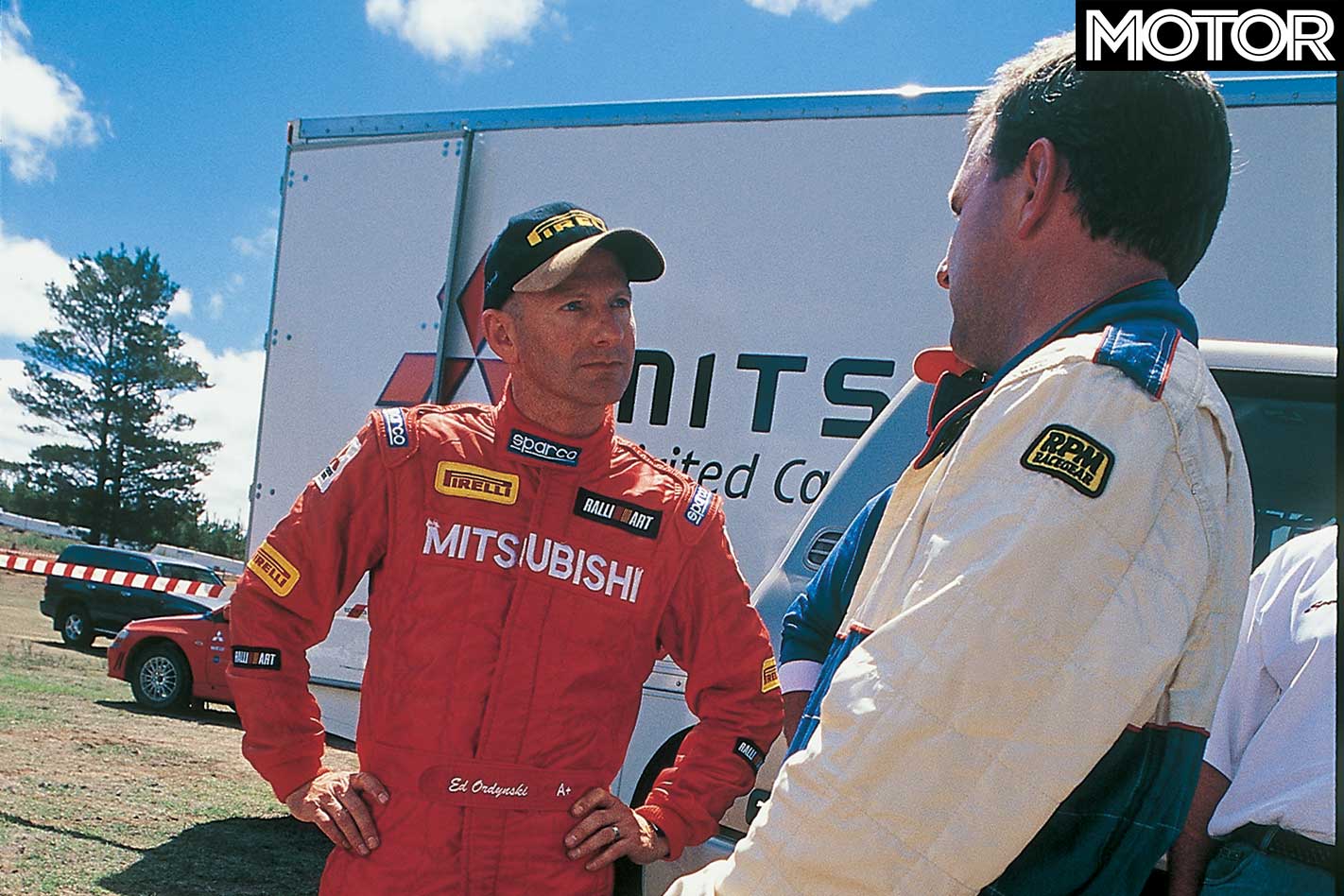
Still, the daintily-spoken South Australian almost won last year’s championship in one of these EVO VIIs until two uncharacteristic destructoes – both of which stemmed from weird drivetrain behaviour. The problem was eventually traced to a damaged wiring harness, but his confidence in the system is not yet fully restored.
Not so Neal Bates. He wasn’t there last year. Purpose-built WRC cars (like his old Corolla) were banned after ’01, so he rested on the Bates date. He tried being uninterested in rallying, but that irked him.
Then he went to a couple of events and that irked him, too. After that he stayed home watched on telly, which irked his wife. Then the rally bods announced the Group N (P) class, to let manufacturers bung all-paw turbo running gear into more humble machinery. Bates jumped at the chance, and his crew worked furiously to mate Celica GT-FOUR drivetrain and suspension technology to the new Corolla body.
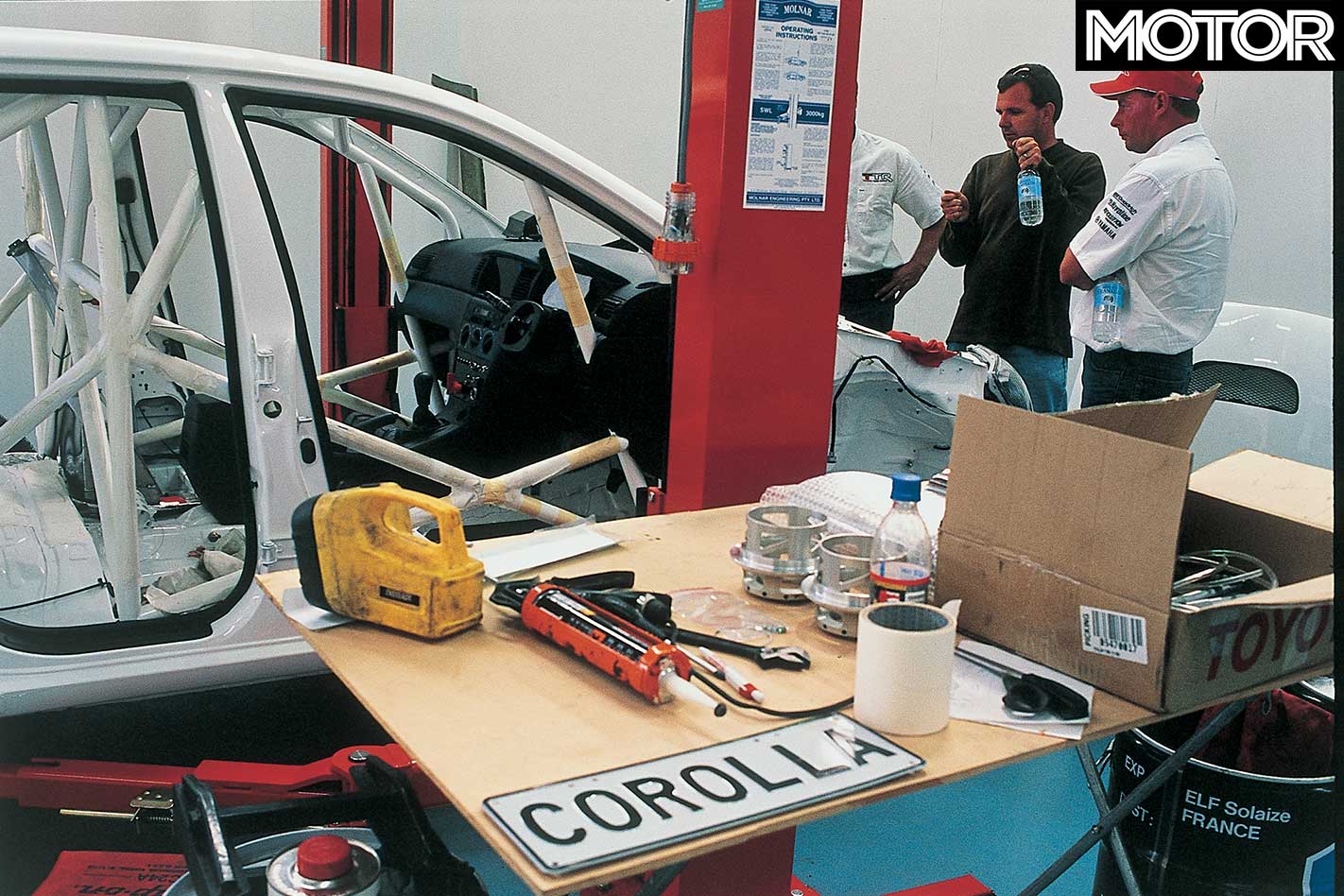
And so this is how we’re in the middle of a forest on a glorious Canberra morning with two genuine championship contenders to play with. It gets no better than this. For starters, no magazine anywhere has ever tested two leading national championship rivals back-to-back before the championship has even started. So what you’re getting is feedback these teams would normally kill for.
There are nerves, but not just from the MOTOR side of the fence. The first round is less than two weeks away, and the second Corolla (with the older car headed to Neal’s twin, sometime V8 Supercar driver, Rick) isn’t finished. Nor is the stress confined to Toyota. The RalliArt team had its two cars raring to go, until second driver Spencer Lowndes went tits up in testing five days before our drive.
Group N rally cars run quite a bit more boost than roadies. The EVO runs 1.4 bar – or 50 per cent more than standard. To offset the boost, they get choked back with 32 mm air inlet restrictors. The rules allow some freedom in gearboxes, which are universally five-speed with dog engagements that should last a full season without spannering.
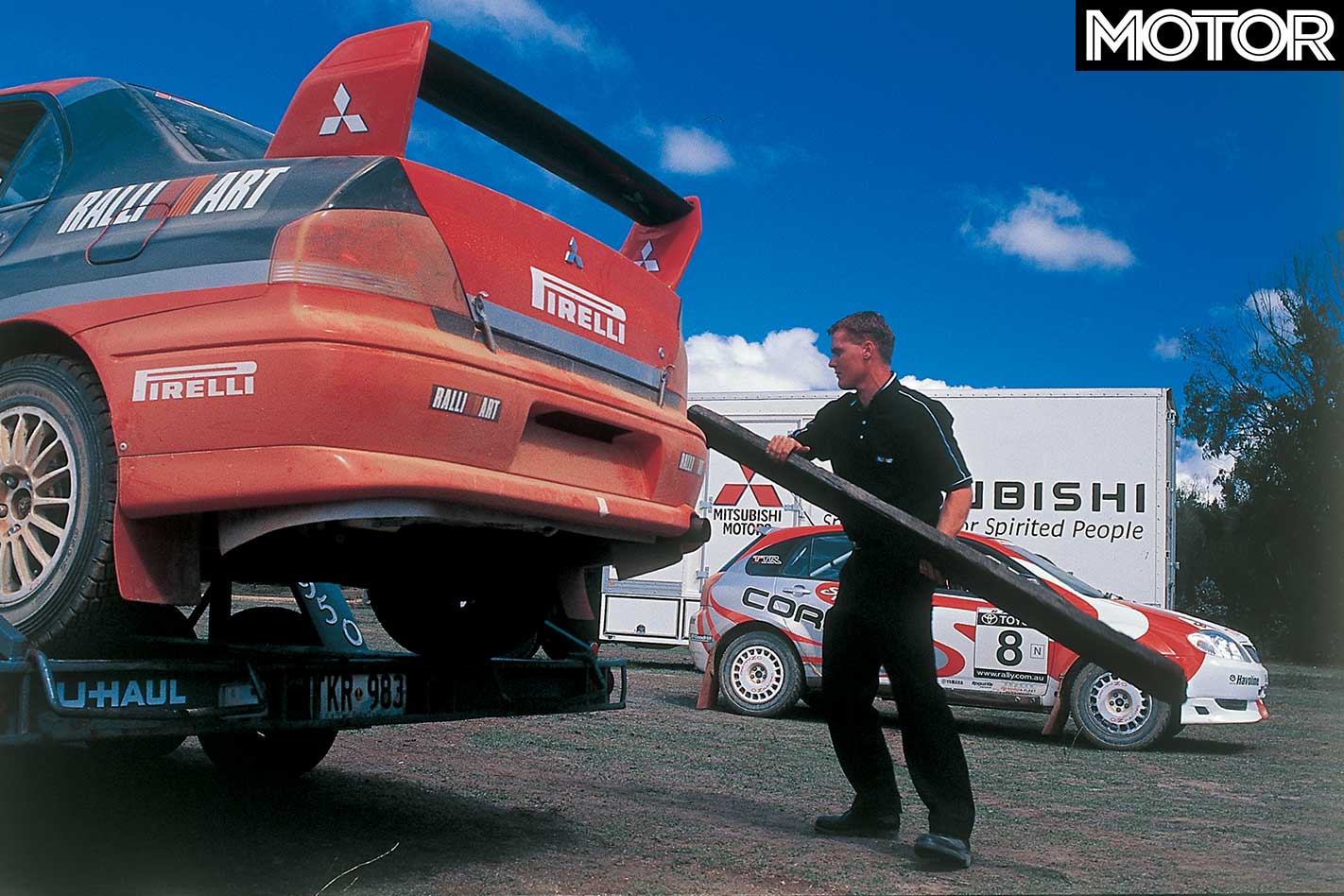
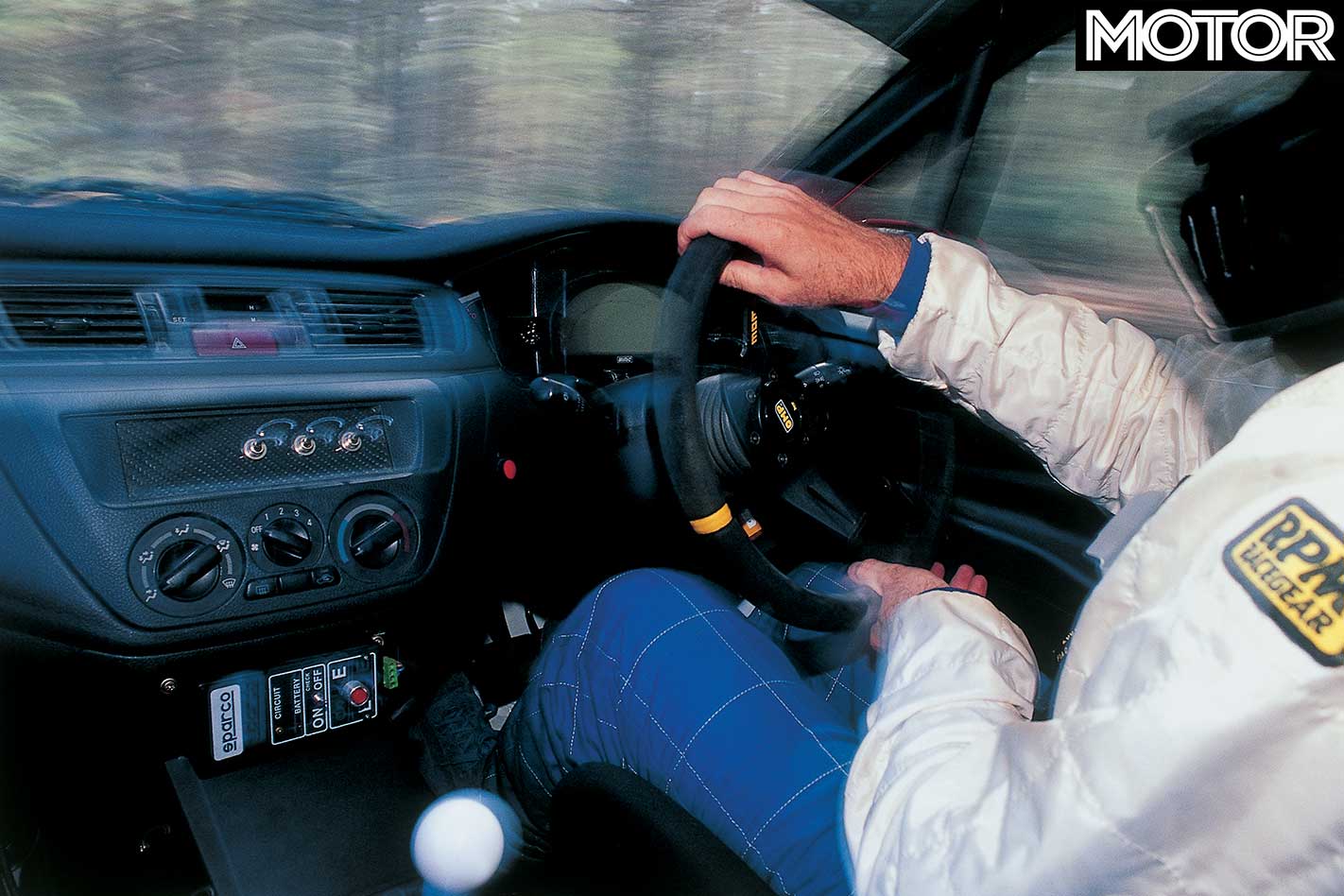
We hit the Lancer first and, with the Ordynski tapeworms hard at it over the off-season, the boys need grease and shoehorns to make his thimble-sized seat fit a grown-up’s arse.
Other than that, his driving position’s spot on and the briefing is short and simple. Or, it could have been if I’d heard it. The Lancer turbocharger’s anti-lag system is incredibly brutal and raucous and it won’t idle worth a damn. It bangs and pops and I know I saw team boss Bob Reilly’s lips move, but…
First engages with the loud clunk of metal ingots banged together, but the clutch feels little different to a road EVO. Reverse is in the normal position, but I’m buggered if I can find it, so I surprise everybody by driving forward out of the bay.
Then it won’t play the game on part throttle. It’s just awful and I’m starting to wonder if I can drive it at all, particularly with Reilly’s warnings running around in my head.
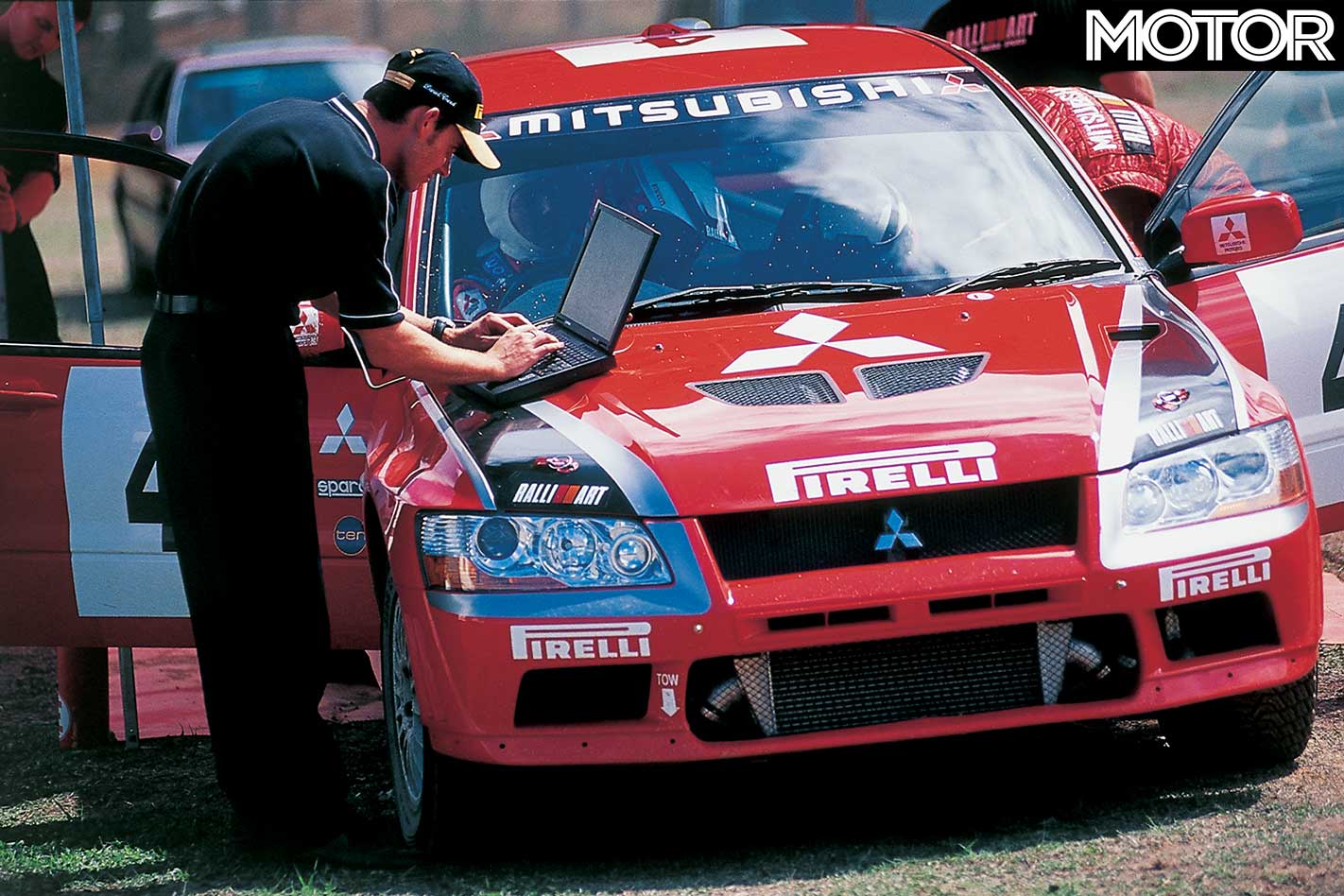
Example: “It won’t turn if you’ve got brake on, because that just makes it act like a locked centre diff, because the boffins figure that’s the best way to stop. Come off the brake and it acts like a fully open version, because that’s best for turn in. There’s variations in between.”
Part of what I couldn’t hear covered the launch control. No matter, because the 5200 revs I’d figured on wasn’t far off the mark. Rip it off the line and, for anybody used to fast road cars, it’s not that special, really. It just spins all four wheels for about a second before whapping off into the distance with gravel cracking and clanging under the body.
Then you stop and think about it. It feels about as fast as a road EVO, but it’s on gravel, where it’s supposed to be really slippery. Except where the road car bogs down for lack of wheelspin, the rally car has you pulling second gear almost before you’ve got the clutch pedal all the way out the first time, with that flattish, muffled engine note much smoother now that it’s happy with the work. Then third takes a little longer, fourth longer still and you’re in fifth in an amazingly short space of time.
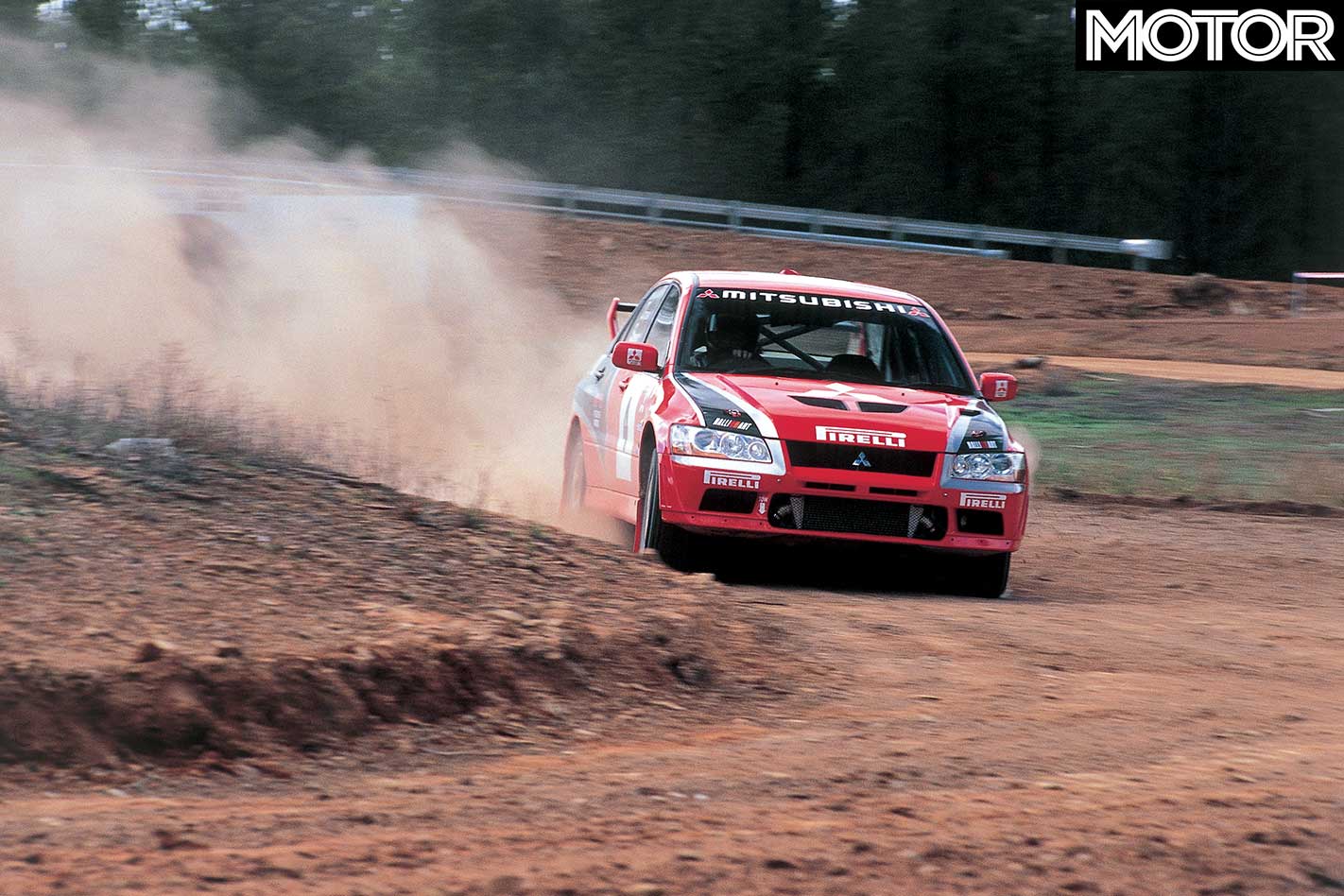
Even more amazing is that it’s doing it easily. Only later, in the Corolla, do I realize how tough it should have been, with the high crowns in the forest, different grip levels every few metres, constant changes in undulation and crown angle.
The EVO just punches up the road feeling like there’s nothing there. The Corolla demands constant attention, feeling far pointier, more rear drive and always wanting to slide the rear down the camber.
Neal’s thing also seems harder to get off the line. It’s much nicer to get it to the line to start with, though. His belts, for example, need no alteration and the thing’s quiet and idles nonchalantly. But whether it’s the way the diffs are set or the spring rates they’ve plumped for front-to-rear, I don’t know, it’s just harder to pull the trigger.
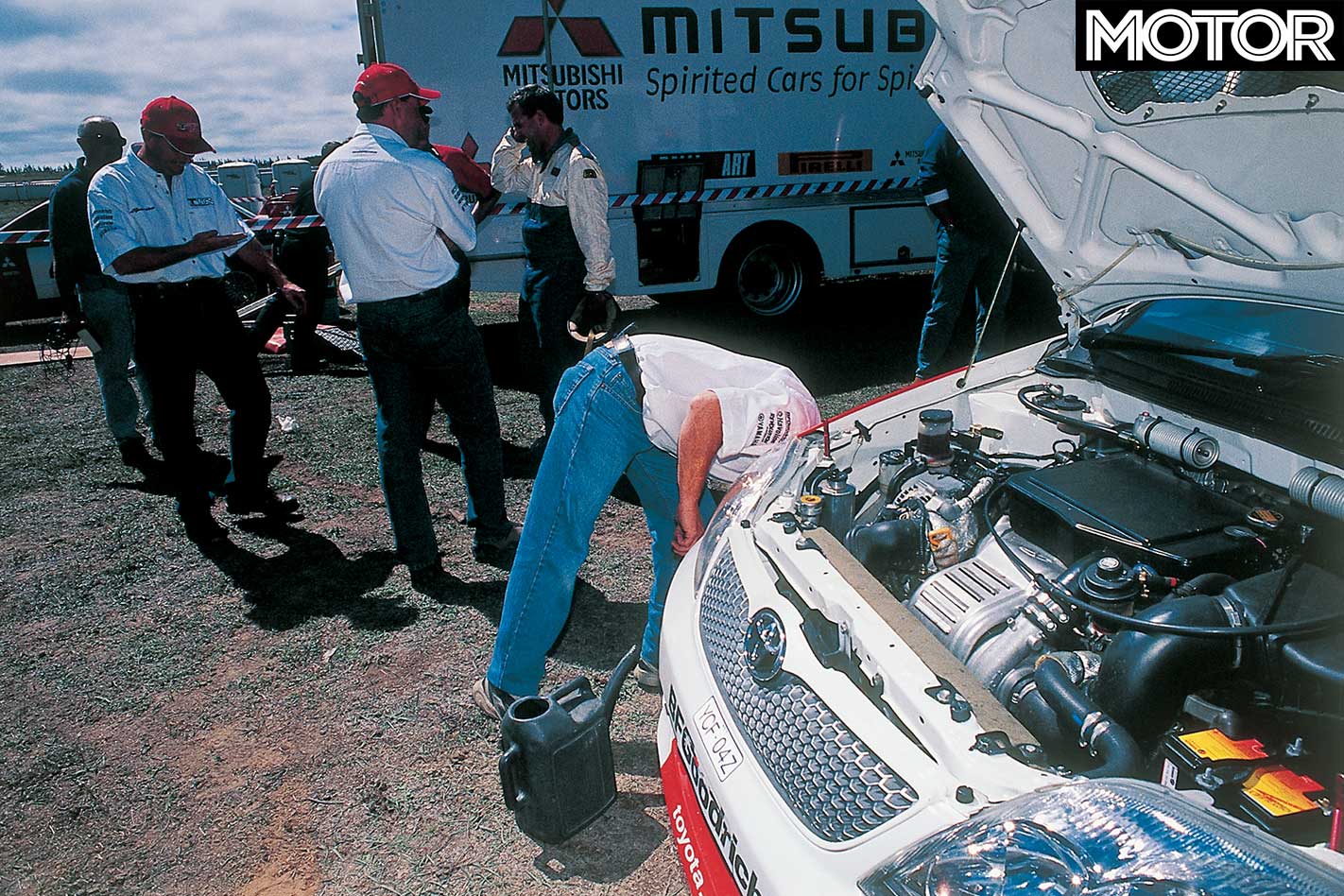
Launch it at the same revs as the EVO and it bogs down with either too much traction or not enough torque. Hard to say. It needs to be on or near the rev limiter to get its best, and then it still needs a touch of clutch slip.
In a straight sprint, the Corolla charges hard. Harder than the Lancer. It’s not until it gets to about 3000 revs that the Corolla gets spooled up, and until about 5000 it’s clearly the punchier of the two (though let’s not kid ourselves, you wouldn’t know who was playing games with the engine management computers for this sort of thing, would you?).
After 5000, it tails off fairly dramatically, where the Lancer keeps pulling to 6000 if you need it. Both cars have their torque peaks set quite low, so they’re usually quicker if they’re short-shifted.
Part of the difference may be gearing. Neal uses a Modena ’box and Ed’s is a Melbourne-built Holinger, but the Toyota uses the ratios homologated by Subaru’s Group N program.
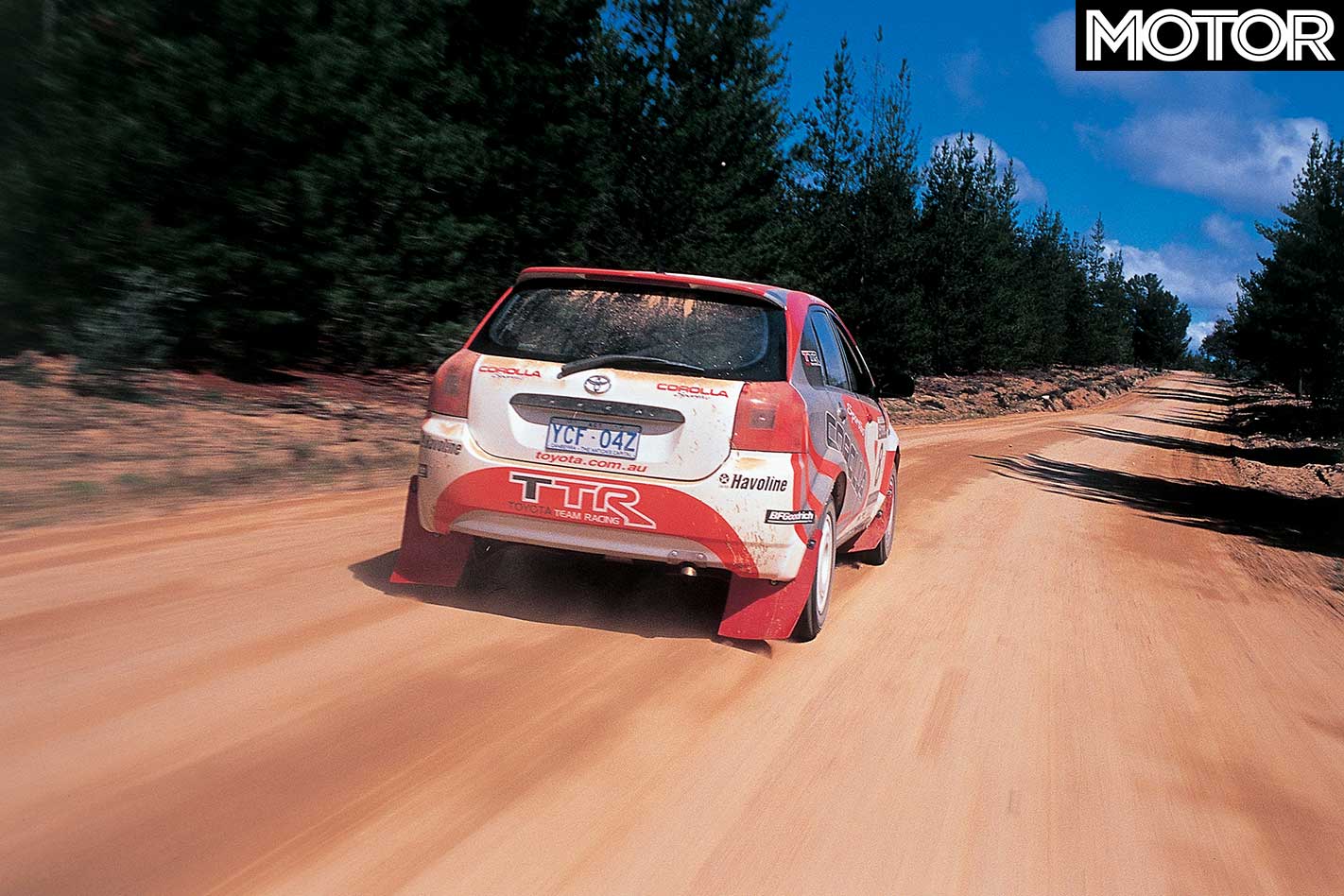
Neither car really needs the clutch once in motion and, though both drivers use it on the way up anyway, only Ed uses it coming back. That explains why his is the only pedal box that allows for heel-toe downshifts.
Neal’s left foot is on exclusive braking duties, which leaves him free to pick up the throttle at whatever instant he likes. He needs to, as well, because the Corolla feels soggier than the Lancer once the MoTec tacho dips below about 2800 revs.
Then you get to the first corner, in either car, and you just can’t believe it. These things stop faster than English cricket hopes. The brakes are just phenomenal. They hurl you against the belts hard enough to bruise your collarbones and detach your retinas.
It’s an awesome, stunning display that totally defies the slipperiness of the surface under them. You couldn’t brake this late in a V8 Supercar, let alone a road car, and yet here you are on a surface grippier only than ice and mud.
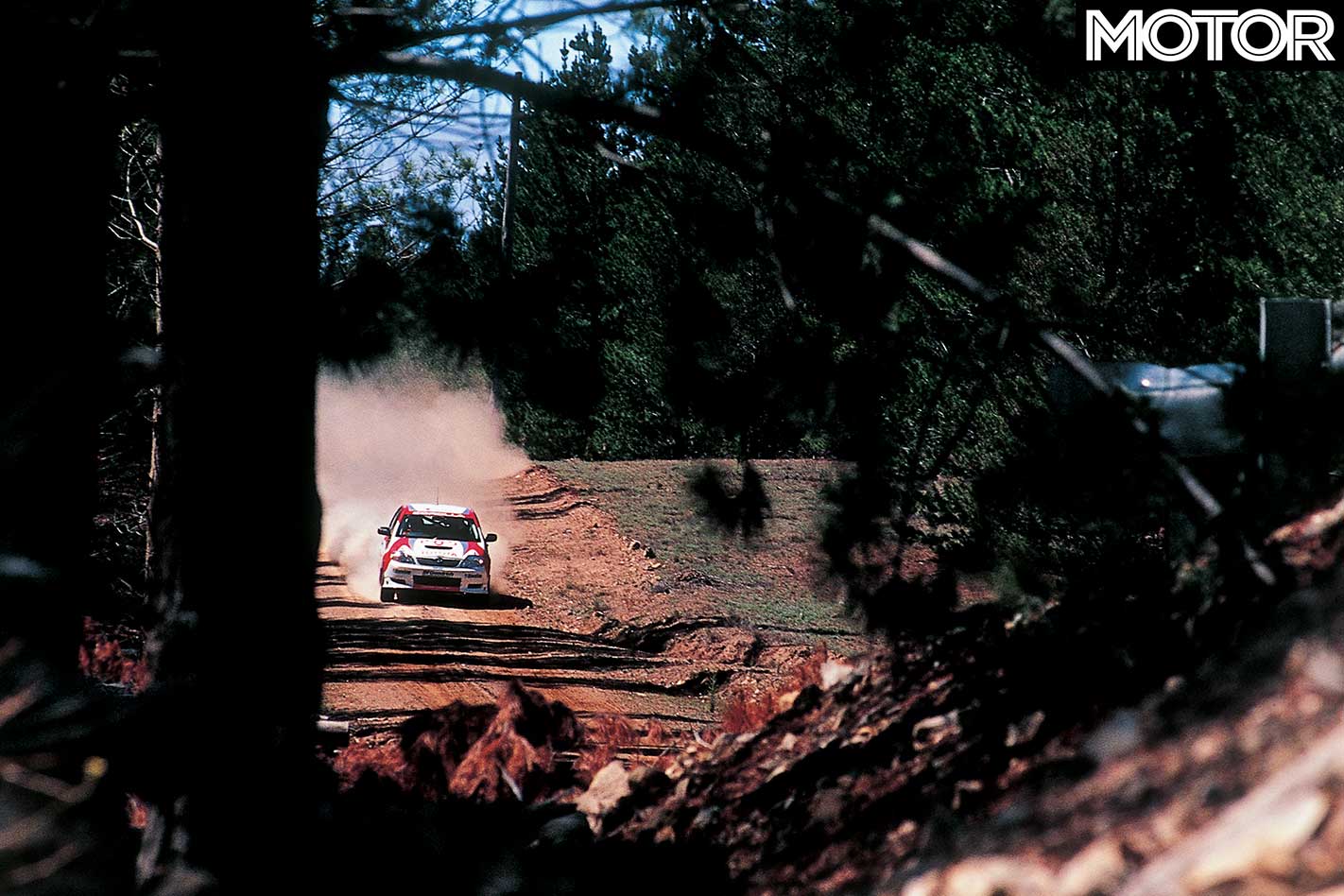
While Ed’s uses simple twin-piston sliding front and single piston sliding rear arrangements (with the standard rotor size), Neal’s has the GT-FOUR’s two-piston rears and awesome four-piston front picks. He’s also had to machine the front rotors down to 300 mm all round, because the standard jobbies wouldn’t fit inside the wheels.
Like we found in other areas, while the cars are similar, they have some fairly clear differences in the detail. Neal’s brake pedal, for example, is easier to modulate while Ed’s is like a rock. But the real tricks are in the tyre technology. Ed’s Pirellis and Neal’s BF Goodrichs have been developed to bite into the road and tear it to shreds in an effort to turn kinetic energy into anything else.
You bring each car in straight under brakes (the most effective way on these tyres, so the boys say), but that’s only half the battle. You also have to have them pointed with just the right slip angle by the time you reach the turn-in point.
While the tyre boffins have conquered stopping on gravel, the laws of physics are yet to be overturned in the lateral grip department, so you have to use momentum and changes in angle to make them turn, rather than just slowing down and aiming for the apex.
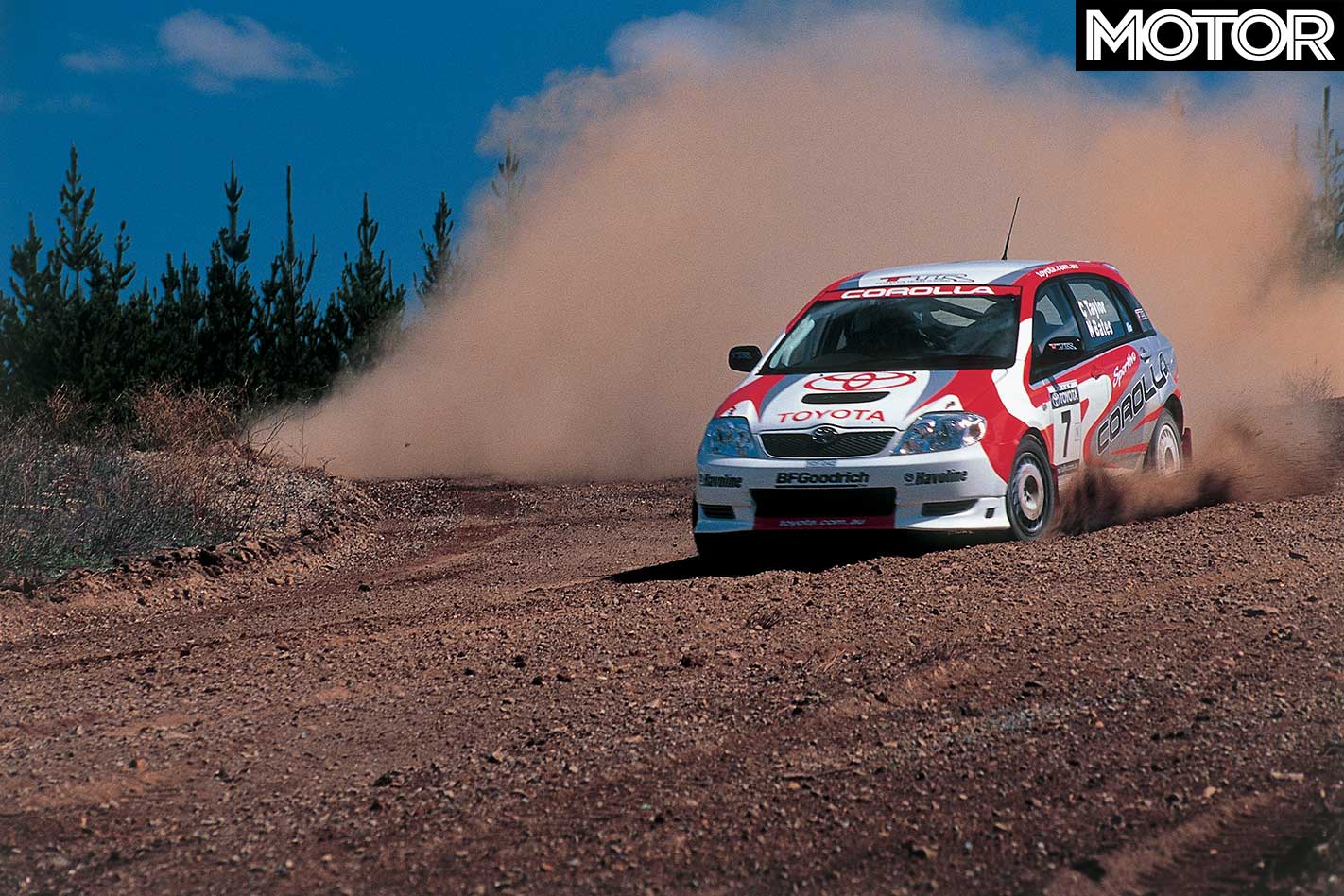
Do this in Ed’s car and you can select your slip angle very early, aim the thing where you want it to start turning and stand on the brakes. The car will stop like you’ve hit something solid, but it’ll miraculously maintain exactly the slip-angle you’ve selected, all the way up to when you get off the picks.
Neal’s car is a different beast, adhering to more conventional thinking. Brake hard with the tail already out a bit and you can expect the tail to come out quite a bit more by the time you’ve finished. Little slides become quite big slides, but it’s very predictable. It’s most likely a set-up thing and it’s probably just something Neal’s just used to.
And then you come to the biggest differences in feel between these two cars. Between getting off the brakes, getting turned into a corner, getting the power down and getting it all straight again. Just the really important bits…
Where the Lancer’s anti-lag means it just leaps any time you get on it, the Corolla lags more. It’s got a bigger turbo (Neal would like to use a smaller one, but the GT-FOUR was homologated with this one, so it’s gotta stay) than either the Impreza or the Lancer and, off boost, it feels ordinary.
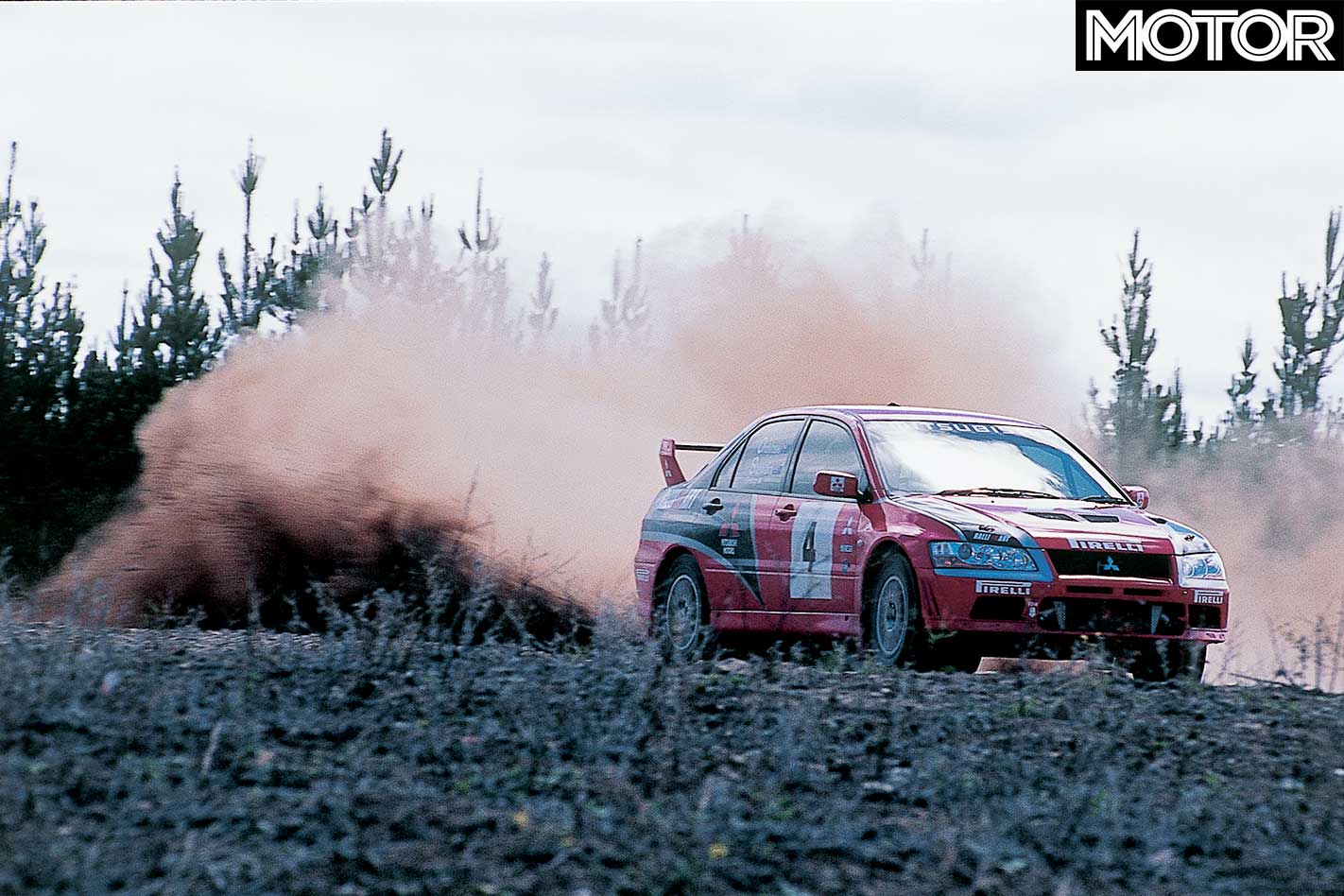
Out of slow corners it never quite feels like it’s got it going on properly, which is why you can hear Neal constantly, impatiently, tap-tap-tapping the throttle before he gets the Corolla to an apex.
Not the EVO. Wicked throttle response is its forte. It punches with genuine strength from as little as 1500 revs. It’s instant, too. Brush the throttle with a toe and it leaps instantly. Beautiful.
Turn in bite is defined differently in rally cars. The steering feel and weight isn’t dissimilar on either car and if anything, they’re both curiously slower in their racks than, say, an XR6T.
On tighter corners (second gear) you can use the Lancer’s throttle response to great effect from the nanosecond you’ve got the front to bite, then you can feel the centre diff’s brain working overtime to hurl you up the road as effectively as it can. And that’s very effectively indeed.
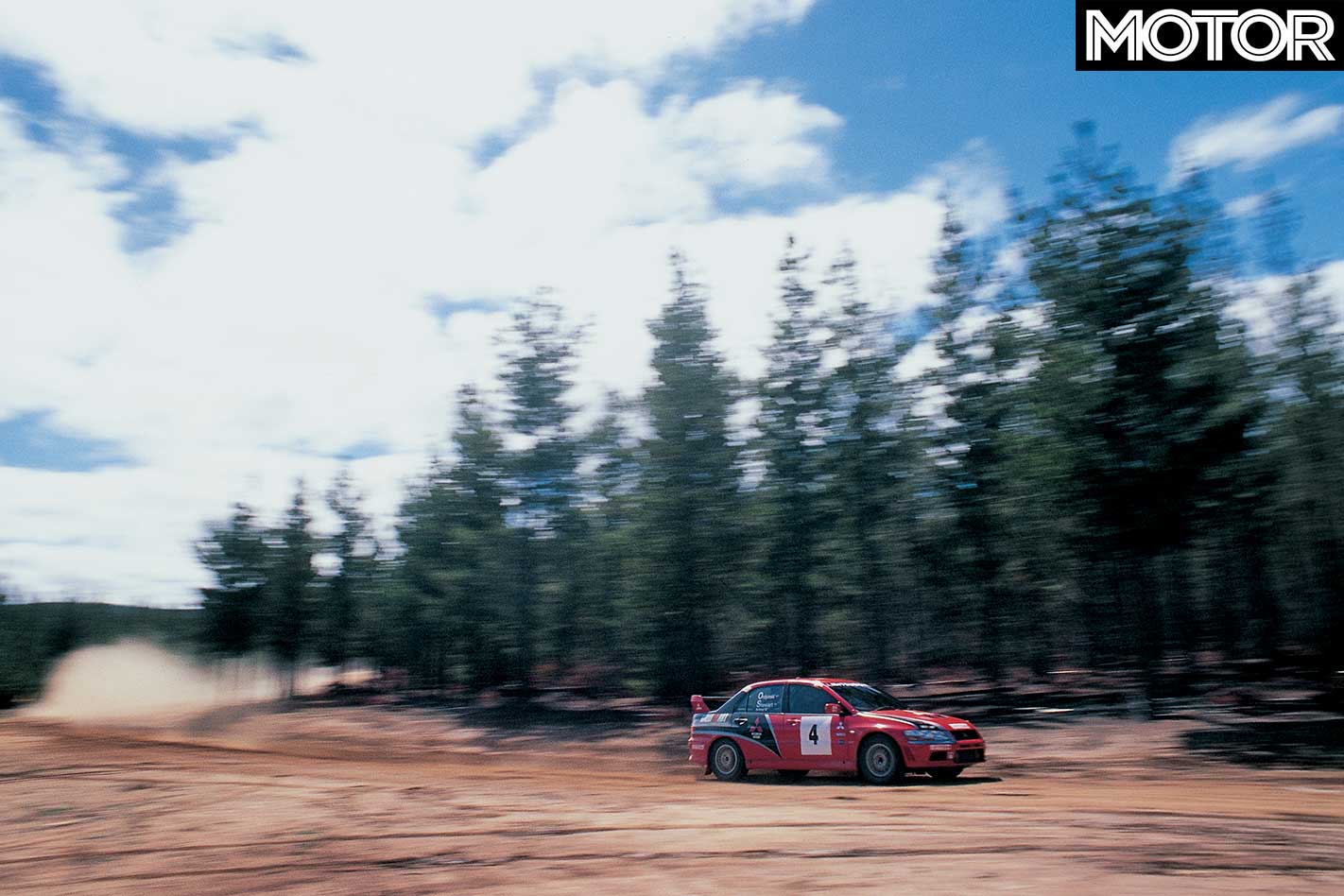
It has a lot of front diff emphasis in the way it delivers its drive out of corners. It will run wide, but it’ll generally run wide in languid four wheel drifts, everything scrabbling together to overcome the limitations of the surface.
To be fair, thousands of drivers across the world have been stumbling on demon EVO tweaks for years. It was, in VI form at least, developed to within an inch of its life. The Corolla is clearly less developed, worked on as it is by Neal’s hugely respected team and nobody else.
While Ed’s car is punching its way up the gravel, Neal’s feels more difficult for the driver to get set for the first half of a corner, walking on a knife’s edge of getting it right or wrong. The Lancer, by comparison, will happily perform if you get the approach within 10 per cent of spot on.
While that’s a driver accuracy issue and Neal and Rick are brilliant enough to not suffer, it’s on the way out of slower corners that the Corolla may struggle until its development is further advanced. It feels very rear-drive and wild opposite lock slides are part and parcel of the equation.
It’s fun and it looks good, but it doesn’t feel anything like as fast. They drift the car wide, wasting the engine’s work on greater slip angles than the Mitsubishi generally carries.
And the Lancer ride is hard compared to the Corollas, especially from the rear. Both of them carry suspensions so amazing you don’t feel any great impact from anything hard hitting underneath, and they’re both softer and more supple the harder you hit things (to a point, obviously), but the Corolla just soaks hits up like a sponge by comparison.
The Lancer also feels a bit more altogether, while the Corolla is clearly a one-off special. There are more things like pump whines and electric motor drives constantly on the go, and there’s a lot more by way of vibrations and harshness.
From the front, from the back, from the centre diff. It whines, it clunks, but it’s more driveable at light throttle openings. It’s the first of what Bates hopes will be many, and it’s clear they’ll just get better and better.
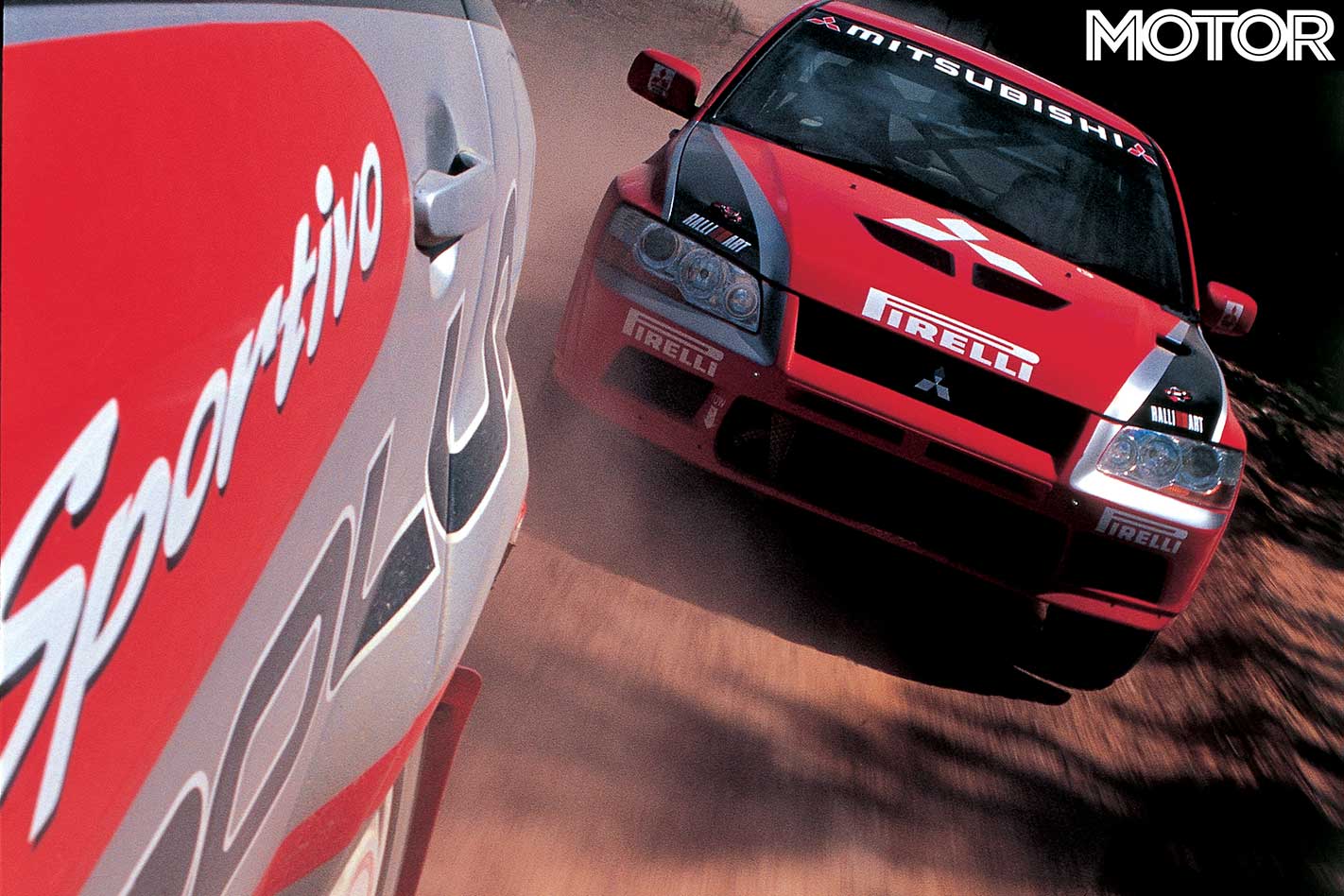
The Lancer’s more like a wound up road car and its chassis, remarkably, doesn’t feel as quite as rigid as the Corolla. It’s almost there, but not quite.
Of course, that’s at this speed. Push harder and it can all change, probably does. Rick reckoned the Corolla felt like it ran wide until he had a real go. Ed reckons the EVO is oversteery until you get quicker in it, then it’s an inherent understeerer. And that suits him just fine.
Right now, at this stage of its development, the Corolla doesn’t feel quite a match for the EVO. It’d go pretty close on uphill stages (if these engine outputs are indicative) and on faster stuff, but on the tighter stages, or places with looser surfaces, the Lancer feels like it just has its measure.
But later in the season, Ed, Spencer, Cody, Dean and Possum better watch out. If the Corolla’s this quick out of the box, it’s only going to get faster.
Then Mr Ordynski might realize his life was never really that tough after all.
No Subaru?
So by now you’ve picked the obvious: there’s no Subaru in here. We tried, but the old Possum’s got a bit on his plate this year, what with a tilt at the Gp N World crown on top of defending his ARC title – and fending off teammates Dean Herridge and five-time Gp N champ Cody Croker. The short and sweet of it is that he didn’t want to risk one of the blue cars. Can’t really blame him for that.
5 Winningest ARC facts
Champs
1 – Possum Bourne (7), Subaru ’96 – ’02 2 – Ross Dunkerton (5), Datsun ’75 – ’77, ’79, ’83 3 – Neal Bates (3), Toyota ’93 – ’95 4 – Greg Carr (3), Ford ’78, Alfa Romeo ’87, Lancia ’89 5 – Colin Bond (3), Holden ’71 – ’72, ’74
Manufacturers
1 – Daihatsu, win some bets here, boys! (6), ’91 – ’96 2 – Subaru, lose some bets here, (4), ’97 – ’98, ’00 – ’01 3 – Holden, is there nothing it can’t do? (4), ’71 – ’74 4 – Nissan, not the immortal privateer Dattos, (3), ’75 – ’77 5 – Mitsubishi, plus six Group N crowns, (2), ’90, ’99
Porsche Boxster
D-I-Y rally car Don’t want to rally a Lancer or WRX? Build your own
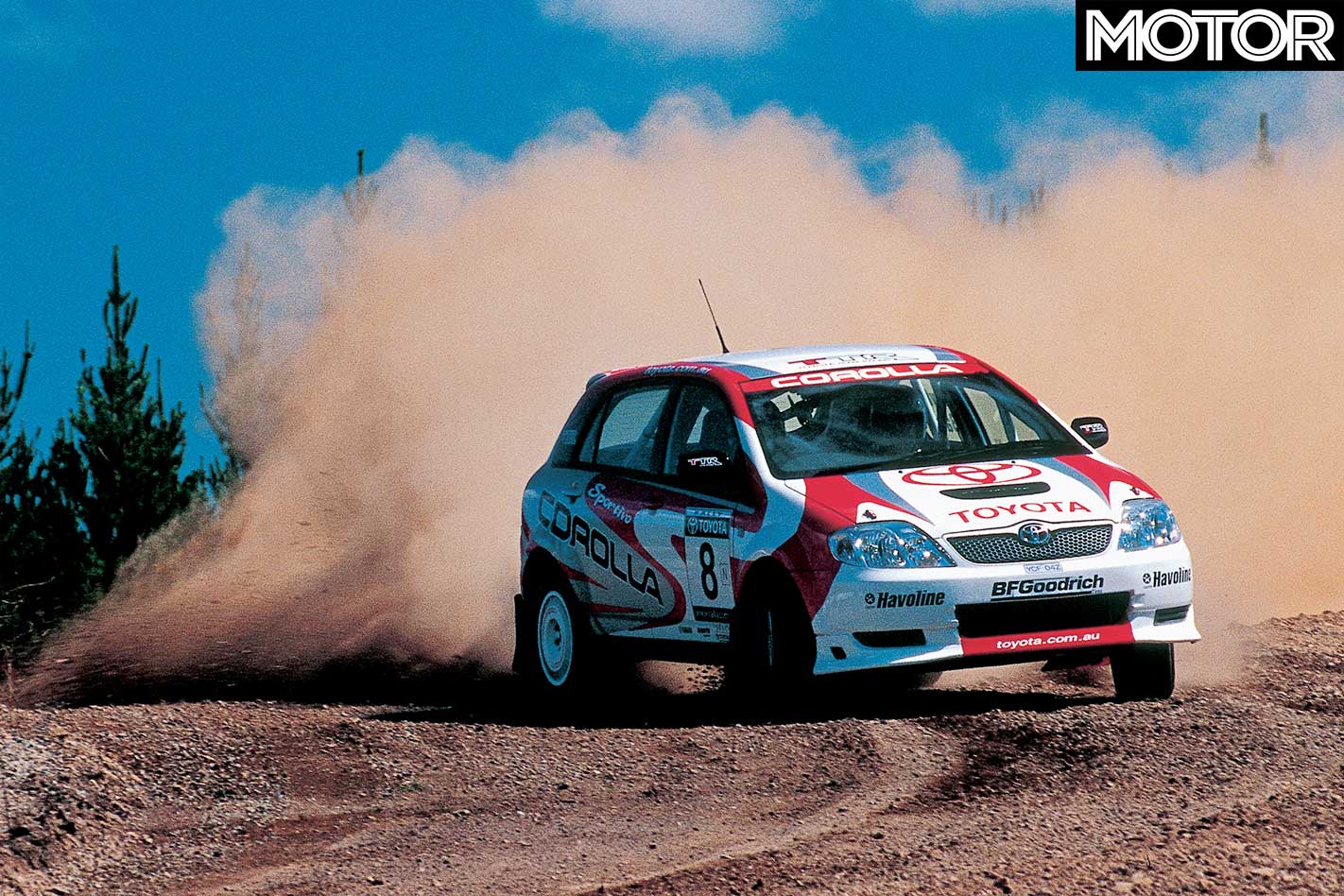
So this whole rally caper looks like a bit of fun. Except, if your name rhymes with “Mates” and you live in Canberra, you’re probably not allowed to drive an EVO Lancer or one of those bloody quick blue things. So you build your own, don’t you?
Neal Bates and Possum Bourne used to have the only World Rally Cars in the ARC, but when the championship switched to production cars, it killed ’em off at a stroke.
In Group N, you’re allowed to take a production car and make some rally-style tweaks. For example, the gearbox internals are free, provided you stick to homologated ratios. Brakes are standard, but you can use any pads. Engine hardware is standard, but management is free. Shocks and springs are free. You’re allowed flexibility with the diffs, provided the housings are the same.
Of course, all this is contingent upon your favoured carmaker actually having an all-paw, turbo in the first place. Subaru did, so Possum kept driving. Toyota didn’t.
The new Group N (P) rules let Toyota back into its favoured game. The rules, designed to open the sport up to manufacturers without WRX or EVO-style road cars, is parity driven and gives three options. Neal’s Team Toyota Racing took the hardest of the three Gp N (P) options, which is to scour the Toyota parts bin to find a 2.0-litre engine, turbocharger and all-wheel drive system, and shove it all in one car.
The 3S-GTE engine and the running gear from the Celica GT-FOUR is still sold in the Caldina in Japan, so it was easier than it might have been. Still, it took about 1400 hours to build.
Option two is to take a family 2.0-litre four pot, turbo it, then mate it to EVO or WRX running gear. That could be a bit difficult at the interface.
The third option, and a beauty for the likes of Proton or Daewoo, is to simply take WRX or EVO running gear and bung it in your own car.
Fast Facts
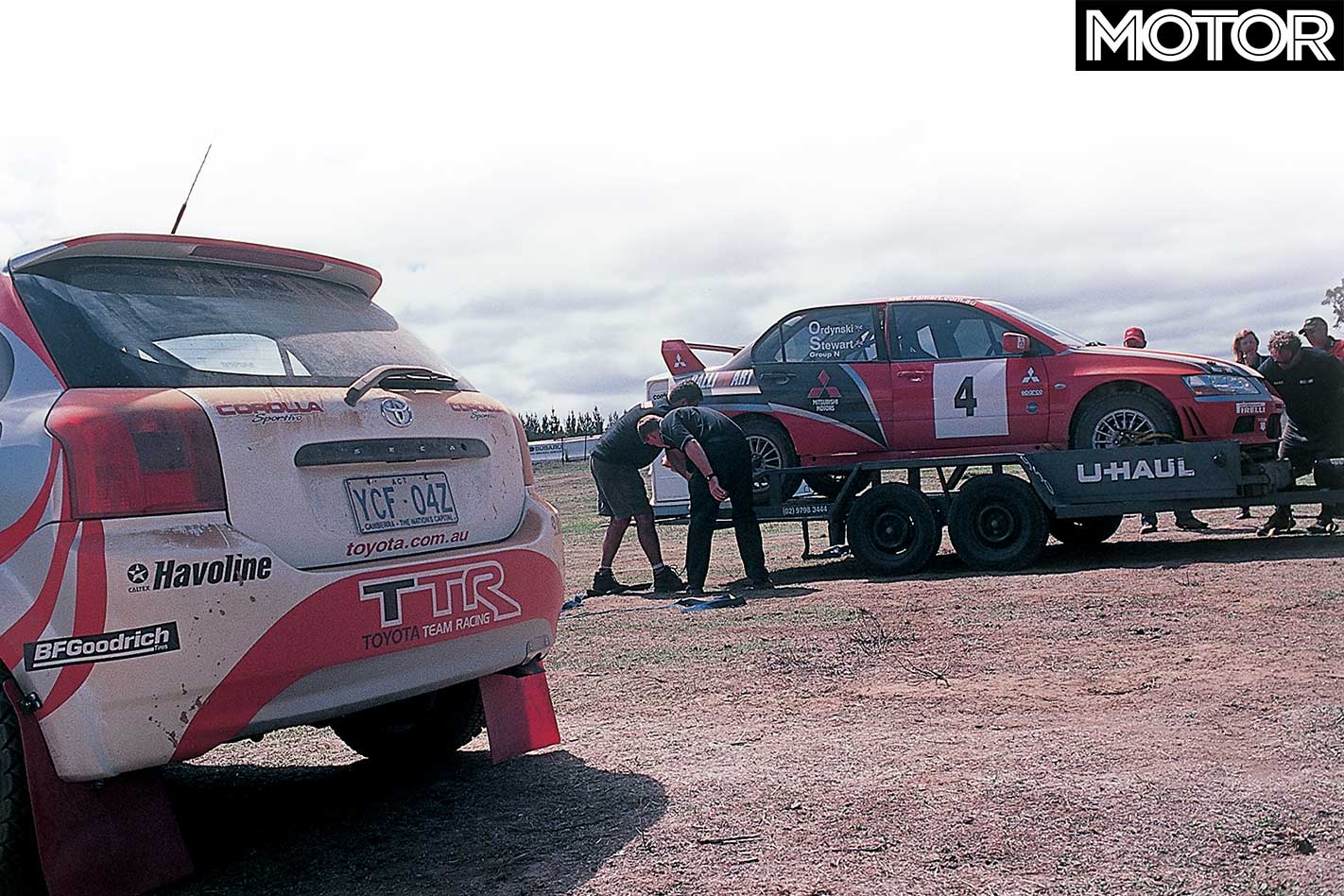
| u00a0 | 2003u00a0Toyota Corolla Sportivo (rally spec) | 2003u00a0Mitsubishi Lancer EVO VIIu00a0(rally spec) |
| BODY | five-door hatch | four-door sedan |
| DRIVE | all-wheel drive | all-wheel drive |
| ENGINE | 2.0-litre, 16-valve DOHC turbo four, 32 mm air inlet restrictor | 2.0-litre, 16-valve DOHC turbo four, 32 mm air inlet restrictor |
| BORE/STROKE | 86.0mm x 86.0mm | 85.0mm x 88.0mm |
| COMPRESSION | 8.6:1 | 8.8:1 |
| POWER | 186kW @ 5000rpm | 205kW @ 5500rpm (approx.) |
| TORQUE | 430Nm @ 4000rpm | 431Nm @ 3200-3500rpm |
| WEIGHT | 1385kg | 1392kg |
| POWER/WEIGHT | 137kW/tonne | 147kW/tonne |
| TRANSMISSION | Modena five-speed manual | Holinger five-speed manual |
| SUSPENSION (f) | MacPherson struts, coils, dampers, anti-roll bar | MacPherson struts, coil springs, anti-roll bar |
| SUSPENSION (r) | MacPherson struts, coils dampers, anti-roll bar | semi-trailing arms, coil springs, anti-roll bar |
| L/W/H | 4175/1695/1470mm | 4455/1770/1450mm |
| WHEELBASE | 2600mm | 2625mm |
| TRACKS | 1520mm (f); 1510mm (r) | 1520mm (f); 1507mm (r) |
| BRAKES (f) | 300mm grooved, ventilated discs, four-piston calipers | 297mm ventilated discs, two-piston sliding calipers |
| BRAKES (r) | 300mm ventilated discs, twin-piston calipers | 297mm ventilated discs, single-piston sliding calipers |
| FUEL | 60 litre Kevlar bladder, PULP | 80 litre Kevlar bladder, PULP |
| WHEELS | 15 x 7.0-inch (f & r), alloy | 15 x 6.5-inch (f & r), alloy |
| TYRE SIZES | 205/65 15 (f & r) | 205/65 15 (f & r) |
| TYRE | BF Goodrich | Pirelli |
| PRICE | $150,000 | $180,000 |
Even if you can’t help stop your enthusiasm for cars from being worn on your sleeve, you can always indulge with this selection of cool kit that pay subtle tributes to your favourite motoring icons.
They are proof that paraphernalia doesn’t have to be merely superfluous, but super useful as well.
1 – ED’s PICK “PRODUCT OF THE MONTH”: TW Steel Monaro GTS watch ($327 from twsteel.com) TW Steel pays tribute to Holden’s first win at Bathurst 50 years ago with the #13 Monaro GTS driven by Bruce McPhee and Barry Mulholland. Only 327 will be built, for each cubic inch it had.

2 – Hyundai WRC USB ($43 from shop.wrc.com) Hyundai’s been fighting in the gruelling WRC for a while now, keep the spirit alive on your desk with this i20 shaped 16GB memory stick from the rally organisation’s official merchandise store.

3 – Carrera sunnies ($169 from carreraworld.com) Like Porsche’s 911 model, Carrera sunnies pay homage, in name, to the classic Panamerica race. The 166/S pair has the modern technology to back up their retro flair and moto style.

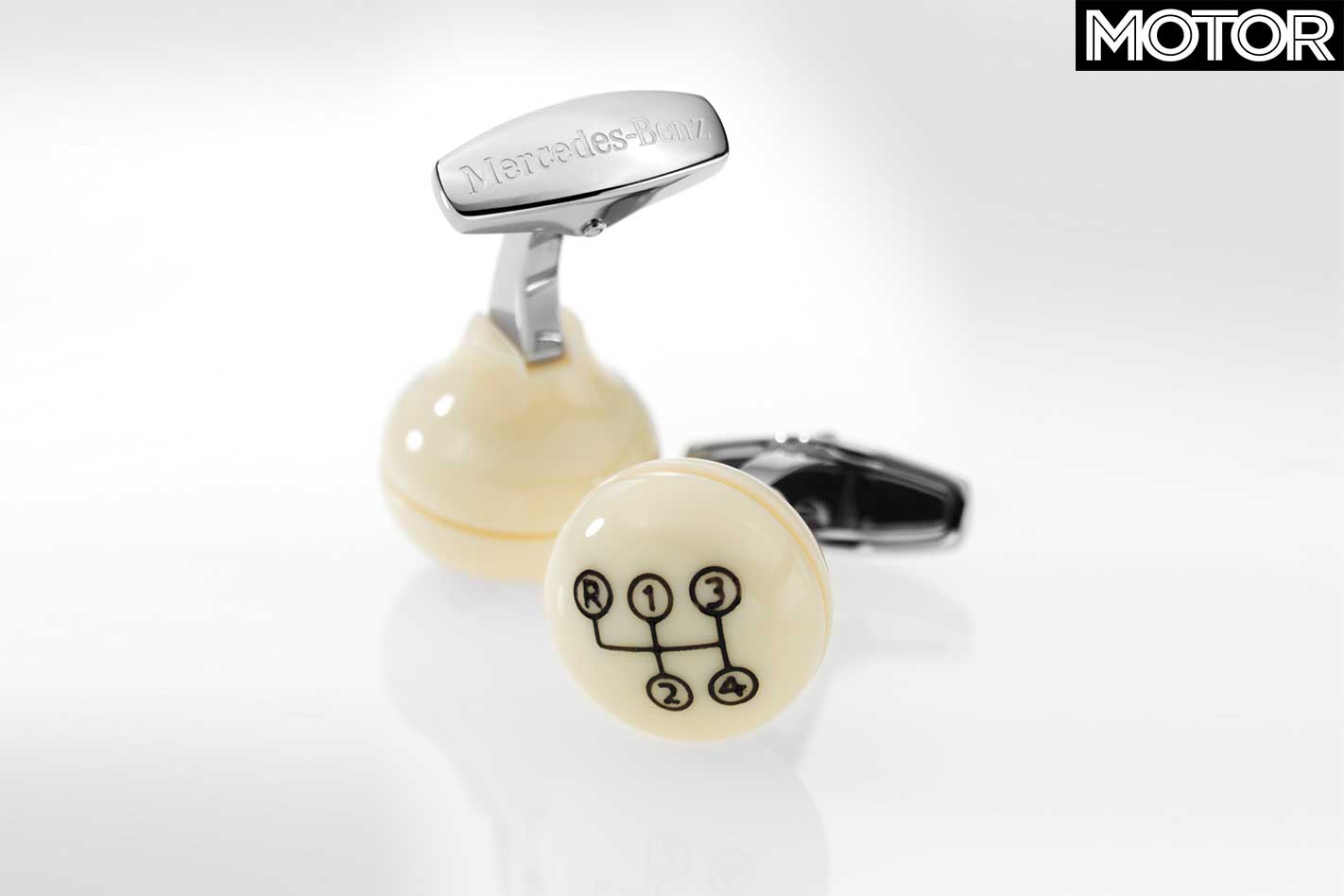
4 – Mercedes-Benz 300SL cuff links ($74 from shop.mercedes-benz.com) Keep your style classic with Mercedes Benz’s shift knob cuff links. They’re 1.5cm in diameter, use stainless steel arms, and feature the SL’s four-speed H-pattern.
5 – Subaru WRX 22B shirt ($37 from dirtynailsbloodyknuckles.com) Celebrate homologation specials with this Subaru WRX STi 22B-inspired tee. Available in white, grey or this blue, sizes S to 3XL. Caution: this website will cause damage to your savings.

6 – Piloti Le Mans tribute shoes ($217 from piloti.com) Based on Piloti’s Circuit shoe, a low-cut sports sneaker with a rounded heel and leather outer layers, the Le Mans 24H special edition comes striped with French colours in tribute.

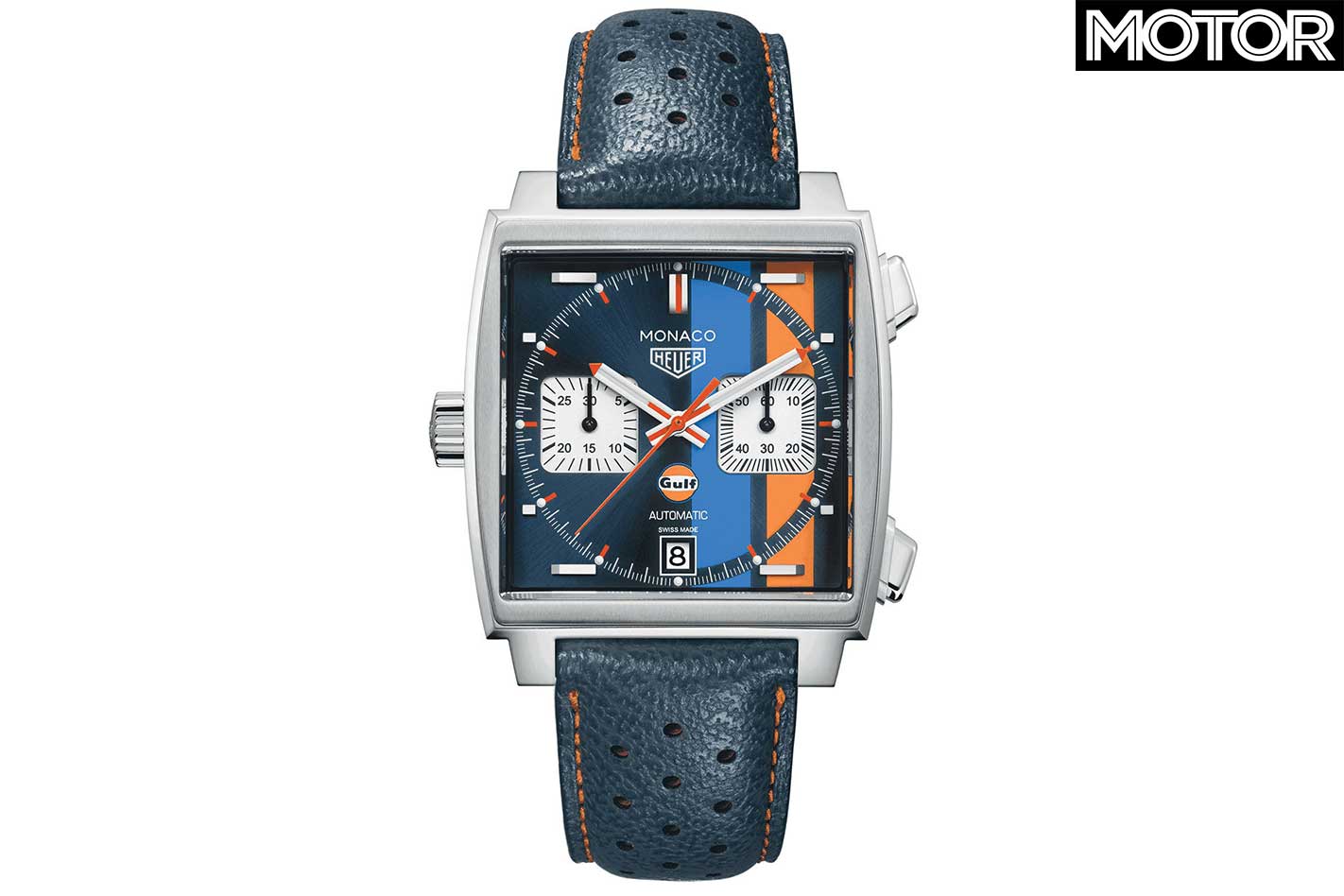
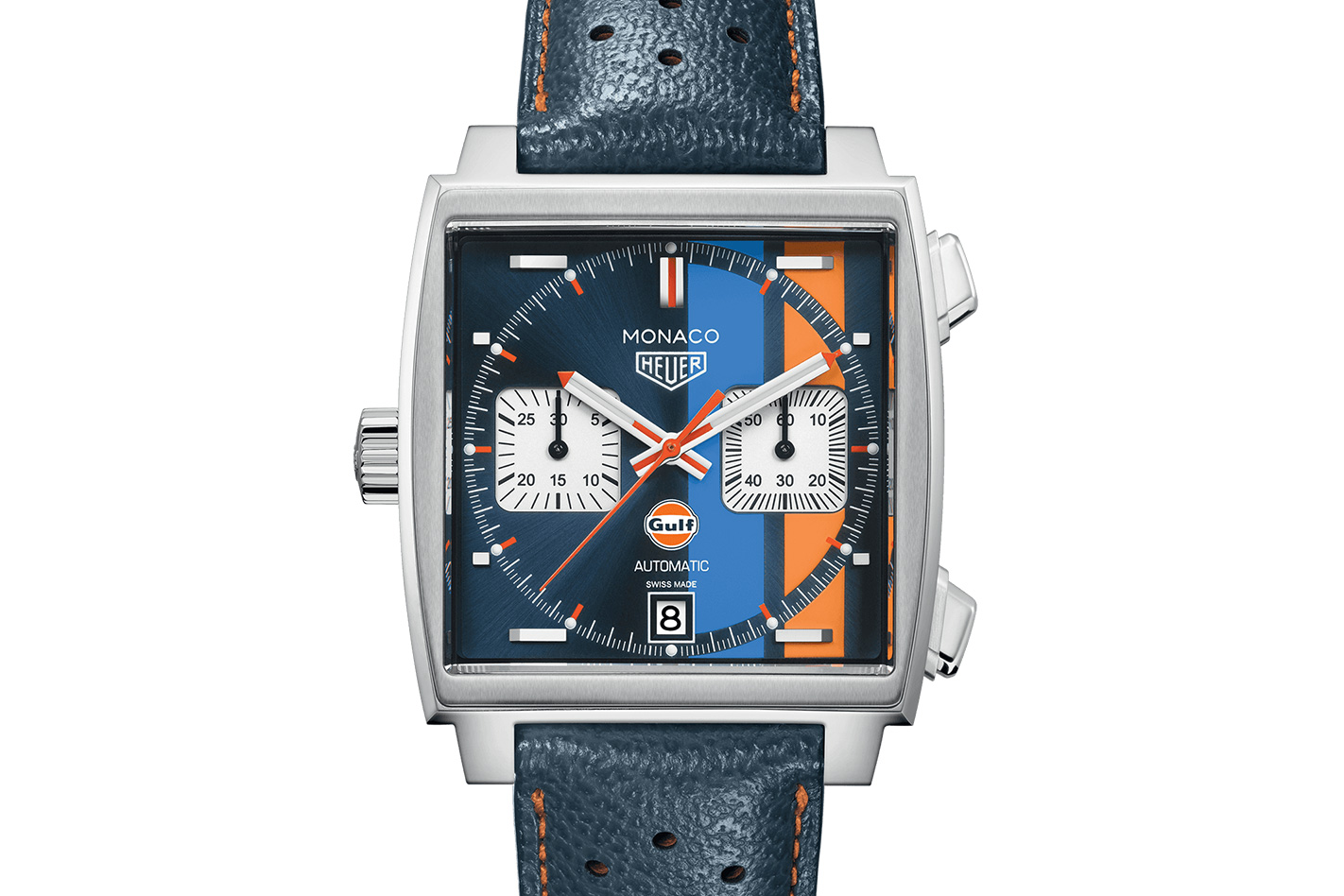
7 – Tag Heuer Monaco Gulf ($7650 from tagheuer.com) In what may be the most faithful nod to the iconic endurance race, this Tag Heuer Monaco features Gulf Livery colours like Steve McQueen’s Porsche 917 in Le Mans.
Piloti Pistone driving shoes, $210
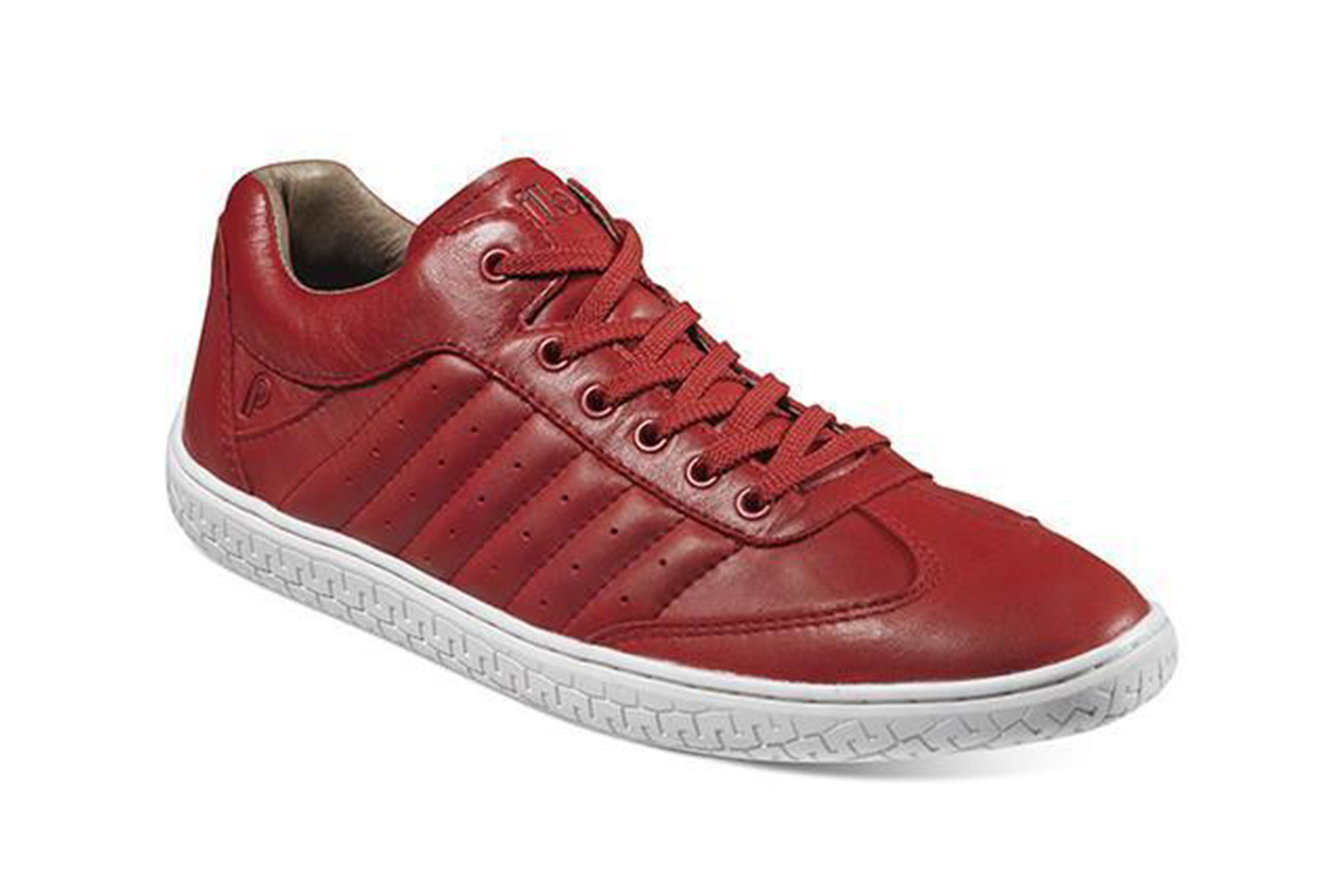
There are few ways to look like more of a douche bag than turning up to a driving event in your own Nomex, Simpson Bandit and matching race gloves and shoes, but the virtues of the correct gear are undeniable. Thankfully, Italian cobbler Piloti offers a range of top-quality handmade footwear that has been crafted specifically for driving, yet remains cool and contemporary. Fine leather upper in a range of colours will blend in on the street but supple construction and a thin tyre-tread sole with rounded heel enables your fanciest footwork, whether it be in the footwell or on the d-flo. Now all you have to do is keep your WRX out of the cat litter and no one will point and laugh. piloti.com
Porsche 917 Salzburg 1:8 scale model, $21,136
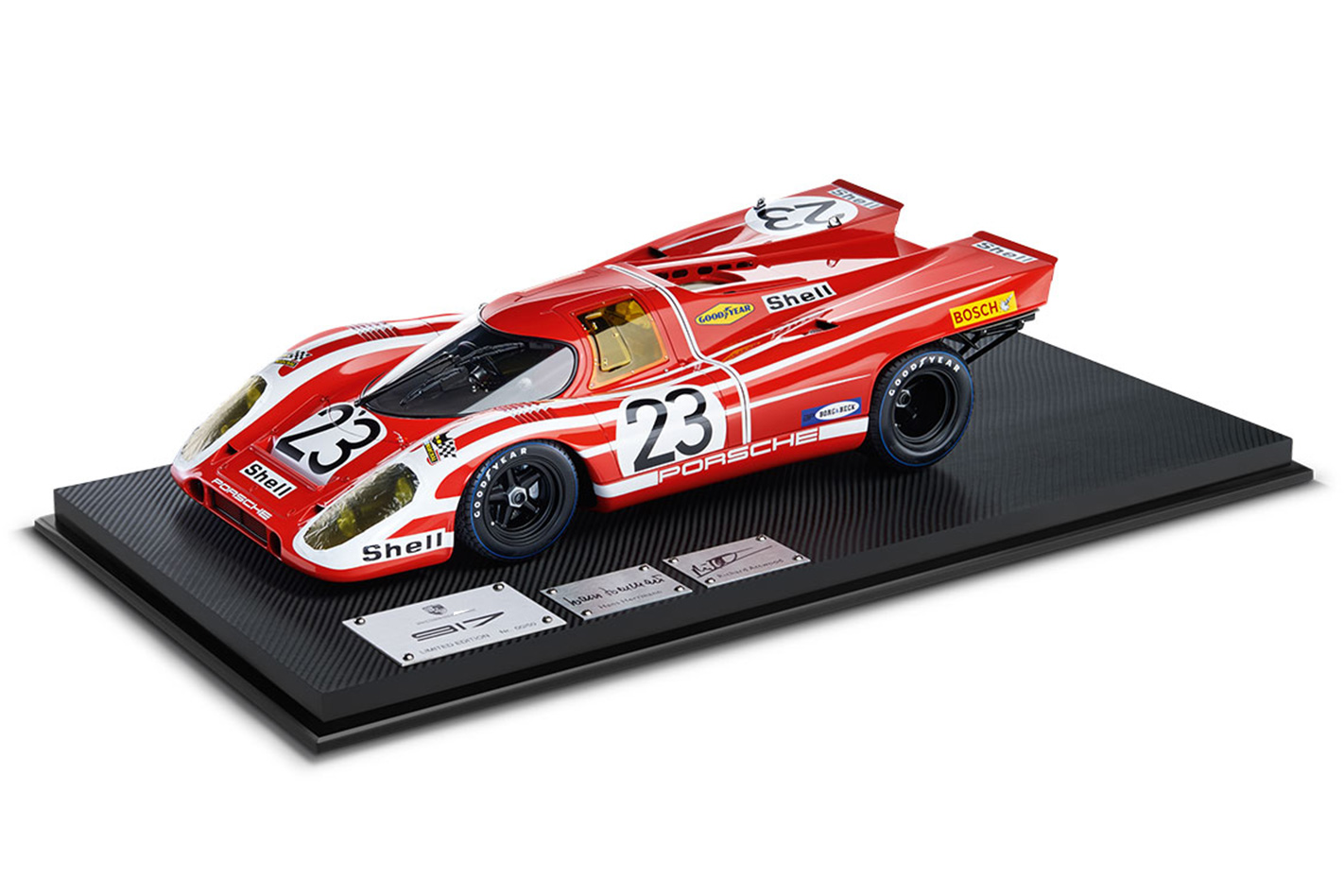
That price is not a typo. Even if this beautiful representation of one of Porsche’s greatest race cars was lovingly crafted by a well-oiled team of Swedish underwear models, using unicorn bone and Martian gold, we still can’t think of a single reason it costs the same as a used Boxster – a 1:1-scale one. At least Porsche has gone to great lengths to justify the cost of this limited edition piece in the description. It’s ‘in red/white’ with ‘black interior’, it says. shop3.porsche.com/Australia
Fanatec CSL Elite McLaren GT3 simulator wheel, $260
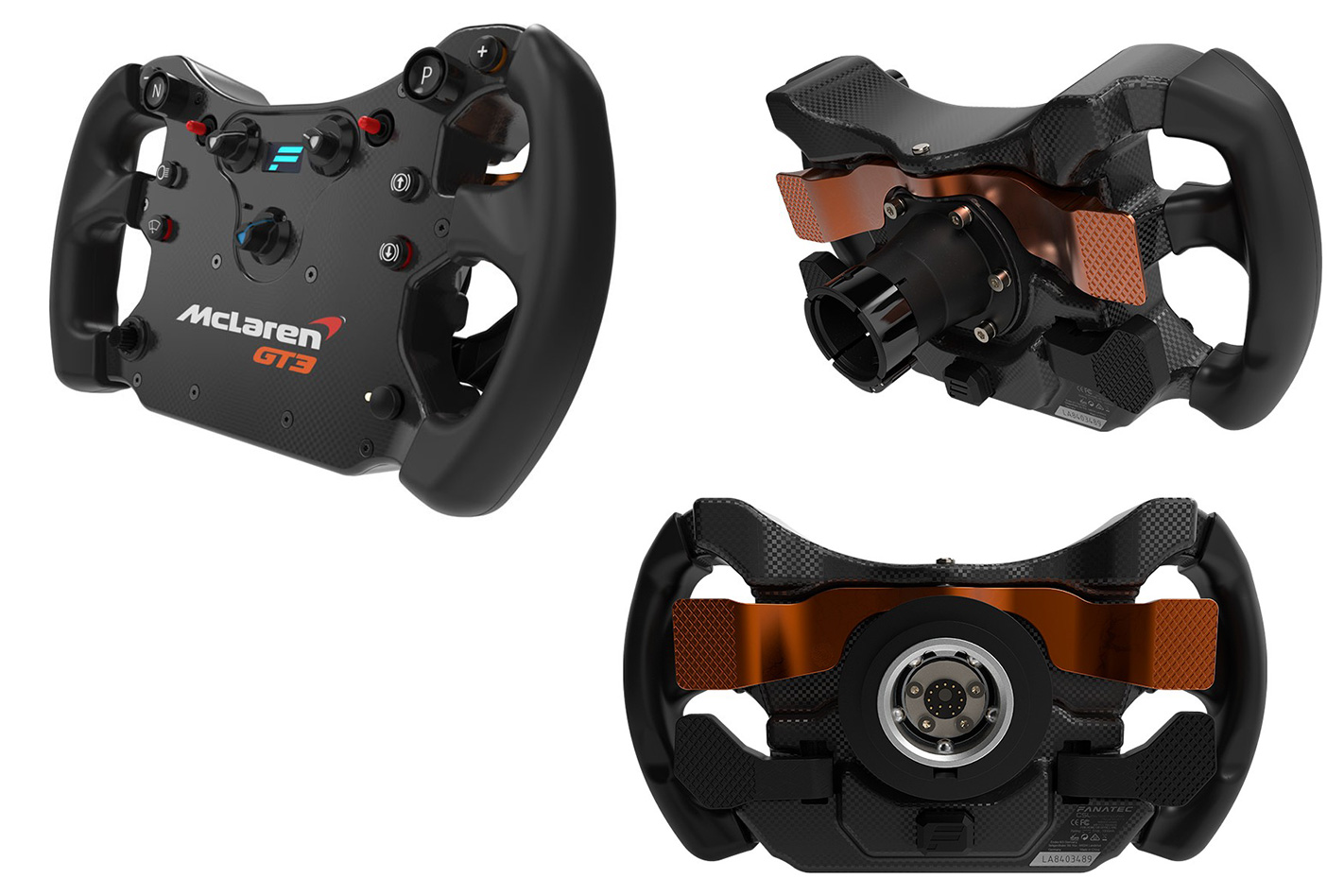
Why would you aspire to spend any time in one of McLaren’s psychotic GT3 racers? Like most endurance machines, they’re hot, claustrophobic and if you happen to make contact with one of the 50 other cars on the track, you could end up going backwards into a barrier while watching your legs barbecue. If you simply must get a McLaren GT3 steering wheel in your hands, you might prefer this exact replica from Fanatec for your gaming simulator. You’ll need to plug it into the corresponding base (from $499) but the unit offers one of the most authentic McLaren racing simulation experiences without ever having to wriggle into a cage. fanatec.com/au
Bacon air ‘freshener’, $4.62
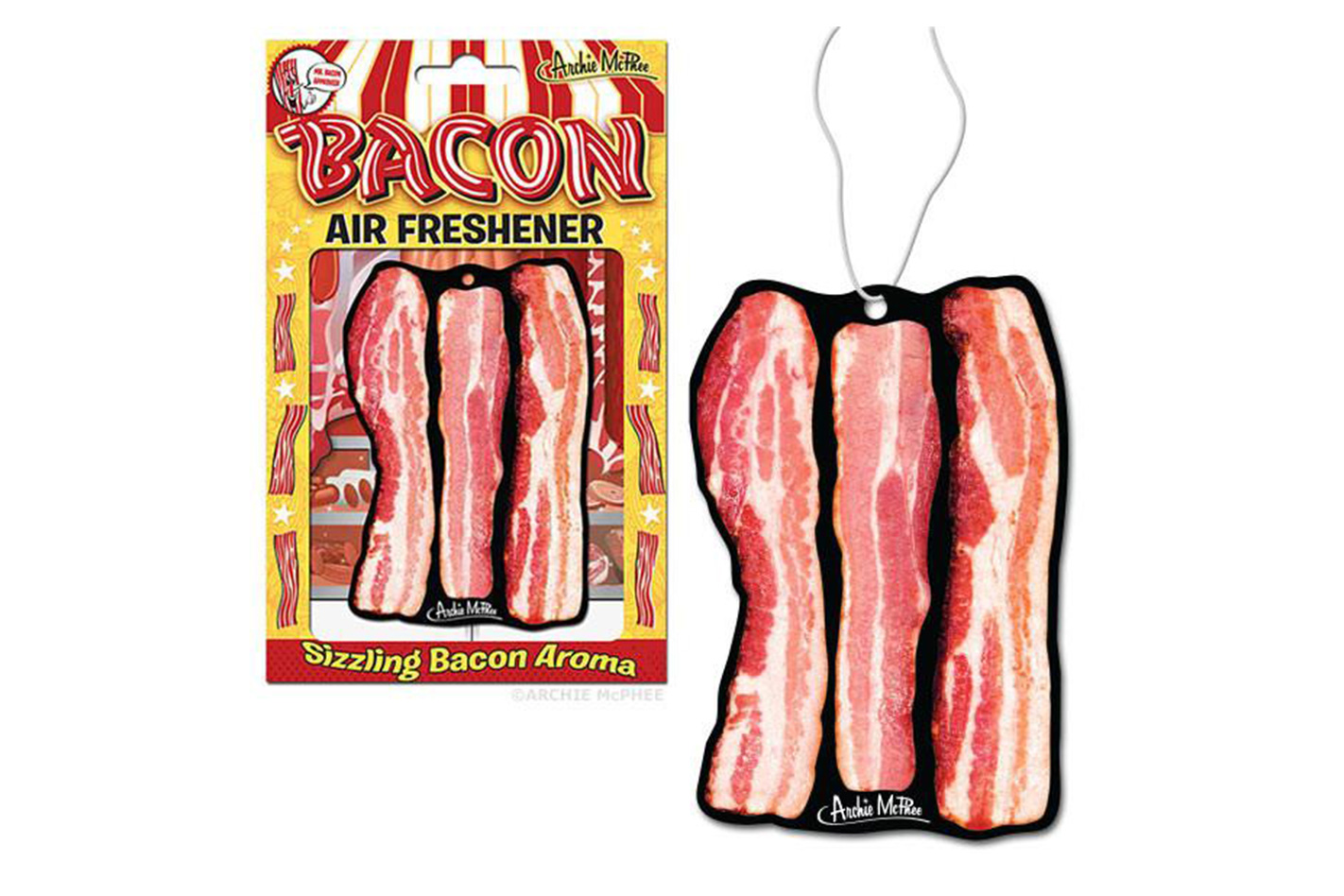
No longer will you have to swing by an early-opener cafe to fill your cabin with the intoxicating whiff of delicious sizzling bacon, thanks to this unorthodox air ‘freshener’. Its maker says the streaky mirror ornament looks and smells like smoky bacon and may be responsible for a sudden BLT craving. If Homer Simpson declares this not weird at all, who are we to argue? Bacon air ‘freshener’ $4.62 mcphee.com
Watches
TW Steel Holden Monaro GTS 327, $327
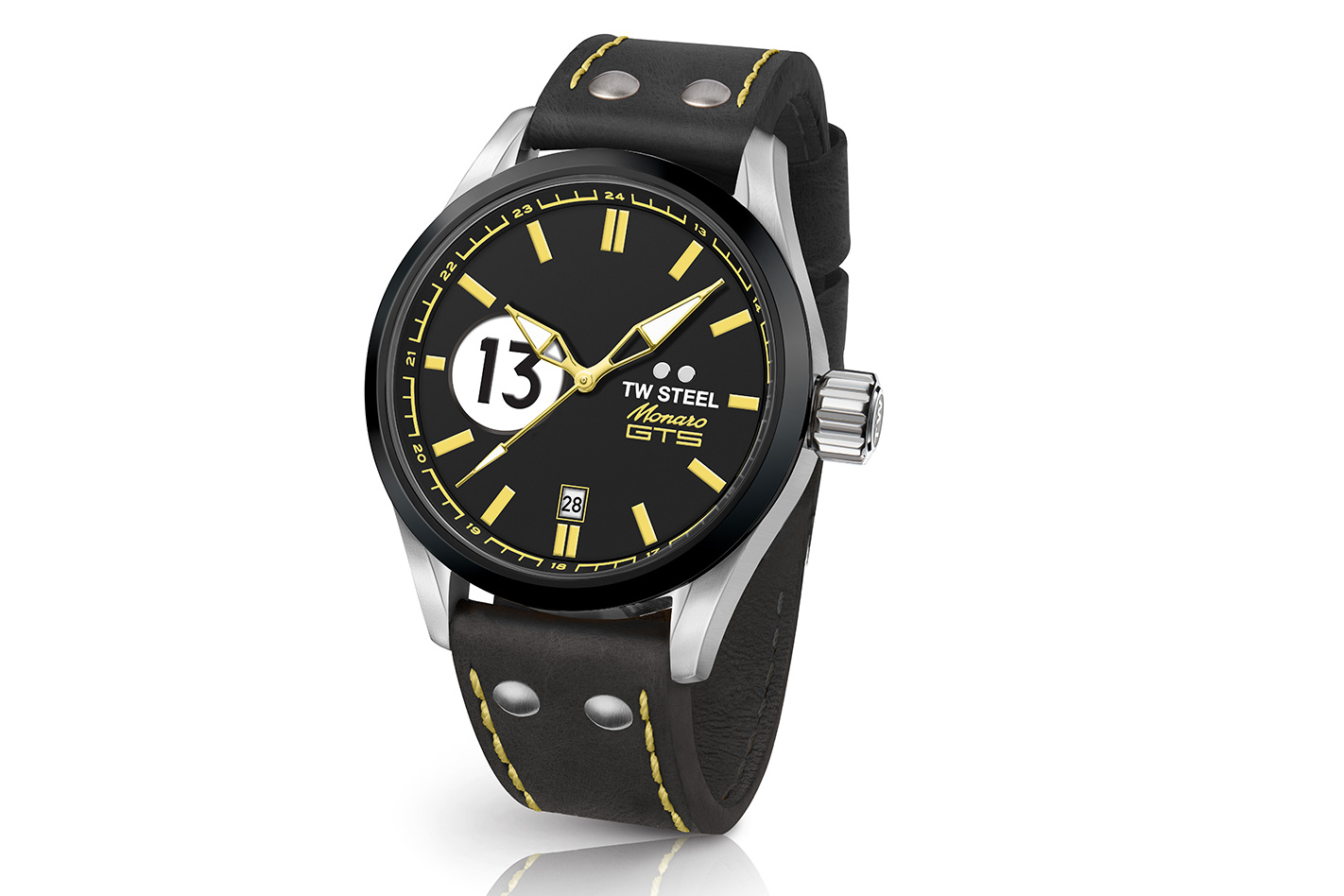
Lion fans, prepare your wallets. TW Steel has revealed this officially licensed watch that celebrates the 50th anniversary of Holden’s maiden Bathurst victory. It’s called the Holden Monaro GTS 327 Limited Edition, and the Dutch watch brand is already taking pre-orders for the 327 numbered timepieces to be produced. It’s based on TW Steel’s Volante collection with a large 48mm stainless steel case. The dial and matching leather strap recognise the winning Monaro’s Warwick Yellow and black paintwork, with a bold number 13 featuring prominently as emblazoned on the car’s doors. The movement is sourced from Japanese brand Miyota, and a hardened crystal with sapphire coating is set within a black bezel. Order books opened on July 1, so get moving. twsteel.com
Bell & Ross BR 03-94 R.S.18, $10,500
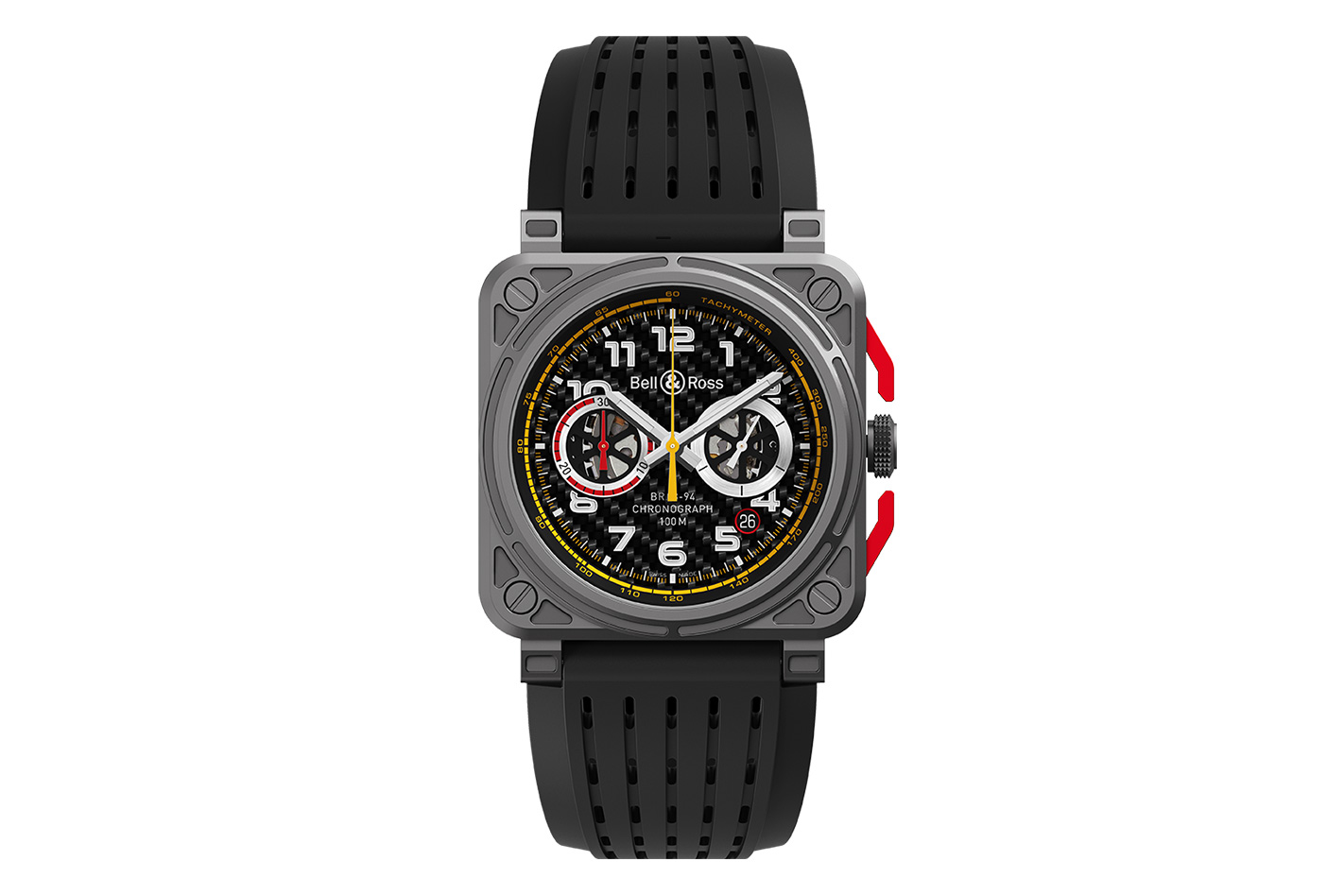
It’s a good month for people who like boxy watches. The name Bell & Ross is synonymous with square timepieces, like the latest collaborations between it and the Renault Sport Formula 1 Team. The two companies have worked together for three years, and recently expanded the co-branded collection with three new R.S.18 chronographs launched in March. The most accessible is the Bell & Ross BR 03-94 with carbonfibre dial and skeletonised sub-dials as pictured here, which is limited to 999 pieces. The 42mm case with sapphire crystal is made from titanium and water resistant to 100m. Rarer (and more expensive) versions with fully skeletonised dials are also available. bellross.com
TAG Heuer Monaco Calibre 11 Gulf 2018, $7650
Two coloured stripes are all it takes to boost the iconic Heuer Monaco to new levels of enthusiast appeal. The Monaco is already notable for two reasons: its square shape and the Steve McQueen connection. McQueen famously wore one during the filming of his 1981 movie Le Mans, and this special edition draws inspiration from his race car’s unmistakable Gulf livery. Within the distinctive 39mm case is TAG’s legendary Calibre 11 movement – one of the first automatic chronographs – with its winding crown unusually offset on the left and sporty pushers on the right. But this particular Monaco is all about the dial. Those standout stripes sit over a lovely blue starburst base. tagheuer.com
