
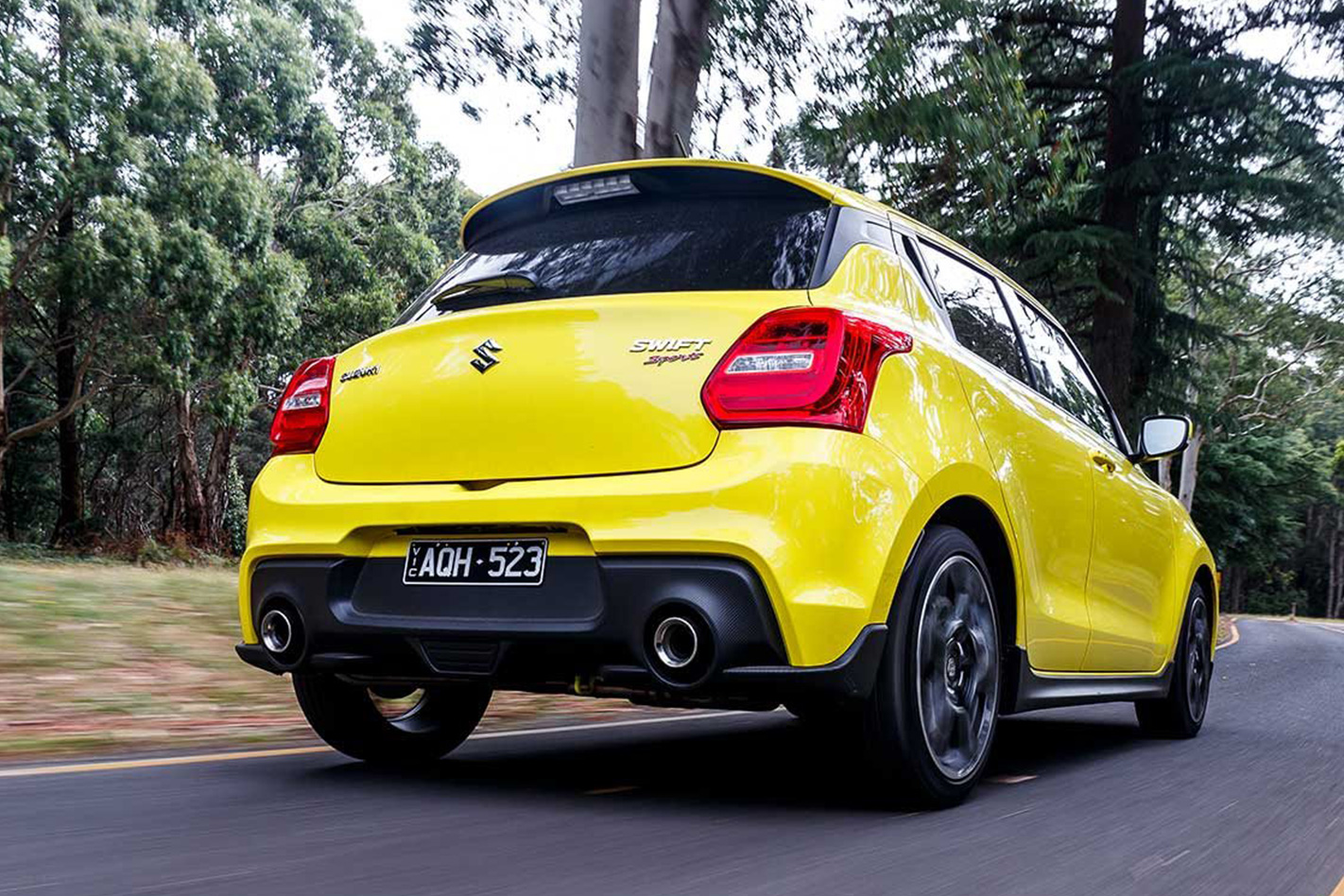
Suzuki has topped Canstar Blue’s latest customer satisfaction ratings for new cars, taking home the award for ‘Most Satisfied Customers – New Cars 2018’ in not just the small cars segment but for overall market recognition as well.
It’s the third consecutive year the Australian financial comparison organisation has handed Suzuki the award and was a proud moment for the Japanese car-maker, said Suzuki Australia General Manager – Automotive, Michael Pachota.
“Our research and development teams both here and overseas continue to excel to the next level. This award is a testament to their dedication for developing the Suzuki product to provide the ultimate driving experience, value for money and reliability,” he explained.
Pachota said the continued recognition had been made possible through the recent implementation of improved training facilities, enabling boosted customer satisfaction across the board.
“Additionally, we have already demonstrated with the introduction of the Suzuki Australia Training Academy (SATA) our commitment to improve the entire Suzuki dealer network’s skill-set and ensure the ultimate experience for our customers.
“It is an extremely proud day for the brand to be acknowledged as ‘class leading’ across the entire automotive new car market.”
Honda finished runner-up in the survey, ahead of Hyundai, Kia, and Mazda, while Mercedes-Benz, Toyota, Volkswagen, Audi and BMW rounded out the top 10.
Suzuki was the only brand to score five stars overall and was rated on driving experience (four stars), point of sale service (four stars), after sale service (three stars), reliability (five stars), value for money (five stars) and car servicing (four stars).
A facelifted version of Hyundai’s mid-size sedan brings sportier looks and even more features to the Toyota Camry rival.
TELL ME ABOUT THIS CAR
The introduction of this US market-inspired facelift to Australia drags even more value, and a dose more safety, into what was already a pretty sharply priced sedan. However, this significant makeover also reduces the Sonata range from three variants to just two – the former mid-specification Elite variant is no more, leaving just the $30,990 Active and $45,490 Premium models.
STRENGTHS
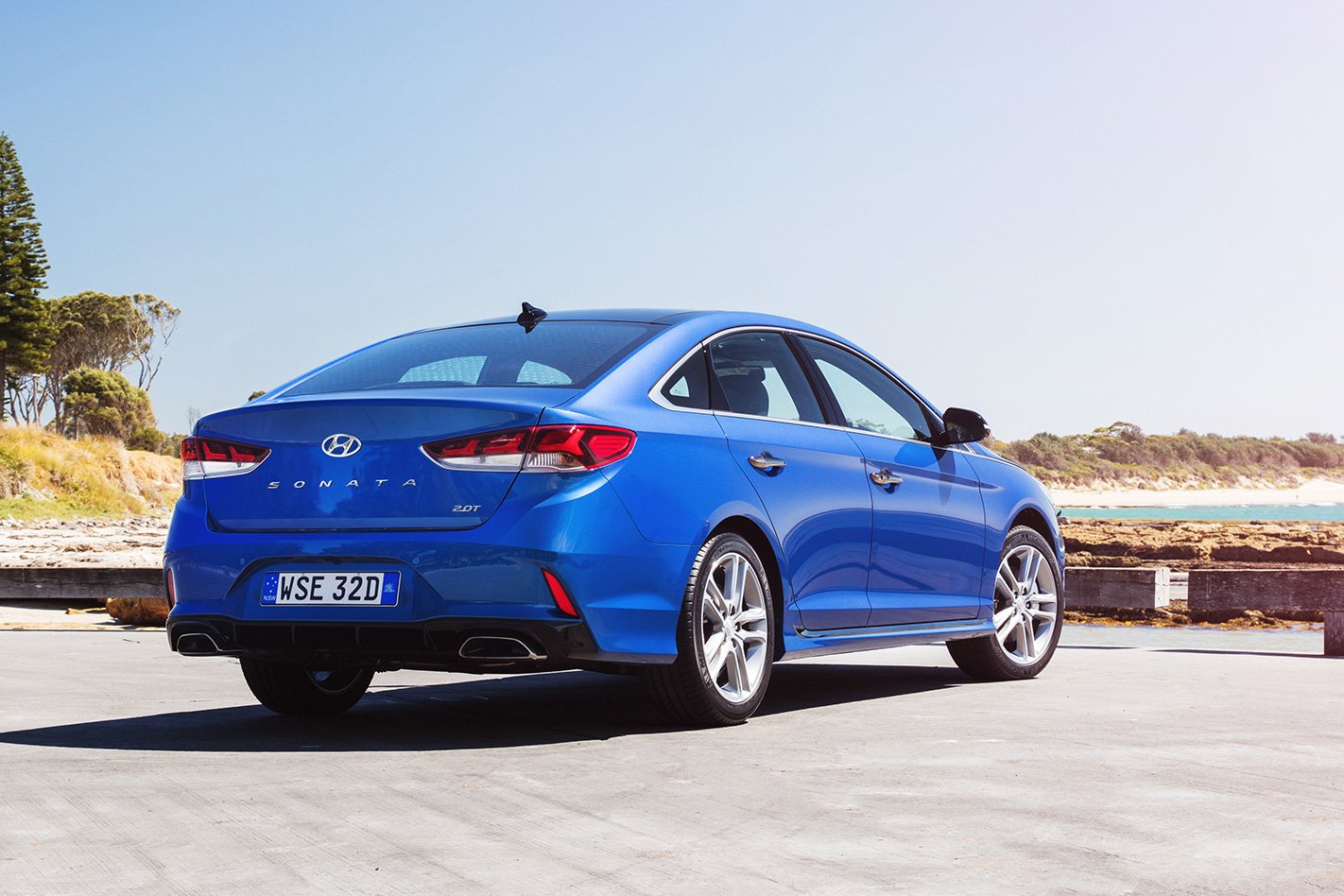
- The redesigned Hyundai Sonata looks a lot better than the one it replaces – at least around the front. The cascading grille falling off the tall bonnet and sharper front-end design endows a sportier styling that shakes off the cardigan-friendly looks of the car it replaces. Around the rear, it continues to look generic sedan despite all the changes it received, which is a bit of a shame.
- It’s very well equipped for the money. Standard gear runs to a flat-bottomed steering wheel with paddle shifters, a wireless phone charging pad, LED headlights and an updated safety pack that brings blind spot detection, lane-departure warning and radar cruise control.
- It’s also feature-packed. There’s now things like dual-zone climate control and two rear-seat USB ports, and for the driver there’s keyless entry, push-button engine start and a boot that opens at the swing of a foot under the rear bumper.
- A new 8.0-inch colour touchscreen high on the console gives a huge lift to perceived value. The new screen also brings in Apple CarPlay and Android Auto support – if you reckon Hyundai’s default system doesn’t already do the job of integrating your smartphone well enough.
- The Hyundai Sonata gains a new eight-speed automatic transmission. This is important because it helps with fuel economy, dropping it from the old model’s 9.2L/100km to 8.5L/100km. It also helps the Sonata Premium’s turbocharged 2.0-litre engine (the Active sticks to the non-turbo 2.4-litre engine and six-speed automatic) by being able to keep the 180kW/353Nm unit in either its best power or fuel economy zones for longer than the old six-speeder.
- The Sonata adds drive modes to tune the engine and gearbox to your mood. You can use a console-mounted dial to flip through ‘Comfort’, ‘Eco’, ‘Sport’, and ‘Smart’, all of which change the way the throttle pedal reacts, the weight of the steering, and how long the gears hold before changing up.
- It’s spacious inside, back and front. If we’re nit-picking the rear seats lack a little bit of under-seat toe room beneath the front pews, but the limousine-like legroom back there, and a pair of separately temperature-controlled air vents, more than makes up for it.
- Pricing hasn’t changed for the range-topping Premium despite the new looks and all the extra features. In contrast, the entry-level Active’s price rose by $500.
WEAKNESSES
- There’s still no automatic emergency braking system available on Sonata. It’s a handy city driving feature that could one day save your bacon if you’re distracted in low-speed stop-start traffic and accidentally punt the car in front. Insurance companies also tend to offer lower premiums for cars that include AEB.
- The turbo petrol engine can be a bit gruff if you’re the same with the accelerator pedal. Give it too much throttle and the Sonata will tug at the steering wheel and even spin the wheels as it struggles to get its power down smoothly to the road surface.
- The ride lacks refinement. This was a black mark against the previous version of the Sonata and it carries through to the facelifted model. It’s at its worst at higher speeds, where the Sonata constantly feels unsettled and fussy.
- There’s no diesel or hybrid option. Cross-shop the Hyundai Sonata against rivals including four-cylinder versions of the Holden Commodore and Toyota Camry and there are alternative powertrains available.
ANY RIVALS I SHOULD CONSIDER?
We’ve already mentioned four-cylinder versions of the Euro-chic Holden Commodore and the value-driven Toyota Camry. Add to that list the surprisingly good value Ford Mondeo, the soon-to-be-facelifted Mazda 6 (which will also add a turbocharged 2.5-litre version to take on the V6 versions of the Commodore and Camry, and the flat-six Subaru Liberty) and the Czech-built Skoda Octavia
A SNEAKY loophole has been exploited by a Monaco businessman allowing him to secure a thoroughly unique set of weekend wheels – a Porsche 917.
Yes, Claudio Roddaro, has wrangled a set of number plates for his 917 in order to legally drive it on the roads surrounding Monte Carlo.
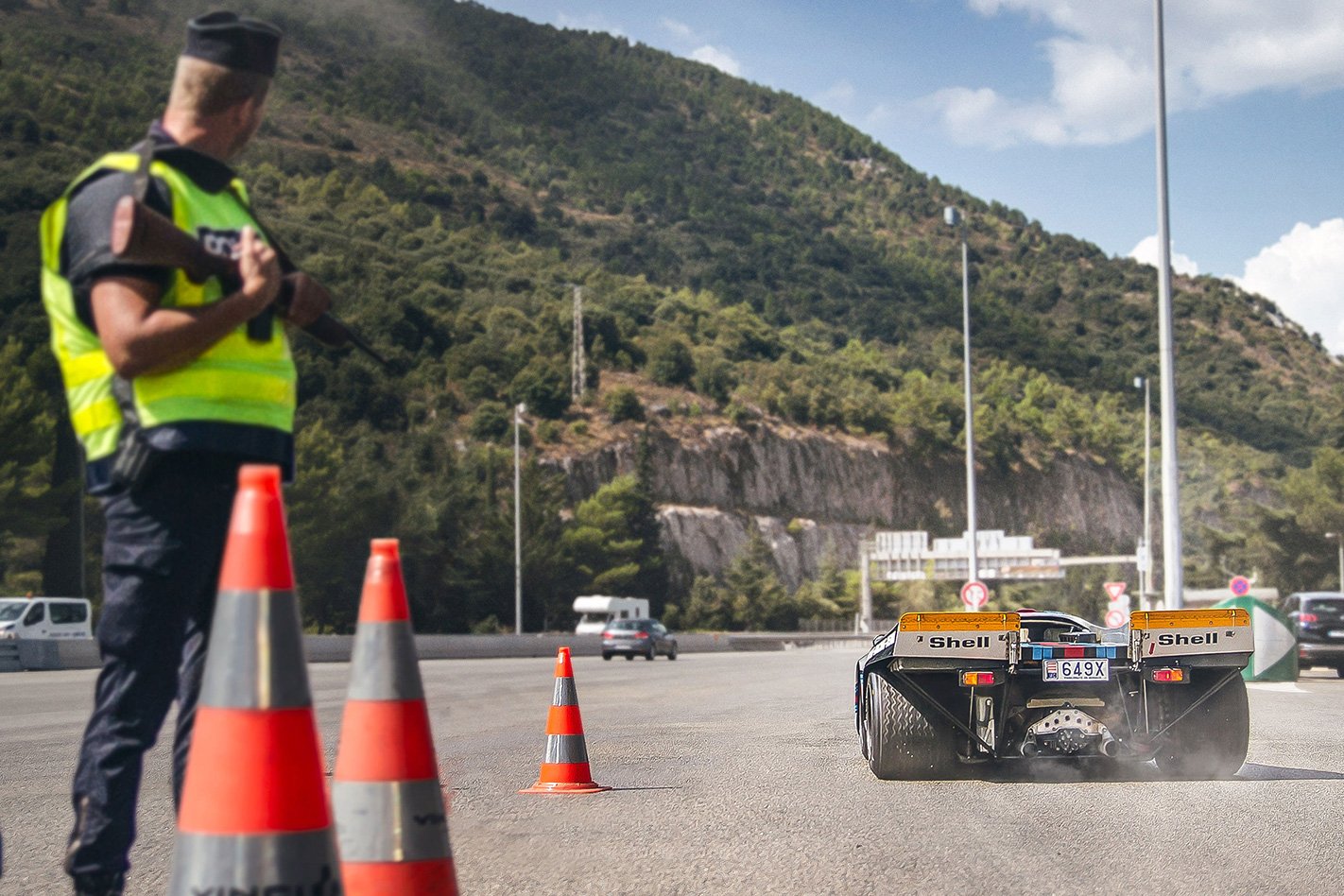
As you’d expect, it is a bit of a convoluted process to road-register a Le Mans race car, with Rodaro having to jump through a number of hoops, and perform a bit of vehicular identity theft.
The car Roddaro drives is chassis 917-30, which was never officially finished by Porsche.
A car owned by the late Count Rossi, the Italian nobleman who masterminded Martini’s famous sponsorship tie-in with Porsche, is central to Roddaro’s road-legal 917.
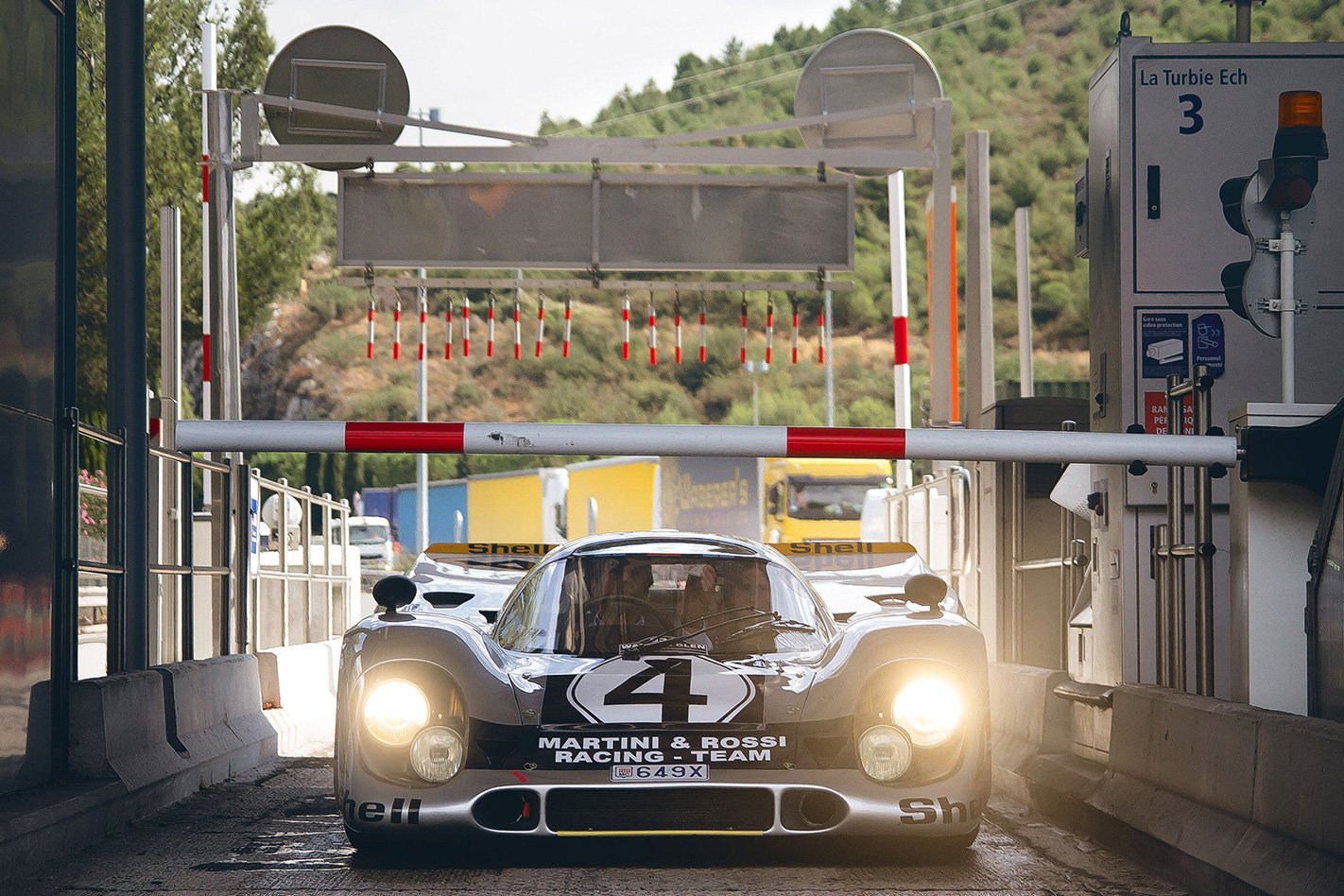
In this case, Monaco’s road laws state a car which has been registered overseas can also be driven on the road in the principality.
All Roddaro had to do was prove his chassis 917-37 was identical to 917-30 and his dream of driving a Le Mans race car on the road would become a reality.
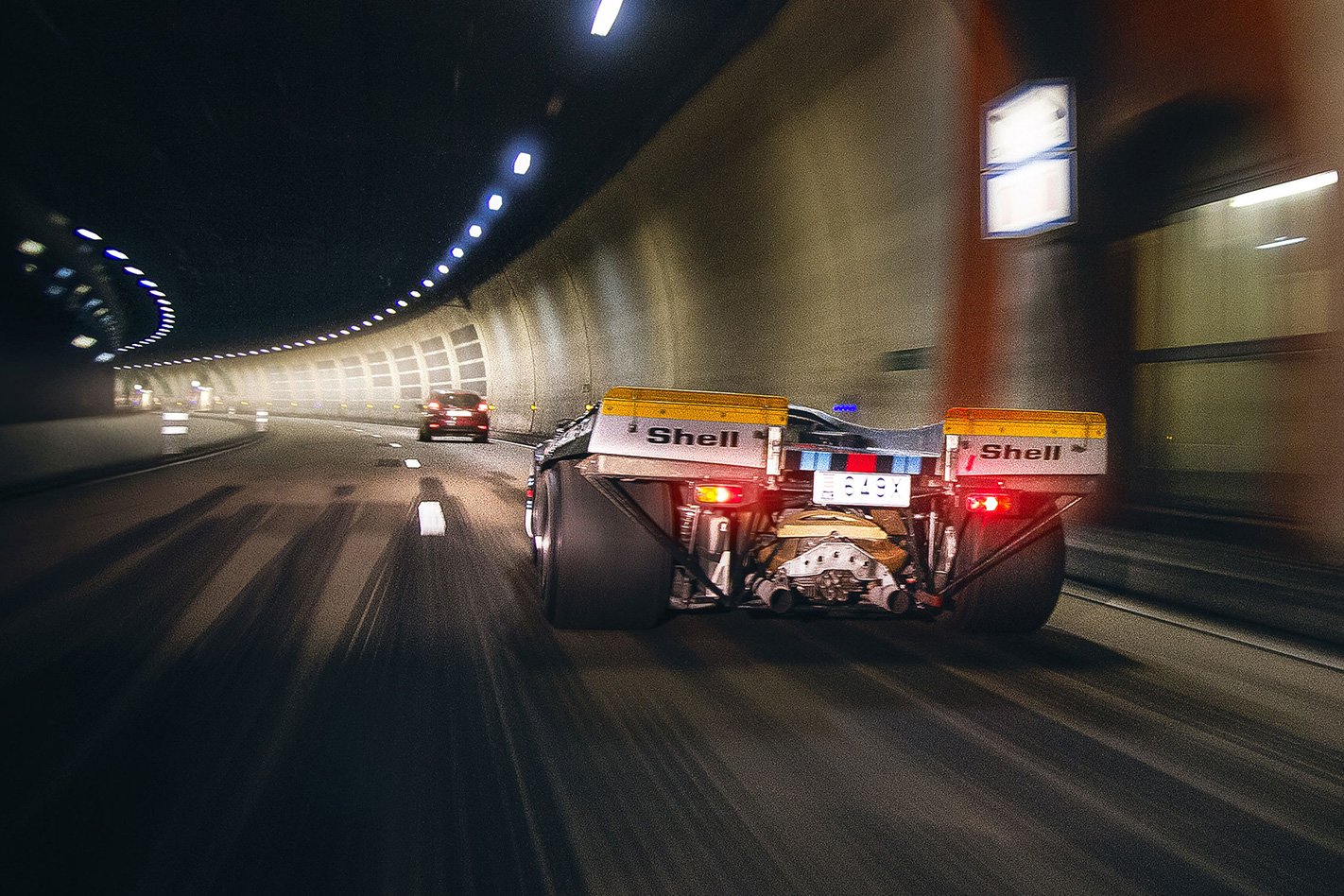
Two months, and a mountain of paperwork later and the numberplates were secured on 917-37, gifting us the magic of a road-faring Le Mans race car.
UNTIL today, just four production cars had lapped the Nurburgring Nordschliefe in less than seven minutes – the Porsche 911 GT2 RS, Lamborghini Huracan Performante, Porsche 918 Spyder, and the Lamborghini Aventador LP750-4 SV.
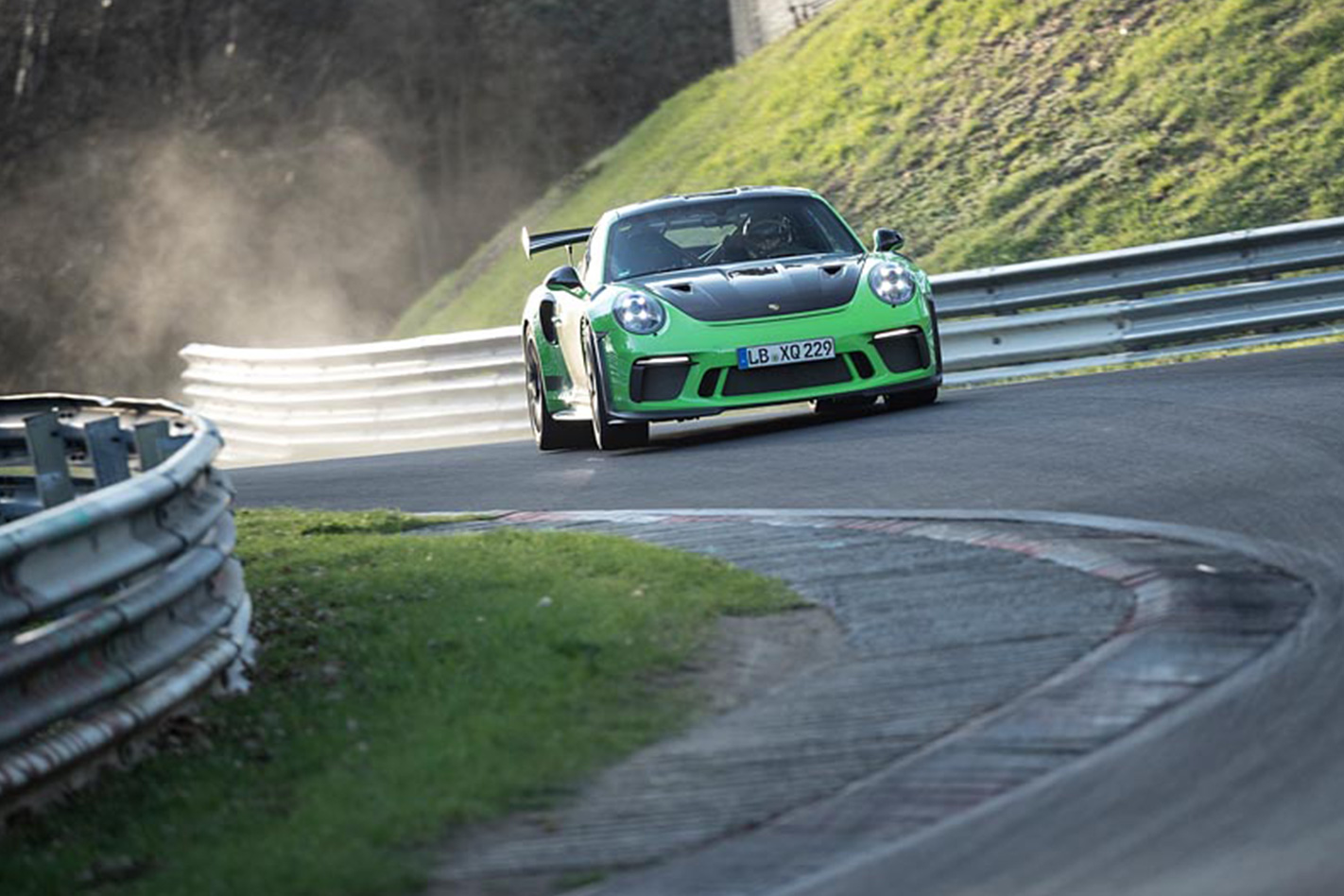
But now, the 2018 Porsche 911 GT3 RS can be added to that list, having officially clocked a Green Hell laptime of 6:56.4 at the hands of Keven Estre.
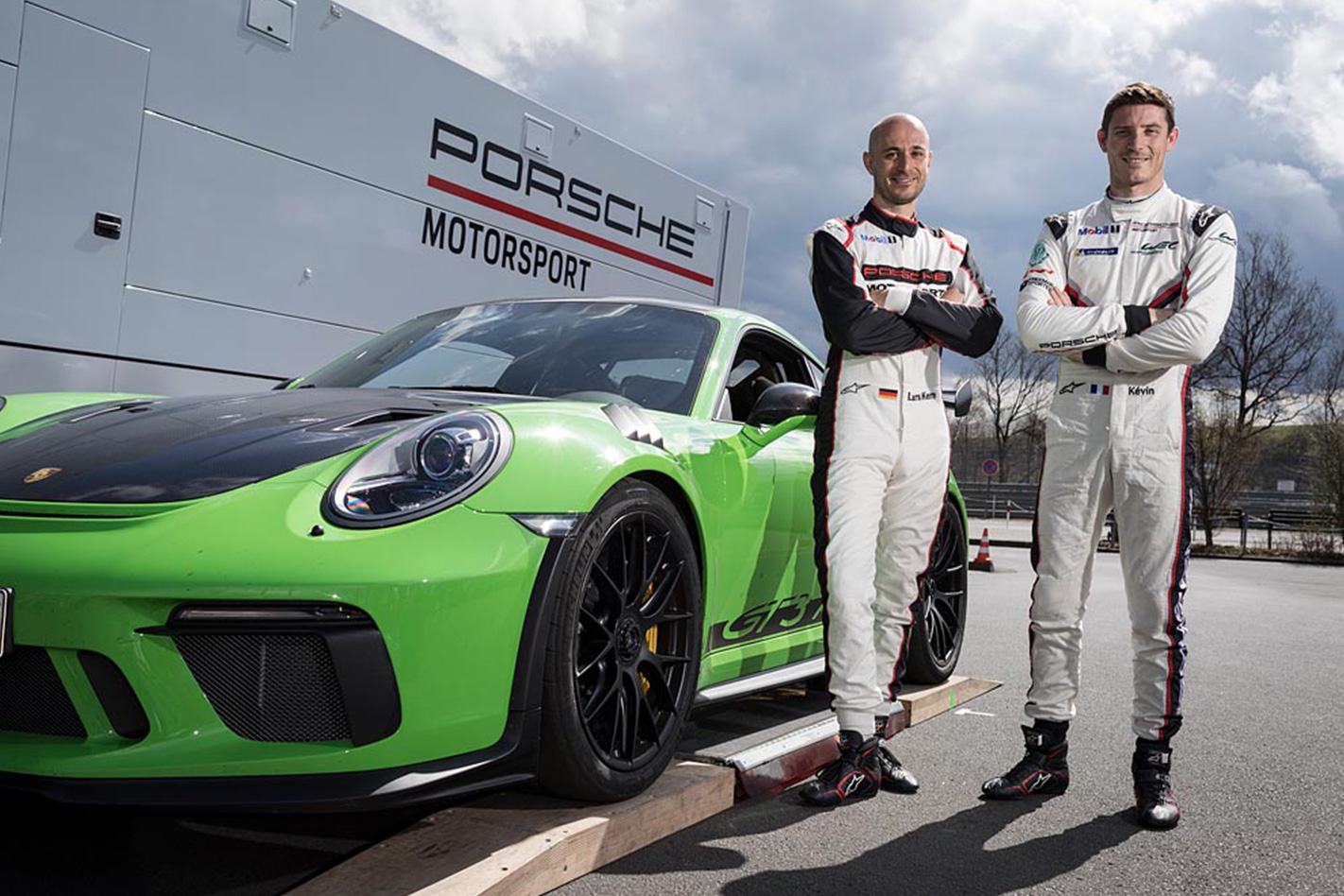
The 2018 GT3 RS is now placed third on the production car laptime leader board, just ahead of the 918 Spyder’s 6:57.0, and is a full 24 seconds faster than the previous GT3 RS’s best Nurburgring laptime.
Powered by a race-bred 4.0-litre naturally-aspirated flat-six engine with 383kW and a 9000rpm redline, the GT3 RS can accelerate to 100km/h in 3.2 seconds, before topping out at 312km/h.
Estre says the GT3 RS’s strengths lie in braking performance and mid-corner speed, with the road-legal Michelin Pilot Sport Cup 2 R rubber helping elevate the speed, while keeping everything pointing the right way up.
“Through the fast corners and on the brakes in particular, the GT3 RS is unbelievably close to our racing car GT3 R. This is also thanks to the new generation of tyres for road going sports cars.”

“No other Porsche model gets as close to racing as the new GT3 RS. Many innovative ideas from top-level motorsport were transferred; for example, from the 911 GT3 R. This is what our philosophy for GT models is about: Highest technology must be fascinating but tangible. In this regard there is no harder test for our ideas than the Nordschleife.”
Andreas Preuninger, Director GT Model Line, said both Estre and Kern were able to bank consistently fast laps in the GT3 RS.
Previously, McLaren claimed its P1 hypercar lapped the Nurburgring in less than seven minutes, but never provided an exact time… or proof.
The GT3 RS is on sale in Australia from $416,500, with deliveries scheduled to begin in the final quarter of this year.
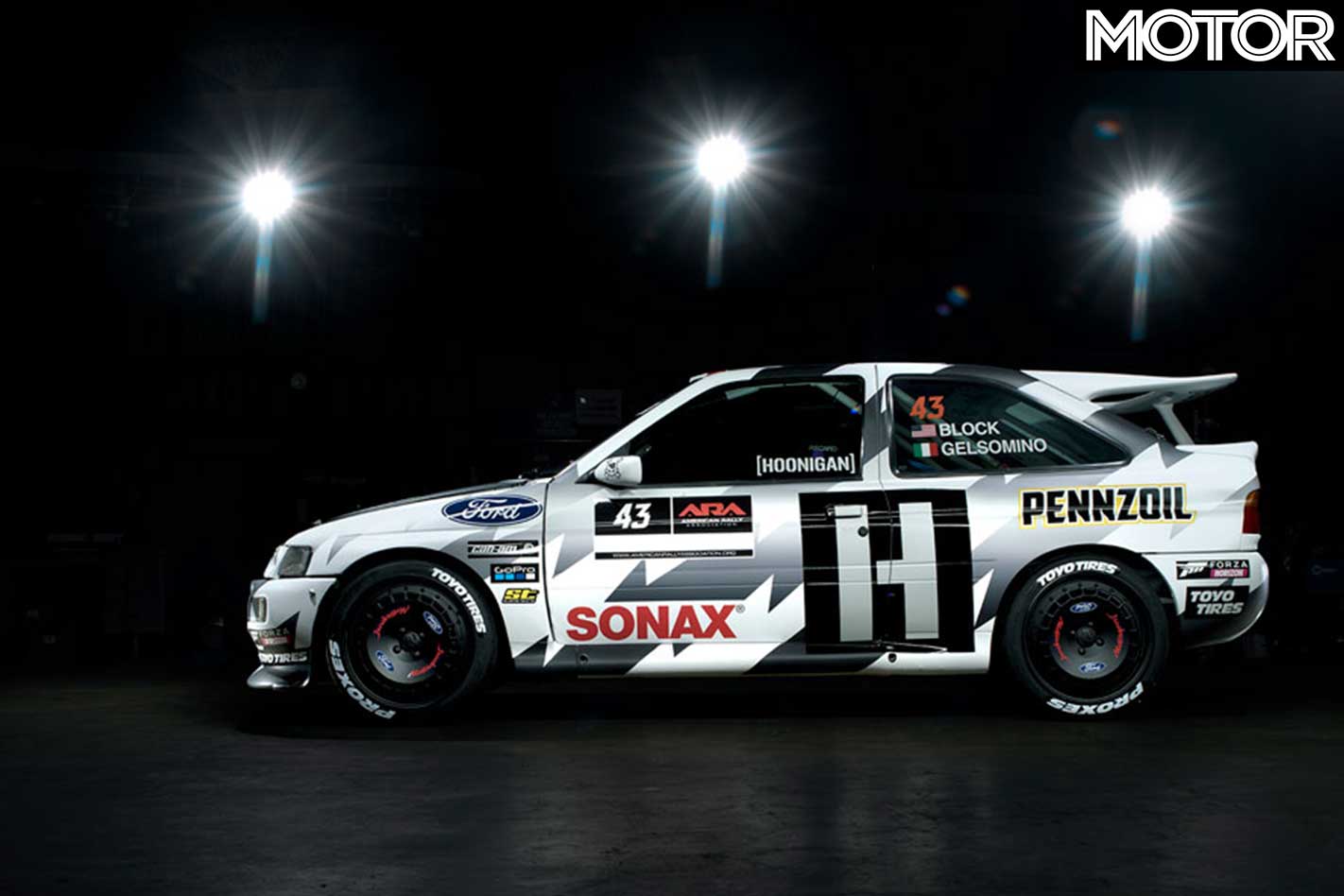
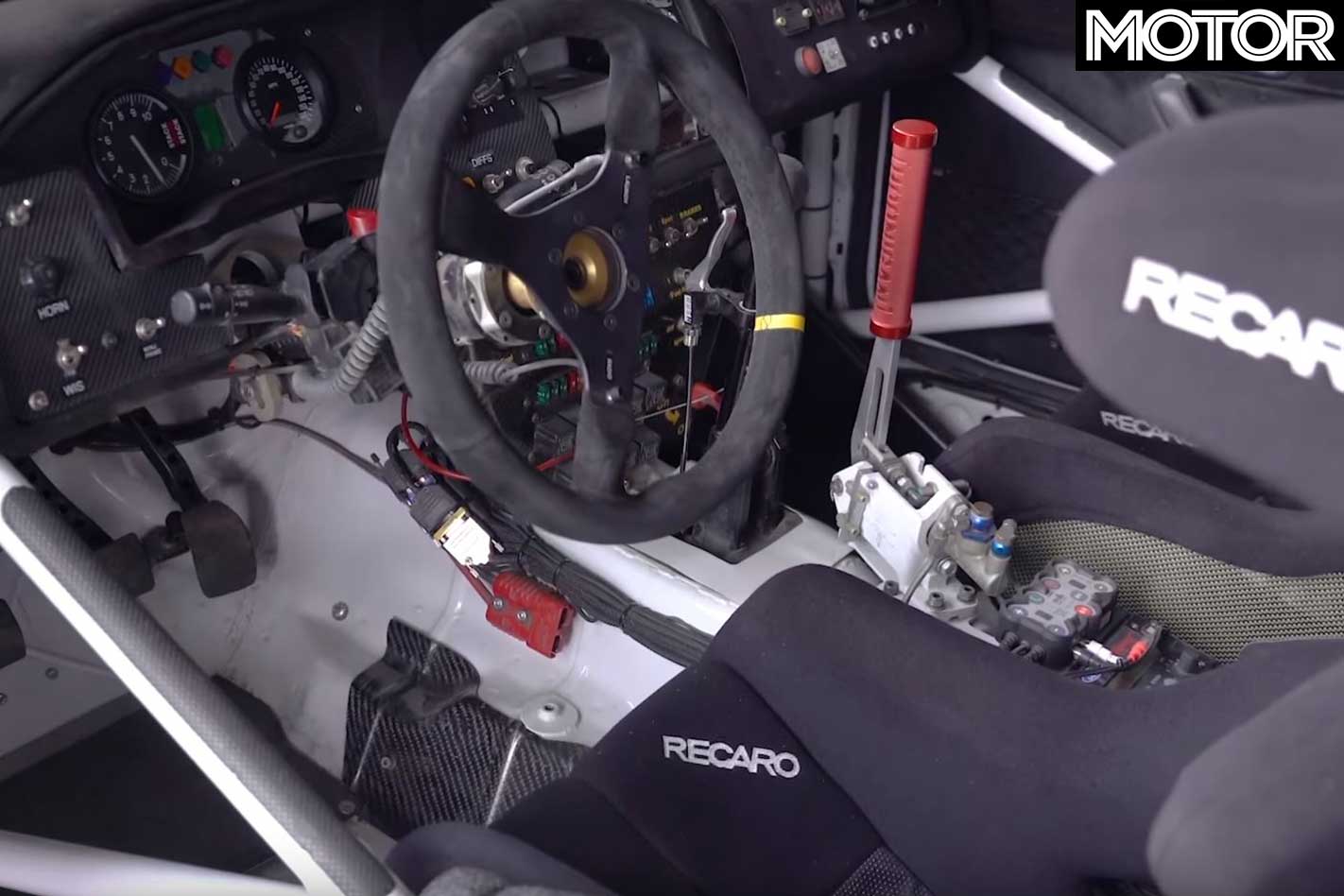
In a new Hoonigans video, Ken Block has revealed his new livery, currently displayed on his Ford Escort Cosworth.
The livery’s designer, David of Death Spray Customs, was also there to talk design, and his involvement in the project.
“David really has a great sense of what works and what doesn’t work for myself and my programs,” says Block.
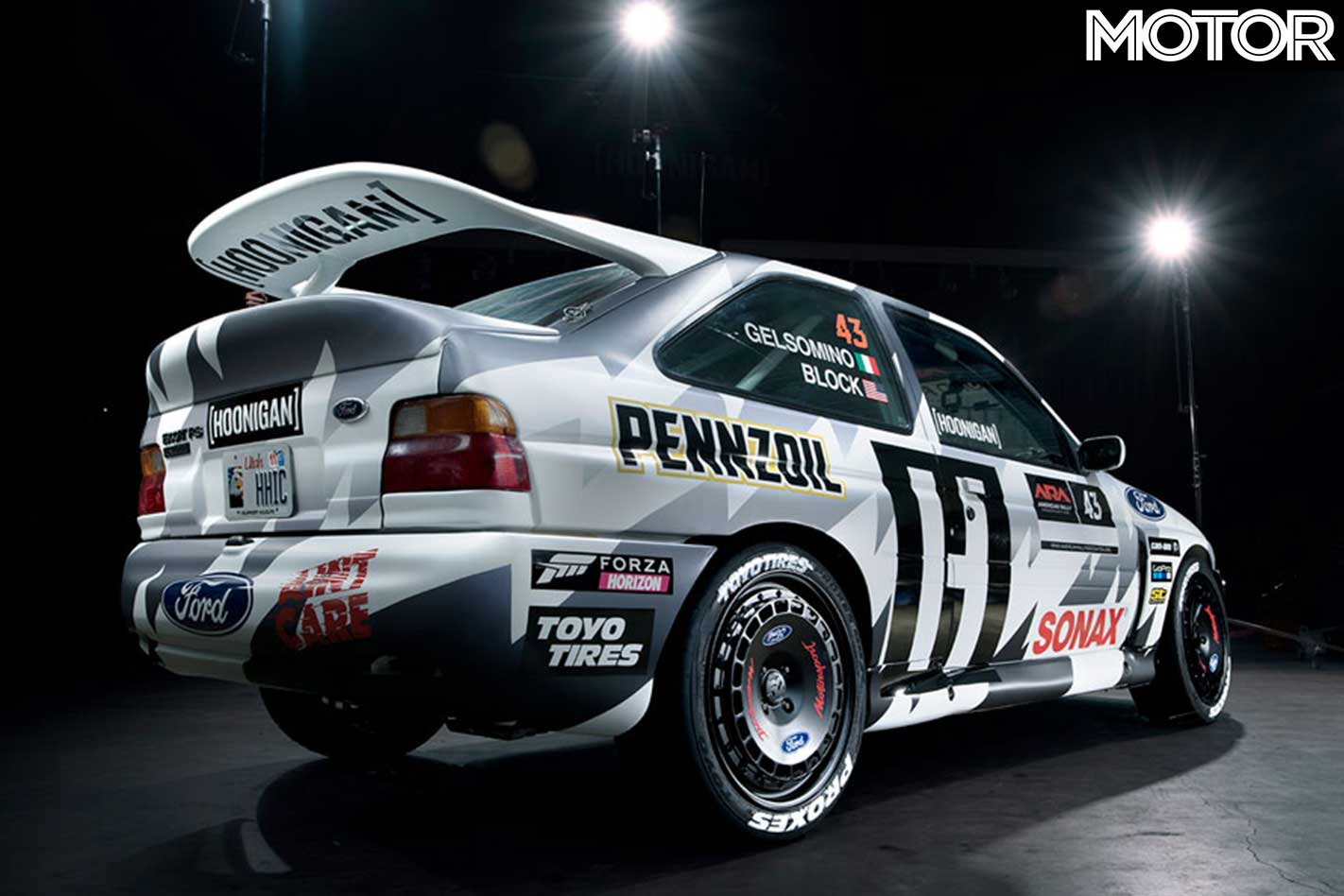
Block will be competing in the American Stage Rally at the Oregon Train, New England Forest, and Idaho rallies this year, as well as flinging his Focus around at Rallycross and Rallycross Grid events.
And later in the year, block will be competing in one round, Rally Spain, of the FIA WRC in his Ford Fiesta RS WRC, prepared by M-Sport. Taking place on October 25-28, it’ll be Block’s first WRC appearance since Spain 2014.
“I’ll be cramming that into a short period of testing beforehand. It’s not really enough time in the car to properly prepare for a WRC attack, but I’ll take what I can get!”
And, of course, Gymkhana 10 is on the way, in Q4 of 2018.
“I’ve really enjoyed the past few years of rallycross, but I started my race career with rally and my heart has always been with it, so to be able to get back into doing events like these while still doing some rallycross makes me very happy!”
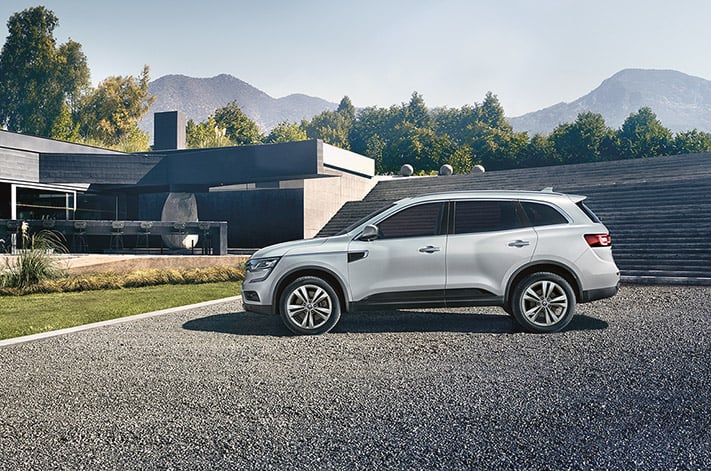
Renault has added more value to its Koleos medium SUV with smartphone mirroring and automatic emergency braking now standard across the range.
The update means the entry-level Koleos Life gains Renault’s Advanced Emergency Braking System (AEBS), while maintaining its $29,990 entry-level pricing.
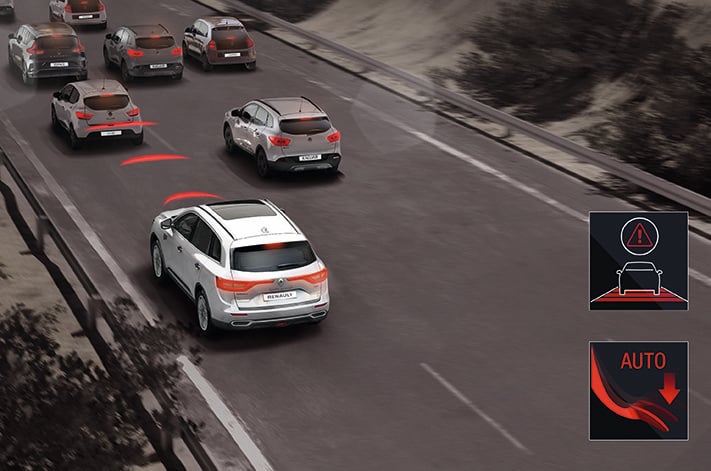
AEBS works in two phases to warn of a potential collision risk, before automatically engaging the brakes via the Koleos’ electronic stability control.
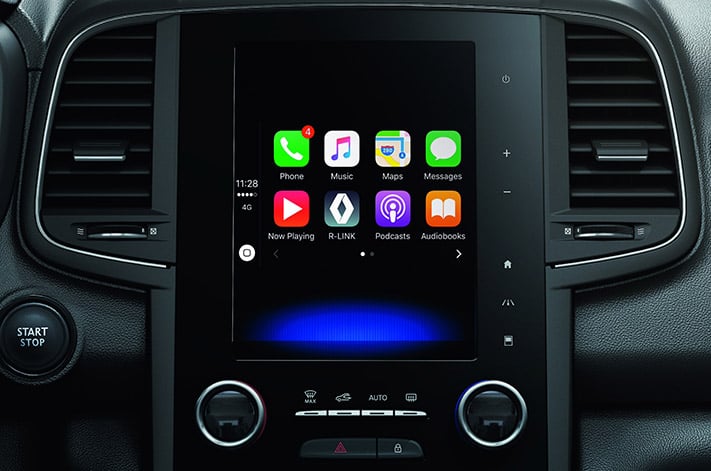
All Koleos variants – Life, Zen and Intens – also gain Apple CarPlay/Android connectivity, which displays smartphone apps and lets passengers operate them via the car’s touchscreen.
The system, which requires the phone to be plugged into the vehicle via a USB socket, is a welcome alternative to negotiating Renault’s relatively complex infotainment system.
The inclusions add to Koleos’ already handy standard features list which includes satellite navigation, dual-zone climate control, dusk-sensing headlamps and rain-sensing wipers.
The inclusions should bolster the Koleos’ already healthy sales in Australia, where it it’s the French carmaker’s best-selling model with year-to-date sales of 739 by the end of March – almost 500 more than Megane.
All Koleos variants are powered by a 126kW/226Nm 2.5-litre petrol engine with CVT auto, apart from range-topping Intens Diesel which joined the range in August last year with a 130kW/380Nm 2.0-litre four-cylinder turbo diesel taken from the Nissan X-Trail, which also shares the same underpinnings.
2018 Renault Koleos pricing
- Koleos Life 4×2 – $29,990
- Koleos Zen 4×2 – $33,990
- Koleos Zen 4×4 – $36,490
- Koleos Intens 4×4 – $43,490
- Koleos Intens Diesel 4×4 – $46,990
Porsche has today revealed that on April 16, its new 911 GT3 RS lapped the Nürburgring in an astonishing time of just 6:56.4.
Porsche works race driver Kévin Estre set the sub-seven lap around the Nürburgring Nordschleife’s 20.6km length. He was 24 seconds faster than the best time set by the previous GT3 RS.
“This lap was a sensational experience for me”, he said afterwards.
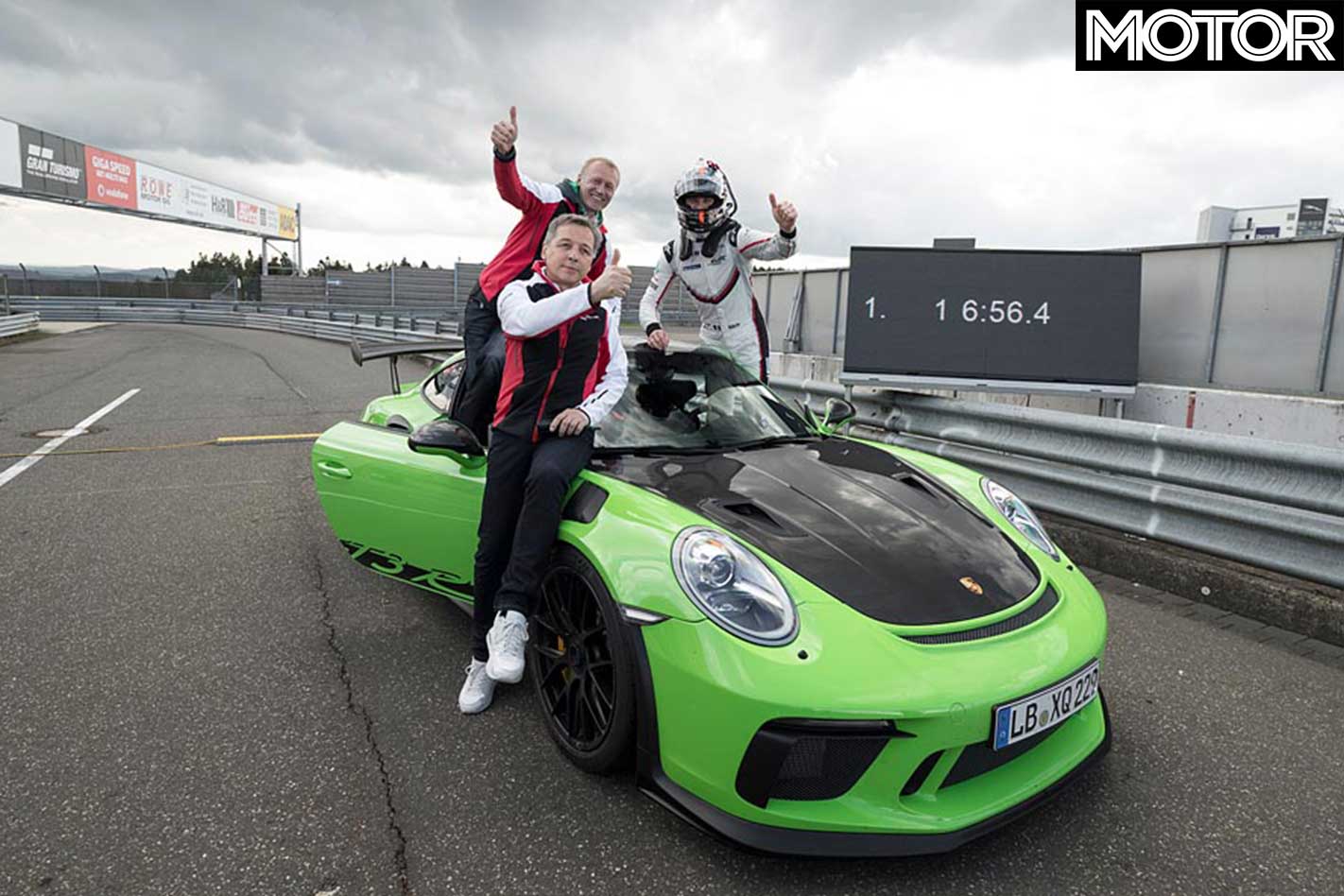
Estre’s experience extends to the high reaches of the FIA World Endurance Championship, in which he races the Porsche 911 RSR.
“I like the engine of the GT3 RS a lot. Up to 9,000 revs per minute from a six-cylinder engine just feels fantastic.
“The sound is a dream and the torque is massive.”
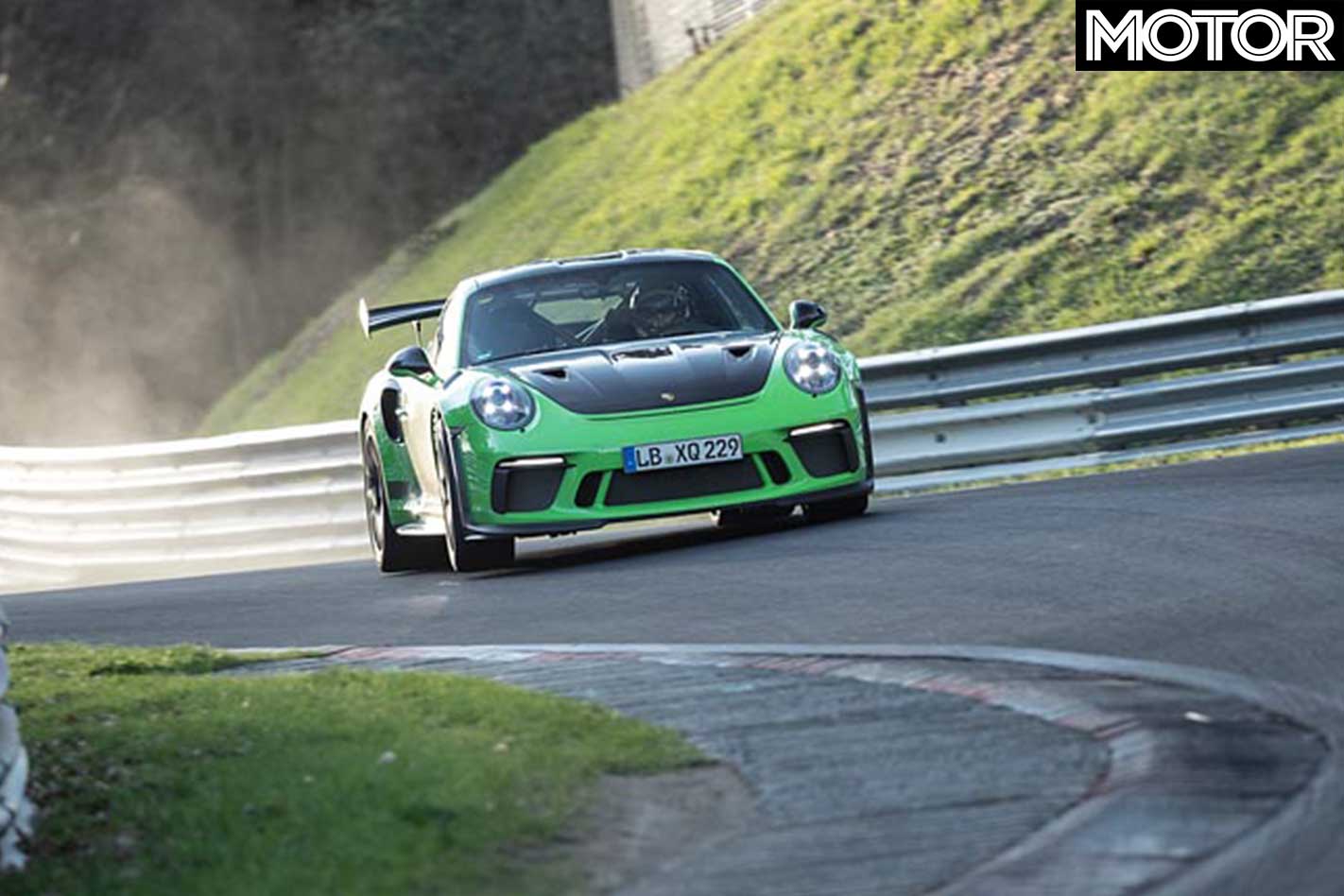
The GT3 RS was in standard tune, with its 4.0-litre flat-six producing 383kW and 470Nm. It was also equipped with Michelin Pilot Sport Cup 2 Rs, which are track-focused but road-legal.
Porsche says the lap was set starting at 11:40am, in ideal conditions, with 14 degree Celsius ambient and 18 degree Celsius track temperature.
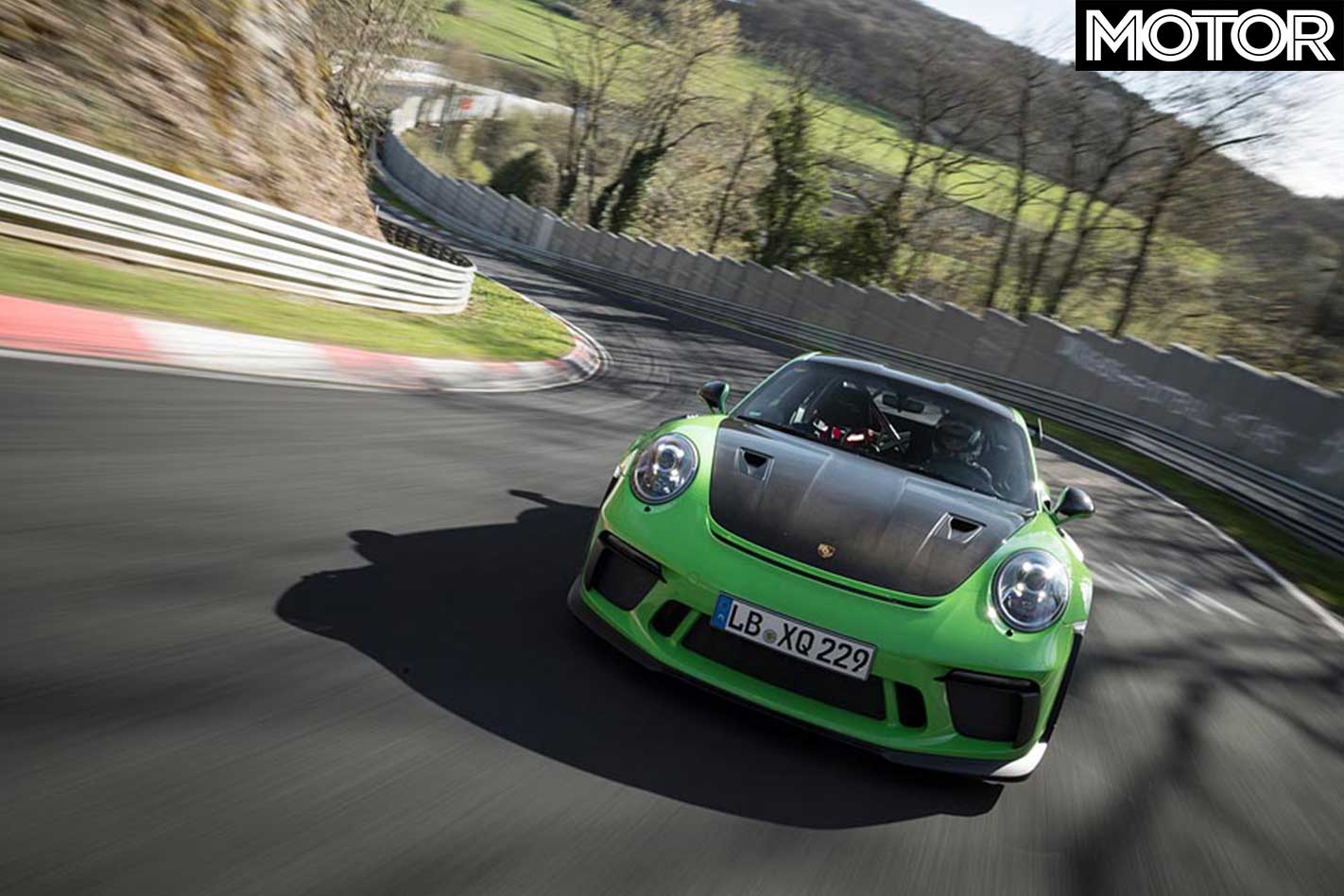
“This proves not only the outstanding power of the GT3 RS, but also its extraordinary driveability at the limit.”
Australians can expect to start seeing local GT3 RS units arrive in the final quarter of 2018.
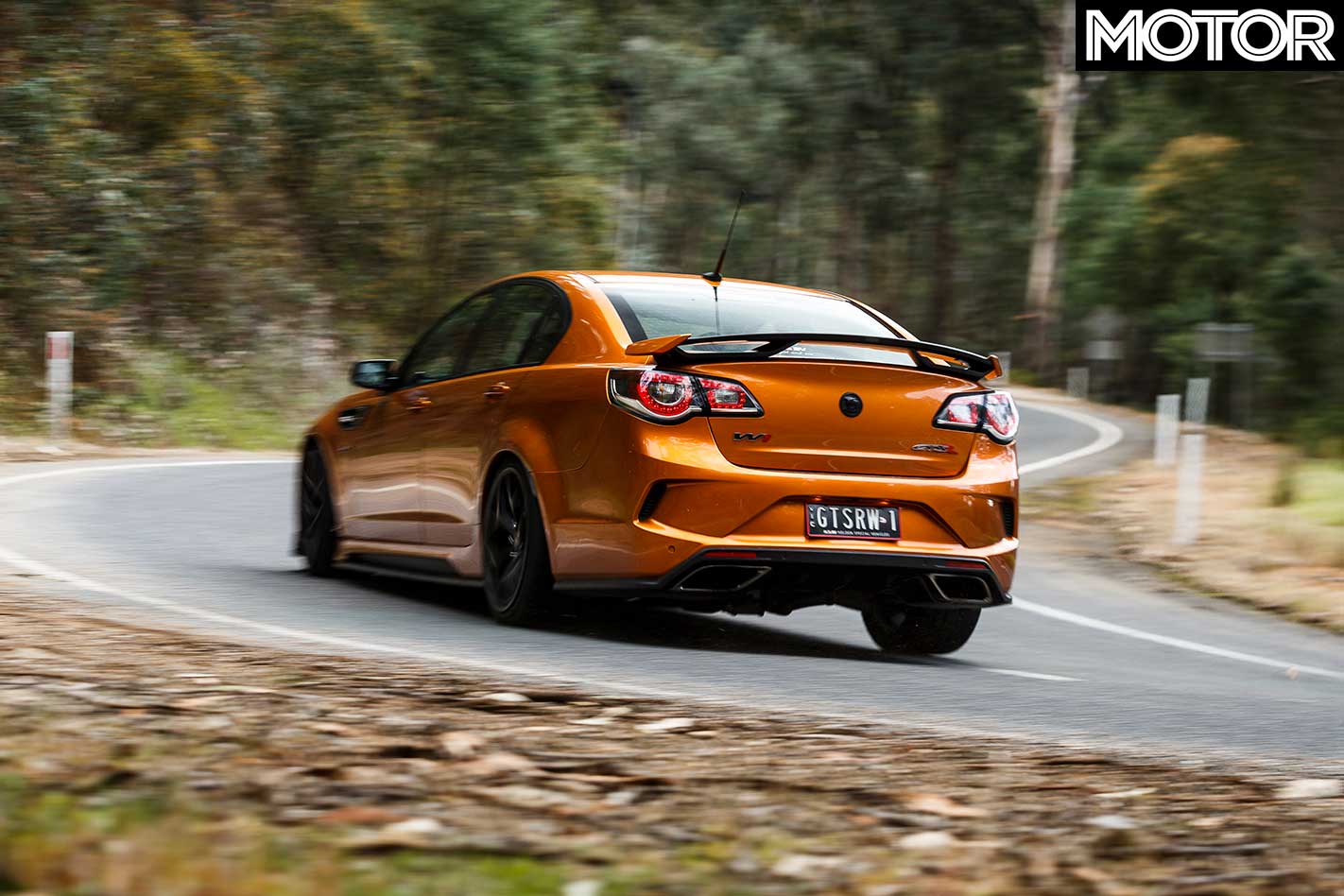
Only months ago the swansong to Australian-made performance cars was beginning to leave owner-investors dancing all the way to the bank, but now it seems potential buyers of the HSV GTS R W1 have changed their tune as used examples grow but sales stall.
HSV production stopped at 275 examples of the GTS R W1 for local buyers who quickly snapped them up – except the final example retained by the brand and the press vehicle that sold at auction for an undisclosed sum – at $169,900 plus on-road costs.
As reported by MOTOR, in August last year the first known GTS R W1 available for public auction passed in at Manheim Melbourne for $257,500 after falling well shy of the $300K expected selling price.
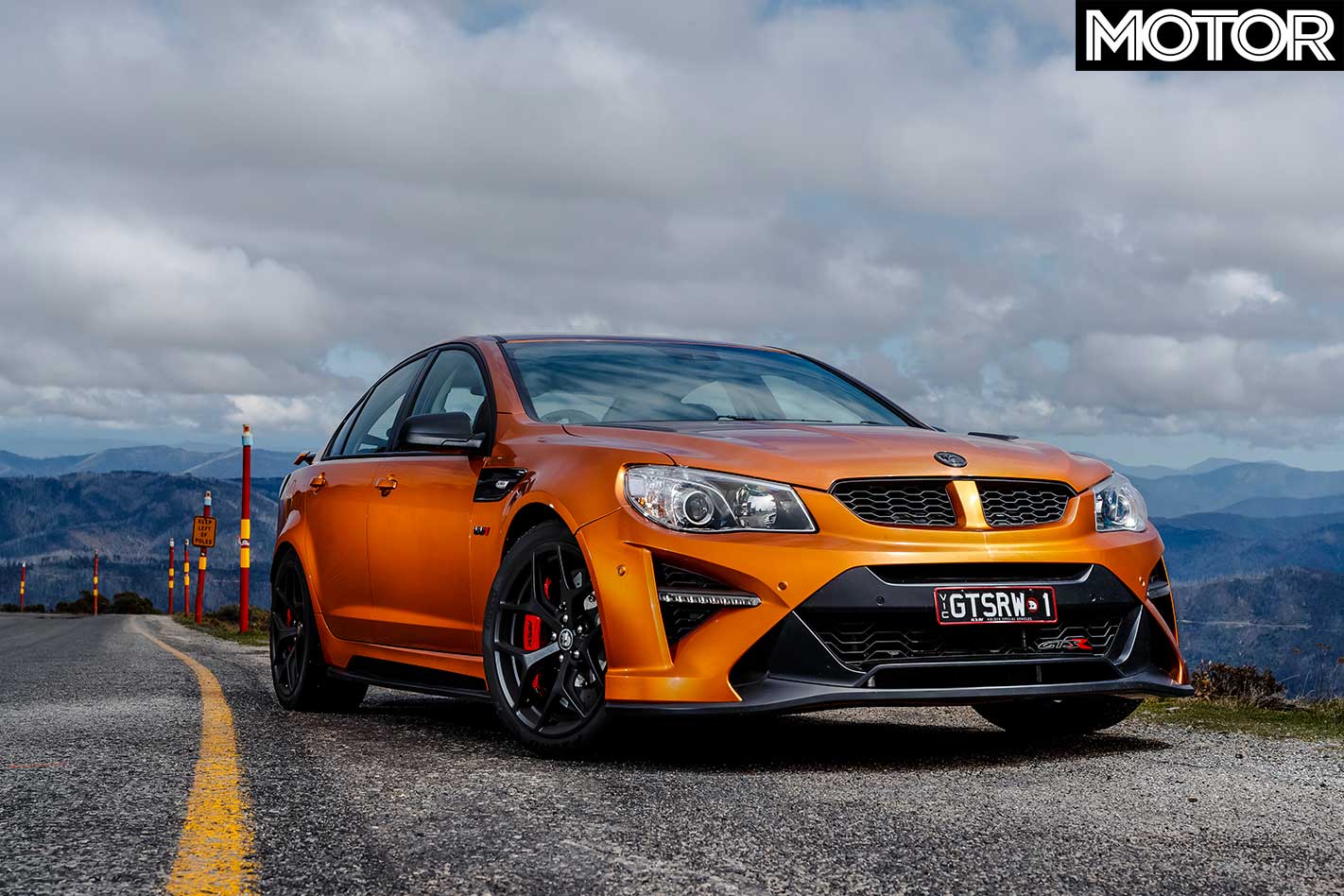
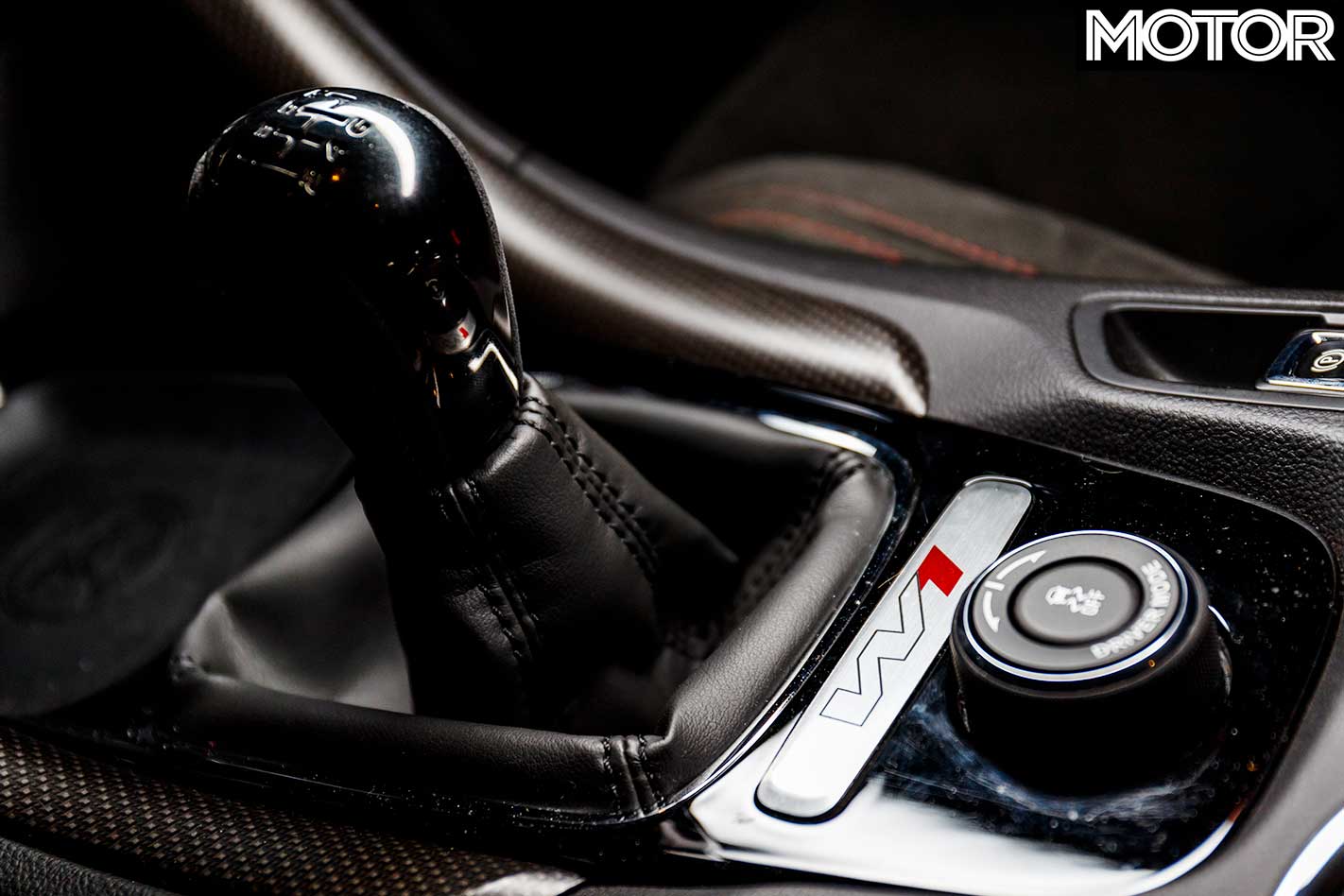
More recently, however, the number of W1 examples on sale – complete with a 474kW/815Nm, LS9 6.2-litre supercharged V8 and six-speed manual – has soared to 17 at the time of publication, with only one missing an official sticker price (‘enquire within’ is the word).
The claimed combined value of the fittest, finest HSV finale totals 4.34 million with an average price of $271,250 – almost a neat $100K over the recommended retail pricetag.
But now even the cheapest example, painted white and with 17km on the odometer, isn’t selling despite being priced at $229,999 for a total decrease of around $50K versus the GTS R W1 examples that actually sold at auction late last year.
History plays a guide here. The Porsche Cayman GT4 launched locally from $190K and very soon examples were moving to $250K-plus. But they have now numbered below the original retail price with few kilometres as the numbers on the market increase, and hype decreases.
Perhaps the best indicator for potential HSV owners, though, is FPV. With a 351kW power output that was never again touched, 2014’s GT F 351 cost $77,990 plus on-road costs new and just 550 were produced.
The average? $102,688 or around 30 per cent above the purchase price. Equate that to a GTS R W1 and the result comes out at … $220K. Maybe that’s where the HSV will stay, then.
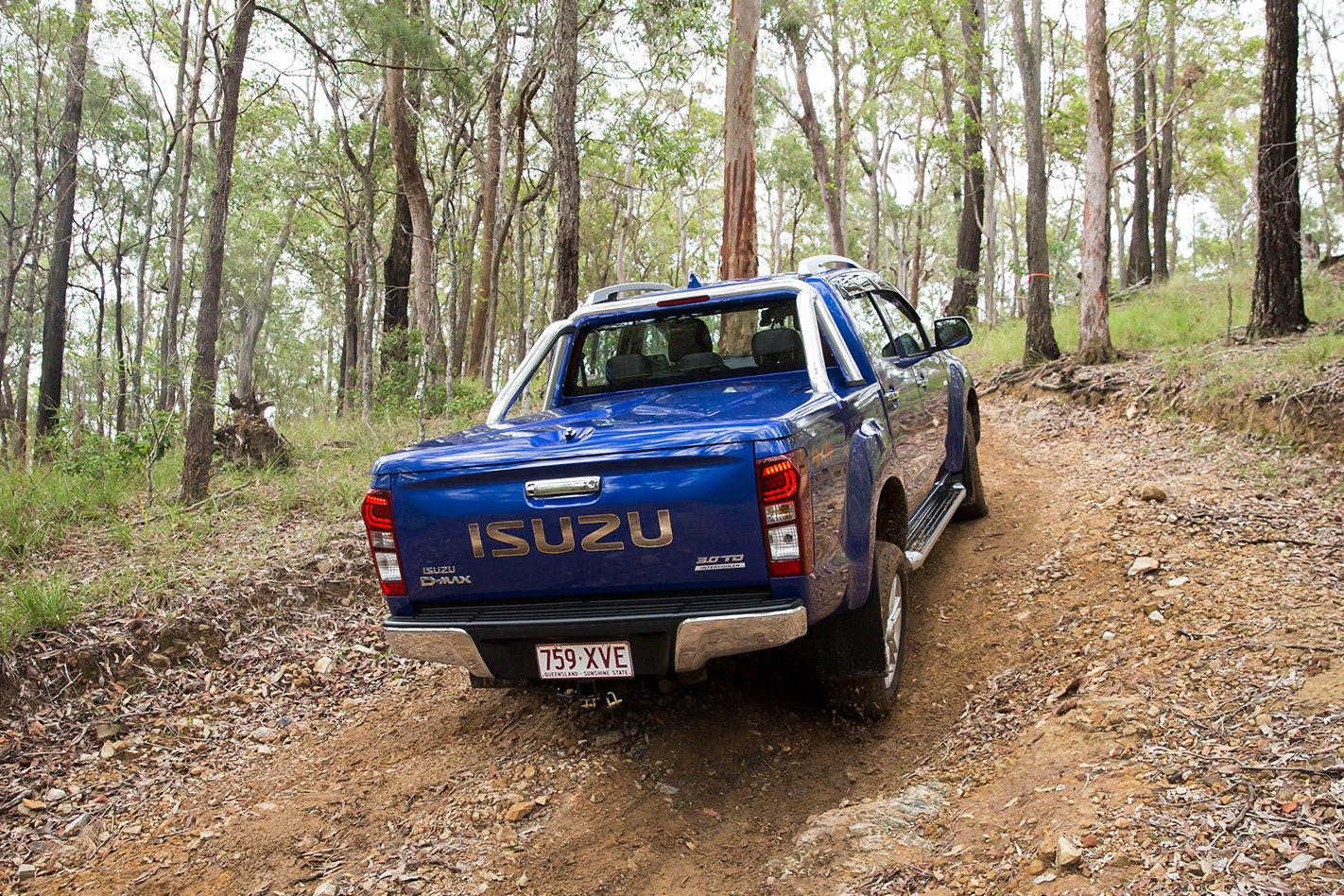
ISUZU refines its popular D-Max dual-cab for 2018 with minor interior updates and, crucially, suspension tweaks to tap further into the ute boom.
WHAT IS IT?
One of just two models from Isuzu’s range in Australia, the D-Max dual-cab ute has been a sales success, proving popular with both tradies and families for its no-frills approach and budget performance.
WHY WE’RE TESTING IT
The 2018 update for the D-Max hopes to answer consumer complaints about its unrefined ride when driven without a load, while also improving interior comfort and quality. The Japanese company is hoping these small changes can make a big difference.
Toyota Hilux, Ford Ranger, Nissan Navara, Mitsubishi Triton, Mazda BT-50, Holden Colorado
THE WHEELS VERDICT
A change in rear suspension set-up has improved the D-Max’s on-road manners and refinement, while retaining its impressive off-road and towing capabilities.
PLUS: Improved unladen ride, under-stressed engine, towing ability MINUS: No reach adjustment for steering wheel, no LSD or rear diff-lock option, lack of active safety, ageing infotainment
THE WHEELS REVIEW
HERE’S a fun fact: despite only selling two models here in Australia, Japanese manufacturer Isuzu regularly outsells German heavyweights like Audi and BMW.
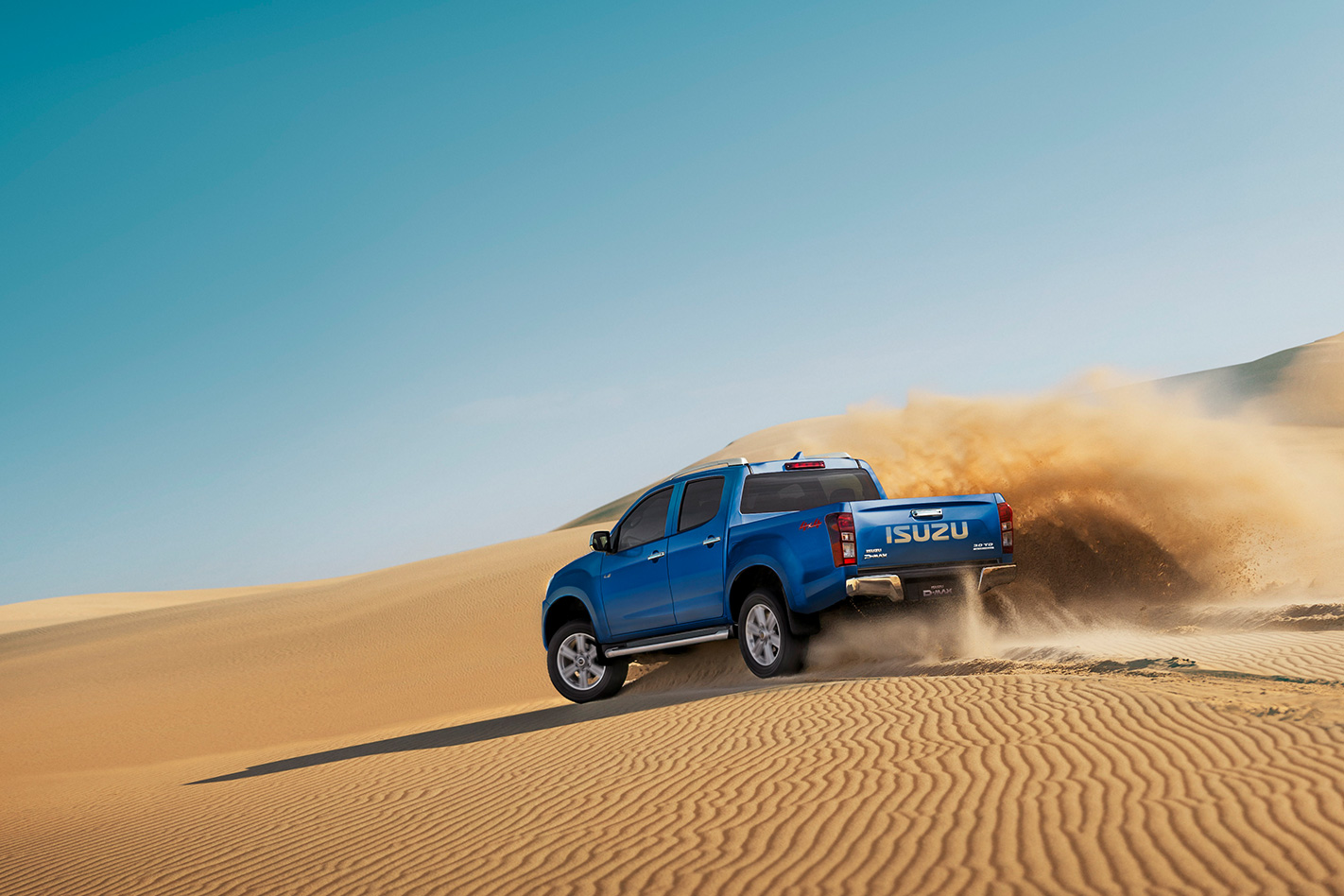
Of the two, the D-Max does the heavy sales lifting, and has been updated for 2018. It has a well-earned reputation for rugged reliability and gutsy, unstressed performance from its 3.0-litre common-rail four-cylinder turbo-diesel engine (borrowed from Isuzu’s track range). There is an air of ‘no-frills’ honesty with the D-Max.
So, rather than upset the apple cart the updates for 2018 are minor, though they do focus on rectifying core complaints from customers around ride quality and interior comfort.
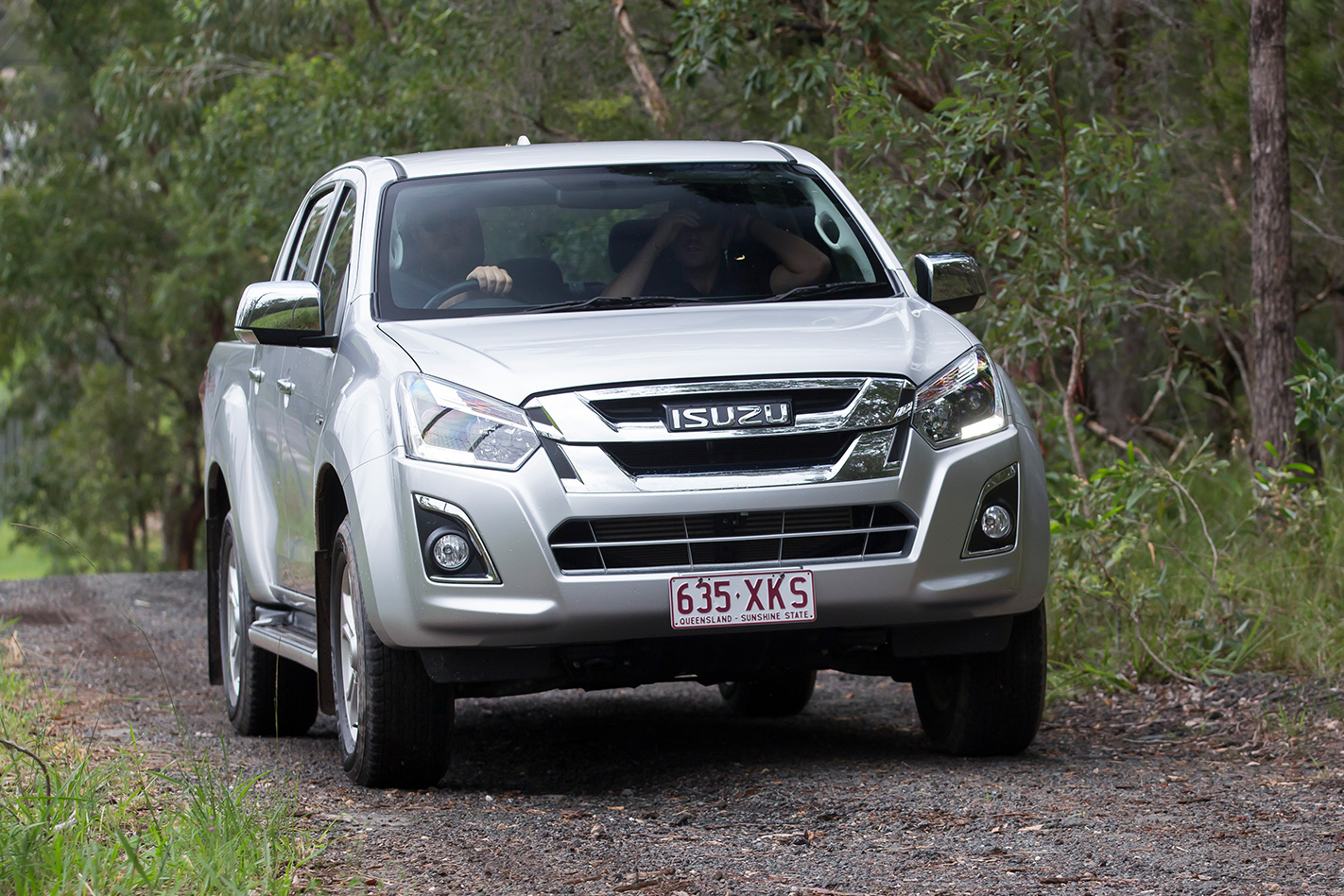
From the outside not much has changed, with the only visual difference being the addition of two new colours for the range-topping LS-T, which is now a permanent fixture in the range. Previously, the LS-T was part of a local evaluation to gauge Australia’s appetite for a more highly-specced, and more expensive, variant. Fair to say the test went well.
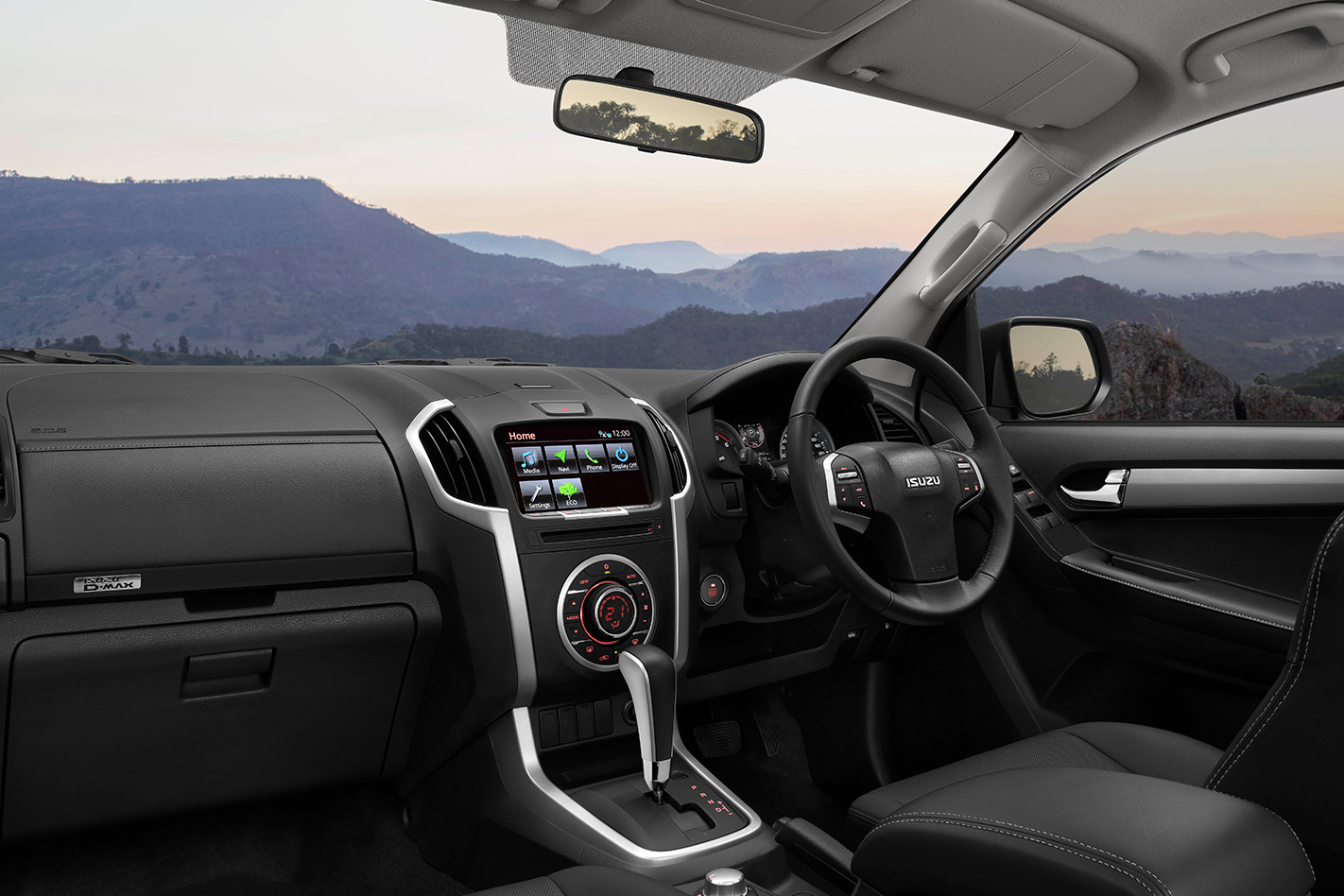
The seat changes are the most noticeable and do well to provide improved lateral support, the perforated leather providing nice cushioning, where older models had you sliding around on synthetic trim. If only the ageing infotainment system had taken a similar step forward. Against fresher rivals, the D-Max’s system feel a generation behind.
While the LS-T sits at the top of Isuzu’s dual-cab tree (at $54,700), the LS-M is the entry point at $49,000 (with a six-speed manual), with the LS-U the middle child at $50,900 with a standard automatic.
Both the LS-U and LS-T are available with either a 4×4 or 4×2 drivetrain, while the LS-M is offered only in 4X4 spec. The LS-T is only sold with a six-speed automatic transmission, while both the LS-M and LS-U can be specced with a six-speed manual (dropping $2100 from the price).
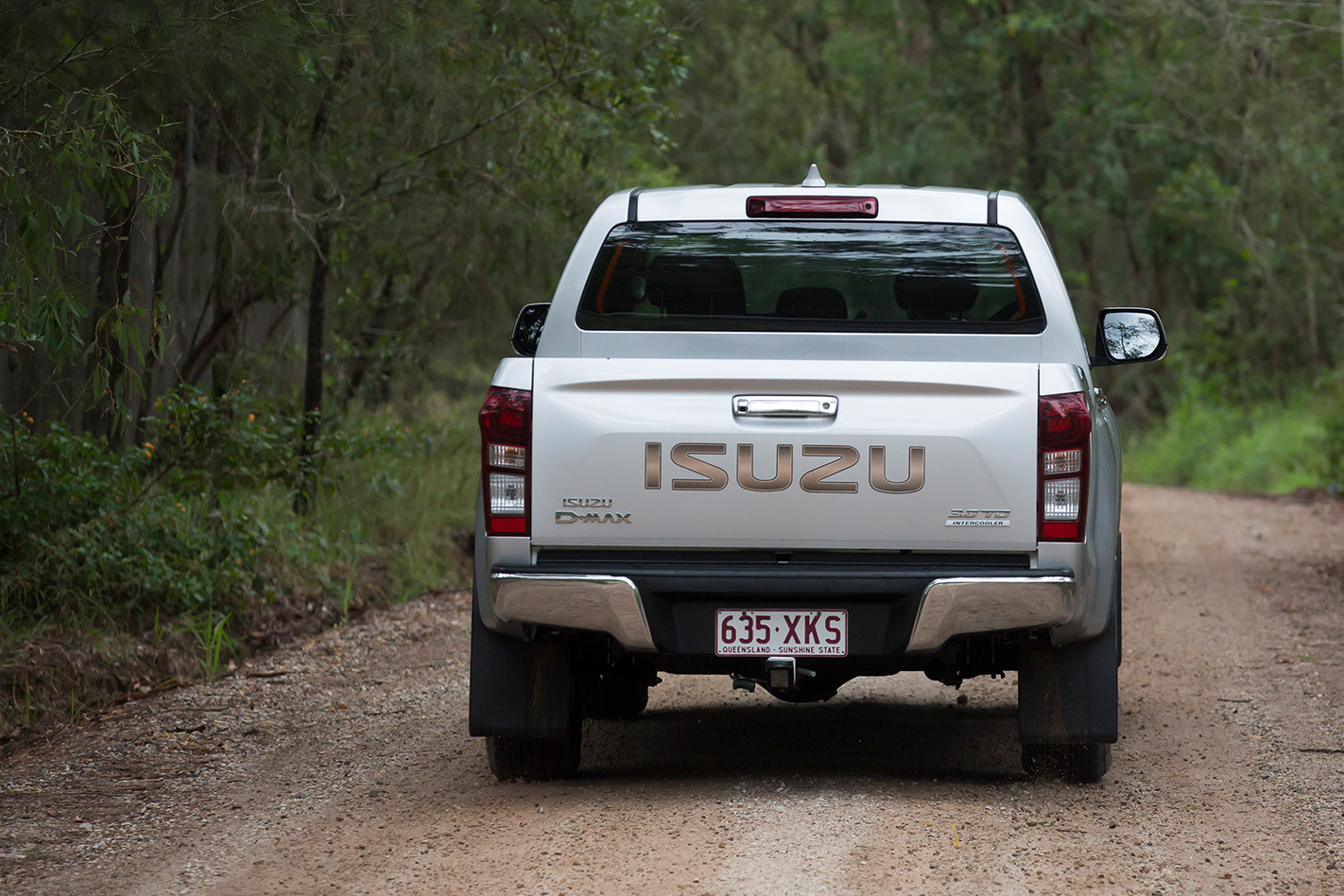
Towing ability is one of the D-Max’s strengths, with its 3500kg rating the best in class. We tested the MY18 model with over 600kg in the tray, then with a 1700kg boat hitched, followed by a 1900kg caravan. In all instances the D-Max remained unfussed by the significant added weight, with the automatic gearbox only having to search for a lower ratio on steep, uphill sections.
This is helped by the muscular 130kW/480Nm diesel, which delivers its peak torque figure from 2000rpm. While those numbers won’t win you pub bragging rights, in the real world, the 3.0-litre engine in the D-Max is a strong, capable unit.
MY18 models now utilise a three-leaf rear suspension set-up (instead of the old model’s five-leaf configuration) which is combined with a minor adjustment to the rear shocks.
And the results are noticeable. Where previously an unladen D-Max would have a harsh ride, telegramming bumps from the road into the cabin, the new suspension is much more compliant.
We drove the MY17 and MY18 models back-to-back on the same roads, and there was a significant improvement with the three-leaf set-up, removing the harsh ‘bouncy’ stiffness of older models, and instead offering a plusher ride.
A more refined suspension goes a long way to catering to a ute’s dual-purpose of juggling utility and family duties, but the D-Max still nudges further towards a work vehicle than its competitors.
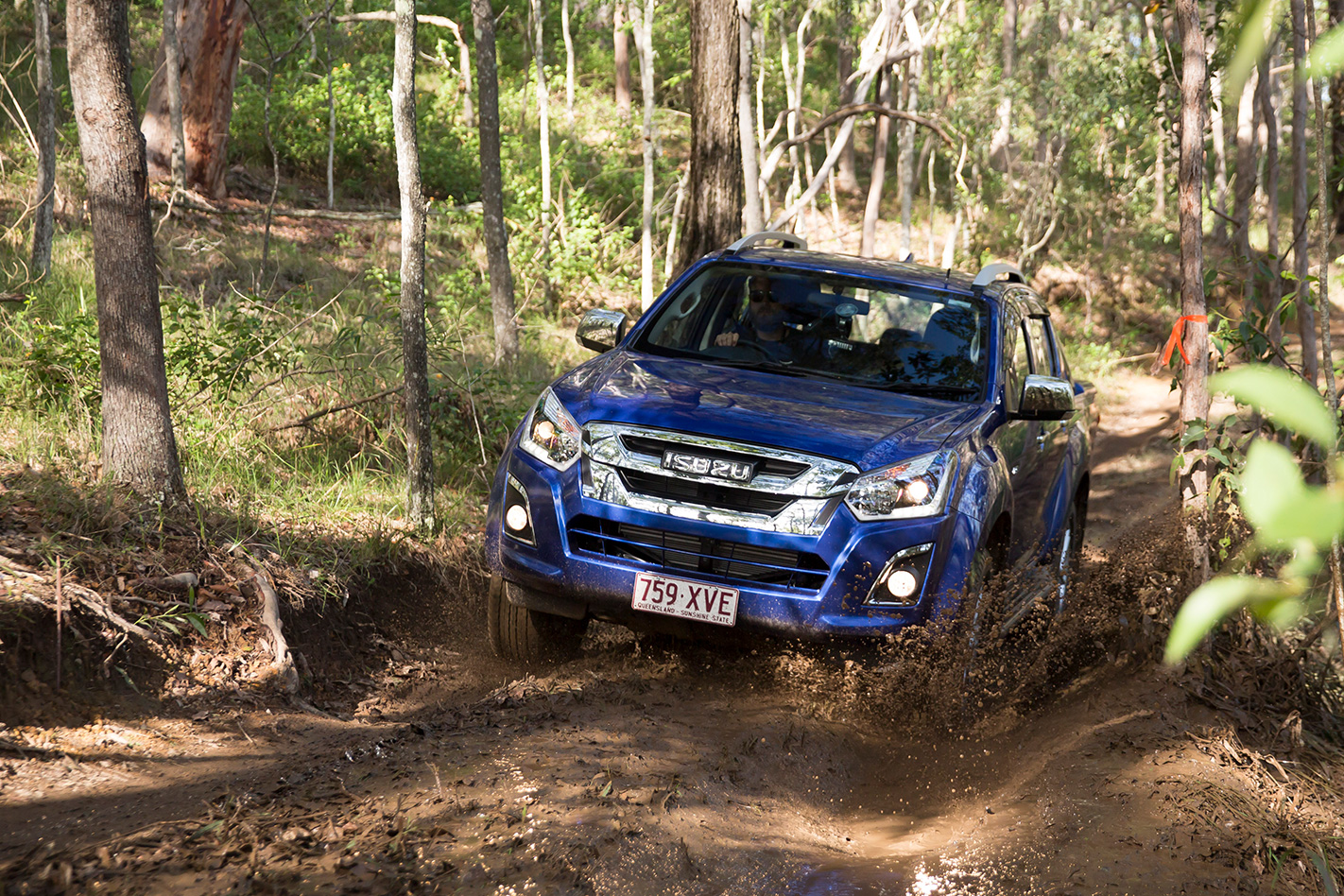
So while this M18 update brings a welcome dose of comfort and refinement, the D-Max remains a dual-cab for customers who will prioritise its class-leading towing ability and strong off-road credentials. Yes it’s now more comfortable than ever, but the D-Max still sits closer to the work-site than inner-city driveway, with other rivals such as the Ford Ranger offering more car-like manners.
SPECS
Model: 2018 Isuzu D-Max LS-T Engine: 2999cc 4cyl, dohc, 16v turbo-diesel Max power: 130kW @ 3600rpm Max torque: 430Nm @ 2000rpm Transmission: Six-speed automatic Weight: 2026kg 0-100km/h: N/A Fuel economy: 7.7L/100km Price: $54,700
The Brabham Automotive BT62 is shaping up to be quite the hardcore beast, even though we haven’t seen it yet.
The new brand today teased its debut vehicle with a teaser photo of the car’s tail lights and wing, and revealed some basic specs.
The Brabham BT62 is set to weigh just 972kg dry, and pack a power-to-weight ratio of 537kW-per-tonne.
If Brabham’s calculation is based on its dry weight (which isn’t particularly helpful in the real world), it’ll be good for 506kW.
If it’s a kerb weight-based figure, the Brabham BT62 could be even more powerful.
Providing this power will be a naturally-aspirated 5.4-litre V8, built by Brabham.
In addition, Brabham says the wing – visible in the teaser image – will help the BT62 produce a total more than 1200kg of downforce.
“The BT62’s brakes are carbon/carbon – a current Formula 1 technology that was first introduced to the sport by Brabham in 1976 – featuring six pistons front and rear.
“With performance characteristics that point to the potency of the car, the new Brabham is pure-bred for the track and capable of setting blistering lap times, designed and engineered to demand more from the driver and reward the limited few who will rise to its challenge.”
In the UK, each of the 70 cars to be built will cost £1 million before on-roads and taxes, with no details of international (read Australian) availability.
Brabham still hasn’t confirmed whether the car will be road-legal, but says it’ll be revealed at a London event on May 3.
