
Lotus’ quickest street-legal sports car is now the Lotus 3-Eleven 430.
But there are only going to be 20 of them. Ever.
The 321kW/440Nm Lotus 3-Eleven weighs in at only 920kg, giving it a seriously impressive power-to-weight ratio of 348kW-per-tonne. That figure puts every Lambo in MOTOR’s ‘Hot Source’ list (at the back of each mag issue) to shame.
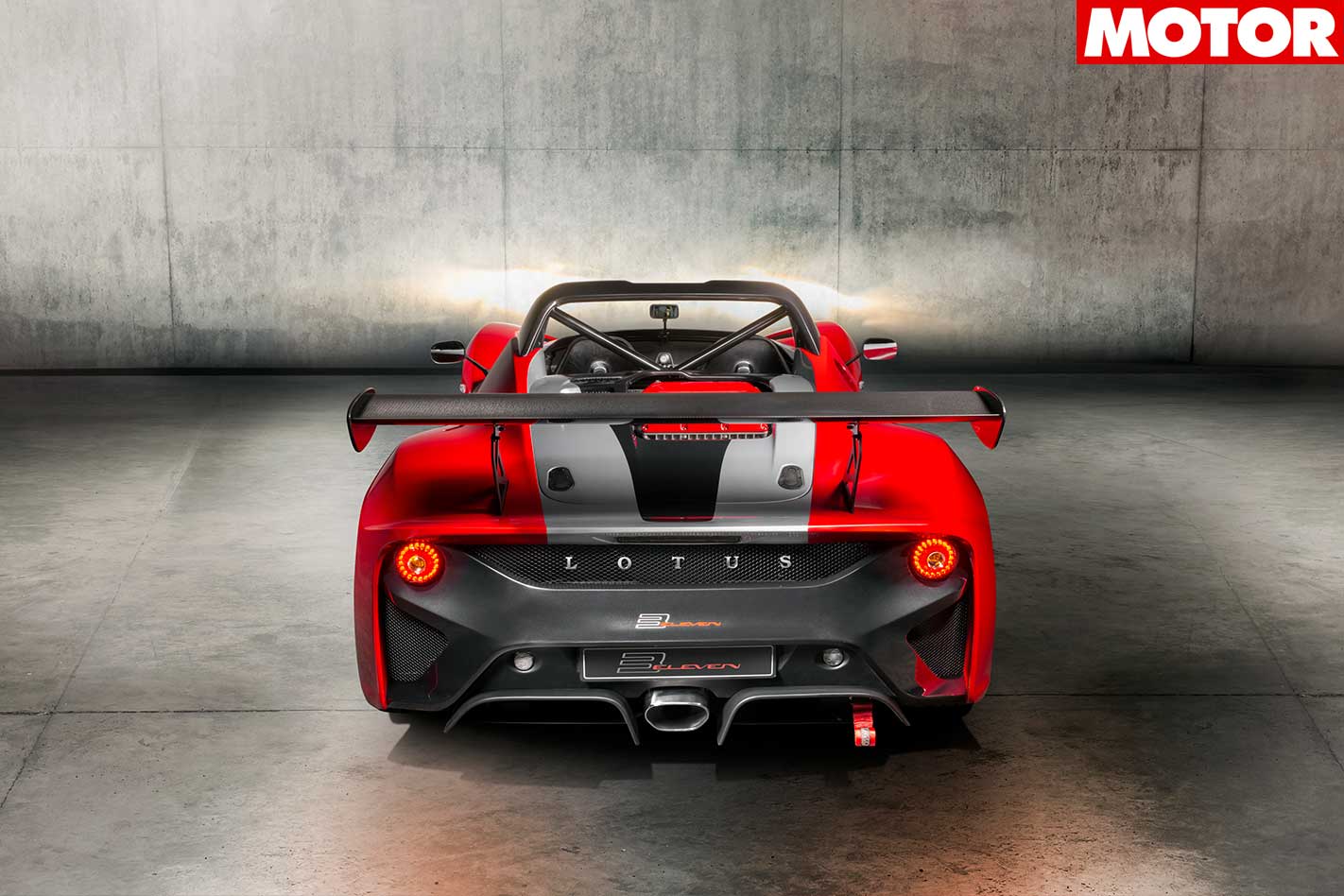
It runs a 0-100km/h run in 3.2 seconds, and has an astonishing top speed of 290 km/h.
And, of course, the power travels through a six-speed, open-gate manual gearbox.
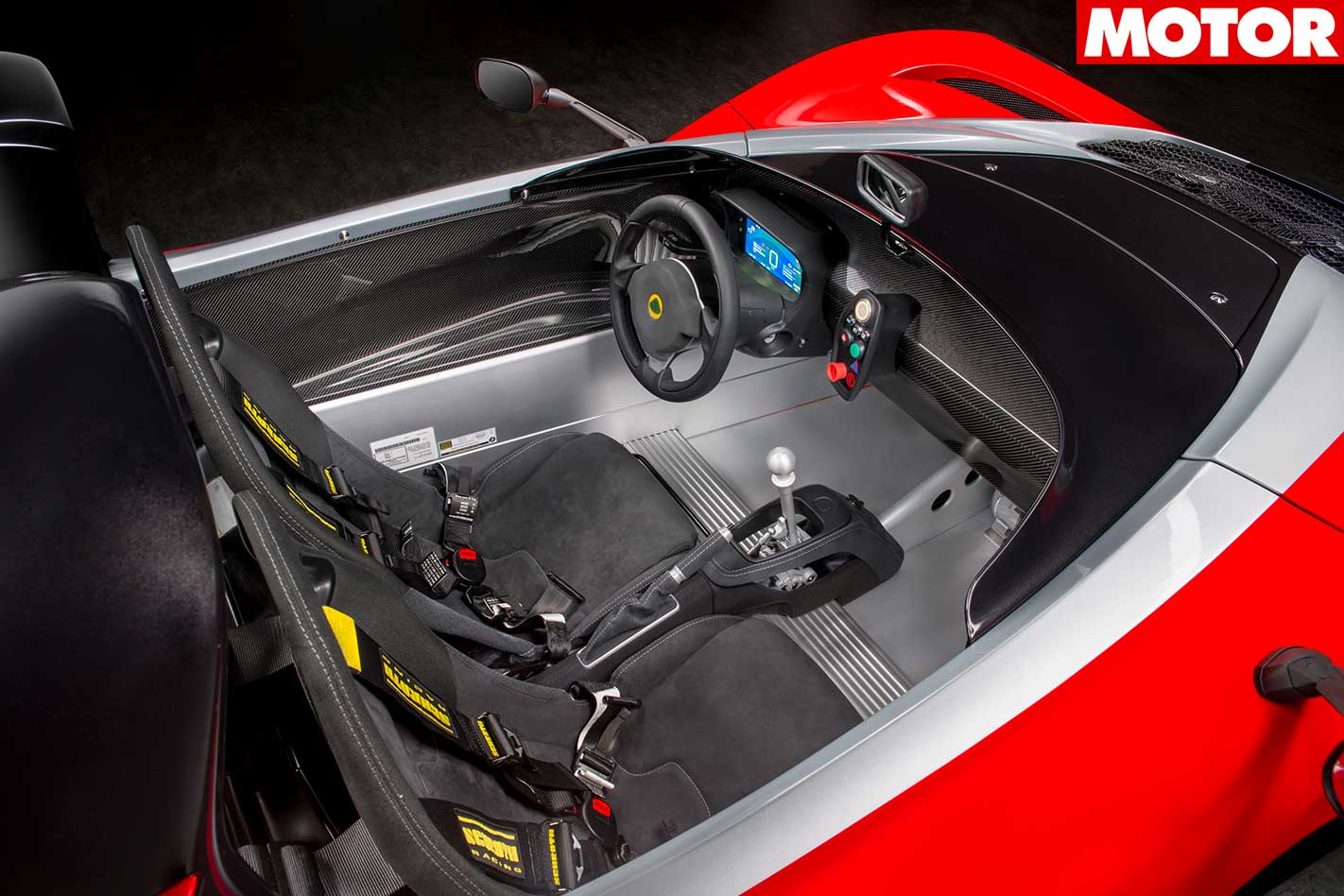
Michelin Cup 2s help is stay stuck to the ground, with the grip allowing up to 1.5g of lateral force whilst cornering.
Lotus Group CEO Jean-Marc Gales says the 3-Eleven is the ultimate in lightweight performance for a road-legal sports car.
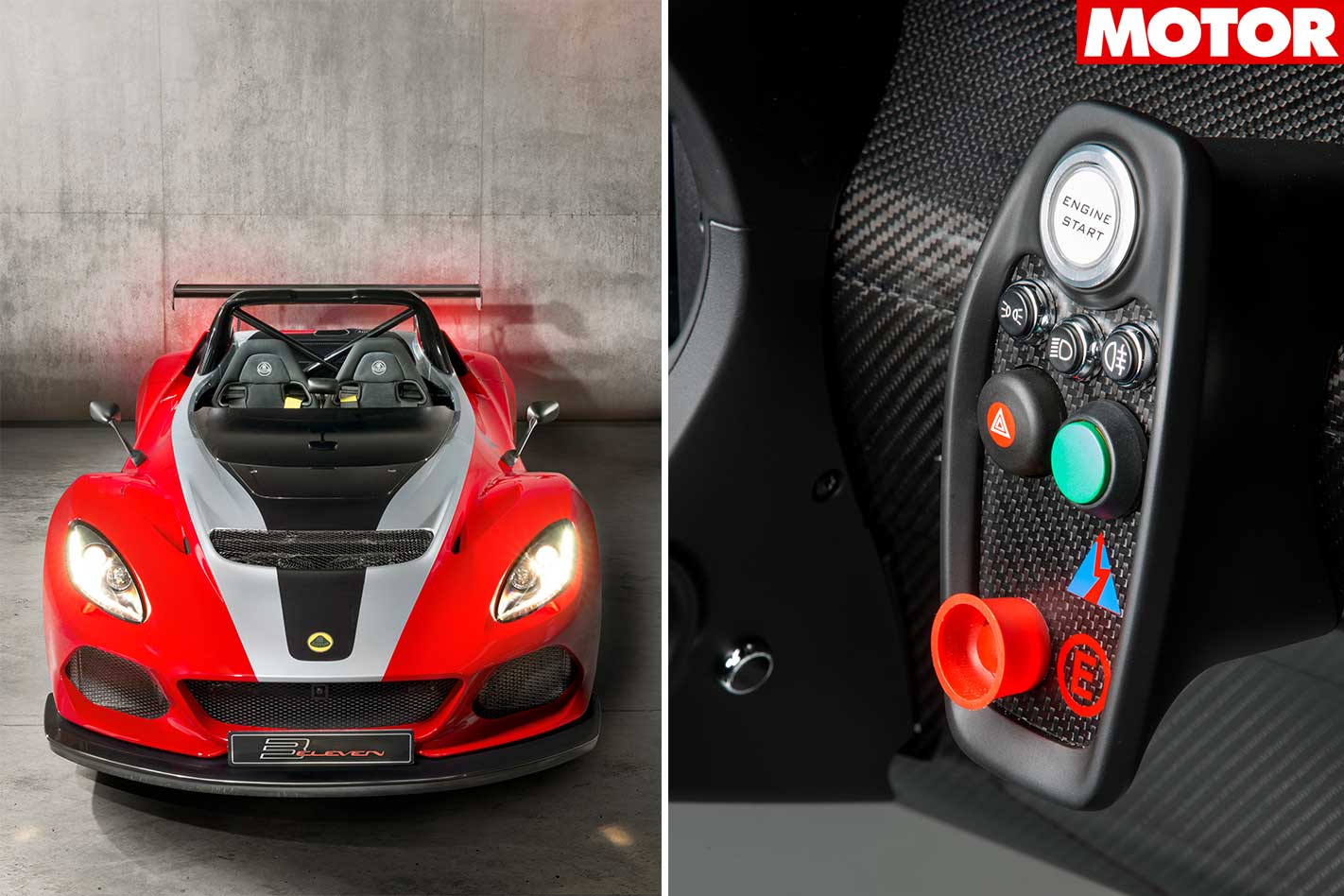
“It altered perceptions of what was possible at this price category, and today the new 3-Eleven 430 moves the benchmark to remain the ultimate weapon in focused road driving and track work.”
The 3-Eleven 430 will cost UK buyers £102,000 (direct exchange is $181,960), though as only 20 are available worldwide we won’t be holding our breath to see one.
Many car enthusiasts should have around $5000 laying around somewhere.
If not in cold, hard cash, then at least have a think about that next car purchase you’re about to make. Could you instead get a slightly cheaper first car to make room for a budget driver’s car?
These days, even as cars of all kinds get faster, legacy performance models from the last 20 years can still seem quick for not a whole lot of cash. Specifically here, we’re talking a $6000 car bargained down to $5000 on the nose. Fun to drive, less than 20 years old, with fewer than 250,000km, forms part of the brief; and not a Mazda MX-5, for once, is the other.
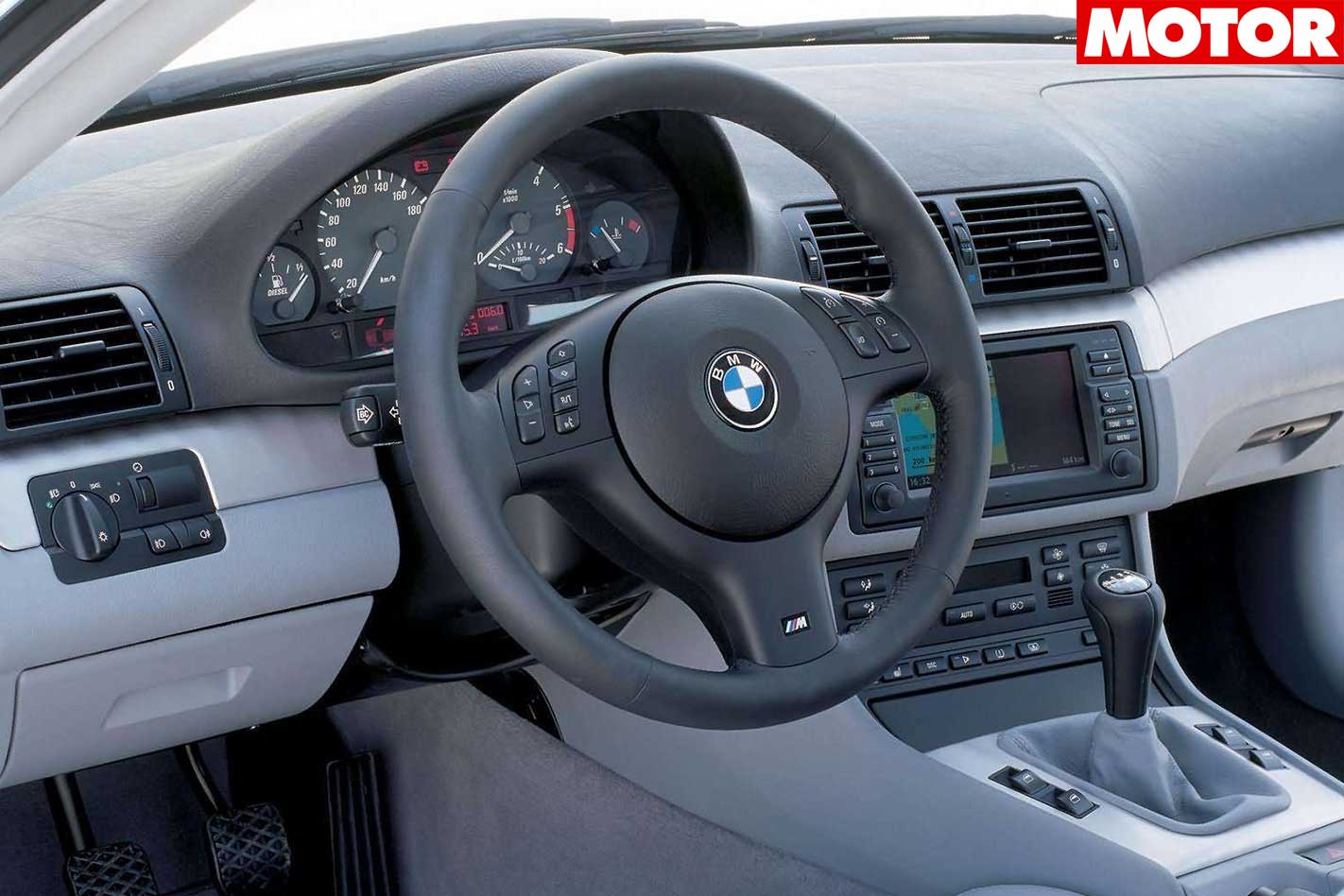
#1 Sports coupe: Early-2000s BMW 3 Series Coupe
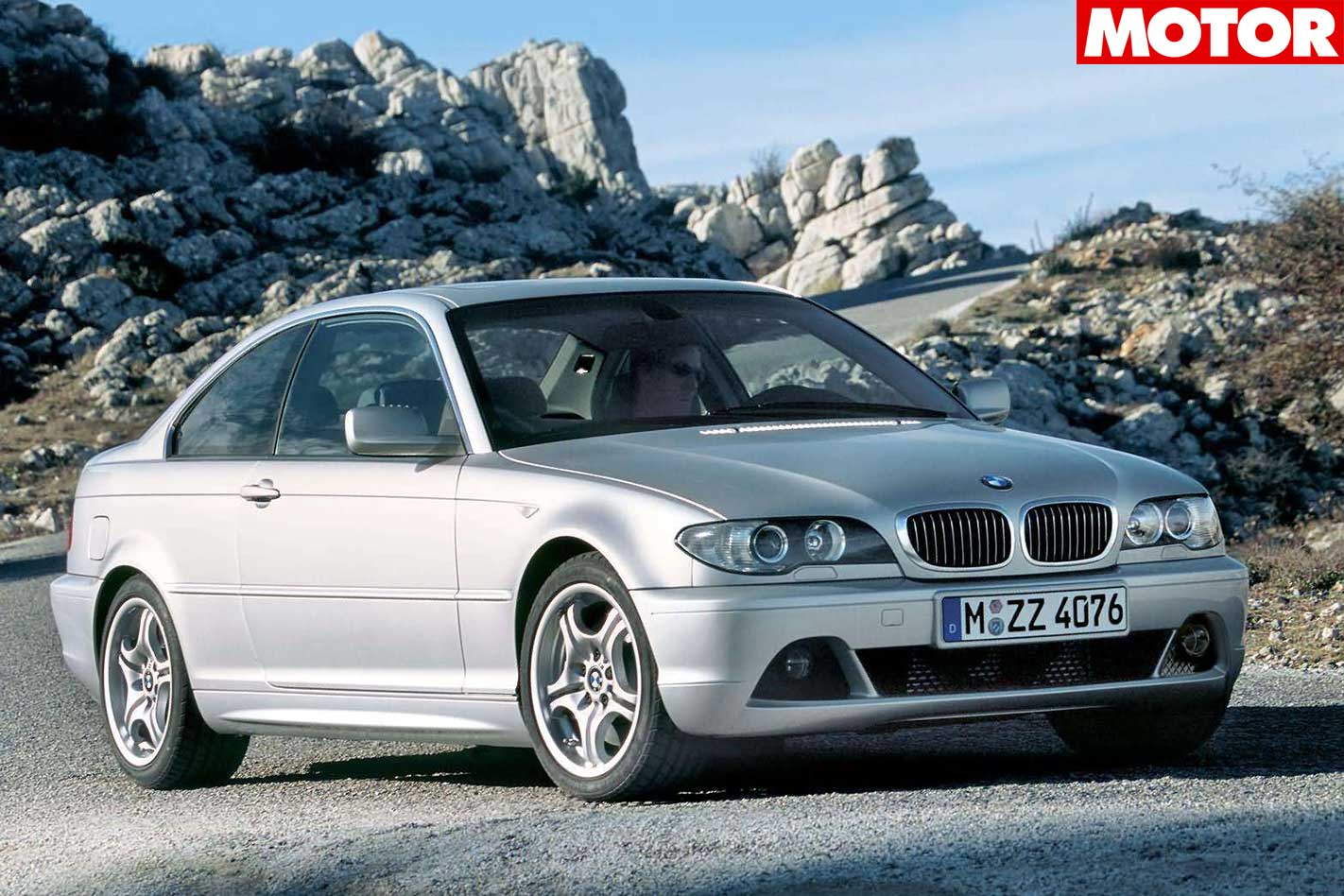
With E30 M3 prices nudging E46 levels, the same has become true of the older non-M models versus the newer models. A 325Ci with 2.5-litre six, 245Nm and a 7.6-second 0-100km/h can be purchased for mid-four-figures, while the more desirable 330Ci with a 3.0-litre six, 300Nm and 6.7sec 0-100km/h needs at least 50 per cent more – both with 200,000km or less.
#2 Hot hatchback: 2007 Ford Fiesta XR4
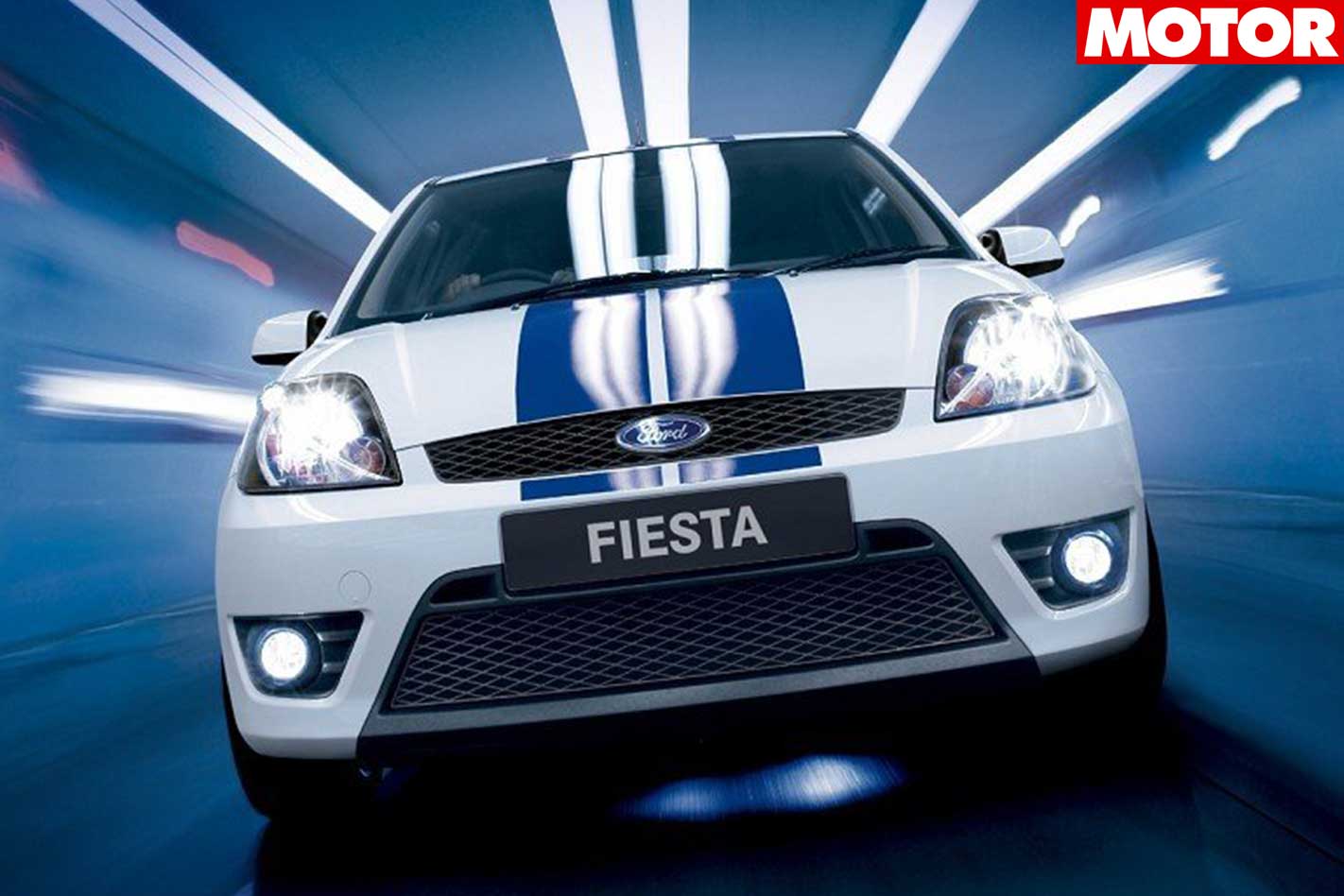
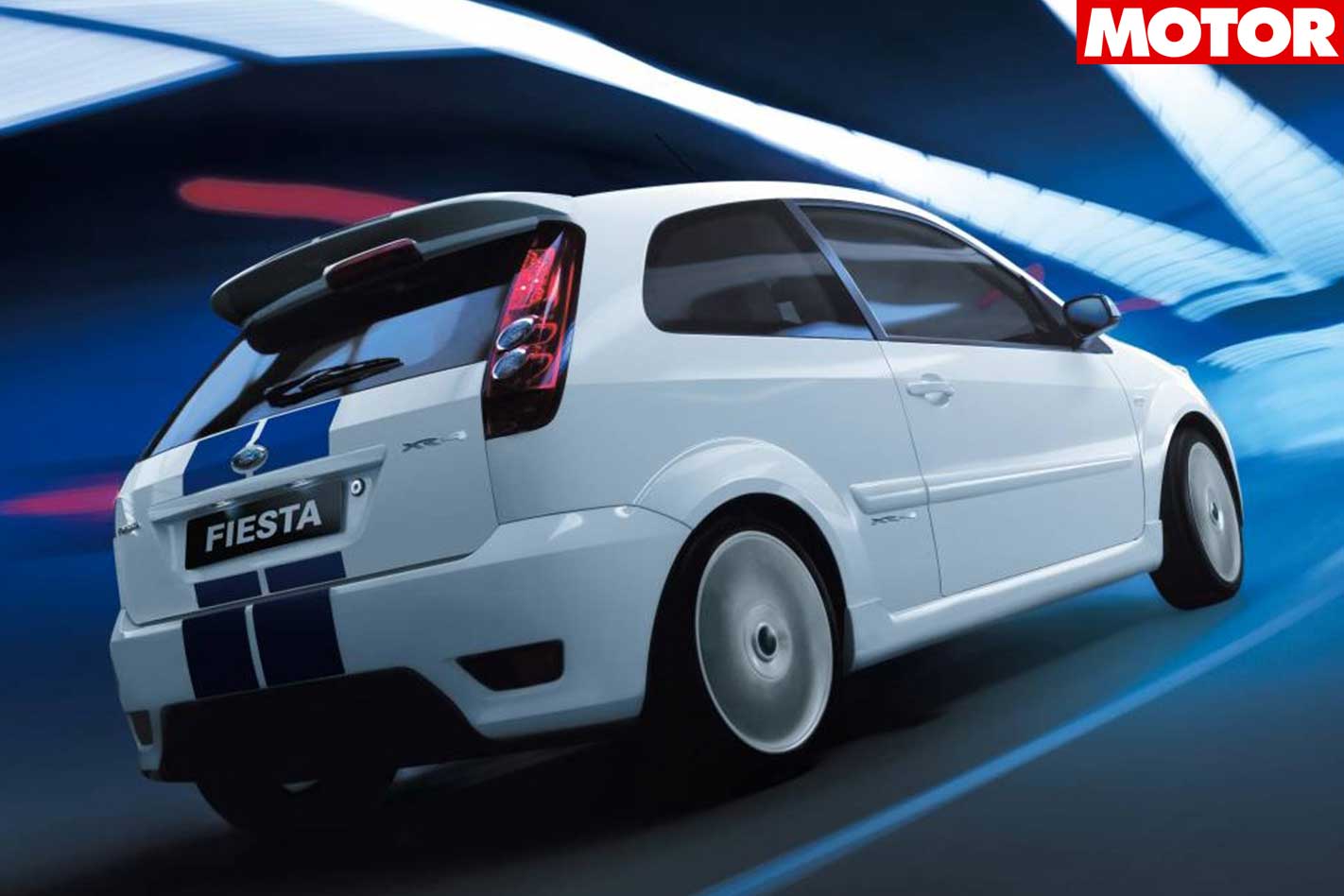
Okay, the Fiesta XR4 was on the mild side for power, with a Focus-derived 2.0-litre four developing 110kW, but it only tipped the scales at 1090kg. In particular, the steering of this Ford was top notch, while the handling was grippy in a stand-on-its-nose fashion.
For an older and lighter Clio RS Phase II, though, best wait for part two.
#3 Sports sedan: Early-mid-2000s Ford BA Falcon XR6 Turbo
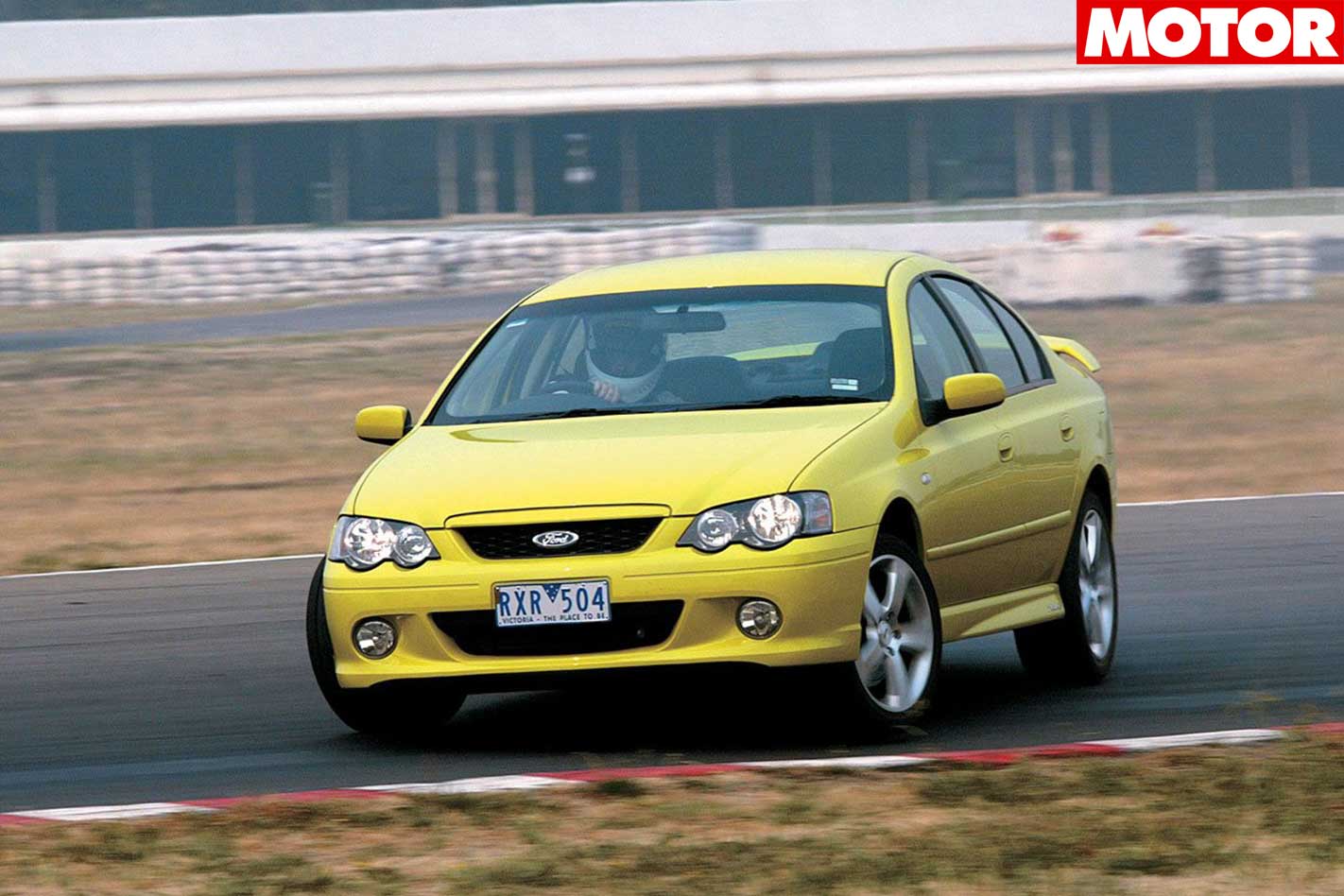
Sure, later models were obviously improved, but none quite offered the dramatic shift in ability from the preceding model like this one did, and with Commodore demolishing it in the sales race, it needed to.
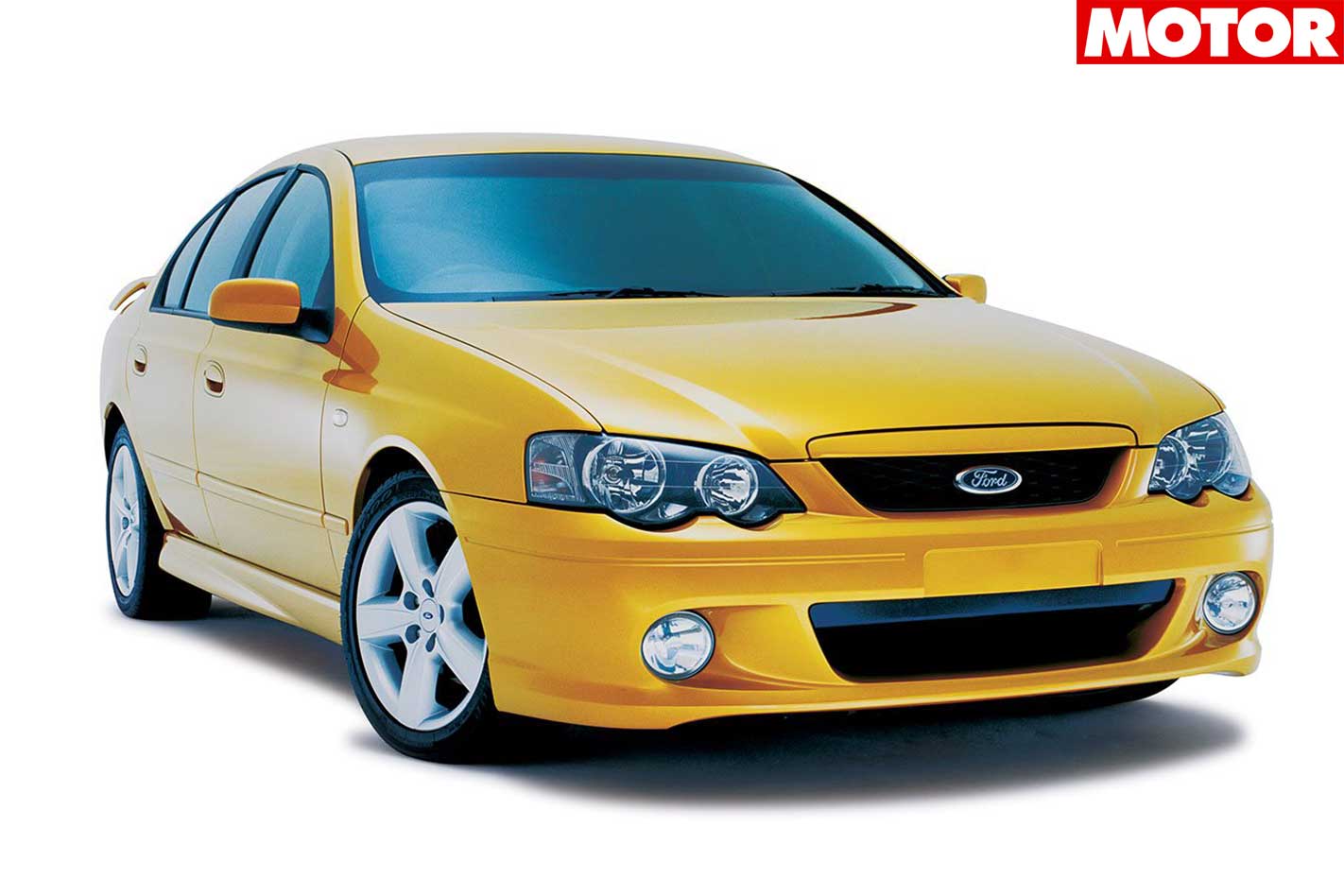
In context, the BA (and BF) are barely younger than the more impressive VE Commodore that reignited Holden’s reign as the class (and sales) leader, yet the Falcons ask almost half the price.
Stay tuned for part two where we offer another three servings of $5K driver’s car star action.
The Subaru Liberty has been refreshed for 2018 with a subtle facelift, enhanced infotainment, additional active safety tech and improvements to its 2.5-litre petrol/CVT powertrain.
The upgrade is similar to that received by the closely related Subaru Outback wagon and includes external tweaks such as newly designed front bumper, grille, headlights, alloy wheels, and wing mirrors.
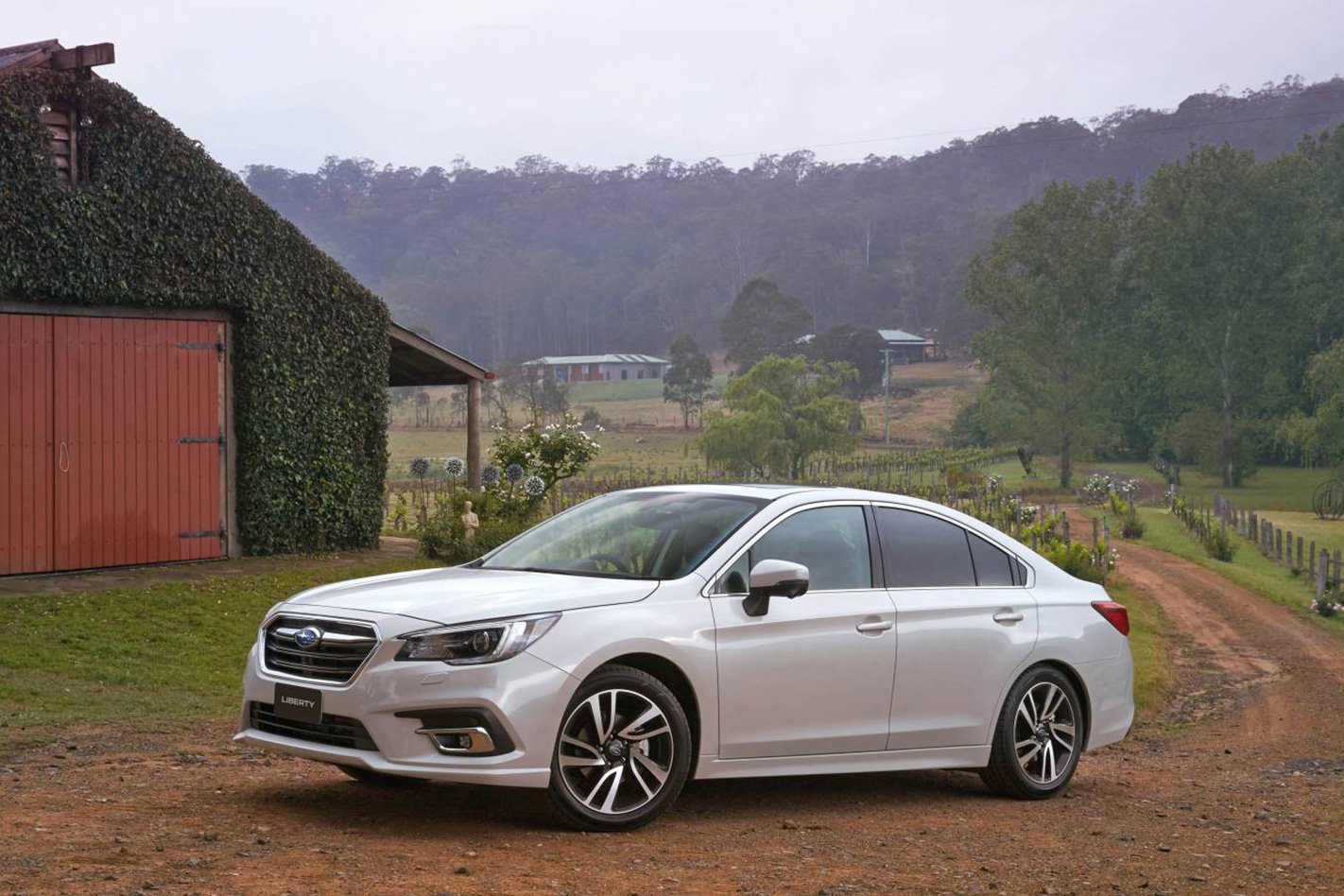
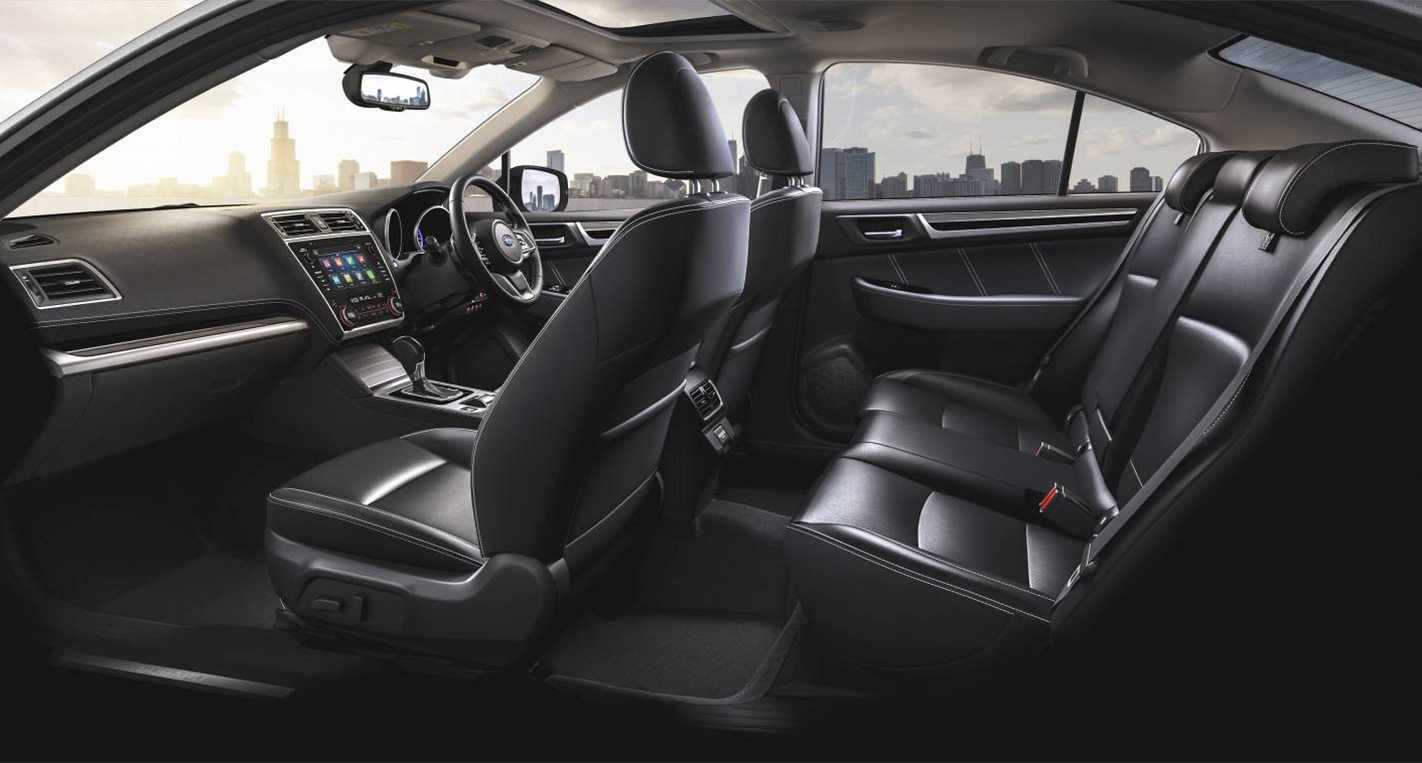
Inside, the 2018 Liberty reveals a redesigned centre dashboard panel with a 7.0-inch touchscreen, which grows to 8.0 inches in the Premium and 3.6R versions, and equipped withy Apple CarPlay/Android Auto smartphone mirroring.
The cabin has a more premium look about it with high-gloss black surfaces, and stitching along the soft-touch dashboard leading to a newly designed steering wheel.
Safety has improved with all Liberty variants, which are now equipped with the third generation of Subaru’s EyeSight driver assist system, which adds lane keeping assist along with enhanced pedestrian avoidance and pre-collision braking assist.
The adaptive cruise control now recognises brakes lights and recognises vehicles from longer distances and wider angles, making it even safer on multilane roads or when vehicles cut across lanes, and also brings autonomous emergency braking (AEB).
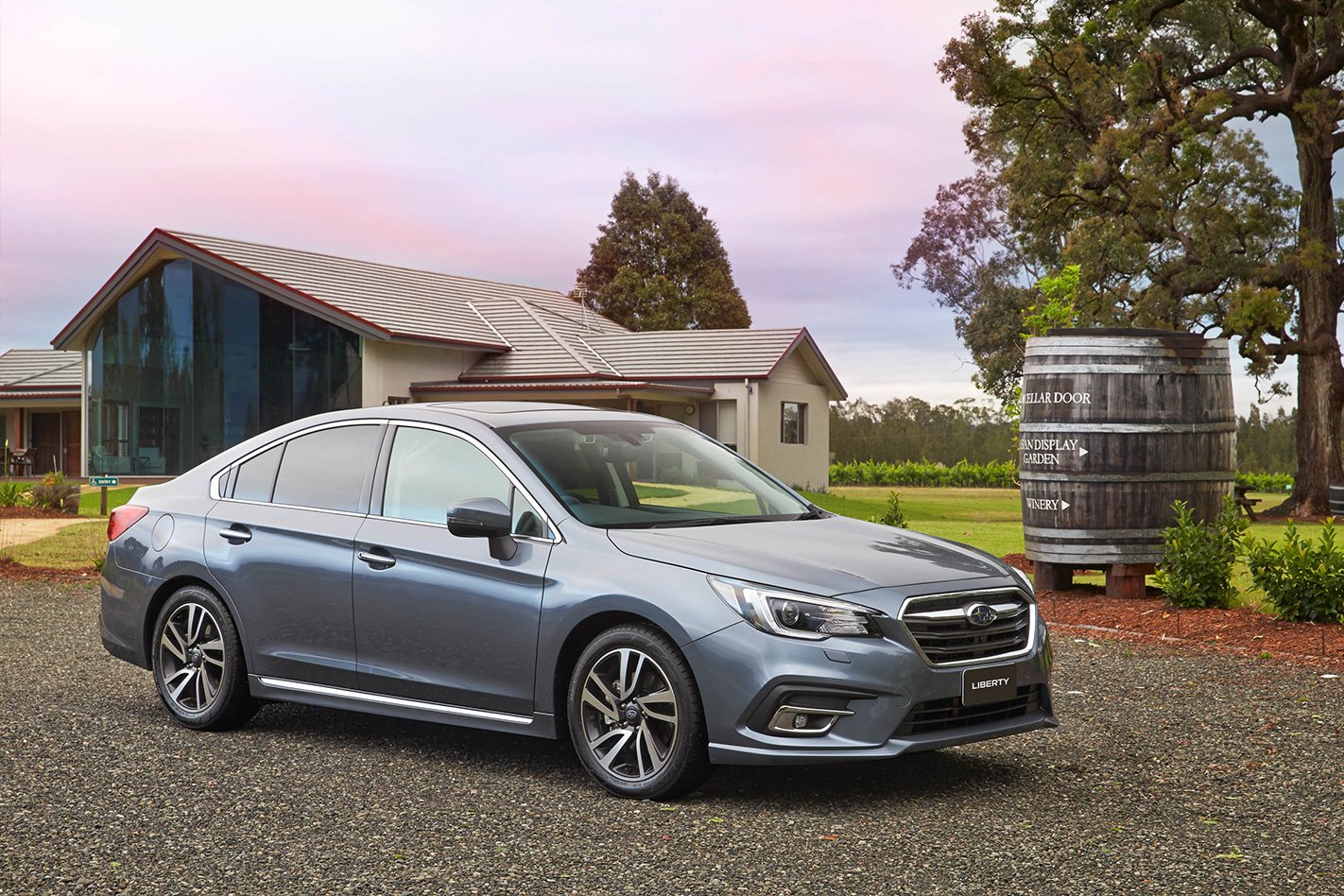
Premium and 3.6R variants are also equipped with a new side-view parking monitor and steering responsive headlights with adaptive anti-glare high beams, which automatically dim if another vehicle appears.
Subaru’s engineers have tinkered with the Liberty’s 2.5-litre petrol variants’ suspension, CVT auto and engine components to yield what Subaru claims are greater handling, throttle response and efficiency, and reduced noise and vibration.
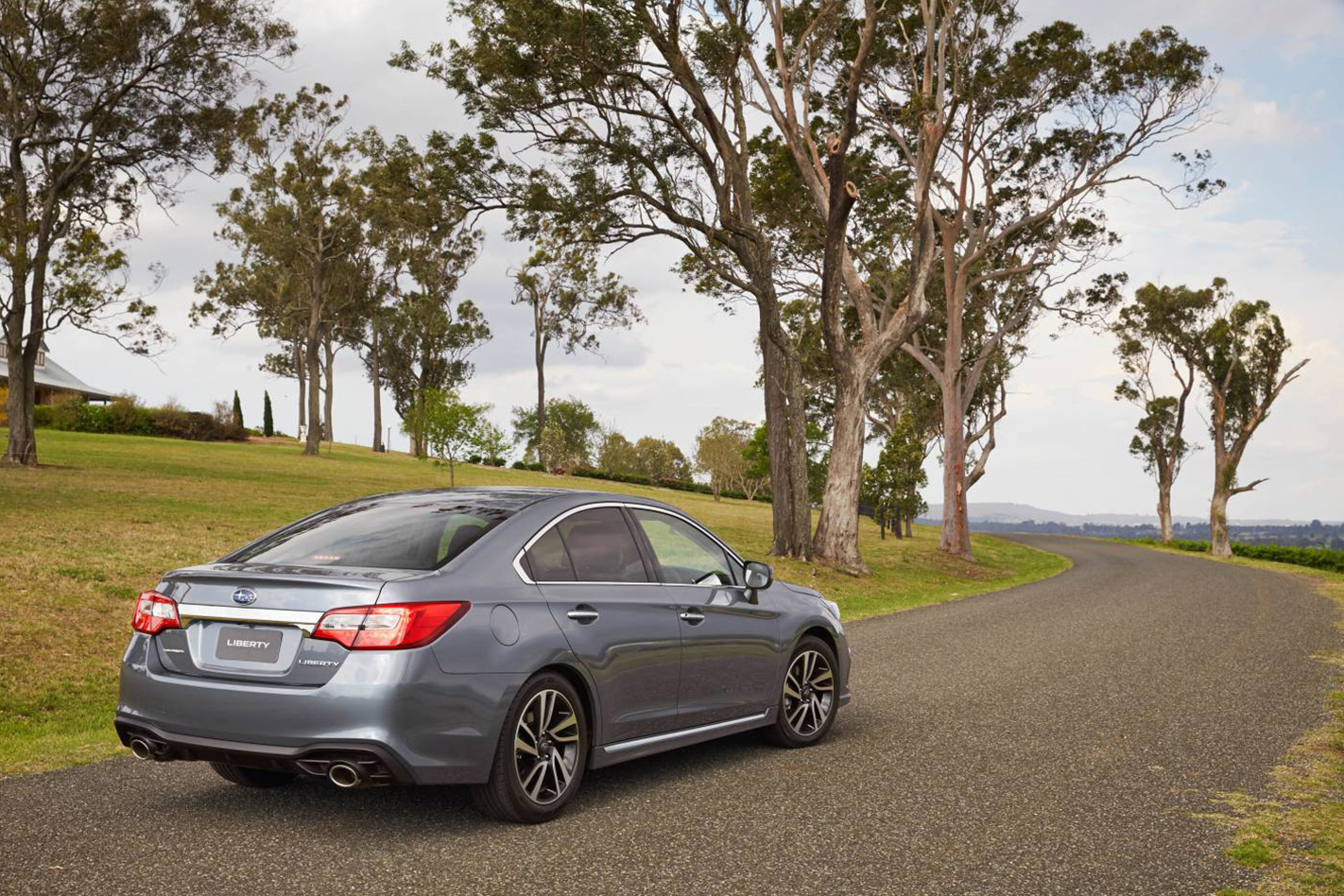
Entry-level pricing remains the same, while the more richly equipped Premium and 3.6R variants are up by about $400.
The 2018 Subaru Outback is on sale now.
A SHARP-EYED Wheels reader has caught an undisguised version of the Holden Acadia more than six months before it’s due to launch here.
We’ve had a preview drive of the Acadia, featuring a heavily disguised front end that gave few clues as to how a liberal dose of chromed plastic and body-coloured highlights would make the Toyota Kluger fighter look.
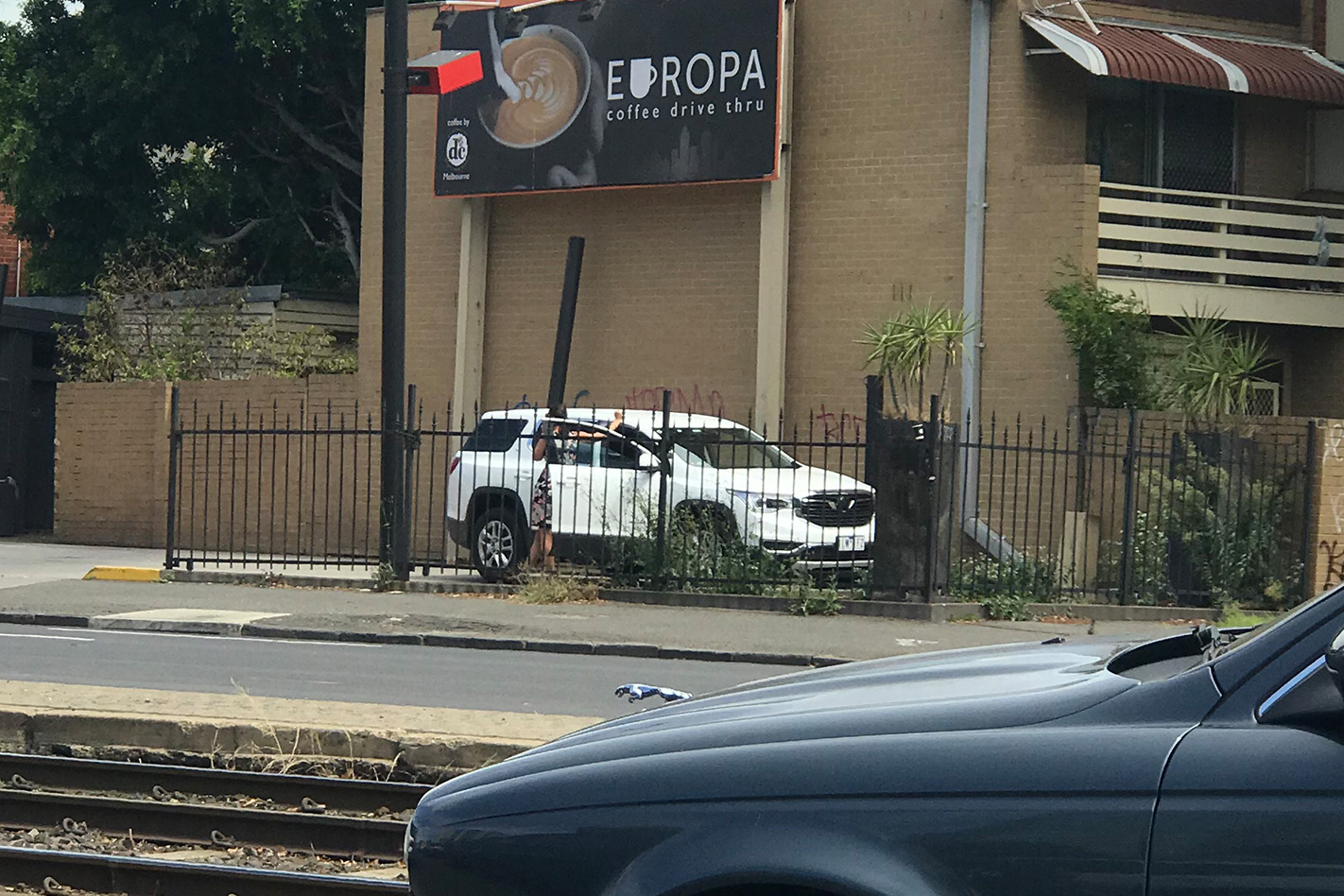
But now we know. This Acadia, snapped in inner Melbourne, sports a chrome-rimmed grille with distinctive ZB Commodore-style wings supporting the Lion emblem. As well, there’s a chrome highlight running along the top of the lower air dam and folding below the fog lights. The lower splitter, we note, is body-coloured, while the alloy wheels bear no resemblance to any existing Holden product.
We’re guessing this is potentially a circa $40,000 entry-level model, given it lacks the roof rails of the prototype we drove at Holden’s Lang Lang proving ground midway through last year.
Engine choices for the Acadia are yet to be locked in, but US versions of the GMC-badged SUV use either an unexciting 145kW 2.5-litre four or a far more attractive 231kW 3.6-litre V6.
Holden will distance the Acadia from the seven-seat, Chevrolet Colorado-based Trailblazer by plumping the new entry as a quasi-luxury SUV that takes the brand more up-market.
Ferrari has confirmed our expectations for its next big bad Prancer, the 488 Pista.
In its first official press release to refer to it by name, specifications and images of the Ferrari 488 Pista have been confirmed to be just as we thought.
Acting as the spiritual successor to the likes of the 360 Challenge Stradale, 430 Scuderia and 458 Speciale, it represents a more hardcore evolution of the 488.
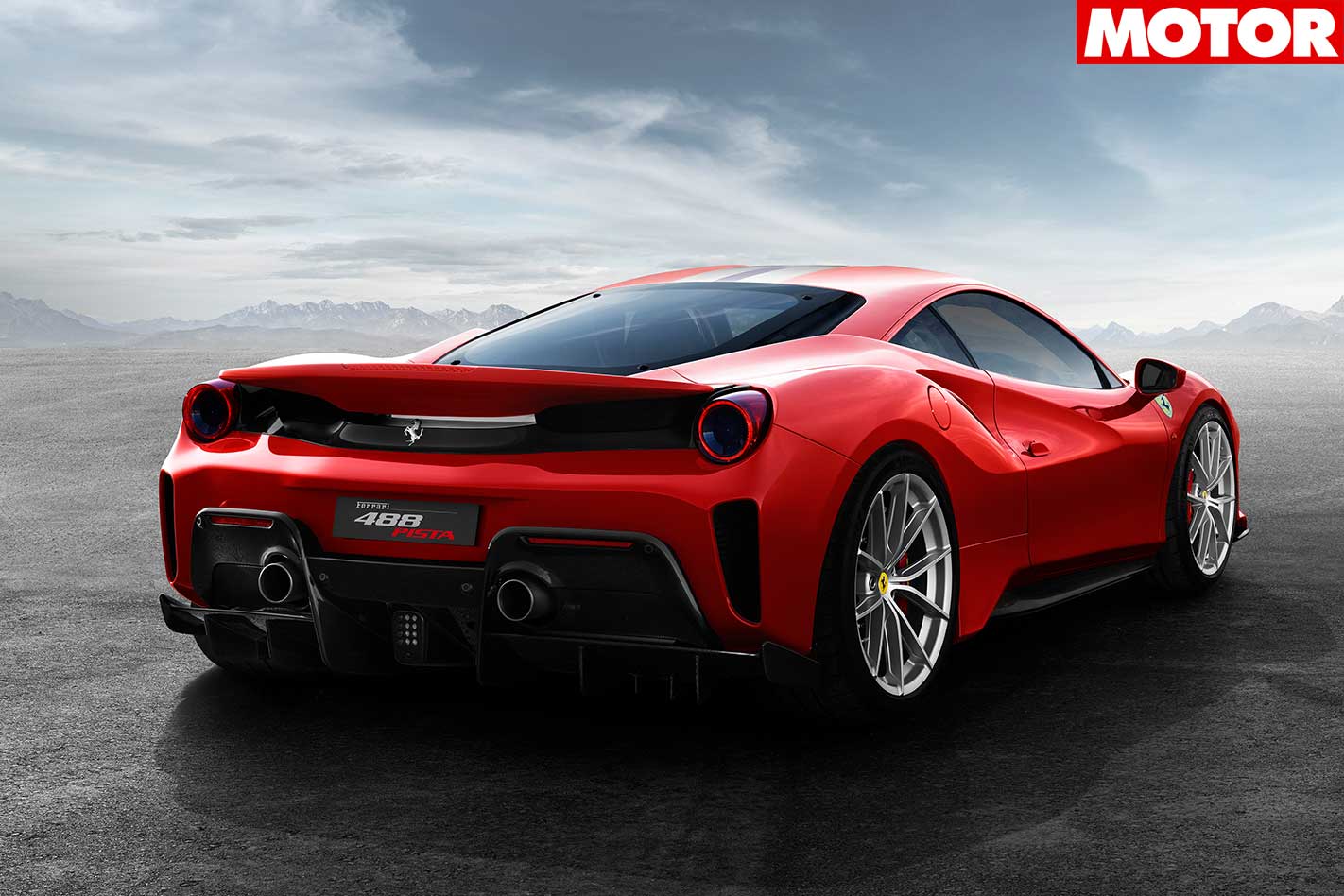
The Pista sports the same 3.9-litre twin-turbo V8 as the 488 GTB, but it’s been tuned to put out a McLaren 720S-rivalling 530kW. The GTB has 492kW.
Ferrari says this is the biggest increase in power a special series car has ever achieved over the model it’s based on. It adds that at any engine speed, the torque out-performs that of a 488 GTB.
It’s also faster to 100km/h with Ferrari claiming a “2.85” second run. Conveniently half a tenth quicker than a 720S or Huracan Performante.
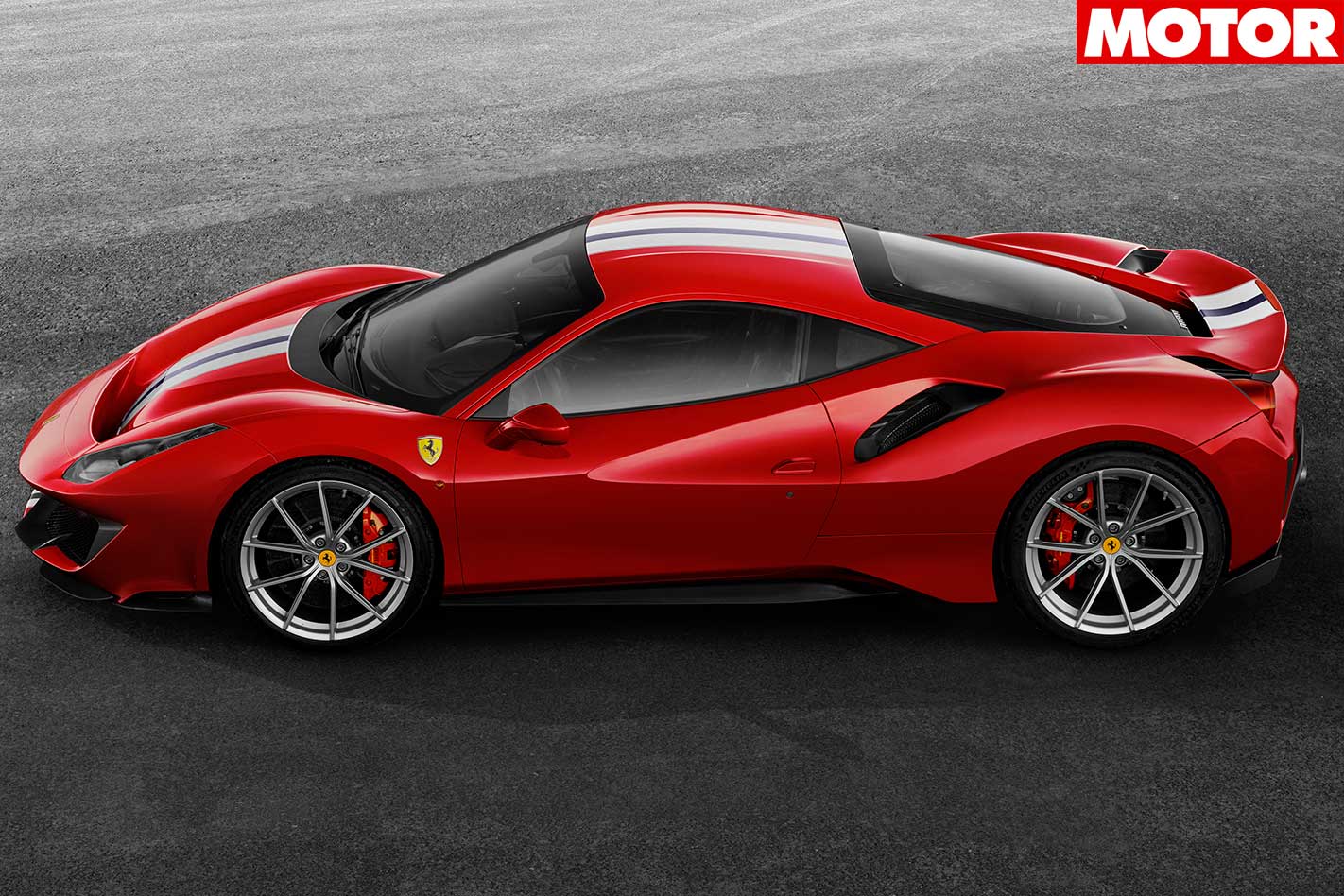
The weight has been shed through extensive use of carbon fibre for wheels, engine cover, bumpers and rear spoiler.
Ferrari’s statement that the Pista honours its racing heritage carries over into its design, with an “F1-inspired S-Duct” and the front diffusers featuring a ramp angle optimised for the 488 GTE racer.
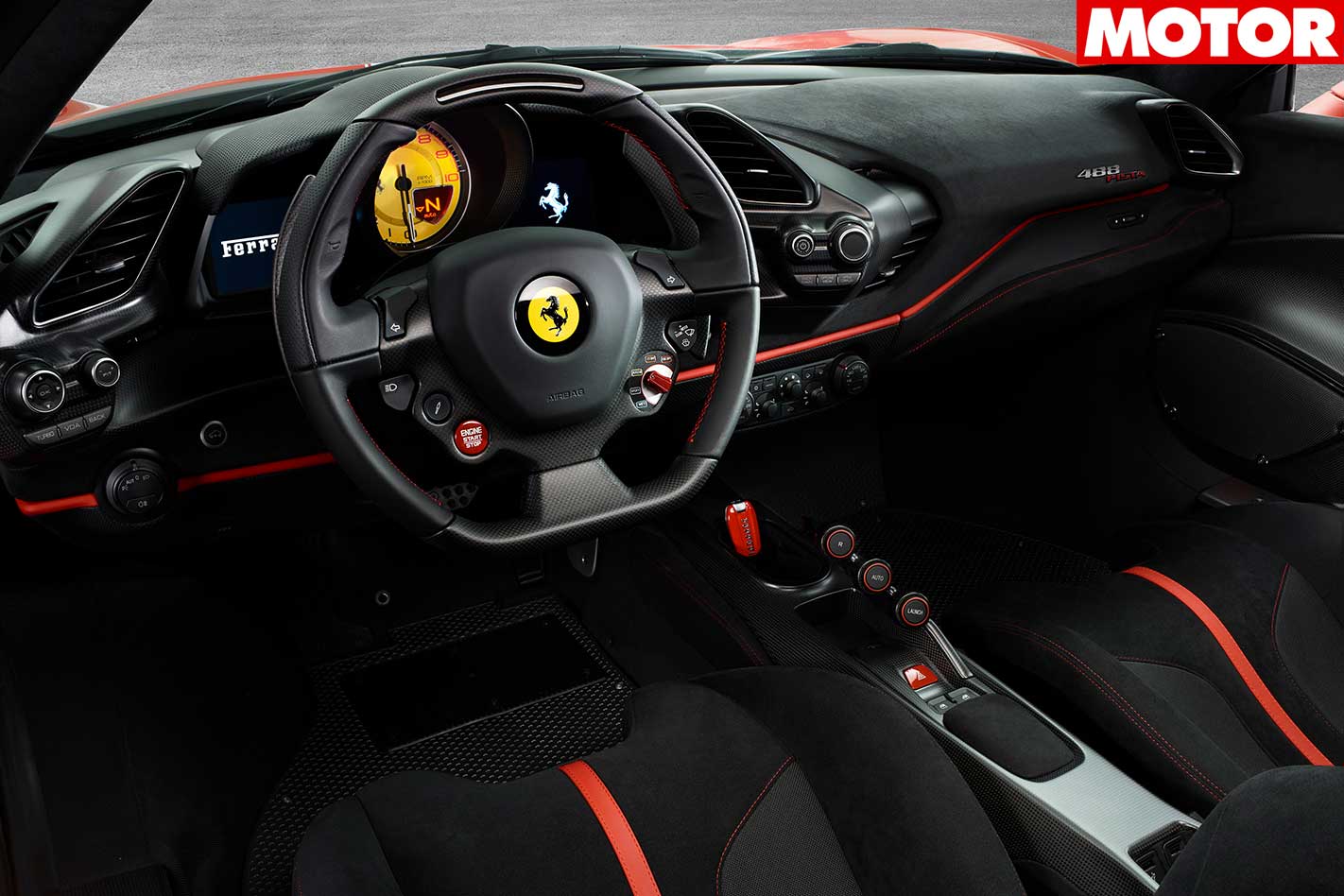
Underbody vortex generators and redesigned diffusers now generate 20% more downforce than other 488 variants.
WE DON’T make rear-drive V8 sedans in Australia any more.
Sad fact but it’s time to get over it and start looking to the future, but in the absence of any obvious alternatives, what should Australia’s muscle sedan fraternity have on their radar?
Comparable performance, room for five occupants, suitability for our unique road conditions and a price bracket similar to the outgoing favourite u2013 the Holden Commodore SS-V are all on the brief.Chrysler’s excellent 300 SRT is probably the closest fit with a mammoth naturally aspirated V8 powering a rear-drive large sedan body, but the day of massive atmo V8s is in its twilight. How can we satisfy our hunger for big horsepower while complying with ever tightening emissions regulations?
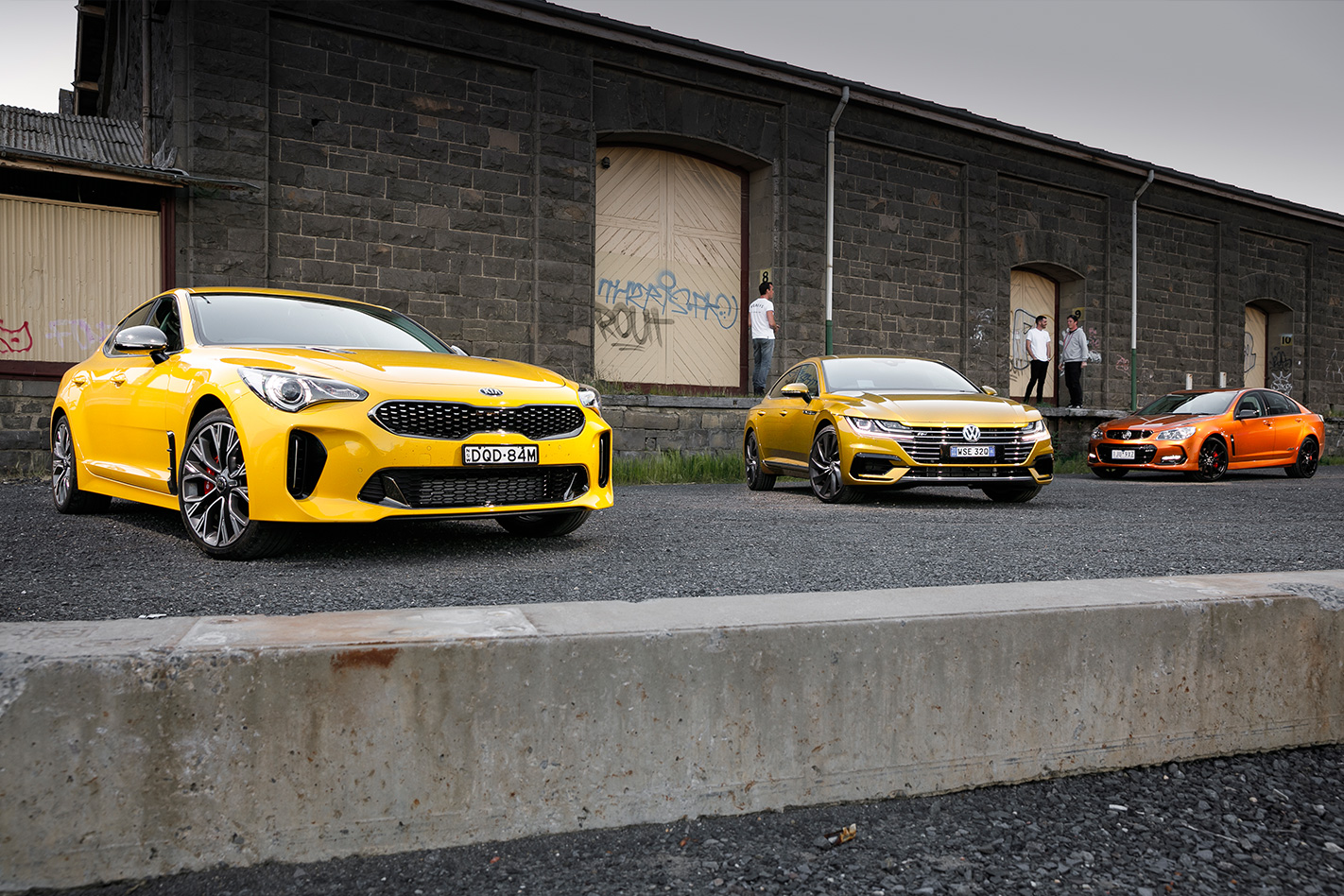
With four-wheel drive, a relatively small engine and a slightly higher price tag, Volkswagen’s Arteon might seem like a less obvious alternative but give it a chance. It brings a high standard of build quality to the segment, potent performance thanks to its Golf R DNA and standout aesthetics.
Neither are an exact match but, in the same way that you can’t replace a family dog by simply picking a puppy of the same breed, a little flexibility is necessary to find a new high-performance sedan hero.
Shoot us a message for your chance to be featured in the magazine and on our site. Keep it short and sweet (no more than 200 words) and please include your suburb if via email (details at bottom).
Bye, Australian – Letter of the Month How many readers of Wheels magazine can remember the days of the Federal Government spruiking the ‘Australian Made’ campaign? I certainly can.
Look at every state and local authority. Almost each one has a police presence, many have an ambulance, each shire council has a fleet of cars – meaning every government authority in this country, be it federal, state or local, buys an enormous number of vehicles each year. And yet, over the years, our politicians in these cities and towns have slowly but surely ditched Holdens and Falcons for, from my observations, mainly Korean cars, and in many country towns, Toyota Prados.
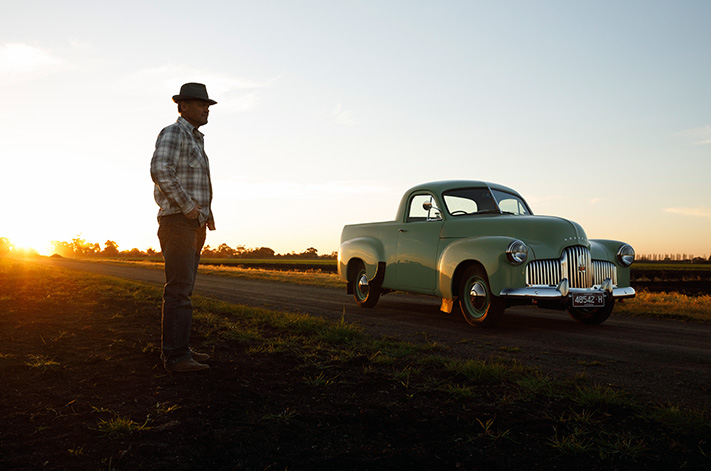
The demise of the Australian car industry lies fairly and squarely with all of us. If I had to summarise what all this means in one word, it is ‘indifference’. Who killed the Australian car industry? It was you and me. Peter Steele, Brisbane, Qld
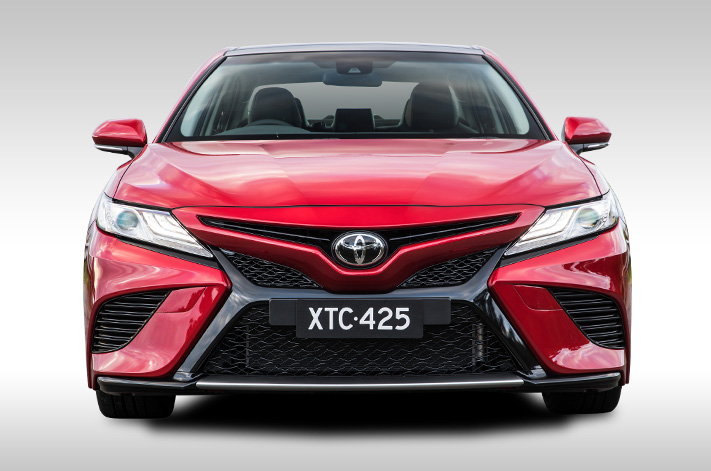
Sleeper Keeper? Never thought I’d say this, but surely the $37K Toyota Camry SX V6 is shaping up as one of the performance car bargains of 2018? New platform, 227kW, Lexus looks, quad exhausts, red leather! Watch out, grandpa! Cameron Brenton, West Footscray, Vic
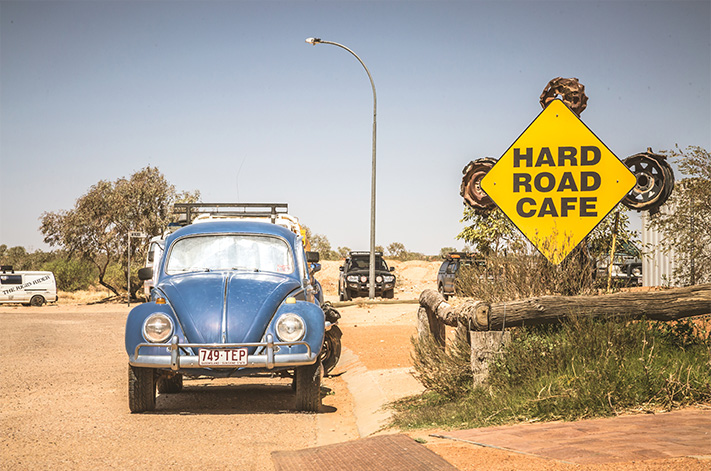
Beetle Blues The first time I was flicking through the feature ‘Lone Ranger’ by Stephen Corby and Thomas Wielecki (Wheels, Dec ’17) I couldn’t help but notice the photo of the blue Beetle of Birdsville.
Just by chance I was reading Onslo by Kelly Theobald to my three-year-old at bedtime and I had to open the magazine again to double-check and point out to my kid that the story was based on a real car. After all, how many blue VWs are there in Birdsville? Sadly, Ms Theobald died in 2015 so we won’t be reading any more of Onslo’s adventures. Graeme Kay, via email
So along comes Opel, and don’t they have big shoes to fill? How will they address our fascination with the big Aussie V8? Only time will tell. Mick Pollard, Kilcoy, Qld
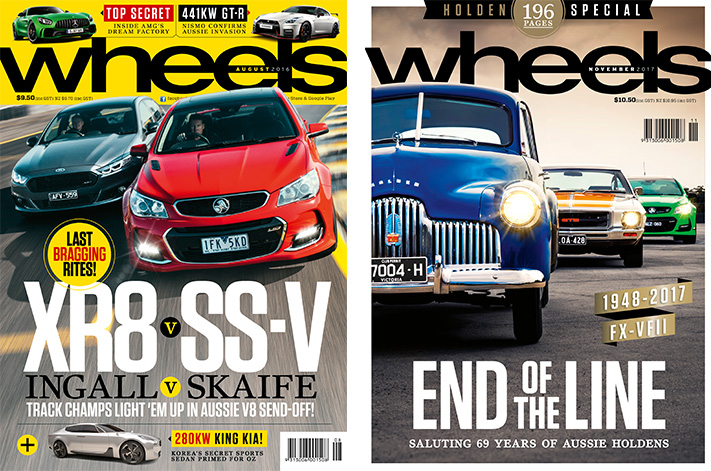
Keeping the Faith I am 11 years old and have every issue of Wheels from August 2016. I am also a diehard Holden fan, and am very sad that Holden has closed down. I have Holden shirts, jackets, hats and every Holden in Forza Motorsport 4. I think October 20 should be declared national Holden and HSV day. Even though I will probably never drive an Aussie-made Holden, I will always be faithful. Giles Mercer, Altona, Vic
Instead, it would appear from casual observation that the company is spending very little money on new product development, generally just rehashing old models or putting a new body on an old chassis (Pajero Sport).
The Pajero was such a groundbreaker in its day, but it’s a shame to see it now being left behind. Mitsubishi Australia is spending heaps on advertising, but it won’t make up for a lack of investment back in Japan. Ron Glanville, via email
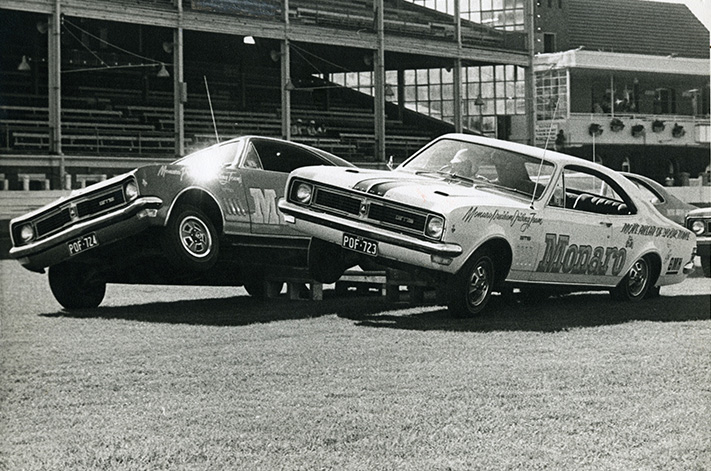
Stunt Double The Holden Precision Driving Team was a full ‘factory’ operation – the cars were owned by Holden, and Holden provided an annual operating budget. The team appeared at shows, motor racing events and the like from 1969 to 2006, entertaining many millions of people over that period. Your history of Holden publication, however, does not mention it. Lloyd Robertson, HPDT founder, manager and driver, via email
Sound of Silence Character doesn’t come just from design (Next Jaguar F-Type to go all-electric). The drivetrain is vital, and it’s impossible to make an electric drivetrain have character. S. A. Kilgower, via Facebook
Crash Tackle There really should be two different crash-rating scores so that people can understand their chosen new car better (ANCAP crash test ratings explained, whichcar.com.au). First, active safety, assessing how well a car can avoid an accident – things such as autonomous emergency braking, anti-lock brakes and so on, but with at least some score for actual handling.
And second, passive safety, which assesses how well the car protects occupants/pedestrians in a crash. This would help people understand just what type of car they’re buying. Not everyone wants a ‘nanny state’ car, but most want one that will save their life if they’re T-boned! Roly Trustum, via Facebook

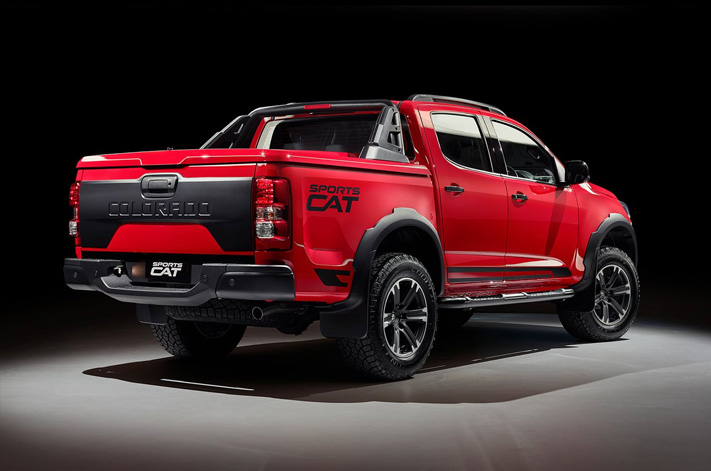
Window Dressing Putting on a dress and no more power? (2018 Holden Colorado SportsCat by HSV claws at new territory) Is this a Toyota? Andrew Gempton, via email
Join the Conversation
Facebook: Wheels Australia Email: [email protected] Twitter/Instagram: @wheelsaustralia Snail Mail: Wheels, locked bag 12 Oakleigh, Vic 3166
FORD is without a head of its North American operations after its president, Raj Nair, was overnight shown the door after allegations of “inappropriate behaviour” were levelled against him.
“Ford Motor Company today announced that Raj Nair, executive vice-president and president, North America, is departing from Ford effective immediately,” the company said in a statement released this morning.
“The decision follows a recent internal investigation into reports of inappropriate behaviour. The review determined certain behaviour by Nair was inconsistent with the company’s code of conduct.”
Ford global chief executive Jim Hackett said the decision to sack Nair came after a “thorough review and careful consideration”.
“Ford is deeply committed to providing and nurturing a safe and respectful culture and we expect our leaders to fully uphold these values,” he said.
Nair offered an apology as part of the official statement. “I sincerely regret that there have been instances where I have not exhibited leadership behaviors consistent with the principles that the company and I have always espoused,” he said.
“I continue to have the utmost faith in the people of Ford Motor Company and wish them continued success in the future.”
Nair was appointed to the top job in North America in June last year, replacing Joe Hinrichs. His appointment came after Hackett shook up the company’s senior management in an effort to speed up the decision-making process at the global car-making giant, and remove some of the bureaucracy that was impeding it.
Hise executive biography on the company’s website has already noted him as a former head of the North American operations. It says Nair joined Ford as an engineer in 1987 before taking up a senior role in Europe and becoming a senior vice-president of the company’s Asia Pacific operations.
Nair was in Australia last year at the same time as Ford engineers were signing off on the Ford Ranger Raptor prototype, which he drove.
DANIEL Ricciardo has crashed his RB14 at a wet Silverstone track in what is touted as one of the most expensive test drives of his career.
His team, Red Bull Racing, was scheduled to have a filming day at Silverstone yesterday, with the team allowed to take the Camobull, as the car is nicknamed, on a 100km drive to generate the media the team needs to promote its 2018 campaign car.
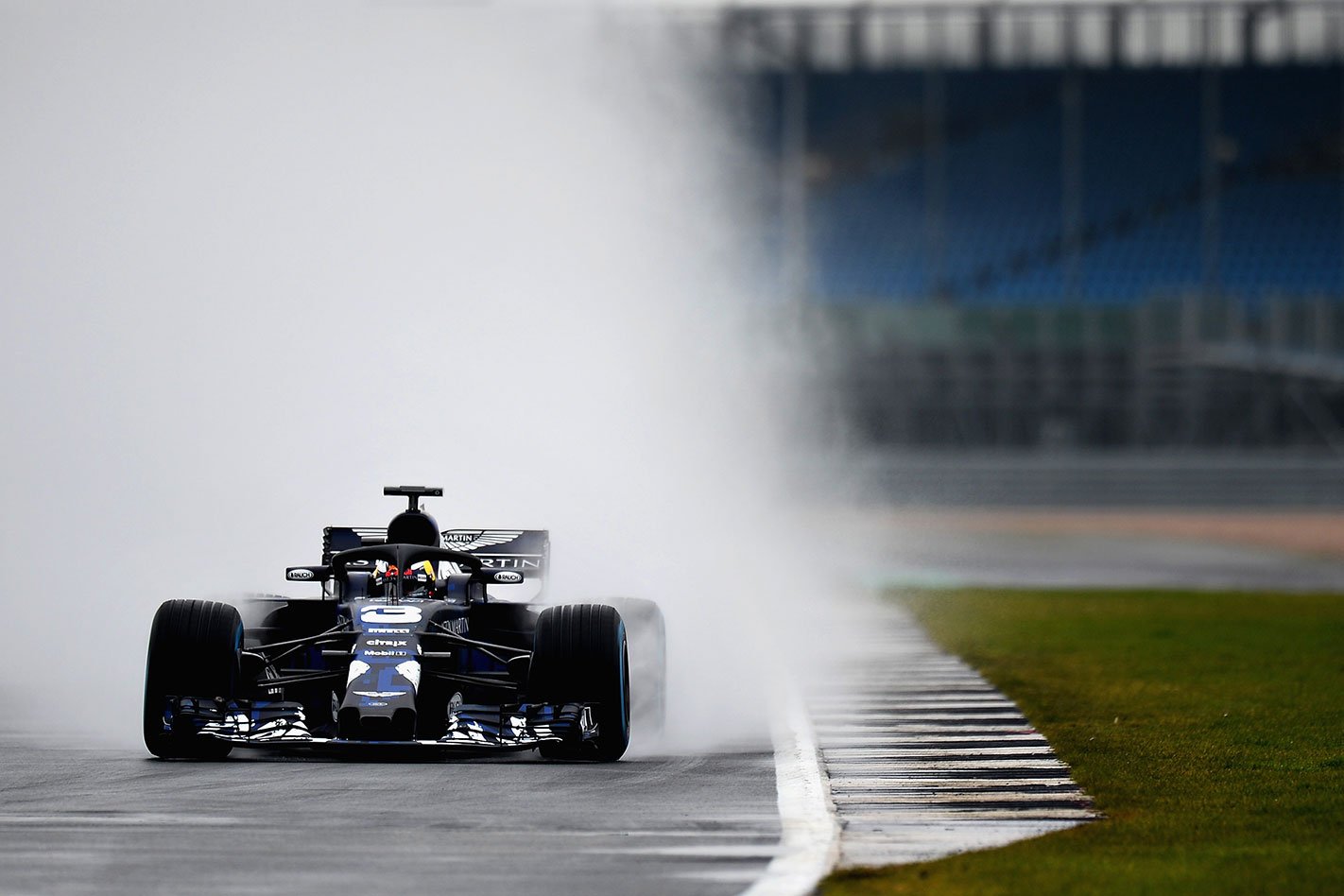
However, media reports said the team had to cut its pre-season filming day short after Ricciardo crashed out, hitting the circuit’s barriers at low speed. Even so, reports say the car has sustained damage to the front wing and nose, suspension and underbody. The damage has conservatively been estimated at $US200,000 ($A255,000) by some outlets.
Despite the crash, Red Bull told media its plans for Formula 1 pre-season testing, which starts on with the first session at Barcelona from February 26 to March 1, would still go ahead as scheduled.
Ricciardo remained upbeat about his 2018 car’s ability. “It’s hard to tell from a couple of laps, but the initial feeling in the car is good,” Ricciardo said.
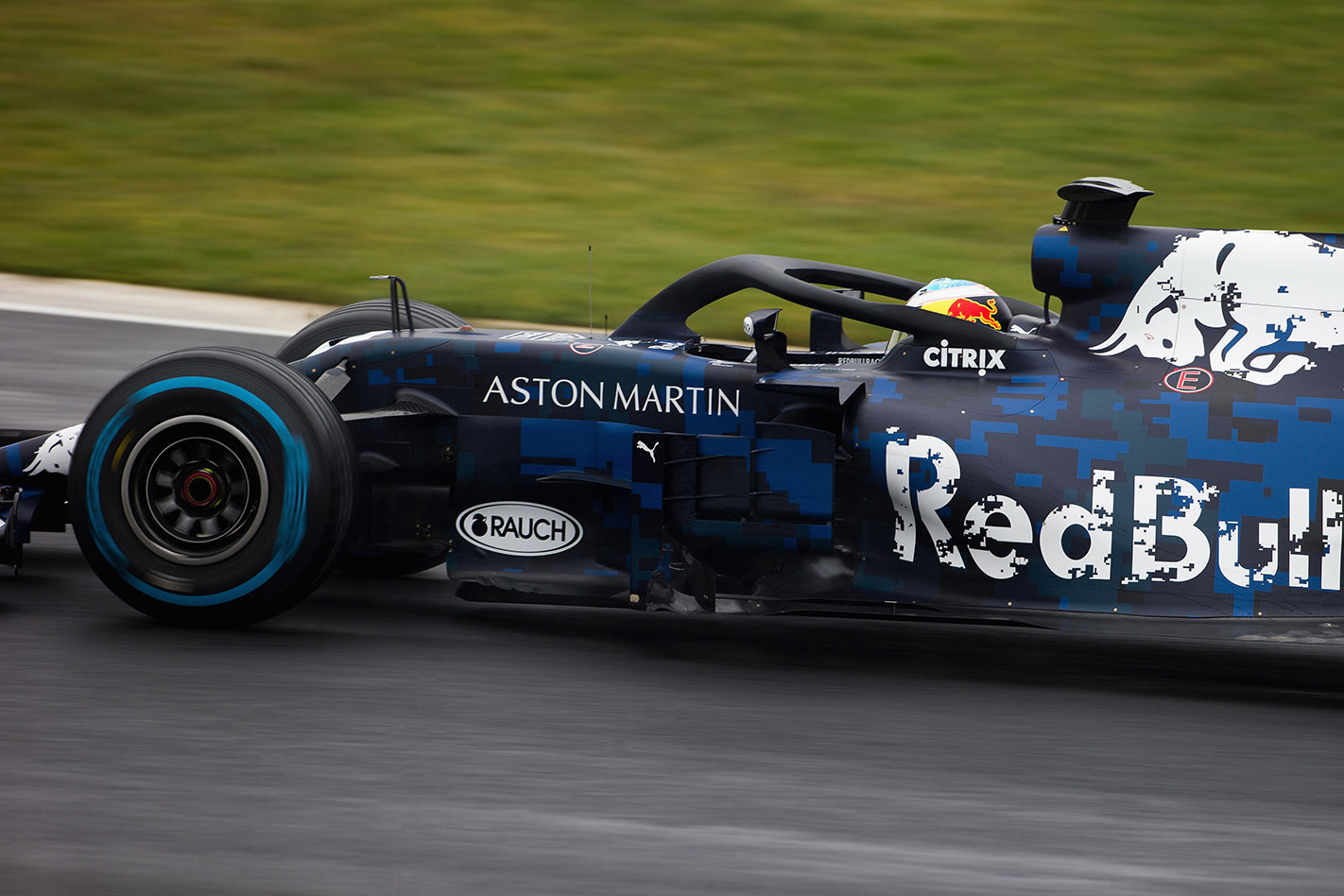
“I’d only done a couple of installs with it before so it was pretty new today but I really didn’t notice it was there, which is pretty good. Honestly, unless there’s stuff above, I don’t see any issues at all on a flat track.
“It’s been a long day, trying to get everything going and complete the filming – but a lot better to have that here than in Barcelona.”
The season opener, the Australian Grand Prix, is on March 25.
When you look at the numbers, it’s a bit hard to see how the M4 CS finished so far down the order.
I mean, its lap times are up there at the very sharp end, the standing-start stuff is epic and its brakes are nothing short of phenomenal – while they last, at least. But for all that, it never really wants to give you as much on the track as some of its peers. And while working for it is one thing, the BMW was just a bit too mute.
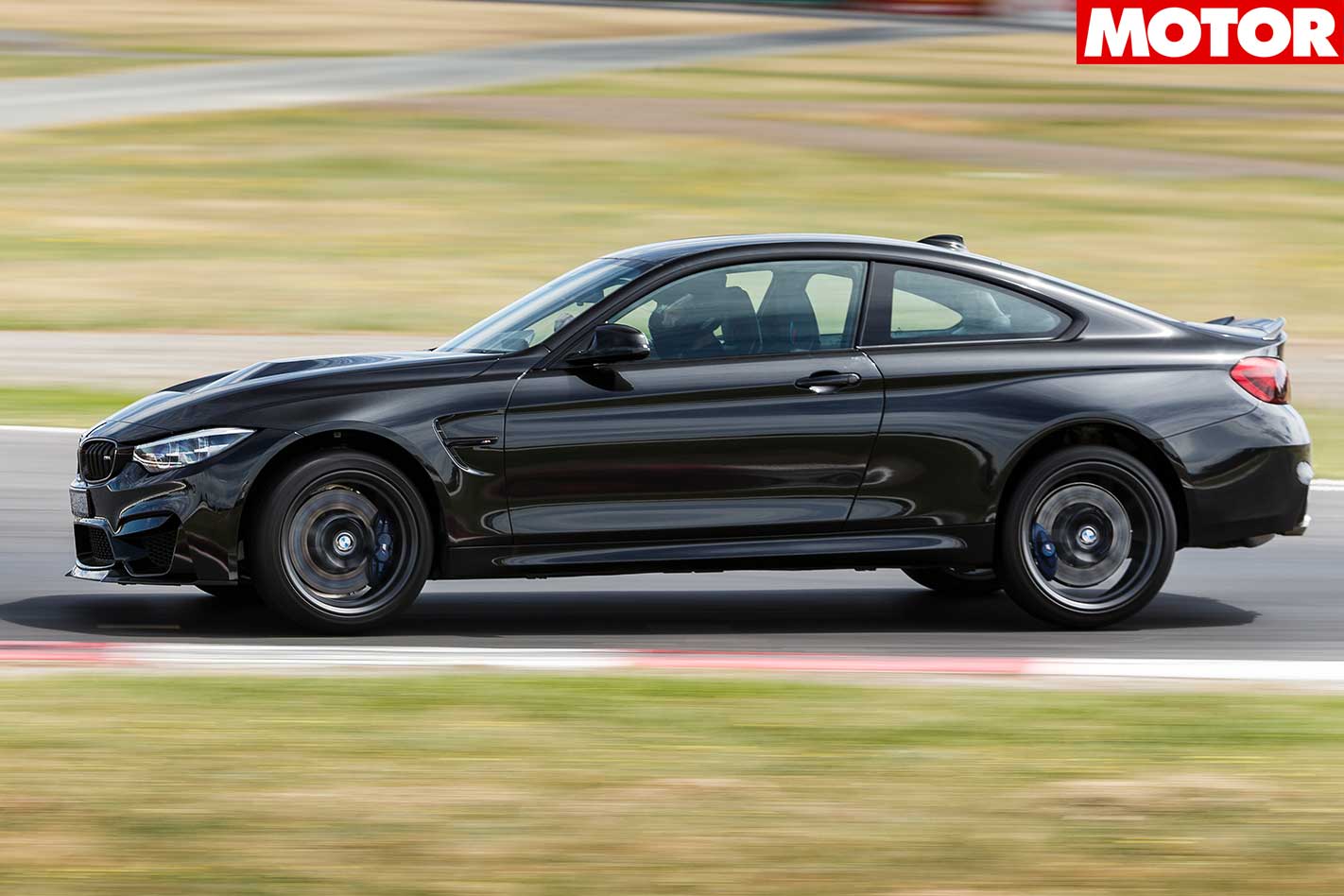
Either way, you’ve got to respect the thing for the instant torque it generates from just three litres, and the DCT transmission is urgent and no-nonsense.
My PCOTY started with me not really liking the CS’s Winton manners, moved through a growing admiration for its on-road purpose and finished with me taking the M4 back to Melbourne the back way, over the mountains and through the forest. It’s a route I use all the time and I must have driven it hundreds of times before.
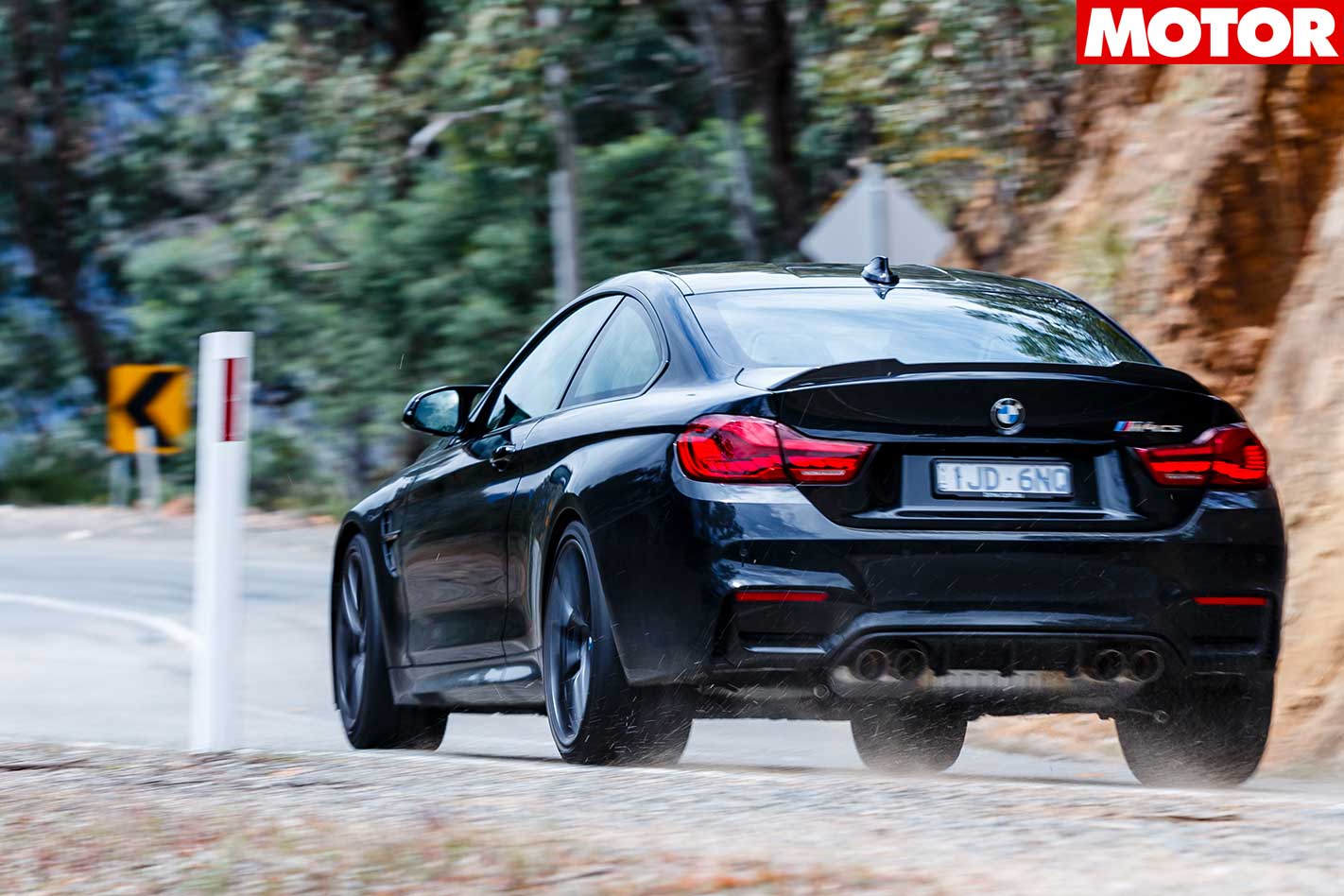
Unfortunately, its road-car credentials are blunted somewhat by some truly bizarre fitments and omissions. Let’s start with the air-con.
Now, I know weight is critical but c’mon… is single-zone air going to make any discernible difference?
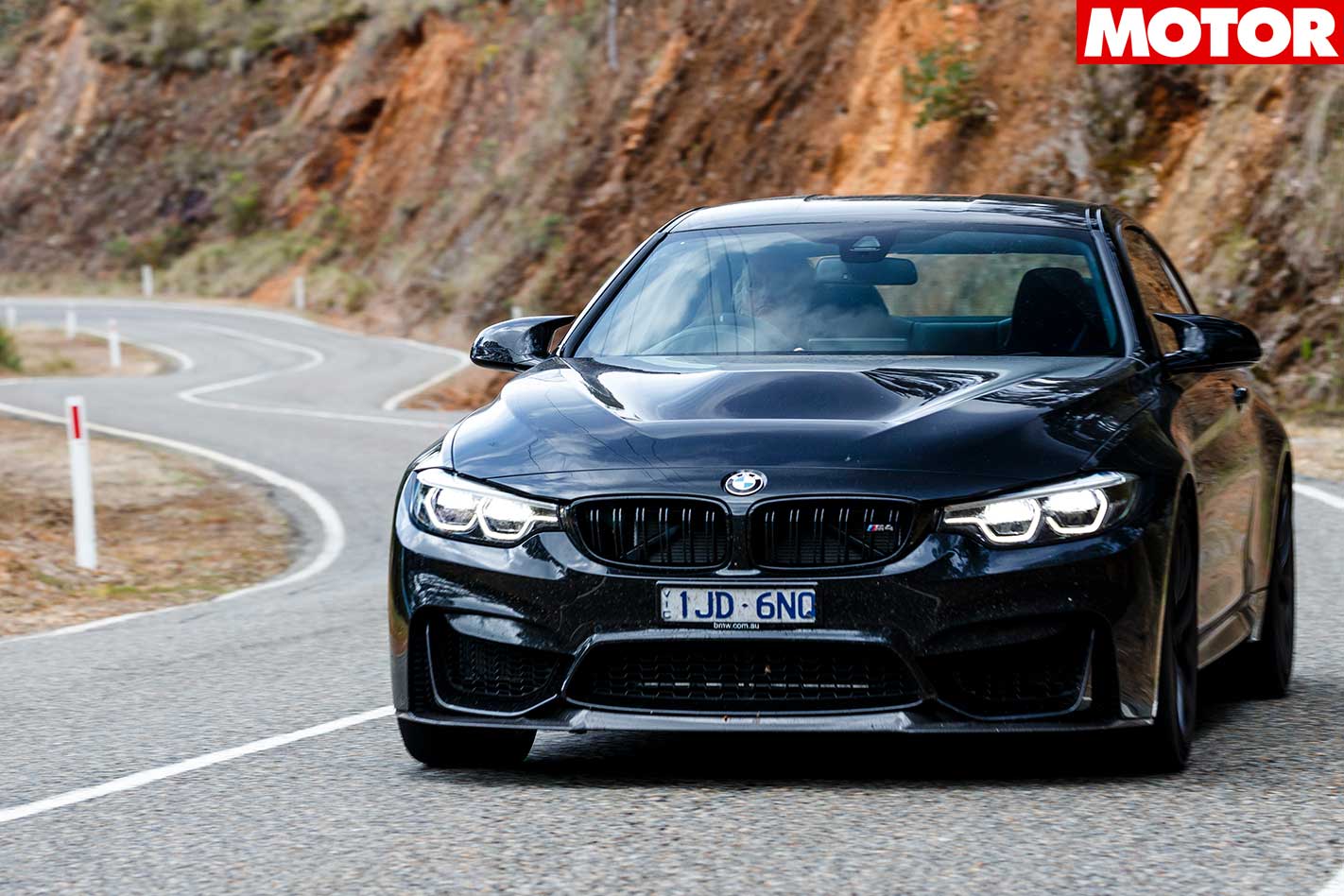
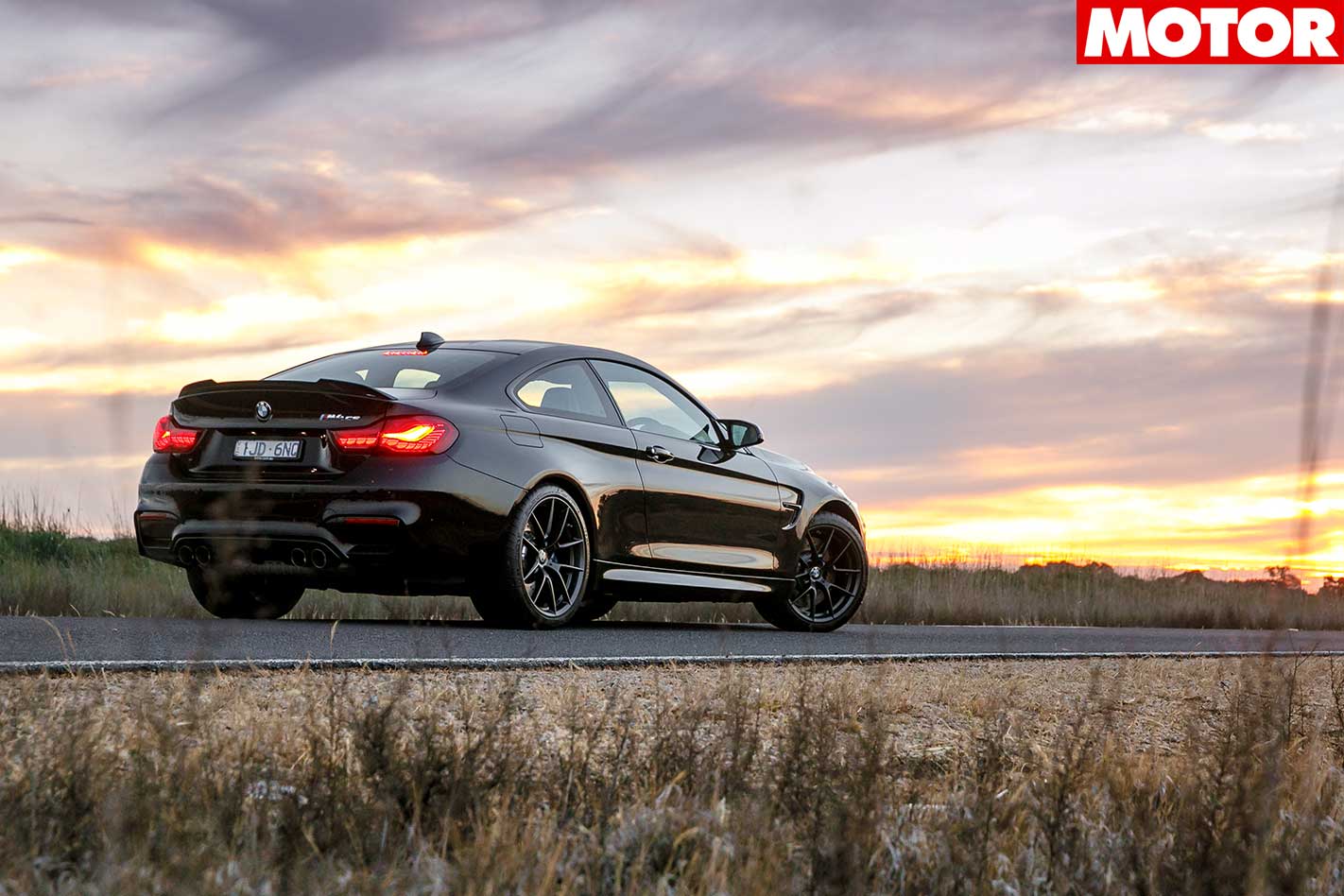
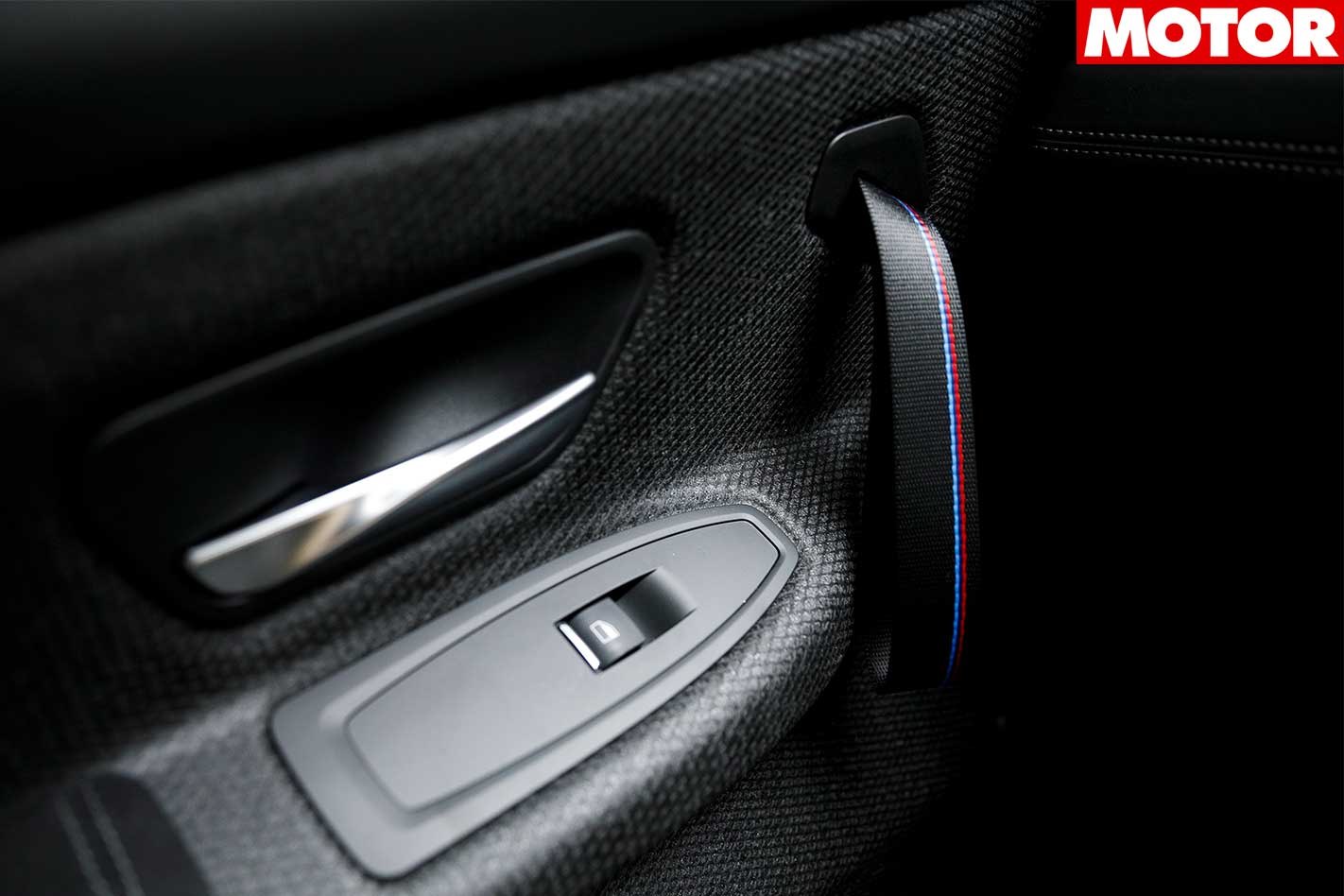
So we’ll stand by the voting process that saw the fourth-quickest, fourth-fastest and fourth-trackiest car come home seventh.
2018 BMW M4 CS SPECS: Body: 2-door, 4-seat coupe Drive: rear-wheel Engine: 2979cc inline-6, DOHC, 24v, twin-turbo Bore/Stroke: 89.6 x 84.0mm Compression ratio: 10.2:1 Power: 338kW @ 6250rpm Torque: 600Nm @ 4000-5380rpm Power/Weight: 214kW/tonne Transmission: 7-speed dual-clutch Kerb weight: 1580kg Suspension: struts, coil springs, adaptive dampers, coil spring (f); multi-links, coil springs, adaptive dampers, anti-roll bar (r) Brakes: 380mm ventilated/drilled discs, 4-piston calipers (f); 370mm ventilated/drilled discs, 2-piston calipers (r) Wheels: 19.0 x 9.0-inch (f); 20.0 x 10.0-inch (r) Tyres Sizes: 265/35 ZR19 (f); 285/30 ZR20 (r) Tyres: Michelin Pilot Sport Cup 2 Price: $189,900
0-100km/h: 4.05sec (5th) 0-400m: 12.01sec @ 197.25km/h (4th)
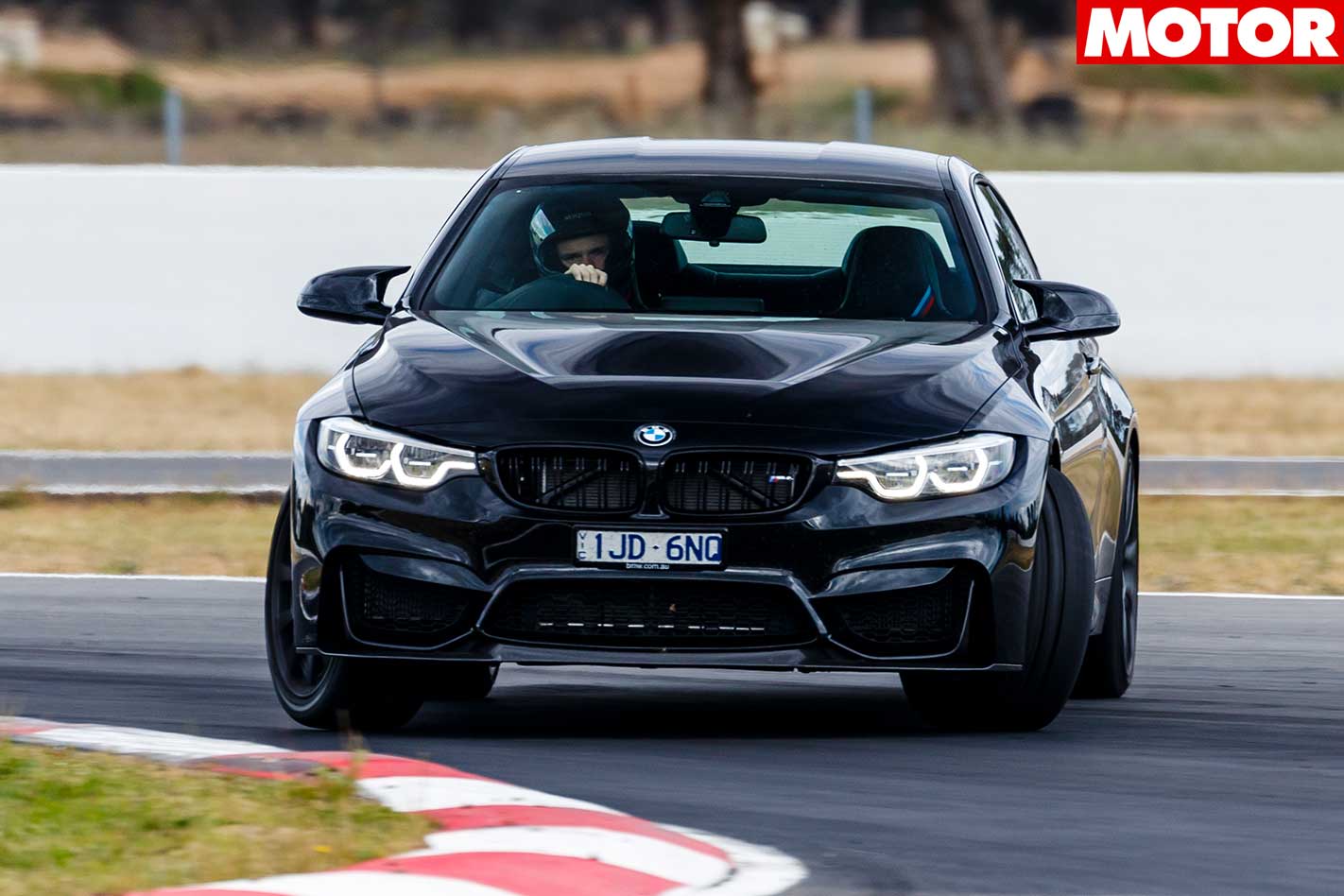
Morley – 10th I didn’t like the M4 CS at first, but it grew on me and that interior became an issue.
Campbell – 4th Love it to bits on the road. Although would be a different car on different tyres.
Newman – 8th Best M4 yet, but too expensive and interior is plain dumb.
Robson – 8th Strong engine, magic tyre set, but that price? Needs a firm hand to get the best from it.
Reynolds – 7th Hard to drive slowly. Enjoyed pushing it but odd steering feel.
JUDGES’ SCOREBOARD
| u00a0 | Campbell | Morley | Newman | Reynolds | Robson | Total |
| Performance | 9 | 8 | 9 | 9 | 8 | 43 |
| Dynamics | 9 | 6 | 7.5 | 9 | 8 | 39.5 |
| Accessibility | 9 | 5 | 6.5 | 7 | 7 | 34.5 |
| Liveability | 7 | 2 | 5.5 | 7 | 5 | 26.5 |
| Value | 4 | 4 | 5 | 5.5 | 6 | 24.5 |
| X-Factor | 9 | 6 | 8 | 8 | 7 | 38 |
| Total | 47 | 31 | 41.5 | 45.5 | 41 | 206 |
