
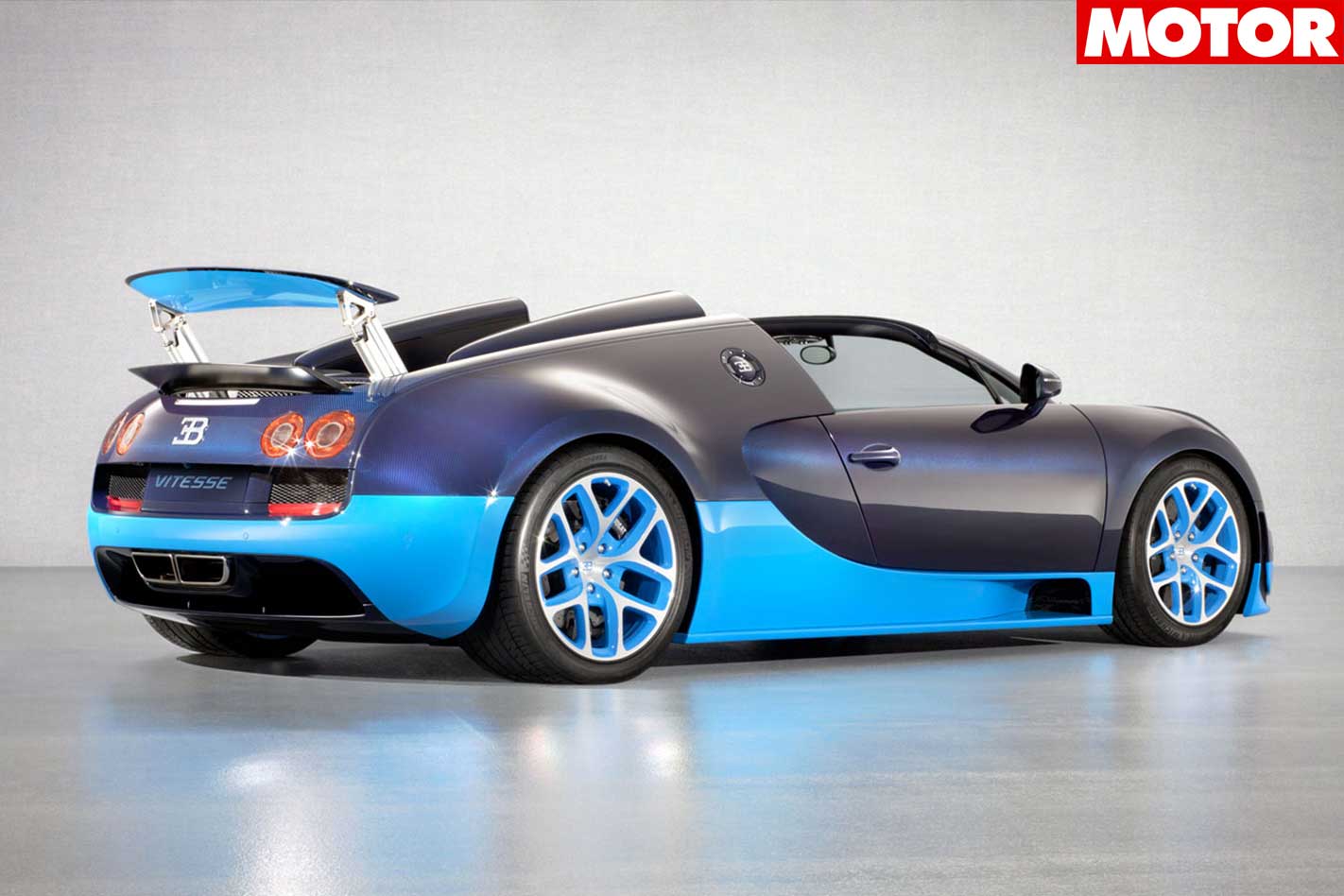
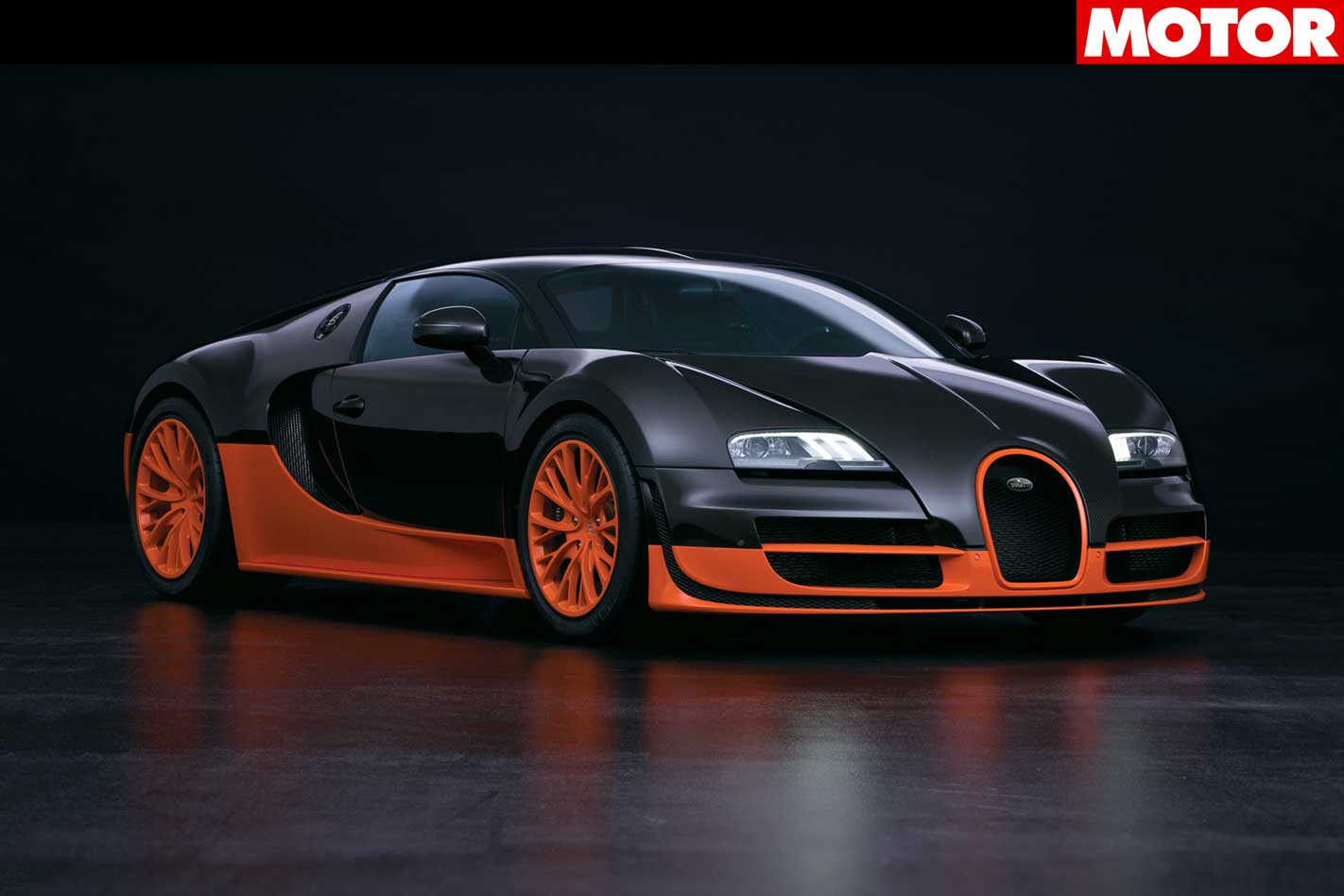
Dubbed the ‘Loyalty Maintenance Programme’, Bugatti has announced a new service for maintaining privately-owned Veyrons.
The company claims it will help reduce maintenance expenses for owners, while keeping the fleet of supercars in top condition long after its production run ended.
The program was developed in conjunction with the Bugatti Certified program, which Bugatti says lays “the ideal foundation for a sustained increase in the value” of a Bugatti.
Bugatti head of customer service Chris Kelly says different service packages are available for customers with different requirements.
“Our customers use their Bugattis in very individual ways,” Kelly says.
“This means that individual customers have very different expectations of service.
“We can now meet these expectations much more effectively, in line with our customers’ wishes.”
“Our quality program has been significantly enhanced by the Loyalty Maintenance Program,” Utzeri says.
“This means that our customer support has reached the high level of individualisation that customers already learned to know and appreciate when they purchased their Bugatti.
“No other brand is as near to the customer as Bugatti – and that applies to the whole duration of ownership.”
“The combination of a confirmed vehicle history, the Bugatti Certified warranty and individual support by Bugatti Customer Service makes the difference for Veyron owners and is more than just a seal of approval,” says Utzeri.
“We are committed to providing our customers with a 360° ownership experience that is unique in the automotive world.”
Mercedes-Benz has launched an all-new version of its A-Class hatch, which is scheduled to arrive in Australia in the latter part of 2018. That means the current model will be entering run-out phase, and there should be great opportunities to score a good deal on this well-equipped premium hatch. But which current-model A-Class variant represents the sweet spot in the range?
A-CLASS RANGE OVERVIEW
There are five A-Class spec levels; A180, A200, A200d, A250 Sport and the Mercedes-AMG A45, which have increasingly powerful turbocharged engines as you go up the range. There’s also a diesel and each engine is coupled with a seven-speed dual-clutch automatic transmission.
The A180 kicks off the range at $38,700 and is powered by a 1.6-litre engine which produces 90kW and 200Nm.
Standard equipment includes an 8.0-inch entertainment screen with reversing camera, digital radio, satellite navigation and Apple CarPlay/Android Auto connectivity.
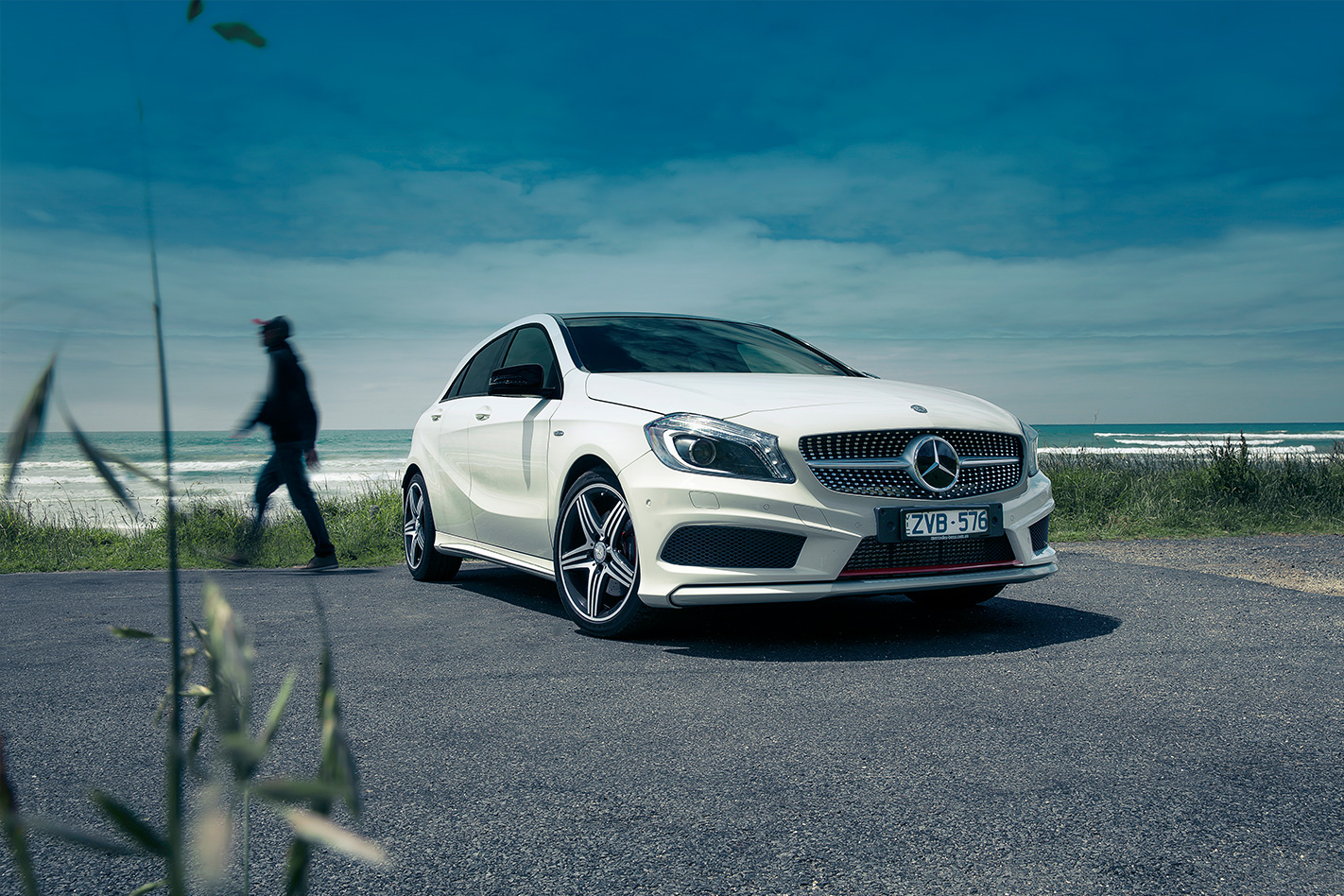
It also comes with four ‘Dynamic Select’ driving modes, climate-control air-conditioning, rain-sensing windscreen wipers, dusk sensing headlights, Nappa leather-trimmed steering wheel, 17-inch alloy wheels, front and rear parking sensors and active park assist, which automatically steers into a parking a space.
Standard active safety features include automatic emergency braking, a fatigue monitor and blind-spot alert.
Next up are the A200 and A200d, which differ by their engines. The A200 has a more powerful version of the A180’s 1.6-litre turbo petrol, which produces 115kW/250Nm. The A200d has a 100kW/300Nm turbo diesel engine, which is the only oil-burner in the range. The A200d has exceptional claimed combined fuel economy of 4.0L/100km.
The A200 and A200d are otherwise identical, with extra features over the A180 including power adjustable lumbar support for the driver’s seat, power folding external mirrors, diamond pattern interior trim and bigger 18-inch alloys.
The A250 Sport pushes hot hatch territory, with its 160kW/350Nm 2.0-litre turbo petrol engine, firmer sports suspension, perforated brake discs and sportier themed interior trim including a flat-bottomed steering wheel.
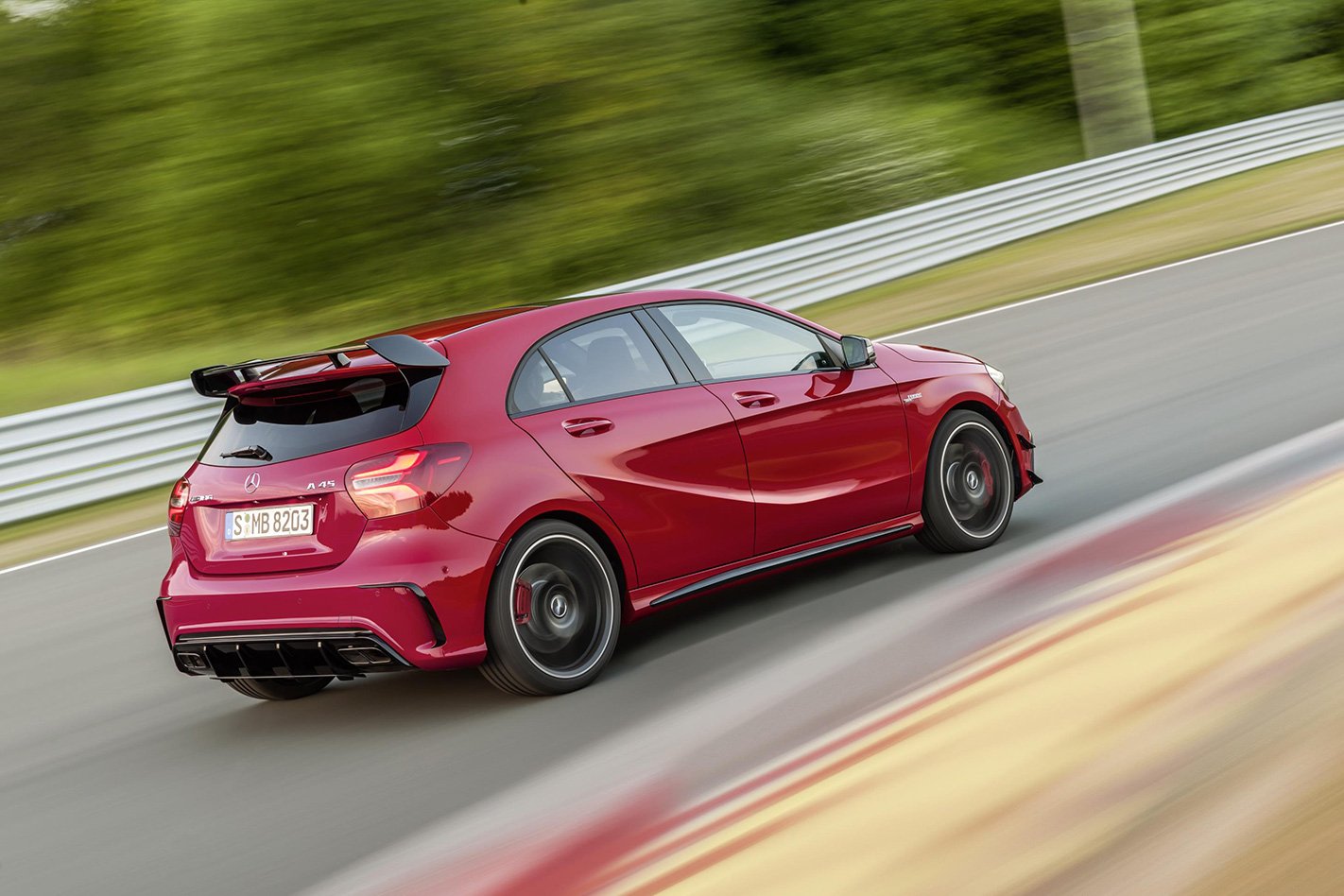
You also get keyless entry, sunroof, and long-lasting LED headlights, taillights and daytime running lights.
The AMG A45 hot –hatch has powerful 280kW/475Nm turbo petrol engine which can propel it from 0 to 100km/h in just 4.2 seconds. The A45 also has a host of extra features over the A250 Sport to justify the hefty $23,411 additional cost, including 19-inch alloys wheels, stronger brakes, leather-trimmed sports seats, heated and power adjusted front seats with memory, dual-zone air-conditioning and premium audio system. Lane keeping assist and active cruise control add to the standard active safety features.
Mercedes-Benz A-Class manufacturer’s list pricing
- Mercedes-Benz A180 – $38.700
- Mercedes-Benz A200 – $44,300
- Mercedes-Benz A200d – $44,800
- Mercedes-Benz A250 Sport – $55,200
- Mercedes-AMG A45 – $78,611
OUR PICK
The A200’s more powerful version of the 1.6-litre petrol engine makes it more enjoyable to drive than the A180, without significantly increasing fuel consumption – it drinks 6.1L/100km compared to the A180’s 5.8L/100km. And it comes with some appealing extra features.
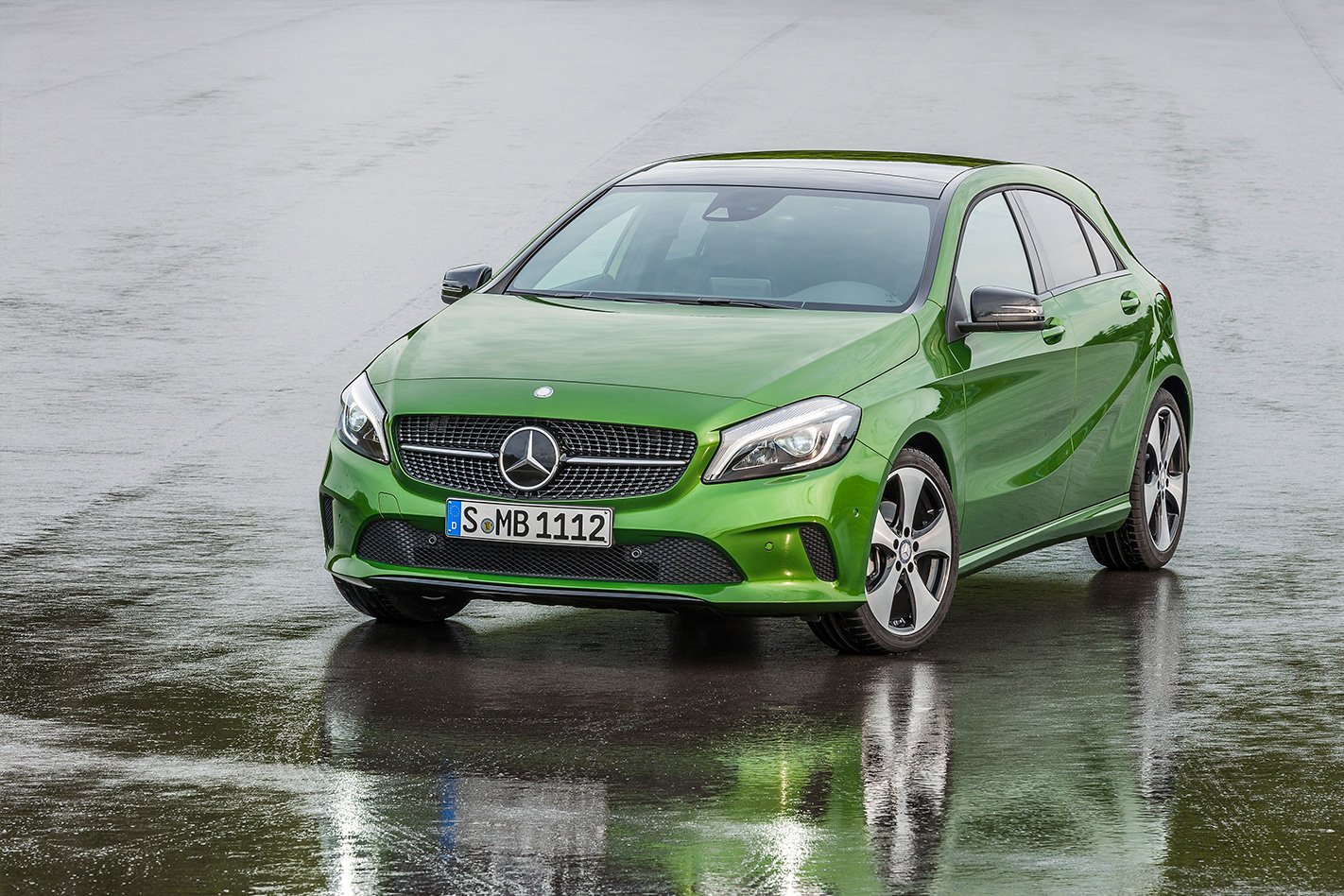
If you’re after extra kit, Mercedes-Benz has introduced a City Edition of the A180 and A200 which adds a host of cosmetic additions to toughen up their look, including 18-inch AMG alloy wheels in high-gloss black; high-gloss black grille, black exterior mirrors, dark-tinted rear privacy glass, LED front, rear and daytime running lights, lowered sports suspension, Artico synthetic leather sports seats, flat-bottomed steering wheel and AMG floor mats.
The A180 City Edition costs $39,990 drive-away, which makes it cheaper to buy than the standard A180, while the A200 City Edition costs $46,670 with no drive-away price deal.
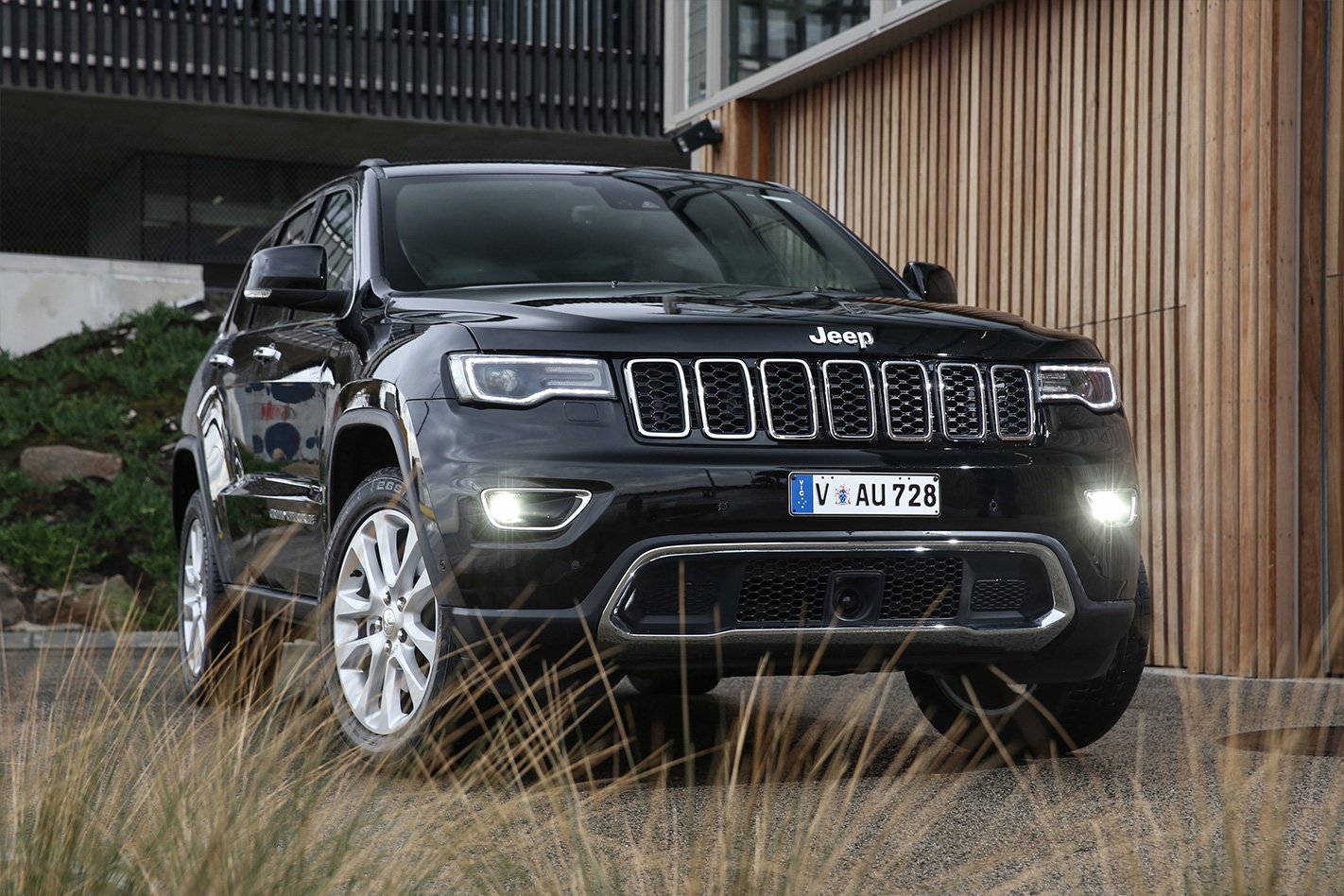
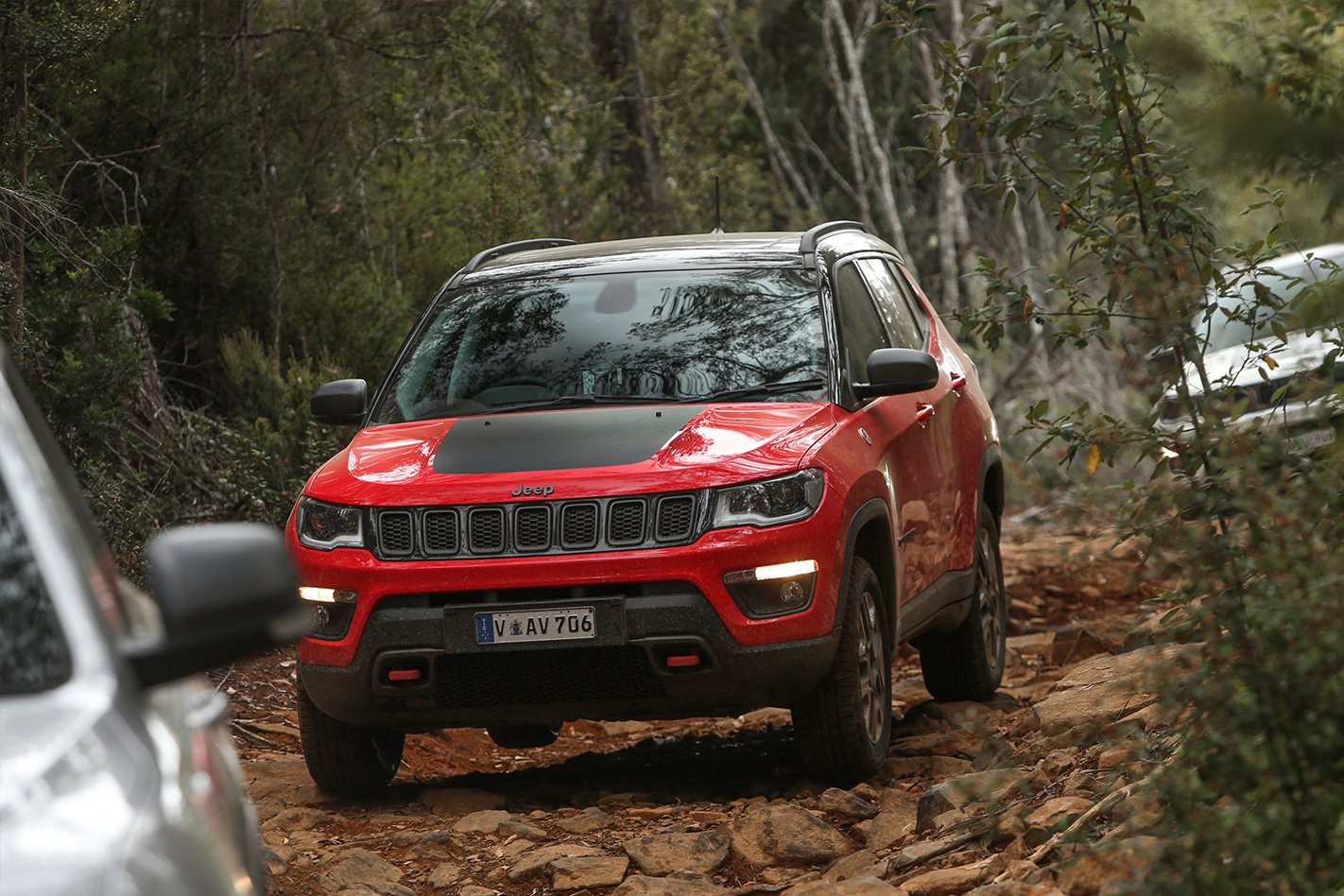
JEEP’S fresh new Compass small SUV could be about to knock the longstanding favourite Grand Cherokee from its top sales spot, but the seven-slot grille brand’s CEO says building the company’s reputation back to prominence will take more than just appealing models.
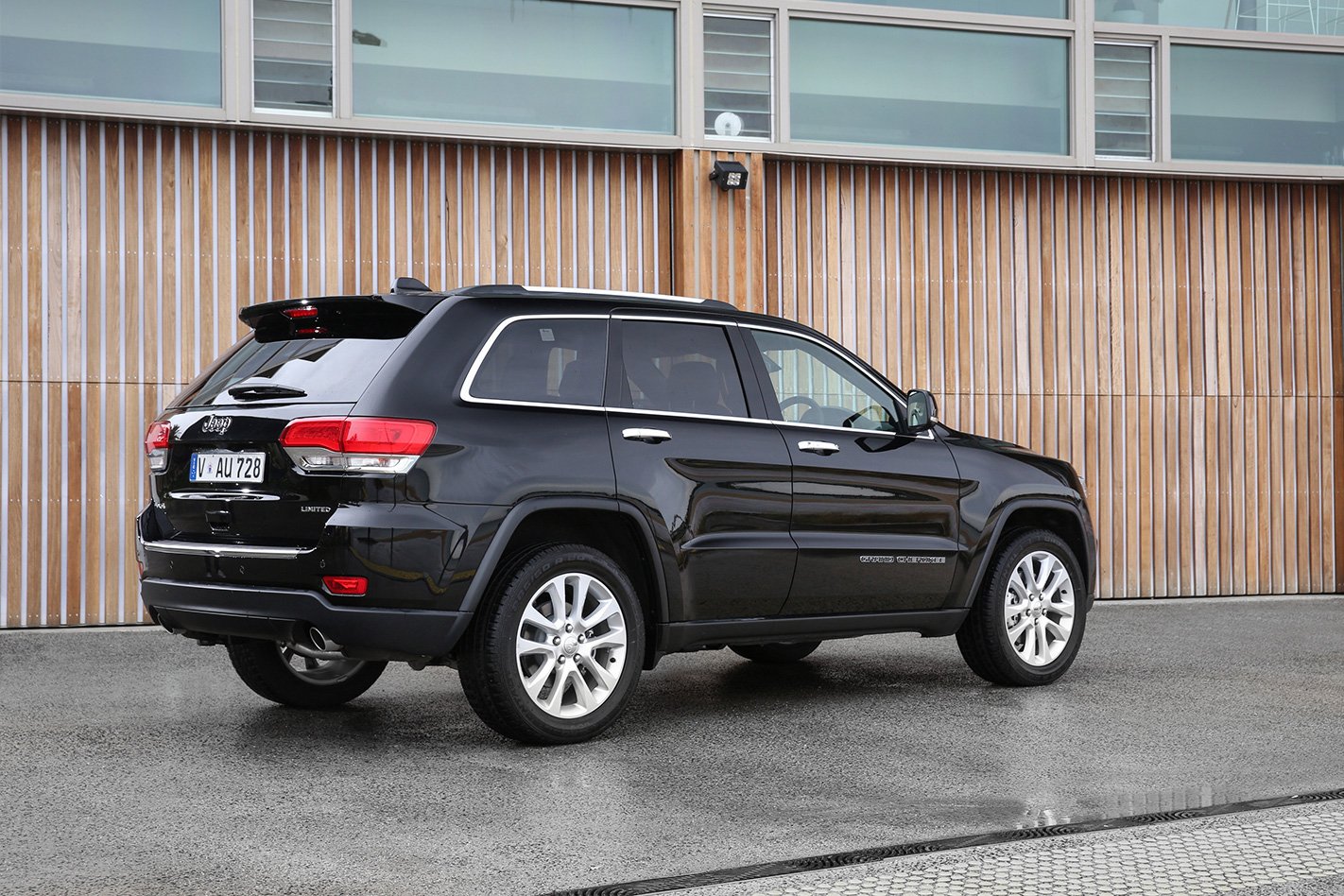
From a sales highpoint in 2014 and 2015 when the Grand Cherokee was Australia’s best-selling large SUV, Jeep registrations have taken a slide. However a dramatically improved Jeep Compass now on sale in the increasingly-popular small-to-mid-sized SUV market has the potential to be the next cash cow.
Speaking at the local launch of the 2018 Compass, FCA Australia CEO and head of Jeep brand for the Asia-Pacific region Steve Zanlunghi said the company had “good aspirations” for the new model, which could take the top sales ranking.
“It could and I wouldn’t complain if it does,” he said. “As long as Grand Cherokee sales remain where they are or increase a little bit I’ll be happy, and if Compass can outsell it, happier days.
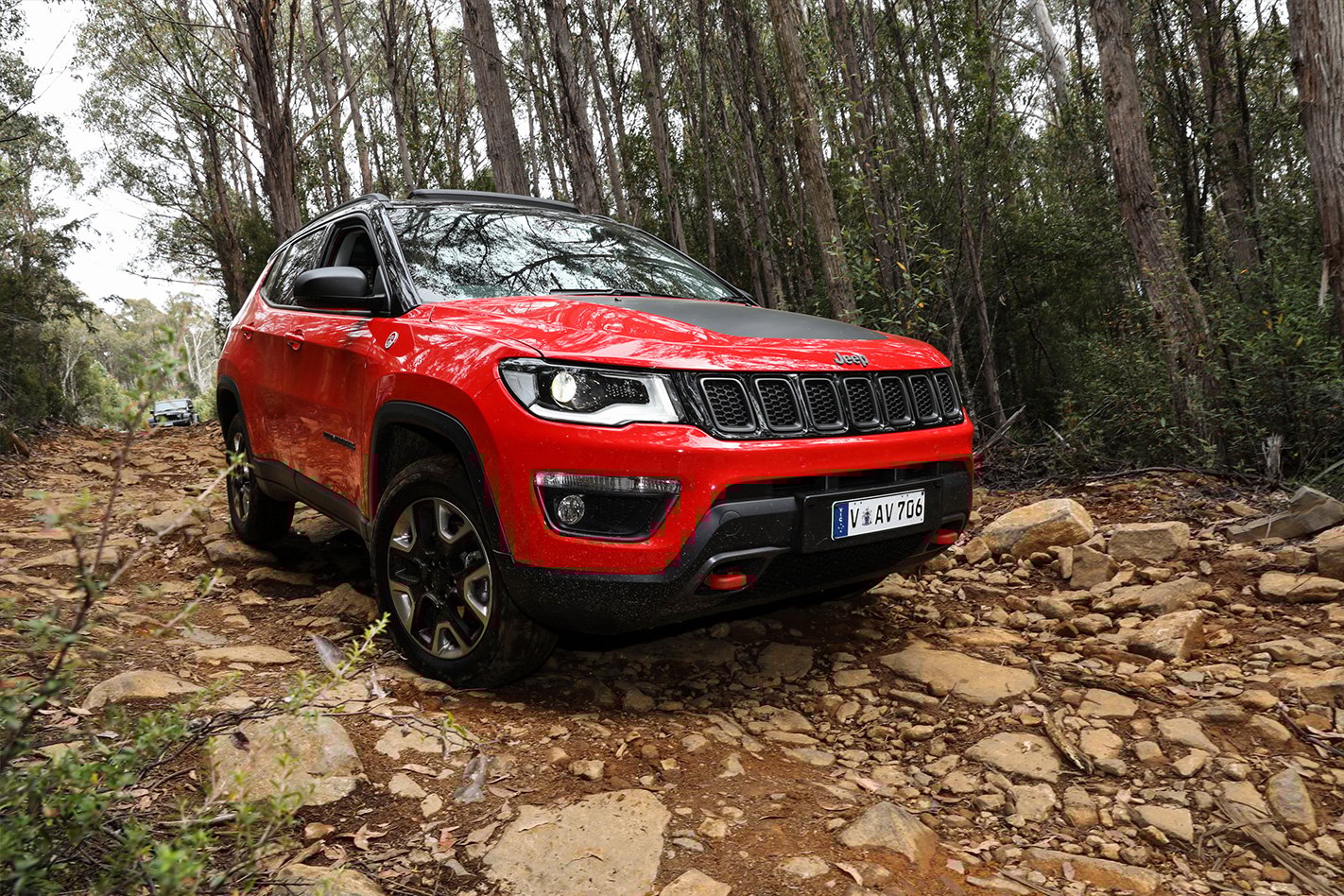
If the new arrival does overtake the current Grand Cherokee, the Compass will top more than 300 monthly registrations (the Grand Cherokee’s current average), equating to about 3600 annually. If it improves on the Grand Cherokee’s 2017 total, more than 5300 will be delivered in 2018.
But Zanlunghi explained that the company had learnt from the boom and bust of three years ago and the company would not be pursuing rapid growth with spiking sales figures.
“We don’t want to take over the world,” he said. “We want controlled growth. We understand that if you grow too quickly and you grow out of control that bad things can happen. That’s what we saw happen from 2014 and 2015.
“Product is a key piece of any brand’s growth but the other piece is making sure you’ve got the infrastructure to take care of customers to give them confidence in the brand. If you look at what we did in 2017 we did a lot of that. We built the foundations.”
Those foundations include “putting the customer first, taking care of the customer, making sure our dealerships have the capacity to serve our customers”.
Another element that could be added to the brand-building activity is a campaign to increase Jeep exposure to potential and existing customers, which could include drive days and pop-up stores.
“If there’s an opportunity to take the vehicles to the customers absolutely we will do it. That’s kind of what we have been doing with the Alfa Romeo brand as well. We’ve been taking it out, setting up pop-up stores around the country, premiere nights and customer events within our dealerships.
“I’d certainly look at it absolutely,” said Zanlunghi.
“What I found in other markets with the Jeep brand is when you show customers the actual capability of the cars that they’re driving it blows them away.
“Here in Australia we did some research last year and what we found was most Australian consumers know that a Jeep is capable but is it suitable to go to the shops?
“We know we have that awareness with the capability but we also want to make sure that our customers know that it is a good daily driver as well”.
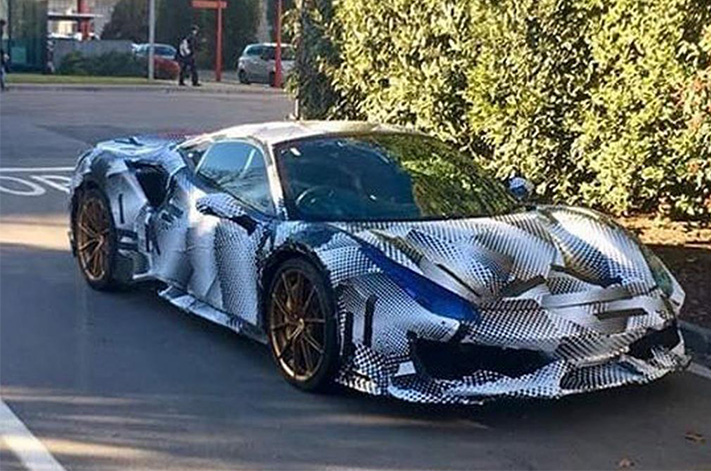
FERRARI has given the strongest official hint that a hardcore 488 is on the way in a new teaser video.
Mule cars have been spotted prowling the wild, and leaked images from a customer event have poured fuel on speculation, but now Maranello has given us our first sanctioned glimpse of the car.
Obscured by shaky camera work and fast cuts, the new special edition is teased in a video alongside the 488 GTE and Challenge race cars.
What we can see from the video is the new car will have fresh bodywork a la 458 Speciale, with a stronger focus on aerodynamics.
It’s unlikely Ferrari will change the displacement of the 488’s 3.9-litre V8, but power will be sure to leap from the GTB’s 492kW to somewhere in the region of 522kW. McLaren’s 720S pumps out 537kW, which will be a tantalising benchmark to beat for Ferrari.
Leaked slides from earlier in the year reveal the beefed-up Fezza will sport the highest power increase versus its donor car for a V8 special series in Ferrari’s history. Not only that, but its power pack will be “around 10 percent lighter than the 488 GTB engine”.
It’s expected the mid-mounted donk will be a development of the 488 Challenge race car’s engine. While the 488 has spawned three racing versions, this beefed-up road car will have more power than each.
The O in GTO stands for Omologatio, italian for “homologated”, which would appease those frustrated by the badge’s appearance on the 599 – which wasn’t homologated for racing use.
The 599 GTO was considered a roadfaring ‘lite’ version of the 599XX track special.
Meanwhile, Ferrari’s 488 is already homologated for a trio of GT categories – GT3, GTE, and the one-make 488 Challenge series.
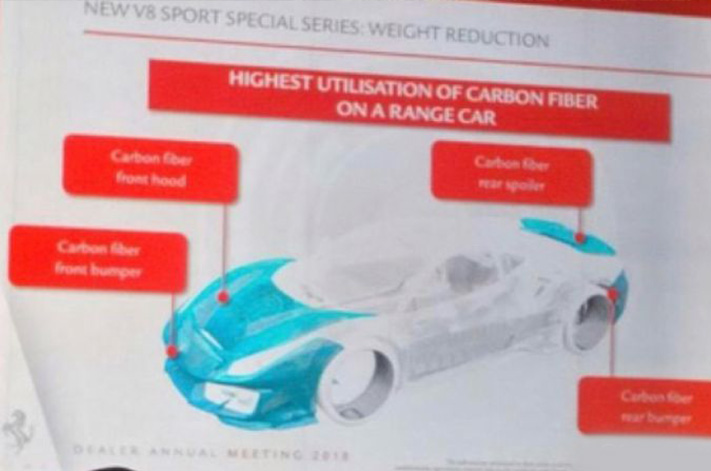
It’s likely the hardcore 488 will be a last-hurrah special for Ferrari’s mainstay supercar, with a replacement for the 488 expected to drop in 2019.
If the GTO name isn’t revived for the more focussed 488, it could wear badges similar to its forbears the 348 GT Competizione, the F355 Challenge, the 360 Challenge Stradale, the 430 Scuderia and the 458 Speciale.
WHAT IS IT?
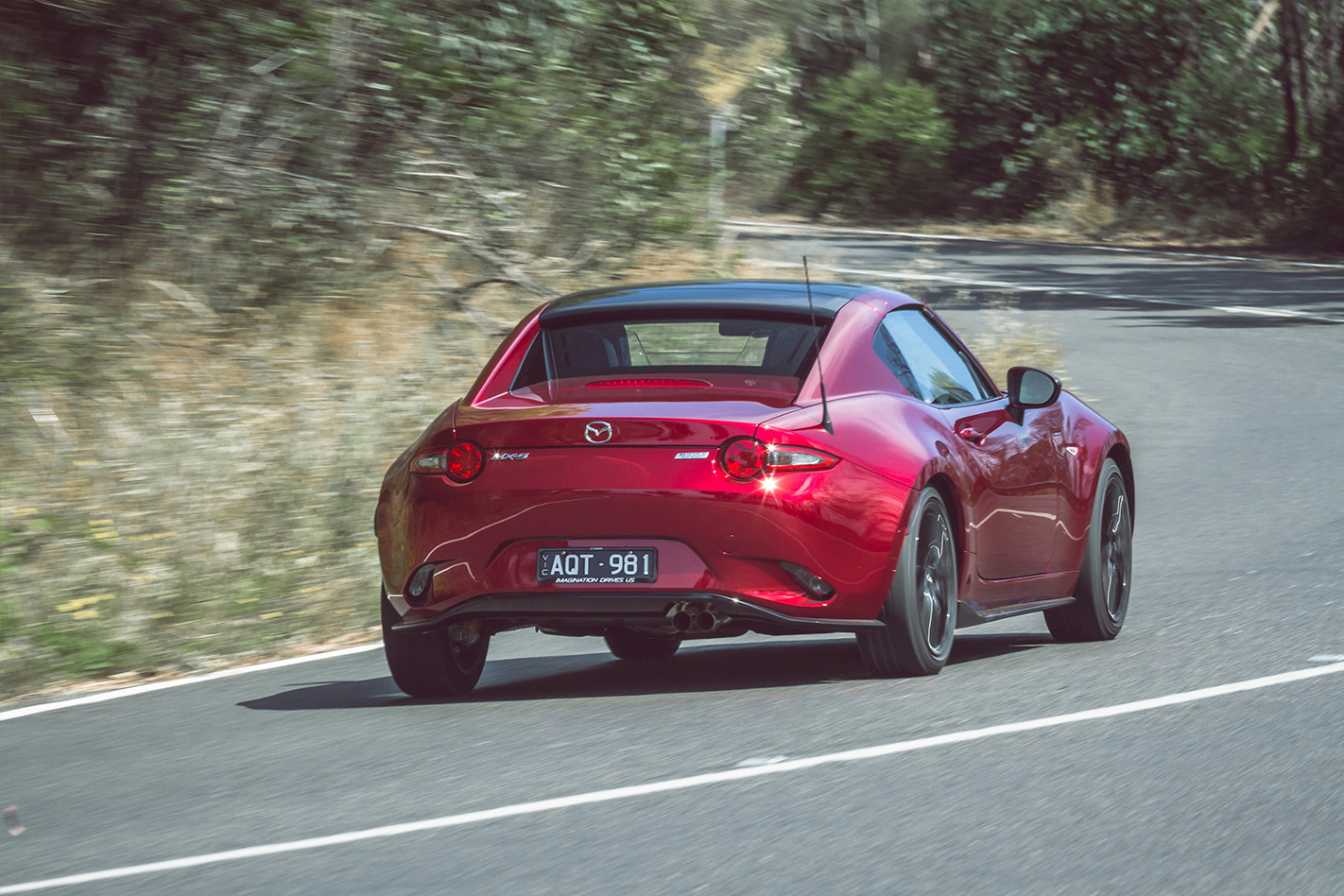
This Limited Edition is an Australian-exclusive specification of Mazda’s mature, coupe-like MX-5 Retractable Fastback. Based off the RS edition in Japan, it comes with a couple of extras that make it unique. Just 110 units are coming, and more than 10 percent are already sold.
WHY WE’RE DRIVING IT
Mazda has equipped all 110 MX-5 LEs with enhancements that promise an even better driving experience. It’s hard to imagine 2016’s COTY winner getting much better, so we had to see for ourselves.

Abarth 124 Spider, BMW 220i Convertible, Ford Mustang EcoBoost Convertible, Nissan 370Z Roadster
THE WHEELS VERDICT
Smartly curated upgrades give the MX-5 RF LE a performance and desirability edge, and an aesthetic leg-up, without taking anything away from Mazda’s proven formula. The LE is still a car that should be driven for driving’s sake, if you can justify the cost.
THE WHEELS REVIEW
BLINKERED fans of the everyperson’s sports car might find this hard to believe, but in the last 12 months the MX-5 Retractable Fastback (RF) has outsold Mazda’s iconic soft-top roadster in Oz. Yes, the folding metal lid version accounts for more than half of all MX-5s sold since its launch almost exactly one year ago.
Within those sales, the flagship RF GT model has taken the lion’s share. Clearly Mazda is right, then, when it says today’s MX-5 customer wants all of the bells and whistles while chasing a pure sports car experience.
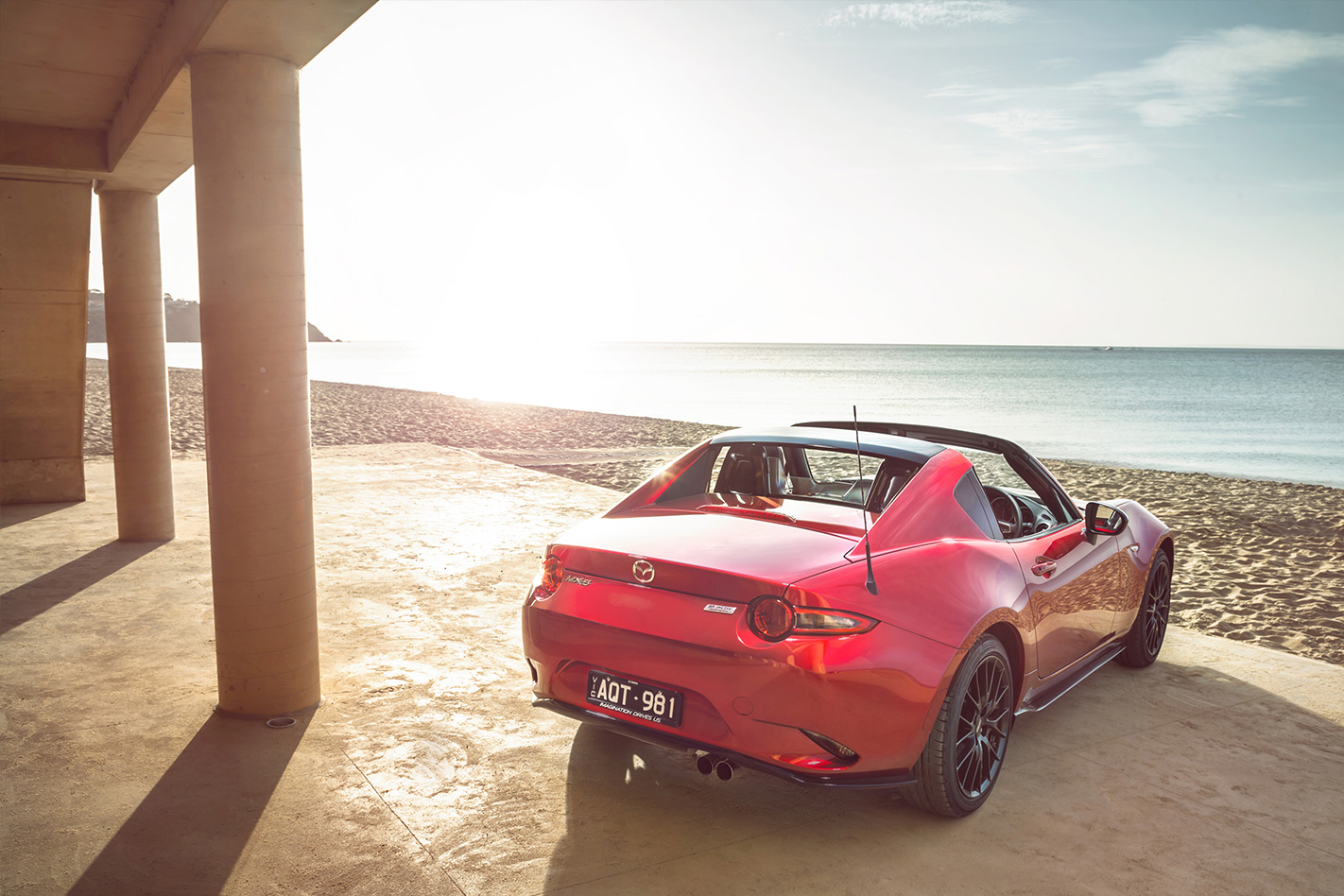
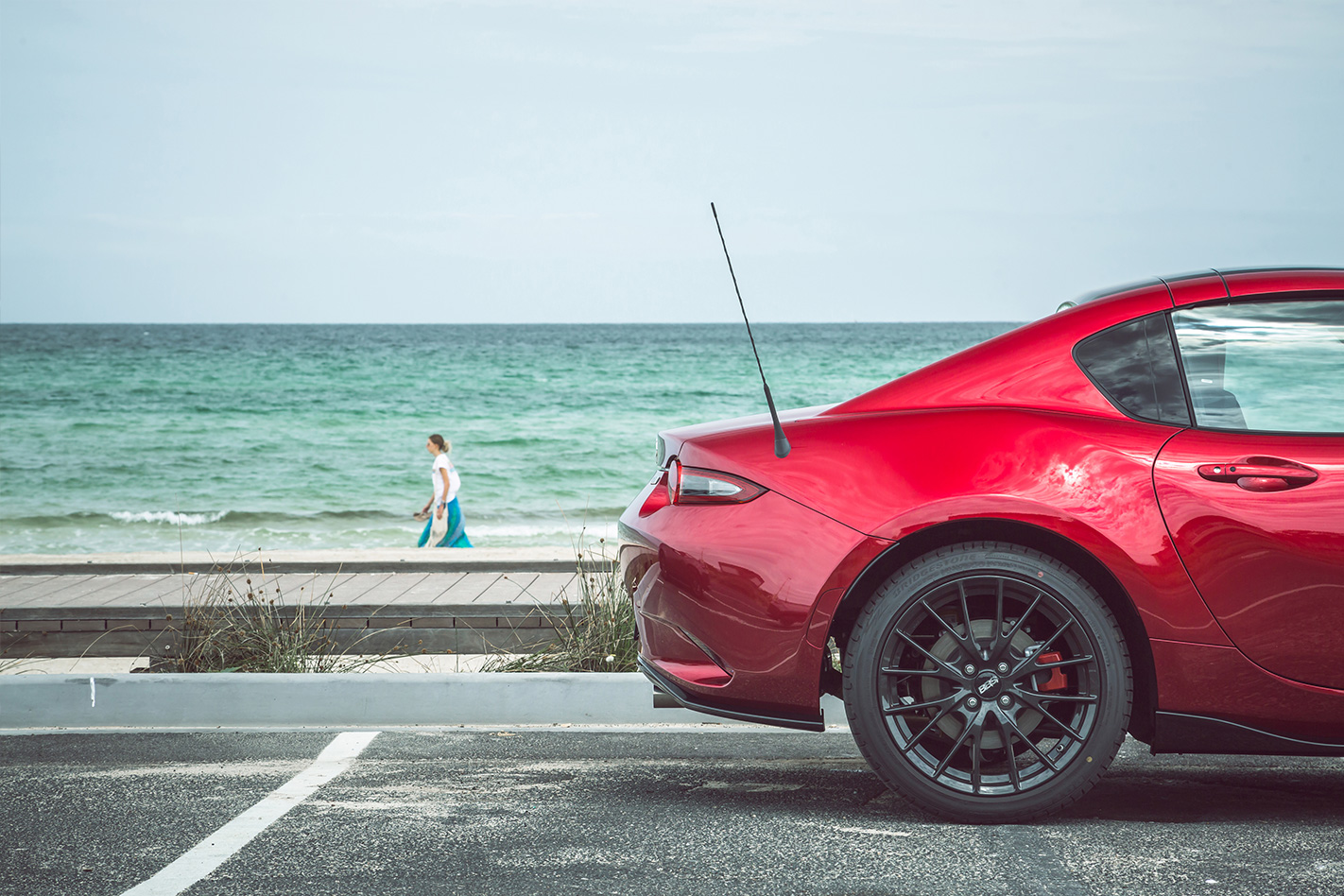
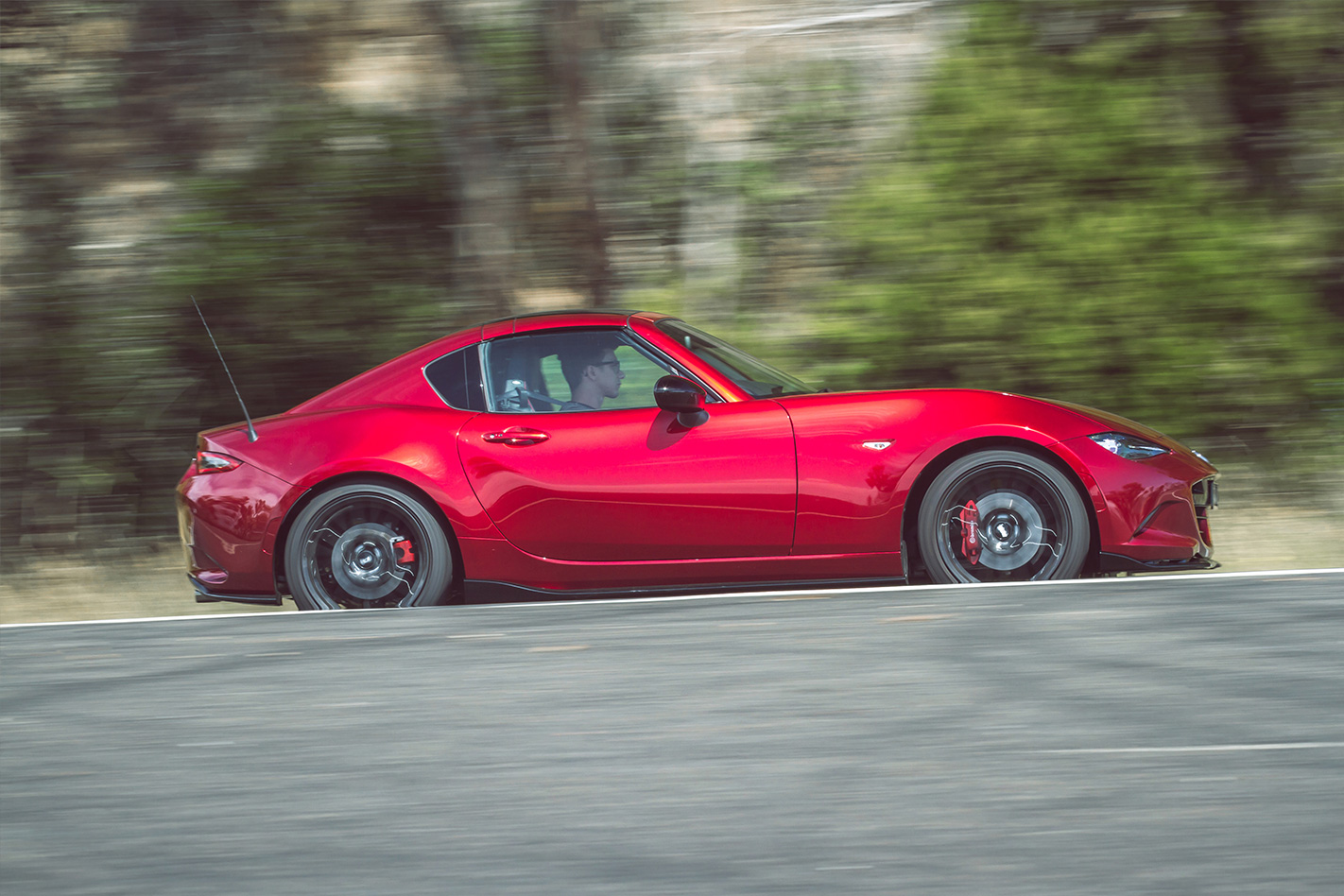
That’s quite a hefty impost, but the LE is the most significant upgrade the ND range has had from a performance point of view. Each one gets lightweight 17-inch BBS alloy wheels finished in gloss black, a specialist braking package from Brembo, Bilstein shock absorbers with revised springs, a more aerodynamic body styling kit, a strut tower brace and a pair of Recaro seats.
Engine outputs remain at 118kW/200Nm from a 2.0-litre four-cylinder (there’s no 1.5 in the RF) and all 110 LEs have a six-speed manual. Five exterior colour choices are available, all with a black roof, and equipment is otherwise identical to the RF GT.
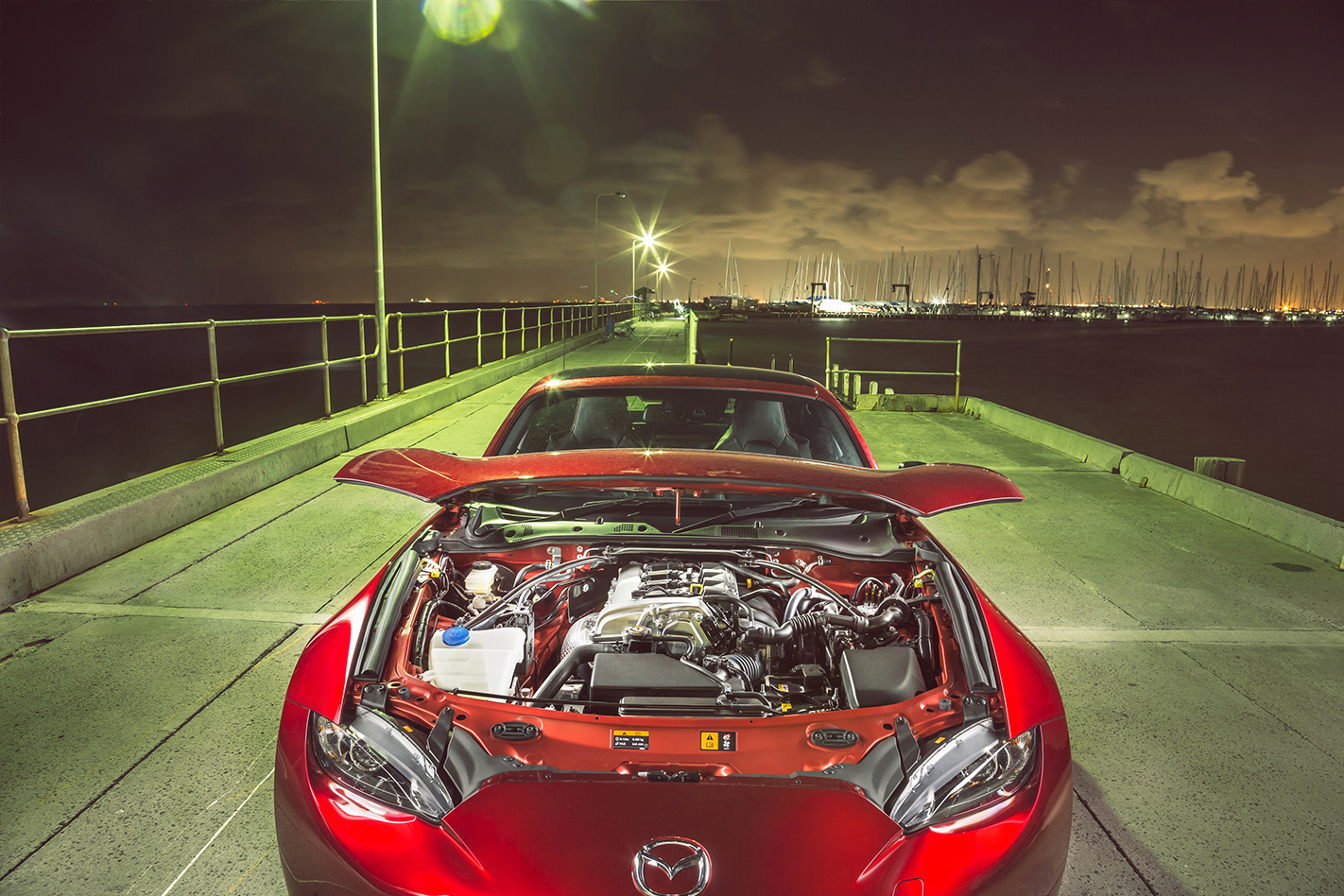
From inside the excellent leather and Alcantara-trimmed Recaro seats hug firmly without triggering claustrophobia. A re-profiled seat base with slimmer cushioning also seems to open a small amount of headroom in the intimate cabin.
Tweaks to the regular RF’s suspension introduced a thicker front anti-roll bar and more compliant rear bushes to account for the 47kg of extra weight in the roof. Bilstein dampers in the LE further tie-down some of the pitch and roll of the soft-top MX-5 Roadster.
Those Brembos, too, are set-up with club-level track performance in mind. Mazda promises more control under heavy brake applications. Circular cooling fins within the rotors and low-steel brake pads improve fade resistance by as much as 26 percent. The braking package is also 2kg lighter than the factory MX-5 stoppers, which further reduces unsprung mass along with the lighter BBS wheels. On the road it’s hard to discern any meaningful difference, however. These are mods for those who like to test the limits.
Bugbears carry over from the regular RF, such as cabin noise and the lack of a standard reversing camera, but they’re minor complaints in context.
That said, buyers taking delivery will receive a custom-made Seiko chronograph wristwatch and a signed letter from the MX-5 program manager as mementos.
For many, the pricey LE will be difficult to justify over a normal RF GT, but Mazda should have no problem finding 110 homes within the MX-5s healthy cult following. It’s a smartly sharpened and more desirable version of an icon, and it deserves to be driven for driving’s sake.

Model: Mazda MX-5 RF GT Limited Edition Engine: 1998cc 4-cyl, dohc, 16v Max power: 118kW @ 6000rpm Max torque: 200Nm @ 4600rpm Transmission: 6-speed manual Weight: 1080kg 0-100km/h: 7.5sec (est) Fuel economy: 7.0L/100km Price: From $55,790 driveaway On sale: Now
Before Biggie Smalls hit the grave he once chanted, “mo money, mo problems”. And when Mazda revealed the fourth MX-5 with a price straight out of 1989 to spark a newfound sales spike, it proved the rapper’s adage somewhat true.
However, without wanting to lose buyers who were willing to pay $50K for a more premium roadster, it also developed the RF for its latest generation: a quieter, slightly softer, hard-top MX-5 that brought a premium feel and price.
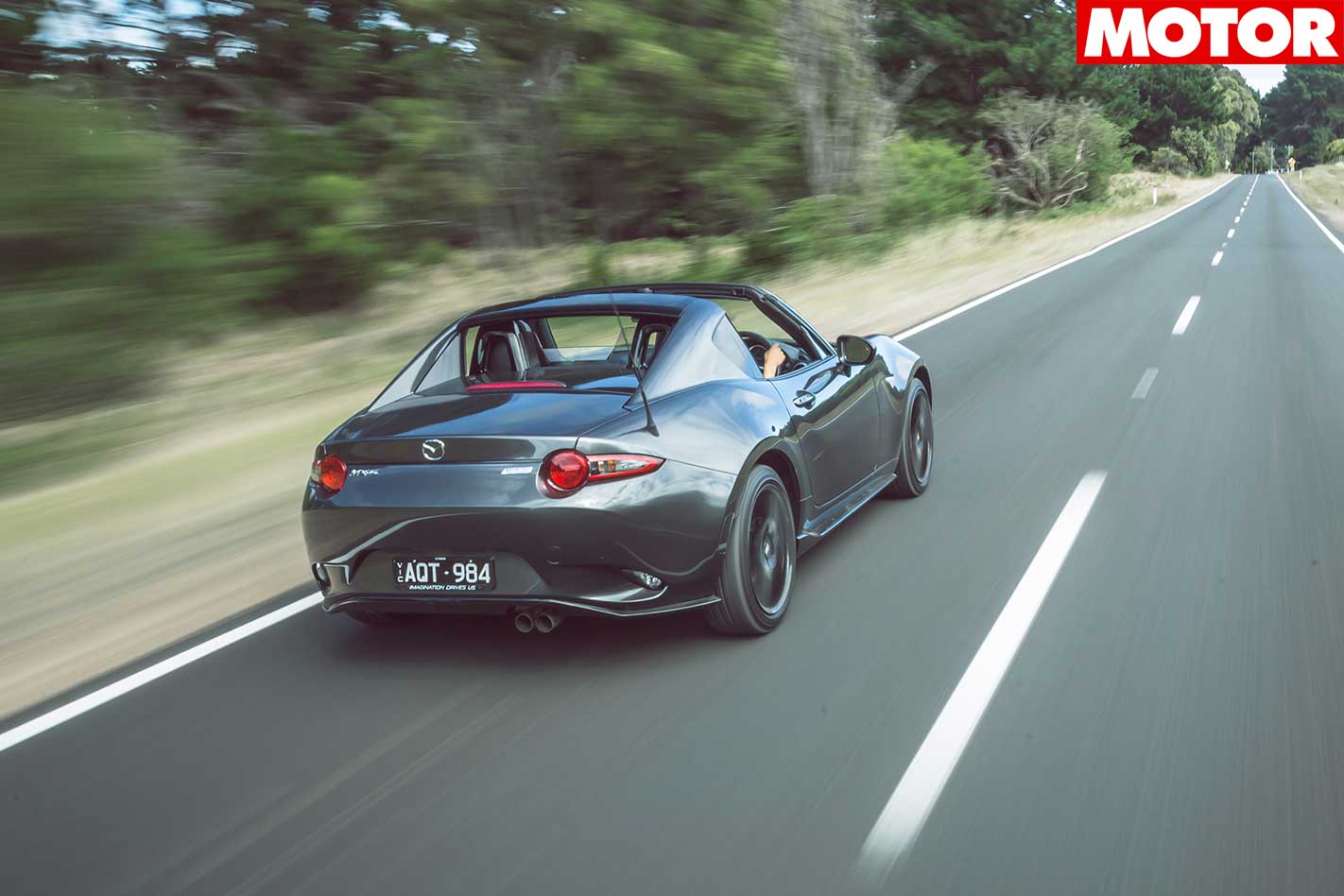
We’ve seen these tasty bits installed on regular MX-5s overseas, but Mazda Australia’s dipping its toes in with 110 absolute top-of-the-line examples. They represent the biggest upgrade to the mite-fighter since the 2.0-litre arrived, the sole powertrain offered here with 118kW and 200Nm at its disposal from a six-speed manual.
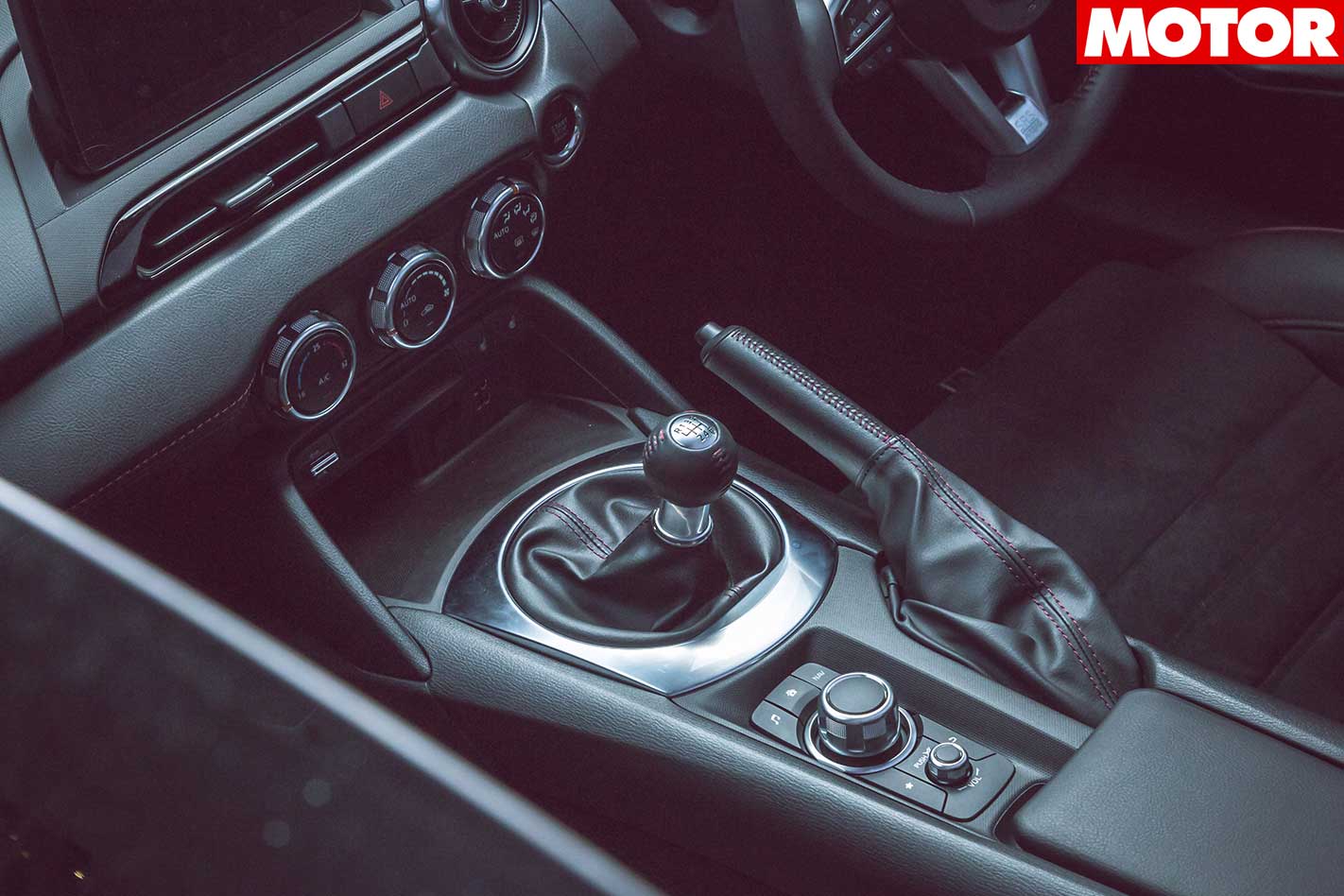
Flair’s exactly what you’ll find inside too. The adjustable Recaros don’t disappoint. Their chunky look brings amazing comfort and support (big blokes might struggle, though), helping you feel settled in the roadster compared to the flat standard seats.
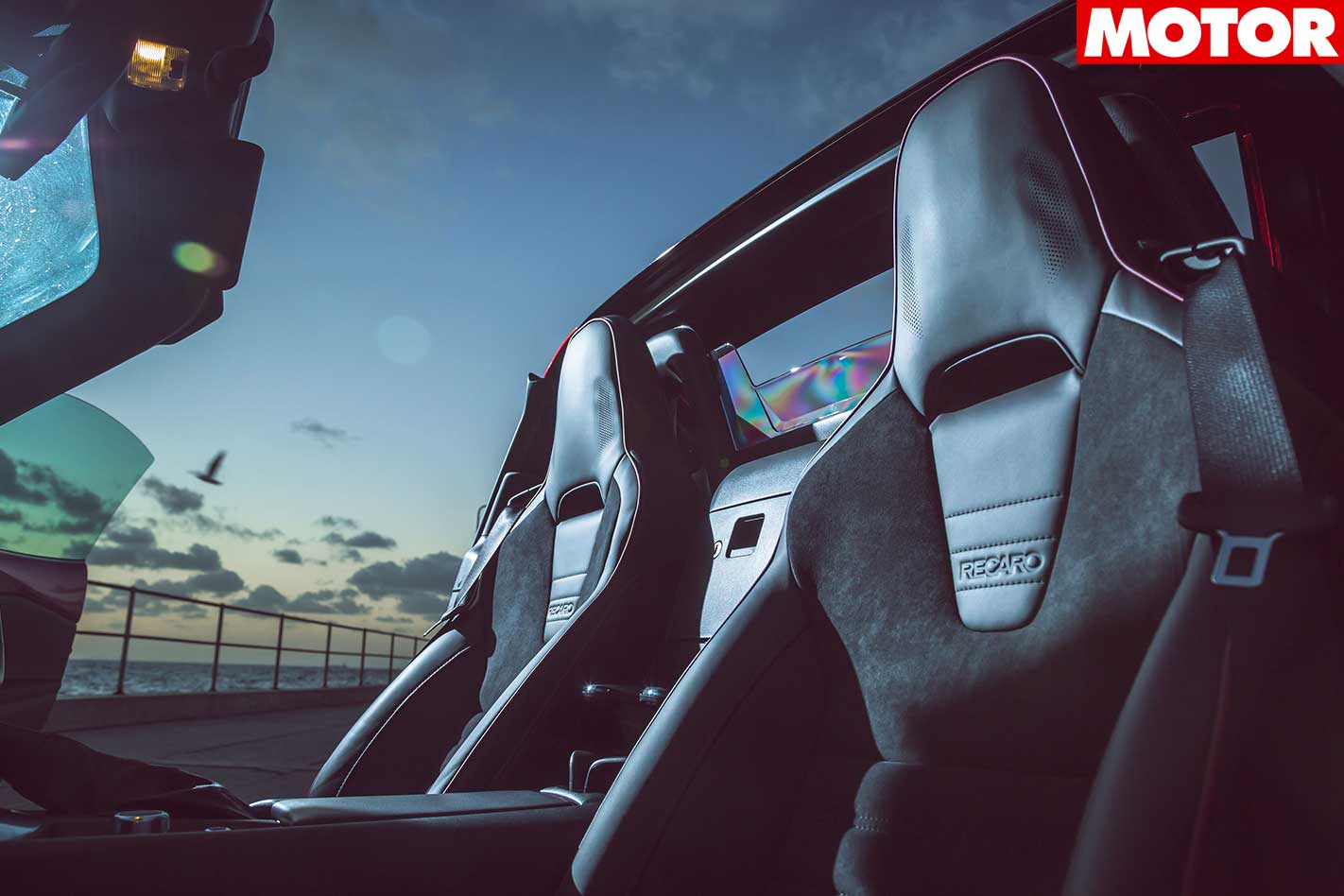
In fact, the driving experience hasn’t much changed at all. There’s a touch more of everything – turn in, grip, response – to eight tenths, to help the RF handle more like its lighter, lower centre-of-gravity soft top sibling. The Brembos also give the middle pedal a more secure feel, and add more control to its progression.
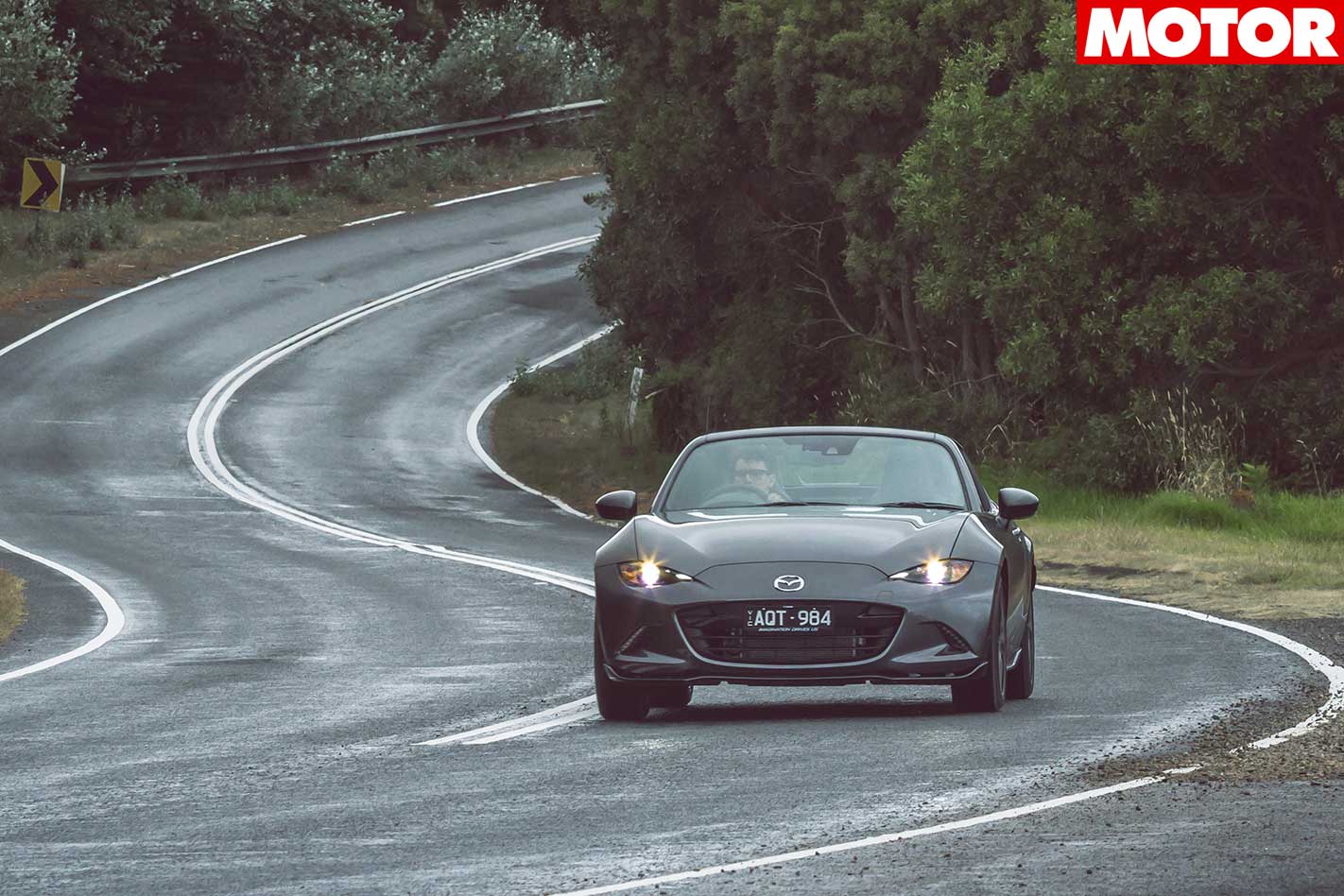
Steady the whip and the MX-5’s handling nous rises to the surface. Clear, crisp steering commands one of the most agile chassis on sale. And with a spread of grip no bigger than a mobility scooter’s, the RF LE feels like it could thread through a needle, as long as there’s an equal spread of weight on those Bridgestones.
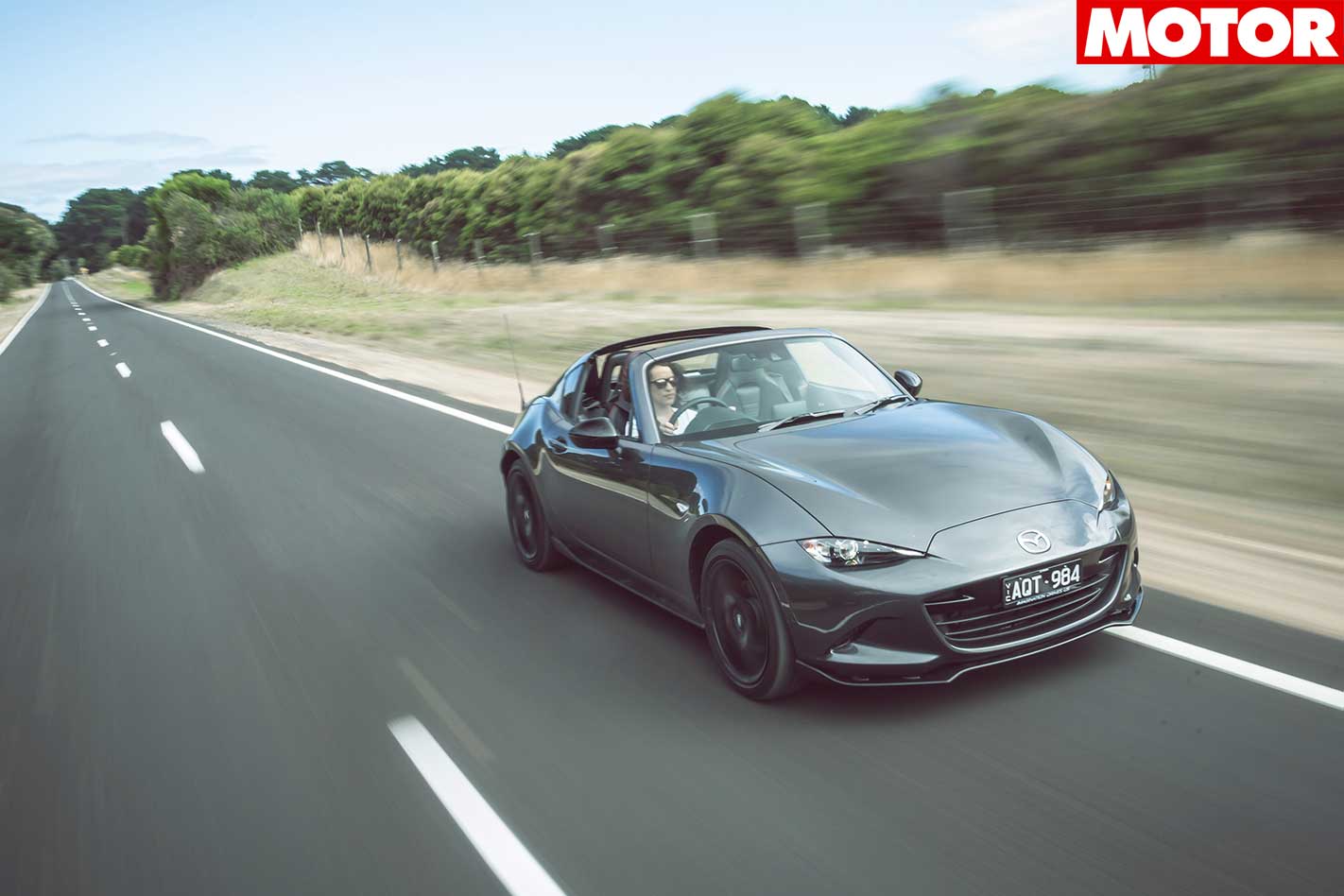
For us, the RF GT Limited Edition will satisfy those who don’t want to compromise on a single thing when it comes to their MX-5. But don’t expect a marked transformation. For $7K more than the non-LE variant, you get more looks than performance.
We’ll have to wait and see if Mazda offer this package on a soft-top 2.0-litre in the future to reveal both the car’s and parts’ true potential.
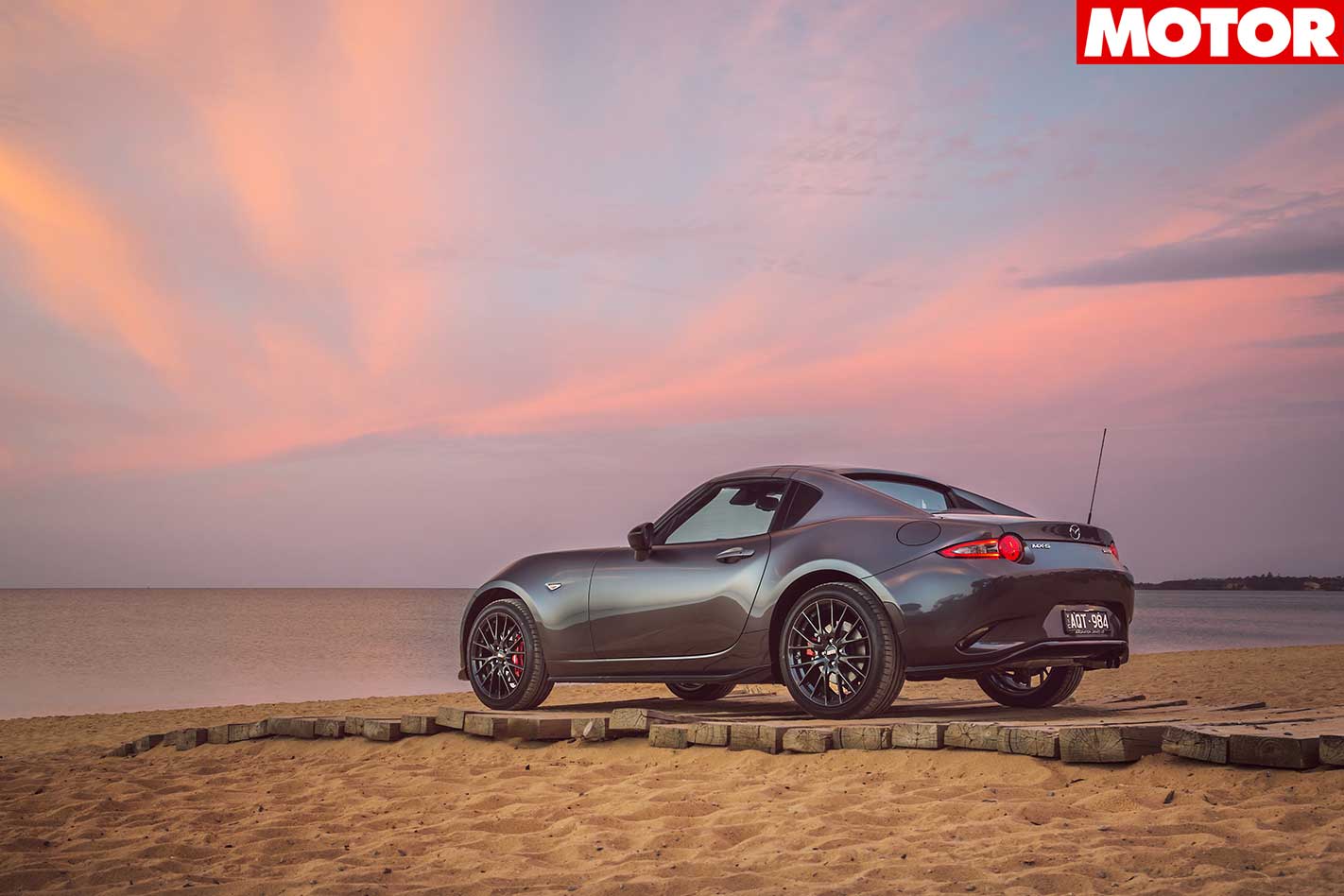
2018 MAZDA MX-5 RF LIMITED EDITION SPECS: Engine: 1998cc 4cyl, DOHC, 16v Power: 118kW @ 6000rpm Torque: 200Nm @ 4600rpm Weight: 1080kg 0-100km/h: 6.6sec (estimated) Price: $55,670 (drive-away) Star Rating: 4 out of 5 stars
MERCEDES-BENZ has given its popular C-Class sedan a mid-life facelift, tweaking the exterior, and applying minor changes underneath its skin.
The front-bumper has been redesigned for each style line (Exclusive, Avantgarde, and AMG), with the rear bumper also getting a rework.
Driver assistance systems in the mid-size sedan have also been bolstered, with Mercedes claiming the C-Class “is able to drive semi-autonomously in certain situations”.
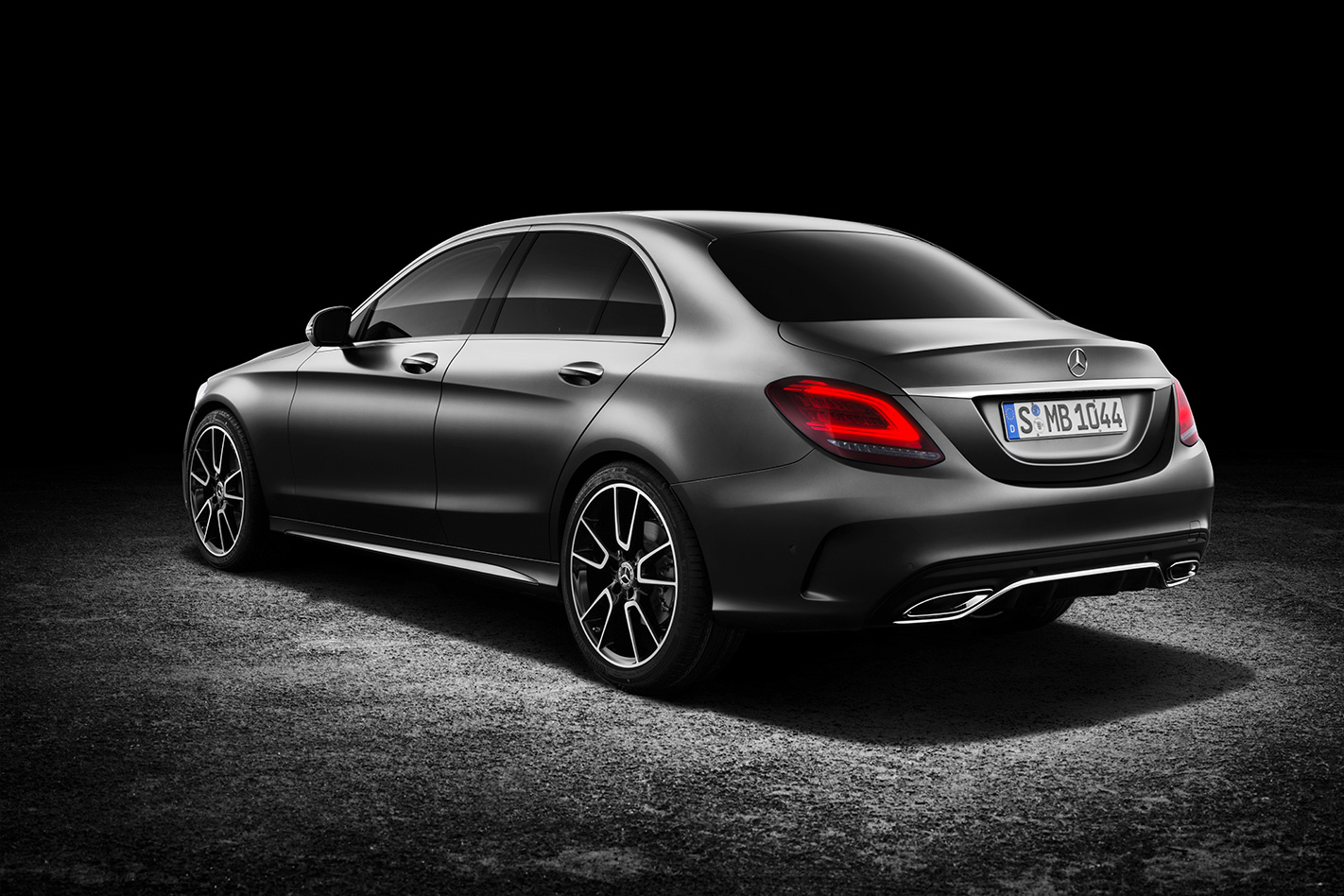
In Europe, each C-Class will come with halogen headlights featuring LED DRLs as standard, but LED headlights are available as an optional extra, along with multi-beam LED headlights that come with an ‘ultra-range’ high beam function. More details of the C-Class’s local packaging will be made available closer to the mid-size luxury sedan’s arrival here in about August.
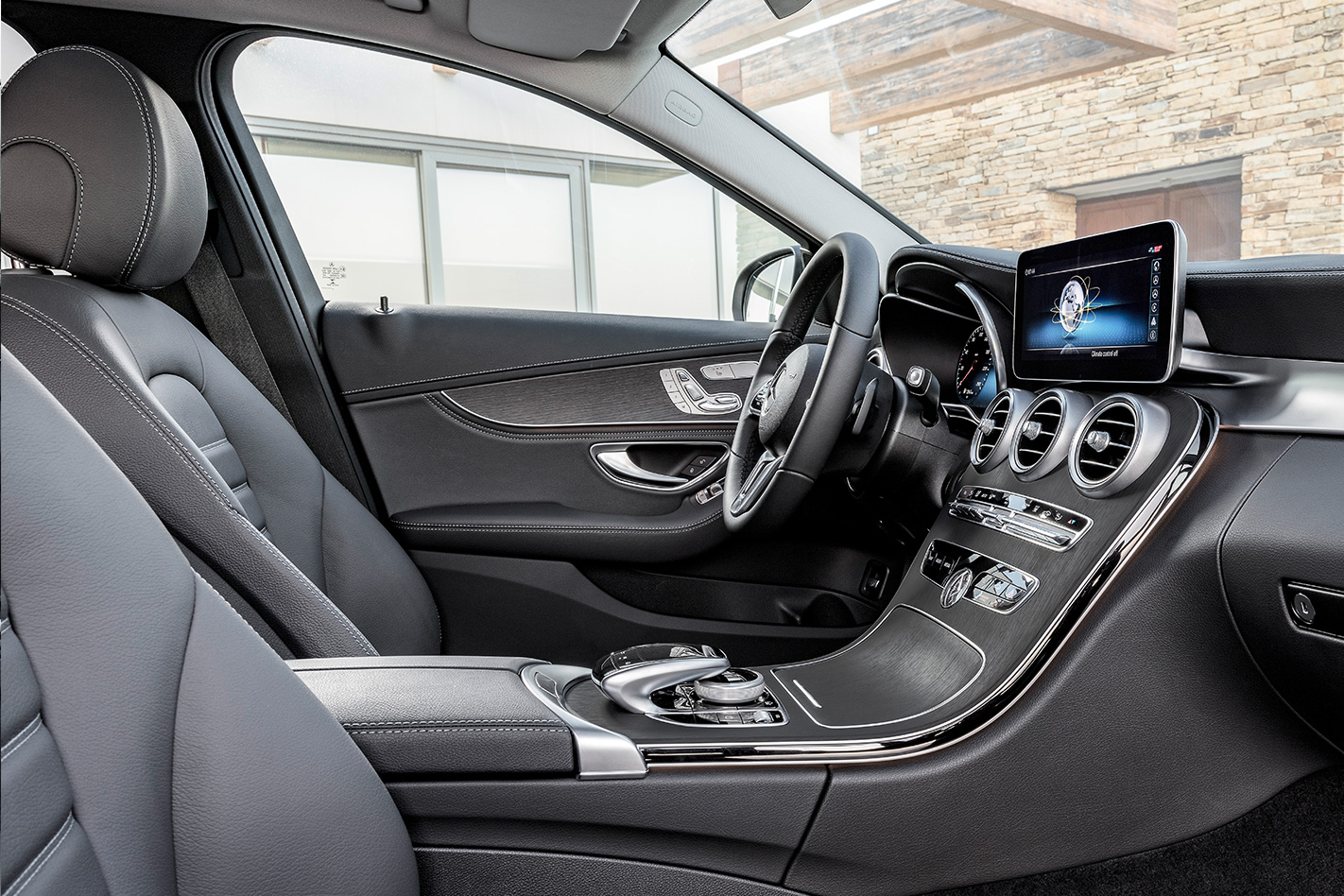
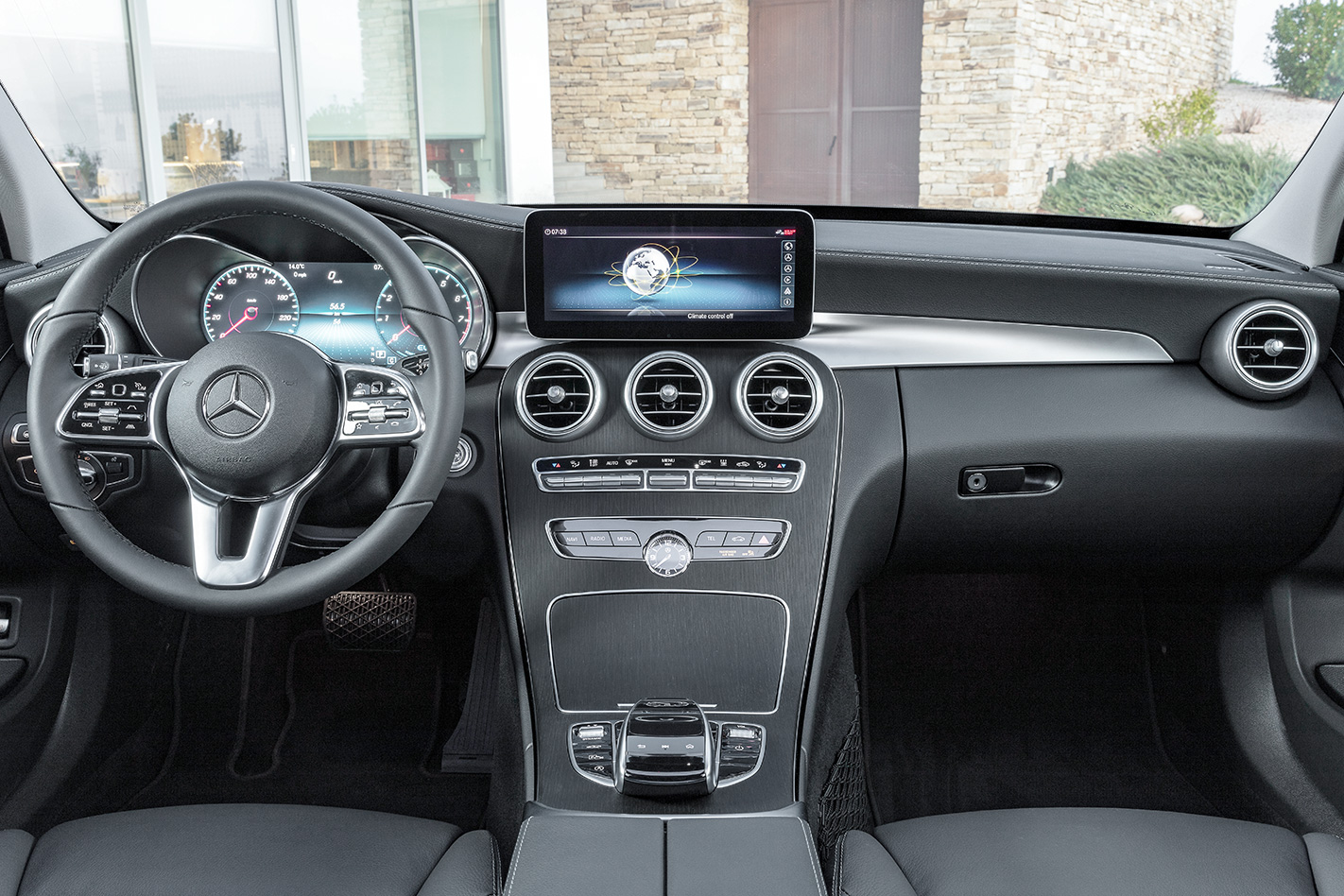
The C-Class doesn’t get the fully digital instrument display which is available on the S-, E-, and next-gen A-Class as standard, however a 12.3-inch screen can be fitted as an option.
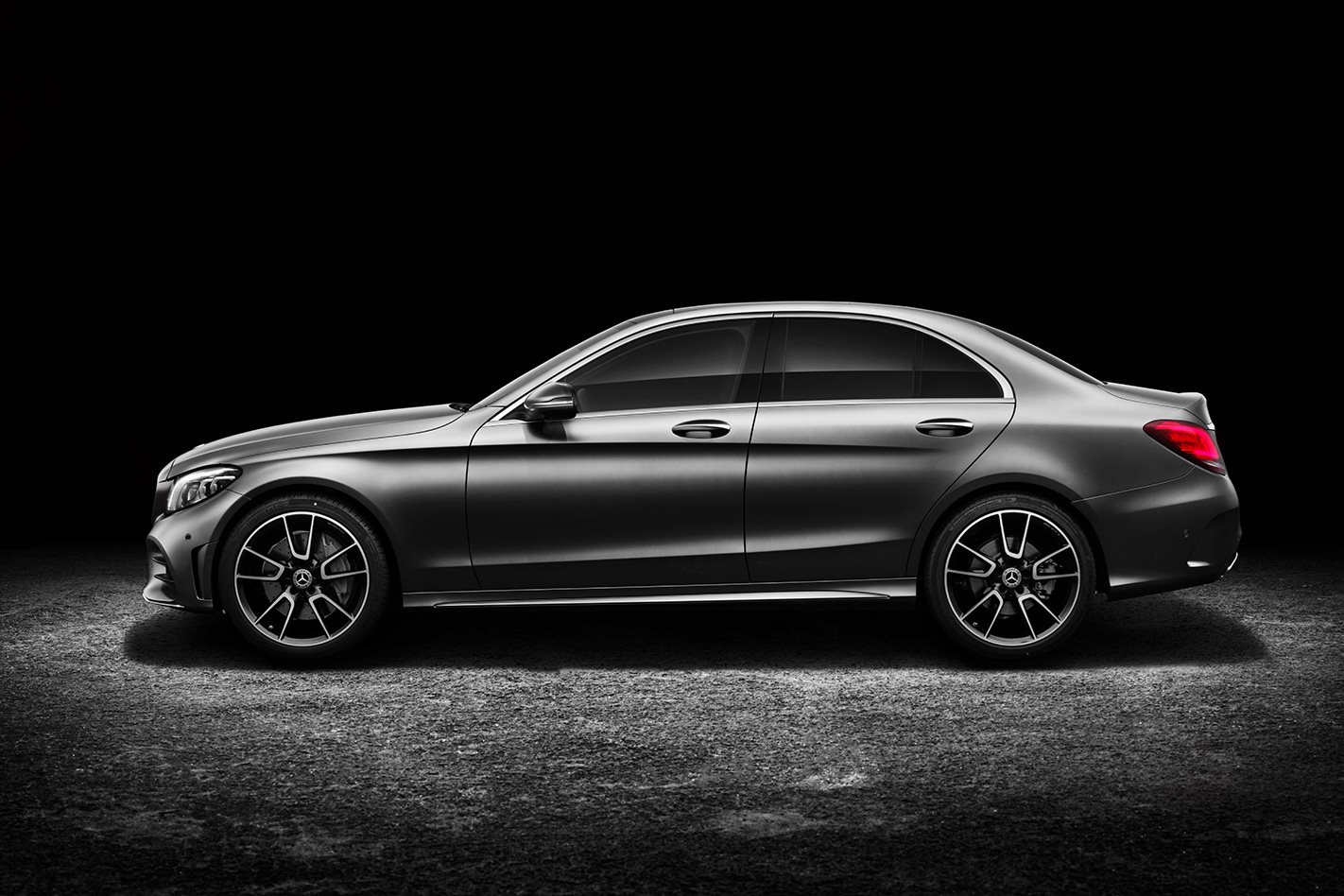
Two colours have been introduced into the C-Class paint palette, dubbed mojave silver metallic and emerald green metallic.
The C-Class is built in four factories across the globe; the lead plant in Bremen (Germany), East London (South Africa), Tuscaloosa (USA), and Beijing (China). A long-wheelbase version of the C-Class is built exclusively for the Chinese market.
IF THEATRICS were part of the COTY criteria the Tesla Model X could have scooped the gong on day one.
Its polarising Falcon Wing doors rise like a bird majestically preparing for take-off. Hidden within those innovative rear apertures are two sets of hinges and six sensors designed to stop them from banging into things, but at least one judge’s noggin provides empirical evidence that the system hasn’t quite been perfected.
Then you press the accelerator, launching Tesla’s 2.5-tonne electric family car towards the horizon as if scooped up by the hand of God.
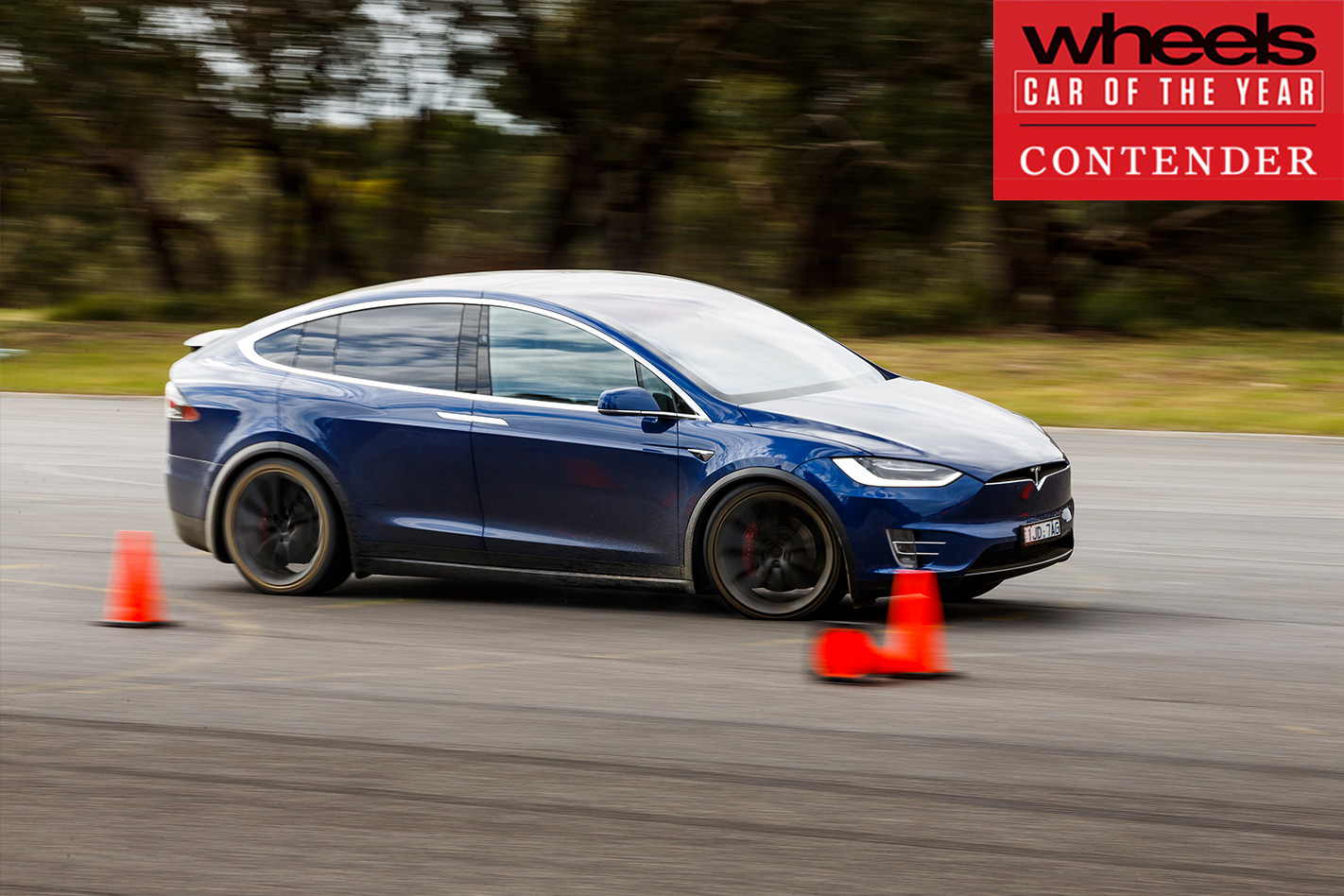
It’s the sort of car that makes you smile simply because it (and its stablemate) are so startlingly different to anything else out there. For now, at least.
That the fun peters out beyond 100km/h was less of an issue for the judges. After all, few cars will trounce the traffic-light grand prix like a Model X. Similarly, its propensity to smoke its Brembo stoppers was no deal-breaker considering the pace and mass they’re tasked with containing.
But once the excitement of getting in and shooting for the moon wore off, judges reverted to the COTY criteria, at which point some of the all-electric gloss begins to fade. It starts with the $140K-plus price tag for the 75D, something that can almost double for an optioned P100D.
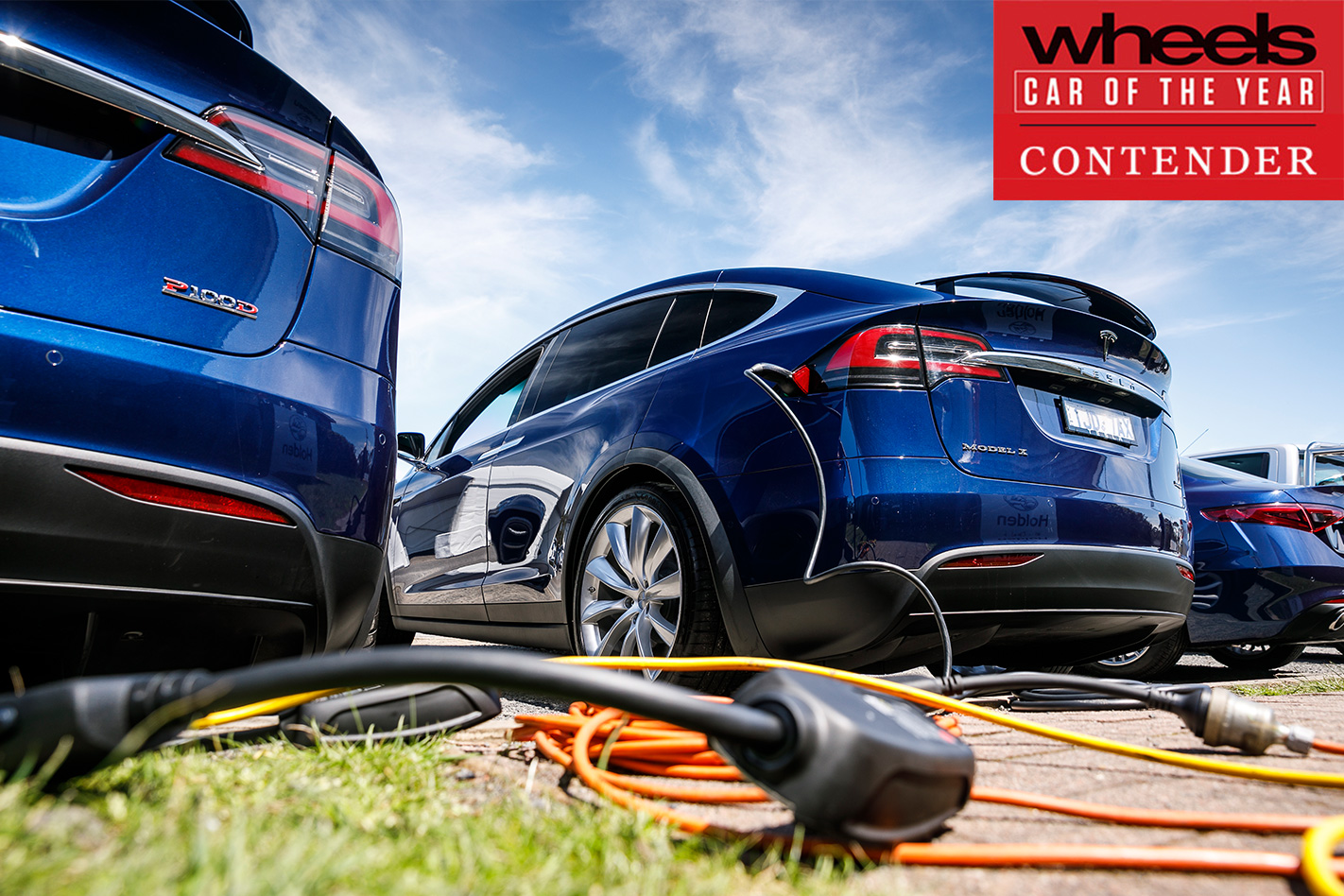
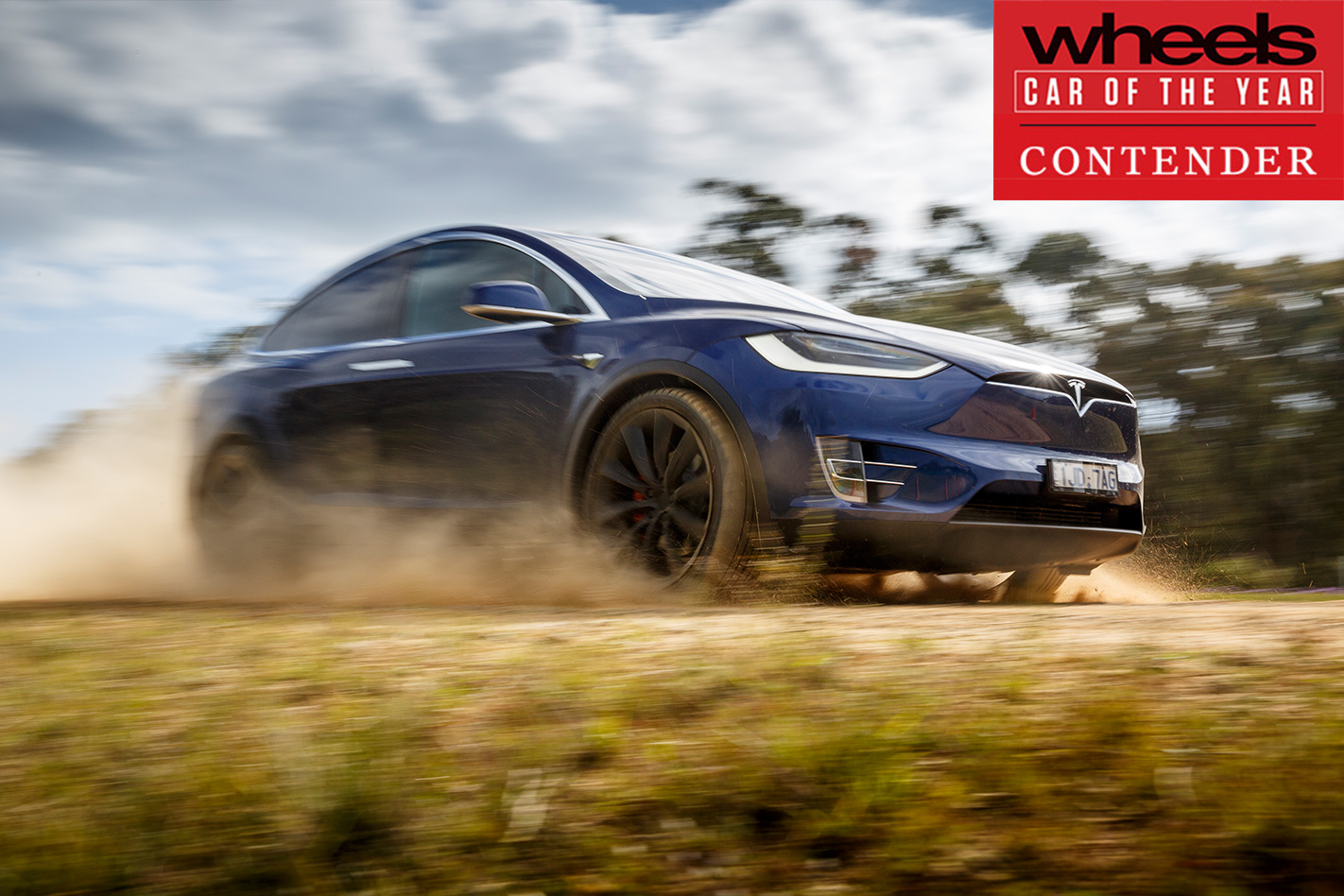
Blame that partly on the lack of engine noise to mask it, but mostly on the terse ride. While the heavy, low-slung battery pack makes for beautifully flat cornering – it even surprised on the dirt – the stiff suspension also plays its part to impact on everyday comfort. Combined with 22-inch low-profile rubber (inflated to 50psi, as per the placard) there’s an unwelcome bump-thump accompaniment over typical Aussie blacktop.
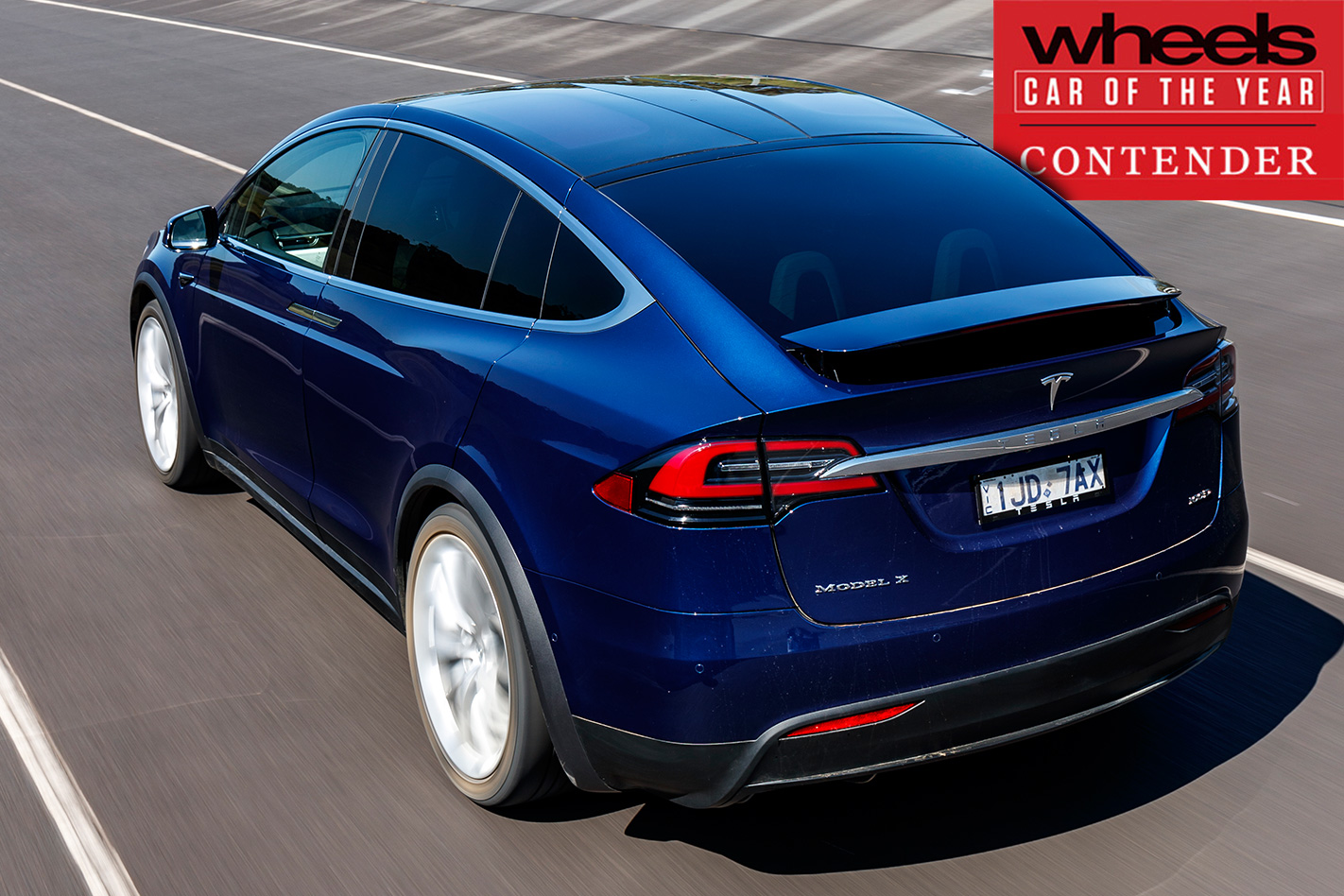
Those doors also contributed to the Model X’s COTY undoing, with judges less enamoured with the five-odd seconds it takes for each to open or close. Or the fact the cabin is more exposed to the elements than it would be with conventional doors. They may impress the cafe set but they also detract from the car’s functionality, especially in tight parking situations. Or monsoonal rain.
Ultimately, though, it came down to what the Model X brings to the electric sales pitch that the Model S doesn’t already do brilliantly. The two share underpinnings and electron-infused philosophies.
Yet the hatchbacked S is lighter, slicker and more affordable, if lacking some of the X’s spacious practicality.
Choose your pews
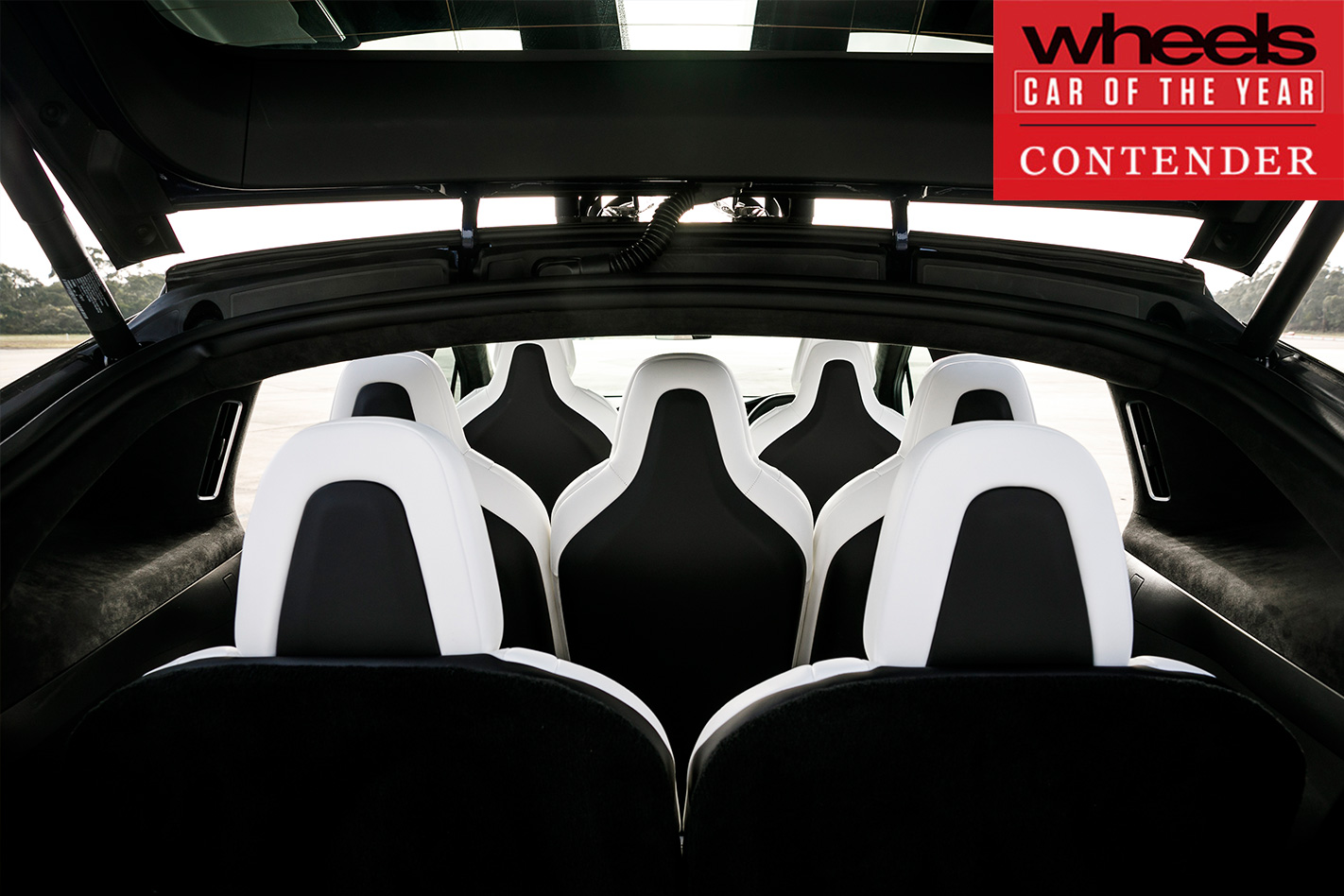
One area of packaging the Model X nails is seating flexibility. It can be ordered as a five-seater (meaning extra cargo space), as a six seater, with two outboard second-row buckets allowing walk-through access to the pair of third-row seats, or as a seven seater.
When configured as the latter, the second and third rows can be folded flat, so there’s always the availability of a vast cargo area.
THE future of Holden’s fleet-friendly Astra sedan is up in the air after General Motors announced overnight it will close one of its four South Korean manufacturing plants and book a $A1 billion hit to its bottom line.
The US-based global car maker is expected to make a decision on what will happen with the three remaining plants within weeks, media has reported.
“GM Korea Company (GM Korea) announced today that it will cease production and close its Gunsan plant by the end of May 2018,” the car maker said in a statement. “The Gunsan facility has been increasingly underutilised, running at about 20 percent of capacity over the past three years, making continued operations unsustainable.”
According to GM, its South Korean division has sustained “significant losses for the past several years”. The Chevrolet Cruze-based Astra sedan is built at Busan, while the Opel Astra hatch is sourced from Poland and the Opel Astra wagon comes from GM’s Vauxhall manufacturing operations in Britain.
Holden said its plans for the Busan-built Chevrolet Cruze sedan’s future in Australia remained “unchanged at this time”.
The decision to remain in South Korea – GM claims its business there supports up to 200,000 jobs directly and indirectly, and was responsible for more than 390,000 exports – will rest largely with what it calls a “concrete plan to stay in the country and turn the business around that requires the full support of all parties”.
“The performance of our operations in South Korea needs to be urgently addressed by GM Korea and its key stakeholders,” GM International president Barry Engle said.
“As we are at a critical juncture of needing to make product allocation decisions, the ongoing discussions must demonstrate significant progress by the end of February, when GM will make important decisions on next steps.”
GM Korea was a business built out of the collapse of South Korean manufacturer Daewoo, which last sold cars here in 2004. In a twist of fate, Australian car maker Holden, which also happened to oversee the local distributorship of the Korean brand’s products and had even sold a rebadged Torana in the South-East Asian country, bailed Daewoo out and added the new source of cheap cars to GM’s global products family, rebadged as Holden and Chevrolet models.
By 2011, GM Korea, as it was renamed, was responsible for one in every four Chevrolet-badged cars sold globally. In Australia, it was responsible for some of the most miserable products to ever grace Holden’s showrooms – with special mention going to the Daewoo Kalos-based Barina.
Holden has since shifted its focus to more premium products, although the Korean-sourced Chevrolet Spark, Chevrolet Sonic-based Barina, Chevrolet Trax small SUV, and Chevrolet Captiva all still come here wearing Holden badges – as does the Astra sedan.
GM has struggled with rising costs in the South-East Asian nation as union-backed wage growth – often won via protracted and at times crippling industrial action – negated many of the benefits the car maker gained from having its manufacturing hub based in the country.
OH, how we praised the Subaru BRZ when it launched back in 2012. The best way to spend $40,000 of your own, hard-earned cash, we said. Huge fun, we said. Balanced and responsive, we also said.
Jump-cut to 2017, though, and our tune has changed a little. The mill is flatter than a Monday morning, reckons Morley. It’s a good car, but you’ll grow out of it. There’s a valid reason for the change in tone – Subaru, and equally Toyota – has done very little with the BRZ in the past five years. Okay, if we’re being really honest, it’s done sweet nothing, when you get right down to it.
To be fair, it was a unique achievement in industry collusion to even get the car made in the first place; auto companies, even when one partially owns the other as Toyota does Subaru, are complex structures, but it kinda feels like the BRZ/86 thing has stalled. The hype and fanfare has certainly subsided.
The stock 1998cc flat-four engine – known as an FA20 in Subie speak – is a reasonable little proposition out of the gate, with 12.5:1 compression, square bore and stroke and a conservative 7400rpm redline. Toyota’s clever direct-injection system is bolted to the top, and stock numbers for this pre-facelift version are 147kW at 7000rpm and 205Nm at 6400rpm.
There’s only one way to drive an engine like this, and that’s with plenty of revs on board. However, it leaves a dark, ugly hole in the powerband below 4500rpm or so.
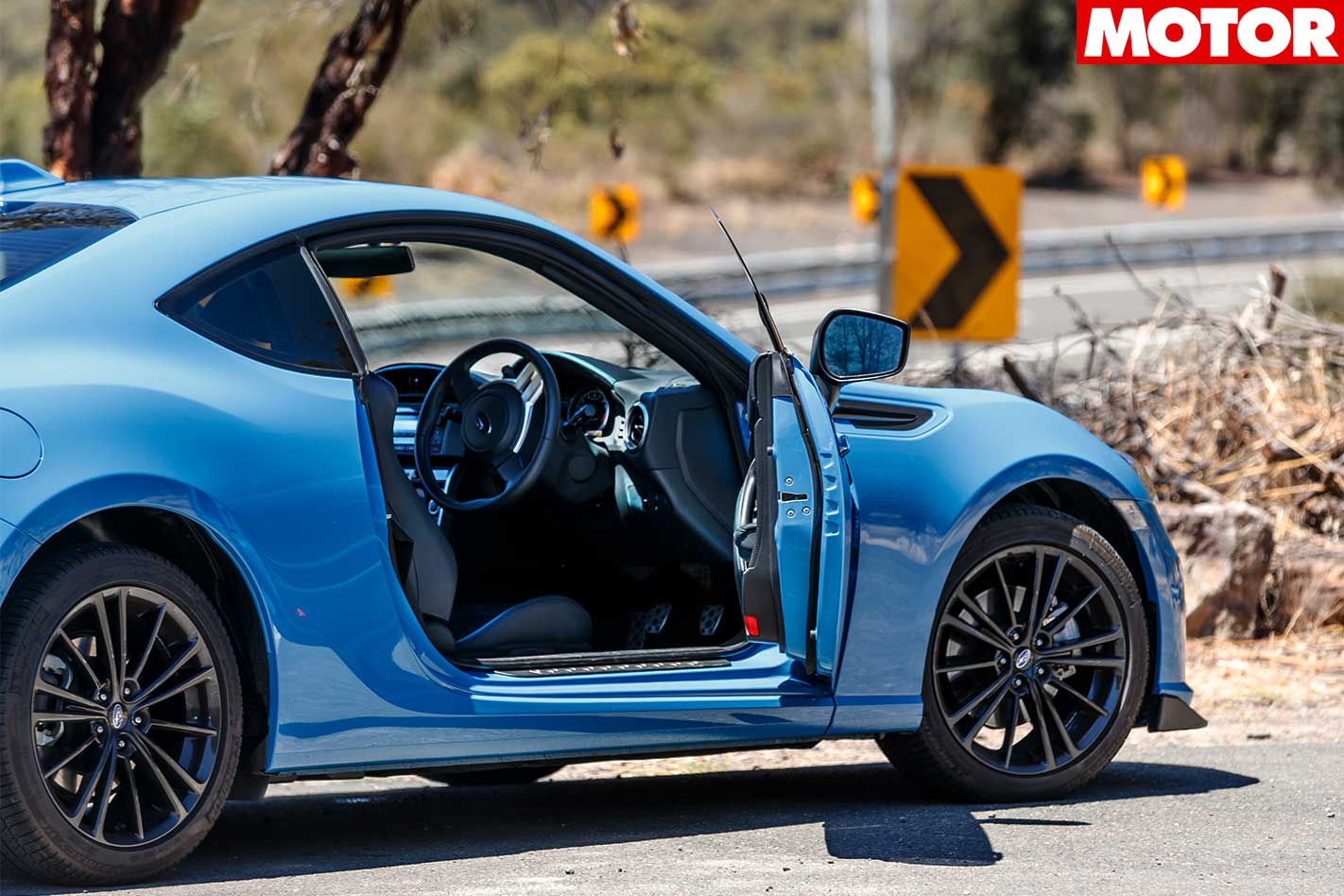
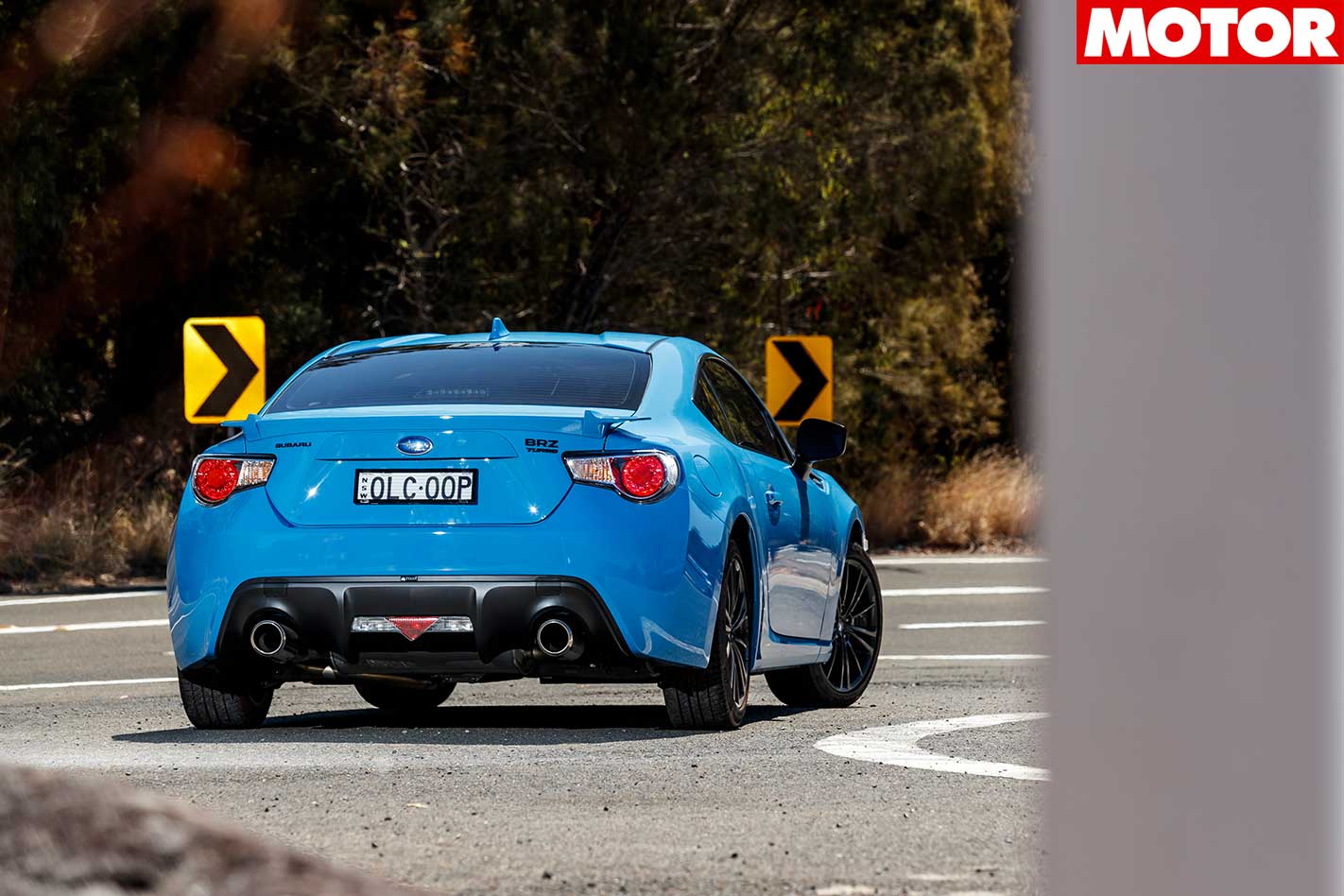
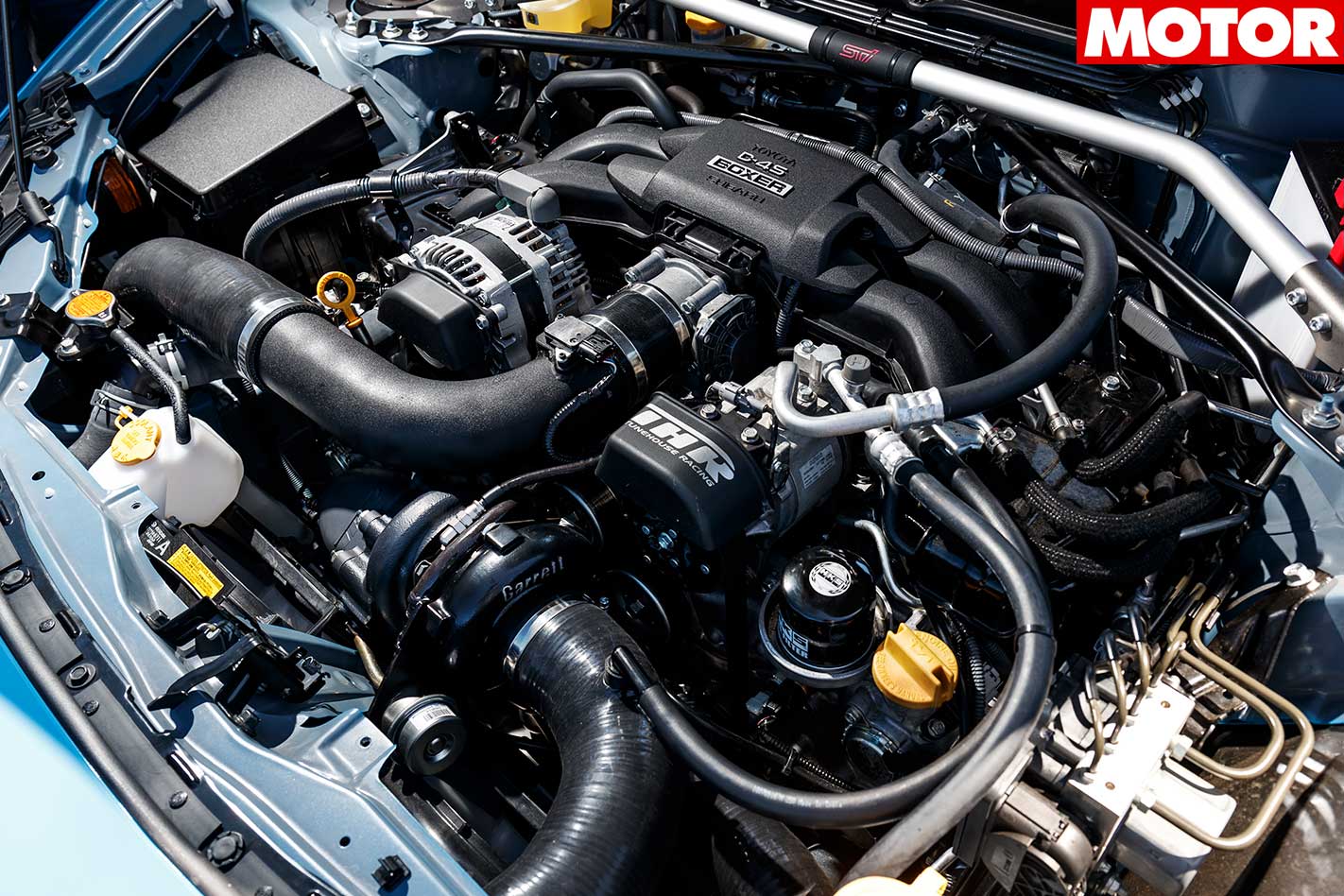
You see, there’s a reason that our Hyper Blue model looks stock – because for all intents and purposes, it is. Even if you open the bonnet, you’ll need to know your turbine compressor housings from your intake manifolds to pick that this engine bay isn’t the same as the one that rolled out of the Gunma Main Plant.
“The owner of this car wanted to keep everything else standard – that was the whole idea,” Jim Ghelis, owner of Tunehouse, said. “The beauty about this kit is that you can have it as a bolt-on without touching anything else, and for normal driving, it gives you far more performance, it’s got an OEM look and feel and it’s bulletproof, basically.”
“We’ve made our package very different to others; we have a billet sump, billet collectors, one-piece stainless steel pipes so it’s not heavy. We’ve taken out all the bad things out of a turbo kit. If it’s tuned properly, the FA20 engine is a great platform.”
He’s not wrong. All of the silicone piping and hose clamps are finished in factory-like hues, with the only element giving the game away, to the untrained eye, being an embossed pulley cover.
Tunehouse sources its own pipework, and there’s a lot of work that’s gone into making this fitment look as stock as the box it came in. Gone are all the induction hoses, the pair of airboxes and other factory-required plastic bits from the front of the engine replaced with simple, functional parts that blend in disturbingly well with the factory motor.
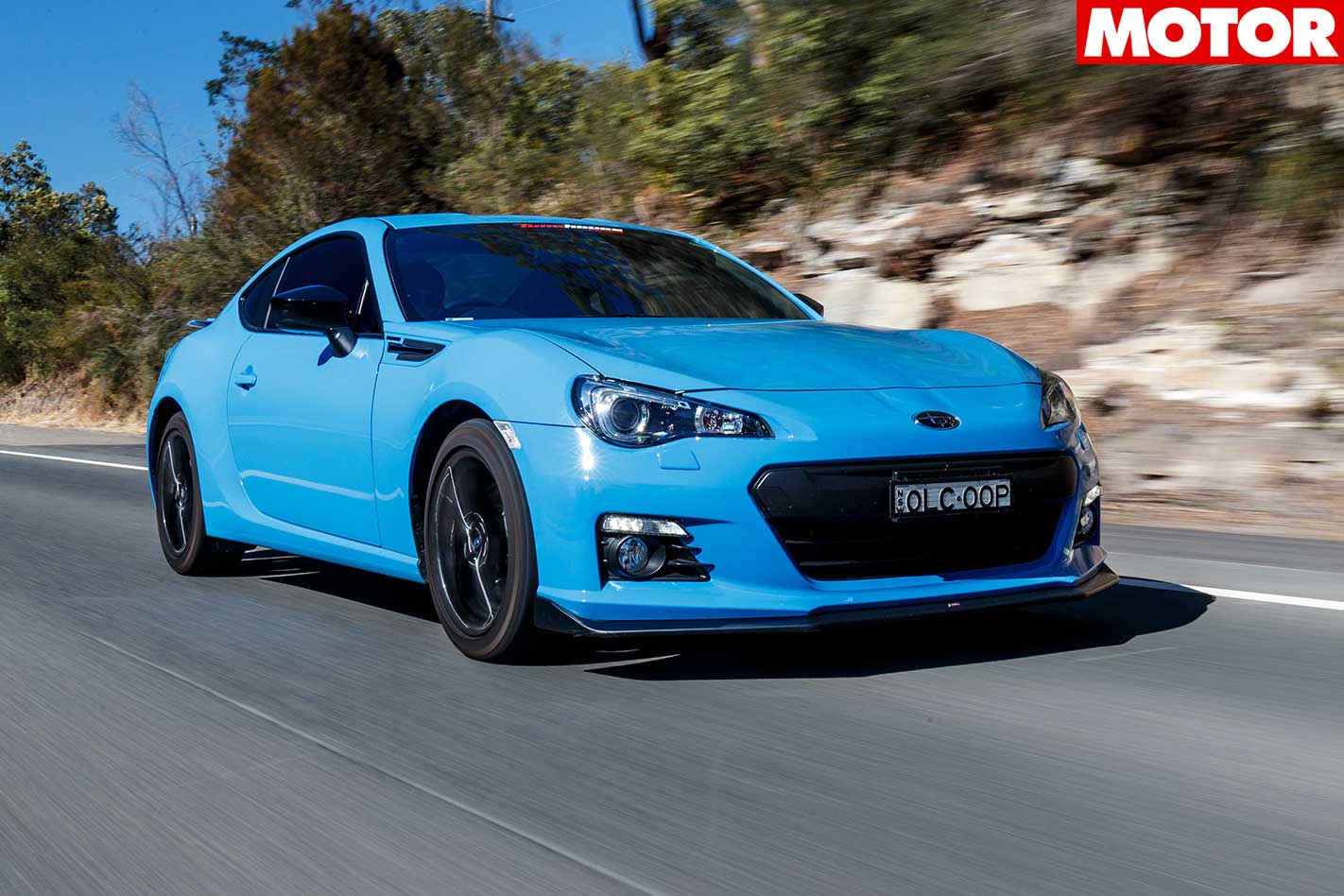
“We are aiming at people that want OEM quality. The one-piece silicone hose for example – nothing rattles or knocks, the bumper bar fits perfectly back, and it doesn’t pop out like other kits.”
Tunehouse uses a custom Garrett GTX 28 series huffer that lives in front of the oddly-shaped little engine, and it’s mated to an intercooler of its own design, as well as a higher volume alloy oil sump and a cold-air intake setup to replace the stock airbox.
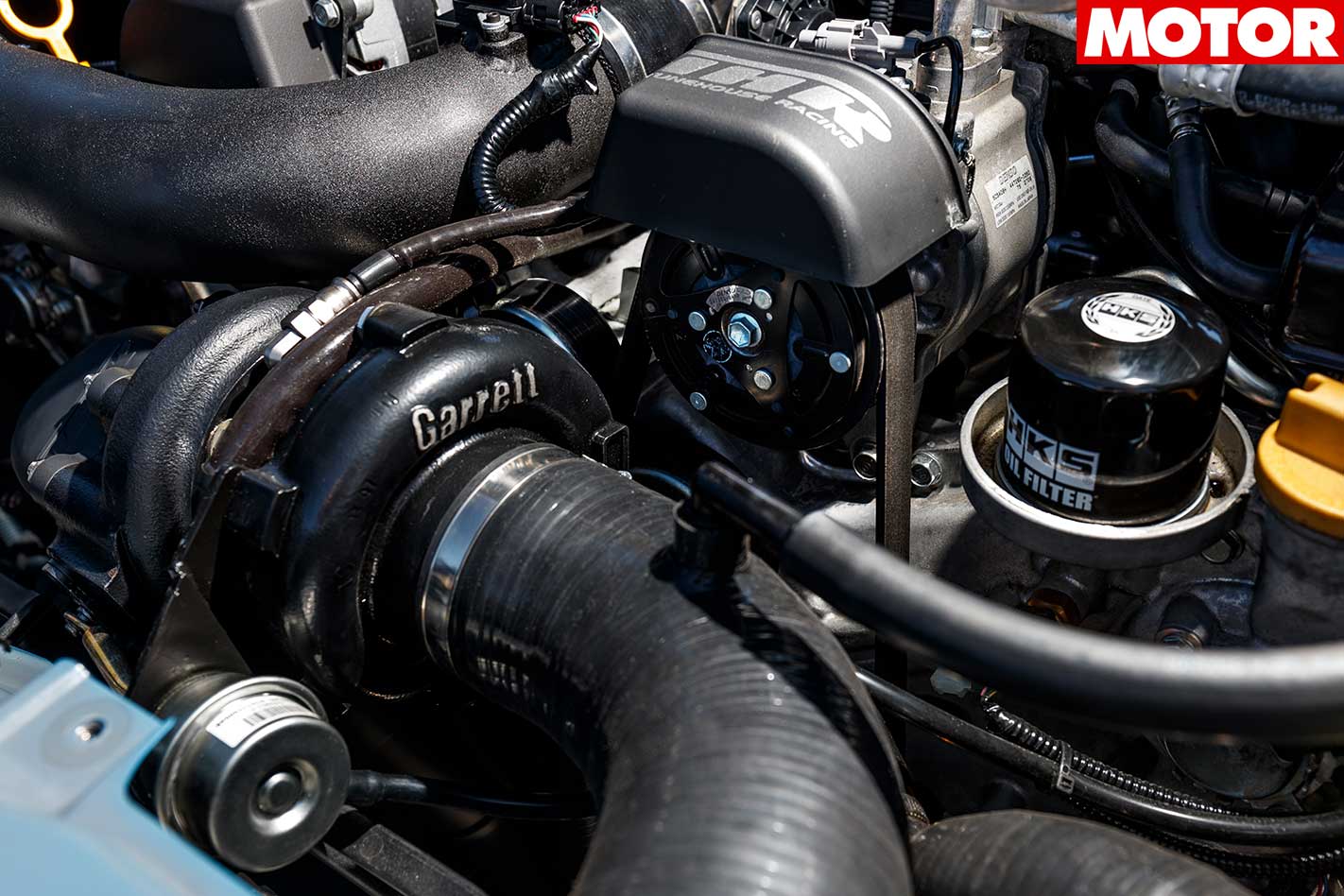
Tunehouse makes the whole shooting match hang together with Ecutek ECU software that’s supplemented by the brand’s RaceROM module. This neat box of tricks adds things like switchable fuel maps, limiters for throttle, boost and revs, in-gear boost management, rev limiting and more.
The tuning component is where it all comes together.
“With the RaceROM kit in particular, it’s a big part of the tune. It makes it feel like an OEM car,” Ghelis said. “This was what we call a stage one tune. We can give it more power if we want. This is a basic in-and-out tune that will work every day, and it works for someone who wants to leave everything else original. We are exporting to different parts of the world now. We’ve got kits in Dubai in 55-degree heat, and they’re still going strong.”
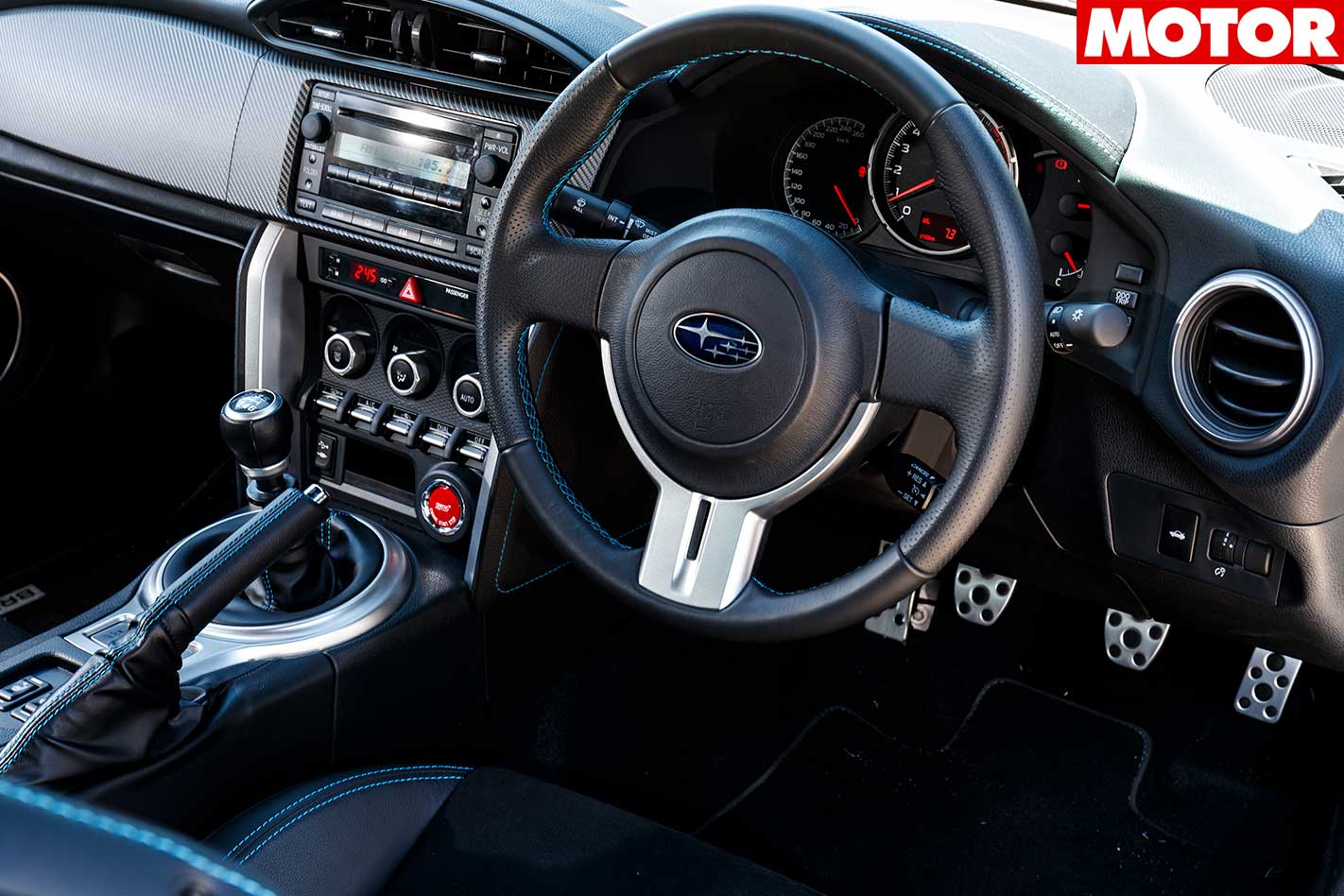
The Tunehouse BRZ starts up, well, like a normal BRZ. There are no clues in here to what lies beneath, save for a slightly gruffer intake noise that takes away much of the uninspiring drone that can emanate from the engine bay of a BRZ – but if you’ve never driven one, you absolutely won’t notice.
Tooling through the first few gears, the car still feels stock, but at around four grand in third gear, you’re gradually aware that you’ve been given this extra layer of oomph to play with. It still revs freely, and it still feels perfectly linear – there’s just more grunt.
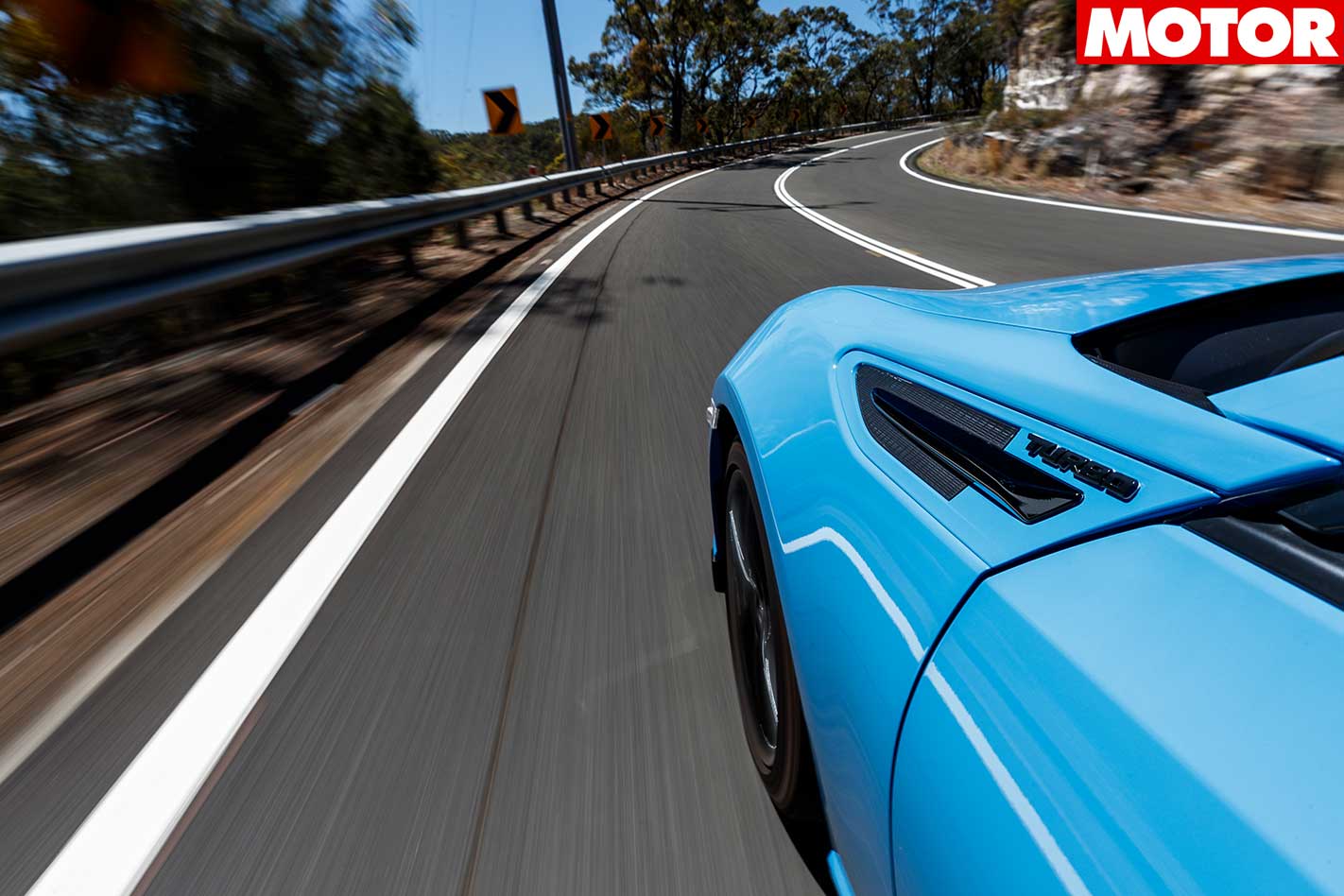
The bulk of the assistance is limited to between 3000 and 5000rpm, with the help tapering off quite markedly as you hit 5500rpm.
Rev her out to 5500rpm and the turbo’s pops and whistles start to make themselves known. A blow-off valve on the right side of the engine bay also chimes in with a gigglingly cool Group B-esque whistle that activates off-throttle at 2500rpm. By this time, there’s really no doubt now in your mind what’s under your right foot. And it’s addictive.
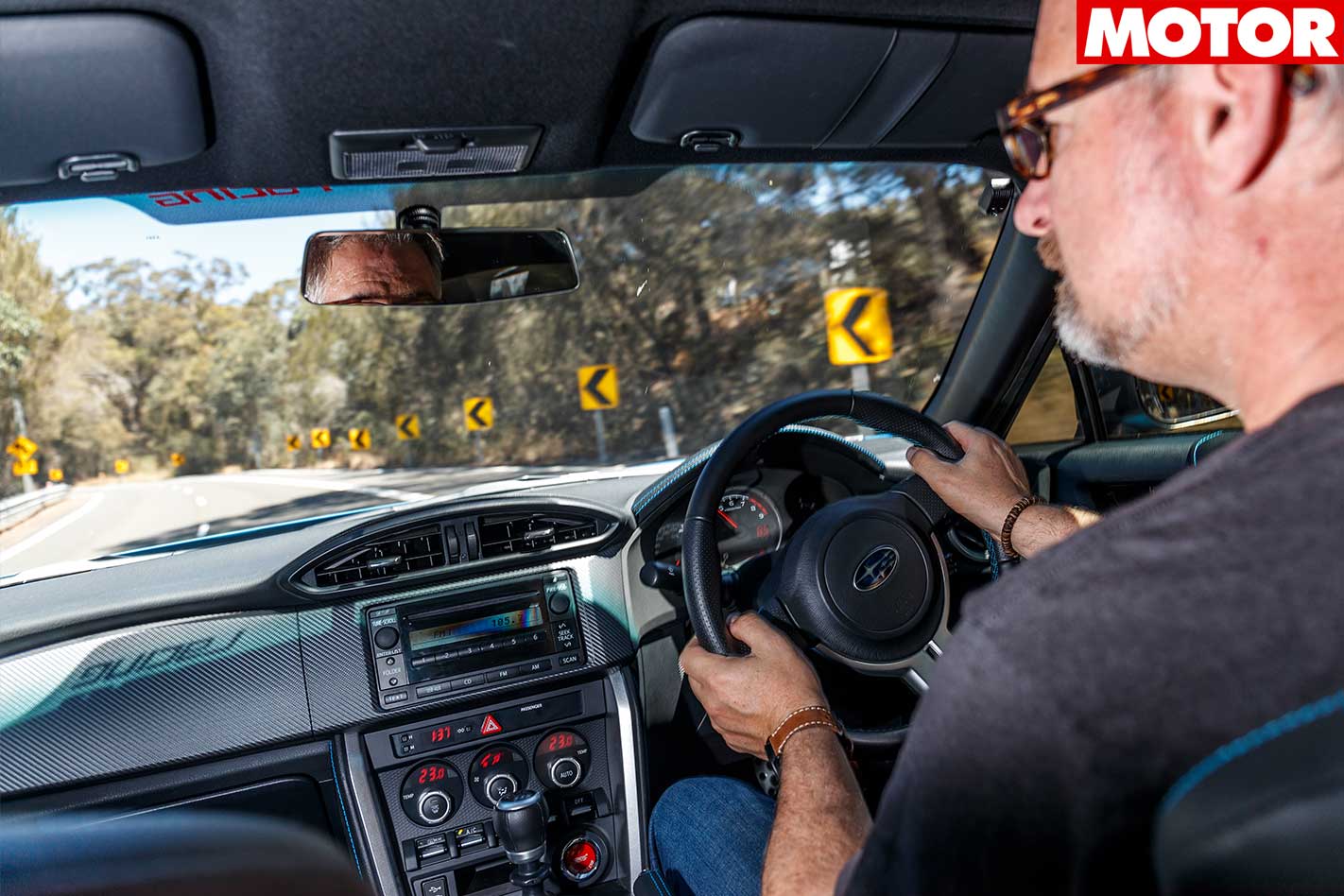
Let’s face it, stocker BRZs really don’t sound great, and they have to be mercilessly redlined and driven like you stole it to get the best out of them. But not this one. The Tunehouse kit renders it an entirely different kettle of fish.
The extra power is not tearing my head off, but it’s a heck of a lot better than a stock car. It helps to bring the BRZ’s other strengths into play, too; that infinitely adjustable chassis, that pin-sharp and feelsome steering and that lively, but tameable, rear end.
You can get right up to the edge of the handling envelope of the stock tune with this upgrade – it’s as if you’ve actually unleashed from the BRZ what you actually bought it for.
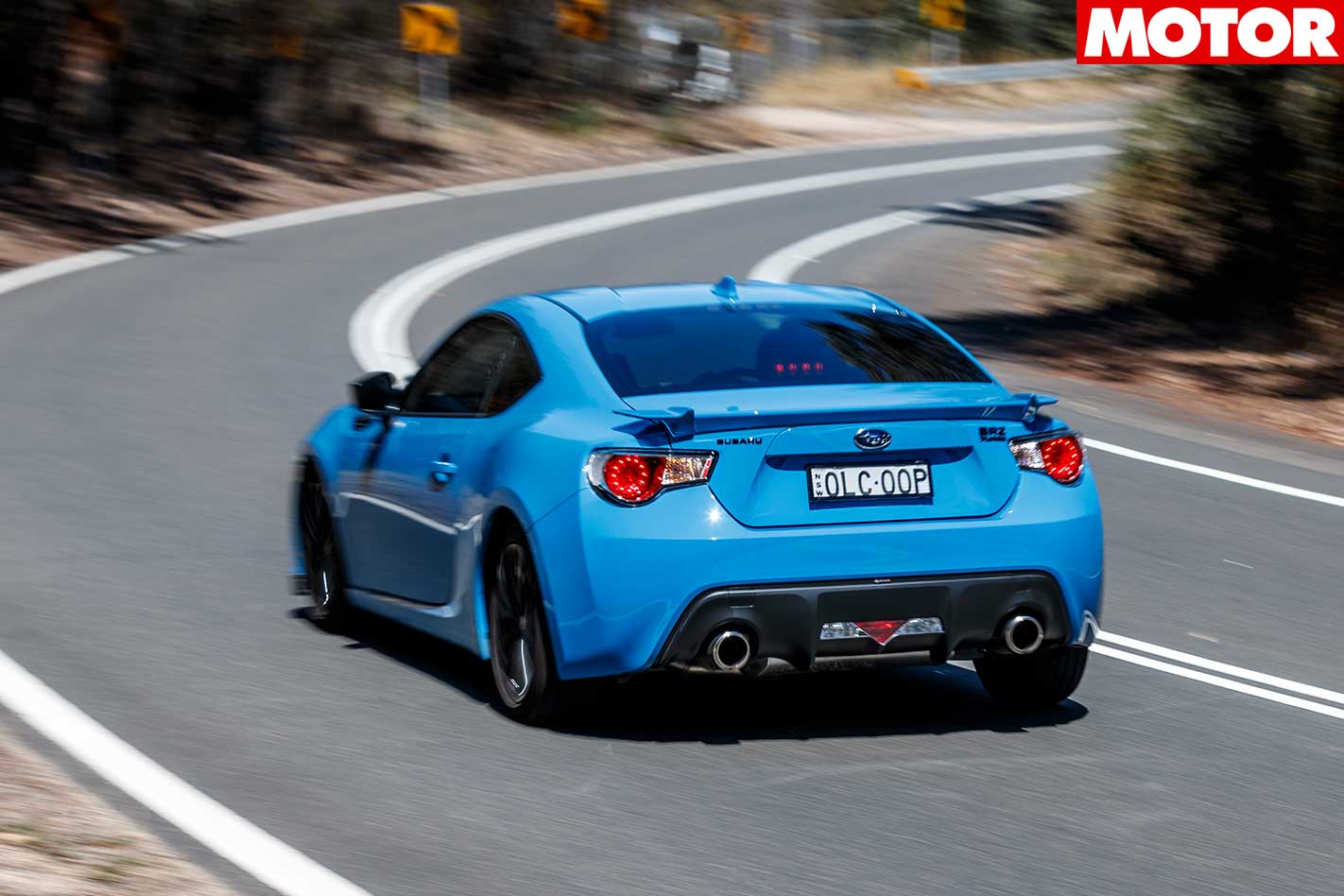
The suspension tune and the brakes on this tester are still stock – to be honest, I’d already be a bit further down the road with chassis improvements like better brake pads and brake fluid, and a perfunctory alignment at the very least, if this was my car.
“This kit is for the person who is frustrated that the car doesn’t have quite enough power, nothing more, nothing less,” counters Ghelis. “And not everyone wants to do suspension and brake modifications, either.”
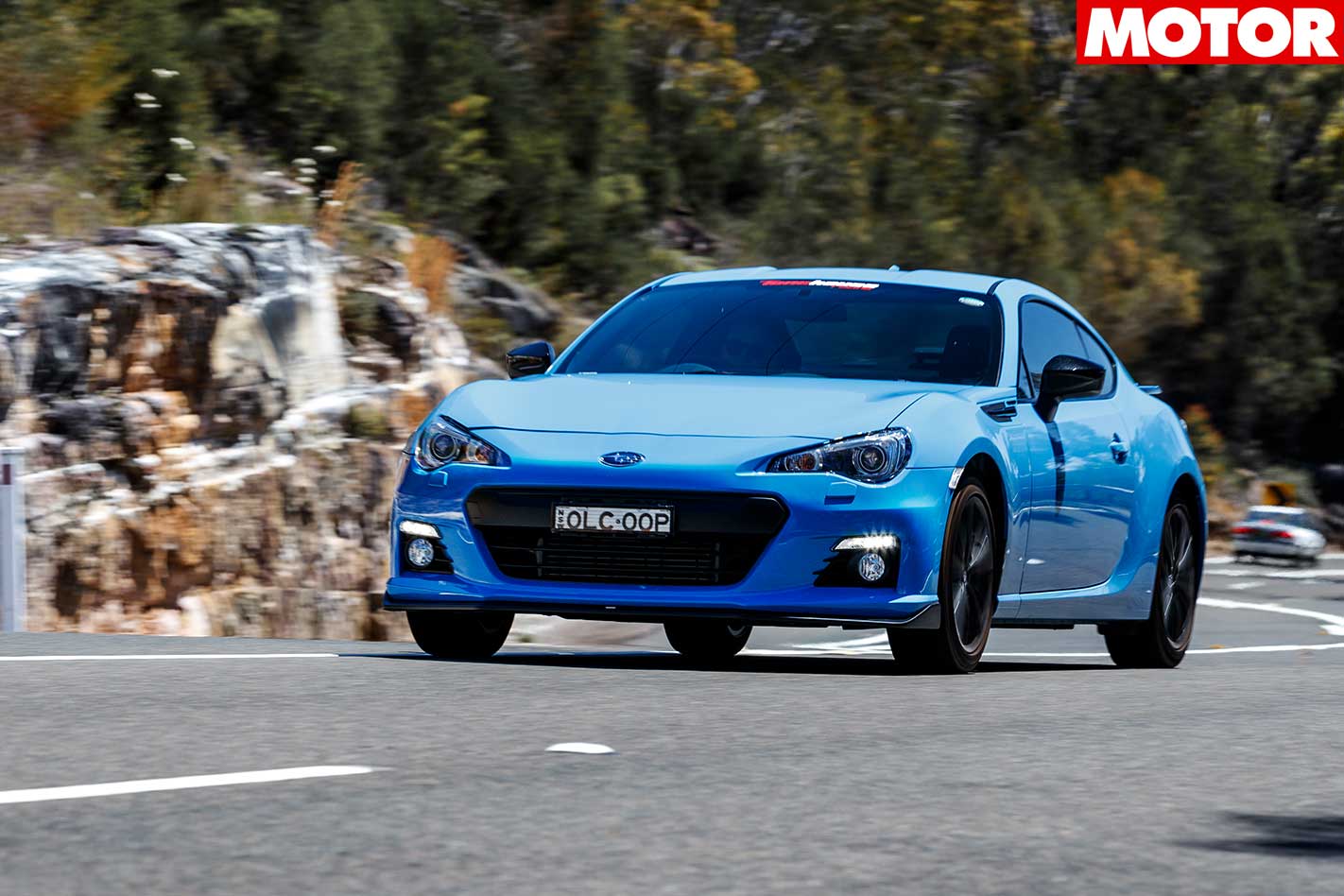
That’s the real beauty of this thing – adding a little more nets a comparatively massive gain. It’s all about balance at the end of the day. There’s more in this for sure – but only if the owner wants it.
The Tunehouse kit hasn’t turned the BRZ into a rocketship, but instead has transformed it into the nimble, agile, pacey little weapon we always knew lay within. You’ve got to be happy with that.
Blown or turbo? Tunehouse explains
When the BRZ/86 first dropped, it was all about supercharging – and Tunehouse got aboard that train, too.
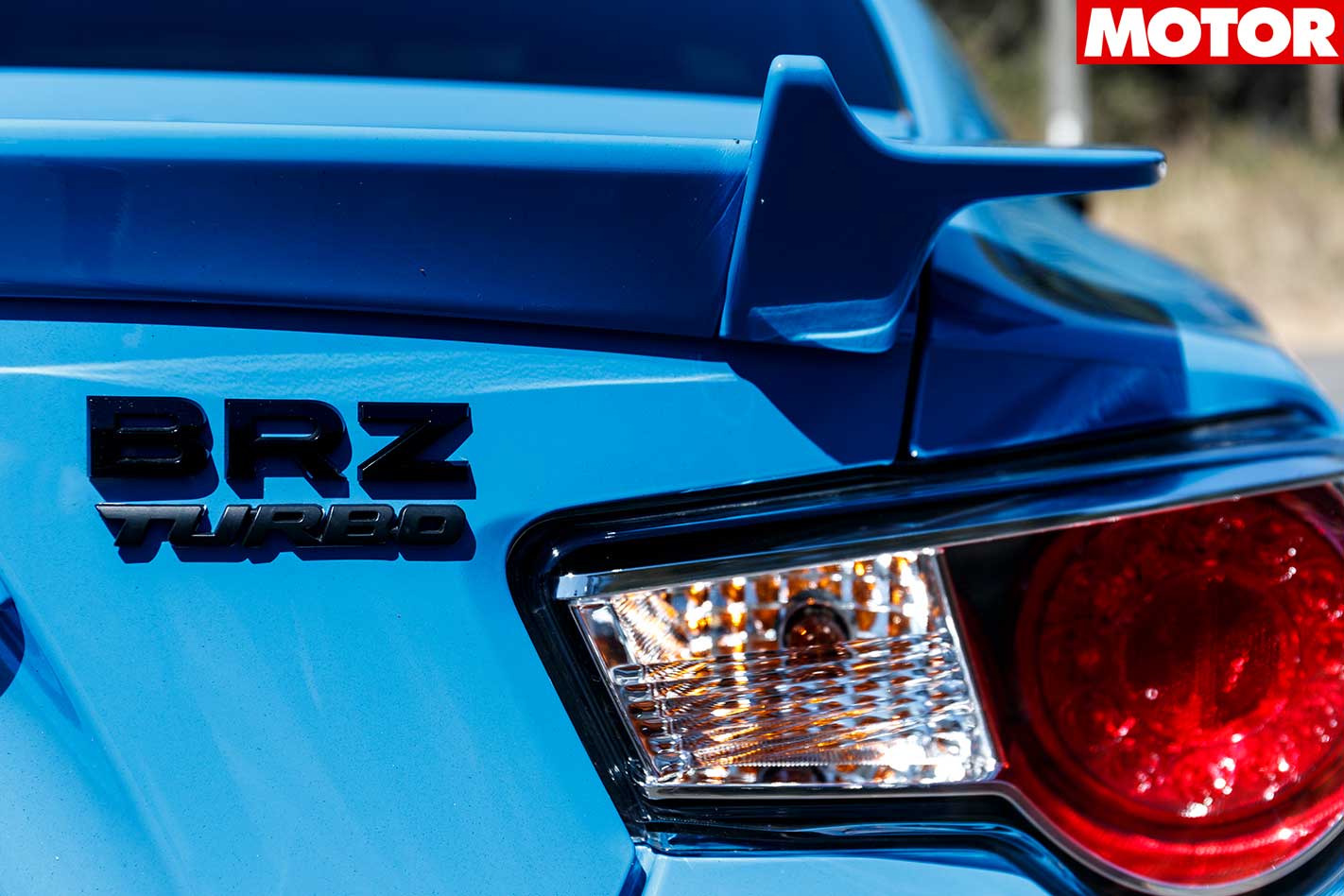
“When we decided to look at it again, we thought ‘if we’re going to do this, we’re going to make the best turbo kit, otherwise we’re not going to get involved’,” Ghelis explains. “I saw an opportunity to work in a niche part of the market with people who just want the best things. That’s always been my philosophy.
“The turbo is more efficient, too, and there’s no lag, it’s very linear. It’s also easier to expand a turbo installation. Back in 2012, we were a bit worried about how things would last, but when we got a bit more comfortable with the FA20, we realised we could go further.”
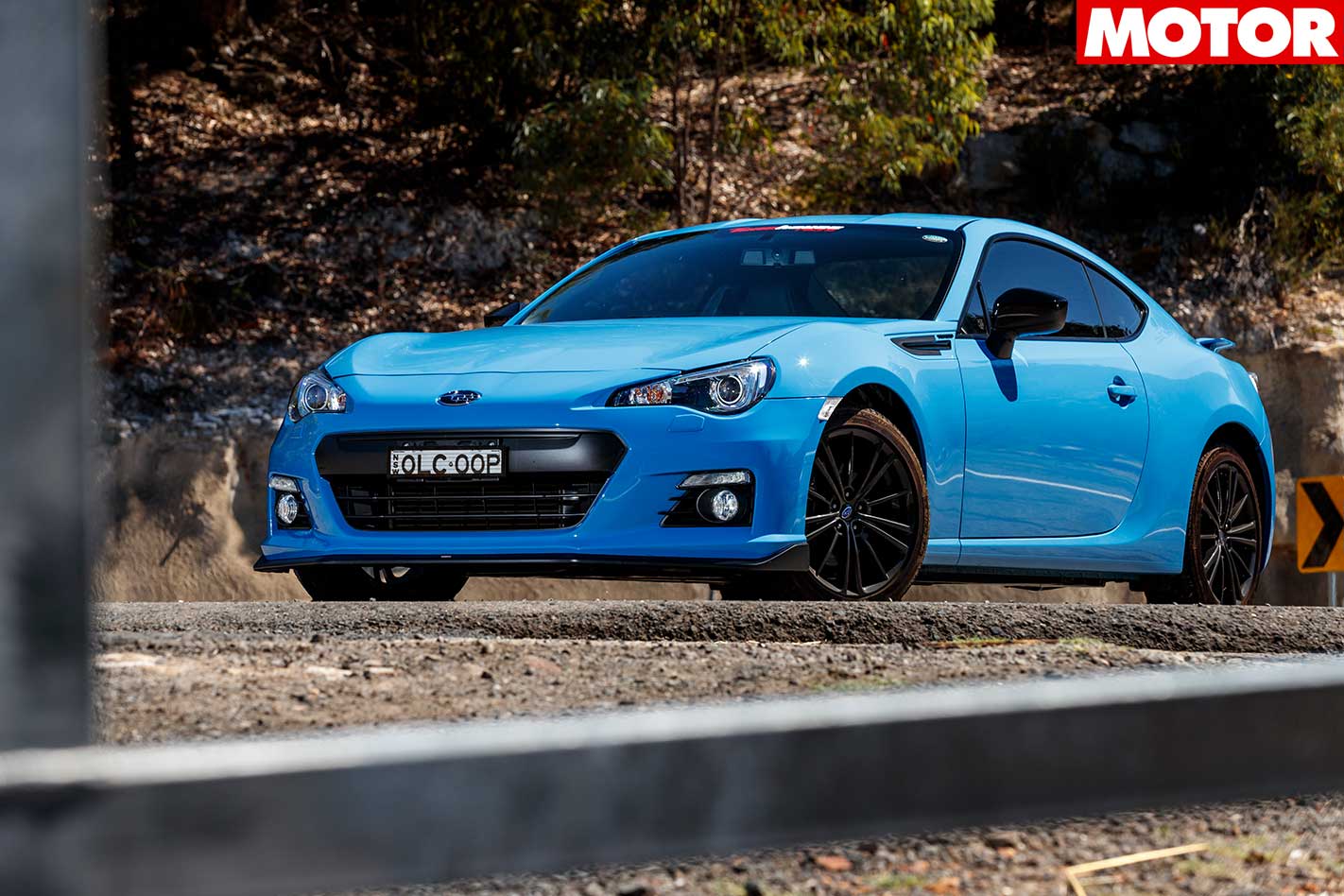
Pros: Excellent addition to BRZ; noise; fun Cons: Now too fast for stock tyres and brakes
