
Last year Australians bought more new cars than ever, with official sales figures compiled by VFACTS revealing that 1,189,116 vehicles were shifted out of showrooms across the country – a 0.9 percent increase on 2016, and the fourth consecutive record-breaking year of sales.
More significantly, 2017 was also the first year where SUV sales eclipsed those of regular passenger cars. A grand total of 465,646 SUVs rolled into driveways last year, compared with 450,012 hatches, sedans, wagons and sports cars. The balance of power is rapidly shifting.
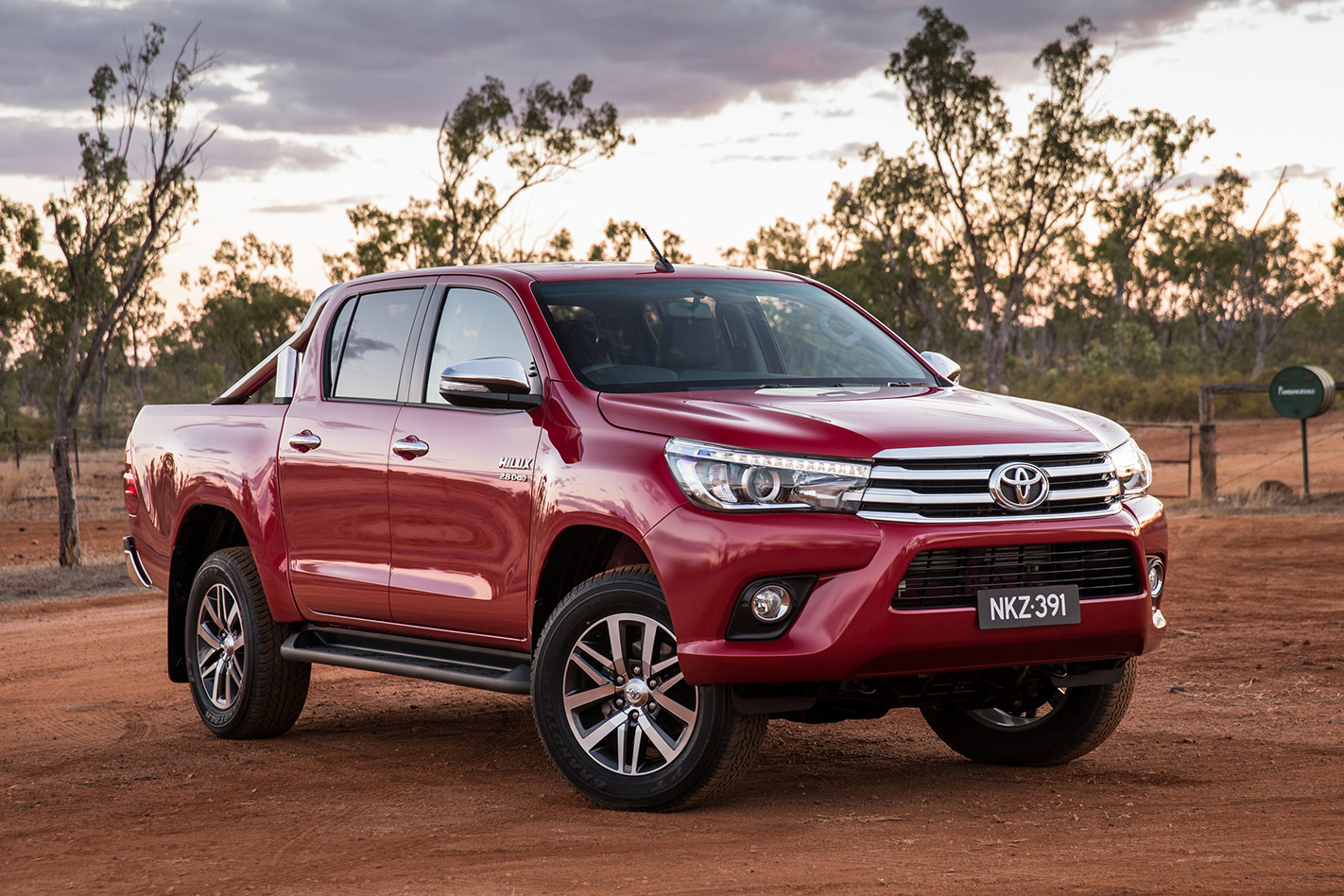
Second place also went to a ute, with the Ford Ranger taking the runner-up slot. The Toyota Corolla, long a sales leader, was relegated to third. Even the Mitsubishi Triton placed well, coming just 15 cars behind the Toyota Camry – another traditional favourite with Aussie motorists.
What did the rest of the bestseller list look like? Here’s WhichCar’s segment-by-segment breakdown:
SUV Small 1. Mitsubishi ASX – 19,403 2. Mazda CX-3 – 17,490 3. Nissan Qashqai – 13,495 4. Honda HR-V – 11,843 5. Subaru XV – 10,161
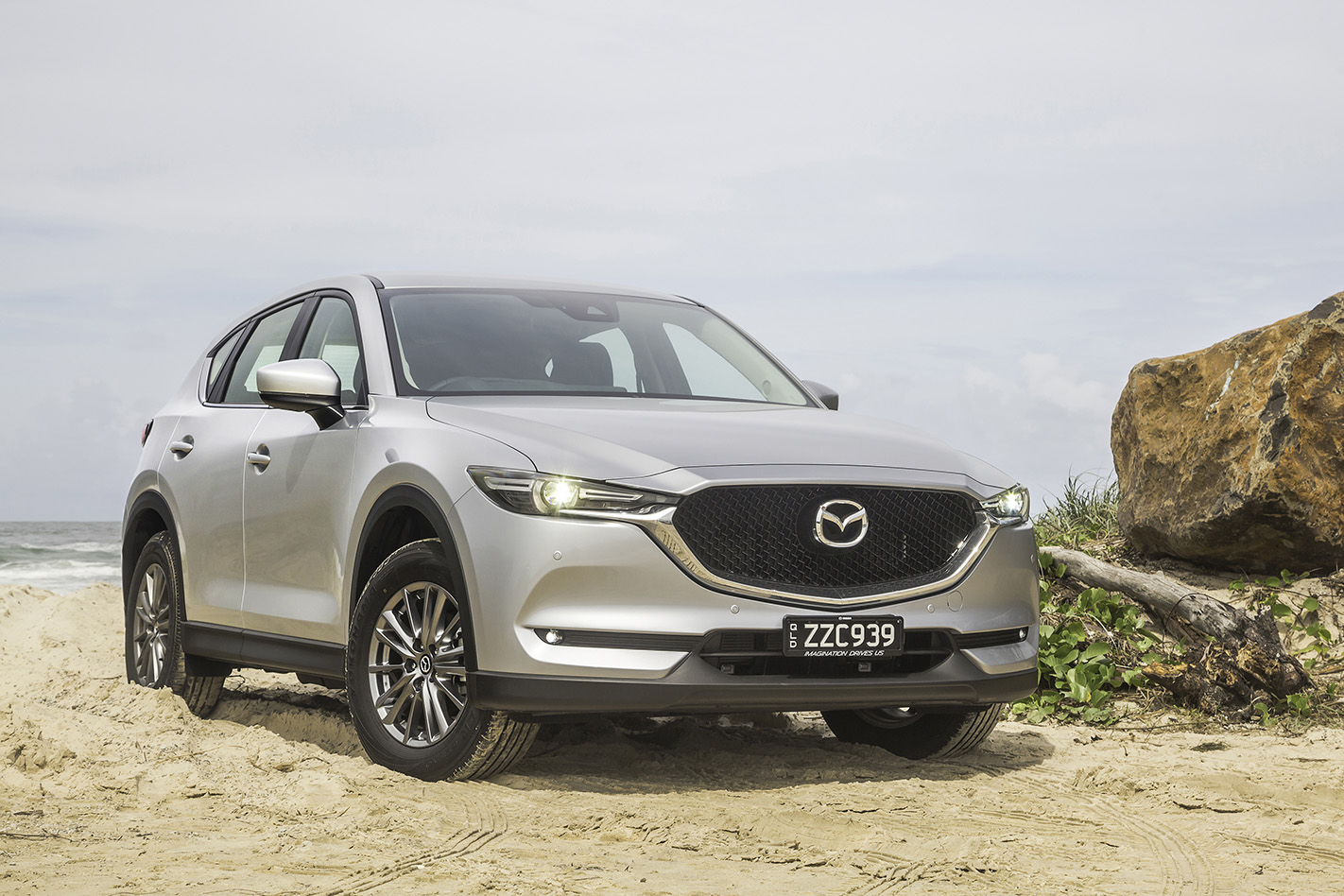
SUV Medium 1. Mazda CX-5 – 25,831 2. Hyundai Tucson – 23,828 3. Toyota RAV4 – 21,077 4. Nissan X-Trail – 18,955 5. Mitsubishi Outlander – 16,632
SUV Large 1. Toyota Prado – 15,982 2. Toyota Kluger – 12,509 3. Subaru Outback – 11,340 4. Holden Captiva – 9588 5. Mazda CX-9 – 9012
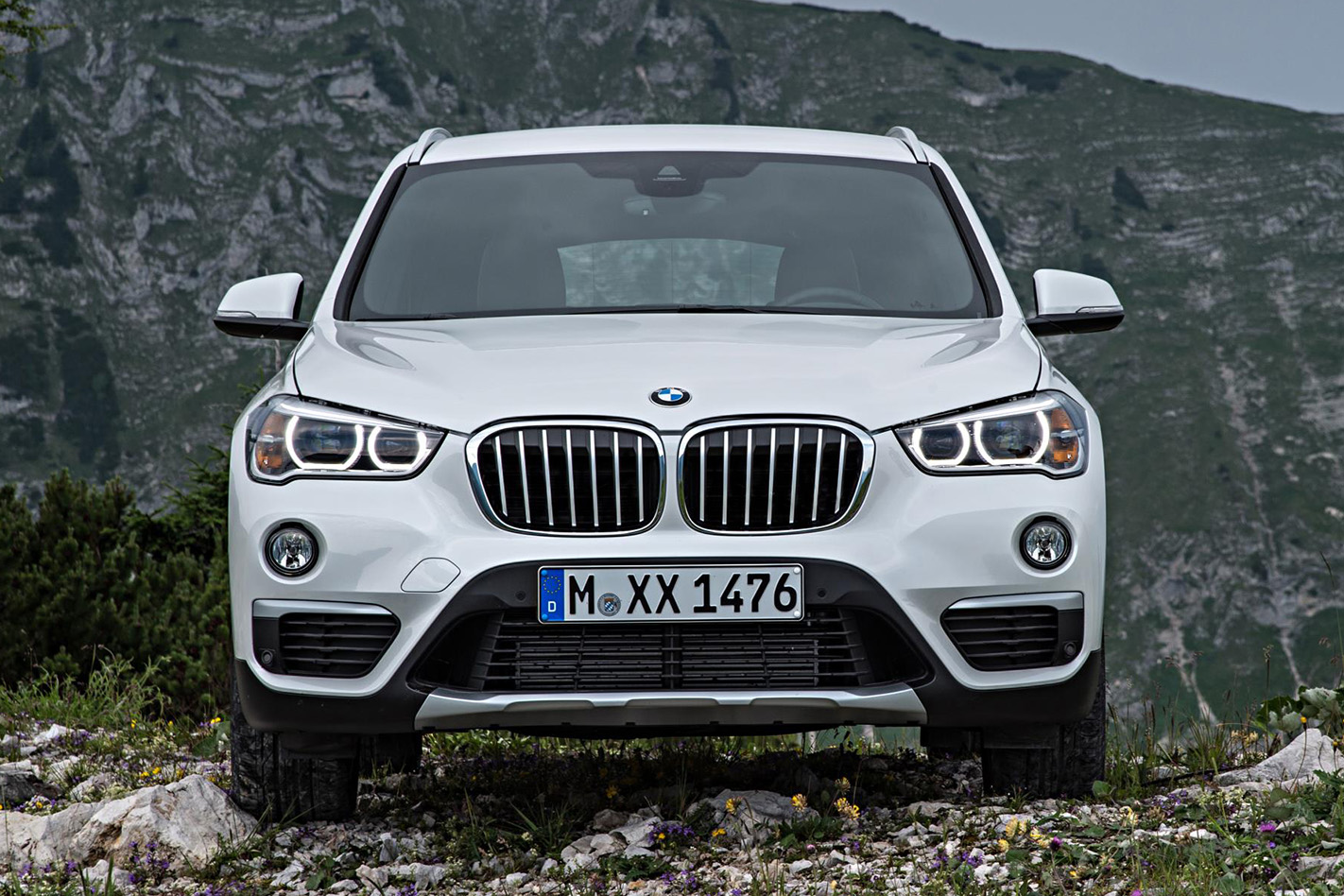
SUV Small (premium) 1. BMW X1 – 3658 2. Mercedes-Benz GLA-Class – 3321 3. Audi Q3 – 2843 4. Audi Q2 – 1999 5. Mini Countryman – 797
SUV Medium (premium) 1. Land Rover Discovery Sport – 4547 2. Mercedes-Benz GLC-Class – 4109 3. BMW X3 – 3671 4. Lexus NX – 3390 5. Audi Q5 – 3364
SUV Large (premium) 1. BMW X5 – 3582 2. Range Rover Sport – 2983 3. Audi Q7 – 2664 4. Mercedes-Benz GLE-Class – 2257 5. Lexus RX – 1858
Passenger Light 1. Hyundai Accent – 17,578 2. Mazda 2 – 12,101 3. Toyota Yaris – 11,226 4. Honda Jazz – 7301 5. Kia Rio – 6852
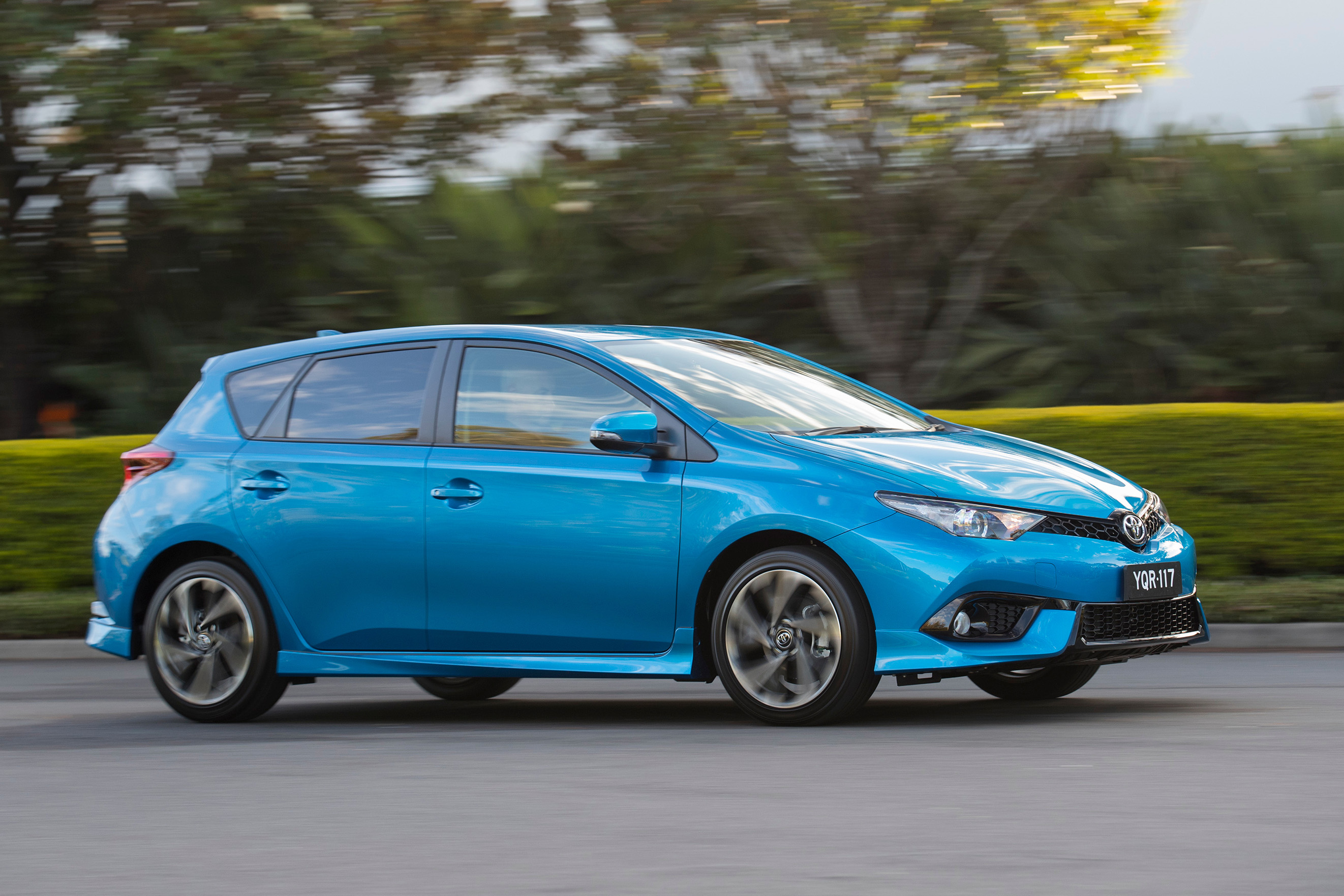
Passenger Small 1. Toyota Corolla – 37,353 2. Mazda 3 – 32,690 3. Hyundai i30 – 28,780 4. Kia Cerato – 18,731 5. Volkswagen Golf – 18,454
Passenger Medium 1. Toyota Camry – 23,620 2. Mazda 6 – 3647 3. Ford Mondeo – 2959 4. Volkswagen Passat – 2463 5. Subaru Liberty – 2023
Passenger Large 1. Holden Commodore – 23,676 2. Toyota Aurion – 2701 3. Skoda Superb – 984 4. Kia Stinger – 504 5. Ford Falcon – 210
People Movers 1. Kia Carnival – 5878 2. Honda Odyssey – 2184 3. Volkswagen Multivan – 1076 4. Hyundai iMax – 987 5. Toyota Tarago – 958
Passenger Small (premium) 1. Audi A3 – 5117 2. Mercedes-Benz A-Class – 4768 3. BMW 1 Series – 2105 4. Mercedes-Benz B-Class – 1330 5. Volvo V40 – 908
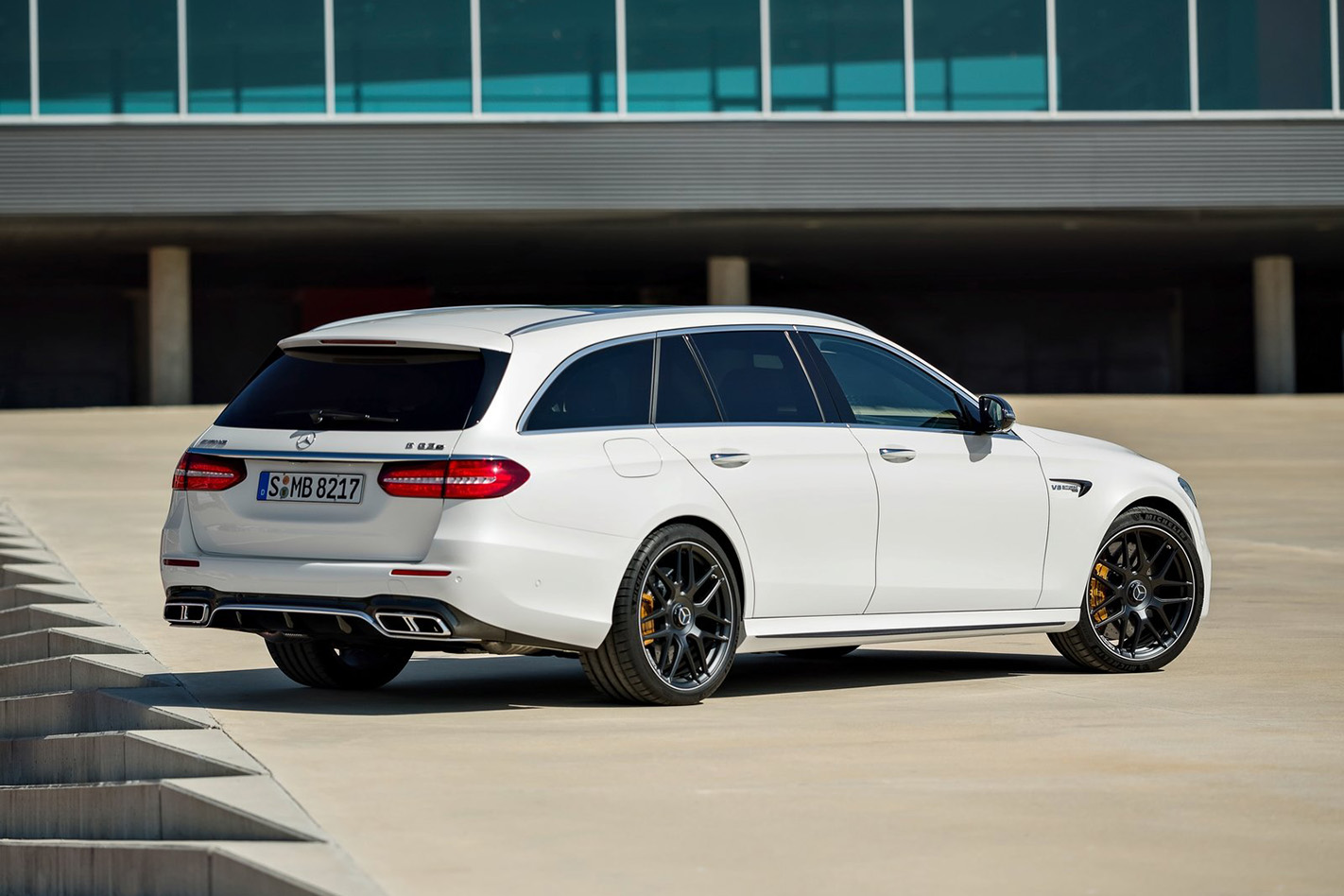
Passenger Medium (premium) 1. Mercedes-Benz C-Class – 8549 2. Mercedes-Benz CLA-Class – 3445 3. BMW 3 Series – 2584 4. Audi A4 – 2117 5. Lexus IS – 1524
Passenger Large (premium) 1. Mercedes-Benz E-Class – 1896 2. BMW 5 Series – 1245 3. Audi A6 – 315 4. Jaguar XF – 249 5. Maserati Ghibli – 219
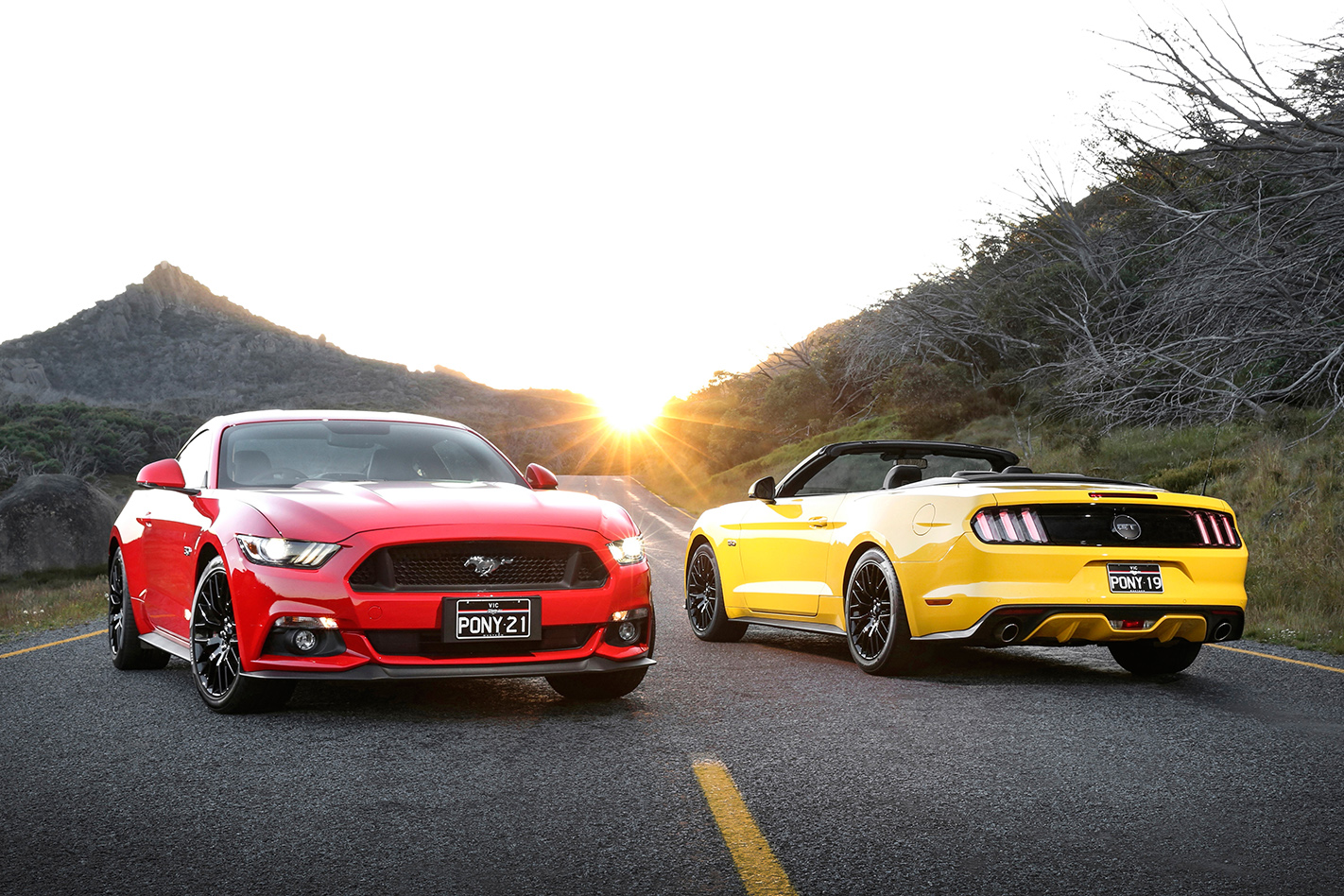
Sports Cars 1. Ford Mustang – 9165 2. Mercedes-Benz C-Class coupe/convertible – 2818 3. Hyundai Veloster – 1935 4. BMW 2 Series coupe/convertible – 1750 5. Toyota 86 – 1619
Utility 4×4 and 4×2 1. Toyota Hilux – 47,093 2. Ford Ranger – 42,728 3. Mitsubishi Triton – 23,605 4. Holden Colorado – 21,579 5. Isuzu D-Max – 17,717
Expect 2018 to see a spike in new electrified vehicles, with one of the first being the Honda Insight Prototype that’s set to make its debut at this month’s Detroit Motor Show.
The concept is a precursor to the all-new 2019 Insight, featuring the latest generation of Honda’s two-motor hybrid powertrain.
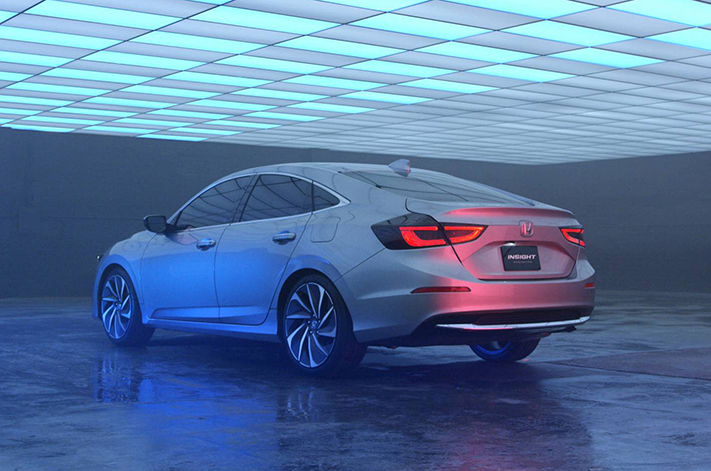
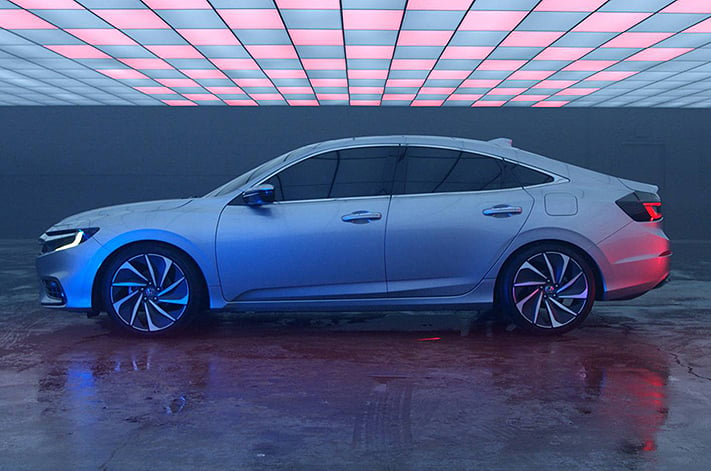
To be positioned above the Civic, the Insight will be an upscale five-seat sedan which, according to Honda, will bring electrified vehicles further into the mainstream – perhaps a tacit admission that previous generations of the Insight, which boasted Prius-like styling and compact packaging, were perhaps too niche.
This will be the third-generation of the US-built Insight since 1999. The original compact hatch was far from mainstream, with two doors and a lightweight, aerodynamic aluminium shell which covered the rear wheels making it look like a 1950s version of ‘the car of the future’. It was the first Honda vehicle run on Honda’s Integrated Motor Assist (IMA) hybrid system.
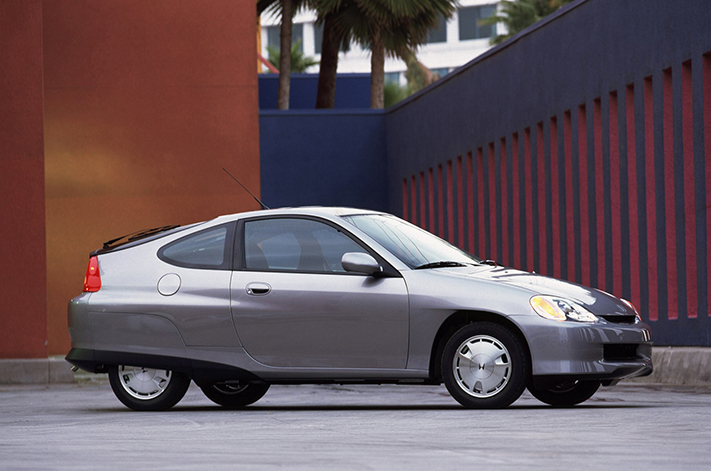
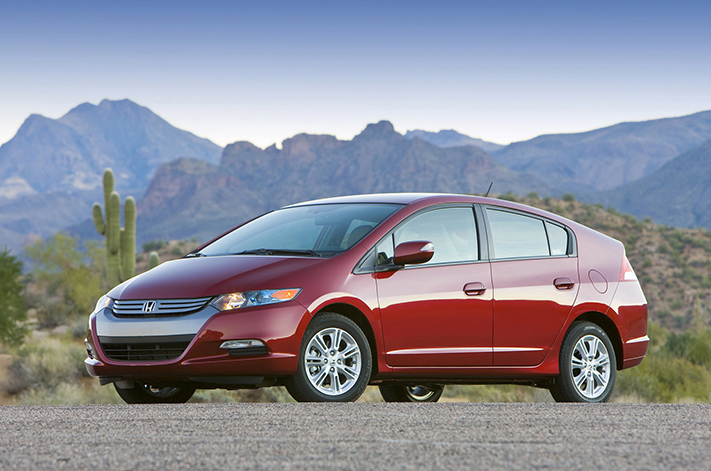
The second-generation Insight arrived 10 years later and boasted larger dimensions, four doors and a shallowly-raked rear hatch. It arrived in Australia in 2010 and for a while was the cheapest hybrid car available here, with its $29,990 price tag coming under the Civic hybrid and Toyota Prius. The Honda Jazz Hybrid and Toyota Prius C later undercut Honda’s hero hybrid.
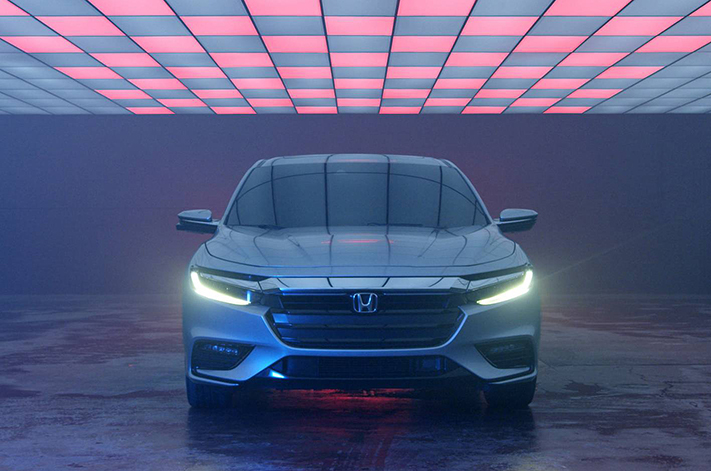
According to Honda the third-generation Insight takes an entirely new approach with the styling, packaging, premium features and performance to be “a hybrid vehicle without any inherent compromise”.
Honda America general manager Henio Arcangeli Jr says it will feature sophisticated styling, ample interior space and best-in-class performance
“You won’t have to be an electrification advocate to appreciate the new Insight – it’s a great car in its own right, independent of what’s happening under the hood.”
Performance figures will be revealed at its launch on January 15, but Honda says the two-motor hybrid system will offer fuel economy in line with other compact hybrid models, which in the case of the Toyota Prius is 3.4L/100km combined.
It’s as yet unclear whether Honda will also roll out a plug-in version to compete with the Prius Prime and Hyundai Ioniq.
The Insight will be part of Honda’s push for electrified cars to represent two-thirds of its global sales by 2030.
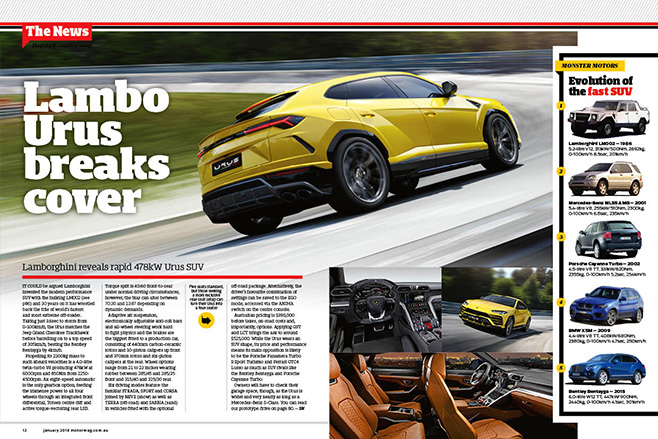
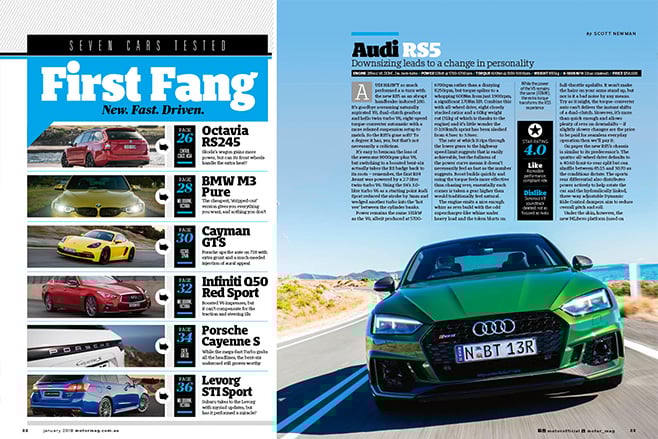
The newest issue of MOTOR is now on sale, and we’ve packed a lot into our first issue of the year.
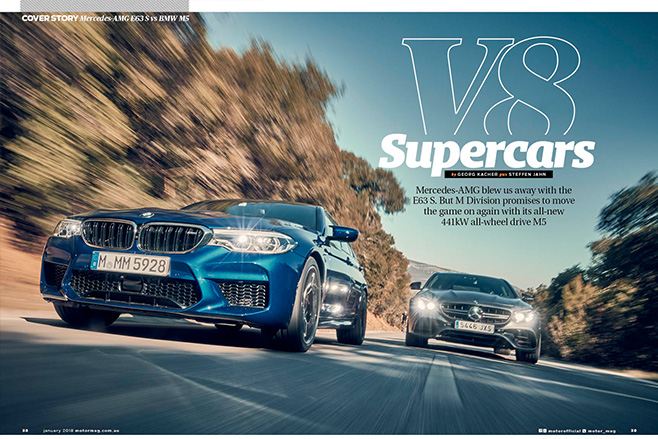
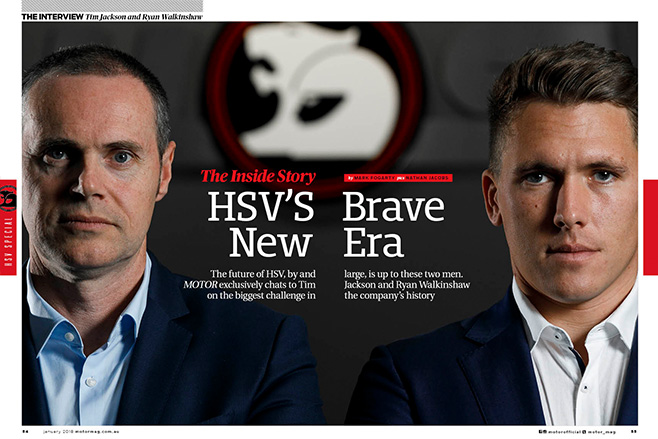
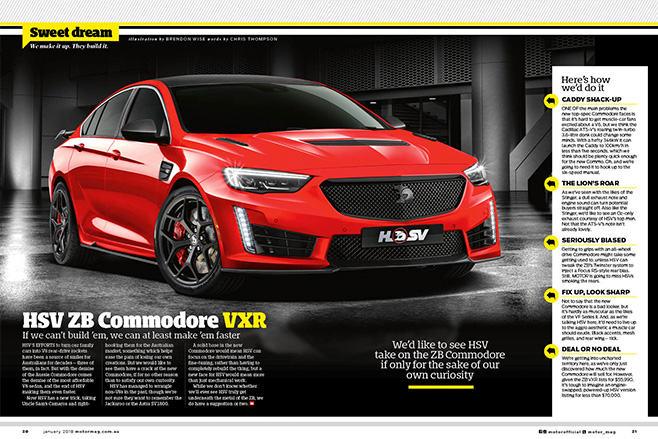
From our first fang in the new M5 since its release, to an in-depth chat with HSV head honchos Ryan Walkinshaw and Tim Jackson, the January 2018 issue is one not to miss.
So, here’s a look at what you’ll find on between the pages…
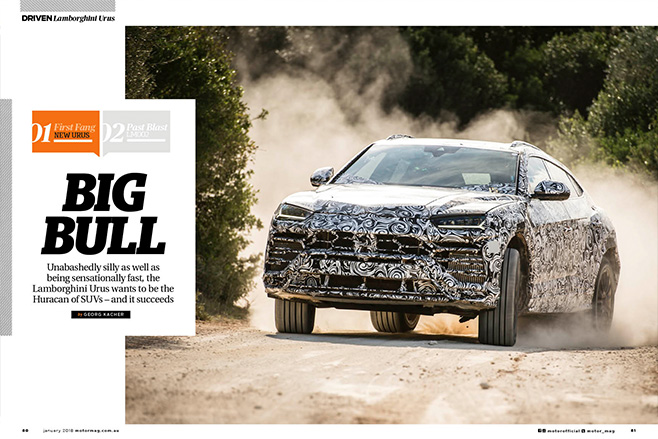
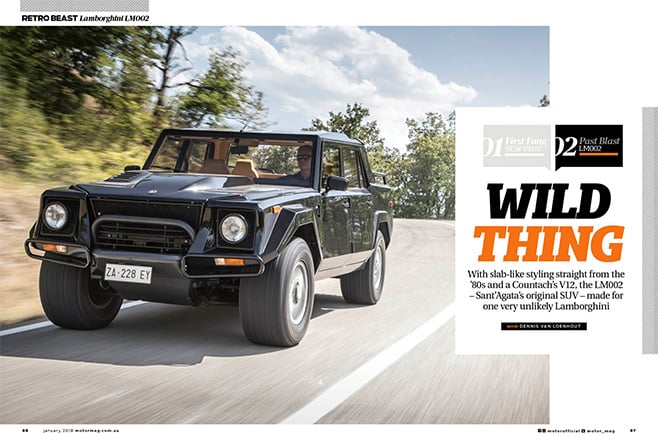
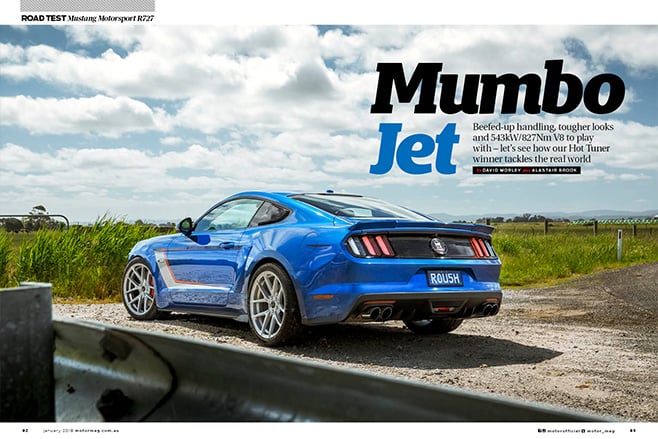
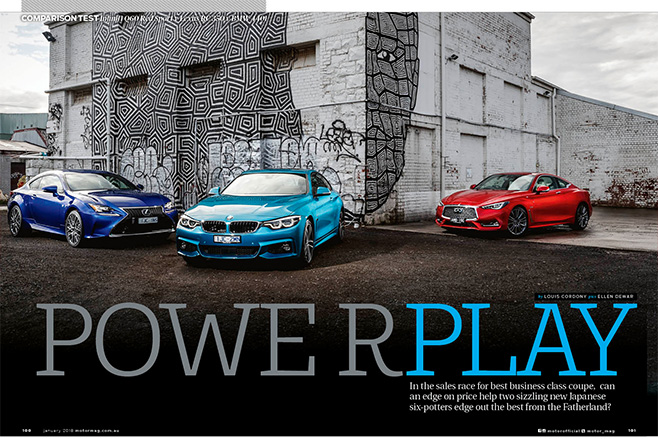
Ford’s timing couldn’t have been better, really. With its own Aussie-made rear-drive V8 copping the last rites last year and the Commodore V8 due to be nailed into a box right about now, the perfect storm had been created for a car that could fill that philosophical gap.
Let’s face it; not everybody wants a Chrysler 300 SRT and not everybody can afford an AMG E63 S or a BMW M5. Yet, for those of us who love our engines with eight pots and prefer to let the rear wheels do the torqueing, the demise of the two local heroes sadly left us with very few options to choose from.
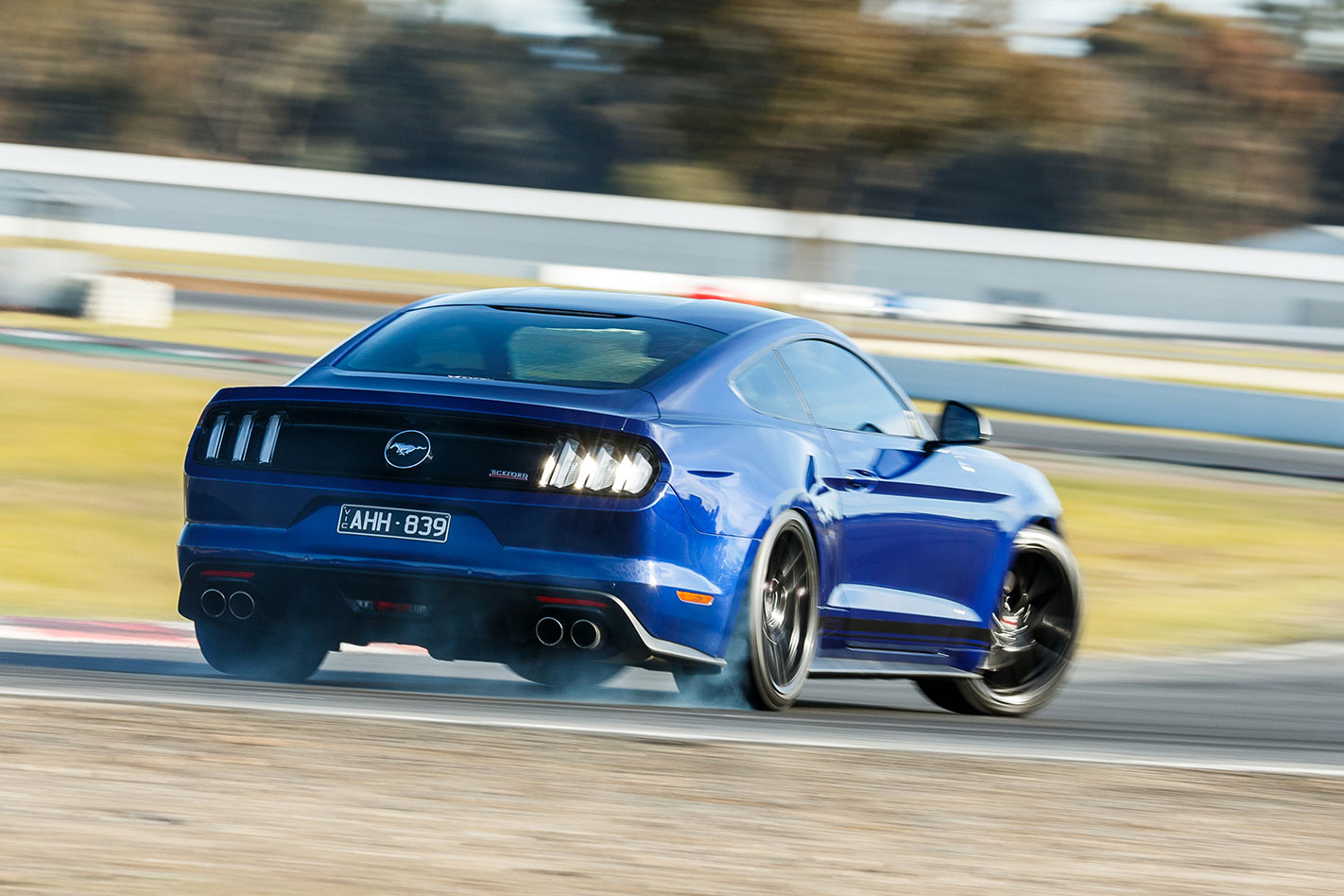
Until the Mustang, of course. Launched in late 2015, the ’Stang was the car that convinced us that life could go on. It was affordable and it was a proper V8 from a country which, although currently run by an ex-reality-TV host with a dead squirrel perched on his bonce, is one that nevertheless ‘gets’ proper cars. It might have had just two doors, but then, so did cars like the Holden Monaro and the Falcon hardtop; cars that were instrumental in creating our love of the V8 genre.
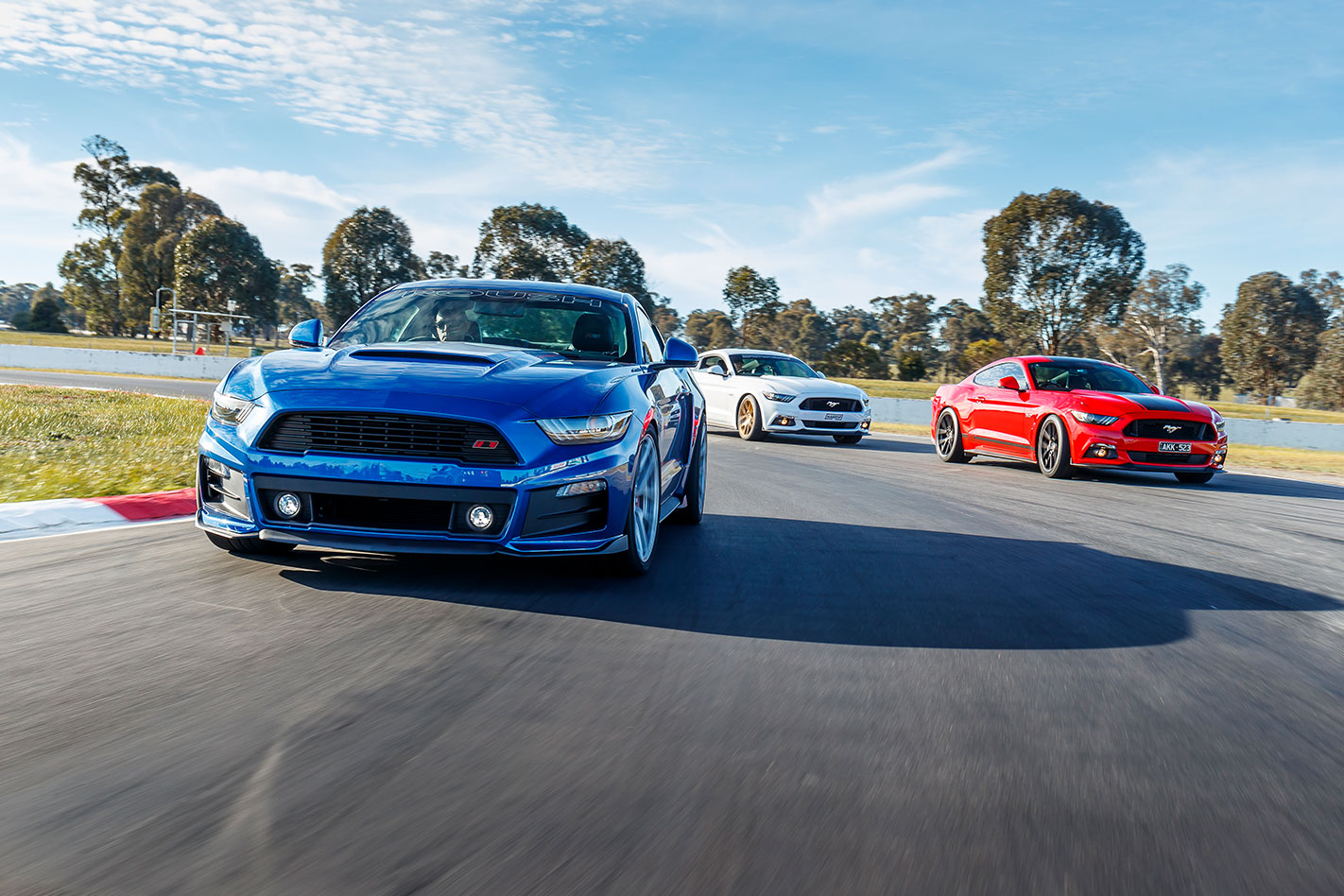
But here’s the killer punch: globally, we are among the greatest Mustang lovers of all time. Big statement, I know, but consider that in terms of total sales, we are currently third in the world behind the US and Canada. And if the curve keeps ramping up, we’ll soon overtake Canada. And that’s not per capita; that’s in outright sales numbers. Ford Oz hasn’t had a sniff of a sales phenomenon like this in decades (if ever). And we’ve rarely taken a particular car to our hearts and garages as fervently as we’ve embraced the born-again Pony.
It’s why you now see Mustangs everywhere. And it’s why the Pony car is the ‘big thing’ within the tuning industry. It has attracted the attention of the best tuners this country has to offer and, for the majority of them, the Mustang is now their bread and butter. Which sounds like a horse sandwich.
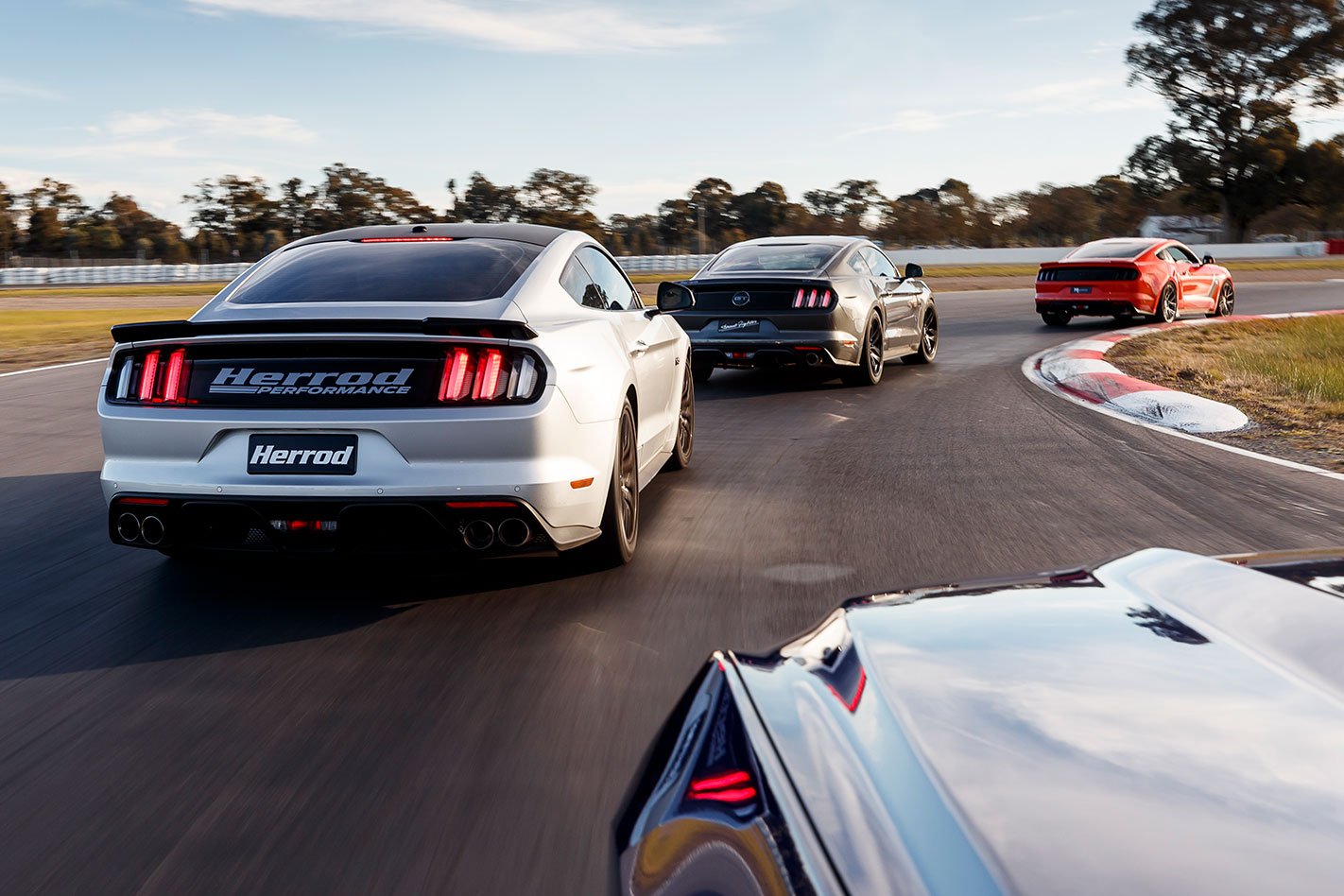
And then there’s the main event – the Mustang GT. And again, the tuner world seems a bit split over which way to go with the thing. In the recent past, we’ve experienced twin turbocharger set-ups and centrifugal pumps, but by and large, the tuner world seems to have arrived at the positive displacement blower as the solution to sinking the spurs into the donk. But the Coyote also seems to have renewed tuner interest in the concept of a high-comp, big-stick combo, so a couple of tuned atmo cars turned up as well.
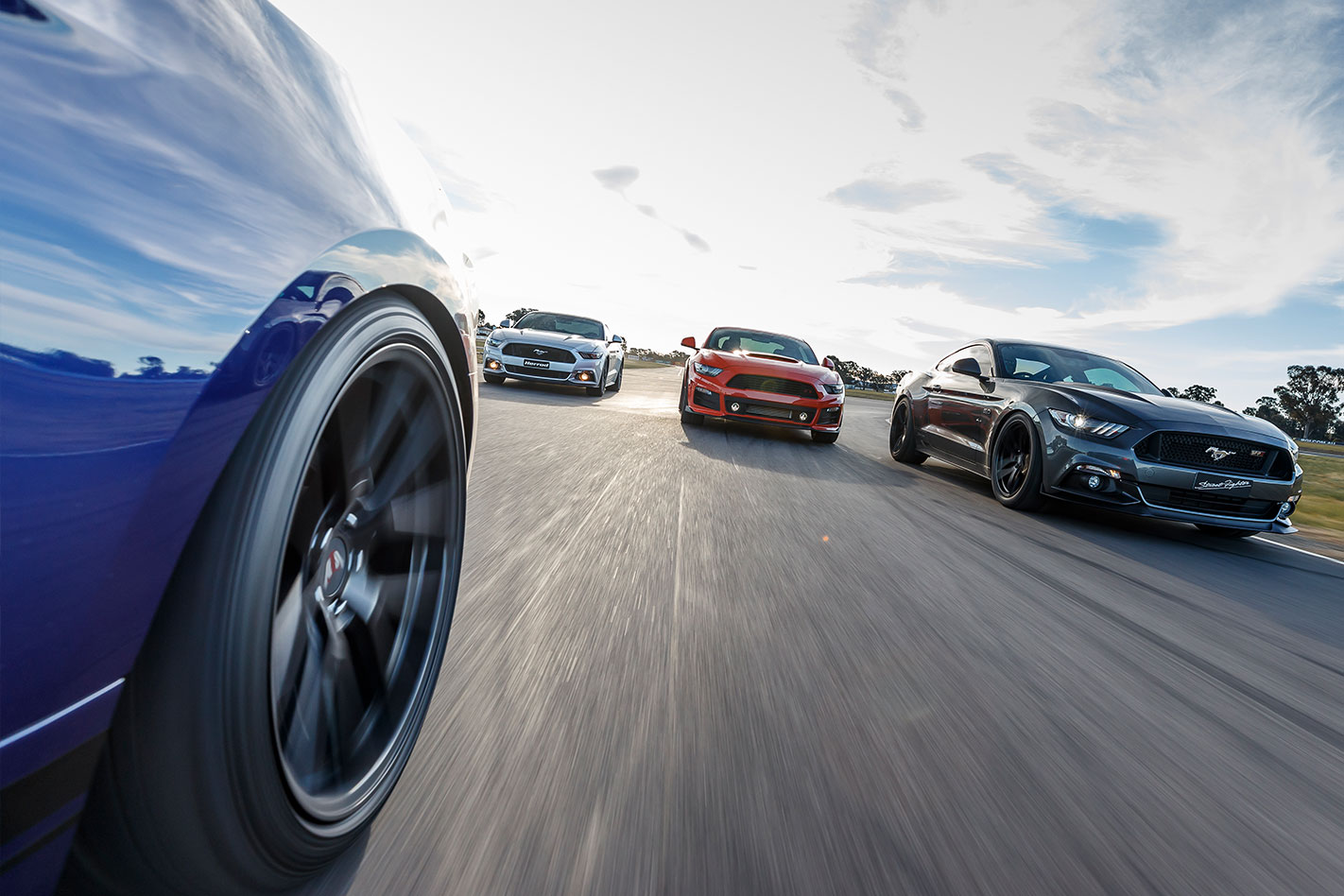
And there’s no better sentiment than that to explain why Motor’s Hot Tuner pursuits have become a fixture and why, this year, it’s all about Ponies.
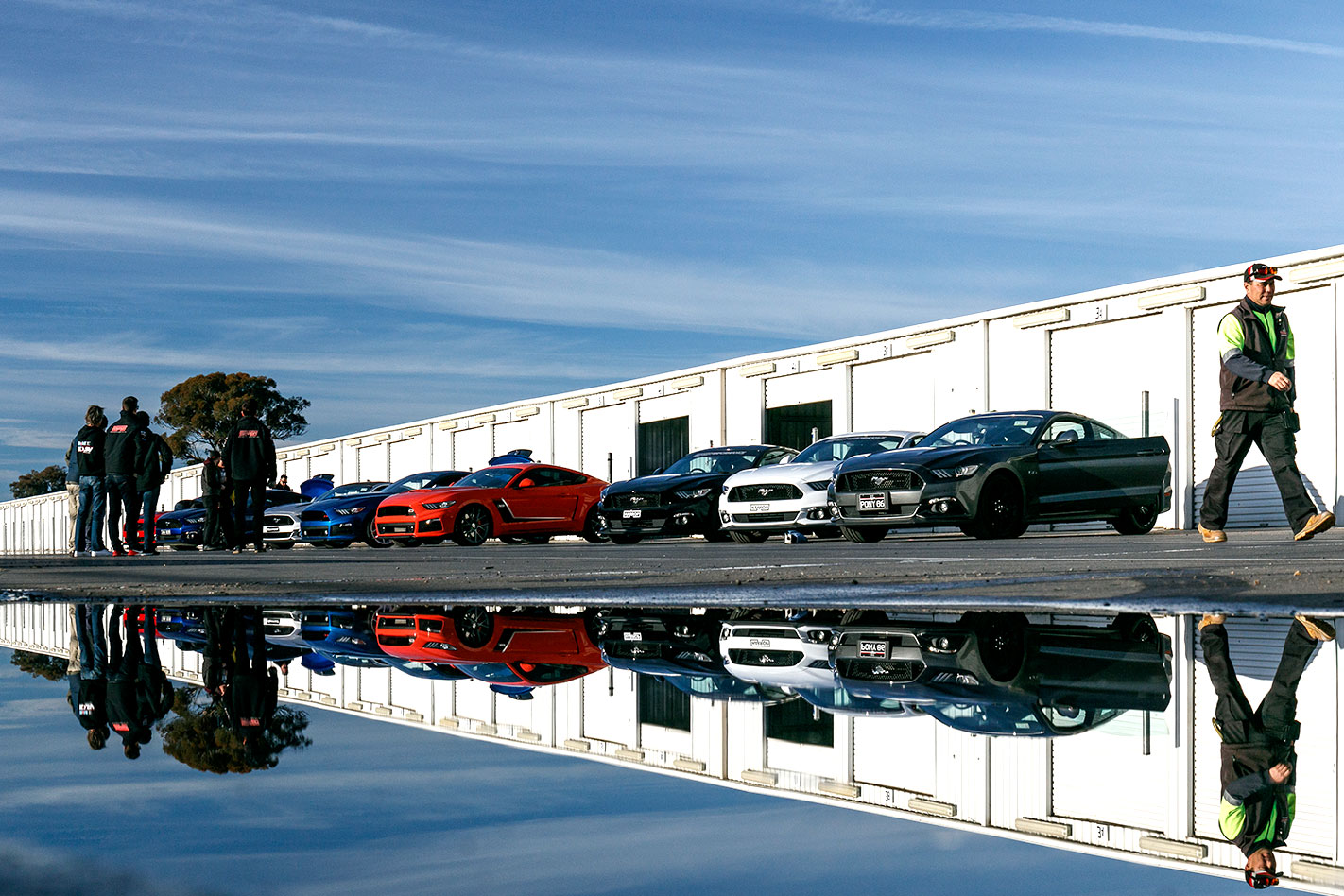
Meet the Contenders for the Ford Mustang Hot Tuner 2017 Crown
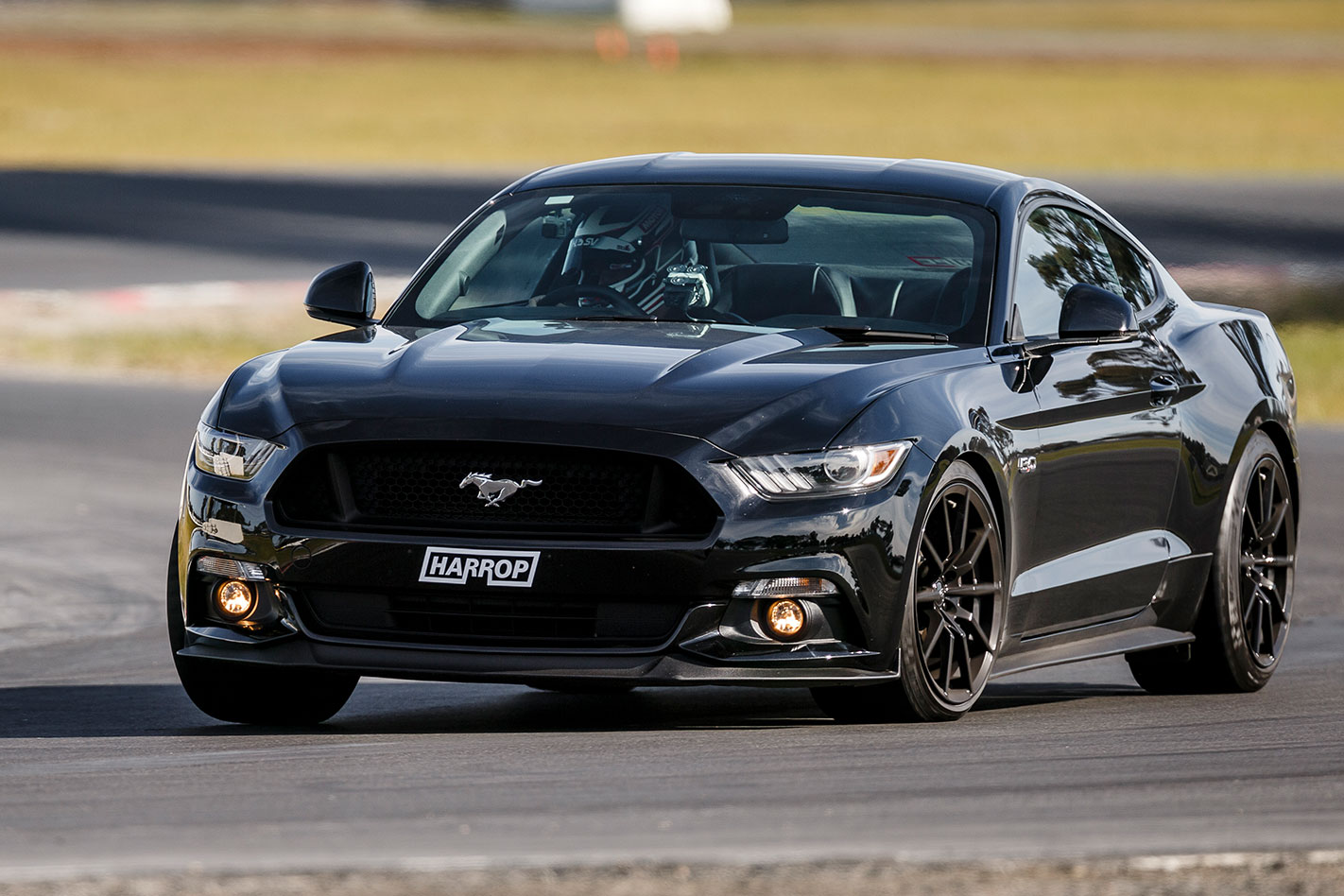
1. Harrop Engineering Mustang GT (Atmo V8) Proof that atmospheric delights are just as good
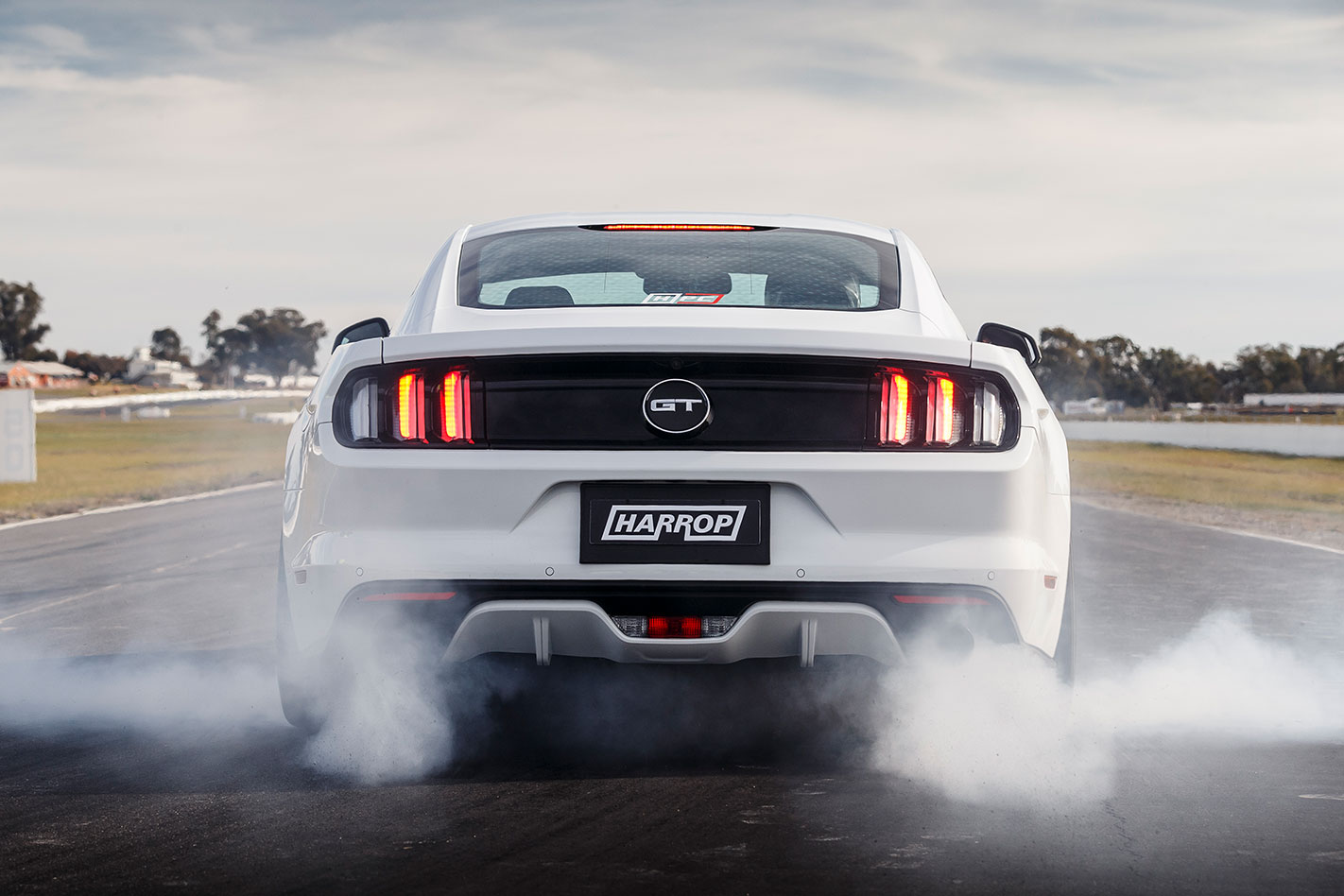
2. Harrop Engineering Supercharged Mustang GT Monsters the strip and anything before it
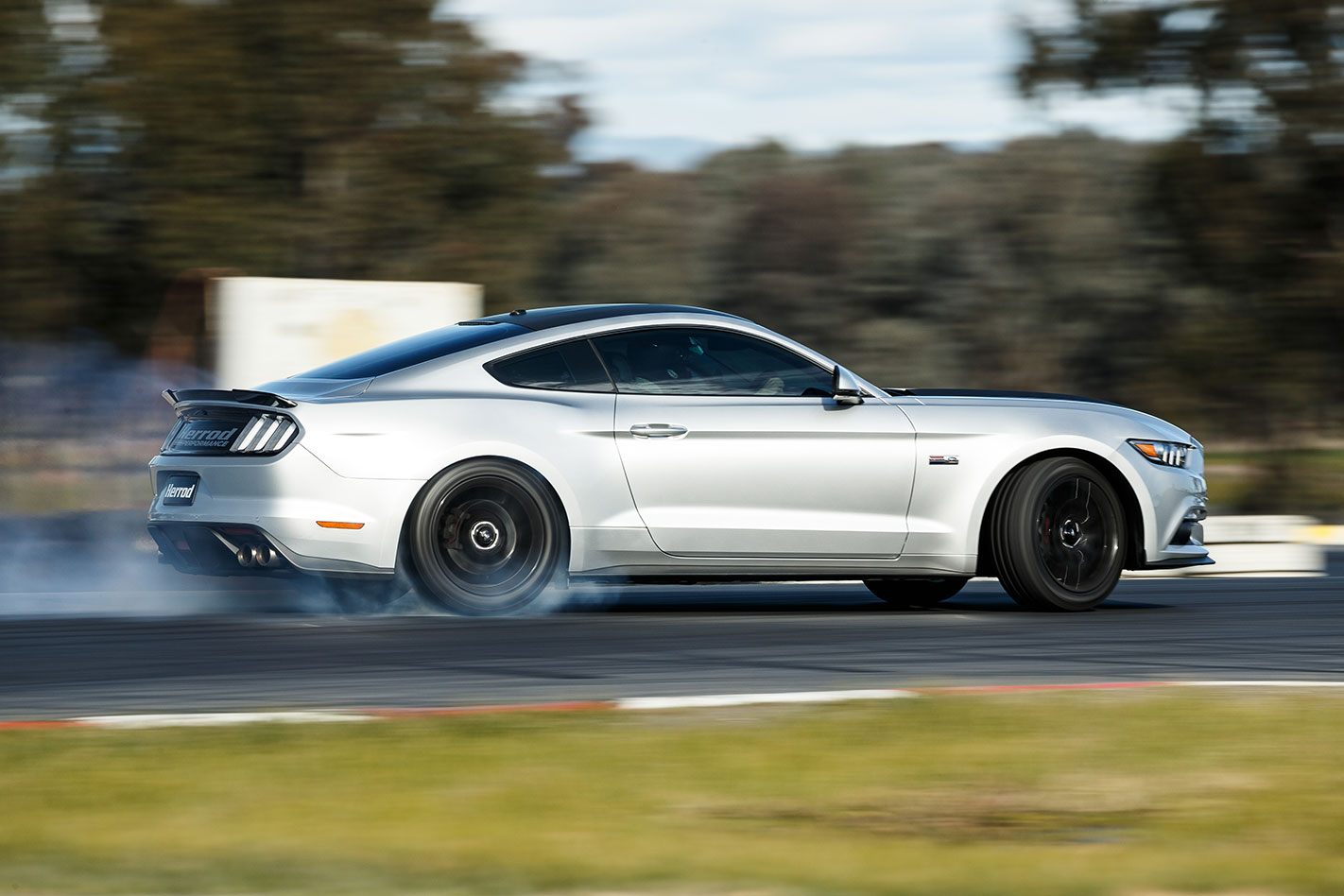
3. Herrod Performance Compliance Pack (Supercharged V8) Blown stealth fighter with road manners
4. Mustang Motorsports Ecoboost MM-R350T Force-fed four receives boost and handling nous
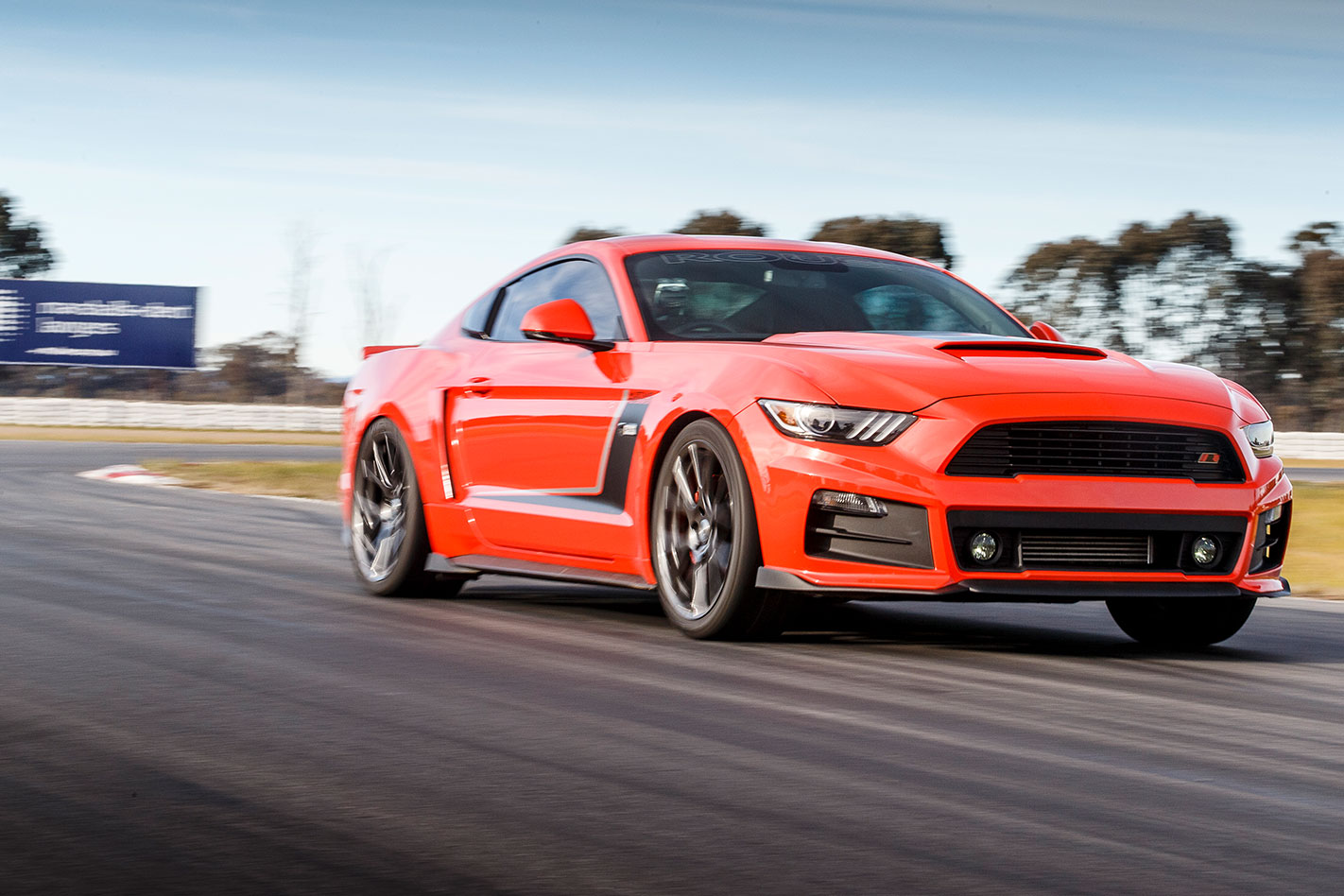
5. Mustang Motorsports MM-R727 (Supercharged V8) Added whine transforms GT into a track weapon
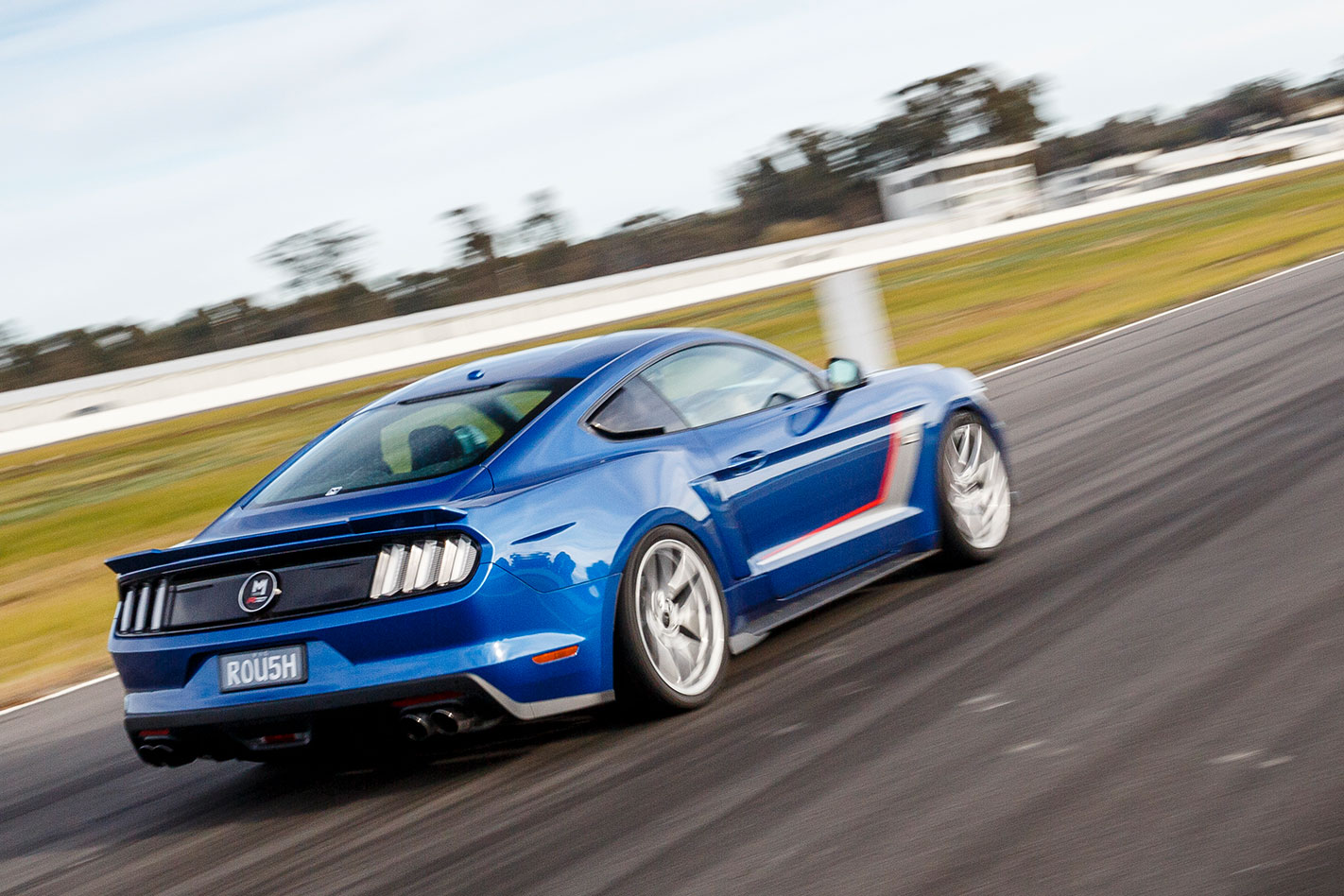
6. Streefighter SFP II Mustang GT (Atmo V8) Free-breathing brawler hardly in sibling’s shadow
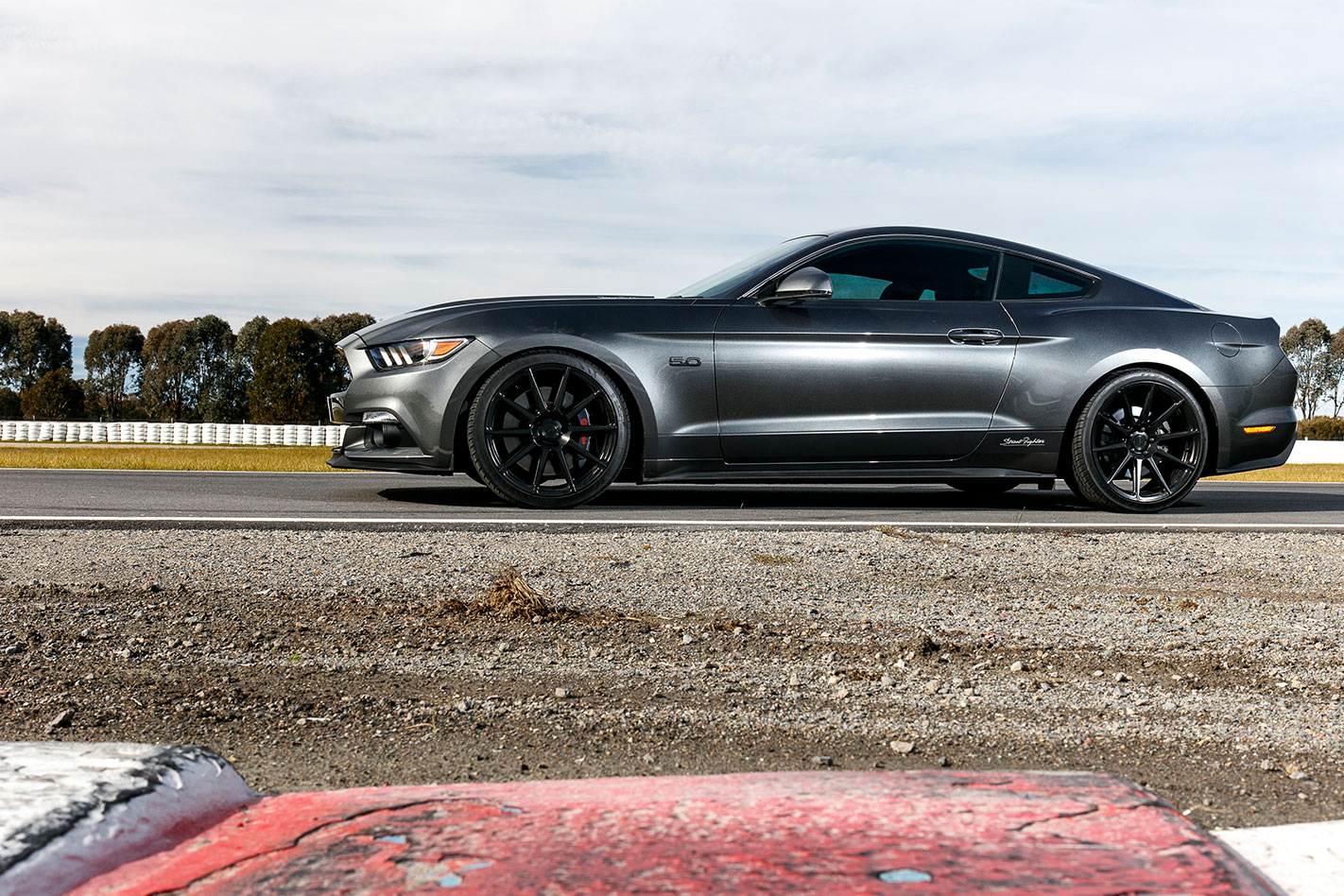
7. Streetfighter SF700S (Supercharged V8) Feral filly has all the horsepower in the world
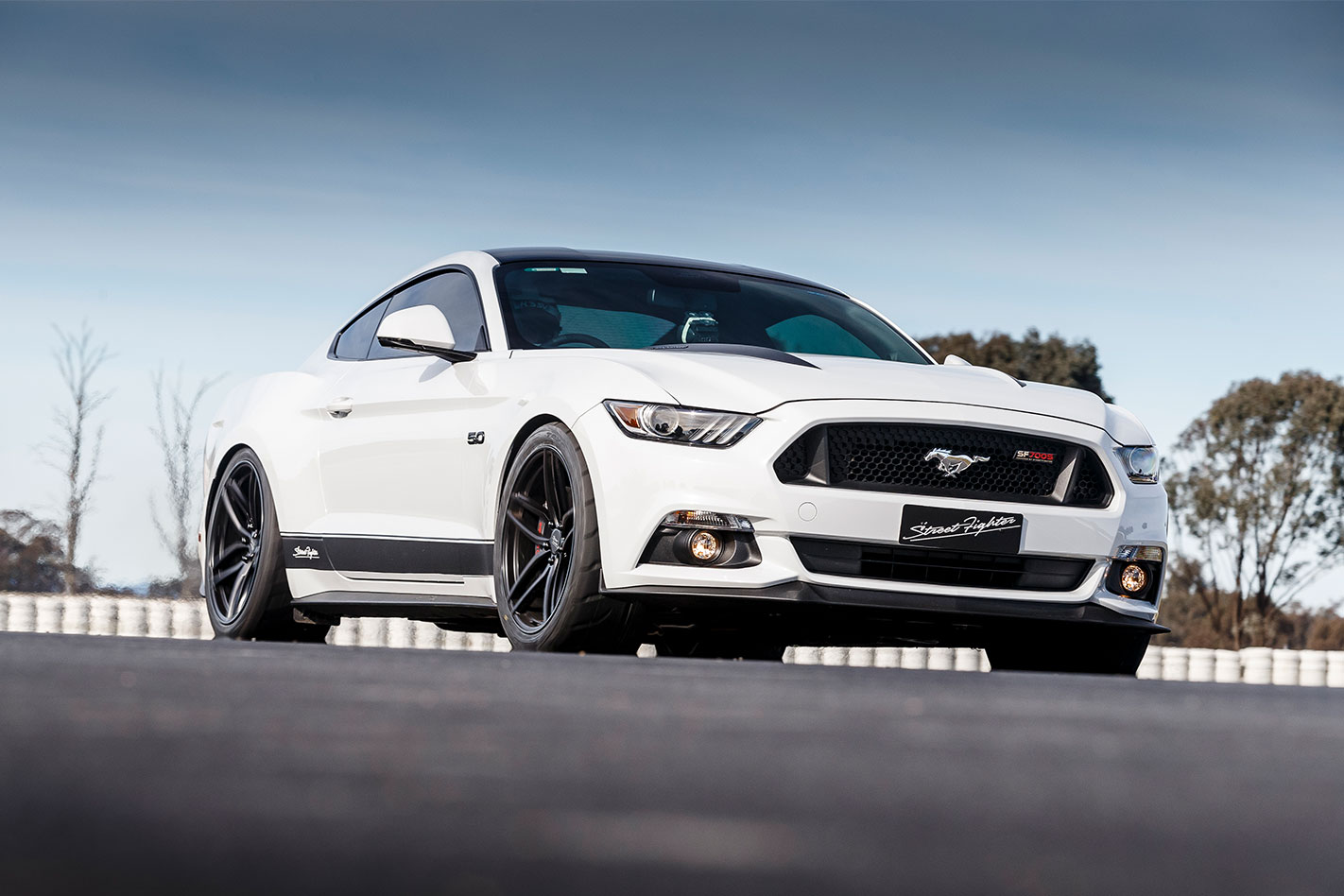
8. Tickford 360 Power Pack (Atmo V8) Proves to be more than the sum of its parts
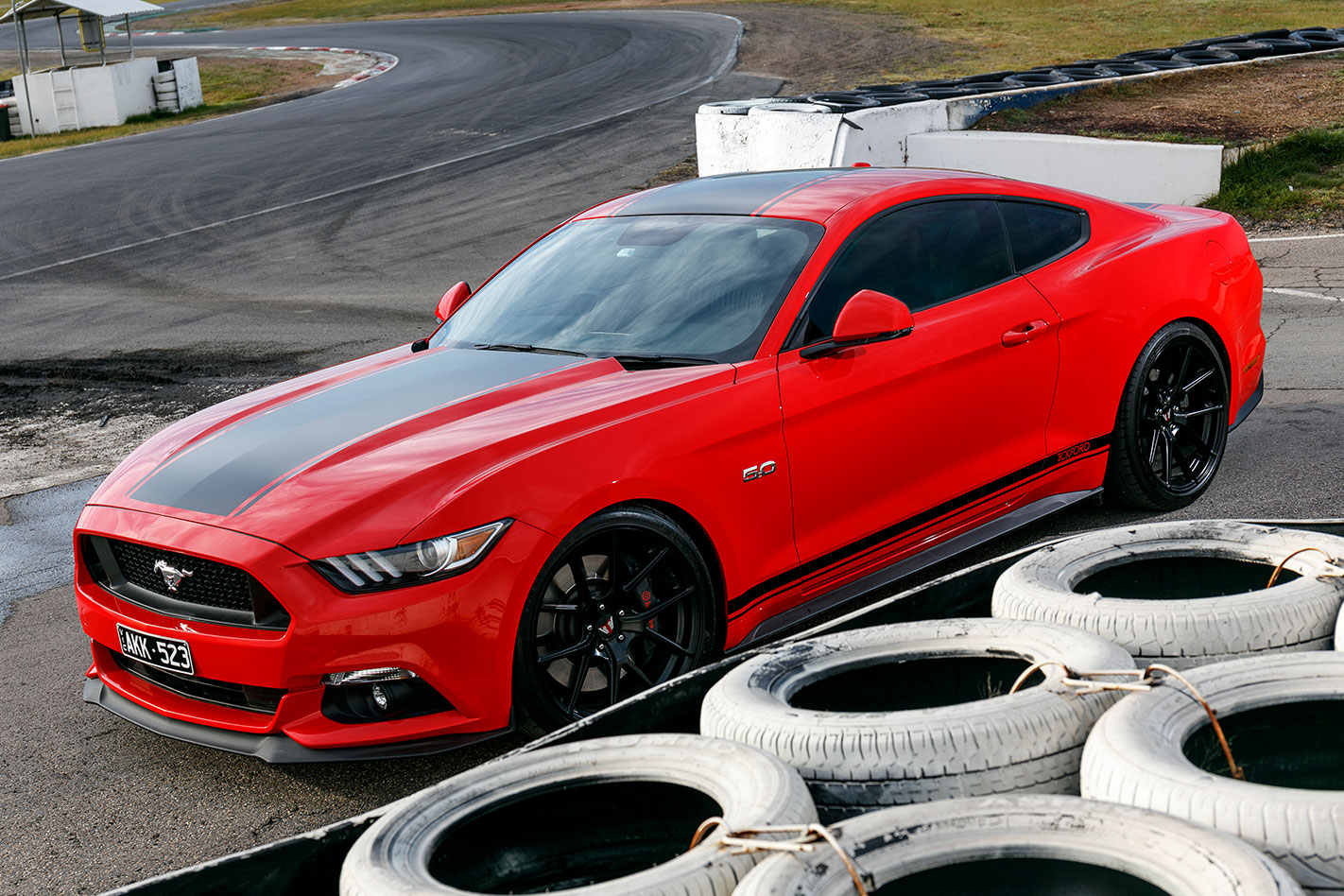
9. Tickford Mustang Ecoboost Proof that the tuners can best the factory outfits
How we dish out the points
LISTEN UP, this is the science bit. In order to rank this motley crew in terms of their outright performance we turned to a modified version of our tried and tested Bang For Your Bucks formula.
We feel these percentages give a fair and accurate balance between straight-line speed and handling ability. Each category is also weighted with the best and worst car receiving 10 and one point respectively and the others spread between based on the strength of their performance.
Finally, we also used a standard Mustang GT in order to set a benchmark in each discipline.
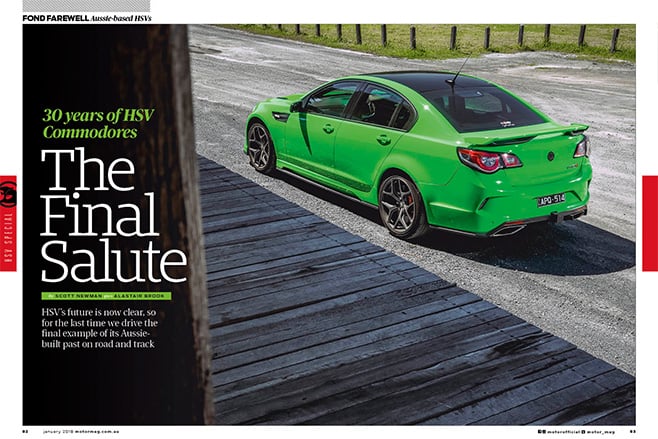
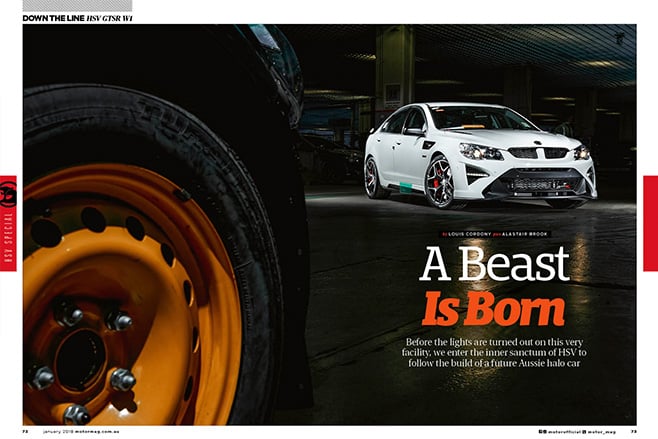
HSV has announced it has completed its last HSV GTSR W1, marking the end of its 30-year history of Commodore-based cars.
The last W1 to roll off the Clayton assembly line, bearing the build number 275/275 of the Australian allocation (the rest of the 298 built went to New Zealand), is finished in the iconic ‘Light My Fire’ orange, and will remain part of HSV’s collection.

The final W1 was completed on December 29th 2017, making it the 90,114th vehicle built by HSV according to its official records.
It’s manual, as all W1s are, and wasn’t given any options, though the only extras available for a W1 are either a black roof, or a sunroof.
HSV managing director Tim Jackson says despite this being the end of an era for HSV, it also marks the beginning of HSV’s future.
“Any success we’ve enjoyed has been directly attributable to our passionate staff, our dedicated dealer-body and of course our loyal fans who have helped build this brand through its 30-year journey.
“The last 30-years have set a wonderful foundation for future growth. With our recent launch of the Colorado SportsCat, together with our commitment to bringing to market key Chevrolet models including the iconic Chevrolet Camaro, the future is looking very bright.”
As well as keeping the final HSV W1 in its collection, HSV also retains the first W1 it built.
GIVEN the intensity of Wheels Car of the Year testing at Holden’s Lang Lang proving ground, there was zero chance that all 40-odd new models launched in Australia during 2017 would make the COTY grid.
That long list needed whittling to eliminate any marginals from contention. First to go were cars too closely related to existing models, despite styling differences.
That meant Audi’s A5/S5 Coupe, Sportback and Convertible, and Mercedes-Benz’s E-Class Coupe, Cabriolet and All Terrain Wagon – each blessed with the same DNA as last year’s A4 and E-Class sedan COTY finalists – had their invites respectfully withheld.
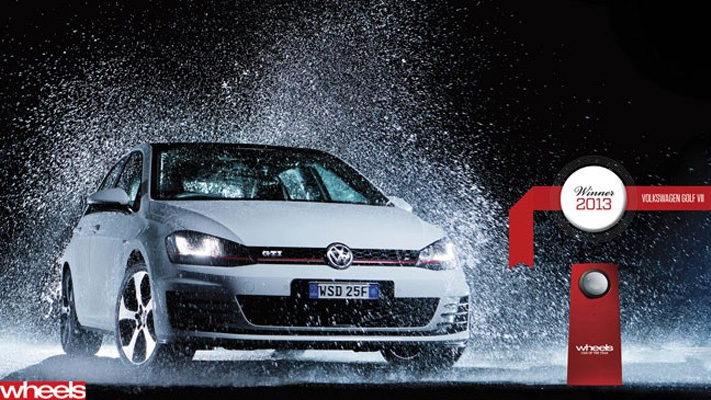
Same with the Audi TT RS (too close to 2015’s donor car), the red hot Honda Civic Type-R (not fundamentally altered enough to qualify), and the refreshed Volkswagen Golf Mk7.5.
Ditto Kia’s likeable but unadventurous Picanto and Rio hatches, despite the Picanto being a cut above its compatriots for entertainment and appeal. The Cross Country-only Volvo V90 wagon doesn’t have the ride quality we expect of a COTY-nominated vehicle of its type, while the Maserati Levante SUV lacks any real USP beyond being a chunky wagon with a Trident badge.
More controversially, we vetoed both the Mini Countryman and Audi Q2 – direct rivals in the premium small SUV category – because neither truly stood out given their 40-something price tags and elevated aspirations. And we left the interesting Renault Zoe electric hatchback on the shelf because, despite its gutsy 41kWh battery and 400km range, it’s a five-year-old car with a carryover Clio interior.
Which brings us to what’s in.
We extended a wildcard grid position to both the late-arriving Hyundai Kona and the Holden Equinox simply because we lacked enough experience behind their respective steering wheels to make a judgment. And even though judges expressed concern about the HSV GTS-R W1’s eligibility inclusion, the ballistic V8’s imminent extinction gifted it a ‘Captain’s Pick’ guernsey.
So here’s the 22-strong field for Car of the Year 2018. Good luck picking the winner. We reckon it’s anyone’s game.
2018 Wheels Car of the Year Field:
- Alfa Romeo Giulia
- Audi Q5
- BMW 5 Series
- BMW X3
- Holden Equinox
- Honda CR-V
- HSV GTS-R W1
- Hyundai i30
- Hyundai Kona
- Kia Stinger
- Land Rover Discovery
- Lexus LC
- Mazda CX-5
- Peugeot 3008
- Porsche Panamera
- Range Rover Velar
- Skoda Kodiaq
- Suzuki Swift
- Tesla Model X
- Toyota C-HR
- Volkswagen Arteon
- Volvo XC60
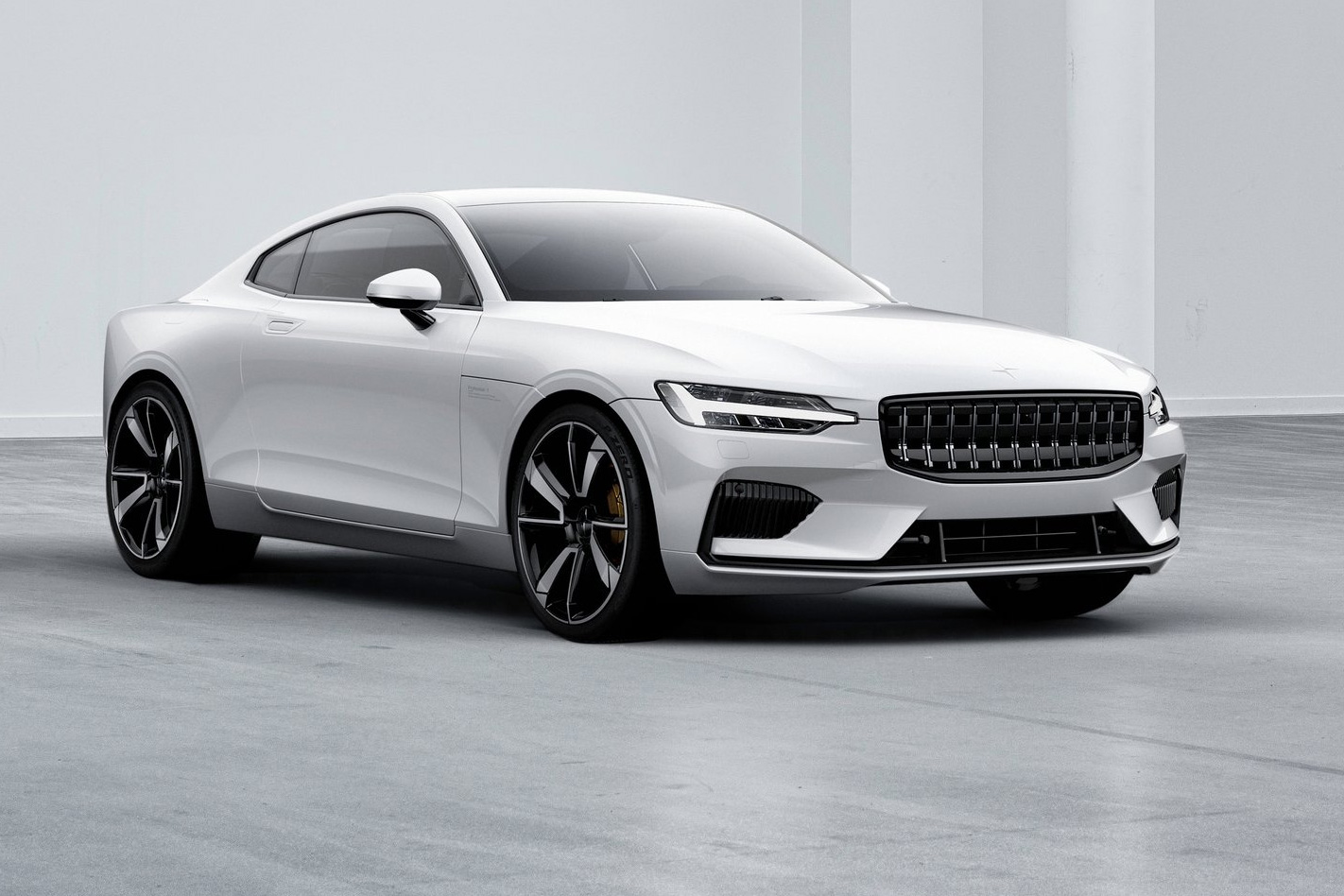
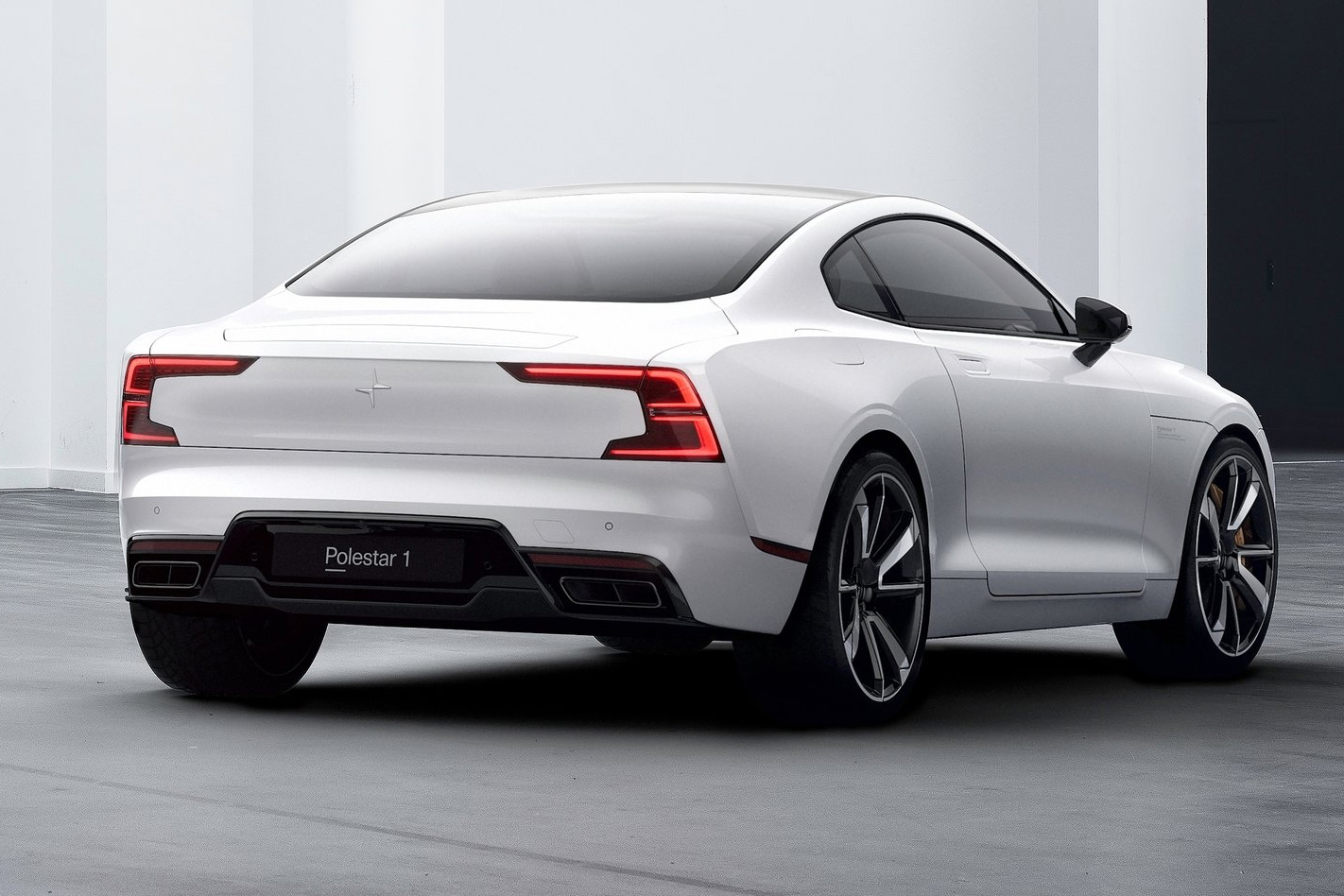
THE MOST exciting, dynamic and stylish Volvo to ever come out of Gothenburg – the 450kW, 1000Nm Polestar 1 – won’t be coming to Australia.
Instead, the low, long plug-in hybrid four-seat coupe that will spawn from the concept car unveiled in Shanghai in October will only sell in very small numbers in left-hand-drive markets. About 500 a year will be made from 2019 as the Chinese-owned Swedish company learns how to make the carbonfibre reinforced plastic-wrapped skin and pure carbonfibre subframes.
Our first taste of the repositioned Polestar, in its new role as Volvo’s standalone performance sub-brand, will come in 2020 when the Polestar 2, an all-electric SUV, arrives in right-hand-drive markets about nine months after its global launch.
Underneath the Polestar 1, a crisply penned notchback coupe that takes advantage of carbonfibre’s more versatile form-giving ability compared with pressed steel and aluminium, sits the Volvo Scalable Platform Architecture (SPA).
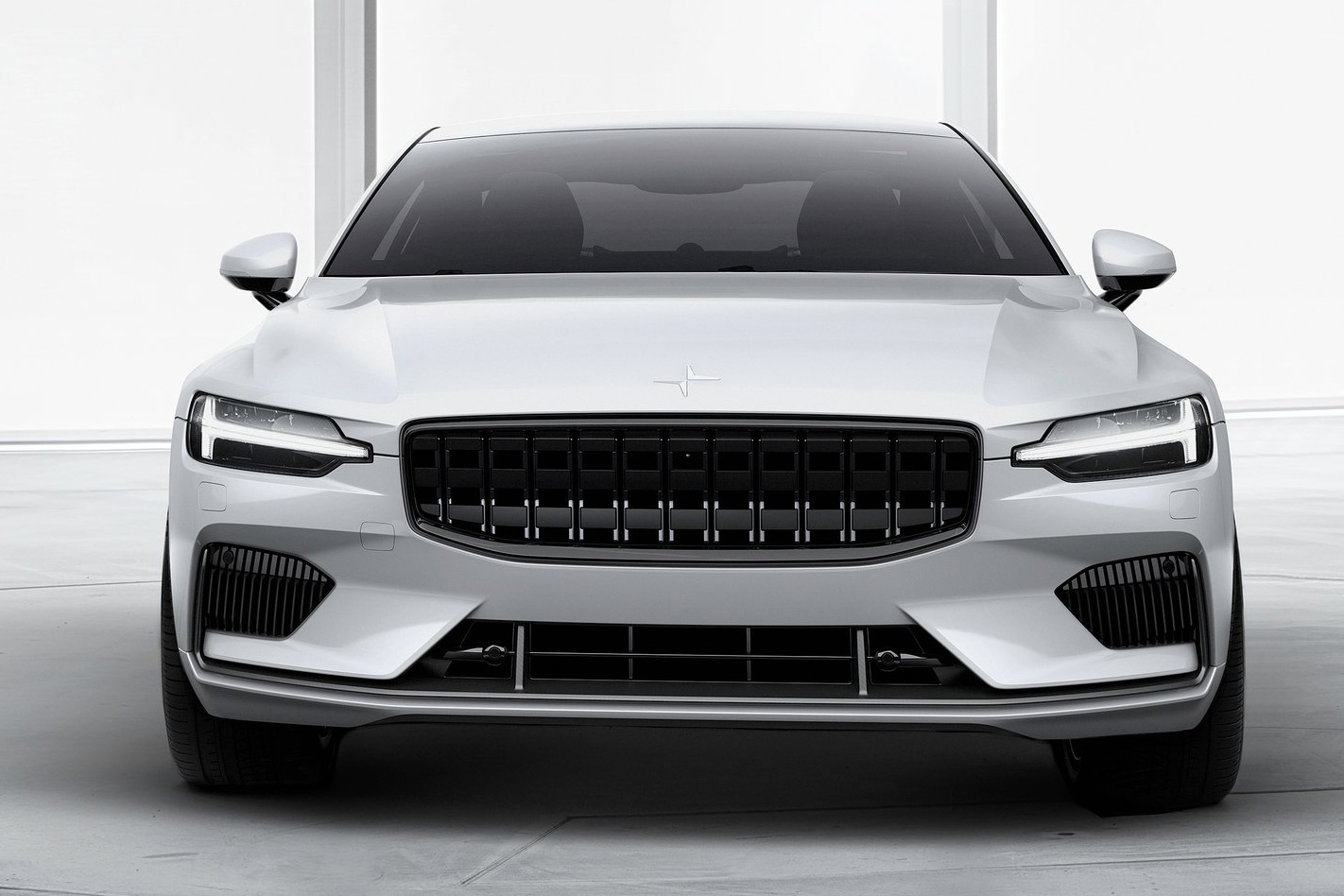
But unlike other models in Volvo’s line-up that use SPA – the Volvo S90, V90/V90 Cross Country, XC90 and the recently launched XC60 – Polestar 1 will only use the platform’s steel sub-frame, with a wheelbase shortened 320mm from the S90, and the overall body length 650mm shorter than the S90 at 4500mm. The carbonfibre bits bonded and riveted over the top of it help save 230kg, the same weight as the battery packs tucked in the transmission tunnel and over the rear axle.
Beneath the bonnet is a 2.0-litre turbo- and supercharged petrol engine, familiar as Volvo’s T8 driveline, mated to two electric motors that produce a combined 160kW. The motors – rear-mounted within a specially strengthened multi-link sub-frame – are linked to planetary gears that allow torque-vectoring.
Polestar has tapped fellow Swedes Ohlins to provide the Project 1’s electronically controlled three-mode dampers, while brake specialist Akebono – it makes the stoppers for F1 teams McLaren and Renault, as well as McLaren’s road cars – supply the six-pot calipers, milled from a single piece of aluminium, that will wrap around slotted 400mm front discs.
Those stoppers need to be big. To give it a 150km all-electric range, the Project 1 has substantial battery packs that bring total weight to 2000kg. The rear-mounted batteries push the weight distribution to 48:52 front to rear.
It’s allowed Polestar to fit the 1 with staggered 21-inch tyres, 275mm up front (the widest Polestar could fit) and 295mm at the rear, to shift more braking bias rearwards and help achieve a 100-0km/h braking distance somewhere in the low 30-metre region. A small rear wing that rises from the boot lid adds high-speed downforce.
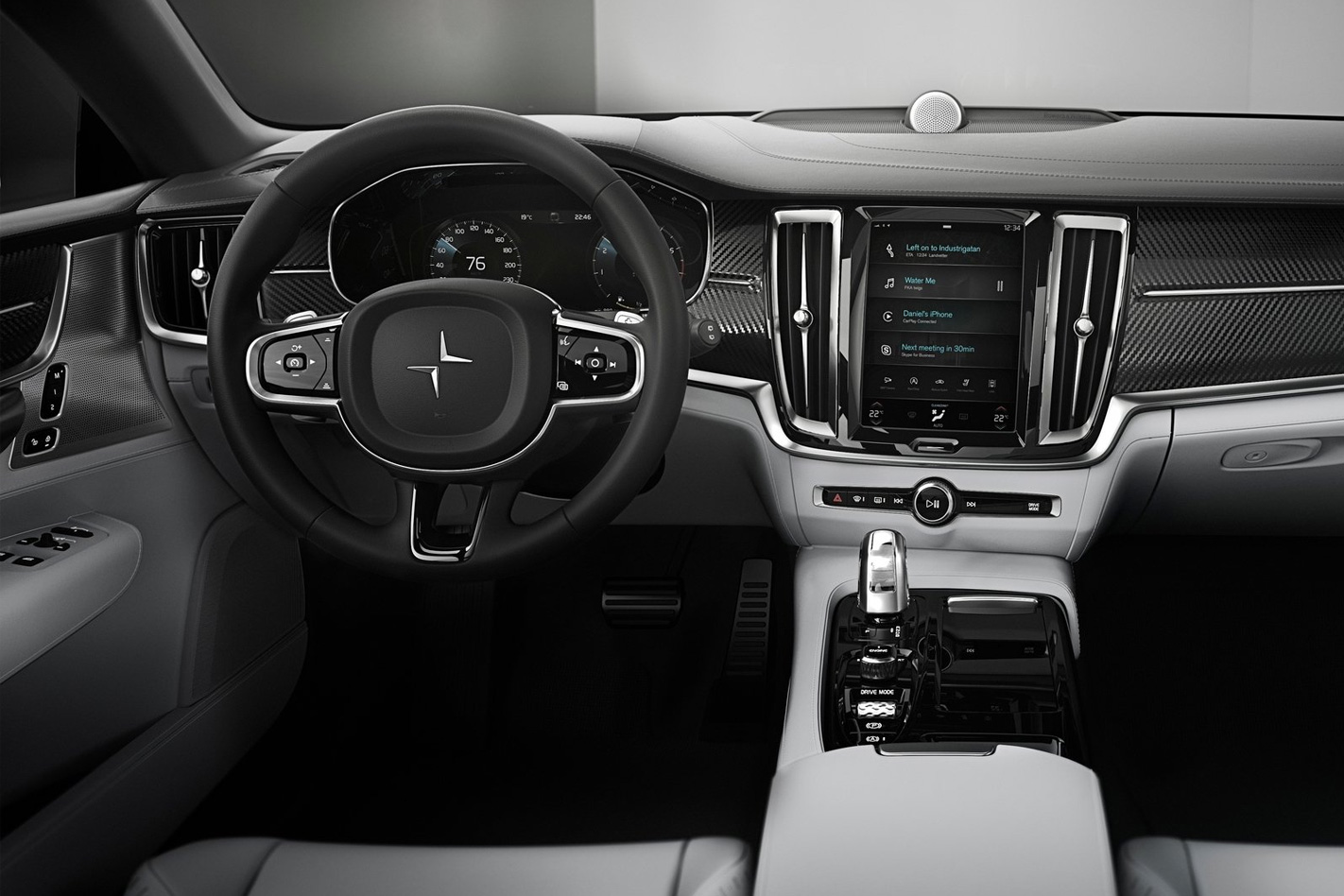
The Polestar 1 concept’s interior doesn’t push the design envelope and is typically Volvo-austere. Plenty of exposed carbonfibre trim lets you know you’re not in a Swedish taxi, and contrasting light-coloured front seats are there to test potential customers’ appetites for something a bit different. Oddly, the gold seatbelts are colour-coded to the front and rear brake calipers.
Volvo doesn’t make a 0-100km/h claim for its first Polestar-badged ‘electric performance hybrid’. The executives Wheels spoke to talked the performance benchmark down, saying that the only thing that’s important is the experience the Polestar 1 will deliver.
It’s just a shame Australia, the country that helped Polestar test the world’s appetite for performance-honed Volvos, won’t be part of it.
HSV has built its last performance car based on the locally made Commodore sedan – the model that has fuelled the company’s buyer passions for the last 30 years.
The company, which has recently announced it will reshape its future by modifying trade utes and converting the Chevrolet Camaro coupe and Silverado light truck to right-hand drive, announced a “Light My Fire” GTSR W1, build number 275 of 275 for the Australian market, would officially be acknowledged as the last vehicle to be built.
The last build sets the total number of HSV vehicles produced at the company’s Melbourne-based facilities at 90,114. The company does not plan to spin off performance-based variants of the fully imported ZB Commodore that’s due on sale next month.
“For all at HSV, this is a time for great reflection on what the company has been able to achieve to date,” HSV managing director Tim Jackson said. “Any success we’ve enjoyed has been directly attributable to our passionate staff, our dedicated dealer body and of course our loyal fans who have helped build this brand through its 30-year journey”.
HSV was launched in 1987 as a joint venture between Holden and the local offshoot of Tom Walkinshaw Racing. The set-up replaced the at-times controversial Holden Dealer Team agreement forged with racing driver Peter Brock.
The partnership produced its first car, the 180kW 5.0-litre VL Commodore-based SS Group A SV, in 1988 – nicknamed the “Plastic Pig” in deference to the plastics-heavy bodywork that wrapped around it.
In 2000, the company moved into exports, mainly to other right-hand-drive markets including Britain, but also into the Middle East via its Chevrolet Special Vehicles business.
Over time, it would build some of Australia’s most powerful production cars. This included 1996’s VS Commodore-based GTS-R (the Atomic Banana); the 375kW, 7.0-litre LS7 V8-engined W427 that was hit hard in the wake of the global credit crunch; the Commodore ute-based GTS Maloo that redefined the concept of what a two-door sports car should look like; and the crowning glory, the 474kW supercharged 6.2-litre LS9-equipped GTSR W1.
However, if you’re keen to whip out the cheque book for the last-ever HSV wrapped around a locally built Commodore, save yourself the trouble. HSV says this one’s a keeper, and not for the crusher.
HSV’S HEROES: THE ONES THAT COUNT
| VL Group A SS | 750 |
| VL SV88 | 150 |
| VN SV3800 | 491 |
| VN SV89 | 200 |
| VN SV5000 | 359 |
| VN ClubSport | 410 |
| VG Maloo | 132 |
| VP GTS | 130 |
| VS GTSR | 85 |
| GTS Coupe | 423 |
| Coupe 4 | 132 |
| W427 | 137 |
| 25th Anniversary GTS | 140 |
| GTS Maloo | 255 |
| GTSR (MY17 sedan) | 1270 |
| GTSR Maloo | 606 |
| GTSR W1 | 298* |
*Australian and NZ builds
HSV PRODUCTION MILESTONES
5000th vehicle built – June 1991 20,000th vehicle built – April 1997 50,000th vehicle built – July 2006 75,000th vehicle built – February 2013 90,000th vehicle built – December 2017
There will always be cars that, years after leaving your orbit, will still make your palms sweat and your pulse downshift a gear or two at their very memory. For me and, I suspect, anybody who ever drove one, the Mitsubishi Lancer EVO VI is one such set of wheels.
This article was first published in MOTOR’s June 2004 issue.
The EVO VI is a contradiction. On one hand, it’s got every conceivable power and grip technique; on the other, it’s based on the lowly Mitsubishi Lancer, which, in most incarnations, is equal-parts shopping jeep and accountant’s choice.
As far as Mitsubishi was concerned, however, the EVO VI was really only built with one thing in mind: to win the World Rally Championship. Needing to tackle Subaru’s Impreza WRX STi, Peugeot 206 GTis, and the RS Fords head-on, it’s no surprise, then, that in the EVO VI, Mitsubishi pulled out every trick and spannered up one heck of a hellcat.
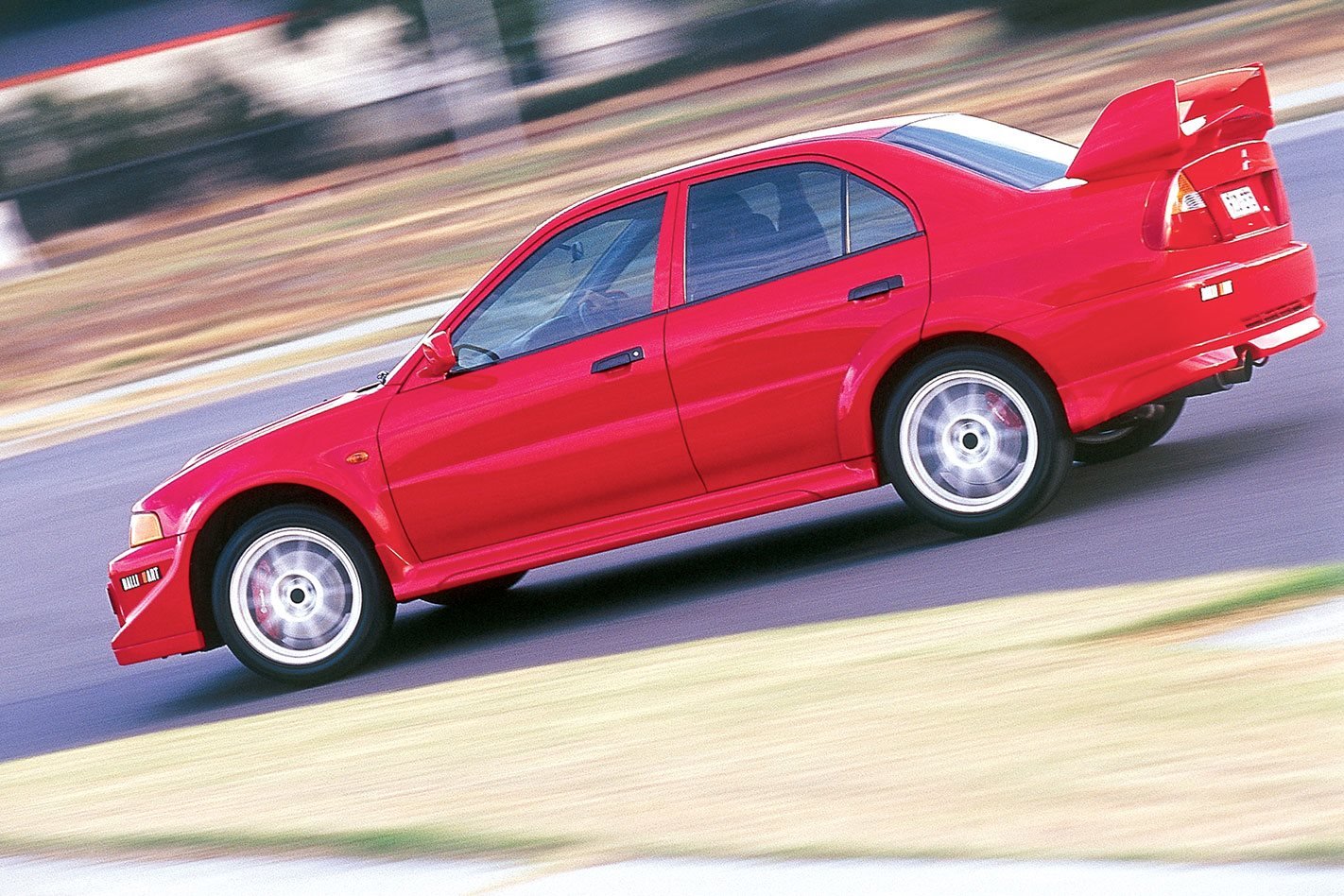
On a race-track, the EVO VI just can’t be tricked into doing anything nasty, despite the outrageous speeds of which it’s capable. Stopping power and pedal feel are not things the EVO is short on. On public roads, it’s safe, secure and totally unflappable. The caveat here, though, is that if you do get it wrong in an EVO VI, your crunch will be a big one – that’s the only size they come in.
The EVO’s stumpy little bonnet was packed with a fire-breathing version of a production Mitsubishi two-litre four-banger. It scored a twin-camshaft head, four valves per cylinder and measured 1997cc, thanks to a bore of 85mm and a stroke of 88mm. That bore-stroke relationship is important, because it makes the mill undersquare, and, as we all know (don’t we?) long-stroke engines rev slower (relatively) and are capable of achieving better cylinder-fill, so they’re dead-set perfect for forced induction.
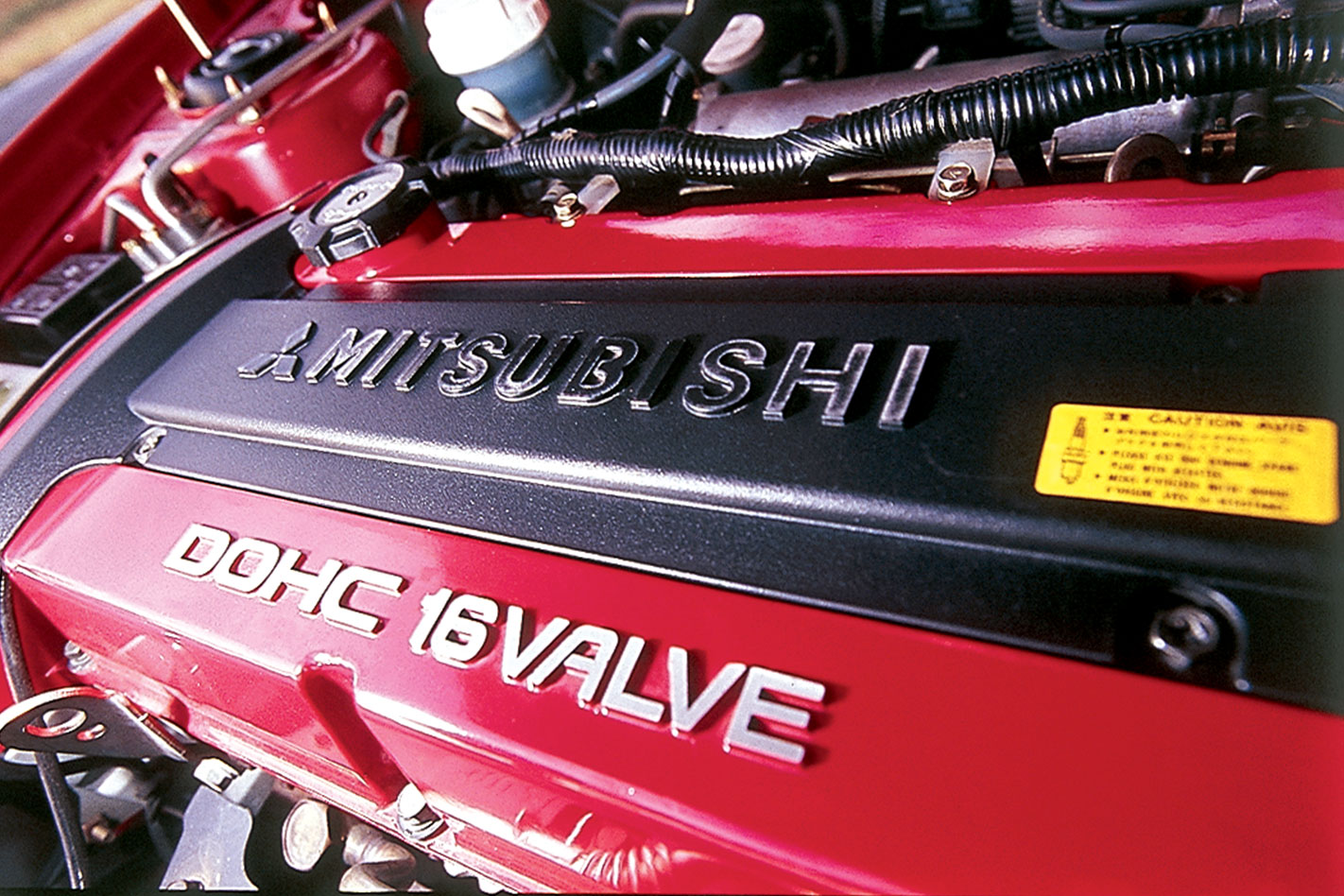
More significant, though, was its turbo engine’s torque: it peaked at a V8-like 373Nm, but it did so at just 3000rpm, which makes monkeys of both Ford’s and Holden’s current-model big-inch V8s. With a good chunk of that 373Nm on tap well below 3000rpm, you can see that there’s not really a hole of any sort in the EVO’s performance graph.
Dump the clutch in first and, thanks to its awesome grip, by the time the thing has spooled up full boost, you’ll be hanging by your wrists from its wheel. Don’t get comfy, though, because soon you’ll be bashing 7000rpm and the rev-limiter will be calling the shots. Just like first, the next ratio lasts just a second or two before you’re shoving the stick away towards third. And guess what? Yep, same deal – even fourth gear disappears all too soon thanks to its combination of fairly short overall gearing and massive stomp.
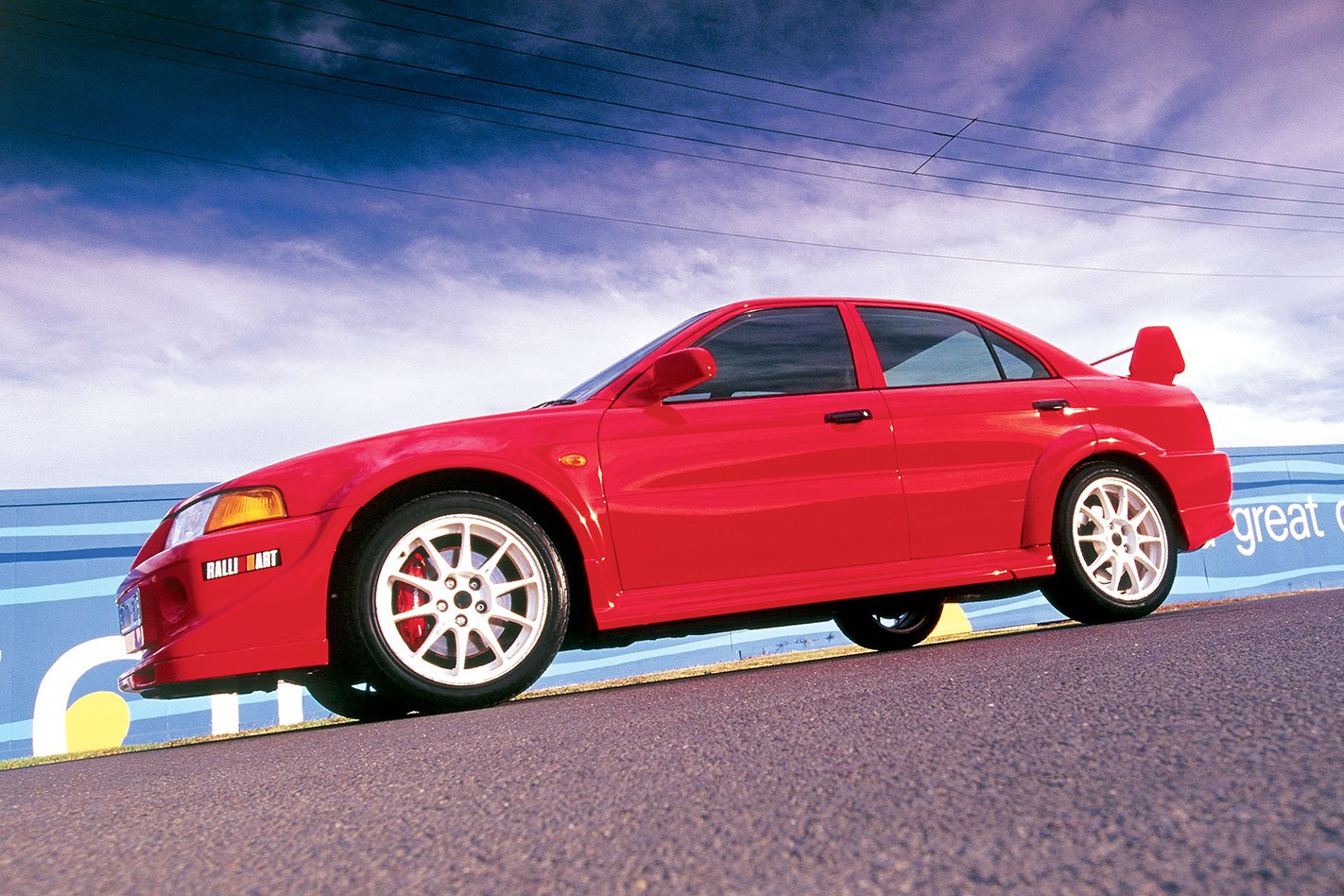
A BMW M3 is one of the fastest things around, but even it can’t match the blunt-instrument effectiveness of the EVO VI. Even with all-wheel-drive, the EVO weighs just 1280kg, giving it a power-to-weight ratio of just 6.2kg for every kiloWatt to punch around. The M3’s 6.23kg per kW is similar, but the Mitsubishi hits 100km/h in 5.32 seconds against the BMW’s 5.38. Across the first 400m, the M3 takes 13.59 seconds, but the EVO gets there first in 13.3.
Around a circuit – take the tight and technical Wakefield Park, near Goulburn, NSW – the EVO lunches even the mighty M3. The difference is almost a full two seconds. Phew.
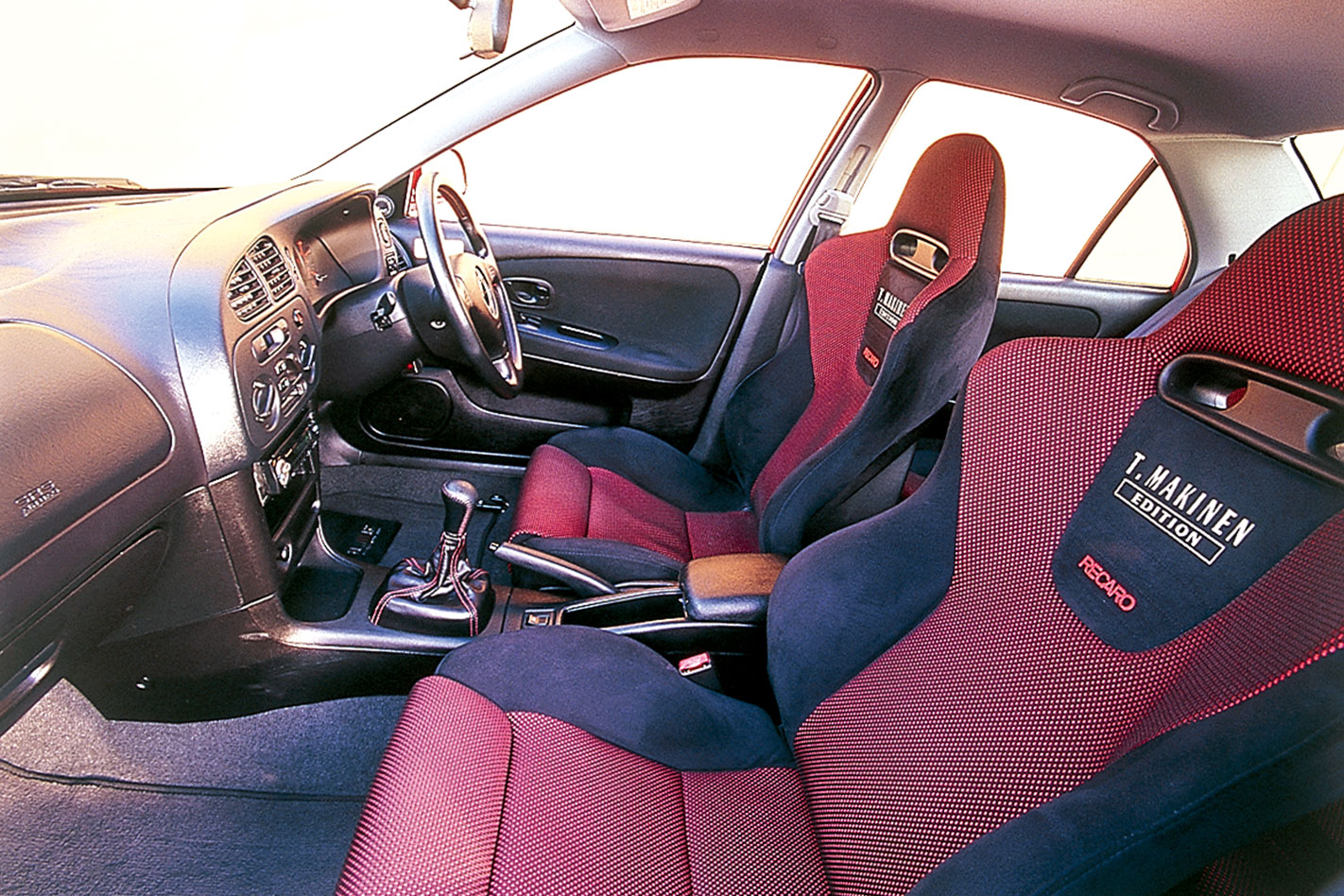
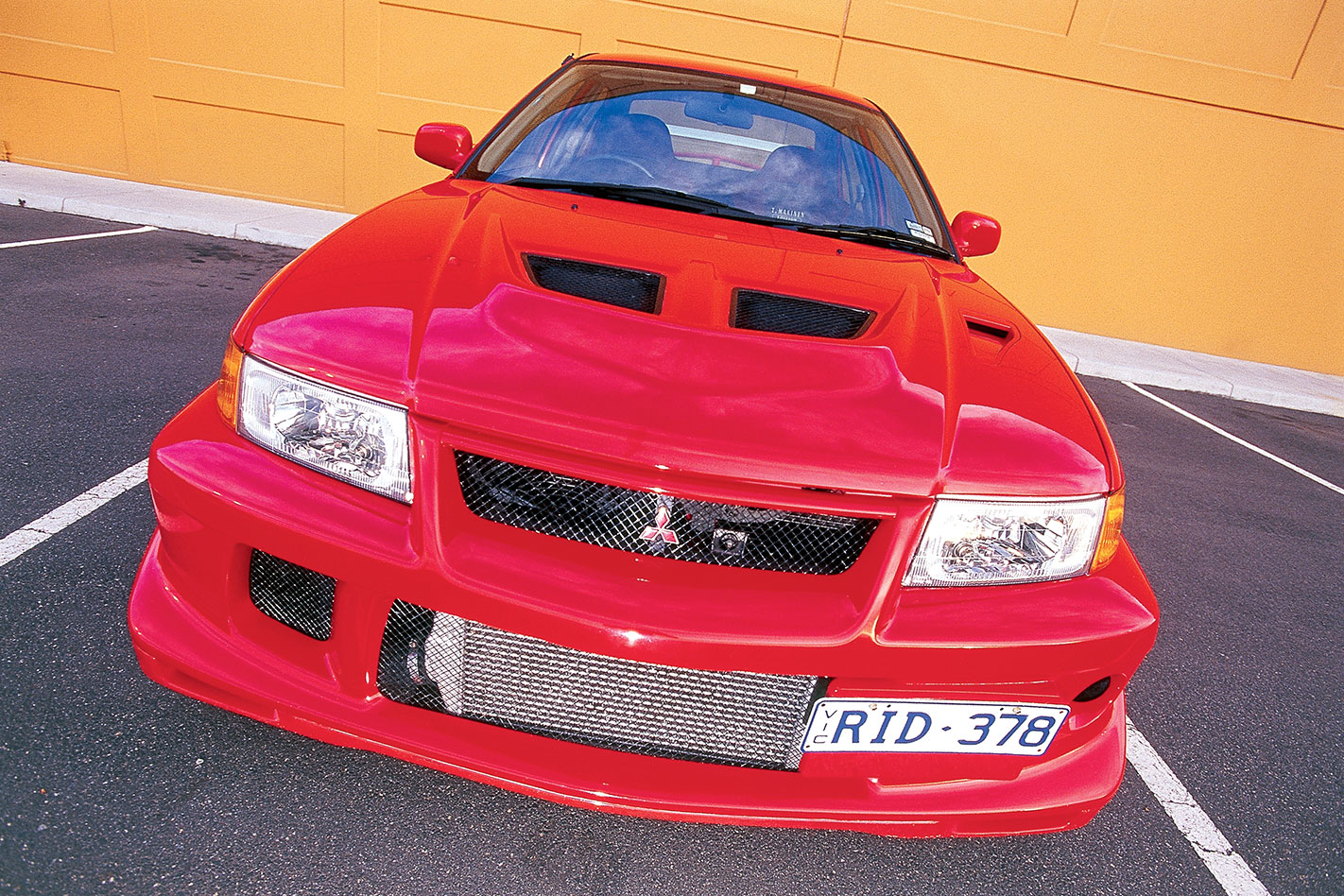
The rest of the deal really isn’t up to BMW standards, however. The EVO feels tinny in the body, and build quality just ain’t there. Inside, it’s relatively sparse, and its body kit is tasteless and of questionable quality, although committed head-bangers will love its general race-car ambience.
Of course, once you’ve found your stock-as-a-rock EVO VI, and assuming you don’t want a long-term relationship with the thing, they’re actually fairly easy to wind up (see “More is More” below).
When you’re out shopping for a VI, you really can’t go past a professional inspection from a workshop that knows its EVOs. These are such complicated devices that there’s too big a chance of missing something by just climbing underneath with a torch and a prayer.
But if you’re lucky enough to find the right one, there’s absolutely no doubt the EVO VI will be a car you’ll remember for a long, long time. And just for once, it’ll be for all the right reasons.
They Said It
“What the EVO does is strip driving to its barest essentials and magnifies the driver’s inputs at least two-fold. Everything about it is immediate, overstated, precise and heaps of fun.” – Jonathan Hawley, August 2001
“EVO VI grand-slammed every performance benchmark in the category, and was each judge’s clear choice as well. EVO VI is the clear [BFYB] category winner. It’s a wonderfully precise, thoroughly engaging tool built for one job only – to drive at or near the limit, capably.” – John Cadogan, October 2001
More is More
Want more go from your new road rocket? Start with the exhaust, which, like most turbocars, will yield a surprisingly good gain if it’s a quality system. The next step is a piggy-back computer and a lap-top tune on a dyno. A couple of psi of boost is also possible at this point.
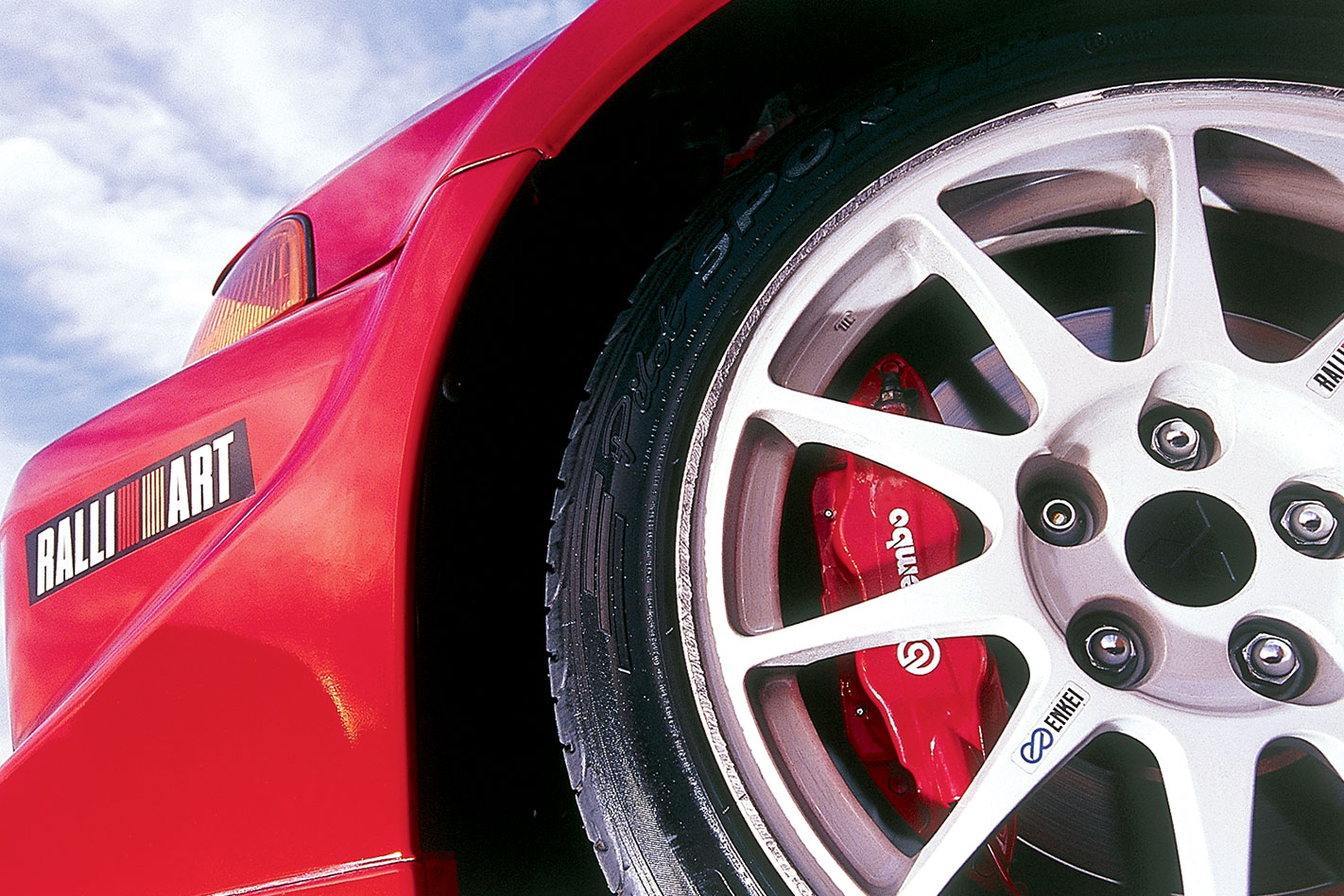
A bigger intercooler would be next and maybe some camshaft fiddles and some headwork, but by then you’d really be starting to test the patience of the bottom end. A full comp spec jobbie should be good for 260kW and 500Nm.
Fast Facts
Mitsubishi EVO VI BODY: four-door sedan DRIVE: all-wheel ENGINE: front-mounted 2.0-litre DOHC 16-valve turbo four POWER: 206kW @ 6500rpm TORQUE: 373Nm @ 2750rpm COMPRESSION: 8.8:1 BORE/STROKE: 85.0mm x 88.0mm WEIGHT: 1260kg WEIGHT/POWER: 6.1kg/kW SPECIFIC POWER: 103kW/litre TRANSMISSION: five-speed manual SUSPENSION: MacPherson struts, coil springs, anti-roll bar (f): multi-link, coil springs, anti-roll bar (r) L/W/H: 4350/1770/1405mm WHEELBASE: 2510mm TRACK: 1510mm (f), 1505mm (r) BRAKES: 376mm ventilated discs, four-piston calipers (f); 320mm ventilated discs, two-piston calipers (r), ABS WHEELS: 17 x 7.5-inch (f & r), alloy TYRES: Bridgestone S01, 225/45 ZR17 (f & r) FUEL: 50 litres, PULP PRICE: $79,990 (2002)
THERE’S no two ways about it: 2017 was a vintage year for fast cars. We saw a host of mouthwatering machinery unveiled, and it’s hard to nominate just one. Given that these yearly lists usually end up with a Porsche 911, and we drove the fantastic GT3 and GT2 RS this year, we thought that for once we’d give the others a moment in the sun. So here are the six non-Porsches that blew our skirts up in 2017.
Alfa Romeo Giulia Quadrifoglio
The beneficiary of a massive budget for development, Alfa blew almost all of it on a chassis with driving dynamics that redefine the class. If you thought a BMW M3 or a Mercedes-AMG C63 represented the state of the art in performance saloons, you need to try the Giulia. Preferably on the worst roads you can find. It’s next-level brilliant. The steering and the brakes take a little acclimatisation, but once you’re keyed into the Giulia’s groove, nothing really comes close. Not with four seats in this price bracket at least.

The Huracan Performante turned back the clock. By most accepted measures an atmo-engined Lambo would have no business bettering the Nurburgring lap times of a money-no-object,rocket-science special such as the Porsche 918 Spyder. Thing is, nobody told Sant’Agata. The Performante’s not all dumb grunt, though, with some very clever active aero, masses of forged carbon fibre and some very clever electronics. Its V10 lump might also be the greatest-sounding engine on sale today.

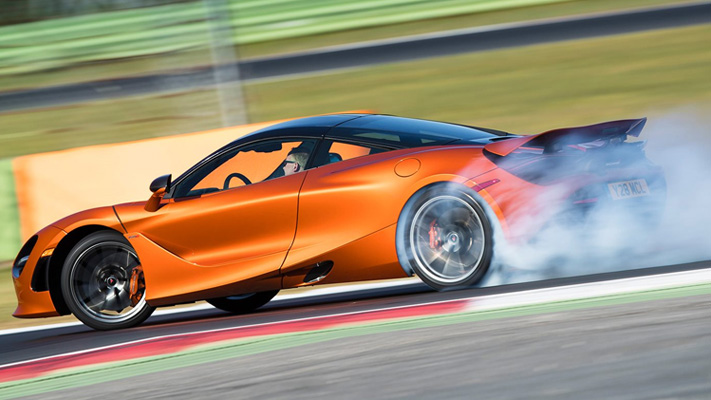
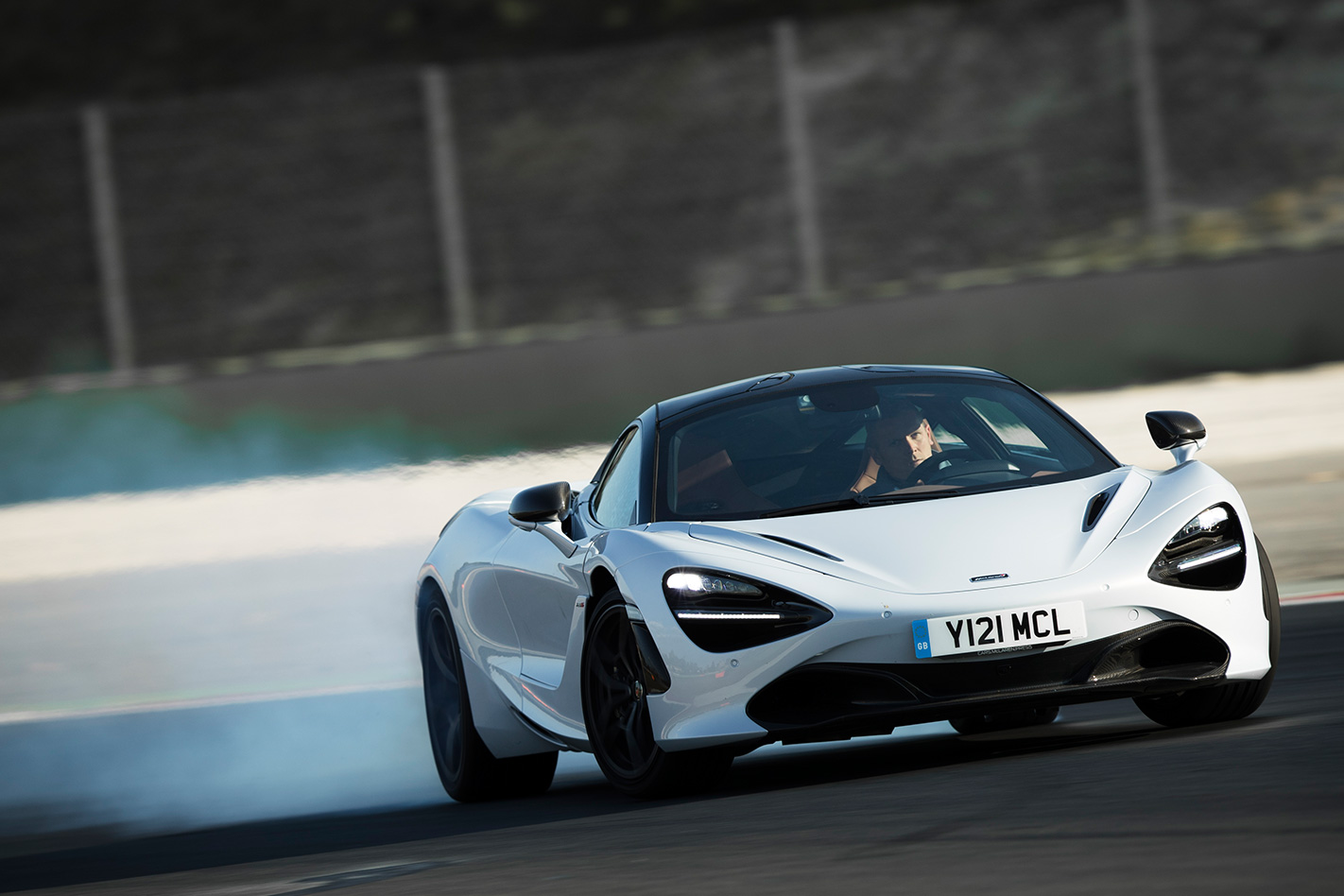
Okay, so another mid-engined supercar might be a tad predictable, but the Mac 720S is something quite special. Faster than the McLaren P1 hypercar on most circuits, the 720S gets an engine that Woking claims, with typical exactitude, is 41 percent new – in the process outgunning Ferrari’s 488GTB by 38kW. For those who think that the Ron Dennis touch still pervades McLaren, think again. This is a 530kW supercar that features a drift mode. Crazy.
Here’s one that tugged at our heart strings and also generated a few heart-in-mouth moments. Put bluntly, the W1 is about as wild a ride as you’ll ever want to encounter, on the public road at least. If the Clubsport is Bruce Banner, this one’s the Hulk; the bigger, angrier version that always feels as if it’s about to pulverise you into a million pieces. It’s concussively fast – with 475kW on tap that’s pretty much a given – but what’s so amazing about the W1 is that the engine calibration feels so slick for such a low-volume model. It’s almost as if the Commodore VFII was made for an LS9.

This one split opinion a bit. It’s possible to be underwhelmed by the now turbocharged Civic Type R if you hate the styling and don’t drive hard. We still hate the styling, but if you are prepared to give it a merciless caning, the talent of the Civic’s chassis makes it impossible not to love. Our previous favourite in this class has been the Ford Focus RS and the Civic pushes the all-wheel-drive Ford really closely. On a give and take road there’s little to separate them, but you’ll emerge from both with a massive smile.

At the more affordable end of our list is Hyundai’s entrant into the hot hatch sector. It’s got the imprimatur of Albert Biermann, the former engineering guru at BMW M, all over it and it feels like the real deal. We’ve only experienced the N on foreign tarmac, so we can’t tell you if it’s better or worse than a Golf GTI definitively, but it’s there or thereabouts. The 202kW Performance Pack version looks to be the go, and with up to 378Nm available on overboost, it’s not going to take long for other drivers to realise that Hyundai’s N division means business.

