
DO YOU ever have that feeling you really should be doing something useful, but just can’t be arsed?
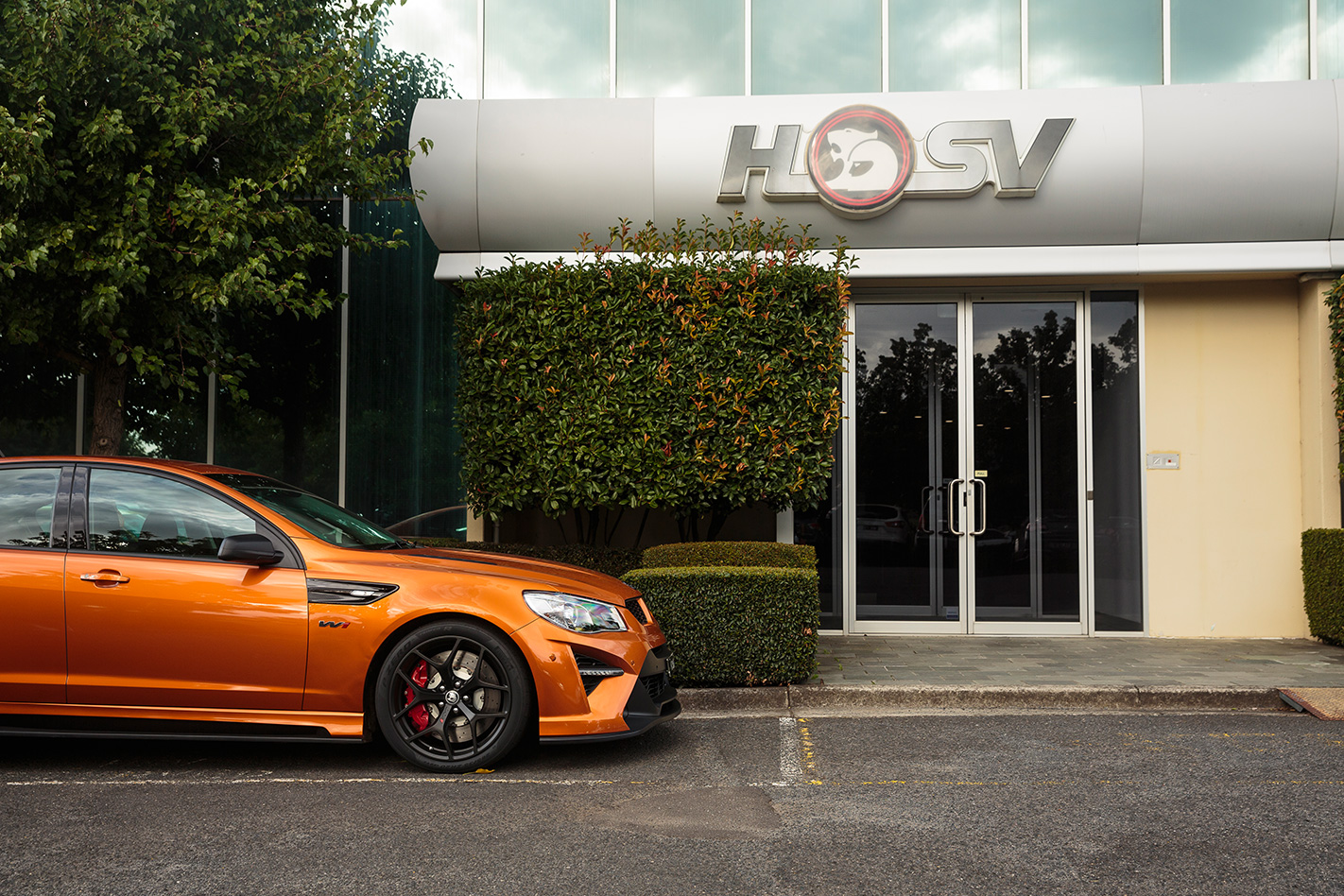
That’s the zone I find myself in as I sit outside a nondescript building in a nondescript industrial estate in a nondescript suburb near Melbourne airport.
I’m waiting for editor Inwood to arrive in the HSV GTSR W1, a weak autumn sun warming my face. I should be using my phone for something productive, like replying to emails or watching Nurburgring crashes. Instead, I’m following a link to an oddly compelling time-wasting site.
Deathclock.com purports to be able to predict the precise day of your death, based on a bunch of lifestyle questions.
But what if there was an automotive Deathclock.com around back in 1988?
What if HSV was able to punch in the details of the first VL Group A SS, the game-changing Plastic Pig, into this morbid calculation device?
Somehow I doubt the result spat out would say something like: “You’ll evolve through three core generations, building a legion of loyal fans. Your zenith will come as your morph into a 474kW supercharged beast, reigning supreme, lauded as the greatest Australian-built sports sedan ever built. But you’ll be the last of your breed, and your final passing will come in the summer of 2017-18…”
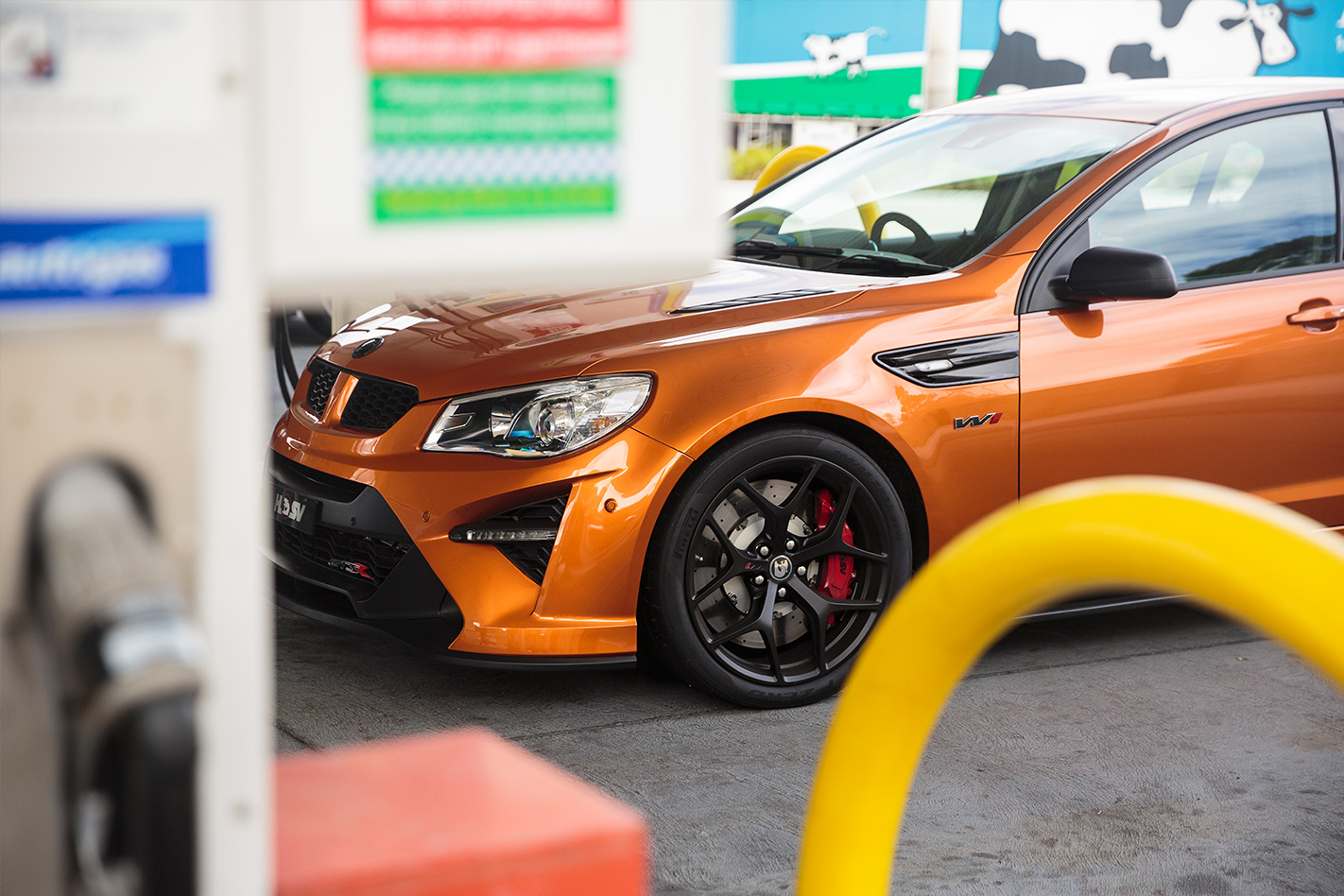
Excited, of course, to be heading to some of the best drivers’ roads in the Victorian High Country in this epic car.
But also just a bit melancholic it’s come to this. Is this a wake? A celebration? Hell, it can’t be a wake; that feels a bit premature; and besides, we can’t neck fruity moselle and listen to a boring old uncle bang on about the glory years.
So it must be a celebration, then. An 815Nm, tyre-frying knees-up as the curtain comes down.
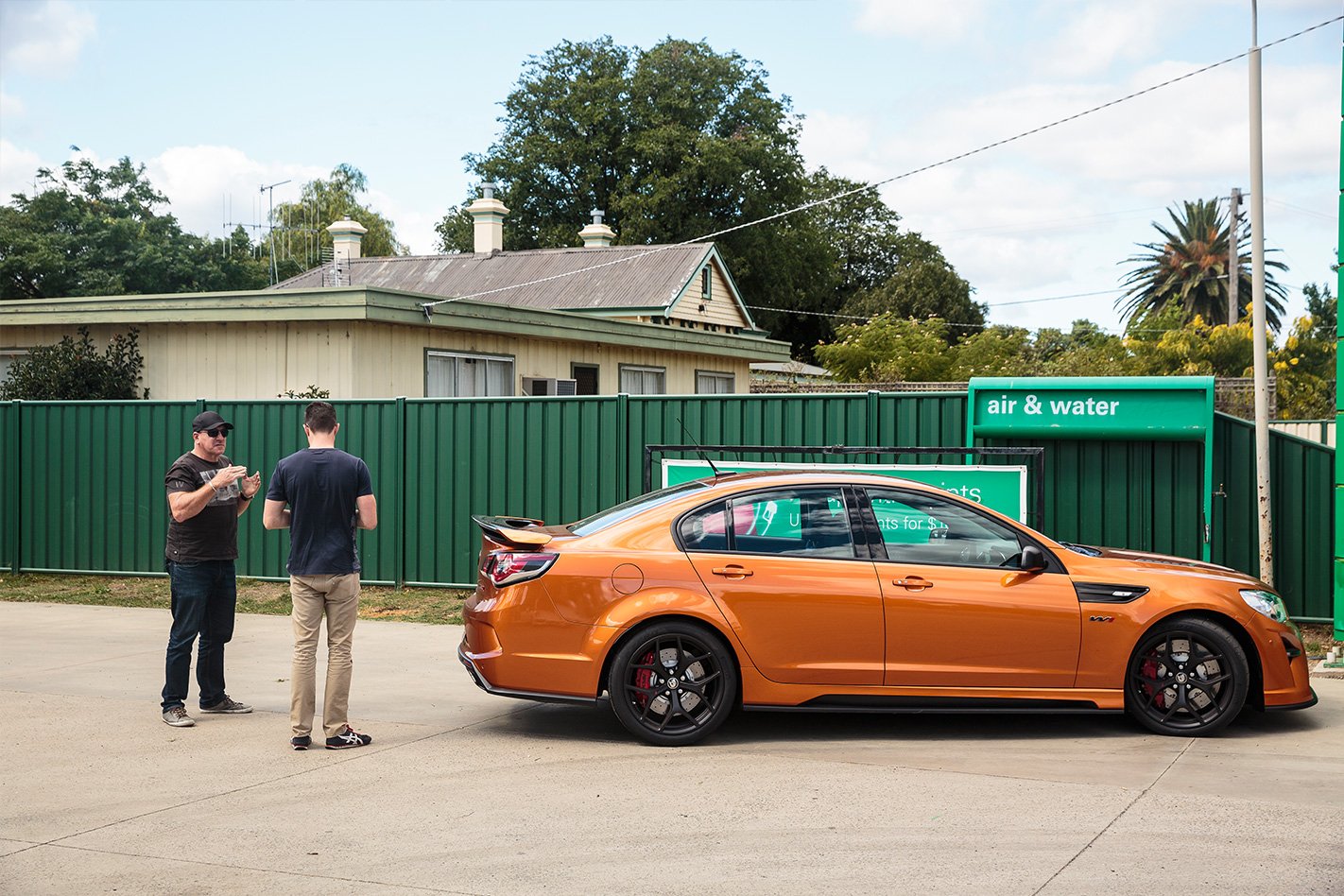
This is our effin’ M5; our E63 … those German V8 headkickers have never been in better shape; it feels criminal that as a supposedly switched-on country with a 92-year history of automotive manufacturing, we are about to have precisely nothing built here that can stare headlight to headlight with those cars.
INWOOD’S arrival in the W1 snaps me from this doleful decline.
Very considerately, he treats the neighbourhood to a bit of second-gear wide-open throttle, and as shrieking birds take to the skies, it’s enough to make you want to cheer and sear a Southern Cross branding iron into your left pec.
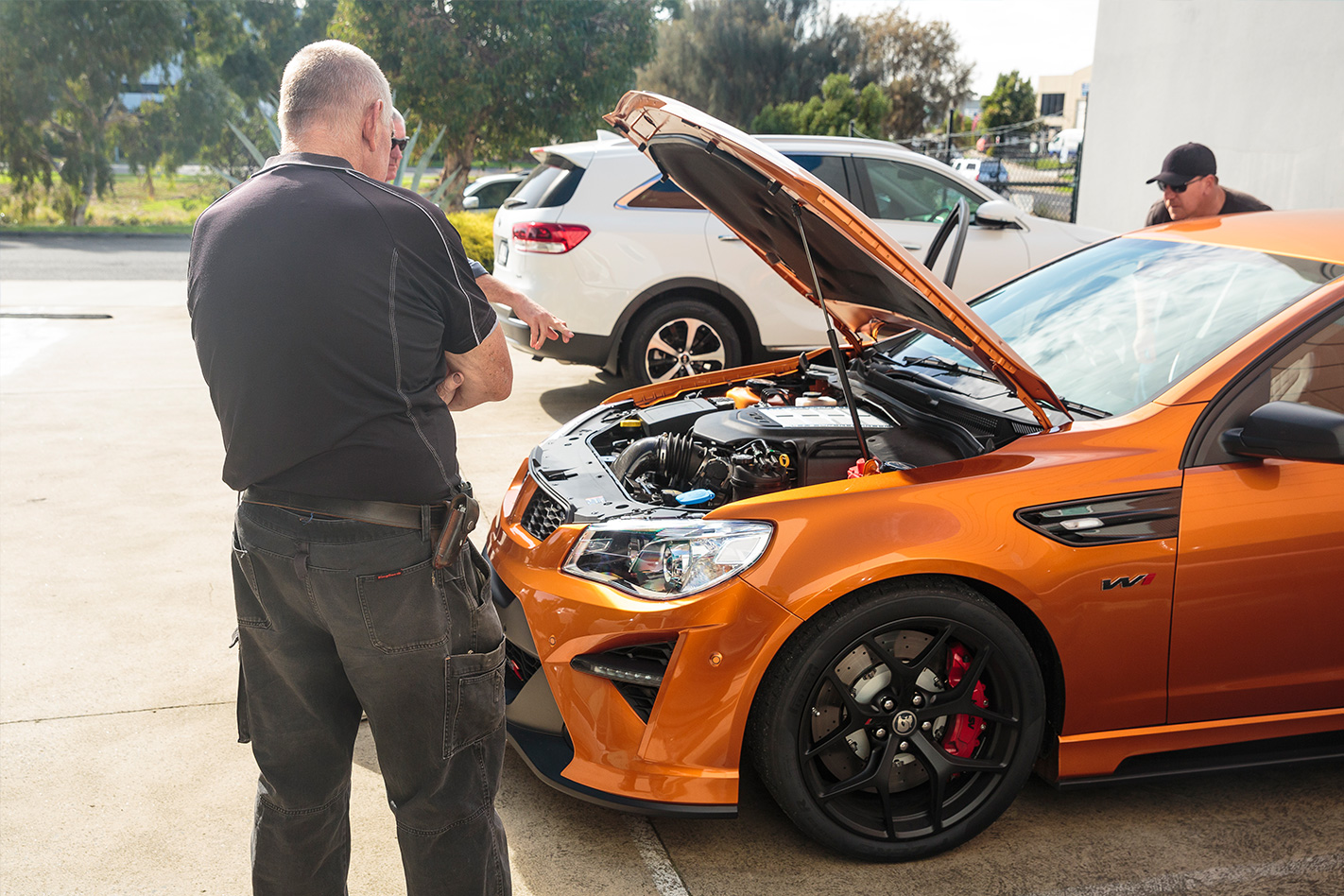
Job one, even before we drool over the W1’s carbonfibre airbox and dry-sump reservoir, is to deal with HSV’s request to add only 1000km to the car’s odo.
Inwood’s idea is to simply trailer the W1 to the prime driving roads, and as he’s my boss, of course I agree it’s a brilliant plan; why waste any of our kilometre limit plodding along camera-infested freeways?
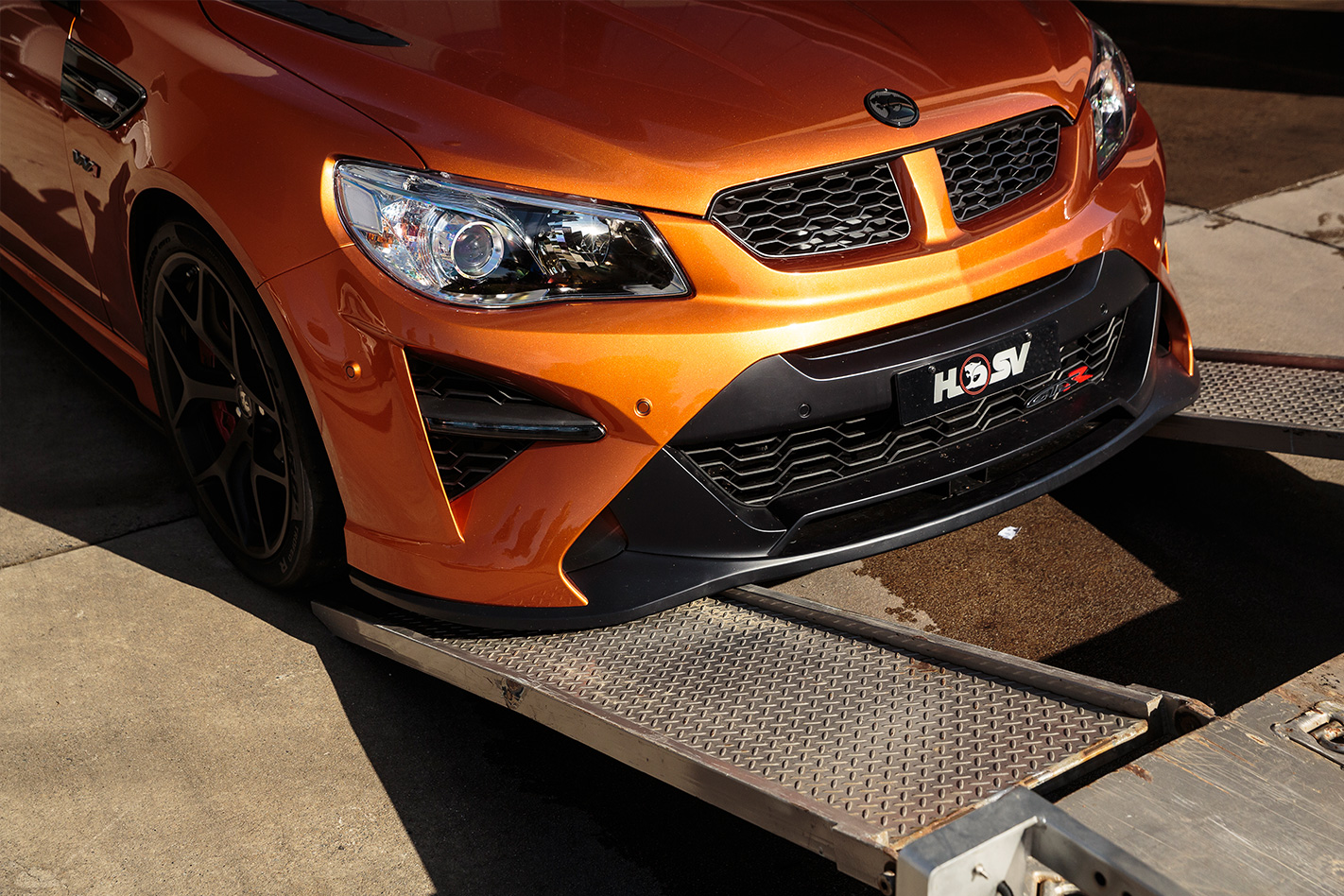
But the W1’s wide, low front bar refuses to be dragged onto a trailer, and I’m quietly pleased, as towing this car anywhere would have felt a bit wrong. Pampered, concours E-Type Jaguars are trailer queens. The W1 is this country’s toughest-ever bare-knuckle brawler; dragging it around on a trailer would feel a bit like Danny Green being pushed into the ring for a title fight in a wheelchair, so, y’know, his legs don’t get tired too soon.
First impressions are that the clutch and gearshift don’t feel noticeably different to a GTS, which is to say, the pedal is medium weighted – not heavy, with a nice, progressive bite – and the shift action reassuringly mechanical-feeling with short, positive throws.
And damn, it feels brilliant to connect with this car via a manual gearbox. Then there’s the engine’s flexibility, which is just colossal. Sixth gear will pull from 40km/h at 1000rpm with no snatch or judder. The drummer from Def Leppard could motor around in a W1 and hardly remember his accident.
The ride feels ultra-taut, but first impression suggests there’s just enough initial compliance to filter out most of Melbourne’s ruts and bumps.
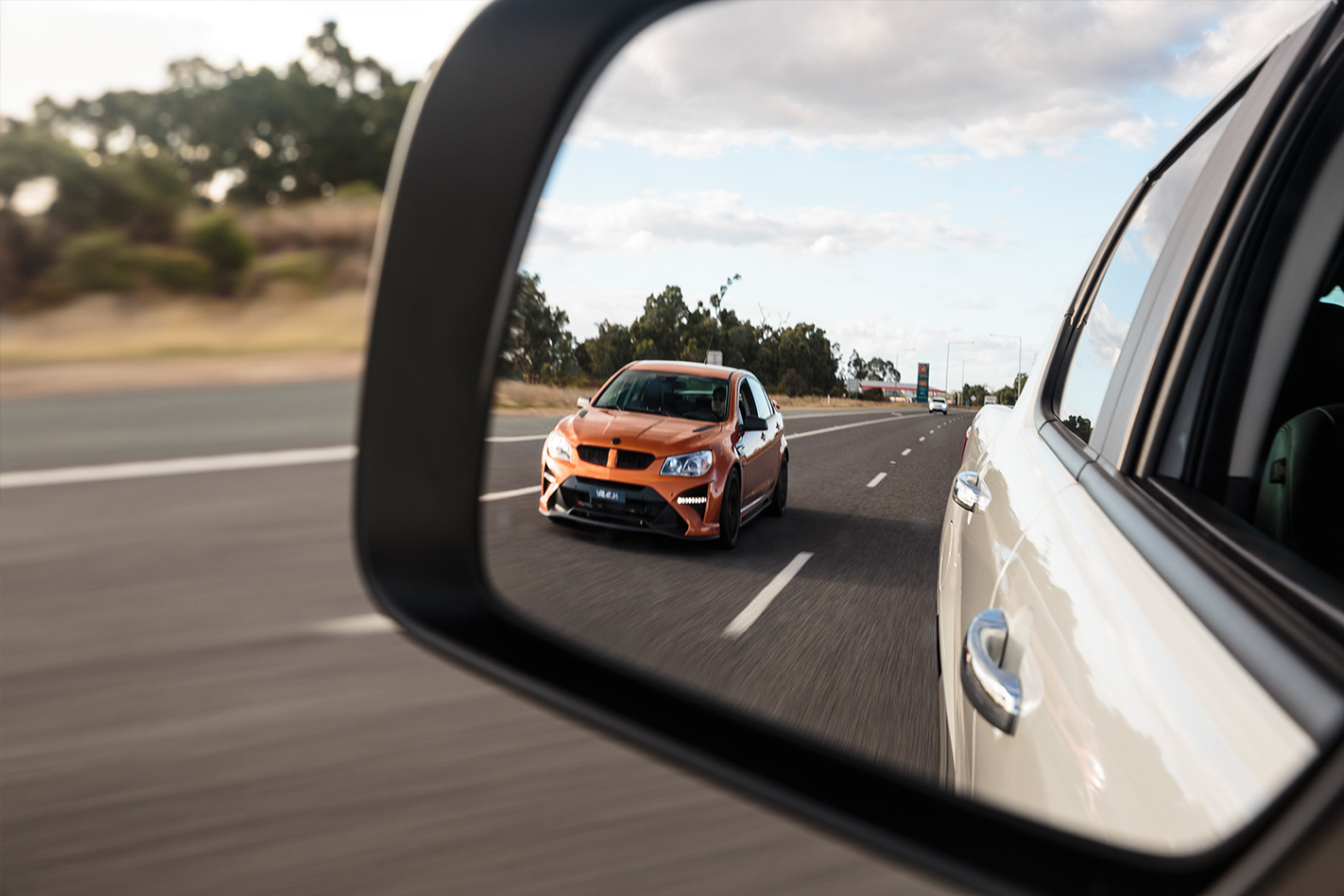
HSV was utterly unapologetic when describing this as the most track-focussed chassis set-up its engineers have ever attempted; the all-new SupaShock suspension, similar to that used in Walkinshaw Racing’s Supercars, offers a setting “comparable to a street-circuit tune of a V8 Supercar”, according to the company.
The inverted coil-over front set-up is apparently ‘2.2 times uprated’ over the current GTS, so no wonder there’s so little roll. But it sometimes feels this stiffness is at the threshold of what the body rigidity can take, given the protest of the doors over fast, bumpy backroads.
Later, the brilliance of the damping will be apparent, but the ride equation will continue to mess with my head, sometimes feeling completely acceptable, other times, a jiggle and shake-fest that starts to tire after a long day.
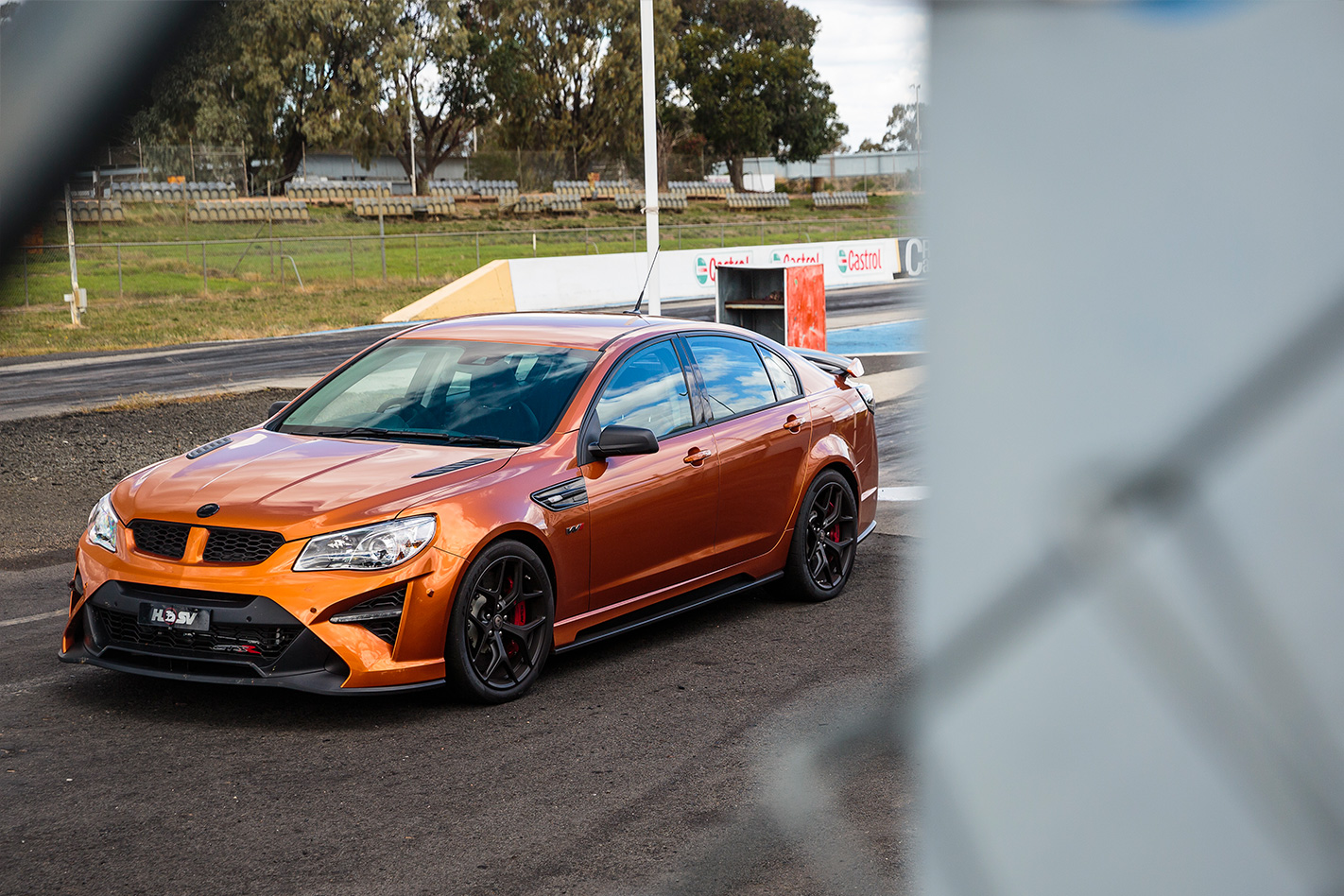
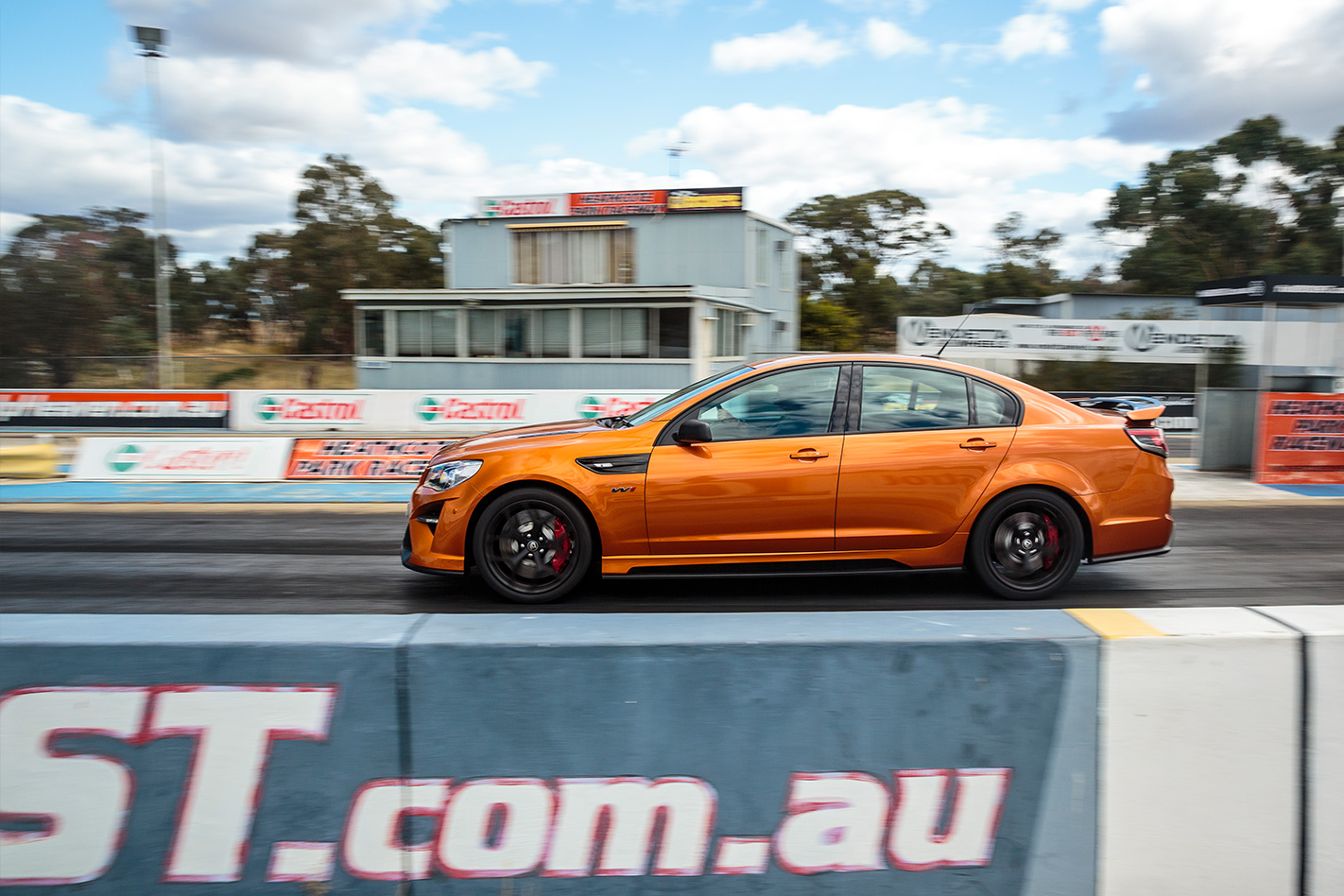
Deep down, though, we all know the W1 is a slim-to-none chance to put down a really blinding 0-100km/h time. HSV claims its halo model can hit the magic number in 4.1sec, but we’ve rarely been able to match the company’s claims, and we know that the manual transmission will rob it of several tenths in the launch phase, even with the ultra-sticky (and expensive) 295-section Pirelli Trofeo R rear rubber.
Yes, over in Germany, there are probably Porsche GT3 powertrain engineers, who’ve only now grudgingly reinstated a manual ’box in their track-focussed weapon, shaking their collective heads, going, “Jah, vee told you so…”
Sure enough, despite loads of attempts and various launch techniques, the W1 refuses to bolt to 60km/h any quicker that the last manual HSV GTS (down 54kW and 75Nm) we tested here in near identical conditions. It’s closed-case proof that gifting more power and torque to a big, heavy rear-driver does not bring faster off-the -mark sprinting ability once you pass circa 430kW and 740Nm outputs.
But quibbling over the raw numbers, especially in the off-the-line phase, feels like a football star agonising over the fact he’s earning $40,000 a month instead of $43,000. What’s more relevant is just how epic this thing sounds from inside the car with the bi-modal exhaust open in either the Performance or Track modes, and how well the driveline handles abuse.
The tone is deep and rich off the bottom, all Barry White-ish from down low in the diaphragm. By 4000rpm it’s hollering, but there’s no taper up top, just a borderline vicious lunge to the 6600rpm limiter and a volume, especially in the back, that would have small children calling their DOCs case-worker.
Then there’s the overrun, which rumbles and crackles and pops with almost cantankerous contempt that you’ve backed out of the throttle.
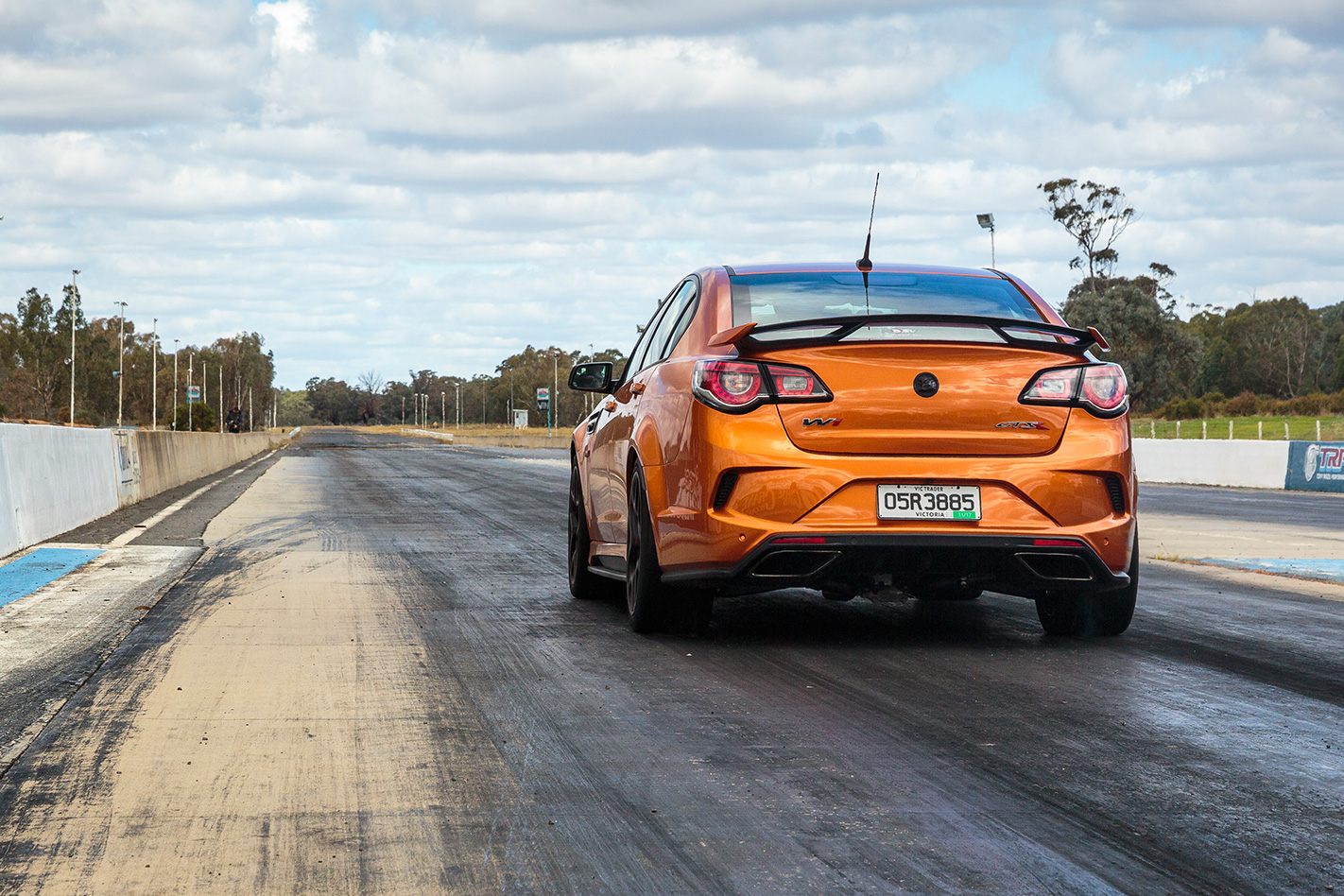
It’s way more Nomex, much less feather boas, than the twin-turbo V8s from a couple of the Germans. It’s also quite distinct, in sound, character, and revability compared to the LSA. Of course there’s an inescapable family likeness, but it’s almost like a William-and-Harry thing. Both have ample merit, but you know which one you want along for a weekend in Vegas.
That close-ratio Tremec gearbox, too, is right on the job, allowing near-flat upshifts just shy of the 6600rpm cut out, with a synchromesh that’s hard to beat.
WE HUSTLE from Heathcote towards the pretty little town of Nagambie via the C344, which is a road that manages to basically irritate the bejeezus out of the W1. The size and frequency of the lumps and bumps on this stretch send the chassis into a constant state of restlessness and, frequently, complete agitation. I have to grudgingly concede that the trade-off for the ultra-focussed chassis tune is a loss of a little of the GTS’s unflustered touring ability.
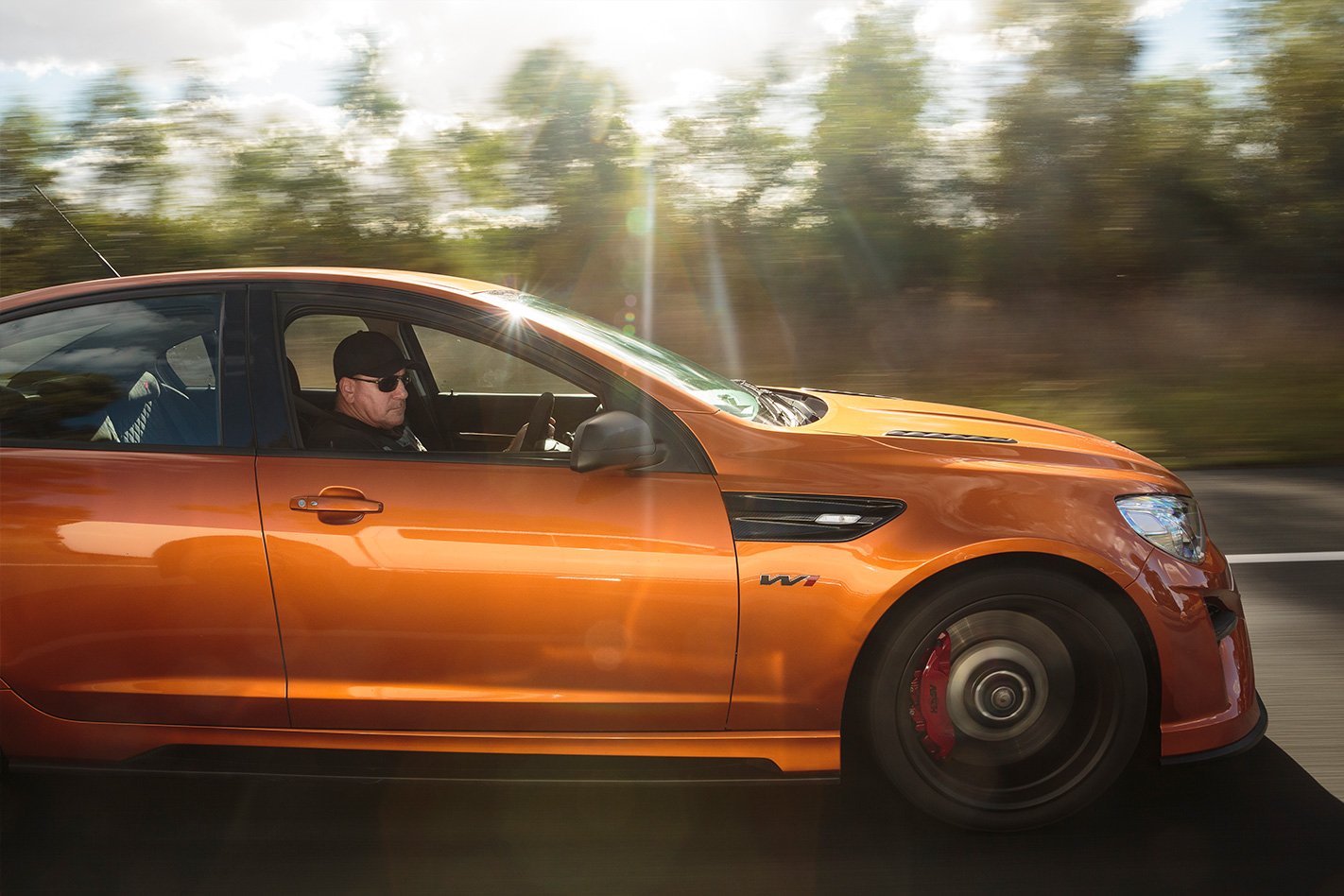
I still have no real clue why he needs a 911 Turbo for this trip when there’s a perfectly nice, vacant passenger seat next to me, but I try not to take it personally. Since becoming editor, I’ve noticed via Instagram he’s taken to wearing snakeskin trousers and a fedora in nightclubs, and demanding his grapes be pre-peeled. So of course he needs a 911 Turbo. I’m hoping it’s a just phase he’s going through.
When we arrive at our overnight stop in Bright, nestled in the Ovens Valley, Inwood eats pizza and drinks beer with us just like a regular person. There are no demands for poached swan or a snifter of cognac, although he does insist on the seat closest to the heater at our outdoor table, and I know he’d take a throw-rug for his knees at this point if one was going. Still, things are looking up.
The next morning we’re up in the pre-dawn darkness to try and meet the sunrise at the ski resort of Falls Creek.
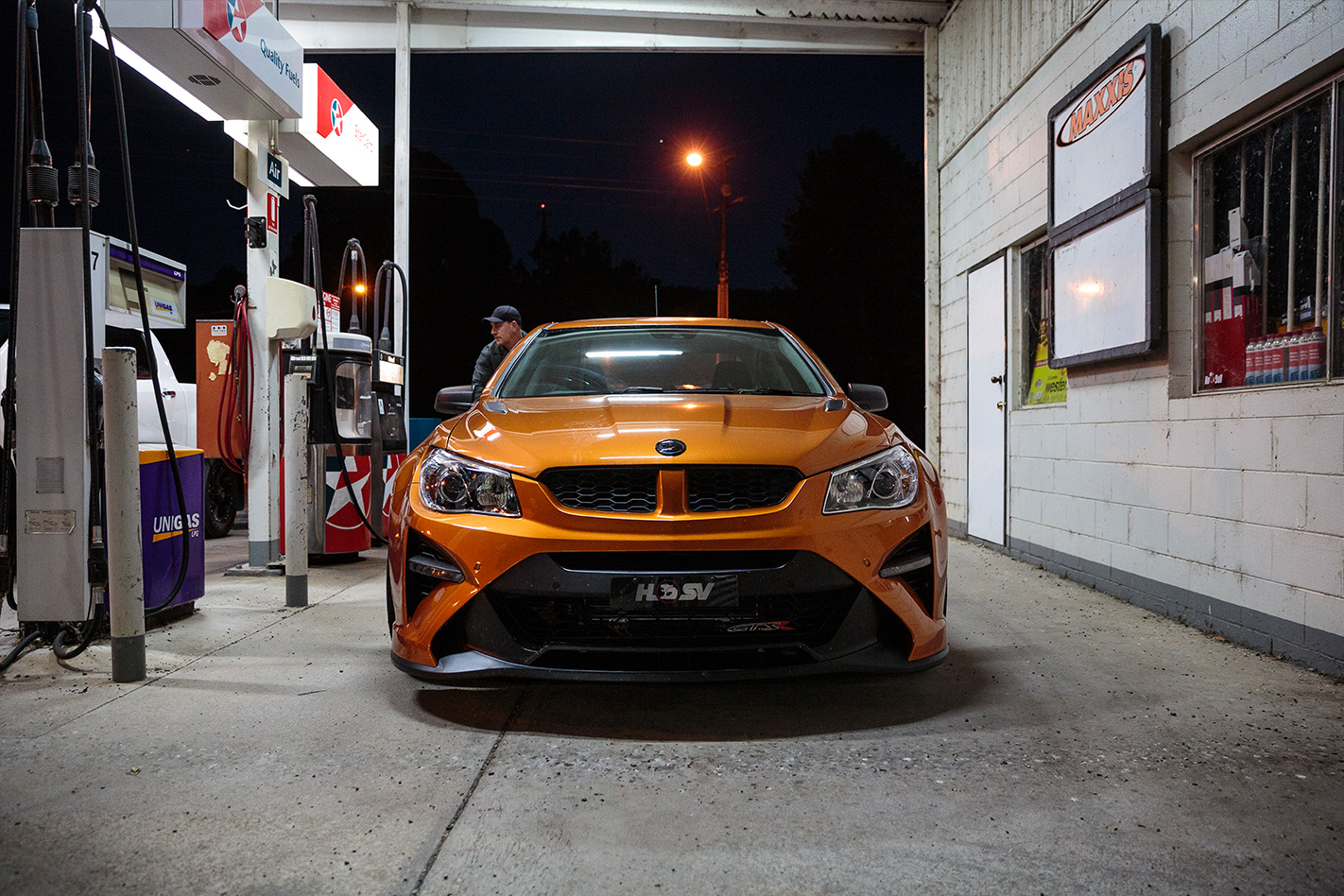
This really is a brilliantly judged set-up, and gives the W1 terrific powertrain duality.
With the secondary flaps shut, you can lope around using as few ratios as you want – first to fourth is no problem – and there’s no bass drone when you ask it to pull. I actually prefer the lighter steering delivered in the Sport mode; for me it’s a shame you can’t keep this setting when the Performance or Track modes are selected. A job for the facelift? Oh, wait…
Inwood’s 911 Turbo was never intended for comparative purposes, but it’s instructive that the W1 is able to keep it so honest on the twisting run along the Great Alpine Road towards the famed Bogong High Plains Road.
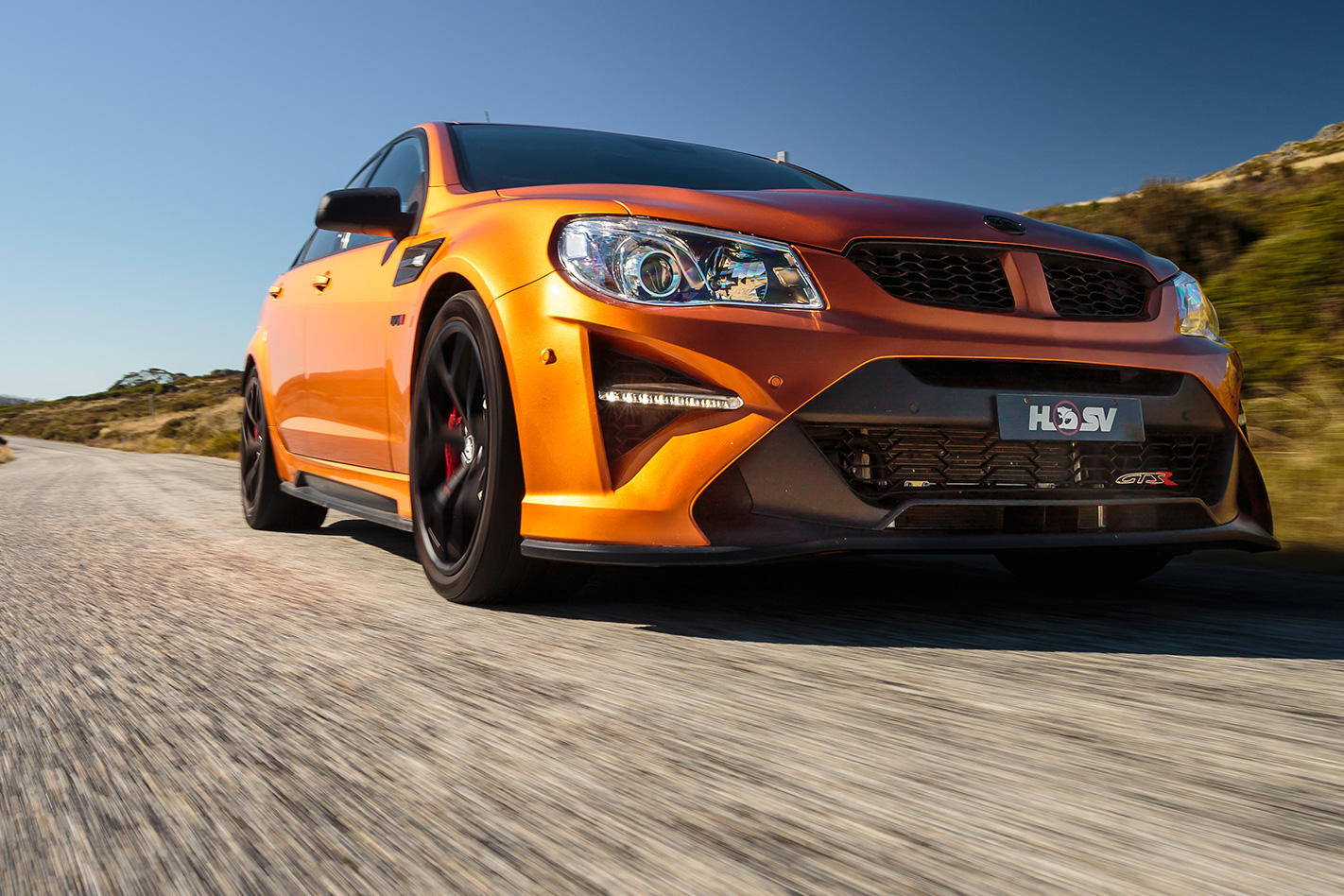
Literally tall, as Inwood and his Porker have a centre of gravity similar to goanna roadkill compared to me in the HSV sedan.
He’s also got about 250kg less to wrestle and phenomenal all-paw traction. But I have a power and torque advantage, as well as massive mid-corner grip provided by those only-just road-legal (and massively temperature-dependent) Pirelli Trofeos. Then there’s the power-down ability. The Commodore’s Zeta platform has always been a great thing when it comes to converting torque to thrust, but the W1 takes it to a new level.
First, though, you can lean on the loaded front corner in this car with an intensity that would have a regular GTS howling and baying at you to keep its nose out of the Armco. Then start chasing big throttle inputs still with loads of lock on and the apex barely in sight.
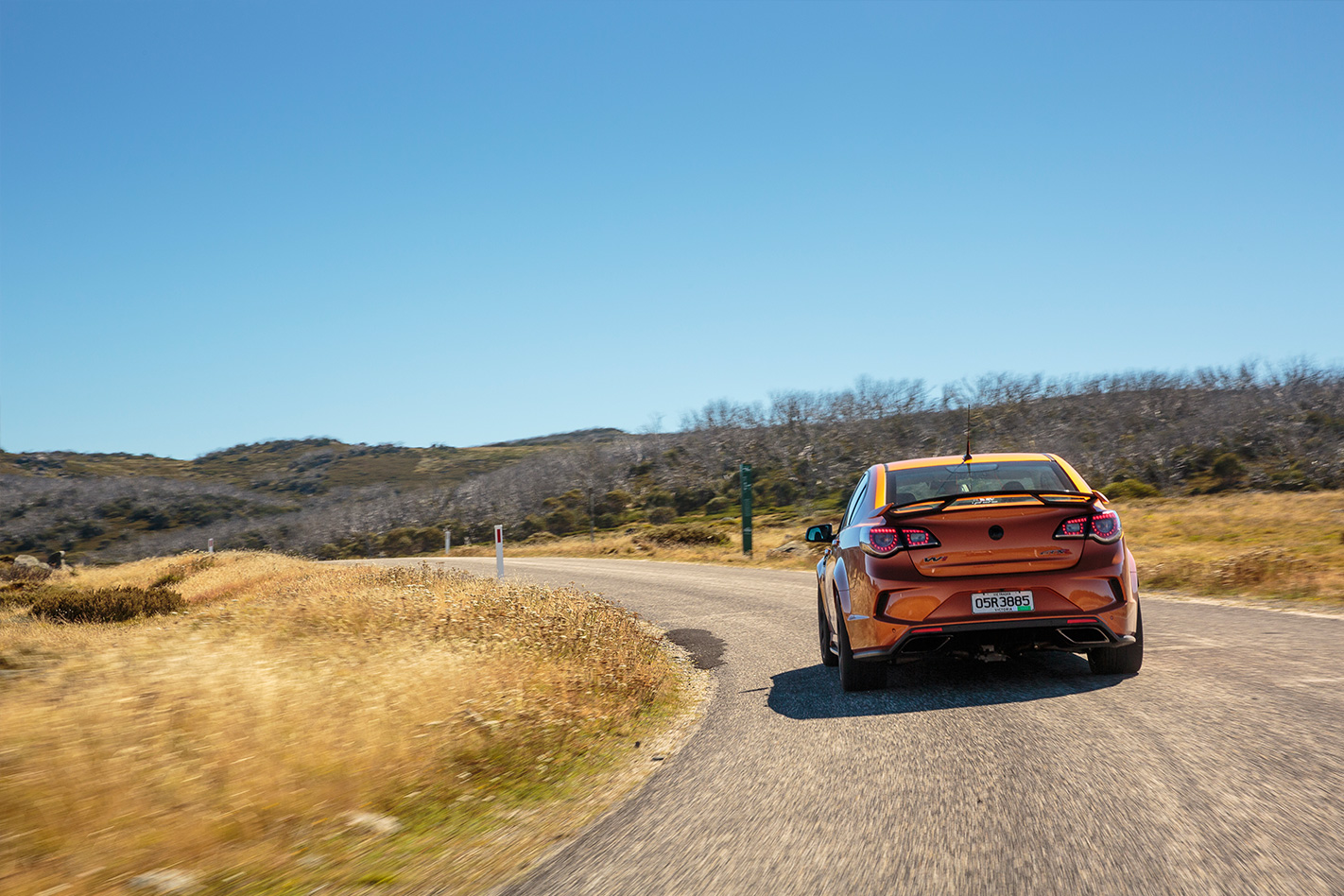
Then there are the upgraded AP Racing brakes and 410mm front discs, which didn’t make any great difference to the car’s 100km/h-0 figure on the test track, but feel like they could stop communism when used hard on the road, with near-perfect pedal feel and the ability to seemingly burrow the snout of the car into the bitumen just before turn-in.
Only the lack of perfect pedal placement for heel-toeing (for my feet, at least) sticks as a demerit.
Guess that won’t get fixed in a facelift either.
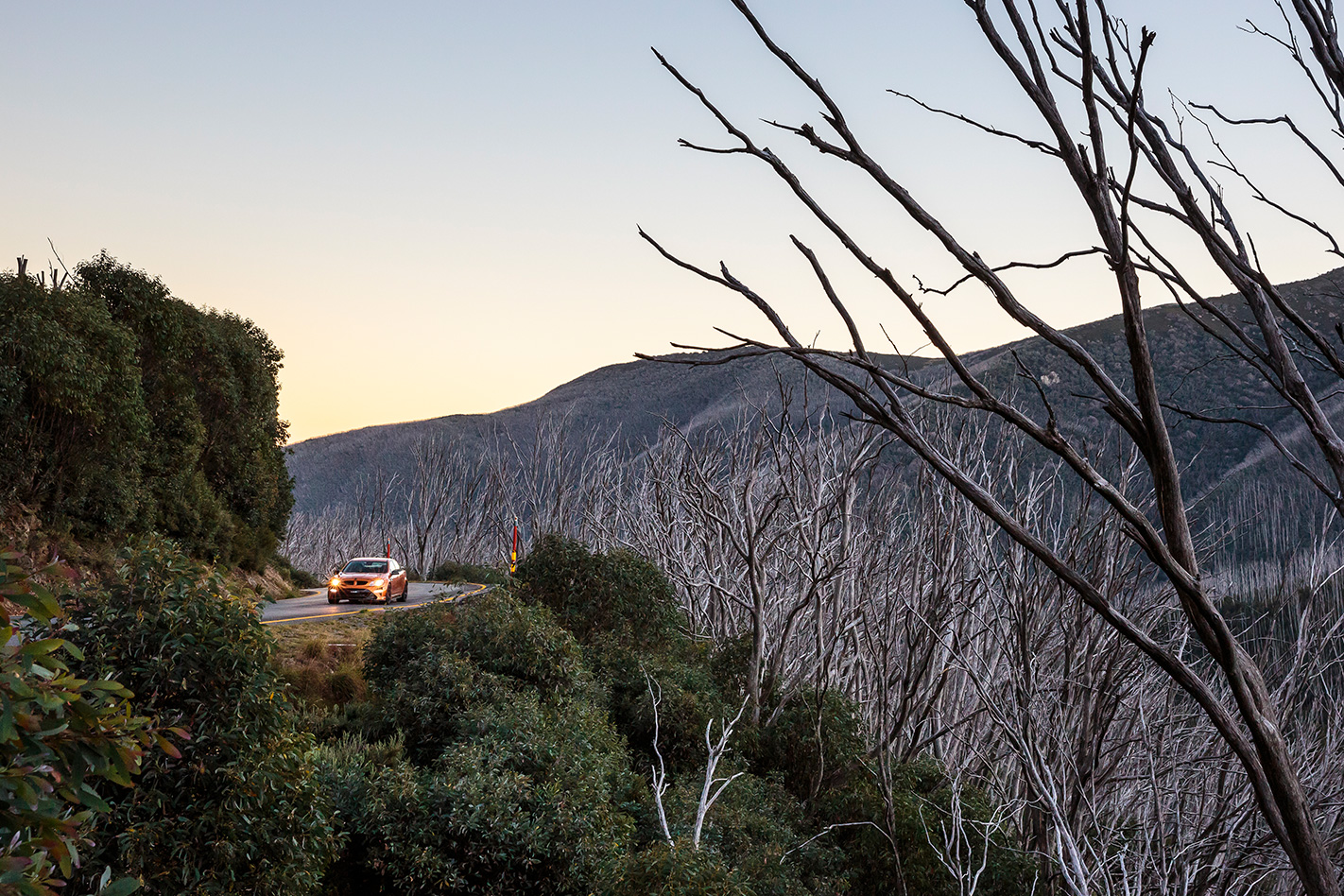
See, parts of this road should, in theory, be too tight for the big HSV to feel fully deployable, yet it just doesn’t seem to care. It’s a huge-hearted thing, scathingly quick and sounding enraged when really spanked, yet at the same time utterly co-operative and remarkably non-threatening when you’re driving it hard.
You’ll feel out the ESC intervention just to know where the threshold is – yep, bloody high – but then find you can drive right up to it, and be sniffing at it, corner after corner, even on damp patches, without re-awakening it.
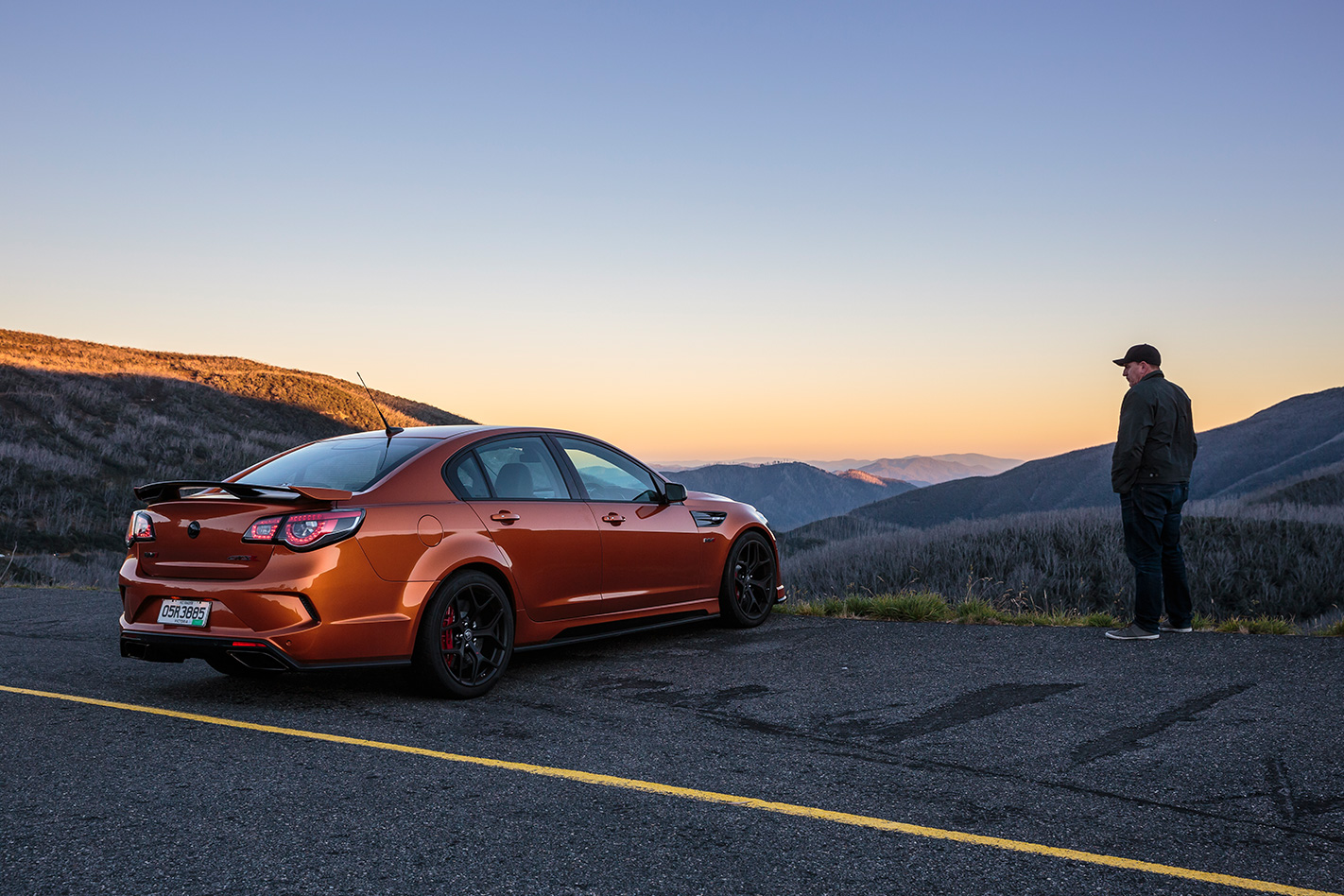
Alex and I suffer possible irreversible testicle damage in the biting cold for our Falls Creek photography, but who cares? After swapping cars a few times, we’re both left shaking our heads, exchanging grins that render words a bit redundant. We both know we’re getting close to the peak of this drive, and the realisation that, in terms of the Aussie performance-sedan landscape, the W1 has just stuck its flag on the summit. This thing is a proper belter.
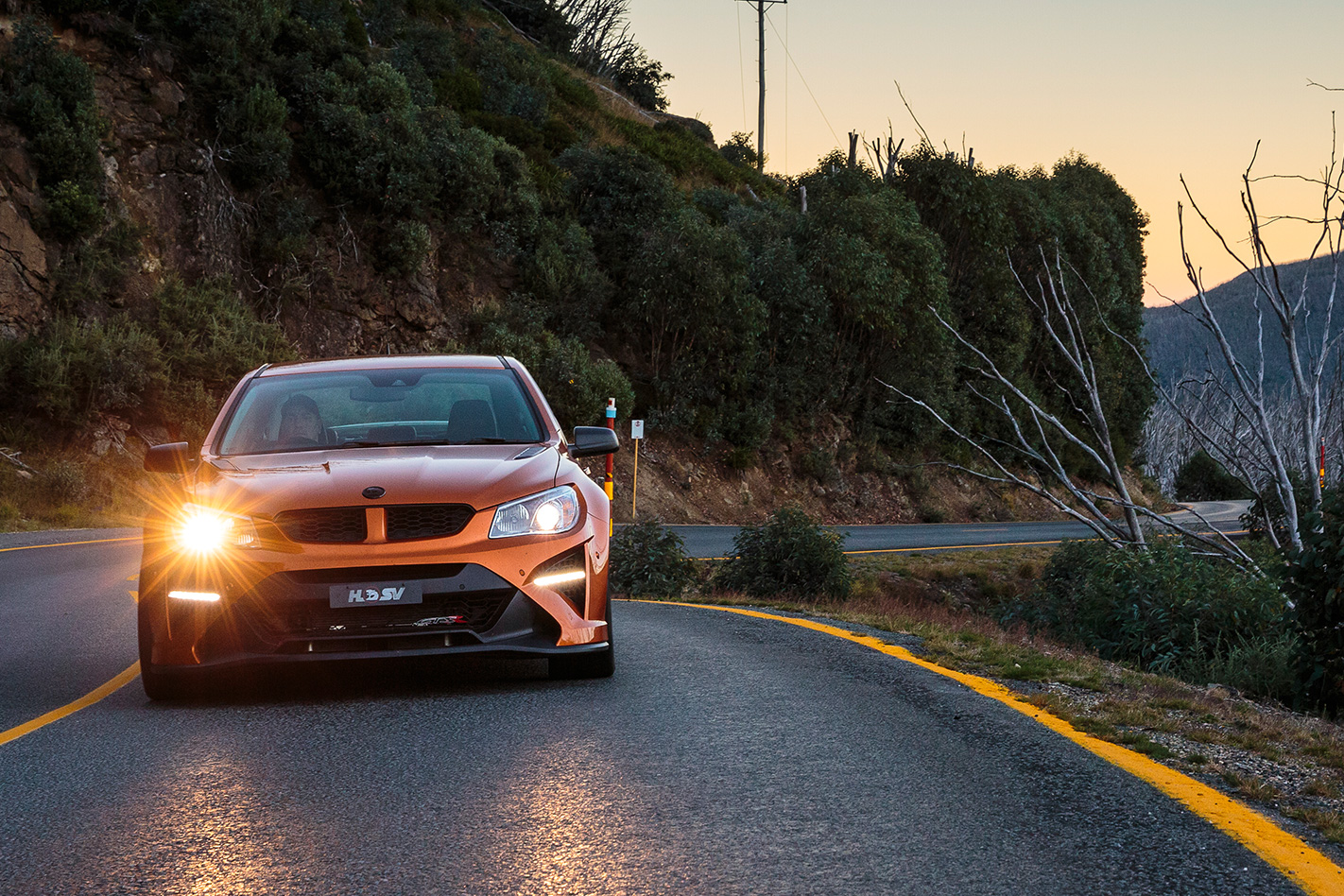
To have had a chance to drive a big-capacity, supercharged V8 hooked to a manual in a rear-drive, Aussie-built sedan – a combination about to become an automotive unicorn – is something to be deeply grateful for.
I recall one of those eulogy cliches; “let’s not lament what we’ve lost; let’s celebrate that which we were lucky enough to have had,” or something along those lines.
Yet it doesn’t seem to help much when I finally park the W1 for the last time and walk away.
Vote for the HSV GTSR W1 to win the 2018 Wheels Car of the Year Readers’ Choice competition
THIS is it. After almost 40 years of continual production, the last locally made Holden Commodore will roll off the Elizabeth production line today.
Wheels is on the ground at both Elizabeth, and Holden’s Port Melbourne offices, and will provide live updates throughout the day.
13:37 – Elizabeth
And that’s it. The cameras have been packed away, the final farewells made and, just like the machines that screwed together some of Australia’s most loved cars, the Philip Highway outside Holden’s Elizabeth plant has fallen eerily silent.
It’s only as the convoy of historic vehicles departs that it becomes chillingly clear that the party is over and this really is the end.

The floral tributes continue to arrive. This one blaming lack of government support for the fall of Holden manufacturing.

Quality manager Andy Read fronts the media.
“this is not the end. We have the ability and strength to adapt to this change”.
“There can’t be many companies with such a love for a product”.

Mark Bernhard addresses the media.
“we’ve been able to build the best vehicles we’ve ever built”.
Bernhard says the vehicles that will be imported from today on will continue to uphold those quality standards.
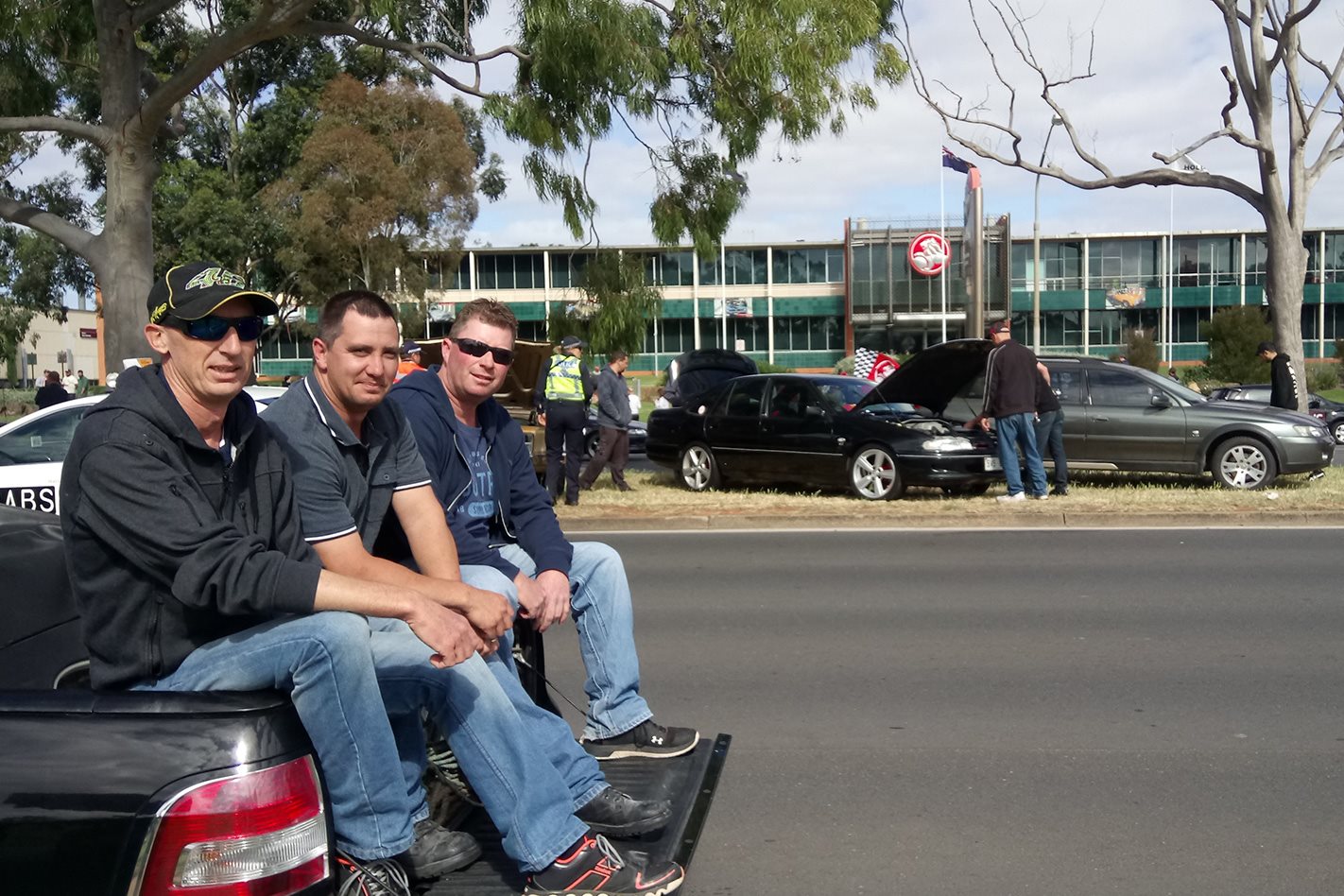
Fans have settled in for an event and brought camping chairs, drinks and, of course, the ultimate three-seater spectator’s seat.
Attention has turned from the main building to the endless procession of incredible Holdens cruising past. The air is full of sweet hydrocarbons and a constant V8 rumble.

Cars have been moved from the central reservation and some media have dissipated, but the festival atmosphere is intensifying as the sun emerges and more classics arrive.

Says a lot. Today feels partly like a big Holden celebration and partly a funeral wake. People sense the loss but are suppressing the sadness for one last party.

Employees and guests shepherded in through the back of the Elizabeth plant away from the prying eyes of the media.

Young and old, both cars and people, here to farewell an iconic and loved brand.

Ex employee Kane spent 17 years in the Elizabeth paint shop.
With a new job to go to, Kane said “I’m one of the lucky ones”
“we’ve let go one of the world’s best cars. It’s an absolute tragedy”.

AMWU John Camillo addressing the media. “this didn’t need to happen”

Cara Pearson braves the cold with her 1957 FE Special sedan that won best in class at Sunday’s Dream Cruise.
Pearson says the official cruise was organised to stem the turnout of cars today but the presence here is unprecedented and growing by the minute.

9:11 – Port Melbourne
Aside from the live cross to the factory today, and the display of about 40 employees’ cars on one of the head office access roads, it appears to be business as usual at Port Melbourne. Workers are ducking out for their morning coffee at one of two nearby cafes. A handful of staff are out looking at the static display.
8:51 – Elizabeth
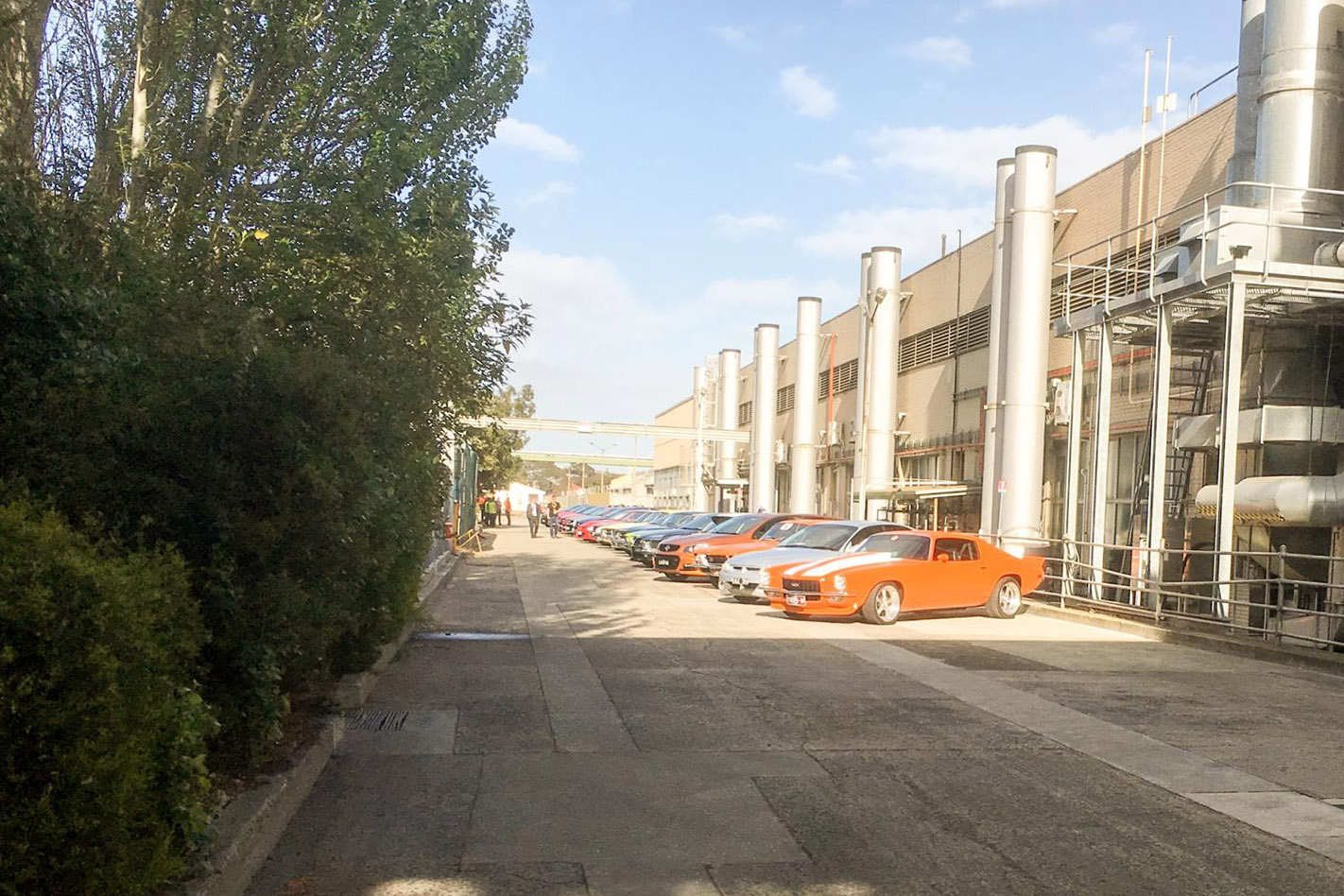
Even the police are on brand.
Car clubs have been working with the police ahead of the final day to ensure a huge presence of enthusiasts and classic cars goes smoothly.

8:44 – Elizabeth
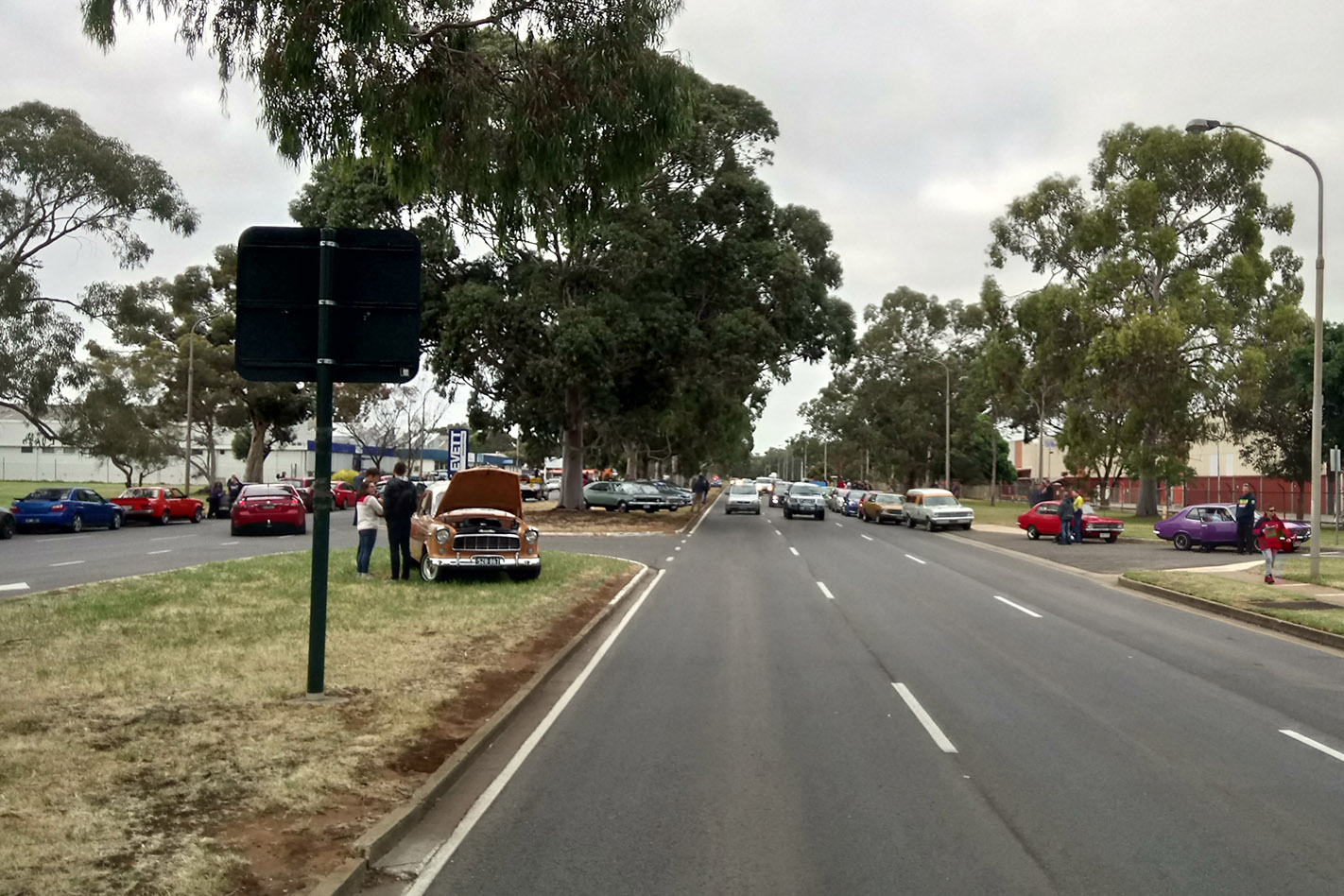
It’s turning into a full but impromptu Holden show on the streets outside the factory.
8:38am – Port Melbourne
Little is known at Port Melbourne about what will happen at Elizabeth today. All we do know is that staff here will assemble for a live cross to the factory floor from noon today for a ceremony that will mark the end of local manufacturing.
8:35 – Elizabeth
Alan Hesketh, storeman and line chaser at the plant for 27 years now works as a public servant in state government.
Alan says today brings “more anger than sadness, because something could have been done”.
“The state government has been doing all that it can. This was always a federal issue.”
Some reports state unemployment could be as high as 35 percent in the Elizabeth area and Hesketh, who lives nearby, belives it will get worse.
“They’re going to take a billion dollars of of the economy,” he said.

8:09 – Elizabeth
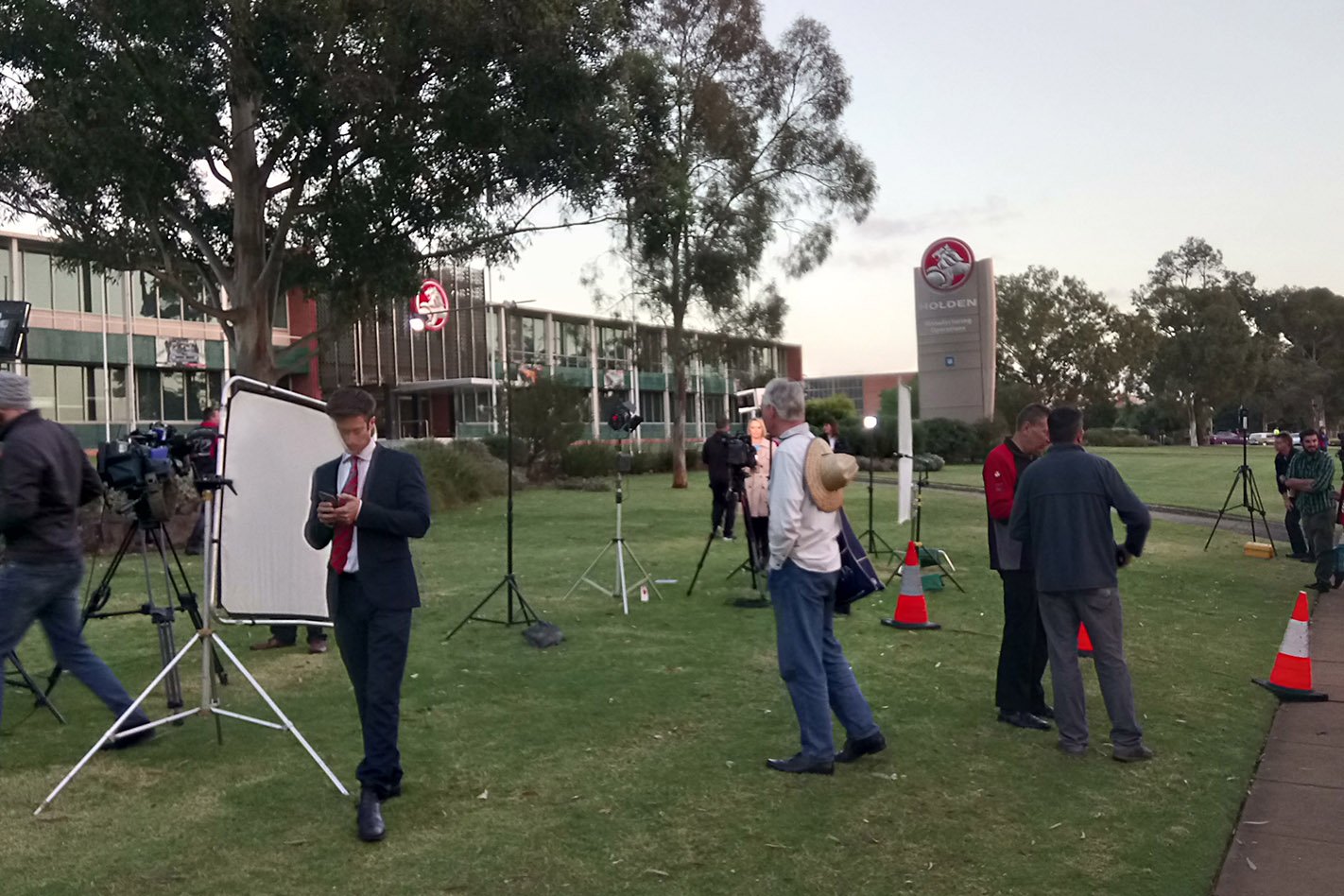
No Holden staff entering the Elizabeth site via the front door today to avoid attention from the media. A hive of activity from TV crews, however.
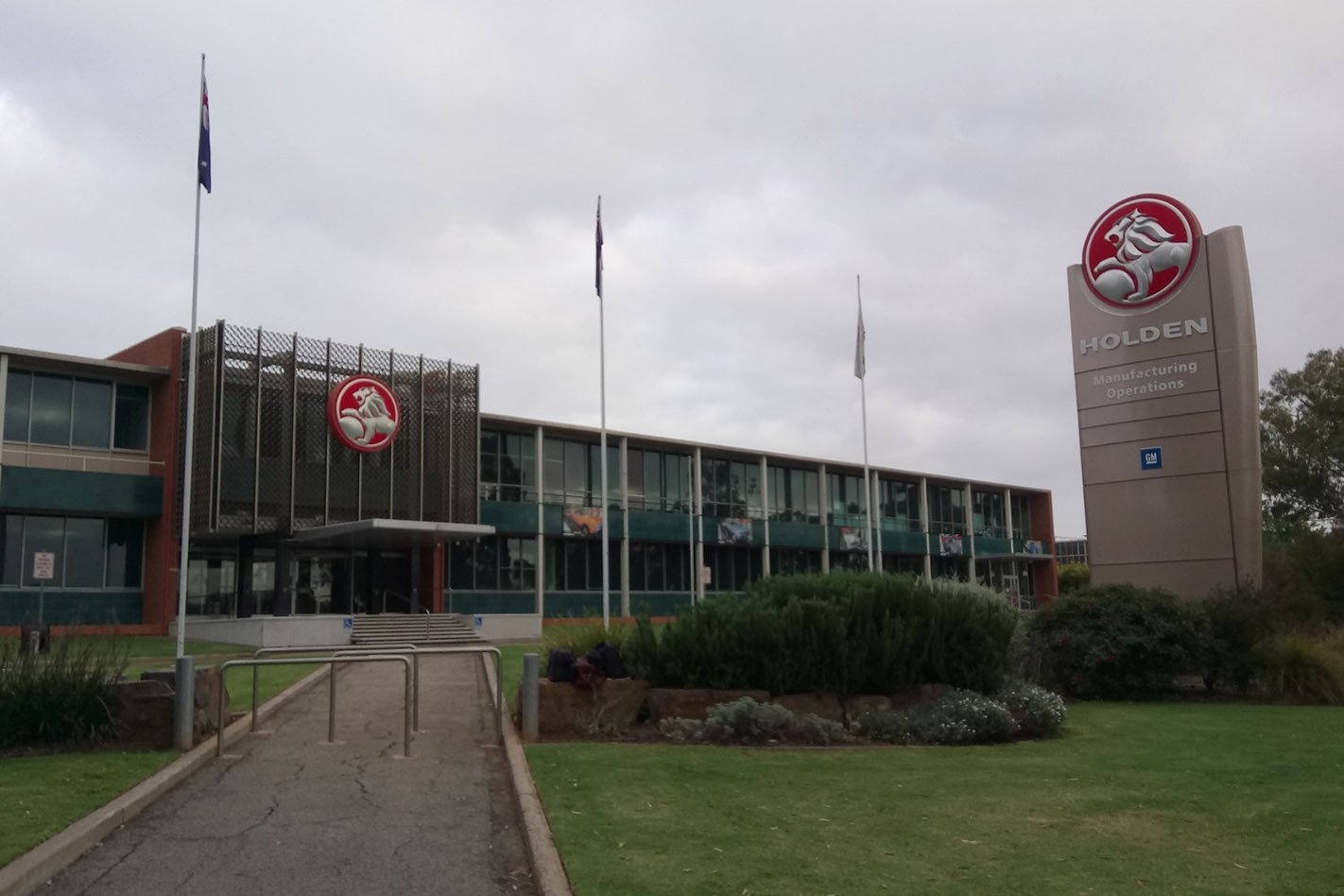
8:05 – Elizabeth
Holden’s transition centre will stay open for 12 months to help all employees including the 950 people out of a job today find new employment.
8:03 – Elizabeth
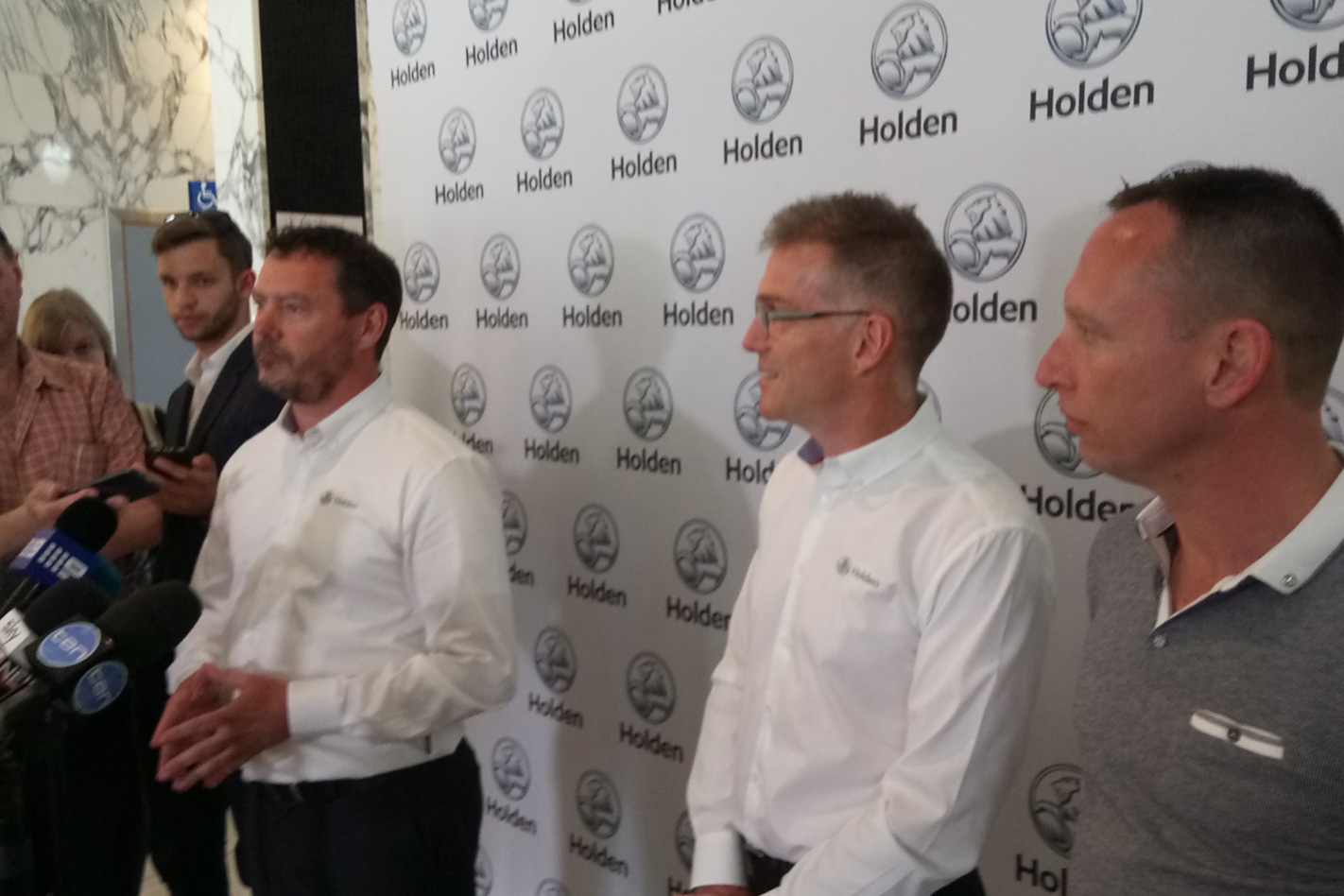
Holden Director of Communications Sean Poppitt addresses the media with HR director Jamie Getgood.
“Holden’s transition figures show 75 percent of former Holden employees have secured new employment”

8:00 – Port Melbourne
This group of Holden mechanics has come into Port Melbourne for training from as far away as Port Pirie in South Australia. One of the cars they have worked on is an FJ. Their mood appears mixed; they’re excited by the product Holden now has in its showroom, but the loss of our manufacturing future appears to have touched them all.

7:14 – Elizabeth
The loyal fans are out in force and in solidarity with some fine Holden examples turning out in Elizabeth.


7:08 – Elizabeth
We are on the ground at the Elizabeth plant in Adelaide, ready to cover the final day of Holden production.
Robert Stumpf is a happy man. Mini’s driving dynamics guru has been getting the same response from just about everyone that drives his new baby, the JCW GP.
This review was first published in MOTOR magazine’s January 2013 issue.
That is, breathless smiles and universal praise for a car that lifts Mini’s hottest hatch to an impressively high level. A limited production run of 2000 GPs has just kicked off, and only 30 are ear-marked for Australia.
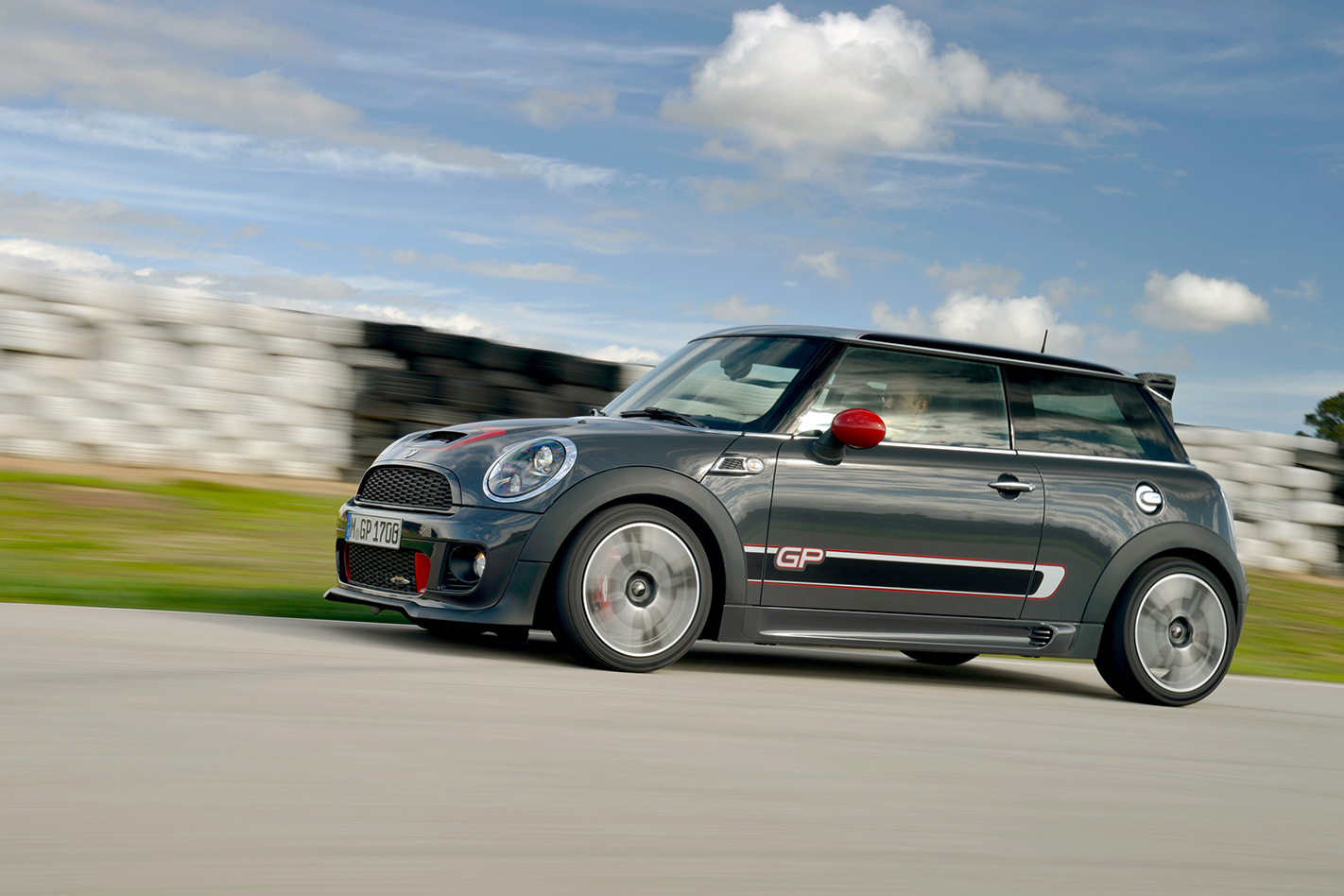
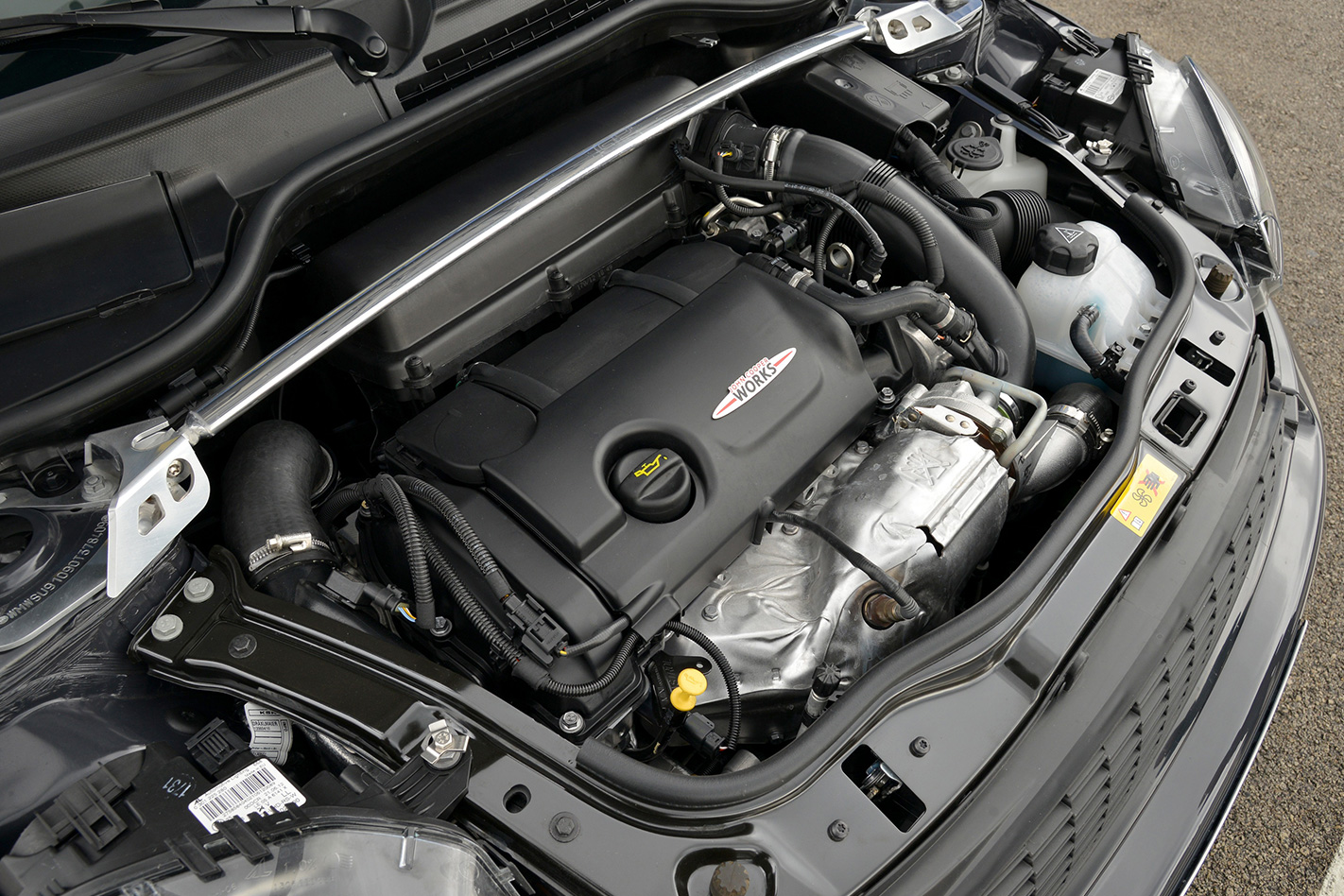
The GP’s 1.6-litre, DI, twin-scroll turbo four boasts an aluminium block and bearing mounts, high-spec pistons, revised cylinder head, lightened crank, and sodium-filled exhaust valves. The result is 160kW (up from 151) and 0-100km/h in a claimed 6.3 sec (down from 6.5), the latter number also assisted by a slightly lower diff ratio (3.71 v 3.65).
But it’s when the road starts to curve that this go-kart for grown-ups really comes into its own. Herr Stumpf and his team of go-fast boffins have slipped in an individually adjustable coil-over suspension, that allows ride height to be lowered by up to 20mm.
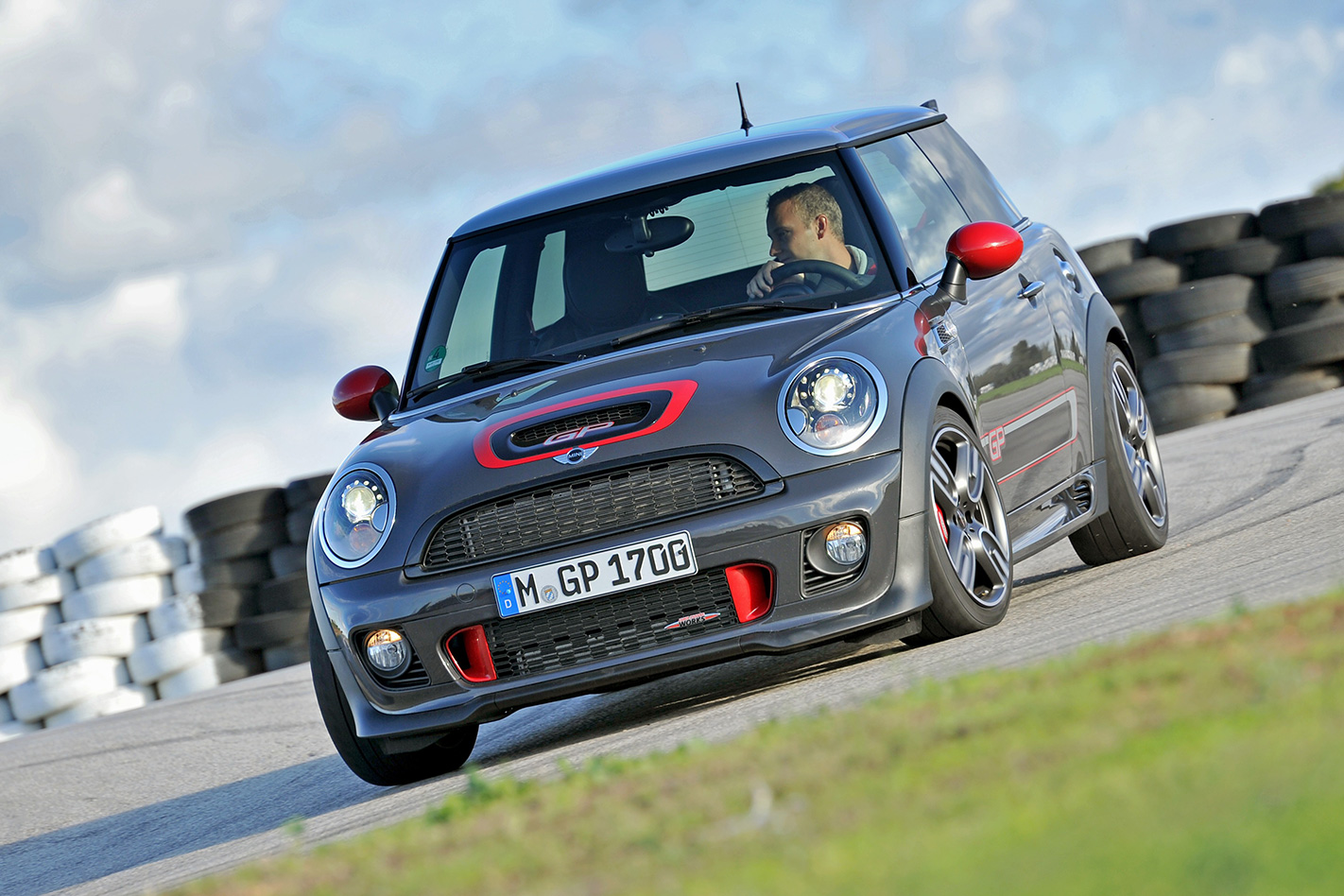
At the same time, 17-inch alloys, derived from those on the MINI Challenge race car, and carefully shaped to accommodate bigger brakes and shod with Kumho Ecsta semi-slick rubber (slightly narrower, full tread tyres are a no-cost option). The front brake rotors are bumped up to 330mm (from 316mm), clamped by six-piston calipers.
Inside it’s all familiar territory until you notice the rear seats are MIA, with a meaty strut bar spanning the now empty rear section. The chance to steer this feisty little rarity comes at the ‘Circuito Mallorca RennArena’; a surprisingly serious 3.2km track on Spain’s famous resort island (and Christopher Skase’s hide-out of choice).
Grip from the R-spec rubber is predictably mega, and body control is superb. Steering is sharp, the Recaro seats are grippy, and there’s barely a squeak of protest as the GP gets its power down and rockets out of tight corners fairly rapidly. Aero additions (rear diffuser, underside panelling, roof-edge spoiler) make a genuine difference.
In fact Mini claims lift forces at the rear axle are reduced by 90 percent. Equally at home on long sweepers and high frequency transitions this is a performance car of the highest quality. At $56,900 it ain’t cheap, but hot hatches this good don’t come along every day.
2013 Mini JCW GP Specs: Engine: 1598cc 4cyl, DOHC, 16v turbo Power: 160kW @ 6000rpm Torque: 280Nm @ 2000-5100rpm Weight: 1160kg 0-100km/h 6.3 seconds Top Speed: 242km/h Price: $56,900
All-new generation of Audi’s flagship limousine finally nails the plush-riding brief, supported by unexpected agility and some production-first tech.
WHAT IS IT? The latest generation of the Audi A8, wearing a D5 model code to indicates it’s the fifth generation of Ingolstadt’s contemporary limousine, originating in the 1990 Audi V8 quattro. While the new Audi A8’s MLB platform may be familiar, this is all-new with some intriguing, cutting-edge tech.
WHY WE’RE TESTING IT Audi’s last few efforts – namely the excellent A4 range and the ultra-refined Q7 SUV – have shown that the boffins at Ingolstadt have finally nailed how to make a car drive as good as it looks. Thing is, what will the world think of the way the new-gen A8 looks? Inoffensively proportioned limo with an imposing visage or a clownish, slightly frumpy sedan whose only elegance is in the details?
MAIN RIVALS BMW 7 Series, Jaguar XJ, Lexus LS, Maserati Quattroporte, Mercedes-Benz S-Class, Porsche Panamera
THE WHEELS VERDICT Here’s a limousine emblazoned with Audi’s four-ringed logo that isn’t relying solely on static presence to sell itself. In fact, it could be argued that the D5-generation Audi A8 works best from inside its cabin, or behind its cool four-spoke steering wheel, because its slightly frumpy exterior doesn’t quite sell the steak. With some excellent technology, an agile chassis and deeply impressive refinement, the A8 does pretty much everything you’d expect from a range-topping limousine. We just wish it looked a bit more athletic. Maybe next year’s red-blooded S8 version can save it.
PLUS: Refinement; ride quality; high-speed excellence; agility benefits of all-wheel steering; strong turbo-petrol V6; slick tech; classy interior MINUS: Styling lacks elegance; standard front seats lack under-thigh support; needless rear-legroom benefits of LWB version
THE WHEELS REVIEW THERE’S something deeply alluring about a super-luxury range-topper from a premium brand like Audi. It’s the way each successive limousine generation encapsulates the pinnacle of a brand’s essence at the time, and ramps that up to eleven. It’s what these mega-buck sedans do best, and have done since forever.
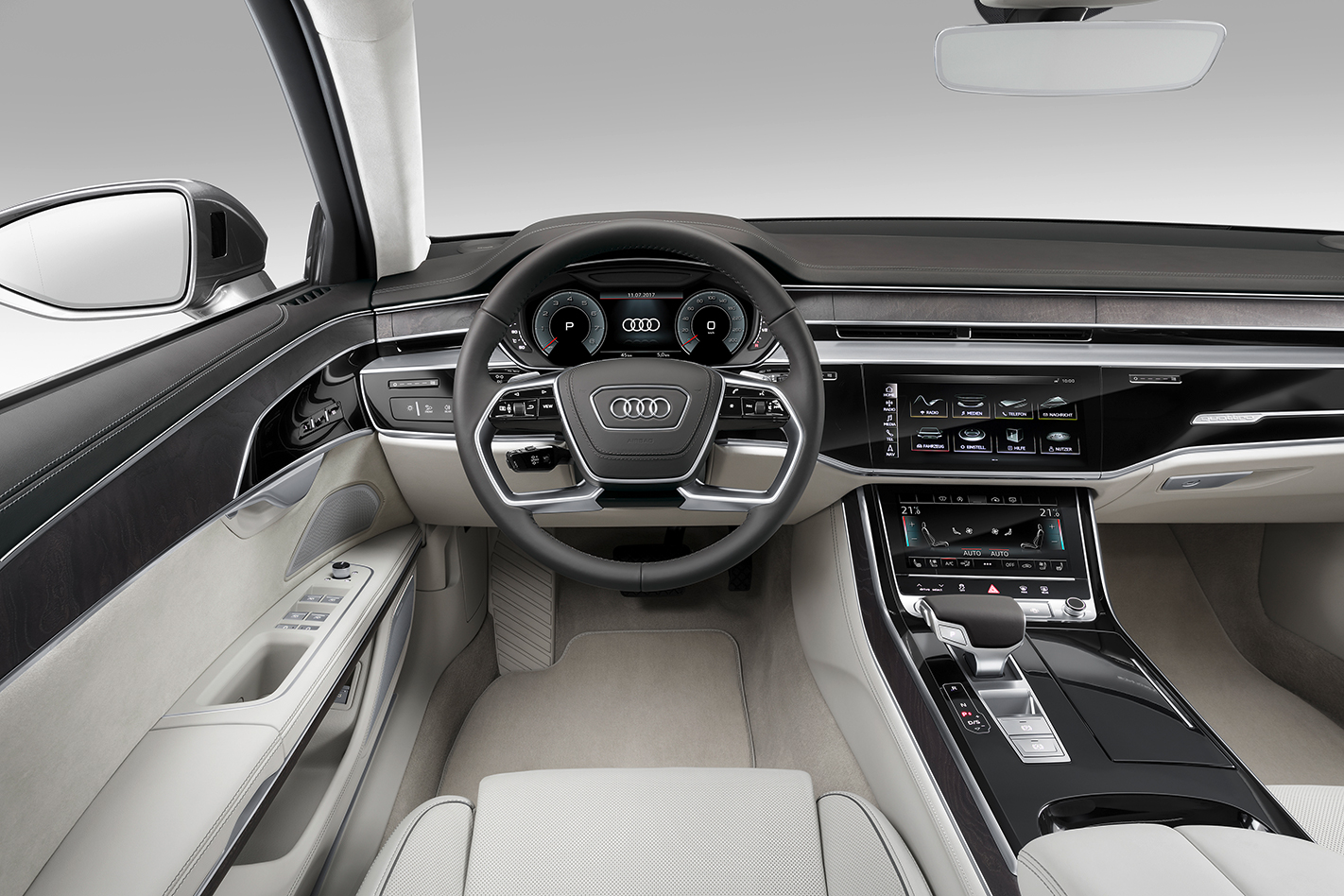
But where Audi always plays its trump card is inside the cabin. And this all-new D5-generation A8 is no different. Cue Audi’s now-default Virtual Cockpit instrument pack, but challenging this wondrous piece of technology is a pair of completely flush, smartphone-style centre touchscreens that enable you to swipe through layers like a tablet, with haptic feedback (and even a faint ‘click’ sound) when you select something. It makes the old MMI set-up (which we used to rave about) seem clunky and completely outdated.
Select ‘search’ in either navigation or phone functions and the lower climate-control screen turns into your own digital etch-a-sketch. Draw a great big letter or number, the upper screen goes straight to what you’ve scrawled, and it’s just all incredibly simple and lovely from there. Technophobes never fear – this is beautiful, seamless technology at its most intuitive.
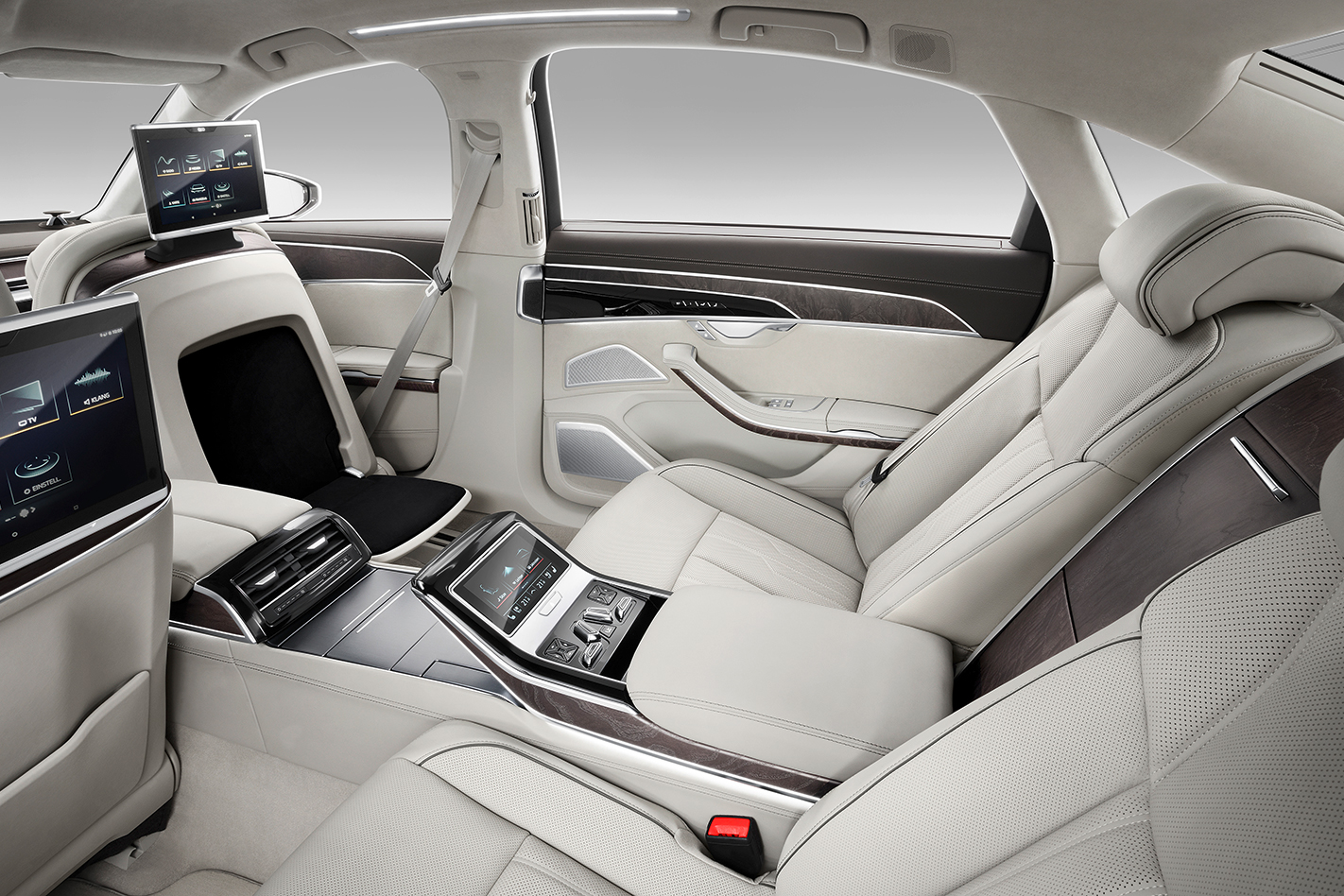
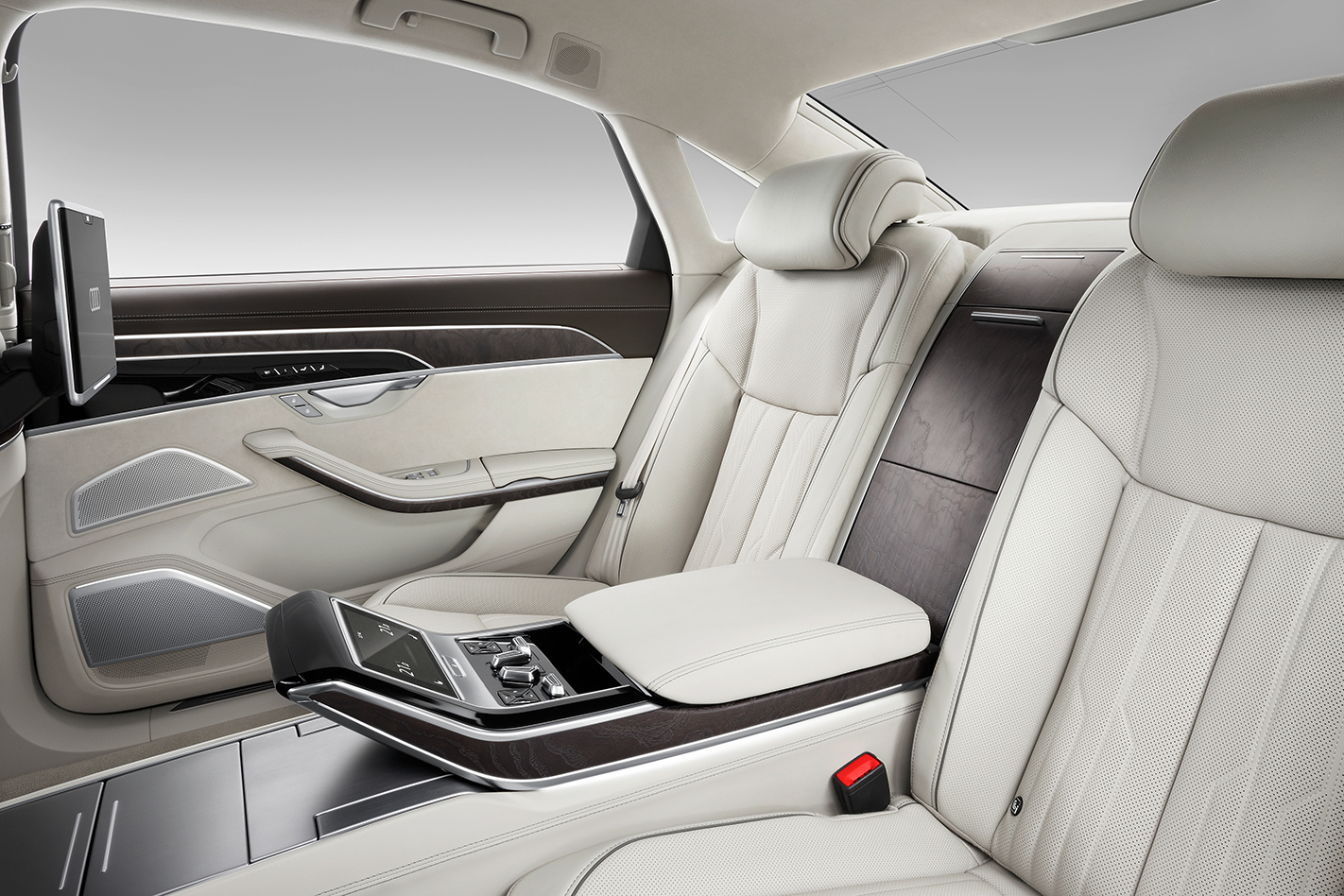
There are plenty of other details to delight your visual senses. The four-spoke steering wheel, with a trigger-grip-style spoke arrangement, looks futuristic and feels great, and there’s leather covering every surface bar the sill caps and front kick panels. The ventilation outlets also do a Jag XF-style barrel roll when you switch the climate control on, but it’s a pity they aren’t so conspicuous when passing crisp air. And while there’s acres of room inside – even the base A8 rides on a 2998mm wheelbase – the front seats don’t offer quite enough under thigh support, even with the cushions tilted to max height.
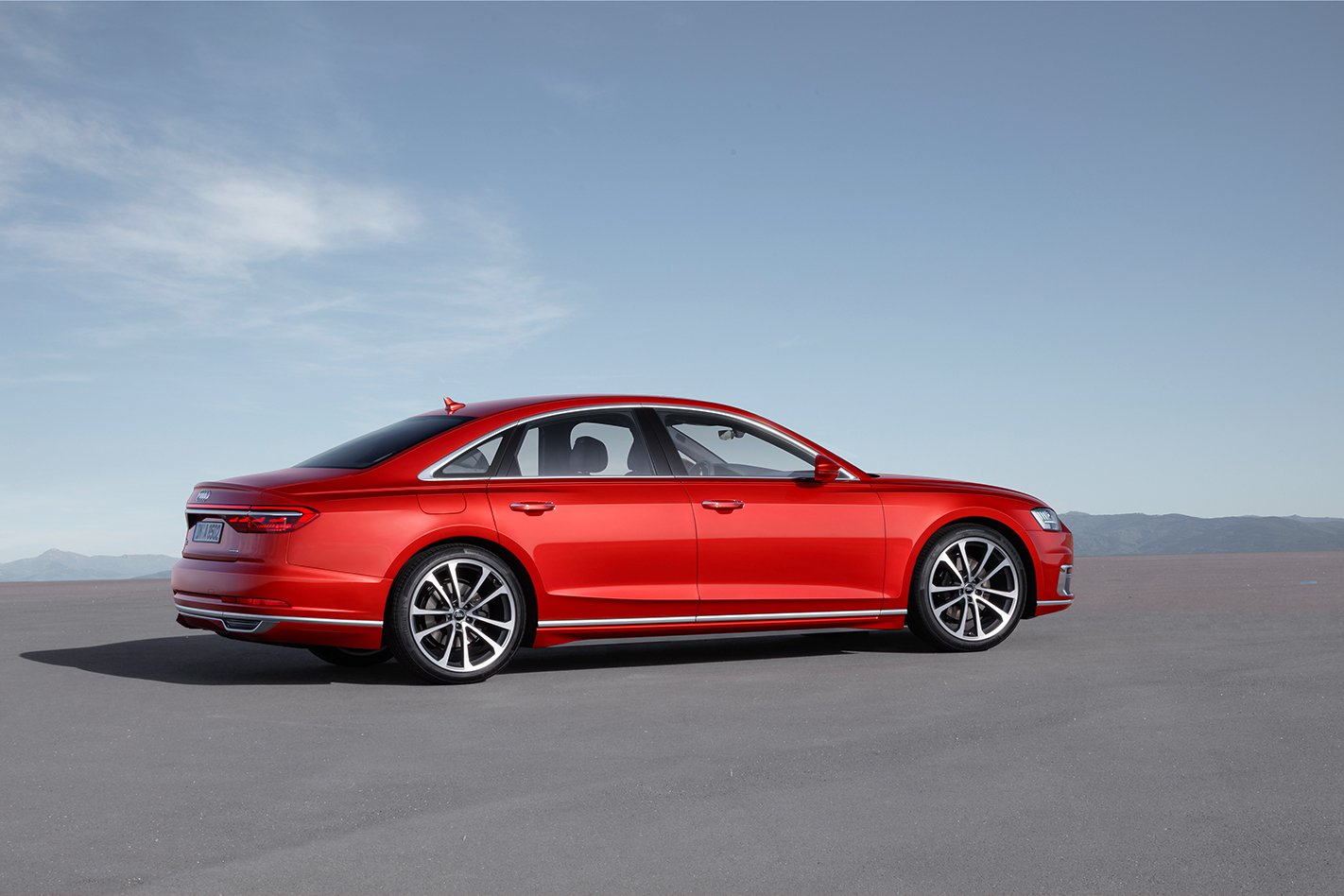
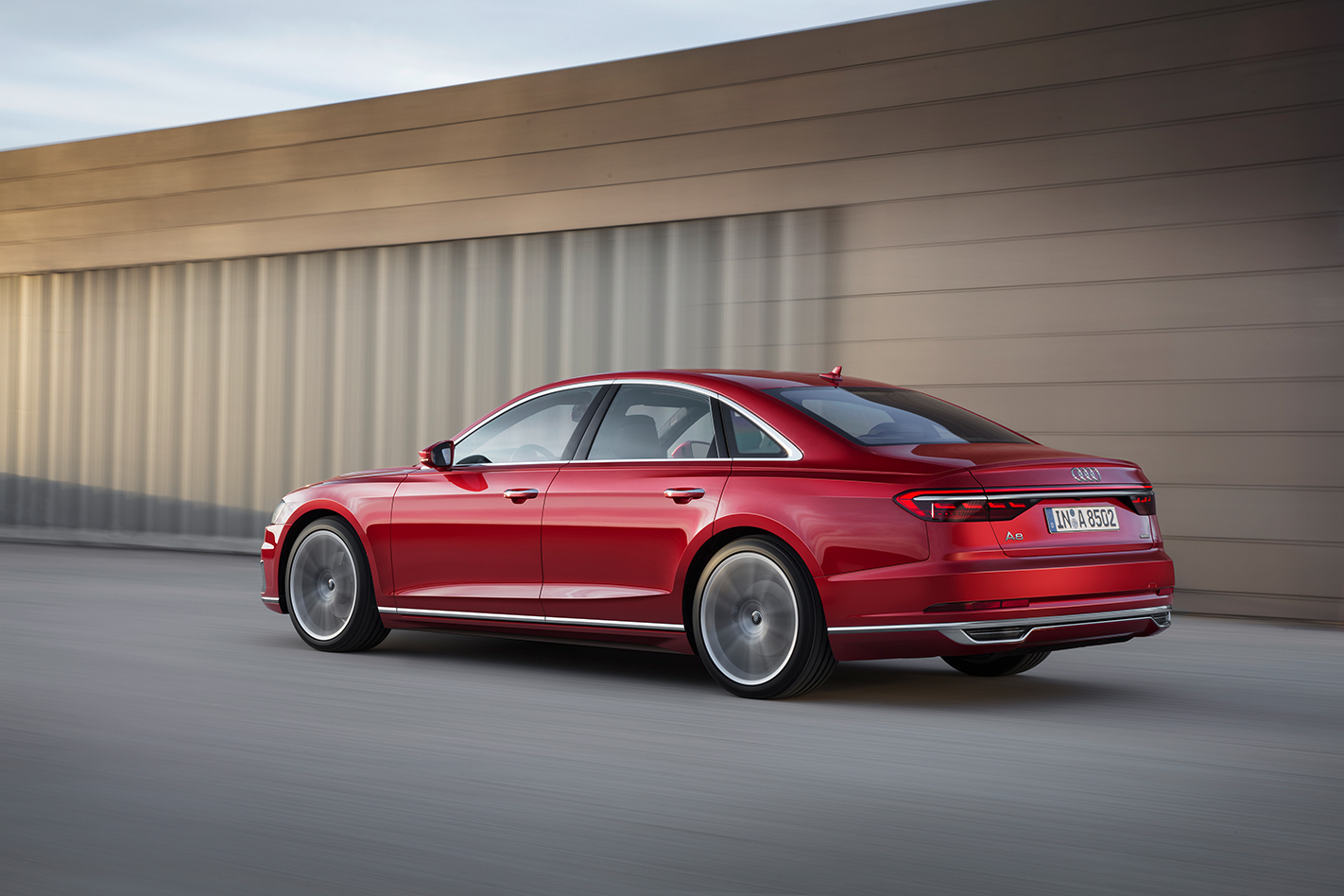
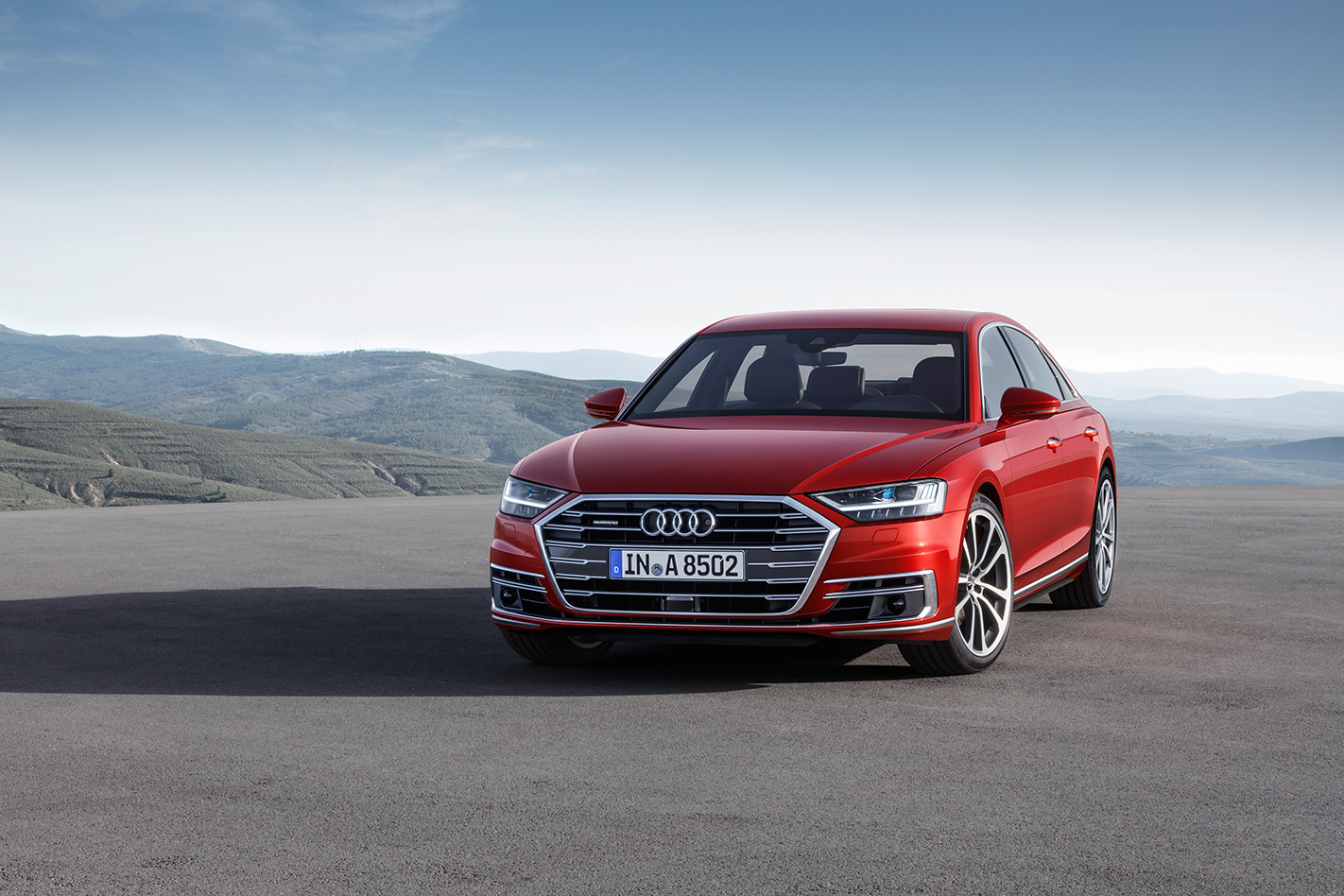
Outside is where the new-gen A8’s cutting-edge persona begins to unravel slightly. Sure, its structure is 24 percent stiffer, aluminium now makes up 58 percent of the total weight of the car (1920kg in ‘base’ trim), and there are some delightful design flourishes. The way the bonnet shutline twists its way into becoming the upper shoulder line is quite special, and so is the lower swage line, which subtly ‘blisters’ over each wheelarch. The rear light display is a cracker, too, with a Knight Rider-style heartbeat pulse from the upper red LED bar before it encircles the whole rear end. But the overall form is perhaps a bit too subtle … until you spot the grille.
It’s at the front where this generation of A8 somehow lacks the elegance of its forebears. That oversized grille is almost clownish in its vastness, while the A8’s relatively short dash-to-axle ratio continues to convey the impression that this mega-luxe Audi may in fact be front-wheel drive. It’s not – all A8s are quattro – but the DNA of the expanded MLB platform underneath certainly is. Think next-gen A6 on growth hormones.
On the road, however, the D5 A8 casts those aspersions aside. Fitted with adaptive air suspension and optional all-wheel steering, the test A8s performed a stupendous job in shrinking the car around its driver.
On some seriously sinuous (if perfectly hotmix-smooth) surfaces in the hills outside Valencia in Spain, even the A8 L (a 5302mm-long car riding on a 3128mm wheelbase) felt agile and wieldy. There may be little true steering feel being fed through the A8’s funky four-spoke wheel, but there’s certainly the accuracy, the turn-in and the poise a big car like this needs when all four wheels are turning – especially at big speeds on snaking freeways.
The all-wheel steering chops more than a metre from the turning circle (down to a trim 11.4m) and half a turn out of the steering ratio (to a brisk 2.2 turns lock-to-lock), all of which promises a solid base for next year’s forthcoming S8 version. And the new air-sprung A8 rides too, or at least seems to on the not-so-challenging surfaces we tested it on. Unlike the often brittle and inconsistent demeanour of A8’s past, this generation feels like it can truly look the S-Class and 7 Series directly in the eye, without fear.
And once the optional AI Active Suspension option comes on line – where electric motors at each corner can raise the A8 by up to 80mm, in response to an upper-screen camera capturing 80 frames-per-second of the road surface up to 20m ahead (at speeds approaching 80km/h) – the A8’s ride-quality absorbency should be truly unquestioned.
Drivetrain wise, Australia will follow Europe in offering a pair of launch engines – a 3.0-litre turbo-petrol V6 (producing 250kW/500Nm) and a 3.0-litre turbo-diesel V6 (with 210kW/600Nm). The TDI version slices nearly two litres per 100km from the petrol A8’s combined economy figure, but the petrol is far more in keeping with the A8’s hushed refinement.
Tied to an excellent eight-speed auto, the single-turbo 3.0-litre sounds so much nicer in the pampering A8 than it does in the somewhat grainy S4 and S5. Its almost velvety induction acoustics, its greater rev range and its far more suitable gearing for twisty roads definitely puts the so-so diesel in the shade. Hire-car operators may prefer the oiler but for the rest of us, it’s petrol V6 all the way. Or punchy 338kW/660Nm twin-turbo V8 if you live in the Middle East.
Drive impressions aside, it’s the A8’s ‘Level 3’ conditional automation that should garner the biggest headlines. This is the first series-production vehicle in the world to offer such tech, but not all of it will be available from launch.
The winner is Traffic Jam Pilot, which can handle nose-to-tail driving in gridlocked traffic (at speeds up to 60km/h) all by itself. All you have to do is sit back and chill, though not sleep apparently because a sensor can detect if your eyes are closed. Thing is, Traffic Jam Pilot is currently only legislated for ‘testing’ in Germany and a few US states, though Audi expects approval some time in 2018.
The other two are remote Garage Pilot and remote Park Pilot. The first (again, not available from launch) allows you to park your car via an app on your smartphone into a garage, even when turning is involved (though only if it’s moving forward). The Park version is for parallel parking, mimicking what you’d do if the A8 auto-parked while you’re in the hot seat, but without anyone on board.
For now, none of the new A8’s ‘AI’ kit will be coming to Australia – certainly not in time for its mid-2018 launch. But the AI Active Suspension option will definitely be on the cards, and judging by our first taste of this technology, it represents a big step forward for the Ingolstadt brand’s luxury reputation.
Perhaps the new A8’s conservative buyer profile won’t mind its slightly frumpy proportion ahead of the A-pillars, or the oversized mawkishness of its massive chrome grille. Certainly the saviour is its rear three-quarter proportion, which is actually quite pretty, but there’s always the prospect of a dark-hued S8 on black 21s with all that chrome nonsense blacked out to save the day.
Bring on the S8, I say.
SPECS Model: Audi A8 55 TFSI Engine: 2995cc V6 (90˚), dohc, 24v, turbo Max power: 250kW @ 5000-6400rpm Max torque: 500Nm @ 1370-4500rpm Transmission: 8-speed automatic Weight: 1920kg 0-100km/h: 5.6sec (claimed) Economy: 7.7L/100km (EU) Price: $220,000 (estimated) On sale: Q2 2018
CURRENTLY, there are just two ‘Ultimate Series’ McLarens, the fabled P1 and the track-only P1 GTR.
But a new generation of Ultimate Series creations is almost upon us, with the Woking manufacturer confirming its most ‘track-focussed’ road car is due to be released in the first quarter of next year.
The shock news of a fresh McLaren hypercar coming within six months will have millionaires (and billionaires) the world over scrambling to phone their accountants in order to find the extra cash – it’s not going to be cheap.
The new vehicle doesn’t have a name yet, but McLaren says the Ultimate Series addition’s mission “is to be the most extreme, track-concentrated road car McLaren has yet designed.”
The ‘road car’ qualifier in that statement allows McLaren some wiggle room on whether this will be the outright fastest McLaren built to date, as the P1 GTR (which currently holds that title) is a track-only beast.
It’s also been announced that the mystery McLaren hypercar will arrive ahead of a second Ultimate Series model, the McLaren BP23.
Designed as a spiritual successor to the McLaren F1, the BP23 has the same three-seat layout that puts the driver smack-dab in the centre of the cockpit.
McLaren is billing the BP23 as the world’s first ‘Hyper GT’ designed for crossing continents at face-warping speeds but remaining comfortable for passengers – not so much hot lap glory.
While the next Ultimate Series car is pitched as the “ultimate track car”, McLaren states it will remain road legal – just don’t expect it to be comfortable enough for regular trips to the shops.
“Daily usability is being sacrificed to give the most intensive driver experience around a circuit,” the press release states.
“Its design, described as brutal, will be the purest expression yet of the company’s ‘form follows function’ philosophy.”
So we can expect a race car with lights and indicators, and not much else.
More details, including the car’s official name, will be released before the end of the year.
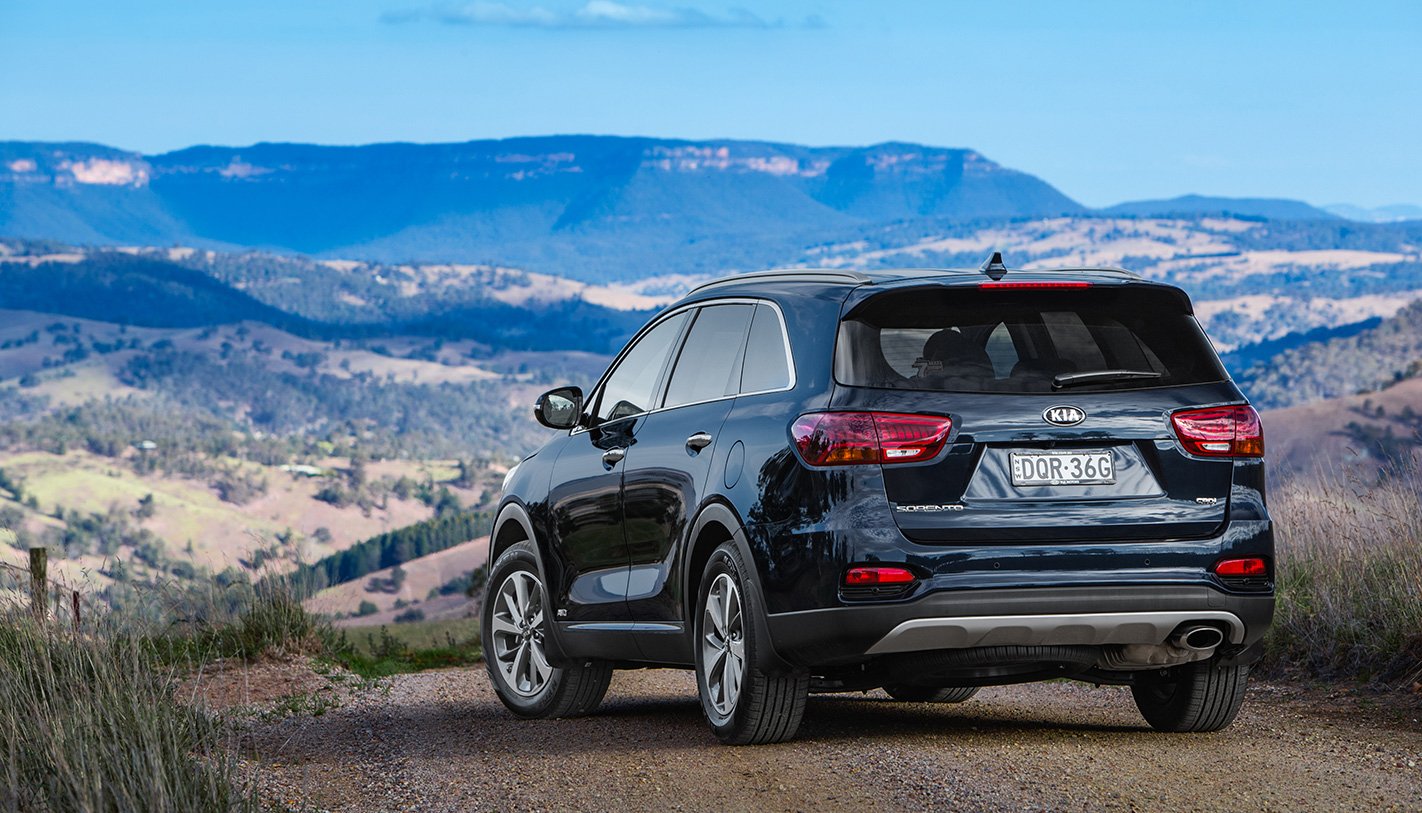
Kia has updated its third-generation Sorento SUV and while not much has changed in terms of size, space and exterior aesthetics it has had a significant technical makeover.
TELL ME ABOUT THIS CAR
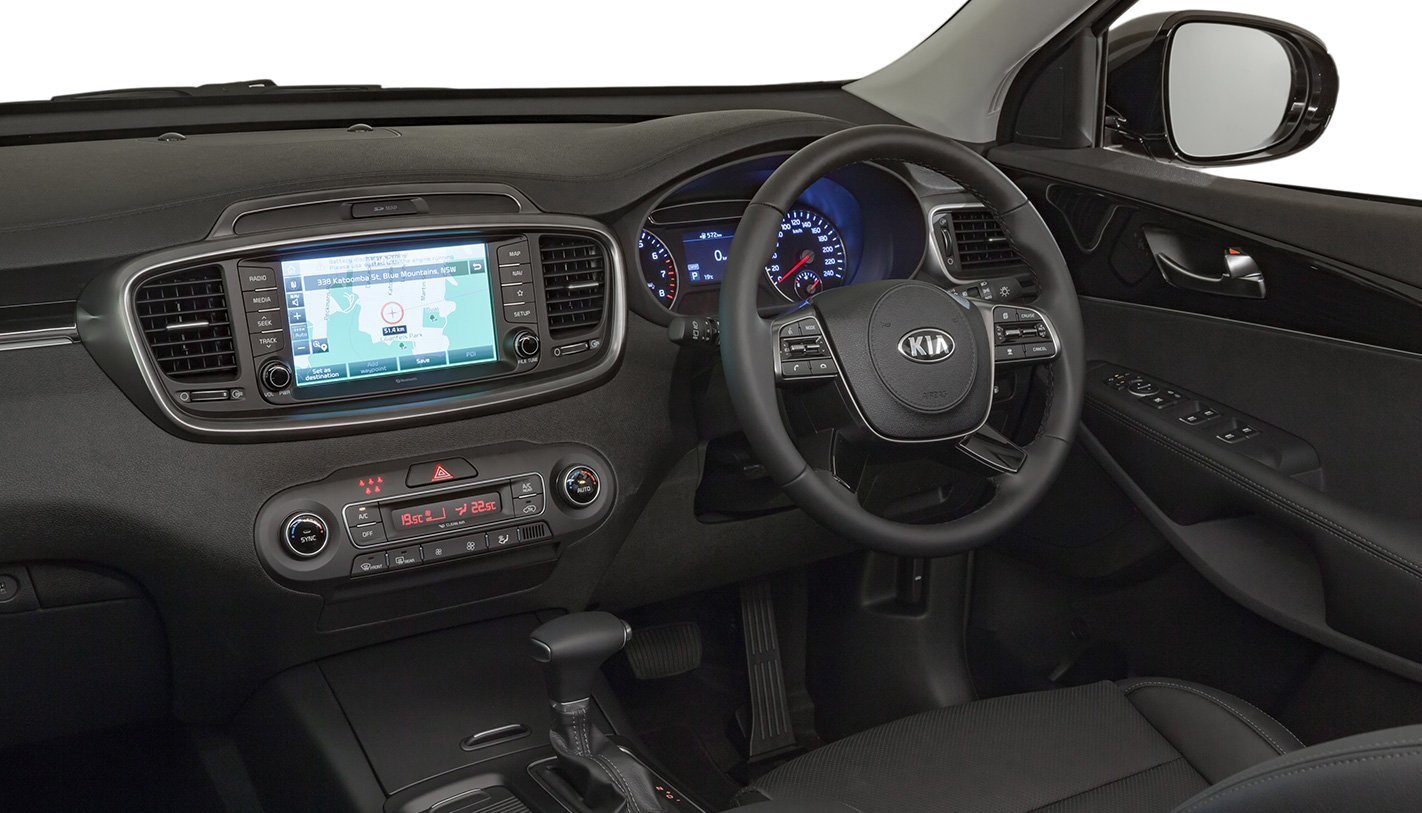
The Kia Sorento now has enhanced suspension and steering for improved ride and handling, a new eight-speed automatic transmission and advanced safety features including auto emergency braking. Inside, the seven-seat cabin has more soft-touch fabrics for a premium feel as well the as Kia’s latest infotainment system.
The facelift also introduced the Sport to the Sorento range, which is similar to the entry-level Si but adds leather-appointed seats and fancier 18-inch alloy wheels. Starting at $44,990, it’s available with V6 petrol/front-wheel-drive (FWD) or turbo diesel/all-wheel-drive (AWD) powertrains.
STRENGTHS
- The Sport doesn’t differ too much from the base-model Sorento Si but comes with a host of standard features and cabin quality that you’d have only found in top-spec SUV models just a couple of years ago.
- Like all updated Sorento models the Sport comes with automatic emergency braking (city/highway speeds), lane keeping assist, smart active cruise control, which also stops and starts in heavy traffic, driver attention alert and dusk sensing automatic headlights.
- The cabin quality is excellent. The entire dashboard and upper door trims are covered with soft-touch plastics that provide a premium feel. The Sport comes with soft leather appointed seats which have simple manual adjustments but feel more comfortable than the firmer, powered seats in the top-of-the-range GT-Line.
- Infotainment has significantly improved over the previous model and features a larger 8.0-inch touchscreen, in-built satellite navigation, digital radio (DAB+) and Apple CarPlay/Android Auto connectivity.
- The new Sorento handles better on country roads than its predecessor thanks to revised suspension that was subsequently tuned by Kia Australia’s engineers to better suit local conditions. The result is less body roll and a smoother ride over bumps.
- The Sport’s 18-inch alloy wheels provide a smoother, quieter ride than the GT-Line’s larger 19-inch wheels and sportier tyres.
- The electric power steering has also been enhanced, connecting a motor directly to the steering rack instead of the steering column. This results in a firmer and more direct steering feel.
- The entire Sorento range now has an eight-speed automatic transmission which provides quicker and smoother shifts with both the V6 petrol and turbo-diesel engines.
- The 3.3-litre V6 petrol engine has been boosted to 3.5-litres resulting in a 7kW power increase and 18Nm of extra torque to 206kW/336Nm. The extra displacement does slightly increase combined fuel economy however, from 9.9L/100km to an even 10.0L/100km.
- The 2.2-litre four cylinder turbo-diesel engine is the pick of the two powertrains. It costs $2500 more than the V6 petrol FWD, but that price nabs AWD and 7.2L/100km combined fuel economy.
- As before, the Sorento has a roomy cabin with seven seats, with the third row having more space than many of its competitors as well as two cupholders, accessory pockets and its own fan control and vents.
- The second row is comfortable and spacious and passengers there have access to two USB ports and a 12V socket to run their devices plus cupholders and air vents.
- With the third row down the Sorento has a cavernous 605-litre boot space, which extends to 1662-litres by folding down the middle row seats.
WEAKNESSES
- The boot space with the third row up is a tight 142-litres meaning you’d need to invest in a roof rack or trailer if all seats are filled on the family holiday.
- Despite the power boost the V6 petrol engine, though mostly adequate, doesn’t appear to have the power in reserve when needed on steep uphill climbs with a full load or when having to overtake.
- There’s not a lot in the way of paint colour options, with Gravity Blue replacing Sunset Red in the mostly monochromatic colour range.
Other seven-seat SUVs in the Sorento Sport’s price range include Mazda CX-9 Sport, Toyota Kluger GX, Nissan Pathfinder ST and Skoda Kodiaq.
This year’s World Time Attack Challenge (WTAC) was the eighth iteration of the annual gathering of kilowatt junkies.
And while the noise and fanfare of being present at WTAC is unmatchable, not everyone can be there. So we’re bringing one aspect of it to you – the spectacle.
We’ve got a full WTAC de-brief on the way in the mag, but for now enjoy these brilliant photographs, both in the gallery at the top of this page and in our highlights below.
Keiichi Tsuchiya: The Drift King
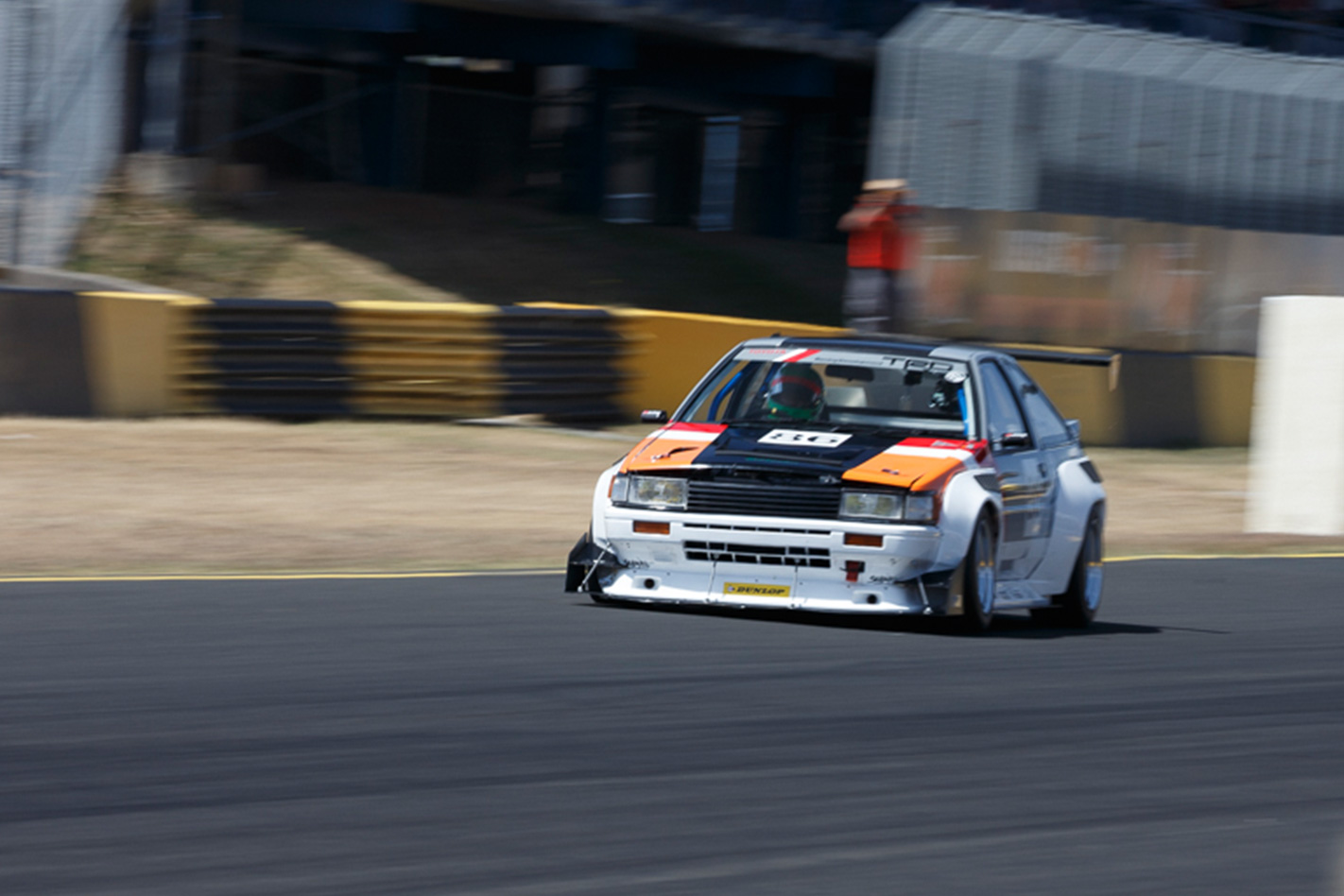
Essentially the real life Takumi Fujiwara (though, in reality the inspiration for the Initial D character), veteran racer Keiichi Tsuchiya and his own AE86 were the stars of the WTAC show.
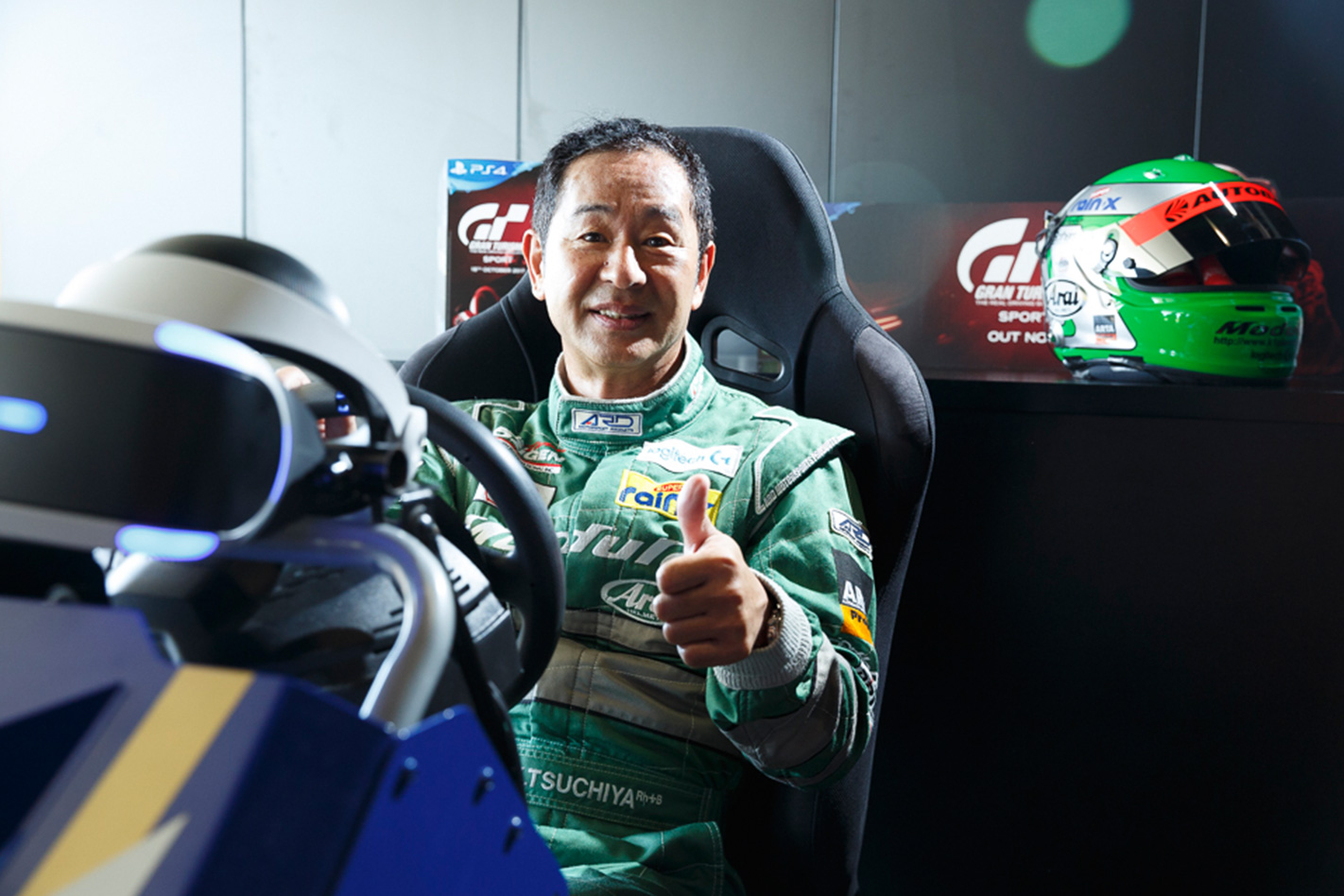
At WTAC, he was given a crack at the PlayStation simulator which was running the new Gran Turismo Sport game. He didn’t reveal his Tsukuba Circuit lap time.
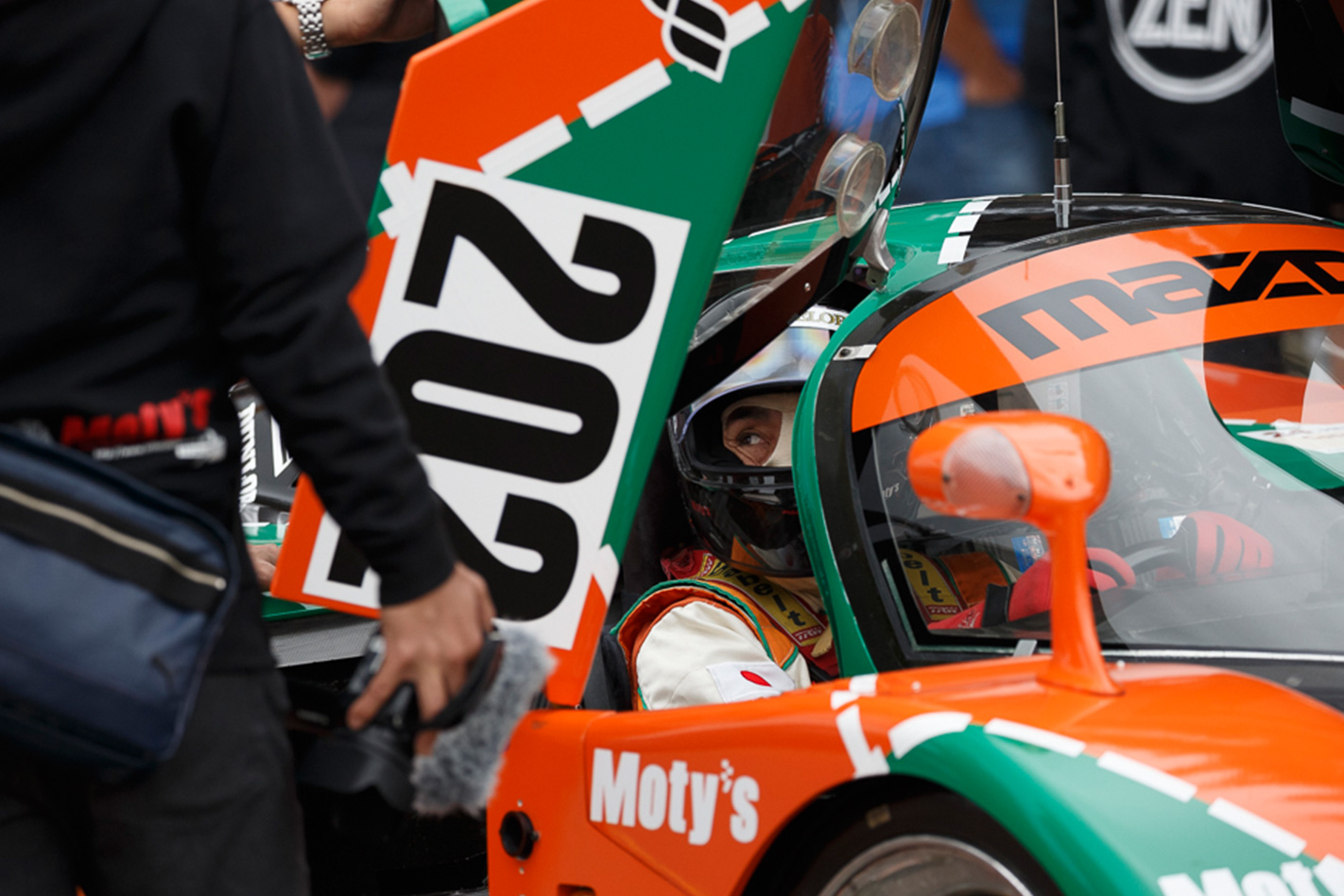
The 1989 Le Mans racer wasn’t victorious, but it’s still a hell of a spectacle.
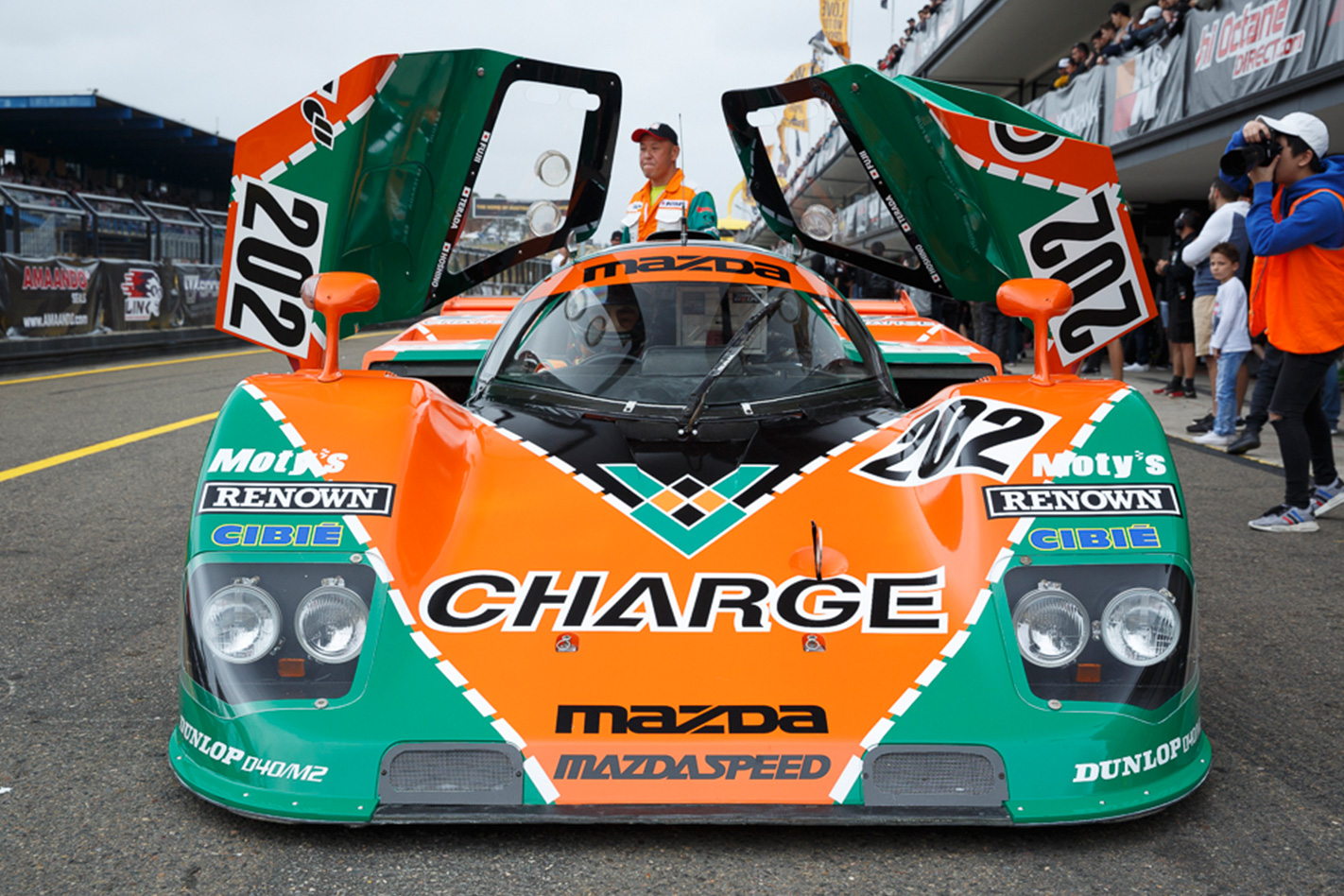
It revs to 9000rpm, and sounds like heaven. Or hell.
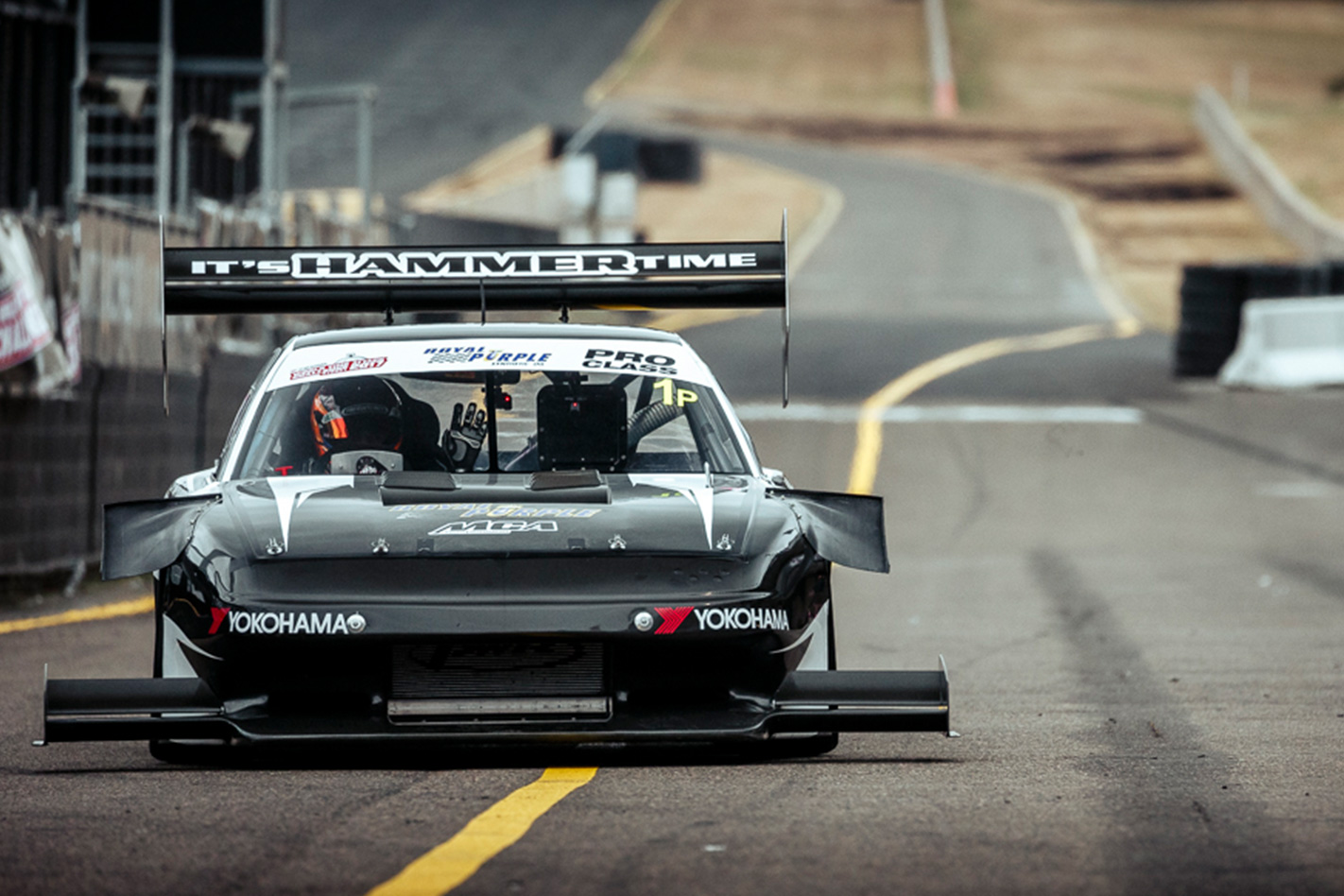
Supercars driver Tim Slade deserves props for his efforts from behind the wheel of the MCA ‘Hammerhead’ S13 Nissan Silvia.
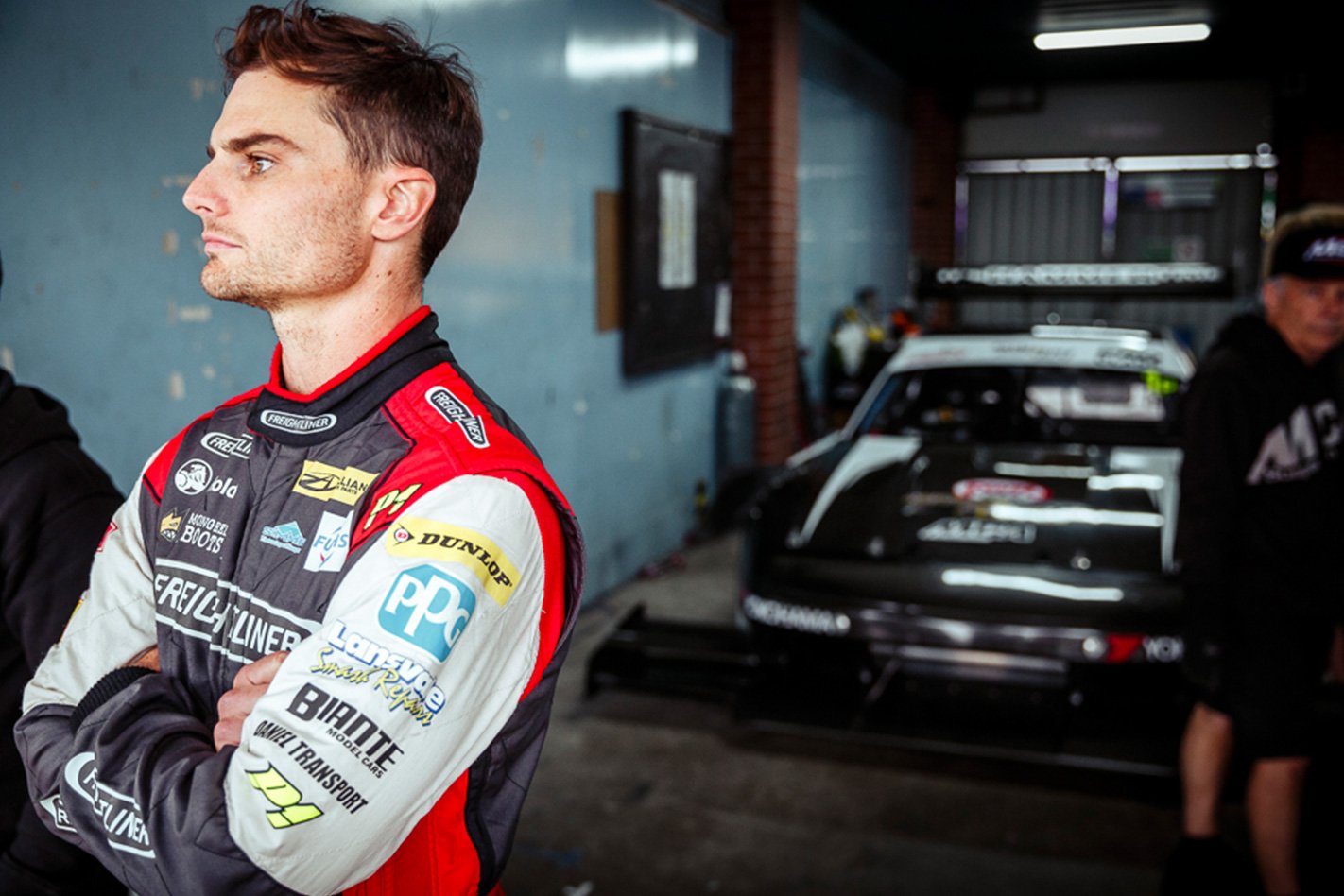
In August, he achieved a lap of 1:28.9.
At WTAC, 1:20.97. And that was on road-legal semi-slicks.
While tomorrow is the last official day of Holden’s local manufacturing in Australia, the last examples of Aussie-built Holdens have already been completed.
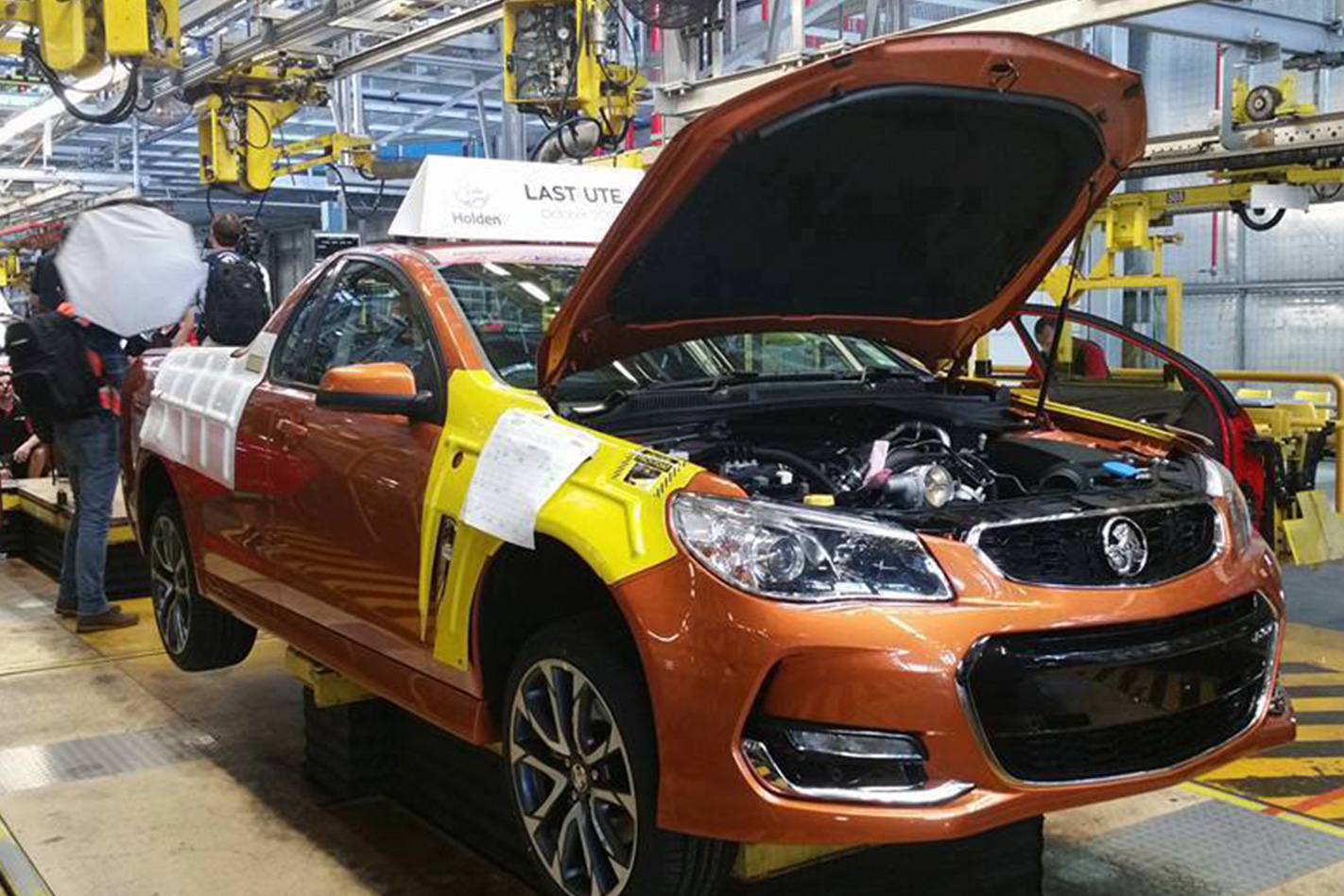
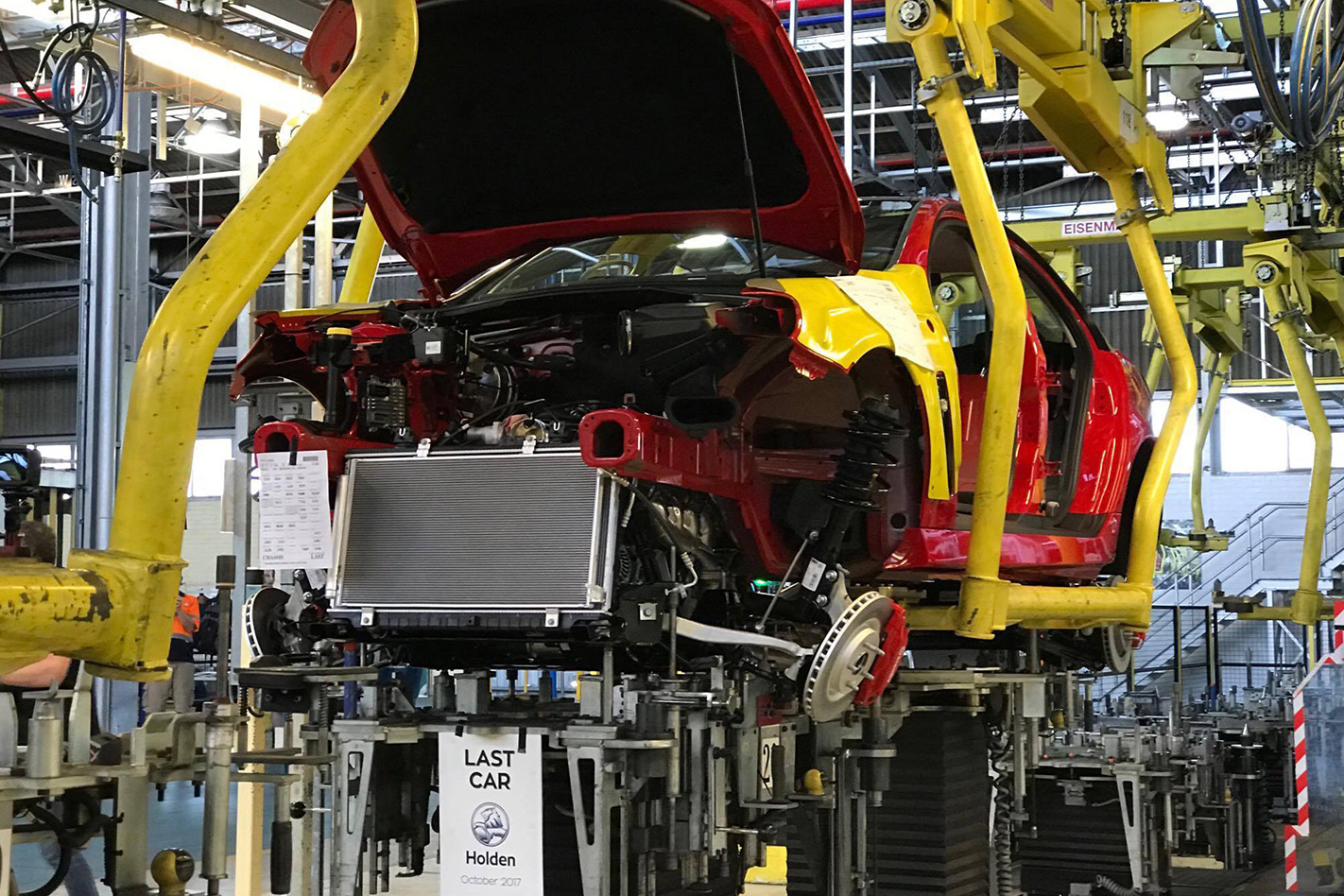
Joining the final Aussie-built car – a red VFII Commodore SS-V Redline – is the last Holden Commodore Ute (an orange SS), the last Calais Wagon, which is also the last V6, and the final Caprice V.
Though each car looks finished, they’re still on the production line waiting to be rolled off in a ceremony tomorrow, so that they’re ‘officially’ complete on October 20.
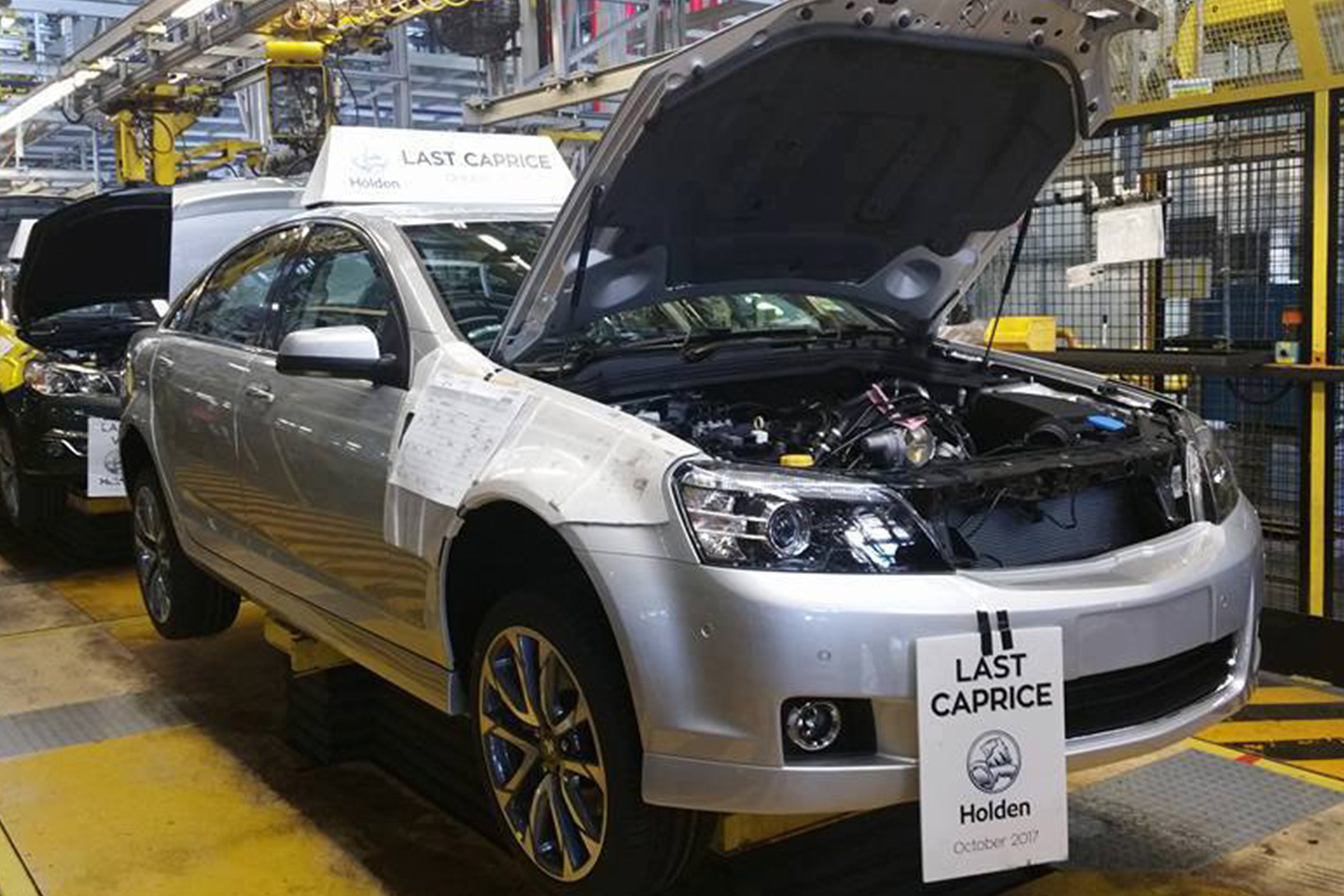
Initially, there was doubt as to whether this would be the last car as a sole image of it as a bare chassis emerged, but numerous photos have since emerged from the plant, and have been shared on Facebook by those closely following the last few days of Holden’s local manufacturing operations.
These most recent images have essentially confirmed that the last Aussie Holdens have been built. As ever, the comments were a good insight into the general mood Australians are feeling.
Another: “Some of the best days (and nights) of my life were working in this factory. I hope you all do well with the next chapter of your lives. It’s beyond sad.”
While the end of local manufacturing is upon us, Holden reminds the public that the brand is staying with us.
“Holden will leverage GM’s global portfolio to provide the best cars for the Australian market the company is committed to selling Holdens in this country for many years to come.”
MOTOR will provide more updates as they come to hand.
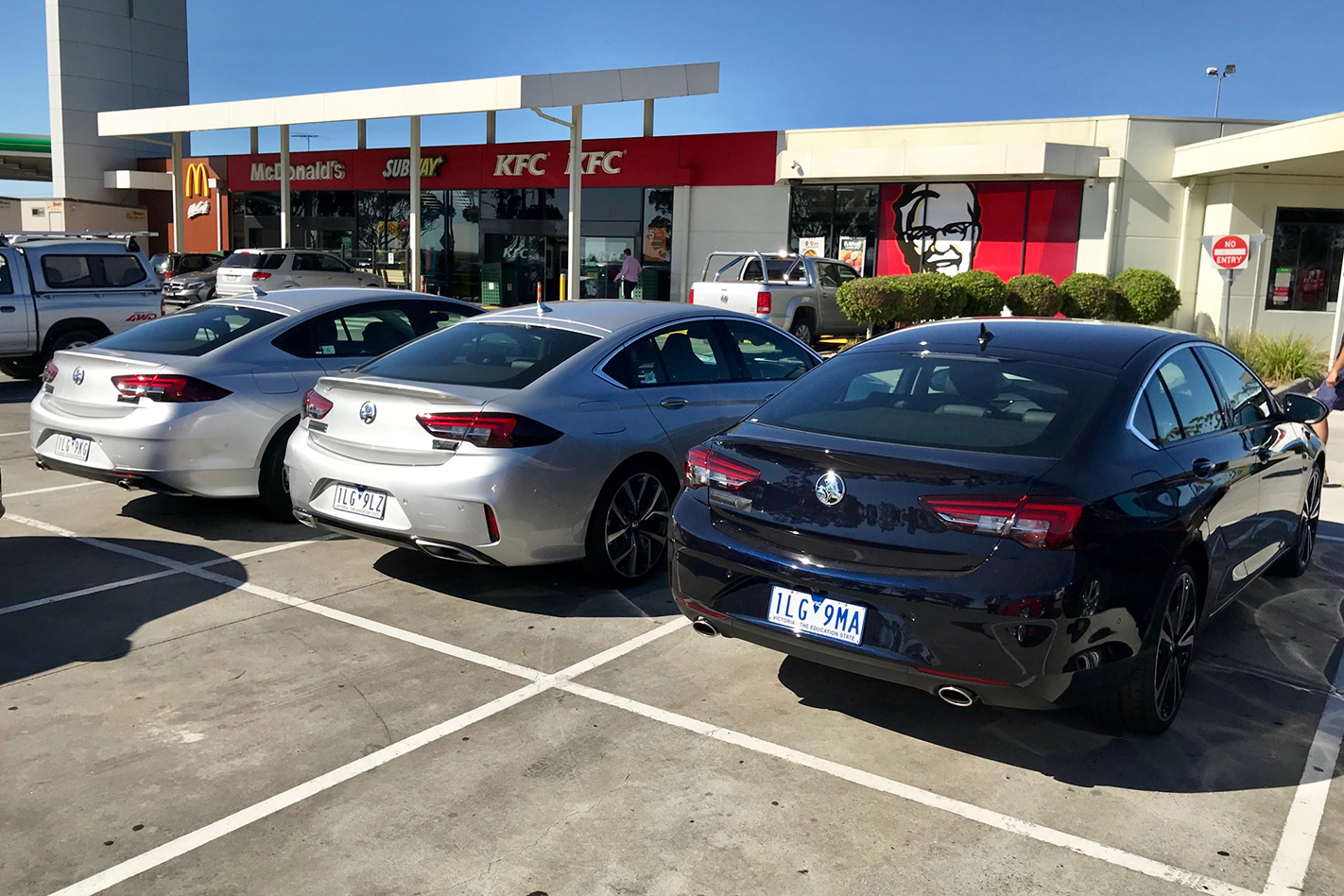
IMAGINE the look on our faces when a quartet of unreleased and undisguised Holden ZB Commodores appeared at the petrol pumps next to us in Melbourne’s outer northern suburbs yesterday morning.
The upcoming VF Commodore replacements were being driven by Holden employees for “pre-production evaluation” accompanied by two examples of the Holden Equinox SUV, which goes on sale in Oz later this year.
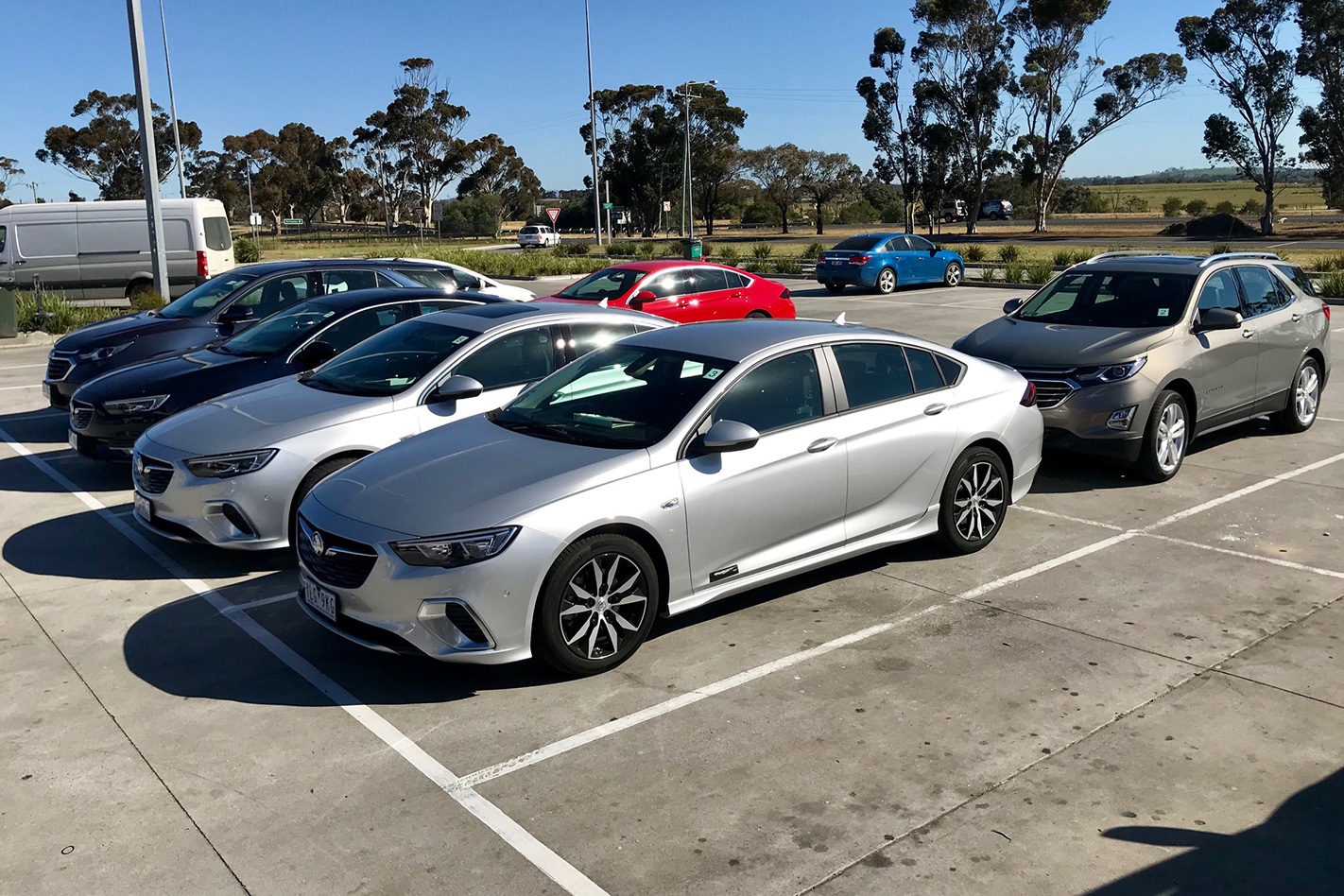
Each of the four Commodores spied was different, including two which were fitted with RSV badges. That variant of the ZB was unknown until now.
It is understood the eventual line-up of ZB Commodores will include three sedan grades powered by atmo V6 engines when the range goes on sale in February next year.
The complete Commodore range will be fleshed out by 2.0-litre four-cylinder turbo models, diesel engine models and a wagon body style in various trim levels, including a jacked-up, armour-clad version.
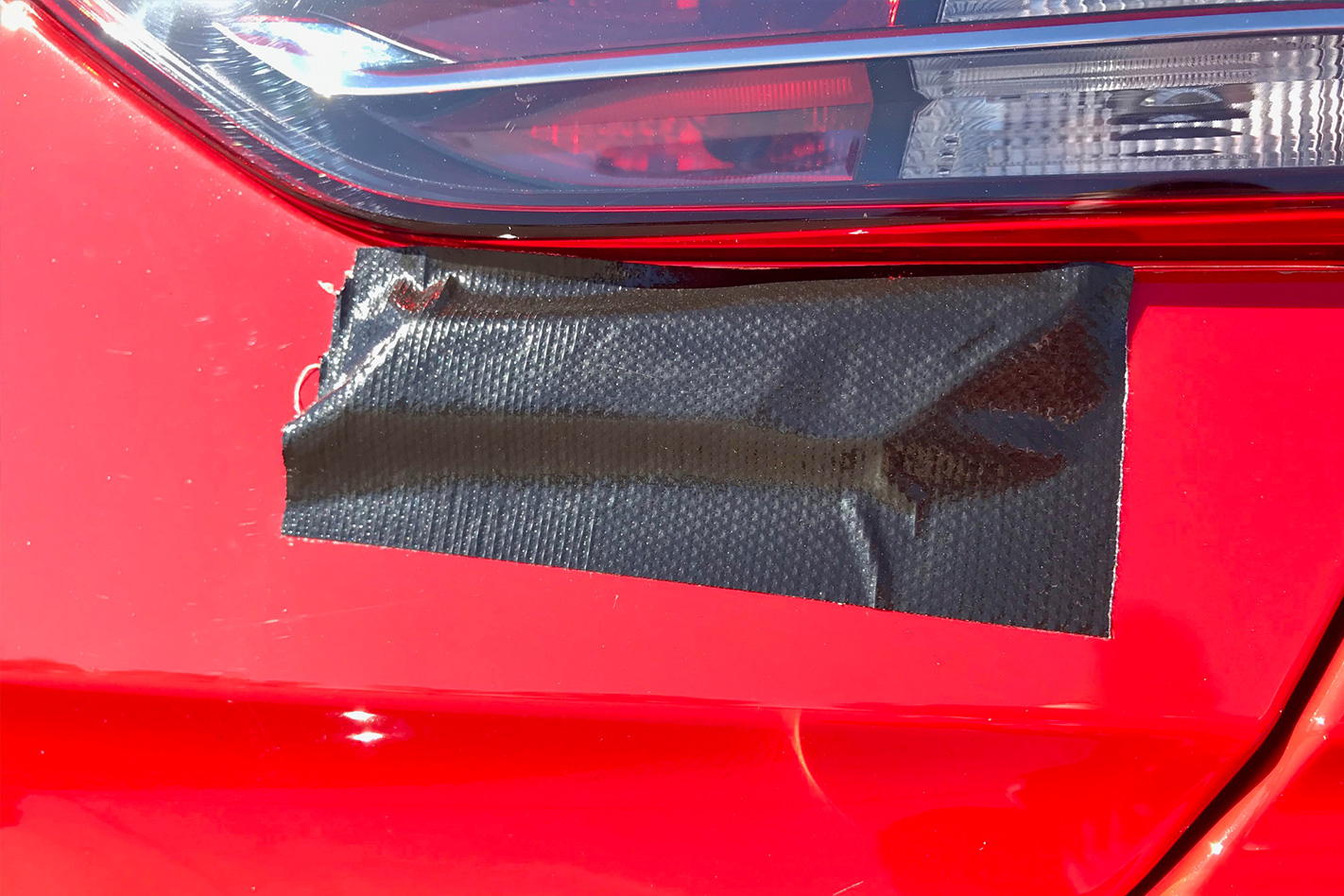
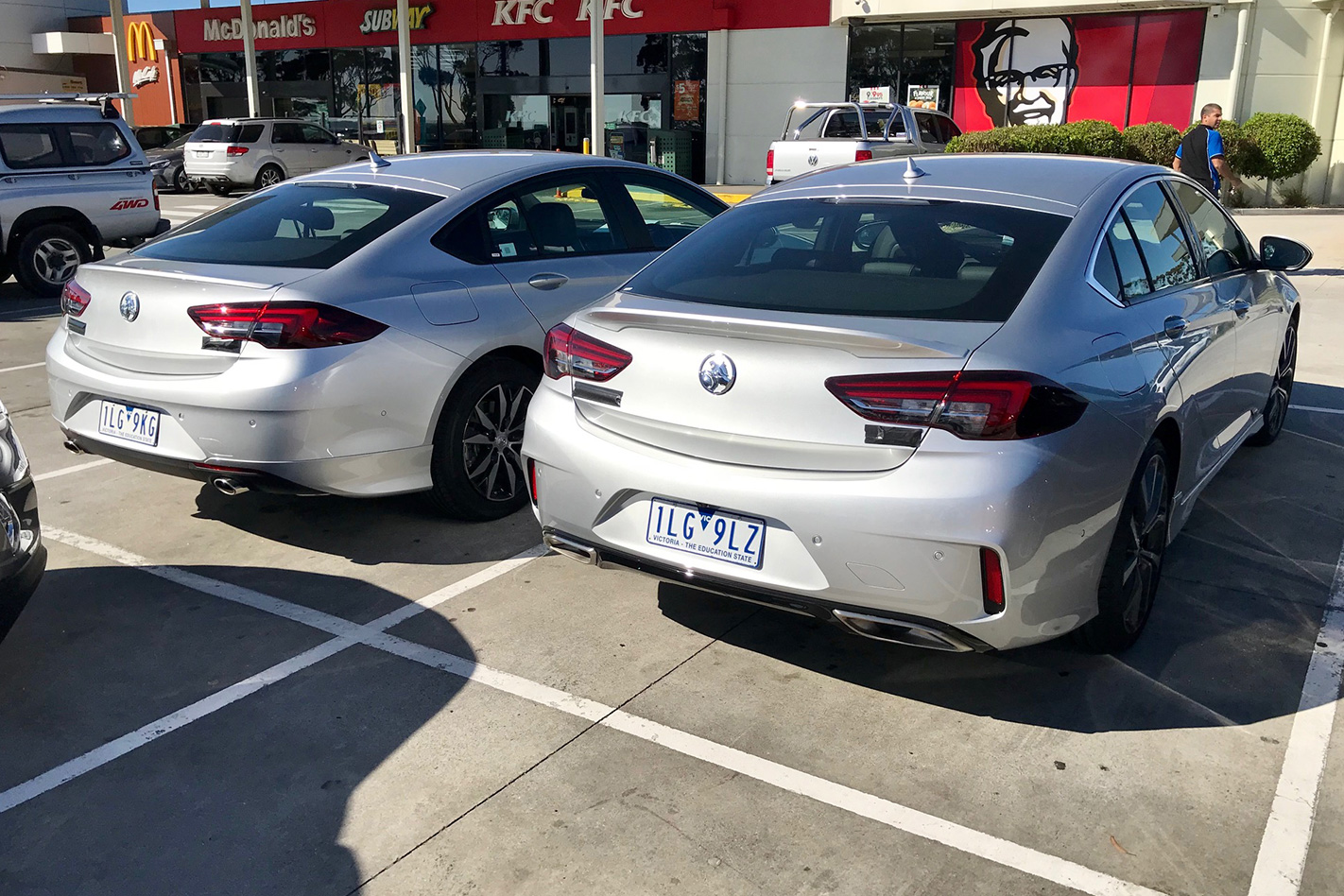
From the back, the RSV is near identical to the ZB Calais V, including matching twin tailpipes. From the front, RSV and VXR share matching bumpers and headlights.
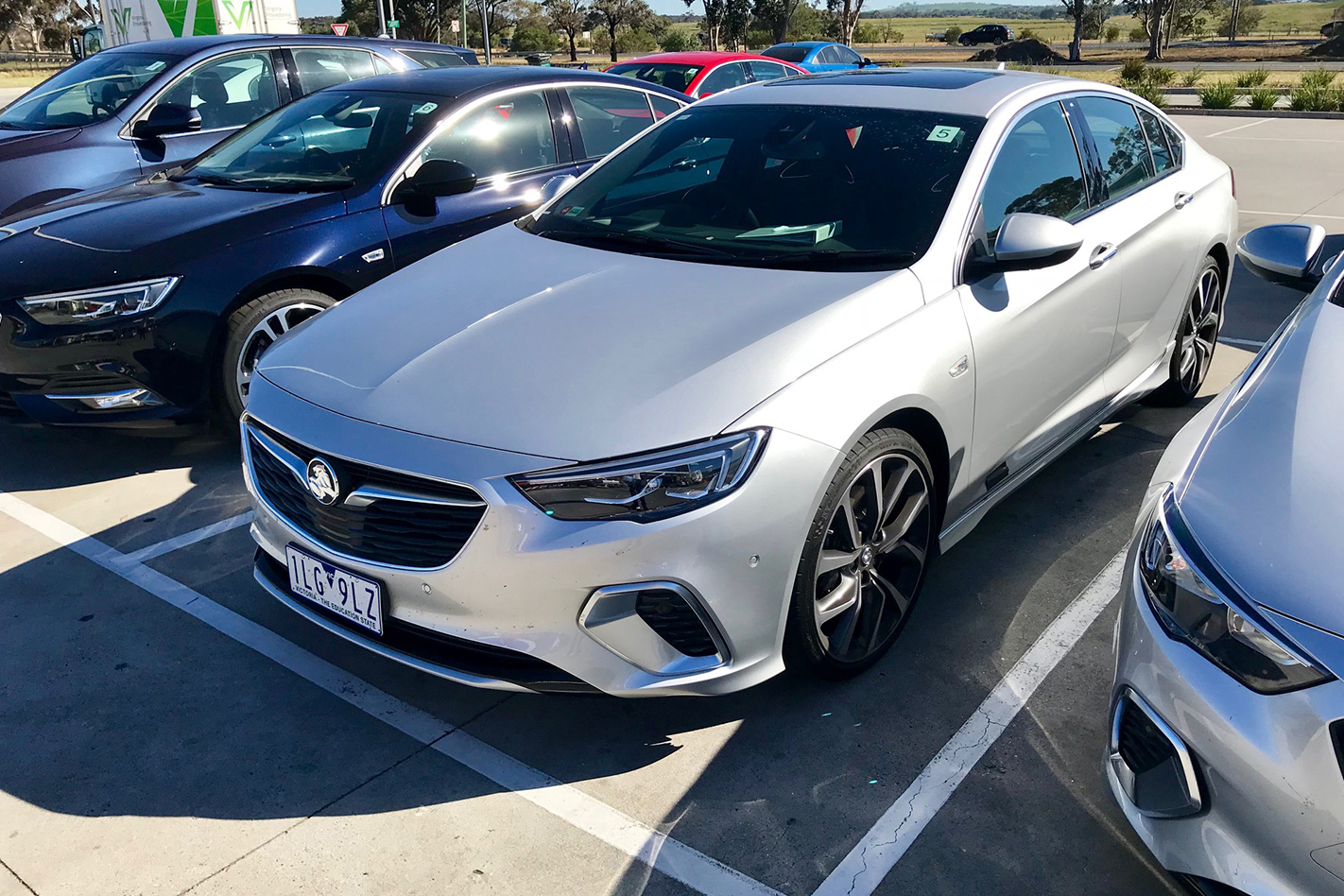
This is the first time the VXR has been seen in Holden guise without any camouflage. It has outputs of 230kW and 370Nm from a 3.6-litre naturally aspirated V6, which powers a locally tuned all-wheel drive system through a nine-speed auto.
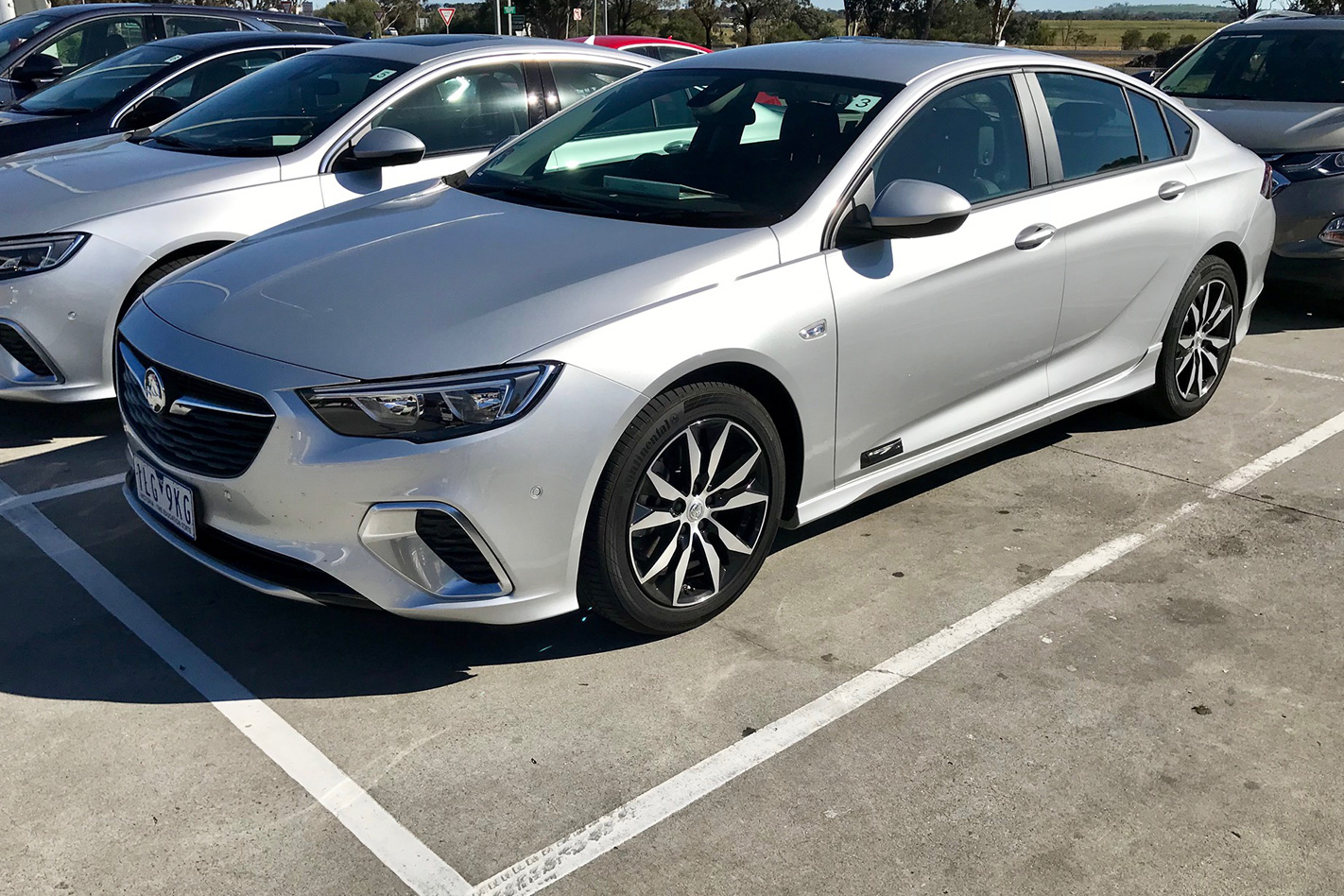
“We are currently testing the whole ZB Commodore range in Australia,” said a Holden spokesperson. “Eagle-eyed people will spot many more of them getting around.”
Up to 30 ZB Commodores are already in Australia for local testing.
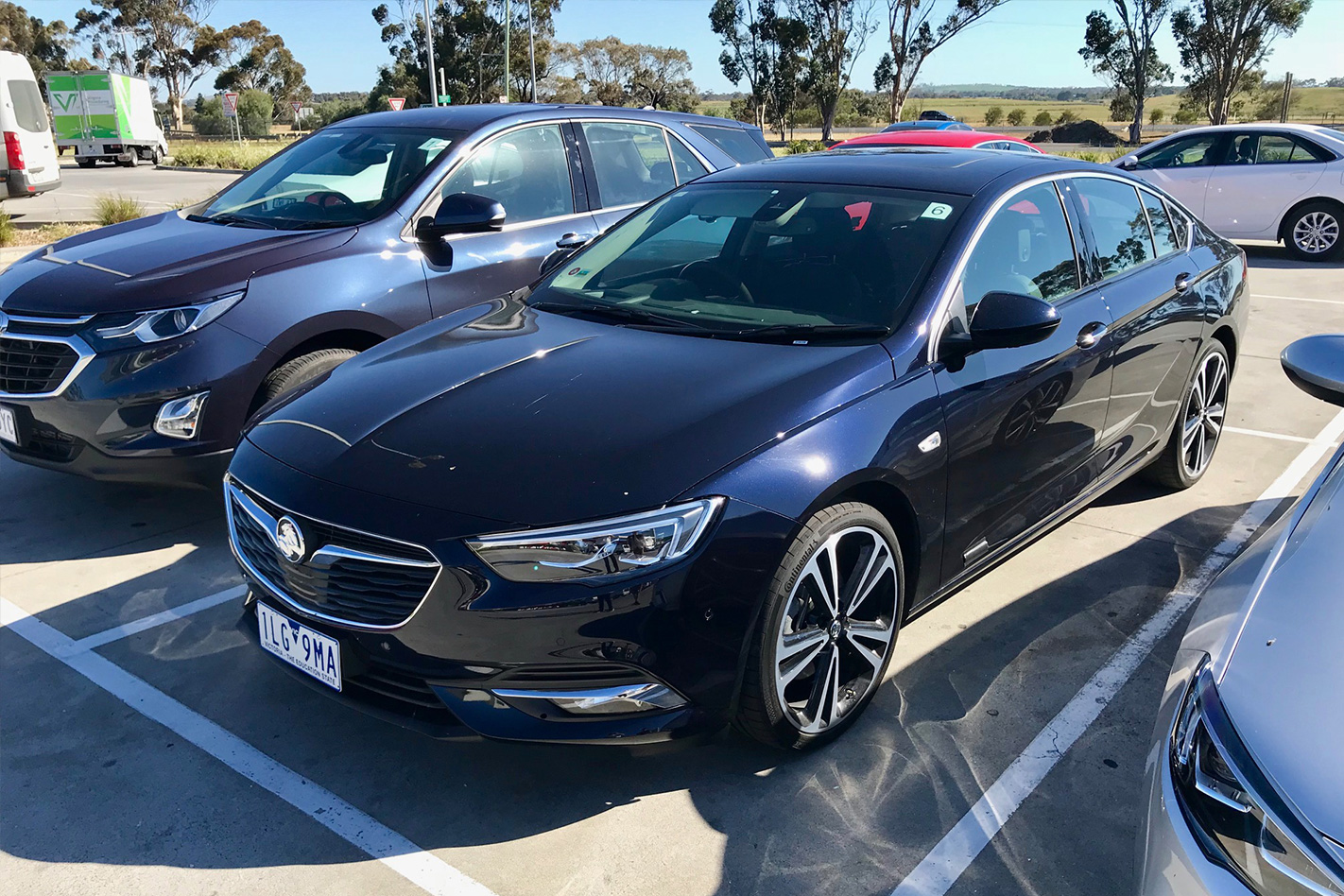
Set to join the McLaren P1 and its GTR variant in the Ultimate Series is a new “track-concentrated road car” from the British sports-car brand.
As part of McLaren’s ‘Track22’ business plan – which aims to have the company “produce 15 new models or derivatives by the end of 2022” – the project will be released ahead of McLaren’s other ‘secret’ project, the BP23.
Rumoured to be called the McLaren P15, all of the limited units of this new model are spoken for.
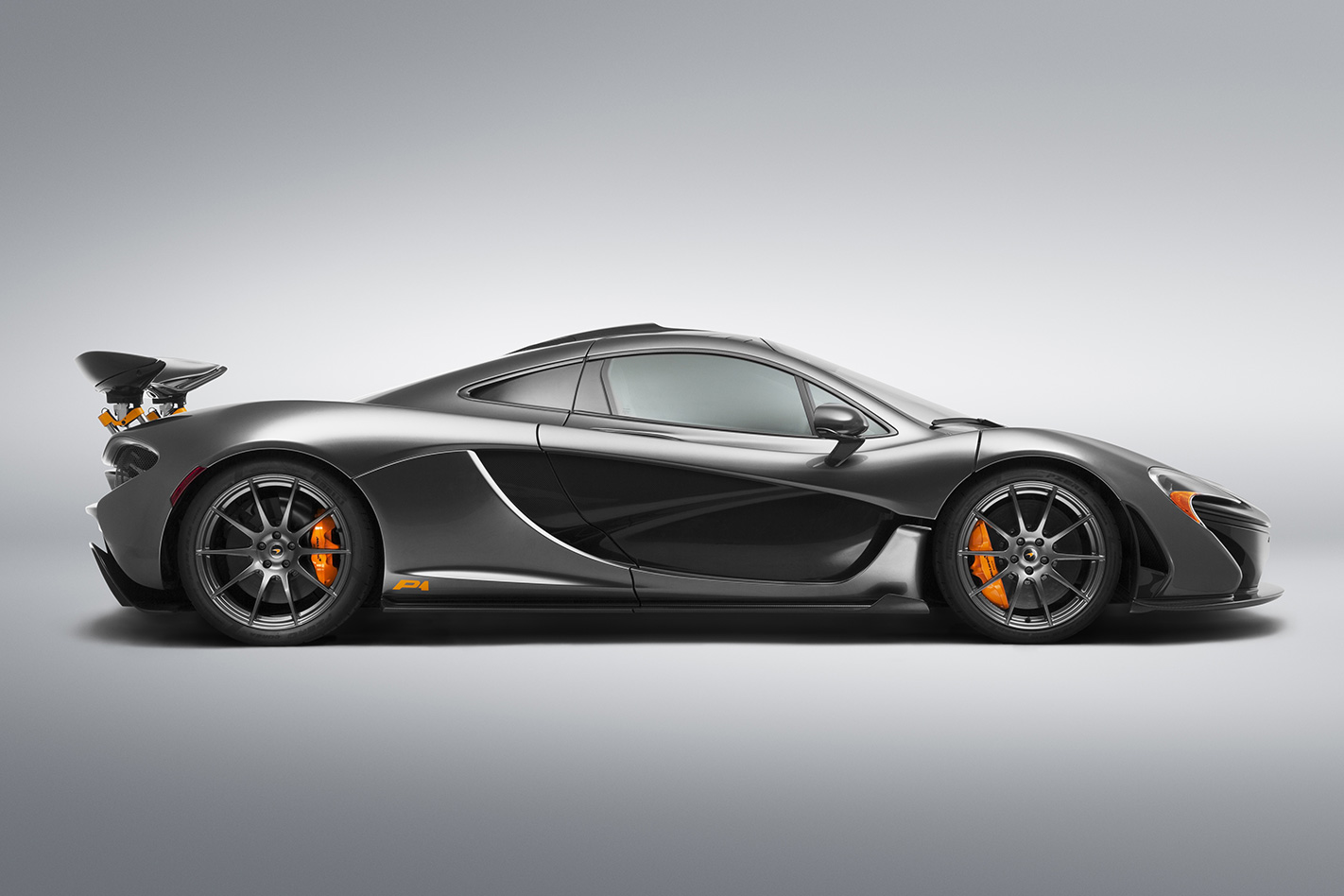
But unlike the three-seater “hyper-GT”, we’ve only got one image of the upcoming project, and it’s not very telling.
All we’ve got so far is what looks like a triple-exhaust arrangement above a McLaren badge. We expect it to look wild though, as McLaren says it aims to be “the most extreme, track-concentrated road car McLaren has yet designed.”
In a statement, McLaren said the ‘P15’ will likely be too ‘extreme’ to use as a daily driver, but that will be made up for by its raw ability.
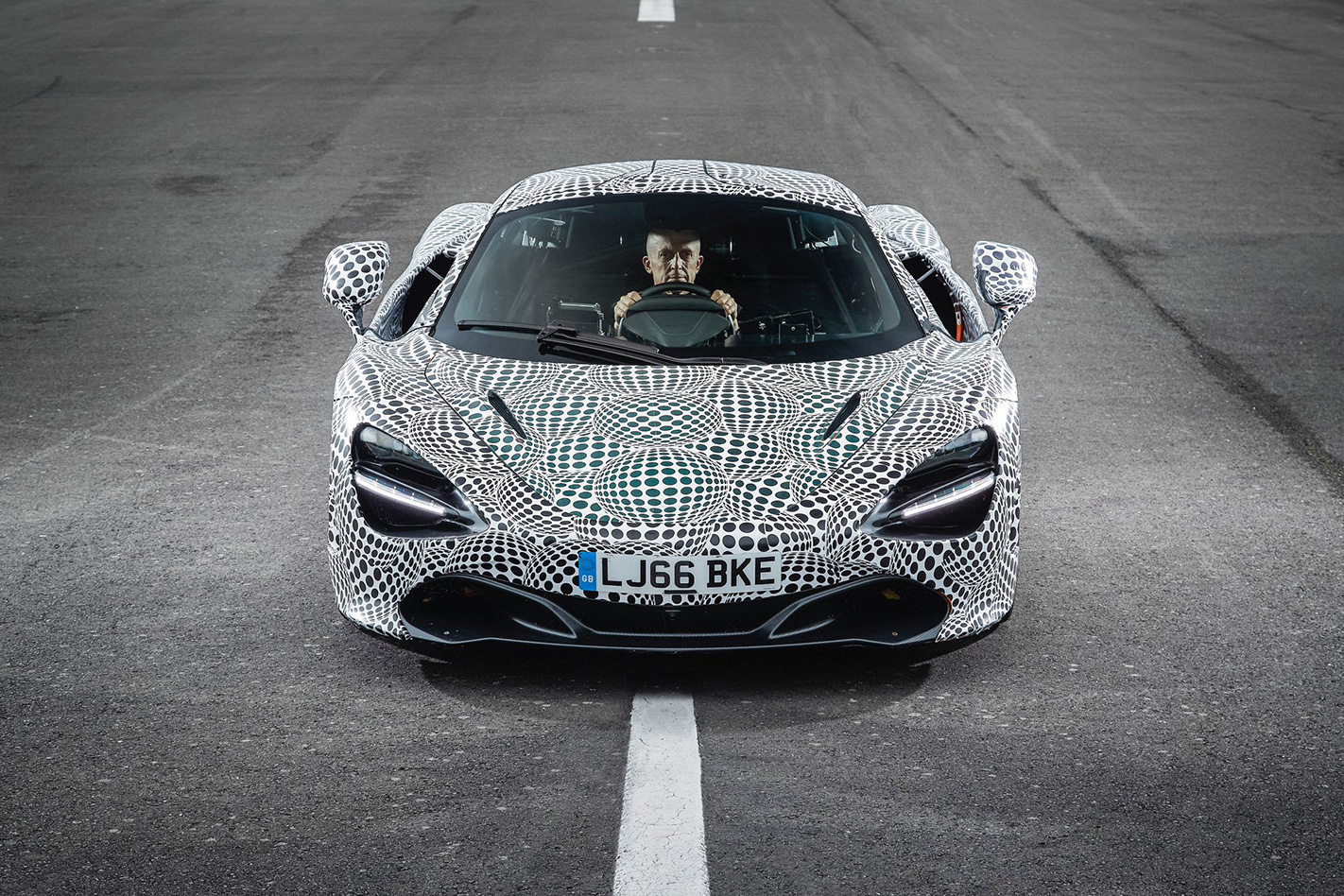
“This next model to join the Ultimate Series will be the ultimate track car, but it will be road legal. Daily usability is being sacrificed to give the most intensive driver experience around a circuit.
“Its design, described as brutal, will be the purest expression yet of the company’s ‘form follows function’ philosophy.”
The full details of the car will be revealed in the first quarter of 2018, but McLaren says it will reveal some more information about the car – including the official reveal of its name – before 2017 is up.
