
The Yaris GRMN is Toyota’s attempt to make the bewinged beasts of the WRC seem more closely related to the showroom models. Unlike its rallying sibling, however, the Yaris GRMN isn’t four-wheel drive or overly fast.
To you and me, GRMN is as unfamiliar as it is clumsy. It stands for Gazoo Racing Meister of Nurburgring, which probably sounds more poetic to a native Japanese speaker than it does to the rest of us. Sadly, for us, the Yaris GRMN will be limited to just 400 units – sold exclusively in Europe.
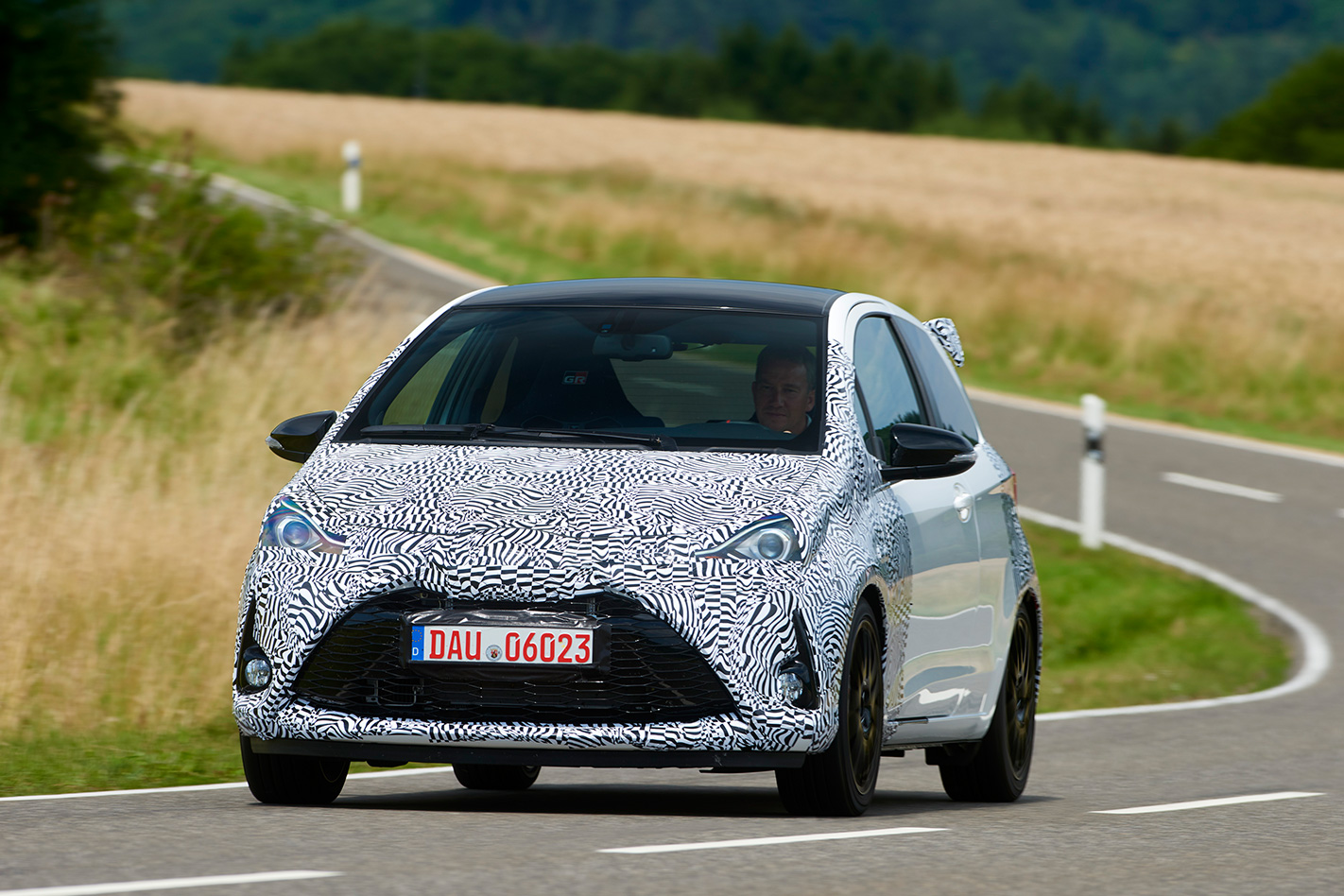
There is even a Torsen limited-slip differential. For project leader Stijn Peeters and chief engineer Yoshinori Sasaki, the entire project has been a battle. You get the feeling that had they pitched four-wheel drive and 220kW, the idea of a Yaris GRMN wouldn’t have survived.
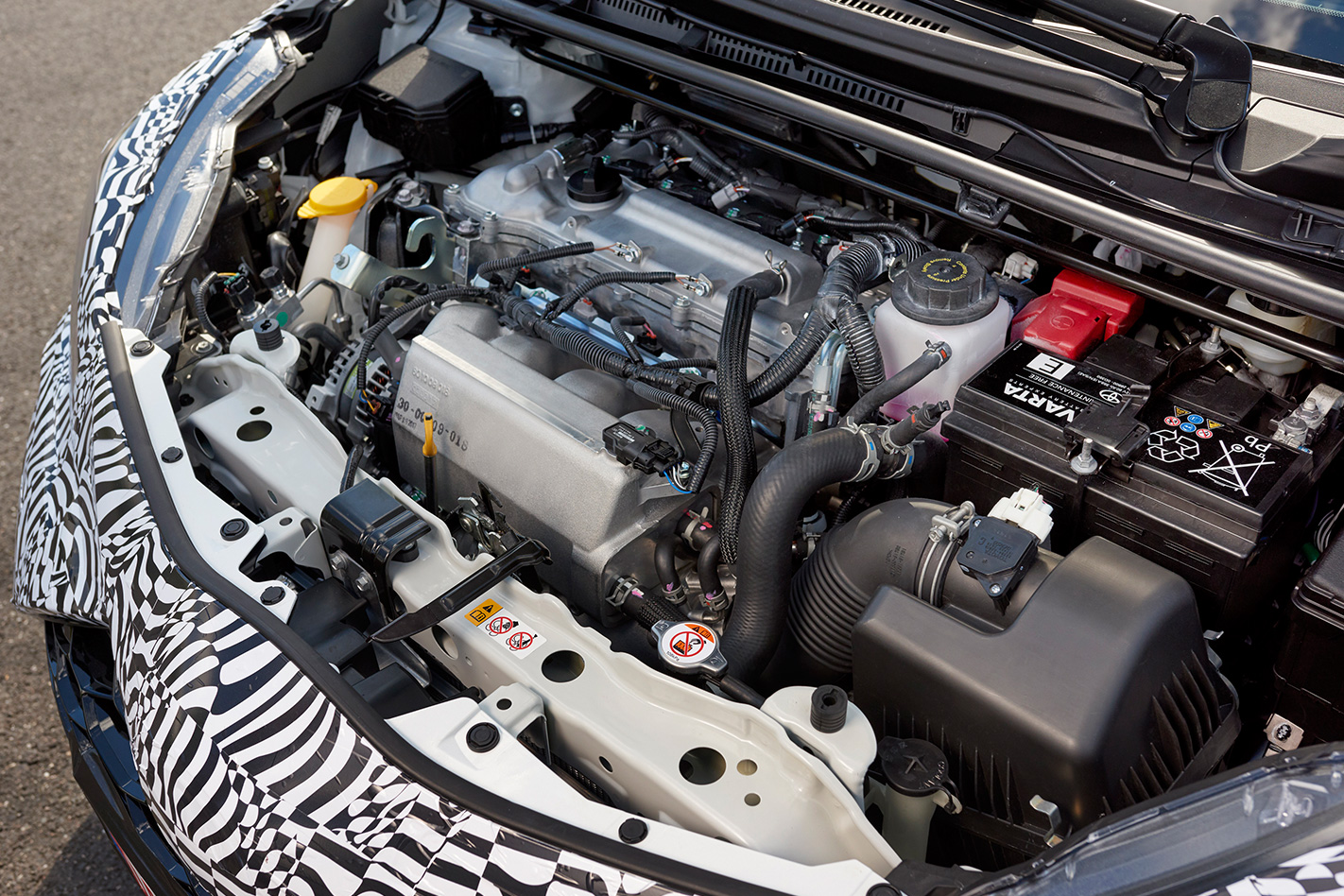
The Yaris GRMN is brilliantly simple. The specially developed sports seats offer lots of support, although they’re set a little high and the GT86- sourced steering wheel doesn’t extend quite far enough. The pedals are also spaced a little awkwardly for heel and toe downshifts.
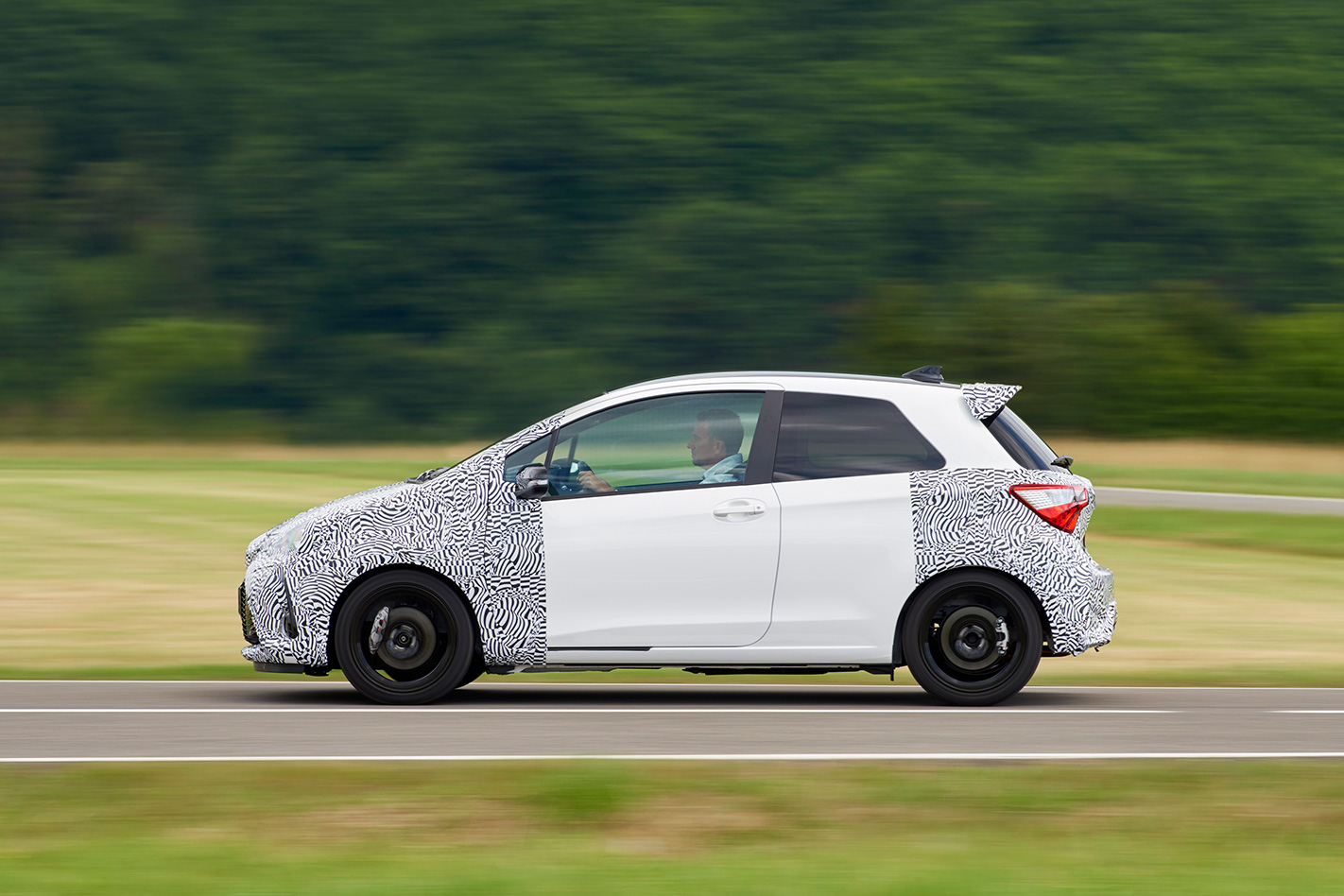
It’s taut, this Yaris; it feels just a set of sticky tyres and some bucket seats away from being a tarmac rally car. The Bridgestone tyres don’t generate huge grip, which means the car’s limits are well within reach on the road. That makes it a real blast to drive but, before too long, those modest grip levels might well become a frustration.
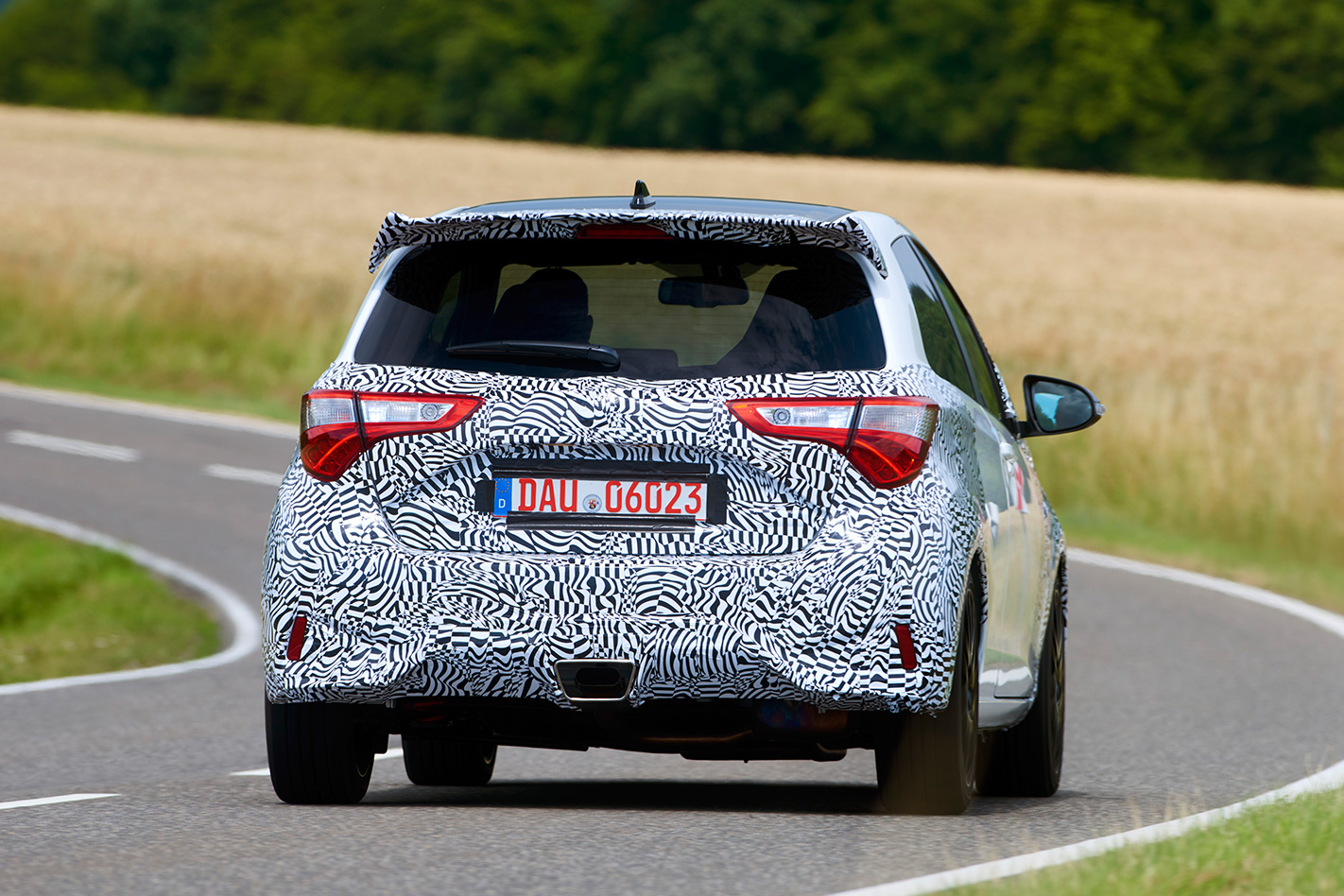
No matter the price, driving doesn’t get a whole lot more amusing than this. The Yaris GRMN isn’t the lightly detuned WRC monster some will have been hoping for, but it’s a very promising hot hatch.
4 stars out of 5 Likes: Sweet engine; dynamic ability Dislikes: Not coming to Oz; needs more grip; ergonomics
Toyota Yaris GRMN prototype specs Engine: 1798cc inline-4, DOHC, 16v, supercharger Power: 155kW Torque: 249Nm Weight: 1135kg 0-100km/h: 6.3sec (estimated) Price: $41,490 (estimated)
THE all-electric Renault Zoe is at long last coming to Australia… but you won’t be able to head into your local dealership to pick one up
WHAT IS IT?
The Renault Zoe is Europe’s most popular electric car, with over 76 thousand of the compact battery-powered five-door hatch having been sold across the European Union since its launch in 2012. Updated in 2016 with a more energy-dense battery and greater range, the Zoe is finally on its way to Australia – though strictly as a fleet-oriented offering and with a $44,470 entry price.
WHY WE’RE TESTING IT
The Zoe has been selling up a storm in Europe for the past five years, but is its all-electric formula suited to our market? More importantly, does it justify its price?
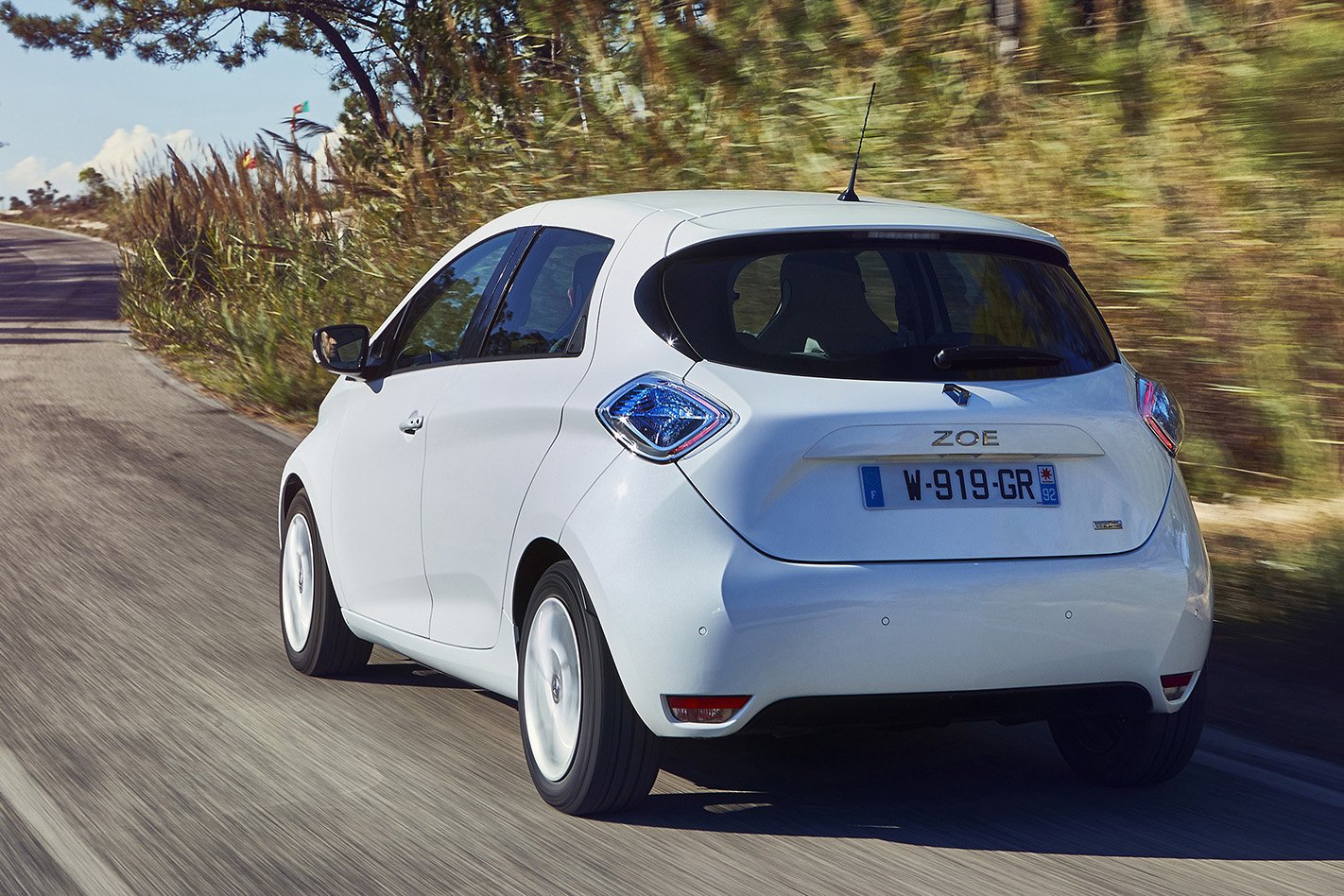
The Nissan Leaf… and not much else, really. BMW’s i3 compares closely based on size and capability, but its higher pricetag puts it in a different league to the more mainstream Zoe
THE WHEELS VERDICT
Were it not for its hefty mid-$40k starting price, the Zoe would be one of the better city car options around. Clean motoring, seamless power delivery and compact size all put it in our good books, but it’s hard to reconcile ourselves with the cost of it. It may sell well in Europe, where EV tax incentives, rebates and generally more progressive governments give it a helping hand, but Australia is a tougher market to crack. Renault Australia’s decision to only sell the Zoe to business and government fleets – and maybe the occasional determined private individual – shows that it is painfully aware of this.
Plus: 300km range; smooth powertrain; nimble Minus: Pricey; not available to retail buyers; cheap interior for a $40k+ car
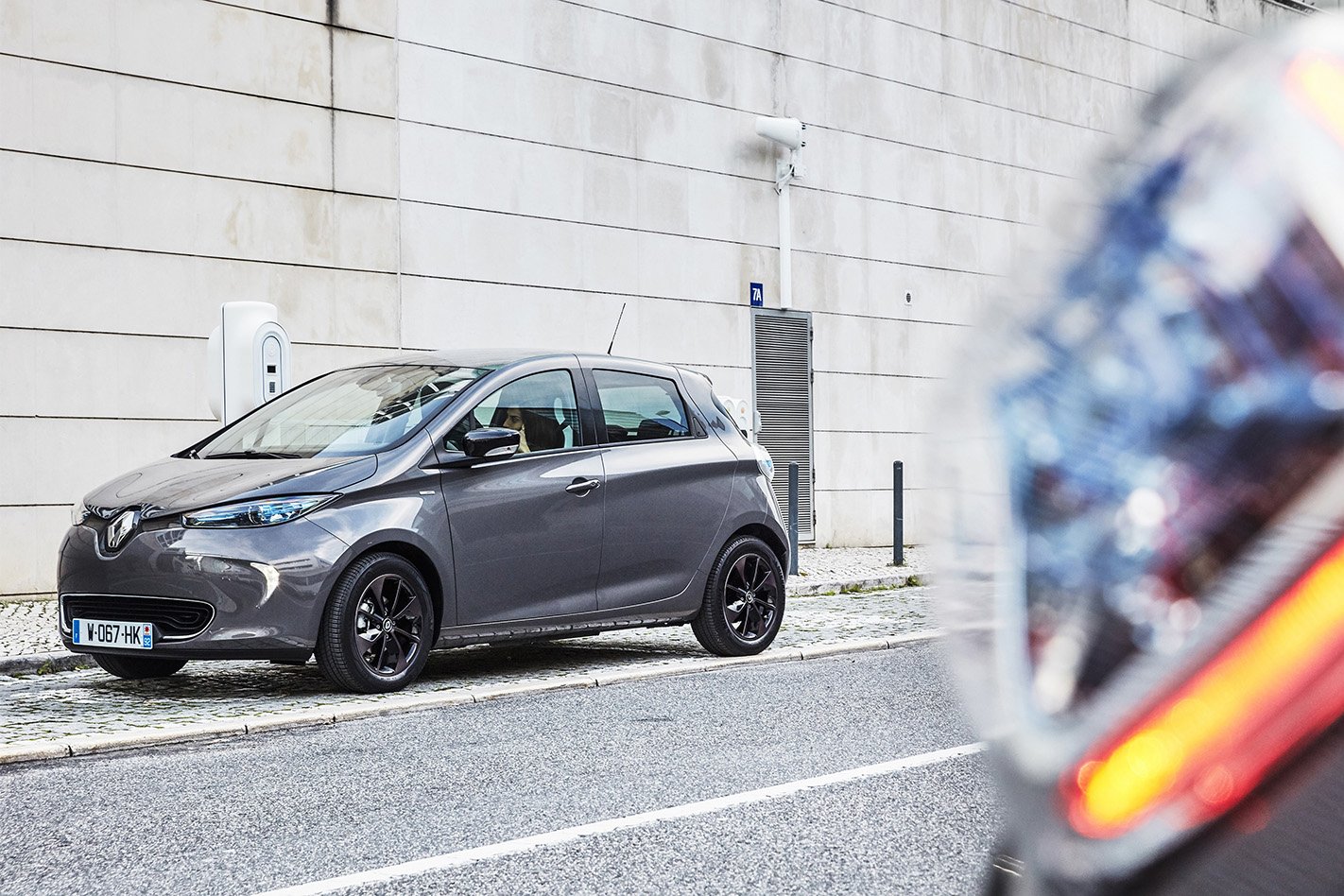
THE WHEELS REVIEW
AFTER spending so much time lagging behind the rest of the world, alternative energy is finally starting to gather some momentum in Australia. And as photovoltaic panels have crept across Aussie rooftops, so too has awareness of the virtues of all-electric motoring.
But awareness is one thing, access to product is another. While Europe, Japan and the USA’s most progressive state, California, have embraced electric cars of all kinds, the EV segment in Australia isn’t even in its infancy yet – it’s still gestating.
Yet there’s the occasional kick from within the womb.
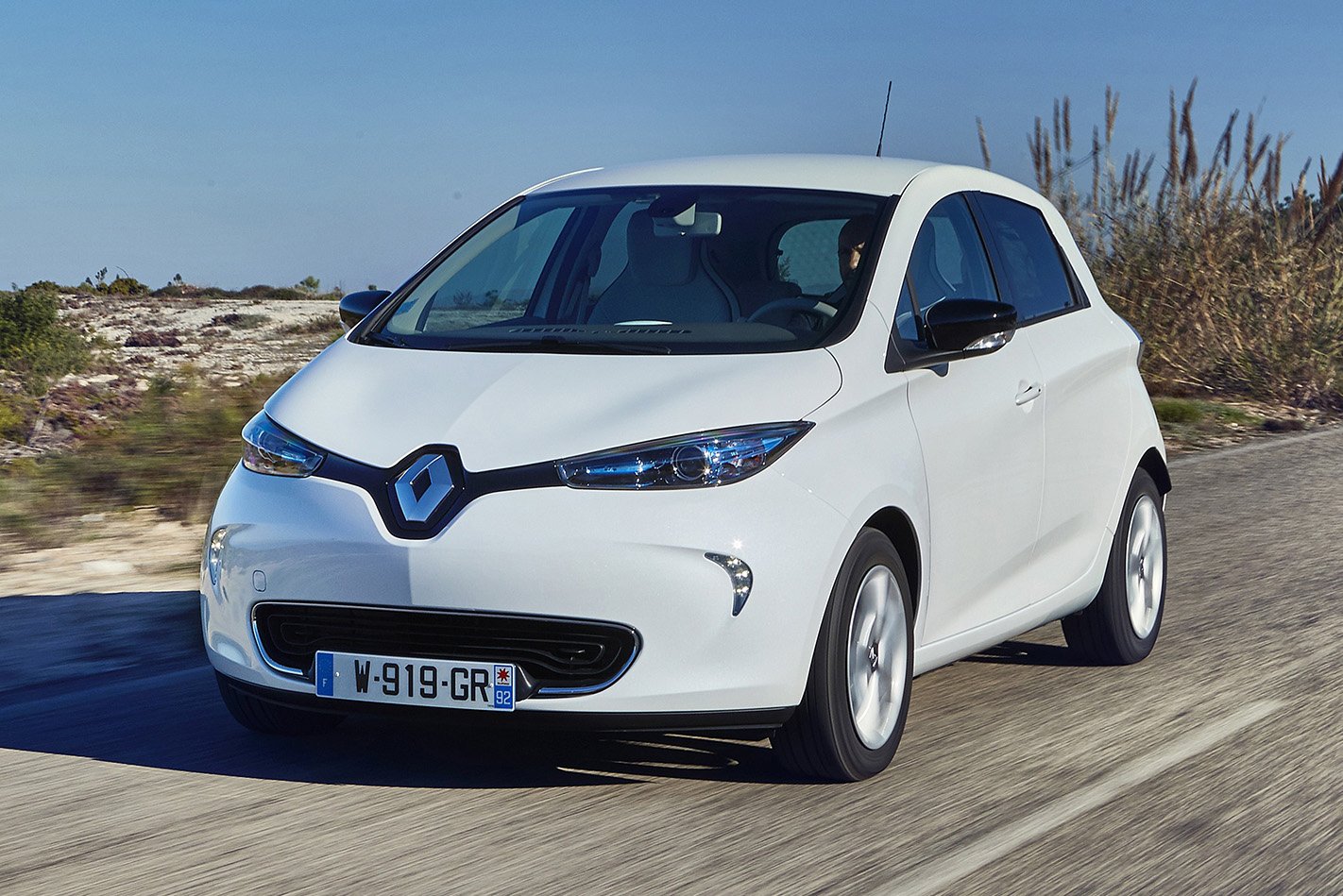
And that’s a shame, well and truly, because no matter which side you stand on the climate change debate, there’s no argument that the Zoe is one of the best urban conveyances you could hope to park in your driveway.
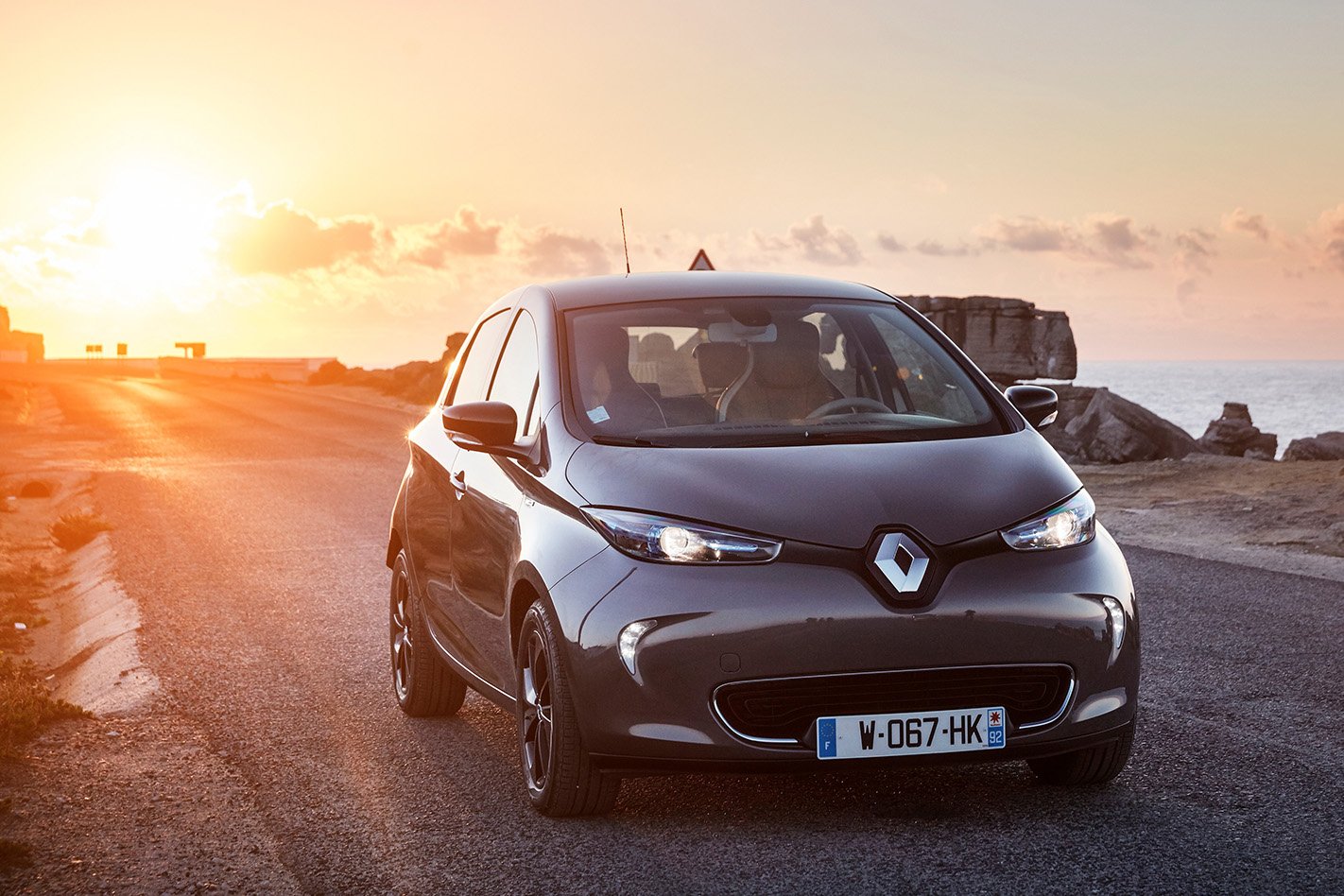
Eco mode has no tangible effect on the regenerative braking force either (which is pretty weak to begin with), meaning there’s little reason to press that switch.
Renault claims the Zoe can travel for up to 300km in real-world conditions, and a half-day of urban and extra-urban driving saw the battery range readout match the actual distance travelled so it’s a believable claim. However, the Zoe has virtues beyond the mere fact that it doesn’t require any fuel to run.
The Zoe’s steering may not be the sharpest around dead-centre, but once you’ve twirled on some lock its pizzacutter eco tyres hold on surprisingly well before eventually transitioning into understeer. A spongy brake pedal subtracts some fun though, and requires a firm – and long – press to bring the Zoe to a halt.
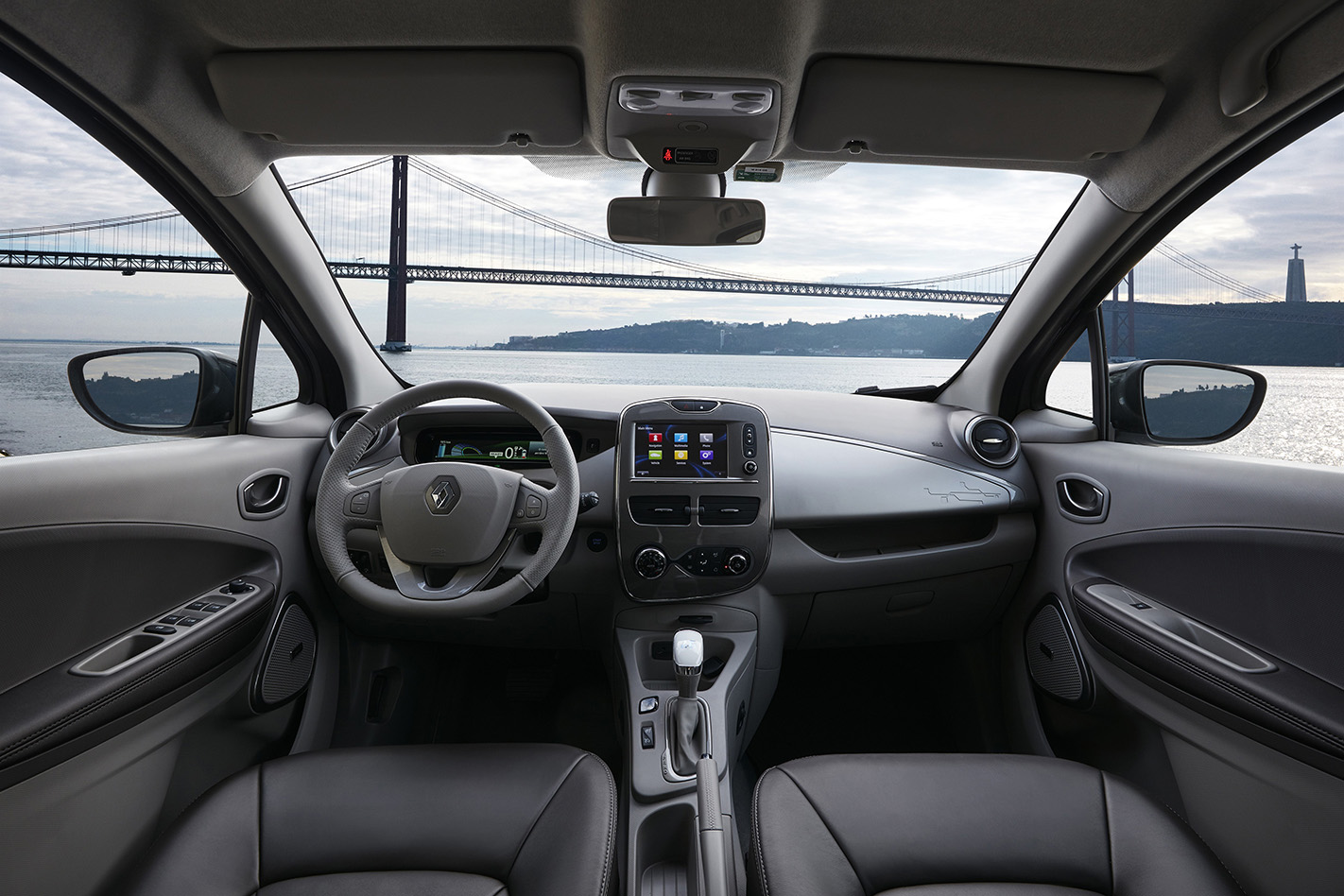
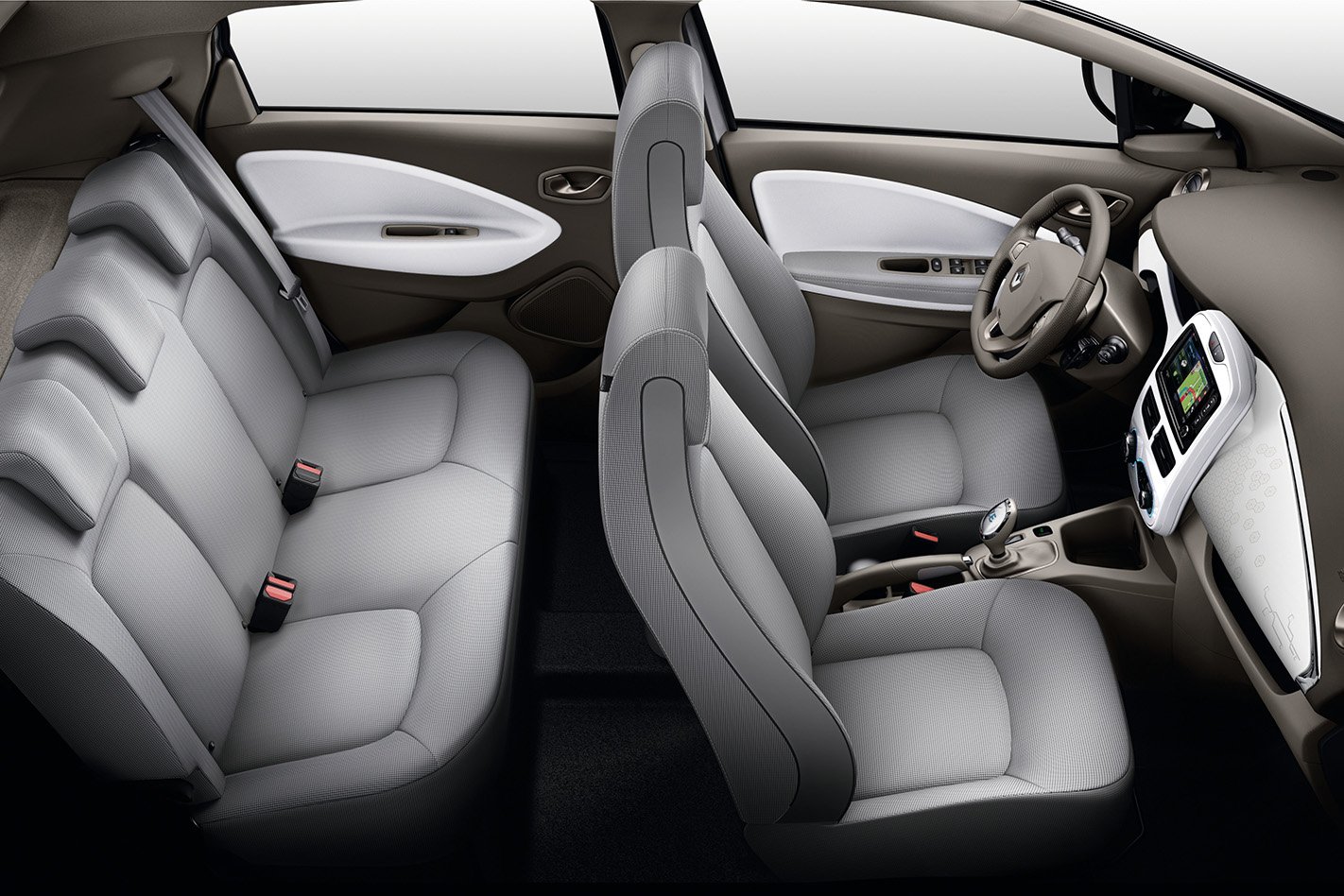
There’s also a high cabin floor, necessitated by the positioning of the 41kWh battery pack under the floorpan. Not necessarily a drawback, but stepped up onto – rather than into – the Zoe’s cockpit may feel a little unusual to some.
The absence of government incentives clearly hurts its cause. Little wonder then that Renault Australia doesn’t see regular Joes as the target buyer, as private buyers would arguably demand more for their money. It’s a pity too – it looks like the French electric revolution will take a little longer to make an impact in Australia.
What stands out?
The Audi Q7 is a powerful large SUV that seats seven in a luxuriously equipped, roomy cabin. It rides and steers very nicely, and is thrifty with fuel. Auto braking is standard, and a broad and innovative suite of driver aids is available.
What might bug me?
Getting dirty when refuelling. Spilt diesel fuel is oily enough to stick to the soles of your shoes, or stain your clothes. Some people like to wear gloves when handling diesel pump nozzles. There is no petrol-fuelled A7.How bulky it feels in the city. The Q7 is a heavy vehicle and it needs a big parking space.The prospect of calling for help just because you have punctured a tyre. The Q7 does not carry a spare – it has only a latex-based repair and inflation kit. Even if you have learned how to use the kit, it will work only if the puncture is small.Concerns over Audi’s connection with Volkswagen Group’s Dieselgate scandal of September 2015, when the group admitted that millions of its diesel engines – including those fitted to some Audis – had been able to cheat in emissions tests. Audi says diesels in all current models comply with emissions rules.
What body styles are there?
Just the one, a five-door SUV-style wagon.This is the second-generation Q7. It is slightly shorter than the Q7 it replaces, and lighter.The Q7 drives all four wheels, and is classed as a large SUV, higher priced.
What features do all Audi Q7s have?
Satellite navigation, displayed on an 8.3-inch retractable monitor. A 10GB hard drive for storing music and other media. Digital radio (which sounds better than AM and FM), and Bluetooth connectivity for phone calls and audio streaming.A reversing camera, and front and rear parking sensors.Convenience key entry, which allows you to unlock the car and drive away without removing the key from your pocket or bag. A power-opening tailgate, which can be foot-operated from a sensor below it (or operated from the driver’s seat).A seven-seat interior, trimmed in leather. Power adjustment for the front seats and exterior mirrors (with a memory for the driver’s seat, so that you can touch a single button to restore your preferred set-up).Cruise control, headlamps that switch on automatically in low light, and windscreen wipers that operate automatically when it rains.Dual-zone climate control (which allows different temperatures on either side of the cabin).Aluminium alloy wheels of 19 inches diameter, and a puncture repair kit. A tyre pressure monitor, which warns you if a tyre is going flat.City-speed automatic emergency braking, which Audi calls Pre-sense city. Other standard active safety equipment includes a blind-spot warning and a rear cross-traffic alert.Electronic stability control, which can help the driver control a skidding car. All new cars must have this feature.Eight Airbags. (For details of where they are placed, and for more on Q7 safety systems, please open the Safety section below).All Q7s are covered by a three-year, unlimited kilometre warranty.
Which engine uses least fuel, and why wouldn’t I choose it?
Two engines are offered in a Q7, both 3.0-litre V6 turbo-diesels. The more fuel-efficient of the two comes with the Q7 3.0 TDI quattro 160kW, which is also the less costly Q7. It consumes 5.8 litres/100km on the official test (city and country combined) – an impressively low figure for a car this big that goes this hard.The main reason you might not choose this powerful diesel is that you want a bit more grunt for towing or overtaking and you are happy to pay for it. The other engine, which comes in the Q7 3.0 TDI quattro 200kW, has been retuned to supply about 20 per cent more thrust in most driving conditions. And it uses only marginally more fuel.In the real world, both Q7s use more fuel than they do on the test – but they are still quite thrifty. Expect to average about 8 litres/100km with either – your fuel use will vary with how and where you use the car.(Power outputs and all other Audi Q7 specifications are available from the Cars Covered menu, under the main image on this page.)
What key features do I get if I spend more?
The less costly Q7 – the 3.0 TDI quattro 160kW – comes with the features common to both Q7s and the less powerful of the two engines.Pay more for the Q7 3.0 TDI quattro 200kW, and apart from the added performance the most immediately obvious difference is in the leather used to trim the cabin. Audi calls it Cricket leather, and it is perforated and feels nicer than the leather in the 160kW.The other major change is in the instrument panel. In the 200kW, the less costly car’s traditional and beautiful twin dials are replaced with a high-resolution, 12.3-inch LCD colour screen, which you can customise to display just the information you want. The display can be switched between a Classic view, with prominent speedometer and rev counter, and an Infotainment view, which brings functions such as navigation or media to the fore. You can change the view by pressing a button on the steering wheel.The reversing camera is enhanced with a 360-degree view, which for example can help you avoid striking the wheels against kerbs when parking.Finally, the Q7 200kW has all its lower extremities finished in the body colour, while the 160kW leaves these as unpainted back plastic.As usual with Audi there is a big range of options available at extra cost. Among them are bigger wheels (up to 21-inch diameter), air suspension with adaptive dampers (which adjust the ride automatically for the conditions), better sound systems, a head-up instrument display, and front seats with heating, ventilation or a sports contour with extra side-bolstering.Also optional at extra cost is an Assistance package that brings you several active driving aids. It includes Active cruise control (which can maintain a safe distance from the car in front on the highway, and can also hold your position automatically in stop-start traffic) and Traffic jam assist (which can steer the car automatically in stop-start traffic). The camera-and-radar based package also adds highway-speed auto emergency braking.
Does any upgrade have a down side?
Optioning either 20-inch or 21-inch wheels makes the ride more reactive to rough surfaces, for the lower profile tyres that go with them do not absorb bumps as well as the standard 19-inch wheel and tyre combination. The bigger wheels and tyres are also more susceptible to damage from rocks when driving off sealed surfaces, and the tyres will cost more to replace.
How comfortable is the Audi Q7?
The commanding driving position, excellent adjustability of seat and steering wheel, abundant space, and premium cabin finishes, immediately make any Q7 feel welcoming and very comfortable.On the move, the Q7’s ride comfort – its ability to isolate you from poor road surfaces – is very good on the standard steel-sprung suspension and outstanding if the optional air suspension is fitted. The steering is light but direct, making the Q7 easy to manoeuvre in tight conditions for a car of its size.The standard seats provide a good level of comfort and support. However the optional sports seats provide even greater support and location for occupants in the front, especially in more dynamic driving.The highest level of comfort comes with what Audi calls Individual contour seats, which have heating, ventilation, and a massage function.In all other respects, the Q7 is extremely comfortable. Wind noise is very well suppressed, and tyre noise at highway speeds is not intrusive. The diesel engines are exceptionally smooth and quiet.
What about safety in an Audi Q7?
The Audi Q7 delivers a very strong standard safety story, and there’s an array of optional safety equipment.Both models are equipped with eight airbags: frontal and chest-protecting side airbags for the driver and front passenger; chest-protecting side airbags for outer passengers in the second row of seats; and head-protecting side-curtain airbags for those in all three rows of seats.A standard city-speed automatic emergency braking system (Pre-sense city) monitors the road ahead and will initiate a full emergency stop automatically if it concludes a collision is imminent (typically with another car that has slowed suddenly, but also with a pedestrian). The camera-based system is effective at speeds up to 85km/h.Also standard is a blind-spot alert (which warns of cars approaching from behind when you seek to change lanes), a rear cross-traffic alert (which warns of vehicles crossing behind when you are reversing), and an exit alert (which warns of a cyclist or other vehicle approaching from behind when you open a door).An Assistance package available at extra cost brings active cruise control and a twin-radar based highway-speed auto braking system that is available at all speeds (up to 250km/h).The Assistance package also includes a camera-based lane-keeping assistant, which jogs you if you have begun to drift dangerously into an adjacent lane on the highway. It vibrates the steering wheel, and also adjusts the steering slightly to help bring you back.Among other features of the Assistance package is Turn assist, which acts to prevent your turning right dangerously across oncoming traffic at an intersection.The Australasian New Car Assessment Program rated the Audi Q7 at five stars for safety, its maximum, in September 2015.
I like driving – will I enjoy this car?
You will. All Q7s turn into corners with authority and deliver generous grip, giving you plenty of confidence on country roads.The commanding driving position and light, direct steering help you position the Q7 accurately on the road and create the sense that the big car is shrinking around you.Either powertrain has ample urge for most drivers and conditions. As you would expect, the Q7 160kW does not feel quite as authoritative in overtaking moves at highway speed, or as effortless when fully loaded in hilly terrain, as the more powerful Q7 200kW.The Q7 is always going to be hamstrung by its weight and high centre of gravity when you need agility and responsiveness. It won’t reward you in the same way that a Audi sports sedan does. But there’s still driving enjoyment to be had.All-wheel drive helps the Q7 maintain traction on muddy, snowy or otherwise slippery sealed roads, on gravel roads, and on well-maintained tracks. The Q7 does not have the ground clearance, underbody protection or low-range gearing needed for properly rough off-roading, however. And if you get a flat tyre while off the beaten track, you have only the inflation kit to fall back on.
How is life in the rear seats?
Very comfortable. Middle-row passengers enjoy generous leg room, useful grab handles and ample storage.Very effective ventilation outlets for second-row passengers provide ample airflow. However, temperature controls for these passengers (called four-zone climate control) are an extra-cost option, and one that does not bring dedicated ventilation outlets for passengers in the third row.Two 12V power outlets in the rear console let the kids keep phones and other devices charged over long trips.At extra cost, Audi also offers rear passengers two 9.2-inch high-resolution screens that are linked to a DVD drive, and that will connect with a games console, a USB drive, and headphones.Extra space can be made for those in the rearmost seats by sliding the middle row forward.
How is it for carrying stuff?
Excellent. Luggage capacity is 770 litres with all seats in place. Fold the middle seats (they split 35/30/35 and lie almost flat) and the cargo space is enlarged to a vast 1955 litres. The height of the rear loading lip is 788mm, higher than that of a comparable car-based wagon. Many people prefer the greater height when loading bags and groceries.A foot-triggered, hands-free opener for the powered tailgate is standard on both Q7s.Legal towing capacity is massive at 3500kg if the trailer has its own brakes. Either Q7 will have no problem towing a jet-ski, a single-horse float or a camper trailer, and the rating permits much bigger loads such as a three-horse float or a large boat or caravan.
Where is it made?
Both Q7s are built in Bratislava, Slovakia.
What might I miss that similar cars have?
Not much, unless you are unhappy to be refuelling with diesel.Alternative premium large SUVs such the Volvo XC90, Mercedes Benz GLE and BMW X5 offer petrol engines.If you like the Q7 but want more power, consider the similar Audi SQ7, which offers 320kW from a diesel V8.
I like this car, but I can’t choose which version. Can you help?
If you regularly tour in hilly terrain with a full complement of passengers, or tow a trailer, then you’ll appreciate the more effortless performance of the Q7 200kW. For everyone else, the 160kW would be more than ample, and the saving may leave room to add desirable options such as the air suspension.
Are there plans to update the Q7 soon?
This second-generation Q7 was introduced late in 2015 as an all-new model, and it won’t be replaced with a new-generation car until at least 2022. Expect a facelift about 2019.Audi has confirmed that a Q7 e-tron will arrive about January 2018. It will be a diesel-electric hybrid that you can charge from home powerpoints, and that will offer near-silent short trips on battery power with zero tailpipe emissions. (Audi quotes a range of 56km on the battery alone.)
FROM a single variant introduced to Australia in mid-2015, AMG’s range of GT two-seat sportscars has grown rapidly to offer six variants in both coupe and convertible bodystyles.
The initial offerings of GT, more potent AMG GT S and track-focused GT R made sense without explanation. As your budget increased, so did power and driving dynamics, but the most recent arrival is not quite as straight forward.

GT Coupe
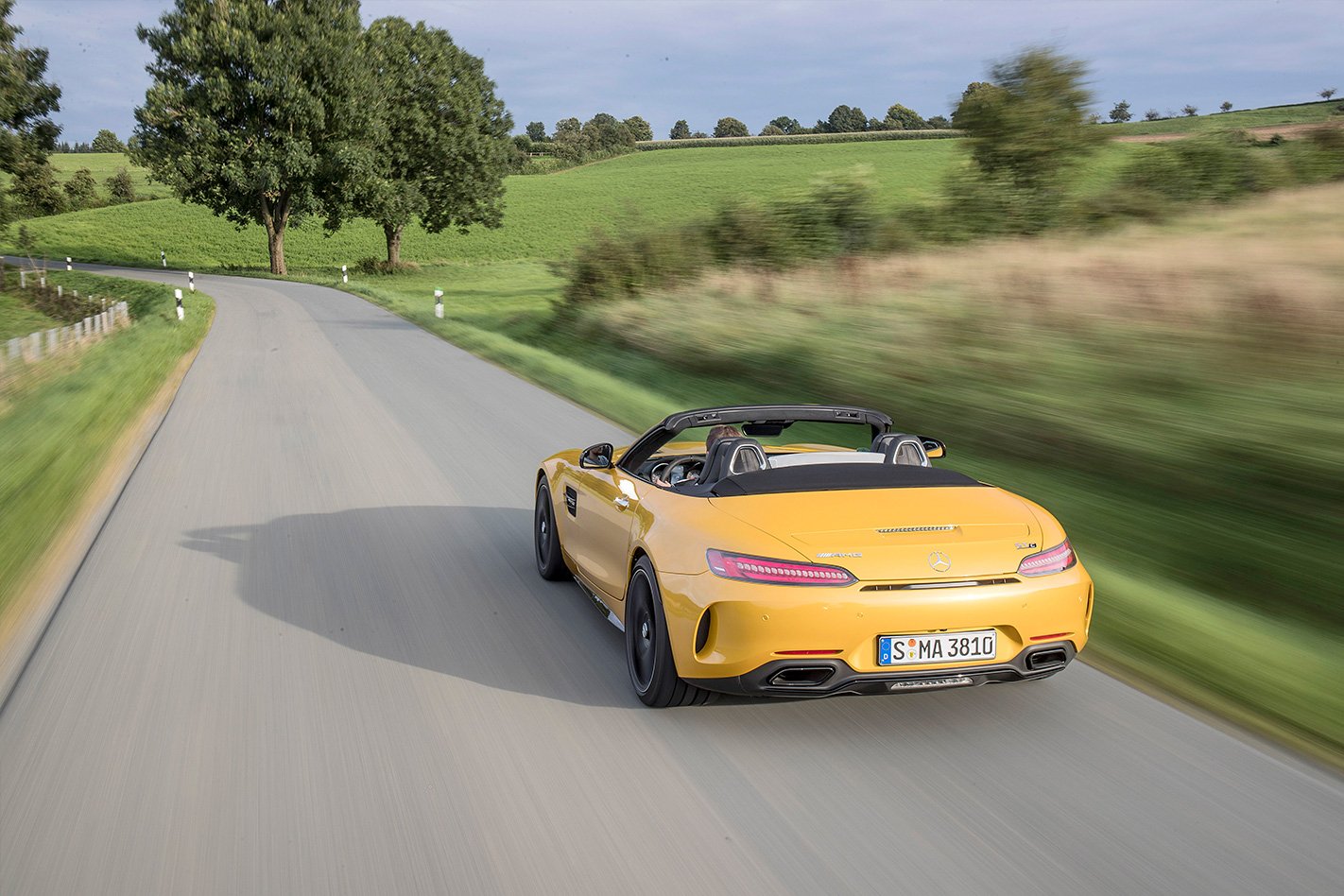
At $258,711, the AMG GT offers the entry point into the GT family and, like all six options, the most affordable version is powered by a hand-built dry-sump 4.0-litre twin-turbo V8. In the case of this variant, peak power is 350kW at 6000 rpm while maximum torque of 630Nm comes in at 1700 rpm and lasts all the way to 5000 rpm.
It may be the least potent nag in the GT stables, but the base version can still crack 100km/h from a standstill in 4.0 seconds and blast past the 300km/h milestone if you can find a road long enough. Not bad for the entry point representative.
Those imposing looks, massive bonnet, squat purposeful stance and presence are all included with the base GT, and only a trained eye could pick up visual cues that you’ve opted for the least powerful version, including 19-inch wheels in all corners (all others roll on 19-inches at the front but 20-inch at the rear).
For the purist, the GT has simple sports suspension without adaptive systems, while the front brakes are the smallest on offer measuring 360mm, matching the rear rotors.
An AMG Speedshift seven-speed dual clutch transaxle is also common to all variants although higher-performance versions get different gear ratios in first and top gear.
The top of the pack GT R might have a host of weight saving features, but the simple GT is still the lightweight champ of the range weighing in at 1540kg.
GT Roadster
Chopping the GT’s top and replacing the metal roof for a ‘weight optimised’ fabric roof takes the price up to $283,711 and adds 55kg to the kerb weight but that has not dented the performance if the GT roadster.
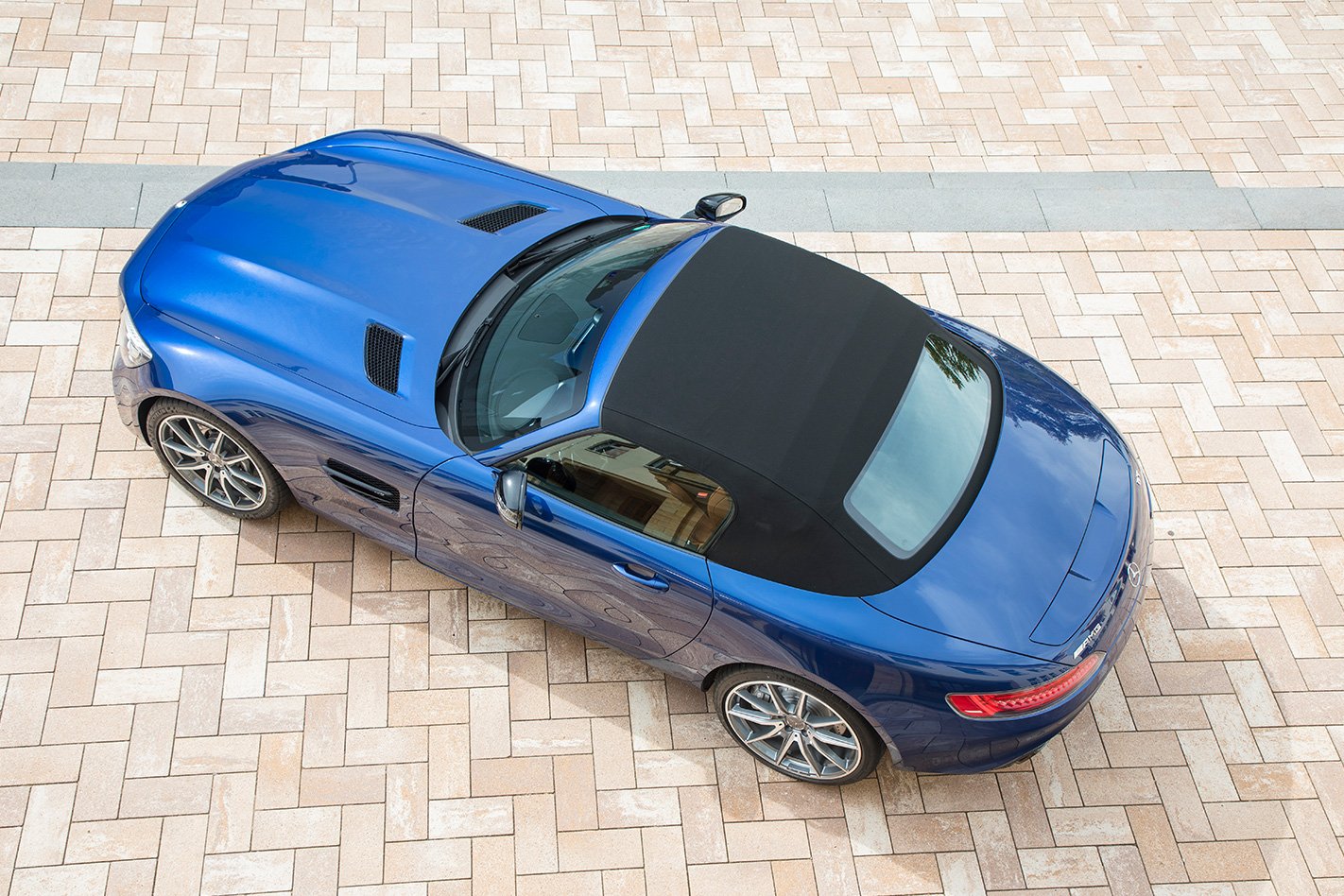
Some of the weight gain is as a result of extra structural bracing to try and mitigate the detrimental effect on body stiffness that is often the result of a coupe-to-cabriolet conversion. Contrary to the construction of many soft top mechanisms, the GT’s frame is a blend of magnesium, steel and aluminium and actually lowers the Roadster’s centre of gravity when compared to the Coupe.
GT S Coupe
The GT S pioneered the model’s introduction to Australia as the sole offering but since then, the car has been treated to an update which will arrive in Australia in October. When the model launched, it had 375kW and 650Nm but those figures will rise to 384kW and 670Nm for a zero to 100km/h dash in 3.8s and a maximum speed of 310km/h.
With the update, the GT S also gains a new Panamericana grille as do all the versions in the range. Investing the $289,711 for an updated GT S also adds to the GT specification with AMG Ride Control for variable suspension settings, an electronically controlled differential, and larger 390mm front brakes.

GT C Coupe
The addition of a C variant to the GT range may have caused a little confusion. While the variant is available as a convertible version, the C does not denote the cabriolet variant, but instead stands for comfort and this is where the straightforward incremental range deviates.
While the GT C gets another power boost to 410kW and a torque treat of another 10Nm, the newest GT offers a slightly different take on suspension tuning with a more comfort-geared ride.
Ride Control, electronic differential and Race driving mode carry over from the GT S but the GT C offers even quicker acceleration of 3.7s and a top speed of 317km/h.

Interestingly, the GT C engine is the highest revving of the bunch with the V8 turned to offer peak power between 5750 rpm and 6750 rpm, while the GT S and GT R have their peak power at 6250 rpm.
For now, the GT C is only available as a special limited Edition 50 which celebrates a half century of tuned-up AMG cars, which brings a number of bespoke features such as full LED headlights, more luxurious interior treatment and a choice of two unique paint colours for $335,211.
However, Wheels understands that the GT C will be offered in more standard trim when the year is out.
GT C Roadster
Like the GT and GT Roadster, the convertible GT C shares a majority of the equivalent GT C coupe specification including power and torque, and the zero to 100km/h dash. Exceptions include all of the extra Edition 50 gear until the standard GT C Coupe arrives in 2018, when both variants will align in equipment stakes.
GT R
Available only in coupe form for $348,711, the current flagship of the GT range underwent a rigorous weight-reduction and power enhancement program resulting in the ultimate AMG GT for the track.
The combination of 1555kg kerb weight, 430kW and 700Nm allows the GT R to hit 100km/h from zero in 3.6 seconds and a top speed of 318km/h.
The vicious variant also has extra aero added for increased downforce at speed and greater stability as well as carbon ceramic brakes to scrub speed with greater efficiency and consistency.
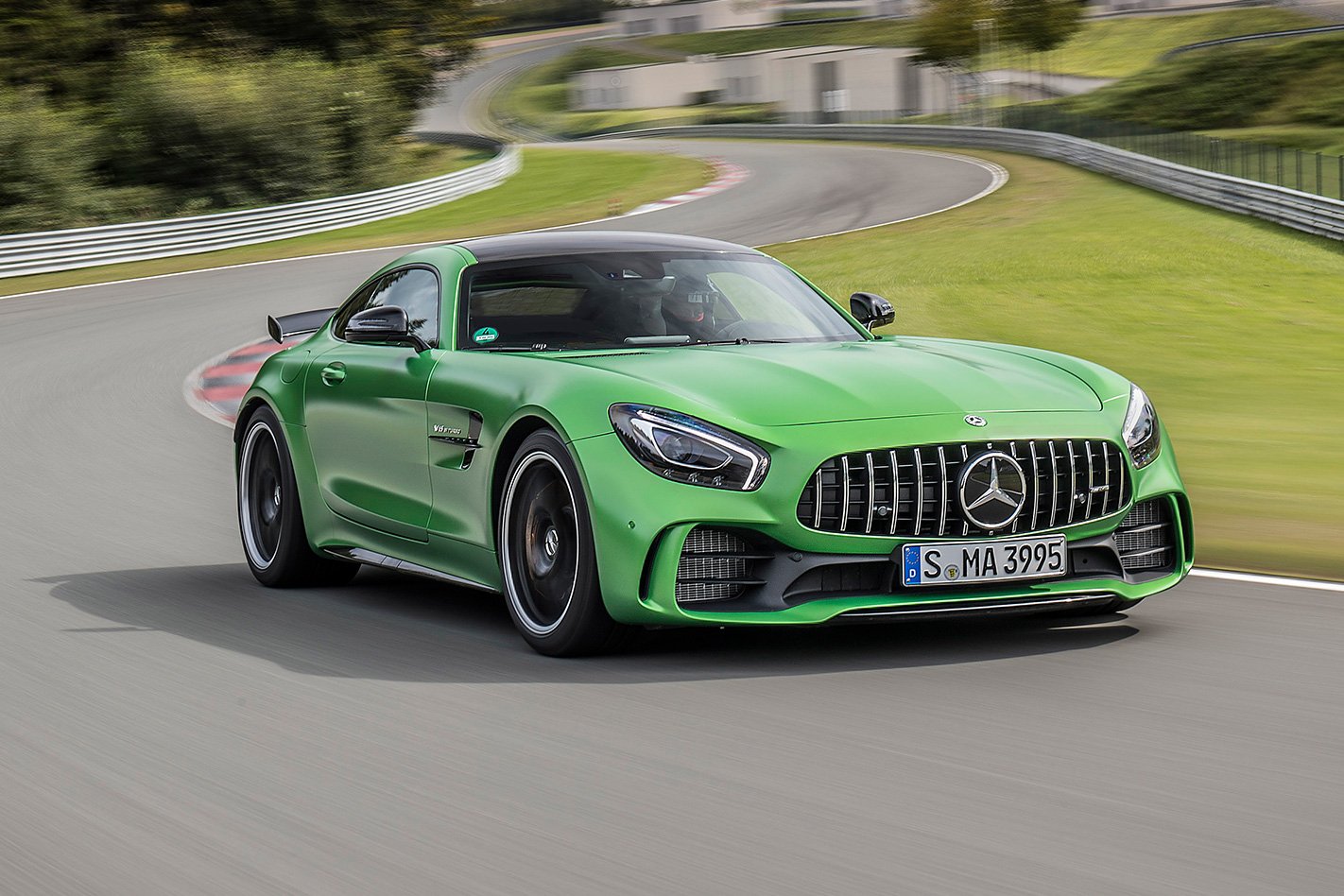
Unlike the other variants, the GT R also has its torque tube constructed from carbonfibre and its Ride Control suspension is height adjustable.
This is the car that set a new production car lap record at Mount Panorama with a scorching time of 2:16.5.
GT Black
It’s not confirmed just yet, but unofficial murmurings in AMG’s corridors suggest a GT Black is on the cards to farewell the first-gen GT model toward the end of its lifecycle.
If it follows the lead of previous AMG Black vehicles, the GT incarnation will weigh less, pack more of a punch from its 4.0-litre V8 and take the performance figures into even more eye-watering territory.
How much power? With the confirmation of the new Mercedes-AMG S63 coupe we now know the 4.0-litre V8 is capable of a whopping 450kW and 900Nm but the GT’s transaxle may be the limiting factor in the end. Watch this space.

Eerie, it was … the ghost of a test long since past. We’d grabbed any old micro-tape from the much used office pile to record our drive impressions of the new VP Commodores.
Slipping it into the dictaphone we inadvertently punched Play instead of Record, and heard ourselves from almost two years before, discussing the VN Calais. Twilight zone. If time had dimmed our recollections of the flagship VN, the seemingly spectral replay reminded aloud why the Calais finished third (Wheels, February 1990), against the imported Cressida and Accord.
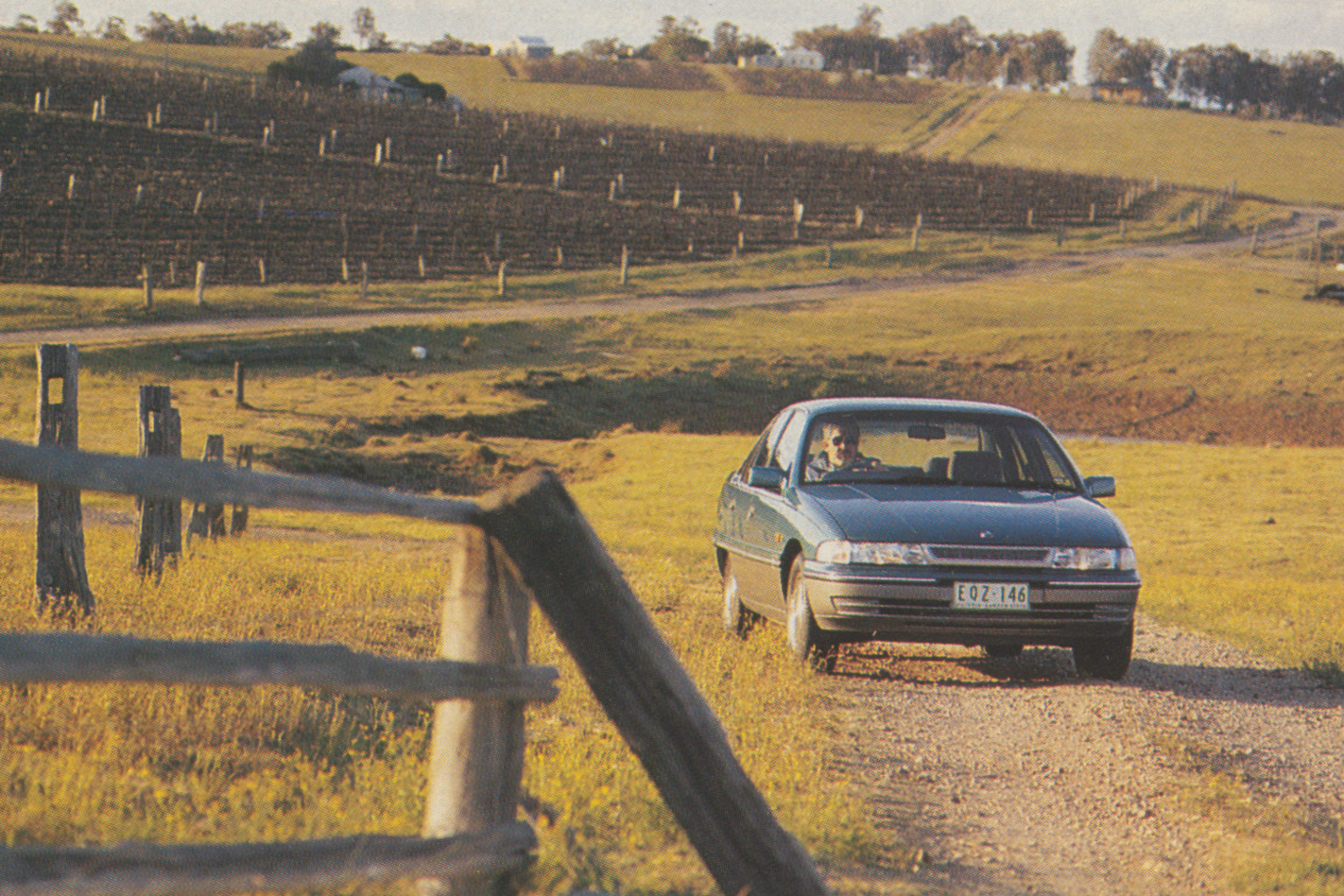
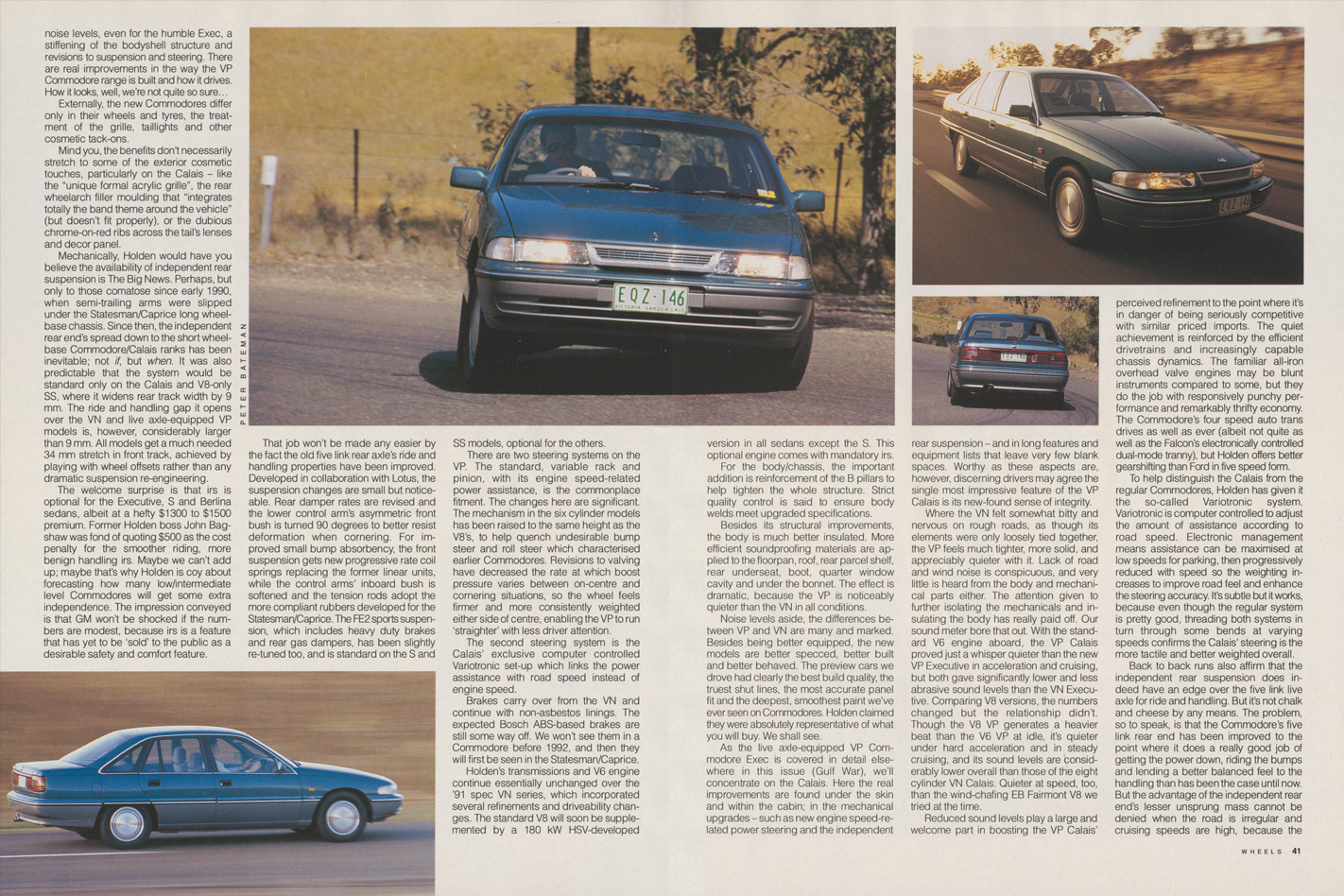
Two years on and, praise be, refinement is what it has. A lot of detail development down the road, the VP Calais stands apart from, and discernibly above, its lesser Commodore siblings. That’s the first important point about the new VP range from Holden.
While the more humble VP models – Executive, S and Berlina – haven’t changed as dramatically under their (old) skins, they, too, have altered in ways that count. Plus a few that don’t…
With no sheetmetal revisions of any consequence, Holden has gone all out to sweeten the Commodore/Calais carrot by increasing equipment levels right across the range- a move no doubt hastened by the Falcon/Fairmont upgrade, which occurred with the introduction of Ford’s EB series.
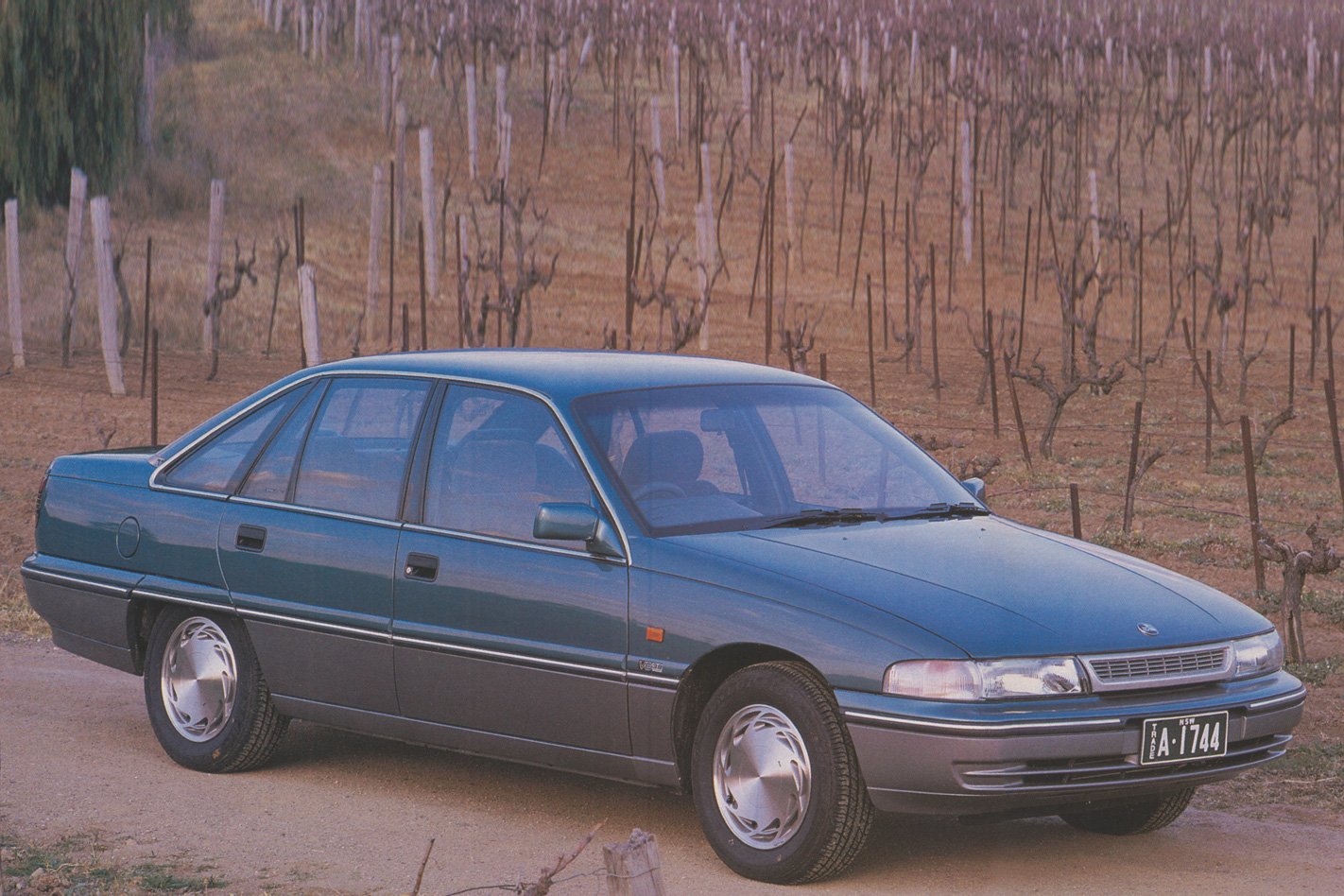
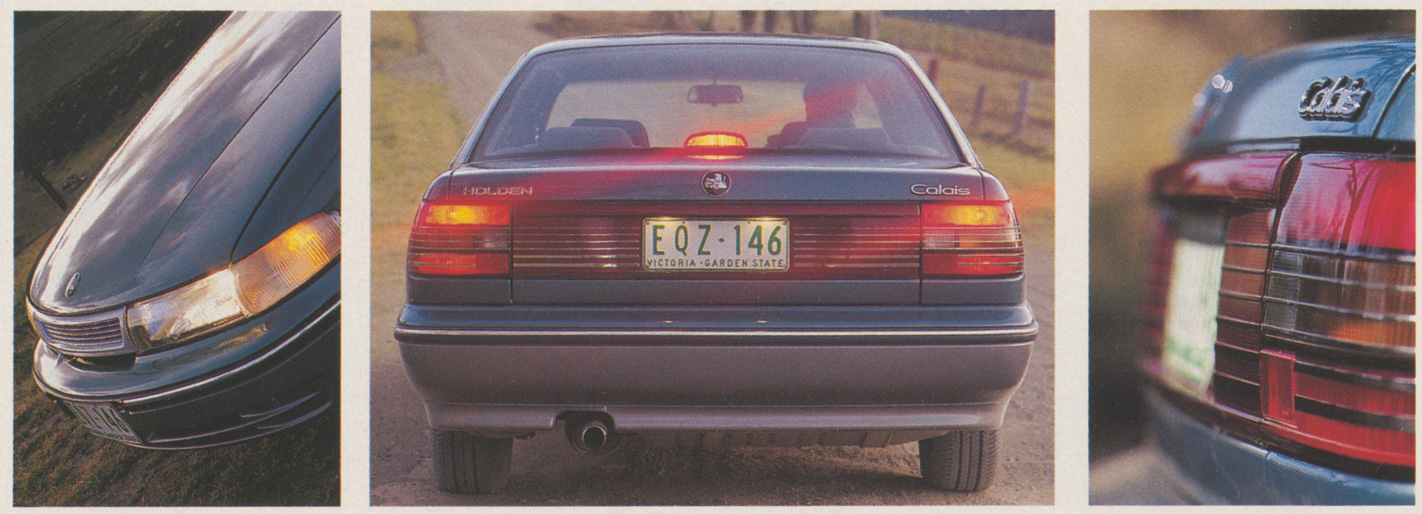
Externally, the new Commodores differ only in their wheels and tyres, the treatment of the grille, taillights and other cosmetic tack-ons. Mind you, the benefits don’t necessarily stretch to some of the exterior cosmetic touches, particularly on the Calais – like the “unique formal acrylic grille”, the rear wheel-arch filler moulding that “integrates totally the band theme around the vehicle” (but doesn’t fit properly), or the dubious chrome-on-red ribs across the tail’s lenses and decor panel.
Mechanically, Holden would have you believe the availability of independent rear suspension is The Big News. Perhaps, but only to those comatose since early 1990, when semi-trailing arms were slipped under the Statesman/Caprice long wheelbase chassis. Since then, the independent rear end’s spread down to the short wheelbase Commodore/Calais ranks has been inevitable; not if, but when. lt was also predictable that the system would be standard only on the Calais and V8-only SS, where it widens rear track width by 9mm. The ride and handling gap it opens over the VN and live axle-quipped VP models is, however, considerably larger than 9 mm. All models get a much needed 34 mm stretch in front track, achieved by playing with wheel offsets rather than any dramatic suspension re-engineering.
The welcome surprise is that irs is optional for the Executive, S and Berlina sedans, albeit at a hefty $1300 to $1500 premium. Former Holden boss John Bagshaw was fond of quoting $500 as the cost penalty for the smoother riding, more benign handling irs. Maybe we can’t add up; maybe that’s why Holden is coy about forecasting how many low/intermediate level Commodores will get some extra independence. The impression conveyed is that GM won’t be shocked if the numbers are modest, because irs is a feature that has yet to be ‘sold’ to the public as a desirable safety and comfort feature.
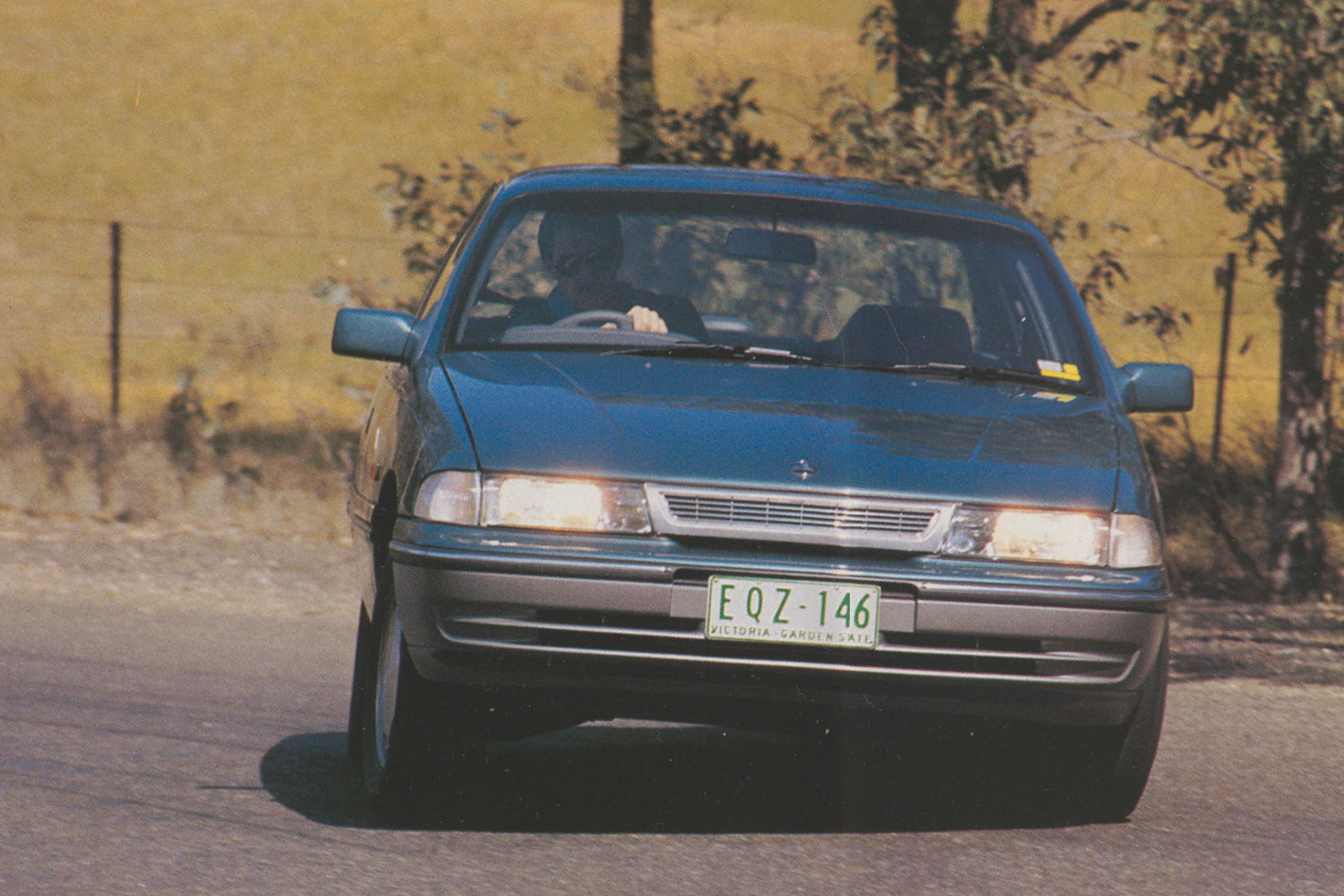
There are two steering systems on the VP. The standard, variable rack and pinion, with its engine speed-related power assistance, is the commonplace fitment. The changes here are significant. The mechanism in the six cylinder models has been raised to the same height as the V8’s, to help quench undesirable bump steer and roll steer which characterised earlier Commodores. Revisions to valving have decreased the rate at which boost pressure varies between on-centre and cornering situations, so the wheel feels firmer and more consistently weighted either side of centre, enabling the VP to run ‘straighter’ with less driver attention. The second steering system is the Calais’ exclusive computer controlled Variotronic set-up which links the power assistance with road speed instead of engine speed.
Brakes carry over from the VN and continue with non-asbestos linings. The expected Bosch ABS-based brakes are still some way off. We won’t see them in a Commodore before 1992, and then they will first be seen in the Statesman/Caprice.
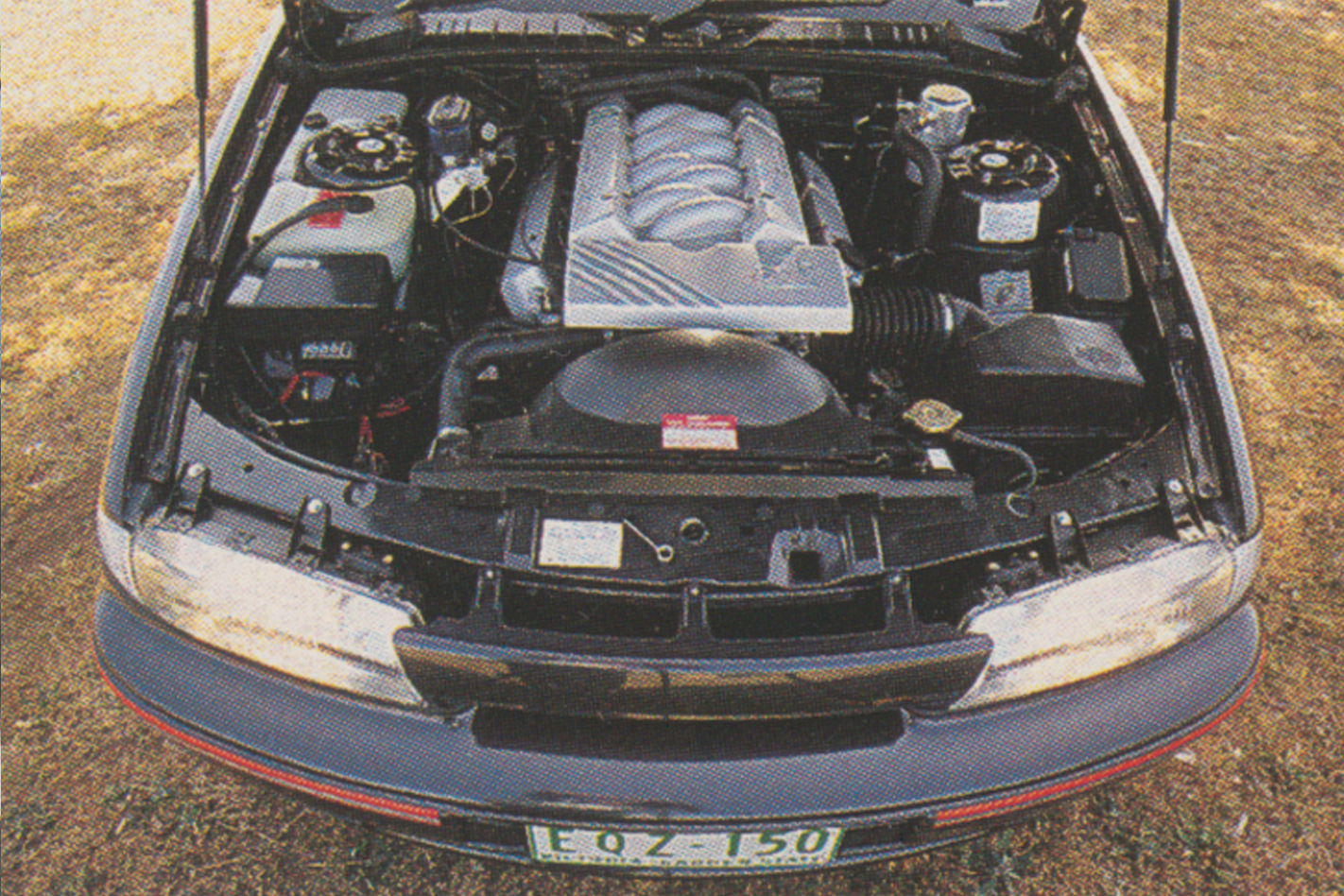
Holden’s transmissions and V6 engine continue essentially unchanged over the ’91 spec VN series, which incorporated several refinements and driveability changes. The standard V8 will soon be supplemented by a 180 kW HSV-developed version in all sedans except the S. This optional engine comes with mandatory irs.
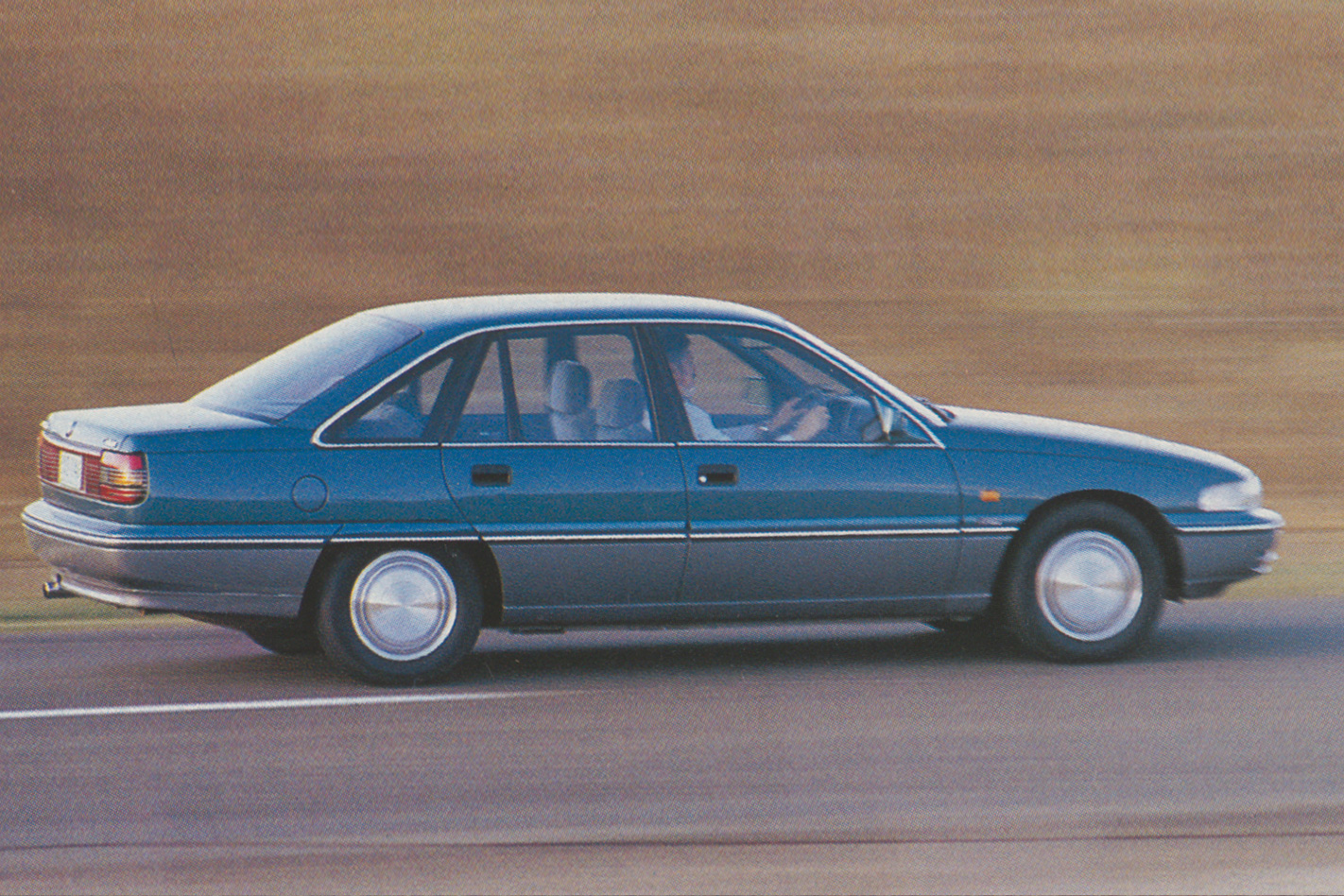
Noise levels aside, the differences between VP and VN are many and marked. Besides being better equipped, the new models are better specced, better built and better behaved. The preview cars we drove had clearly the best build quality, the truest shut lines, the most accurate panel fit and the deepest, smoothest paint we’ve ever seen on Commodores. Holden claimed they were absolutely representative of what you will buy. We shall see.
As the live axle-equipped VP Commodore Exec is covered in detail elsewhere in this issue (Gulf War), we’ll concentrate on the Calais. Here the real improvements are found under the skin and within the cabin; in the mechanical upgrades- such as new engine speed-related power steering and the independent rear suspension- and in long features and equipment lists that leave very few blank spaces. Worthy as these aspects are, however, discerning drivers may agree the single most impressive feature of the VP Calais is its new-found sense of integrity.
Where the VN felt somewhat bitty and nervous on rough roads, as though its elements were only loosely tied together, the VP feels much tighter, more solid, and appreciably quieter with it. Lack of road and wind noise is conspicuous, and very little is heard from the body and mechanical parts either. The attention given to further isolating the mechanicals and insulating the body has really paid off. Our sound meter bore that out.
Comparing V8 versions, the numbers changed but the relationship didn’t. Though the V8 VP generates a heavier beat than the V6 VP at idle, it’s quieter under hard acceleration and in steady cruising, and its sound levels are considerably lower overall than those of the eight-cylinder VN Calais. Quieter at speed, too, than the wind-chafing EB Fairmont V8 we tried at the time.
Reduced sound levels play a large and welcome part in boosting the VP Calais’ perceived refinement to the point where it’s in danger of being seriously competitive with similar priced imports. The quiet achievement is reinforced by the efficient drivetrains and increasingly capable chassis dynamics. The familiar all-iron overhead valve engines may be blunt instruments compared to some, but they do the job with responsively punchy performance and remarkably thrifty economy.
The Commodore’s four speed auto trans drives as well as ever (albeit not quite as well as the Falcon’s electronically controlled dual-mode tranny), but Holden offers better gearshifting than Ford in five speed form.
Back to back runs also affirm that the independent rear suspension does indeed have an edge over the five link live axle for ride and handling. But it’s not chalk and cheese by any means. The problem, so to speak, is that the Commodore’s five link rear end has been improved to the point where it does a really good job of getting the power down, riding the bumps and lending a better balanced feel to the handling than has been the case until now.
But the advantage of the independent rear end’s lesser unsprung mass cannot be denied when the road is irregular and cruising speeds are high, because the Calais soaks up the bumps more absorbently, holds its line more sure-footedly on uneven surfaces, and has better roadholding when braking hard over ruts or corrugations.
Though the regular springs and dampers are more supple than before, the Calais’ ride is well controlled and slightly favours the firm side to avoid any suggestion of wallowing or floatiness over see-saw undulations. For even more positive control, the FE2 sports suspension is available, with 6×15 inch alloy wheels standard, 7x15s optional, and both with P205/65 tyres. Atop the non-adjustable steering column, the Calais’ wheel continues the VN’s four spoke styling theme but is 20 mm smaller in diameter. Hooray! Its rim has a pleasant grip and the reduced size is easier to use. Detailed changes have improved the instruments’ appearance and legibility, but the controls on the instrument binnacle escaped serious attention and remain contentious for some drivers.
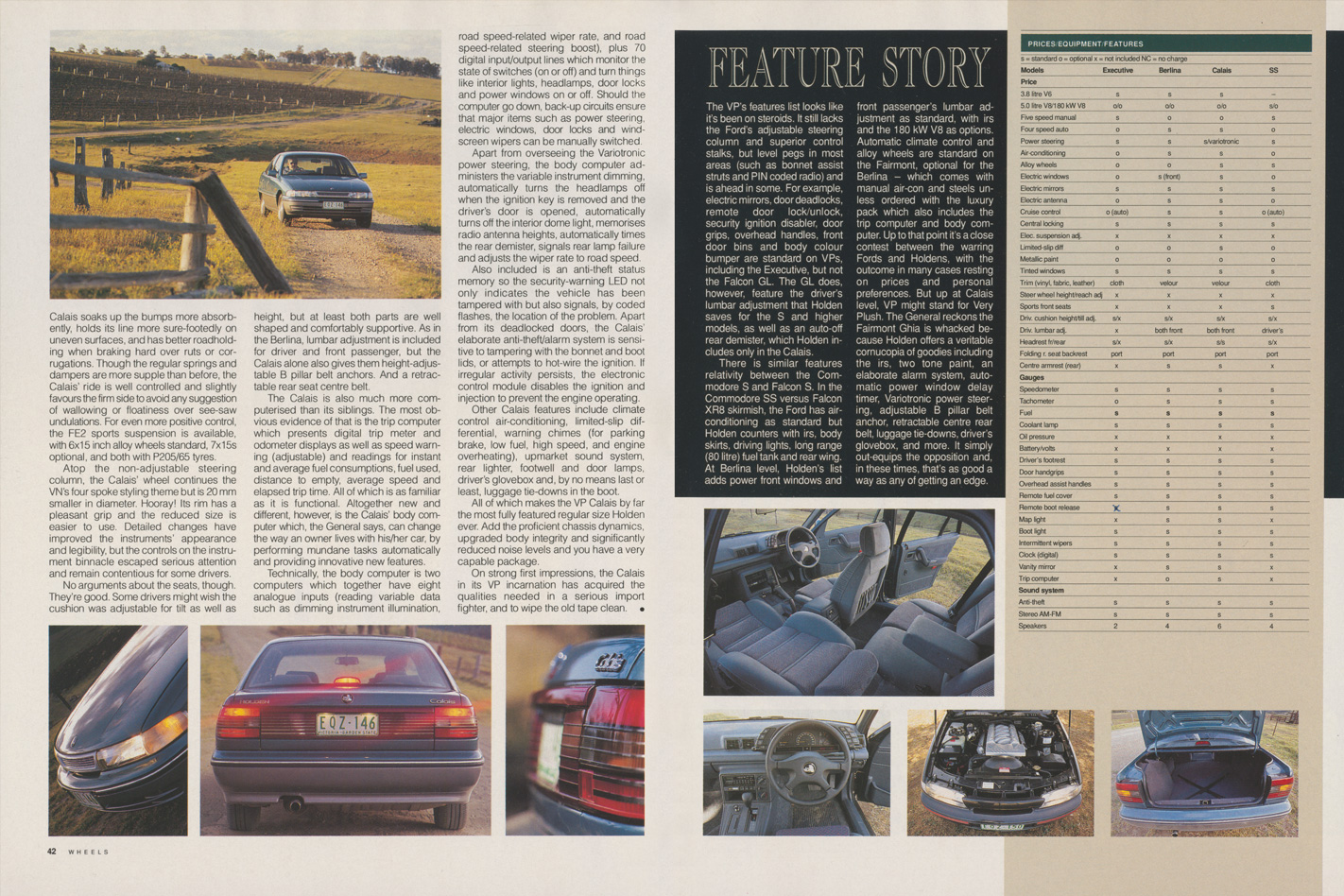
The Calais is also much more computerised than its siblings. The most obvious evidence of that is the trip computer which presents digital trip meter and odometer displays as well as speed warning (adjustable) and readings for instant and average fuel consumptions, fuel used, distance to empty, average speed and elapsed trip time. All of which is as familiar as it is functional. Altogether new and different, however, is the Calais’ body computer which, the General says, can change the way an owner lives with his/her car, by performing mundane tasks automatically and providing innovative new features.
Technically, the body computer is two computers which together have eight analogue inputs (reading variable data such as dimming instrument illumination, road speed-related wiper rate, and road speed-related steering boost), plus 70 digital input/output lines which monitor the state of switches (on or off) and turn things like interior lights, headlamps, door locks and power windows on or off. Should the computer go down, back-up circuits ensure that major items such as power steering, electric windows, door locks and windscreen wipers can be manually switched.
Apart from overseeing the Variotronic power steering, the body computer administers the variable instrument dimming, automatically turns the headlamps off when the ignition key is removed and the driver’s door is opened, automatically turns off the interior dome light, memorises radio antenna heights, automatically times the rear demister, signals rear lamp failure and adjusts the wiper rate to road speed.
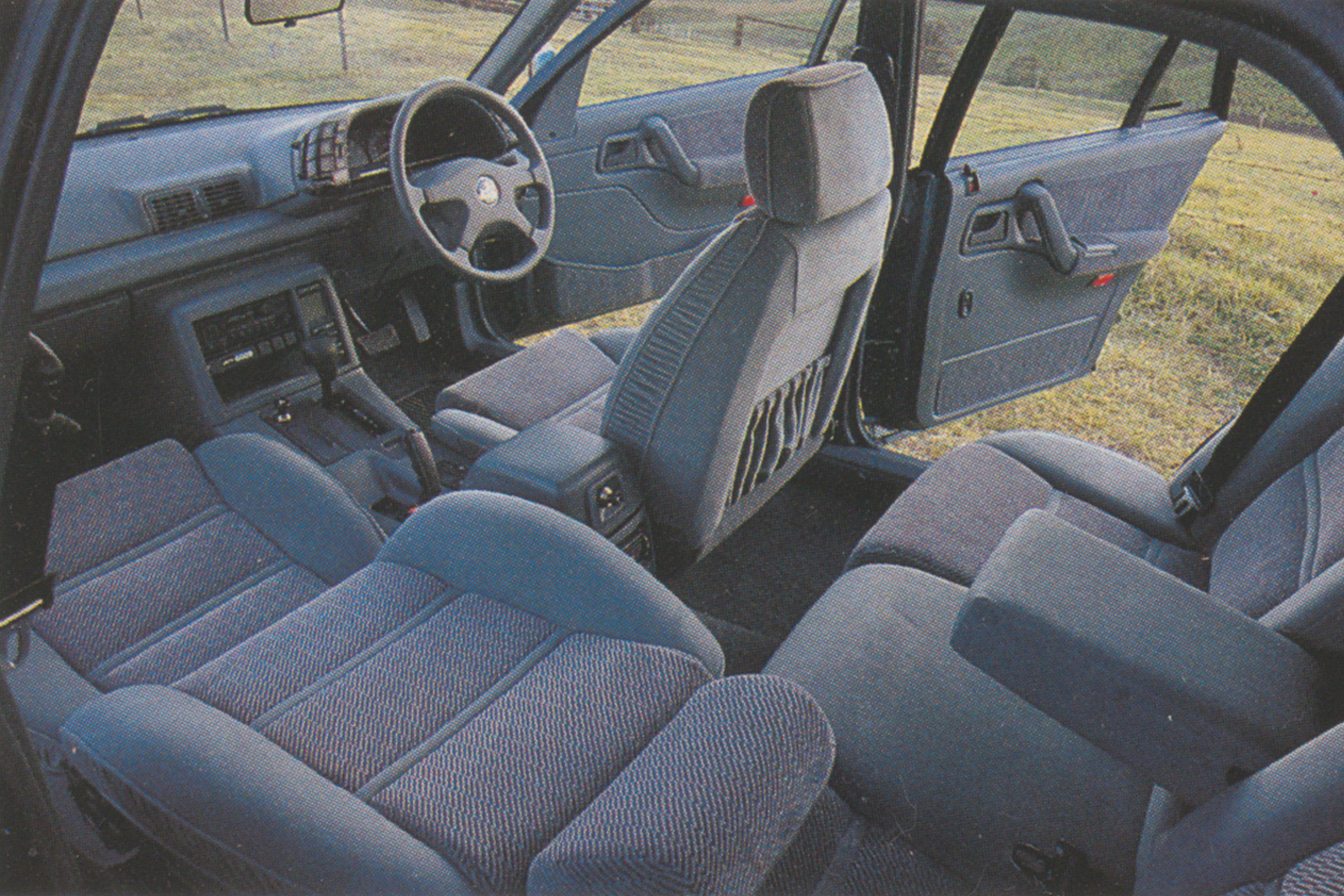
Other Calais features include climate control air-conditioning, limited-slip differential, warning chimes (for parking brake, low fuel, high speed, and engine overheating), upmarket sound system, rear lighter, footwell and door lamps, driver’s glove box and, by no means last or least, luggage tie-downs in the boot.
All of which makes the VP Calais by far the most fully featured regular size Holden ever. Add the proficient chassis dynamics, upgraded body integrity and significantly reduced noise levels and you have a very capable package.
On strong first impressions, the Calais in its VP incarnation has acquired the qualities needed in a serious import fighter, and to wipe the old tape clean.
FROM up here you can see the Autodromo del Mugello. This modern racetrack lies like some brilliantly realistic Scalextric set in the green Tuscan countryside below.
Stop, listen carefully, and you’ll even hear the distant rasp of the Formula Abarth open-wheelers practising there. But right now isn’t the time for soaking up scenery and sounds.
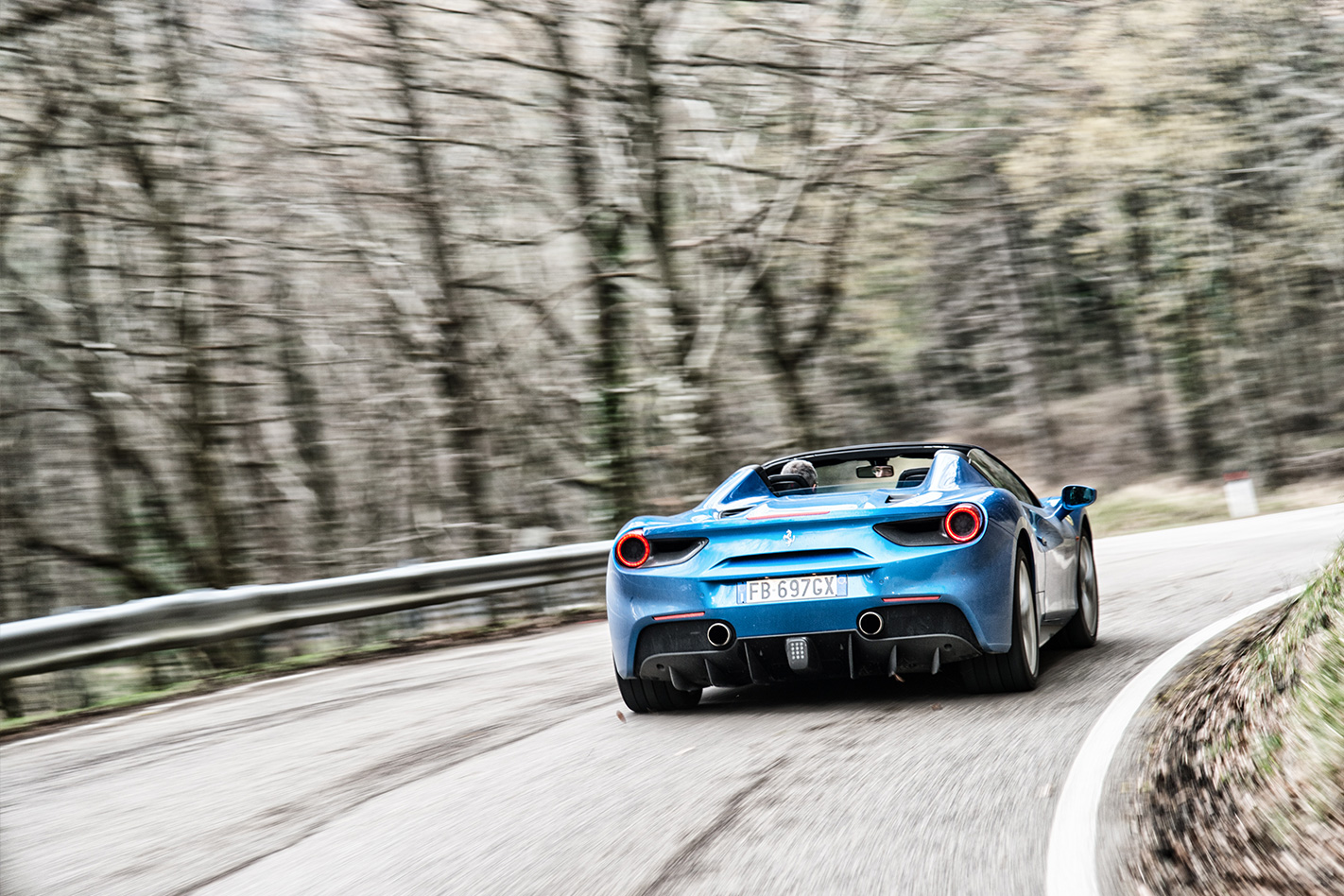
Behind me, the engine barks three times. Once for each downshift, braking hard for the approaching tight right. And then there’s a rising yowl as the 3.9-litre twin-turbo V8 thrusts the Ferrari 488 Spider towards the next corner… and deeper into the web of history.
Enzo Ferrari himself knew it well. Some of the photographs of him behind the huge, wood-rimmed steering wheels of the cars he raced are from Mugello. Here’s a big-eyed, dark-haired young man from Modena with a broad smile and a taste for speed. There’s no hint of the imposing legend he was to become half a century later, calculating and inscrutable behind the permanent sunglasses.
Young Enzo was ambitious and persistent. Between 1920 and 1929 he competed six times on the Circuito del Mugello. The first time in a racer made in Milan by Isotta-Fraschini, the remainder in a variety of Alfa Romeo racers and sports cars. His best result was a second place in 1921, but mostly – three times – he failed to finish.
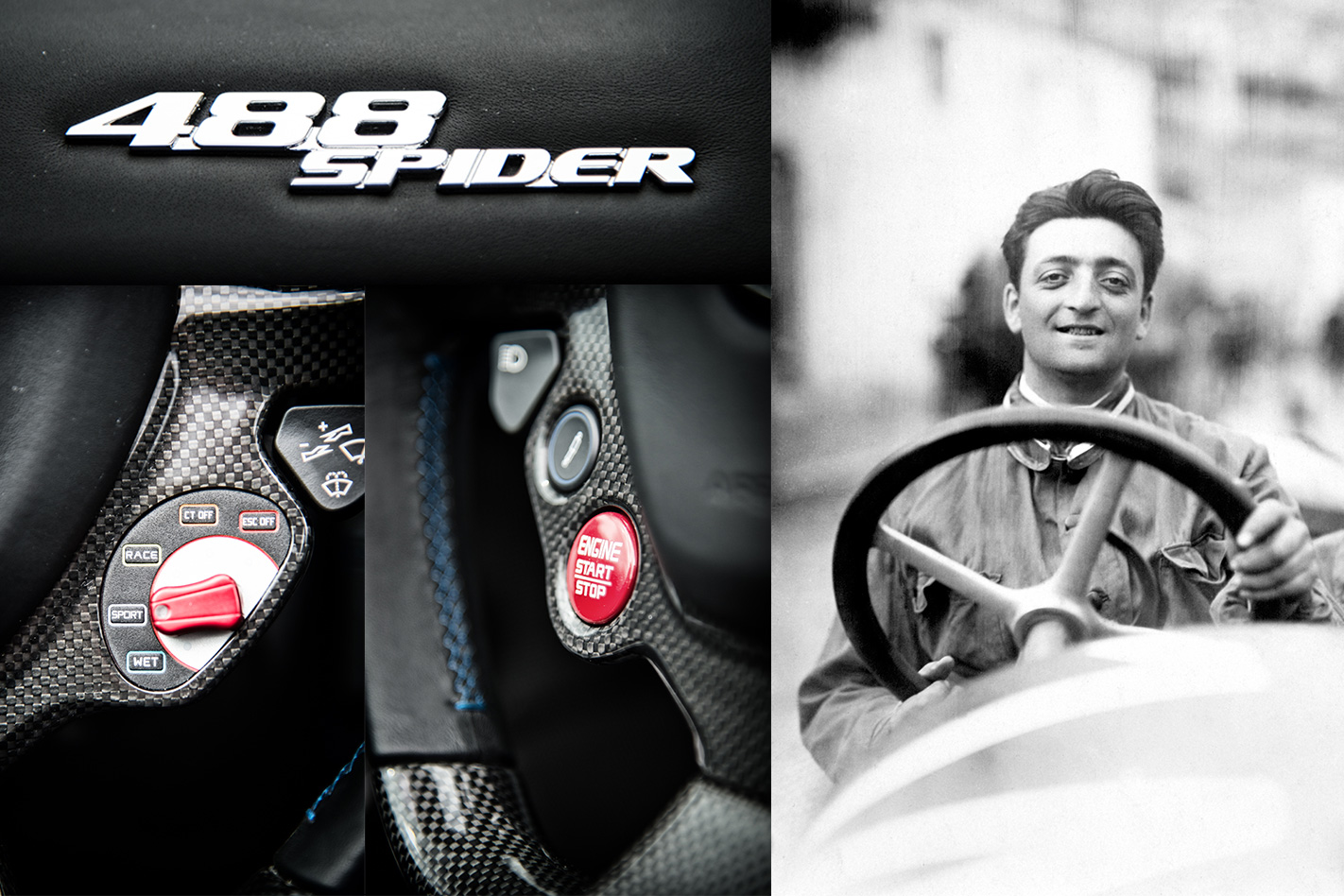
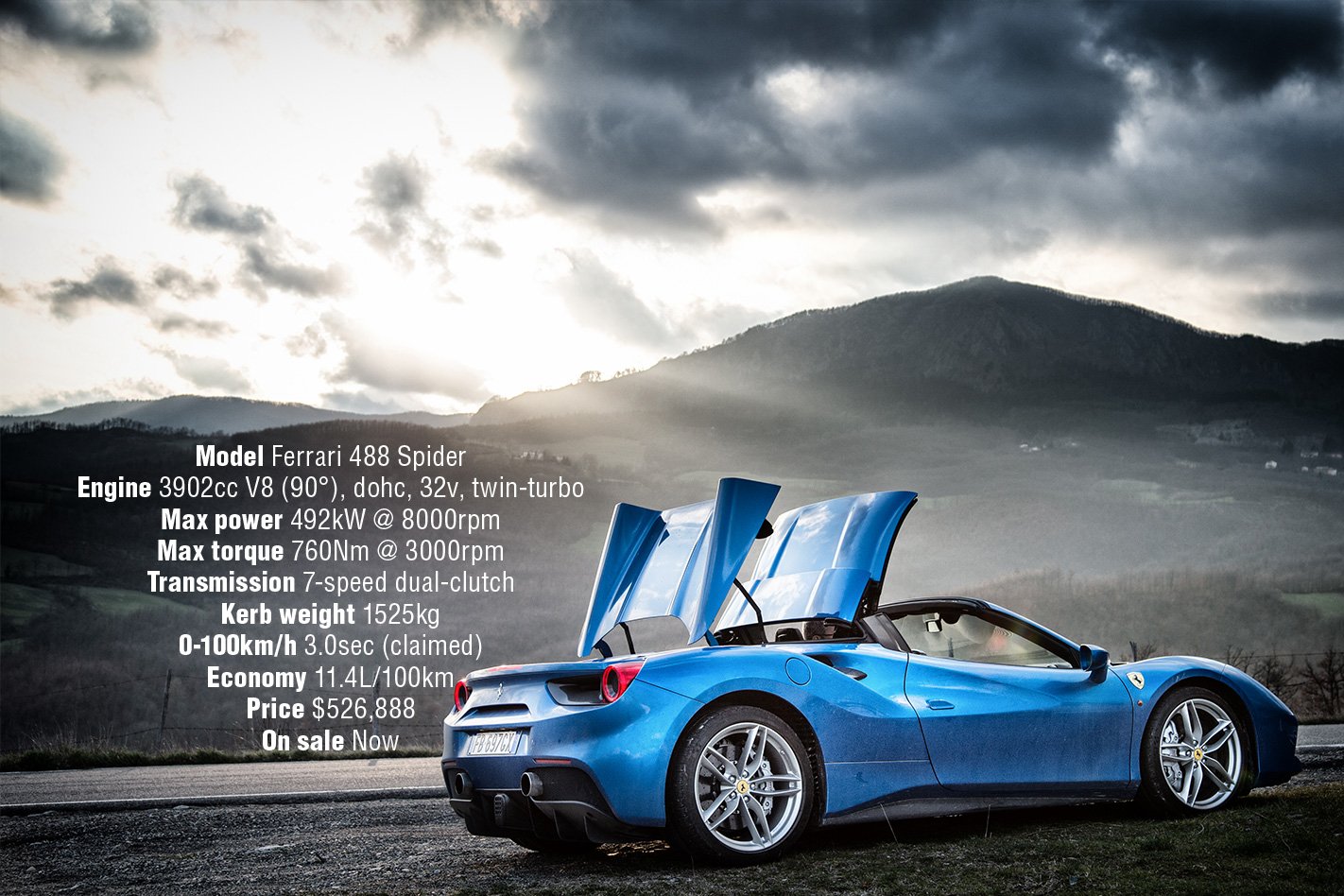
What is certain is that the 488 Spider is more powerful than all the cars Enzo Ferrari raced here combined. Its 492kW engine is a member of Ferrari’s newest V8 family, specifically developed for the new 488 GTB coupe and Spider. It’s the biggest and most powerful of the Tipo 154 family. So far…
WHAT an engine! Climbing the Giogo Pass, the 488 Spider accelerates like it’s driving downhill on a planet with vastly greater gravitational pull than our Earth. It’s truly other-worldly. What’s so queer is that the bulk-delivery low-end torque is clearly the work of turbochargers, while the precision of throttle response and manic rev-happiness feel more like a pedigree atmo engine.
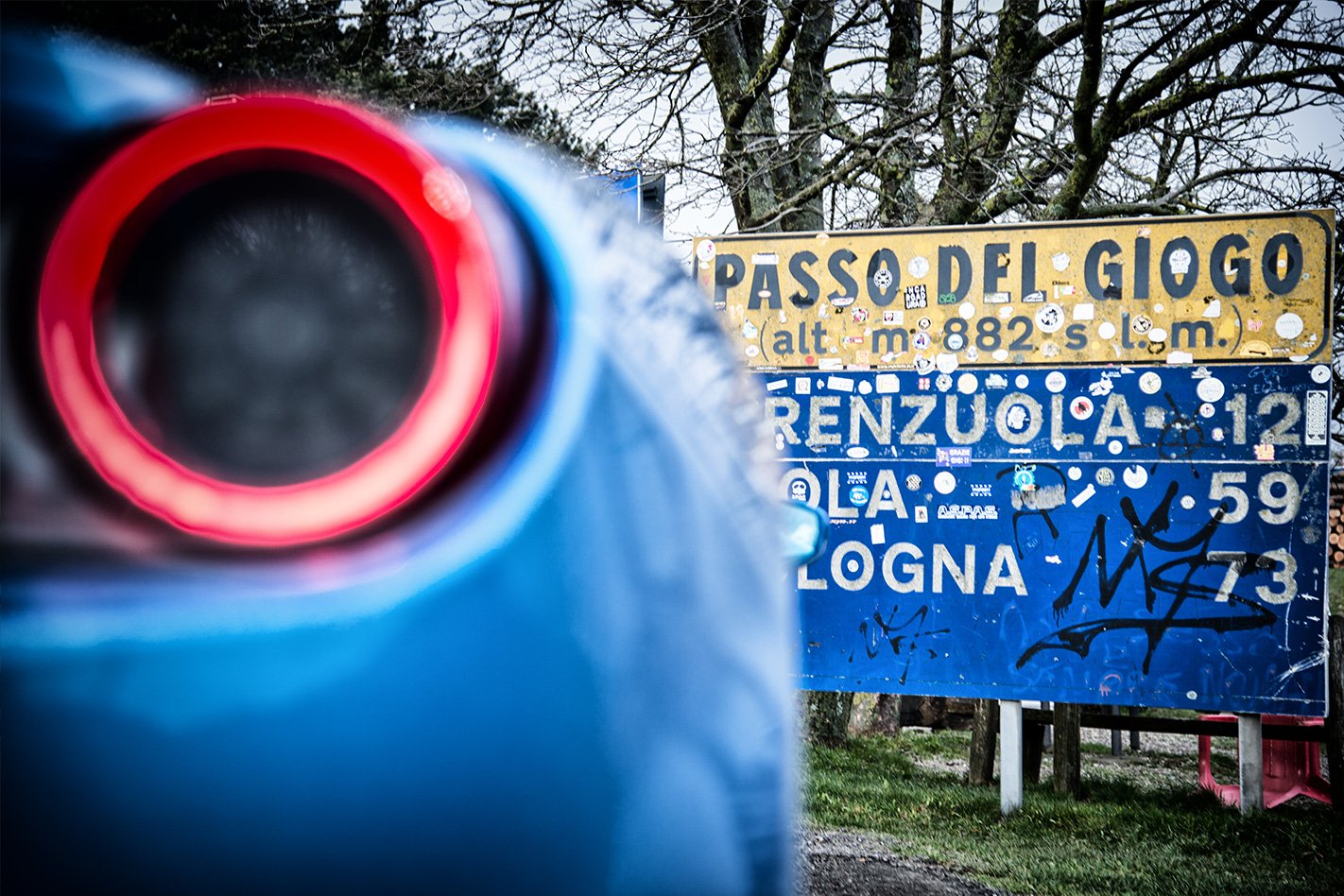
From here the V8 can raise its voice for the downhill run to Firenzuola, one of the three larger towns on the Circuito del Mugello.
With the needle of the big tachometer pointing to the top half of the 8000rpm dial, the engine sounds magnificent, but muted. No need to lower the Spider’s fast-acting retractable hardtop to increase the volume. There’s a button between the seats to drop the glass that’s wind-blocker or window, depending on whether the roof is up or down.
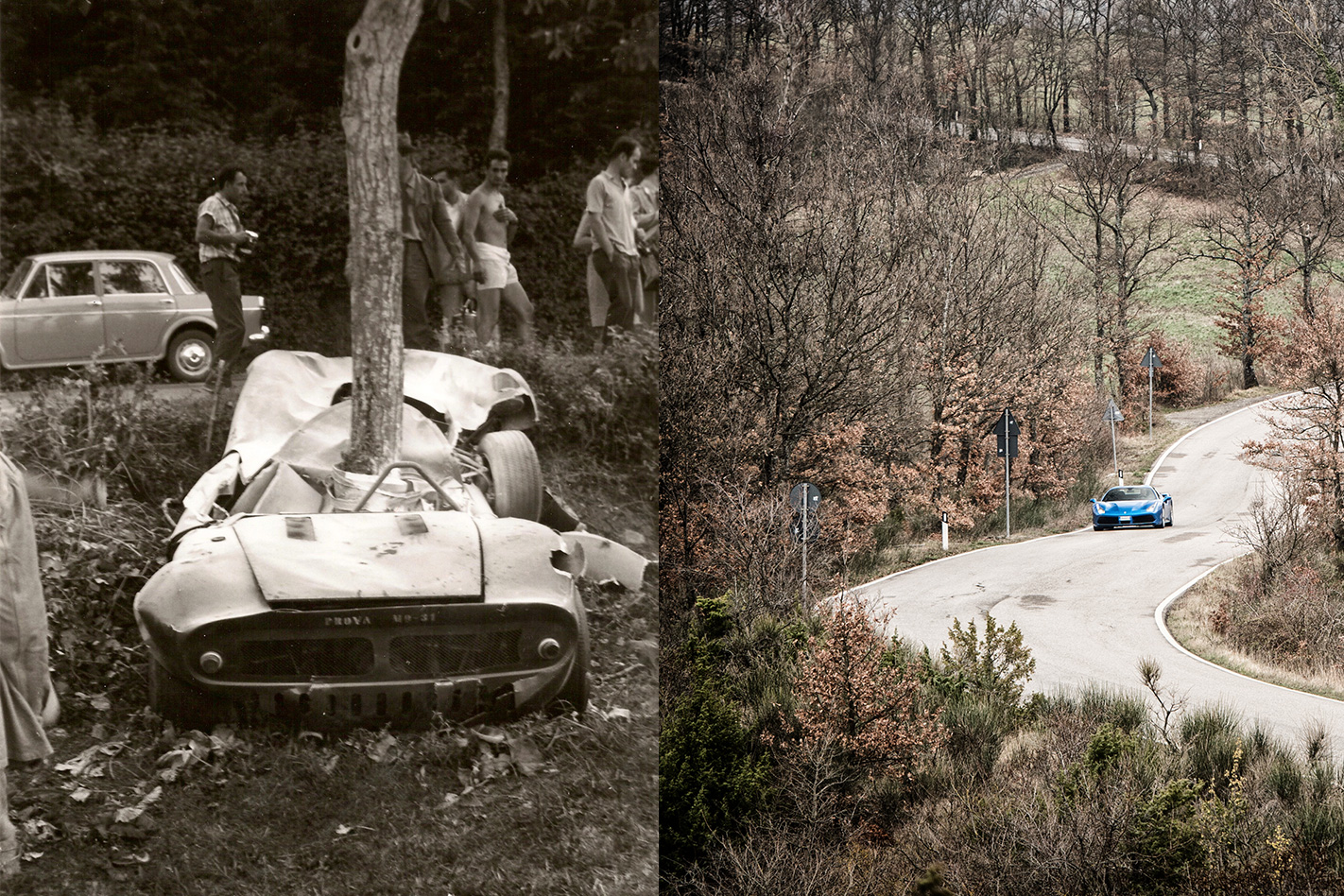
Dino is a name inextricably entwined with Ferrari’s gradual embrace of V8 engines for its road cars. It was the nickname of Enzo’s only legitimate son, Alfredo, a mechanical engineer who died tragically young in 1956 from muscular dystrophy. He’d been arguing the case for a V6 race engine until the last days of his short life.
In his memory, Enzo bestowed the Dino name to the various V6 and V8 race engines Ferrari developed in the late ’50s and early ’60s. They went into Formula One cars and other open-wheelers, then a series of mid-engined sports-prototypes that included the 206 SP.
Finally, and most famously, the Dino label was given to the lovely V6-powered mid-engine two-seat road car launched in 1968. Its replacement, the 1973 Dino 308, became Ferrari’s first V8 road car (until May 1976 it wore Dino badges). This same basic engine line would remain the basis of Maranello’s roadgoing V8s until 2004.
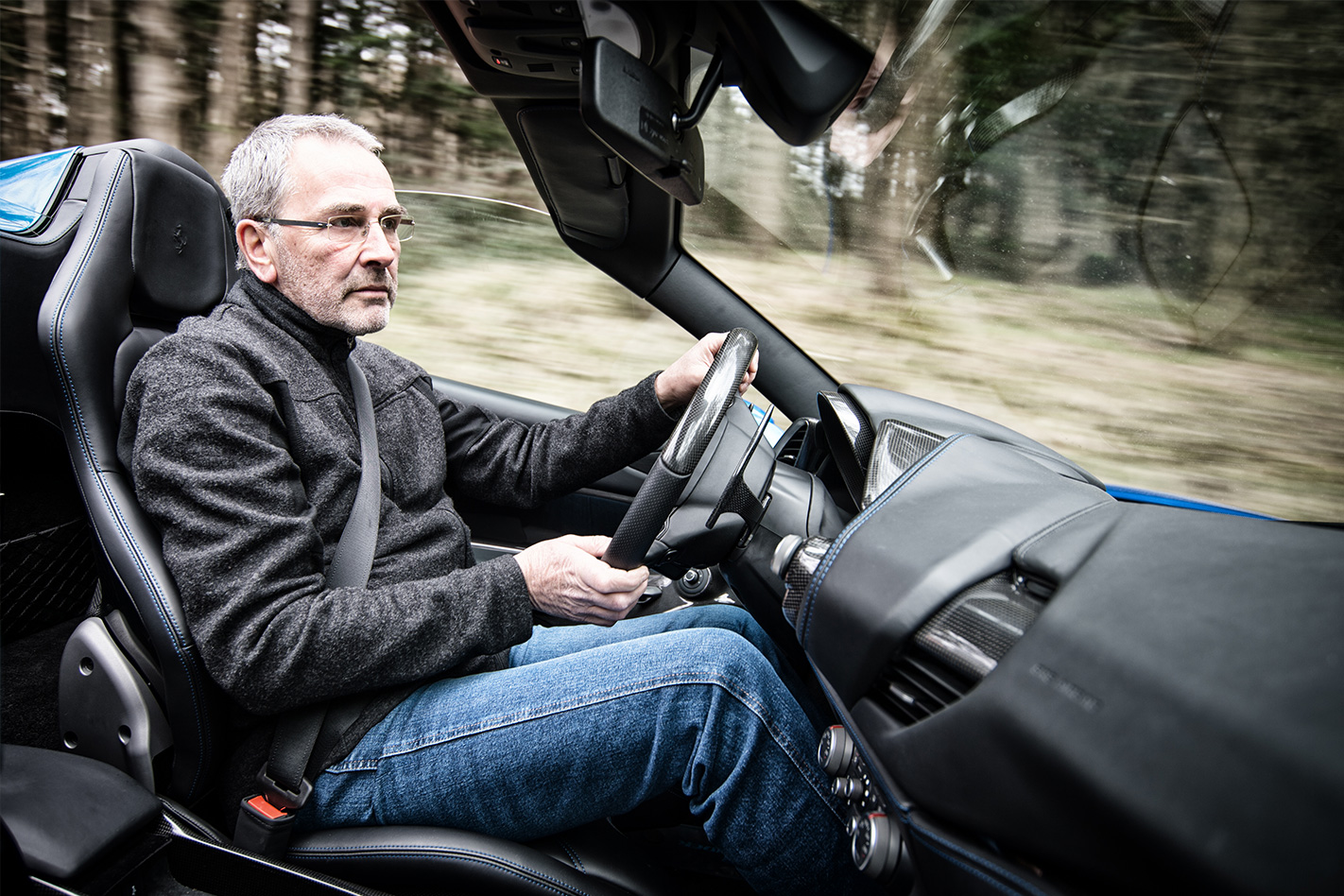
The yawning difference between then and now isn’t because the 488 Spider is more than three times as powerful and twice the weight of a 206 SP. No, the big thing is that a modern Ferrari has an electronic safety net to preserve its driver from mortal danger.
What the tangle of interconnected alphanumerics – E-Diff3, F1-Trac, SSC and more – mean, in language anyone can understand, is that the 488 Spider has really approachable limits. It’s like meeting an adored idol and finding out they’re not scarily snooty.
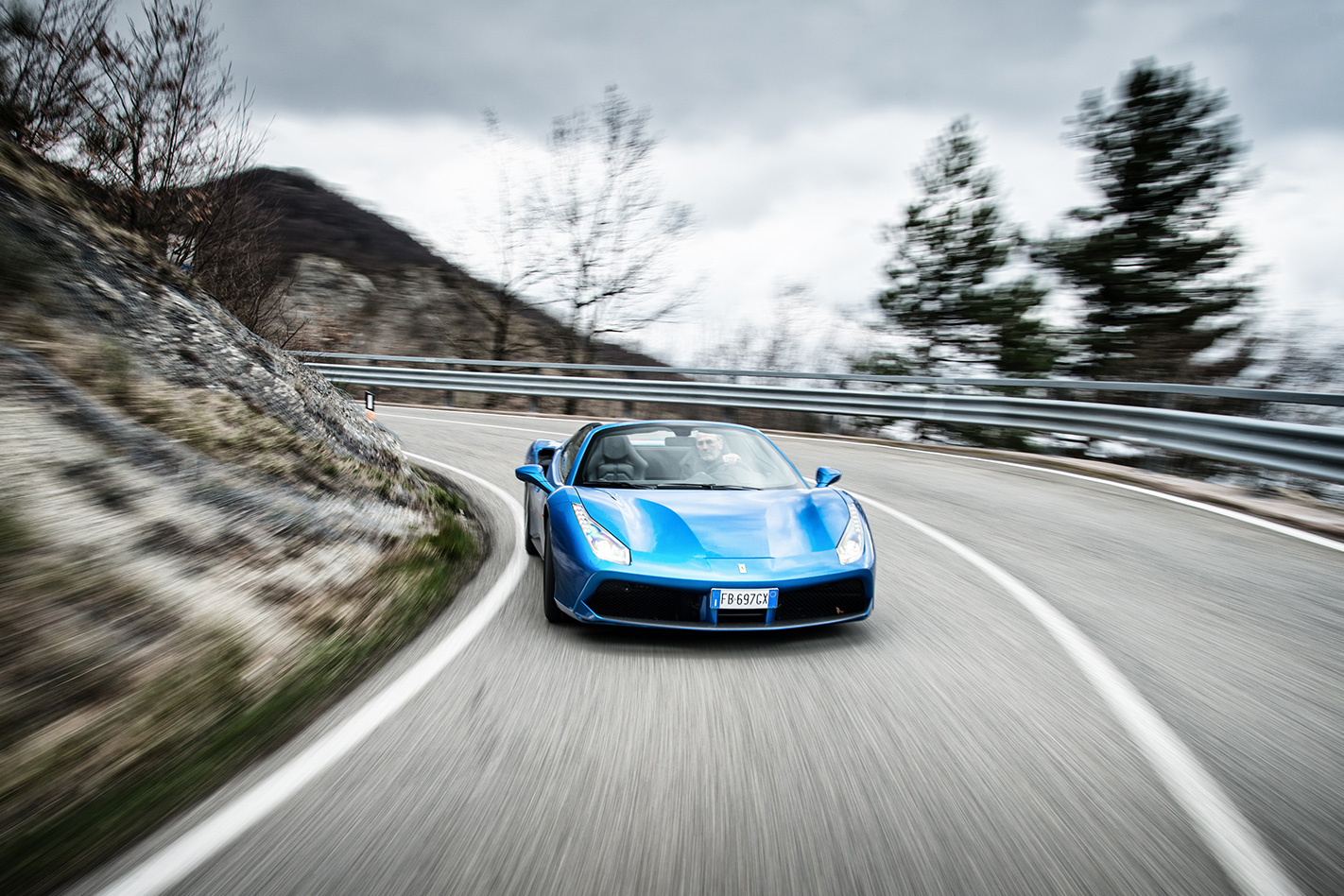
The manettino is on Sport, the setting for driving on dry public roads. But this doesn’t mean the 488 Spider won’t allow a little sideways attitude. This is a slight surprise because the Ferrari’s Michelin Pilot Super Sport tyres at first seem to have inexhaustible grip. The front-end bite of the 488 Spider is especially impressive, as is the sweet precision of the steering.
Then I notice the flashing from the dash, signalling frequent and frantic electronic activity as the Ferrari punches out of every corner. The fabulous finesse of the electronics means they don’t diminish driver enjoyment one little bit. Instead they encourage you to gradually lift the pace, to find out exactly where the stellar limits of this car’s handling lie.
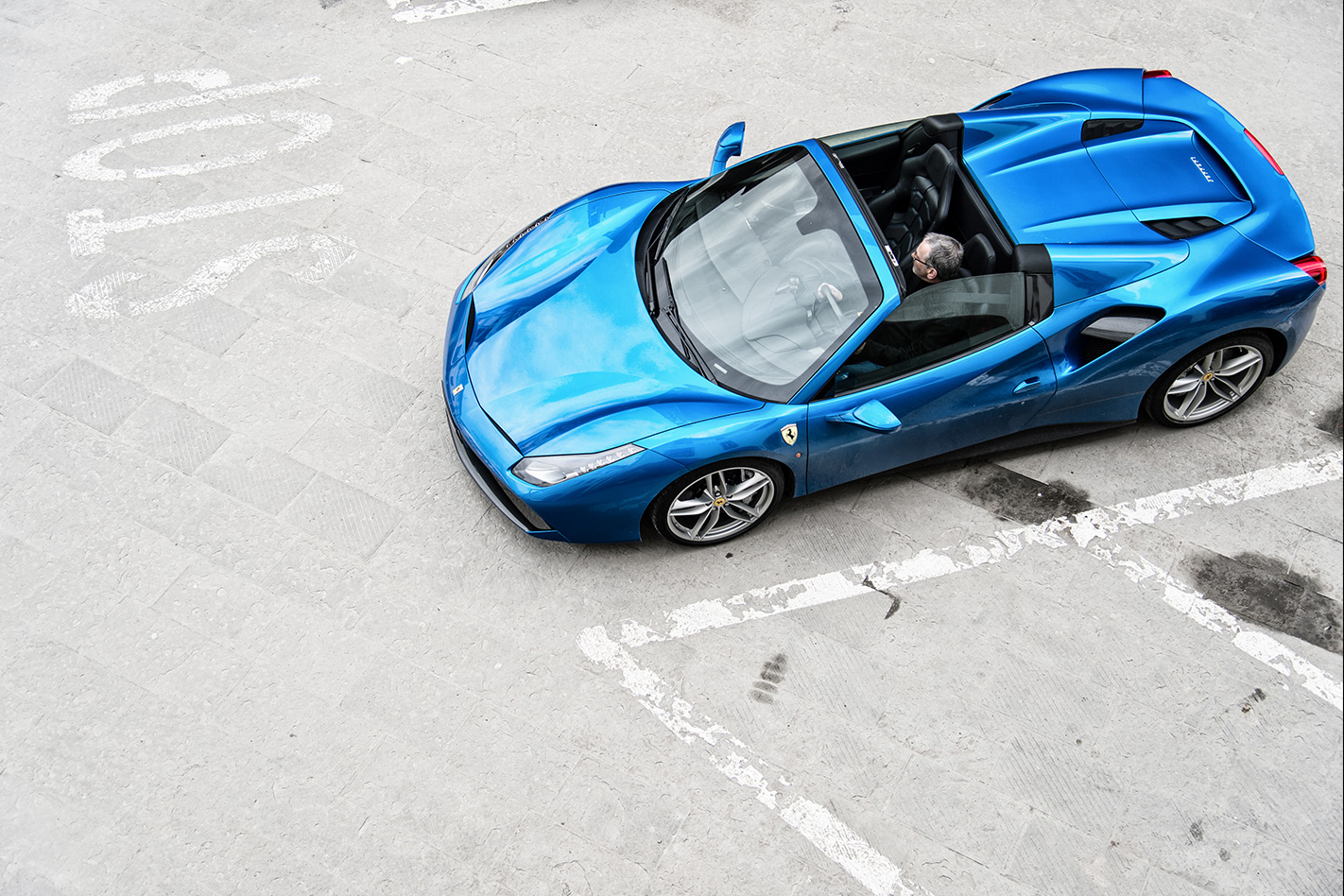
The Mille Miglia ran over the Futa going north, the opposite direction of racing on the Circuito del Mugello. Clemente Biondetti, memorialised here in bronze bas-relief, won the great road race four times – in 1938, then three times in a row from 1947 to 1949. His final two victories were in early Ferraris with small V12 engines in their snouts.
It’s the less storied Mugello race that’s now remembered up here, 903 metres above sea level. Stopping for a coffee at the Passo della Futa restaurant-bar-hotel, we meet Claudio Poletti. He makes the espressos, and notices our interest in the black-and-white photographs, mostly of old race cars, that almost cover the wall.
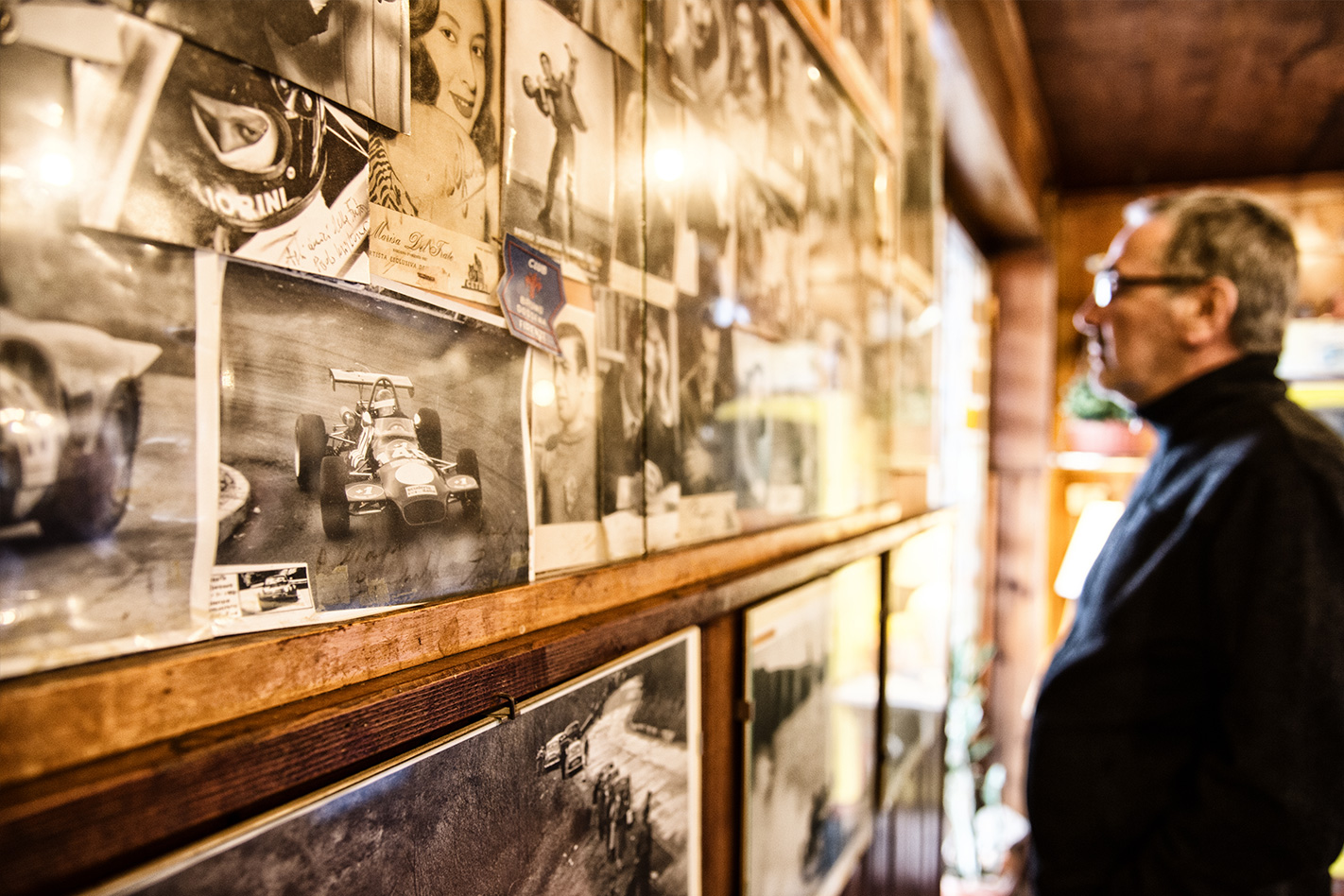
Yes, Vittorio Poletti remembers. Mugello racers stayed here for the race weekend and some would visit beforehand for unofficial testing. Look, that’s my father back then, Claudio says, pointing to a shot of two racing cyclists marooned among the cars on the wall opposite. Sure enough, one of them is a young Vittorio, proud pro rider for the Ignis team in the early 1960s, just before the 1964 renaissance of the Circuito del Mugello road race. The wiry frame and straight back of the 80-year-old version standing behind the bar proves riding the Giro d’Italia has definite health benefits.
Outside, high on the wall by the bar entrance, is a fresh plaque recording the Circuito del Mugello lap record. It was set in 1970 by Giovanni ‘Nanni’ Galli in a Lola. That time of 29min 36sec for 66km equals an incredible average speed of 134km/h. I’m awestruck.
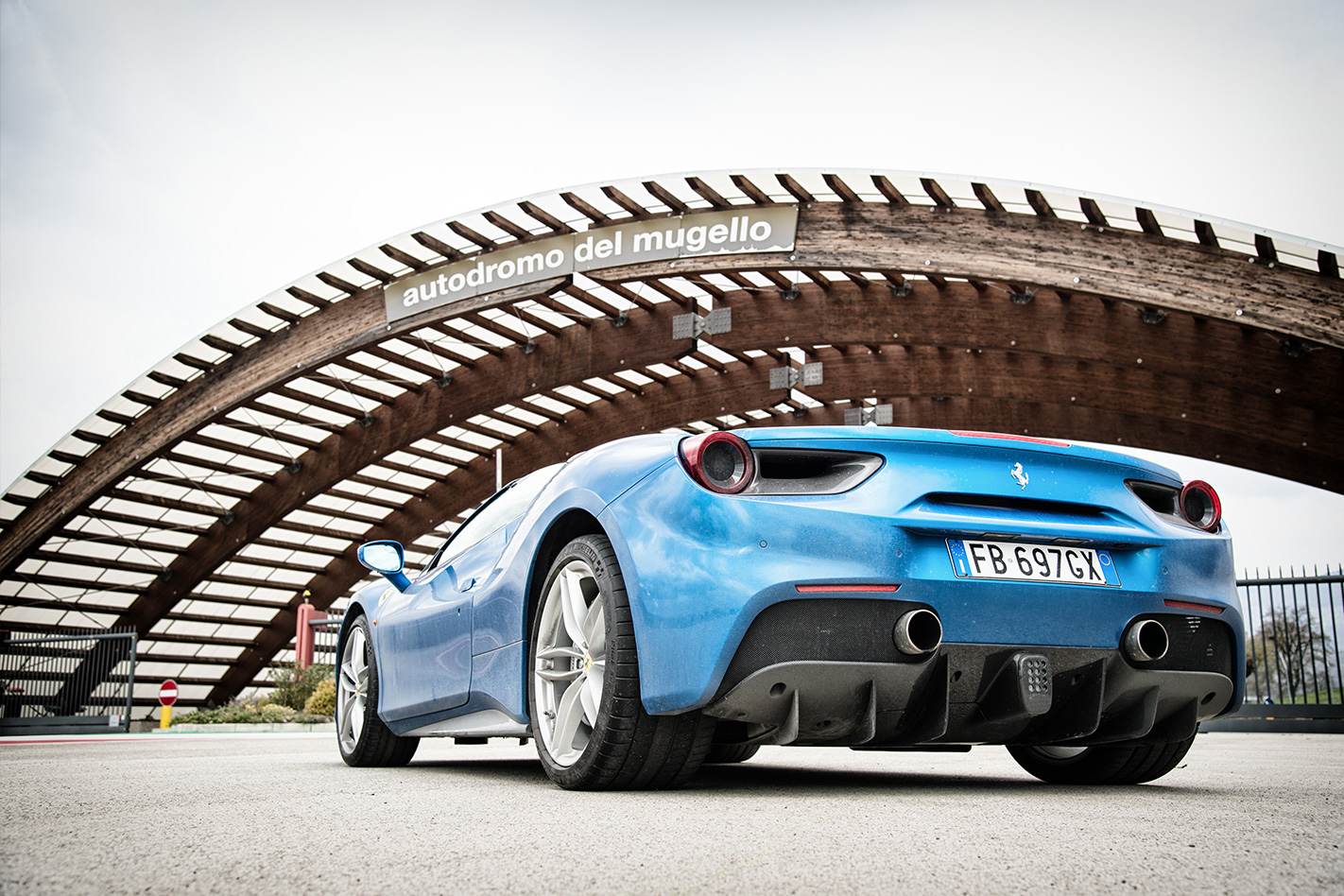
But heading for Scarperia, the nearby town that’s closest to the modern Autodromo del Mugello and where the road begins the climb towards the Giogo Pass, there’s a statue on the left. It’s not a brilliant example of the sculptor’s art, this figure of Emilio Materassi. He was a local driver who won the Circuito del Mugello road race three times in the 1920s, twice defeating a certain young man from Modena. He’s the kind of driver Enzo Ferrari yearned to be, and wasn’t.
Materassi died in a terrible accident during the 1928 Italian Grand Prix. His Talbot, the same low-slung car he’d driven to victory at Mugello that year, left the straight at Monza at high speed and flew into the crowd, killing more than 20 spectators. Today Materassi’s name is unknown, except to Italian motor racing history buffs and passing tourists who stop to look at his likeness. Ferrari, on the other hand, lived long and created a brand known the world over.
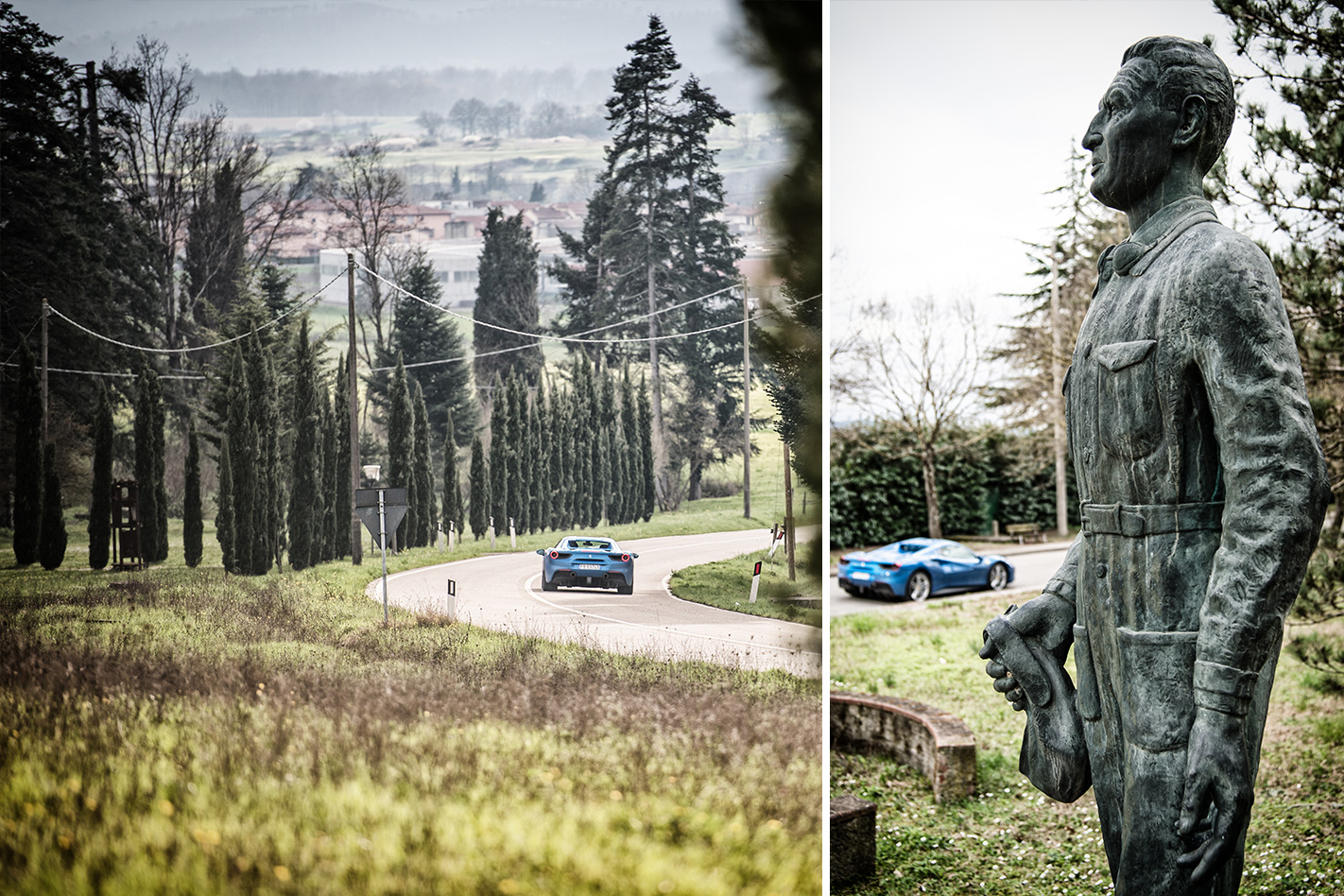
There’s light and time for another lap of the Circuito del Mugello…
FALCON AND Commodore are going or gone but one thing remains and it’s healthier than ever: an Aussie appetite for attainable, big, rear-drive, V8 transportation.
Exhibit A: 6208 Ford Mustangs sold in Australia in the 2016 calendar year. Meanwhile, undoubtedly driven by unfulfilled dreams and last chances, SS Commodores and HSVs continue to get snapped up with abandon, with the Walkinshaw group (HSV) expected to post a record financial result for this year, and opportunistic dealers across the country jacking up prices of special edition Commodore models on showroom floors.
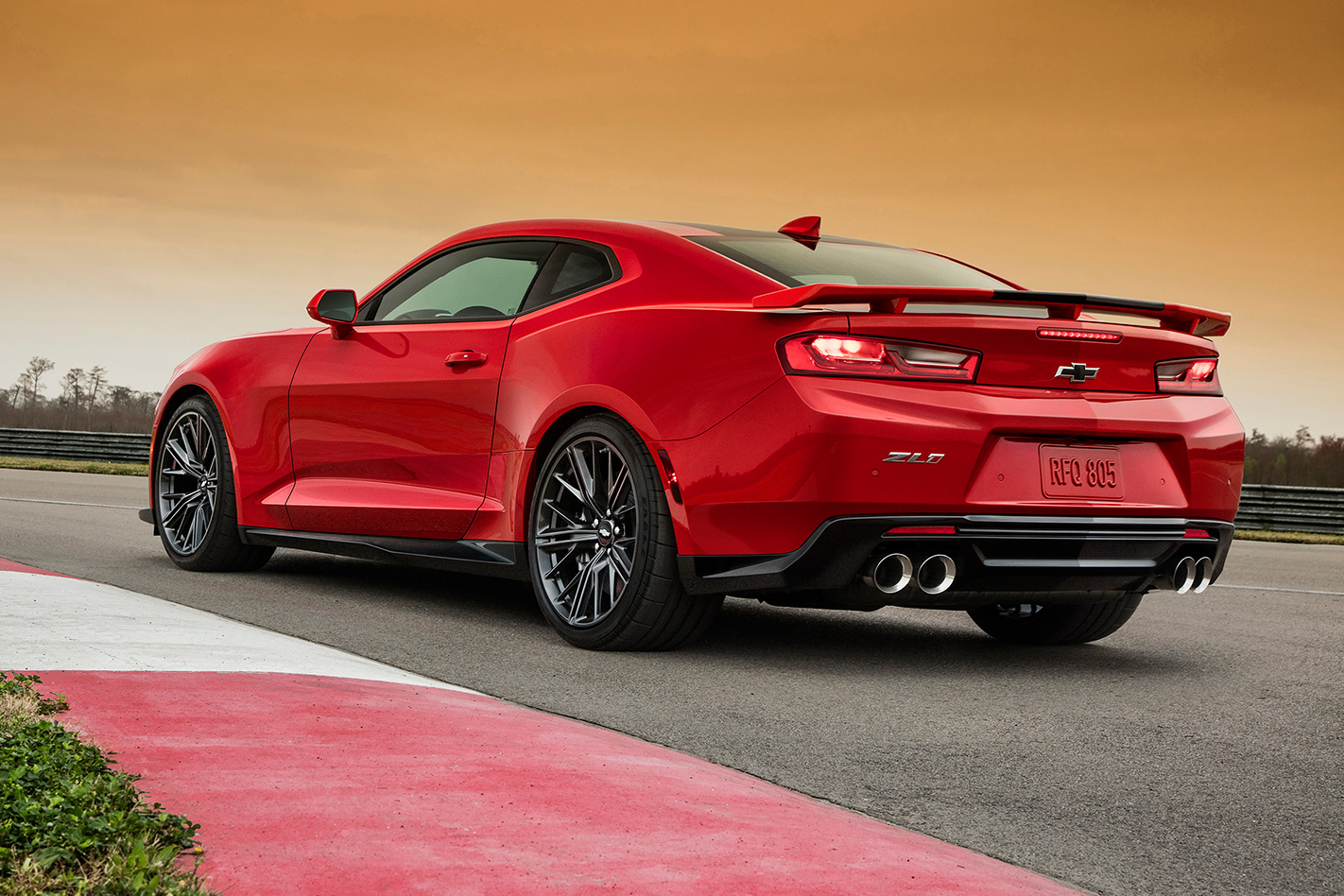
They’re betting there’s an appetite for this car so strong that it will cop the cost associated with building a car, and then the double-handling of having to build its interior a second time. It’s a gamble, but not an unwise one. And it seems it all ties into a future we didn’t imagine for ourselves not too long ago: American muscle filling a Falcodore-sized hole in our hearts.
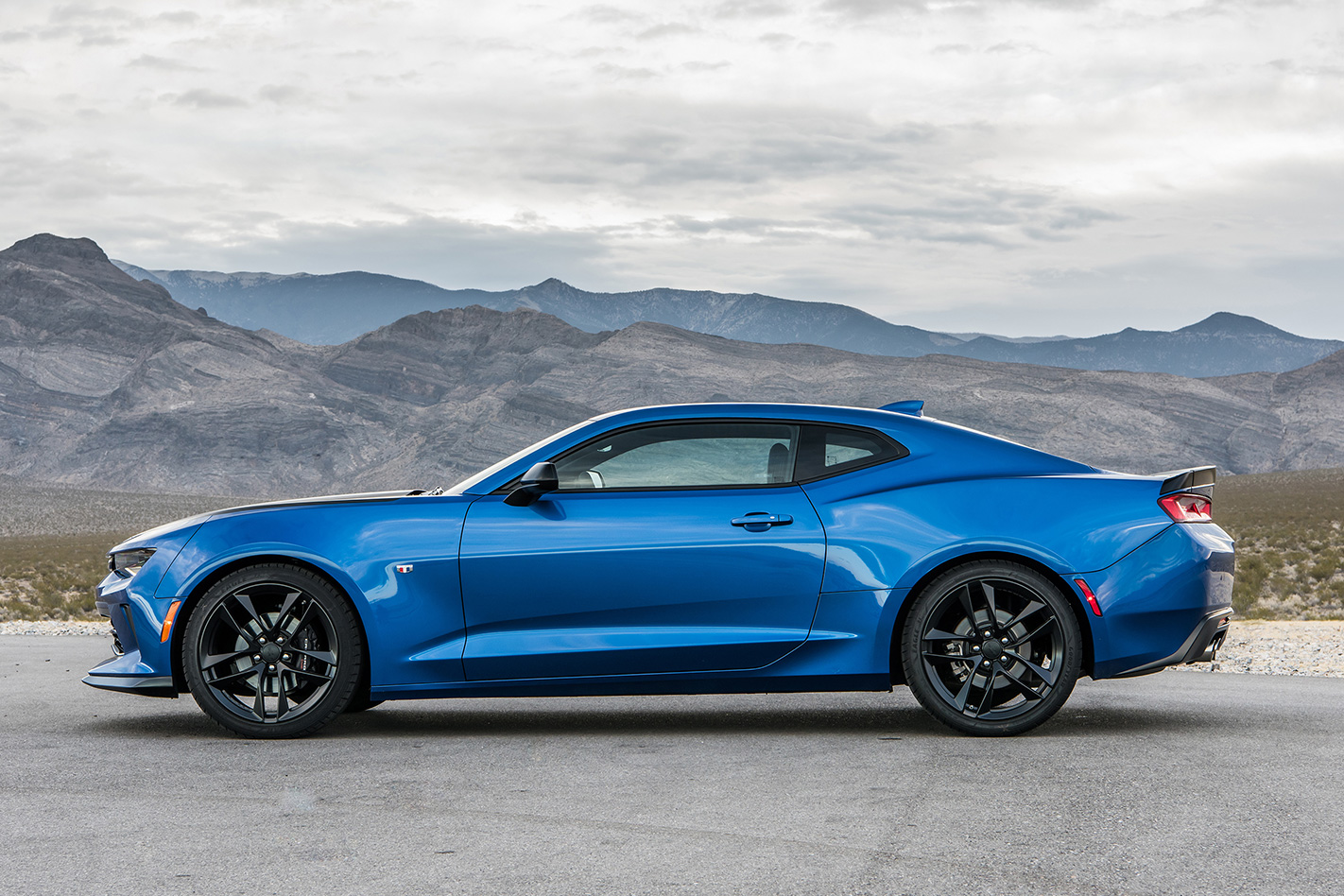
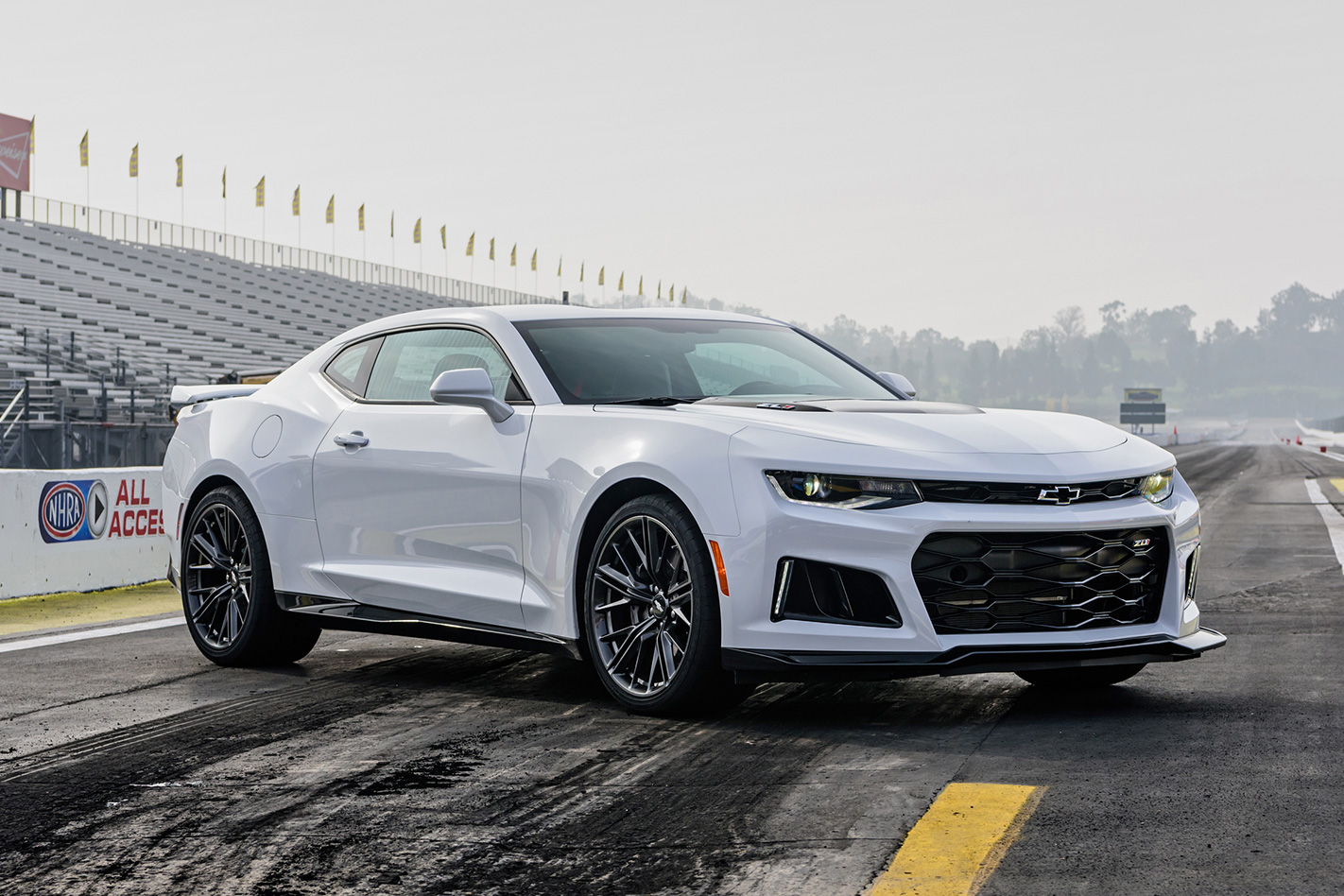
Just as American culture has infiltrated our TVs, radios, movie theatres and waist-lines, it was always Uncle Sam selling us V8 Falcons and Commodores. And it seems we’re turning back to him to keep us satisfied.
“It should perform well.” This sentence, penned in MOTOR’s August 1989 issue, turned out to be the understatement of the century.
This was first published in MOTOR’s November 2008 issue.
The R32 Nissan Skyline GT-R is one of the most legendary race and roadcars worldwide – and, in Oz, is as formidable as Phase III Falcon, an A9X Torana or Brocky’s 1984 Bathurst-winning VK Group A Commodore.
Forget, for a moment, what it did on the track, for although the R32 GT-R decimated its opposition in competition, it was – is – a remarkable roadcar. And while HSV’s W427 is grabbing headlines with 0-100km/h times in the 4-sec region, we clocked the GT-R at 4.80sec to 100 with a 13.10 quarter – in 1990!
The Porsche 911 Carrera took 6.23 seconds to do the same. The R32 GT-R is a monster and was the quickest GT-R until the recent R35 was unleashed, so much so that our sister mag Wheels dubbed the Obakemono ‘Godzilla on wheels’. The name’s stuck.
The GT-R was not simply an overnight sensation, but part of Nissan’s global ‘901’ plan to become the world’s number One car maker by the mid-90s. In the GT-R, Nissan planned to strip the Ford Sierra Cosworth of it’s world touring car dominance (which included the longest winning streak in Australian touring car history) and establish the Japanese brand as a technological tour de force.
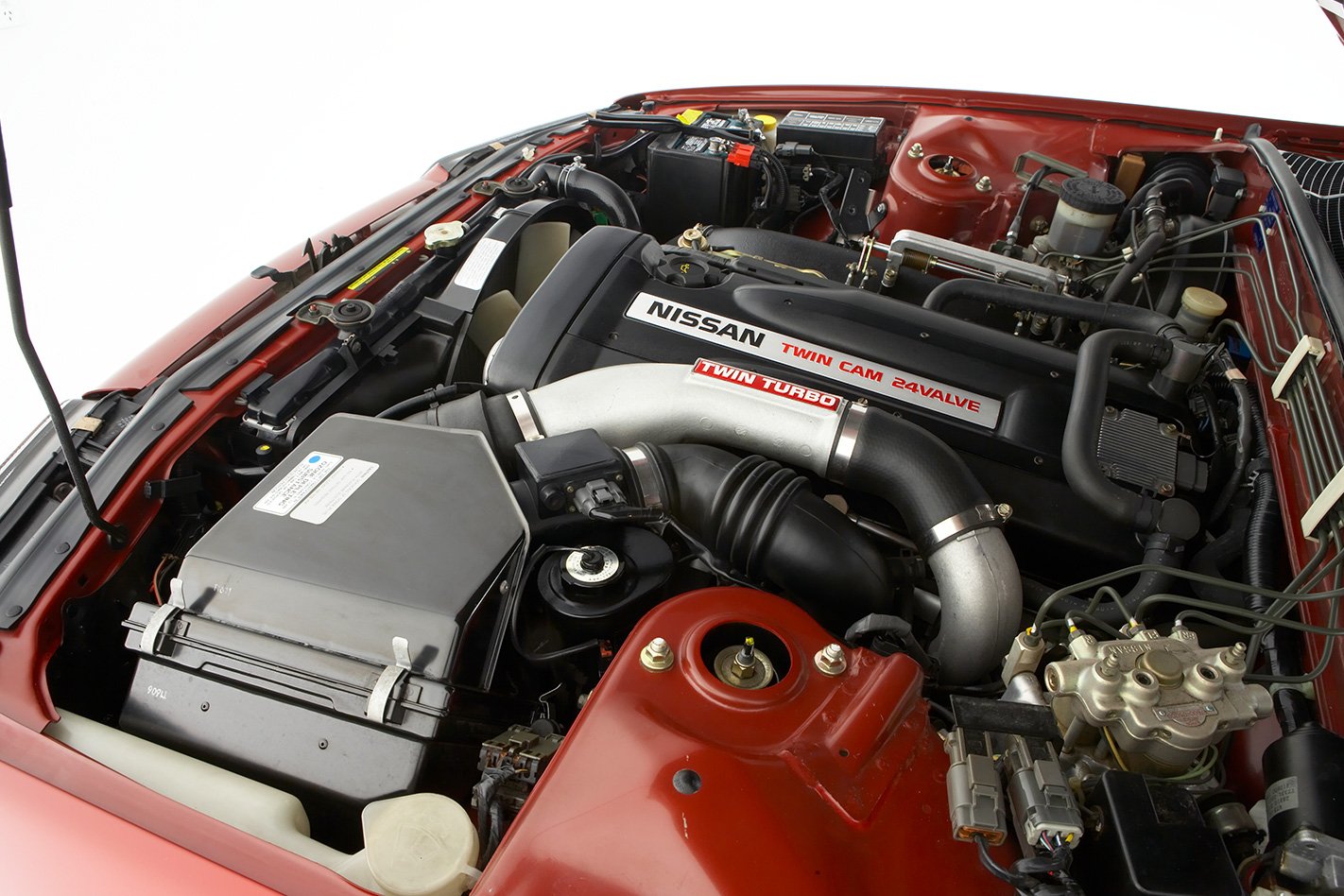
The RB26 DETT straight-six – meaning 2568ccs with twin ceramic turbos – delivered around 209kW (depending what you read and believe) and, while related to the HR31 Skyline’s (and Holden VL Commodore’s) RB30, it featured a twin-cam head and could rev to near 8000rpm (redline was 7500rpm).
It’s 0.8bar of boost saw a driveable, well-mannered car below 4,000rpm, at which point the acceleration was simply phenomenal, not dropping off at any point before the engine’s cut-out. And in a good example, you’ll still experience clinical power delivery that doesn’t dazzle but simply comes into effect almost without any fuss: it simply becomes fast.
Dubbed ATTESA ET-S (Advanced Total Traction Engineering System for All Terrains and Electronic Torque Split), the all-wheel drive system is made up of a computer controlled multiplate clutch encased in oil with a hydraulic clutch assembly.
The torque division is triggered by speed sensors and an accelerometer, which applies pressure to the clutch to vary torque split. There’s even a gauge on the dash informing you where the drive is going, although your hands will obscure the gauge while it’s actually working as you negotiate corners…
Uniquely, the GT-R’s electronics also sense lateral movement, with drive to front wheels reduced as lateral acceleration increased, giving rear-drive handling characteristics. Nissan explained that the R32 was intentionally developed as a rear-wheel drive platform first and foremost, with the front wheels joining the party merely to assist keeping Godzilla heading forwards.
Indeed, the owner of our subject here claims: “You can hang the tail out, then when you want to straighten it out, you just nail it.” It simply flatters the driver.
The roadcar’s HICAS four-wheel steer system was the third-generation of Nissan’s original Super HICAS system. Similar the Honda Prelude and Mazda MX-6’s systems (but hydraulic rather than mechanical), it initially turns the rear wheels in the opposite direction of the fronts, before reverting to turning all four wheels in unison.
This gives the R32 slow-speed responsiveness and feel, while still improving high-speed cornering.
On the track, the GT-R saw 429kW from an Aussie-built RB26 DETT, mated to a locally-made six-speed Holinger. Numerous magazine tests proved the GT-R outshone its rivals, especially Holden’s VN Group A, in all areas, but was light years ahead in its handling and cornering ability.
Nissan Australia’s then marketing head, Allan Handberg, wasn’t disappointed, straight out boasting that Bathurst 1991 was the GT-Rs. And he was right. In 27 appearances, the GT-R won 16 times, winning 9 from 11 in 91.
The next year – its swansong – Mark Skaife won four of nine rounds to secure the championship, before the GT-R almost lost Bathurst to Dick Johnson and John Bowe’s Ford Sierra, after Richards slid the car – almost fittingly, in its final event – onto the wall out side of Forest’s Elbow.
But it was the reception of the crowd that sparked Richo’s non-nonsense response, as beer cans and jeering greeted the Skyline steerers: “You’re a pack of arseholes.” Game over.
By that fateful race, Handenberg was responsible for convincing Nissan to import a batch of GT-Rs – two batches of 50 GT-Rs, built between April and August 91 – making Australia the only market to receive the car outside its native Japan. Priced at a cool $110,000, they weren’t cheap. Only 63 had been sold as the GT-R bowed out of local competition.
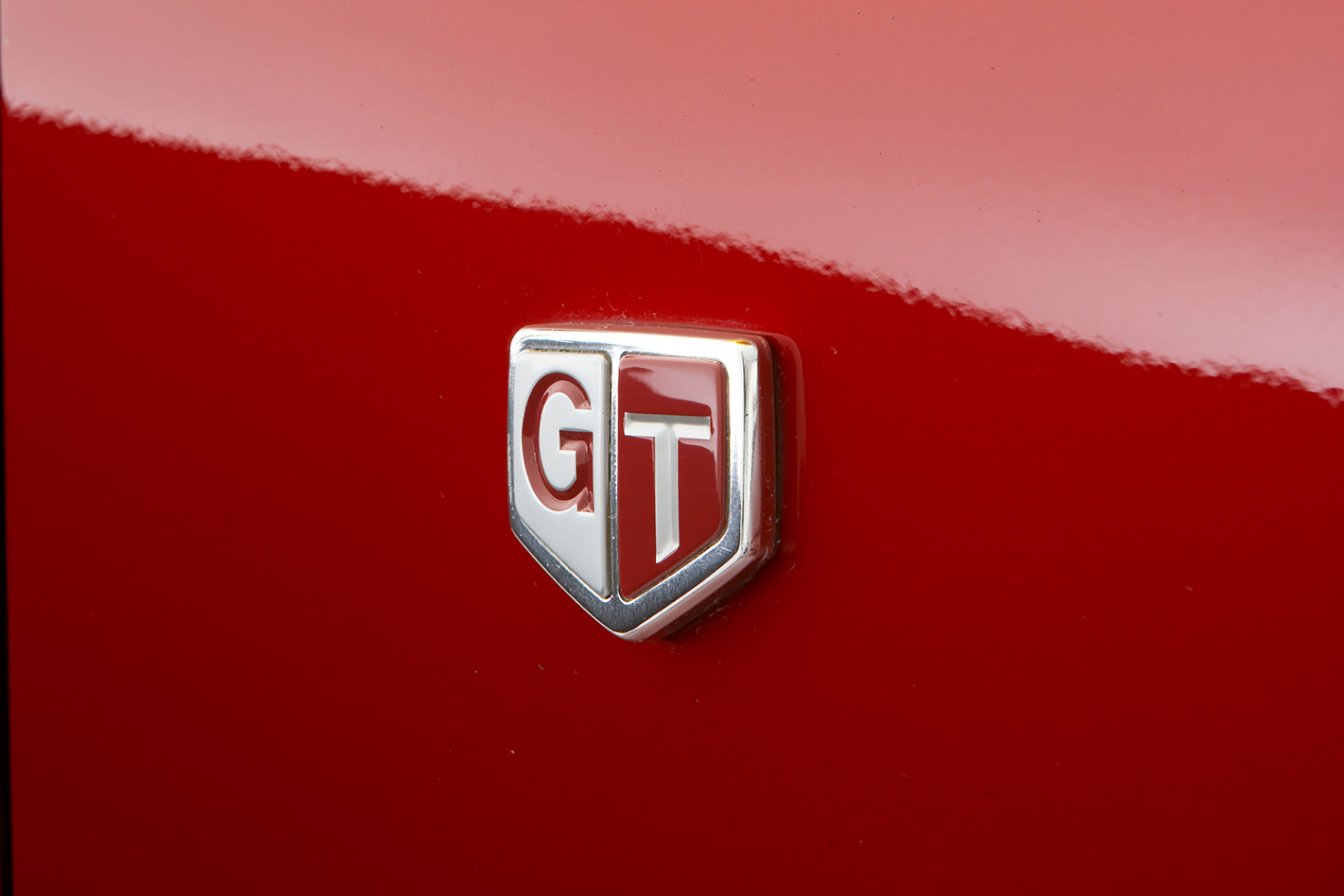
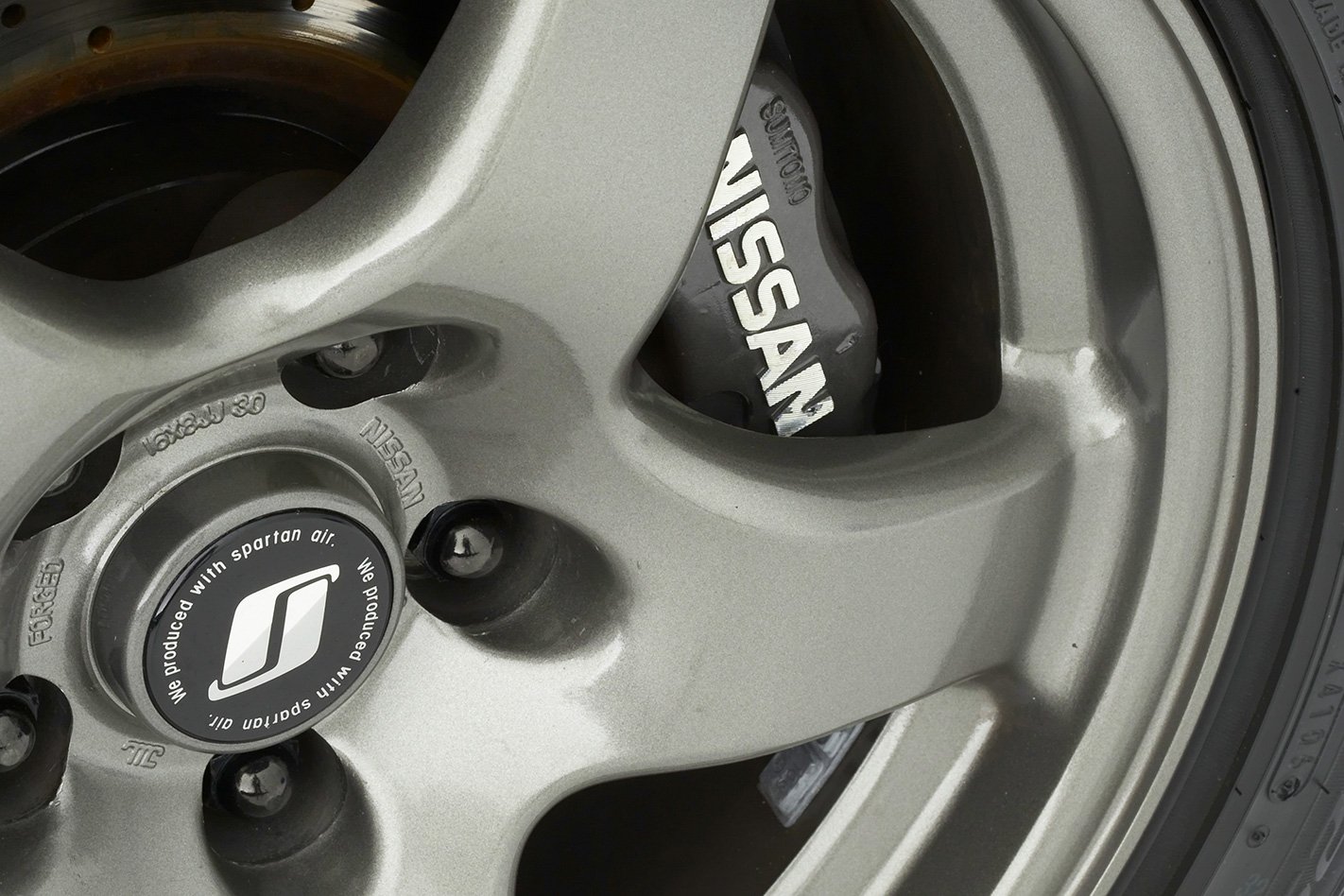
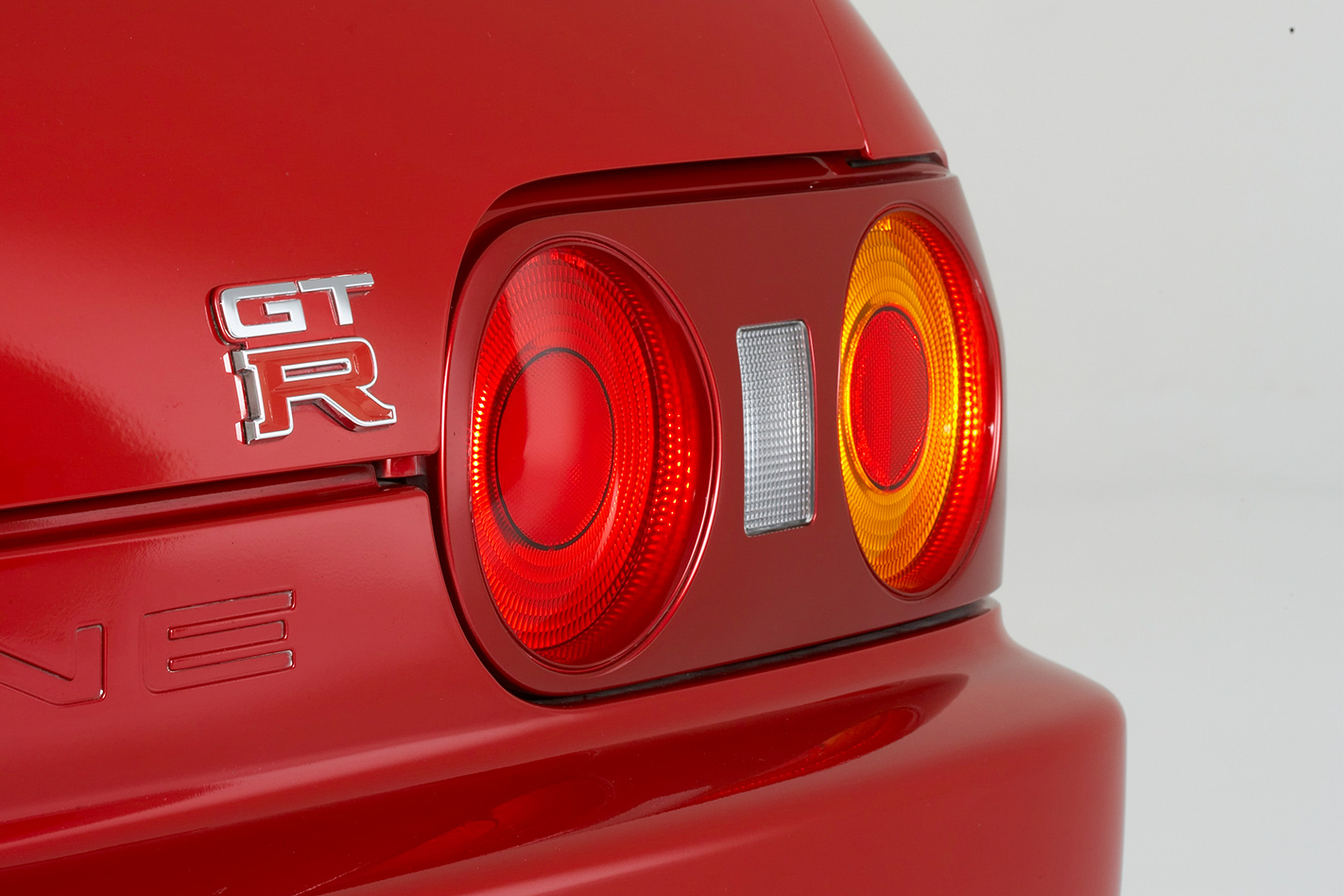
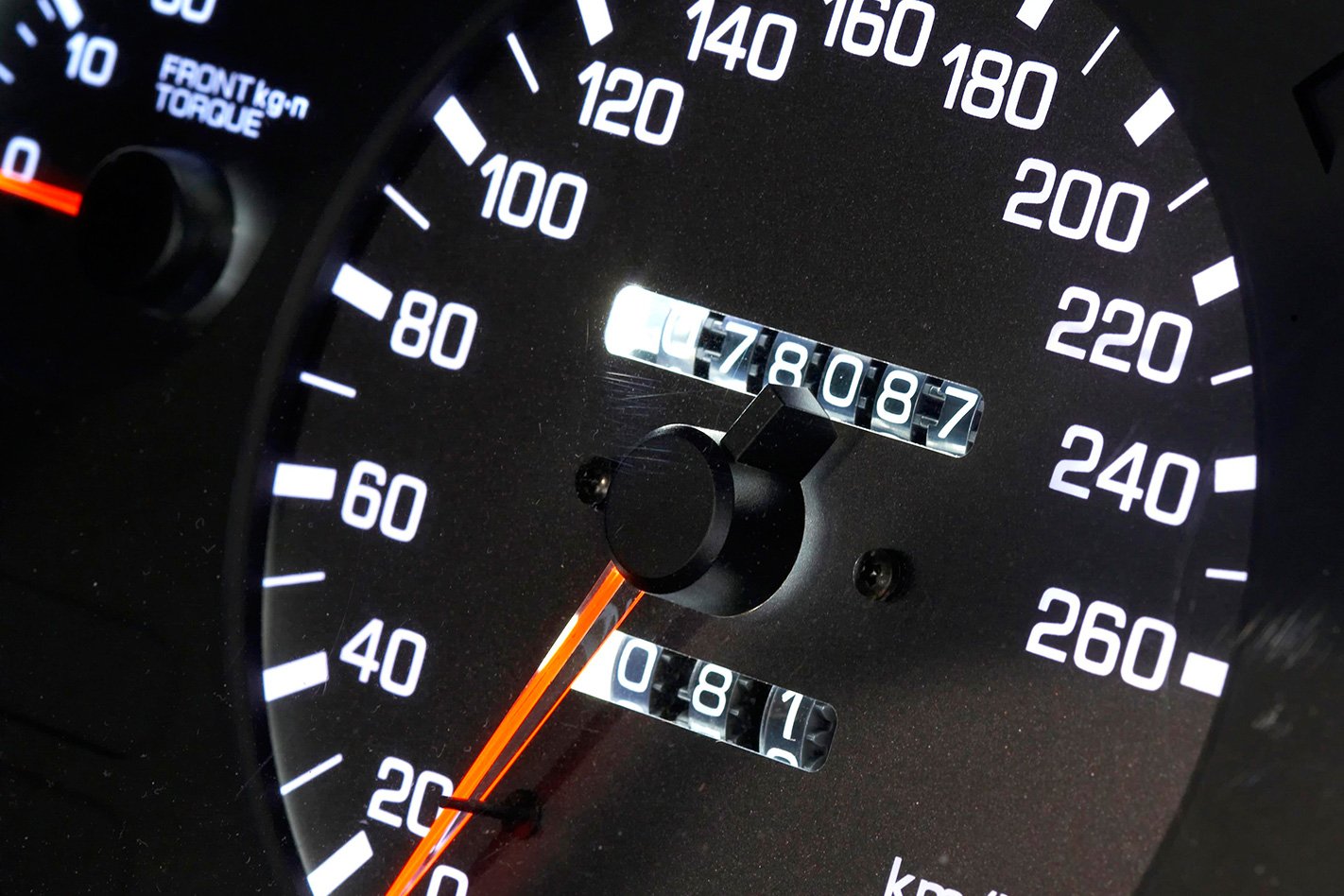
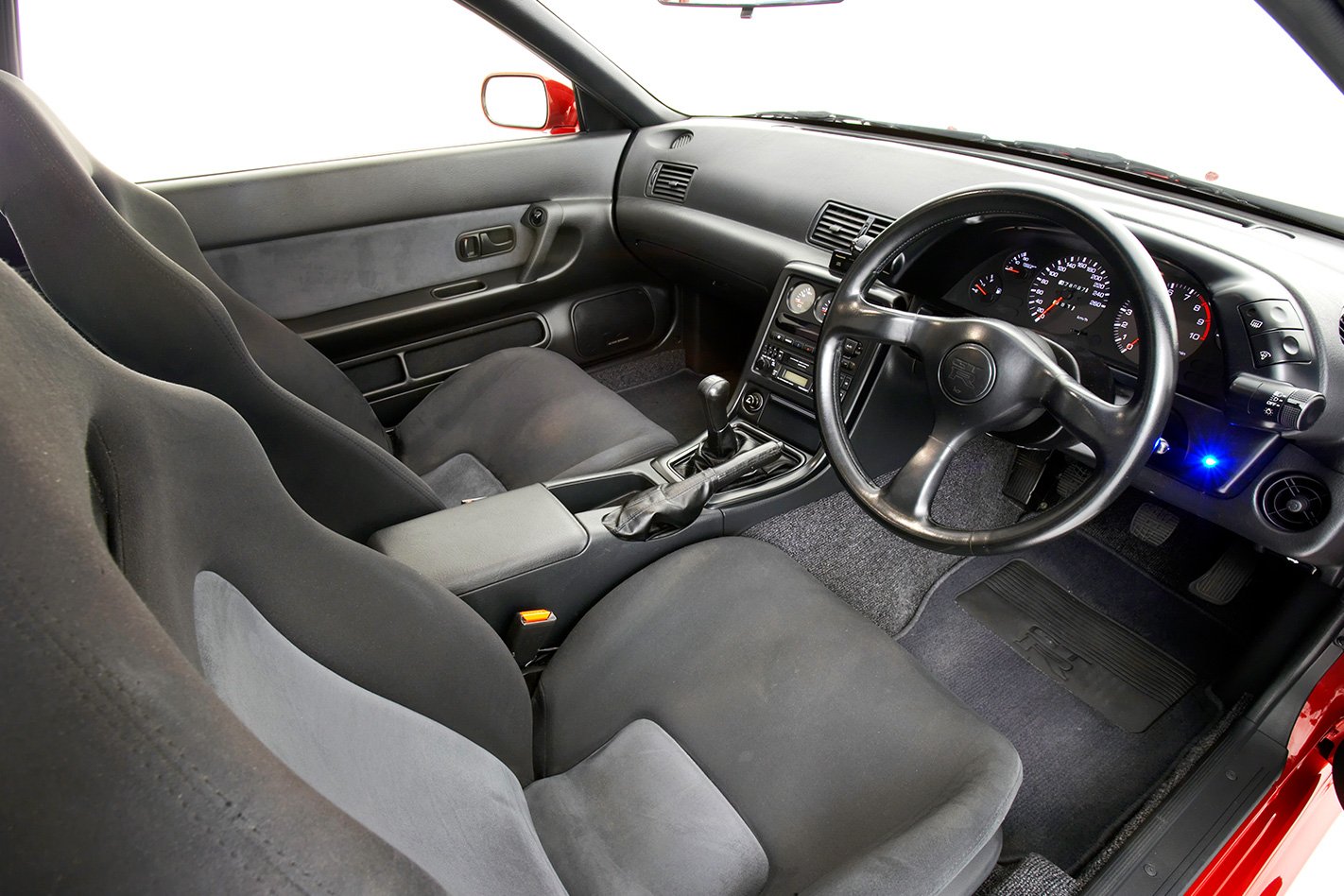
The locally delivered versions saw more than 200 changes, so spotting an original isn’t impossible. Alterations included the high-mount stoplight, 260km/h speedometer (JDM versions had 180km/h versions) and of course different engine decals, while a Nissan badge instead of the Skyline S was fitted to the R32’s aluminium bonnet and boot lid. The audio system, windscreen and jack were also unique to our hottest 100.
But these are the cars to own today. The flood of grey imports into Oz has made a Japanese domestic market GT-R a brilliant buy in 2008, with Godzilla’s on the lot for as low as $15k. Let’s face it, unless you’re a serious investor and are going to park your GT-R in the hopes of a future cash haul, why wouldn’t you buy the same stonking machine from the same factory as a grey import?
Make sure that it’s a genuine GT-R: R32 coupes were also sold in Japan as the 2.0-litre GTS-T, so it’s a matter of changing the sheetmetal for the GT-R look. And RB26s aren’t expensive to drop in a lower-spec Skyline…
The flood of grey imports has also hampered the collectibility of the Aus-delivered versions, which are a genuine bargain at around $30-40k (remember that Walkinshaw for $80k?). This also means GT-Rs are more likely to gain value as the thrashed grey-import dungers are written off, worn out and left for dead, leaving a pristine few to remain. Grab one while you can.
The Good 1. Supreme performance: The R32 is a supremely fast car even two decades on, yet is drivable and comfortable 2. Mystique: An original, unmolested R32 is a rare horse, and its all-conquering ability means it is both revered and feared. 3. Affordability: despite its age, if the GT-R was to line up at Bang For Your Buck in 2008, it’d easily have been the quickest car in the field…
The Bad 1. Grey imports: The hat-backwards power at all costs brigade has massacred the brilliant work of Nissan’s engineers, as the R32 is a bang for your buck legend. Winding up boost, ECU changes – the lot – will transform the car from silky smooth to rough as guts 2. Infamous/polarising opinions: There are people who will sneer at your GT-R as weapon of evil; but then again, this may be actually be a positive for some owners… 3. Age: While a modern legend, the GT-R is nigh on 20 years old. And while they’re reliable, components that have simply aged may be difficult and costly to replace, while some interior plastics reveal the car’s late-80s origins.
What’s it going to cost? Here’s the dilemma: if you’re after an Australian-delivered GT-R, you’ll pay a lot more. We found a Metallic Black local GT-R with 114,000kms on it for a cool $55k. Saying that, in the $40k region we found a heap of modified grey imports with massive power, while at the other end of the scale found a 140km grey import for a mere $11,500. How much is the collectibility and nostalgia worth?
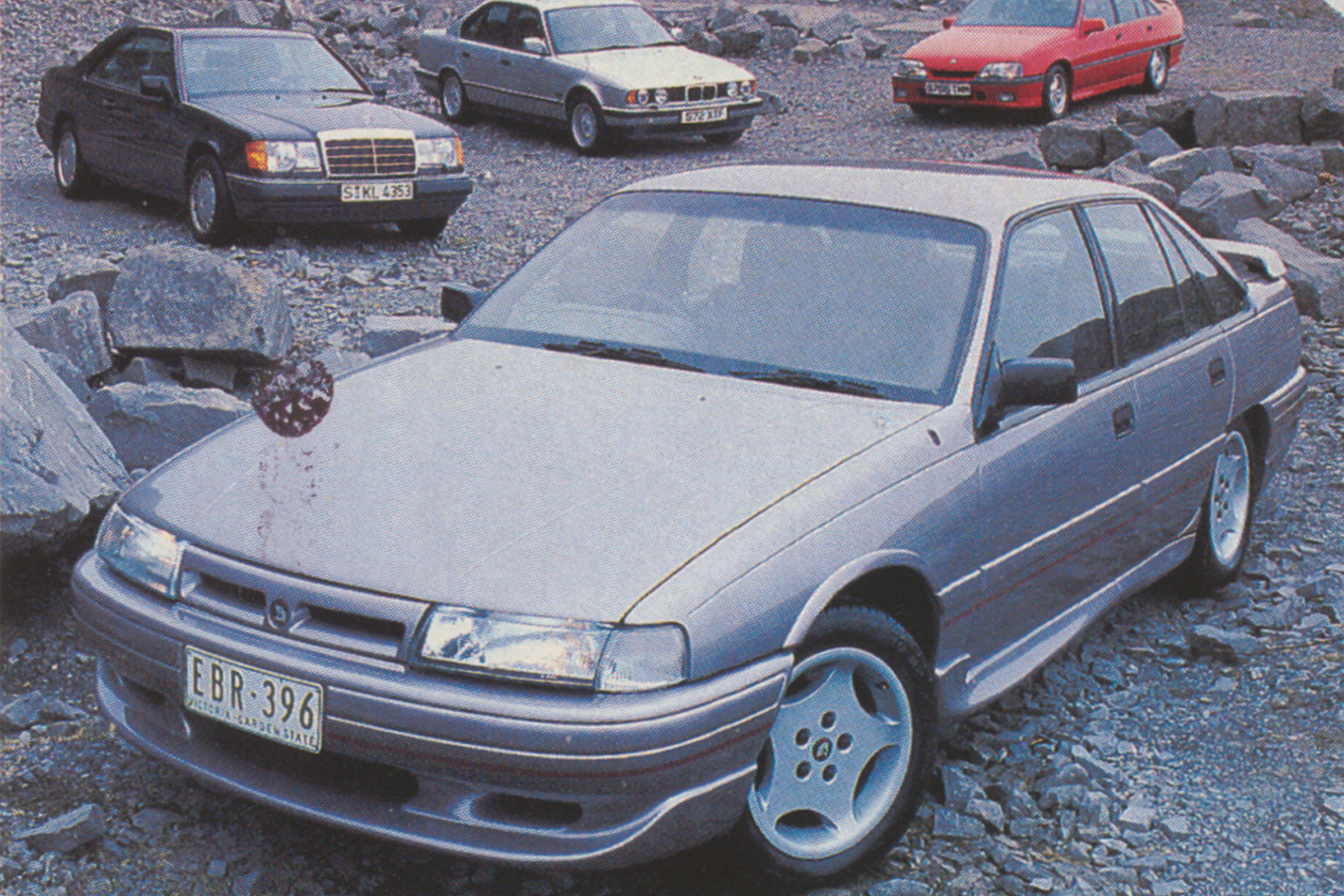
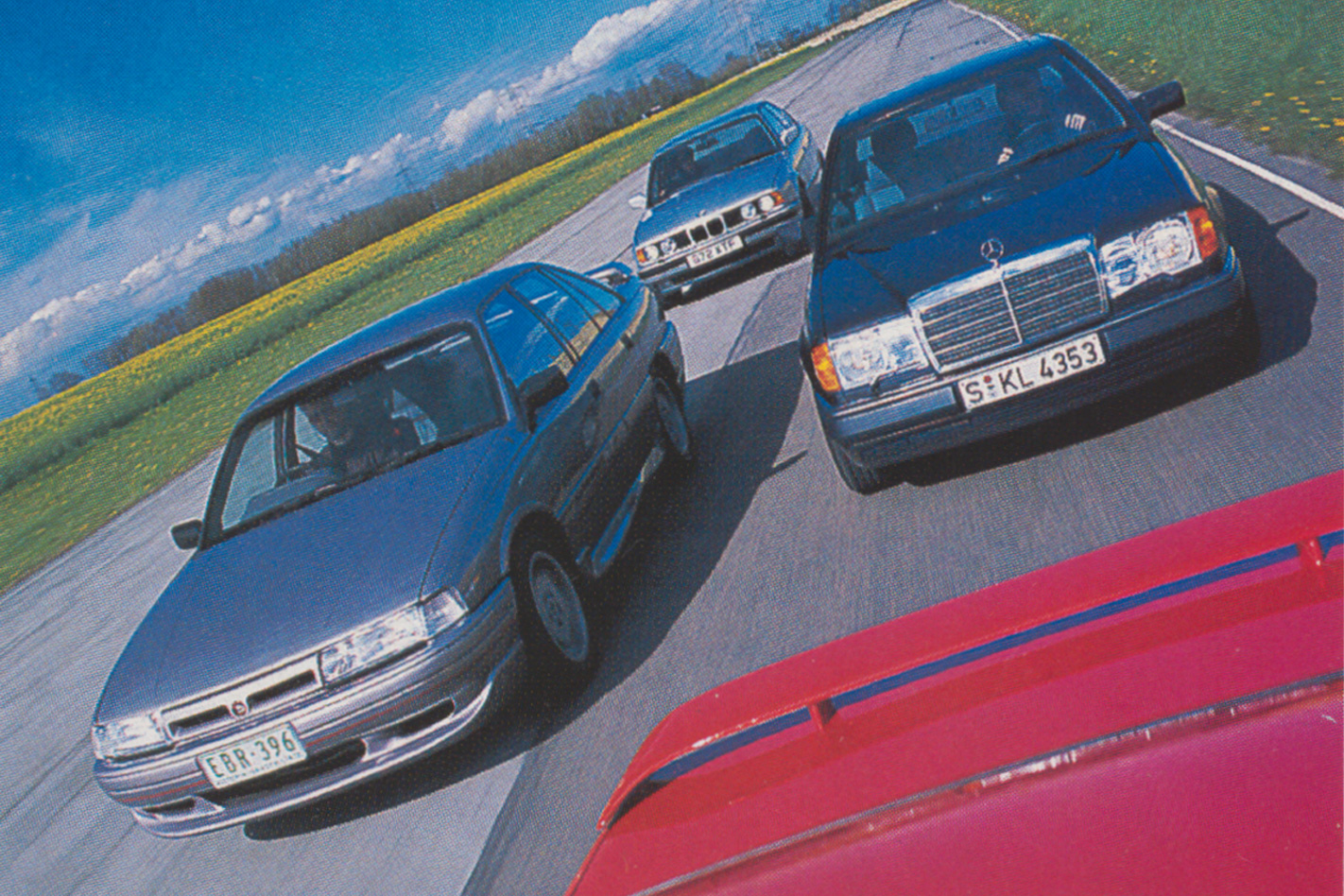
HOLDEN SV5000 v BMW 535i v Mercedes-Benz 300CE-24 v Vauxhall Carlton GSi 3000
“BLOODY HELL, this Holden‘s a big bitch of a car, ” or so I find myself thinking just before the Welsh road drops down out of the mist and we lunge forward together.
The frustration of limping through dense cloud ends and my right foot snaps hard against the accelerator. The transmission kicks down to third, then second with a jolt. The tacho needle instantly surges closer to the red, rear tyres snap sideways fleetingly on the wet road. Just a touch of opposite lock and the reins are tight again.
Since this is the only HSV Commodore in the Northern Hemisphere it’s wise to be prudent. But I can’t resist punting the Holden hard now the road is near dry. I pull the gear selector back to D, locking out overdrive and set about conquering this winding blacktop.
The Holden thunders. Easy now, boy, don’t get too carried away. Get the steering lock on early, yes even in fast corners.
You know there’s initial understeer that heightens quickly if you’re slow to dial the lock on. The Benz, Vauxhall and BMW maintain station, their chassis coping better with bumps that bounce the Holden around, their brakes firmer and more forgiving. You’ll never know how big a Holden Commodore really is until you punt one hard on the minor roads of Wales.
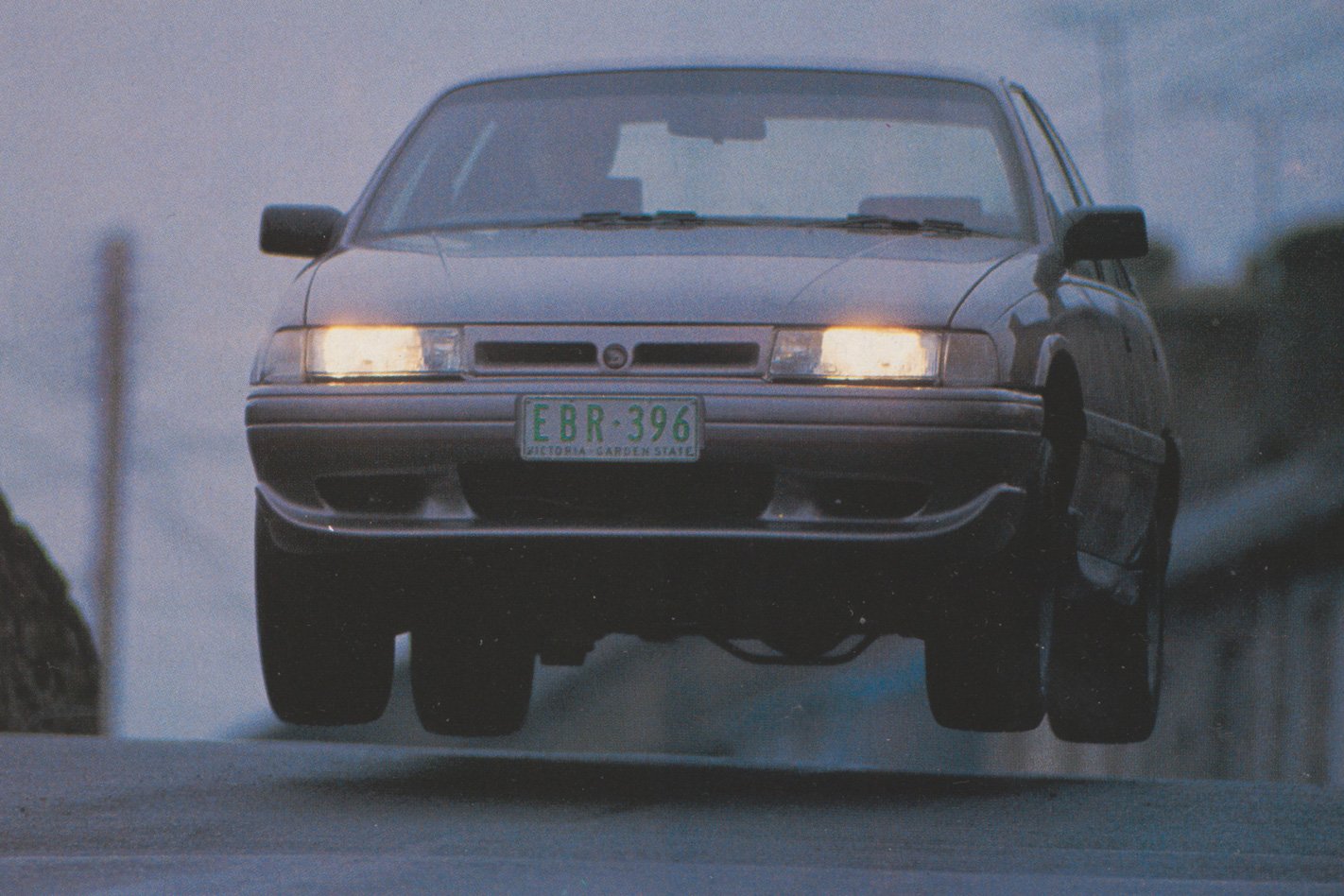
Dividing the town is a stream, the two halves connected by a humped-back bridge. It looks innocent enough so I miss seeing the warning signs. It’s too late, the Holden is launched up the curve. The houses on the other side of the bridge disappear, the windscreen is filled only by cloud.
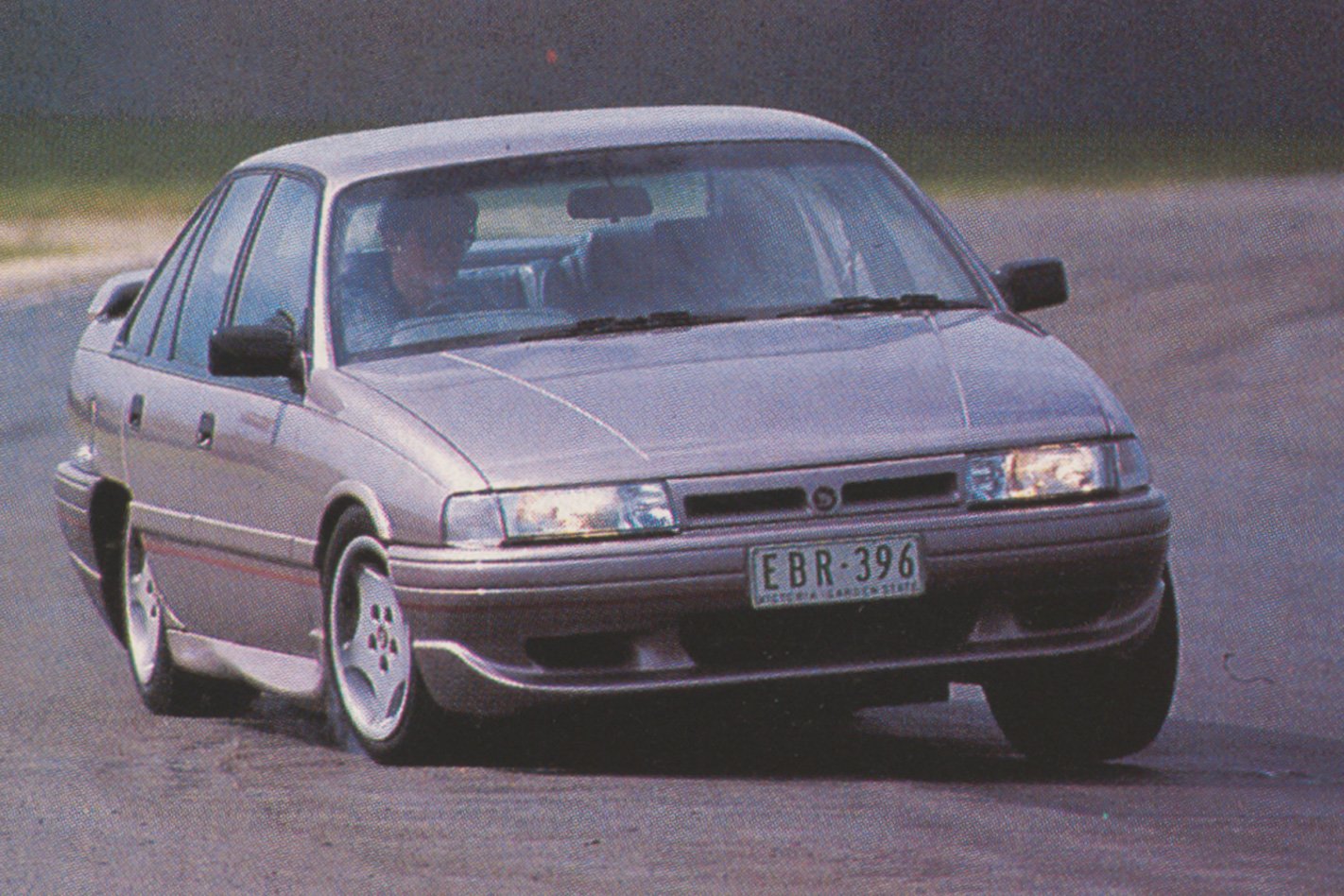
It’s like being hurled out of a cannon. The steering goes light – that must be the front wheels airborne – the rears follow. We’re off the ground for a couple of seconds, literally flying, before the nose dips and the car lands four-square. No worries. So we do it again for the camera, EBR-396 soaring gracefully through the air. The rugged Holden has no objections. We don’t dare try in the Europeans.
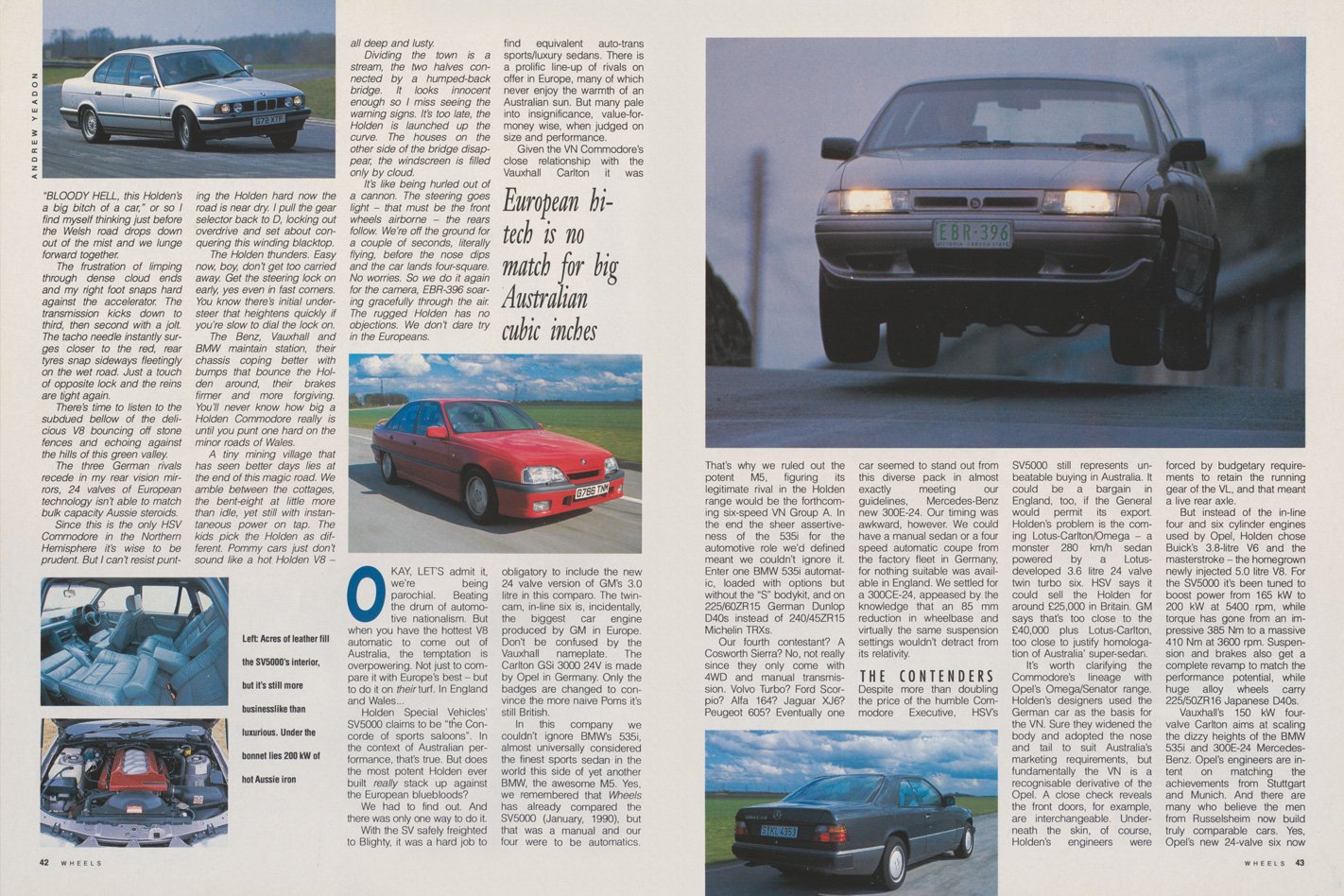
Holden Special Vehicles’ SV5000 claims to be “the Concorde of sports saloons “. In the context of Australian performance, that’s true. But does the most potent Holden ever built really stack up against the European bluebloods? We had to find out. And there was only one way to do it.
With the SV safely freighted to Blighty, it was a hard job to find equivalent auto-trans sports/luxury- sedans. There is a prolific line-up of rivals on offer in Europe, many of which never enjoy the warmth of an Australian sun. But many pale into insignificance, value-for-money wise, when judged on size and performance.
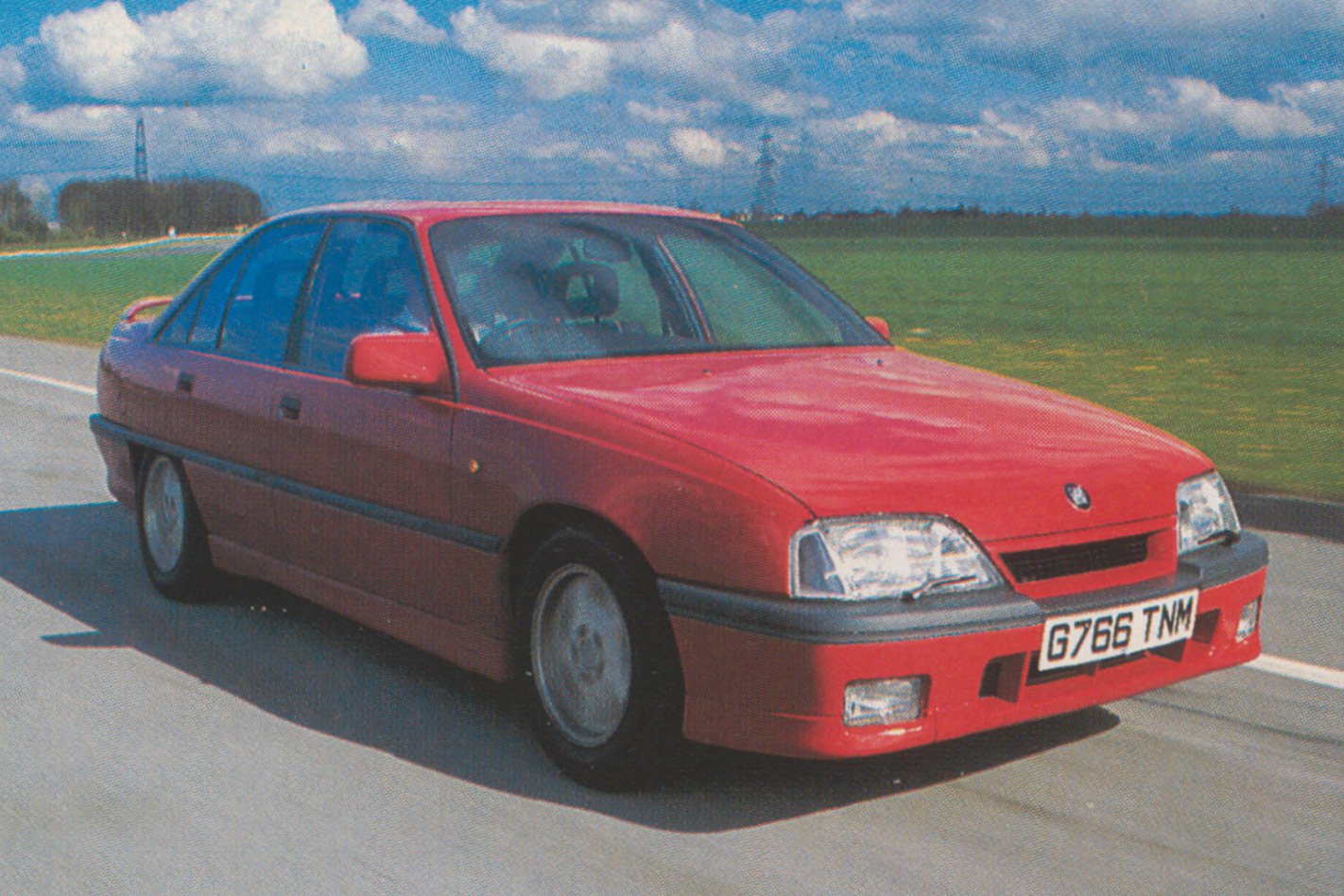
Given the VN Commodore’s close relationship with the Vauxhall Carlton it was obligatory to include the new 24 valve version of GM’s 3.0 litre in this comparo. The twin-cam, in-line six is, incidentally, the biggest car engine produced by GM in Europe.
In this company we couldn’t ignore BMW’s 535i, almost universally considered the finest sports sedan in the world this side of yet another BMW, the awesome M5. Yes, we remembered that Wheels has already compared the SV5000 (January, 1990), but that was a manual and our four were to be automatics.
That’s why we ruled out the potent M5, figuring its legitimate rival in the Holden range would be the forthcoming six-speed VN Group A. In the end the sheer assertiveness of the 535i for the automotive role we’d defined meant we couldn’t ignore it. Enter one BMW 535i automatic, loaded with options but without the “S” bodykit, and on 225/60ZR15 German Dunlop D40s instead of 240/45ZR15 Michelin TRXs.
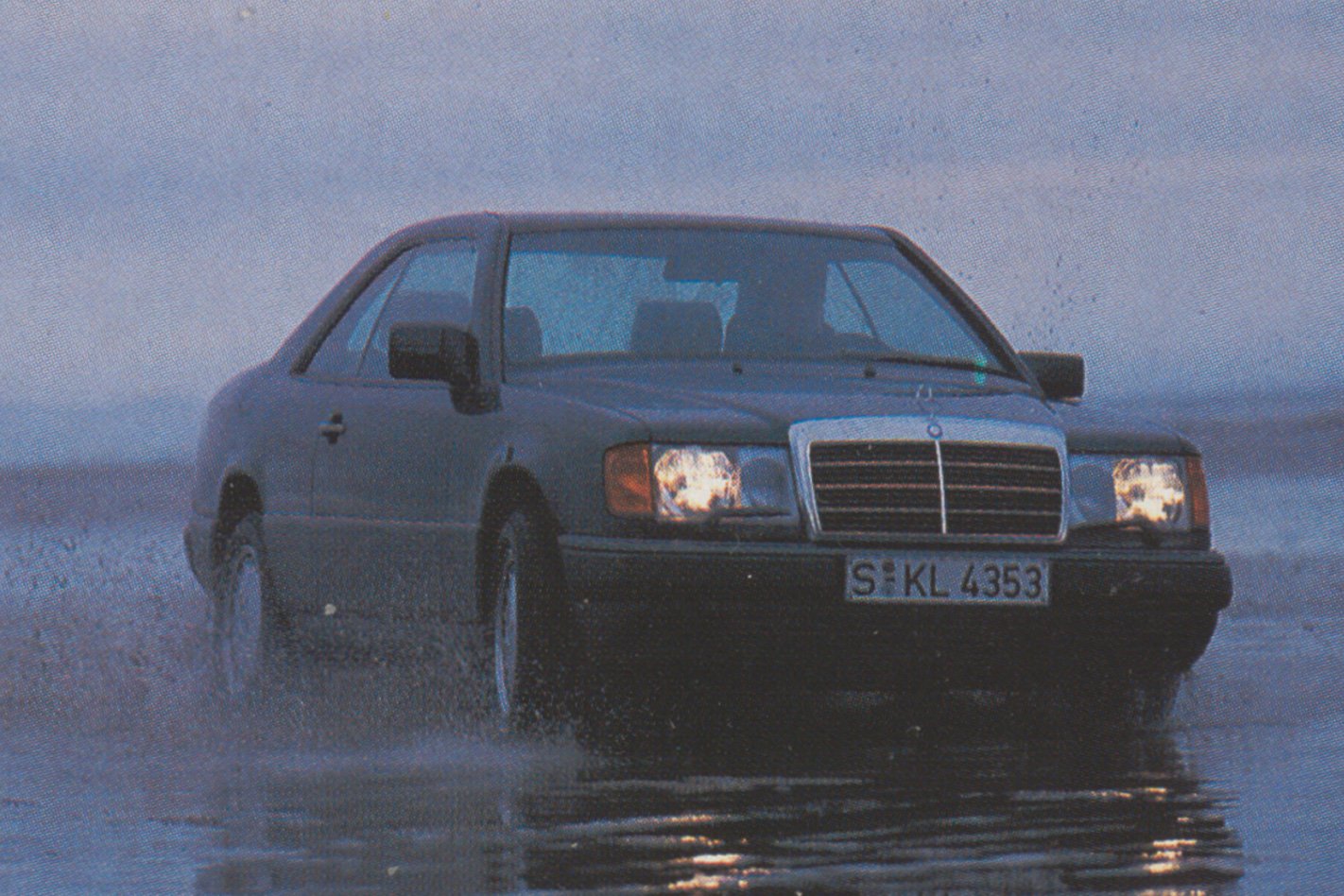
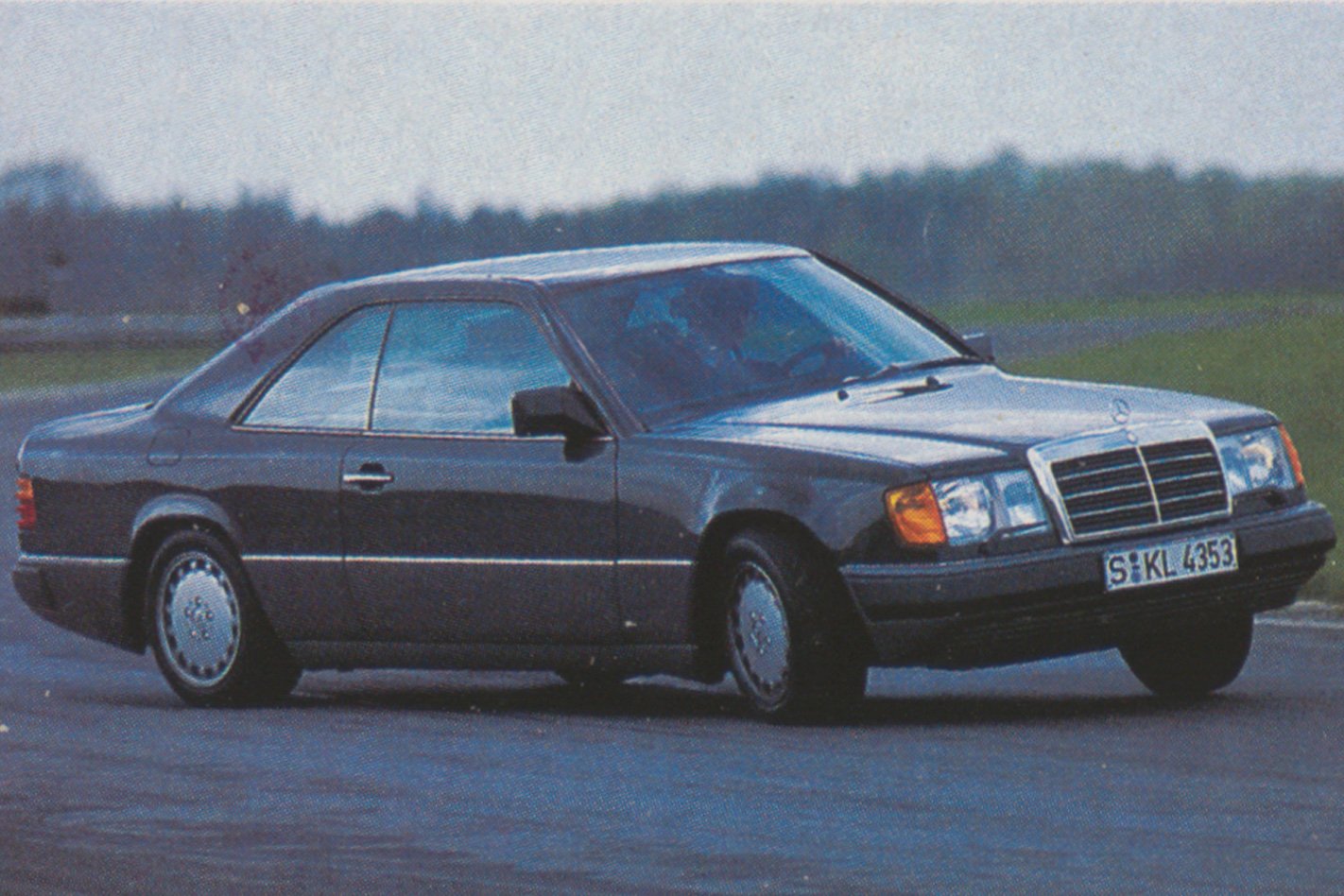
Our fourth contestant? A Cosworth Sierra? No, not really since they only come with 4WD and manual transmission. Volvo Turbo? Ford Scorpio? Alfa 164? Jaguar XJ6? Peugeot 605? Eventually one car seemed to stand out from this diverse pack in almost exactly meeting our guidelines, Mercedes-Benz’s new 300E-24. Our timing was awkward, however. We could have a manual sedan or a four speed automatic coupe from the factory fleet in Germany, for nothing suitable was available in England. We settled for a 300CE-24, appeased by. The knowledge that an 85 mm reduction in wheelbase and virtually the same suspension settings wouldn’t detract from its relativity.
THE CONTENDERS
Despite more than doubling the price of the humble Commodore Executive, HSV’s SV5000 still represents unbeatable buying in Australia. It could be a bargain in England, too, if the General would permit its export.
Holden’s problem is the coming Lotus-Carlton/Omega – a monster 280 km/h sedan powered by a Lotus-developed 3.6 litre 24 valve twin turbo six. HSV says it could sell the Holden for around £25,000 in Britain. GM says that’s too close to the £40,000 plus Lotus-Carlton, too close to justify homologation of Australia’ super-sedan.
It’s worth clarifying the Commodore’s lineage with Opel’s Omega/Senator range. Holden’s designers used the German car as the basis for the VN. Sure they widened the body and adopted the nose and tail to suit Australia’s marketing requirements, but fundamentally the VN is a recognisable derivative of the Opel. A close check reveals the front doors, for example, are interchangeable. Underneath the skin, of course, Holden’s engineers were forced by budgetary requirements to retain the running gear of the VL, and that meant a live rear axle. But instead of the in-line four and six cylinder engines used by Opel, Holden chose Buick’s 3.8-litre V6 and the masterstroke – the homegrown newly injected 5.0 litre V8. For the SV5000 it’s been tuned to boost power from 165 kW to 200 kW at 5400 rpm, while torque has gone from an impressive 385 Nm to a massive 41 0 Nm at 3600 rpm. Suspension and brakes also get a complete revamp to match the performance potential, while huge alloy wheels carry 225/50ZR16 Japanese D40s.
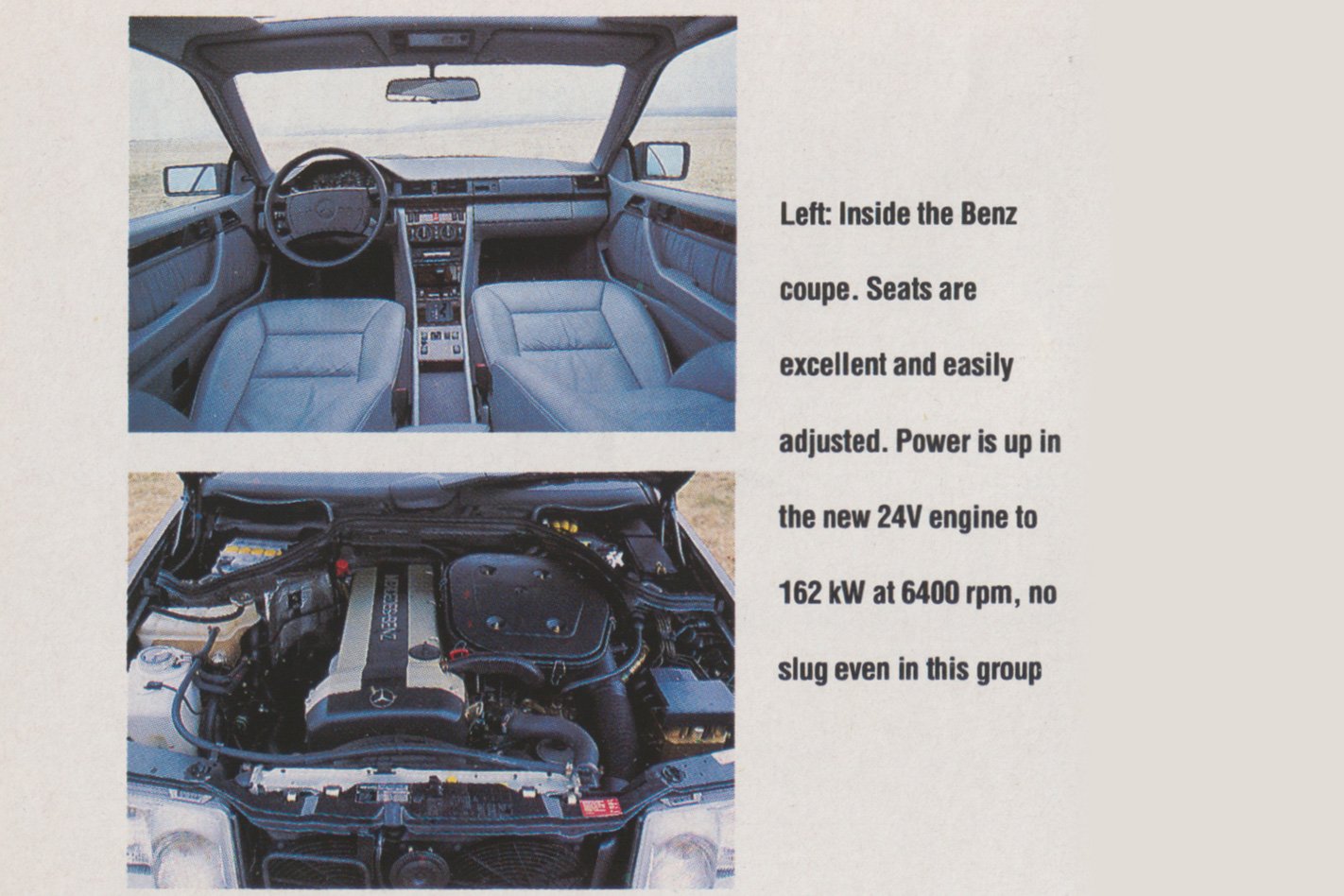
BMW’s six has a capacity advantage over all but the Holden. However, it is now the oldest engine in BMW’s line-up, so there’s only a marginal power edge over the Vauxhall. The oldest of this group, Mercedes W124 range enters its fifth year with subtle adjustments to appearance. But the crucial changes are the new Sportline option. This has firmer springs and dampers, more precise steering, wider 205/60ZR15 tyres, a smaller steering wheel, plus access to the SL’s four valves per cylinder 162 kW 3.0 litre six.
Here then are four fine cars, the top flight sports versions of existing family sedans, all front engine/rear drive and of a remarkably similar size and weight. All are aimed at the same enthusiastic, upwardly mobile buyer who craves sports/luxury, but still needs the practical advantages of four proper seats.
PERFORMANCE
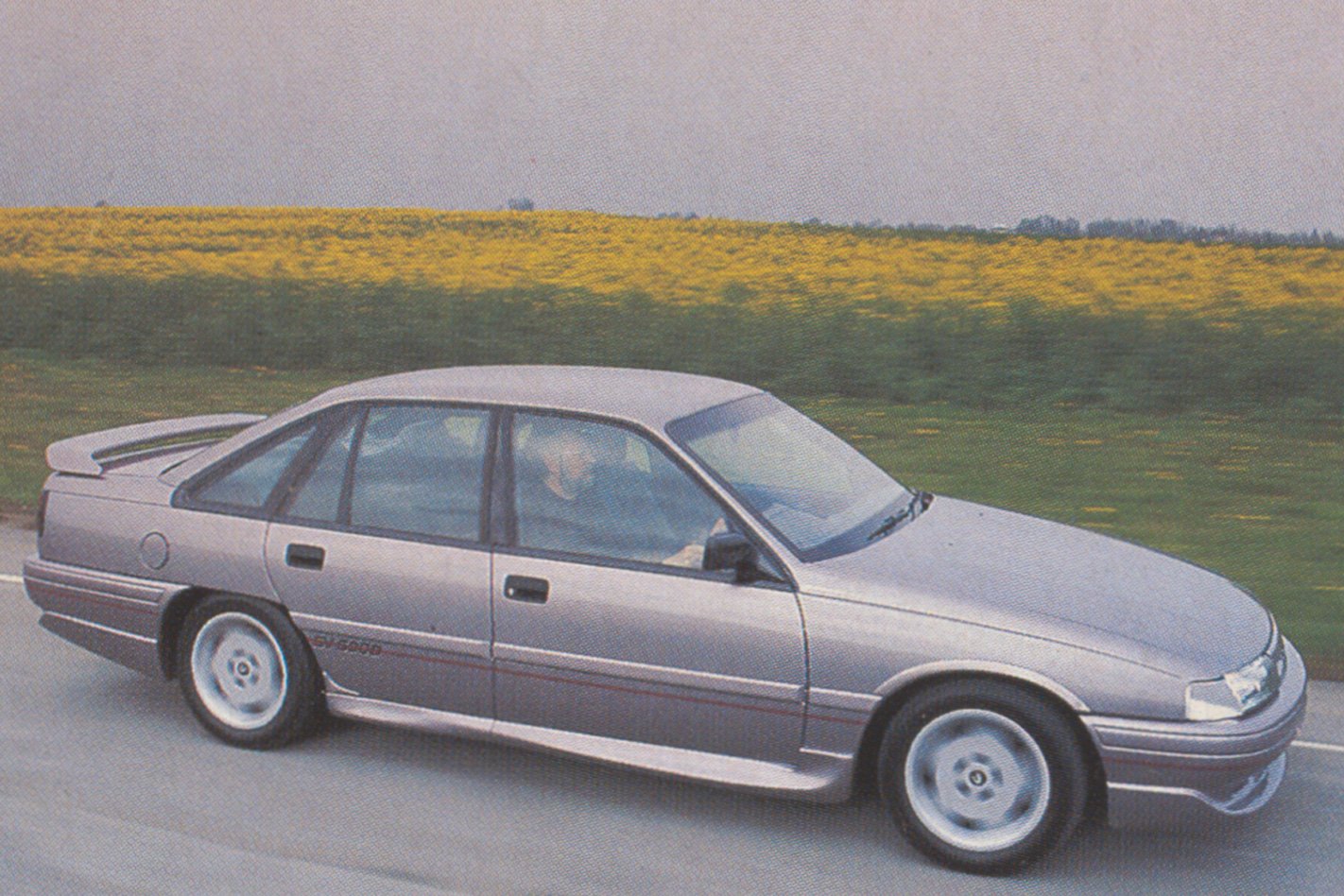
You can put down your glasses. European hi-tech is no substitute for Australian cubic inches. Not now that they’re fuelled by a modern electronic injection system. The Holden simply drives away from its rivals. That’s to be expected given the SV5000’s power-to-weight ratio. Even so, the performance gap is more substantial in normal driving than the bare acceleration figures reveal.
Using the latest electronic Leitz Correvit-L VST timing equipment on Castle Coombe’s undulating surface, the SV5000 couldn’t quite match the times achieved in Australia. Still, 15.2 sees for the 400m – 0.3 sees slower – simply blows the others away.
None has an answer for the immediate acceleration of the Commodore, the product of instant torque from a rumbling V8 engine. And there is something incredibly unremitting about a car that pulls a mere 2000 rpm at the 112 km/h legal limit on UK motorways.
The high revving multivalve Europeans don’t stand a chance of staying with the Commodore from the traffic lights. Vauxhall and Mercedes take equal second place in this sector, so close through the gears and in kickdown for the differences to be meaningless. Both cover the standing 400m in 16.5 sees.
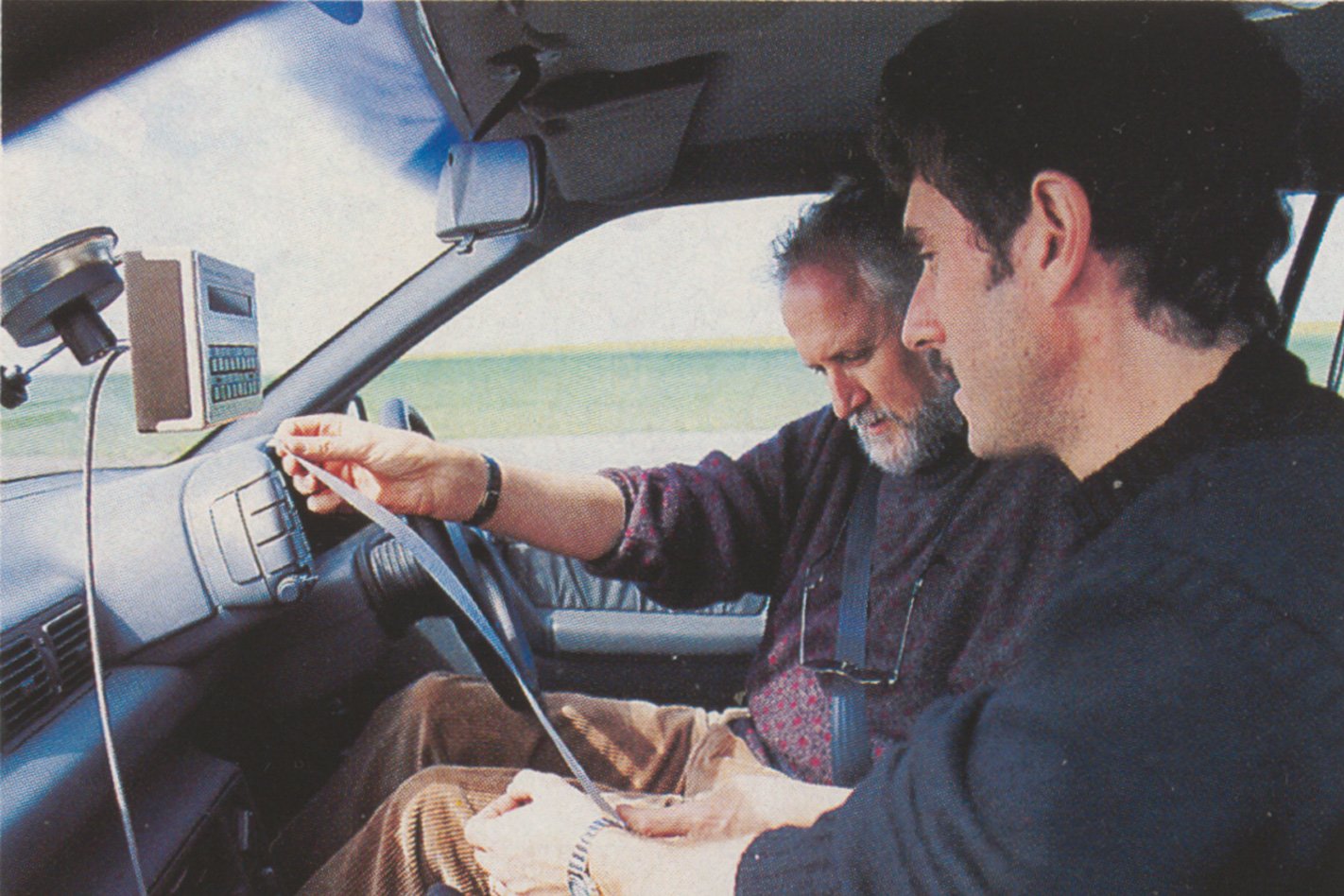
Many, I’m sure, will relish the sound. The enthusiastic driver finds himself using the flawless Mercedes automatic shifter more frequently than in the other cars, pulling back into third gear, preferably with little more than idle revs on the tacho to avoid the slight jerk. Even variable inlet timing can’t compensate for the lack of bottom-end torque, though this impression is stressed by the engine’s polished power over the last 3000 rpm.
Vauxhall ‘s solution is more effective. It has much taller gearing than the Mercedes – at 46.4 km/h per 1000 rpm fourth gear goes closest to matching the Holden’s staggering 53.8 km/h per 1000 rpm – though it, too, needs 4000 rpm to shine. But a more prompt throttle response than the Mercedes gives the impression the Vauxhall is quicker and makes it the easiest of the Europeans to drive fast.
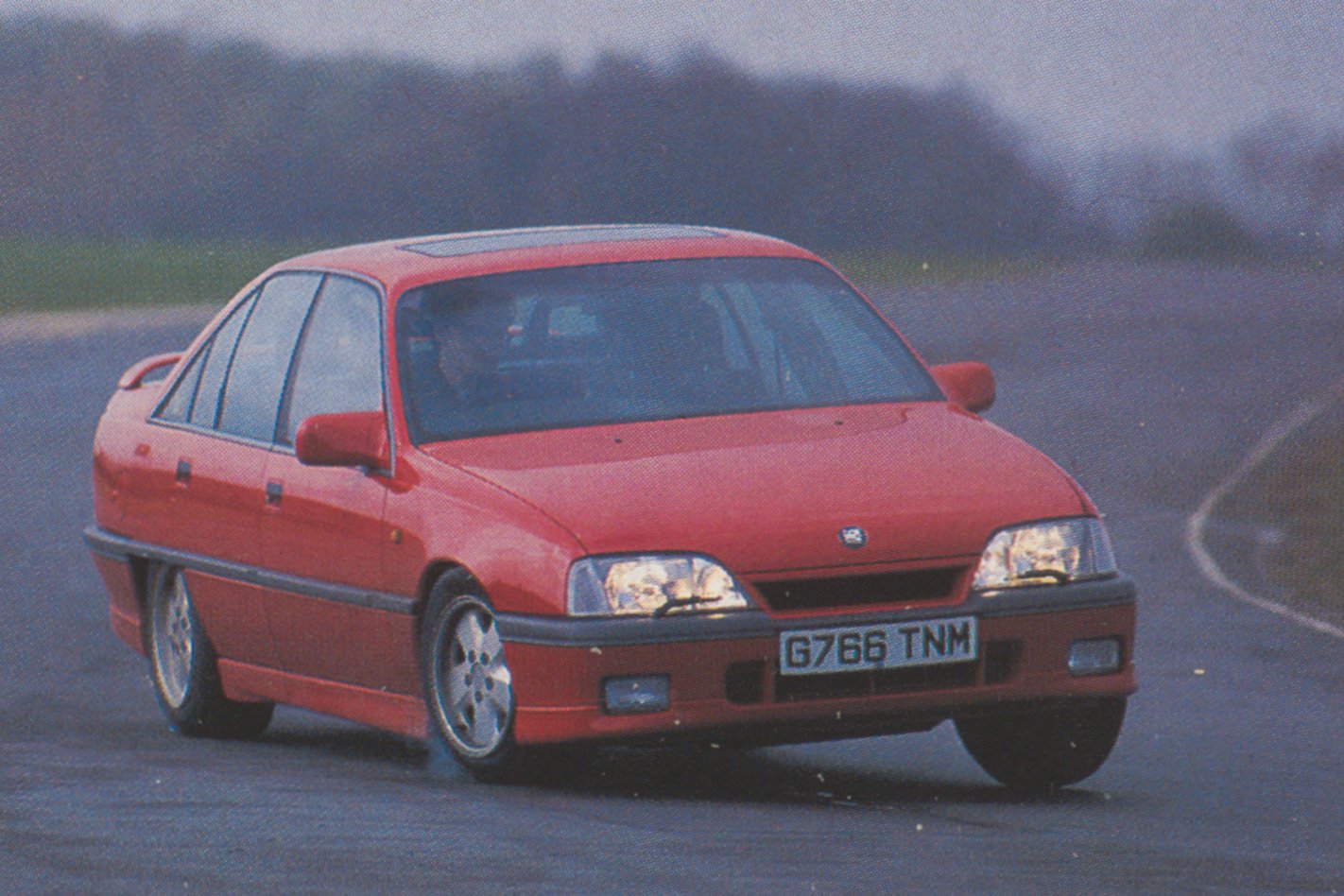
Because of the sheer speed and the way the ratios harmonise together, the Vauxhall has the finest transmission in this group. Sport and economy shift modes can be selected by a conveniently placed button it) the top of the selector. This may well be the best automatic transmission money can buy in 1990 and reveals that Holden’s use of the Turbo-Hydramatic is limited if it wants to offer a state-of-the-art auto.
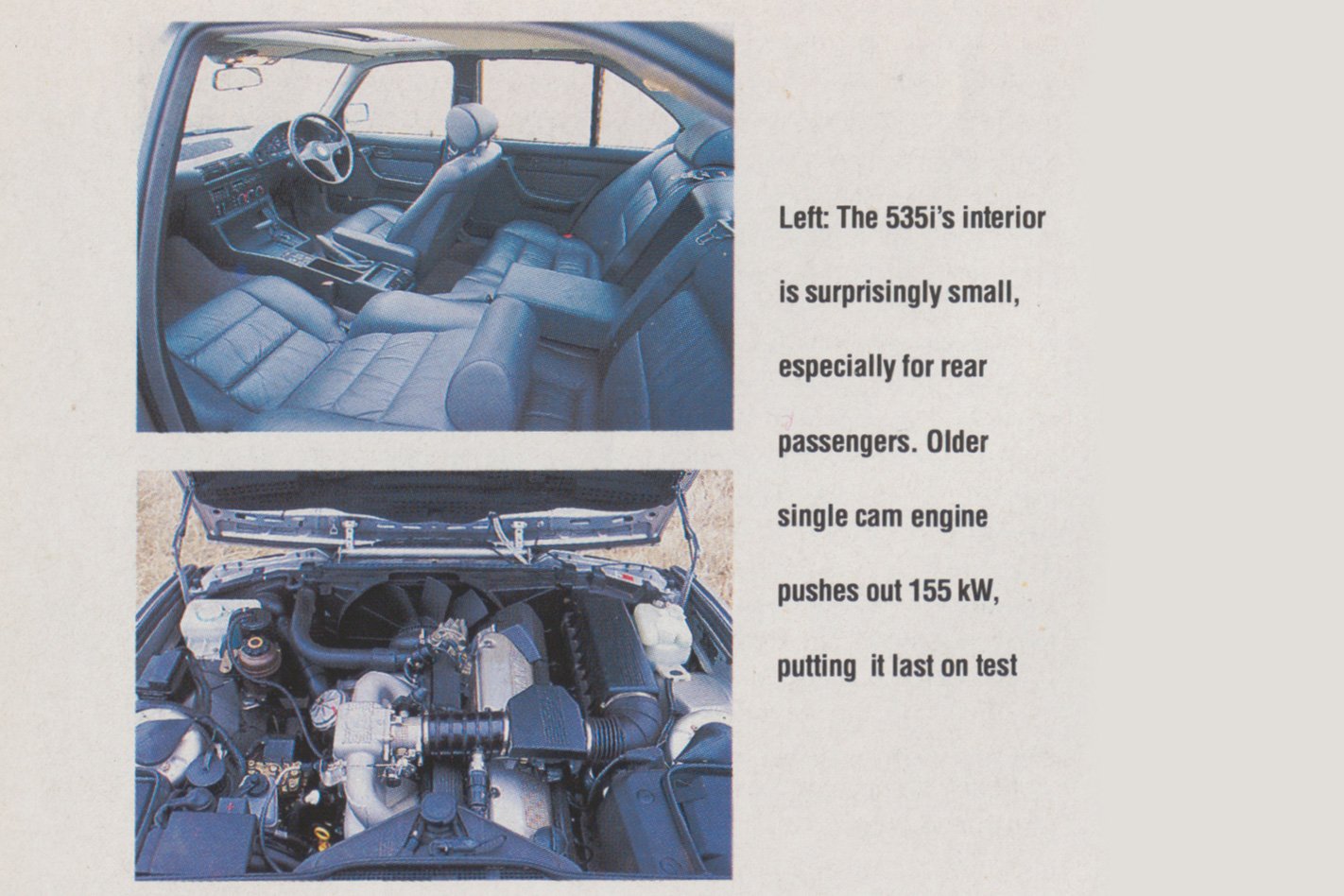
Which leaves the 535i to take up the rear, unsuccessfully struggling to break the 17.0 sec barrier. When testing the manual 535i, Wheels predicted a time of around 16.5 sees for the automatic, but the gap is invariably longer, even taking into account a location less conducive to optimum times.
Only a year ago this BMW 3.5 litre engine set the standard by which big sixes werejudged. No more. Both Vauxhall and Mercedes-Benz have finally overtaken BMW in outright performance and ultimate refinement. How quickly things change in the car business.
All four cars are capable of between 230-240 km/h. For most Australians, then, top speed is an academic question. But if you must know, the Holden is marginally fastest. All are happy to cruise at 160 km/h indefinitely.
FUEL CONSUMPTION
Naturally the Holden uses more fuel than the other cars. With easily the biggest engine/heaviest body, the V8 slurps through premium unleaded rapidly if you’re heavy with the right foot. Over two closely scrutinised fills involving all four cars, the differences were so marginal we’ve included only an overall average figure. We’re confident this will parallel the average owner’s experience.
With an average of 18.2 L/100km the Holden doesn’t look good. Constant-throttle cruising brings great benefits, of course, but few people will buy an SV5000 just to set the cruise control at 2000 rpm.
ON THE ROAD
We loved the Holden for its brutal, immediate power and the sensitivity of the steering; wallowed in the leather-bound comfort of the BMW on the motorways; savoured the new found precision of the Sportline Mercedes chassis; but the car that set the driving benchmark was the Vauxhall.
A bloody Vauxhall , I hear you say! Remember, however, this is an Opel , and not a Vauxhall like a Victor or a Viva or a Velox. Remember too, that men like Peter Hanenberger, who made Holden’s original RTS suspension work so well, are now running Opel.
The Vauxhall is near neutral in its handling, with a predictable and entertaining chassis, a difficult compromise to achieve. It has excellent body control, more roadholding than the Benz or BMW, and exceeds the Holden’s grip on anything less than a billiard smooth surface.
There’s only one important flaw in its make-up and that’s the steering. There’s nothing subtle about the heavy power system on the Carlton . Too heavy at parking speeds, despite the hydraulic assistance, the steering is also sloppy at the straight ahead.
ABS brakes, naturally, are standard, though the pedal has that slightly mushy feel inherent in most such systems.
You can drive all three Europeans hard for hours and never get fade or lock-up, just clouds of billowing smoke from under the front wheel arches of the BMW. Those familiar with a recent Mercedes chassis are in for a surprise when they try the W124’s Sportline option. How can such a comparatively insignificant change so easily convert this into a far more sensitive and decisive car to drive? Mercedes says it has changed the steering ratio from 14.61 on the standard cars, to 13.91 for the Sportline.
On paper, hardly a momentous modification, yet the steering is now consistent in its behaviour. There’s a far tauter, more agile feel, and more precision, especially at the straight ahead. The Benz has the best ride and copes brilliantly in absorbing bumps. The trade off is more body roll and slightly less composure under extremes, as when braking hard in a corner.
Four days in these car confirmed yet again that if the Commodore is to be truly competitive with European (and Japanese) big cars then it must get the Statesman’s IRS. There’s no real justification for a $50,000 plus Holden not having each rear wheel working independently. A live axle means a lively ride and an inability to cope with ruts and potholes that are hardly noticed in the other three cars.
It also means there’s more tyre rumble passed up from the road to the cockpit. Combine this with greater wind noise and you’ll see why the Holden never imparts the same impression of refinement or wellbeing as its rivals.
Up to nine-tenths the Holden has the best steering. It’s the most direct, yet still light enough for easy parking, while retaining a degree of feel. It firms up at speed, to such an extent that some might find its sensitivity excessive. Others will appreciate its utterly exact nature. Push further, when the steering wheel requires large lumps of lock, and it can go light, leaving the driver reluctant to press on. The fat rubber provides almost too much grip, for when the car hits a bump it moves around ungracefully, the understeer building up if it’s the front wheels which encounter the bumps first, and oversteer if it’s the rears. On the hard compound Japanese Dunlops fitted to the SV5000, wet European roads also mean a sudden build up in understeer before the tail moves out.
It’s young and raw, yet effective. There was never a time when the others cars could leave the Commodore behind – in fact, mostly it set the pace – and it was always the BMW that fell back due to its lack of performance.
ACCOMMODATION
If you must carry five adults then the Holden’s huge cabin is an easy winner, followed by the slightly narrower Vauxhall. The 535i has a surprisingly small interior – a six footer will reduce rear leg and knee space dramatically. The Mercedes can accommodate two adults if the front seat occupants are prepared to compromise a little. The 300E sedan isn’t as roomy as the Commodore, but equally it offers more rear space than the restricted BMW.
For the driver the choice is harder to define because all four achieve a high standard. The Vauxhall has the best seats. They are large, comfortable and supportive buckets, fully adjustable – as is the steering wheel for angle – and offer perfect lateral support. BMW’s designers put the driver a little too close to the door, but otherwise the driving position matches the Vauxhall, though the electrically adjustable seats aren’t quite as supportive. Mercedes’ seats improve with every model, those on the 300CE are excellent, no doubt helped by the simple and effective electric adjustment located on the doors. The Holden, too, has a fine driving position.
CONCLUSIONS
All of these cars are top drawer stuff, but where does the Commodore fit? In truth it offers a brand of motoring unknown in Europe. The SV5000 is a unique blend of raw power, stimulating yet effortless performance, a commodious body and fairly unsophisticated dynamics. At the price there’s no ignoring the fact that it is bargain-basement material, unfortunately unavailable in Europe. There are the habitual complaints about lack of IRS and ABS brakes, as well as the limitations of its more businesslike interior and fuel thirst.
Of the others we were surprised by the consistent quality of the Vauxhall ‘s chassis, and its fine engine’s blend of performance and economy. In terms of value for money in Europe, the Carlton is ahead.
No, in terms of overall competence and driver appeal, it’s the 300CE-24. The Sportline option retains all the Benz virtues, but brings with it greater driver involvement and a sensational engine that can only really shine in lands where the speed limit is realistic. But, do you know, if I wanted to drive any of these cars hard for pure pleasure, over a demanding road , I’d have no hesitation in choosing the fearless Commodore.
Refinement and finesse can sometimes go too far.
I’M SEATED in a modest farmhouse in a remote part of Tasmania we’ve been asked not to disclose.
Opposite me sits a man whose surname we’ve also been asked not to publish. Andrew, as we’ll call him, looks a bit older than his 50 years, with a tousle of blond hair that looks as if it’s on loan from a faded ’80s rock star. He produces a snap-lock plastic bag containing a rocky white substance. “Ere ya go,” he says, looking me in the eye. “Check it out; ’av a whiff.”
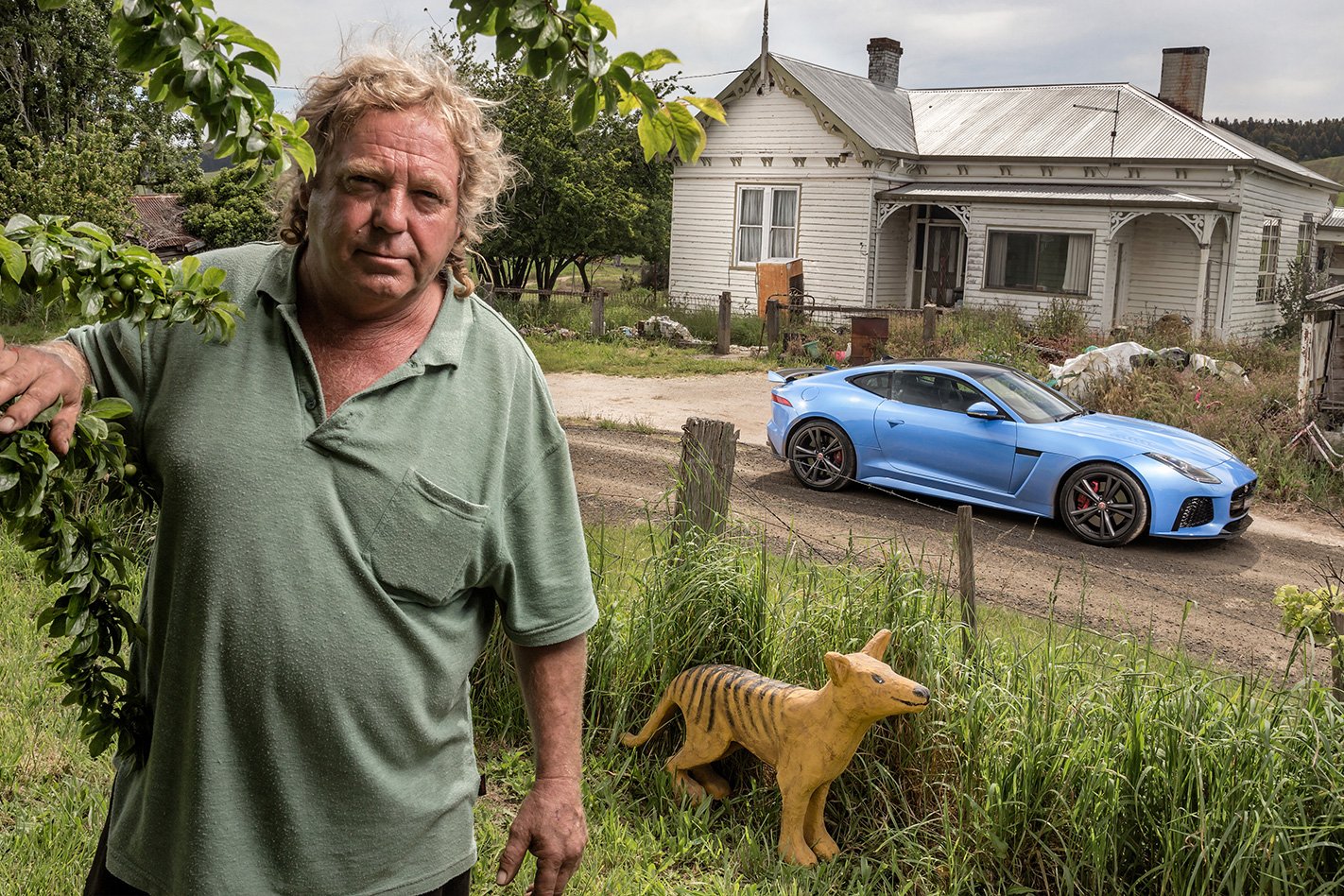
Andrew, as you’ve probably figured, is a Tiger tracker. He’s made it his life’s work – an self-confessed obsession, even – to accumulate evidence that the allegedly extinct Tasmanian Tiger does still exist in tiny numbers in the remote north-east of the state. However, it’s Andrew’s photos, more so than his impressive scat collection, that really gets my attention.
But I’m getting ahead of myself…
I’D HEARD on the thylacine grapevine (okay, internet) that this dairy farmer from Tassie’s north-east had been tracking Tigers for more than 30 years. Andrew was a low-profile character, due in part to intimidation and ridicule from parties pushing an entirely contrary agenda, which we’ll get to. But he agreed to speak to us, and show us evidence that the official extinction line was in fact, bullshit.
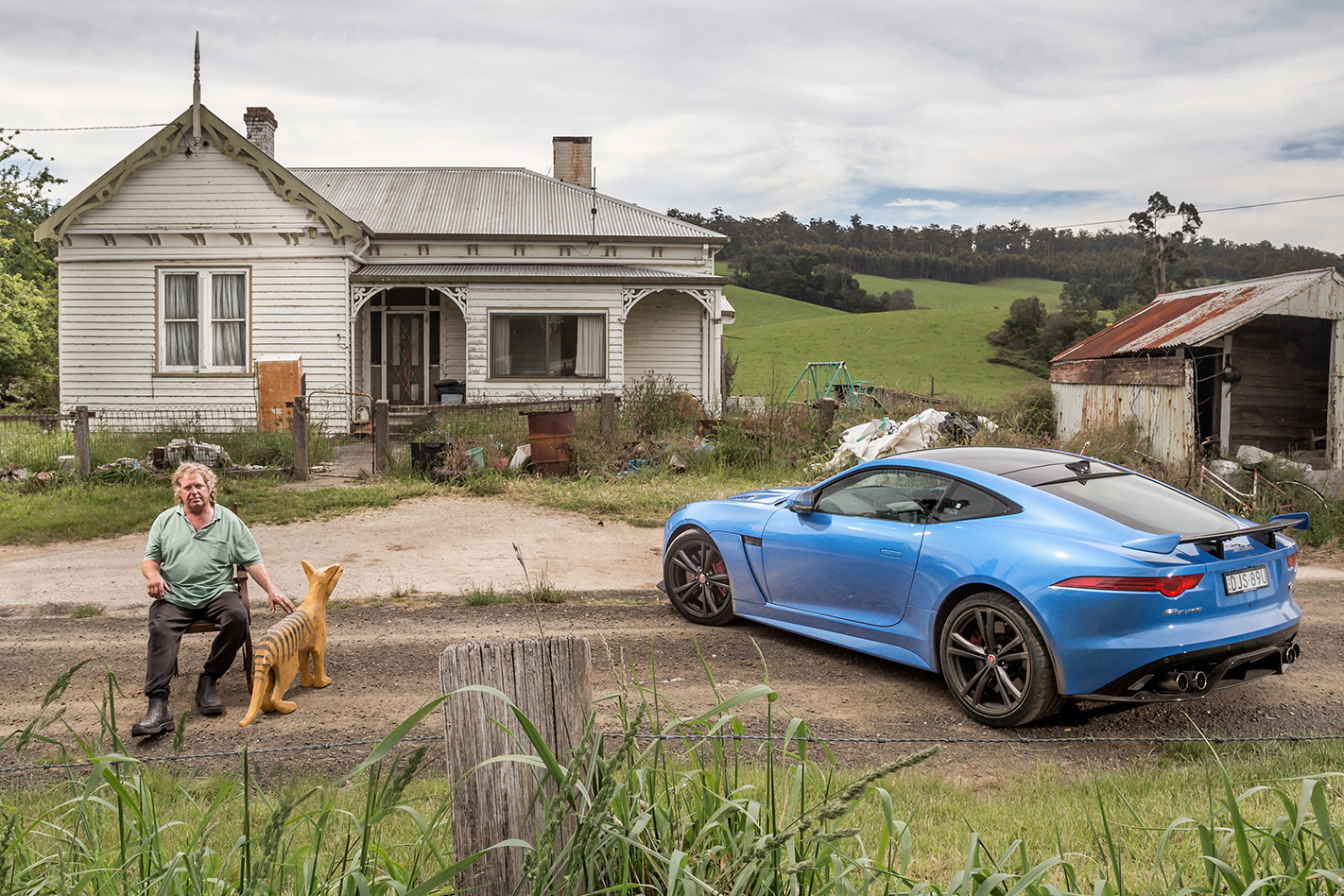
Option B? A quick cat to track down a Tiger. Jaguar’s F-Type SVR Coupe nails the brief like a sprung bear-trap around a thylacine’s hind quarters.
It’s not just the quickest F-Type on offer, but the fastest production Jag since the XJ220 of 1992. The blown 5.0-litre is tweaked to push out 423kW and 700Nm, 0-100km/h is cut to 3.7sec, and top speed runs to a nice round 200mph (322km/h). The chassis is retuned via a lighter front anti-roll bar and stiffer one at the rear, as well as revised spring rates and damper valving. There’s also an exhaust system made from inconel (a nickel-chromium alloy) and titanium.
Add an active rear spoiler, more rear-biased AWD system, obligatory carbon bits and Alcantara trim, and watch the price also surge; up to $289,000, or about $44K more than the regular AWD F-Type R Coupe. Options include a weight-saving carbonfibre roof and carbon brakes, neither of which are fitted to our car. No deal-breaker, trust me.
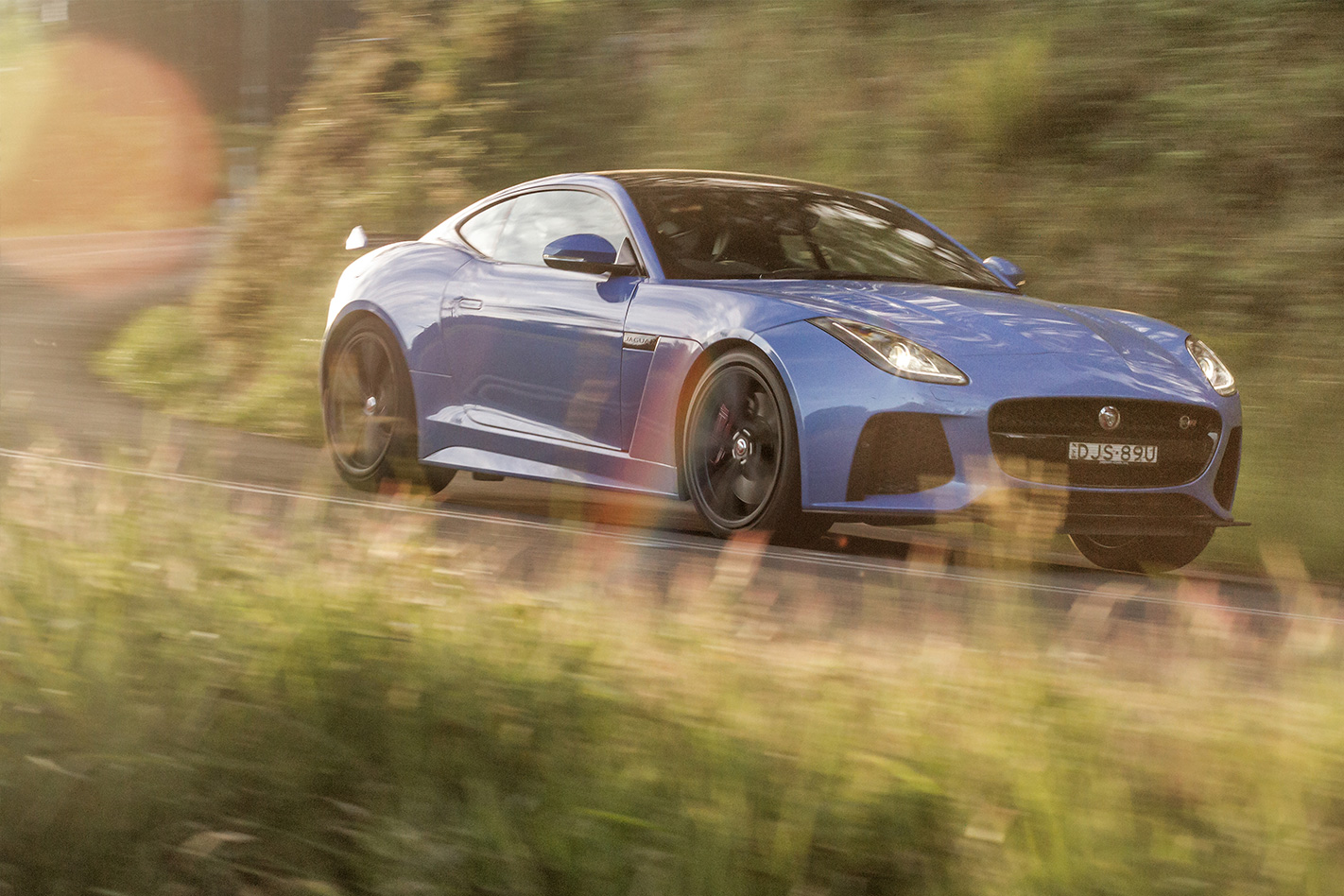
The regular F-Type R is hardly a shy, retiring type, but the SVR is properly bad-ass; a gunslinger in the 911 Turbo vein, albeit cut from weightier GT cloth. There’s a percussive quality to the exhaust note low in the rev range, then it crackles wickedly as 4000rpm approaches, spinning into a volcanic on-cam zone to the 6600rpm cut-out. Jump onto the brakes and there’s an over-run cacophony that sounds like an irate Bunnings customer pushing over shelves in the paint department. It’s properly epic.
Superchargers may be deeply out of favour these days, but a blown V8 remains a thing of unbridled pleasure. You get boosted shove early, a turbo-esque monster mid-range, but without the sonic dulling down caused by sticking those impeller blades in the throat of the exhaust manifold.
This road serves up nothing slower than 55km/h advisory signs on its hundreds of corners, which the Jag slices through at comfortably double that. Yet all the while, I’m relating to the thylacine in ways I’d not previously thought possible.

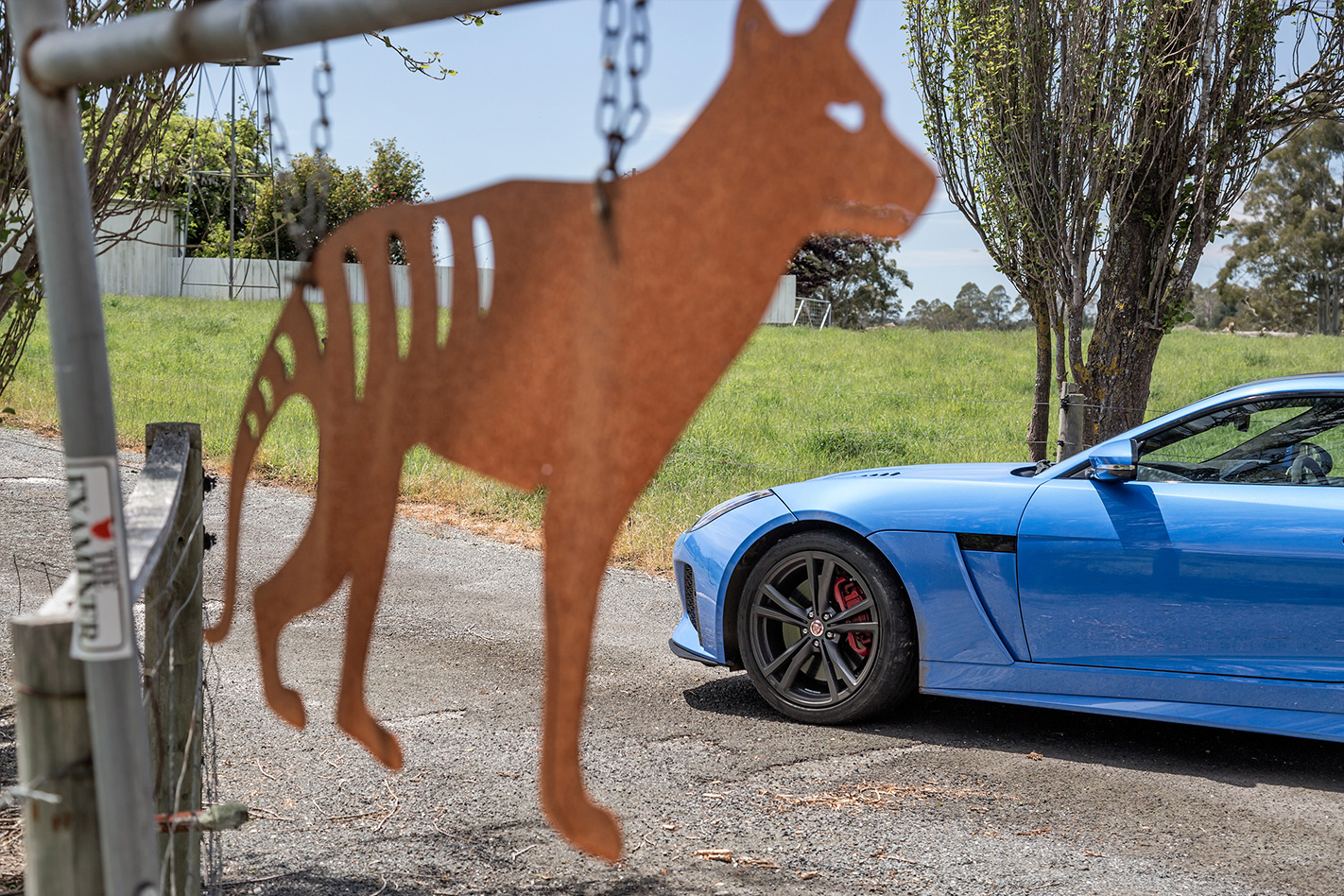
As we head north-east on this sensational road, AC/DC’s seminal ‘Back in Black’ comes on the powerhouse Meridian Audio’s DAB, and it’s hard not to smile as Brian Johnson thunders the line: “They’re gonna have to catch me if they want me to hang…”LATER, out the front of Andrew’s place − impossible to miss thanks to the wrought-iron cut-out of a Tiger’s silhouette hanging over his letterbox − we position the SVR for a photo as its precious-metal exhaust pings and ticks, and the massive brakes waft an acrid stink.
Andrew’s fleshy face breaks into a warm smile when he first takes in the Jag’s hunkered stance and carbonfibre rear wing. “So youse blokes bin havin’ a bit of fun; I can tell,” he offers by way of greeting. Once seated in his farmhouse, it’s Andrew’s photos, as I mentioned, that deliver the real slap in the face. They are prints taken by the many ‘trail cameras’ (triggered by heat and movement) he has set up; the most recent date-stamped 2014.
I’m left pondering if the bloke is a fraudster knocking this stuff up in Photoshop, or peddling someone else’s hoaxes as his own. That seems impossible, given the shambolic state of his house, the lack of a decent computer and the fact I can tell he has little IT ability. Besides, he’s clearly not in this for personal gain. He’s spent a fortune over the years on fuel, batteries, cameras and prints, yet made nothing. No $100K exclusive with 60 Minutes.
So I reckon he’s fair dinkum, and I’m looking at proof of an animal the Tassie government says was wiped off the face of the earth way back in 1936.
What’s just as sobering is the price Andrew has paid, emotionally and socially, for his 30-year obsession. He tells me it’s cost him his marriage − “Yep, the missus just couldn’t deal with the time I was spendin’ away from the kids and the farm” − as well as friendships in his small town. “People will talk to ya about it, but then ya hear ’em sneering behind yer back, takin’ the piss like you’re a fuggin’ crackpot.”
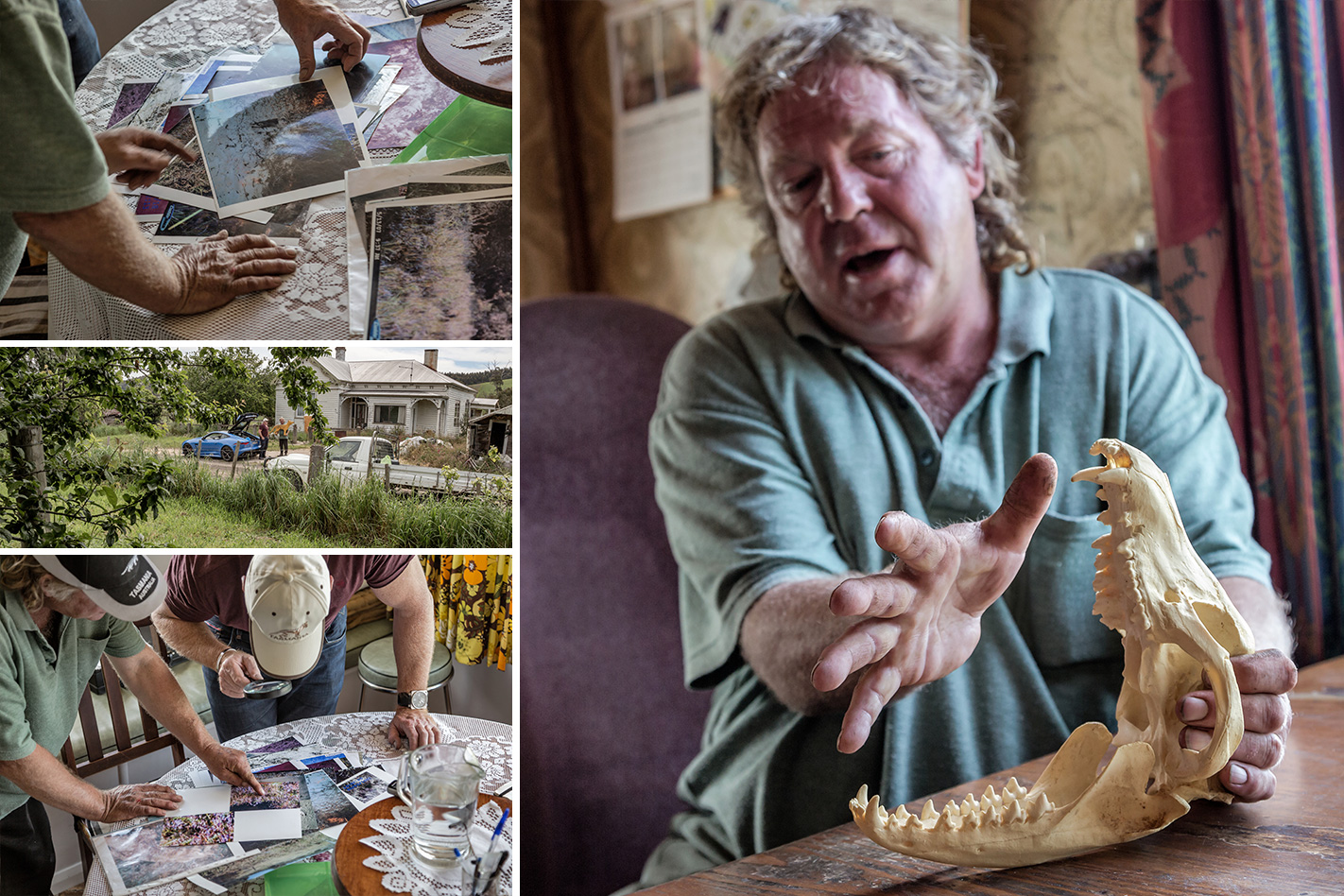
He reckons his house was broken into − a neighbour saw a black SUV in his driveway on the afternoon in question − and photos and a threatening, unsigned official letter were stolen. “The government doesn’t want this to get out,” he says. “If they admit there’s a critically endangered animal living’ in these parts, that’d put pressure on ’em to stop logging and land clearing. They don’t want that. That shit costs big money, jobs … and votes.”
ANDREW could talk thylacines until the next ice age, and I could listen, but we need to head west to check out our next Tiger hot spot of Mole Creek. There’s a pub there that we’re told is like a shrine to all things thylacine, and the co-publican is a credible sighting witness. Plus they serve cold, locally brewed Tiger Ale on tap, and the Jag’s sat-nav is estimating we’ll arrive bang on beer-o’clock. Outta here…
Holding the SVR wide open for just 10 or so seconds is to be graphically reminded how indecently quick the thing is. It will bolt to the imperial ton (160km/h) in 8.0sec flat, and nail 0–160km/h–0 in just 13.2sec. The linear, punchy bottom end grabs your attention and the surging mid-range keeps you focused, yet there’s no tailing-off up top, making the 6600rpm cut-out a fraction disappointing. There’s no logical need for it to rev beyond that, but if it did, this engine would get a billing in my all-time top five.
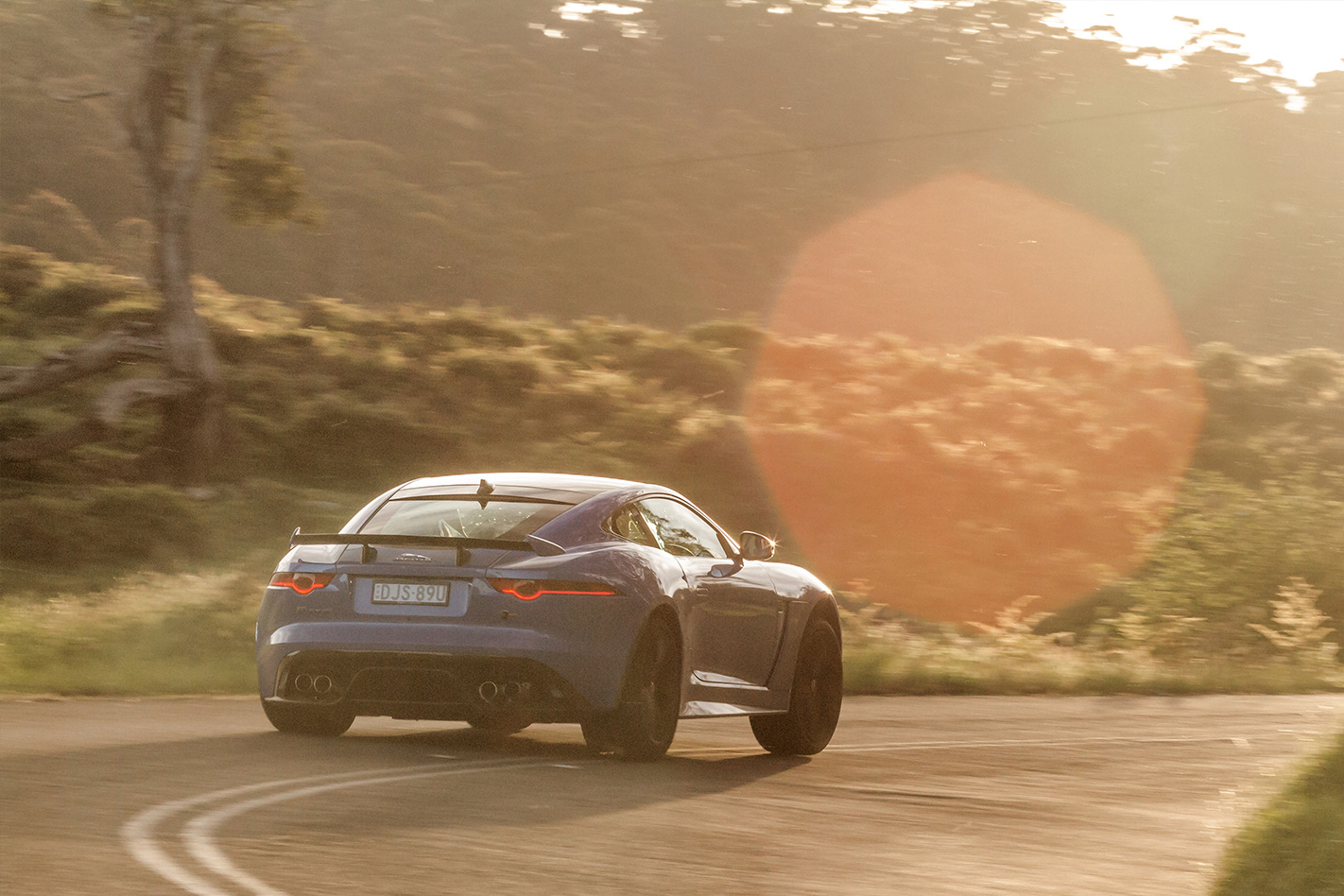
Before driving it, I’d wondered if the SVR wicking-up process may have robbed the F-Type of its GT ability; if it may now be a bit stiff and loud and aggro to allow properly relaxed cruising.
Clearly I worry too much. All those qualities survive intact; you can surf around plucking gears and keeping the engine below 2000rpm and gurgling like a distant, contented feline. Around town, there’s minimal jostling and surprising civility. Only loud tyre roar on coarse-chip takes the edge off the interstate express tranquillity. The steering, too, is terrific. It’s retuned in the SVR for less assistance at speed, and has a lovely, wriggly analogue tactility and nuance, despite being electrically assisted. It reminds me, curiously, of a 997 Porsche 911, the way it gives delicate, measured feedback when loaded up.
THE shadows are long when we arrive at the tranquil little town of Mole Creek (‘Tiger Territory’, the sign proclaims) to find publican Doug Westbrook unloading cases of beer into his pub’s cool room. He tells us it was his wife Ramona who saw one, at the edge of a road, it was, back in 1999. Since then there have been a number of other credible sightings − and no doubt plenty of bogus ones from attention-seeking whackballs − all of whom are enshrined via framed newspaper clippings of the walls of the Tiger Bar. They take it all a bit less seriously here, as evidenced by the mural of sexy, bare-breasted female Tigers that look like Tony the Frosties tiger crossed with Pamela Anderson. The pub’s pies, decorated with a wonderfully detailed pastry cutout of a Tiger, are delicious, even if they are made with regular beef, and not genuine thylacine. I stop at just one of the excellent Tiger Ales; a few more and I reckon I’d be seeing multiple thylacines doing the funky-chicken strut down the main street.
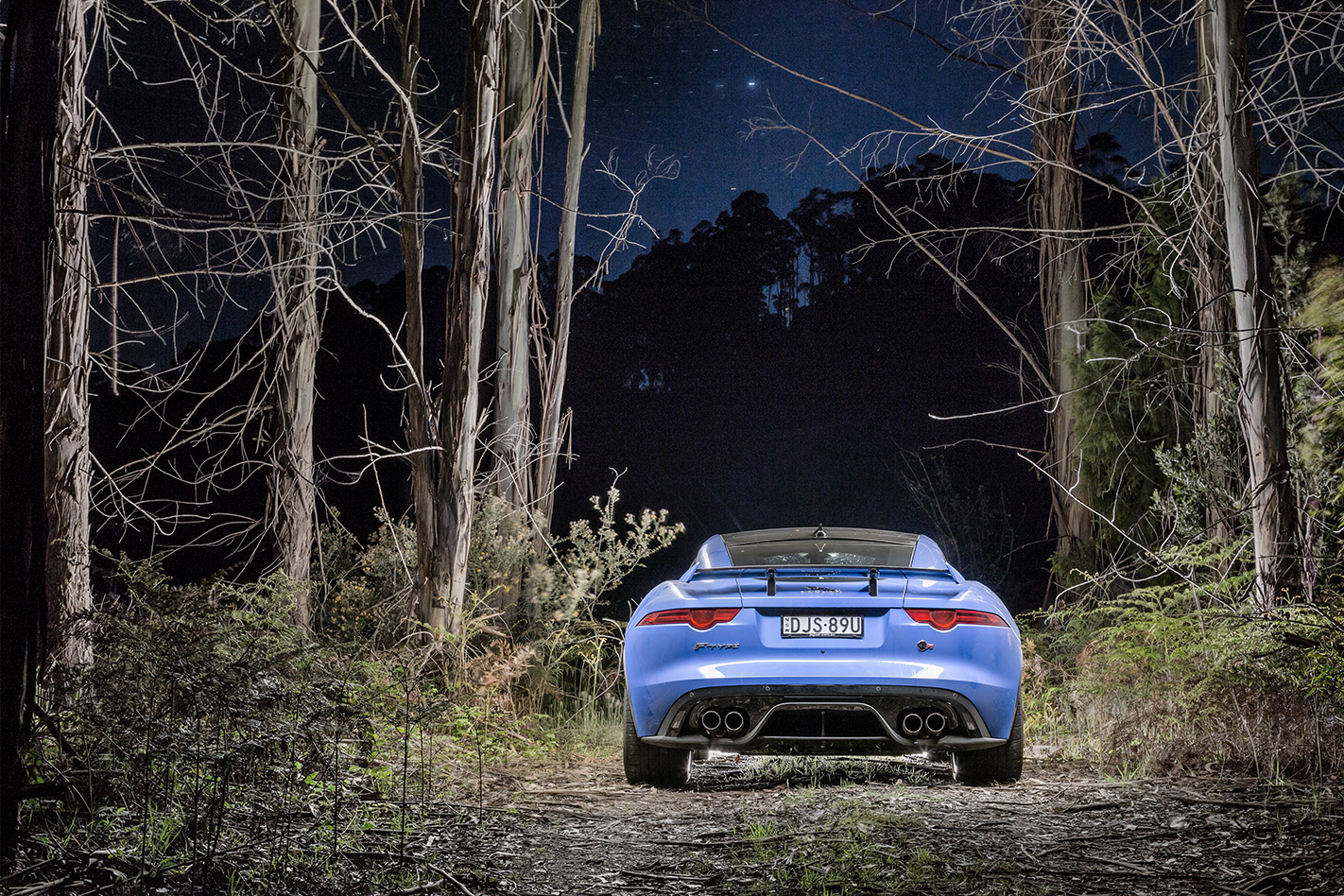
I shine the torch. No, it’s just Wielecki, the mad Pole, dealing with a painful zipper malfunction after taking a leak. Ouch. At least the car looks awesome bathed in blinding white LED light.
THE NEXT day, back in Launceston, we stop outside the town hall. There we spot a cast relief of the city’s coat of arms set near the building’s grand columns. It depicts two chained Tassie Tigers rearing up at a bird. The motto implores ‘Progress with Prudence’.
It’s a telling message of good intentions versus real-world realities. Plenty of Greens supporters and environmentalists would argue that Tasmania’s ‘progress’ has involved more pillage than prudence, given the felling of old-growth forests and rampant woodchip industries. And let’s not get started on dams.
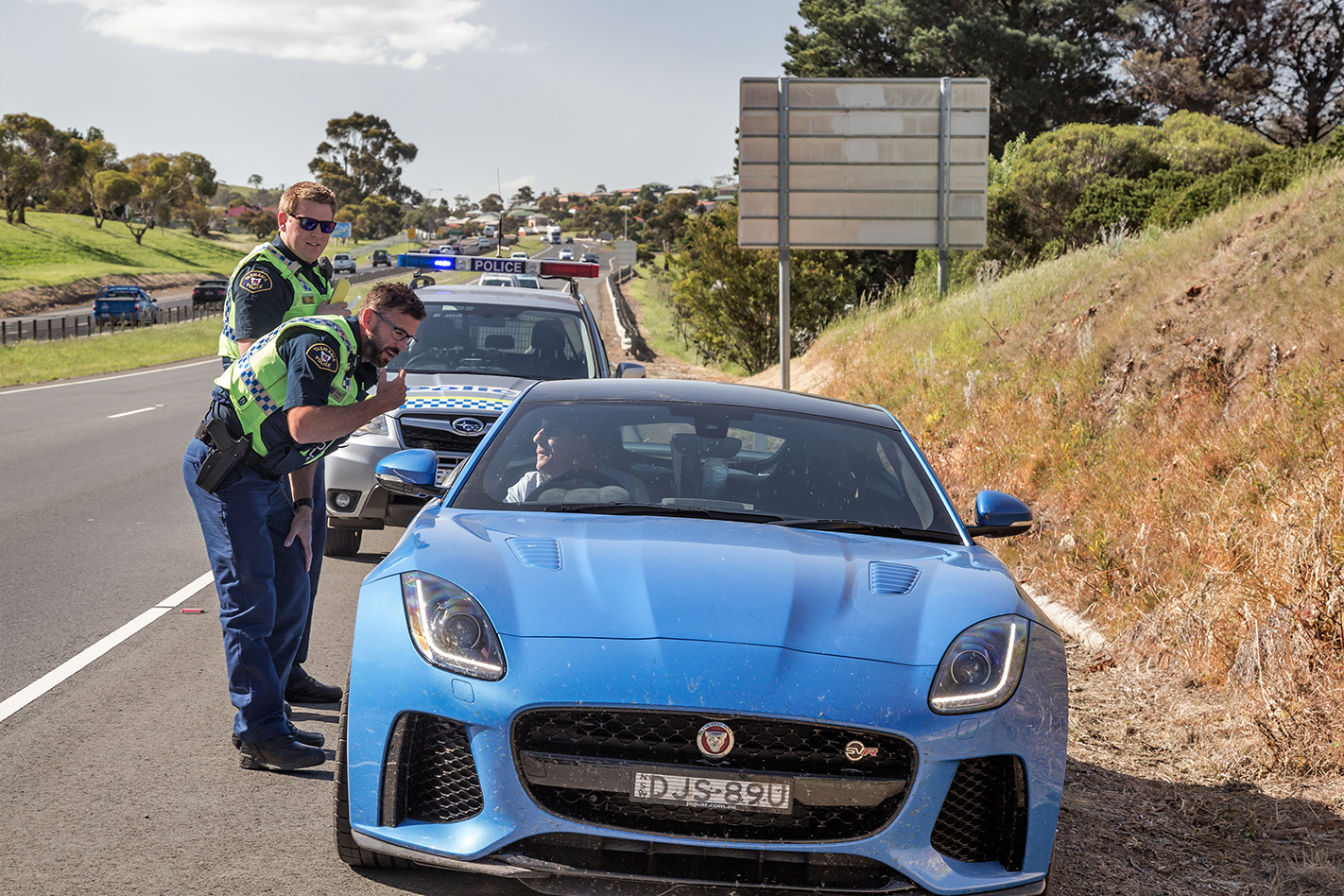
For reasons I can’t fully explain, it makes me feel just a little less hopeless for the future of the planet to know that Benjamin was not, in fact, the very last of his species.
Three days earlier, I’d arrived in Tassie fairly cynical of the Tiger’s reported existence. I leave this complex little island far less cynical, but also uplifted. Then again, maybe Tasmania’s roads and the abilities of the F-Type SVR could turn just about anyone into a believer.

