
Nissan’s second-generation Leaf electric vehicle has made its global debut in Japan, showcasing a more conservative design both inside and out, extensive improvements in semi-autonomous driving aids, and a 60 percent boost in range.
The new Leaf boasts a 400km range from a single charge (per the Japanese test cycle, expect a 270km-odd real-world range), along with a power boost to 110kW and a torque increase to 320Nm.
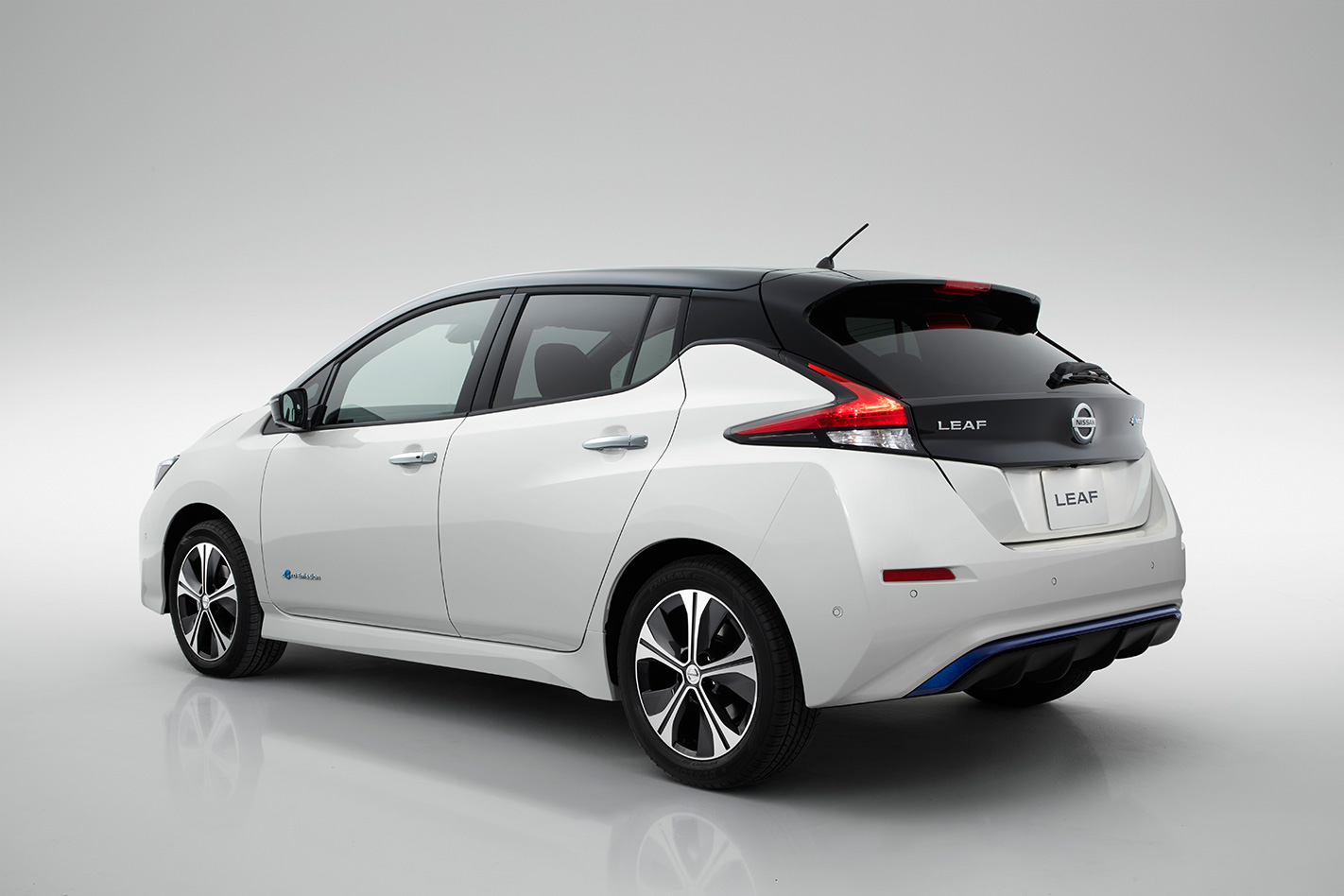
Those output increases have been enabled by a new 40kWh battery pack, which takes up no more room in the car’s floorpan than the outgoing model’s 26kWh unit.
Improvements in the lithium-ion battery’s chemistry and construction mean Nissan can cram more energy into the same space than before, which should address concerns about not having enough range for everyday driving. Indeed, Nissan claims Japanese drivers should be able to achieve a full week’s worth of driving on a single charge.
Charging it up fully takes 16 hours on a 3kW charger and eight hours on a 6kW charger. If plugged into a specialised high-voltage fast charger, it’ll only take 40 minutes to get the Leaf’s battery back up to 80 percent.
Owners will also be able to power their homes with their Leaf – at least partially. By drawing on the remaining charge left in the car, the Leaf can send its stored power into the home’s wiring to power appliances – or simply act as a backup battery in case of power failure. Later in the evening, it can tap into cheaper off-peak electricity to charge itself back up again.
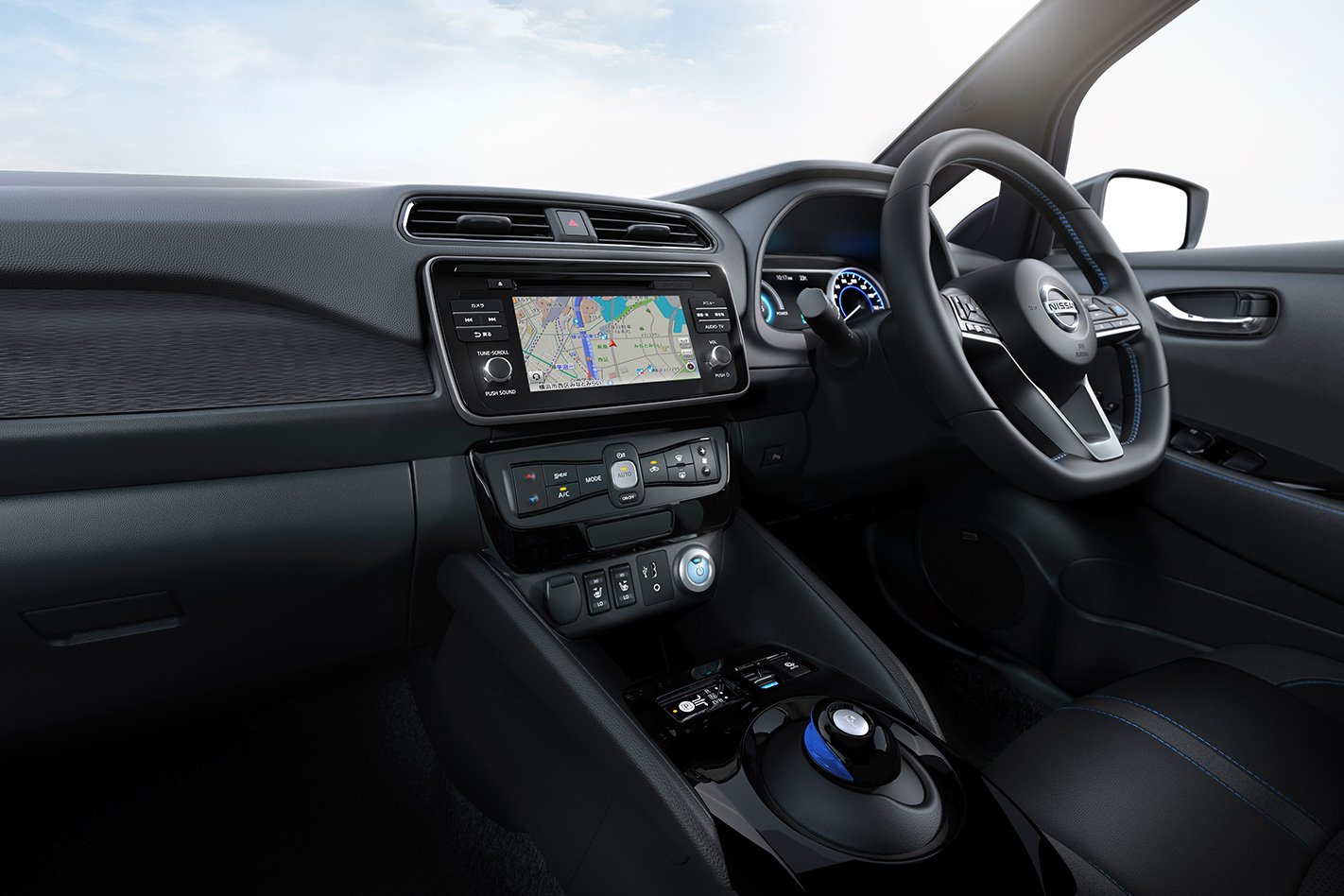
Inside, the Leaf sports a more conventional interior than before. The old car’s curious puck-shaped drive selector remains a fixture of the centre console, but the infotainment display is larger and more feature-rich, while the double-decker instrument panel of the old car is replaced by an electronic screen and analogue speedo in a single binnacle.
On the centre console sits the button for the new Leaf’s e-Pedal system, which allows the driver to toggle between normal and high-force brake regeneration – effectively allowing drivers to accelerate and brake by just using the accelerator pedal.
Meanwhile, new piloted-driving features mean drivers may have little need to touch the accelerator anyway. The 2018 Leaf will feature an advanced cruise control system that’s able to keep pace with traffic ahead – even down to a coming to a full stop – and steer itself to remain in the middle of its lane during peak-hour crawls.
At its destination, the Leaf will be able to drive itself into parallel or perpendicular parking spaces, without the driver needing to touch any controls.
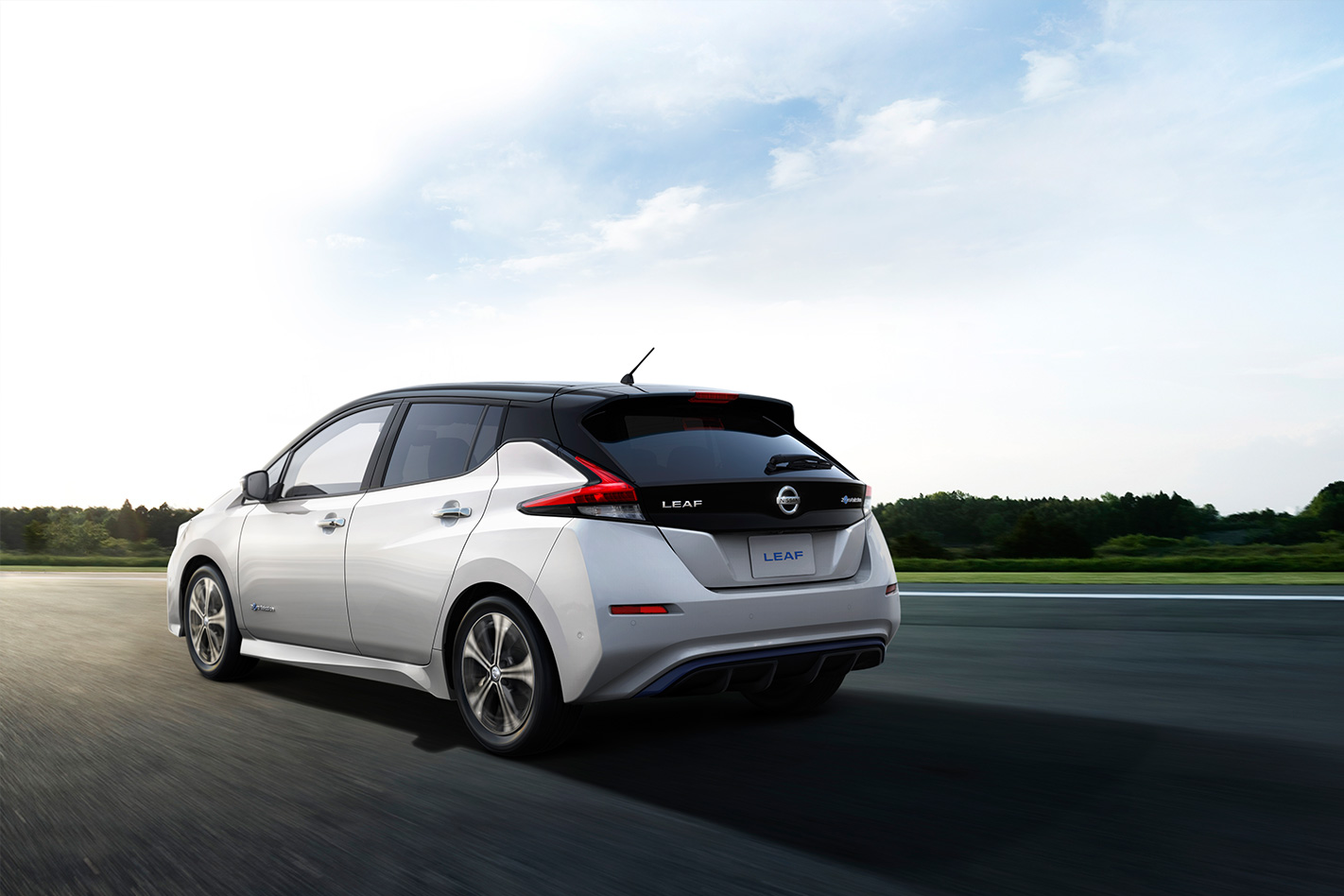
As a small hatchback, the Leaf also boasts decent practicality credentials as well. With the rear seats up, boot space is a sizable 435 litres, with its deep under-floor storage included.
The new Leaf goes on sale on October 2 in Japan, with US deliveries commencing at the start of 2018. Australian customers will need to wait until late 2018 for a local arrival, with pricing still yet to be announced.
This video is only 32.6 seconds long – but that’s as long as it needs to be for you to see a Bugatti Chiron hit 400km/h from a stand-still.
Have a think about the last time you were travelling at 400km/h.
Unless you’re superman, or you have access to a hypercar and an airport runway, it was probably while you were on a plane.
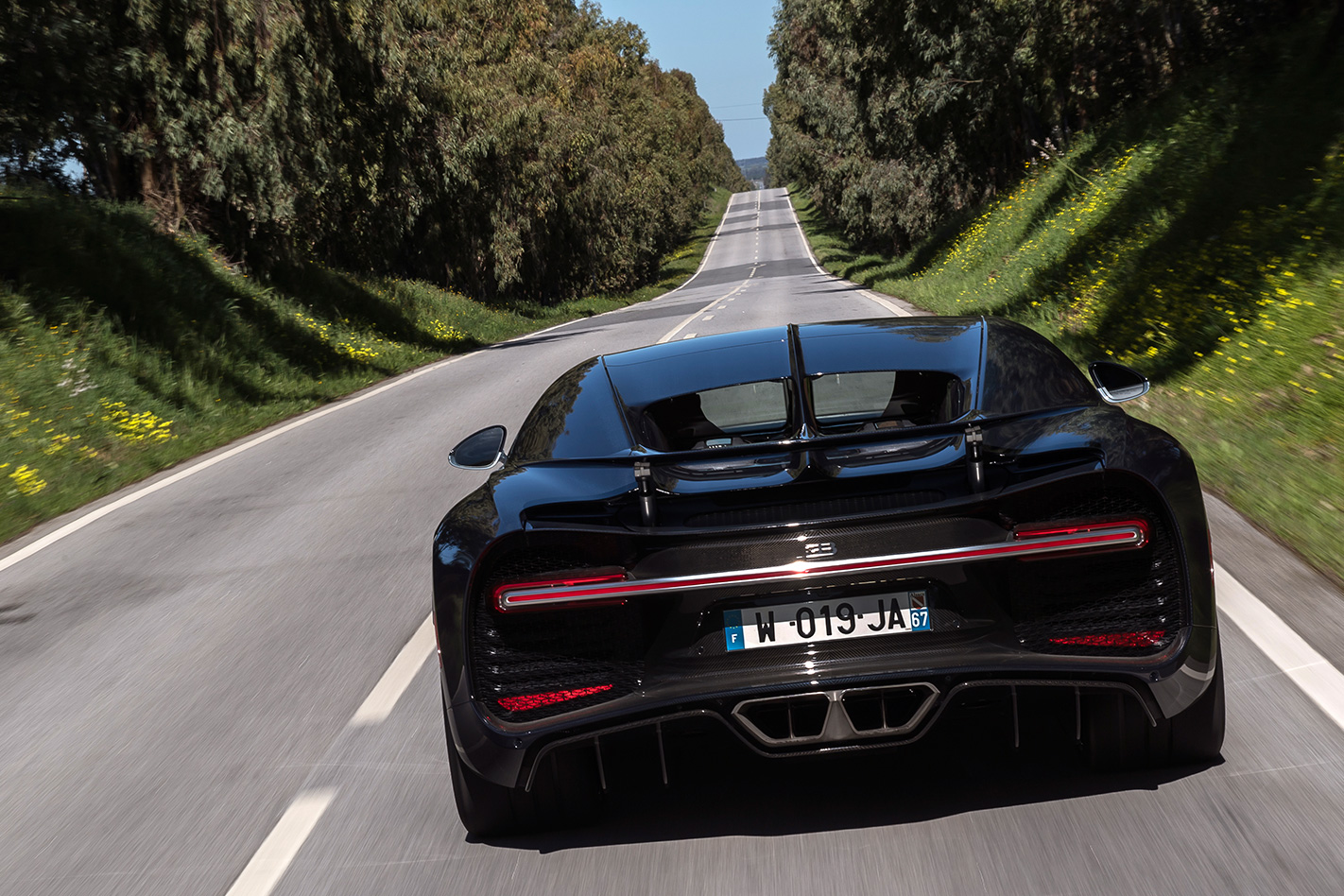
To illustrate the acceleration potential of the Chiron, Bugatti has been releasing short clips of the car travelling from a stand-still to a certain speed.
The first was a dash to 100km/h, which made for a very short video of which 2.4 seconds consisted of the car
Then, Bugatti filmed it taking its sweet time – all of 6.1 seconds – to catch the 200km/h mark.
The $3.61m masterpiece of engineering is able to hit 200km/h faster than most cars will get to 100km/h.
You really have to pay attention, blink and you’ll miss that point where it hits the mark.
If you do, however, you have seven more seconds until the Chiron hits 300km/h at 13.1 seconds from stand-still.
Which bring us back to 400km/h.
Actually, by the time you’ve read this far into the article , the Bugatti Chrion might have been able to hit its claimed top speed of 420km/h. Or it might have even hit its reported actual top speed of 463km/h, which is possible when your right foot has 1103kW and 1600Nm at its disposal.
We just want to know what on earth they were using as a camera car.
DRIFT Mode is the new performance buzzword, with high-powered super saloons like the AMG E63 S and BMW M5 being able to disconnect their all-paw transmissions and send all their ample power exclusively to the rear wheels for all your sideways needs.
Audi has decided to cut out the middleman altogether, and release a rear-drive only version of its R8 supercar – no need for a drift mode button then!
Although the 2WD supercar is yet to be confirmed, a teaser put up on Audi’s Instagram ahead of the Frankfurt Motor Show appears to show an R8 pulling off some donuts that you wouldn’t be able to achieve with the traditional all-paw transmission.
https://www.instagram.com/p/BYxf3tqHO3X/
A rear-drive R8 makes sense, with the car serving as a lower-cost entry point to Audi’s supercar range.
Lamborghini already sells a rear-drive Huracan – the R8’s sister car – with V10 power.
Audi says its reveal at the Frankfurt Motor Show will include “a limited special model with rear-wheel drive”. Read into that as you will.
The current R8 is powered by a 397kW/540Nm 5.2-litre V10, while the ‘Plus’ model boosts this to 449kW and 560Nm. It is believed a rear-drive R8 will come with the V10 in its less powerful state of tune.
It’s also been speculated Audi could slot a 2.9-litre twin-turbo V6 in the engine bay, however Wheels was told last year that this is unlikely.
“The R8 is a halo model for the brand; proof that buyers will happily pay the best part of A$400,000 for an Audi. The concern is a cheaper V6 R8 could dilute that halo quality, and ultimately undermine the V10’s role,” we were told by a source within the company.
If revealed, this technically won’t be the first time Audi has produced a rear-drive R8, with both the GT3 and GT4 spec race cars sending power exclusively to the rear treads.
While those models were dedicated race cars, and not production vehicles, they shared a large number of components with the road-faring versions.
BMW has unveiled its X7 iPerformance large-SUV concept, which features a plug-in hybrid powertrain and luxurious three-row seating for six.
With striking looks that have already divided opinion, the X7 iPerformance Concept is easy to spot with its broad front end featuring an extravagant representation of the brand’s kidney grille, which sits above an equally conspicuous chrome bar that extends across the lower front and rises vertically to frame the outer air intakes at their upper edge.
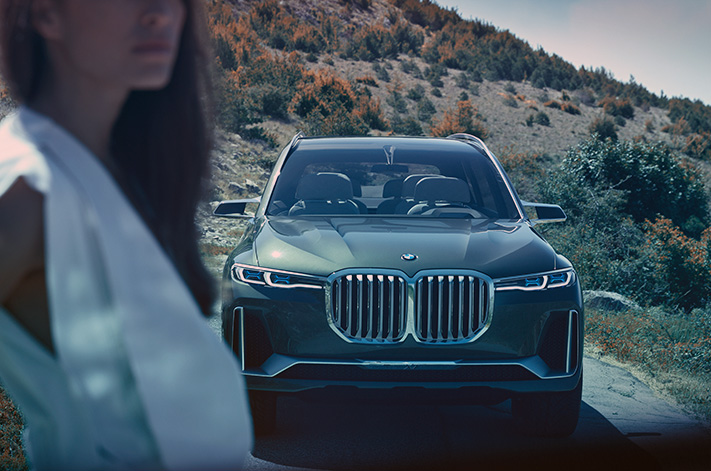
According to BMW, that grille combines with the sleek headlights to “create an exciting contrast of horizontal dynamism and vertical solidity, bringing traditional BMW front-end design cues into the future”.
Even so, it remains to be seen how the X7’s angular aesthetics translate to the production version that’s due next year. While you’d generally expect it will be toned down, it’s worth remembering the American-built X7 is primarily designed for the US and Chinese markets which aren’t as adverse to ostentatious vehicle design.

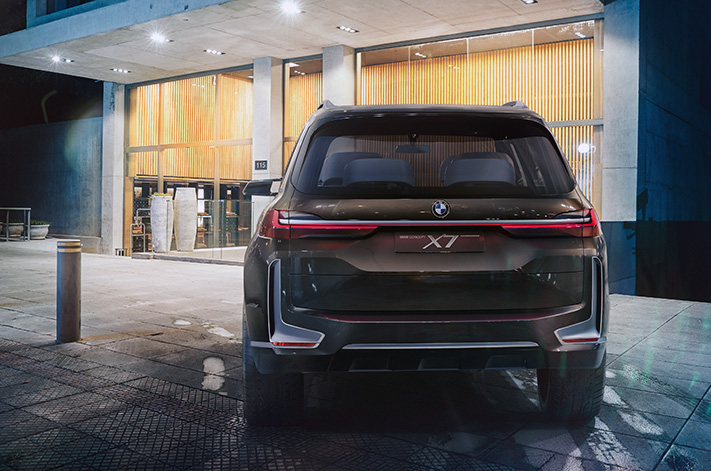
That said, the BMW X7 iPerformance Concept has a number of pleasing design elements that could be happily carried across, such as the sleek LED headlights, stunning panoramic glass roof, and narrow L-shaped taillights flanking an illuminated band running across its BMW X5-like split tailgate.
The flush door handles and slim wing mirrors also look good, but it’s doubtful they’ll be practical enough to make it to production.
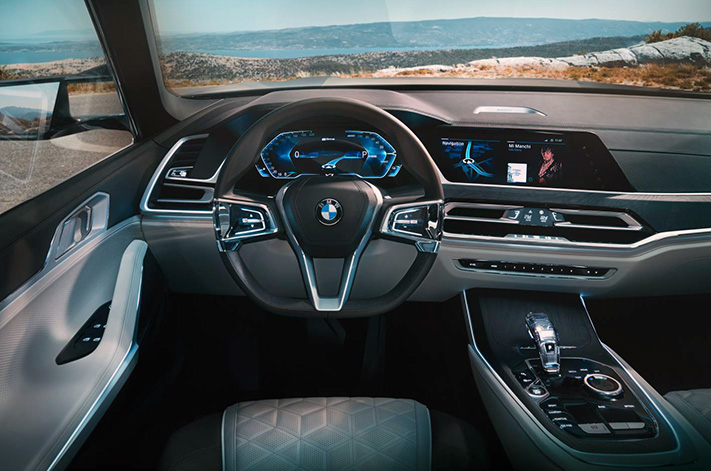
While the exterior demands attention, as any concept should, the seemingly production-ready interior is elegantly styled, spacious, and airy with three rows containing six amply proportioned seats mounted on narrow bases to create plenty of legroom even in the third row.
The minimalist dashboard looks less cluttered than the new BMW 5 and 7 Series models, while the 12.3-inch instrument cluster screen and central touchscreen sleekly meld into each other to provide a clean look that’s complemented by a futuristic steering wheel and slim air vents.
The second row features personalised infotainment systems with individual touchscreen monitors that can access the web via BMW Connected, allowing occupants to work, play or be entertained on the move. Content can even be shared with others on board using gesture control.
BMW didn’t elaborate on the plug-in hybrid powertrain except to say that the BMW Concept X7 demonstrates that it’s perfectly possible to combine a large sports activity vehicle with an electrified drivetrain. But it’s likely to be the same hybrid system as the 740e iPerformance’s turbocharged four-cylinder petrol engine with an electric motor and 9.2kWh lithium-ion battery pack.

Jaguar Land Rover and SkunkWorks Surf Co have partnered in an initiative to build surfboards from the car manufacturer’s polyurethane plastic used in its early design clay models.
JLR’s ‘Waste to Wave’ project takes the polyurethane foams that sits beneath clay models and repurposes it as part of the company’s commitment to send no waste to landfill by 2020.
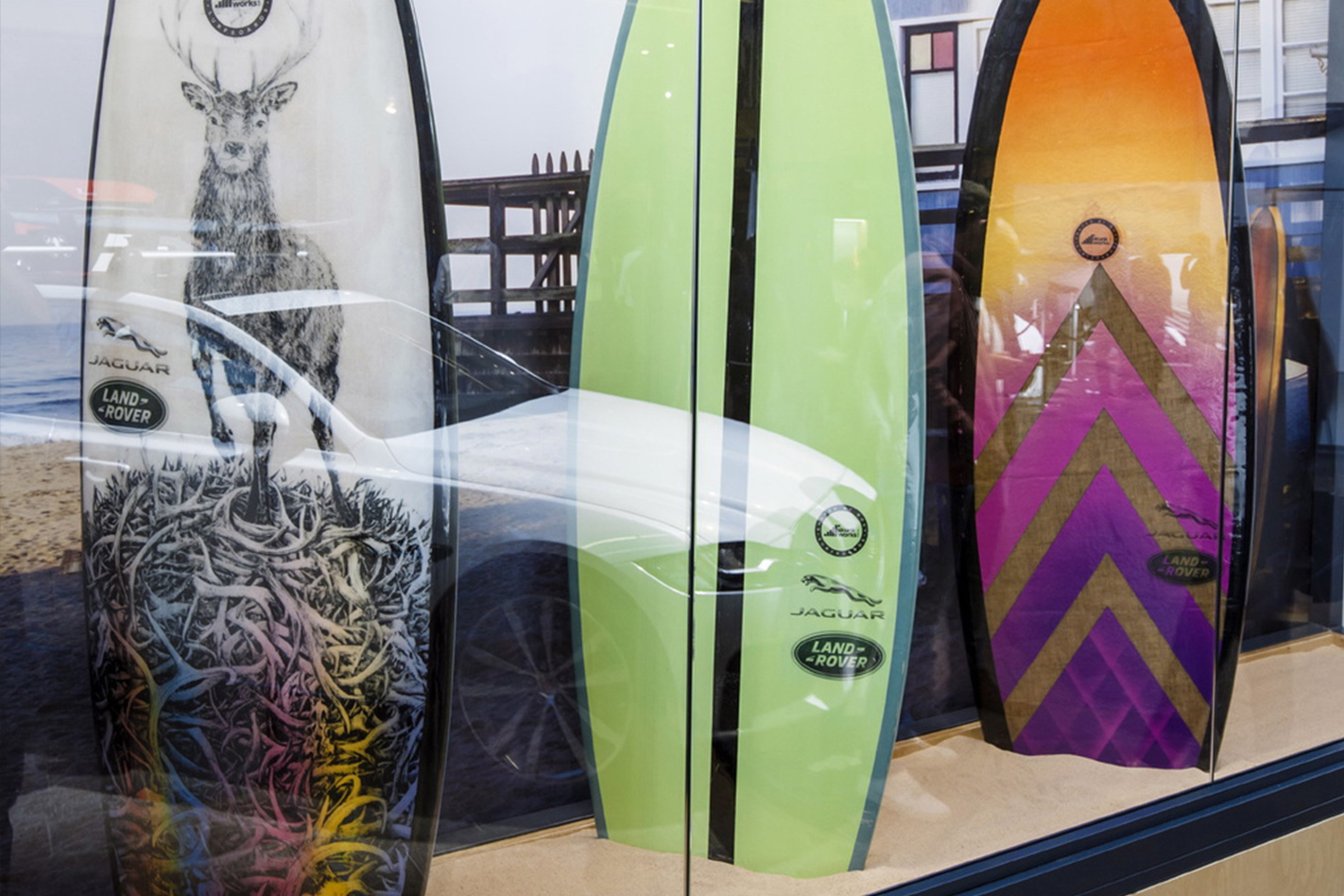
The very first surfboard was created from a Discovery Sport clay model that was broken down in June 2017. Wheels spoke to SkunkWorks’ Ashley Douglas, who was displaying the first board concepts at Jaguar’s Tech Fest in London. “We’ve created a range of high-end custom boards. With the denser foams we can build heavier boards for big wave surfing and the lighter PU materials are used for longboards and stand-up paddleboards,” he said. “We can tune the characteristics of each board with carbon-fibre stringers exactly to clients’ needs.”
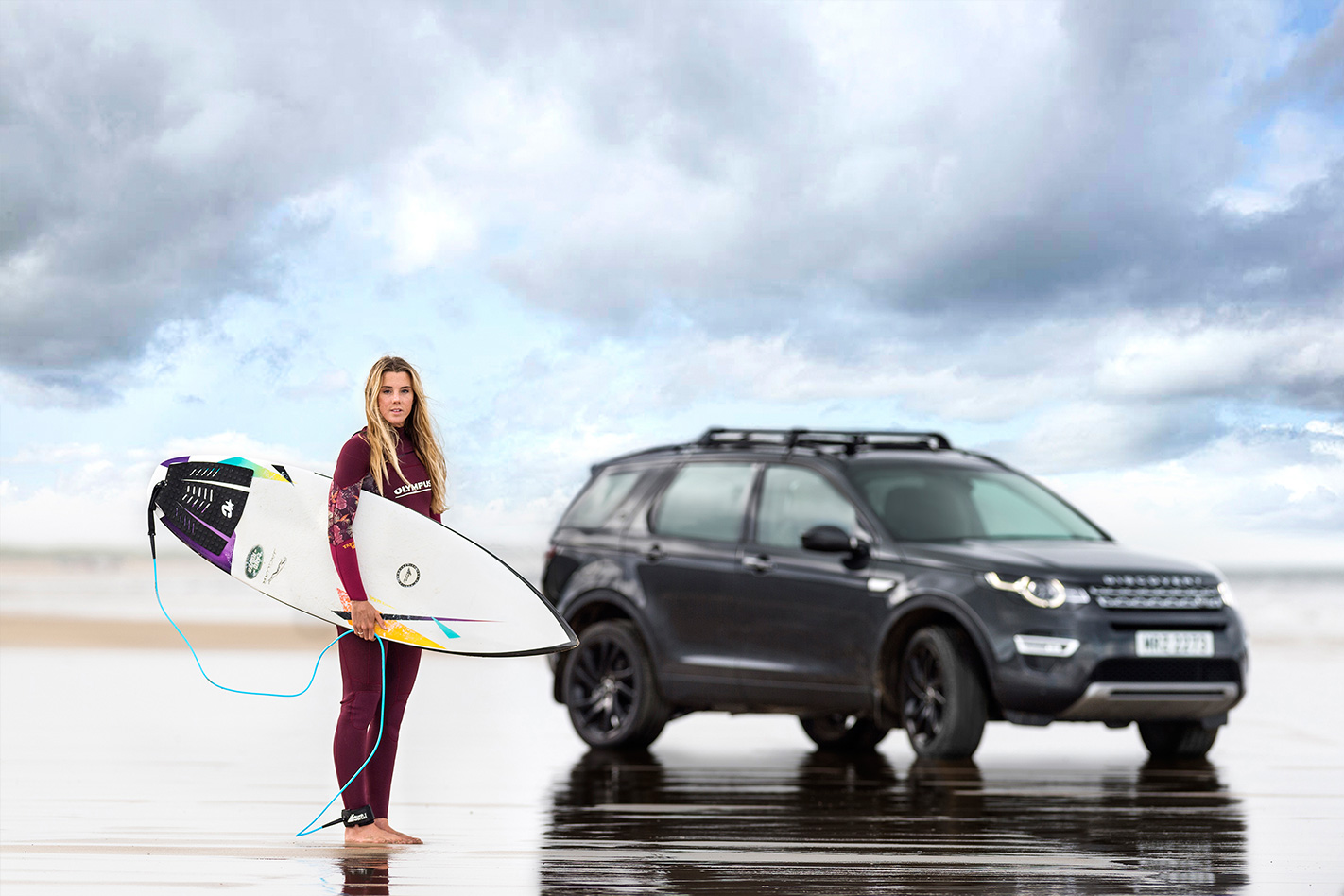
“It saves around 20 tonnes per year from going to landfill and we can make almost a thousand boards from that,” he explained.

50 percent of the aluminium used in the F-Pace is recycled and as a result of its recycling initiative, in 2016, the press shop’s aluminium waste was repurposed to provide enough material (50,000 tonnes) to build 200,000 Jaguar XE body shells. That in turn prevented more than half a million tonnes of carbon dioxide from being released to the atmosphere.

Custom boards range from $1300-$3250 dependent on build/artwork requirements etc. For more details contact www.skunkworkssurf.co.uk
Switzerland is an unlikely venue for the world’s ultimate supercar drag-racing event.
The picturesque country is home to some of the world’s most amazing driving roads yet is infamously intolerant of speed and has banned all forms of motorsport since the 1955 Le Mans disaster.
Nonetheless, it recently hosted one of the most jaw-dropping collections of supercars and hypercars we’ve ever seen in the small village of Andermatt.
Organised by The Supercar Owners’ Circle, which describes itself as “A global network of the world’s most discerning car collectors” the event gathered together an array of cars rarely seen outside a Forza Motorsport garage.
To give you a taste of the incredible variety and quality of the assembled vehicles there is a selection below, but so many we’ve needed to categorise them by era.
One-offs
Ferrari F12 TRS, Aston Martin GT12 Roadster, Aston Martin Virage Shooting Brake Zagato

Aston Martin GT8, Dodge Viper ACR, Ferrari LaFerrari FXX K, Ferrari LaFerrari Aperta, Ferrari 812 Superfast, Ferrari F12tdf, Lamborghini Aventador S, Lamborghini Aventador SV, McLaren 720S, Mercedes-Maybach G650 Laundaulet, Porsche 911R

Ferrari 458 Speciale, McLaren P1, Mercedes-Benz SLS AMG Black Series, Mercedes-Benz SLS AMG GT3, Porsche 911 GT2 RS, Porsche 918 Spyder, RUF CTR3

Aston Martin One-77, Ferrari Enzo, Ford GT, Koenigsegg CCX, Maserati MC12, Mercedes-Benz CLK GTR, Mercedes-Benz SL65 AMG Black Series, Mercedes-McLaren SLR Roadster, Pagani Zonda F, Porsche 911 GT1, Porsche Carrera GT

Ferrari 250 SWB, Ferrari 275 GTB, Ferrari 330 GT, Jaguar E-Type Lightweight, Lamborghini Miura, Porsche 959
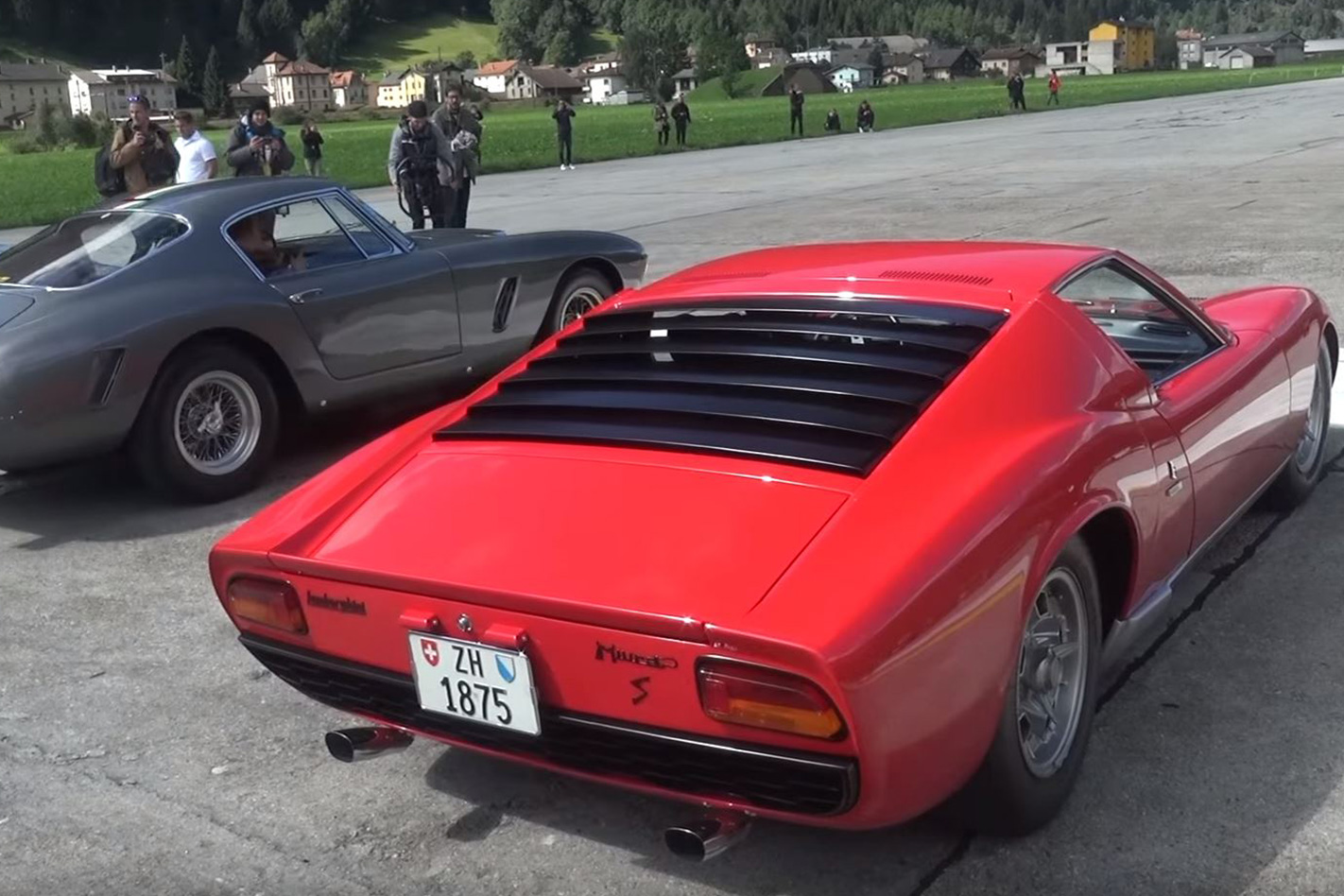
For instance, the last time a Mercedes-Benz CLK GTR and Porsche 911 GT1 faced off was probably during the 1998 FIA GT championship.
Michael Caruso’s Altima will hit the upcoming Sandown 500 with ‘Calsonic’ printed down its flanks. But there is only one blue-and-white touring car that gives us shivers at full noise.
The Calsonic R32 GT-R was the most successful example of a dominant species. And thanks to the recent Nismo festival in Japan, it was wheeled out for old time’s sake on Fuji Raceway for a punt in front of adoring fans.
With a very, very long circuit at Fuji, someone also cleverly stuck a GoPro inside the thing to give us a fist-hand view of Kazuyoshi Hoshino at work on the six-speed dog ’box.
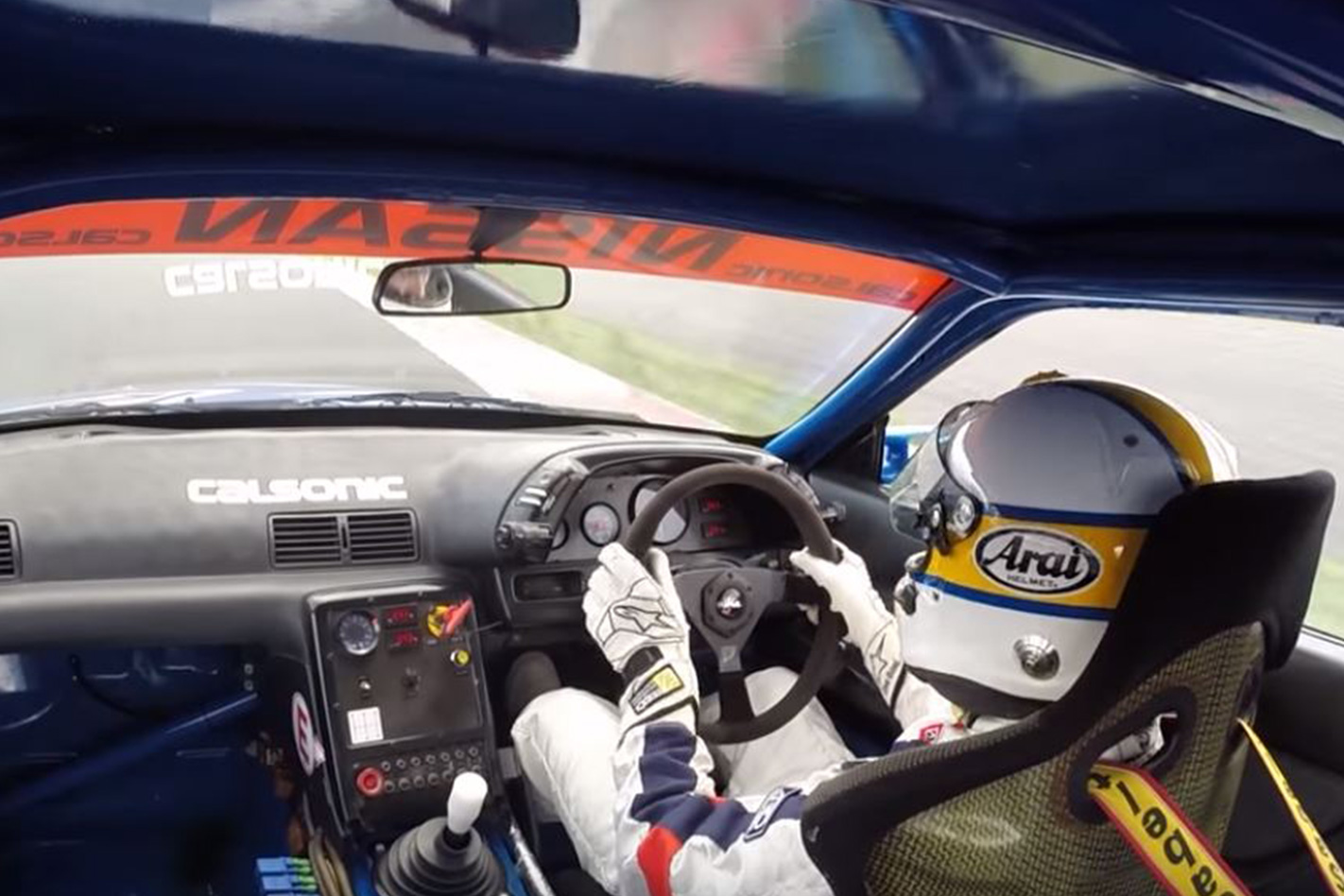
This also saw Impul bookmark the R32 GT-R’s involvement in local touring car racing with title wins in 1990 and in 1993. Until Group A regulations were phased out in 1994 and Godzilla’s legend was cemented in history.
Did we mention the car’s final race was on the very track it’s screaming around in this video? Yep, this is as nostalgic for Japanese race fans as Skaife popping around Bathurst in the Gibson Motorsport’s car would be for us today.
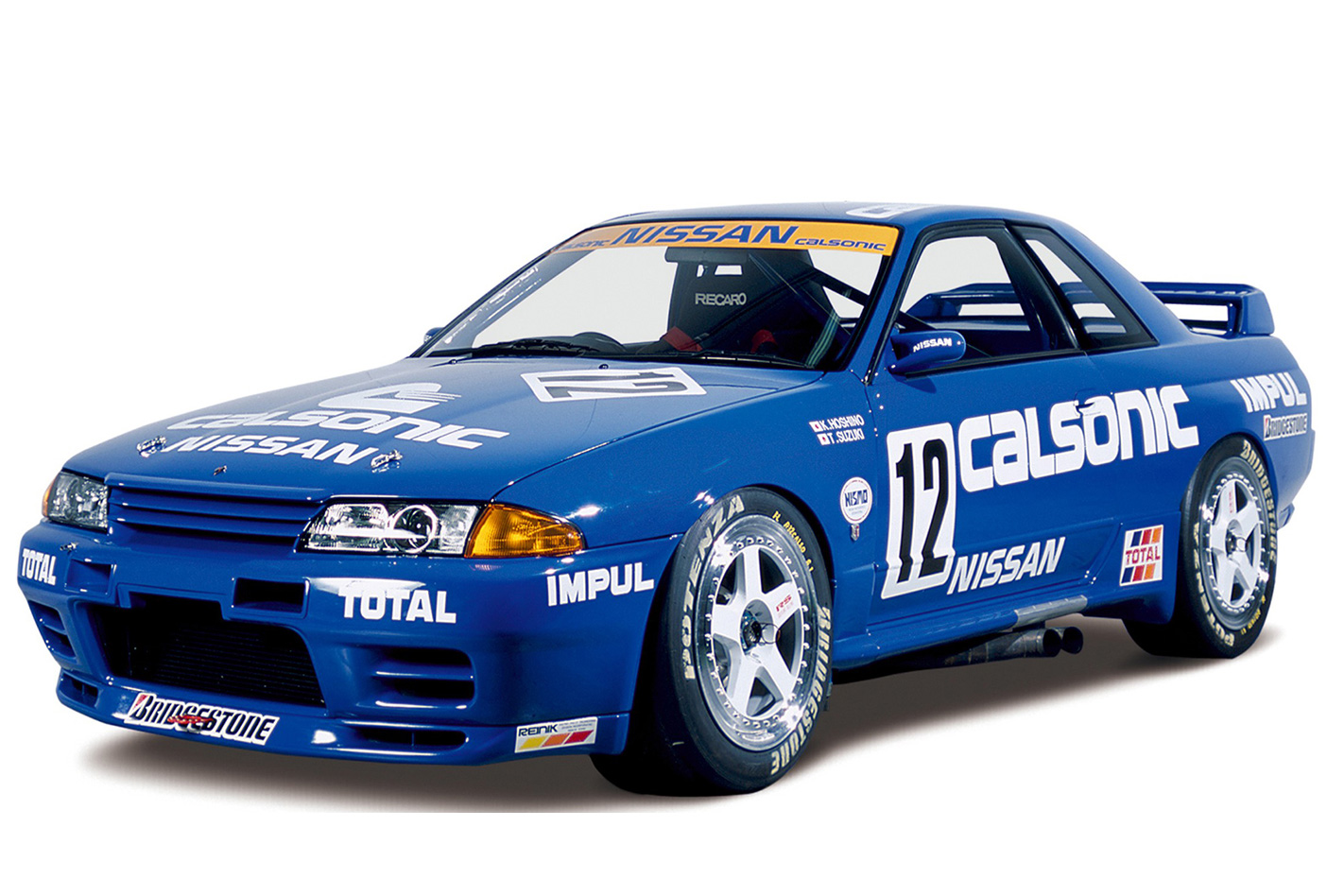
No punter would have been able to replicate the crushing pace of these cars around a circuit, but its low-tech aero package, gutted interior, and engine were easily mimicked.
So scroll up and relive such revered simplicity above.
It was Luffy who hit the nail on the head regarding the Caterham.
I could quote him, but he was speaking fluent Gold Coast, so I’ll paraphrase: Back when brakes were hopeless and tyres were rubbish, there was a valid point to making something as light as the Caterham. But these days, it’s difficult to see past the compromises that insistence on lightness brings with it.
Maybe cars like the Caterham have seen their use-by-date come and go. Maybe we don’t have to be so bloody minded these days and, in the process, we can move on to cars that offer a much more rounded skill-set while still being great track-day cars.
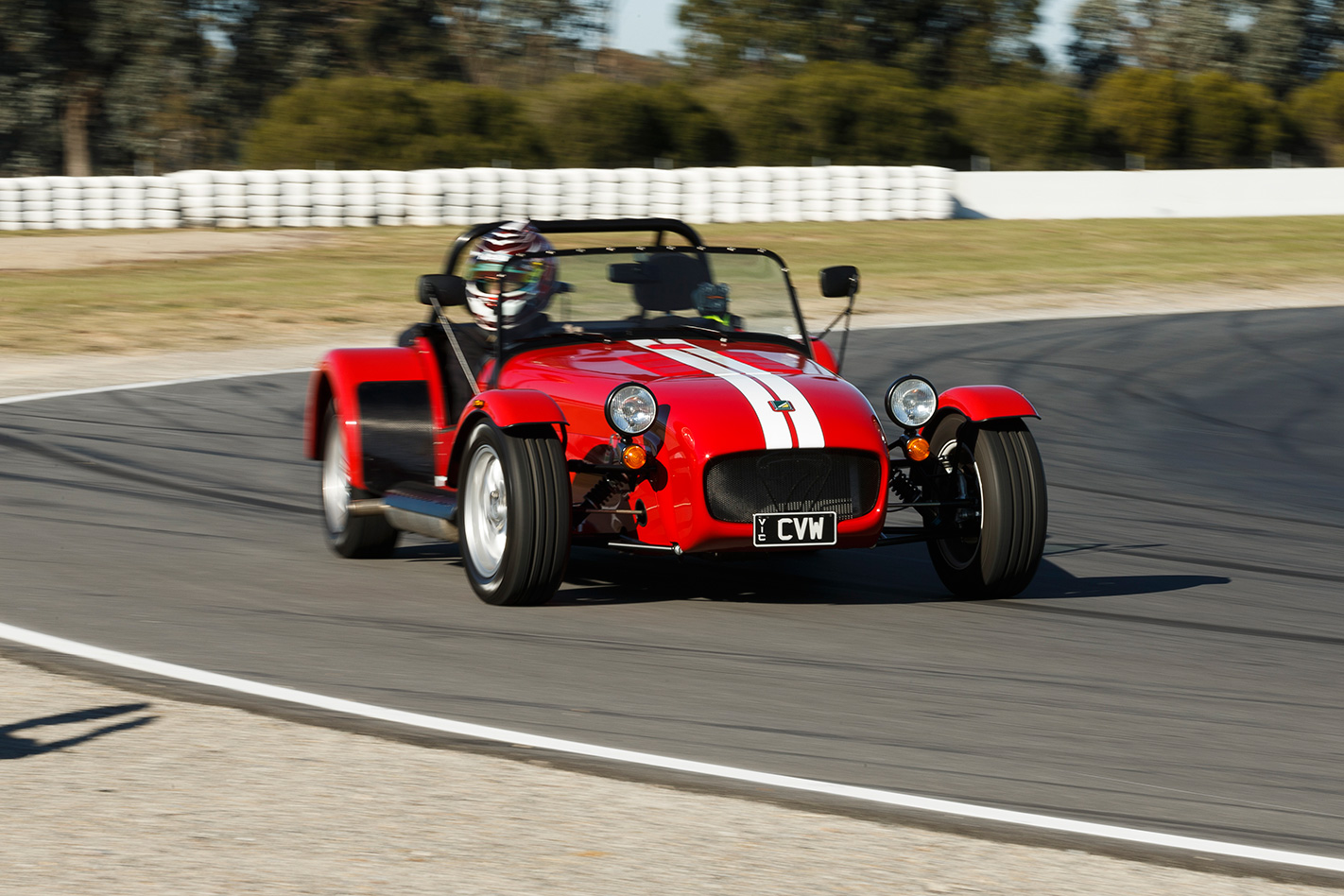
It’s roofless, tiny, responsive, loud and tactile as all get out with its unassisted steering and bum-on-the-deck driving position. But while those attributes haven’t gone away, they don’t actually mean squat when the BFYB formula shakes things out.
Just as it makes no difference to the BFYB gods that an SS Ute can carry a whole pallet of dog food, neither do they give a toss that the Caterham weighs just 675kg and indulges your fighter-ace fantasies. See, at the end of the day, the Caterham just wasn’t that fast.
Or quick, as it turned out. Its 0-100 time of 6.5 speaks of that legendary lack of kerb mass, but by the time 400m have passed under its lovely little alloys, the lack of top-end urge and the aerodynamics of a lunch box with wing-mirrors take their toll, and the 275 is right back in the last handful of stragglers with a terminal velocity to match.
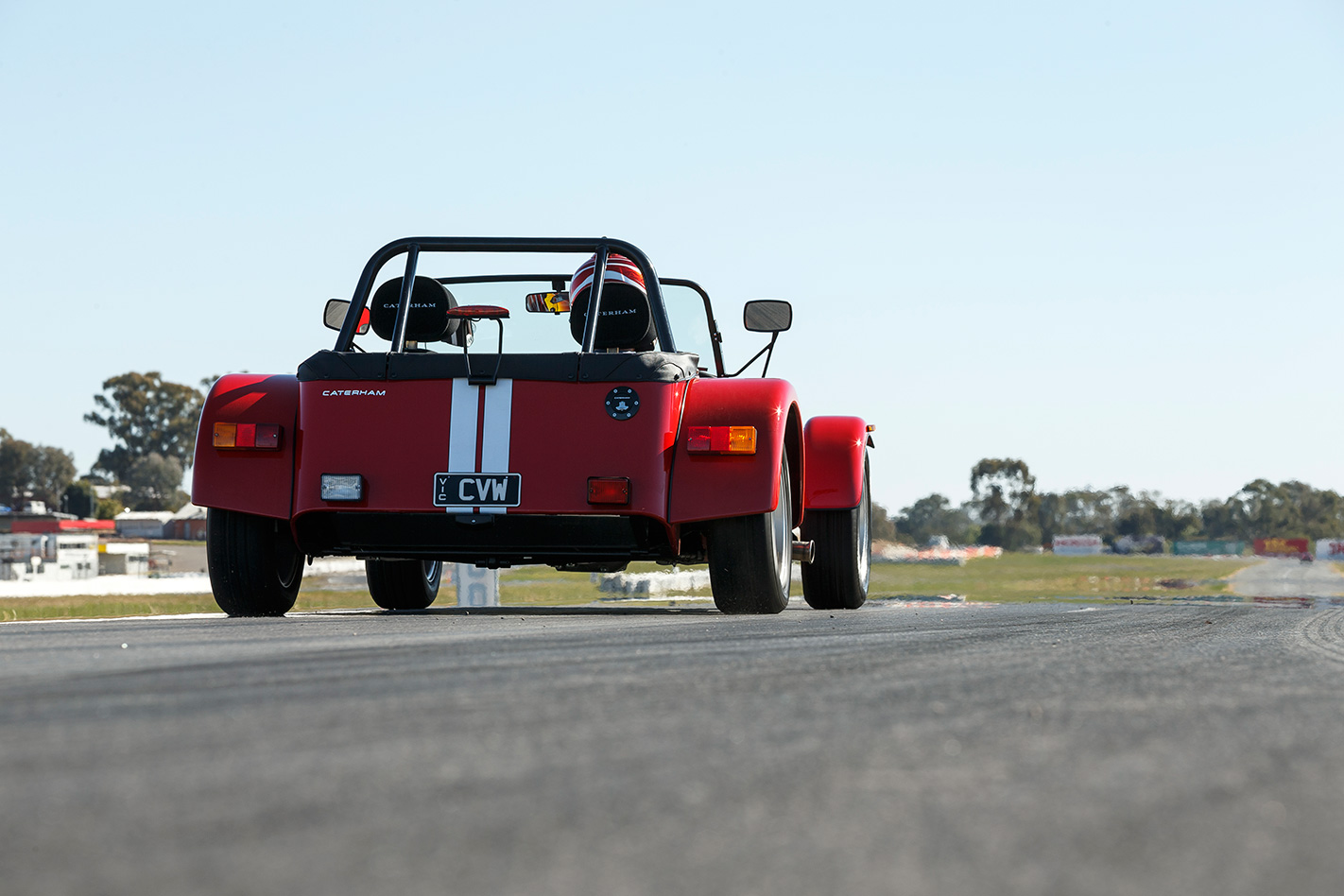
Truly, if ever the Caterham was going to shine, it should have been in the tight, gnarly stuff for which Winton is (in)famous. Don’t get us wrong, if that olde worlde, wind in yer hair, back-to-basics vibe is your thing, then nothing else here (or anywhere else) will deliver like the Caterham. But a BFYB hero it is not.
Specs: Engine: 1596cc inline-4cyl, DOHC, 16v Power: 100kW @ 6800rpm Torque: 160Nm @ 4100rpm Weight: 675kg
Times 0-100km/h: 6.53sec (7th) 0-400m: 14.80sec @ 147.05km/h (7th) Lap Time: 1:44.4sec (8th)
Warren Luff says “I get the concept, but I’m just not a fan of them. They’re not that fast, they don’t handle that well, they don’t brake that well, and then you look at the other BFYB cars that are probably three times the weight, but still handle and stop a lot better than it.
In terms of open-top motoring they’re great fun. But for me if I want to have exposed motoring and go fast I think I’d go and buy a motorbike. For the absolute enthusiast who wants to drive it every couple of months, go ahead, you’ll have a lot of fun with it.”
Judges notes David Morley – 6th: “I have to question its relevance in 2017. Needs to be faster” Dylan Campbell – 6th: “Feels faster than it is, and huge fun, but I wouldn’t drive home in it” Louis Cordony – 7th: “Cackle-inducing fun but ultimately a flawed gadget” Tim Robson – 8th: “I didn’t mind it – but I take Morley’s point; it should rip your face off”
THE GOODWOOD time warp and tweed festival (aka the Goodwood Revival), was held over the weekend, and as you’d expect it was excellent.
The event was filled to the brim with top-notch classic racing amidst a joyous atmosphere that celebrated all things stylishly retro and classy motoring.
One of the nasty side effects of classic motorsport however, is that you tend to bend some very expensive cars, such as a Ferrari 250 GTO that was estimated to be worth upwards of $50 million.
Owned by Anthony Bamford, and driven by Andrew Newall and Frank Tippler, the ’64 250 GTO ended up in the barriers during practice for the RAC Club TT race after an evasive action to dodge the 250LM driven by Chris Harris.
But don’t despair, as while it may bring a tear to your eye seeing such a beautiful machine crash, it was being used exactly as Enzo himself would have intended – and repair costs are likely to be just a fraction of the car’s worth.
To help raise your spirits, enjoy this fantastic onboard footage of the car at full chat around the Goodwood circuit.
While the now slightly bent Ferrari is a legitimate 250 GTO, a couple of other cars that were at the event were in fact replicas – fooling at least one high-profile vlogger.
Other highlights from the event included this stonking stoush between a gaggle of Jaguars and Cobras.
Unfortunately the weather turned rather foul partway through the weekend, resulting in some rather tricky conditions. Nevertheless, the drivers persisted.
Praise be to the Goodwood Revival, and all the legendary owners and drivers that take part in it every year.
Good news, everyone! TVR is back, with the freshly announced TVR Griffith.
With a body envisioned by race car designer Gordon Murray and a specs sheet that screams ‘British sports car’, the Griffith heralds TVR’s return to the road after a long hiatus.
When piecing the TVR Griffith together in its development stages, the brand says it had to consist of the ‘essential criteria’ under wraps.
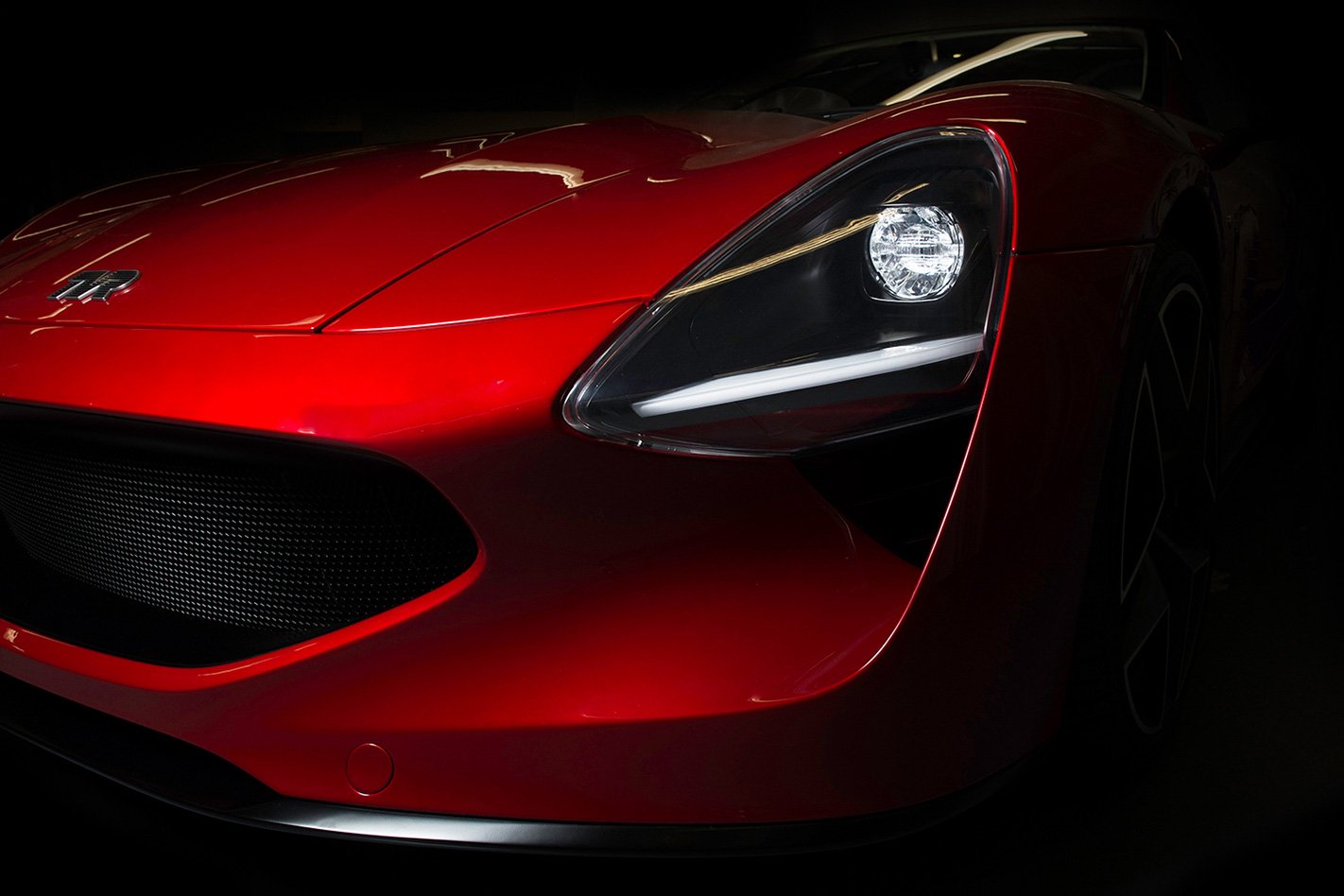
Additionally, TVR says it must be “breathtaking in appearance and performance.”
That V8, it turns out, will be a Ford 5.0-litre, that usually found in the Ford Mustang, though this time it’s been tuned by Cosworth. It’s been given a dry-sump, with a custom clutch, flywheel and ECU pushing more power through its 6-Speed Tremec gearbox.
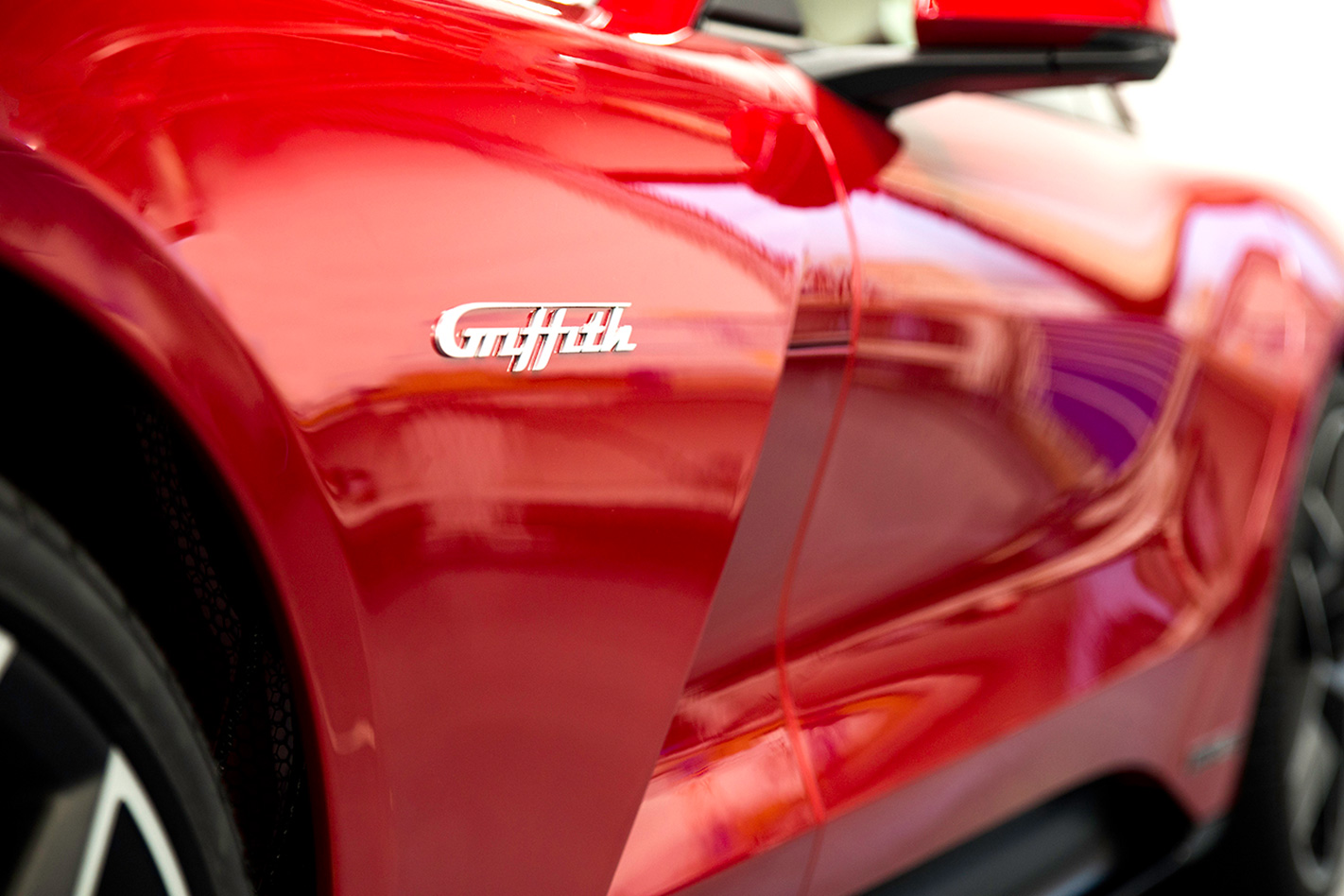
This has in part been achieved through Gordon Murray’s ‘iStream’ design process which, in short, is a way of ensuring as little weight is added to the car as possible while also keeping the car as safe as it can be.
On that note, the new TVR Griffith will have airbags, ABS and ESP. It’s 2017, after all.
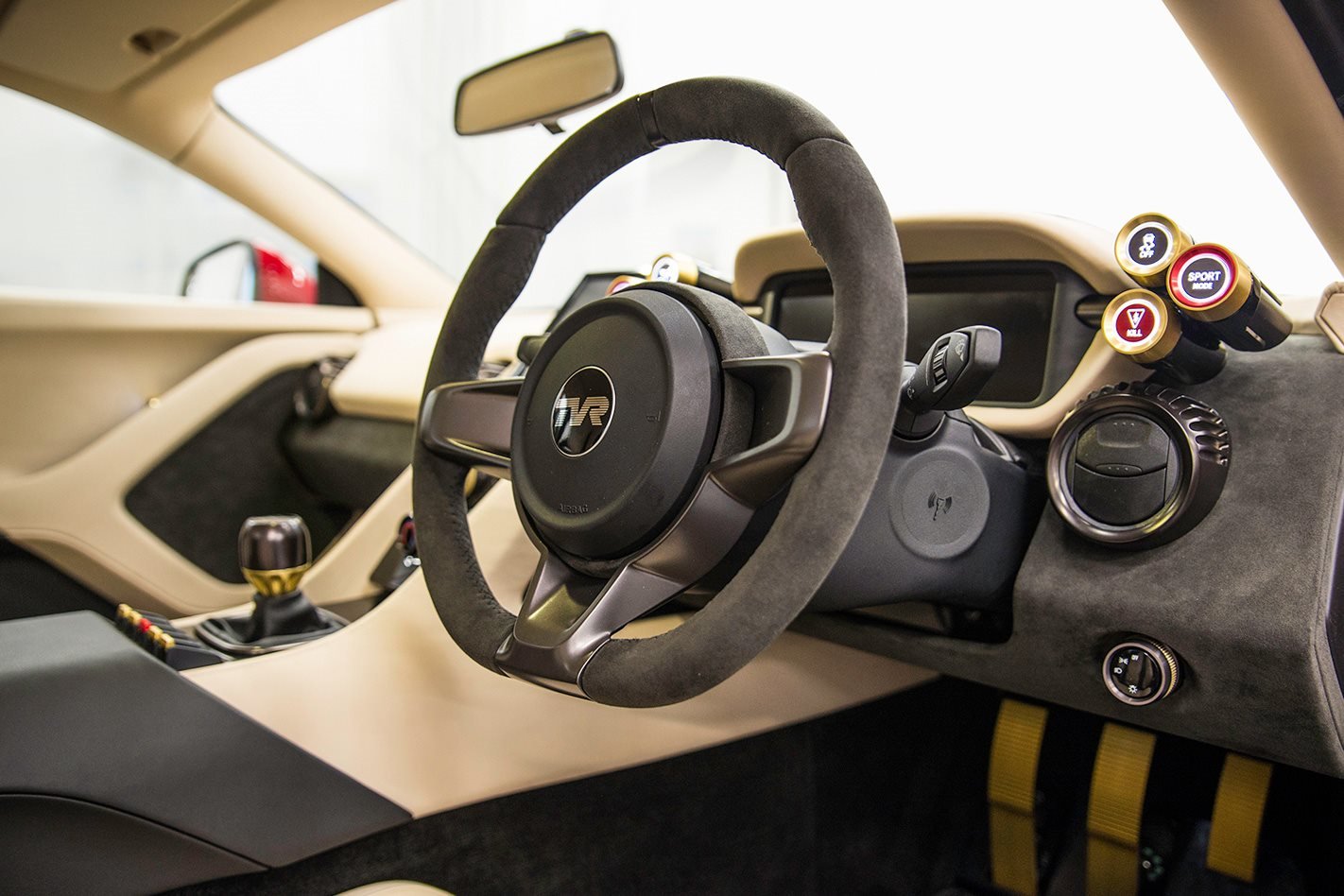
To get your hands on a new Griffith, being in the UK would be a good start. In addition, a bank balance of more than £90,000 (or $147,500) would also help, though at first only 500 ‘Launch Edition’ cars will be available, meaning buyers will be scrambling to pick up the first TVR that’s been available for years.
