
PORSCHE’S new performance-preferencing hybrid strategy will follow the Panamera Turbo S E-Hybrid into other driver-focused models, and the iconic 911 has not been ruled out as part of the plan.
The flagship version of Porsche’s large luxury sedan leads the charge into hi-po hybrid territory and owes some of its DNA to the mighty 918 Spyder supercar, says Porsche, but the door is now open for the company’s first hybrid sports car to follow the Panamera’s lead.
Speaking at the Porsche Panamera Turbo S E-Hybrid’s global launch in Canada, Porsche global technical communications manager Herman-Josef Stappen said a 911 S E-Hybrid was on the wishlist but the company still needed to jump a number of critical hurdles.
“I think we can do it,” he said. “From a technological point of view it’s easy. You have the high-performance sportscar in the 918 Spyder so you can use the components and the knowhow to do this to the 911, but we are thinking about how many cars can we sell and will our customers accept it.”
“They (engineers) are looking at it constantly but it’s not decided yet.”

According to Porsche’s development team, the company is researching new lighter materials for both battery and motor technology but, for now, lithium ion cell systems represent the way forward.
A hybrid 911 is also dependent on maintaining a two-plus-two seating configuration, which Stappen explained is important to many 911 owners. The space behind the front seats would be one obvious location for hybrid batteries, but would likely eliminate the rear seats as a consequence.
Instead, Stappen hinted that a mid-engined hybrid such as the Cayman or Boxster might surface before an electron-burning 911.
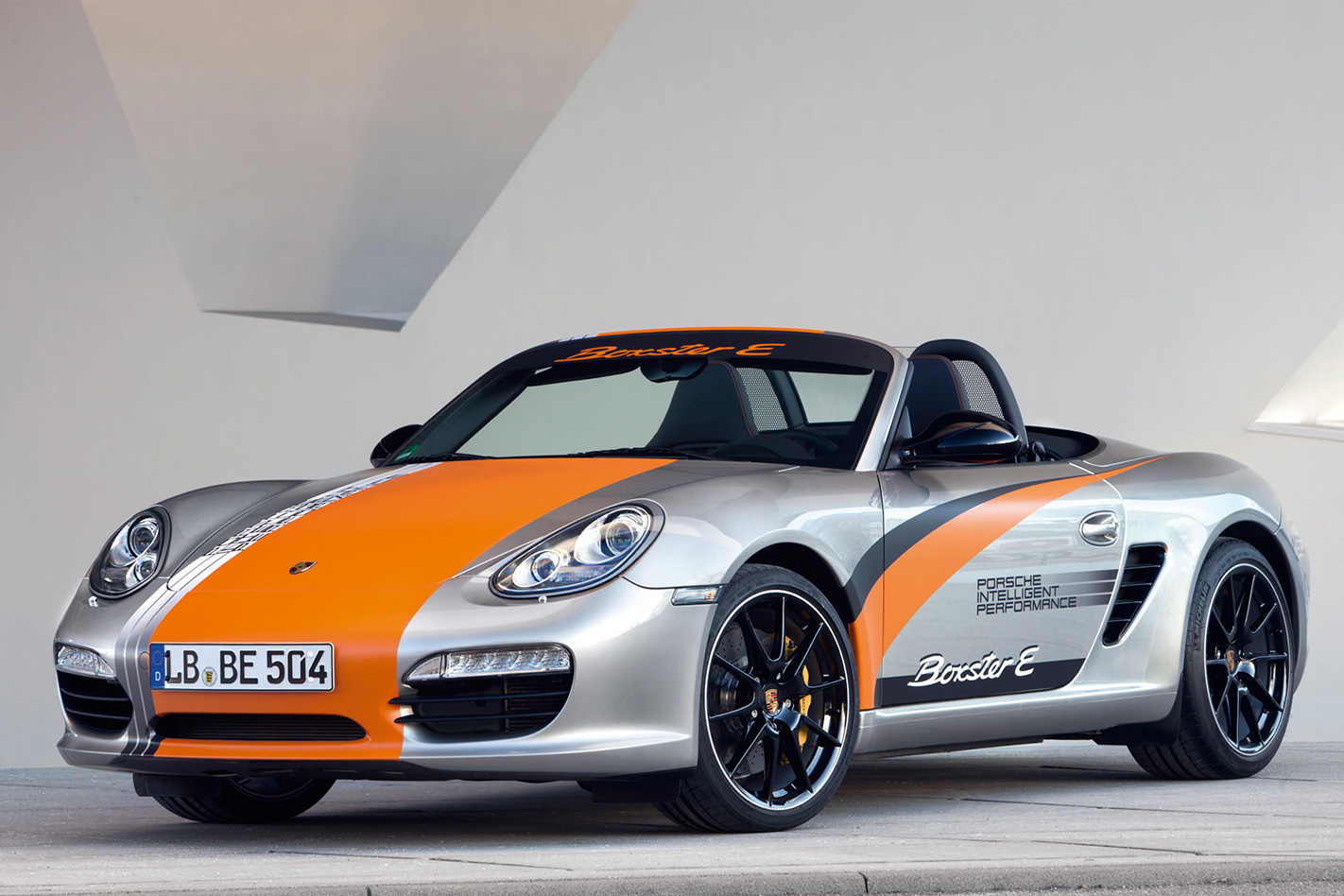
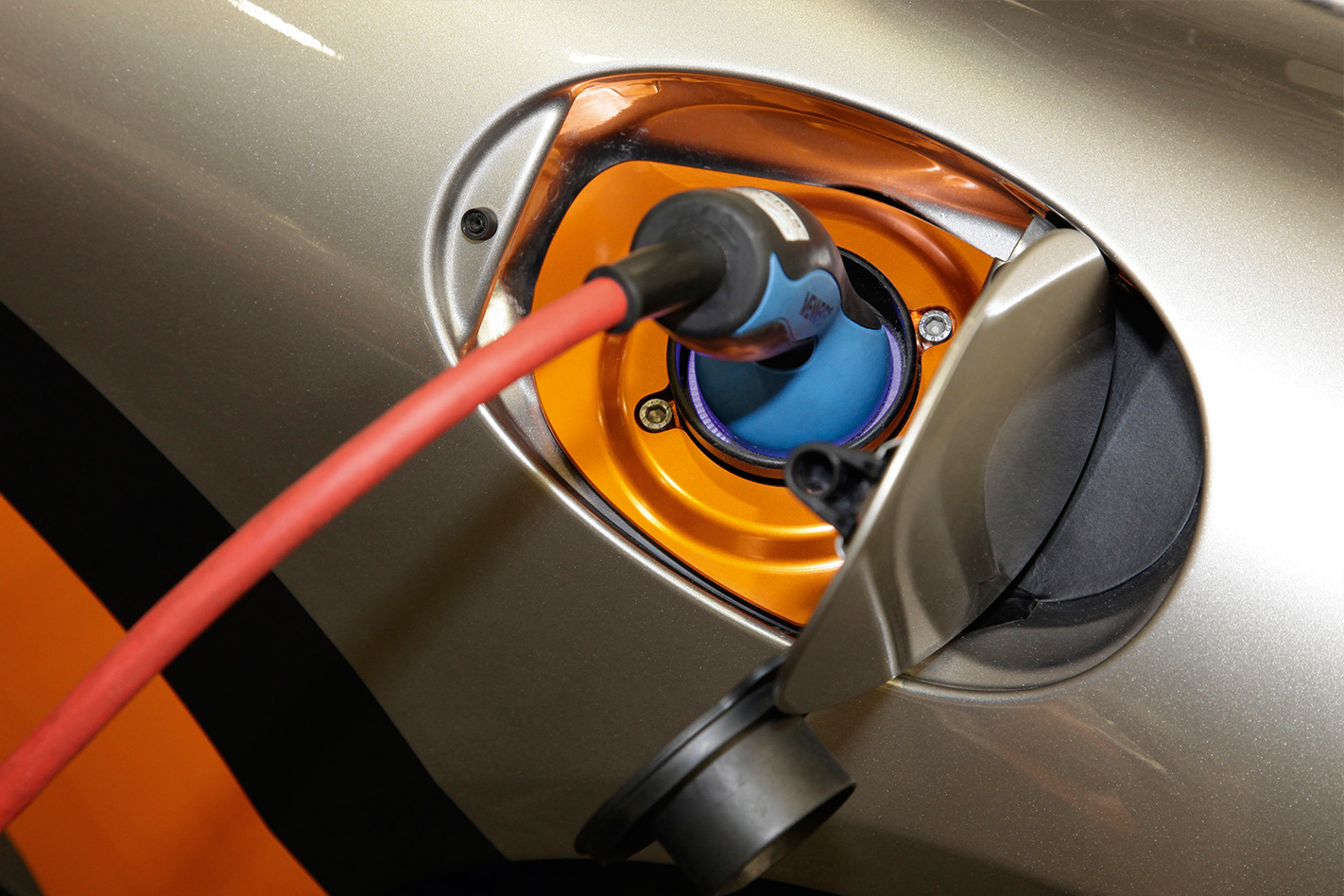
The company has already hinted at it its intent to electrify the two-seater convertible with the Boxter E-Mobility concept which followed a pair of 987 Boxster electric prototypes in 2011.
Unlike the Panamera, which is a relative newcomer to the Porsche family, Stappen said customers may be harder to convince with a hybridised version of such a celebrated and longstanding model, but the 911 has previously successfully endured significant changes such as the switch to liquid cooled engines and, more recently, widespread turbocharging.
“If we bring a hybrid 911 it will be the best 911 ever.”
Before the decade is out Porsche will deliver its first pure EV, derived from the Mission E concept – another vehicle that prioritises high performance over environmental friendliness.
Beyond that, the next generation Cayenne and Macan SUVs are also likely candidates for electrification, adding more plug-in hybrid choices to the Porsche ranks.
SAY you had a personal two car garage with one spot for a daily driver and a second spot for a toy, and that second car had to be something that first launched in the year of your birth… what would it be?
That was the innocent enough question posed in a daily news meeting here at Wheels. The arguments that ensued put paid to productivity as the office descended into automotive one-upmanship. It was good fun, so we’re putting it to you to share in the amusement.
The rules are simple; pick the one car you would most want in the garage that’s first year of production/sale matches your year of birth. Price, rarity, and local availability are irrelevant. Oh, and it has to be road-legal.
Below are the choices of our Melbourne staffers to get you going. Let us know in the comments (or on Facebook), which car from your birth year is the object of your desire. If your answers are awesome, we’ll find prizes for the best ones. Good luck!
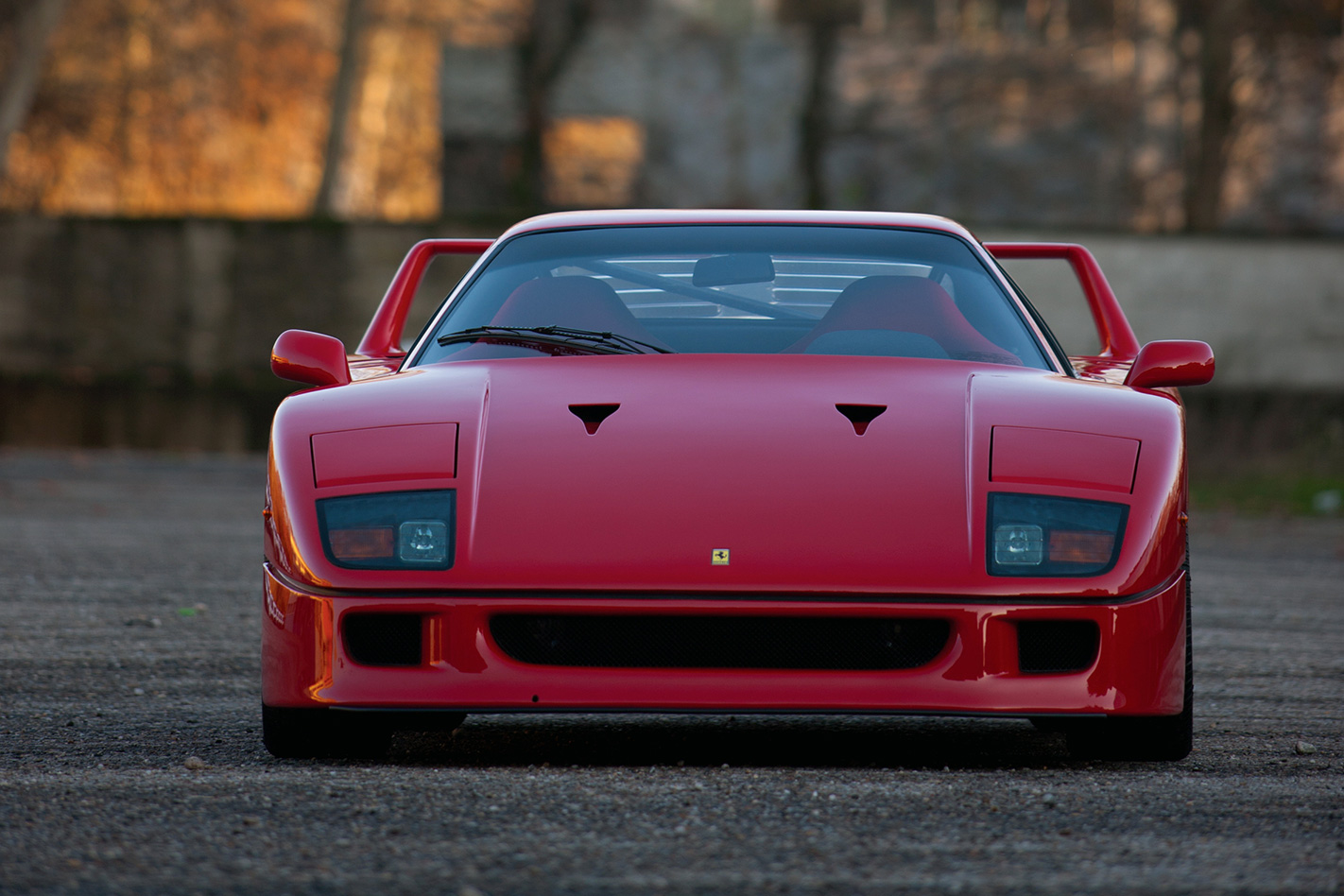
1987 Ferrari F40 – Alex Inwood – Editor
It almost seems too obvious a choice, but is there anything else from 1987 that can really trump an F40 in this game? As a bloke born and raised in Bathurst, the other car I considered was Holden’s Brock-beater, the HSV VL SS Group A ‘Walkinshaw’, which was on the cover of the December 1987 issue of Wheels – the one that was on newsstands when I was born. We drove it in prototype form, and it was shown at the Sydney motor show that year, but it didn’t go on sale until ’88, so my hands are tied. The Ferrari probably would have come out on top anyway.
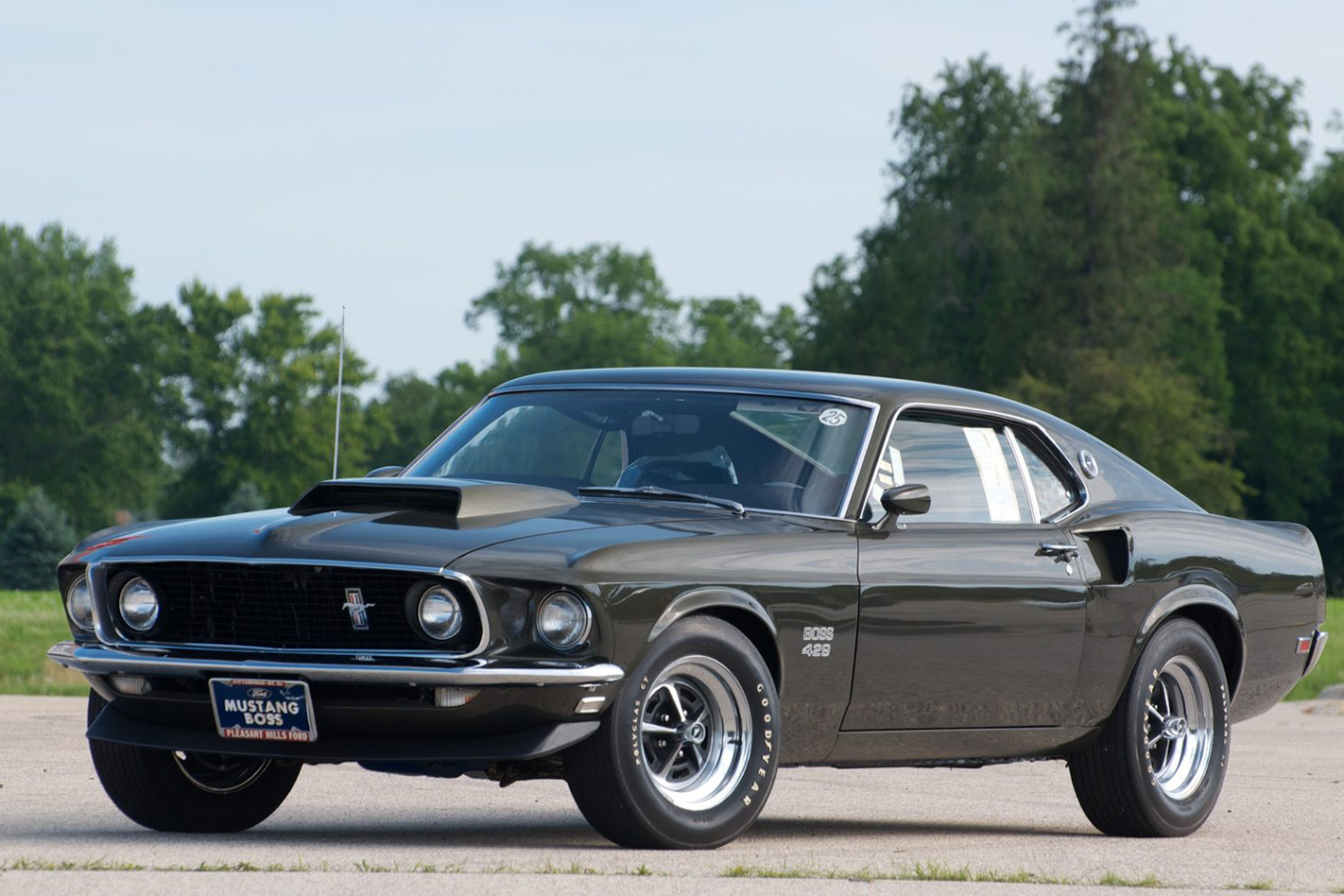
It came down to a chalk and cheese decision; Dino 246GT or Mustang Boss 429? Maybe 1969 wasn’t a vintage year for new car launches, but I’m going full redneck here. It’s hard to argue against the greatest muscle car of all time. With a 7.0-litre V8 cranking out upwards of 600 horses (447kW), Ford’s tribute to Bunkie Knudsen isn’t short of personality. And personality, as we know, goes a long way.
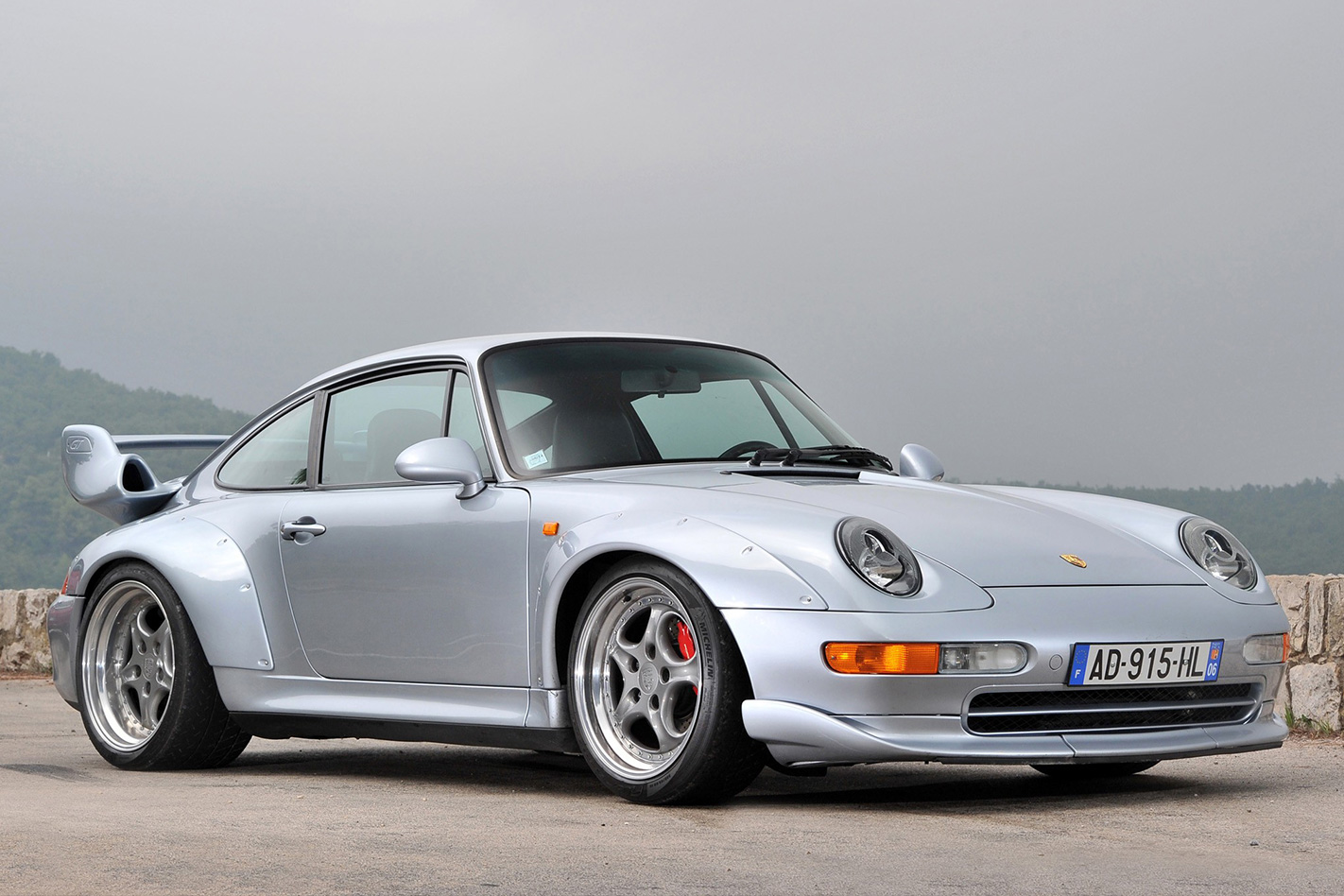
Being motorsport mad, and a fan of anything slightly unhinged, it had to be the 993 911 GT2. Built as a homologation special, it’s uber-rare (only 57 road cars were built), and was designed specifically with domination of GT2 racing in mind, hence the badge. An air-cooled twin-turbo 3.6-litre flat-six, rear-drive, and those iconic flared arches and race-ready wing get me weak at the knees. Luckily price is no object, because one sold at auction for $3 million last year.
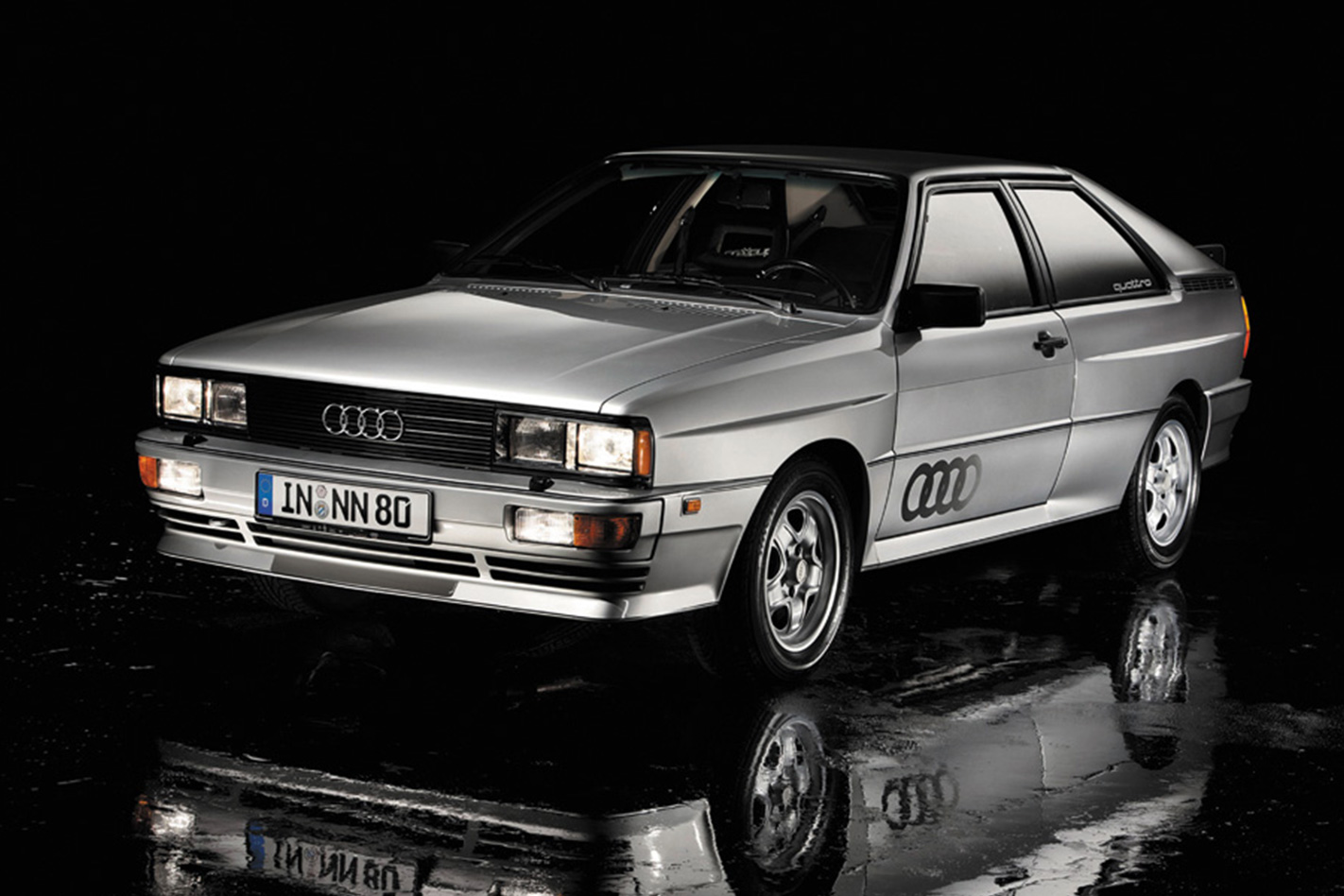
Luckily for me, two incredible things happened in 1980. One of them was the launch of the Ur Audi Quattro. The original Quattro pioneered not one, but two game changing technologies that continue to influence modern cars to this day. Naysayers said its five-cylinder engine wouldn’t balance and the four-wheel drive system was too heavy but they were wrong. Very wrong.
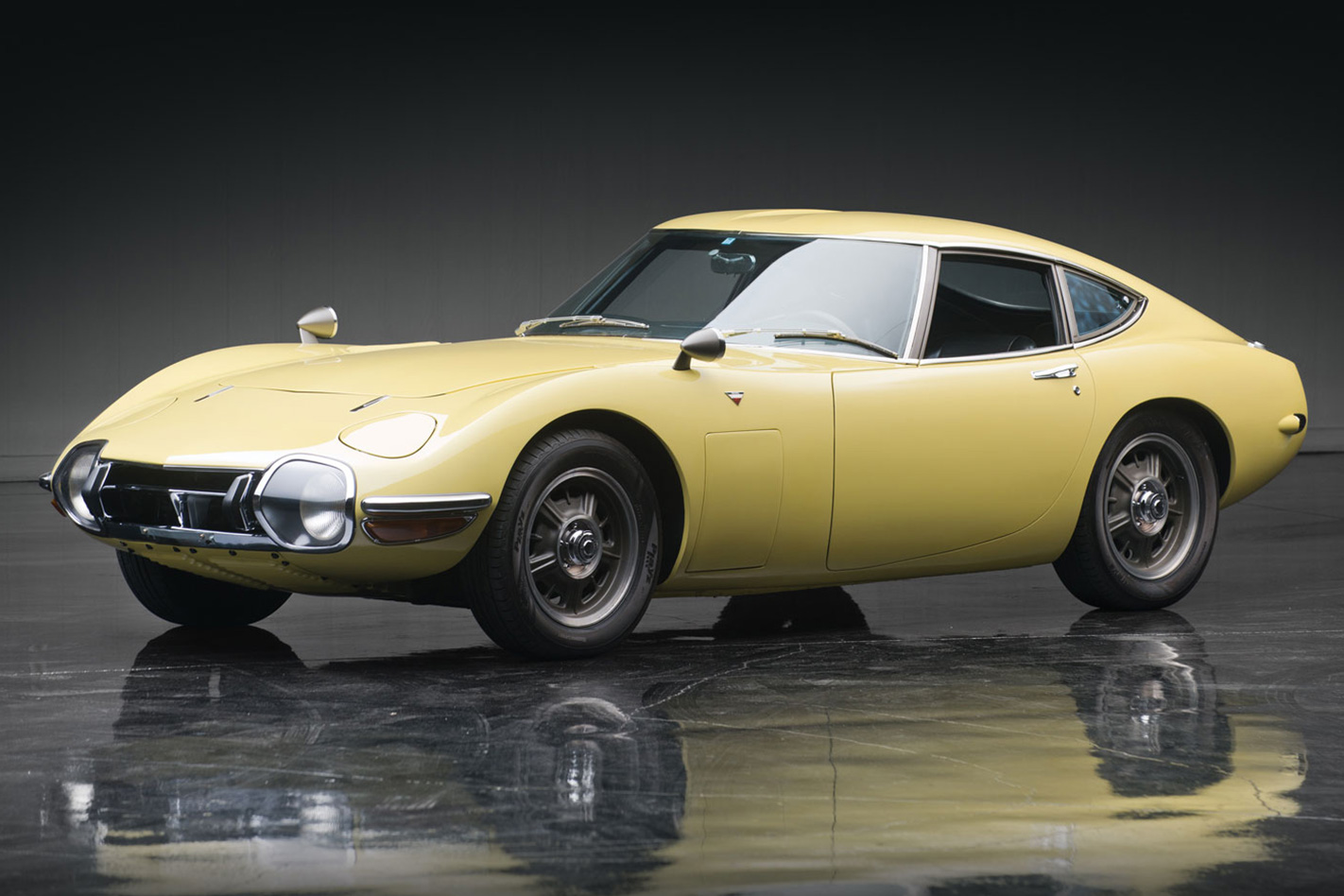
I was born in 1967, the same year as the XR Falcon GT, but I can’t go past the beautiful lines of the Toyota 2000 GT – shades of the Jaguar E-Type, without the oil leaks. OK, so it’s not a powerhouse; its 2.0-litre straight six made 112kW with a new twin-cam head design, but the roadster version was good enough for James Bond and today you’re paying $1 million for a good one.
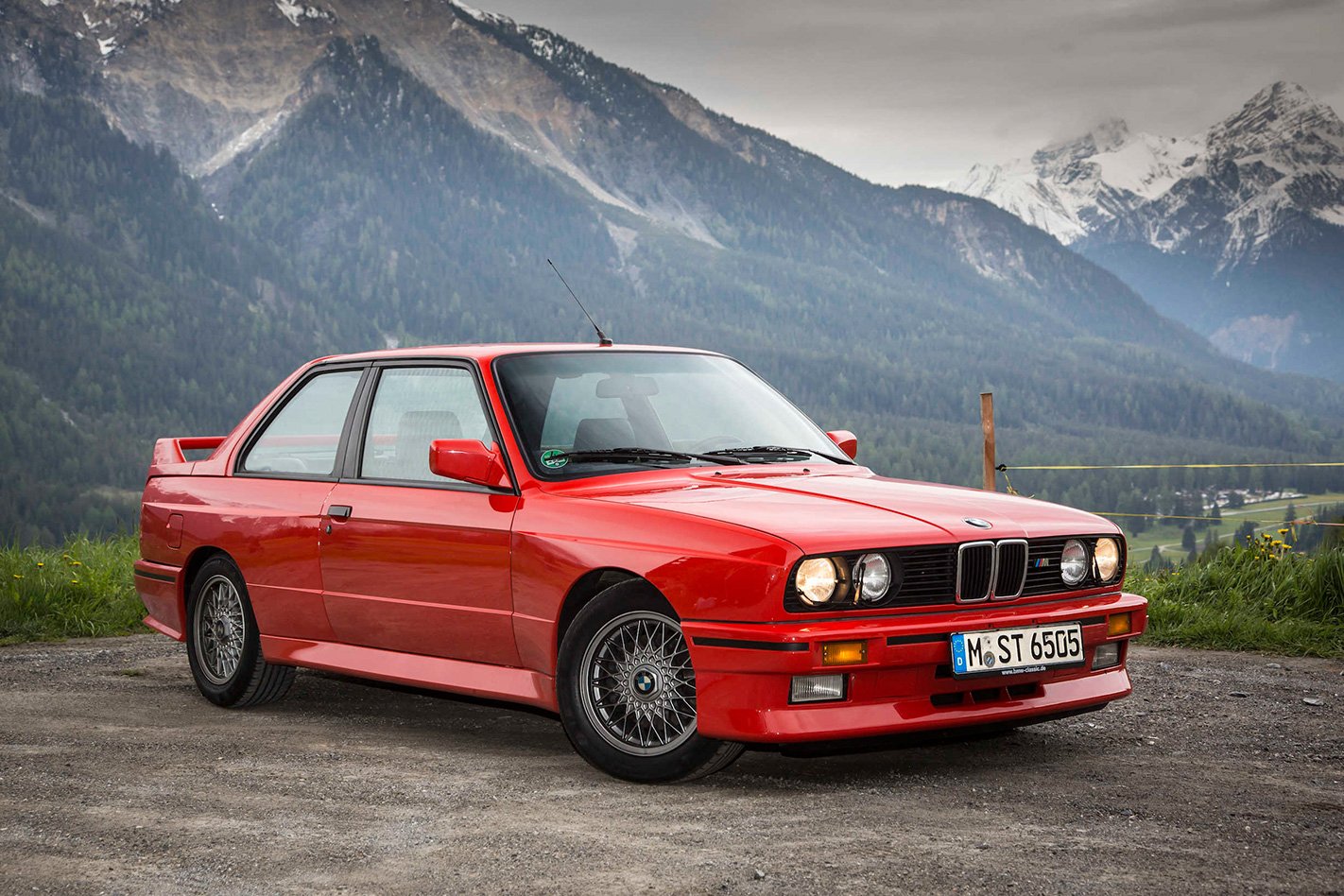
Singling out one car launched in 1986 means cutting some beauties like the Porsche 959, Ford Sierra RS Cosworth and even the Holden Commodore VL Turbo, but if I were rich enough to buy a birth year toy to hang onto, it would have to be a BMW E30 M3. This motorsport marauder made its motor show debut towards the end of 1985, but the first M3 wasn’t released for public consumption until 1986. After that it won everything, and since my first car was a red E30 coupe, the ultimate version of that would be one to keep forever.
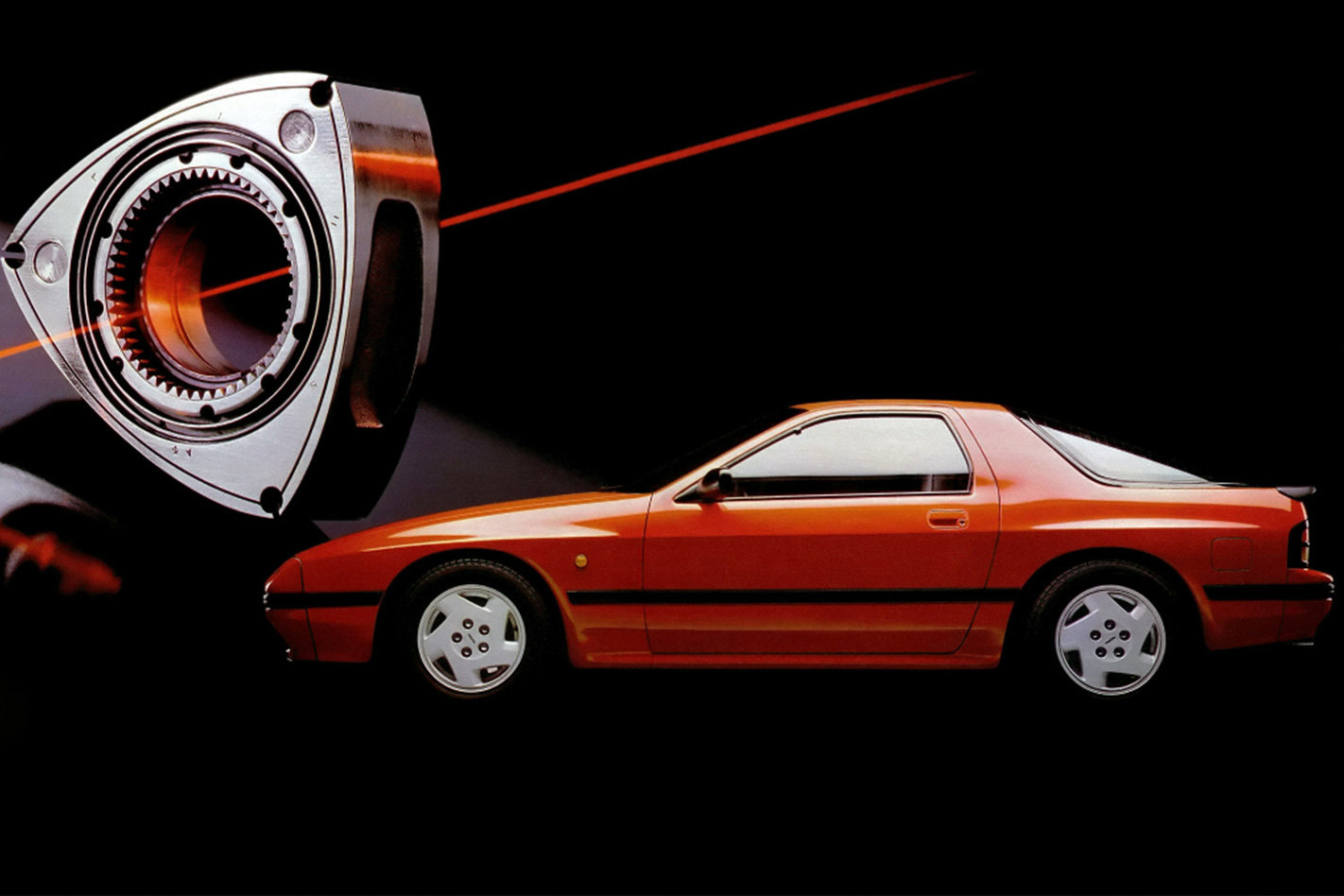
The year 1985 yielded a bumper crop of cool cars, what with the BMW E28 M5, Bentley Turbo R, Honda Integra and Ferrari 328 all making their debuts in the same year Wham! topped the charts with Careless Whisper. But, for me, the pick of the bunch is the Mazda FC RX-7. As a child of the ‘80s its boxy styling appeals to me. As a petrolhead its high-revving rotary engine tugs my… heartstrings even more strongly. Make it the bonnet-scooped turbo version, and I’m truly smitten.
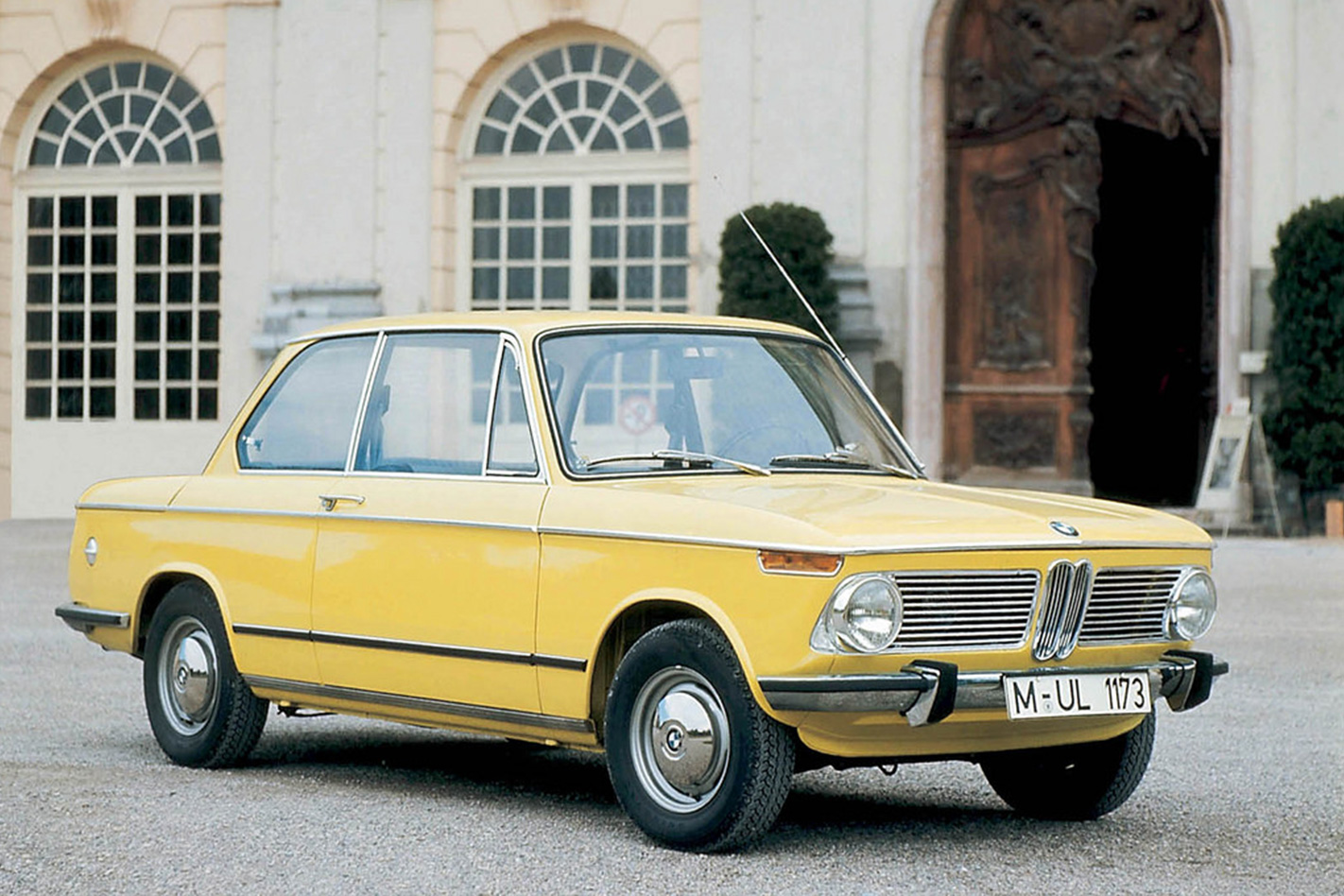
The predecessor to the BMW 3 Series would also go on to spawn the 2002tii and the rare, seriously bonkers 2002 Turbo. BMW thought the 02 Series was so good it built a one-off, modern-day homage to it.
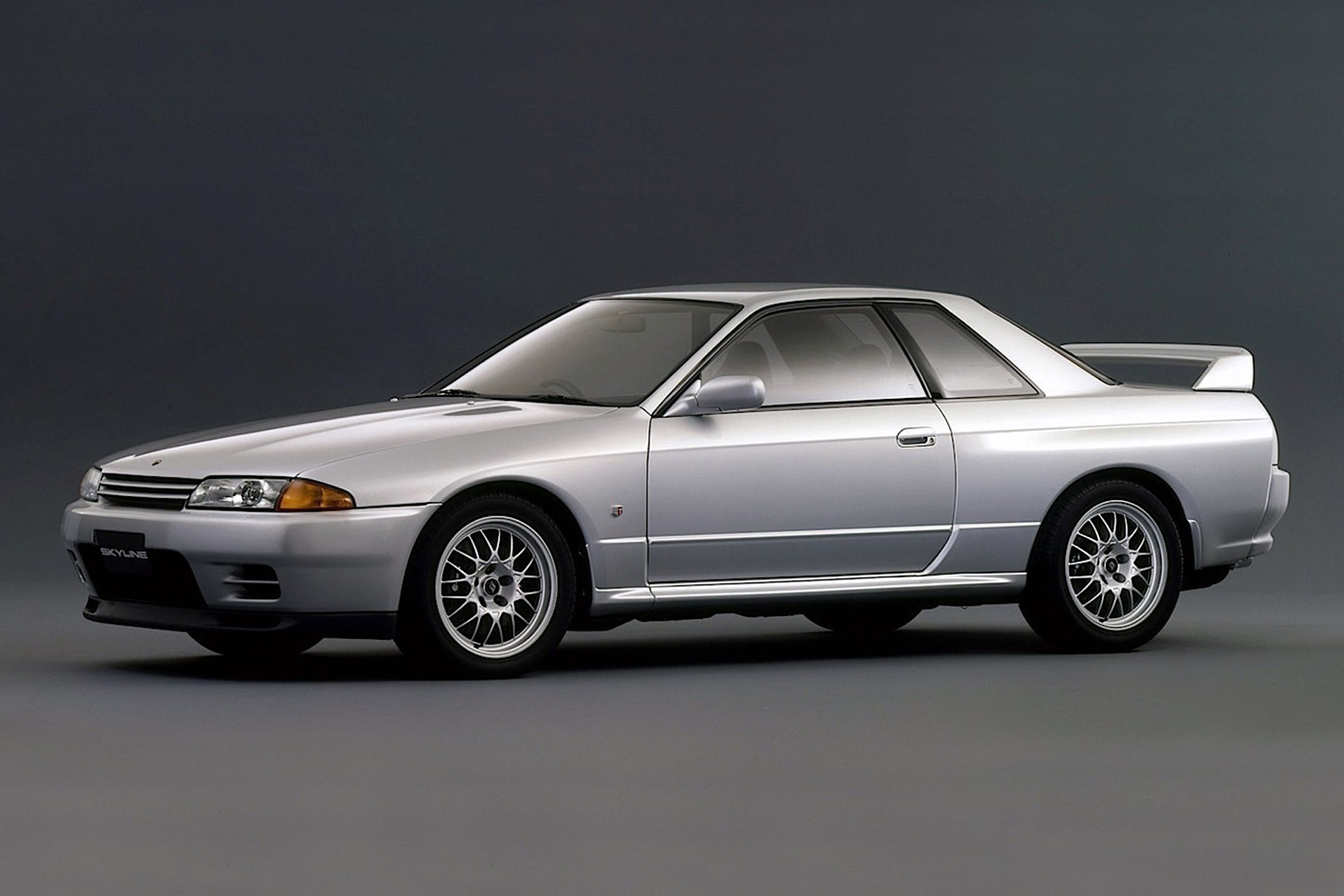
I first saw a GT-R on a lift at the now-defunct ‘N1 Distributions’ tuning shop in Clayton aged seven or eight. Dad had just bought a second-hand BMW E46 M3 and at that point I still thought he (and his car) was a Superman-esque larger-than-life figure. I dismissed the old Nissans as slower than our carbon black spaceship (the driveway previously held an AU Falcon Forte), and my mind exploded when he told me those boxy Japanese things were faster than the Bimmer. Years later it’s all come full circle as I now work at the publication that first coined the term “Godzilla” way back in 1989. The GT-R market today is as overpriced and inaccessible as the property market, but the R32 has always been and will always be the ‘forever’ car.
TESLA’S Model 3 electric sedan is one of the most highly anticipated vehicles of the decade. Ahead of its production reveal last week, there were more than 350,000 pre-orders placed around the world for the unreleased vehicle.
Official details have been released in the wake of a live-streamed event where the company’s founder and CEO Elon Musk handed over the first 30 production models to new owners (largely Tesla and Space X employees). We poured through it all to bring you the important bits.
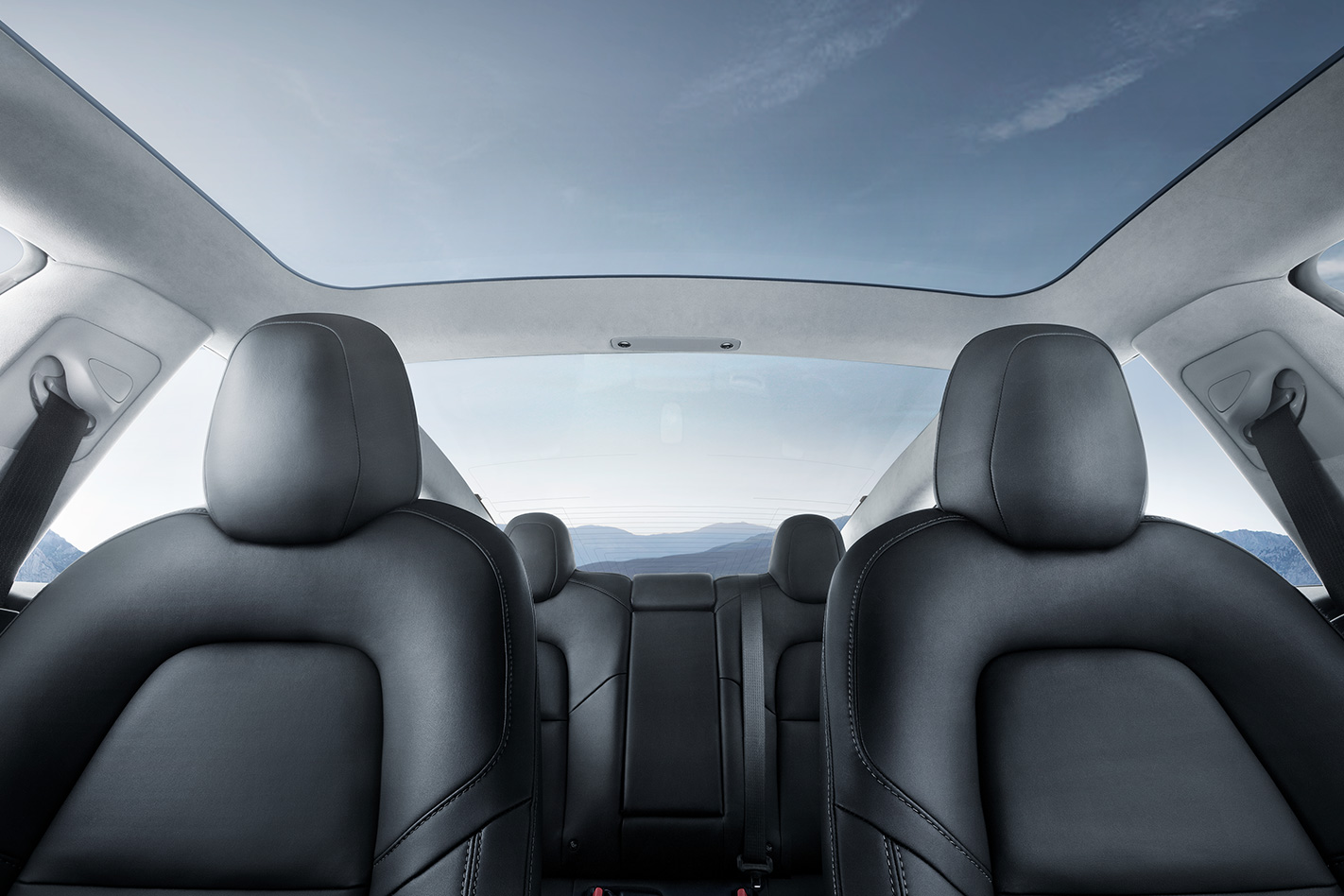
1. The roof of the Model 3 is almost entirely made up of glass. The rear windshield extends up and over the rear seats, much like the Model X’s forward glass. This was done to improve headroom for rear passengers.
2. There will be two initial variants of the Model 3. The first is the regular model, with a 350km range, and 0-60mph (0-97km/h) sprint time below six seconds. The second is a “Long Range” version capable of 0-60mph in five seconds, an electric range of 500km, and 225km/h top speed.
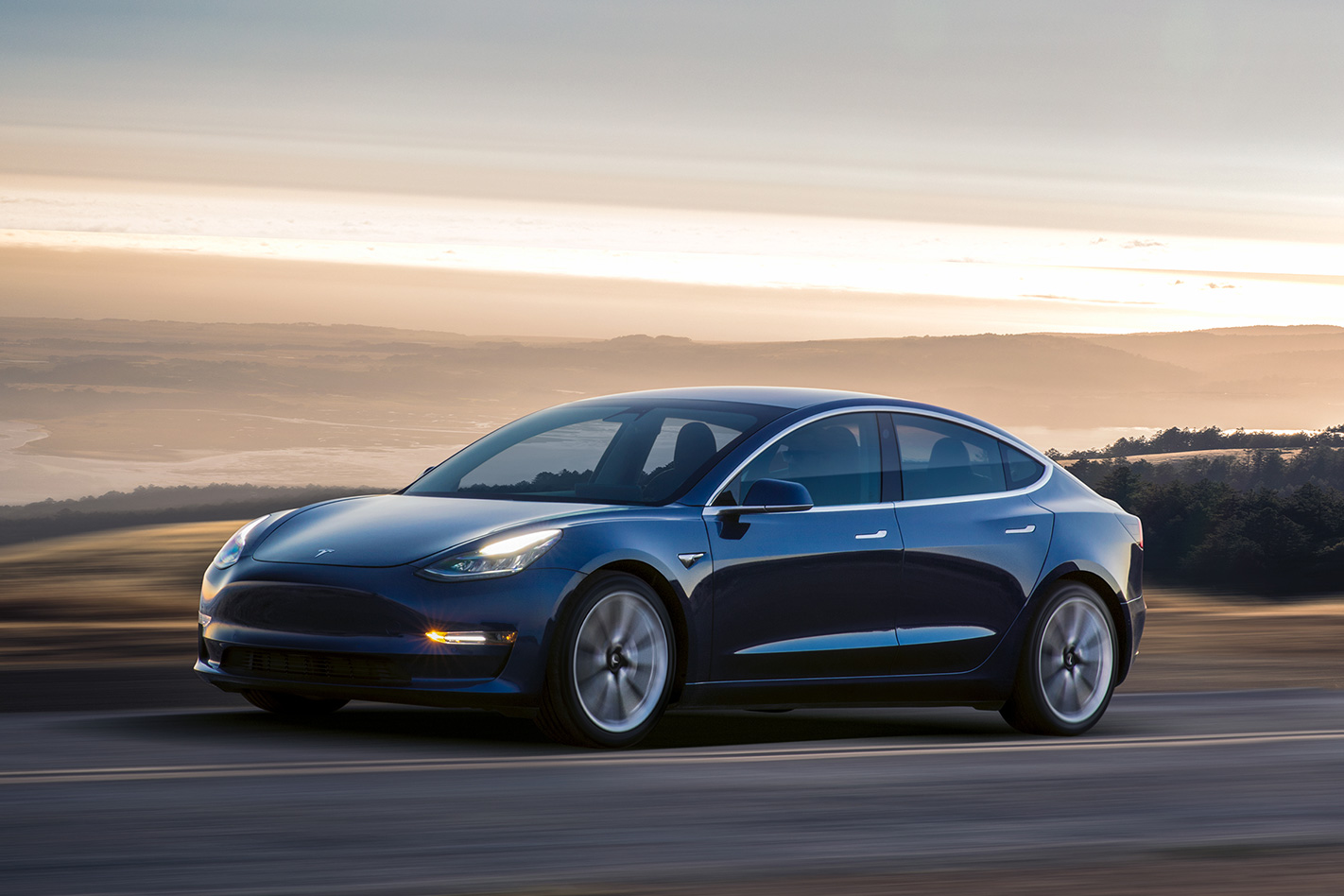
3. Elon Musk confirmed on Twitter the Australian sticker price will be the US cost converted to AUD, plus taxes. WhichCar believes this to be circa-$55,000 for the base model, and circa-$70,000 for the Long Range version.
4. Aussie customers with a pre-order in will have to wait a while to take delivery of their Model 3. The first cars for Australia aren’t expected until early 2019. Don’t have an order in yet? The wait time is only going to get longer.
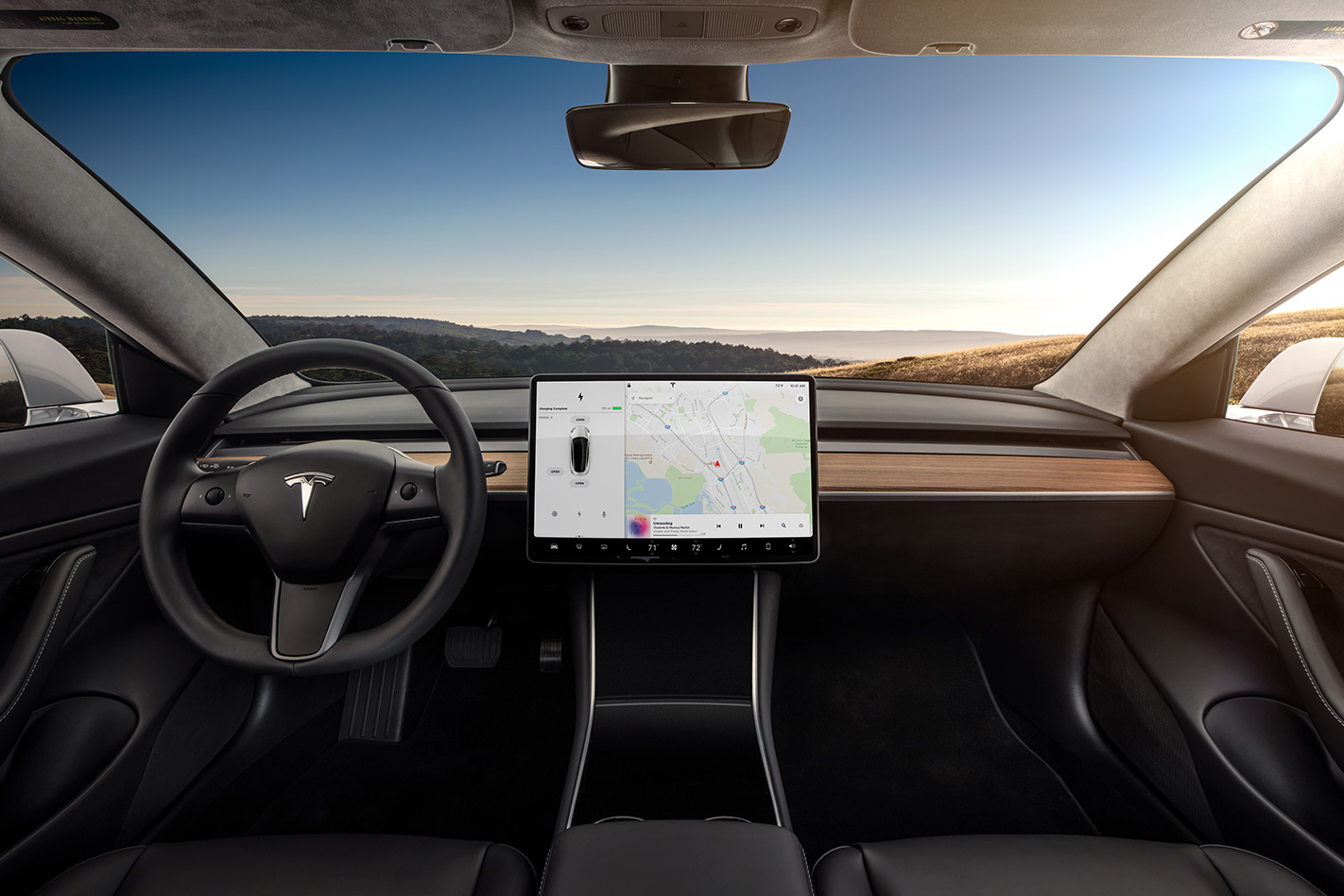
5. There isn’t a single instrument or read out directly in front of the driver. Instead, all information is displayed in the tablet-esque infotainment unit in the centre of the dash. It’s likely the Model 3 will follow the Model S’s lead and not have any physical buttons in the cabin except for those to open the glovebox and activate the hazard lights.
6. Tesla’s full suite of autonomous technology will be available in the Model 3. It won’t be fully autonomous yet, but it can be upgraded wirelessly as Tesla updates its technology.
7. Tesla is working hard on improving its service network, but it the Model 3 may never have to visit one. Musk claims “the next-generation powertrains are designed to be a million miles between services”. That’s a mighty big claim. The standard warranty for the Model 3 will be four years for the vehicle, and eight for the battery
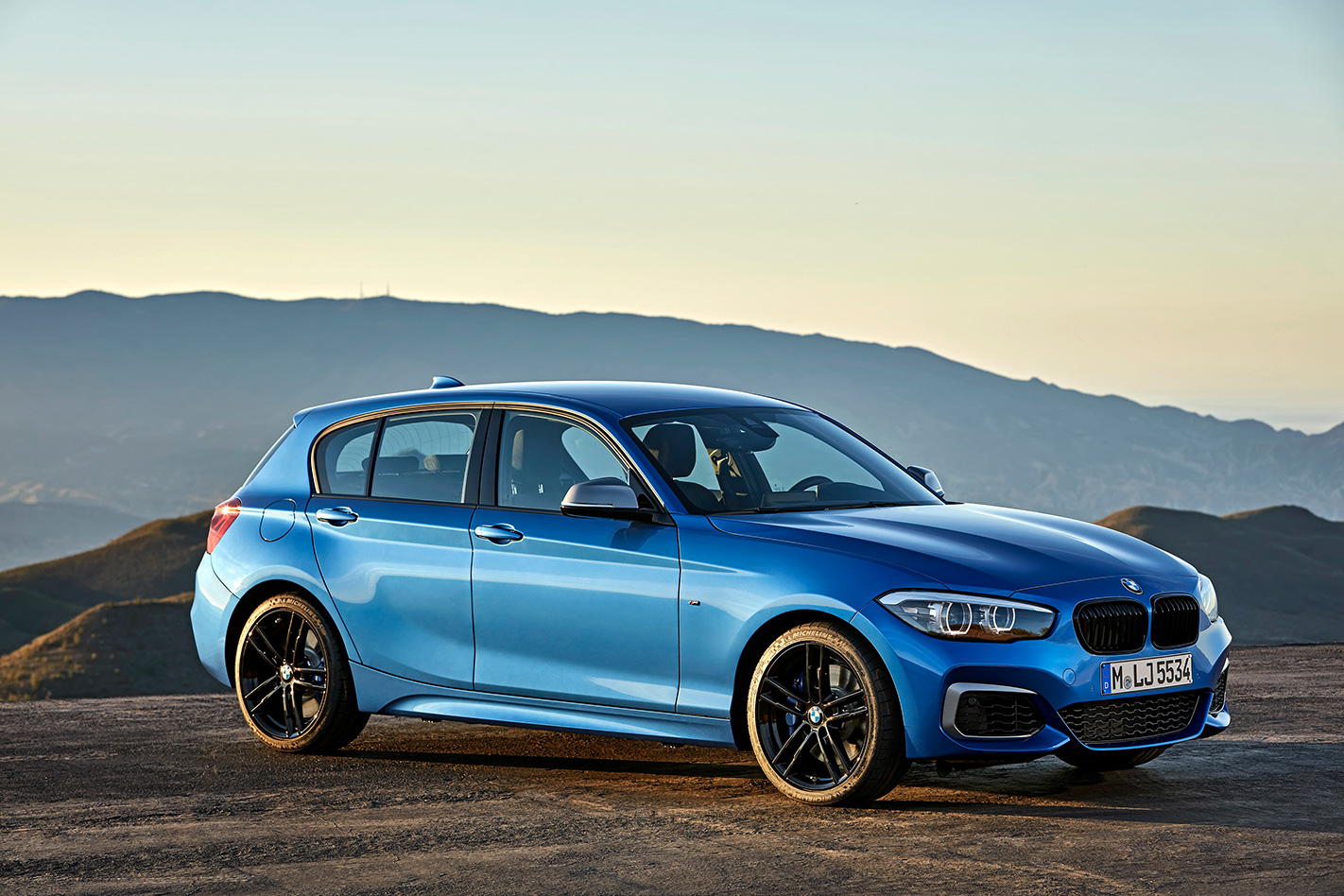
BMW has given its 1 Series rear-wheel-drive hatch a mild model year update resulting in higher entry-level pricing, but an almost-$5000 reduction for the range-topping M140i.
Retail pricing for the base model 118i and 118d diesel variants has risen by $2000 to rest at $39,990 and $43,900 respectively while the mid-spec 120i is up $3000 to $45,900.
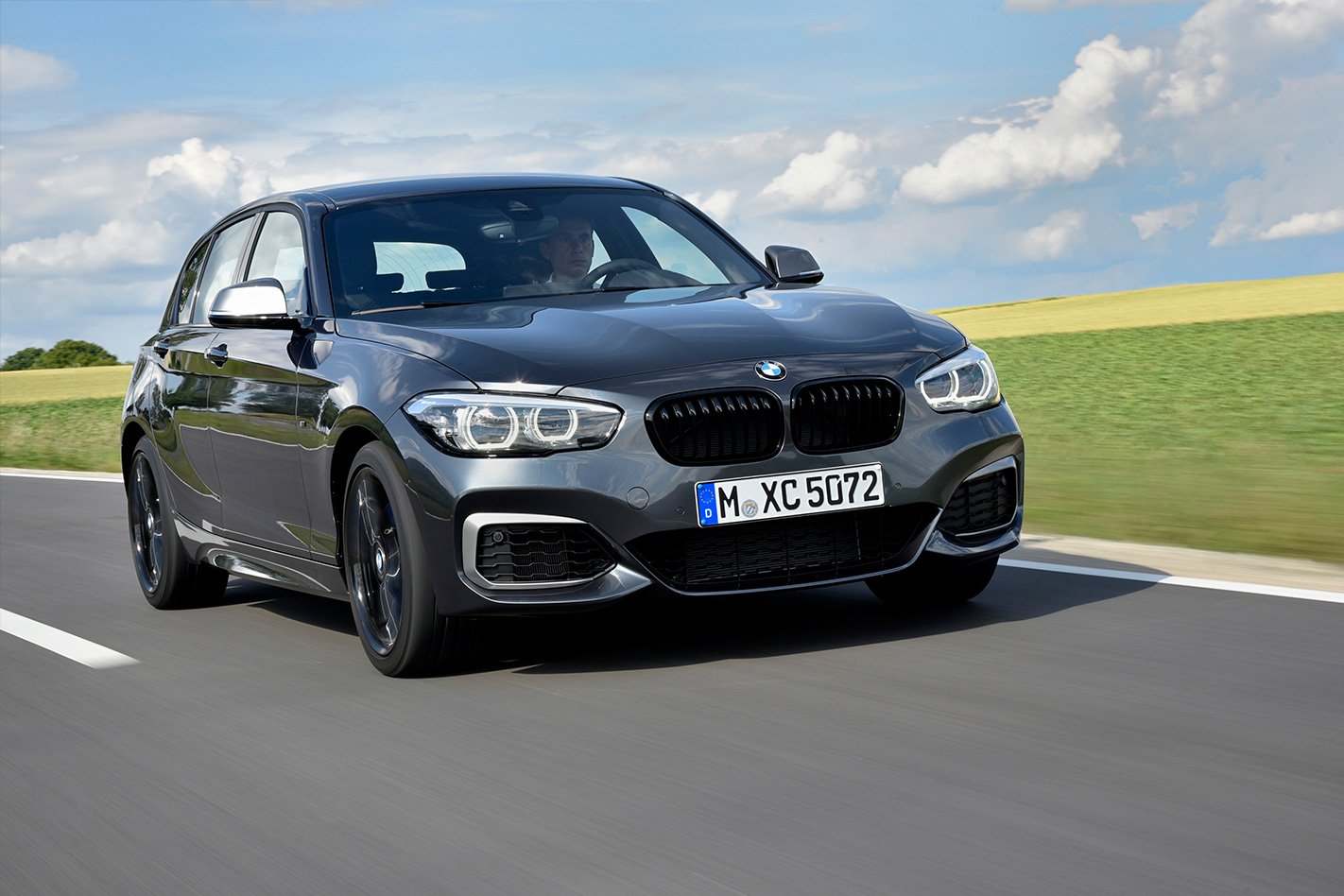
It’s better news for upper-spec models with the 125i’s price dropping by $90 to $49,900 and the M140i down $4910 to $59,990.
The varied pricing reflects the greater level of standard equipment across the range including LED headlights and the sixth-generation of BMW’s iDrive infotainment suite, which features a new customisable app-style interface.
The 125i and M140i come standard with BMW’s Navigation Professional system which includes a bigger 8.8-inch screen touchscreen as found in the BMW 5 Series. The same system is available as a cost option on low-spec variant.s
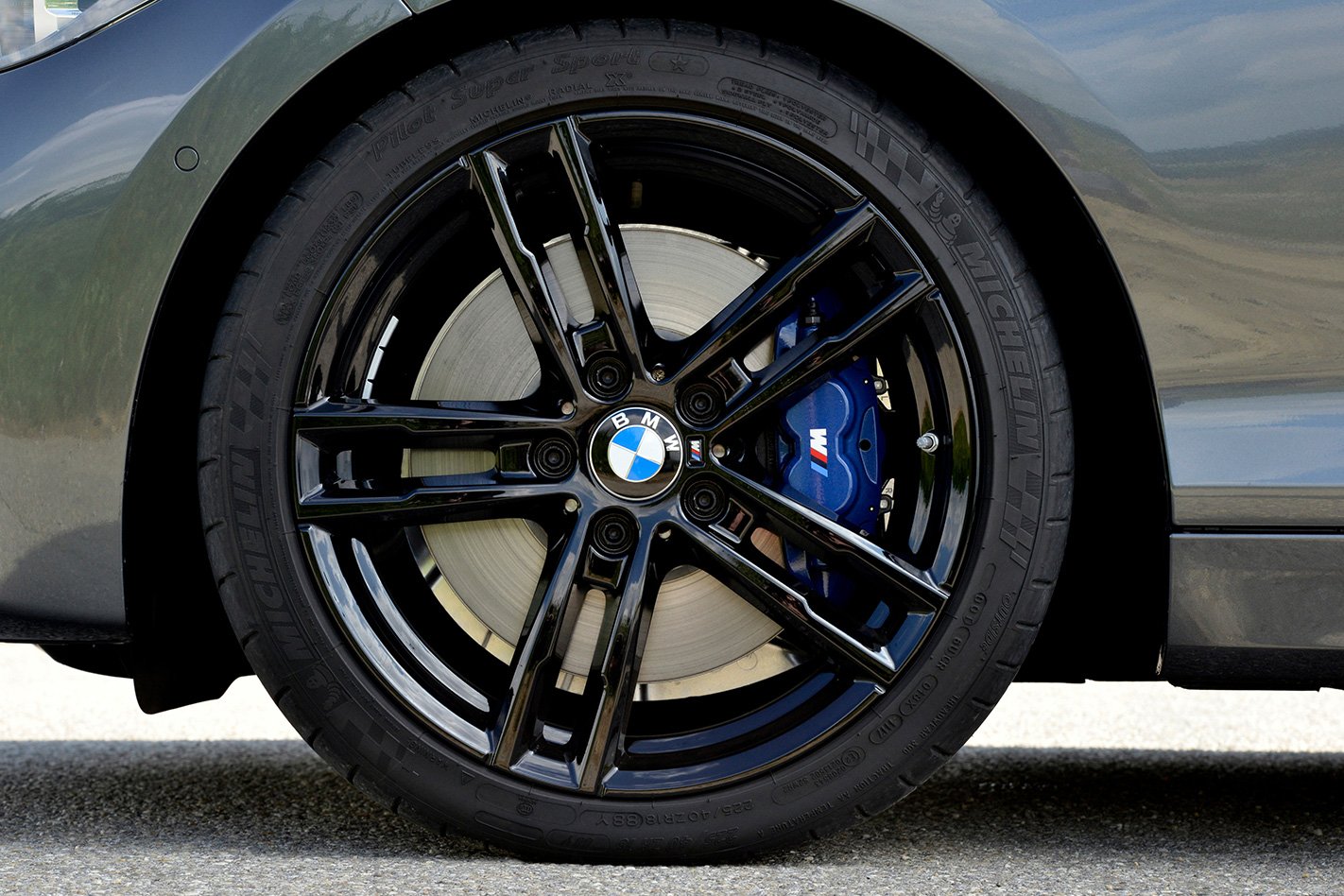
Exterior changes cover an expanded alloy wheel range including a new 17-inch alloy wheel design for the 120i and two additional 18-inch options for the M-Sport badged models.
There are also two new paint finishes including metallic Sunset Orange that’s available range-wide and metallic Seaside Blue metallic for non M Sport-equipped variants.
And there are more interior trim choices including a premium Pearl Chrome option, while Dakota leather upholstery can now be ordered in a ‘Cognac’ colourway.
The updated BMW 1 Series will be in showrooms from September.
FEATURES:
BMW 118i/118d
- 100kW/220Nm 1.5L, 3-cyl turbo petrol engine [118i]
- 110kW/320Nm 2.0L 4-cyl turbo diesel engine [118d]
- Sport Line trim
- 16-inch light-alloy wheels
- LED Headlights
- Eight-speed automatic transmission
- Navigation System Business with iDrive6 functionality
- Automatic climate control
- DAB+ radio
- Rear view camera
- Speed Limit Info
- Sports steering wheel
- Front cloth sports seats
- Rain-sensing wipers
- Driving Assistant
BMW 120i
In addition to 118i/118d:
- 135k W/220Nm 2.0L 4-cyl turbo petrol engine
- Urban Line luxury trim
- 17-inch light-alloy wheels
- LED fog lights
- Front and rear Park Distance Control
- Interior lights package
- Dakota leather upholstery
- Extended automatic climate control
- Interior rear-view mirror with anti-dazzle function
BMW 125i
In addition to 120i:
- 165kW/310Nm 2L 4-cyl turbo petrol engine
- M Sport Package with M Sport suspension
- 18-inch light-alloy wheels
- Exterior mirrors with anti-dazzle function
- M Sport brakes
- BMW Individual high-gloss Shadow Line exterior finish
- Navigation System Professional with 8.8-inch touch screen
- Cloth/Alacantara upholstery
- M leather steering wheel
- Eight-speed sports automatic transmission
- BMW Individual Anthracite roofliner
BMW M140i
In addition to 125i:
- 250kW/500Nm 3.0L 6-cyl turbo petrol engine
- 18-inch Jet Black light-alloy wheels
- Adaptive M Suspension
- Adaptive LED headlights with BMW Selective Beam
- Comfort Access System
- Dakota leather upholstery
- Electric seat adjustment with memory function
- harman/kardon sound system
PRICING:
- BMW 118i – $39,990
- BMW 118d – $43,990
- BMW 120i – $45,990
- BMW 125i – $49,990
- BMW M140i – $59,990
AUDI has given a hint of how much the Dieselgate scandal has rocked the Volkswagen Group, saying it wants to cut €10 billion ($A15 billion) from spending to fund its electric car push.
Reuters is reporting that sources close to the German carmaker are saying the push to bring five electric vehicles to market by 2022 – a plan that was fast-forwarded in the wake of the diesel emissions scandal – will bite hard into Audi’s research and development spending.
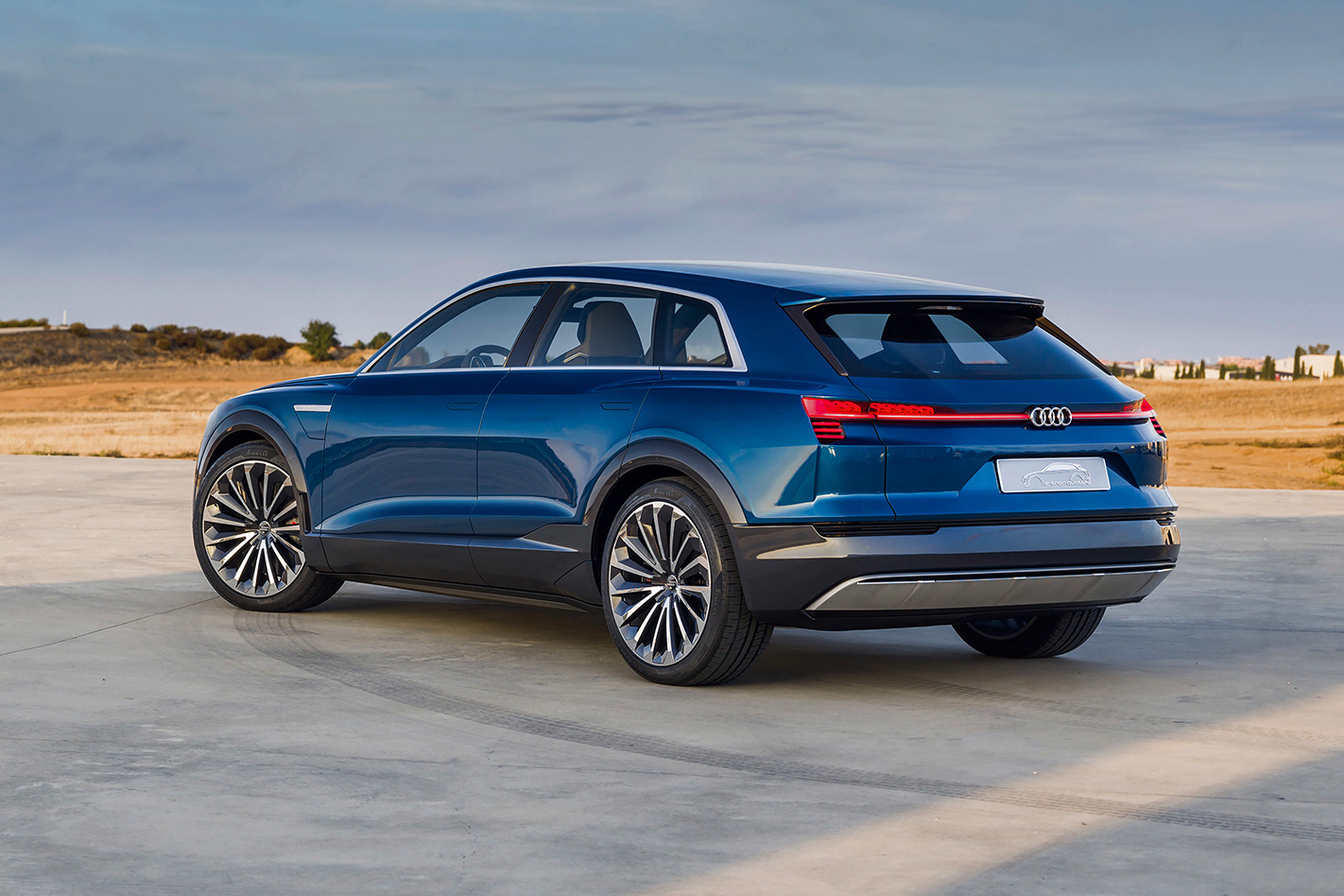
Audi’s EV push will start next year with the e-tron quattro (above), a small battery-powered five-door SUV that Audi says will be built in Brussels from 2018. A four-door Sportback version (below) of the e-tron is expected to arrive in 2019.
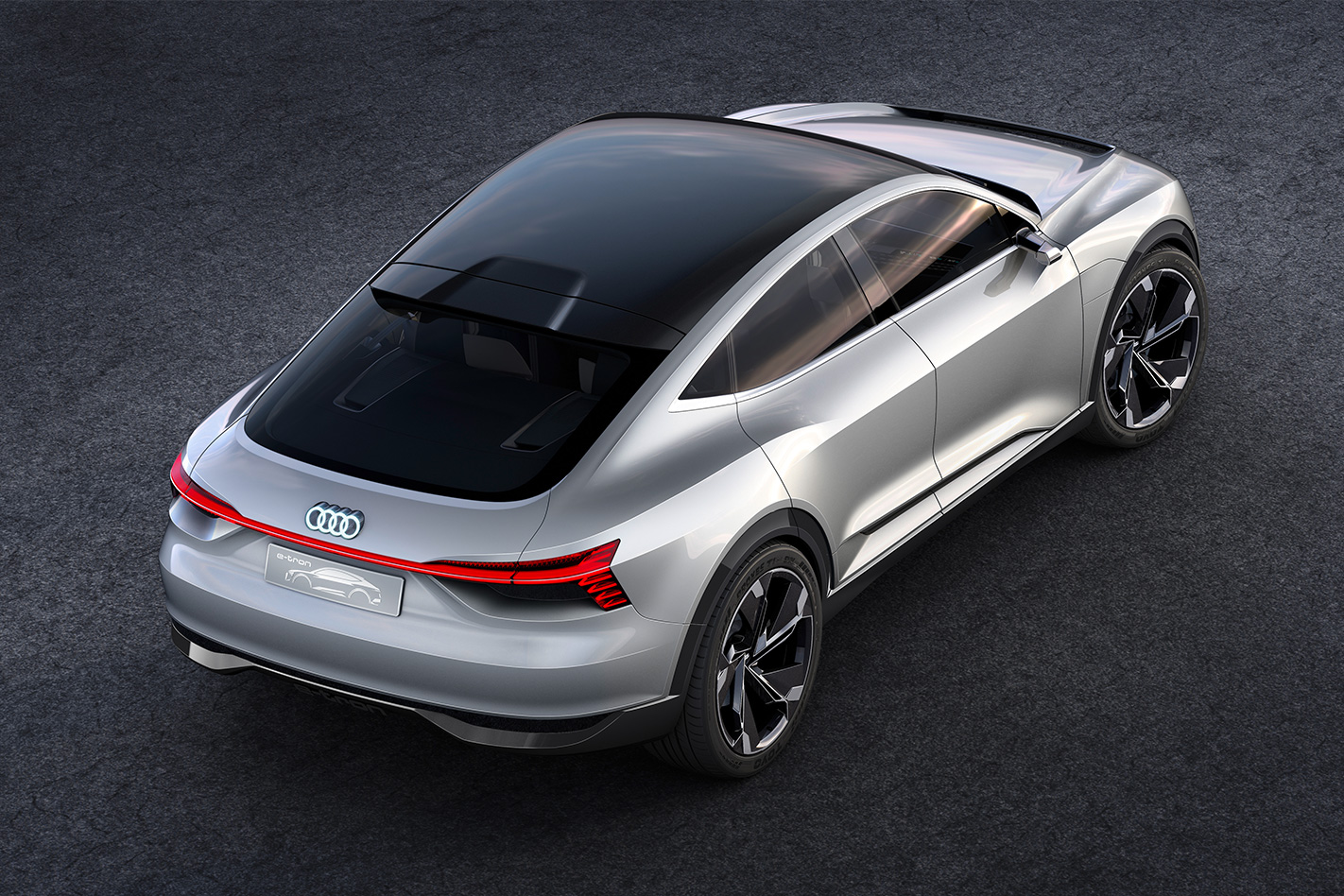
Both cars will go head-to-head with Californian electric car disruptor Tesla, which this weekend delivered the first of its Model 3 small sedans to customers – a significant step in building much-needed volume for the brand.
According to Reuters, Audi will also collaborate with Porsche to develop a new platform that will underpin future products, saving money by sharing modules and components between the brands.
Mercedes-Benz has simplified the E-Class Cabriolet range with its new-generation four-seater drop-top, due to arrive locally in October, replacing the outgoing E200 and E250 grades with the new E300 range opener and adding equipment across the board.
However, while the superseded E-Cab family started at $90,855 for the E200, the new entry-level 2018 Mercedes-Benz E300 Cabriolet wears a sizable $123,500 sticker on its windshield, excluding on-road costs. While some might consider that steep, the price jump ensures plenty of separation between the new E-Class convertible range and the still-fresh C-Class Cabriolet – which starts at $85,900 for the C200 spec.
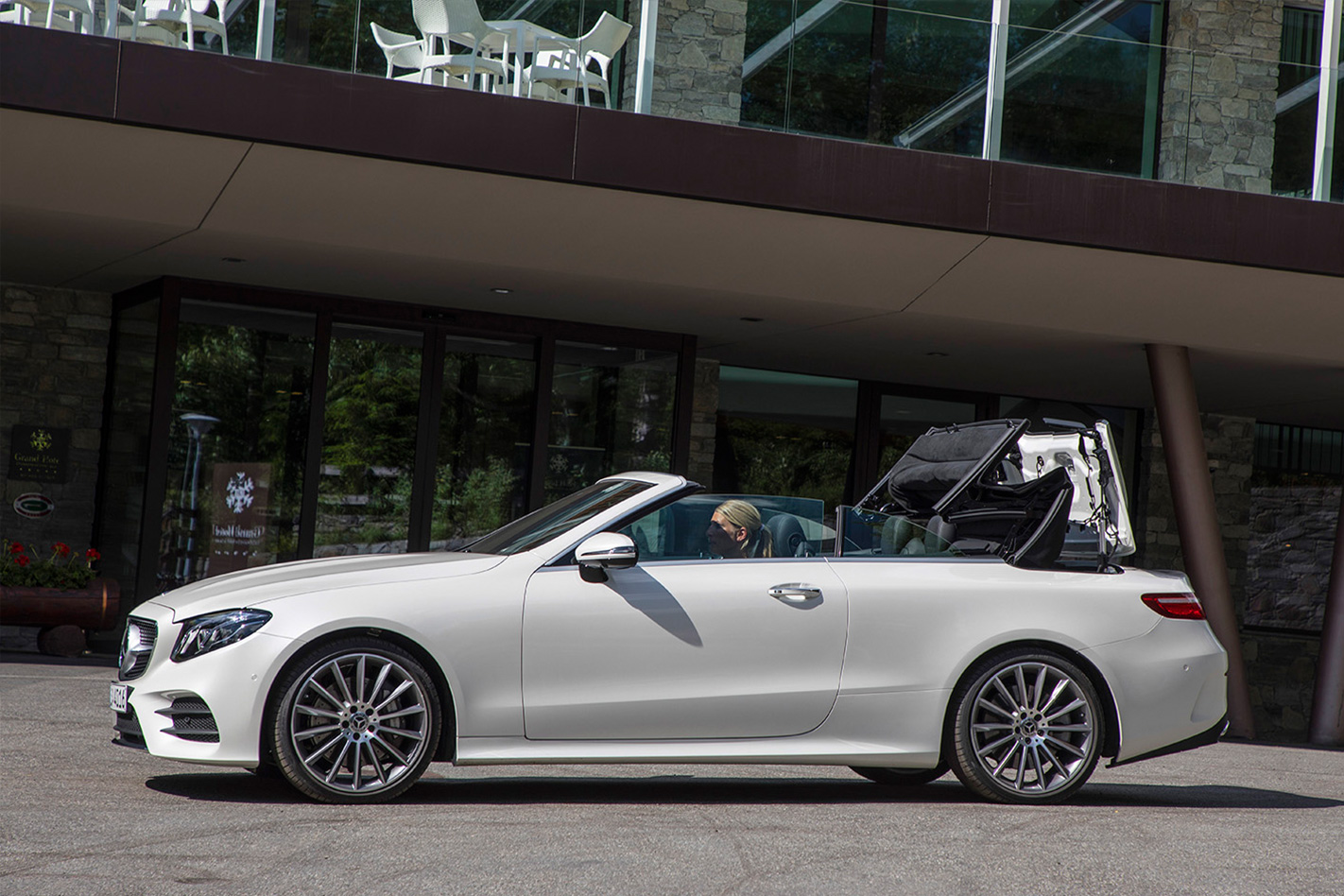
And while the price of entry is significantly increased, the new E-Class Cabriolet offers more space, more technology and more equipment than before.
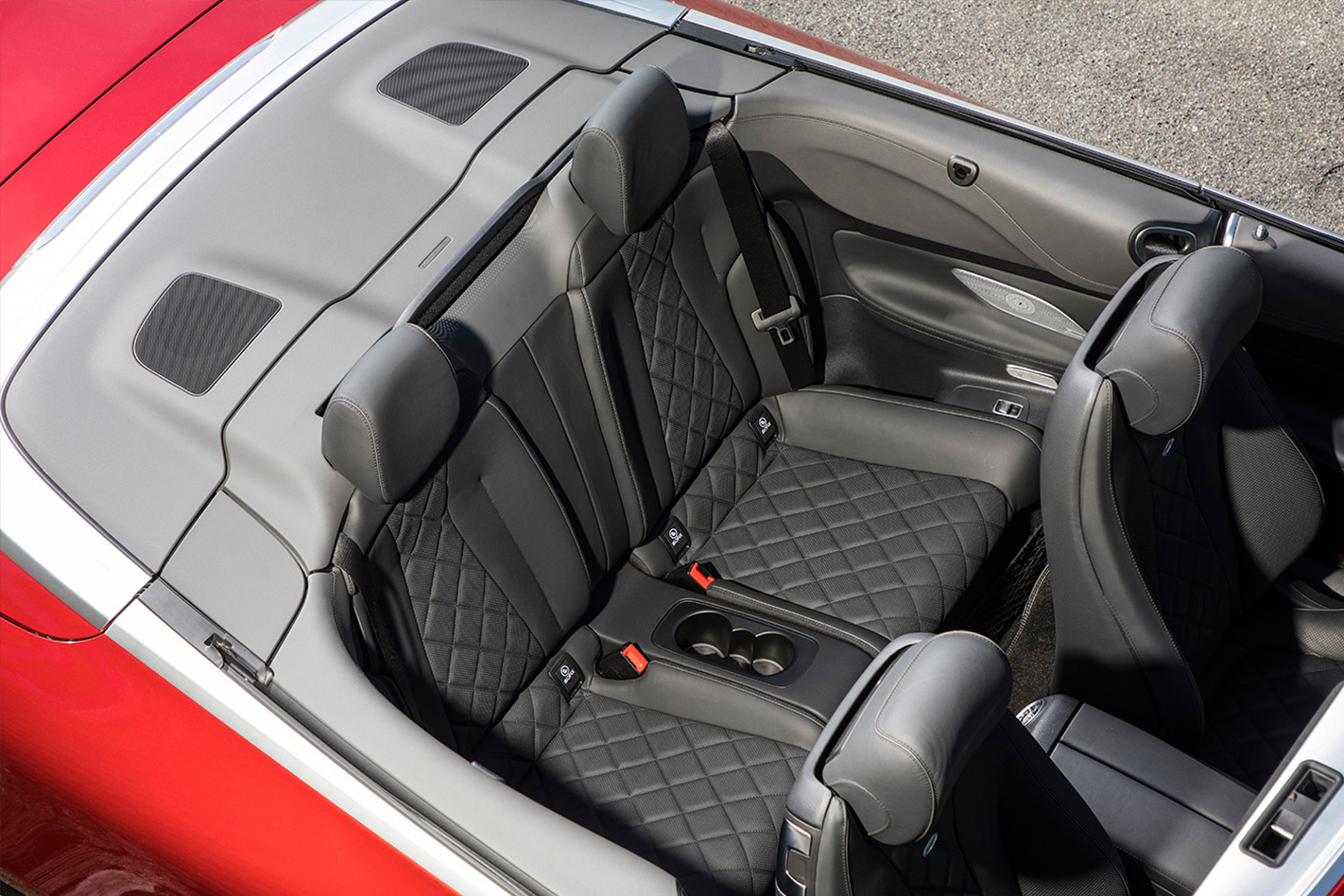
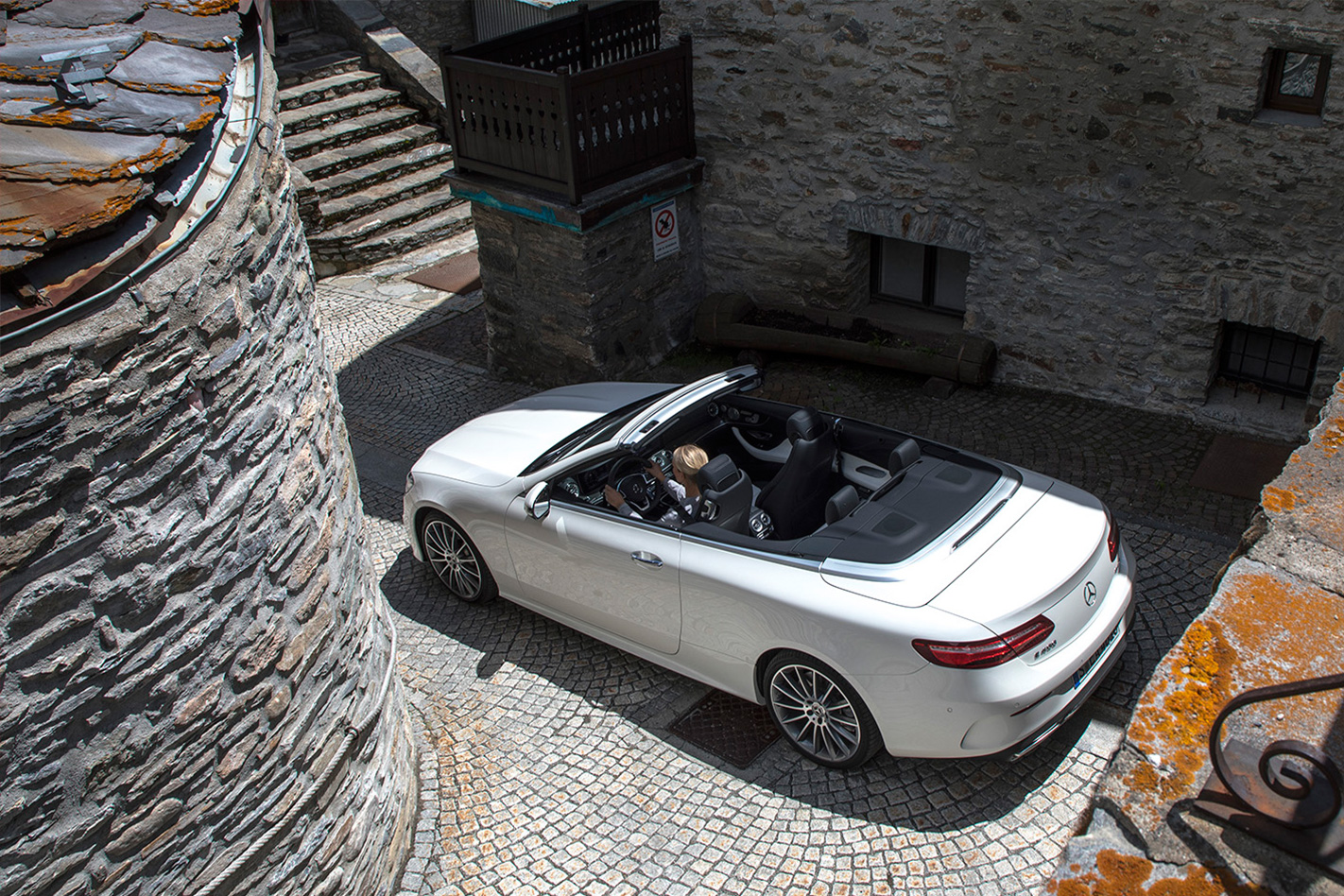
As with the Coupe model that arrived in the first half of this year, the 2018 E-Class Cabriolet is now based on full-size E-Class underpinnings, unlike the previous model’s C-Class-based platform. That makes the 2018 E-Class Cabriolet 123mm longer, 74mm wider and 30mm taller than before, with most of the dimensional growth going towards improving space for back seat passengers.
The power-folding multi-layered cloth roof can be raised or lowered in 20 seconds at speeds up to 50km/h, and Benz’s ‘Aircap’ wind blocker reduces in-cabin buffeting when travelling at speed with the roof down. Boot capacity measures in at 385 litres when the roof is up or 310 litres when the roof is stowed, and a 50:50 split rear seatback allows long and wide items to be carried.
Two powertrains are offered – the 180kW/370Nm 2.0-litre turbocharged petrol inline four of the E300, and the 245kW/480Nm twin-turbocharged 3.0-litre petrol V6 of the E400. Both come paired with a nine-speed automatic, though the E300 sends all of its power to the rear wheels exclusively while the E400 splits it between both the front and rear axles.
Both models are offered with the following standard equipment:
-20-inch alloy wheels
-Air suspension
-Heated, power adjustable front seats
-Heated headrests
-LED headlamps
-AMG bodykit
-360-degree camera view
-12.3-inch displays for infotainment and instrument panel
-Dual-zone climate control
-Satellite navigation
-DAB+ digital radio tuner
-Android Auto/Apple CarPlay smartphone mirroring
-Pop-up rollover hoop
-Nine airbags
Opting for the E400 model brings just three additional equipment items, plus the aforementioned twin-turbocharged 3.0-litre V6 and ‘4Matic’ all-wheel drivetrain:
-Burmester 13-speaker 590 watt premium audio
-Head-up display
-Metallic paint
PRICING
The 2018 E300 Cabriolet and E400 Cabriolet are available to order now, with local deliveries set to start in October. Pricing does not include on-road costs:
–Mercedes-Benz E300 Cabriolet – $123,500
–Mercedes-Benz E400 4Matic Cabriolet – $157,500
The Seven-Second Club’s a rarefied one within drag racing circles.
But a seven-second quarter mile time’s even rarer for Subaru WRX and Lancer Evolution fans that are more used to flinging their all-claw terrors sideways on dirt.
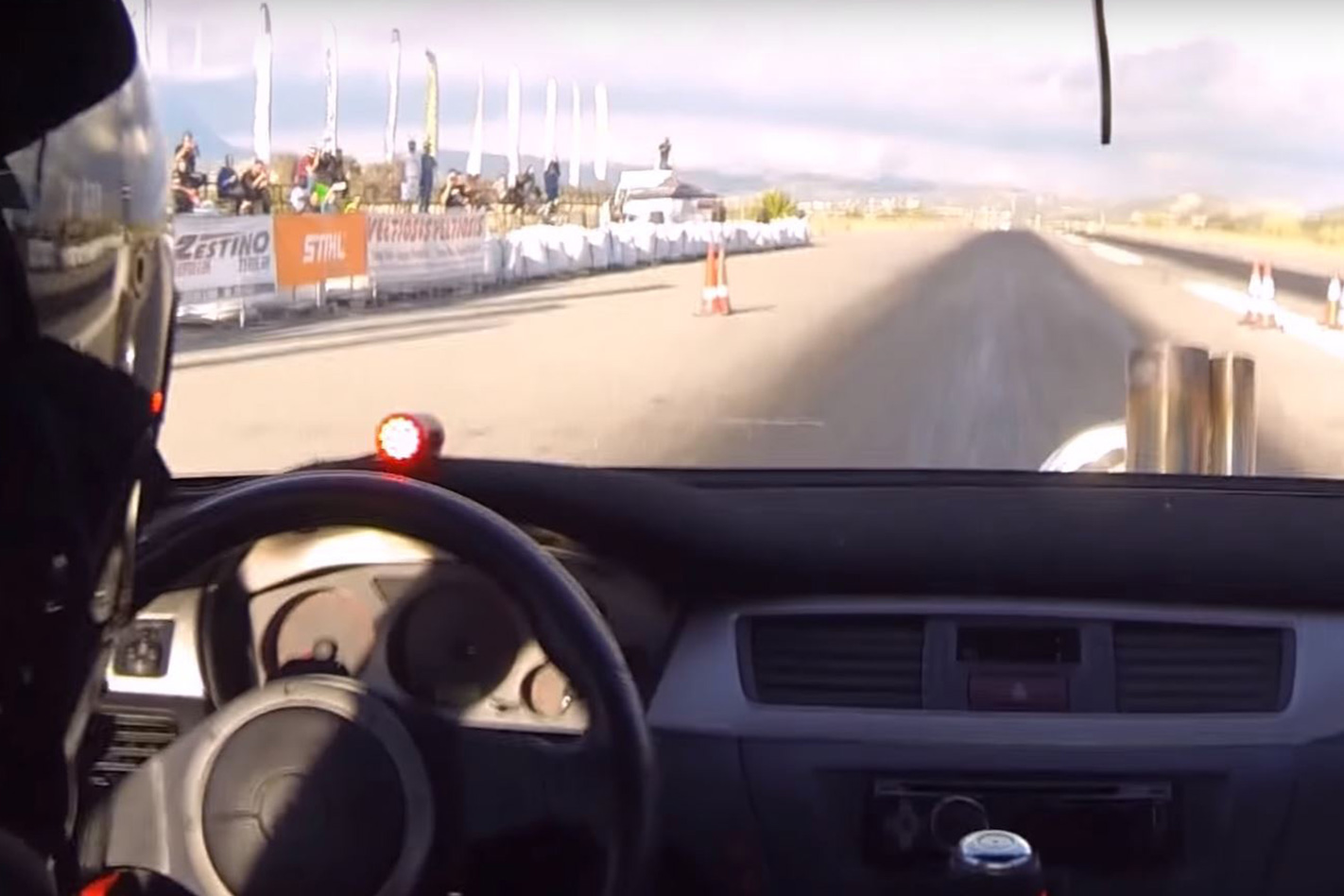
The car covered the quarter mile in 7.902 seconds at a whopping 298.26km/h when wheeled to an air-strip in Greece, recently besting this with a 7.884sec.
These are times fast enough to etch it in the record books as the world’s fastest Lancer Evolution VII, VIII, or IX, its maker claims.
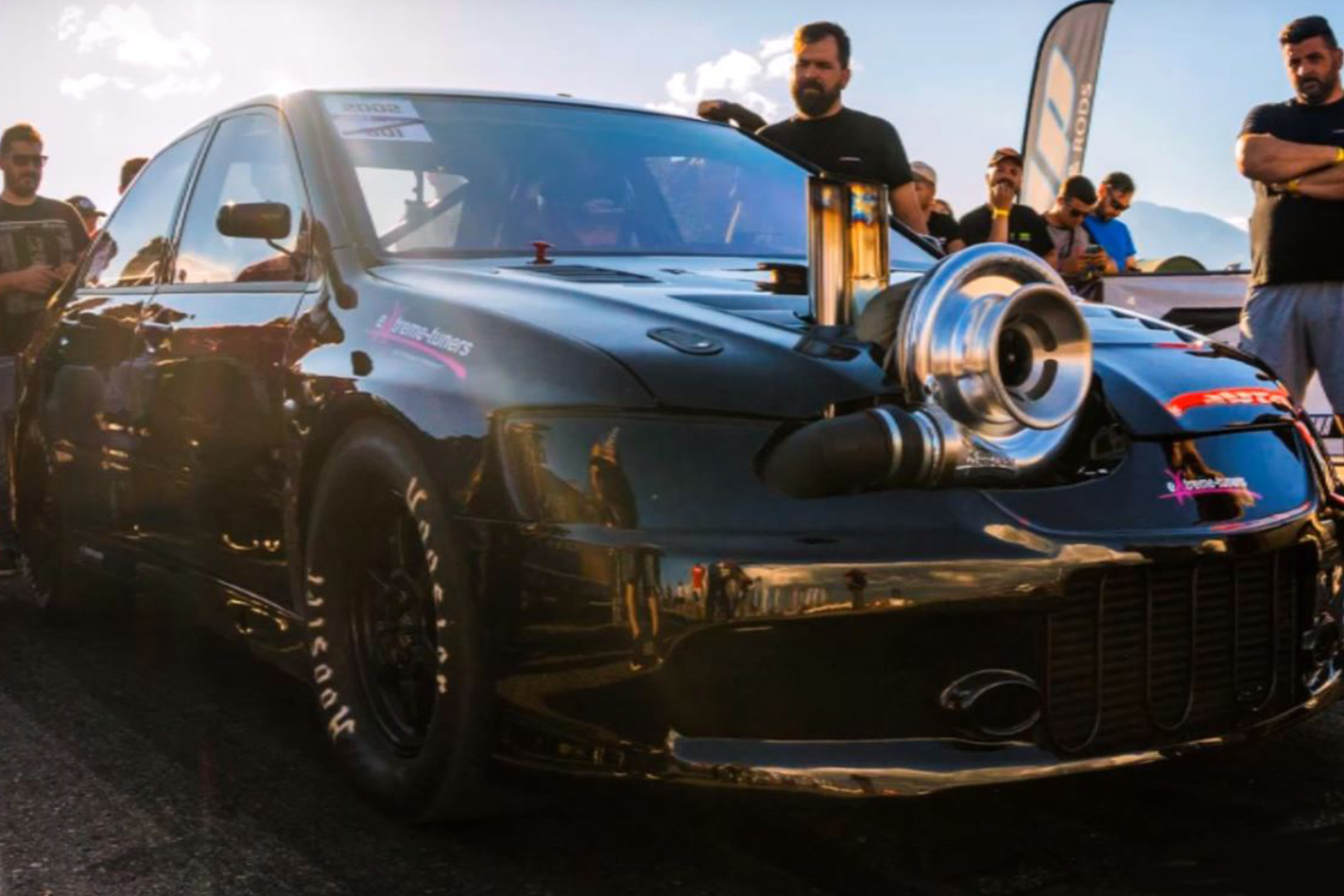
Yep, that’s right, that gear-shattering amount of power is produced from an engine smaller than a Woolies milk bottle.
There are a few tricks employed to help. The compressor, for one, is made from carbon-fibre and sized at 91mm. Meanwhile, the 1.8-litre spins to a stratospheric 13,000rpm under a 15.8:1 compression ratio.
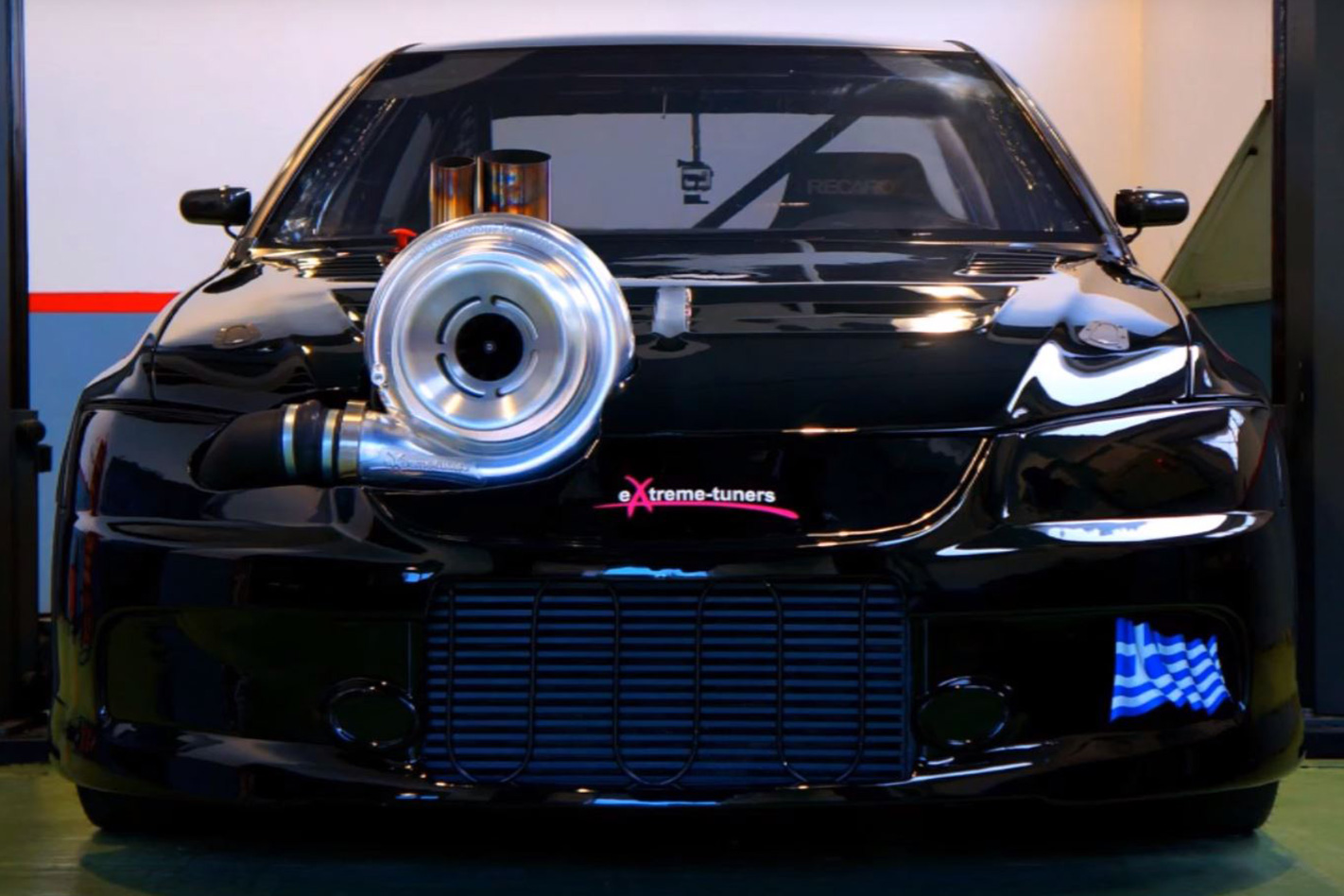
However that doesn’t stop it from breaking often. The tuners claiming power needed to be wound down to 1877kW for the seven-second passes.
The differential isn’t the only thing hanging on for dear life. The all-wheel drive IX, even with fat drag racing slicks, struggles to stay straight. Have a watch above for yourself.
The winged GT2 RS eats driver’s licences for breakfast, heightens egos and takes city streets with unrelenting force.
A wild ride from Stuttgart over the Swabian Alb to Munich suggests that this mean machine is about to turn the high-performance sports car world upside down. After what seems like years of speculation, Stuttgart’s most radical 911 is ready to hunt down all comers. The warning bell has well and truly sounded. Game on.
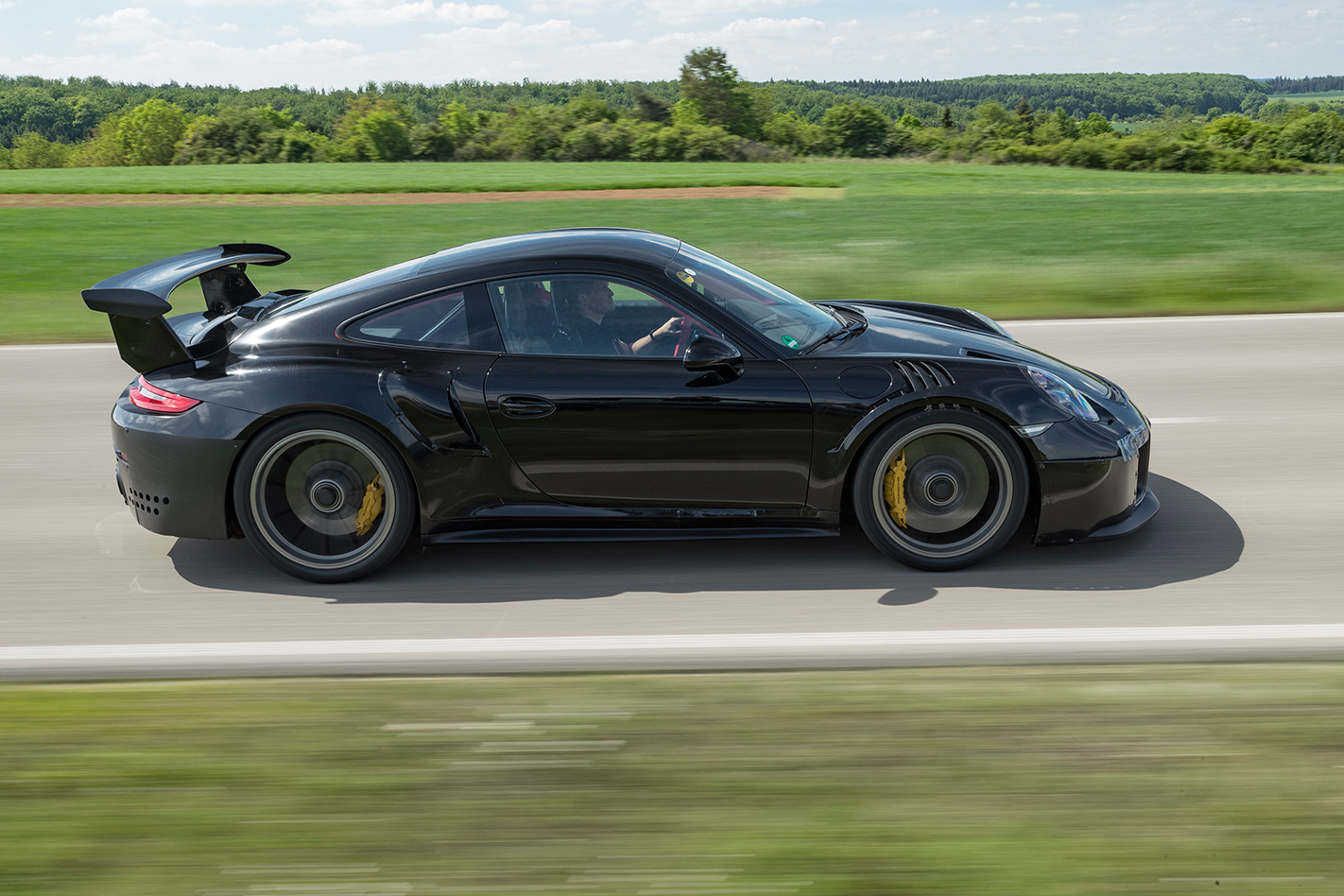
Of course, then there are those times when you have the driving skills of a professional behind the wheel, one such as Uwe Braun, head of the GT car development department and certified lead-foot. Without hesitation, the veteran Porsche engineer reaches for the ignition key, smiles and pulls the PDK lever into its sportiest mode.
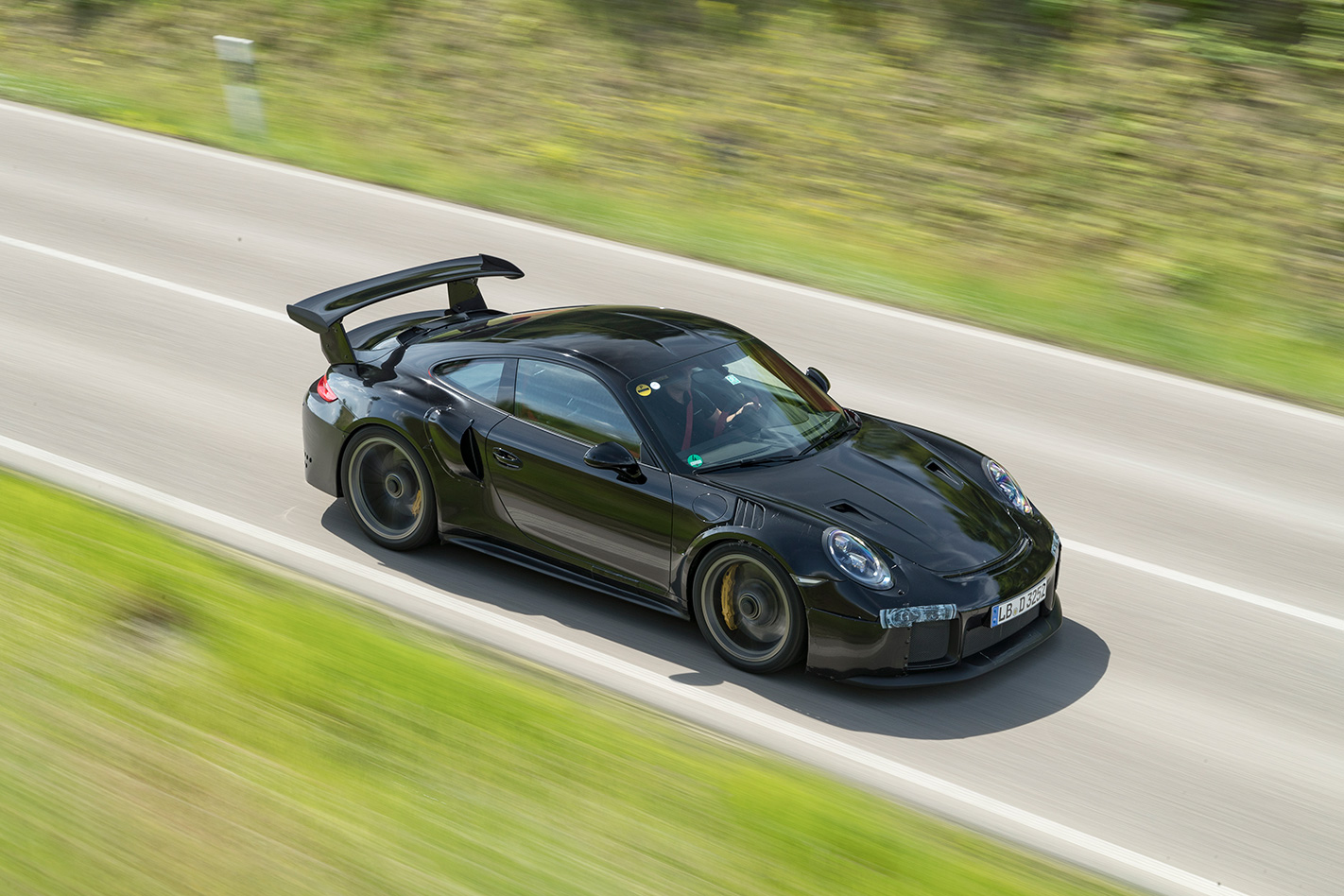
Yet, despite the related RS nomenclature, the GT2 and the GT3 are worlds apart. It’s not merely a matter of turbocharged versus naturally aspirated, XXL versus XL wing-work or PDK versus manual gearbox. What makes the biggest difference is the 147 extra kilowatts and some 290Nm of torque.
As a result, the latest batmobile on steroids can accelerate to 100km/h in a claimed 2.8 seconds, hit 200km/h in less than nine seconds and reach a 340km/h top speed.
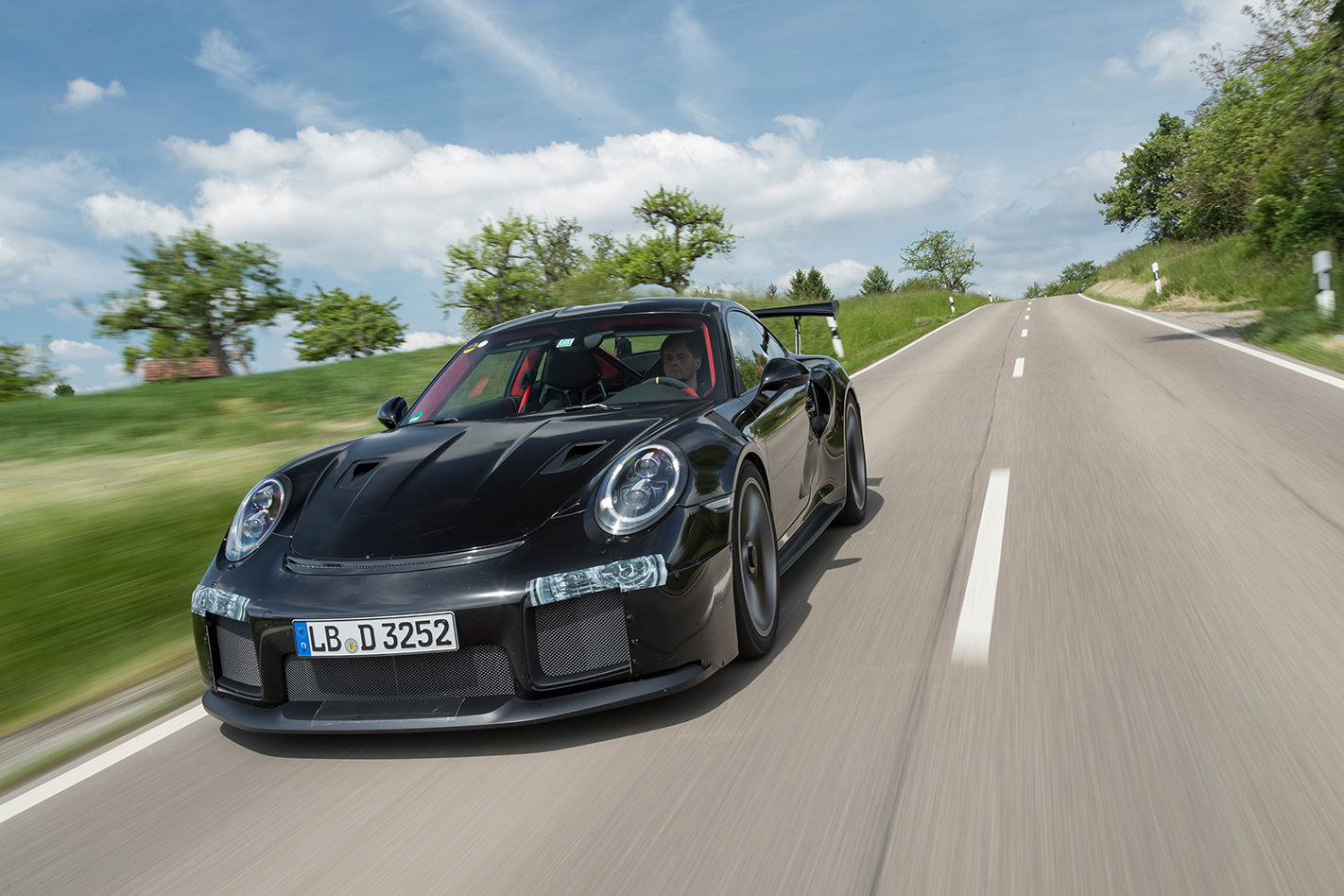
Wafting through villages at 2000rpm it is so intensely resonant it almost hurts. But as soon as the opportunity arises to uncage the beast behind our backs, the twin-turbo flat six turns up the volume and climaxes with a decibel tornado. Give it stick and the two catalytic converters, which lurk behind the four oversize tailpipes, start glowing red.
The RS acronym stands for Racing Sport, which is the domain of Andreas Preuninger and his team who have done a good job of refining the spring and damper rates to almost mirror the Carrera Cup car.
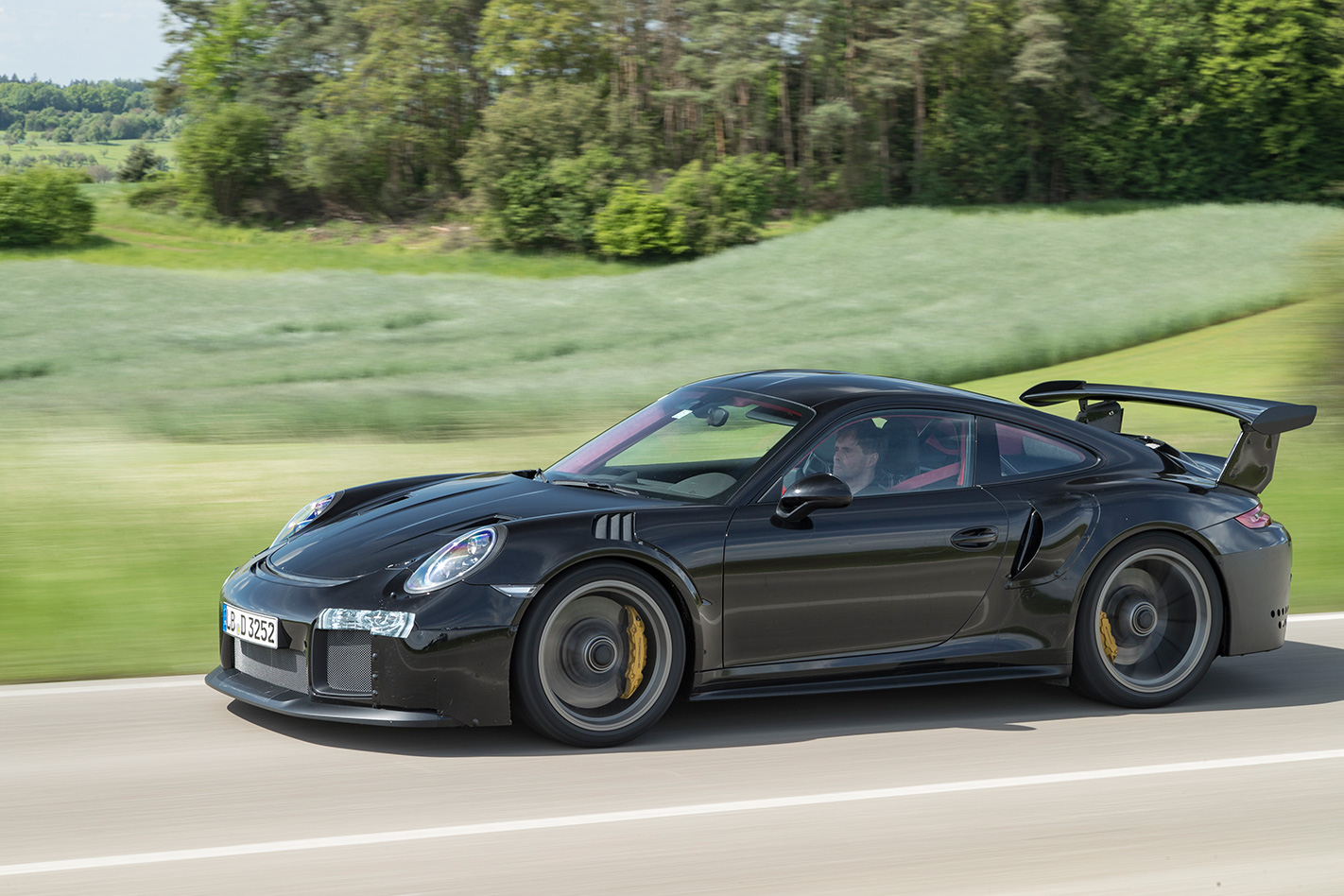
Even though a strict carbon-fibre diet helps to keep the kerb weight to 1470kg, for a price premium you can have the 918-inspired Weissach pack, which sheds another 30kg. The pack includes composite sway bars, a rollcage made of titanium, magnesium wheels and a thinner roof skin. For the hardcore among us, you can also opt to delete air-conditioning, sat-nav and radio.
On the other hand, those looking for a comfier experience can pay extra for the electronically adjustable comfort seats. Uwe Braun is a pragmatic person. In the beginning he’s happy to talk tech like that mixed in with various anecdotes. However, talk is cheap and after the initial impressions are digested, it’s time to set off.
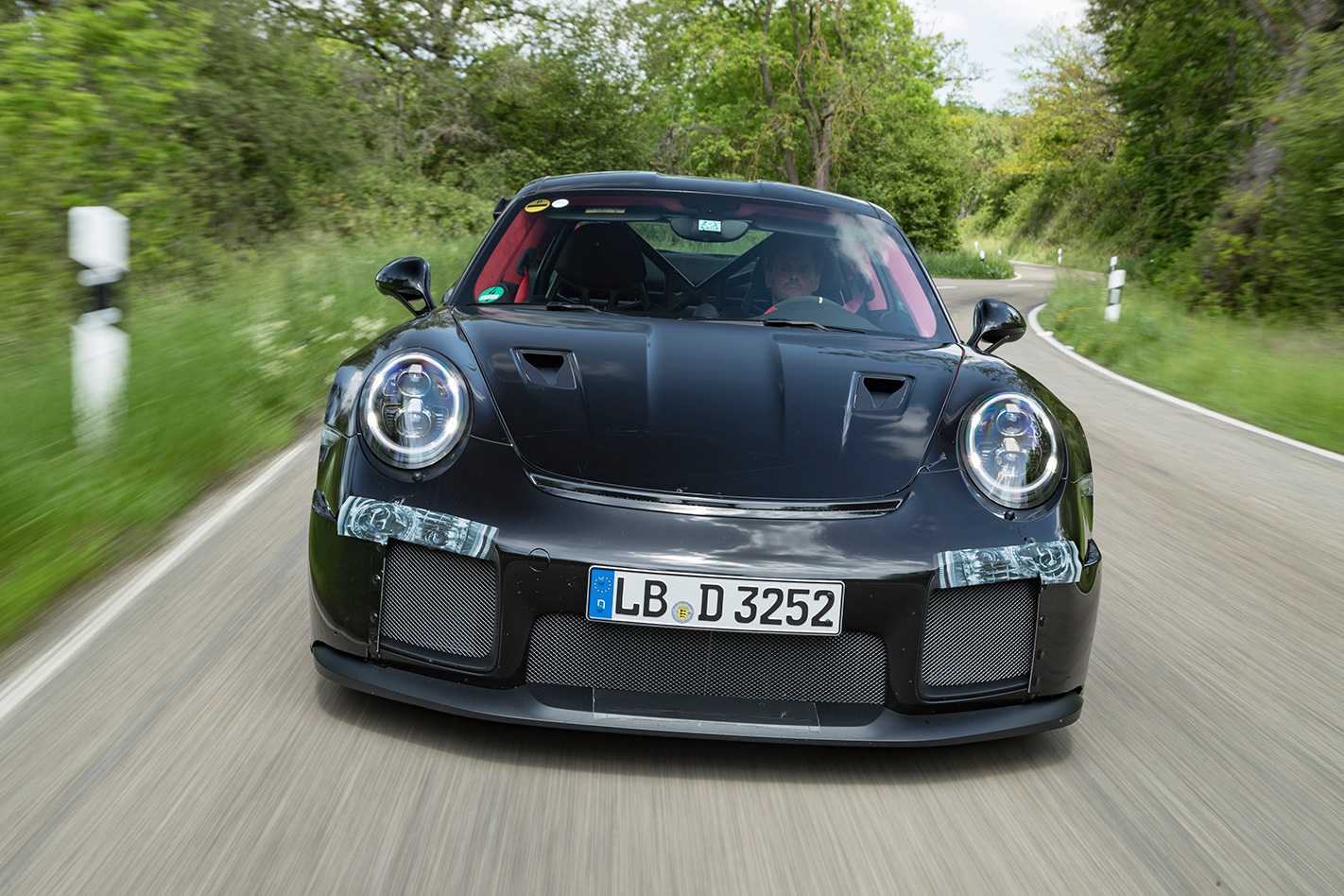
Ramping up into fourth gear the devastating GT2 RS runs out of road at an alarming rate before my pilot jumps on the brake pedal – hard. The forceful application means the digital speedo once again returns to an officer-friendly 100km/h.
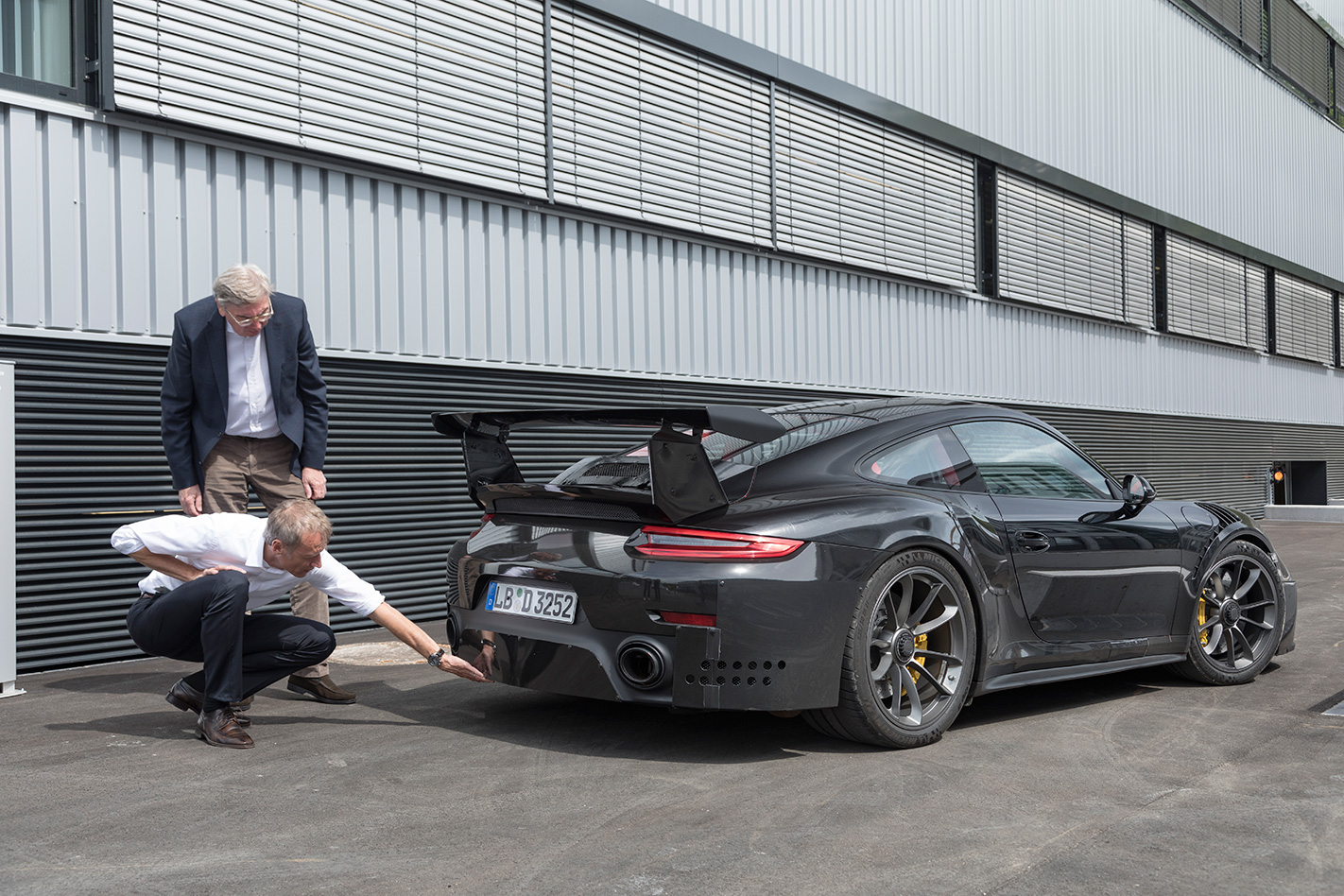
BB-PW 7743, the steed we are piloting, is one of 18 prototypes. It has only 6139km on the clock, but if the condition of the bodywork is anything to go by, this GT2 RS has already lived a hard life.
On a three-lane stretch of autobahn, we saw speeds that would have you saying goodbye to your licence for a very long time here in Australia. It felt like the final phase prior to lift-off, but maximum downforce has actually increased to 350kg, of which two thirds rests on the wide rubber at the rear.
On the road winding through the roller-coaster landscape of the Swabian Alb, the wiry wizard from Weissach once again puts the hammer down hard. With the GT2 RS, he manages to fuse staggering acts of agility with stunning, wide-eyed moments of hard acceleration. After all, this 911 is, in essence, an old-school, high-octane tearaway which commands the road with elegance and reassuring exactness.
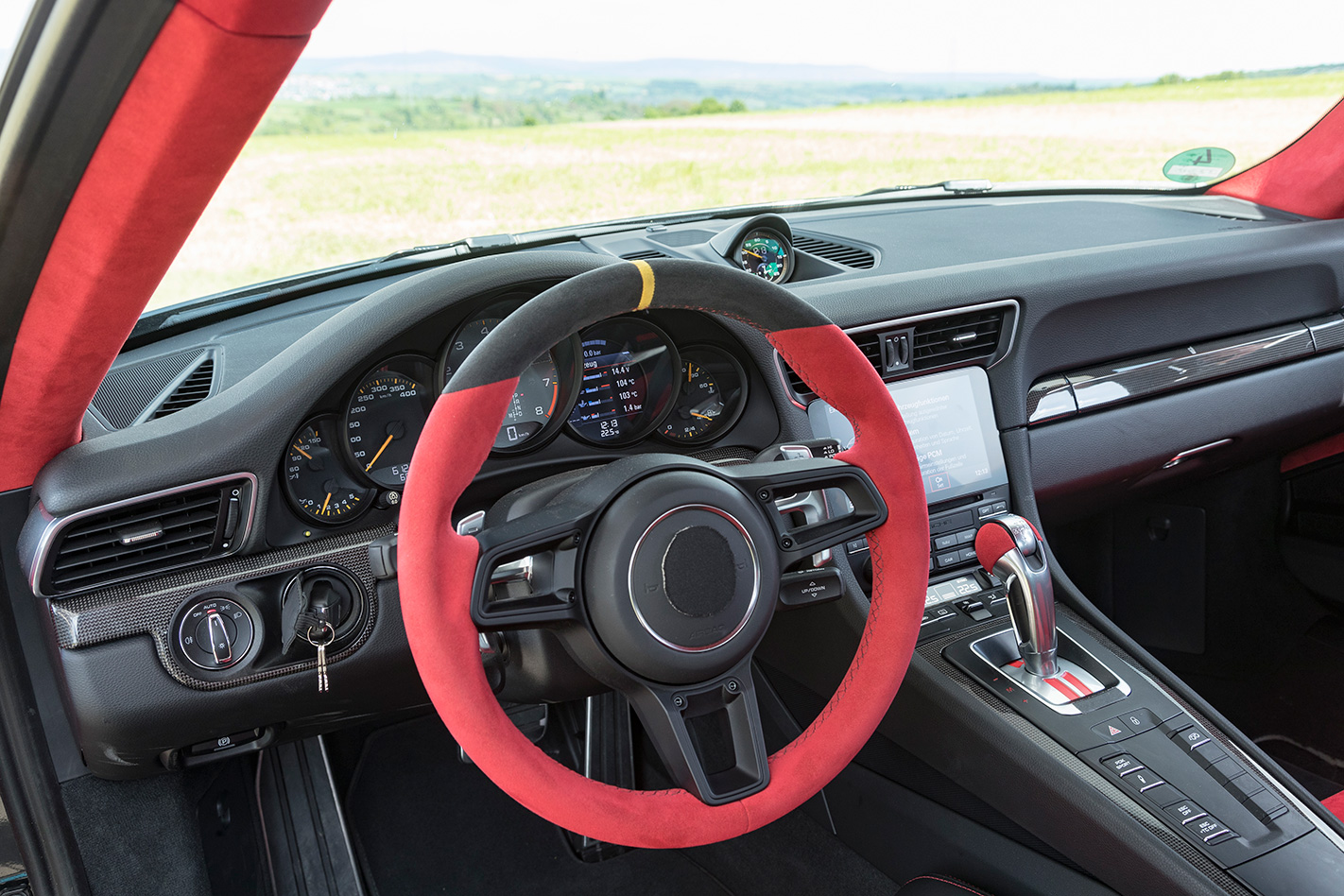
Entry speeds into corners are mind-boggling with grip exceeding all physical and mental thresholds you thought you knew. And just when you are absolutely certain that the moment has come to pay the price for one’s folly and for the insane 39:61 front-to-rear weight distribution to take control, the rear-wheel steering interacts with a casual stabilising gesture.
Those massive brakes also offer tactile modularity and instant feedback. When Uwe Braun starts pushing his baby to the limit, mind and body come along for the ride. It’s all about trust and faith.
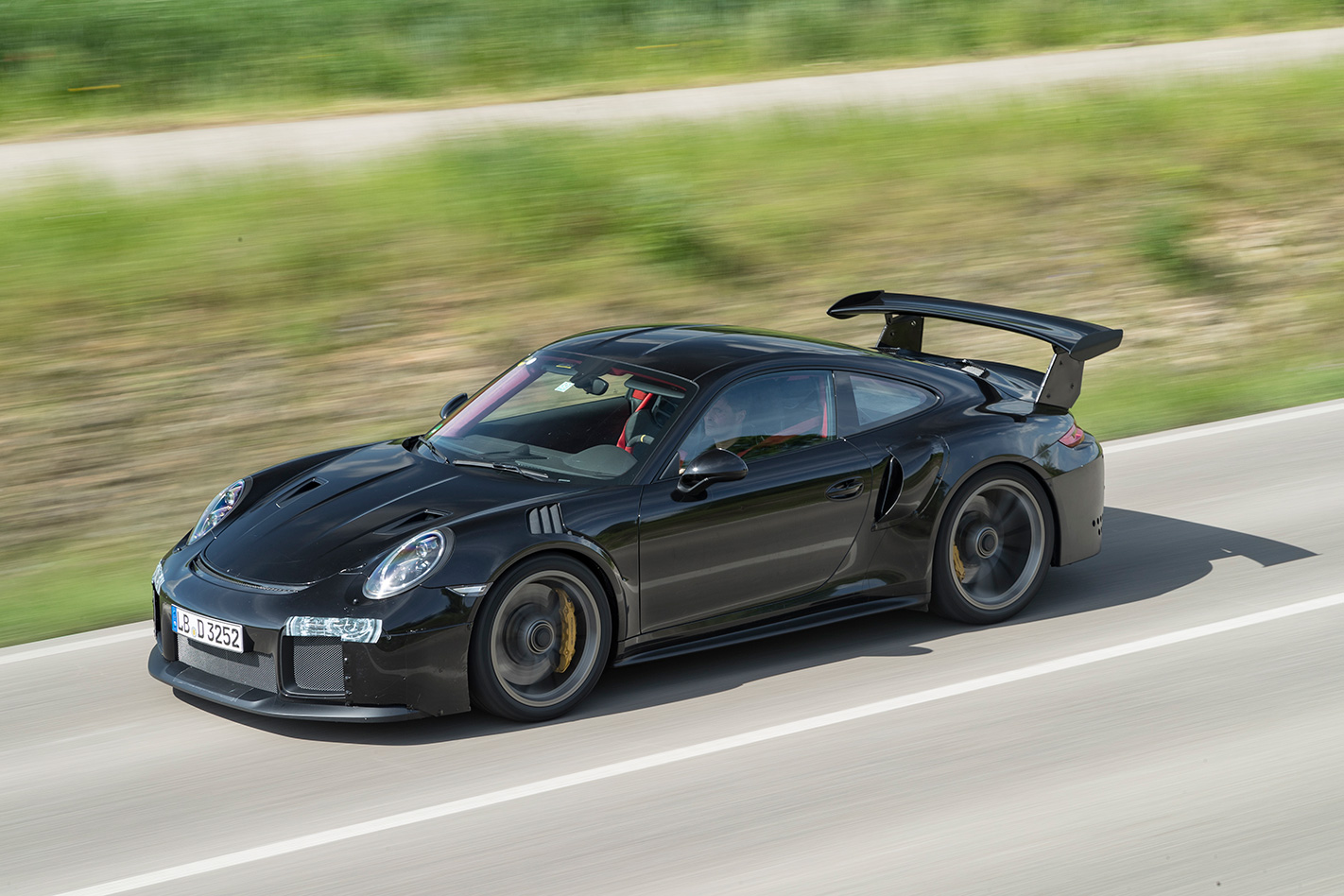
The rear axle, located on uniball joints, actually traces the front axle with uncanny accuracy. The aero kit produces enough downforce to keep the nose riveted to the blacktop, suppress any trace of waywardness and seal the bond between man and machine.
In seventh gear, riding the mighty torque curve, the widebody speed demon shows impressive amounts of poise. It’s all sensory overload and enough to forgive the jarring low-speed ride quality and the obnoxious tone of voice.
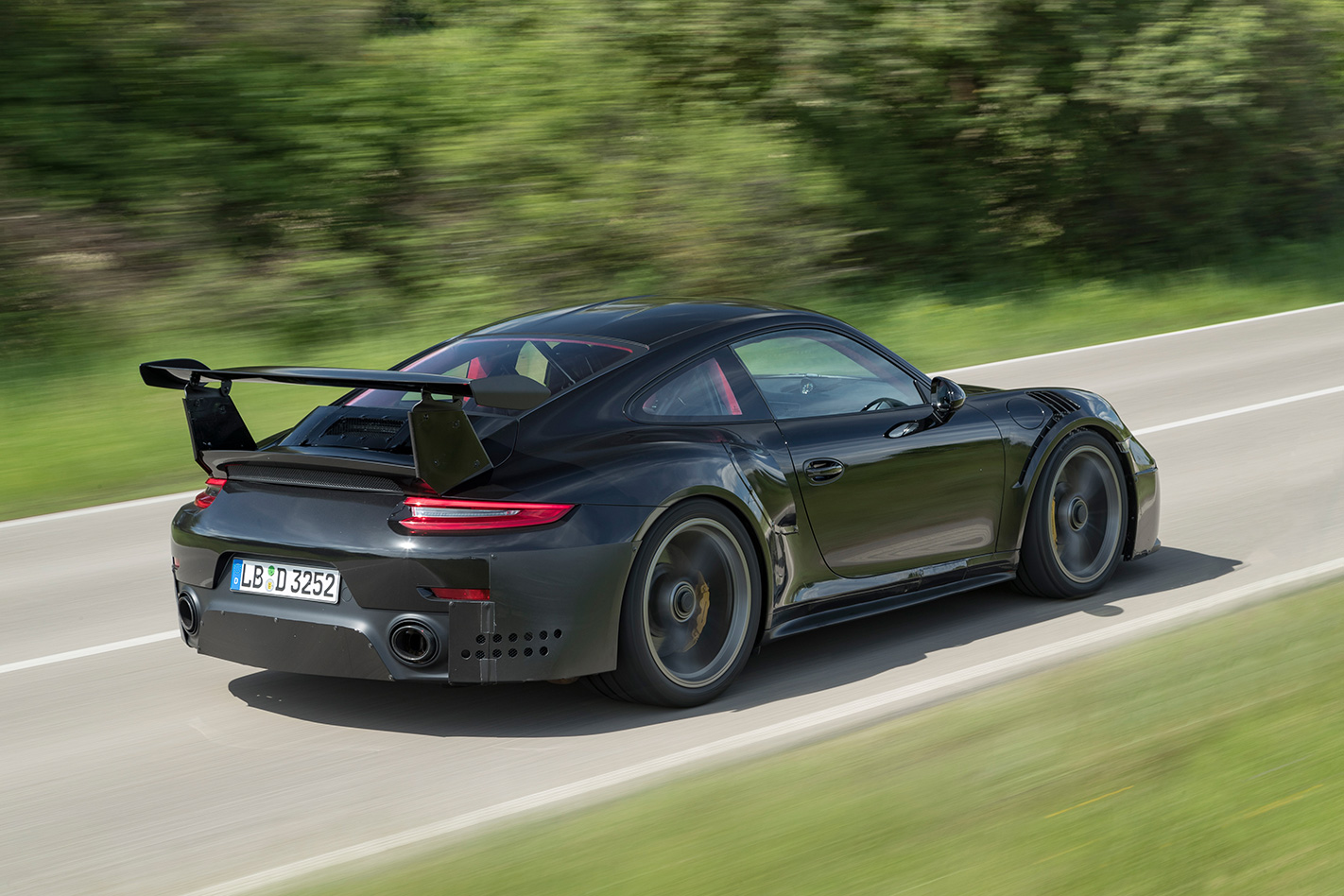
You also always have to bear in mind that the standard Michelin Pilot Sport Cup 2 tyres – specifically designed for the hyper RS – limit your ambitions. Warmer weather and dry tarmac need only apply.
At all times you have to be aware of what’s at your disposal as the quicker bite and epic pace combine for a more unforgiving nature. But that’s probably how it should be for the angriest 911, which, unsurprisingly, has sold out long before order books opened.
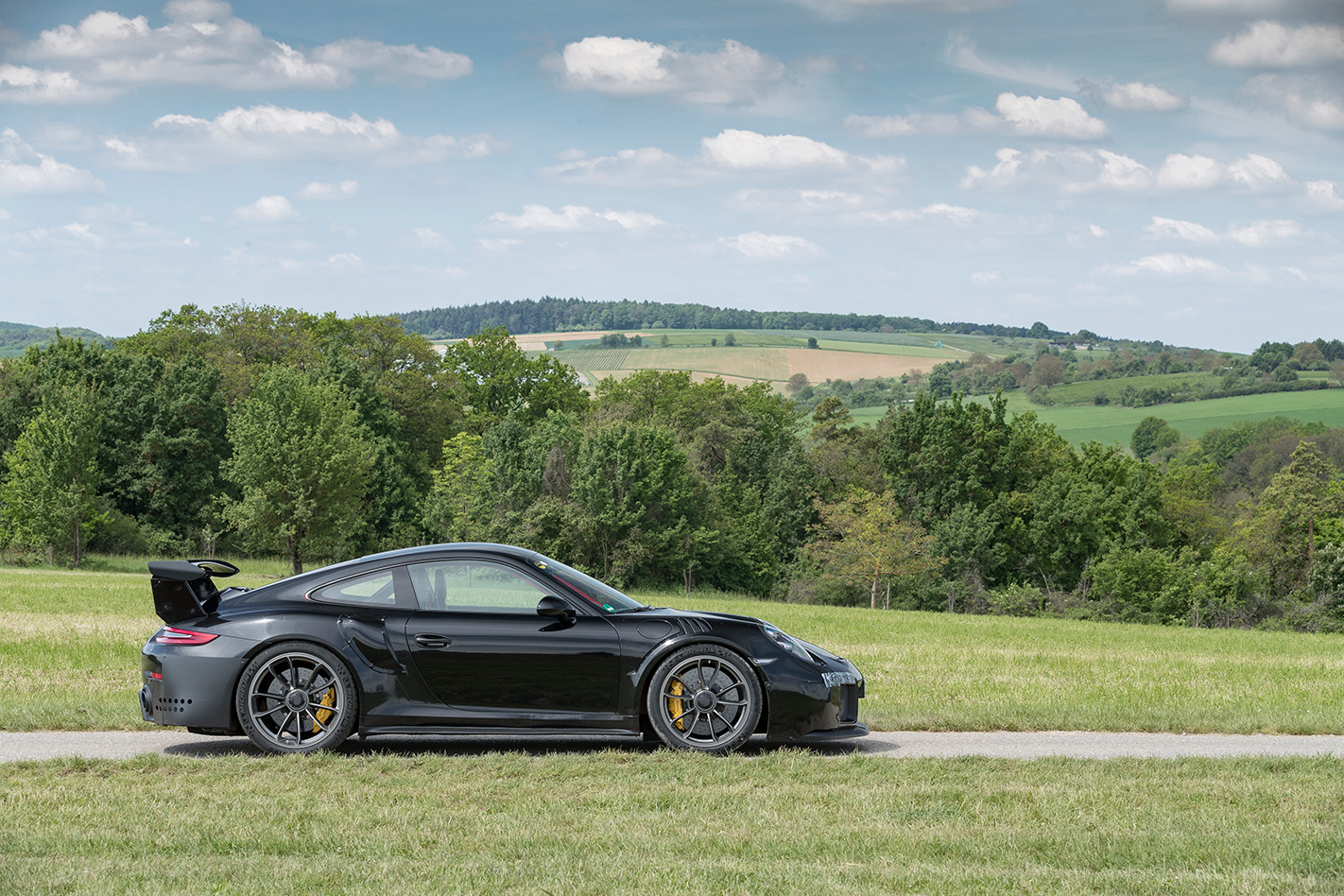
However, it’s enough of a taste to know that the next big hitter is the definitive accolade for the turbocharged six-cylinder boxer engine. Porsche has created yet another freak of nature that we’re unsure the world is quite ready for.
2018 Porsche 911 GT2 RS Specs: Body: 2-door, 2-seat coupe Drive: rear-wheel Engine: 3800cc flat-6, DOHC, 24v, twin-turbo Power: 515kW Torque: 750Nm Transmission: 7-speed dual-clutch Weight: 1470kg Tyre sizes: 265/35 ZR20 (f); 325/30 ZR21 (r) Tyres: Michelin Pilot Sport Cup 2 0-100km/h: 2.8sec (claimed) Top speed: 340km/h Price: $645,700
BMW’s Z4, a new flagship roadster, is approaching an official unveiling, with the German manufacturer beginning to leak out teaser images.
The first is a sketch of the car’s silhouette, which hints at a sleek, flowing body.
The BMW Z4 replacement is being developed in conjunction with Toyota and its reborn Supra.
It was originally thought the German manufacturer would call its new roadster the Z5, but reports suggest the Z4 name is here to stay.
The two vehicles will share the same platform, and are expected to have GT-esque proportions.
Reports claim the pair’s bodies will be constructed from the same lightweight materials as BMW’s i8 and i3.
Naturally, both will send power to the rear wheels, however powertrains are uncertain. Hybrids remain a persistent rumour, and it would be safe to bet on a full-blooded M version for BMW.
Both BMW and Toyota’s roadsters have been spotted testing in the wild, and have been spied lapping the famous Nurburgring Nordschliefe.
However, those development cars have been heavily camouflaged and adorned with cladding to disguise the body. This sketch is our first look at what the production car may look like.
In the sketch we see that the bootline of the Z4 rises, Jaguar D-Type style, to meet the roofline. It is unclear if this will be two individual pods behind each driver, or a larger buttress akin to the Mazda MX-5 RF.
Currently BMW’s Z4 has only been spotted testing in cabriolet form, while Toyota’s Supra has been papped only as a hardtop coupe. It is understood the two vehicles will launch in these respective forms, but BMW could reveal a coupe Z4 at a later date.
Judging from the styling of BMW’s 8-Series concept, the Z4 is likely to have large elongated kidney grille styling at the front. The final car is expected to be launched at the Pebble Beach Concours d’Elegance next month.
Having only travelled 9215km, this Pug could be one of the tidiest privately-owned examples of a 205 GTi in the world.
And that means it commands a hefty price tag when it’s time to swap hands. A price tag of £38,480, or $63,459 to us.

Silverstone Auctions, the house in charge of this sale, says it was then held onto by the winner and her husband, and only driven rarely, which has led to its incredibly low mileage.

This owner is said to have a “small collection of prize-winning 205 GTI models”, which has led to the car ebing well cared for, though not restored at all.
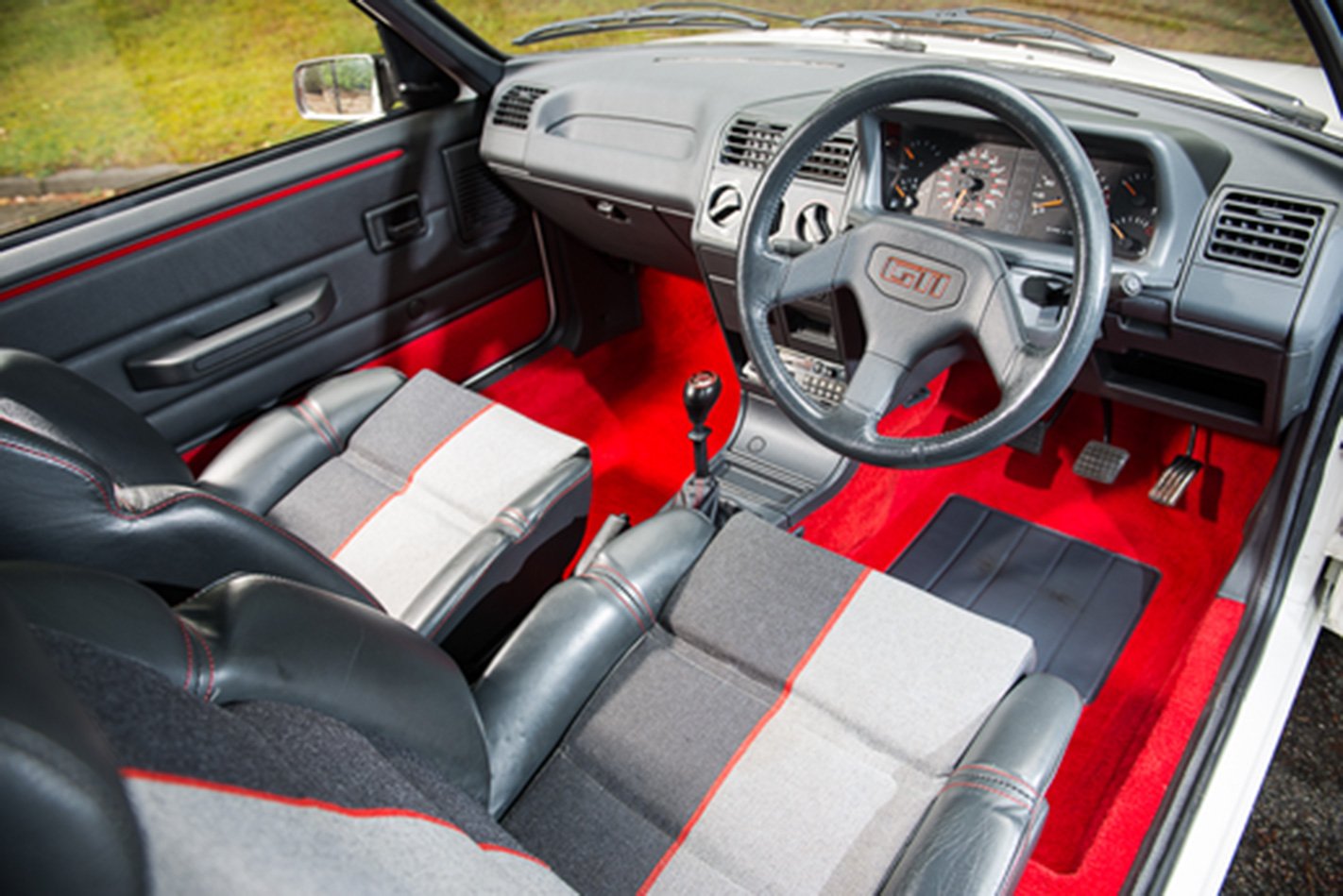
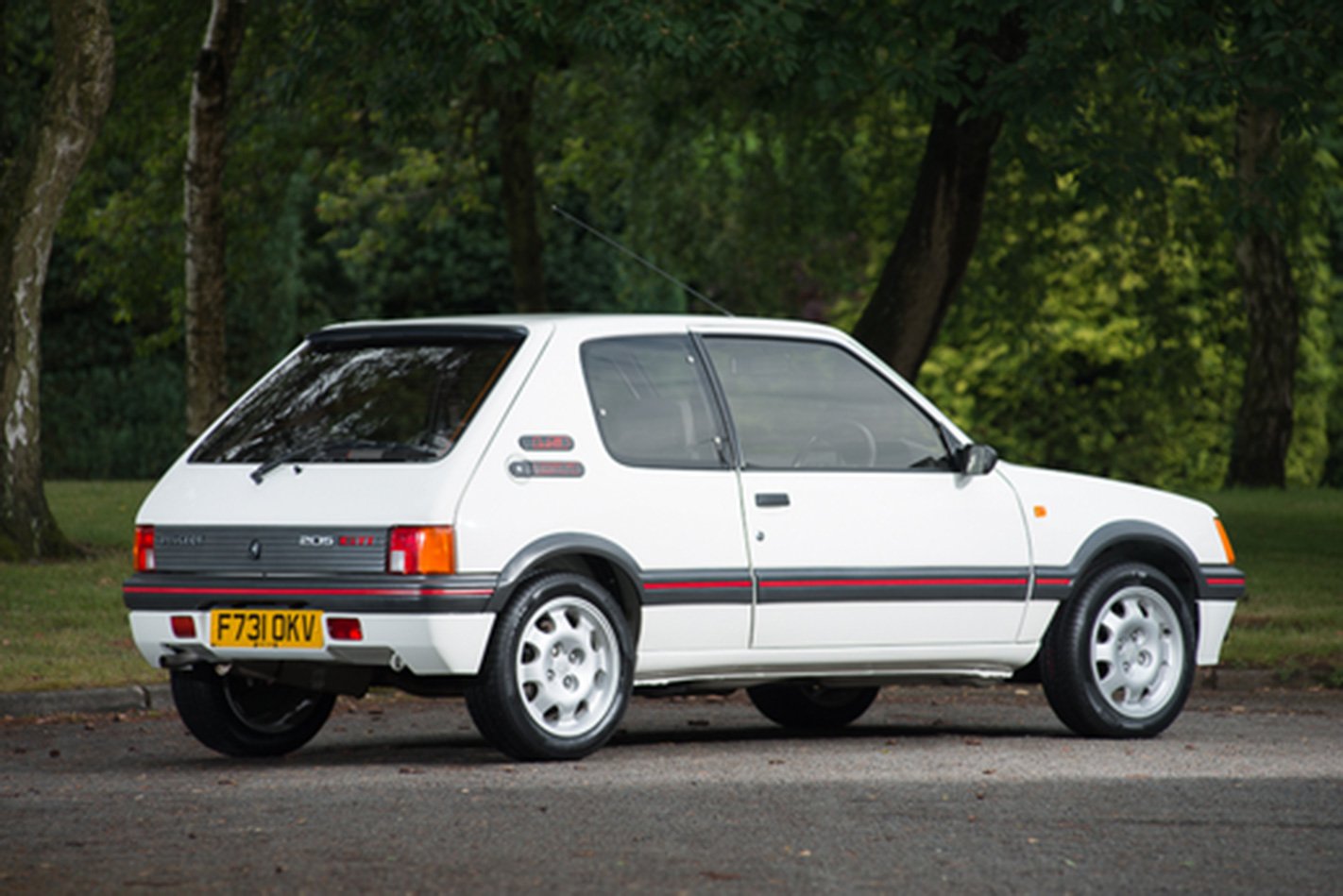
Still, this sale isn’t as surprising as it would otherwise have been, as last year Silverstone oversaw the sale of another low-miler 205 GTi for £31,625, (AUD $52,173).
Hold onto your 205 GTis, ladies and gentlemen.
