
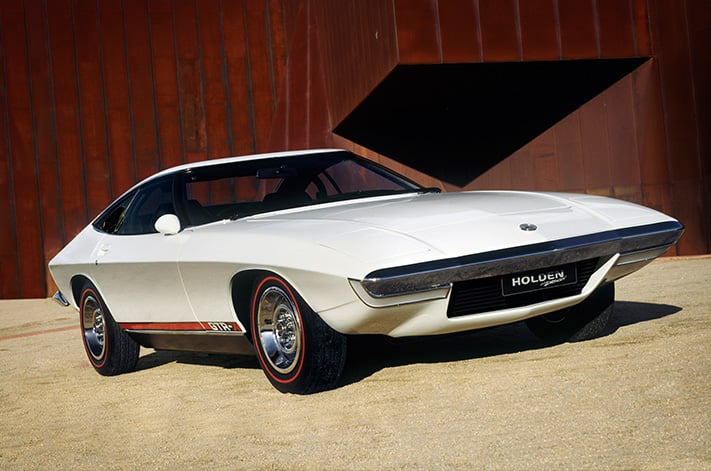
THE one that nearly was: While all of the hardware we have revisited in our look back at Australia’s greatest home-grown concepts failed to roll out in production form, Holden’s 1970 Torana GTR-X came closer than many to feeling the showroom lights on its sexy coupe body.
Unlike the LC Torana sedan and two-door of the same year, which sported classic Aussie meat-and-two-veg styling, the GTR-X concept was an extraordinary departure, bringing an elegant and sophisticated look that could hold its own alongside some serious European metal.
We’re not one to gossip, but Maserati’s Khamsin and the Ferrari 365 GTC/4 emerged just years later wearing a similar blade-edge nose and elegant rear window profile. Could the famous design houses have gained inspiration from the Aussie black sheep?
Zmood had no trouble convincing management to fund the next stages of concept development and a prototype brought the car to life using fibreglass for the body the following year.
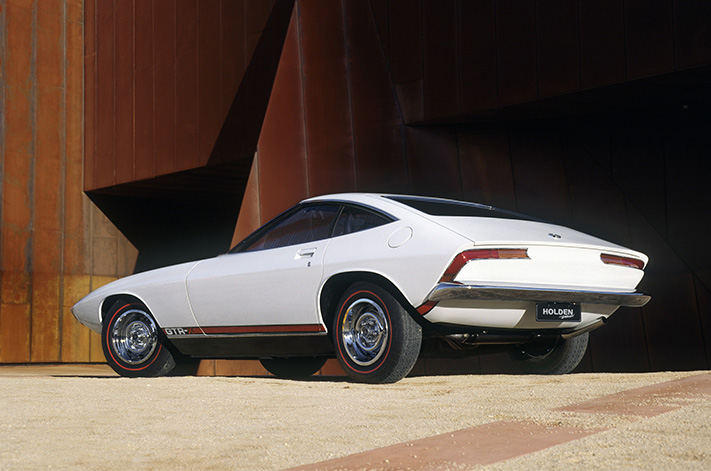
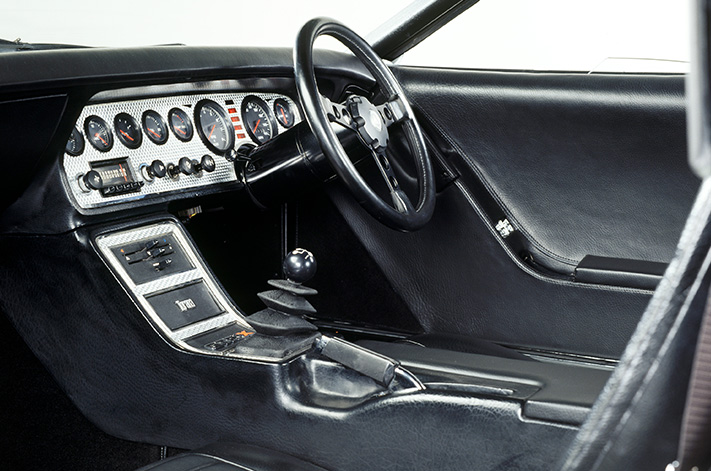
Under its bonnet, the drivable prototype was given the same 3.0-litre 189S six-cylinder as fitted to the LC XU-1 Torana, which also lent its platform for the concept. A four-speed manual gearbox sent power to the rear wheels.
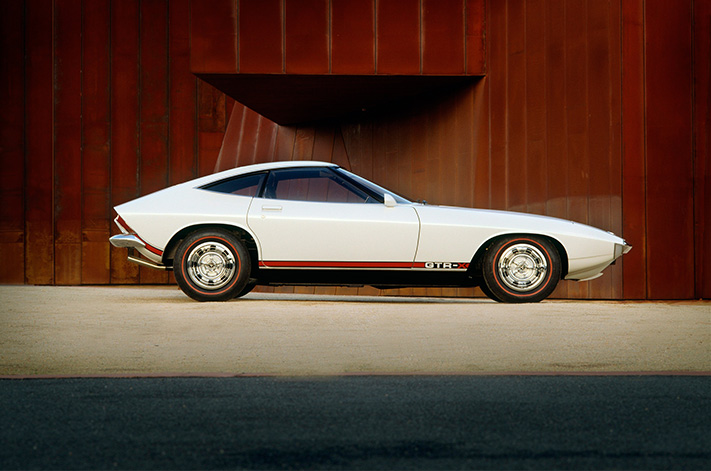
Interestingly, the Mazda MX-5 provides another handy comparison for dimensions. The MX-5 is nearly 300mm shorter than the Holden coupe but its 1735mm width is almost identical to the Torana’s 1732mm and the Mazda sits 1225mm above the road, while the Holden is 1135mm high.
Ironically, it was another Japanese car that was likely to have factored in the decision to keep the GTR-X in the history books and not in showrooms, with Nissan’s highly accessible 240Z revealed the year before Holden’s coupe broke cover.
The only known functional GTR-X now resides in Holden’s mouth-watering collection in Melbourne and serves as a reminder of what the car maker is capable of when it lets its hair down and rolls up its sleeves.
THE safe thing to do here would have been to award the Mk1 Golf GTI the crown and have all the rest scrapping for the minor placings but, in the interests of avoiding just another cut and paste selection, we’re not going there.
In fact, the Mk1 doesn’t make the cut here at all. Clearly, there’s a spadeful of subjectivity that’s gone into this one, and alongside some familiar faces are a few left-fielders. Take a look and see whether you agree.
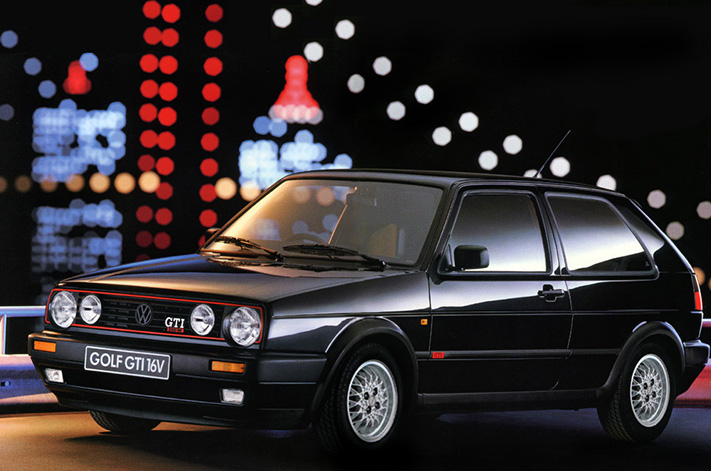
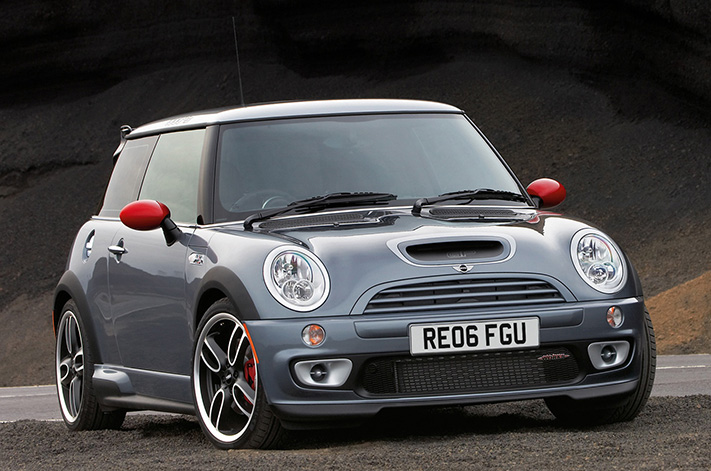
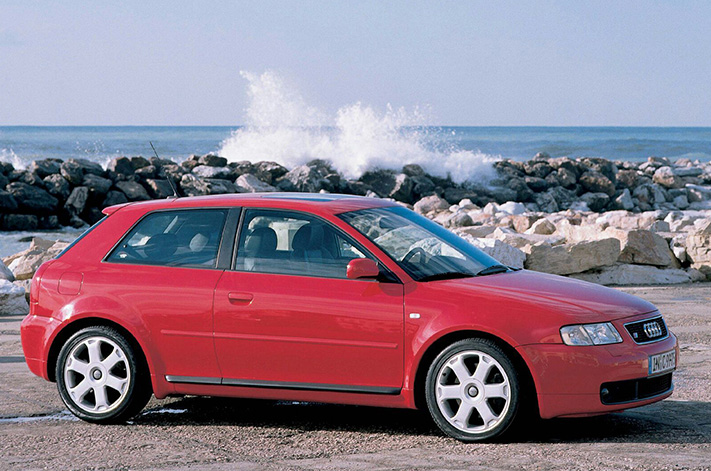
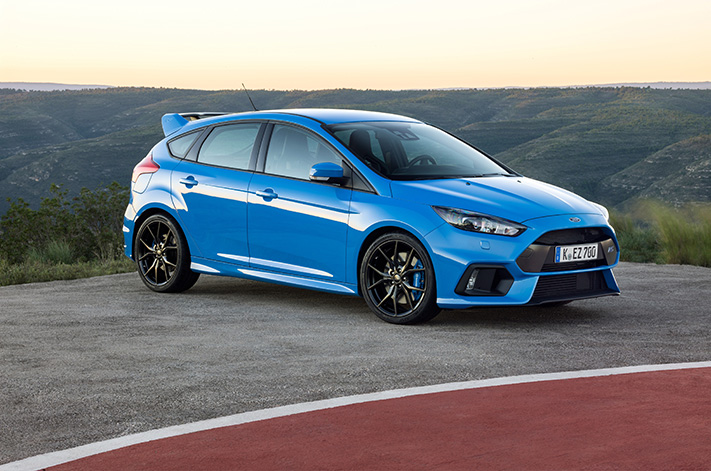
GOLF GTI Mk2 16v The Mk1 Golf GTI is overrated. Discuss. While it popularised the hot hatch genre, sportier versions of mainstream hatches like the Autobianchi A112 Abarth and the Renault 5 Alpine predated its July ’76 on sale date. Give Nathan Ponchard enough beer and time (and rope) and he’ll even make a passionate case for the ’68 Renault 16TS being the first hot hatch. Instead we prefer the faster and more composed Mk2, which came with the added bonus of the rev-happy 16-valve 1.8-litre lump which lifted peak power from 82 to 102kW. Aside from big-money Mk2 specials like the Rallye and Limited, we reckon this is the early Golf to go for.
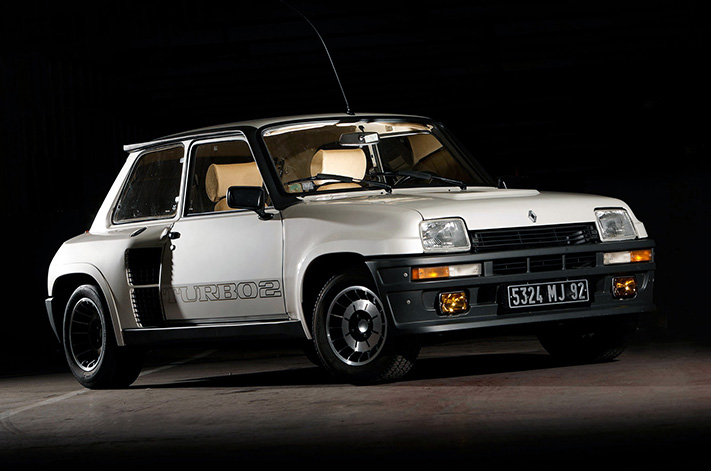
Homologation was completed in time for the 1981 Monte Carlo Rally, in which Jean Ragnotti achieved the mid-engined Five’s first WRC victory. He followed that by winning the Tour de Corse in May 1982. Ragnotti won his second Tour de Corse victory in May 1985 in the pumped up Maxi version, but by now the writing was on the wall. All-wheel drive rally cars had eclipsed the wild Renault. Roadgoing versions of Turbo IIs pop up from time to time here in Australia for about $90K. This or a modern superhatch? In terms of pure charisma, there’s really no competition.
Five top unbelievable barn finds
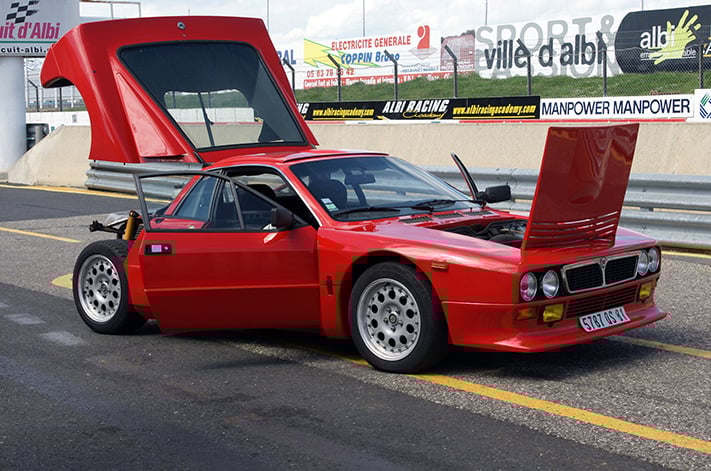
That victory came in 1983, with points contributions chiefly from Walter Rohrl and Markku Alen, beating the Audi Quattros of Hannu Mikkola, Michele Mouton and Stig Blomqvist. The Stradale road versions were delivered in a pretty mild 153kW state of tune but with a modest amount of tweaking, the supercharged Abarth-developed two-litre four would develop north of 240kW. Finding a place for your shopping isn’t going to be easy with this one, but we had to give it the nod.
The facelifted 2018 Peugeot 308 has been revealed ahead of its European launch in September this year.
Peugeot claims the new 308 is the “boldest and most high-tech model yet” and says it comes with “a raft of changes, including sharpened styling and the very latest in highly efficient powertrains and touchscreen connectivity.”
The released image shows the 308’s redesigned nose with a fresh vertical grille and new LED daytime running lights on all models. Rear taillights are also new.
Inside, the 308’s infotainment system will get the facelift treatment, featuring Peugeot’s i-Cockpit with in-car connectivity including Apple CarPlay, Android Auto, and Tom Tom connected 3D satellite navigation.
A new safety suite builds on the outgoing model’s five-star Euro NCAP rating and puts it on par with its 3008 SUV sibling. Drive assistance technologies include active safety brake, active lane departure warning, adaptive cruise control, reverse camera and park assist.
| Peugeot 308 GTI Review Video
Peugeot’s 308 is the first of the carmakers lineup to receive the new BlueHDi 130 Diesel engine which is a “four-cylinder unit that also implements at-source and at-exhaust emission control” and Peugeot says its more efficient than before.
Other under-bonnet changes include the BlueHDi 180 Diesel engine mated to the new eight-speed automatic transmission.
The 308 line-up is the same: Access, Active, Allure, GT Line and the range-topping GT and GTi hot hatch.
Australian timing, pricing and details have yet to be revealed but we can expect this information in the coming weeks.
With winter coming you might be looking for a high-performance tyre with excellent wet-weather characteristics, fortunately our friends at Motor have burned through plenty of rubber to help you find the best.
The Motor Tyre Test is an annual quest to find the best high performance tyres in Australia via rigorous wet and dry road testing.
This year’s winner is the Continental ContiSportContact 5P which showed consistent excellence across the five test disciplines including slalom, wet slalom, dry braking, wet braking and figure eight at the hands of test driver, V8 Supercar enduro racer Warren Luff.
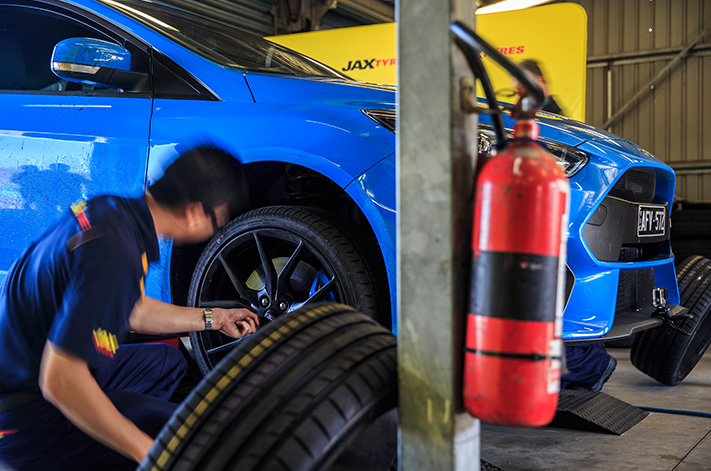
The Continental’s wet-weather performance proved decisive, with the ContiSportContact 5P securing first place in the wet braking test and second in terms of wet lateral G force.
It also performed well on dry tarmac, with a third place in the dry slalom, second in the figure-eight and first for stopping in the dry.
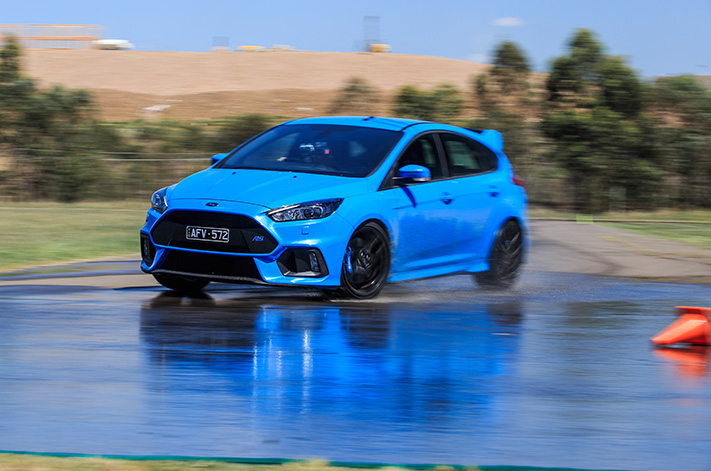
The size tyre year was 235/35 R19 on lightweight rims fitted to a Ford Focus RS.
Luff praised the Continental’s consistency “front-to-back, and lively with a bit of edge. Great wet-weather performance, too.”
| What is the best SUV tyre, as rated by Wheels
In the final results, the Continental’s score of nine (lower being better as first place in each discipline scores one, second two and so on) narrowly beat the Michelin Pilot Super Sport (14) and the Pirelli P Zero (15).
To see the full results of this year’s Tyre Test, pick up a May 2017 copy of MOTOR, or keep an eye on motormag.com.au.
CONNECTING a trailer to a vehicle often evokes feelings of panic to the inexperienced – don’t even mention backing one in.
So to help ease the stress associated with connecting and towing a trailer/caravan, we’ve deciphered a few hauling essentials.
UNDERSTAND THE BASICS
Before you load up your rig and caravan/trailer and chase sunsets into the great unknown, it’s best to understand the towing basics – in particular, GVM, GCM and payload.
GVM (Gross Vehicle Mass) is how much a vehicle can weigh when it’s fully loaded; GCM (Gross Combination Mass) is the towed weight added to the weight of the vehicle, plus any payload; a payload includes the driver, passengers, equipment and any gear fitted to the vehicle.
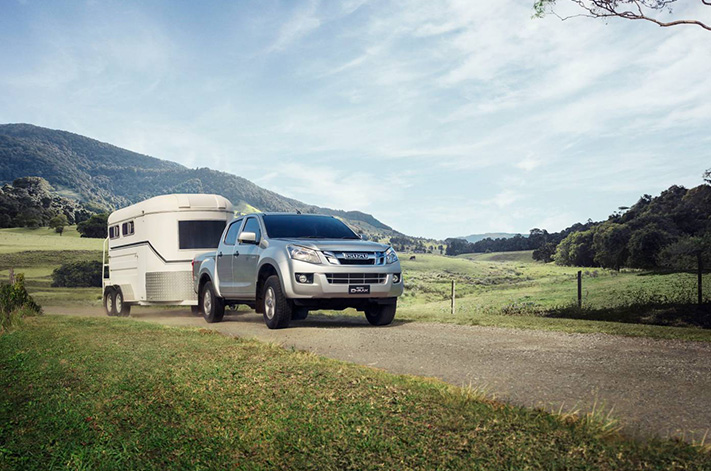
Most popular dual cab 4x4s – Ranger, D-MAX, BT-50 – feature a towing capacity of 3500kg, but, more often than not, that doesn’t always mean you should tow to that limit – once you take into account occupants, luggage and aftermarket accessories fitted to the tow rig, you’re often left with only a portion of the total amount.
| Step-by-step guide to towing a trailer safely
It’s a different matter if you forgo the kids and family pet, but, that’s not always a good idea, however tempting it may sound.
WEIGHT DIFFERENCE
Choosing the correct set-up depends entirely on what you’re towing. For example, if you’re towing a trailer-full of garbage to the tip in your family sedan, then you’ll need a different hitch to, say, towing a caravan across the great red.
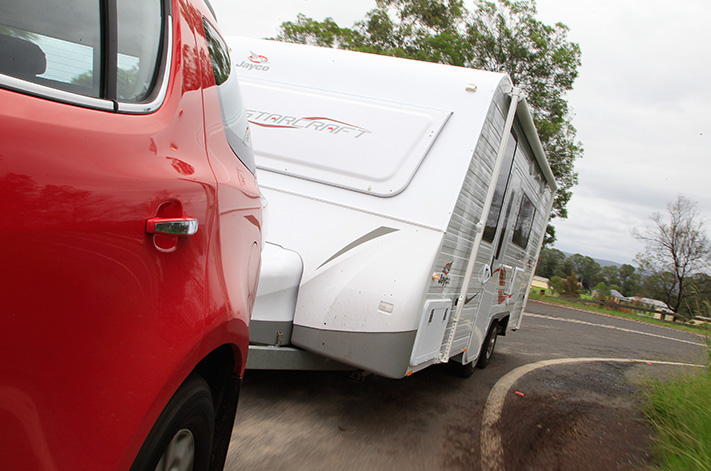
This is where hitch classes come into play. Hitch classes are broken up into five categories, and are distinguished by the total weight they are capable of towing. A hitch class 1, for example, would be for your local tip run with a gross trailer limit of 2000lbs (900kg). While a hitch 4/5 is the heaviest class and can theoretically tow up to 18,000lbs (8160kg) – but you’d obviously need a suitable, extreme-powered tow rig (think industrial equipment).
TOW BALL v PINTLE HITCH
Towing a heavy load doesn’t just involve a proper hauler and a heavy duty trailer, you also need something strong connecting the two. So, if you’re towing something with a bit of weight behind it, you’ll need to upgrade your hitch to something slightly more hardcore.
Most standard vehicles come equipped with a 50mm tow ball, which are lightweight and easy to use for day-to-day activities, making them ideal for recreational use.
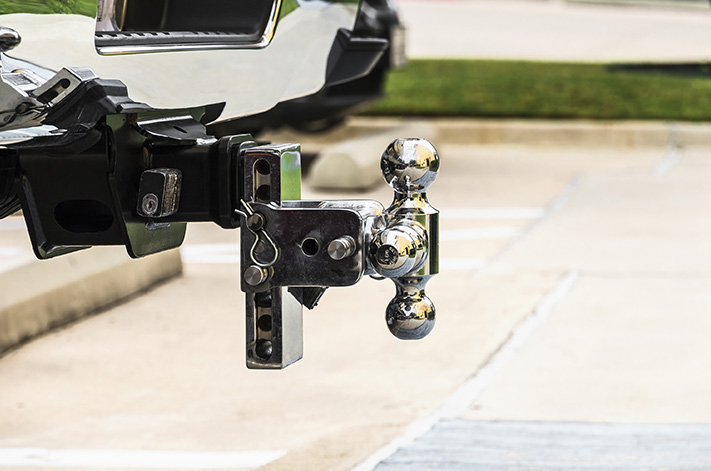
A Pintle hitch is stronger by nature and is better suited to heavy duty towing, namely for lugging industrial equipment. With a basic hook-and-loop Pintle hitch, the hook mounts to a lunette ring, while the loop is attached to the trailer. They’re simple in construction and work best on rougher terrain.
WEIGHT-DISTRIBUTION HITCH
A weight-distribution hitch can be a handy piece of kit to prevent the rear of the tow vehicle from sagging when it’s lugging a heavy load. The hitch can alter tow ball heights and evenly distribute weight across all the trailer and tow rig wheels. Ideally, these are recommended when towing heavier loads.
| Top 10 caravan tow vehicles for 2016
Get the set-up right for the weight your carrying and you’ll be secure in the knowledge that you’ll reach your destination safely, intact and on time – then it’s just a matter of securing a campsite for the night!
With only 200 examples built for Group B homologation, it’s not every day the opportunity to buy a Delta S4 Stradale.
But if you’ve got about $900,000 sitting around and want something fun to do with it, you could do worse than going out and picking up a 32-year-old Italian. Er… car, that is.
Going under the hammer at RM Sotheby’s Villa Erba auction, the S4 is estimated to pick up €450,000 – €550,000 ($692,000 – $968,000).
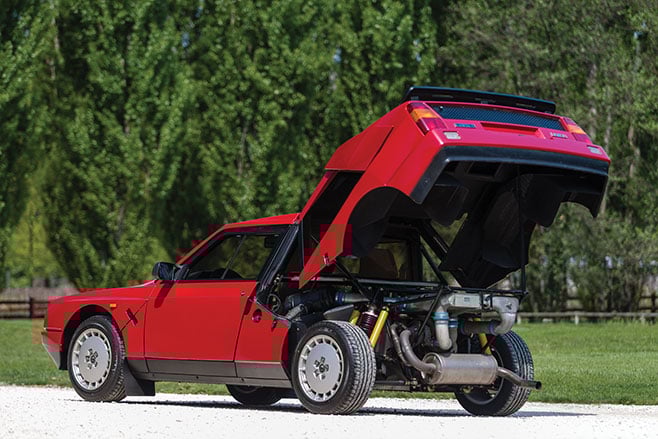
Under the hood, so to speak, is the original 1.8-litre supercharged and turbocharged engine, with two intercoolers to keep temperatures in check.
What all of this results in is the capability to produce a pretty impressive 184kW, with 291Nm of torque.
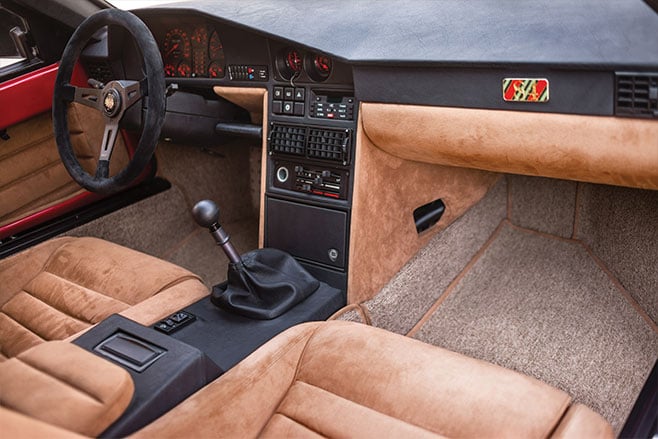
“Delivered new to Italy, the Lancia was first registered in 1989, five years after its original delivery,” Sotheby’s says.
“This car is presented as close to a new Lancia Delta S4 as is possible.”
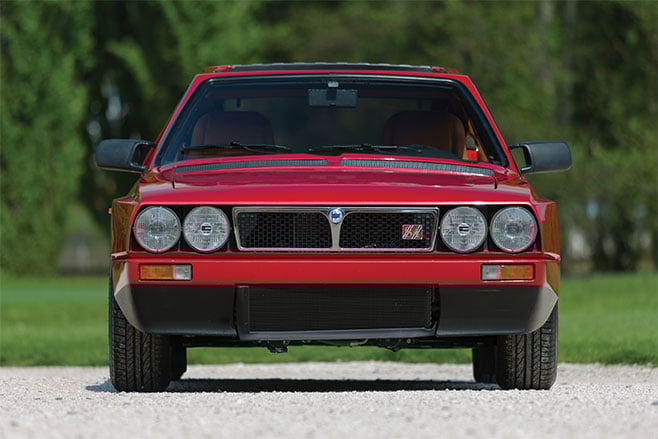
The Delta S4 Stradale should find its new home on the 27th of May at Villa Erba.
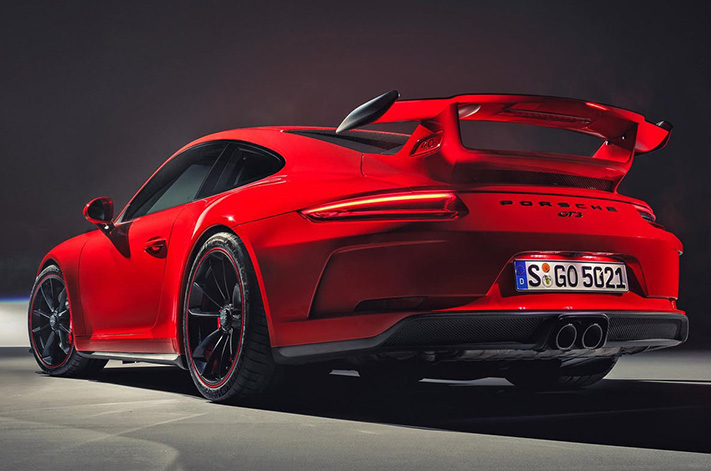
GIVEN all the recent rah-rah around Porsche’s decision to offer the latest 911 GT3 with a manual transmission once again, we thought it might be interesting to figure out just how many enthusiast cars are sold here in Australia with the choice of three pedals. We made the cut-off 250kW and having done so, this assignment didn’t take us too long.
Okay, so power is a pretty blunt stick and rules out some sweet sportsters like Wheels’ 2016 Car of the Year winner- the Mazda MX-5, Toyota 86 and Caterham 7, but it’s the more powerful manual cars that are really getting clubbed out of the market by twin-clutches and automatics. You can’t buy a manual Ferrari or Lamborghini any longer. You probably knew that. But Mercedes? Not one manual shift in their entire range. And there’s absolutely nothing here from Japan. Even Alfa Romeo, that one-time bastion of all things enthusiast now only offers a manual gearbox as a tightarse option to attract showroom footfall on its very cheapest model.
- Aston Martin Vantage
- Ford Mustang
- Ford Focus RS
- Jaguar F Type V6
- Lotus Exige
- Lotus Evora
- Porsche 718 Boxster S/ Cayman S
- Porsche 911
- BMW M2 Pure
- BMW M3 / M4
- Holden Commodore SS/SS V
- HSV Clubsport / GTS / GTSR/ GTSR W1
- HSV Maloo
- HSV Senator
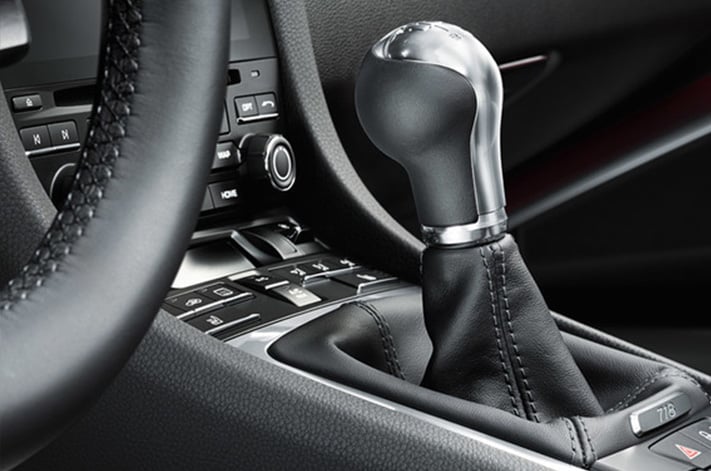
2018 Porsche 911 GT2 RS to miss out on manual gearbox option
Paul Ellis, Porsche Cars Australia’s public relations and motorsports director, wouldn’t be drawn on the number of GT3s that would get the stick, but when speaking to Wheels noted that “Although many people say they’ll choose the manual car, I think a very large majority will still choose PDK as it’s the faster, more efficient option.” Expressions of interest with deposit have already been placed on the GT3, but production lead times are such that customers are under no compunction at present to specify their transmission choice.
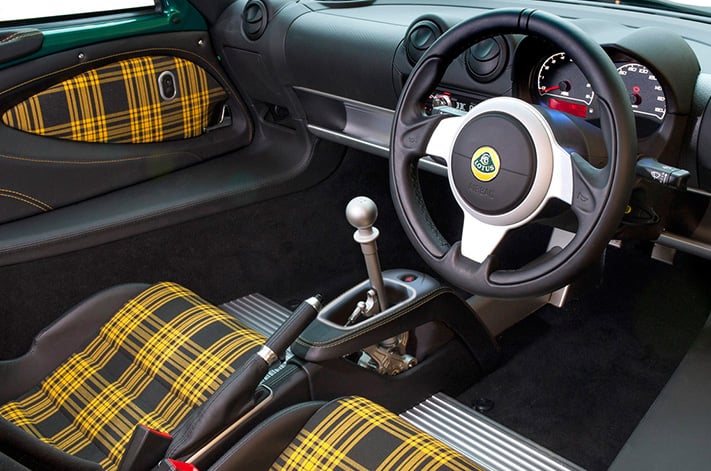
So by the end of next year we could be down to just a handful of manufacturers keeping the faith with three pedals. We’d love to hear your views on whether you think this is progress or a pity. Are modern supersports cars now so rapid that a manual makes no sense? Hit up the comments and let us know or email us at [email protected]
When Volvo announced it would no longer be building engines with more than four cylinders, it immediately cast doubt over its future performance models, however the S60 Polestar, and its wagon-backed V60 twin, live on, albeit with a downsized heart.
This is concerning news, as the 3.0-litre turbo straight-six engine has always been the Polestar’s strongest point.
On paper, however, the new 2.0-litre turbocharged AND supercharged four-cylinder delivers the goods; power is up 13kW to 270kW at 6000rpm though torque drops around 30Nm to 470Nm at 3100rpm.
The new engine cuts 24kg from the Polestar’s nose and combined with the new eight-speed automatic shaves 0.2sec off the 0-100km/h sprint to a competitive 4.7sec.
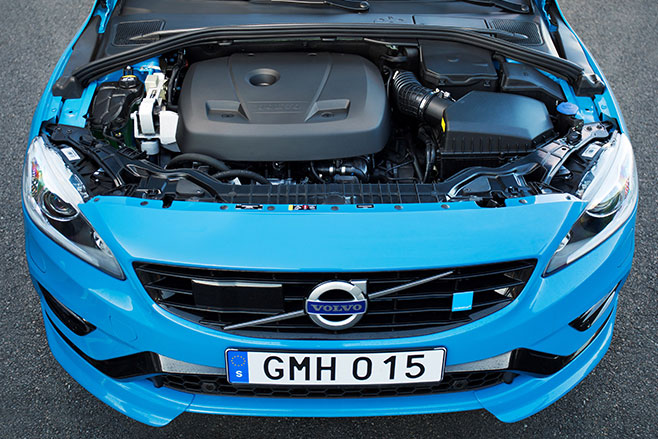
It sounds fairly coarse, but the odd hint of supercharger whine and parps on upshifts imbue it with some character.
Forget about fuel economy if you use the performance, however, as we averaged almost 18L/100km.
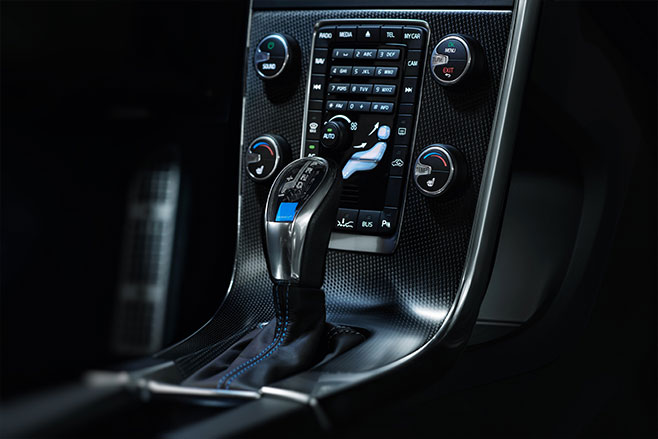
The new eight-speed auto is reasonably intelligent if left to its own devices, and what it loses in shift speed compared to a dual-clutch it gains back in day-to-day useability.
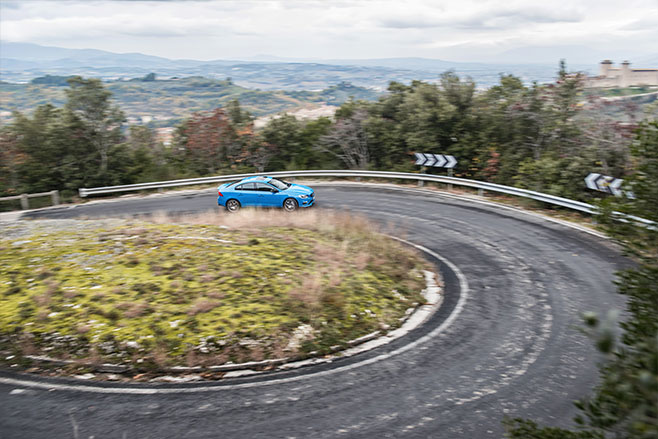
The steering is slow but linear and well-weighted and the brakes hold up reasonably well, though the pedal is quite soft.
All in all, it adds up to a quick, component – if not terribly exciting – luxury sports sedan, but this is sadly undermined by a ride quality that would be more appropriate in a Porsche 911 GT3.
Add in the S60’s ageing architecture, though in its defence the button-fest is quite easy to use, and in the face of newer rivals like the Audi S4 and Mercedes-AMG C43 it’s tough to make a case for it, even with the sharp new $89,990 sticker.
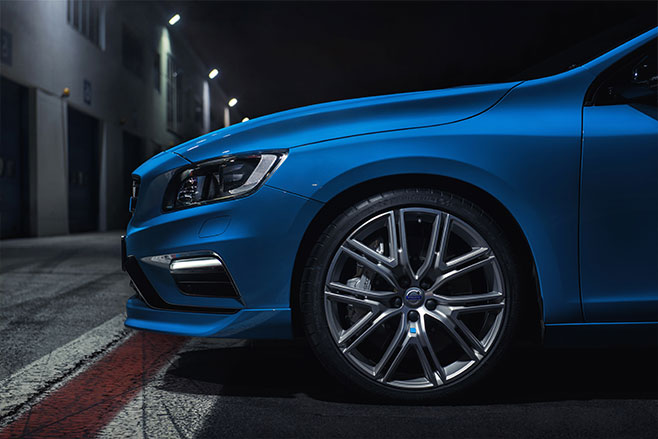
There’s a place in the market for a fast, desirable Volvo, but this ain’t it.
Specs:
Engine: 1969cc inline-4cyl, DOHC, 16v, turbo, s/c Power: 270kW @ 6000rpm Torque: 470Nm @ 3100rpm Weight: 1664kg 0-100km/h: 4.7sec (claimed) Price: $89,990
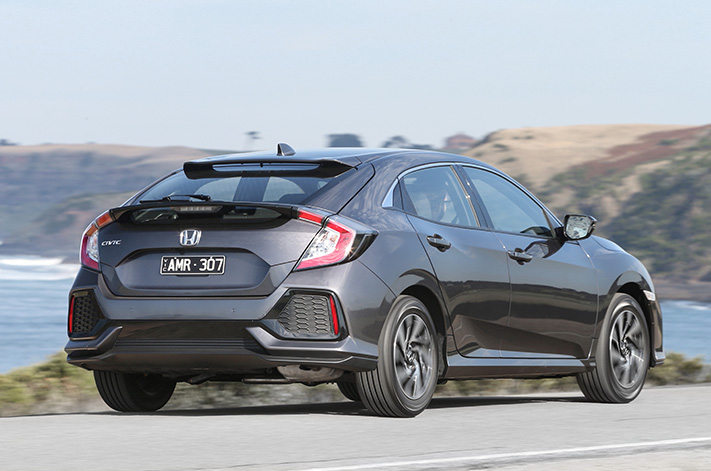
The Honda Civic five-door has returned to Australian showrooms, with the Japanese carmaker launching its new-generation five-door small car this week with a starting price of $22,390 for the base 1.8-litre Civic VTi.
Pricing tops out at $33,590 for the VTi-LX flagship and hatch price tags largely mirror that of the established 10th-generation Civic sedan. The sole exception is the Civic RS – at $32,290 in five-door form, which costs $400 more as a hatchback.
Compared to the previous-generation Civic hatch, the wheelbase is 30mm longer for more interior space, the driving position is 35mm lower to improve headroom and the front seats slide 10mm further to help accommodate larger occupants.
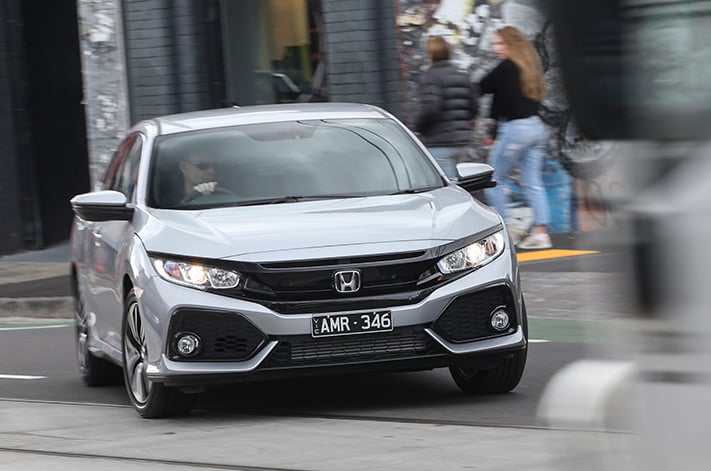
There’s also 10mm more front shoulder room, with the gap between front seats also widening by 30mm. Rear seat occupants aren’t forgotten either, with 20mm more shoulder room and a huge 95mm more legroom and 45mm more rear knee room.
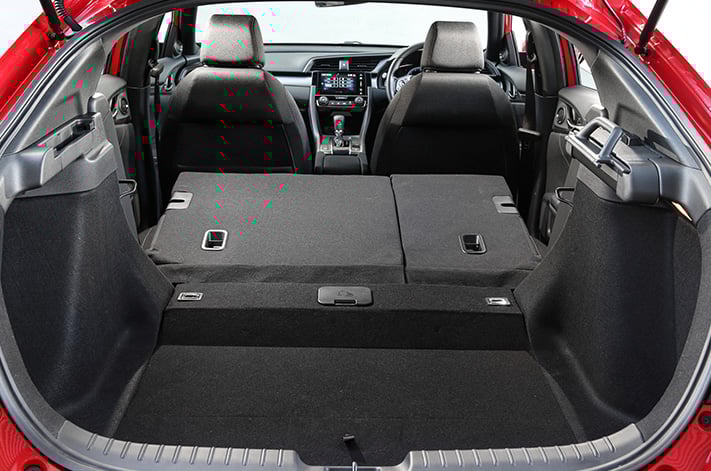
Boot capacity measures in at 414 litres with the 60/40 split rear seats upright, and a side-mounted luggage cover is designed to be easier to deploy and remove than ones mounted against the rear seats. That said, the versatile Magic Seats function of the previous model hasn’t carried over to its replacement.
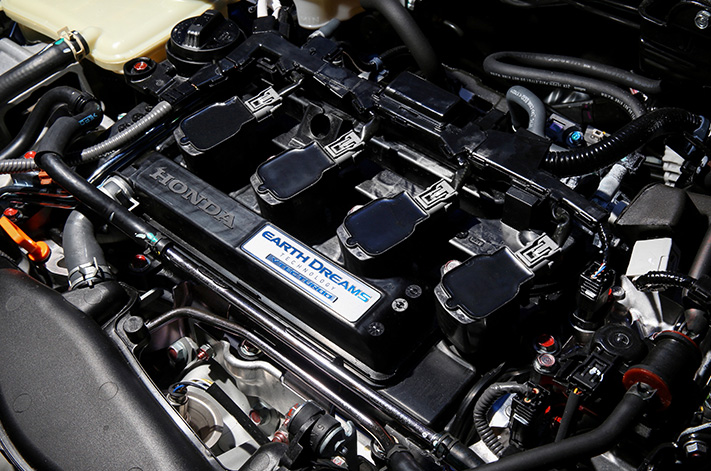
Mechanically, the Civic Hatch follows the same template set by the sedan last year. Two engines are offered, with the lower-spec VTi and VTi-S receiving a naturally-aspirated 1.8-litre petrol four-cylinder with 104kW and 174Nm, and upper-grade VTi-L, VTi-LX and RS variants that get a more powerful 127kW/220Nm turbocharged 1.5-litre petrol four.
All models drive the front wheels via a CVT automatic, but due to marginally higher weight, the turbo hatchback sips slightly more fuel than the sedan with a combined fuel consumption of 6.1L/100km – a 0.1L/100km increase. The 1.8-litre drinks 6.4L/100km on the combined cycle.
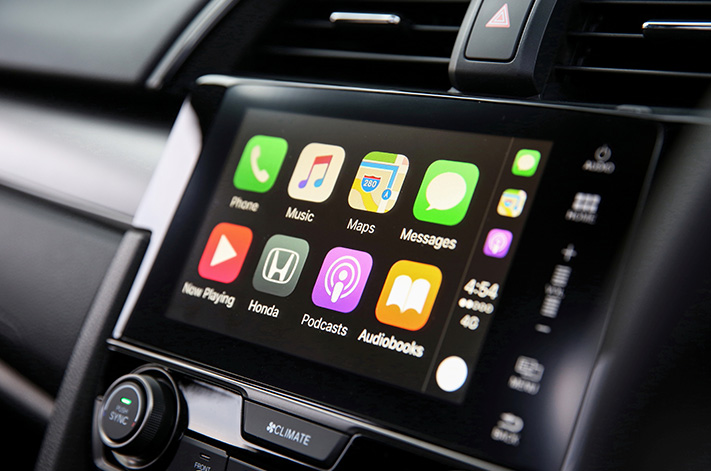
In-car tech comprises a 7.0-inch colour touchscreen display running an Android operating system, which also incorporates Android Auto and Apple CarPlay smartphone mirroring and an in-car wireless internet hotspot. A digital radio tuner is added from VTi-L and up.
VTi-S, VTi-L, RS and VTi-LX also gain a rearward-facing camera on the passenger side door mirror, which watches the left side of the car to eliminate blind spots and shows a live image feed on the infotainment display when the indicator is tipped left or a button is pressed. The VTi-LX gains even more safety gear, with forward collision warning, lane departure warning, adaptive cruise control and lane keep assist.
All cars are equipped with a reversing camera, but you’ll need to step up to the VTi-S to enjoy front and rear parking sensors.
The VTi-L gains automatic headlamps and wipers, dual-zone climate control and power-folding door mirrors, while those looking for integrated navigation will have to fork out for the flagship VTi-LX.
Both the VTi and VTi-S receive 16-inch wheels – steel on the VTi, alloy on the VTi-S – while all other grades get 17-inch alloys as standard. The sports-styled Civic RS also receives a bodykit, LED foglamps, LED headlamps, leather upholstery and heated front seats.
PRICING: VTi – $22,390 VTi-S – $24,490 VTi-L – $27,790 RS – $32,290 VTi-LX – $33,590
AUSTRALIA’S growing appetite for luxury cars will earn the Federal Government an extra $20 million this financial year, the latest budget figures show.
Treasurer Scott Morrison last night unveiled his second budget, showing luxury car buyers are still expected to stump up a $240 million luxury car tax (LCT) windfall over the next five years that it identified in forecasting released last year.
This year alone, the controversial 33 per cent luxury car tax will add $650 million to the Federal Government’s coffers – up from the $580 million anticipated by last year’s Budget papers, and well up on the $520 million estimated in 2015’s mid-year economic forecast that measures how closely the government has followed its financial plans.
Earnings from LCT – a tax levied on the proportion of a new car’s price above $75,526 if it uses no more than 7.0L/100km, and above $64,132 if it consumes above 7.0L/100km – are now almost double what they were in the 2005-06 financial year, where the tax earned the government just $330 million.
LCT is expected to dip to $640 million next year, suggesting the government anticipates we will have slightly less money to spend on fancy cars – generally speaking the government’s revenue measures, designed to return the Budget to surplus by 2021, will leave all taxpayers slightly worse off.
Meanwhile, the government has revised earlier estimates to show that Australians will pay $10 million less in petrol excise – the $0.401 cents a litre slug that was raised from $0.396 in February this year – down to $6.25 billion.
But there’s no holiday for diesel fuel buyers, with the excise – charged at the same rate as the one levied against petrol – tipped to add an extra $270 million over previous forecasts to $10.2 billion. The government identified that it, along with the tobacco tax, were the budget’s strongest performing excise revenue raisers helping it offset a fall in income resulting from rolling out various free trade agreements with Australia’s main import hubs.
The government reintroduced twice-yearly reviews to the fuel excise in 2014 to peg the tax’s movements to changes in the consumer price index, a measure of how fast prices for a pre-set basket of stuff we buy is rising or falling. The next review is due in August.
From this year on, though, petrol excise is expected to reap the government an extra $600 million in the 2018-19 financial year, and an extra $1 billion a year for each of the following two years.
A soft start to 2017’s new car sales – the industry’s volume is down almost three percent on last year’s pace – appears to have the government’s estimates for how much it will earn from taxes levied on passenger car imports down sharply, falling $30 million to $470 million, but rising more than two percent the next year, and six percent a year later.
Project that revenue to the 2020-21 financial year, though, and the government predicts an almost 10 percent increase in revenue for car imports. However, it doesn’t say if that will come from a boom in new car sales, or a higher excise rate.
