
HYUNDAI Australia and Tesla have joined in calling on the government to take action in encouraging stronger electric vehicle uptake and infrastructure development.
The comments follow BMW Australia CEO Marc Werner’s recent call for the Turnbull Government to “finally action robust policy to support the introduction oflow emission vehicles to the Australian market.”
Hyundai Australia’s chief operating officer Scott Grant has echoed Werner’s comments, saying he is clearly frustrated by the absence of support for car makers bringing new energy-efficient and alternative-energy models to Australia.
“We need more government support and more government vision and leadership around the adoption of these kinds of technologies, because they are still emerging and relatively expensive, and you need infrastructure,” Grant says.
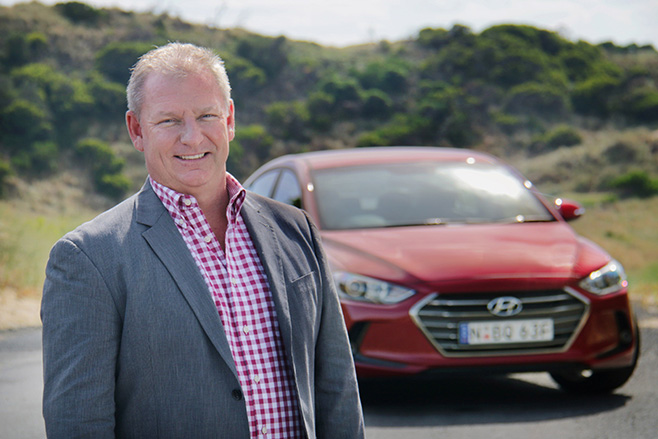
“We can battle on our own, or the government can sort of show some leadership on it,” he added.
Tesla Motors Australia’s senior marketing and communications manager Heath Walker said while car manufacturers needed to educate consumers about EV infrastructure use, it was also important to have a tax system based on incentives instead of penalties.
“Monetary value tends to talk to the consumer first and foremost, but there are lots of little things that can be done to incentivise EV uptake,” Walker told Wheels.
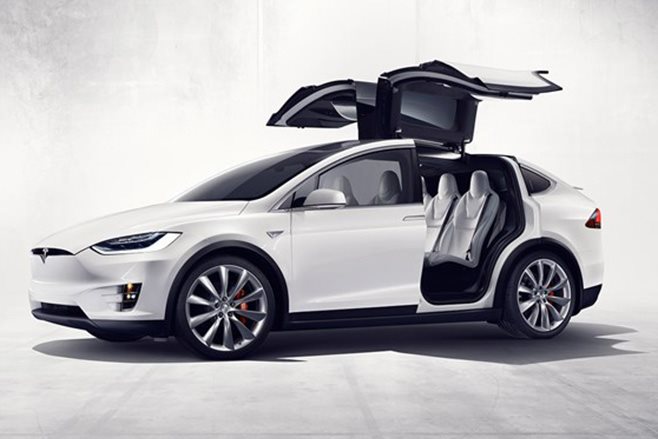
“We’re also working with state governments around what incentives they can provide and the big ones there are stamp duty, transit lane use and registration.”
Like Werner, Walker pointed to New Zealand as “a really, really good country to look at who’s doing [EVs] well”.
“They’ve said that they want to double their new car EV purchases by 2021 and they’ve also said they want 40 percent of company fleets to be EV by 2021.
“We in Australia like to be thought of as leaders in technology, but in this case I think there’s an opportunity to look across the Tasman and have a look at New Zealand because I think they’re doing good things over there, and businesses are buying into it.”
It’s not just car manufacturers joining the fray. The Motor Trade Association of Queensland (MTA Queensland) said it was “pleased to see BMW lead the call from car-makers to encourage the Australian Government to support low and zero-emissions vehicles as they begin their rollout of i-Performance plug-in vehicles”.
MTA Queensland group CEO Dr Brett Dale said it was time to remove the “outdated” Luxury Car Tax.
“As we enter the age of electric and autonomous vehicles we urge the government to remove barriers that restricts investment from manufacturers through disincentives to consumers,” he said.
“Government must review its LCT and at a minimum lift the threshold significantly, or remove it altogether, and stop penalising average-earning Australian families.”
Wheels has sought comment from the Department of Finance.
Ever watched a movie that was decent first time around, but improved on every subsequent viewing?
That’s the VW Golf GTI 40 Years. Just as some movies require some concentration and focus to figure out what’s going on, you have to dig deep to really uncover what makes the 40 Years special.
It only just made the PCOTY cut. Having been beaten by the Focus RS in a recent comparison (December 2016) we debated whether there was any point bringing the limited-edition Golf along, but as the year’s hottest front-driver (narrowly nudging out the Peugeot 308 GTI 270) we felt it deserved a chance.VW Golf GTI 40 years vs Ford Focus RS vs Merc-AMG A45

Winton was a washout. The VW was one of the easier cars to drive in the slippery conditions, but powerful front-drive cars on a wet racetrack, especially those with limited-slip diffs, are almost always a one-way express ticket to understeer city. Additionally, the 40 Years doesn’t have the adjustability of something like the Megane Trophy to be able to neutralise the front-end push. Or at least it doesn’t when there are rivers running across the track.
It was on day three, on our chosen test road in the Victorian High Country, that it started to click. With dry tarmac under its 19-inch Pirellis, the clever front diff could effectively harness all 195kW/350Nm. The engine is awesome, not just more powerful than in the regular GTI but also much more aggressive, a vicious bbrrtt escaping the pipes on full-throttle upshifts.

As a manual that gap shrinks to $500. We asked for a three-pedal car, but sadly the 100 examples so-equipped all have customers’ names next to them. And we can understand why, as even with the DSG this is an exceptional front-driver. Ninth place might not sound too flash, but for a sub-$50K hot hatch to be snapping at the heels of a Nissan GT-R and Audi R8 V10 Plus proves it’s something special.

JUDGES’ RANK DAVID MORLEY: =6th Still showing the rest of the hatchback world how it should be done.
DYLAN CAMPBELL: 10th I respect it a lot but oddly I don’t lust over it. I’d almost be happier with a Performance or R.
SCOTT NEWMAN: 8th A slow burner, but dig deep and its excellence shines.
TIM ROBSON: 12th This is the Golf GTI to own. Amazing engine and a real character.
JOHN BOWE: 10th Better than I expected, the best front-wheel drive I have driven.

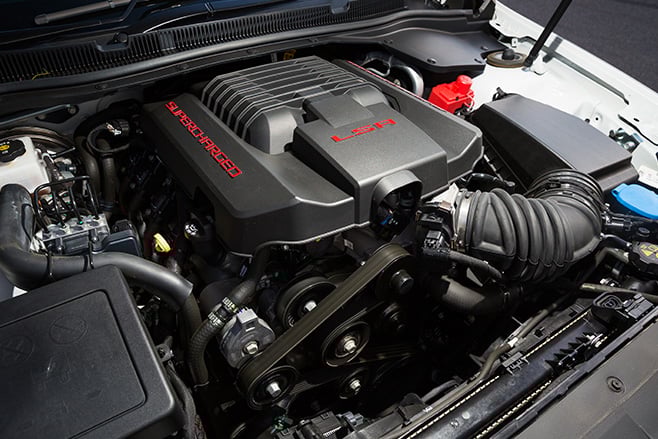
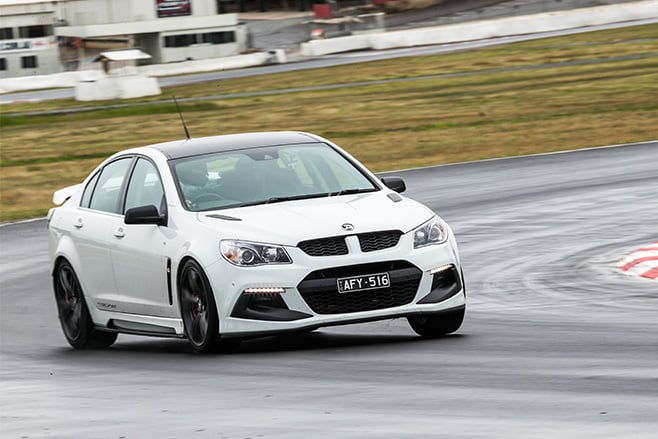
How far we have come… if GM’s mighty, mighty LSA engine had been around a few short years ago, we would not be writing about the HSV Clubsport being down in 10th spot, guaranteed.
It’s another result that does more to illustrate the strength of this year’s opposition, rather than shining the spotlight on any particular weakness in the R8.
Armed to the absolute teeth with that fantasmagorical 400kW/671Nm 6.2-litre supercharged V8, and blessed with a chassis that still surprises and delights after so many years, the R8 looked – and sounded – like it would make a good show of it, even taking into account the carpark it found itself nestled in on that first afternoon.
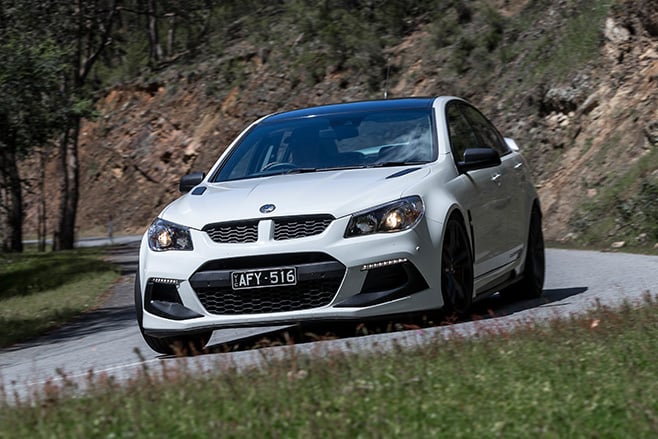
It did better than most in the wet at Winton, too, thanks to its Continental tyre set, and took both the wet and semi-dry condition in its stride. On track, though, is where its R8 origins are probably most noticeable. It doesn’t, for example, like its gear change to be rushed, with a disconnect between clutch action and shift speed proving to be reasonably annoying. Its steering, too, is light for such a large car and could do with more load to better match its character.
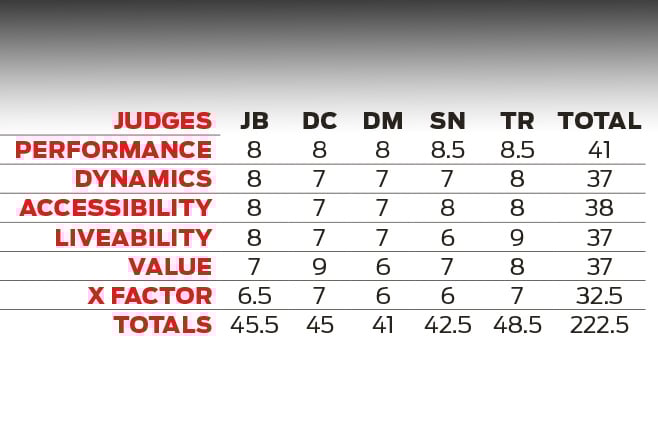
With the scores for positions seven through 11 separated by less than 10 points from a possible 300, a few of the judges marked the R8 down in the areas of Liveability and Dynamics, while the subjective X-Factor figure also pulled the R8 down in the face of formidable opposition.
Is this the last time we’ll see a V8-powered Holden-derived rear driver at a Performance Car of the Year event? It’s very likely – and it’s somewhat of a shame it had to come up against such a high calibre field, because the R8 is far better than the final tallies indicate.
JUDGES’ RANK DAVID MORLEY: 11th I can’t feel 400kW. But I can feel (and see) quality when it’s plonked before me.
DYLAN CAMPBELL: 11th Eye-openingly potent for a Clubsport. I just wish it sounded a little more sinister.
SCOTT NEWMAN: 10th Huge grunt, great handling and room for the whole family.
TIM ROBSON: 7th Can’t understand how it didn’t do better. Mucho, mucho motor.
JOHN BOWE: 8th Very well executed, a lot of car for $80 grand.
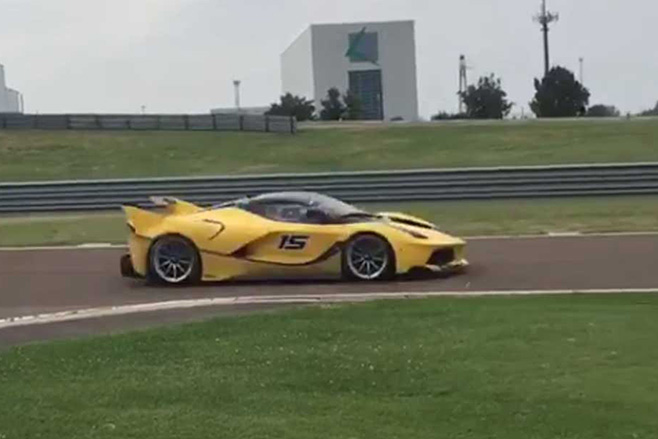
1. Kobe Bryant (@kobebryant)
As one of the highest paid basketballers in the NBA, it comes as no surprise Mr. 81 has a garage full of luxe cars including, among others, Ferraris, Lamborghinis and Bentleys. This isn’t Bryant’s own car, but the split-second speed of the Ferrari La Ferrari FXX K is still worth sharing!
2. Scott Disick (@letthelordbewithyou)
The reality TV star Scott Disick, famous for his on-again-off-again relationship with Kourtney Kardashian, is no stranger to splashing the cash. Especially when it comes to his cars… or watchers…. Or his house.

3. Kylie Jenner (@kyliejenner)

Here is Kylie, posing in front of a Ferrari. We’re sure the car isn’t the point of the image.
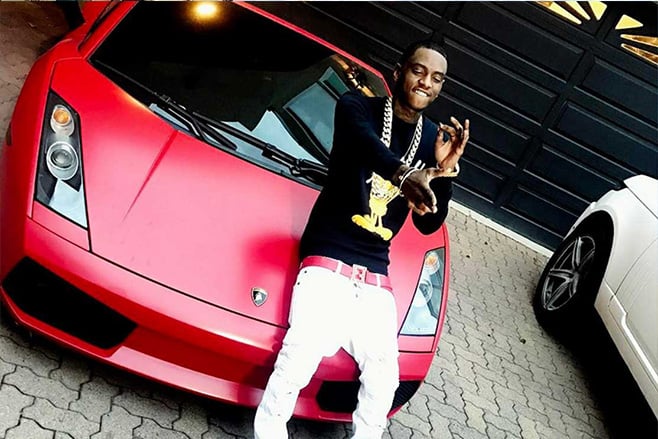
4. Soulja Boy (@souljaboy)
The rap artist shared this photo of his Ferrari. His garage has also welcomed a Bugatti, Porsche, Bentley and Audi. Say what you will about his music, but Soulja Boy has some sick whips.
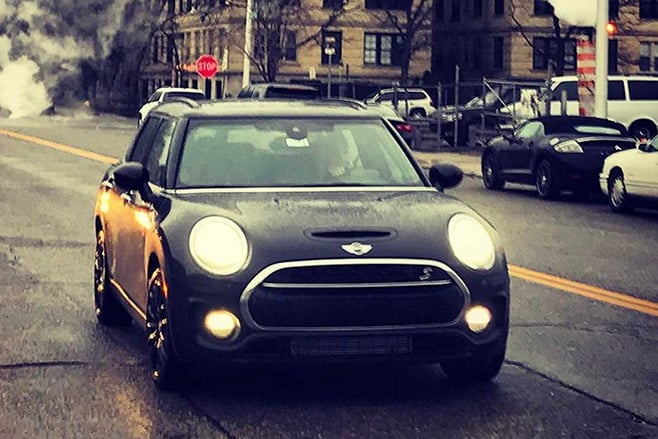
5. Tony Hawk (@tonyhawk)
When it comes to being the king of cool, Tony Hawk is right up there. So if he shares a photo of a Mini Clubman, which he borrowed on a trip to Detroit, it must be cool, right?
6. Patrick Dempsey (@patrickdempsey)
Ahhh Mc Dreamy, you are all class. And that’s backed up by sharing this photo of your Porsche 911! Fun fact: Patrick Dempsey is a legit racer, who saw acting as a stepping stone to following his true love – duking it out in fast cars on a race track.

7. Grant Denyer (@grantdenyer)
What would this list be without an Aussie? Grant may be best known for his spot as host for Family Feud, or previously Australia’s Got Talent, but he is also a talented motor racing driver. He’s driven in the V8 Supercar Series, Bathurst 1000 and the Bathurst 24 hour and 12 hour. His Instagram is flooded with photos of his racing life, just like this one.
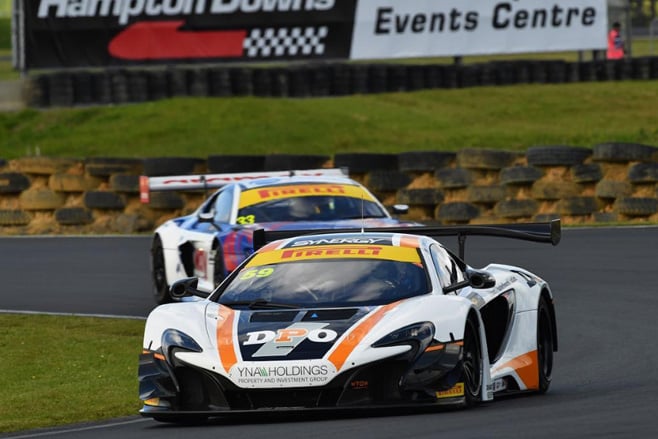
#ausGT #mclaren #nz #650S #hamptondowns”
8. Dwayne Johnson (@therock)
Dwayne ‘The Rock’ Johnson posts a lot more photos of himself than he does of his stuff. But this photo of him with his Dad and the Ford he bought for him as a thank you gift at Christmas was too sweet not to share. The caption says it all.

9. Brody Jenner (@brodyjenner)
Yep, it’s another member of the Kardashian clan. It’s hard to leave them off the list because they just love the spotlight, especially when it comes to proving their wealth. This time it’s Kylie’s older half-brother Brody, who spends much less time basking in the reality TV spotlight. Here is a photo he shared of sweet 1966-1968 Chevrolet Chevelle.

10. Sophie Monk (@sophiemonk)
But not all celebrities get around in aspirational cars. Some of them drive ‘normal’ cars like the rest of us. Take Sophie Monk, for example, who gets around in a Volkswagen Polo.

WHEN Lexus applied for a trademark on the “LC F” name at the start of February, the intent was clear – the Japanese luxury automaker is planning to turn up the wick on the already-swift Lexus LC 500 two-door, and fairly soon too.
But besides the fact that an F suffix is in the LC’s future, detail was scant. Engines maketh the performance car, but with the LC 500’s Yamaha-tweaked 5.0-litre atmo V8 seemingly at the limit of its power and torque ceiling the question of what would motivate a faster LC remains unanswered.
Or at least, Lexus themselves aren’t answering. Not officially anyway. US mag Car and Driver, on the other hand, reckon they have the inside line on what will motivate the speedy Lexo, and the numbers are encouraging to say the least.
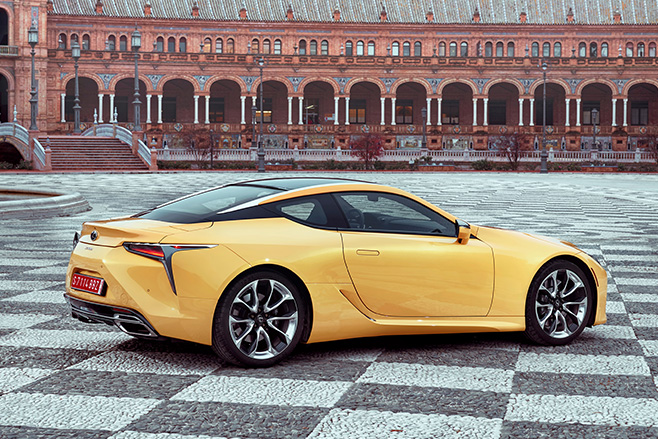
The report says this new bent-eight will essentially take the heads off Lexus’ existing 8AR-FTS 2.0-litre inline four (first introduced in the Lexus NX 200t and IS 200t) and join them at a 90-degree angle with a bespoke alloy block. The result is expected to be a stonking 447kW of peak power and 637Nm of torque.
Power will go to the rear wheels via a version of the LC 500’s 10-speed automatic.
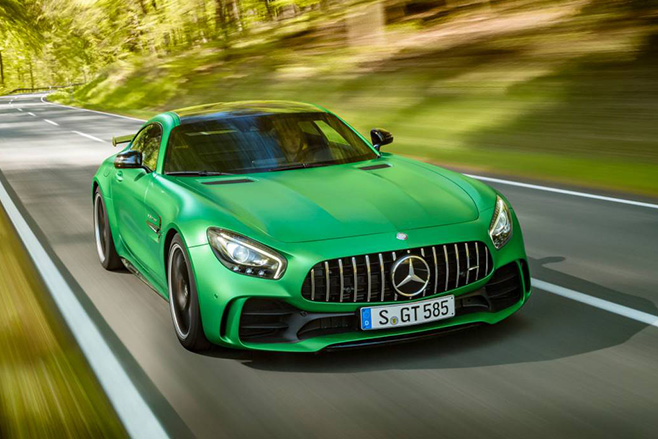
If true, then those numbers will put the LC F in direct competition with the track-ready Mercedes-AMG GT R, which makes 430kW and 700Nm from its own 4.0-litre twin-turbo V8. The Jaguar F-Type SVR Coupe is also another natural rival with 423kW and 700Nm surging from its 5.0-litre V8 – also force-fed, but supercharged rather than turbo.
Eventually the new 4.0-litre V8 is expected to find its way into the GS F as well, which should address criticism that Lexus’ executive express didn’t have the performance stats to challenge the Audi RS6, BMW M5 and Mercedes-AMG E63. Is a detuned version also waiting in the wings for the long-overdue IS F successor? Watch this space.
But it’s the LC F that’ll be our first look at Lexus’ double-huffer V8, and it’s slated to debut at the Tokyo Motor Show in late October. Expect wilder bodywork, big rubber, mega brakes and plenty of vents to extract all of that twin-turbo heat as well.
Lexus? Conservative? We’ll see about that.
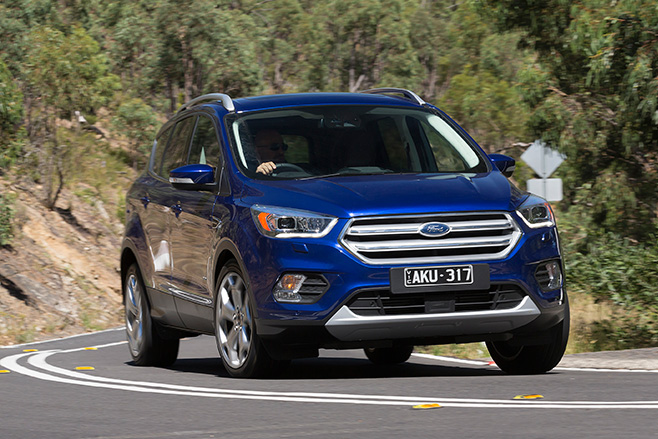
FORD has reset its small SUV line-up, replacing the Ford Kuga with a much improved version of the car that wears a new name – Escape. The change of name gives Ford a second crack at earning itself a bigger share of one of the hottest new-car sales segments on the market.
Tell me about this car
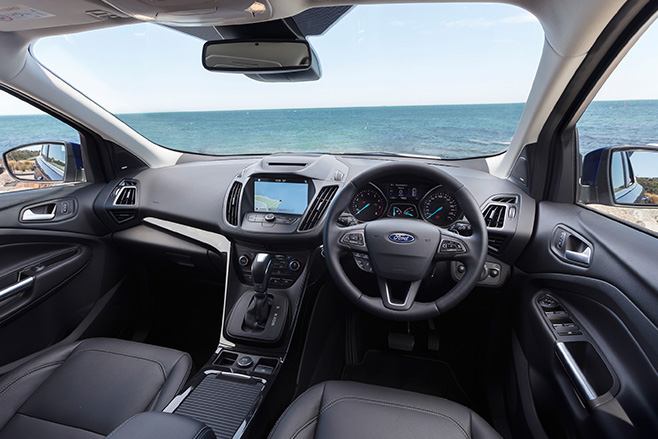
The change of name, from Kuga to Escape, also brings in a significant mid-life update for Ford’s small SUV line-up. Re-nosed, with a more front seat-focussed dash and including significant noise dampening enhancements to make the cabin a lot quieter, the Kuga/Escape handover has resulted in a significantly better car for a growing number of small SUV buyers.
It also introduces something that was missing from the Kuga range; a mid-spec automatic model, dubbed the Ford Escape Trend automatic, priced from $32,990 – the price point that buyers seem to want the most.
Strengths
- The Trend’s 134kW/240Nm 1.5-litre turbo engine is bigger-hearted than its tiny displacement would suggest. Sweet, revvy, and driving only the front wheels via a six-speed auto, it is the pick of the drivelines.
- An electric parking brake frees up heaps more room in between the front seats to store small things such as wallets, purses and mobile phones. The space is disguised as cupholders.
- Despite adding more equipment such as digital radio, push-button engine start and a reversing camera with rear parking sensors, the Escape has dropped in price compared with the Kuga. The range now starts at $28,490 for an Ambiente fitted with a turbocharged 1.5-litre four-cylinder engine fitted to a six-speed manual gearbox.
- Steering wheel-mounted paddle shifters replace a daft manual selector mounted as a toggle switch on the side of the Kuga’s gear lever. It brings a whole new level of driver enjoyment to the Escape-badged version.
- The Escape boasts a 1600-litre-plus load space once the rear seats are folded down. The floor isn’t quite flat – there’s a small lip at the opening to the boot, and the stowed rear seatbacks sit about a finger higher than the boot floor – but it’s a very useable space.
- All-wheel-drive versions of the Escape can tow up to 1600 kilograms, so can easily pull a small caravan, boat or horse float.
- The cruise control has a speed limiter function that can help to avoid a speeding fine. It won’t automatically apply the brakes to wash off speed on long downhill runs, but it will keep you under the set speed at other times.
Weaknesses
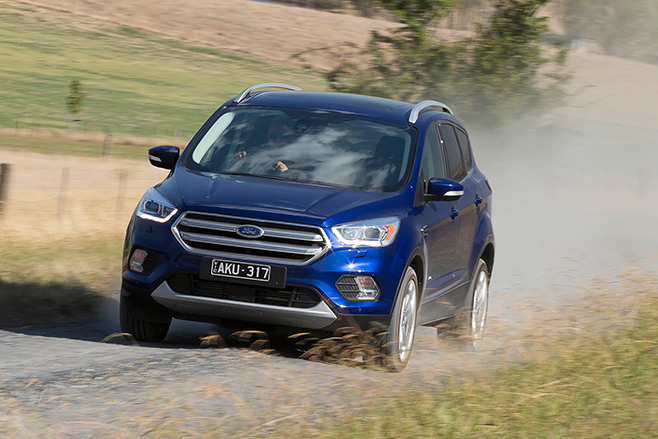
- The new turbocharged 2.0-litre engine produces 178kW and 345Nm, which makes it the most powerfully engined car in its class. However, all that performance is lost on the Escape, which feels as though it’s a reined-in stallion and struggles to get its power down to the road.
- The driving position in the Escape is very high. While it’s great for all-around visibility via the deep windows, the instrument cluster and multimedia/air conditioning controls are all a long way away from the driver’s eye on the dash.
- Ford has updated the Escape to the latest Sync3 multimedia system, but its voice recognition sometimes struggles with even basic commands. It likes you to speak clearly, and s-l-o-w-l-y.
- Automatic emergency braking is available on the Escape, but there’s a catch: it’s not standard on any model. The entry-level $28,490 Ambiente doesn’t have AEB available at all, while on the more pricey Trend (from $32,990) and the most expensive Titanium (from $44,900) models, it’s a $1300 option. In contrast, a $24,690 Skoda Octavia wagon – what we used to buy before SUVs wooed us away from traditional passenger cars – has AEB fitted as standard.
- That $1300 pack also becomes a barrier to other driver assist systems that are bundled into it; lane departure warning, adaptive cruise control that will bring the car to a complete stop, a blind spot monitor that even stops you backing out into oncoming traffic, and a tyre pressure monitor.
- At just 110kW – not much more power than a 1.6-litre Toyota Corolla’s engine – the manual version of the 1.5-litre Escape produces significantly less power than the automatic one.
- The 19-inch alloys fitted to the range-topping Titanium variants turn the smooth ride experienced on the next-model-down Trend’s 18-inch hoops into a sports car-taut trial.
- Keyless entry, where you can leave the key in a pocket or handbag yet still open a door, is part of a $1200 hands-free tailgate pack.
What other cars should I consider?
The market leader in this segment is the Mazda CX-5, a sharp, stylish and impressively packaged small SUV that’s leading the field for good reason. The Toyota RAV4 is also popular in this segment, but its strength is artificially bolstered by bulk sales to fleet and government buyers. Kia’s Sportage is a decent mix of useable features and keen pricing, backed by the safety net of a seven-year warranty. Nissan’s X-Trail is another popular contender, although it struggles a bit with road manners. The Subaru Forester is another popular choice, but its hard-wearing, plastic-heavy interior is a significant black mark against its long list of attributes.
Keep in mind, though, that a new version of the segment-leading Mazda CX-5 is due on sale in a few months’ time.
FORD is having a second crack at the small SUV segment with the Escape. While the name is new, the car that wears it is somewhat familiar, as it is based on the Ford Kuga launched here in 2012. The change of name brings with it a new exterior look, improvements to the dash, a more hushed cabin, and a new variant – a $32,990 Trend automatic – that was a new car buyer’s black hole in the former Kuga line-up.
- An electric park brake that replaces the old manual one used in the Ford Kuga cause no end of trouble for Ford’s engineering team, trying to find the balance between space for storage and packaging. That area of the centre console that’s in between the front seats is known in the engineering team as “Manhattan” after the district in New York City, a veiled reference to how crowded in-car real estate has become.
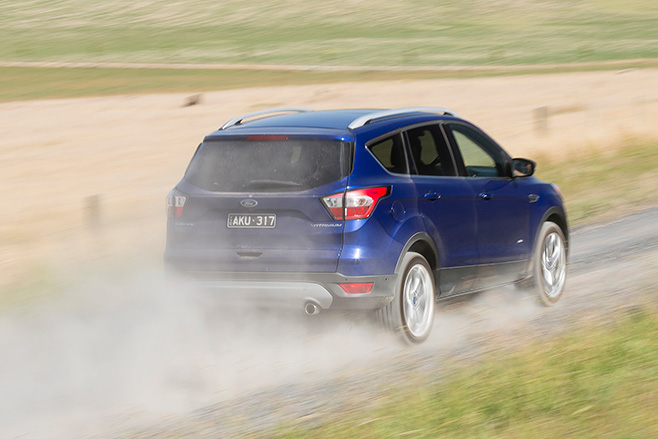
- Escape is Ford’s “global” name for its mid-size SUV, and Australia was one of the last markets to drop the Kuga name. But “global” doesn’t mean worldwide: The Kuga is a bestseller in its segment in Europe, so the name will live on there for some time yet.
- Ford’s SUV family is now much easier to remember, because every member starts with the letter “E”. It starts with the Ecosport small SUV, Escape mid-sizer, and the Everest large off-roader. In 2018, we add the Edge large SUV as a Ford Territory replacement.
- Ford’s engineers like the Escape’s Kinetic Design-derived front end over that of the Kuga for one big reason: it allows them to better package the radar system used for active cruise control and automatic city braking systems. It’s also a little more slippery through the air than the Kuga’s snout.
- The Ford Escape has a small lip just inside the bootlid known as the “topple catcher”. Its purpose is to stop things falling out of the boot if the weekly load of shopping has moved around before you open the boot.
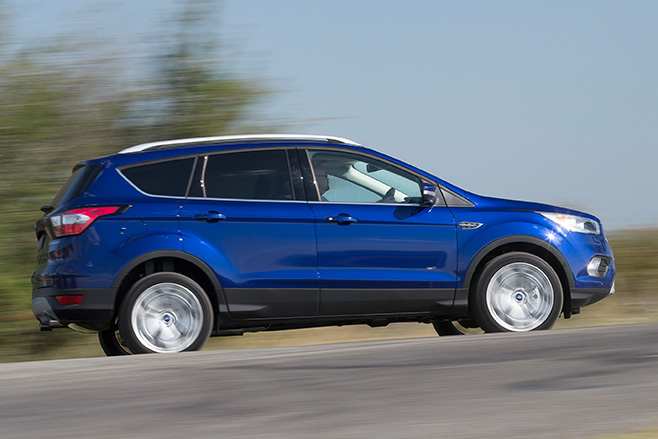
- One of the big criticisms with the Kuga was a gear selector fitted as a toggle switch to the side of the gear lever on automatic models. The Escape has dumped it for more user-friendly paddle shifters mounted on the steering wheel.
- The Escape uses Ford’s capless fuel tank lid. Flip open the fuel filler lid, and there’s no need to unscrew a separate cap that keeps fuel from sloshing out of the tank around corners.
- The Escape’s rear doors open to almost a right angle to the body, making the rear seats very easy to get in and out of. The Honda CR-V has a similar wide-opening aperture.
- Ford will review the packaging and pricing of its Escape range twice a year to keep it fresh in the face of rivals. The most important is the all-new Mazda CX-5 that arrives in Australia in about April.
ACCELERATING onto the main straight of a private racetrack in a Maserati diesel SUV is a bit like pressing Pavarotti’s head into a pillow just as the famed tenor soars several octaves.
The new Levante’s soundtrack is far from that of aurally audacious Maseratis past, even if the 3.0-litre turbo-diesel V6 delivers a muffled warble under duress as its 202kW and 600Nm are put to decently tidy use. Tellingly, though, the sonorous twin-turbo petrol V6 of the same capacity is used for promotional video, yet it’s solely a left-hand-drive proposition.
Perhaps expectedly for an all-wheel drive family hauler that weighs 2205kg, the 6.9-second 0-100km/h claim is respectable rather than forceful.
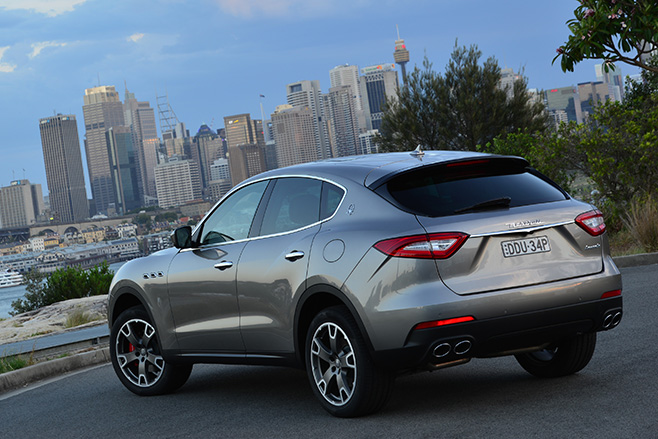
Maybe this Maserati is heavy for good reason, though. It even passes on electric power steering for traditional hydraulic assistance that delivers fine connection and consistency as the front 21-inch Pirelli P Zeros (optional, 19s are standard) attempt to deal with all that weight massaging into the surface on corner turn-in.
Again, it’s around town that a looseness on-centre is most evident, followed by a vagueness in the first movements just beyond it.
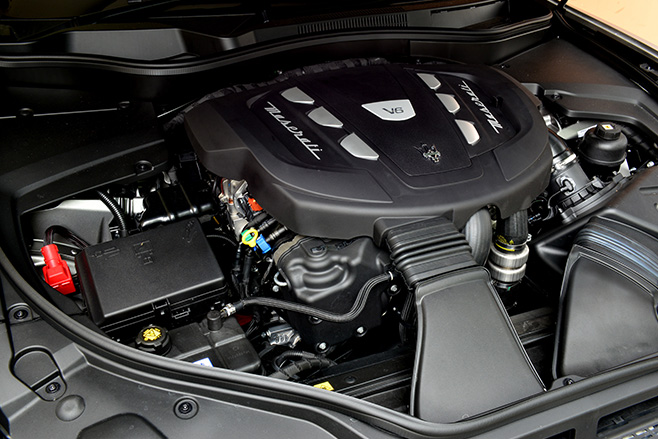
Only then in Normal mode the standard air suspension can also be raised to morph Maser into mountain climber, successfully turning tyres into tentacles over bumpy dirt terrain.
Although offset by a lack of kit (everything from four-zone climate to a blind-spot monitor is optional), a roomy back seat and boot teamed with decent finish all means the Levante does the family stuff better than a similarly-priced Maserati Ghibli sedan, which also can’t go off road.
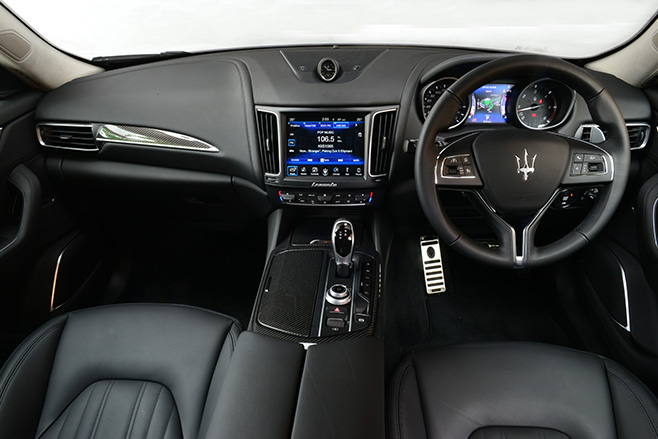
Frankly, a sedan-based wagon that is lighter, quicker, smoother and more dynamic (sans off-road capability) all sounds sweeter to us. Add a Maserati petrol that sounds more operatic, and we’d be singing its praises.
3.0/5
Like: Surprisingly engaging on smooth roads, decent diesel, roomy cabin Dislike: Hardly a Maserati soundtrack, struggles on rough roads, turbo lag
Specs Engine: 2987cc turbo diesel V6, dohc, 24v Power: 202kW @ 4000rpm Torque: 600Nm @ 2000-2600rpm Weight: 2205kg 0-100km/h: 6.9sec (claimed) Price: $139,990
Comes of age, but game has moved on, too
FOUR’S a lucky charm for the Sportage.
Kia’s longest-running nameplate, the 1997 original was so bad it is surprising the badge isn’t forever tainted. The second (twinned with the 2004 Hyundai Tucson) was also way off the mark, while the third from 2010 remains stylistically striking, but suffered from dynamic and refinement shortfalls.
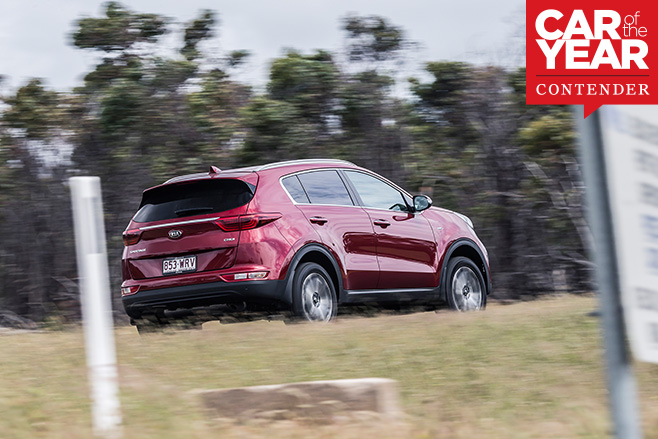
It is clear, though, that the Koreans are listening, because the longer and roomier Mk4, with its smart German lines, features a substantially stiffer structure that both cuts noise paths and provides a stronger base for improved suspension and steering systems.
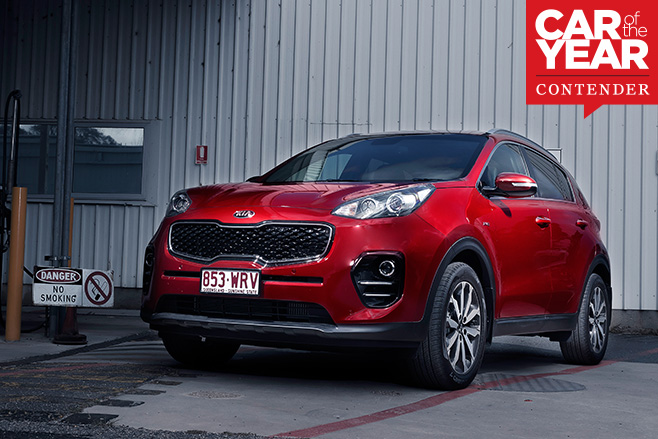
A contemporary and well-specified cabin presentation is another pleasing development, resulting in a friendly and inviting driving environment, aided by sufficient space, crisp dials, easily reached and deciphered switchgear, an intelligently positioned multimedia screen, ample ventilation, and thoughtful storage options.
Throw in a practical cargo area and an industry-leading seven-year warranty, and the suave Sportage makes for a cost-effective and family-friendly SUV with discernible enthusiast appeal.
Why the related Tucson’s vibrant 1.6-litre four-pot turbo/dual-clutch drivetrain hasn’t found its way into the Aussie Sportage line-up is a mystery.
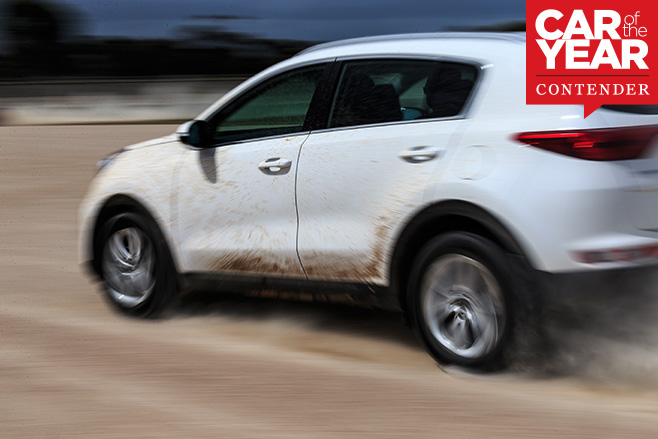
Finally, for a newbie, limited AEB availability (it’s only offered in the most expensive spec) shows that the Korean mid-sizer still has some way to go before it can match the class best. The new Volkswagen Tiguan (also on COTY) offers this important safety technology on all variants, as does the outgoing Mazda CX-5.
There is no doubt the latest Sportage is the first truly decent one in the series’ 20-year run. Ushering in personality, value, comfort, refinement, handling, versatility, and peace of mind, it represents a real advance for Kia in this segment.
But while the base Si at under $30K is a likeable proposition, Sportage’s appeal starts unravelling further up the price scale – exactly where formidable foes like the latest Tiguan lurk.
Specs
BODY Type: 5-door wagon, 5 seats Boot capacity: 466 litres Weight: 1606 – 1716kg
DRIVETRAIN Layout: front engine (east-west), FWD/AWD Engines: 1999cc 4cyl (114kW/192Nm) 2359cc 4cyl (135kW/237Nm) 1995cc 4cyl turbo-diesel (136kW/400Nm) Transmission: 6-speed automatic
CHASSIS Tyres: 225/60R17 – 245/45R18 ADR81 fuel consumption: 6.8 – 8.5L/100km CO2 emissions: 178 – 199g/km Collision mitigation: Platinum spec only Crash rating: 5-star (ANCAP) Prices: $28,990 – $45,990
Cat shown flap: insufficient advancement of breed.
In terms of formulas guaranteed to work, you don’t get much more of a sure thing than a luxury SUV. Throw in good looks and a sporty demeanour and it’s sure to sell like hotdogs at the Superbowl.
That Jaguar took so long to produce its first SUV, then, is perplexing. Blame it partly on sister brand Land Rover, which has long taken care of that desire for off-roaders with class.
As unfashionably late as it is, the Jaguar F-Pace comes out fighting with a sleek aluminium-intensive body offered in a vast range encompassing two diesel engines and a flagship supercharged V6 petrol. Choose between four trim levels and it’s an expansive range covering a $50K price spectrum that kicks off at about $75K.
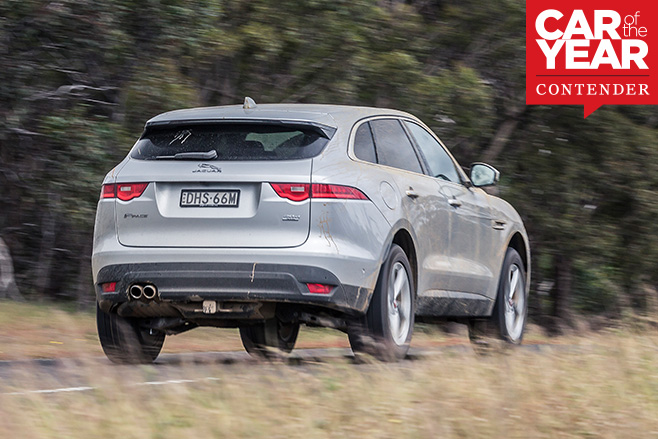
Yet leather and a decent safety suite – encompassing autonomous emergency braking and a lane-departure warning – are included.
Sizeable rubber beneath (up to 22 inches on optional wheels) and a clear focus on being suitably lashed down at speed make it among the more dynamic of the five-seat SUVs. Wielding 1.8 tonnes through the high-speed lane change barely ruffled the big cat’s demeanour. Judges noted much of the chassis goodness of the XE and XF has been injected in the F-Pace.
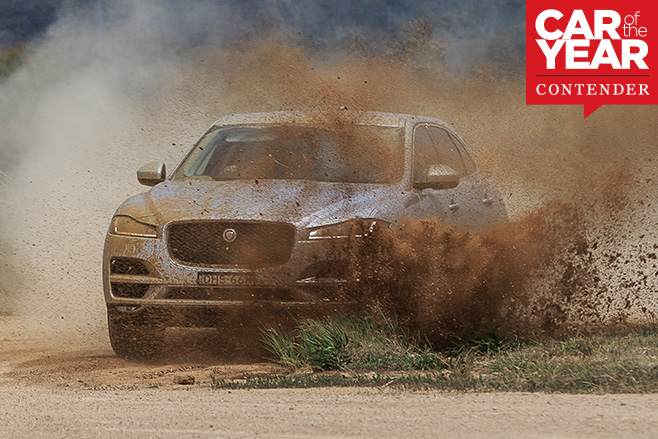
The engines, too, are a mixed bag. The 30d has truckloads of grunt but is 110kg heavier than the four-pot diesel, taking the edge off the inherent agility.
The 20d gets a mild smokers cough to its exhaust note at high revs but is otherwise smooth and seductive, albeit lacking the go some may expect from a Jag.
Enter the 35t; with up to 280kW it’s fast and fun but has points docked for its thirst.
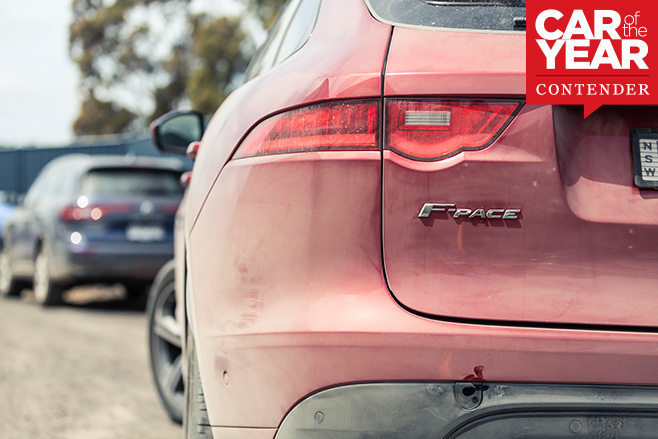
Add it all up and the F-Pace is about design flair and dynamic ability rather than genuinely resetting any SUV benchmarks.
It is undoubtedly an important part of the future for Jaguar, but its future at COTY ended at stage one. It played hard, but in this battle, it was out-played.
Specs
BODY Type: 5-door wagon, 5 seats Boot capacity: 650 litres Weight: 1775 – 1884kg
DRIVETRAIN Layout: front engine (north-south), AWD Engines: 1999cc 4cyl turbo-diesel (132kW/430Nm) 2993cc V6 turbo-diesel (221kW/700Nm) 2995cc V6 supercharged (250kW/450Nm) 2995cc V6 supercharged (280kW/450Nm) Transmission: 8-speed automatic
CHASSIS Tyres: 255/55R19 – 265/40R22 ADR81 fuel consumption: 5.3 – 8.9L/100km CO2 emissions: 139 – 209g/km Collision mitigation: Yes Crash rating: not tested Prices: $74,340 – $120,415
